An intensive, highly scaffolded lesson on the Bill of Rights for students requiring Tier 3 support, featuring simplified language, heavy visual prompts, and step-by-step guidance.
An adapted lesson exploring the Latin American struggle for independence from Spanish colonial rule, featuring simplified text and visual supports for diverse learners.
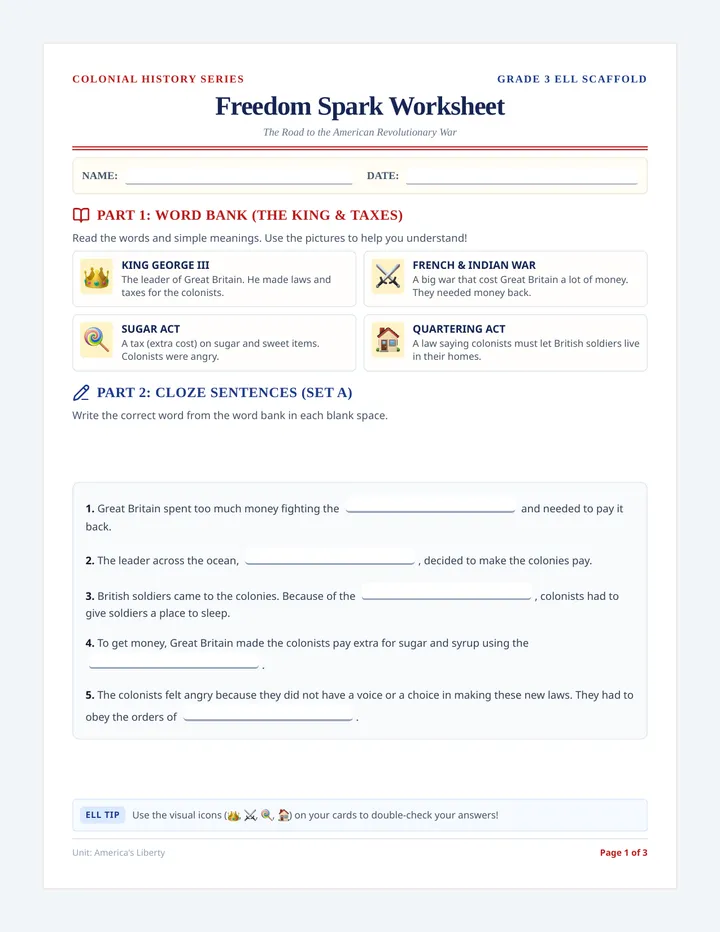
This lesson explores the pivotal role of Creoles in the Latin American wars of independence, focusing on the social hierarchy of the Casta system and the motivations for revolution. Students will analyze how the desire for political power and Enlightenment ideas led to the break from Spanish rule.
A practical guide for high school students experiencing housing instability to navigate the voter registration process in Colorado, featuring a visual roadmap and educator support materials.
A focused practice session on the Industrial Revolution, targeting STAAR-aligned cause-and-effect skills regarding urbanization, technology, labor, and economic shifts.
Ce module introductif permet d'appréhender les notions fondamentales de l'information, de comprendre l'évolution des médias et d'analyser les enjeux démocratiques liés à l'accès et à la consommation de l'information.
A comprehensive guide for students experiencing homelessness to navigate voter registration, understand their residency rights, and practice informed voting through research and mock ballots.
A comprehensive resource bundle for school leaders covering the history of the Atlantic Slave Trade and the Abolitionist Movement, featuring a detailed reference guide and a visual infographic.
A comprehensive lesson designed for high school students to master the art of advocacy, moving from issue identification to crafting professional, research-backed advocacy plans for real-world impact.
Foundational literacy activities focusing on CVC word families through tactile sorting and visual identification.
An in-depth exploration of Ancient Egyptian civilization for sixth-grade students. This lesson covers geography, social structures, religious practices, and daily life, utilizing visual slides and interactive guided notes.
An introductory lesson on the economy of Ancient Greece, focusing on maritime trade, agriculture, specialization, and the use of coinage through a simulated marketplace experience.
This lesson explores the motivations and roles of the Creoles in the Latin American independence movements, featuring a simplified reading passage and comprehension activities.
A lesson exploring the social and political causes of Latin American independence movements, with a focus on the leadership of the Creole class and the influence of Enlightenment ideals.
A hands-on project where students analyze the six essential elements of a crime through case studies and create visual anchor charts to map legal liability.
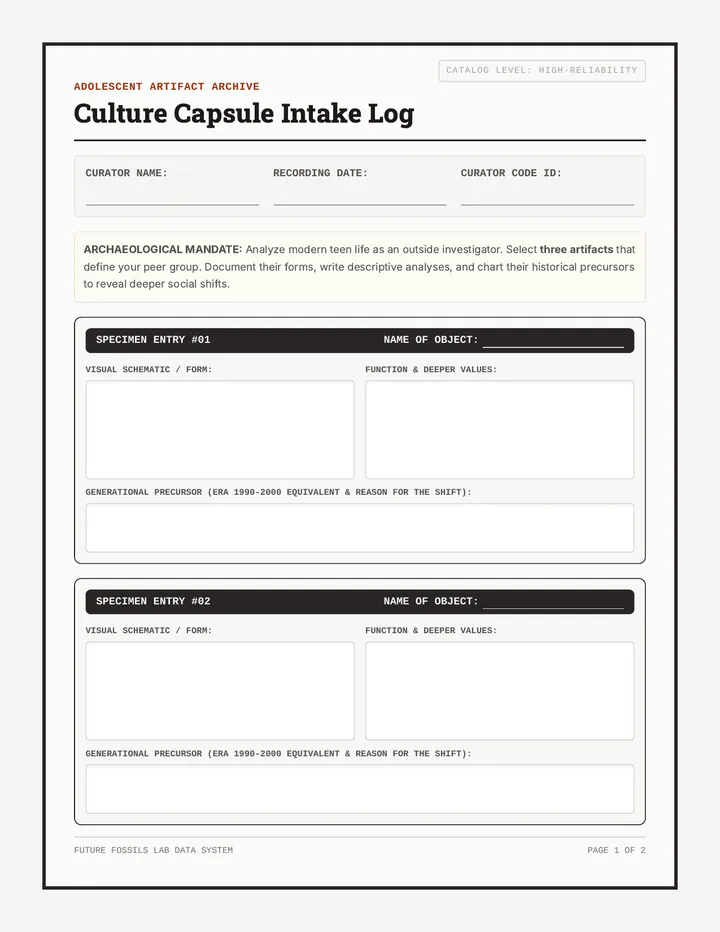
A summative comparative project where students analyze specific urban and rural sites in the Balkans using geographic data and land use models.
Analyzing the rapid urbanization of Balkan capitals versus the traditional agricultural practices and demographic shifts in rural mountain villages.
An introduction to the physical and human geography of the Balkans, focusing on how terrain dictates land use from the Dinaric Alps to the Danubian Plain.
A comprehensive exploration of the mid-to-late Tudor monarchs (Edward VI, Mary I, and Elizabeth I), focusing on how their reigns reflect shifting religious, social, and political dynamics. Students use the ALARM matrix to analyze historical significance and prepare for an in-class essay.
A comprehensive lesson exploring the Age of Exploration with a specific focus on the Columbian Exchange and the transformation of global trade routes. Students will analyze how the movement of goods, ideas, and people reshaped the world.
A fast-paced Bingo game featuring influential women in politics and pop culture from 2015 to the present day. Students learn about the achievements of figures like Michelle Obama and Cardi B while competing to fill their cards.
Celebrate the impact of contemporary women of color through a high-energy "Who Am I?" game and the creation of biographical trading cards.
This lesson explores the transition from ancient monarchies and theocracies to the democratic and republican systems of Greece and Rome, highlighting their foundational influence on modern government structures like the United States.