Examine Jean Piaget’s four stages of cognitive development, focusing on cognitive milestones and limitations through conservation tasks and object permanence tests.
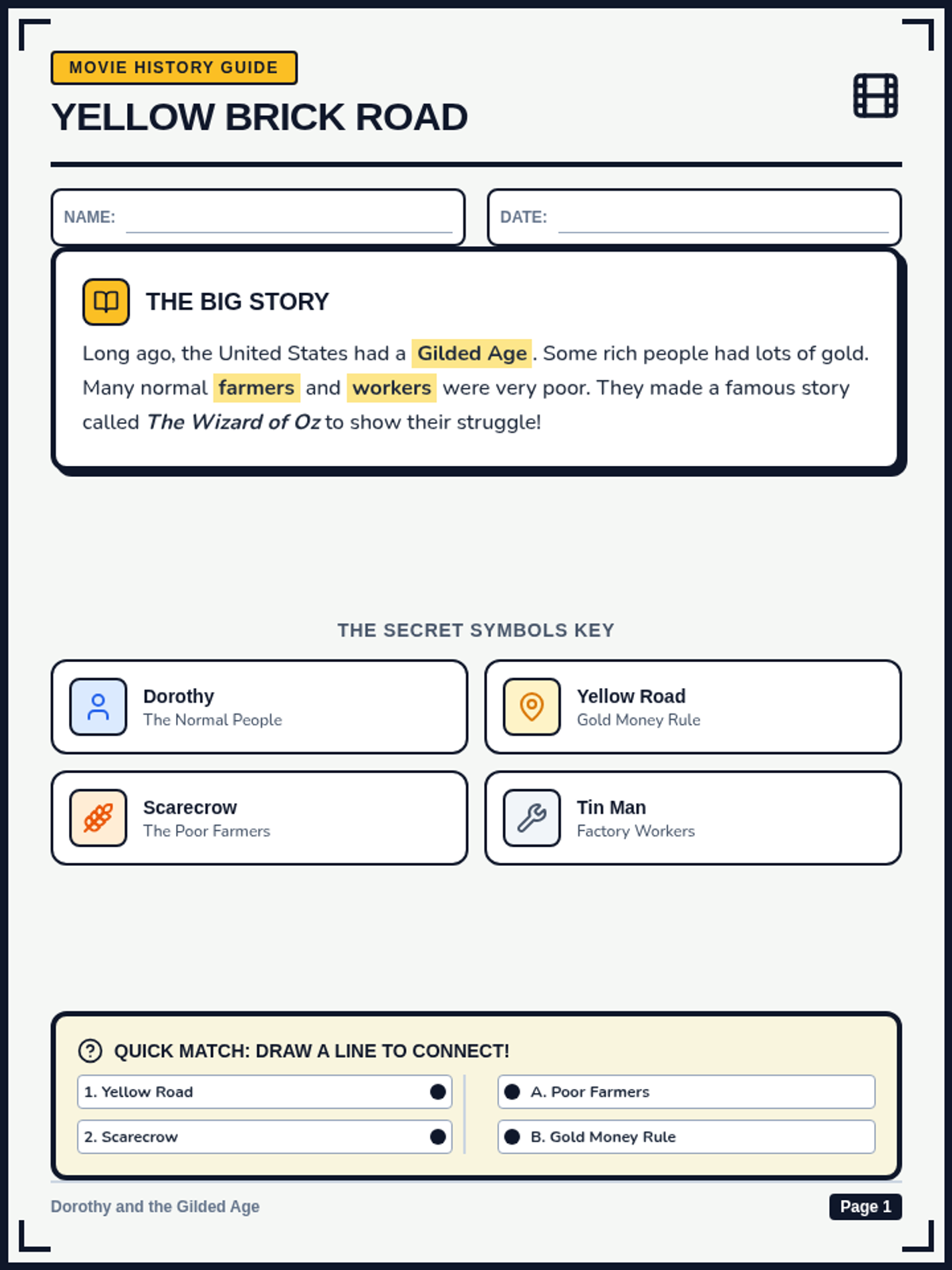
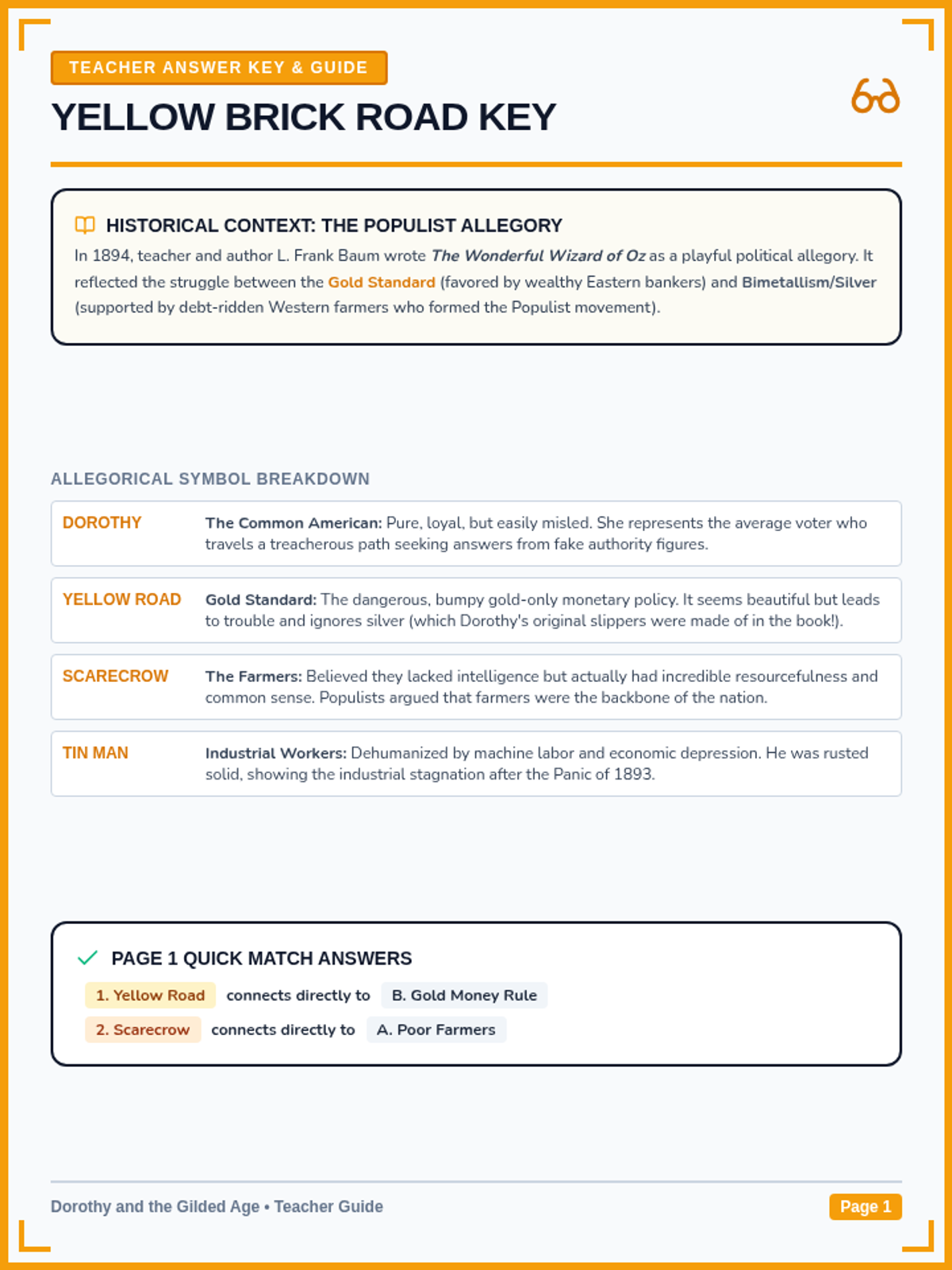
A highly accessible watch guide lesson linking The Wizard of Oz (1939) to Gilded Age politics (Populism, the Gold Standard, and industrial workers), designed specifically for middle school students reading at a 1st-grade level using visual matching, word banks, and literal multiple-choice questions.
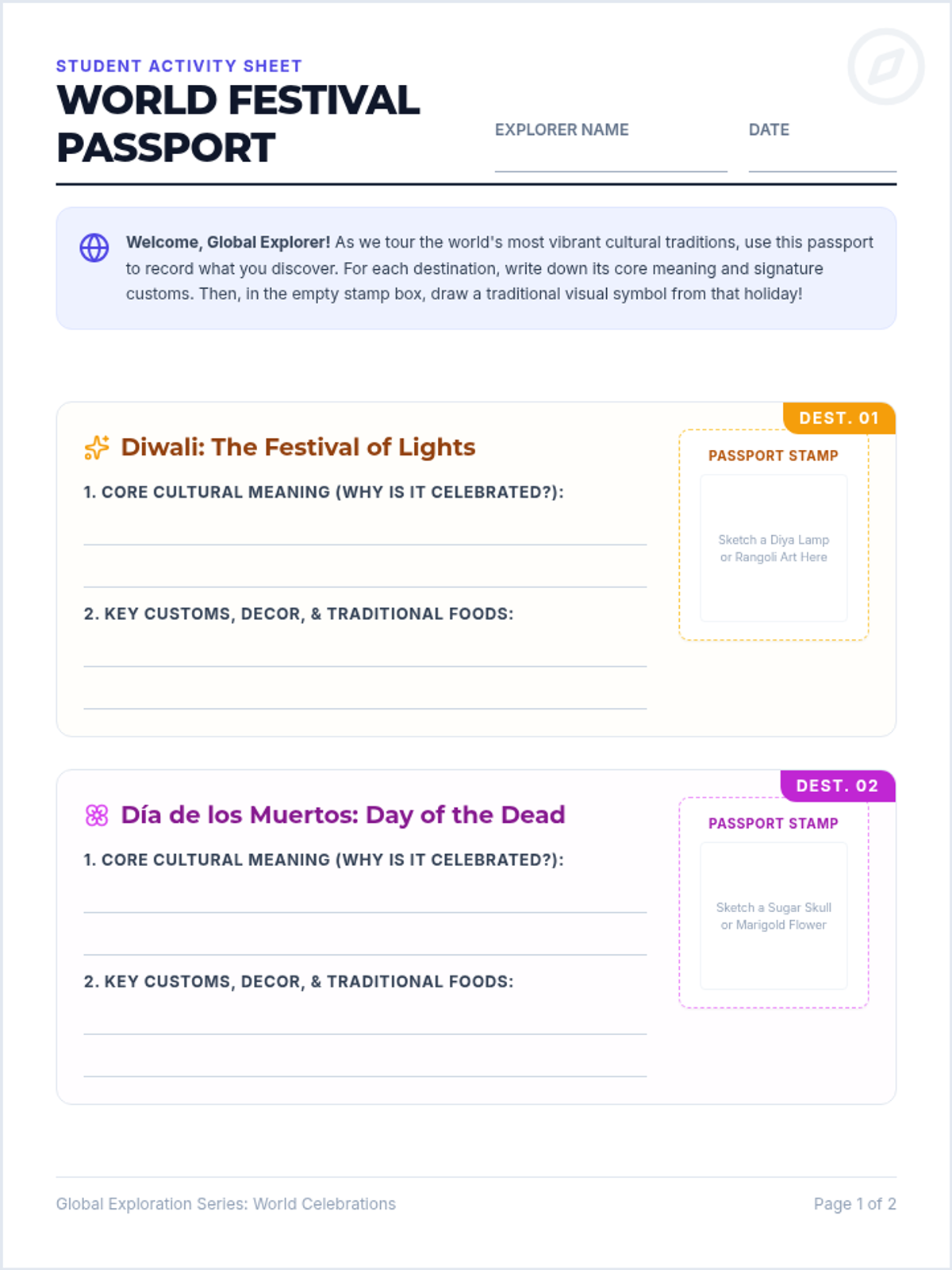
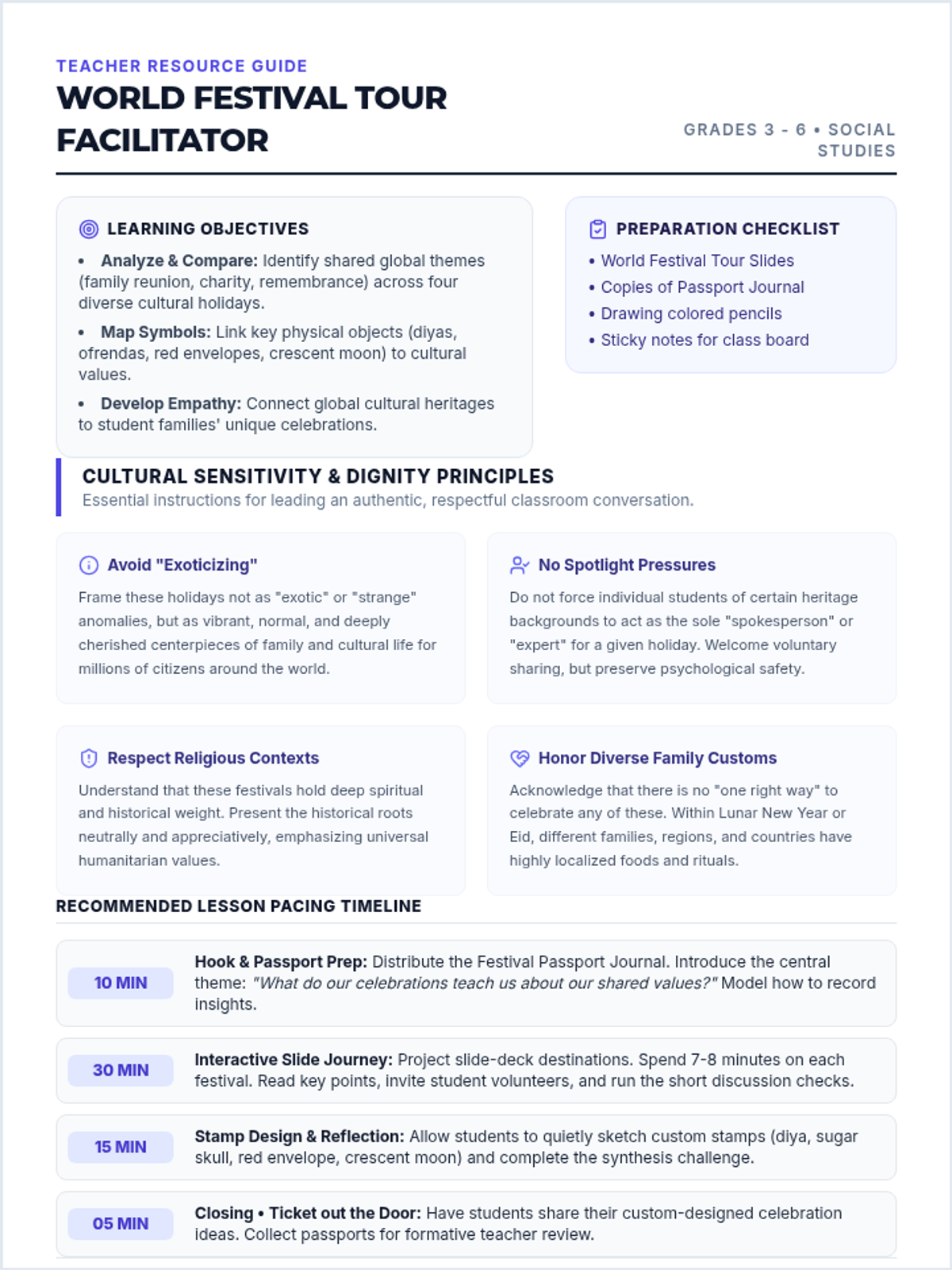
An engaging, multicultural lesson introducing students to four rich global celebrations: Diwali, Día de los Muertos, Lunar New Year, and Eid al-Fitr. The lesson explores cultural significance, seasonal customs, symbols, and values, supporting global citizenship and empathy.
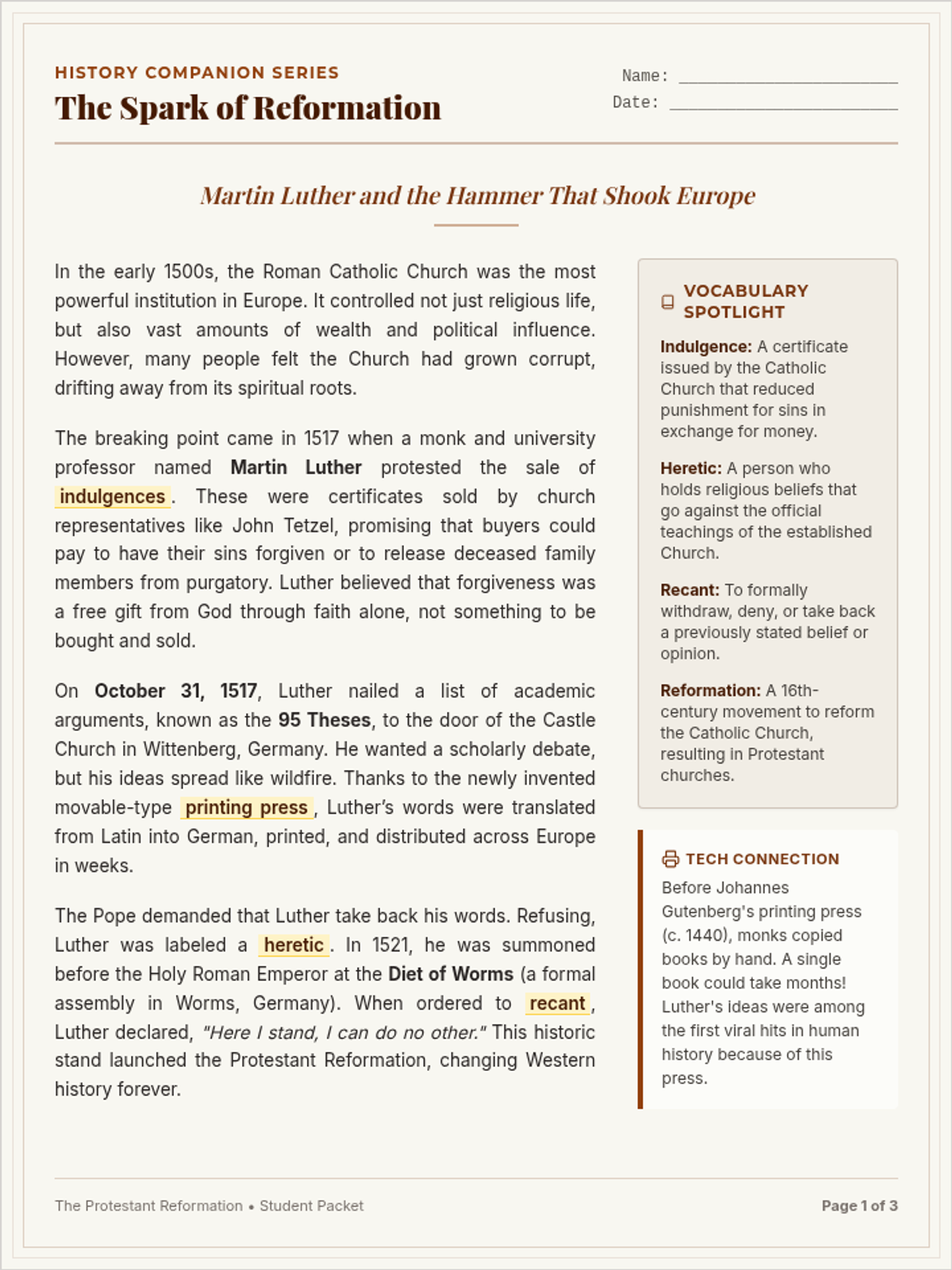
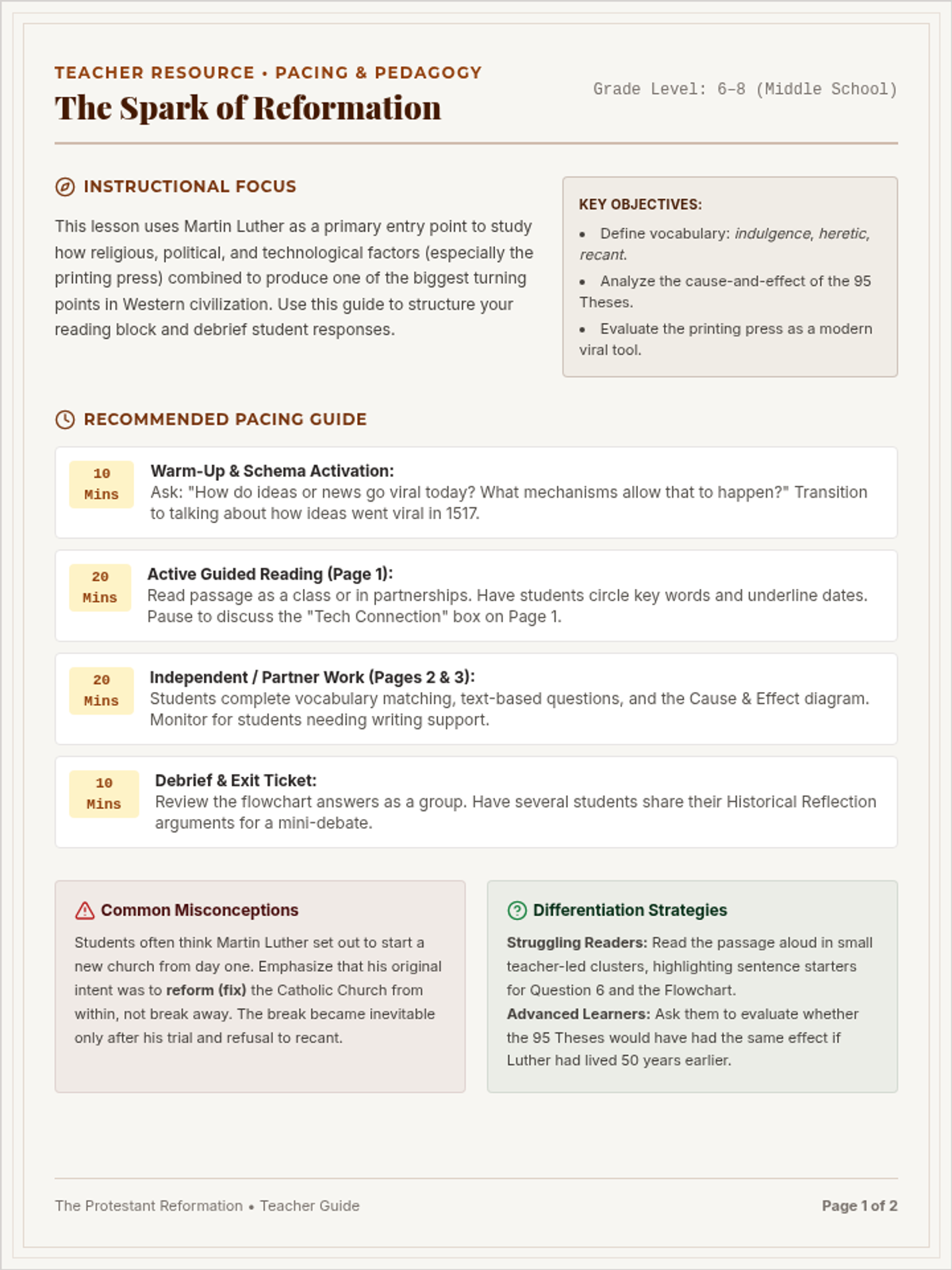
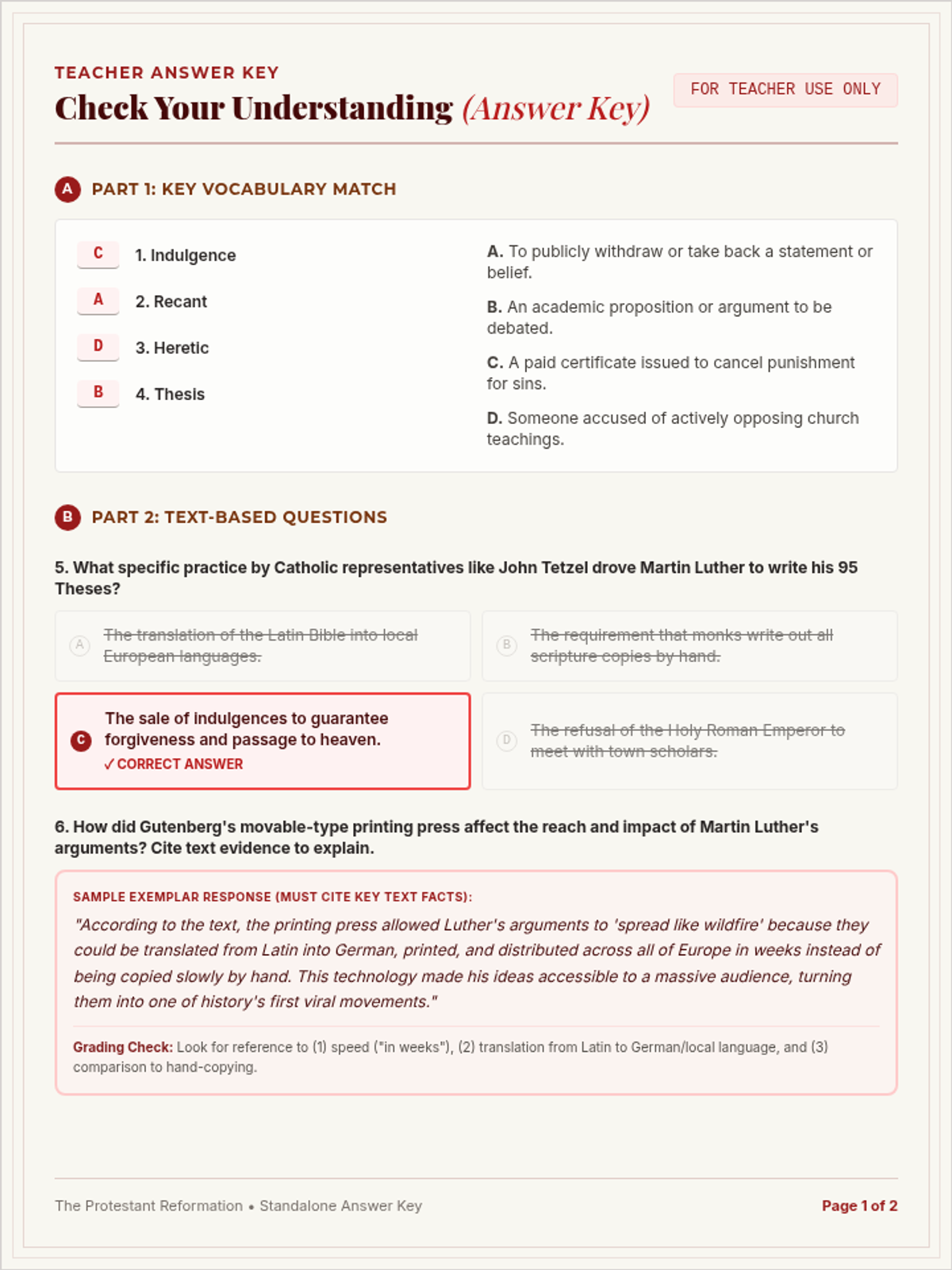
A middle school history lesson exploring Martin Luther's role in the Protestant Reformation, focusing on key biographical events, critical vocabulary, and cause-and-effect historical analysis.
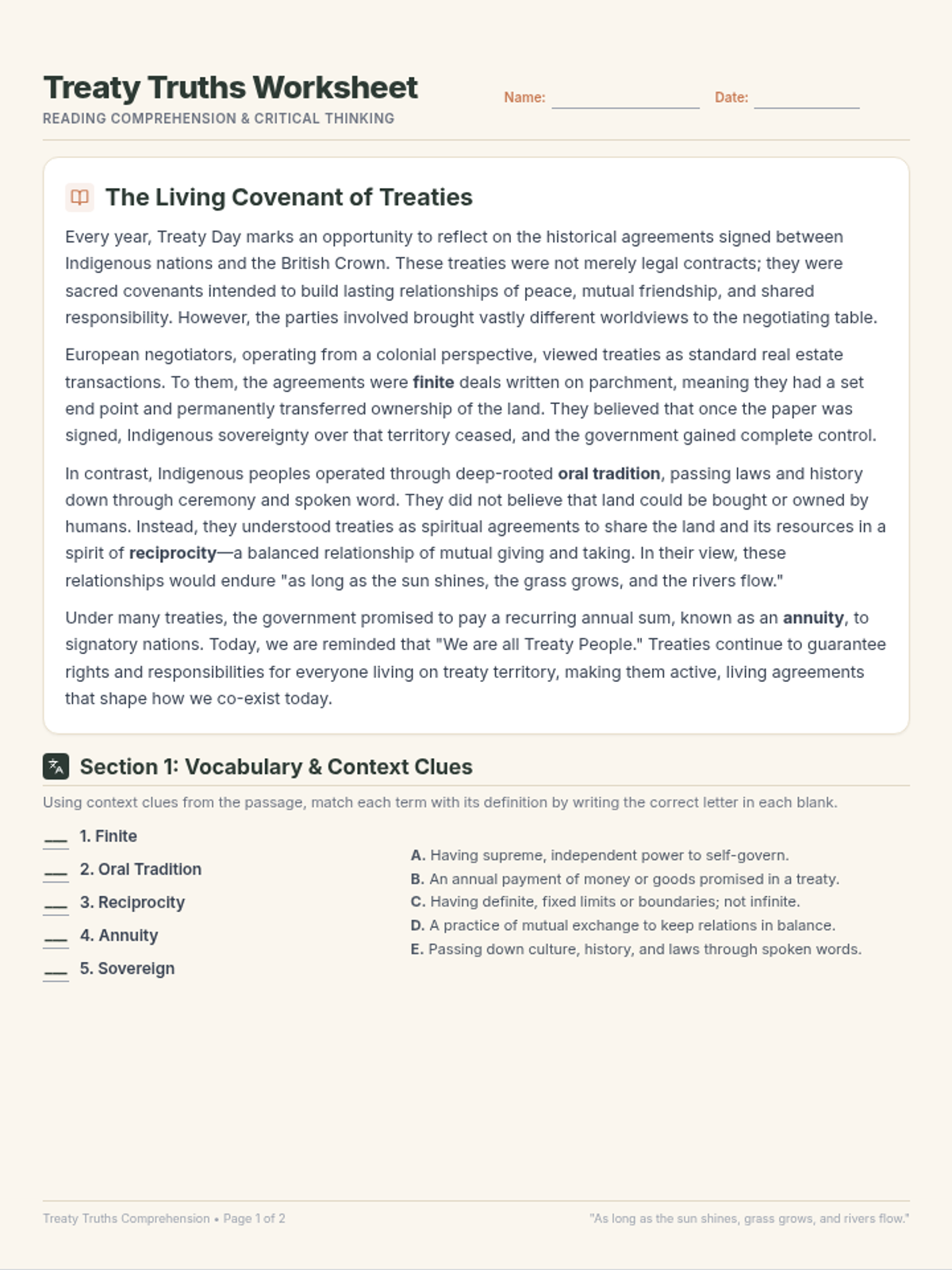
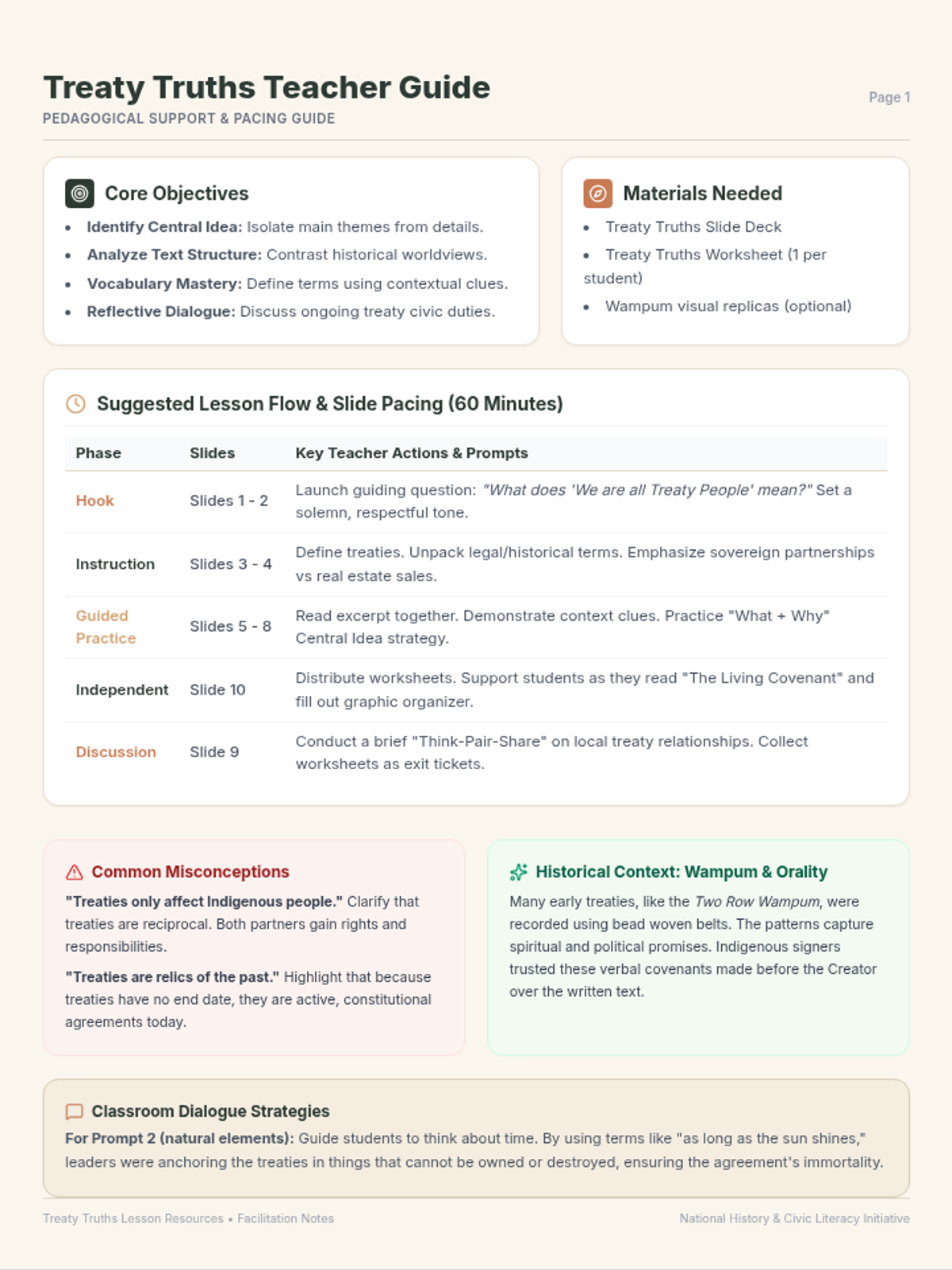
An interactive, historically grounded lesson exploring the significance of Treaty Day, focusing on central ideas, summarizing, and historical vocabulary. Students analyze the nature of treaties as sacred, ongoing agreements and practice identifying key themes and context clues.
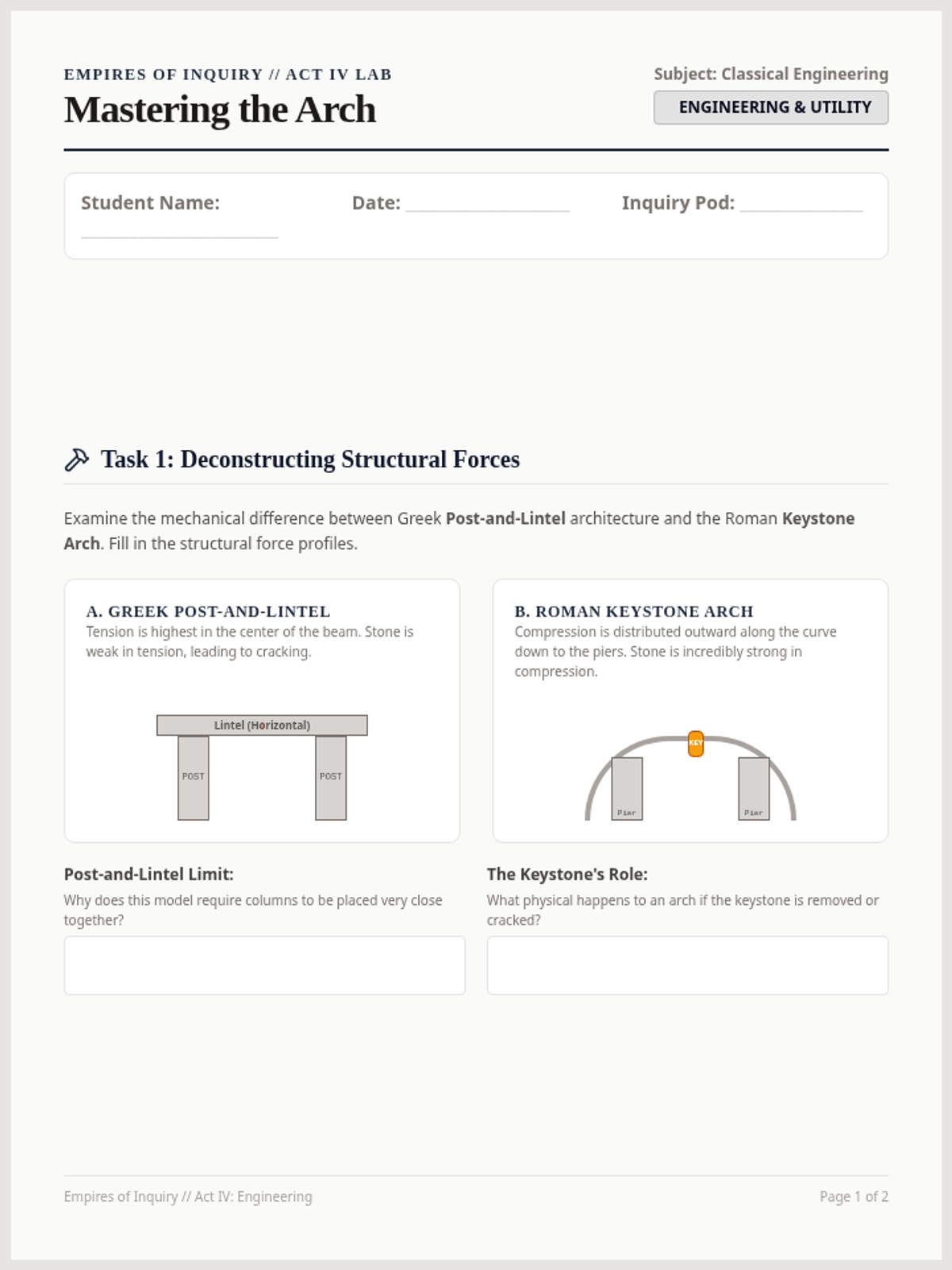
Students investigate the physical backbone of classical empires, comparing Greek structural harmony with Roman concrete engineering and infrastructural feats like aqueducts and roadways.
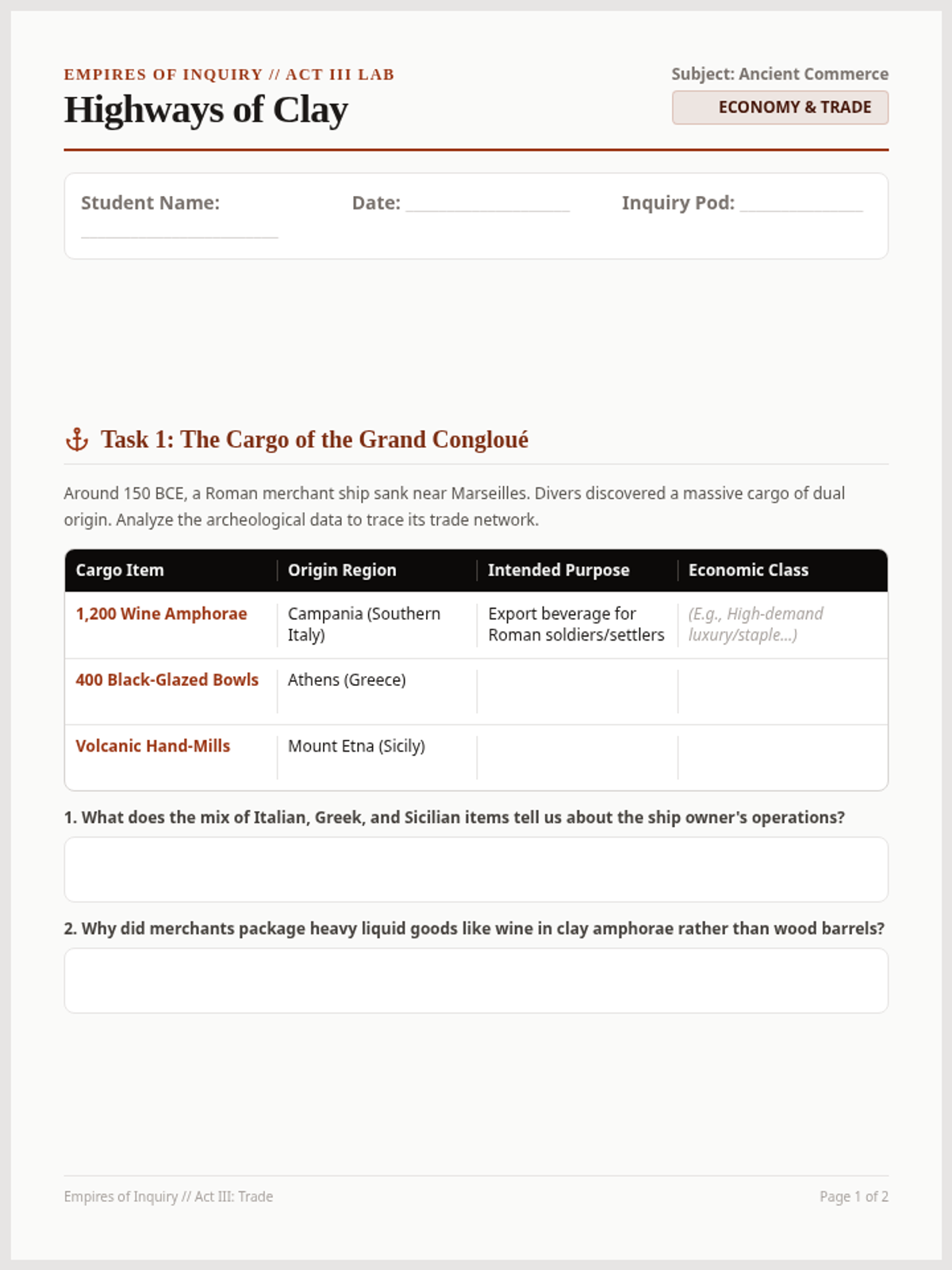
Students trace the economic veins of the Mediterranean, mapping how Greek ceramic trade and Roman maritime highways linked continents, exchanged technologies, and forged a globalized ancient marketplace.
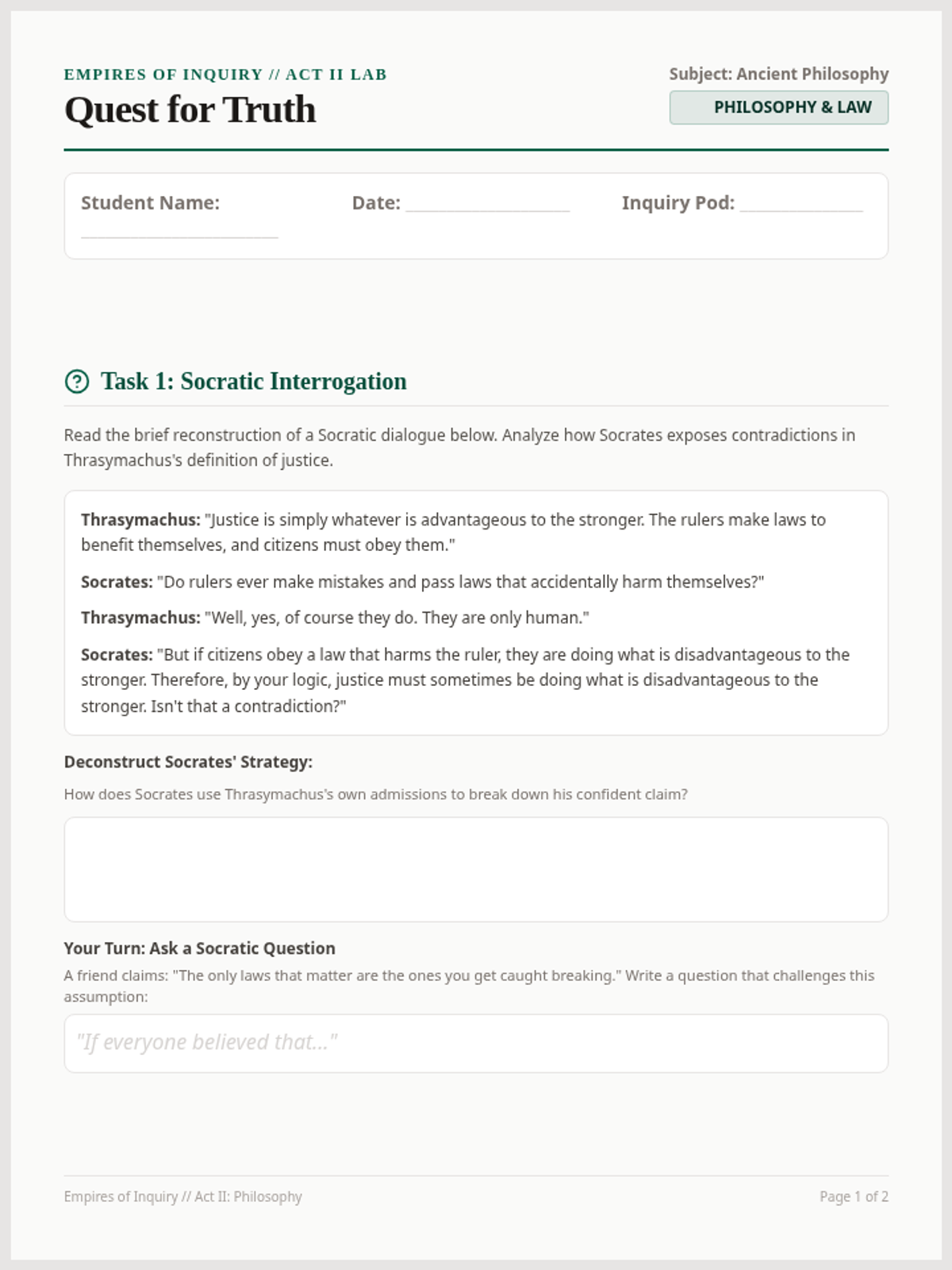
Students explore classical philosophical inquiries through Socrates, Plato, Aristotle, and Roman legal codes, examining how these intellectual frameworks defined ethics, civic duty, and the pursuit of truth.
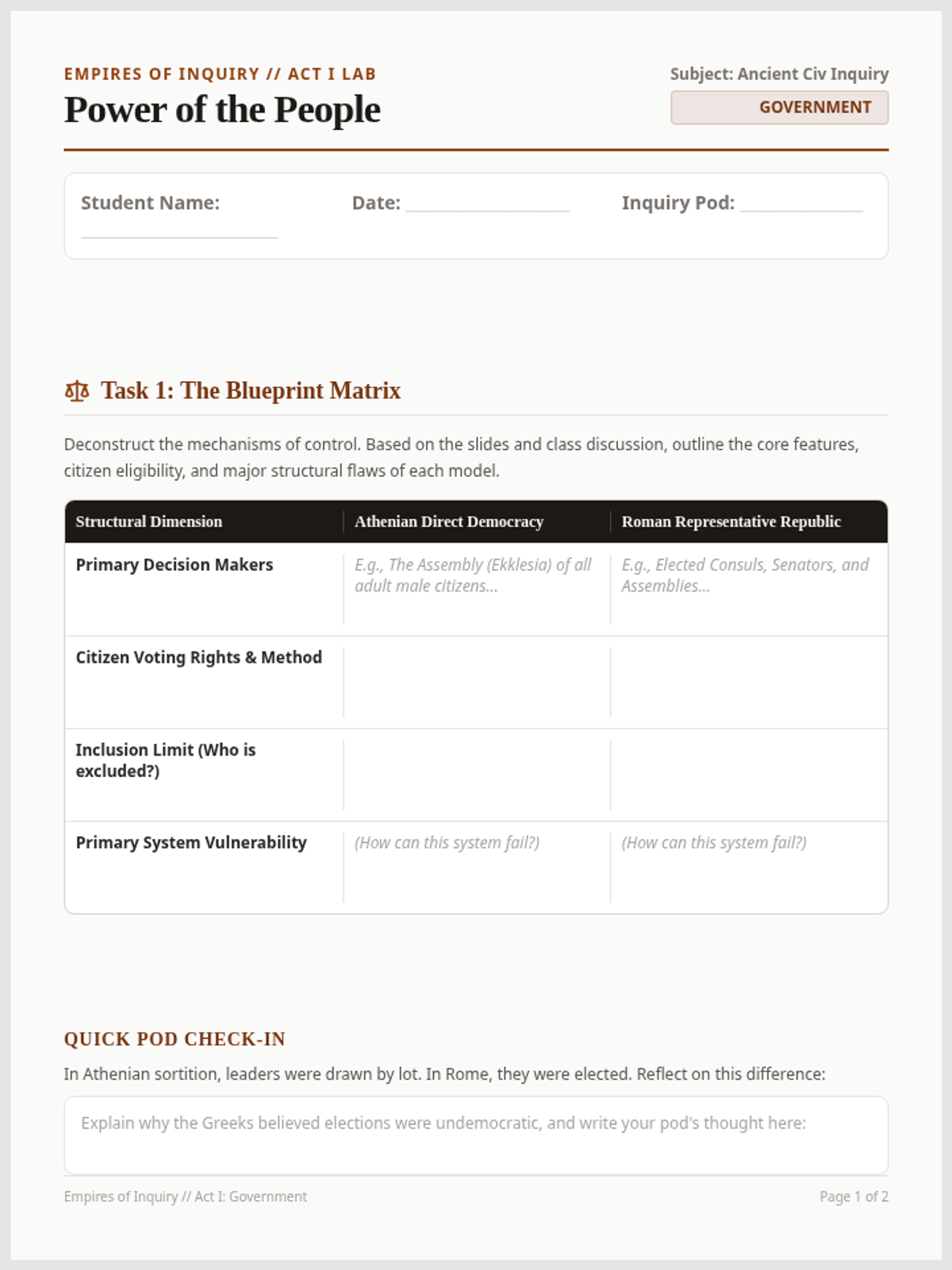
Students investigate the birth of democracy in Athens and the development of the republican system in Rome, comparing citizen participation, power structures, and modern democratic connections.
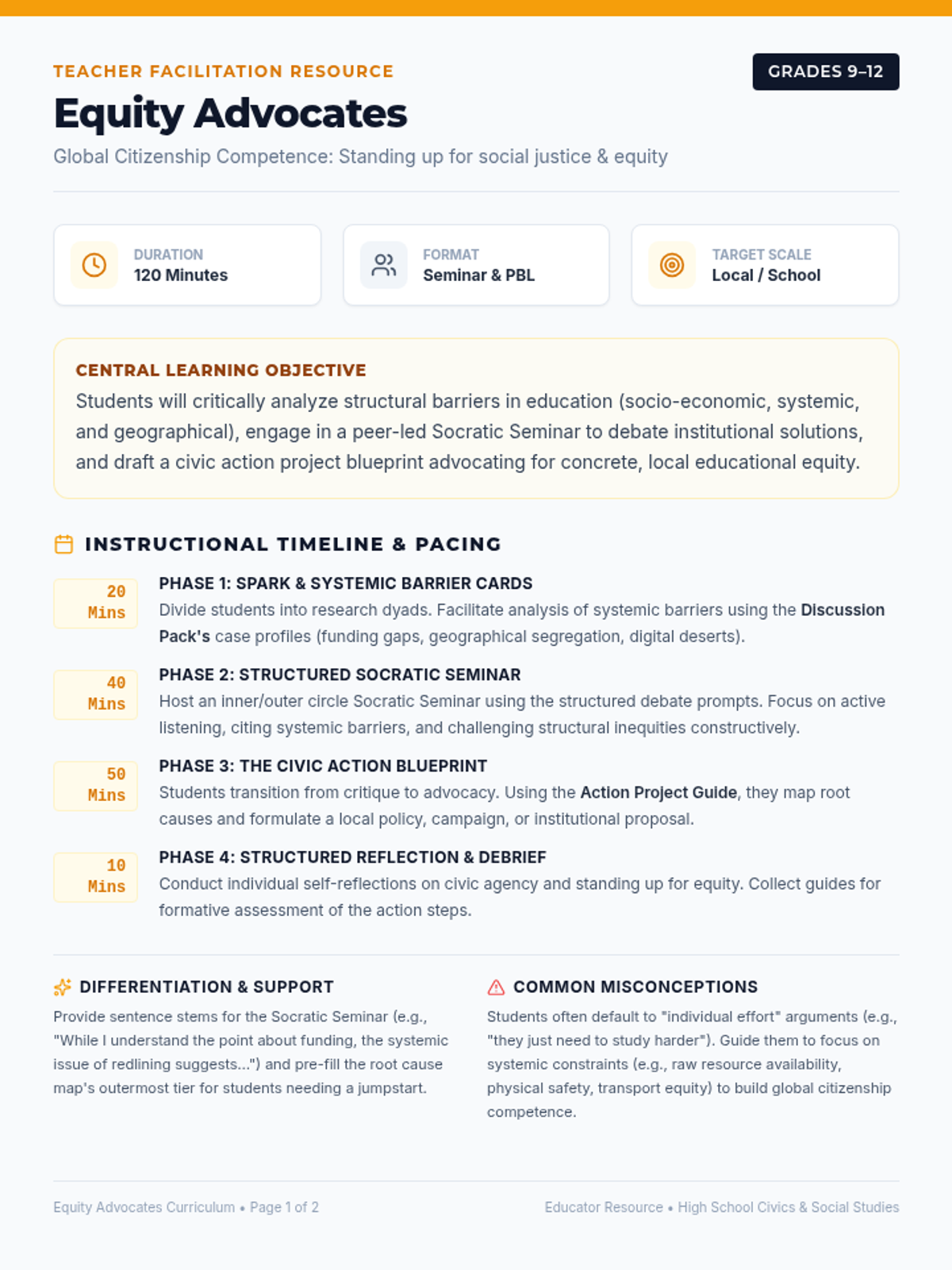
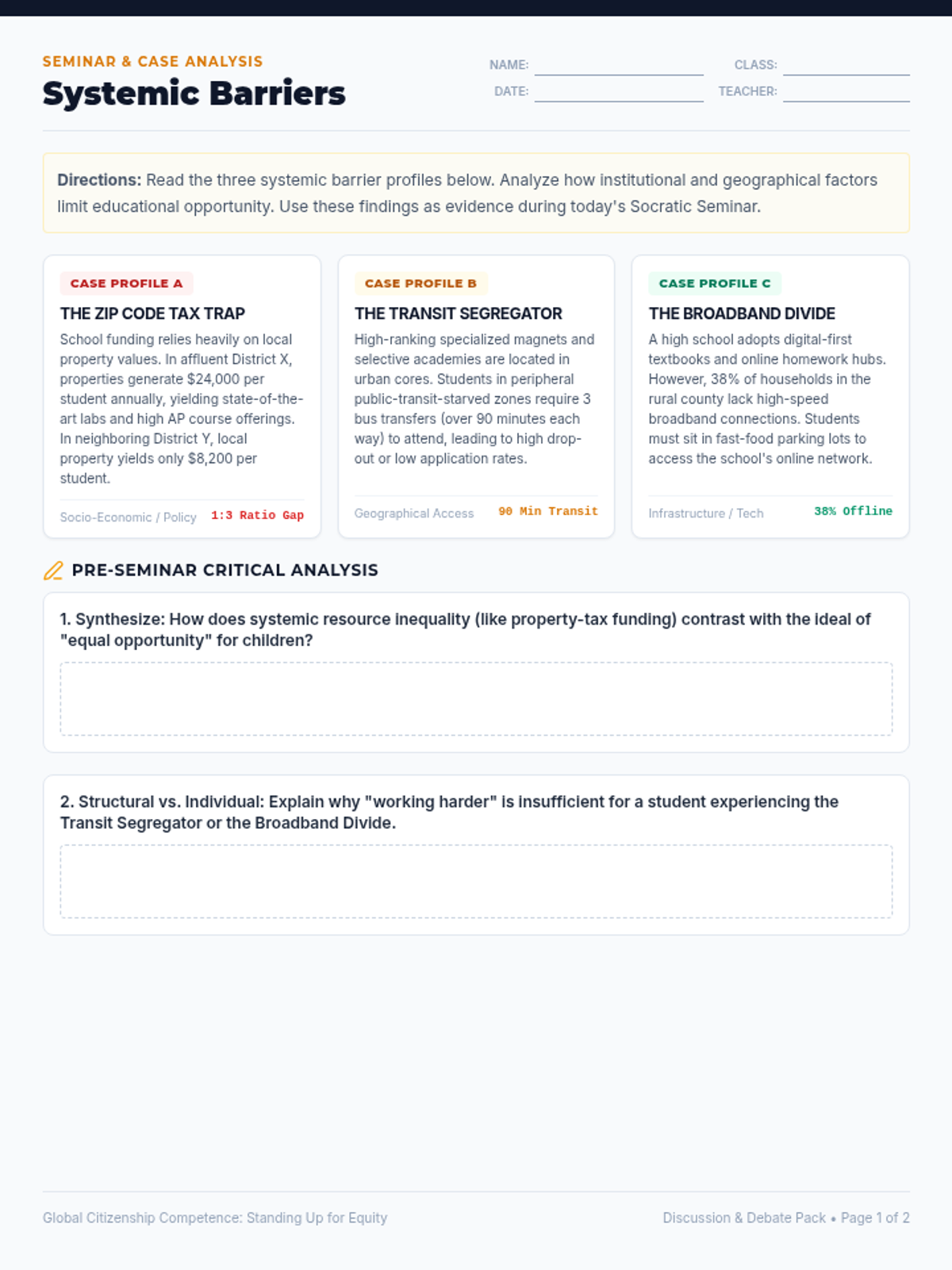
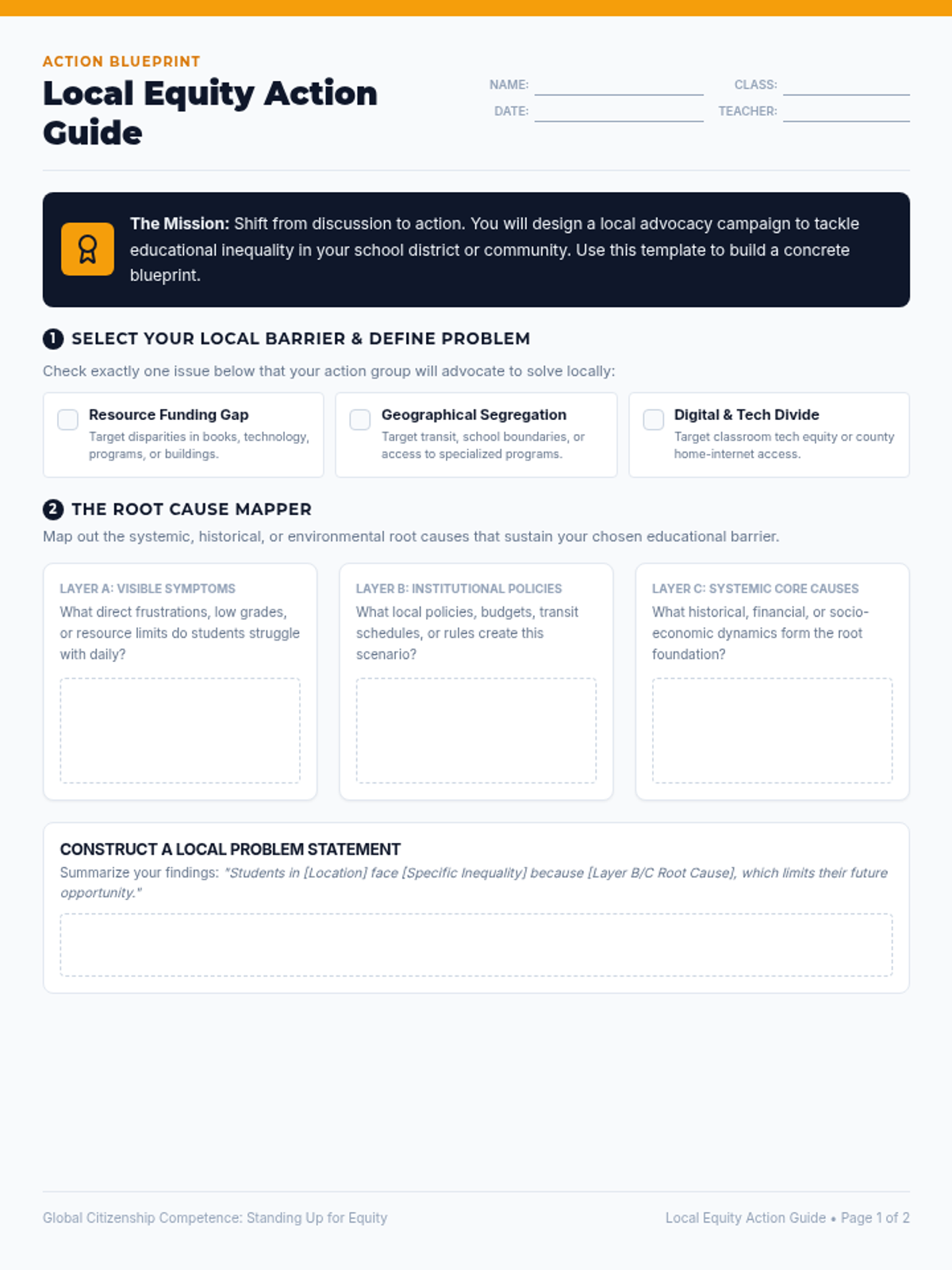
A high-impact project-based lesson for high schoolers (ages 14-18) exploring systemic barriers in education. Students analyze structural inequities, engage in a structured Socratic seminar, and draft a civic action project blueprint to advocate for educational equity in their local community.
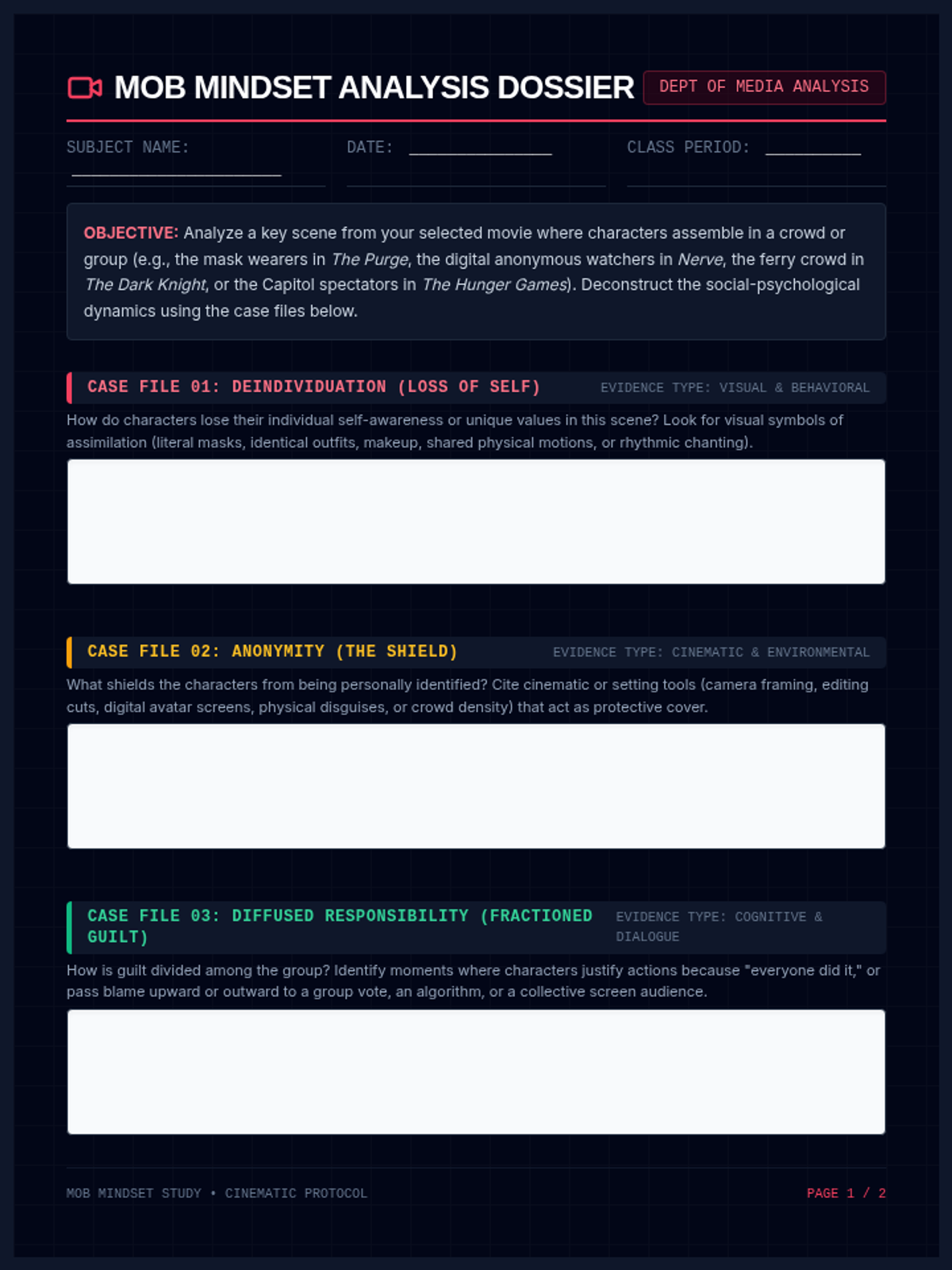
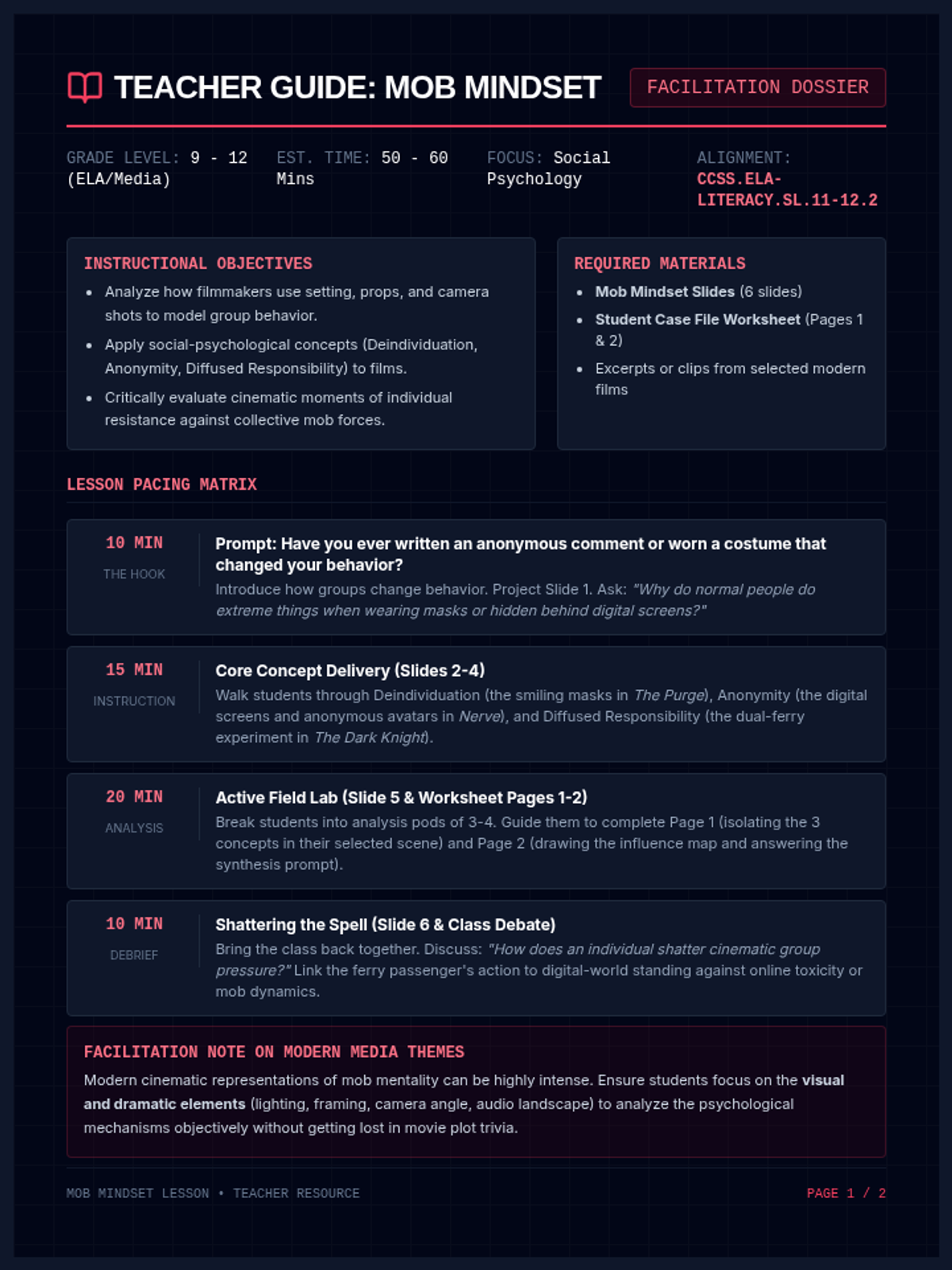
An analytical ELA lesson exploring the social psychology concepts of deindividuation, anonymity, and diffused responsibility in literature. Students examine how characters lose their individuality in groups, using classic literary texts to map the psychology of the mob.
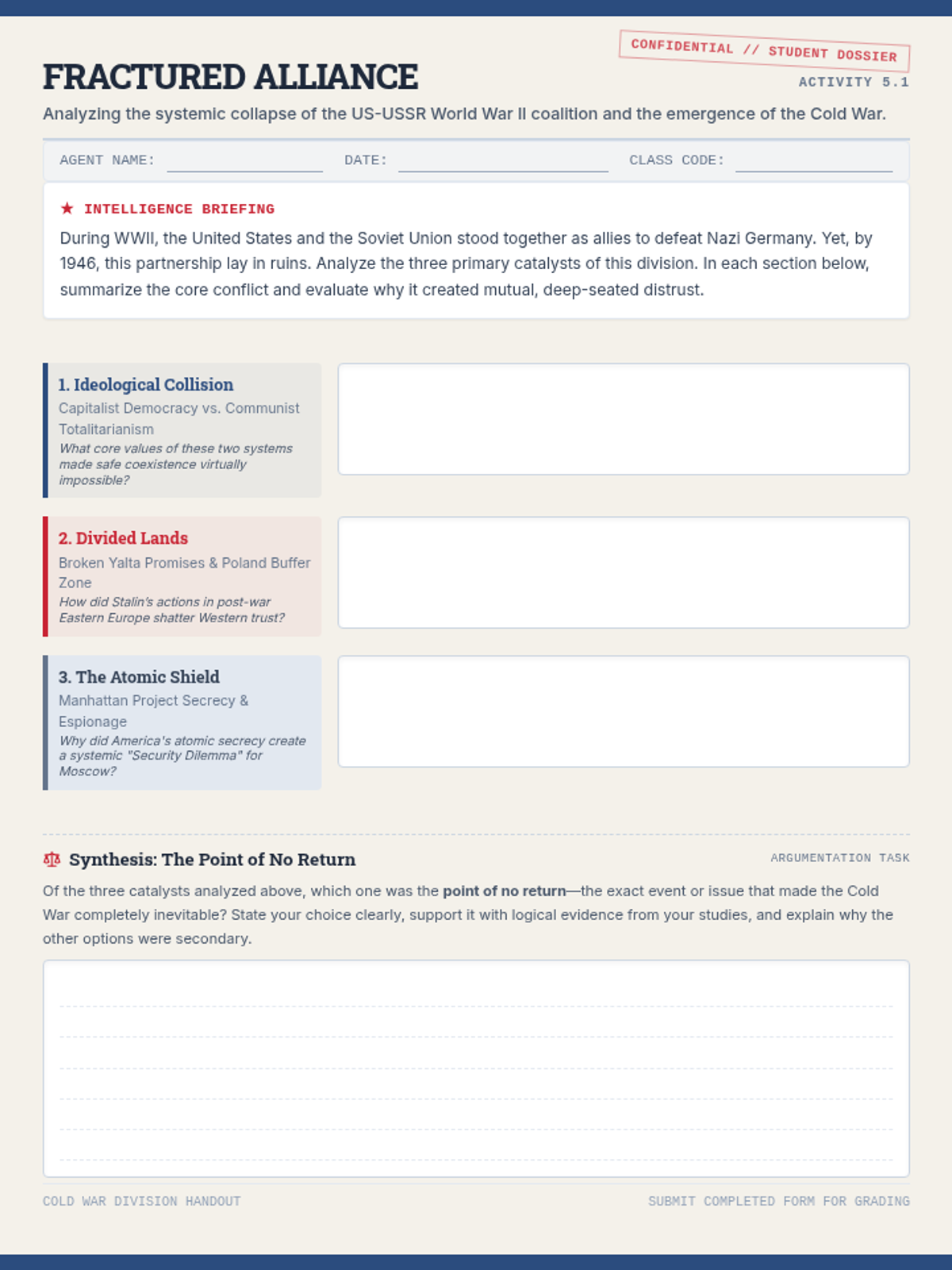
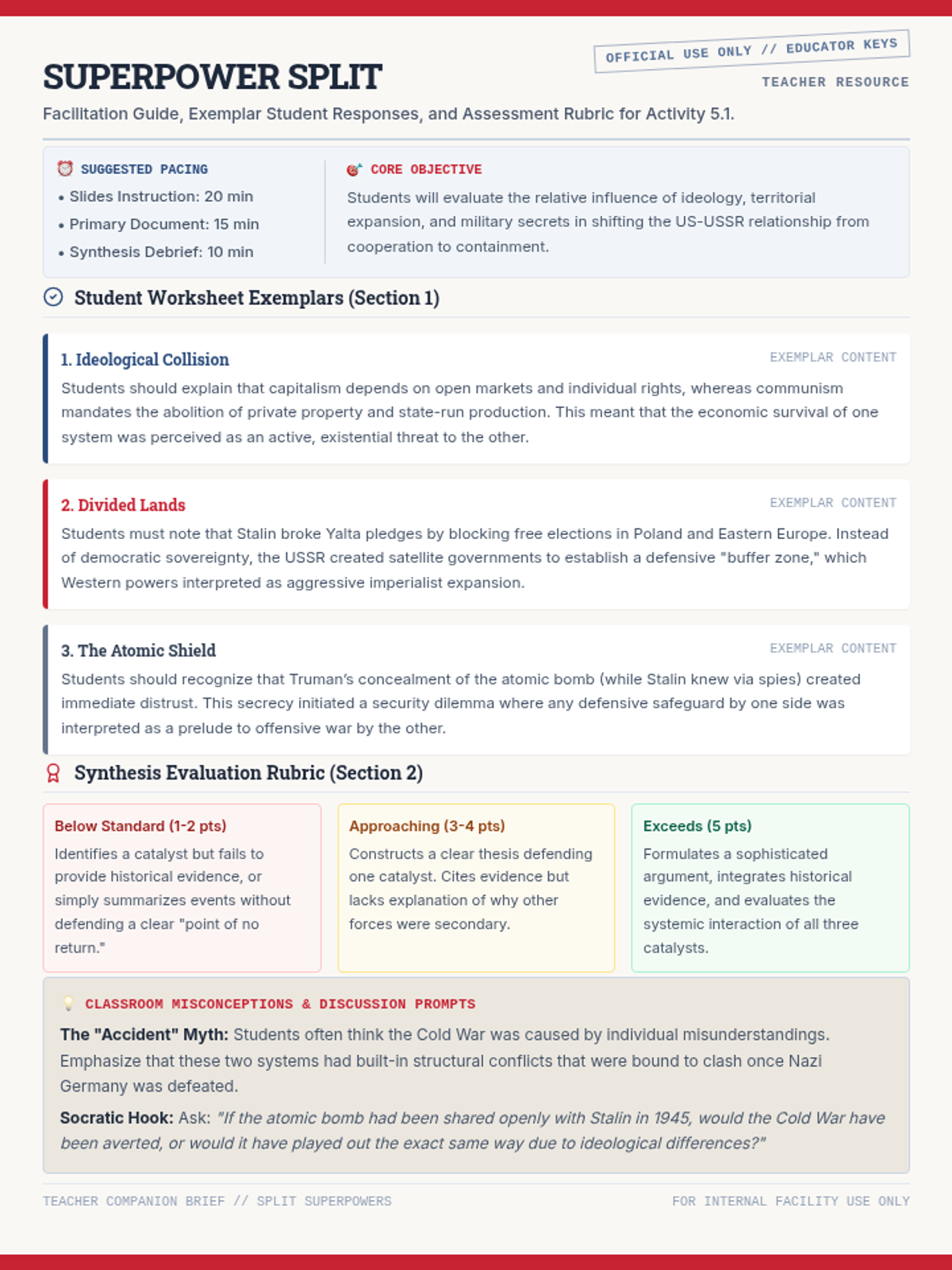
An instructional lesson exploring how the United States and the Soviet Union shifted from World War II allies to Cold War adversaries. The lesson outlines the core ideological, geopolitical, and military reasons behind this historical pivot.
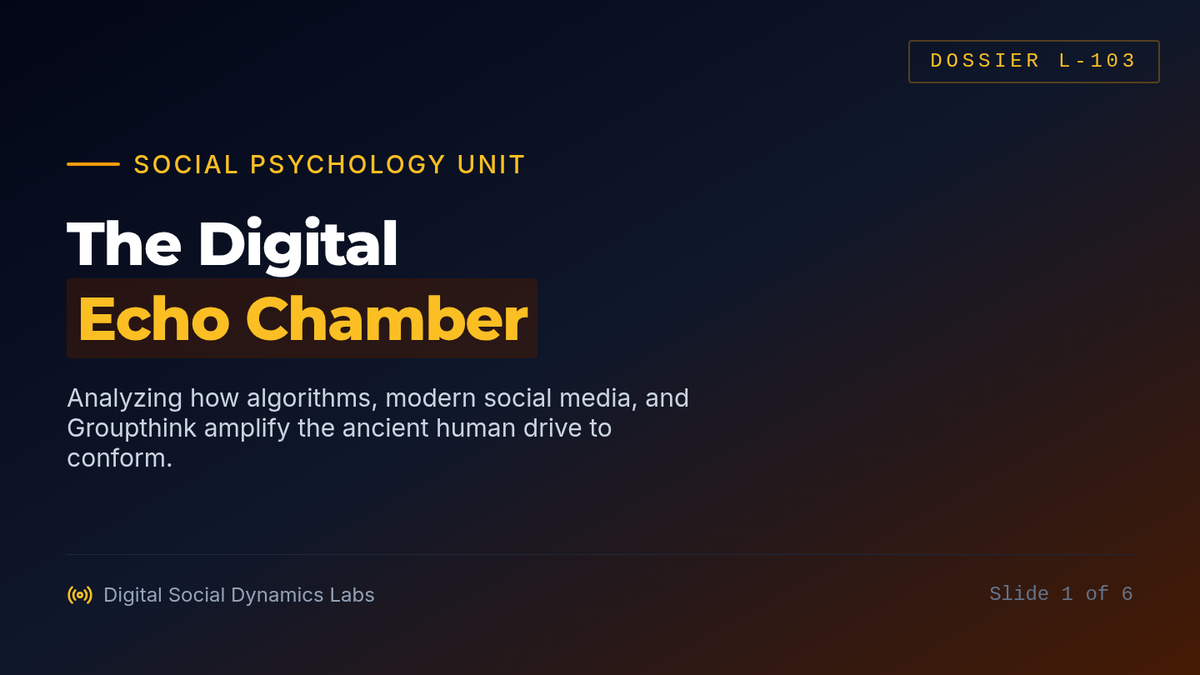
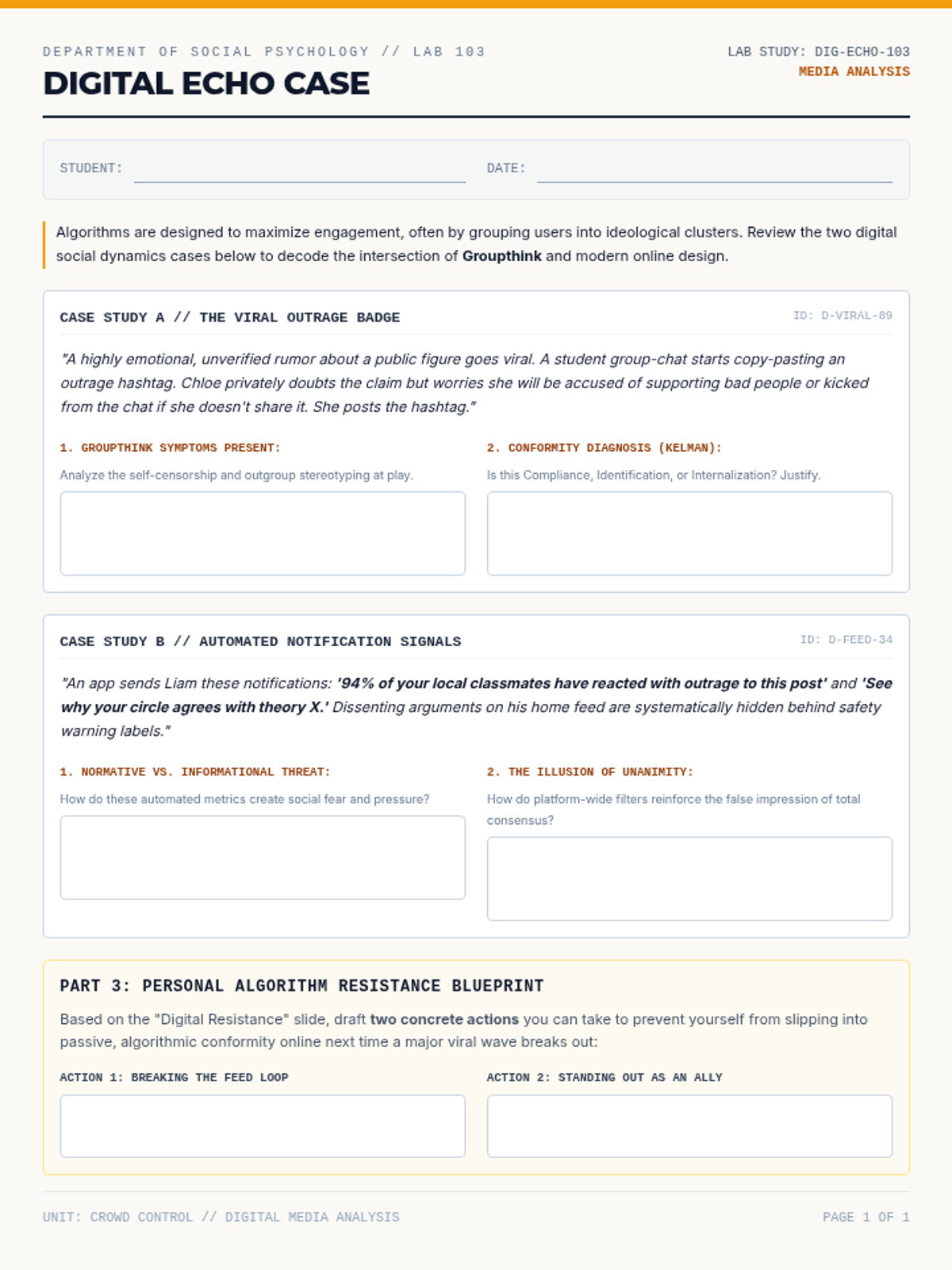
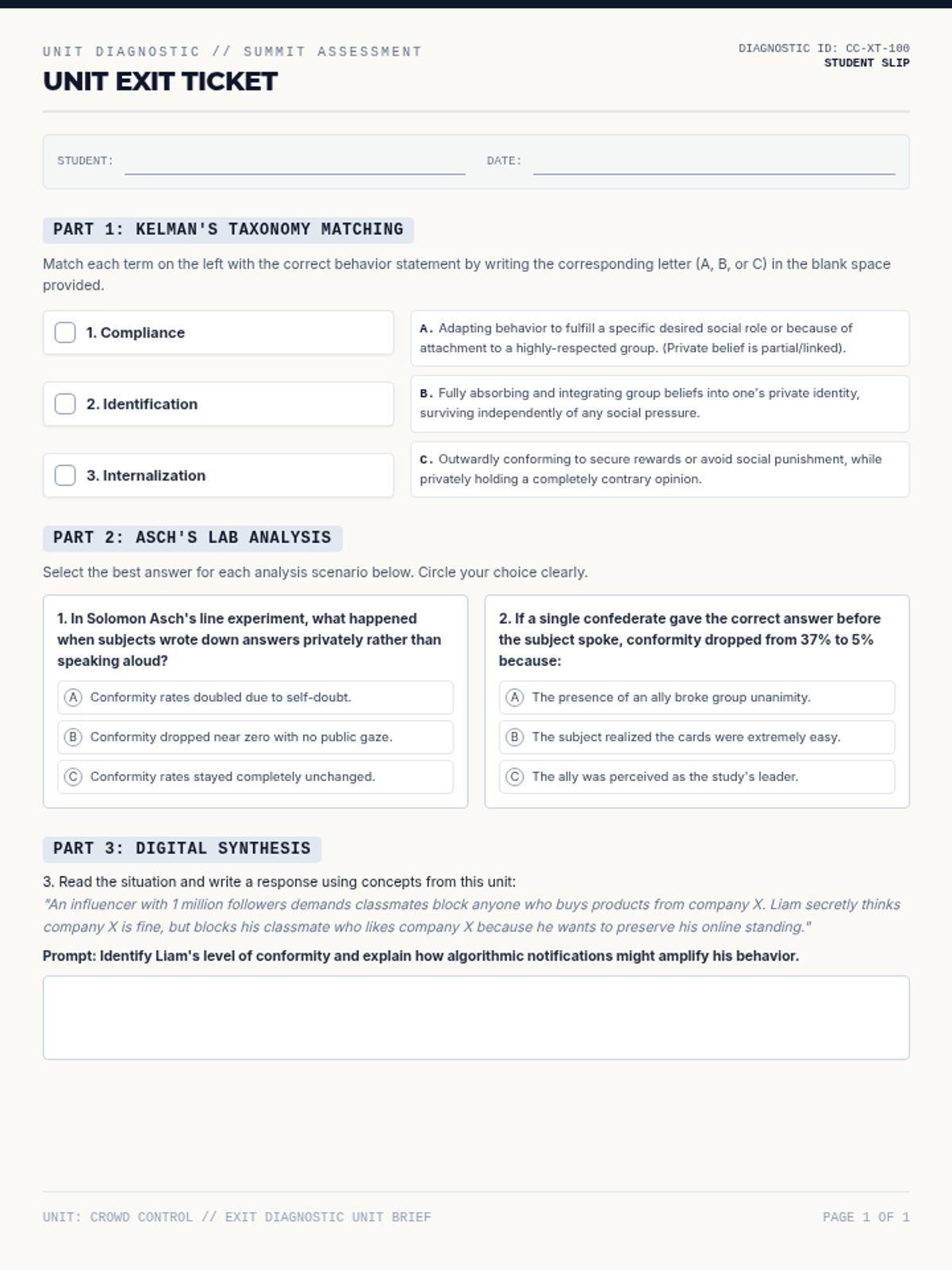
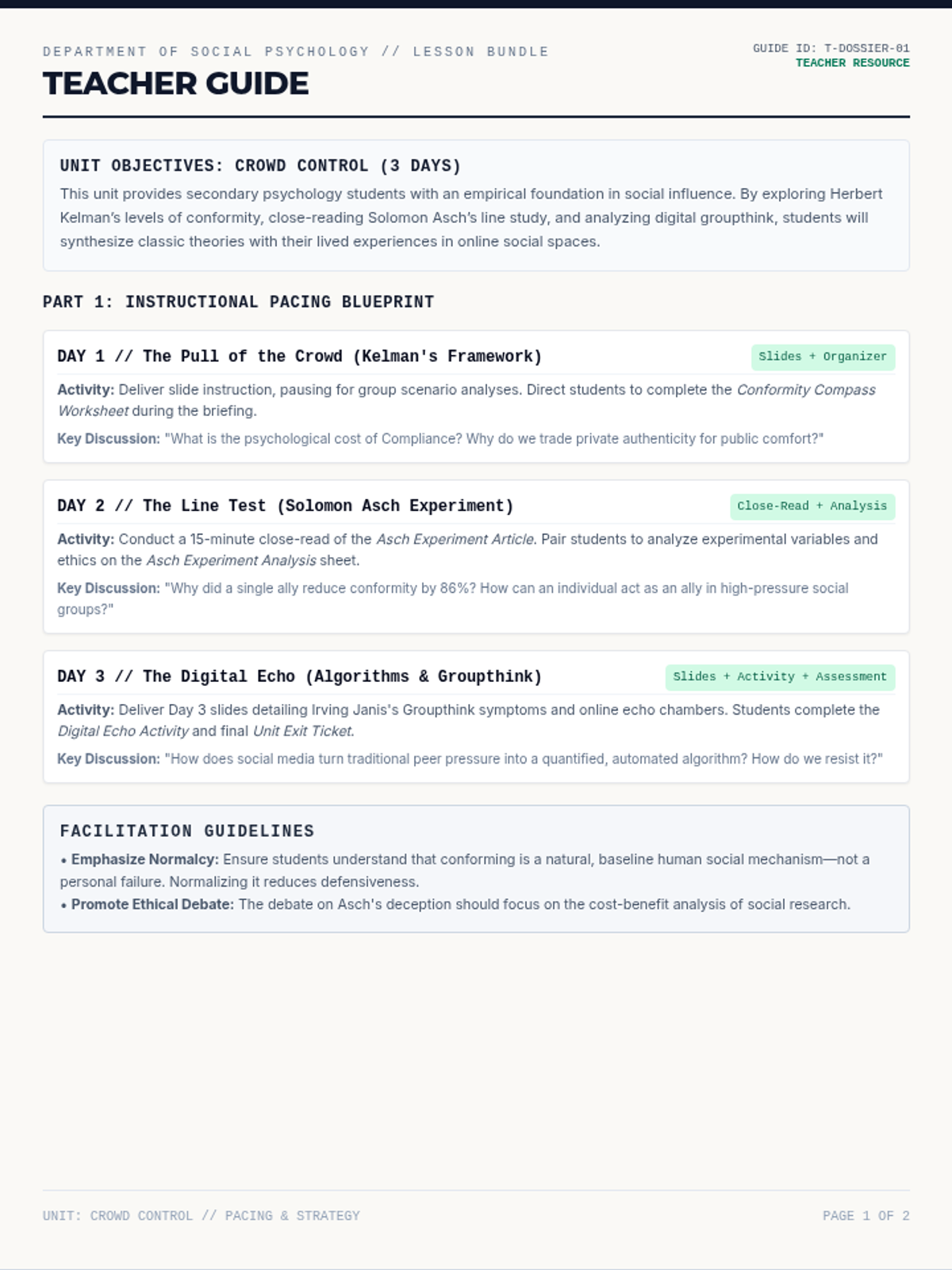
Explores groupthink, social media algorithms, and peer pressure. Students analyze how online spaces amplify conformity and complete an exit ticket to assess their understanding across the unit.
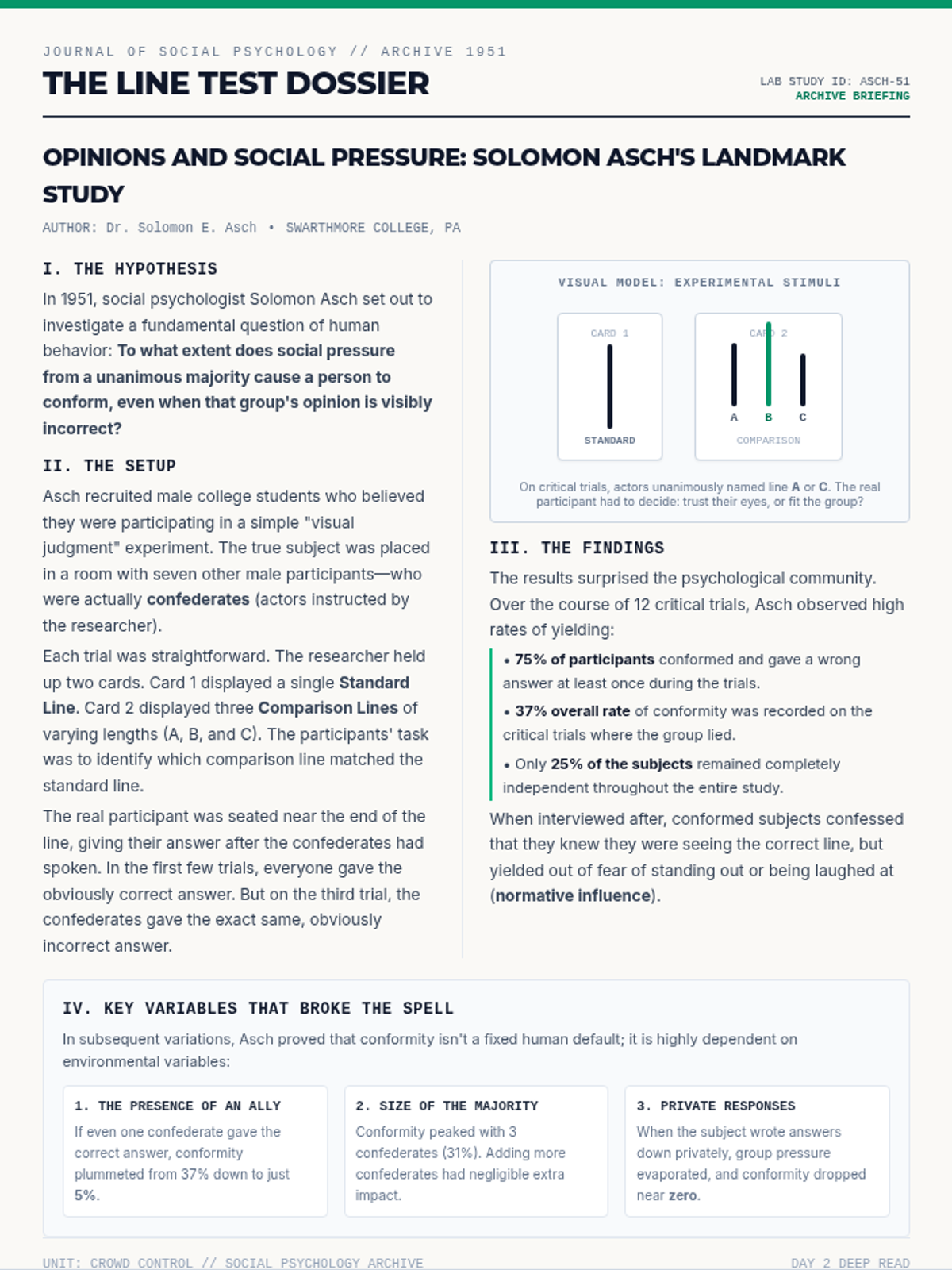
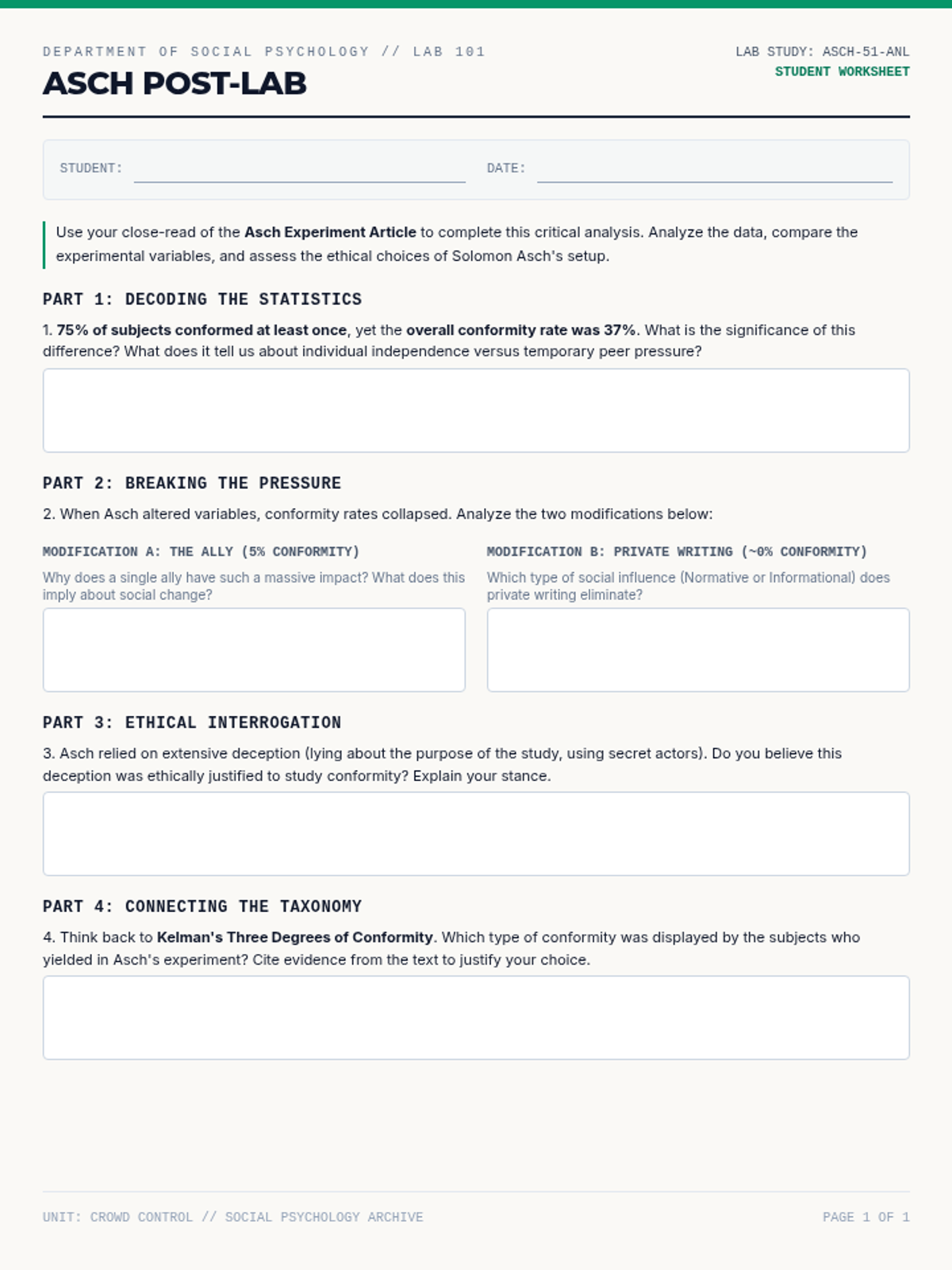
Focuses on Solomon Asch's landmark 1951 conformity experiment. Students close-read an informational text about the study's design, results, and ethical implications, and answer critical thinking questions.
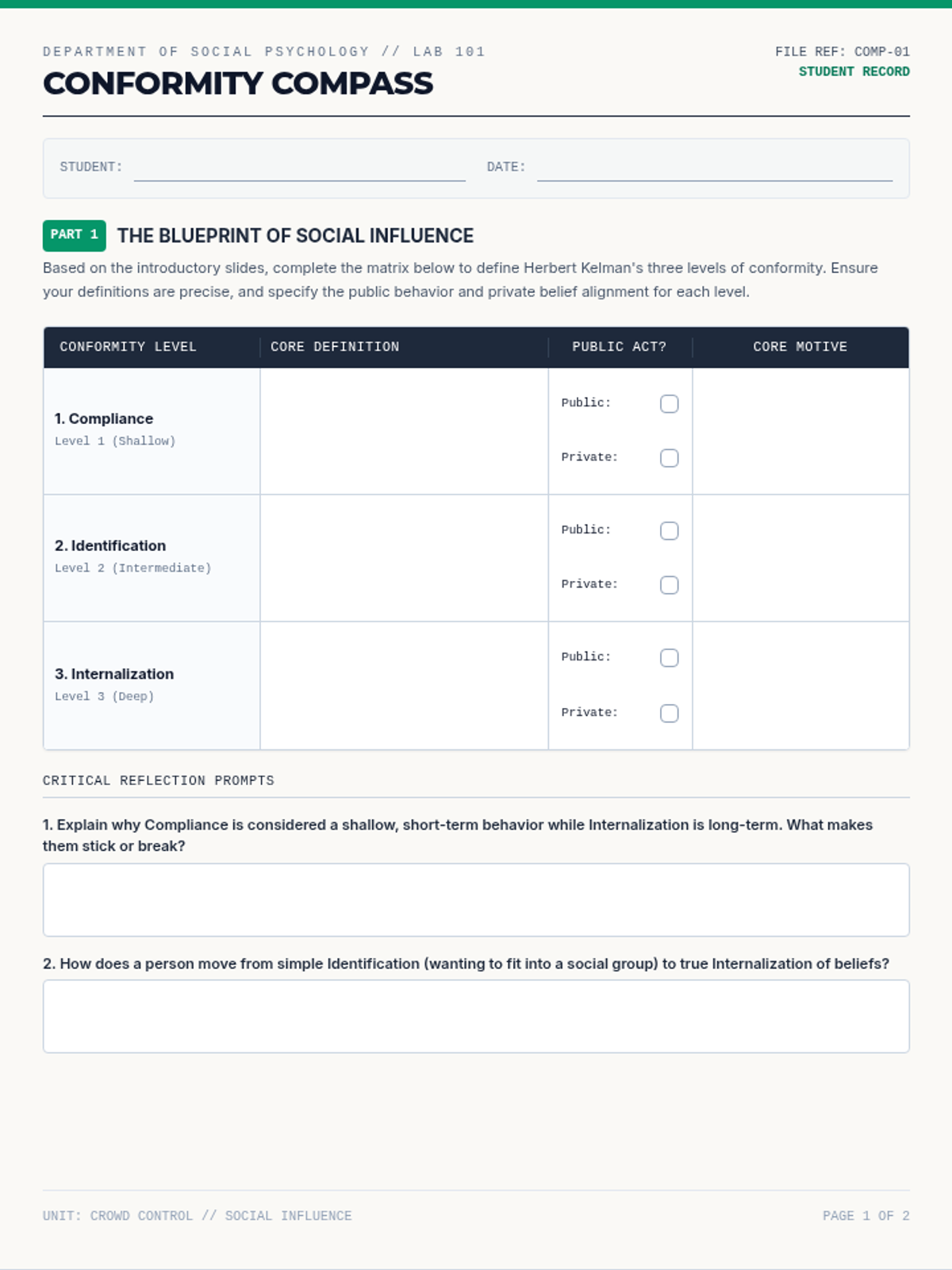
Introduces the social psychology of conformity, focusing on Herbert Kelman's three types: compliance, identification, and internalization. Students analyze real-world scenarios and map definitions on a graphic organizer.
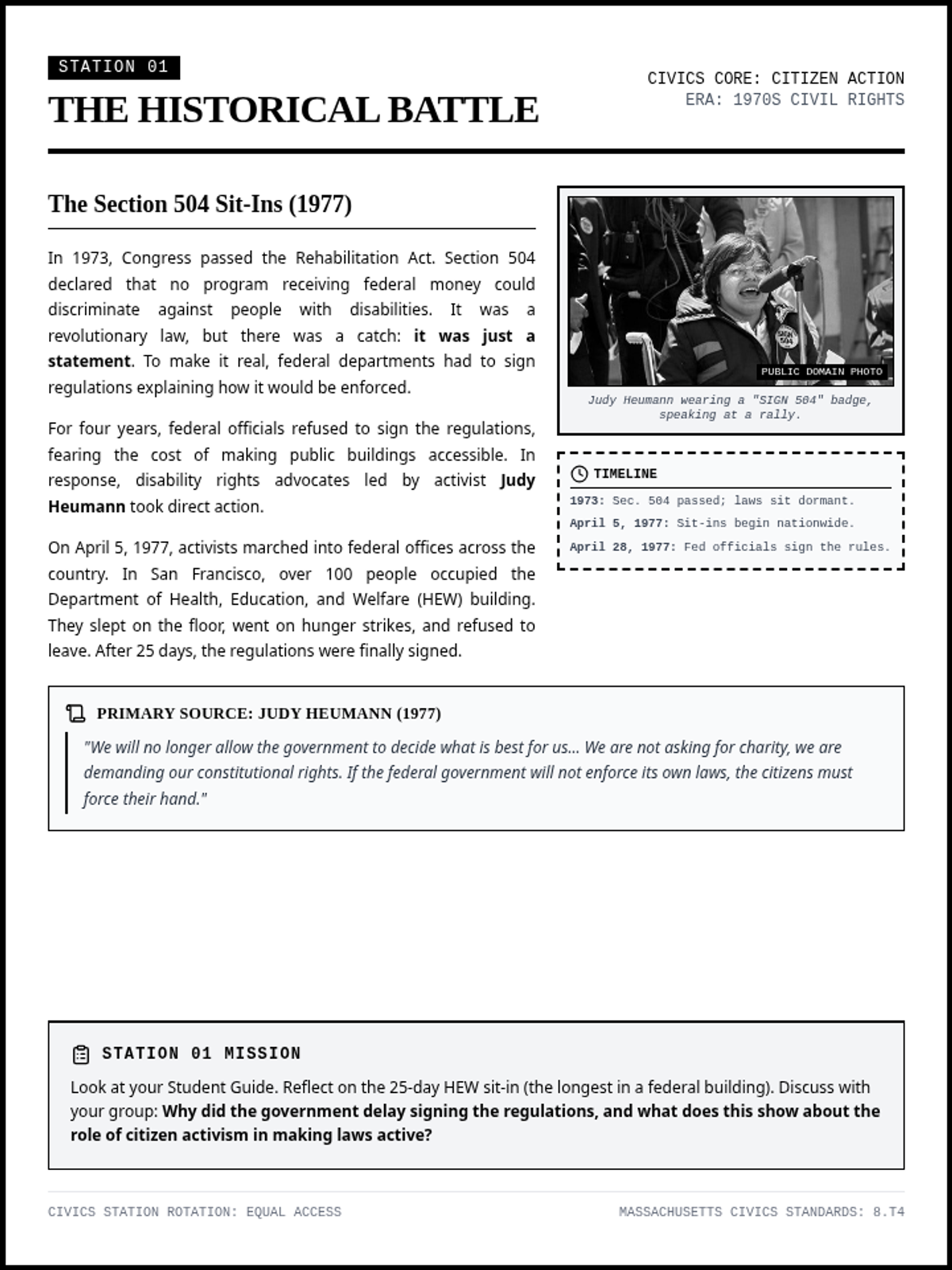
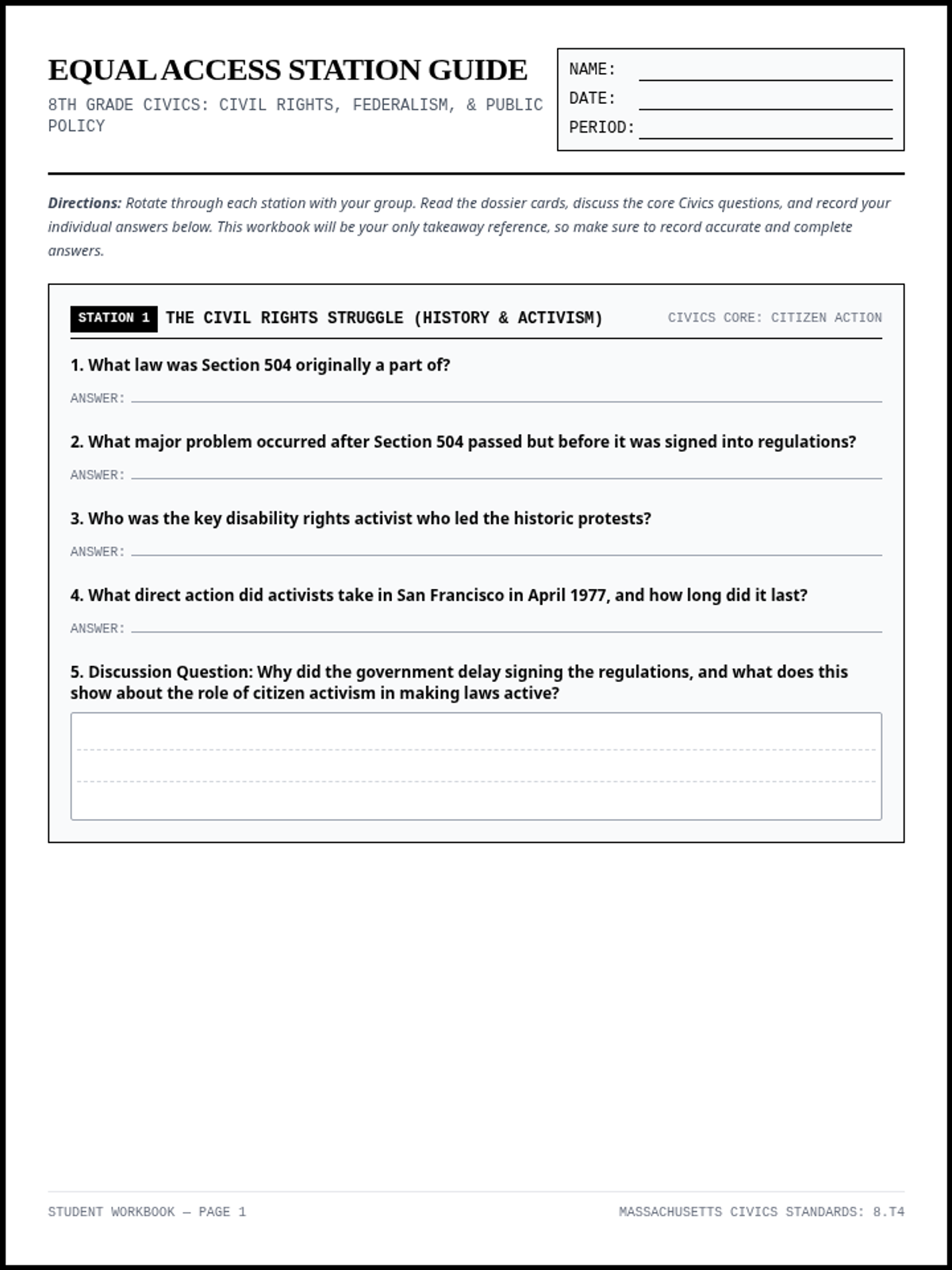
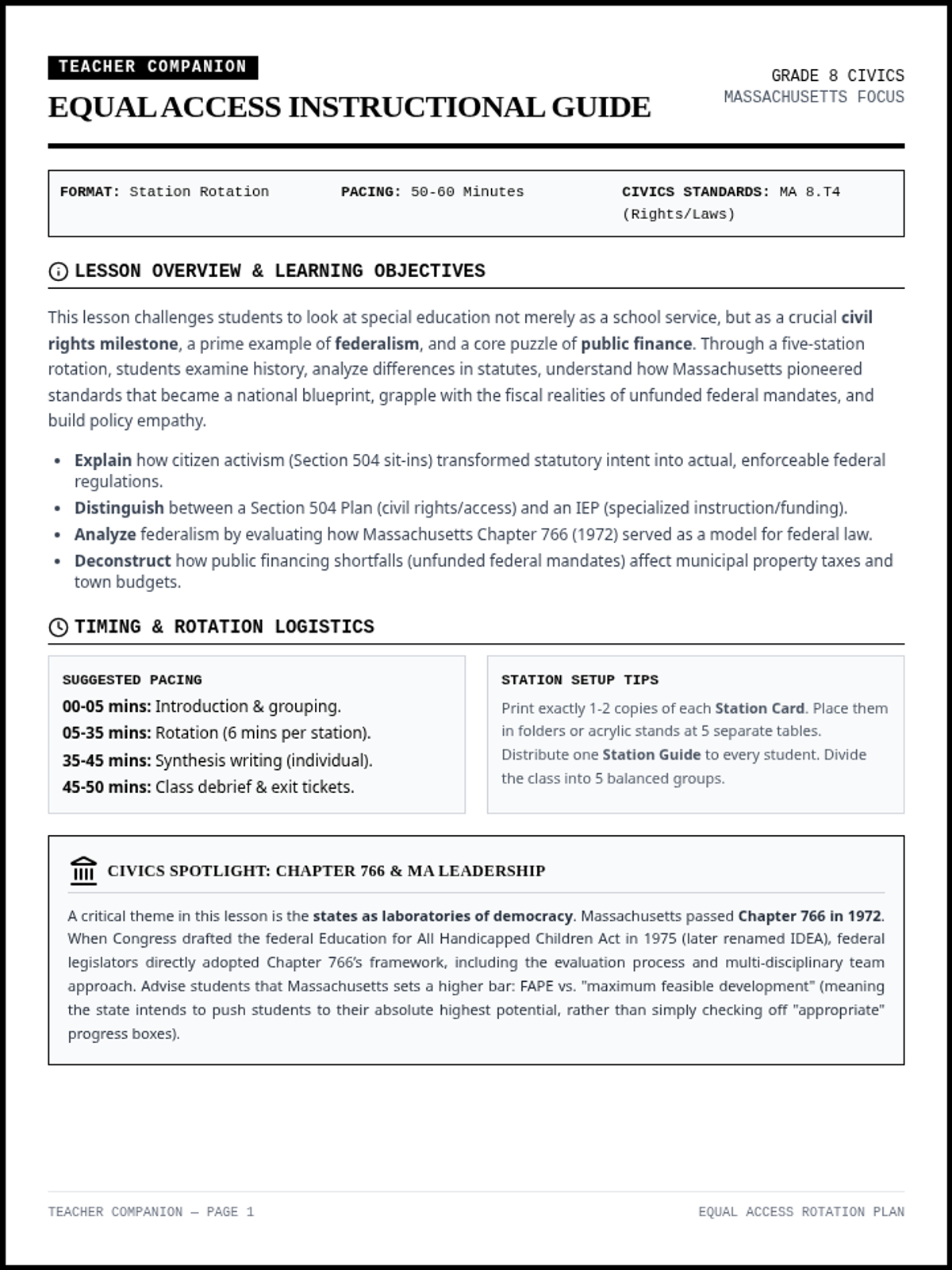
An 8th-grade Civics station rotation lesson exploring the history, laws, funding, and federalism of 504 and IEP services, comparing federal mandates with Massachusetts state standards.
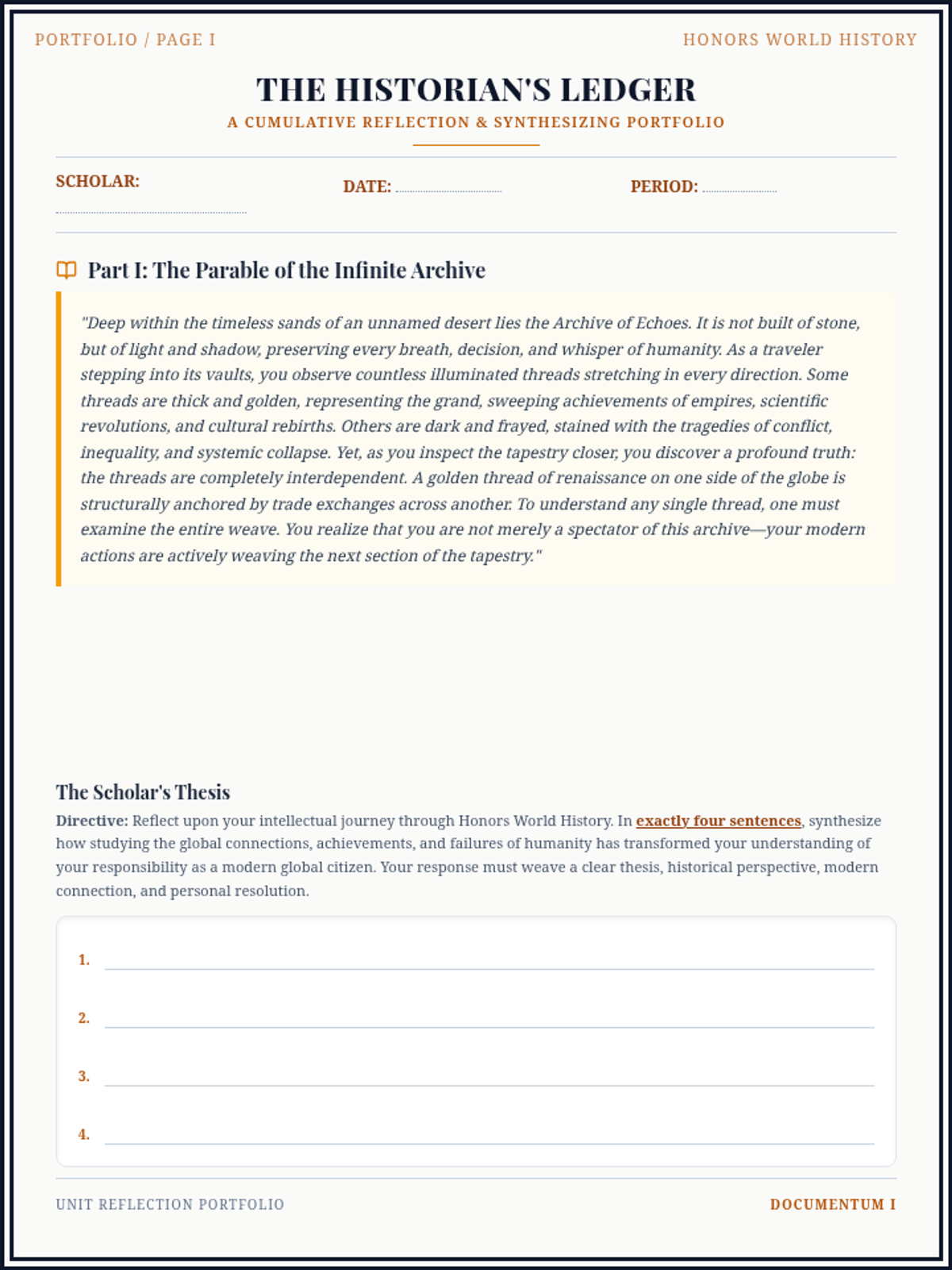
A cumulative three-page reflection portfolio designed for Honors World History scholars to synthesize high-level historical themes, vocabulary, and critical thinking.
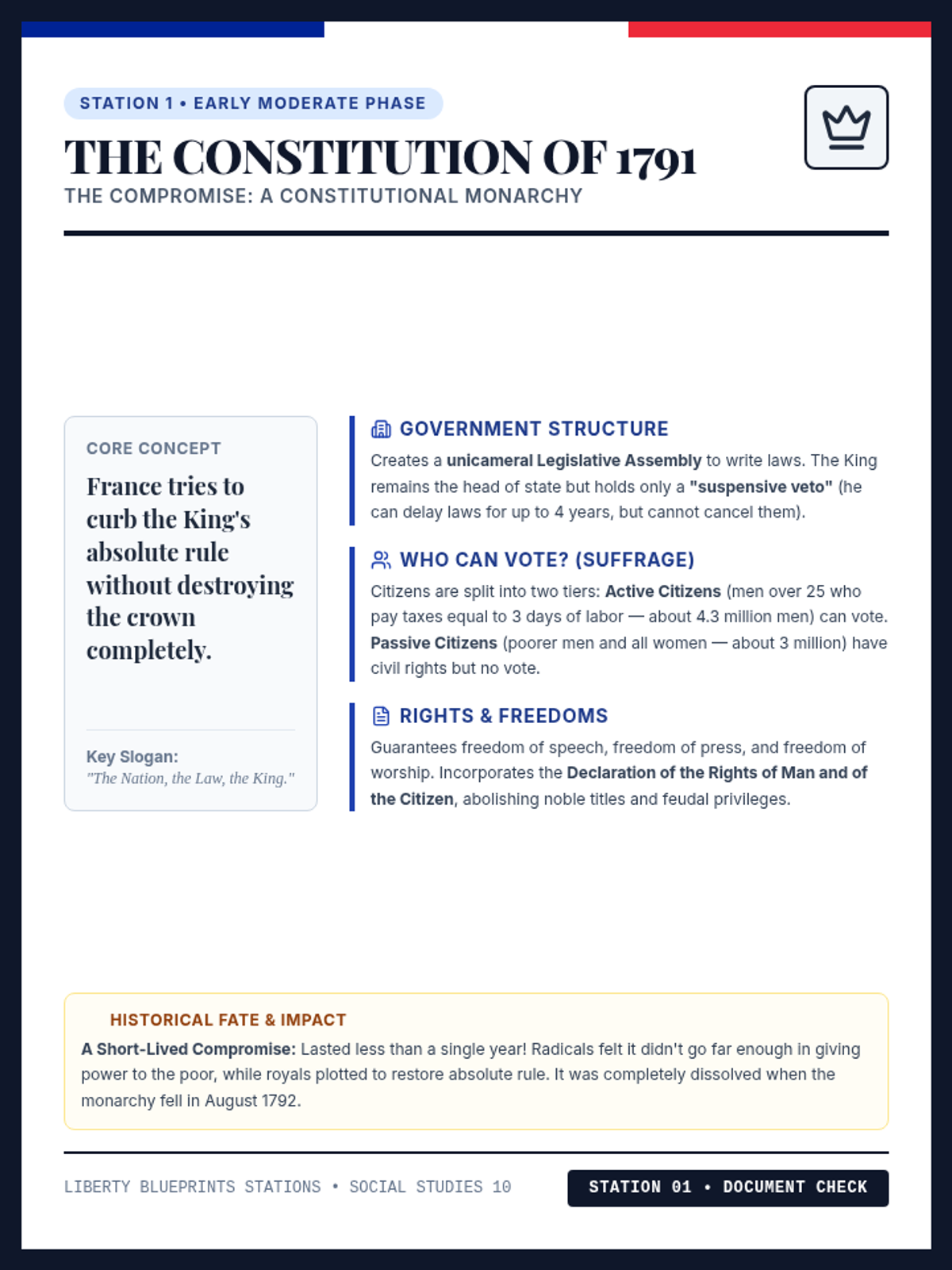
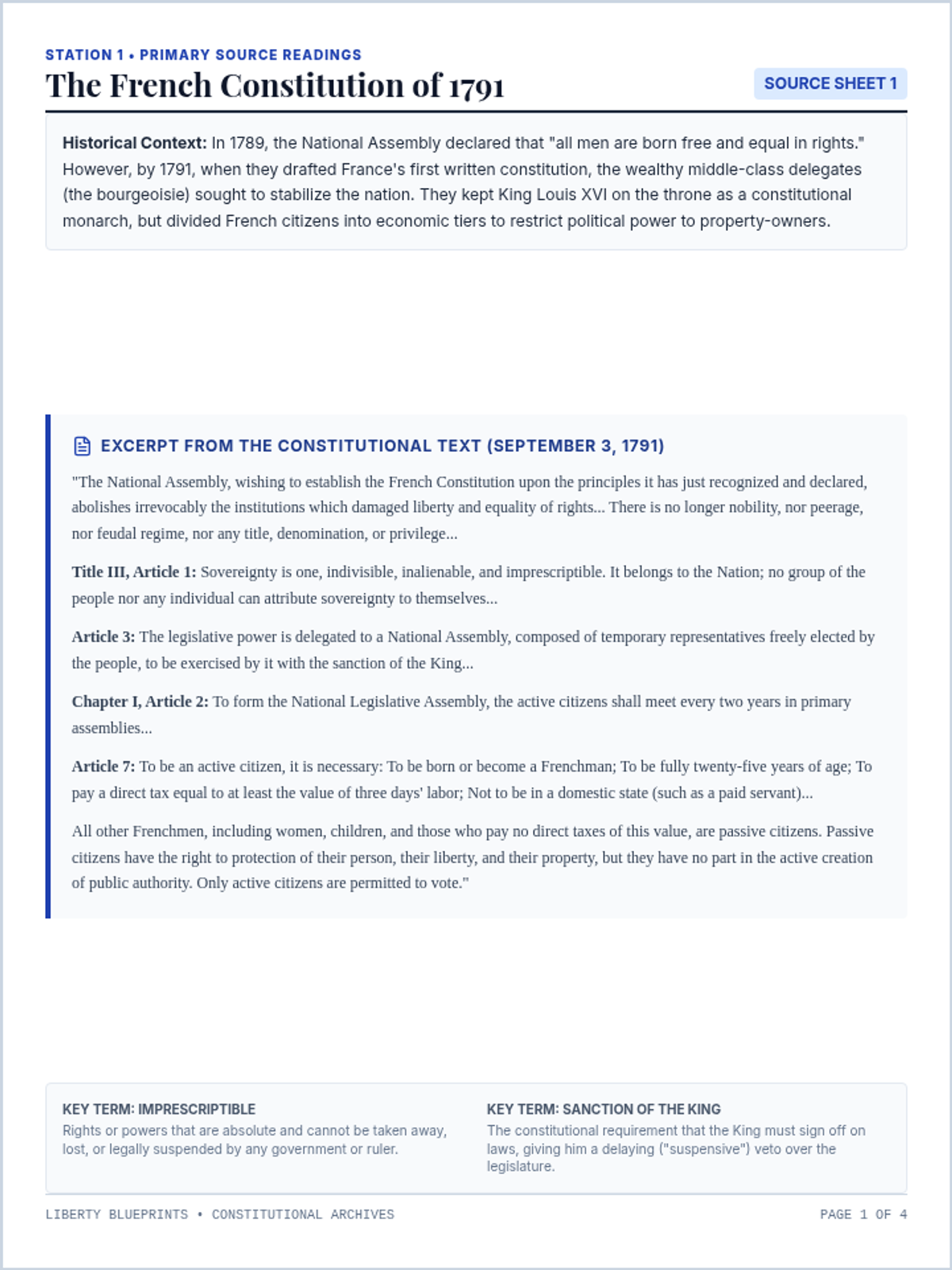
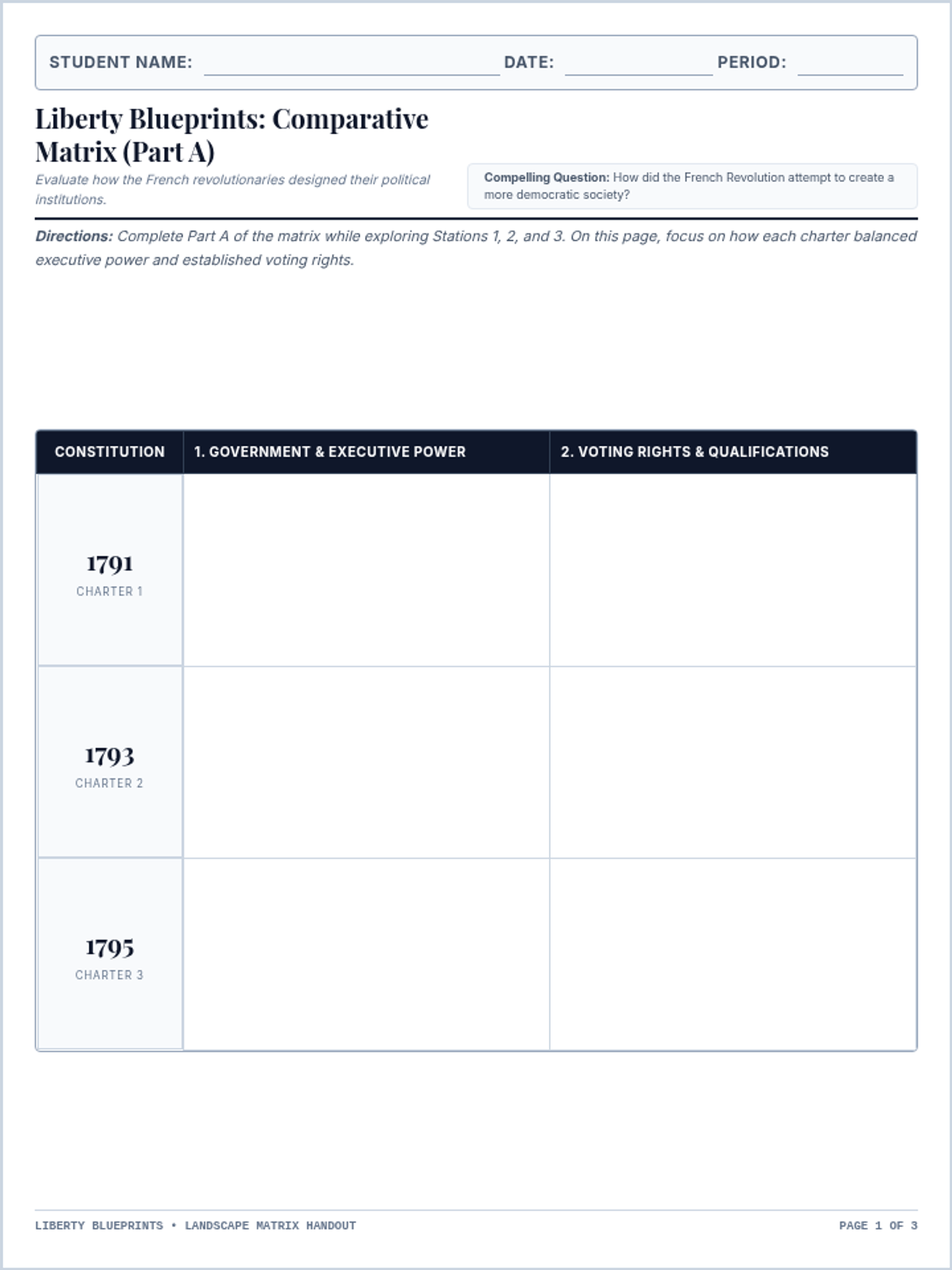
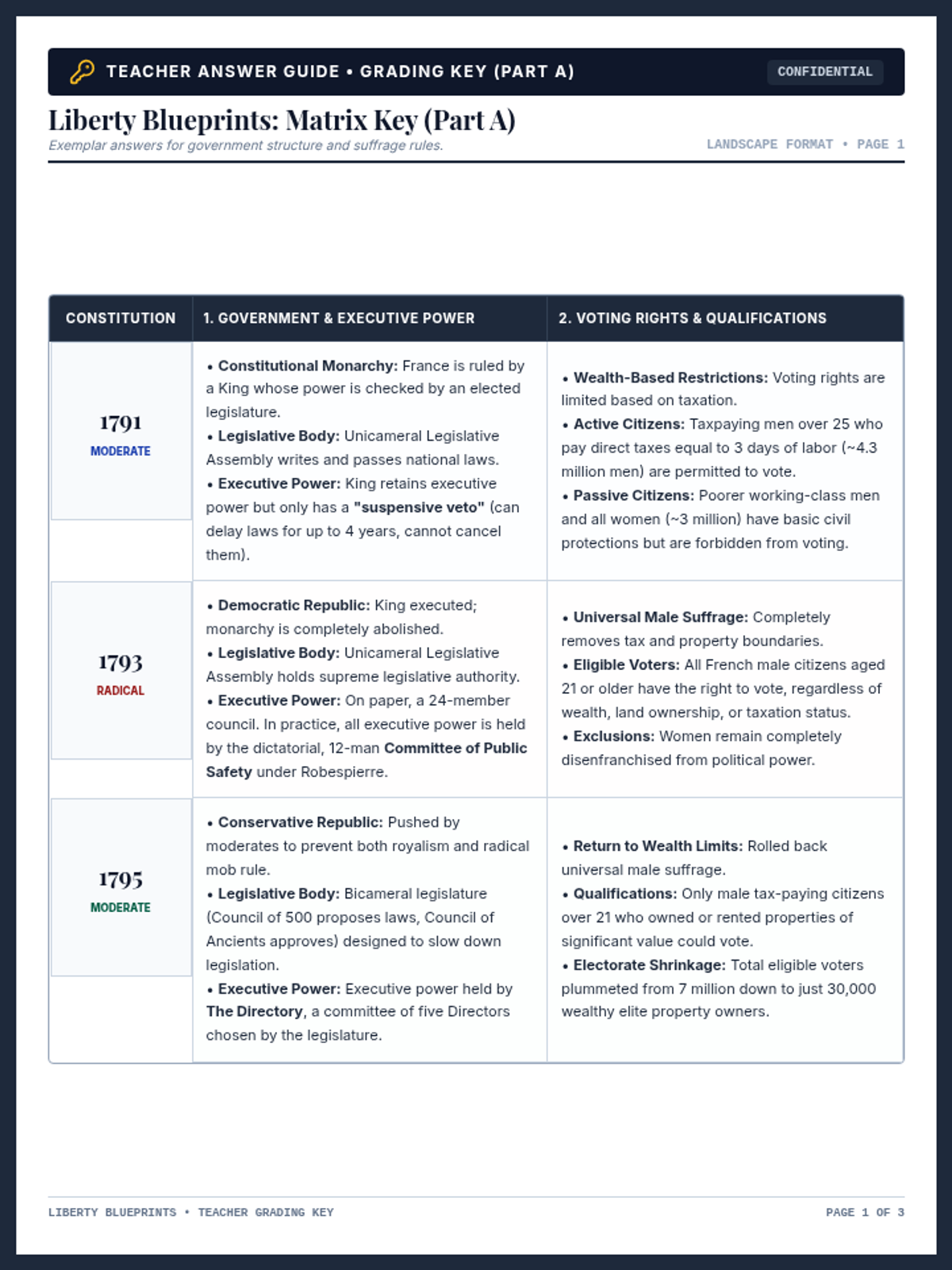
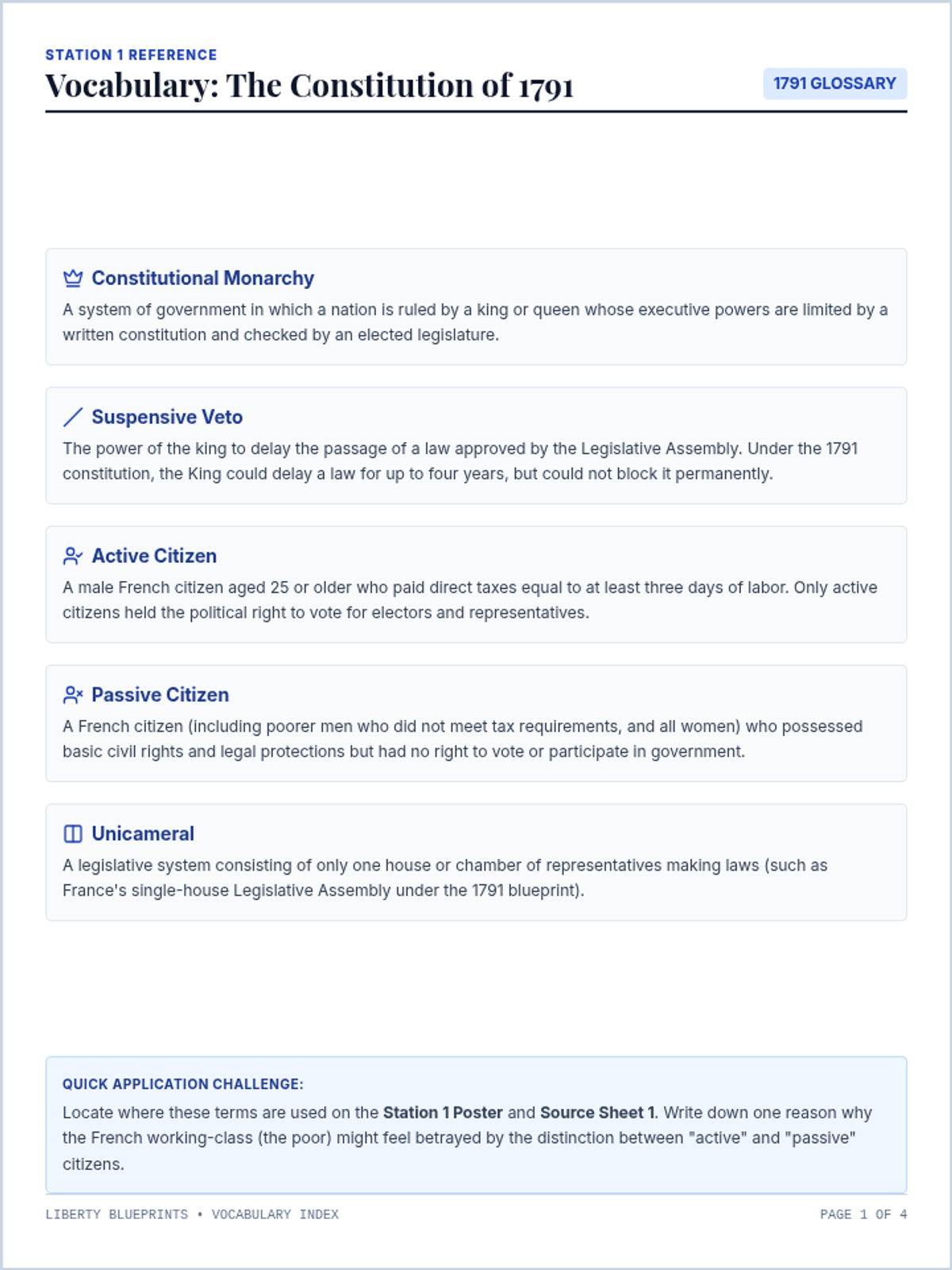
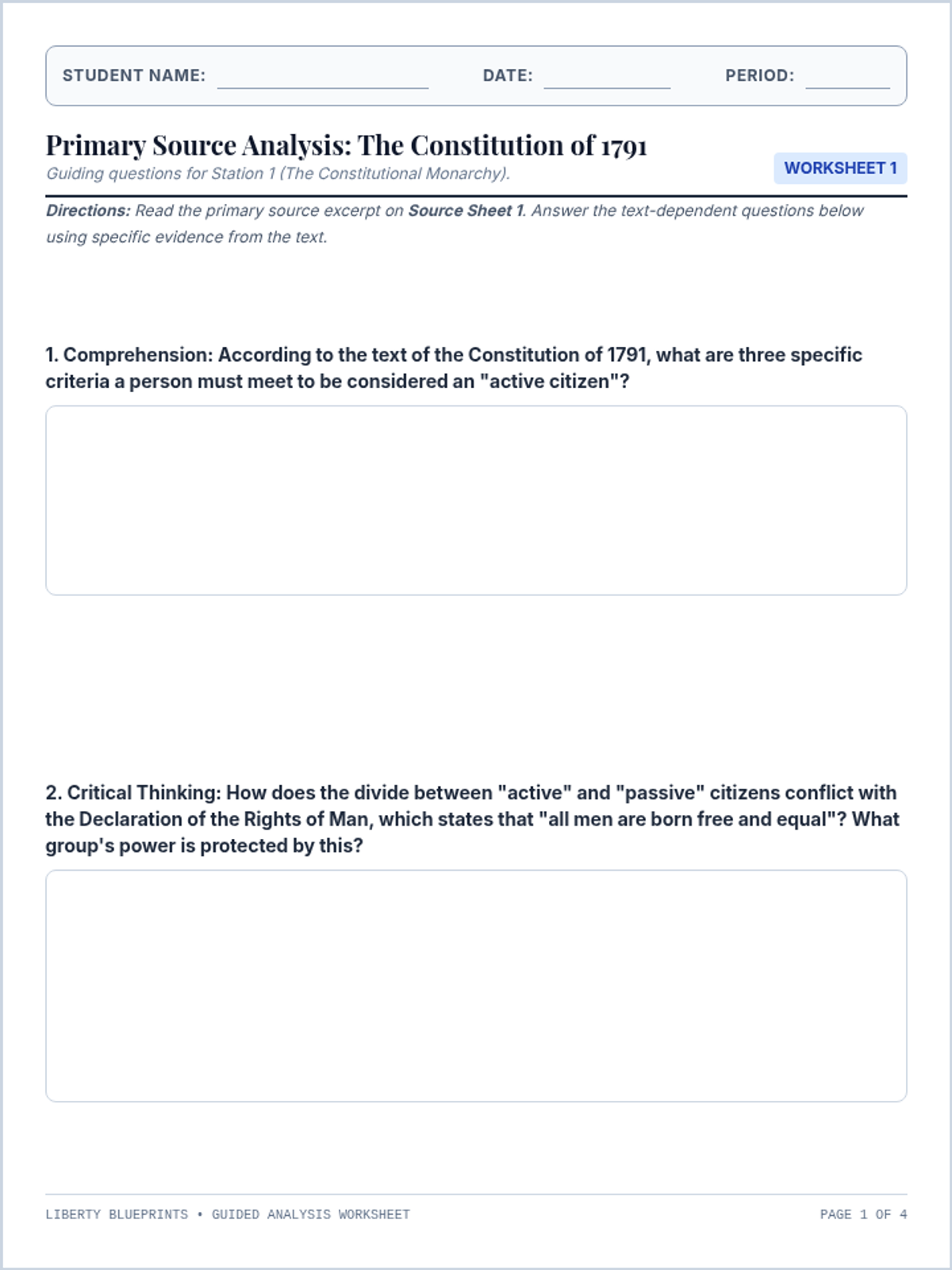
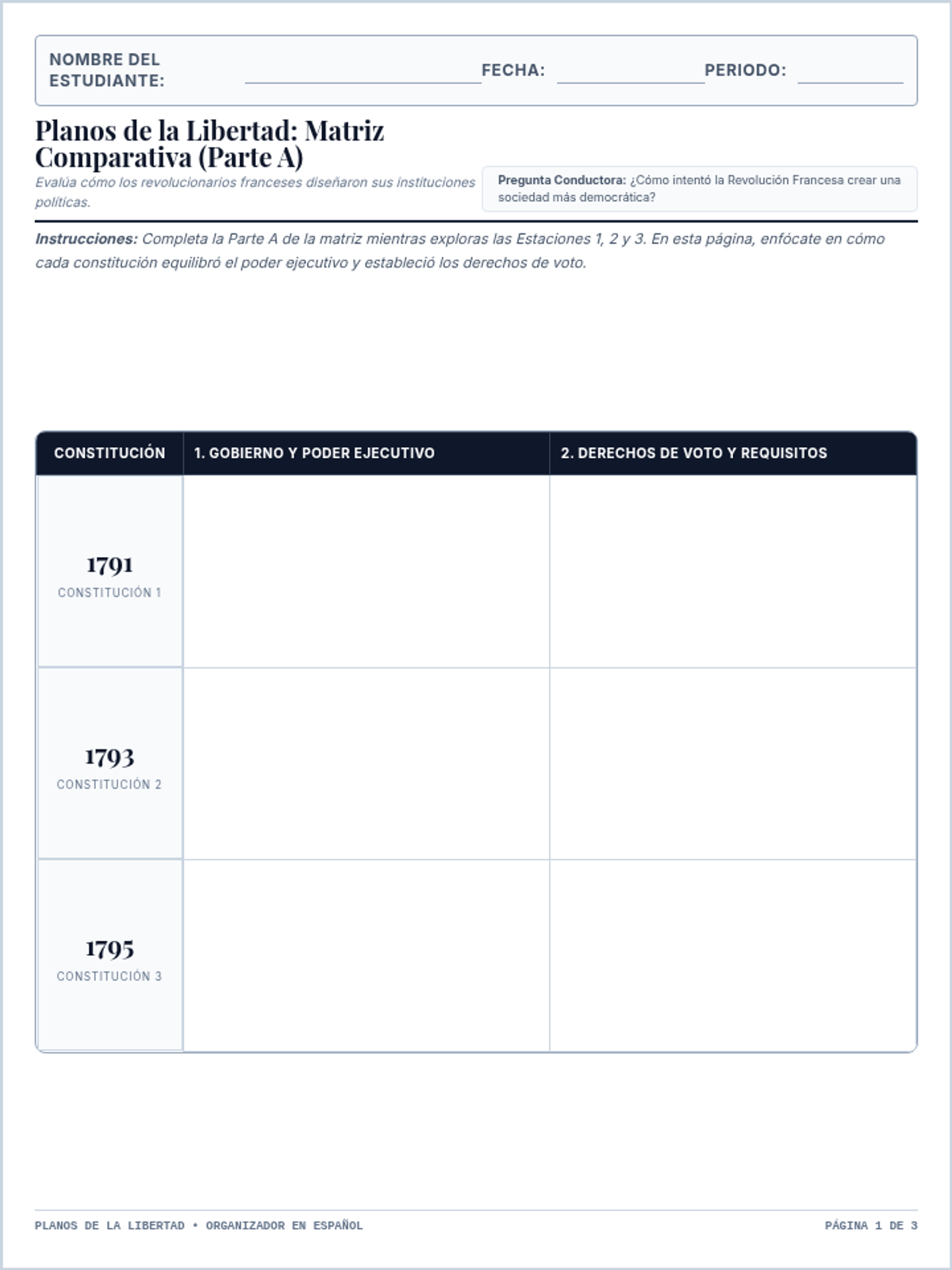
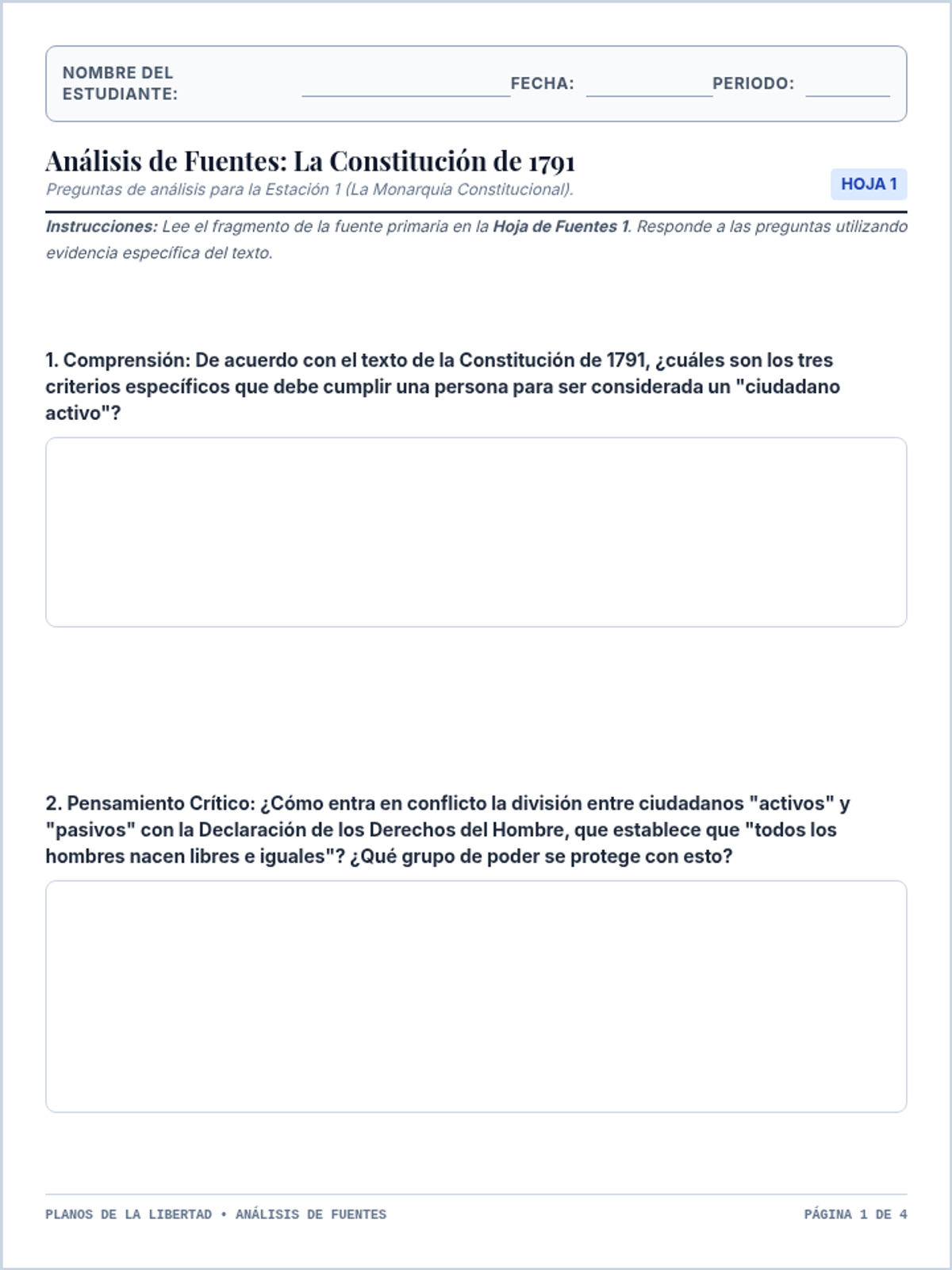
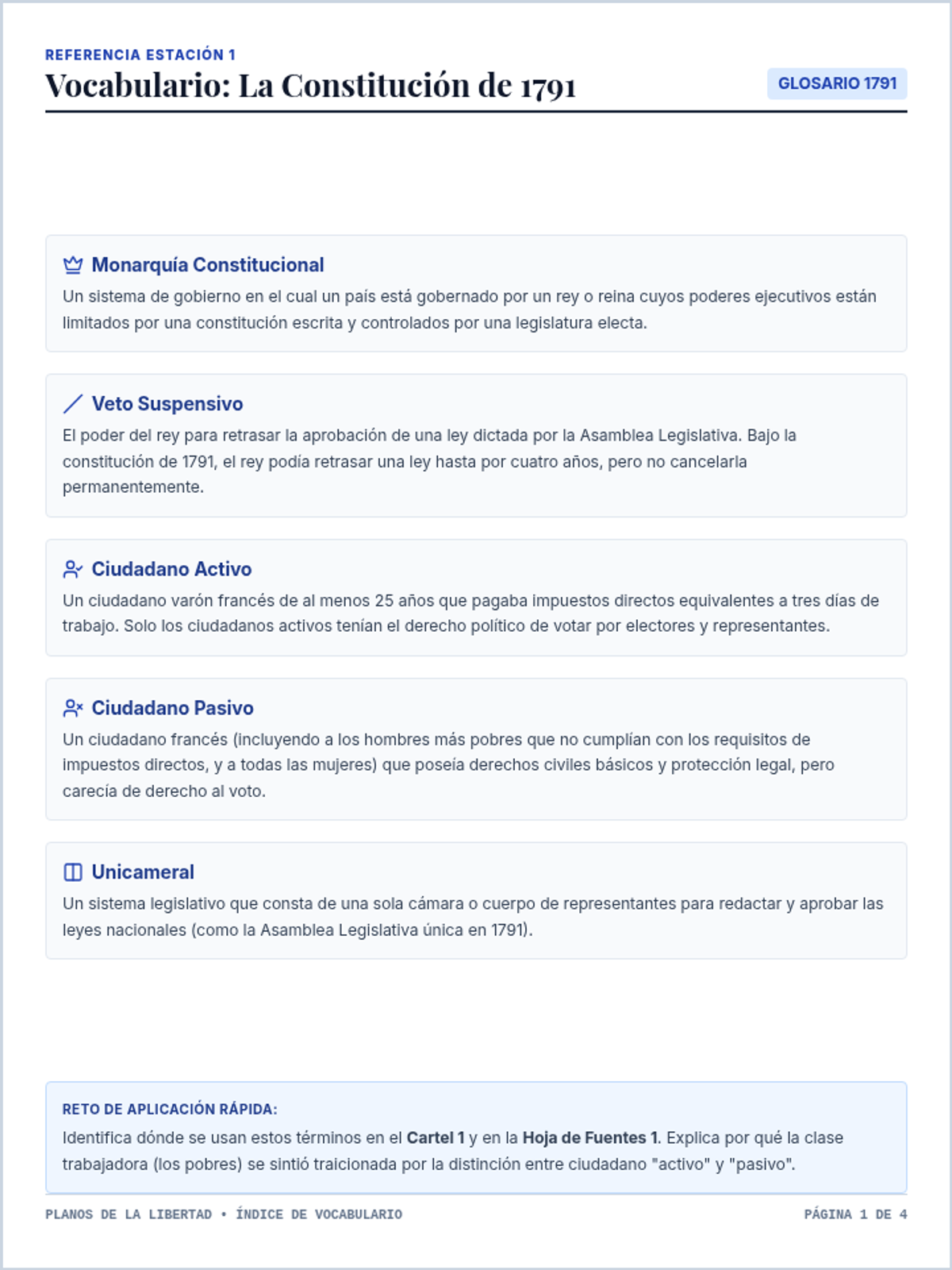
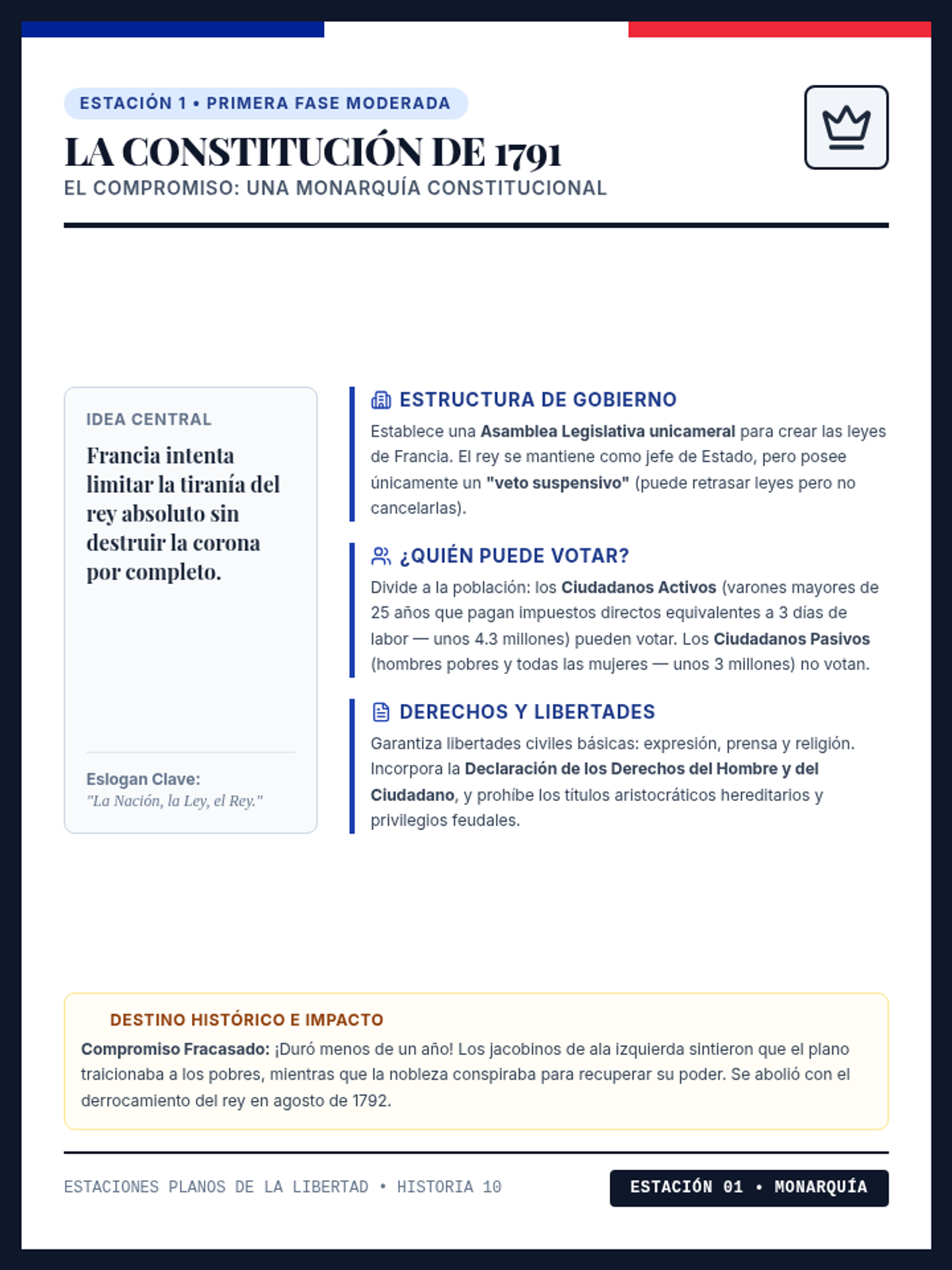
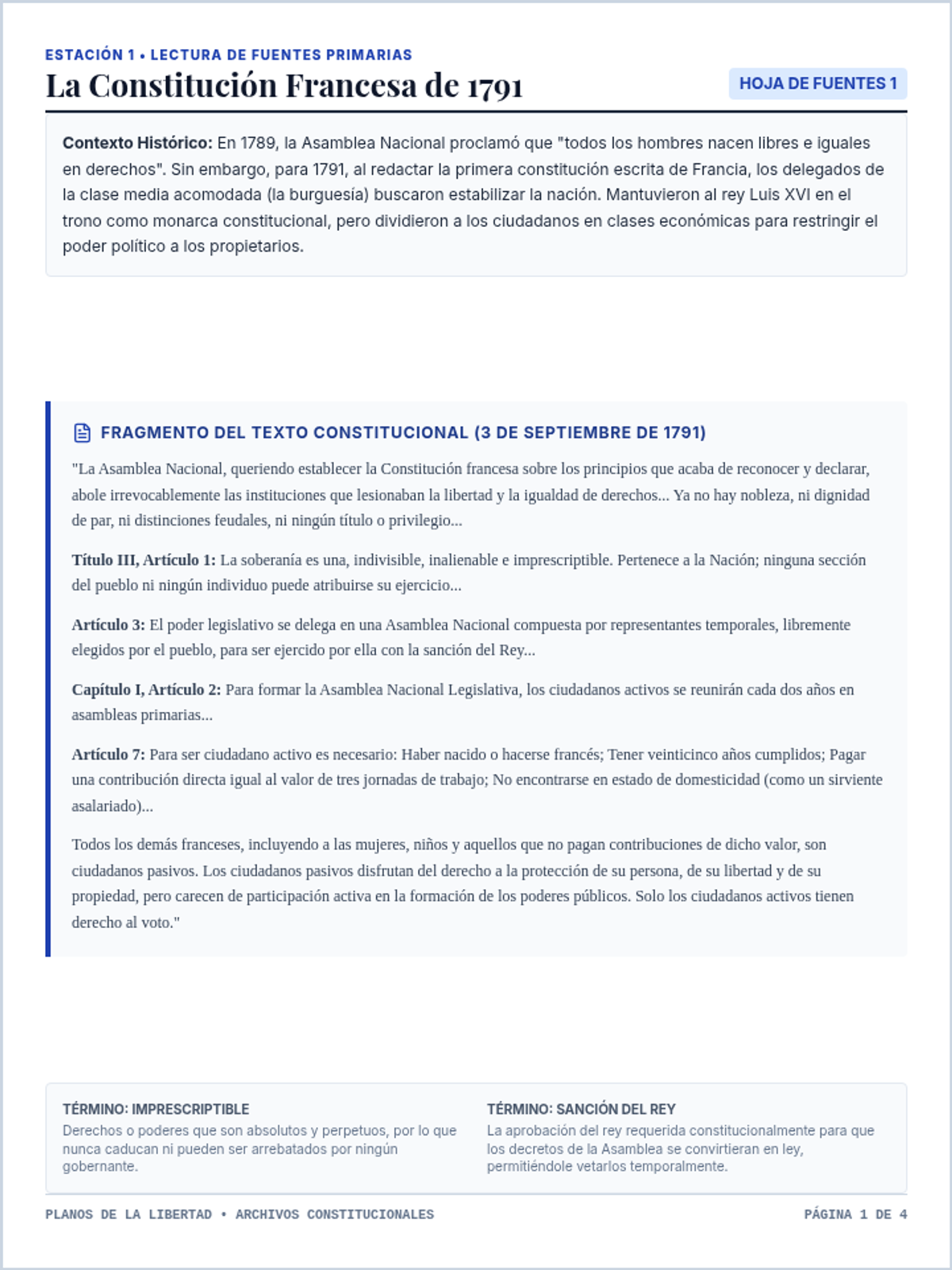
A 10th-grade social studies stations activity investigating the Constitutions of 1791, 1793, and 1795. Students analyze how France repeatedly drafted and revised its foundational laws in a turbulent quest for a more democratic society.
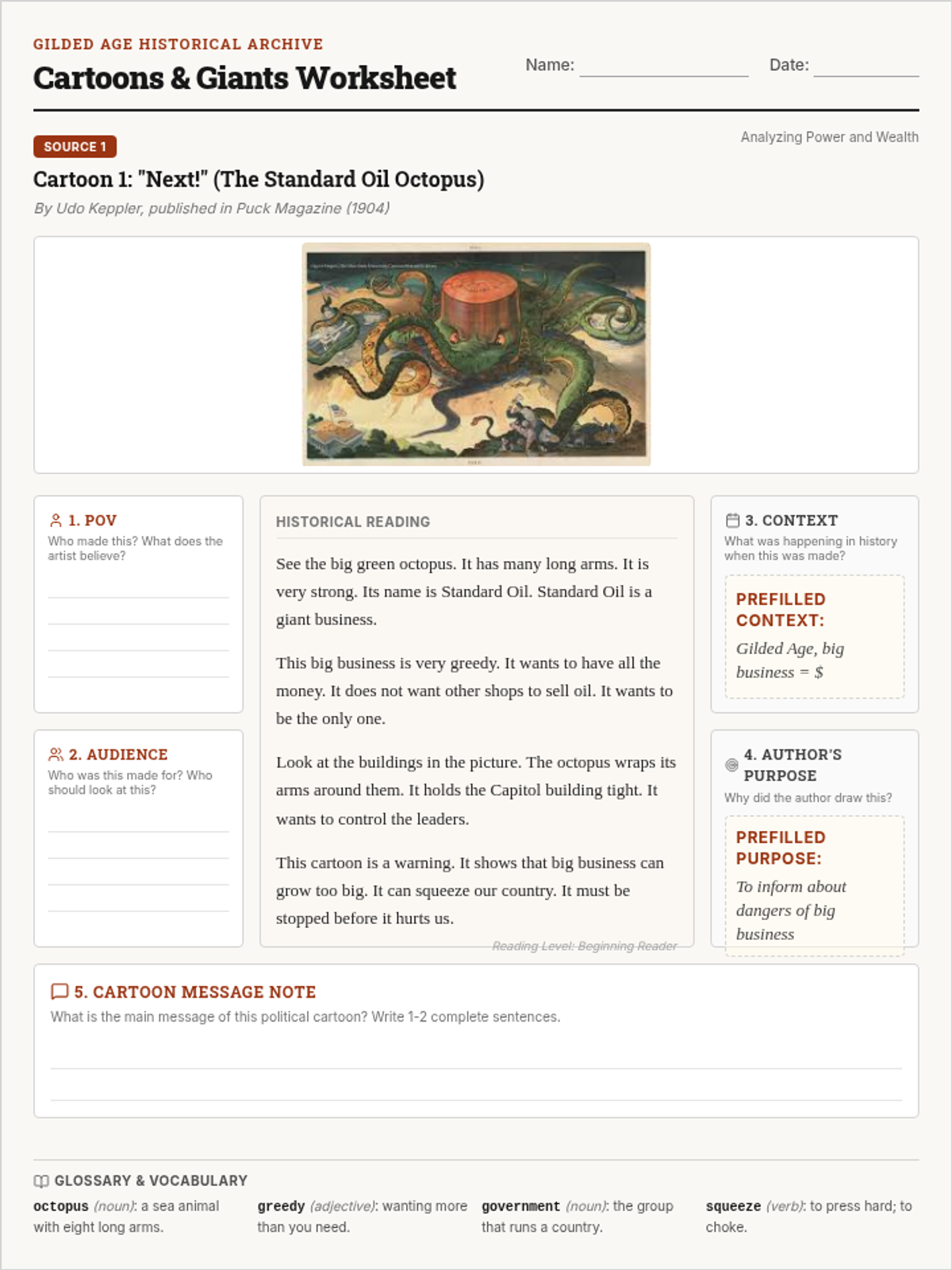
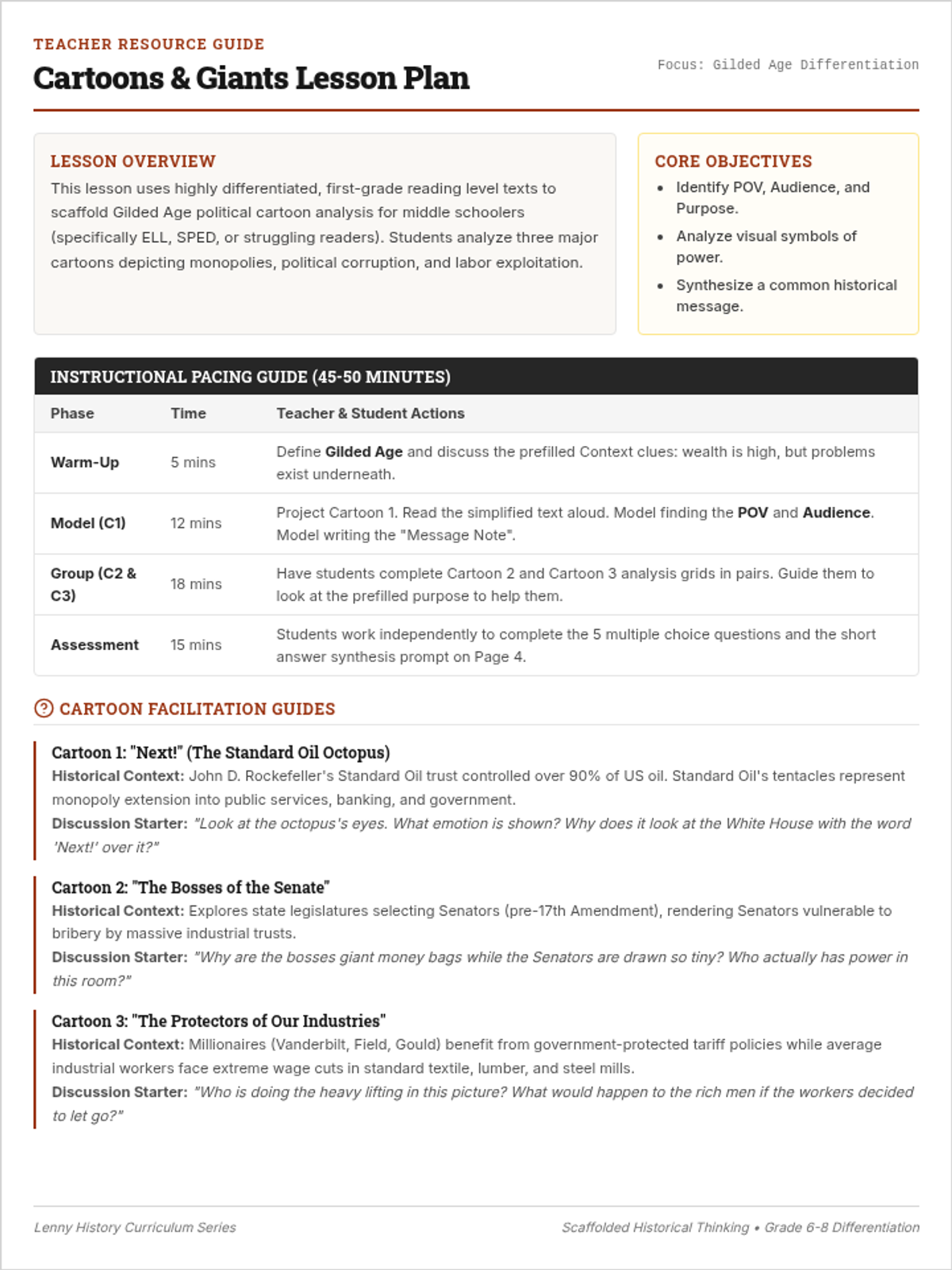
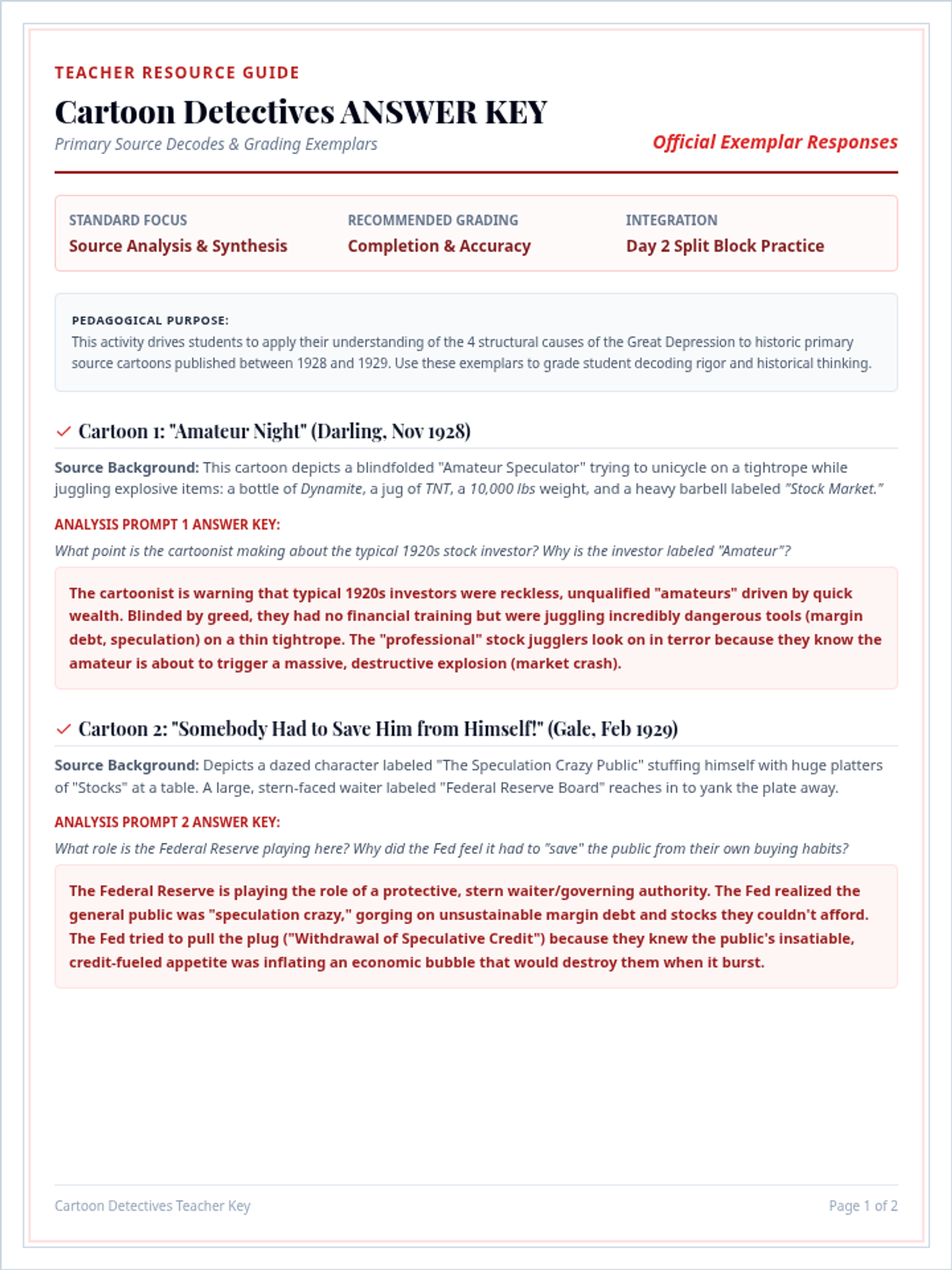
A differentiated history lesson analyzing three major Gilded Age political cartoons. It features student-facing worksheets with low-readability texts, visual analysis grids, a synthesis assessment, and a comprehensive teacher guide with full solutions.
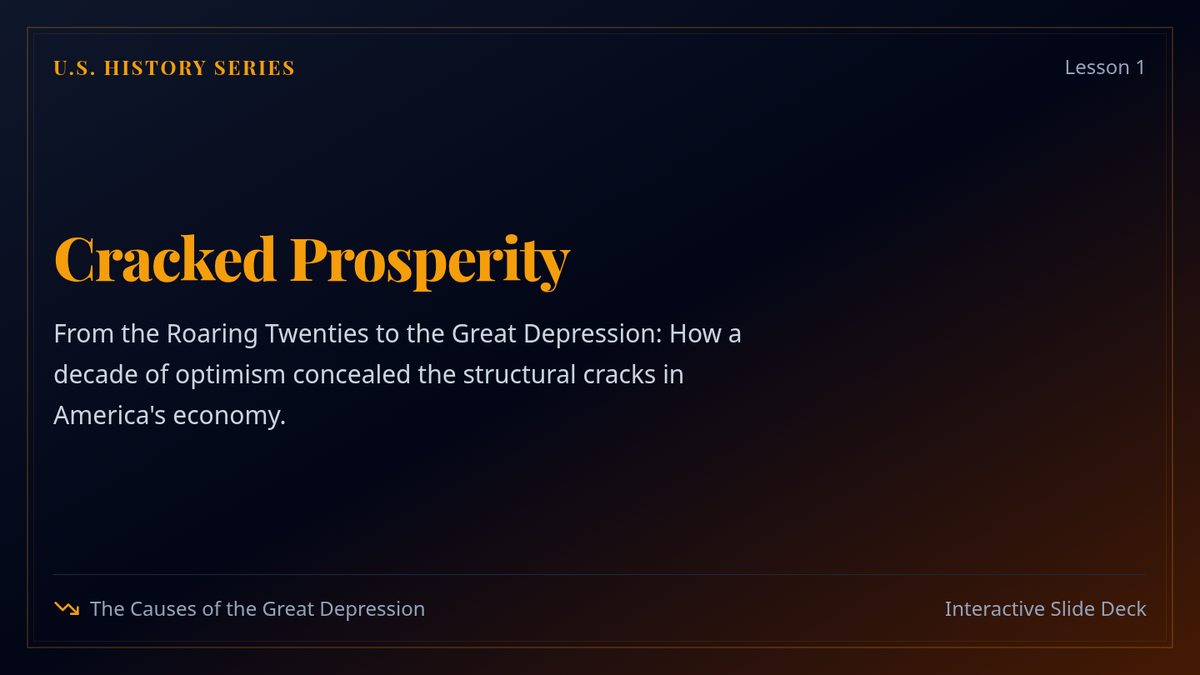
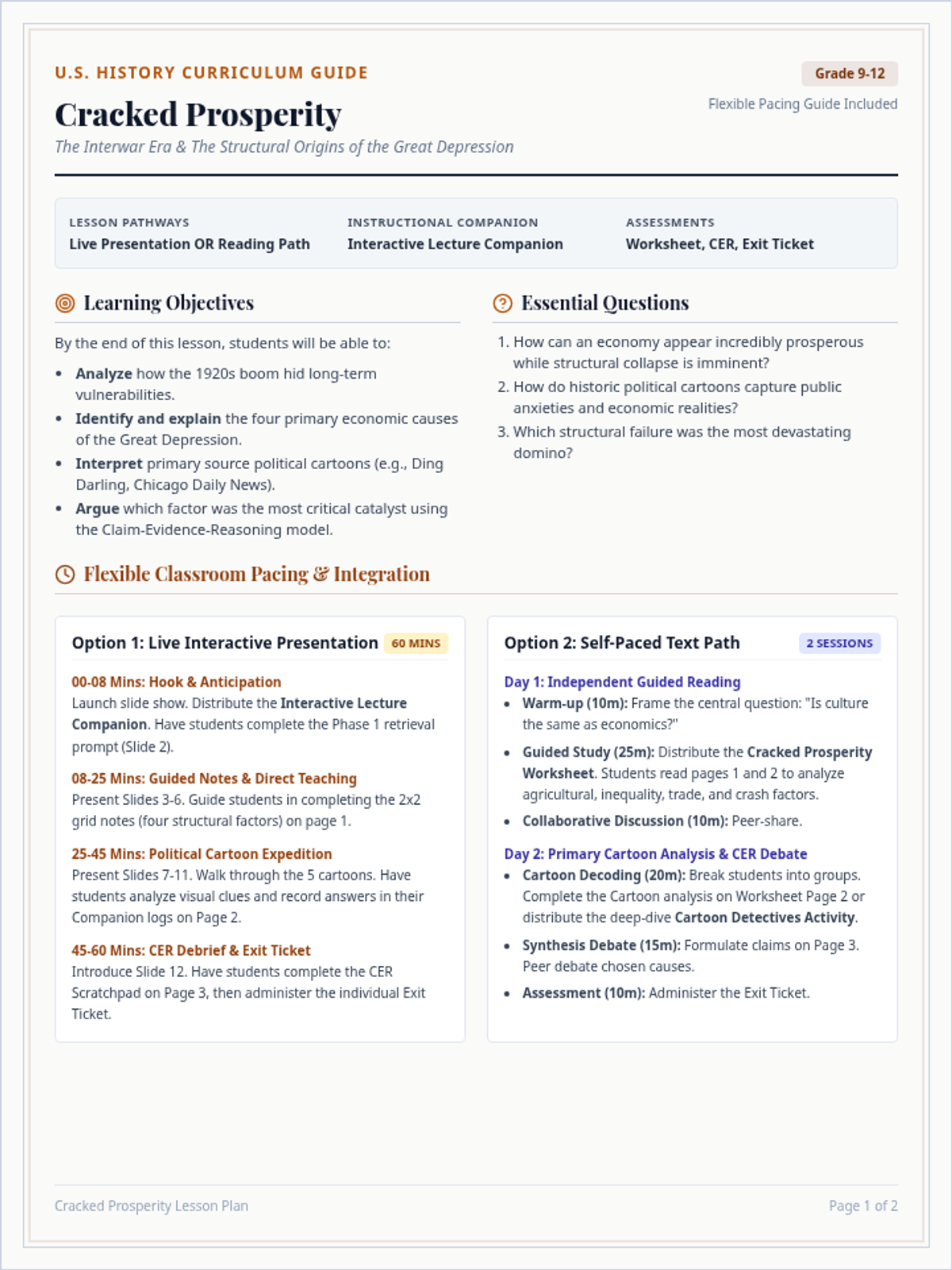
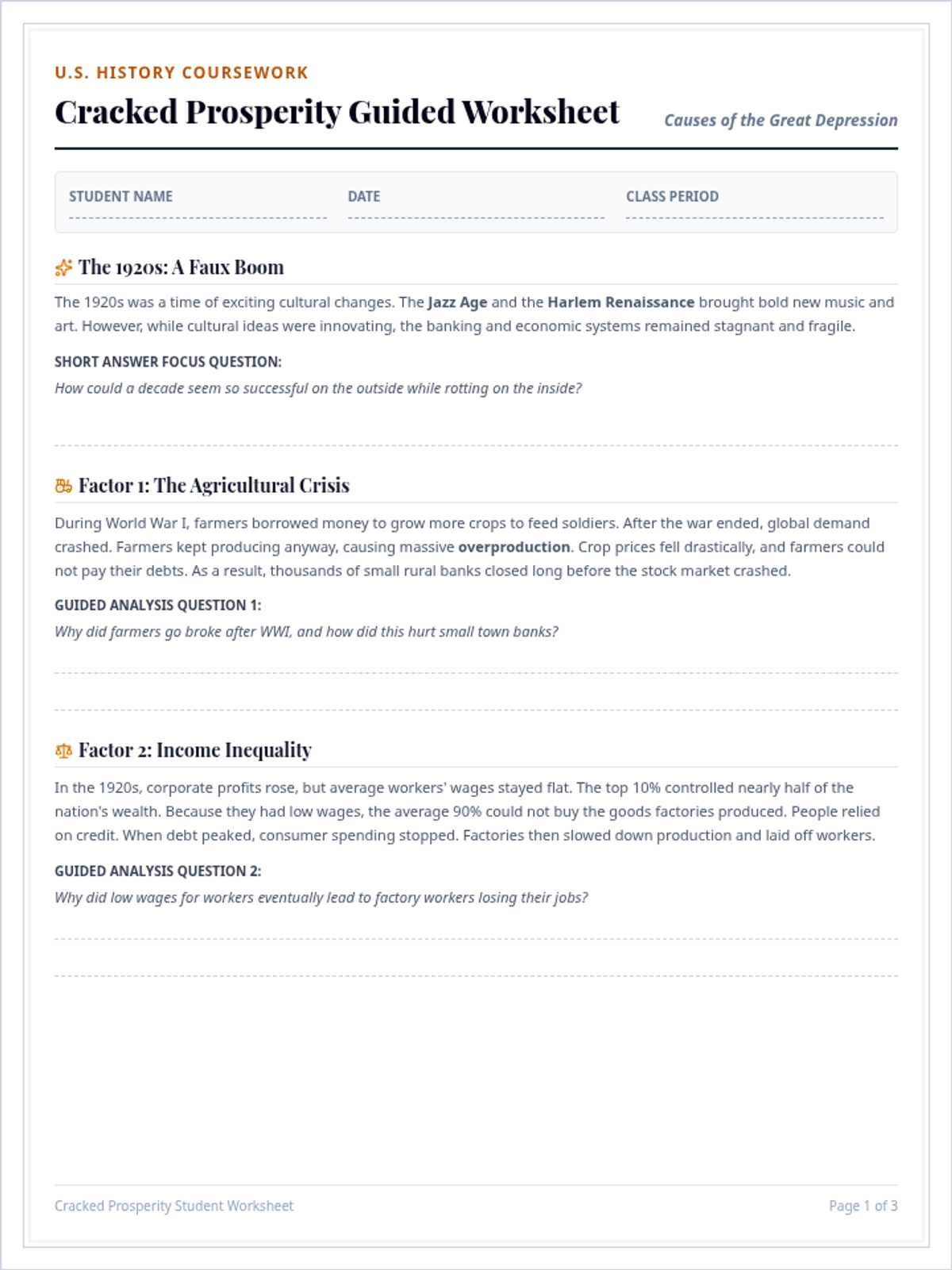
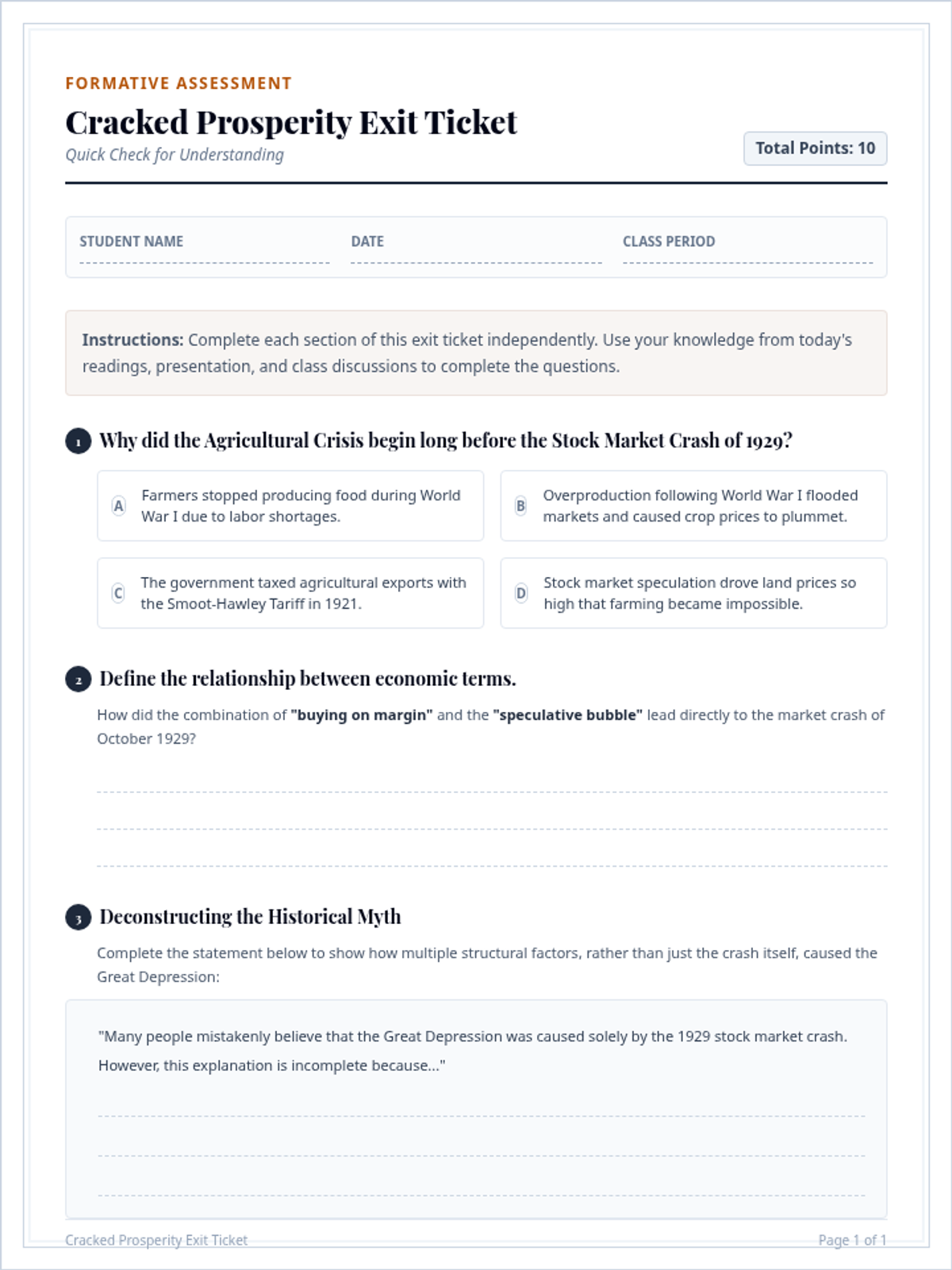
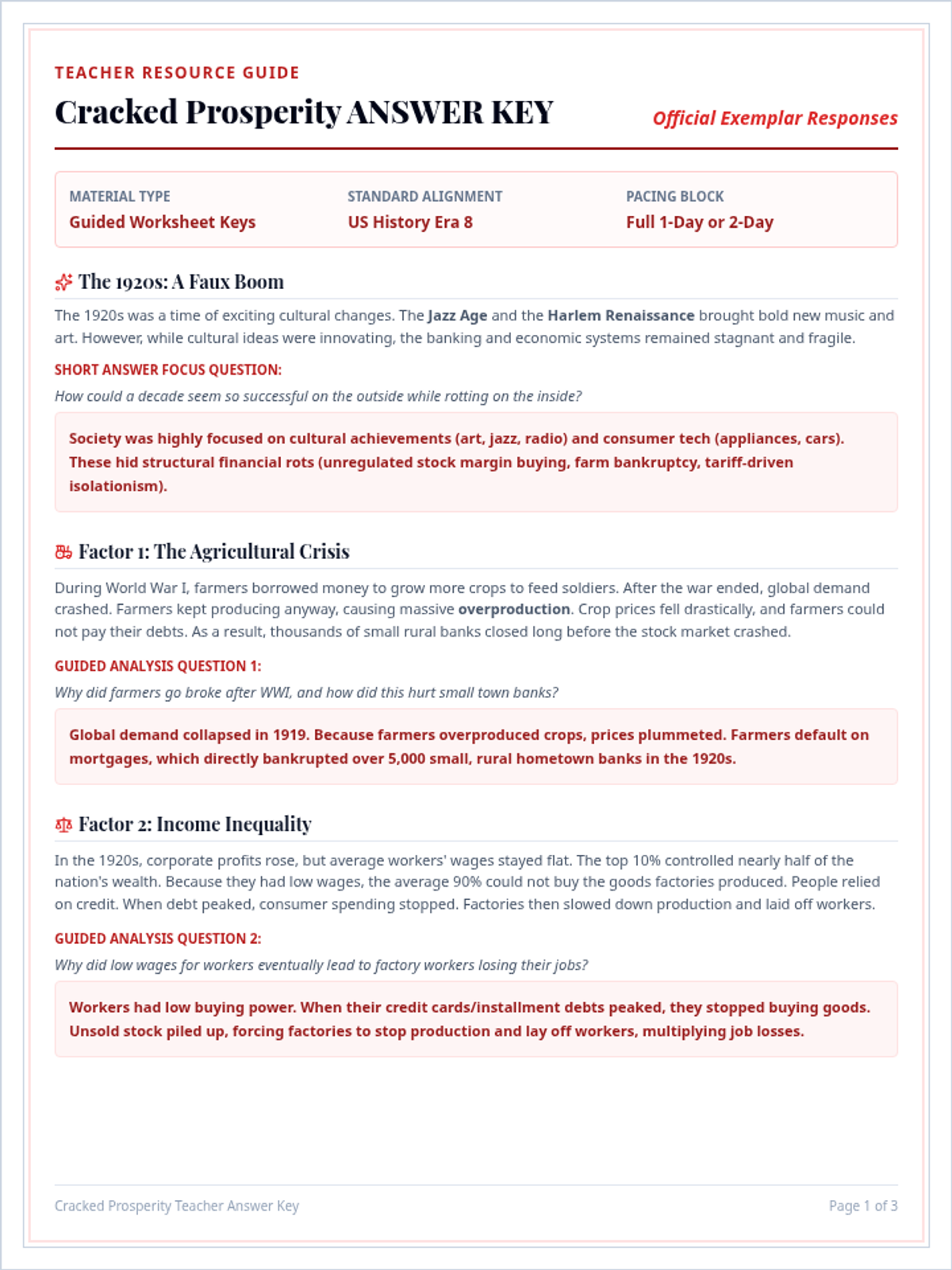
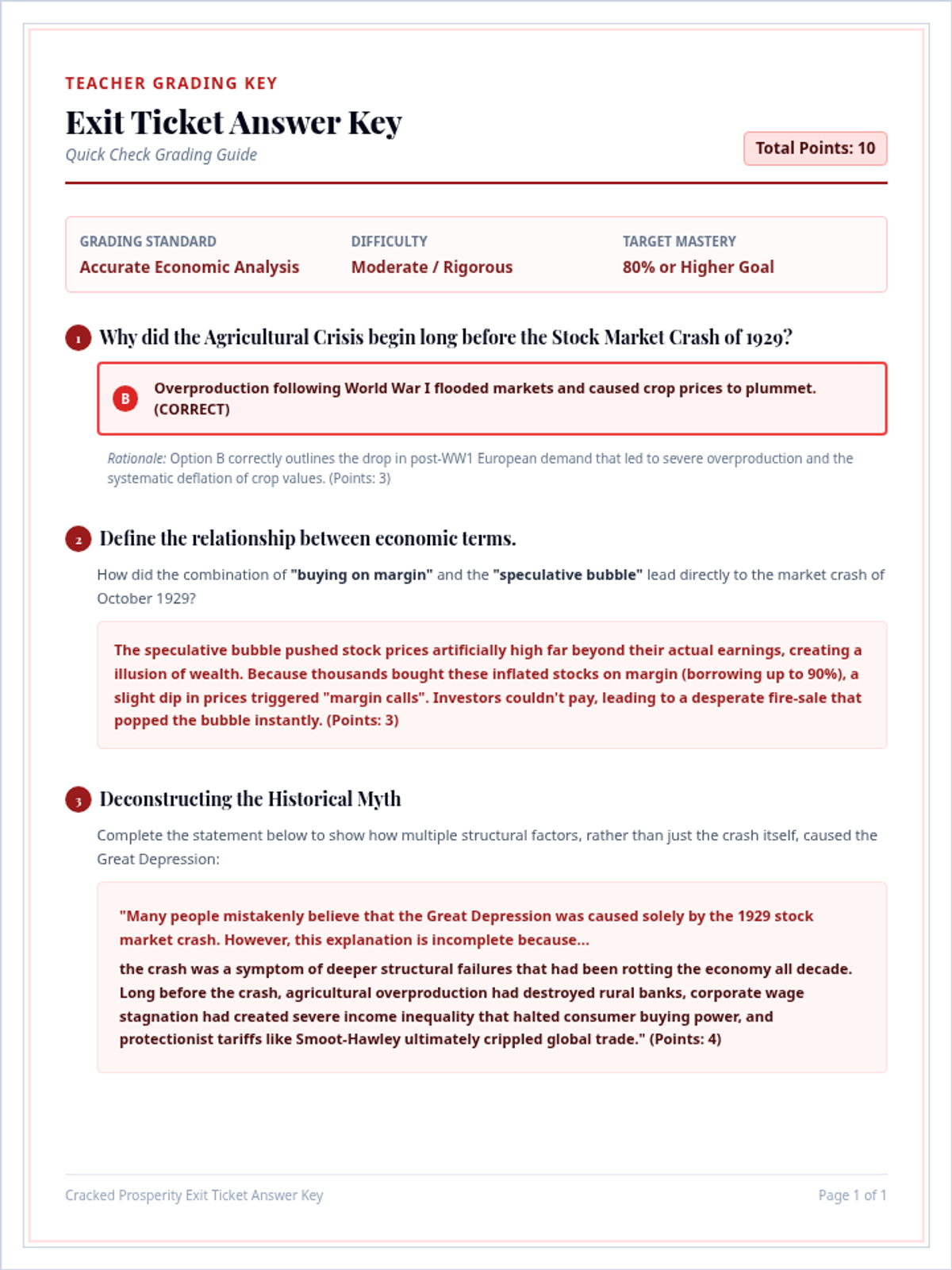
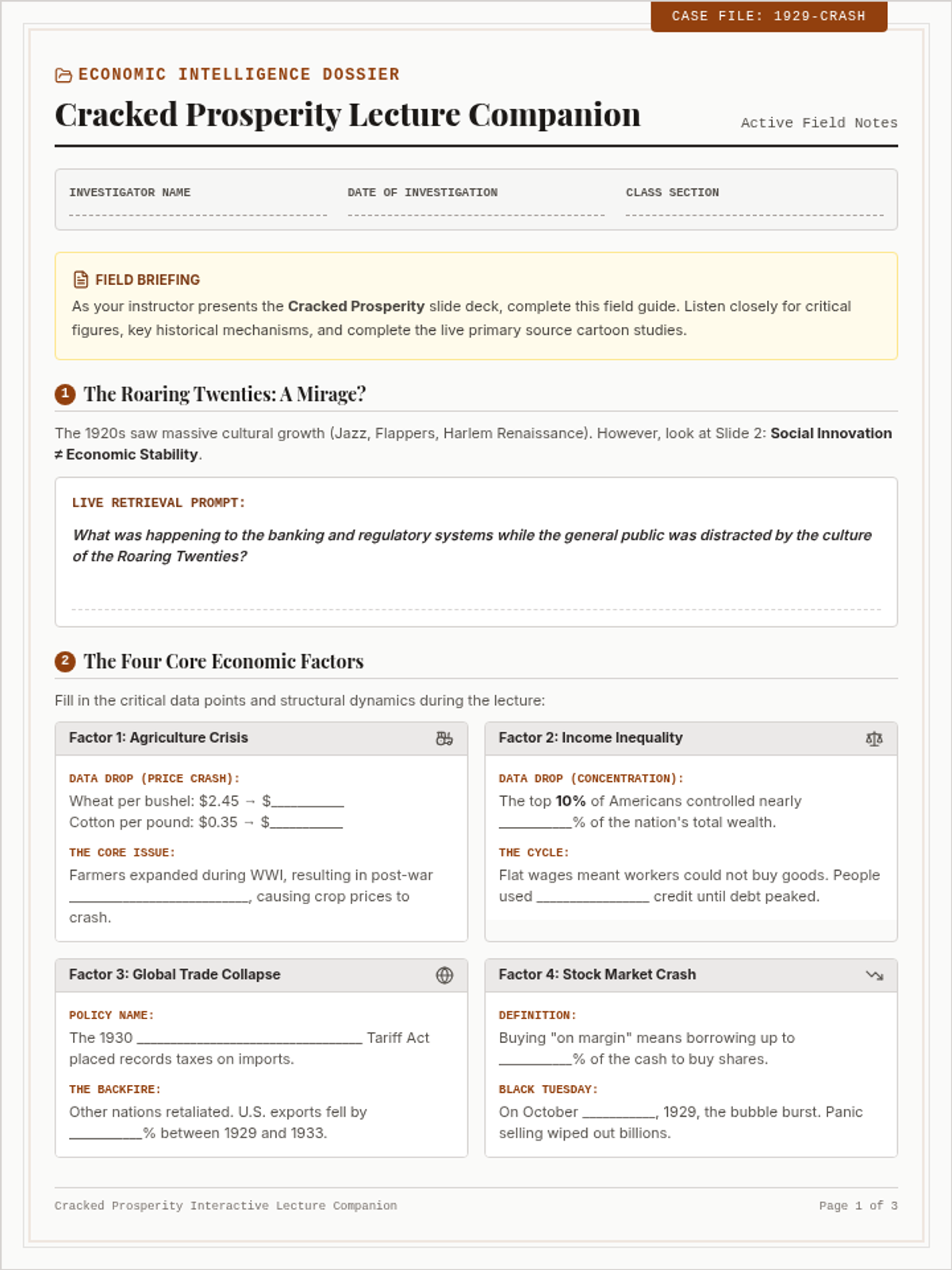
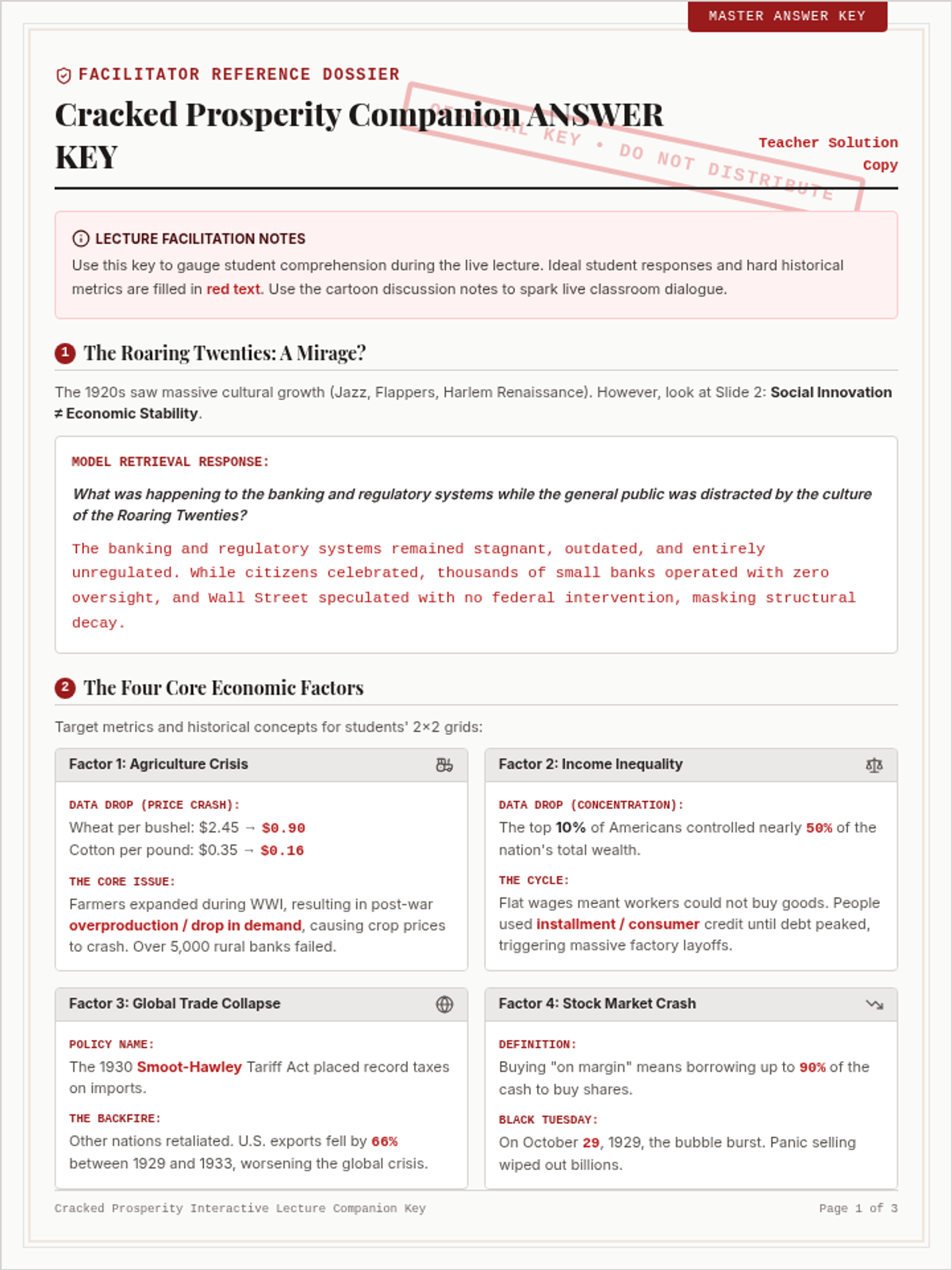
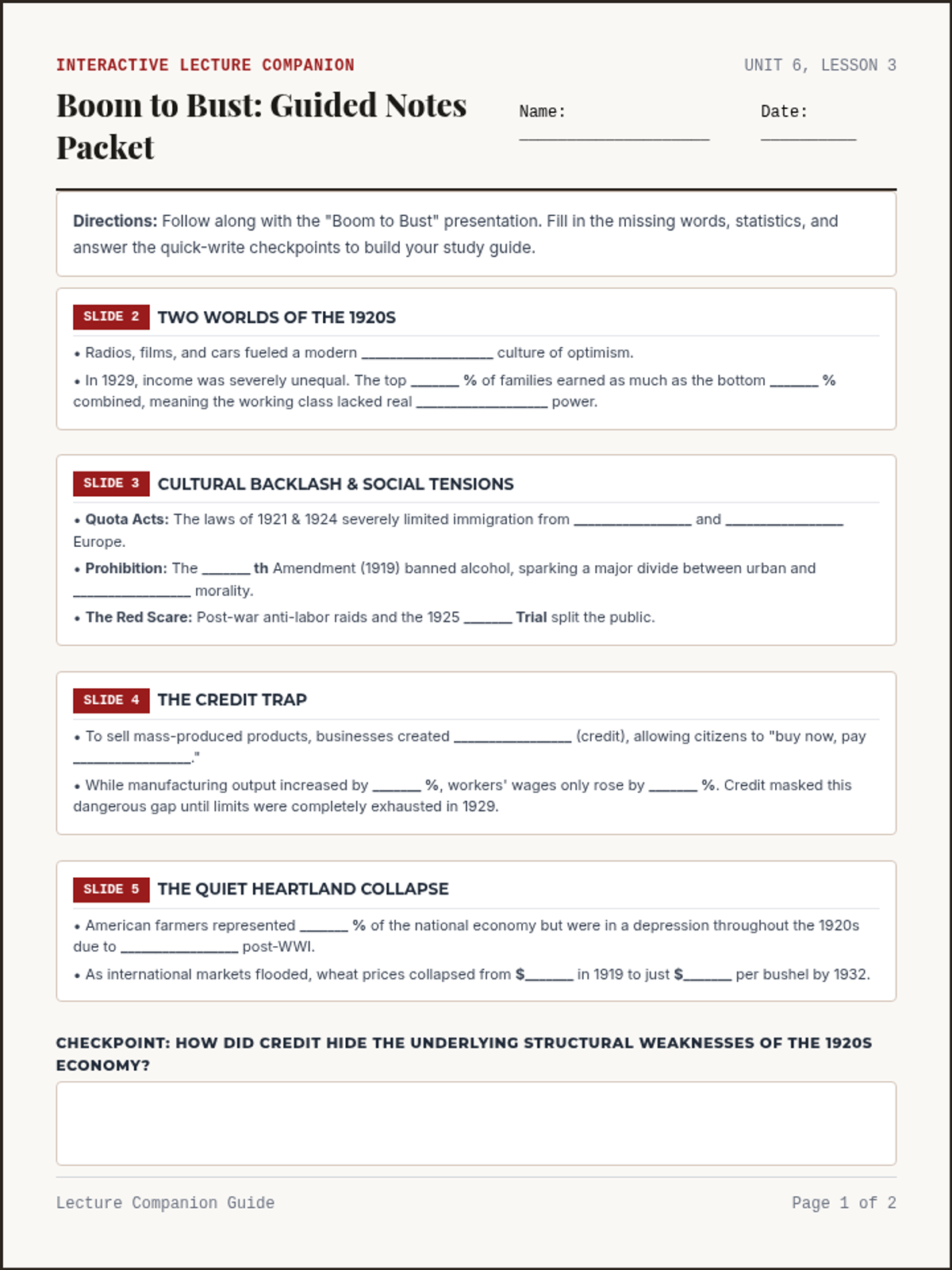
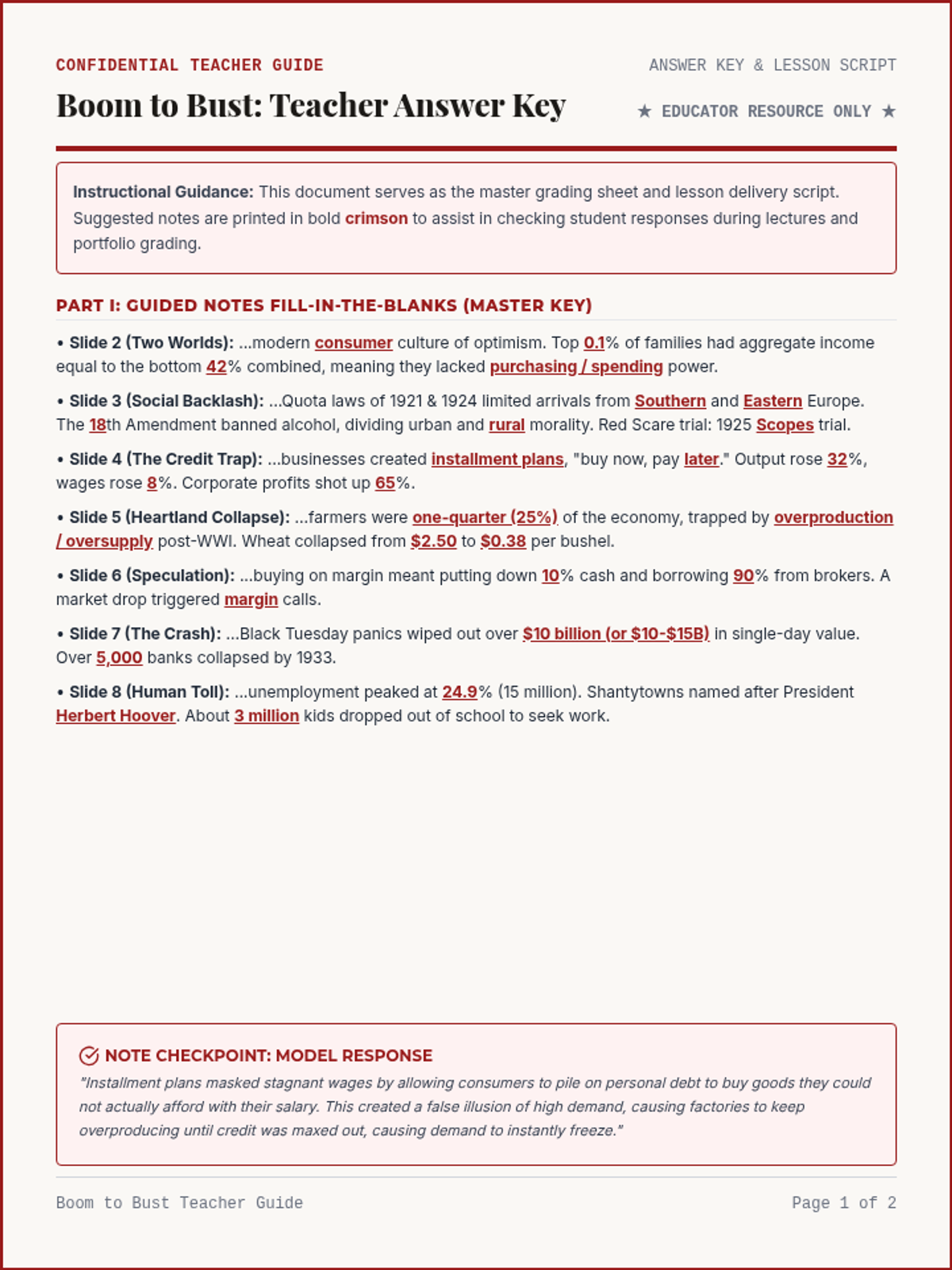
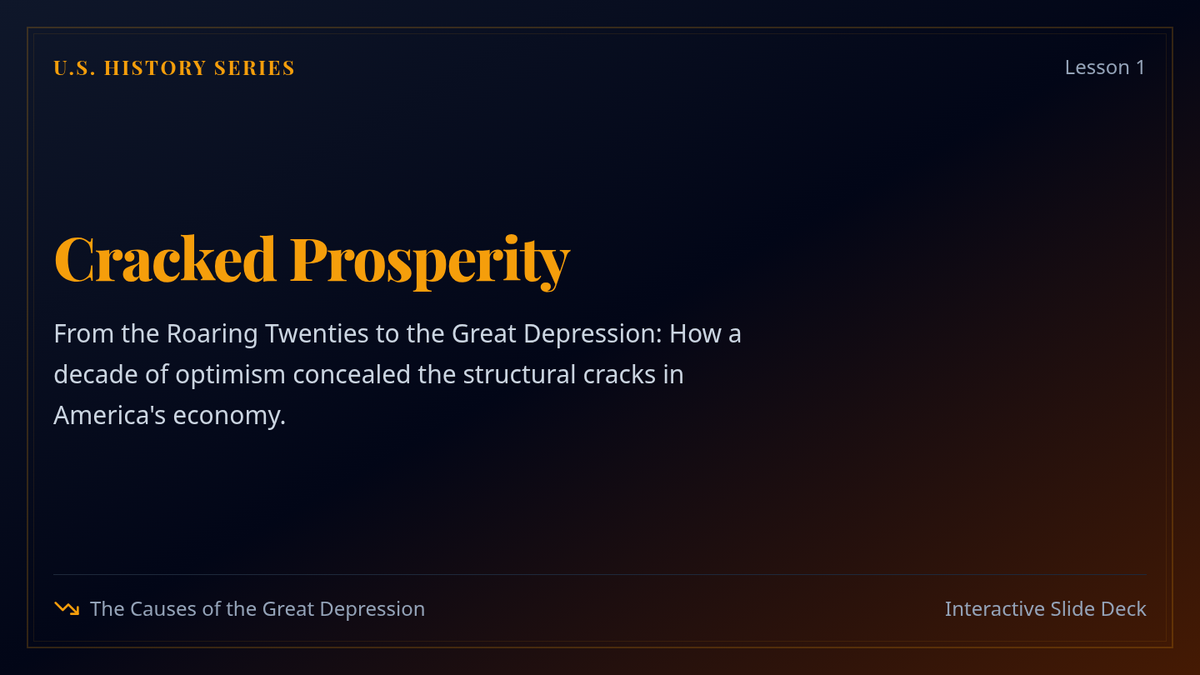
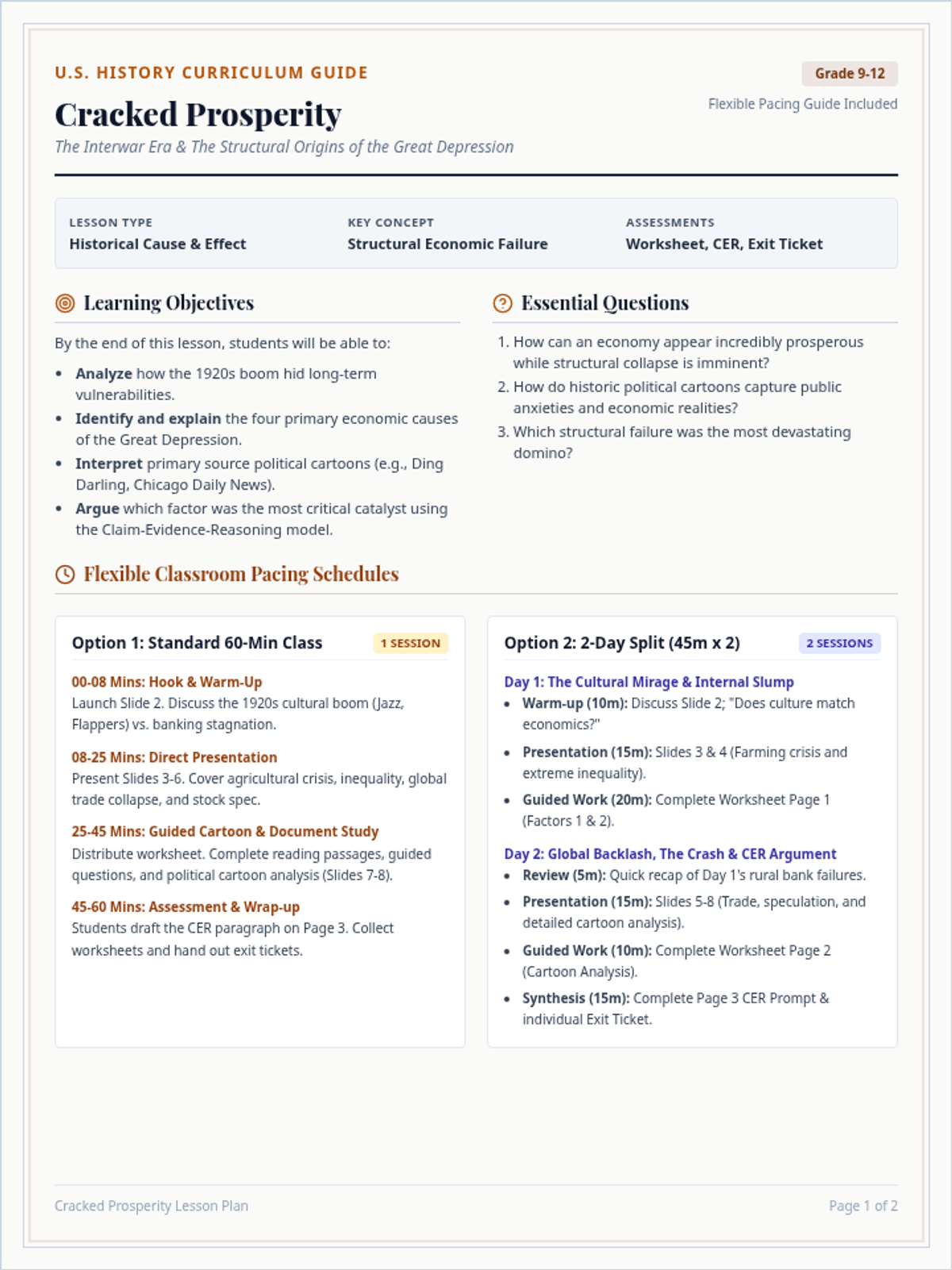
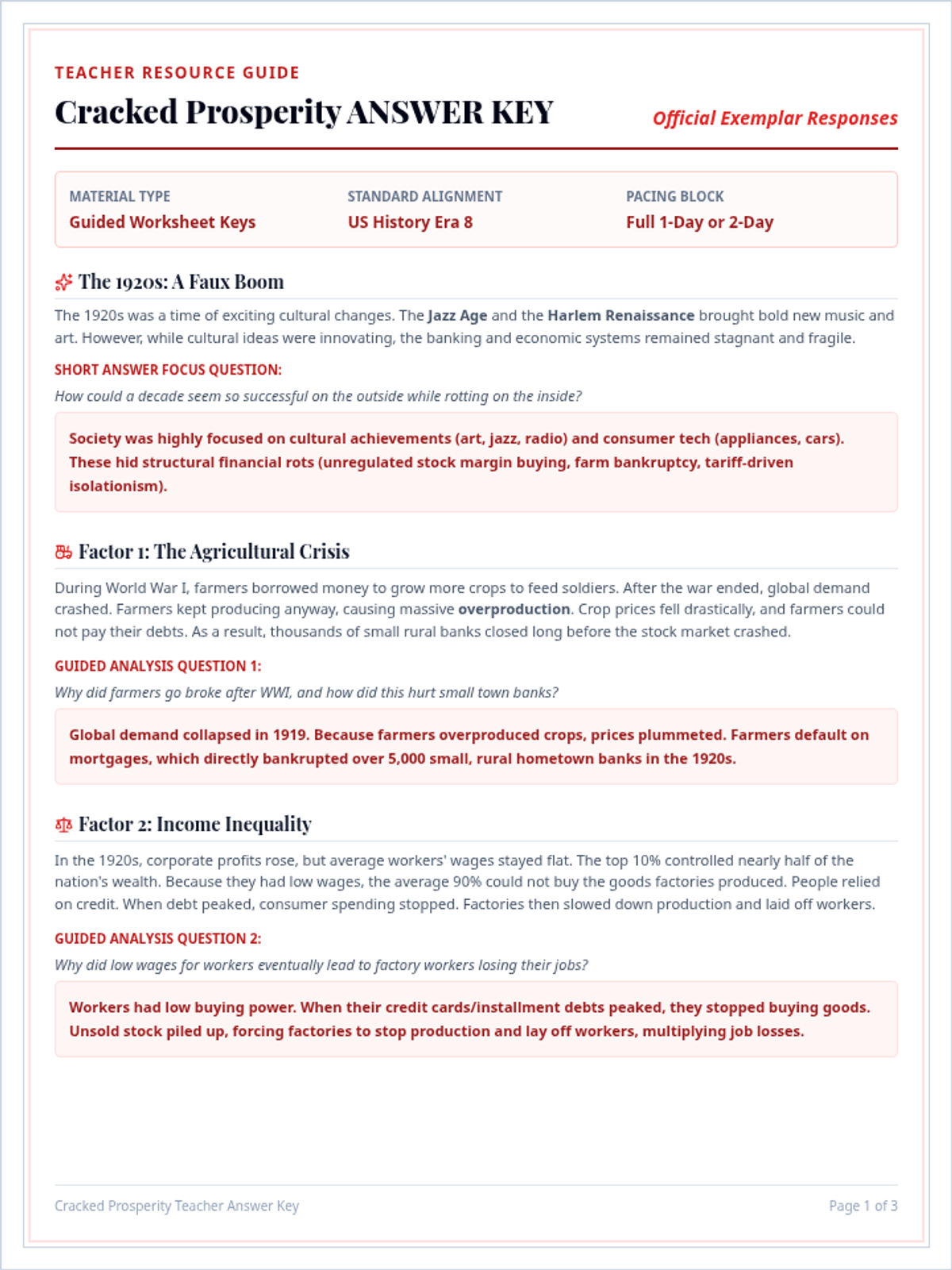
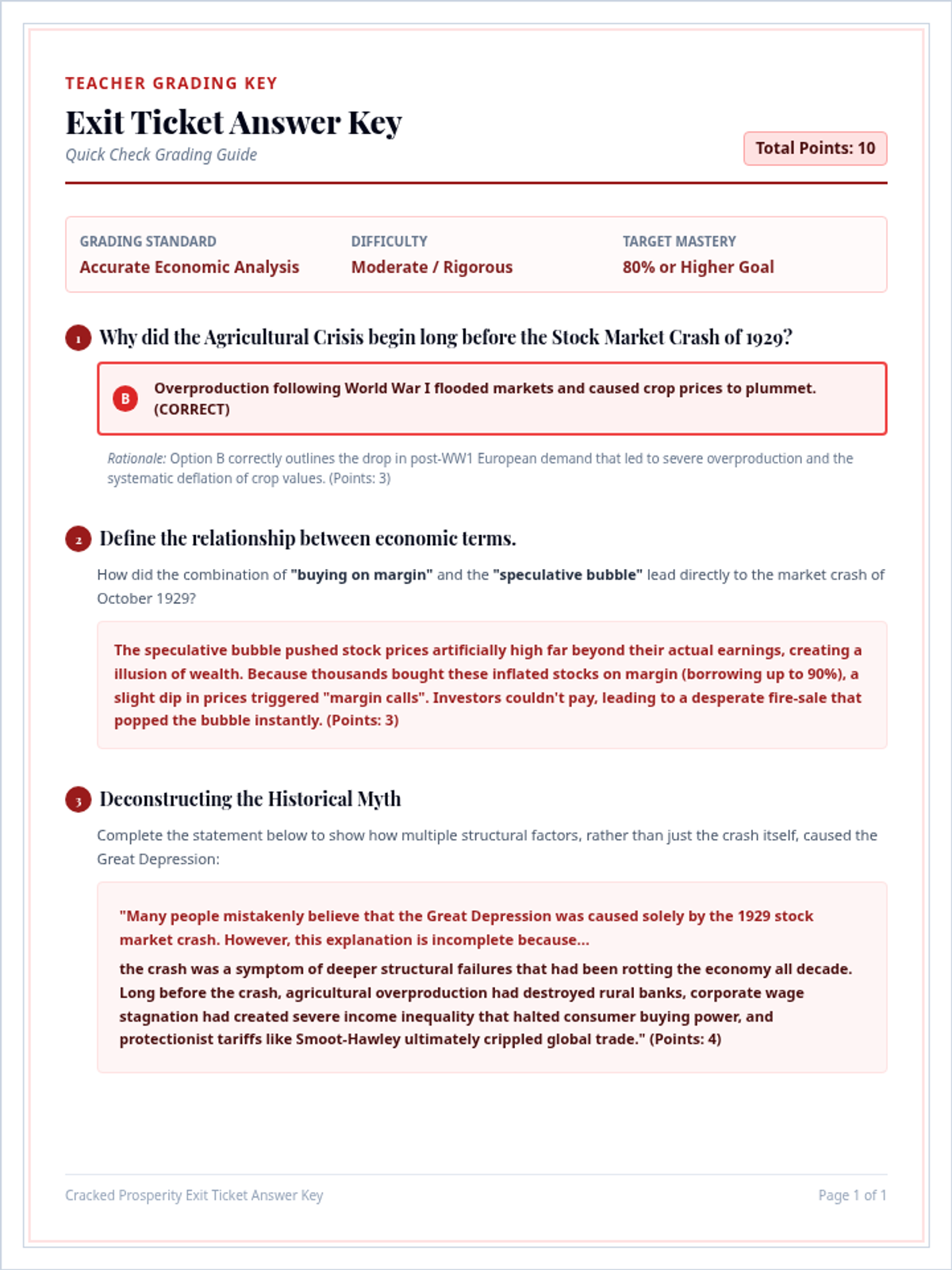
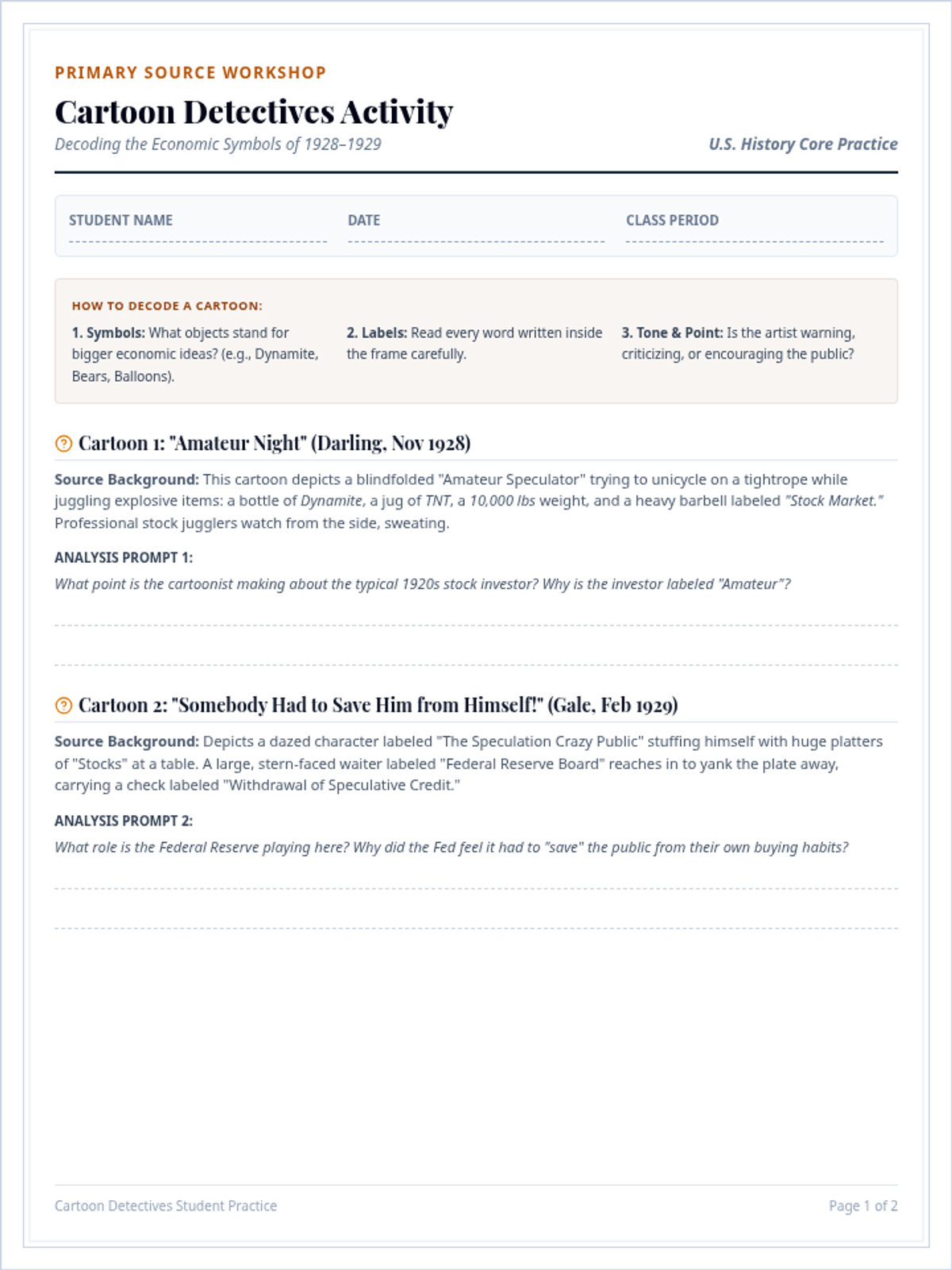
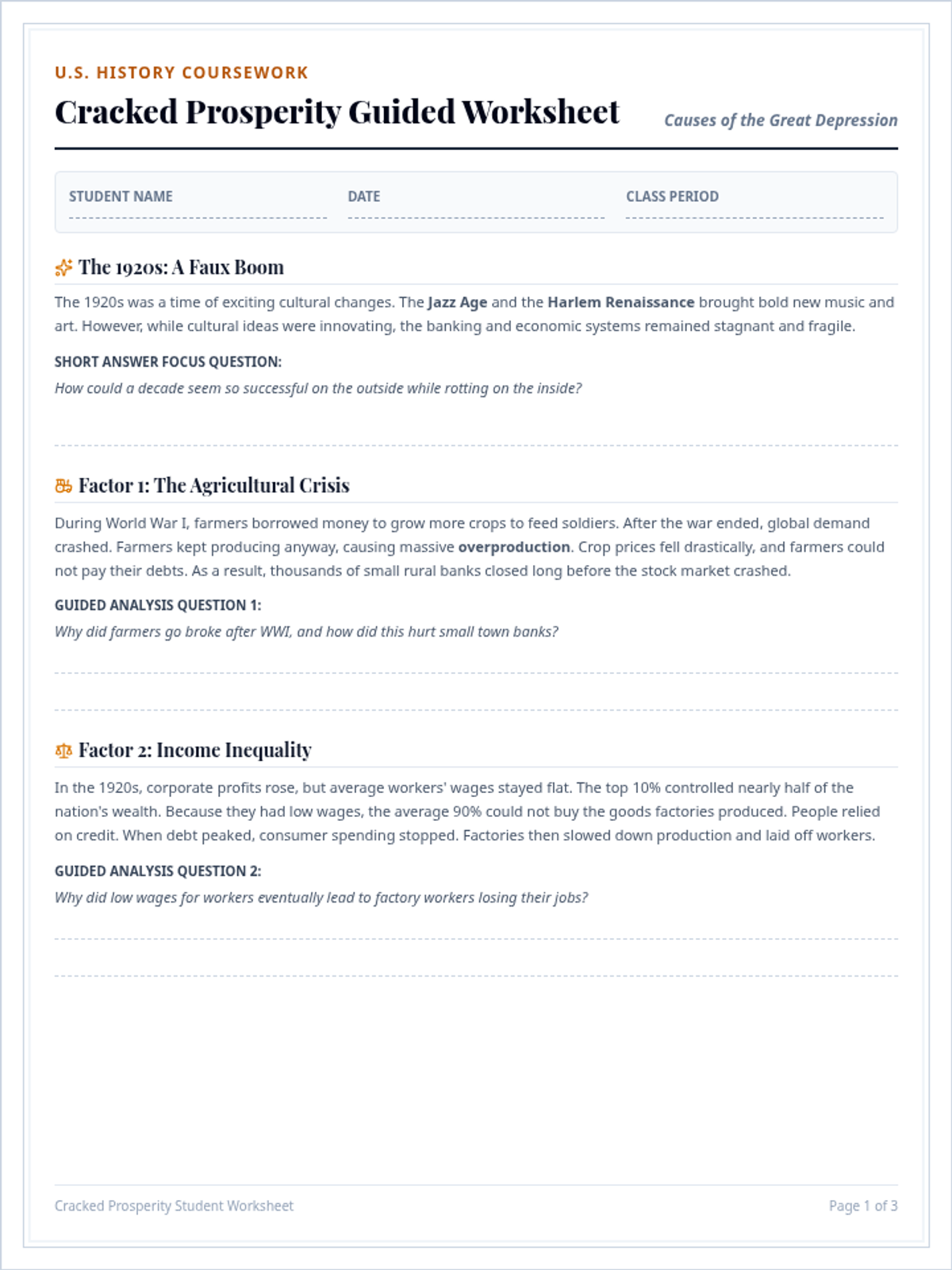
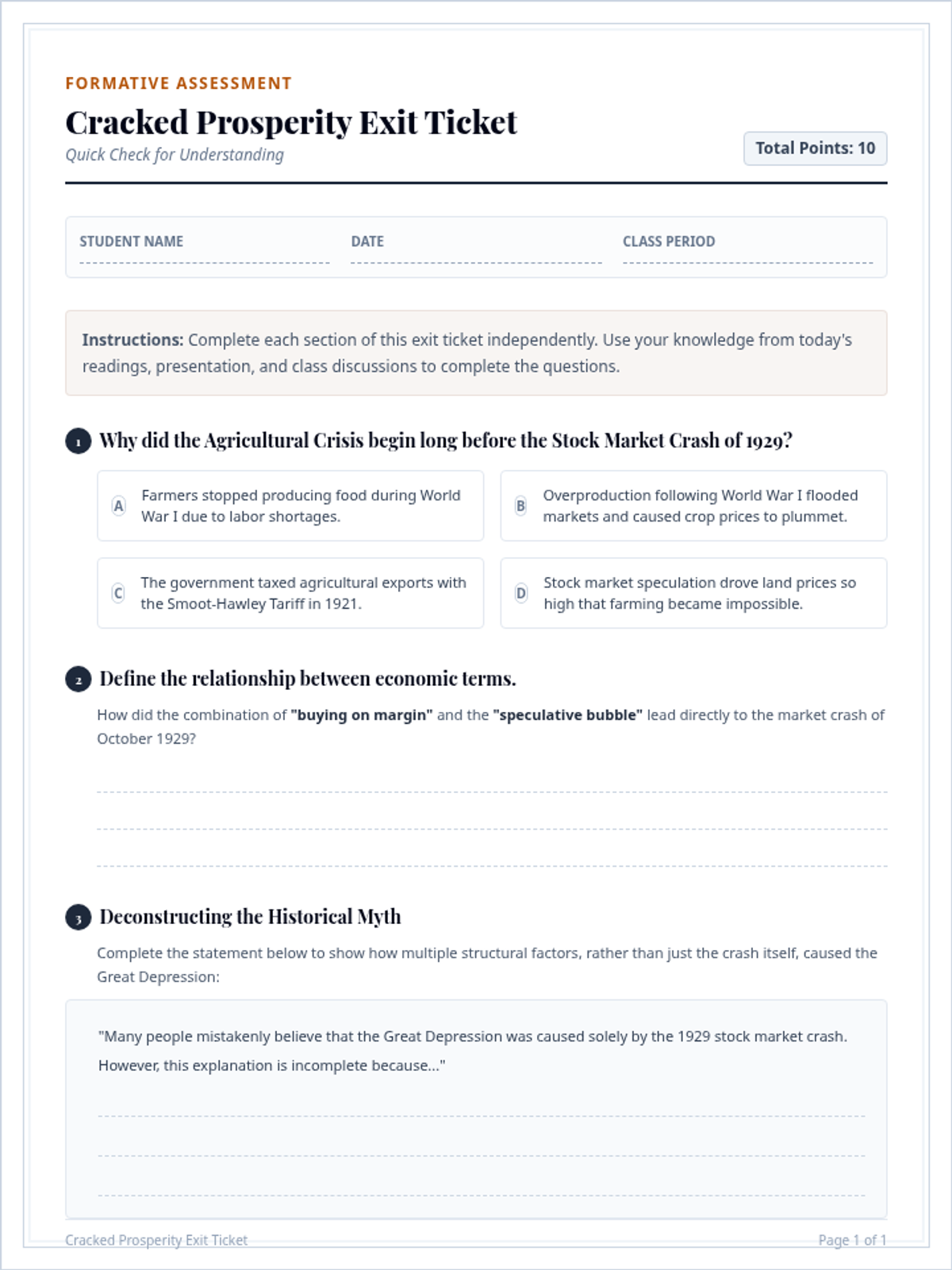
A comprehensive lesson exploring the transition from the roaring optimism of the 1920s to the structural causes of the Great Depression, including the agricultural crisis, income inequality, global trade collapse, and the 1929 stock market crash.
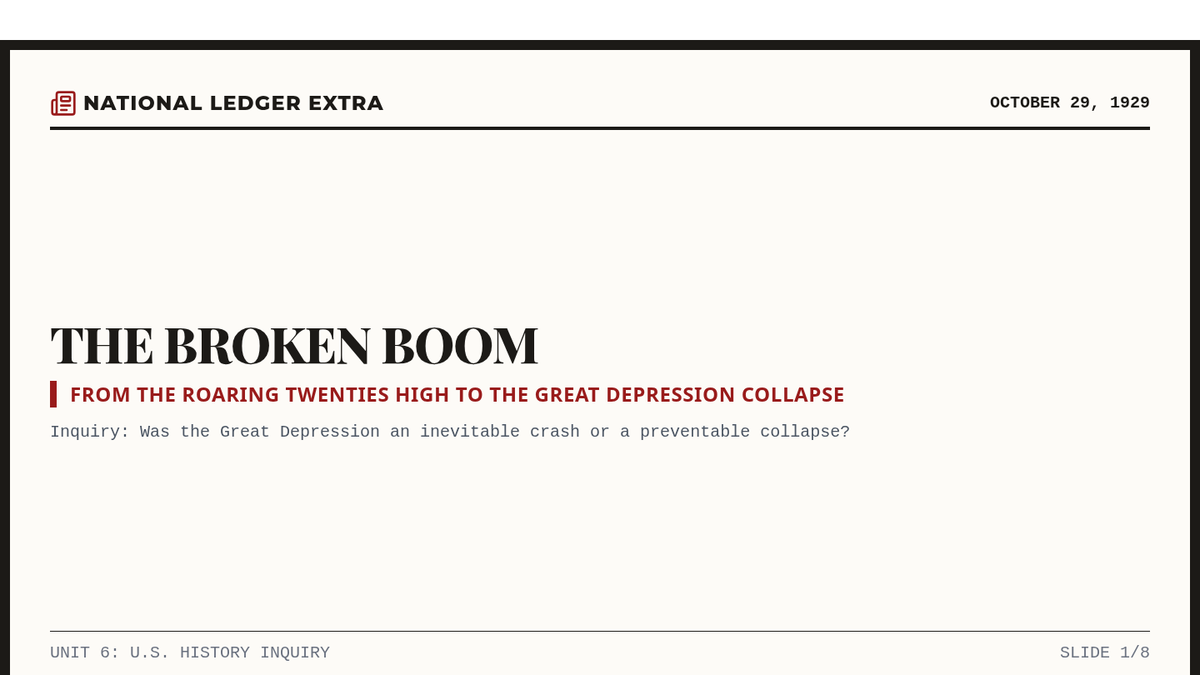
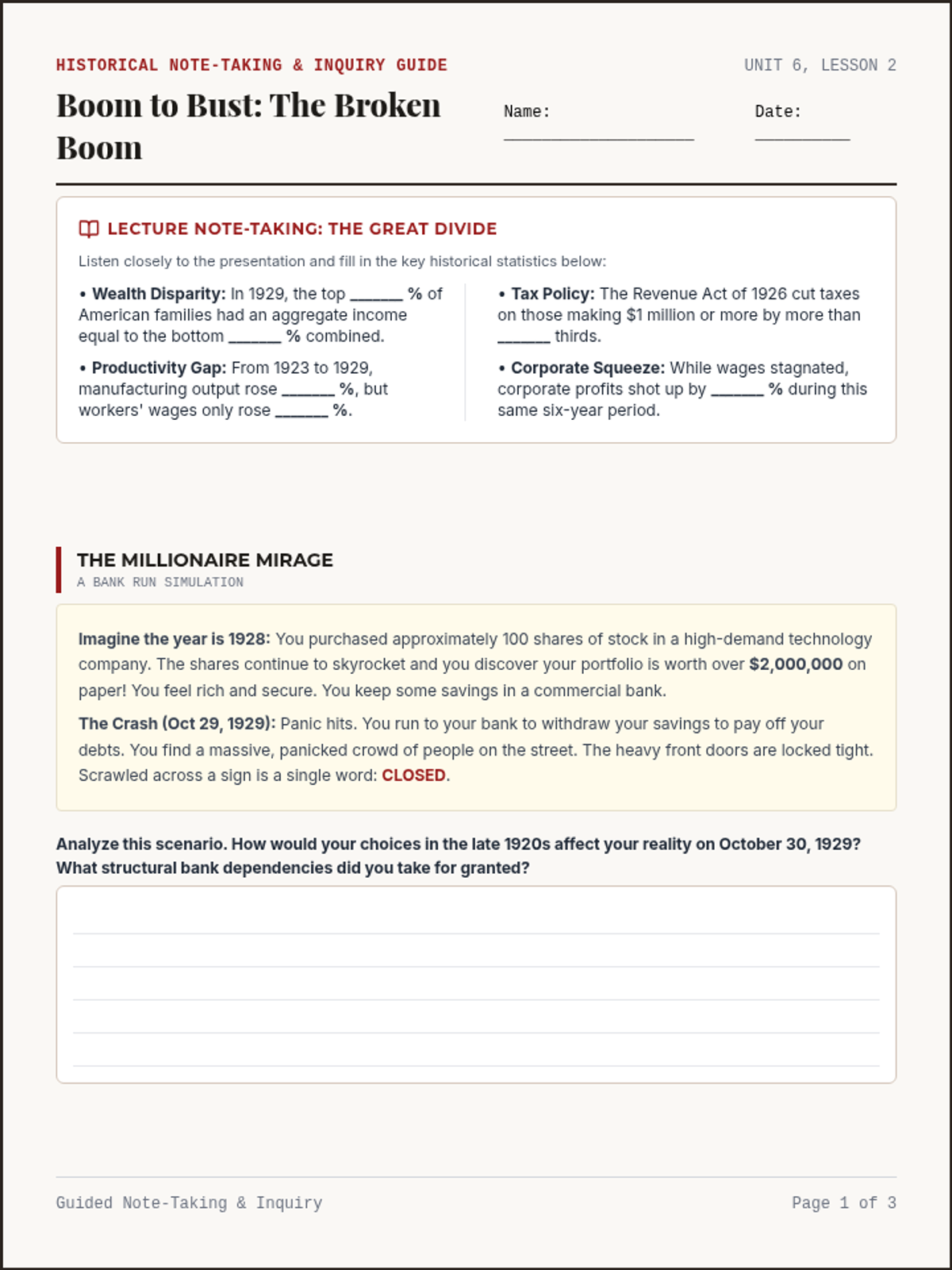
An inquiry-based lesson investigating the transition from the roaring 1920s to the Great Depression. Students analyze how economic policies, consumer credit, and social tensions fueled a cultural boom that ended in systemic collapse.
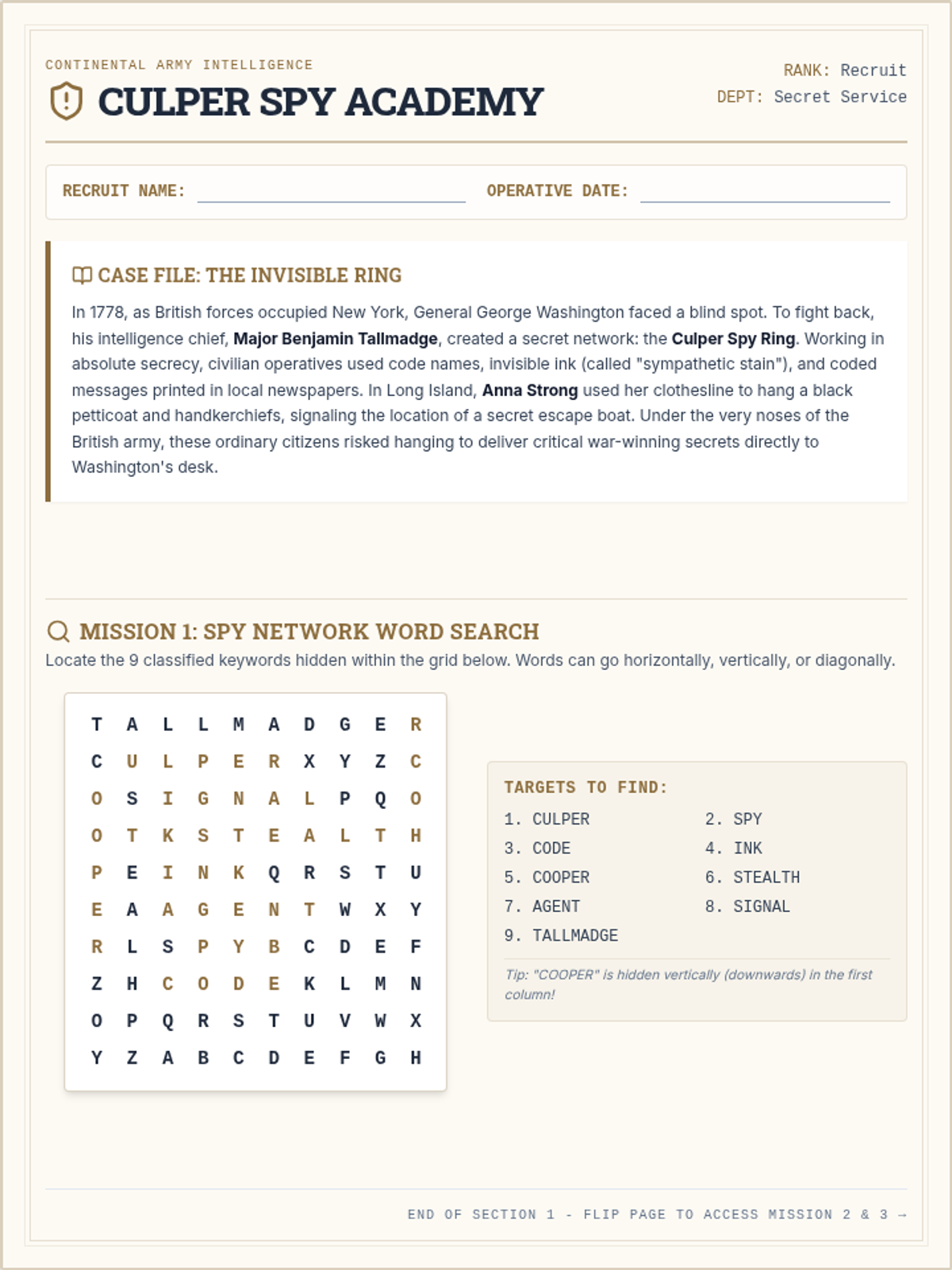
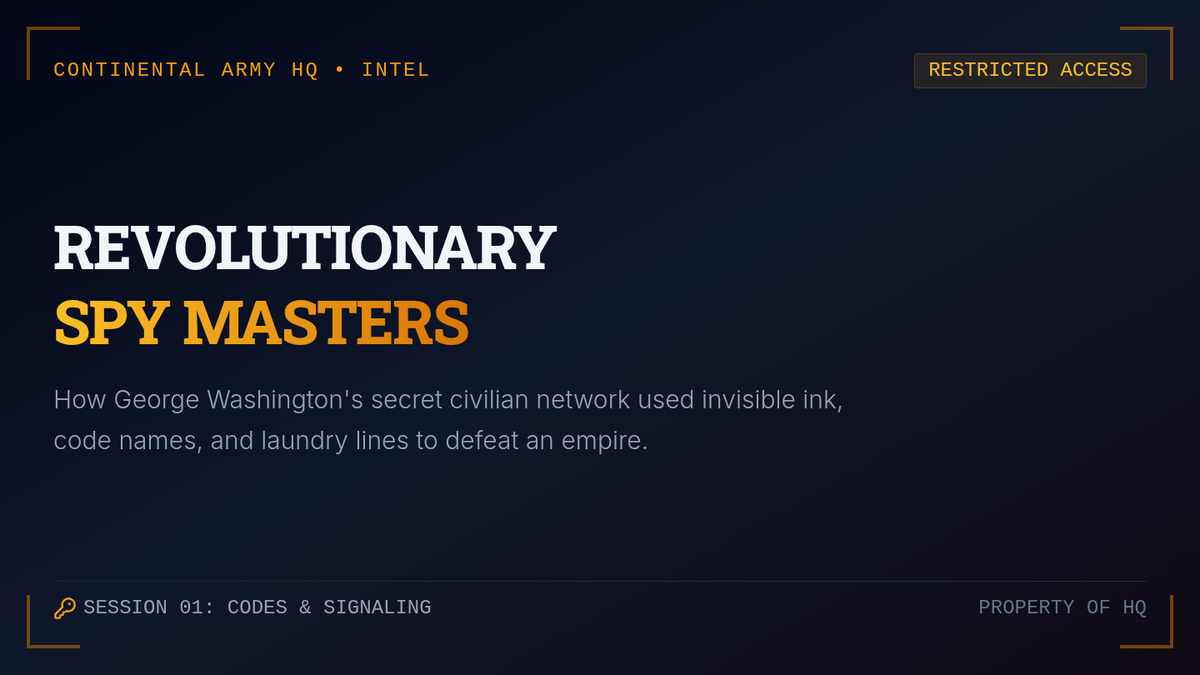
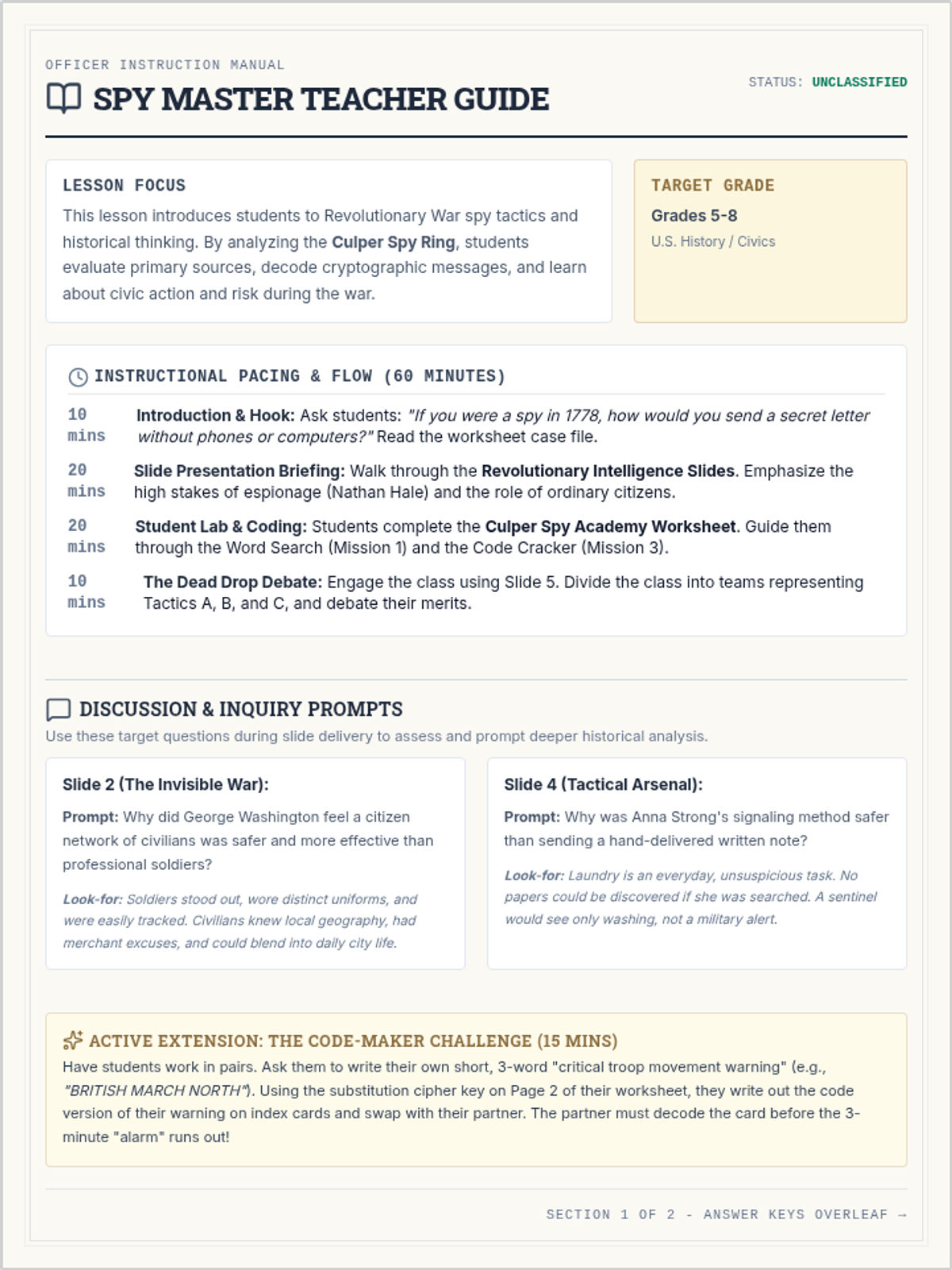
An engaging introductory lesson on American Revolution espionage, focusing on the Culper Spy Ring, secret codes, and stealthy tactics used by George Washington's network. Students learn historical analysis through code-breaking, word puzzles, and critical thinking challenges.
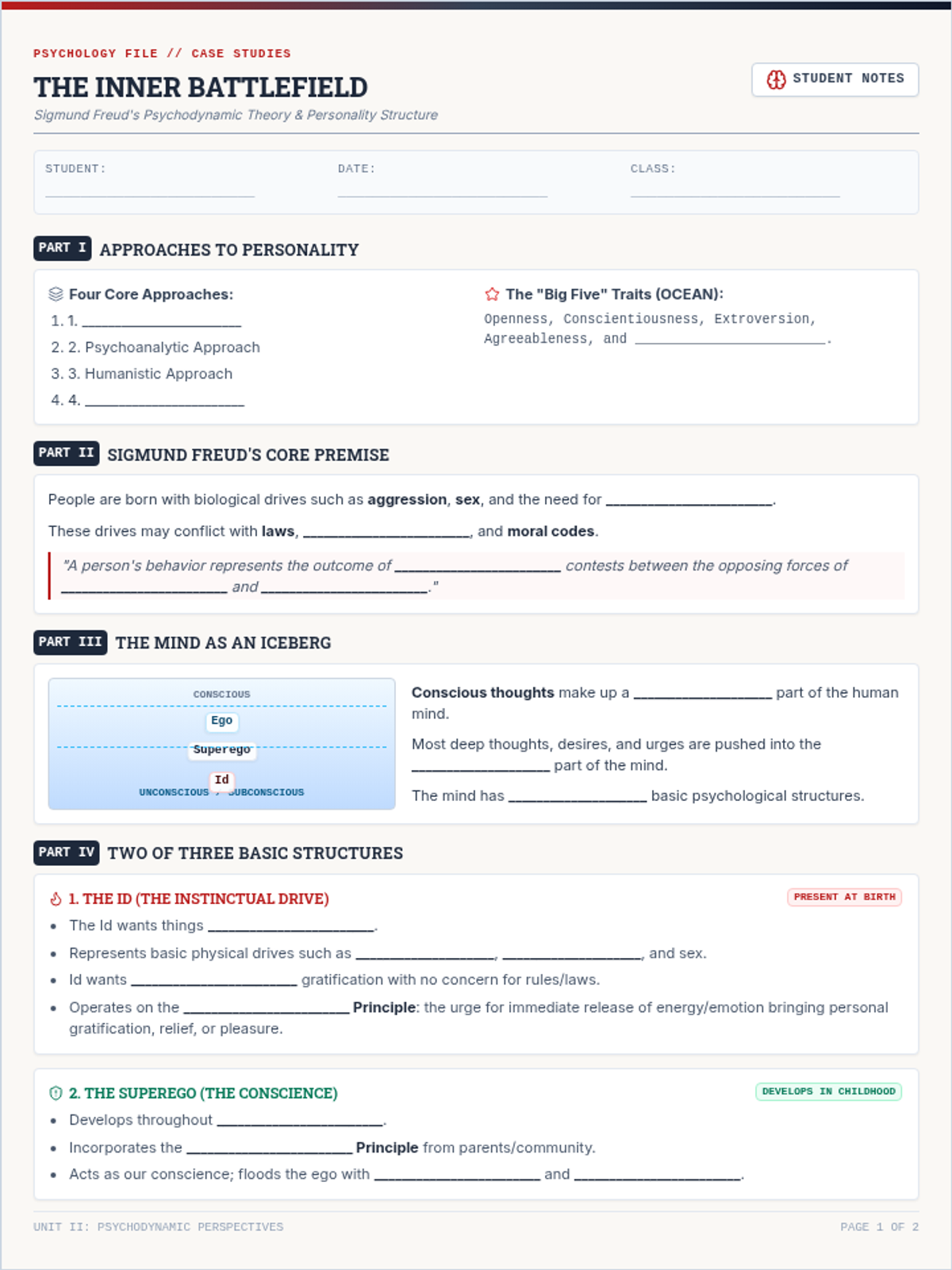
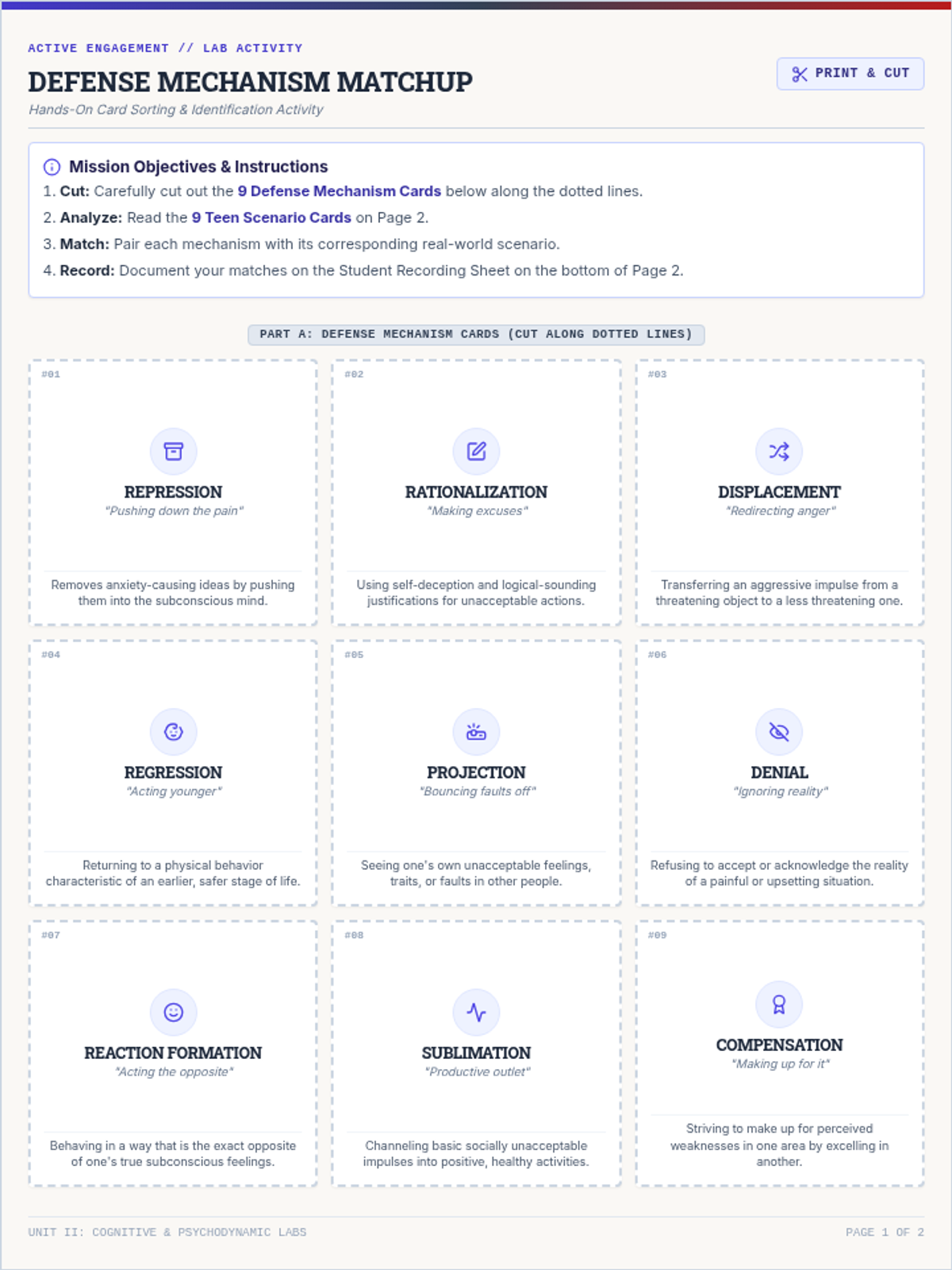
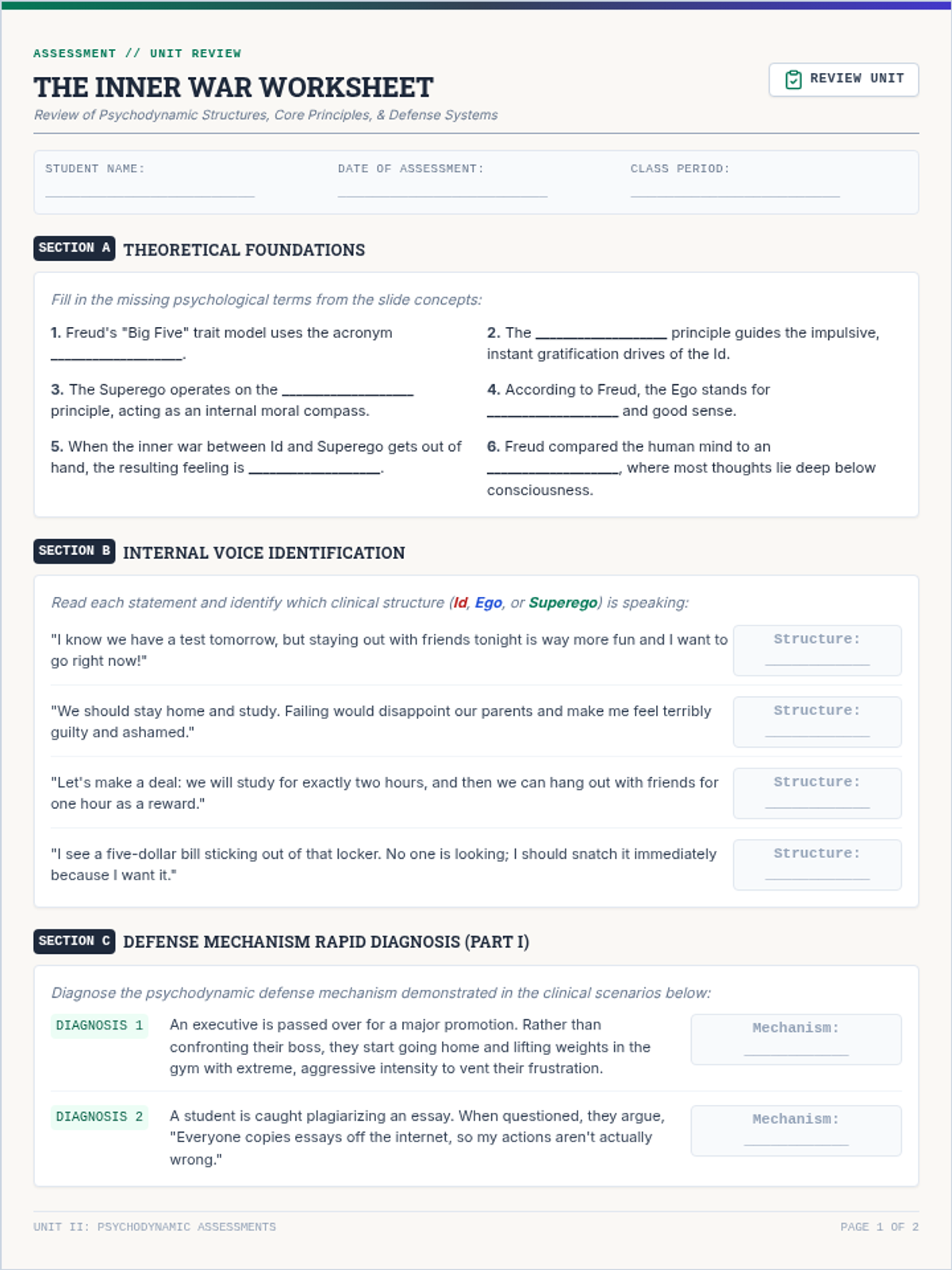
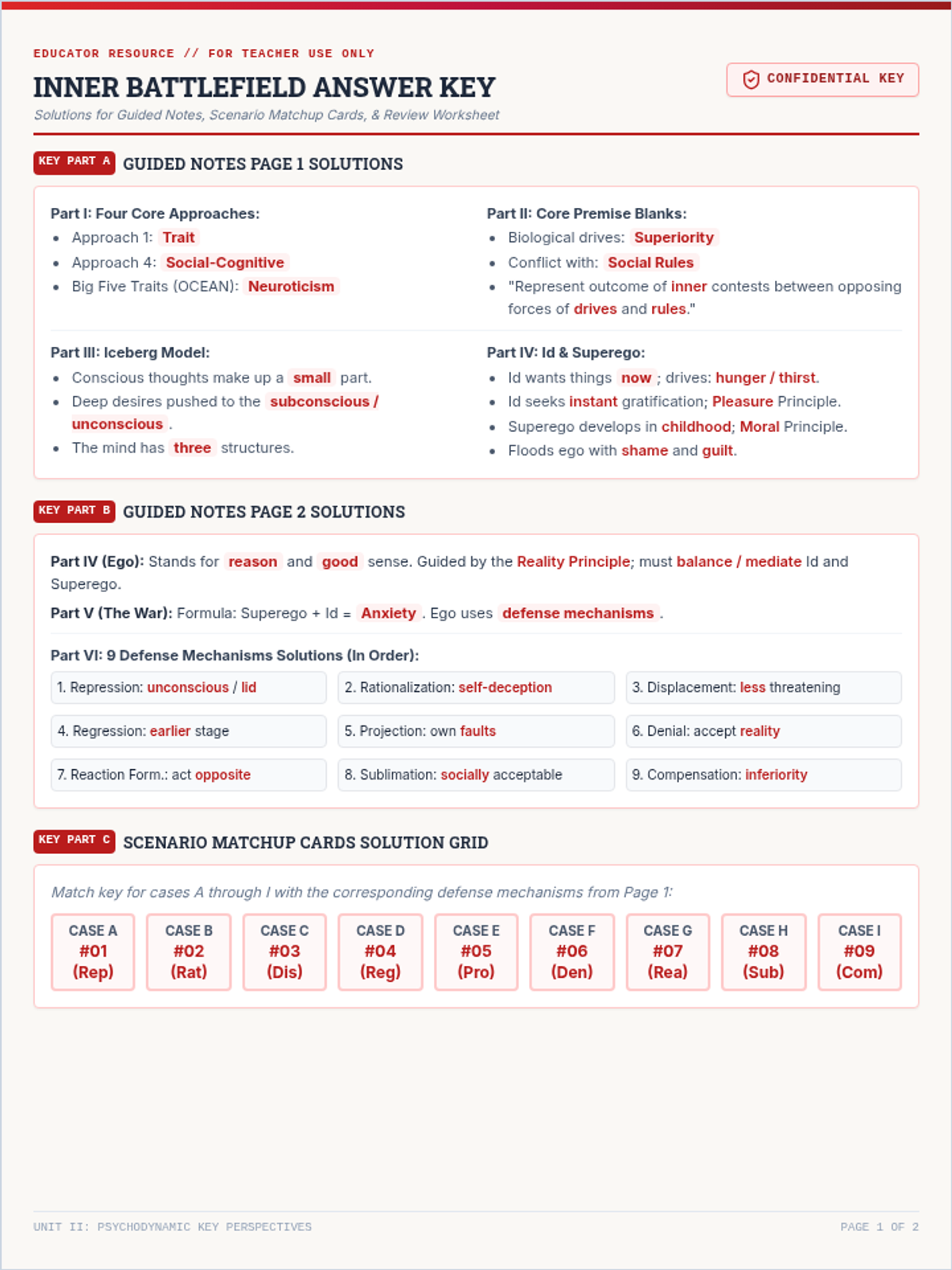
An exploration of Sigmund Freud's psychodynamic approach to personality, focusing on the dynamic conflict between the Id, Ego, and Superego, and the defense mechanisms the mind uses to cope with resulting anxiety.
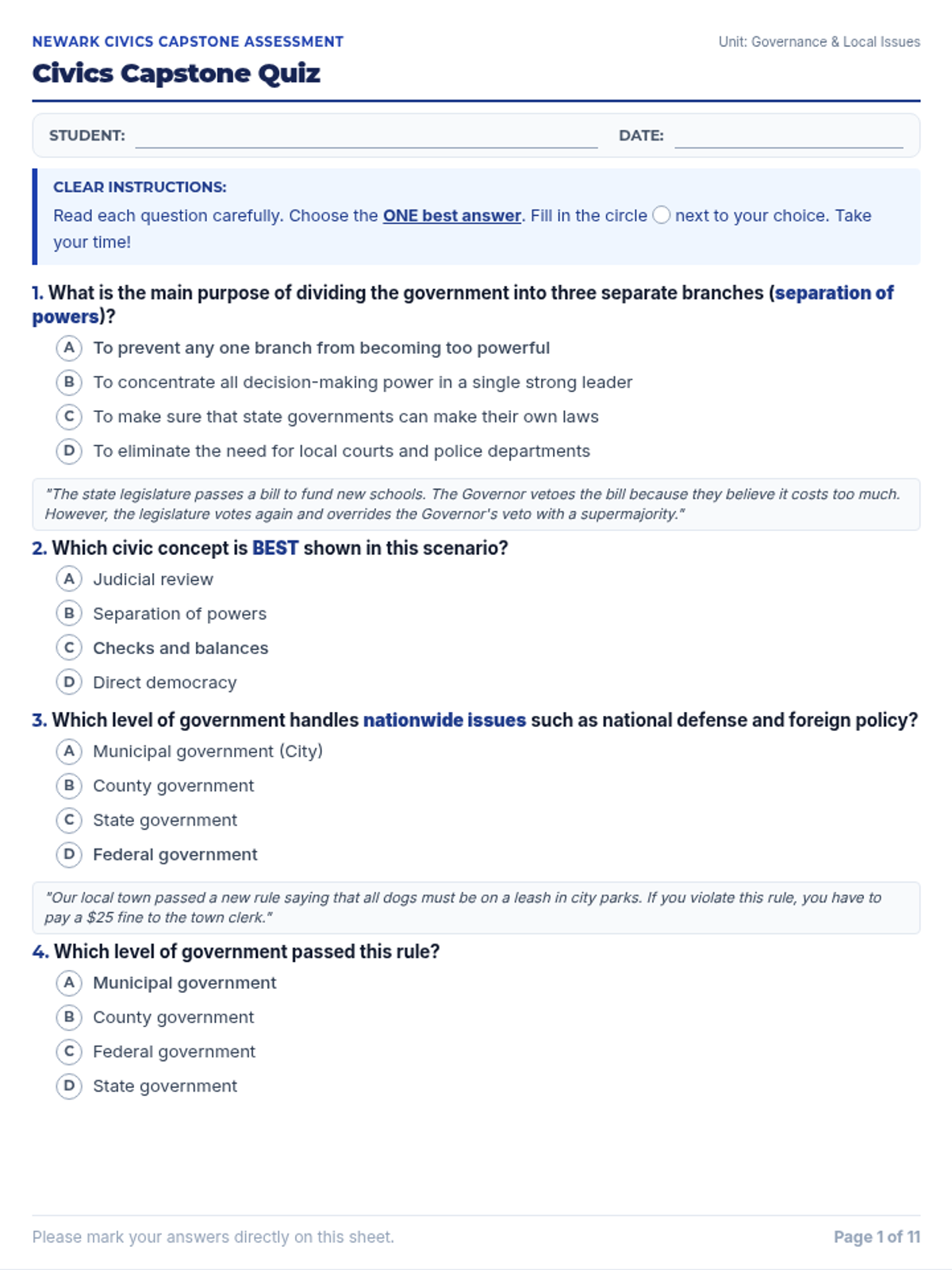
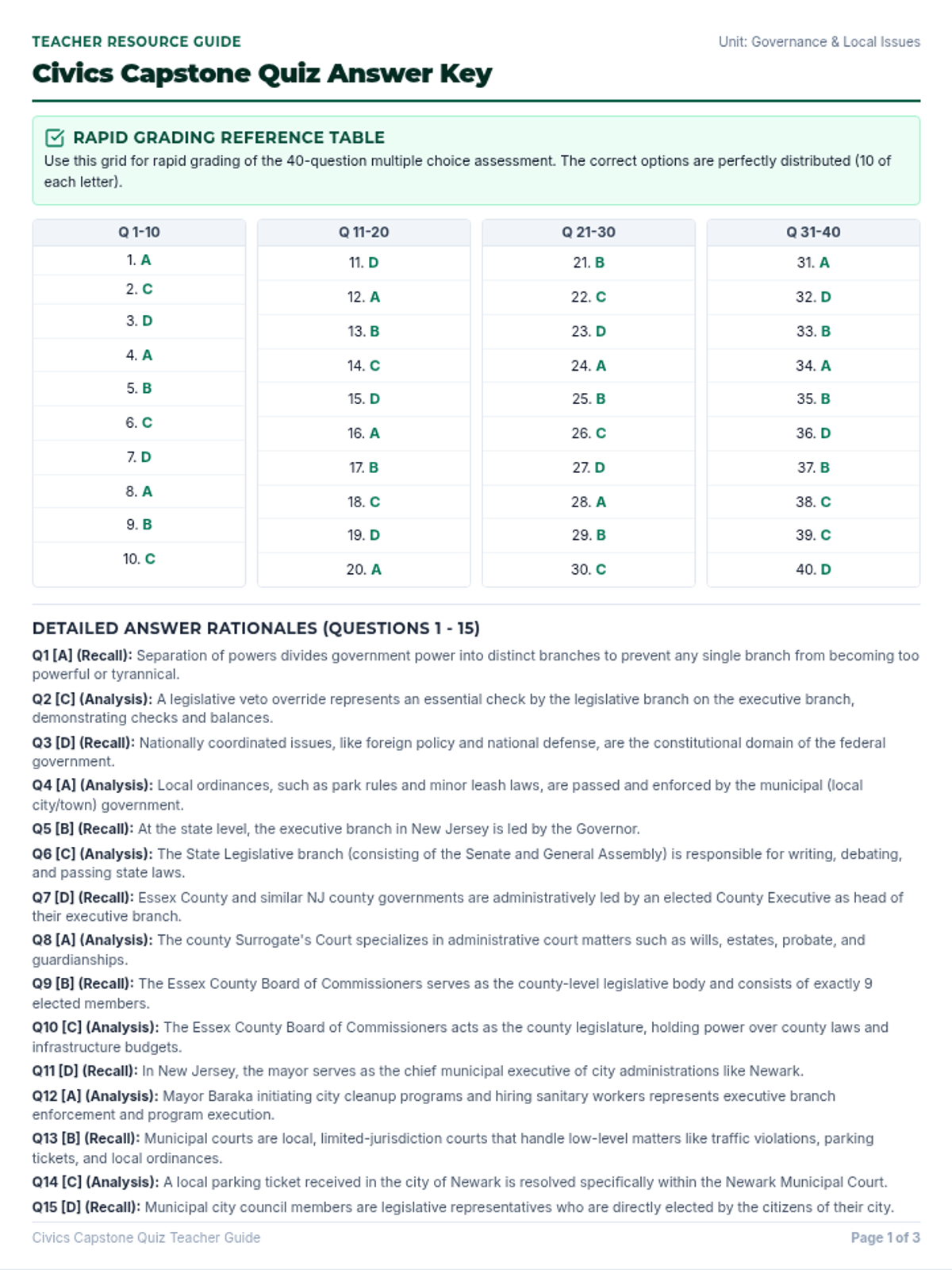
A comprehensive assessment unit for high school civics, covering separation of powers, municipal and county government levels, and local social issues such as homelessness and food deserts in New Jersey.
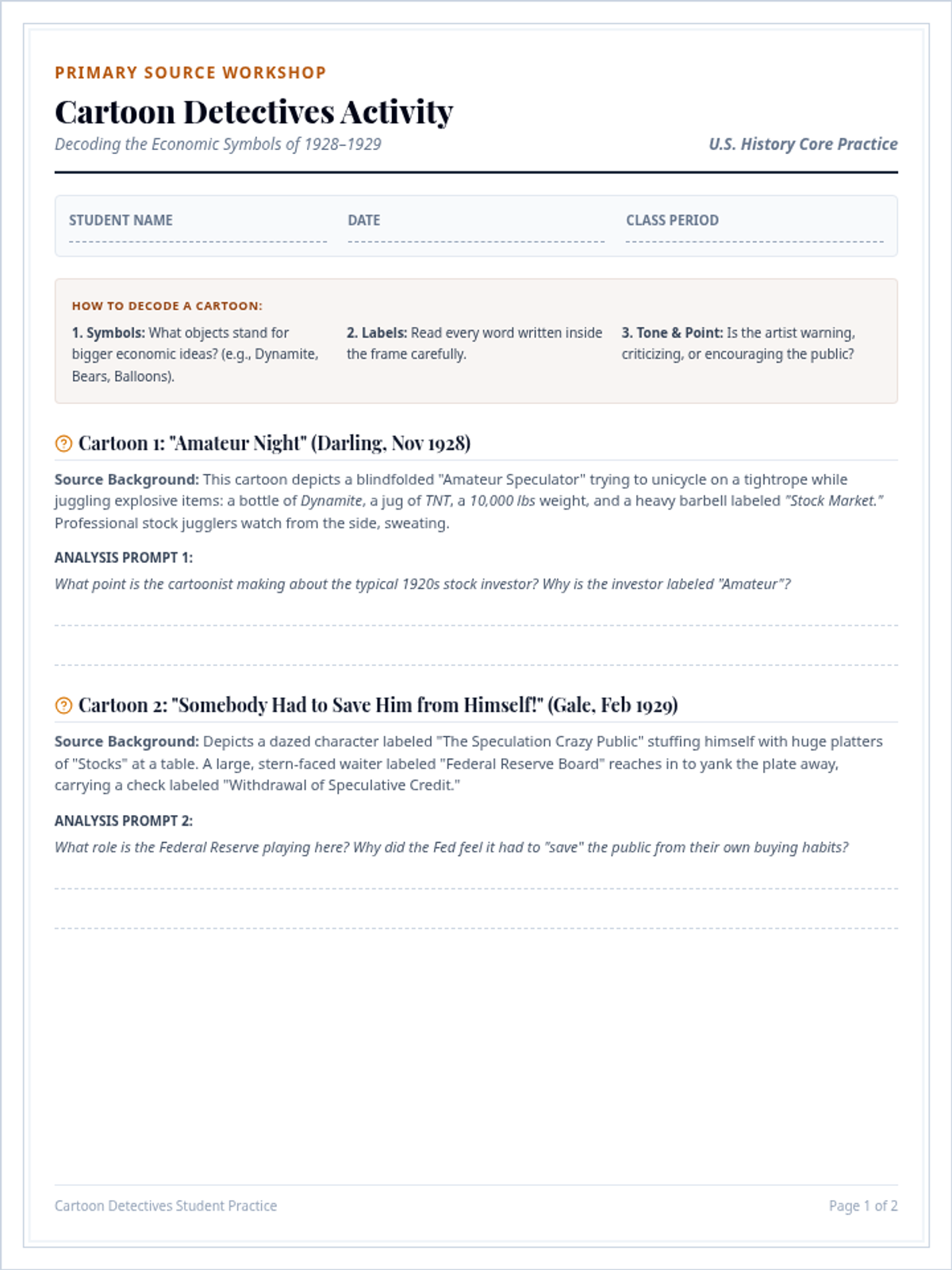
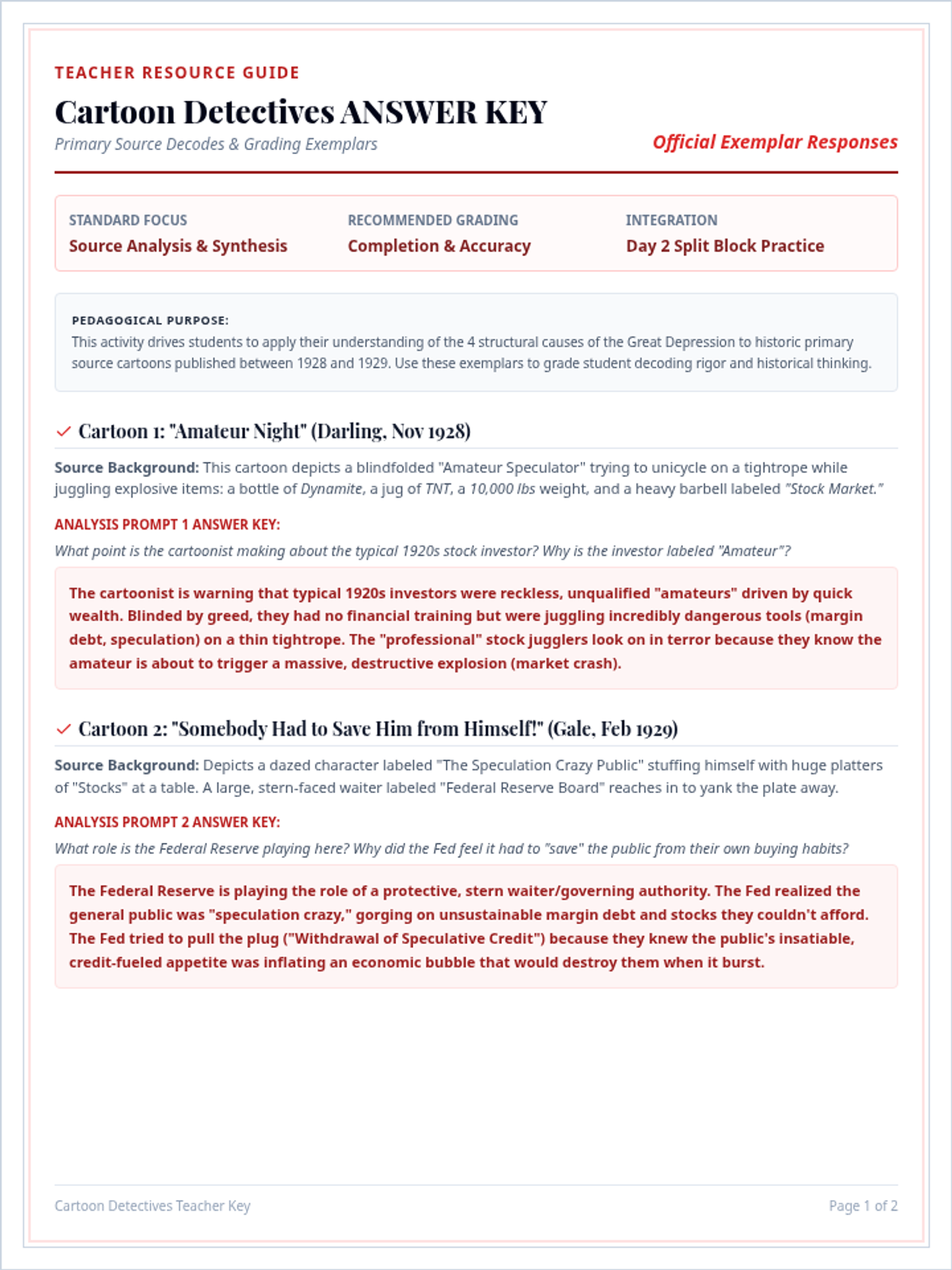
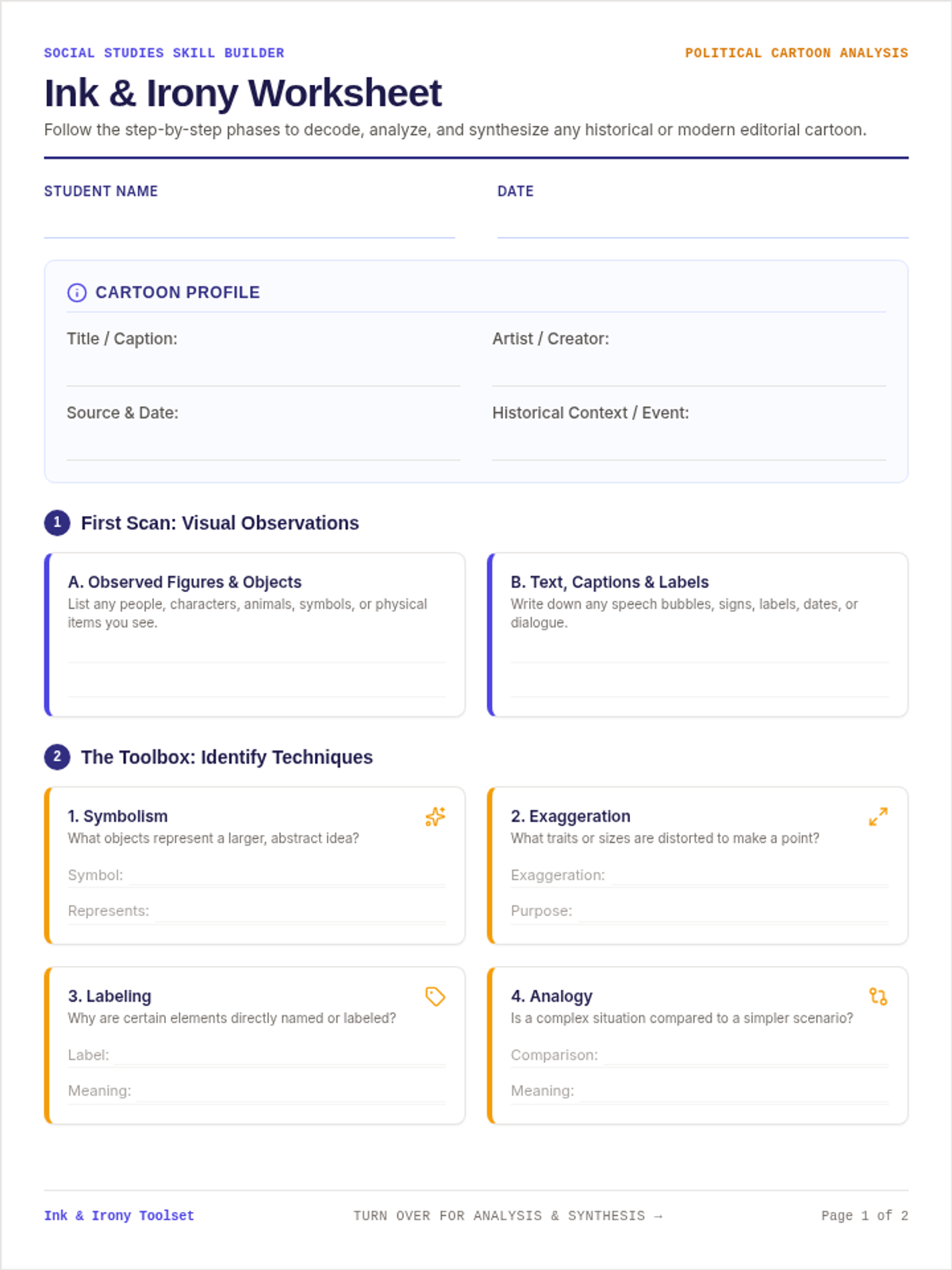
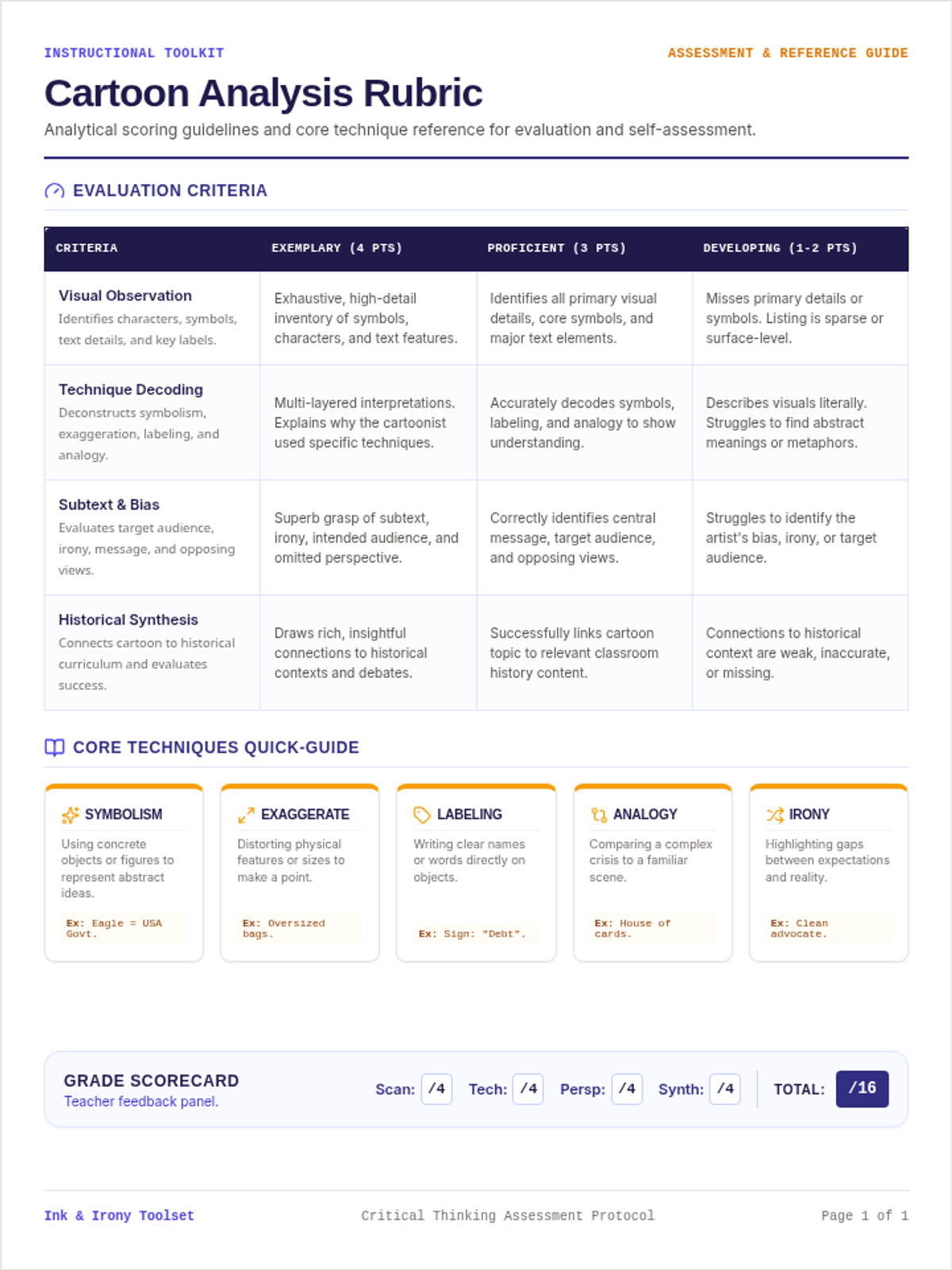
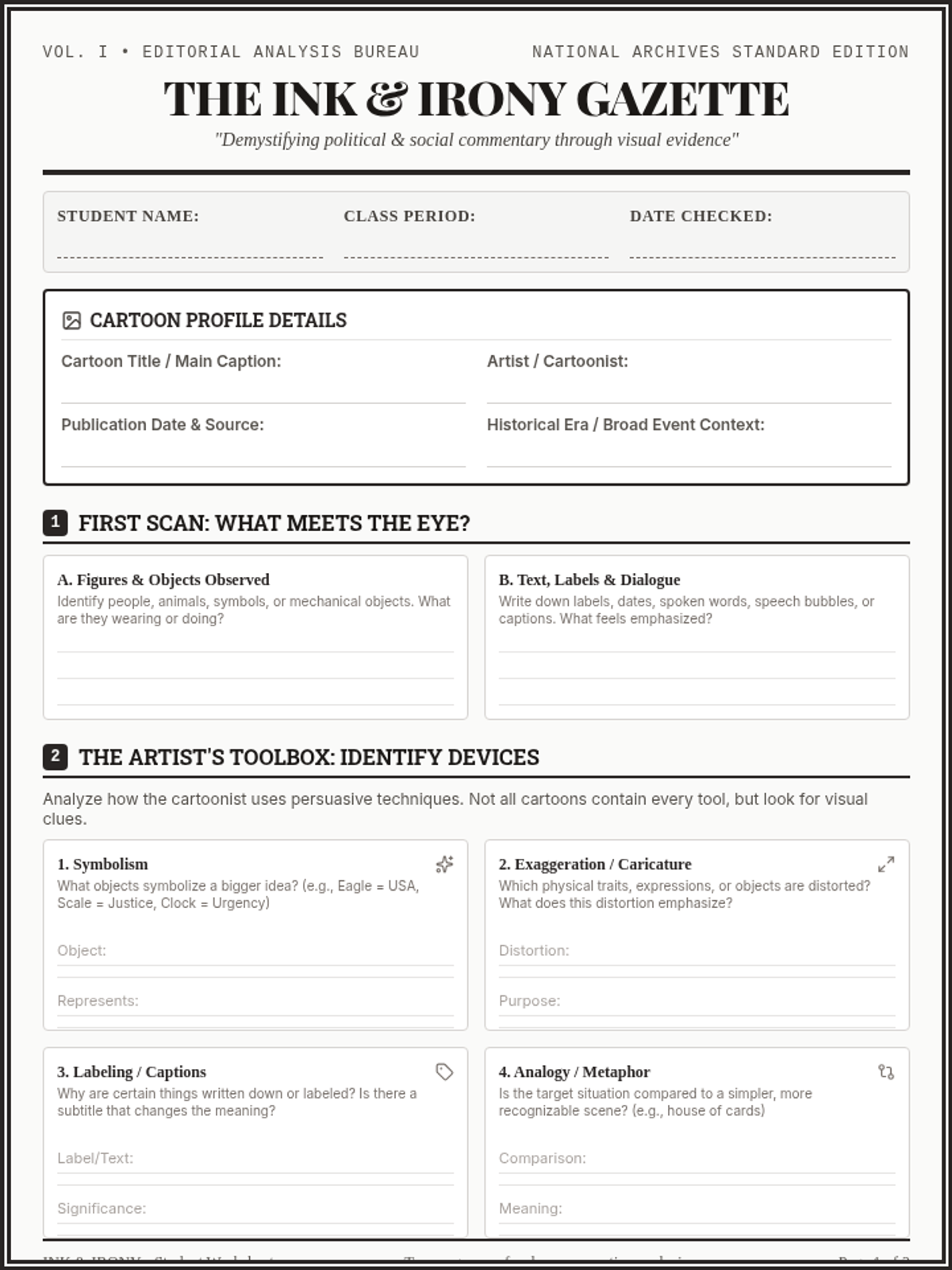
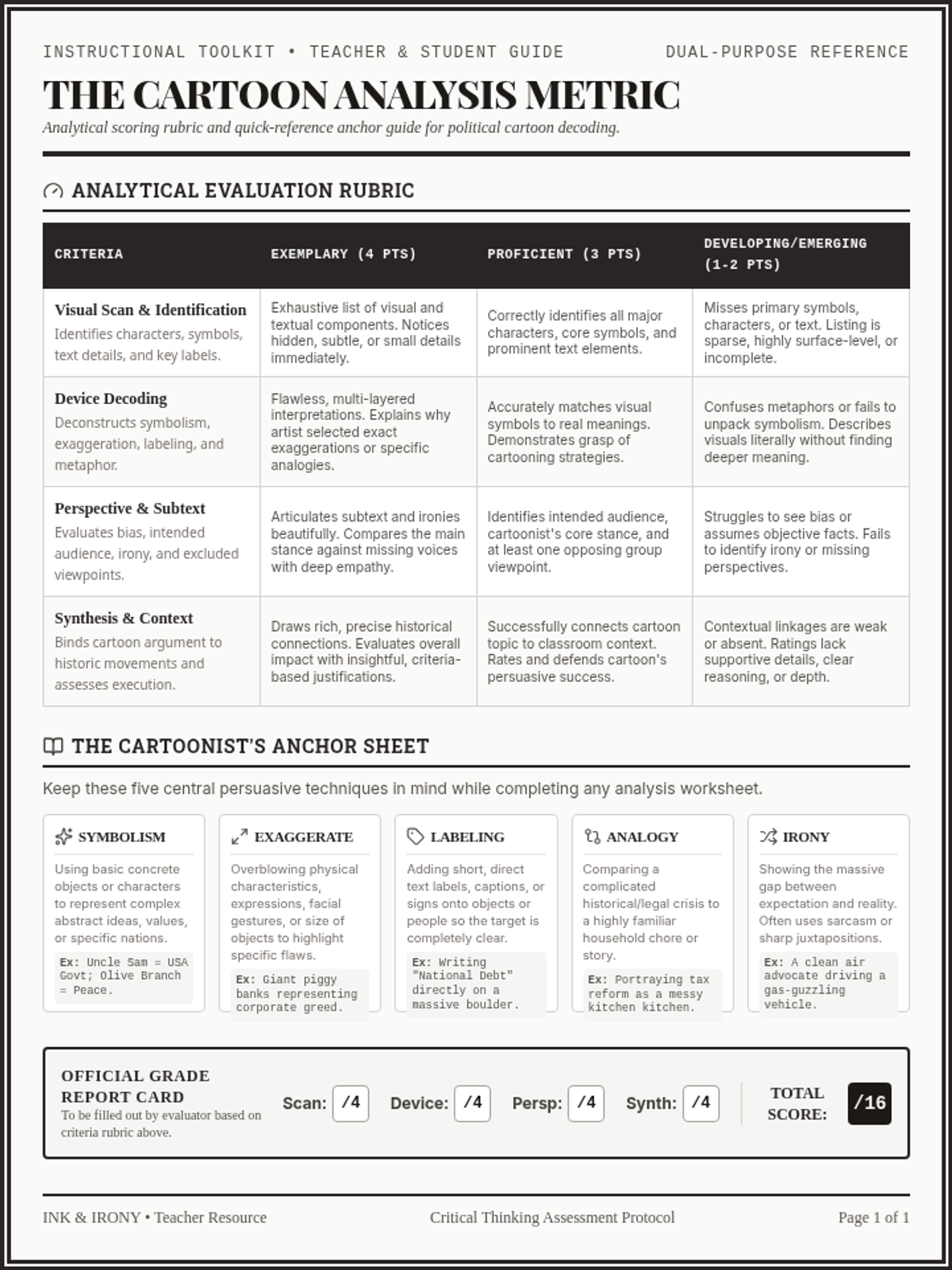
A comprehensive instructional toolkit for analyzing editorial and political cartoons. Features a versatile double-page graphic organizer and a structured assessment rubric adaptable to any historical era.
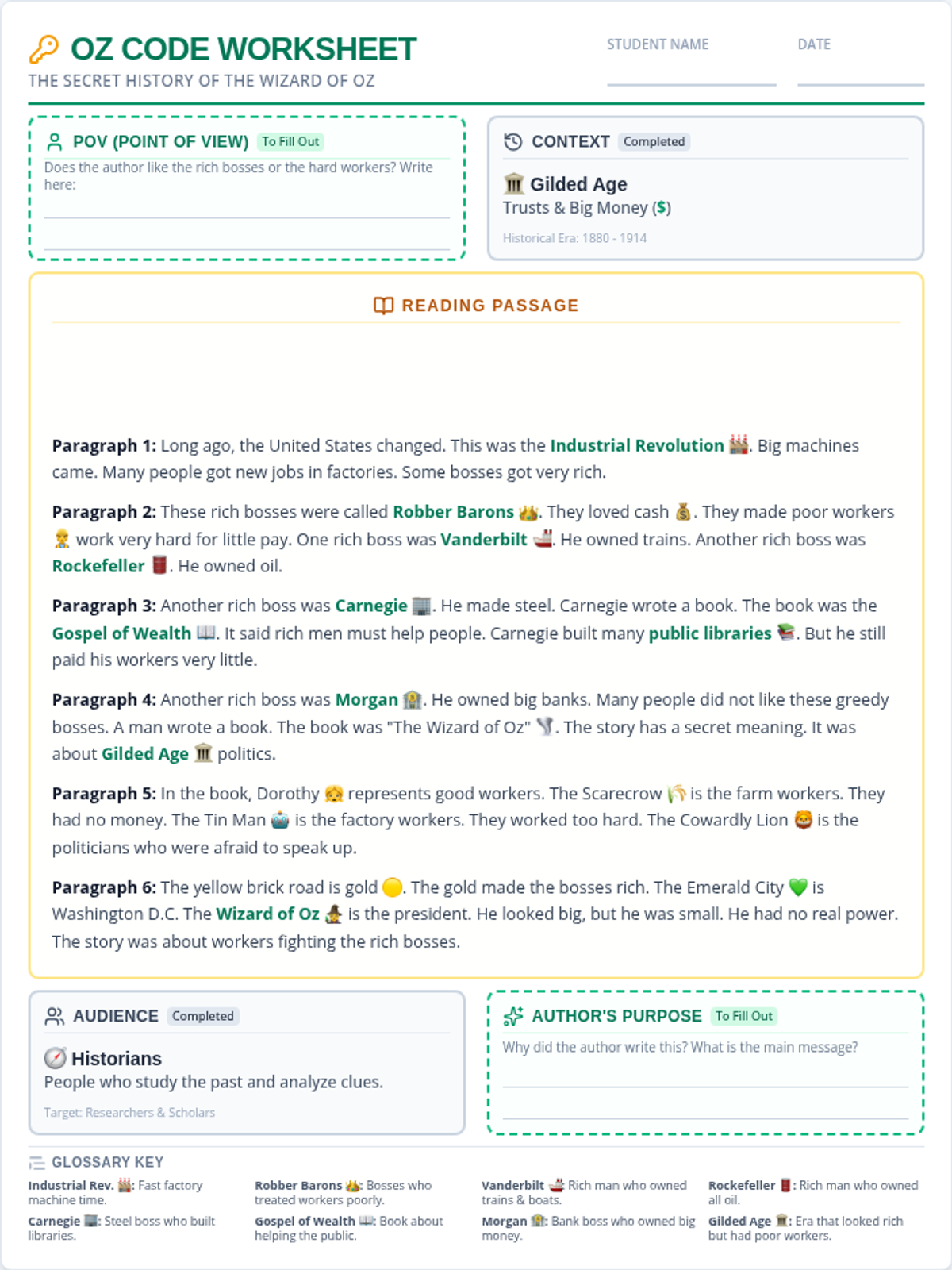
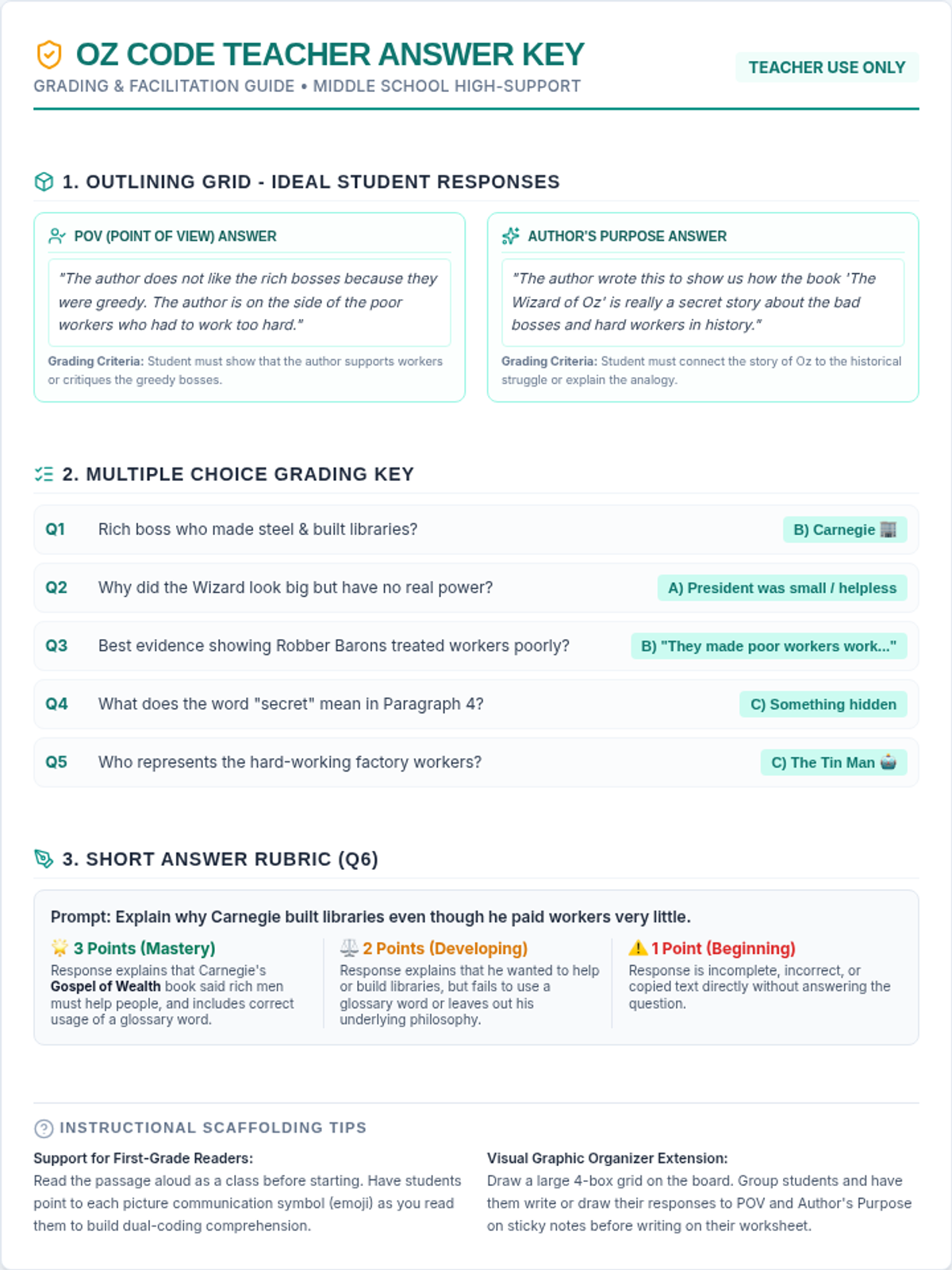
A lesson on the Gilded Age, the Industrial Revolution, robber barons, and their symbolic representation in L. Frank Baum's 'The Wizard of Oz'. Designed with high-support scaffolding for middle schoolers reading at a first-grade level.
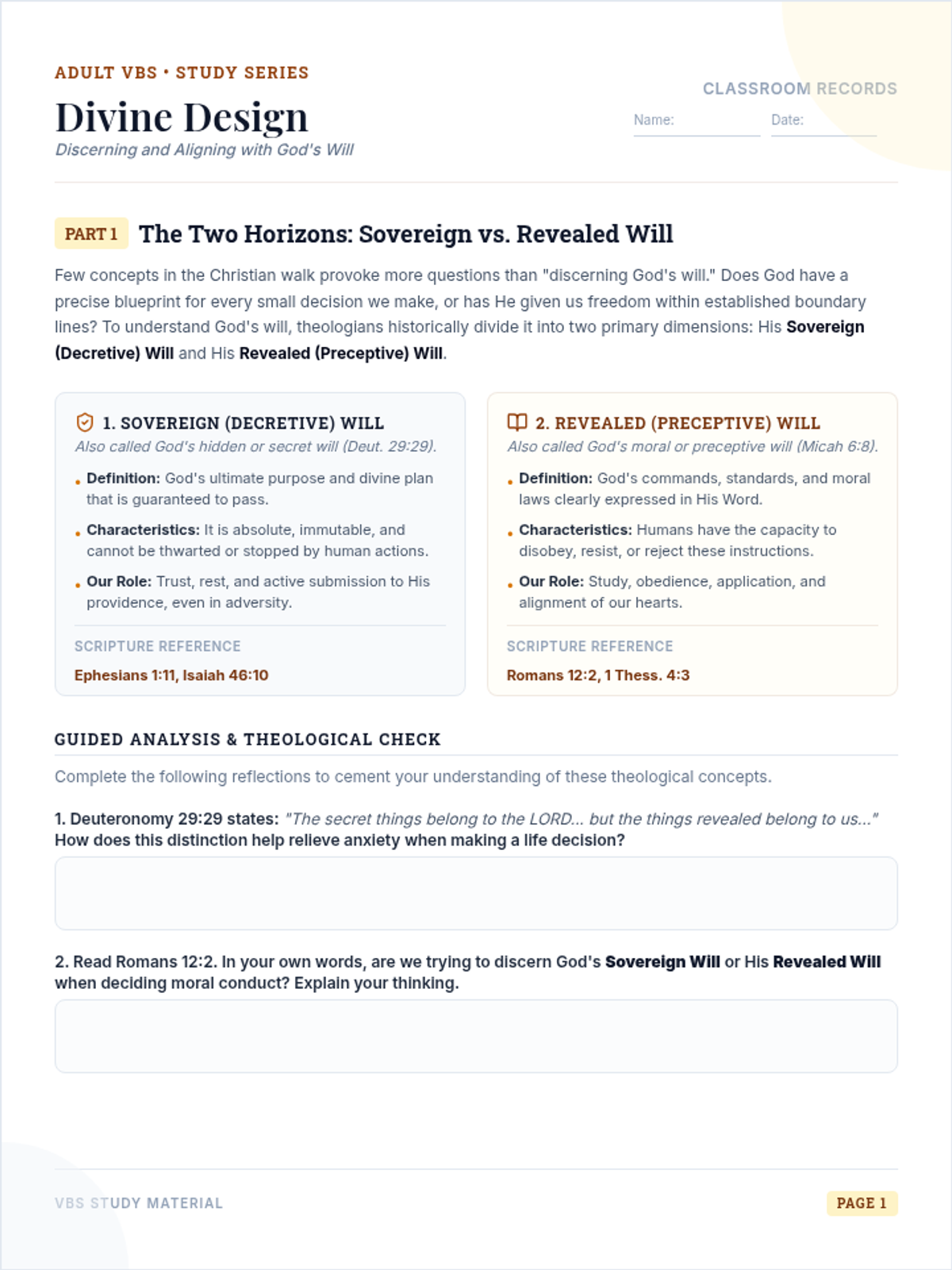
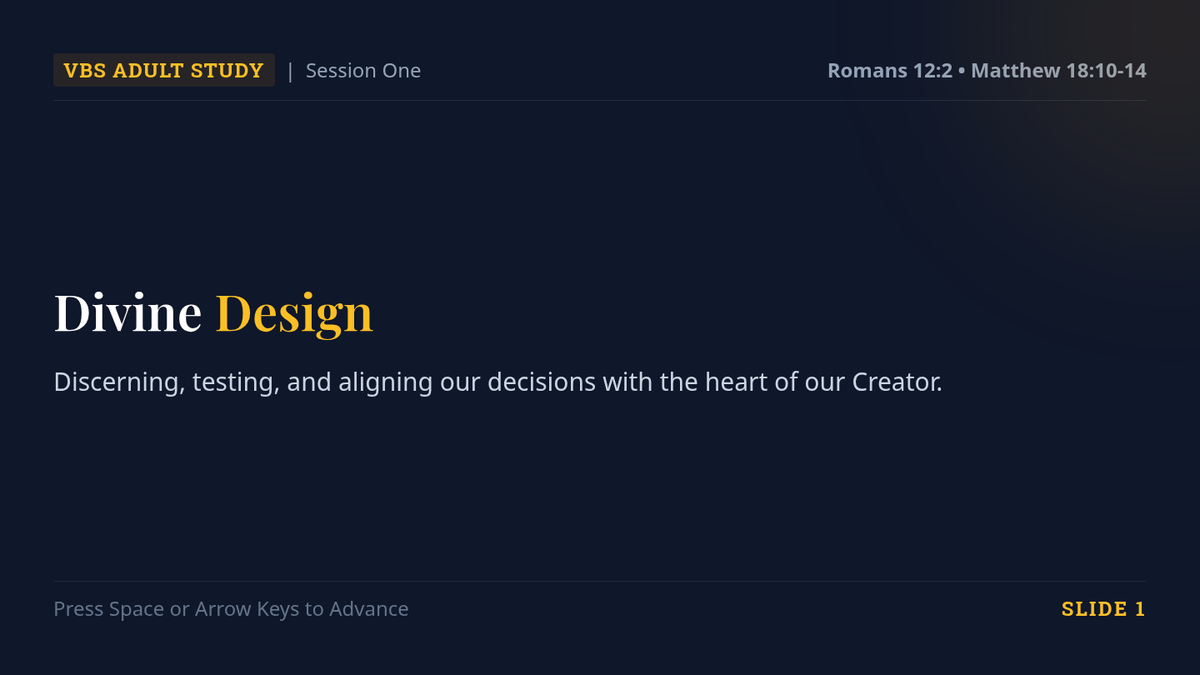
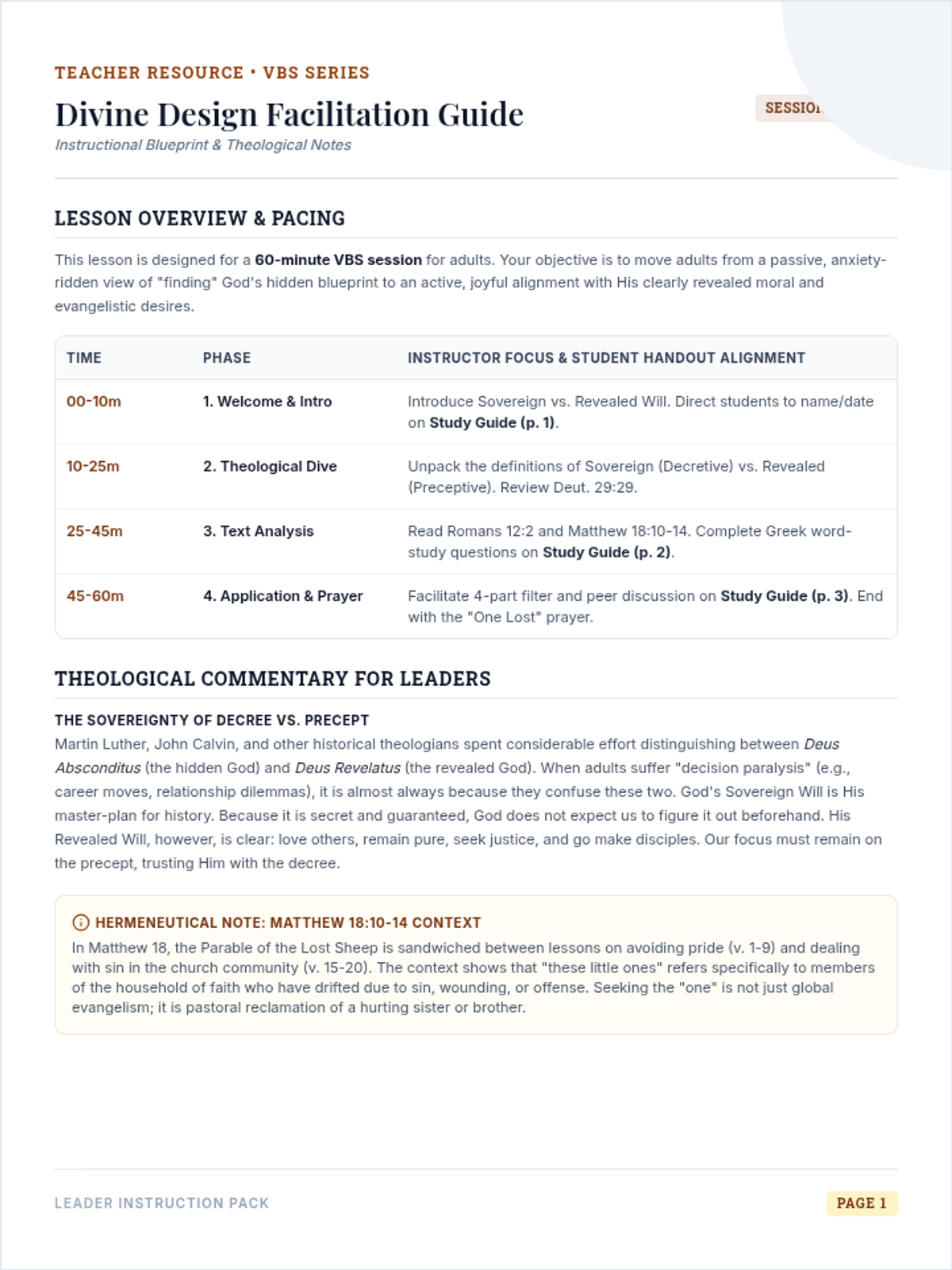
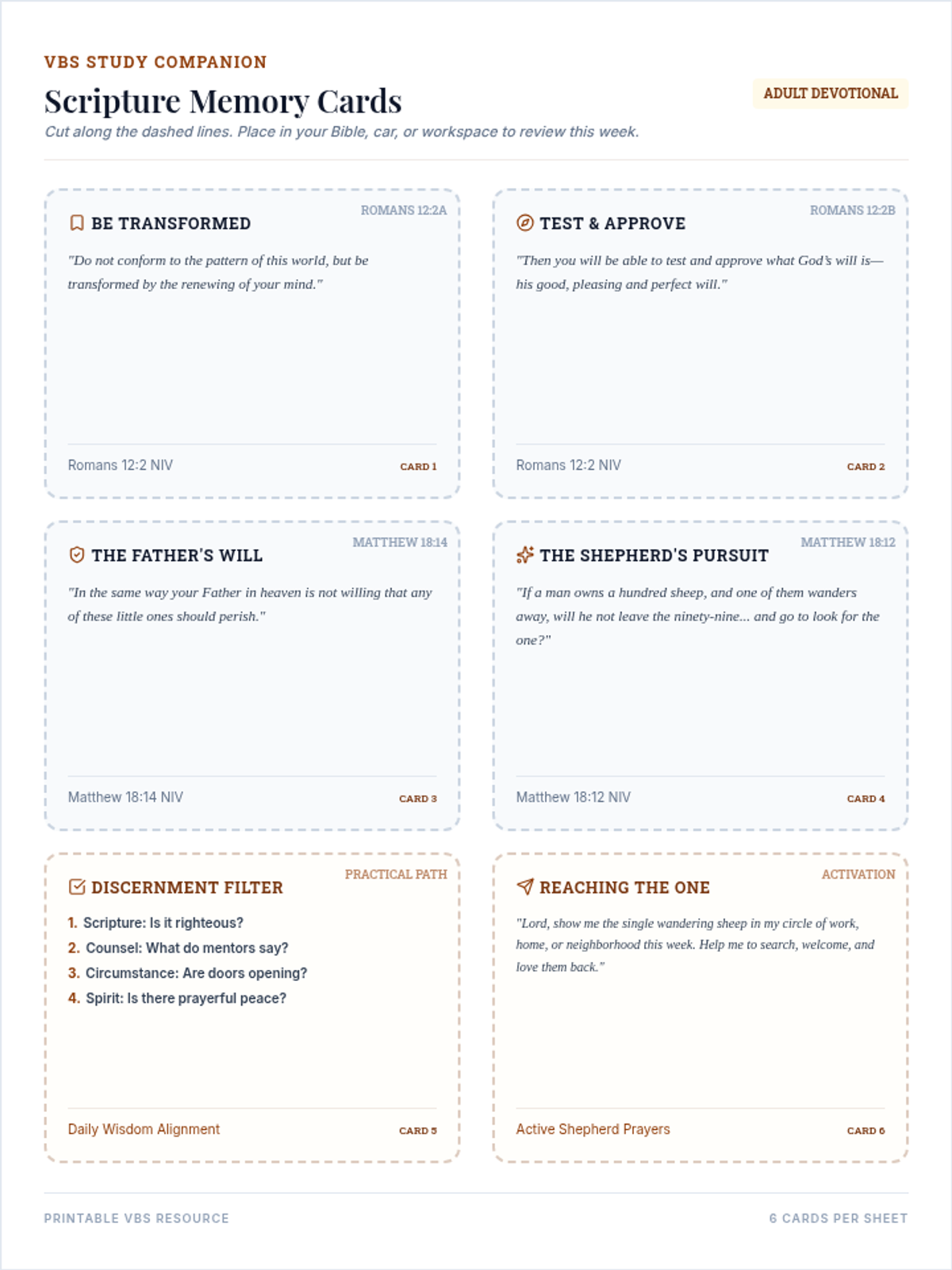
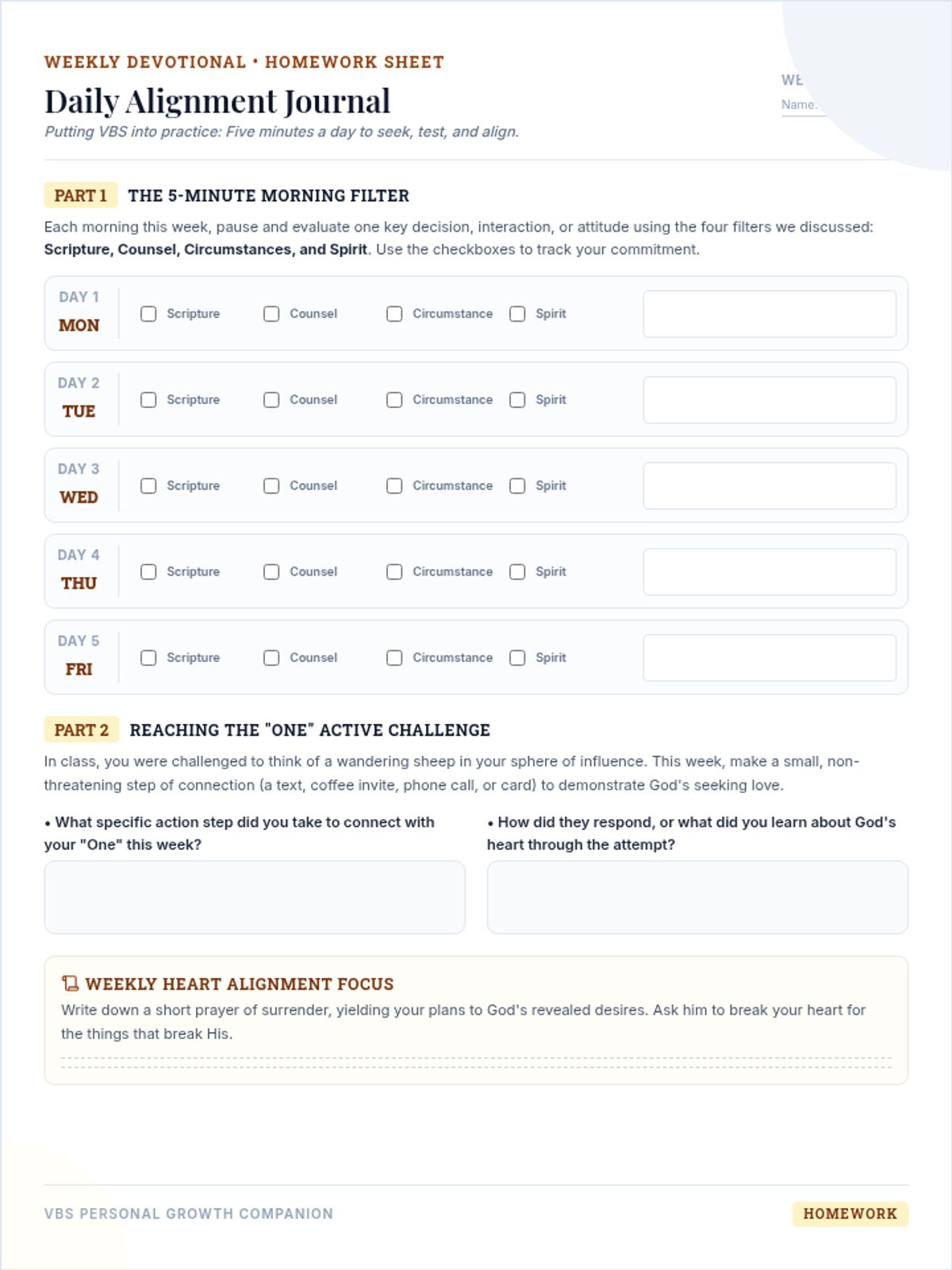
An adult Vacation Bible School (VBS) lesson focusing on discerning and aligning with God's will. Through Romans 12:2 and Matthew 18:10-14, adults will define God's will (Sovereign vs. Revealed), understand His design that none should be lost, and discover practical paths to daily discernment and evangelism.
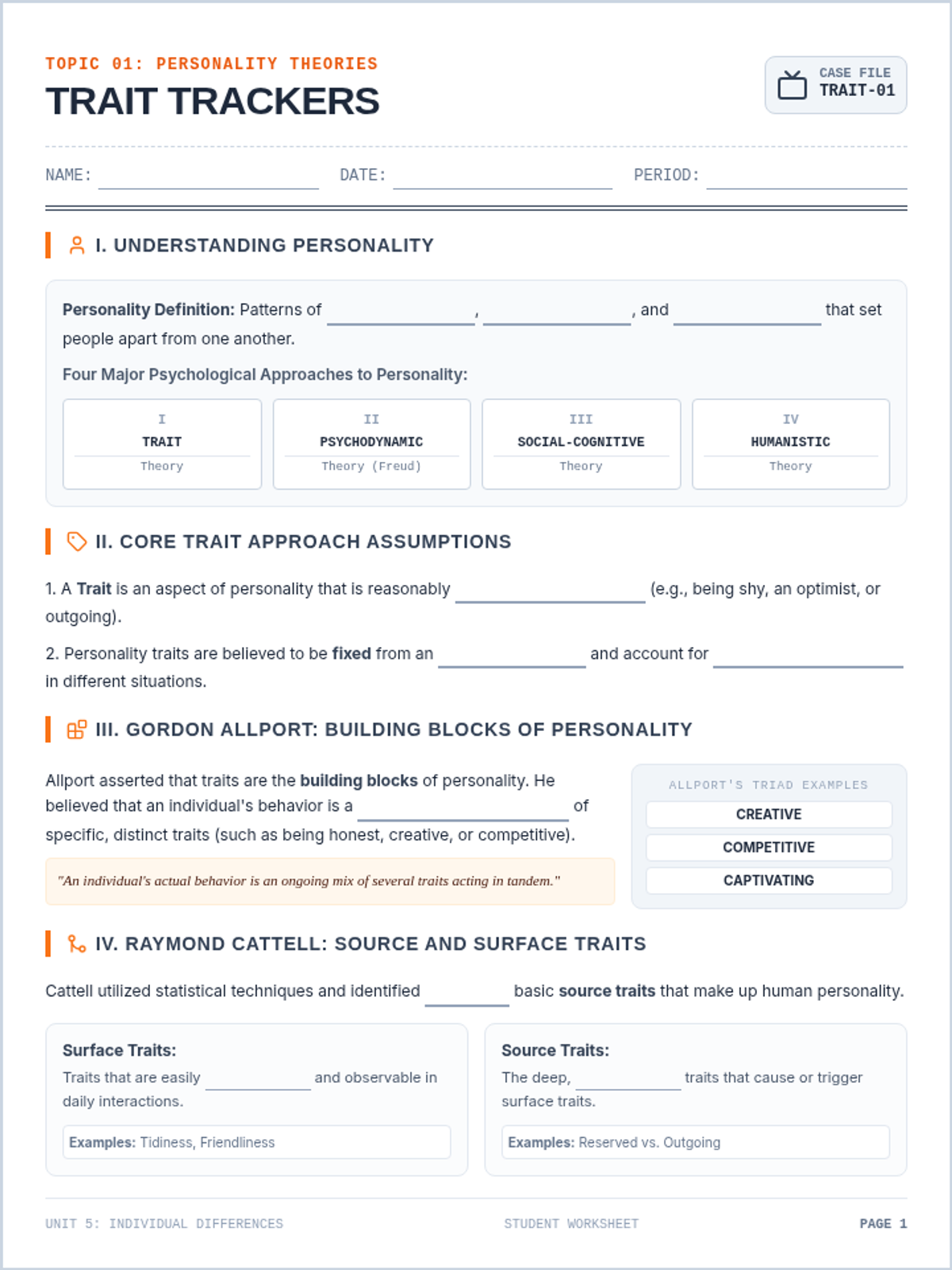
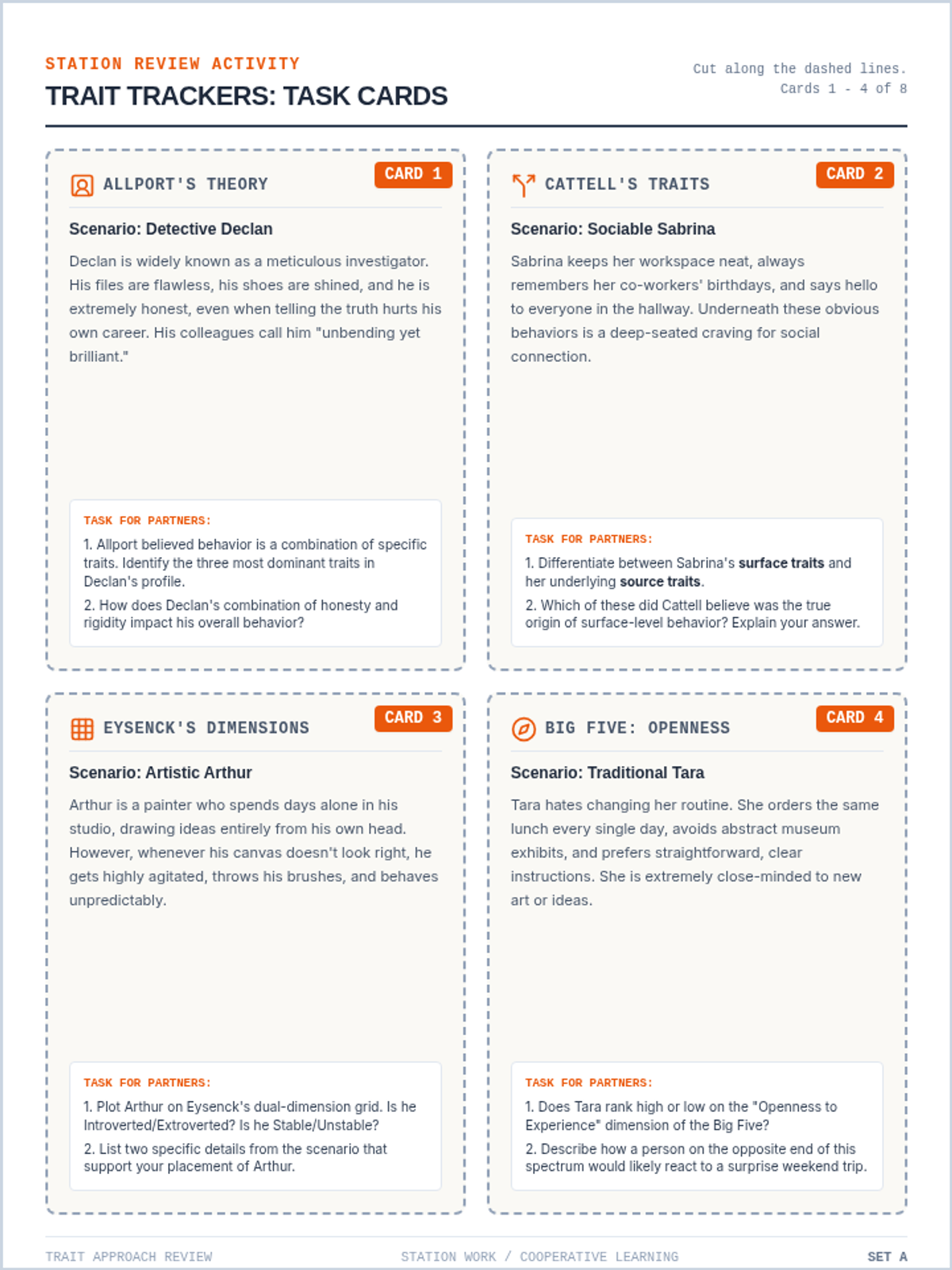
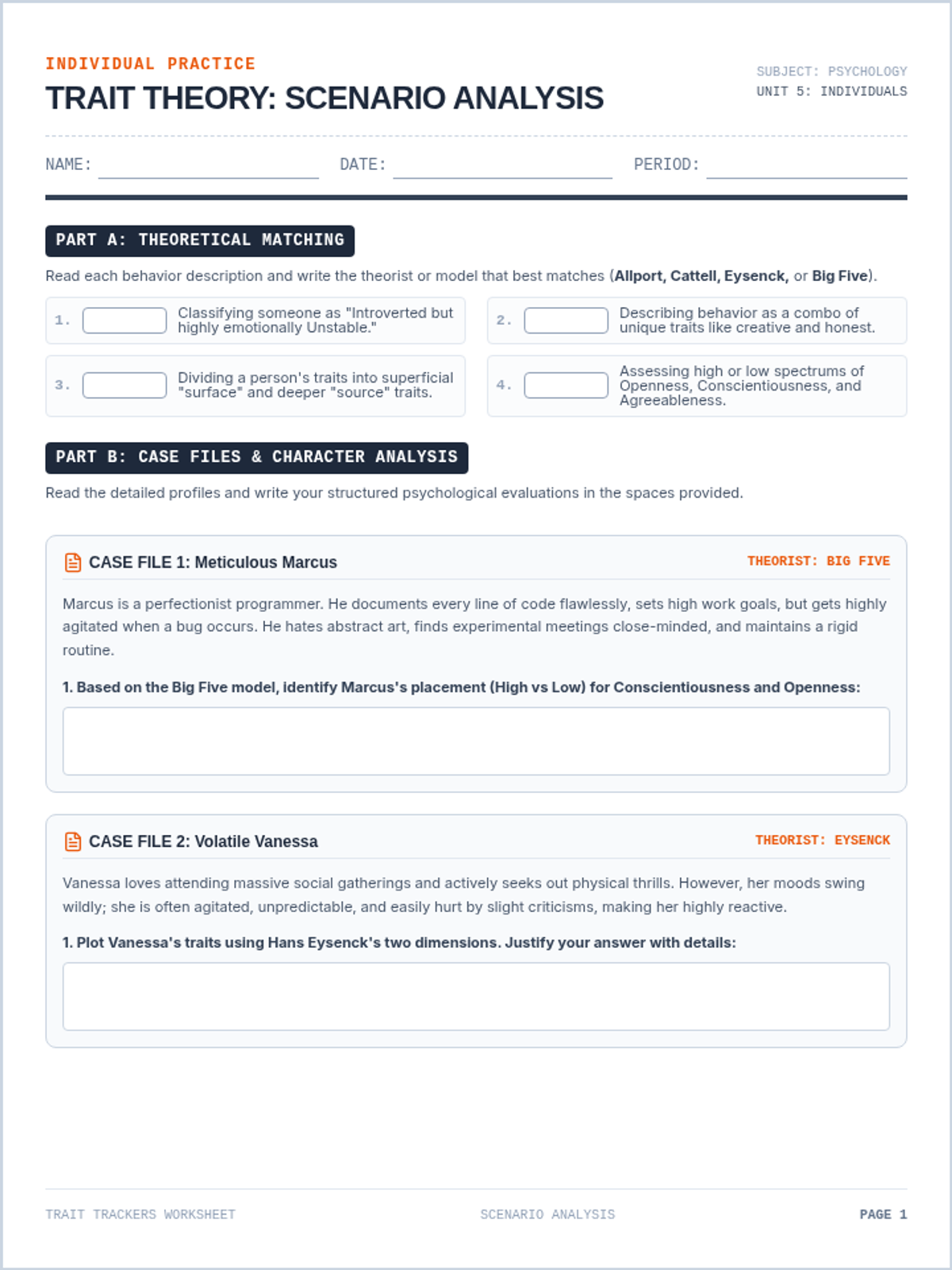
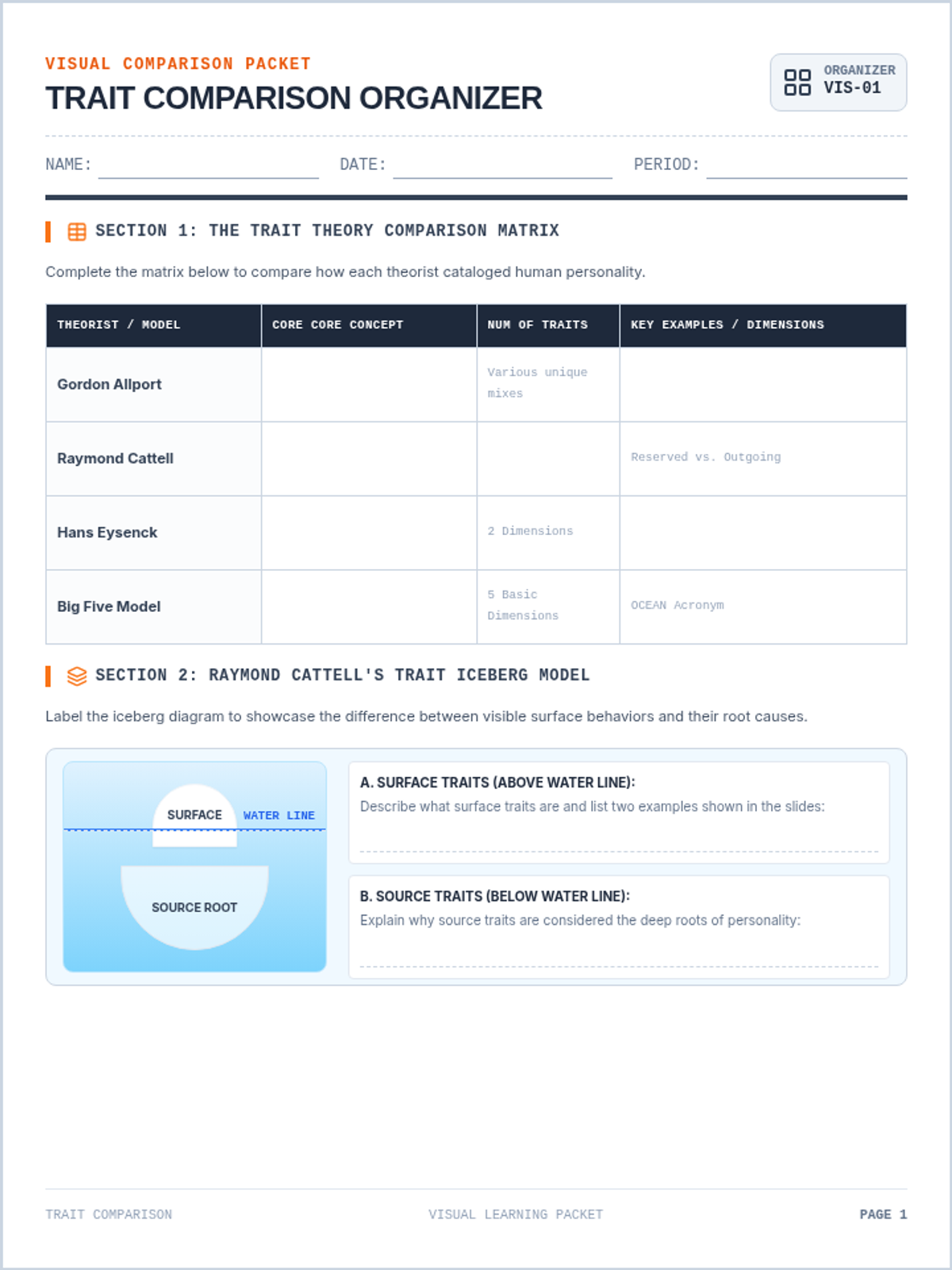
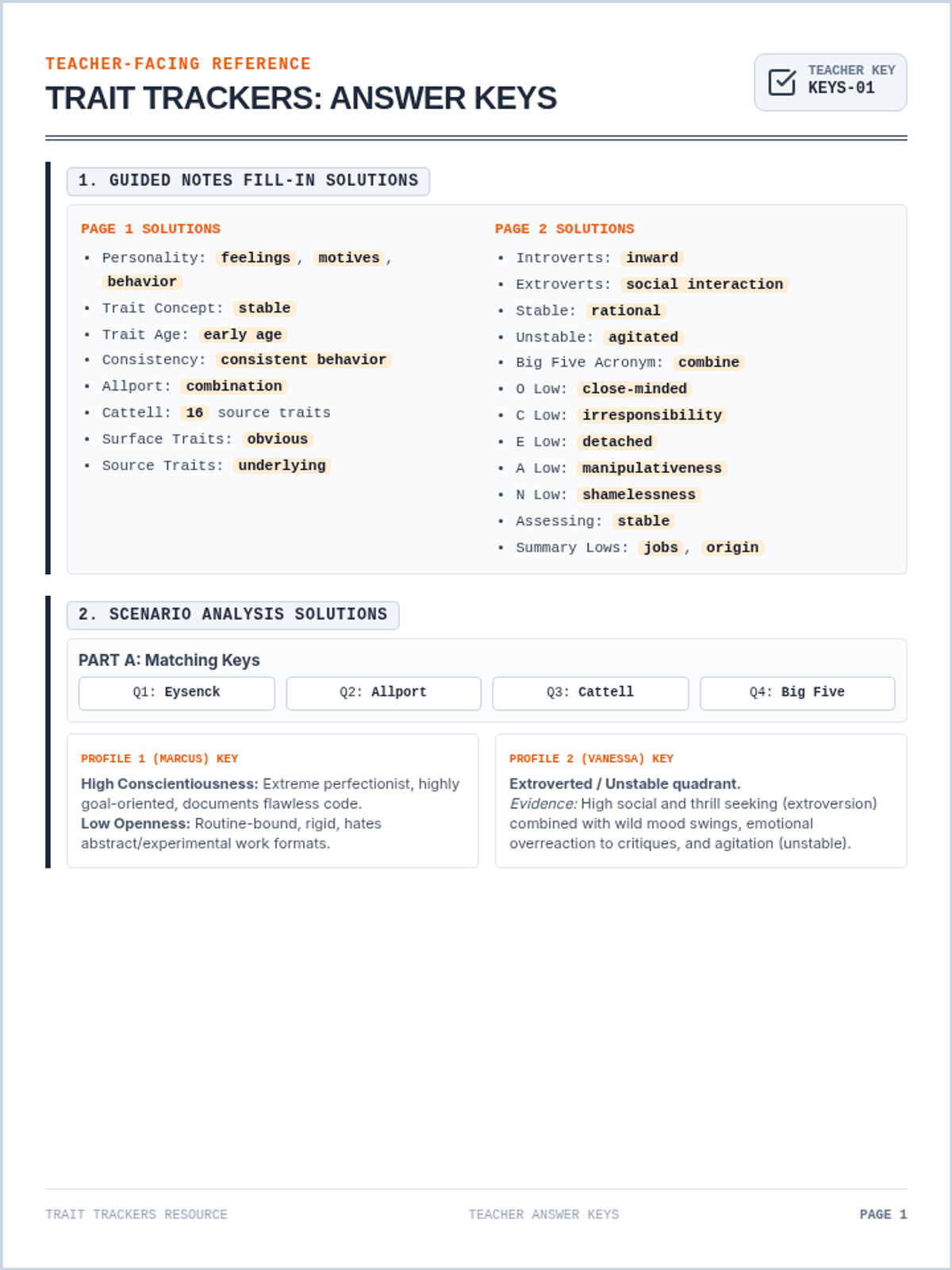
An introductory lesson on the Trait Approach to personality, guiding students through key definitions, major theorists (Allport, Cattell, Eysenck), the Big Five model, and the real-world applications and limitations of trait theory.
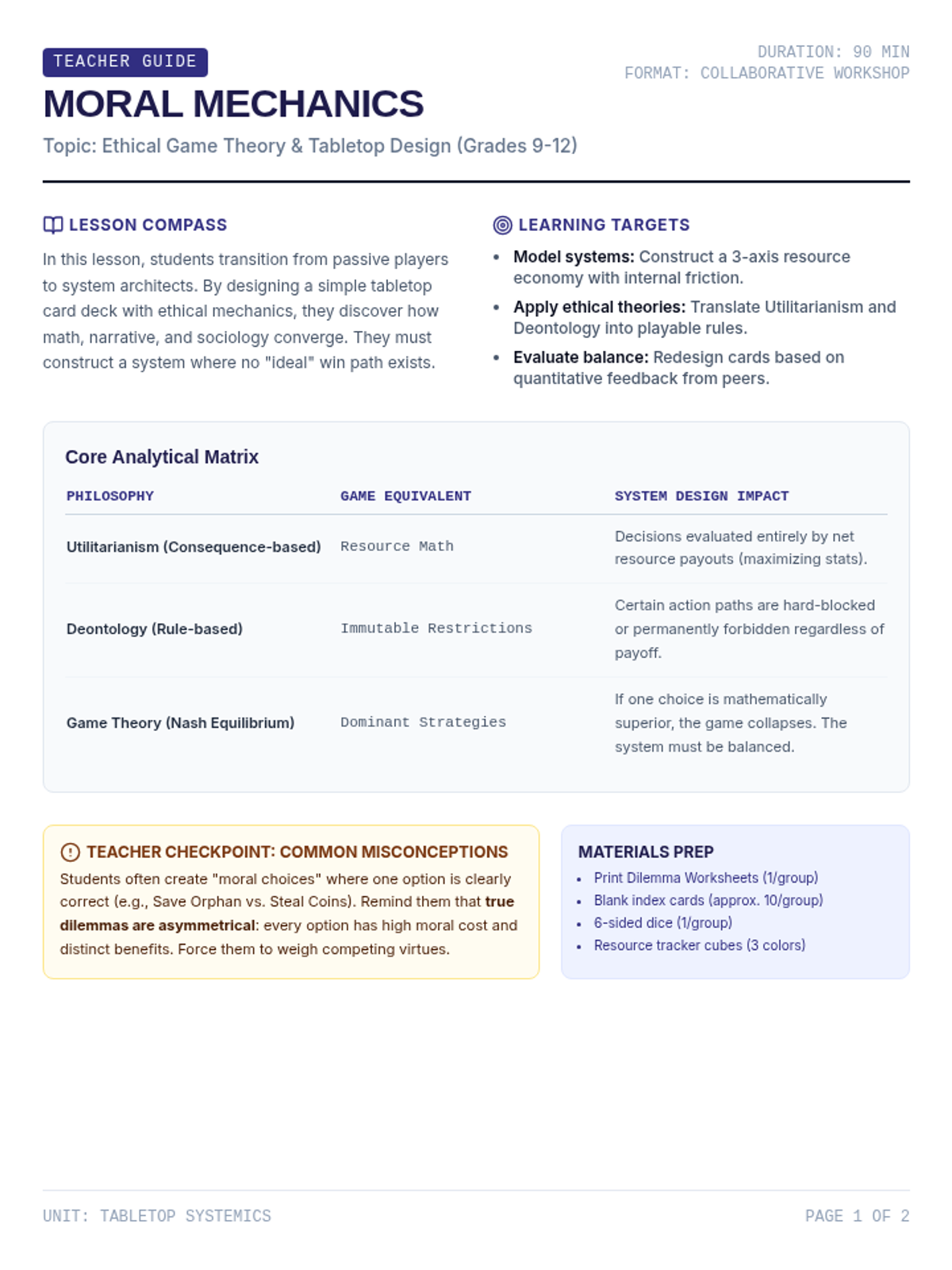
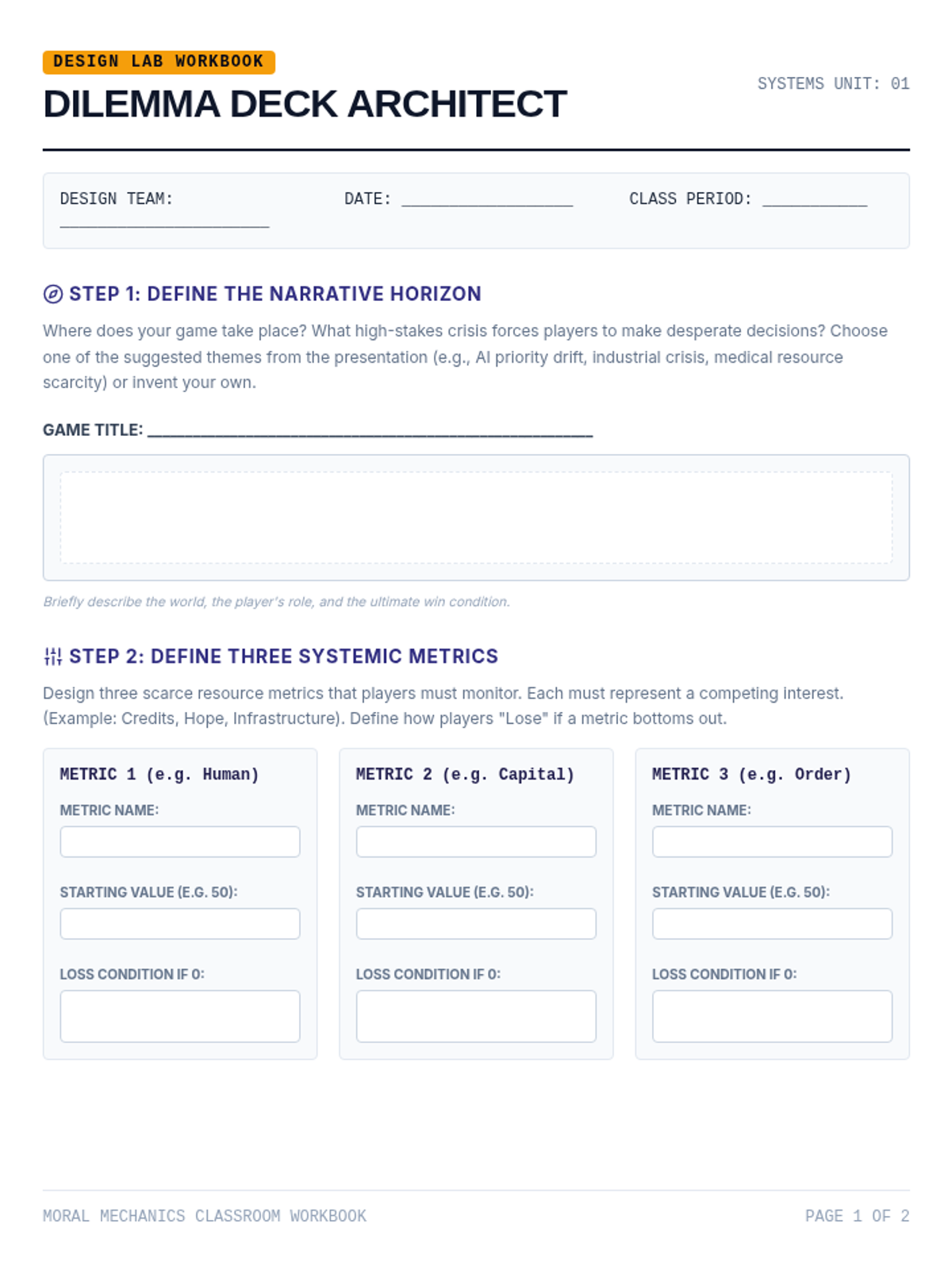
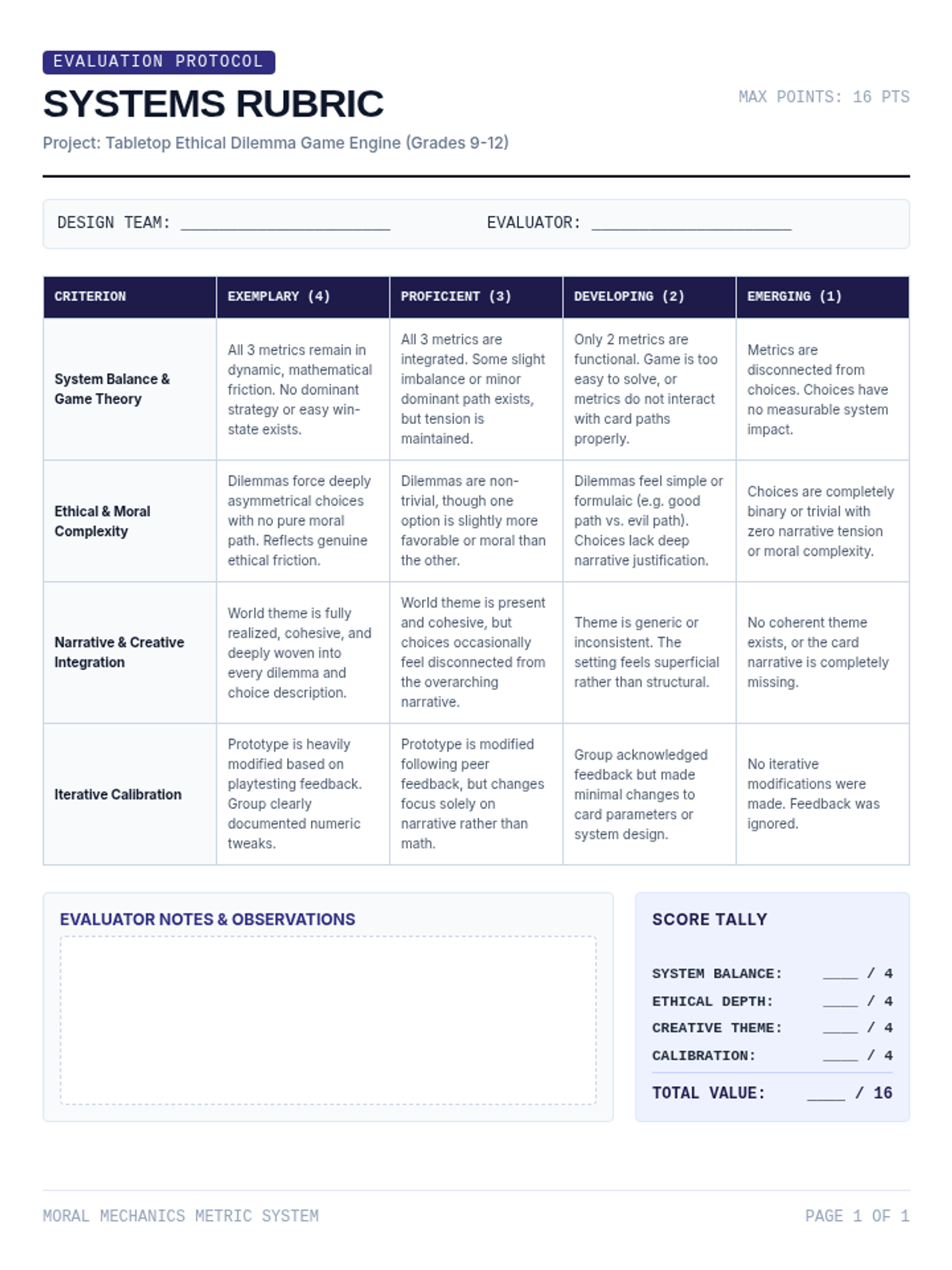
A high school lesson where students collaborate to design a tabletop card game centered on real-world ethical choices, applying game theory, logical reasoning, and creative writing to balance competing moral priorities.