A lesson focused on mastering the art of the introductory paragraph in opinion writing, specifically focusing on hooks, topic introduction, and thesis statements.
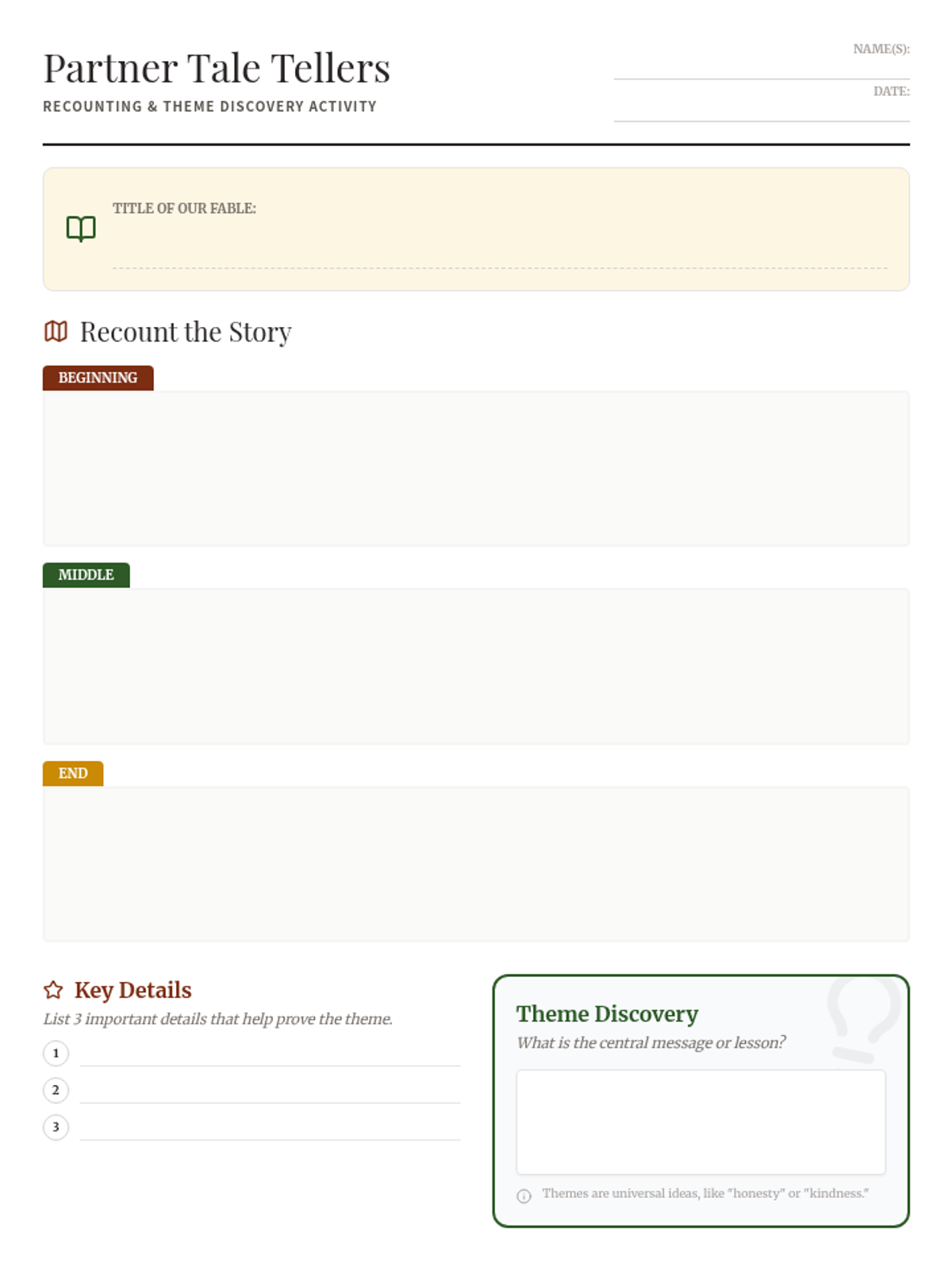
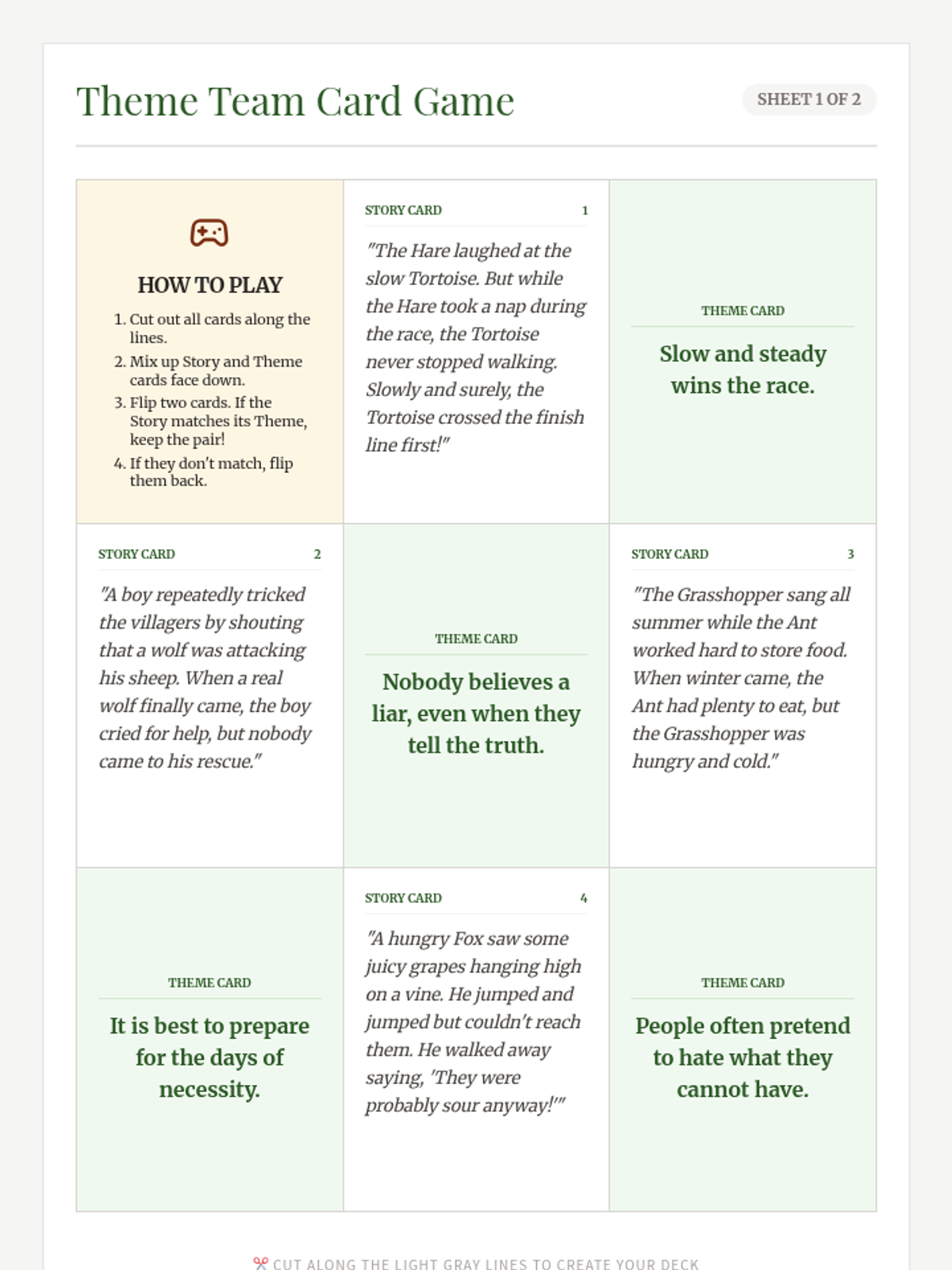
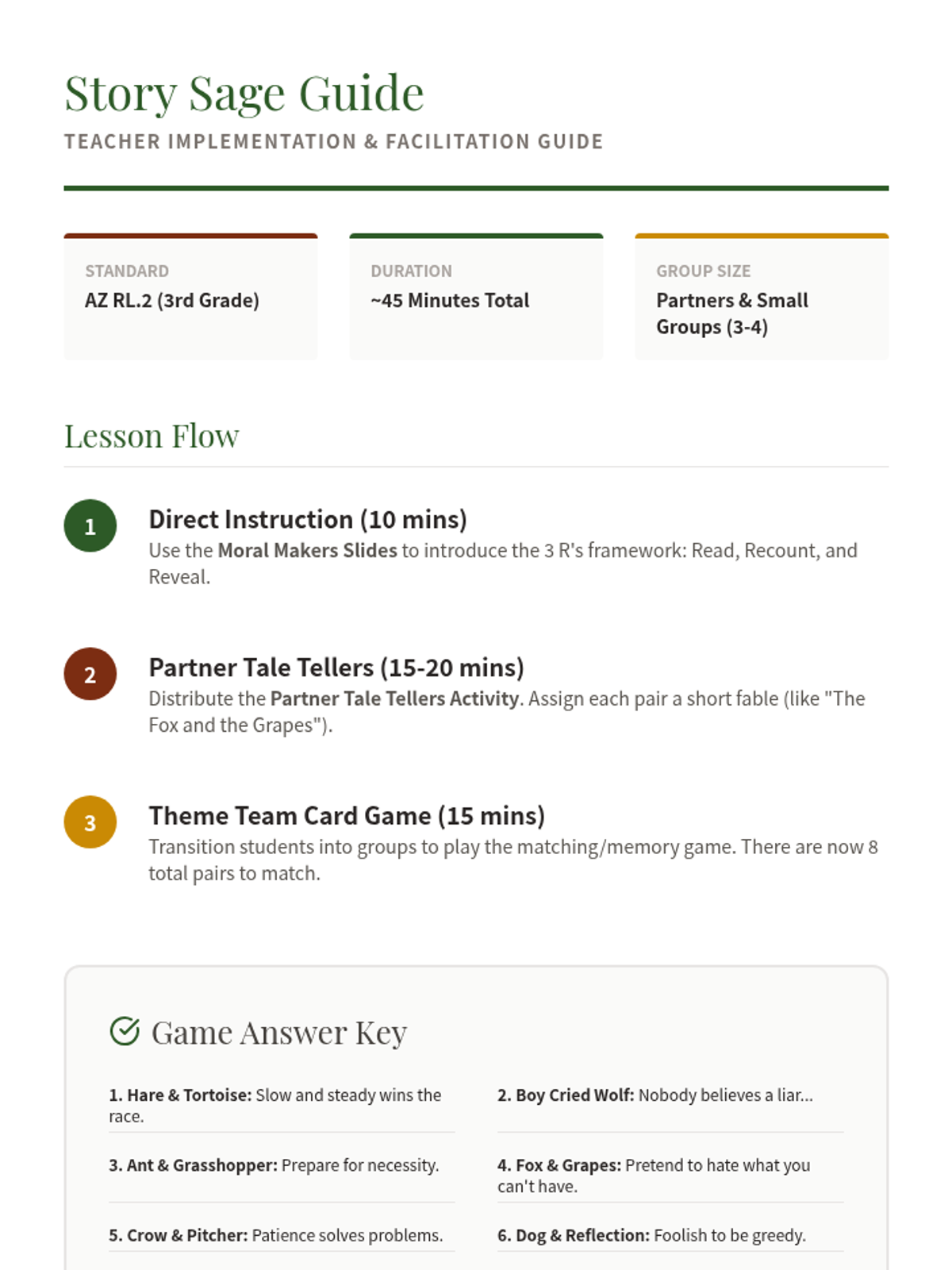
A 3rd-grade lesson focused on recounting stories and identifying themes using partner-based storytelling and a small group matching game. Students will practice summarizing key events and extracting central lessons from diverse fables and folktales.
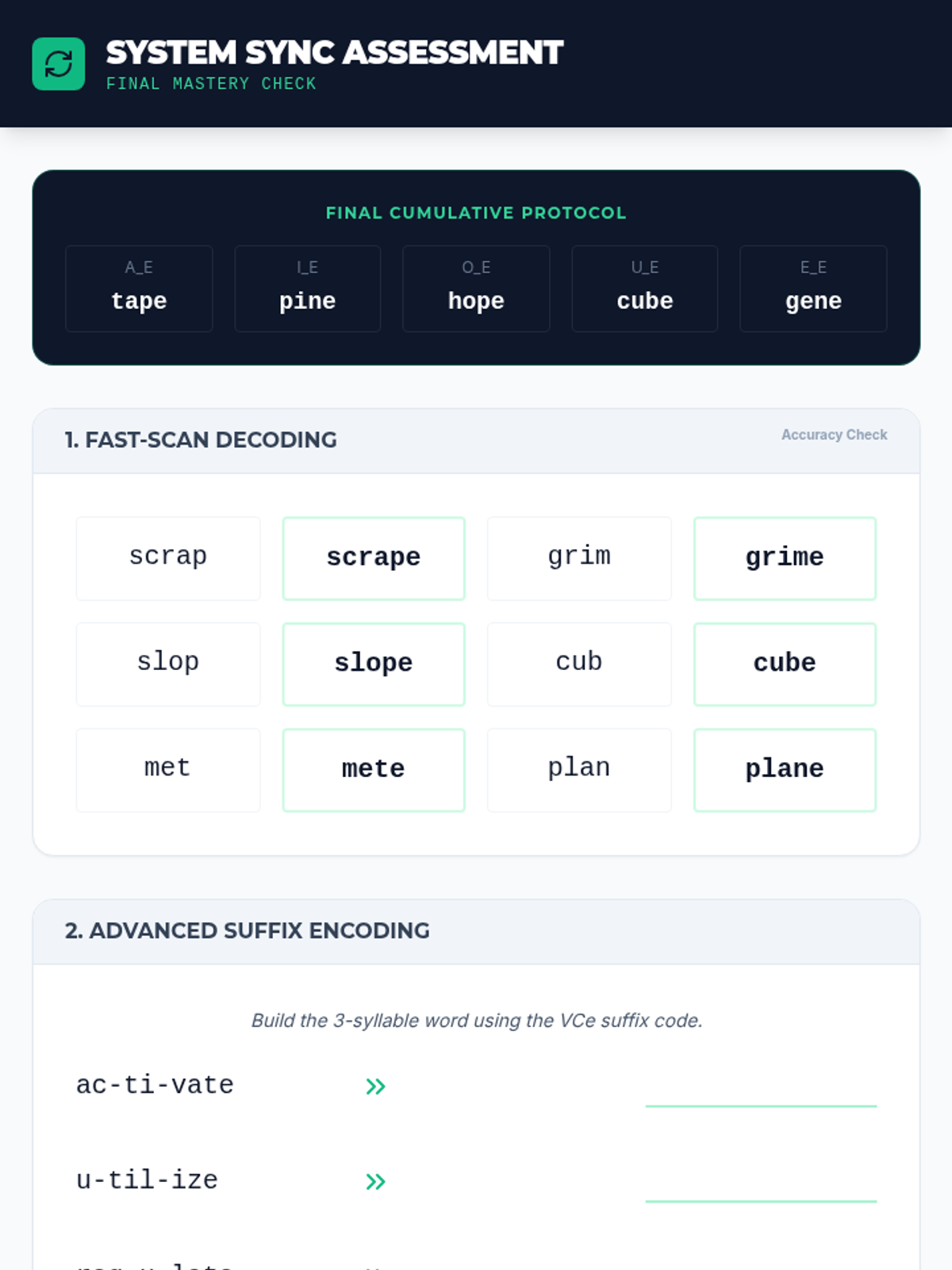
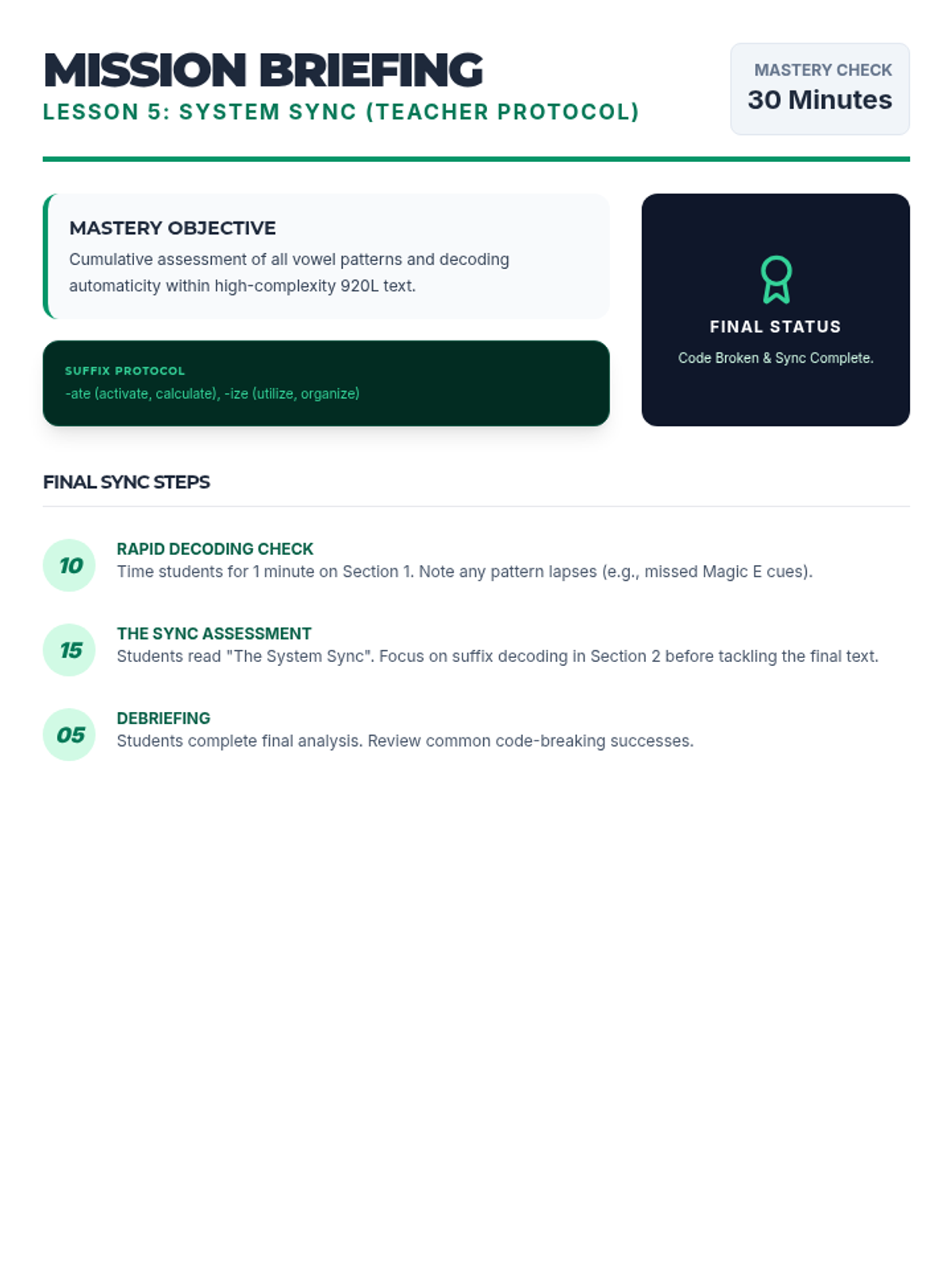
A cumulative review of all long and short vowel patterns (A, E, I, O, U) within a complex "System Sync" text reaching higher Lexile levels.
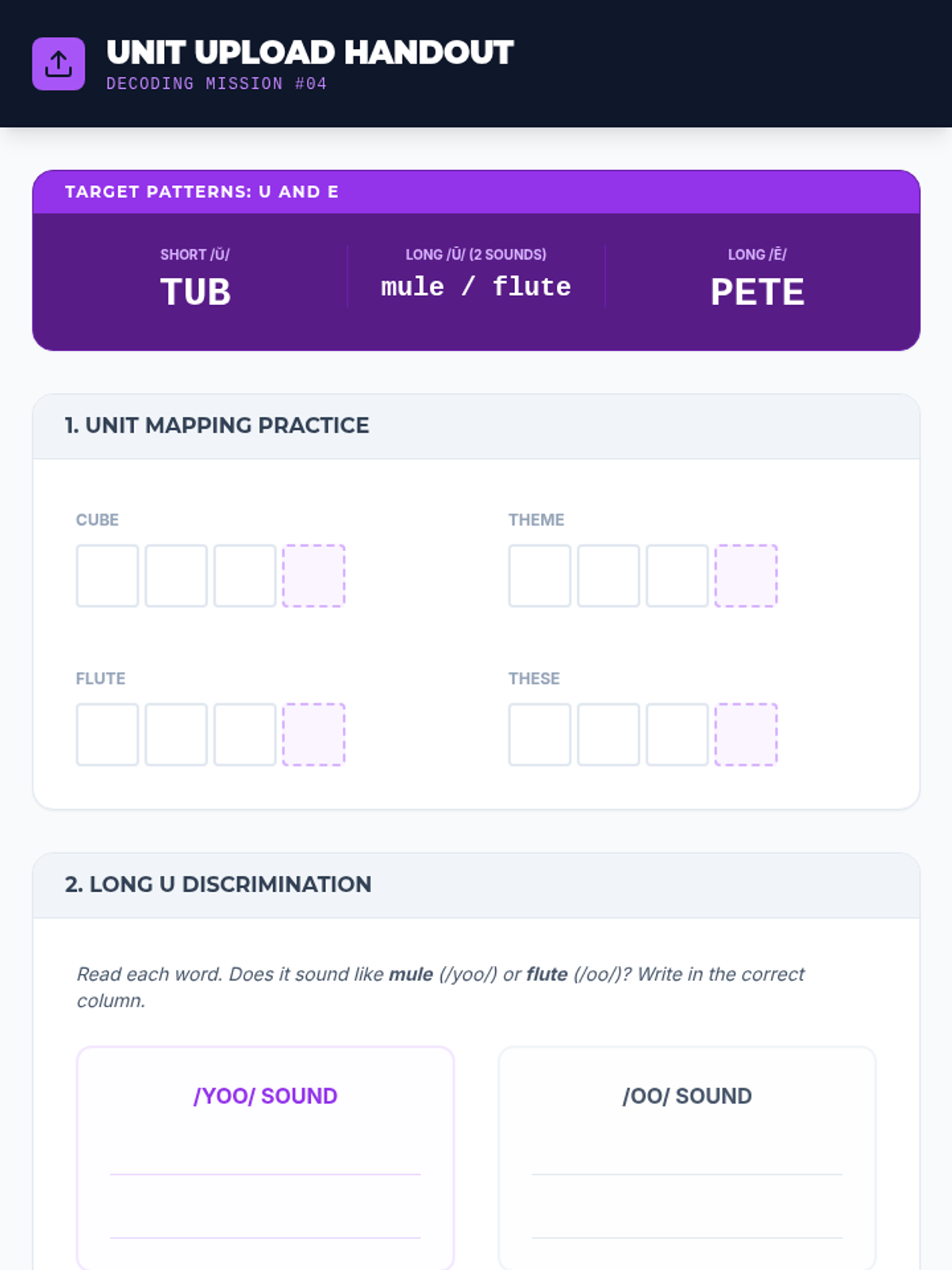
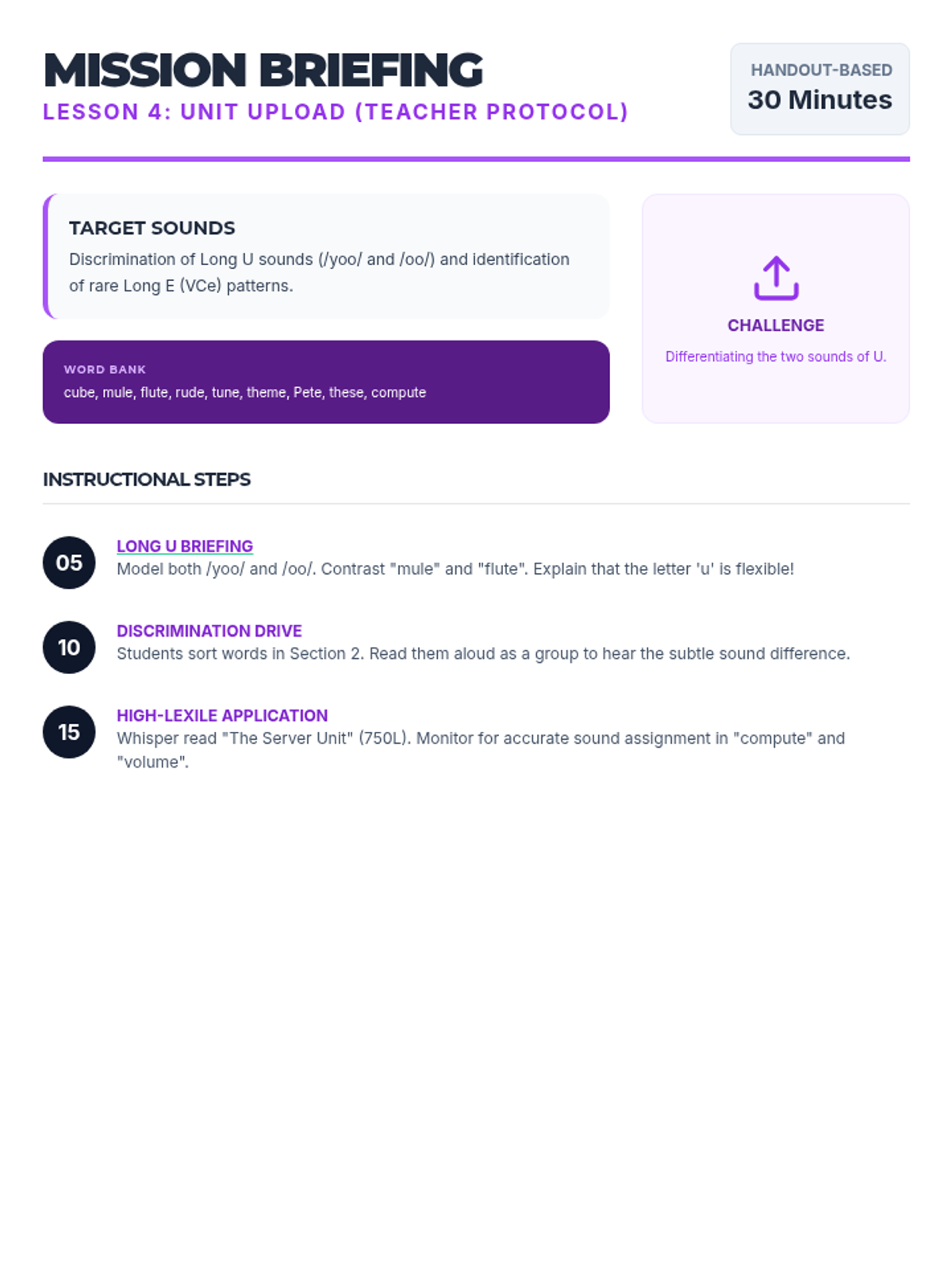
Covers short /u/ and /e/ versus their long VCe counterparts, incorporating advanced phoneme-grapheme mapping.
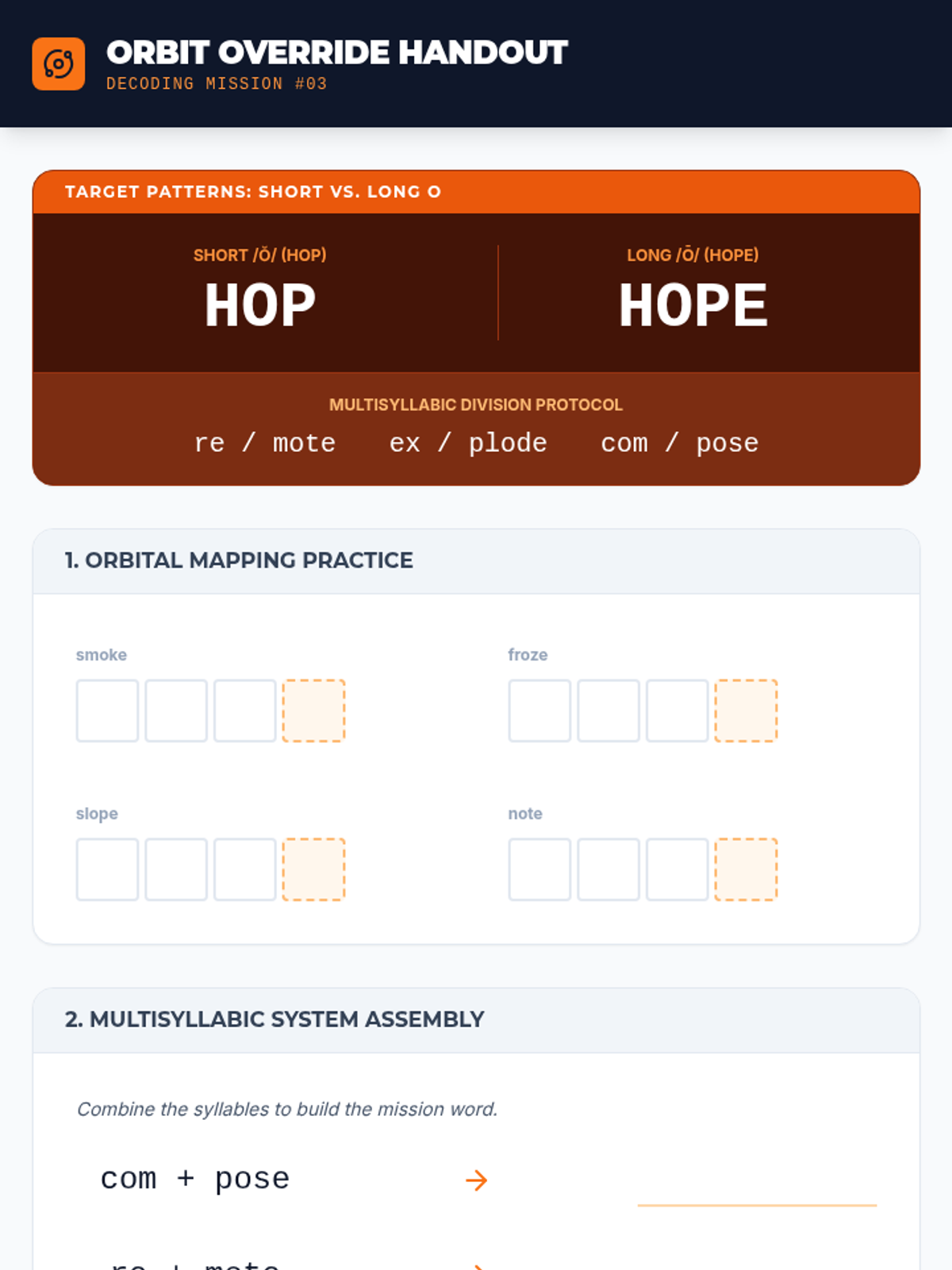
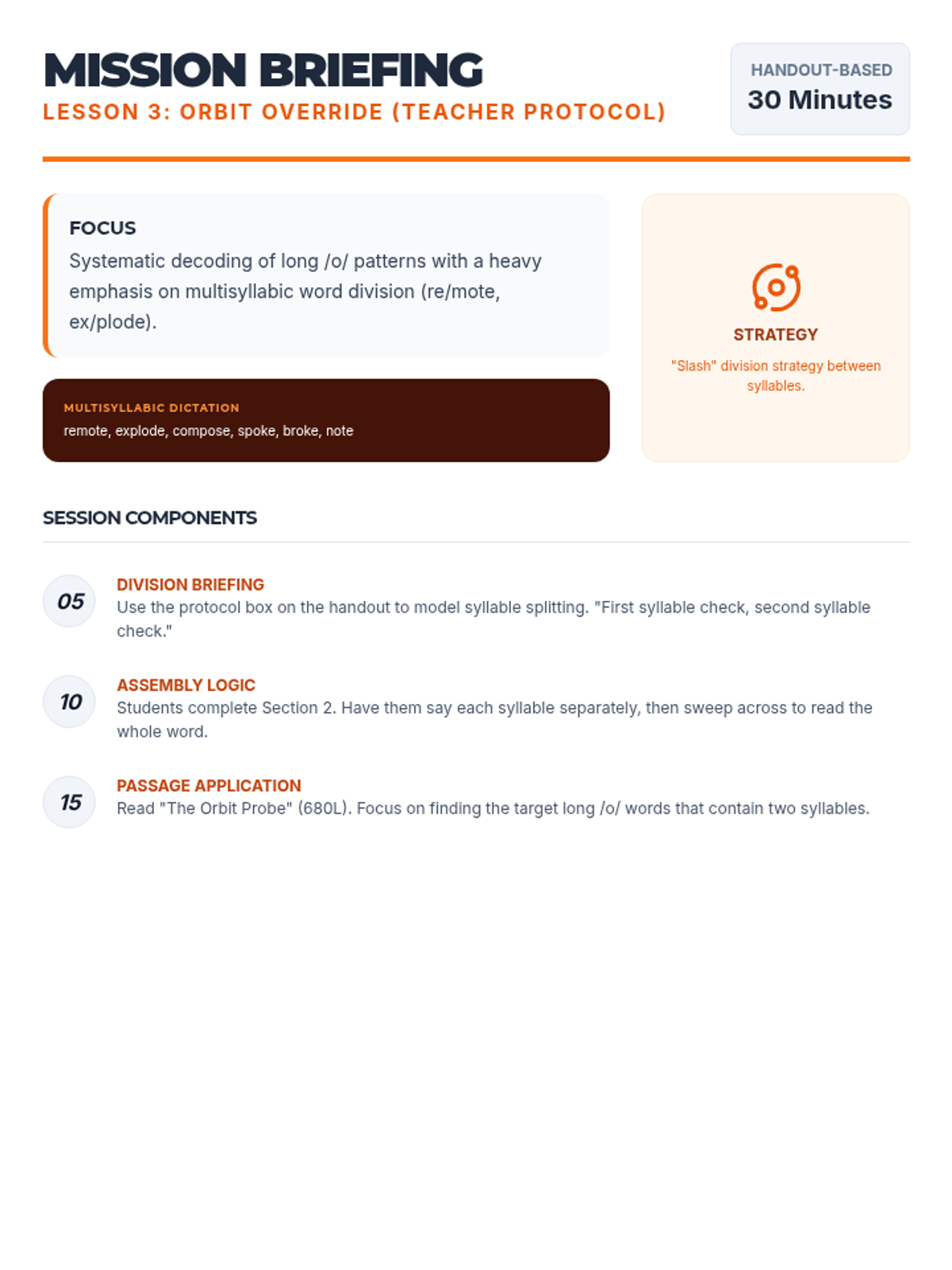
Explores short /o/ and long /o/ (VCe) patterns with a focus on multisyllabic word decoding and fluency.
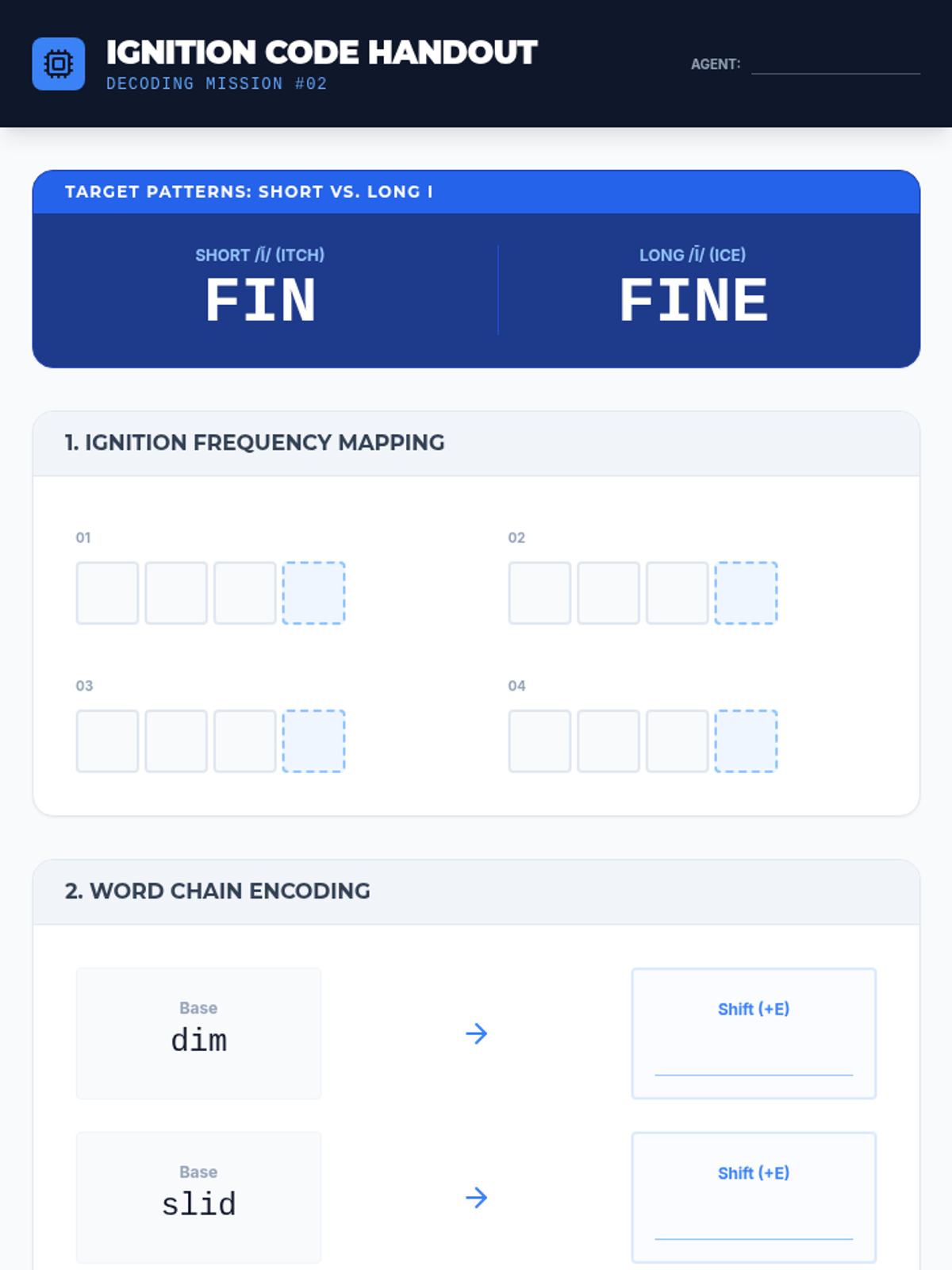
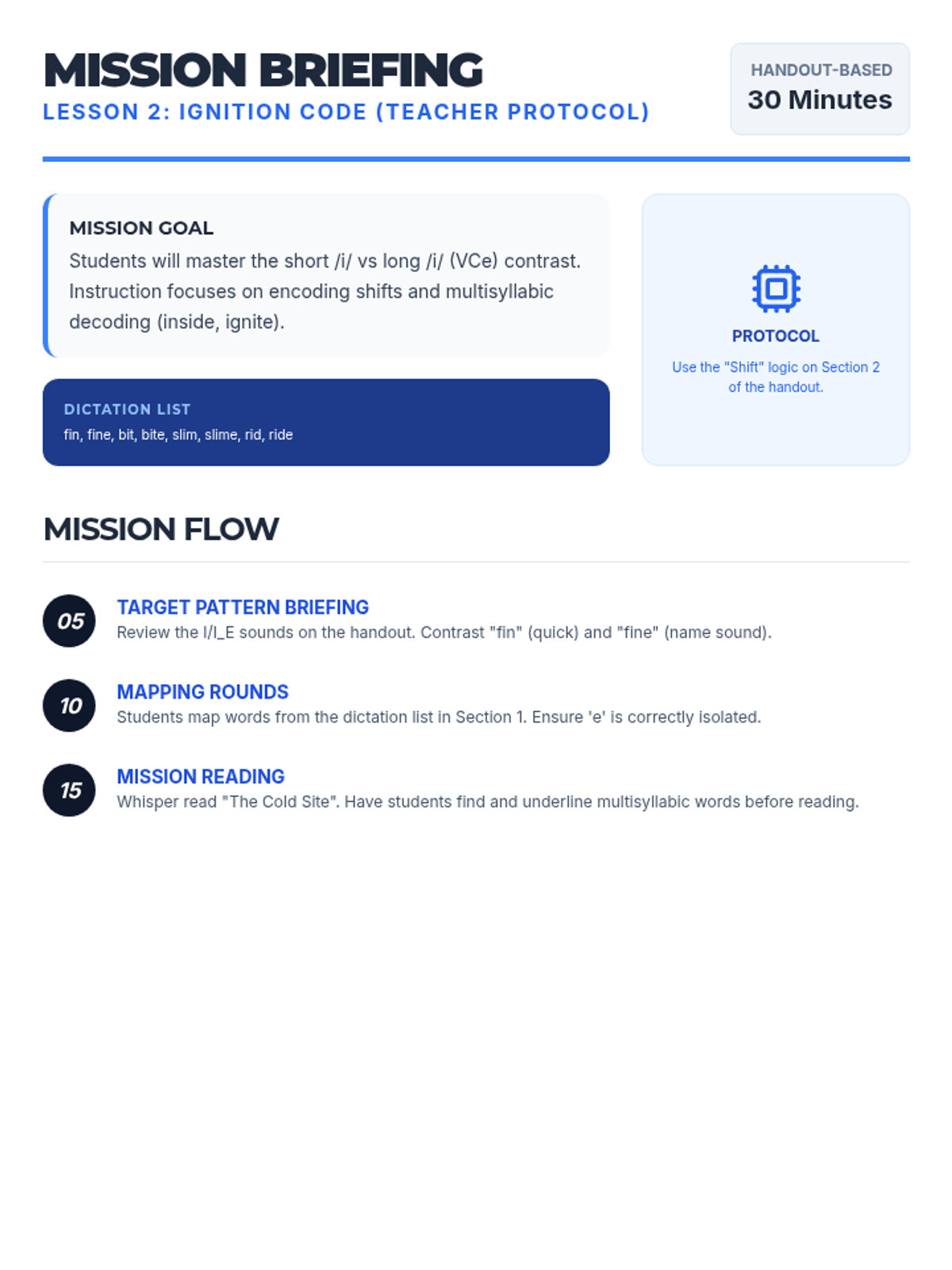
Focuses on short /i/ and long /i/ (VCe) patterns, featuring encoding drills and a mission-based reading passage.
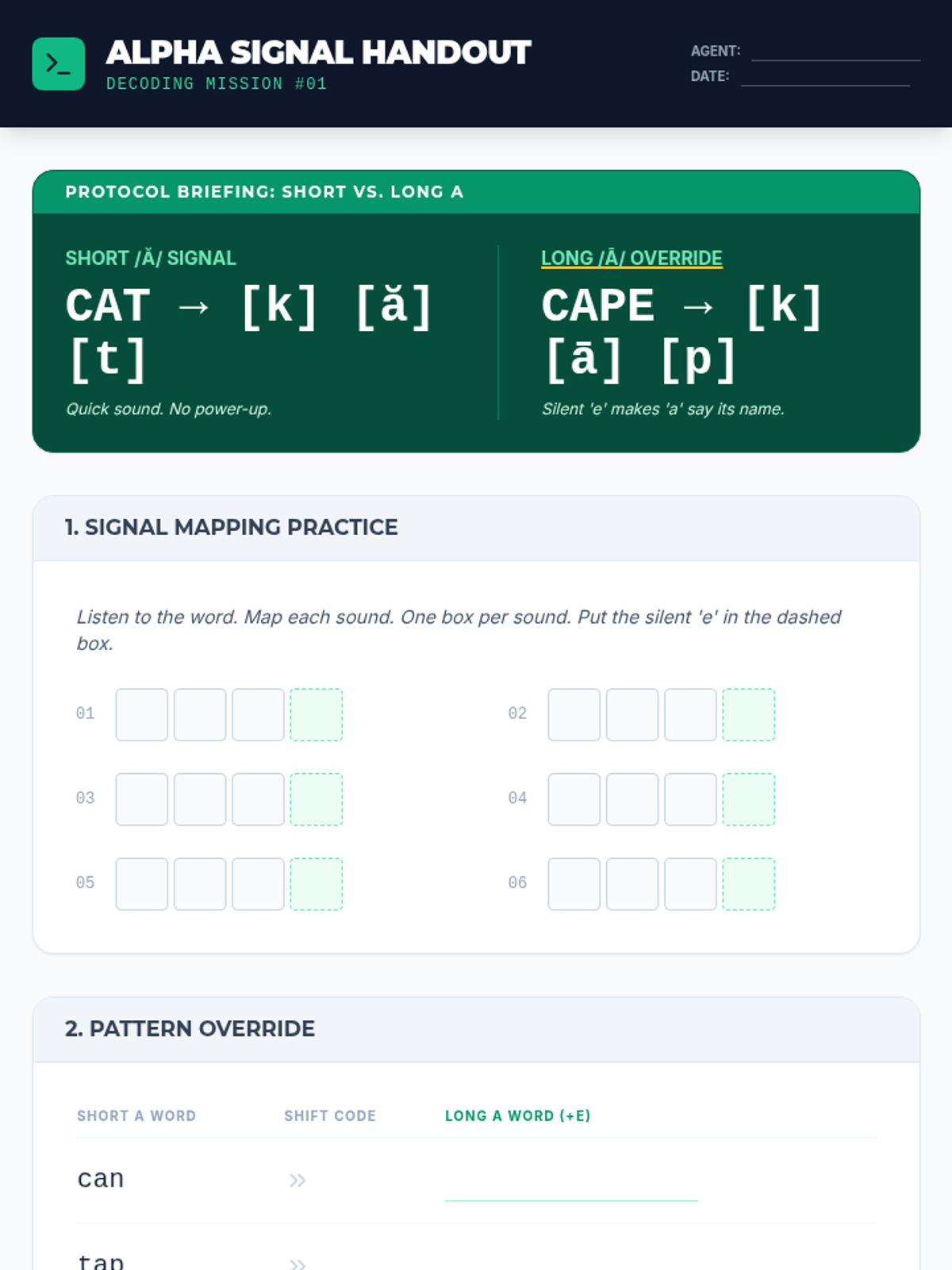
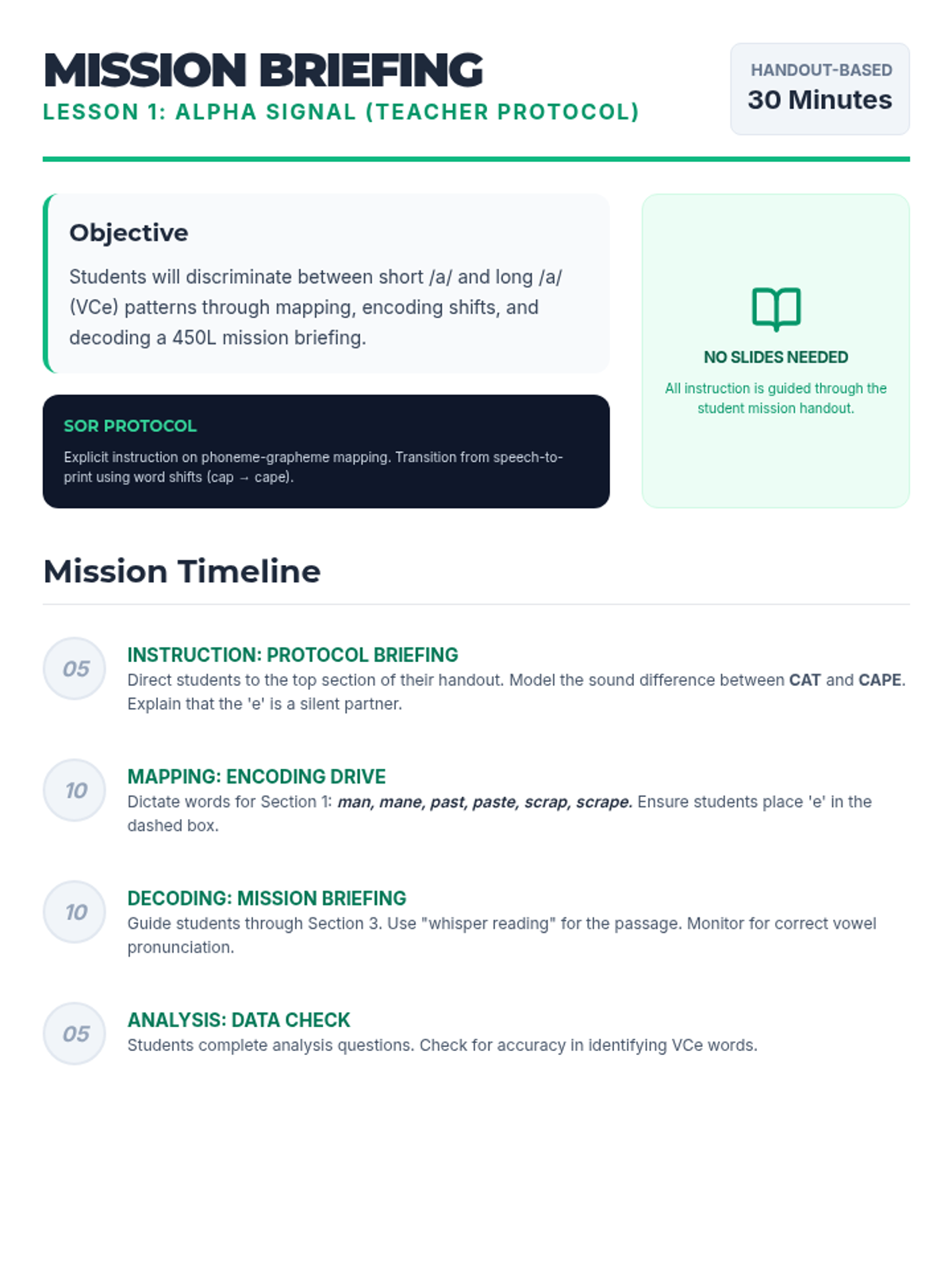
Focuses on discriminating between short /a/ (CVC) and long /a/ (VCe) patterns through phoneme-grapheme mapping and targeted decoding of an encrypted message text.
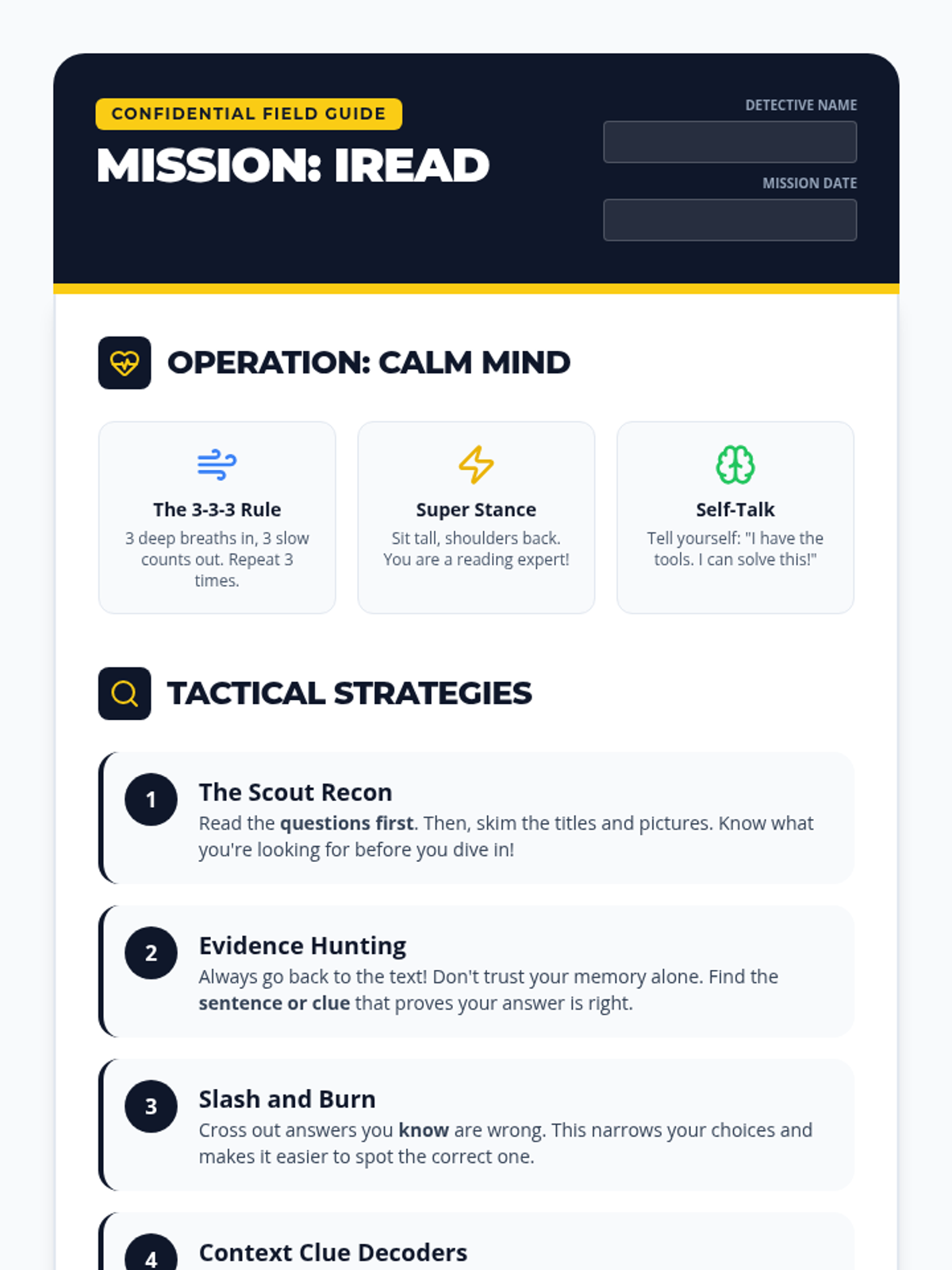
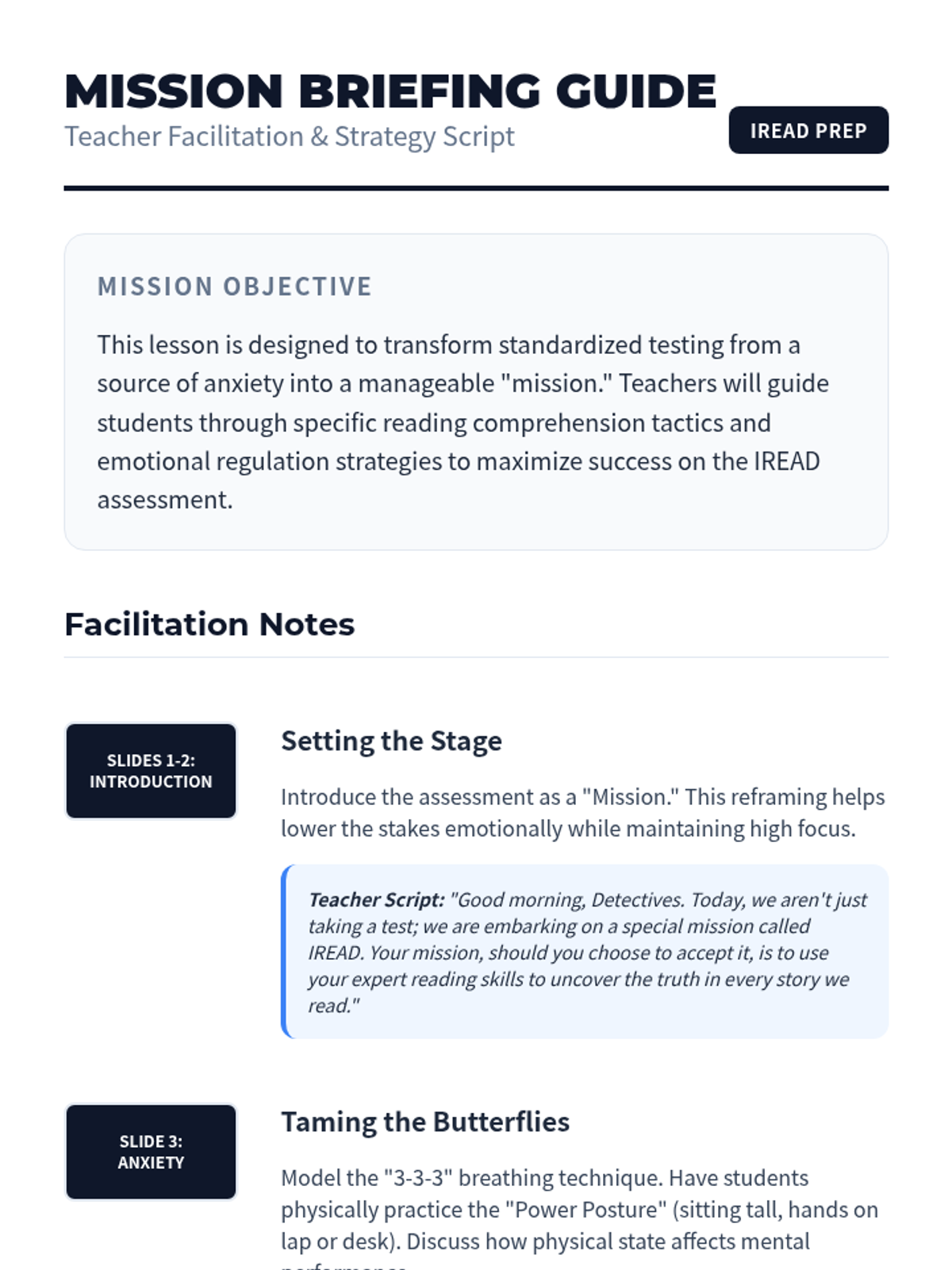
A comprehensive set of resources designed to prepare students for the IREAD assessment by providing reading strategies and anxiety-reduction techniques through a "Mission: IREAD" secret agent theme.
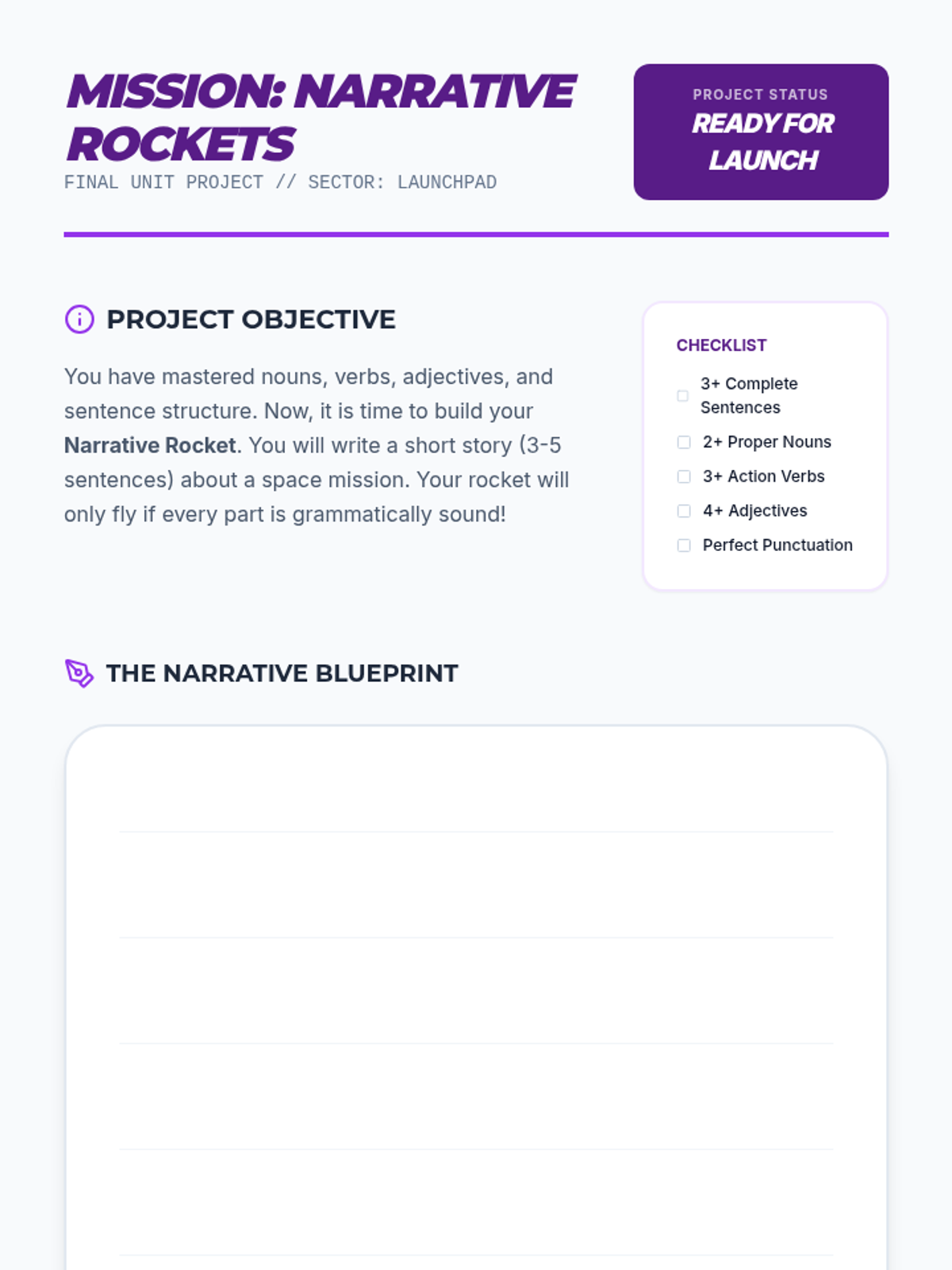
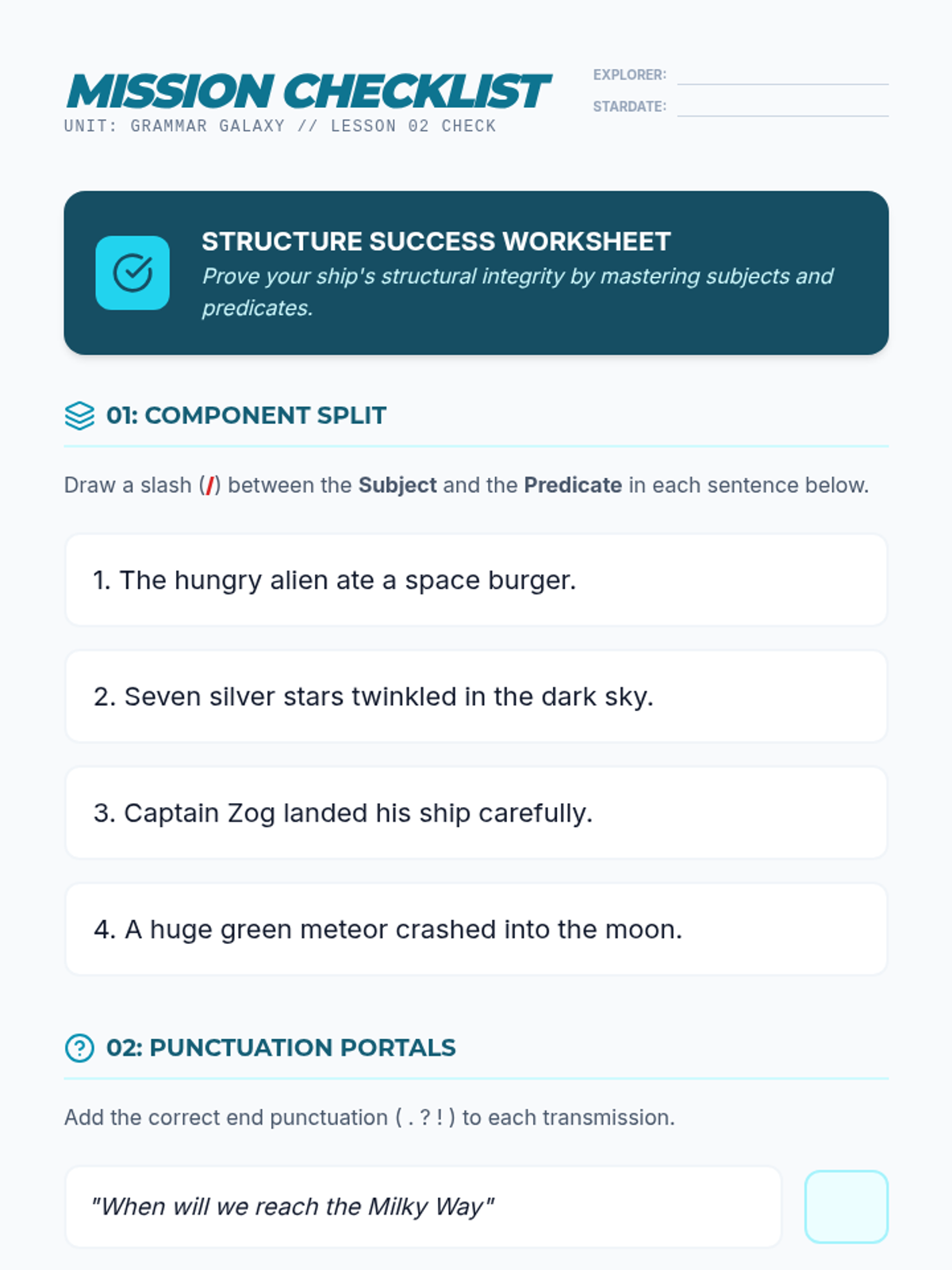
The final mission focuses on mastering punctuation 'portals' and launching the Narrative Rocket creative writing project.
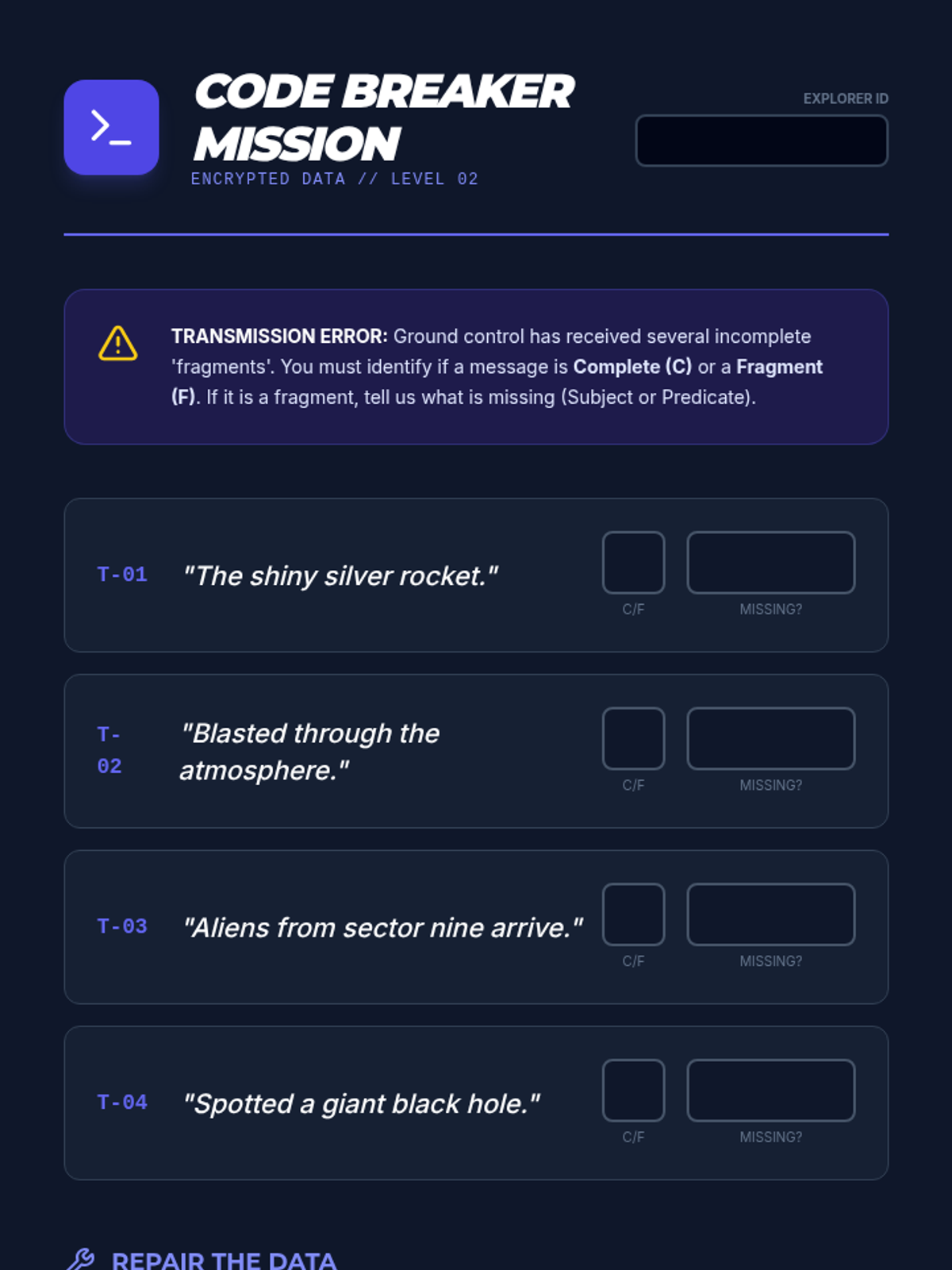
Students master the mechanics of subjects and predicates to build stable 'sentence ships' and navigate through syntax space.
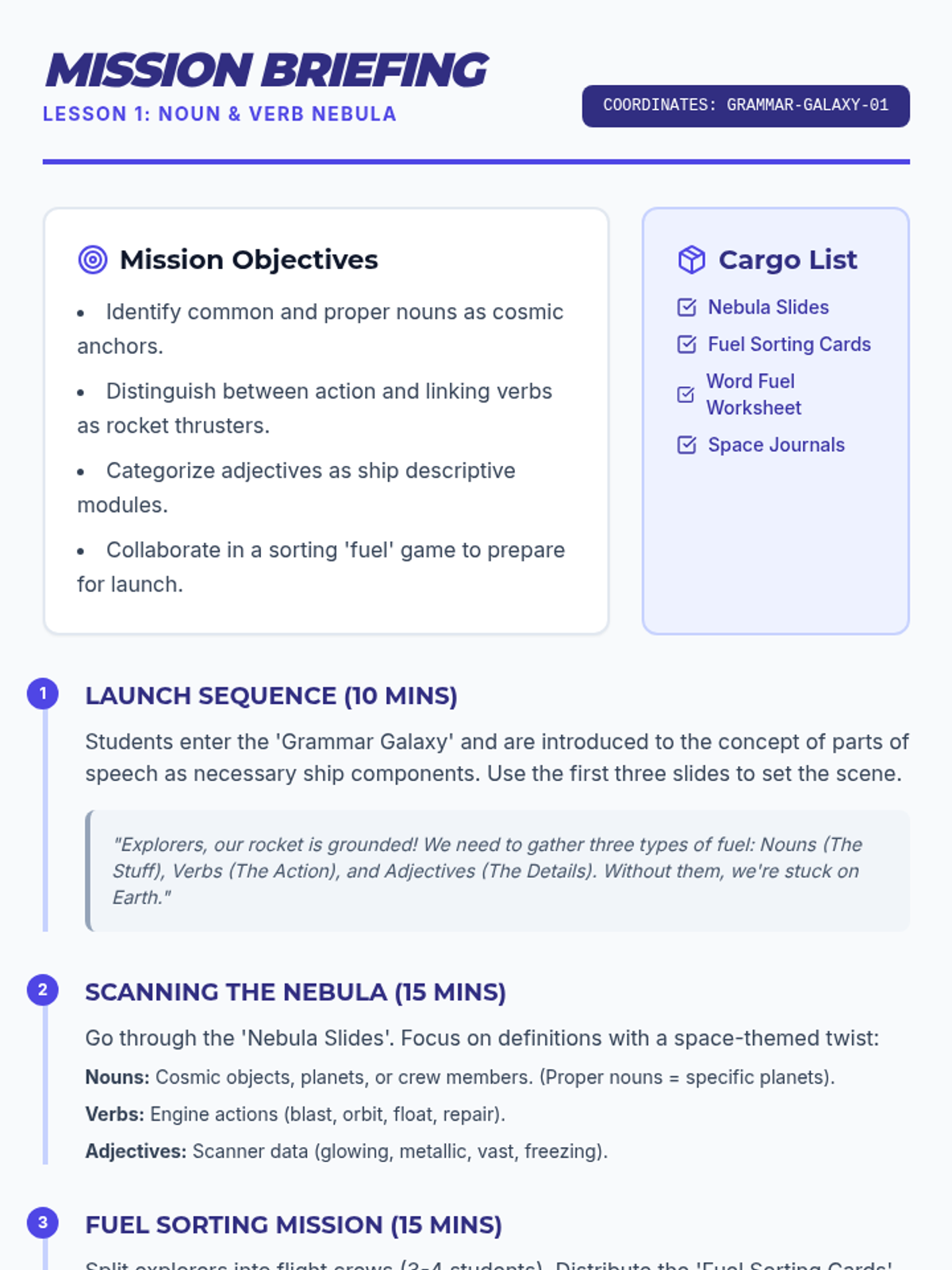
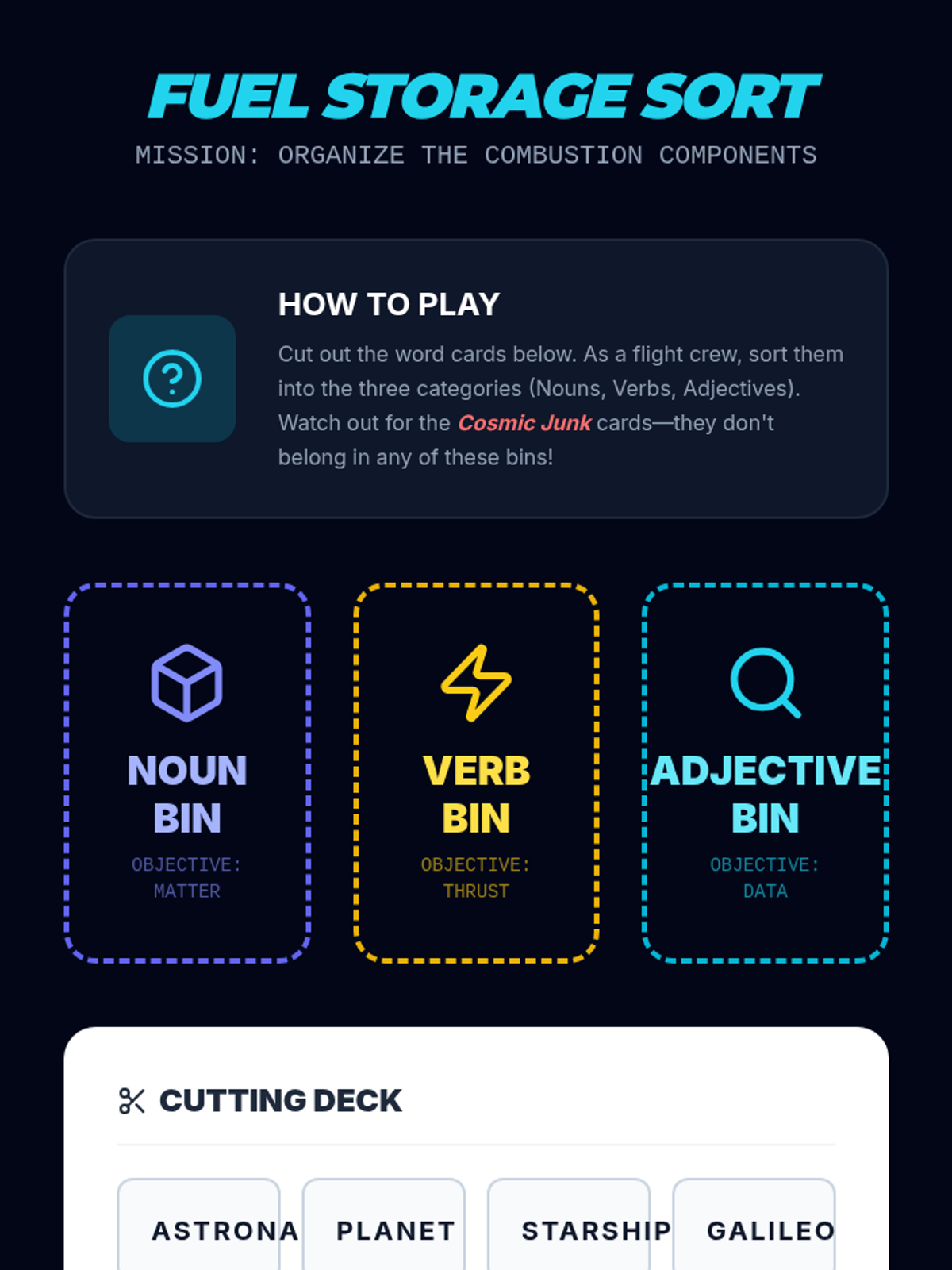
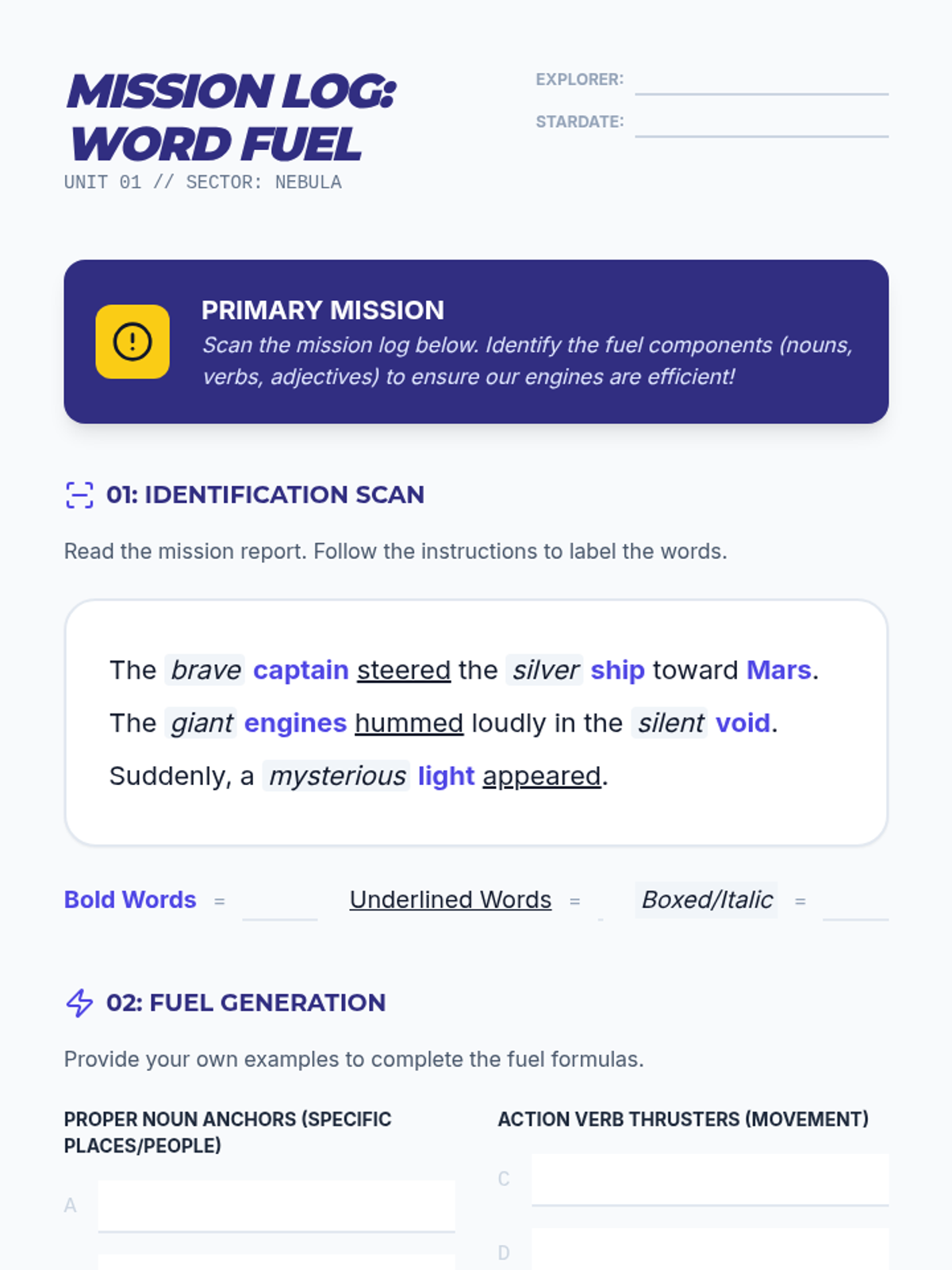
Explorers identify and categorize nouns, verbs, and adjectives to gather 'fuel' for their galactic journey.
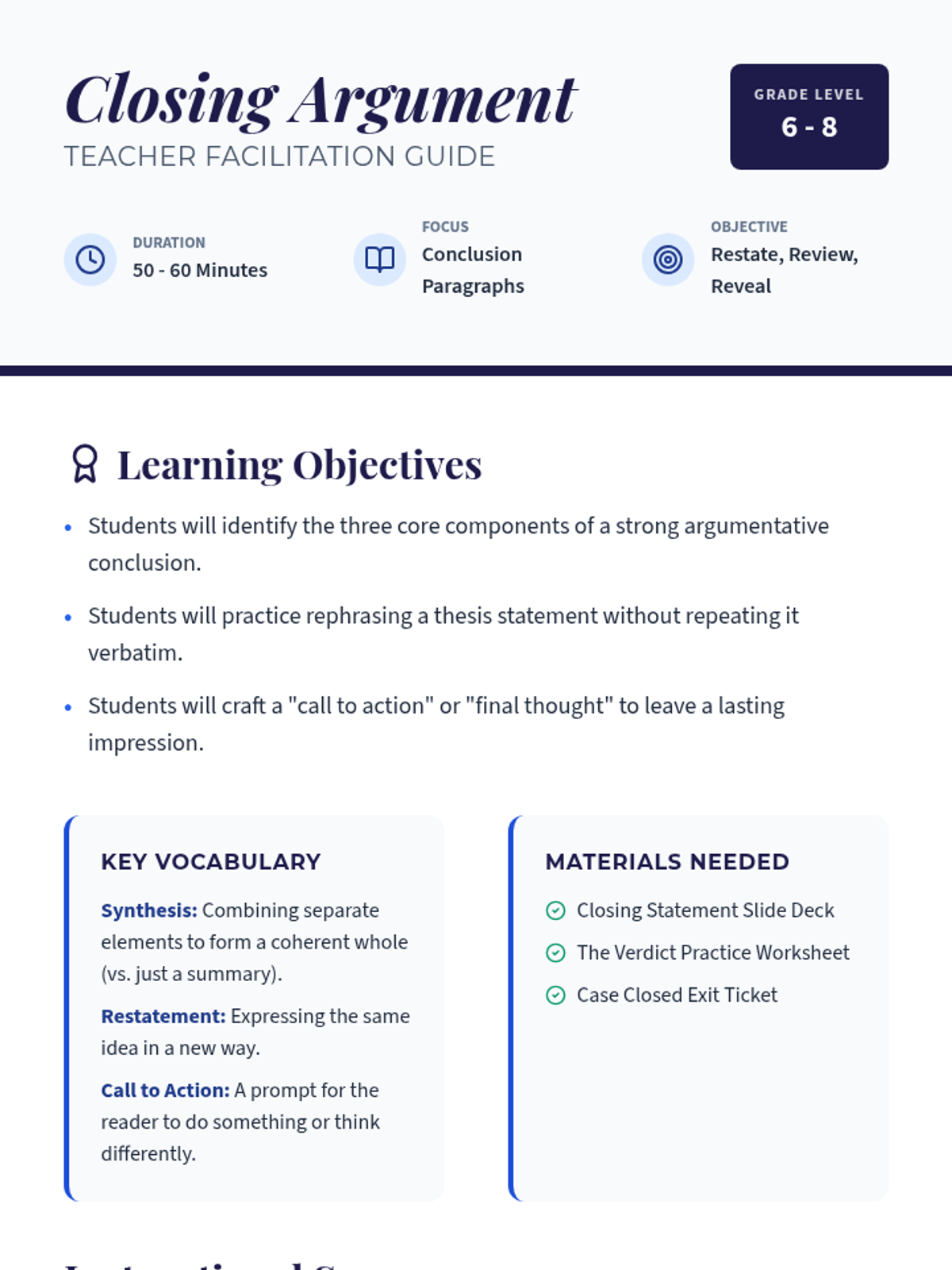
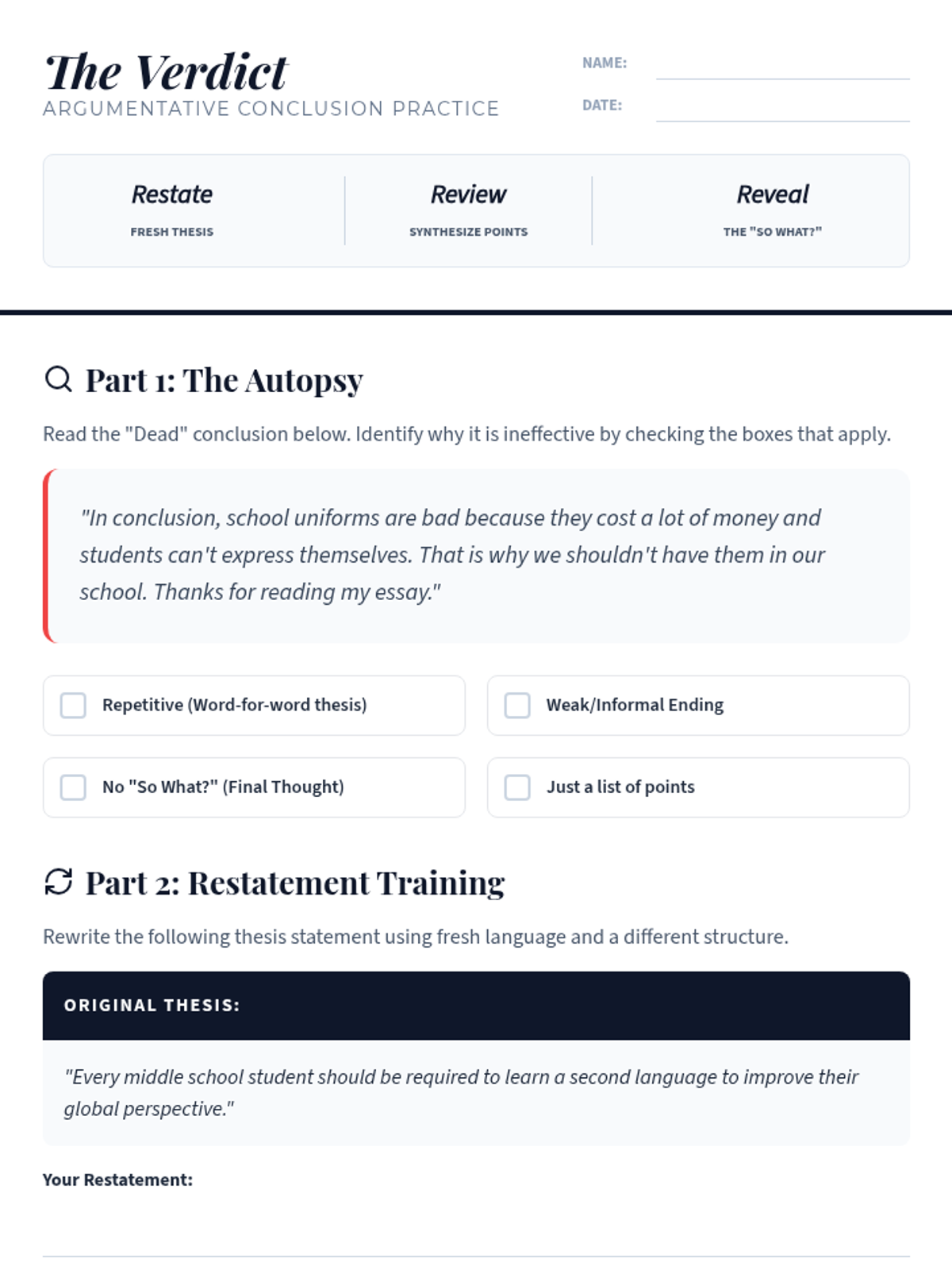
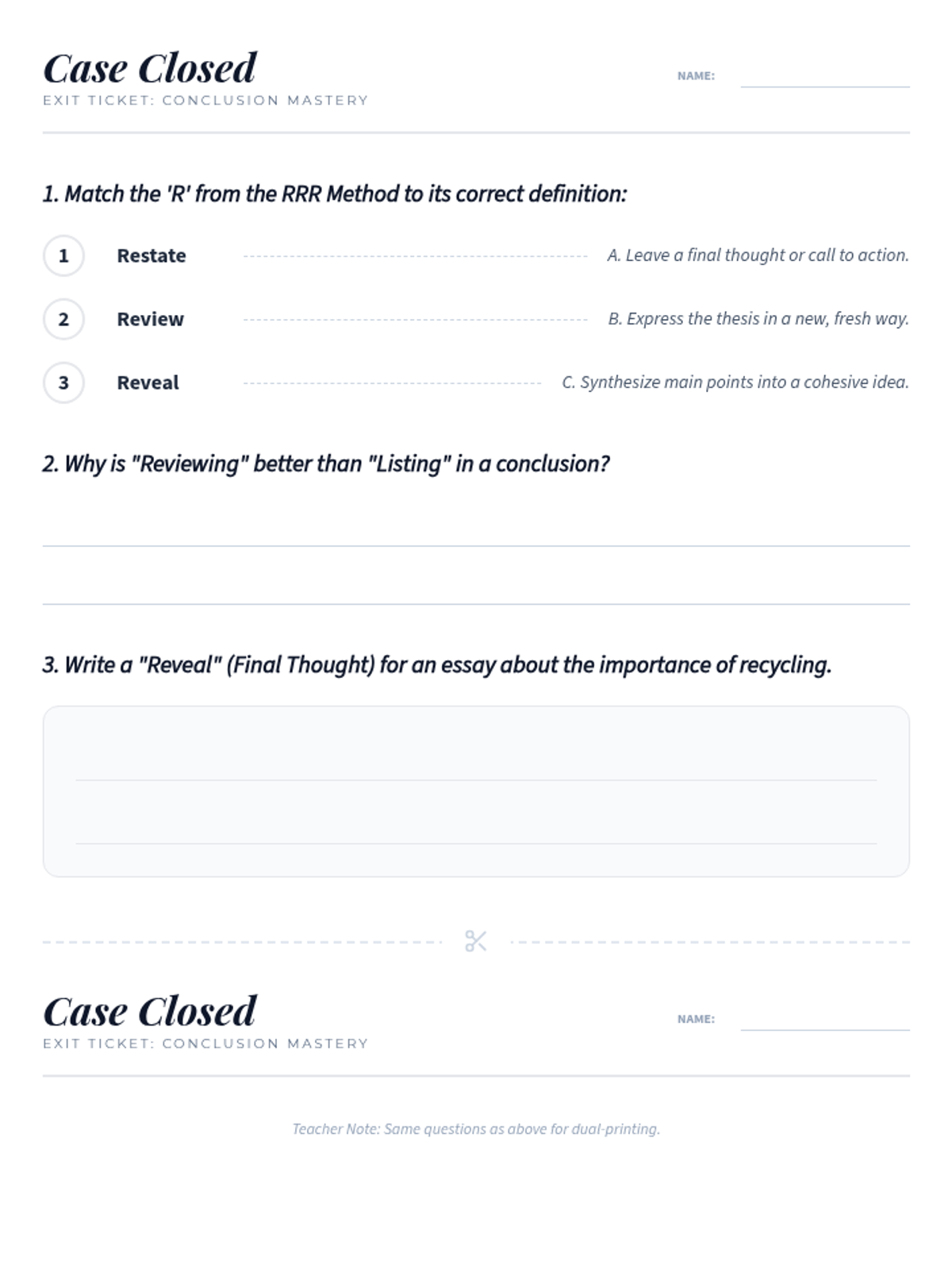
A comprehensive lesson for middle school students on crafting powerful conclusion paragraphs for argumentative essays using the 'Restate, Review, Reveal' method.
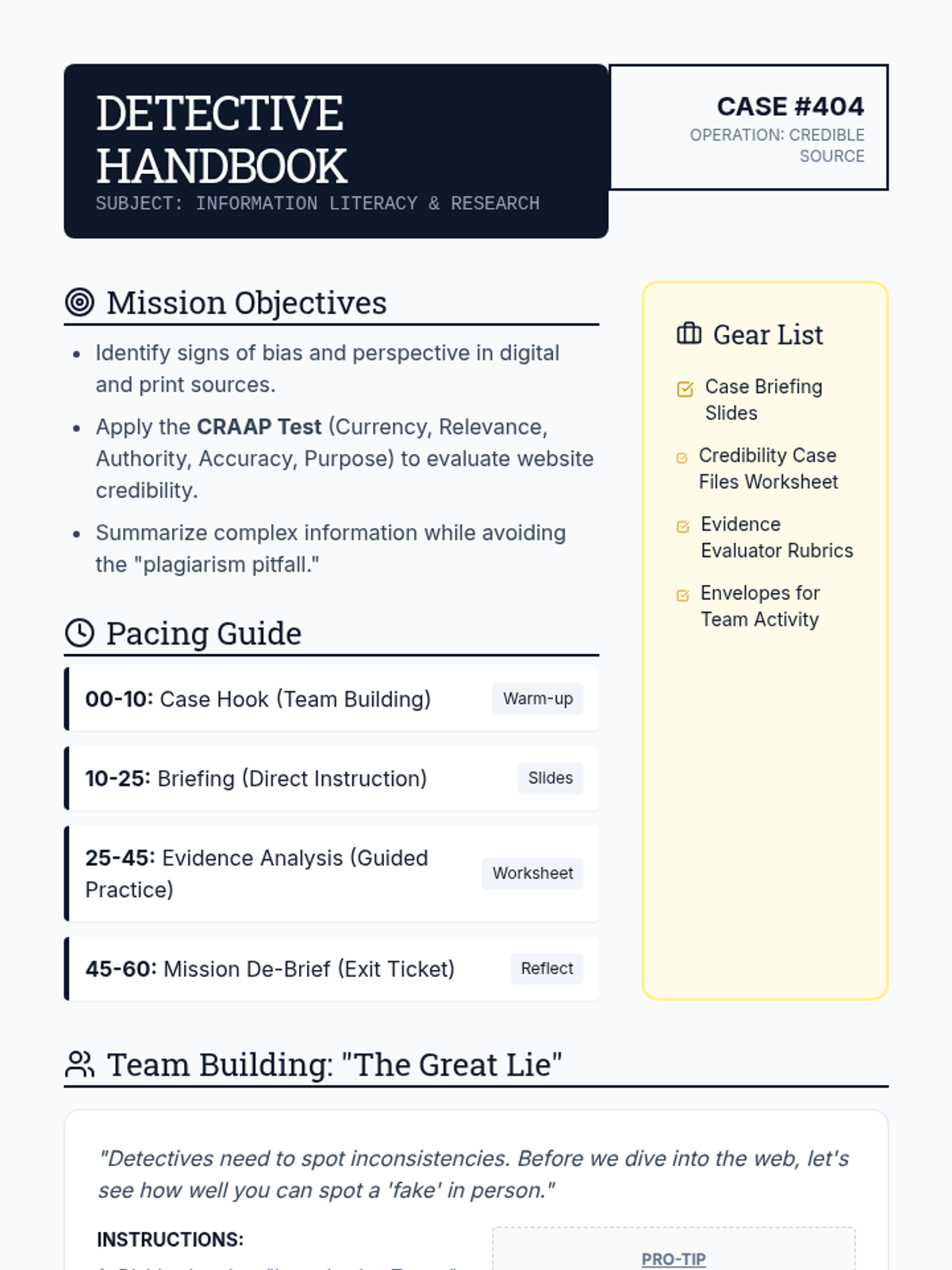
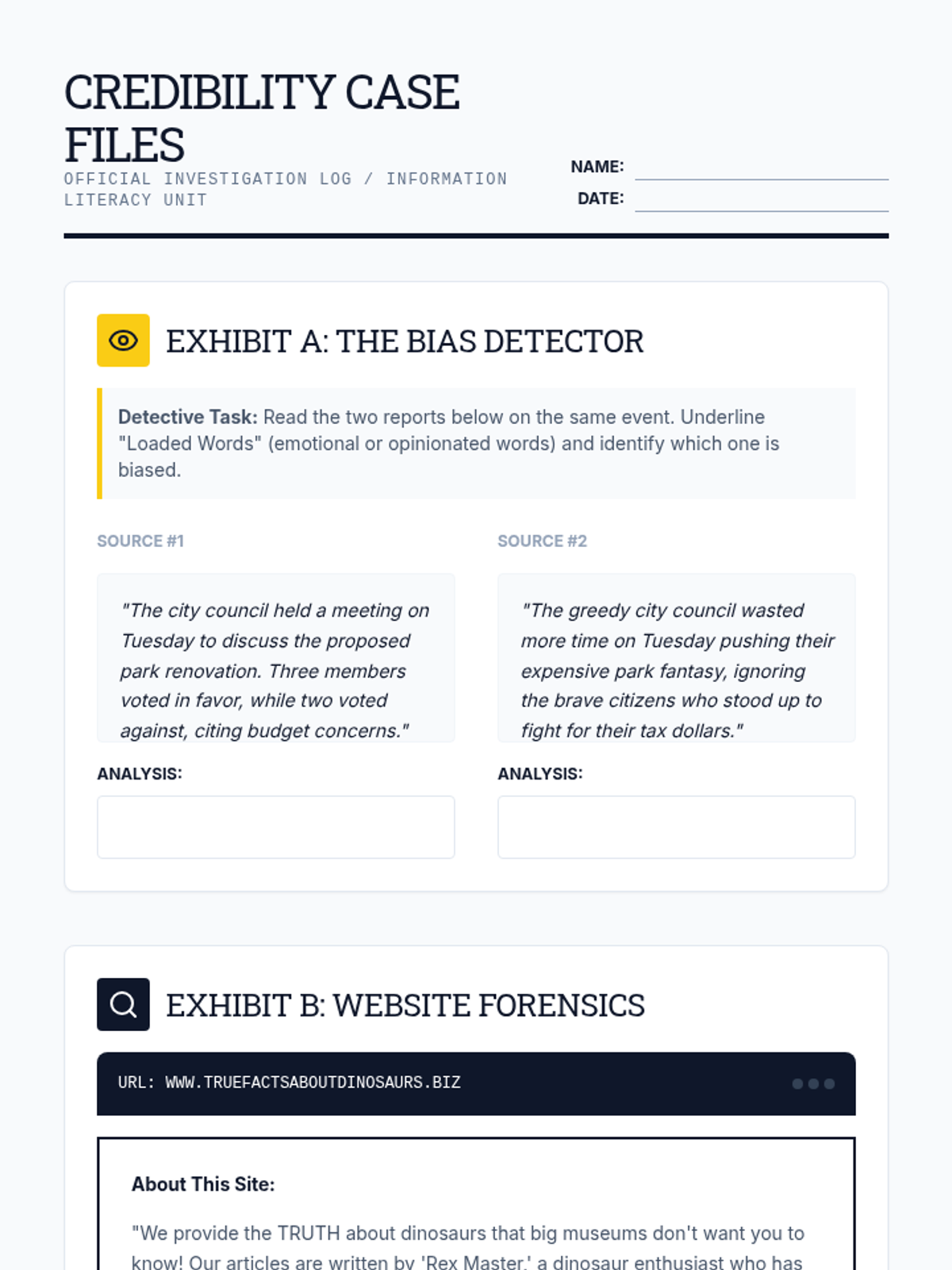
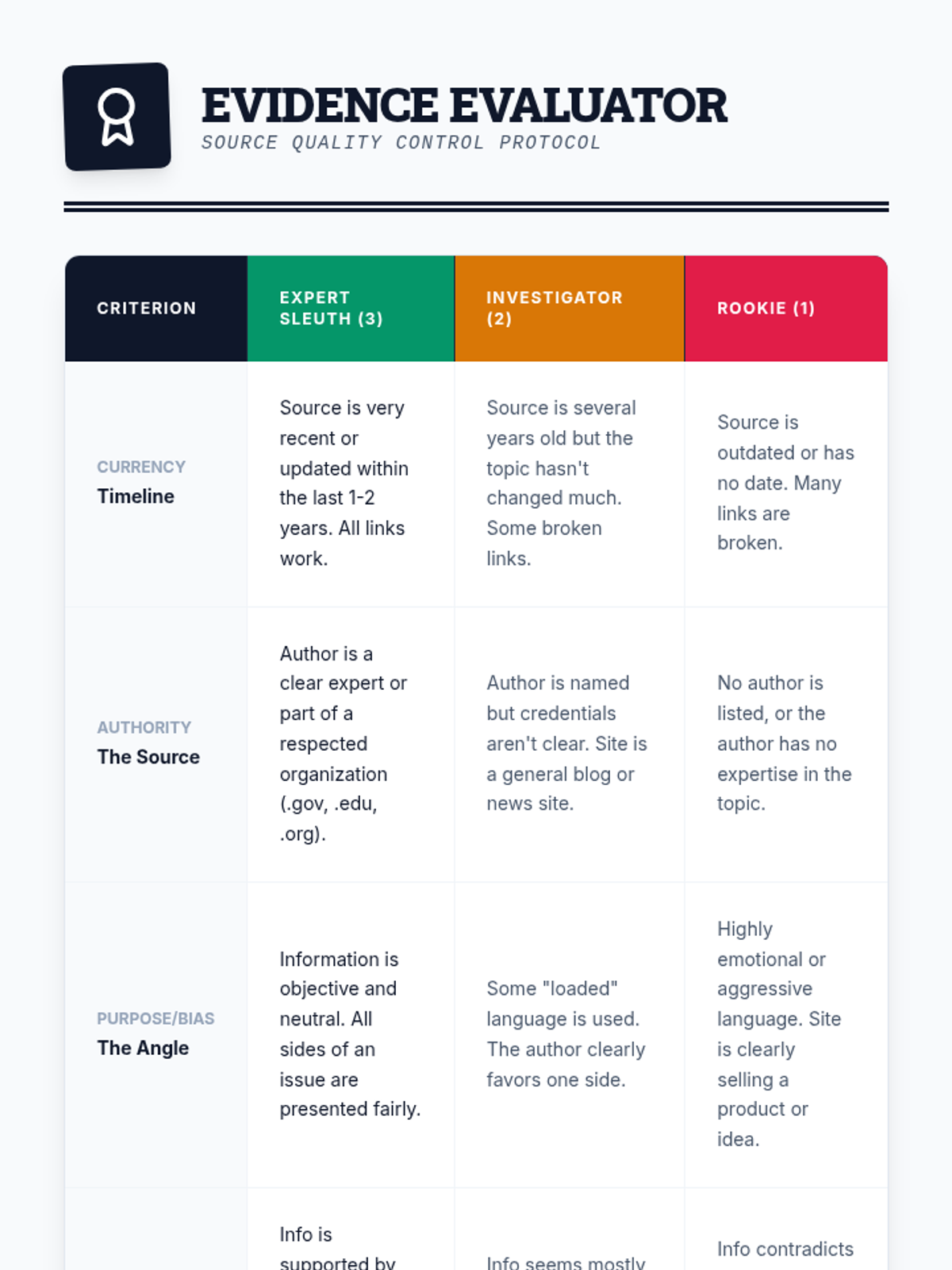
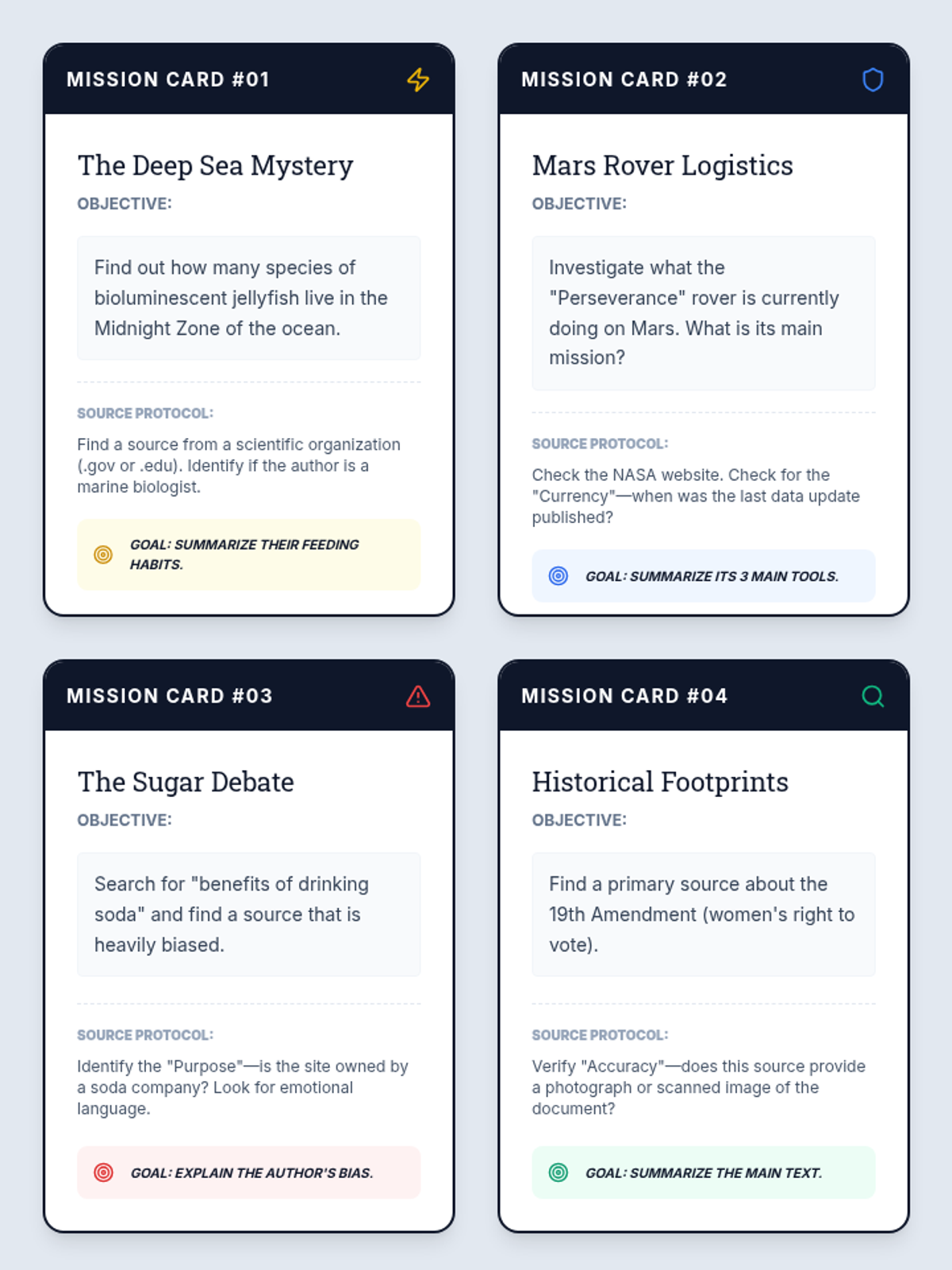
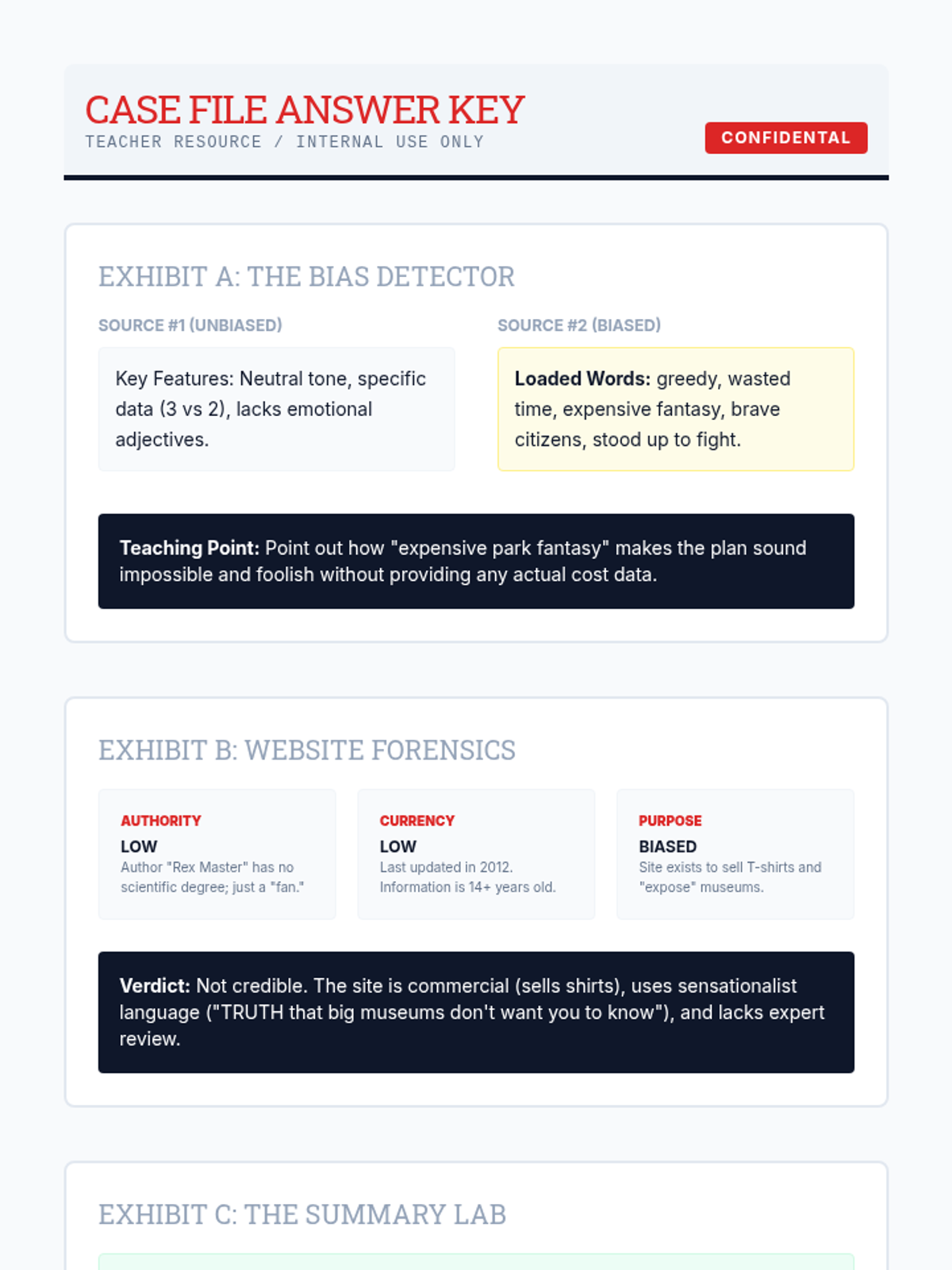
A comprehensive middle school lesson focused on digital literacy, teaching students to identify bias, evaluate website credibility, and summarize information ethically through a detective-themed investigation.
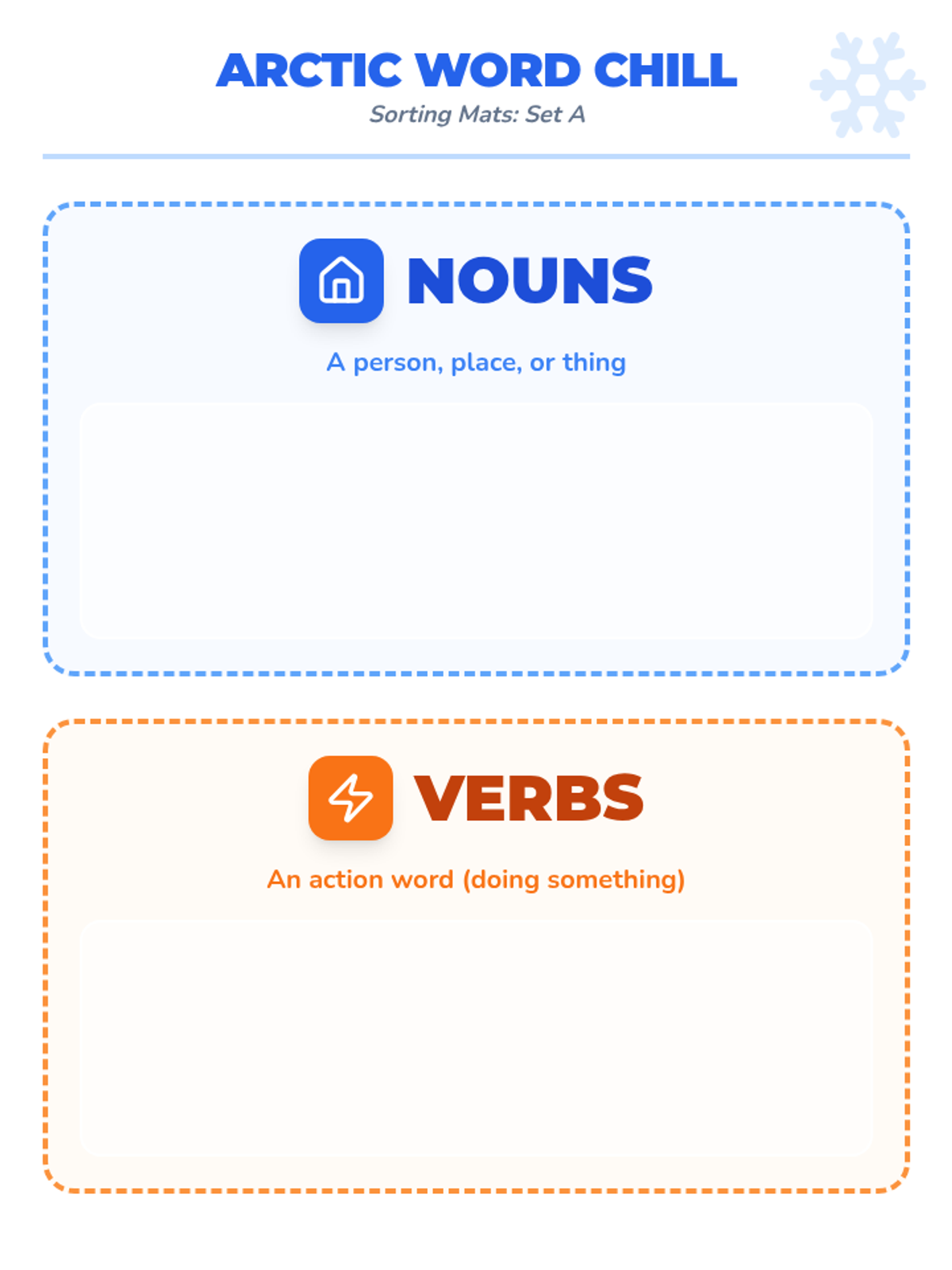
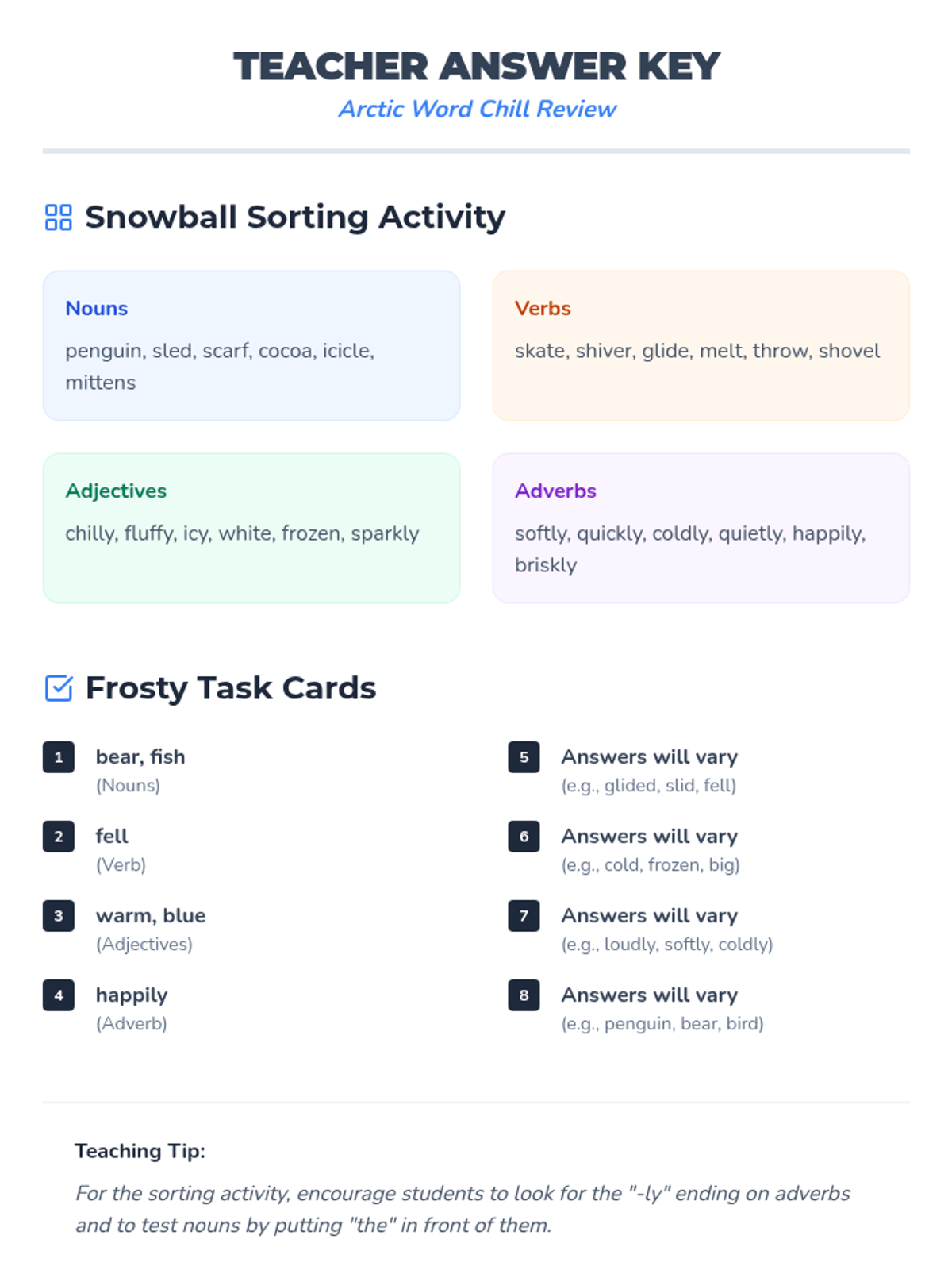
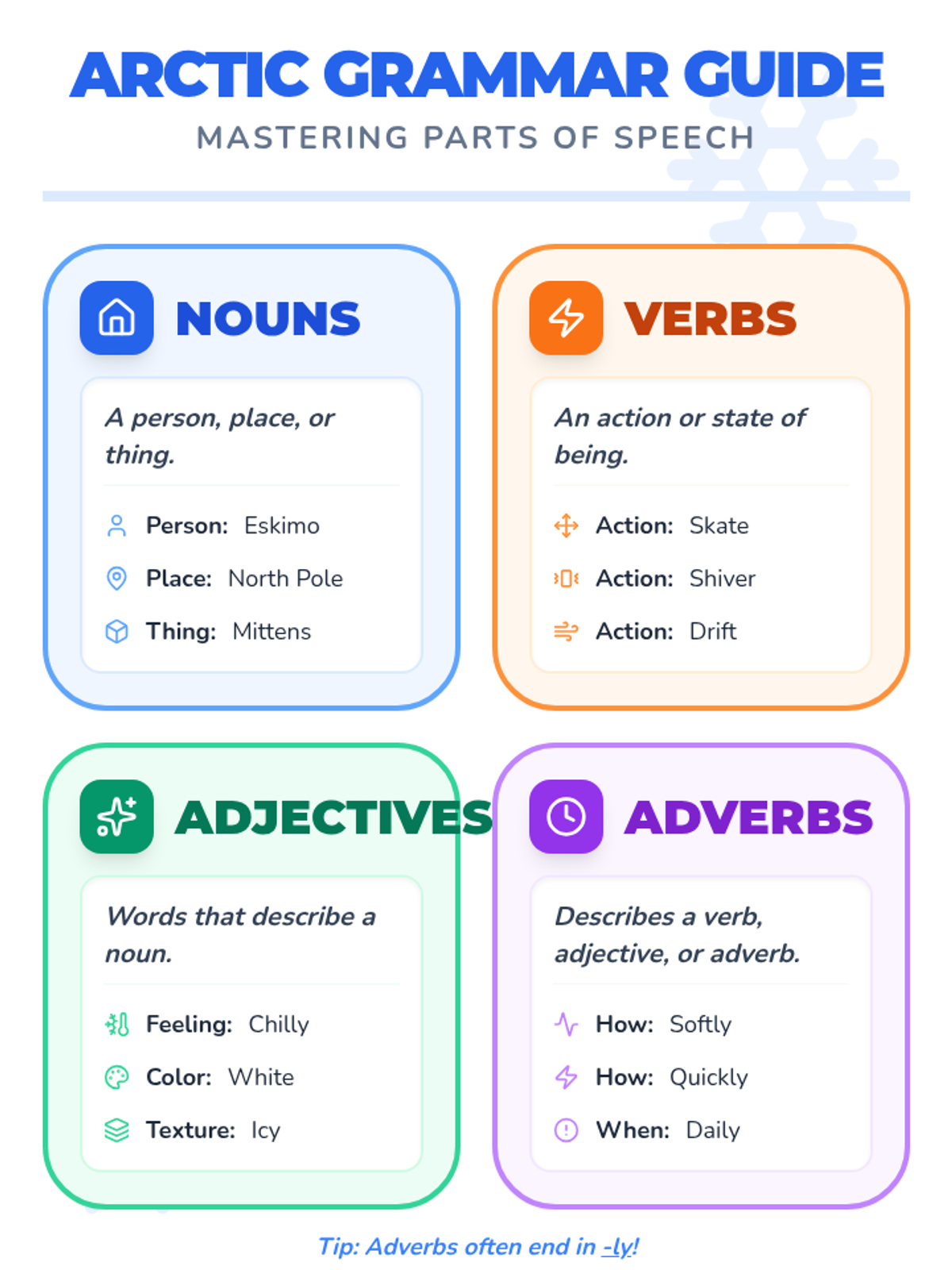
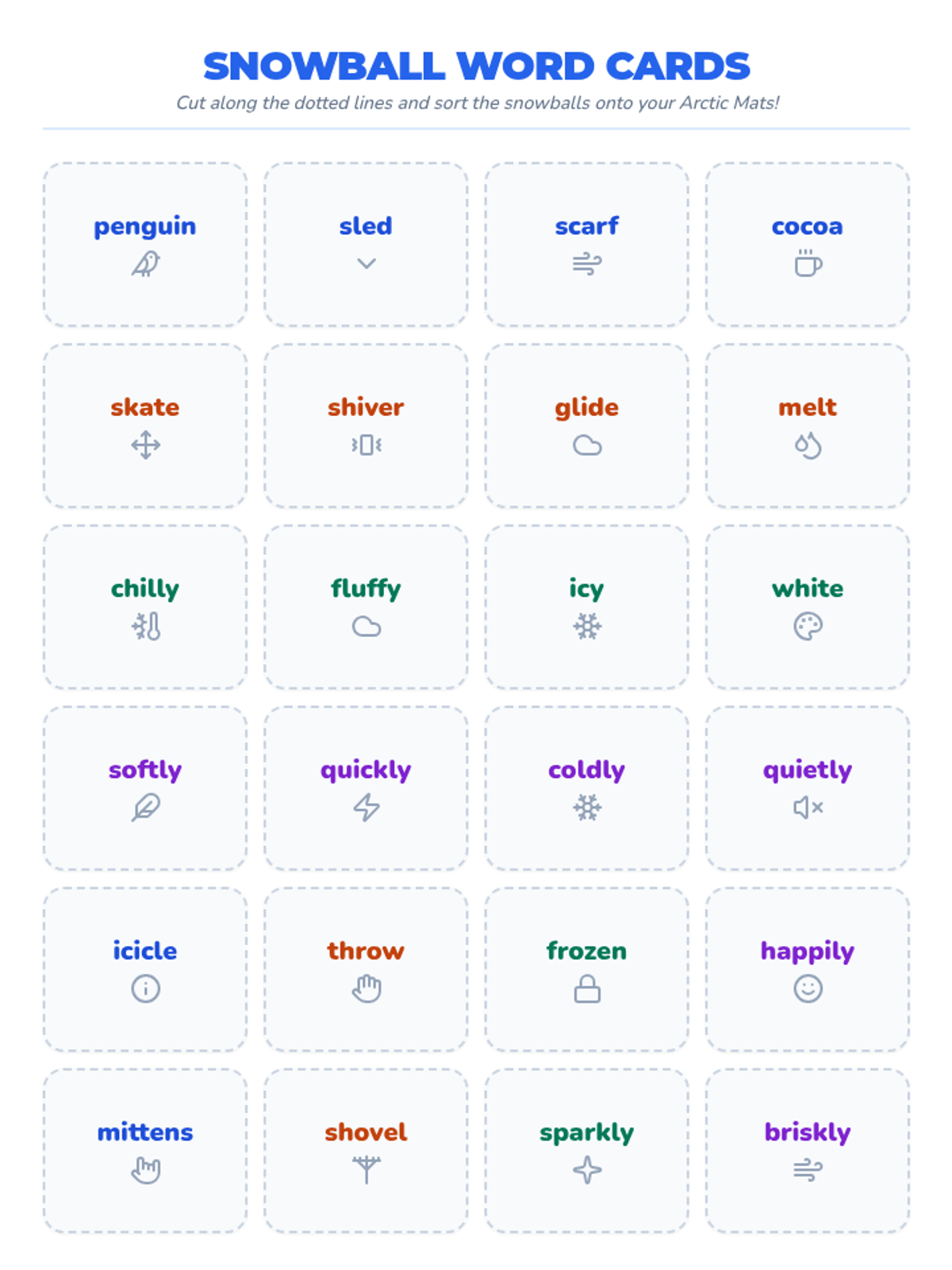
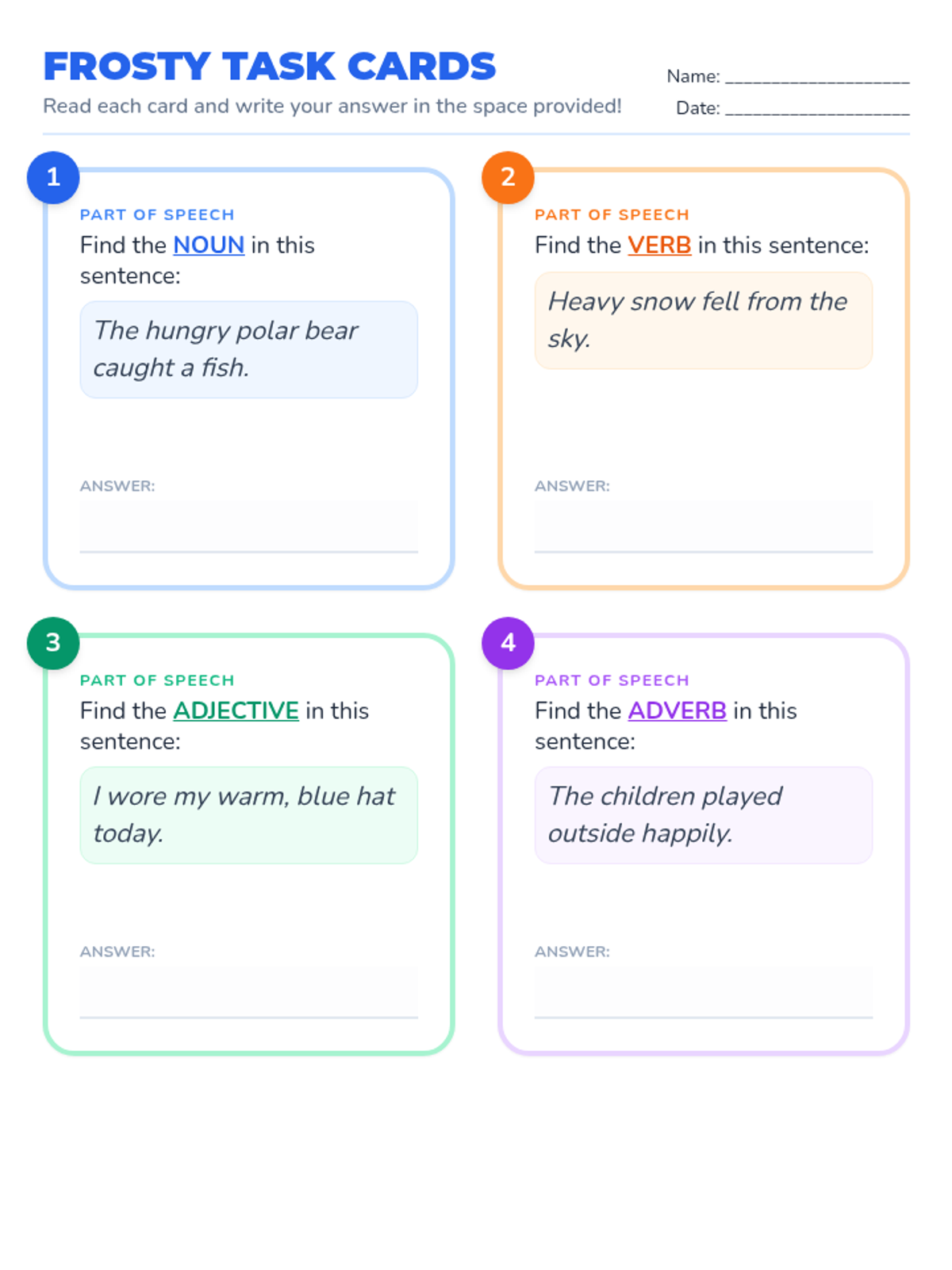
A comprehensive winter-themed review of nouns, verbs, adjectives, and adverbs for 3rd-grade students, featuring a hands-on sorting activity and challenge task cards.
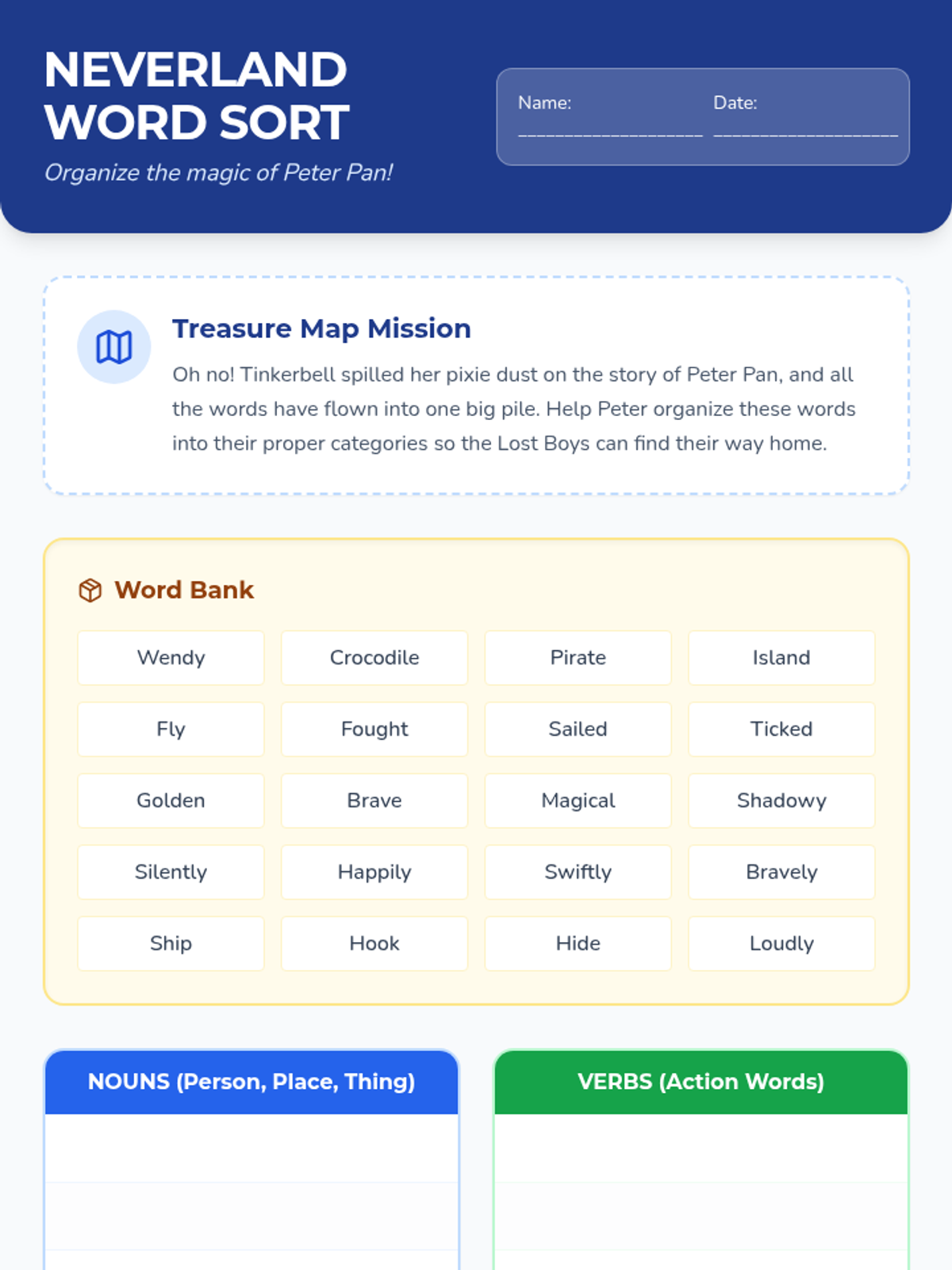
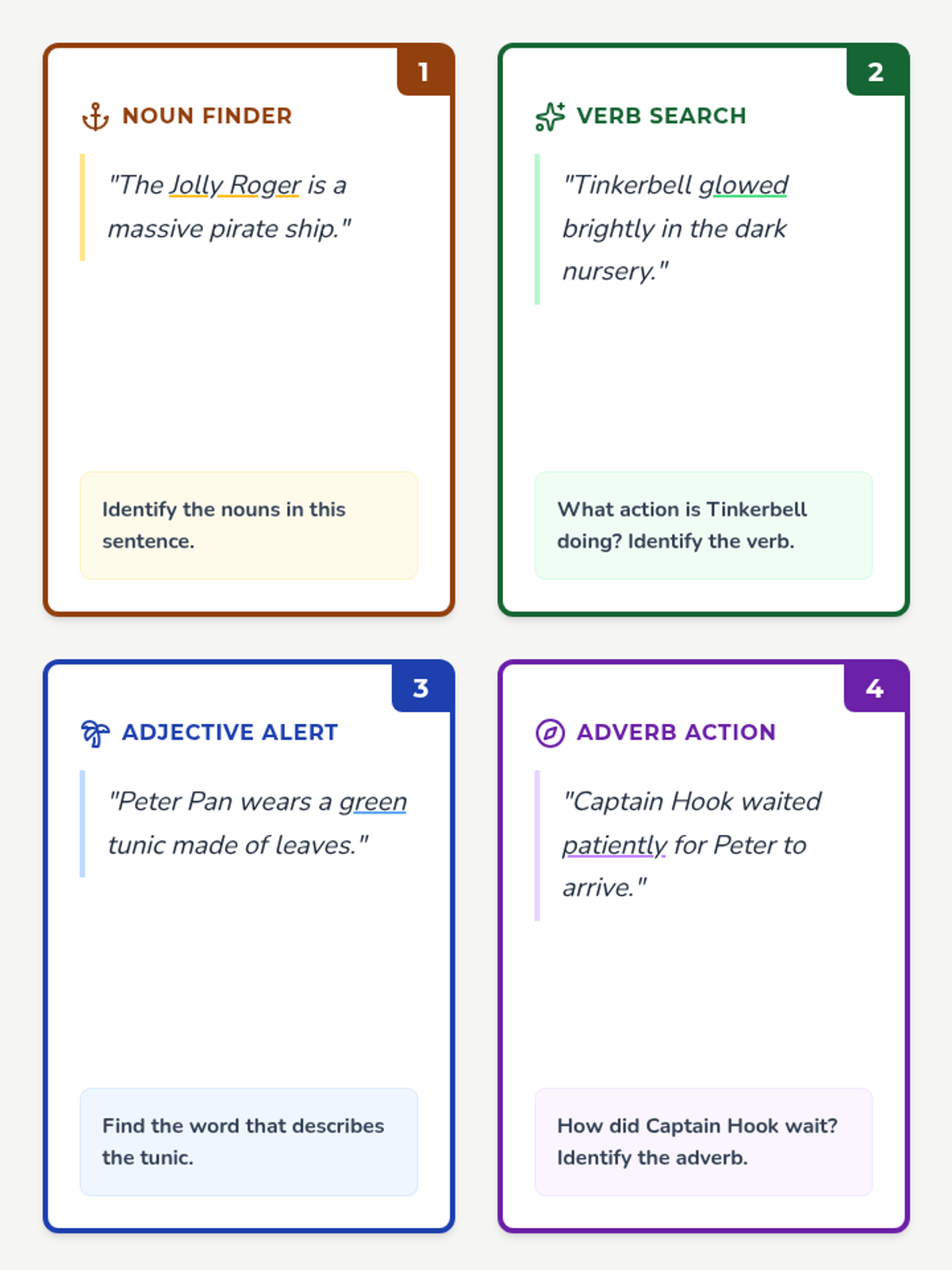
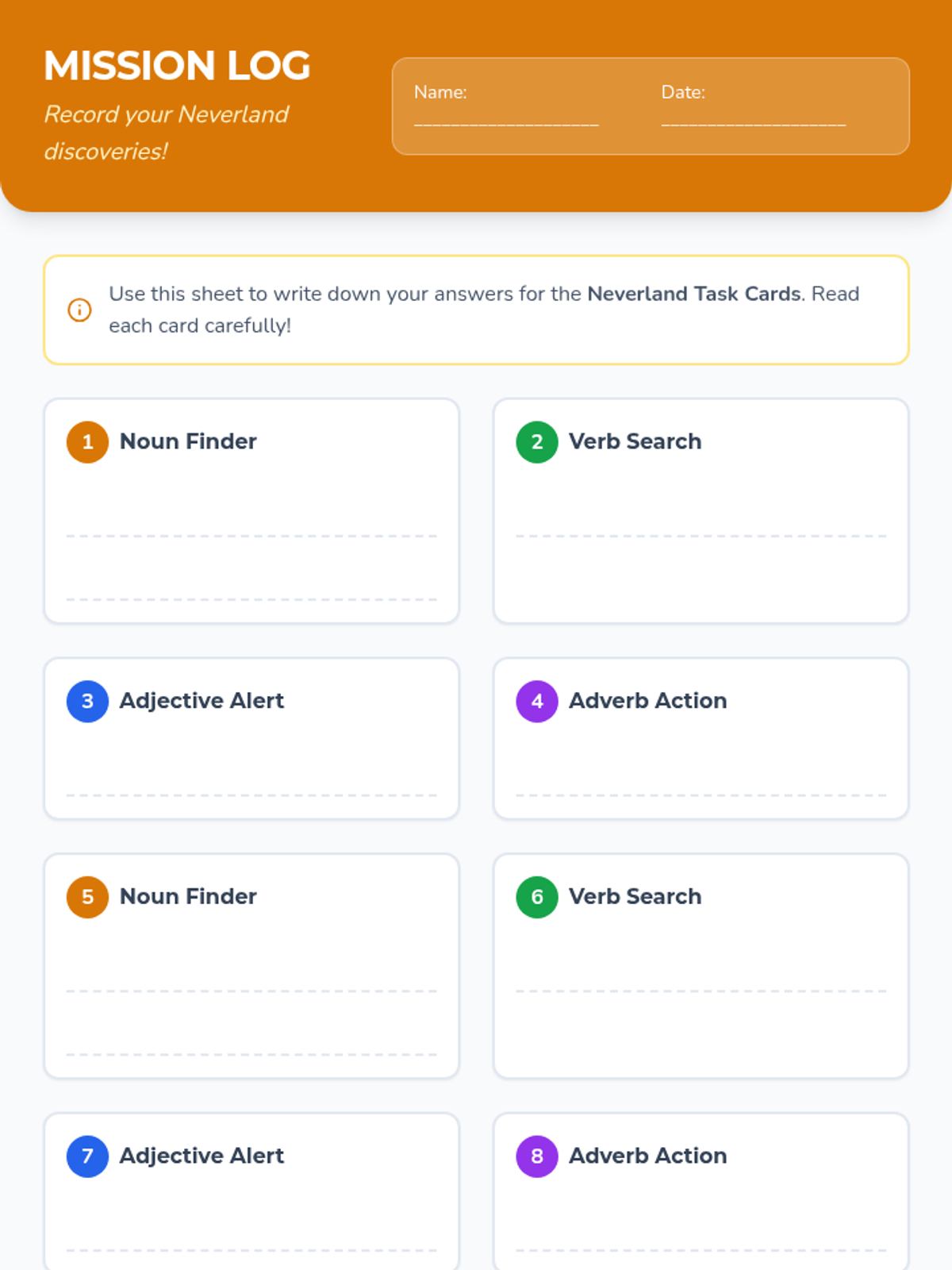
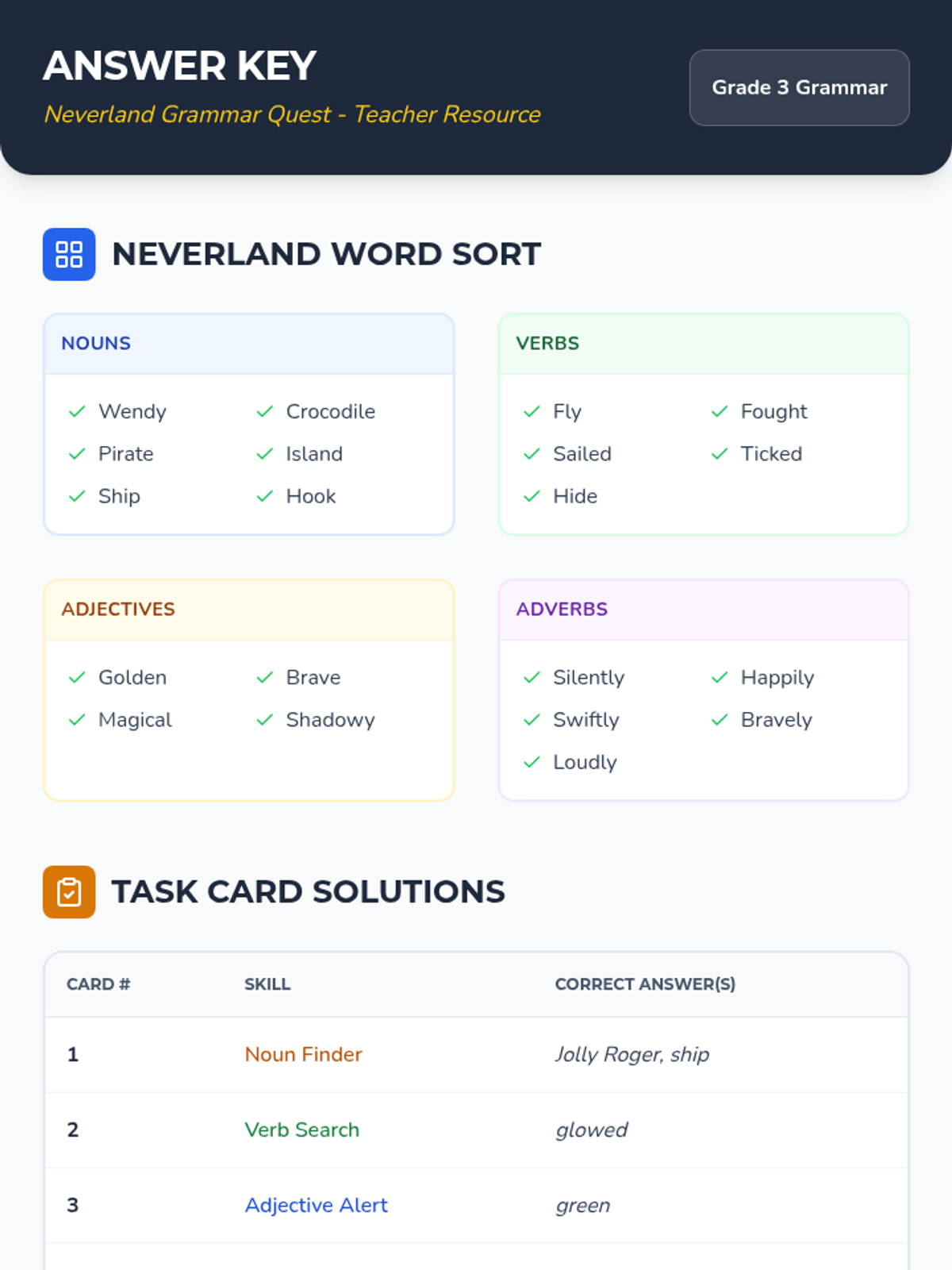
A set of engaging activities for Grade 3 students to master nouns, verbs, adjectives, and adverbs through the magical world of Peter Pan. Includes a sorting challenge and pirate-themed task cards.
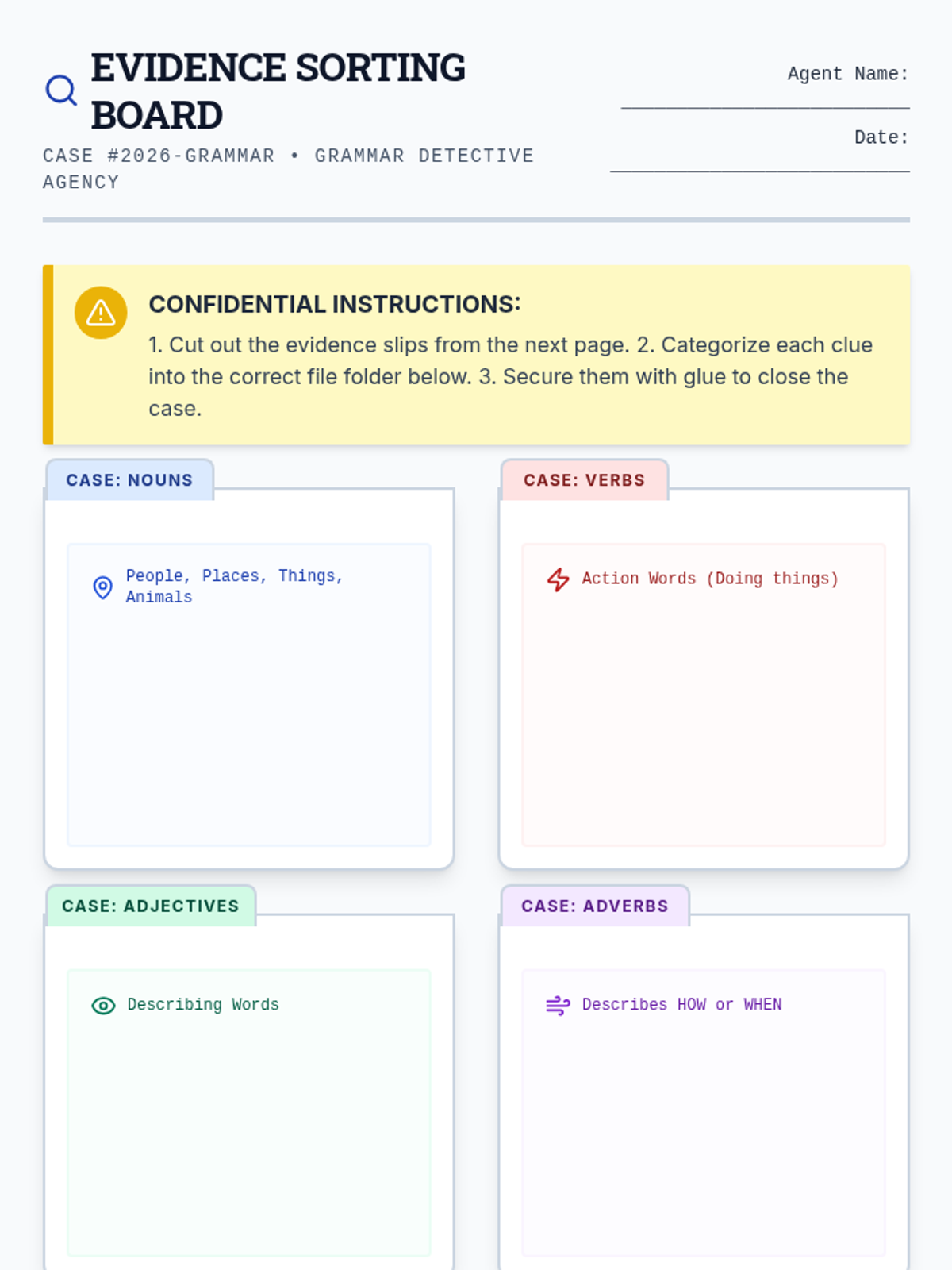
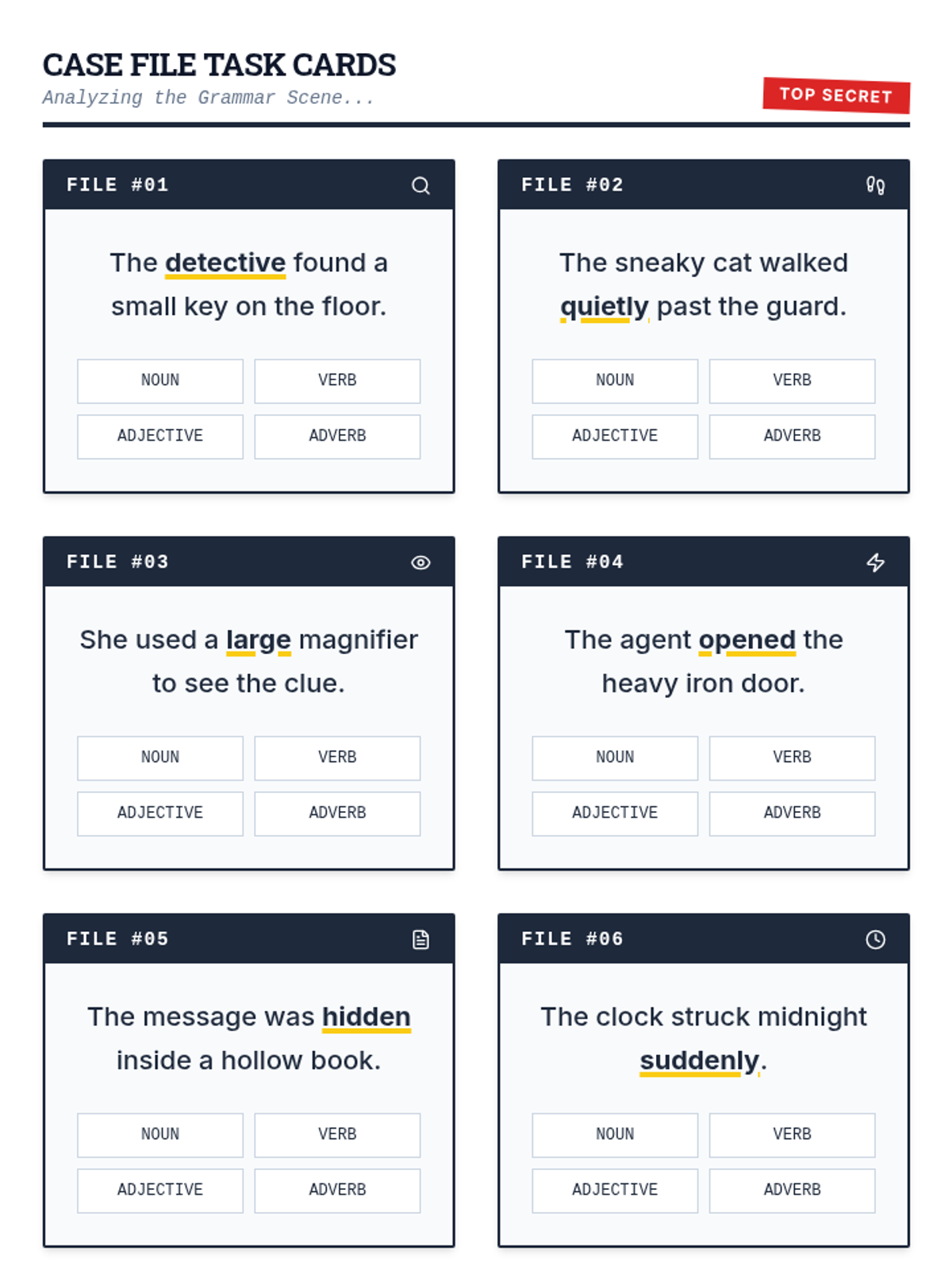
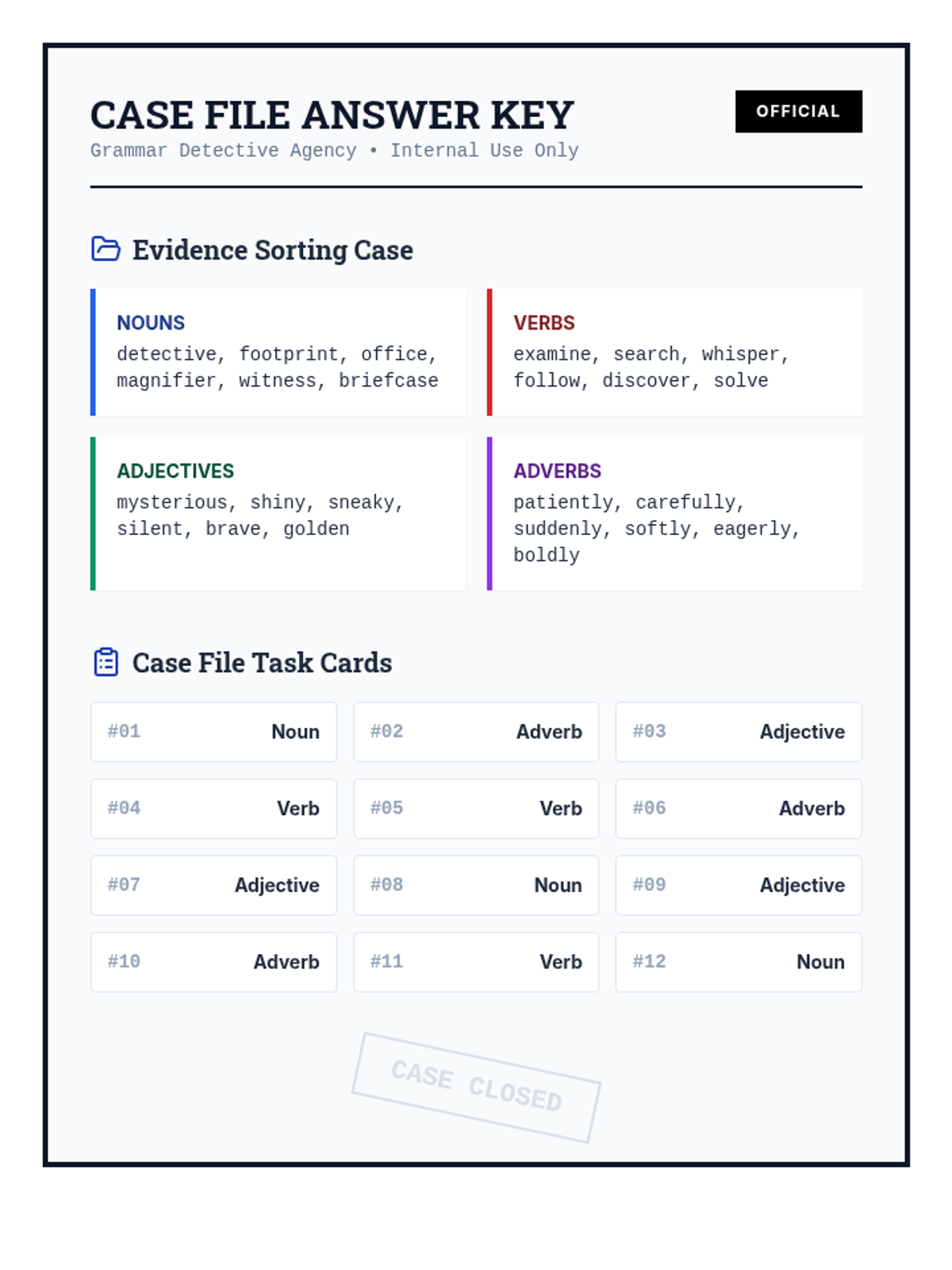
A detective-themed review of nouns, verbs, adjectives, and adverbs. Students act as grammar sleuths to sort evidence and solve sentence-based case files.
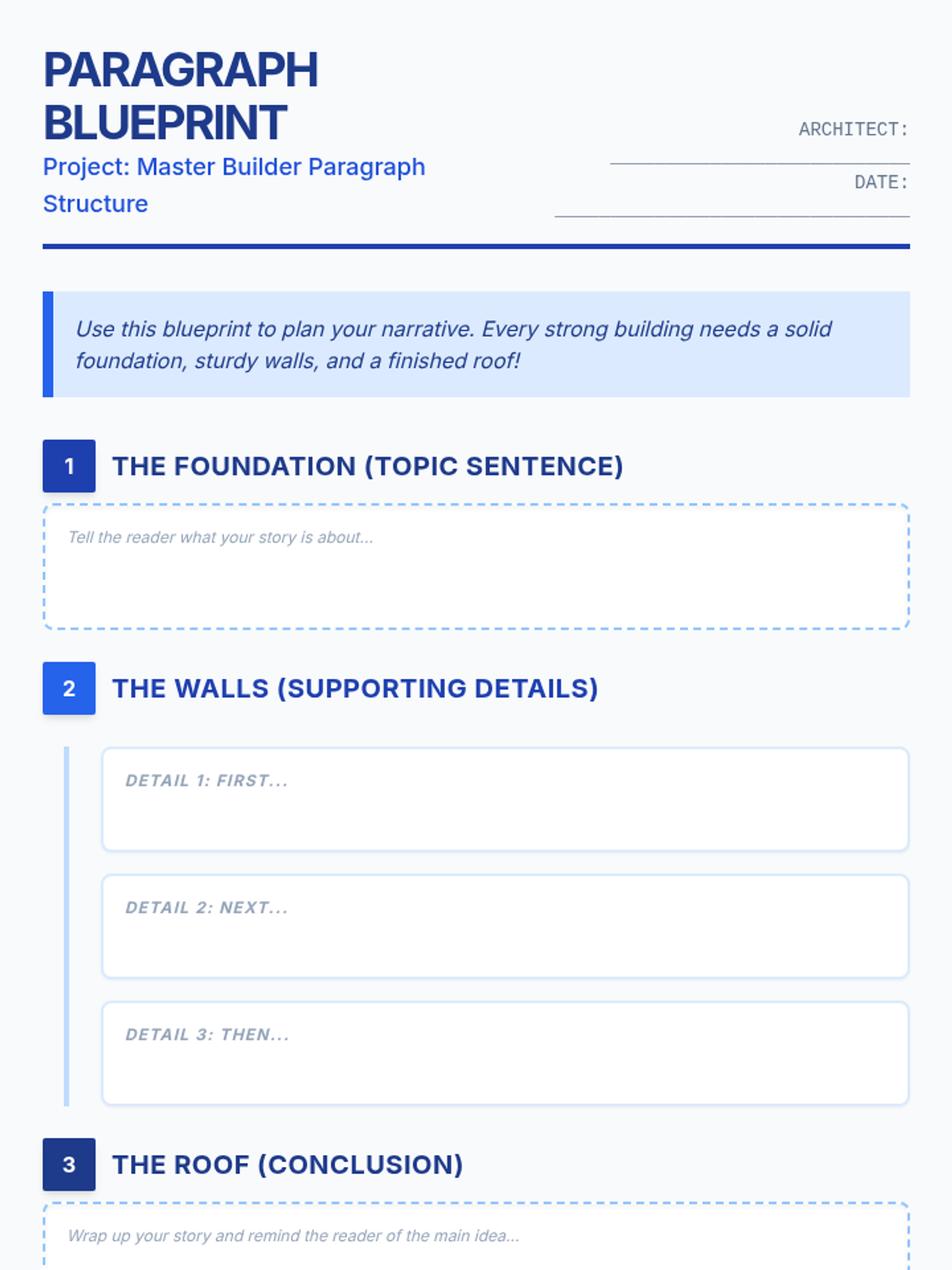
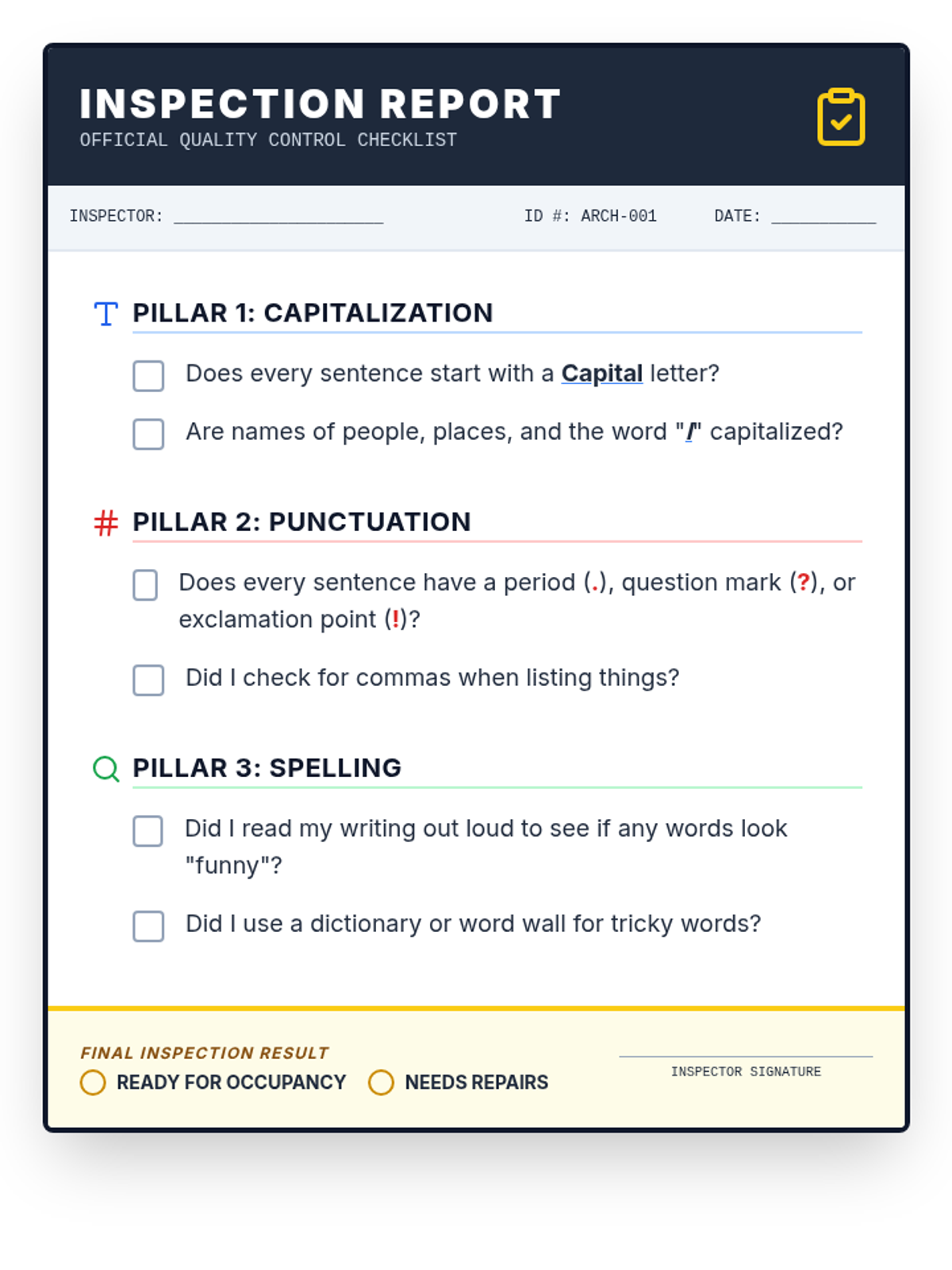
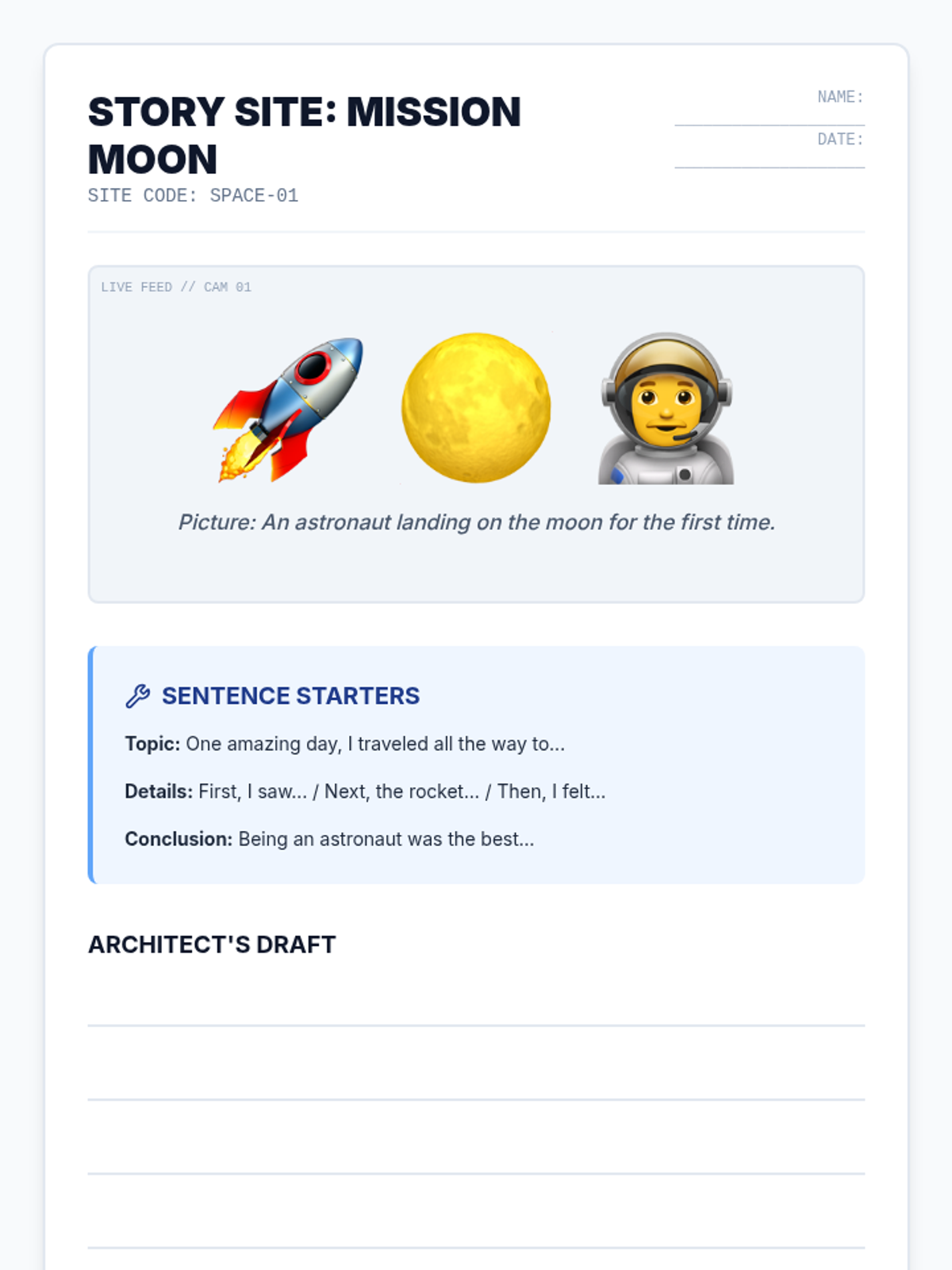
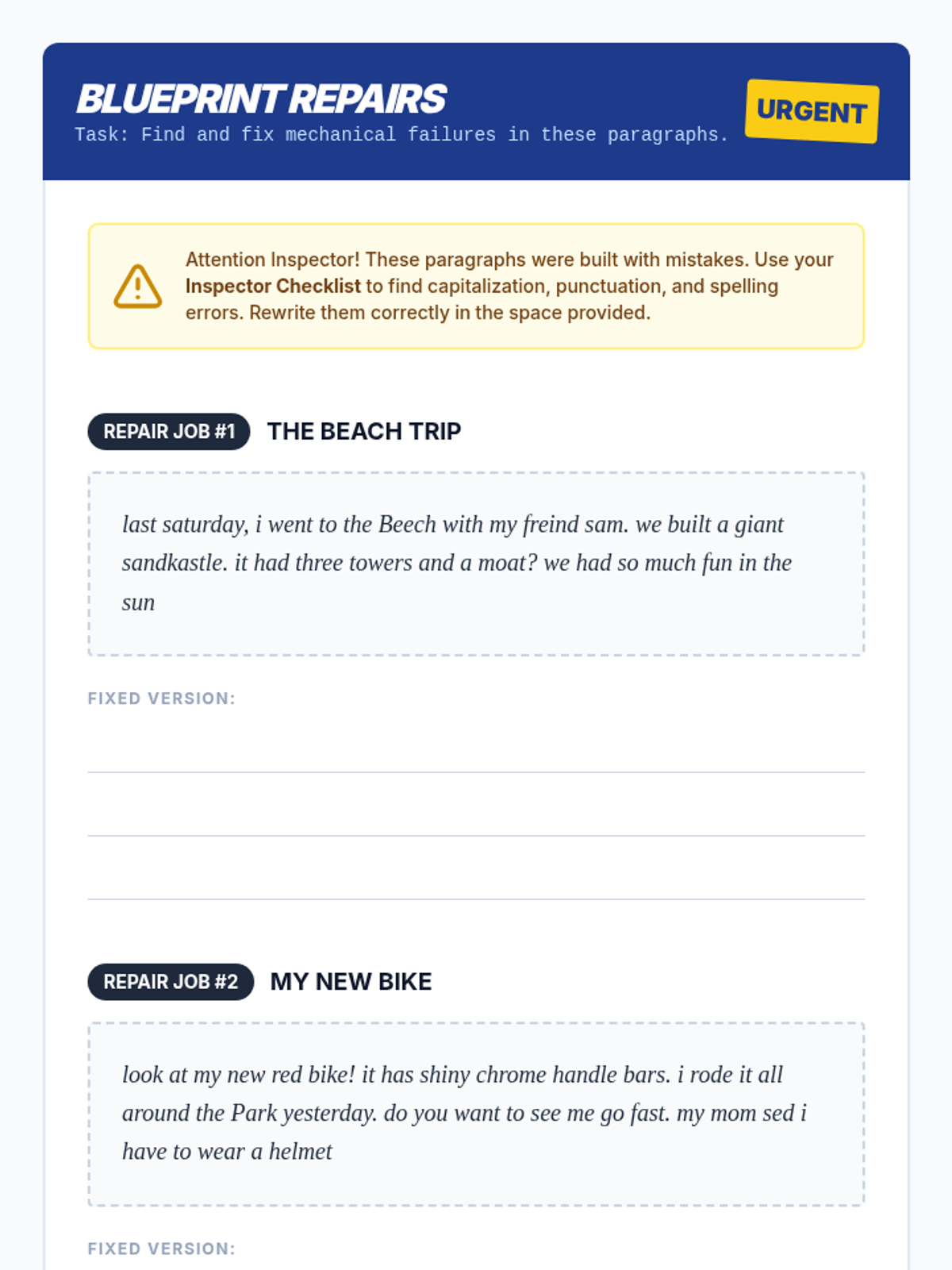
Focuses on constructing complete narrative paragraphs with a topic sentence, details, and a conclusion, followed by a rigorous 'inspection' for mechanics.
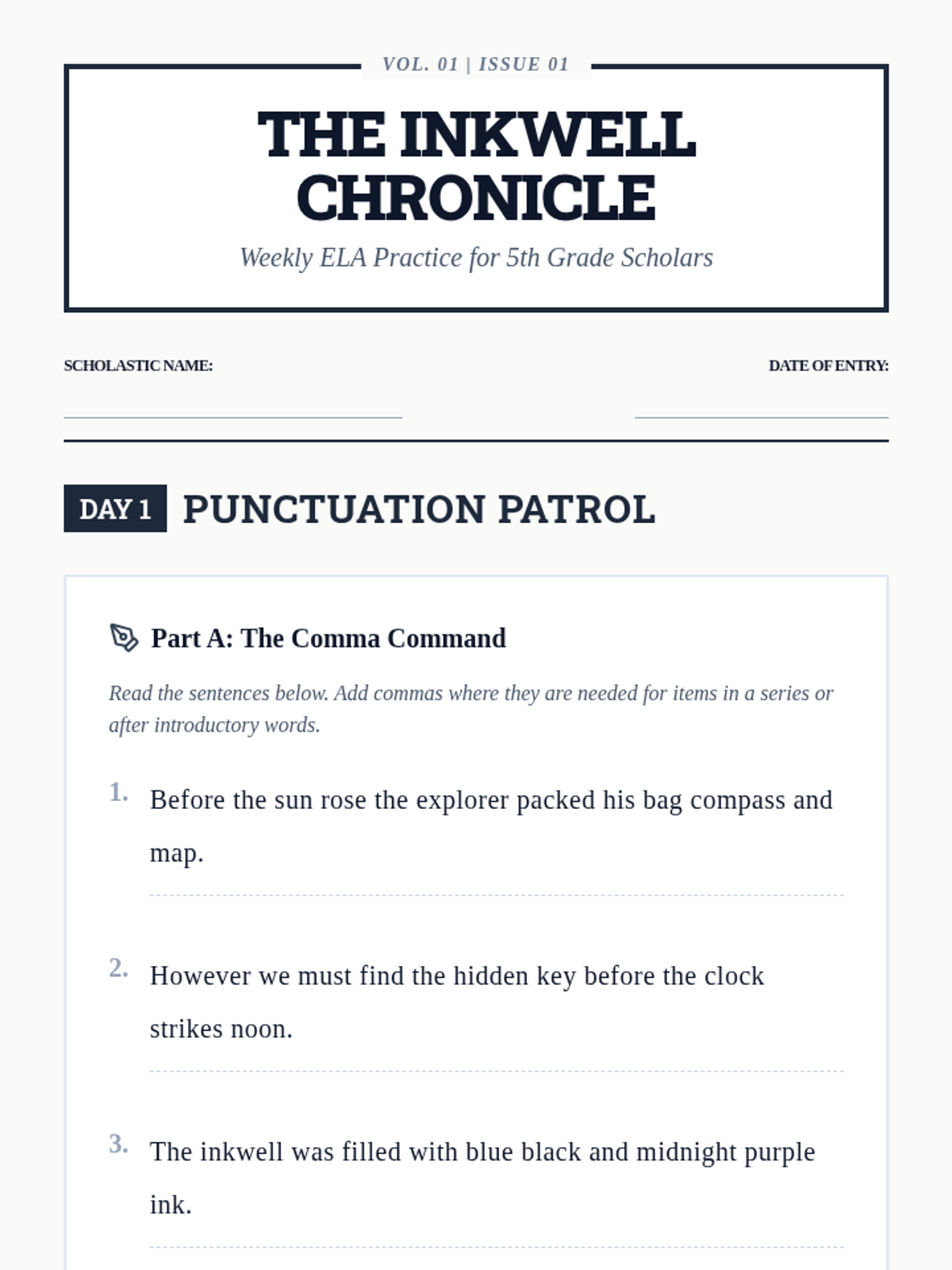
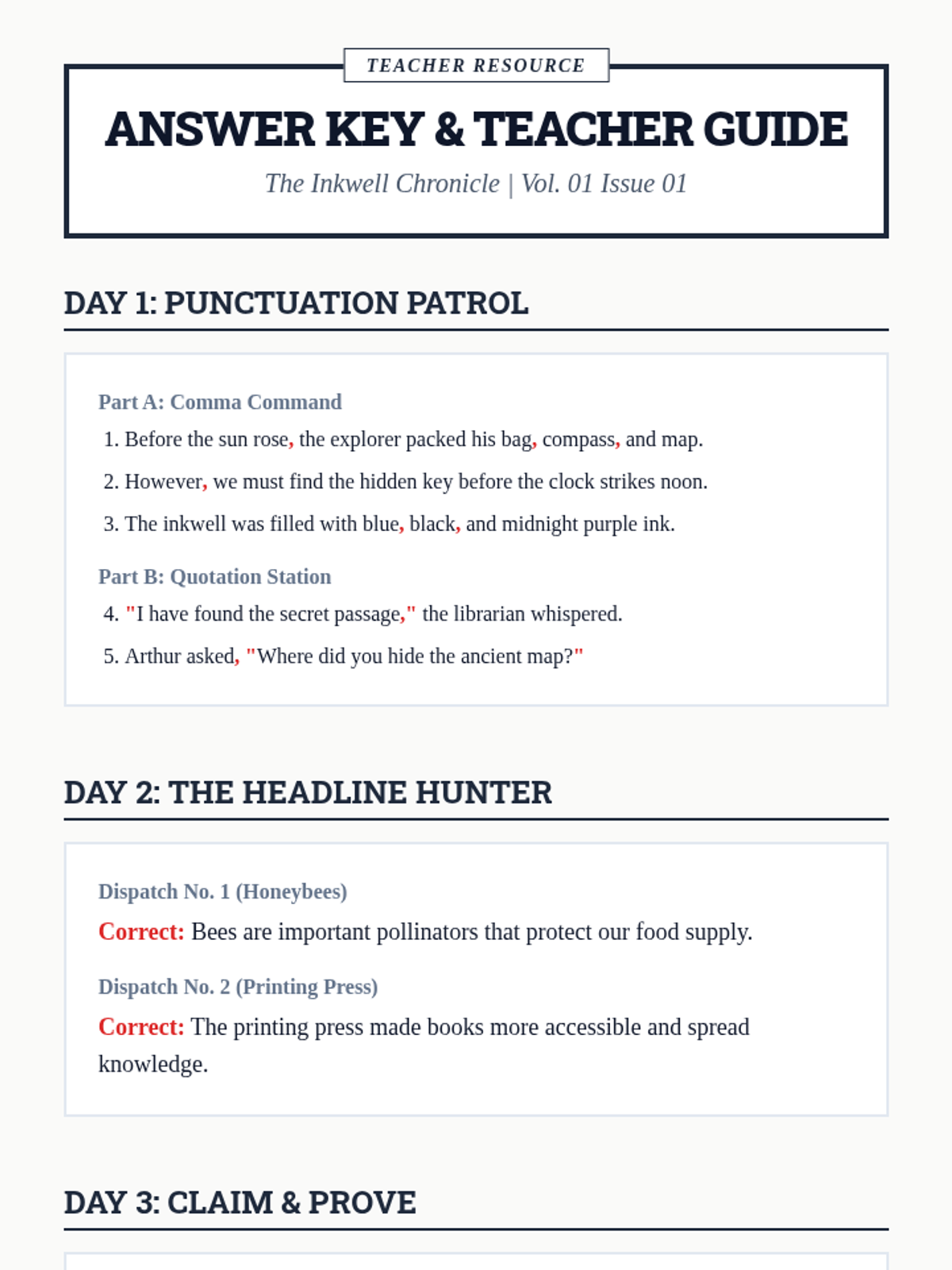
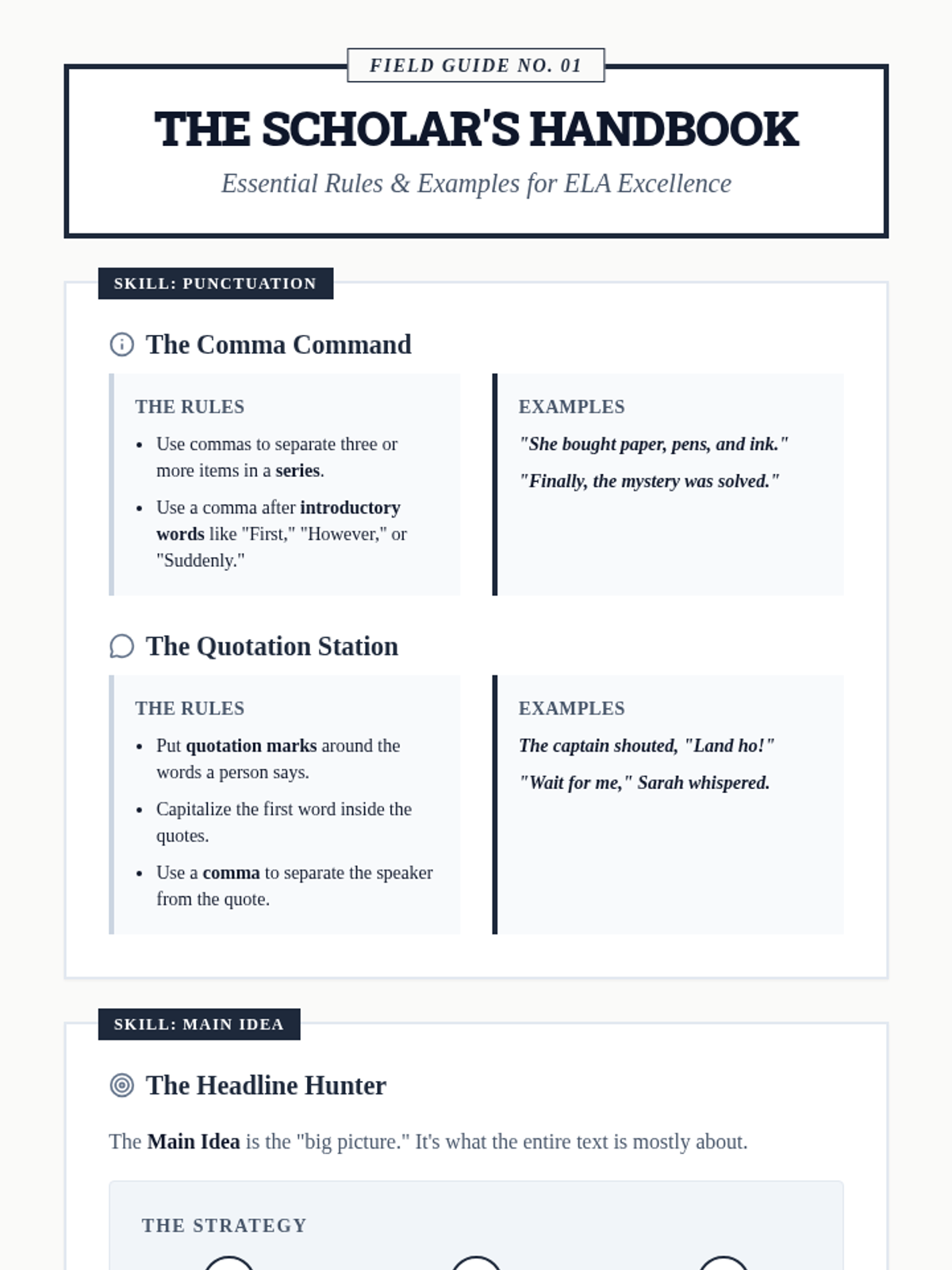
Focuses on punctuation (commas, quotation marks), identifying the main idea, and finding evidence to support an author's claim.
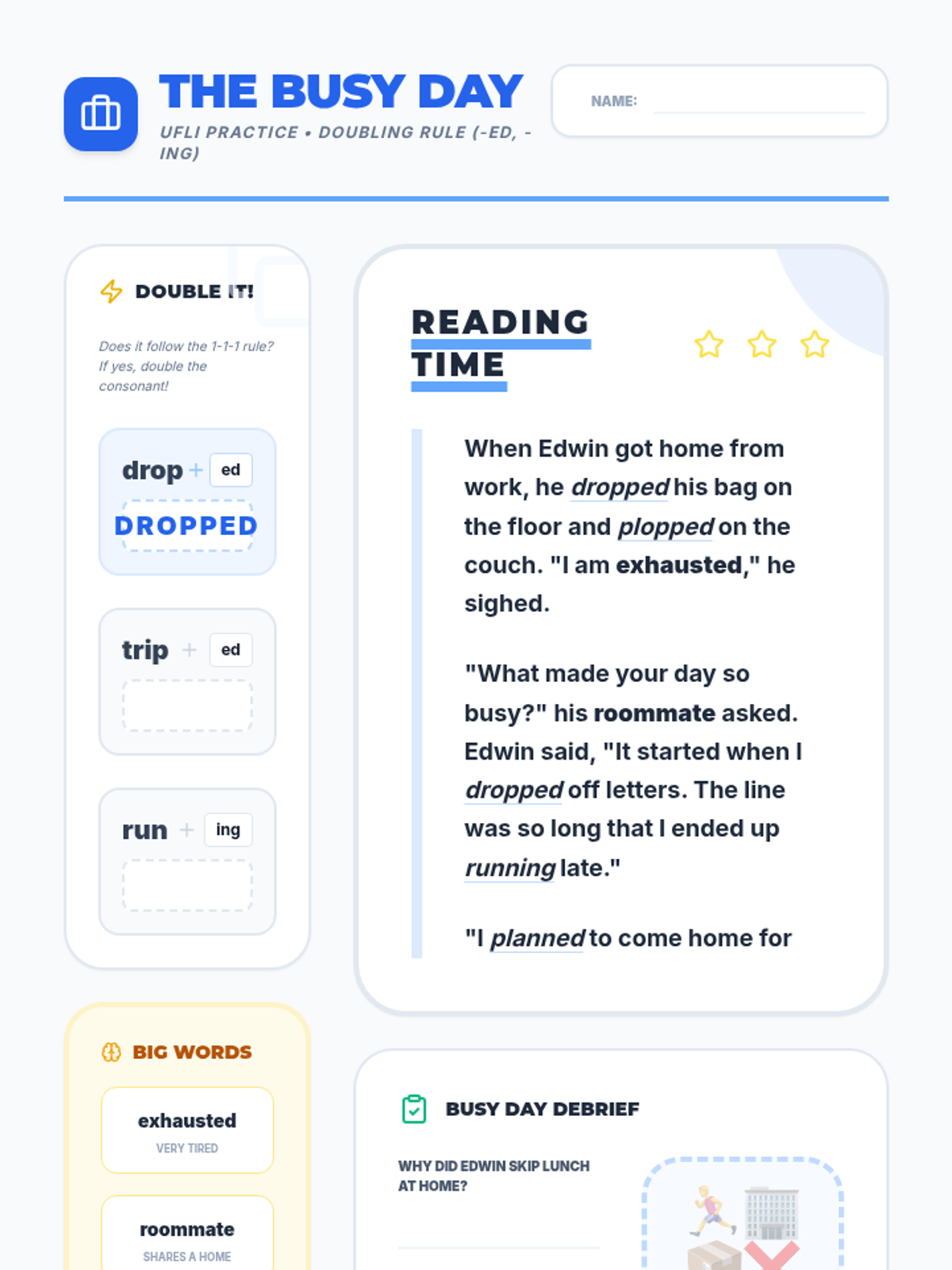
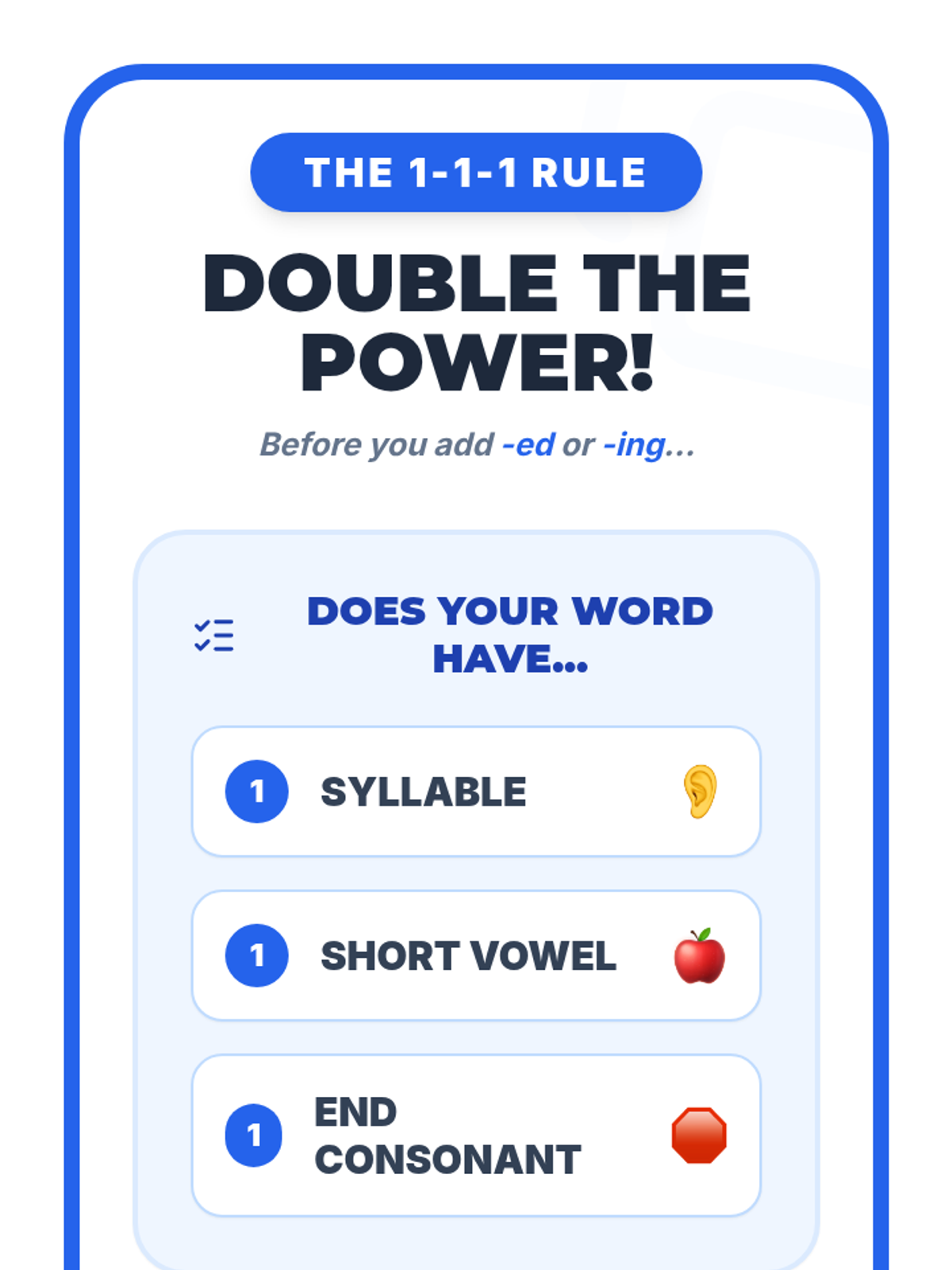
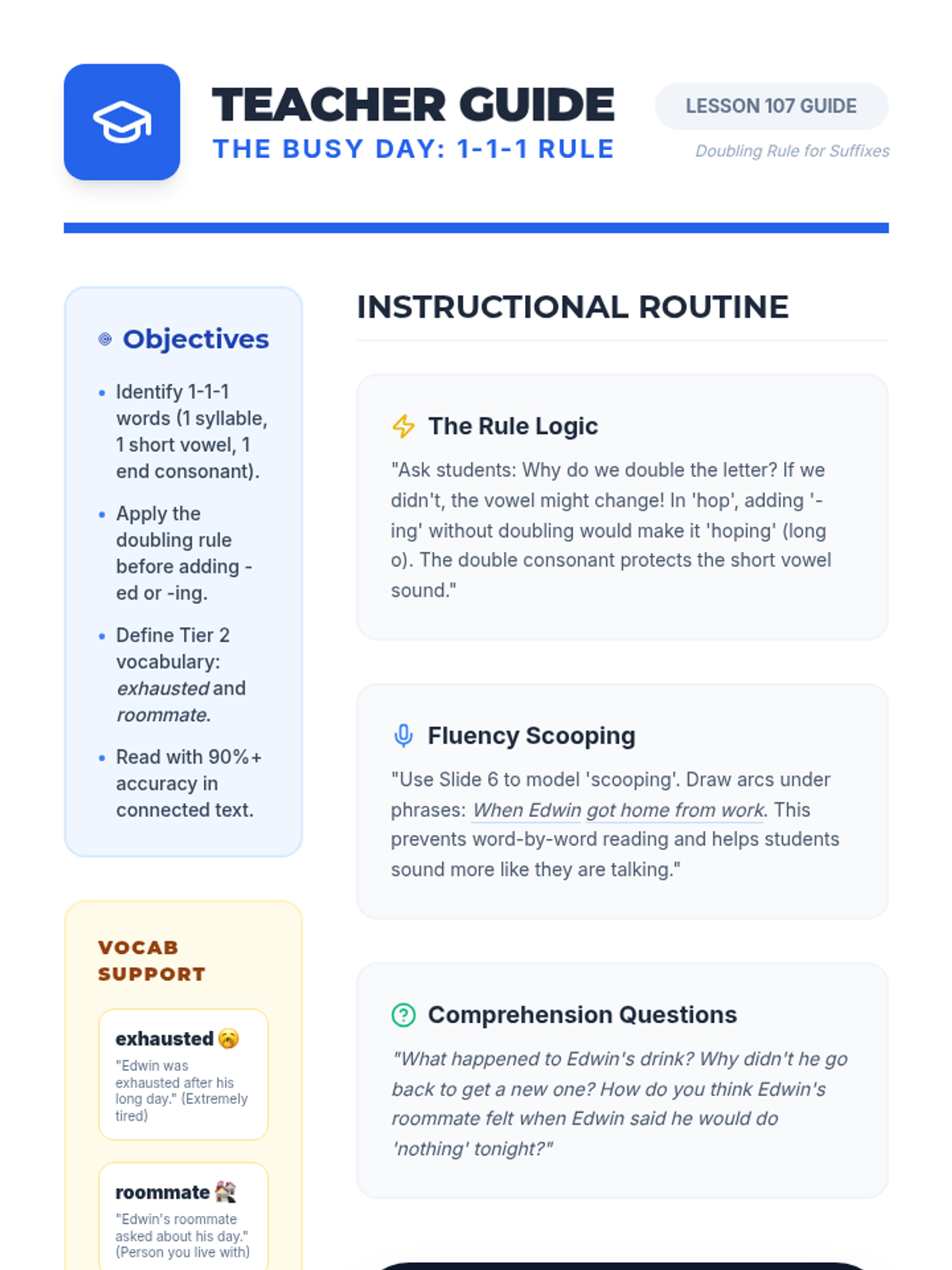
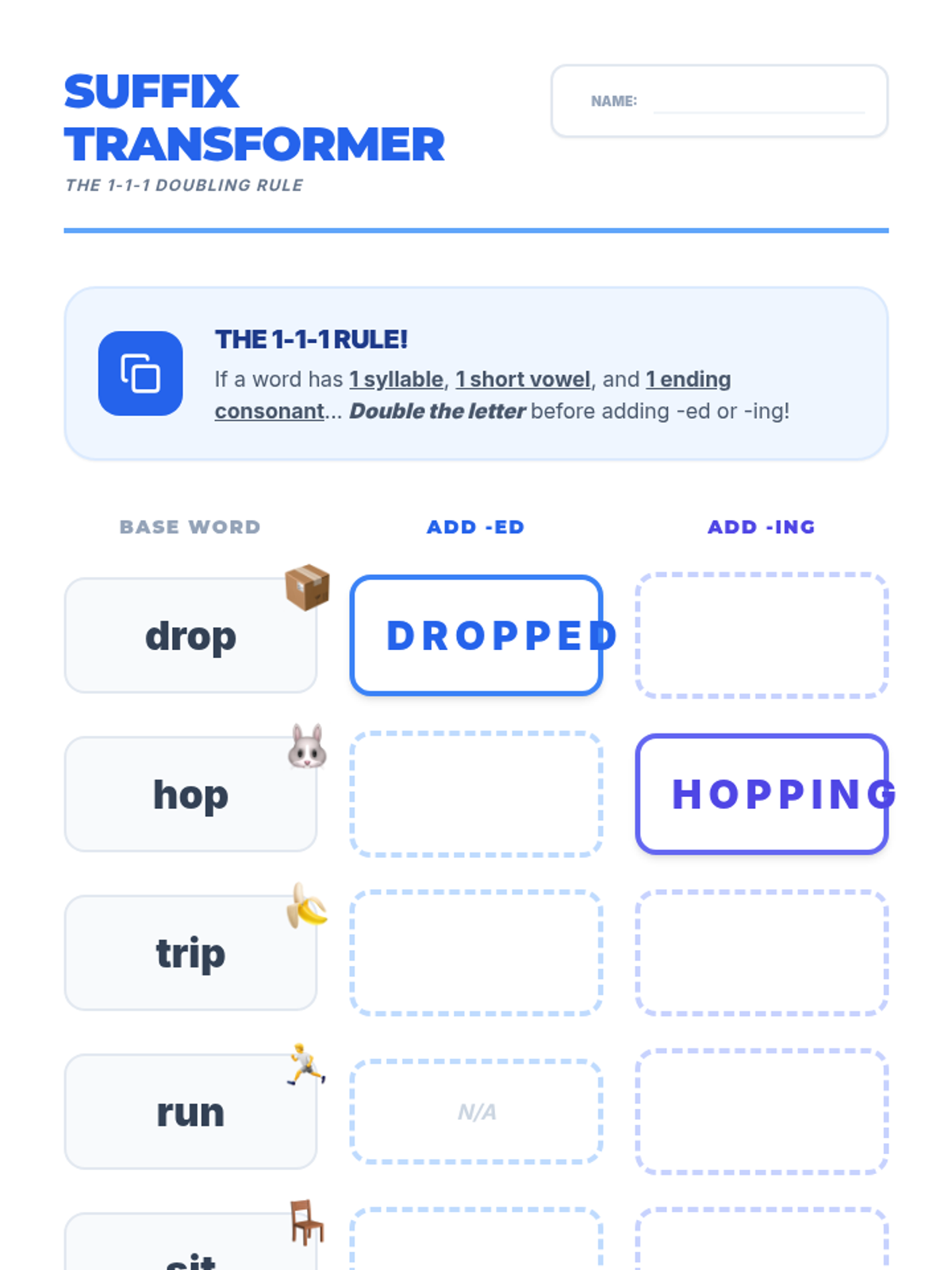
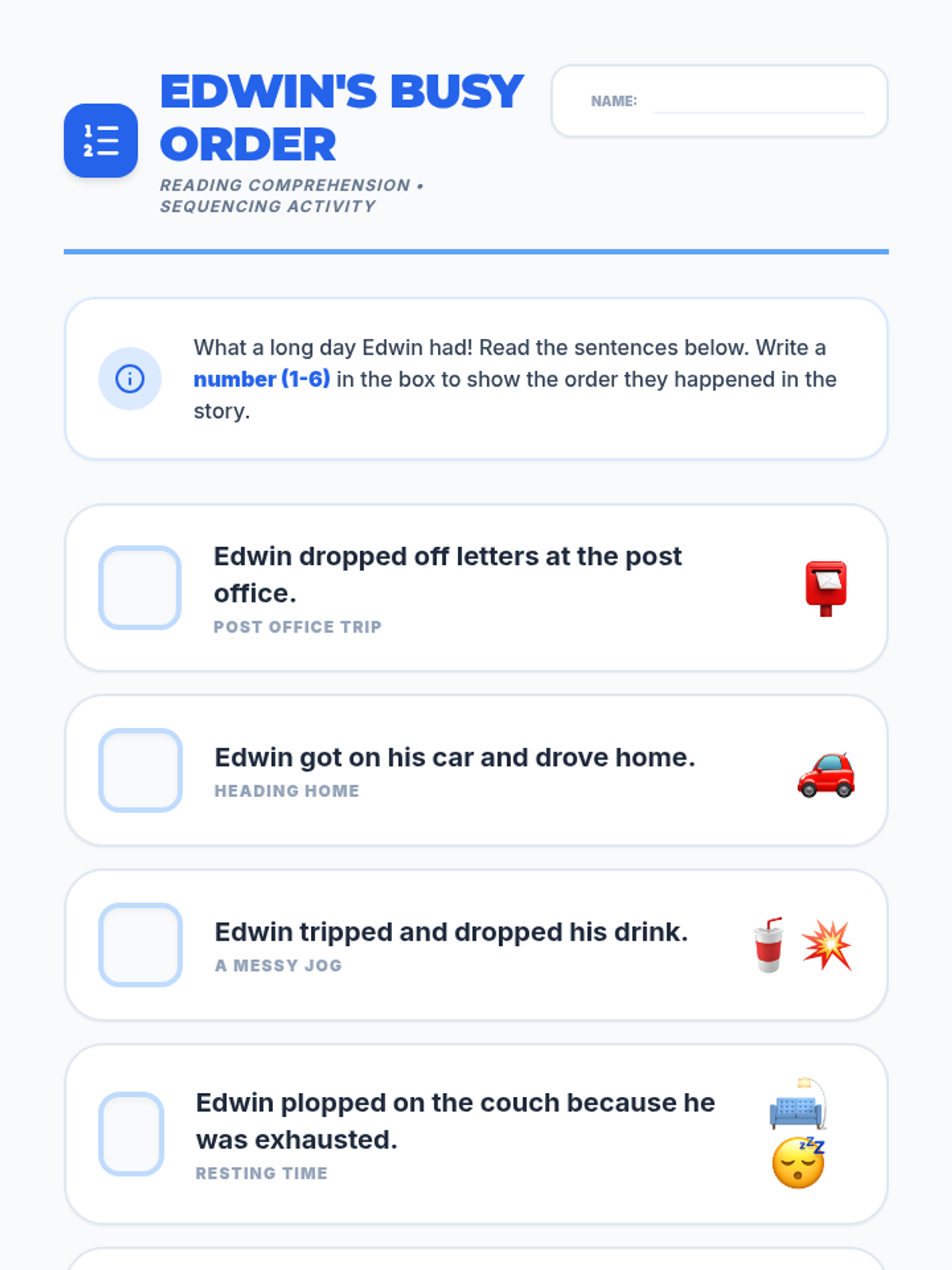
Focuses on the 1-1-1 doubling rule for adding suffixes -ed and -ing. Students will read about Edwin's busy day, practicing words like 'dropped', 'jogging', 'tripped', and 'sitting' while building vocabulary for words like 'exhausted'.
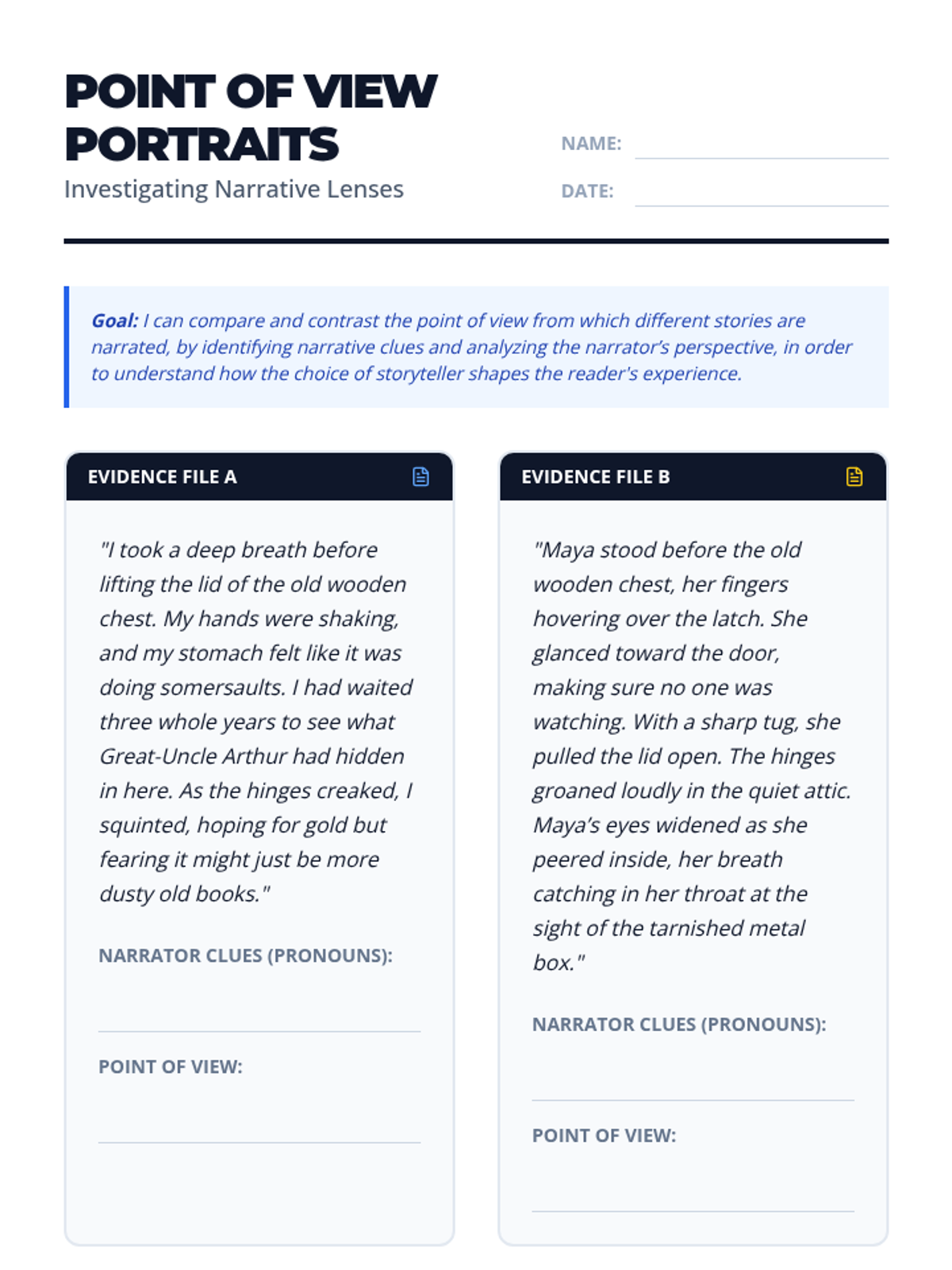
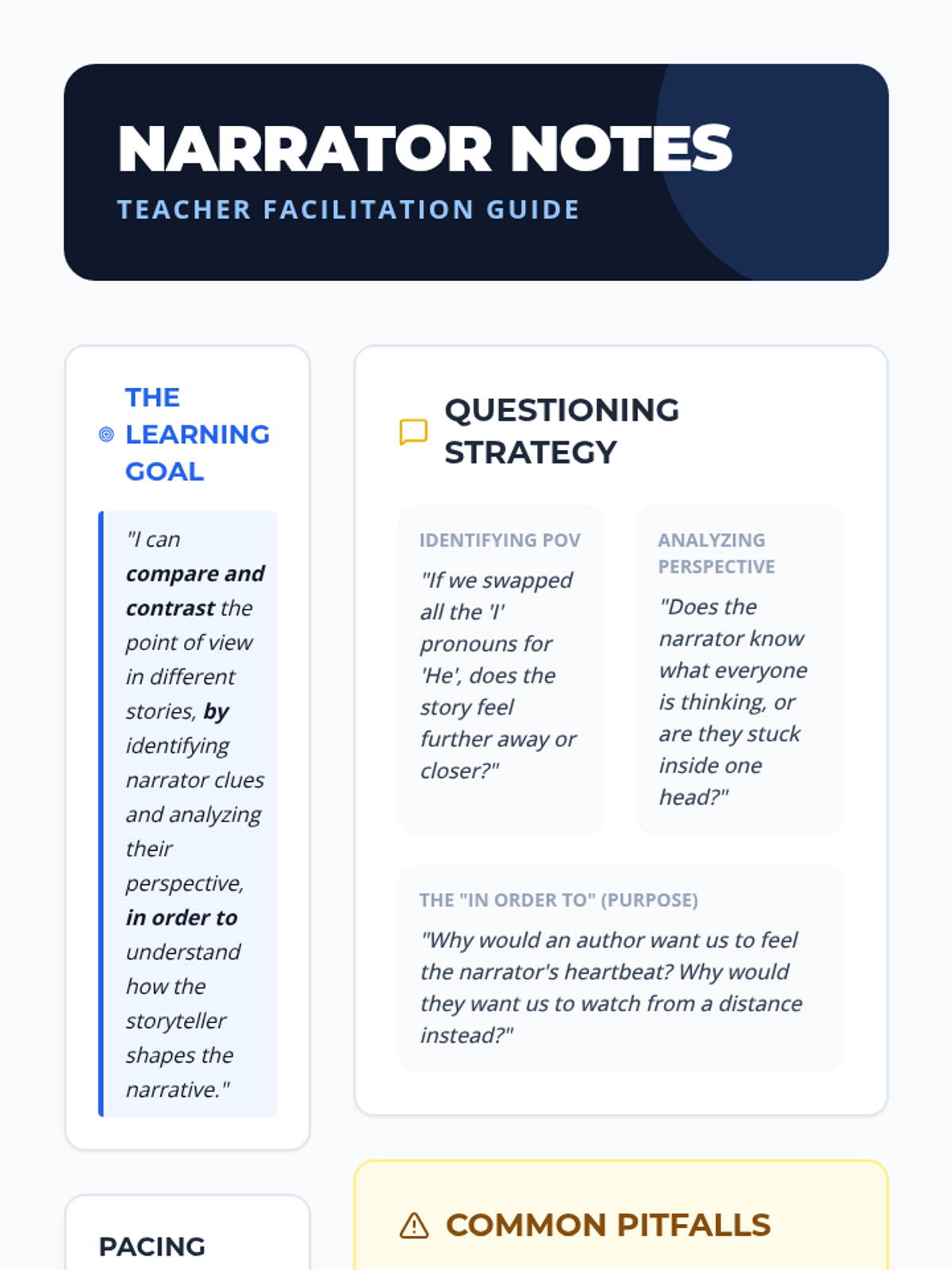
A lesson focused on identifying, comparing, and contrasting first- and third-person points of view in literature. Students will analyze how the narrator's perspective influences the reader's experience.
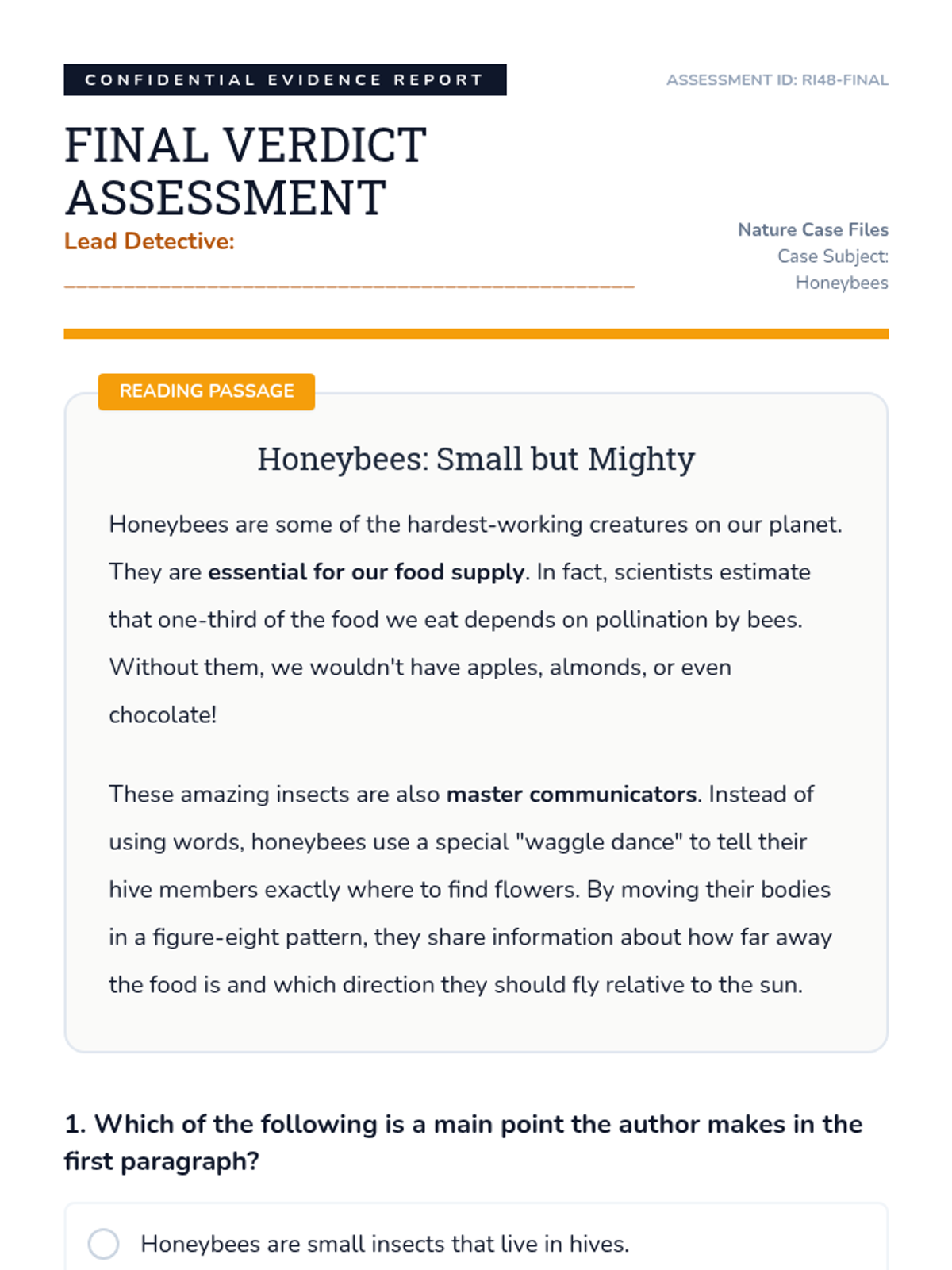
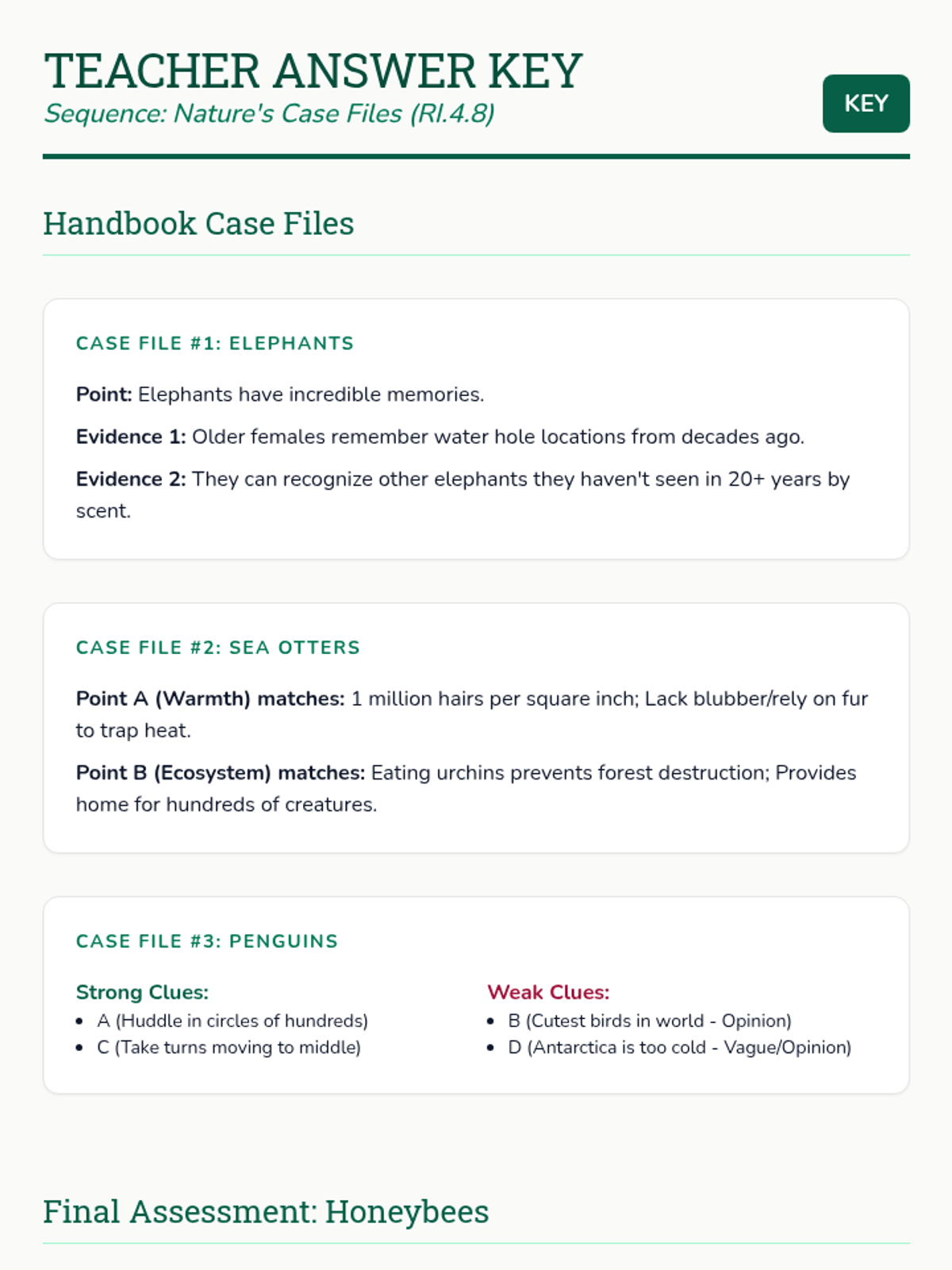
A final assessment and synthesis where students independently analyze a text about honeybees to identify points and evidence.
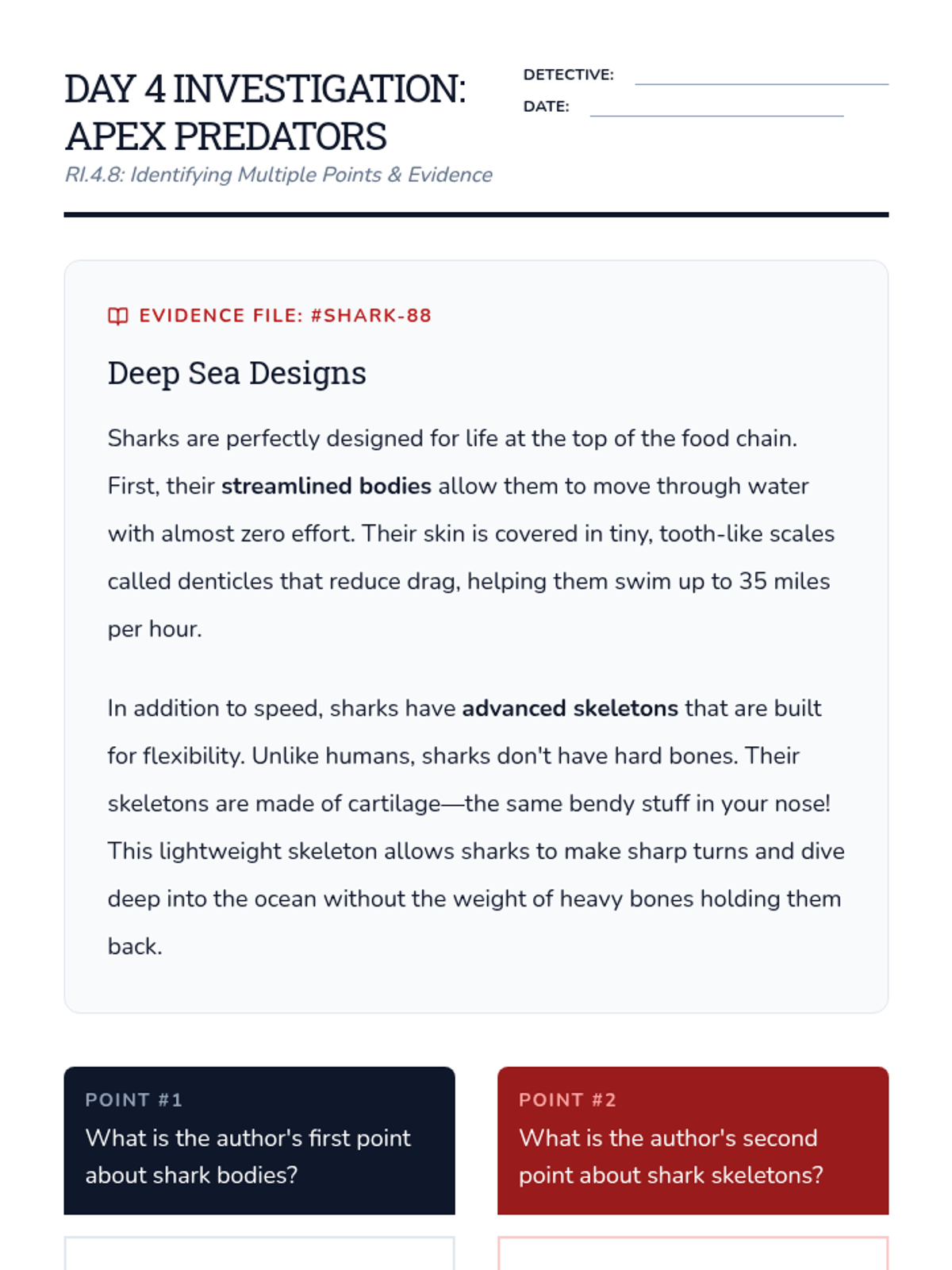
Students analyze how an author supports multiple related points within a single text about sharks.
Students evaluate the strength of evidence provided by an author, distinguishing between strong facts and weak opinions in a text about penguins.
Students practice connecting specific pieces of evidence to the points they support using sea otters as a case study.
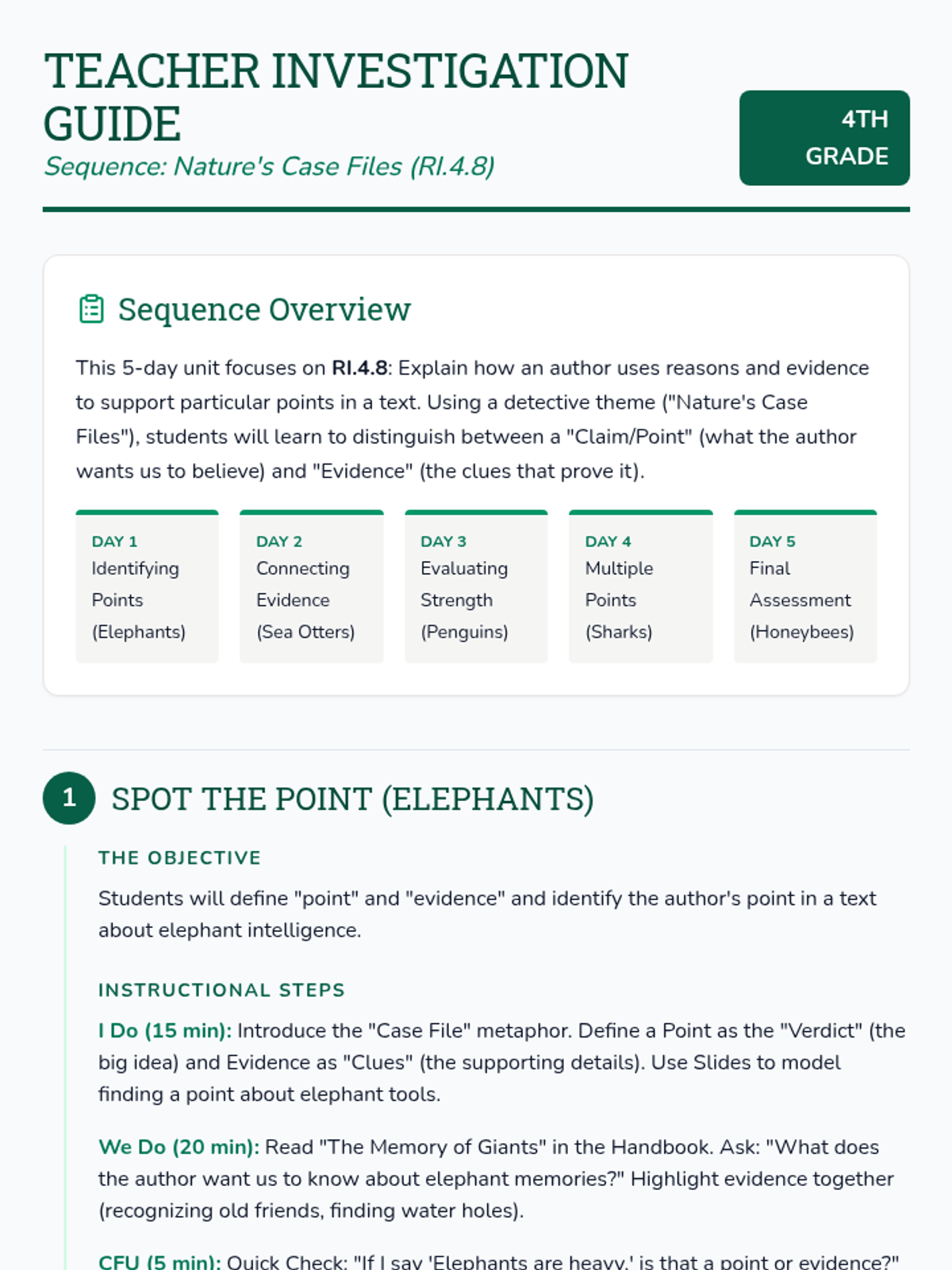
Students learn to identify the author's main point and the specific reasons provided as evidence using a text about elephant intelligence.
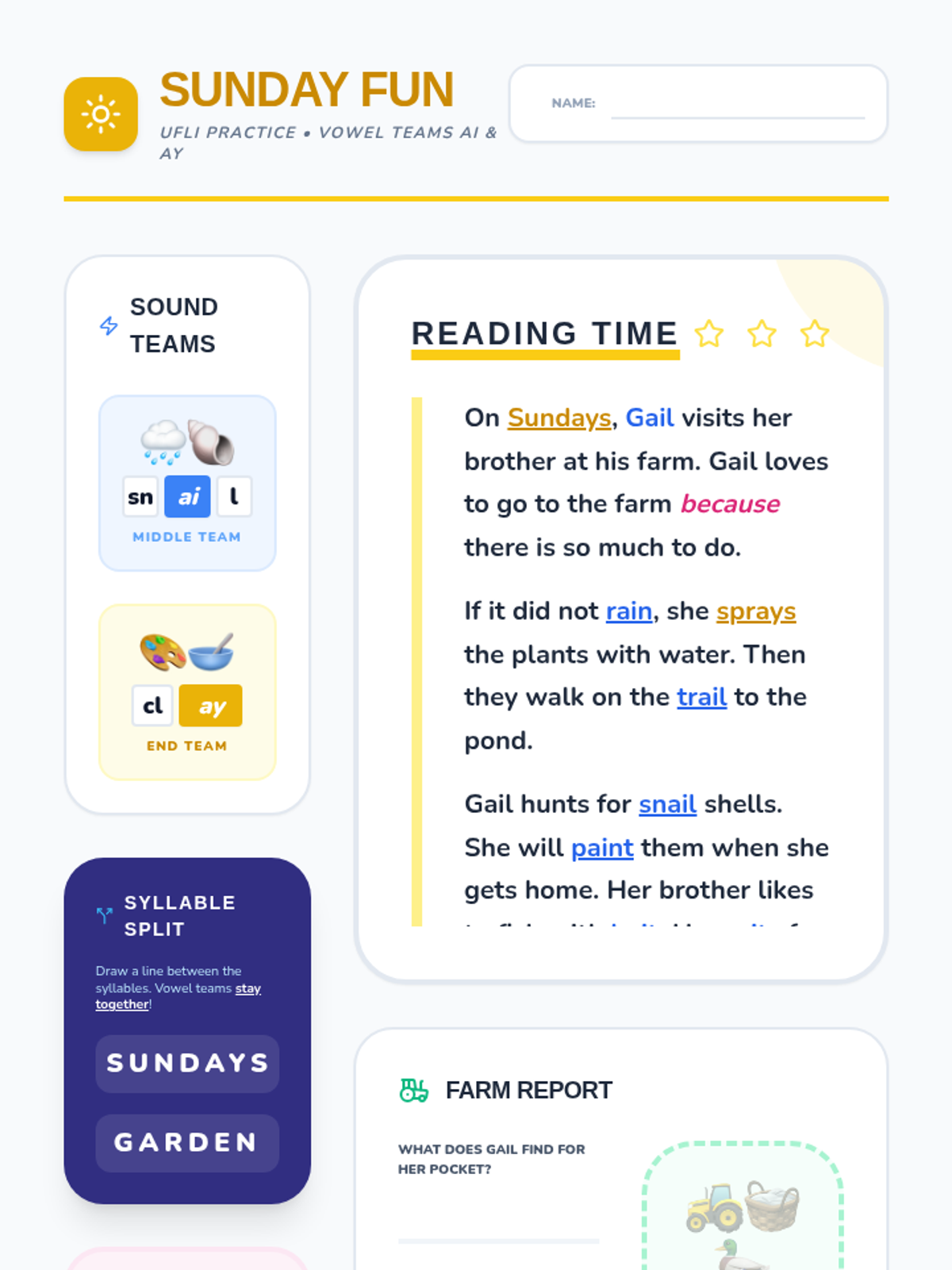
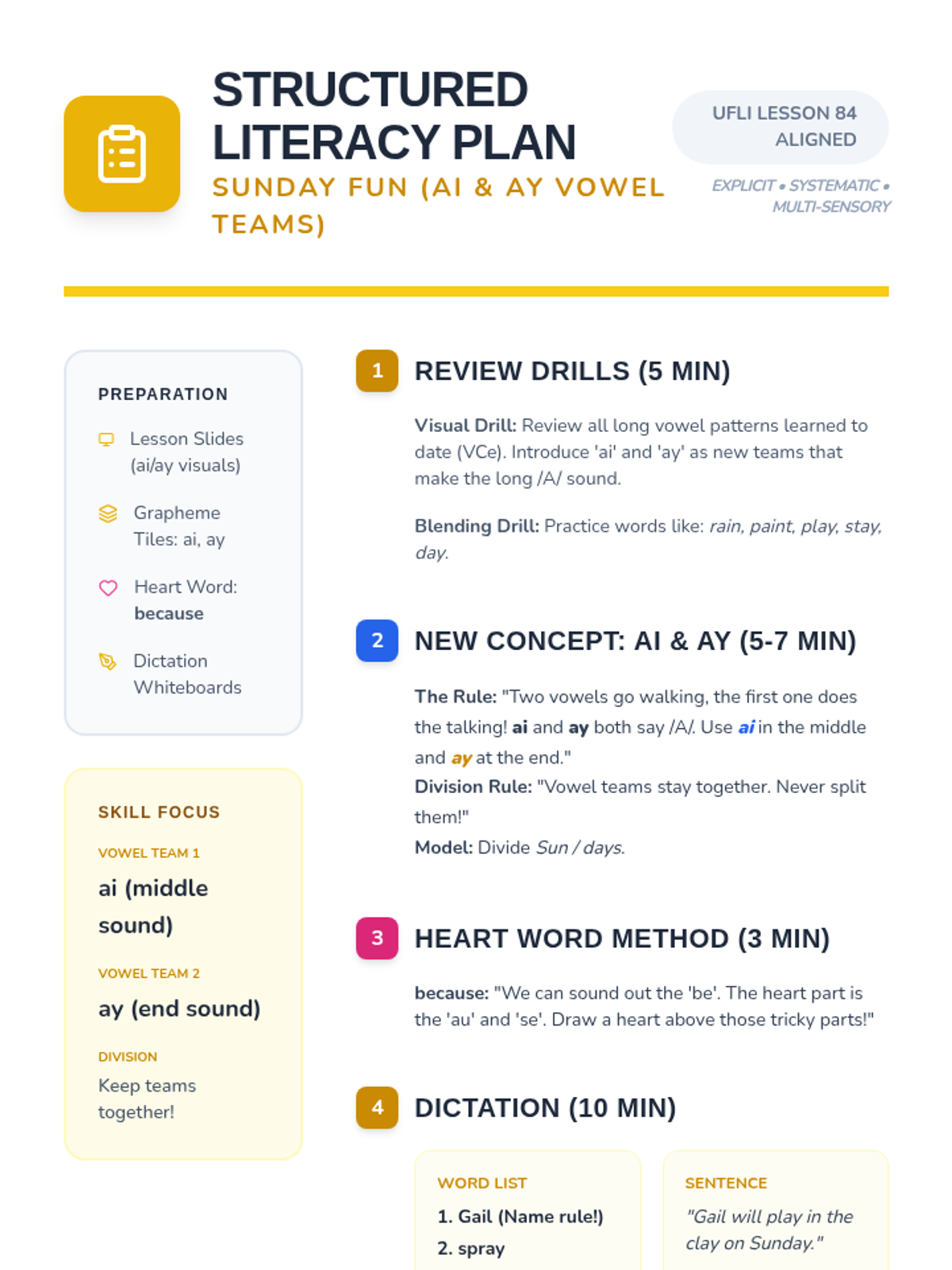
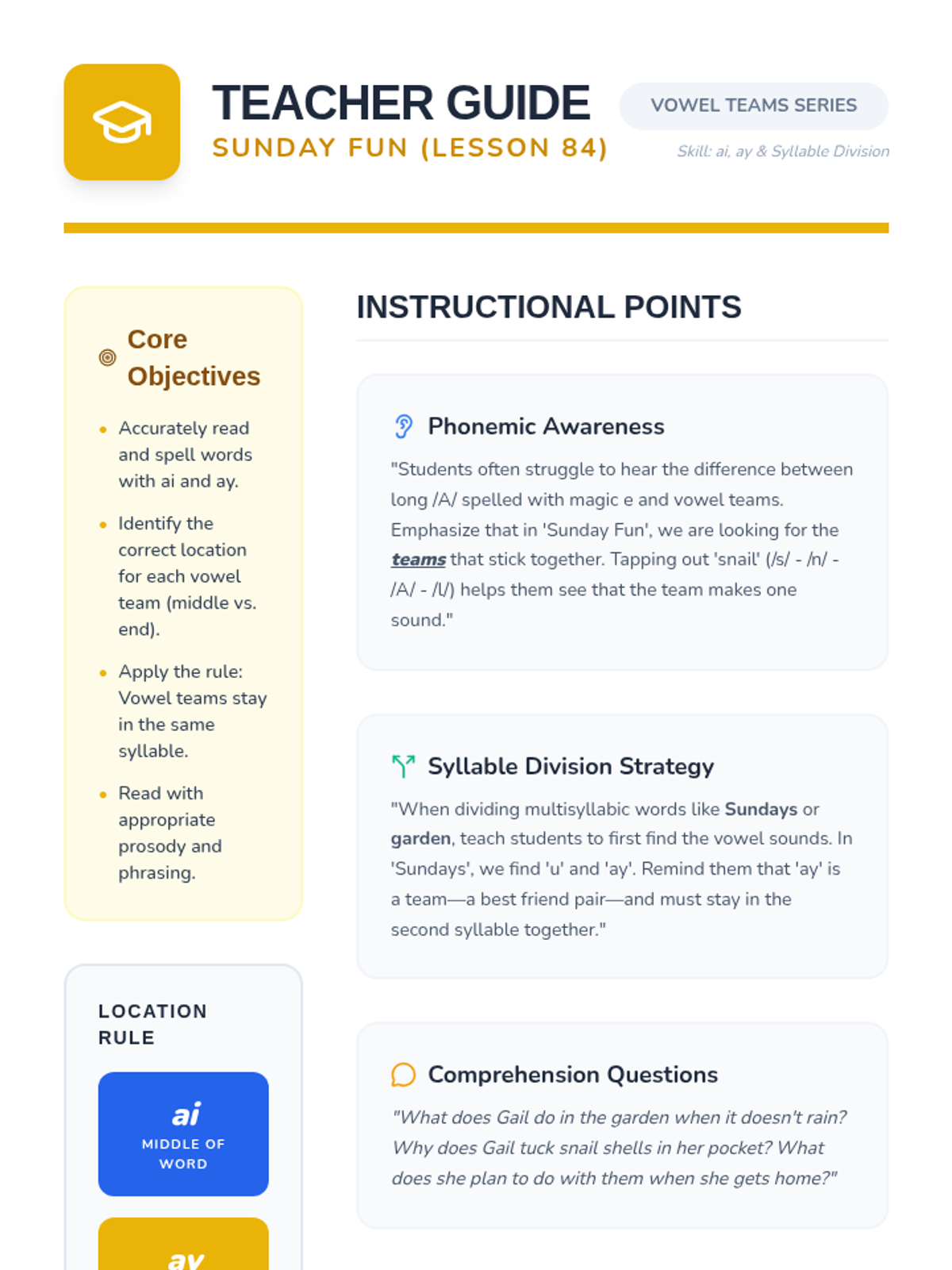
Focuses on the long 'a' vowel teams 'ai' and 'ay'. Students read about Gail's trip to her brother's farm on a Sunday, practicing words like 'trail', 'snail', 'spray', and 'clay' while learning syllable division rules for vowel teams.
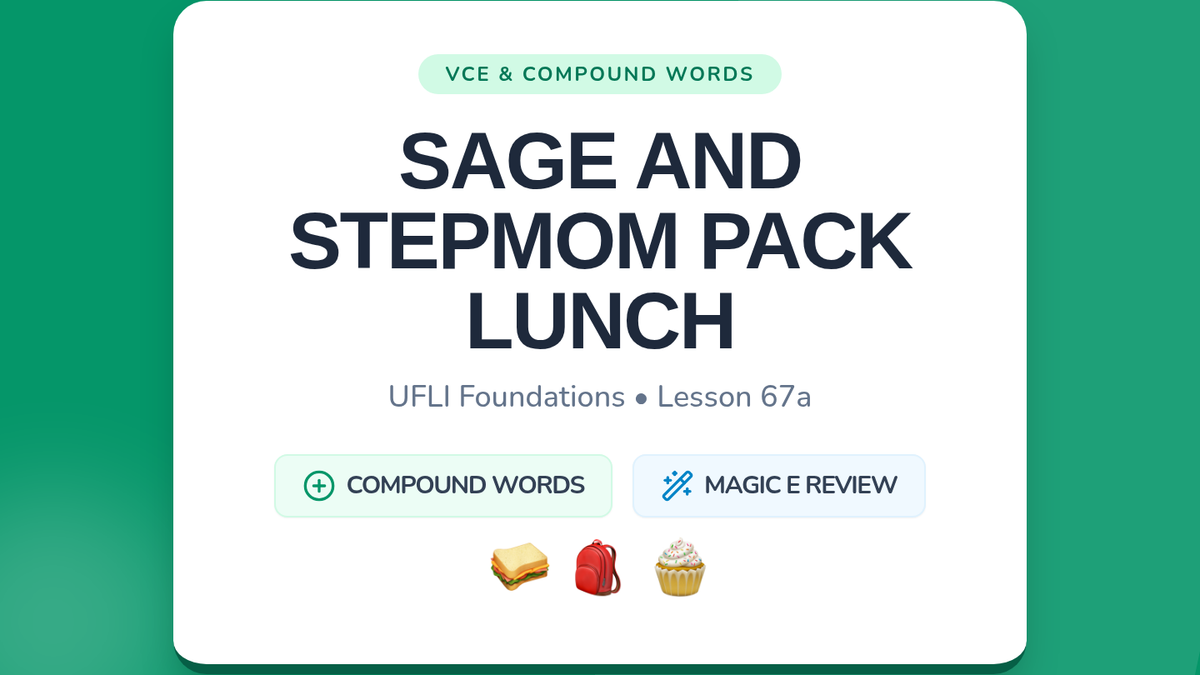
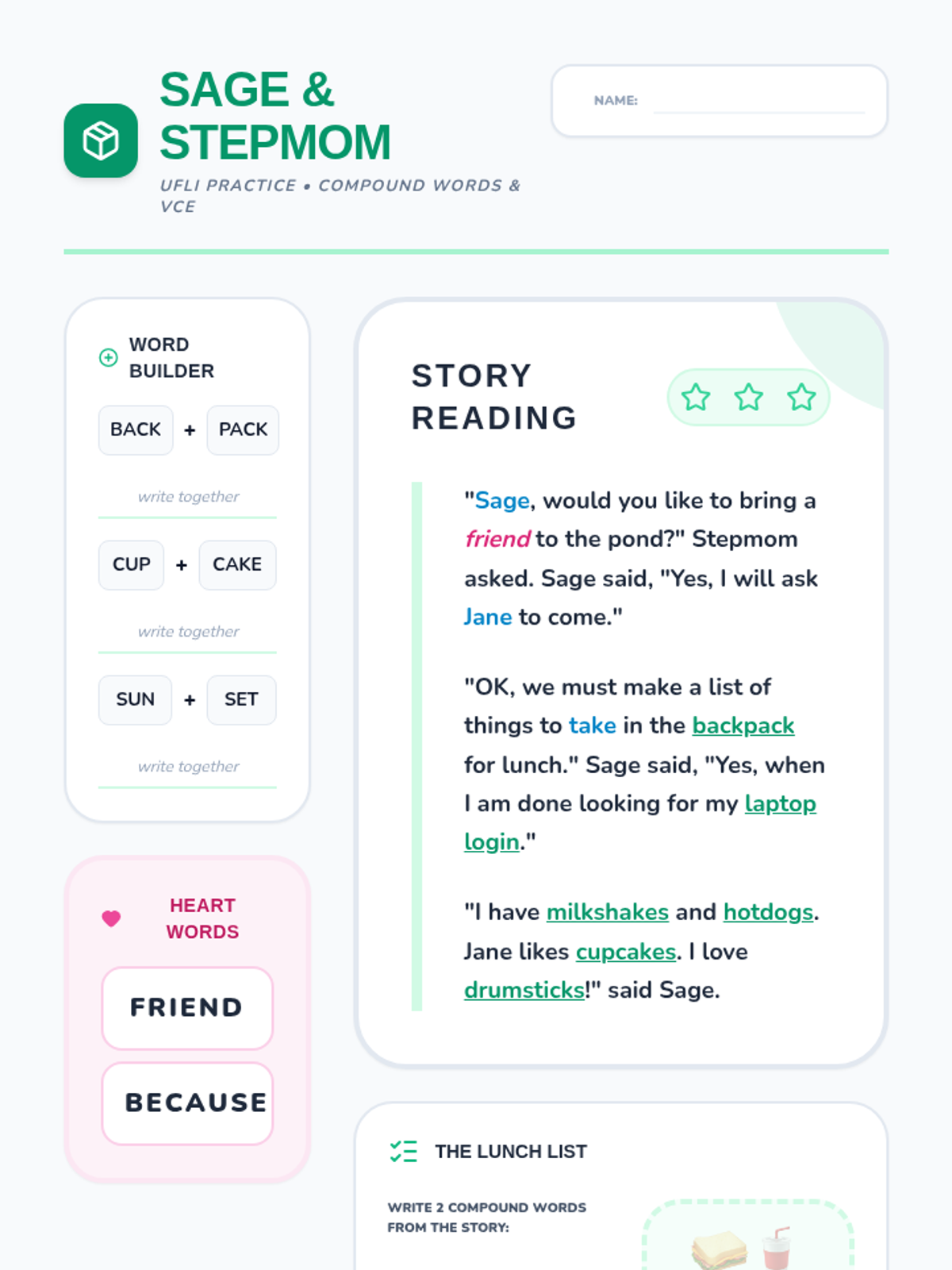
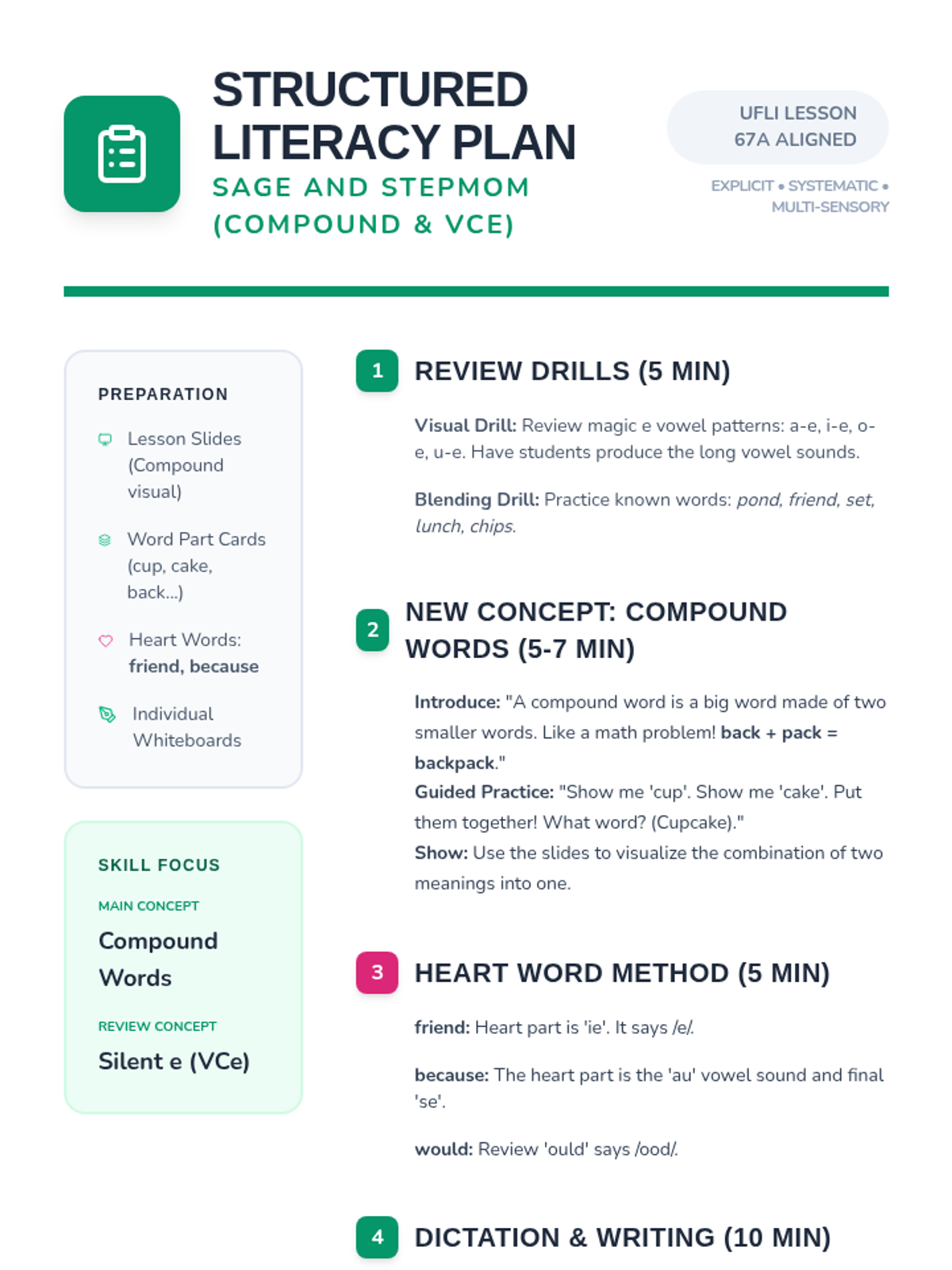
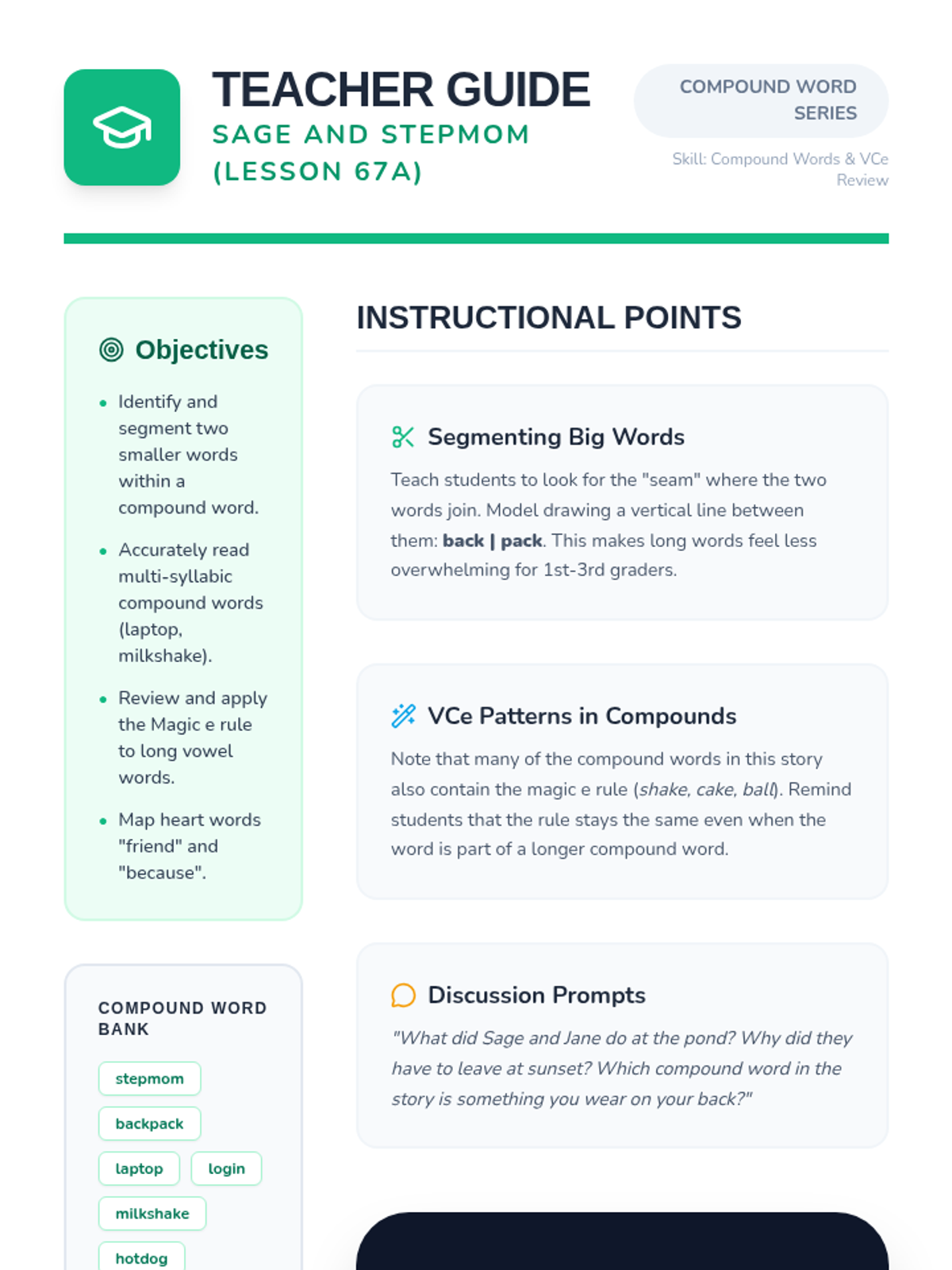
Focuses on compound words and a review of the silent 'e' (VCe) pattern. Students read about Sage and her stepmom packing a lunch for a trip to the pond, practicing words like 'backpack', 'laptop', 'milkshakes', and 'cupcakes'.
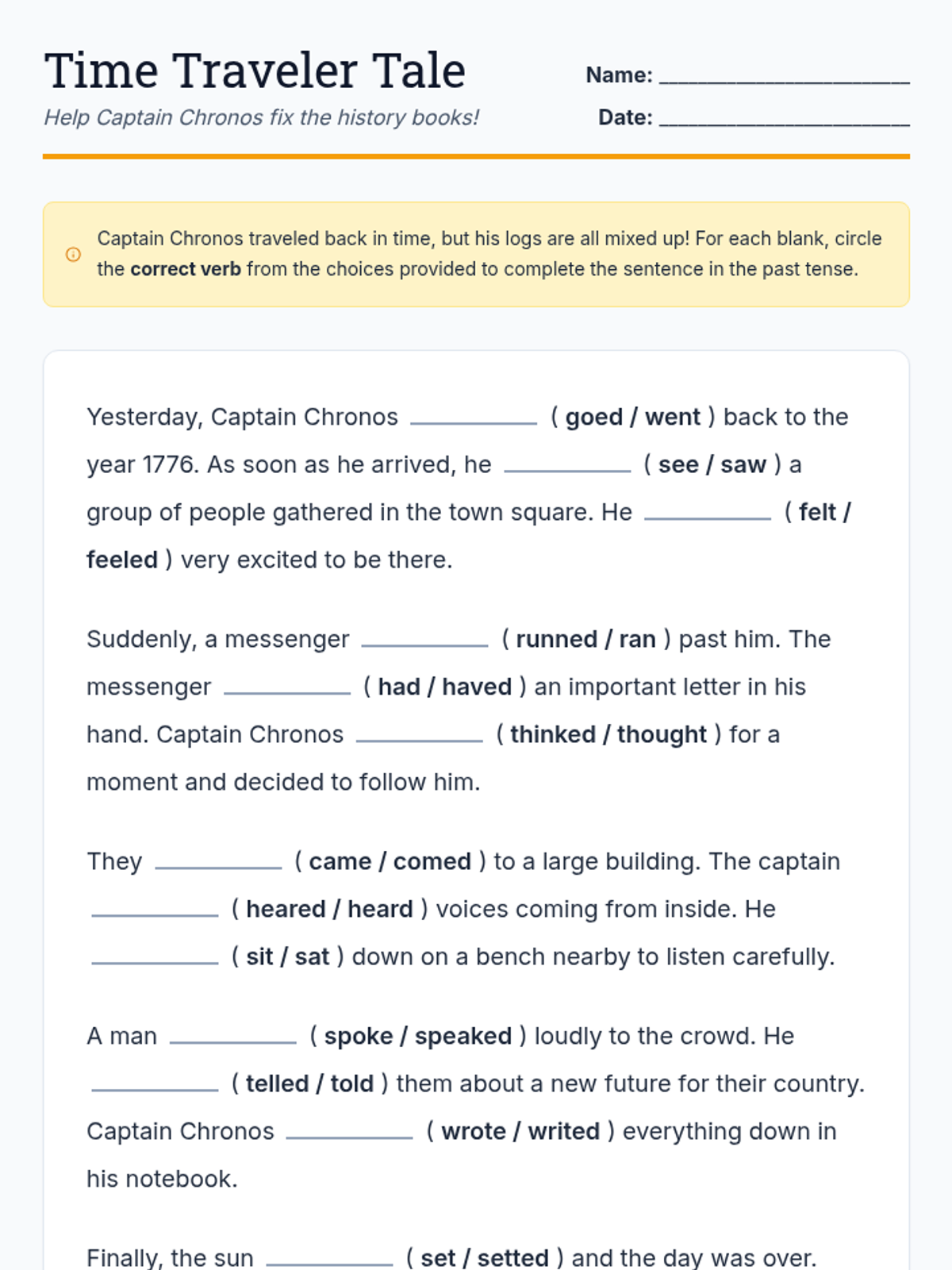
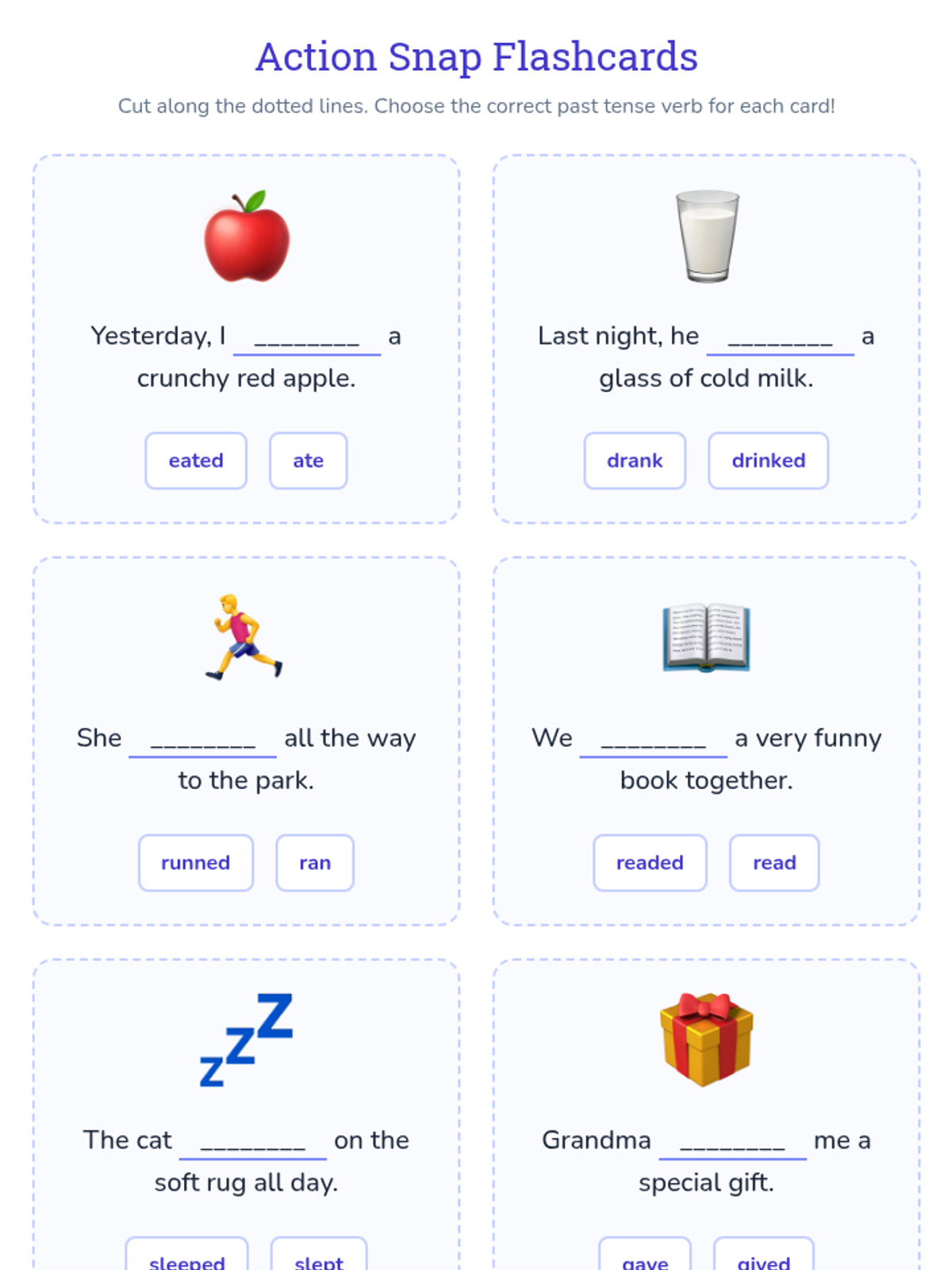
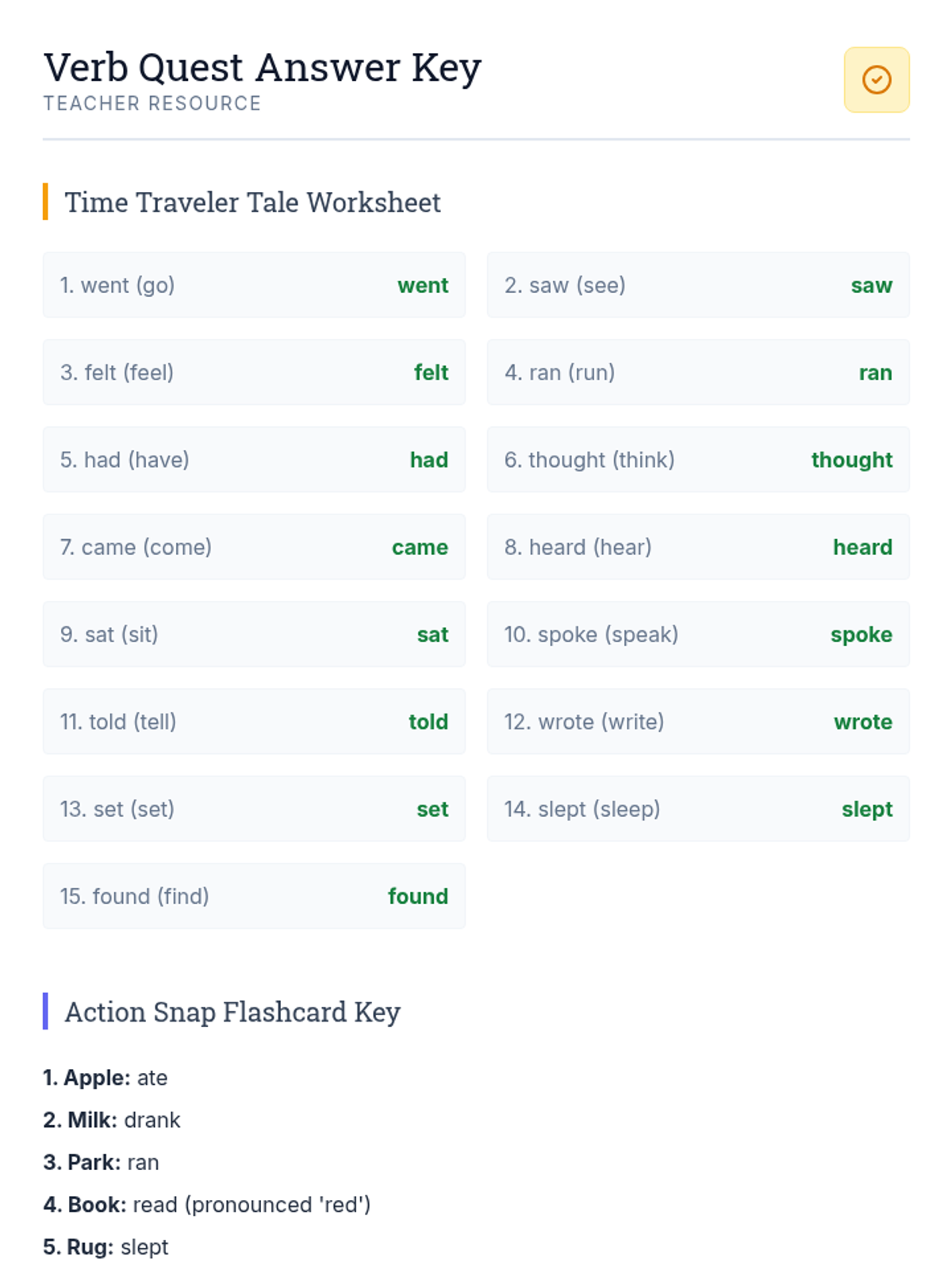
A focused practice session on irregular past tense verbs featuring a time-travel story and visual flashcards with supported choices.
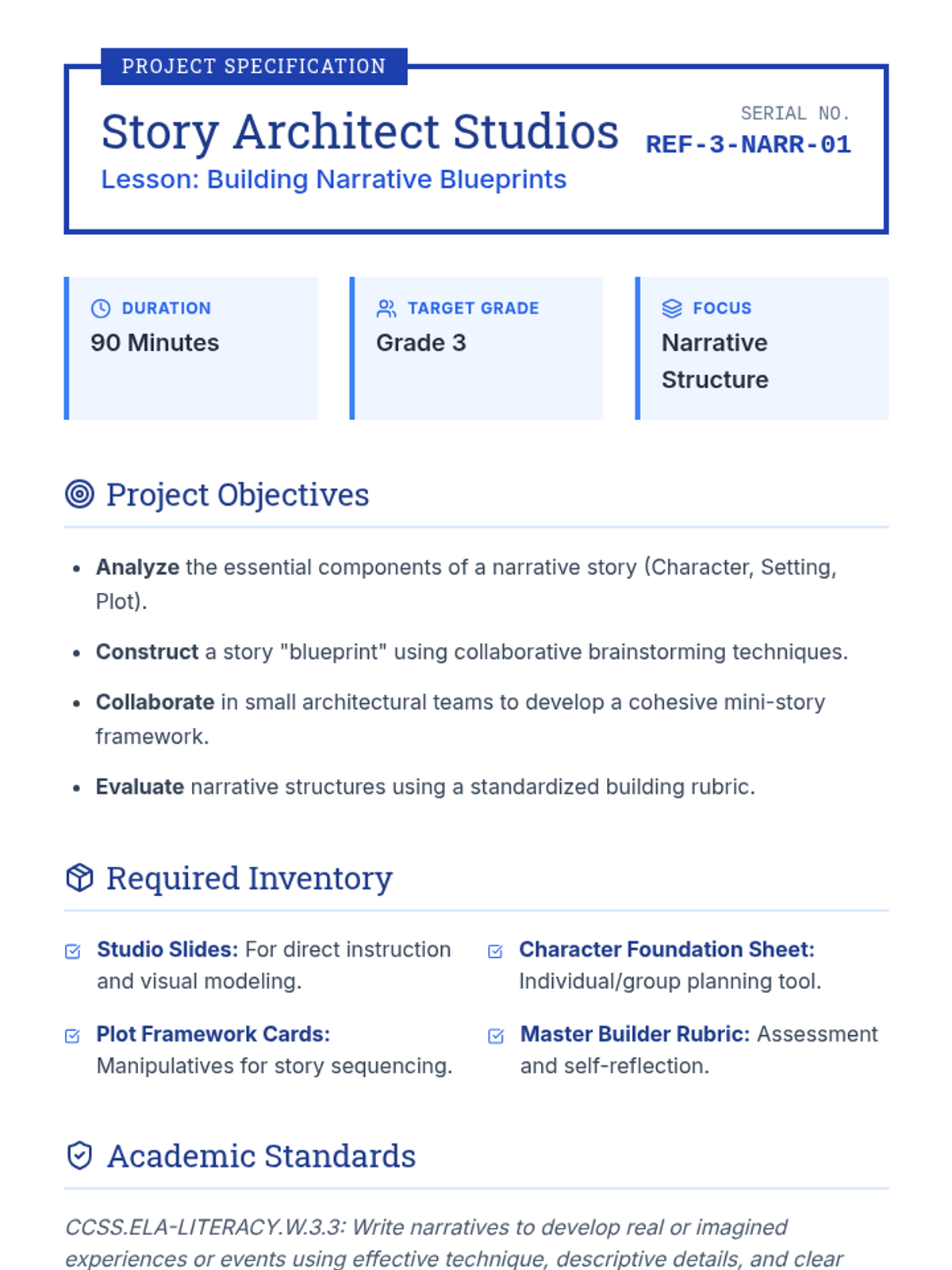
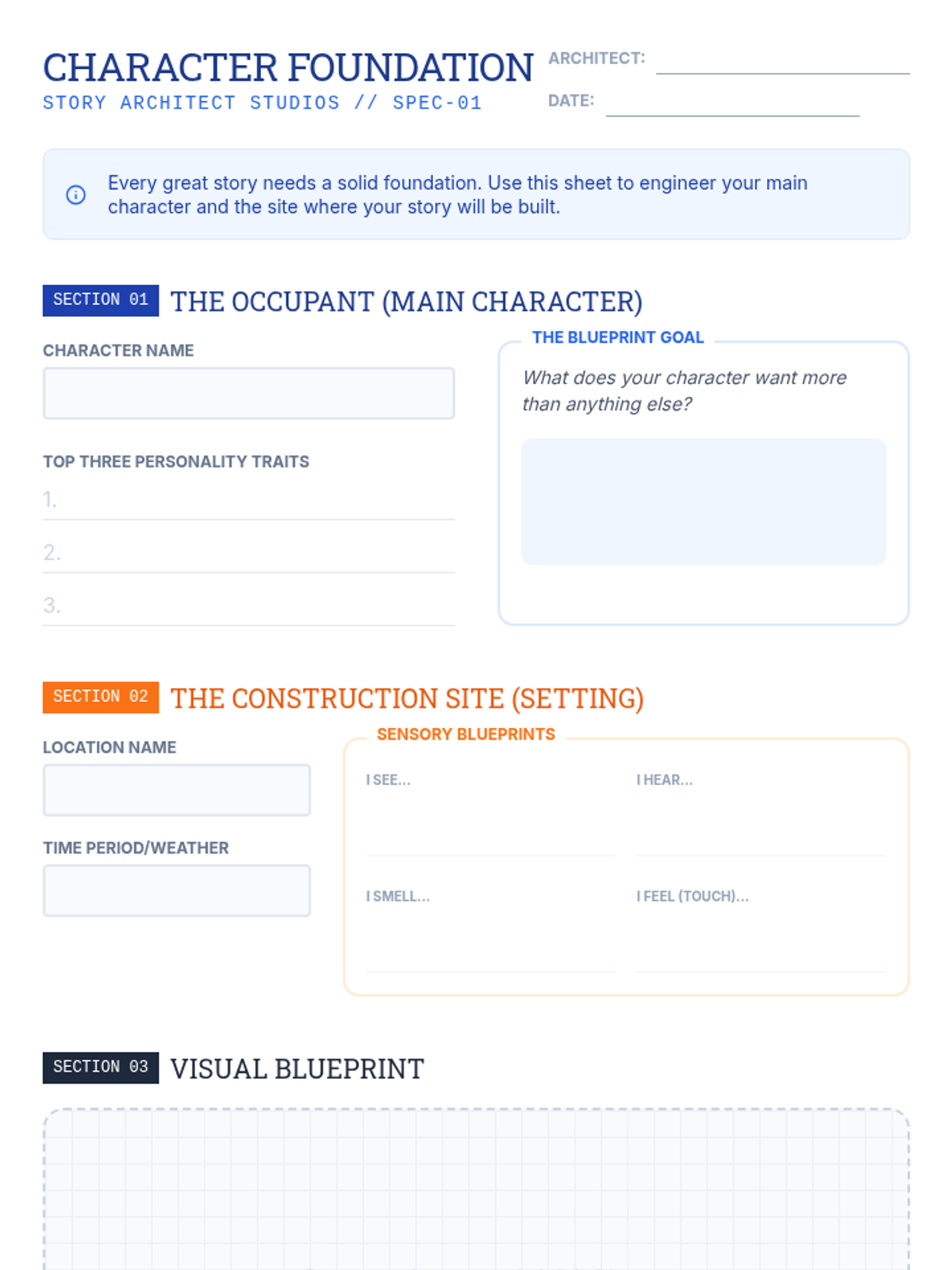
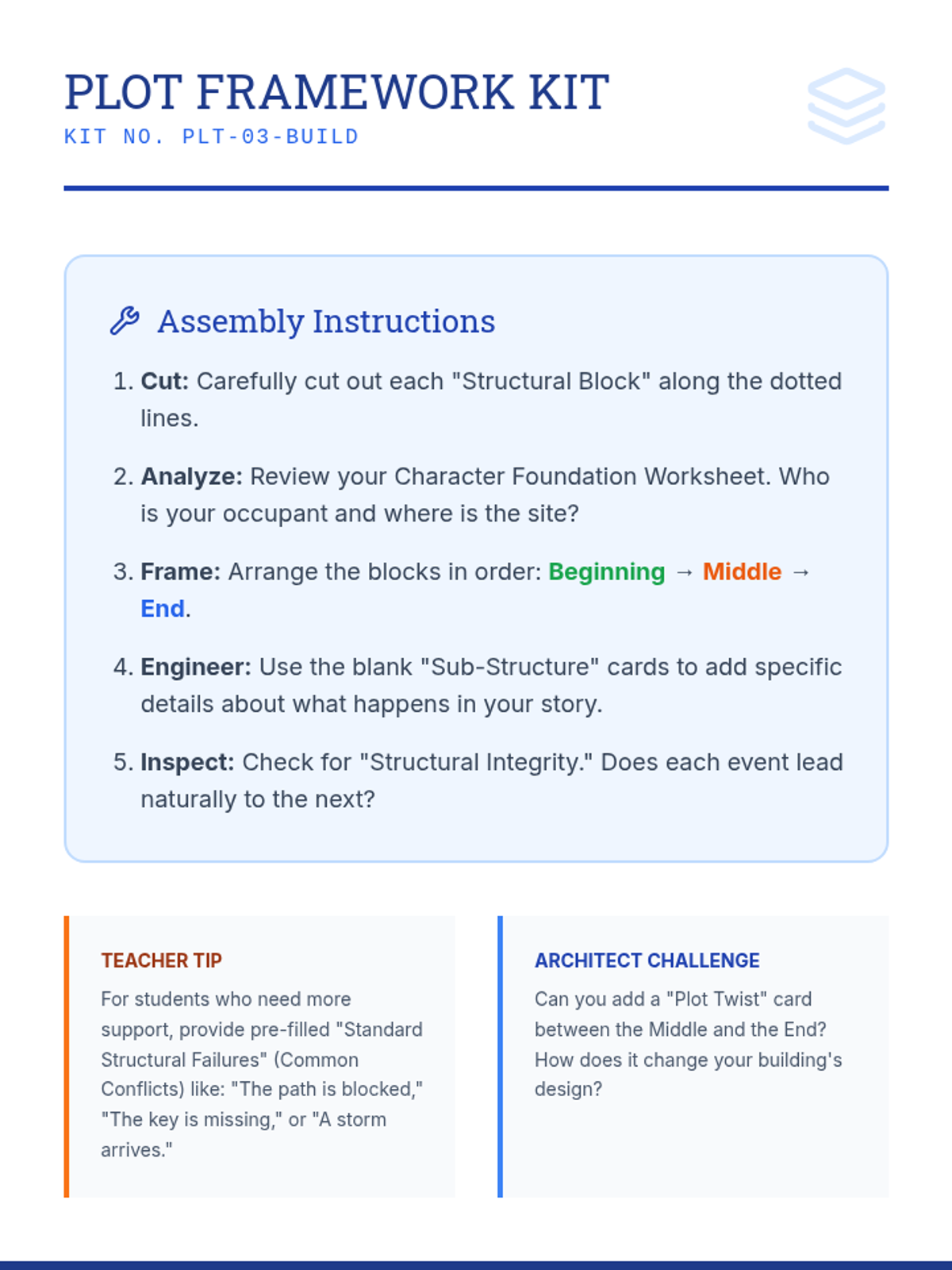
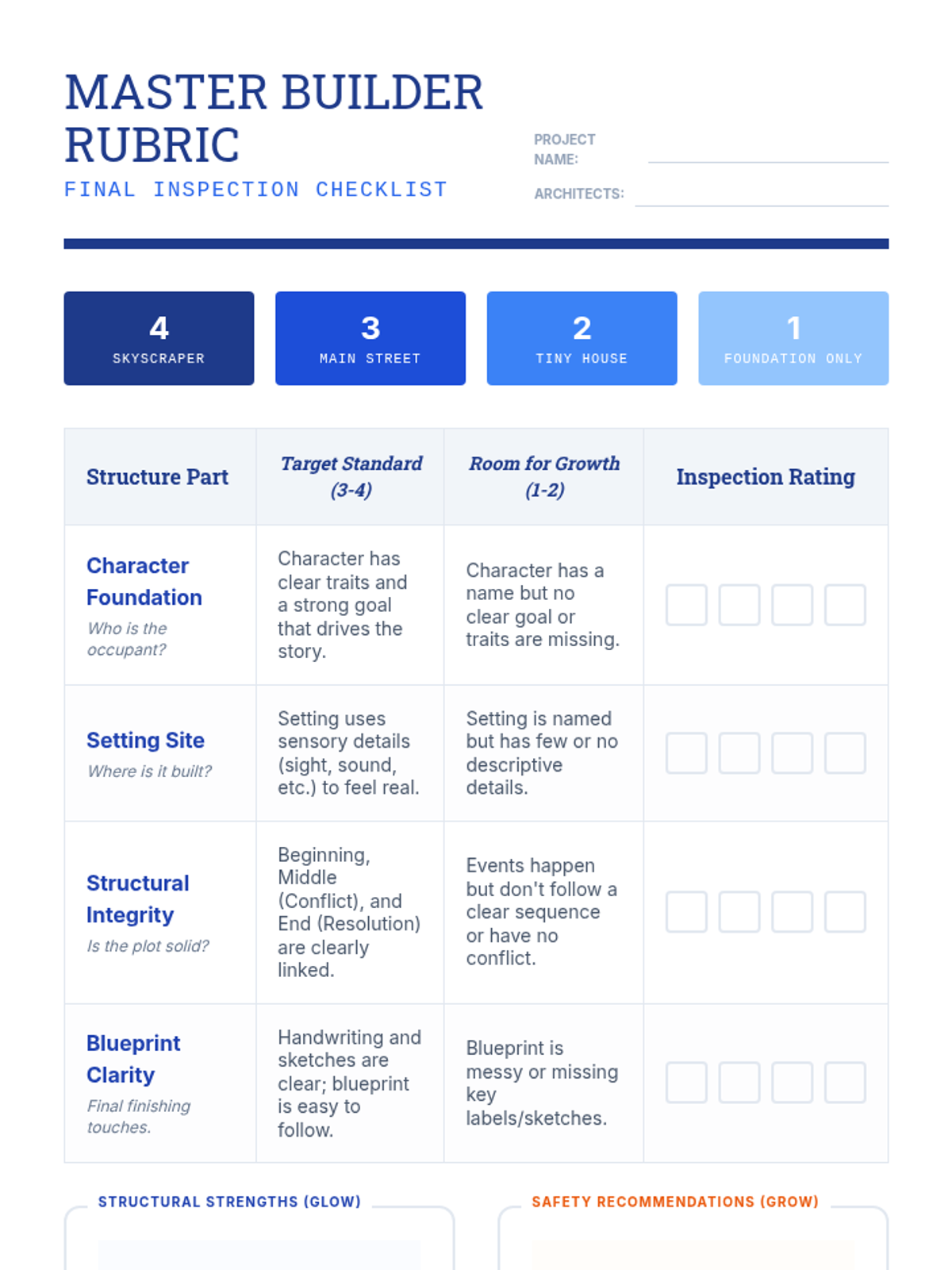
Students learn the essential elements of narrative writing by treating stories as structures that need a solid foundation, strong framing, and creative finishing touches.
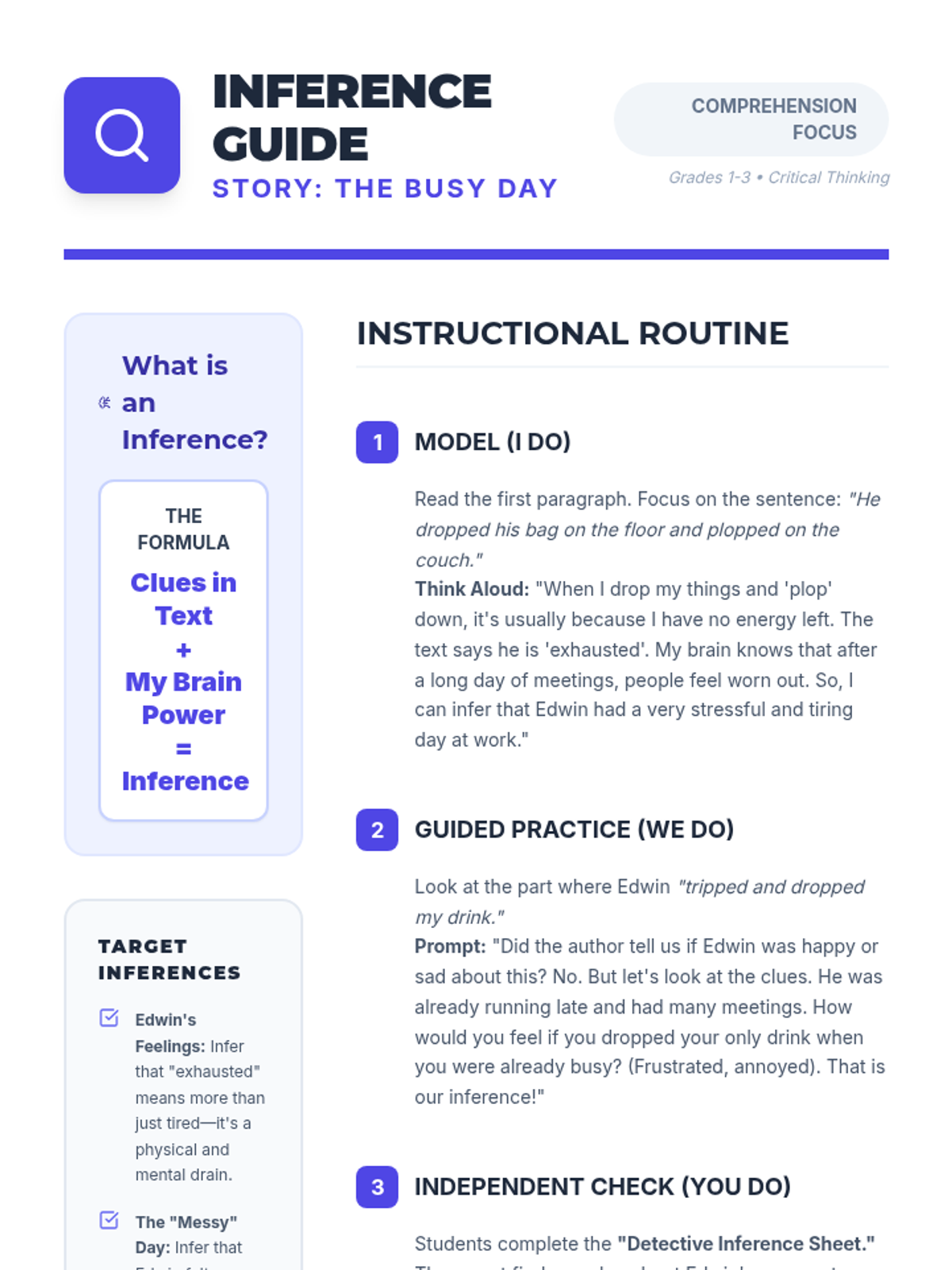
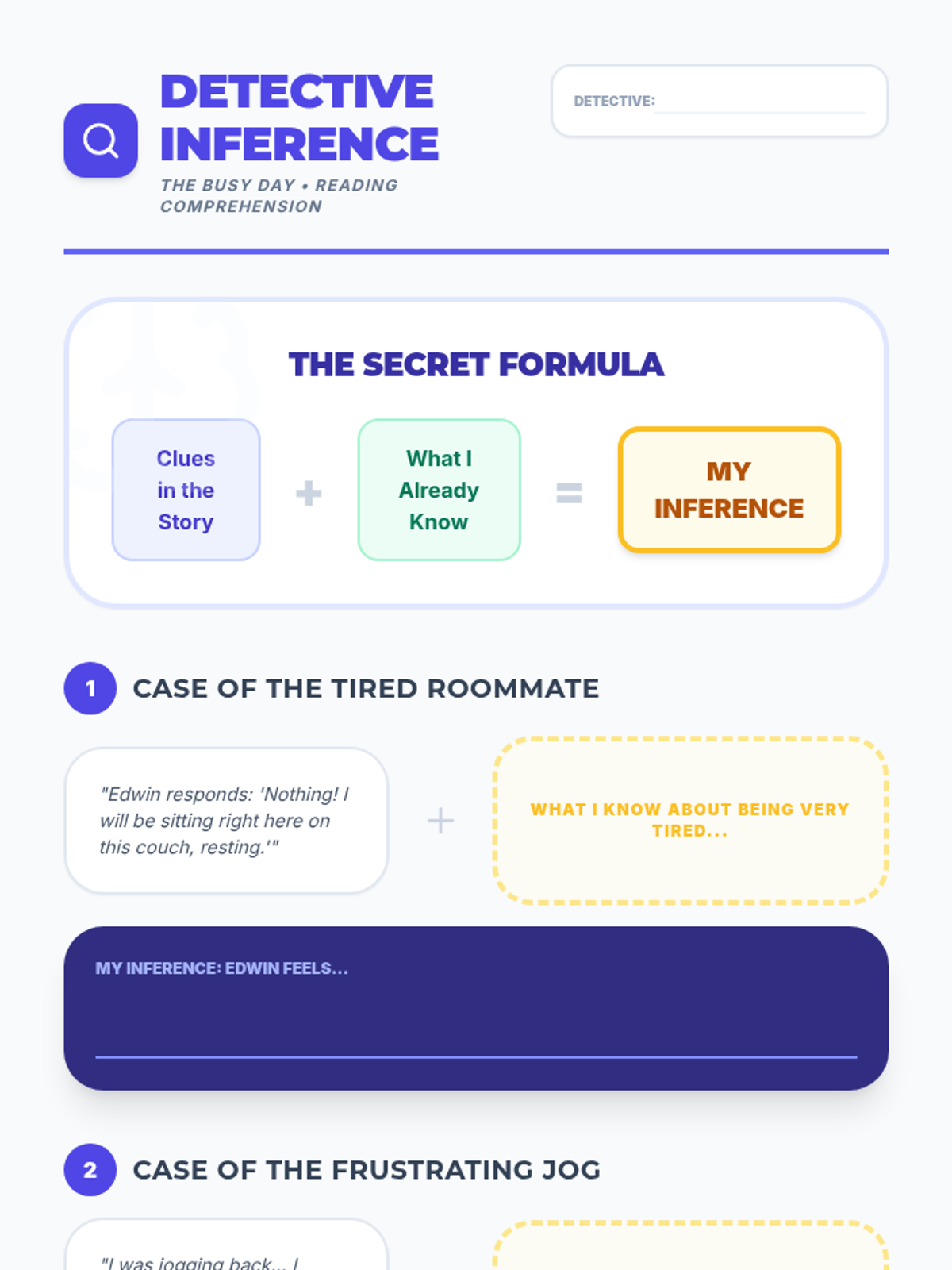
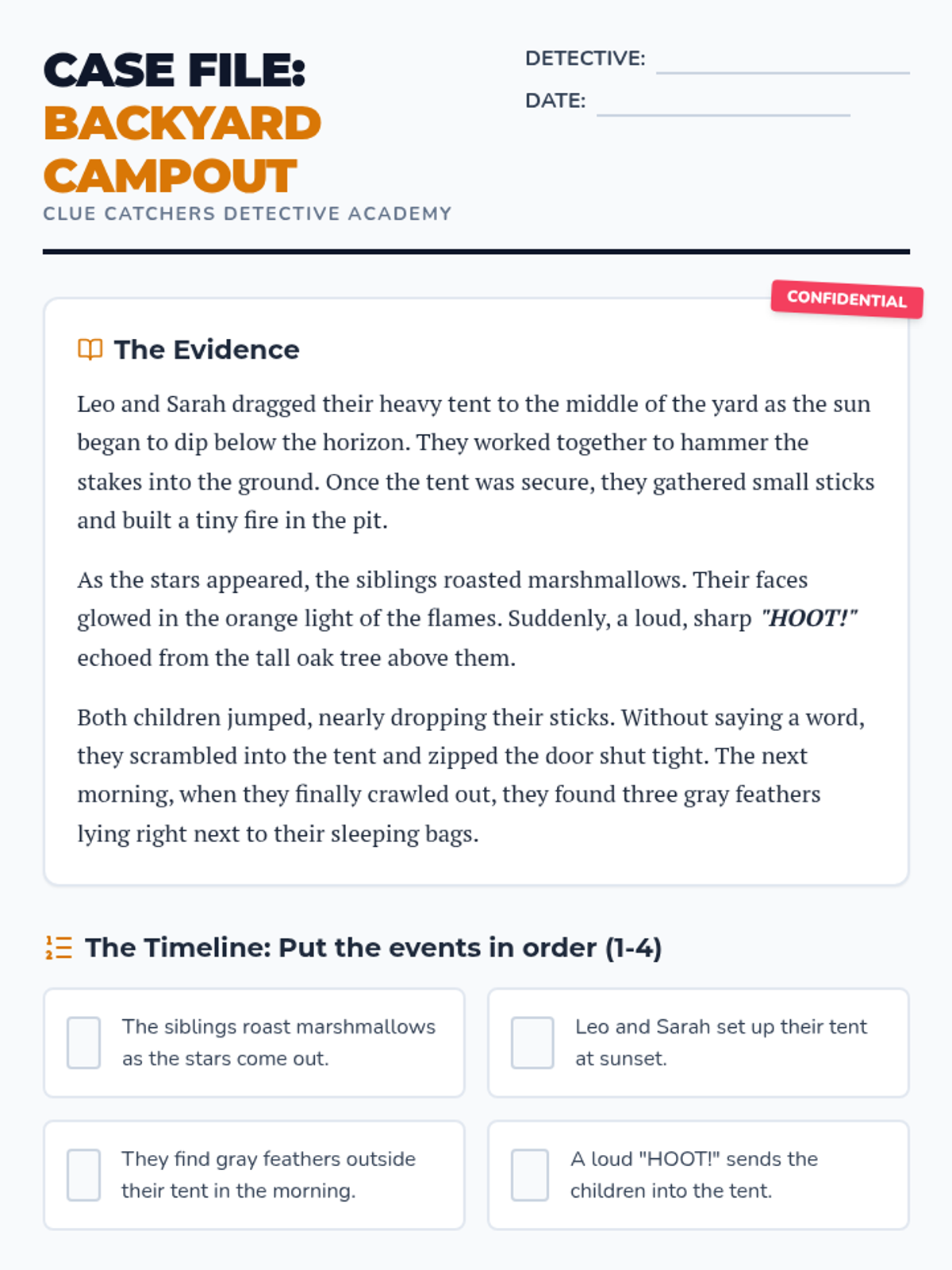
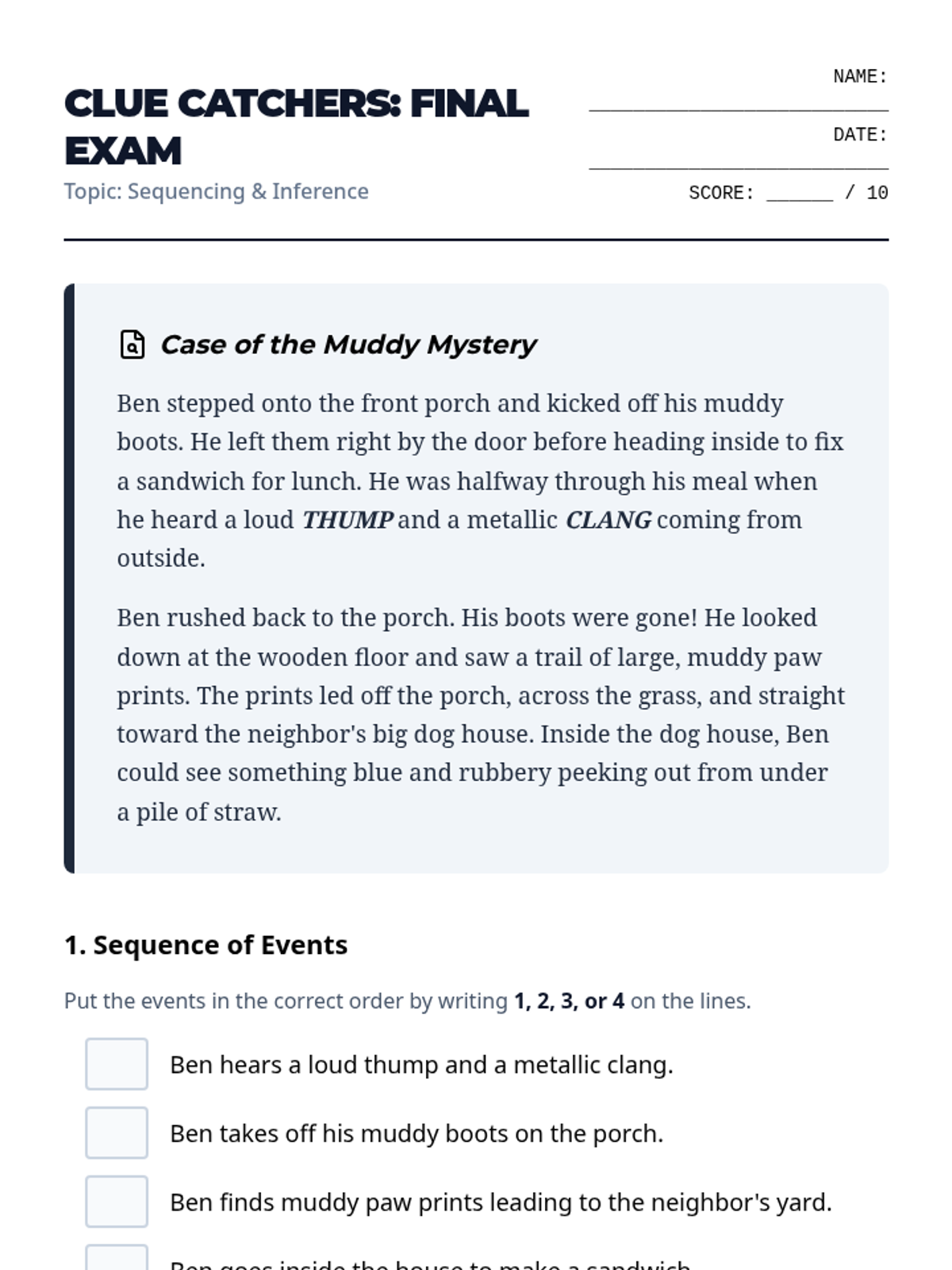
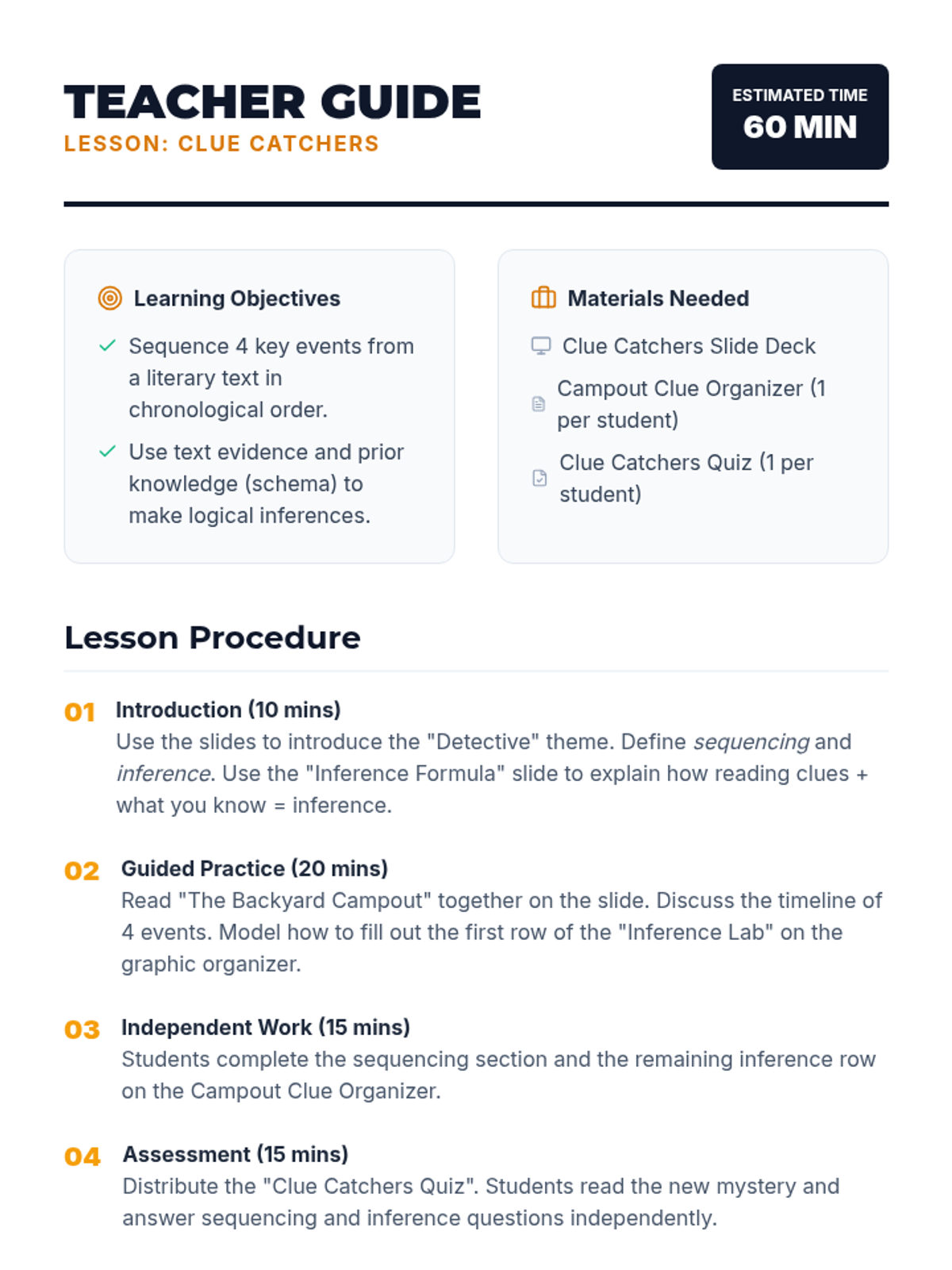
A detective-themed lesson where students practice sequencing four key story events and using clues to make logical inferences.
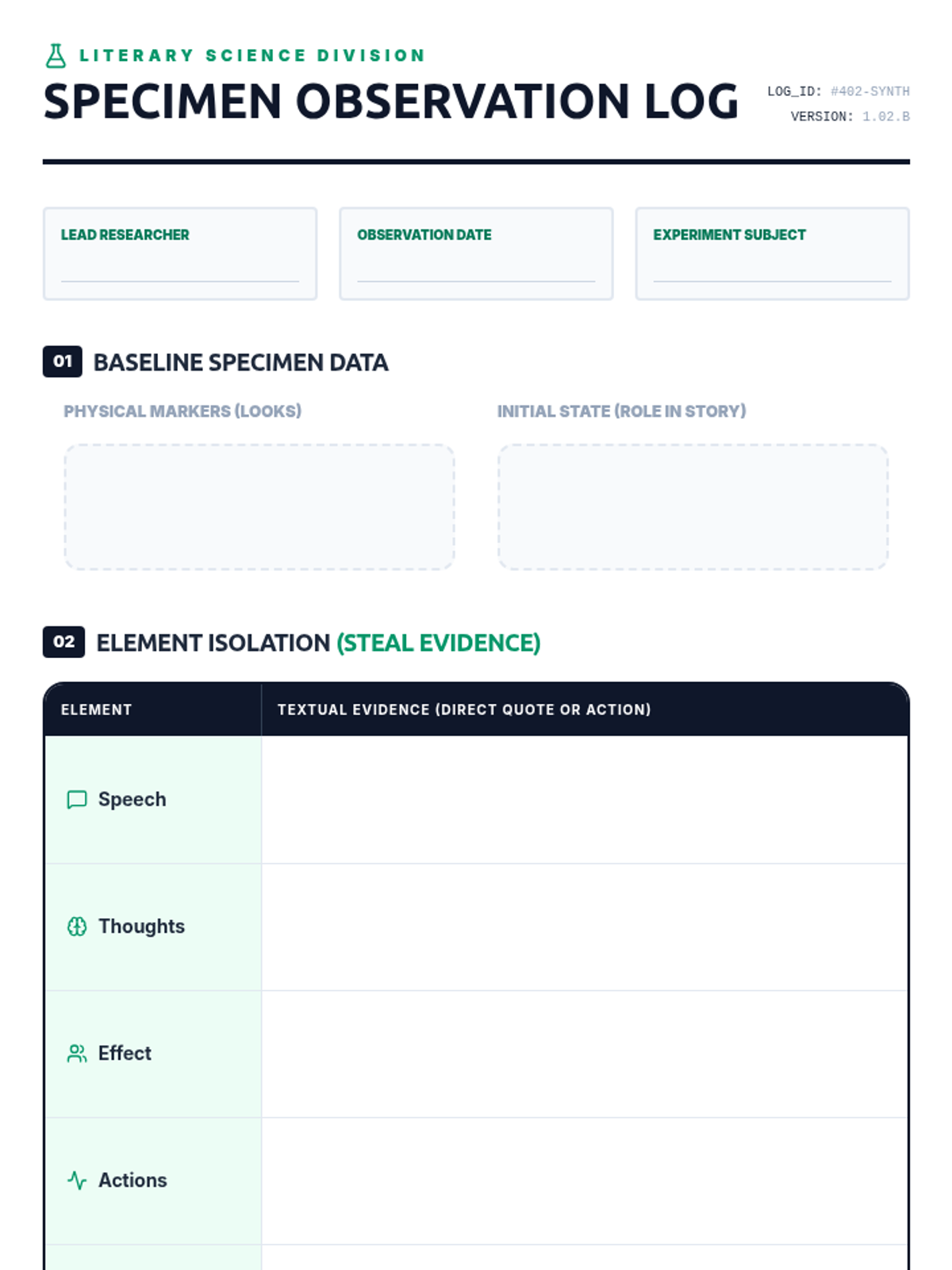
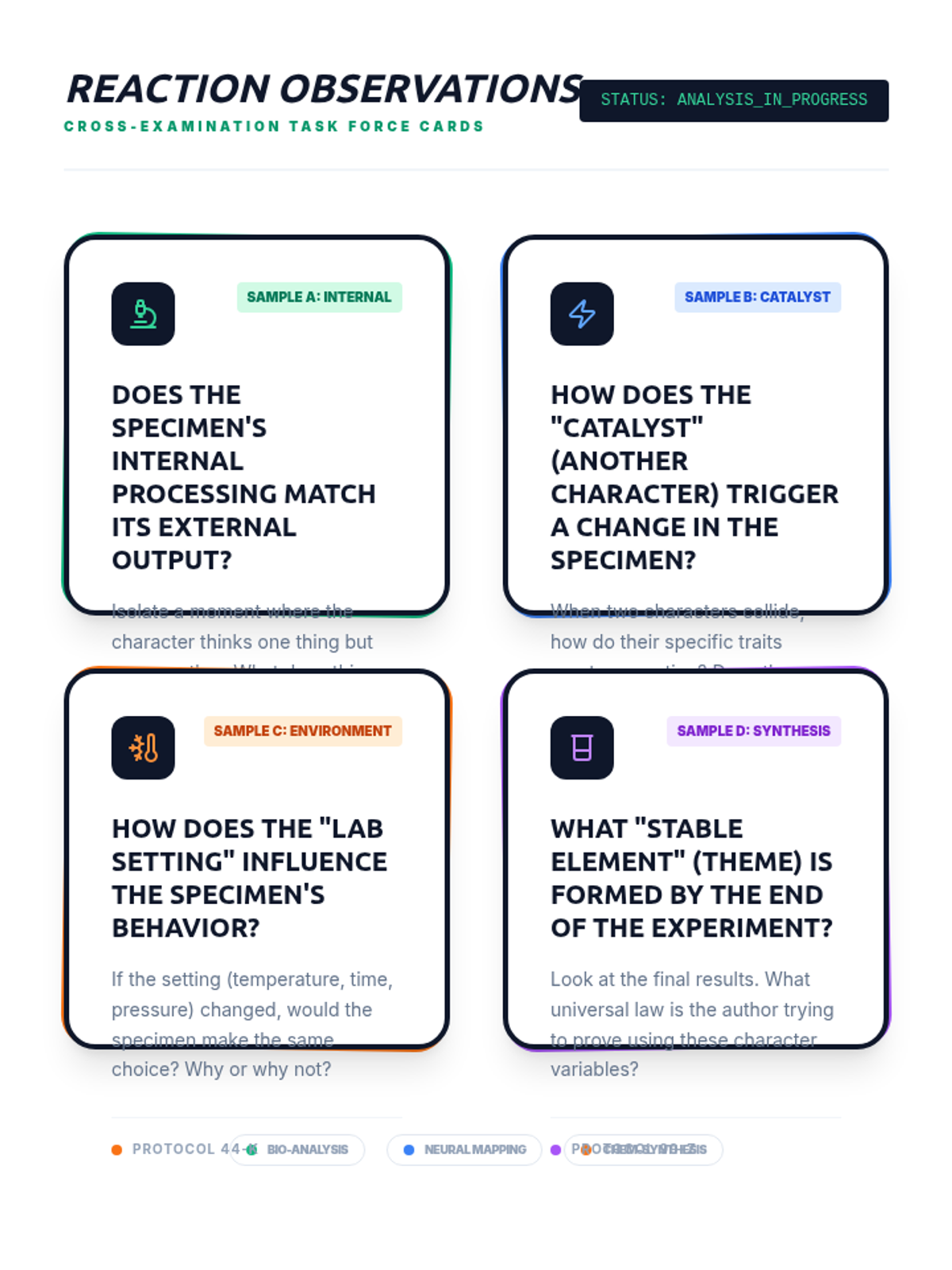
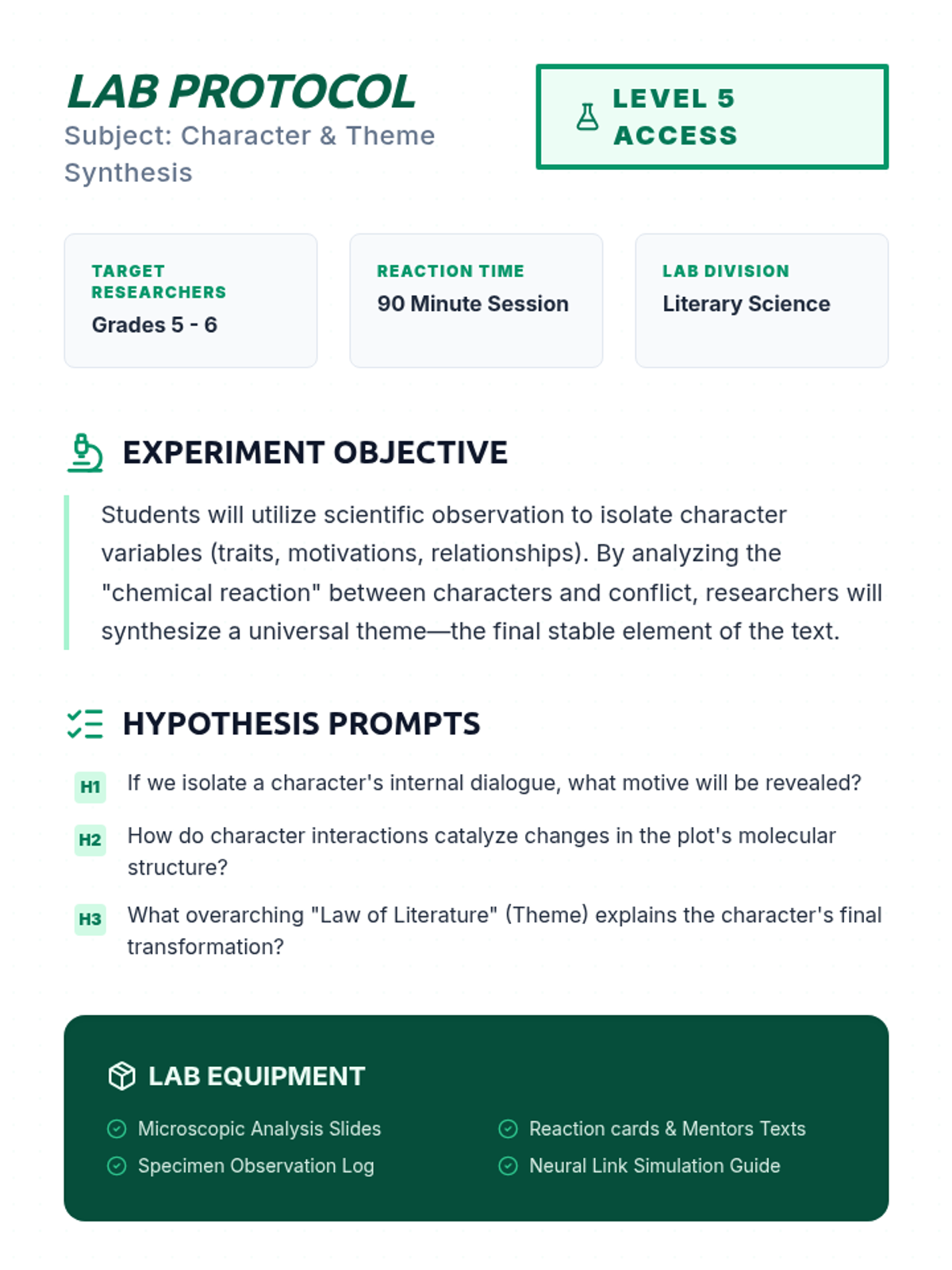
A scientific approach to character and theme analysis for 5th and 6th graders, where students act as lead researchers in a high-tech literary lab.
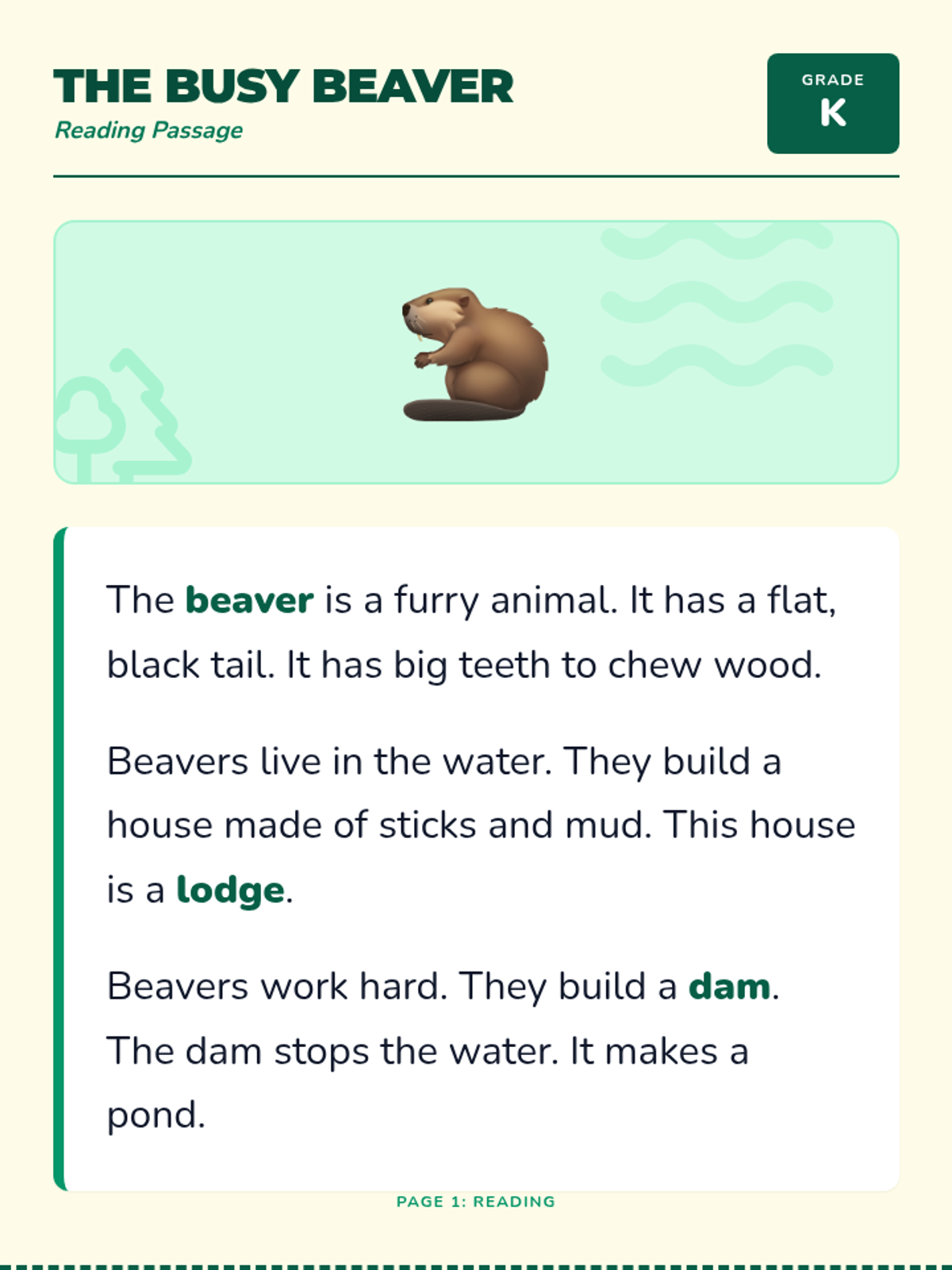
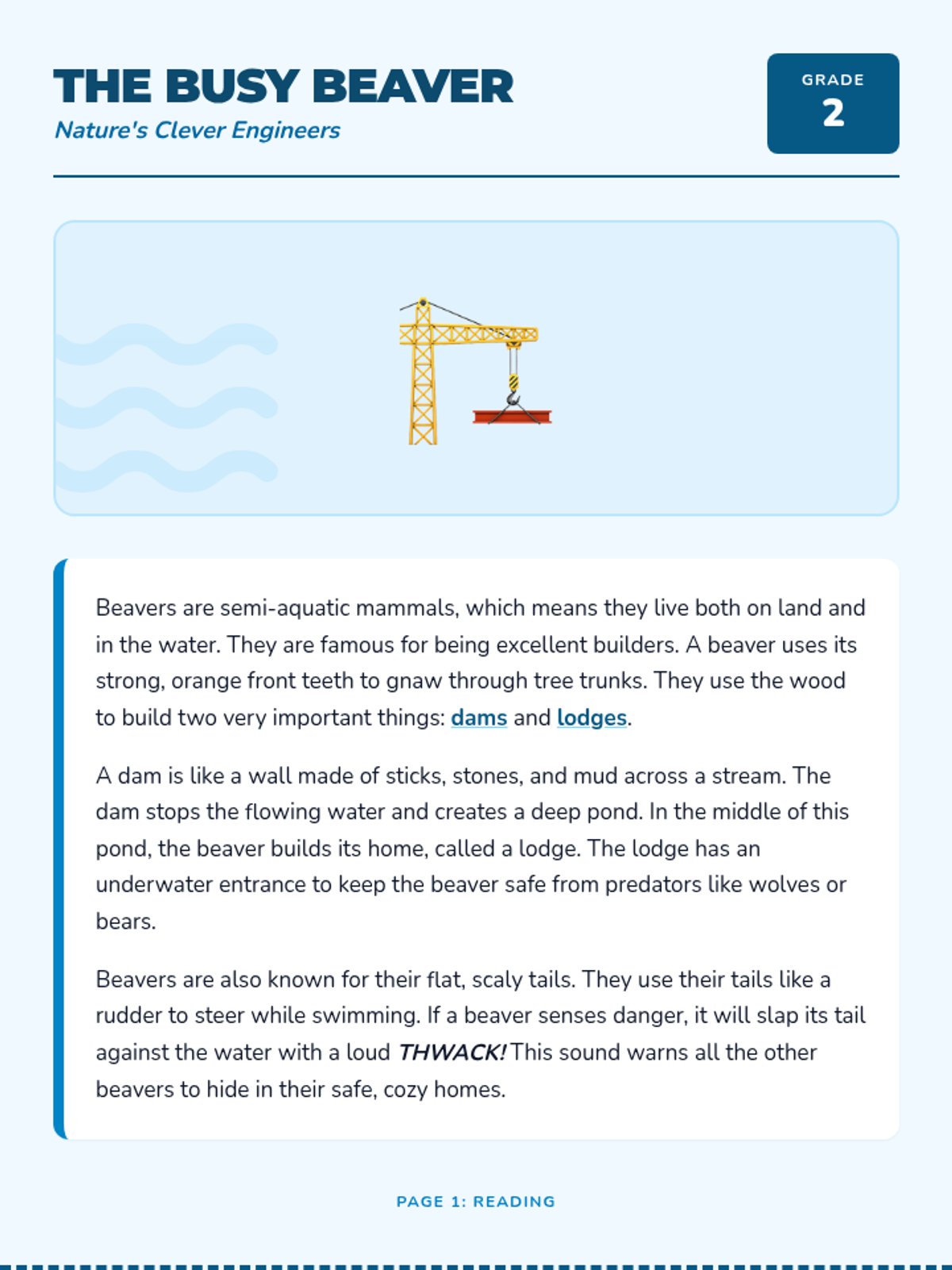
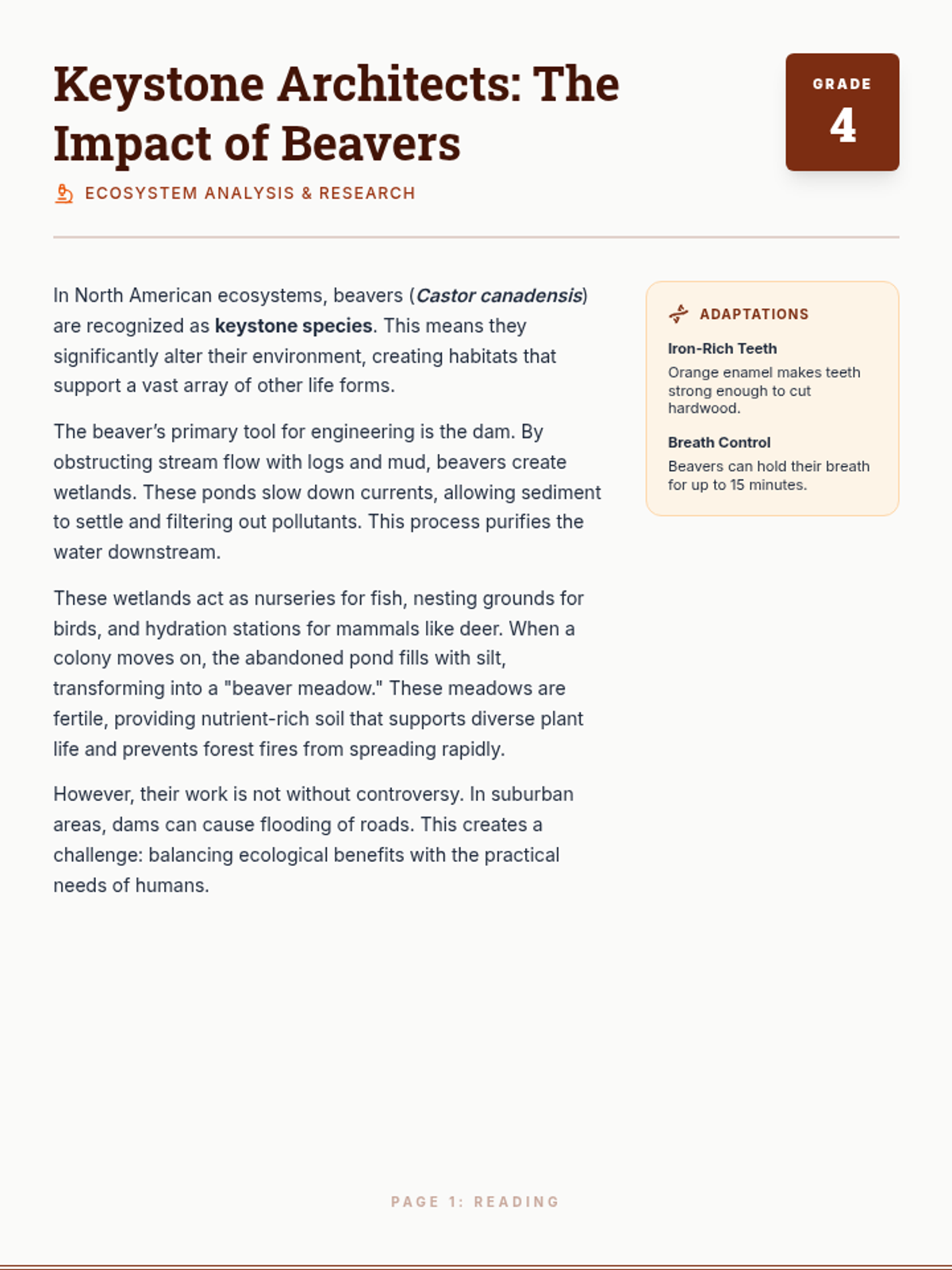
A focused study on beavers that builds reading comprehension, vocabulary, and analytical skills across various elementary grade levels.