A focused study on beavers that builds reading comprehension, vocabulary, and analytical skills across various elementary grade levels.
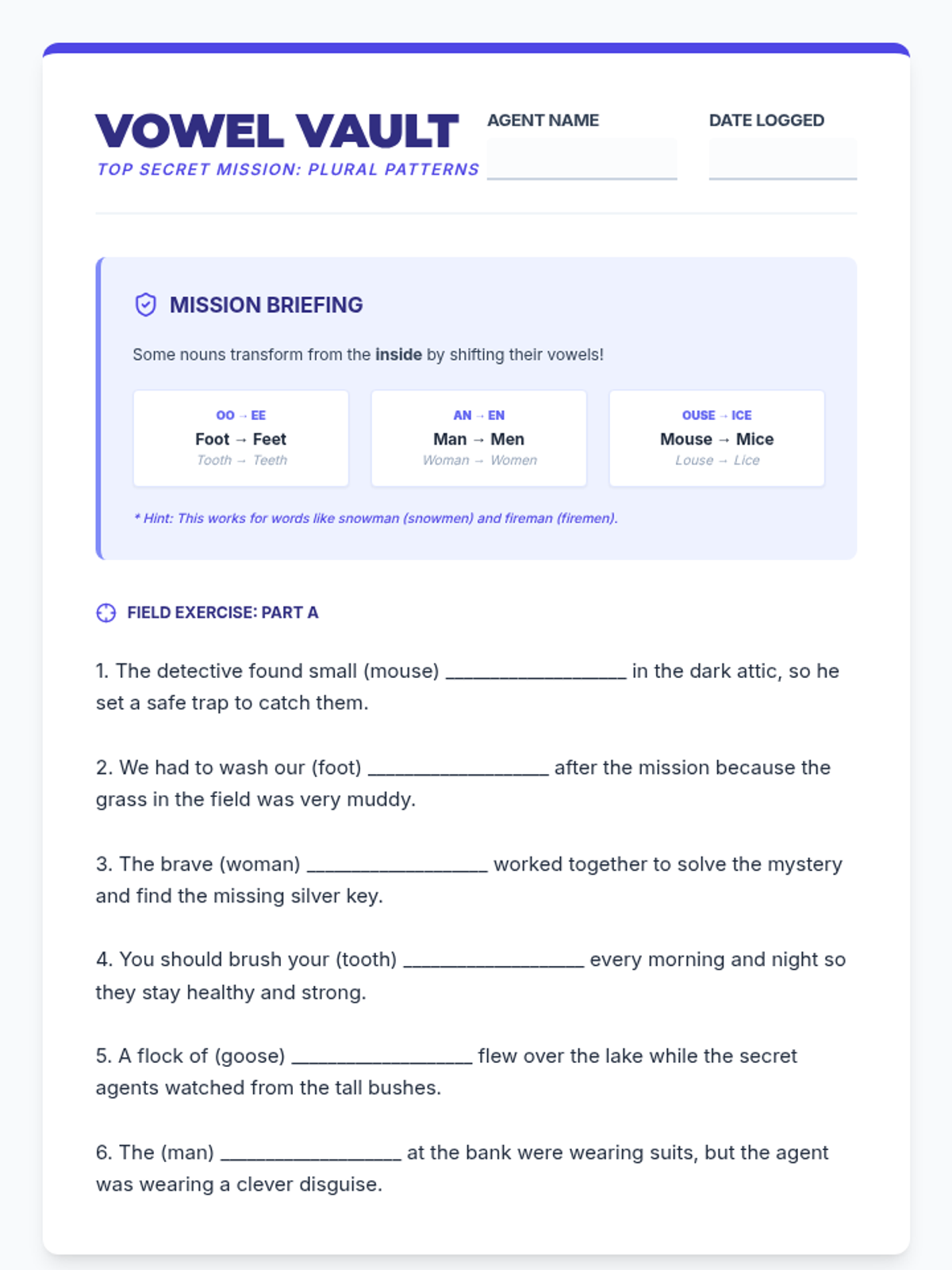
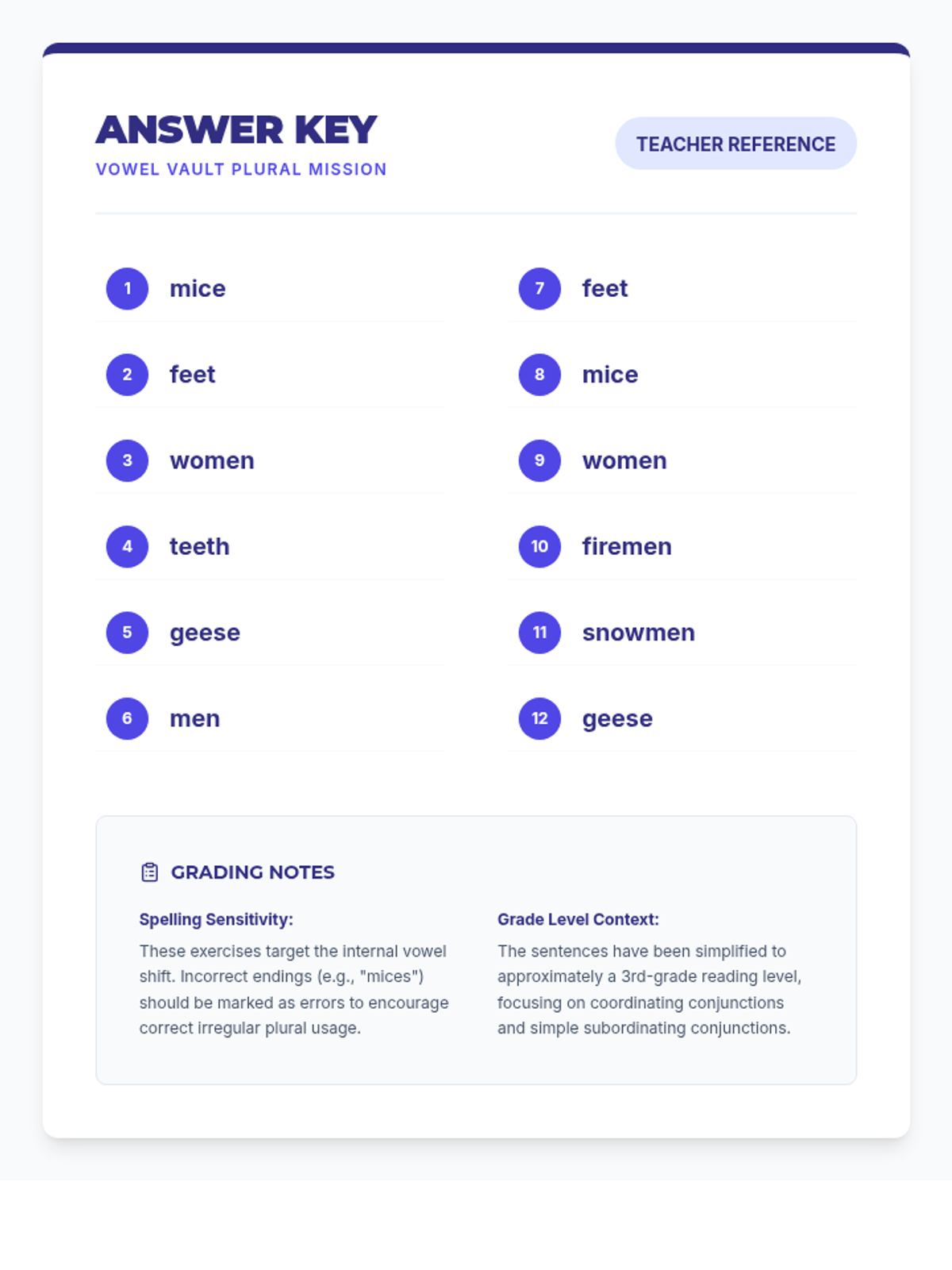
A focused lesson on irregular plural nouns that undergo vowel shifts, designed for 4th-grade students to master common internal spelling changes.
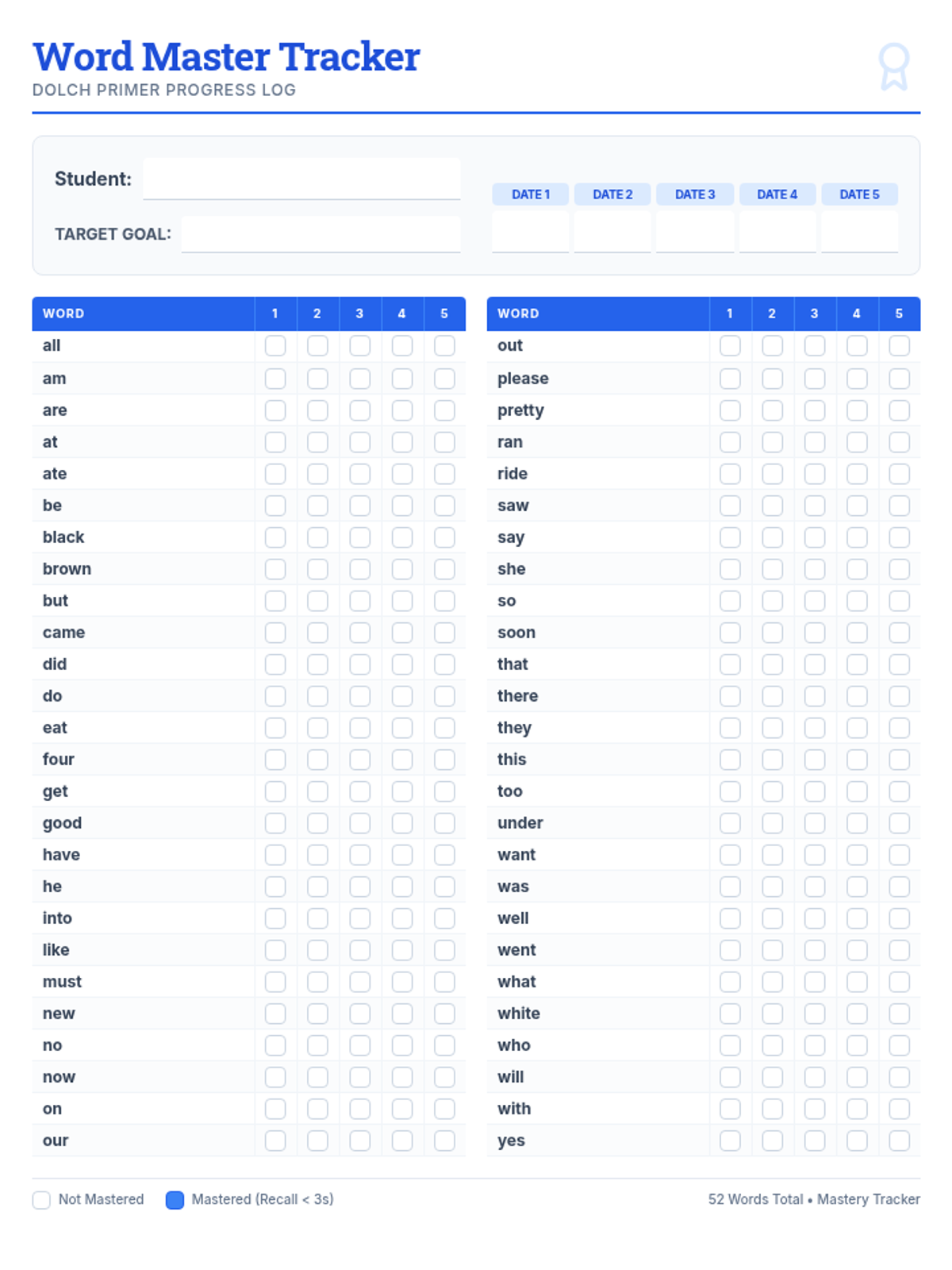
A comprehensive lesson for tracking and mastering the 52 Dolch Primer sight words, featuring progress monitoring and visual aids.
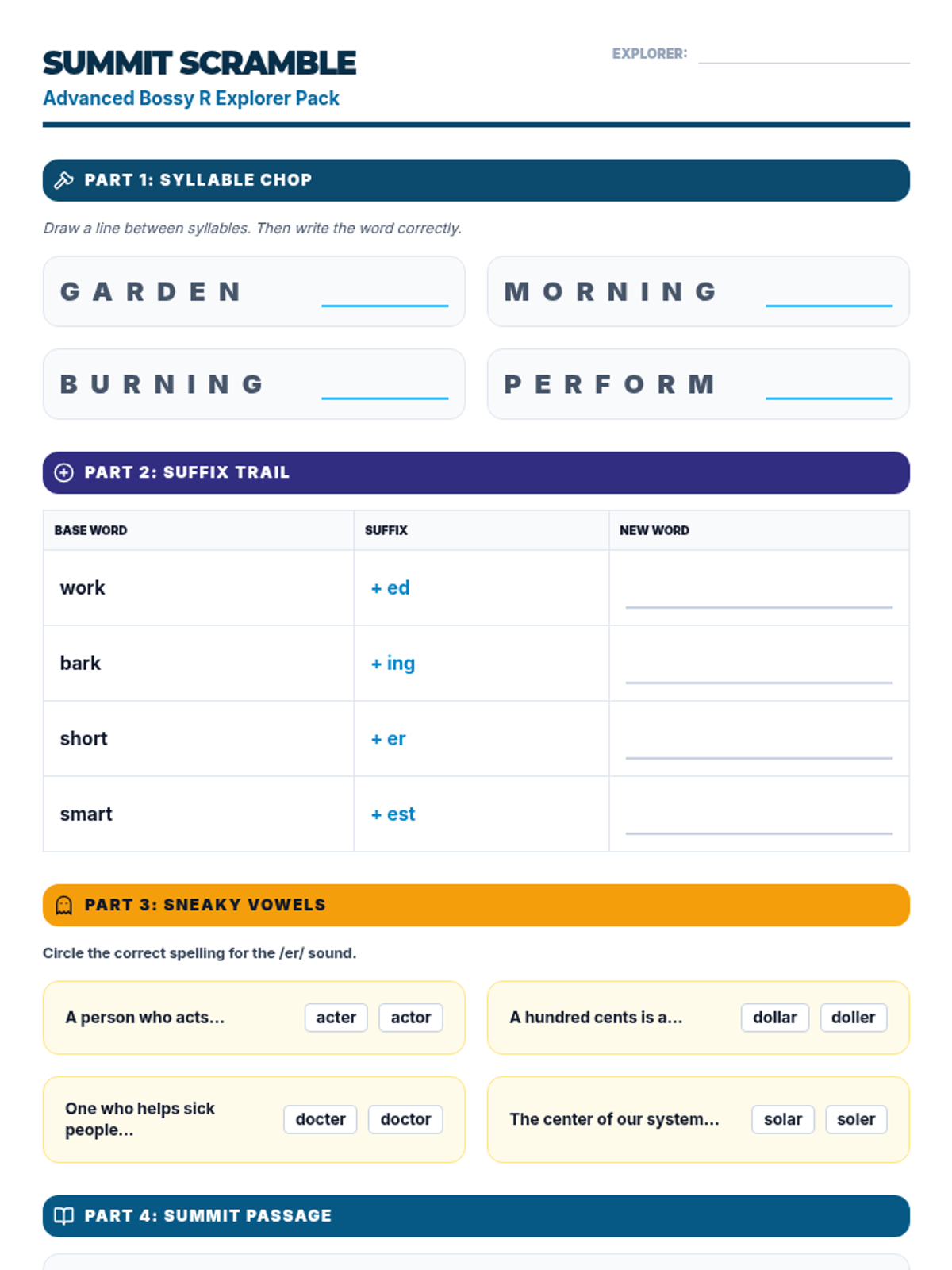
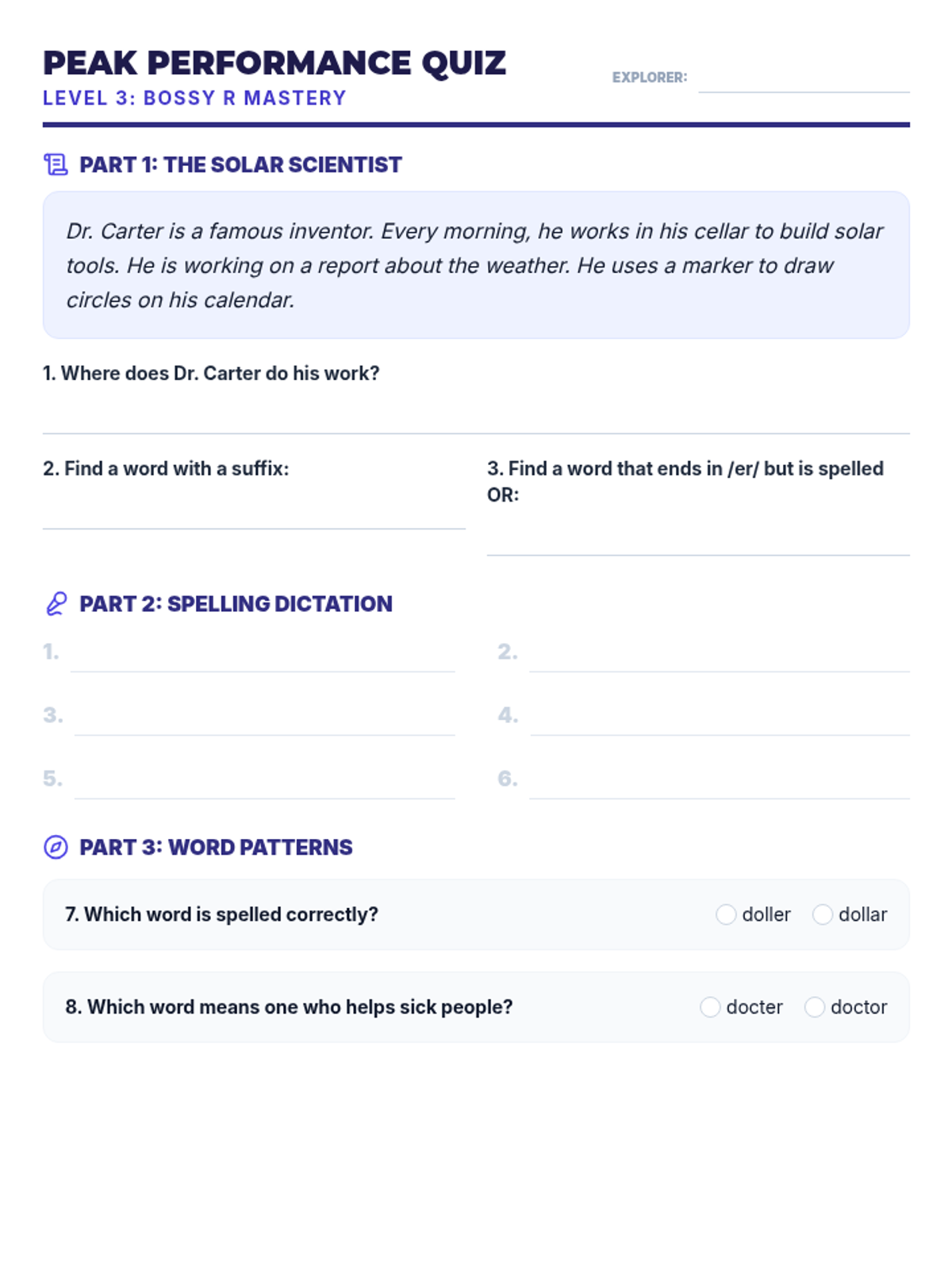
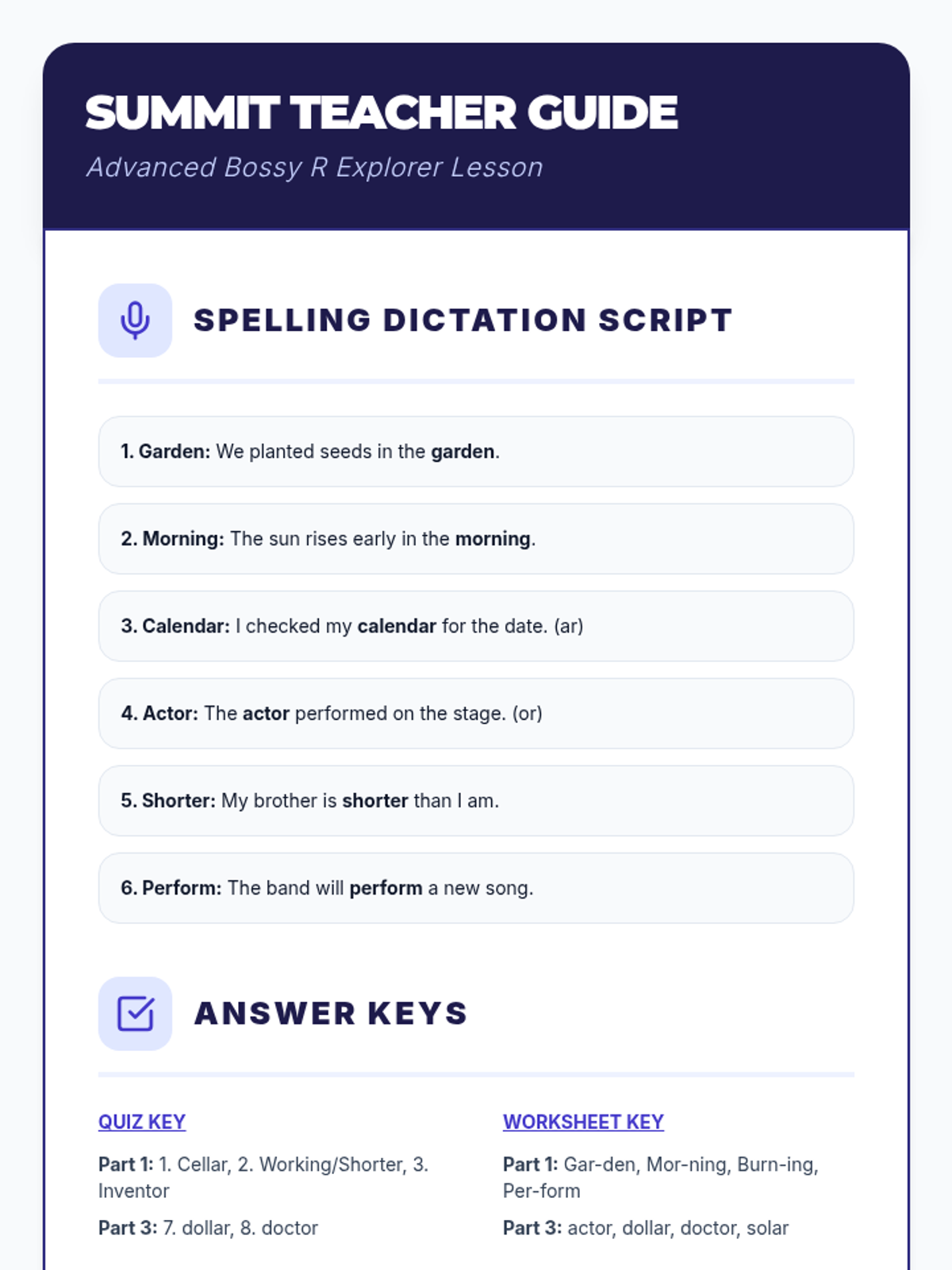
An advanced phonics lesson for 3rd grade focusing on multi-syllabic r-controlled vowel words, unstressed vowel sounds (ar, or as /er/), and adding suffixes to r-controlled base words.
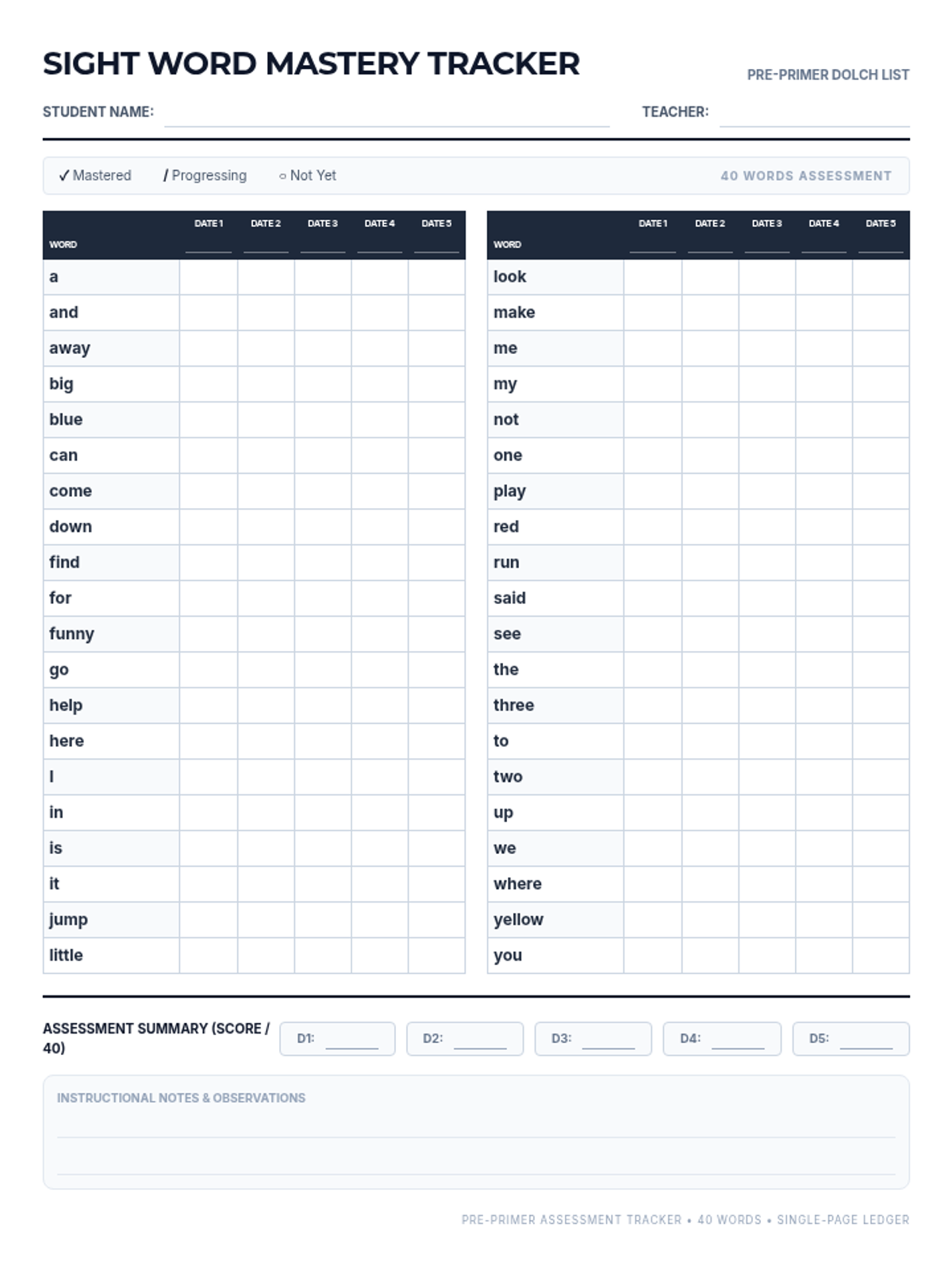
A focused tool for tracking progress on Pre-Primer Dolch sight words, designed for easy assessment and data collection.
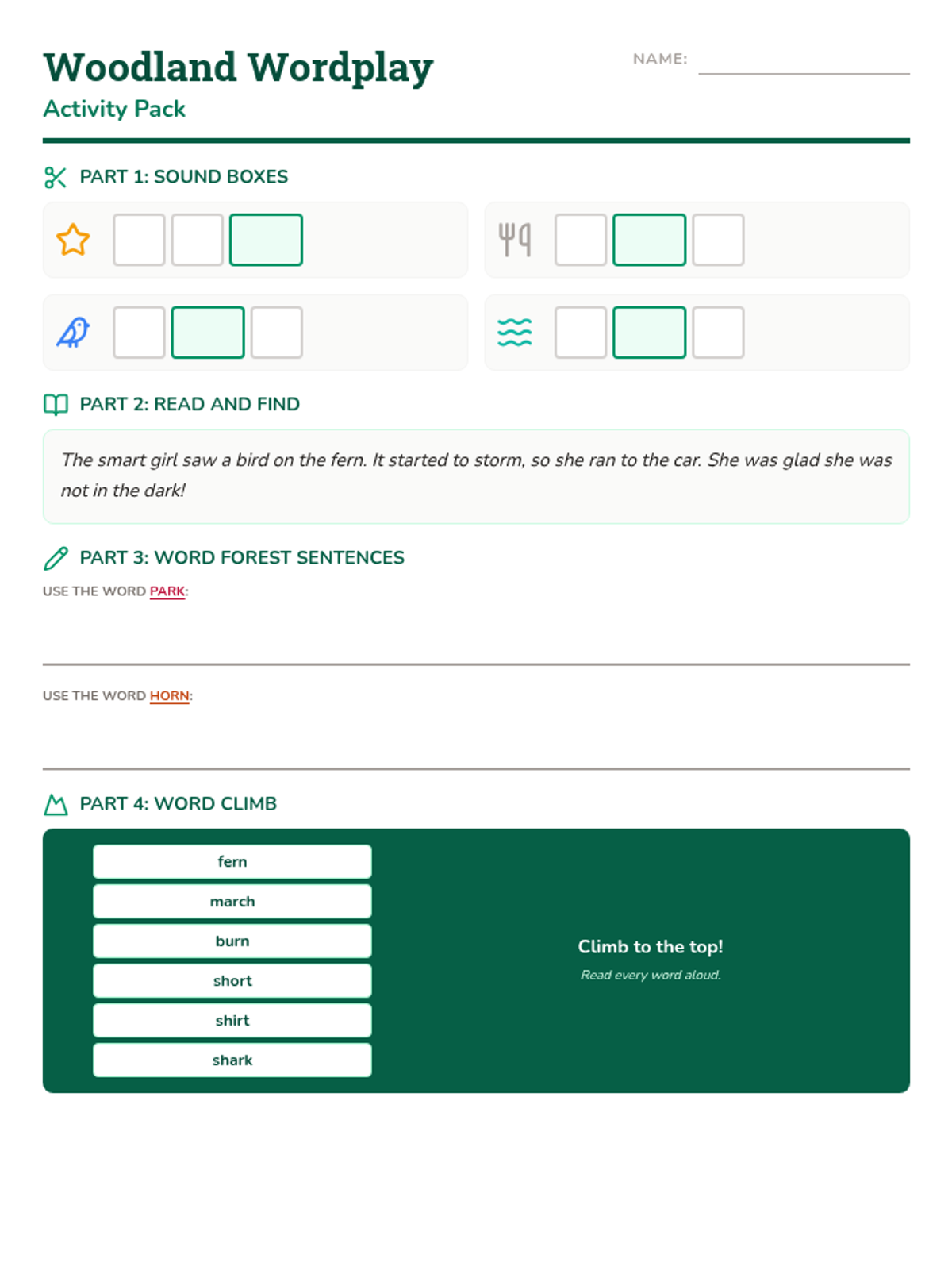
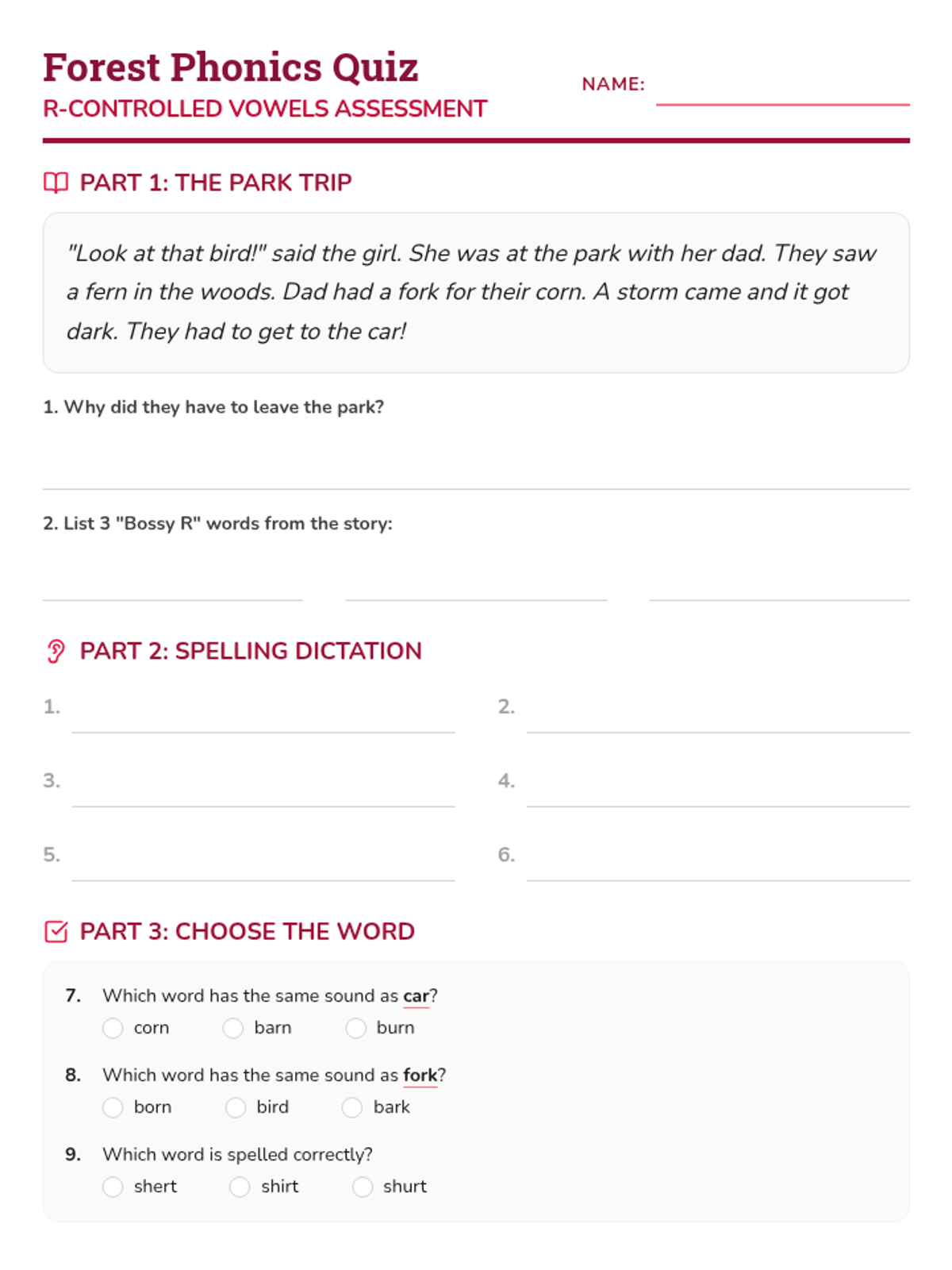
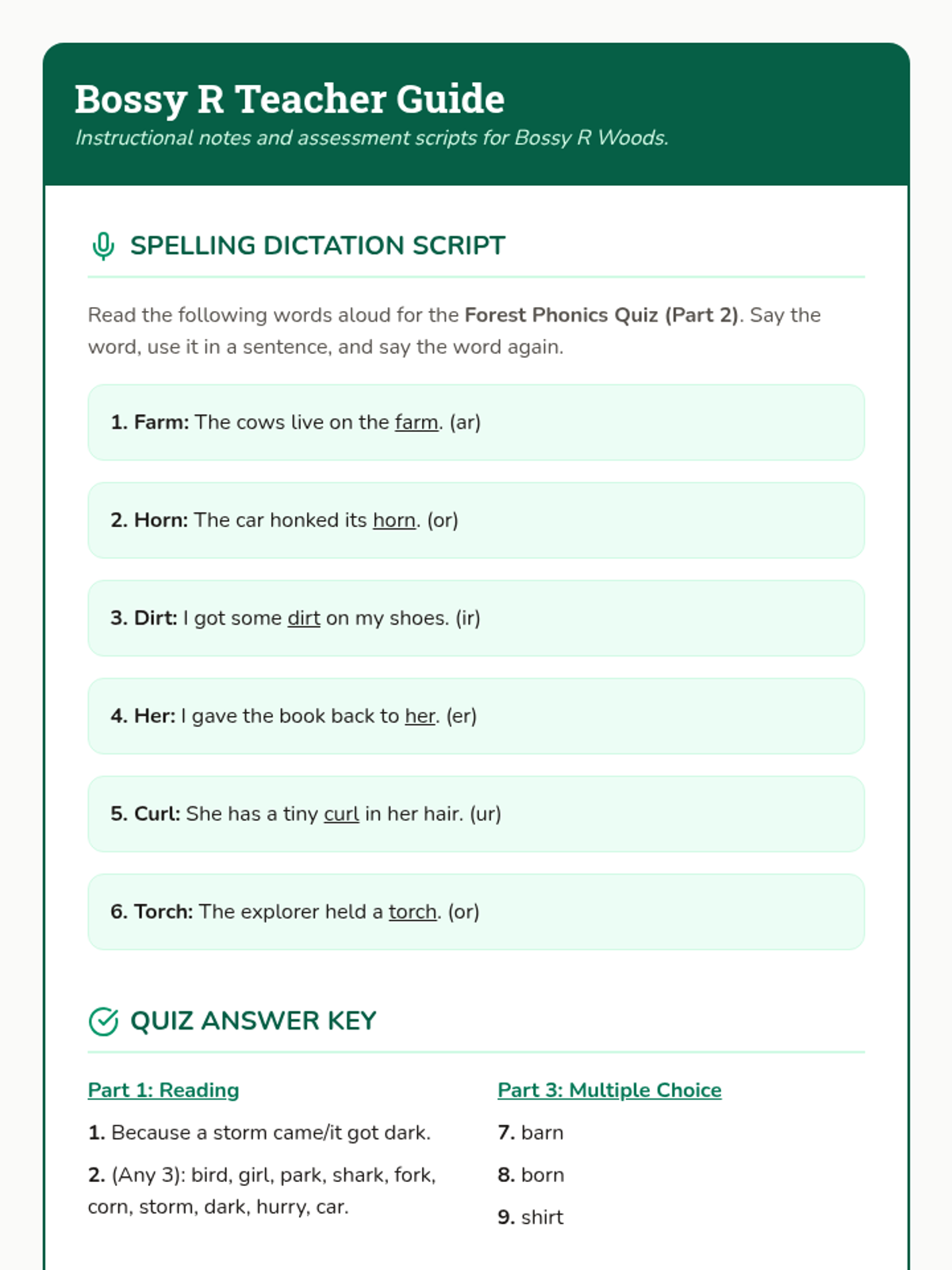
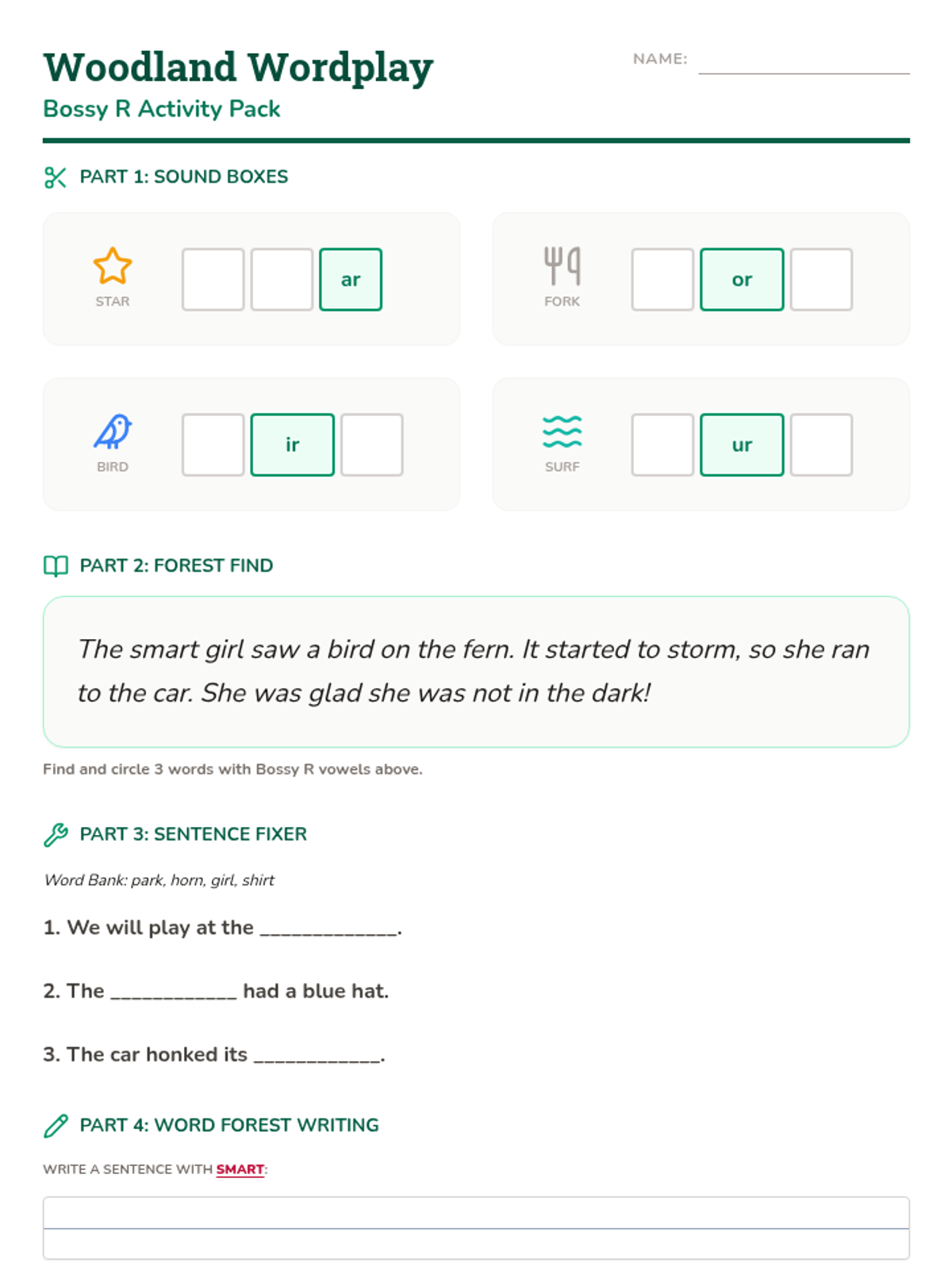
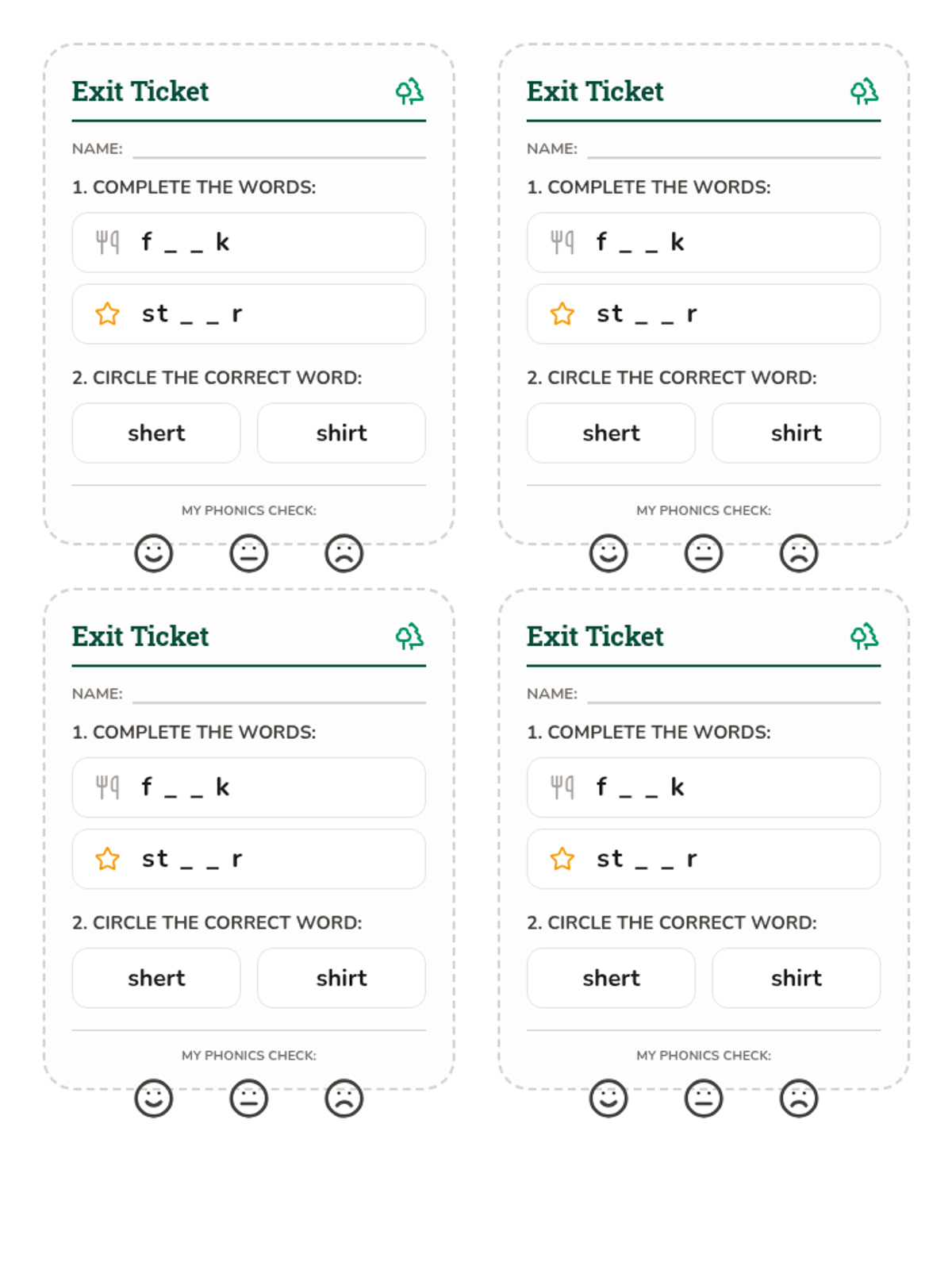
A comprehensive phonics lesson introducing the five r-controlled vowels (ar, er, ir, or, ur) through interactive forest-themed instruction and practice.
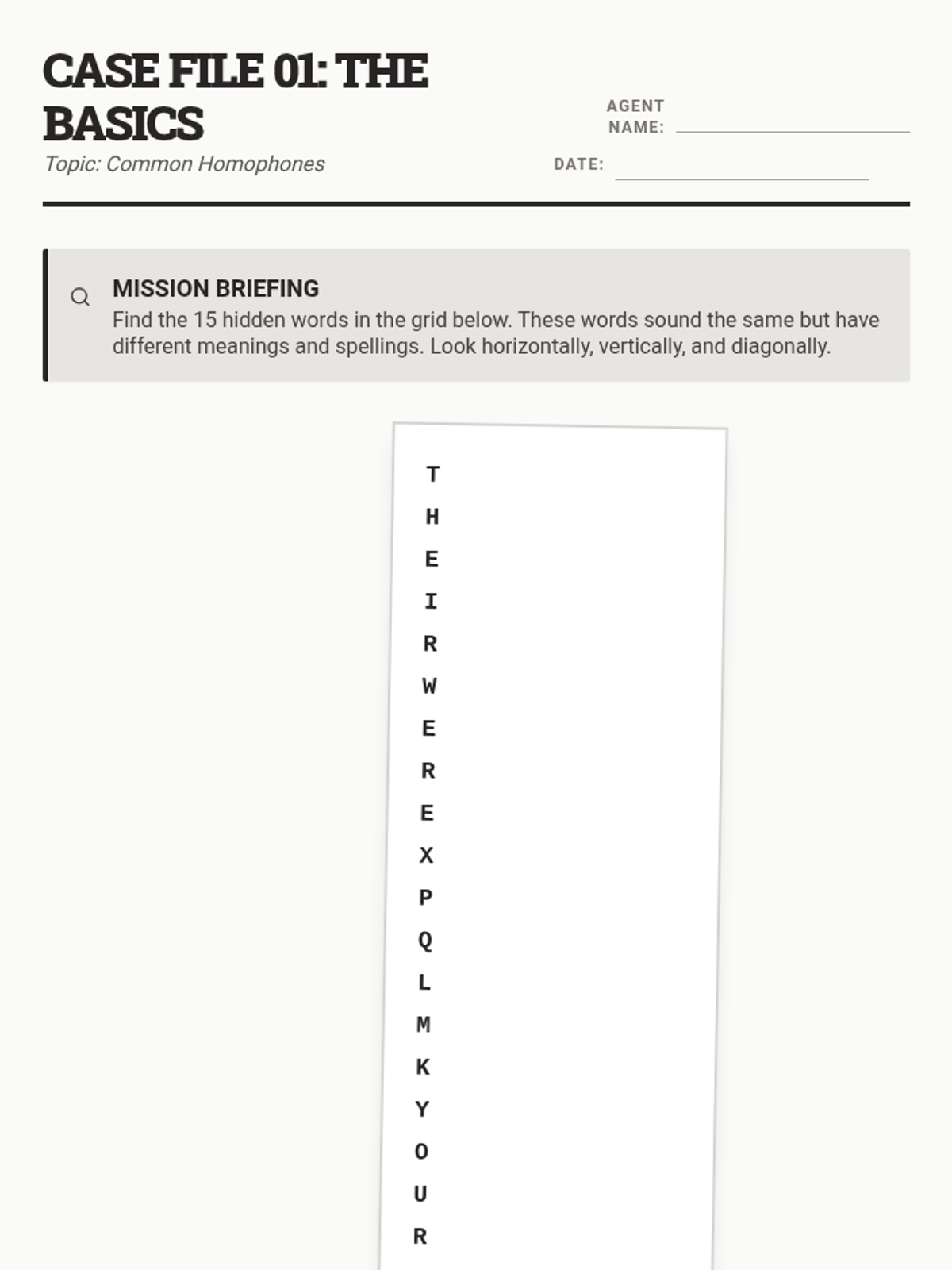
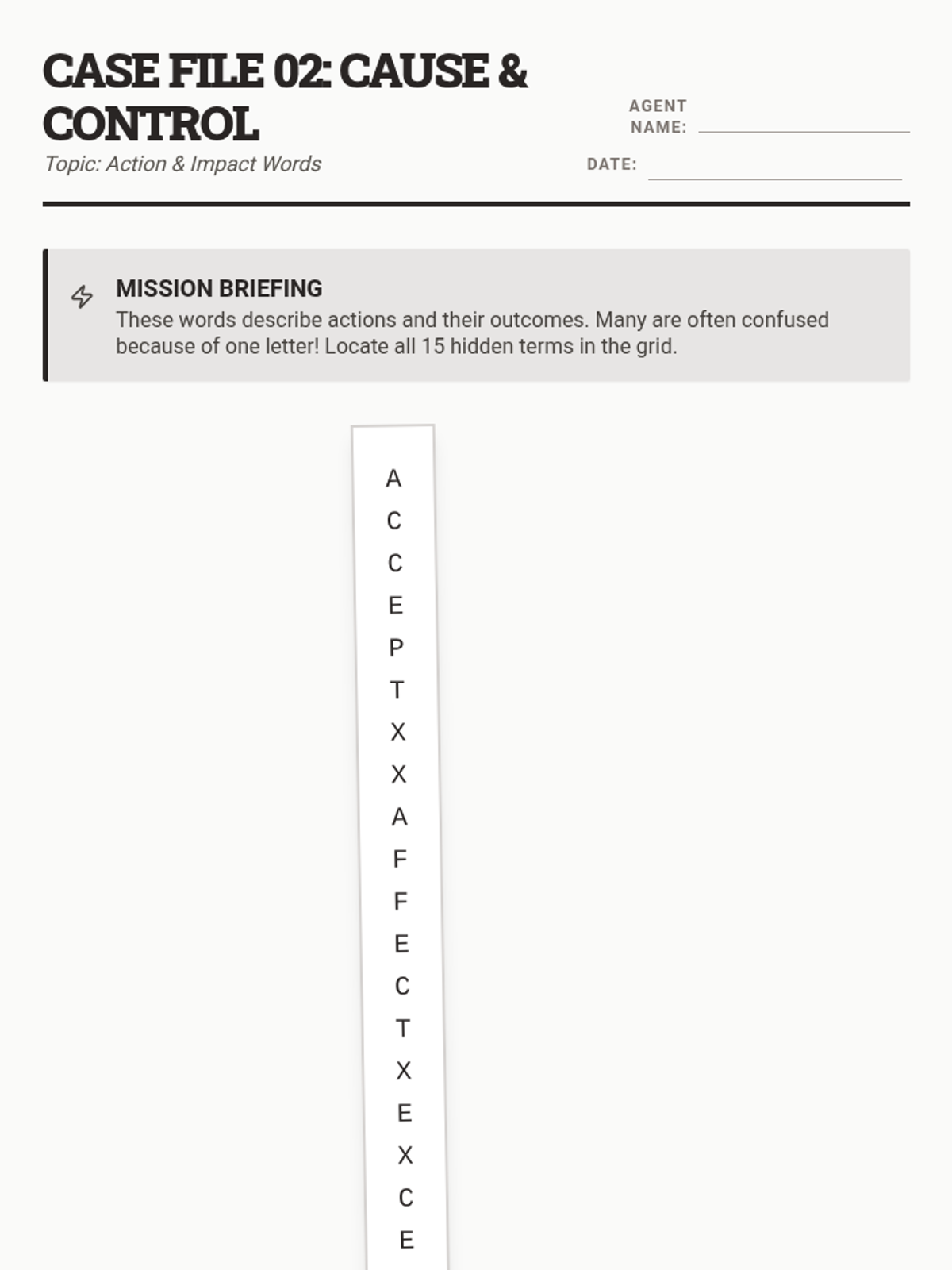
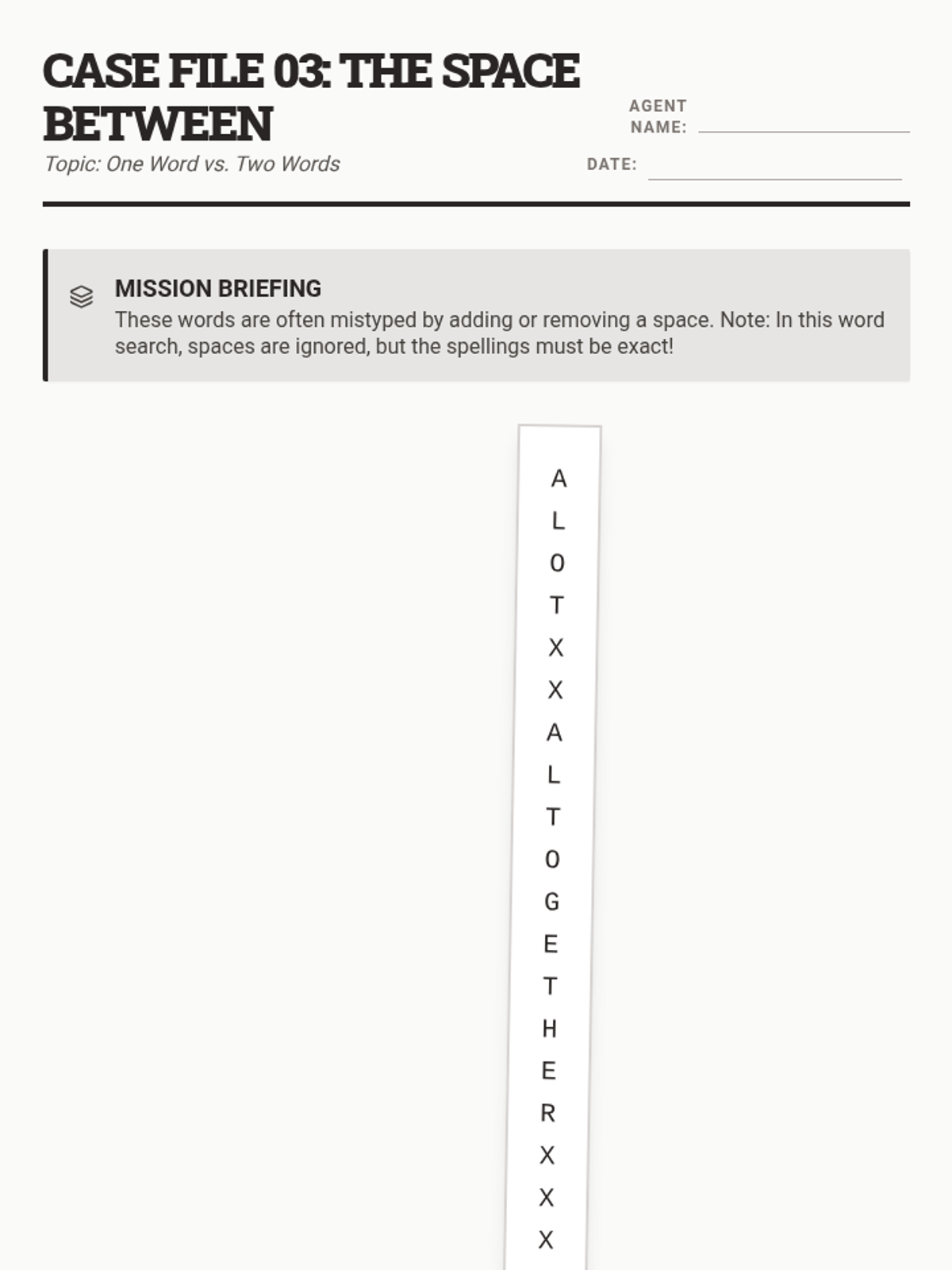
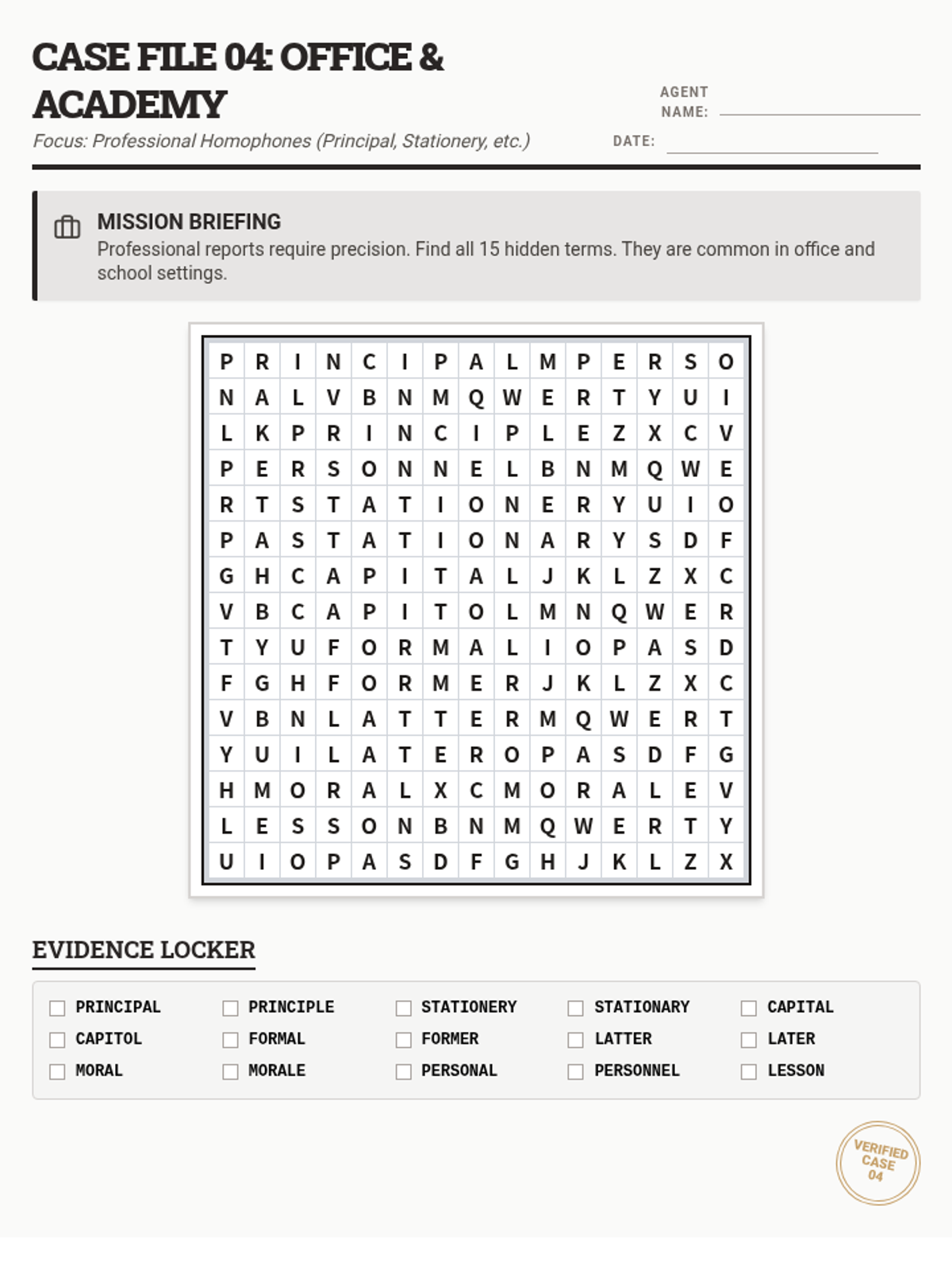
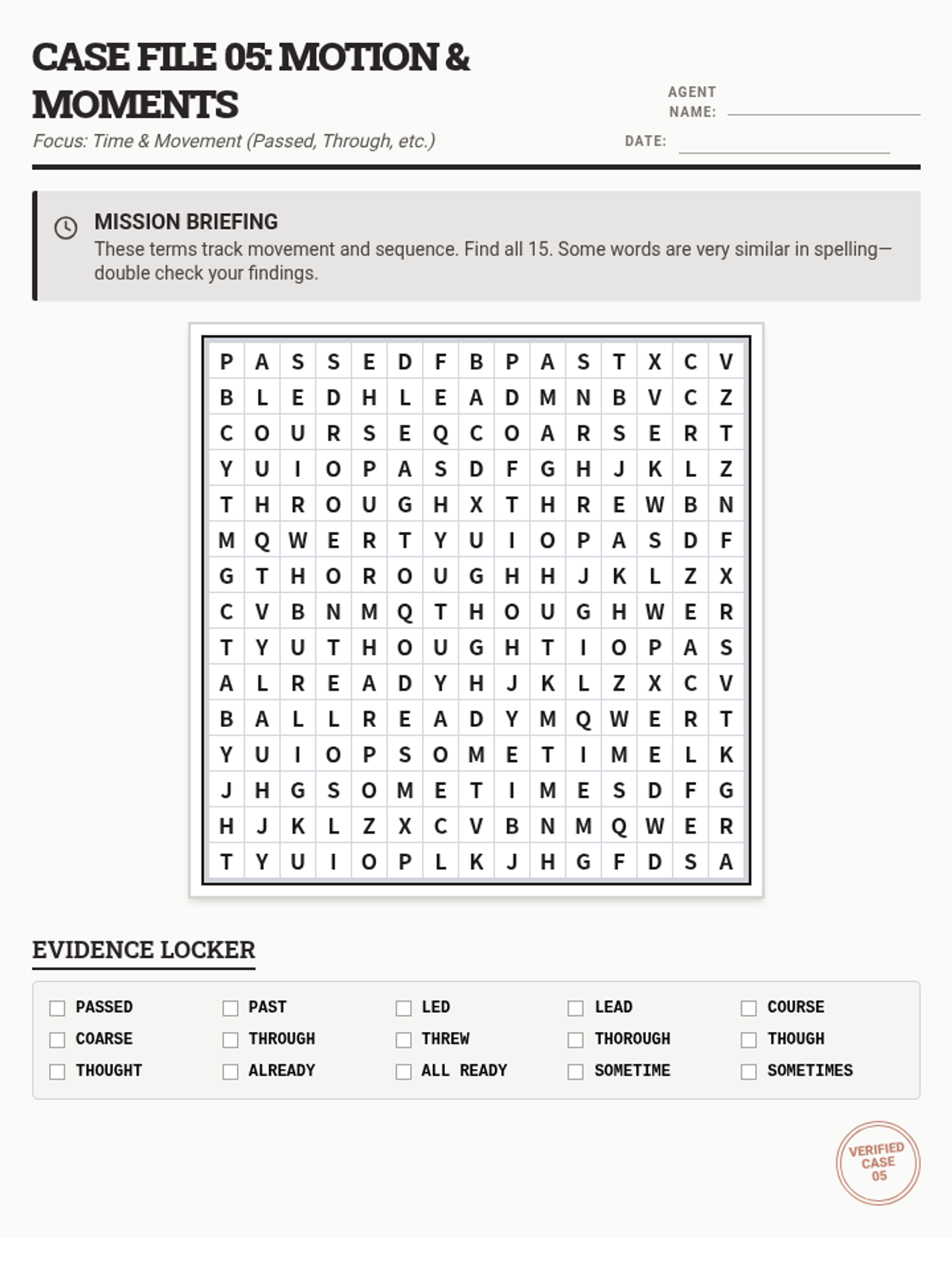
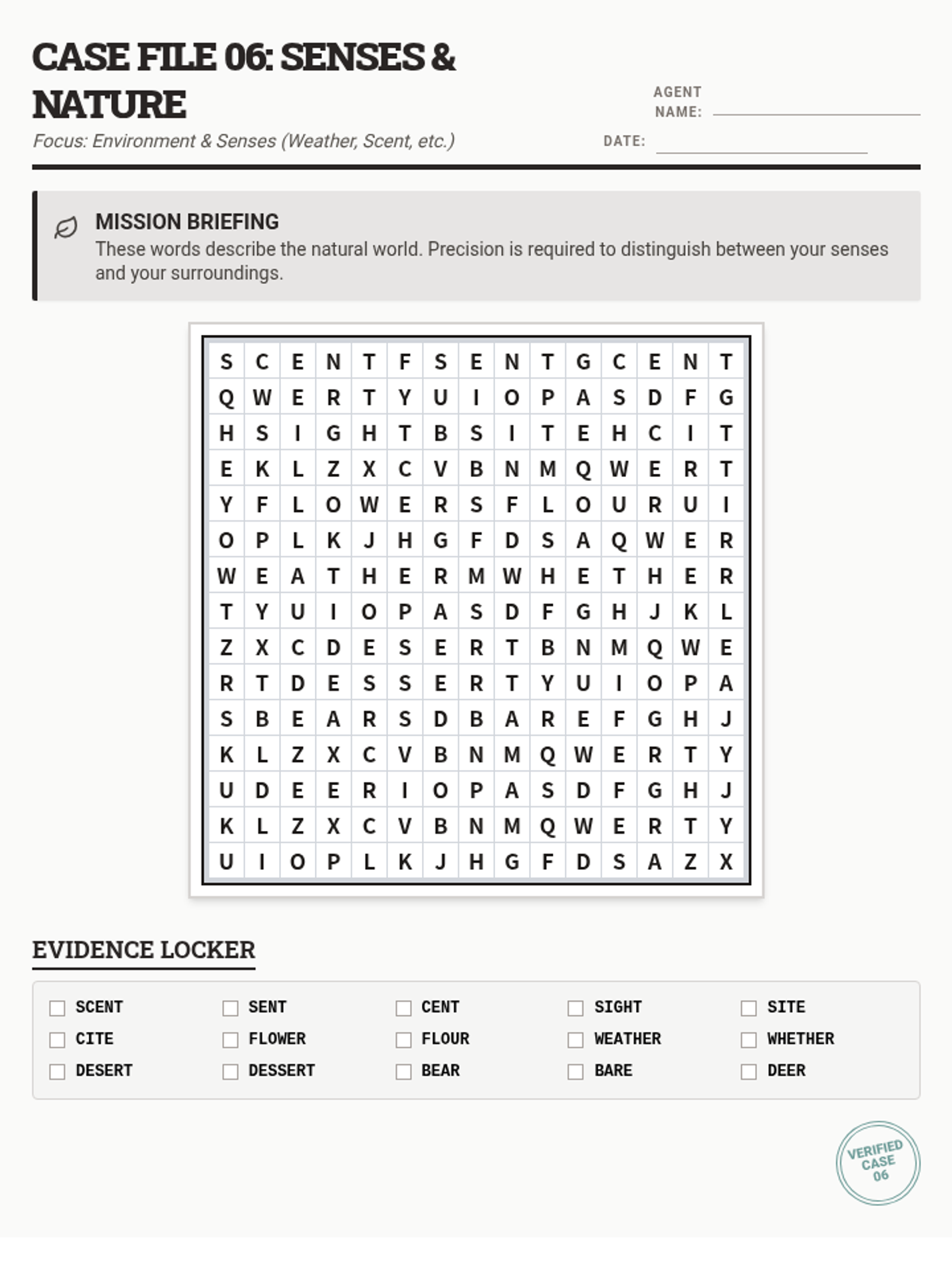
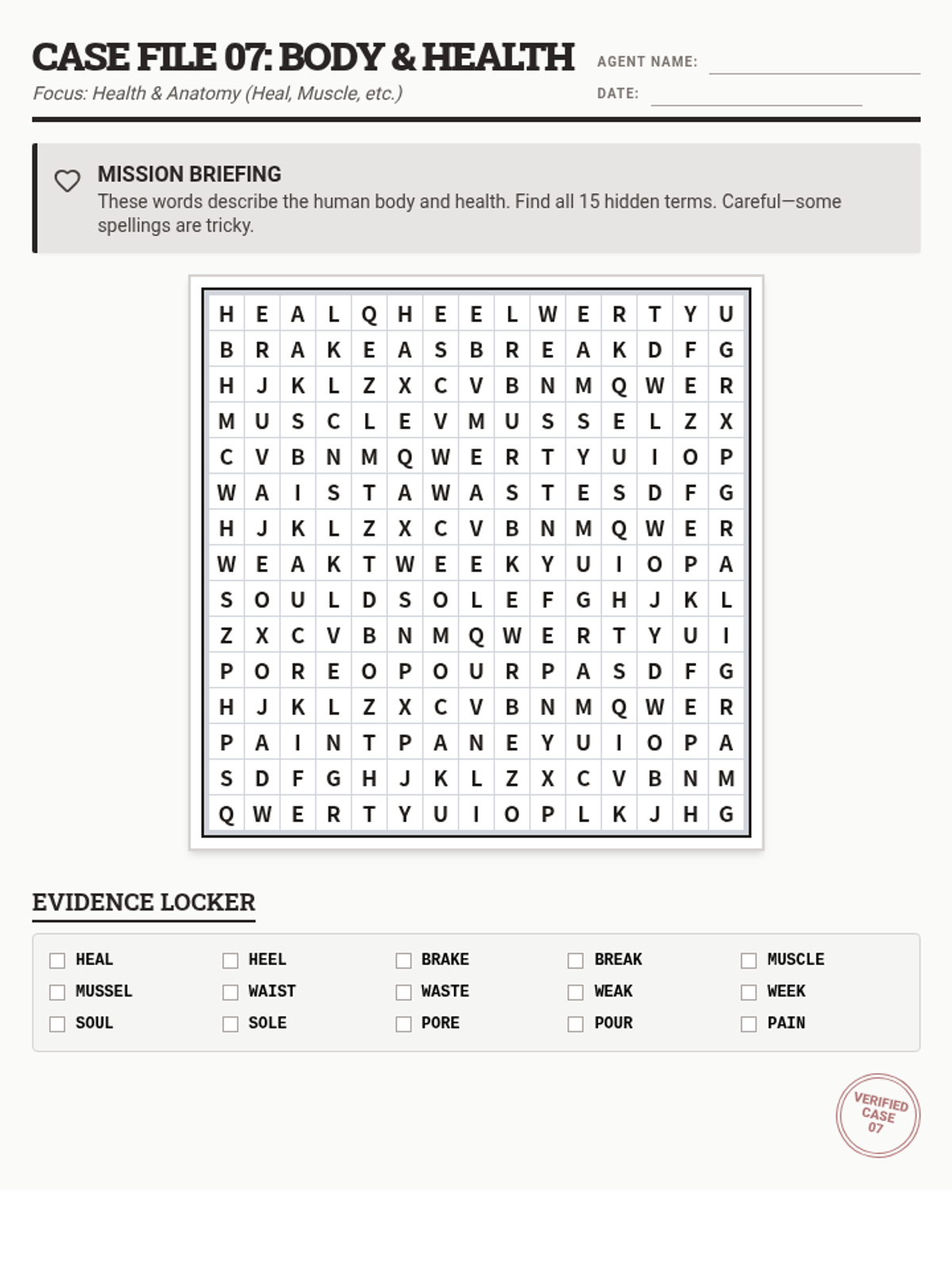
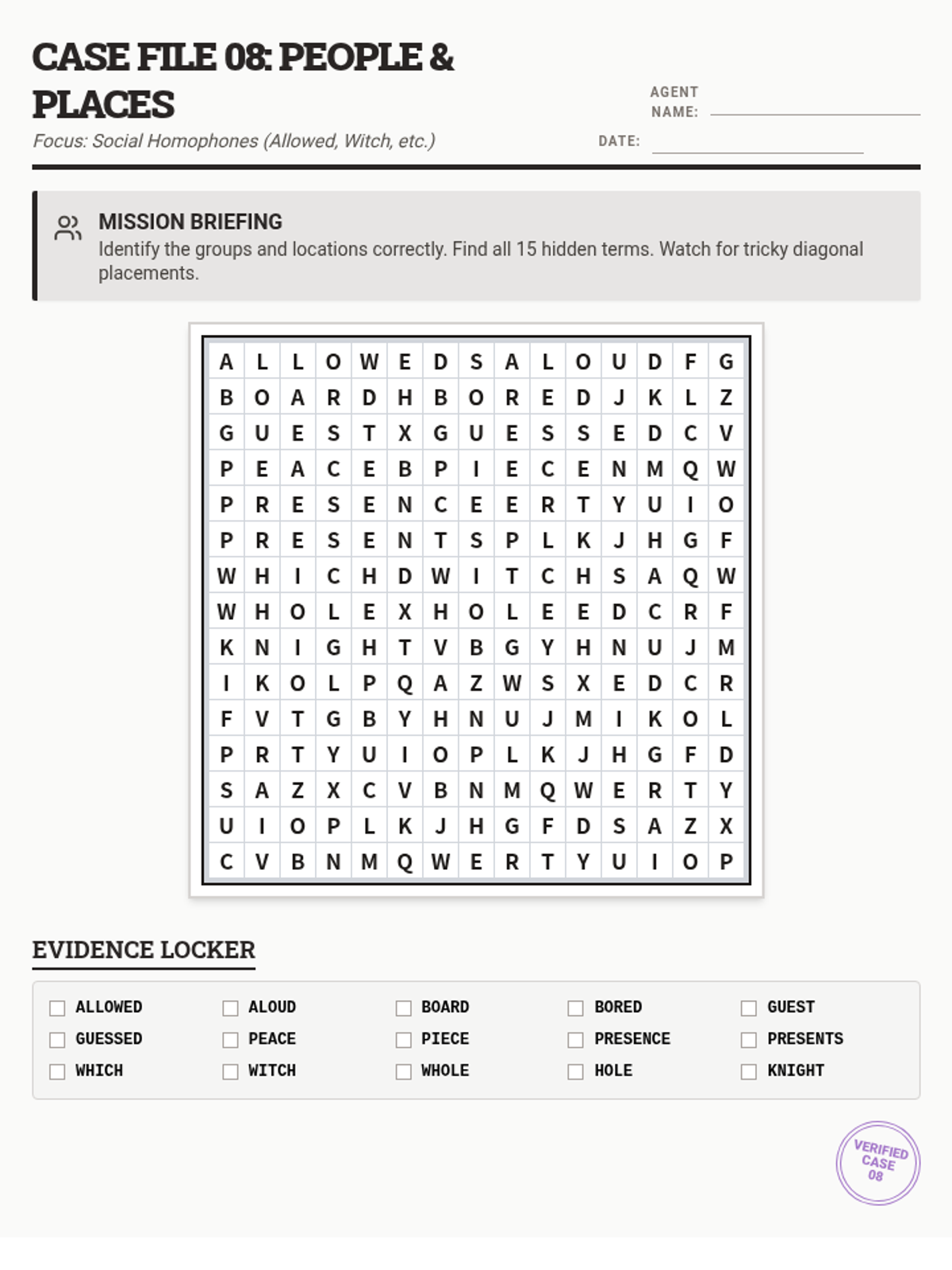
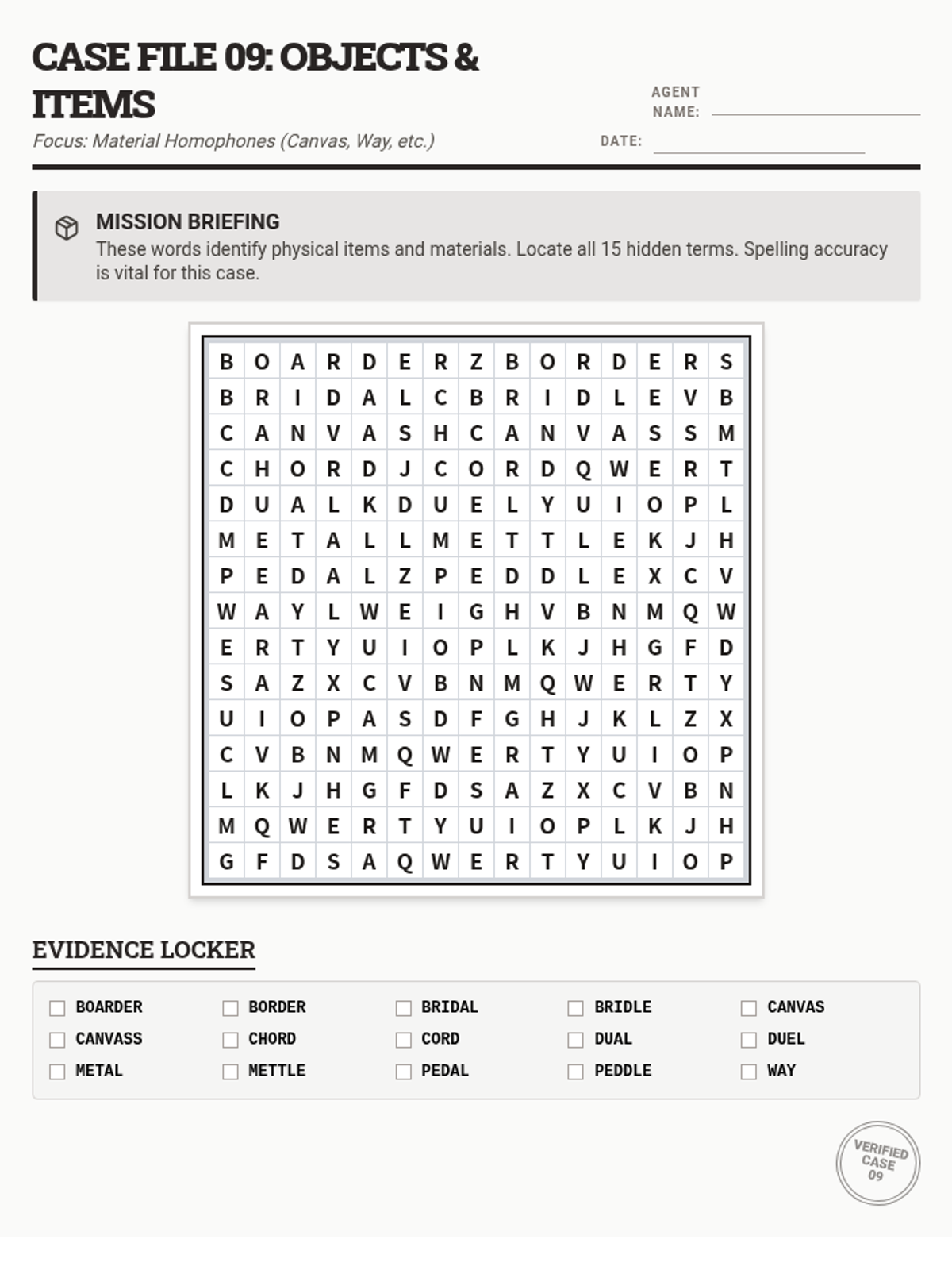
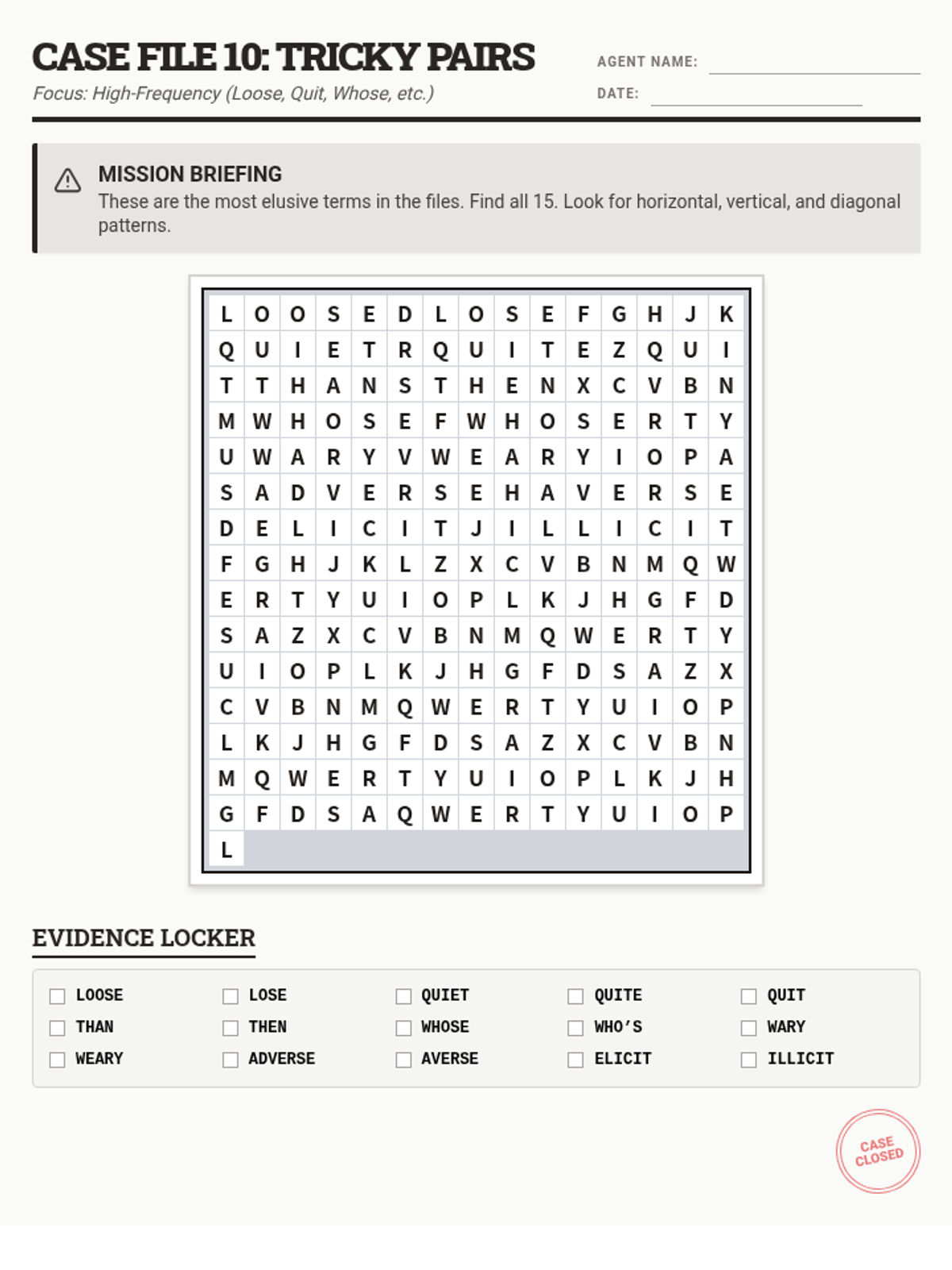
A comprehensive collection of 10 word search puzzles focusing on commonly confused words (homophones and near-homophones). Designed to improve vocabulary recognition and spelling through engaging "Case File" themed activities.
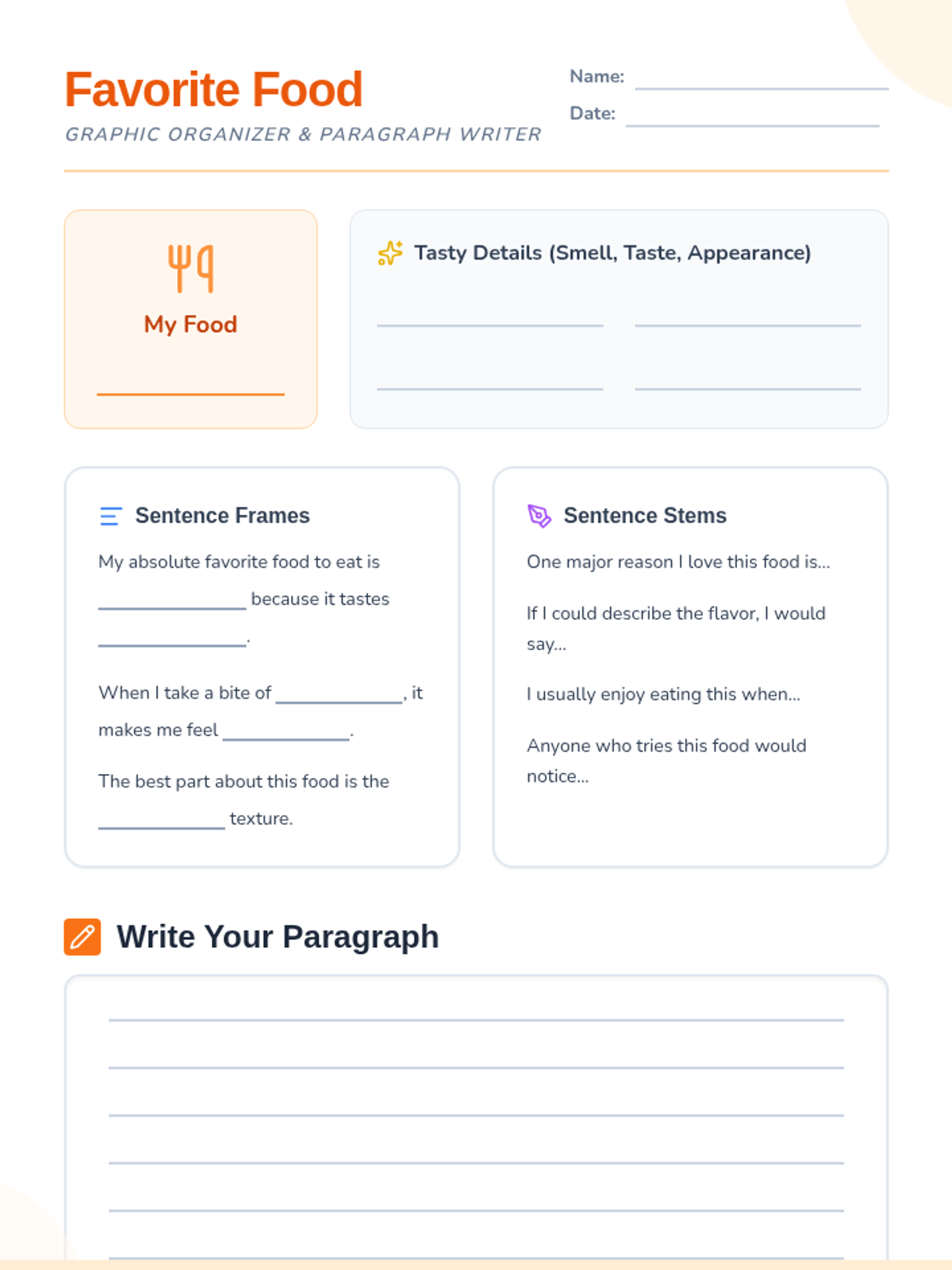
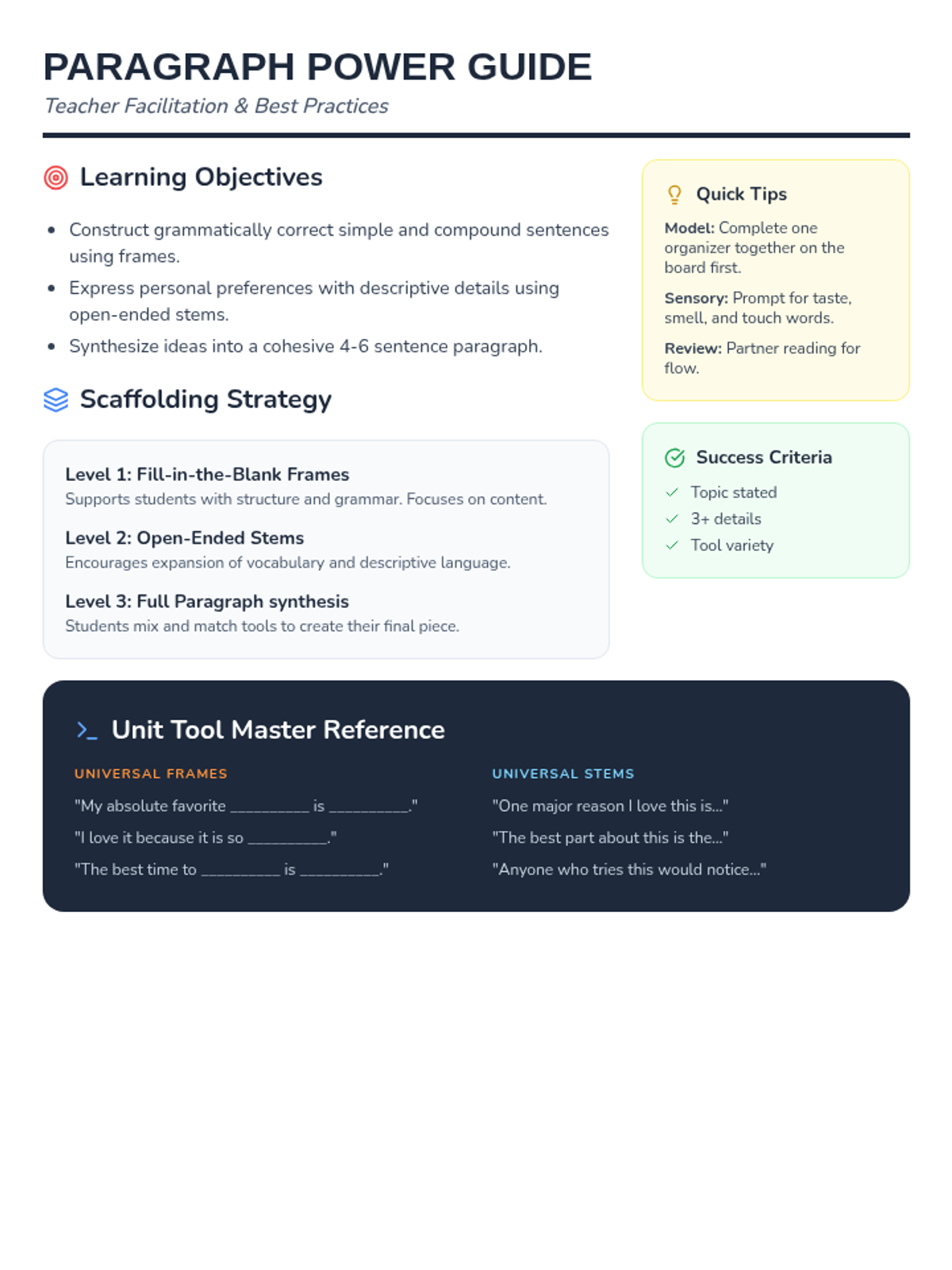
A collection of graphic organizers designed to help students write structured paragraphs about their favorite things using sentence stems and frames.
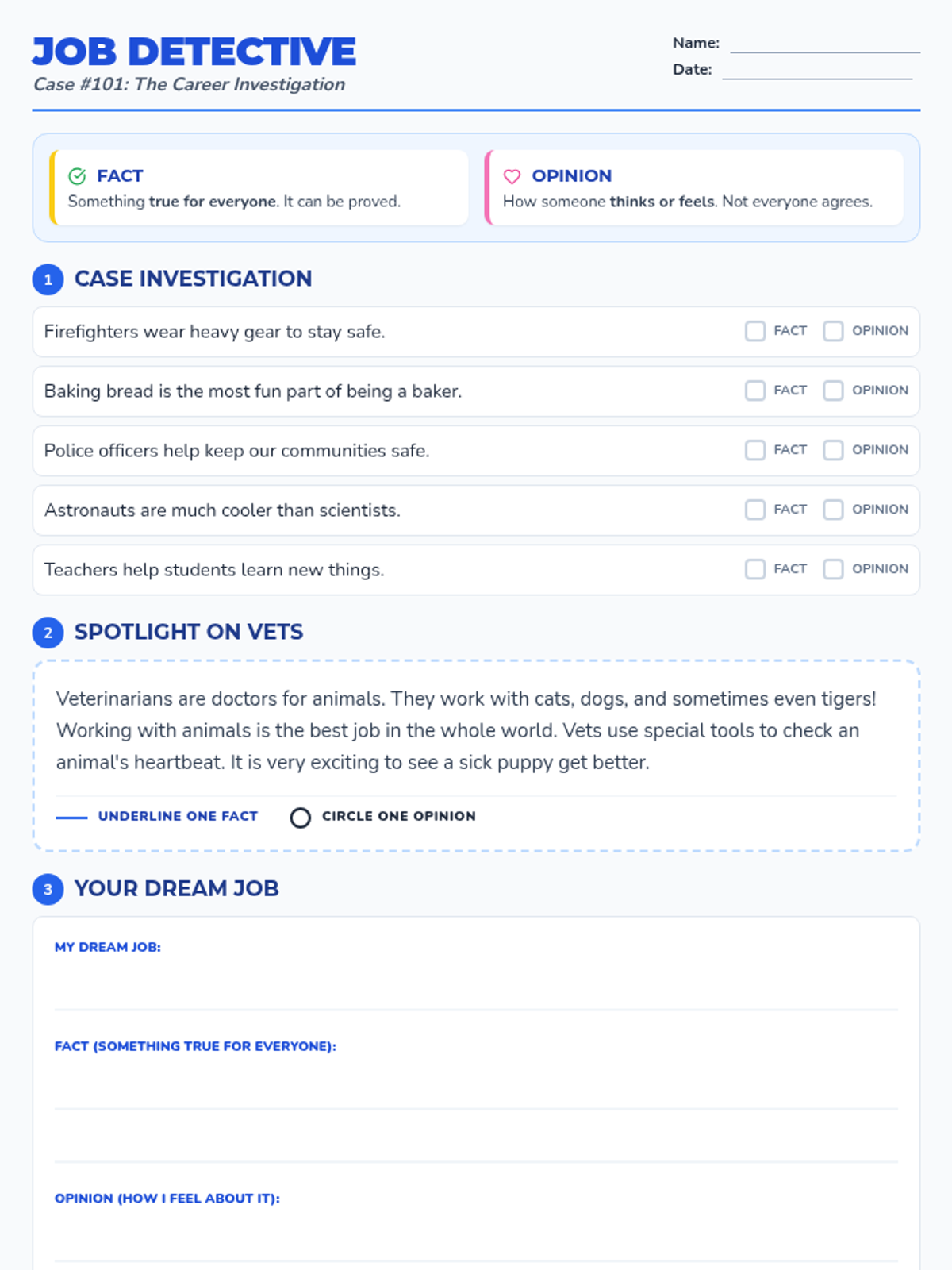
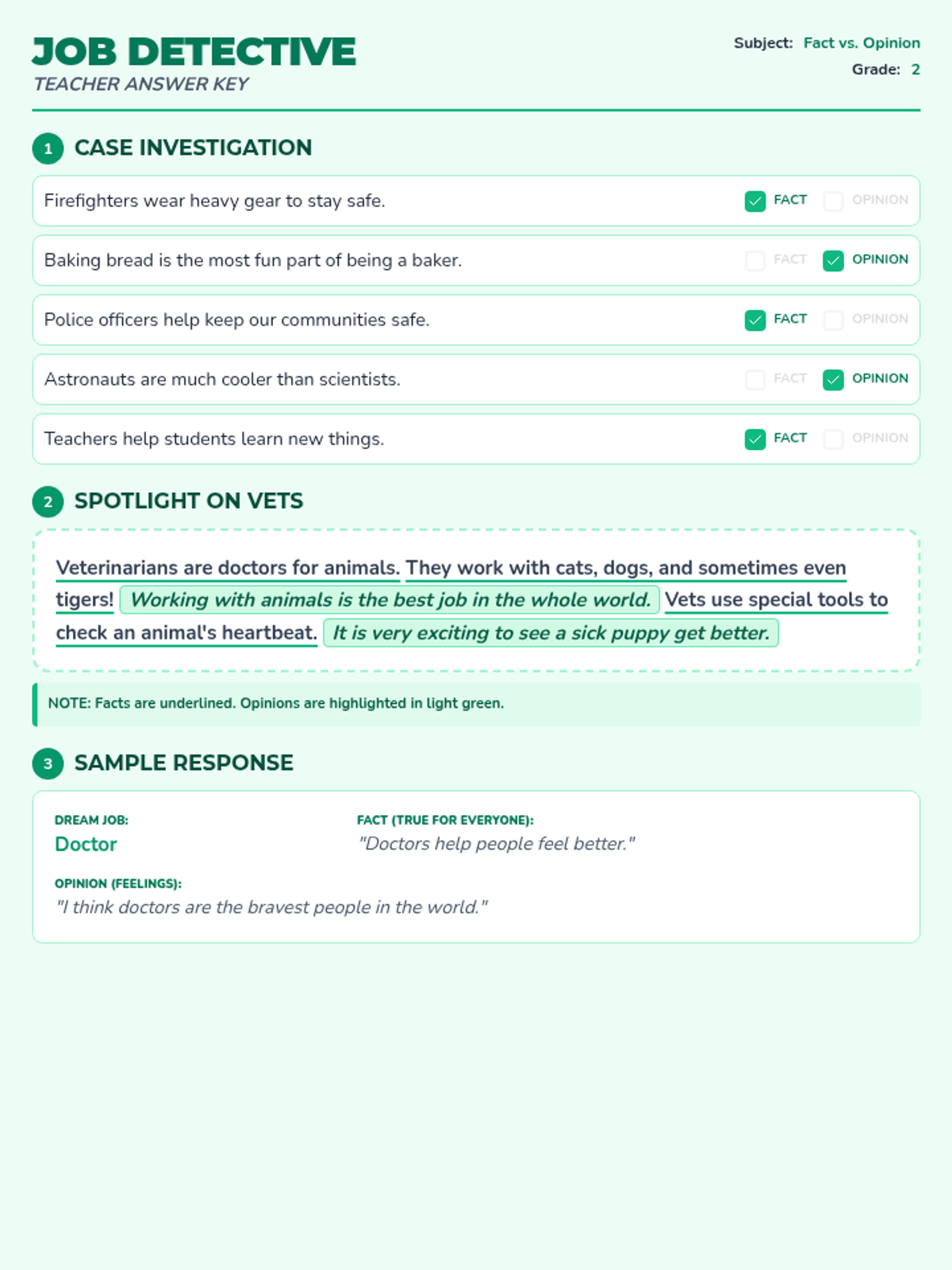
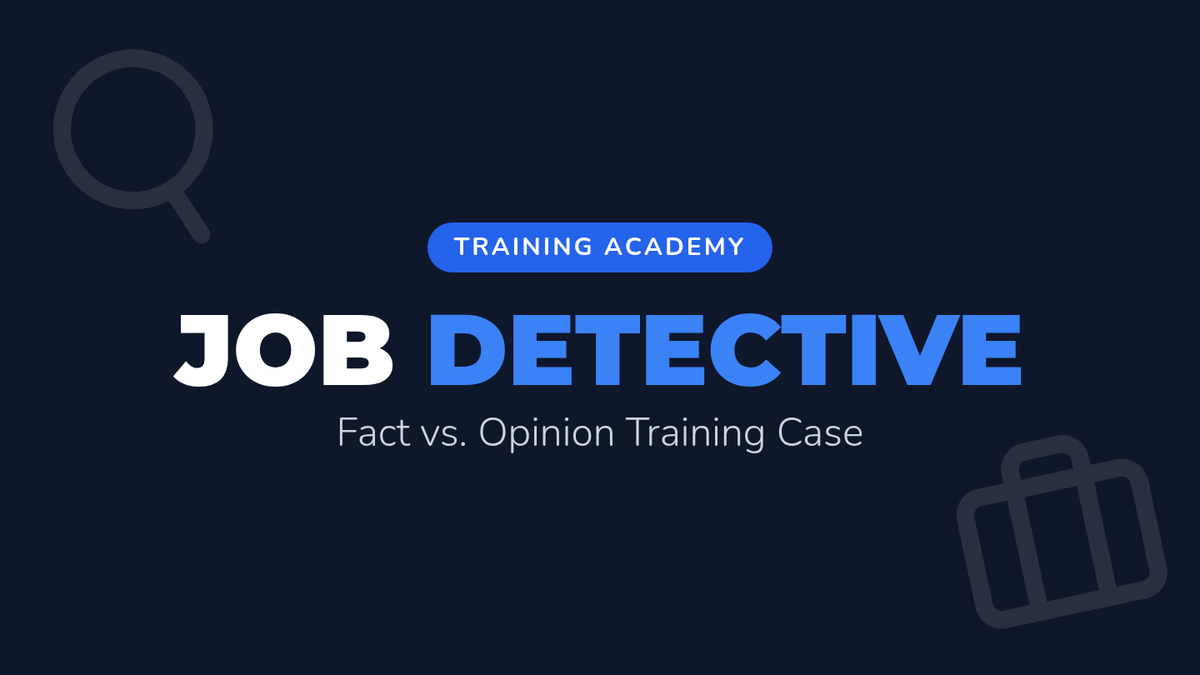
A fun, career-themed lesson for 2nd grade students to master the difference between facts and opinions. Students explore various jobs while learning to distinguish objective information from personal feelings.
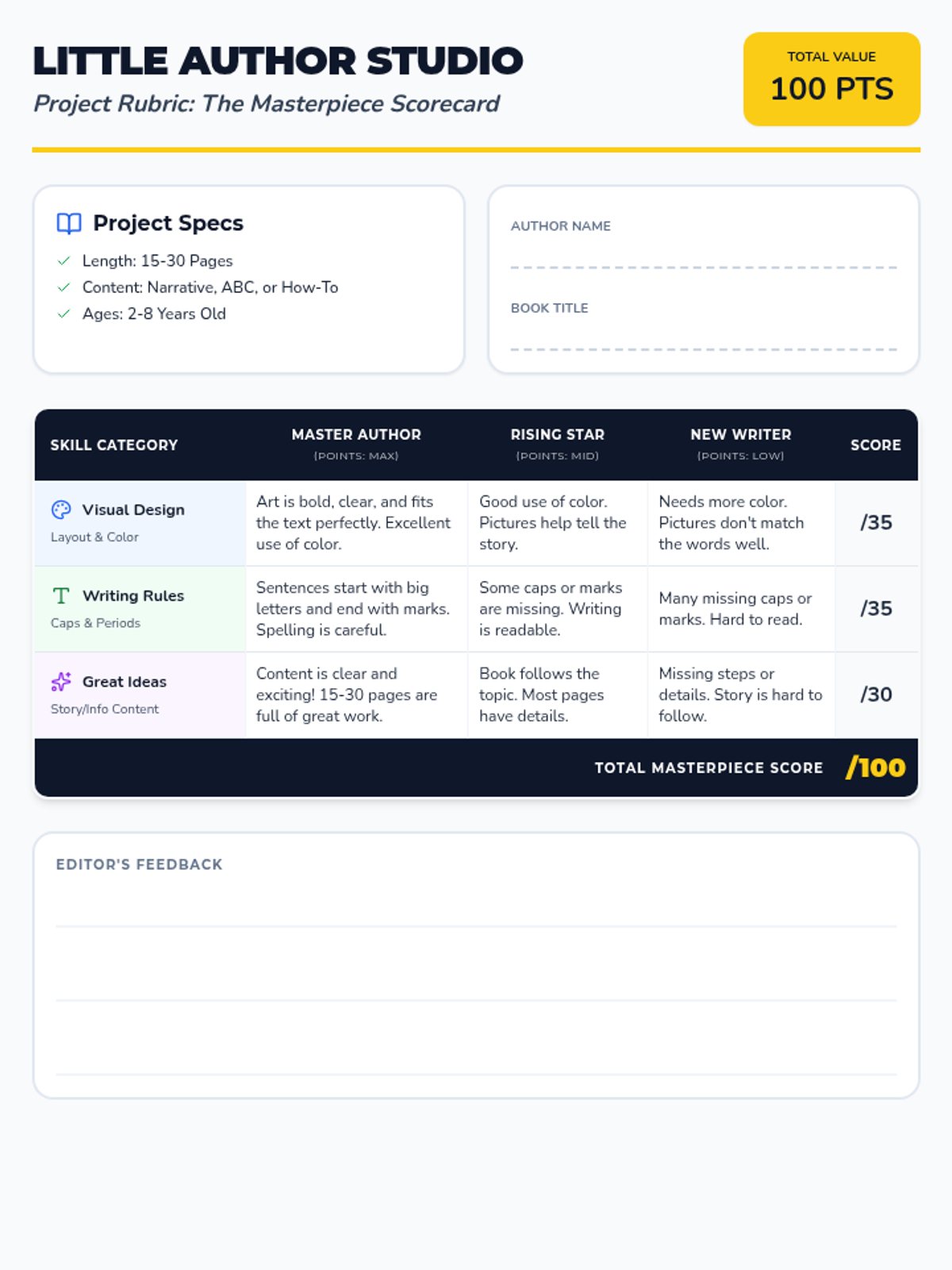
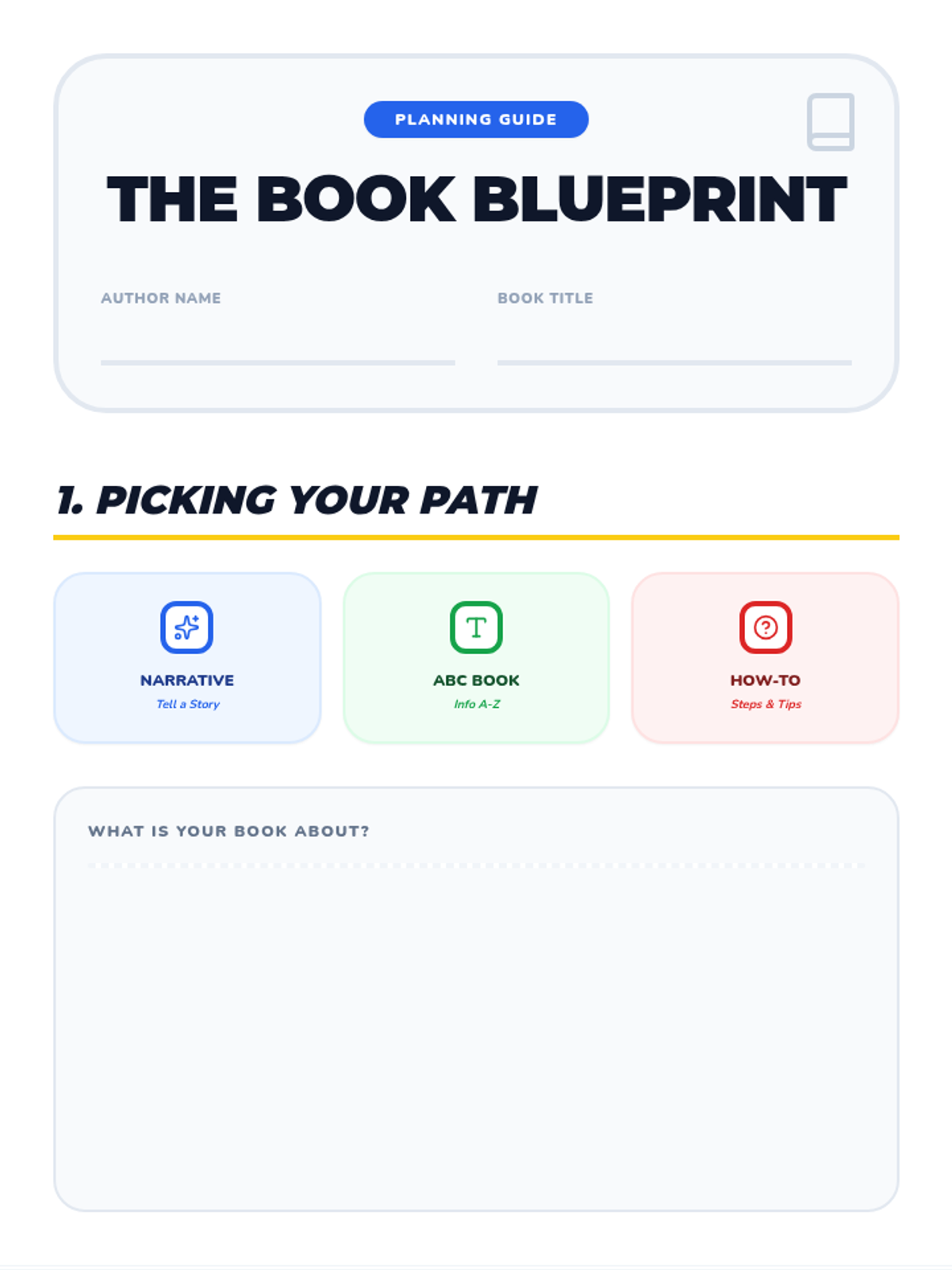
A creative writing project for young children (ages 2-8) to produce a 15-30 page book. Students can choose between a narrative story, an expository ABC book, or a how-to guide, focusing on visual design and writing conventions.
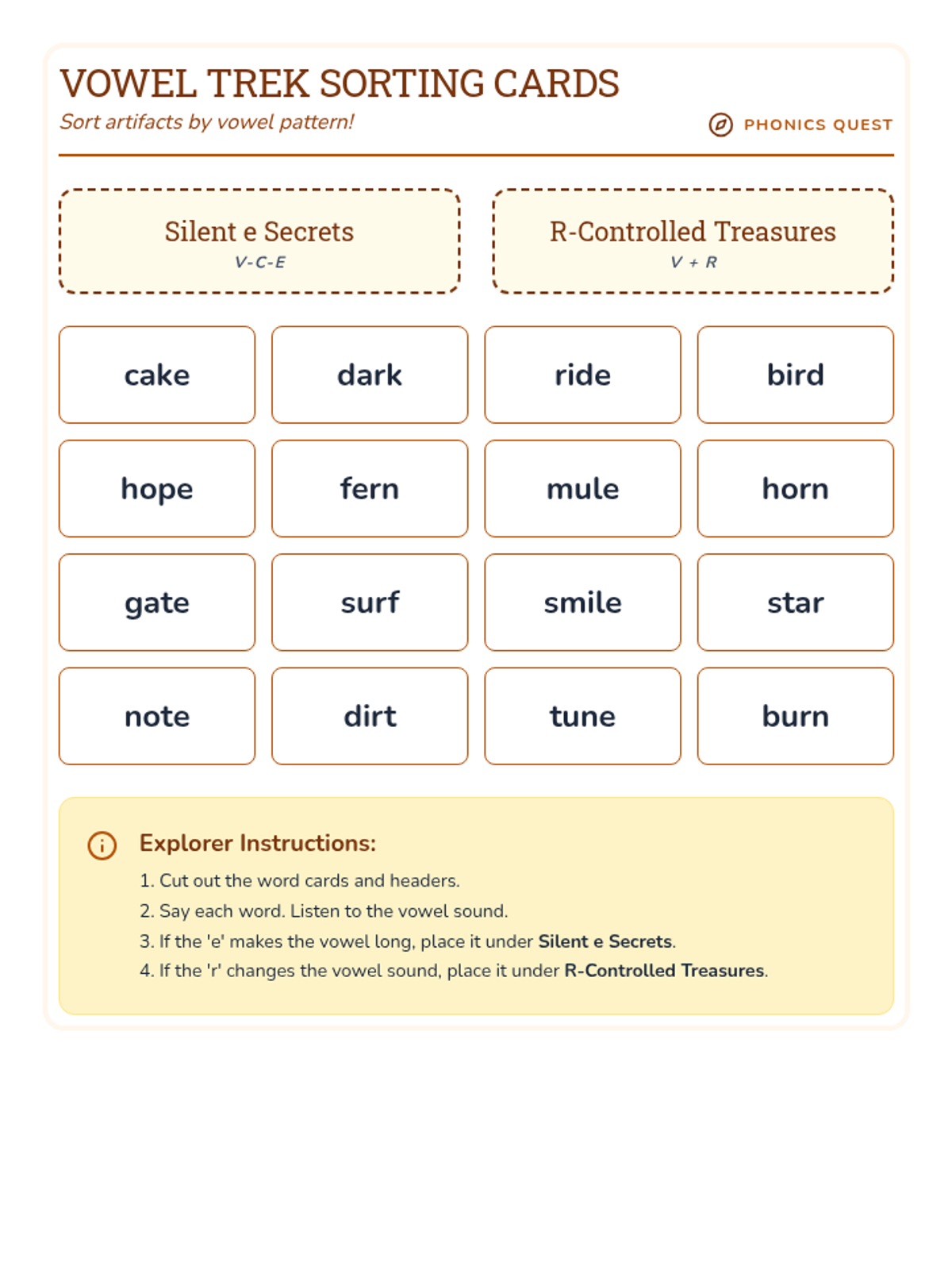
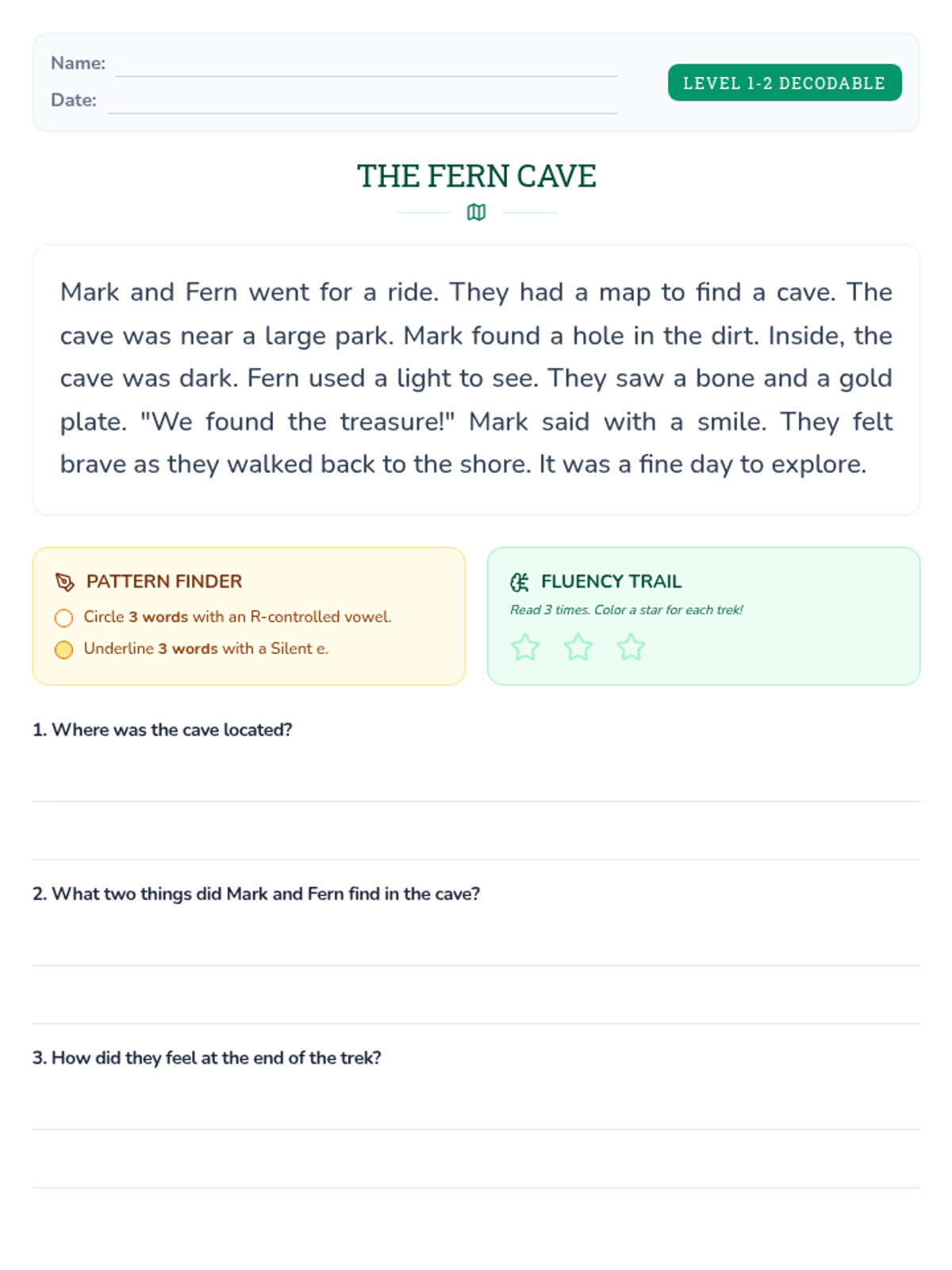
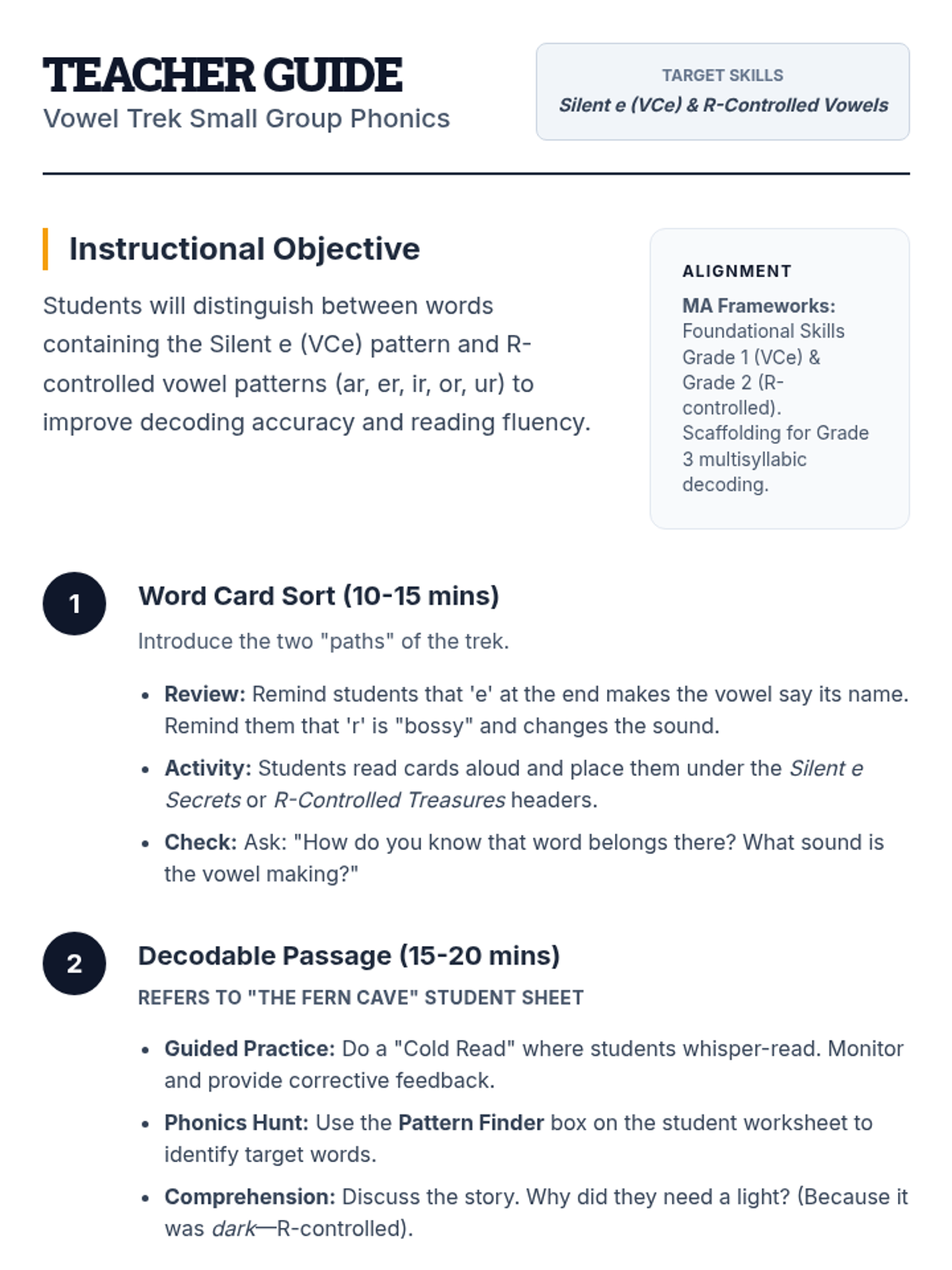
A small-group phonics lesson focused on distinguishing between silent e (VCe) and r-controlled vowel patterns, designed for Grade 3 students reading at a 1st-2nd grade level.
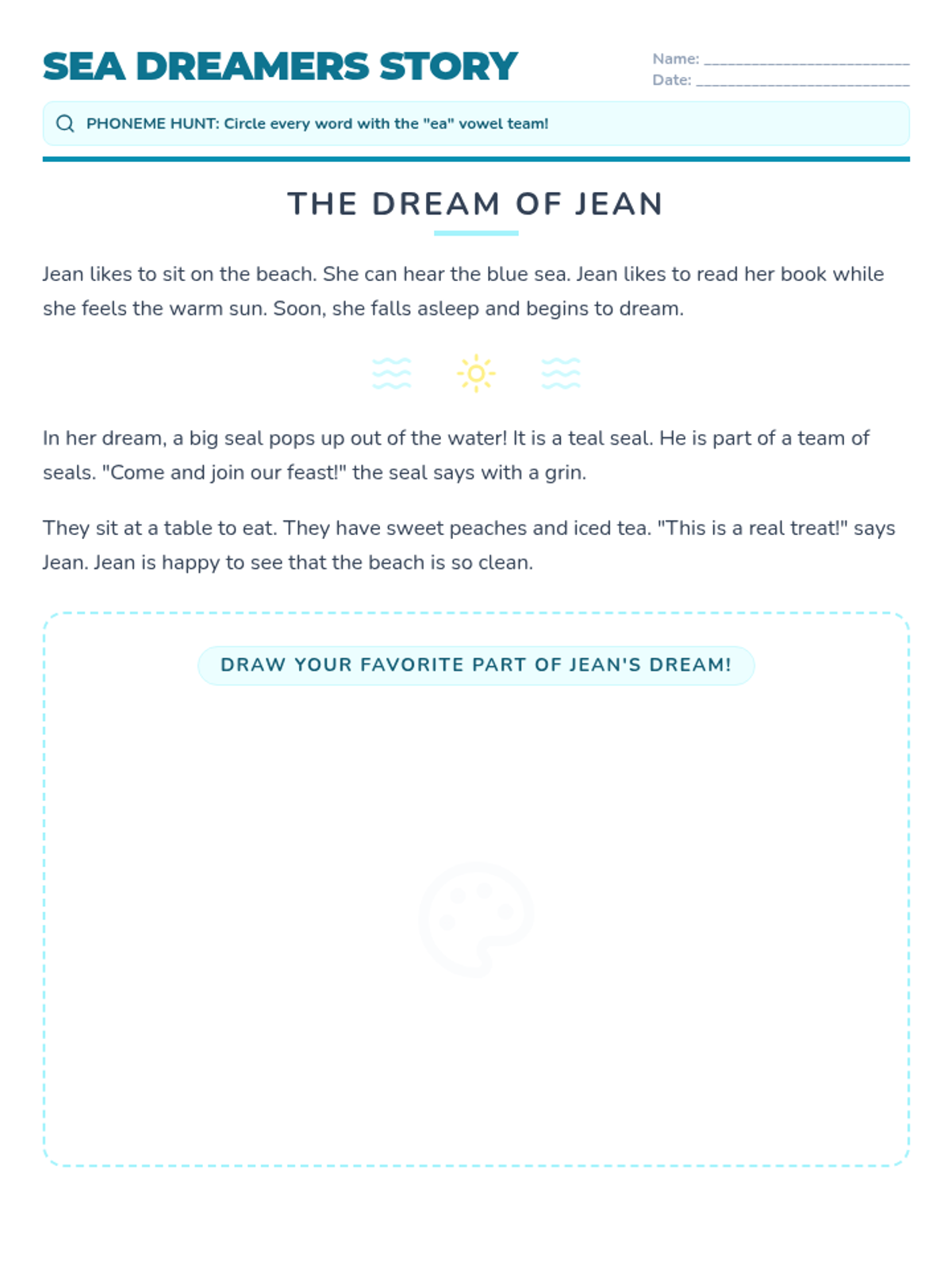
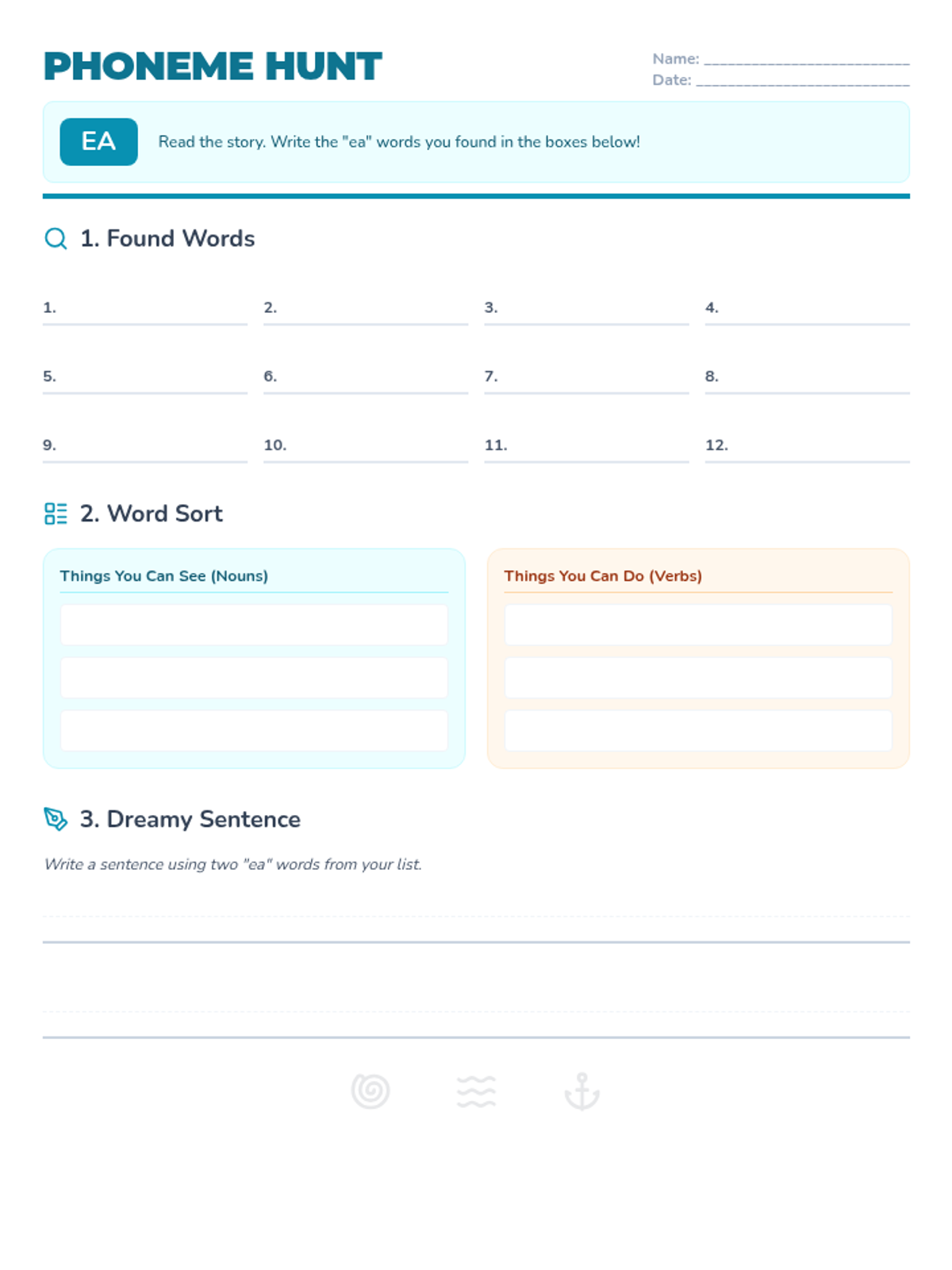
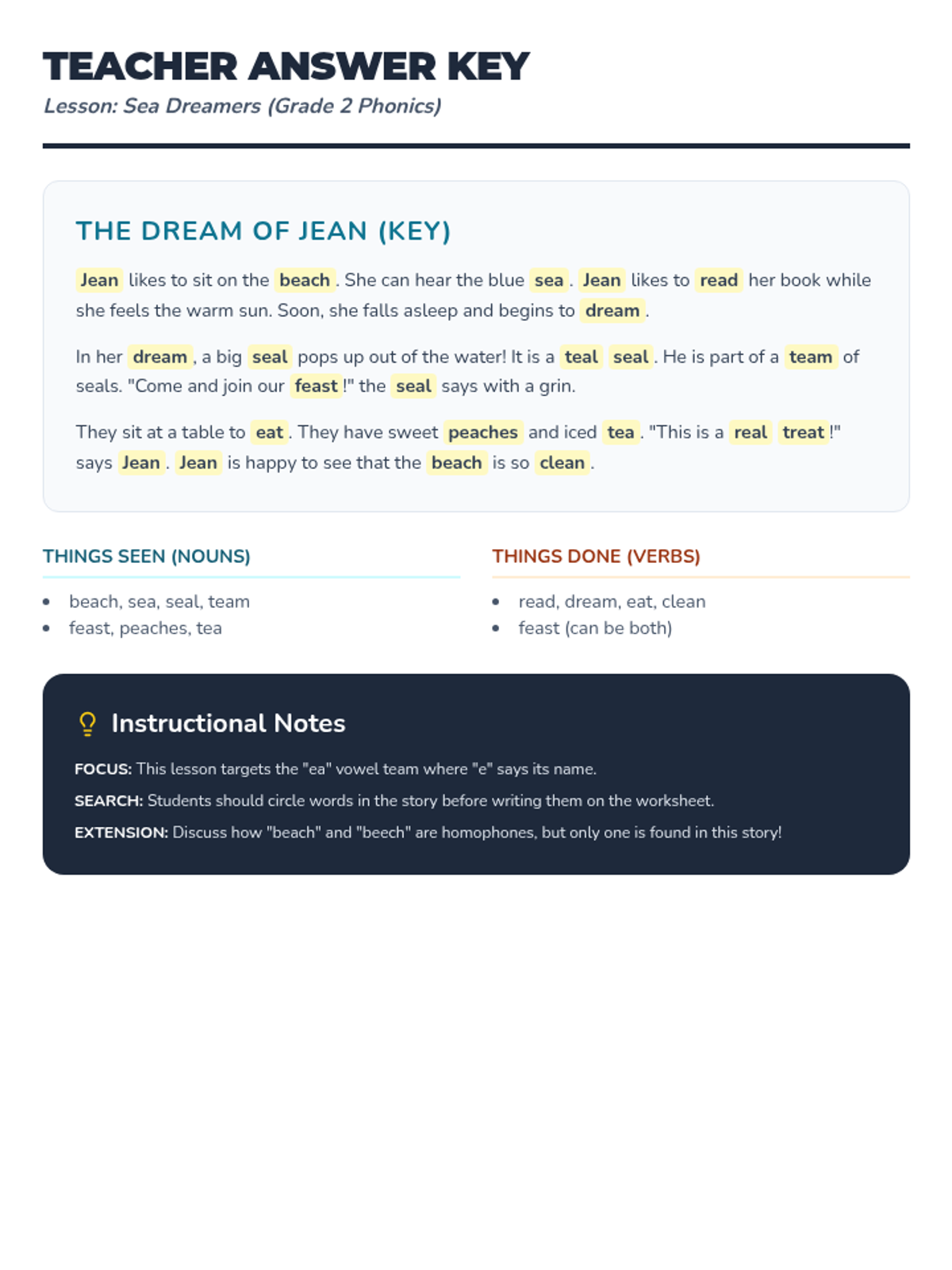
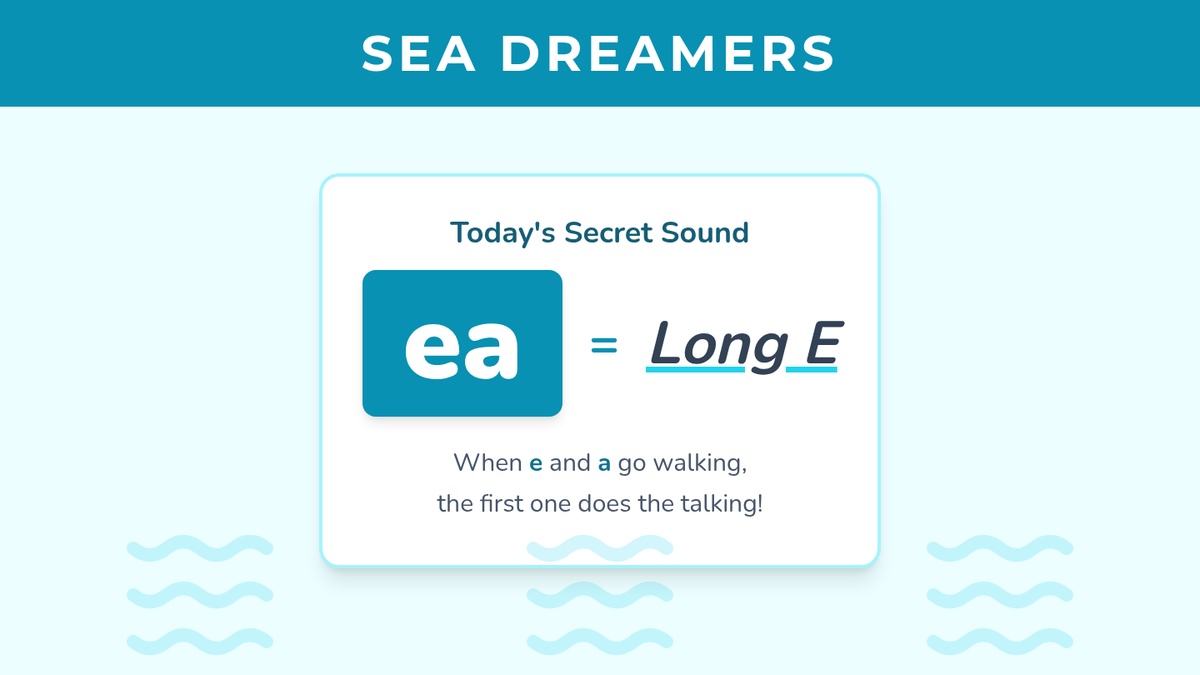
A Grade 2 phonics lesson focusing on the 'ea' vowel team (long e sound) through an engaging coastal-themed story and word-hunting activities.
A collaborative "Pairs Compare" activity where students work in teams of four to share keywords, locate evidence, and synthesize final answers on index cards.