A 3rd-grade lesson focused on recounting stories and identifying themes using partner-based storytelling and a small group matching game. Students will practice summarizing key events and extracting central lessons from diverse fables and folktales.
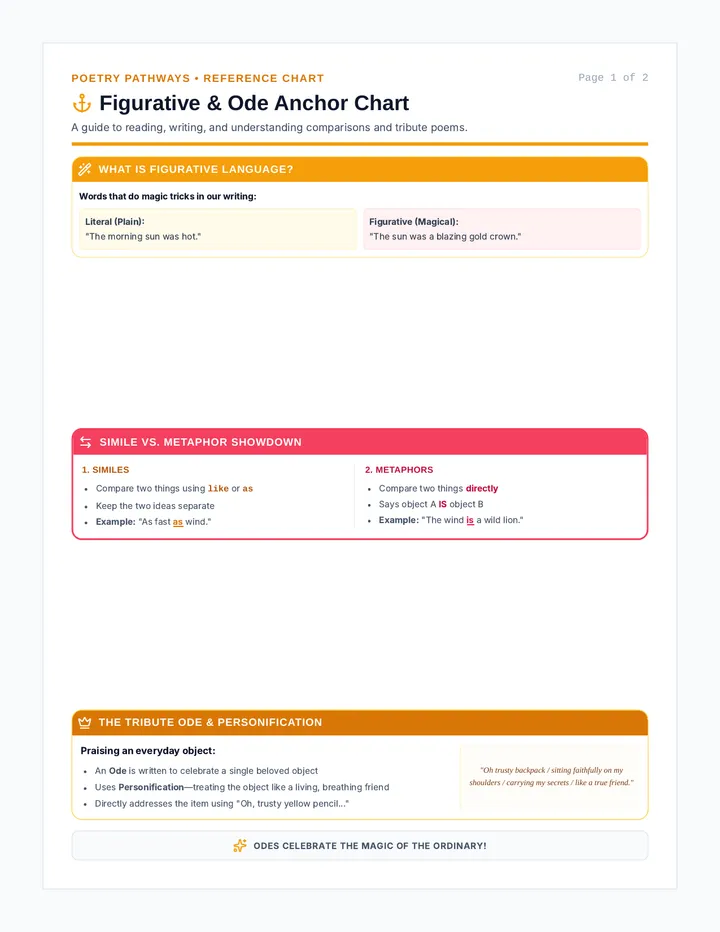
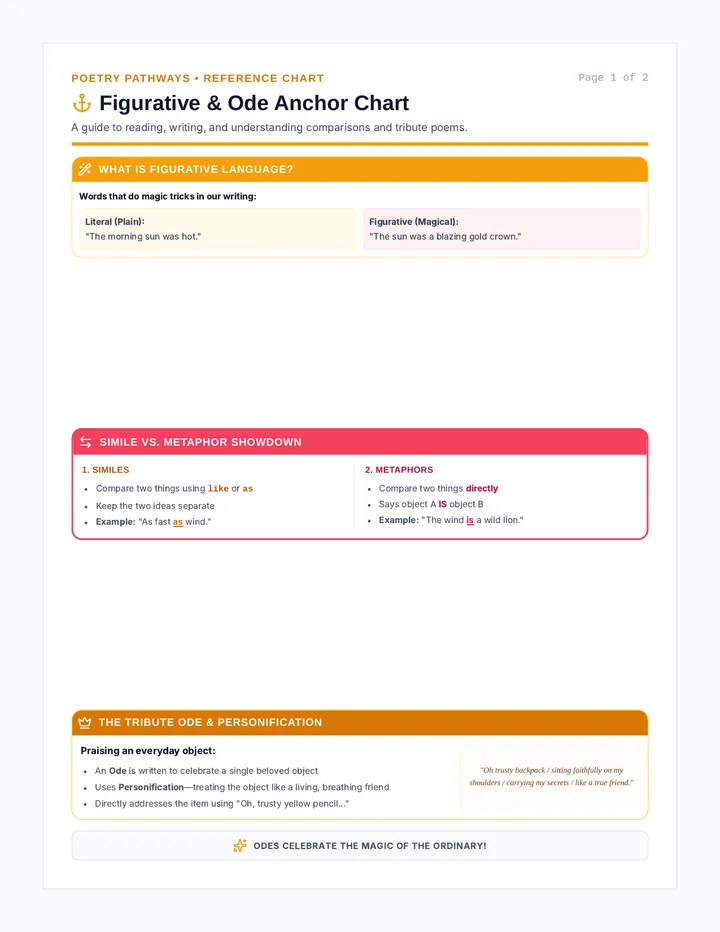
Focuses on using Metaphors and Similes to create powerful figurative imagery. Includes a final "My Poetry Masterpieces" portfolio cover and peer celebration review pages.
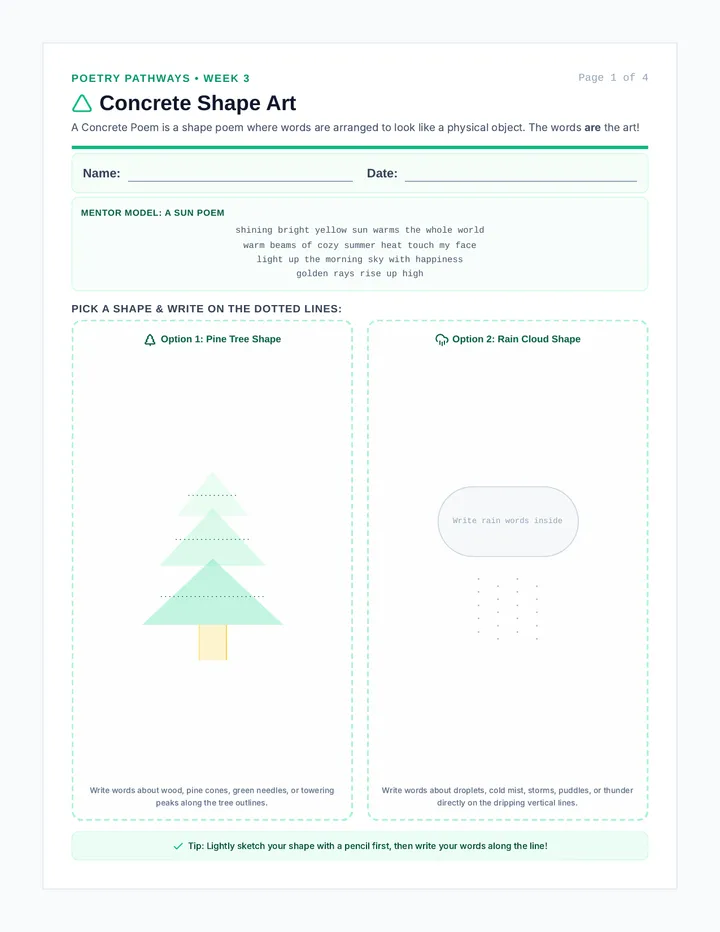
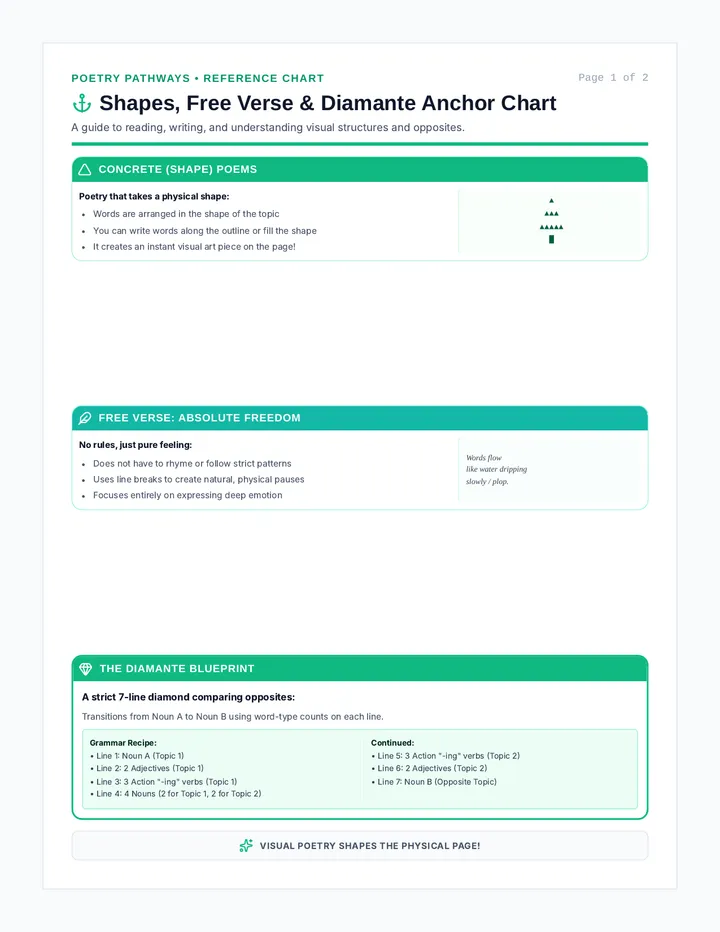
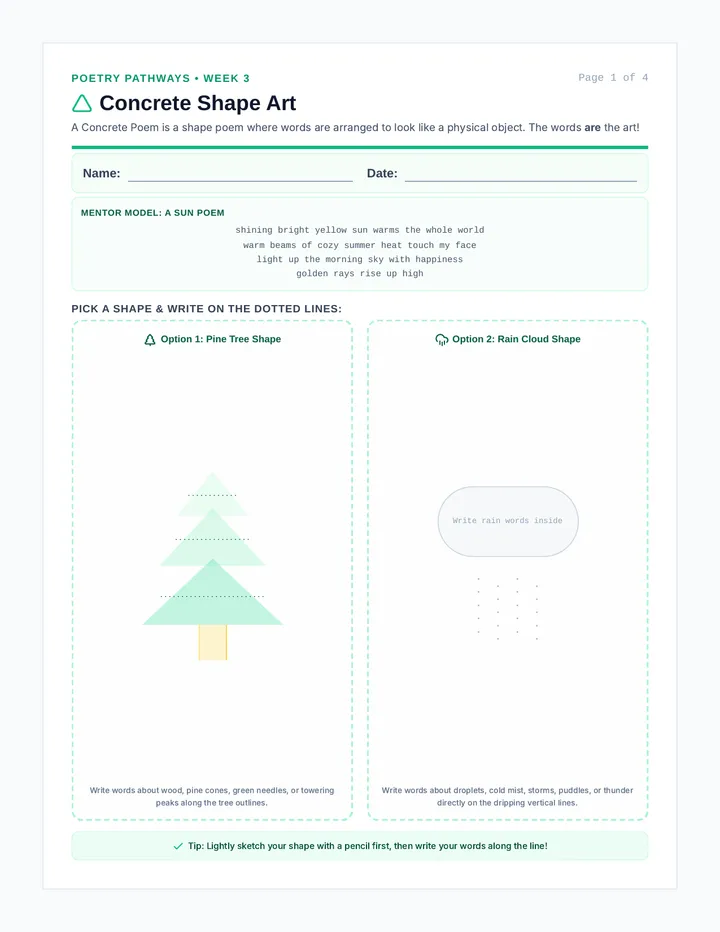
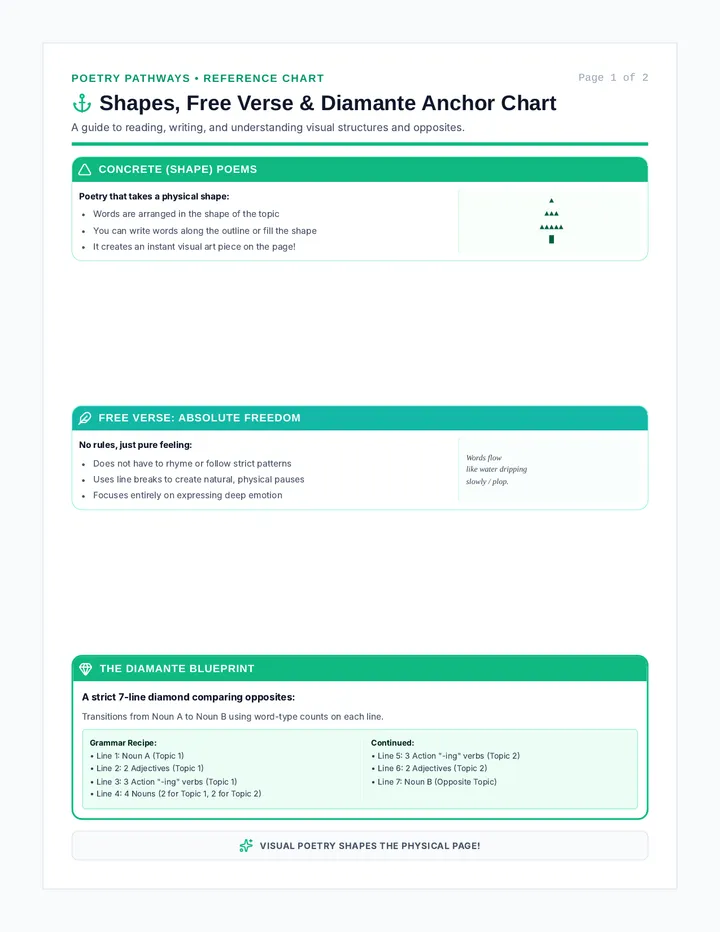
Focuses on shape, movement, and visual arrangement with Concrete (Shape) Poems and Free Verse. Provides scaffolded outline guides, word maps, and sensory feeling prompts.
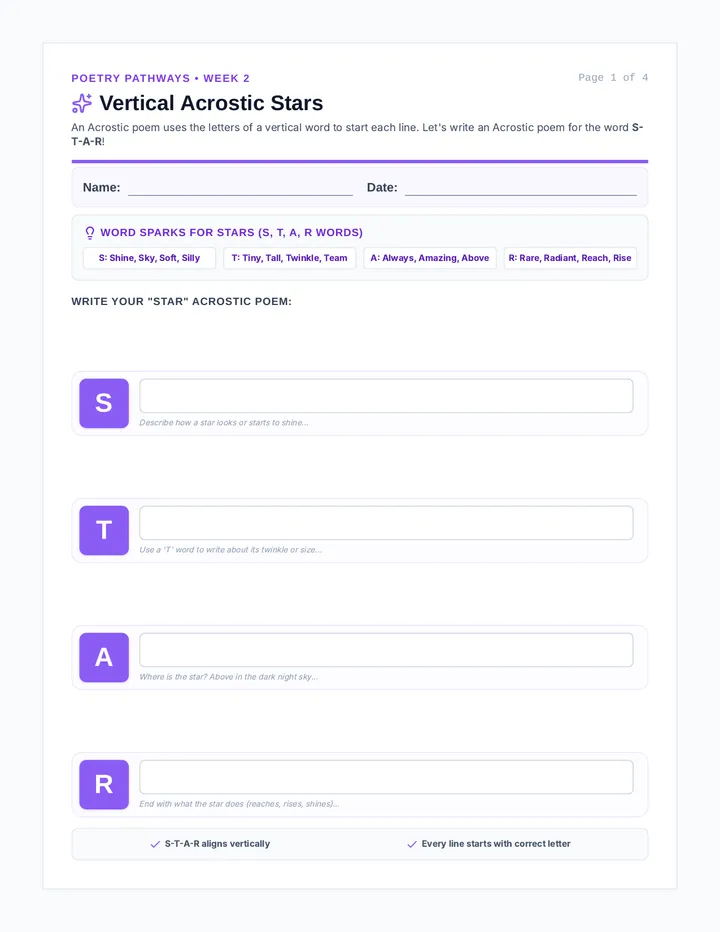
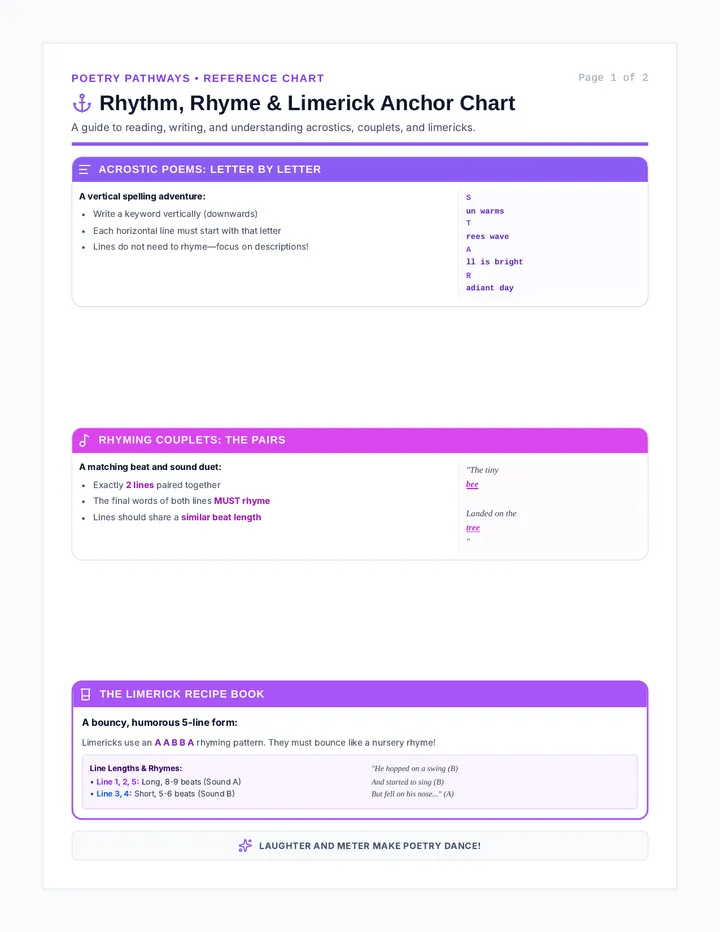
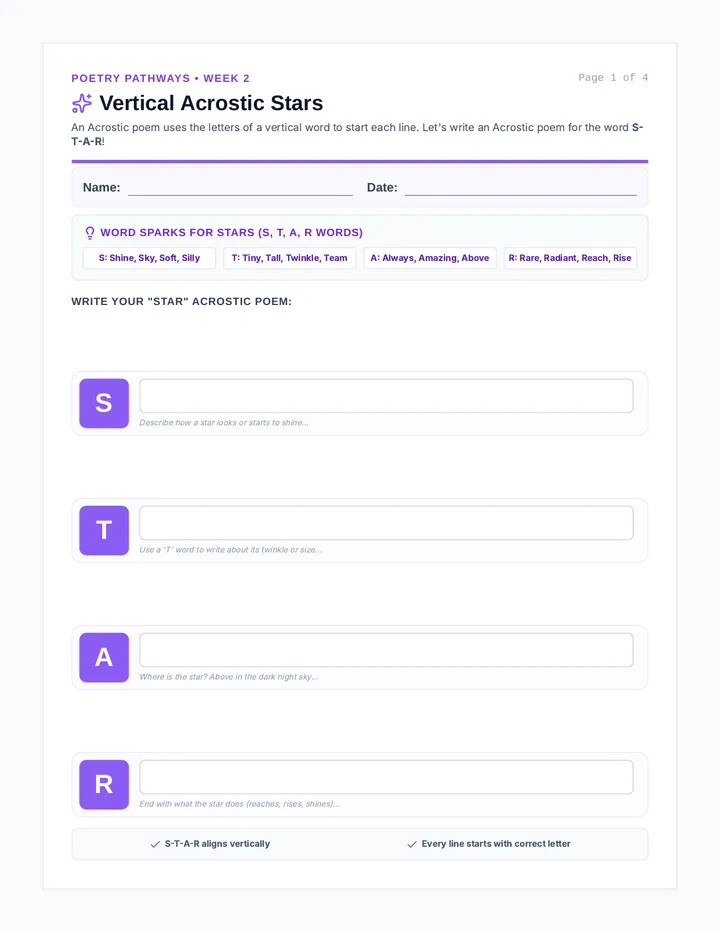
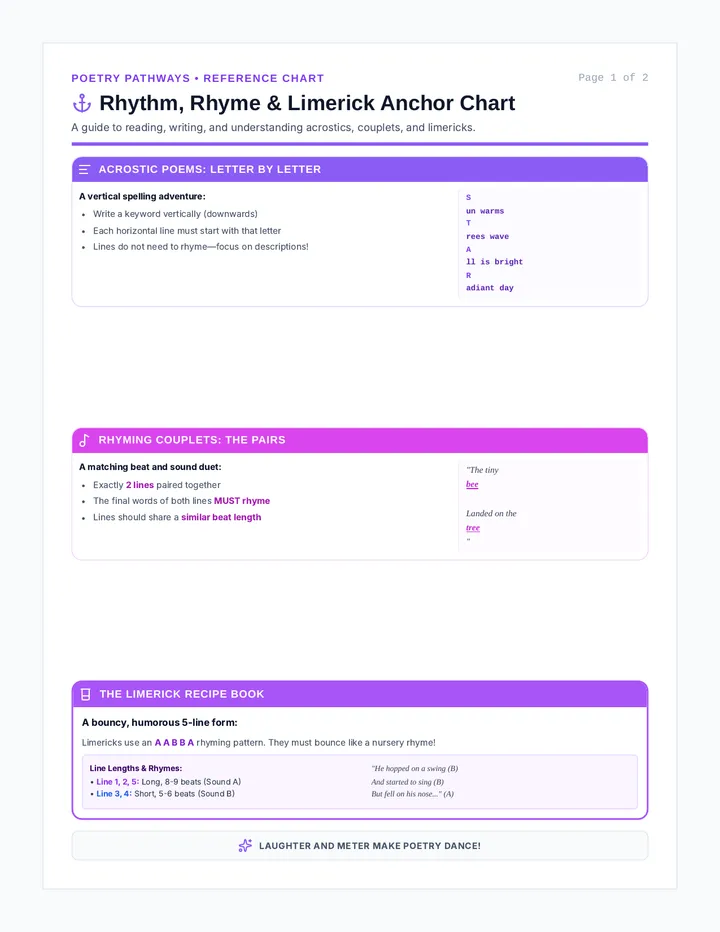
Focuses on structure, rhythm, and sound through Acrostic Poems and Rhyming Couplets. Offers step-by-step graphic templates, letter grids, rhyming dictionaries, and syllable beat counters.
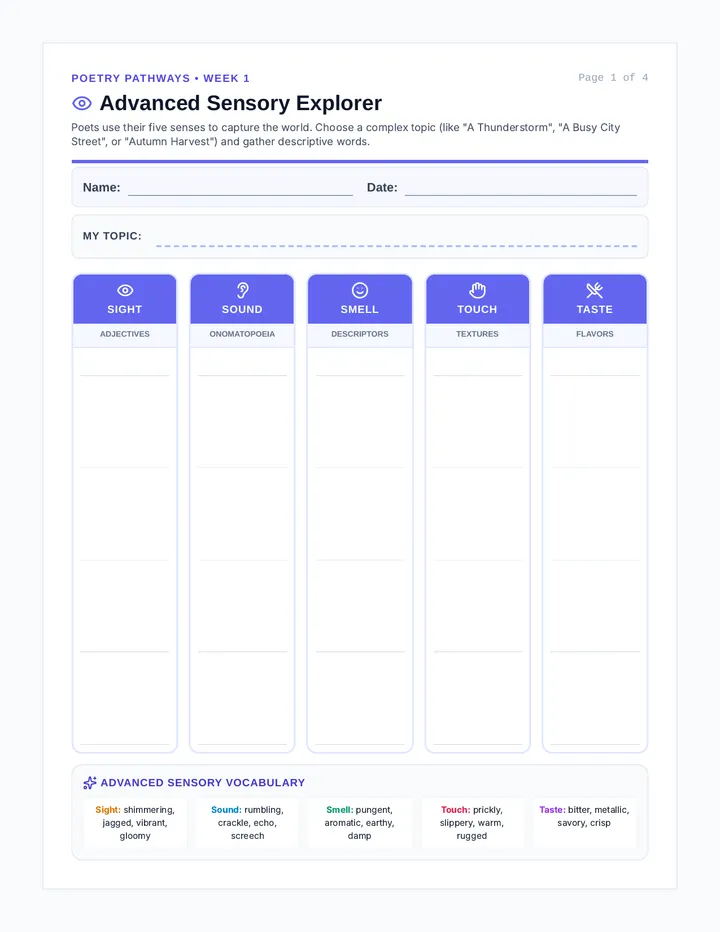
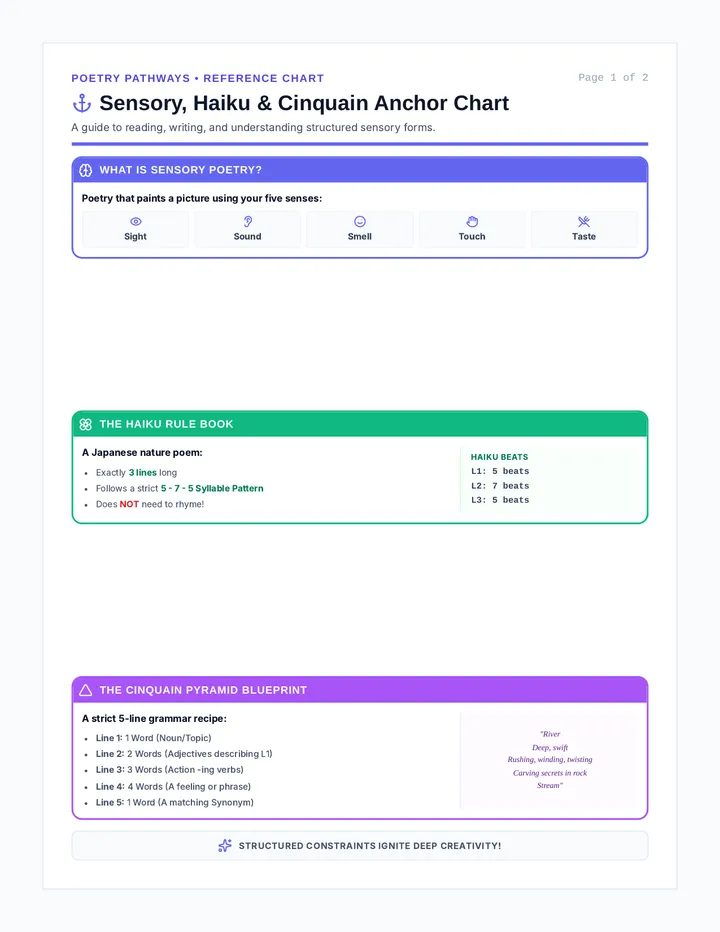
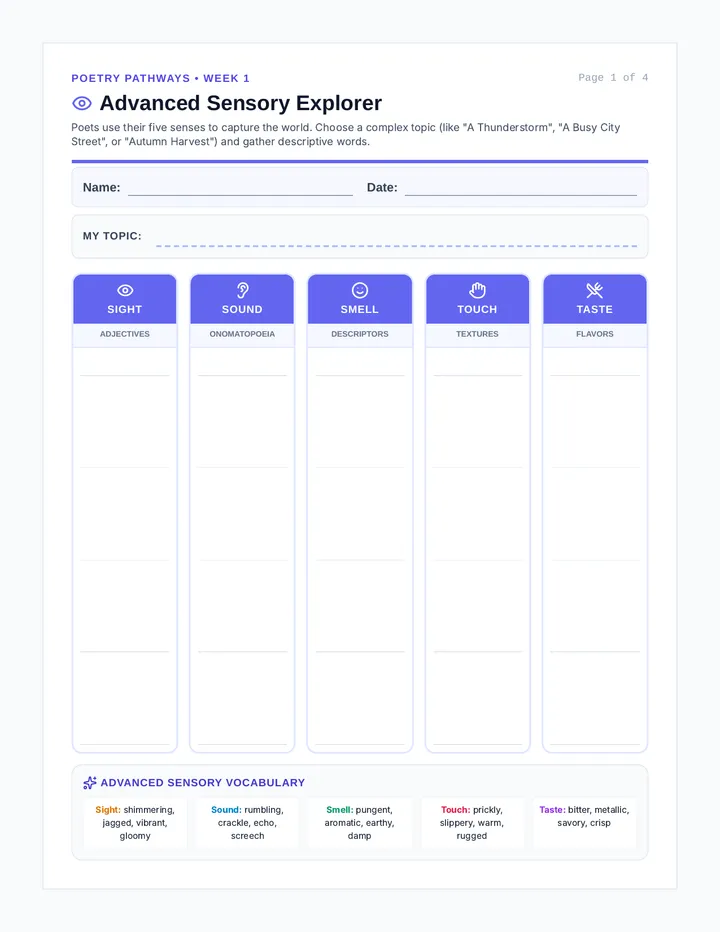
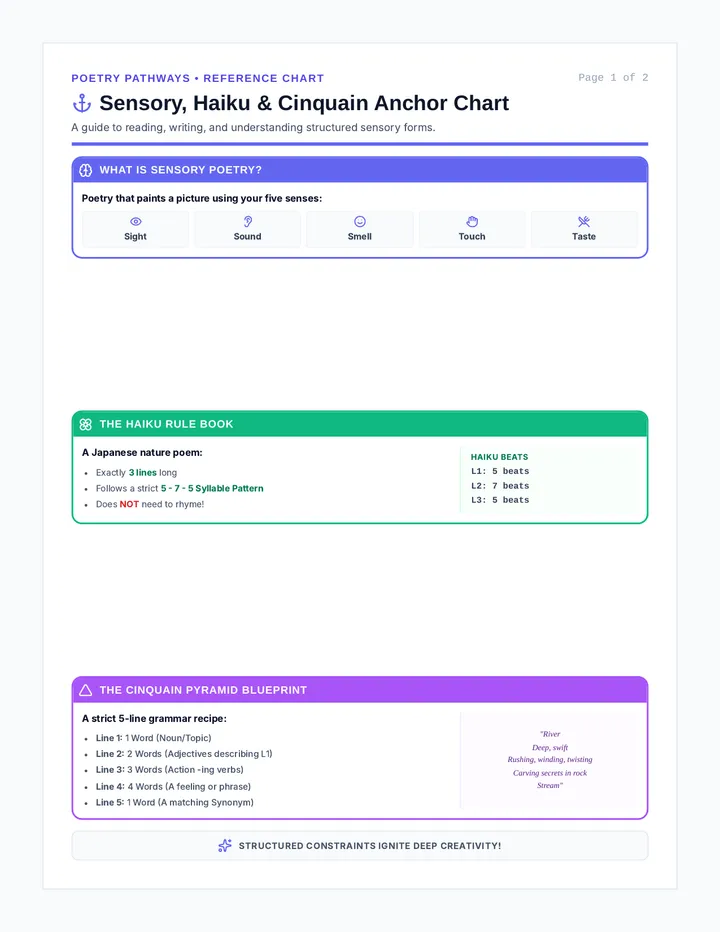
Focuses on Sensory and Color Poetry (Haiku and Color Poems). Students explore imagery using their five senses, utilizing highly visual sensory organizers, word banks, and syllable counters.
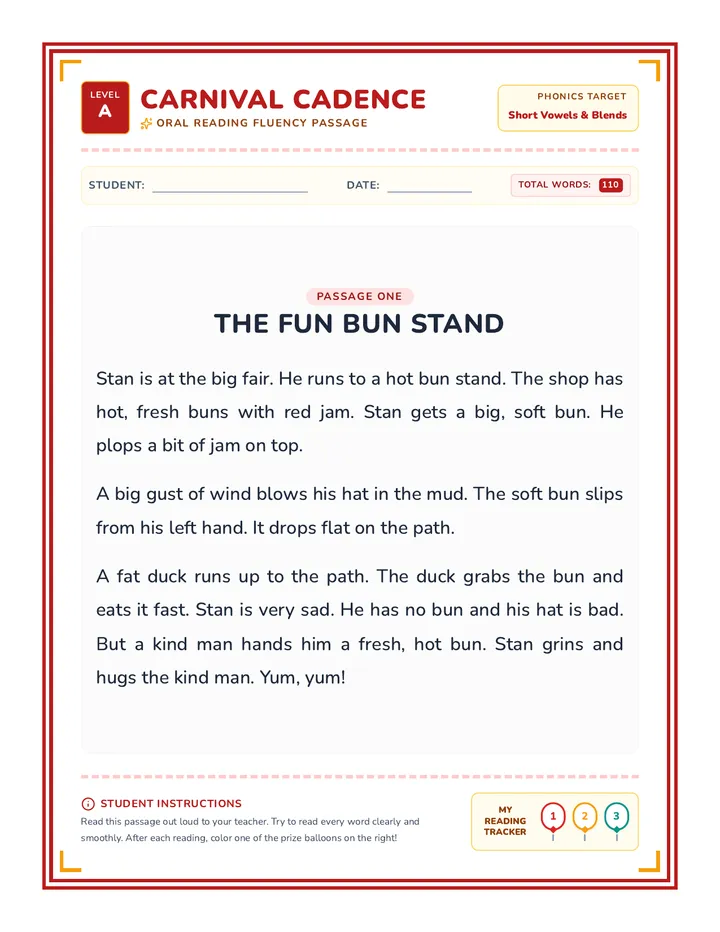
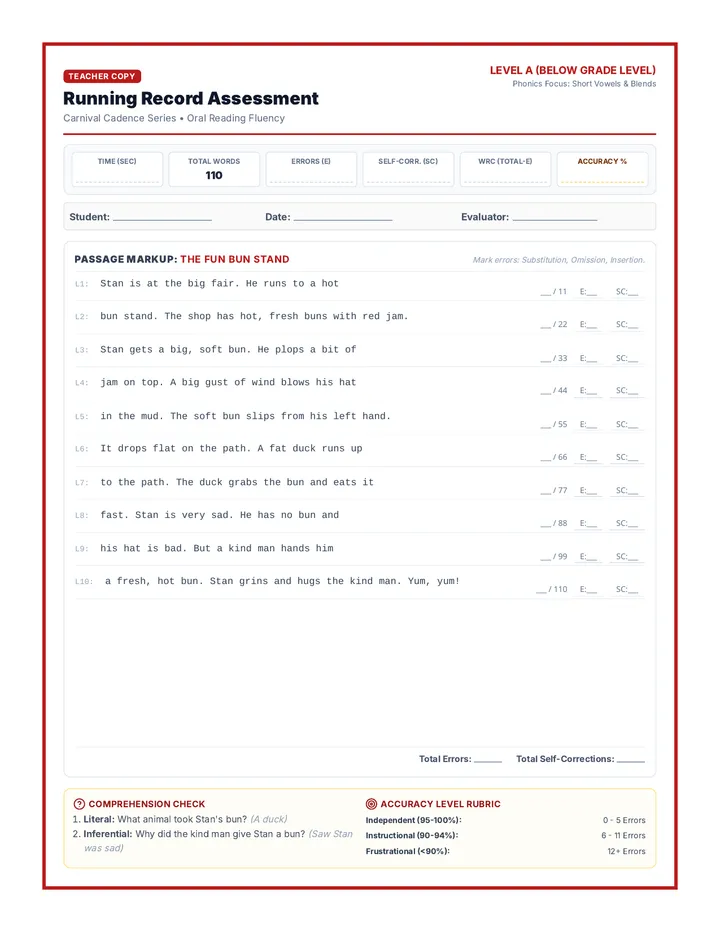
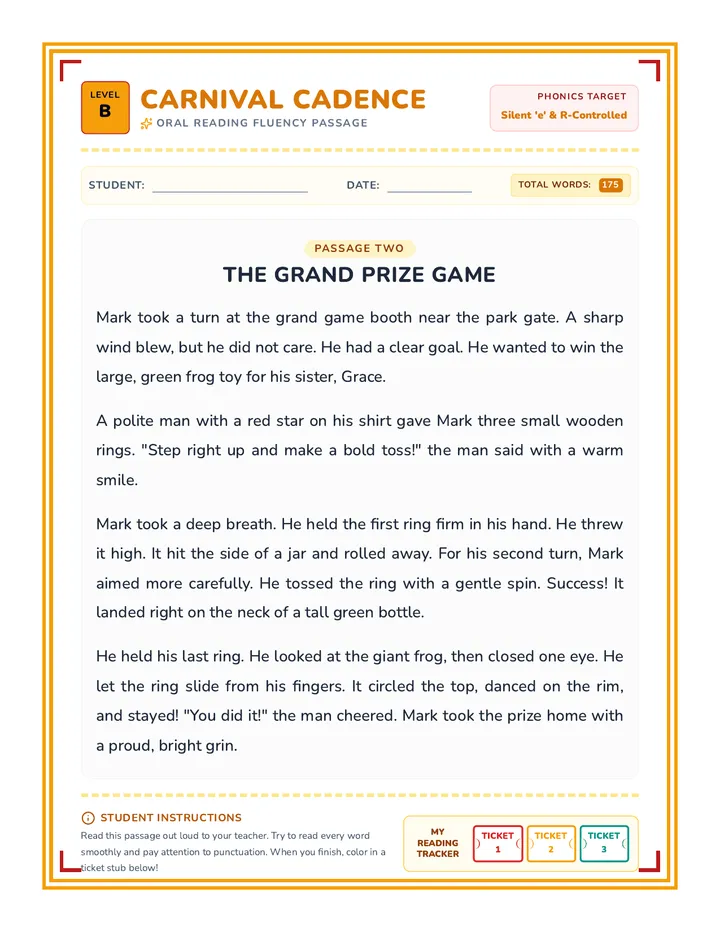
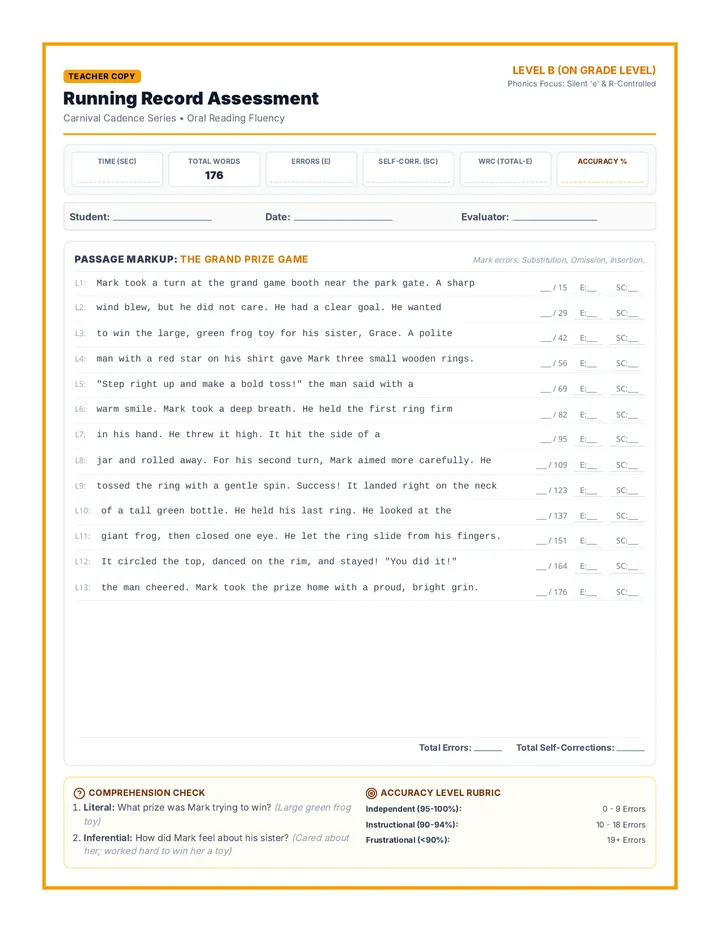
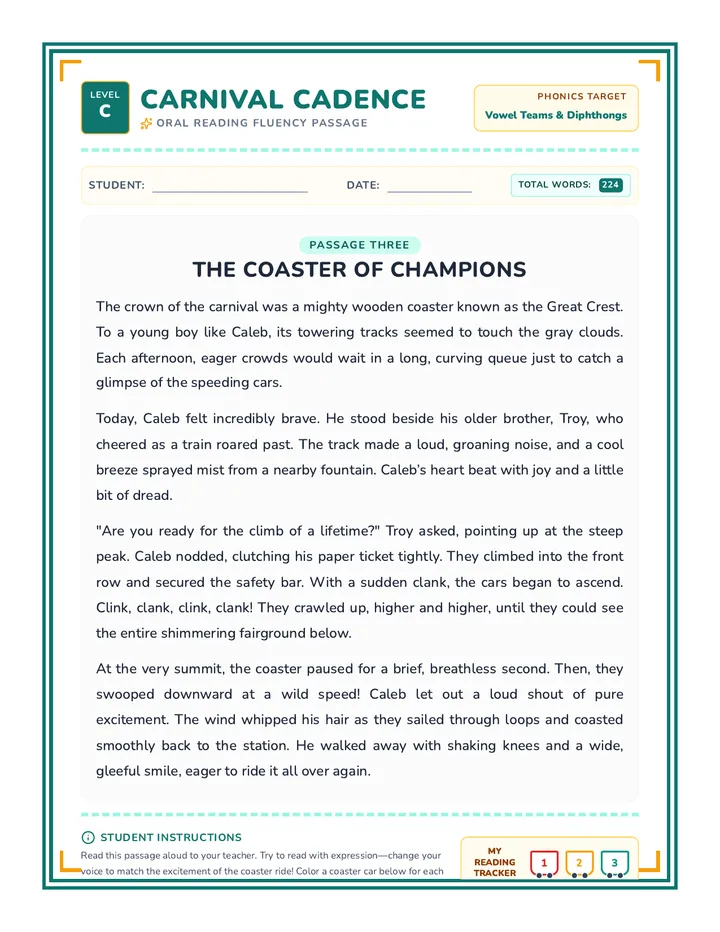
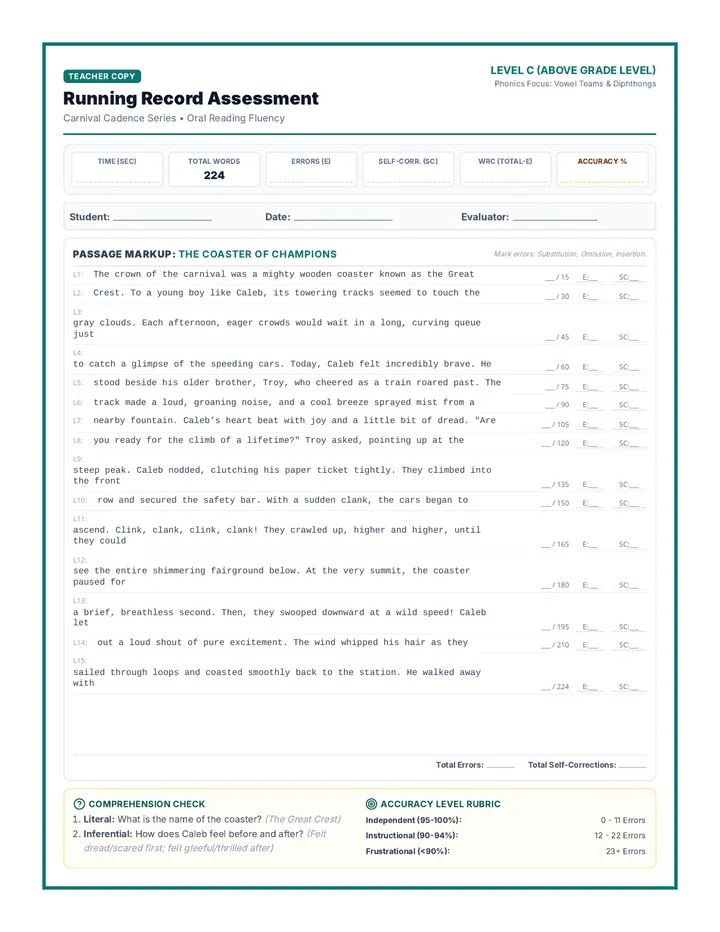
Differentiated carnival-themed reading passages and matching teacher running record forms designed to boost oral reading fluency and target specific phonics patterns.
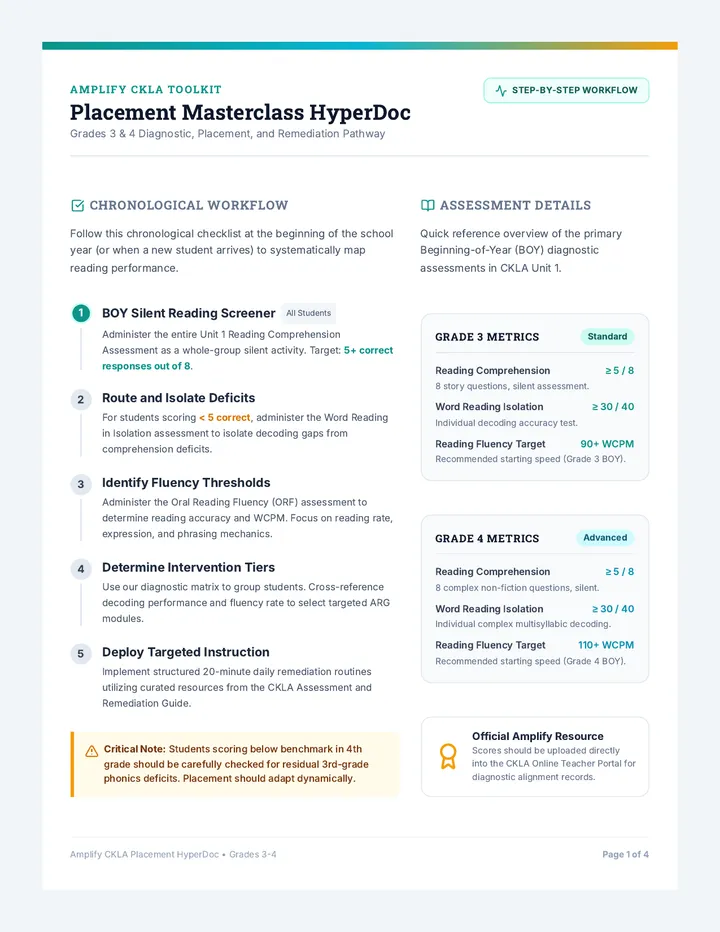
A specialized lesson designed for third and fourth-grade educators to master the CKLA placement, diagnostic, and remediation pathways. This lesson contains professional guides, visual flowcharts, and student grouping trackers to streamline the intervention process.
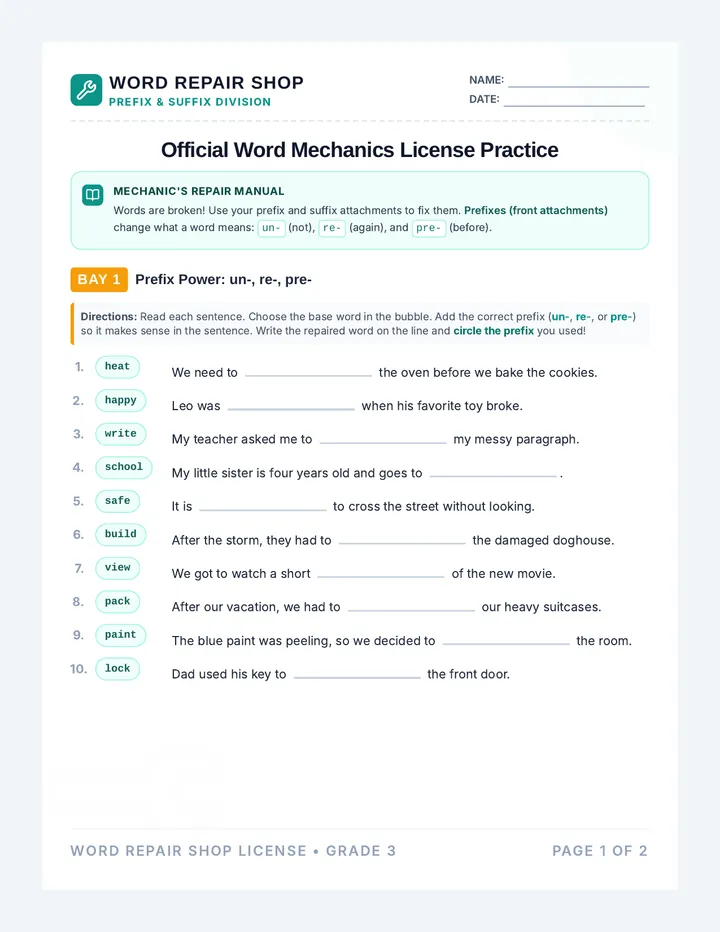
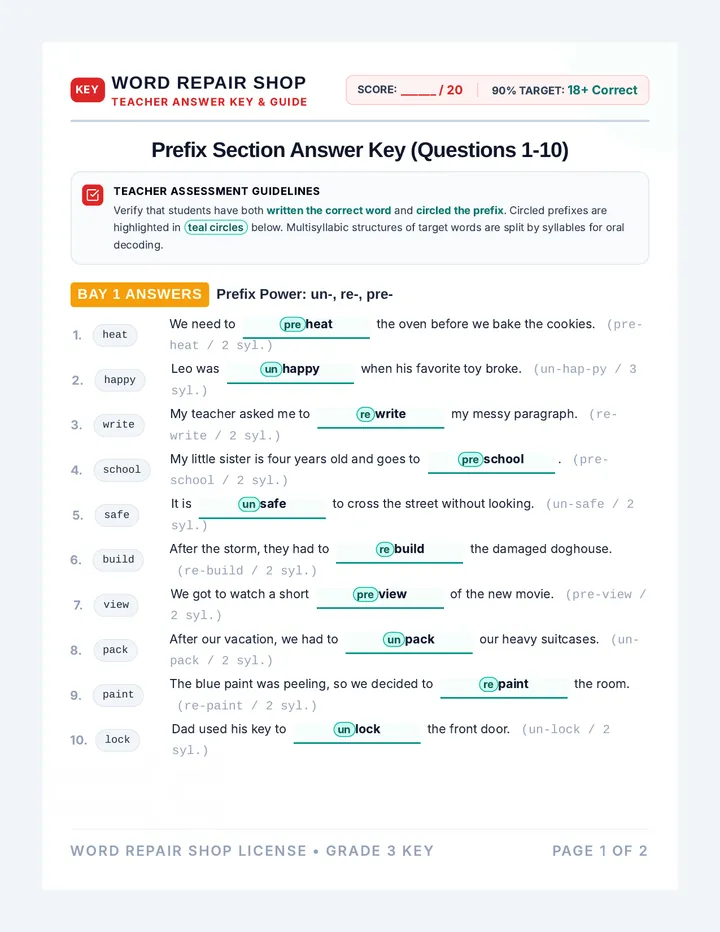
An engaging third-grade lesson where students become 'Word Mechanics' in a Fix-It Shop to learn, identify, and apply common prefixes (un-, re-, pre-) and suffixes (-s, -ed, -ing) in multisyllabic words. Includes a comprehensive student worksheet and a corresponding teacher answer key.
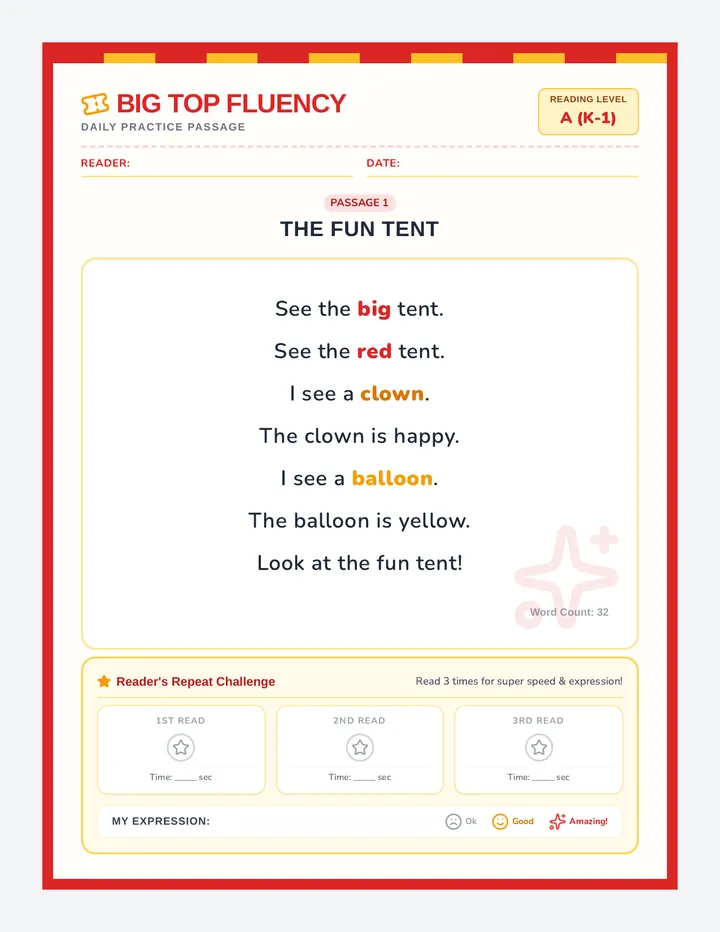
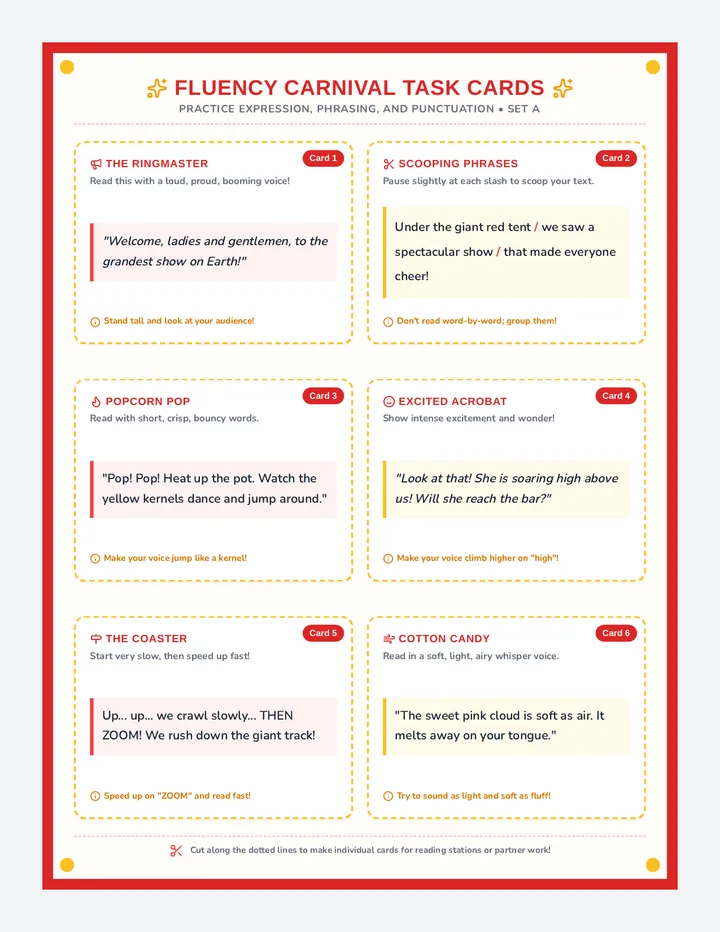
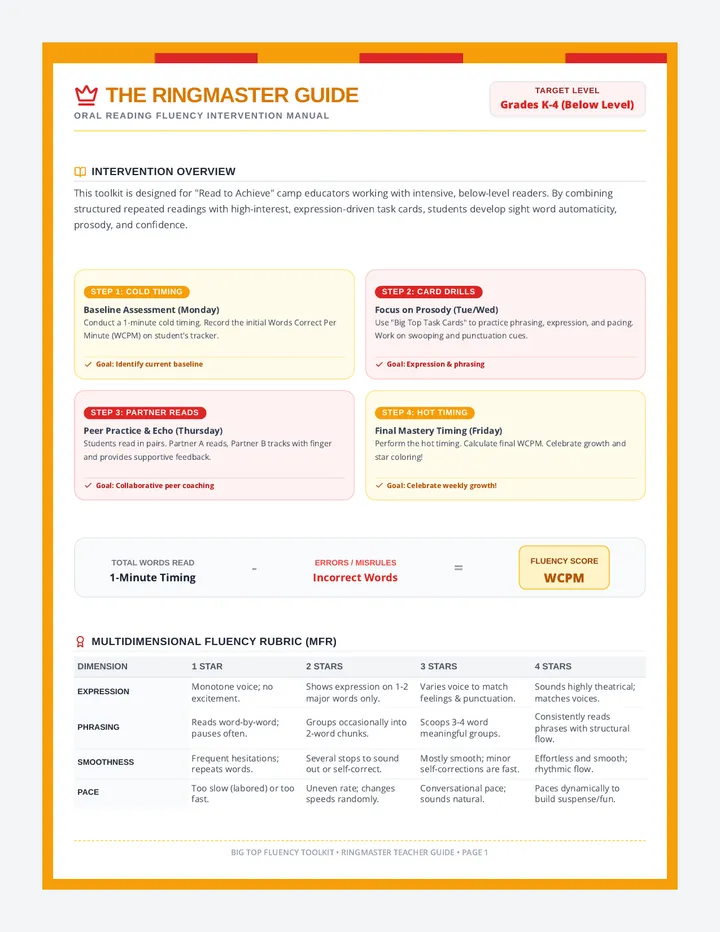
A carnival-themed oral reading fluency toolkit designed for Read to Achieve summer camps. Features differentiated reading passages (levels K-3) with repeated reading trackers, expression-focused task cards, and a teacher scoring and implementation guide.
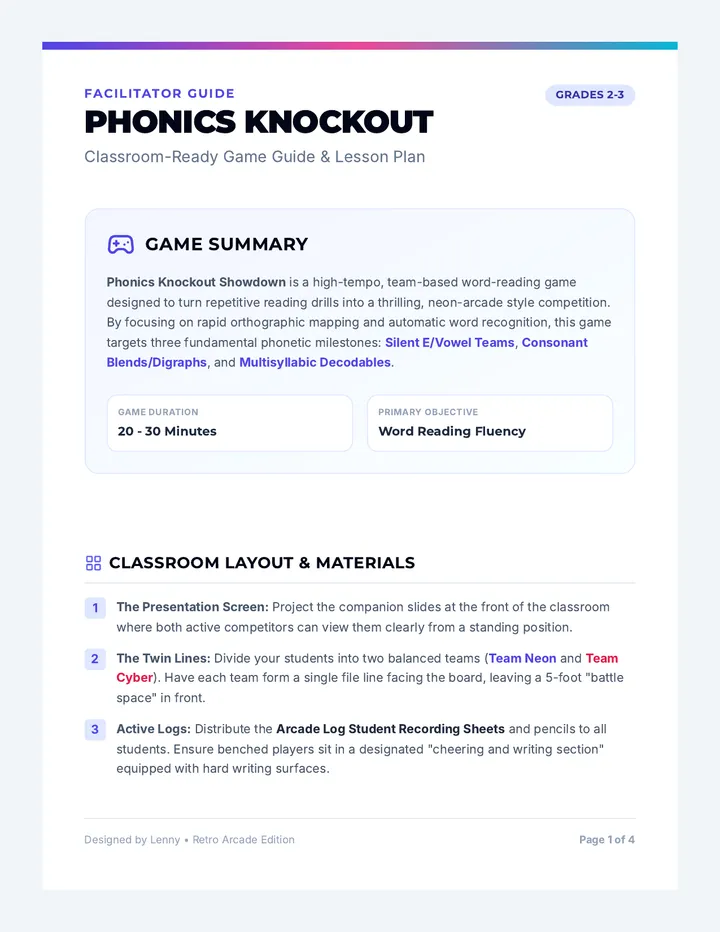
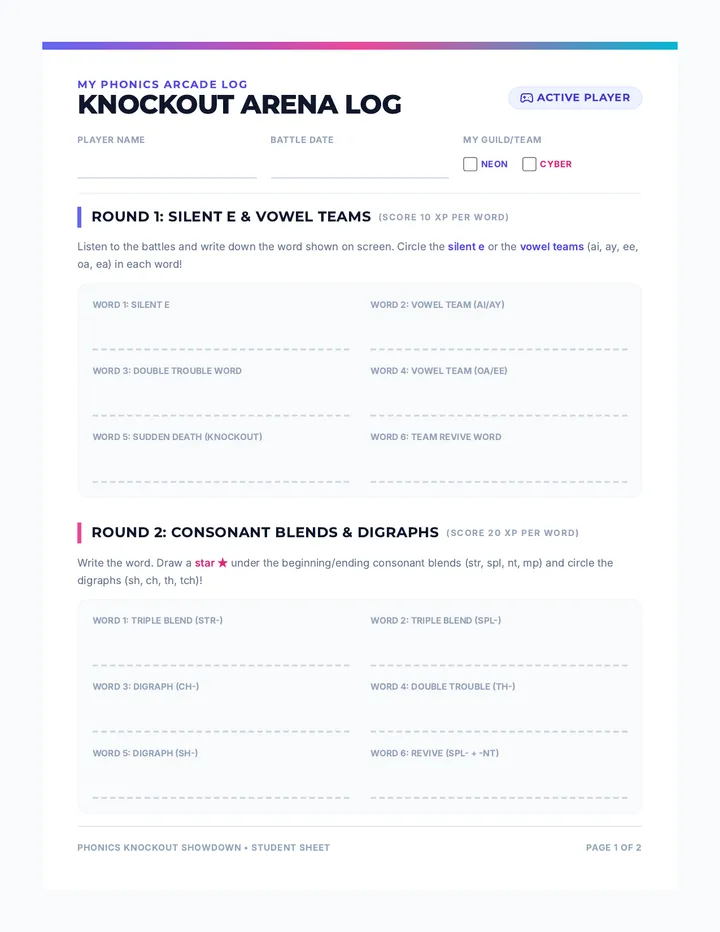
A high-energy, neon-themed classroom game targeting 2nd and 3rd-grade phonics standards including Silent E, Vowel Teams, Blends, Digraphs, and Multisyllabic Decodables. Includes visual projection slides, a comprehensive facilitator guide, and a high-engagement student recording sheet.
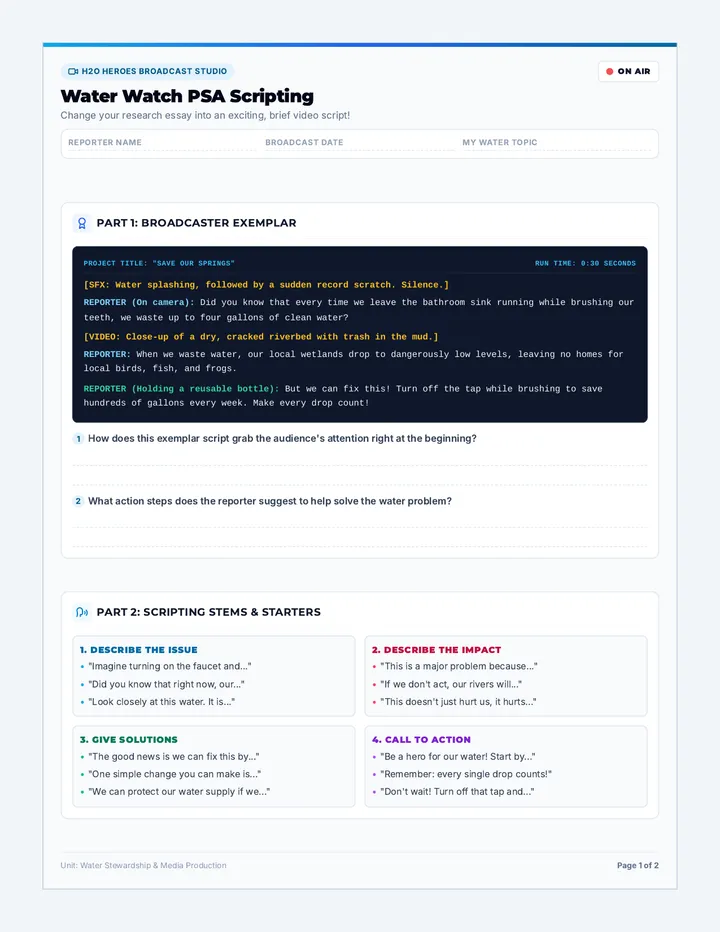
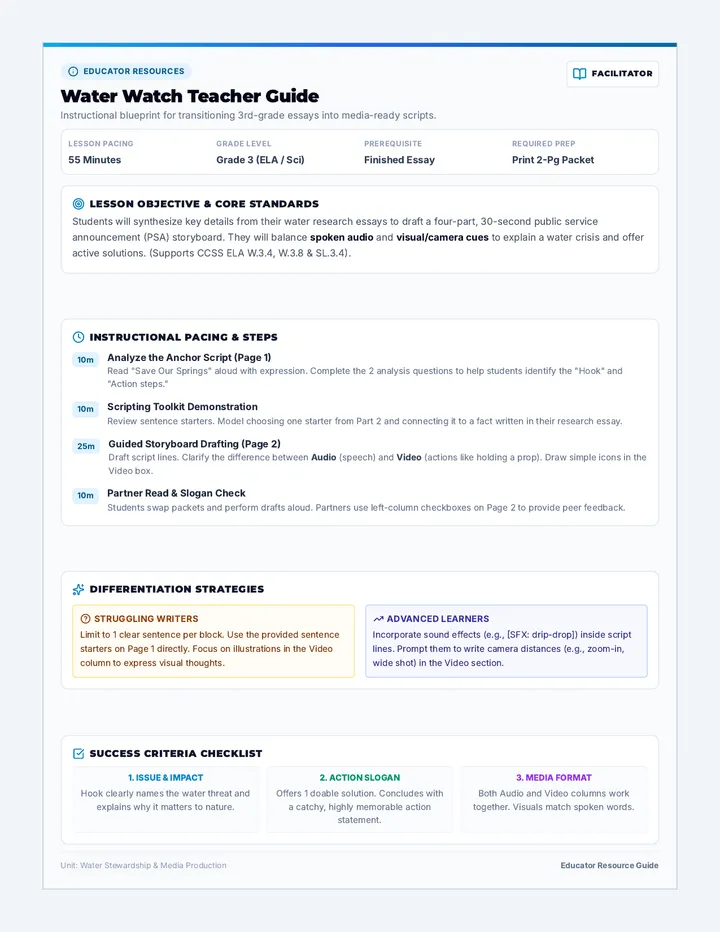
A lesson designed to guide 3rd-grade students through transitioning their research essays on water issues into engaging, structured PSA video scripts. Students analyze an exemplar script, explore transition phrase templates, and draft their scripts using a side-by-side storyboard graphic organizer.
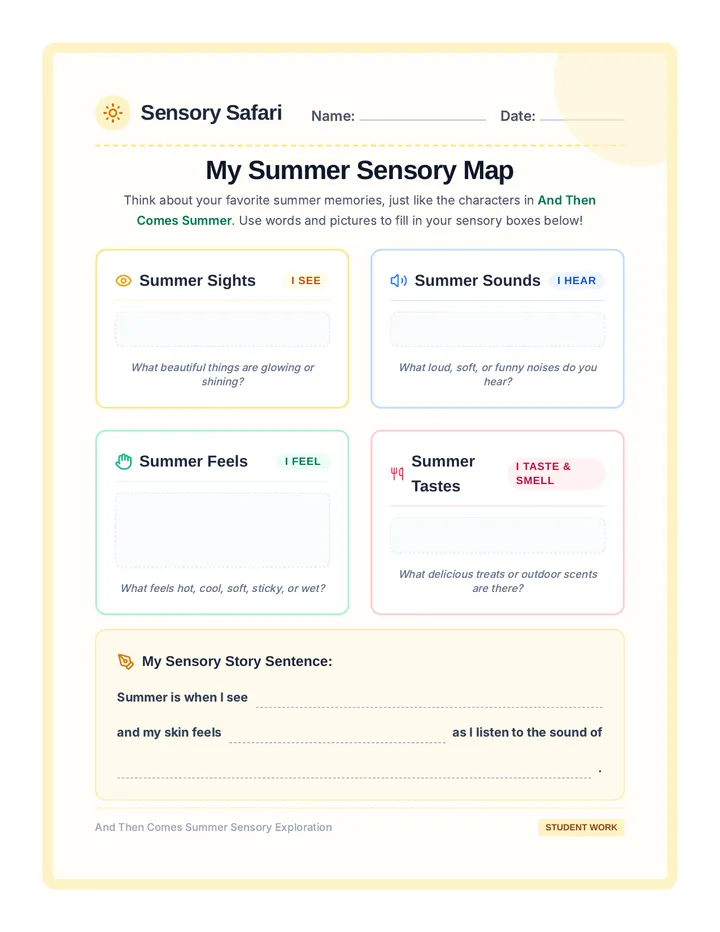
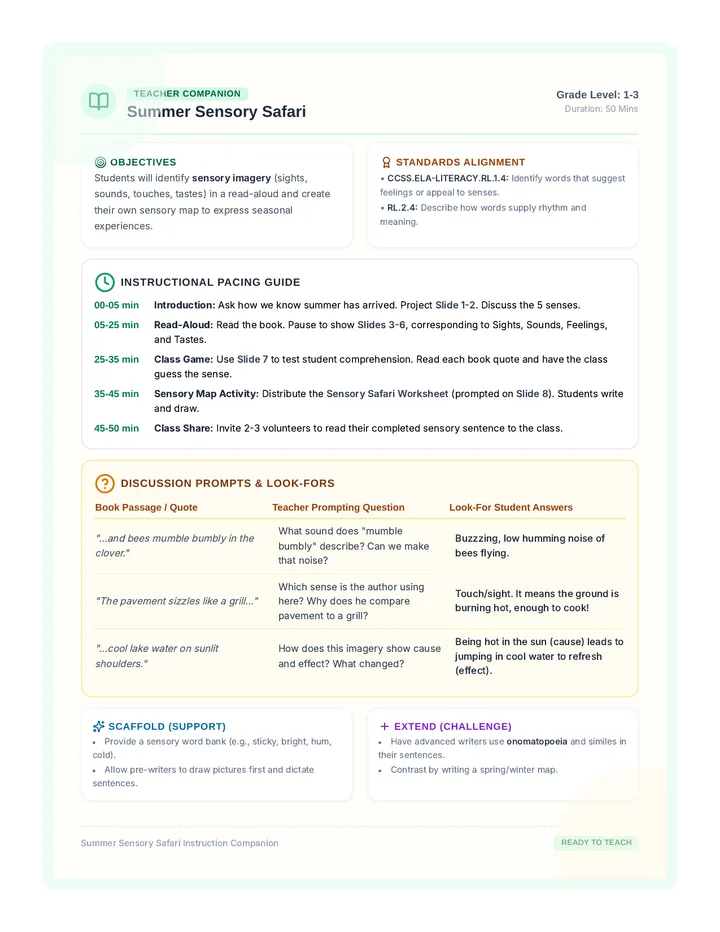
An interactive literature lesson exploring the rich sensory details and imagery in Tom Brenner's 'And Then Comes Summer'. Students identify and discuss sights, sounds, feels, and tastes to build comprehension and descriptive writing skills.
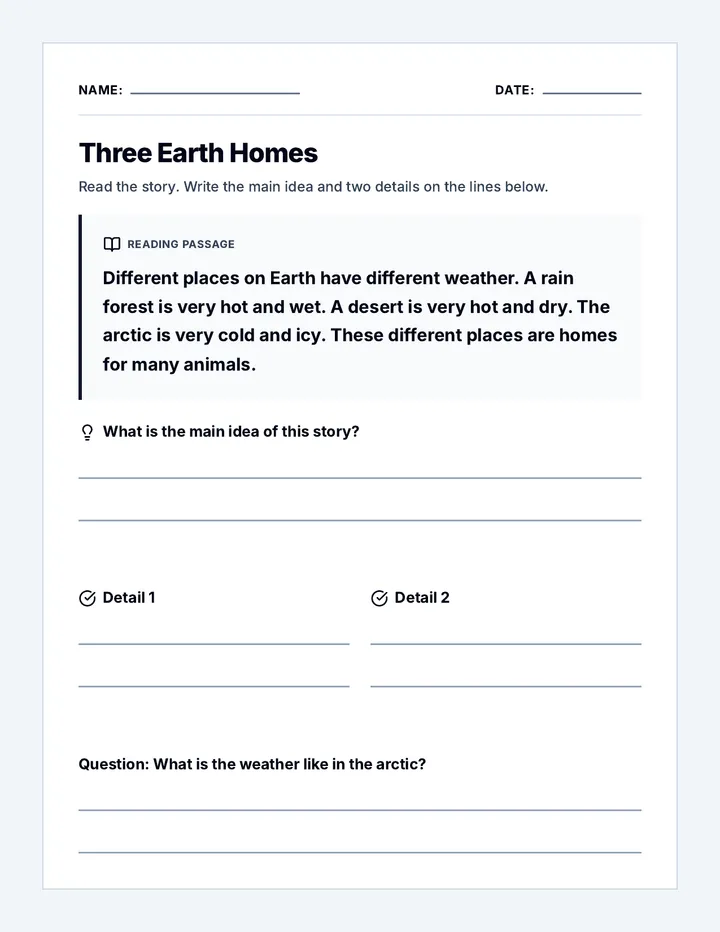
A lesson focused on identifying the main idea and supporting details in short texts, designed with structured supports for students.
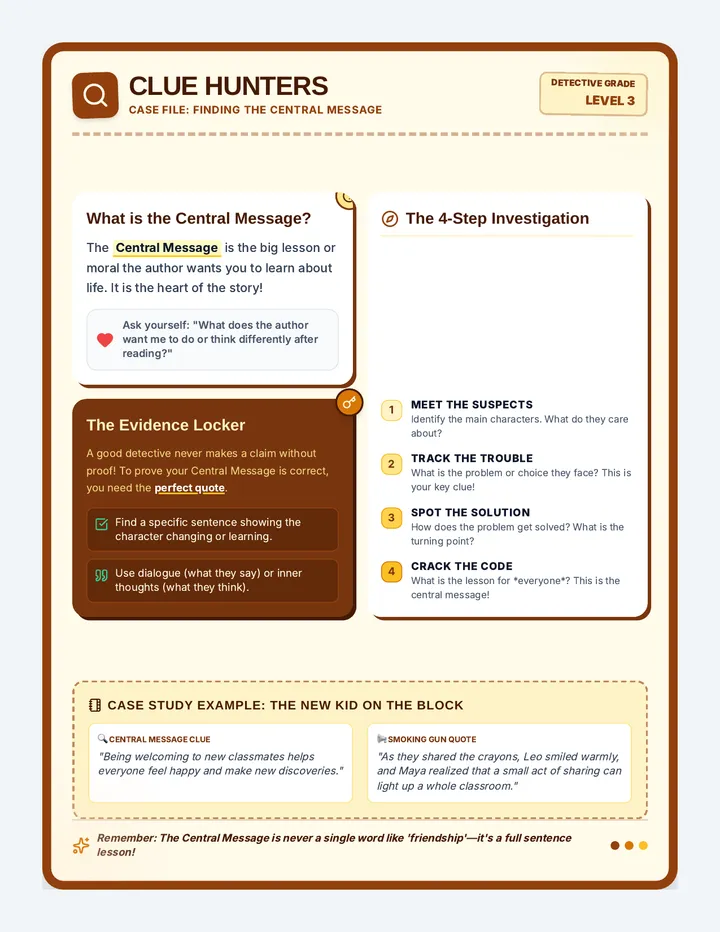
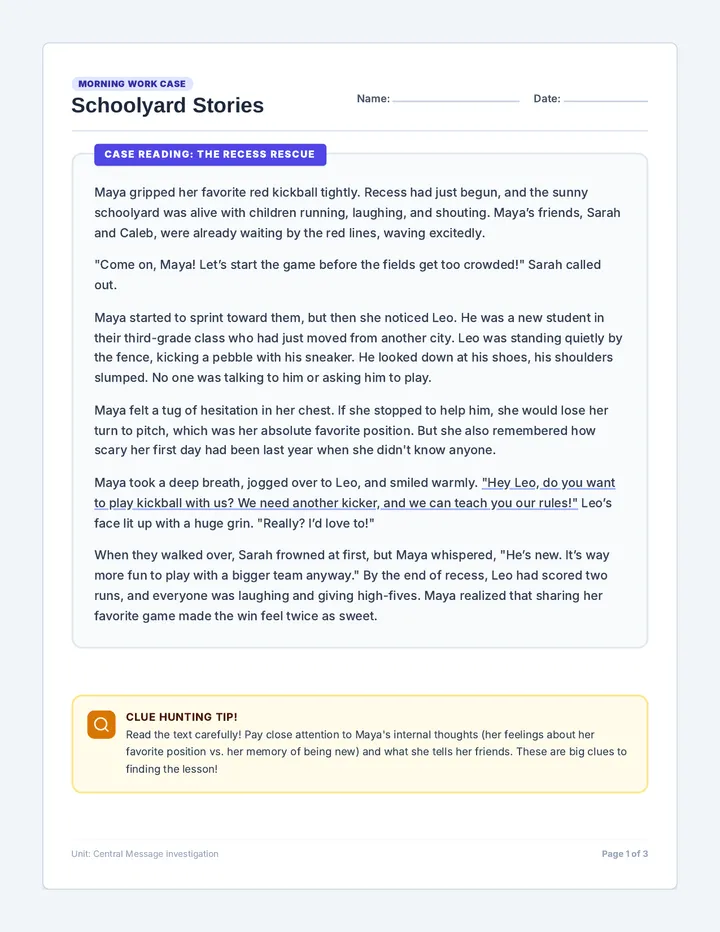
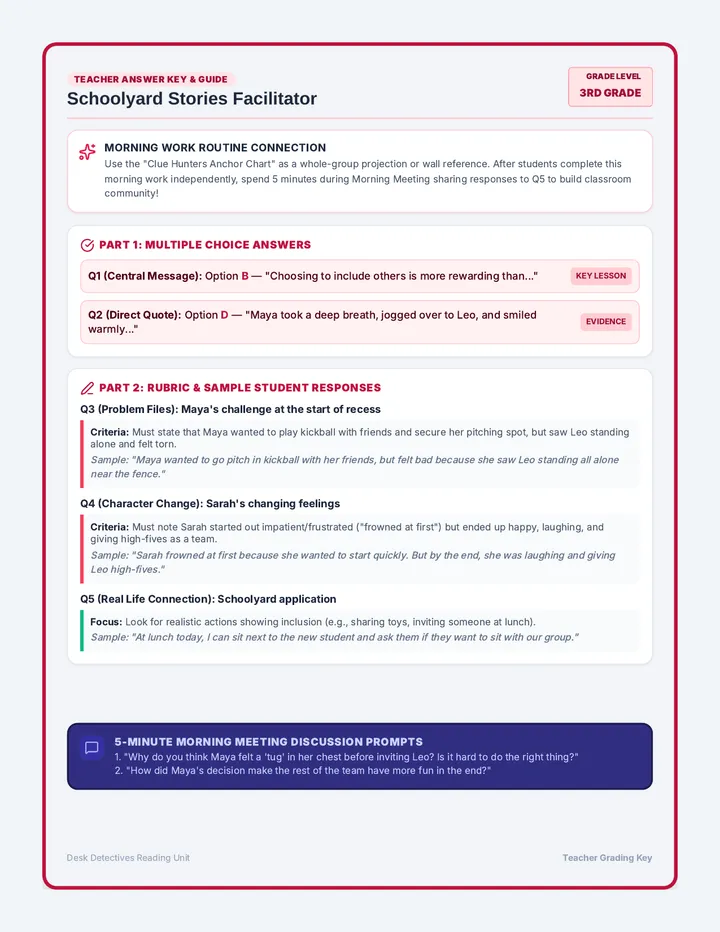
A third-grade reading lesson focused on identifying the central message and supporting evidence in realistic schoolyard fiction. Students learn to spot clues like a detective to discover the heart of the story.
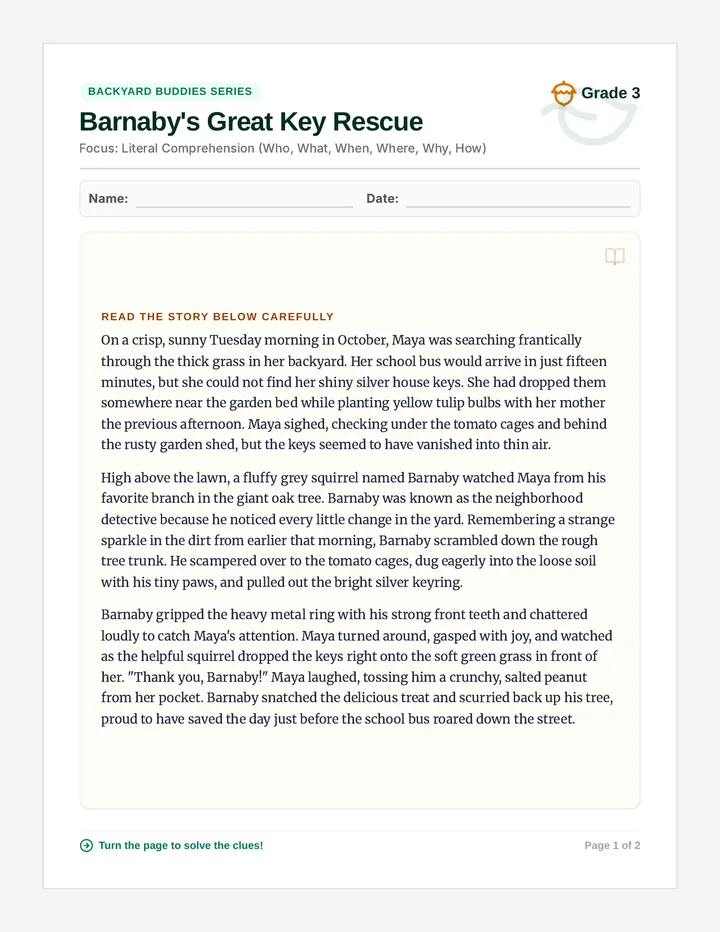
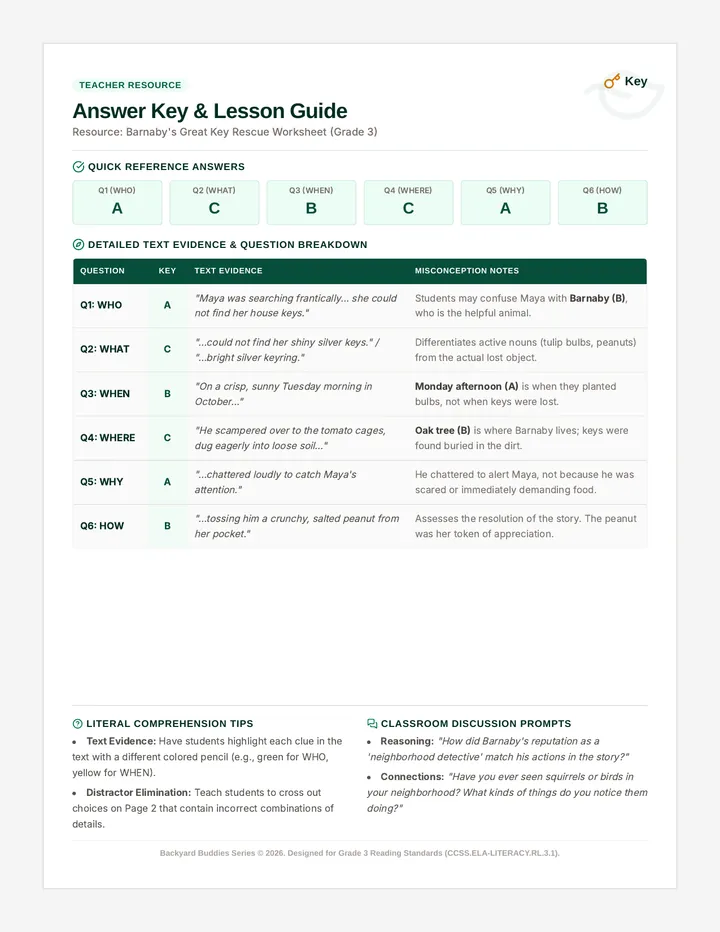
A reading comprehension lesson for third graders focused on identifying key literal details (who, what, when, where, why, and how) in a narrative about a helpful backyard squirrel.
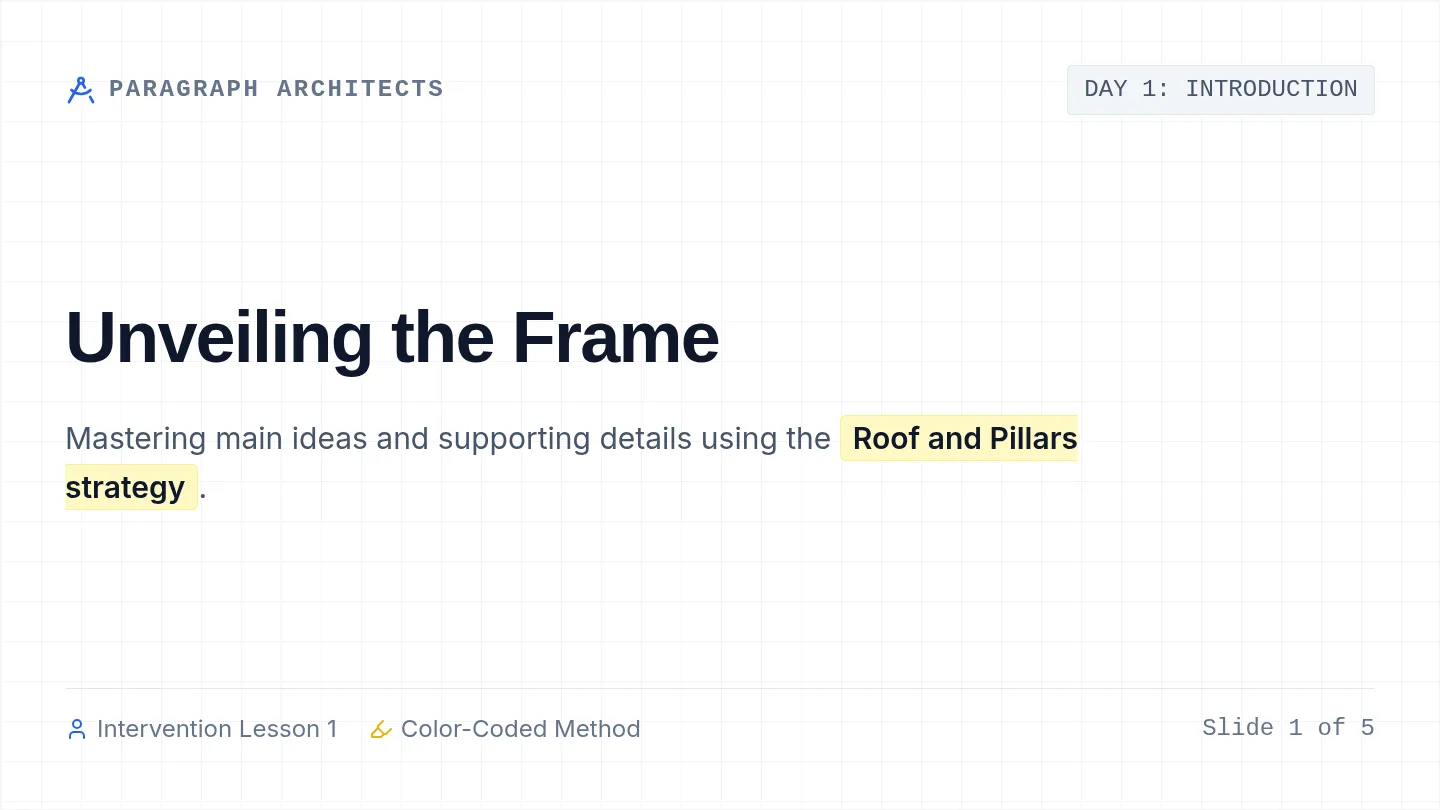
An explicit modeling lesson focusing on introducing the 'Roof' (Main Idea) and 'Pillars' (Supporting Details) concept. Students learn paragraph structure and watch live highlighting demonstrations.
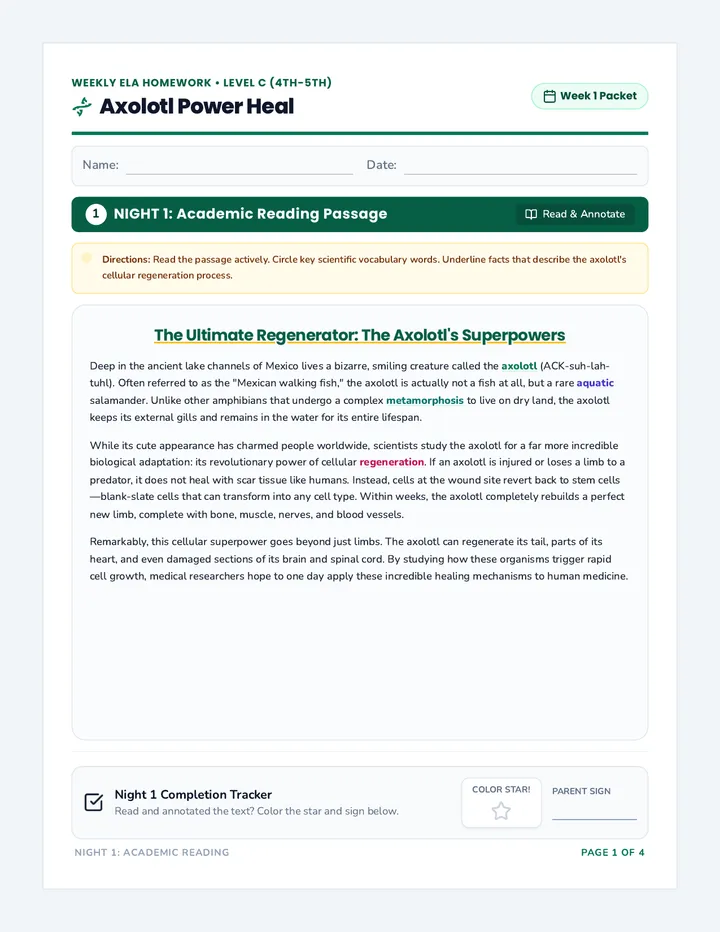
A 4th-5th grade weekly ELA homework packet focused on the axolotl and its incredible cellular regeneration abilities. Includes a challenging multi-paragraph informational text, root word/context-clue vocabulary work, a structural vs. behavioral adaptation sorting activity, and complex multiple-choice and short-answer questions with supportive sentence frames.
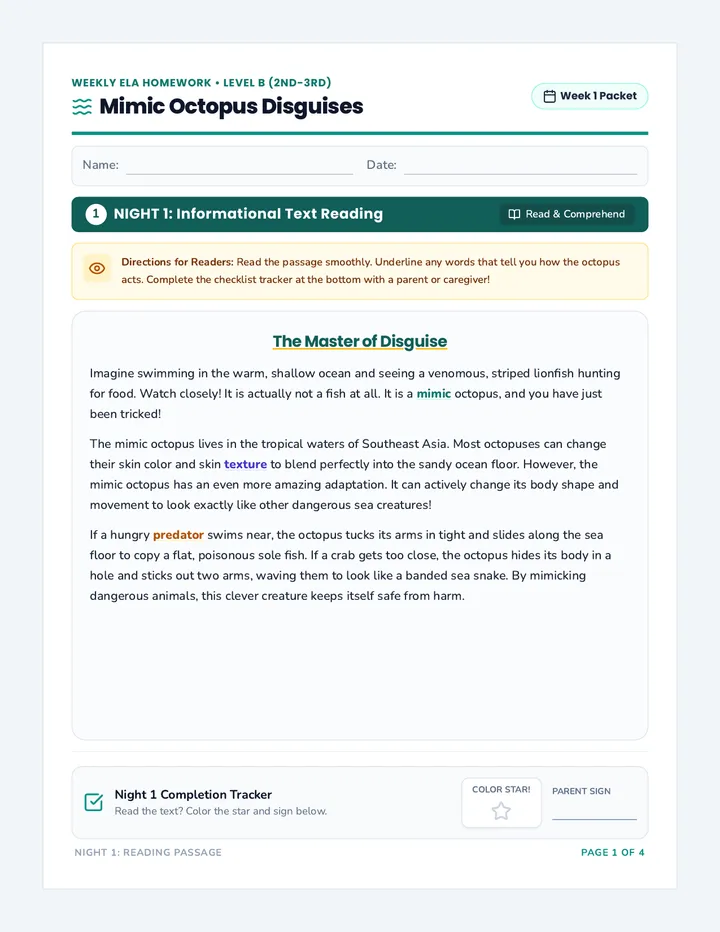
A 2nd-3rd grade weekly ELA homework packet centering on the mimic octopus, an animal that takes the form of other sea creatures to survive. Contains a multi-paragraph reading passage, context-clue vocabulary exercises, a visual disguise planning activity, and multiple-choice and short-answer comprehension questions with sentence-starter frames.
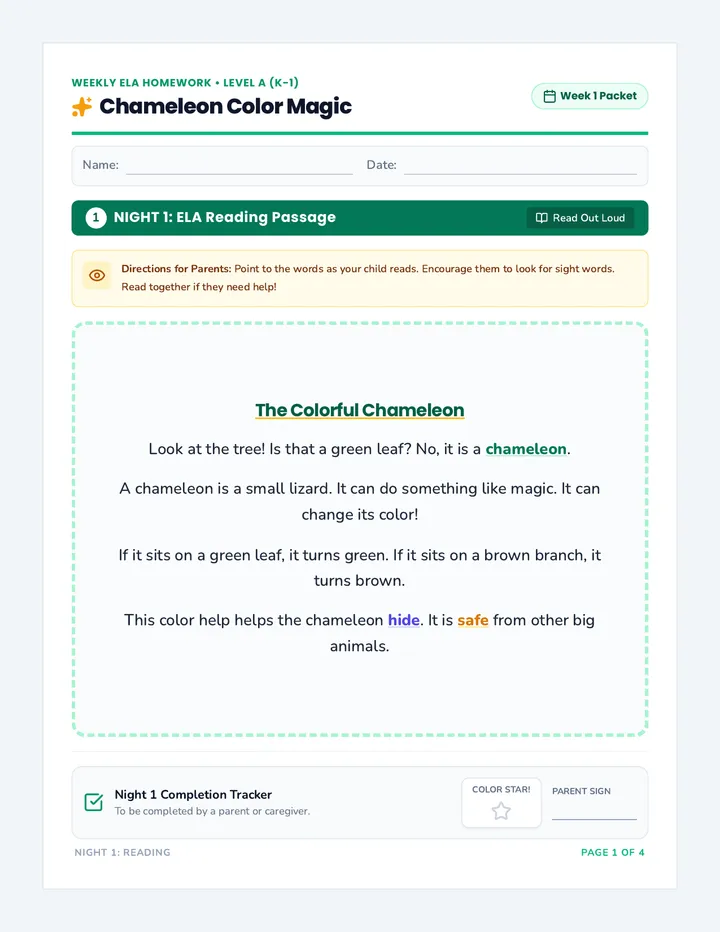
A K-1 weekly ELA homework packet featuring a short, high-interest reading passage about the chameleon's color-changing ability. Includes heavily supported vocabulary matching, visual drawing and labeling activities, simple comprehension questions with complete sentence starters, and an easy-to-use checklist tracker.
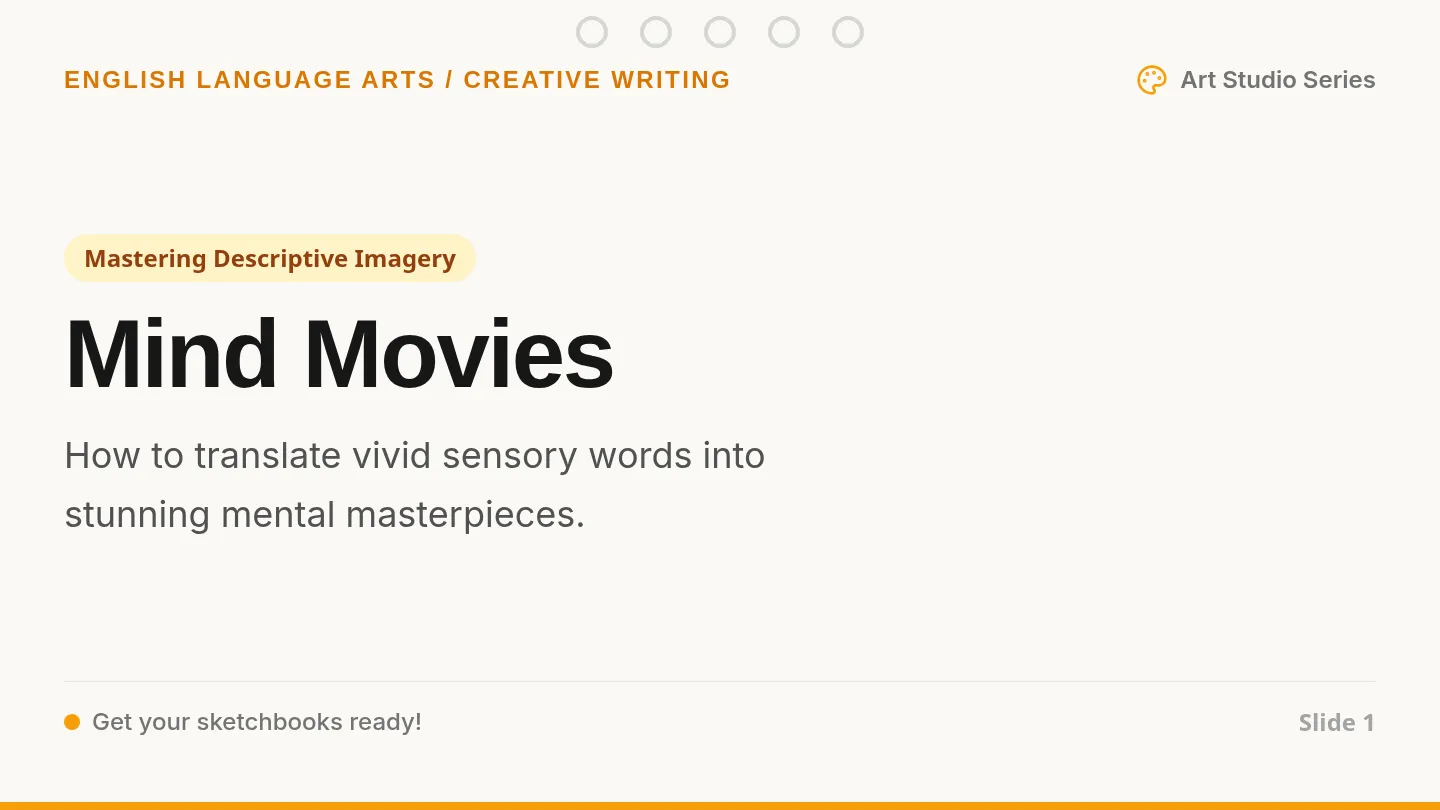
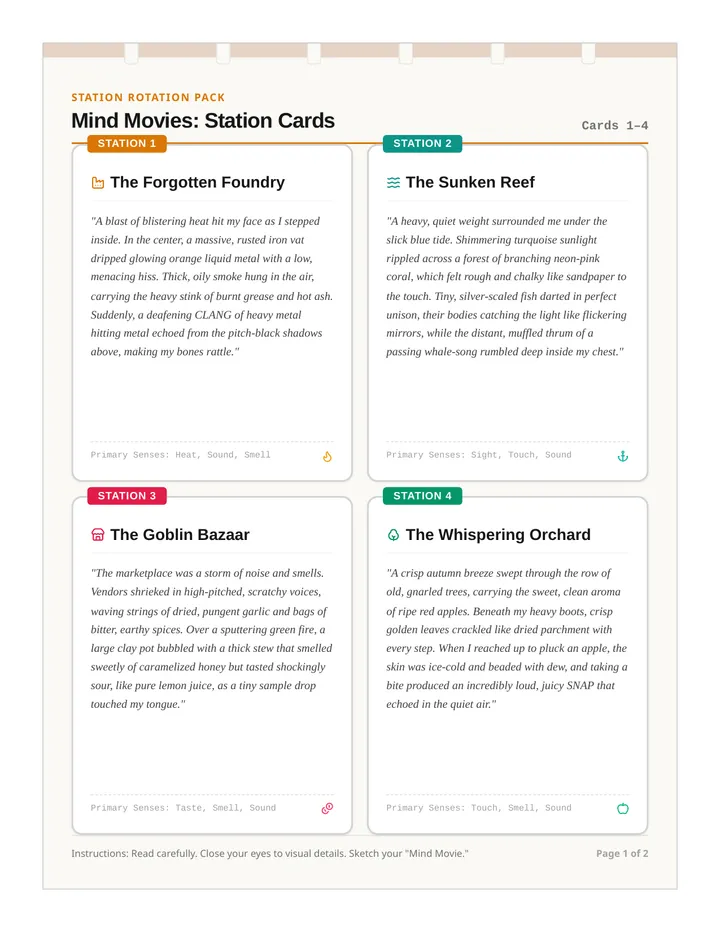
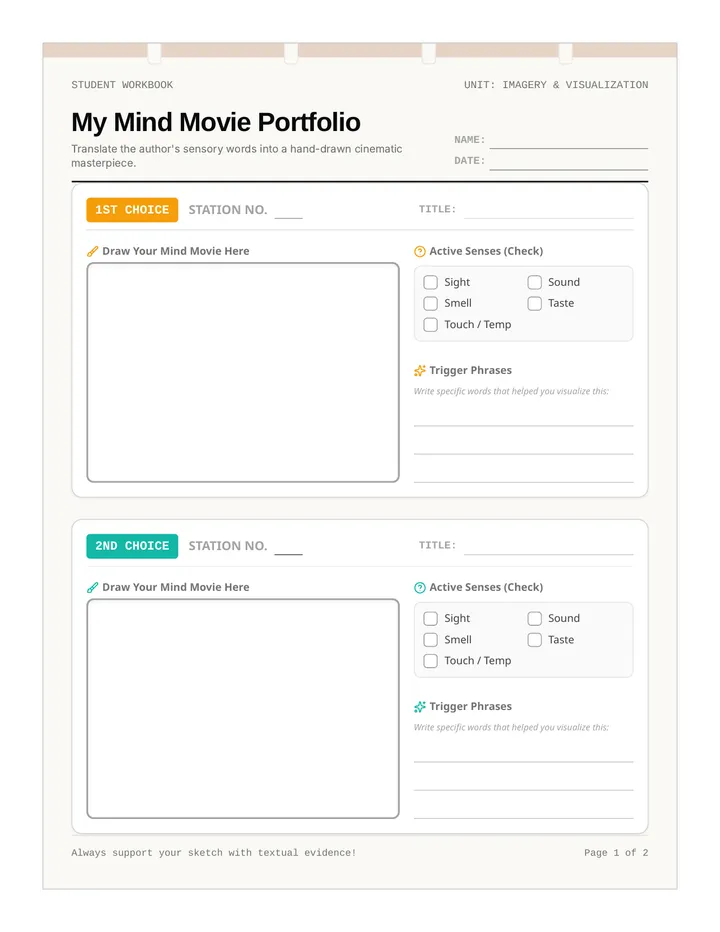
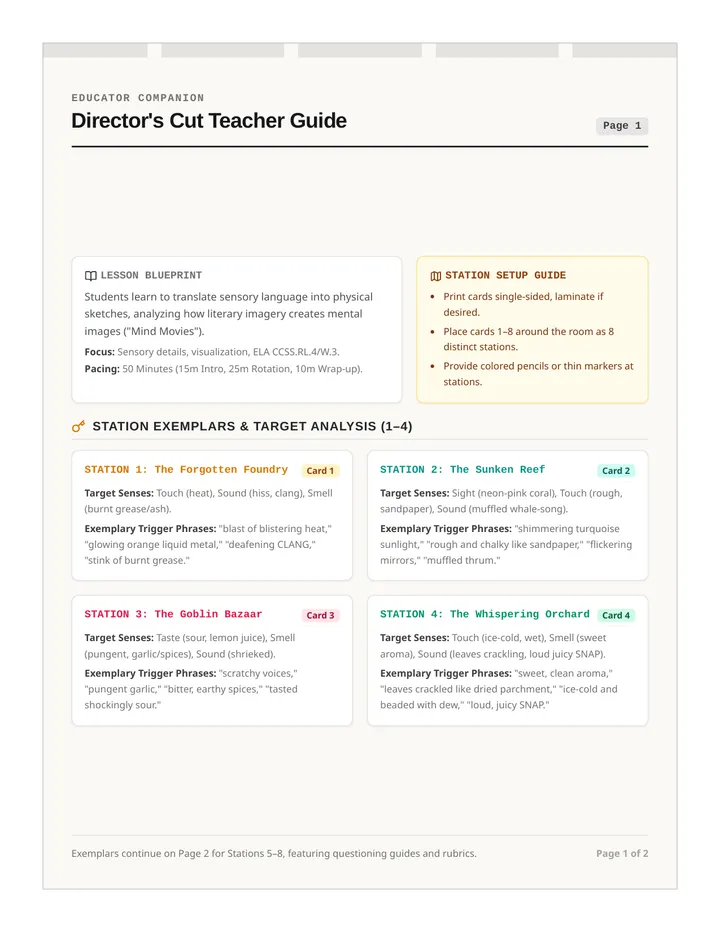
A dynamic lesson where students translate descriptive sensory details into vivid mental images. Students rotate through stations, reading sensory-rich paragraphs, sketching what they visualize, and identifying the imagery that triggered their imagination.
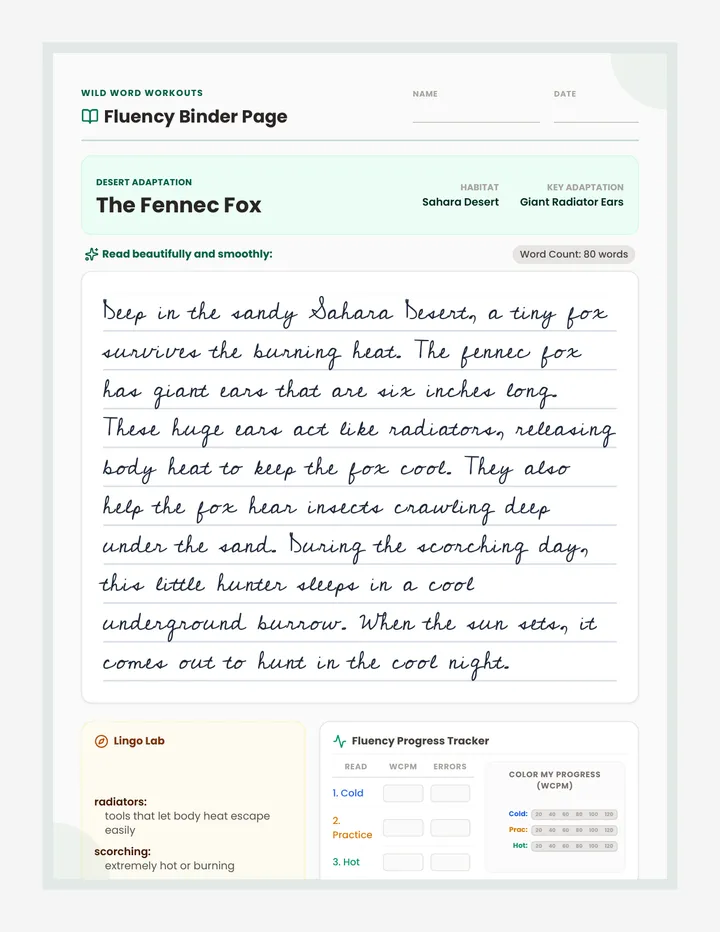
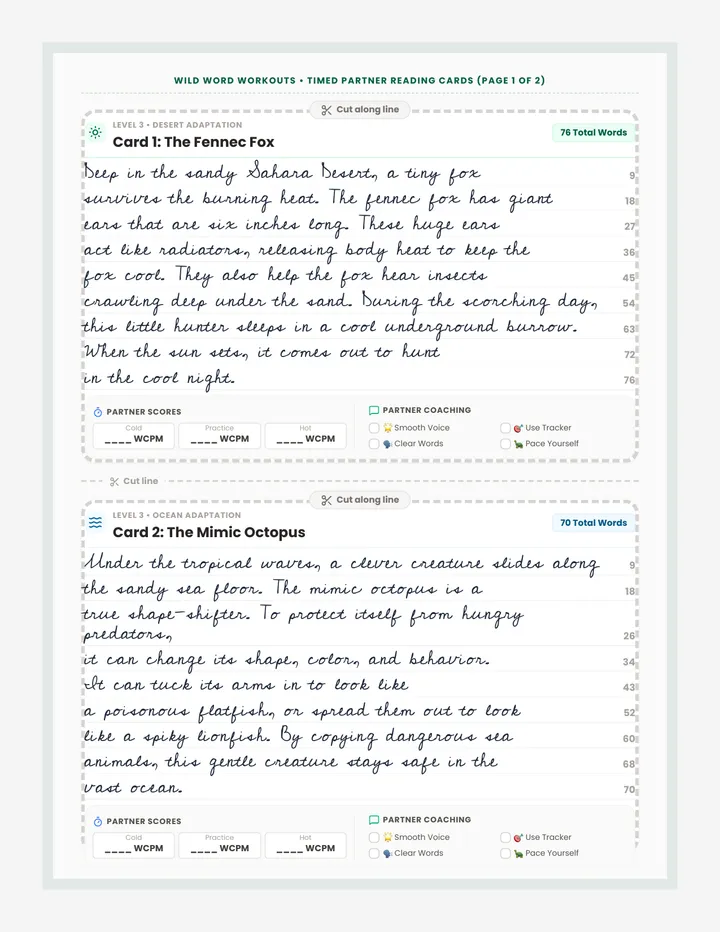
A reading fluency toolkit focused on third-grade cursive reading skills and amazing animal adaptations. Features a set of fluency binder pages with progress trackers and printable timed reading cards with word counts.
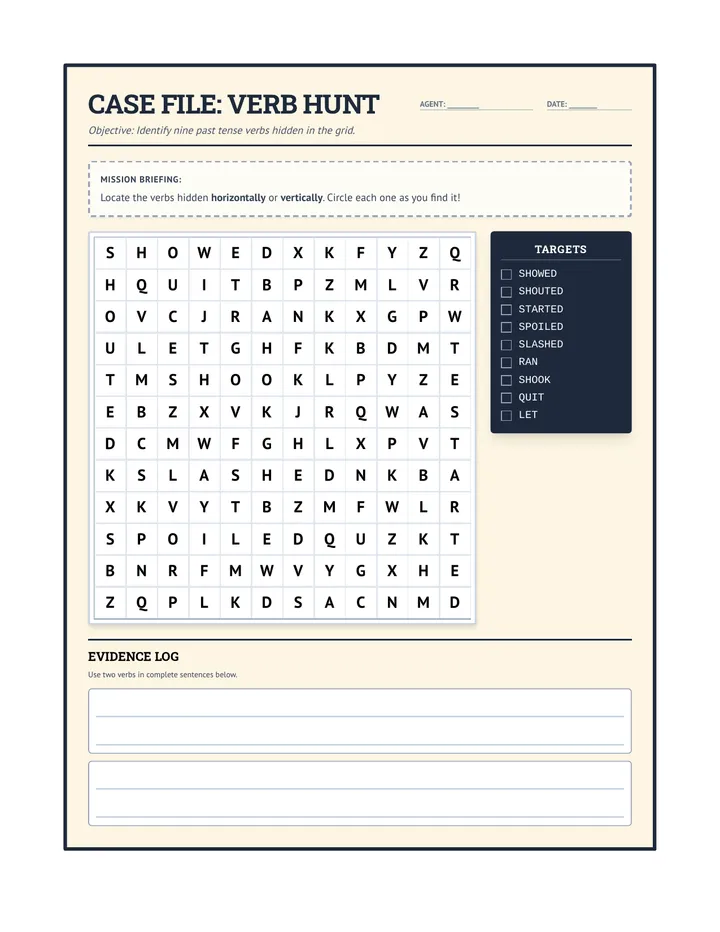
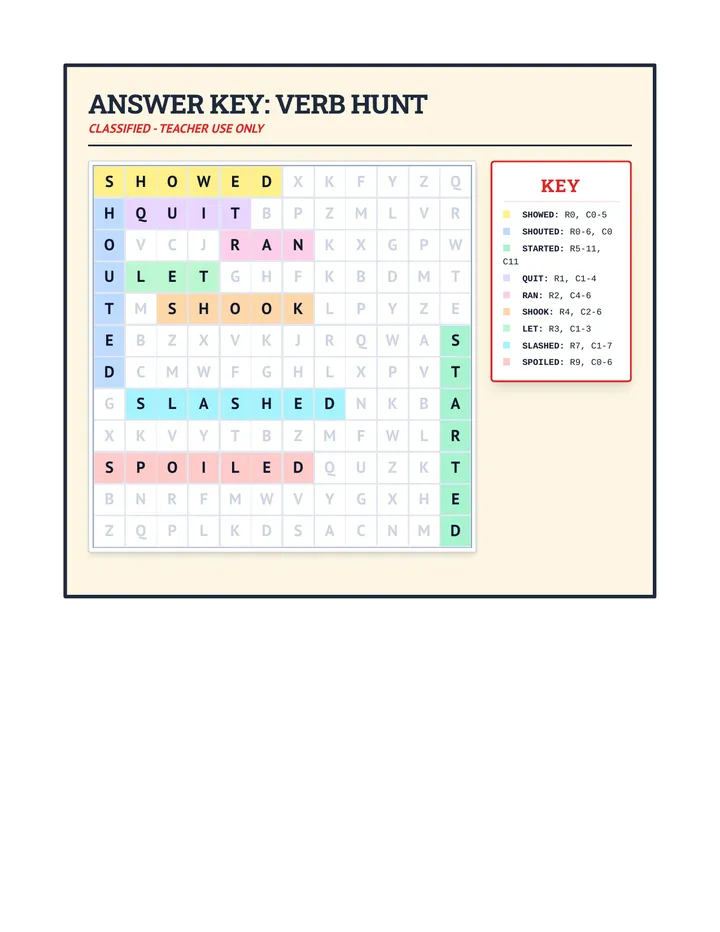
A lesson focused on identifying and using past tense verbs through a detective-themed word search and sentence construction activity.
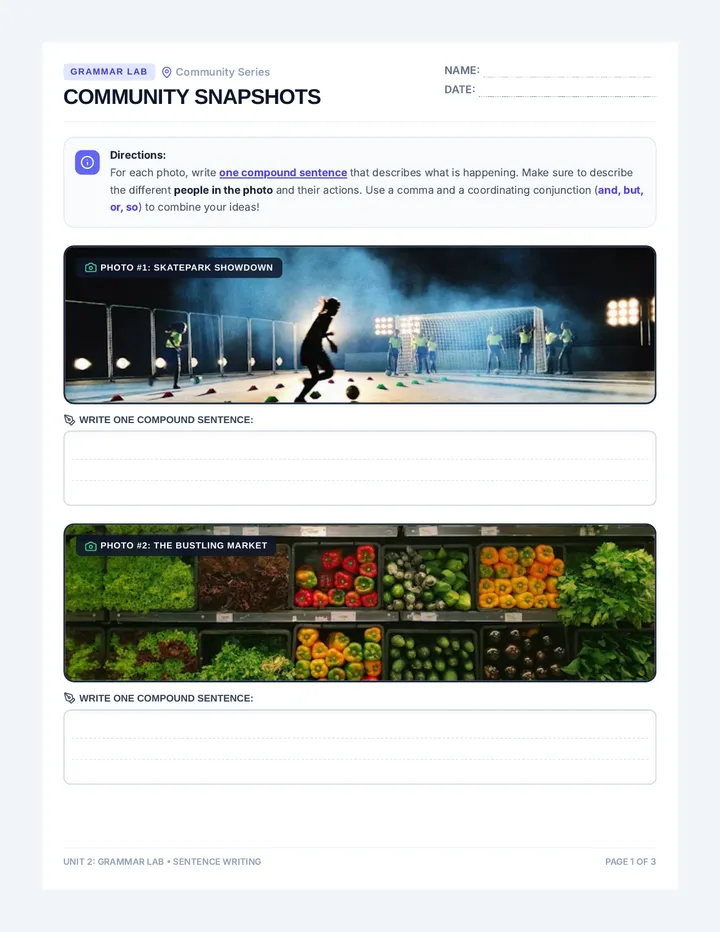
A lesson centered around practicing intermediate grammar, sentence construction, and narrative description through highly engaging, structured community scenes.
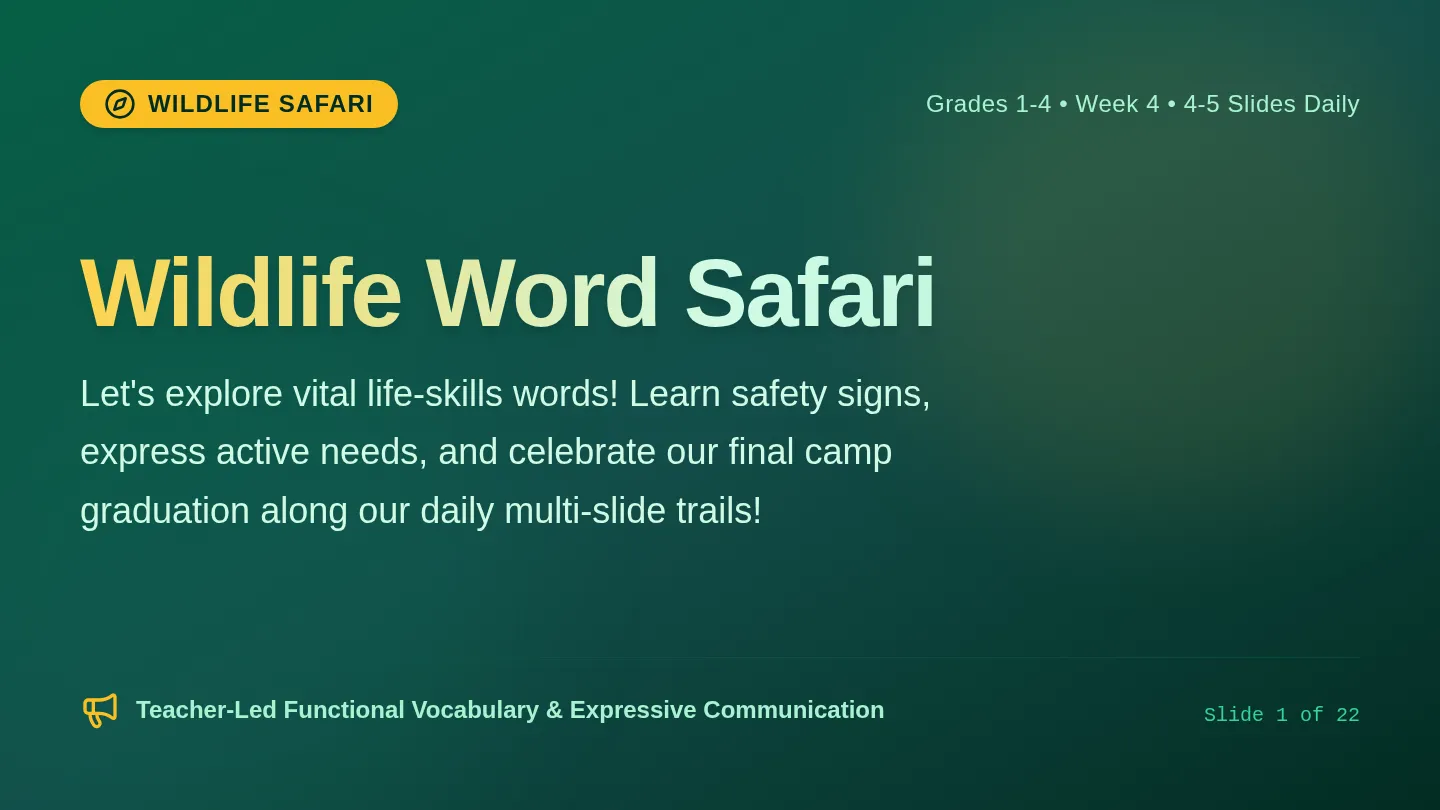
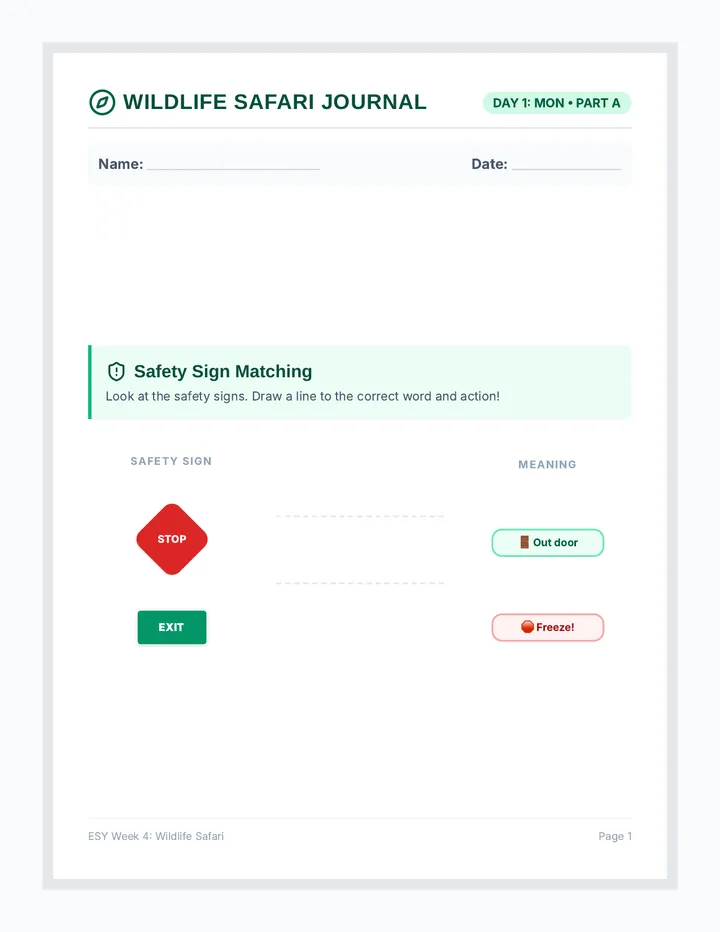
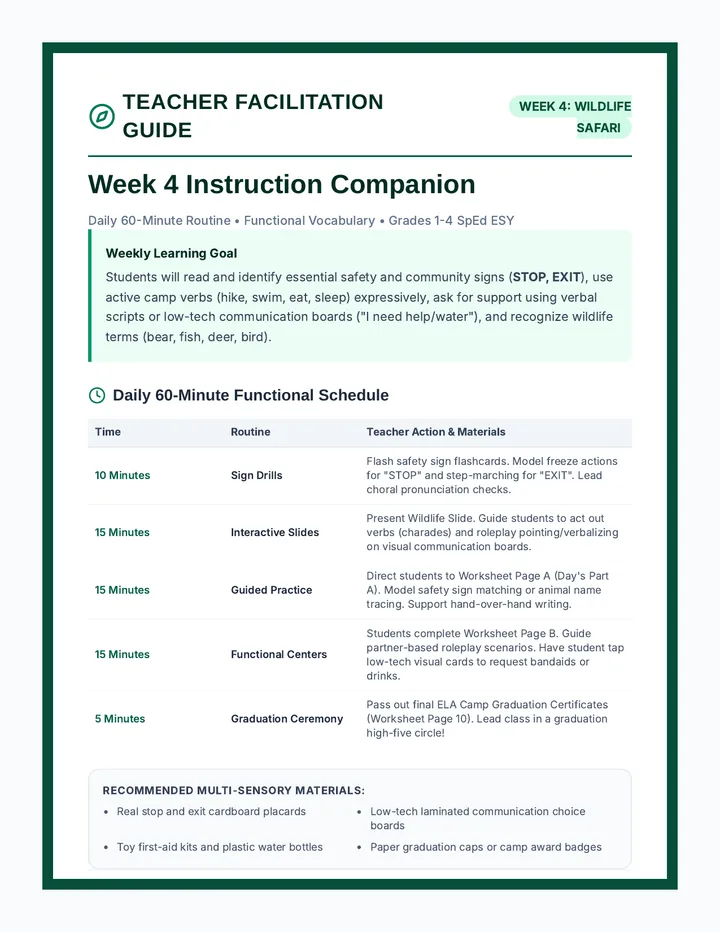
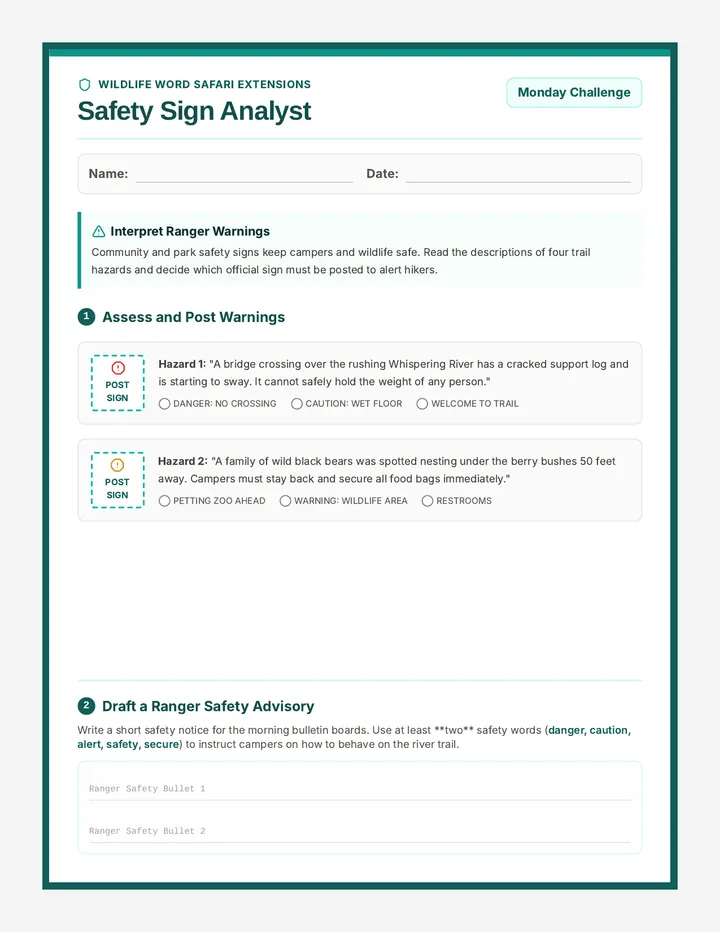
Week 4 of the ESY literacy program, focusing on functional vocabulary and expressive communication. Students learn safety signs, expressive words, and cooperative communication skills through camp-themed scenarios.
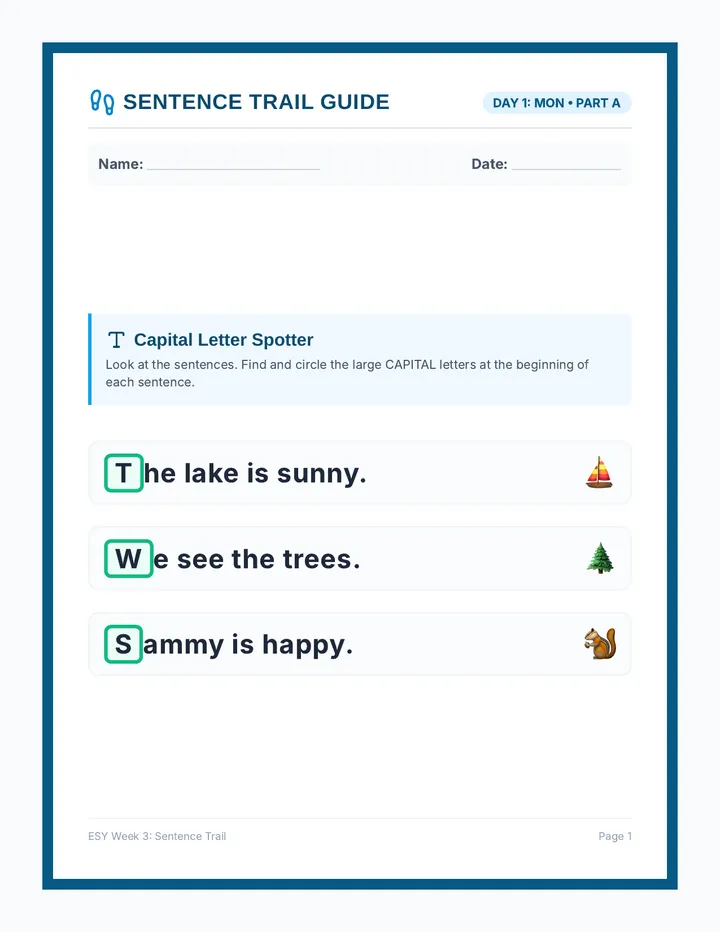
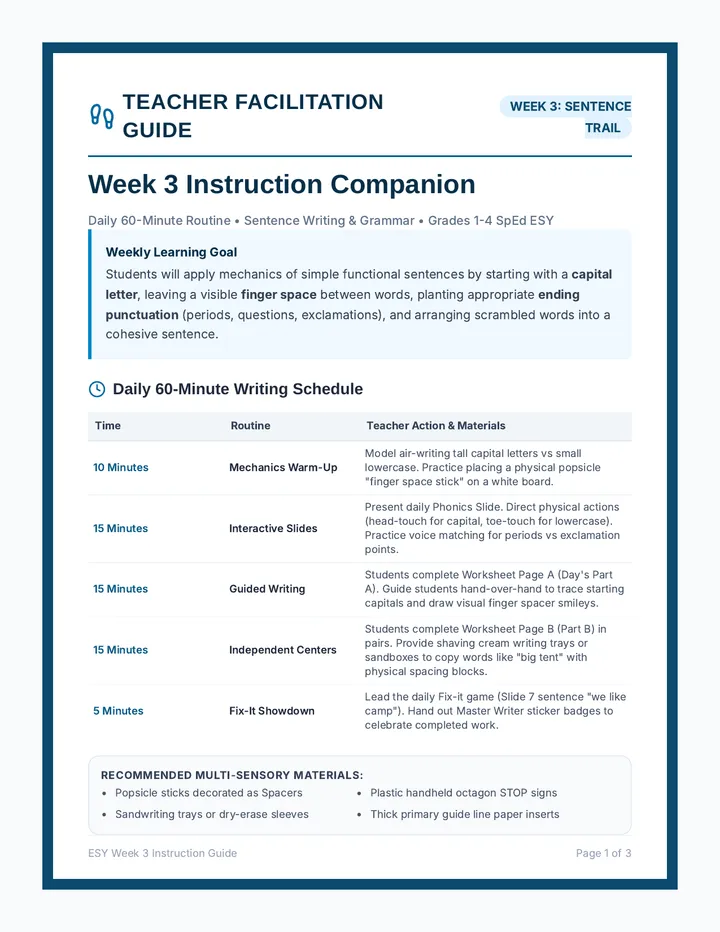
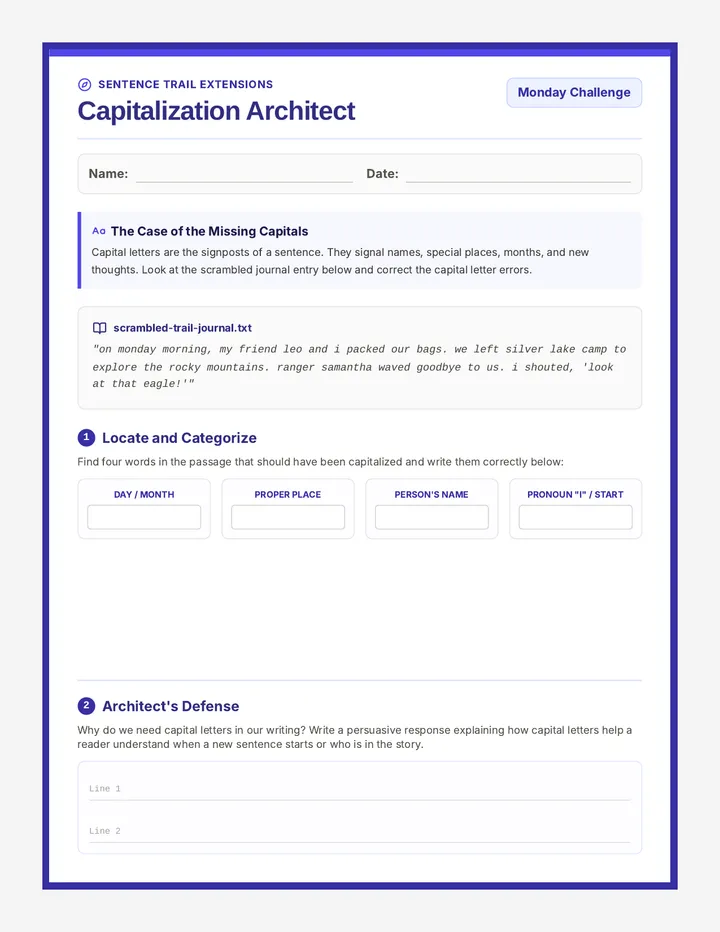
Week 3 of the ESY literacy program, focusing on sentence writing and grammar. Students practice high-frequency handwriting strokes, capitalization, punctuation, and constructing functional simple sentences.