Explores the neurobiological foundations of stress and mood regulation, focusing on the roles of GABA, Serotonin, and Norepinephrine in the autonomic nervous system.
A comprehensive 60-minute lesson on the key figures, geography, and military factors of World War II's global theaters, aligned with TN standard US.50.
A comprehensive lesson on the shift in U.S. foreign policy from isolationism to interventionism under FDR, focusing on the key legislative and diplomatic steps leading to World War II.
A 25-minute lesson examining the rise and methods of control of 20th-century totalitarian leaders Adolf Hitler, Benito Mussolini, Joseph Stalin, and Hideki Tojo. Students analyze how economic instability and nationalist fervor paved the way for absolute power.
A cumulative assessment covering the Roaring Twenties through the New Deal, focusing on primary source analysis.
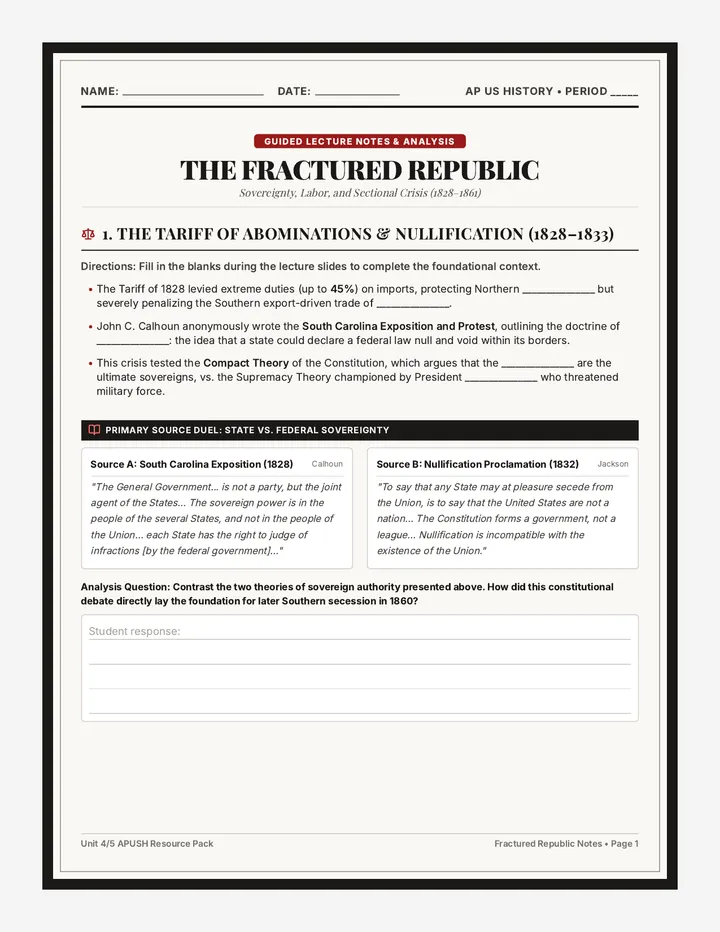
Examines the legal and political challenges to the New Deal, including the Supreme Court and individual critics.
A deep dive into the alphabet agencies and programs of FDR's New Deal.
Analyzes President Herbert Hoover's response to the economic crisis and the public's perception of his efforts.
Focuses on the daily life of Americans during the Great Depression, including Hoovervilles and migration.
Examines the environmental and human impact of the Dust Bowl on the Great Plains.
Analyzes the 1929 Stock Market Crash and the immediate systemic failures of the banking system.
Explores the economic contradictions of the 1920s, including consumerism, credit, and the underlying weaknesses in the economy.
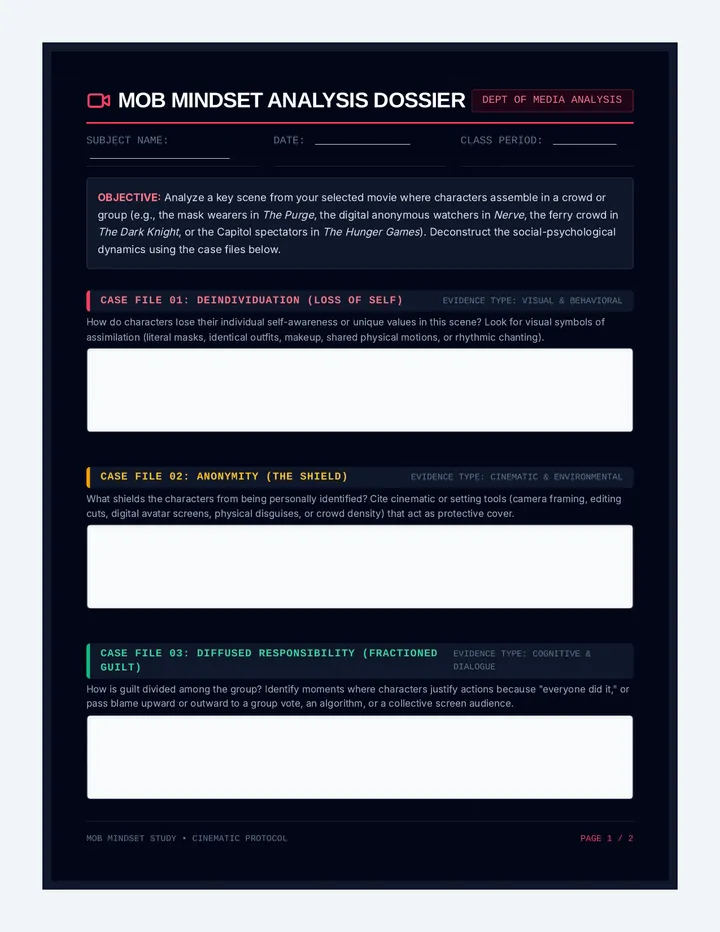
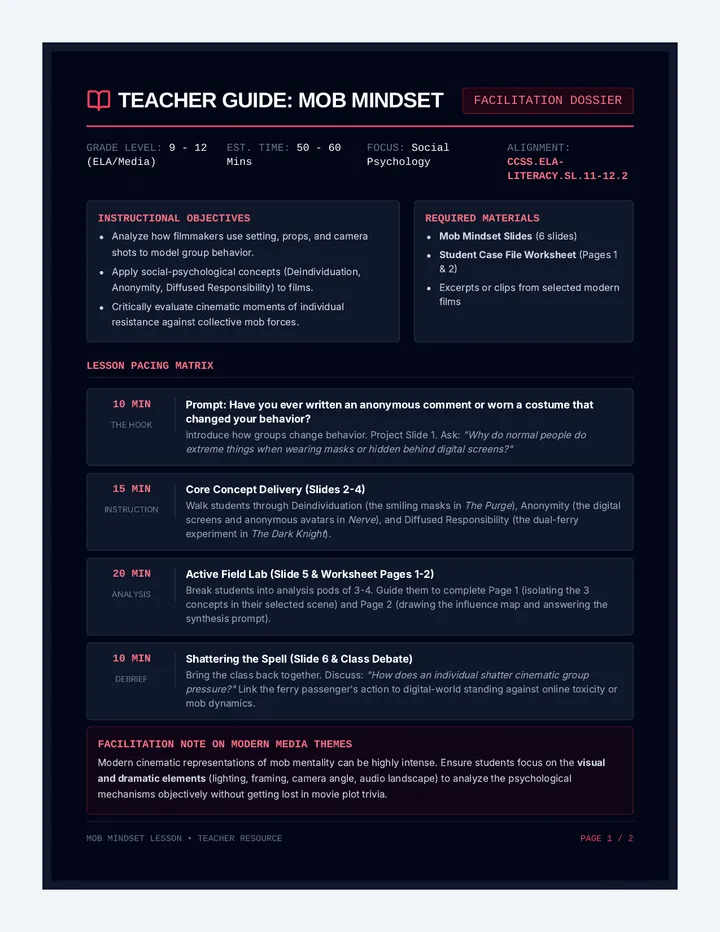
A fast-paced exploration of the controversies surrounding FDR's New Deal, focusing on charges of socialism and the infamous court-packing attempt. Students analyze primary source cartoons and engage in a structured debate over executive power.
A 50-minute deep dive into FDR's New Deal programs through primary source analysis, categorizing the 'alphabet soup' of agencies into Relief, Recovery, and Reform. Students will examine original posters, photographs, and legislation snippets to understand the massive scale of government intervention during the Great Depression.
A concise 20-minute lesson covering President Herbert Hoover's response to the Great Depression, focusing on his philosophy of Rugged Individualism, the Hoover Dam, the RFC, and the Bonus Army incident.
An application-based assessment focusing on Maslow's Hierarchy of Needs, featuring a labeling section, scenario analysis, and character evaluation from literature.
A unit assessment covering prominent African American leaders, their roles as agents of change, and the systemic barriers they worked to dismantle within their communities.
A collection of resources for an educational information booth about Peru at a cultural fair, including a fact sheet and interactive trivia cards.
A structured research phase where students choose a focus area—either an ethical teaching or a significant practice—and map its connection to core Jewish tenets and contemporary life.
A comprehensive guide to structuring an informative essay on the social, economic, and religious consequences of the Black Death in medieval Europe.
An AP World History lesson exploring the technological innovations and environmental consequences of the Green Revolution in the mid-20th century.
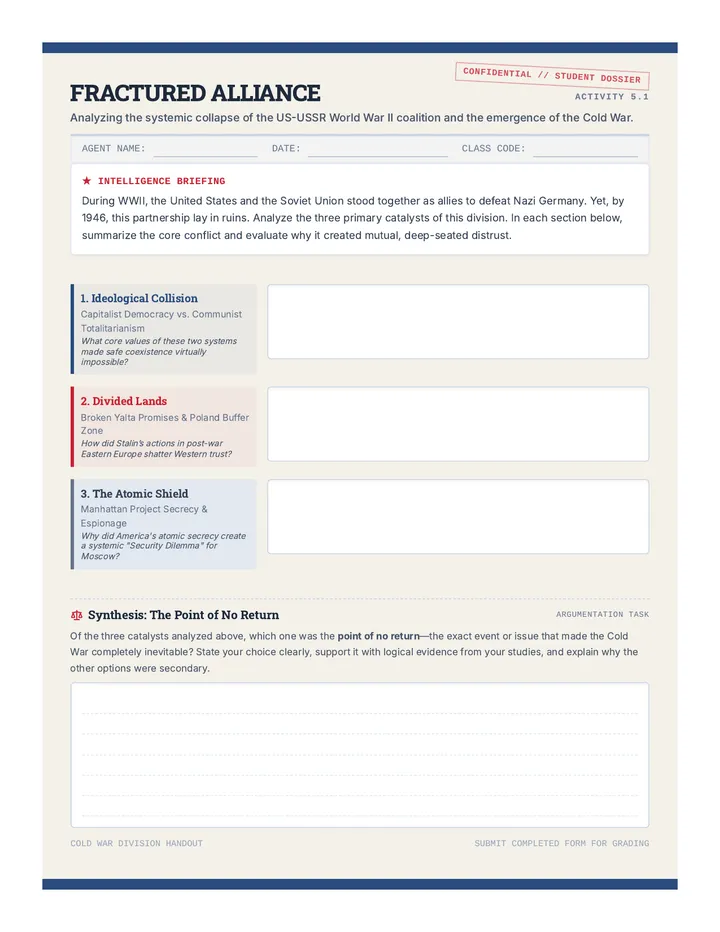
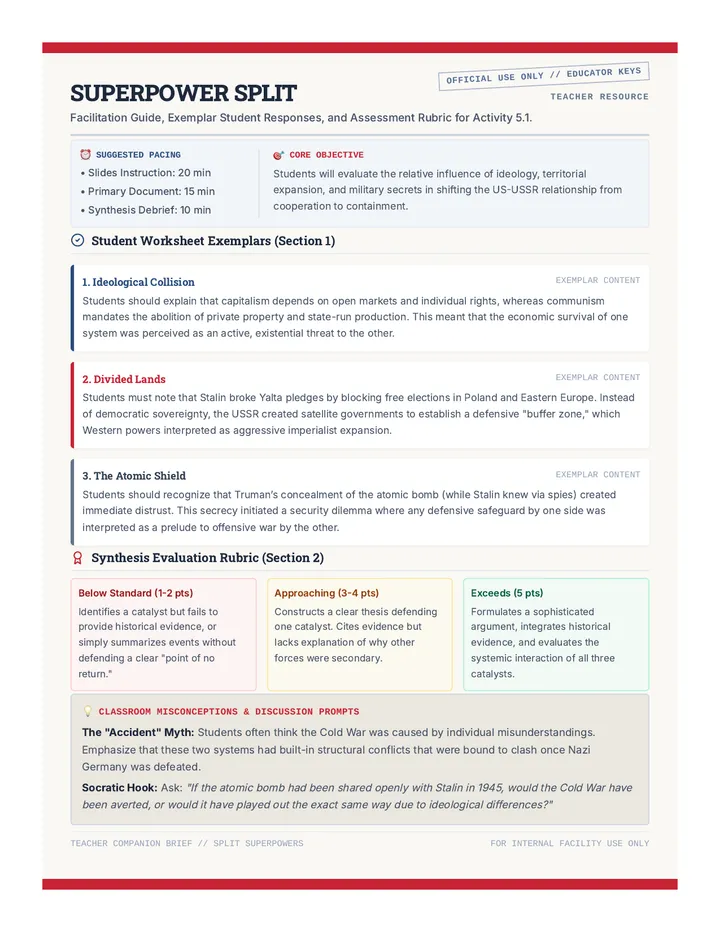
A deep-dive investigation into the Cuban Missile Crisis where students analyze declassified intelligence, private correspondence, and meeting transcripts to determine the causes and culpability of the nuclear standoff. Students act as intelligence analysts to produce a formal policy recommendation.
A comprehensive lesson exploring the systematic dehumanization of the Holocaust and its role in the birth of the modern international human rights movement. Students analyze primary documents, timelines of exclusion, and the legacy of the Nuremberg Trials.
A comprehensive assessment covering developmental domains, brain growth, major ECE theorists, and strategies for supporting young children's self-concept and identity.
A comprehensive look at the rise and fall of Maximilian I of Mexico, exploring the French intervention and the clash between imperial dreams and republican reality.
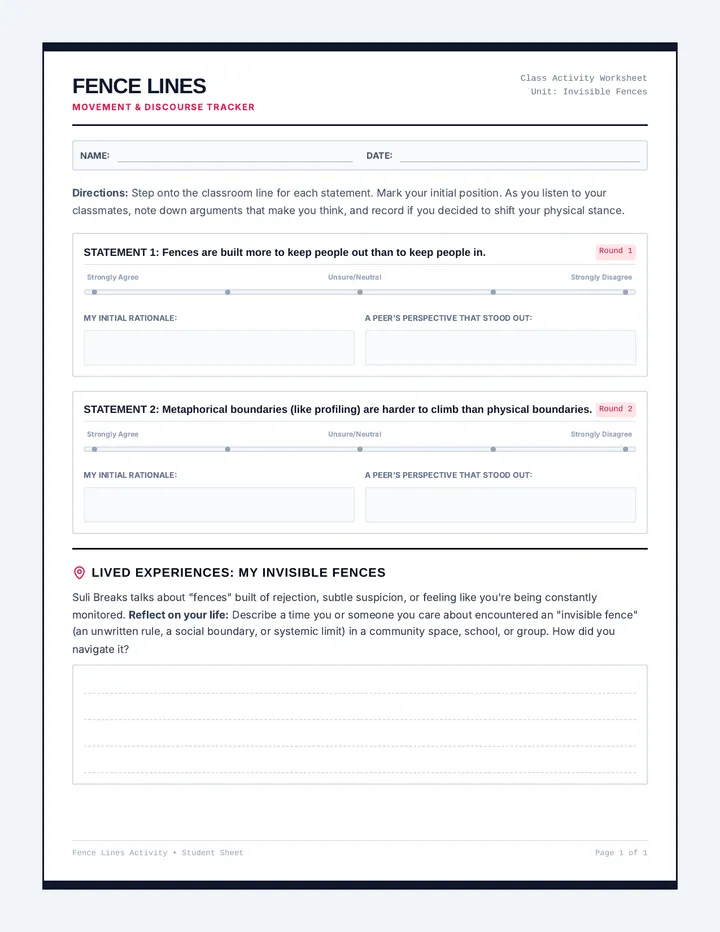
This lesson explores the devastating social and economic impacts of the Great Depression, focusing on unemployment, migration, and Hoovervilles, while challenging students to compare the contrasting philosophies of Presidents Hoover and FDR.
A comprehensive lesson on the American anti-war movement during the Vietnam War, exploring the motivations, methods, and impact of peace protests. Students will analyze primary sources, music, and key events to understand how public opinion shifted.
An intensive look at the President, the Cabinet, the Federal Court system, and the Supreme Court, providing all necessary materials for a student to catch up on missed instruction.
A concise 20-minute exploration of the Dust Bowl's causes and its multi-faceted impacts on American life during the 1930s. Students analyze geographic data and primary sources to understand the environmental and economic catastrophe.
A comprehensive exploration of the transition from Medieval to Renaissance thought, focusing on the revolutionary shifts in artistic technique and the technological innovations that defined the Italian Renaissance.
A summative assessment for the first third of the novel. Evaluates student mastery of vocabulary from Lessons 1-11, character motivation, and the central theme of corporate alienation through a mix of multiple choice, short answer, and a rigorous RACE response.
The family's recovery and the transition to a new source of productivity (Grete). Synthesis of the unit's themes.
Gregor's death and self-sacrifice. Analysis of the relief of the family and the 'cleansing' of the home.
Grete's formal rejection of Gregor's identity. Analysis of the shift from sibling love to the necessity of his removal.
Gregor's reaction to Grete's violin performance. Themes of art, human connection, and the final reach for his human spirit.
Gregor's room becomes a storage area for trash. Analysis of the complete erasure of his human space and history.
The introduction of the three lodgers. Analysis of the home as a commodified space and Gregor's further displacement.
Analysis of the family taking on menial labor. Themes of exhaustion, loss of dignity, and the shared alienation of the working class.
Gregor as a permanent invalid. Analysis of the family's growing resentment and the physical reminder of his non-productive status.
The father's violent attack with apples. Analysis of the apple as a symbol of permanent wounding and the transition from son to 'burden'.
Analysis of the father's return to work and his transformation through the bank uniform. Themes of restored authority and industrial identity.
Gregor's desperate attempt to save his human identity by protecting the picture frame. Focus on the direct confrontation with Grete.
The conflict between Grete and the Mother over removing Gregor's furniture. Themes of preserving human memory vs. accepting animal reality.
Students analyze Gregor's fading perception of the human world through his window view and his growing physical comfort in animalistic behaviors.
Analysis of the father's hidden financial assets and the betrayal of Gregor's role as the sole provider. Themes of economic exploitation.
Students examine the changing power dynamic between Gregor and Grete, focusing on her new ritualistic authority as his sole caretaker.
Part II begins with Gregor's physical transition, focusing on his change in taste and the shift from human food to animal waste as a symbol of dehumanization.
Students analyze the violent conclusion to Part I, focusing on the father's use of force to cage Gregor. Themes of domestic aggression and the loss of familial status.