A focus on magnitude, normalization, and direction cosines. Students learn to standardize vectors and apply unit vectors to physical contexts like velocity and force.
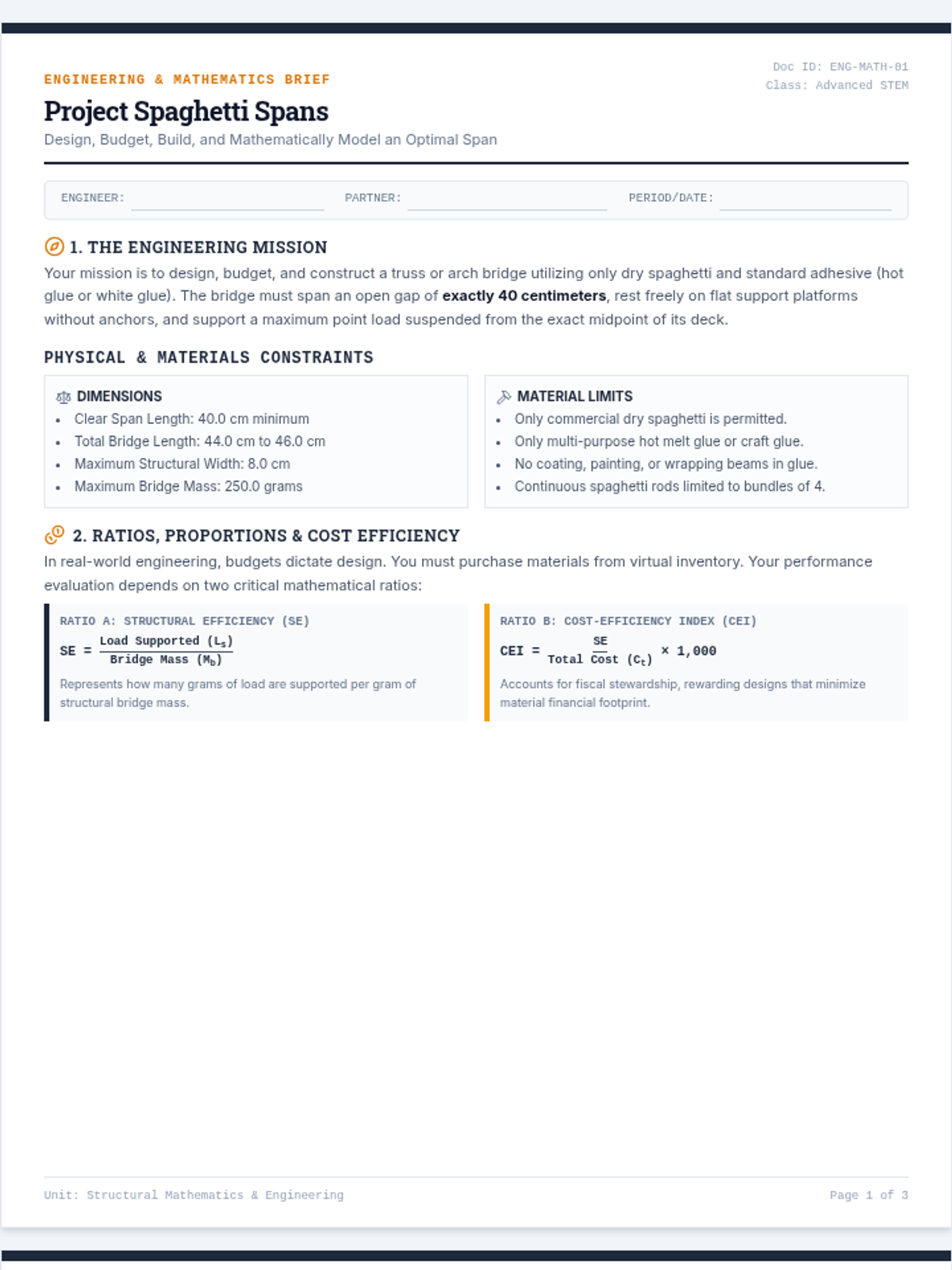
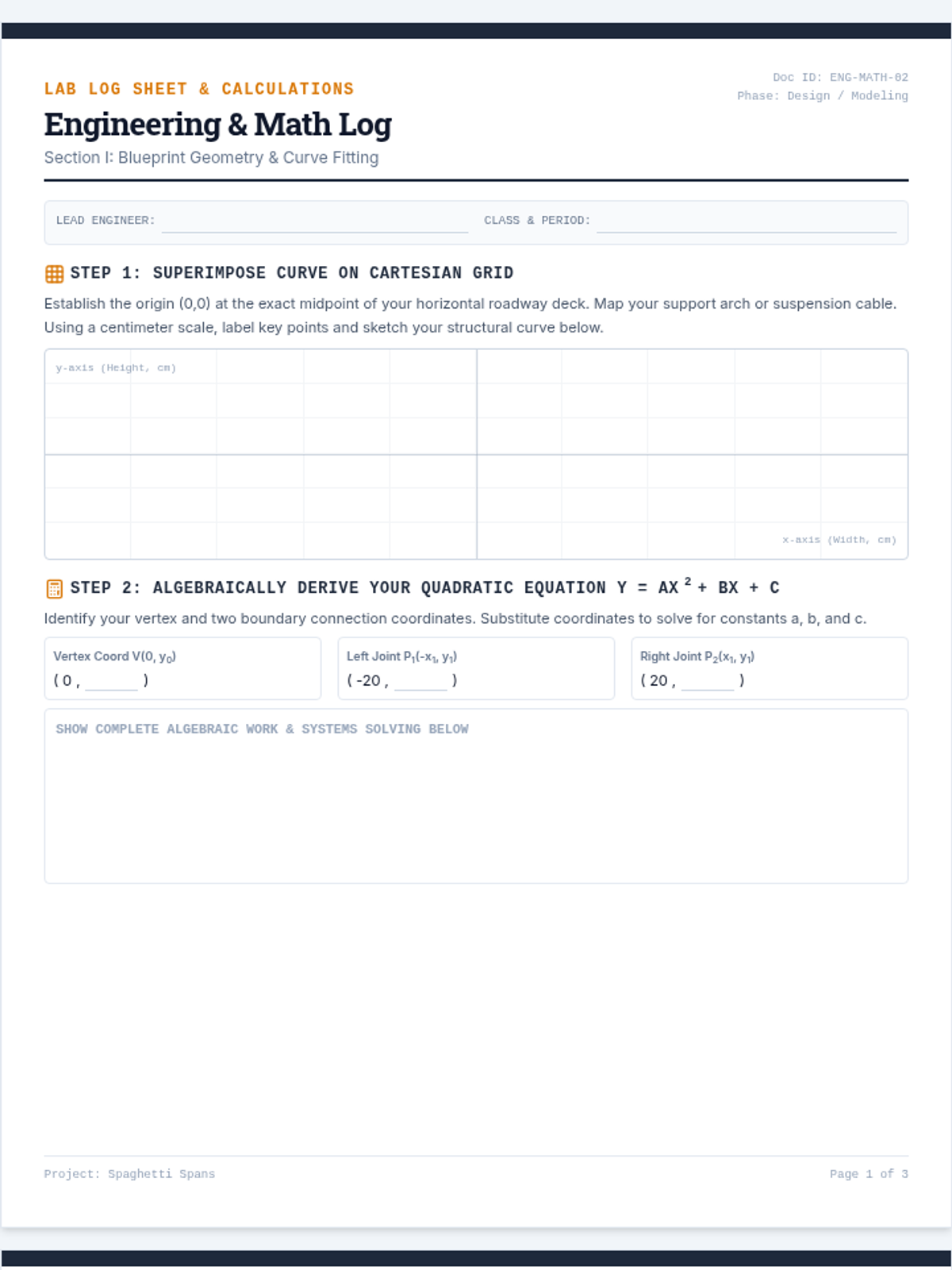
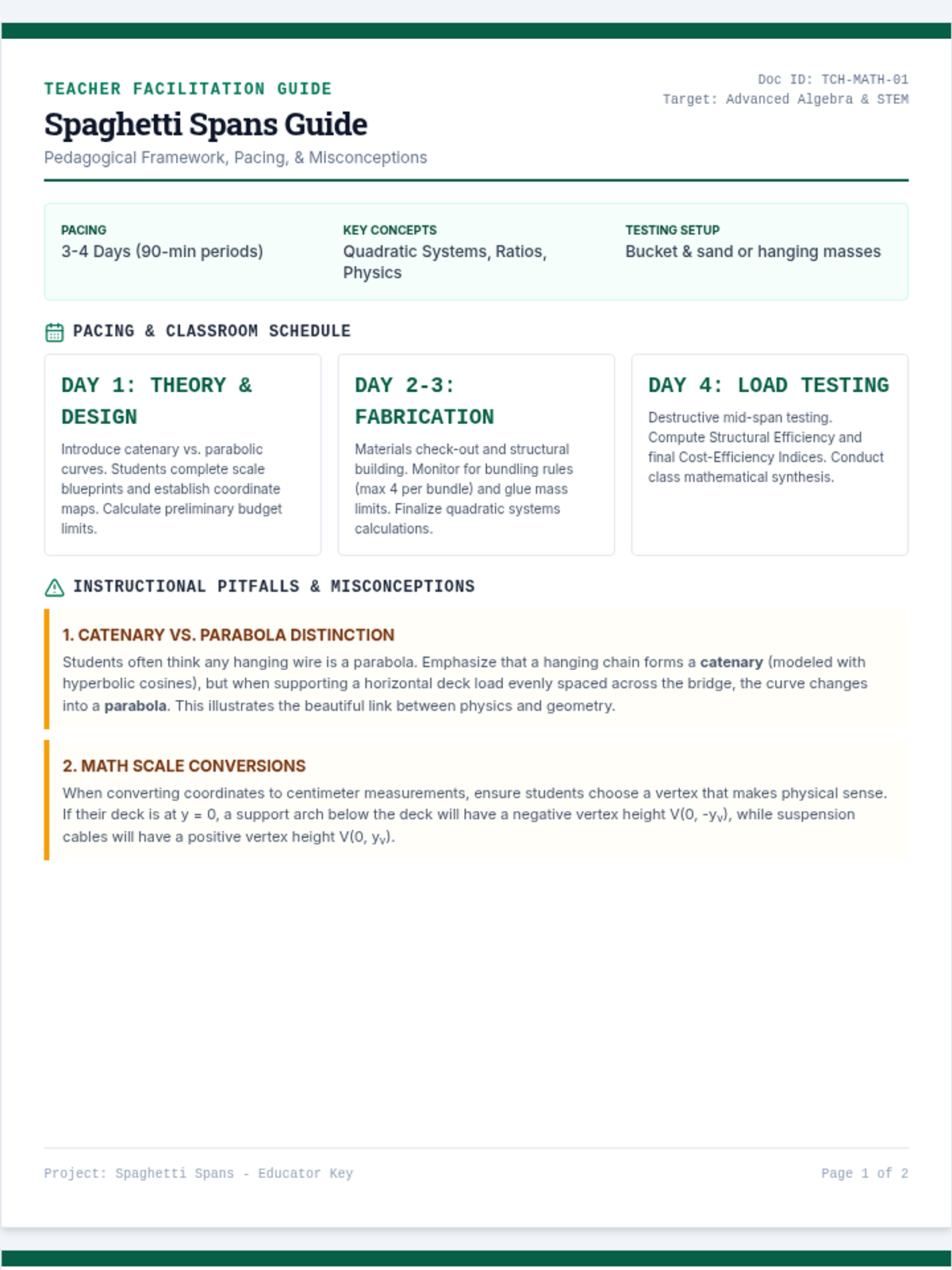
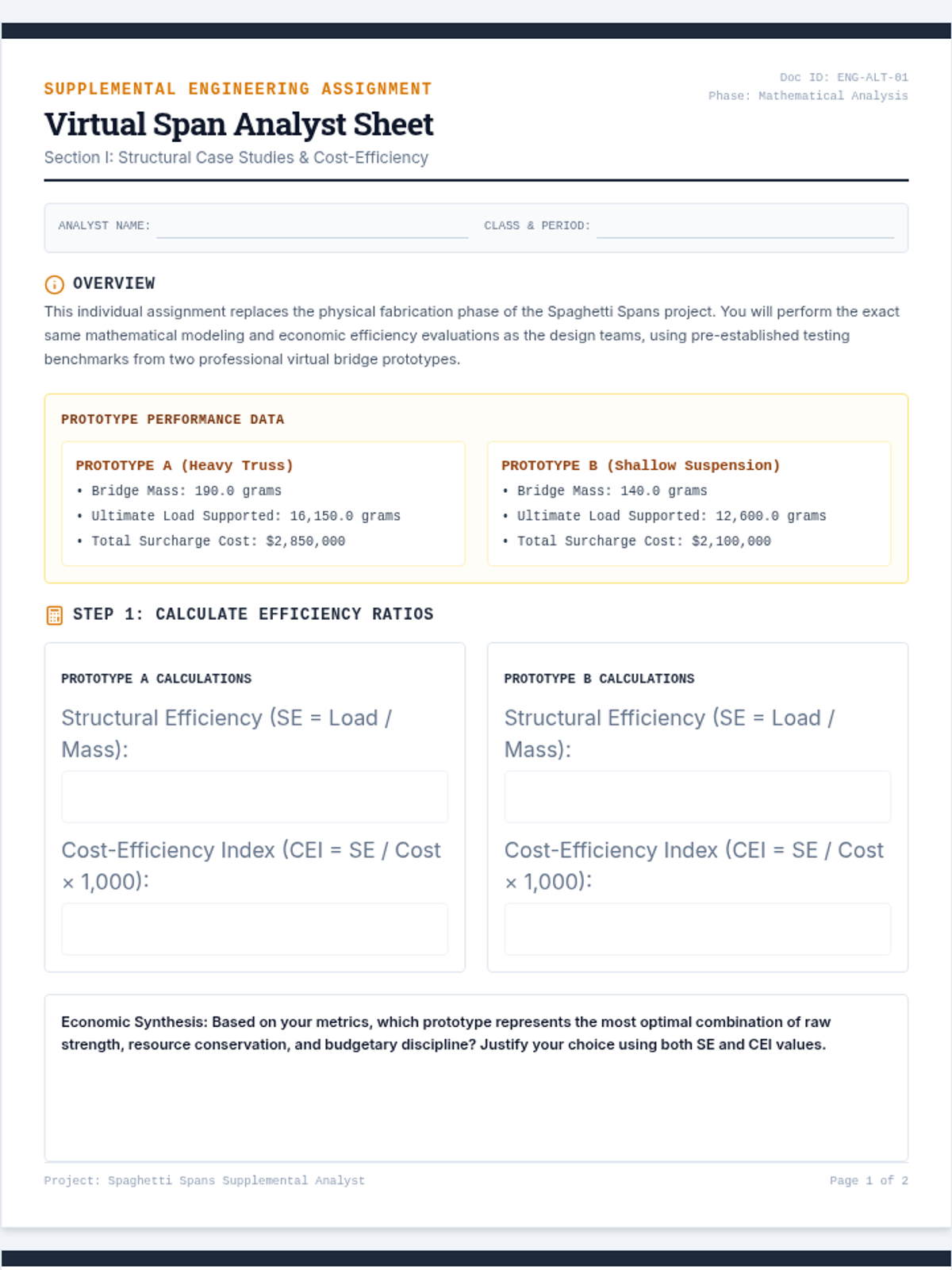
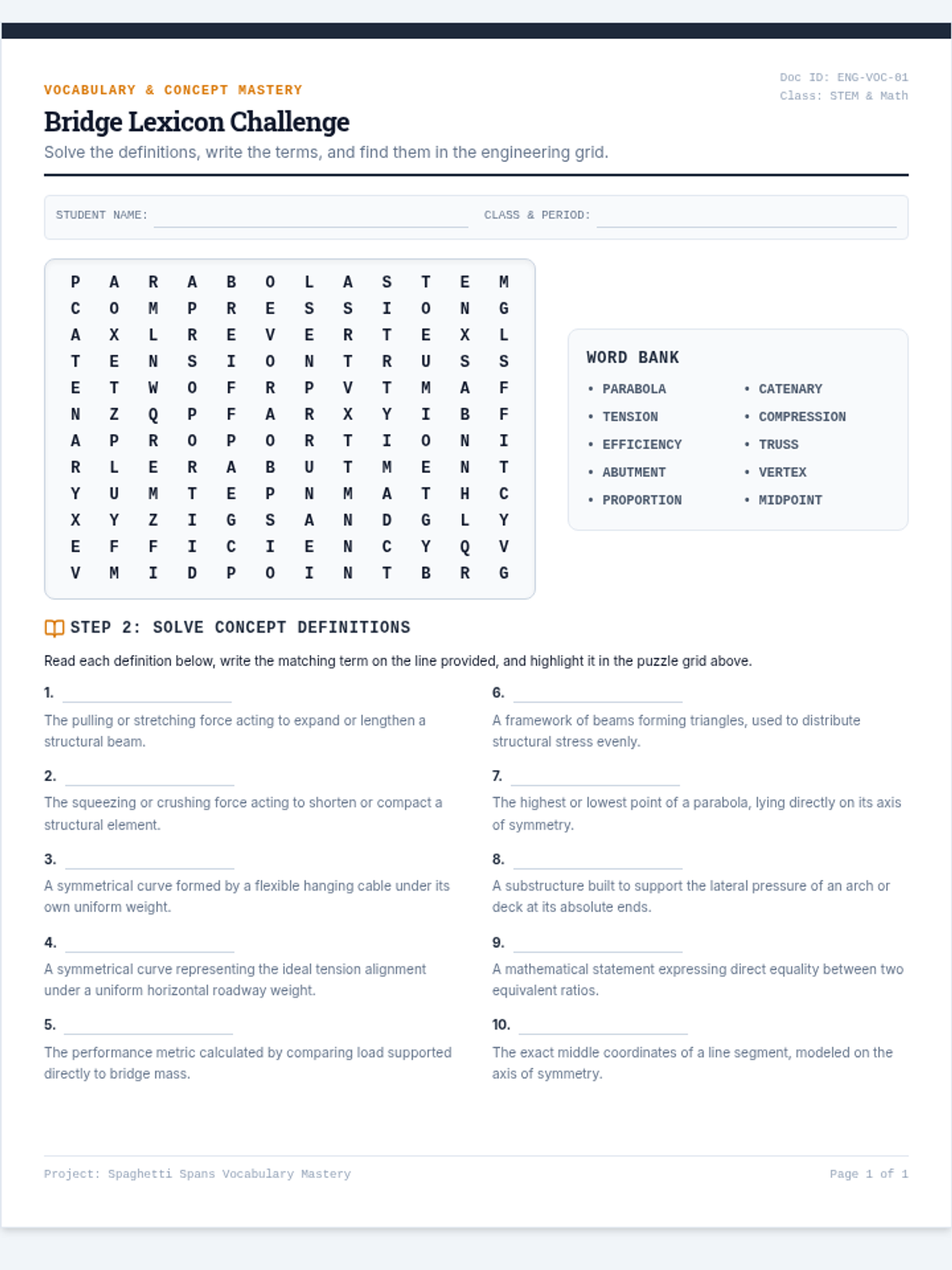
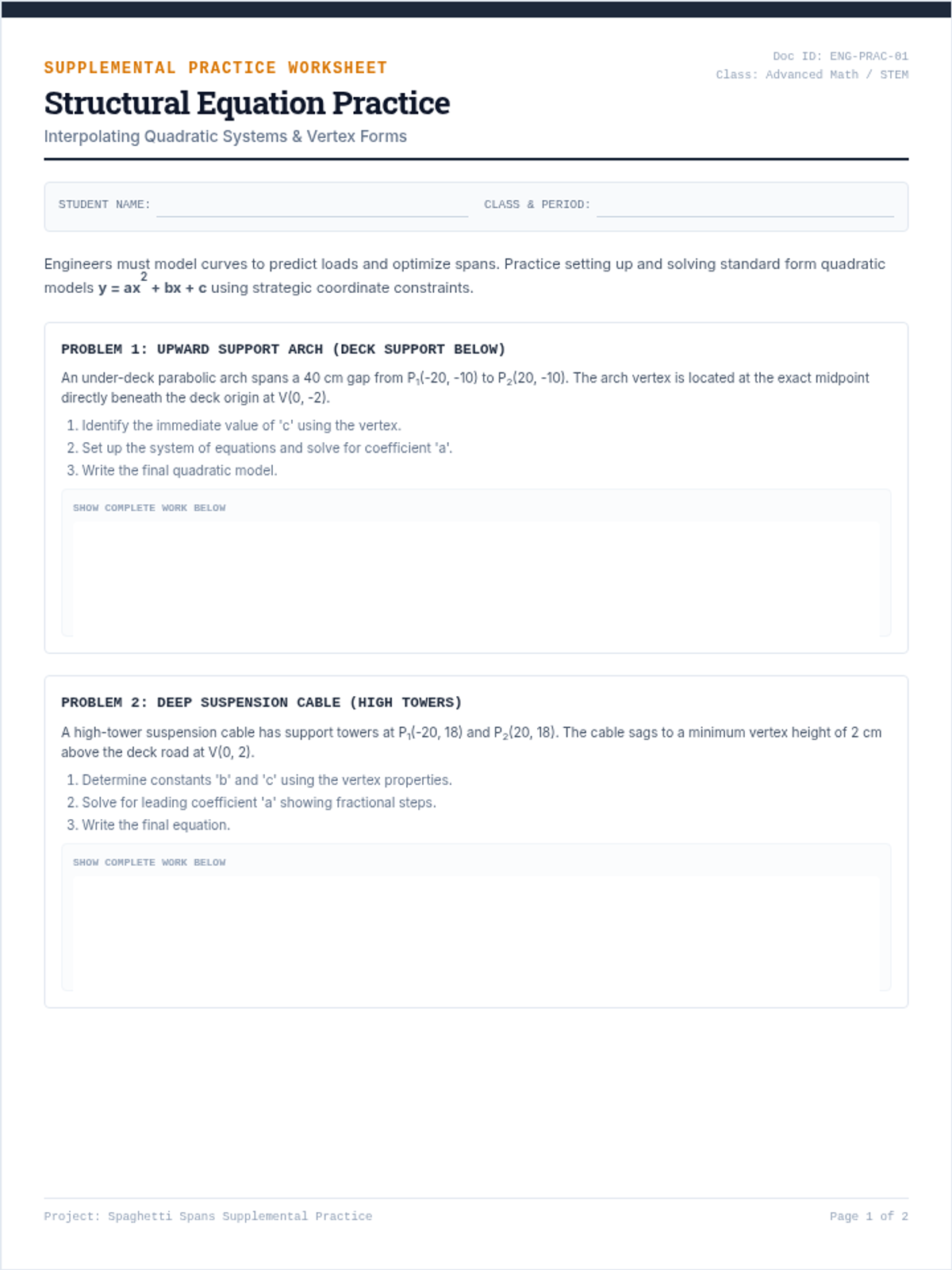
A rigorous STEM project combining structural engineering with advanced mathematics. Students design, budget, build, and test spaghetti bridges using ratios, proportions, cost-efficiency metrics, quadratic modeling, and catenary curves.
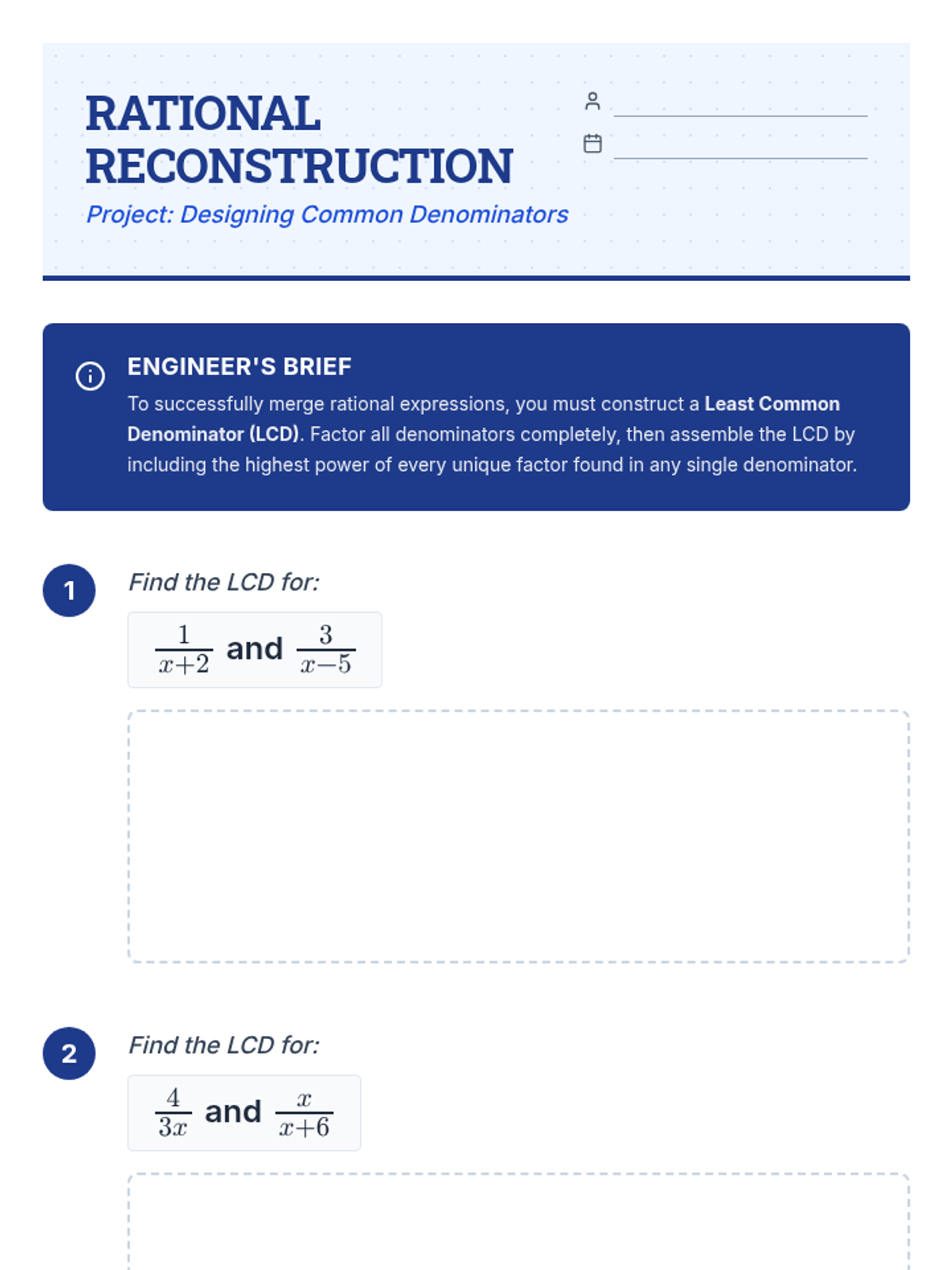
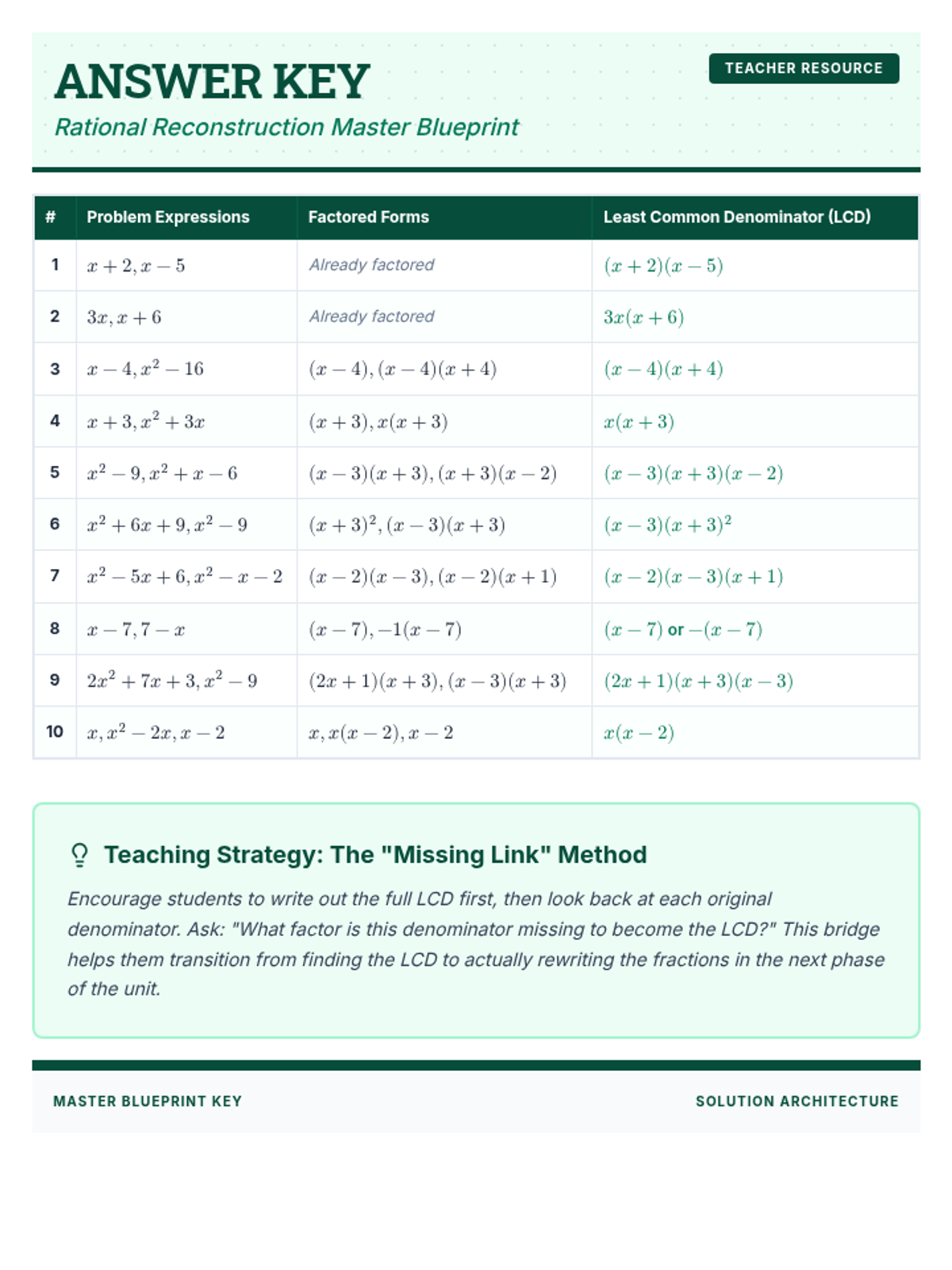
A focused lesson on finding the Least Common Denominator (LCD) for rational expressions involving binomials and trinomials, emphasizing factoring techniques.
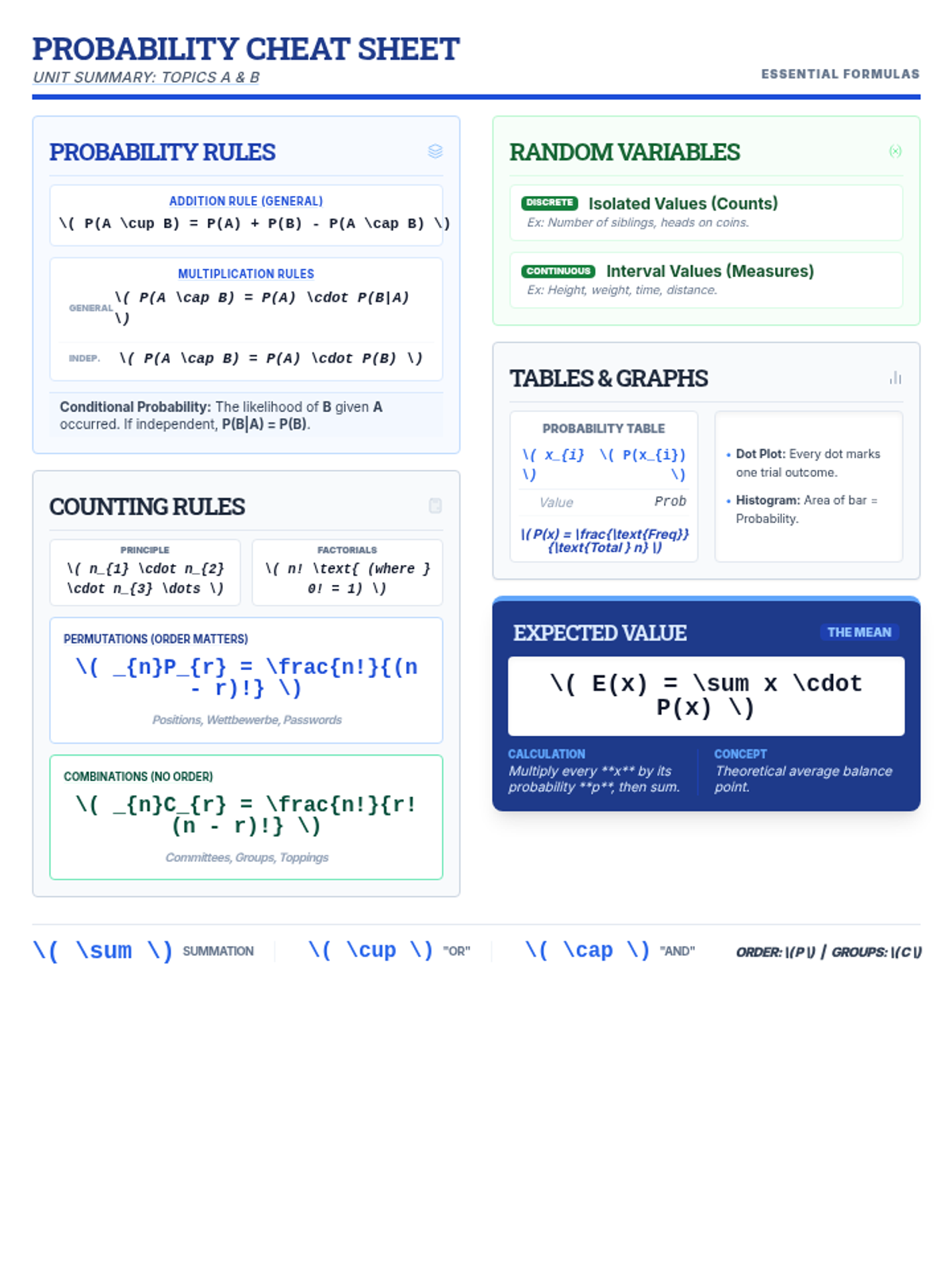
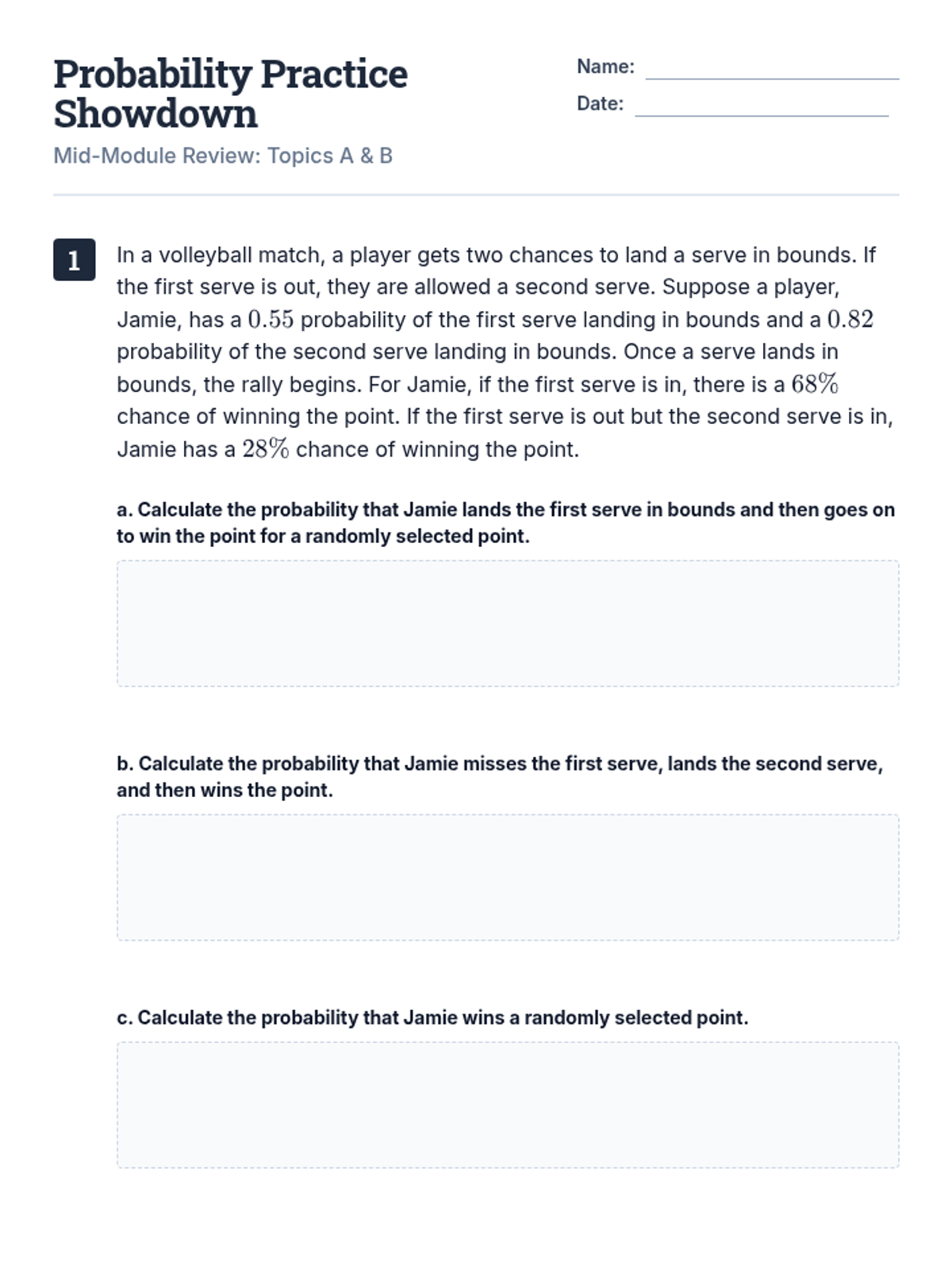
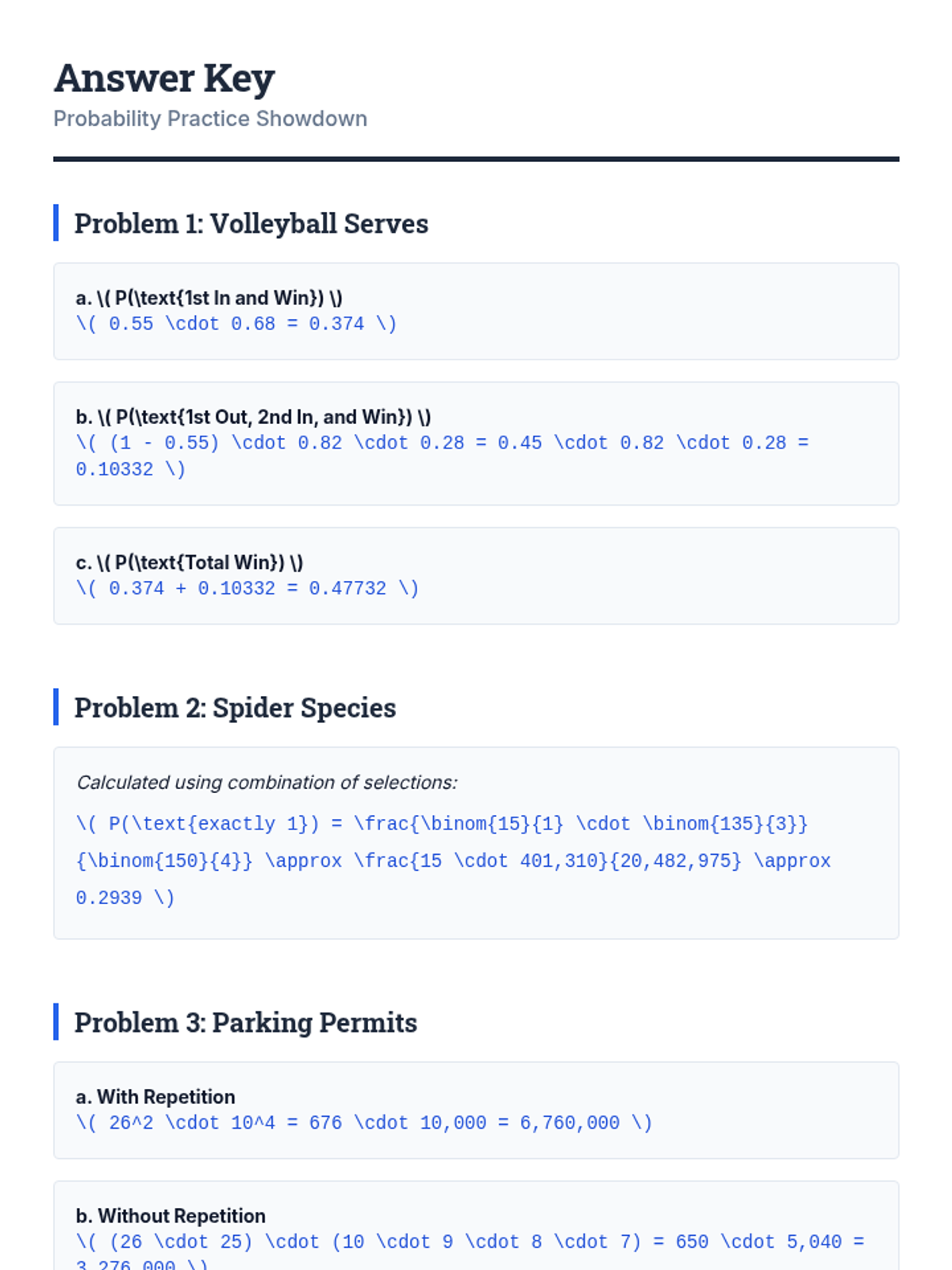
A comprehensive lesson covering probability rules, counting principles, discrete random variables, and empirical distributions. Includes a condensed reference sheet and a practice review worksheet.
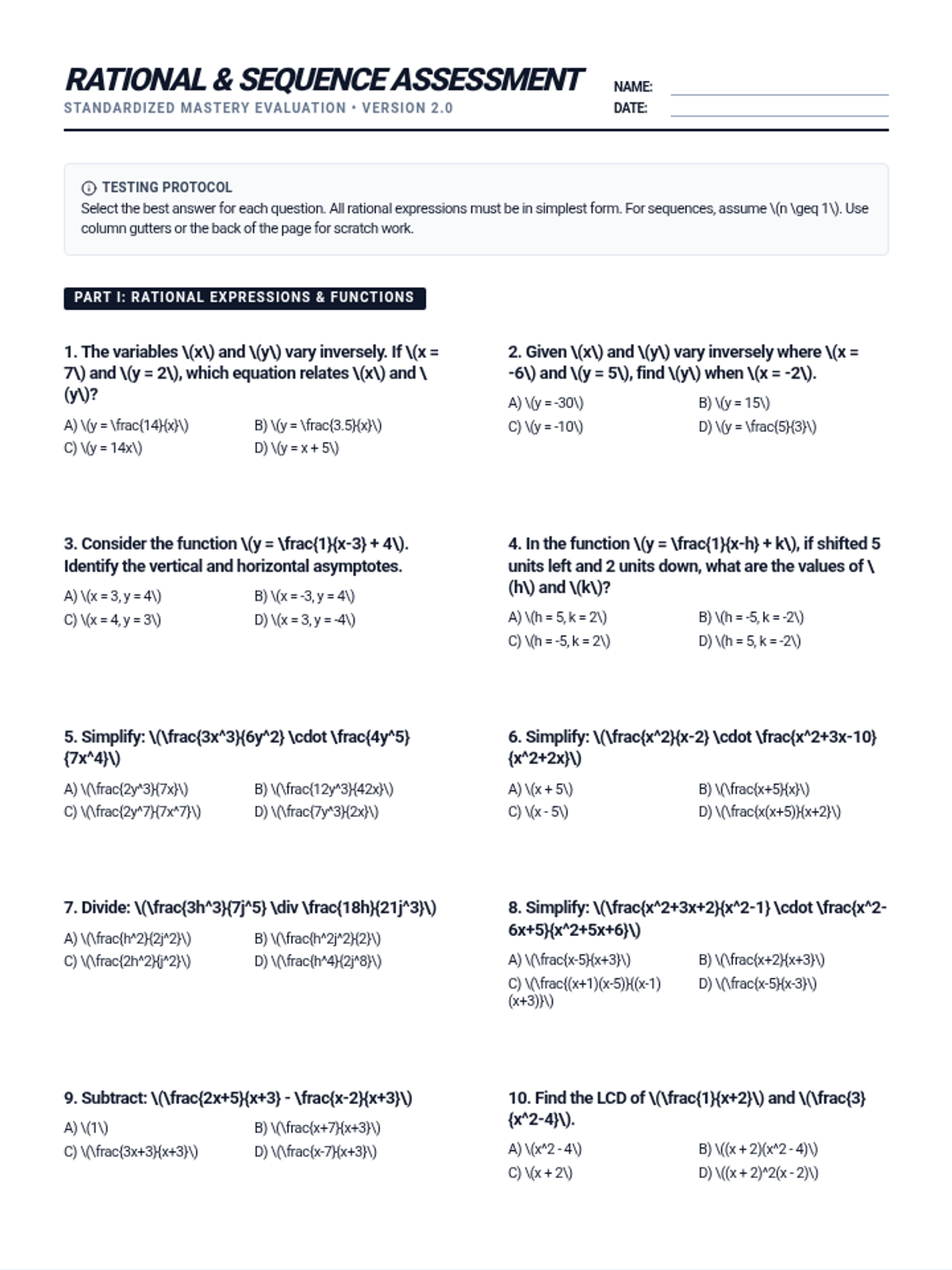
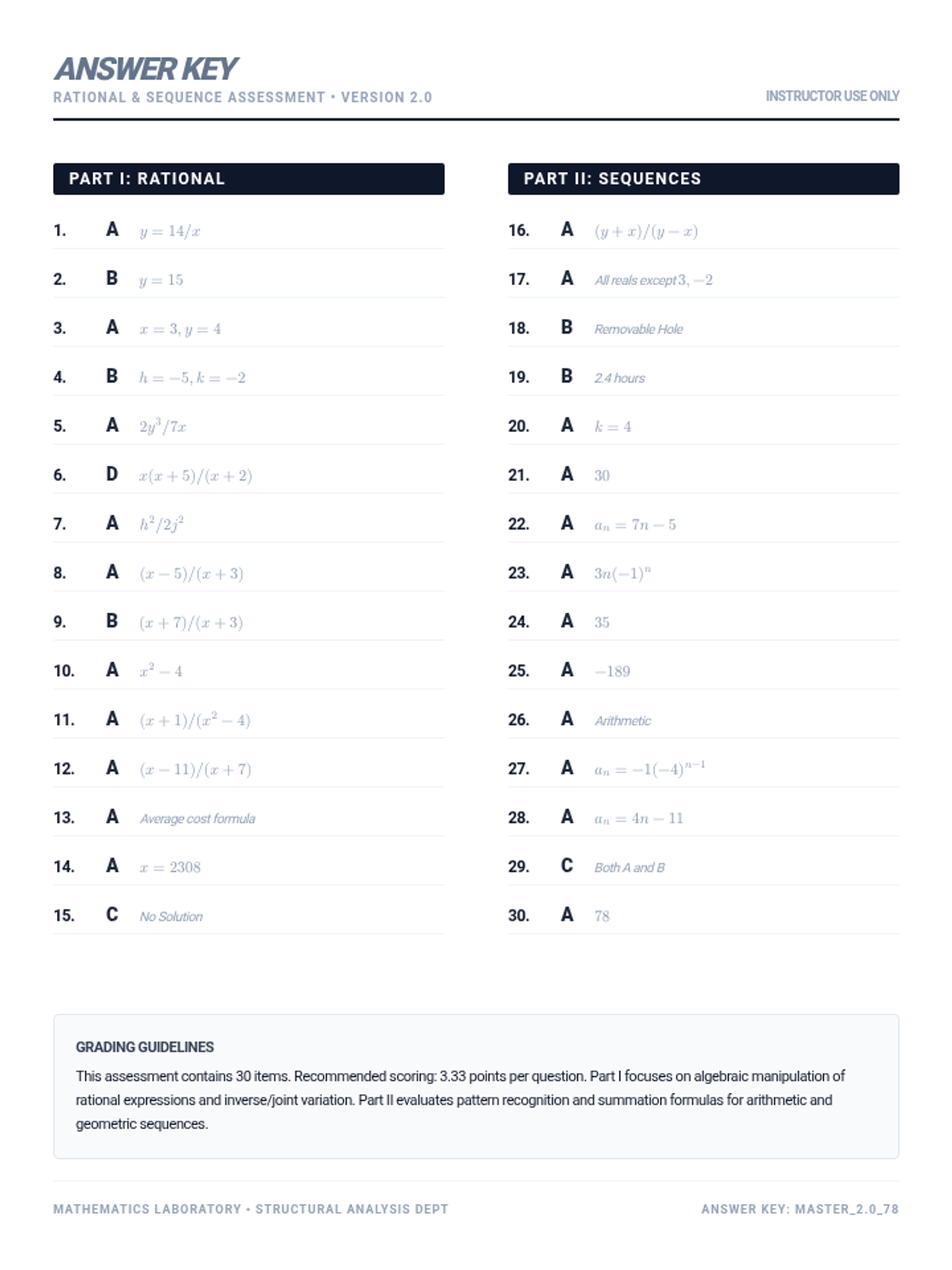
A comprehensive assessment covering rational expressions, functions, variation, and arithmetic/geometric sequences and series.
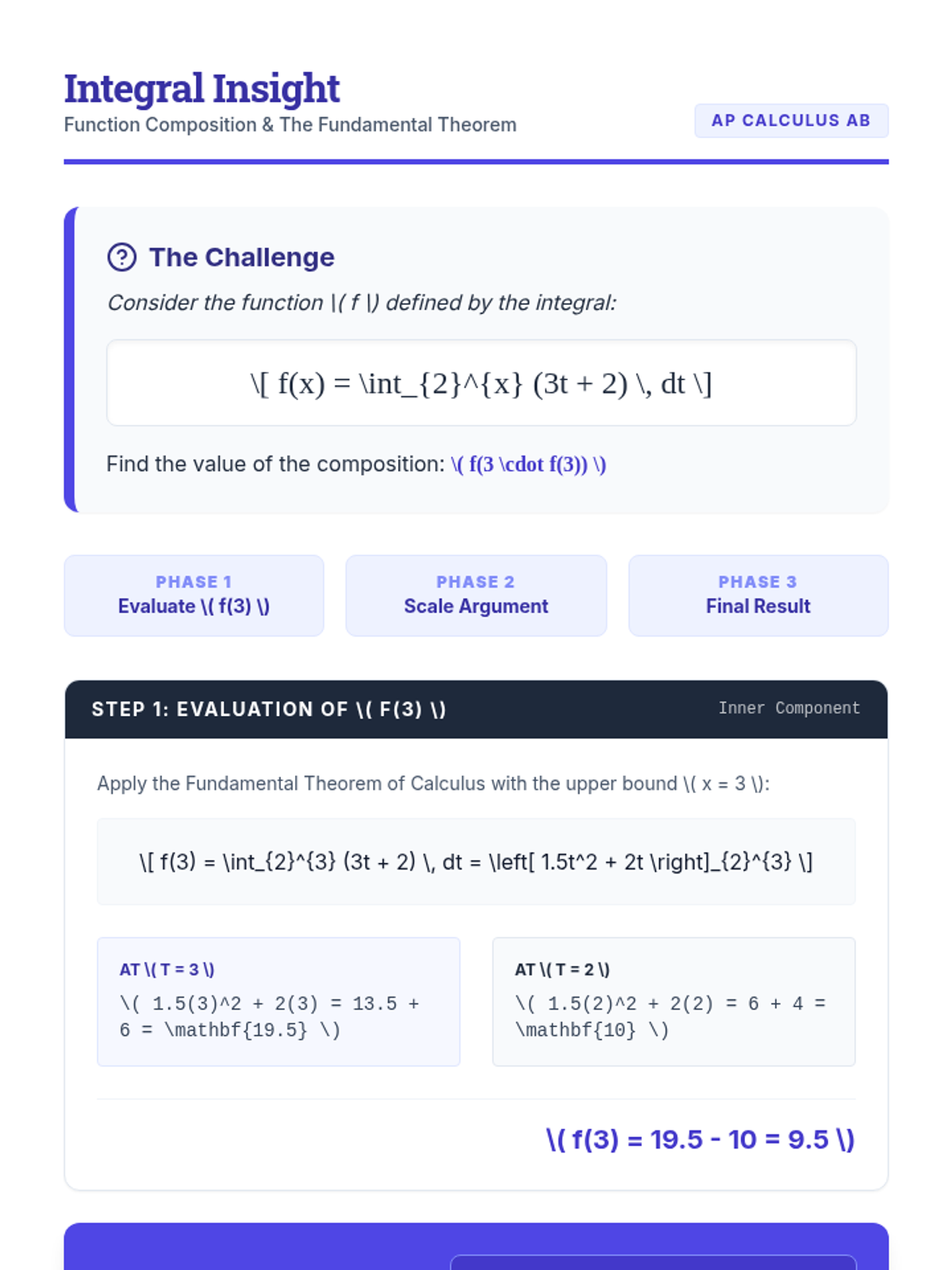
A focused study on applying the Fundamental Theorem of Calculus to evaluate functions defined by integrals. Students will practice finding specific values by integrating and evaluating at given boundaries.
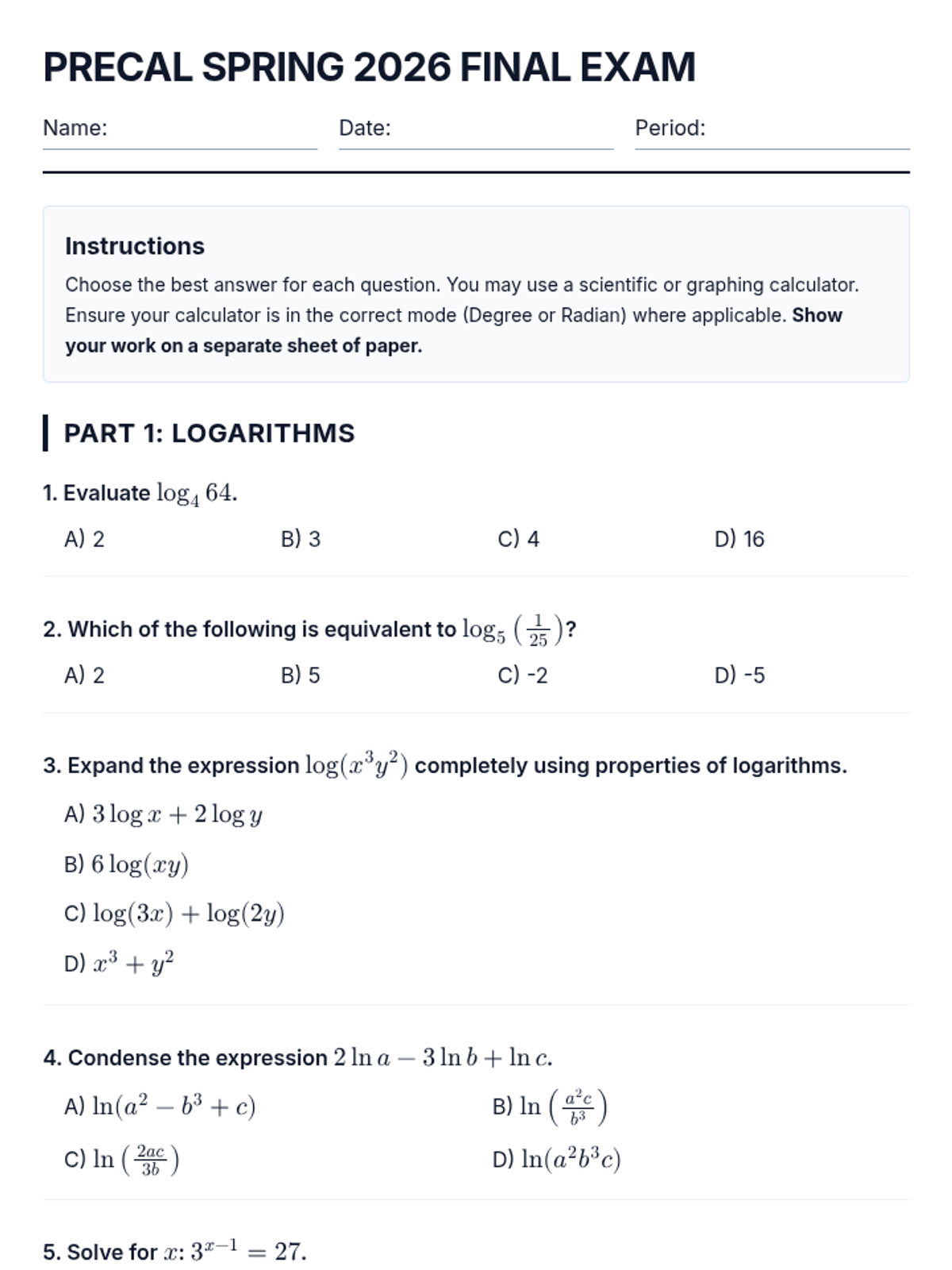
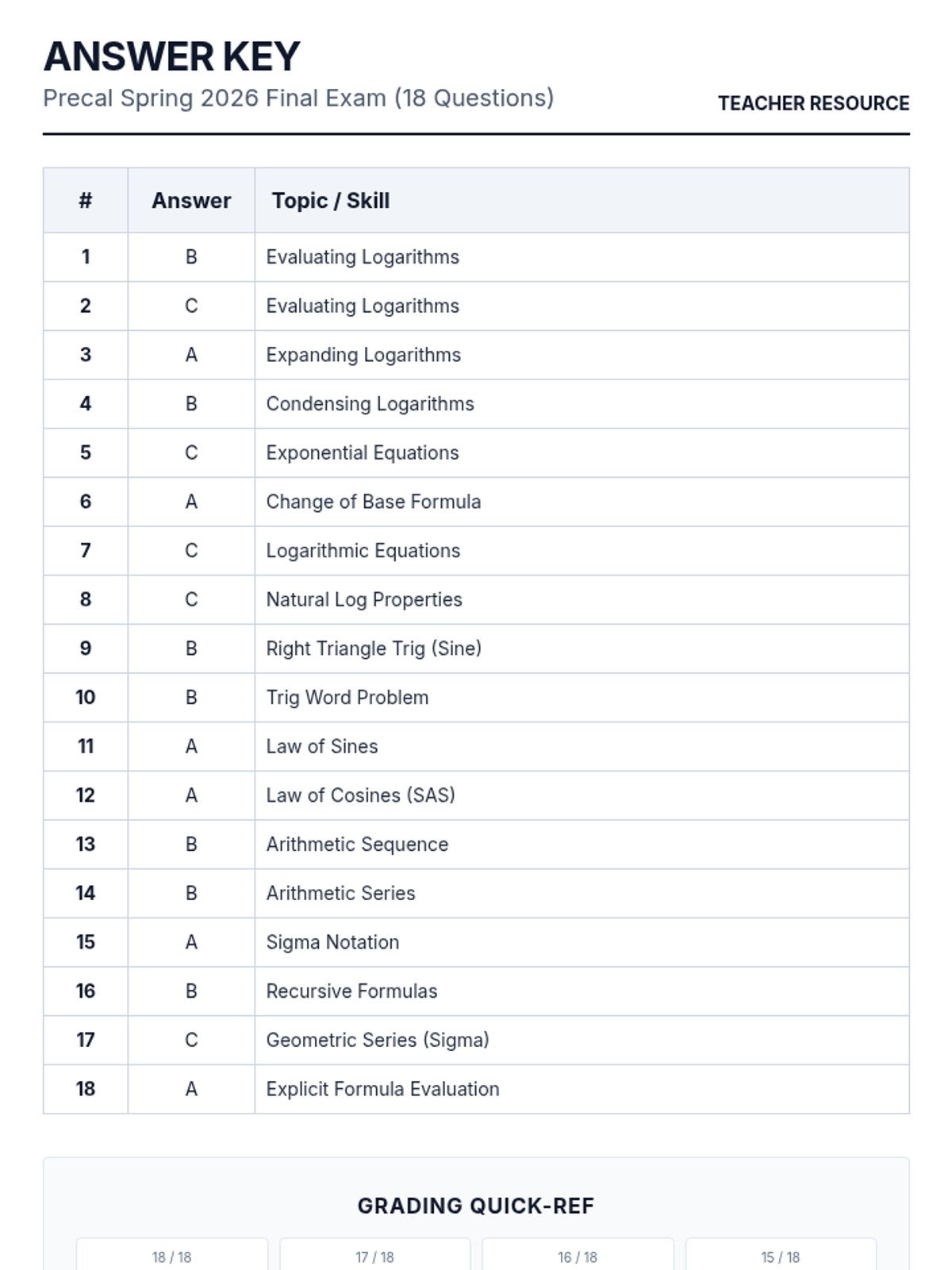
A comprehensive final exam for Spring 2026 covering logarithms, trigonometry of triangles, and sequences and series for a Precalculus course.
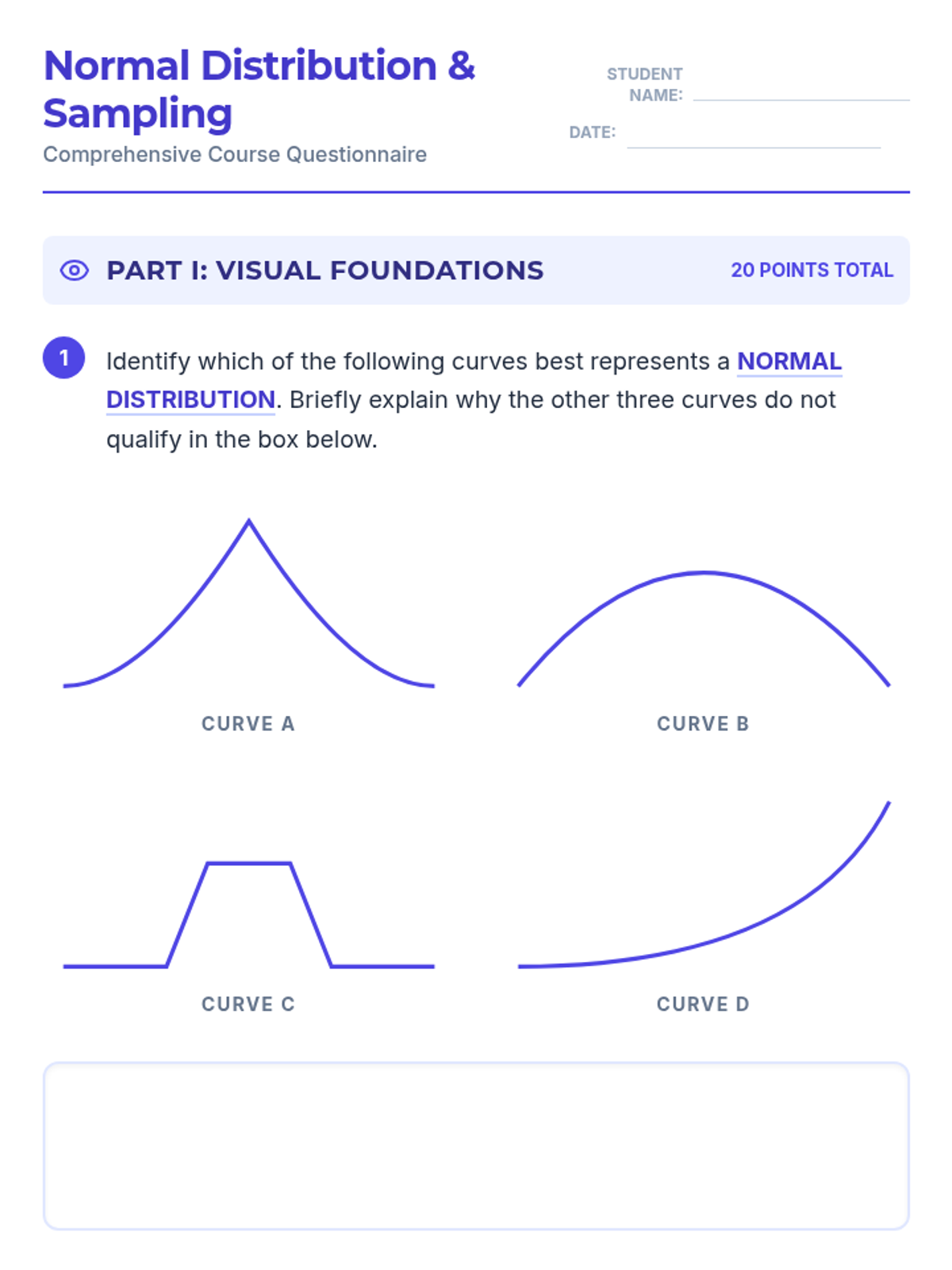
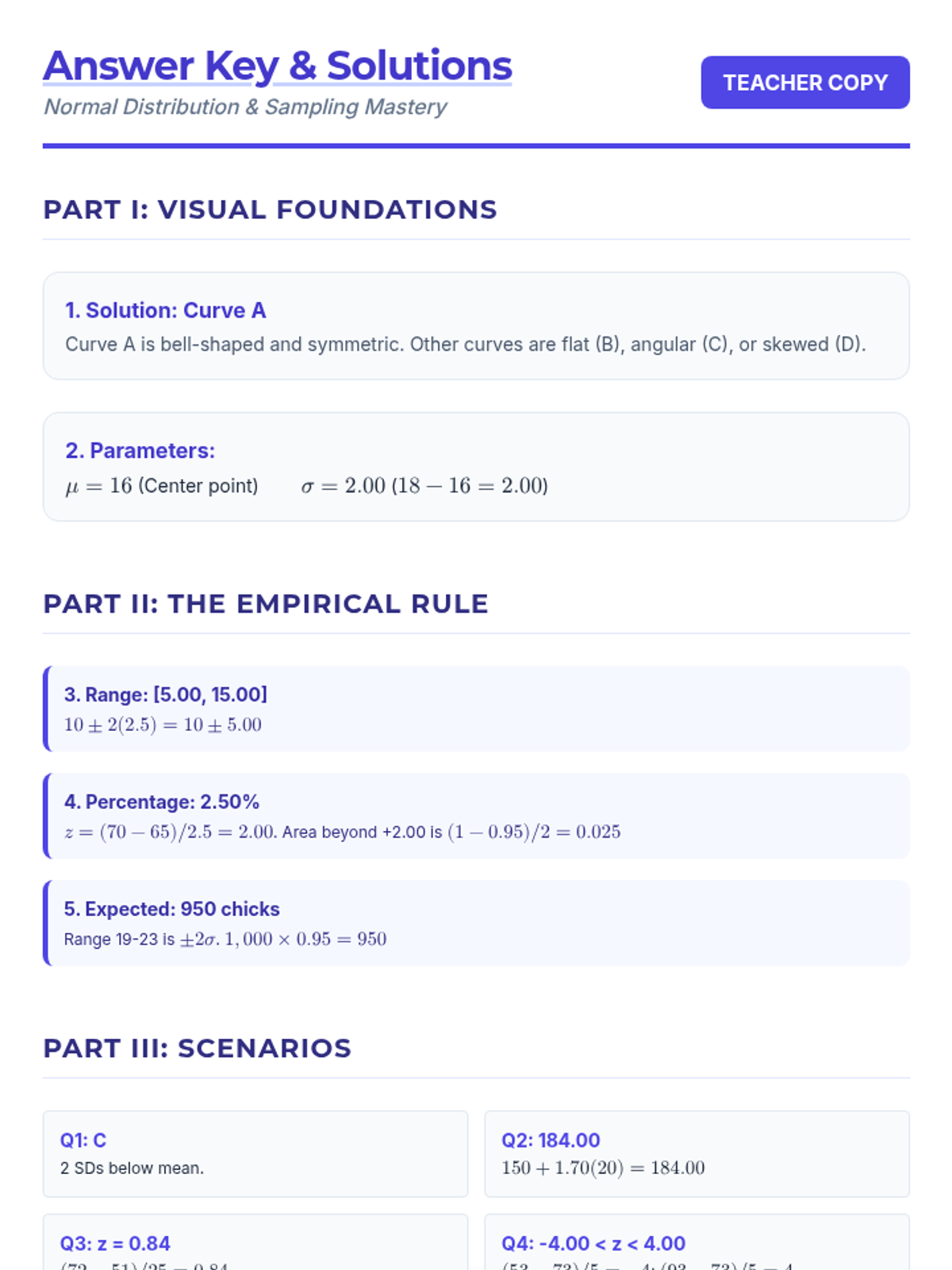
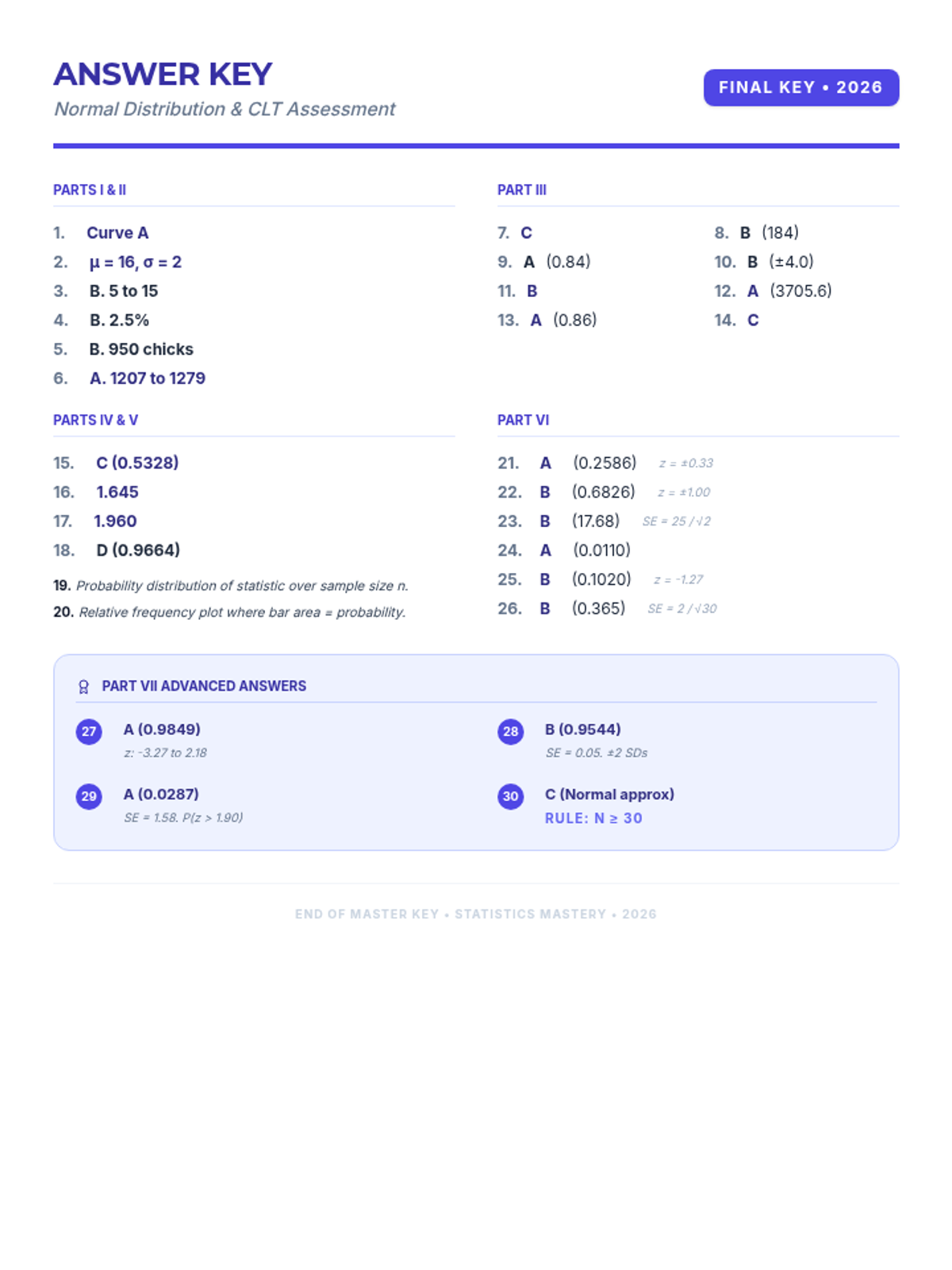
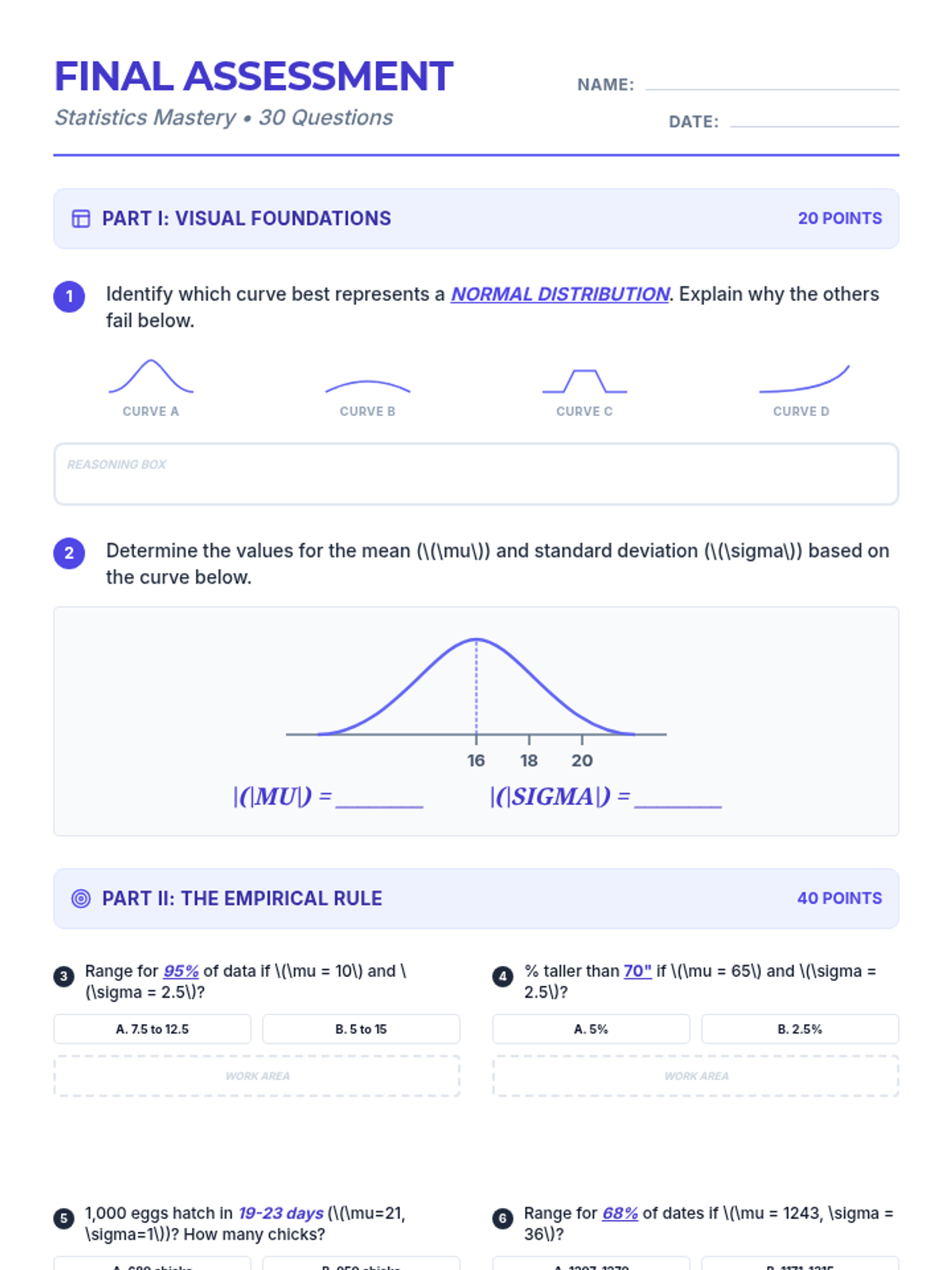
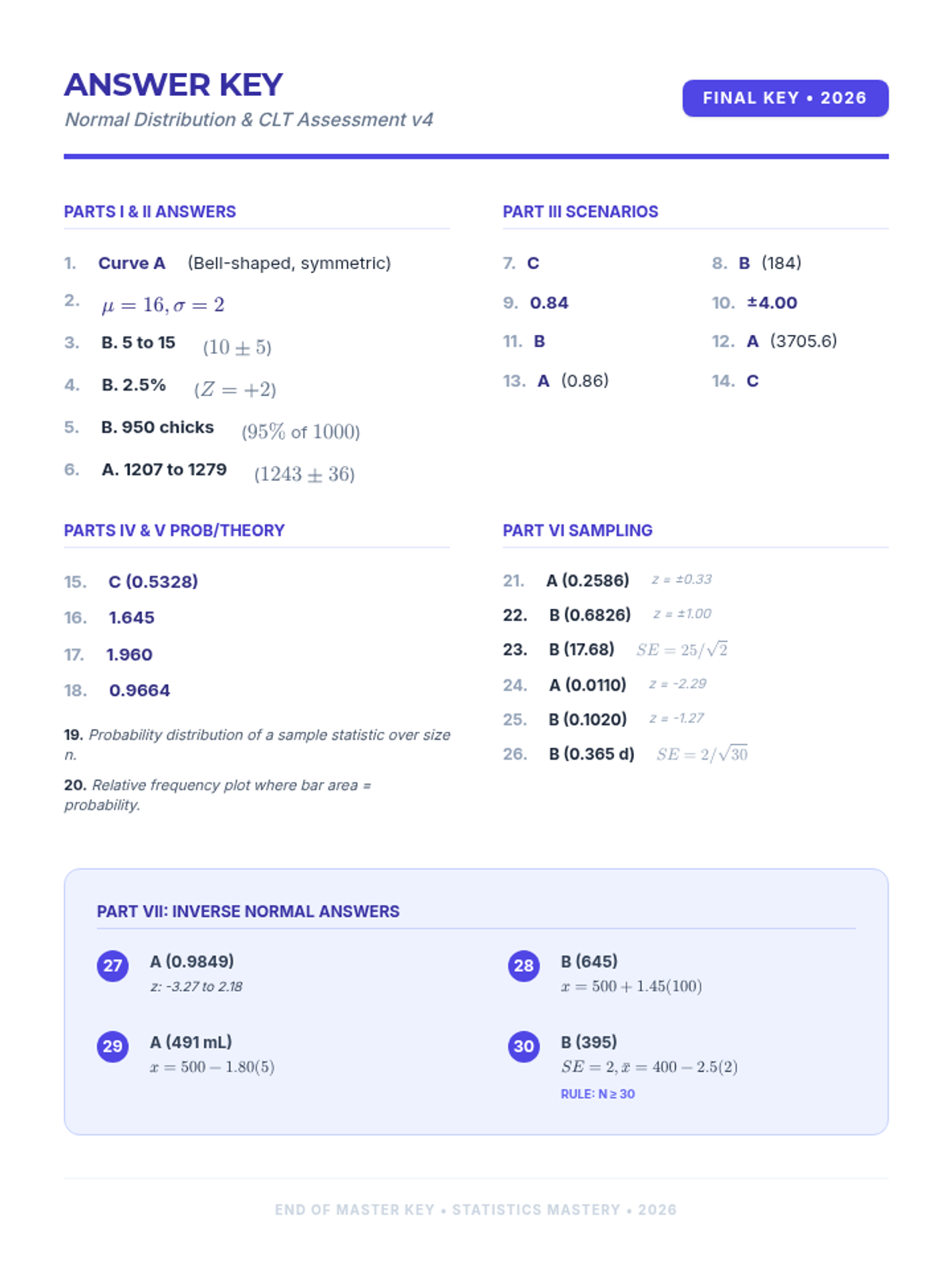
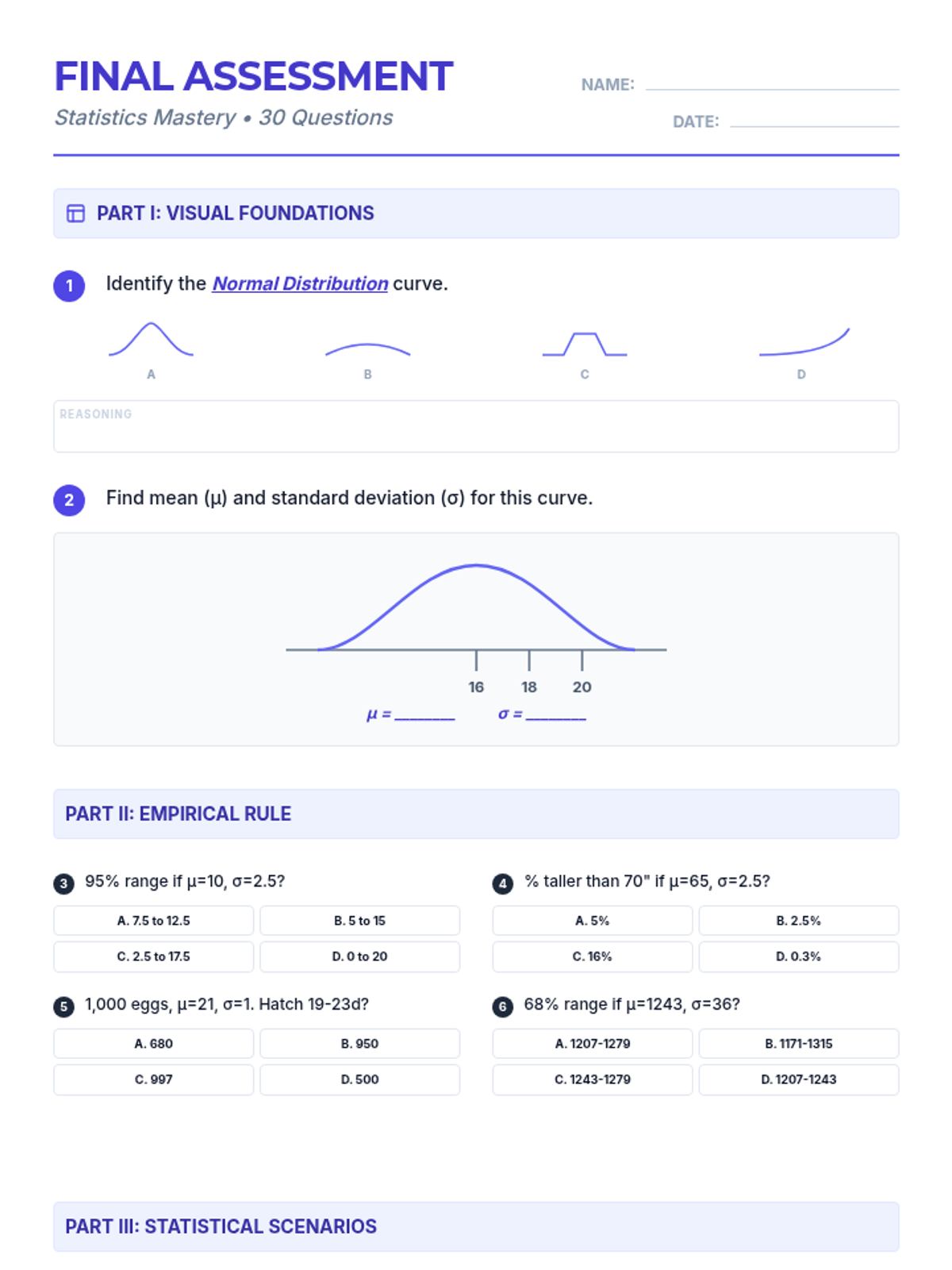
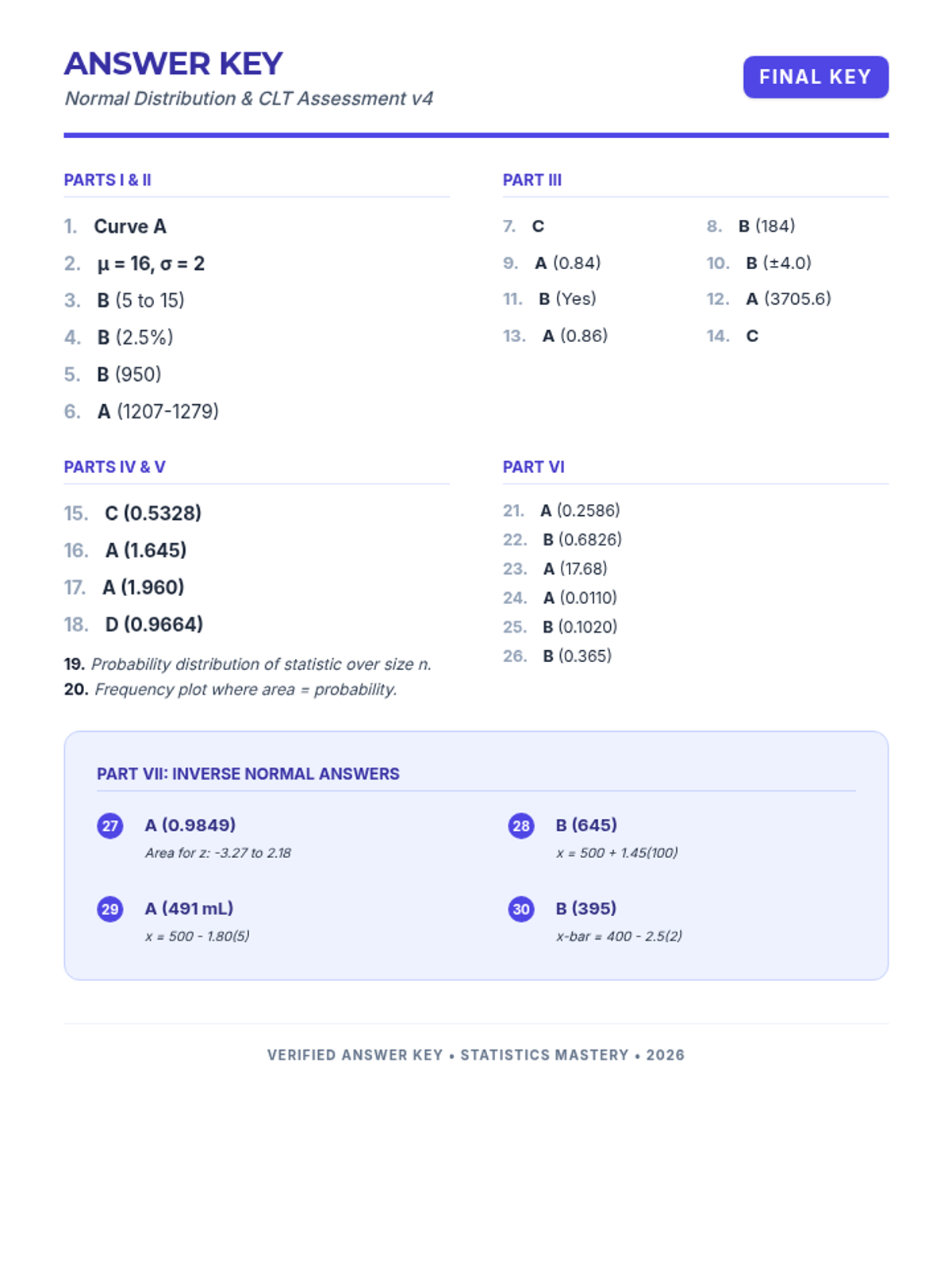
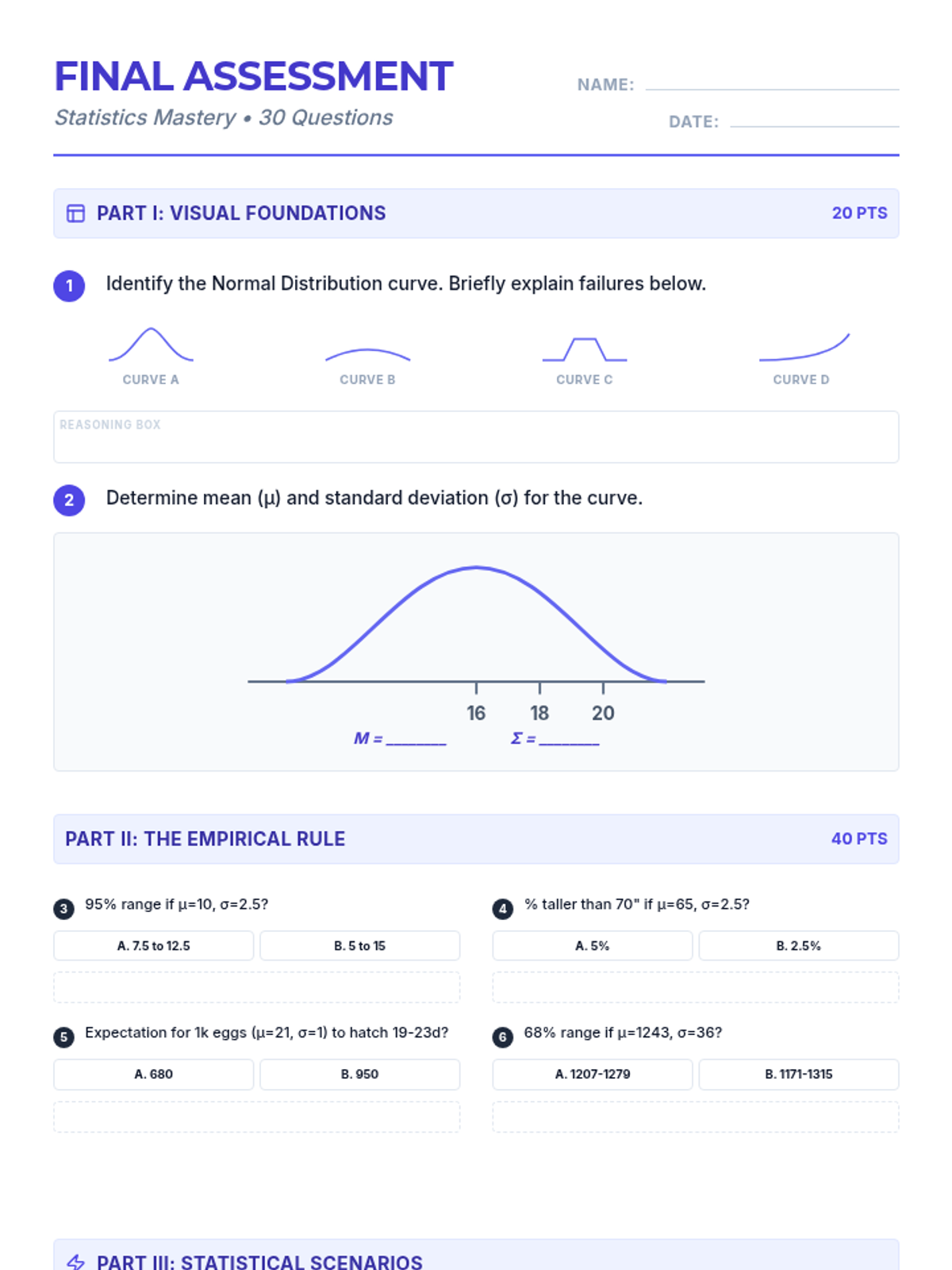
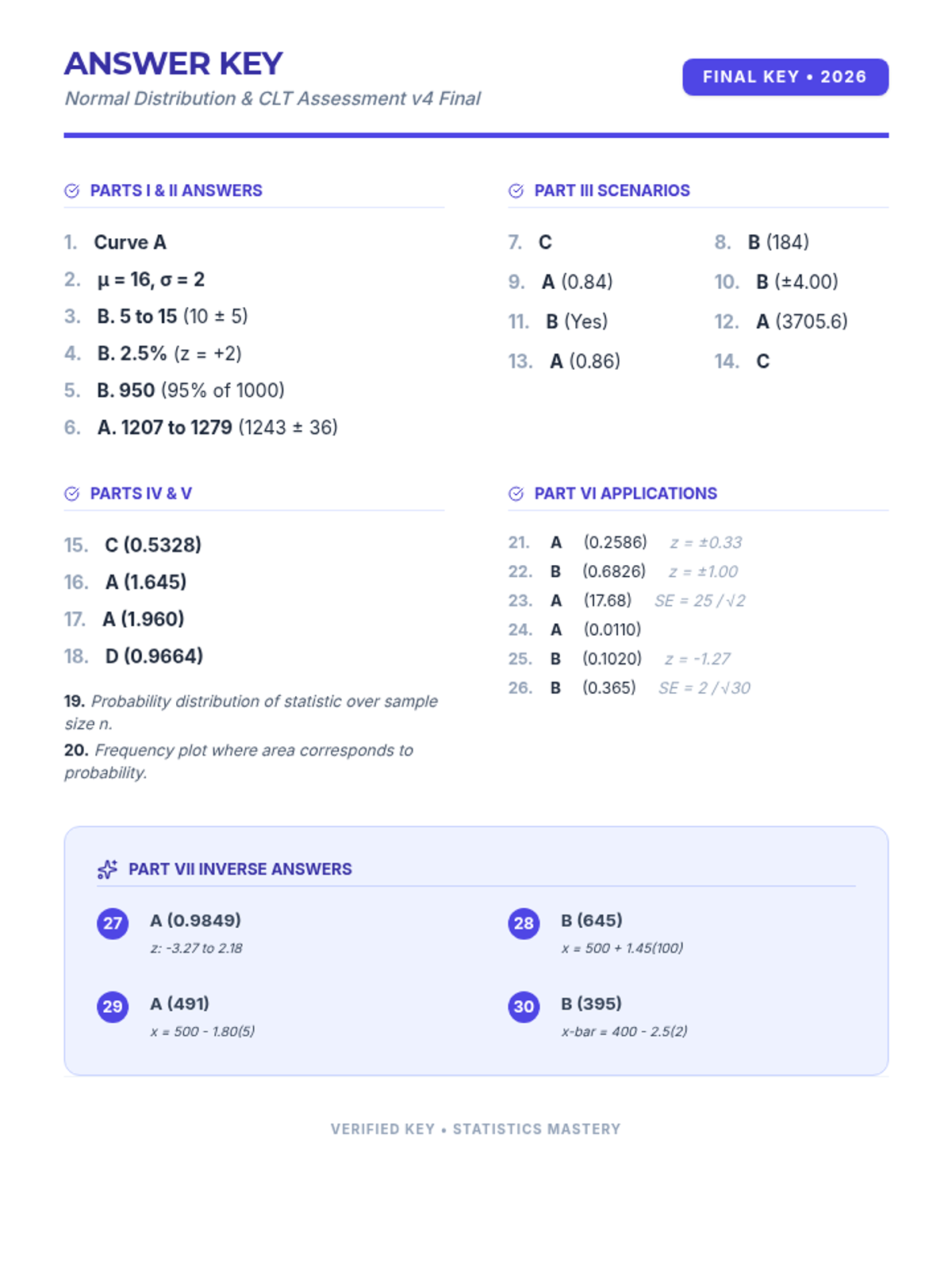
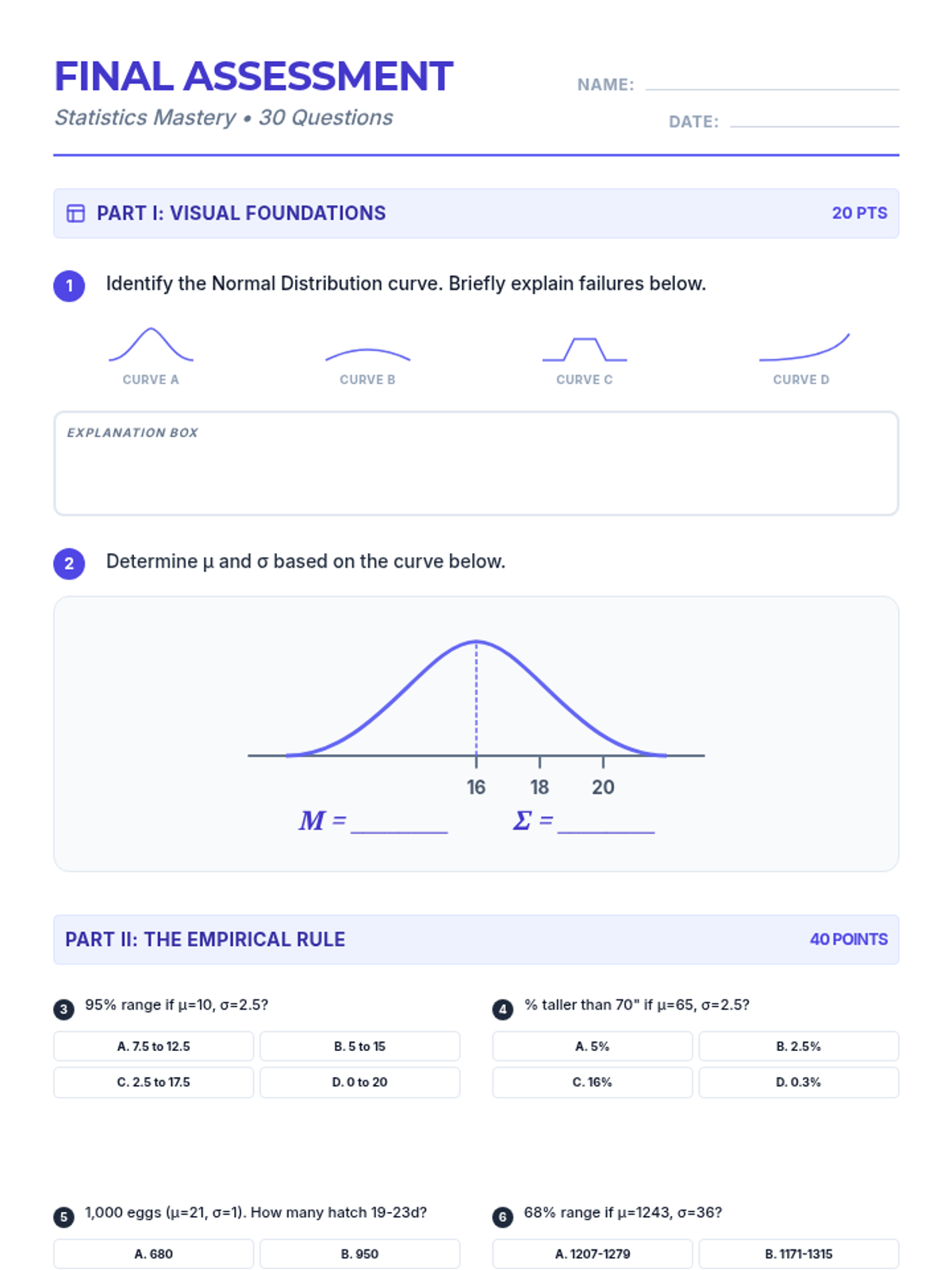
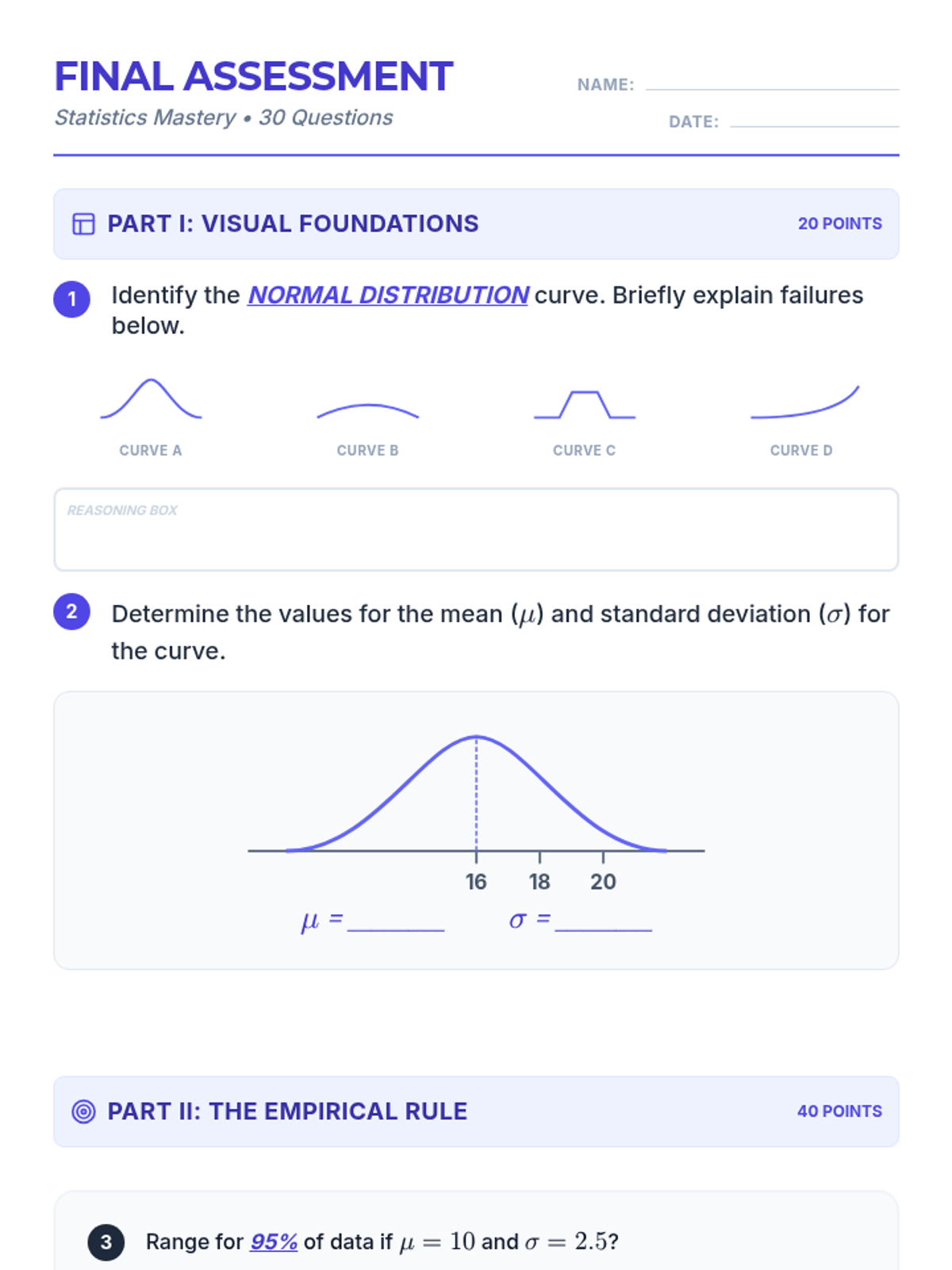
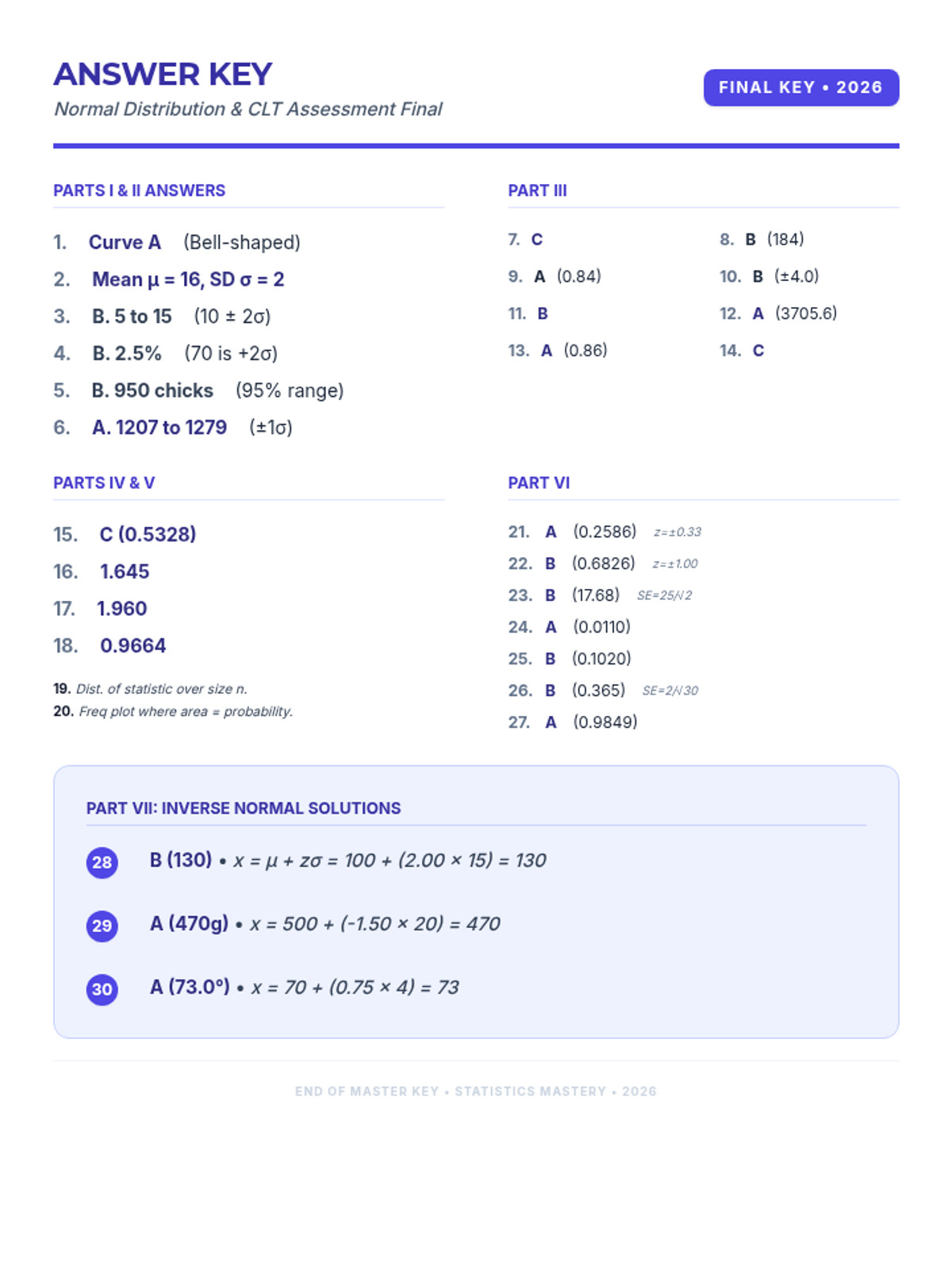
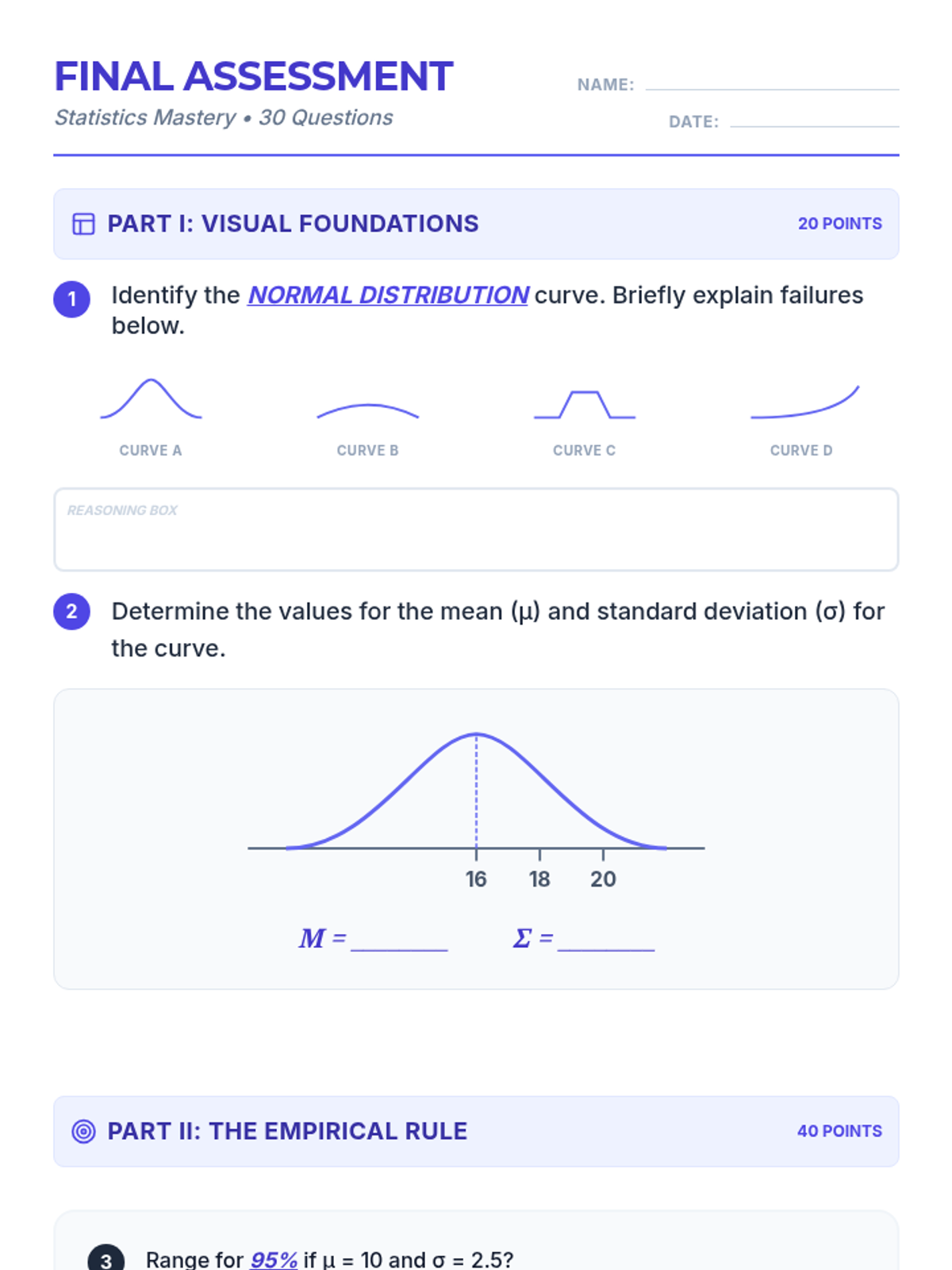
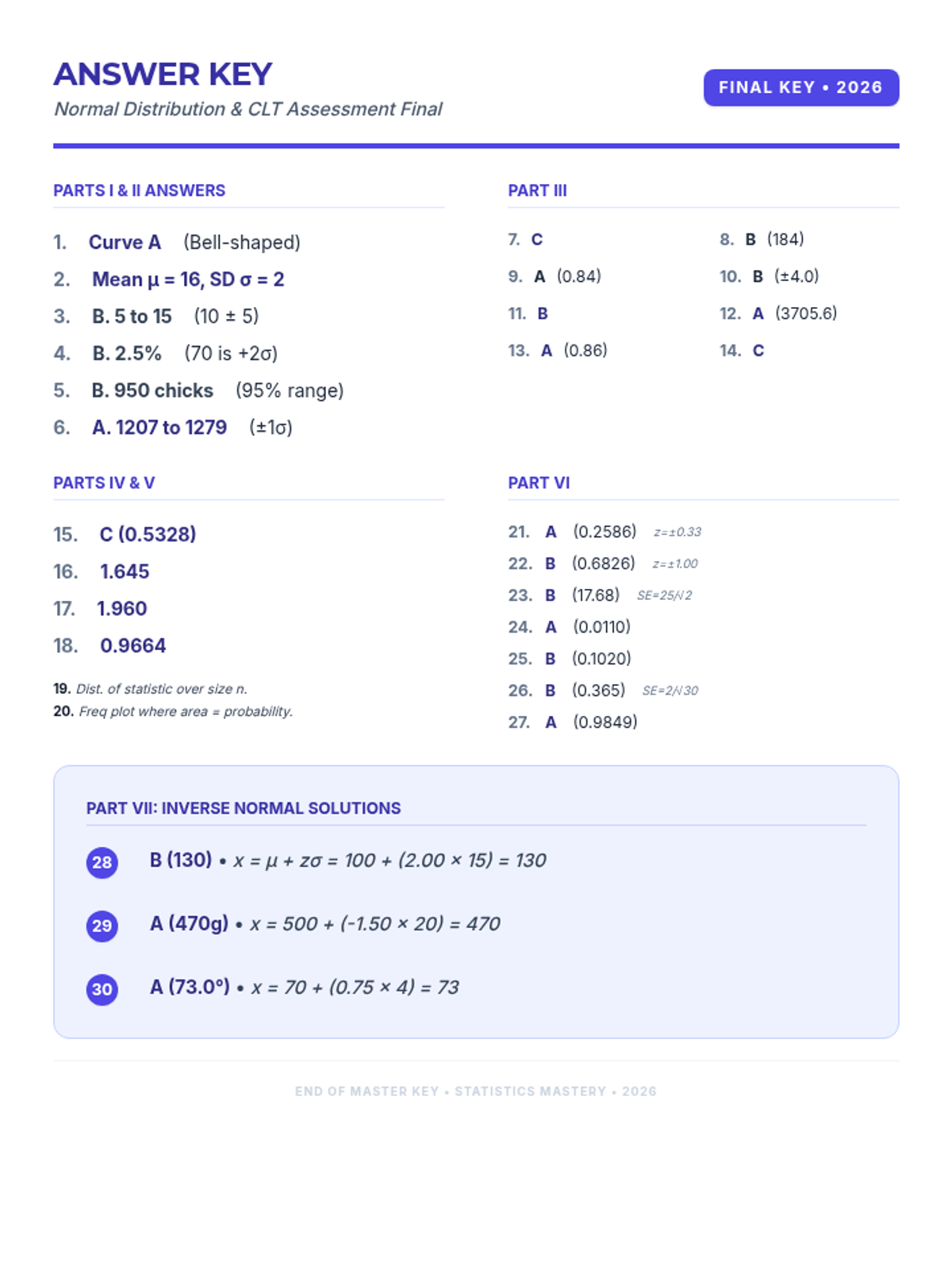
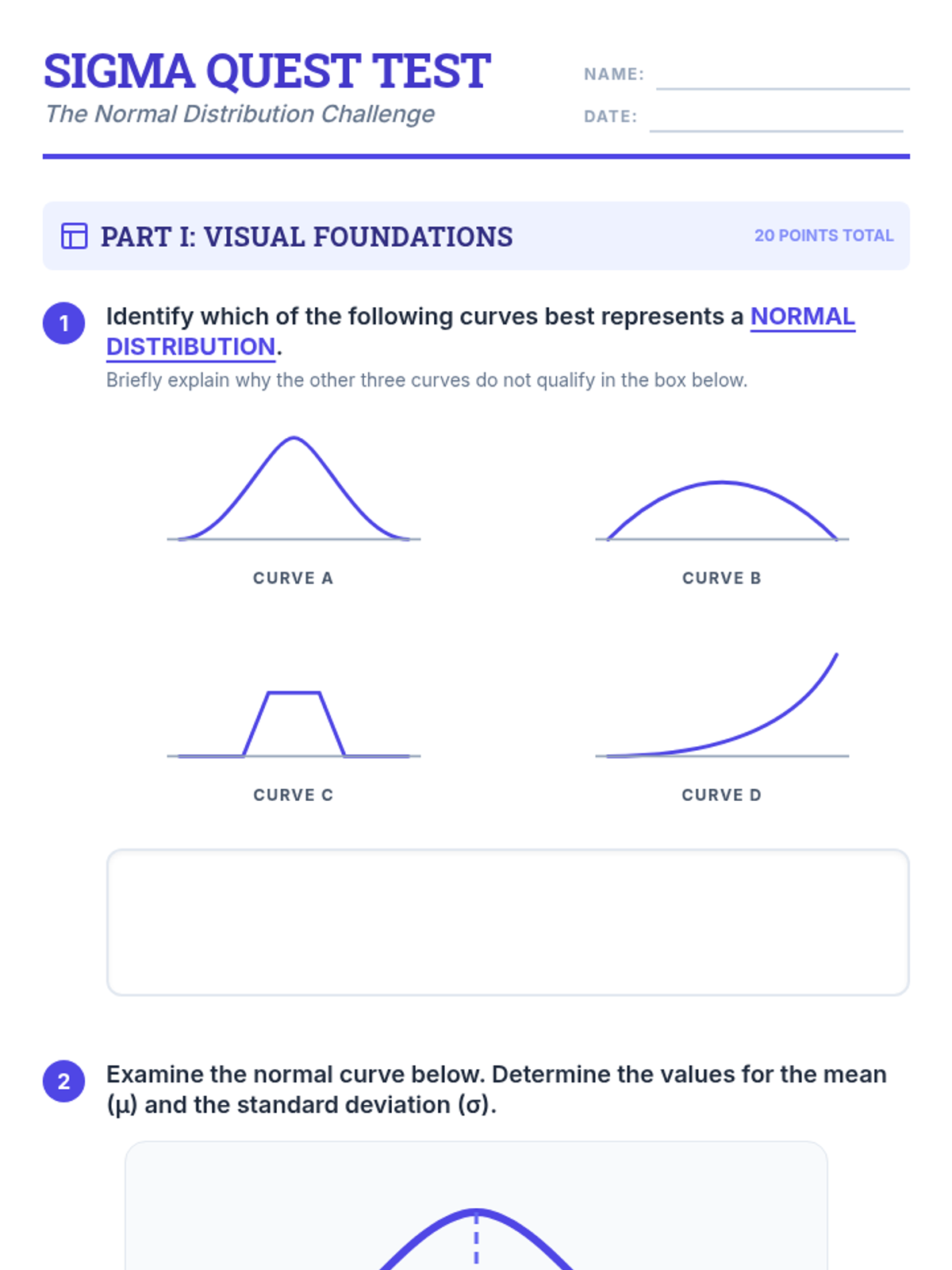
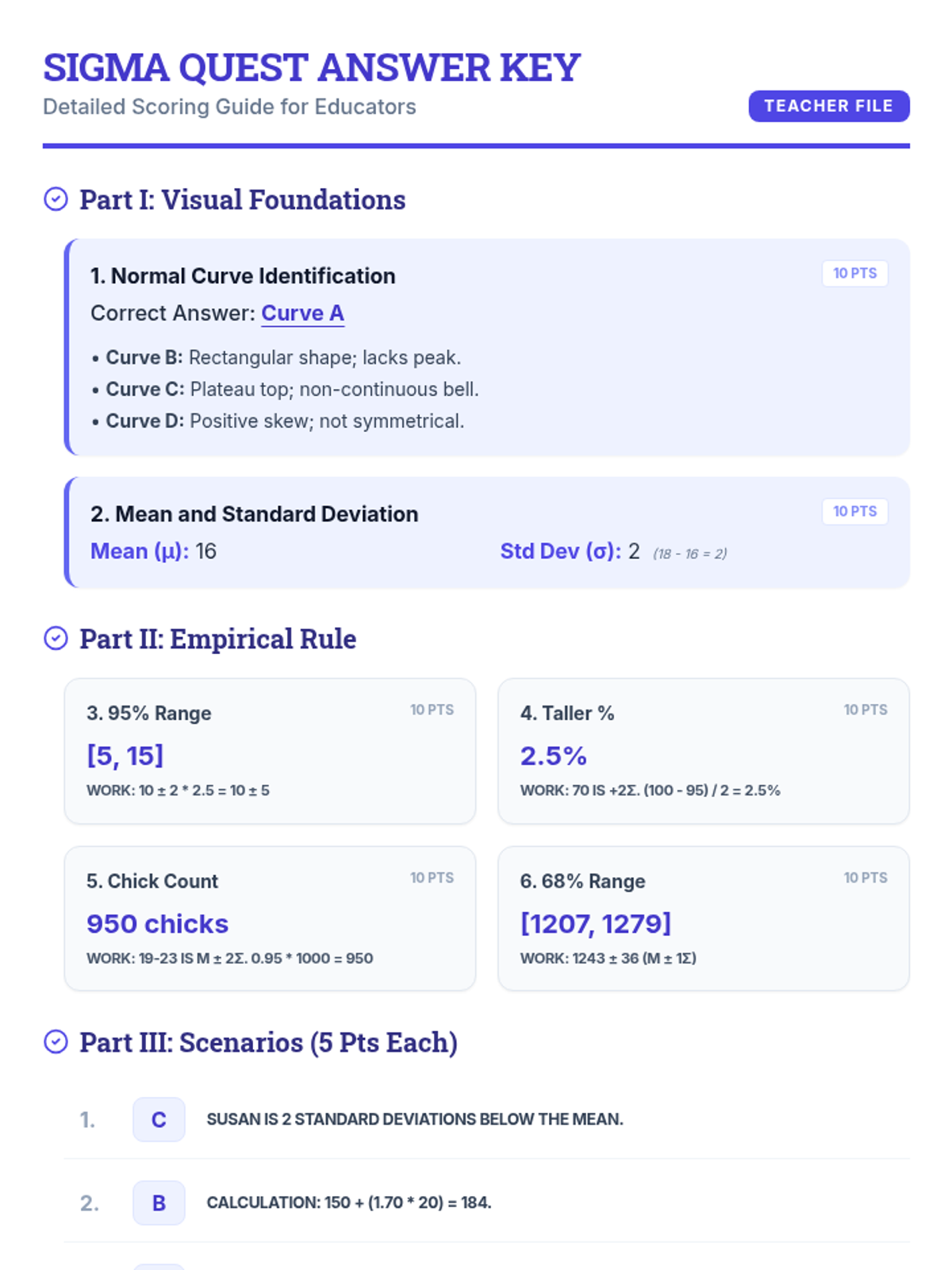
A comprehensive assessment covering normal distributions, the Empirical Rule, z-scores, and sampling distributions. This lesson combines conceptual understanding with complex statistical calculations.
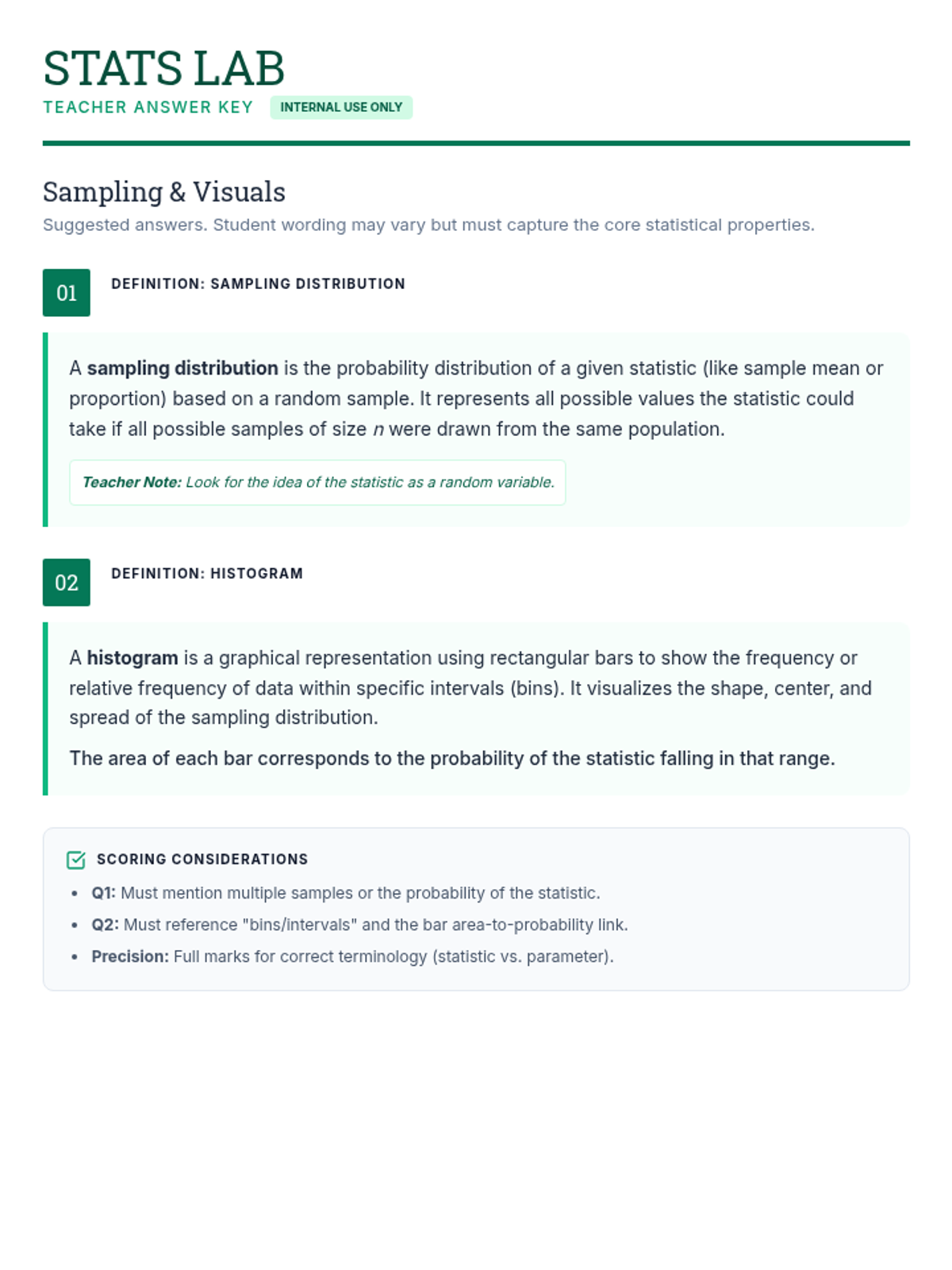
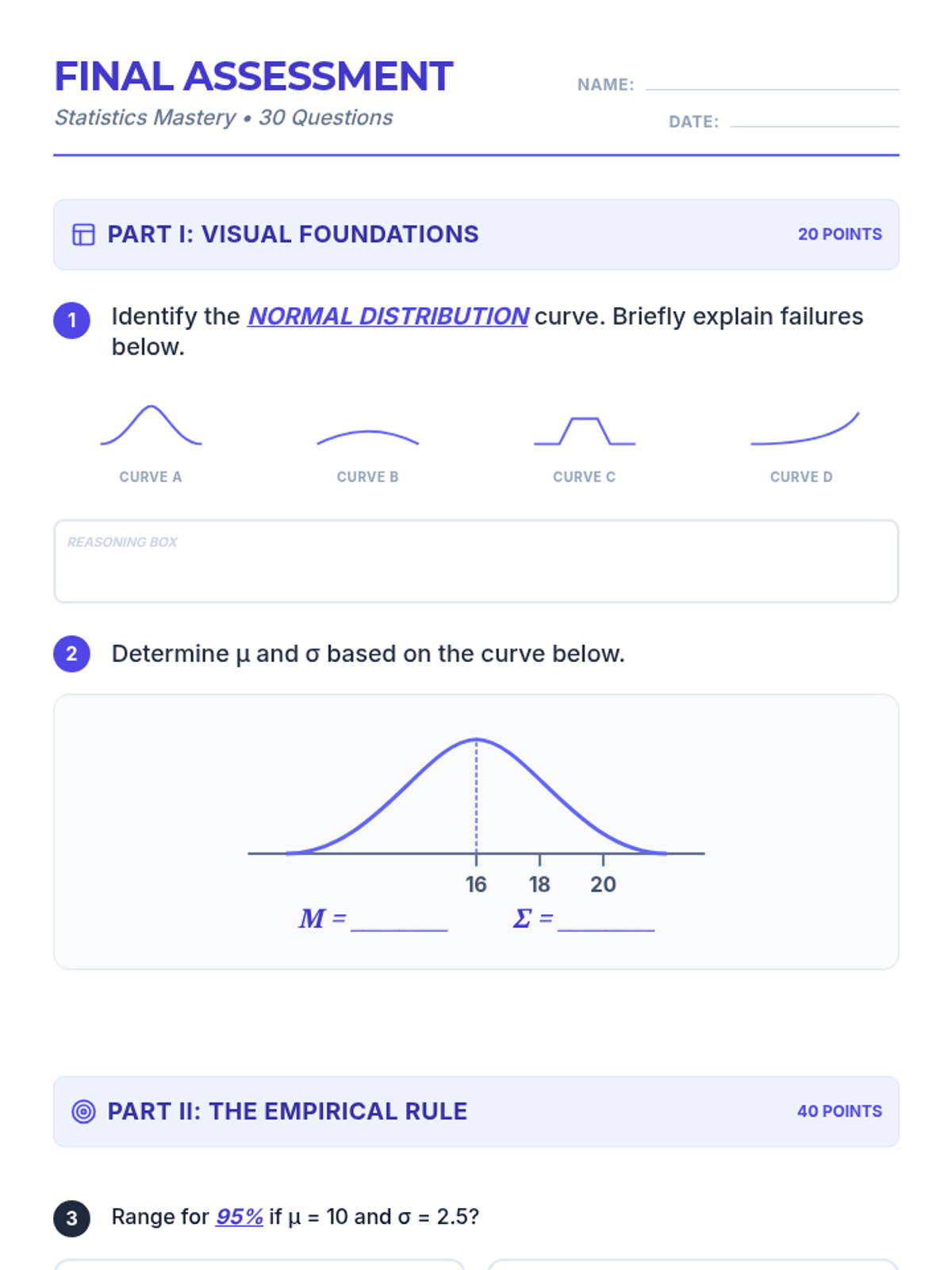
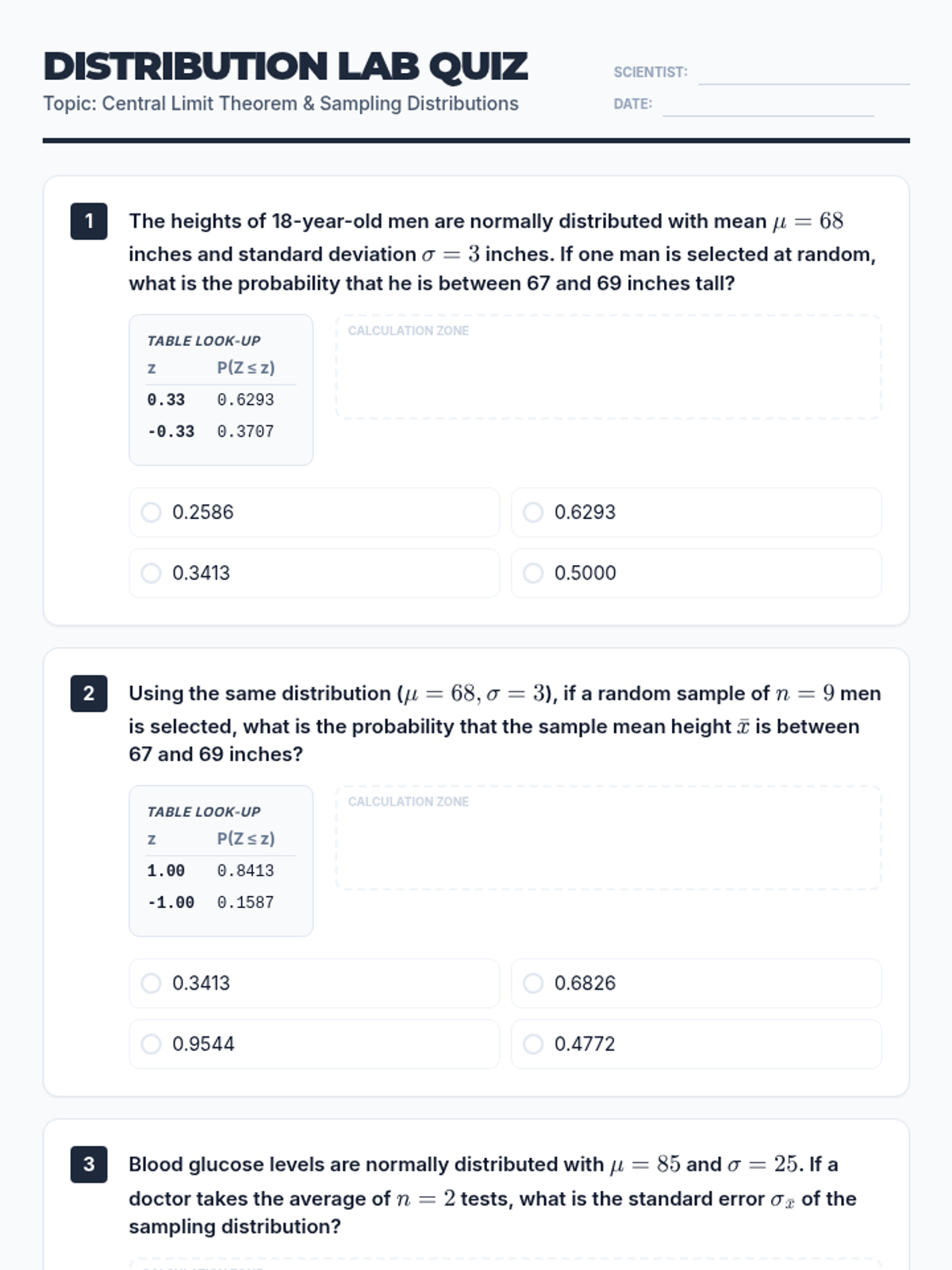
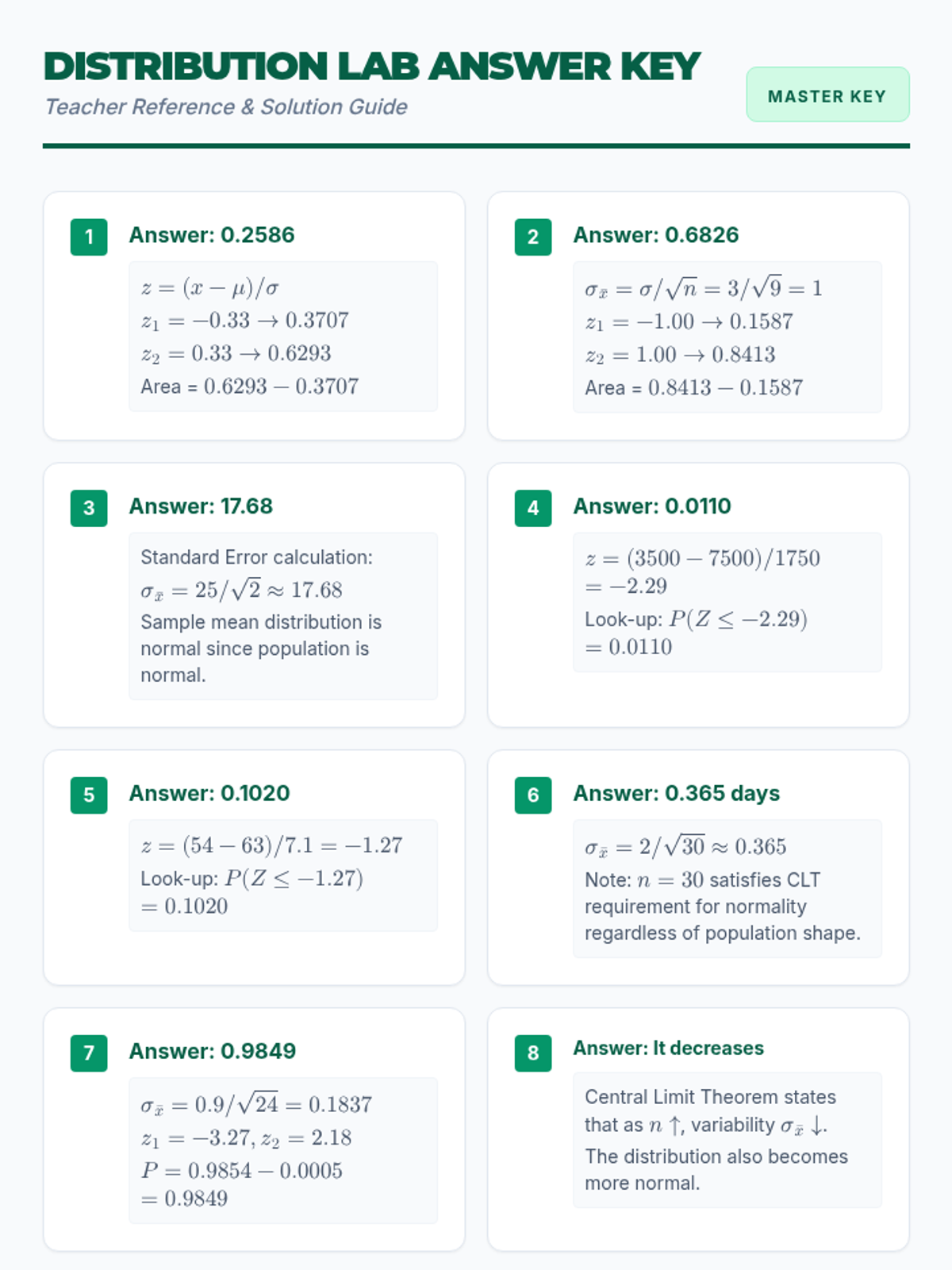
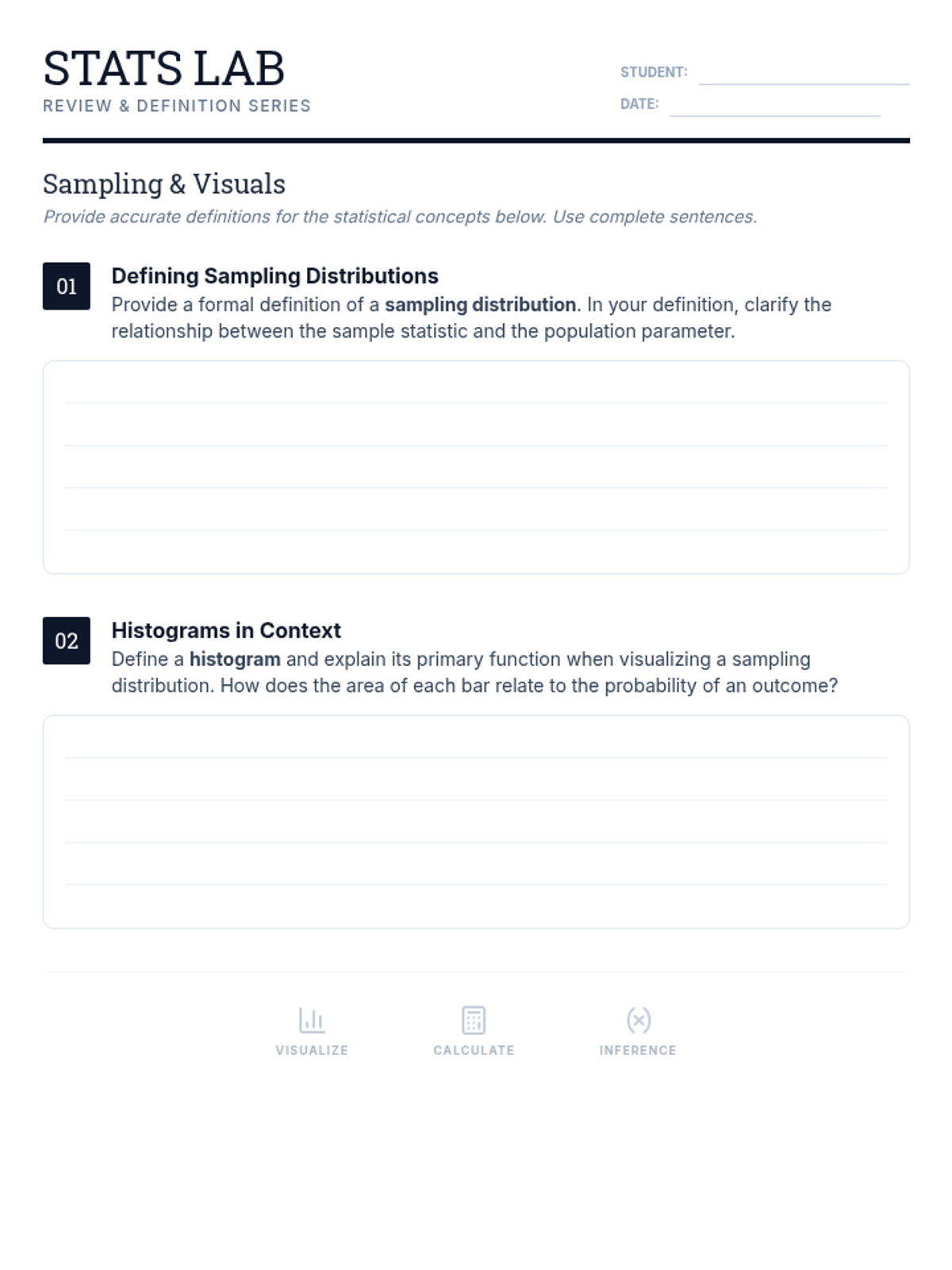
A summative assessment lesson focusing on visual foundations, probability calculations, and the application of the Central Limit Theorem to sampling distributions.
A comprehensive lesson covering the properties of normal distributions, the empirical rule, and z-score calculations through various real-world scenarios.
A focused lesson on the Central Limit Theorem (CLT) and its application to real-world datasets. Students practice calculating Z-scores for sample means and using Z-tables to determine probabilities.
A lesson focused on fundamental statistical concepts including sampling distributions and the visual representation of data using histograms.
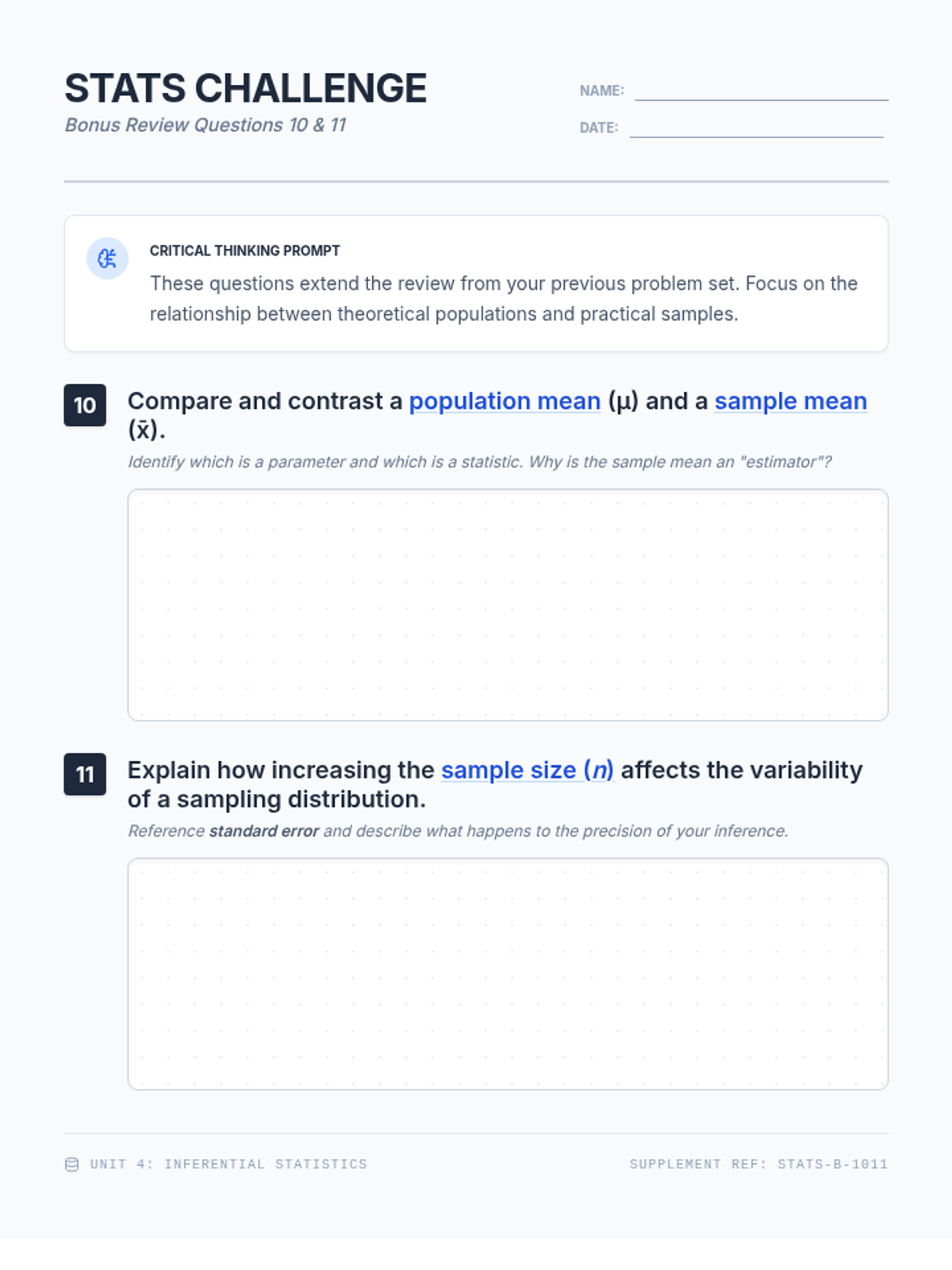
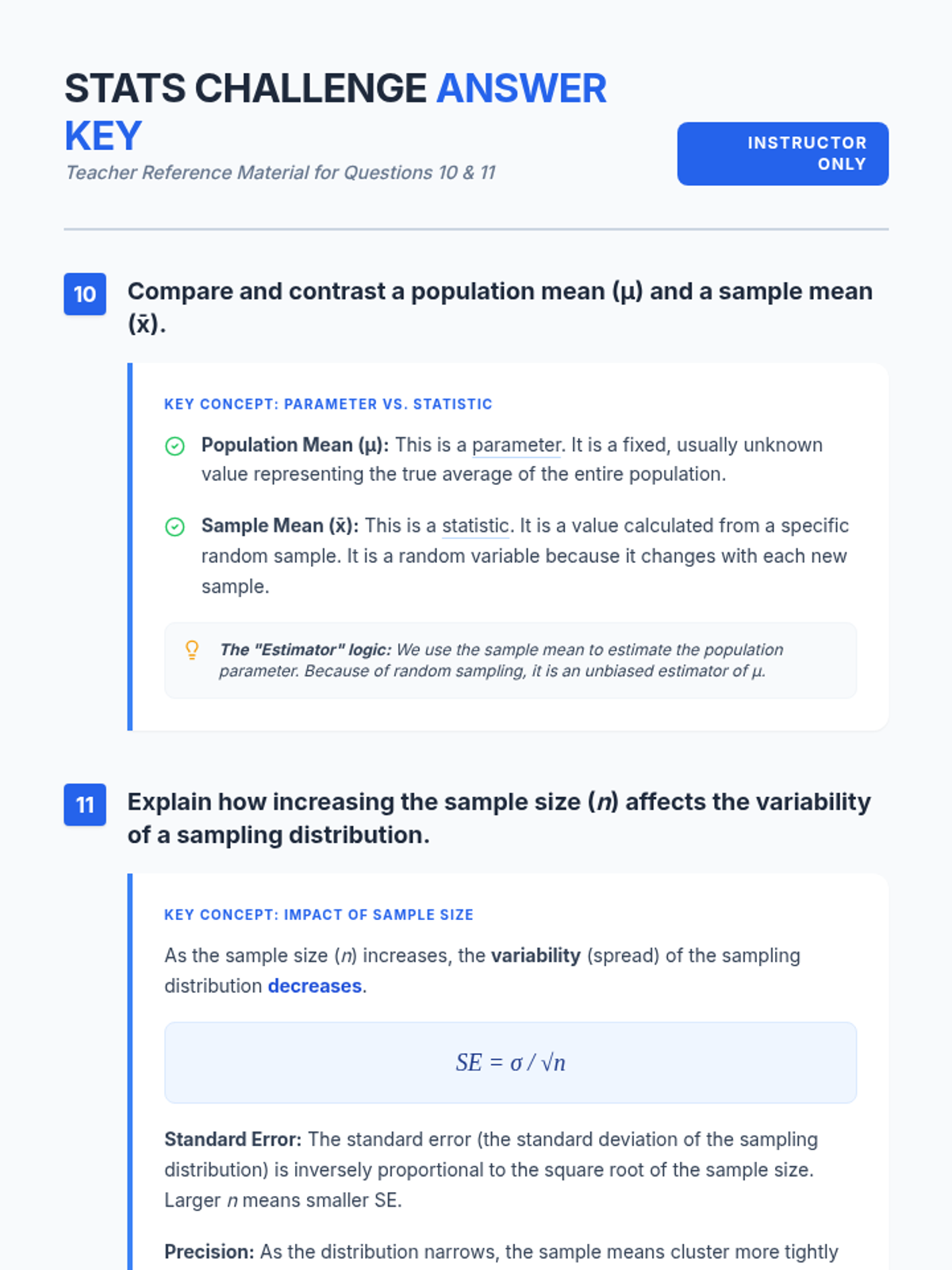
A concise lesson reviewing advanced statistical concepts including population parameters, sample statistics, and the behavior of sampling distributions.
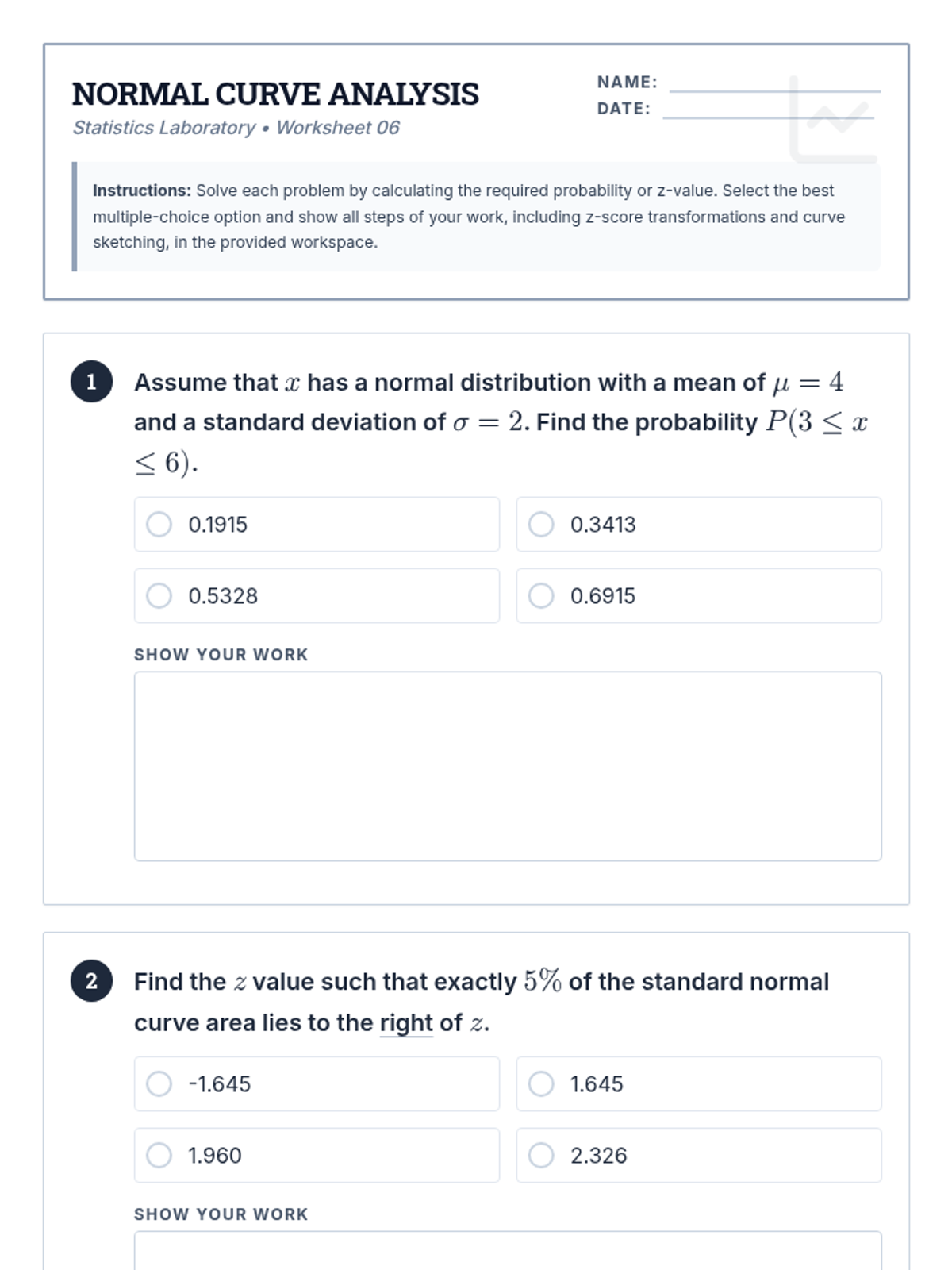
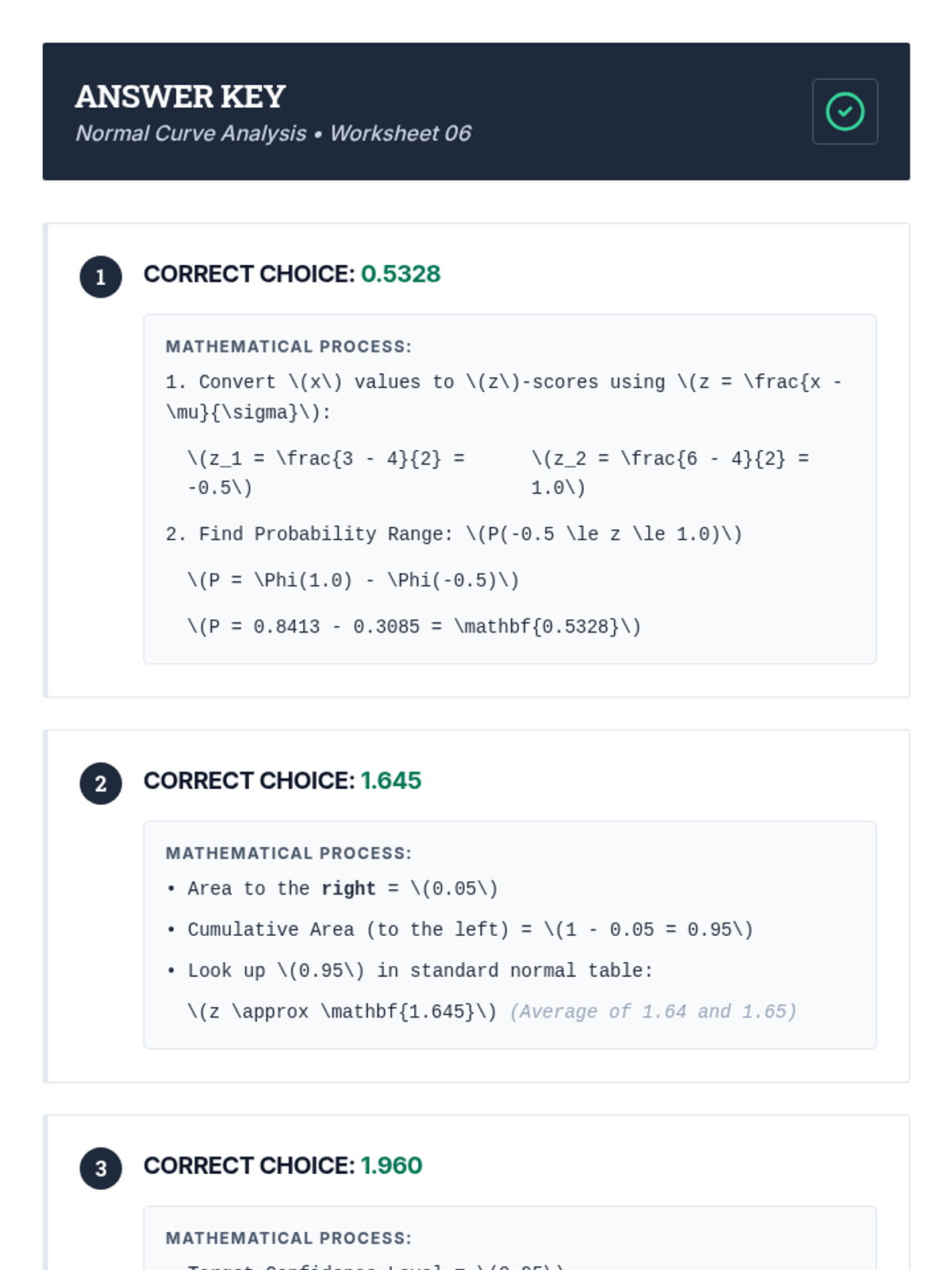
A focused practice session on calculating probabilities and z-values for normal distributions, based on medical and abstract data.
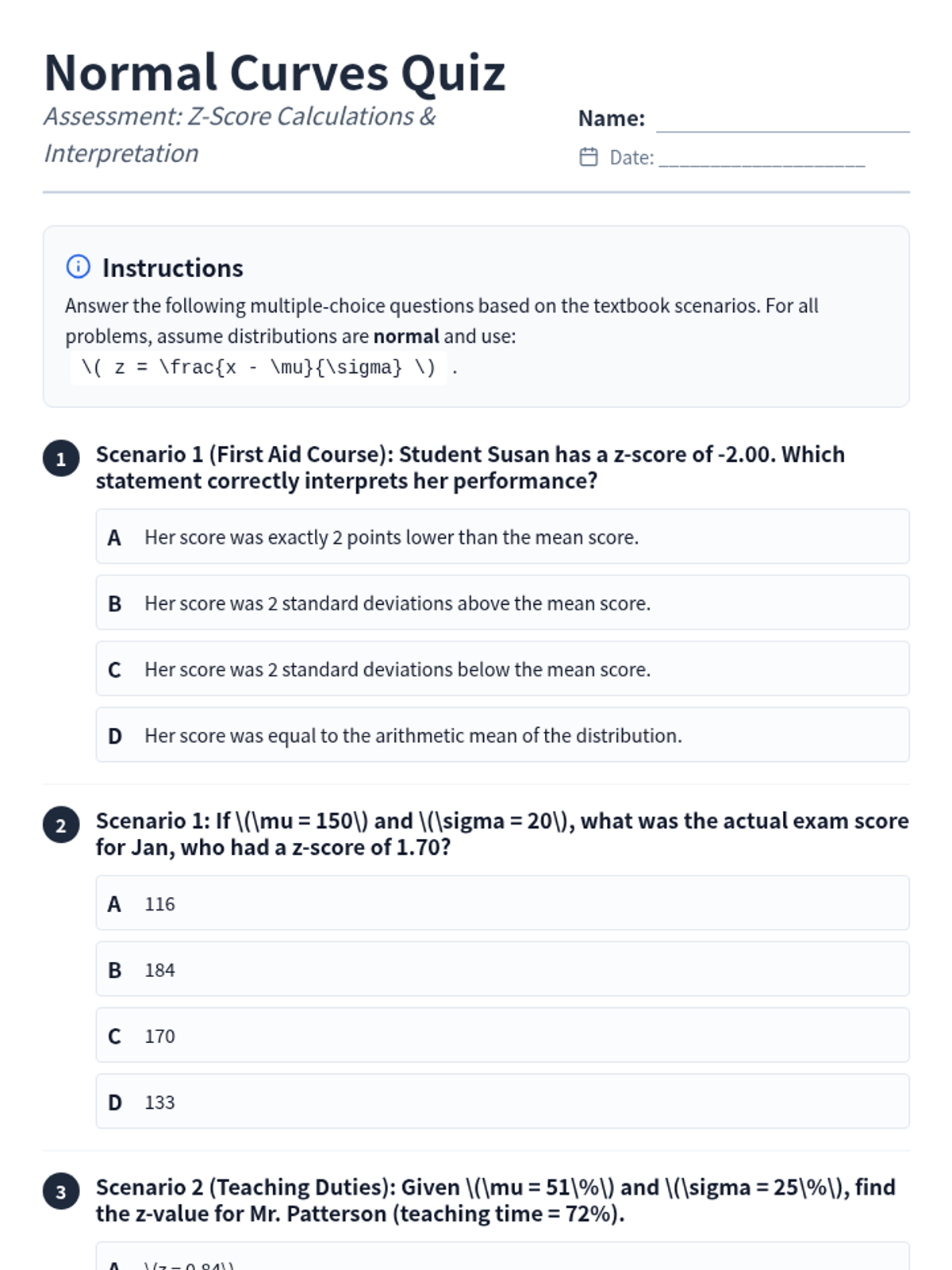
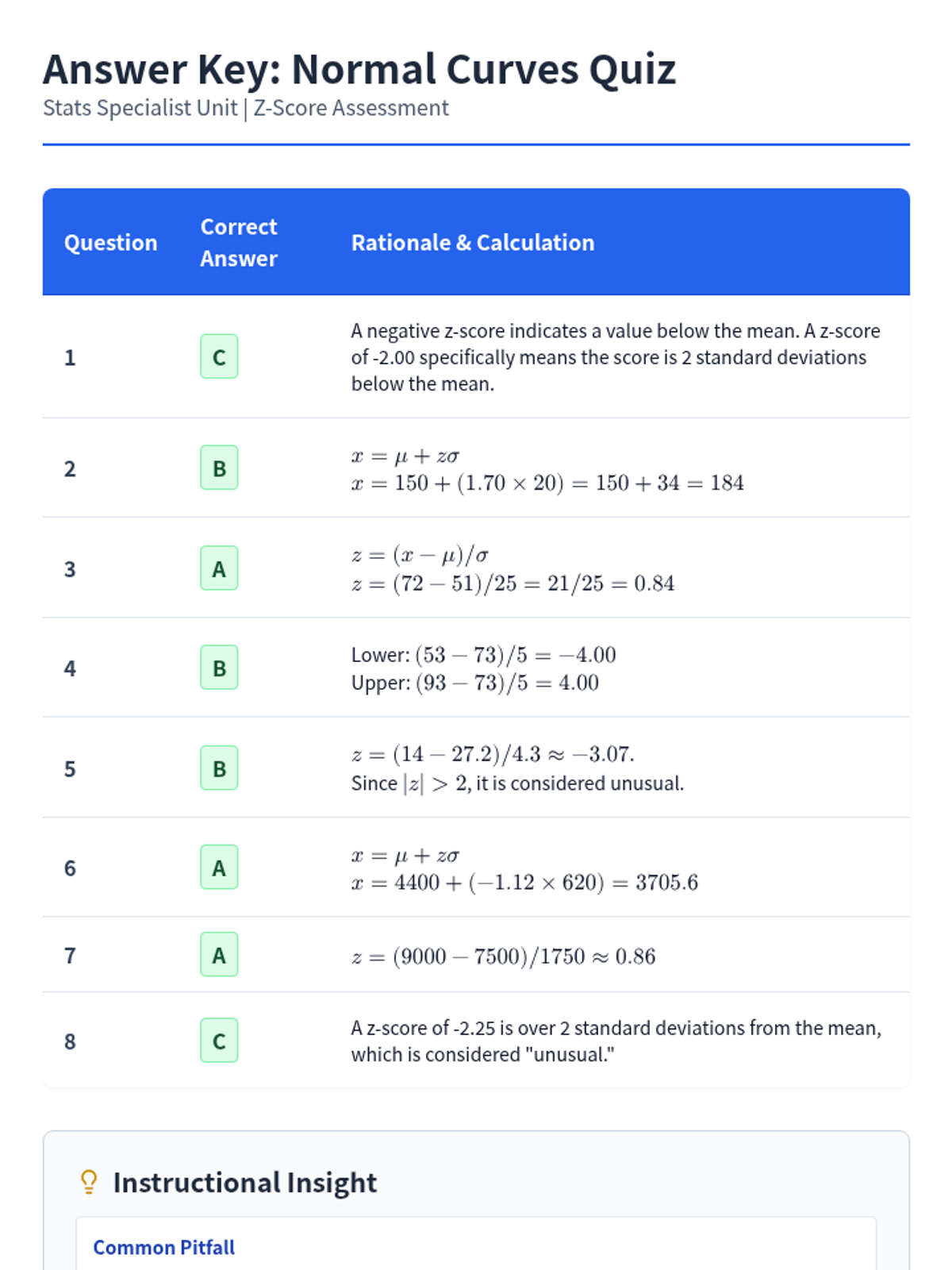
A focused lesson on calculating and interpreting z-scores and normal distributions using real-world scenarios from the textbook. Students will practice converting between raw scores and z-scores and determine the "unusualness" of specific data points.
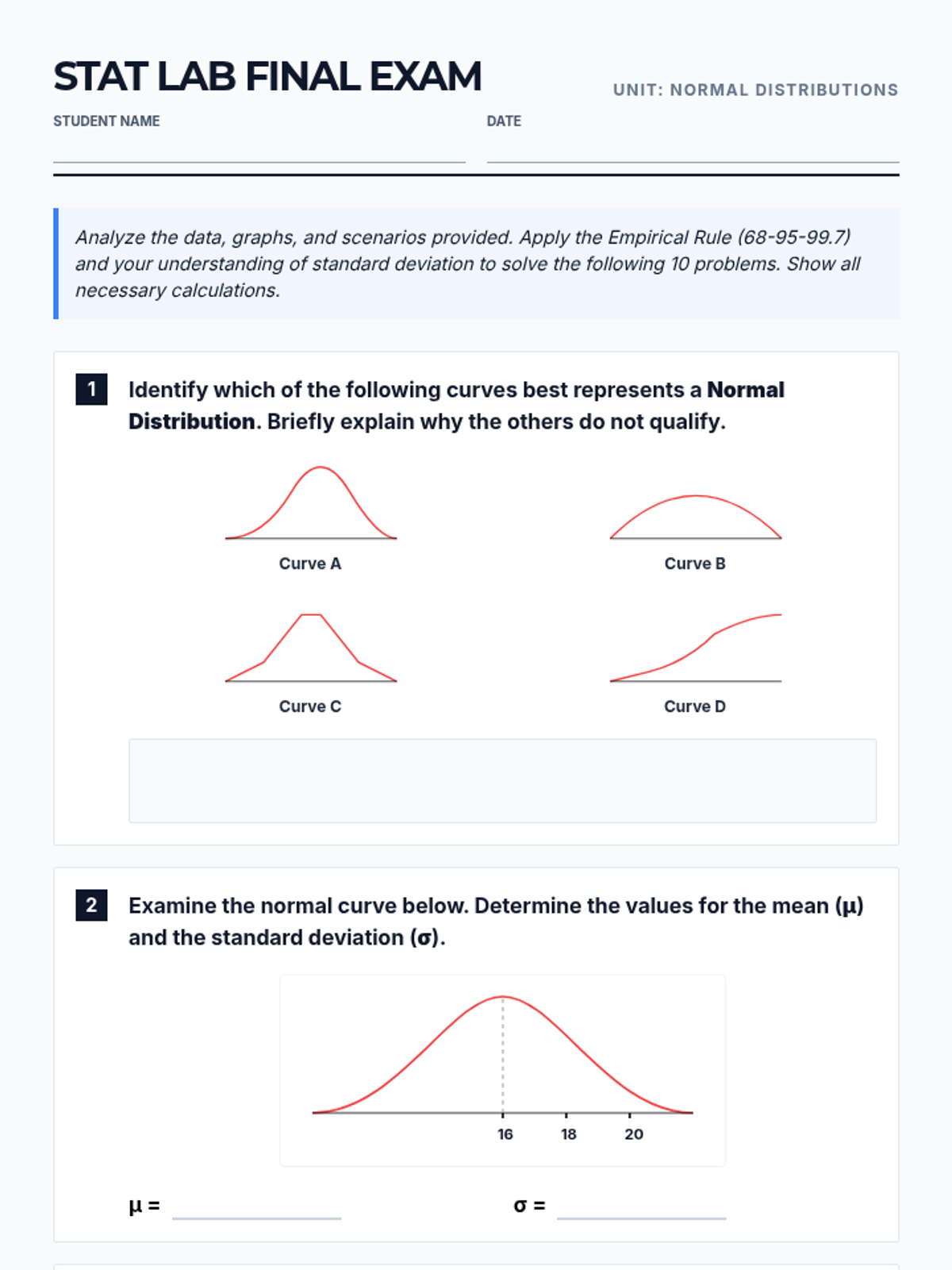
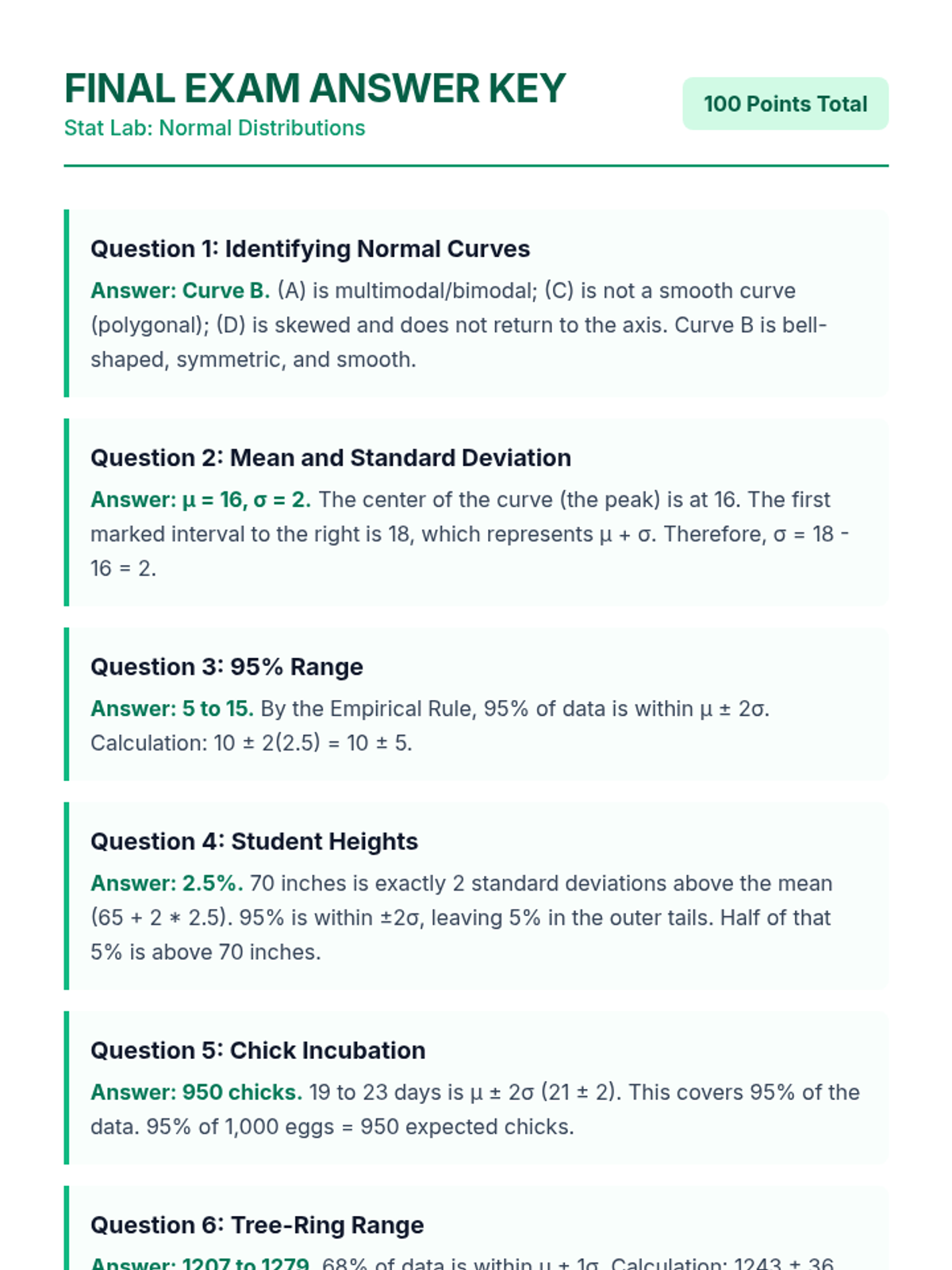
This lesson covers the fundamentals of normal distributions, including identifying bell curves, applying the empirical rule, and interpreting control charts for real-world data analysis.
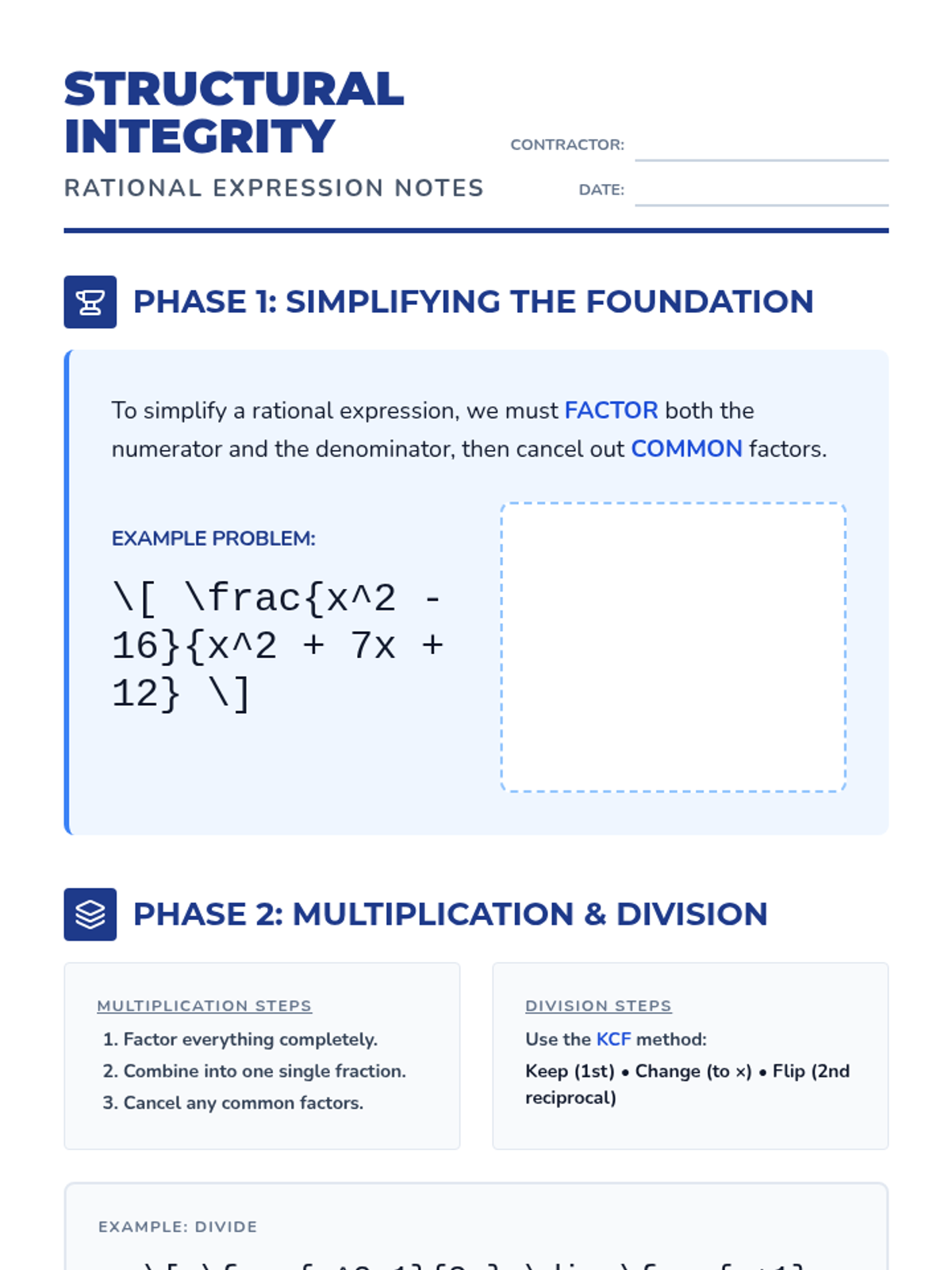
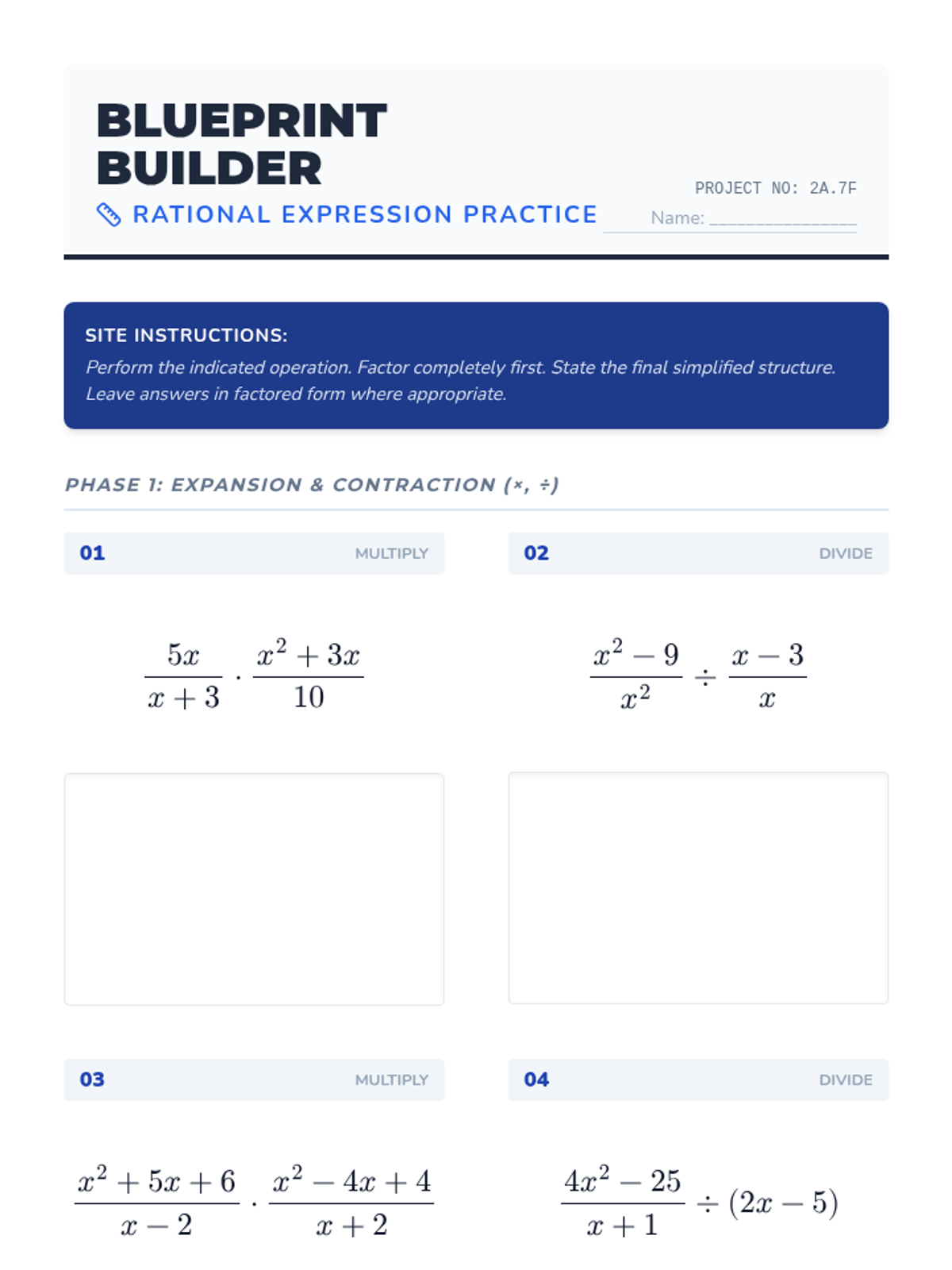
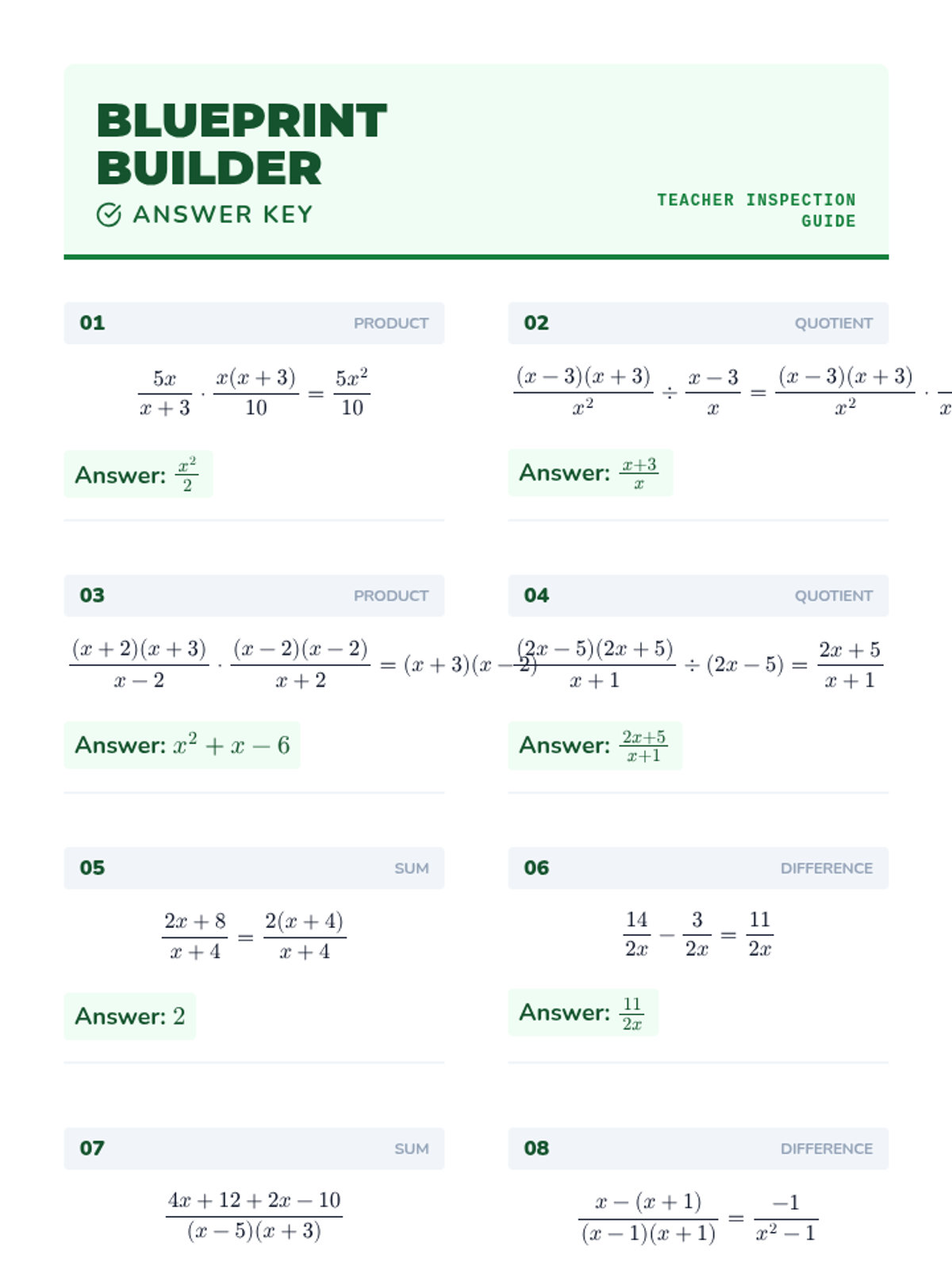
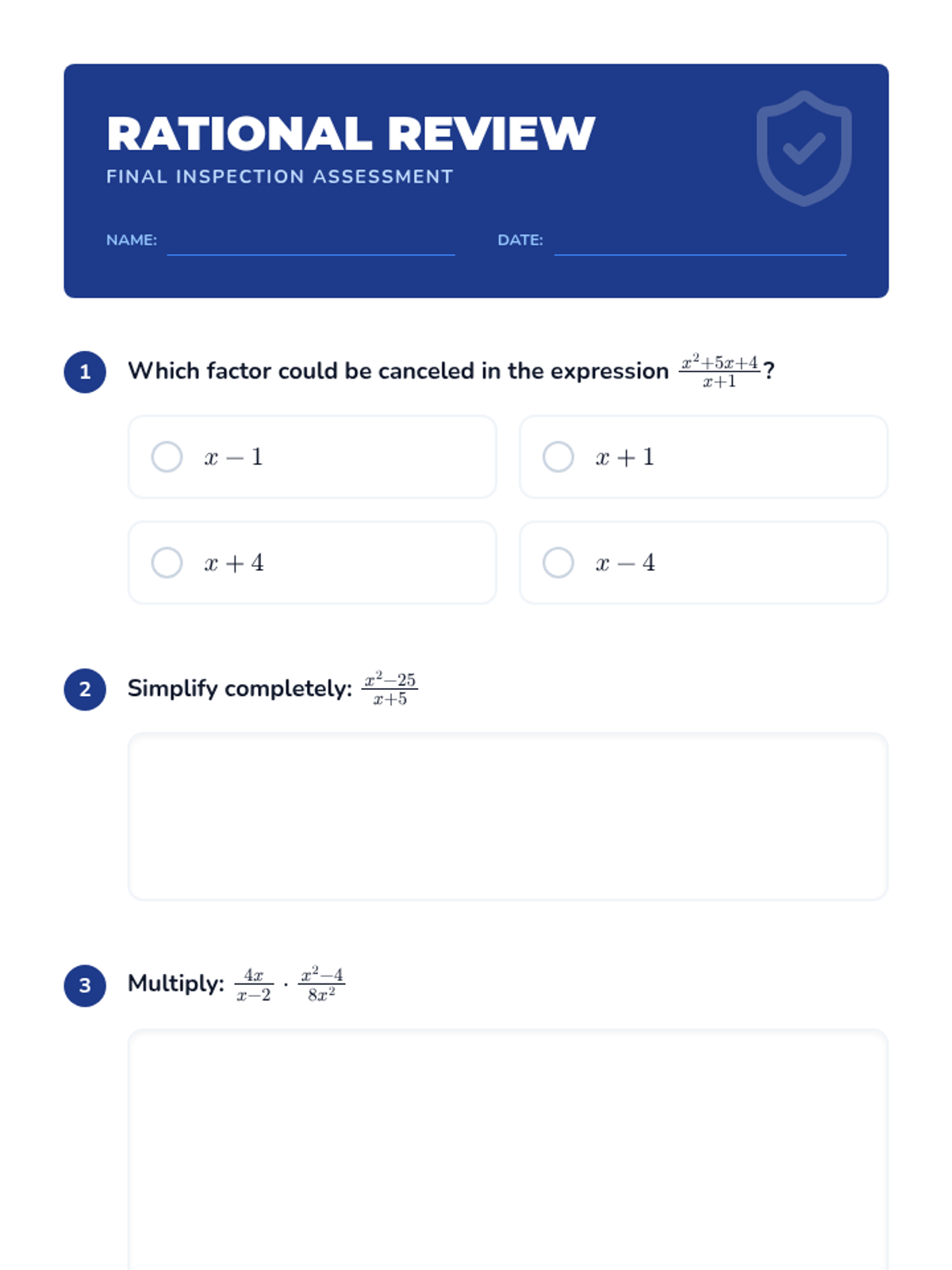
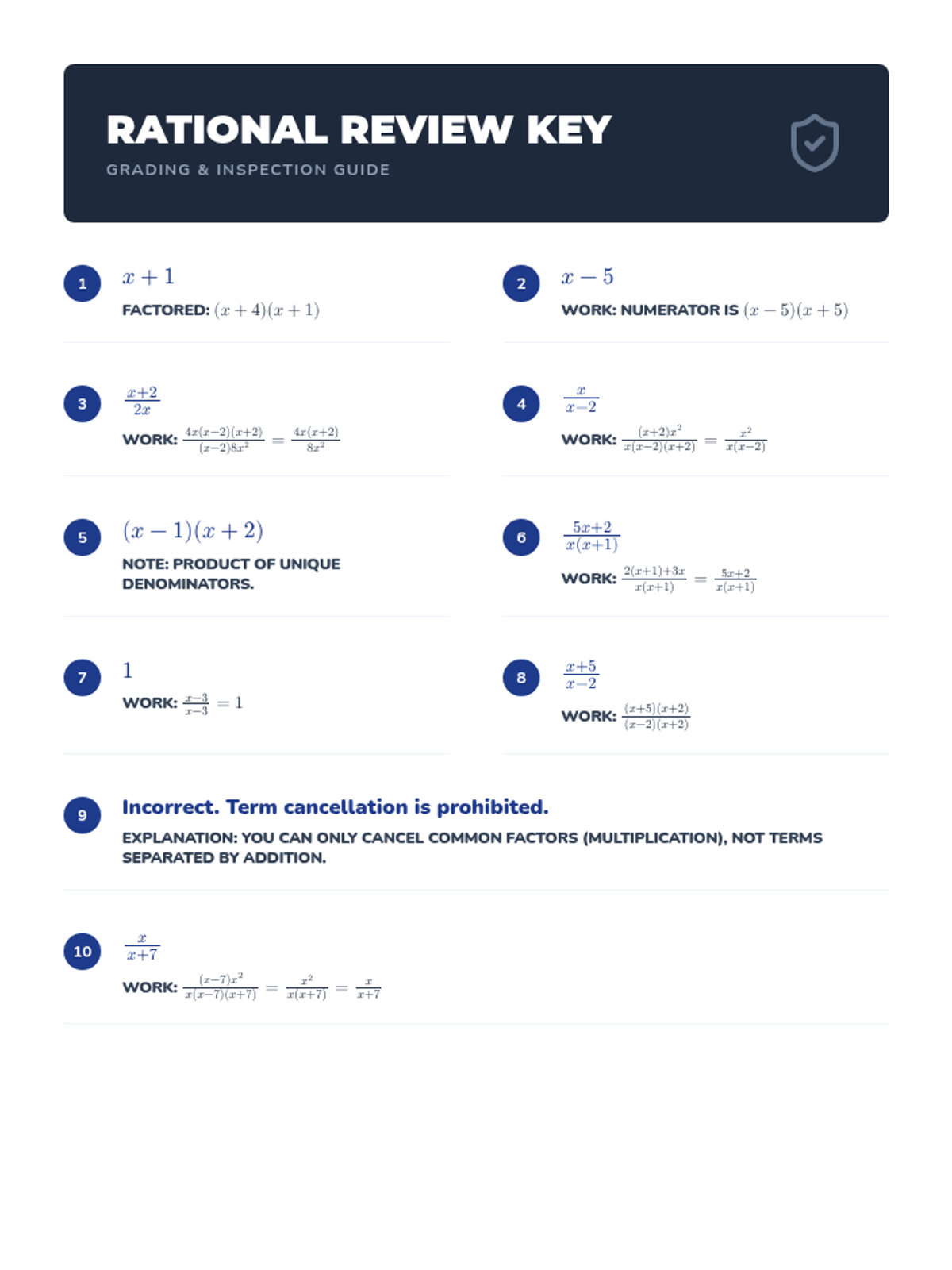
A comprehensive lesson on adding, subtracting, multiplying, and dividing rational expressions with linear and quadratic terms, themed around structural engineering and blueprints.
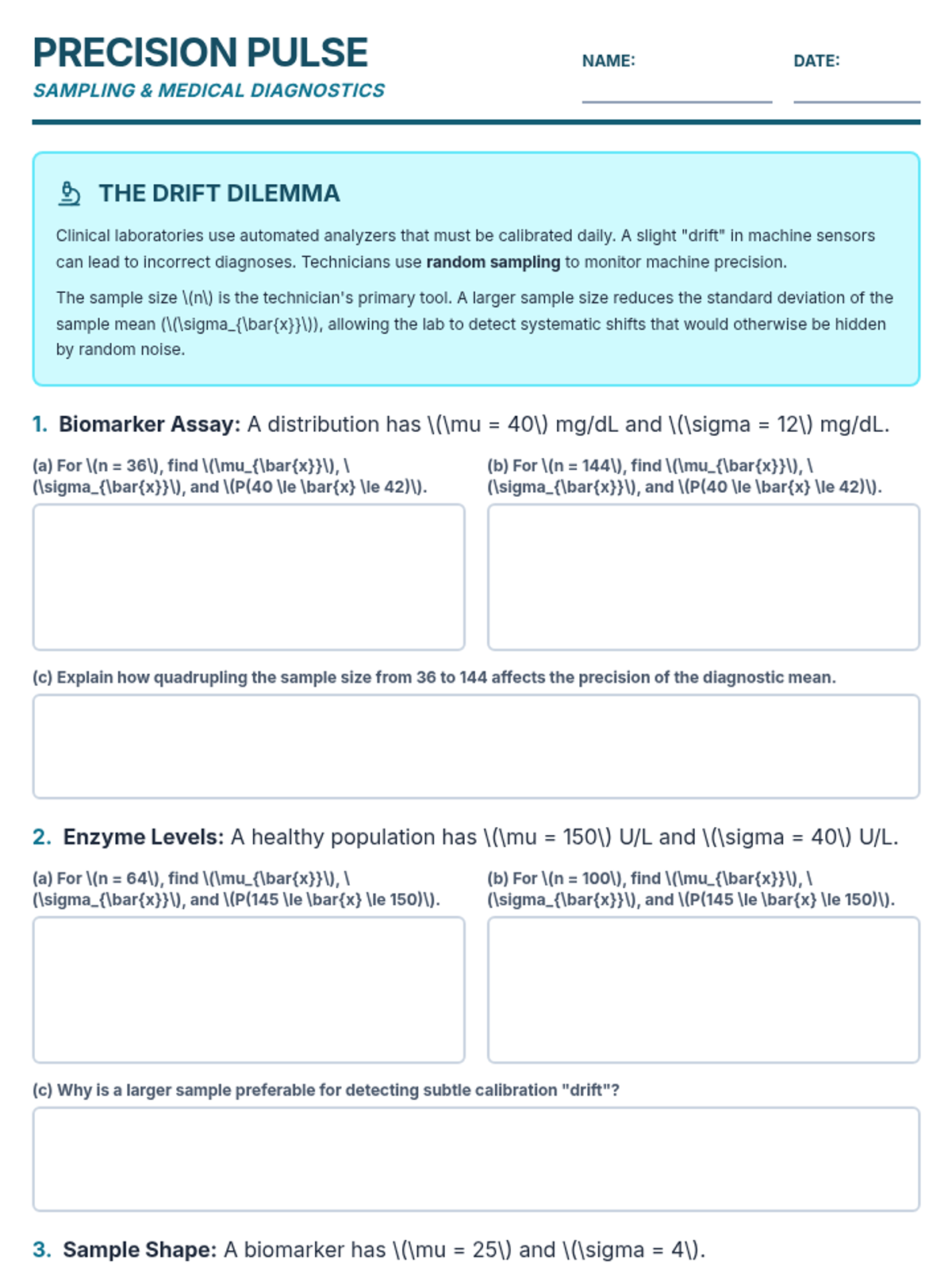
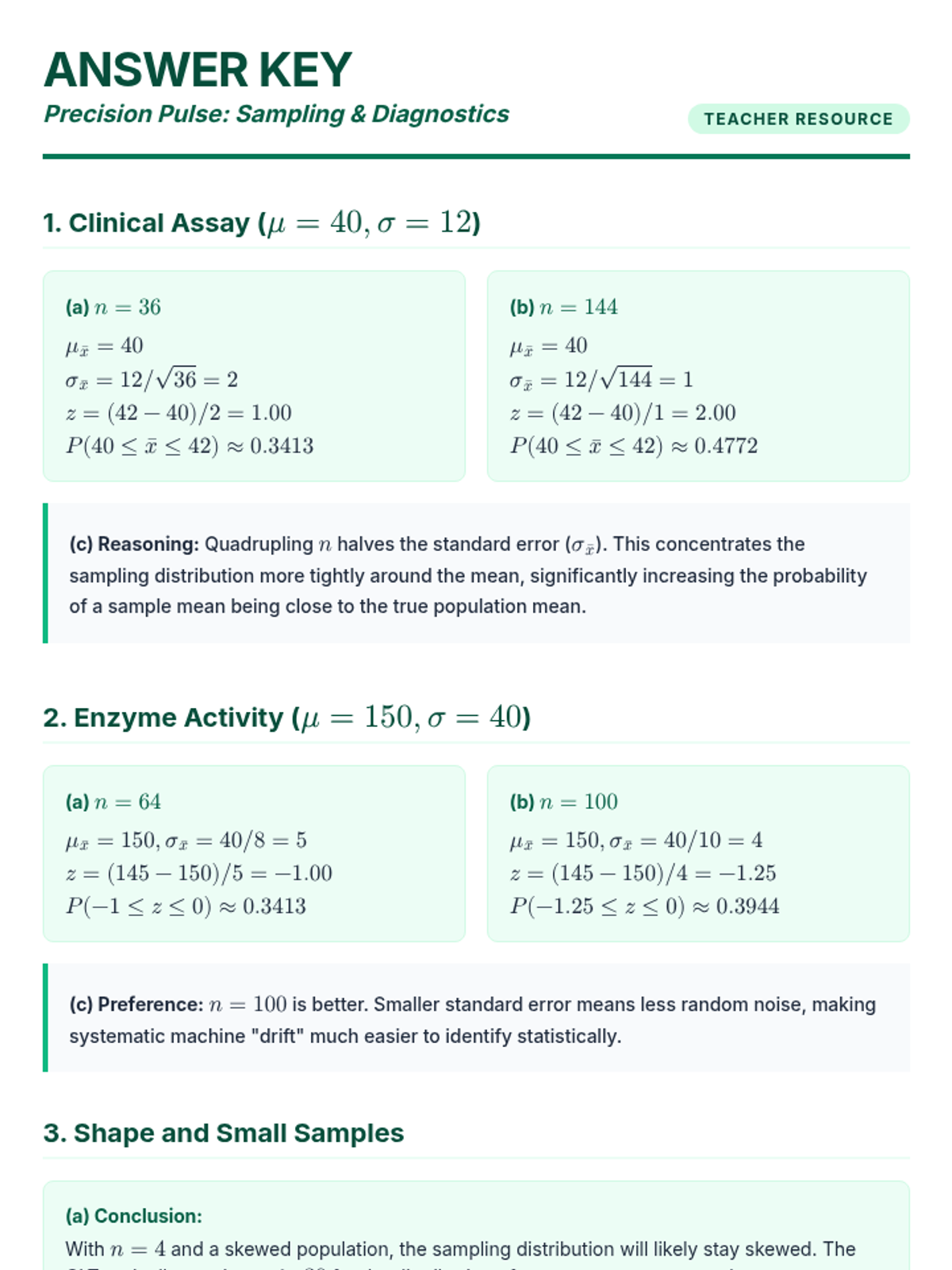
This lesson explores the Central Limit Theorem and the impact of sample size on the distribution of sample means, specifically within the context of medical testing and diagnostic accuracy.
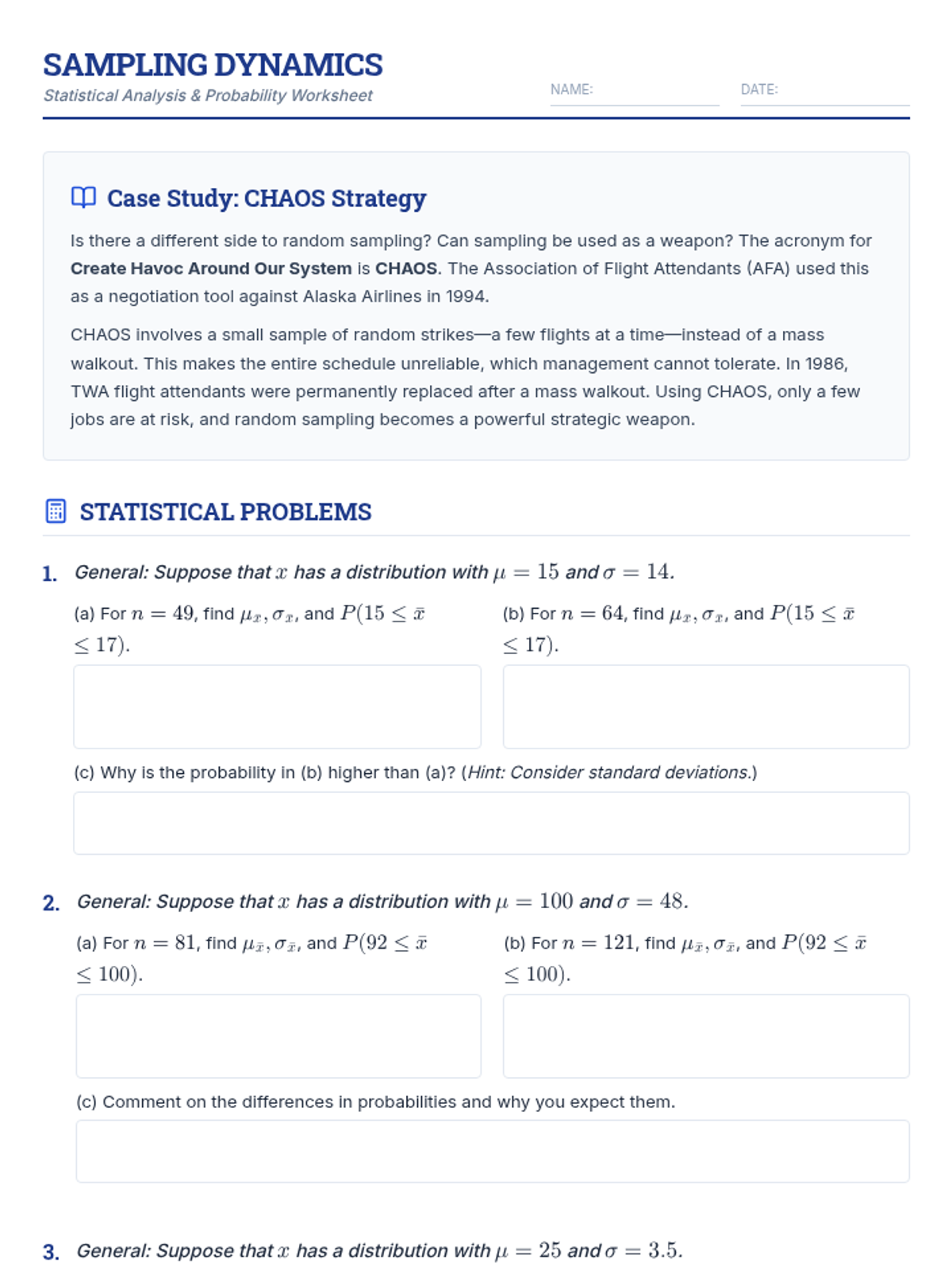
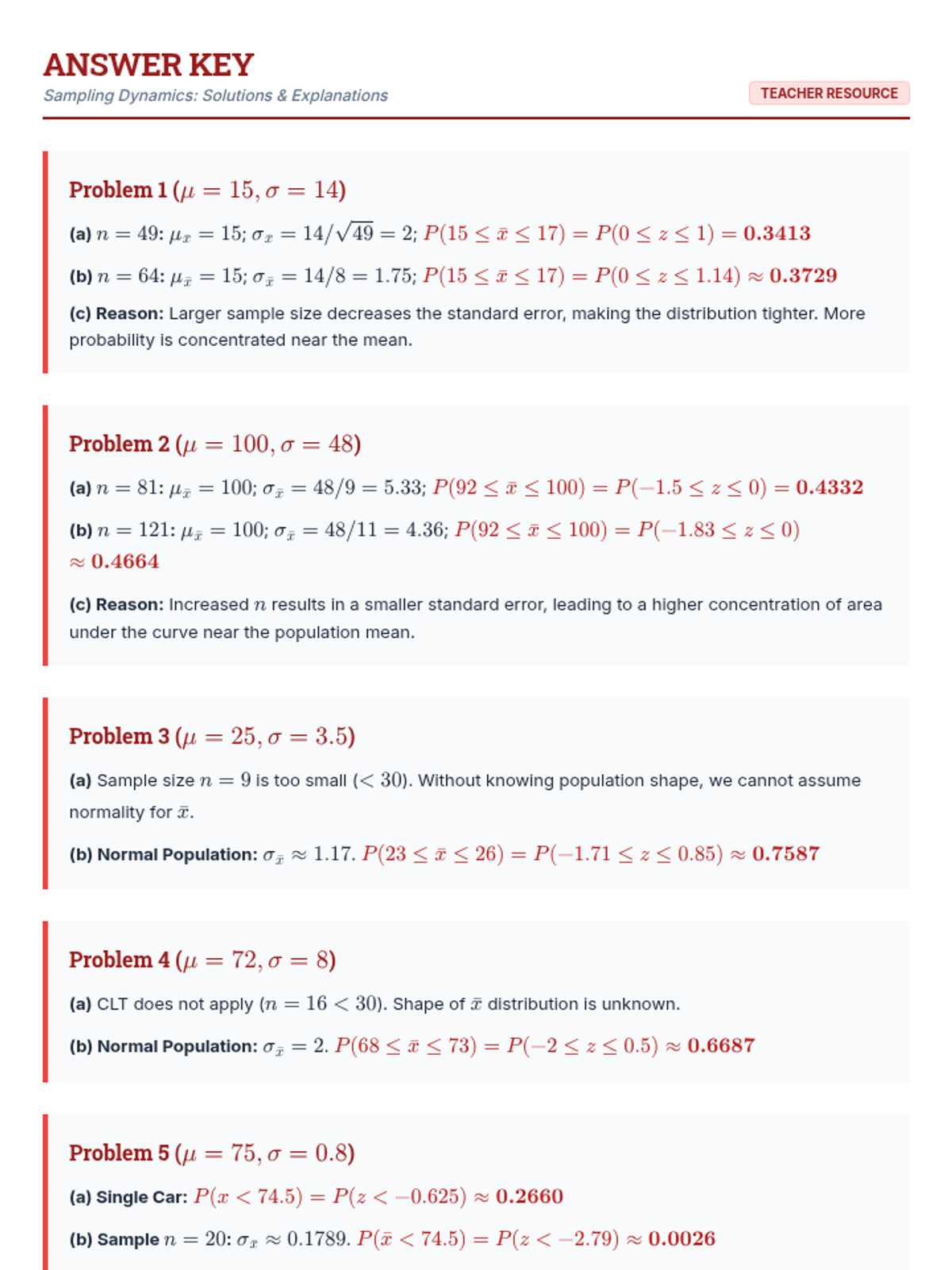
A lesson exploring sampling distributions, the Central Limit Theorem, and the real-world applications of random sampling as a strategic tool.
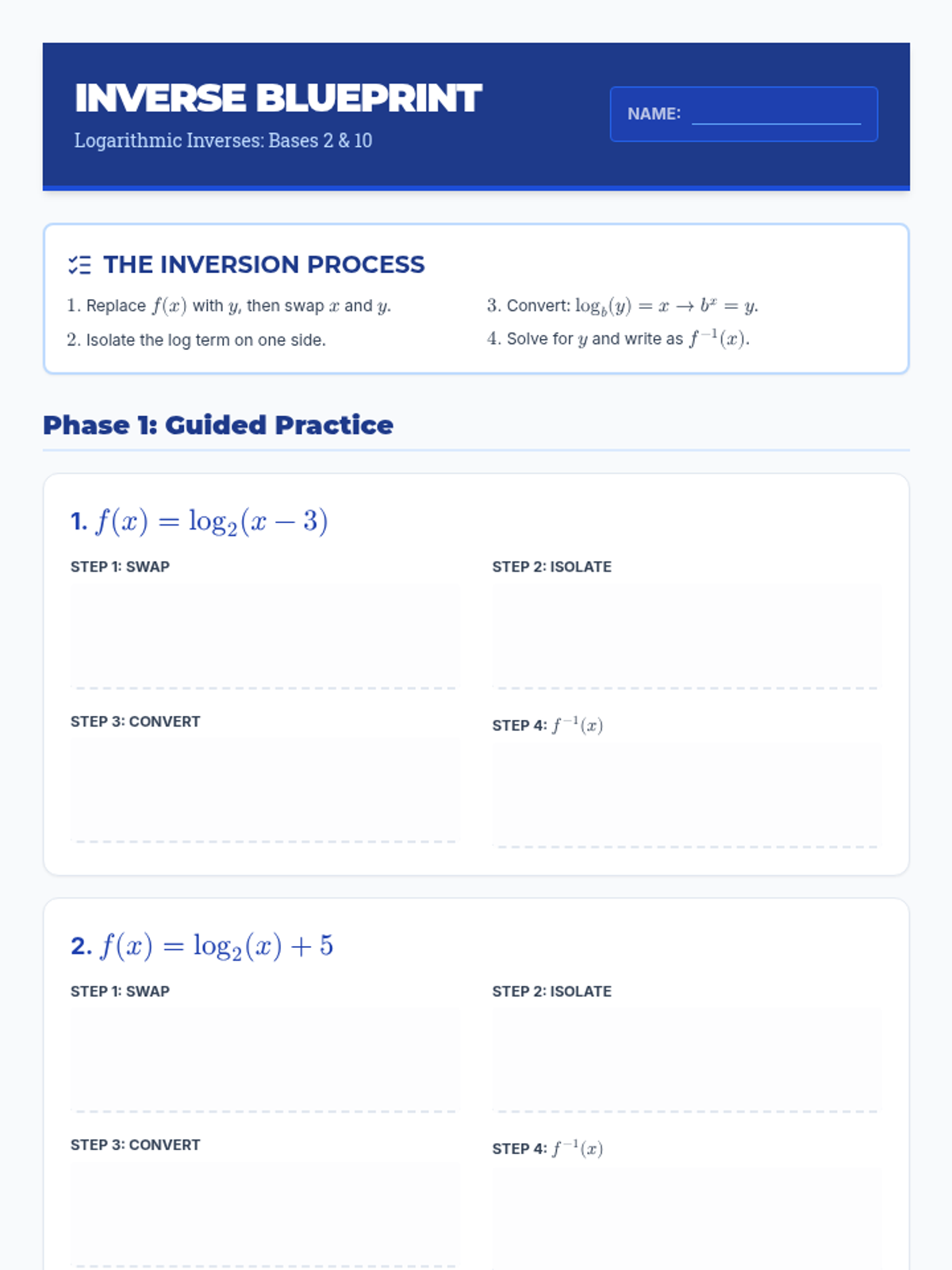
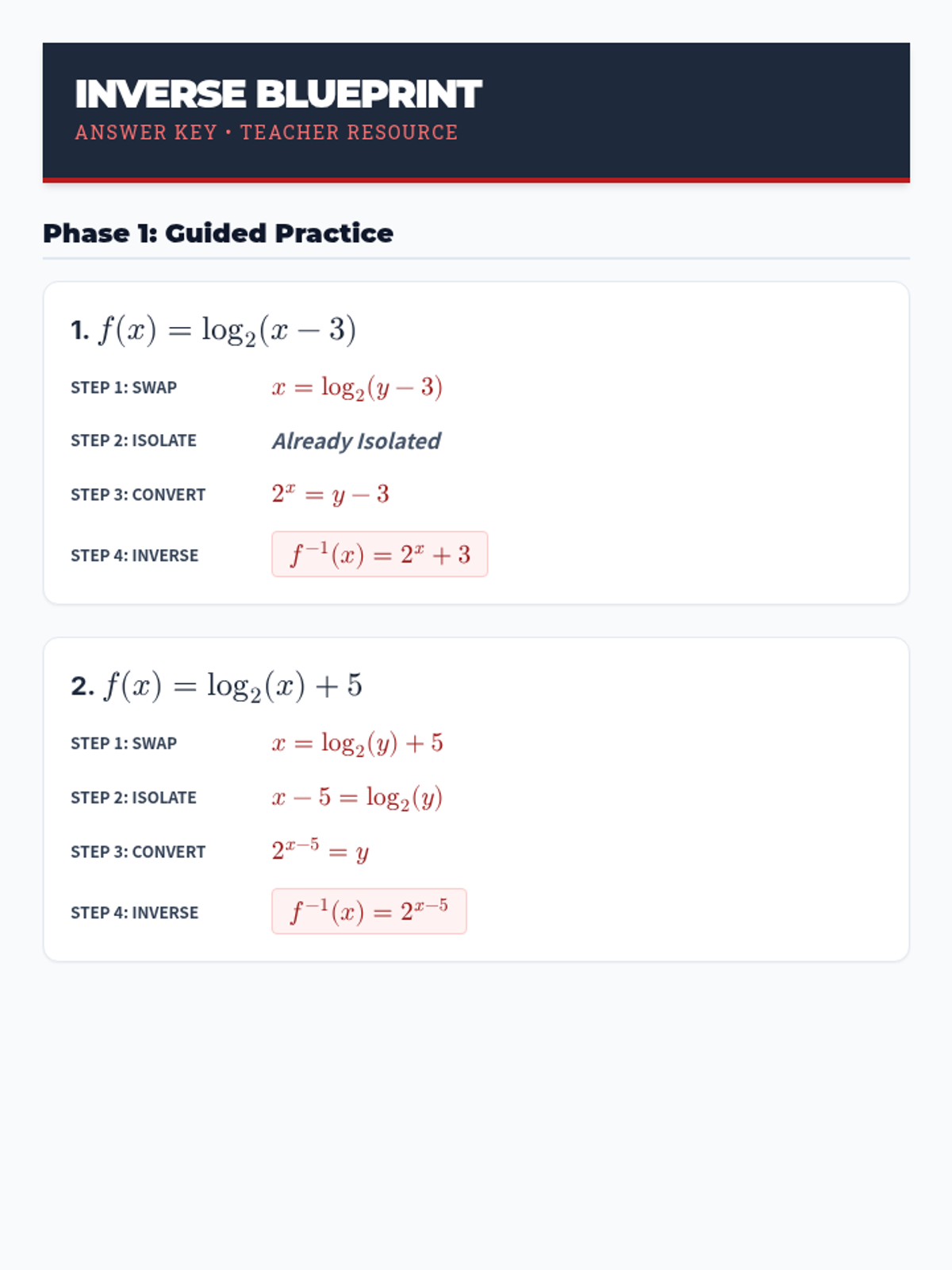
A focused lesson on finding the inverse of basic logarithmic functions using algebraic steps, specifically focusing on base 10 and base 2.
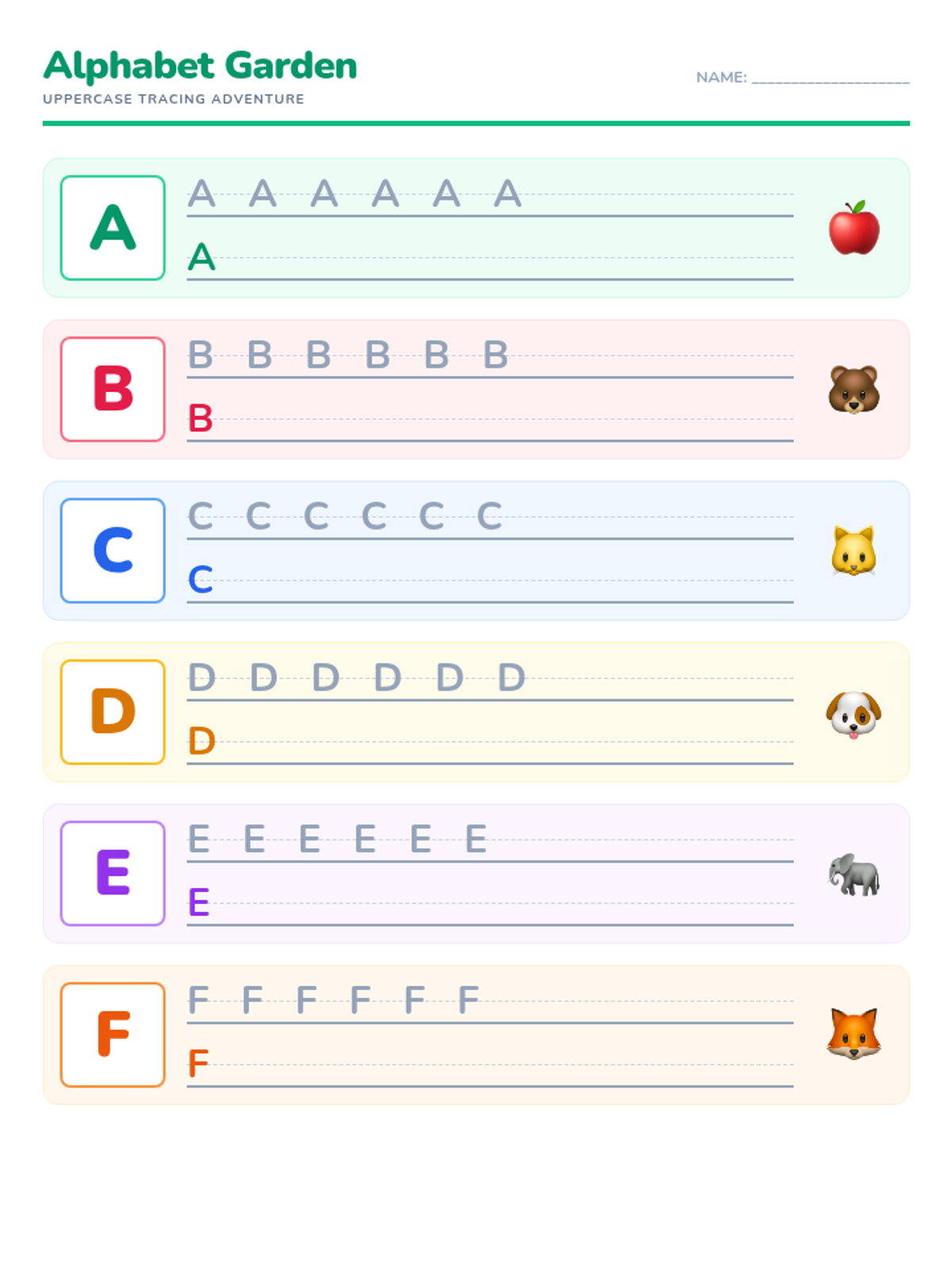
A foundational journey through the uppercase alphabet, focusing on stroke order, pen control, and letter recognition for early learners.
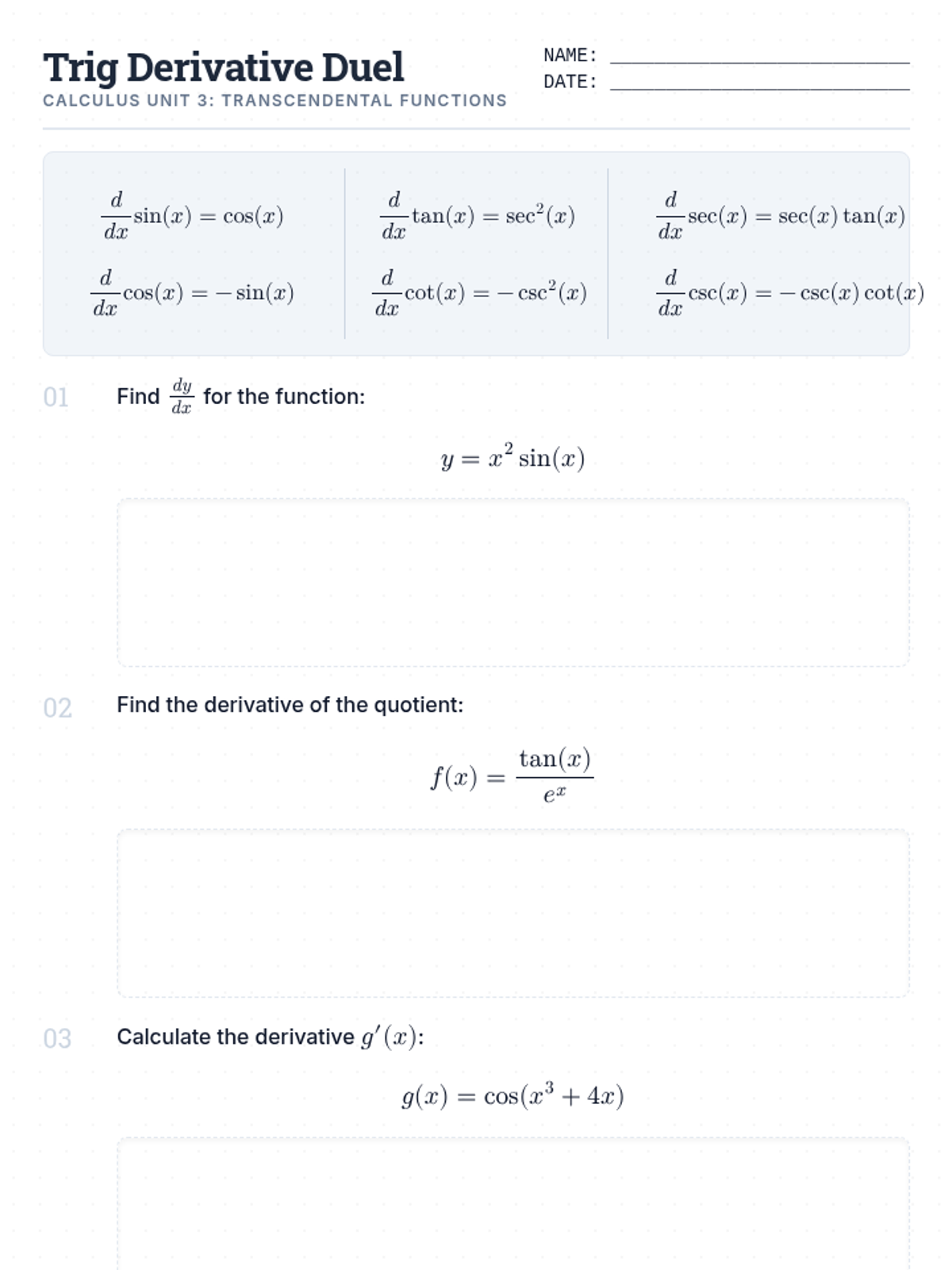
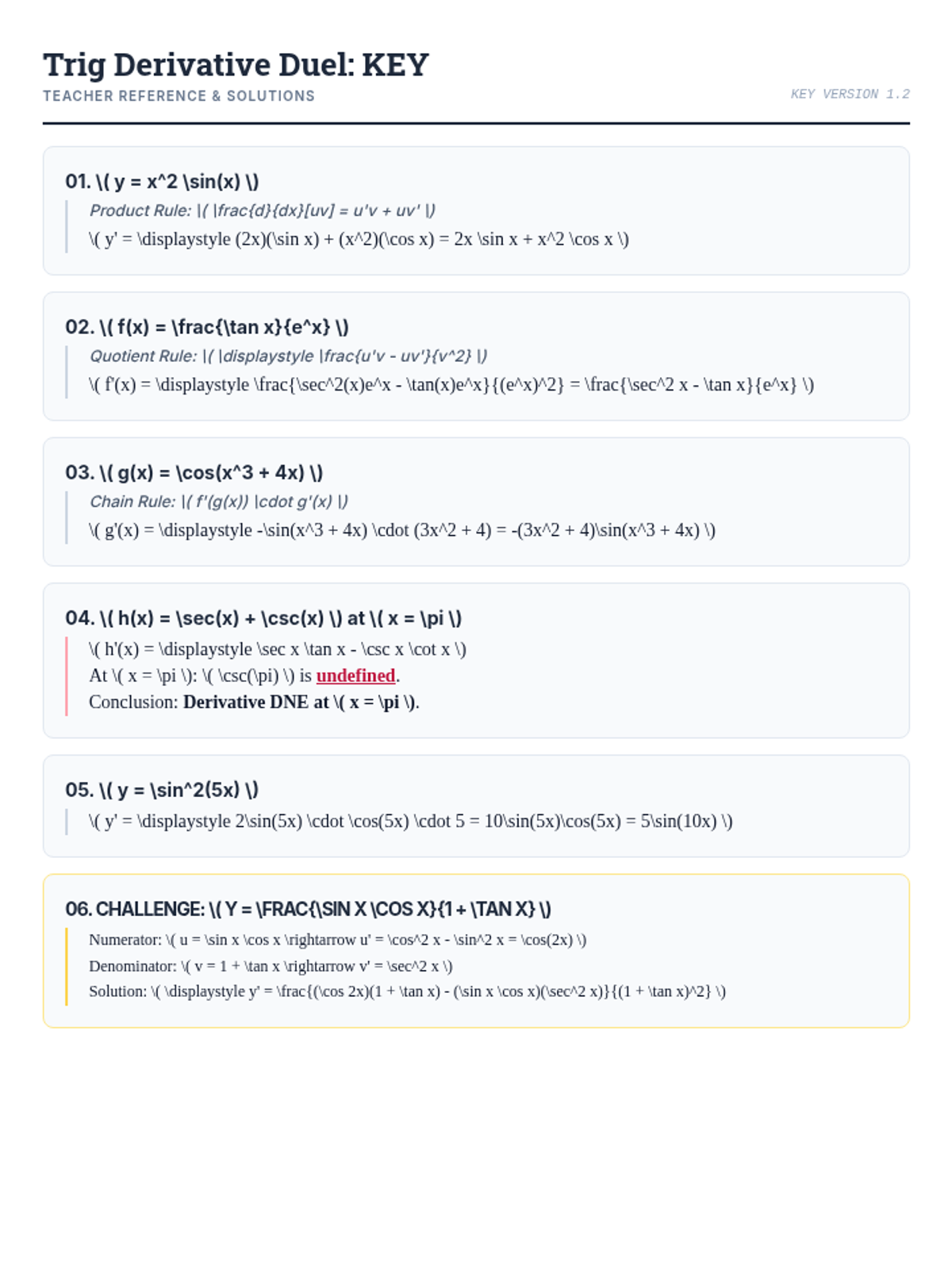
Master the derivatives of the six trigonometric functions through visual explanation and structured practice, including chain rule and product rule applications.
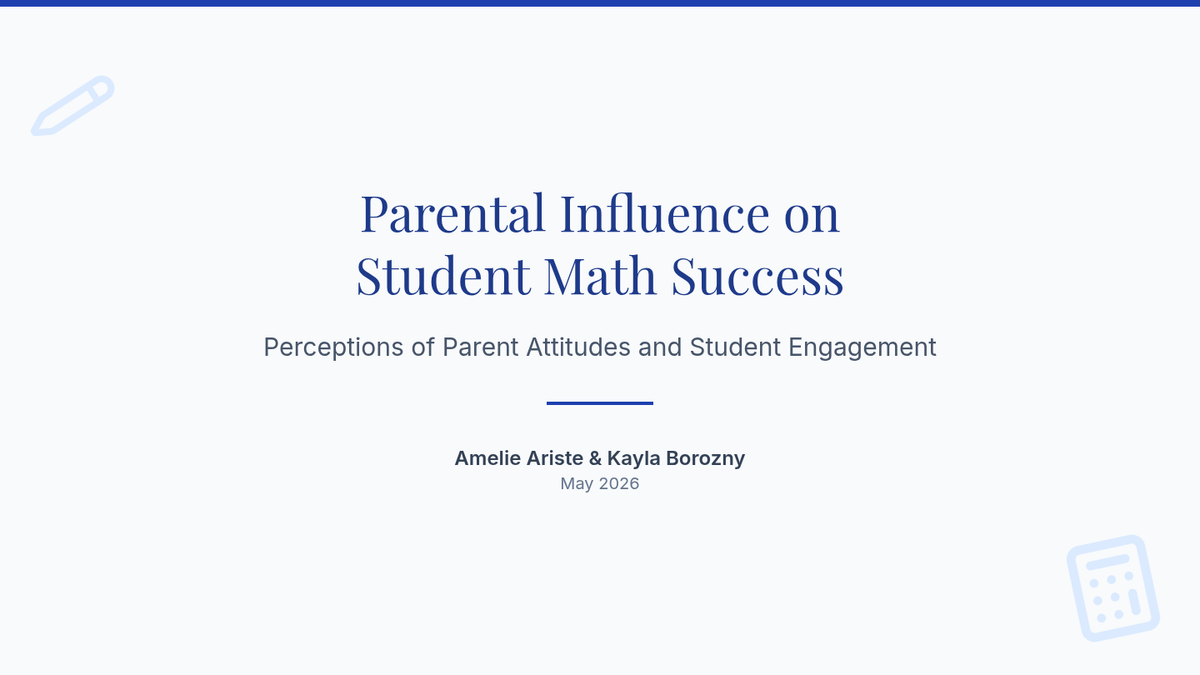
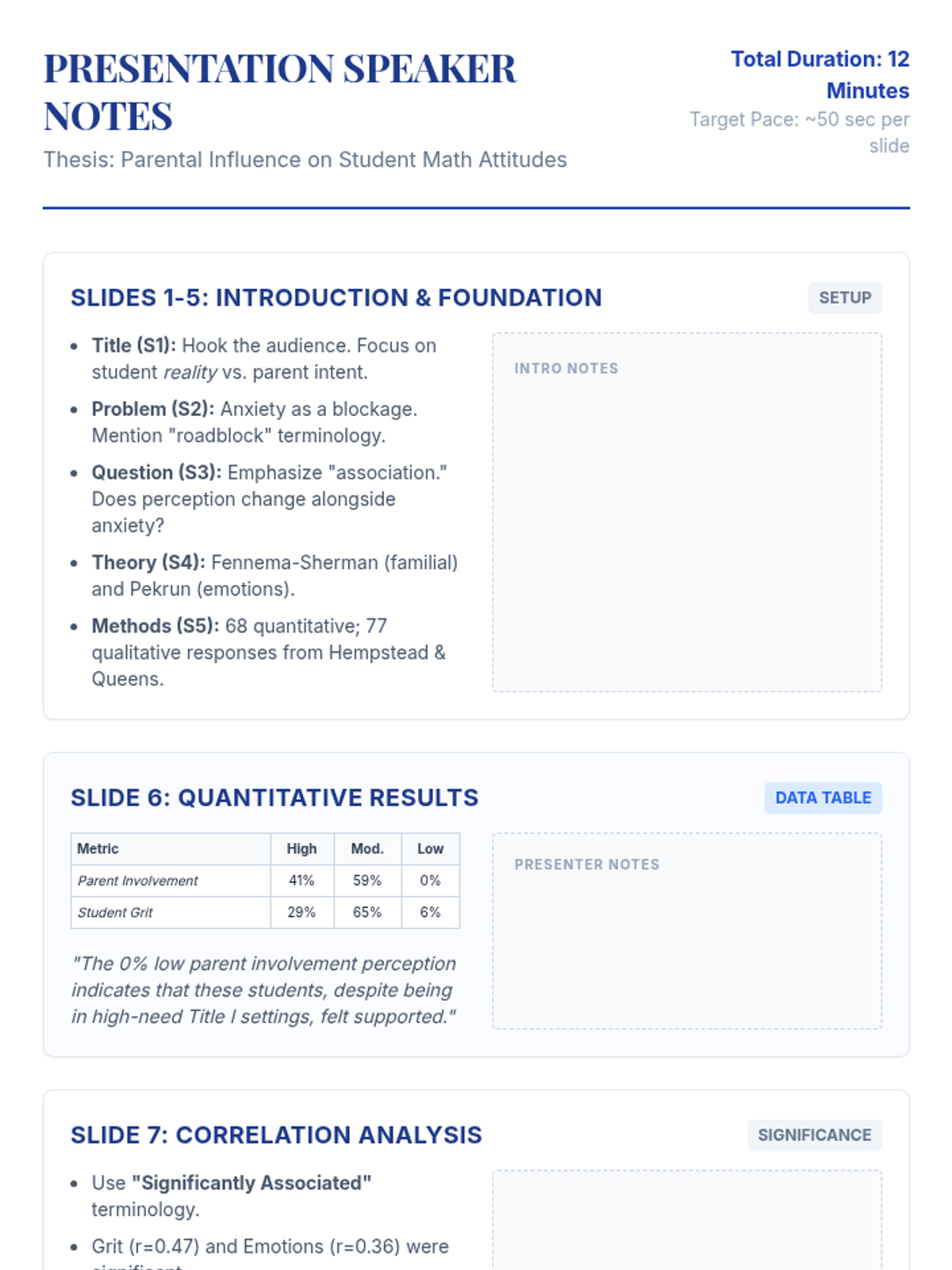
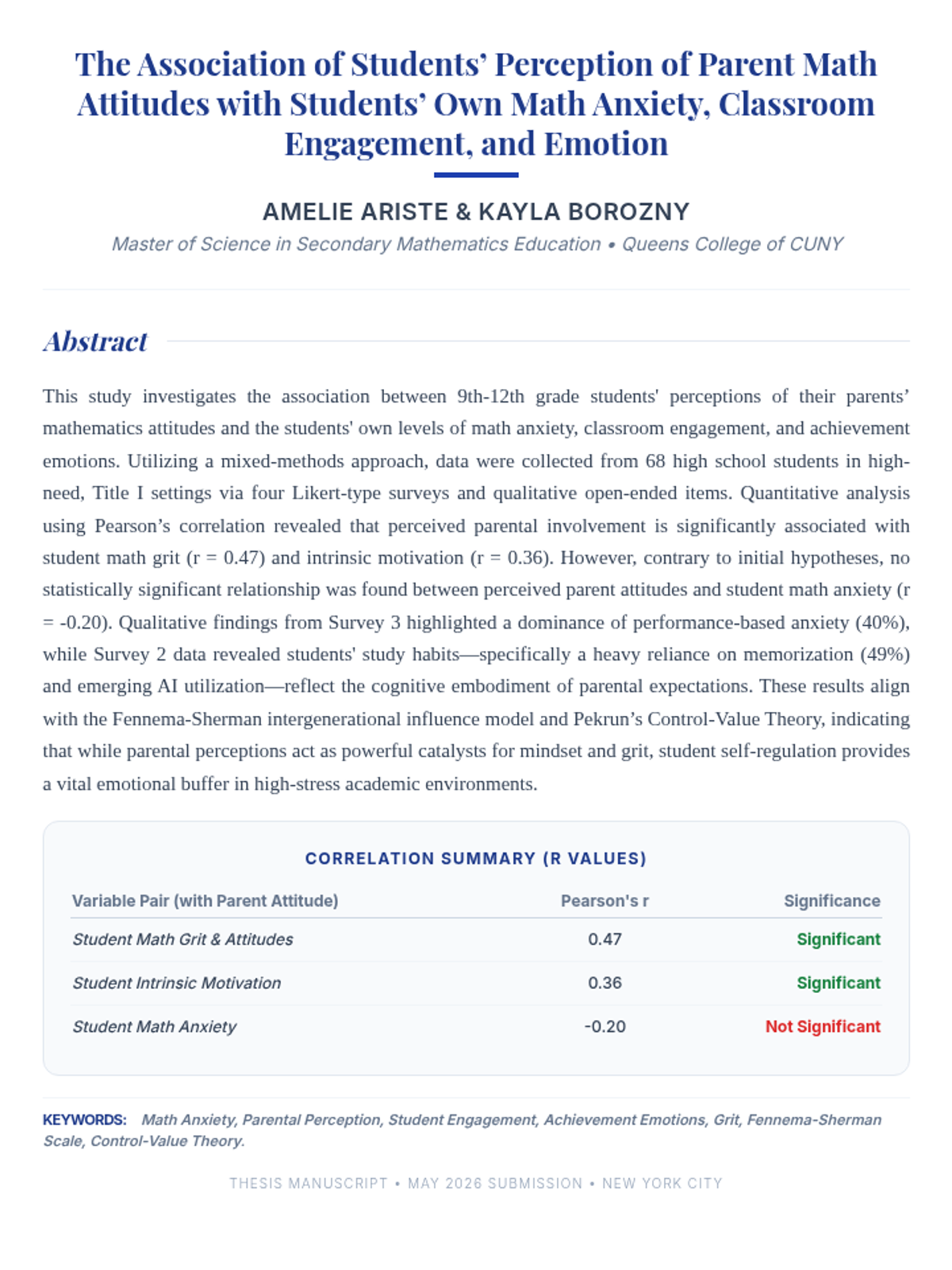
A comprehensive 12-minute presentation and speaker notes based on research investigating the link between parental attitudes and student math outcomes.
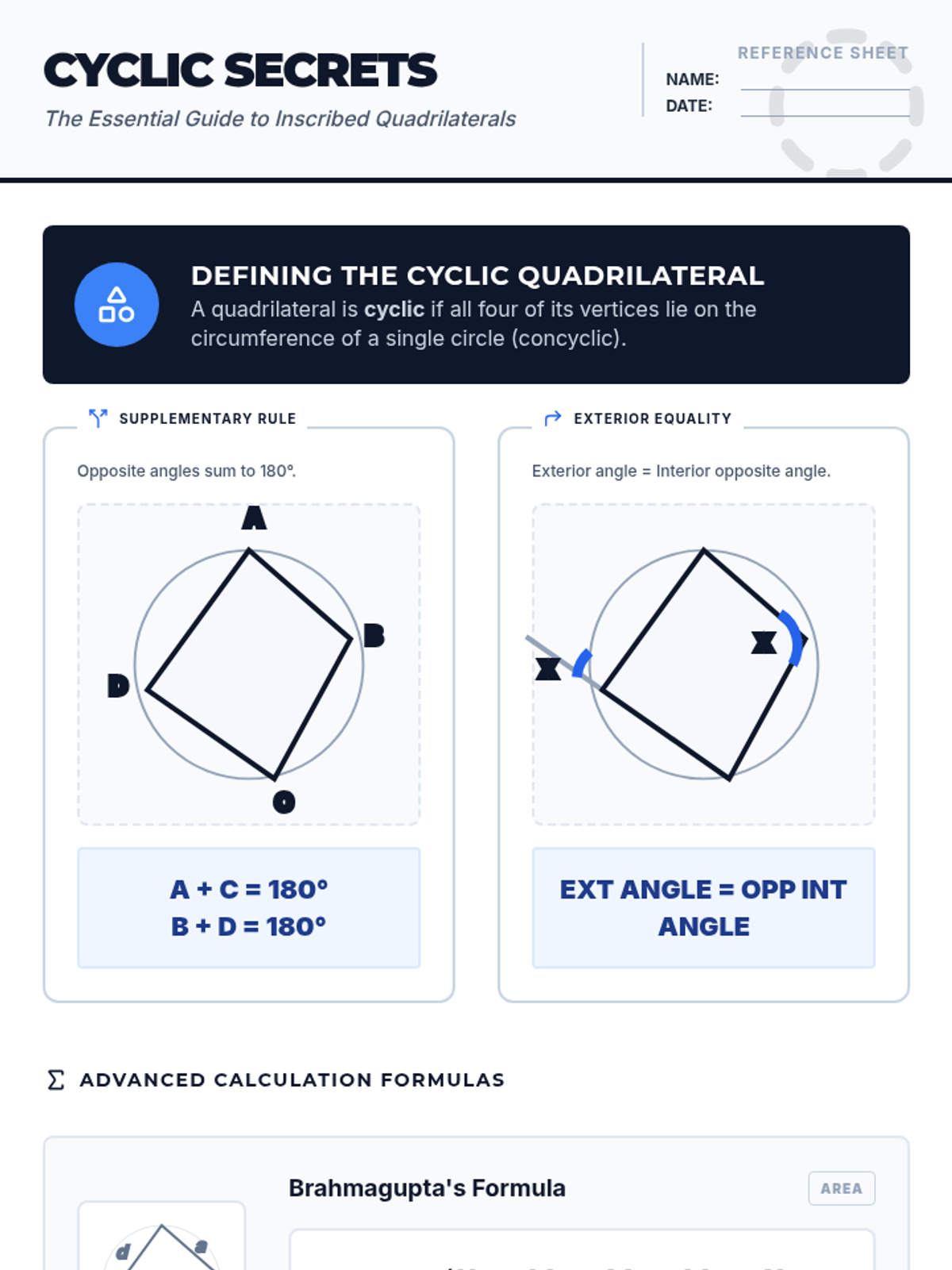
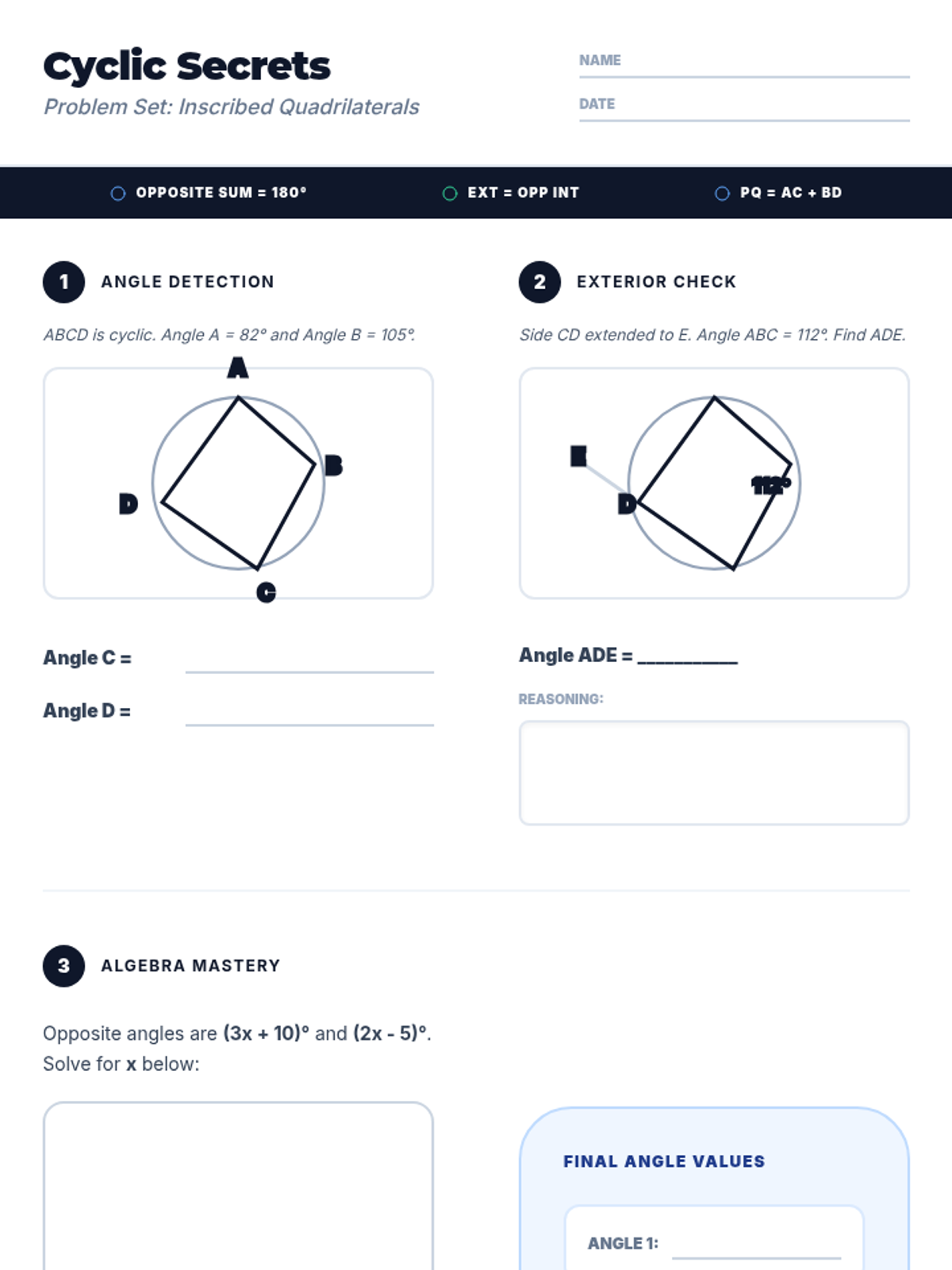
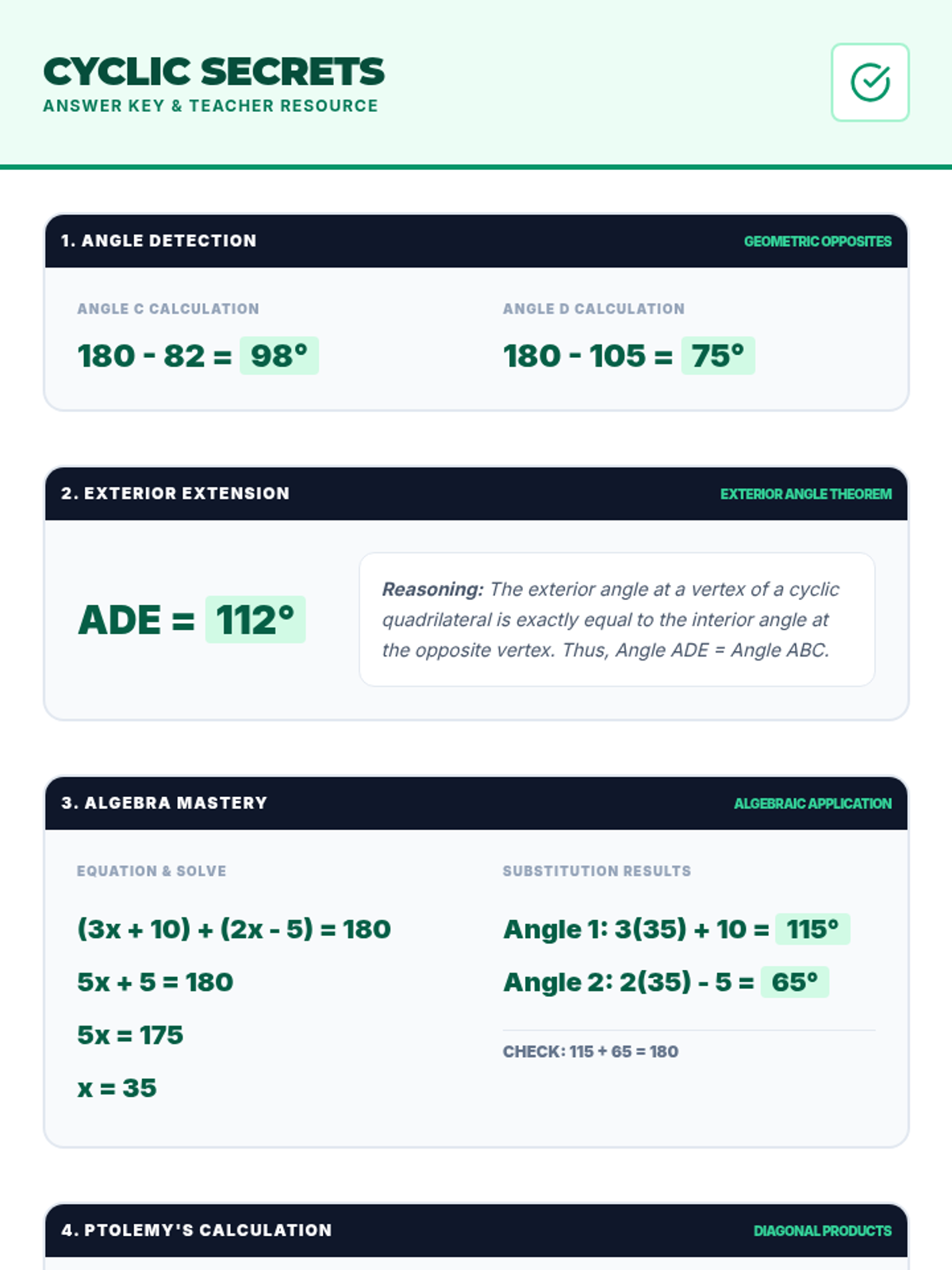
A concise exploration of cyclic quadrilaterals, focusing on the essential theorems and formulas governing four-sided shapes inscribed within circles.
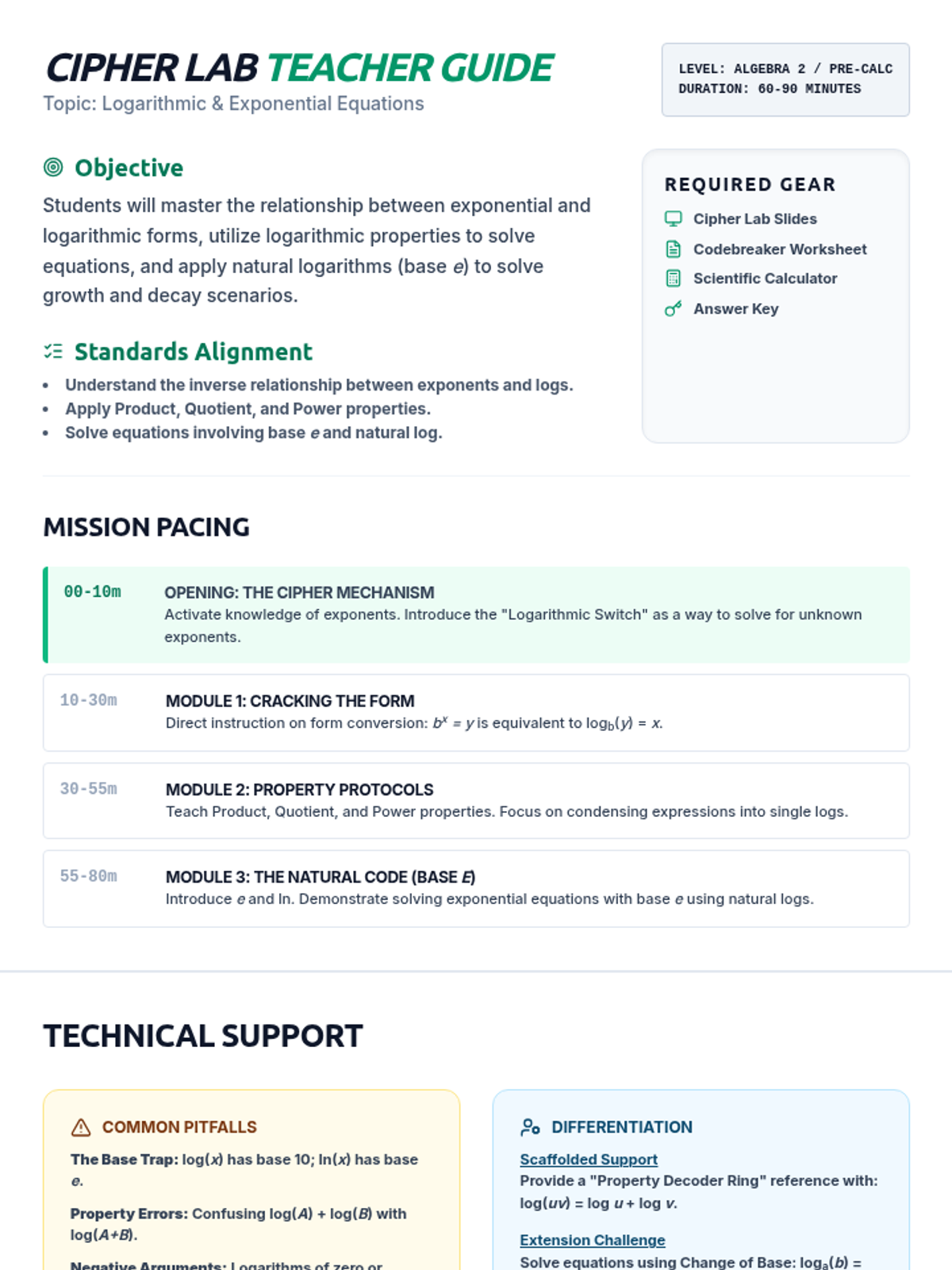
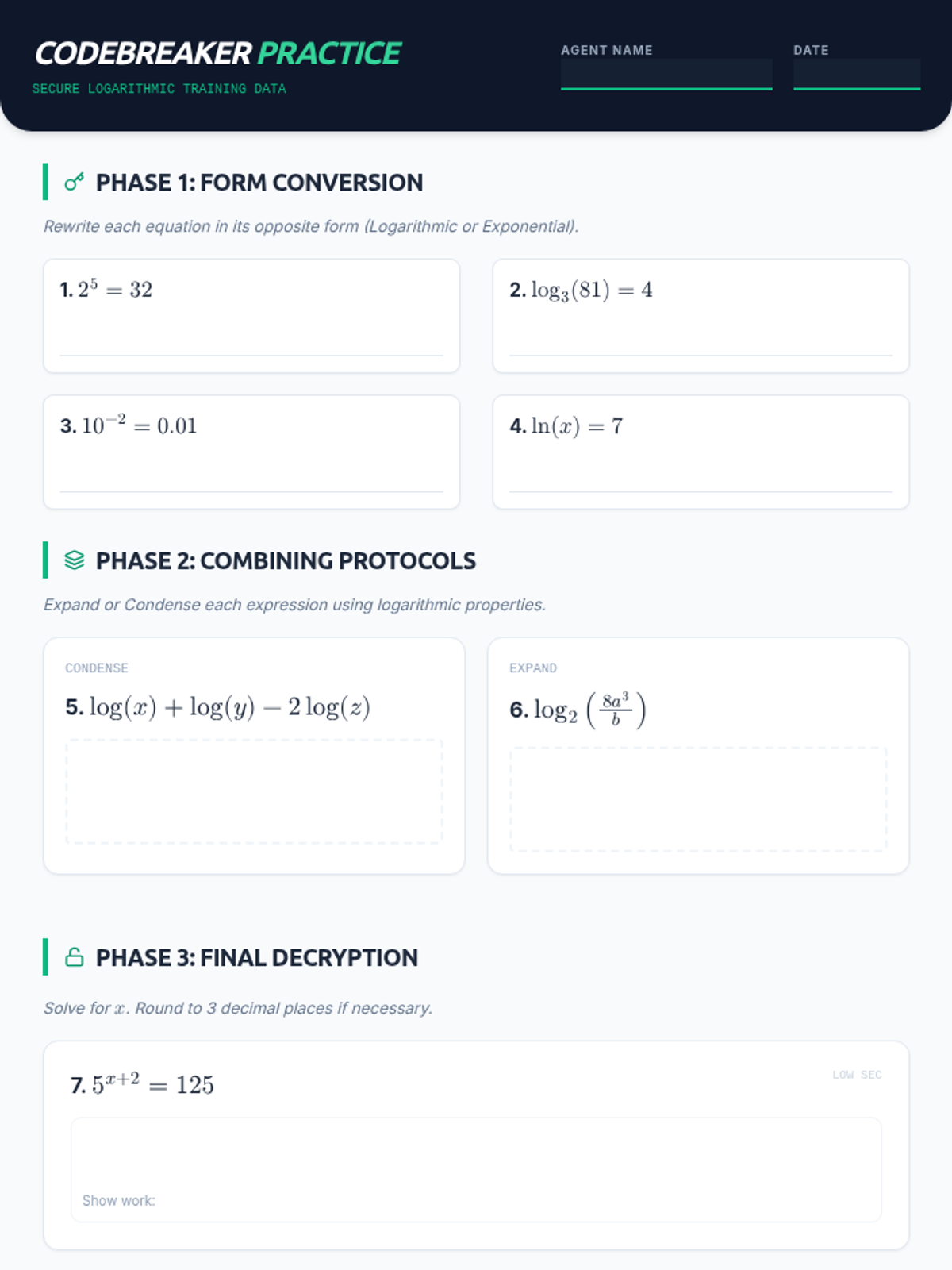
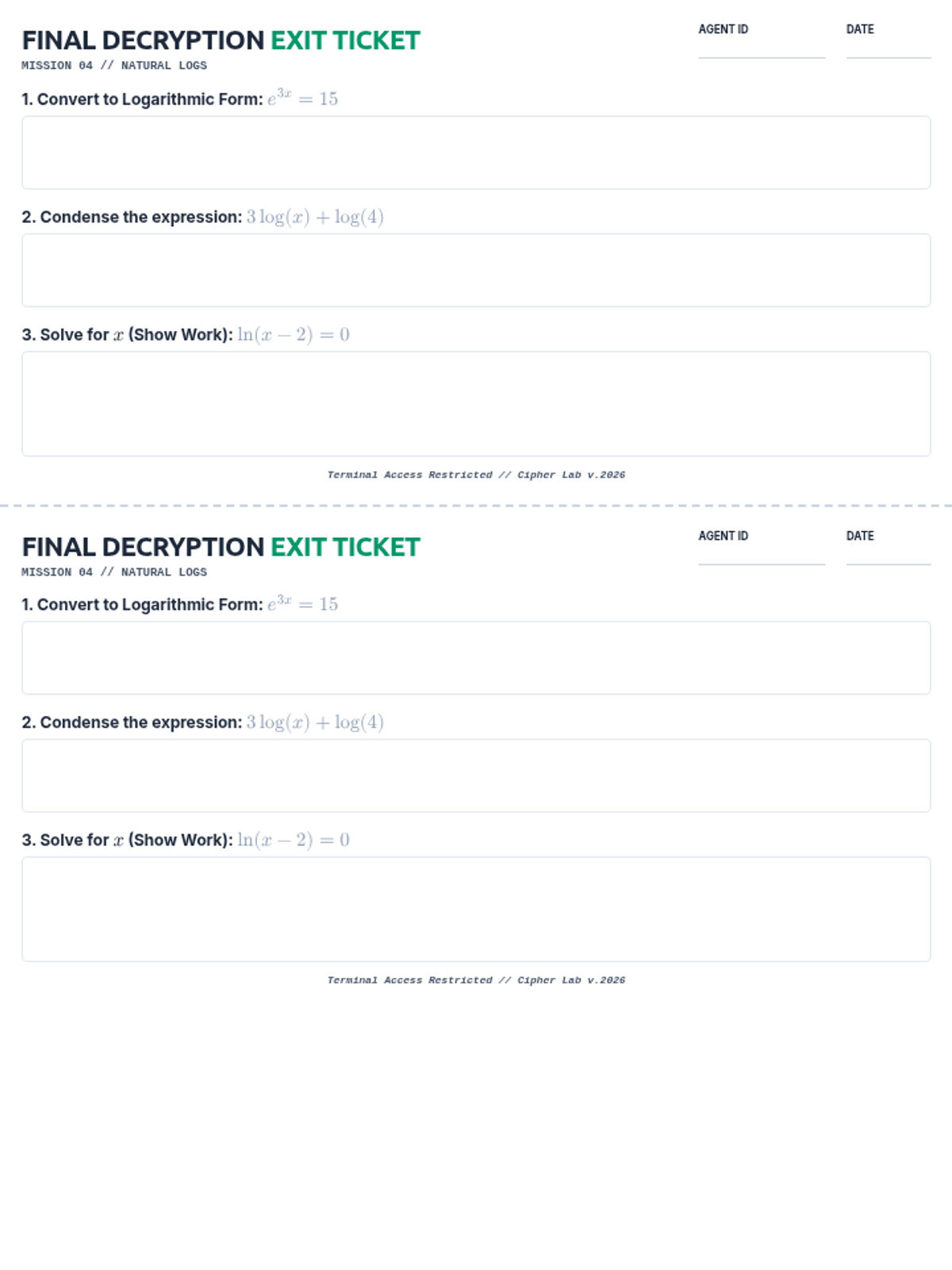
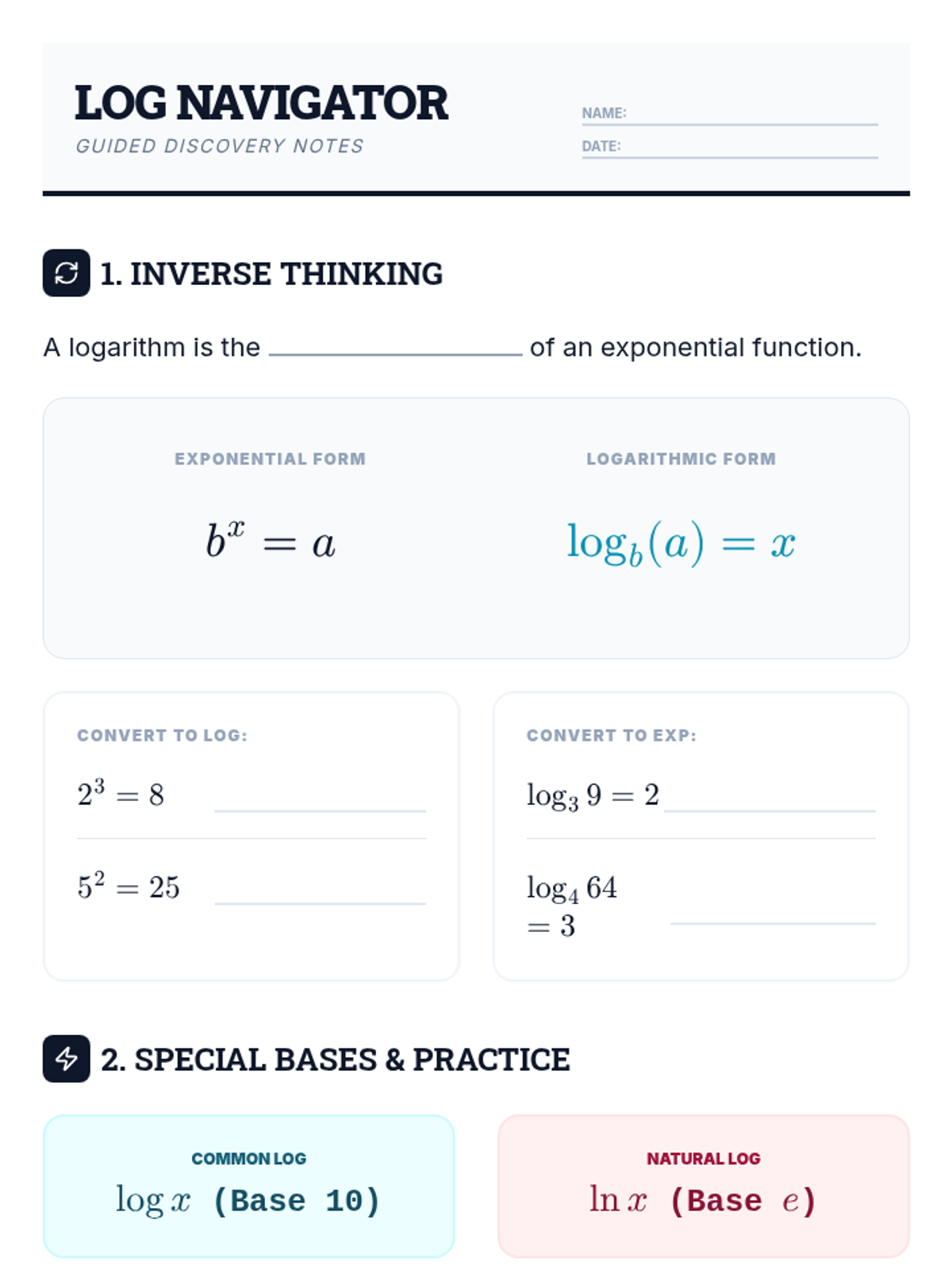
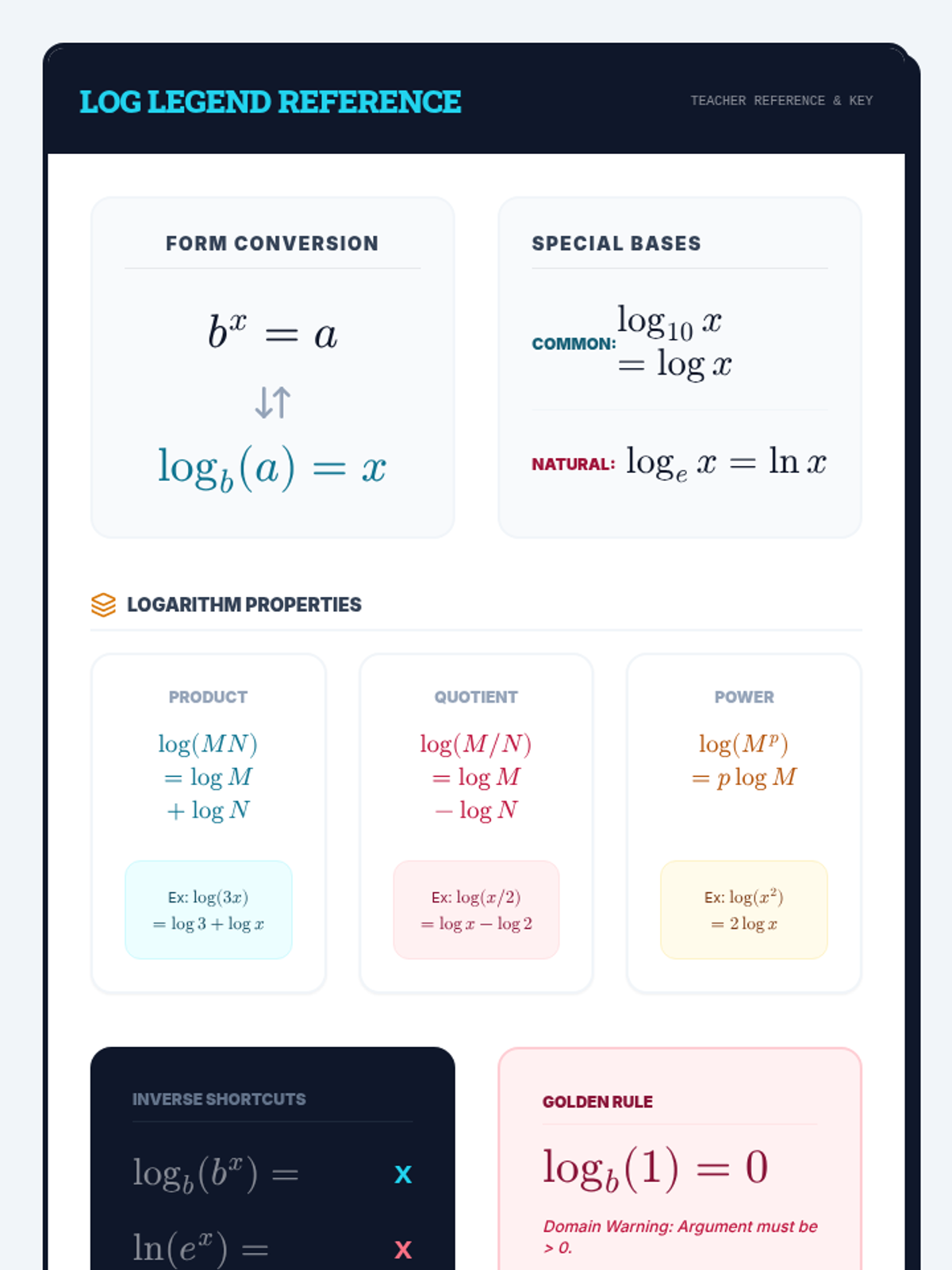
A comprehensive introduction to logarithmic and exponential equations, focusing on form conversion, logarithmic properties, and natural logs using a 'Cipher Lab' theme.
An introductory lesson on logarithmic functions, covering conversion between forms, evaluating basic logs, natural logarithms with 'e', and the fundamental properties of logs.