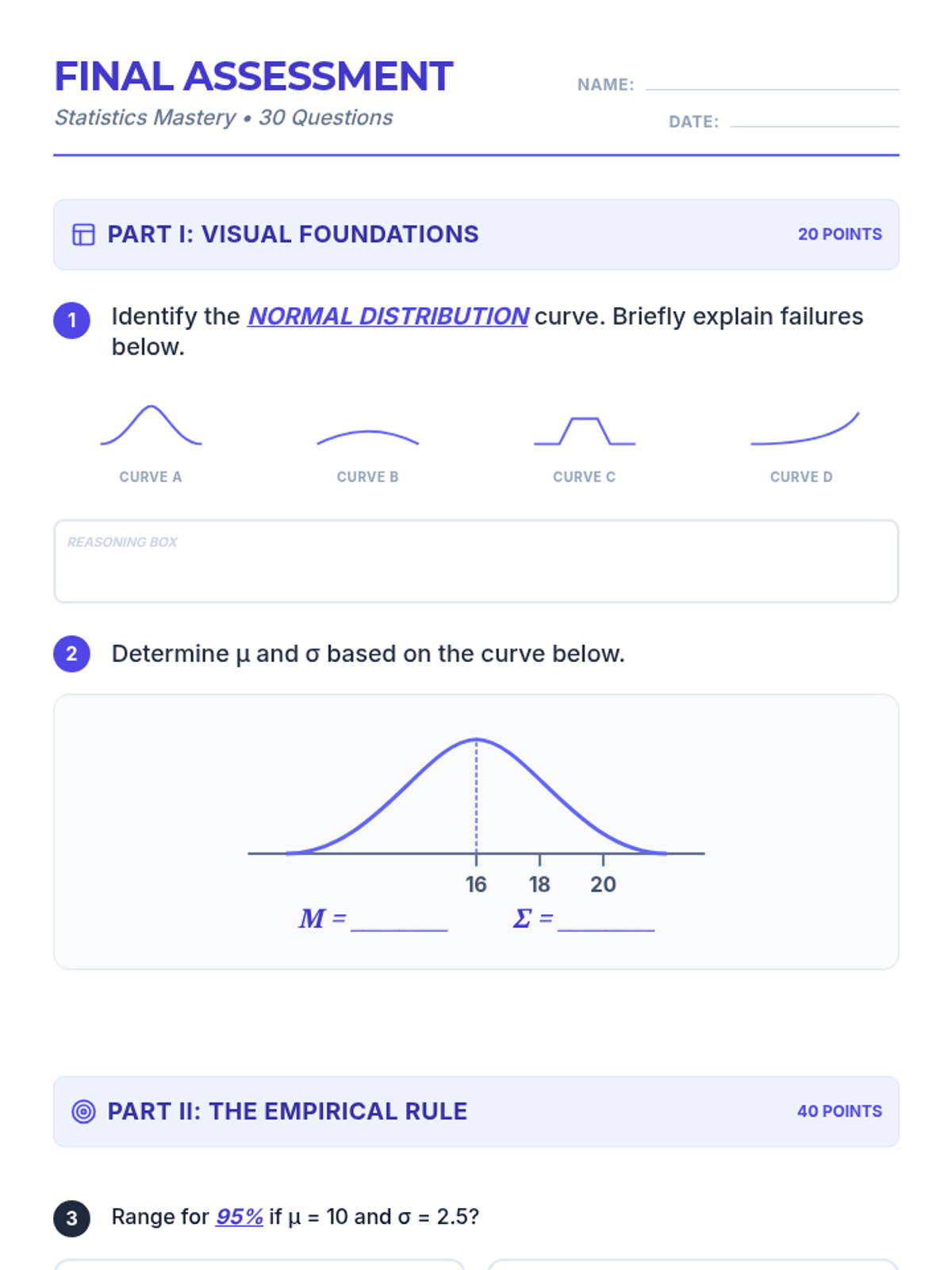
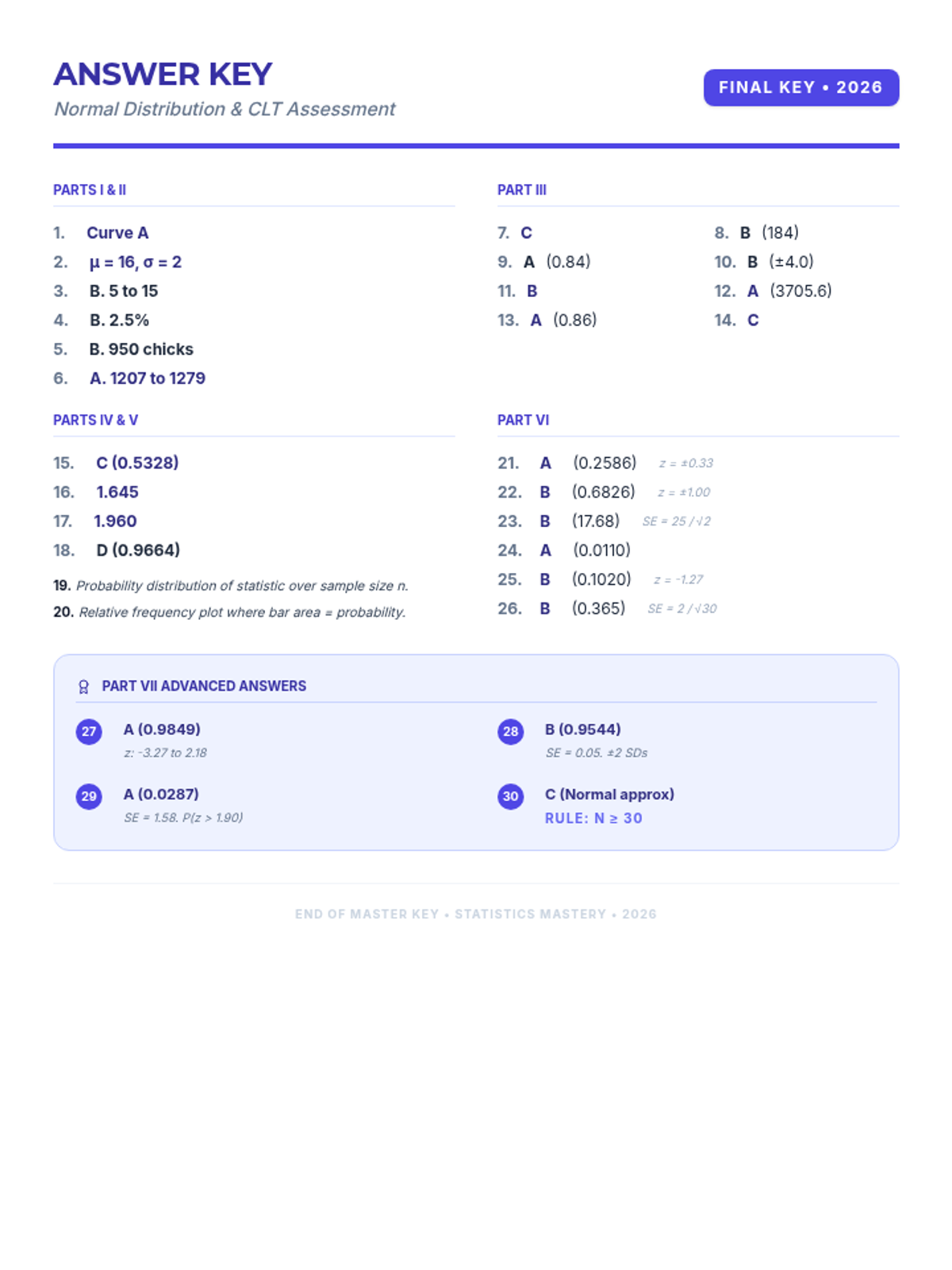
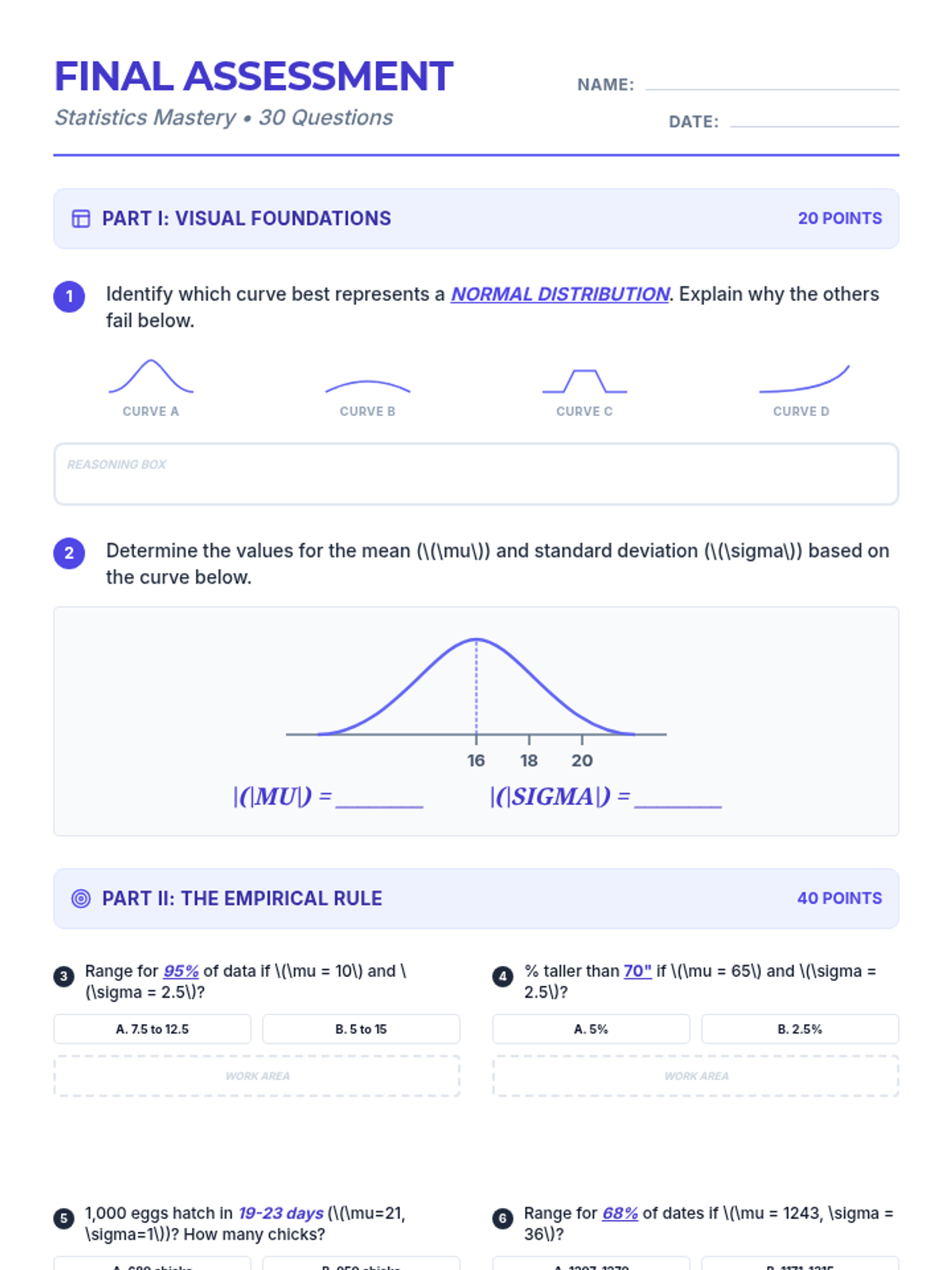
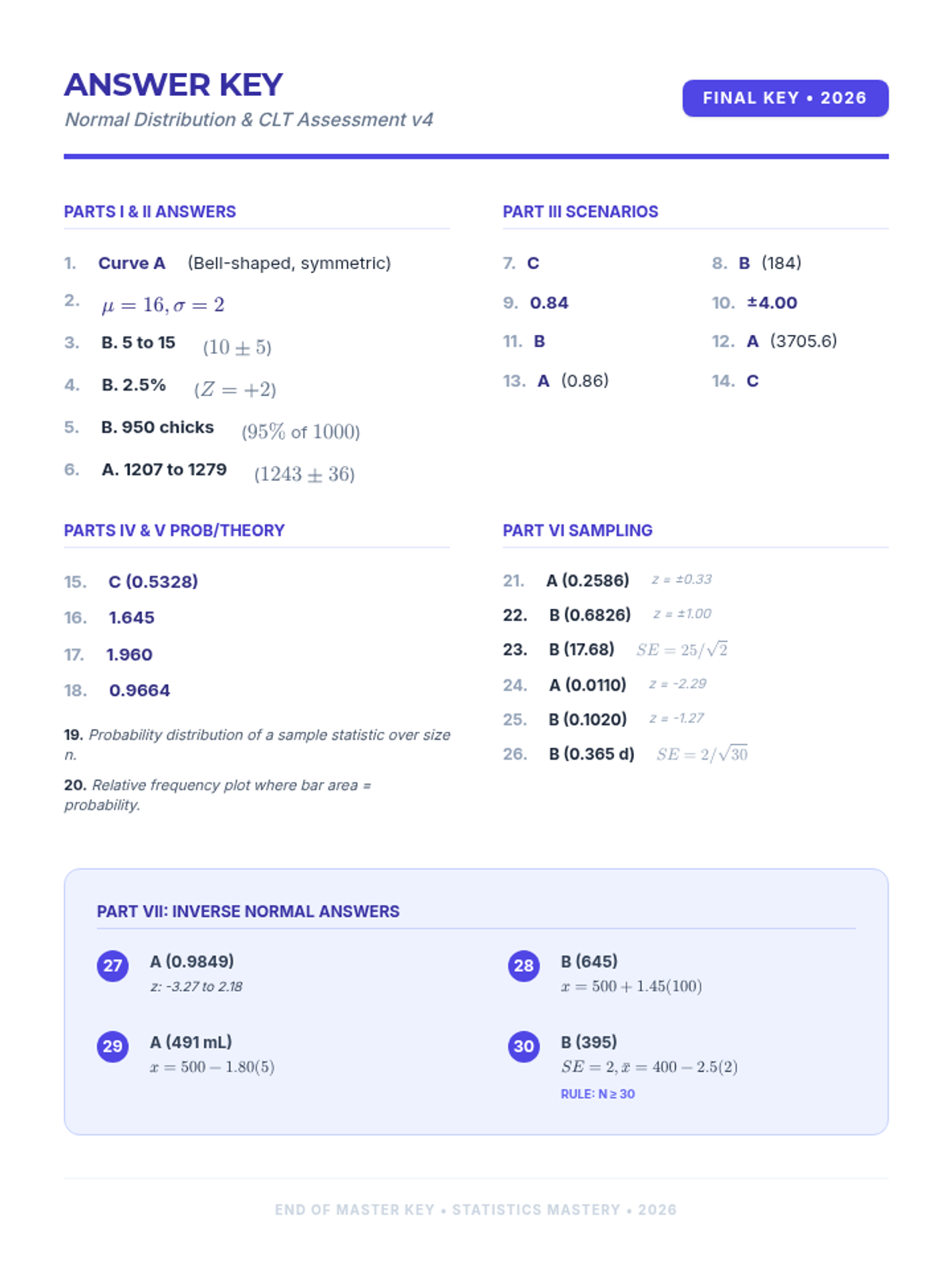
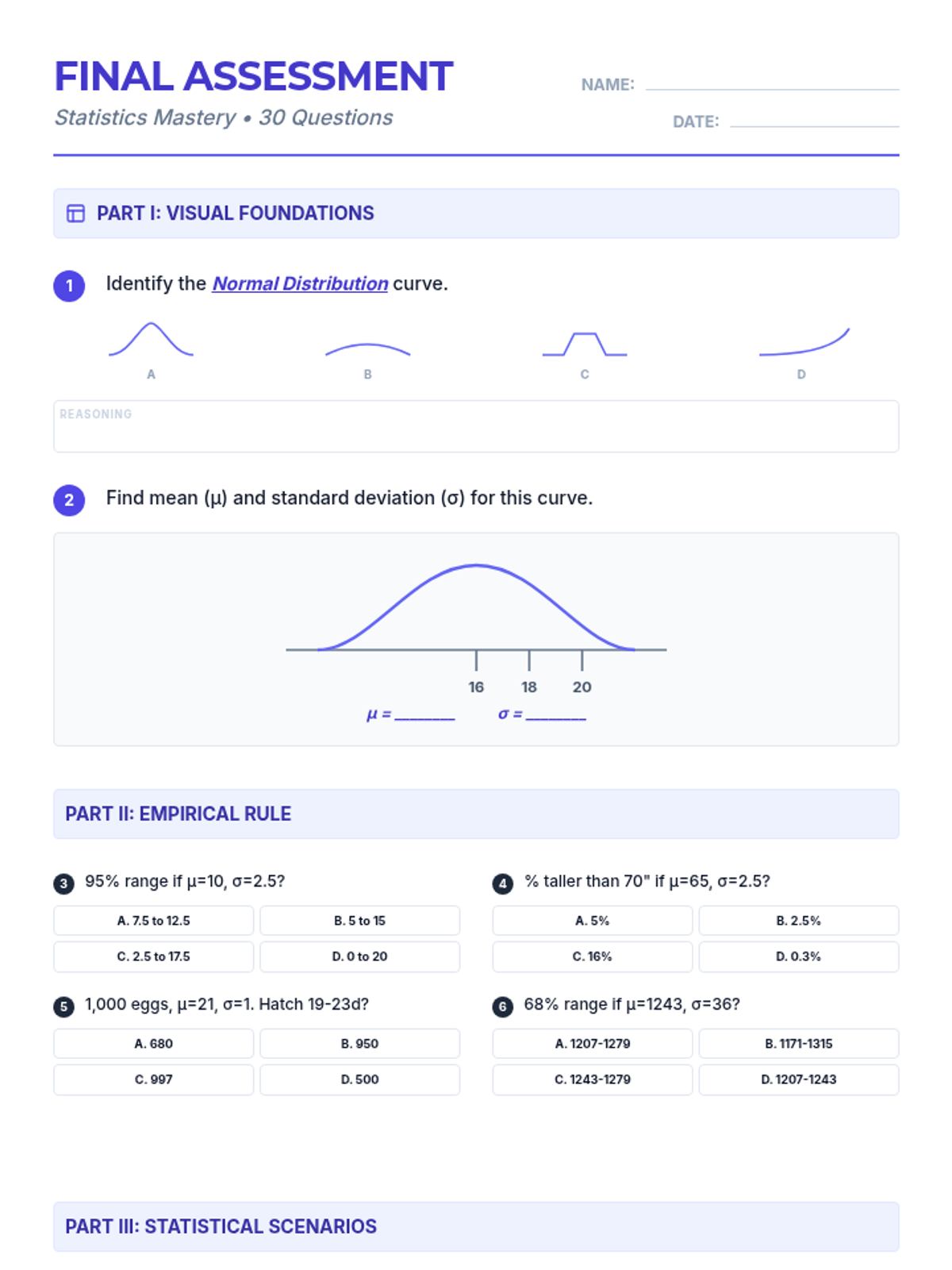
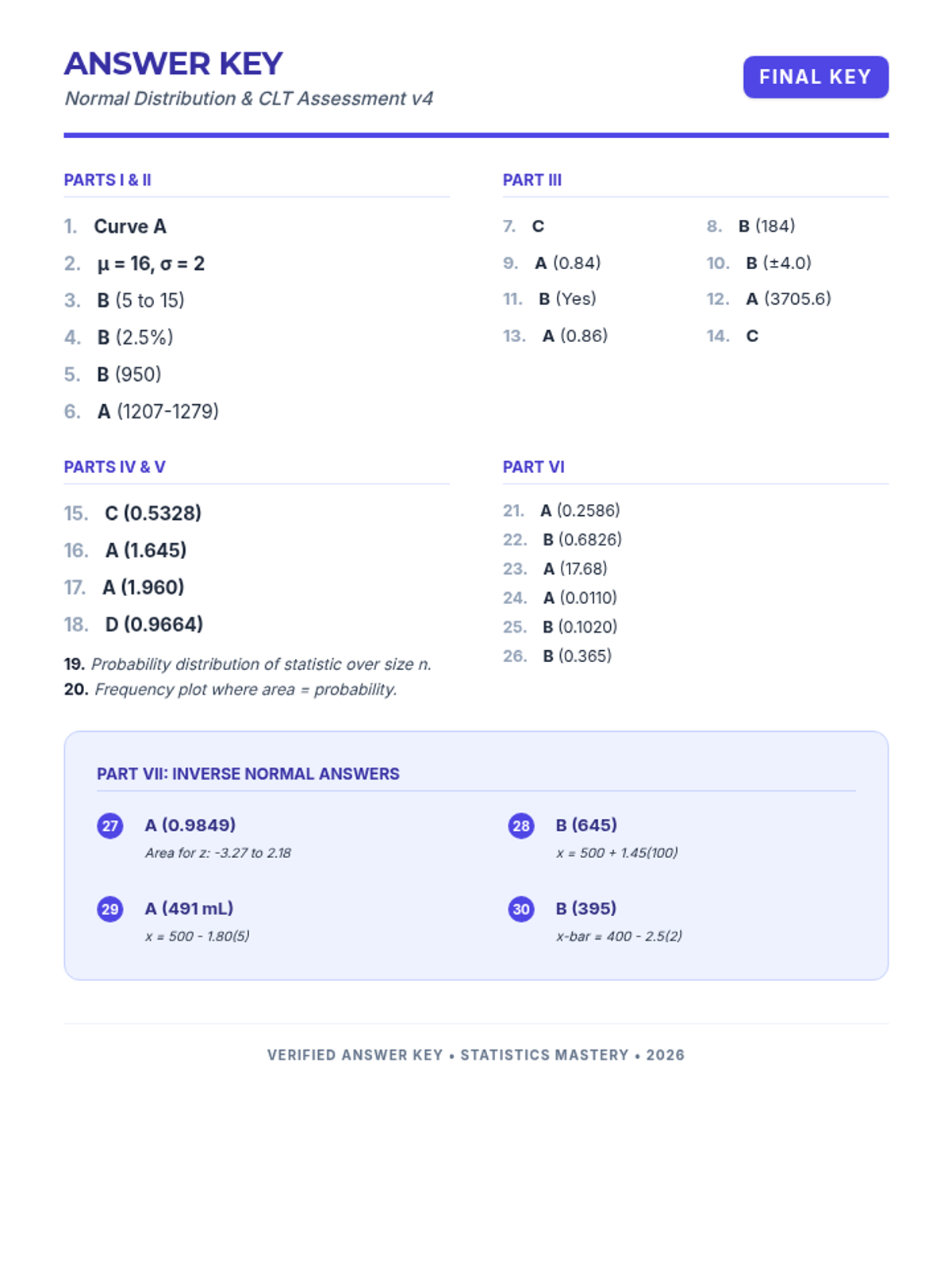
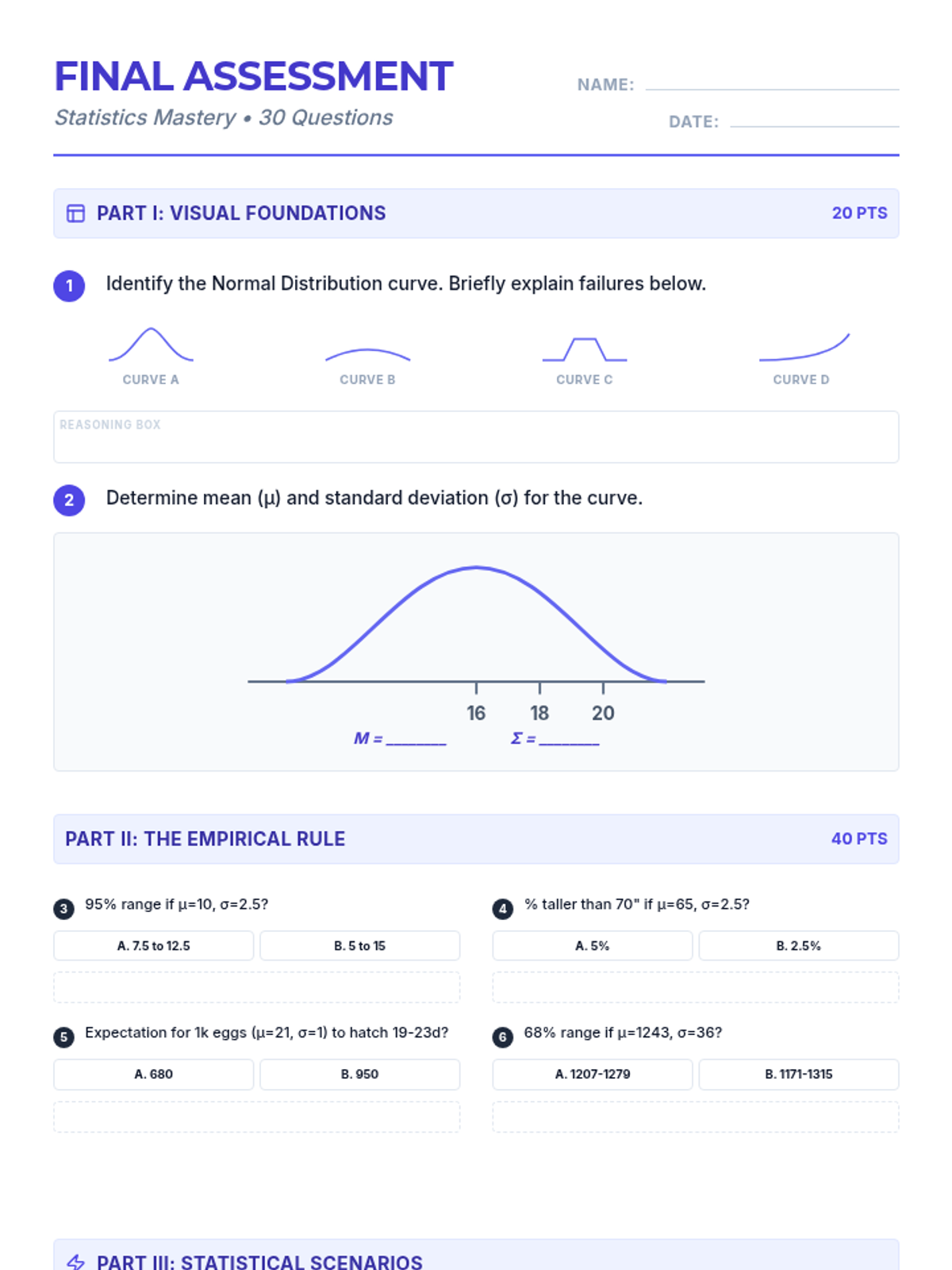
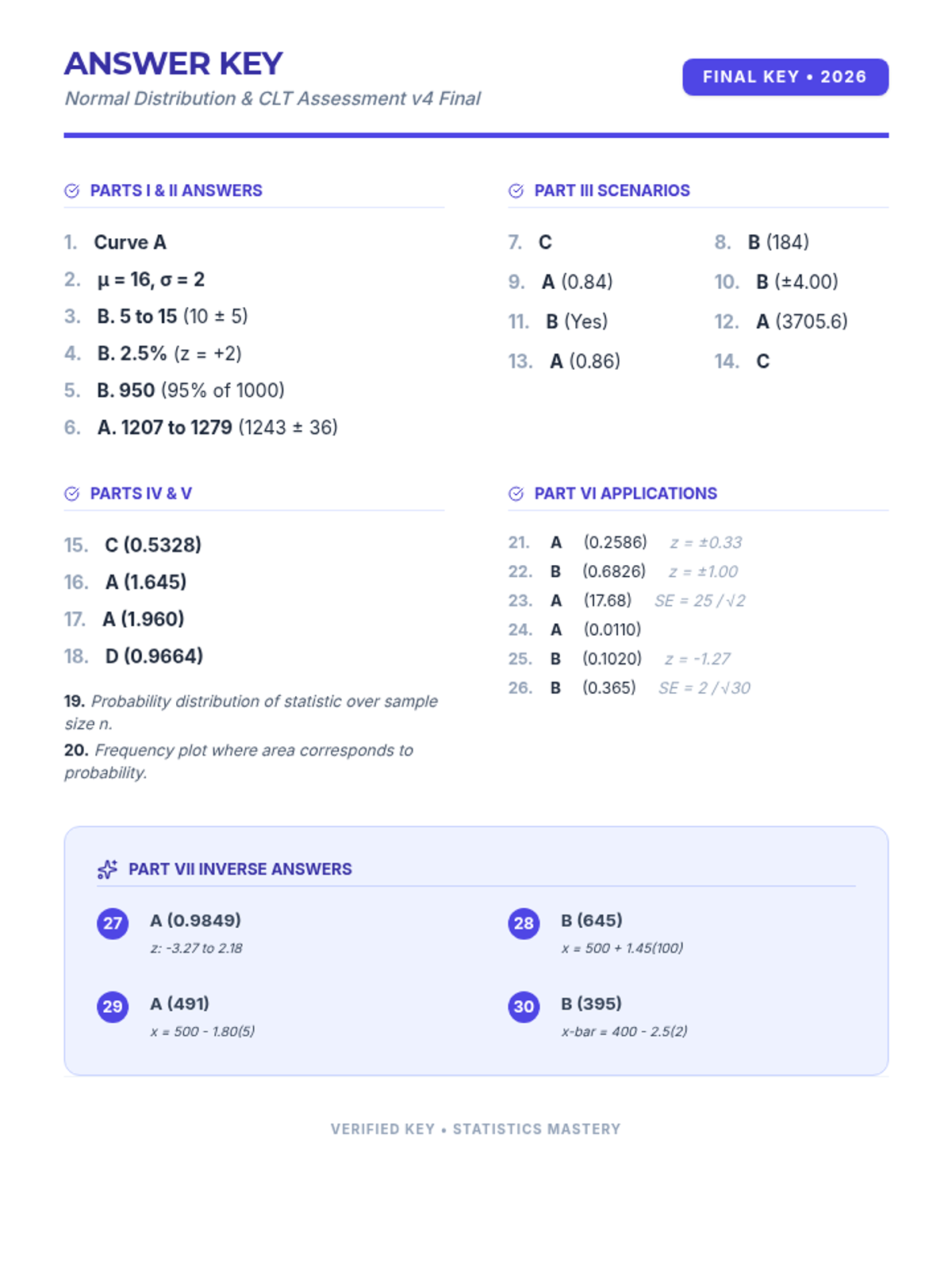
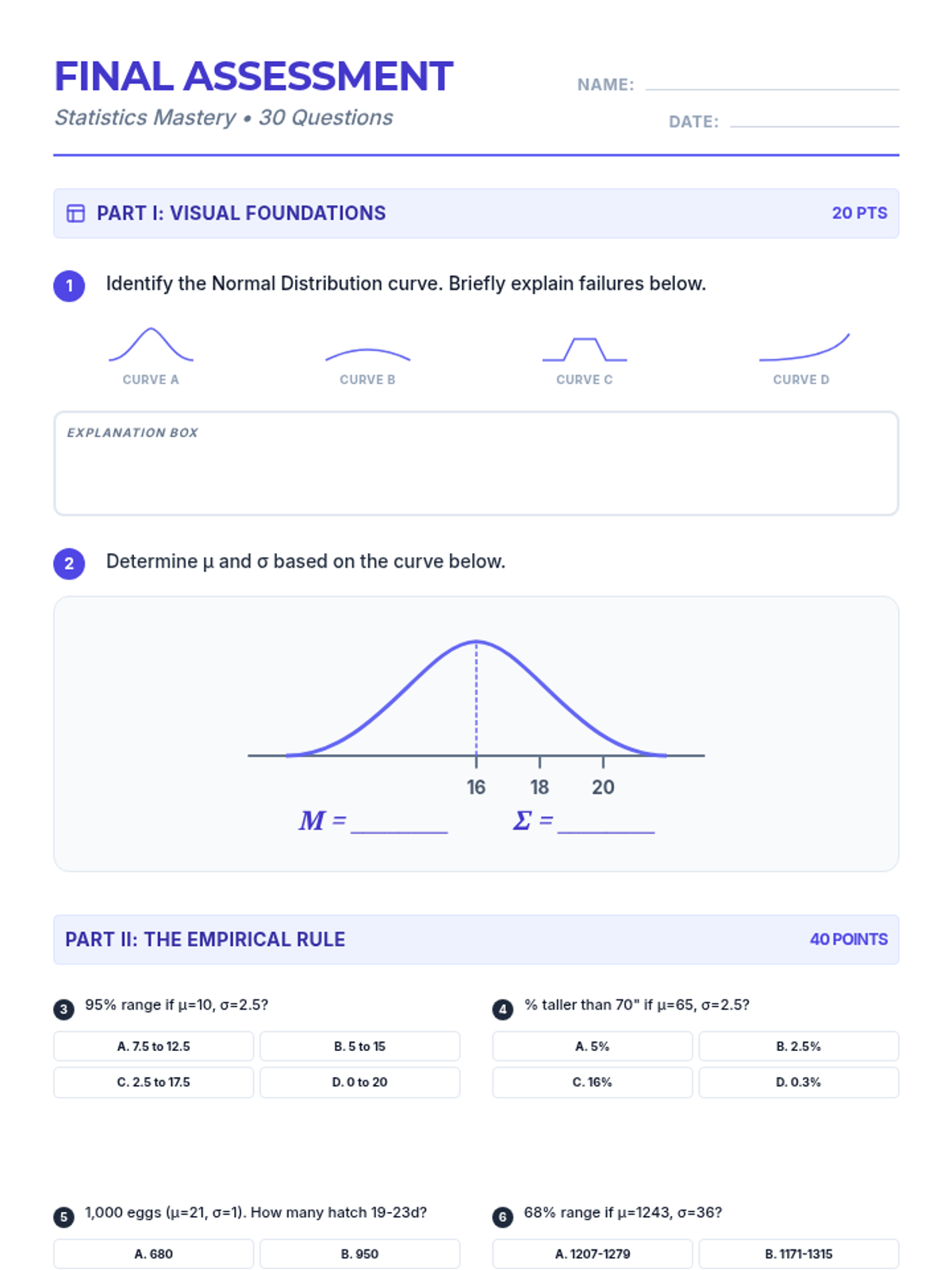
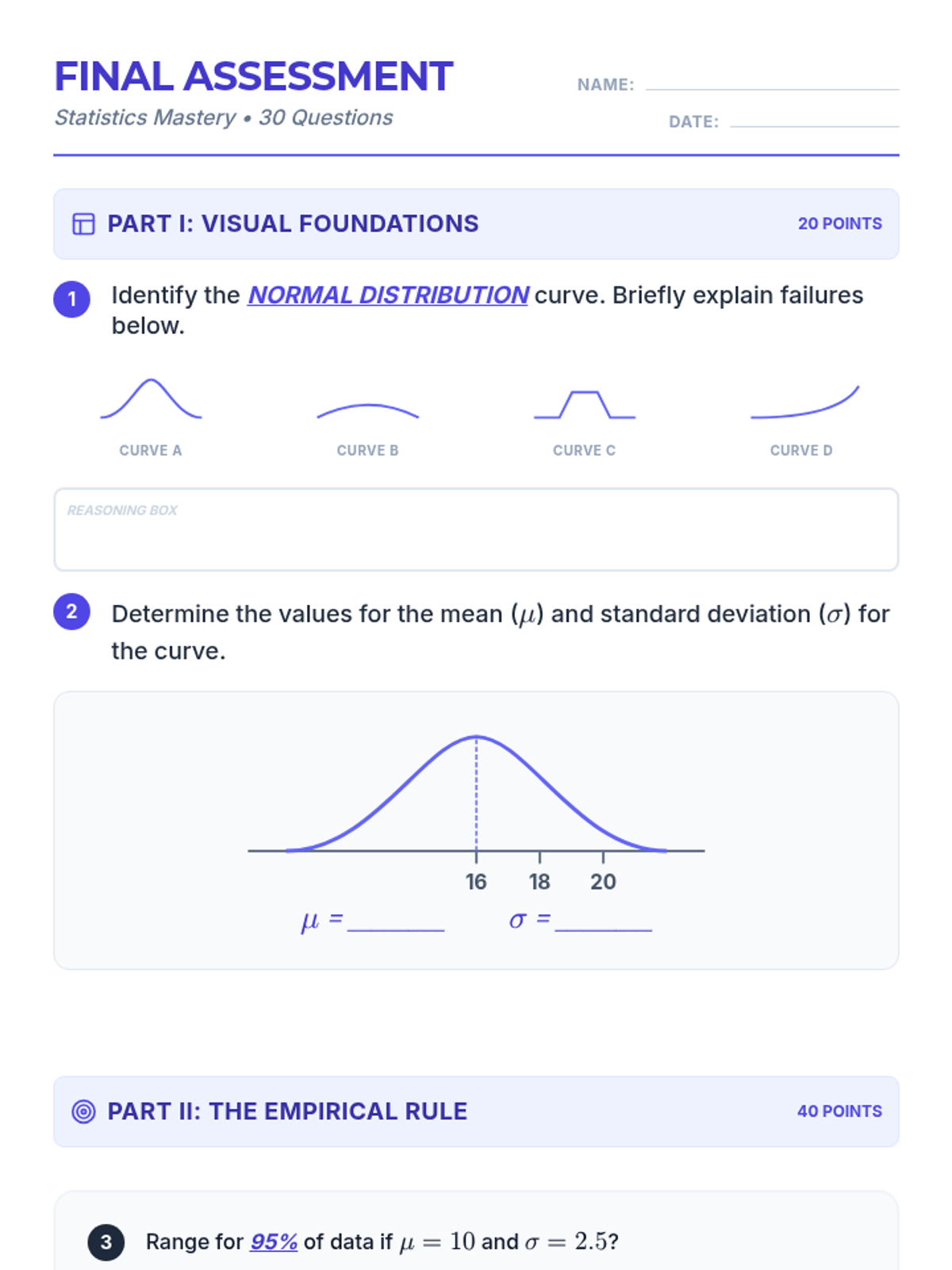
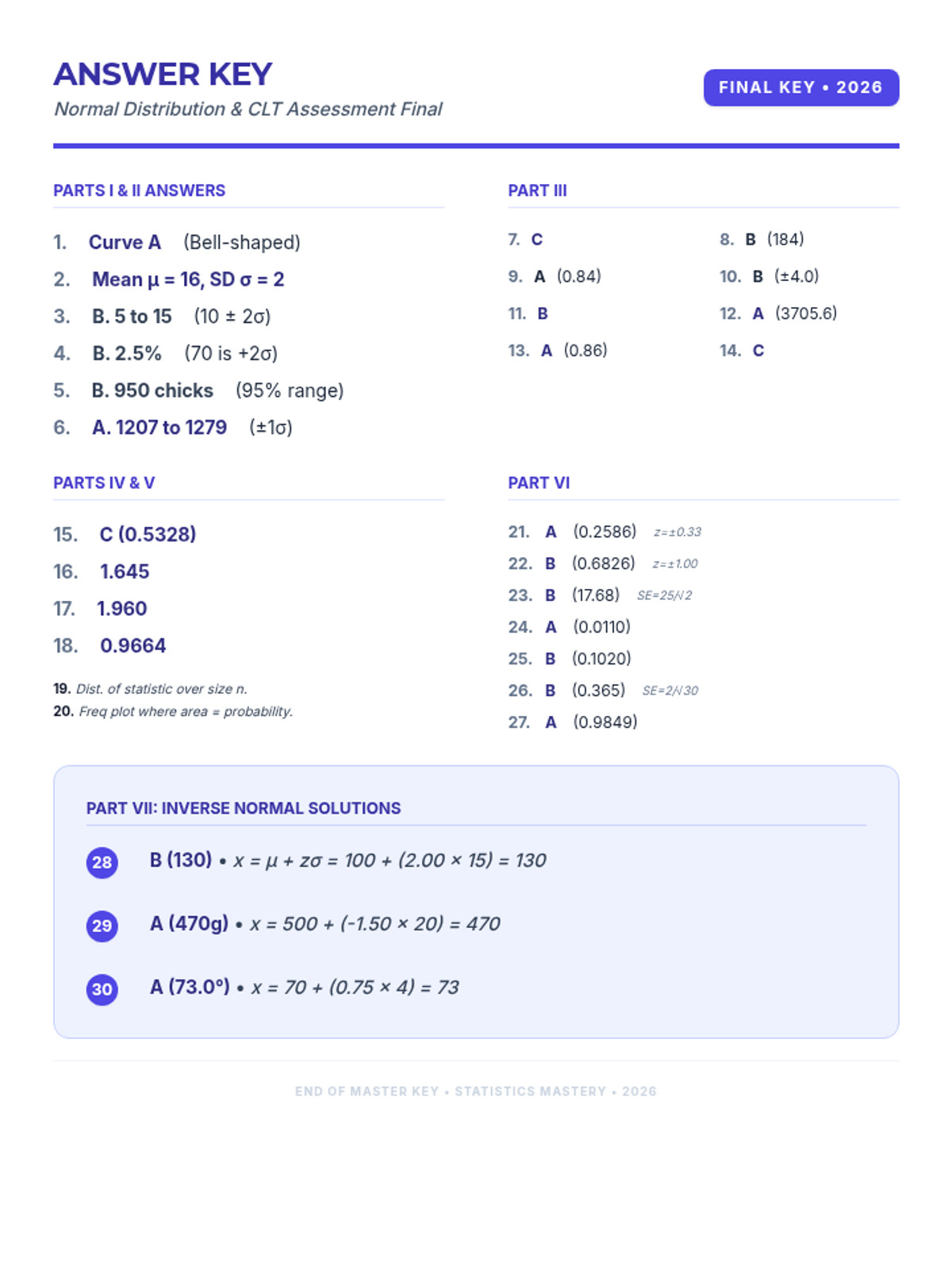
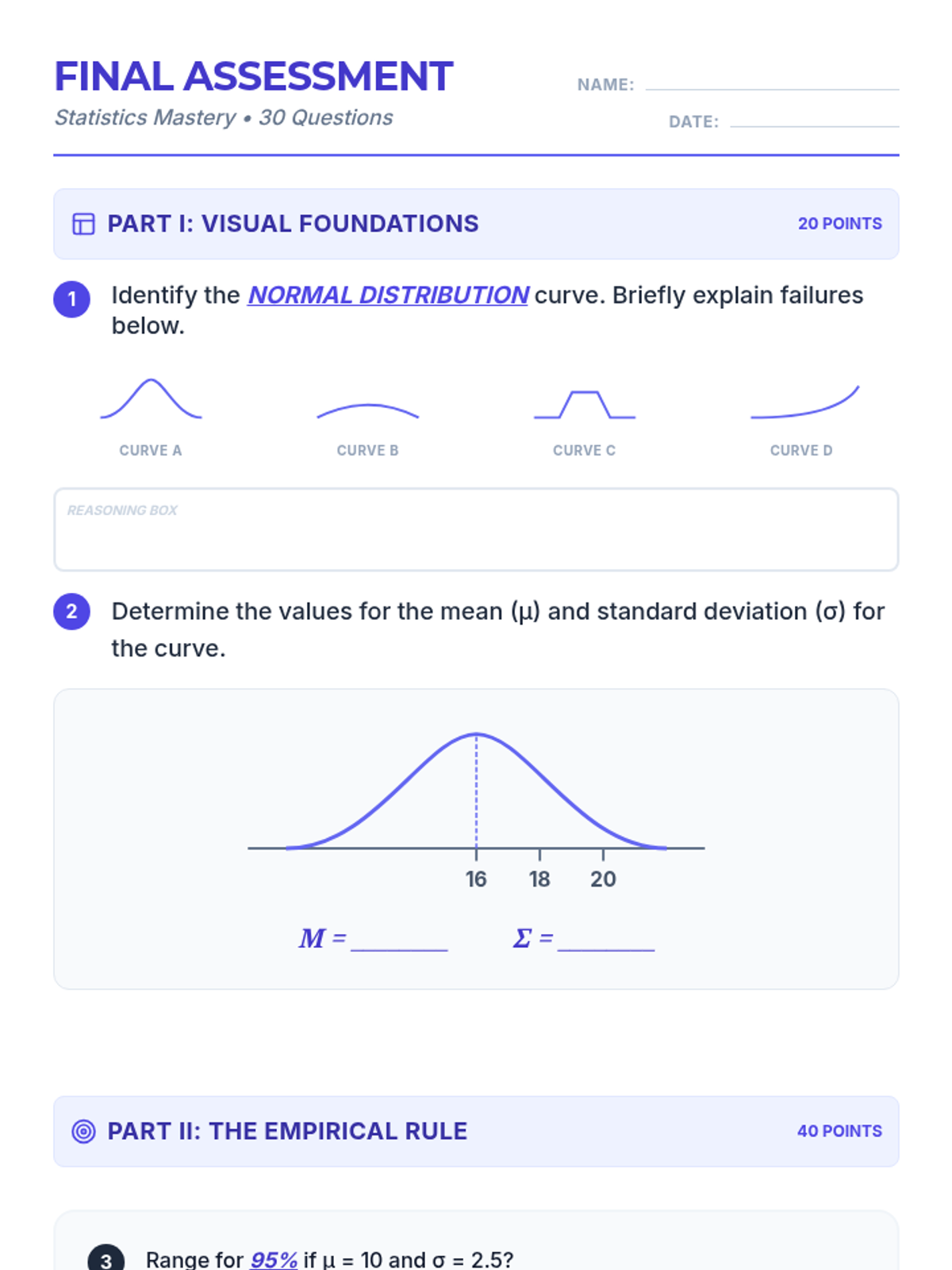
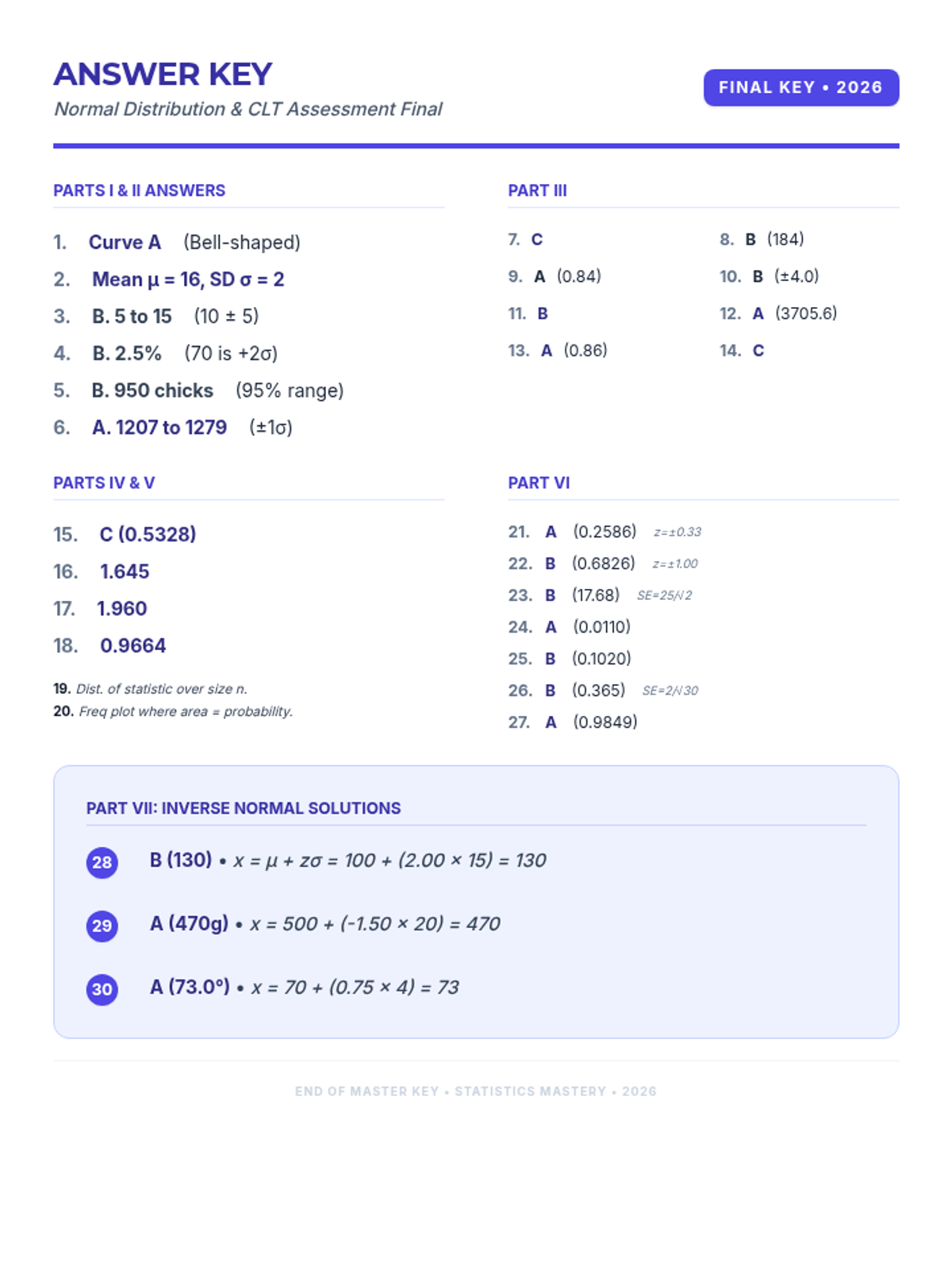
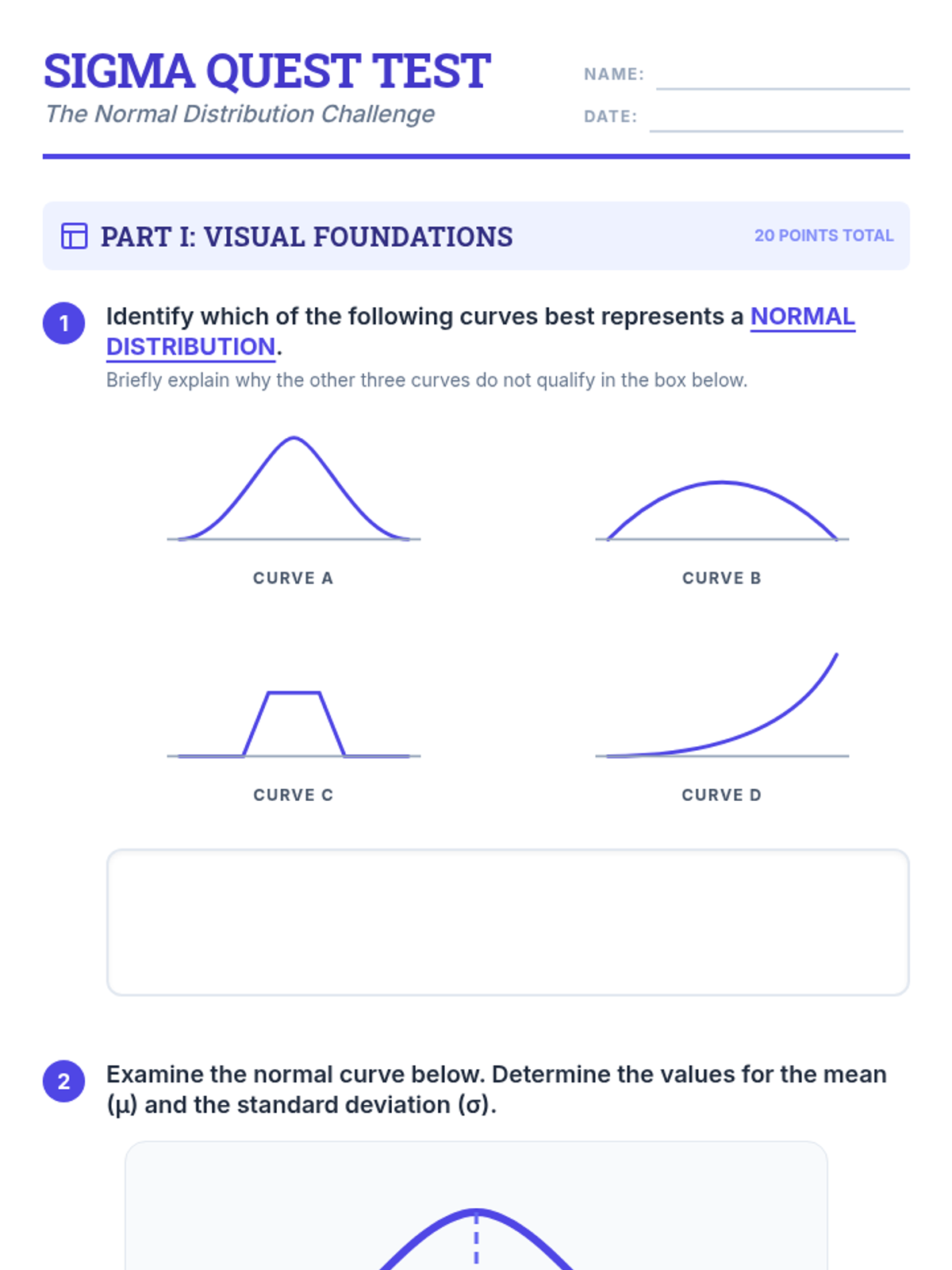
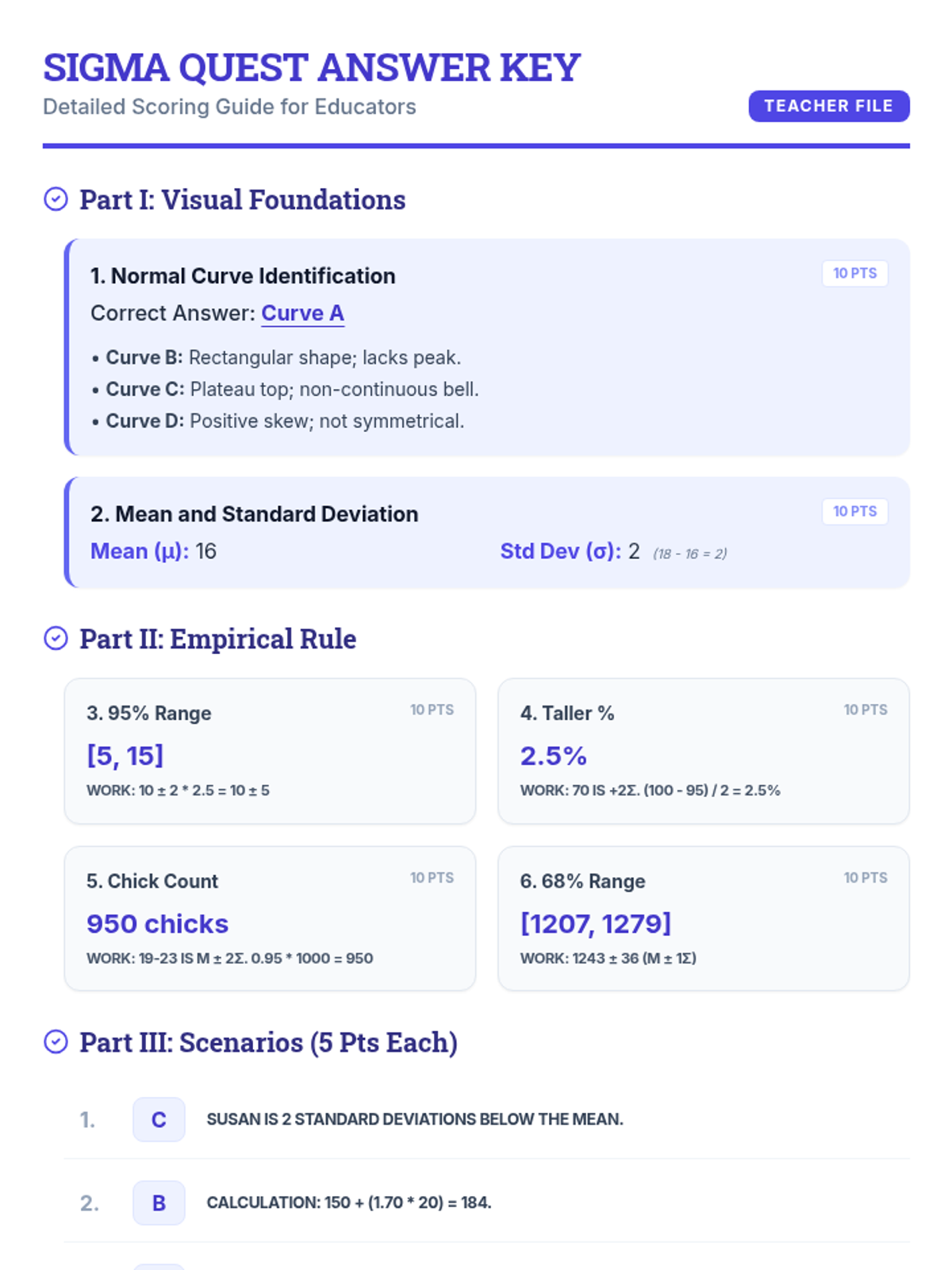
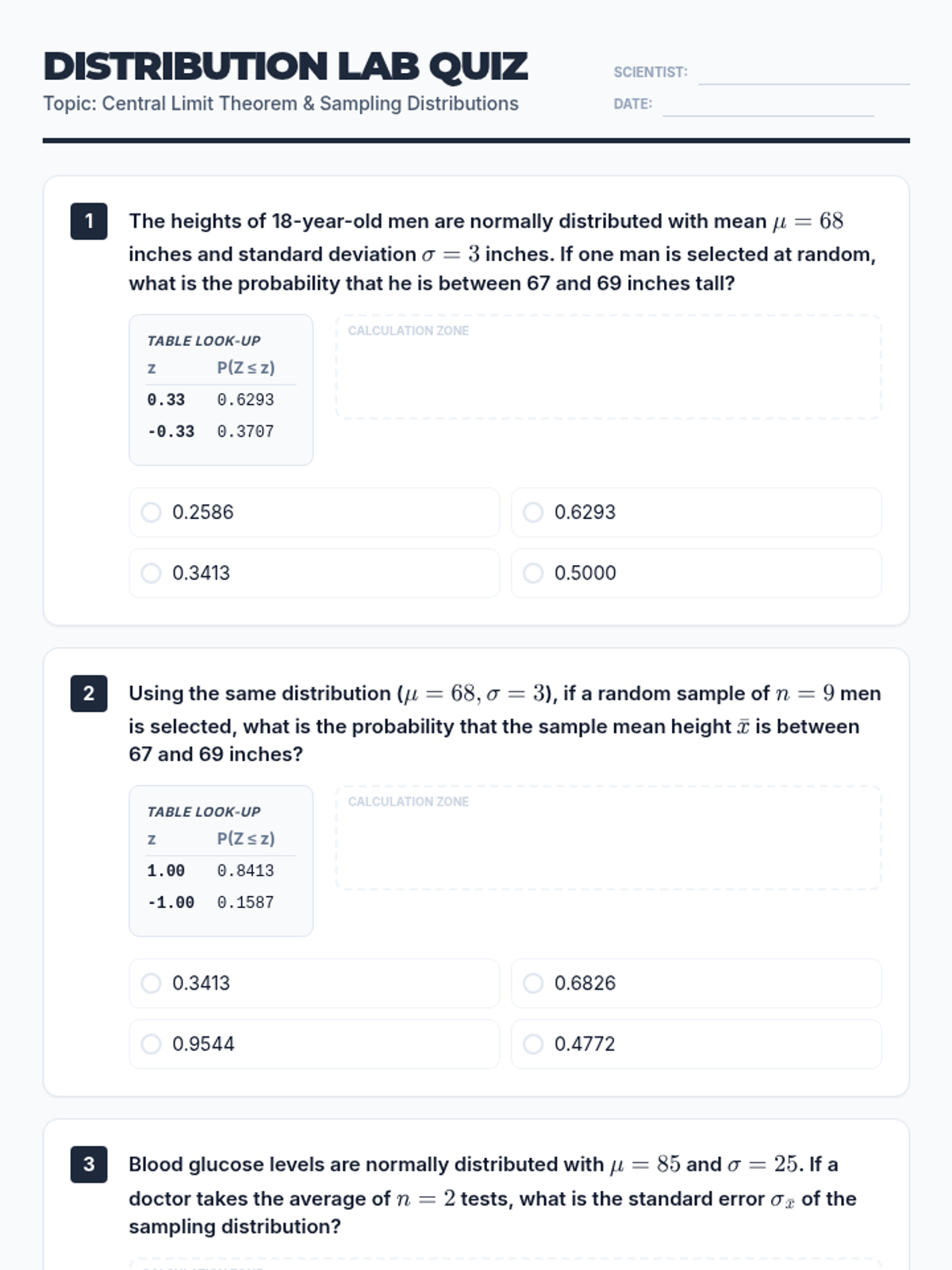
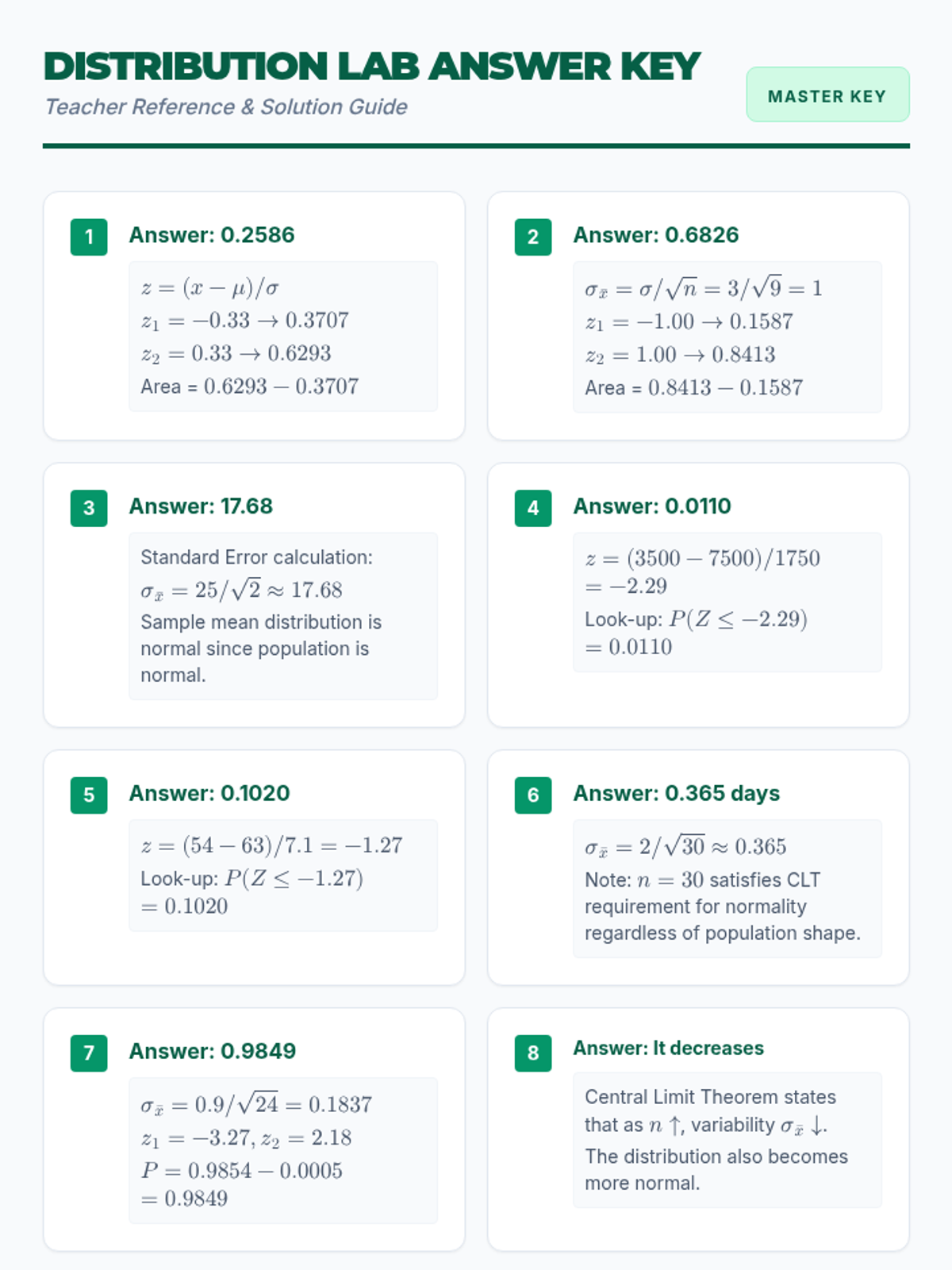
A comprehensive assessment covering normal distributions, the Empirical Rule, z-scores, and sampling distributions. This lesson combines conceptual understanding with complex statistical calculations.
Students analyze their financial data using scatter plots and trend lines to create a 12-month forecast and final reflection.
Students explore exponential growth through compound interest, calculating the long-term impact of debt and credit card balances.
Students use systems of equations to compare vehicle costs, finding the break-even point between different transportation options.
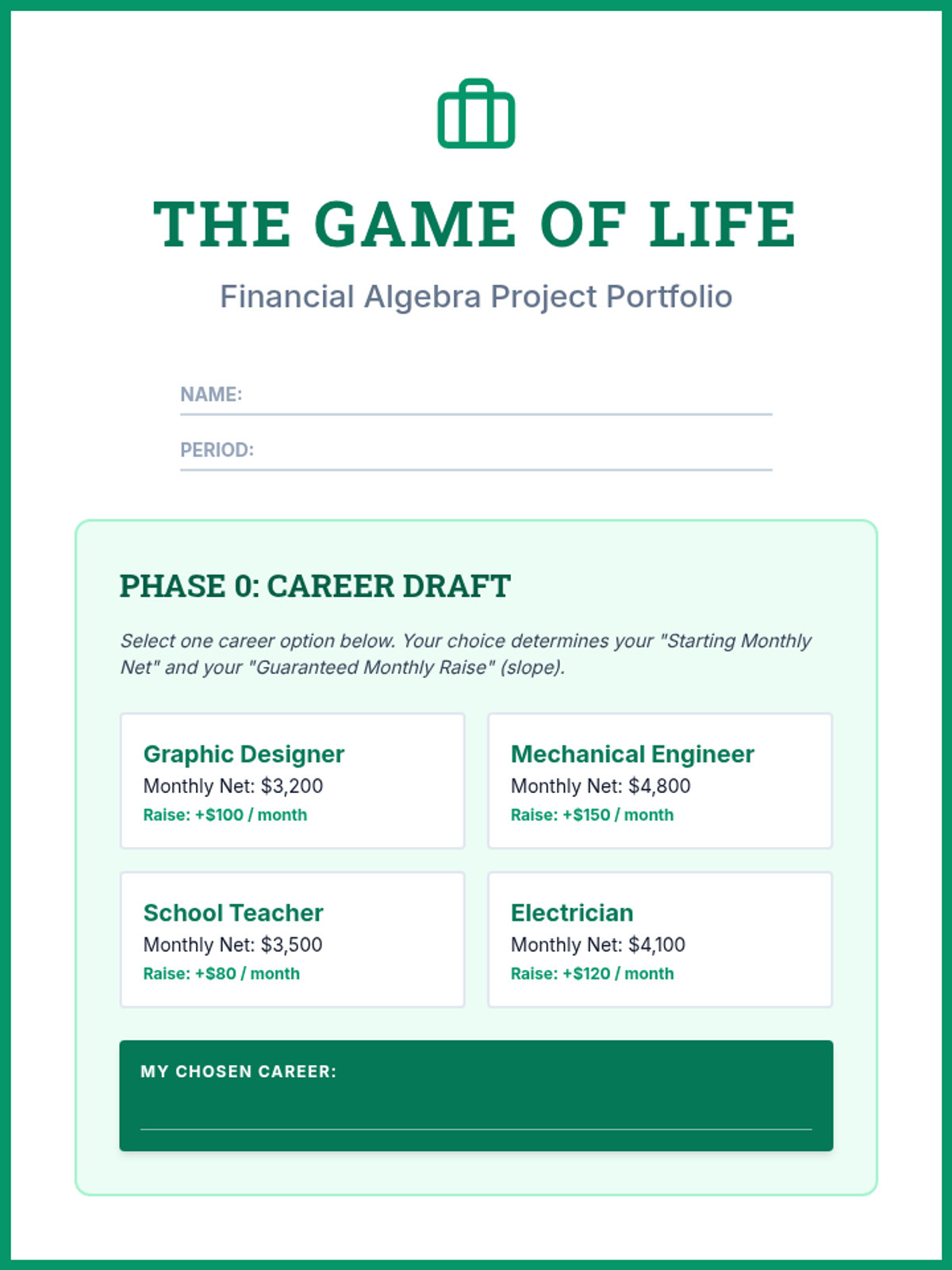
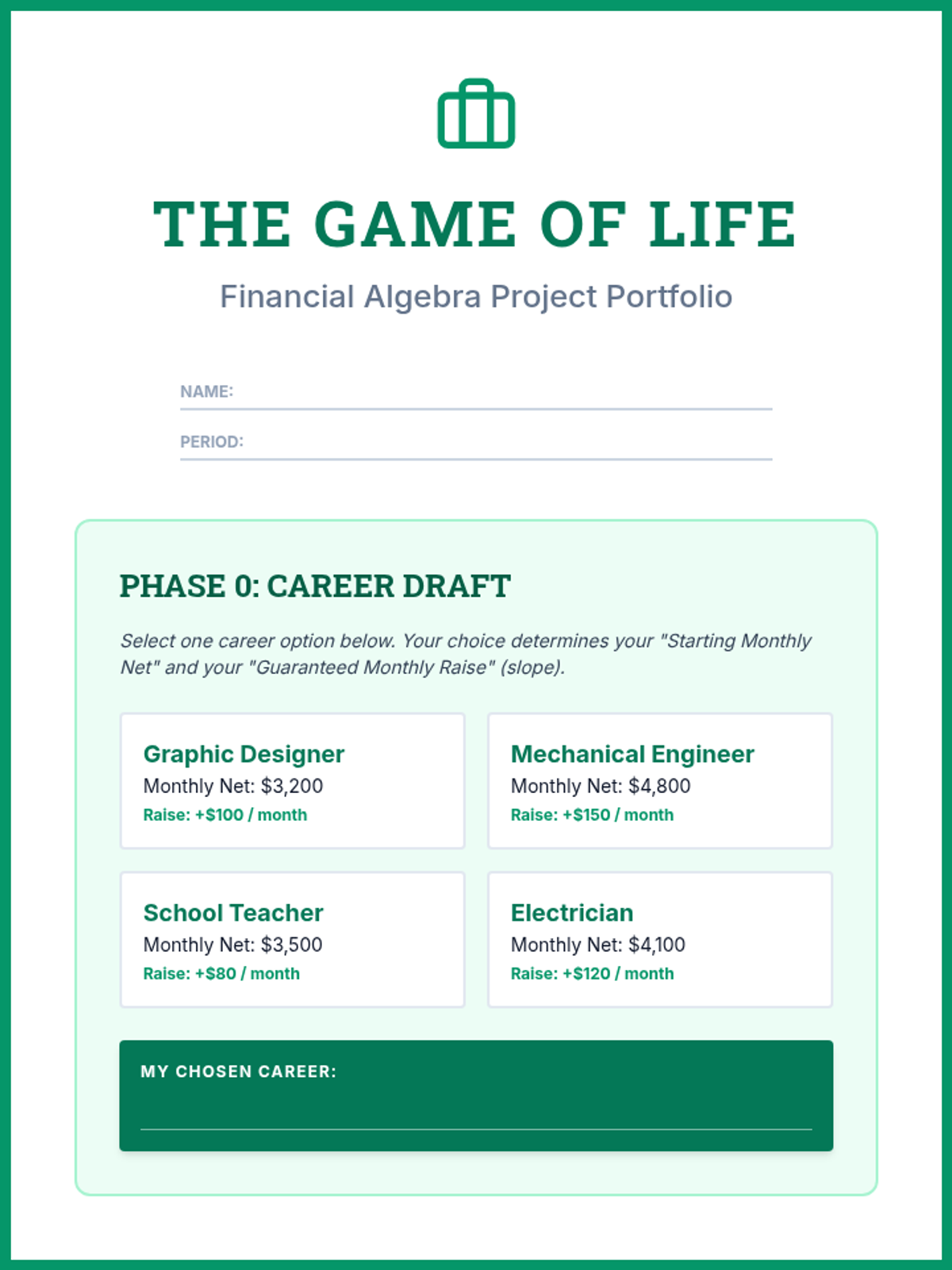
Students select careers, calculate net monthly income, and write linear equations to model their cumulative earnings and fixed housing costs.
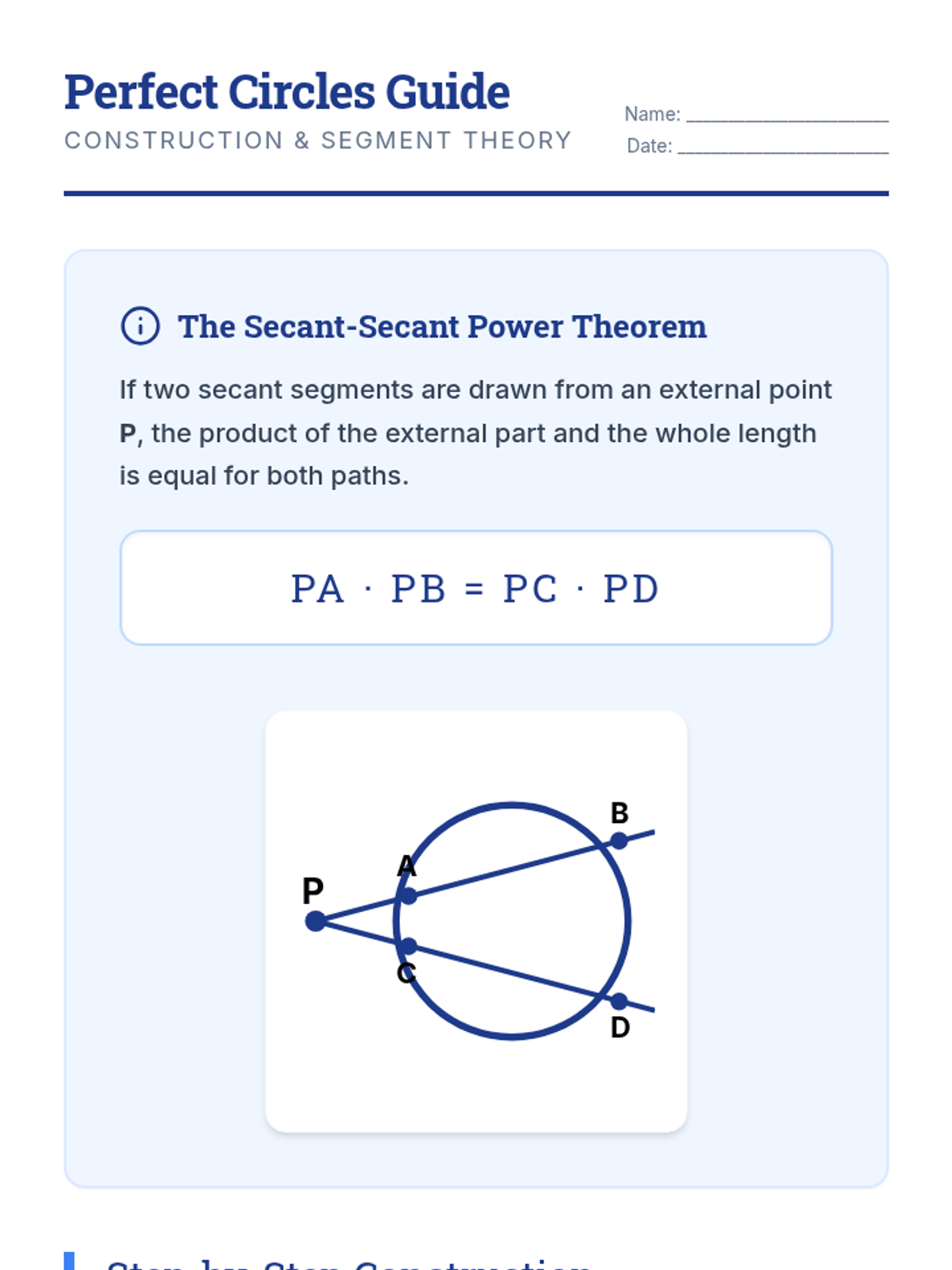
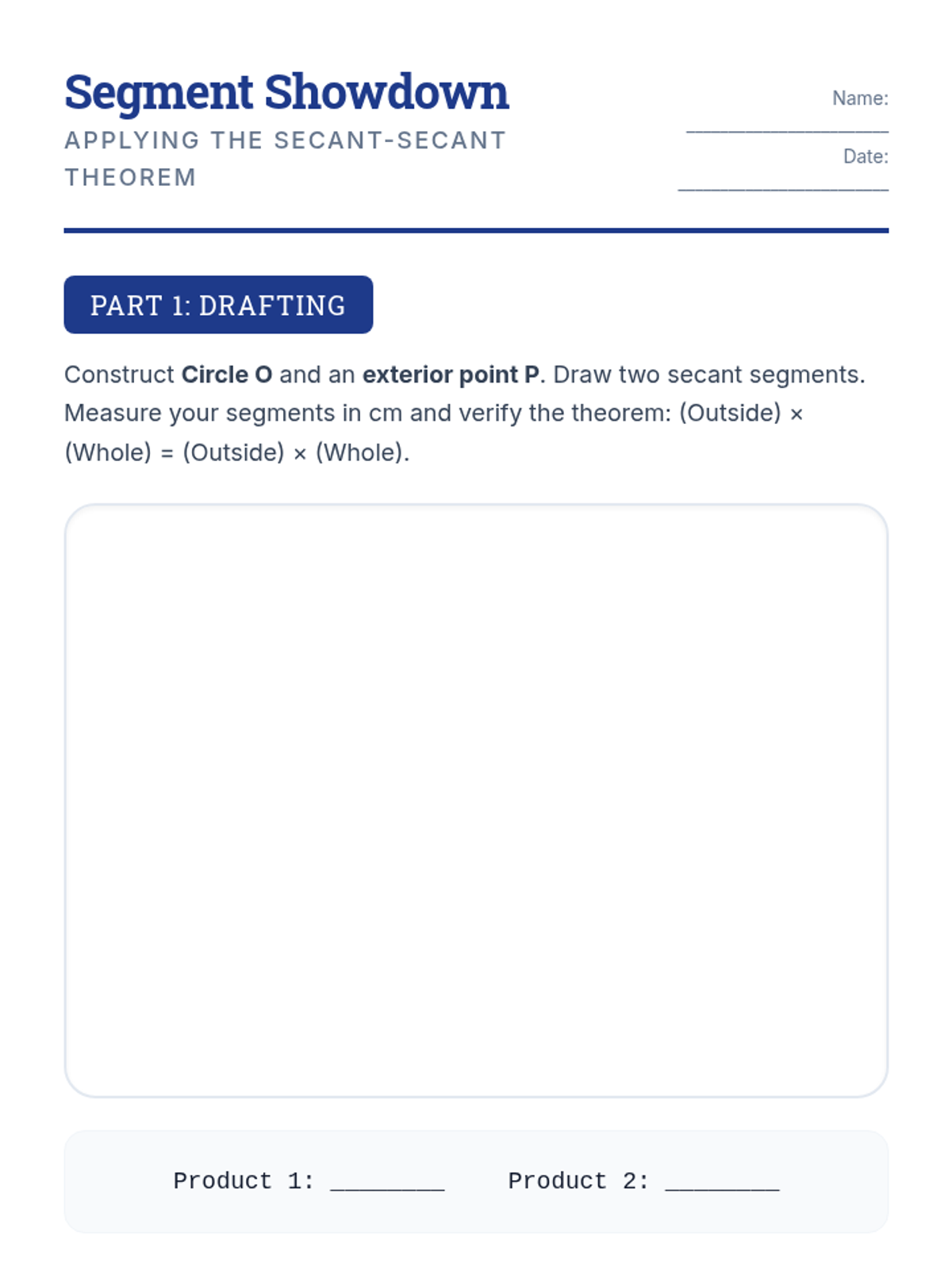
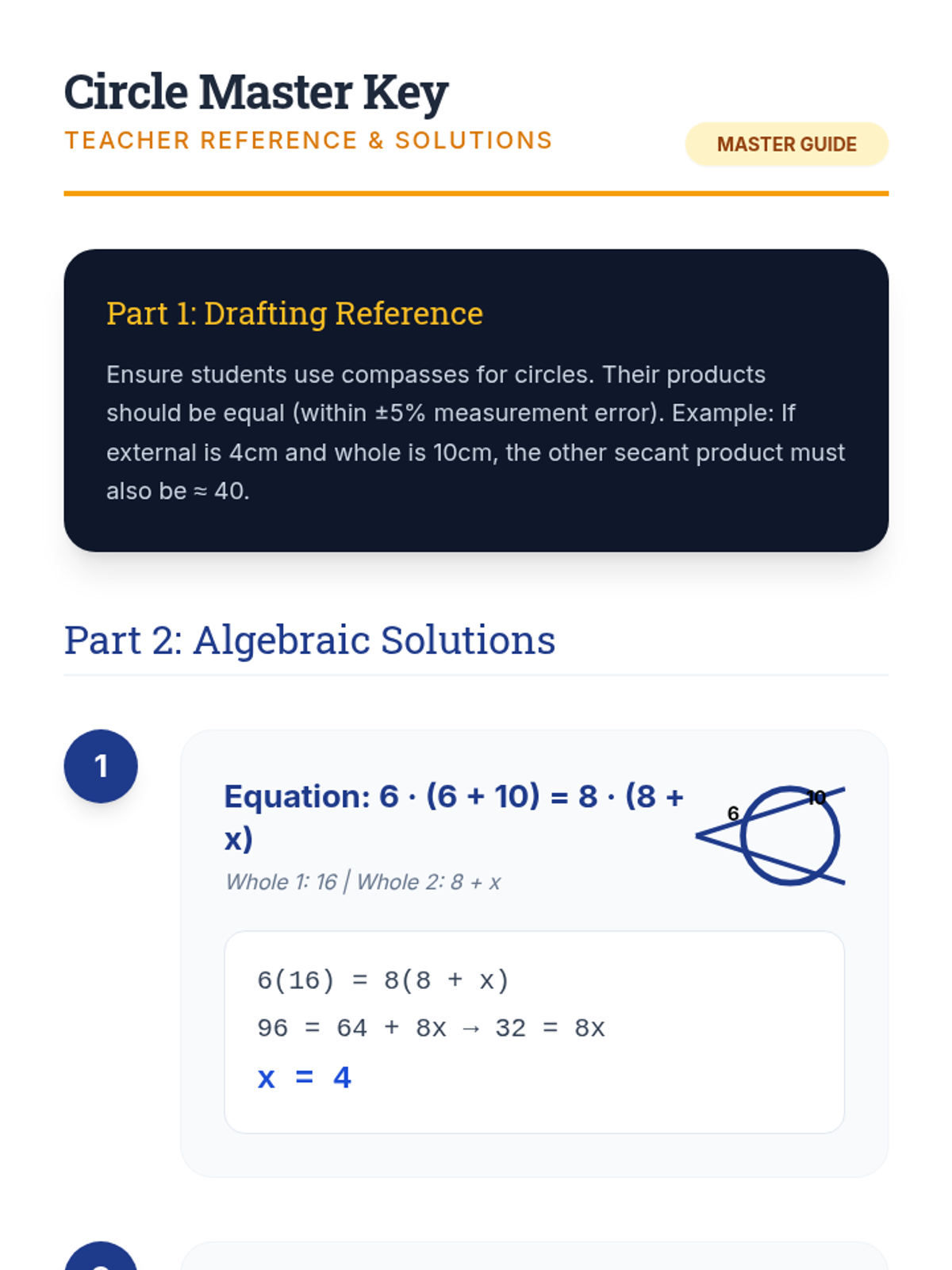
A comprehensive lesson on constructing circles and investigating the geometric relationships between secant segments and chords intersecting outside a circle.
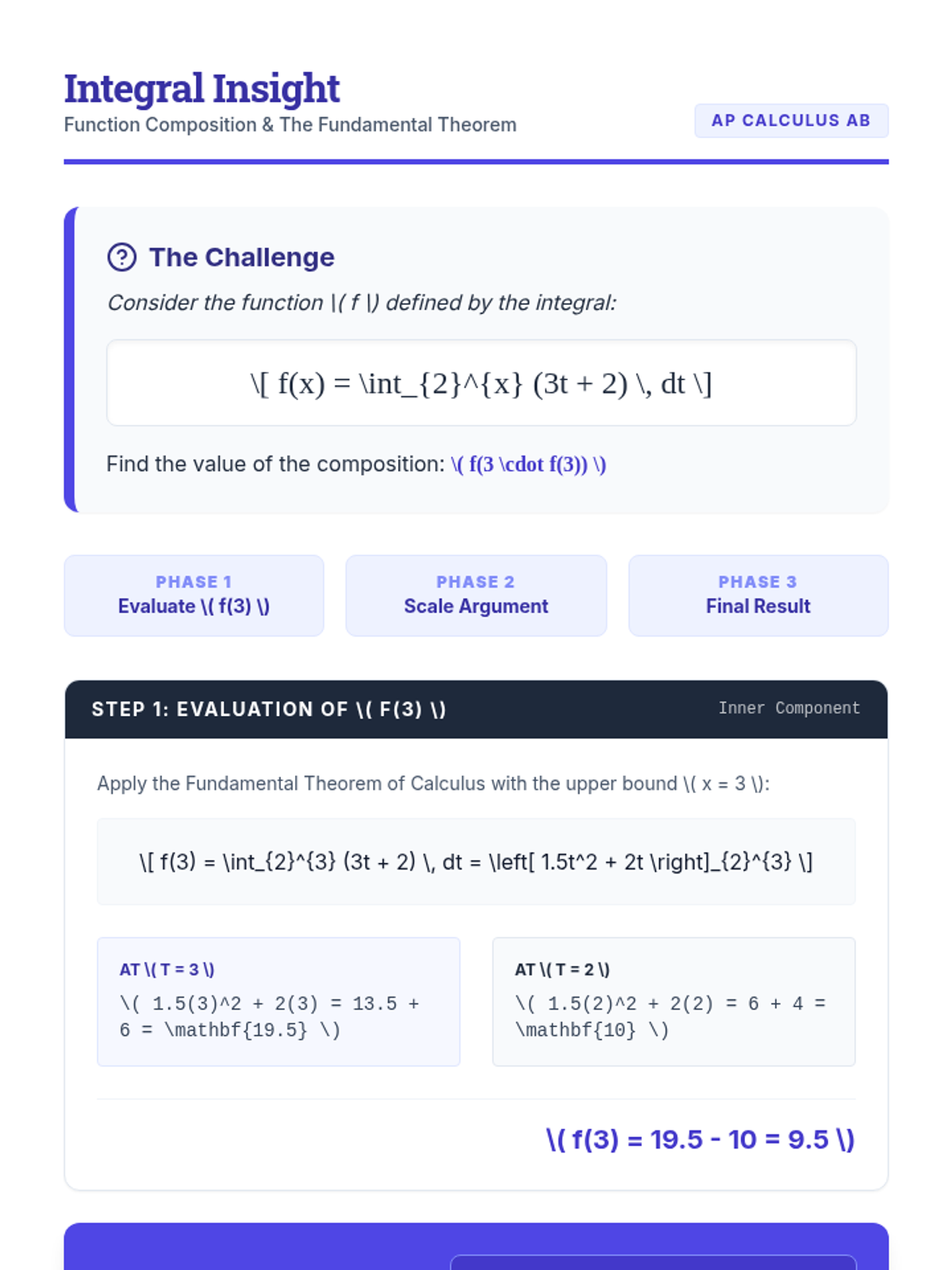
A focused study on applying the Fundamental Theorem of Calculus to evaluate functions defined by integrals. Students will practice finding specific values by integrating and evaluating at given boundaries.
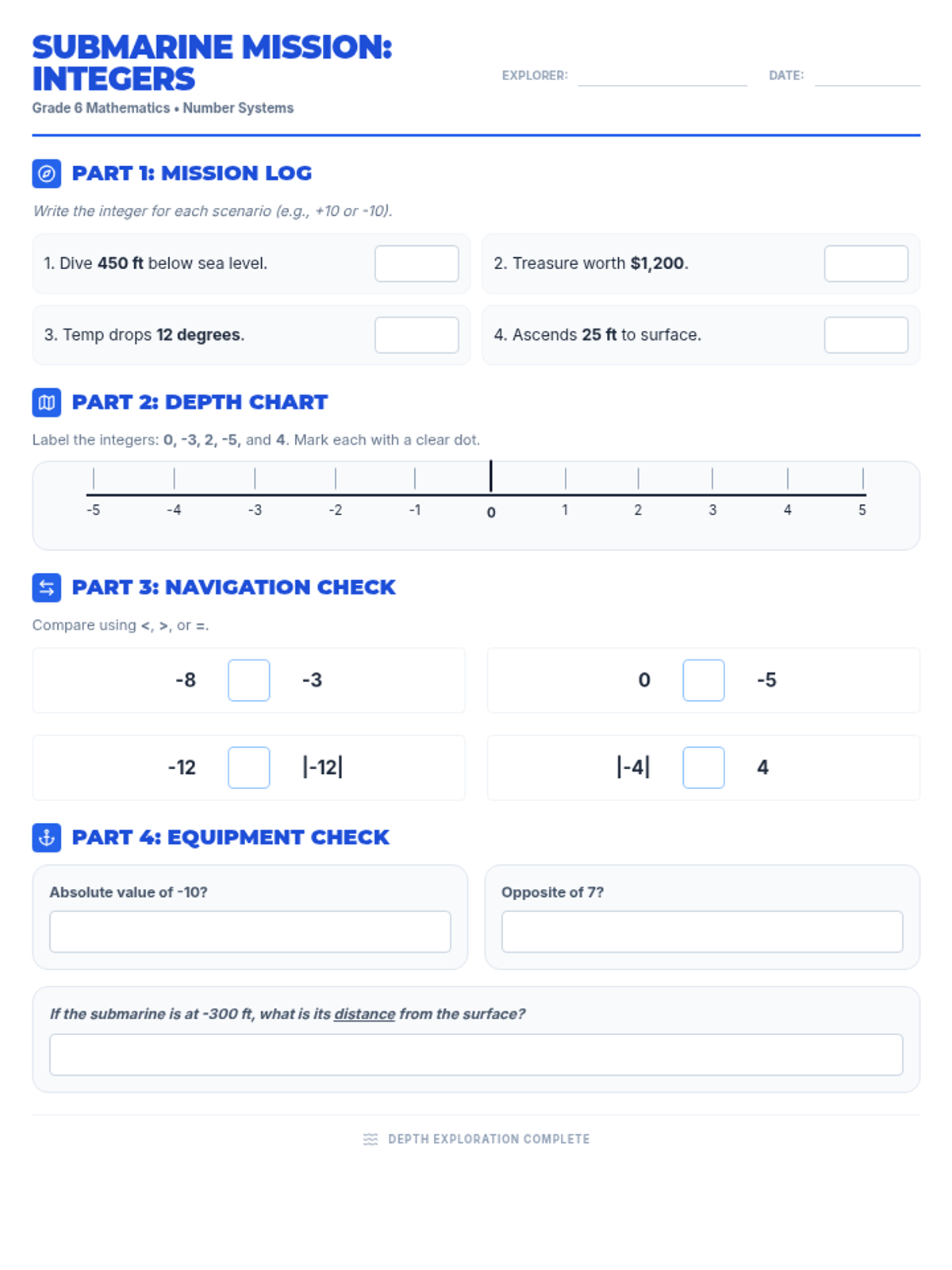
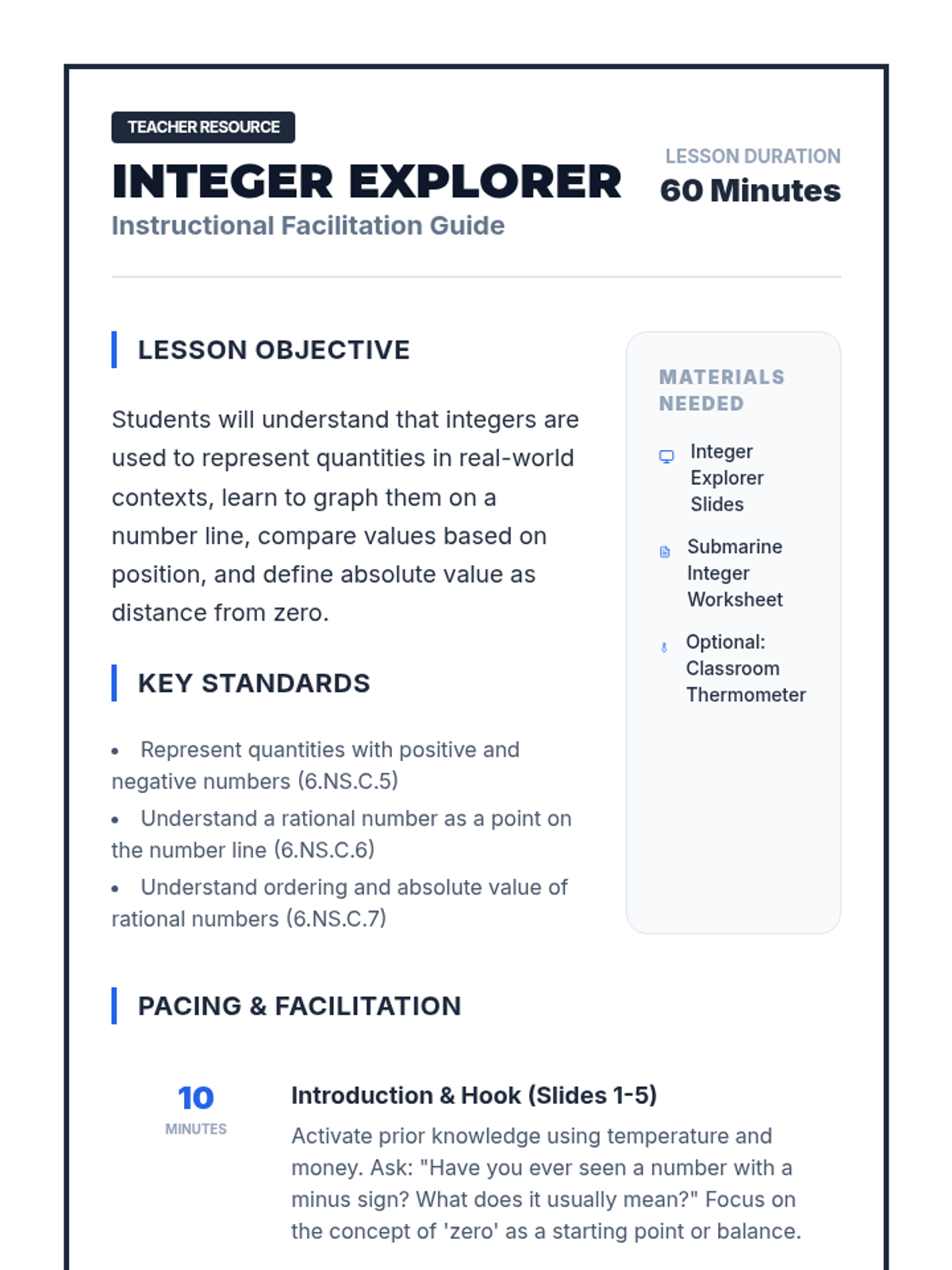
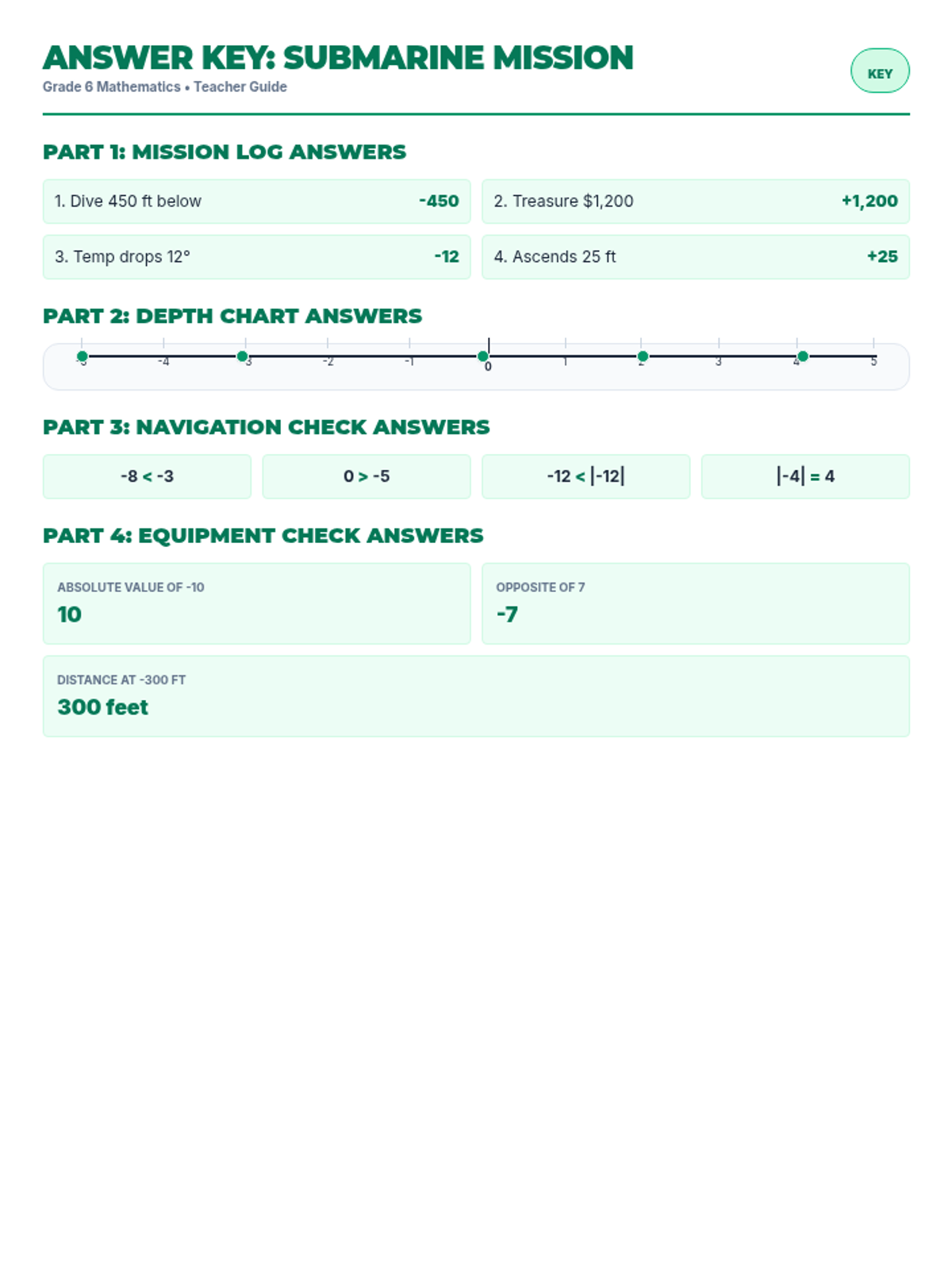
An introductory lesson on integers for 6th-grade students, focusing on real-world applications, number line visualization, and absolute value.
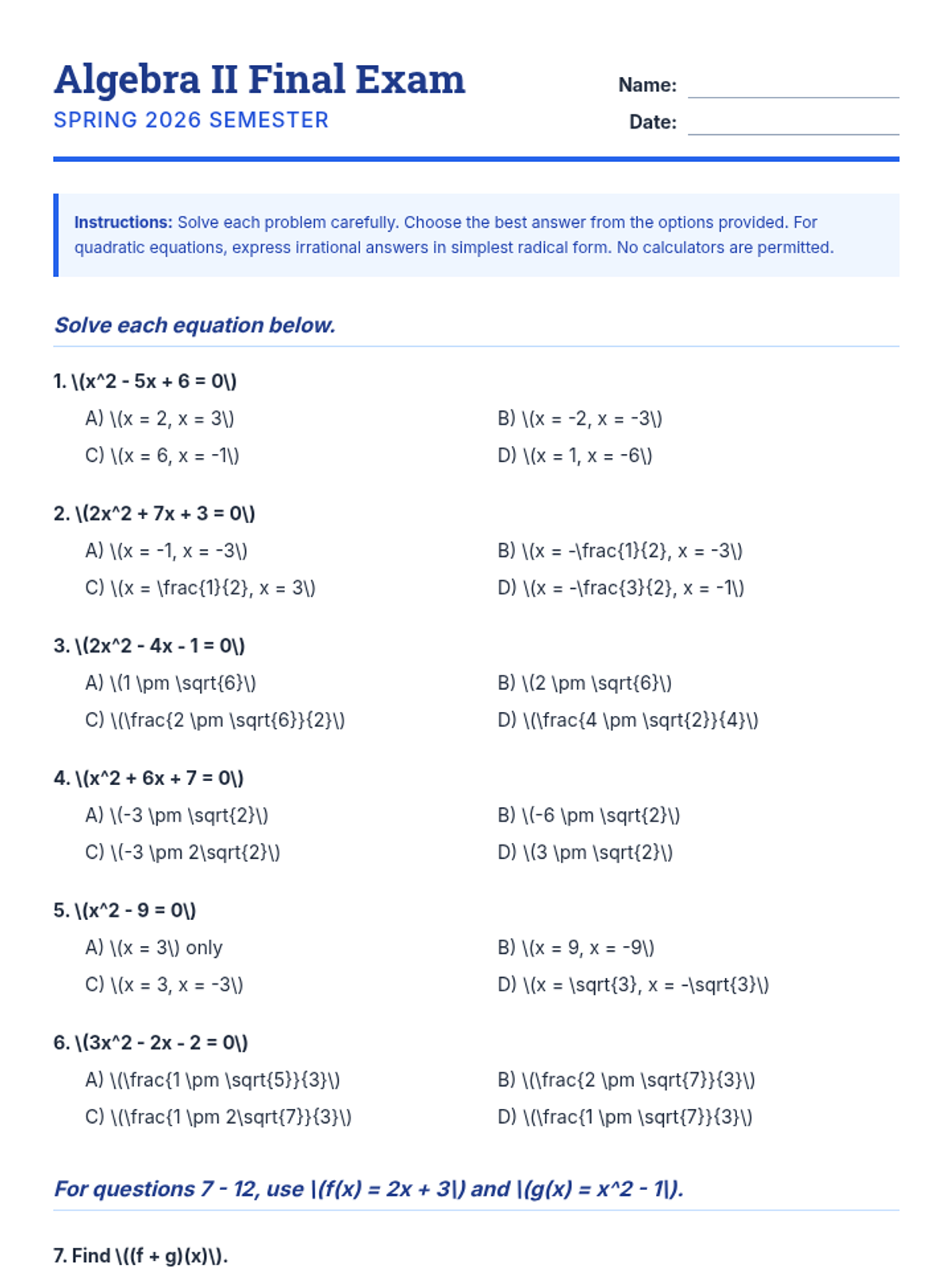
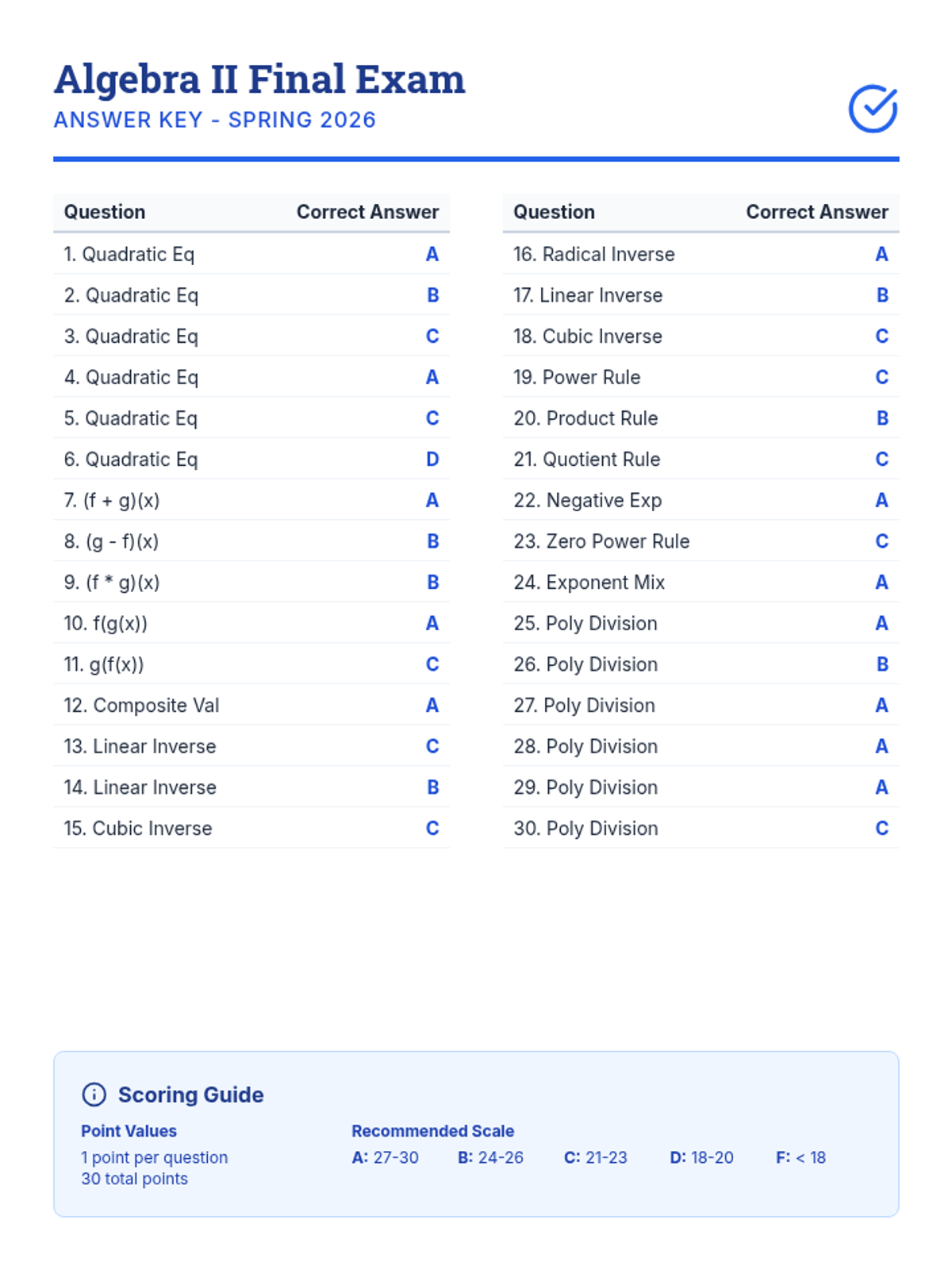
A comprehensive Algebra II final exam covering quadratics, function operations, inverses, exponent rules, and polynomial division.
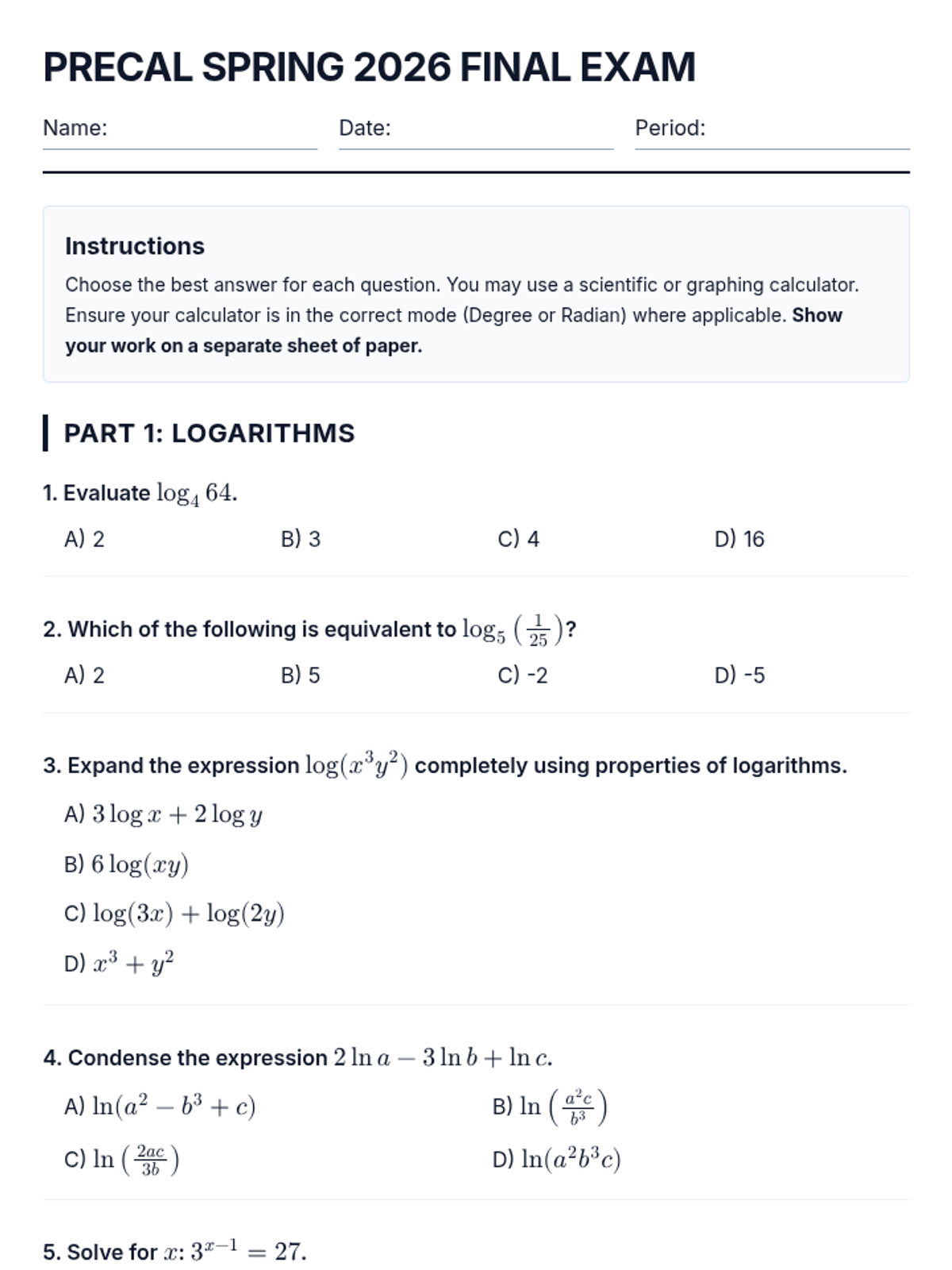
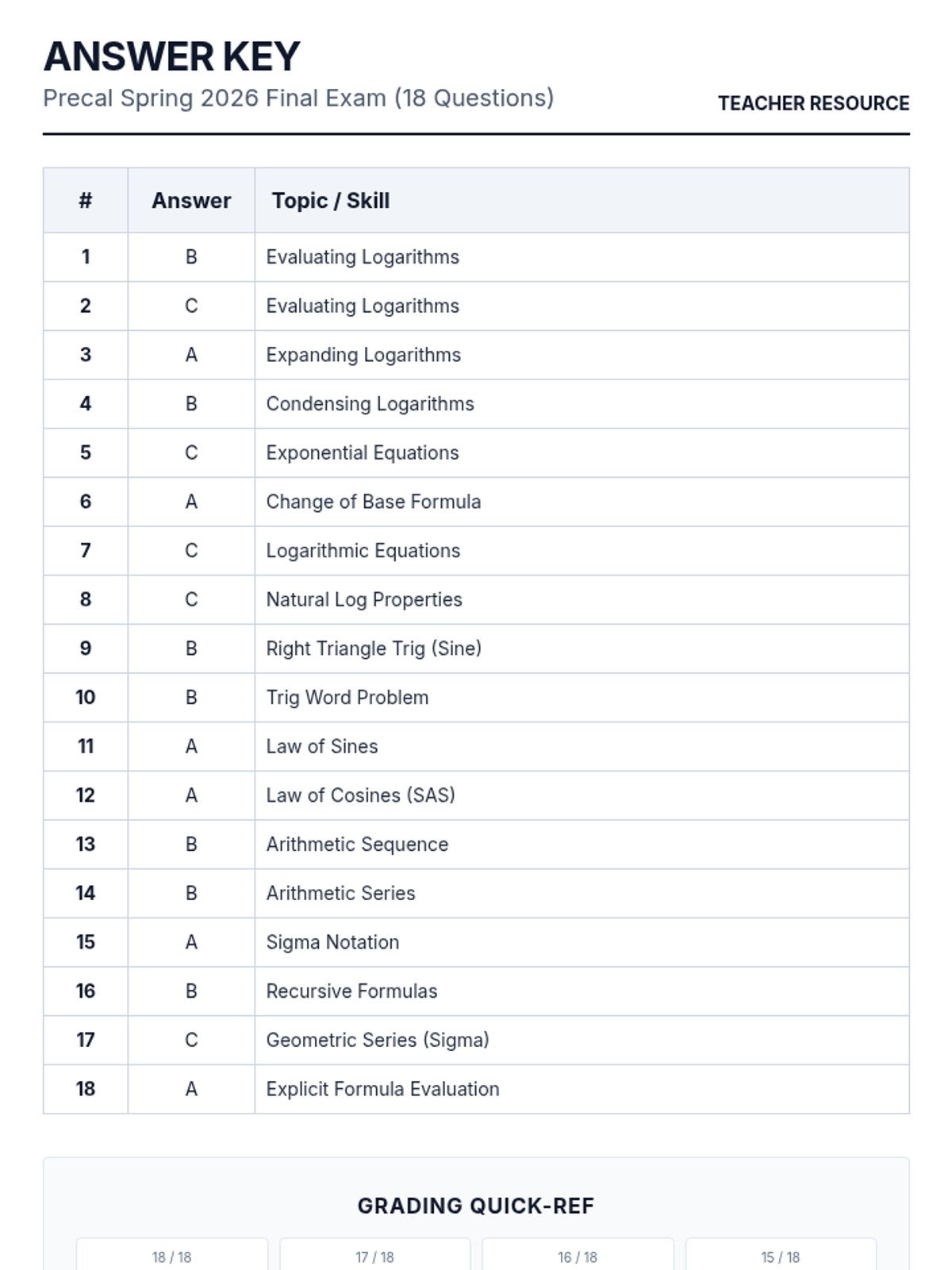
A comprehensive final exam for Spring 2026 covering logarithms, trigonometry of triangles, and sequences and series for a Precalculus course.
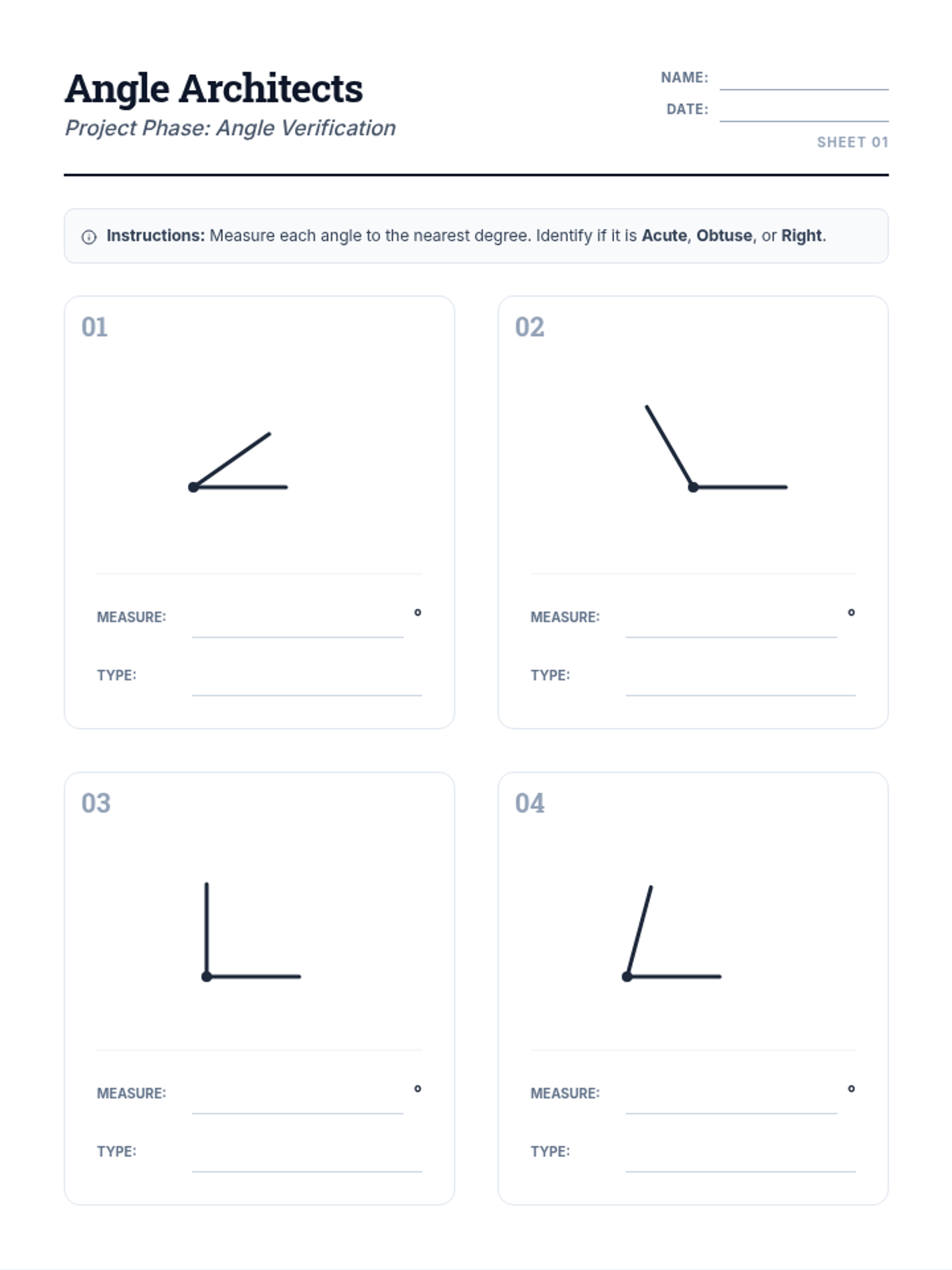
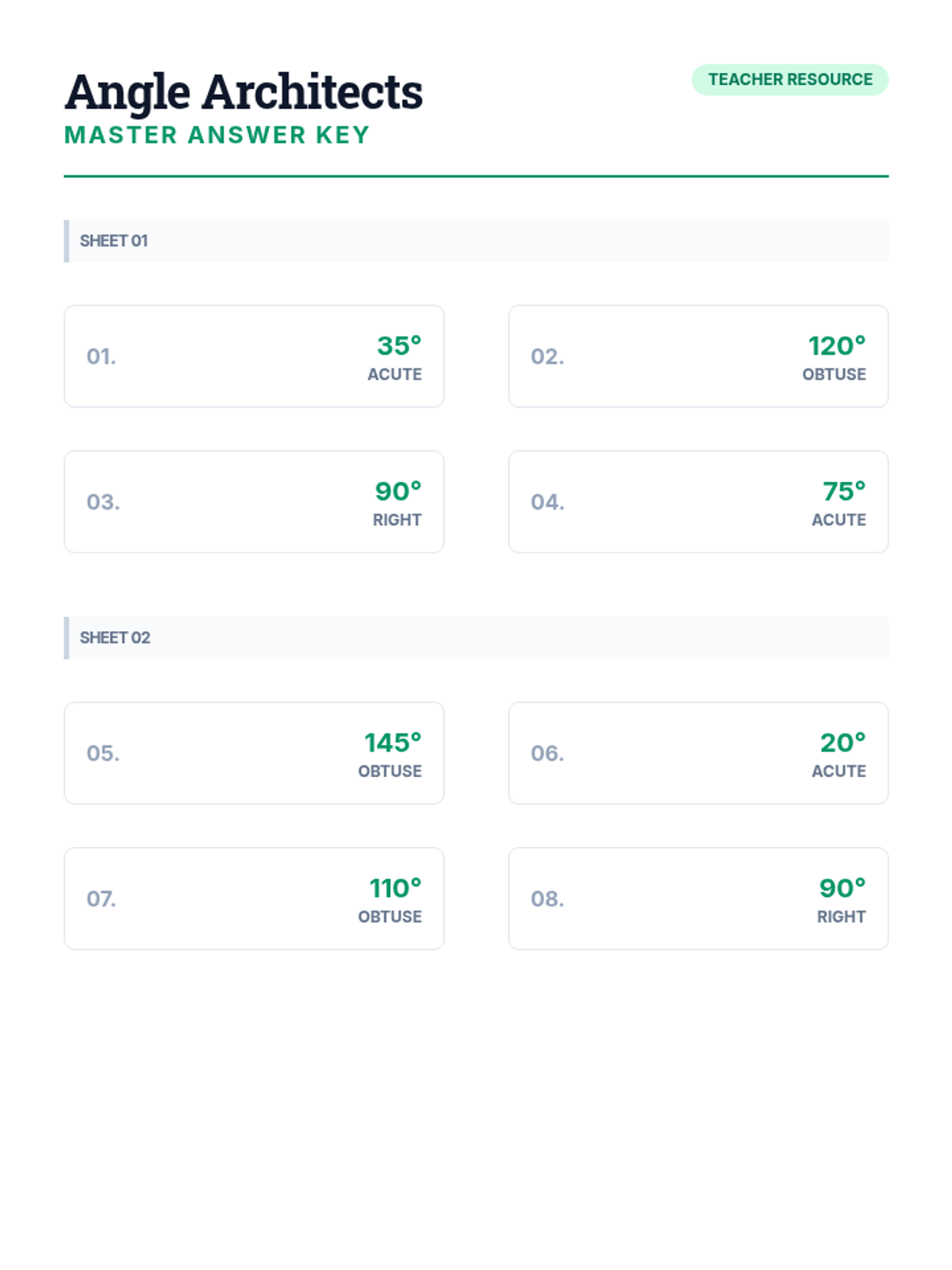
A hands-on geometry lesson focused on accurately measuring acute, obtuse, and right angles using a protractor. Students take on the role of 'Angle Architects' to verify design specifications.
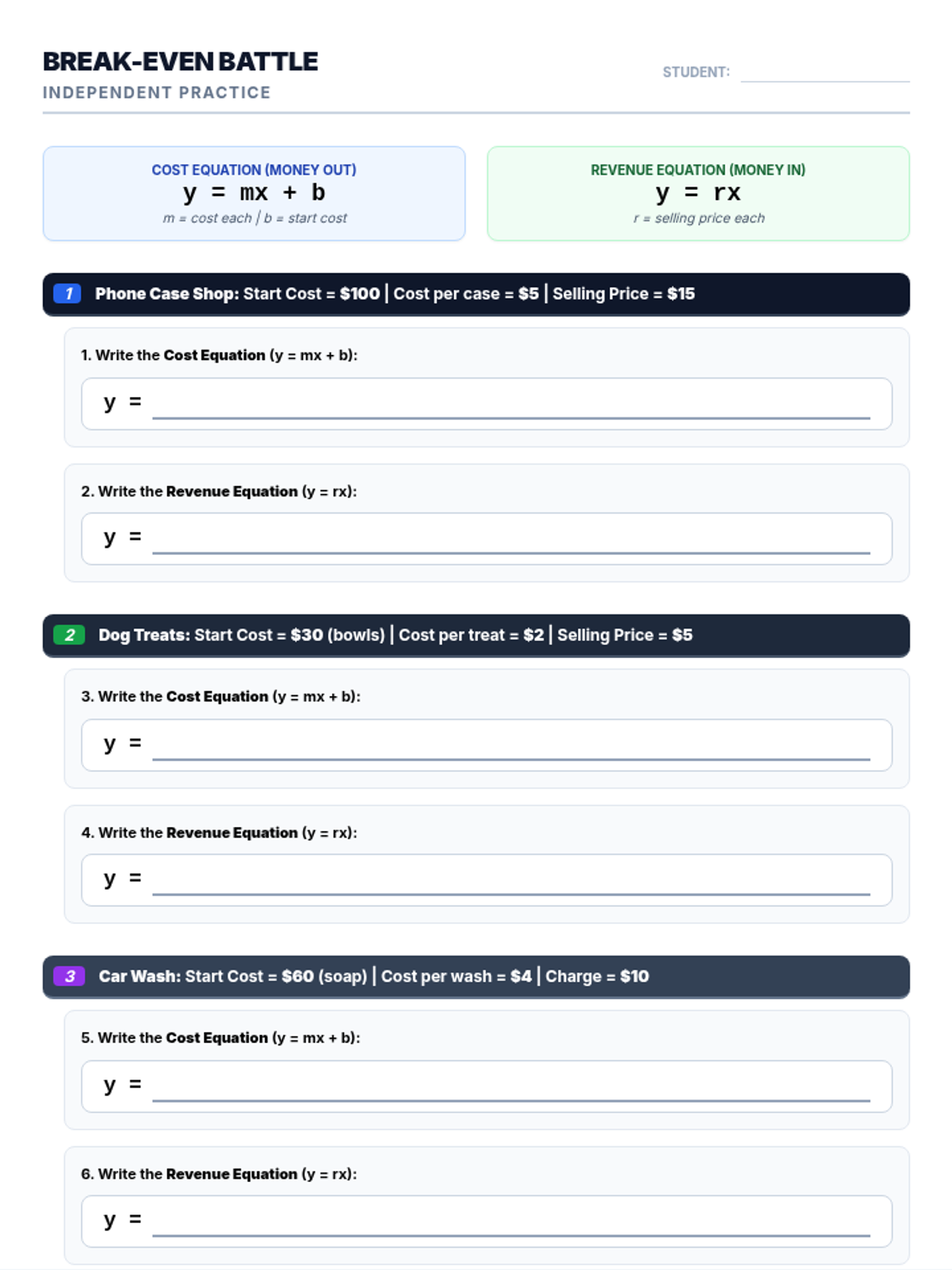
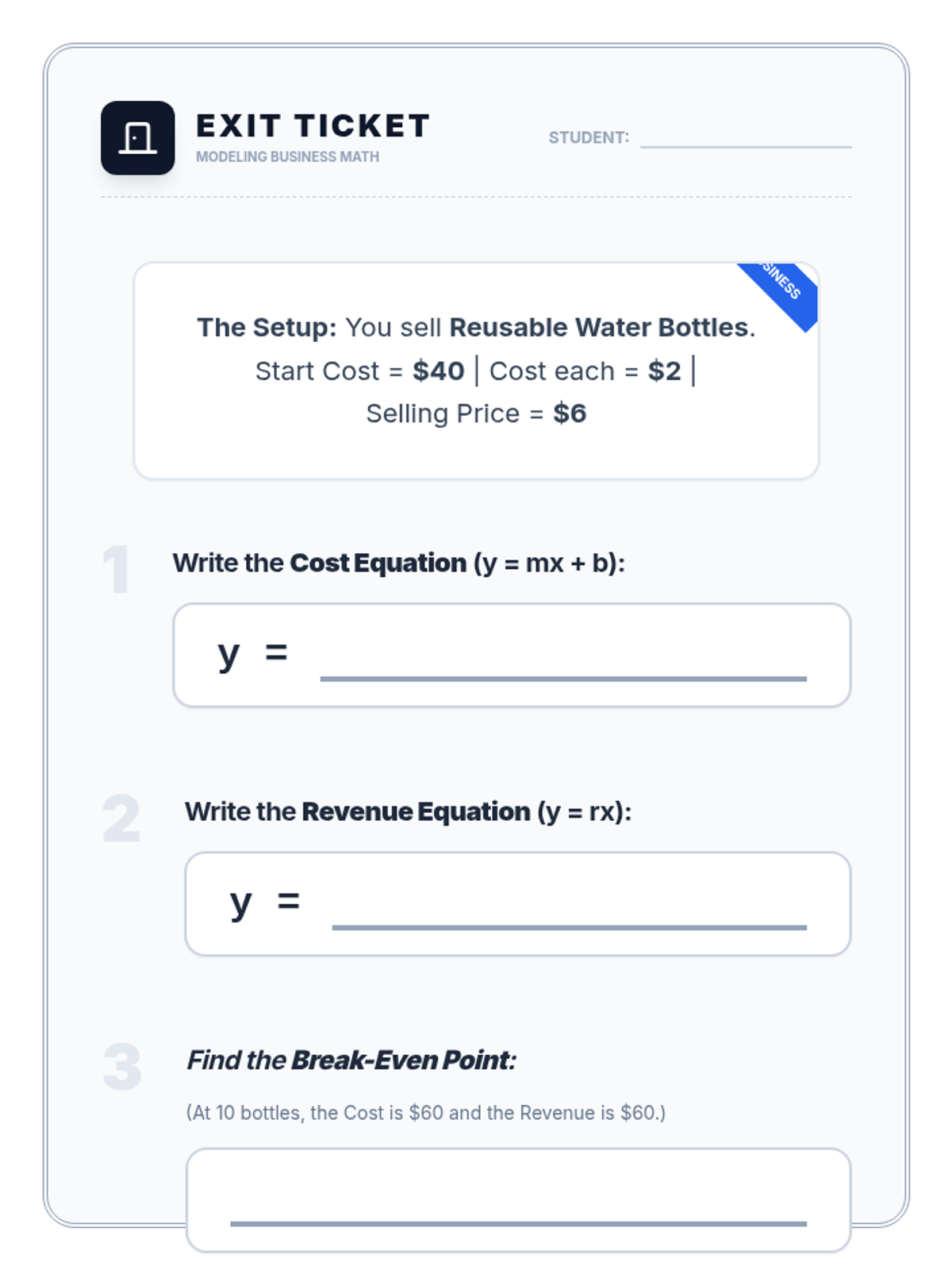
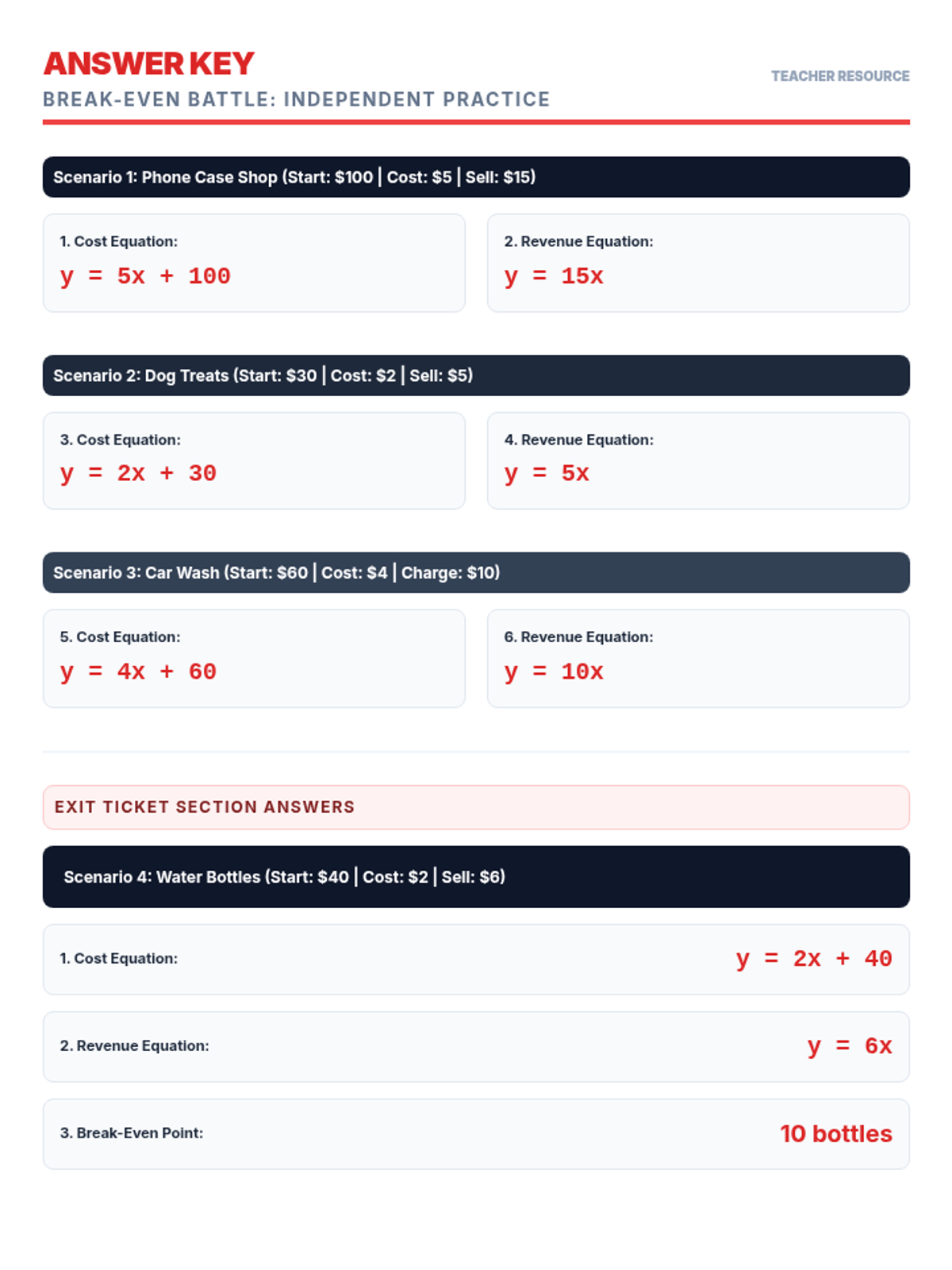
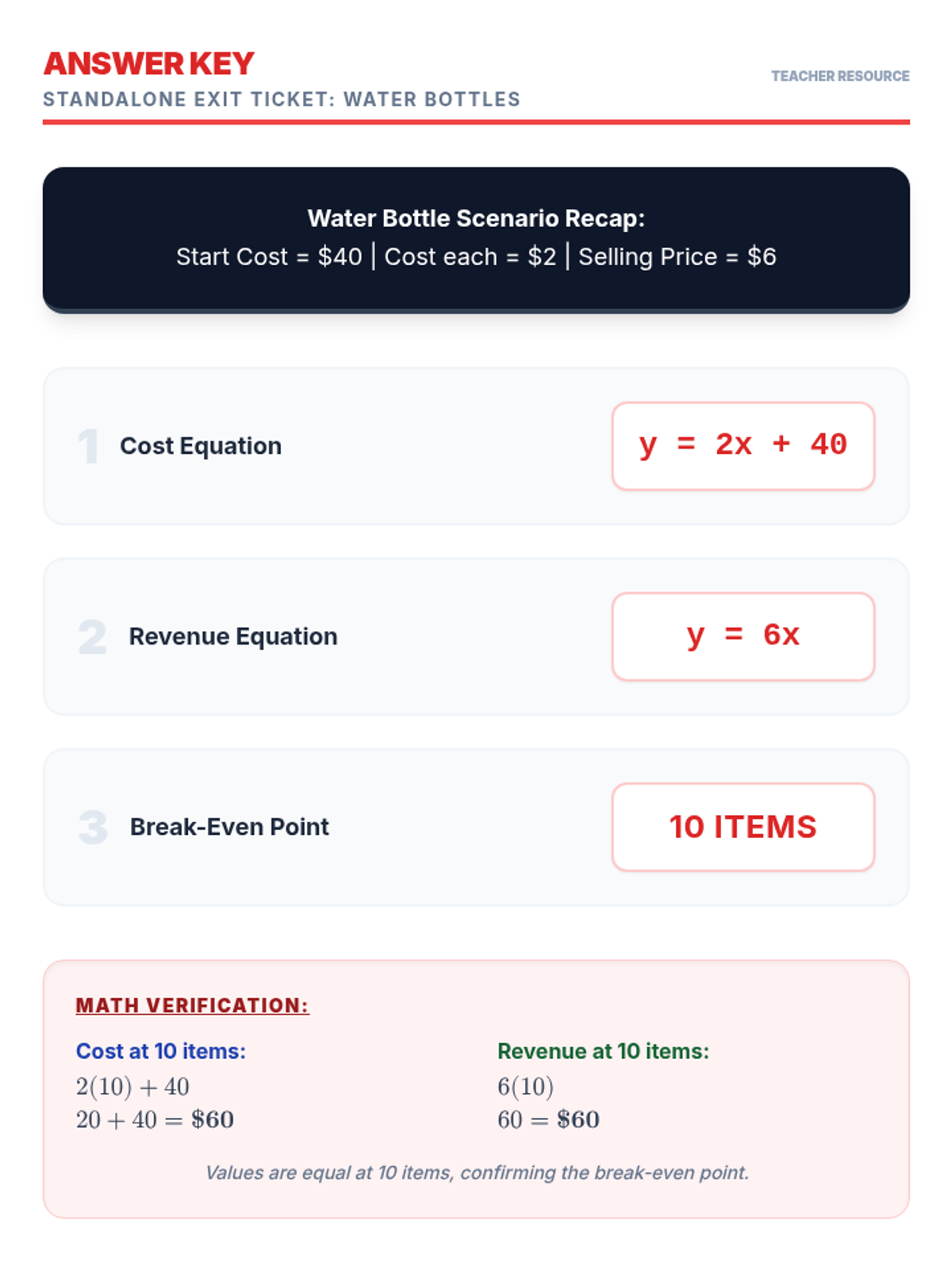
A math lesson focused on modeling real-world business scenarios using linear equations to find the break-even point between cost and revenue.
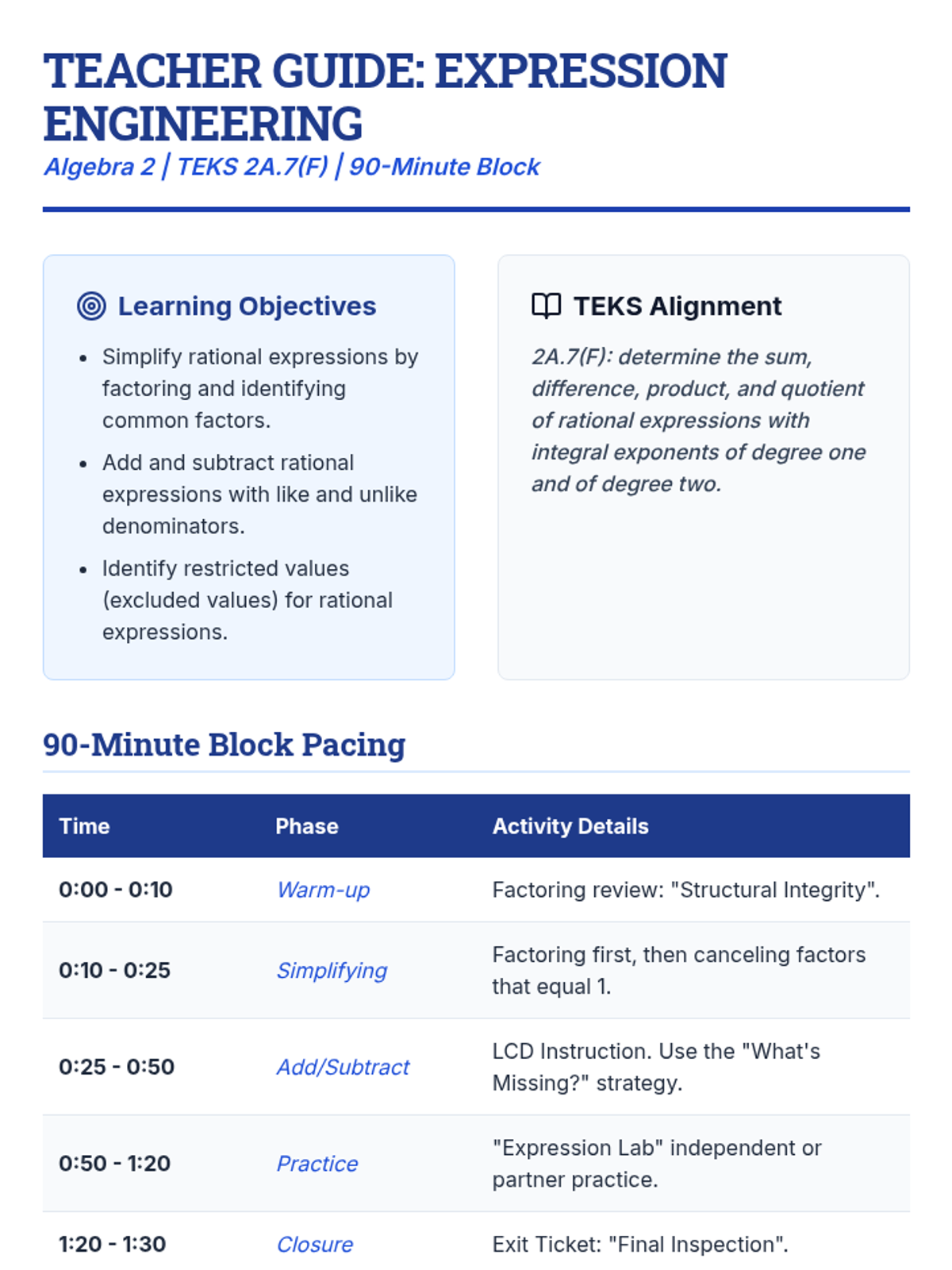
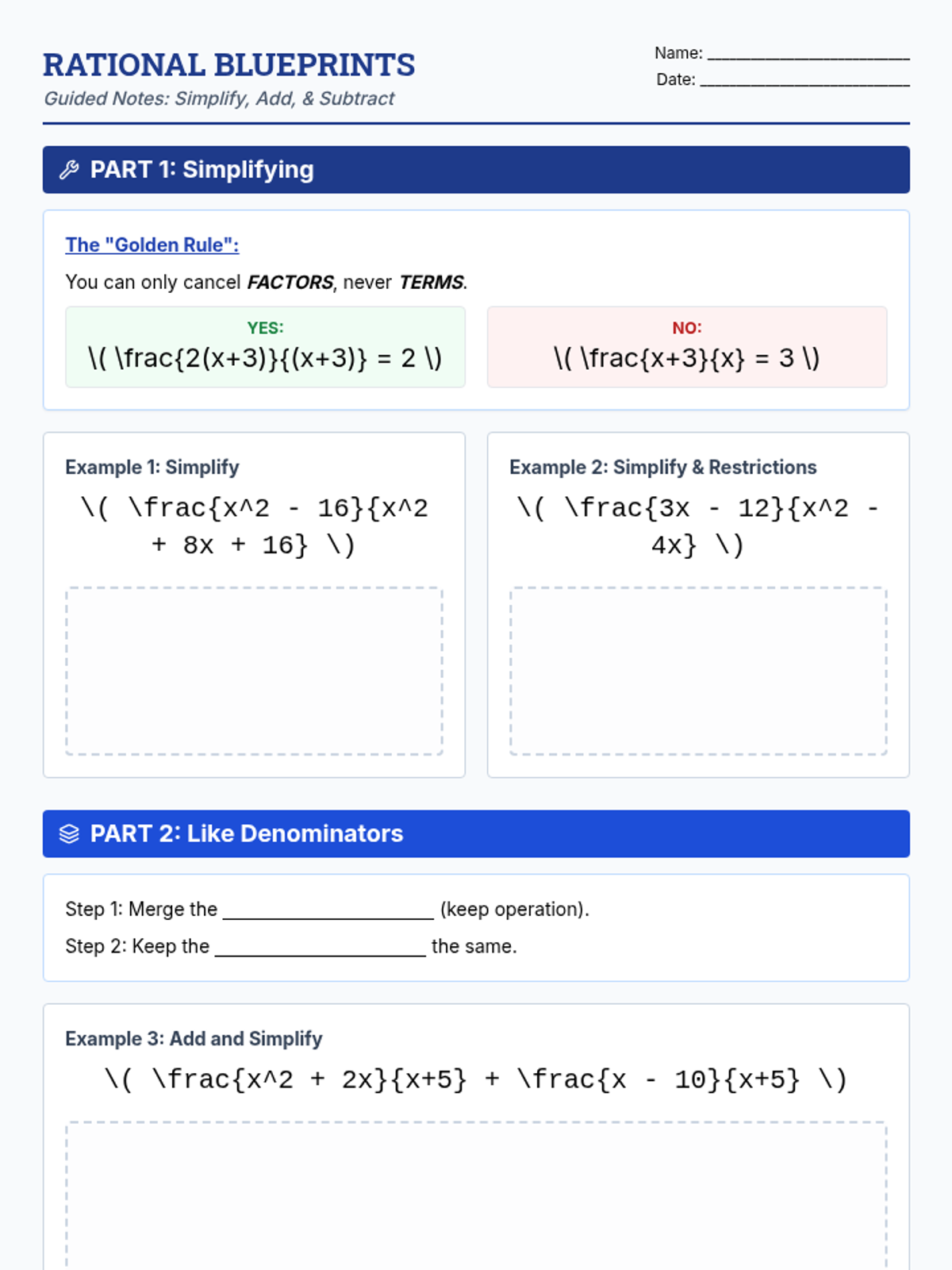
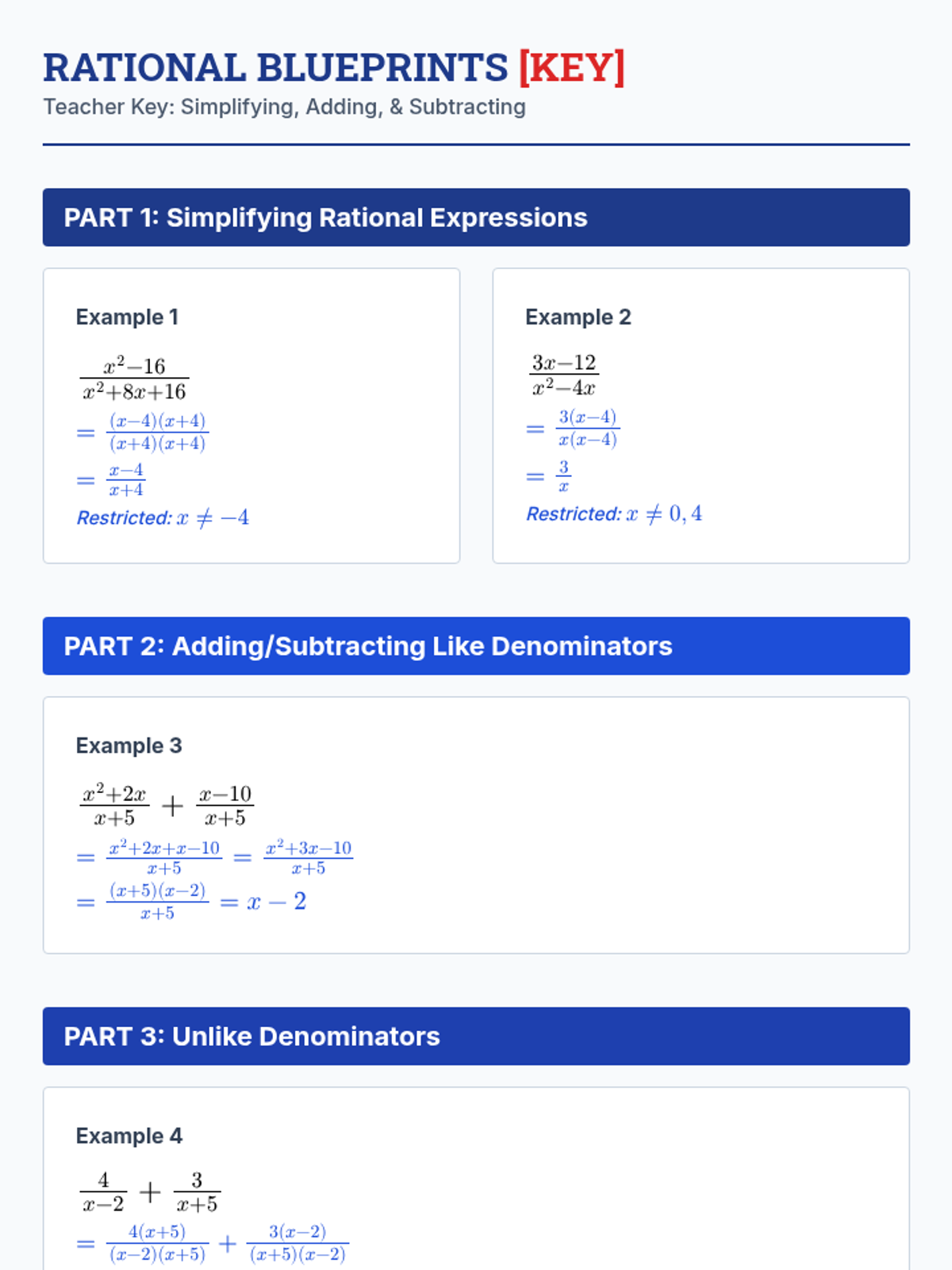
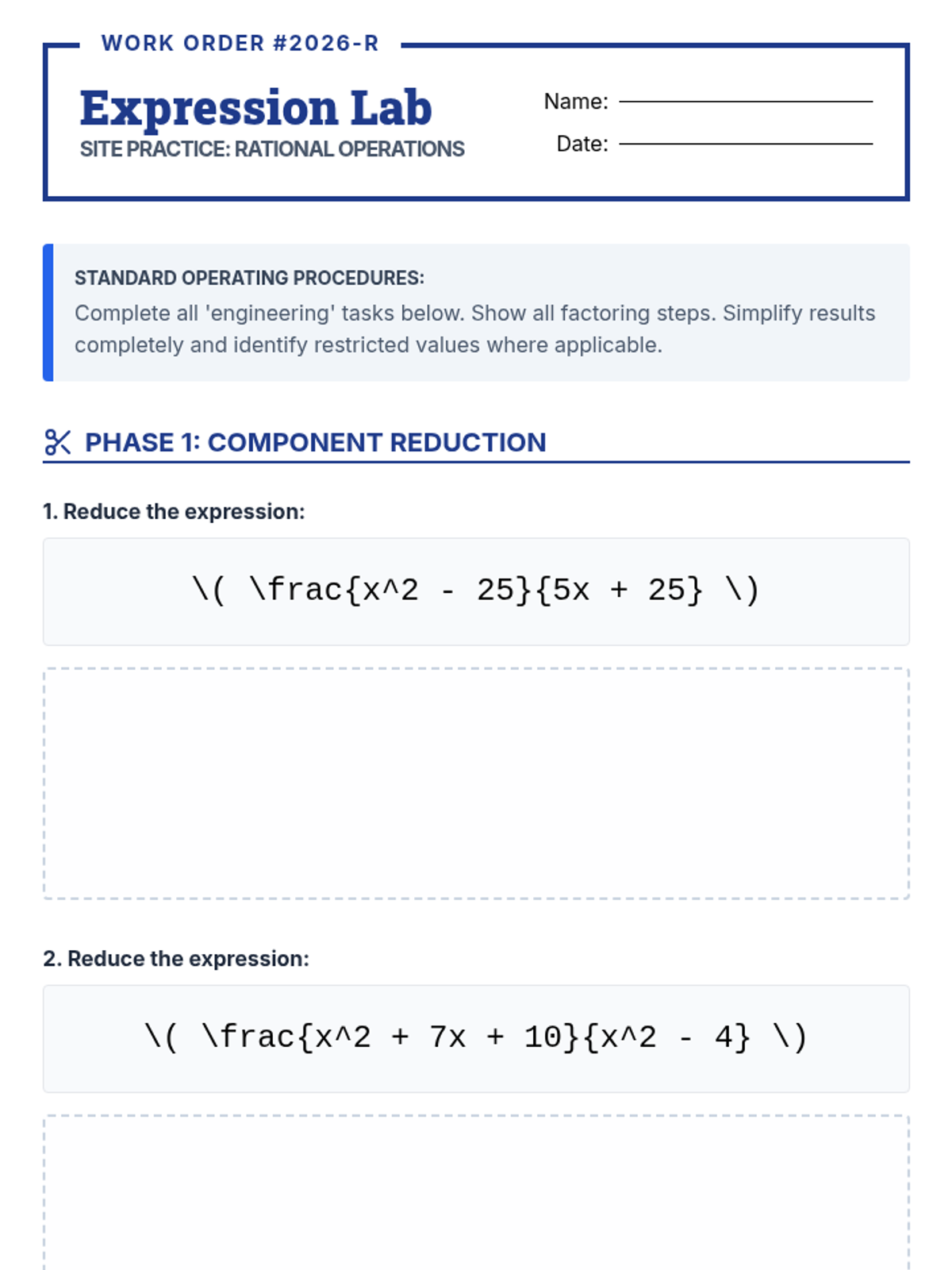
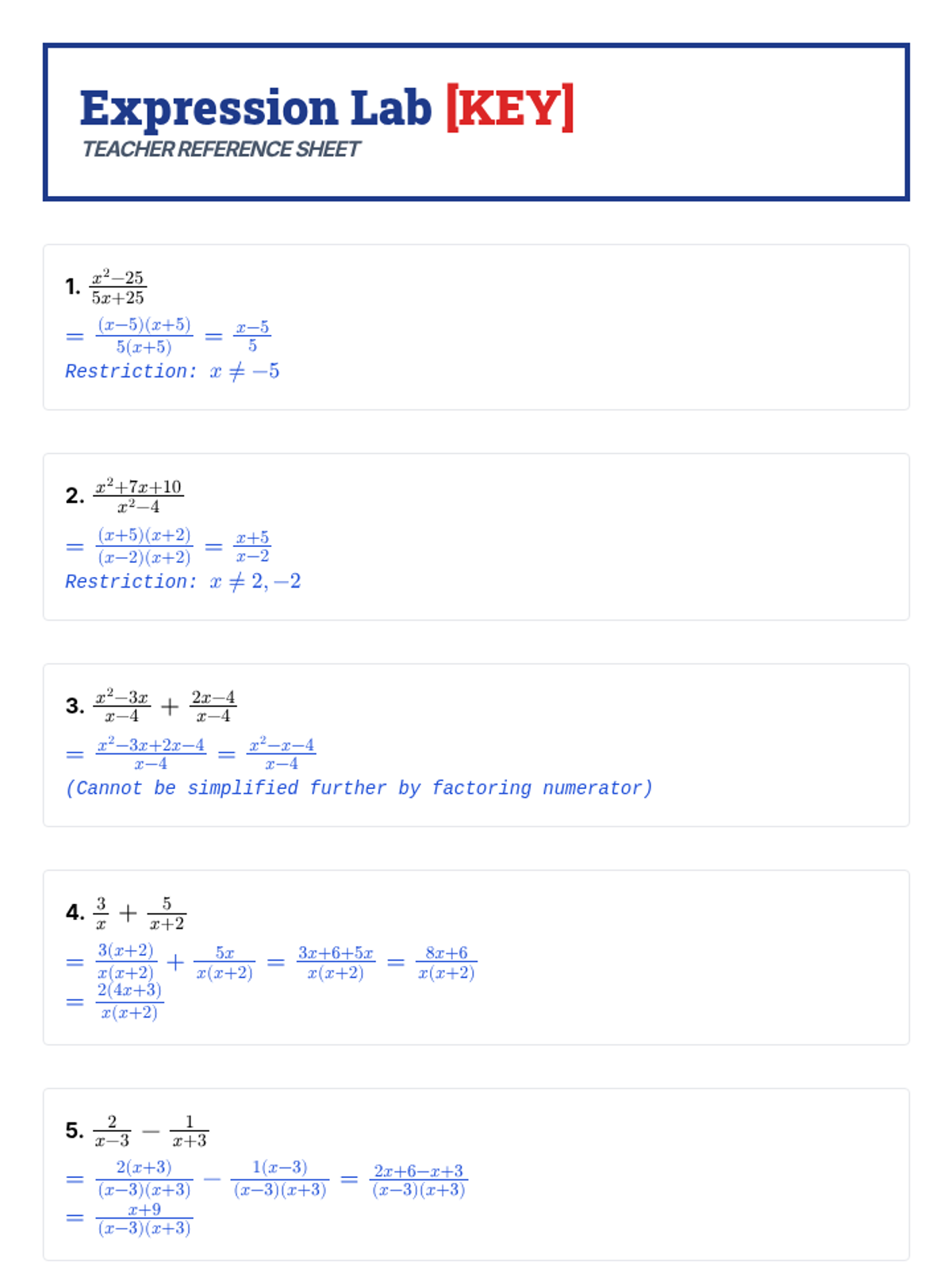
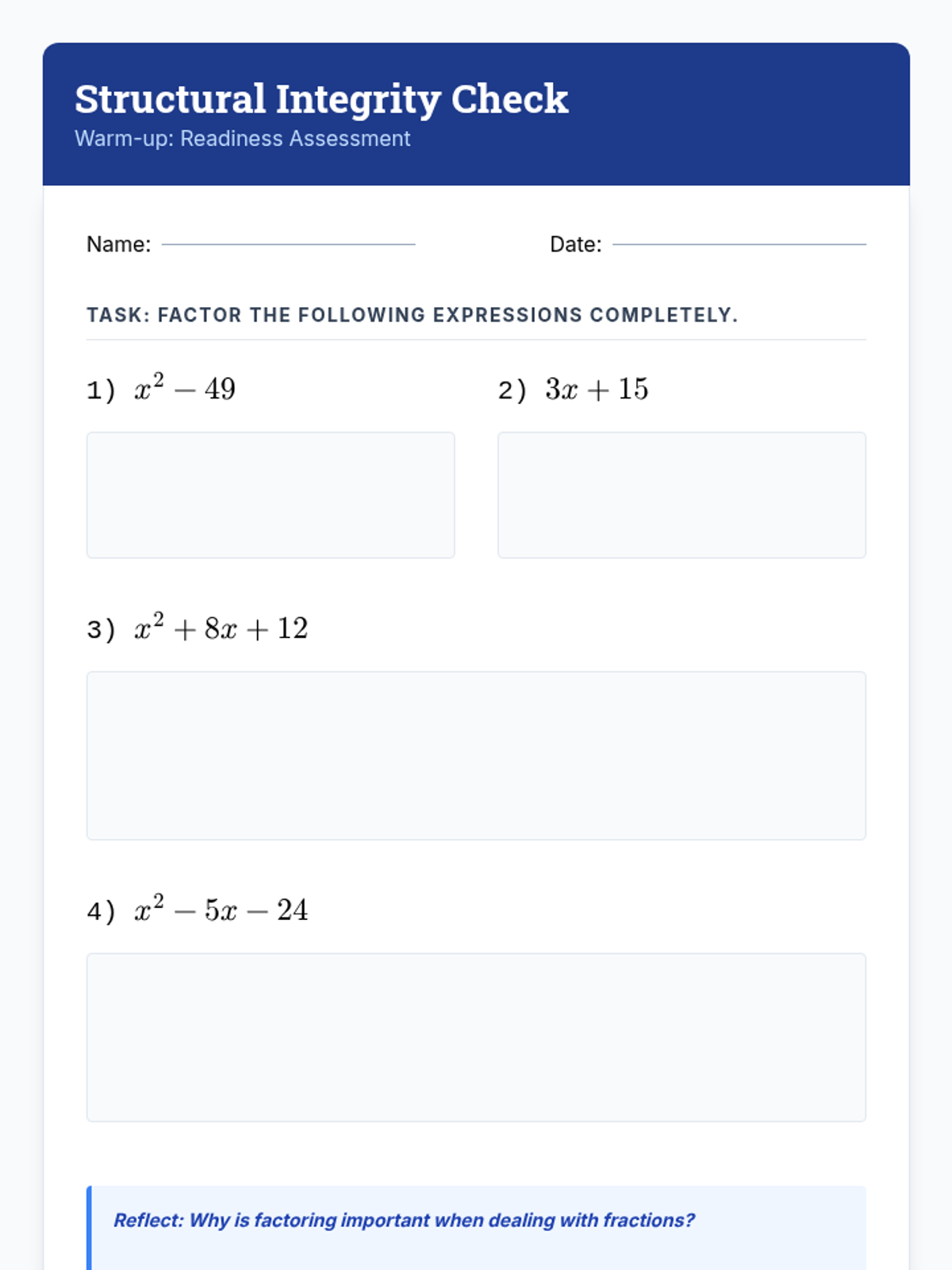
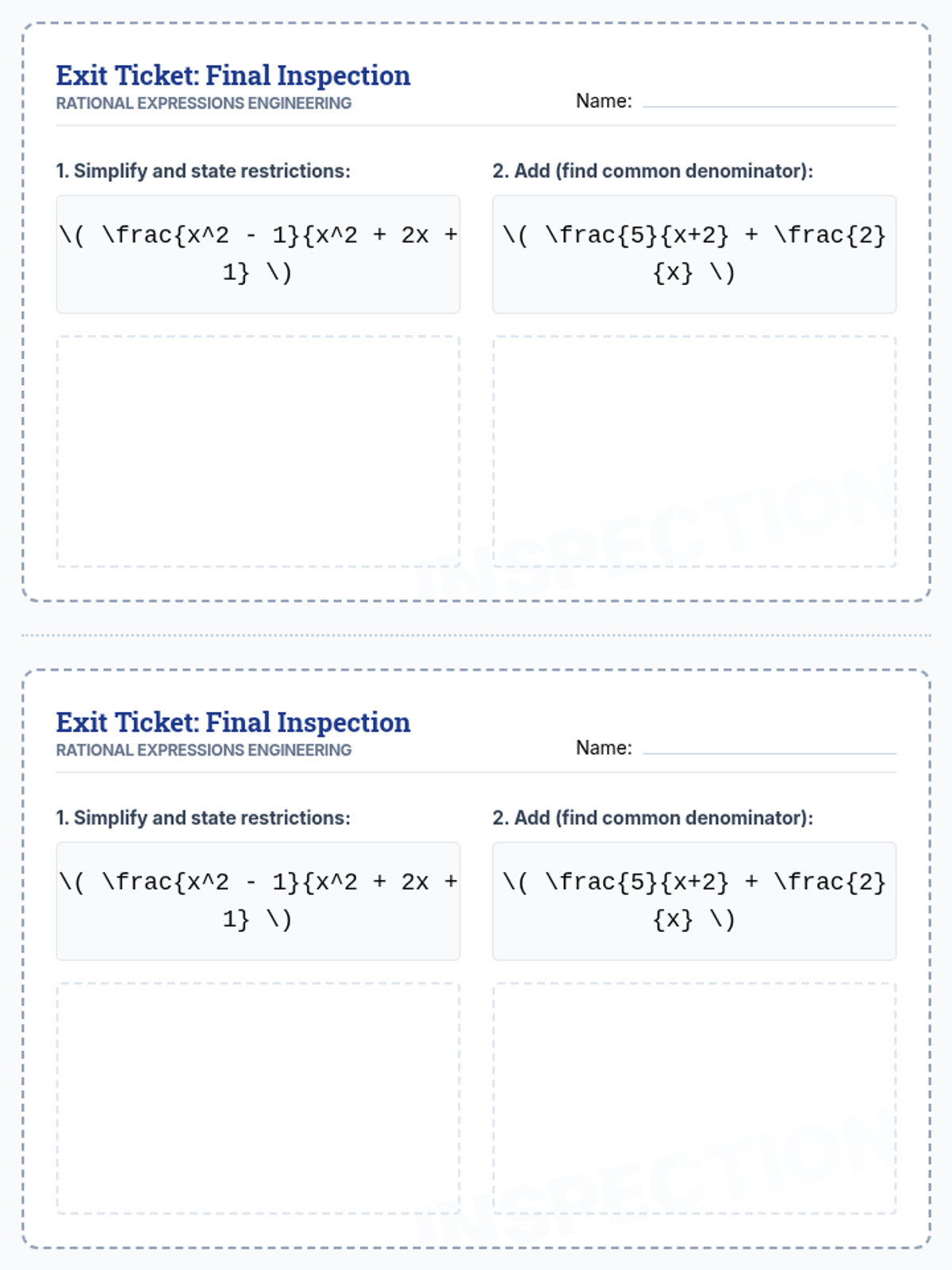
A 90-minute Algebra 2 lesson on simplifying, adding, and subtracting rational expressions, aligned with TEKS 2A.7(F). Students will use factoring techniques to 'engineer' simpler forms and combine complex expressions.
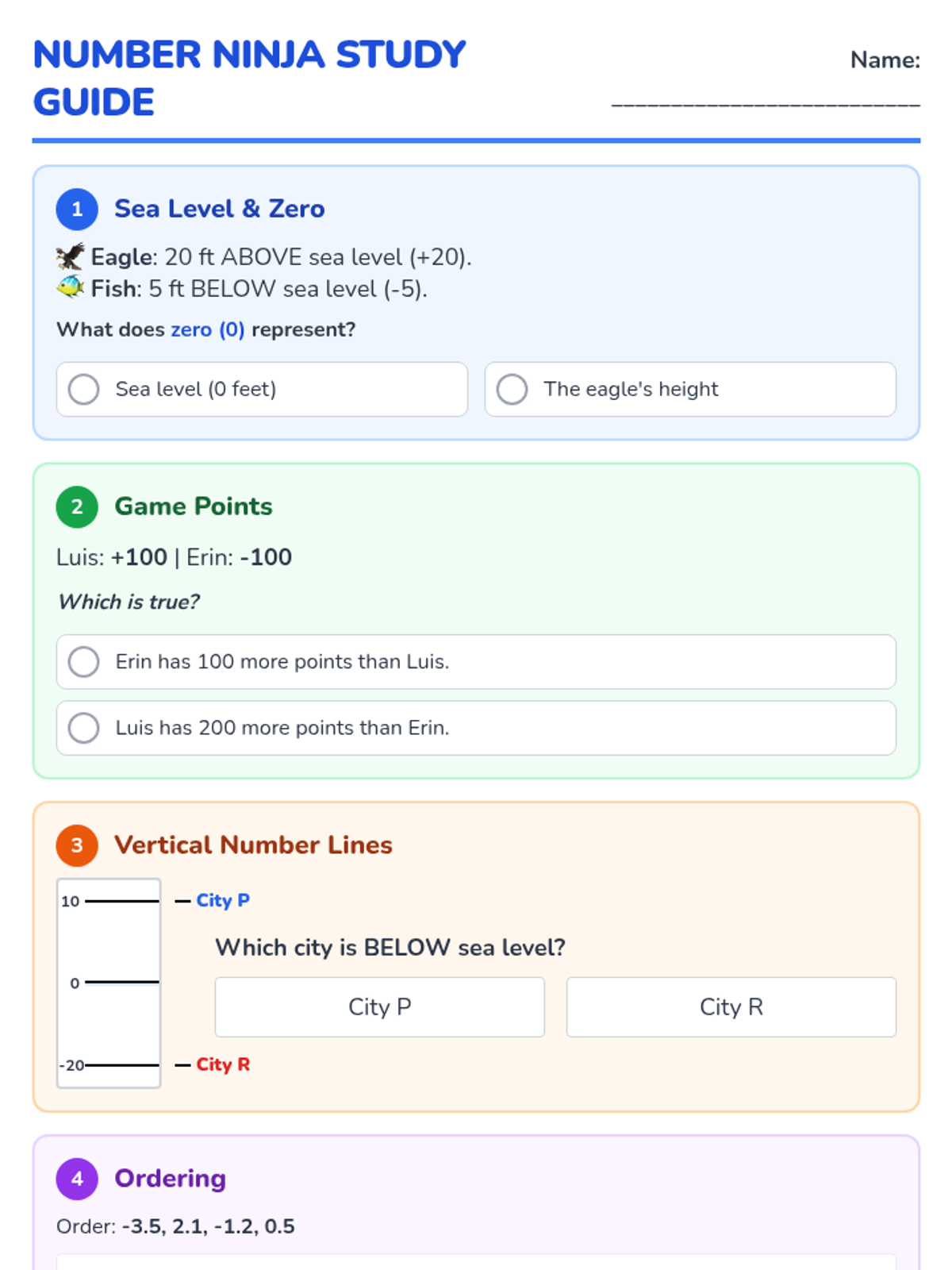
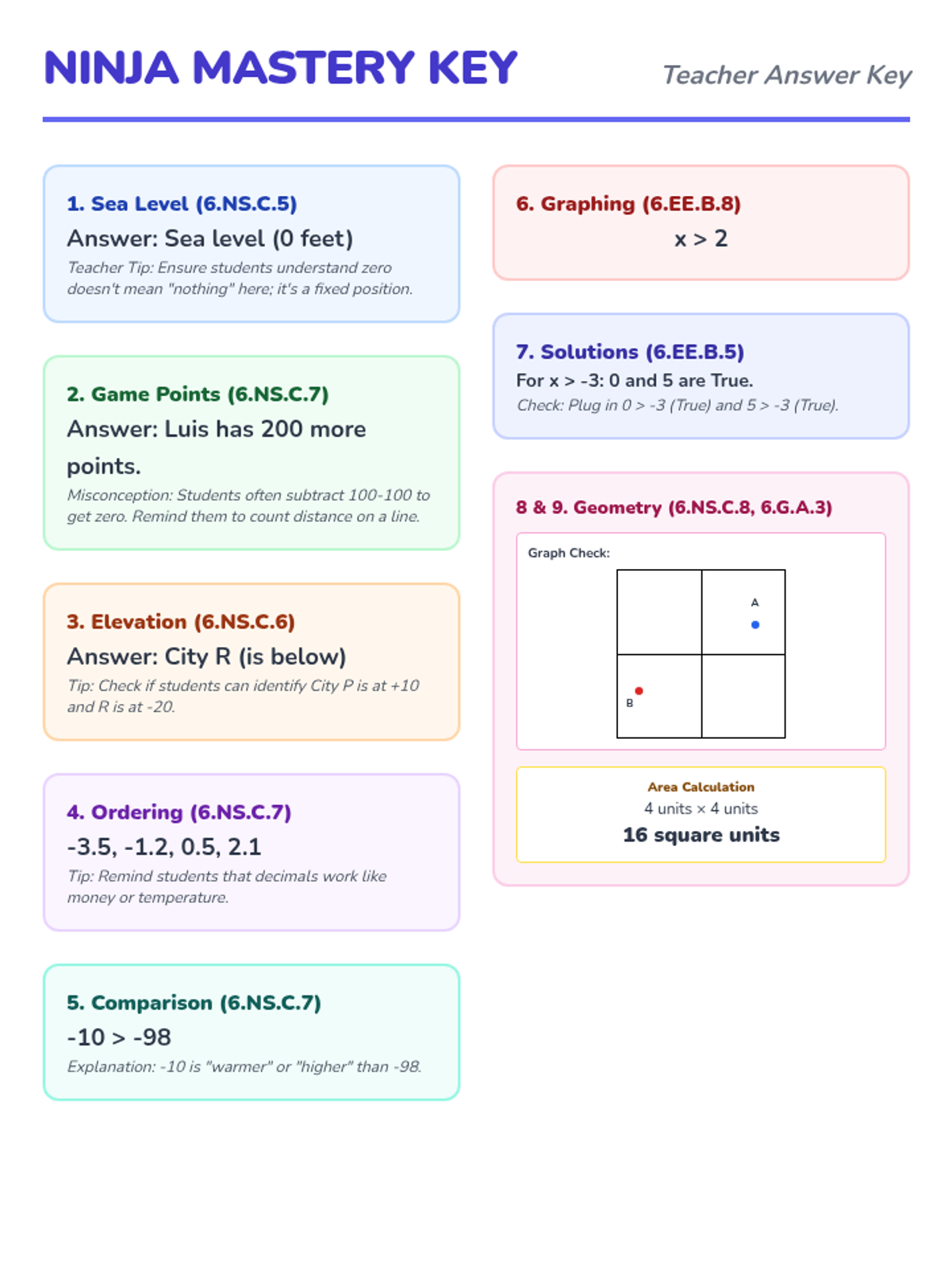
A modified study guide and assessment prep resource for 6th grade rational numbers, integers, and coordinate geometry, specifically designed with IEP accommodations.
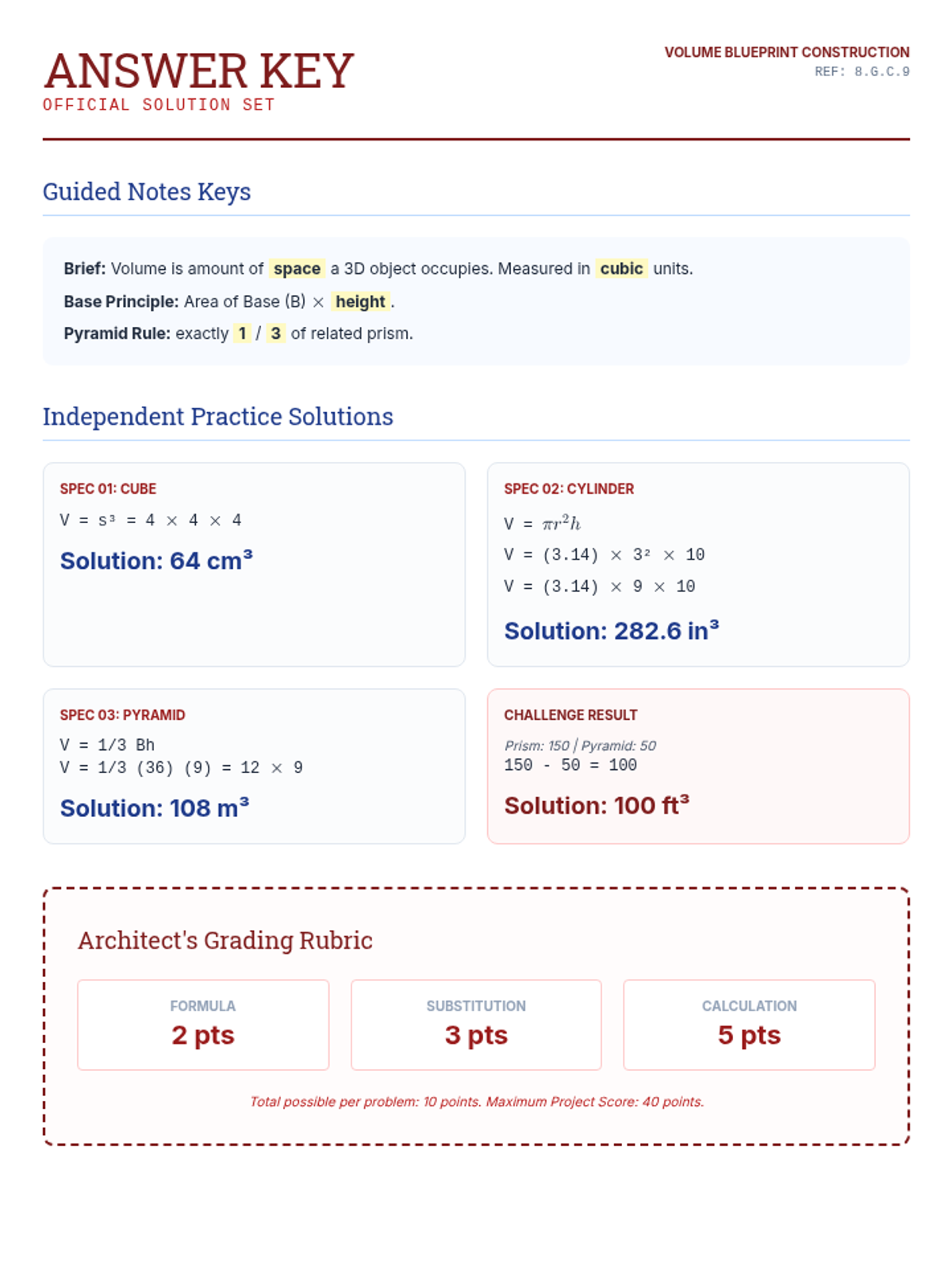
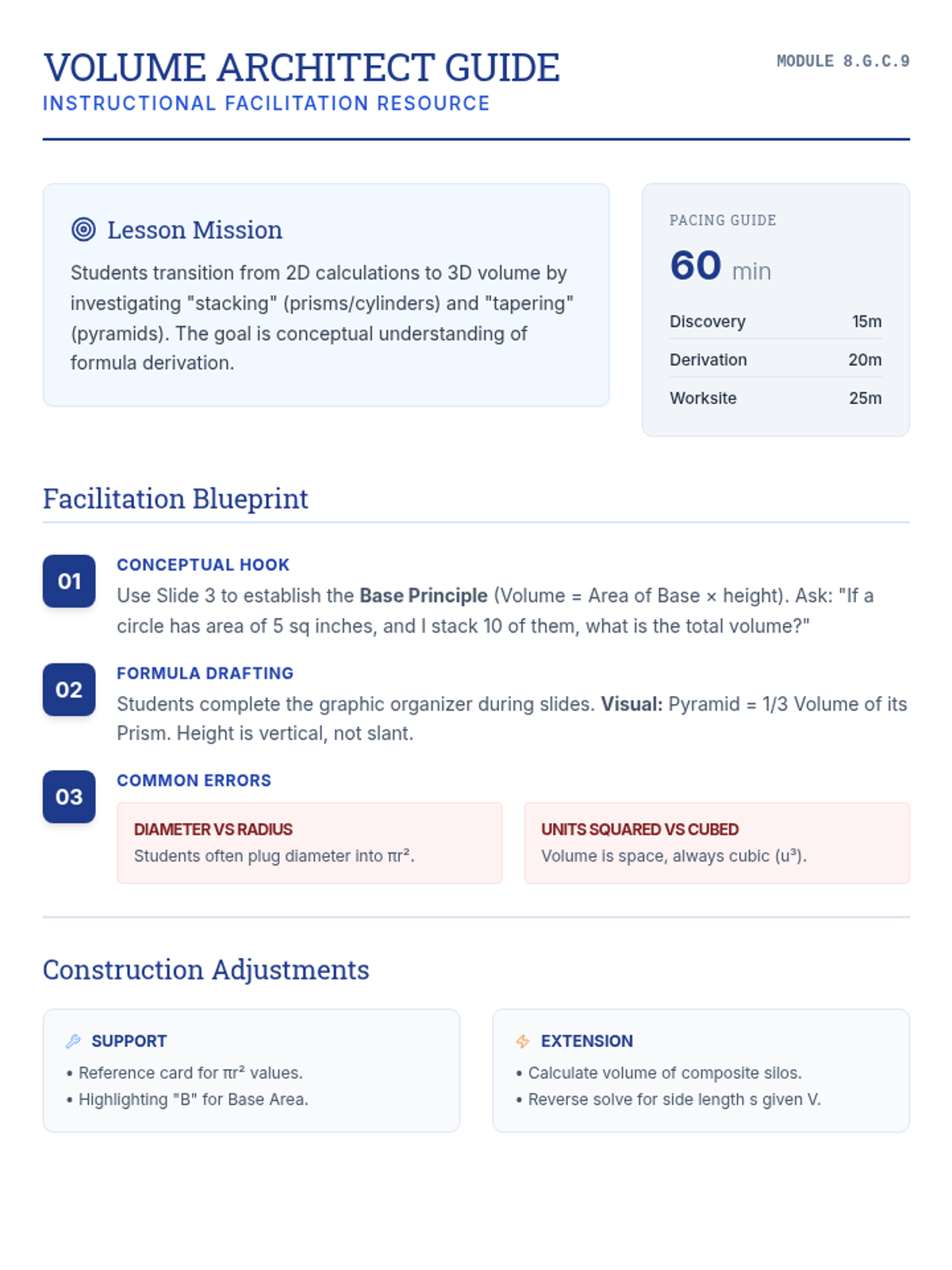
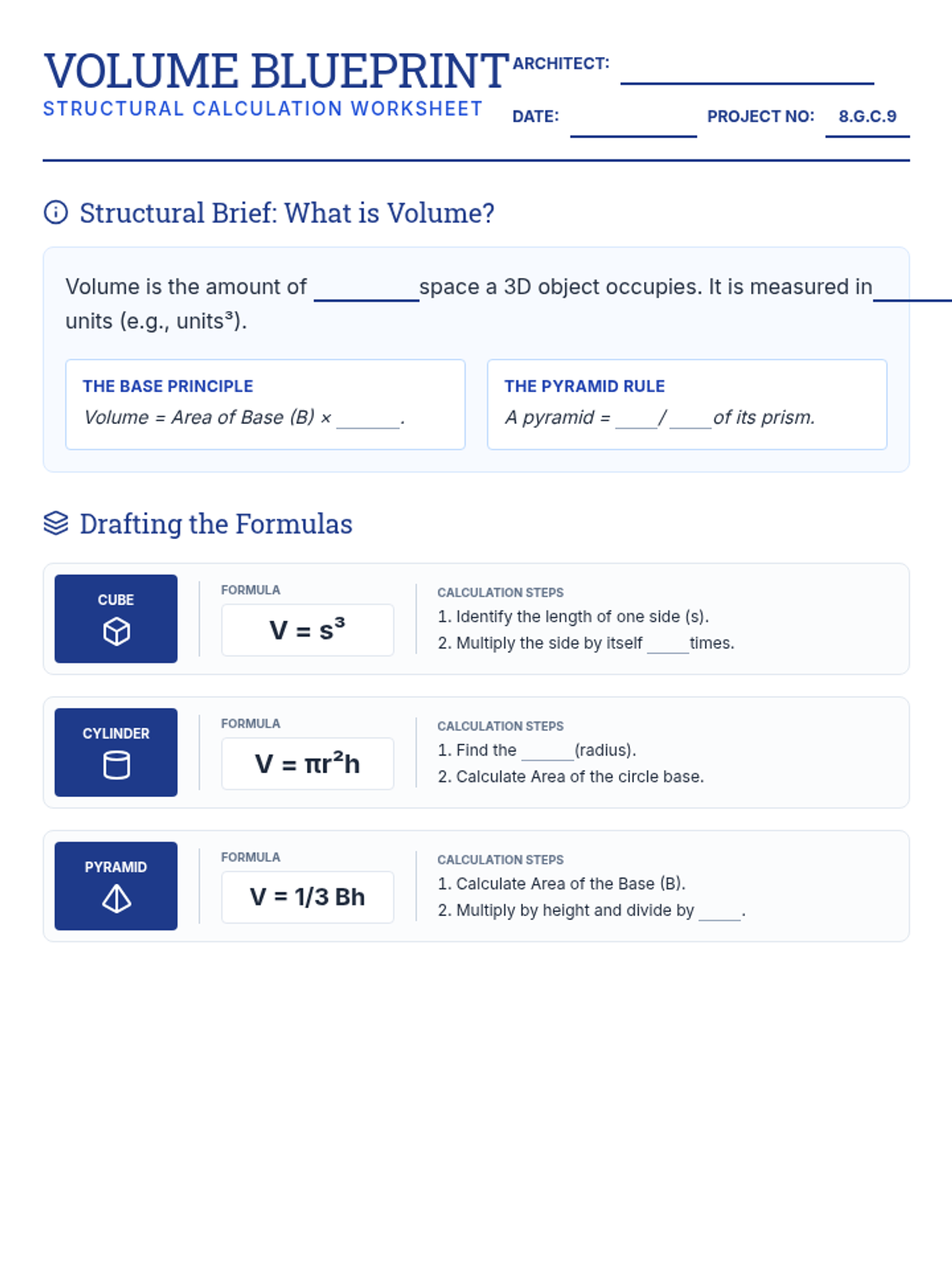
A lesson on calculating the volume of cubes, cylinders, and pyramids using a blueprint-inspired graphic organizer and guided notes.
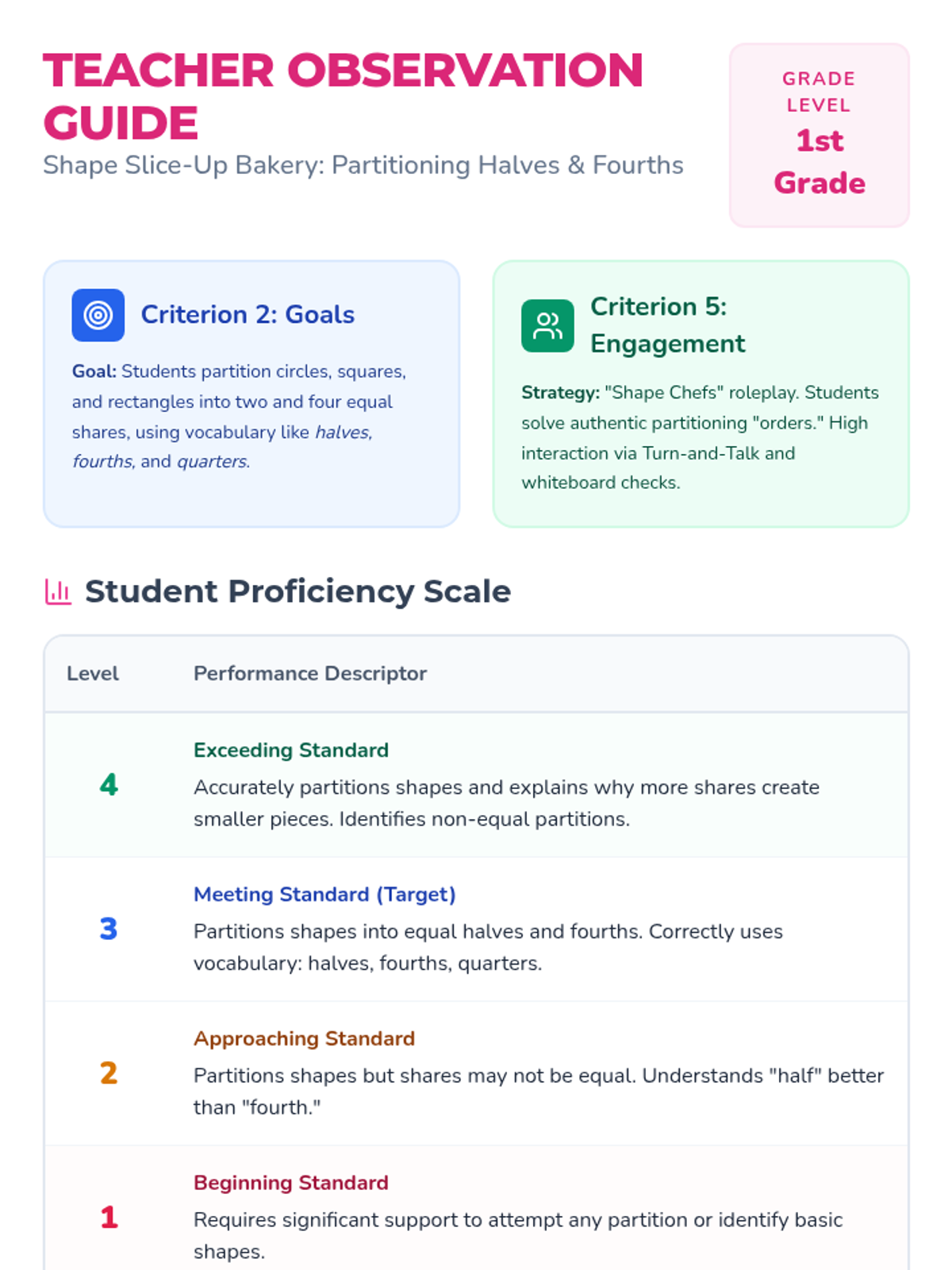
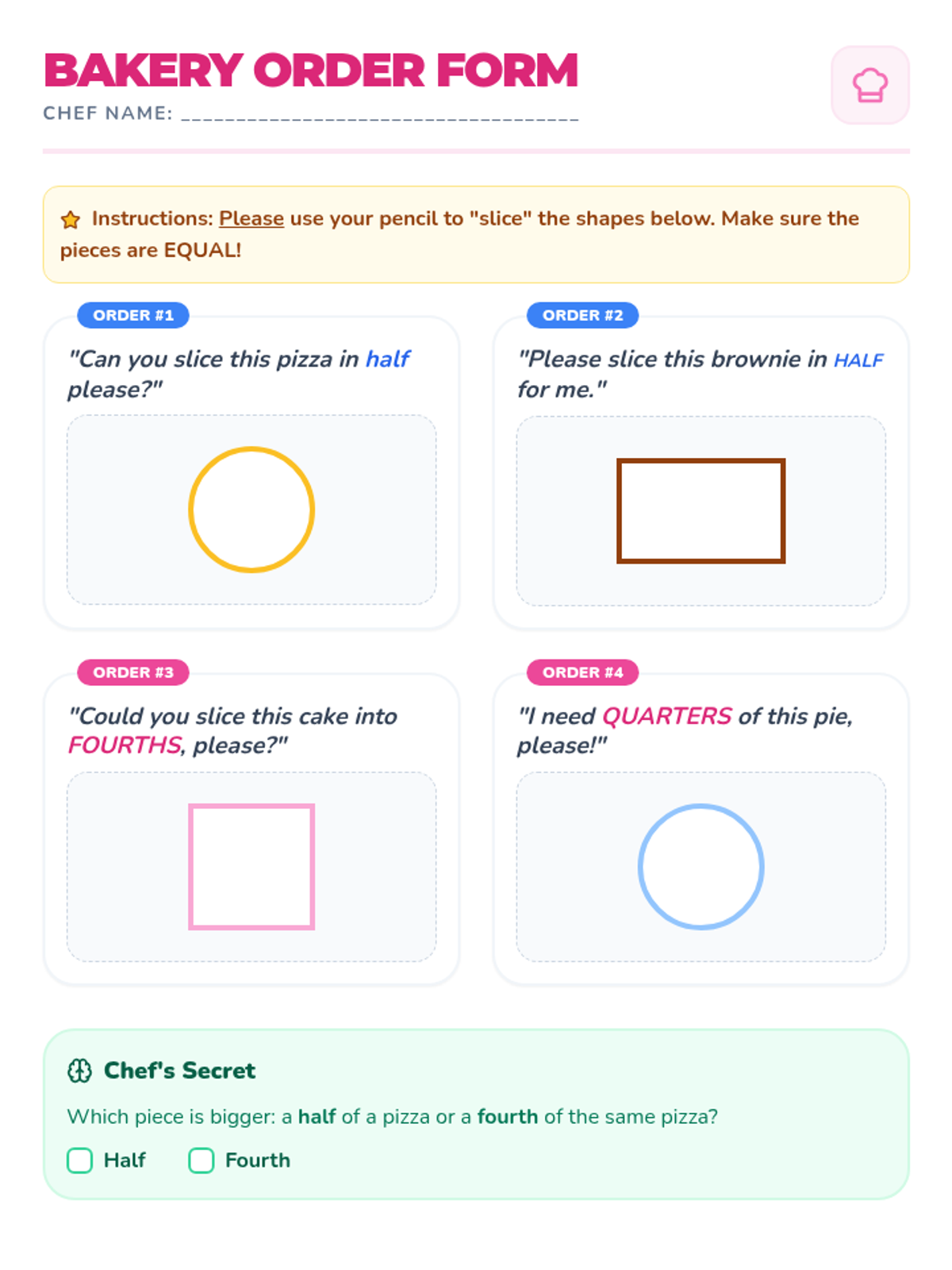
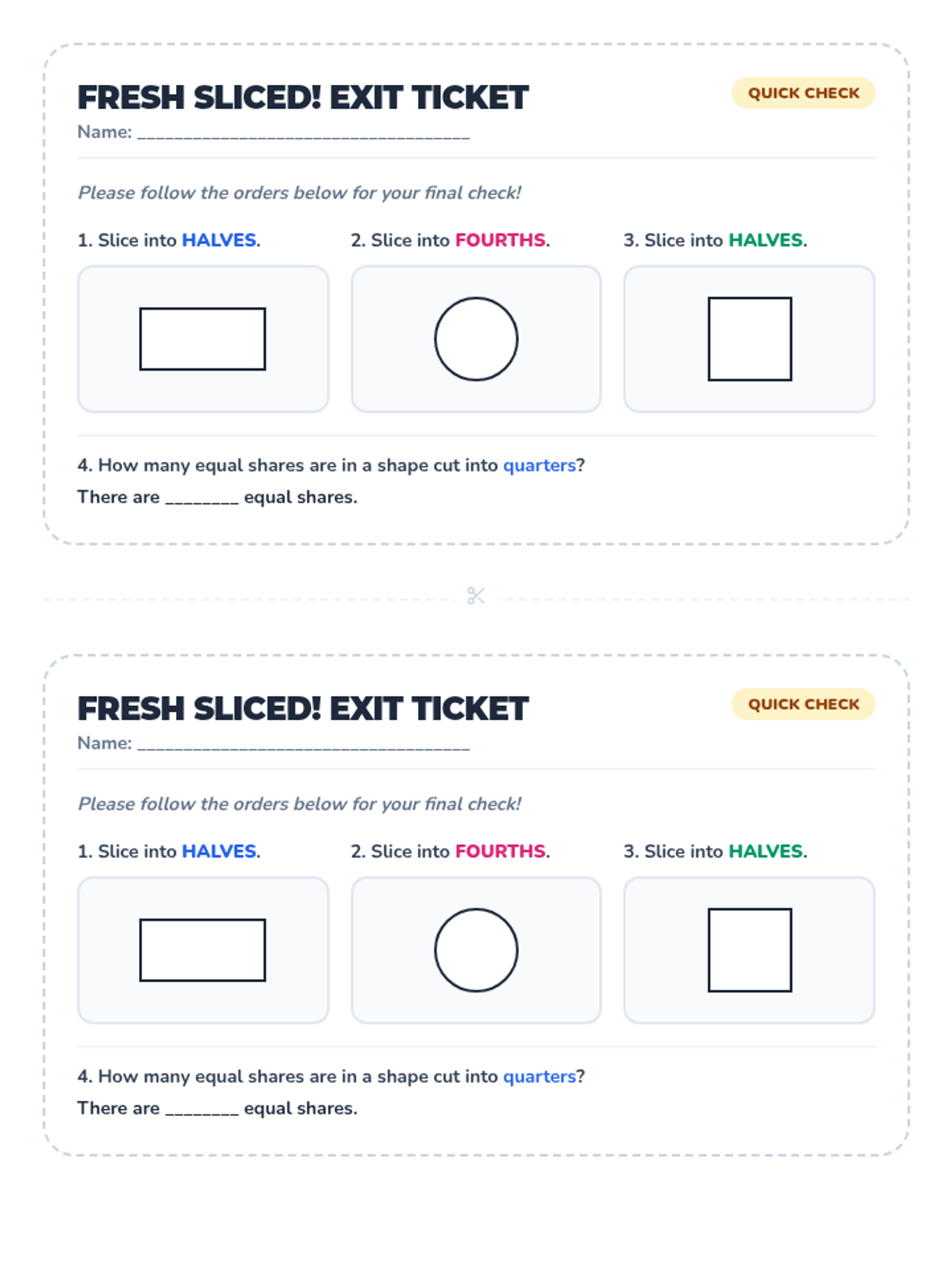
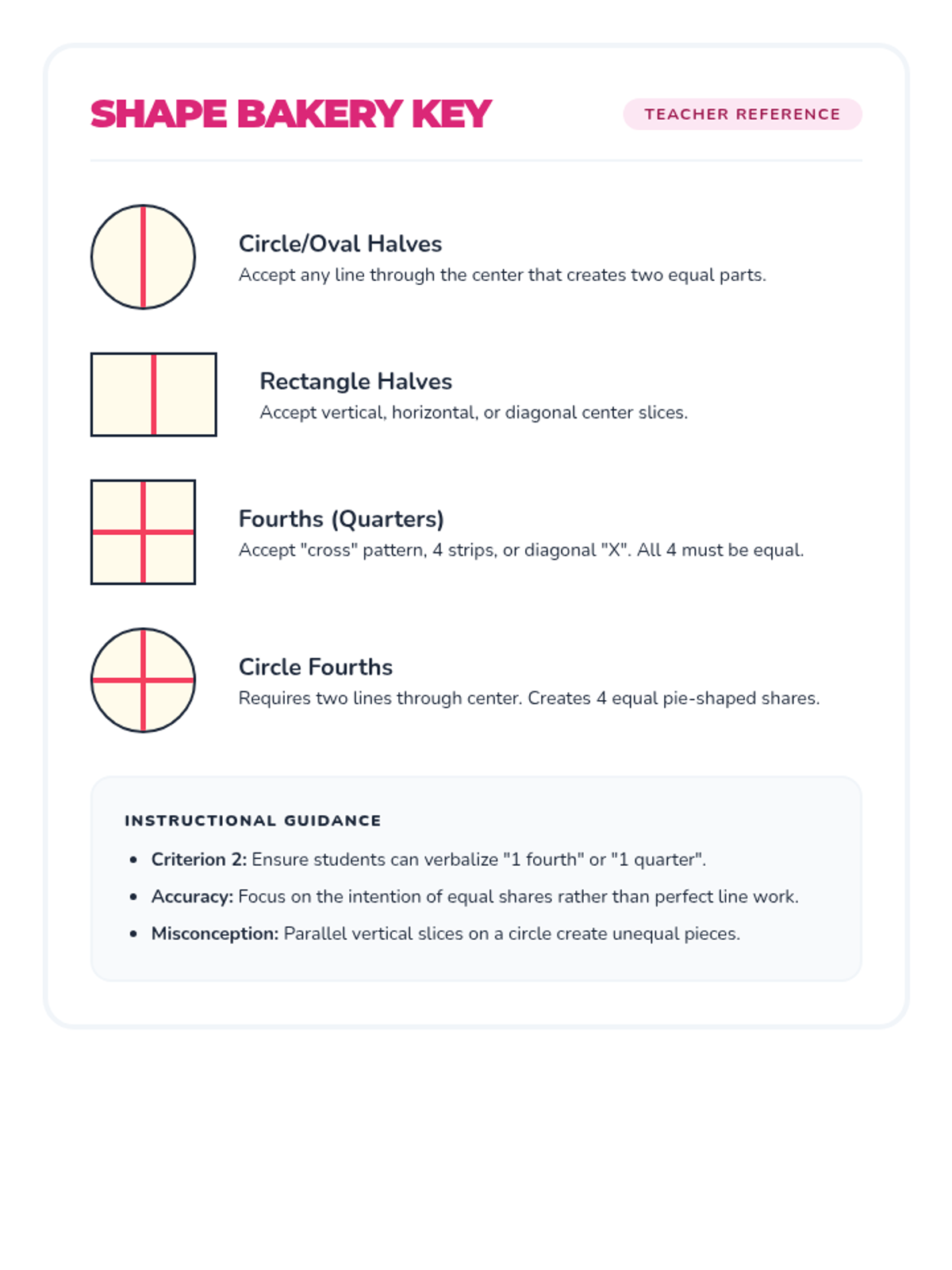
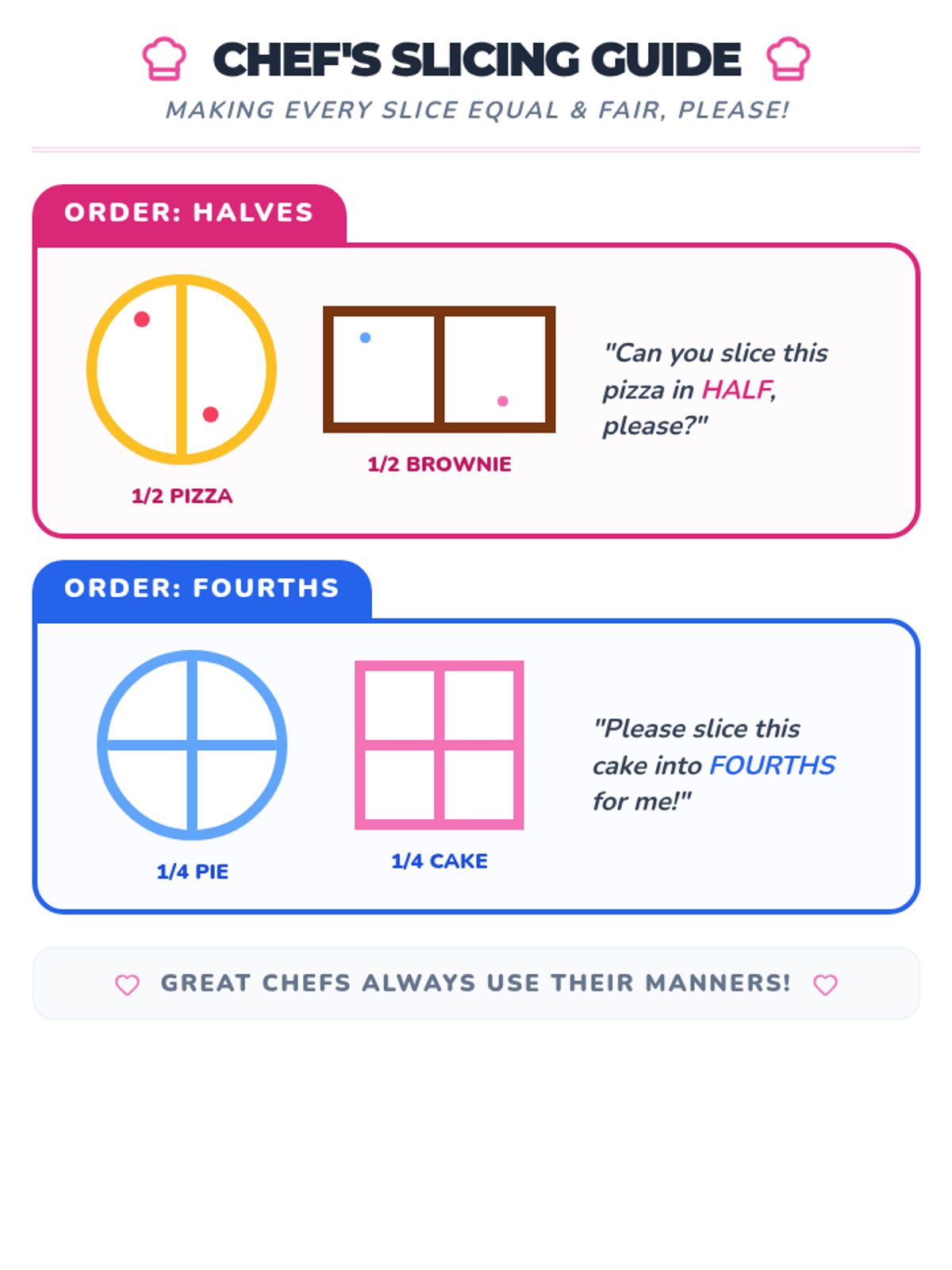
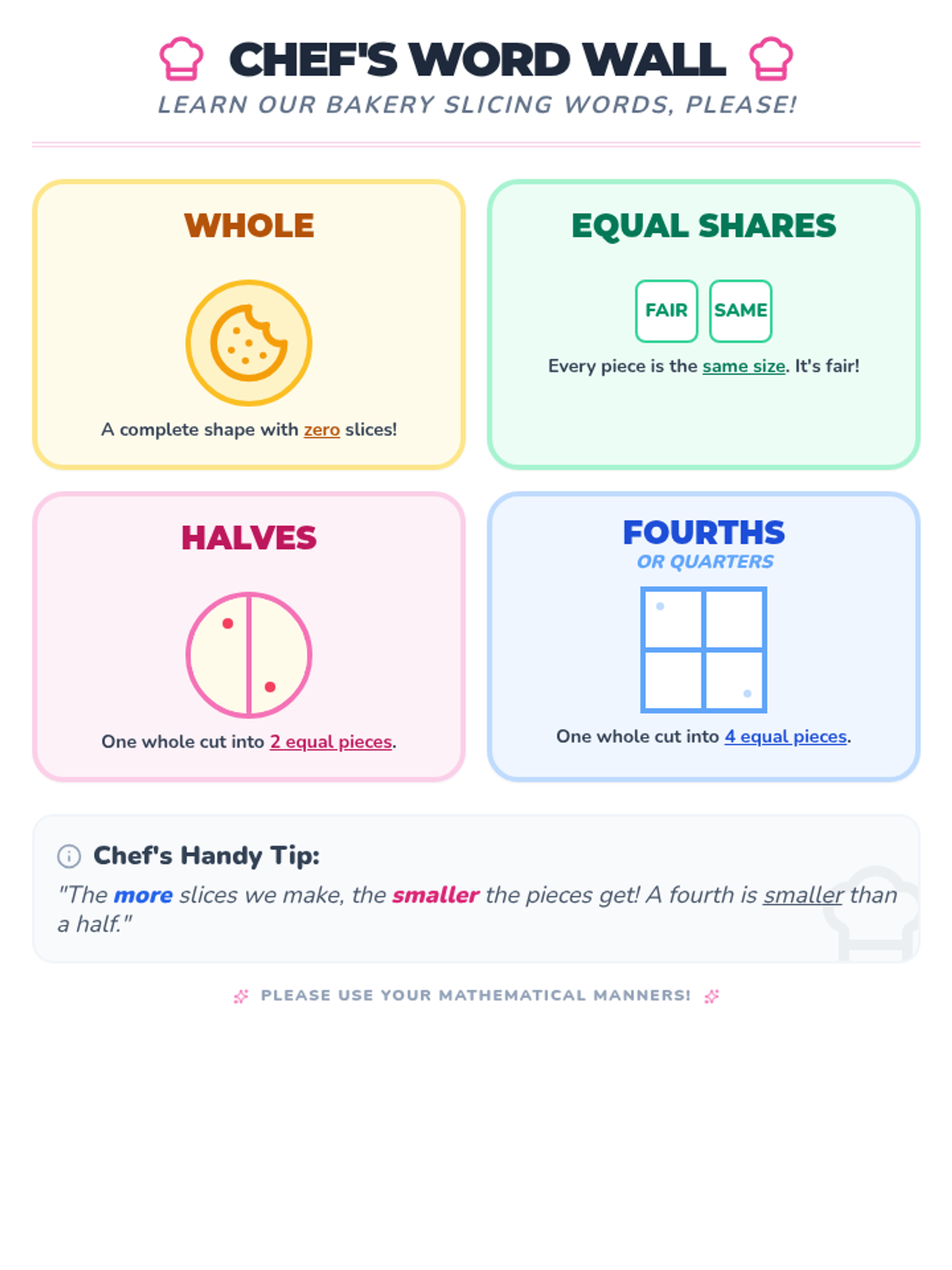
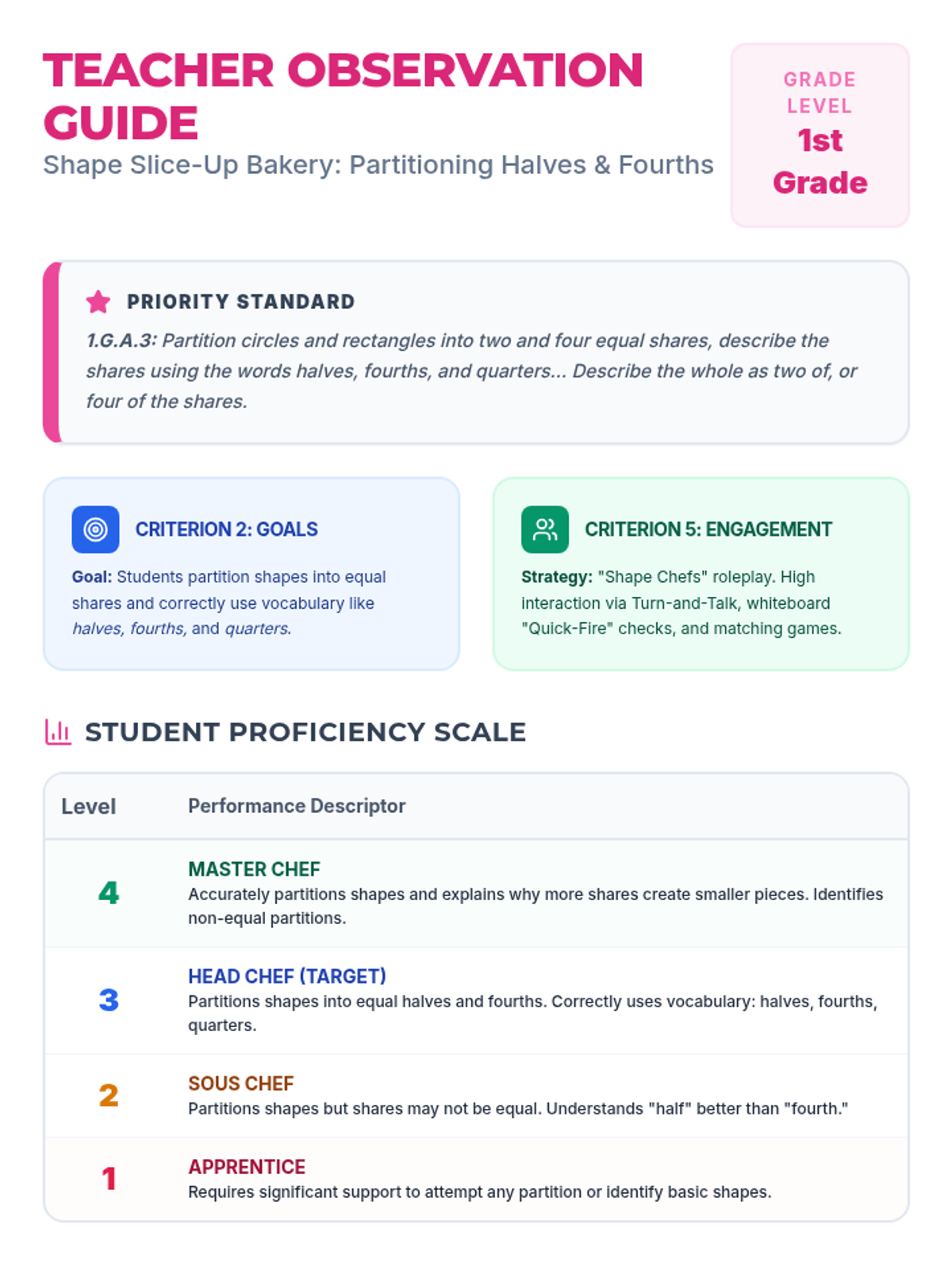
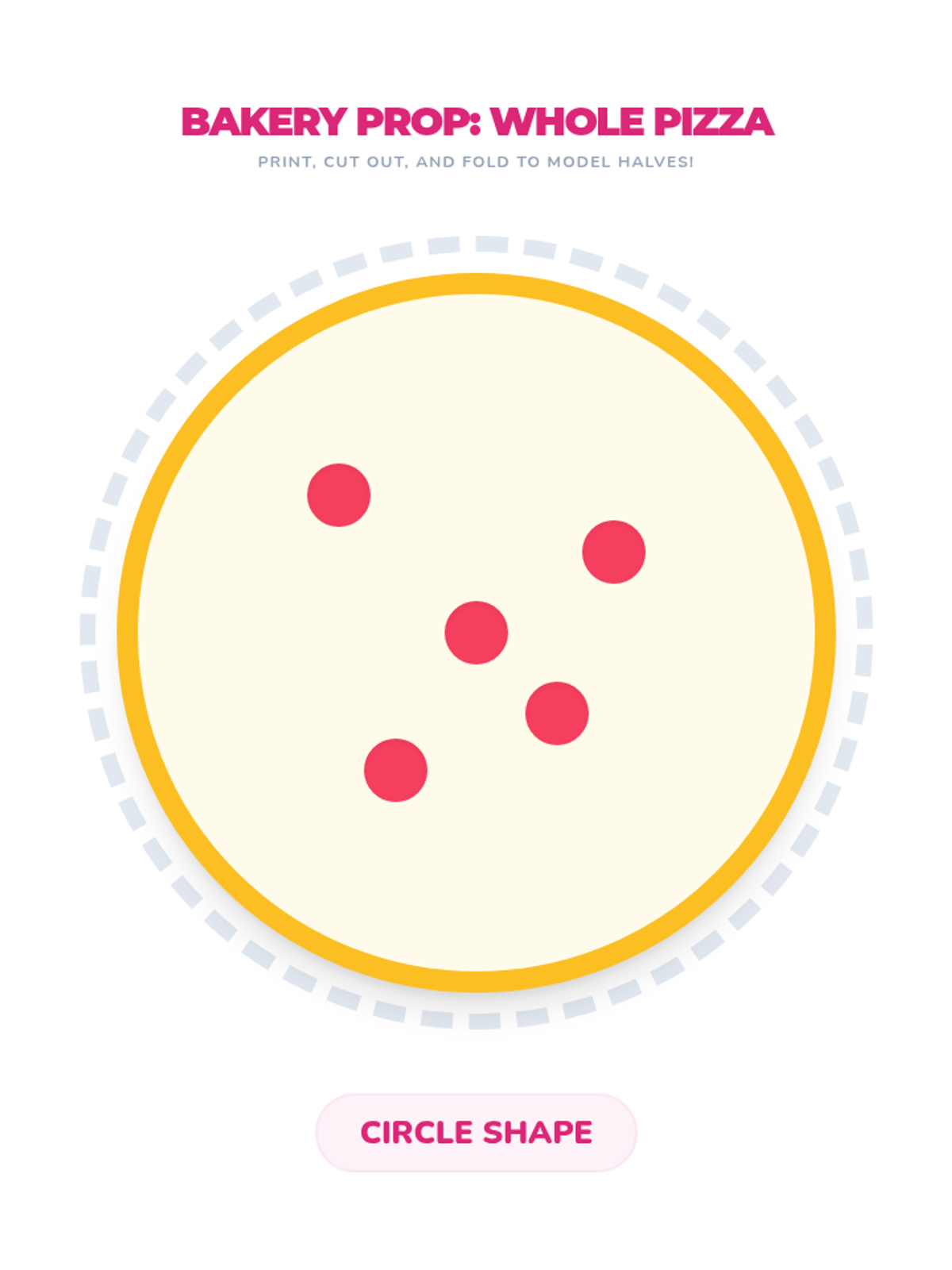
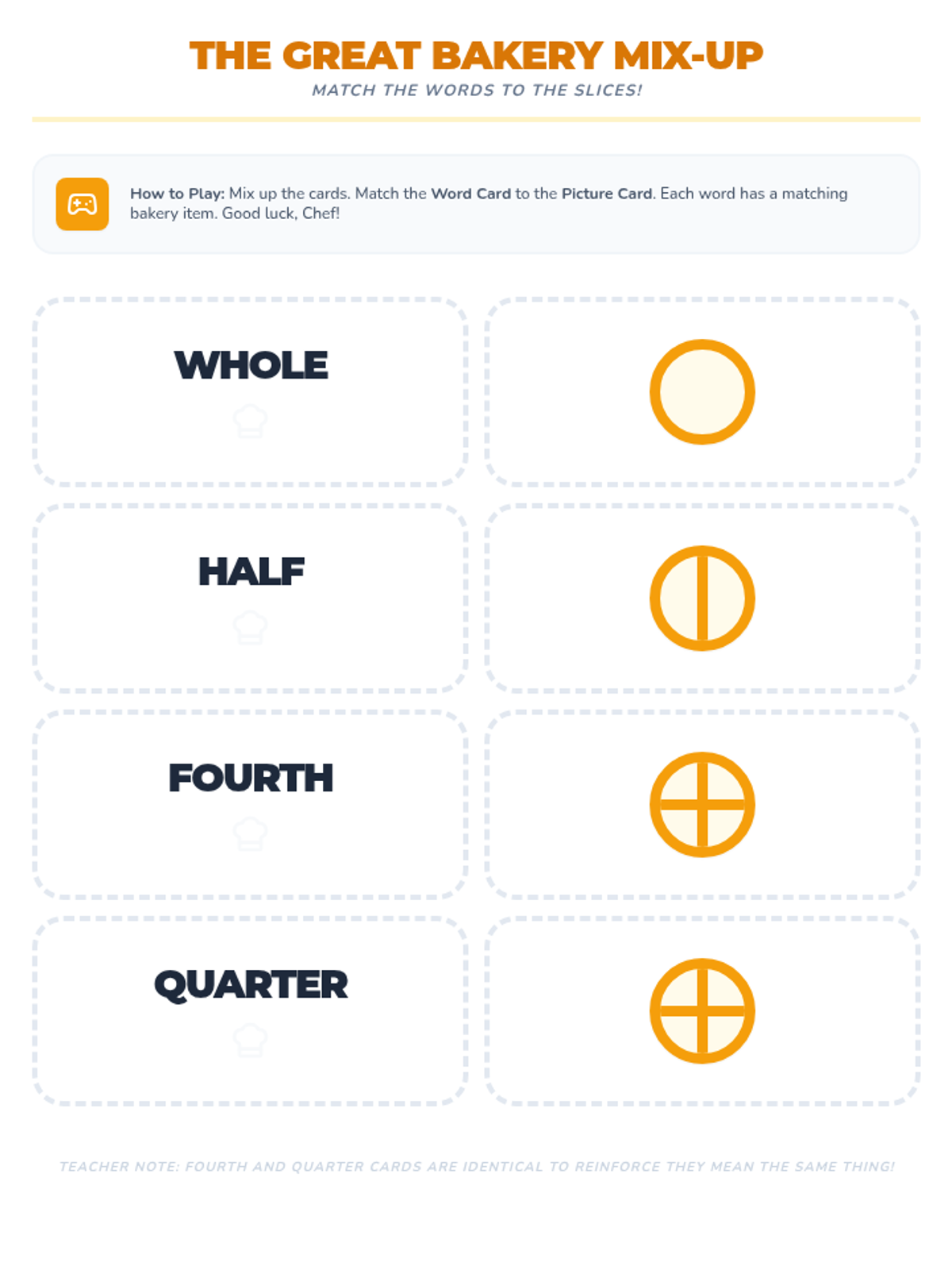
A comprehensive 1st-grade lesson on partitioning squares, circles, and rectangles into equal shares of halves and fourths, designed for an observation with a focus on clear learning targets and student engagement.
A summative assessment lesson focusing on visual foundations, probability calculations, and the application of the Central Limit Theorem to sampling distributions.
A comprehensive lesson covering the properties of normal distributions, the empirical rule, and z-score calculations through various real-world scenarios.
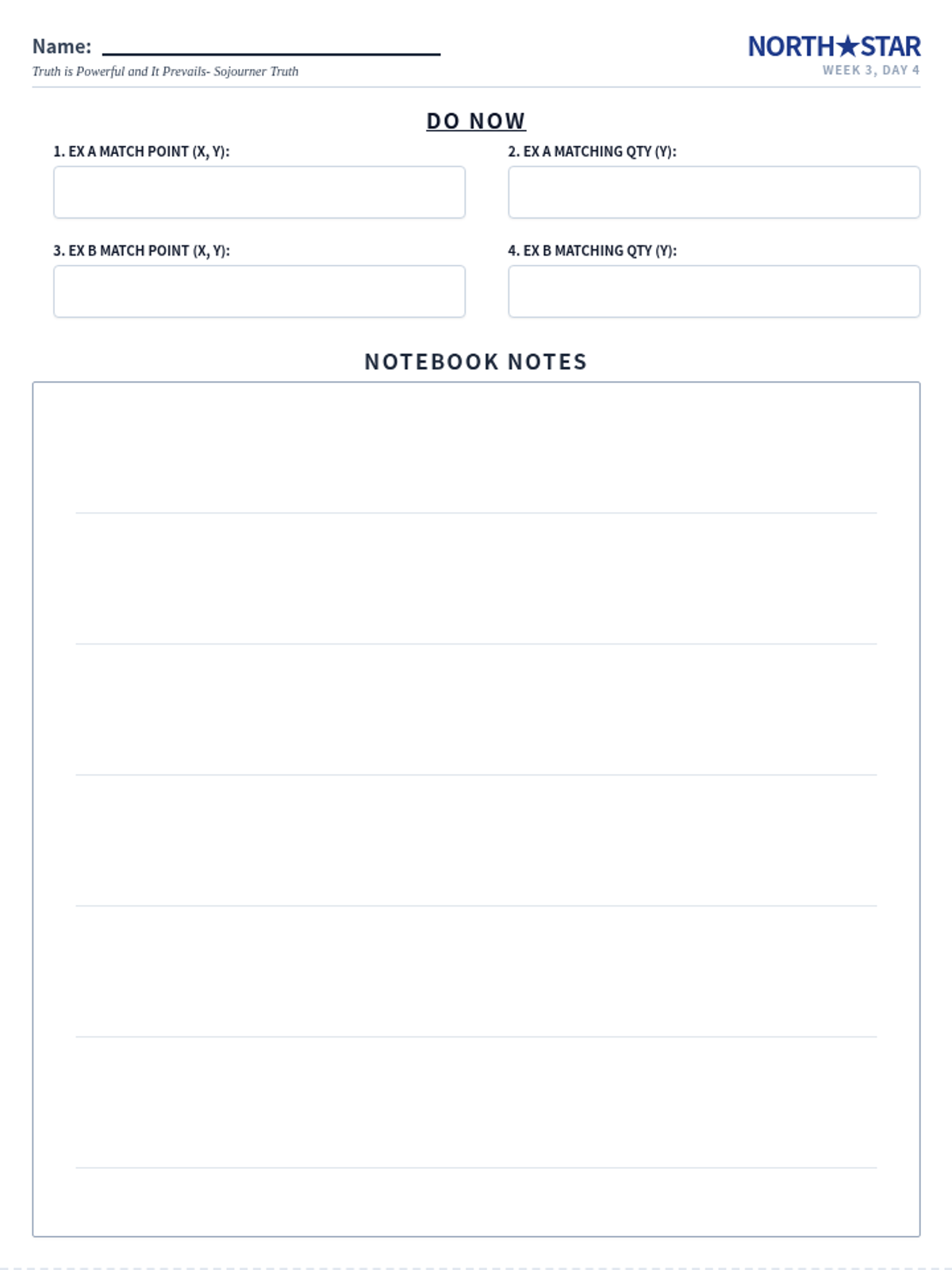
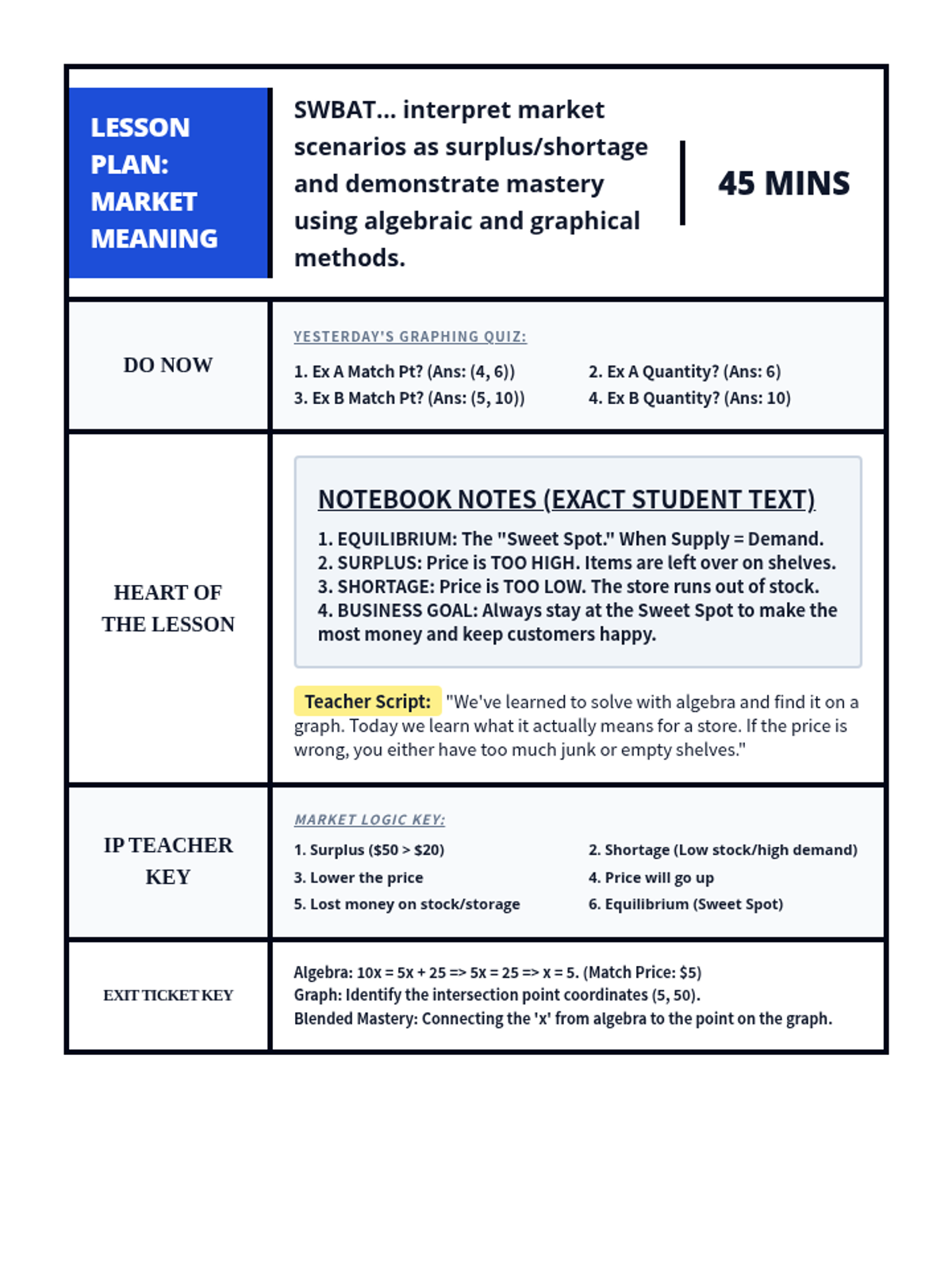
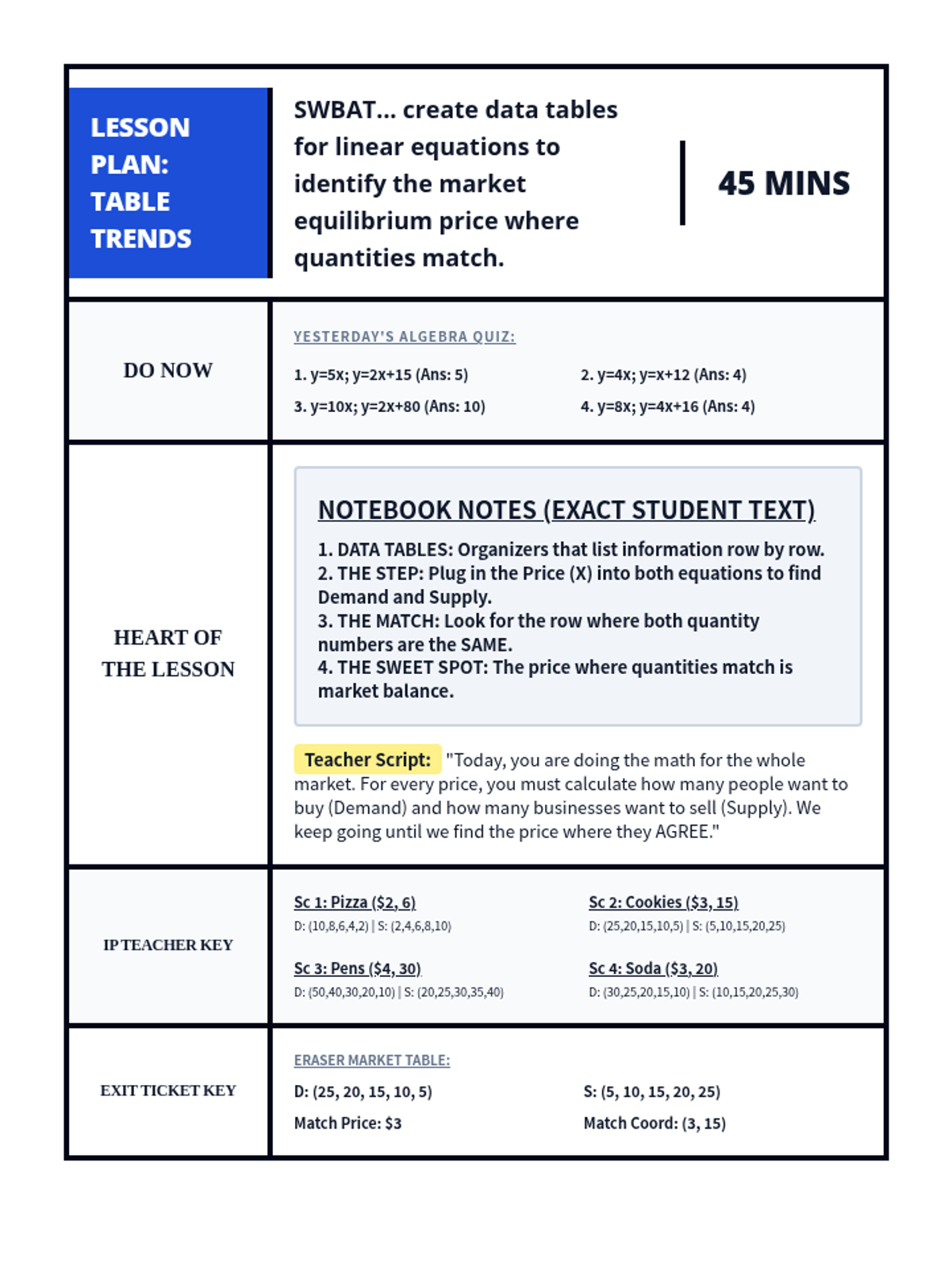
Students interpret the meaning of the point of intersection, surplus, and shortage in the context of a real-world market.
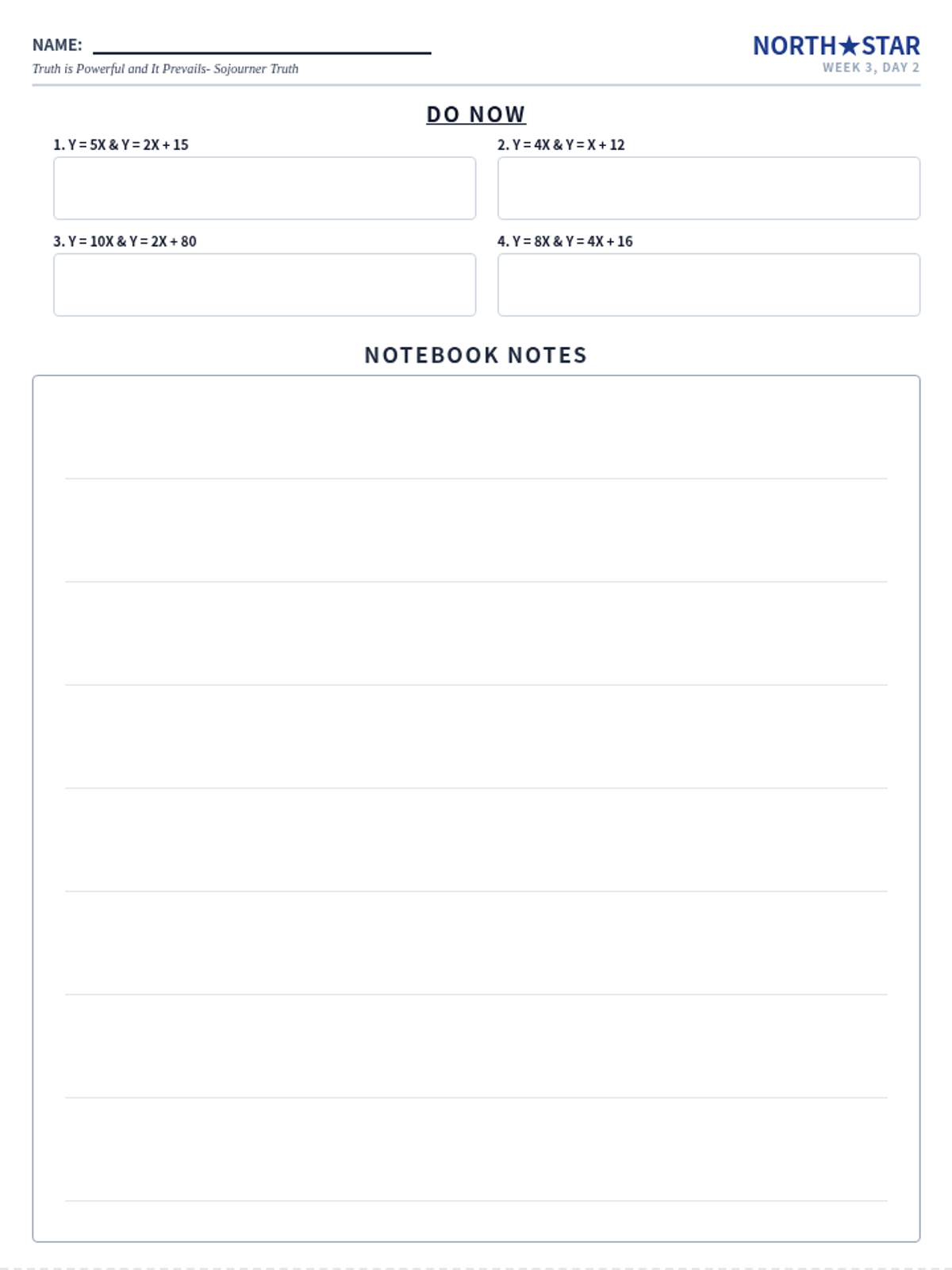
Students create and compare multiple sets of data tables for supply and demand to identify the market equilibrium price where quantities match.
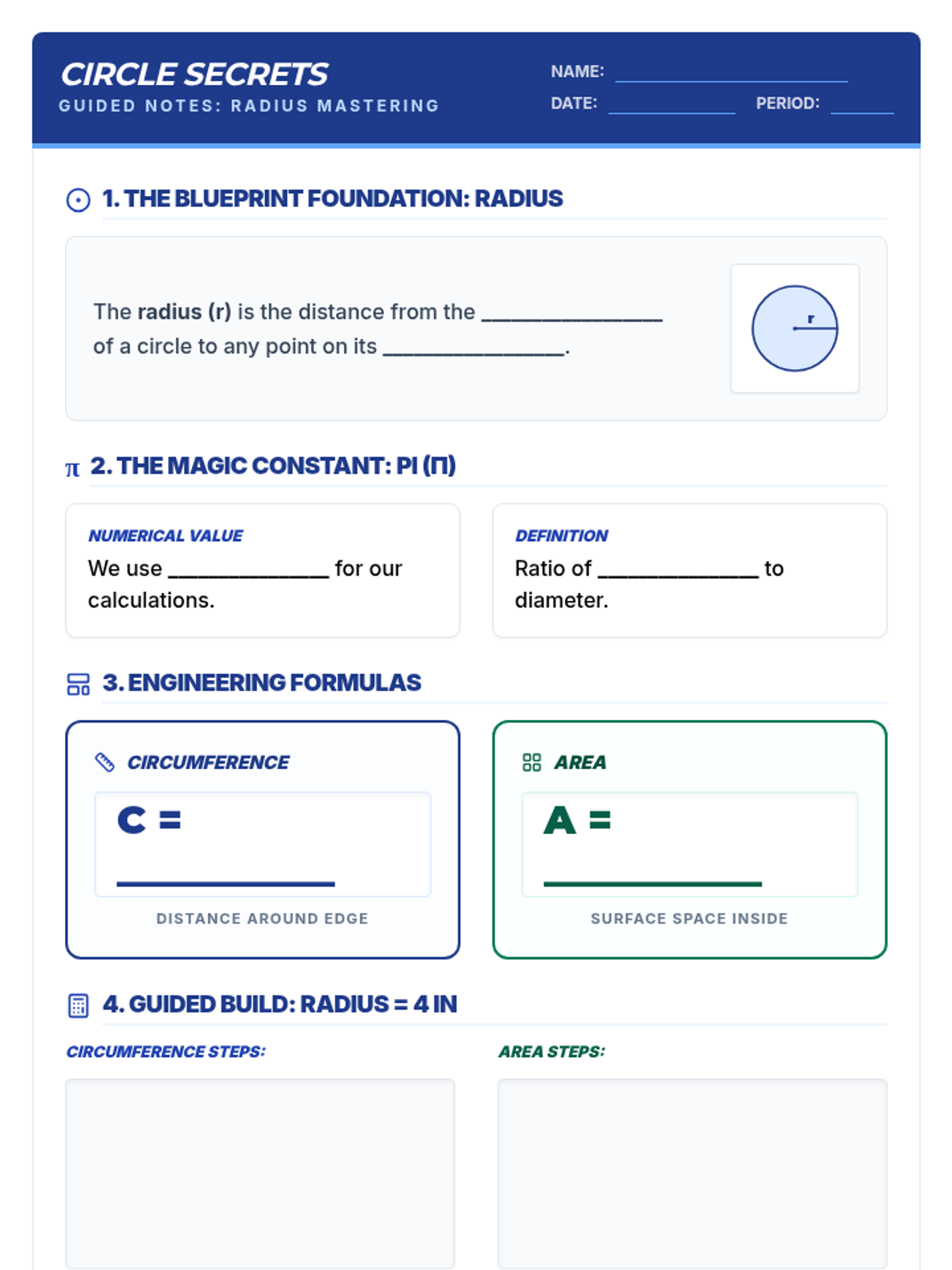
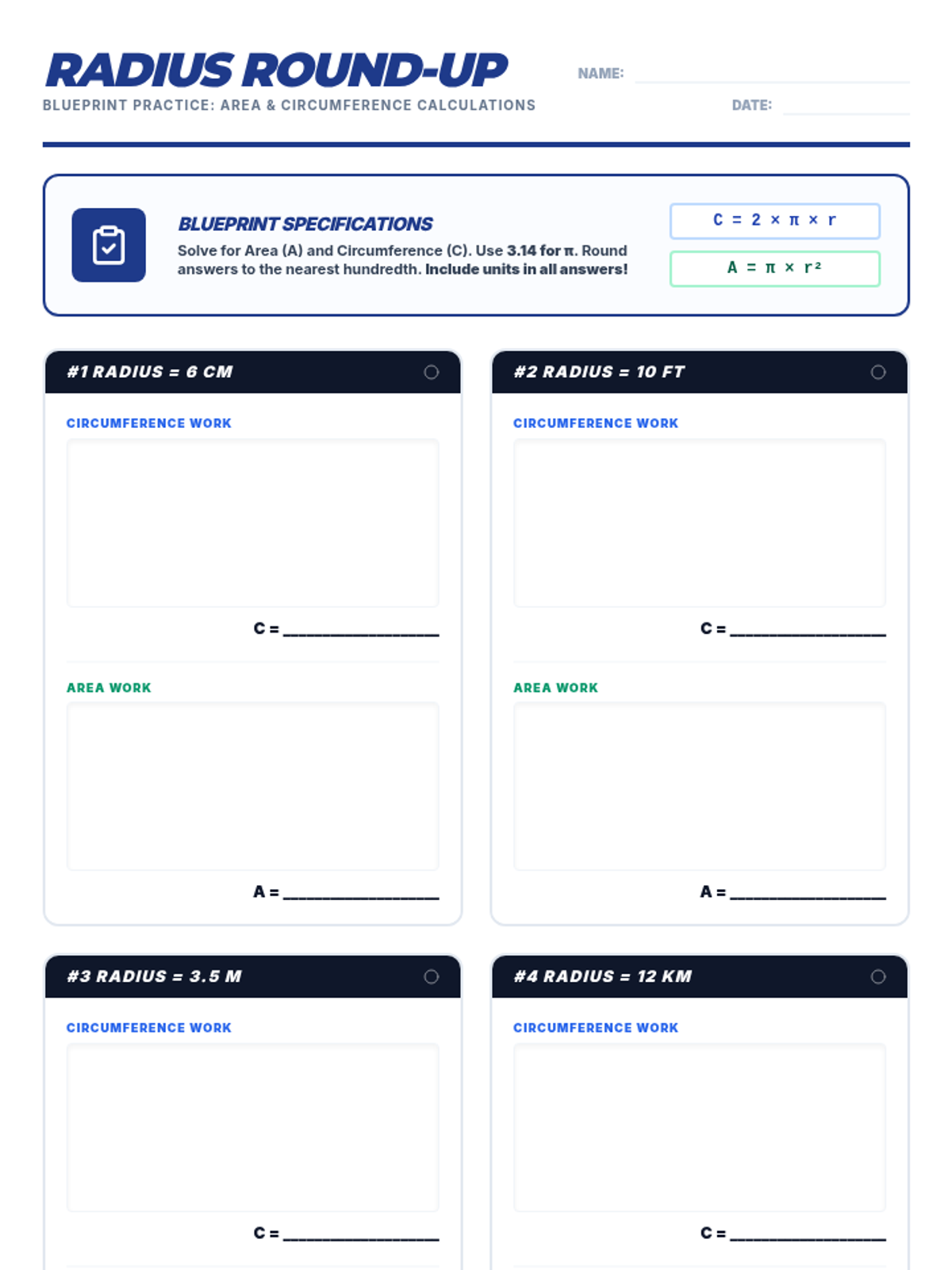
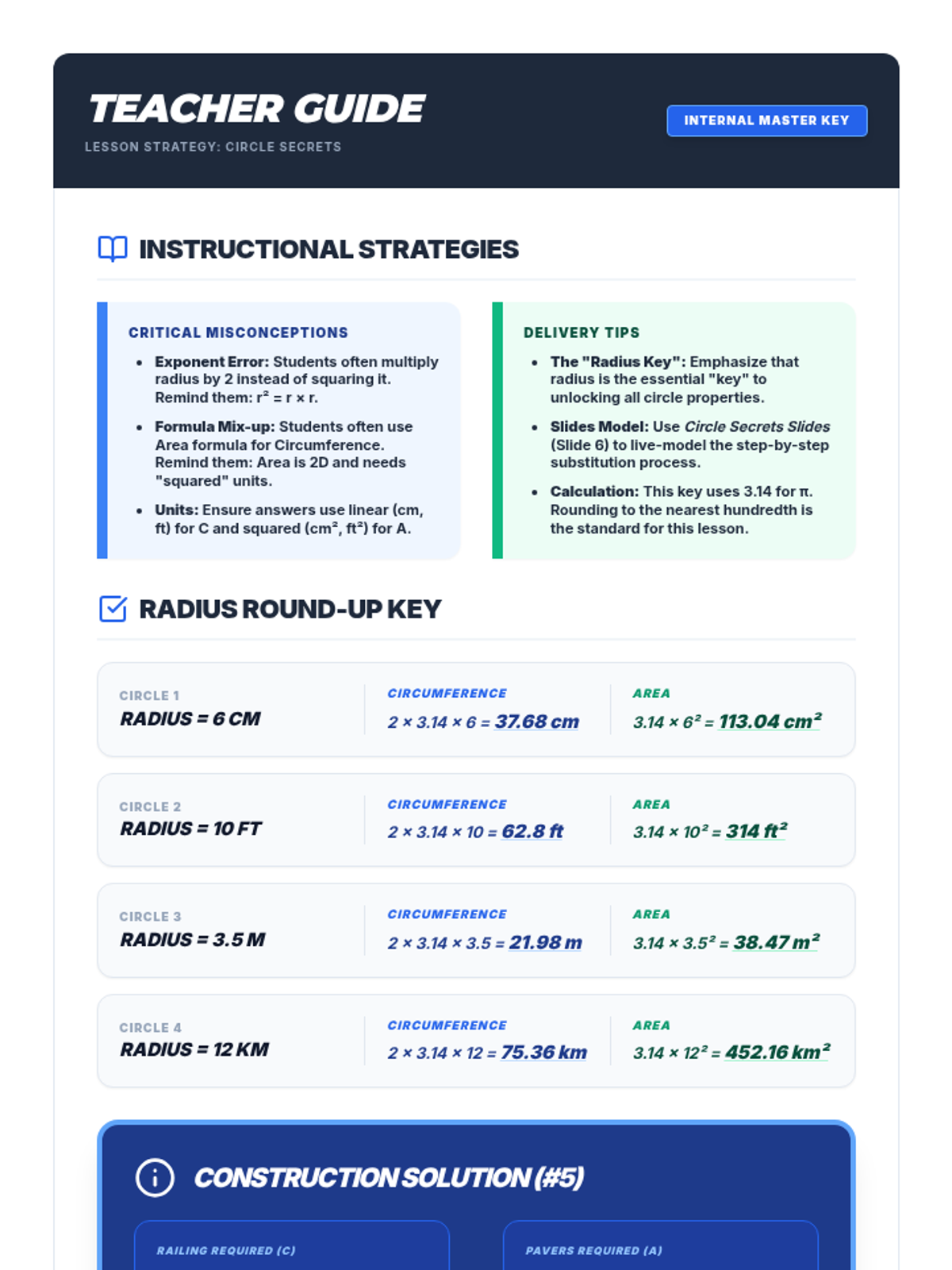
A comprehensive lesson on calculating the area and circumference of circles using the radius, featuring blueprint-themed instructional materials and practice.
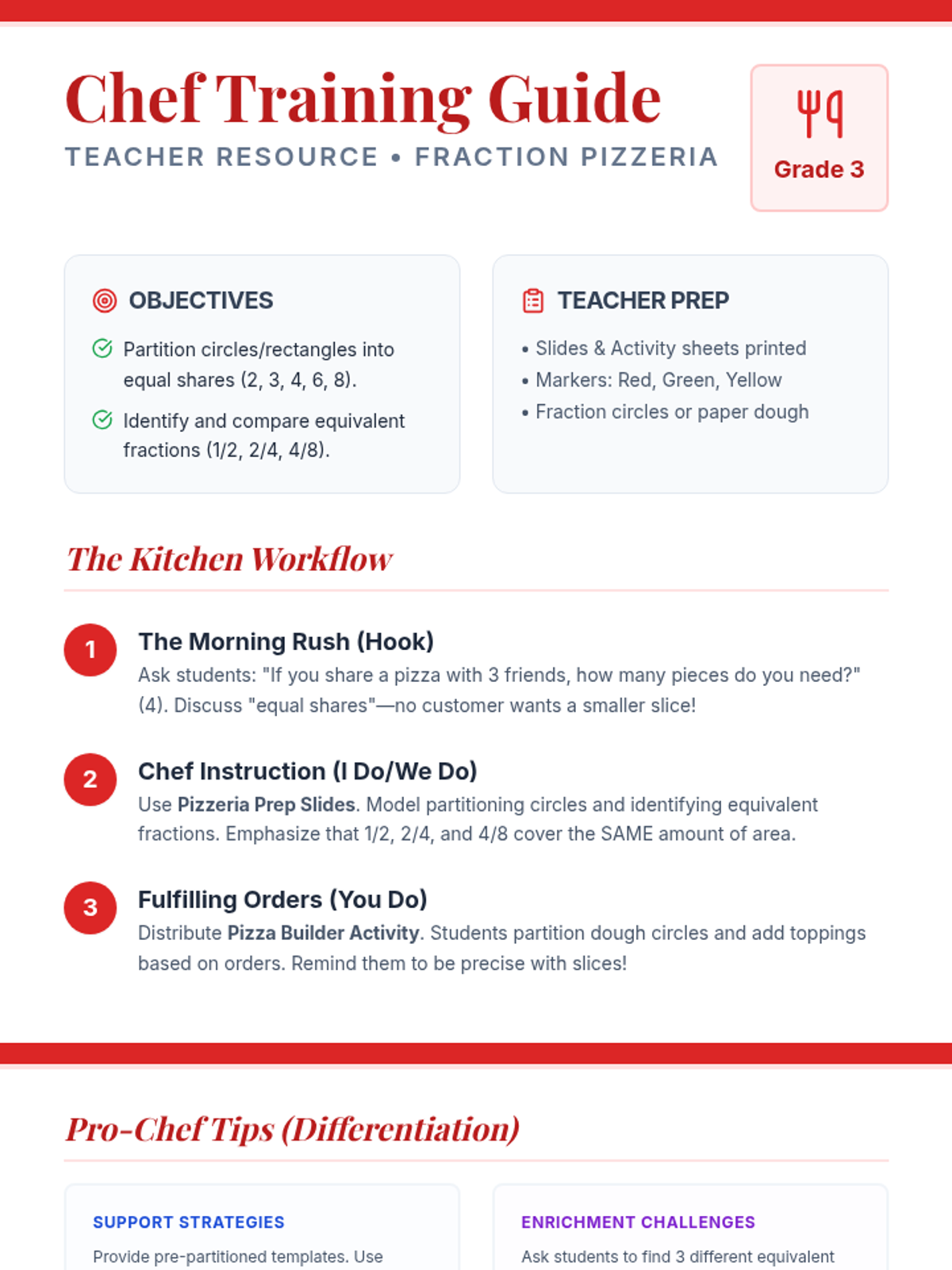
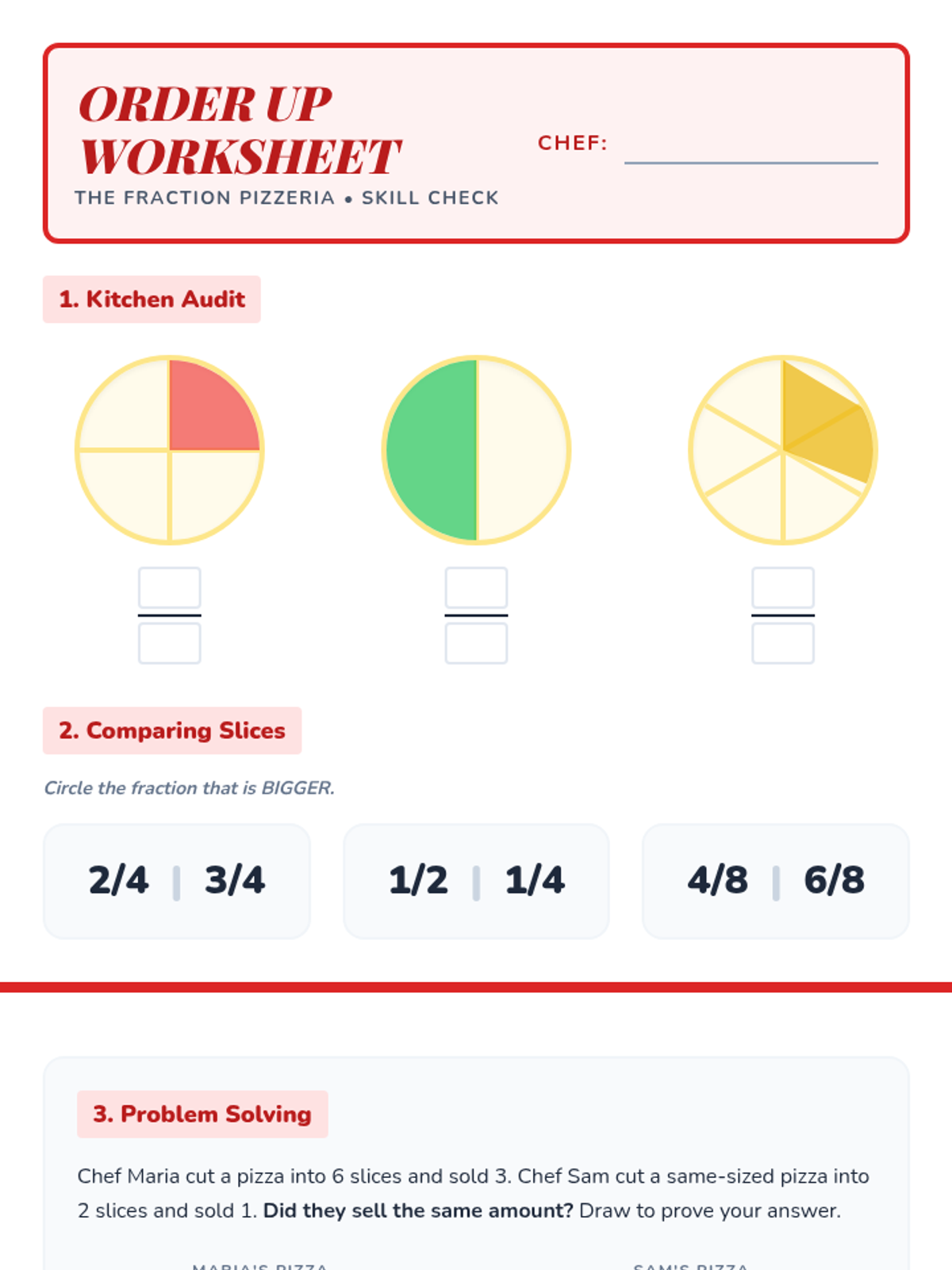
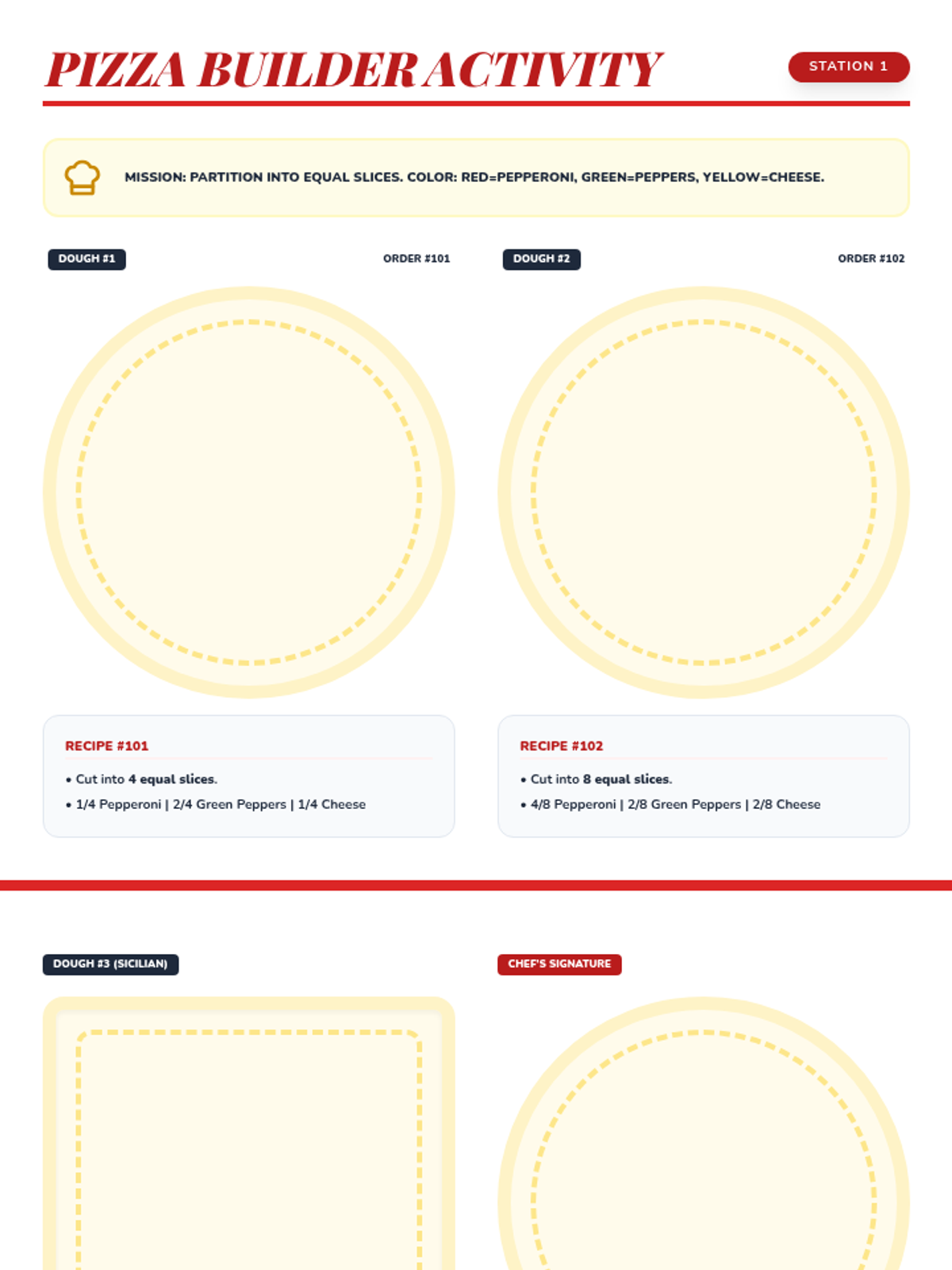
In this hands-on simulation, third graders become pizza chefs to master equivalent fractions and partitioning. Students will fulfill custom orders, compare topping amounts, and visualize fractions as parts of a delicious whole.
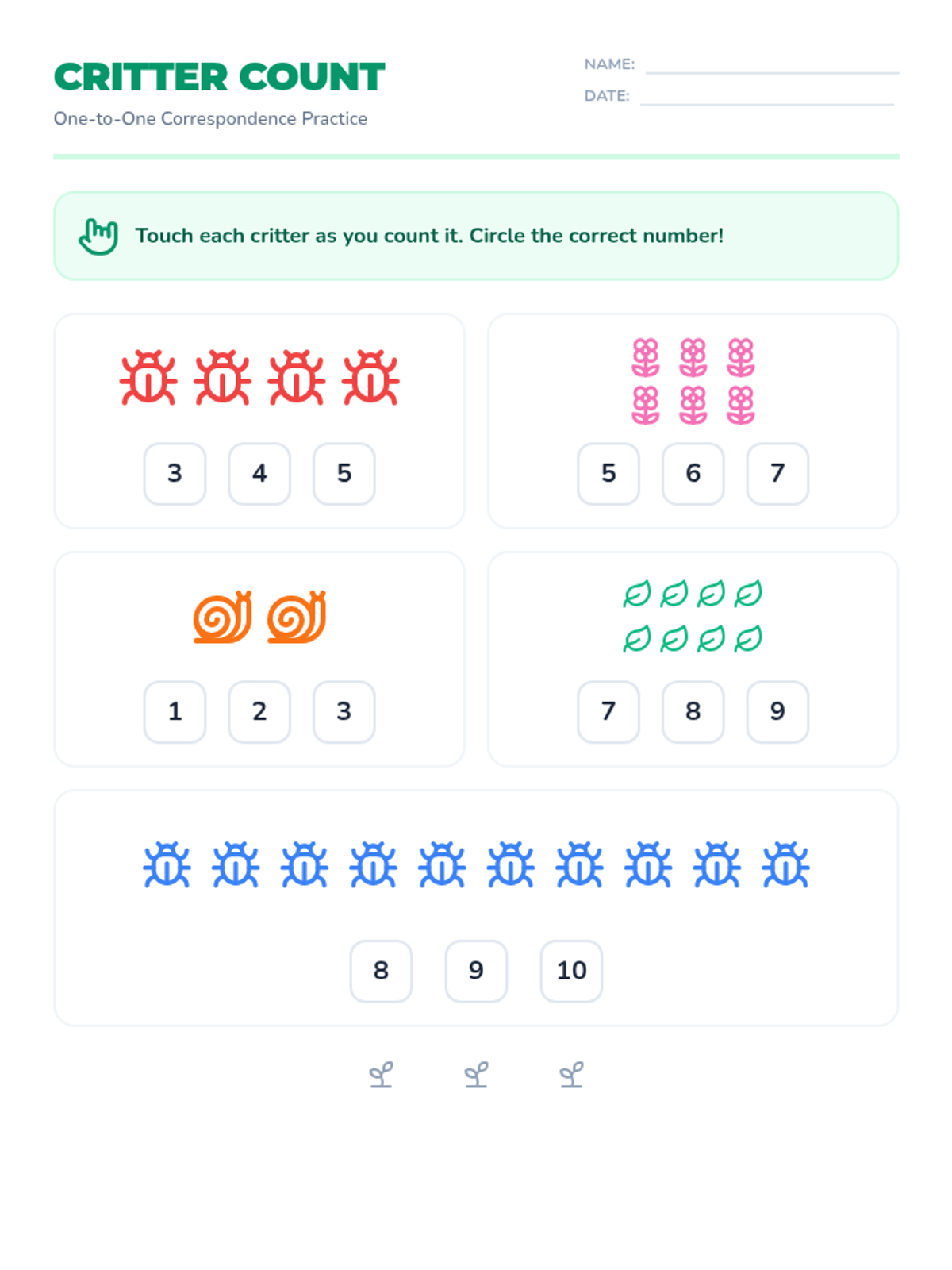
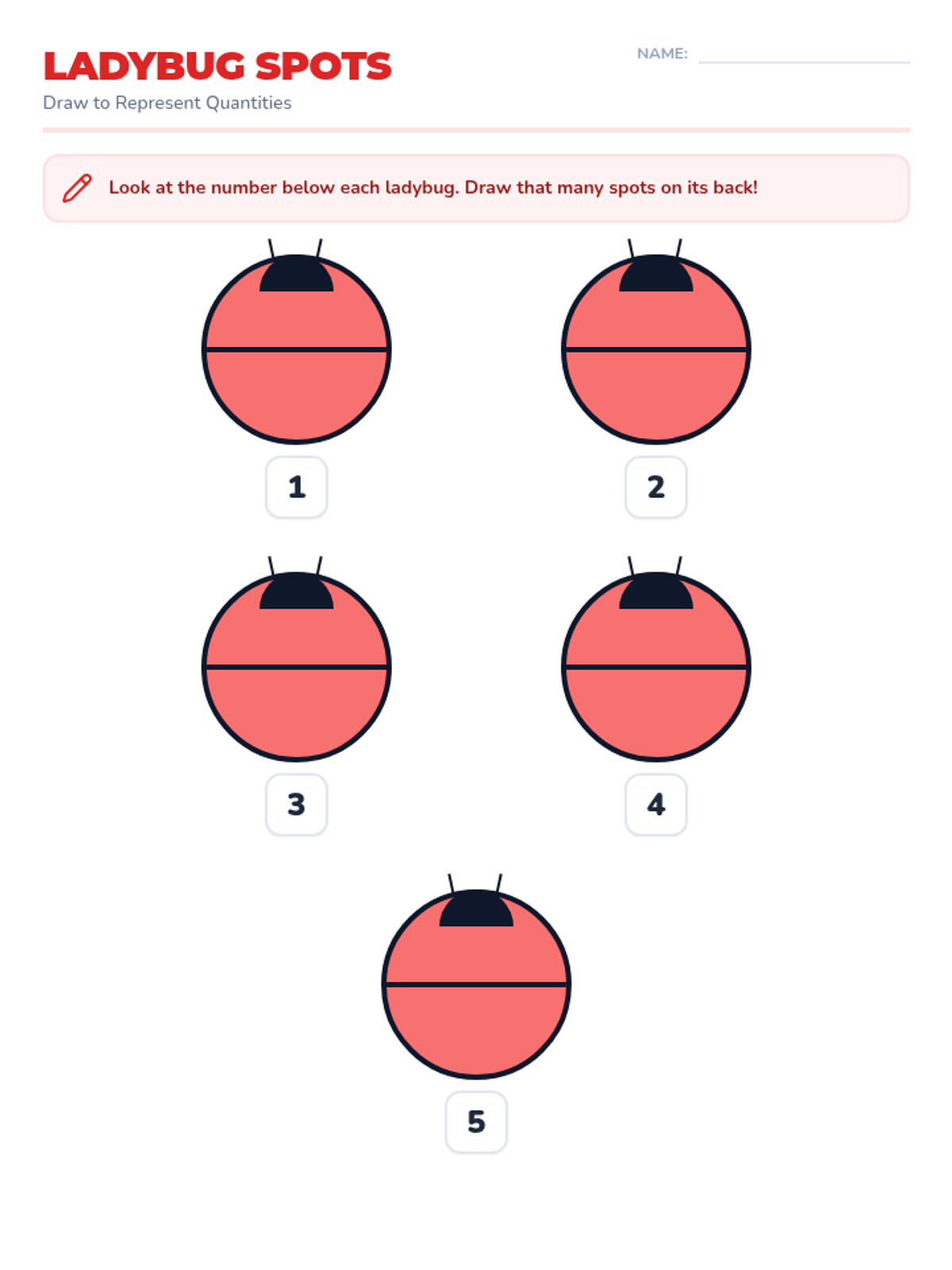
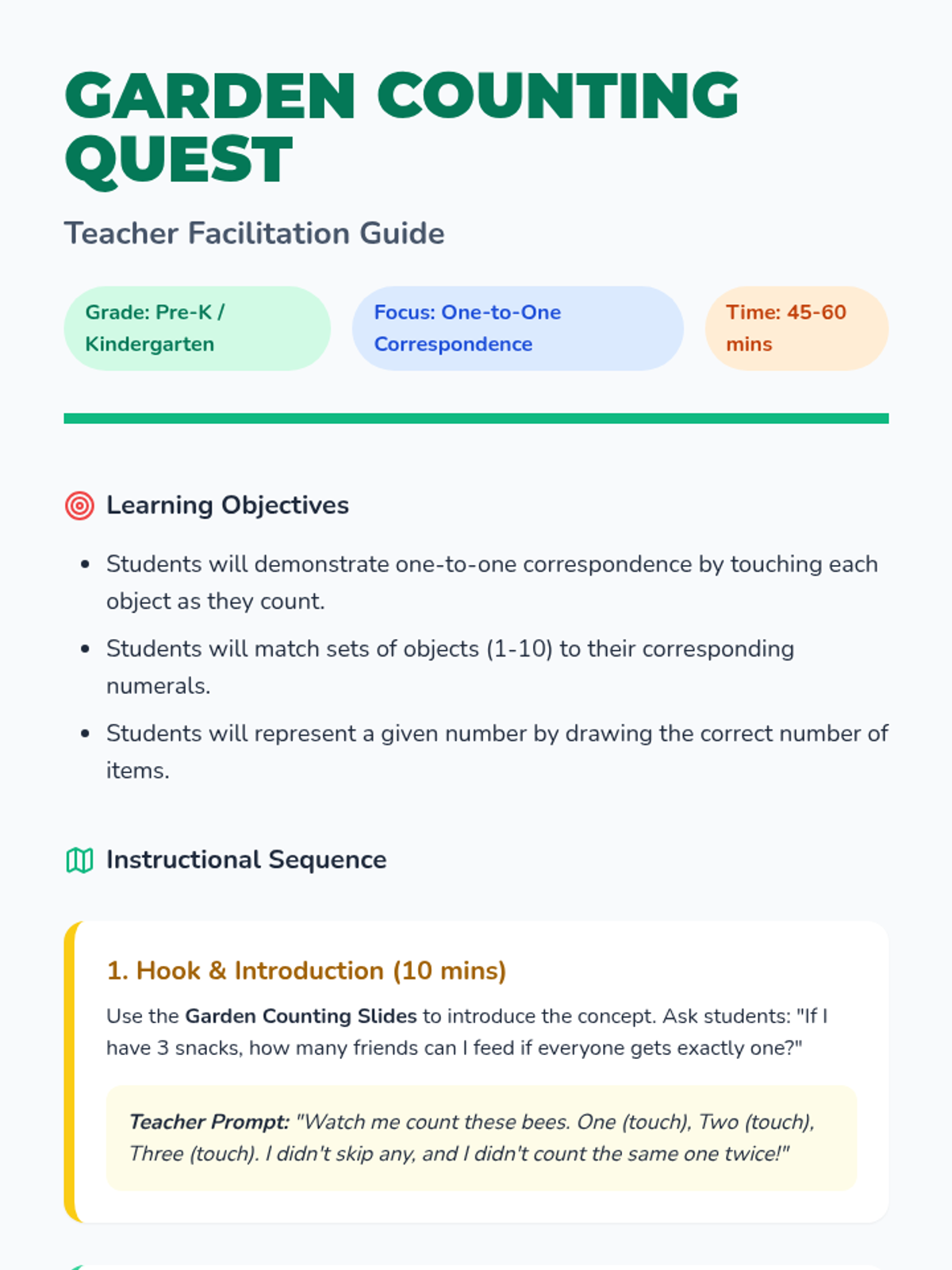
A comprehensive introduction to one-to-one correspondence for numbers 1-10 using a friendly garden theme. Students will practice matching, counting, and representing quantities through visual aids and hands-on worksheets.
A focused lesson on the Central Limit Theorem (CLT) and its application to real-world datasets. Students practice calculating Z-scores for sample means and using Z-tables to determine probabilities.
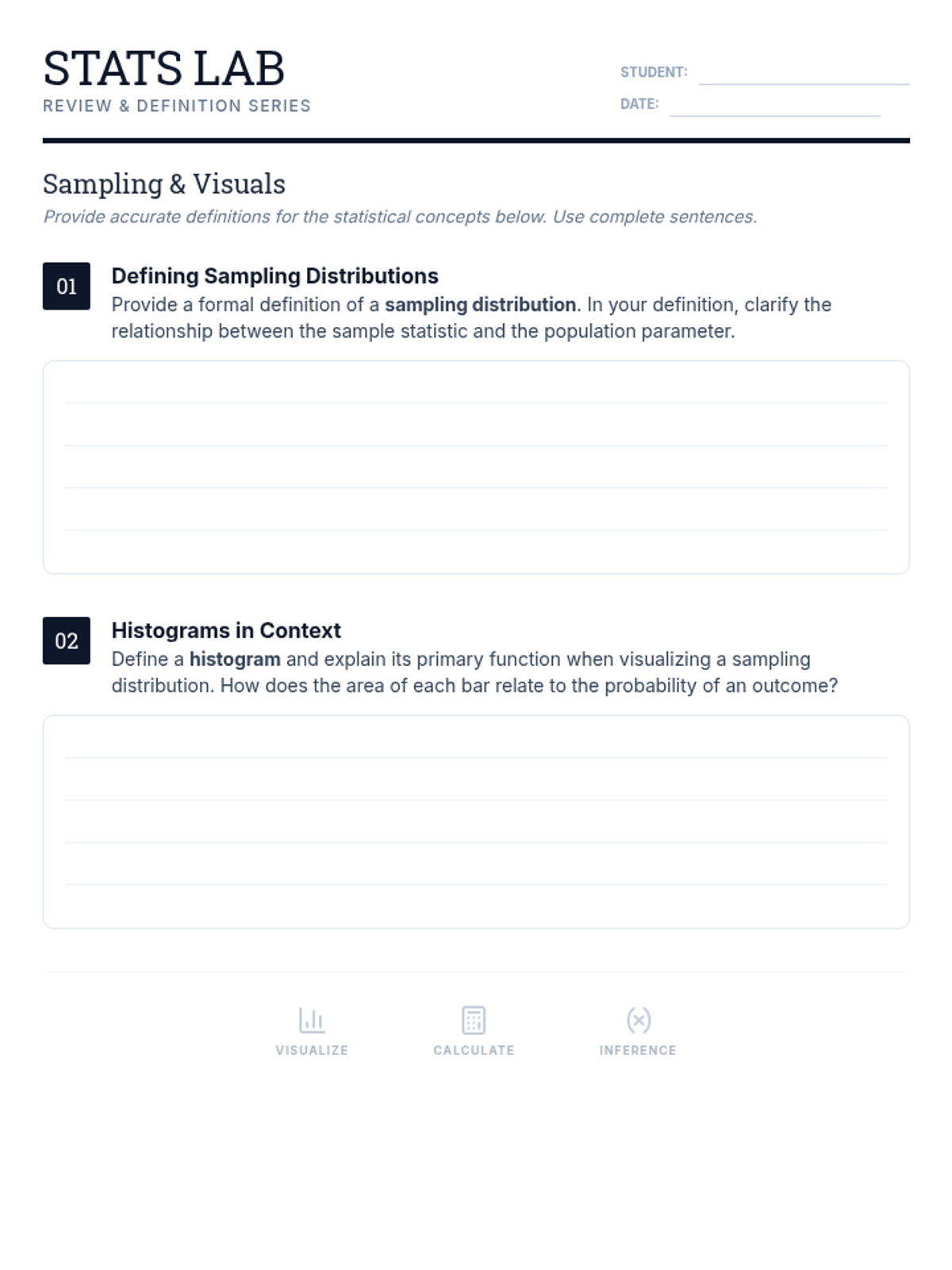
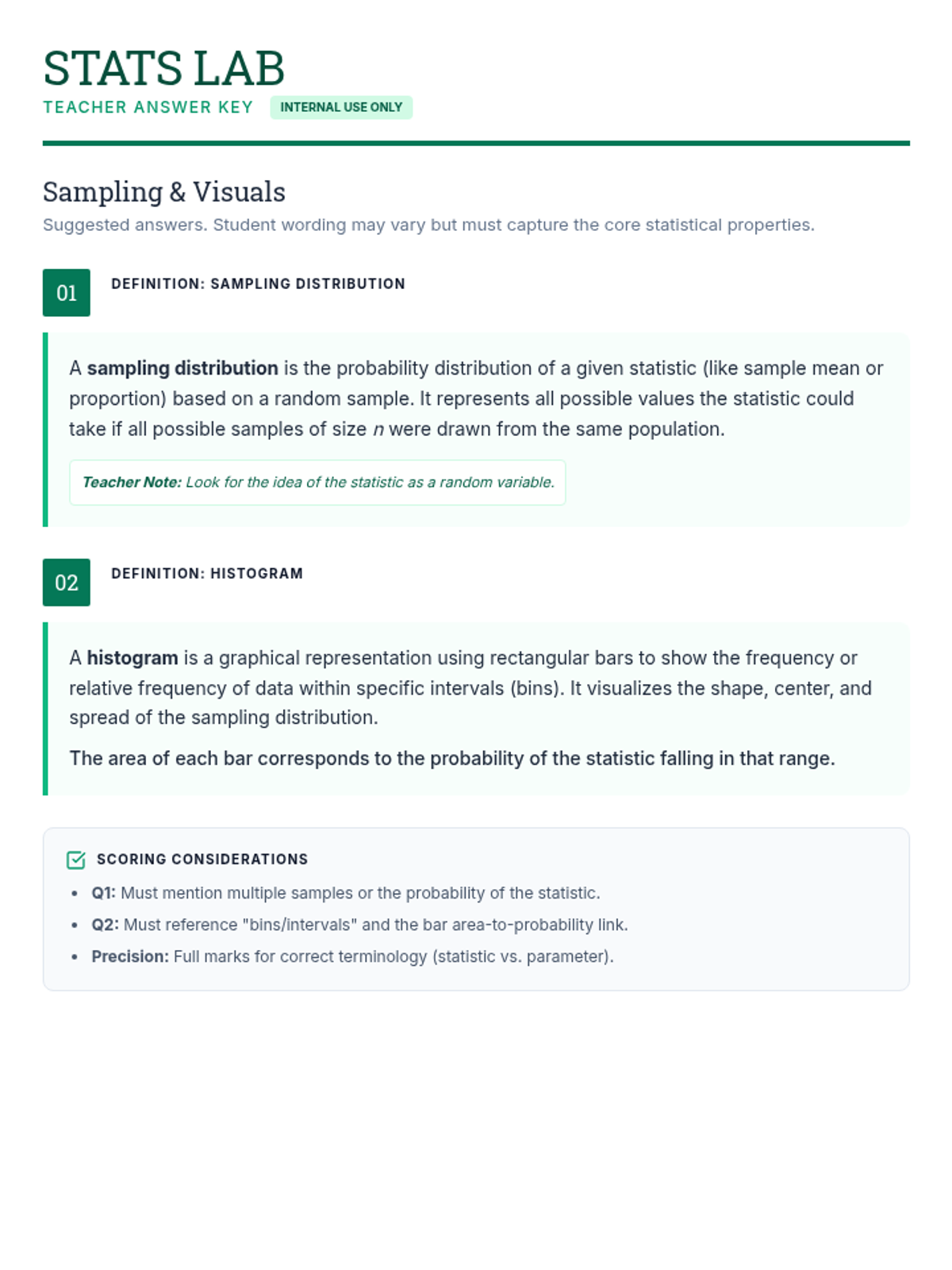
A lesson focused on fundamental statistical concepts including sampling distributions and the visual representation of data using histograms.
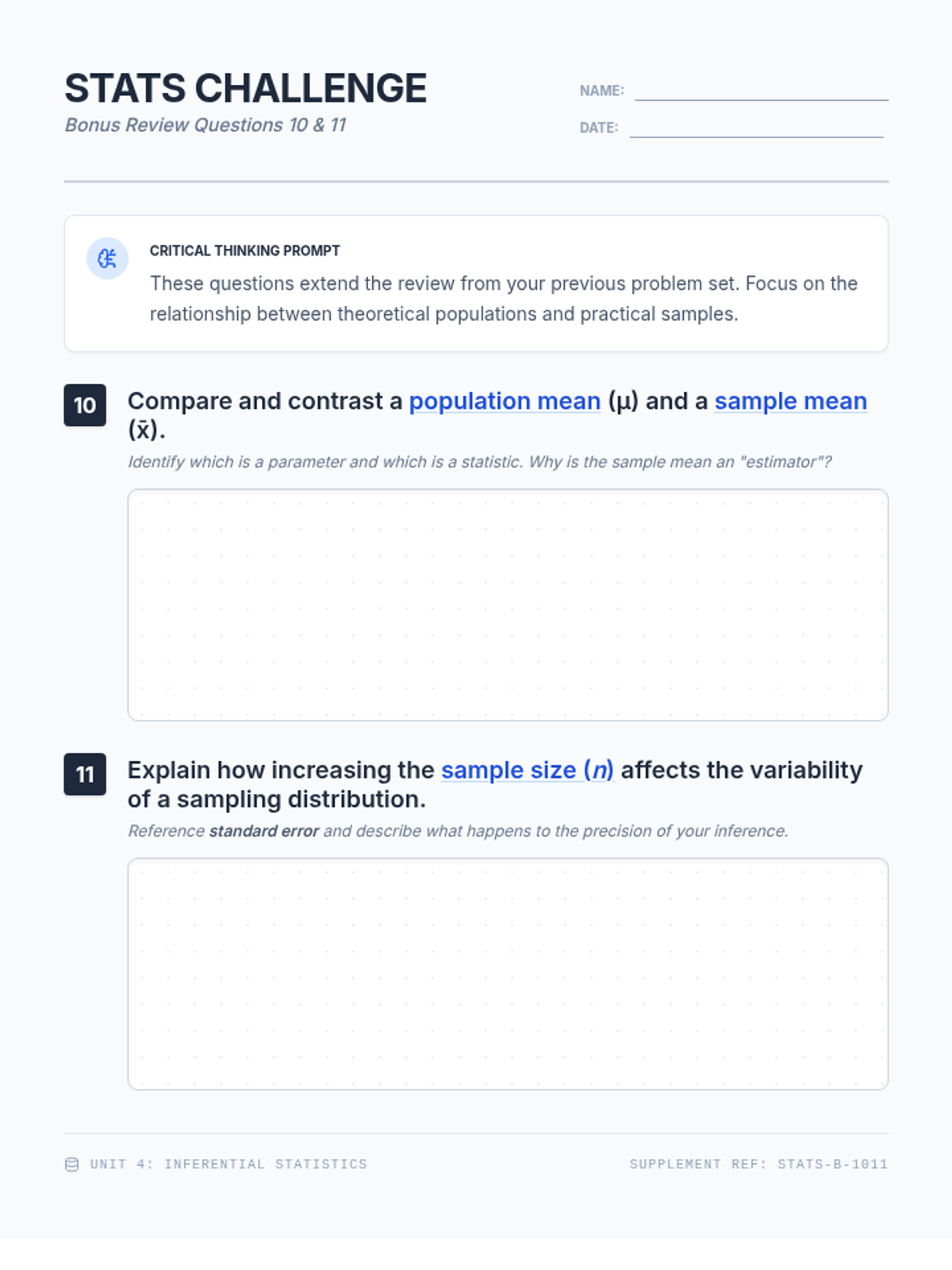
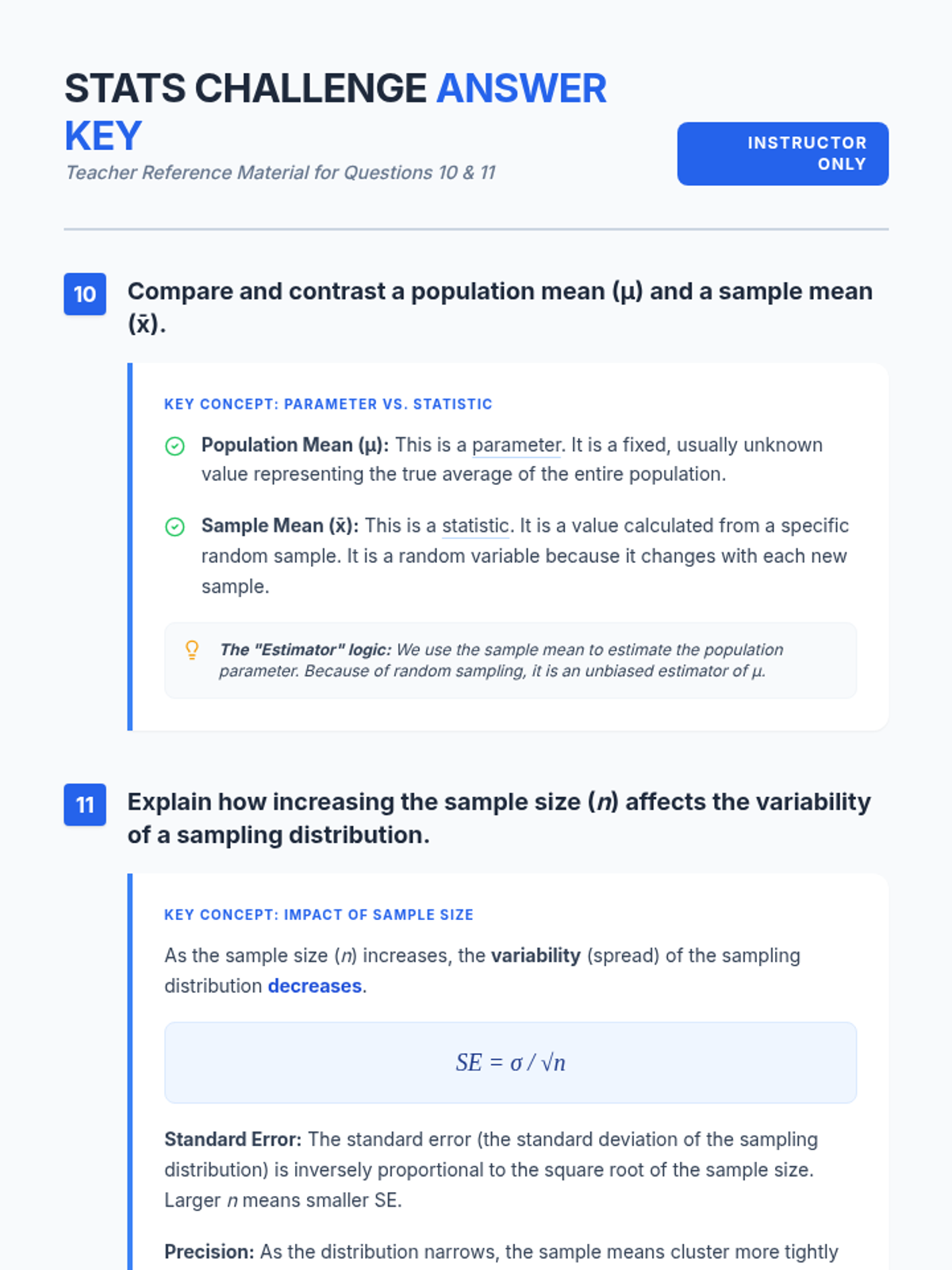
A concise lesson reviewing advanced statistical concepts including population parameters, sample statistics, and the behavior of sampling distributions.
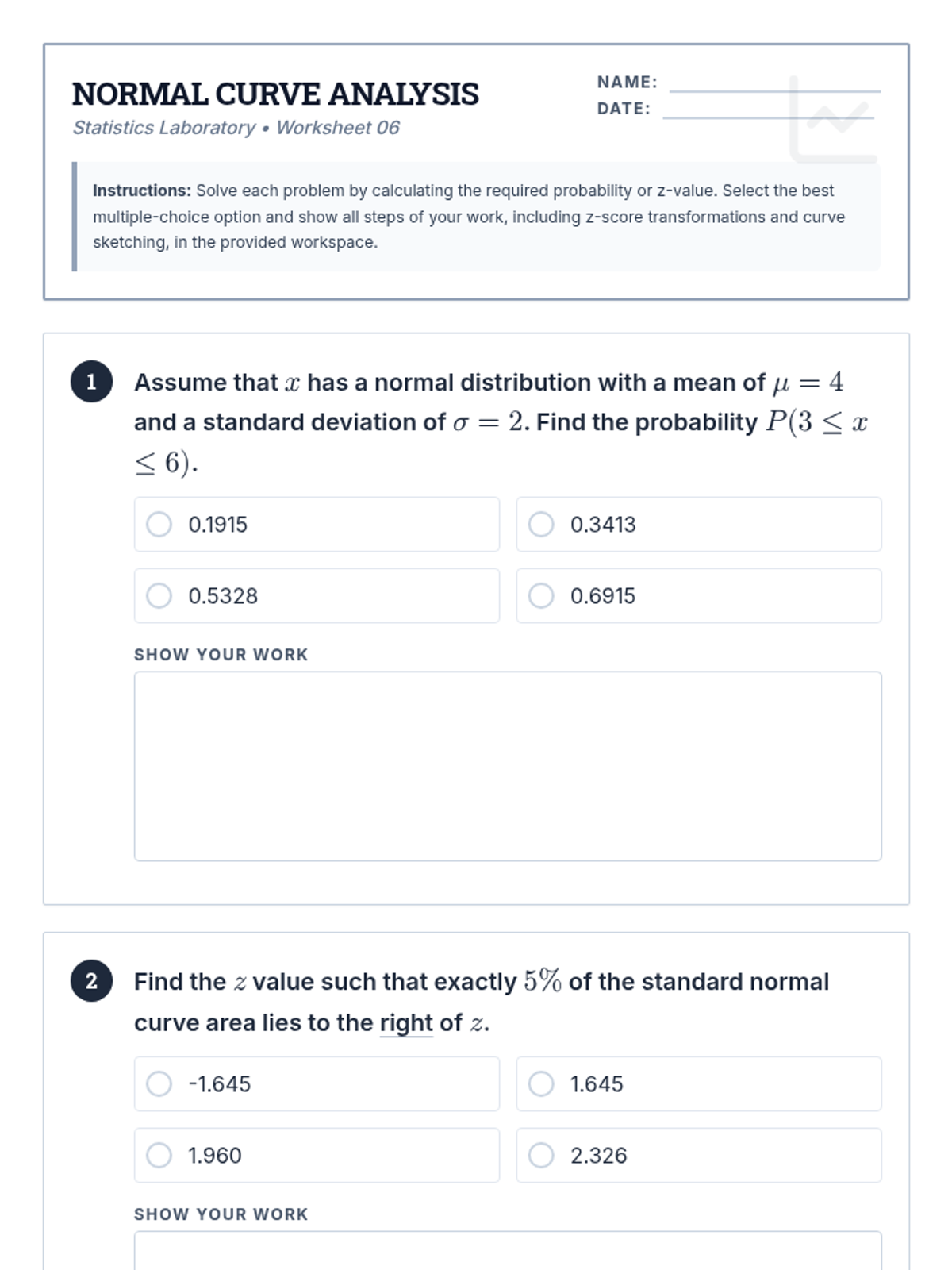
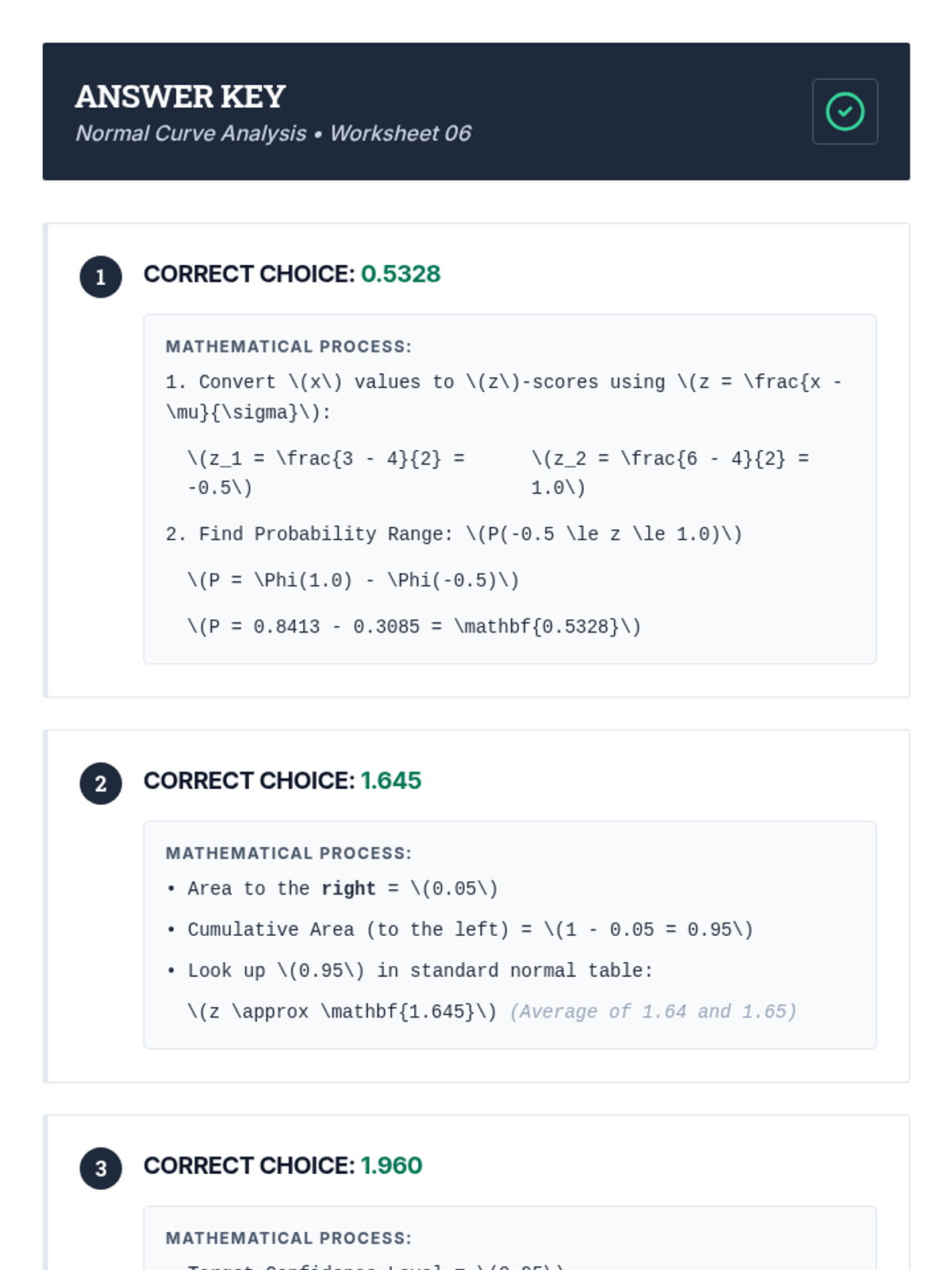
A focused practice session on calculating probabilities and z-values for normal distributions, based on medical and abstract data.
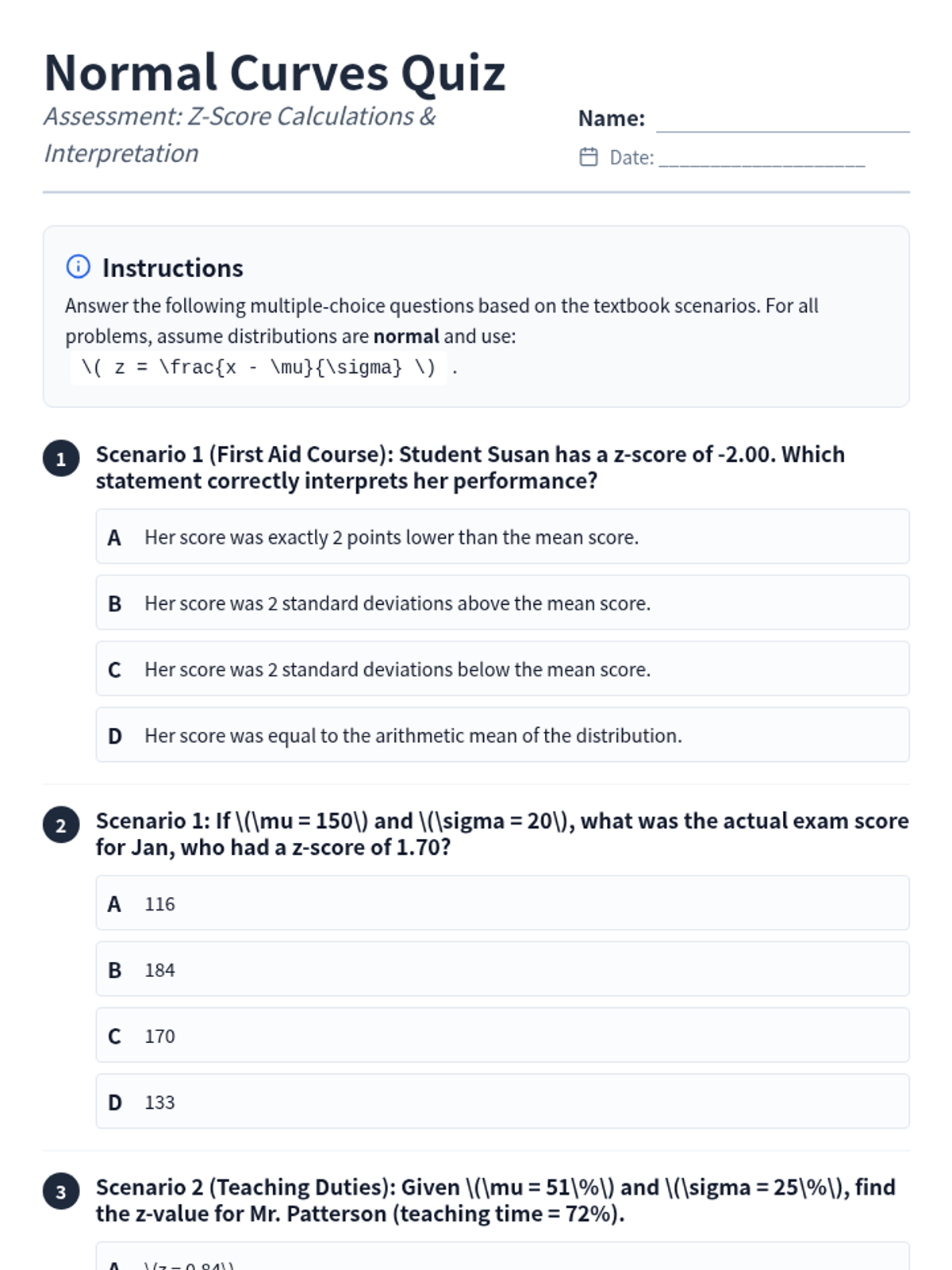
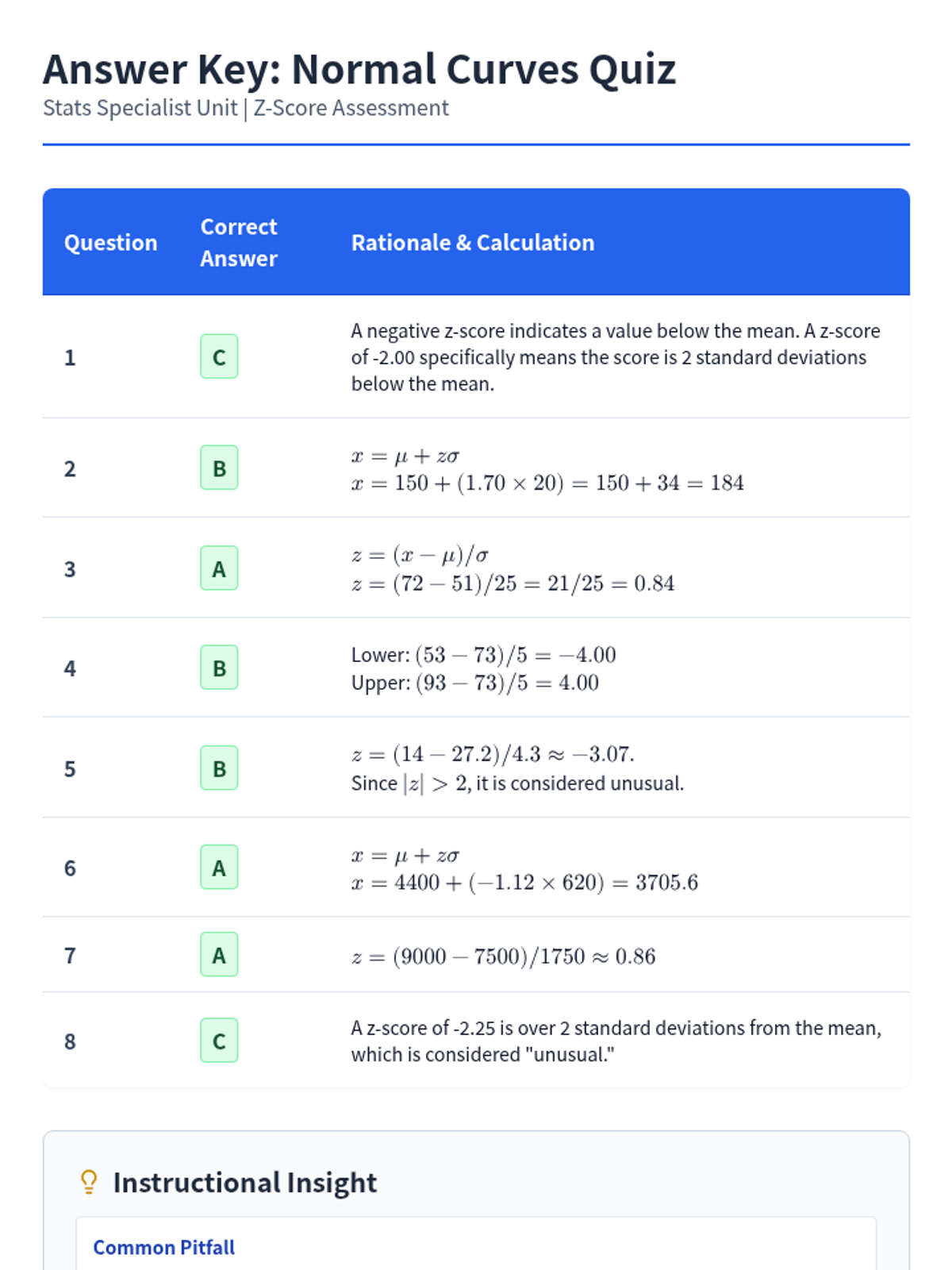
A focused lesson on calculating and interpreting z-scores and normal distributions using real-world scenarios from the textbook. Students will practice converting between raw scores and z-scores and determine the "unusualness" of specific data points.