A 15-minute introductory lesson for 8th graders exploring the differences between punitive and restorative justice, focusing on shifting mindsets from blame to repair.
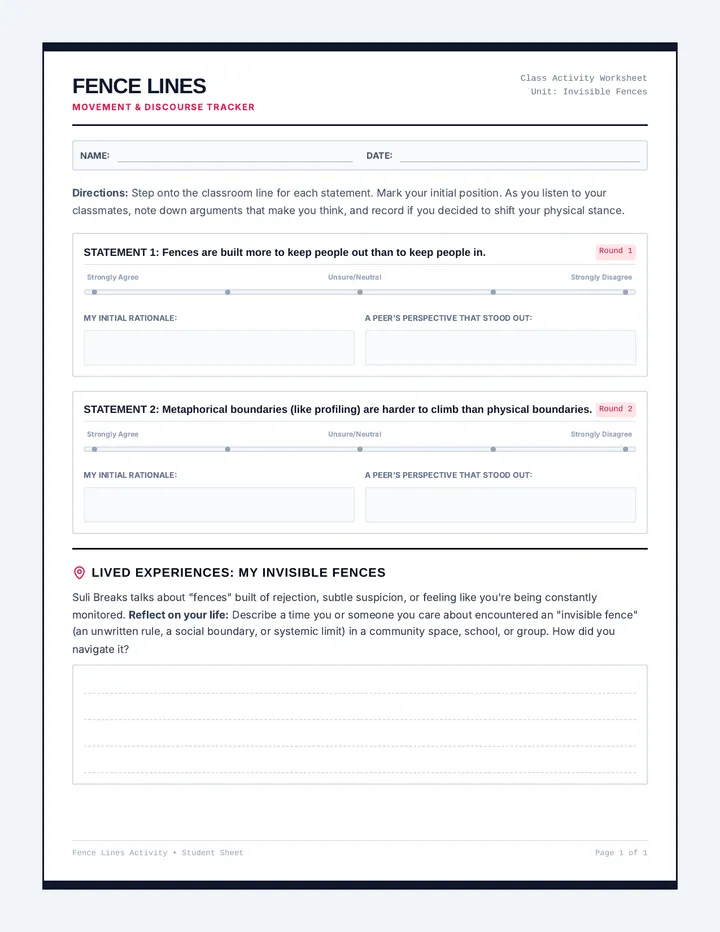
In this lesson, students research unsung heroes of social justice movements and create a 'Justice Journey Map' to visualize the spatial impact of historical change. They explore how geography and movement shape activism while developing research and empathy skills.
A unit assessment covering prominent African American leaders, their roles as agents of change, and the systemic barriers they worked to dismantle within their communities.
A collection of resources for an educational information booth about Peru at a cultural fair, including a fact sheet and interactive trivia cards.
This lesson explores the Homestead Act of 1862 and the logistical realities of settling the American West, focusing on the grid system and survival challenges.
A lesson introducing students to famous figures from Ohio and their contributions to history, science, and sports.
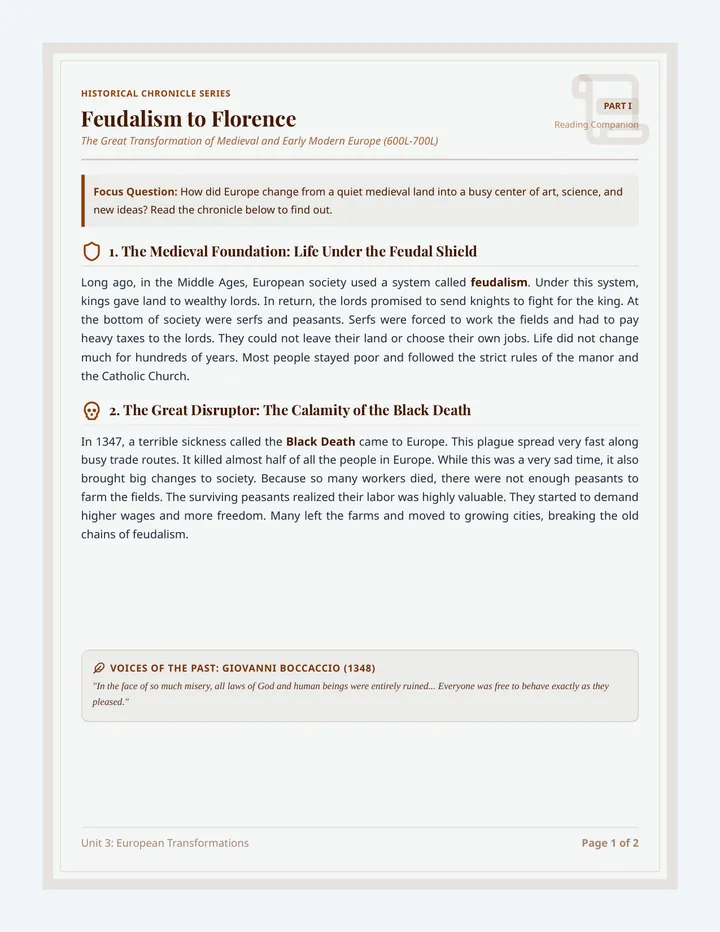
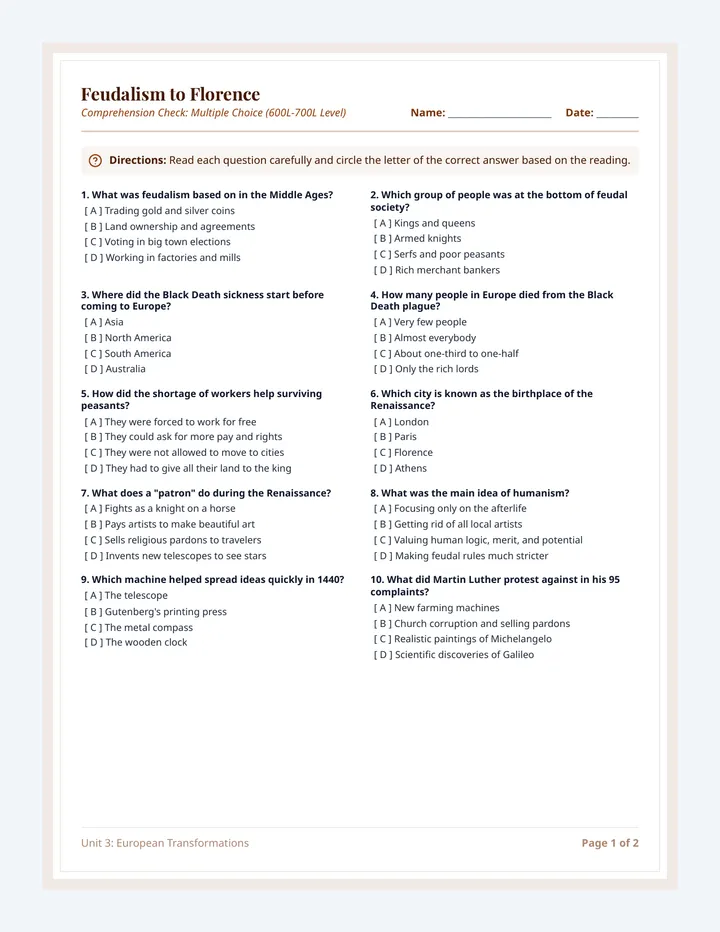
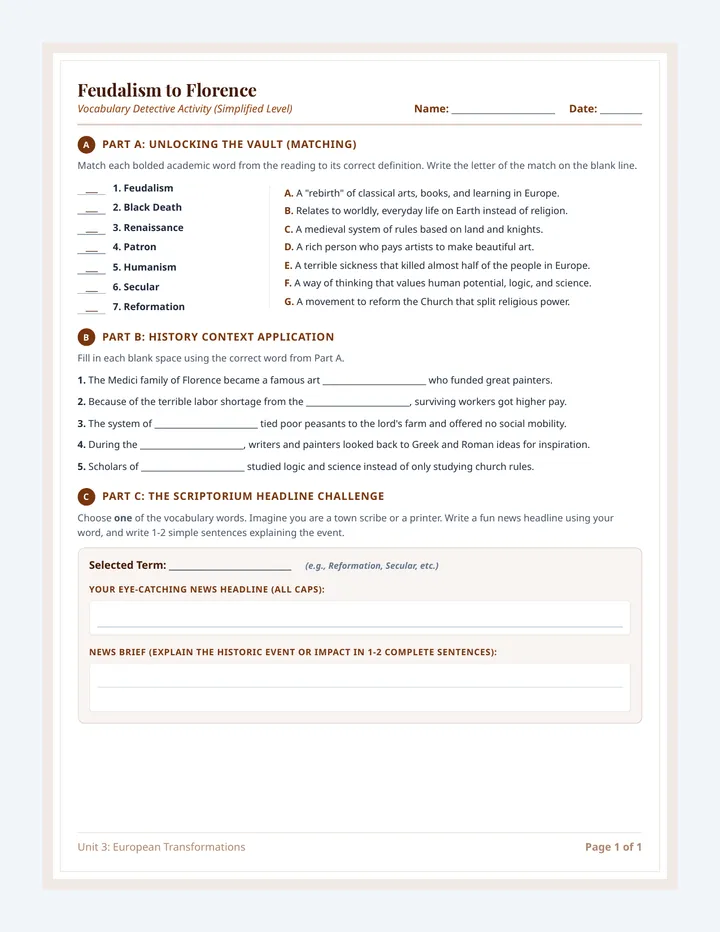
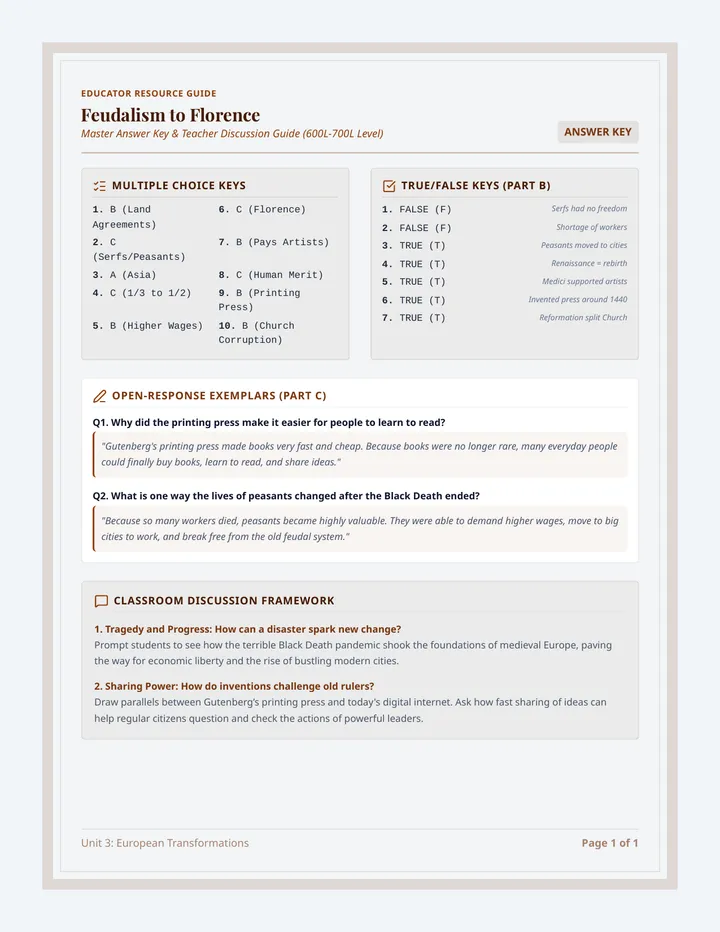
A comprehensive guide to structuring an informative essay on the social, economic, and religious consequences of the Black Death in medieval Europe.
A comprehensive look at the rise and fall of Maximilian I of Mexico, exploring the French intervention and the clash between imperial dreams and republican reality.
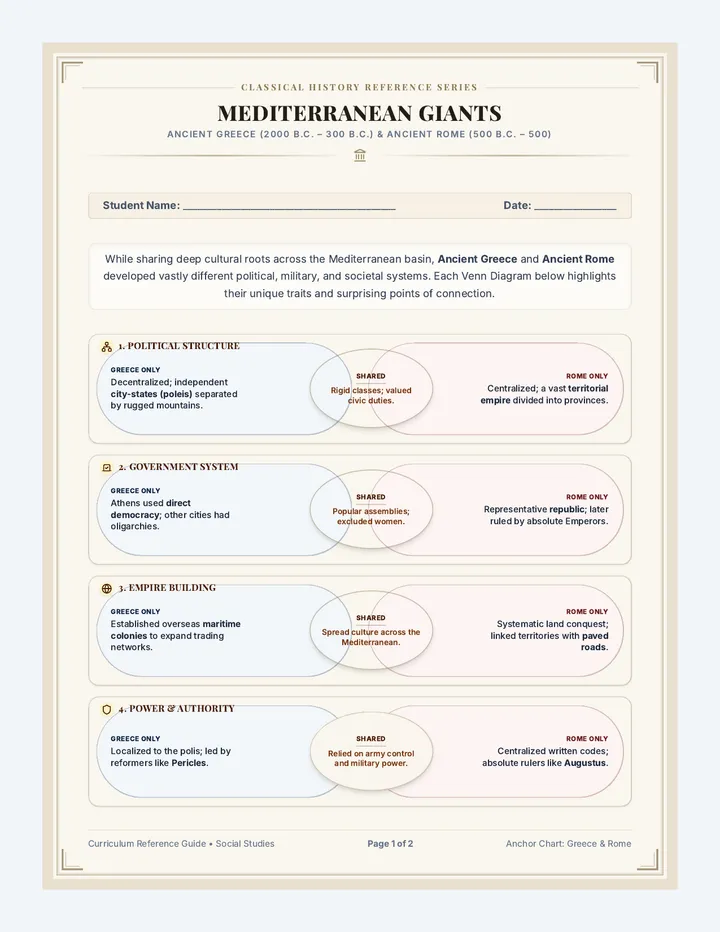
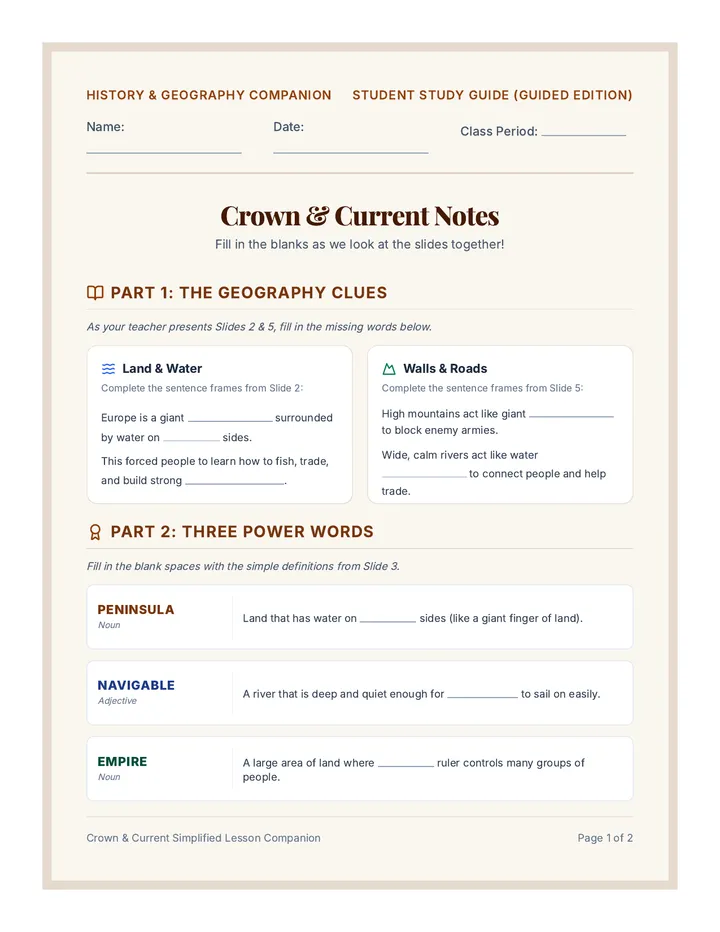
A deep dive into the physical and human geography that shaped the rise of the Roman Empire, from the Tiber River to its expansion across three continents.
A summative assessment for the first third of the novel. Evaluates student mastery of vocabulary from Lessons 1-11, character motivation, and the central theme of corporate alienation through a mix of multiple choice, short answer, and a rigorous RACE response.
The family's recovery and the transition to a new source of productivity (Grete). Synthesis of the unit's themes.
Gregor's death and self-sacrifice. Analysis of the relief of the family and the 'cleansing' of the home.
Grete's formal rejection of Gregor's identity. Analysis of the shift from sibling love to the necessity of his removal.
Gregor's reaction to Grete's violin performance. Themes of art, human connection, and the final reach for his human spirit.
Gregor's room becomes a storage area for trash. Analysis of the complete erasure of his human space and history.
The introduction of the three lodgers. Analysis of the home as a commodified space and Gregor's further displacement.
Analysis of the family taking on menial labor. Themes of exhaustion, loss of dignity, and the shared alienation of the working class.

Gregor as a permanent invalid. Analysis of the family's growing resentment and the physical reminder of his non-productive status.
The father's violent attack with apples. Analysis of the apple as a symbol of permanent wounding and the transition from son to 'burden'.
Analysis of the father's return to work and his transformation through the bank uniform. Themes of restored authority and industrial identity.
Gregor's desperate attempt to save his human identity by protecting the picture frame. Focus on the direct confrontation with Grete.
The conflict between Grete and the Mother over removing Gregor's furniture. Themes of preserving human memory vs. accepting animal reality.
Students analyze Gregor's fading perception of the human world through his window view and his growing physical comfort in animalistic behaviors.
Analysis of the father's hidden financial assets and the betrayal of Gregor's role as the sole provider. Themes of economic exploitation.
Students examine the changing power dynamic between Gregor and Grete, focusing on her new ritualistic authority as his sole caretaker.
Part II begins with Gregor's physical transition, focusing on his change in taste and the shift from human food to animal waste as a symbol of dehumanization.
Students analyze the violent conclusion to Part I, focusing on the father's use of force to cage Gregor. Themes of domestic aggression and the loss of familial status.
Students analyze the visual reveal of Gregor's form and the immediate physical and psychological retreat of the Chief Clerk and family. Focus on the 'Invisible Force' of alienation.
Students analyze the Chief Clerk's dialogue and how he uses corporate language to minimize Gregor's humanity and maximize his perceived 'laziness'.
Students analyze the arrival of the Chief Clerk and the immediate shift from familial concern to corporate suspicion. Focus on the theme of 'The Firm' as a dehumanizing force.
A lesson exploring the impact of the Latin American (Creole) Revolutions on government, freedom, and daily life, featuring a scaffolded journal activity for IEP students.
A lesson exploring the social and political changes following the Creole-led revolutions in Latin America, specifically designed for students requiring IEP accommodations.
This lesson explores the causes of the Latin American Revolutions, specifically focusing on the social and political grievances of the Creoles against Spanish rule. Students will analyze the casta system, mercantilism, and Enlightenment influences.
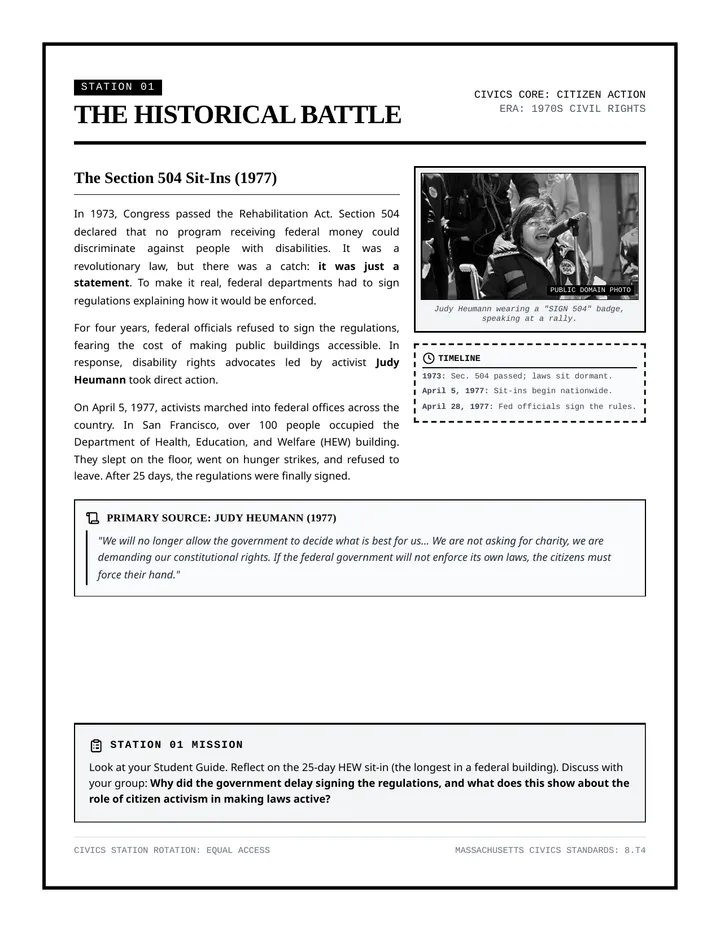
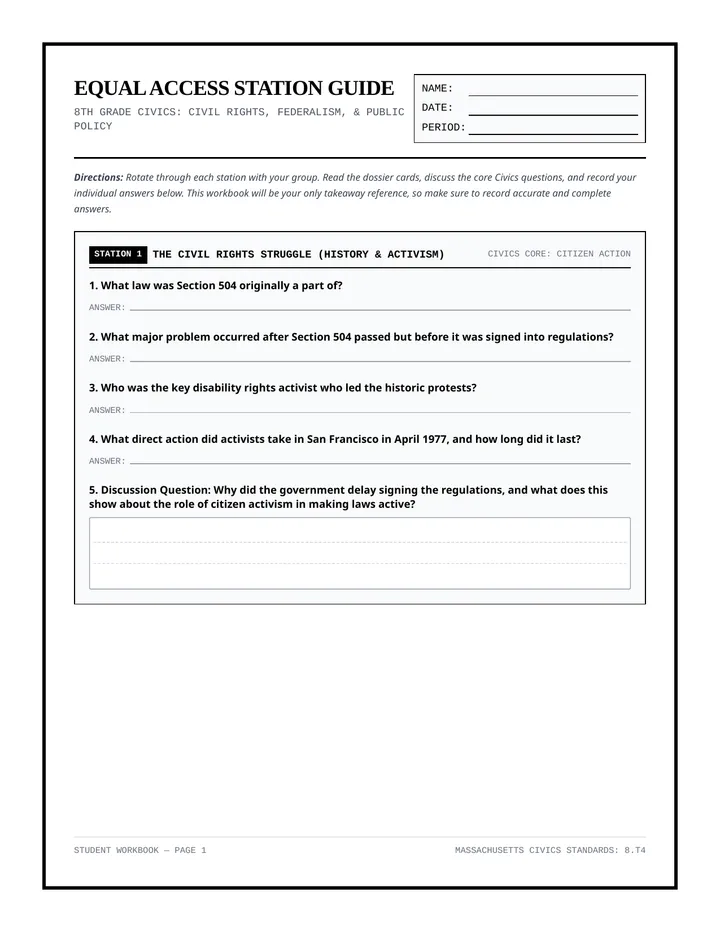
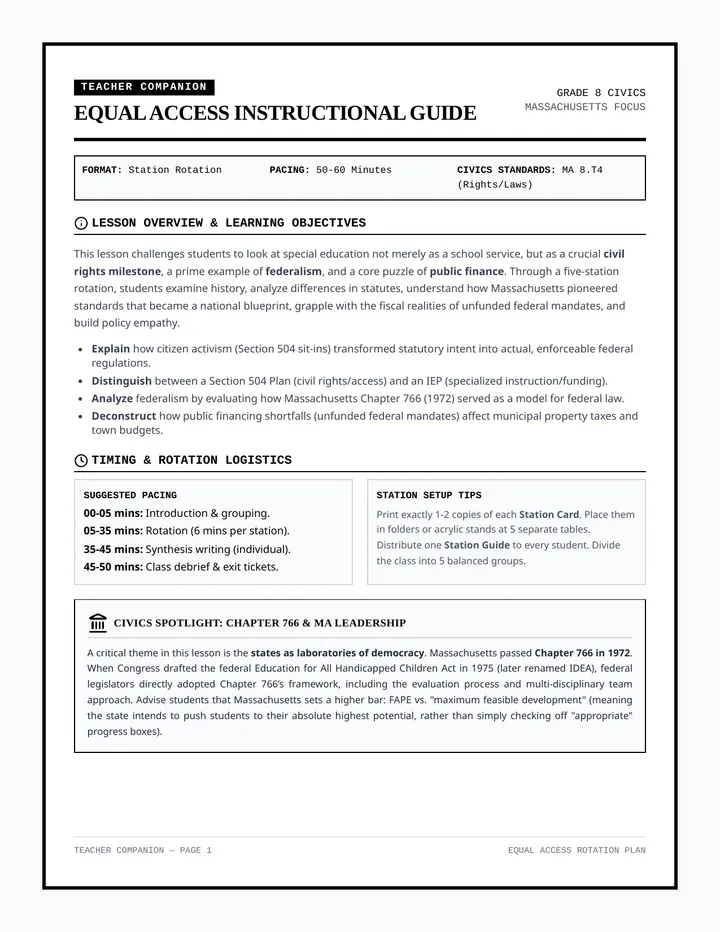
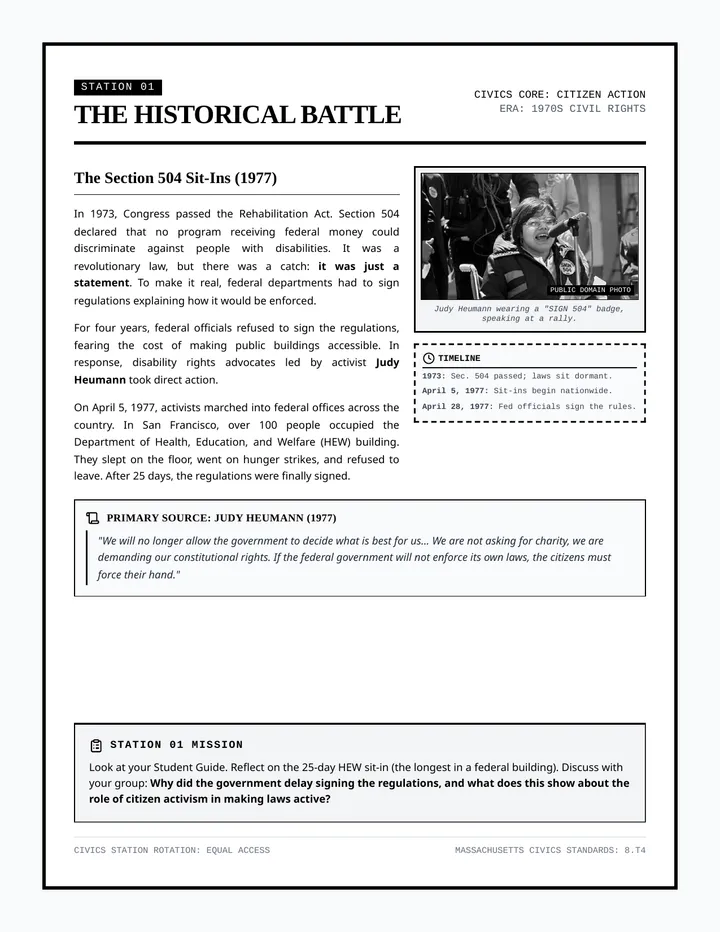
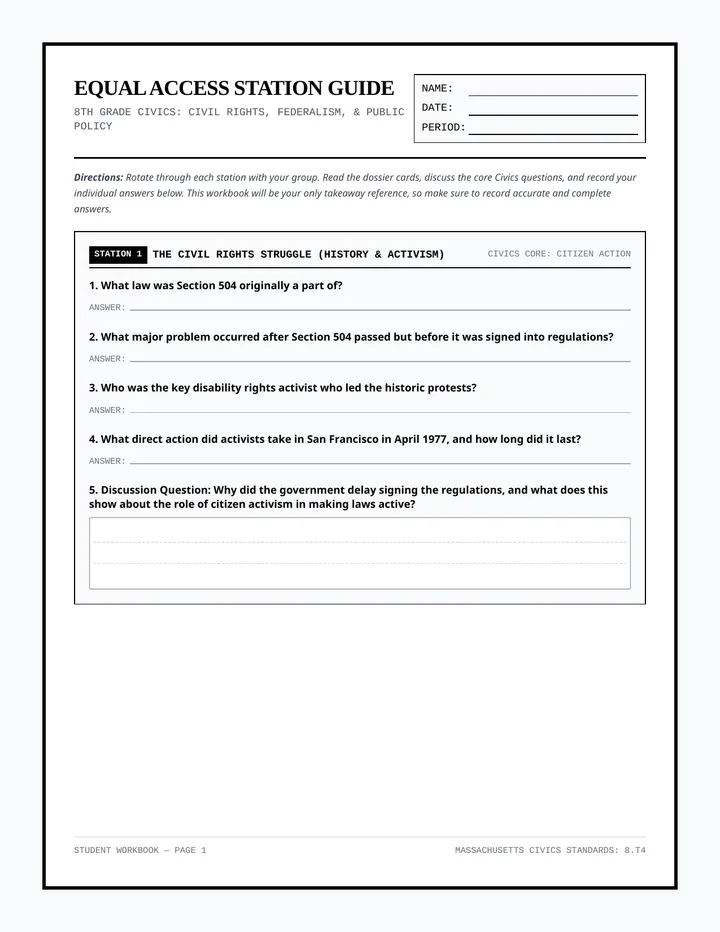
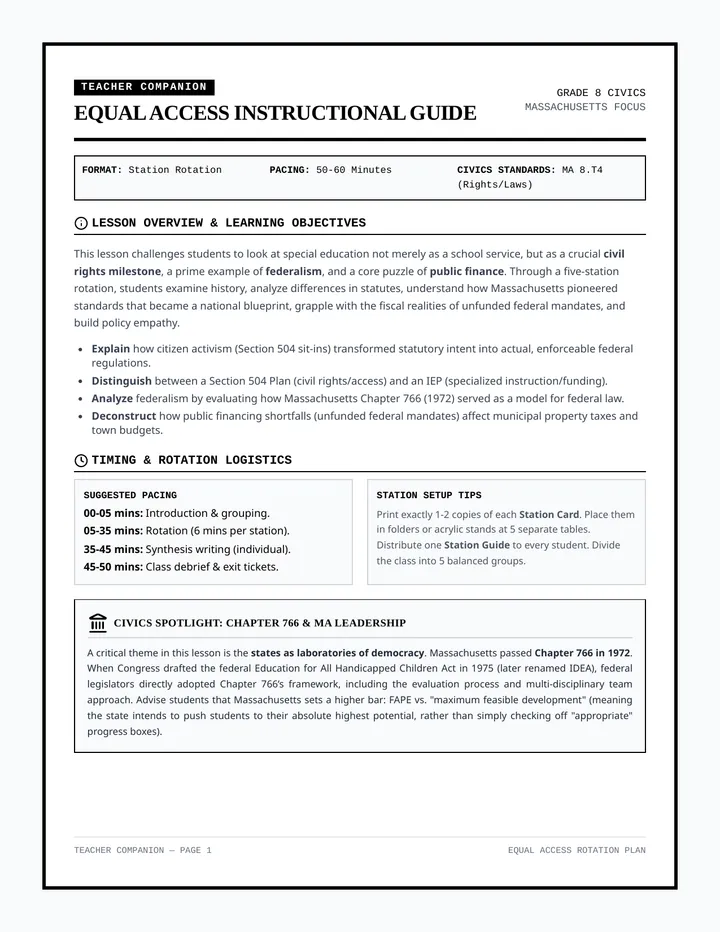
A middle school civics lesson exploring disability rights history, the ADA, and the shift from the medical to the social model of disability through the lens of the 'Capital Crawl' activism.
An introductory lesson on urban legends, covering their definition, key characteristics, and famous examples, followed by student analysis and discussion.
Students investigate the architectural mystery and economic power of Great Zimbabwe, analyzing archaeological evidence to debunk colonial-era myths about African civilizations.
A comprehensive study of key figures in the abolitionist movement, categorized by their methods of resistance: oratory, strategy, and militant action. Designed specifically for GED Social Studies preparation.
This lesson explores the conflicting philosophies of Booker T. Washington and W.E.B. Du Bois as portrayed in Dudley Randall's poem 'Booker T. and W.E.B.' Students will analyze the poem's use of dialogue and imagery to understand the early 20th-century civil rights debate.
A comprehensive exploration of the Underground Railroad, comparing the leadership styles of Harriet Tubman and Frederick Douglass, and analyzing the impact of abolitionist literature.
A foundational lesson exploring the unique geographic features of the Italian Peninsula that allowed Ancient Rome to flourish, focusing on the Alps, Tiber River, and Seven Hills.
This lesson explores the social and political transformations following the Creole Revolutions in Latin America, specifically designed with scaffolds for IEP students to express their understanding of new freedoms and government structures.