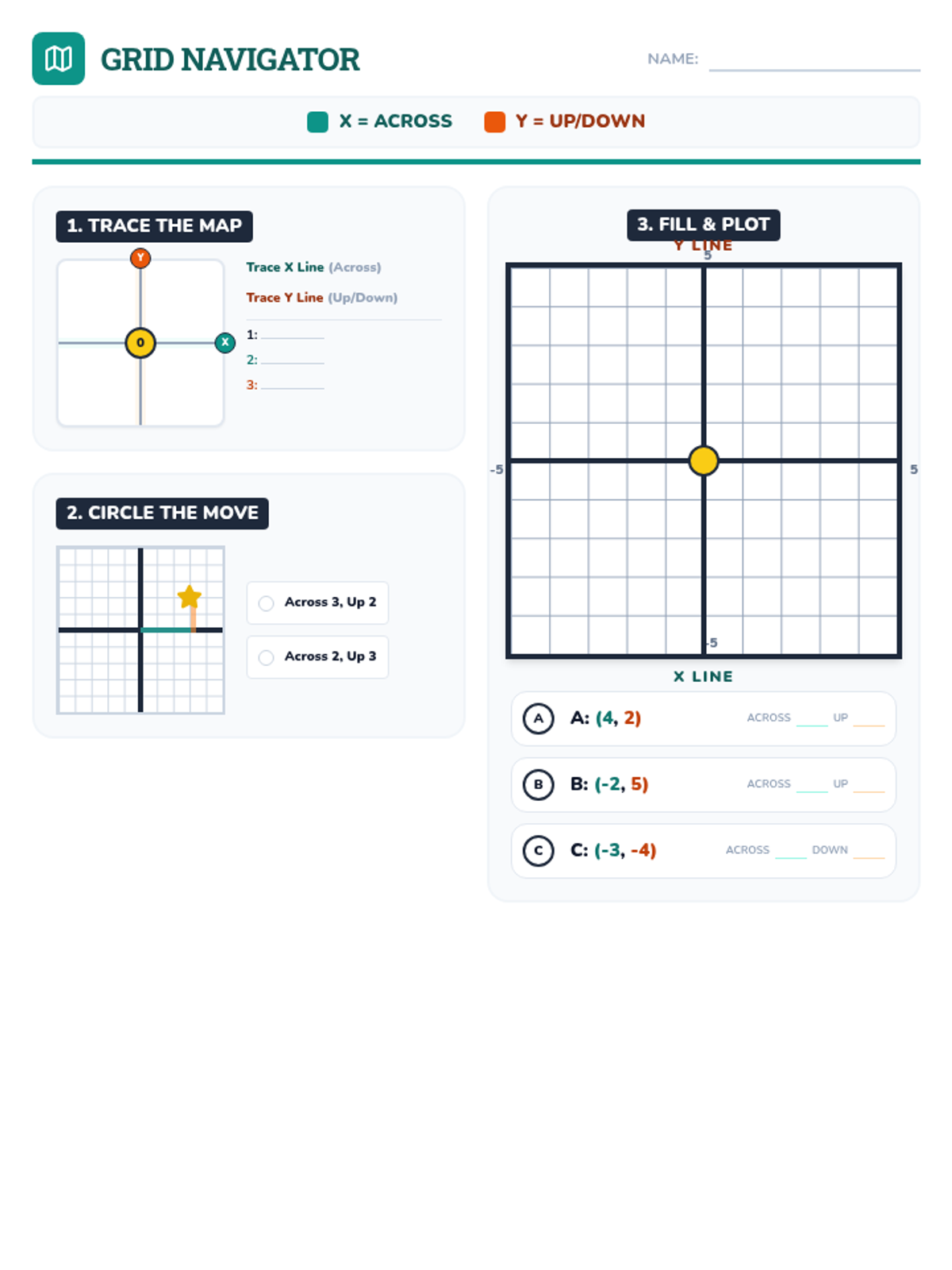
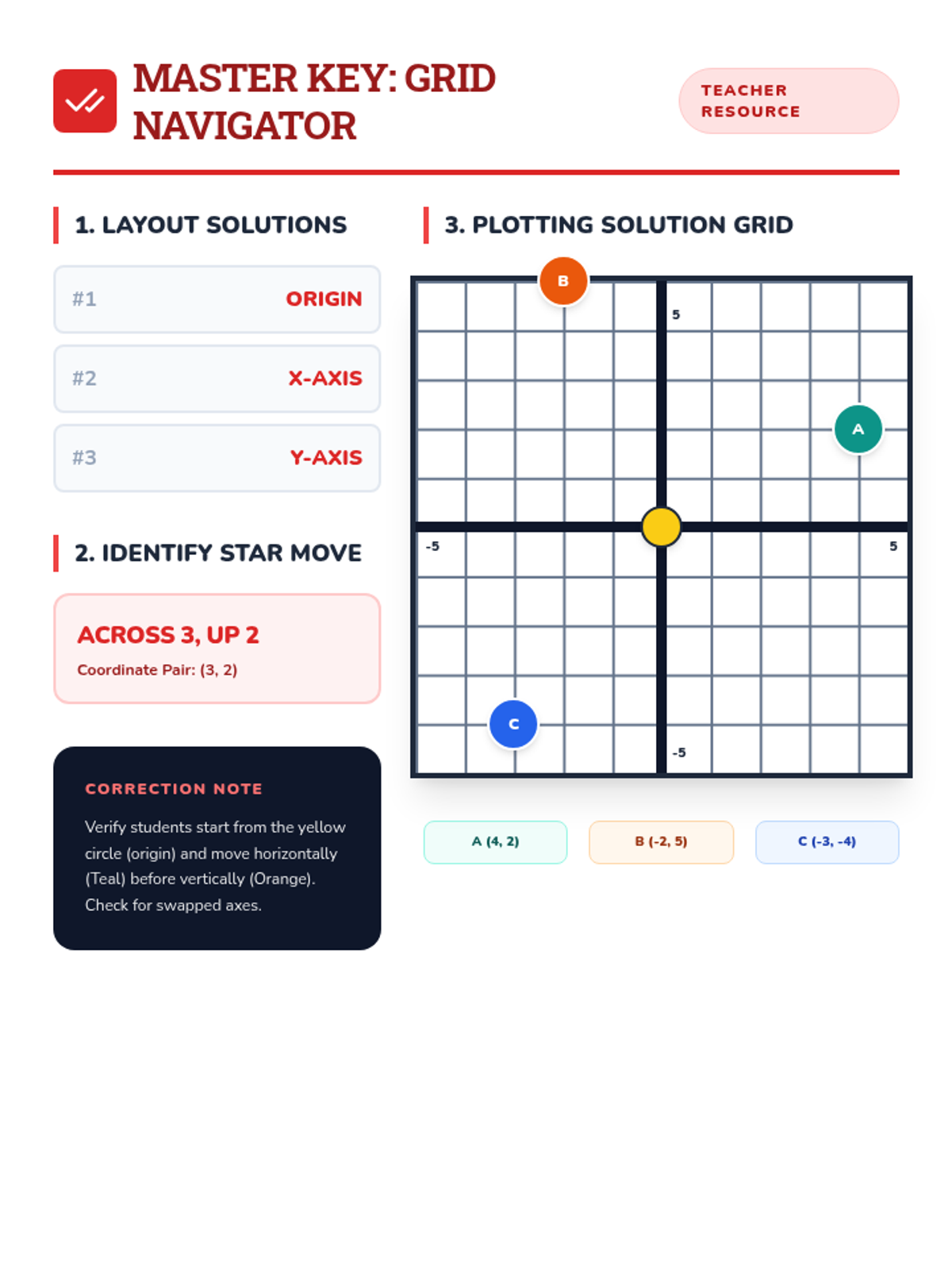
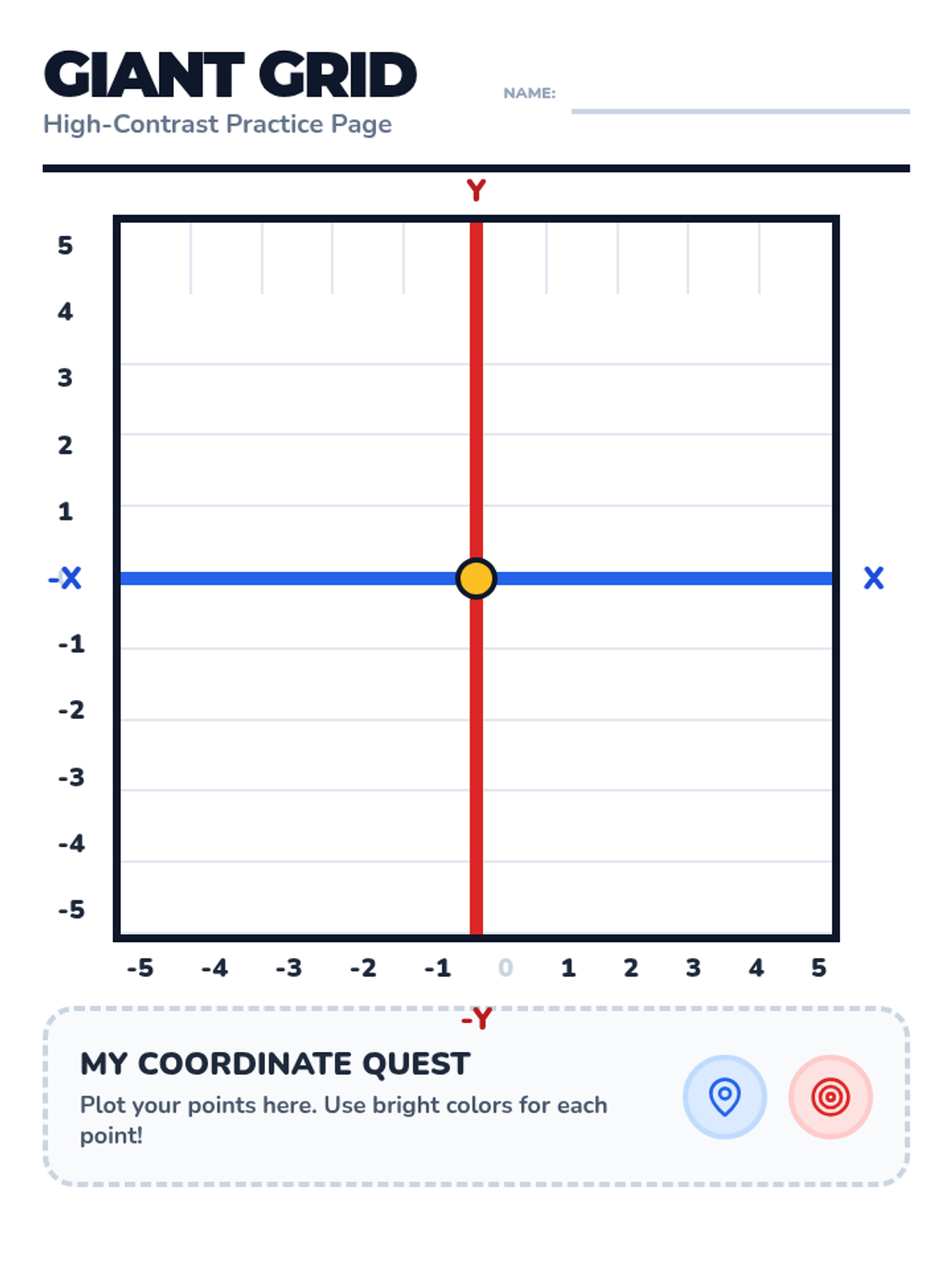
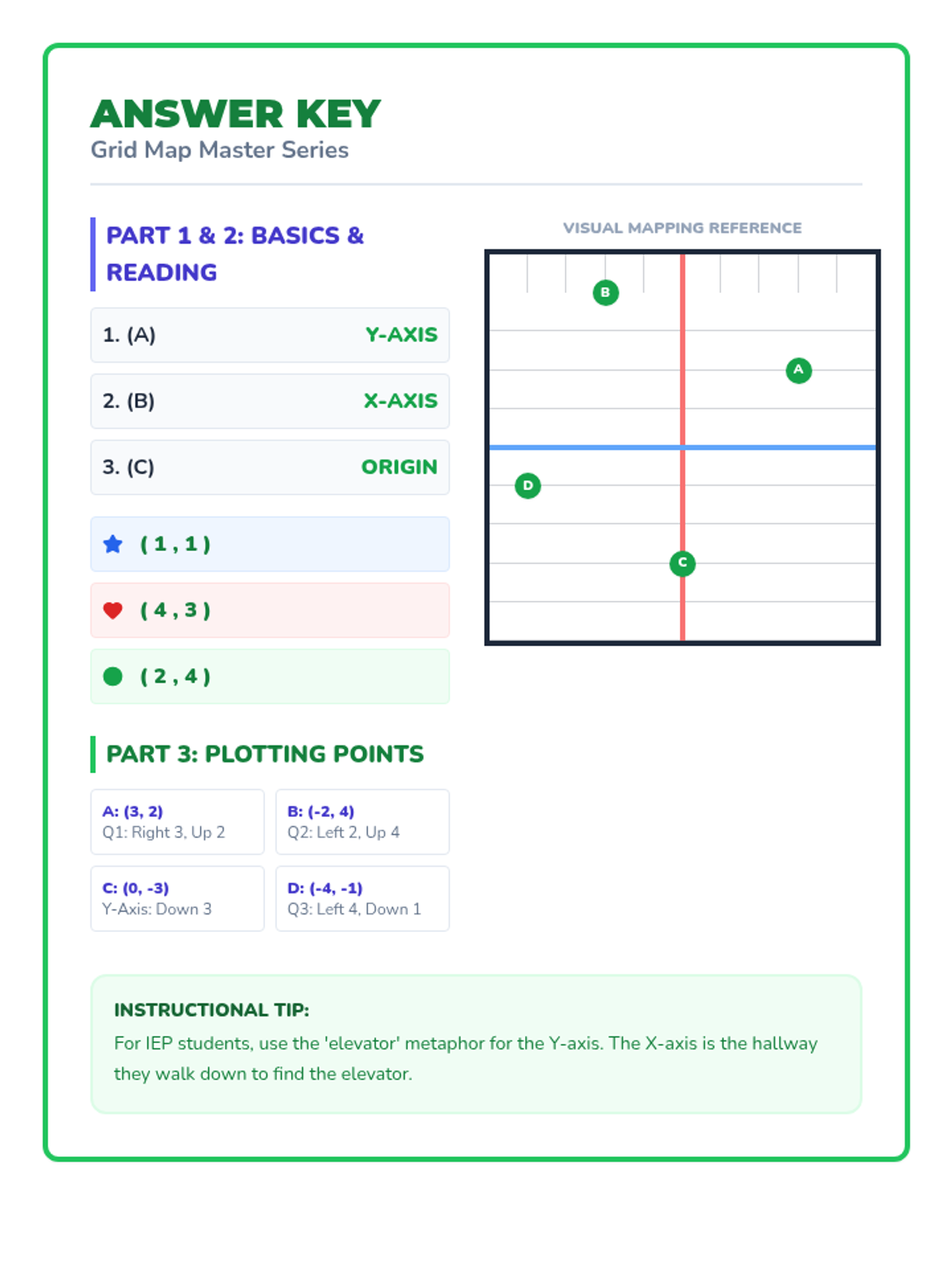
A specialized math lesson for plotting coordinates across all four quadrants and on the axes, designed with heavy scaffolding and visual cues for IEP support. Students will use an island map theme to practice identifying and plotting points.
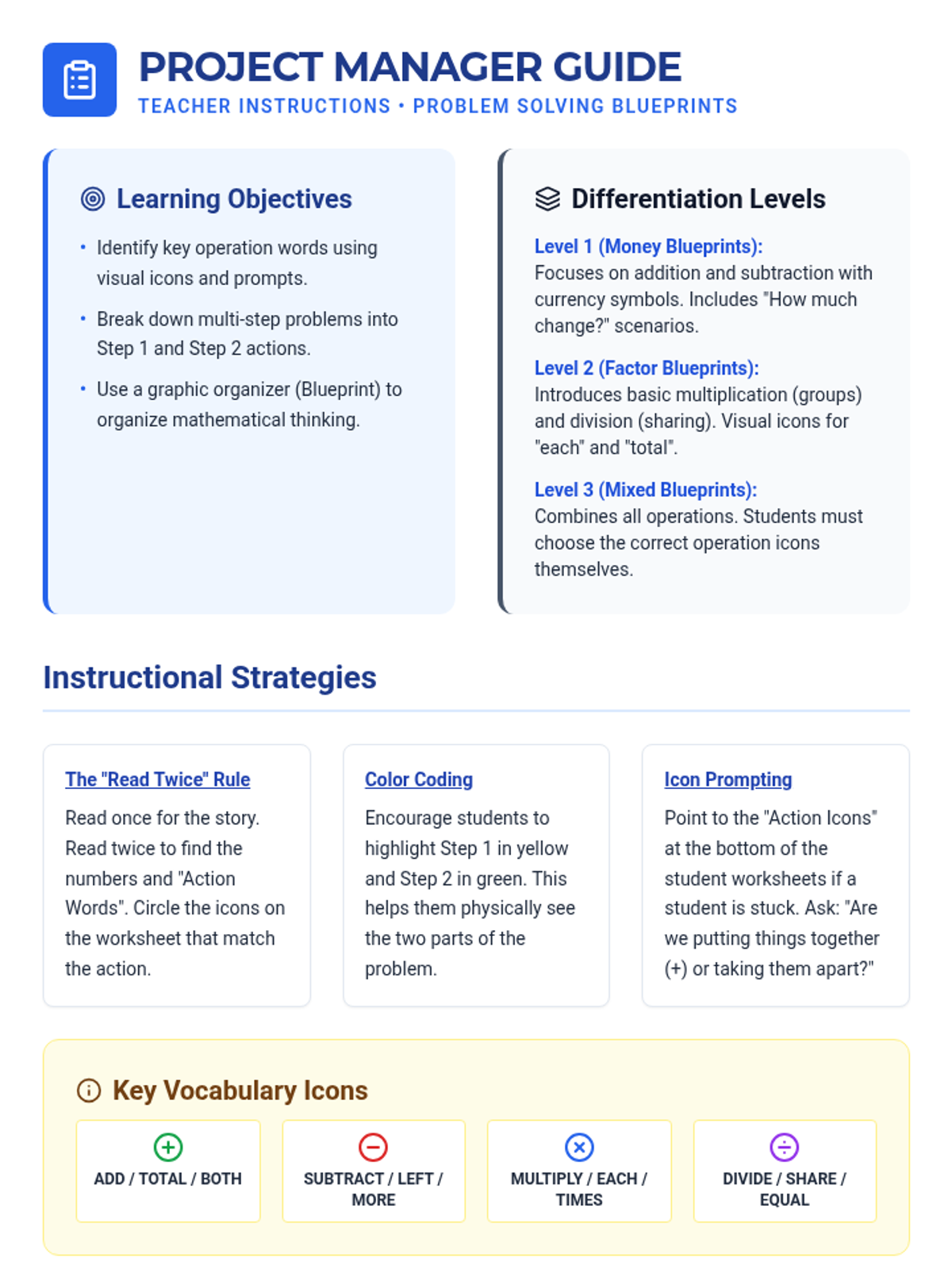
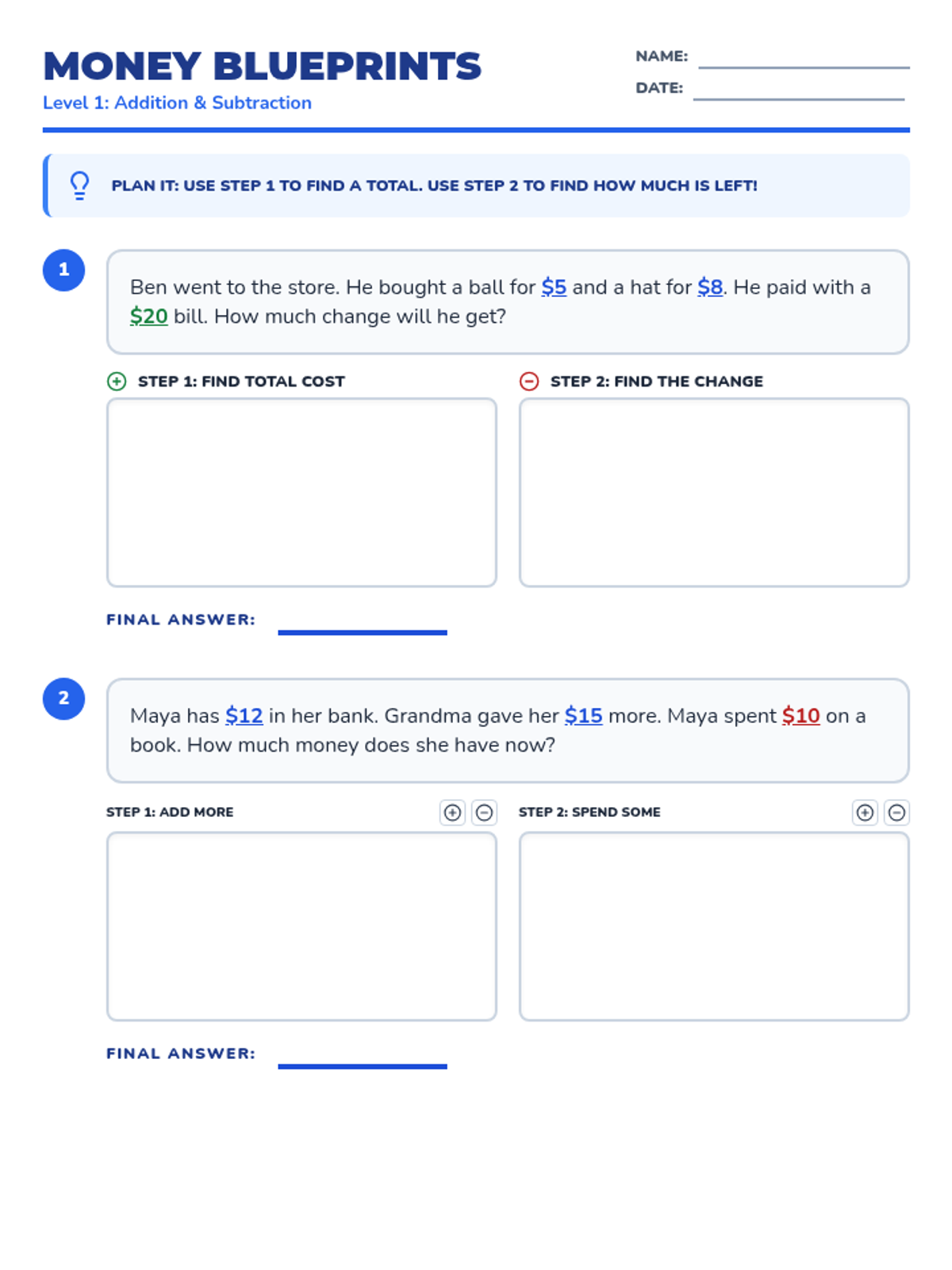
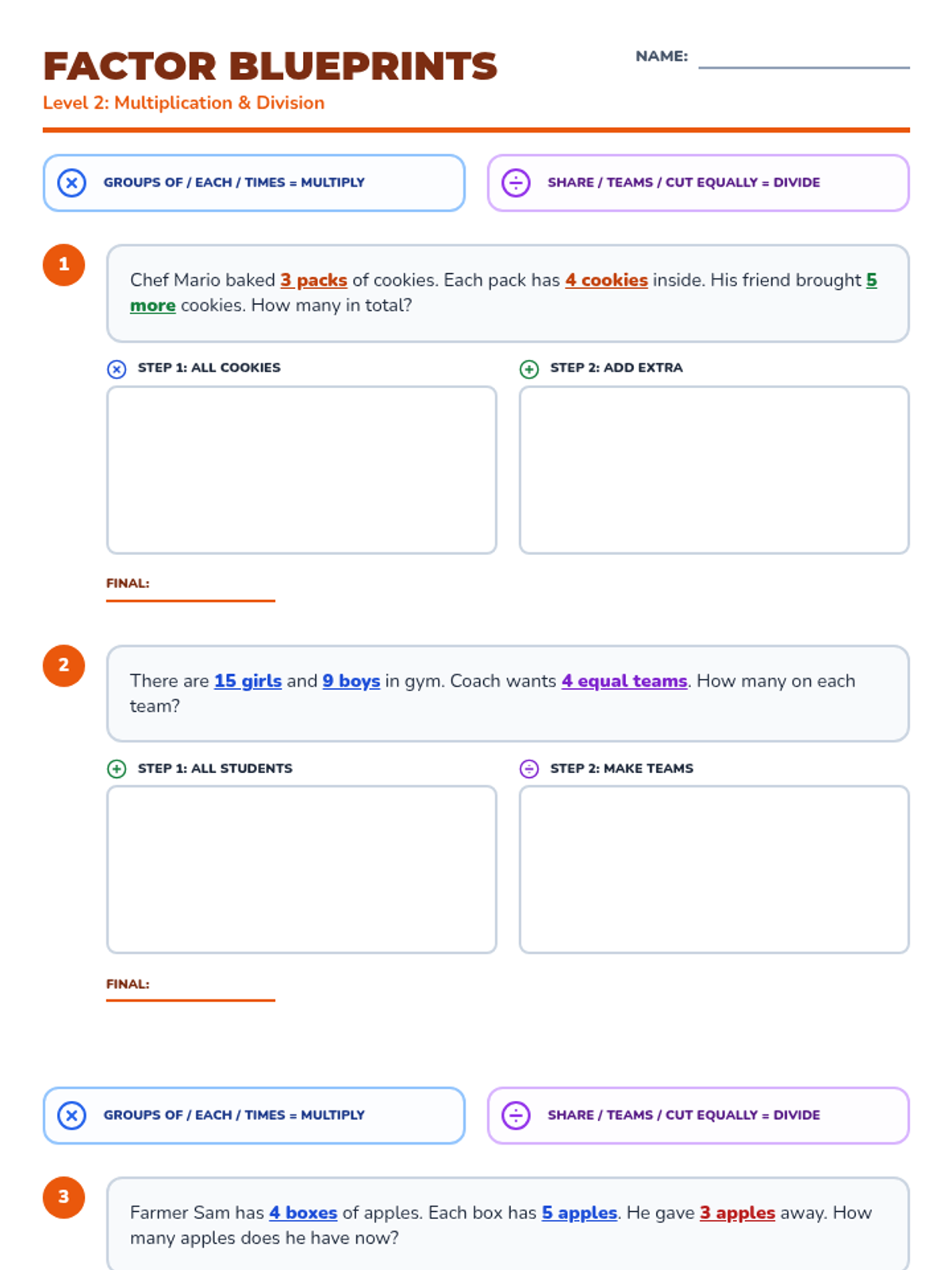
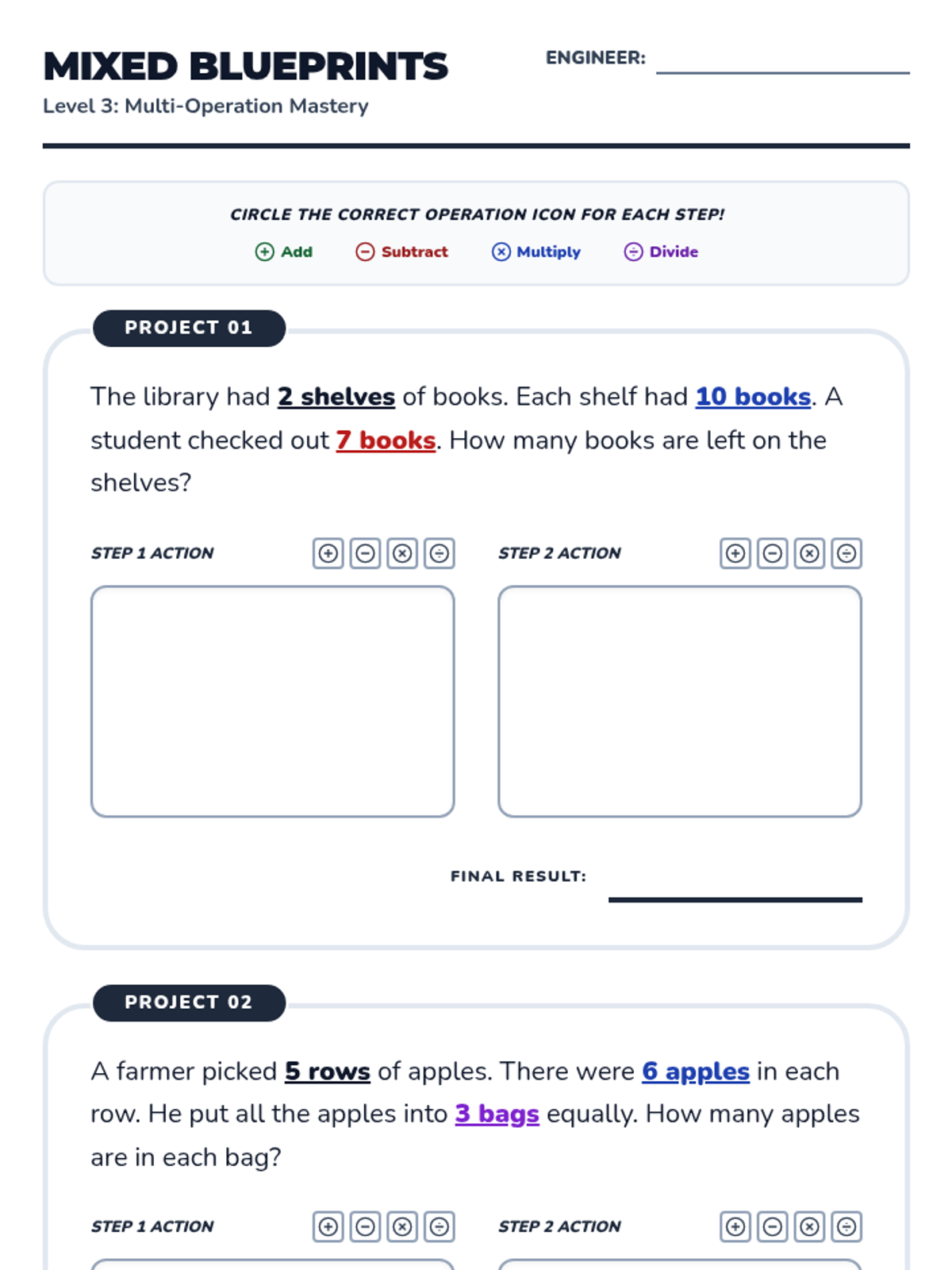
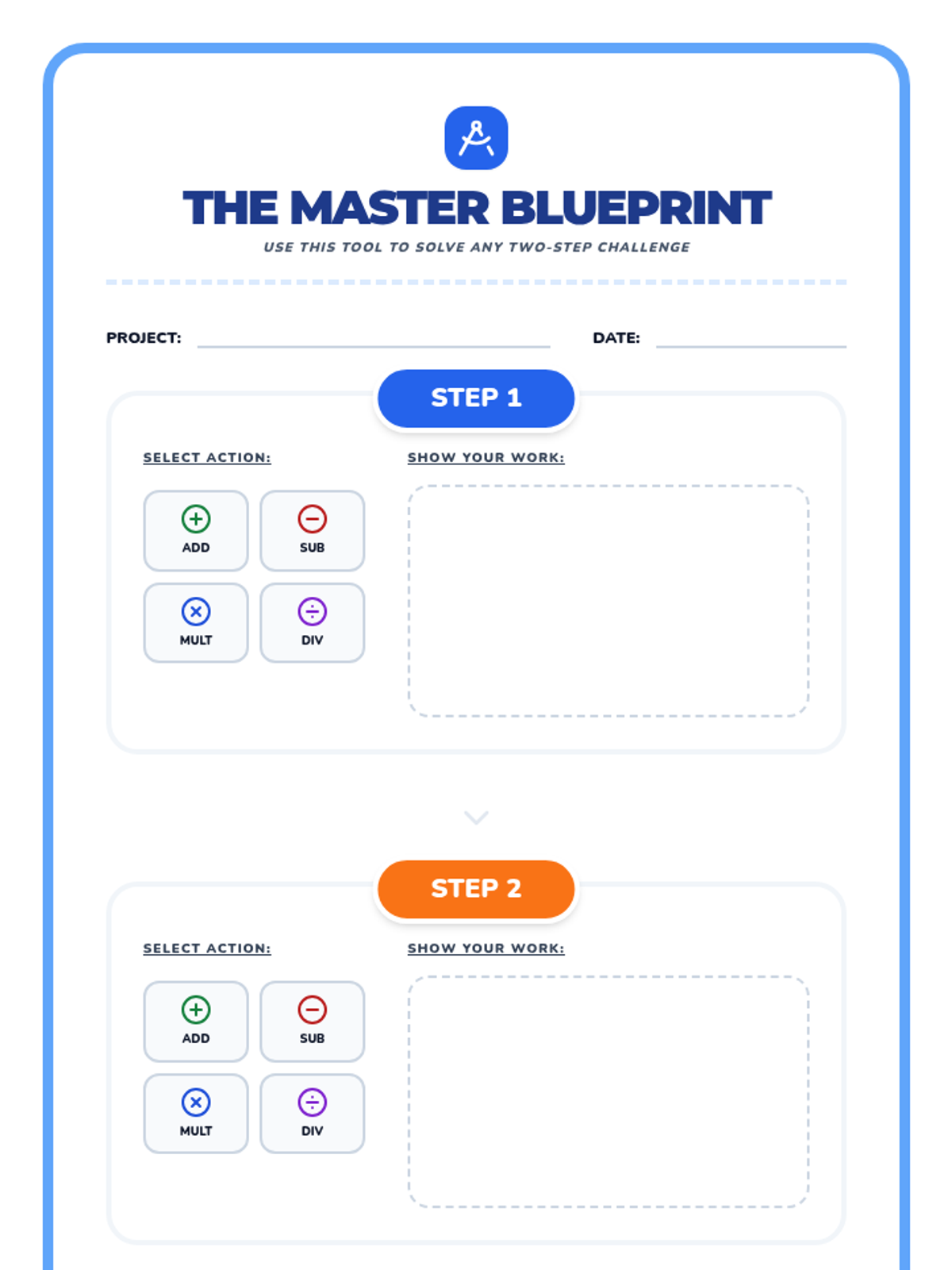
This lesson introduces students to multi-step word problems using a consistent graphic organizer (the Blueprint). It includes differentiated materials for various skill levels and operational focuses.
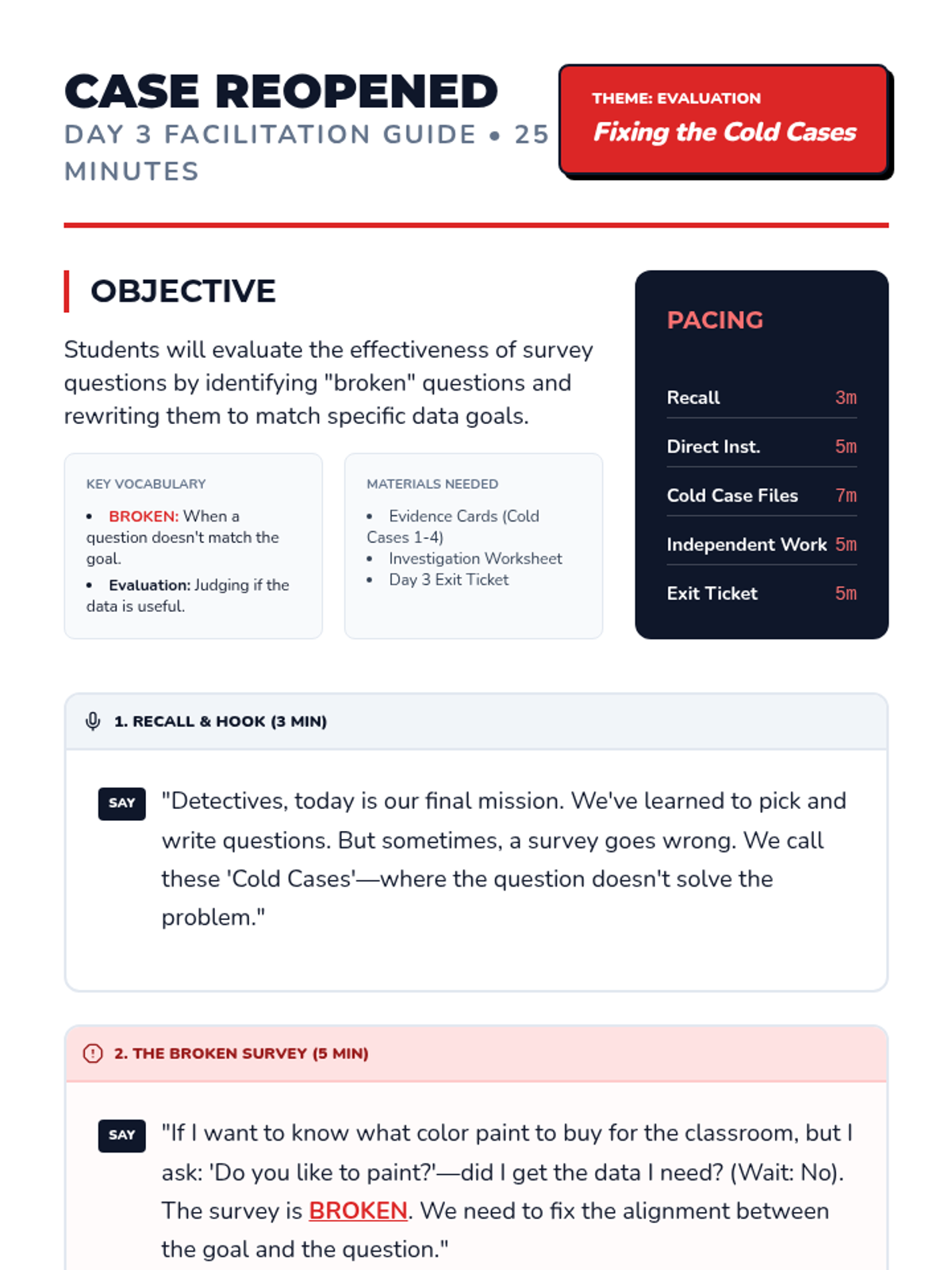
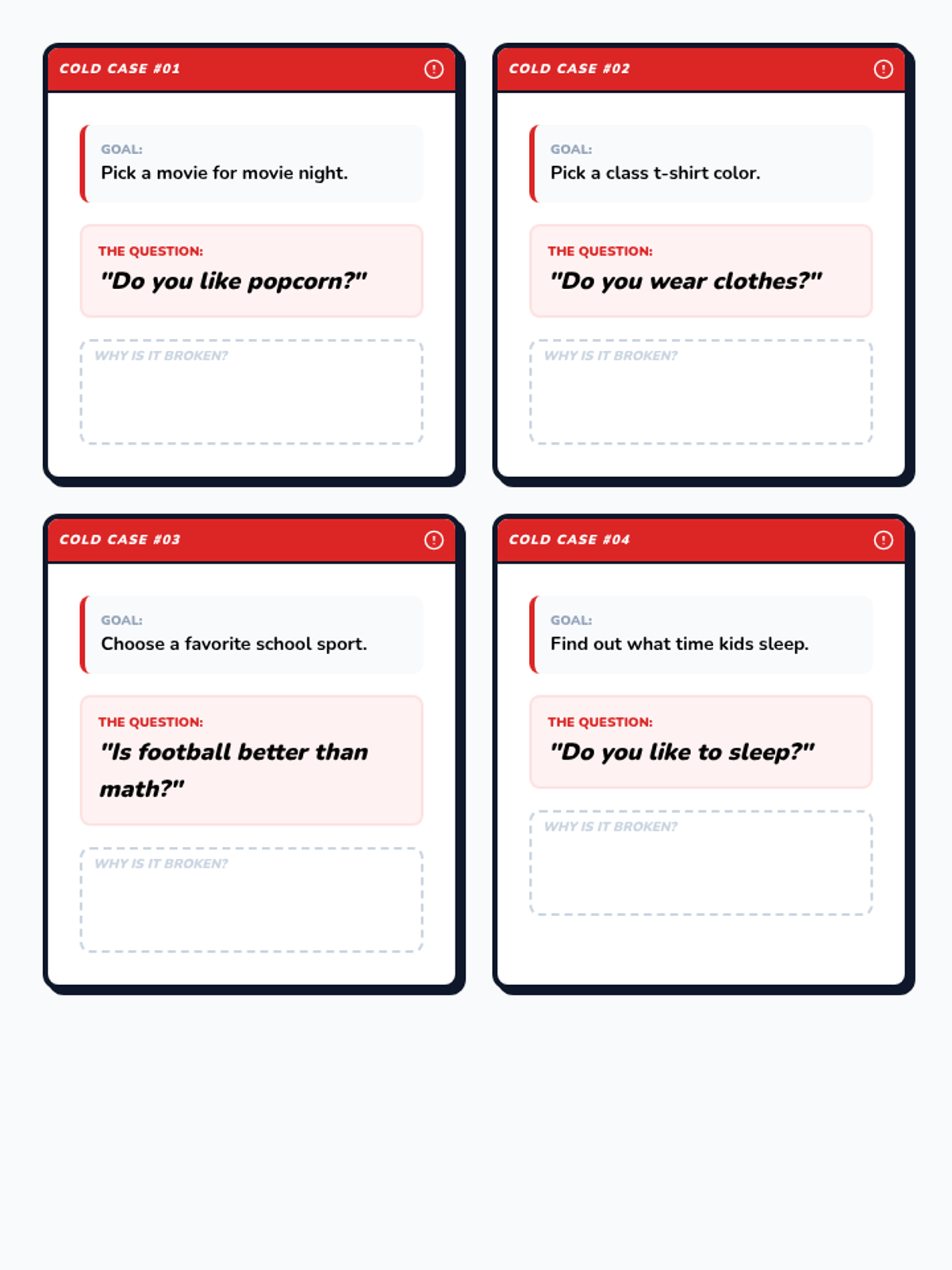
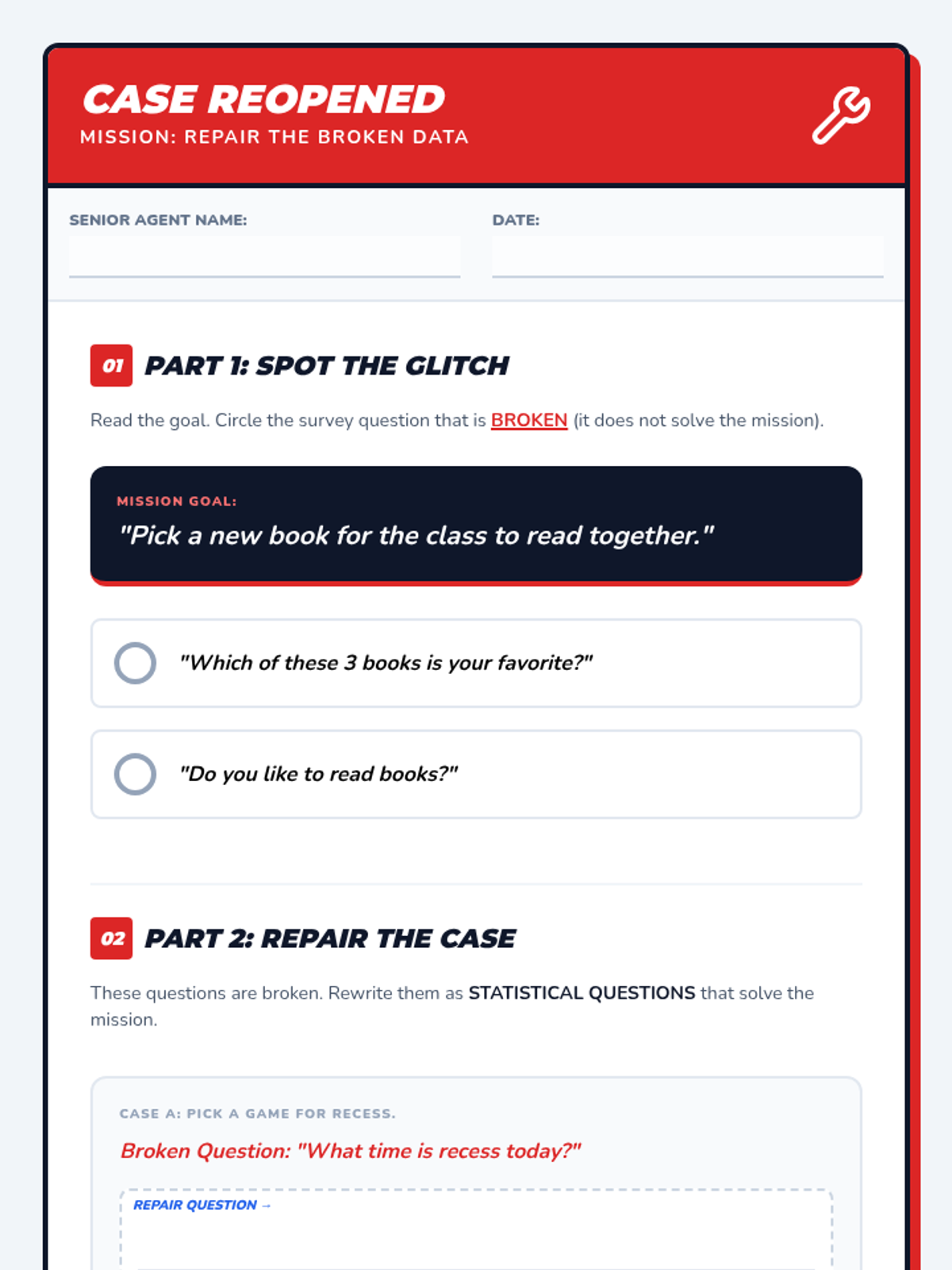
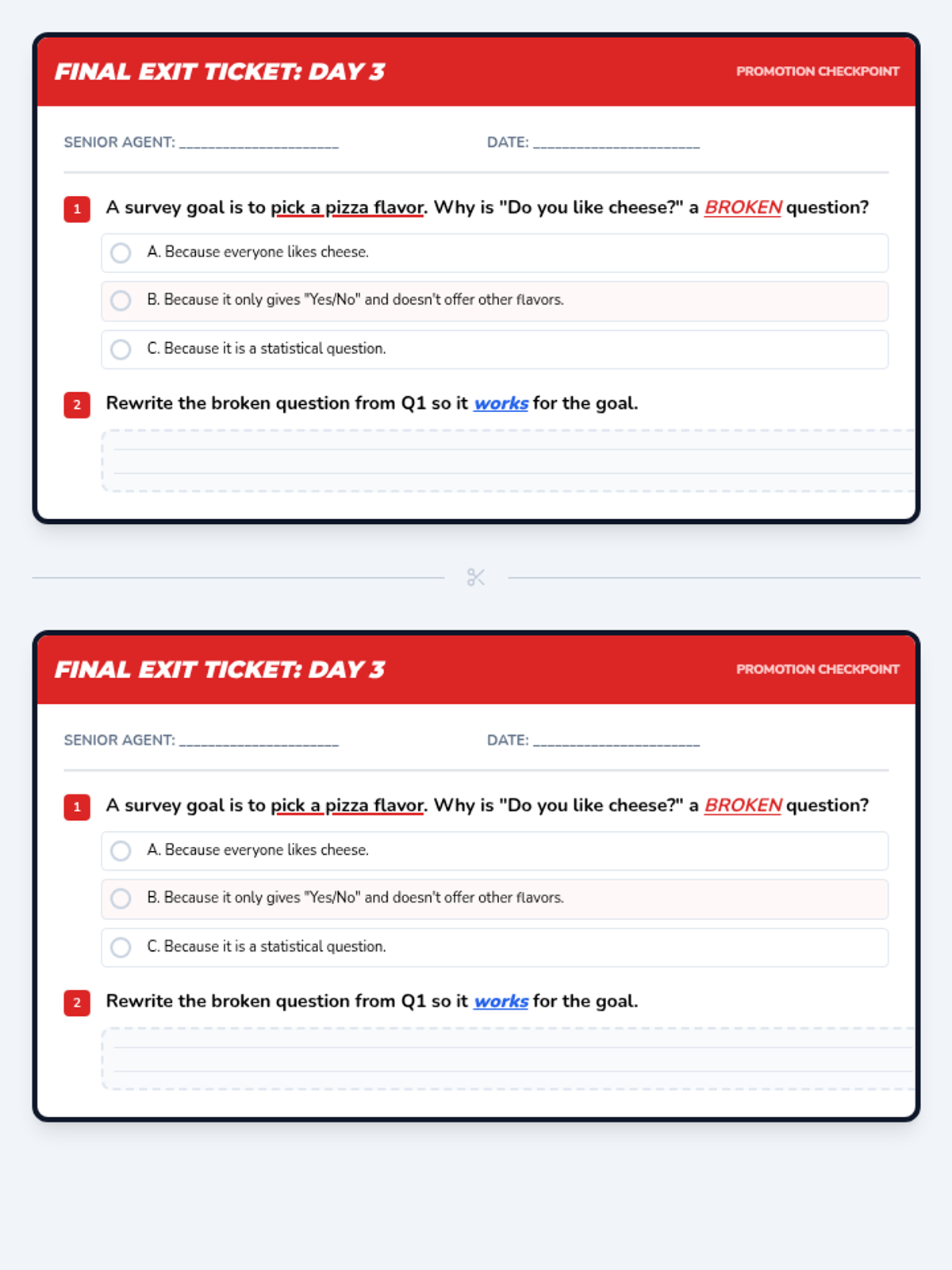
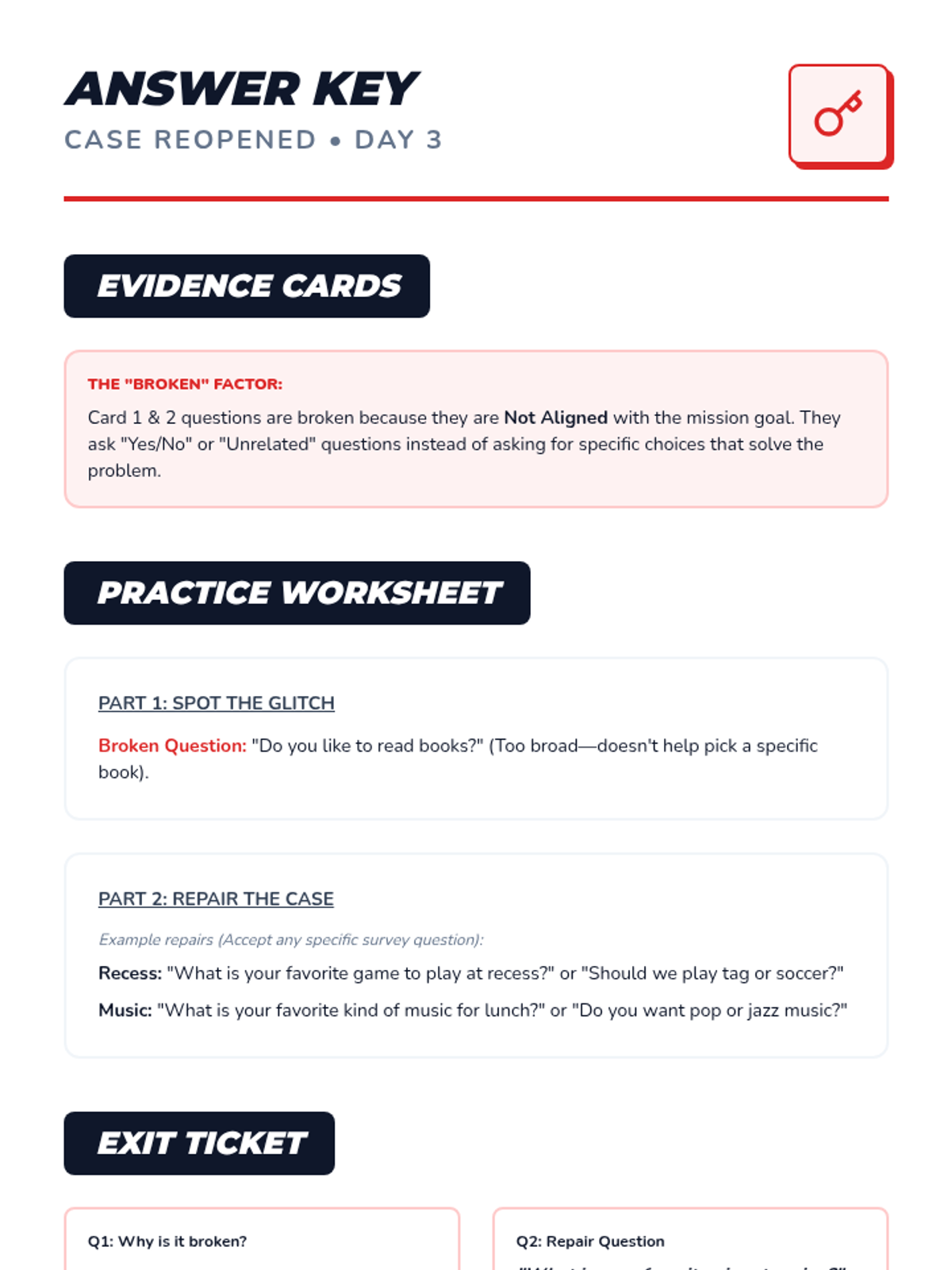
The final mission where students evaluate the effectiveness of data collection. They analyze "broken" surveys where the question didn't match the goal and practice rewriting them for accuracy.
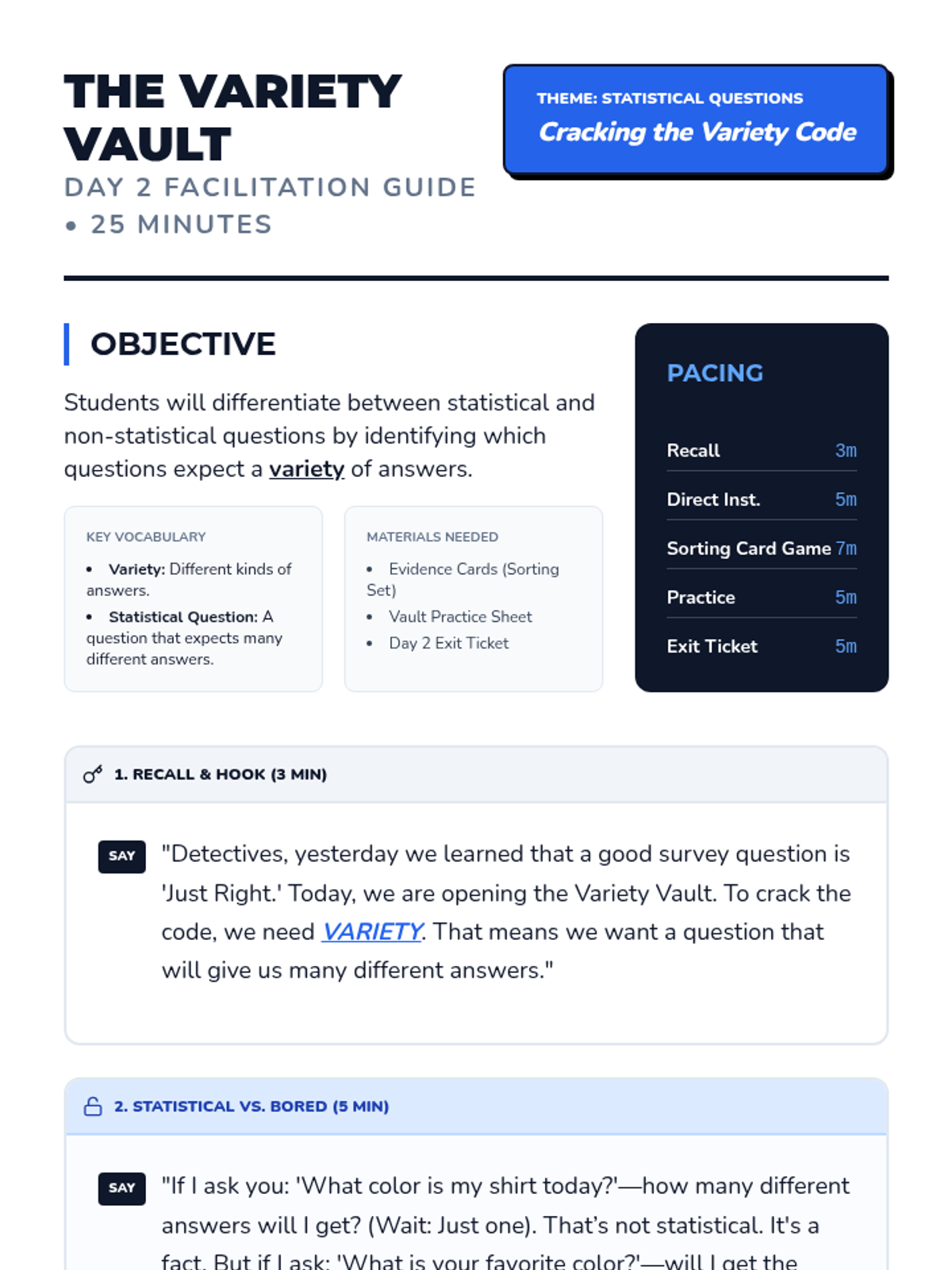
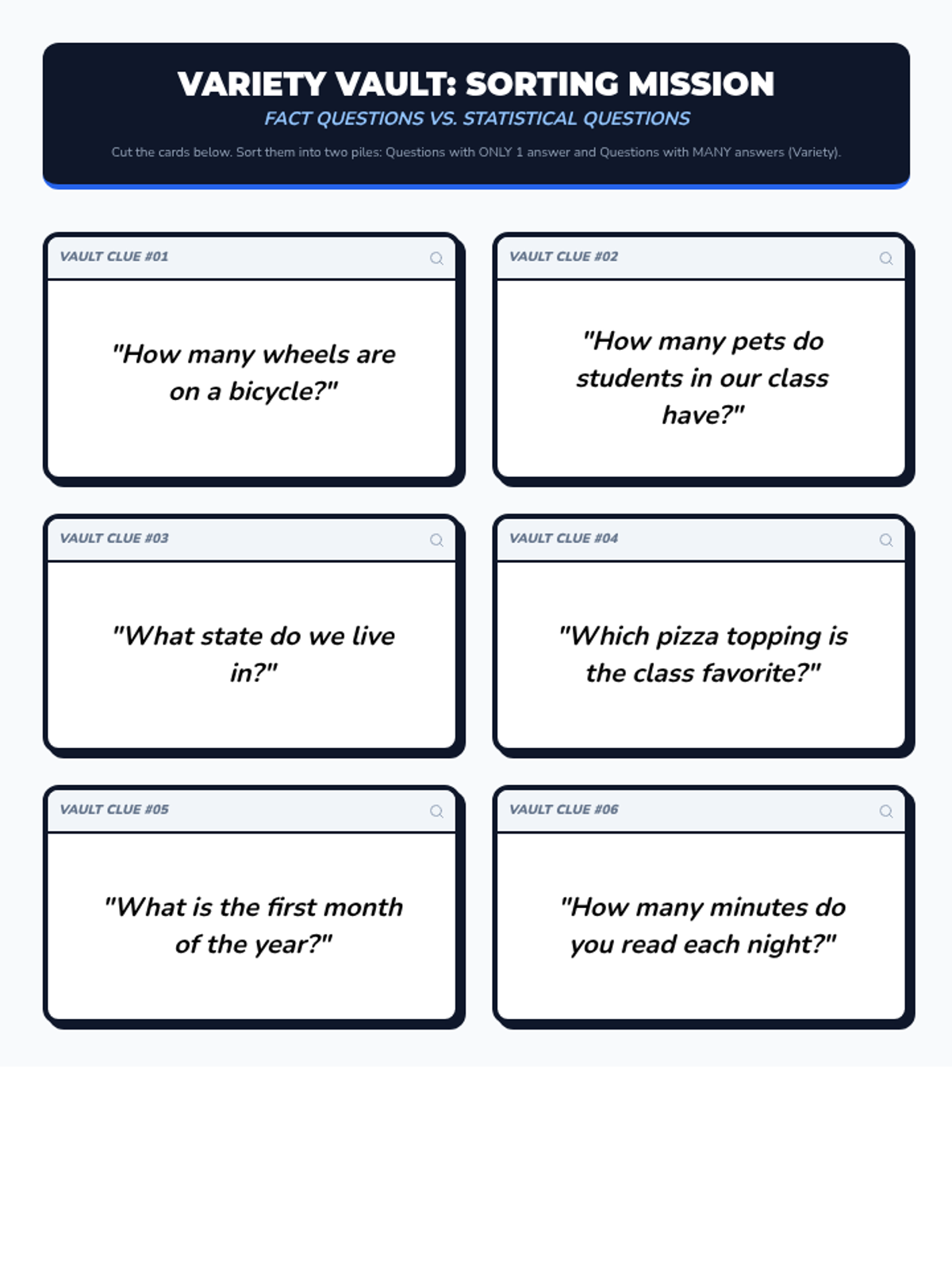
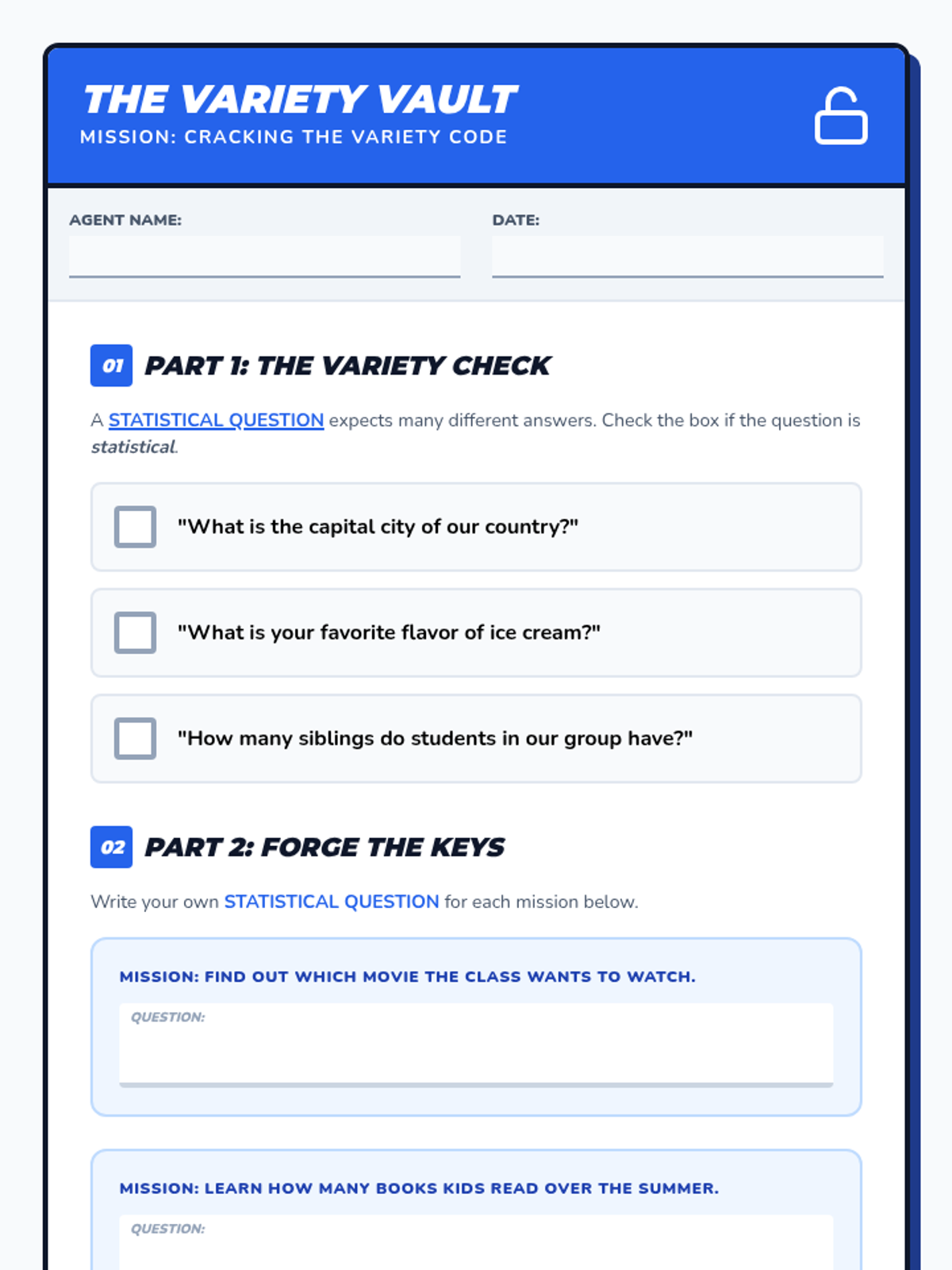
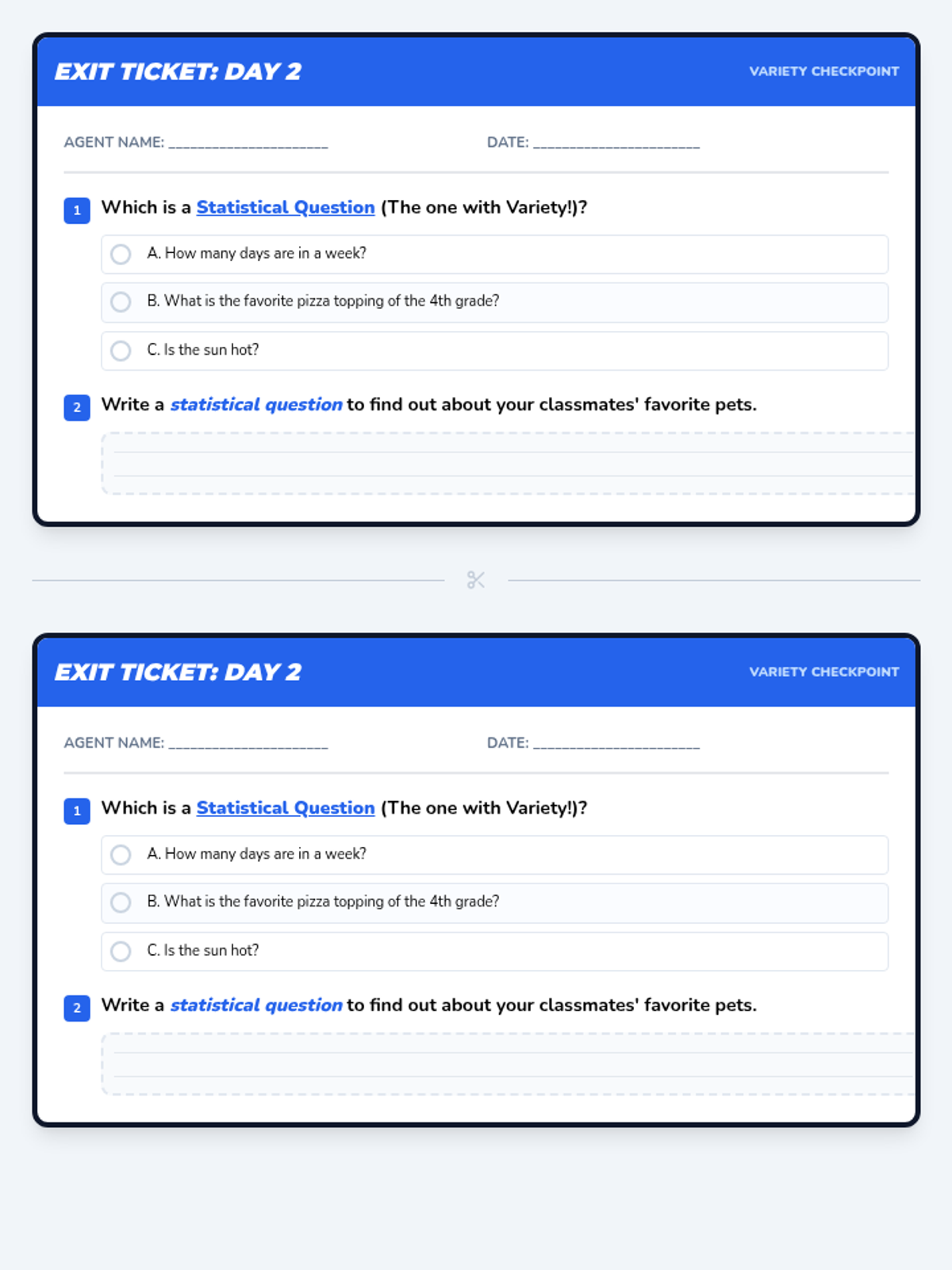
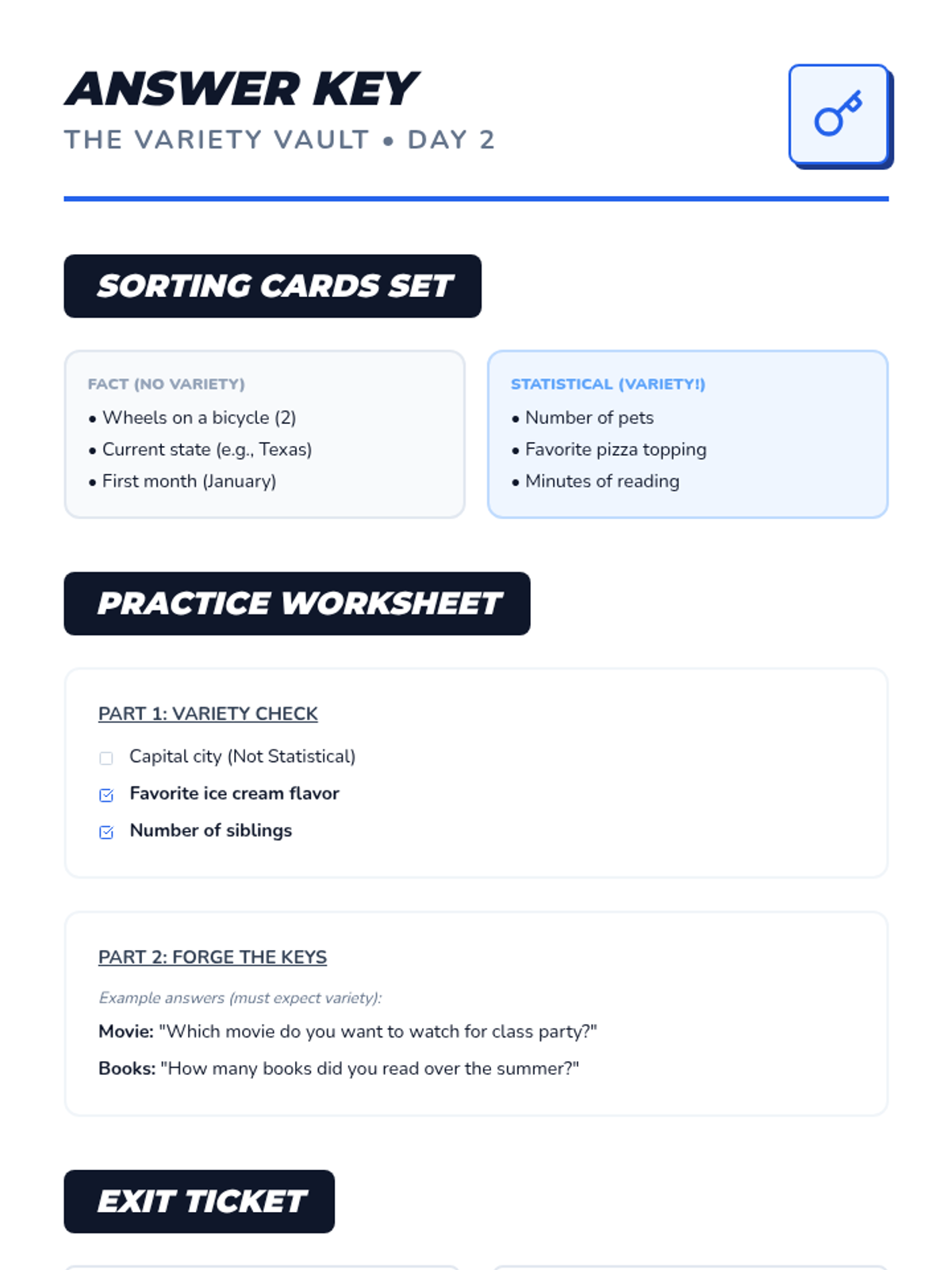
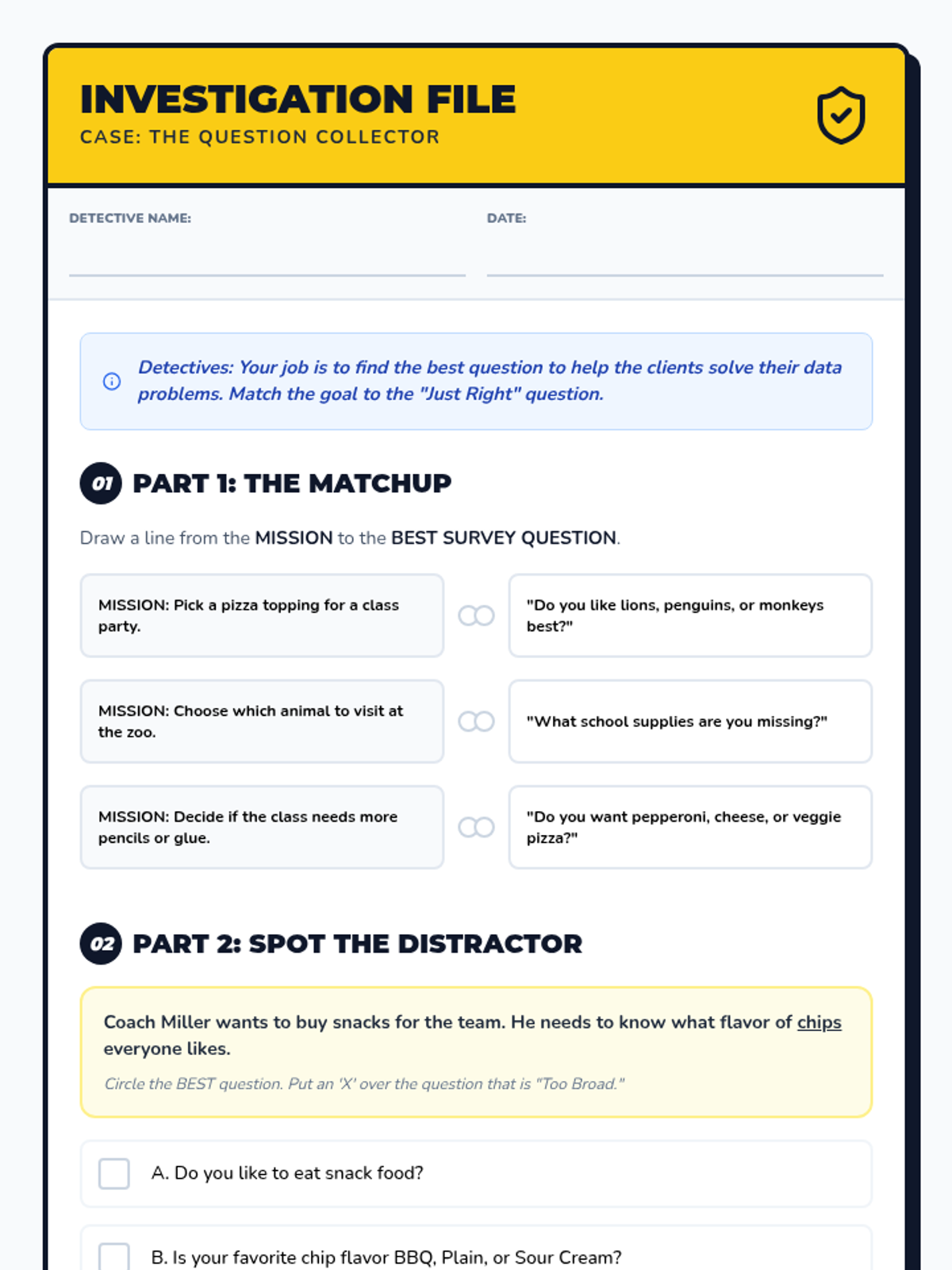
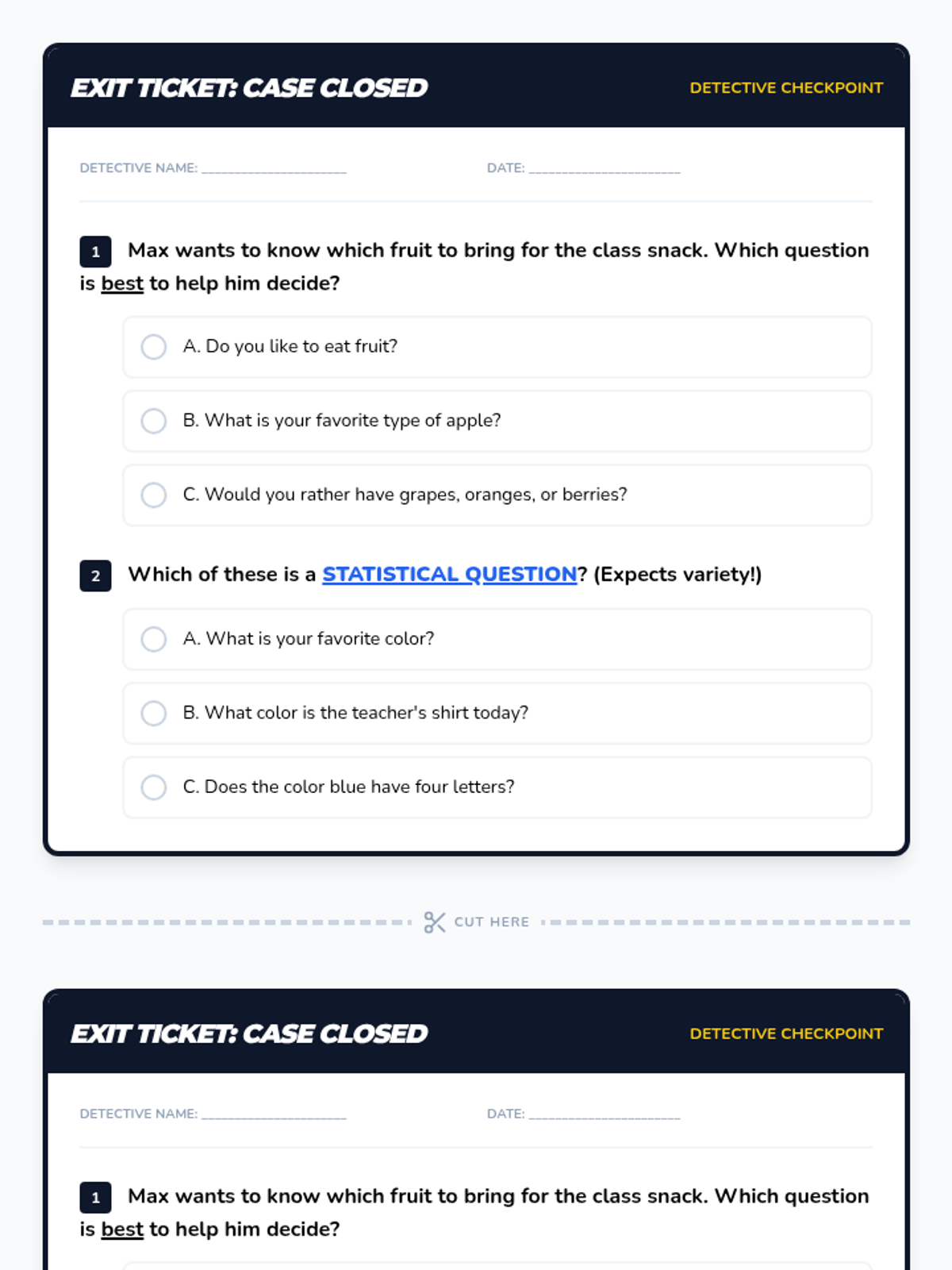
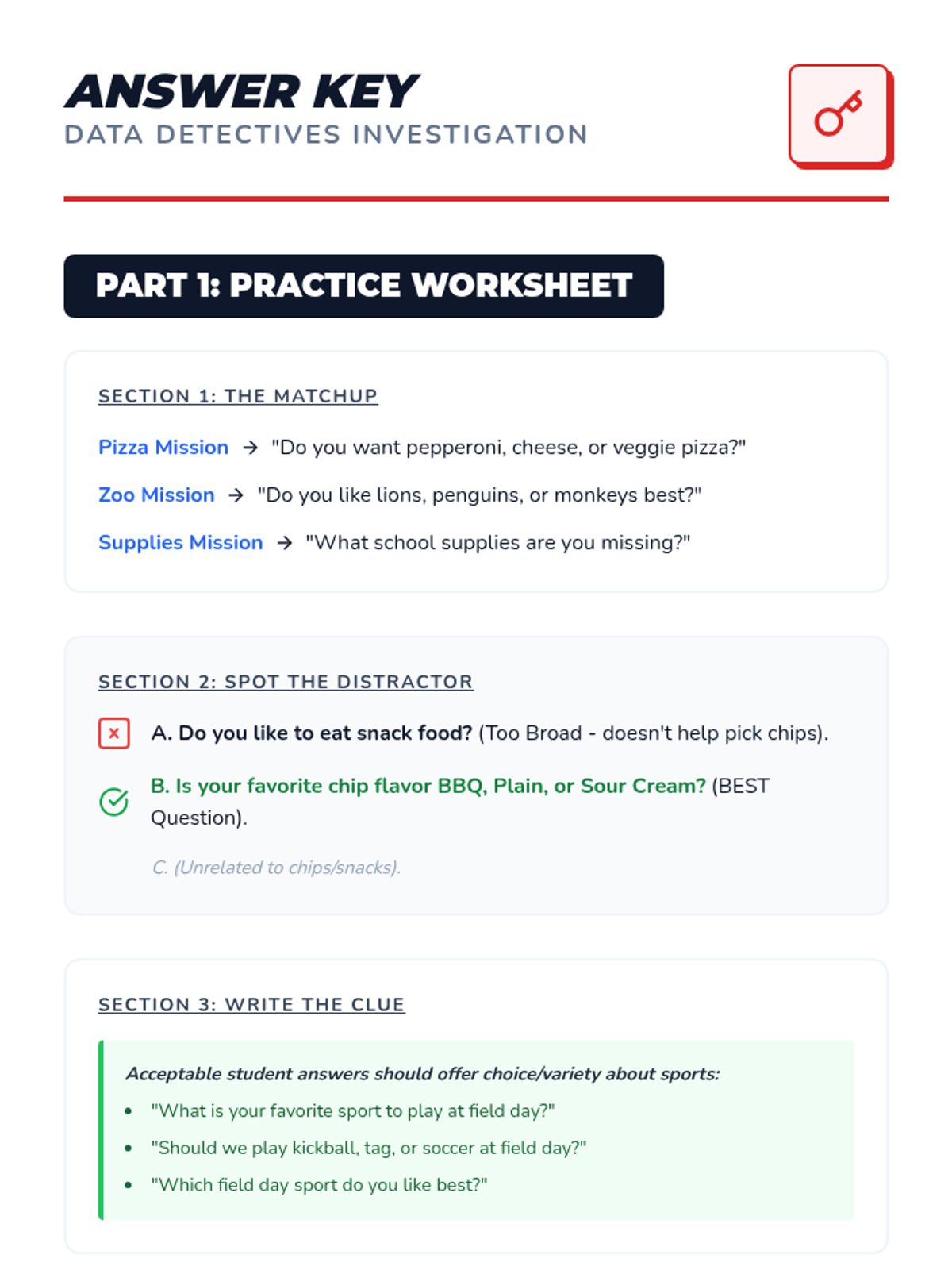
Focuses on differentiating between statistical and non-statistical questions. Students learn that a good survey question must expect a variety of answers to be useful for data collection.
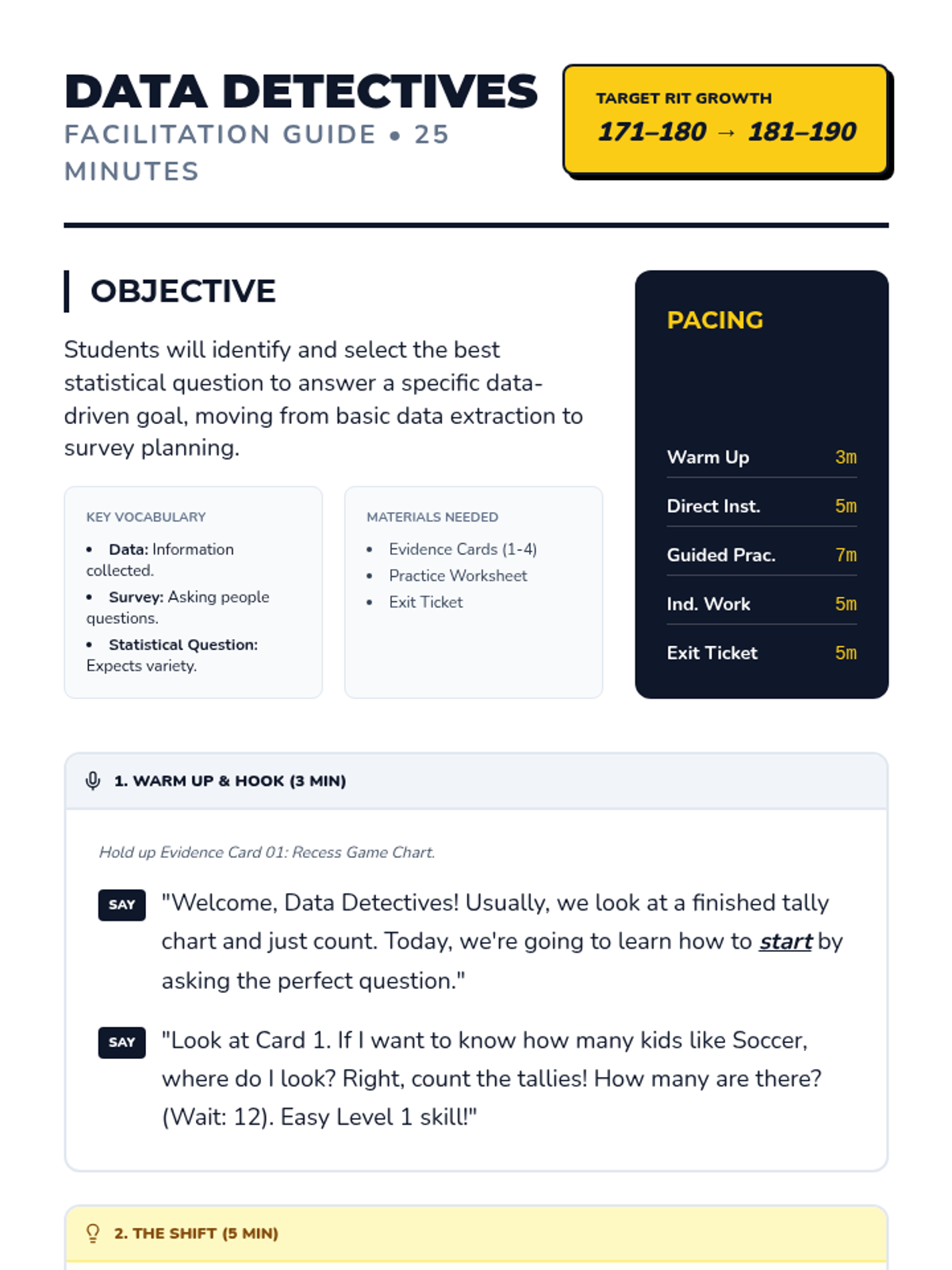
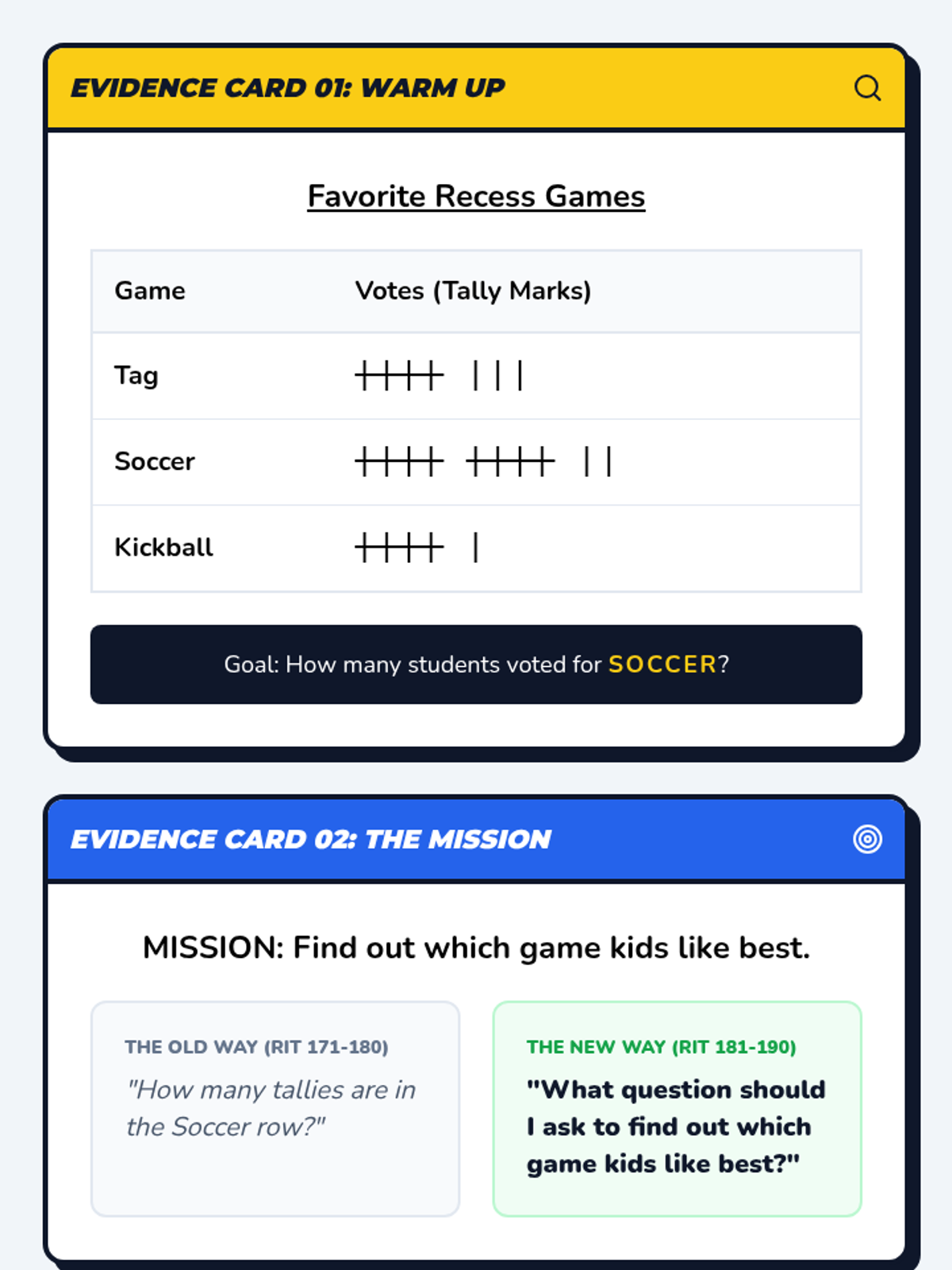
A 25-minute small group lesson designed to move students from RIT 171-180 to 181-190 by shifting from basic data interpretation to formulating and selecting effective statistical questions.
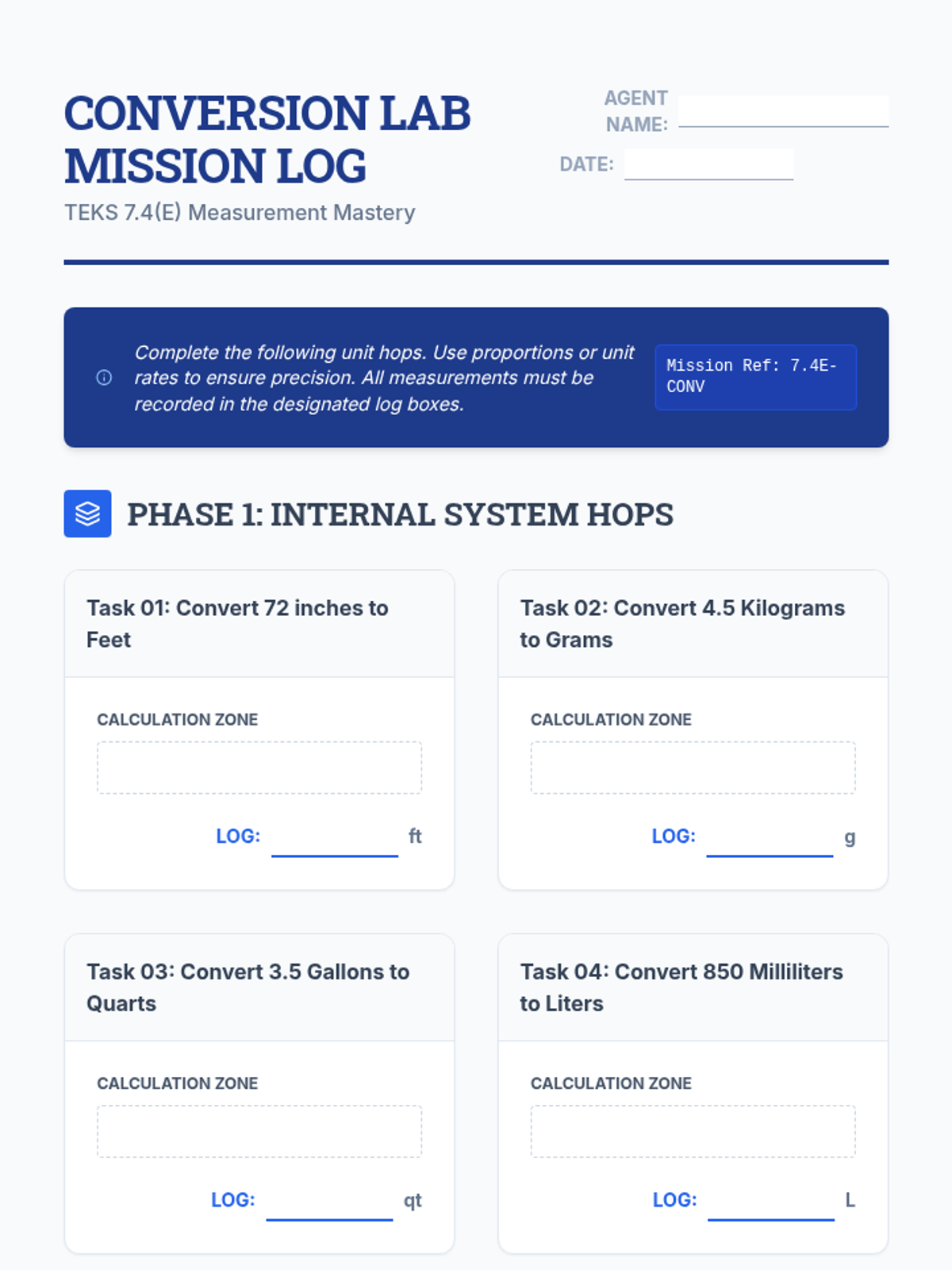
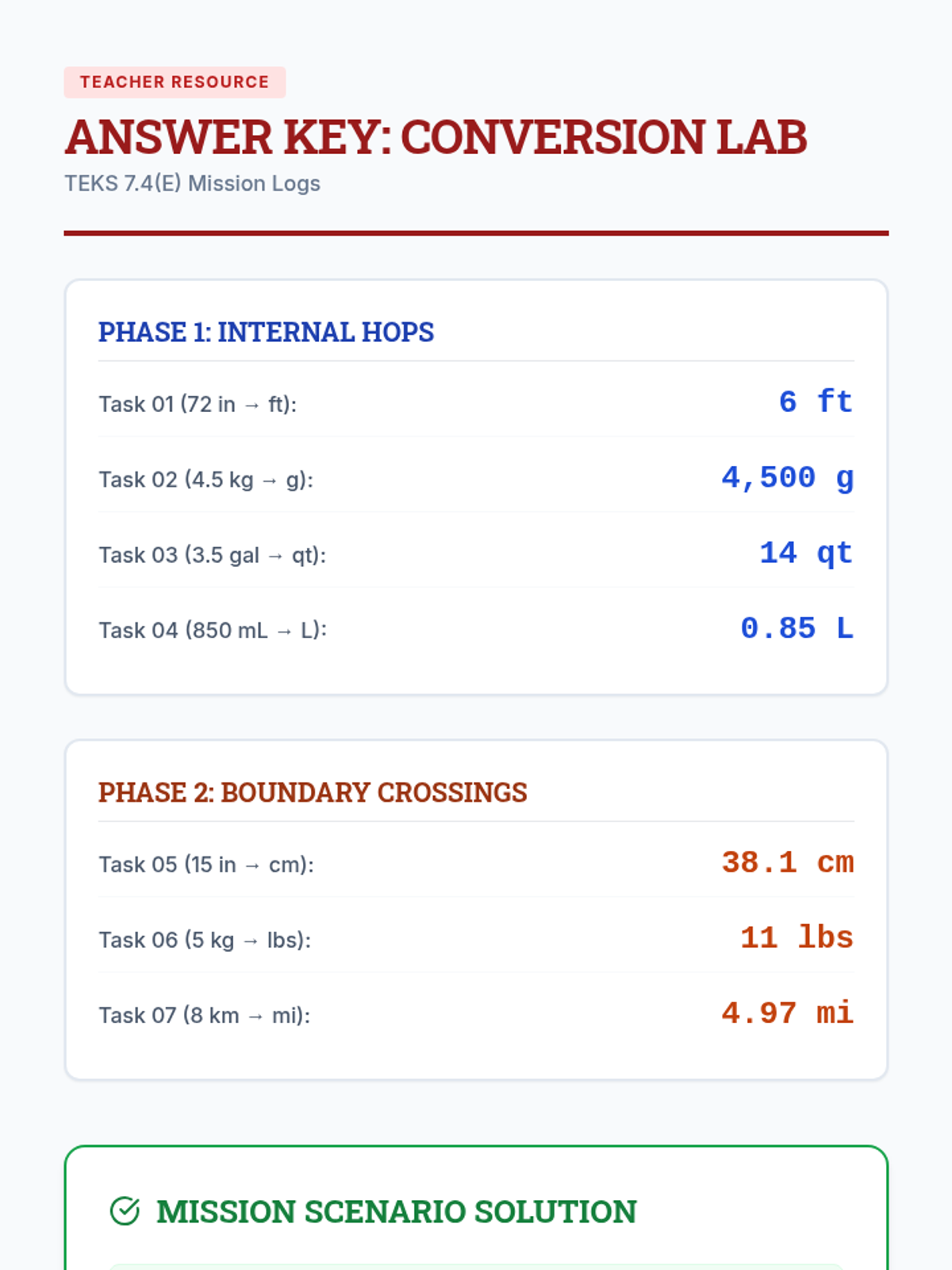
This lesson covers TEKS 7.4(E), focusing on converting units within the same measurement system and between different systems using proportions and unit rates. Students will practice customary, metric, and cross-system conversions in a lab-themed environment.
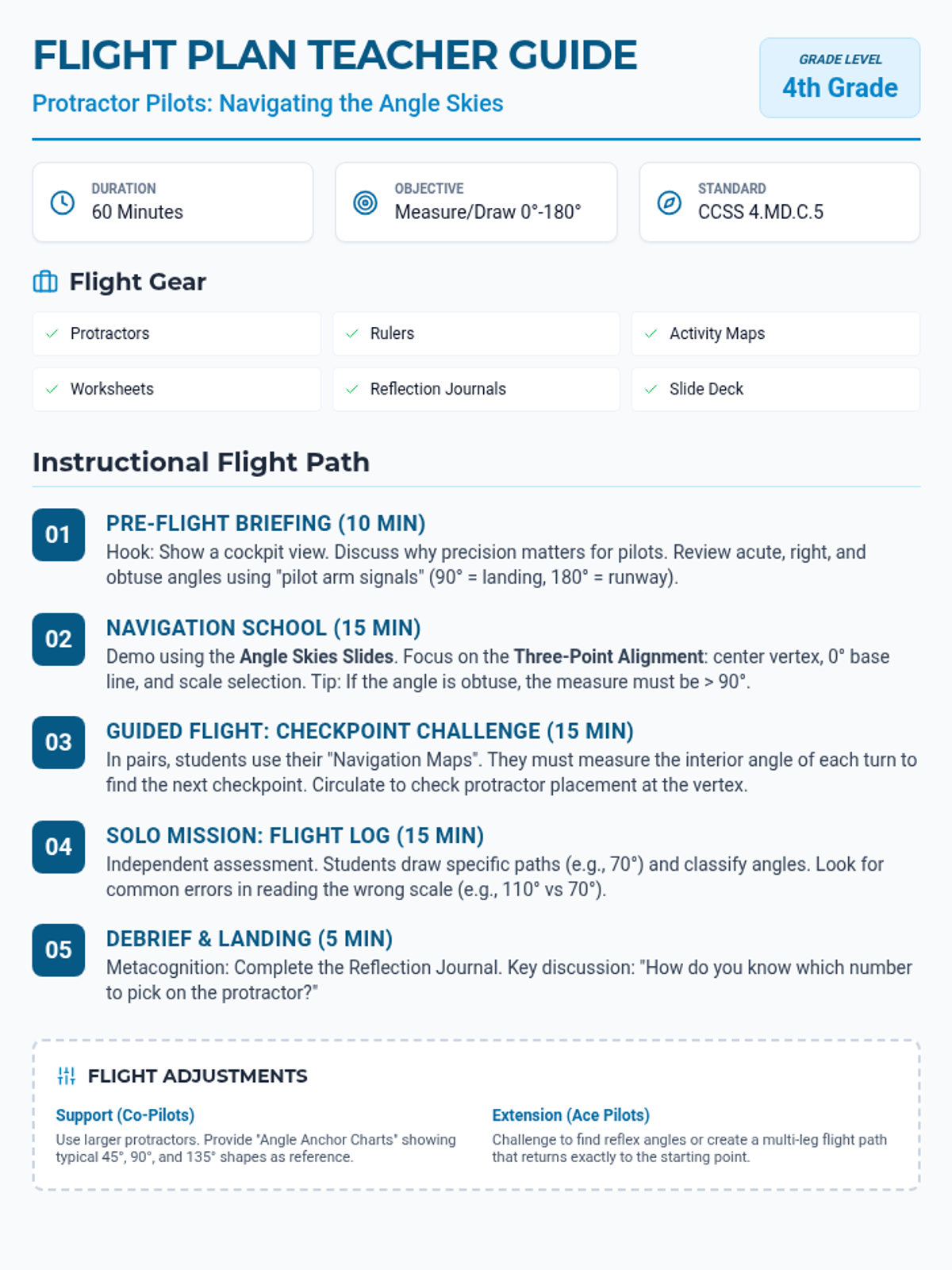
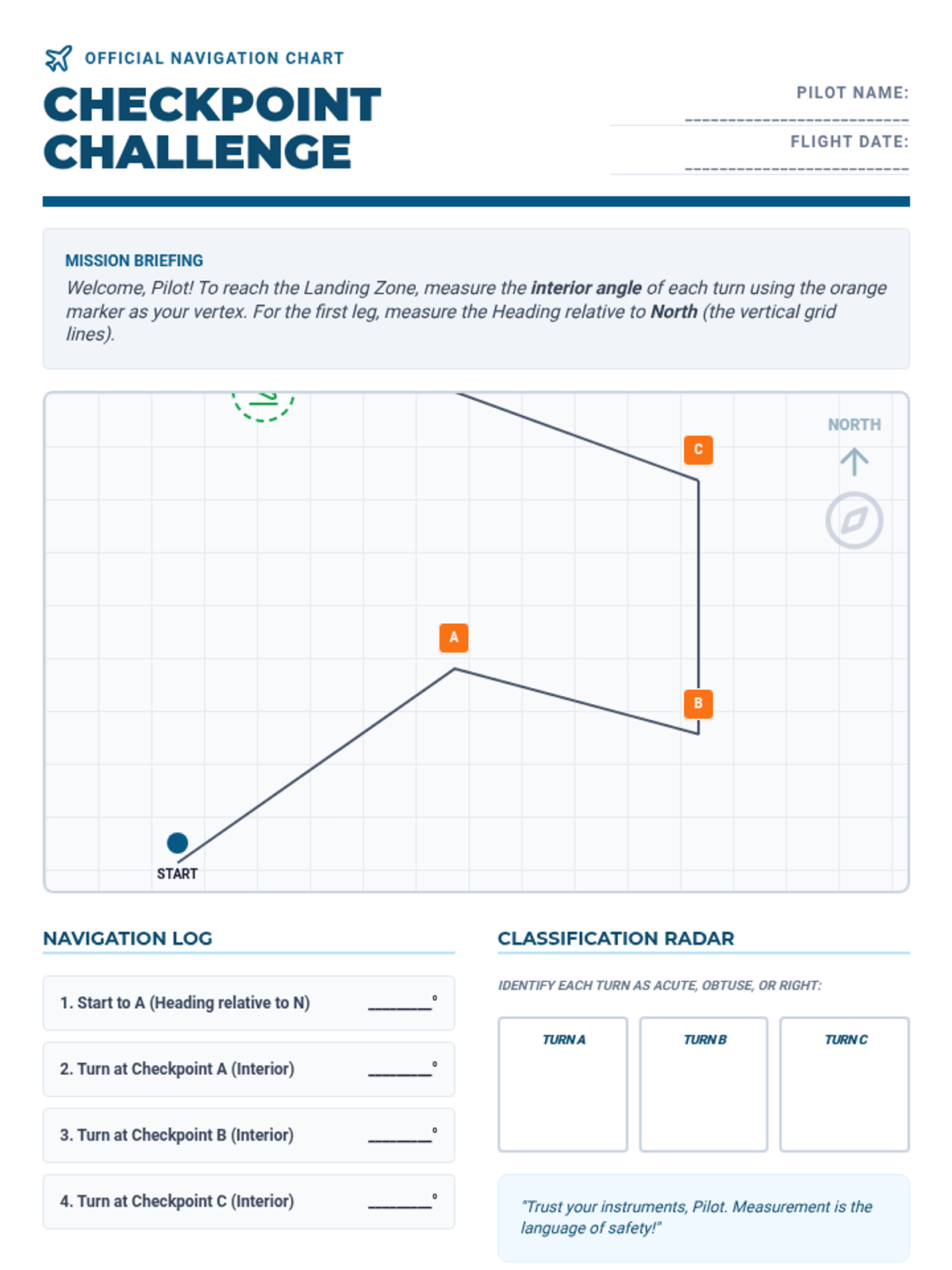
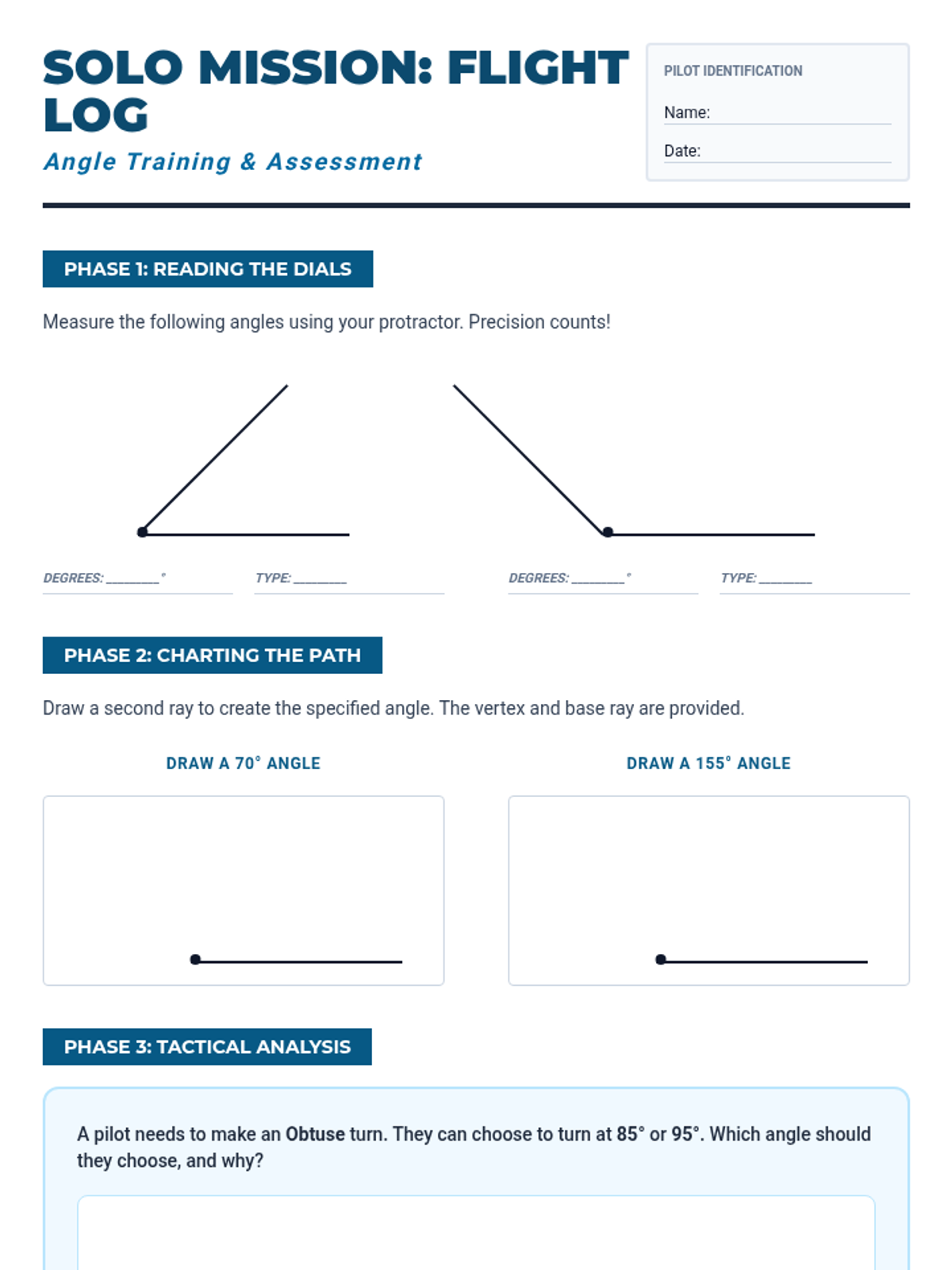
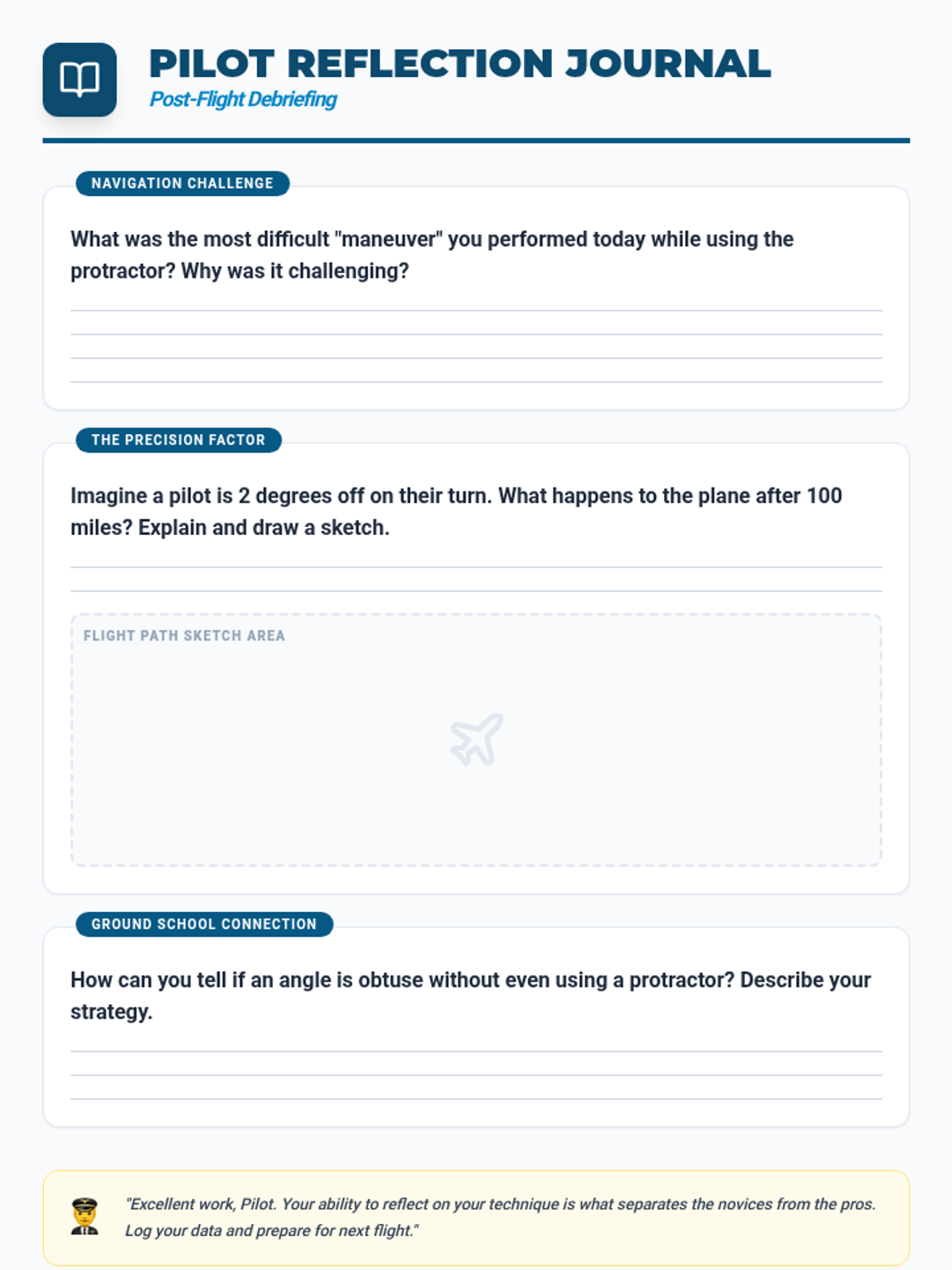
Students take to the skies as 'Protractor Pilots' to master measuring and drawing angles. This aviation-themed lesson focuses on precision, classifying angles, and spatial reasoning through a flight navigation simulation.
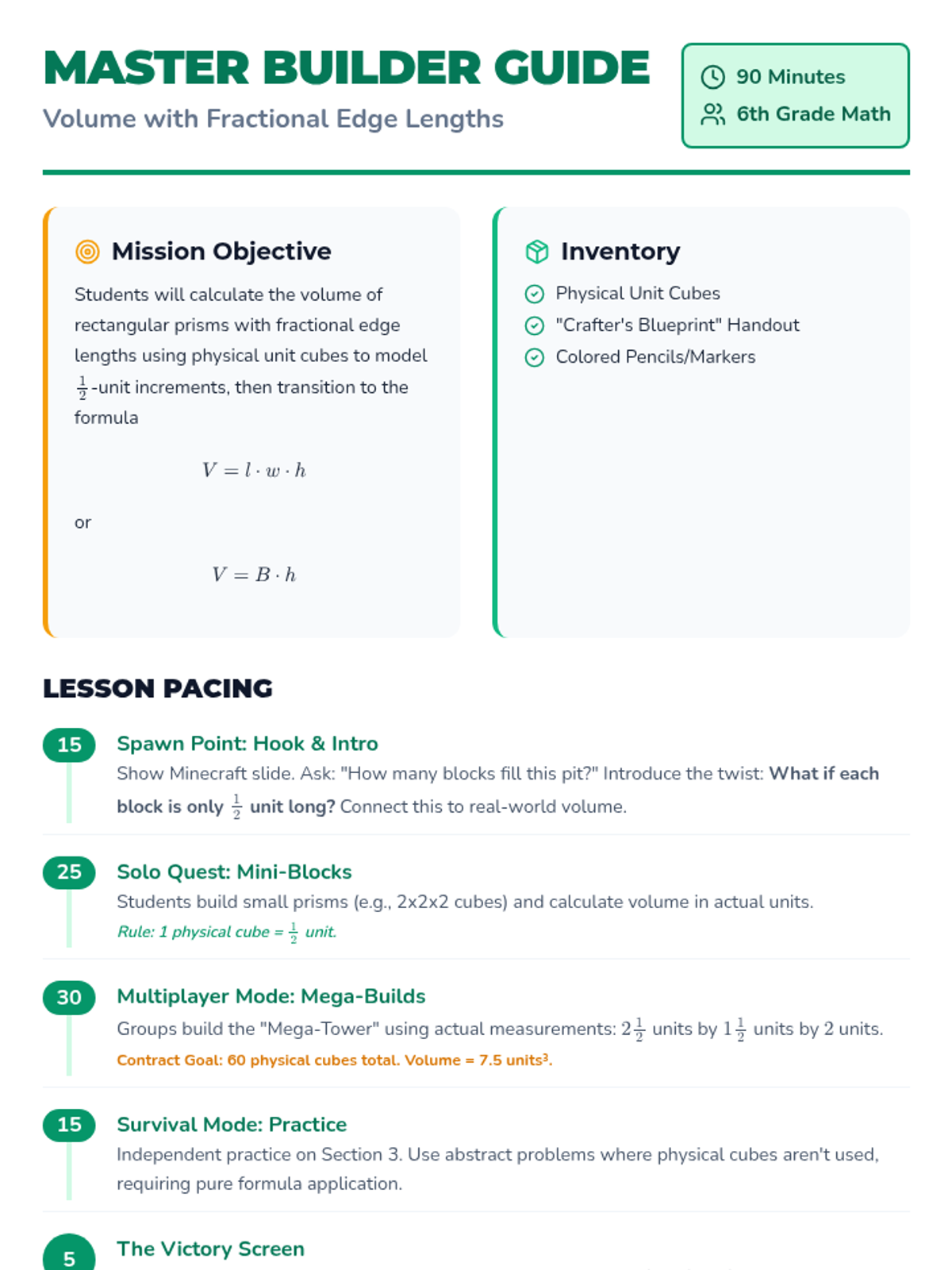
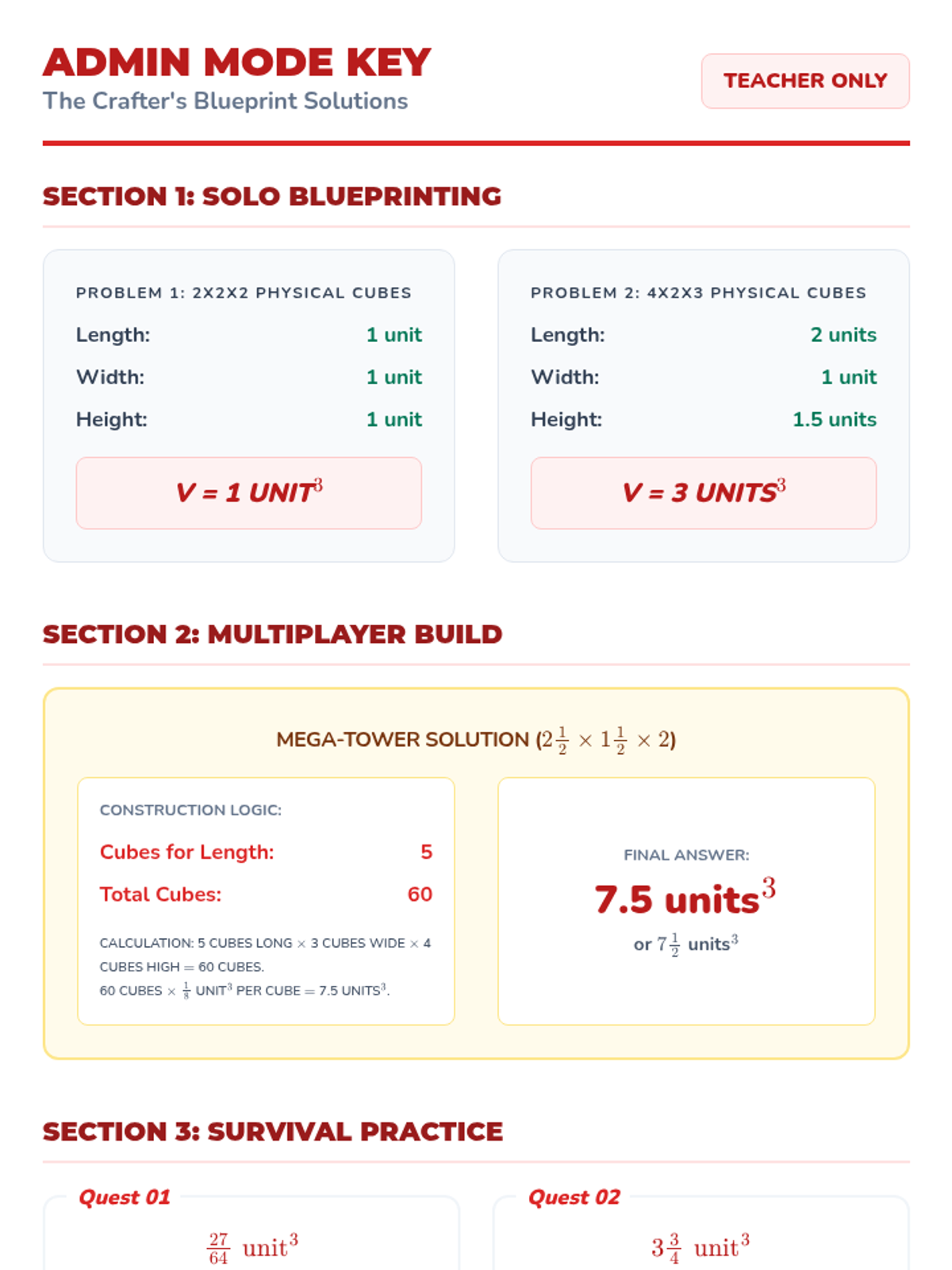
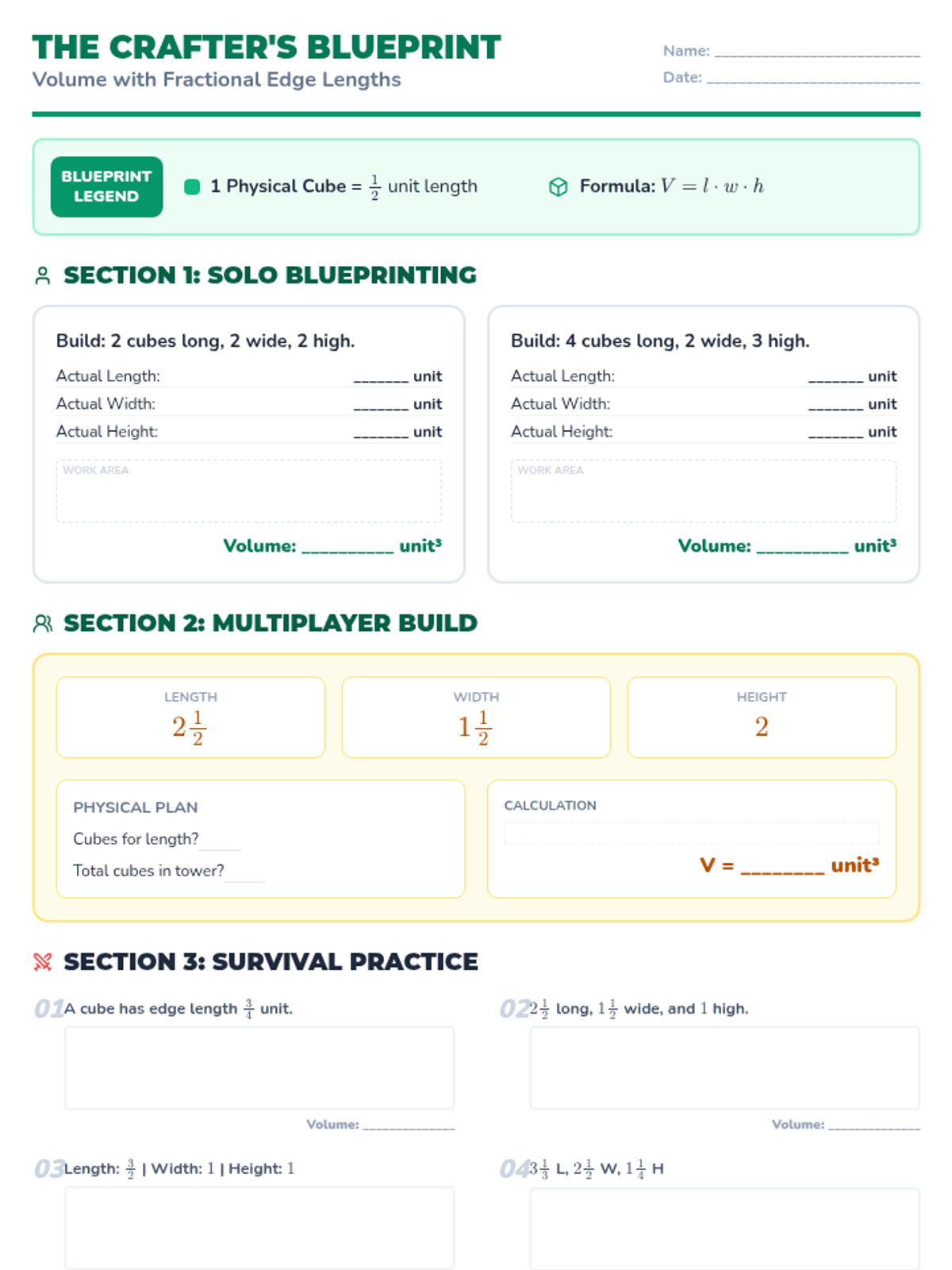
A Minecraft-themed lesson on finding volume with fractional edge lengths. Students use physical unit cubes to model structures and apply formulas to solve building challenges.
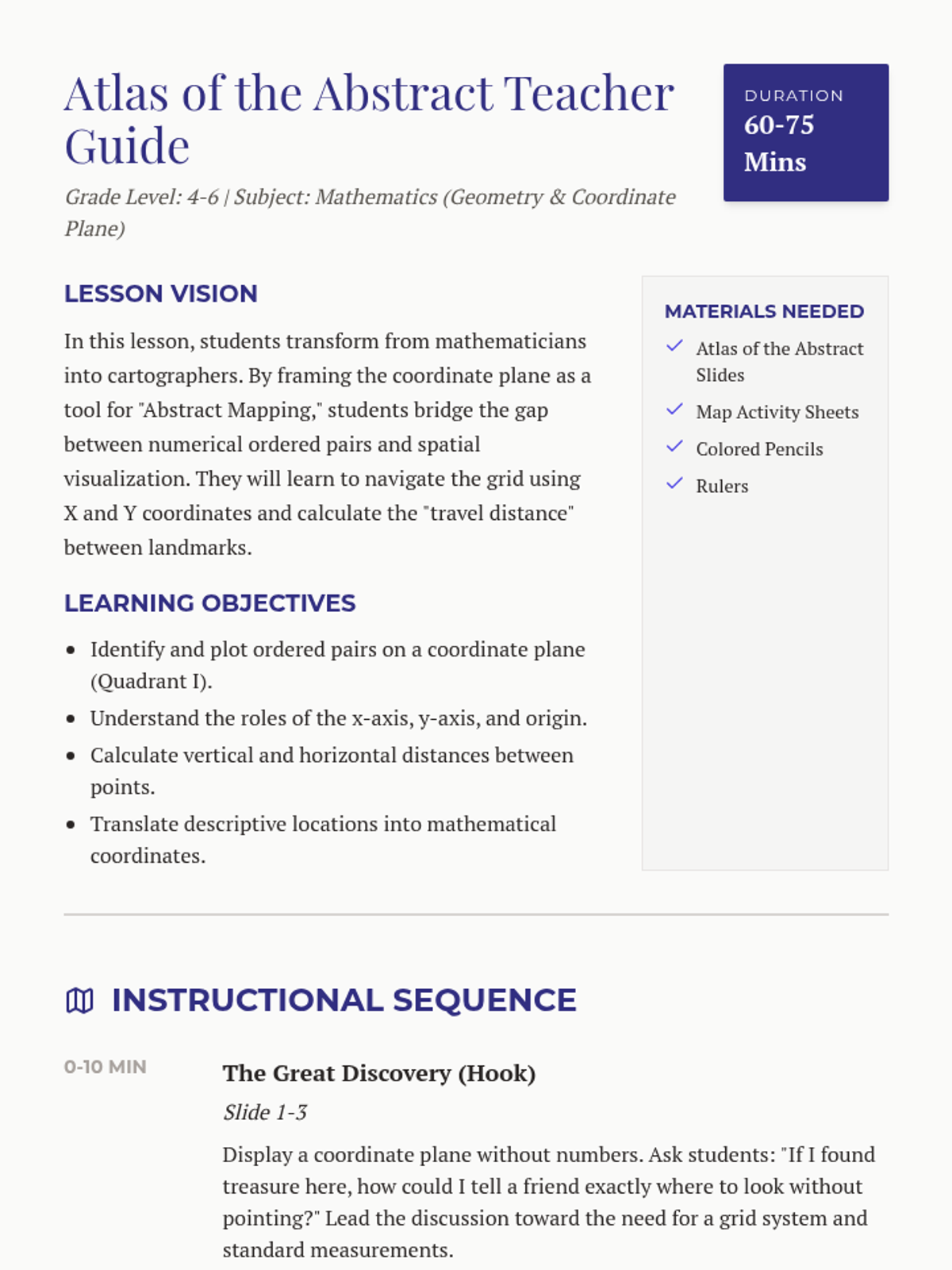
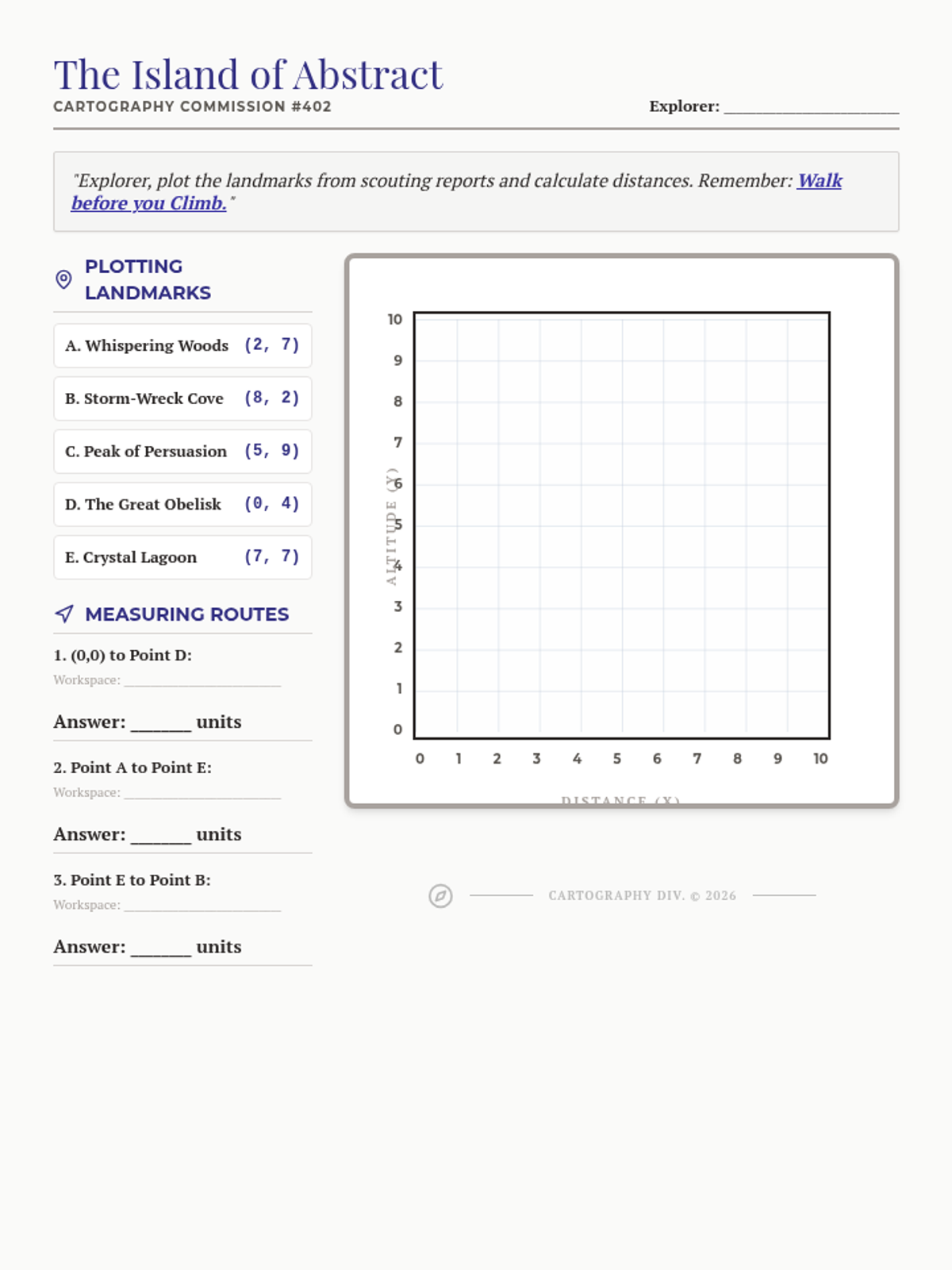
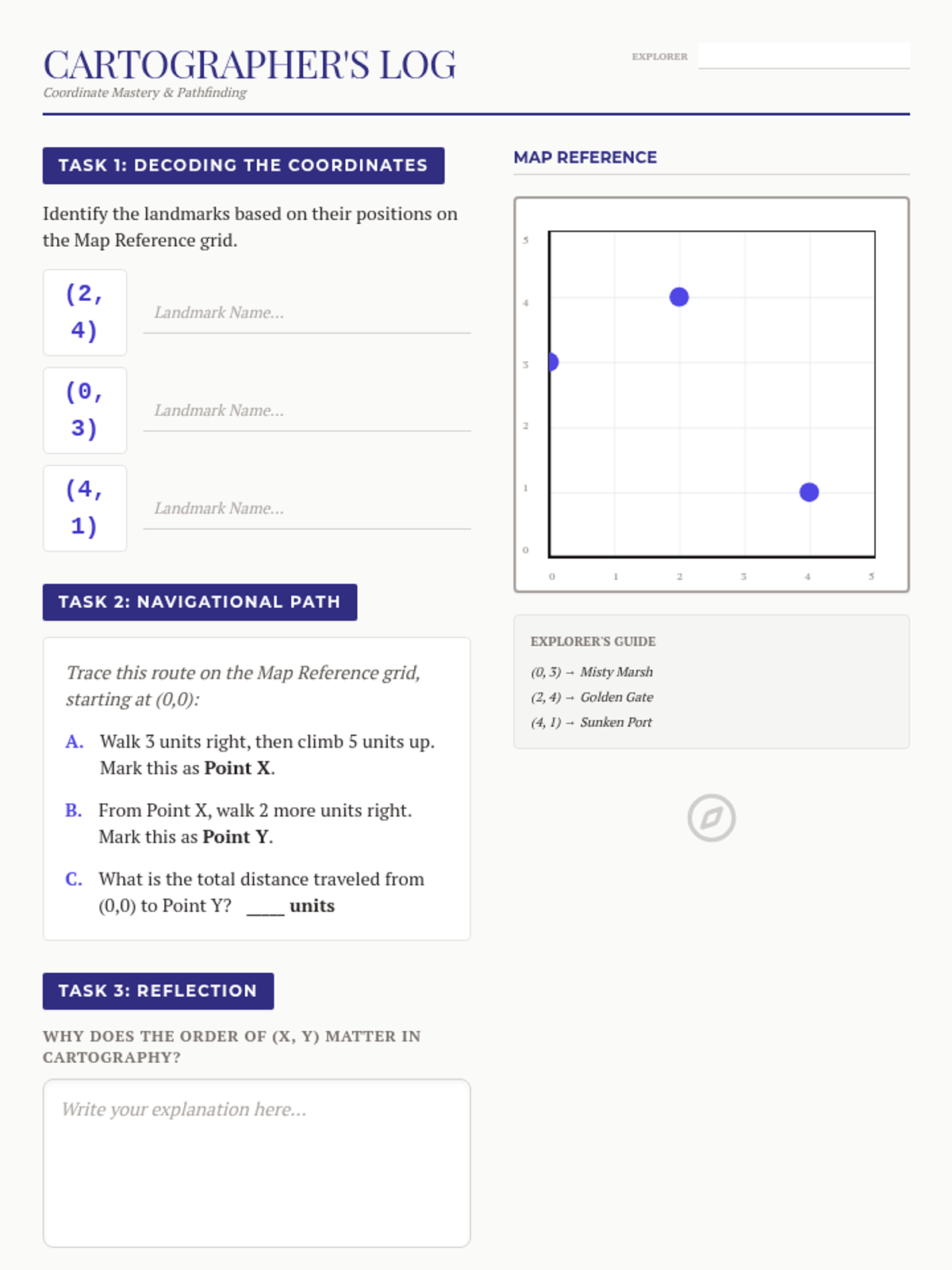
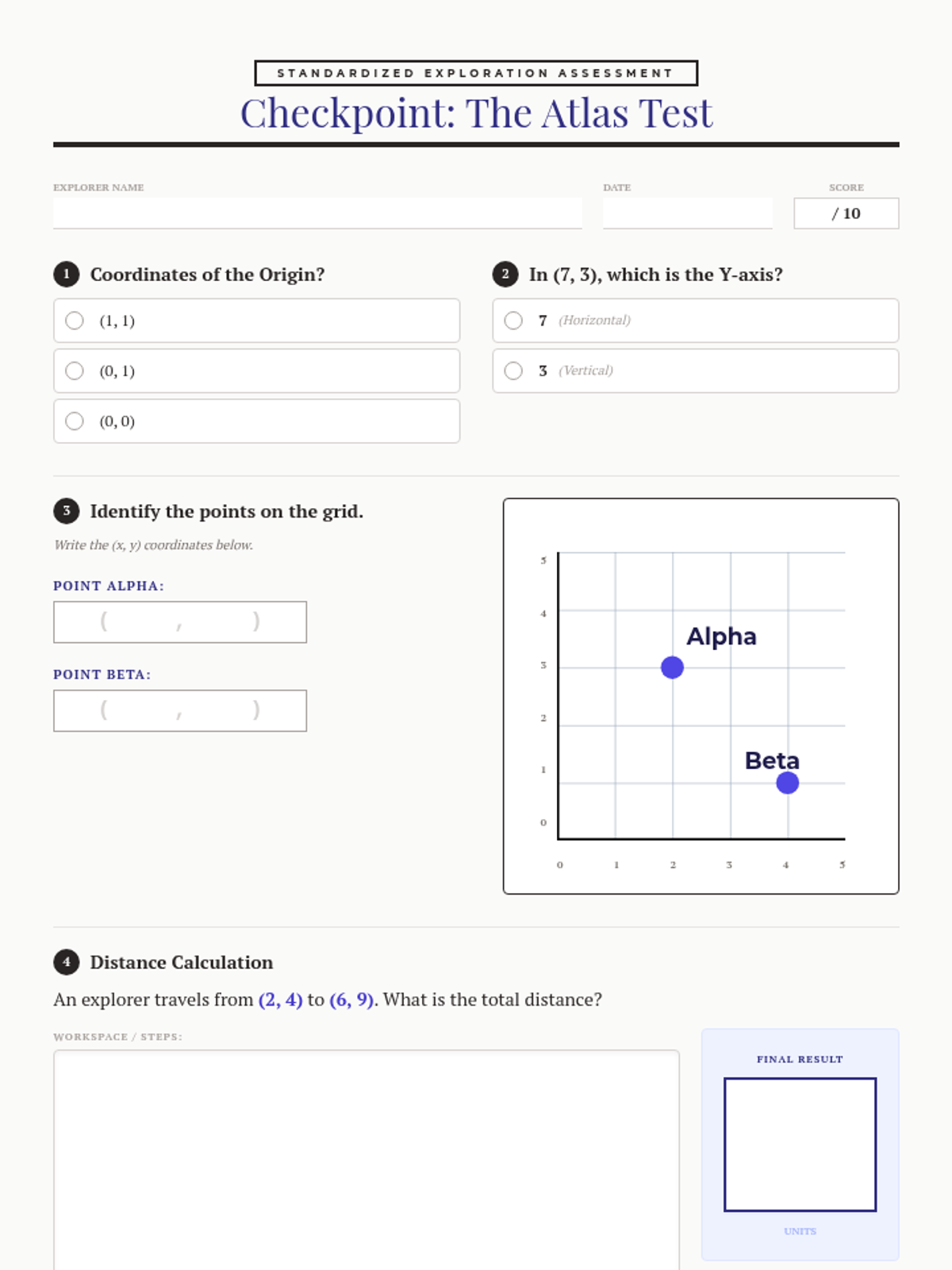
Students explore the coordinate plane through the lens of cartography, mapping imaginary landscapes using ordered pairs and calculating distances between landmarks.
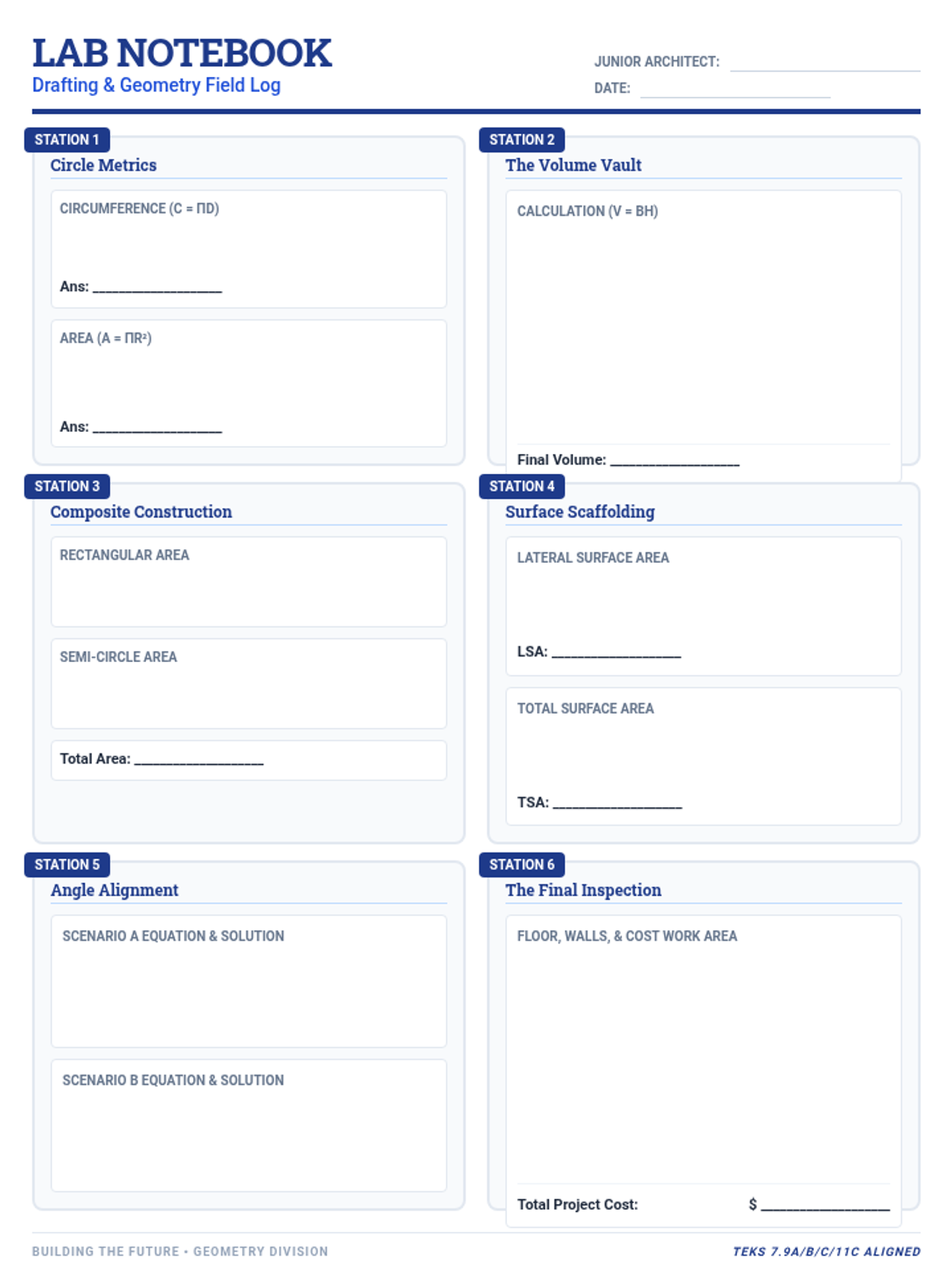
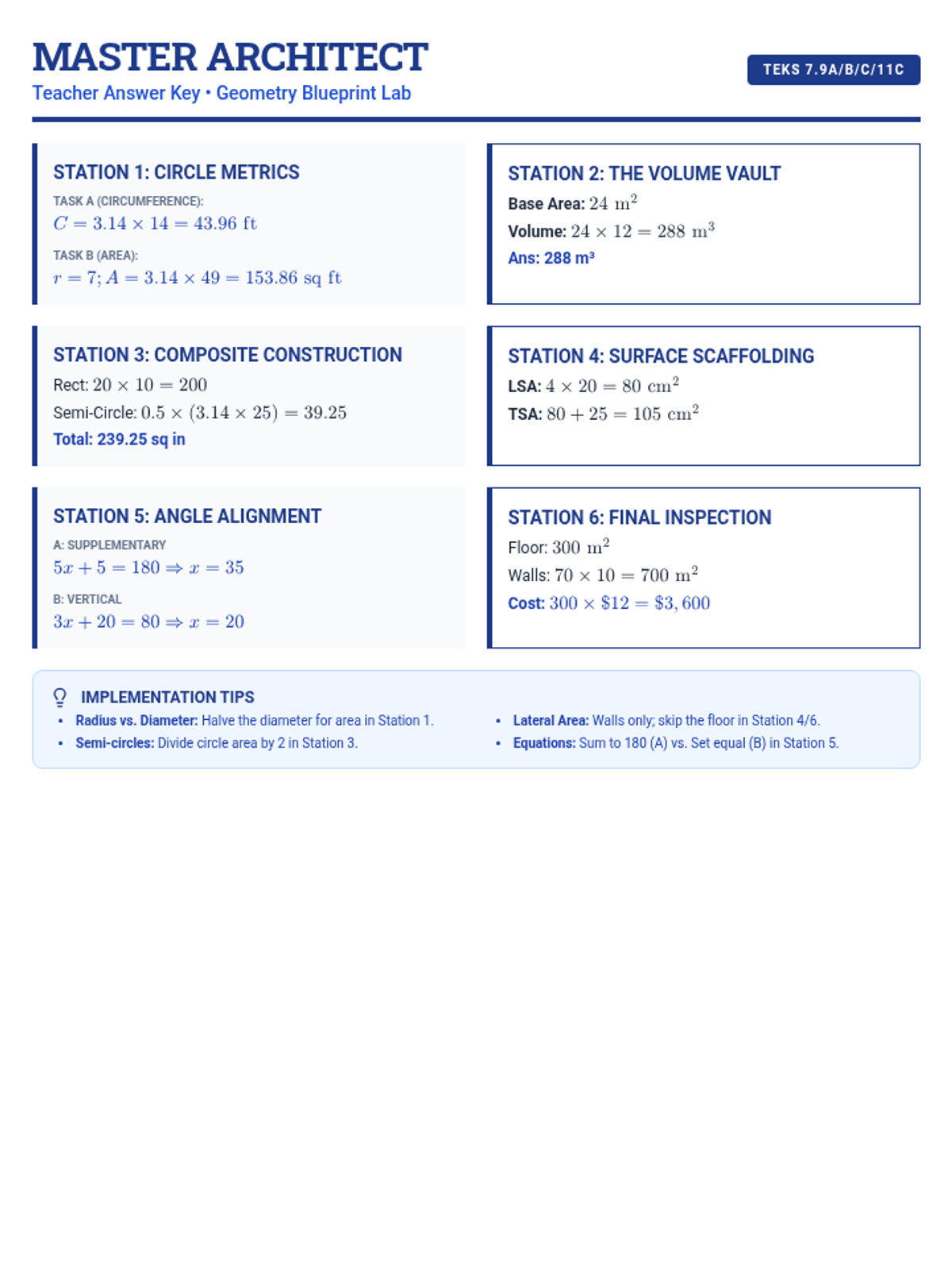
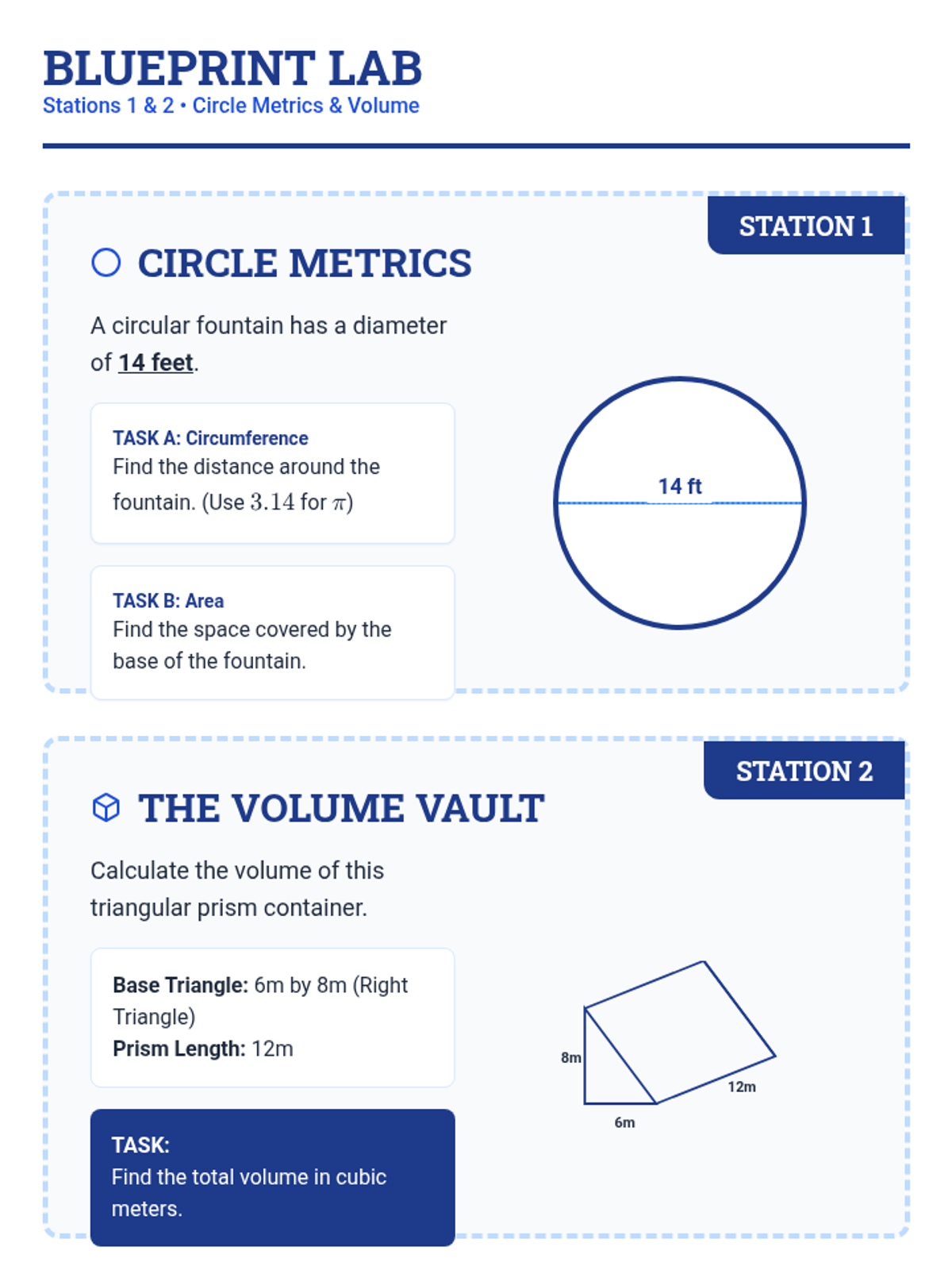
A hands-on geometry station activity focusing on circles, volume, surface area, and angle relationships using an architectural blueprint theme. Students rotate through specialized 'Lab Stations' to apply their geometric knowledge to real-world drafting scenarios.
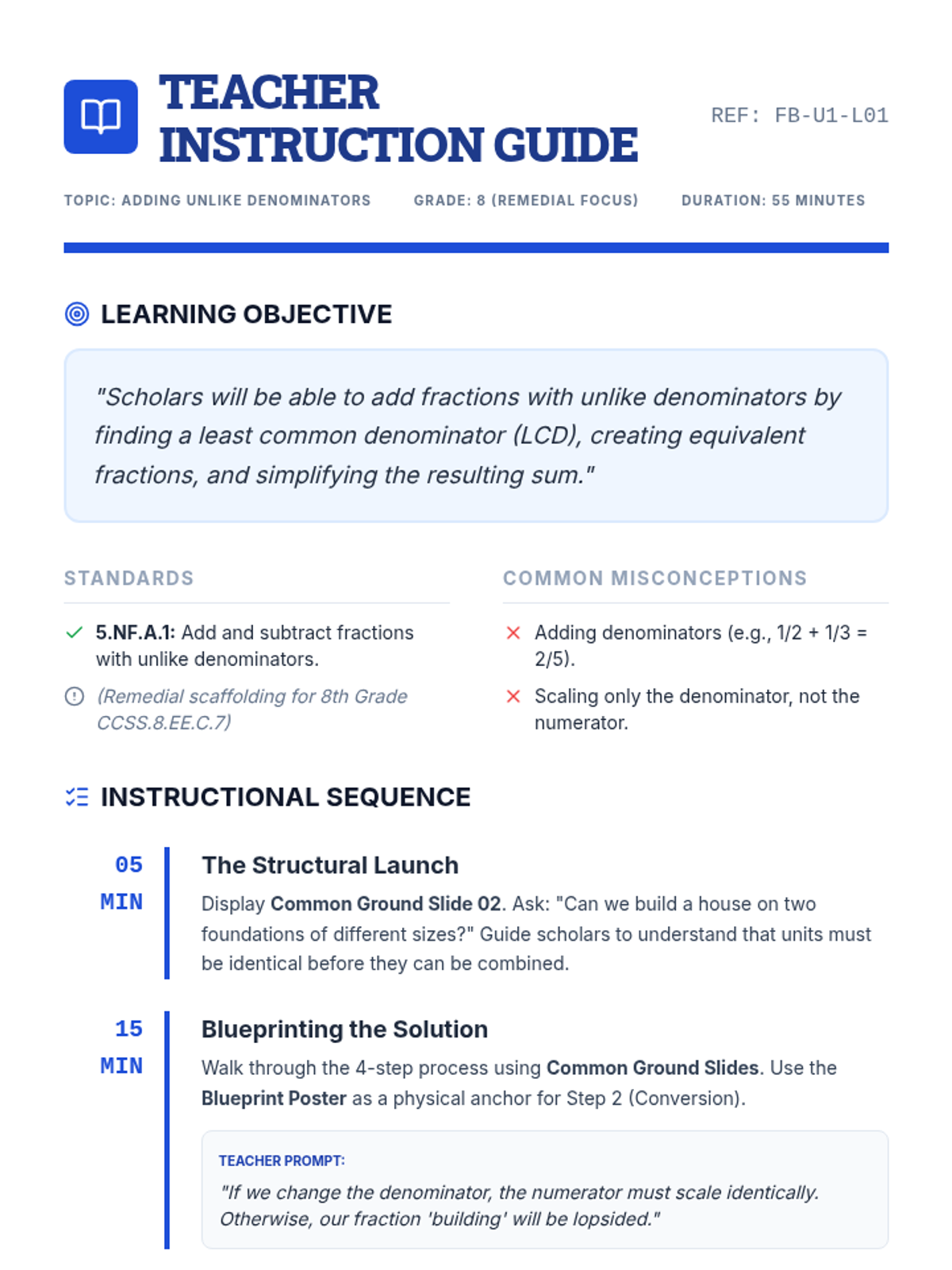
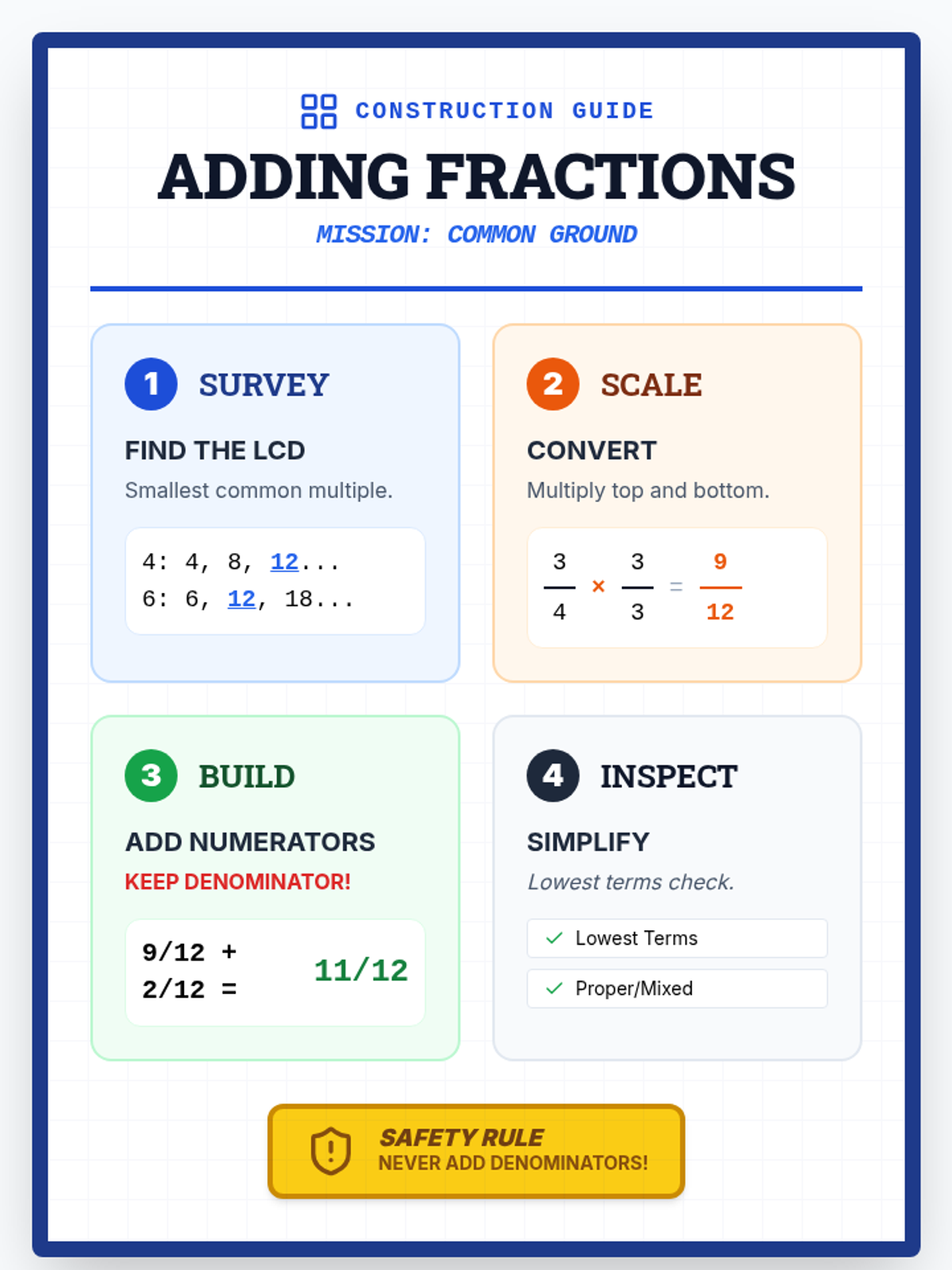
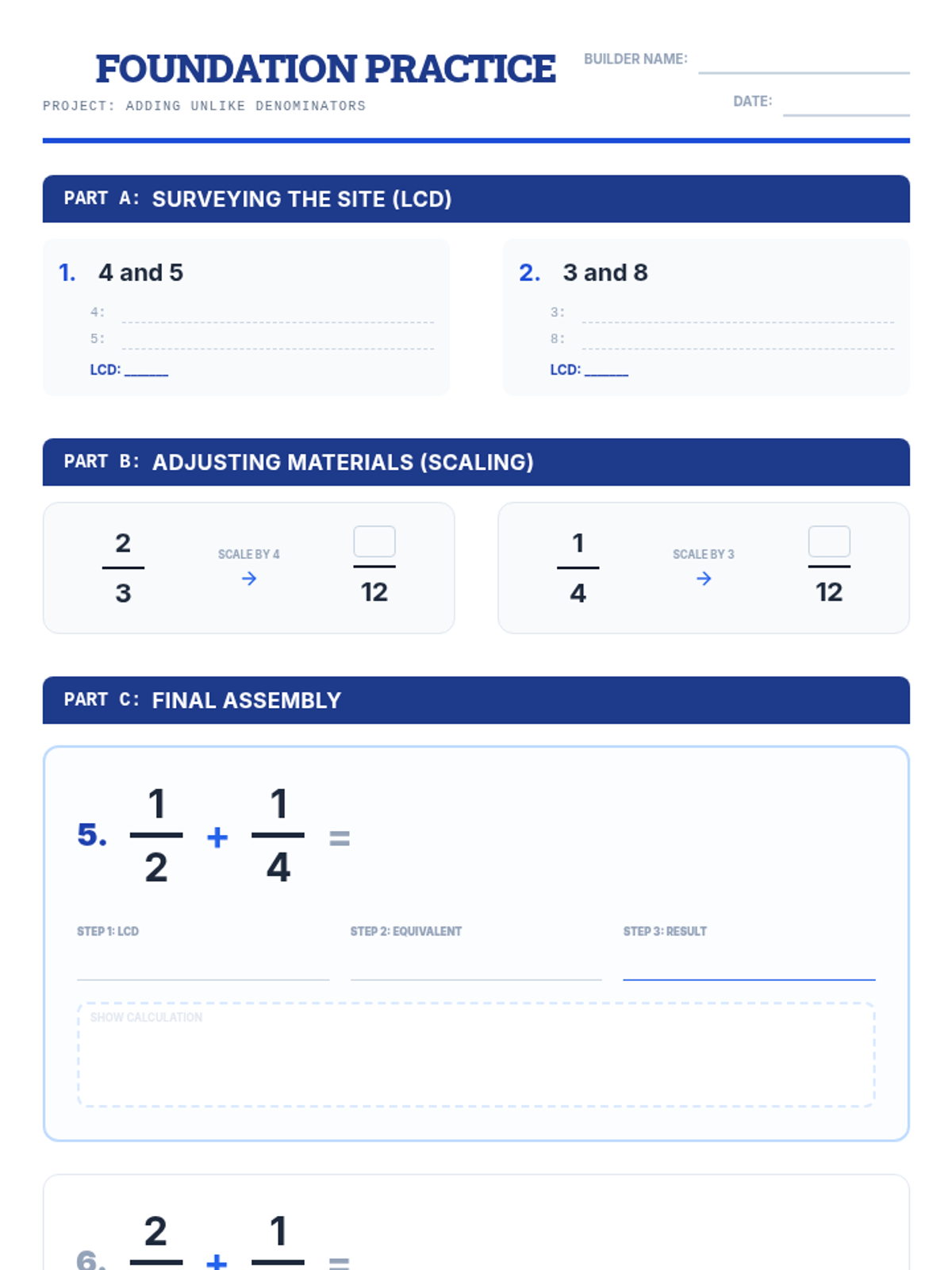
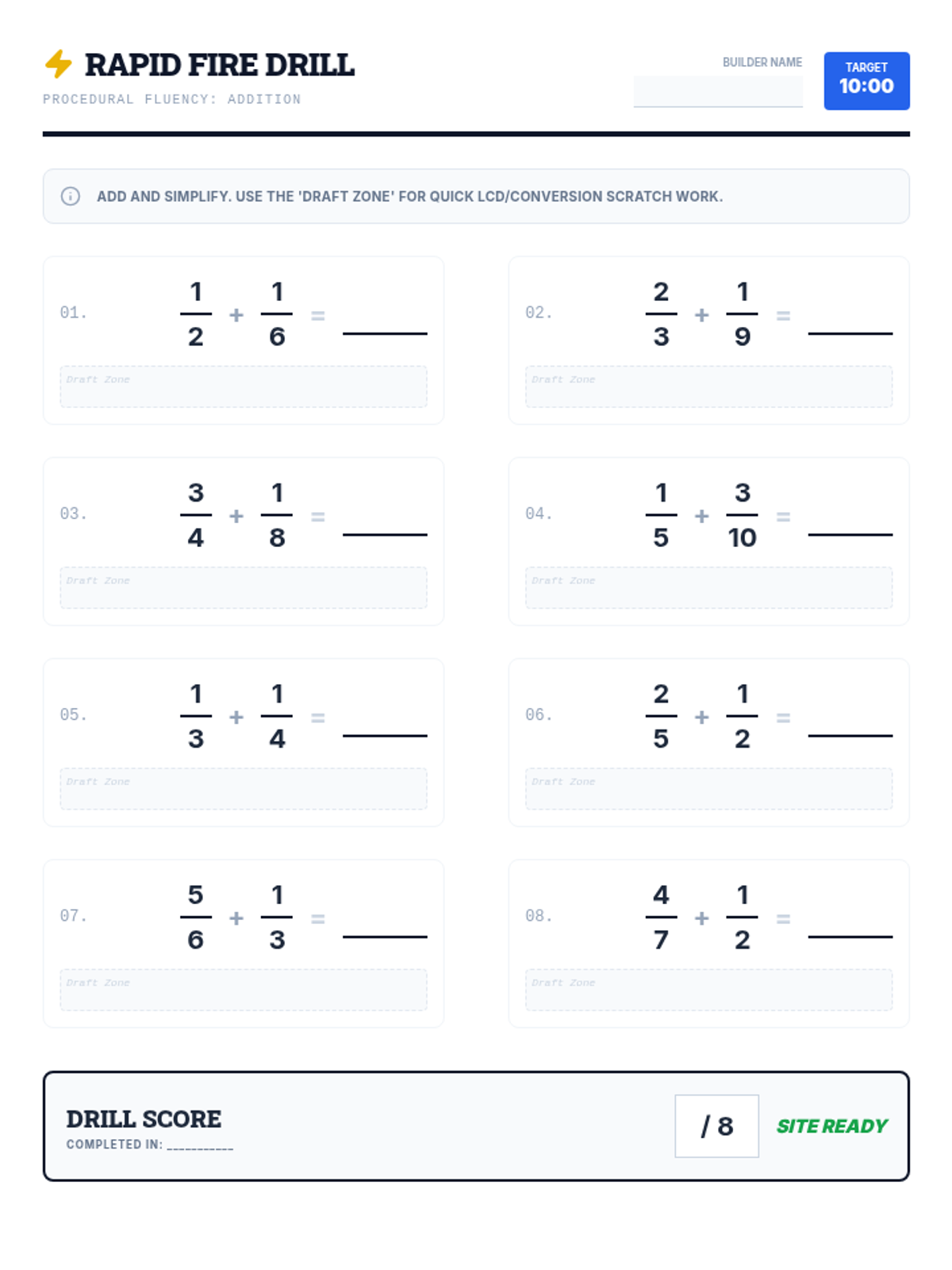
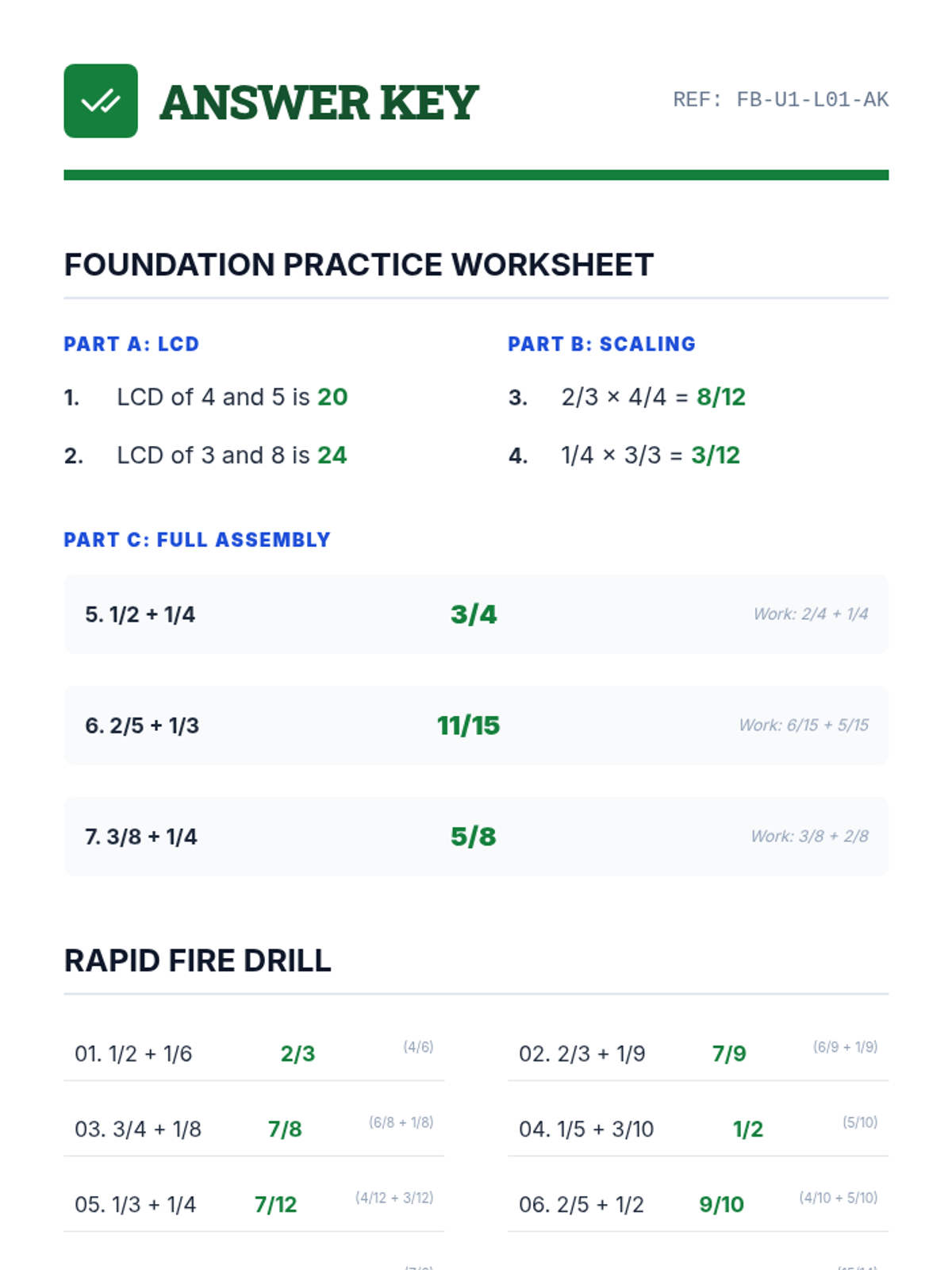
A focused lesson on adding fractions with unlike denominators using a blueprint-inspired approach to building common denominators.
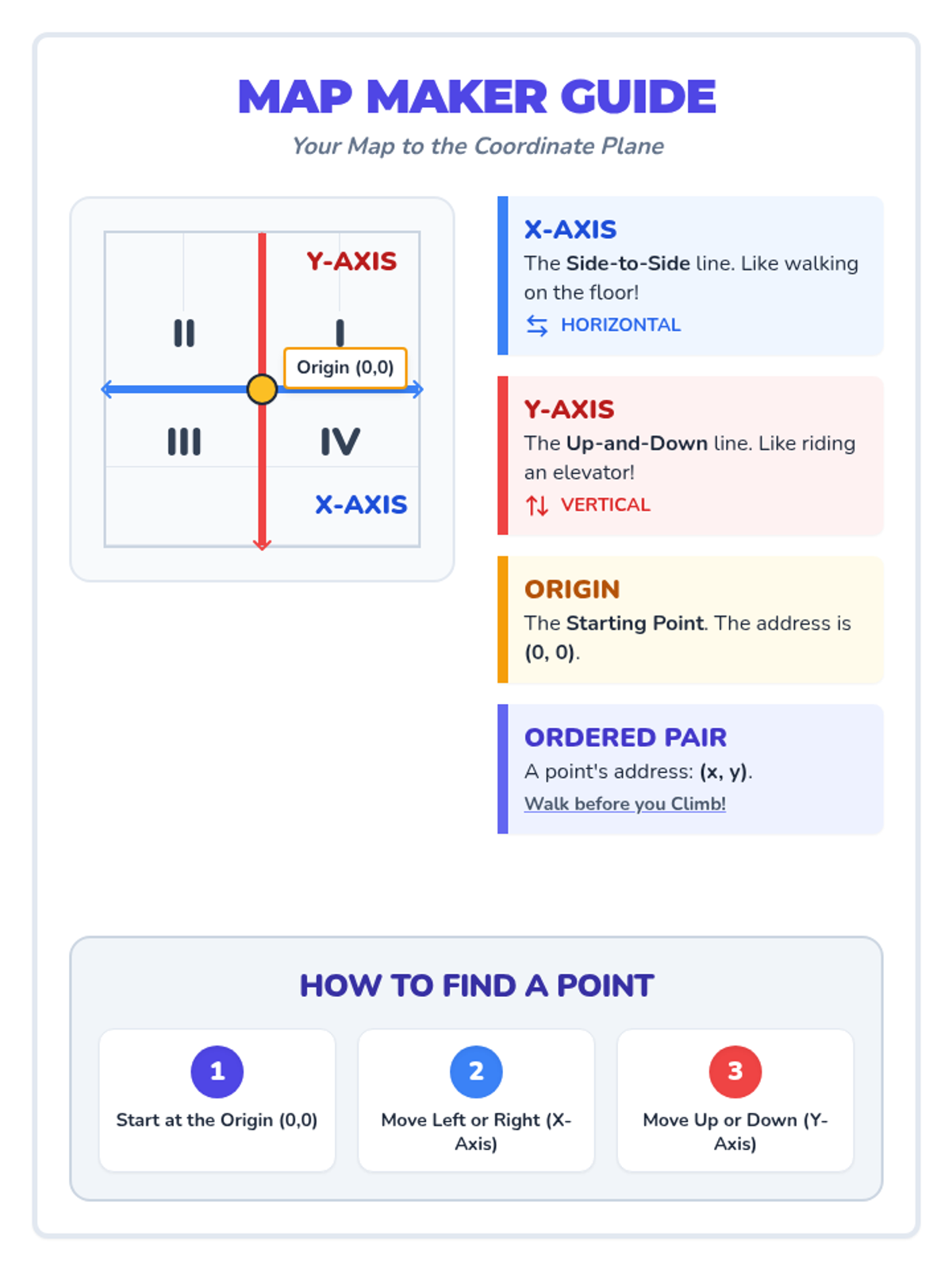
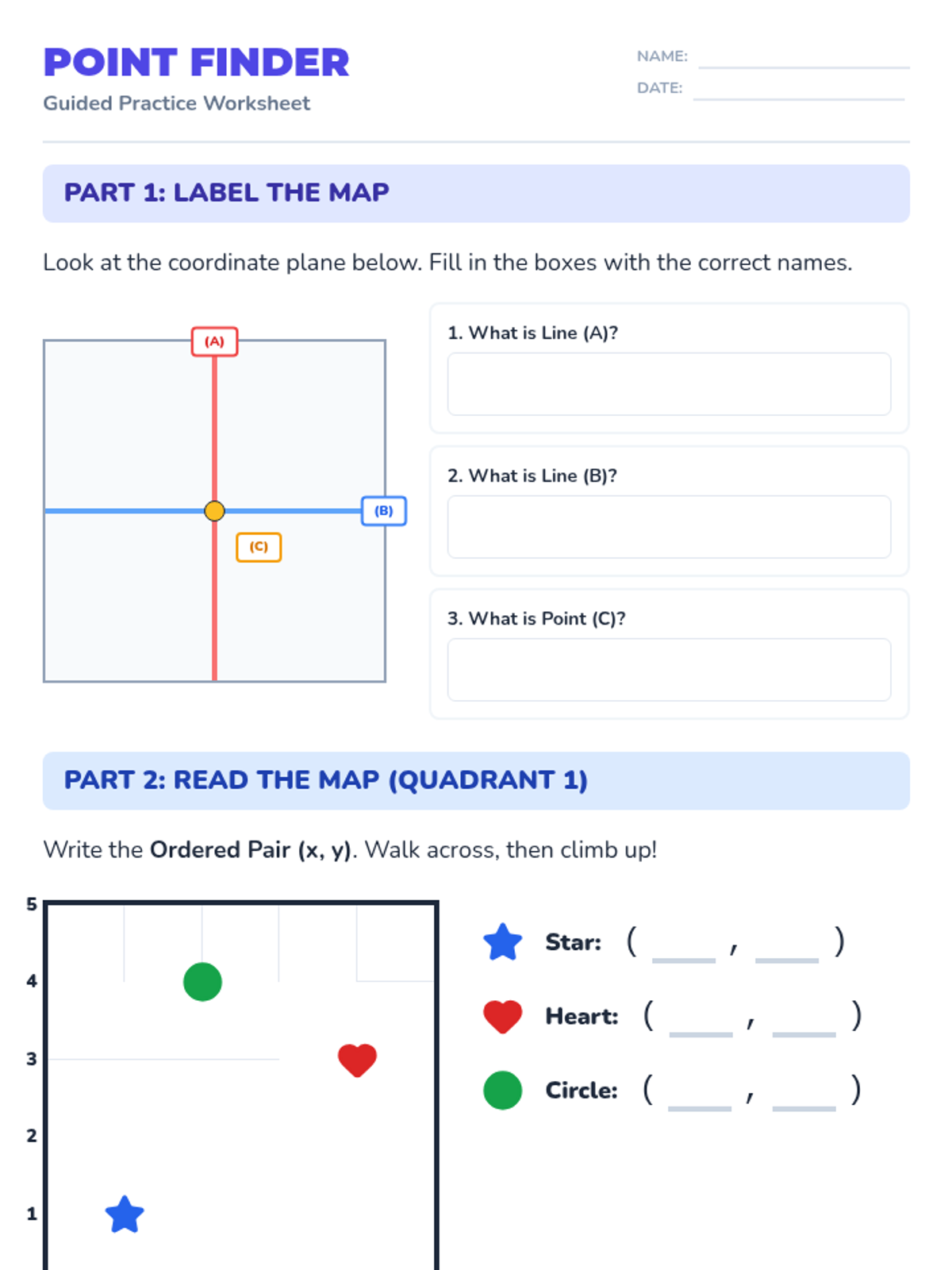
A modified lesson on the coordinate plane focusing on identifying axes, the origin, and plotting points in all four quadrants with visual scaffolding.
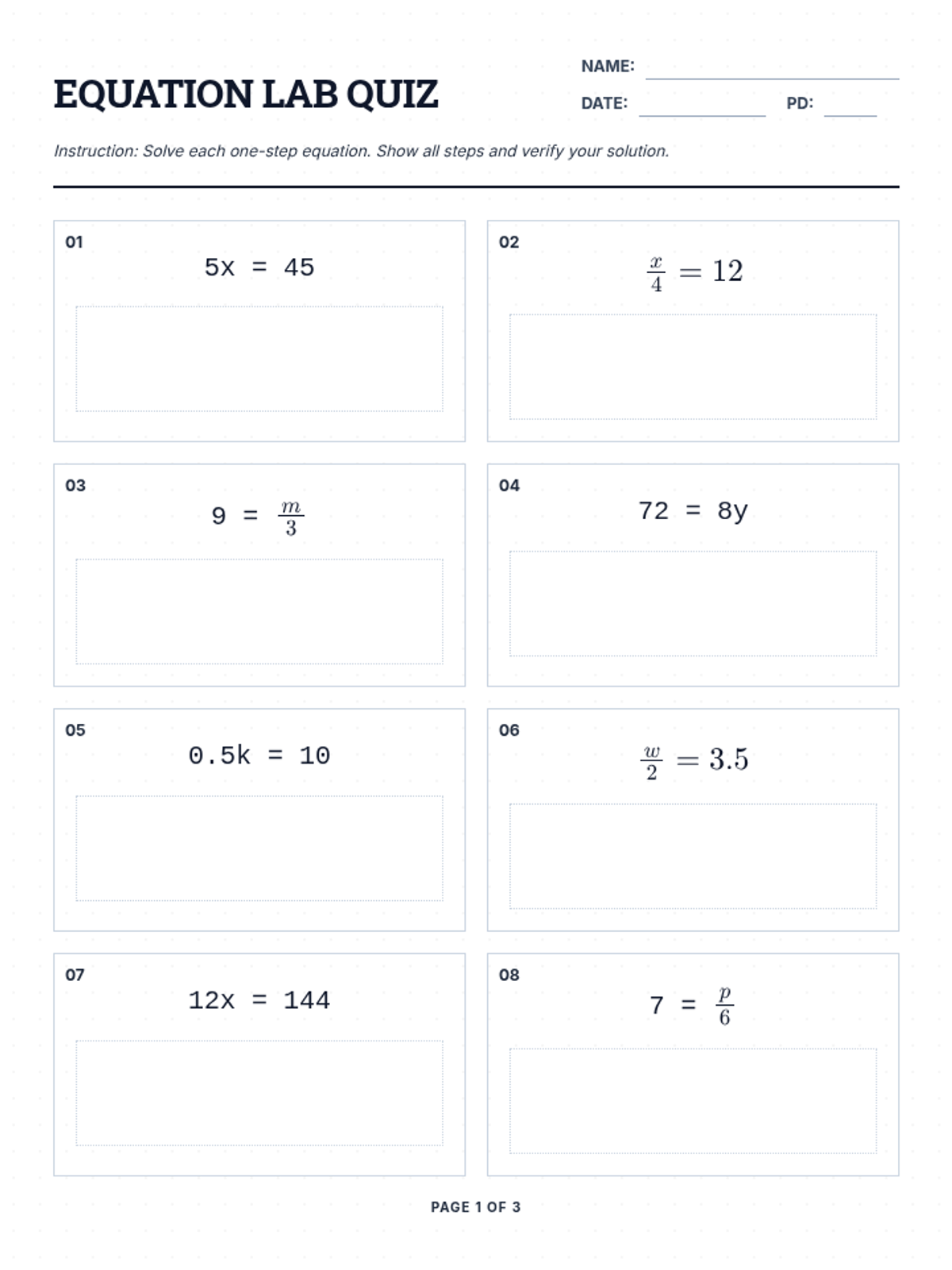
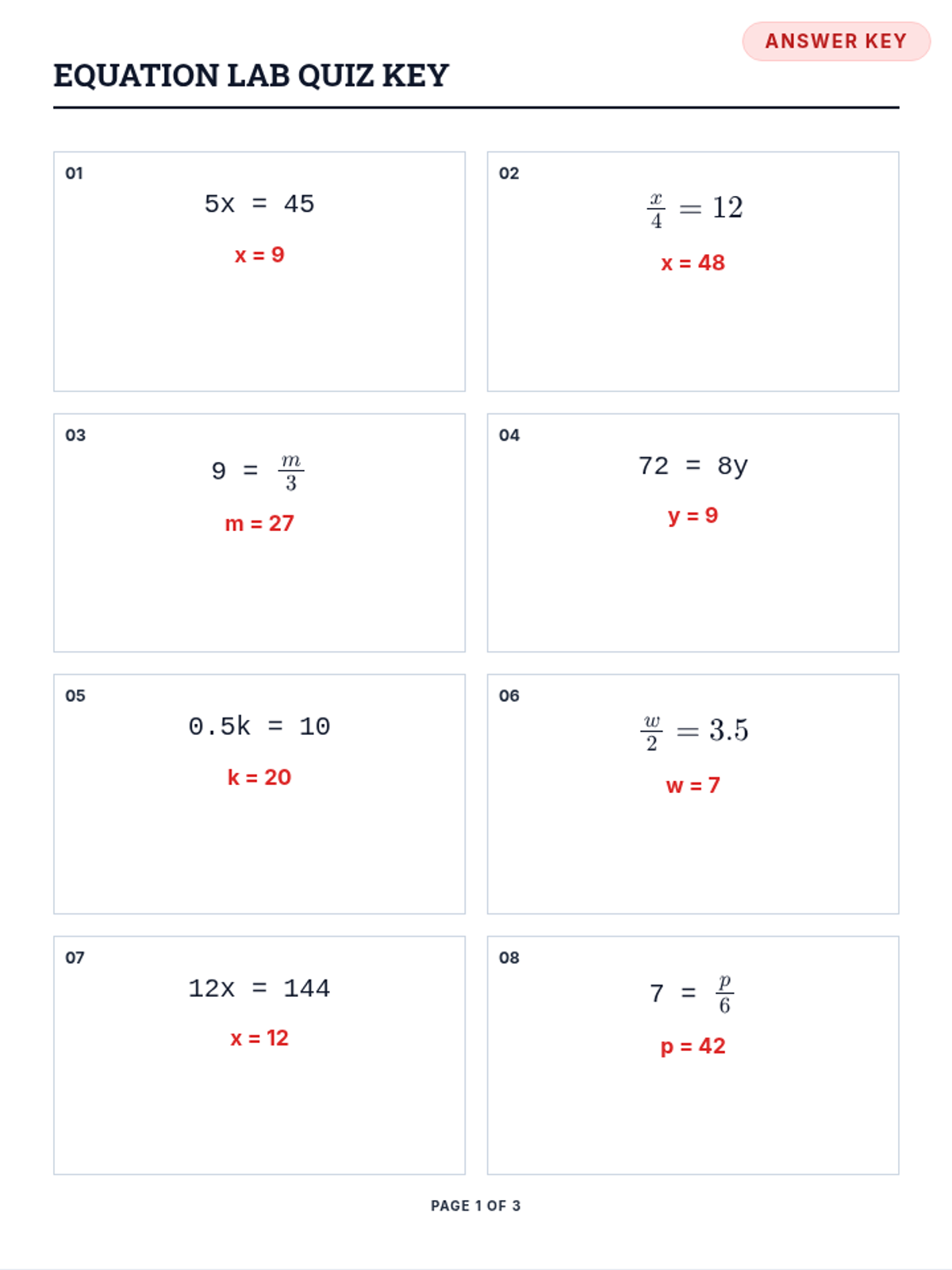
A comprehensive assessment lesson focusing on mastering one-step equations involving multiplication, division, and basic addition/subtraction.
A foundational lesson on the coordinate plane designed for IEP students, focusing on vocabulary, quadrant identification, and step-by-step plotting and reading of points.
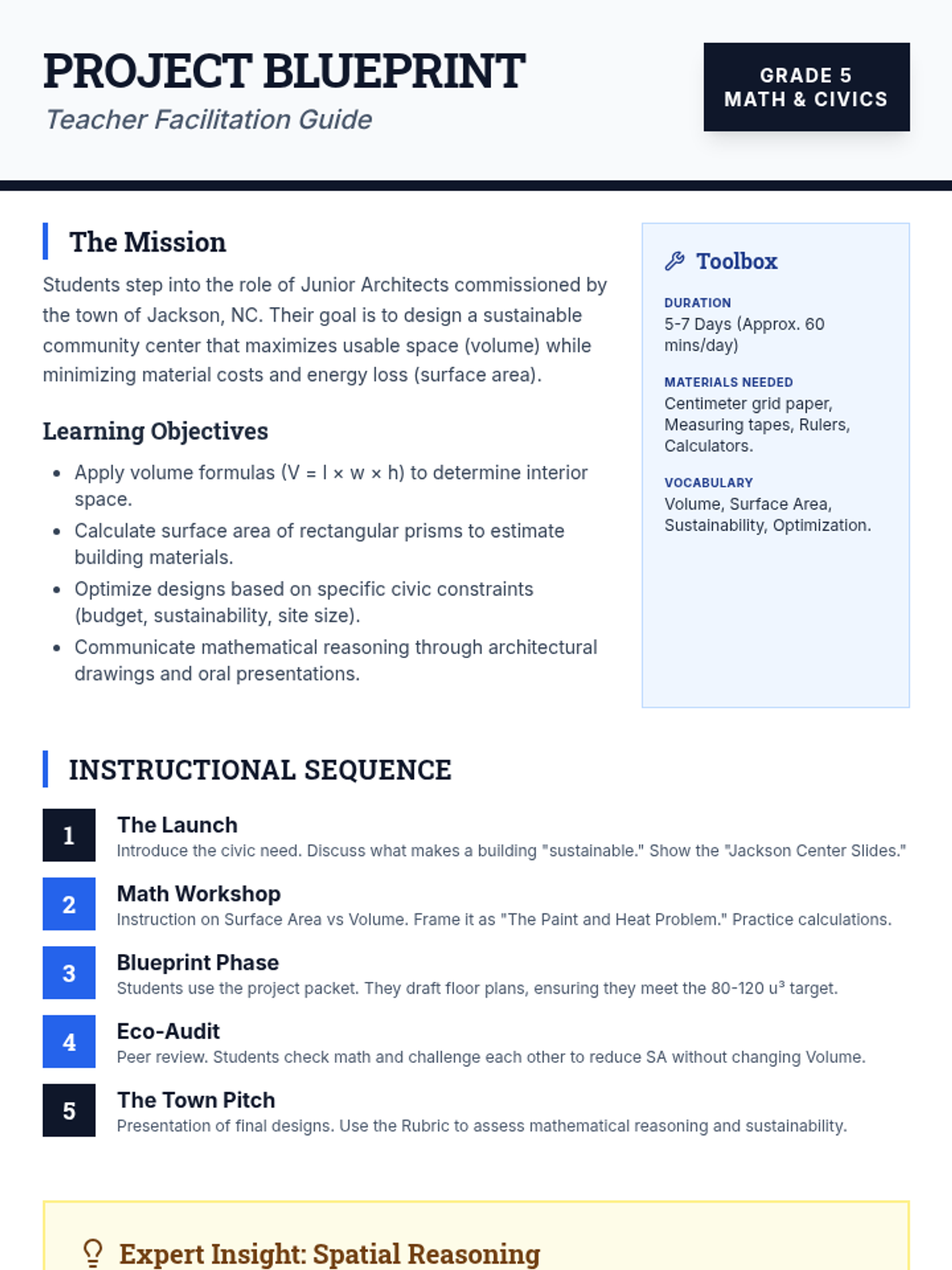
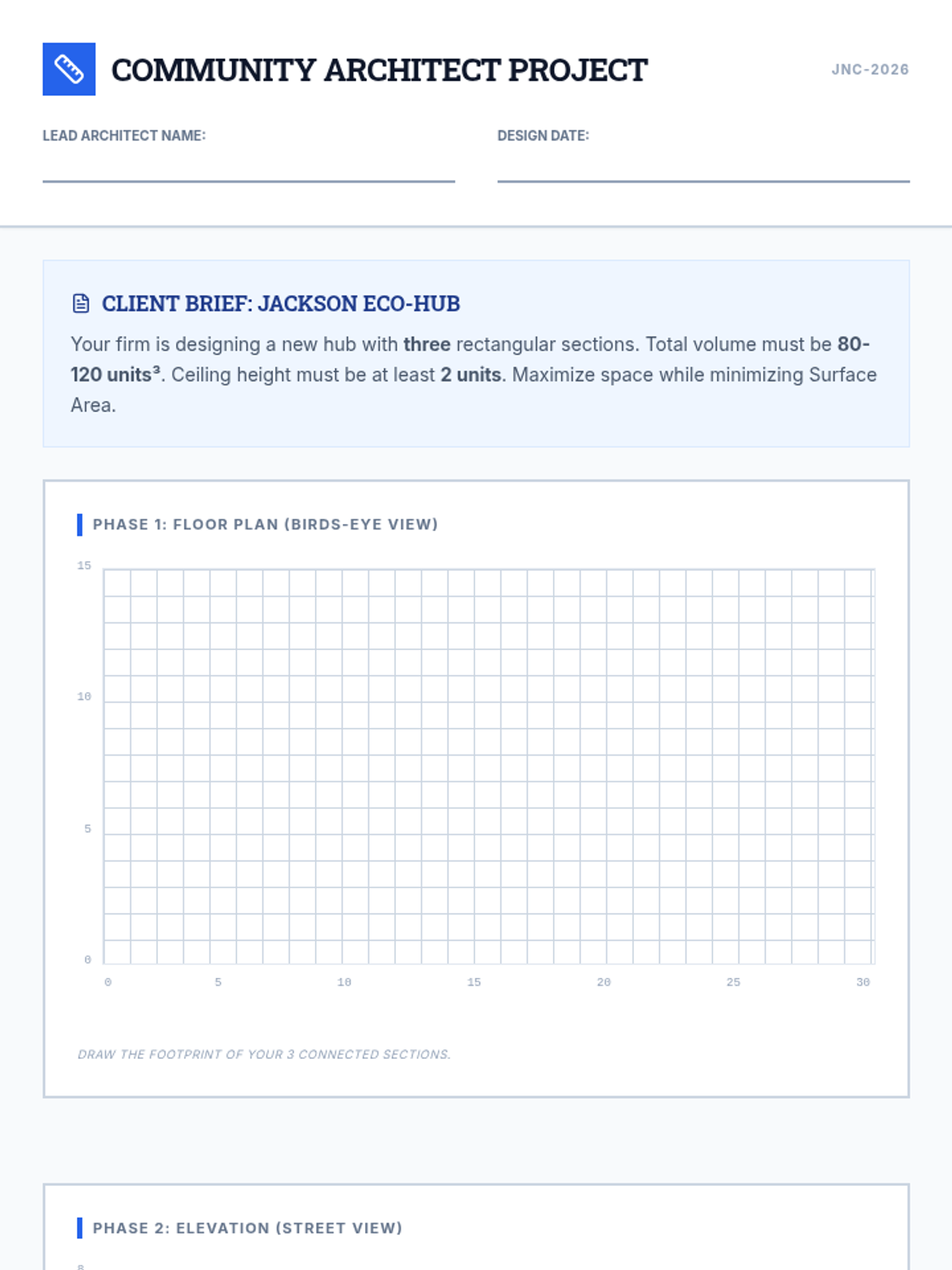
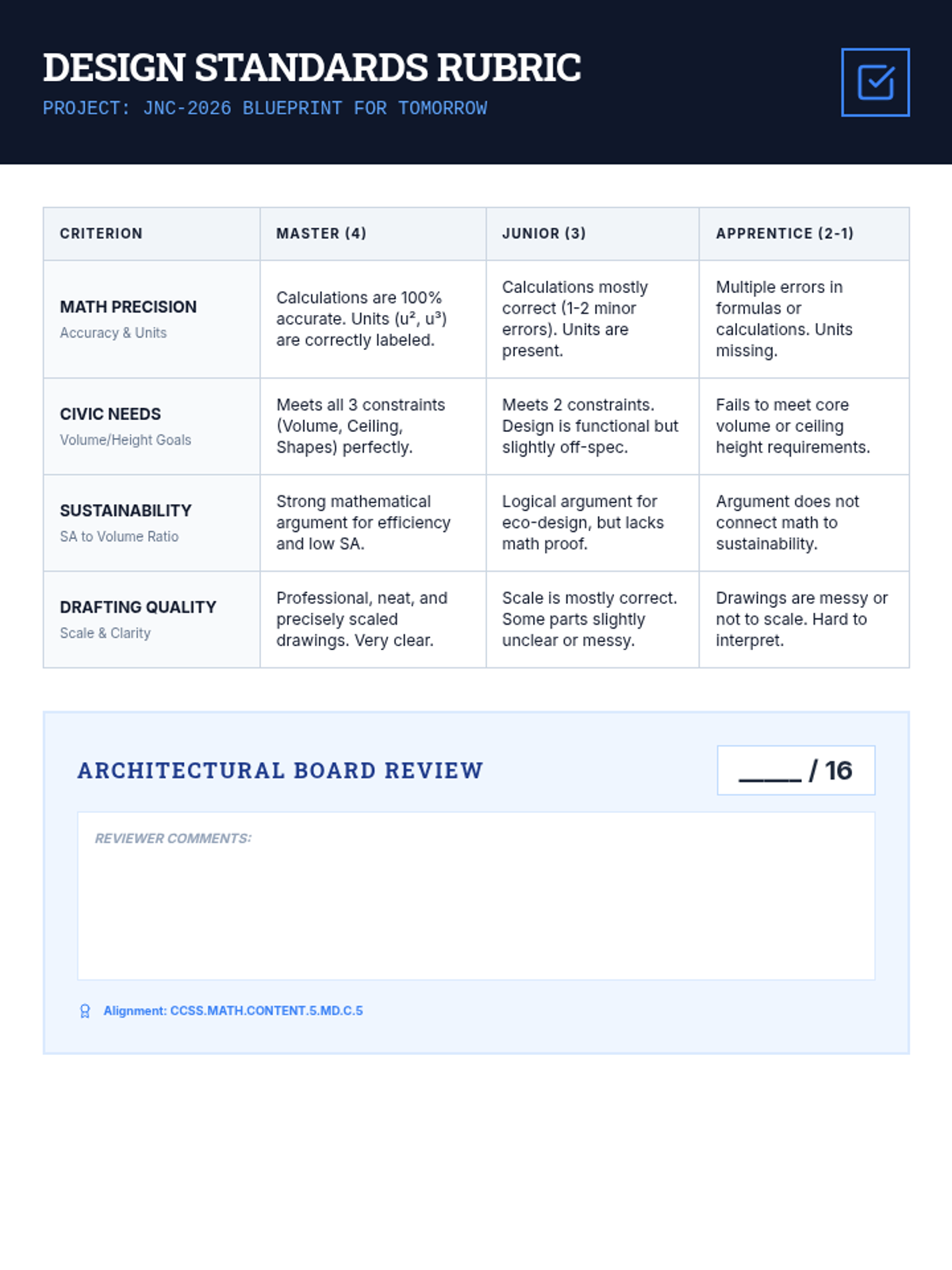
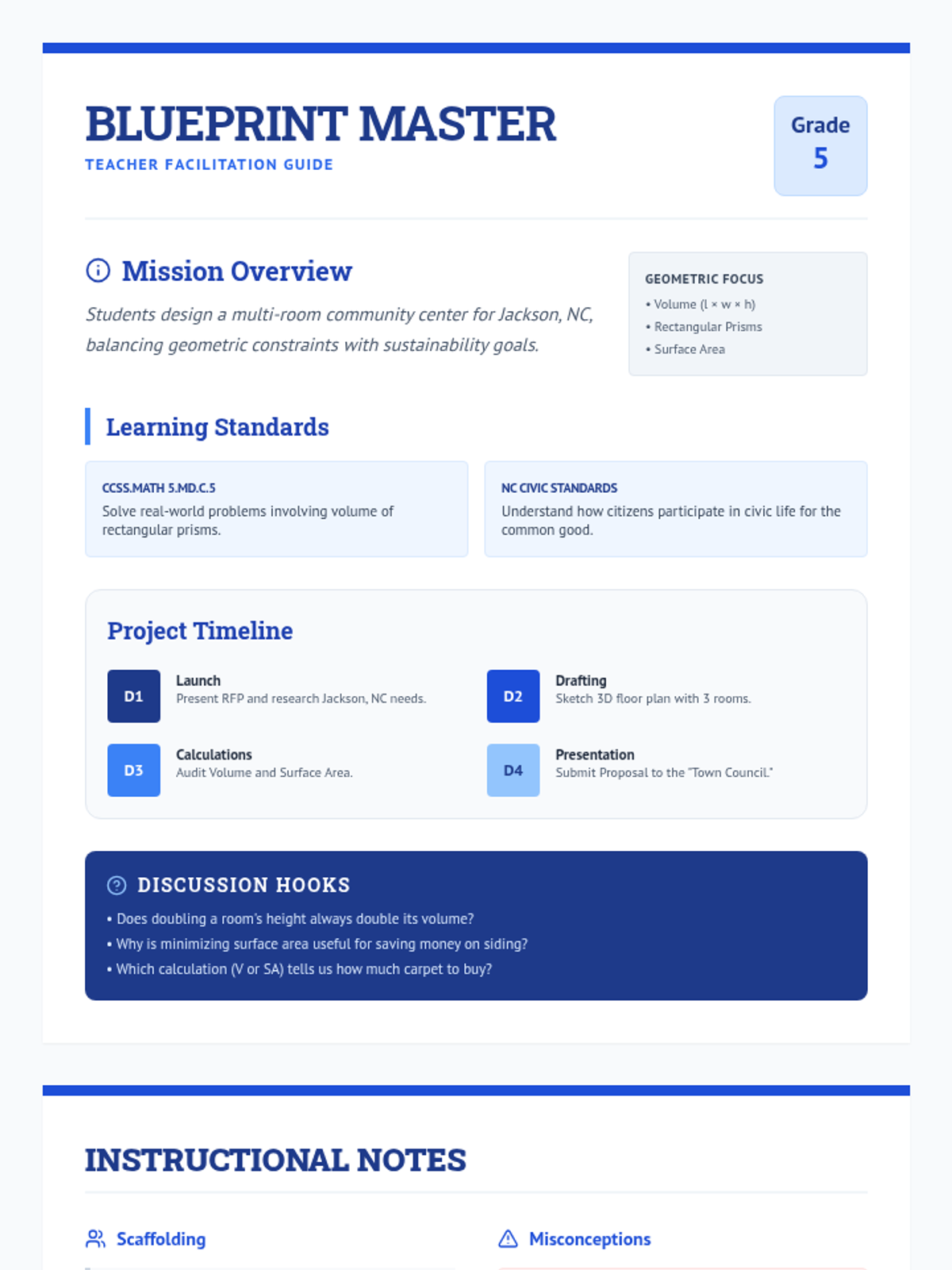
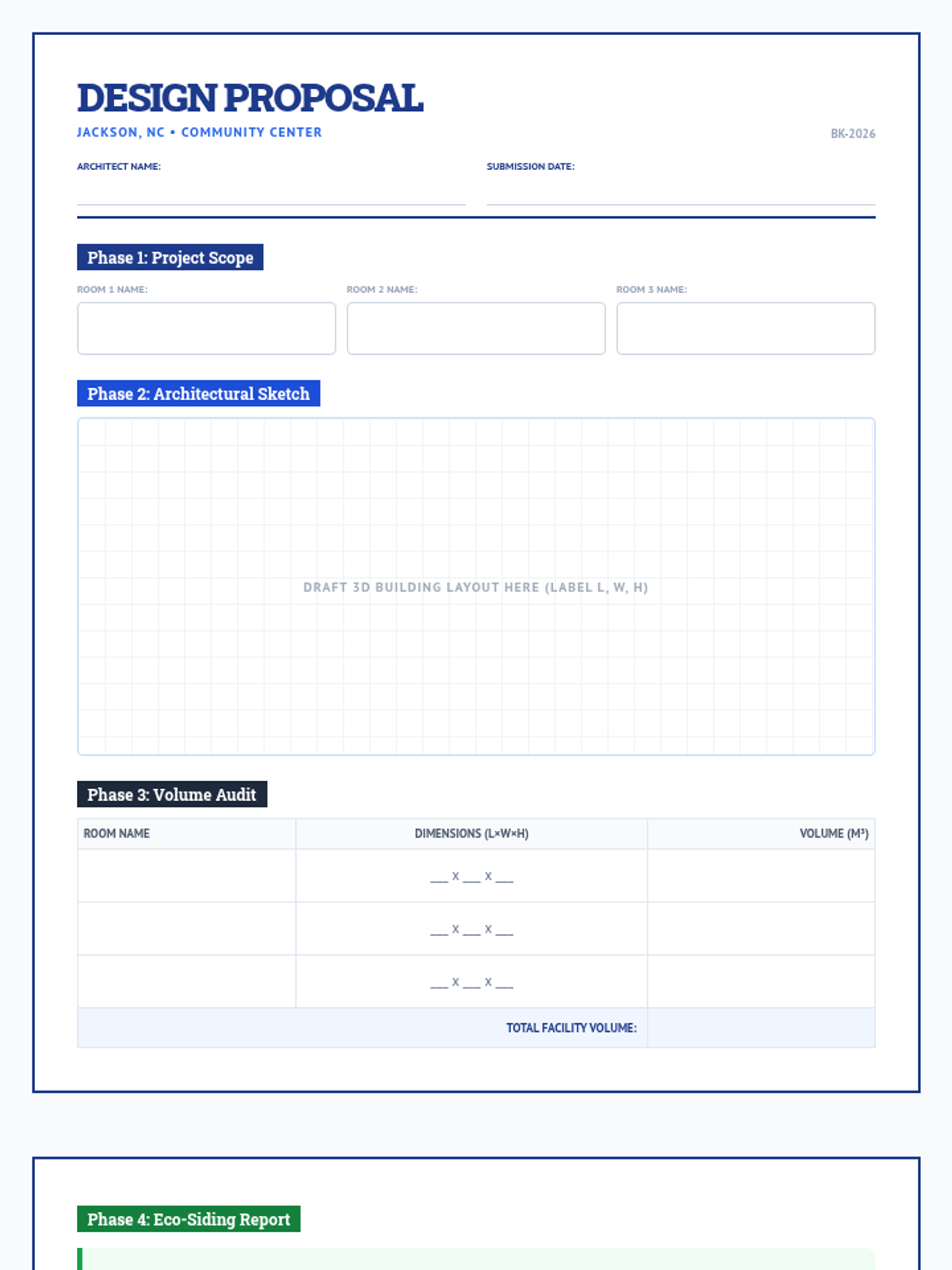
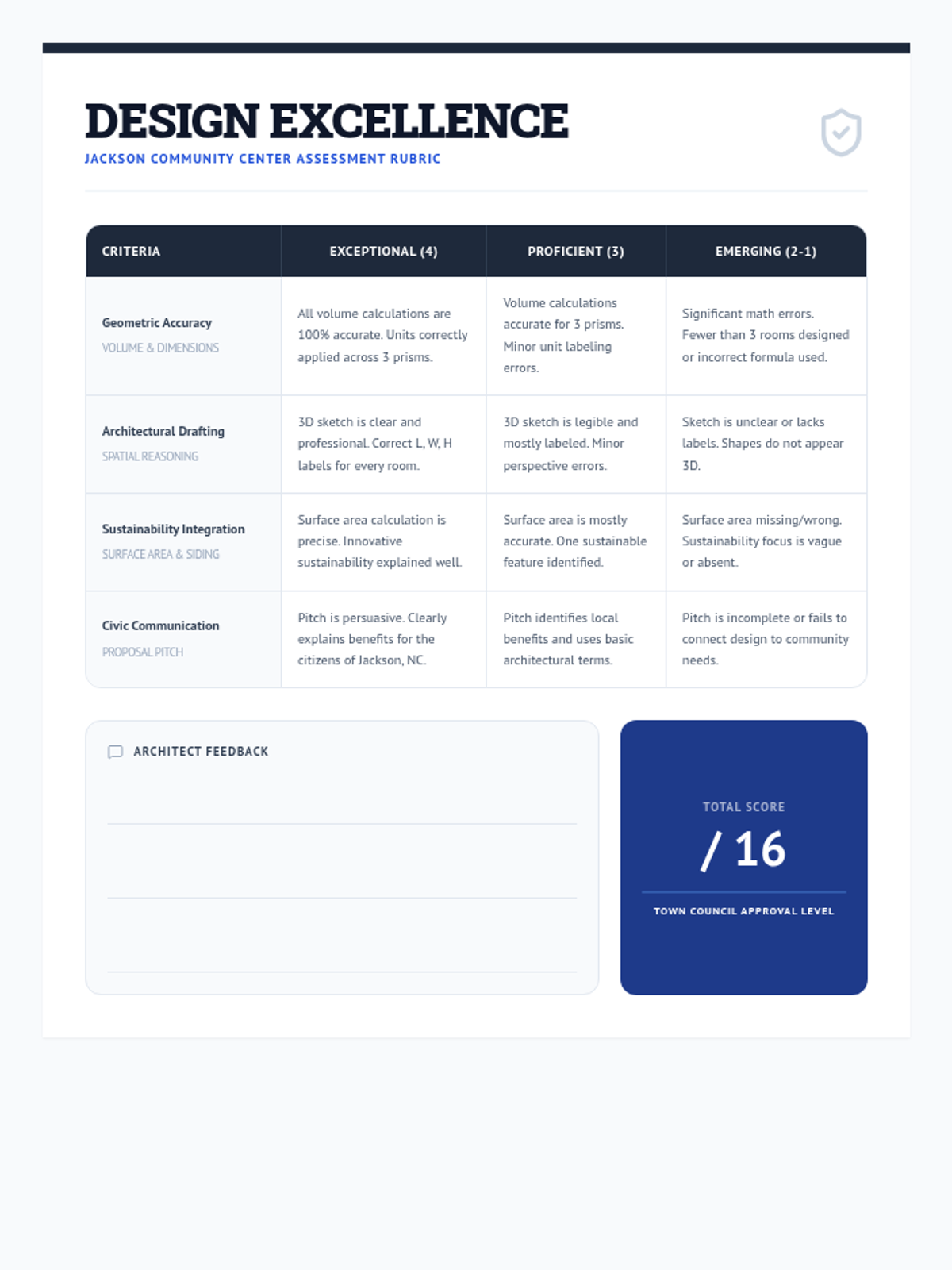
A project-based learning experience where 5th graders use volume and surface area to design a sustainable community center for Jackson, NC. Students bridge geometry with civic engineering through hands-on architectural design.
A project-based learning experience where 5th graders apply volume and surface area concepts to design a sustainable community center for Jackson, NC. Students bridge geometric standards with civic engineering and spatial reasoning through architectural drafting and calculation.
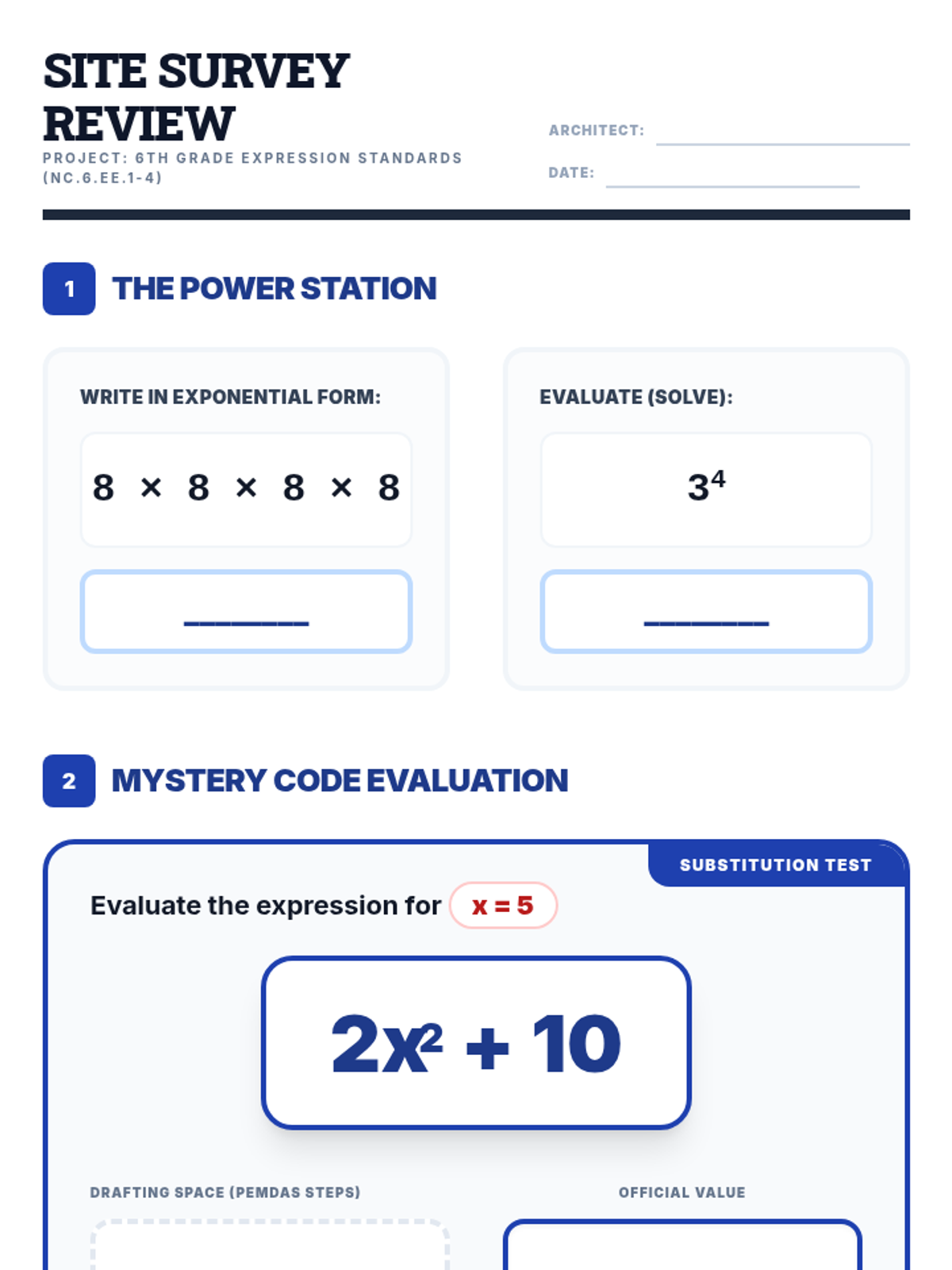
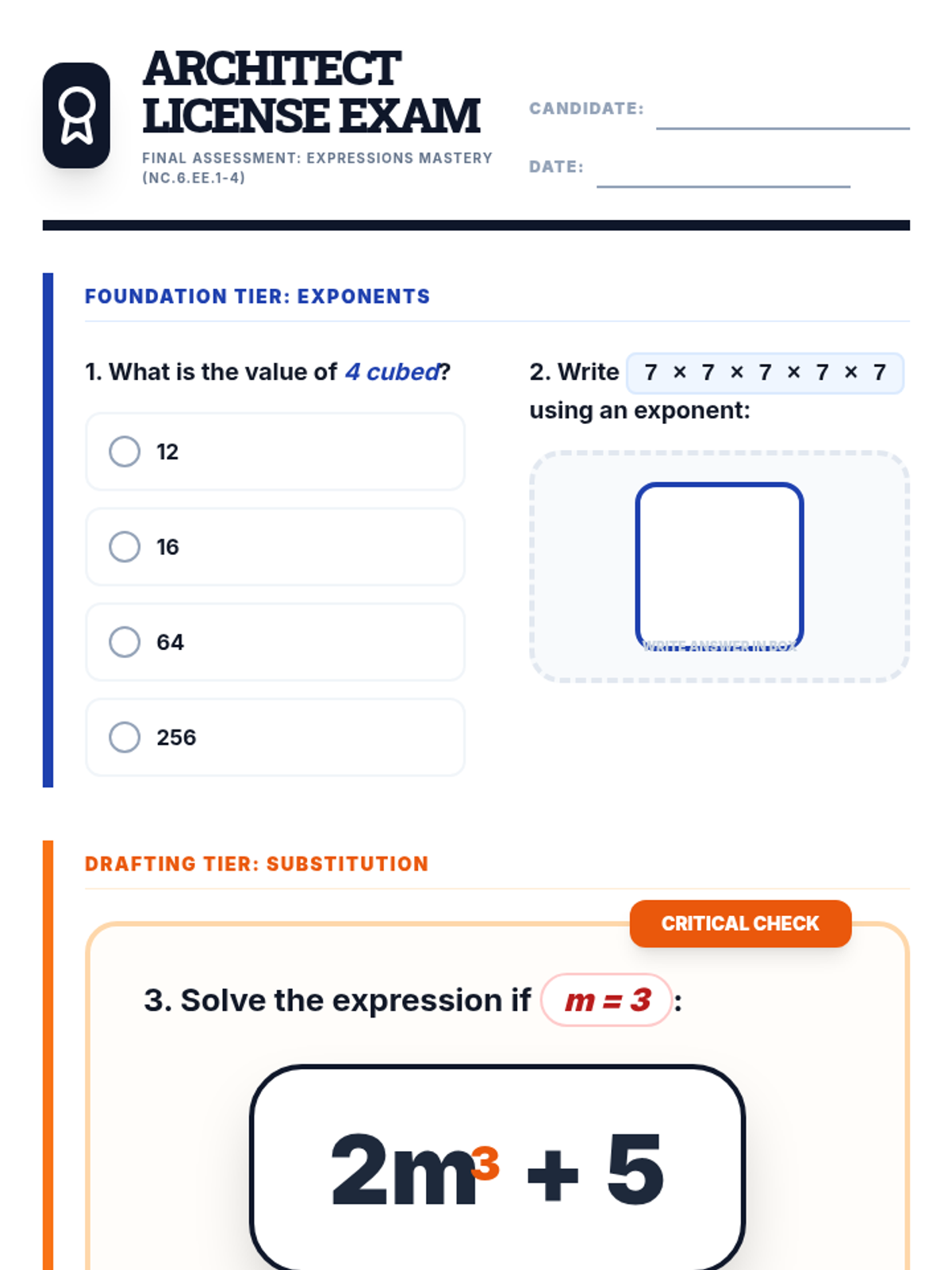
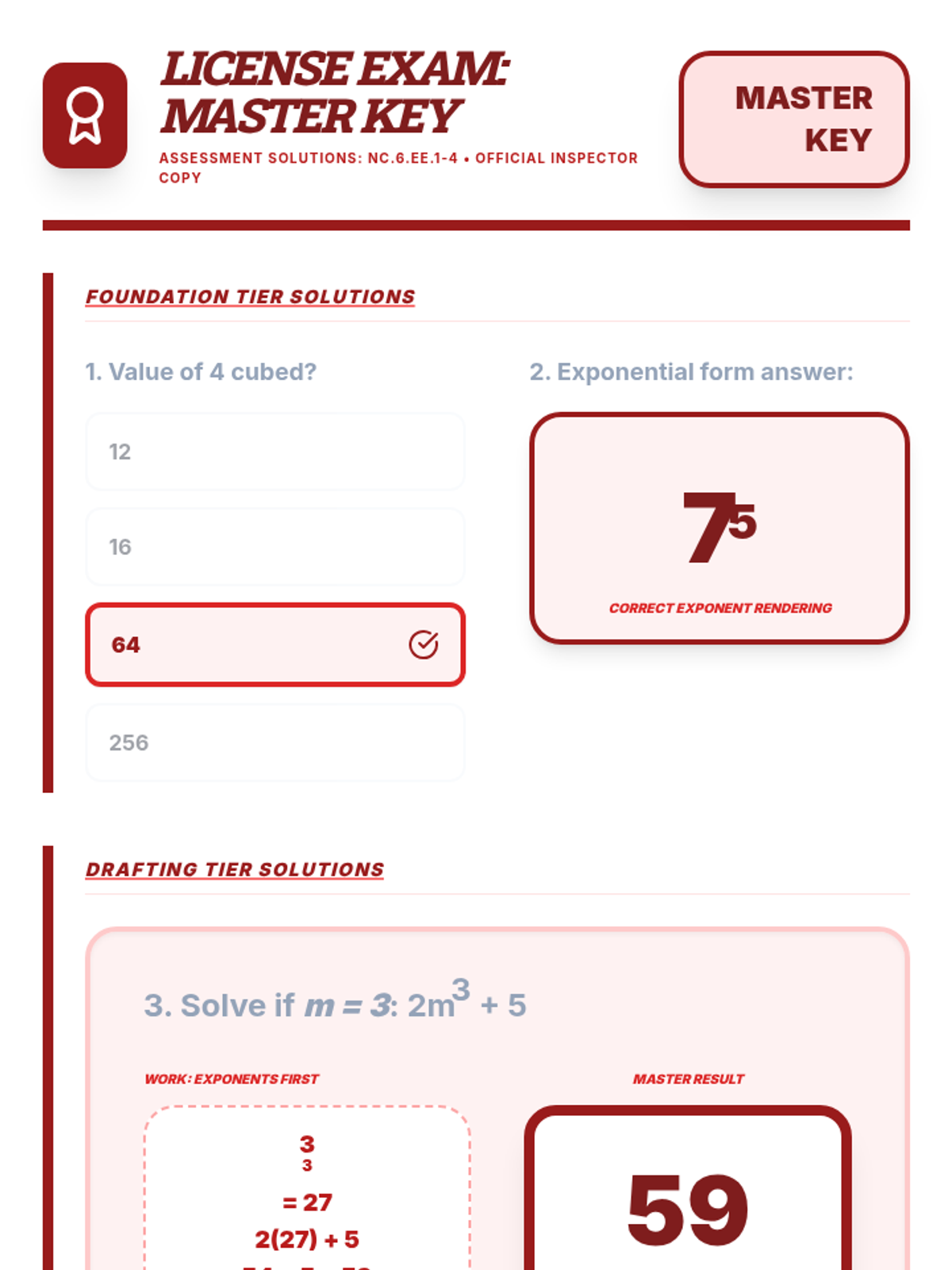
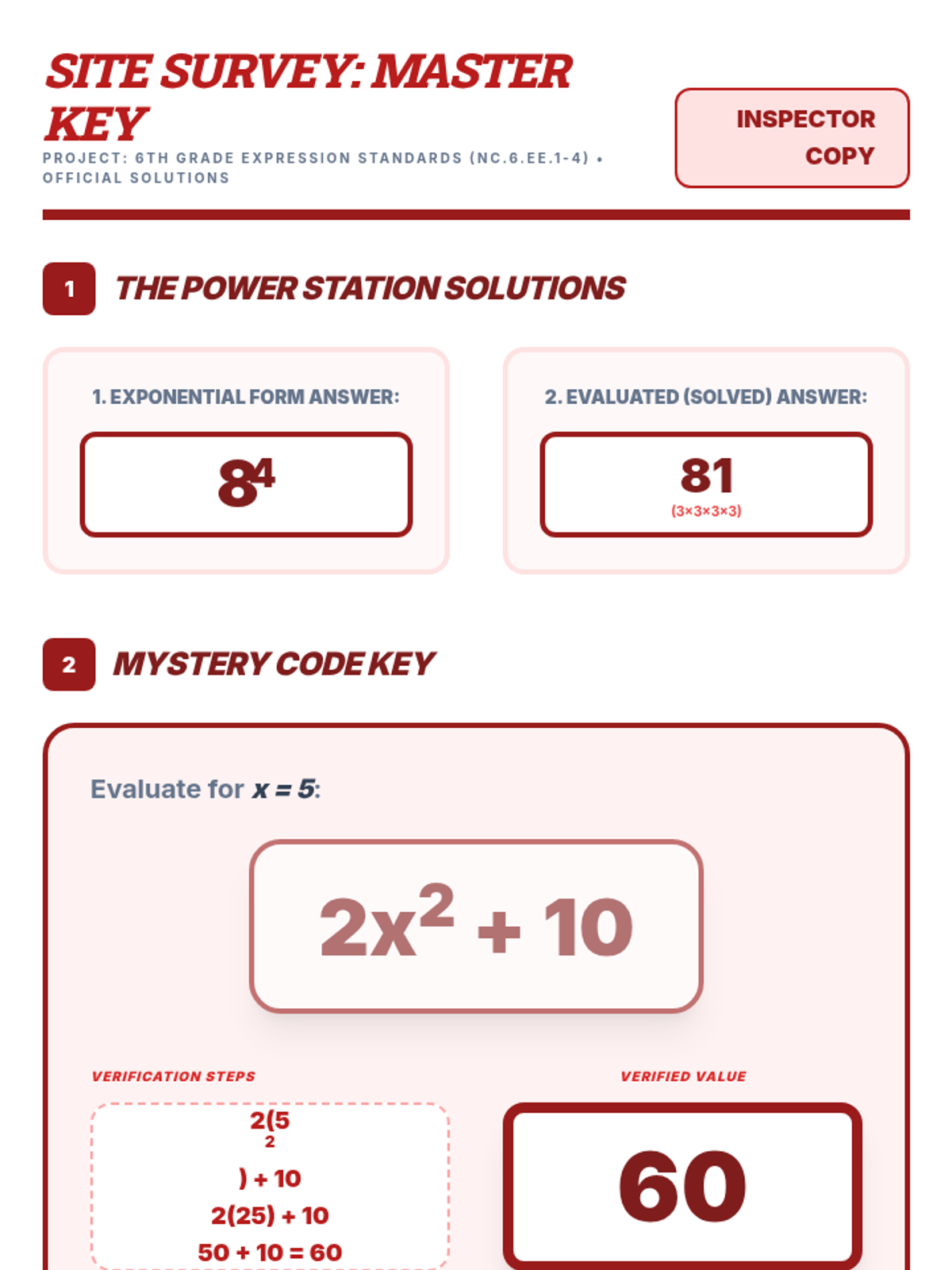
A comprehensive review of all expression standards (NC.6.EE.1-4) featuring EOG-style questions and a 'Final Inspection' simulation to prepare students for standardized testing.
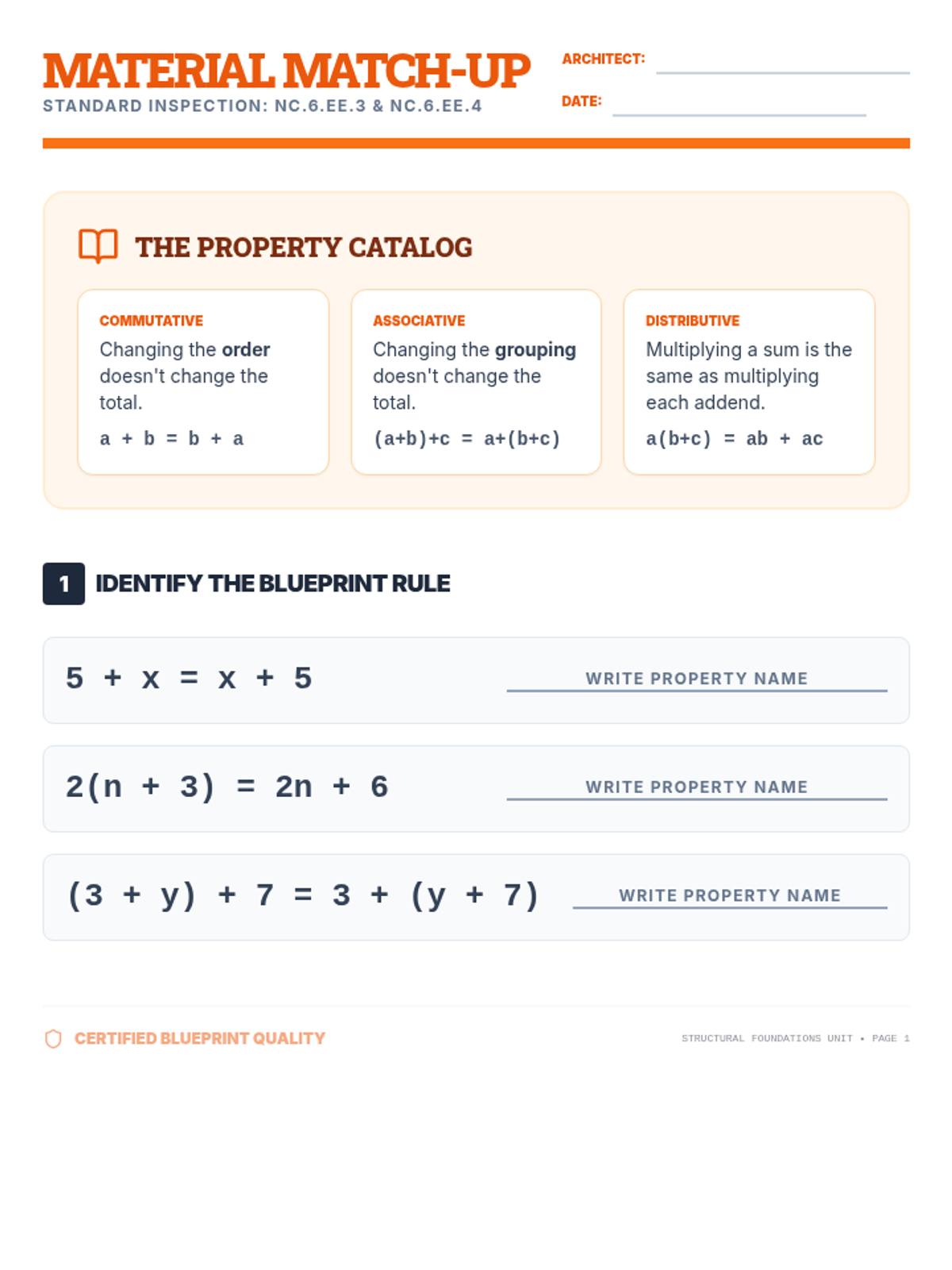
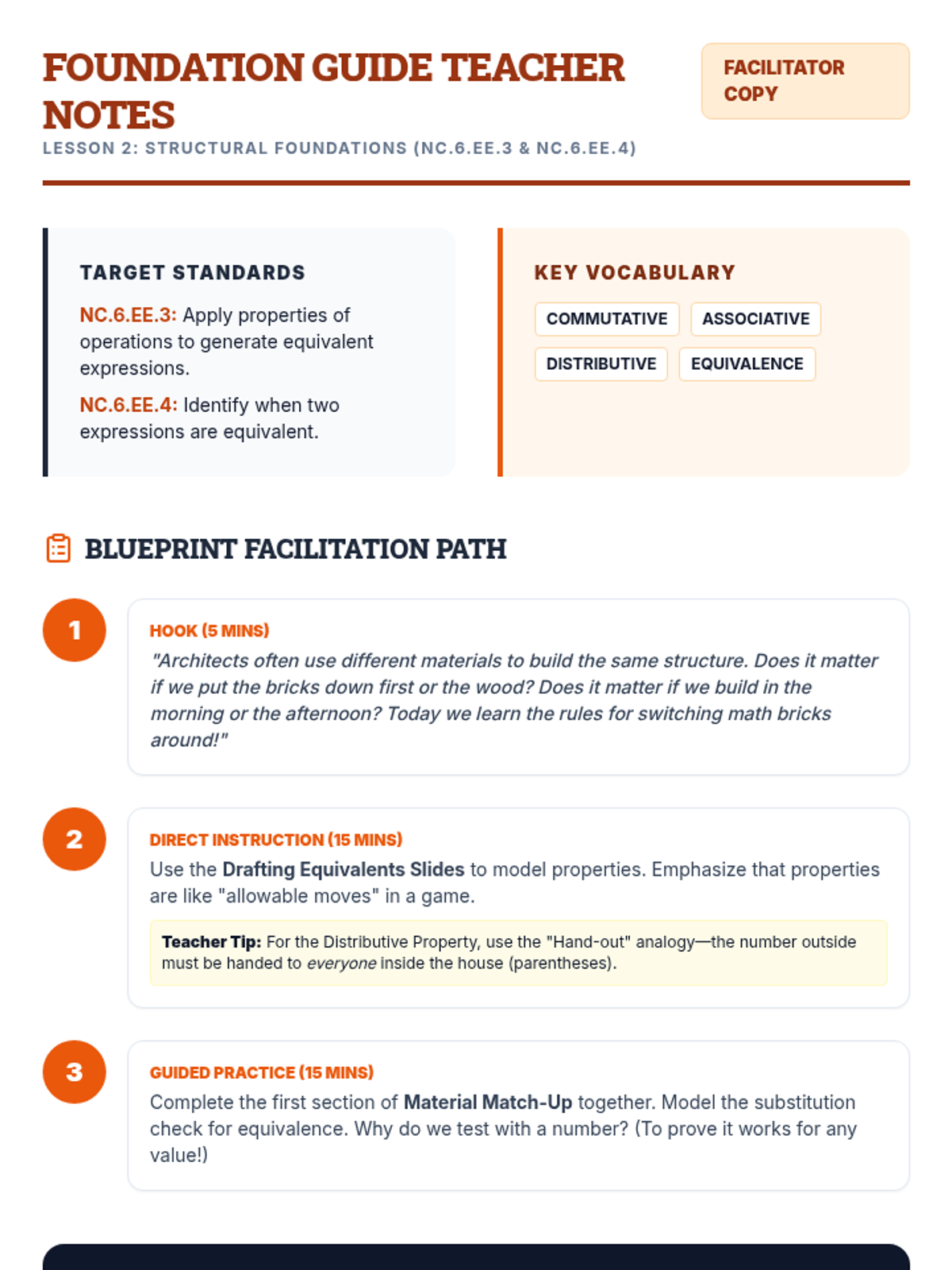
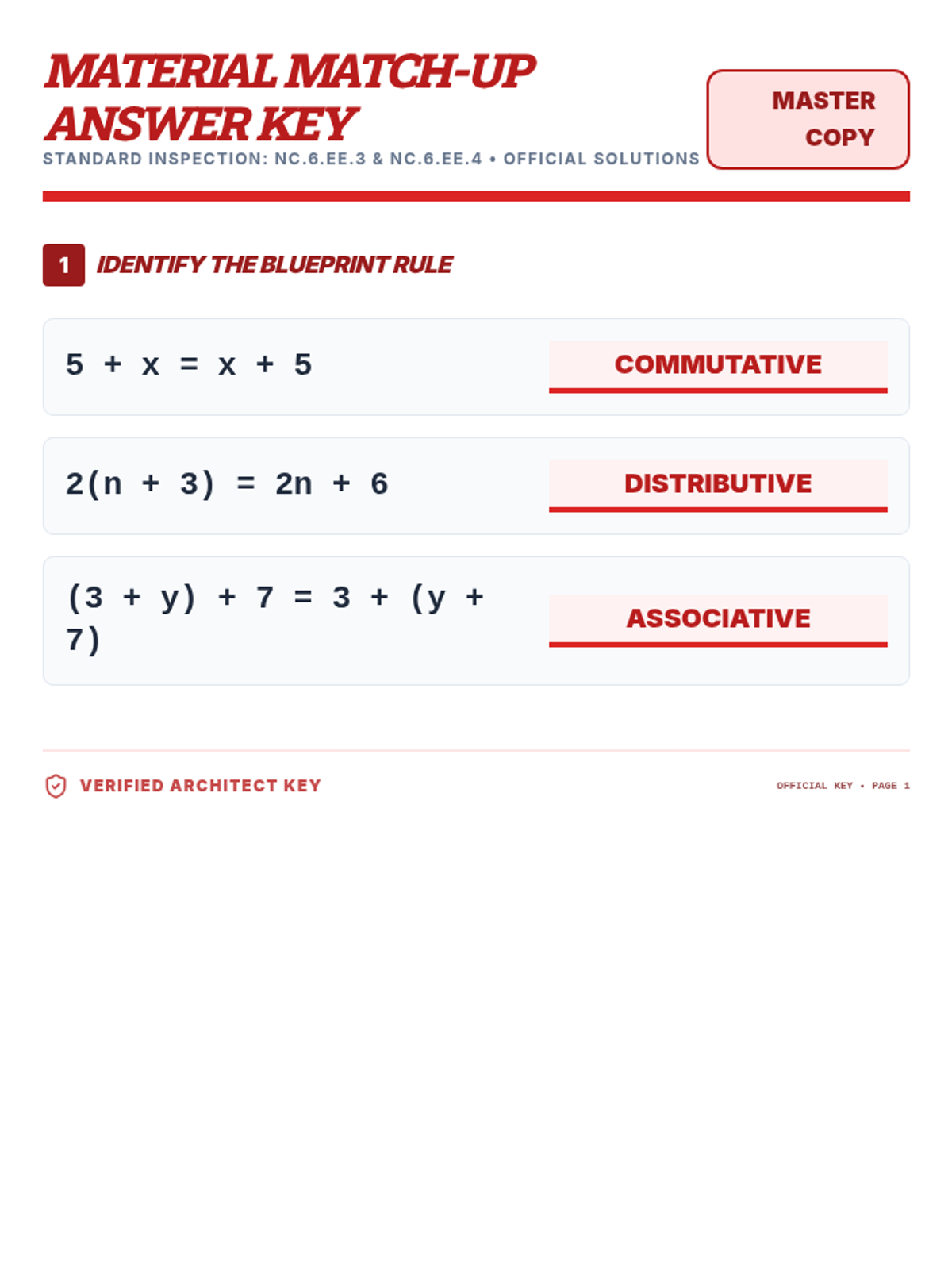
Students learn to apply properties of operations (distributive, associative, commutative) to generate equivalent expressions and identify when two expressions are equivalent using the 'Structural Foundation' theme.
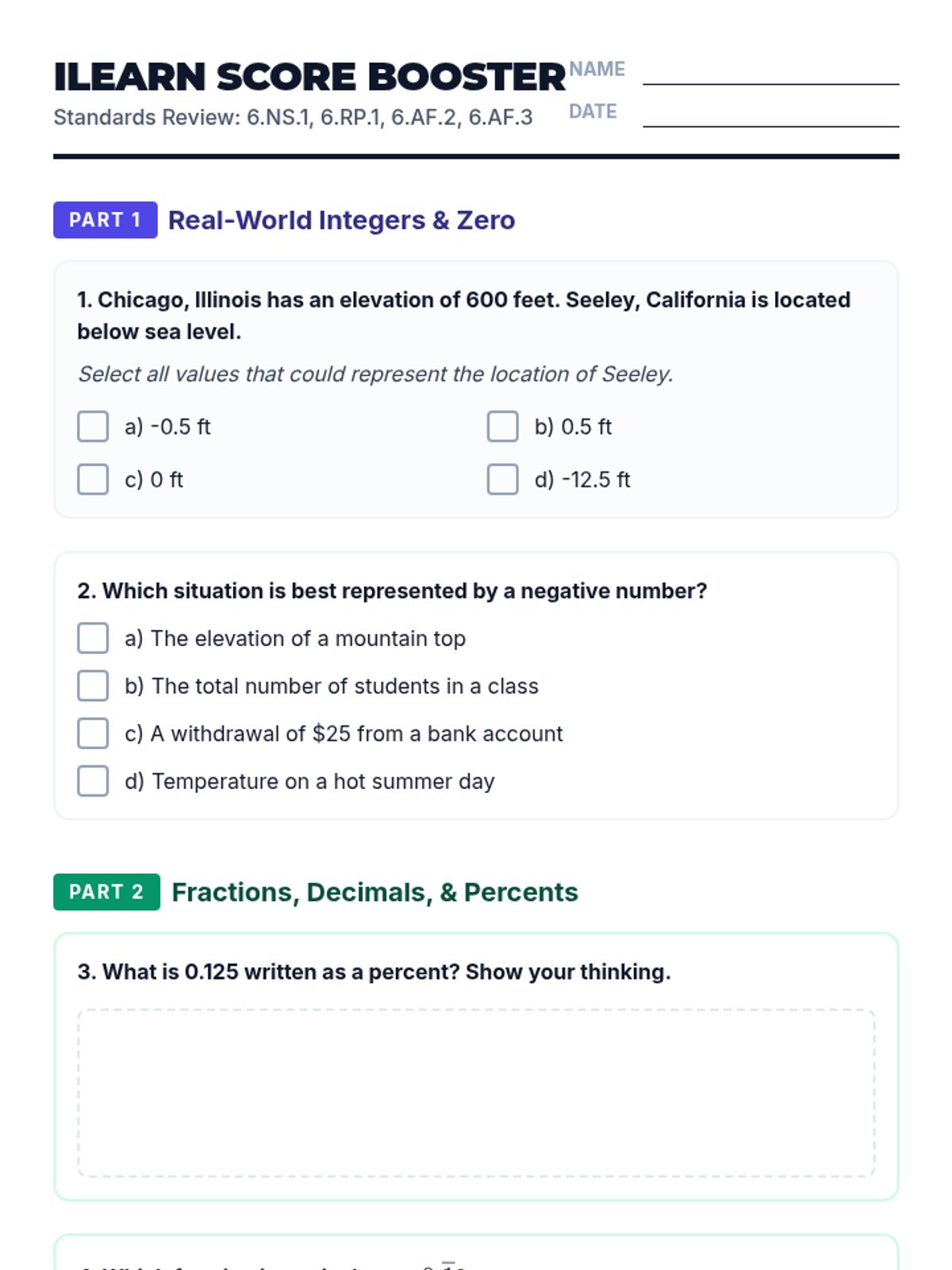
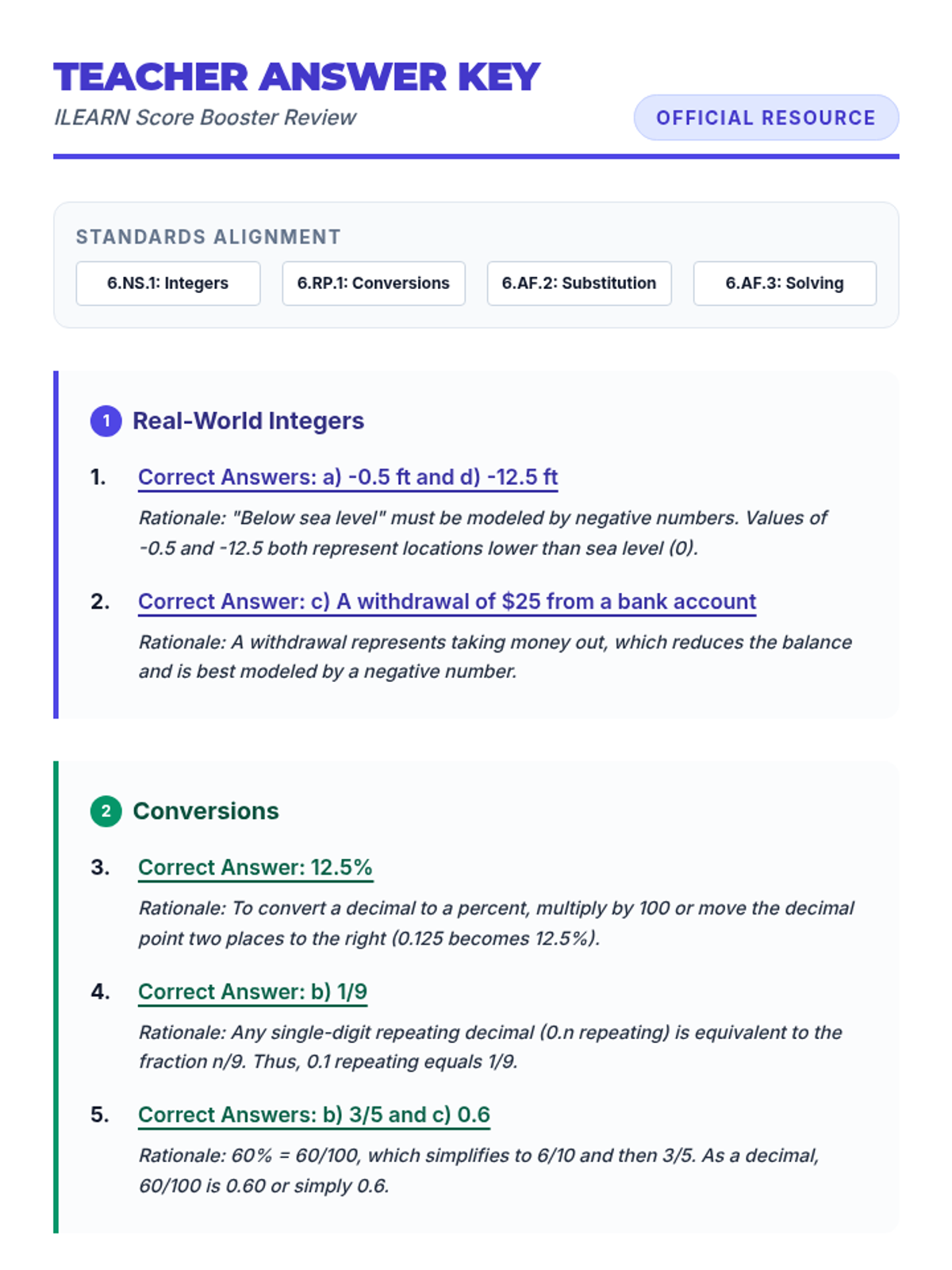
A comprehensive one-day review for ILEARN, targeting key 6th-grade math standards in Number Sense, Ratios, and Algebra. This lesson focuses on boosting students from 'Below' or 'Approaching' proficiency to 'At Proficiency' through targeted practice and concept reinforcement.
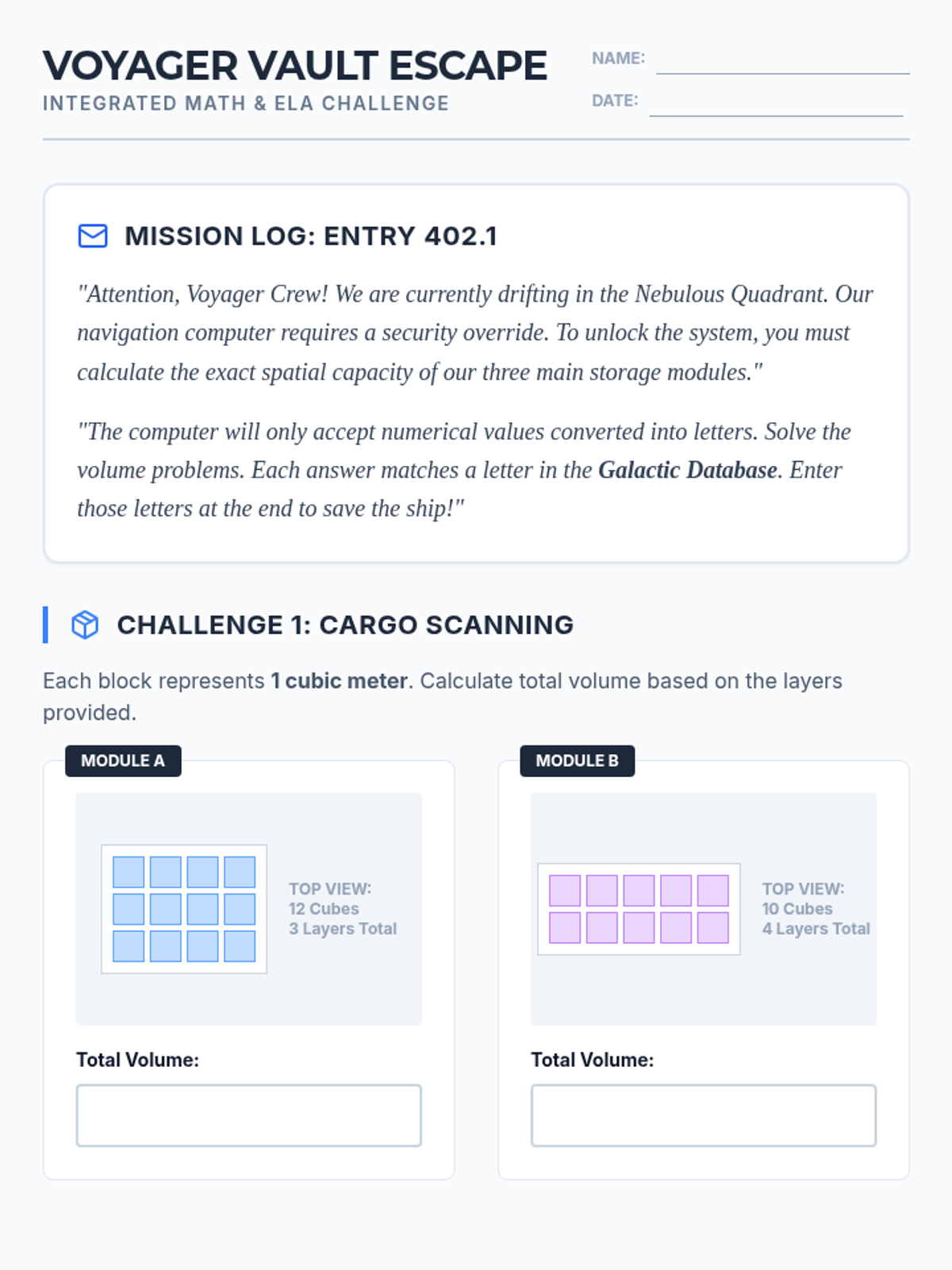
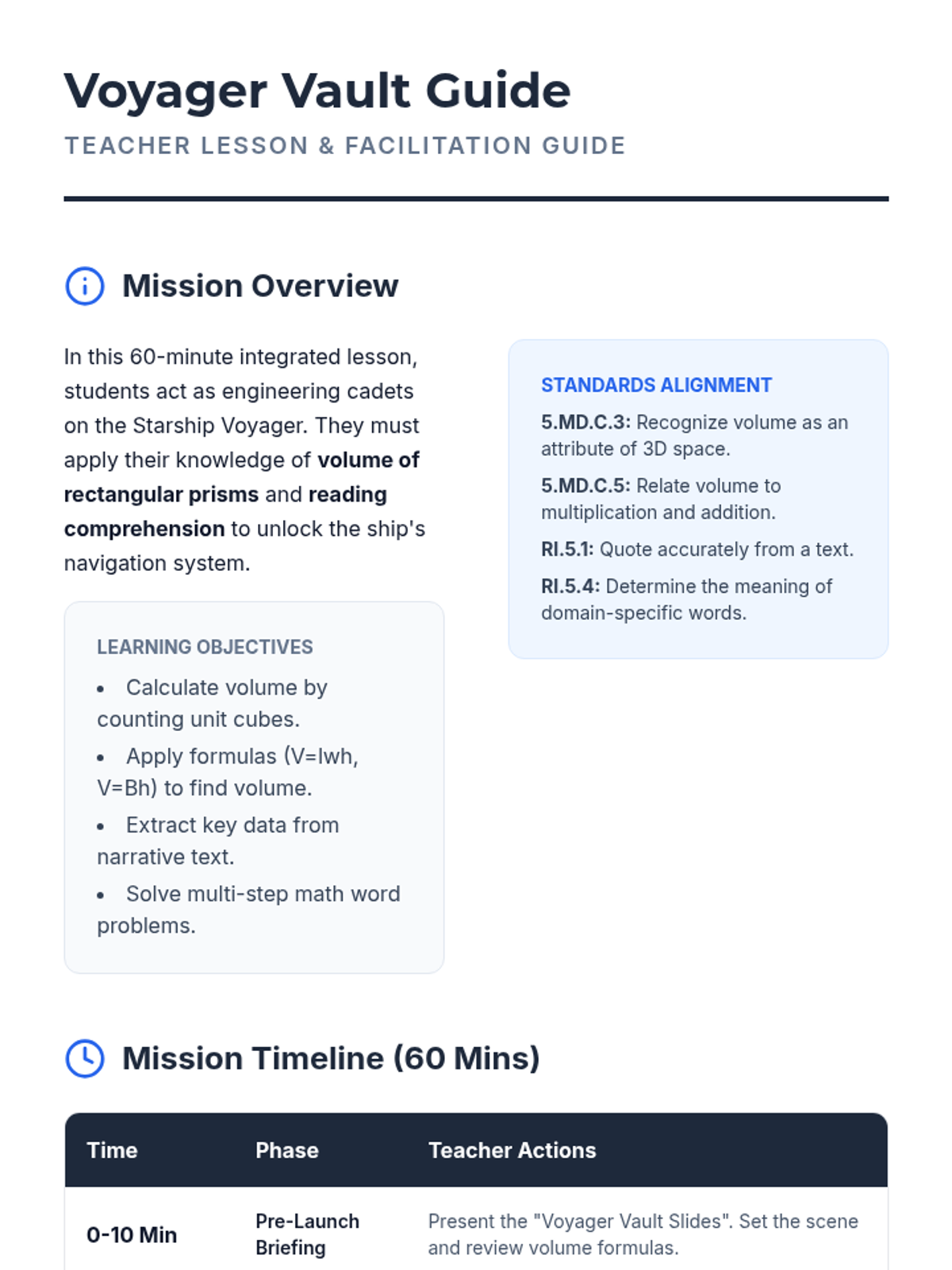
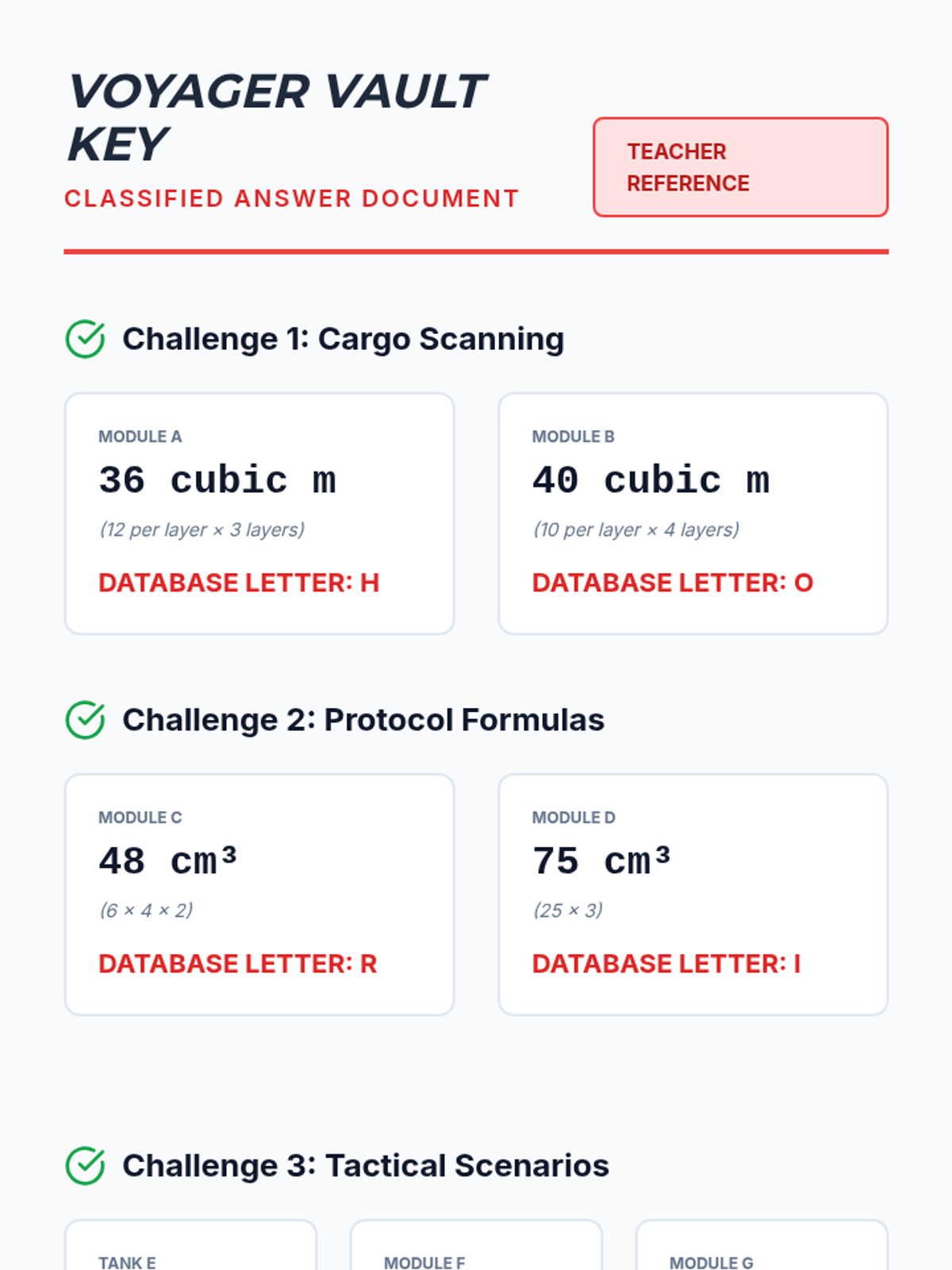
A 5th-grade integrated lesson where students solve volume-based math challenges within a space-themed narrative to unlock a starship's navigation system. Students apply math formulas and reading comprehension skills to crack the code and save the mission.
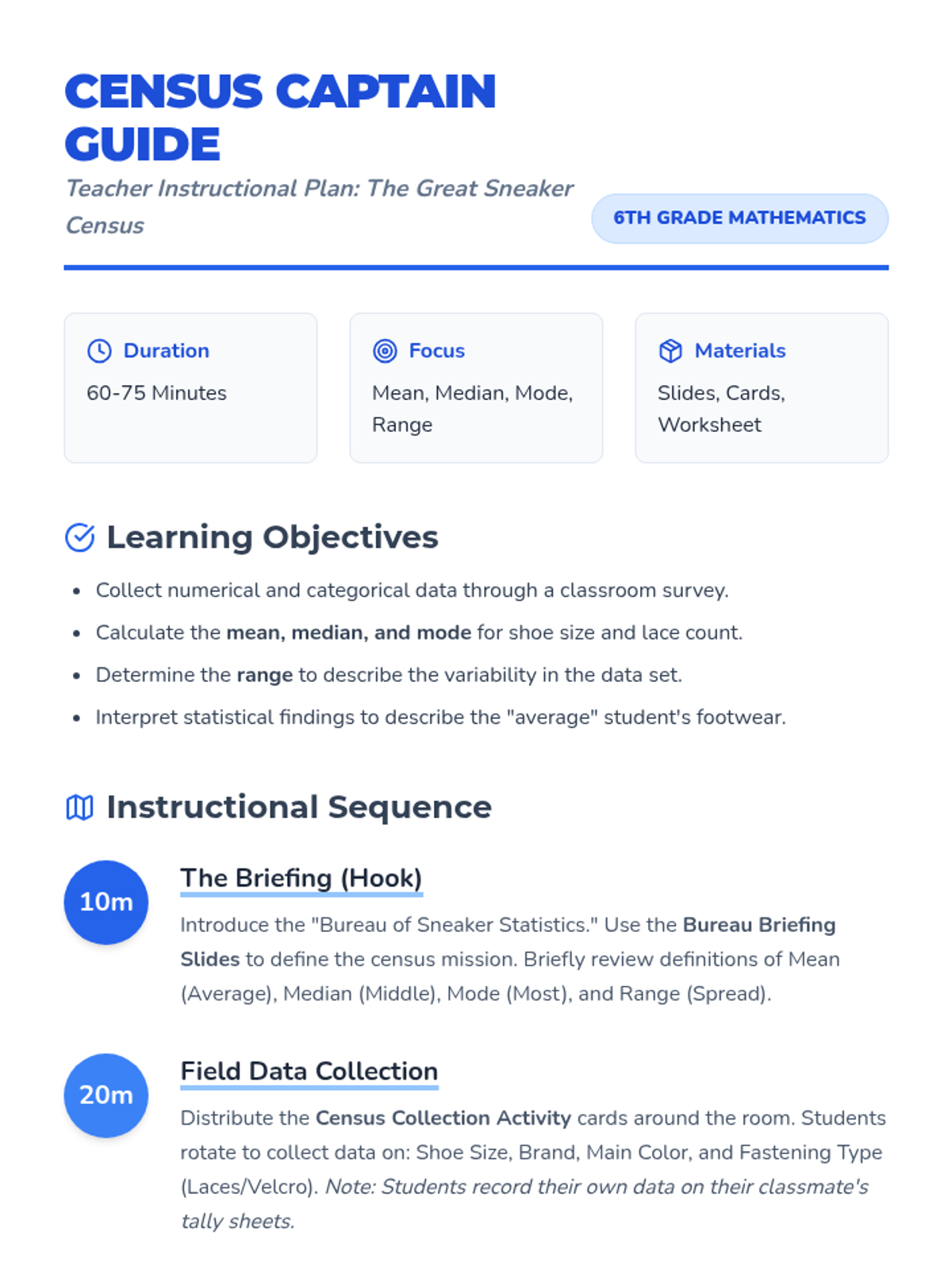
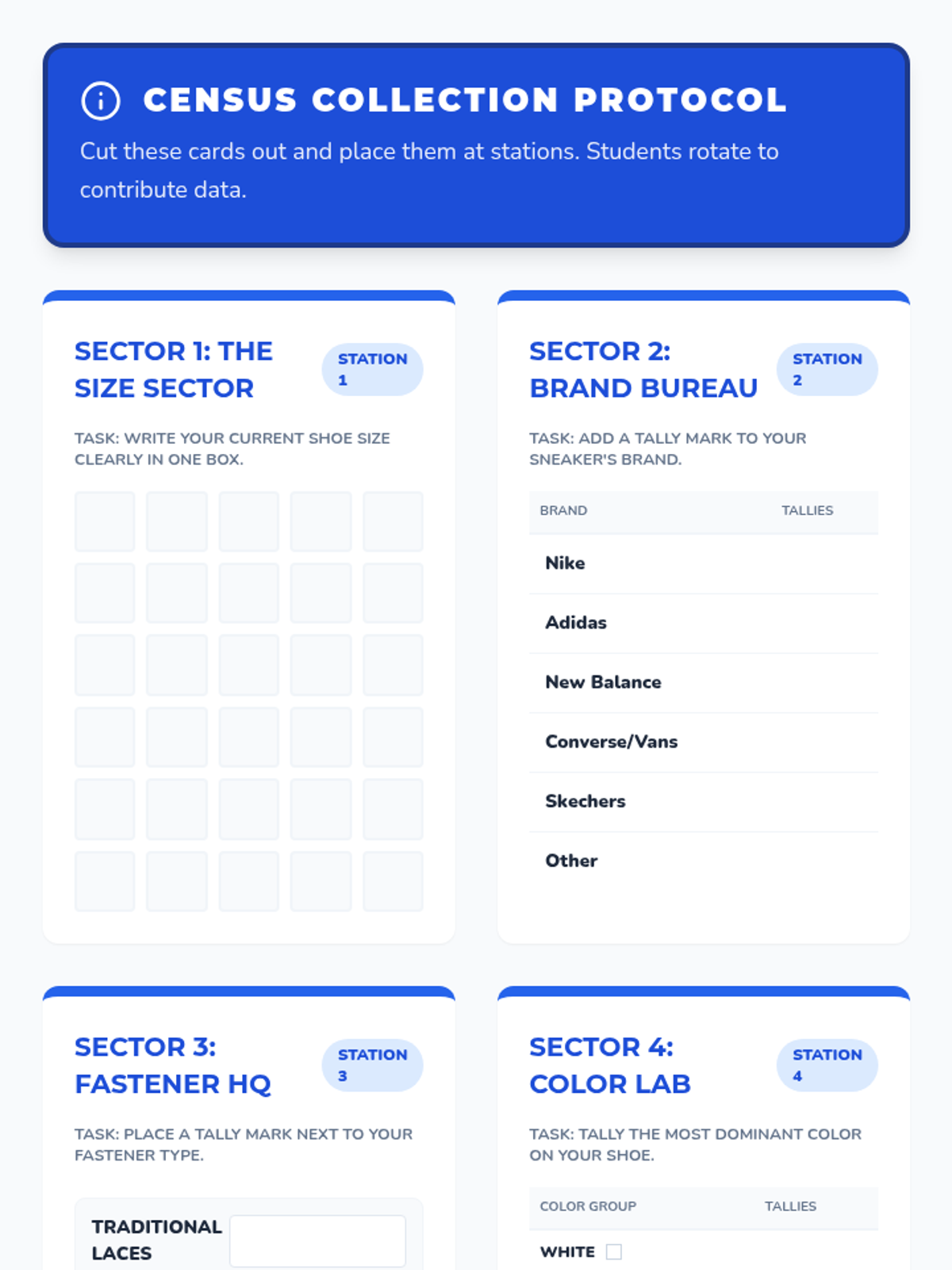
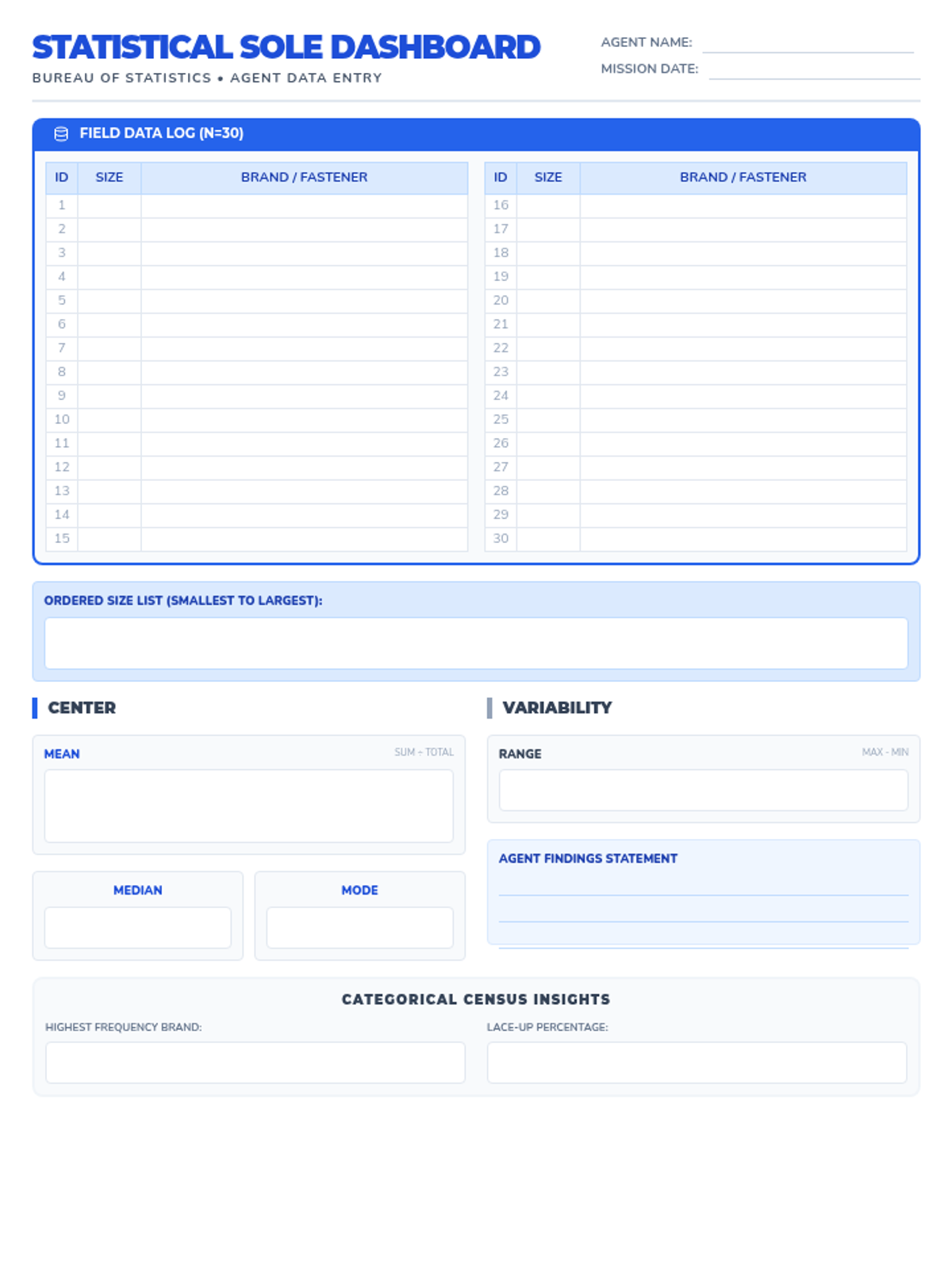
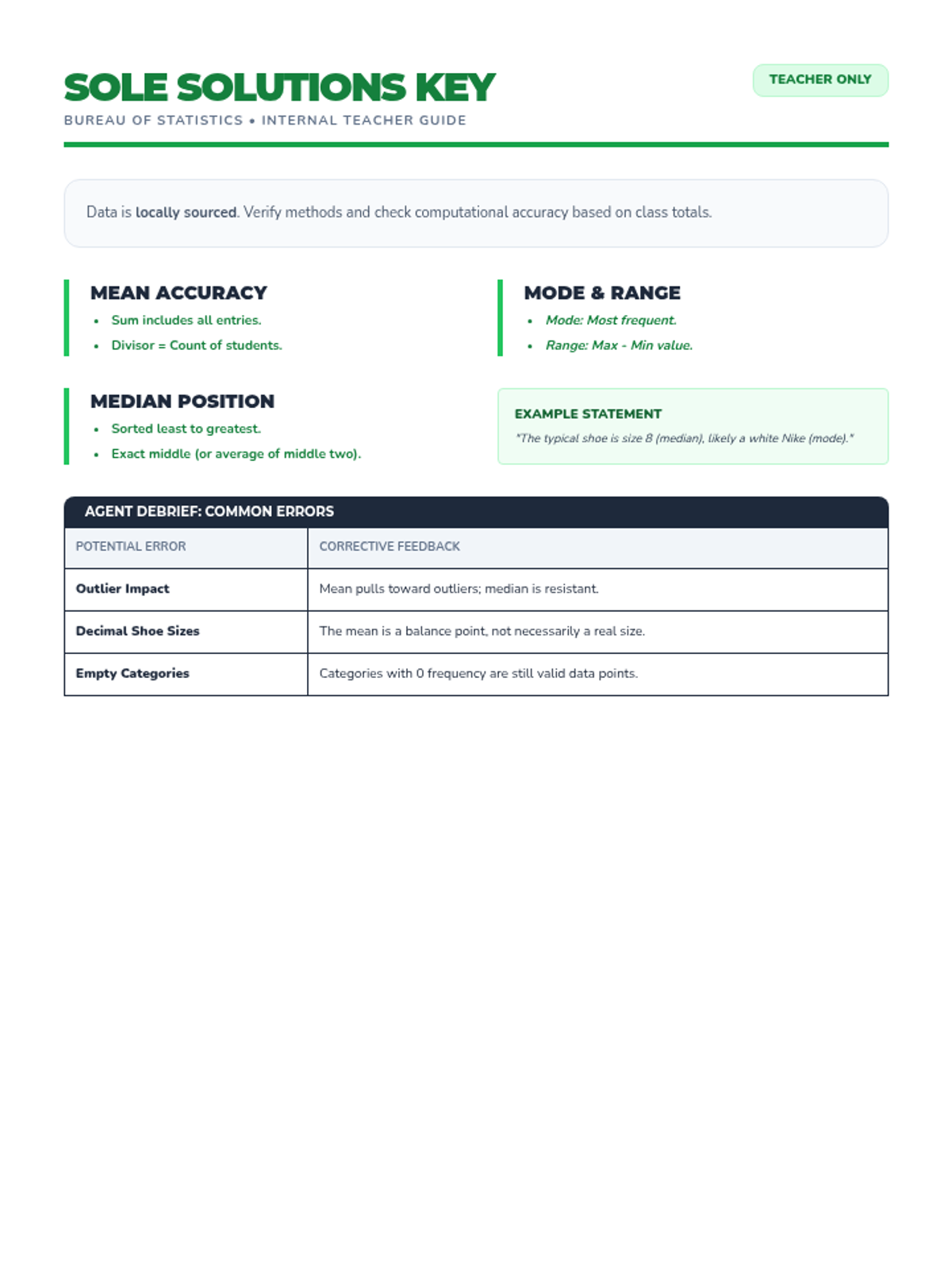
A hands-on statistics lesson where students collect and analyze footwear data from their peers to master measures of center and variability. Students act as 'Census Agents' to transform classroom trends into meaningful mathematical insights.
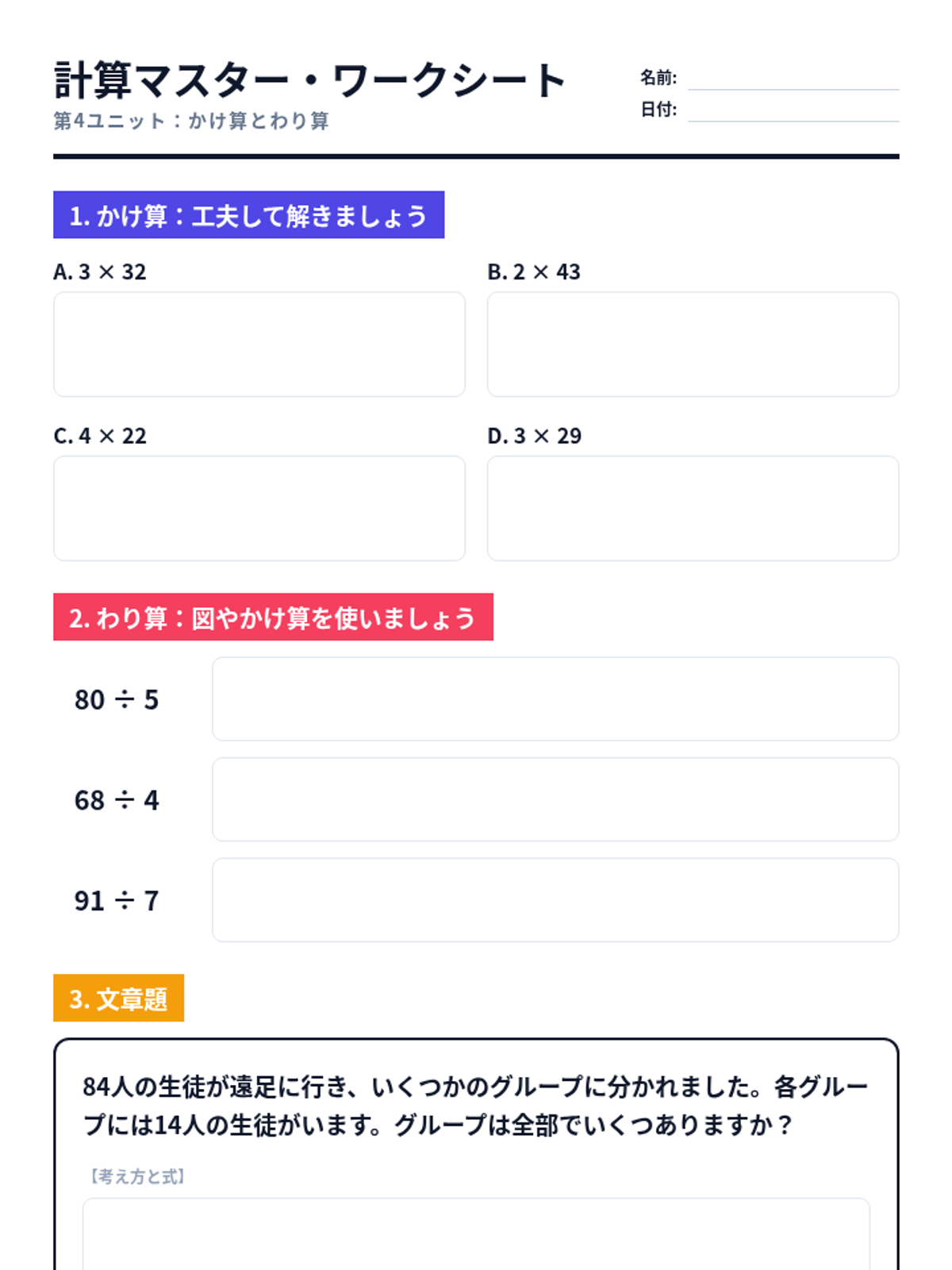
A lesson focusing on strategies for multiplying numbers greater than 20 and exploring various methods for division, including visual representations and mental math strategies, all presented in Japanese.
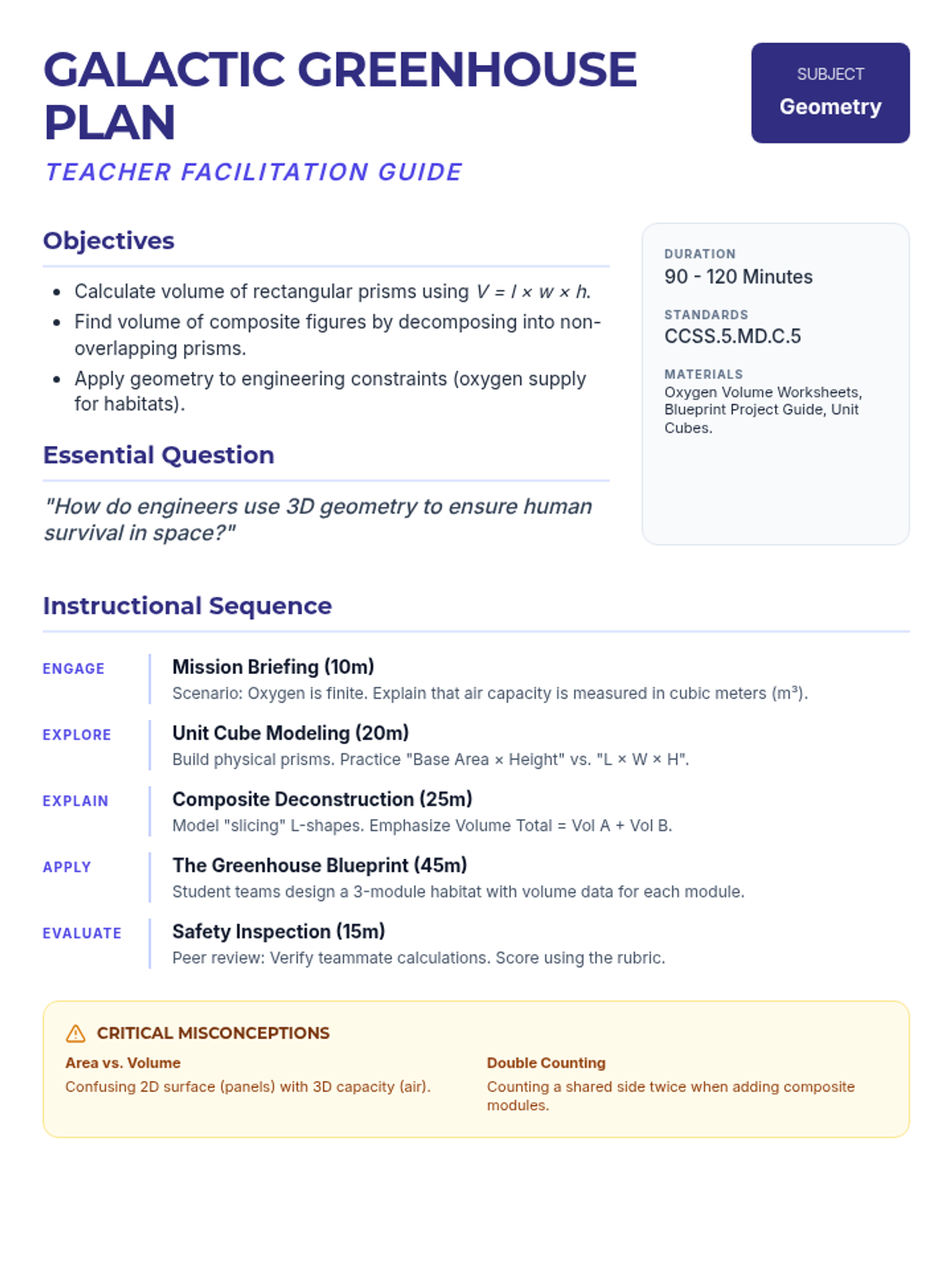
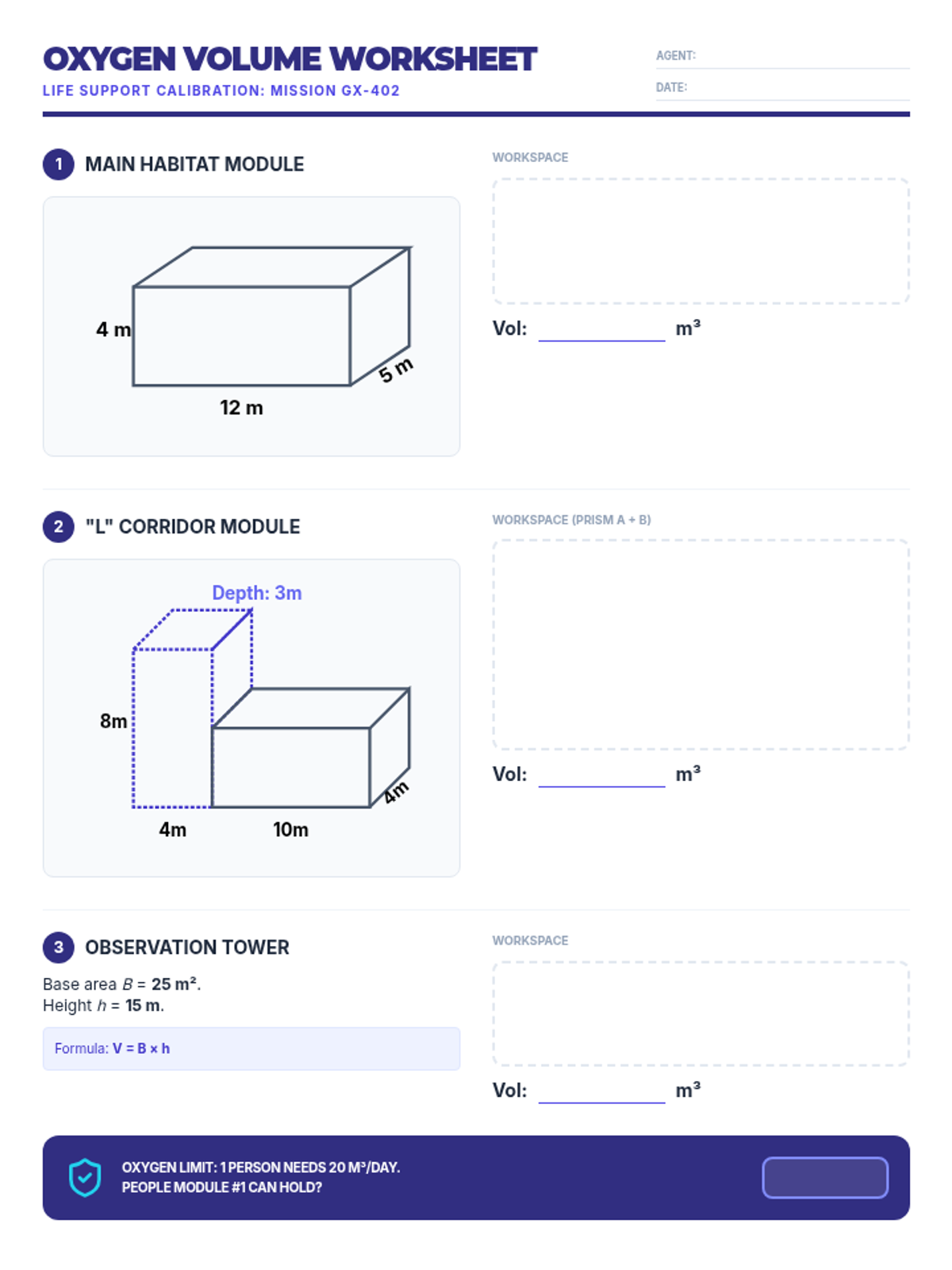
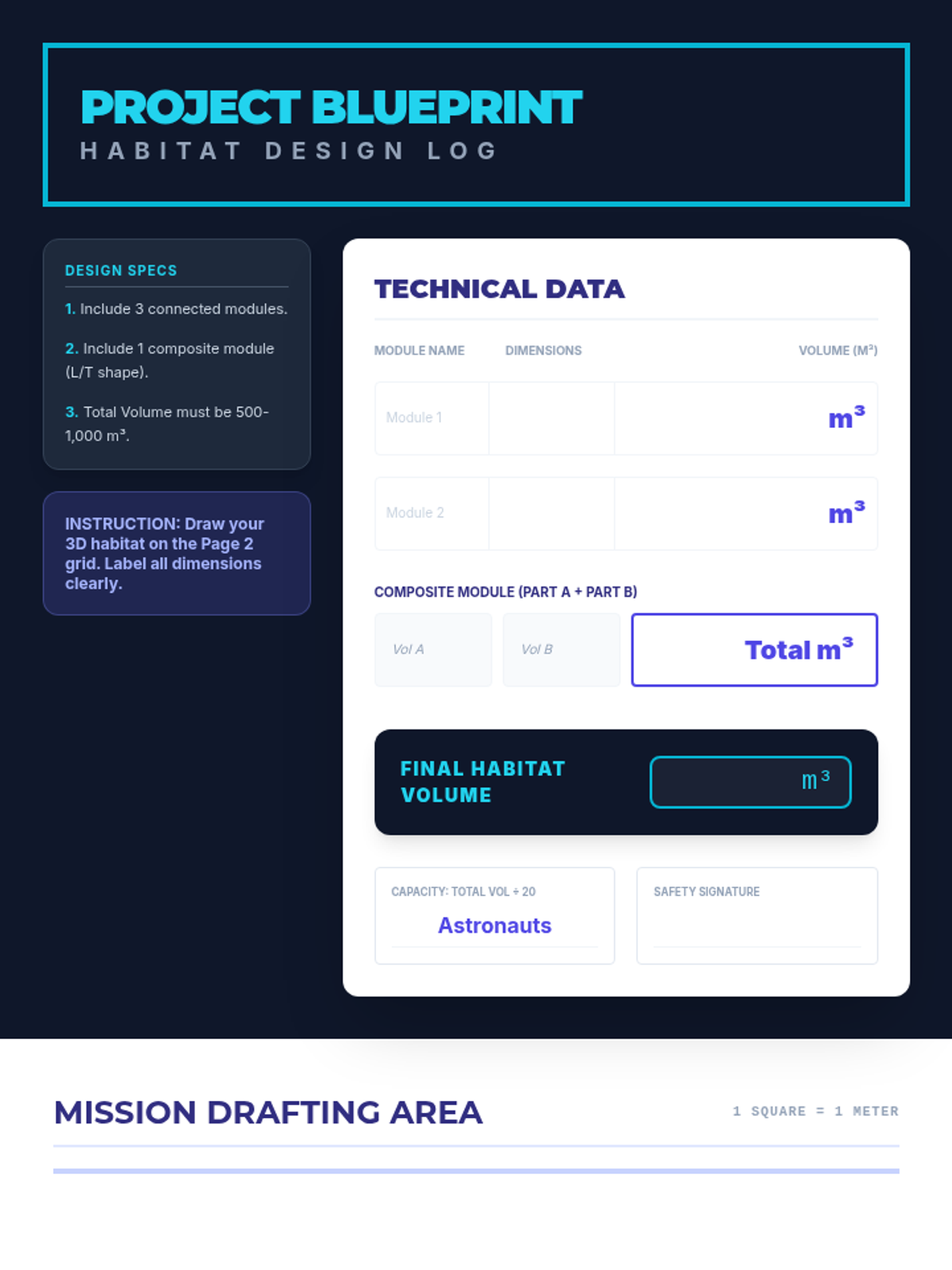
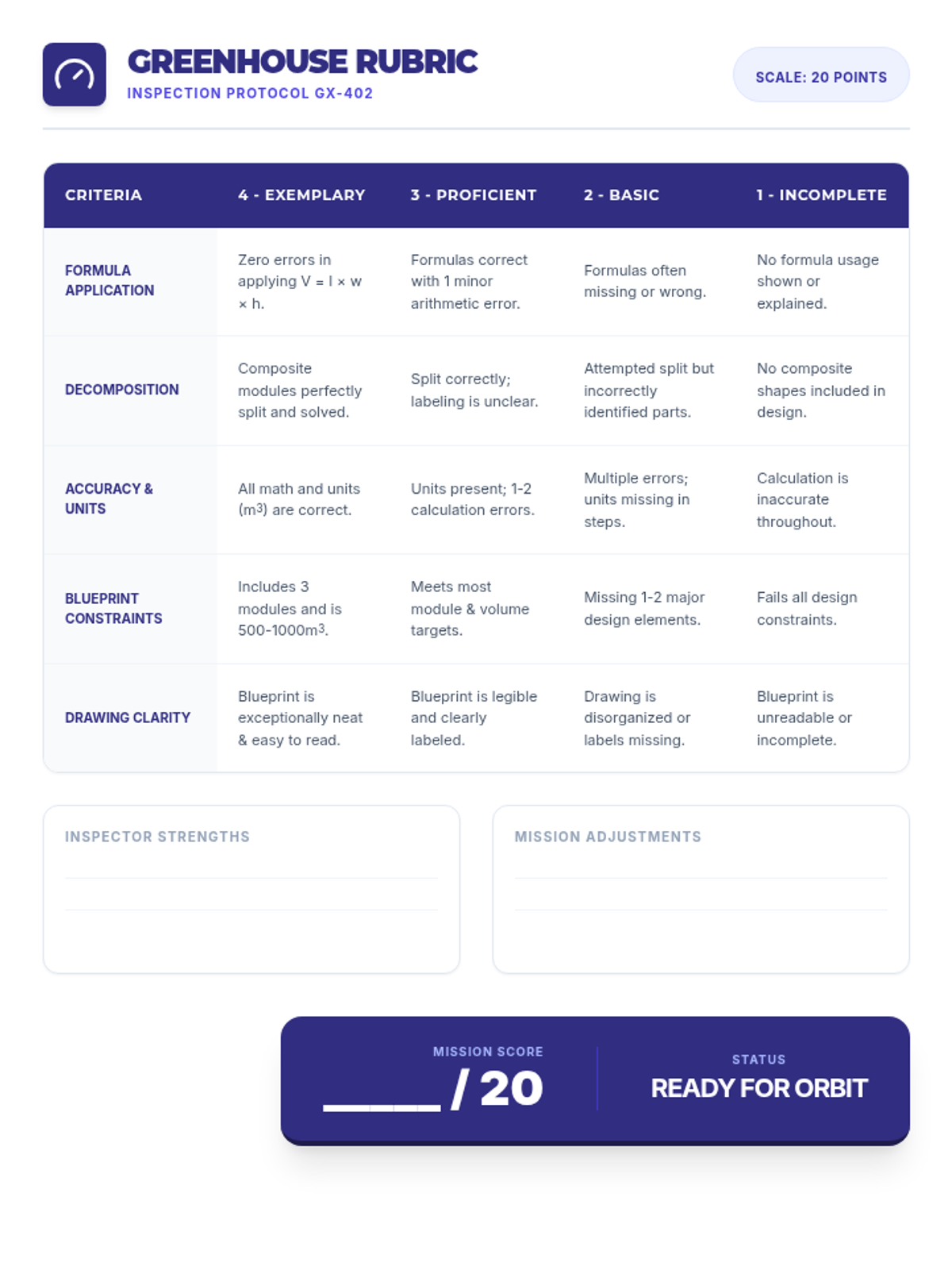
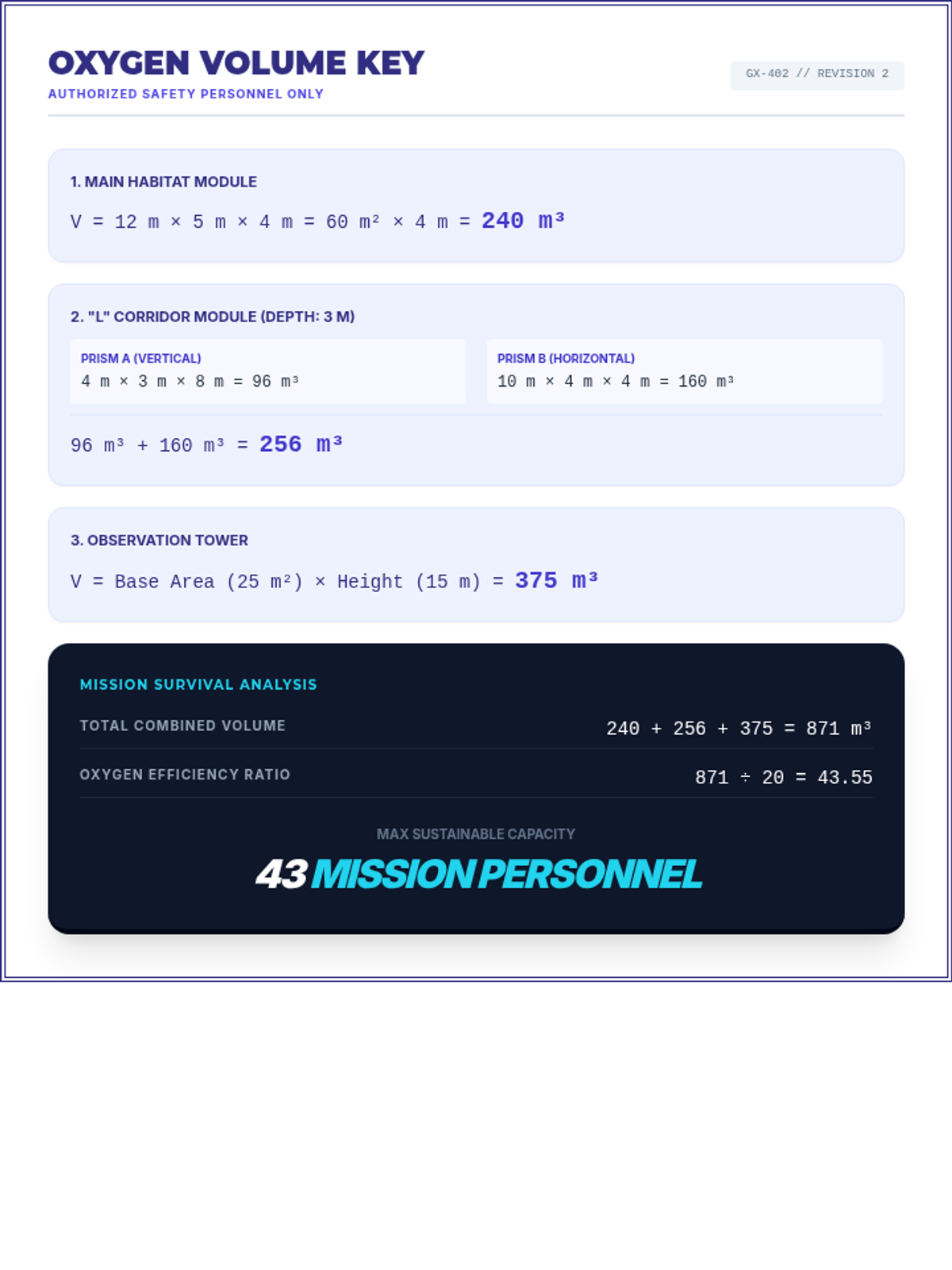
Students design futuristic space habitats by calculating the volume of rectangular prisms and composite figures to determine oxygen requirements. This lesson blends geometry with space exploration concepts for 4th and 5th grade students.
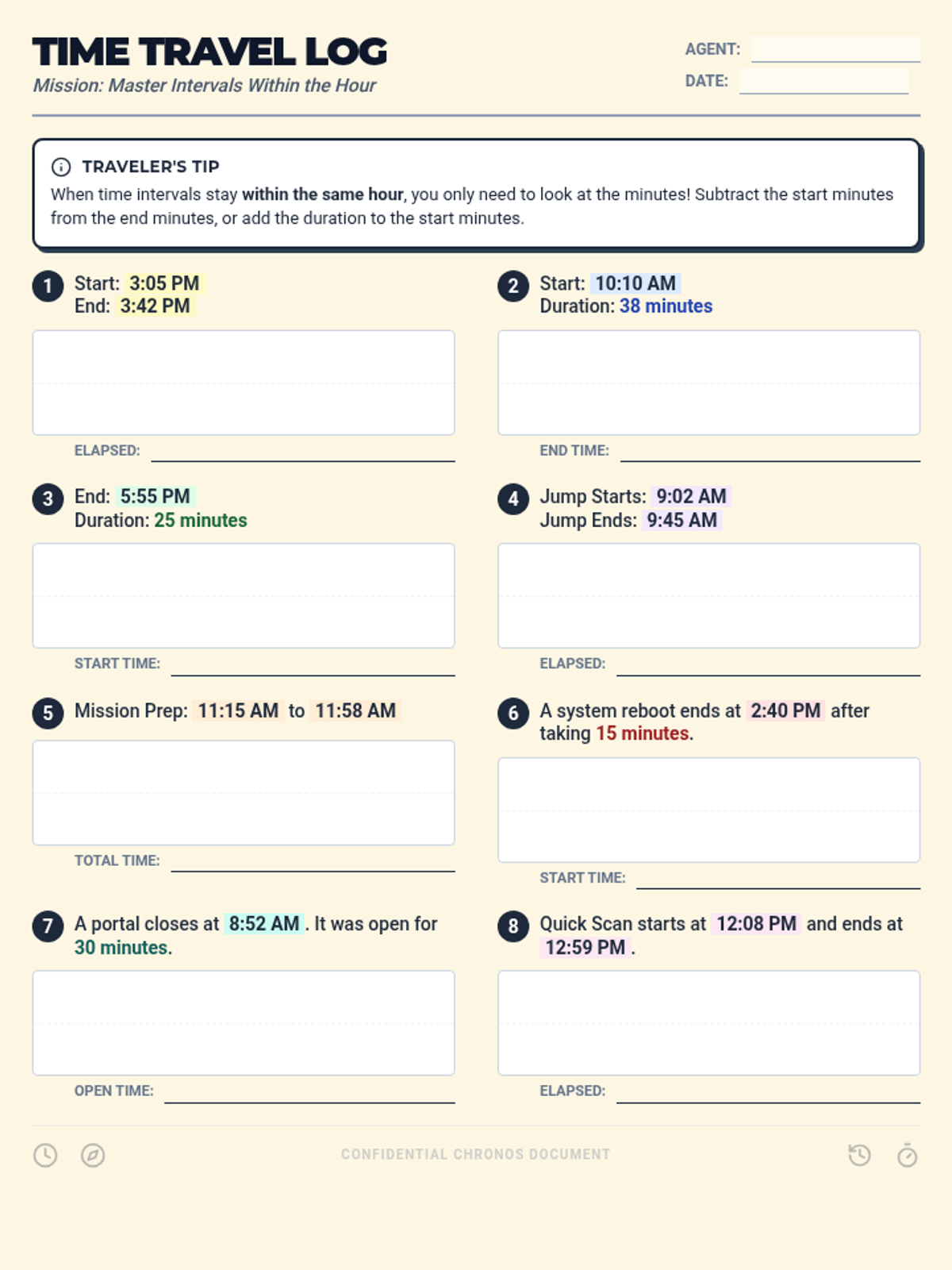
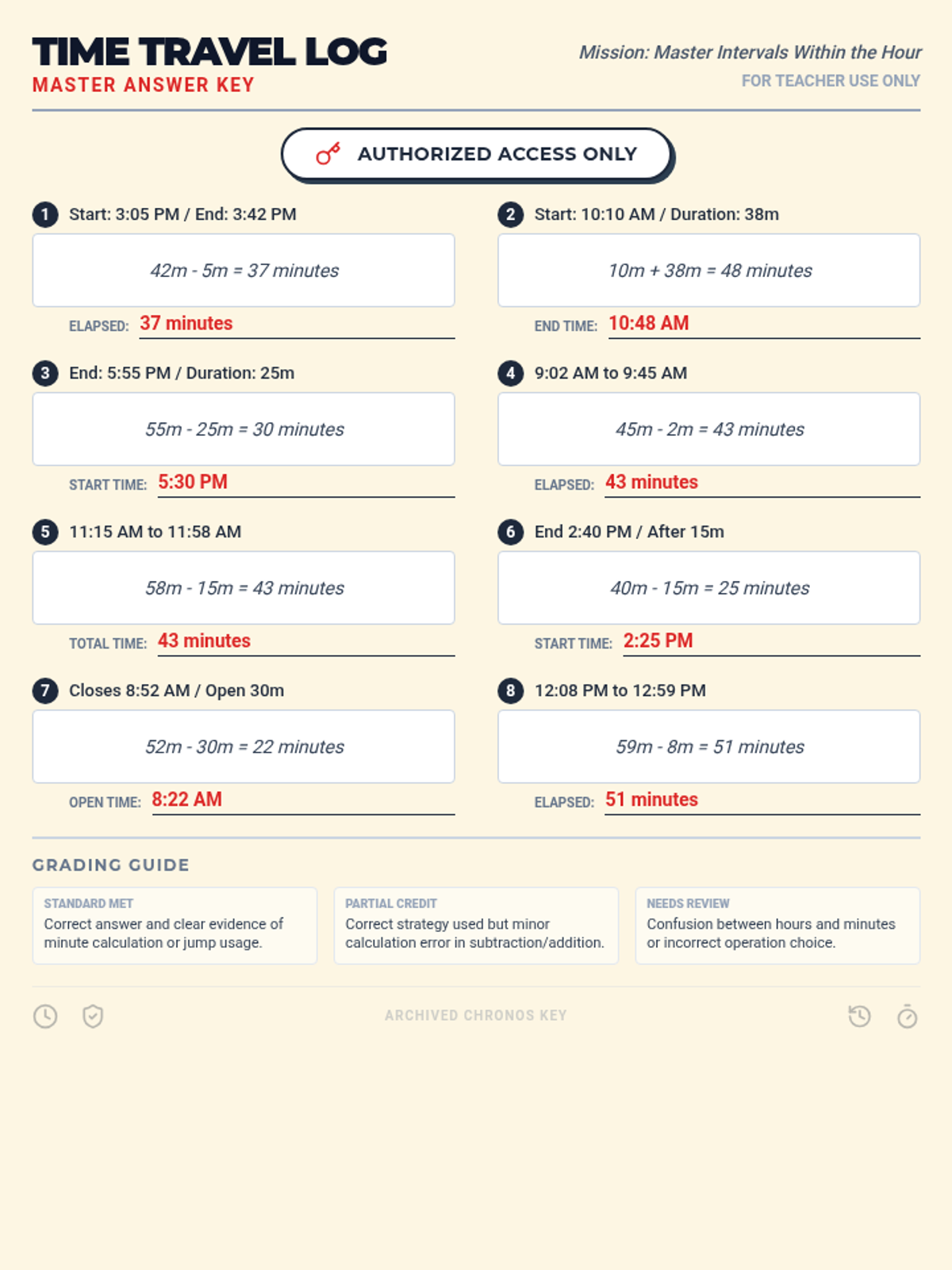
A lesson focused on solving word problems involving addition and subtraction of time intervals within the same hour, using a time-travel theme.
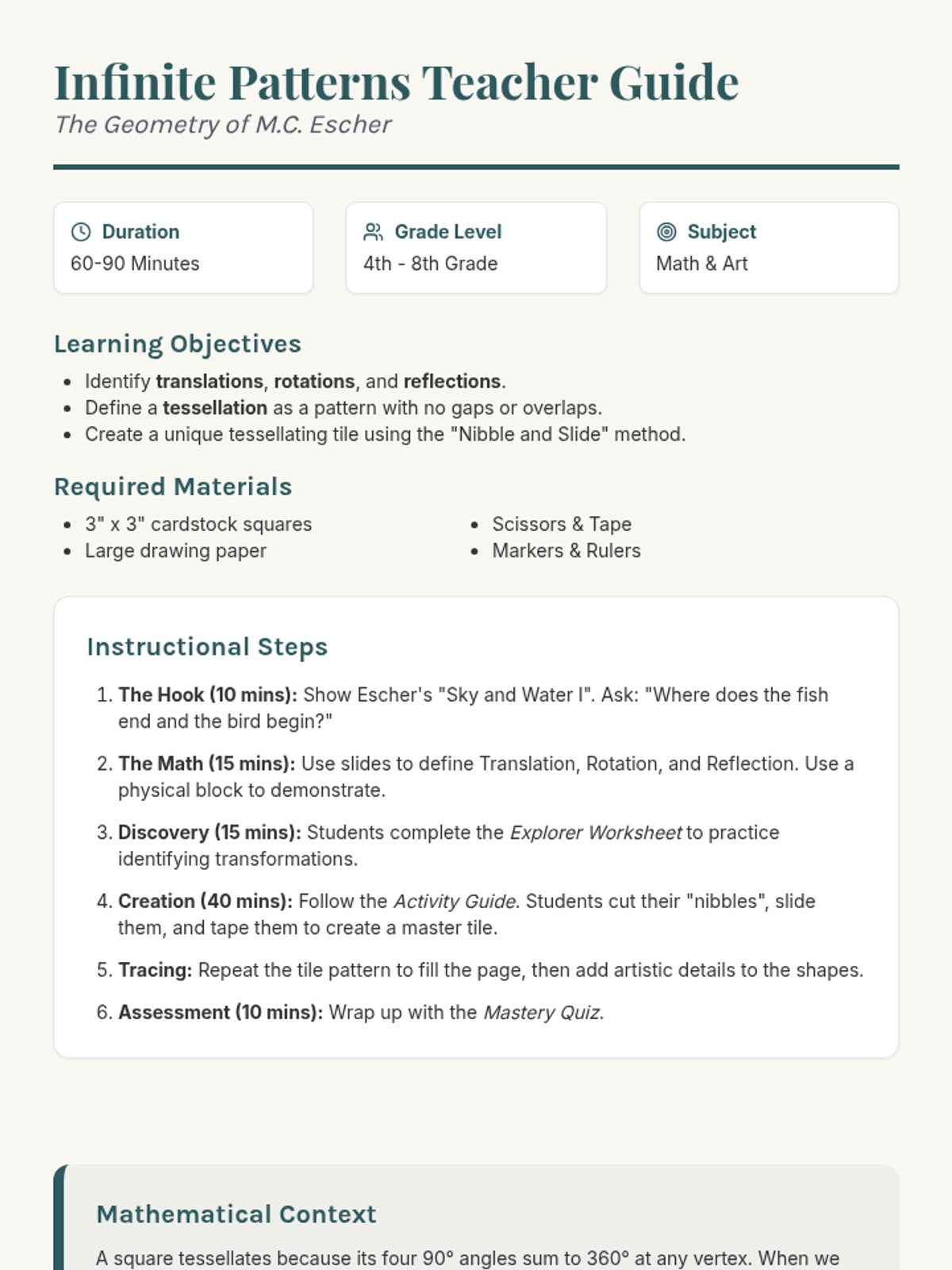
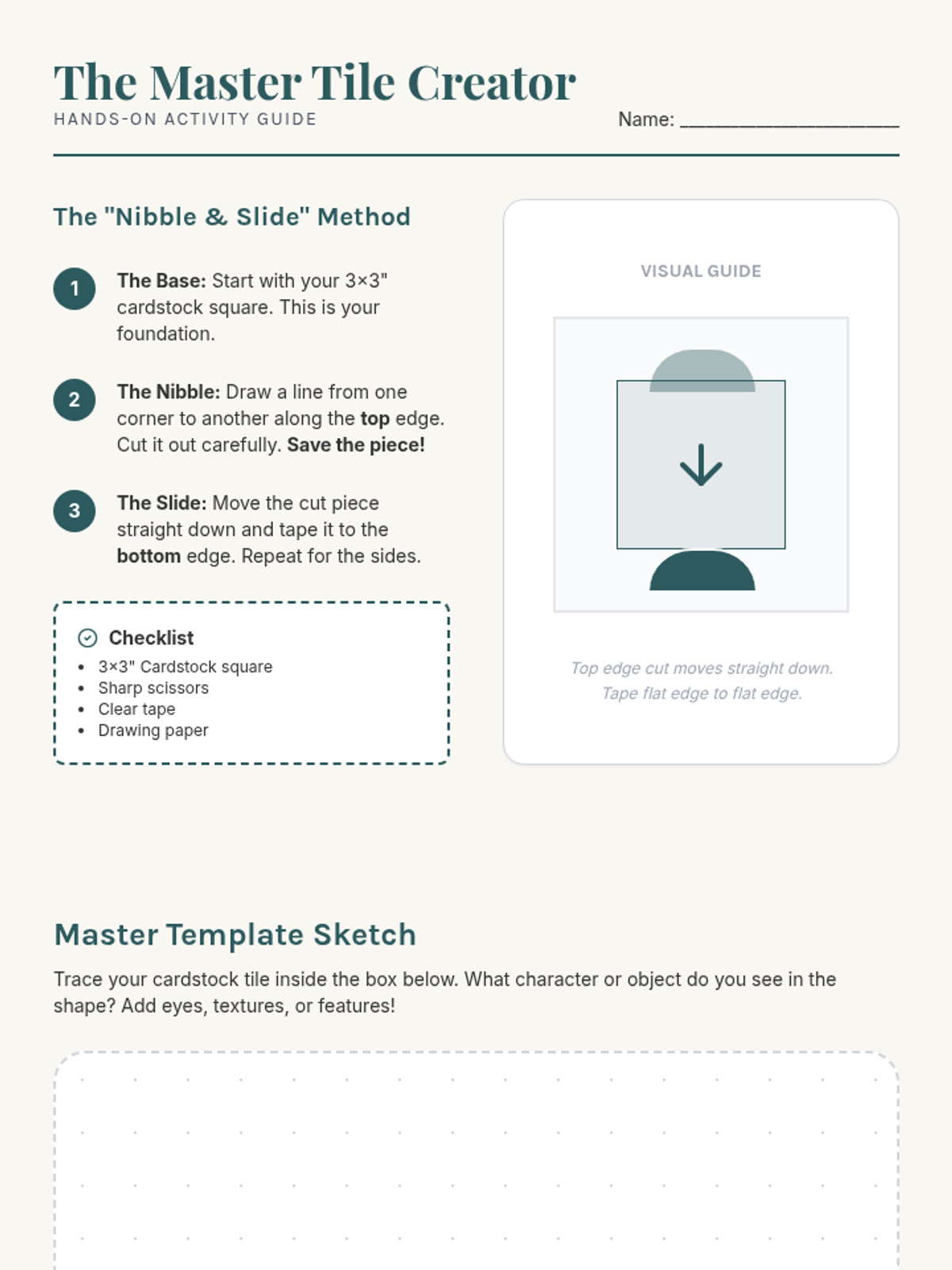
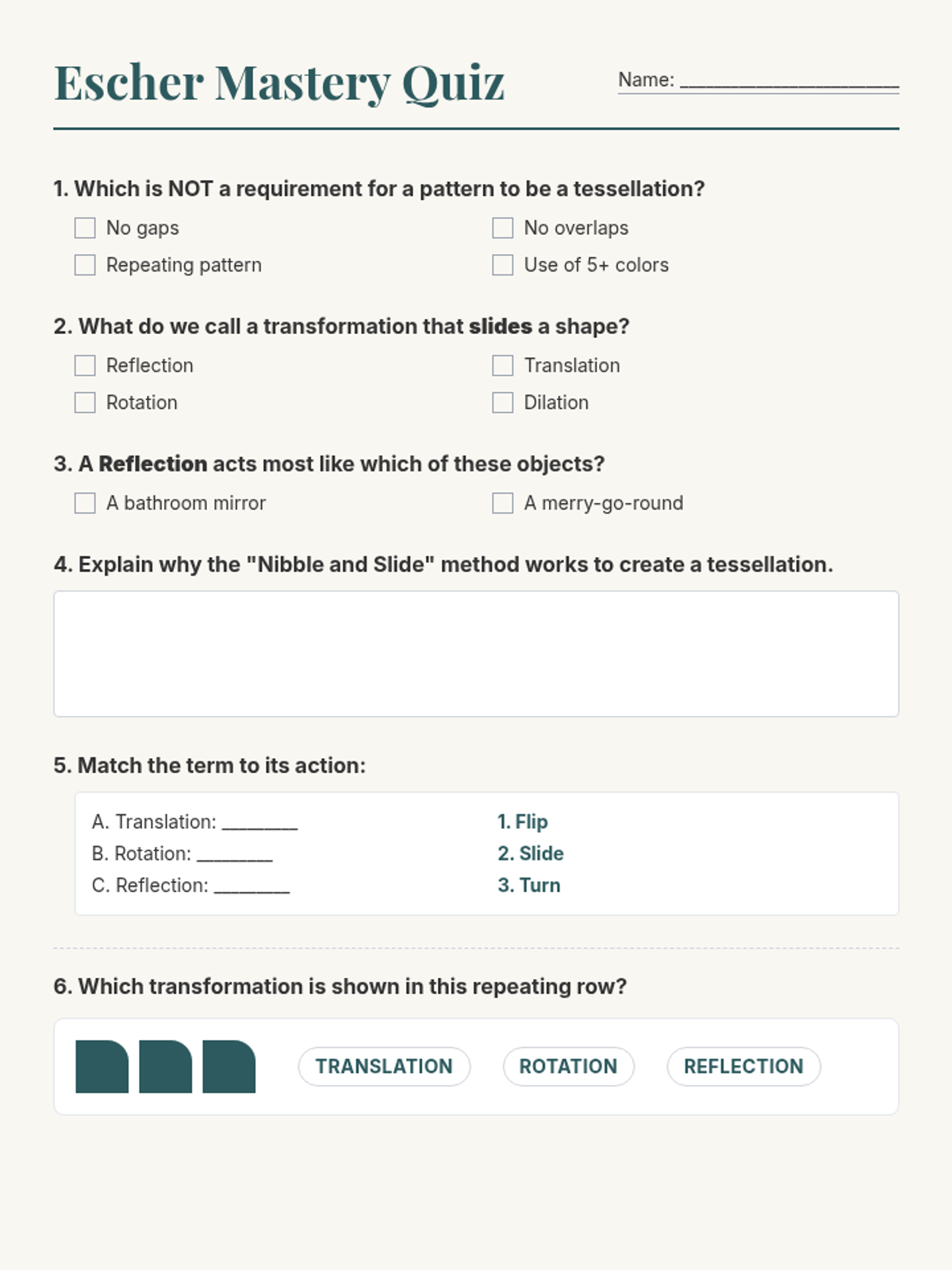
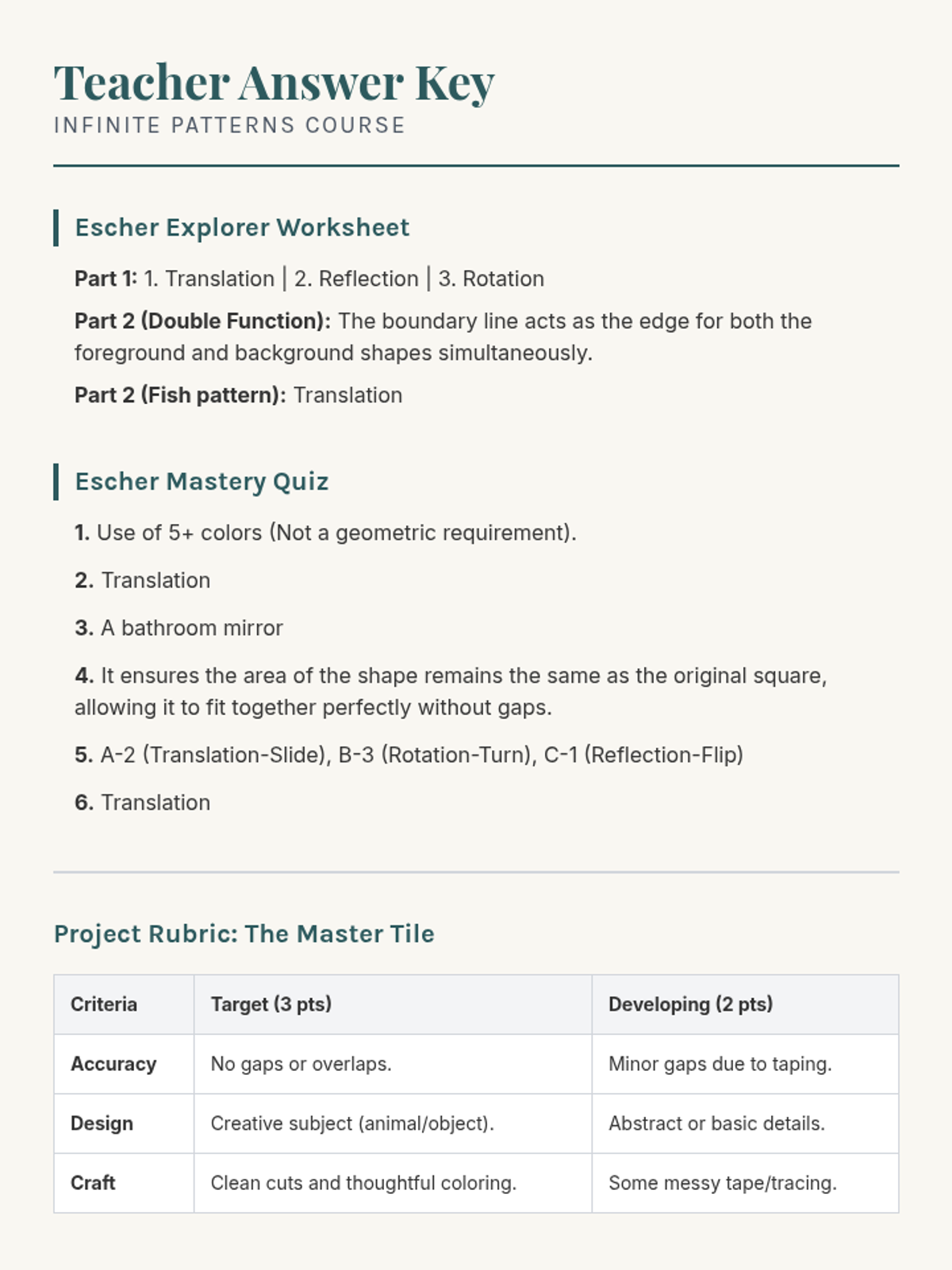
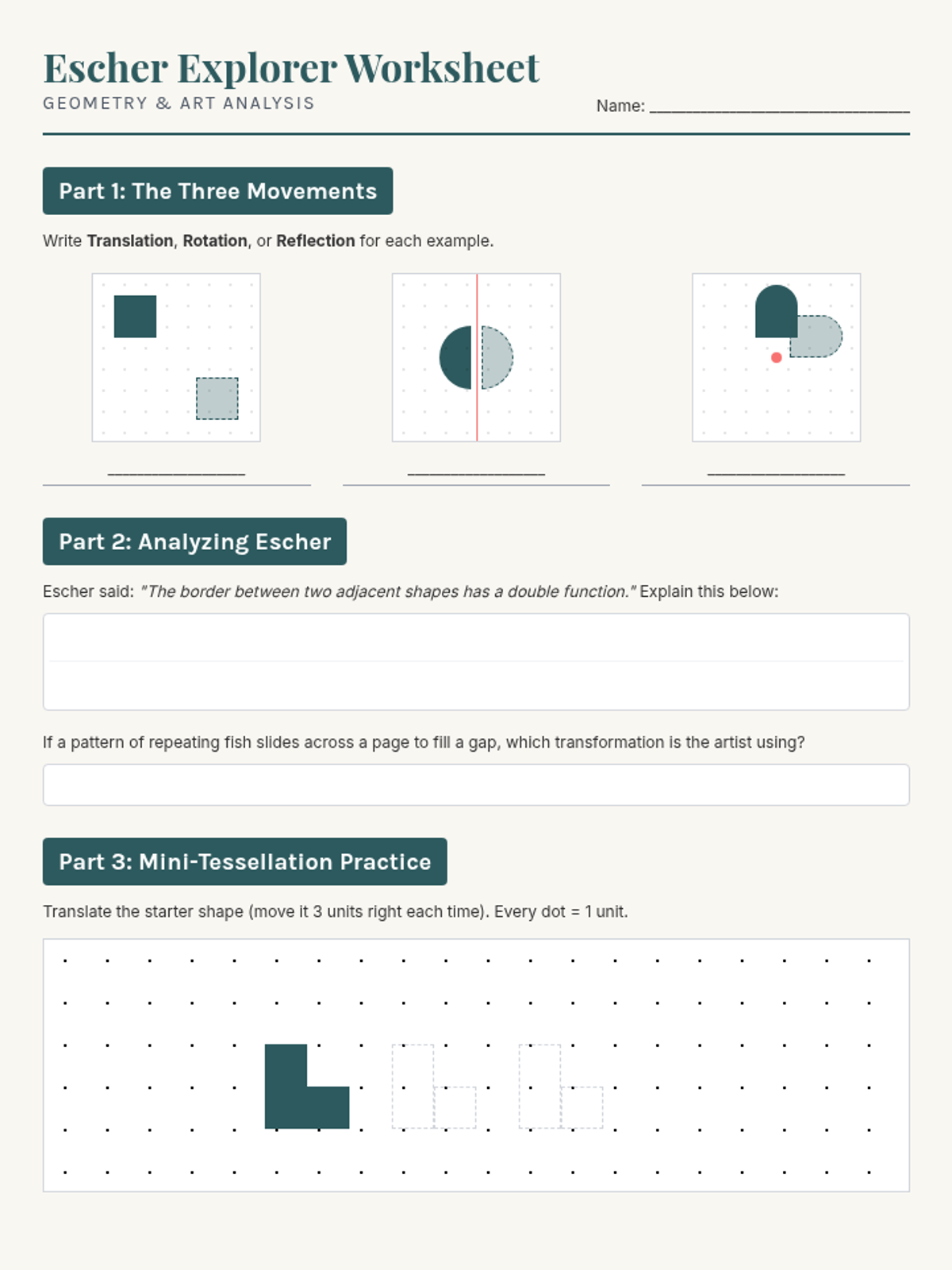
A hands-on interdisciplinary lesson blending geometry and art. Students explore M.C. Escher's work to understand and apply translations, rotations, and reflections through the creation of original tessellating patterns.
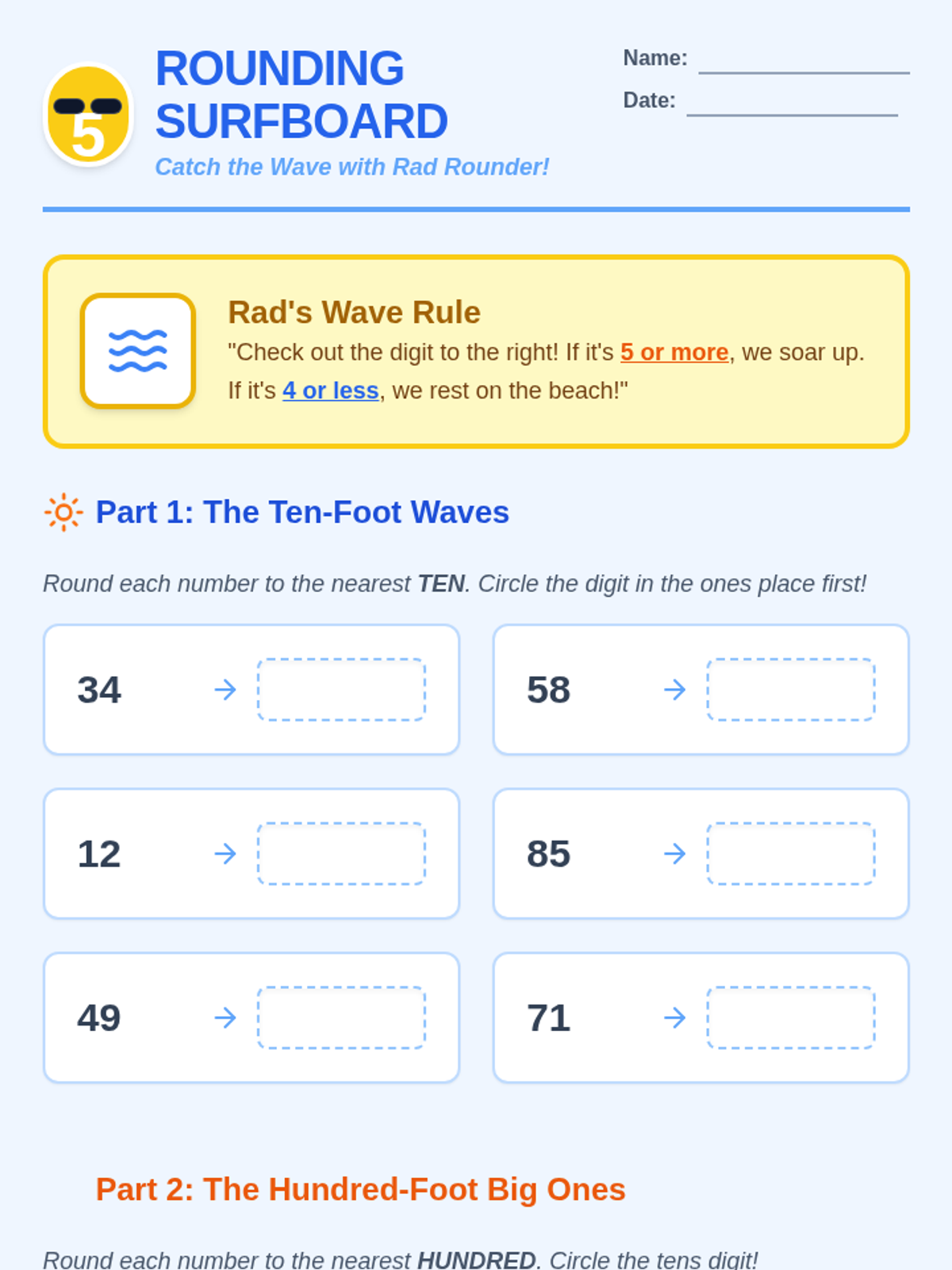
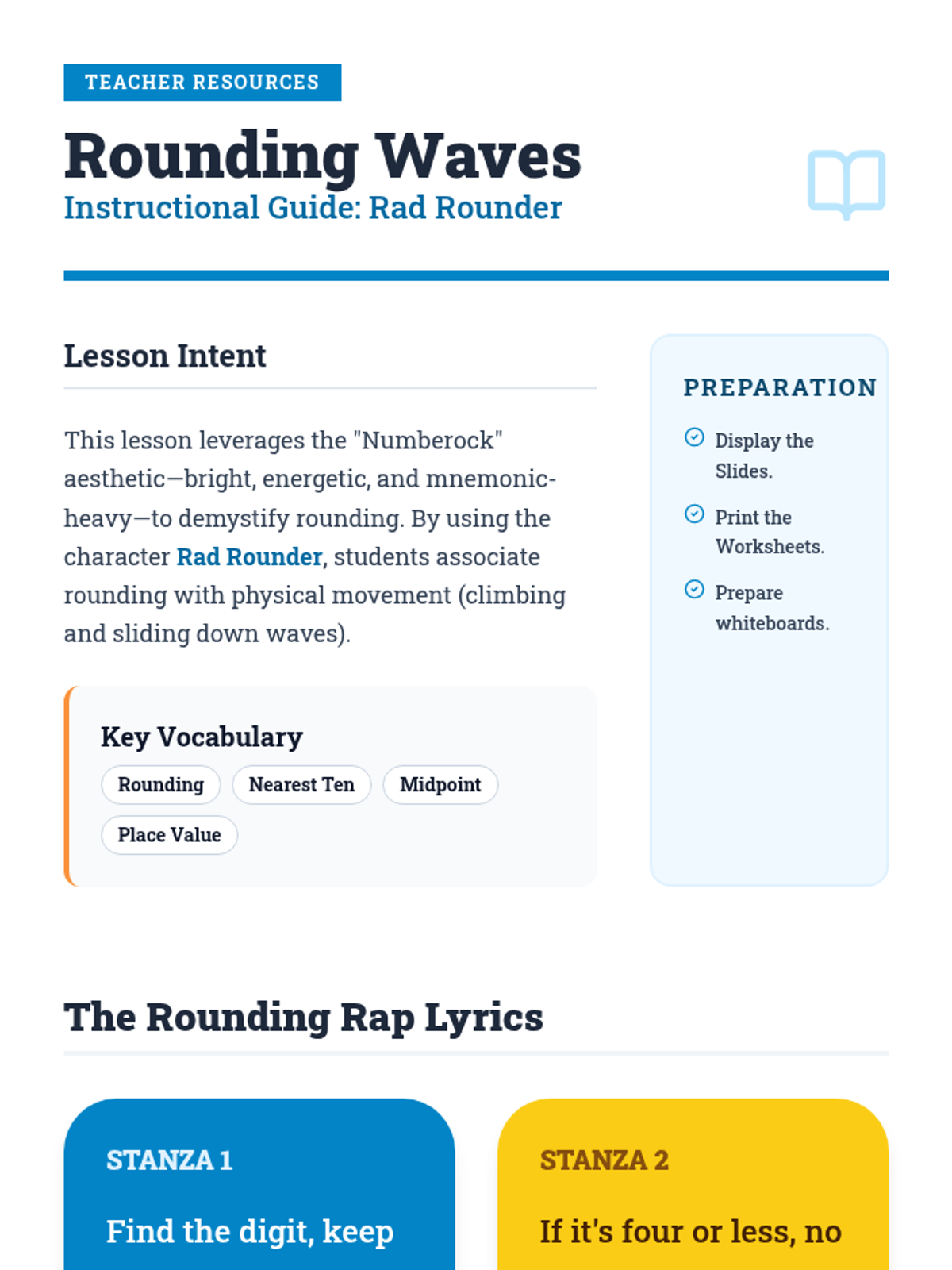
A fun, beach-themed lesson introducing rounding through the character Rad Rounder, focusing on the midpoint rule of five.
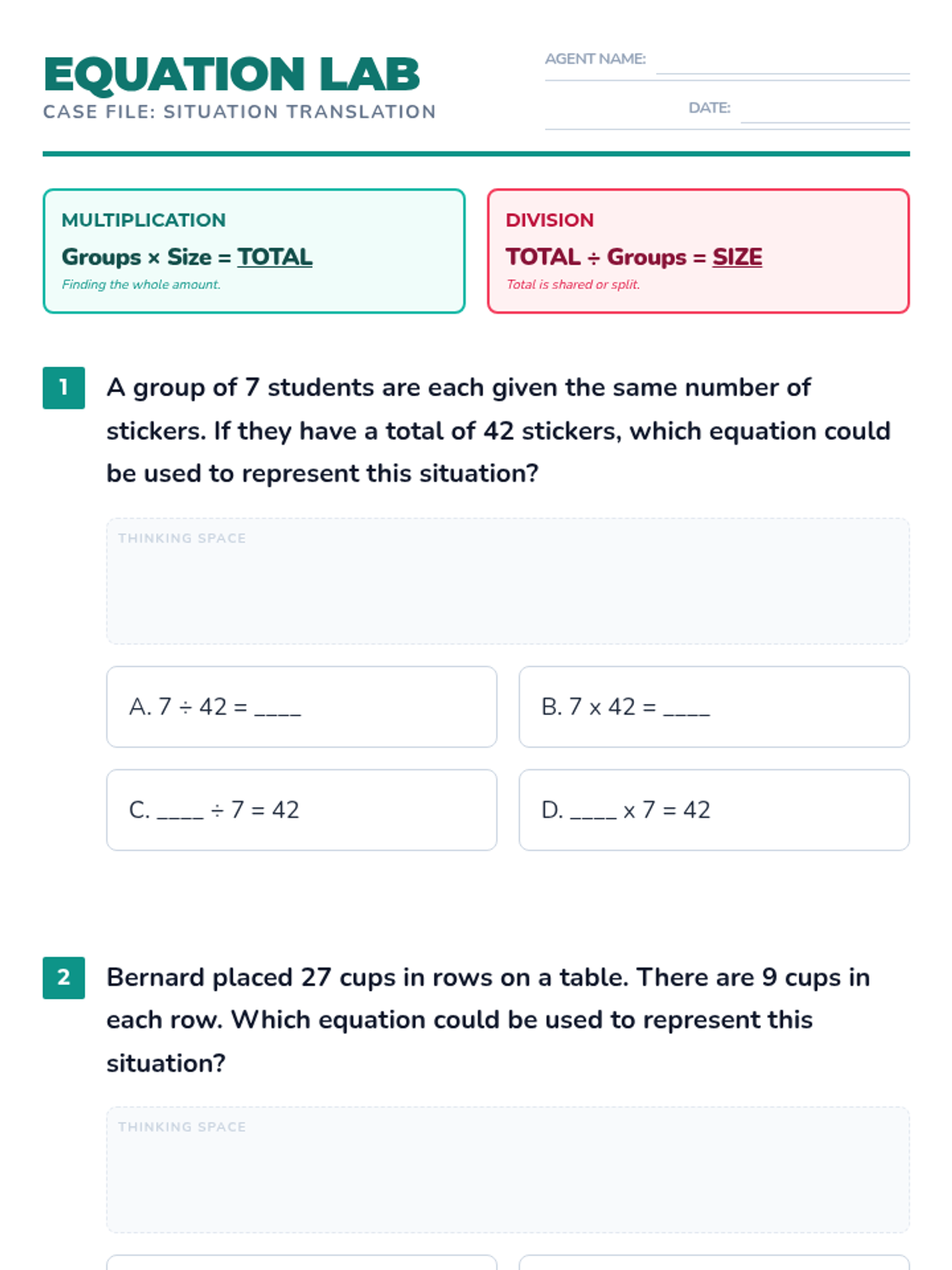
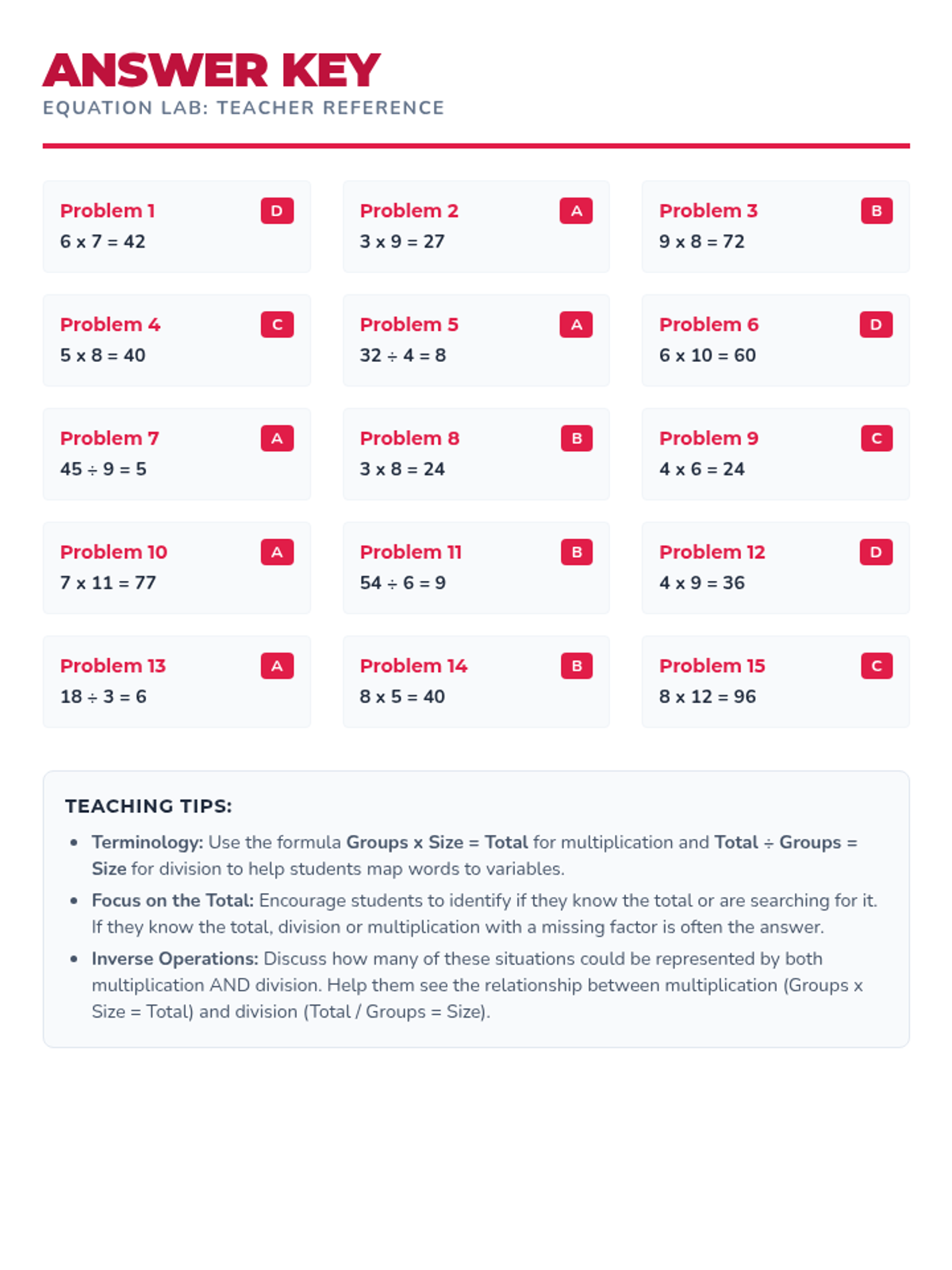
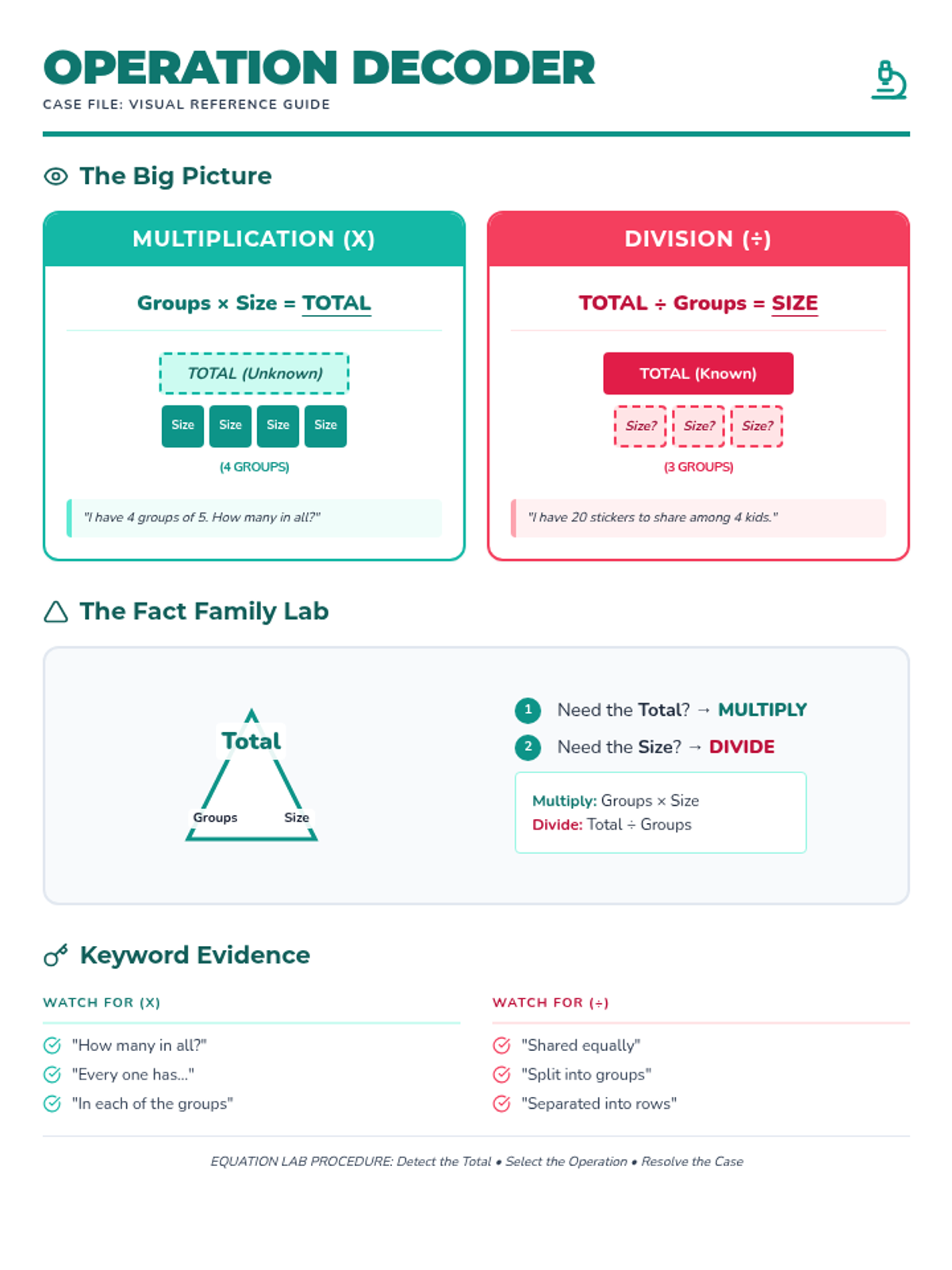
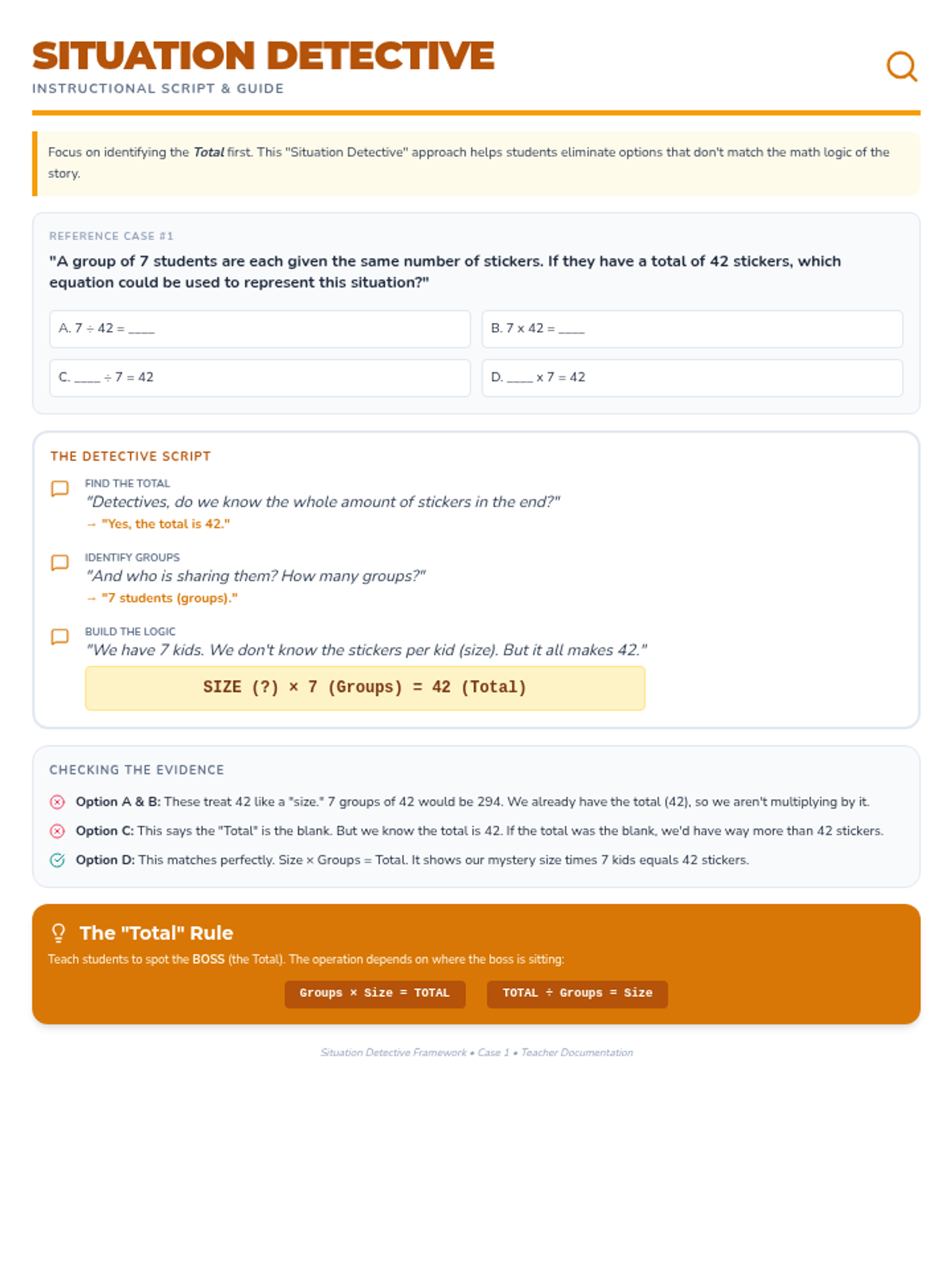
A collection of word problems focused on identifying the correct multiplication or division equation to represent a real-world situation. Students practice translating stories into mathematical expressions.
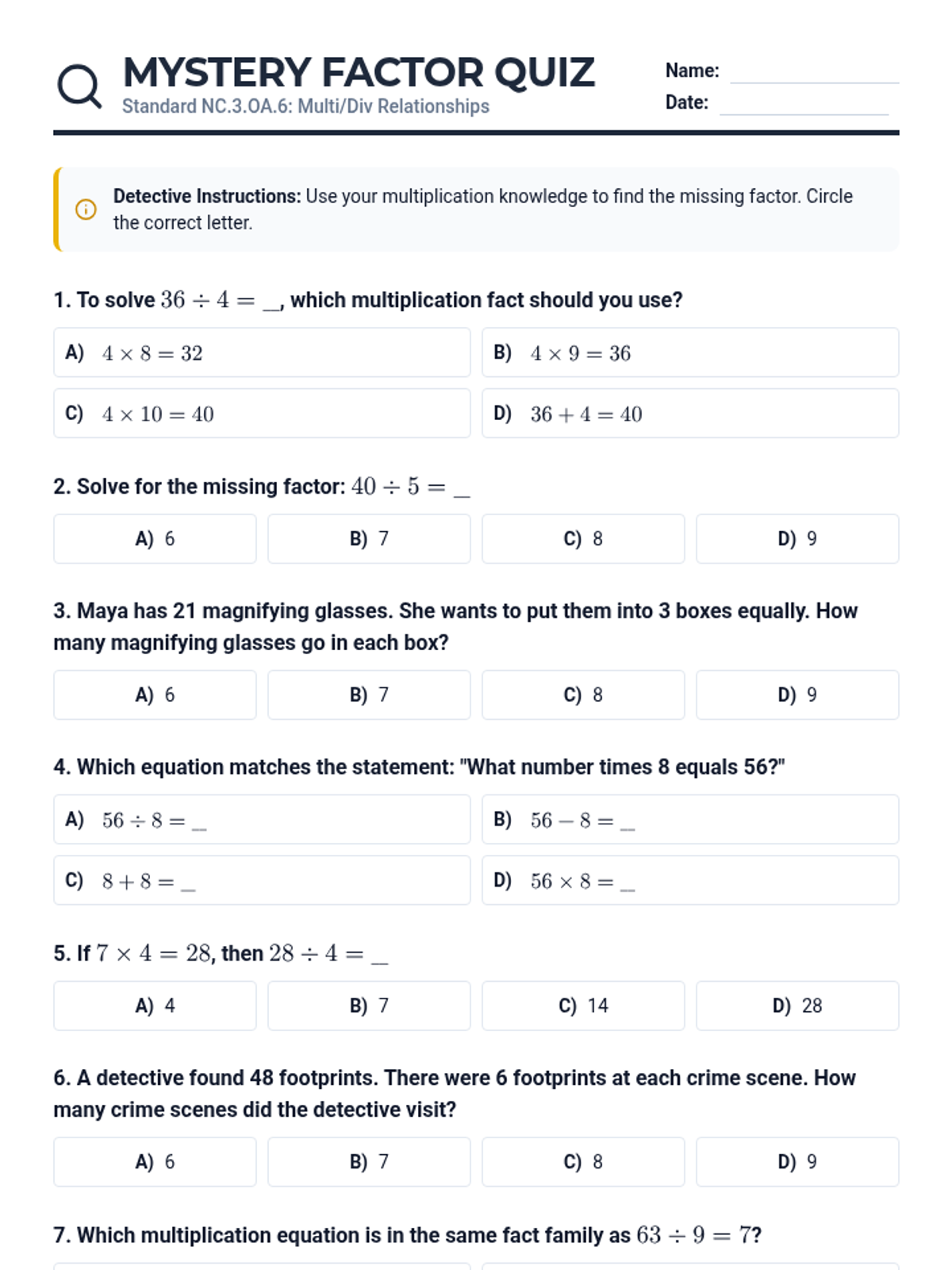
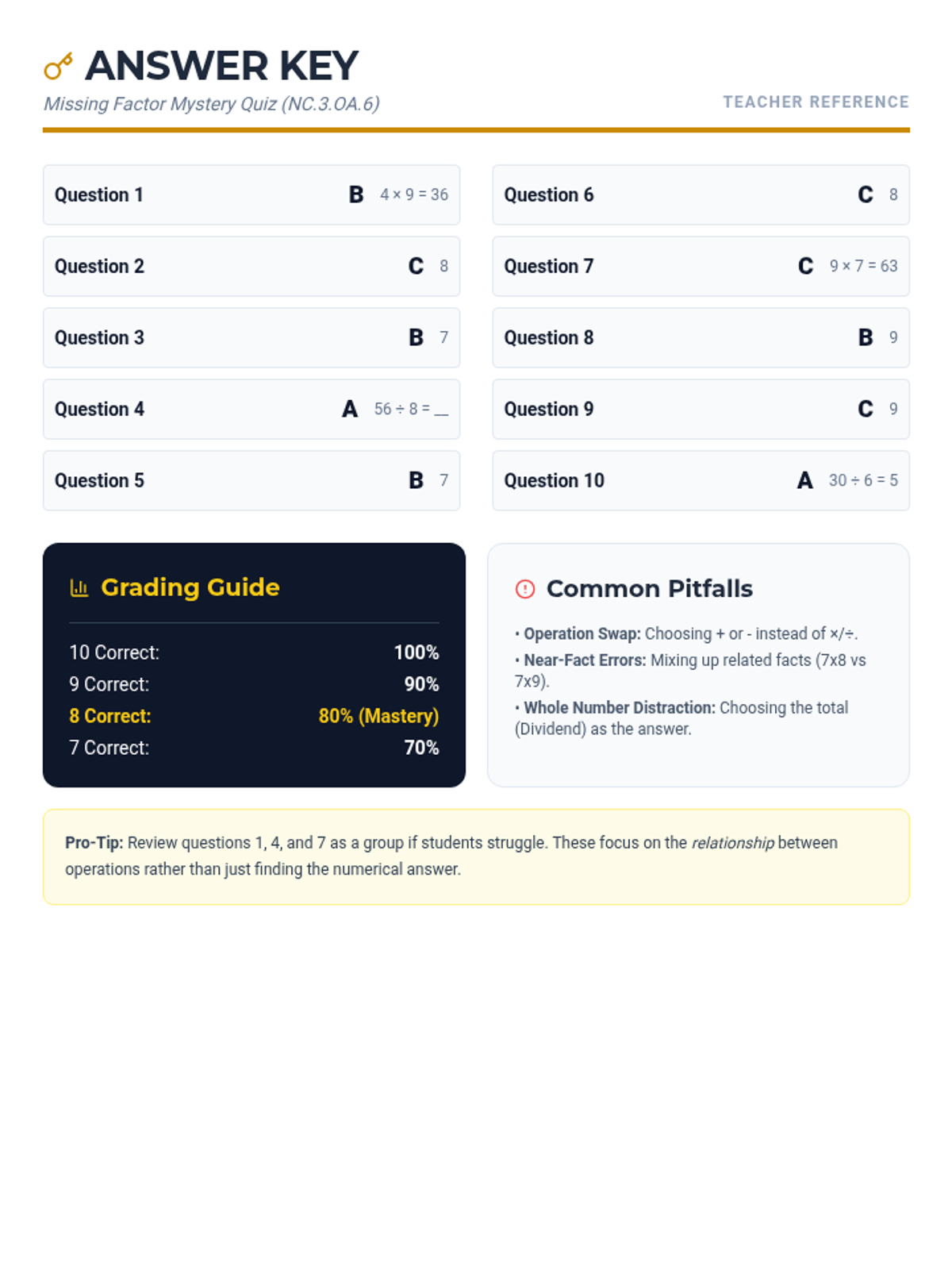
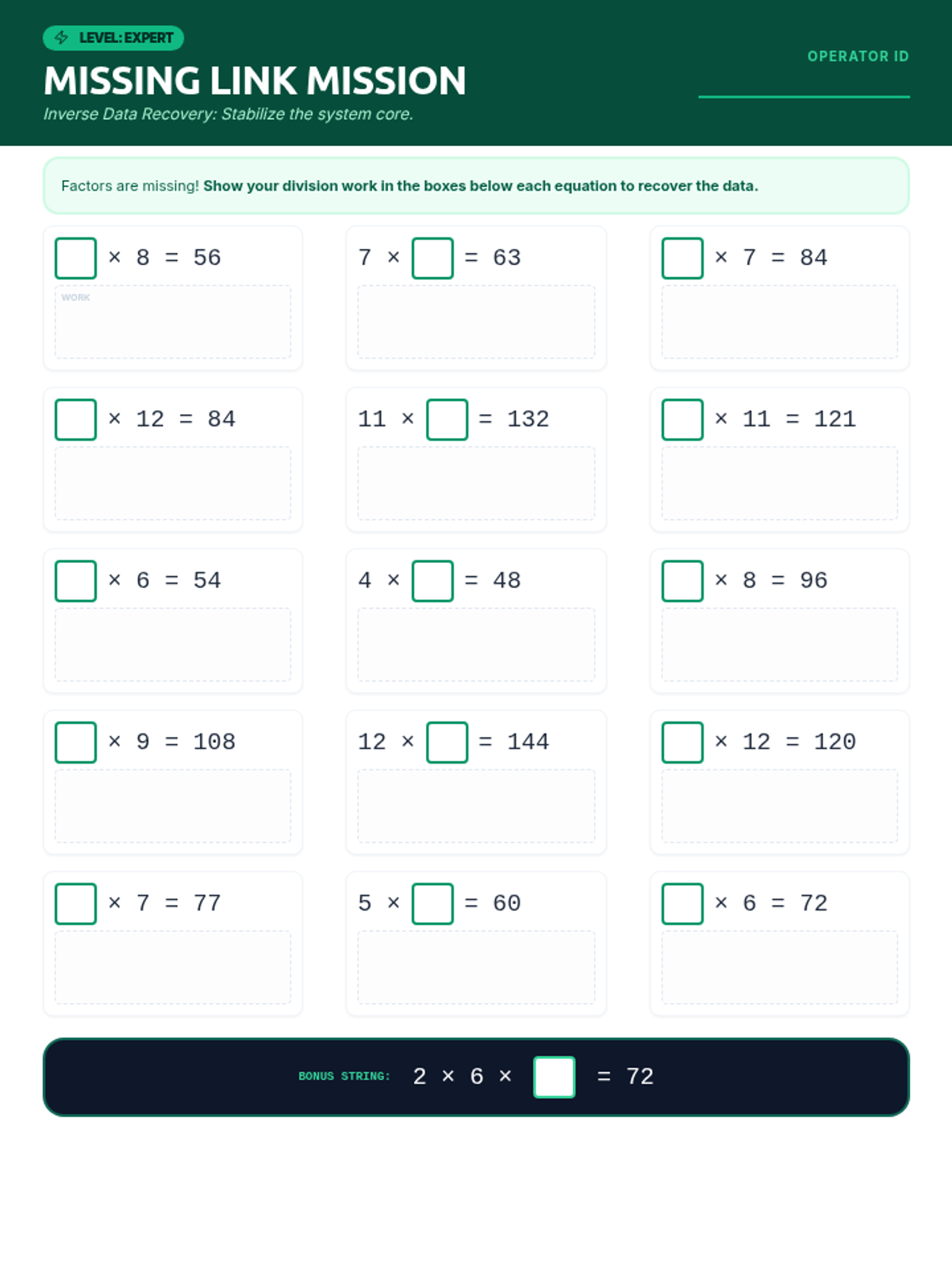
A lesson focused on solving unknown-factor problems by connecting division to multiplication and using strategic thinking to find missing values.
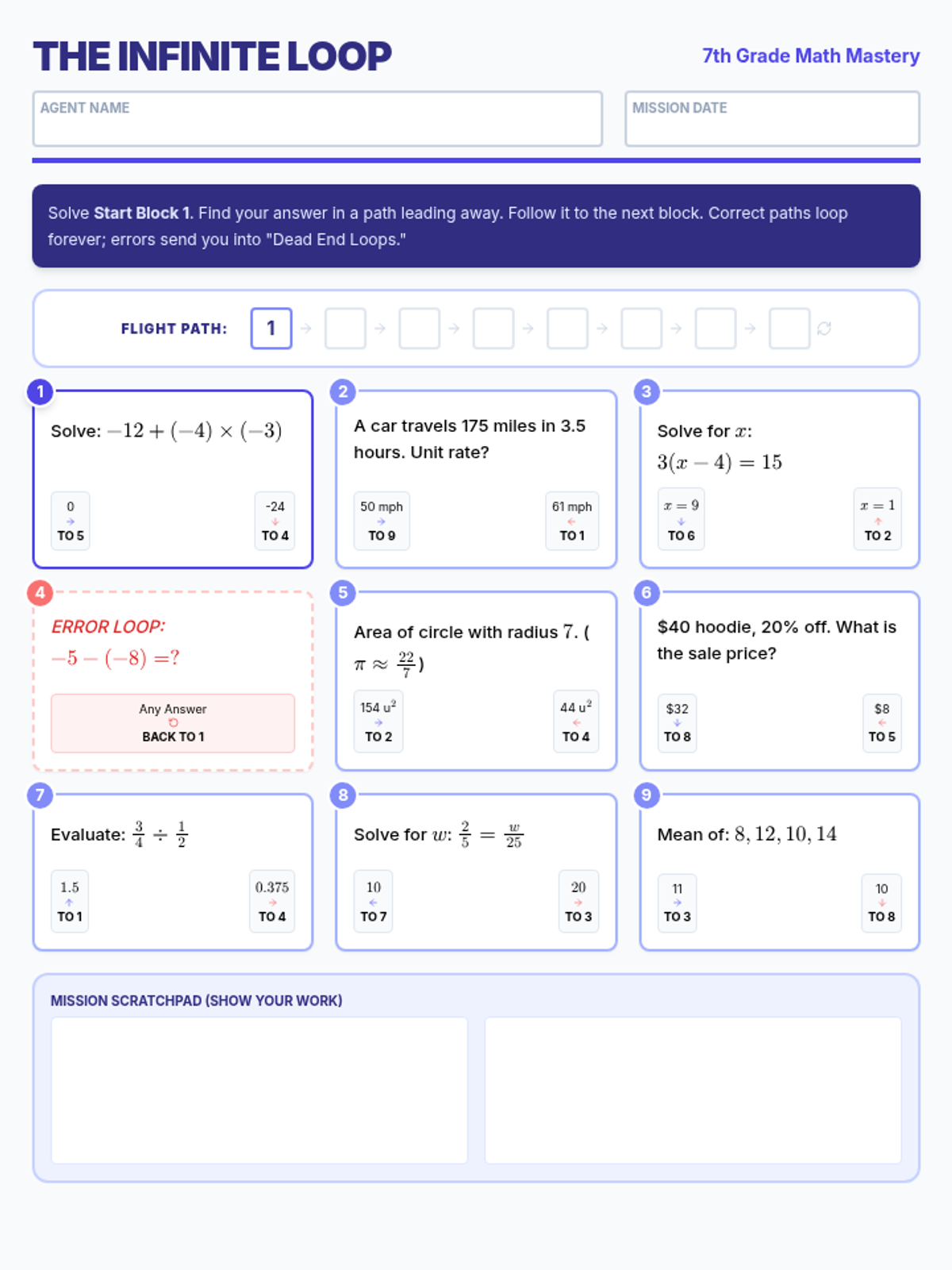
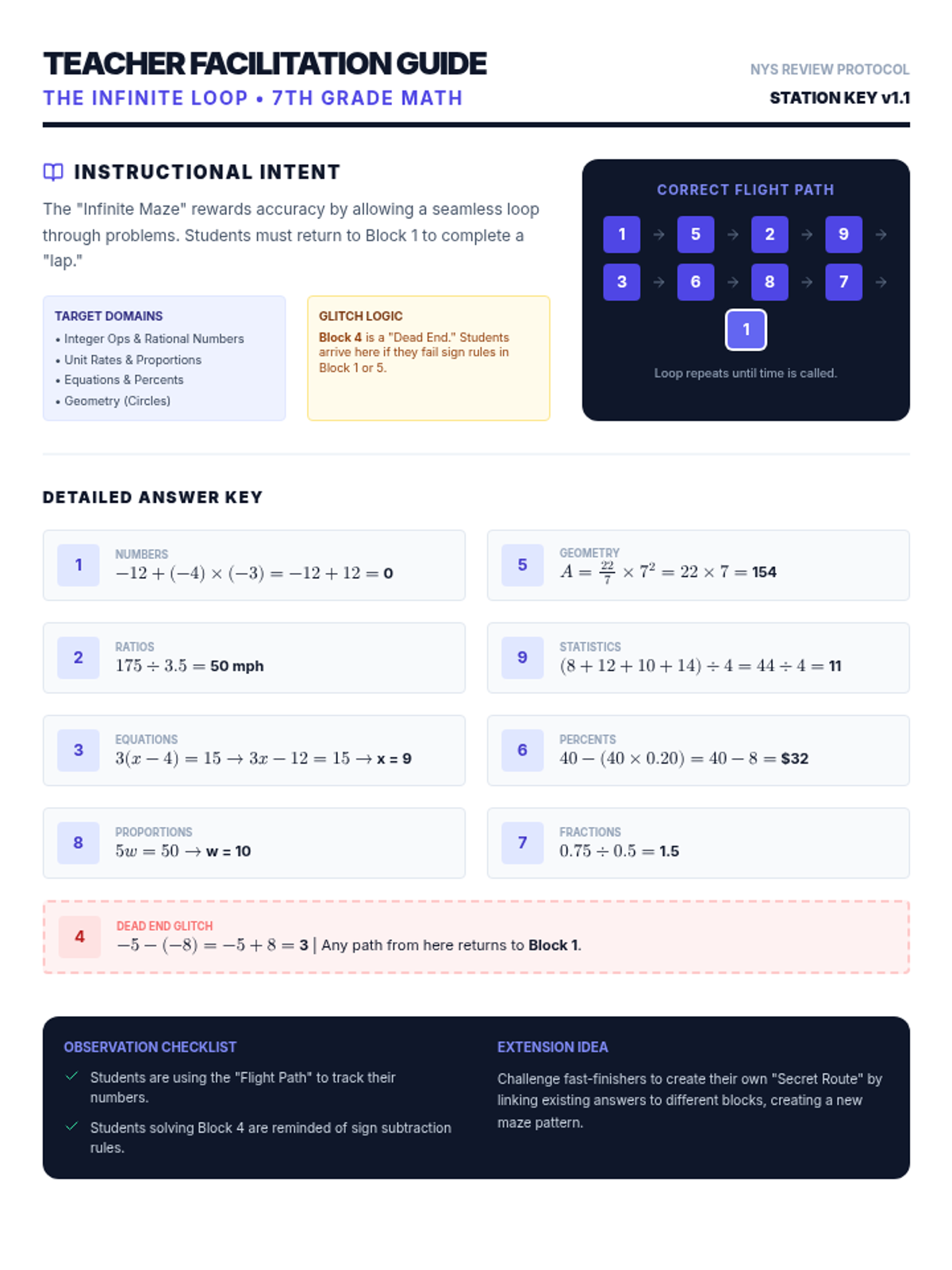
A comprehensive 7th Grade Math review session using an "Infinity Maze" format. Students navigate a series of interconnected problems across Ratios, Number Systems, Equations, and Geometry, designed to loop back and provide continuous practice.
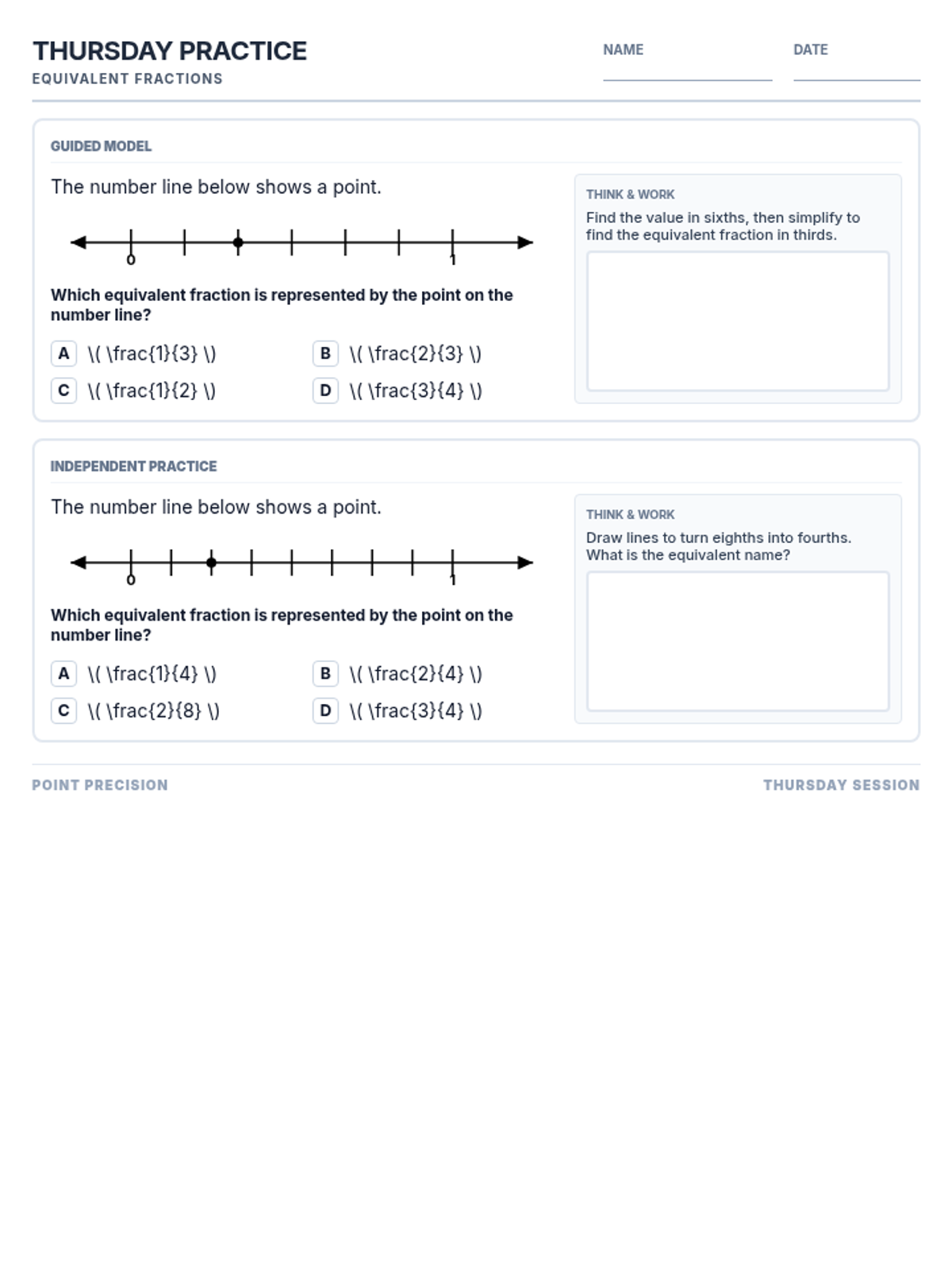
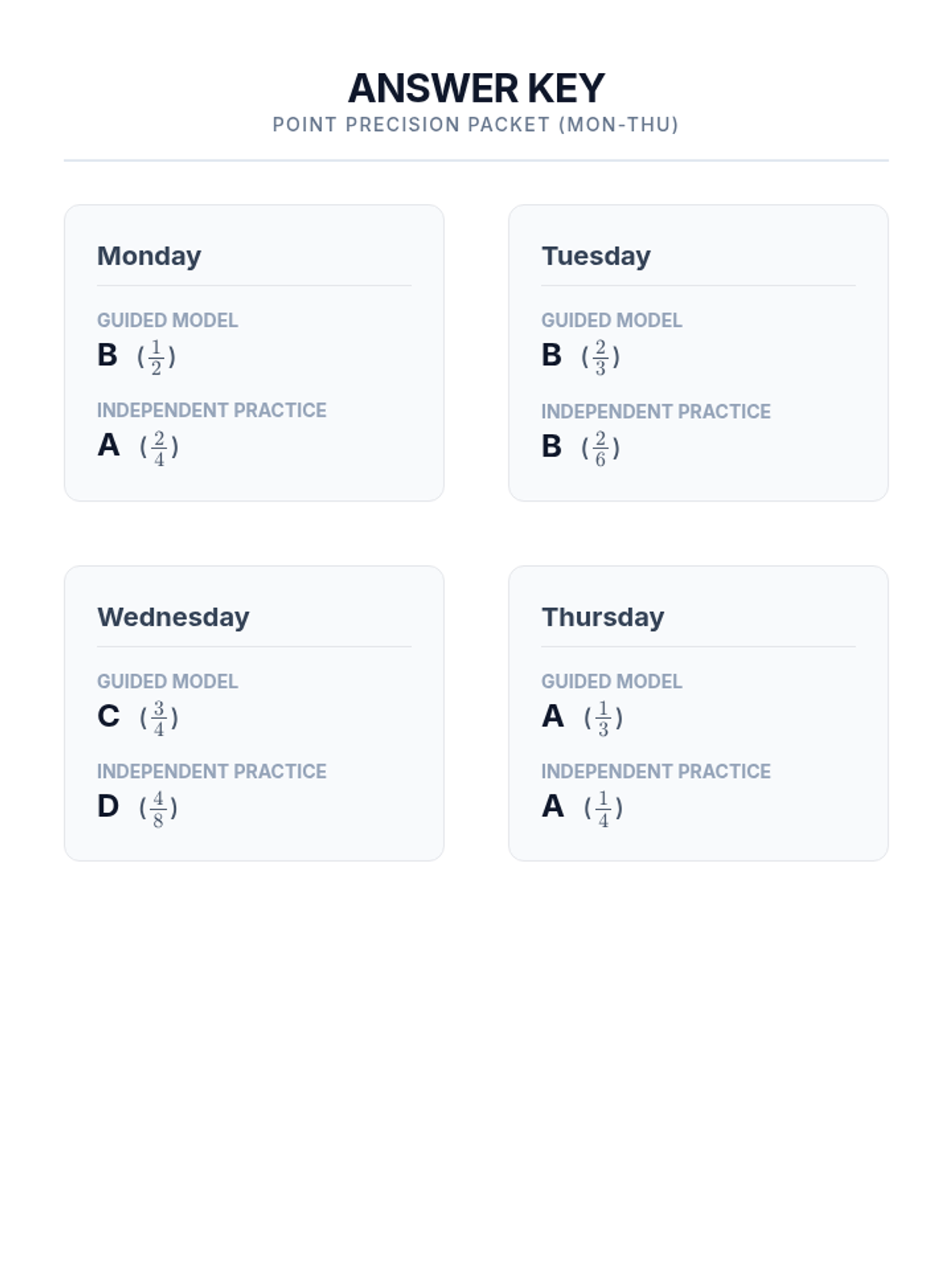
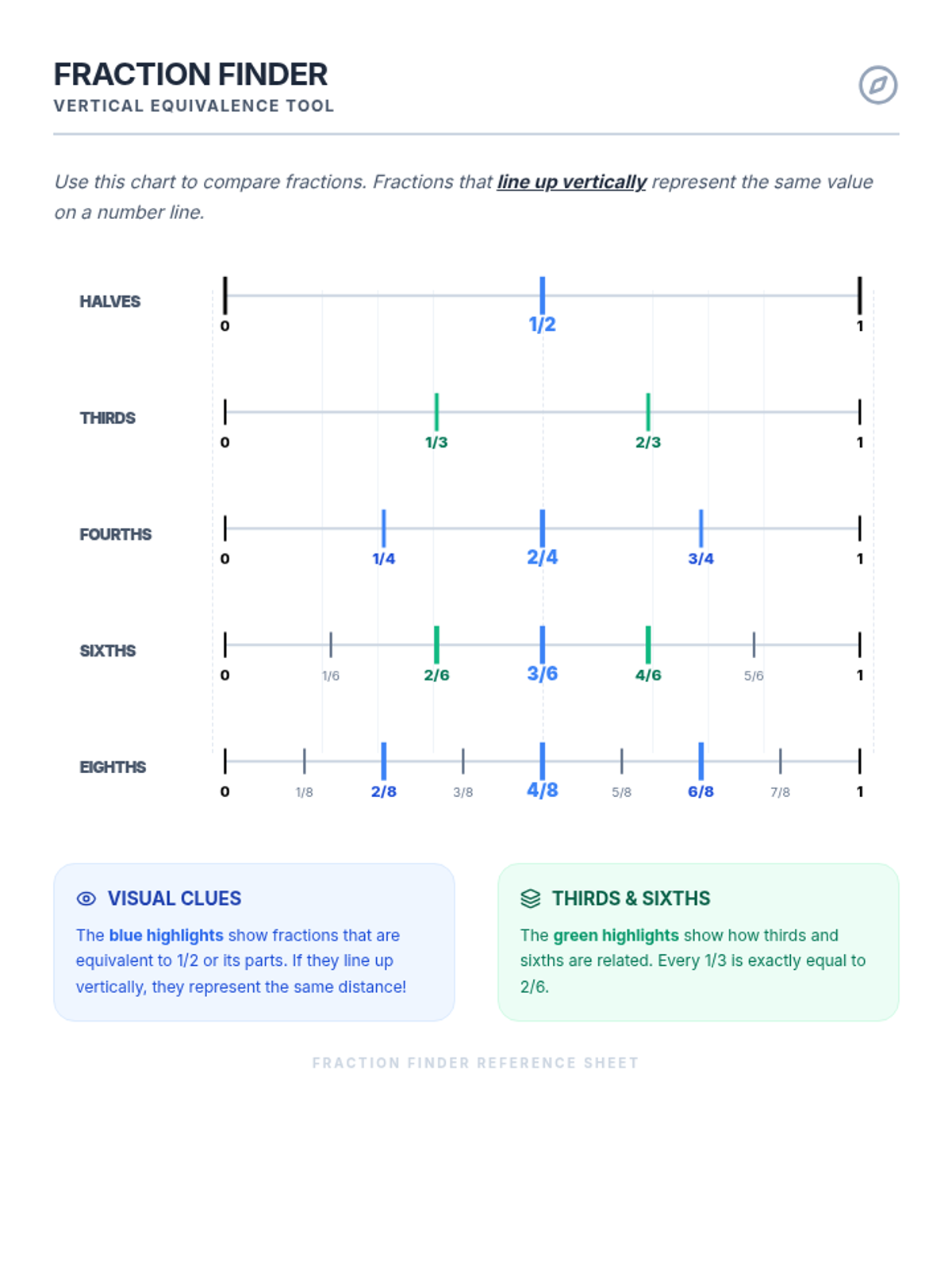
Thursday's lesson provides mixed practice with denominations of 3, 4, 6, and 8 to solidify understanding of equivalent fractions.
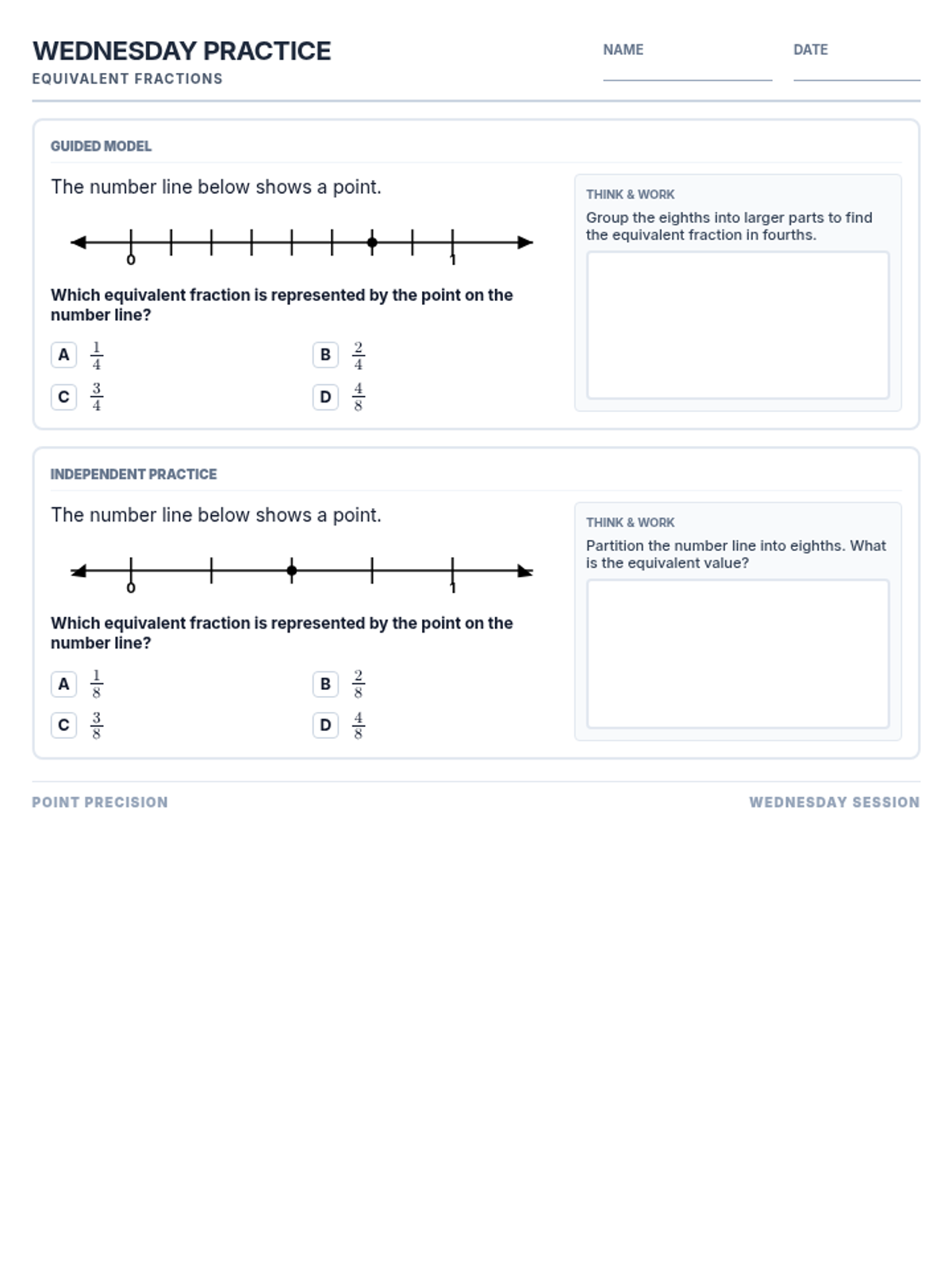
Wednesday's lesson focuses on the relationship between fourths and eighths on a number line.
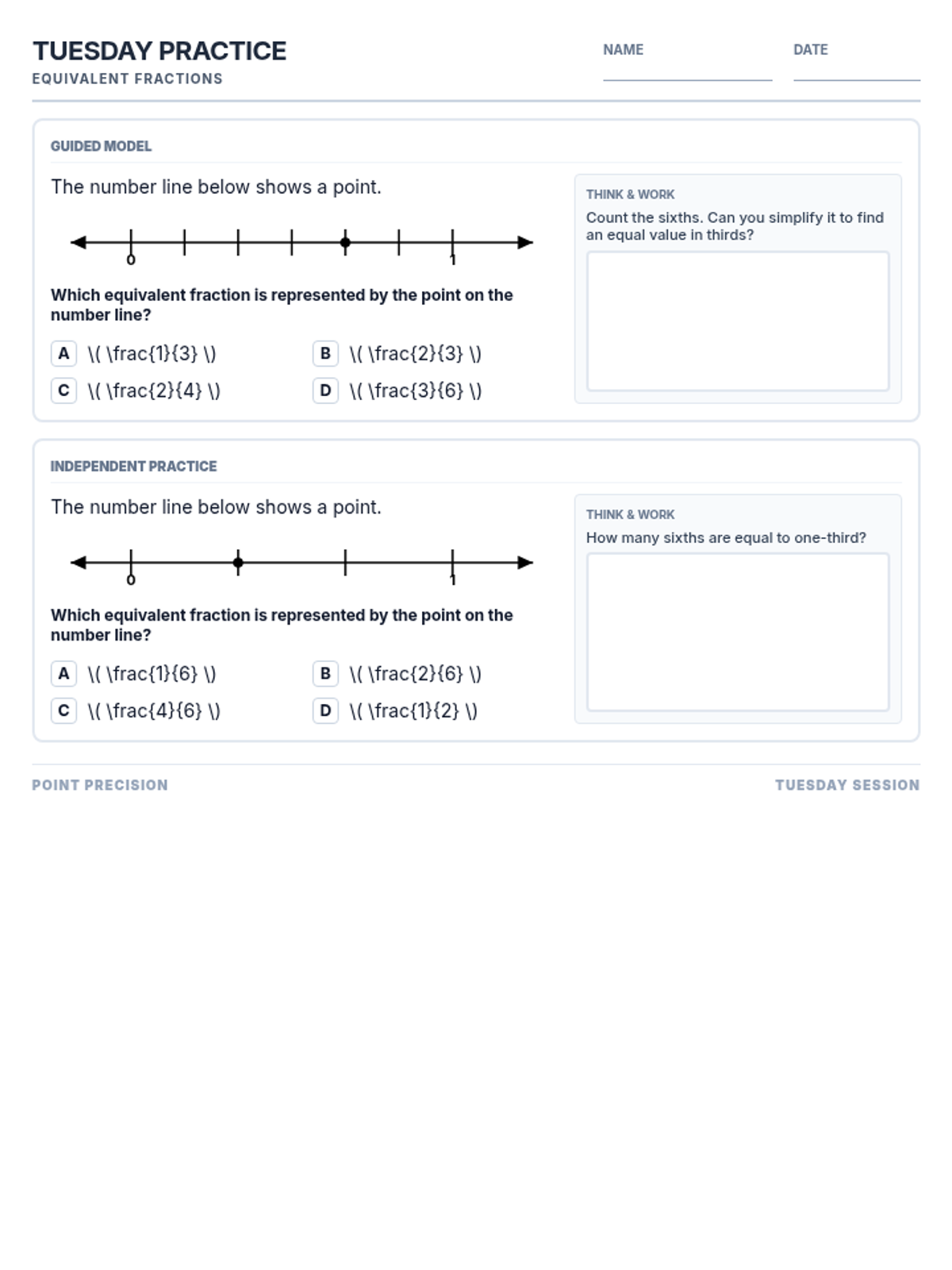
Tuesday's lesson introduces thirds and sixths, challenging students to find equivalent values on number lines.
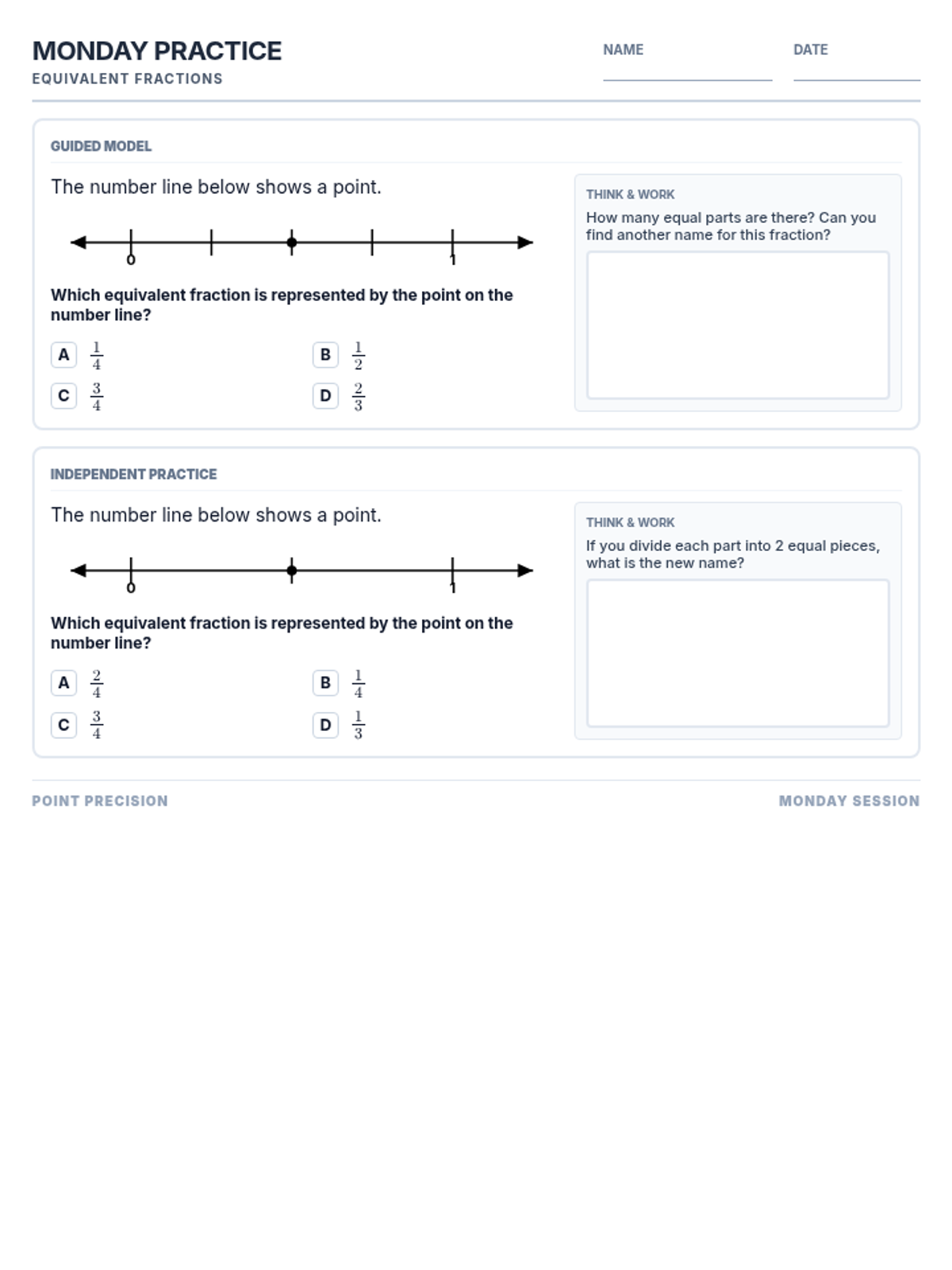
Monday's lesson focuses on halves and fourths using number lines and identifying their equivalent forms.
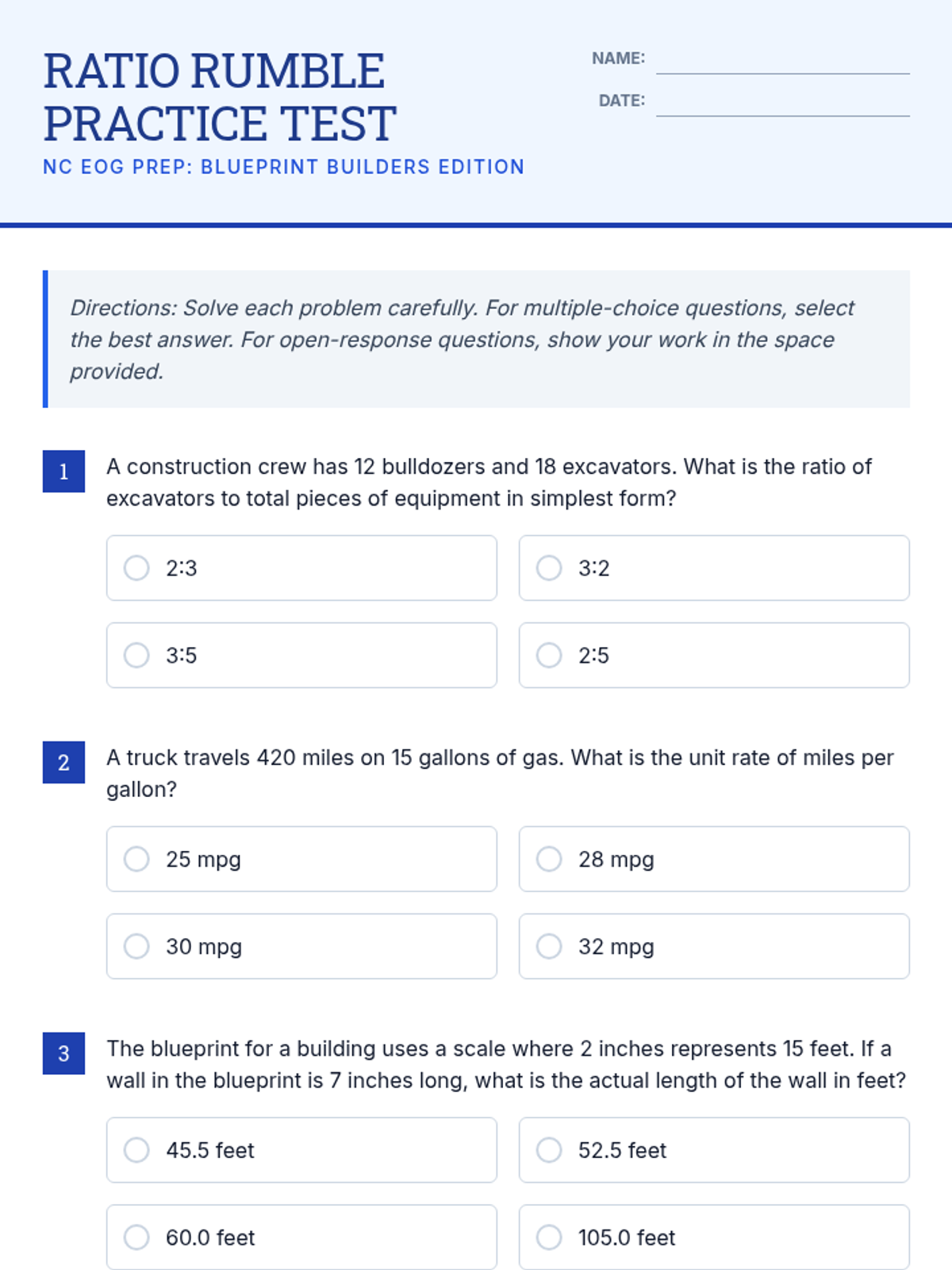
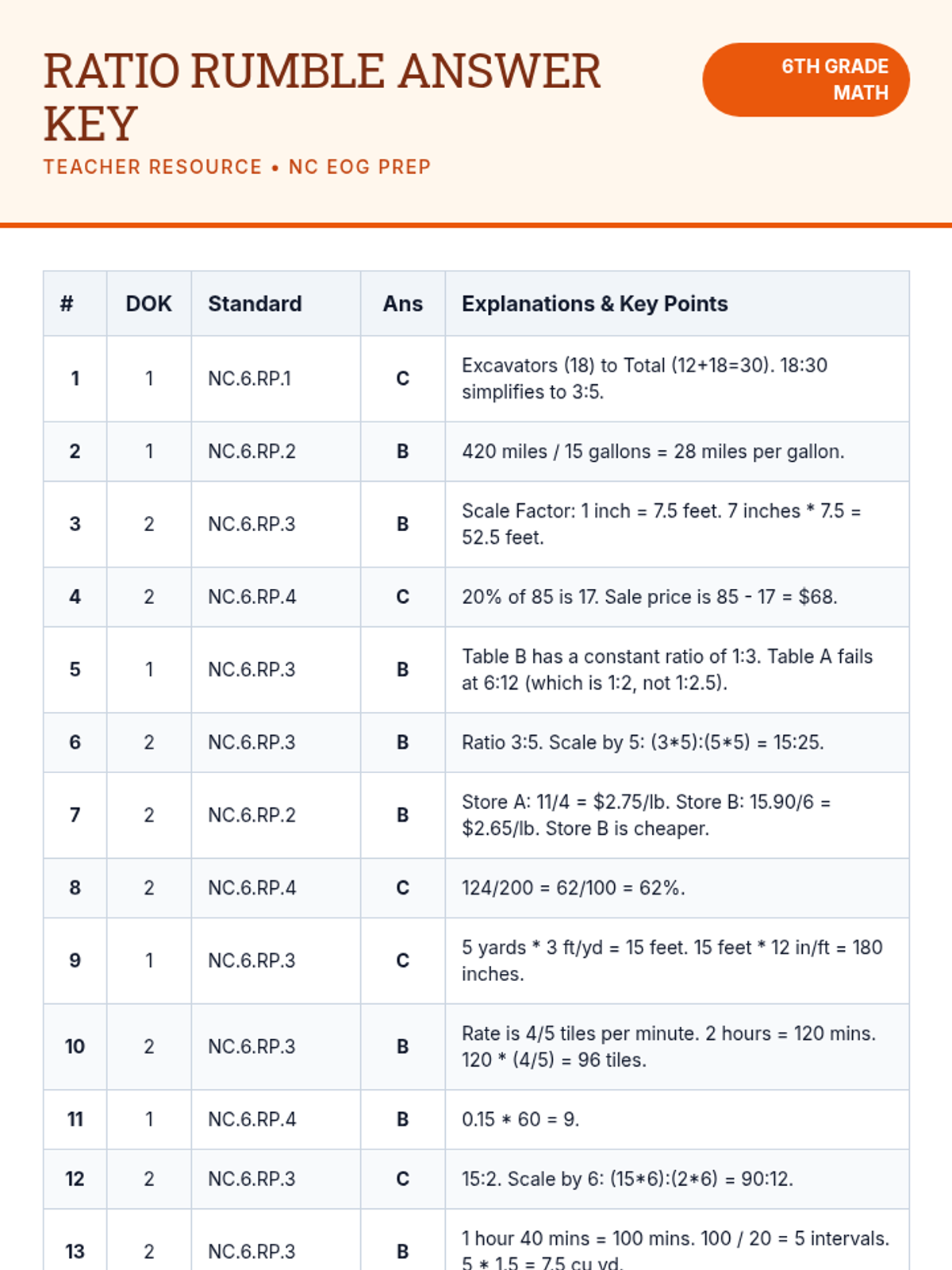
A practice-heavy lesson focused on solving 15 EOG-style ratio and proportional relationship questions with varied DOK levels.
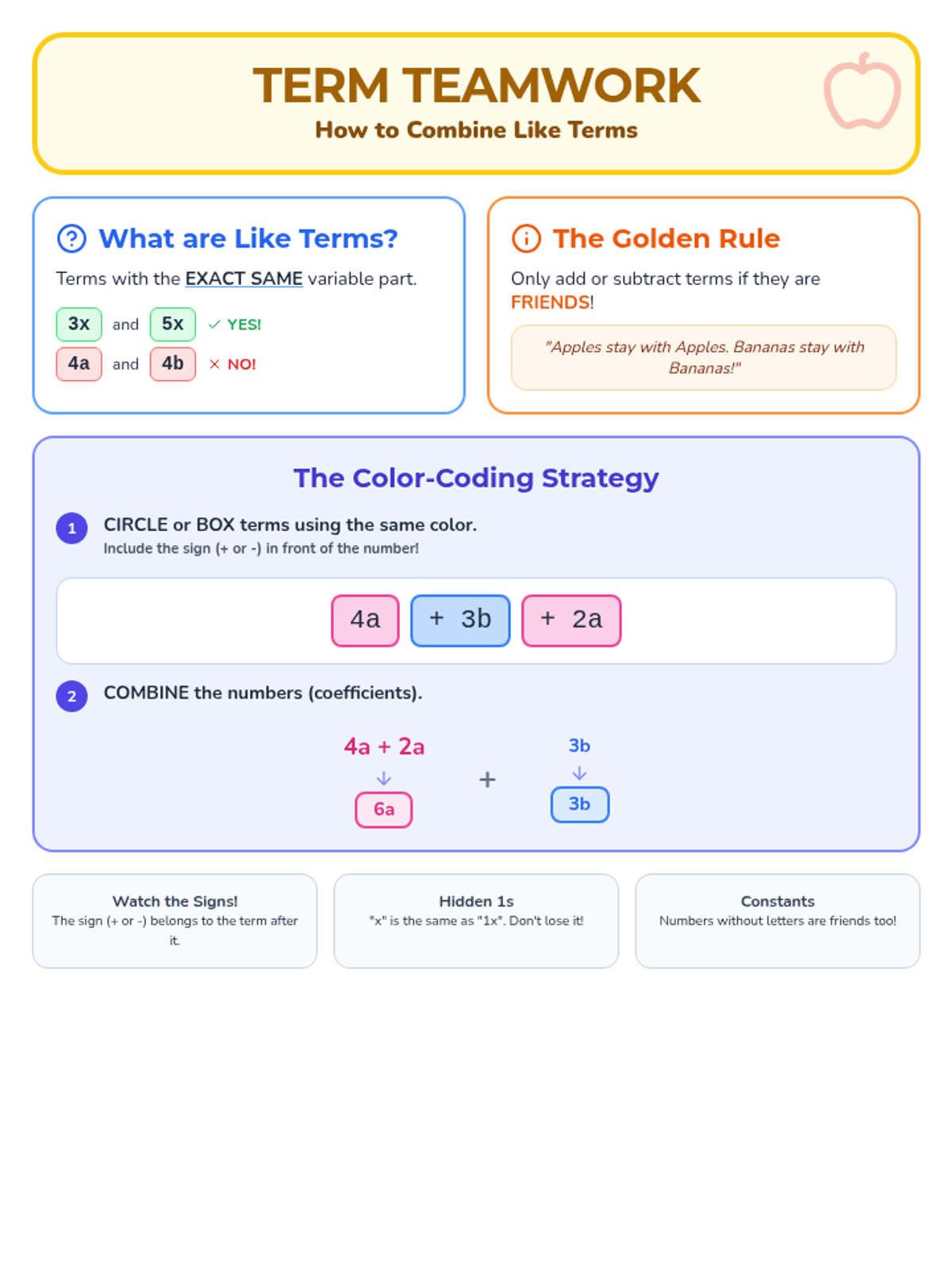
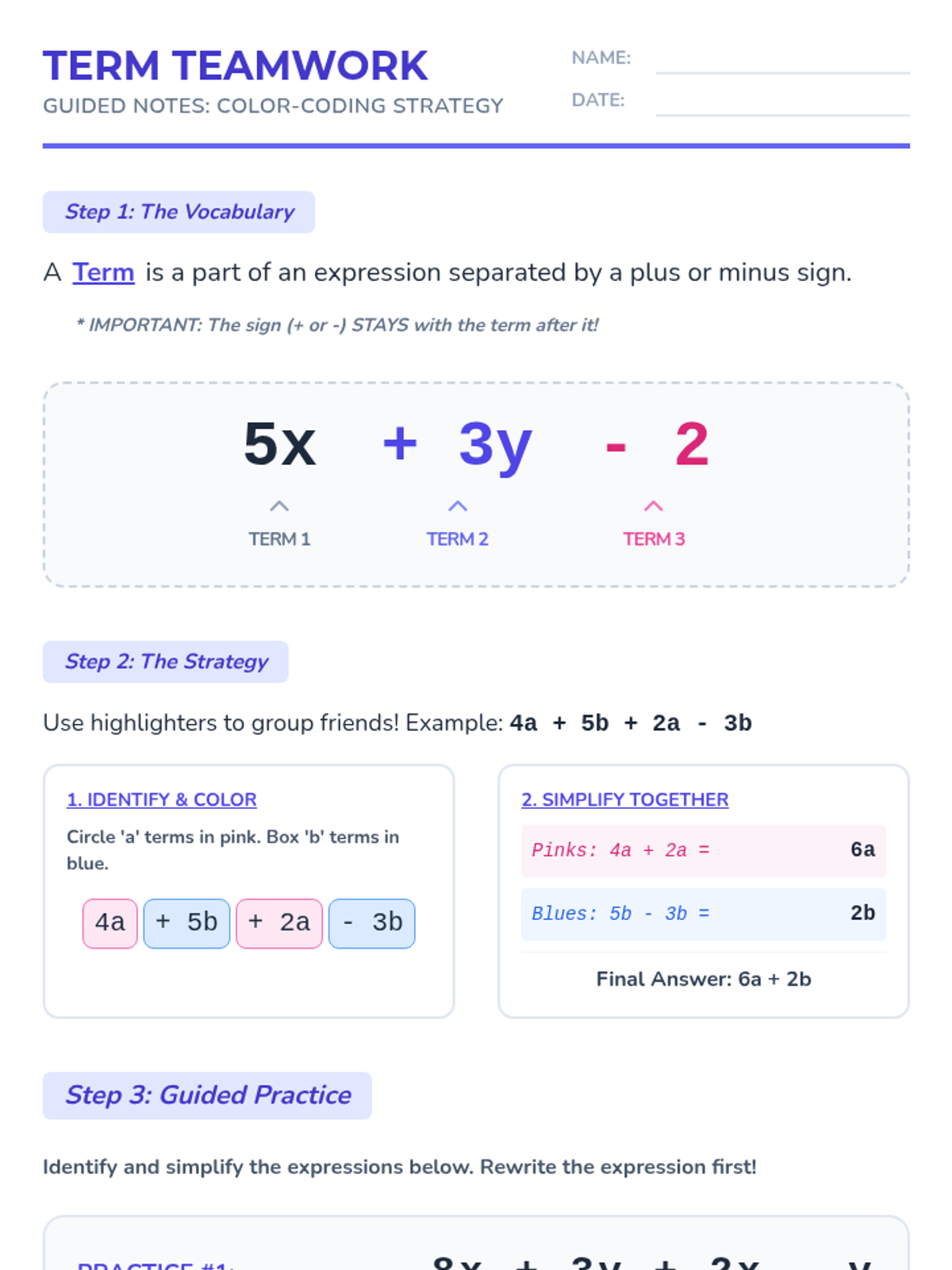
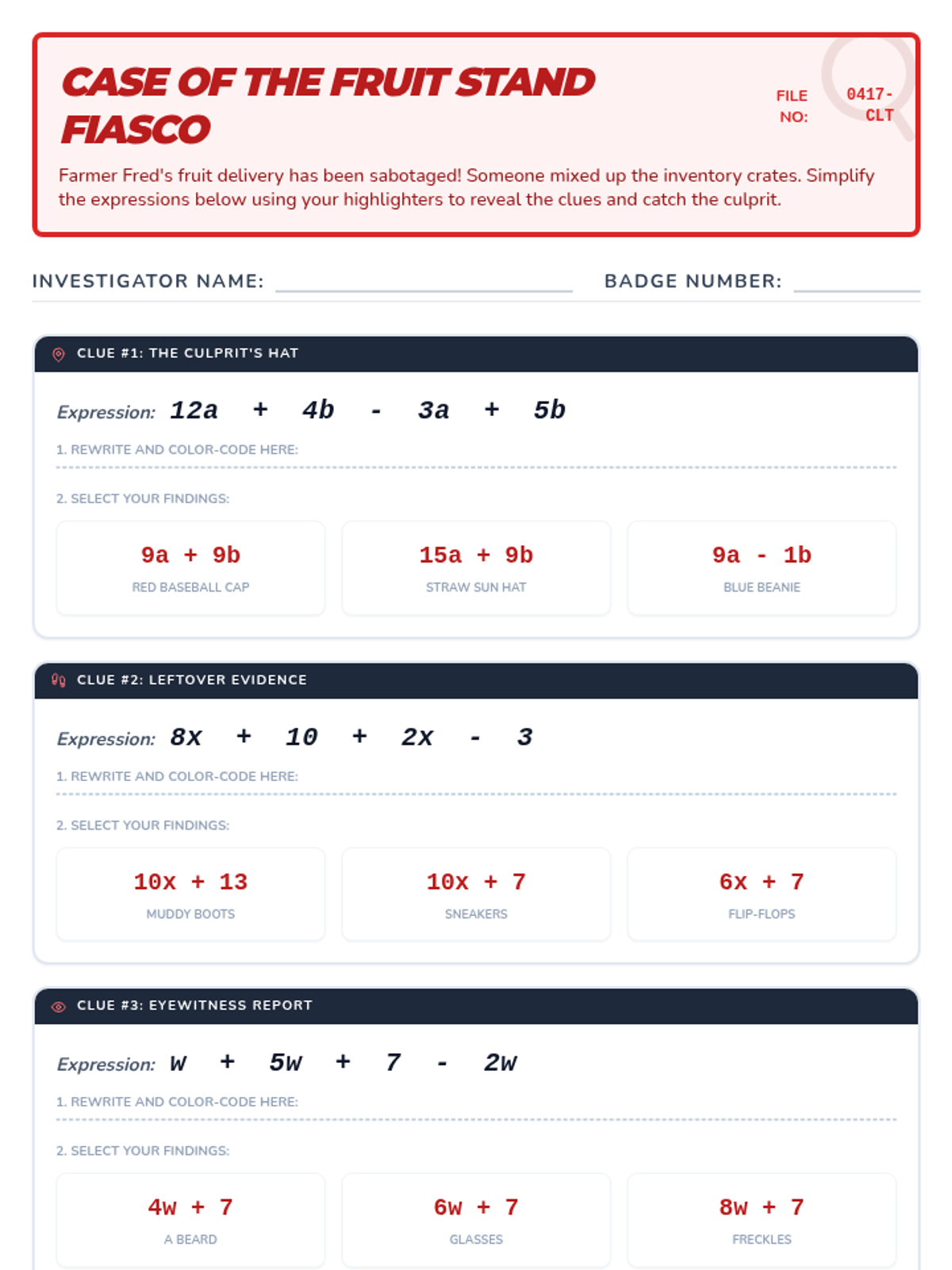
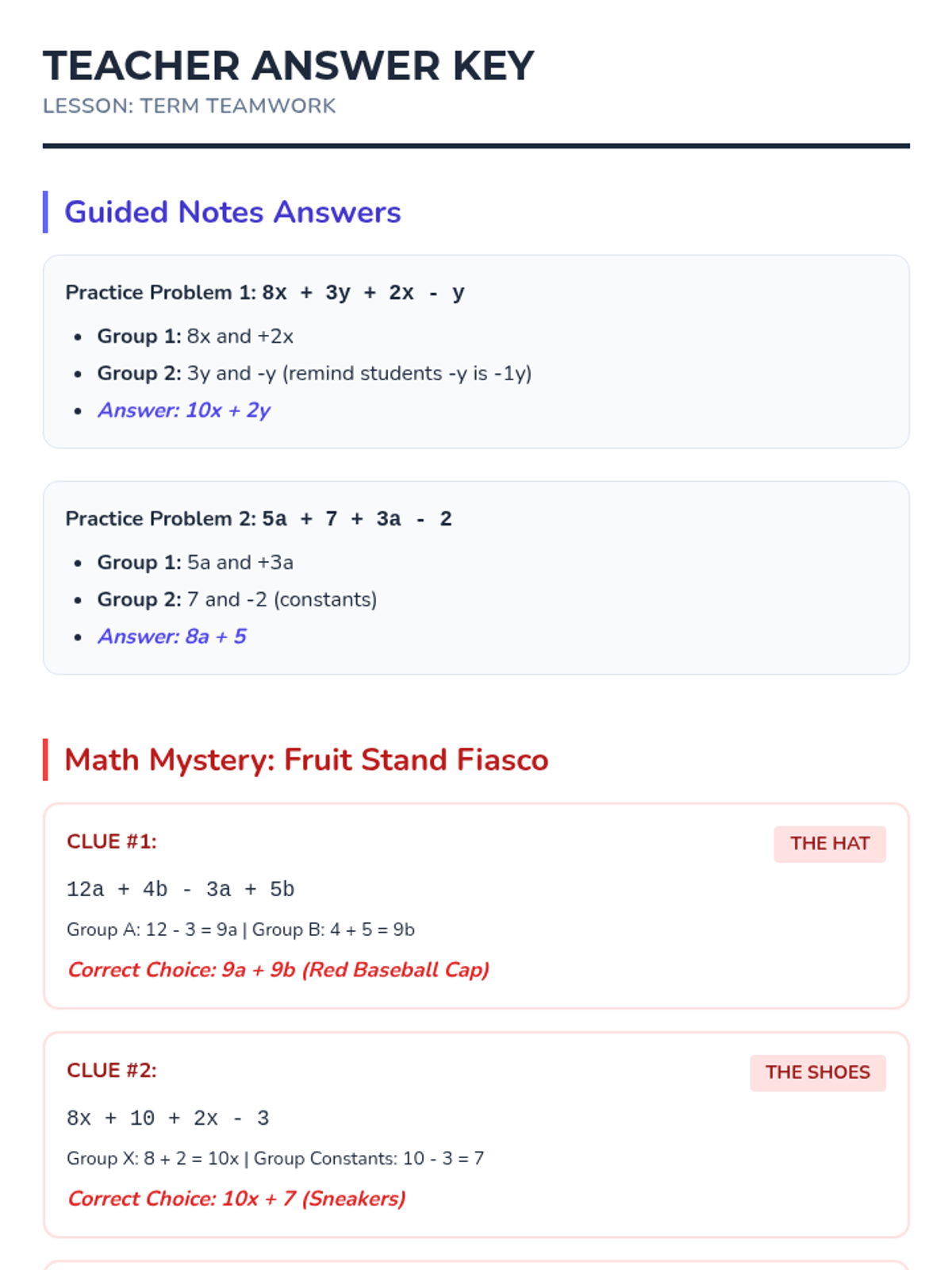
A beginner-friendly introduction to combining like terms using a color-coding strategy and a fun fruit-themed mystery to keep 5th graders engaged.
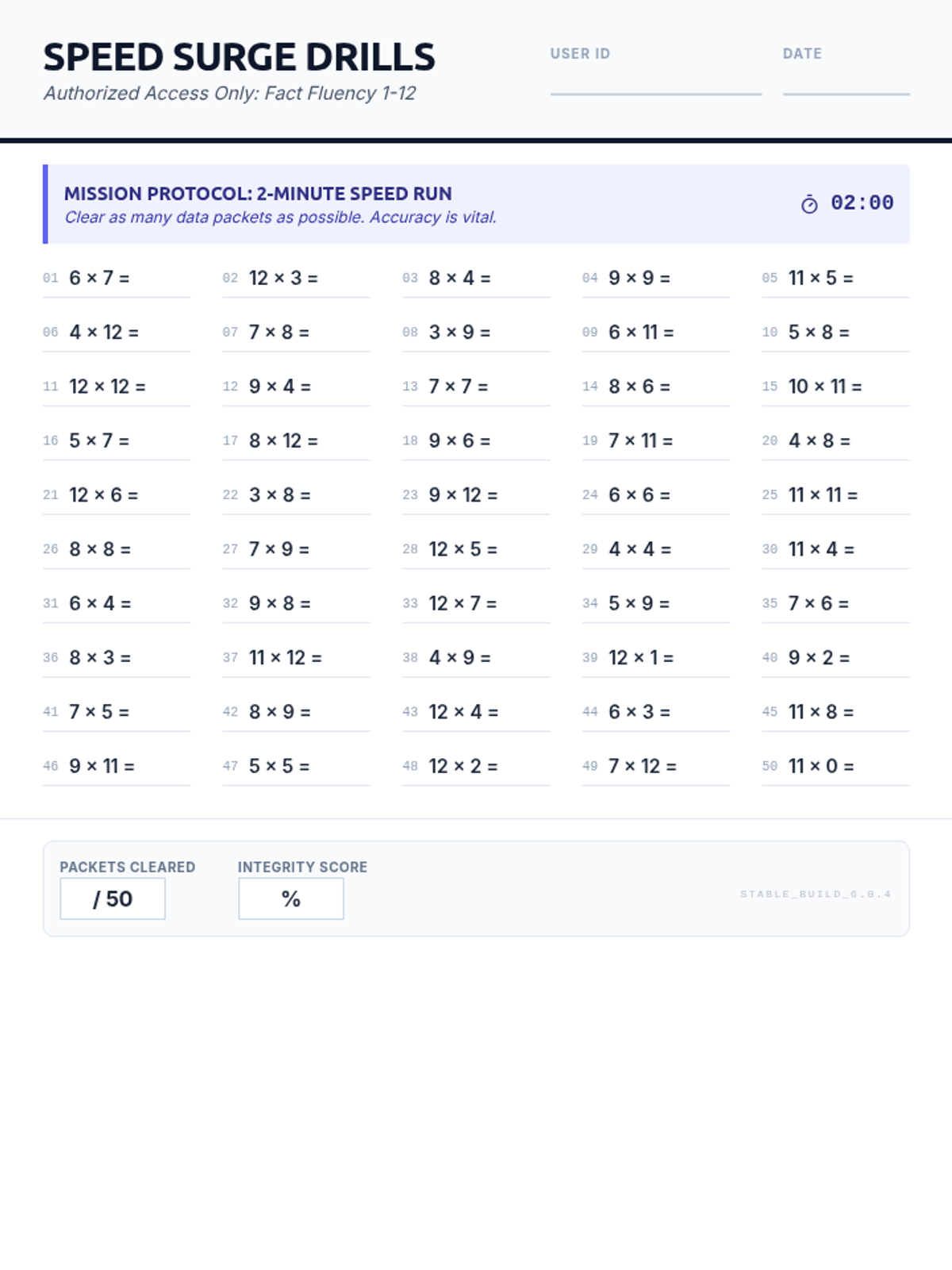
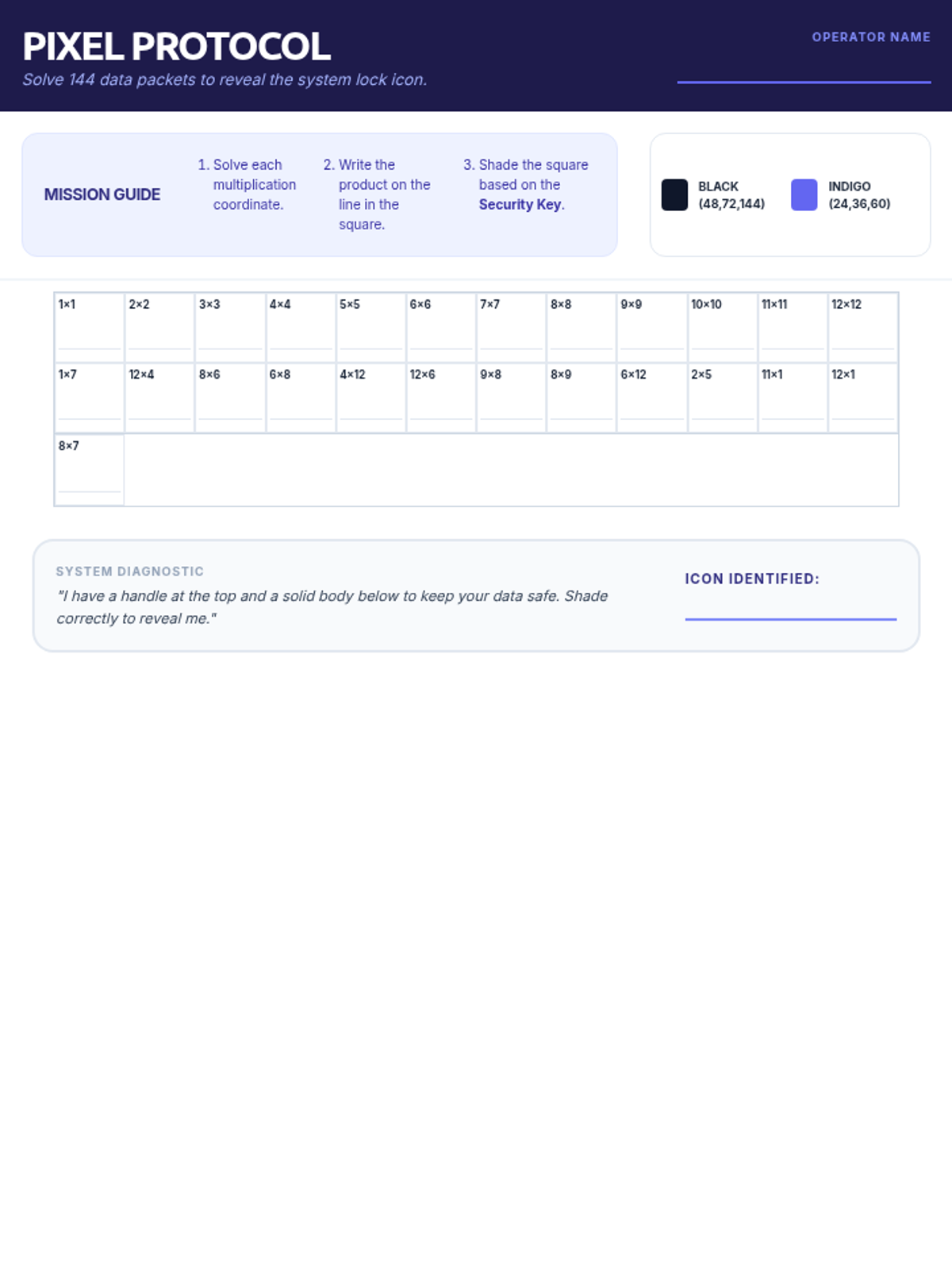
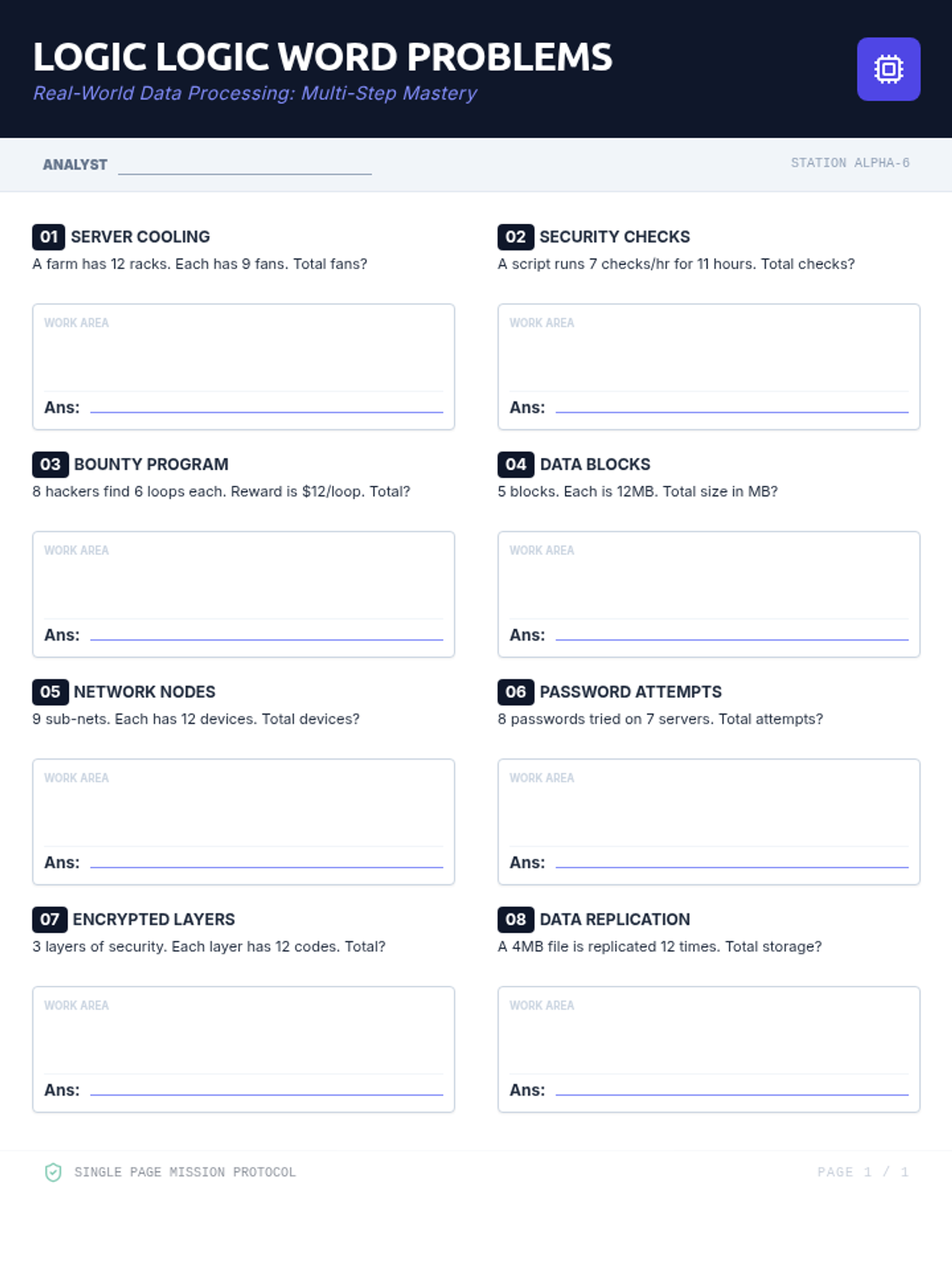
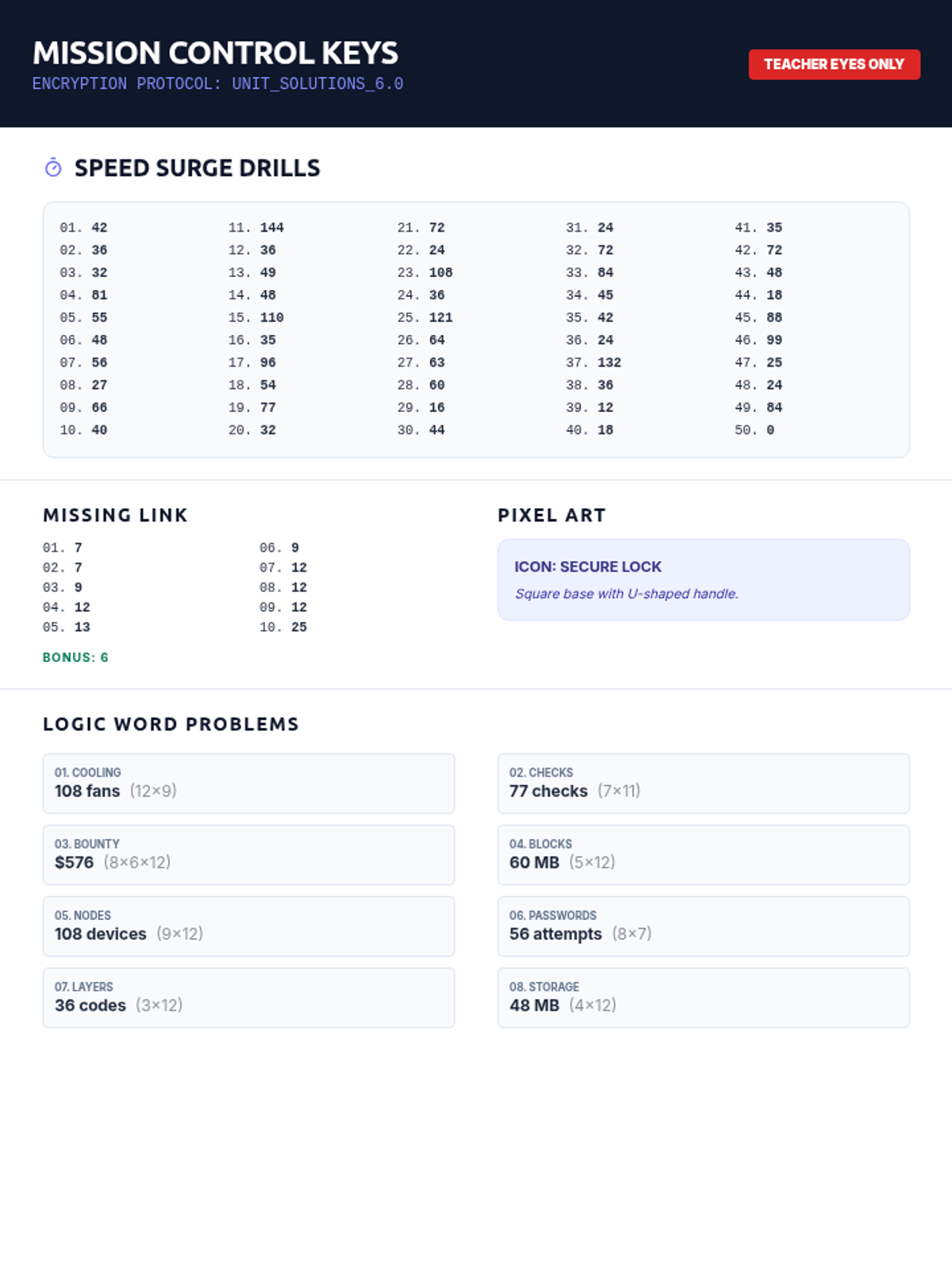
A fast-paced lesson focused on facts 1-12. Students act as 'Cyber Security' experts, using multiplication fluency to unlock data, solve logic problems, and visualize patterns through pixel art.
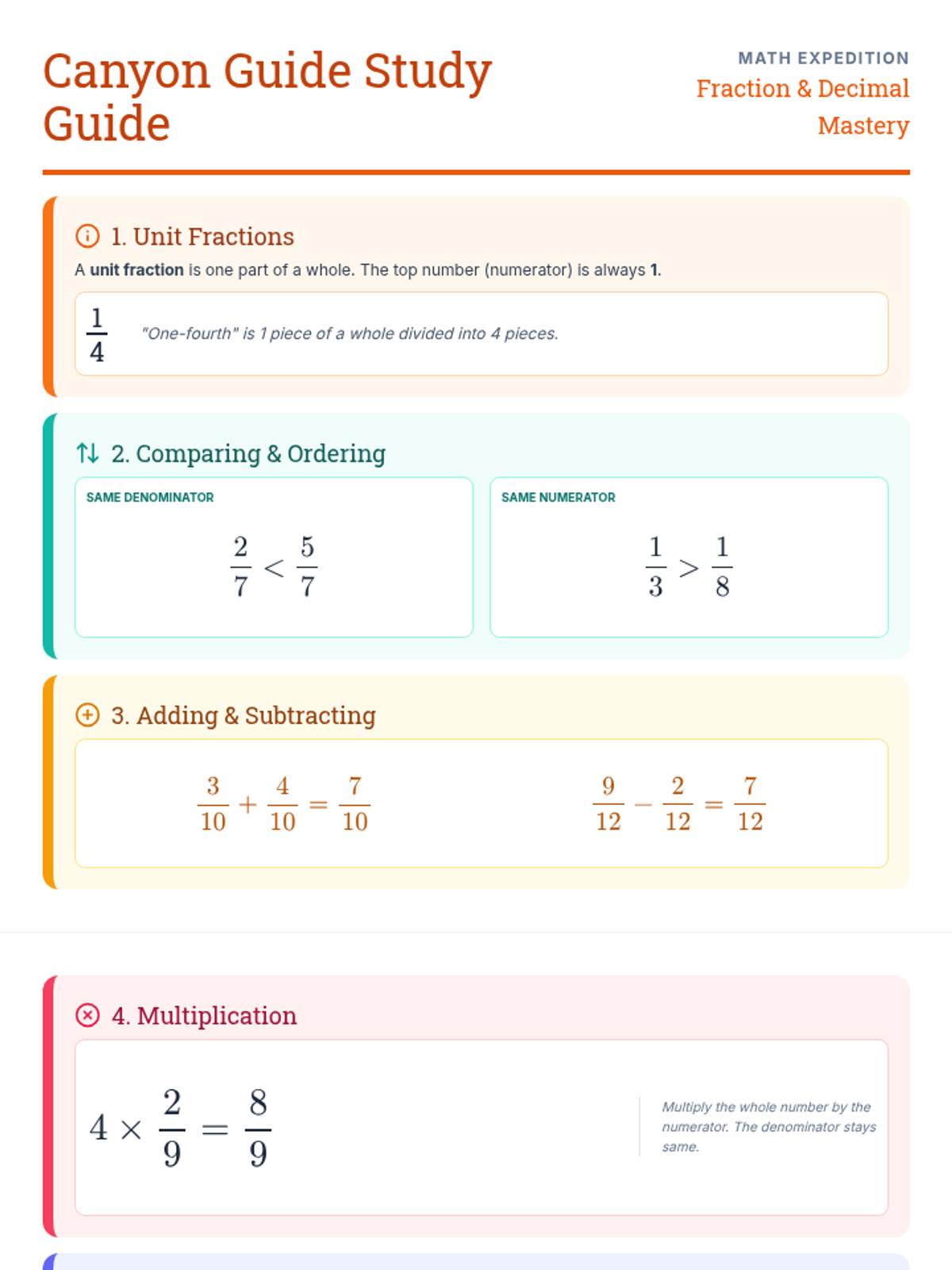
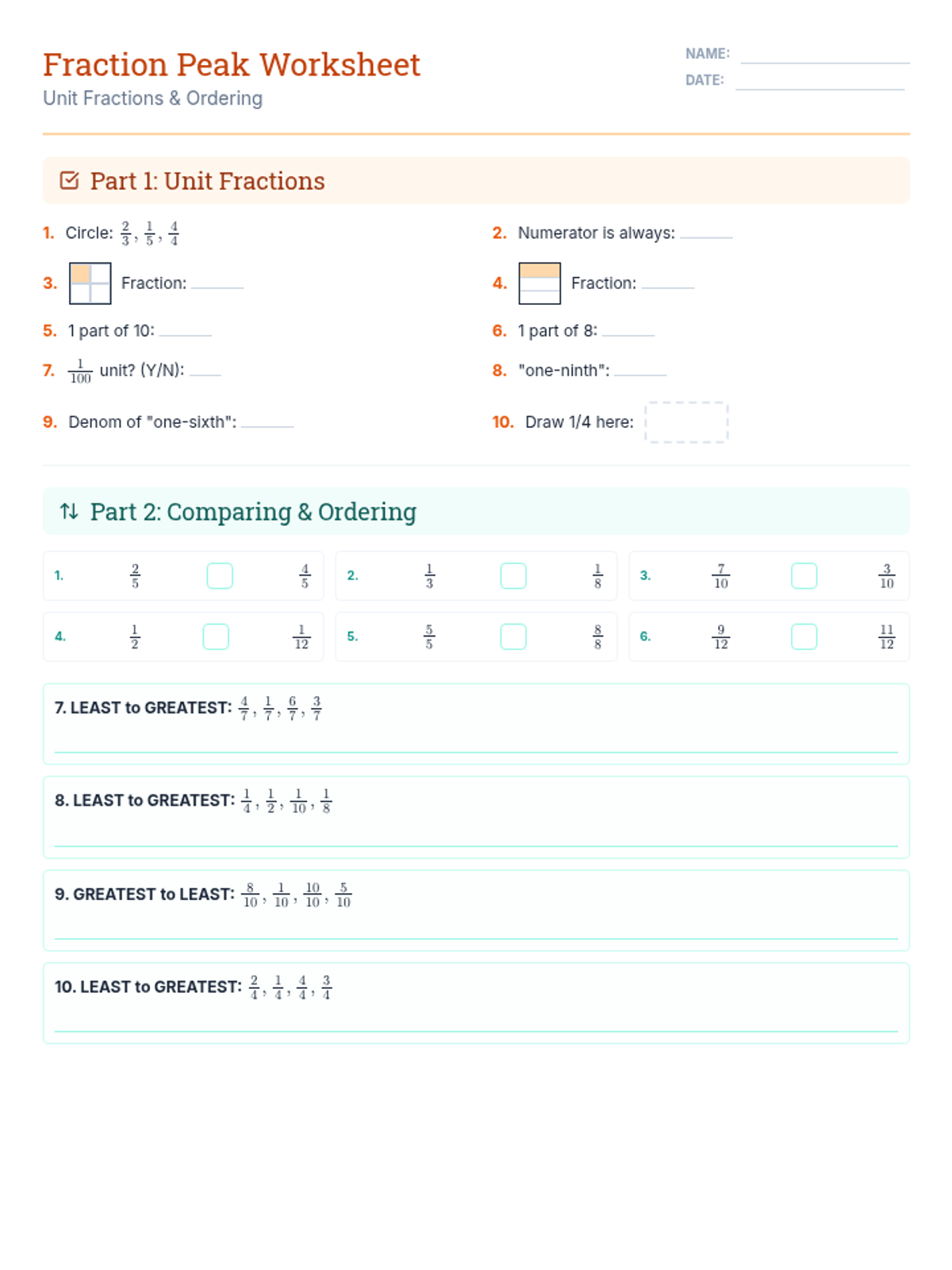
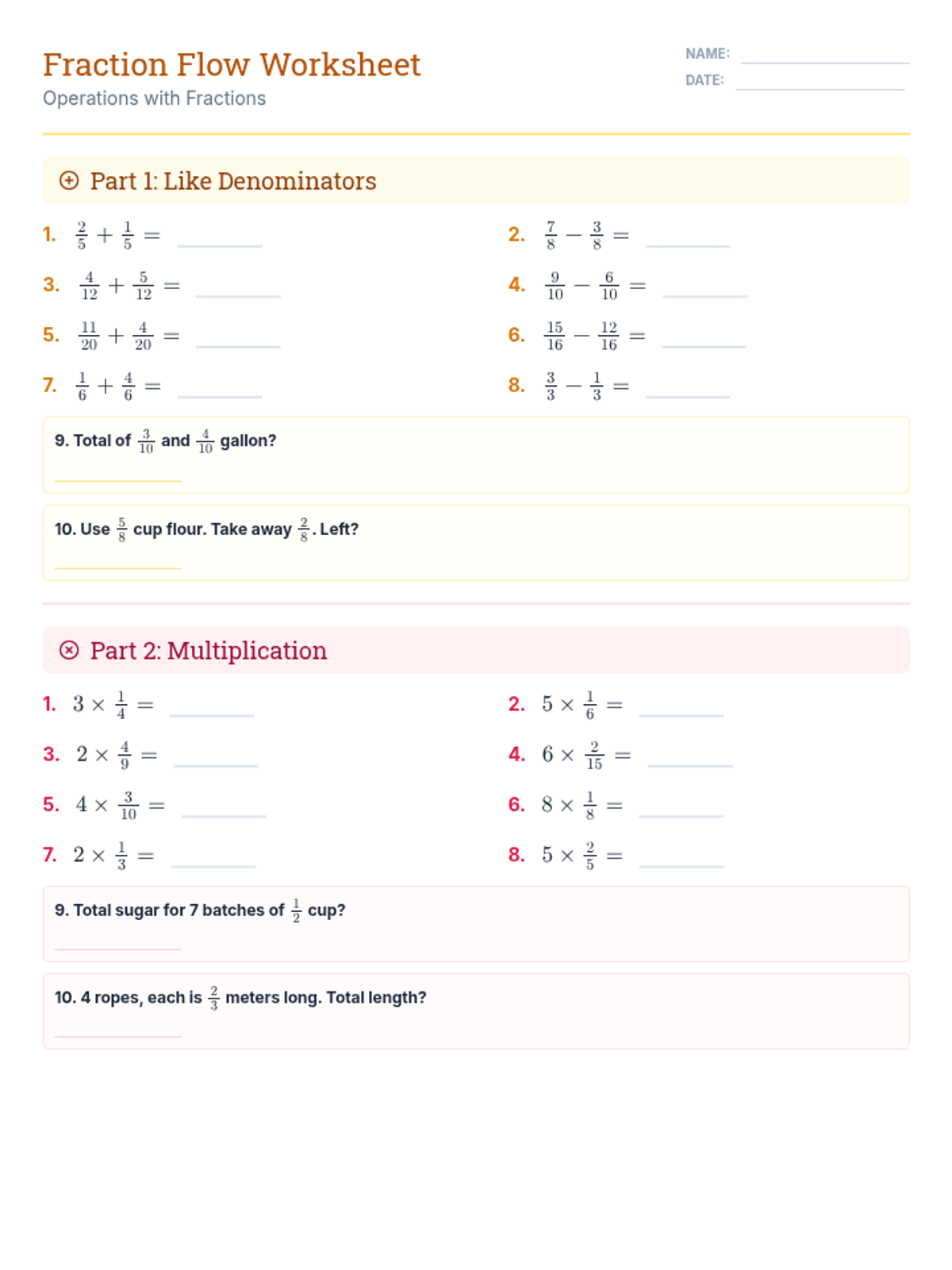
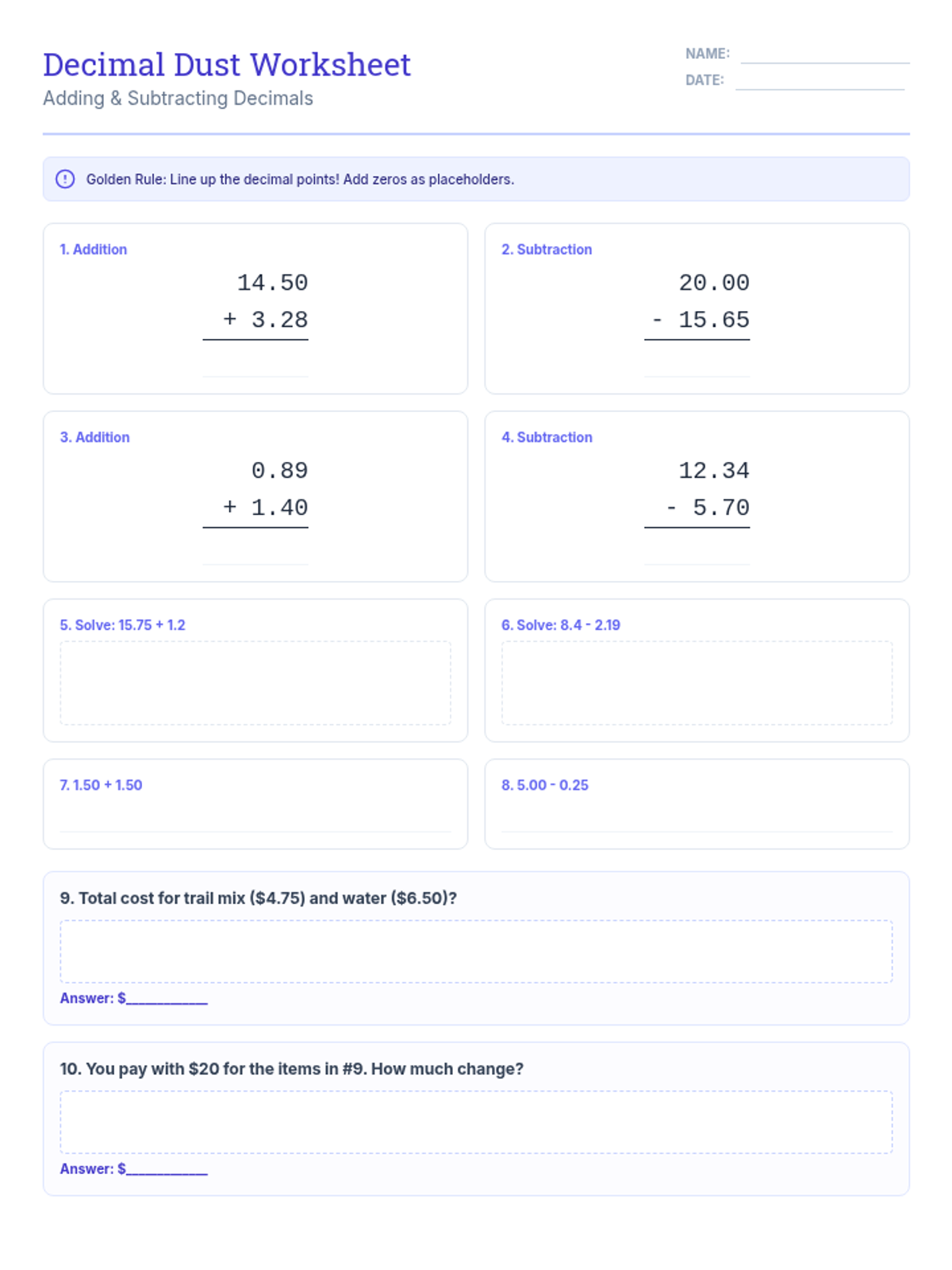
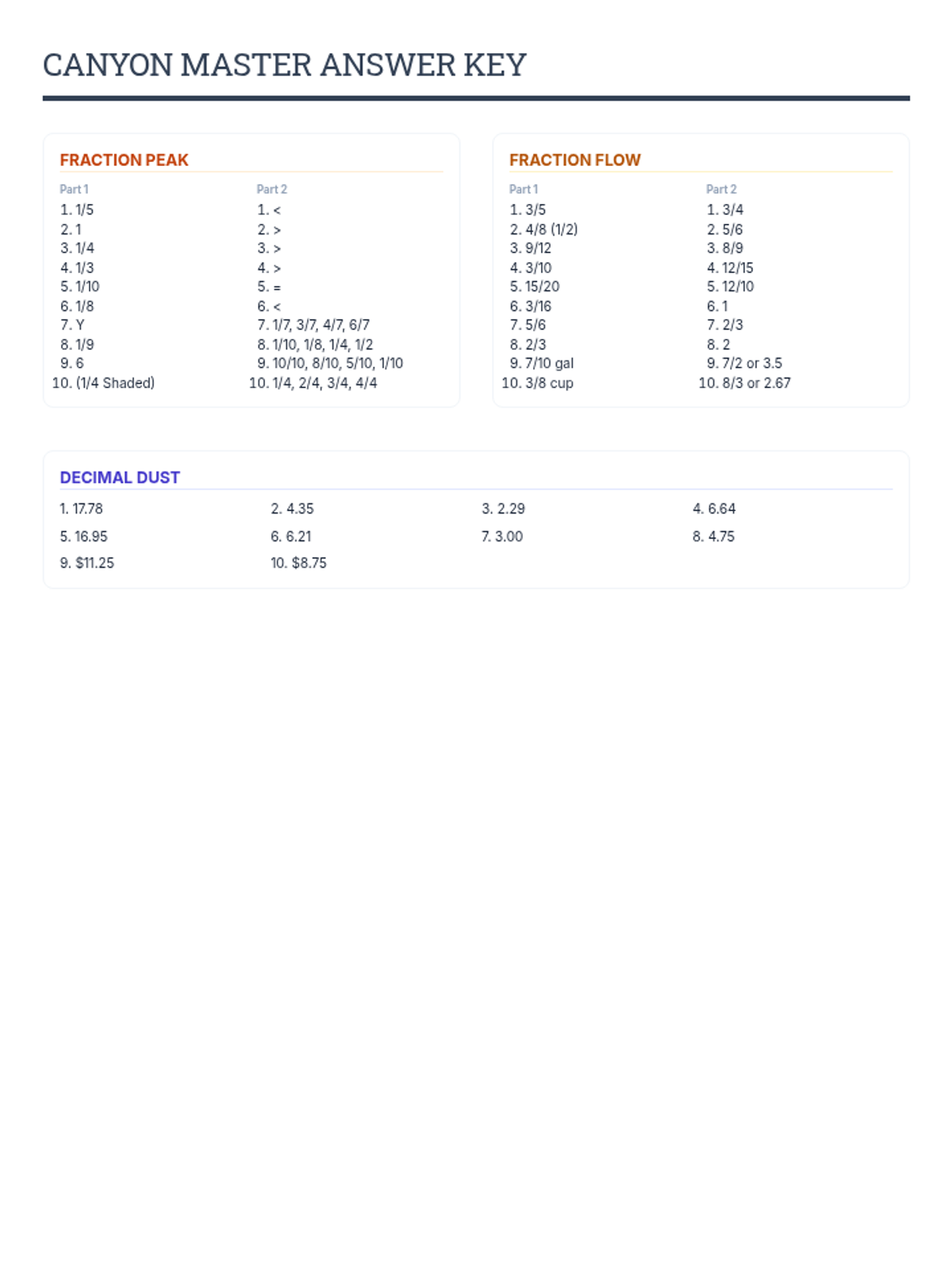
A comprehensive review lesson covering unit fractions, ordering, operations with like denominators, fraction multiplication, and decimal arithmetic.