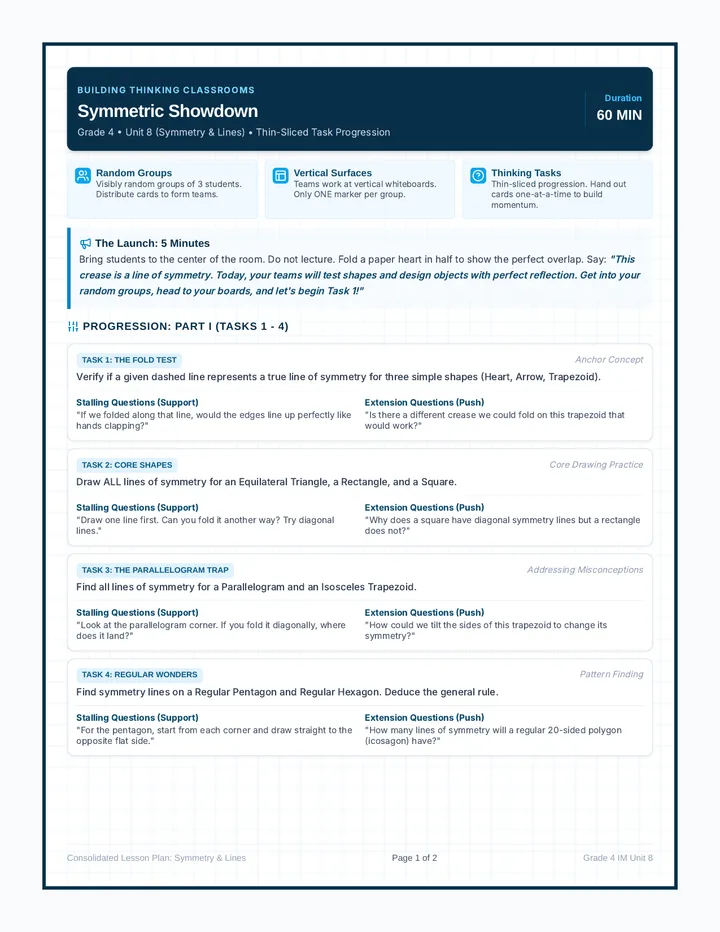
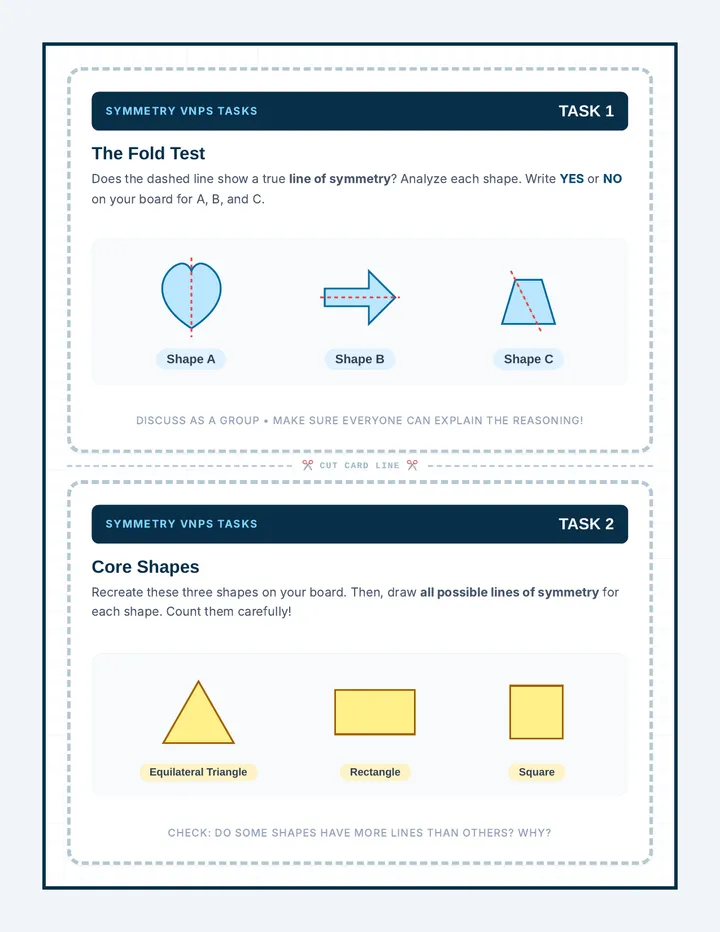
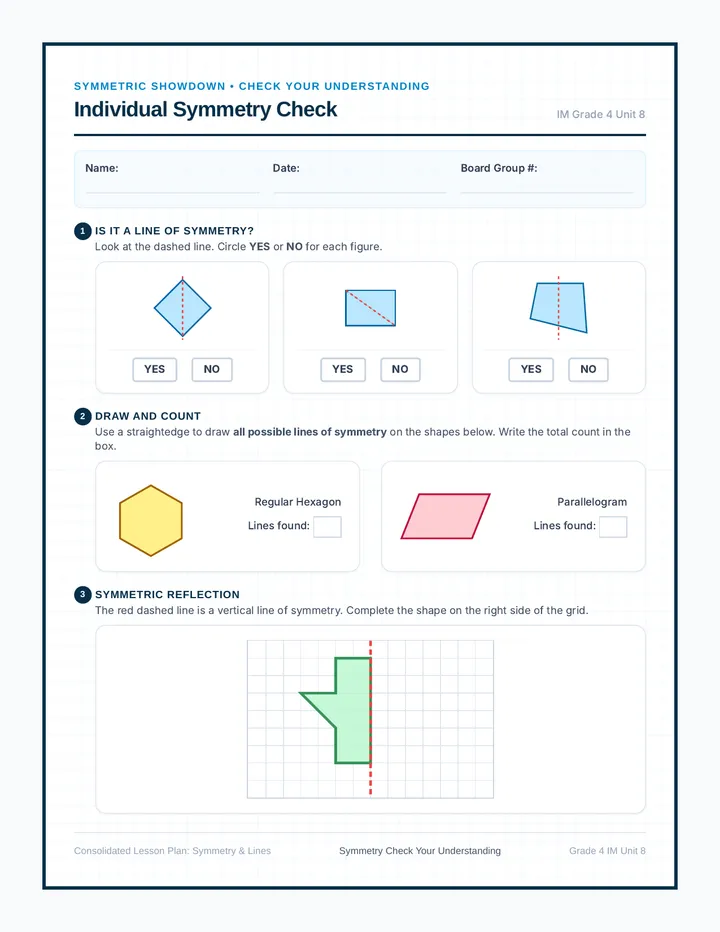
A hands-on interdisciplinary lesson blending geometry and art. Students explore M.C. Escher's work to understand and apply translations, rotations, and reflections through the creation of original tessellating patterns.
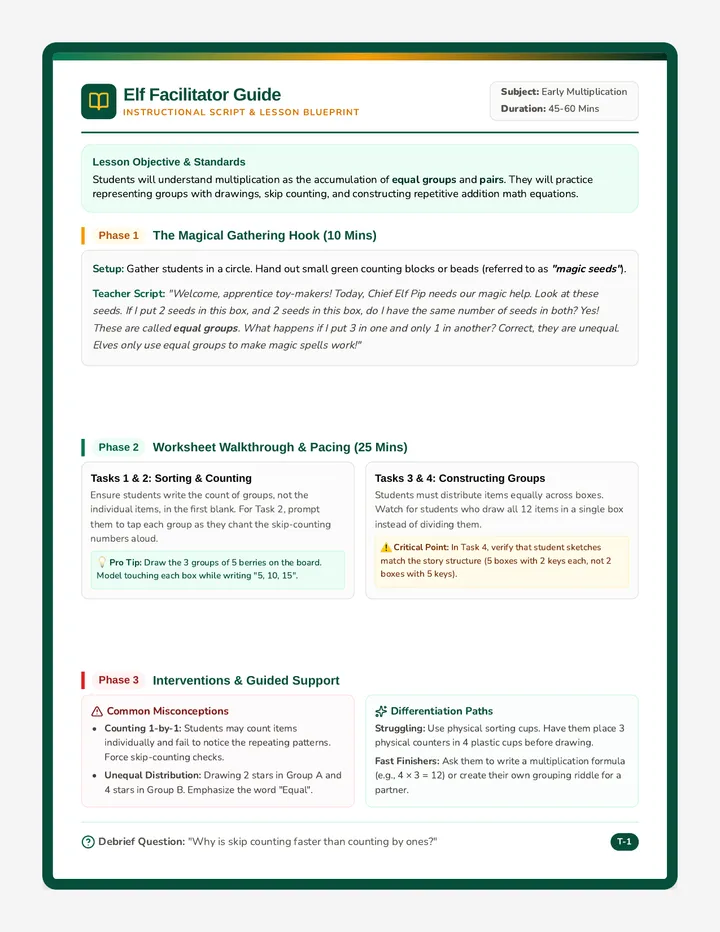
A kindergarten lesson focused on identifying and using basic geometric shapes (circle, square, triangle, rectangle, oval) to draw familiar outdoor objects. Students follow three-step visual guides to build their artistic confidence through shape recognition.
A fun, beach-themed lesson introducing rounding through the character Rad Rounder, focusing on the midpoint rule of five.
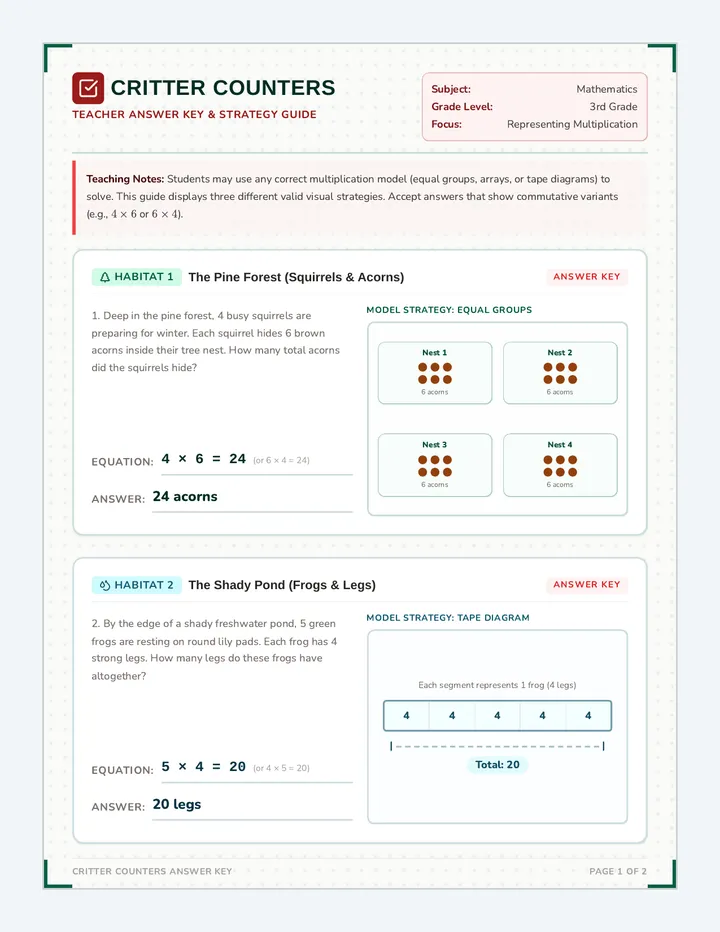
A collection of word problems focused on identifying the correct multiplication or division equation to represent a real-world situation. Students practice translating stories into mathematical expressions.
A practice set focused on calculating time intervals of thirty minutes starting from fifteen minutes past the hour. Students will apply their understanding of 'quarter past' and 'half hour' to solve real-world word problems.
A lesson focused on solving unknown-factor problems by connecting division to multiplication and using strategic thinking to find missing values.
A comprehensive 7th Grade Math review session using an "Infinity Maze" format. Students navigate a series of interconnected problems across Ratios, Number Systems, Equations, and Geometry, designed to loop back and provide continuous practice.

Thursday's lesson provides mixed practice with denominations of 3, 4, 6, and 8 to solidify understanding of equivalent fractions.
Wednesday's lesson focuses on the relationship between fourths and eighths on a number line.
Tuesday's lesson introduces thirds and sixths, challenging students to find equivalent values on number lines.
Monday's lesson focuses on halves and fourths using number lines and identifying their equivalent forms.
A lesson focused on interpreting and discussing bar graphs through visual analysis and peer discussion using a gallery-themed approach.
A lesson focused on solving one-step word problems involving liquid volume in liters using all four operations, set in a magical potion-making context.
A practice-heavy lesson focused on solving 15 EOG-style ratio and proportional relationship questions with varied DOK levels.
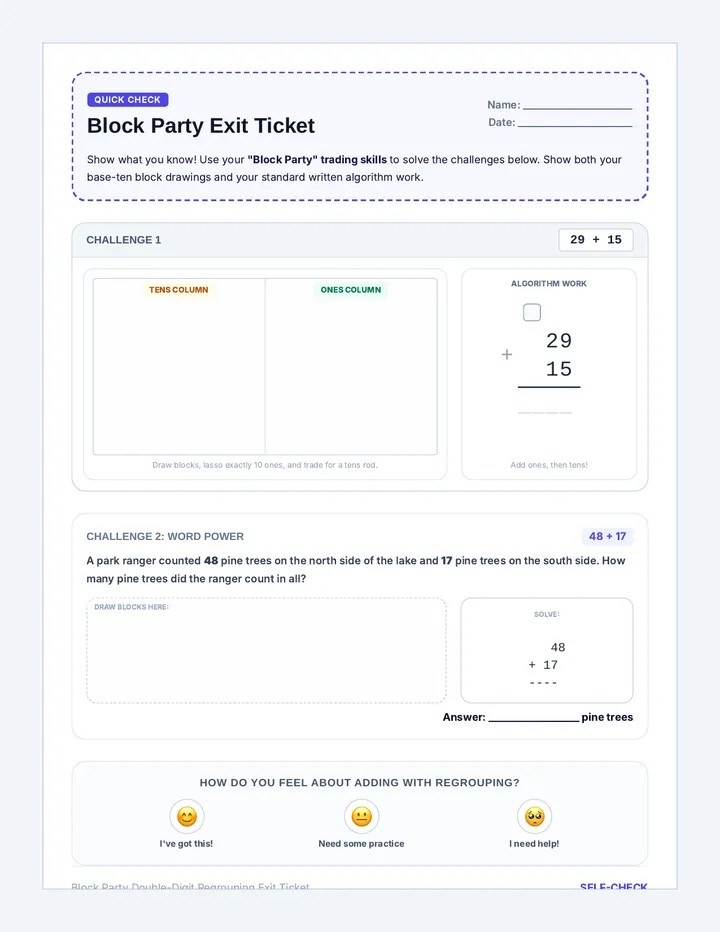
A beginner-friendly introduction to combining like terms using a color-coding strategy and a fun fruit-themed mystery to keep 5th graders engaged.
A fast-paced lesson focused on facts 1-12. Students act as 'Cyber Security' experts, using multiplication fluency to unlock data, solve logic problems, and visualize patterns through pixel art.
A comprehensive review lesson covering unit fractions, ordering, operations with like denominators, fraction multiplication, and decimal arithmetic.
A focused re-teach lesson for 6th-grade standard 6.NS.6b (Reflections). Students master the rules for reflecting points across the x and y axes through visual mapping, mental rules, and repeated practice.
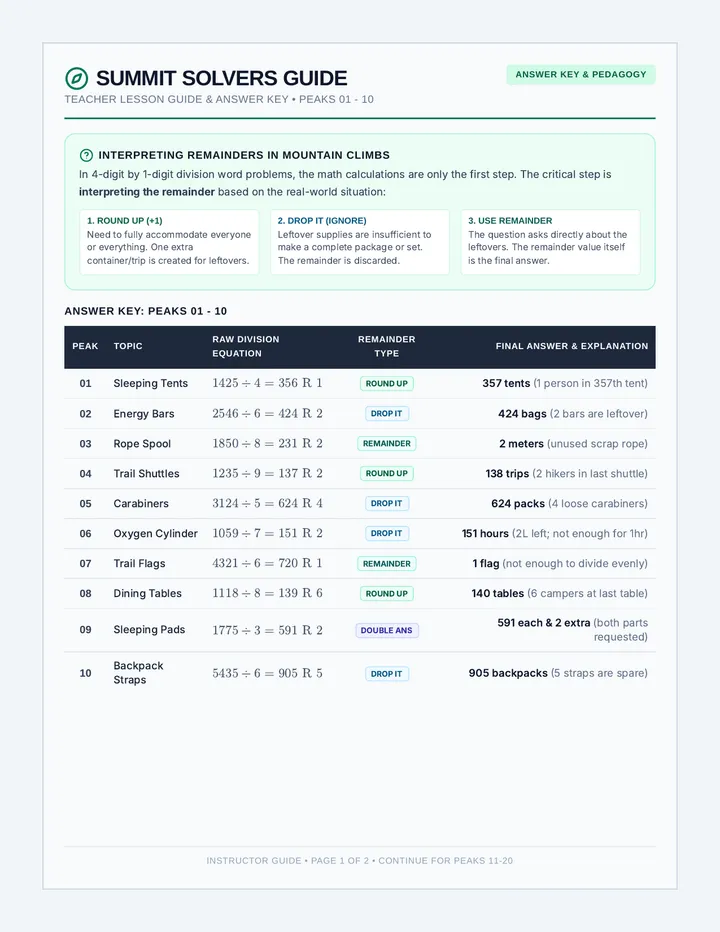
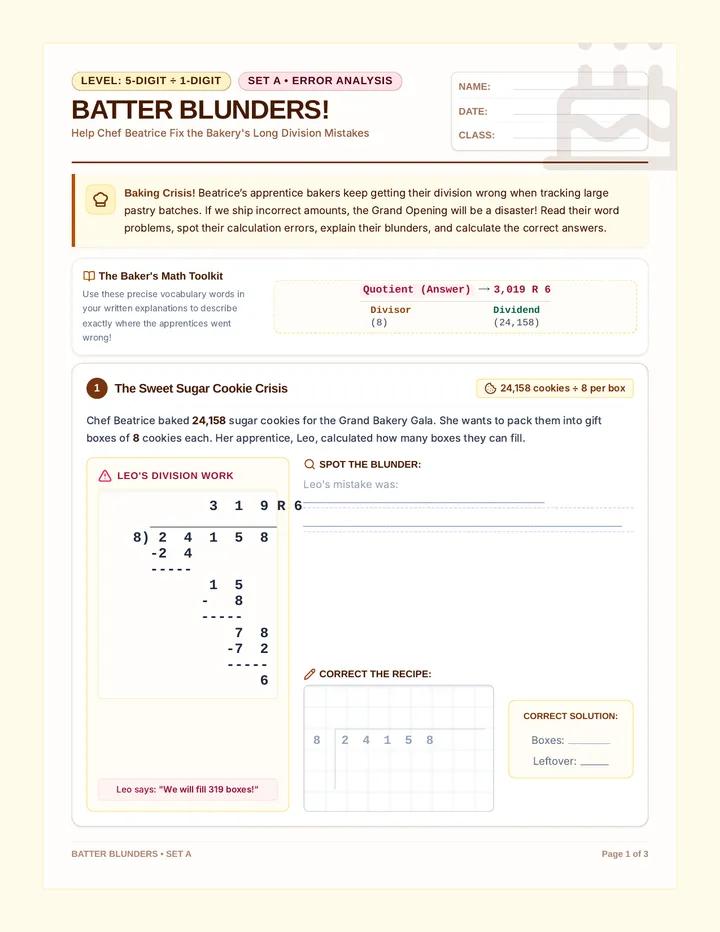
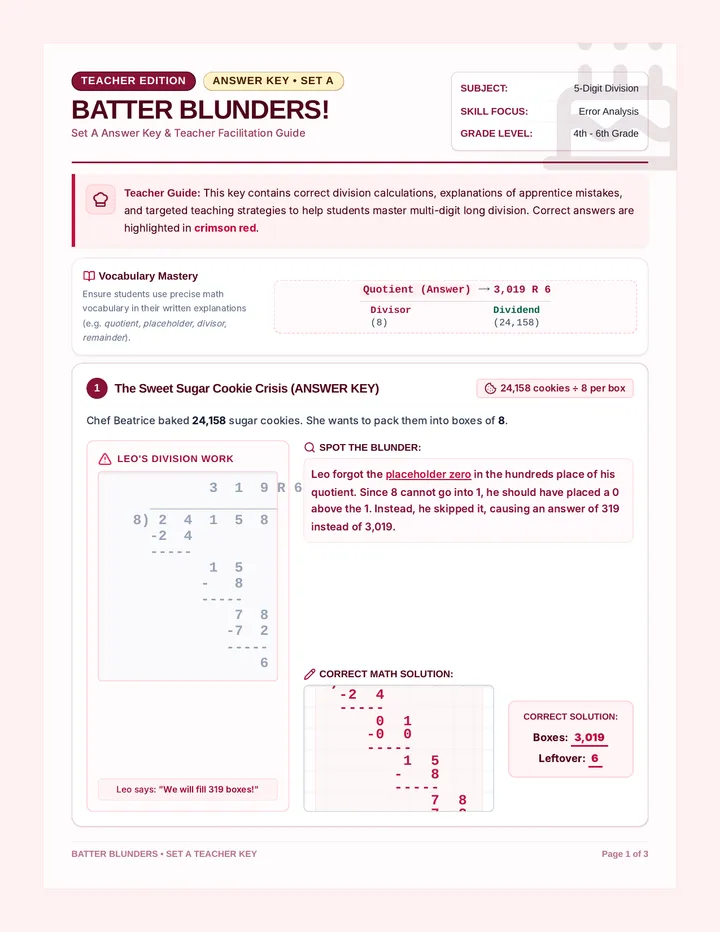
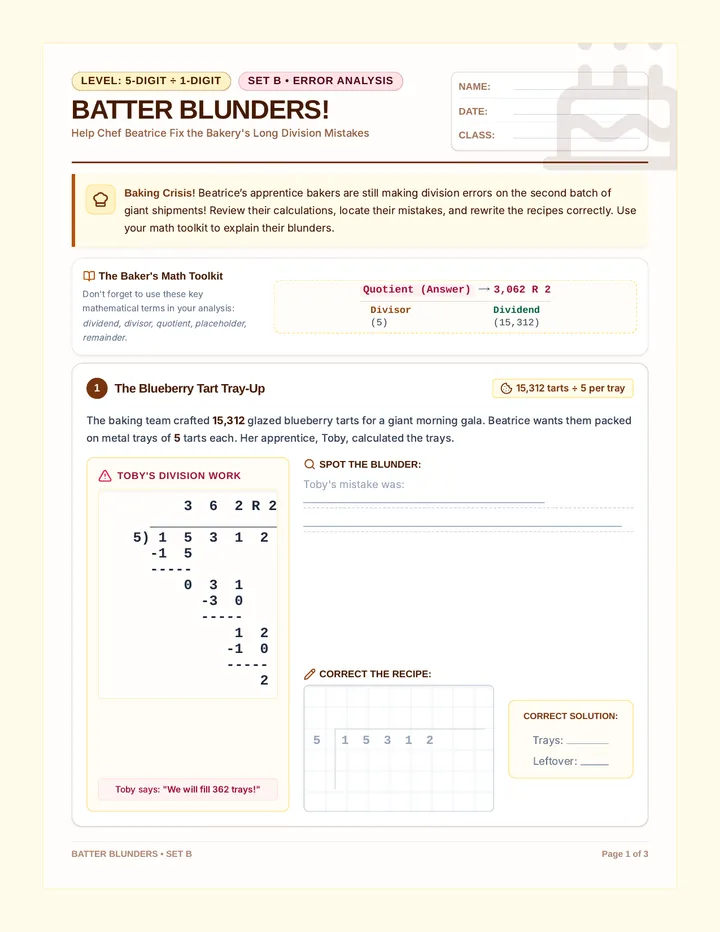
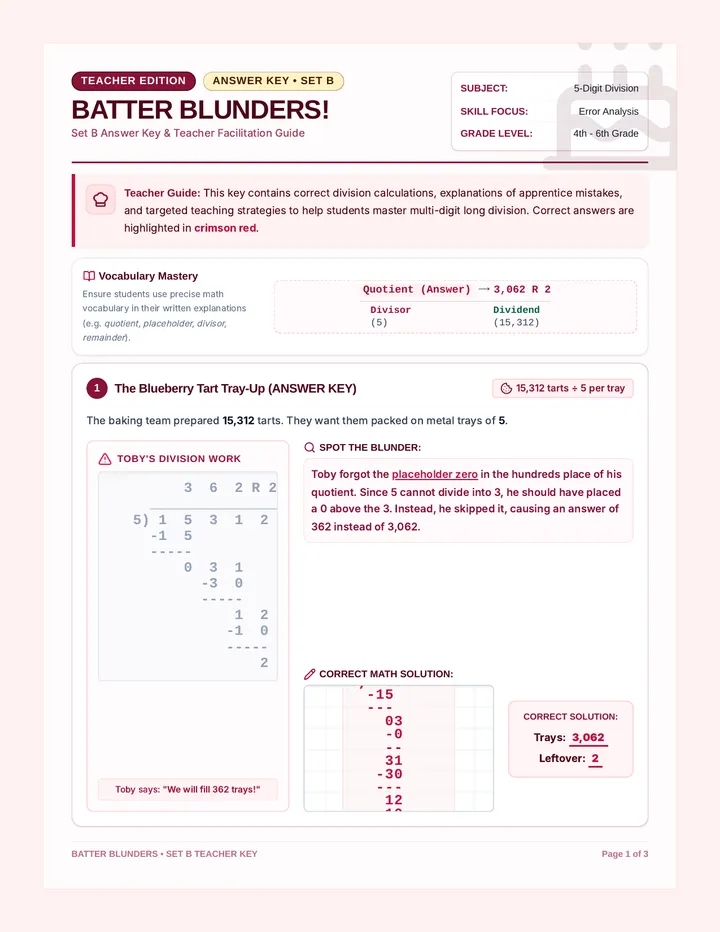
A lesson exploring division with remainders through the lens of a busy bakery, covering calculation steps and interpreting what leftovers mean in real-world contexts.
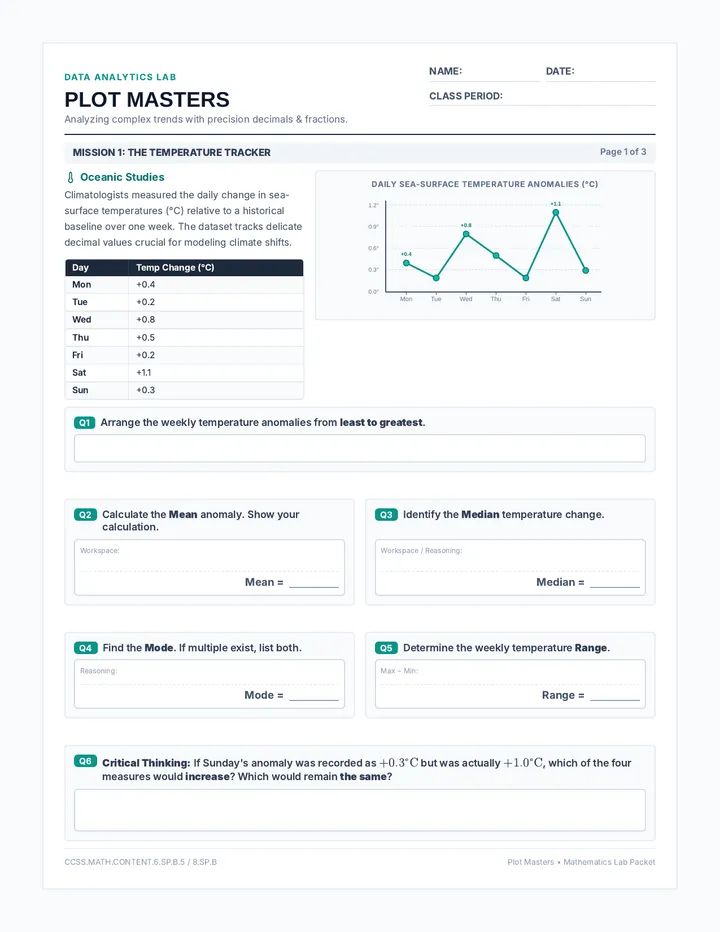
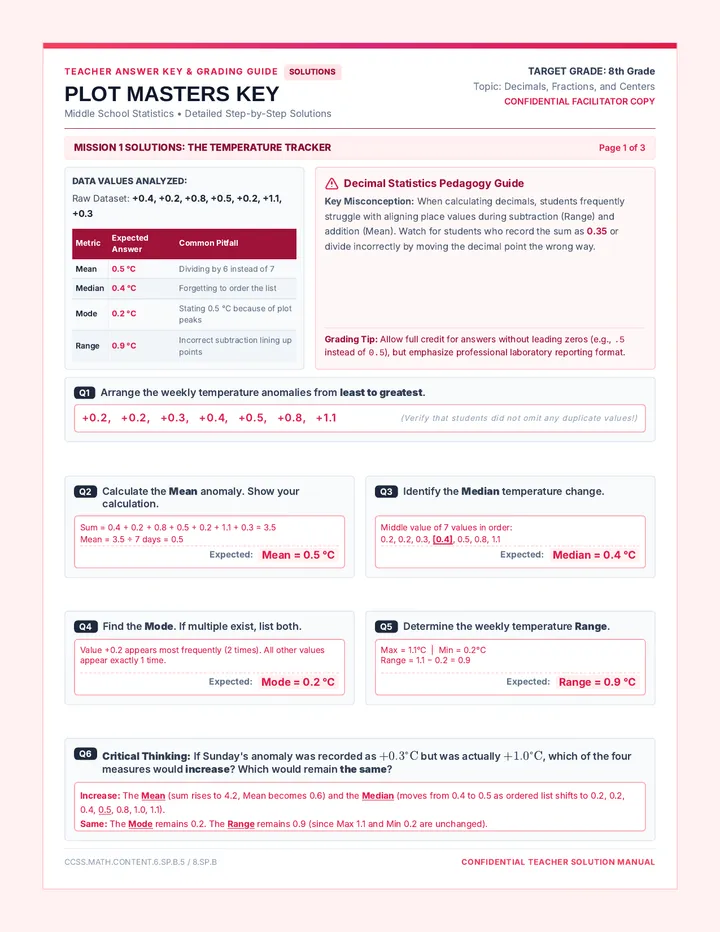
An advanced laboratory module focusing on the systematic comparison of decimals using visual models, place value analysis, and standard symbols.
A foundational exploration of decimals focusing on the relationship between fractions and place value for tenths and hundredths through visual models and precise identification.
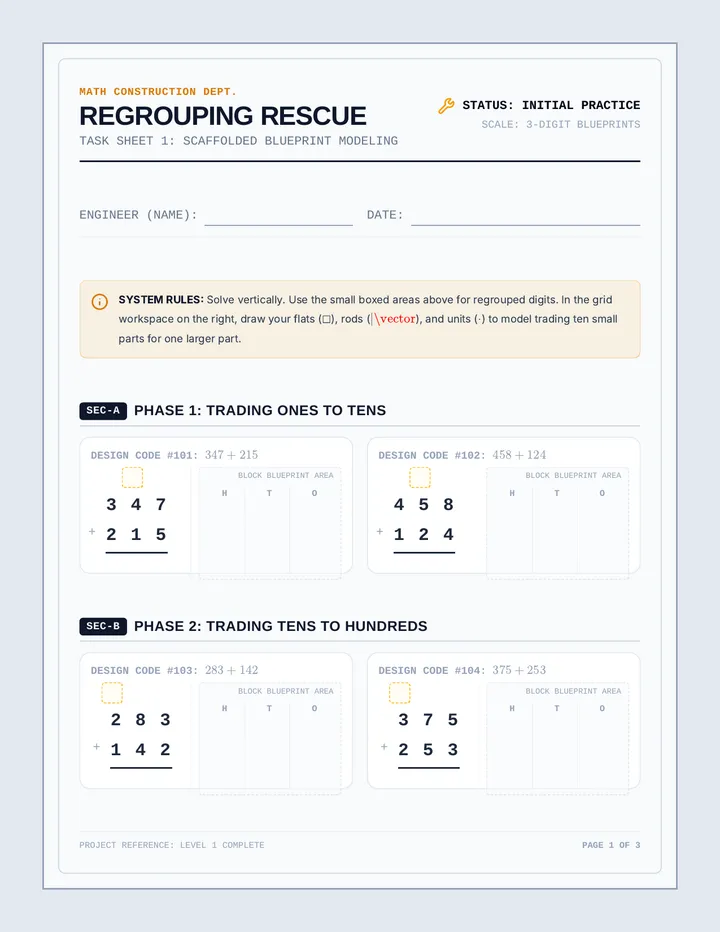
A collection of multi-step word problems involving addition, subtraction, multiplication, and division, designed to challenge students' logic and calculation skills through a 'blueprint' themed layout.
A baseline assessment lesson designed to evaluate a student's ability to identify and execute all four basic operations in multi-digit word problems. Includes a student worksheet with keyword supports and a teacher answer key.
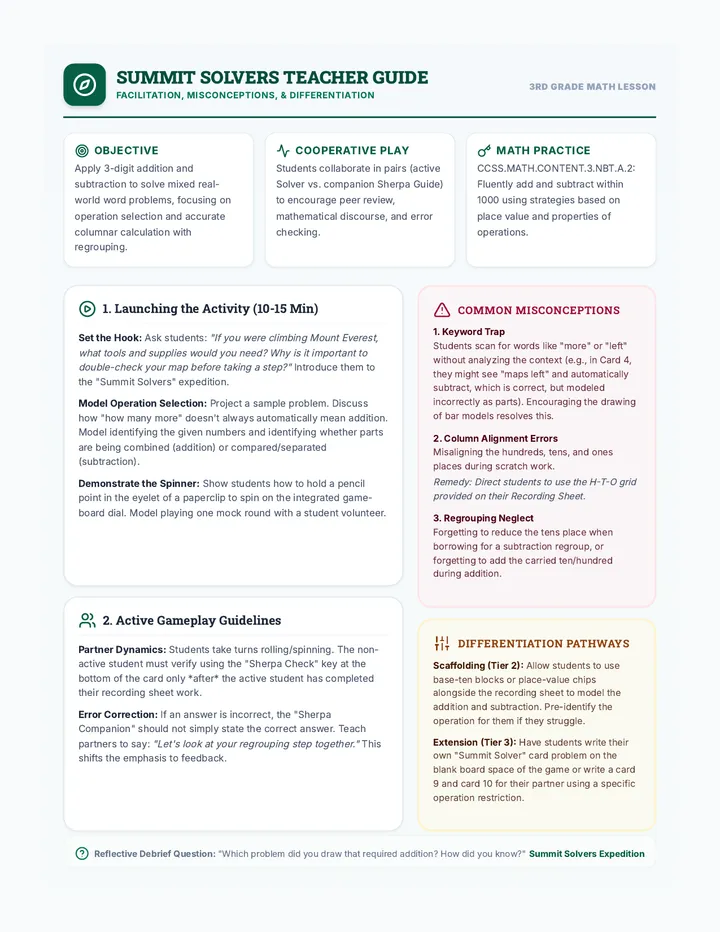
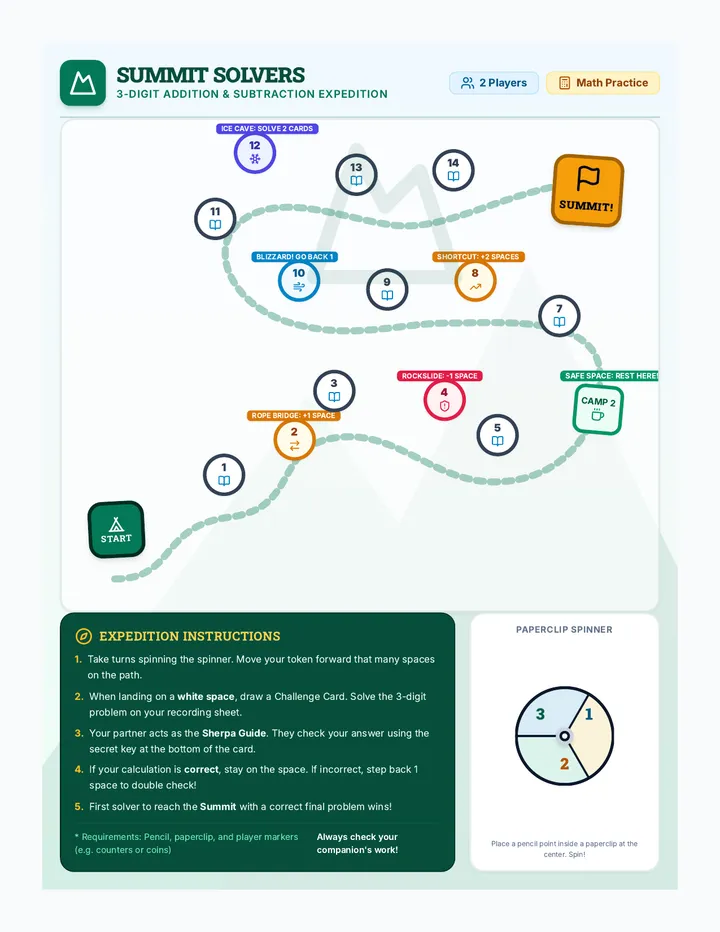
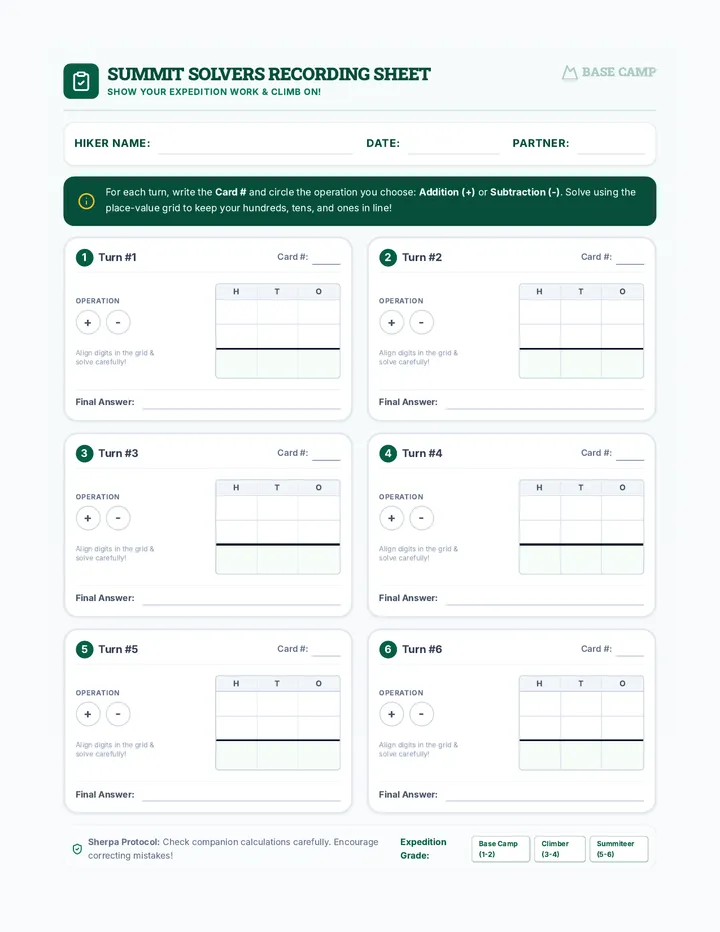
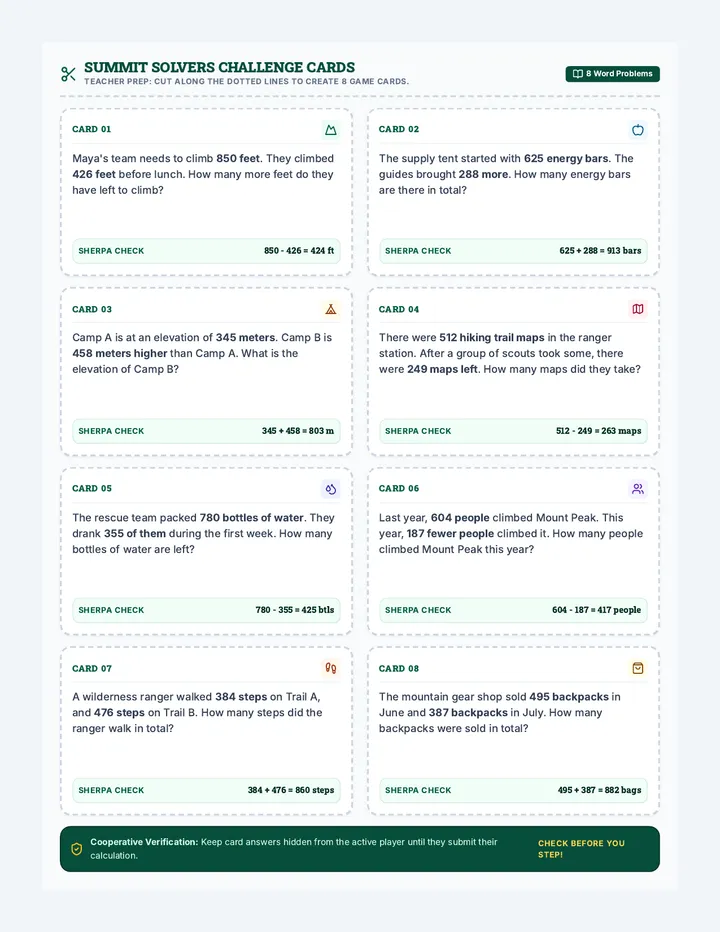
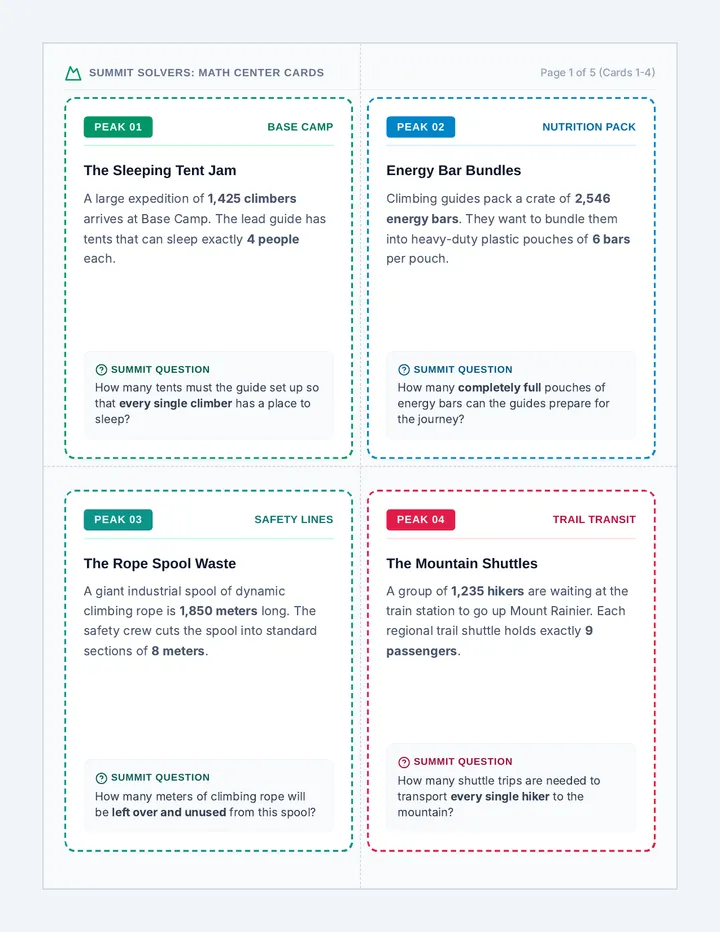
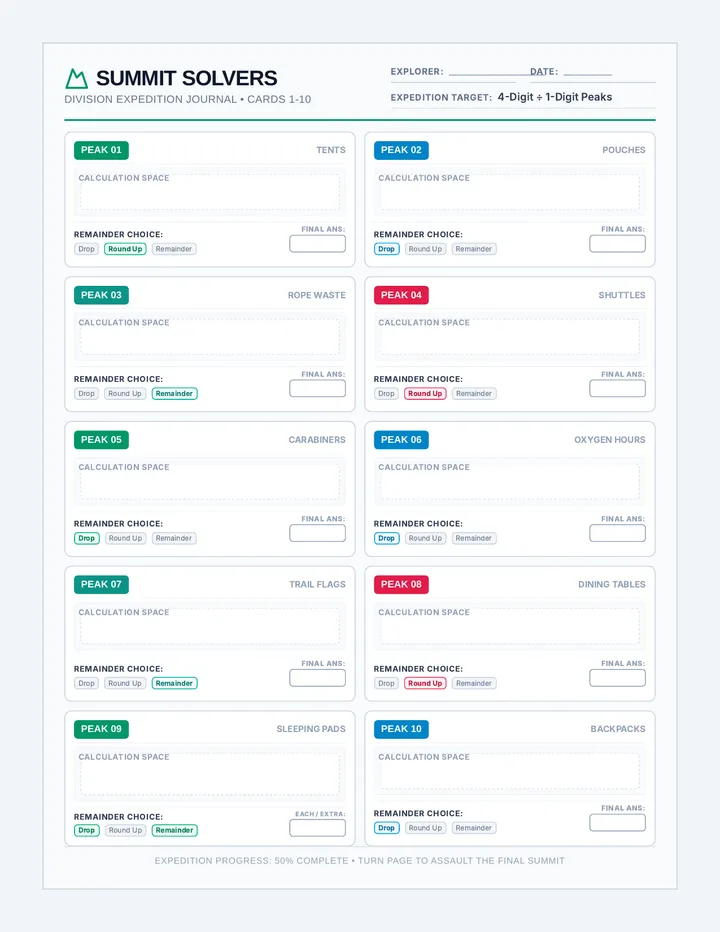
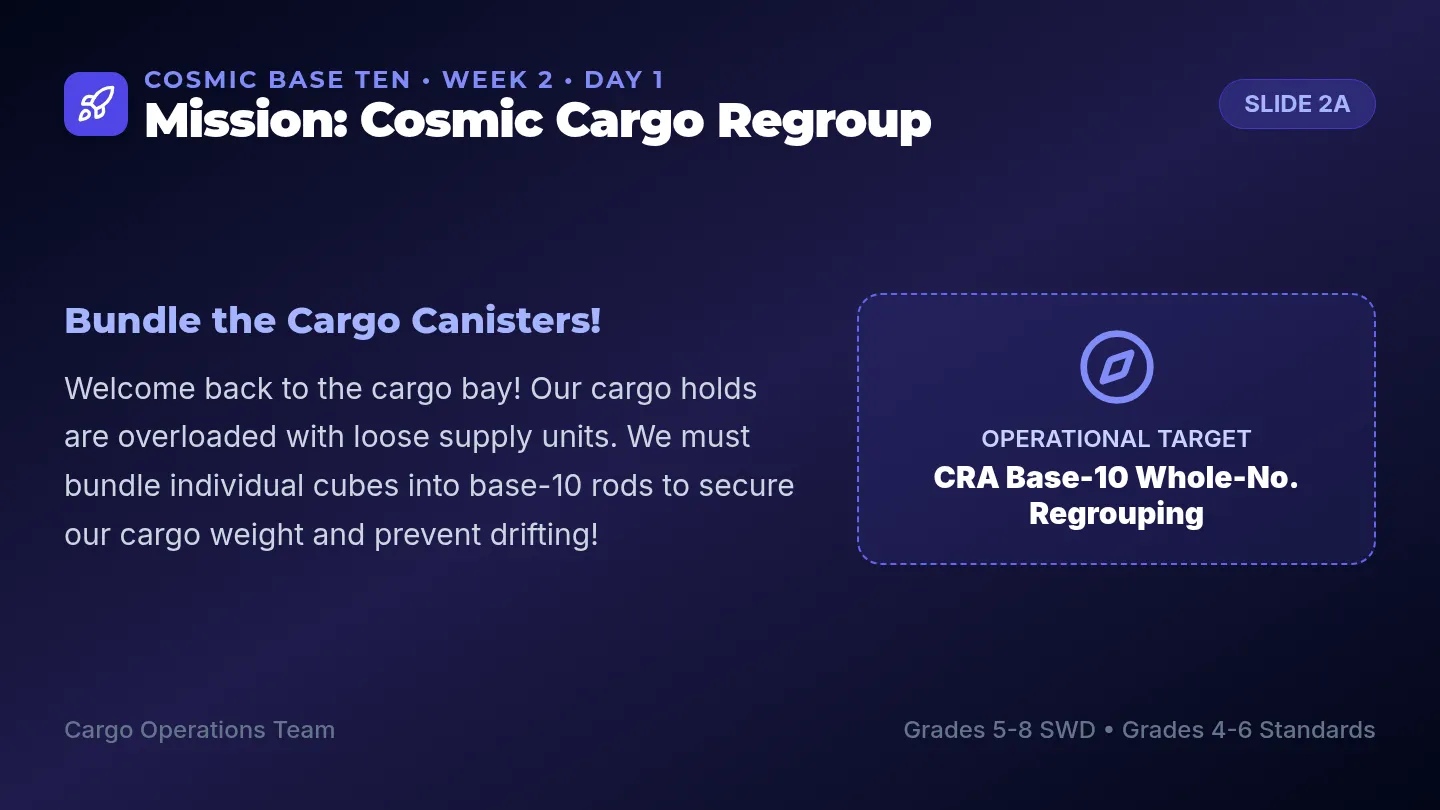
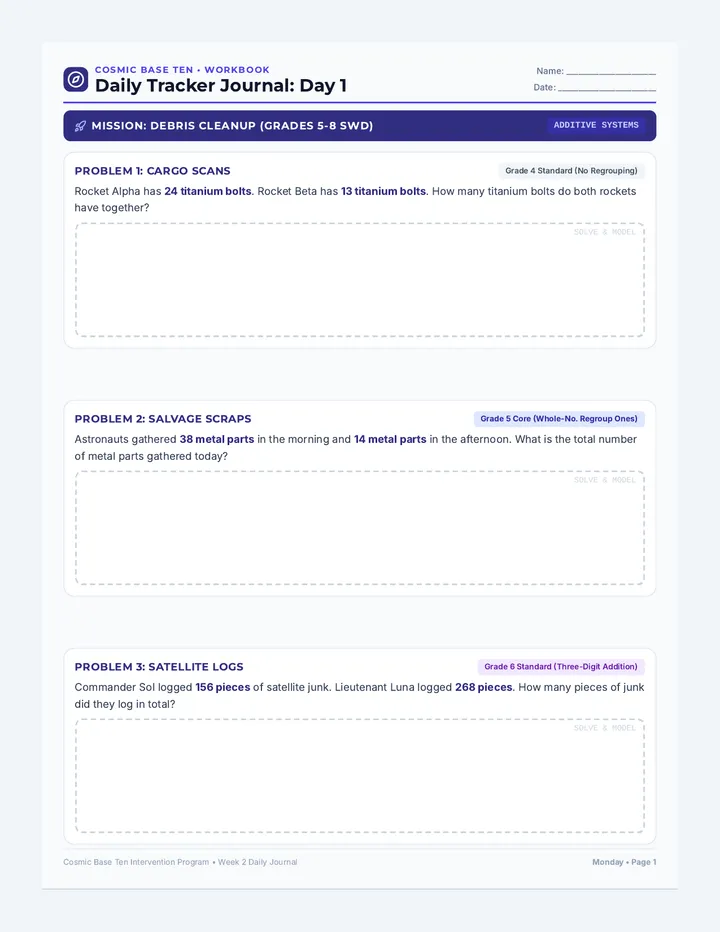
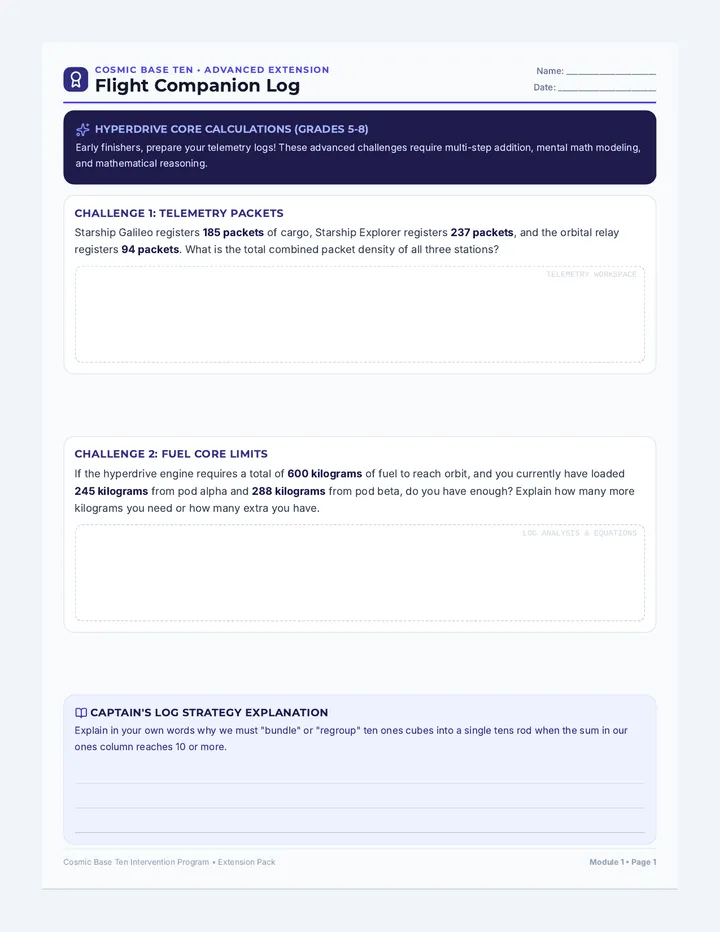
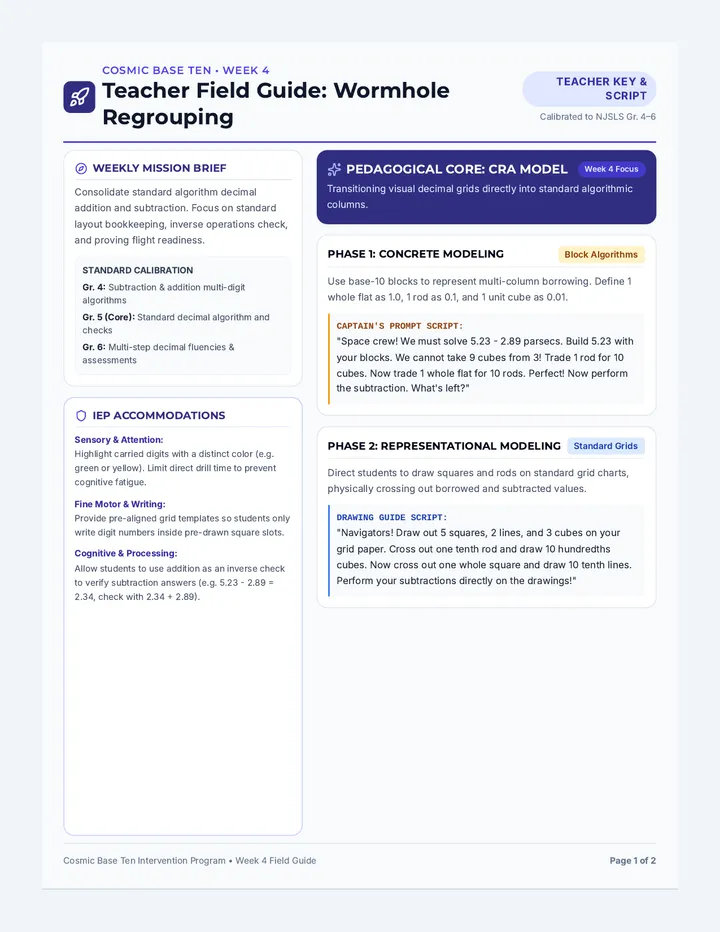
A lesson on multi-digit arithmetic using all four operations with regrouping, set in a mountaineering adventure theme.
A math worksheet focused on multi-step word problems involving all four operations, using simple decodable language for early readers.
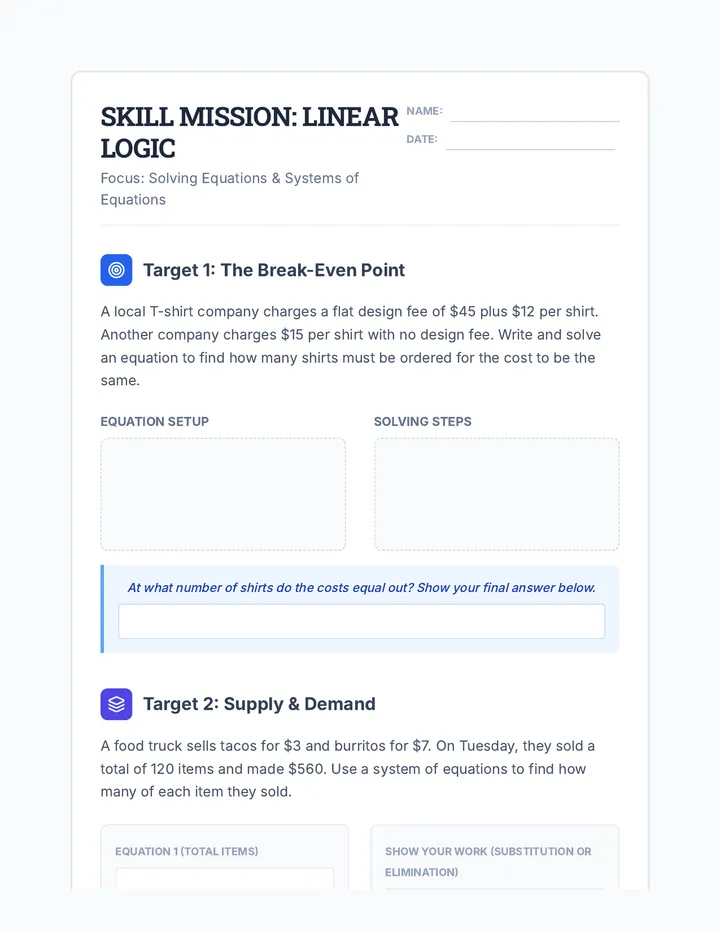
A lesson focused on solving multi-step word problems using addition, subtraction, multiplication, and division with three-digit numbers. Students will practice breaking down complex problems into manageable steps and showing their mathematical reasoning.
A comprehensive lesson on dividing decimals using visual models like base-ten blocks and area models, set in a detective-themed investigation.
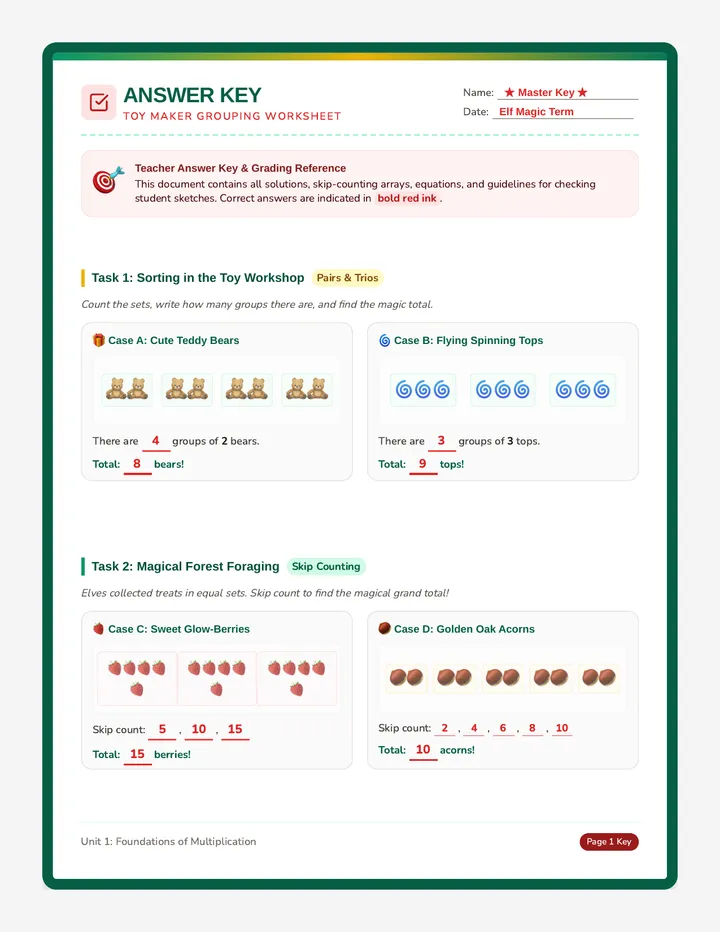
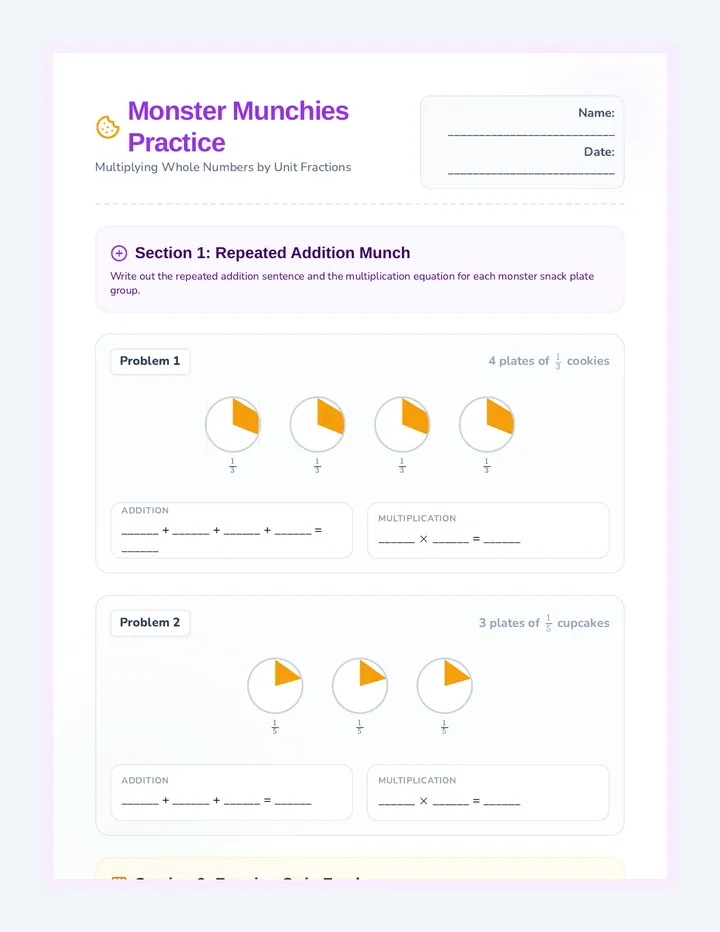
A lesson on multiplying whole numbers by fractions using visual set models with a bakery theme.
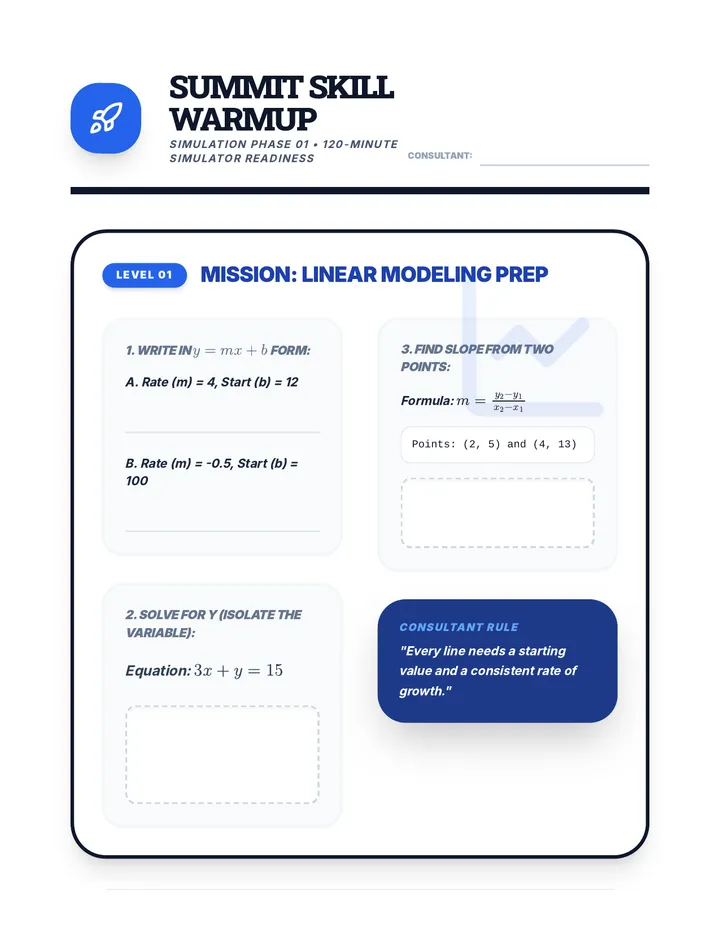
A specialized skill-building lesson focusing on standard 6.EE.7, 6.EE.8, and 6.NS.6. Students learn to use the process of elimination to solve one-step equations, identify inequality constraints, and map points on the coordinate plane.
A comprehensive review and assessment of NC 4.NBT.2 skills. Students complete a final 'case' to prove their mastery of reading, writing, and comparing large numbers.
Reviews all previous skills while introducing place value patterns and mixed math operations. Students look for mathematical fingerprints and solve multi-step problems.
Teaches students to compare multi-digit numbers using place value logic and mathematical symbols. Students use the 'greater than', 'less than', and 'equal to' signs to document their findings.
Explores the value of each digit in a multi-digit number through expanded form. Students deconstruct numbers into their component parts and reconstruct them into standard form.
Focuses on reading and writing multi-digit numerals and translating them into formal number names. Students learn to navigate periods (thousands, millions) to decode large numbers.
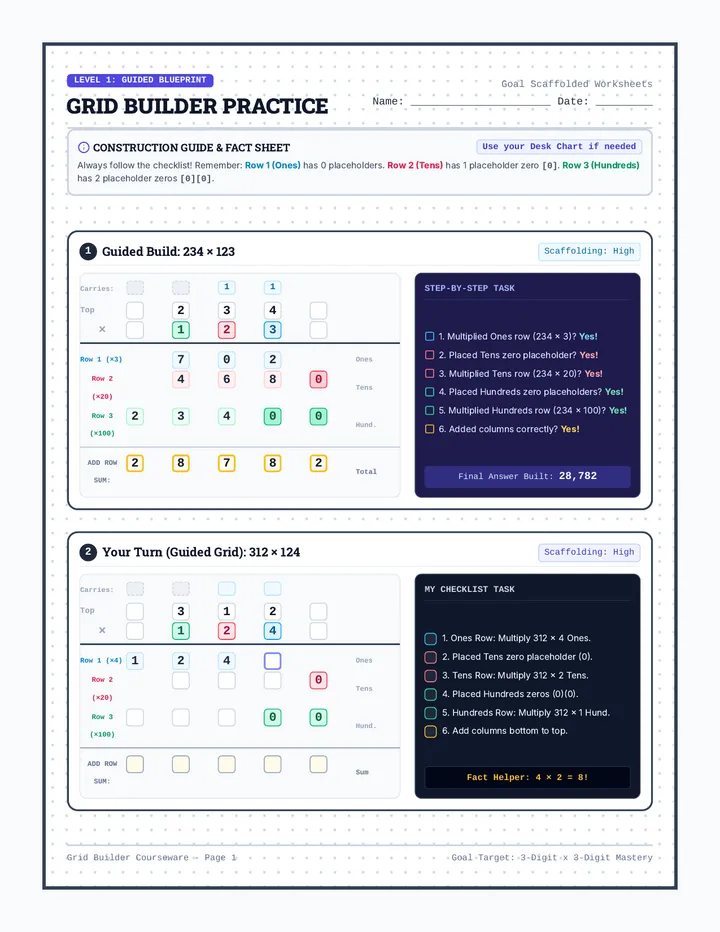
Students connect visual models to the standard algorithm for multiplication and long division, building procedural fluency with conceptual understanding.
Students apply area models and partial quotients to solve multi-digit division problems, emphasizing the concept of 'fair sharing' and decomposition.
Students explore multi-digit multiplication using the area model and partial products, focusing on the relationship between place value and the distributive property.
Students learn to calculate the area of rectangles and squares using two methods: counting unit squares on a grid and multiplying side lengths. This lesson provides hands-on practice with whole number measurements to build a solid foundation in geometry.
A comprehensive review of angle relationships and triangle properties, featuring guided scaffolds and visual equation solving. Students will master identifying angles, solving for unknowns, and applying triangle theorems.
A focused mini-lesson on identifying, calculating, and analyzing complementary and supplementary angles using color-coded visual supports and real-world architect-themed scenarios.
A comprehensive lesson on telling time to the exact minute, focusing on reading precise analog clocks and identifying correct digital representations.
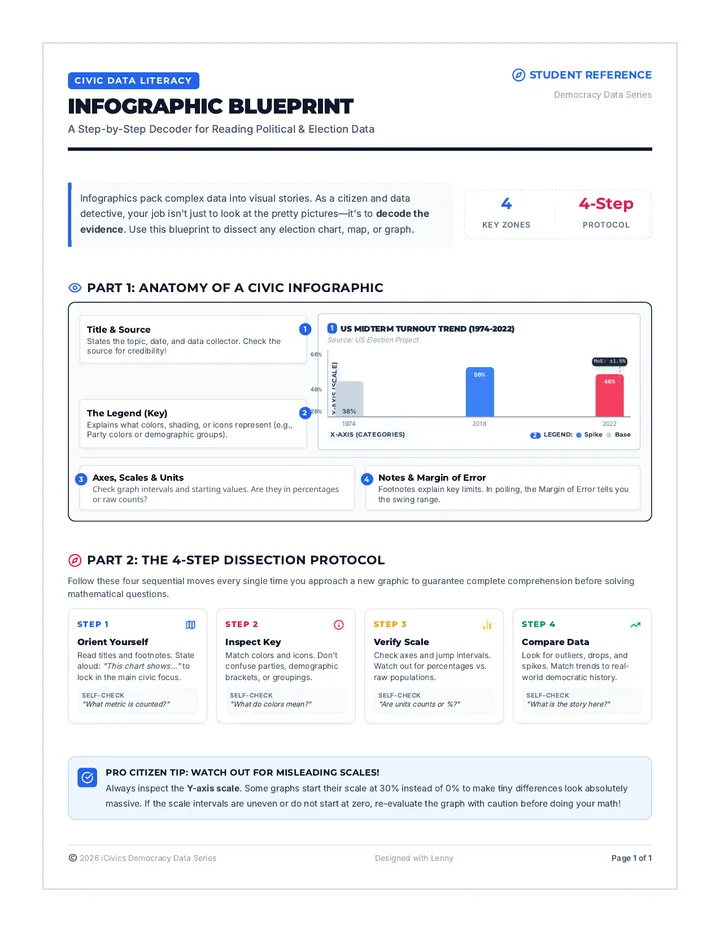
A presentation exploring different ways to track and visualize classroom reading goals using bar graphs, pictographs, and line plots.