A Minecraft-themed lesson on finding volume with fractional edge lengths. Students use physical unit cubes to model structures and apply formulas to solve building challenges.
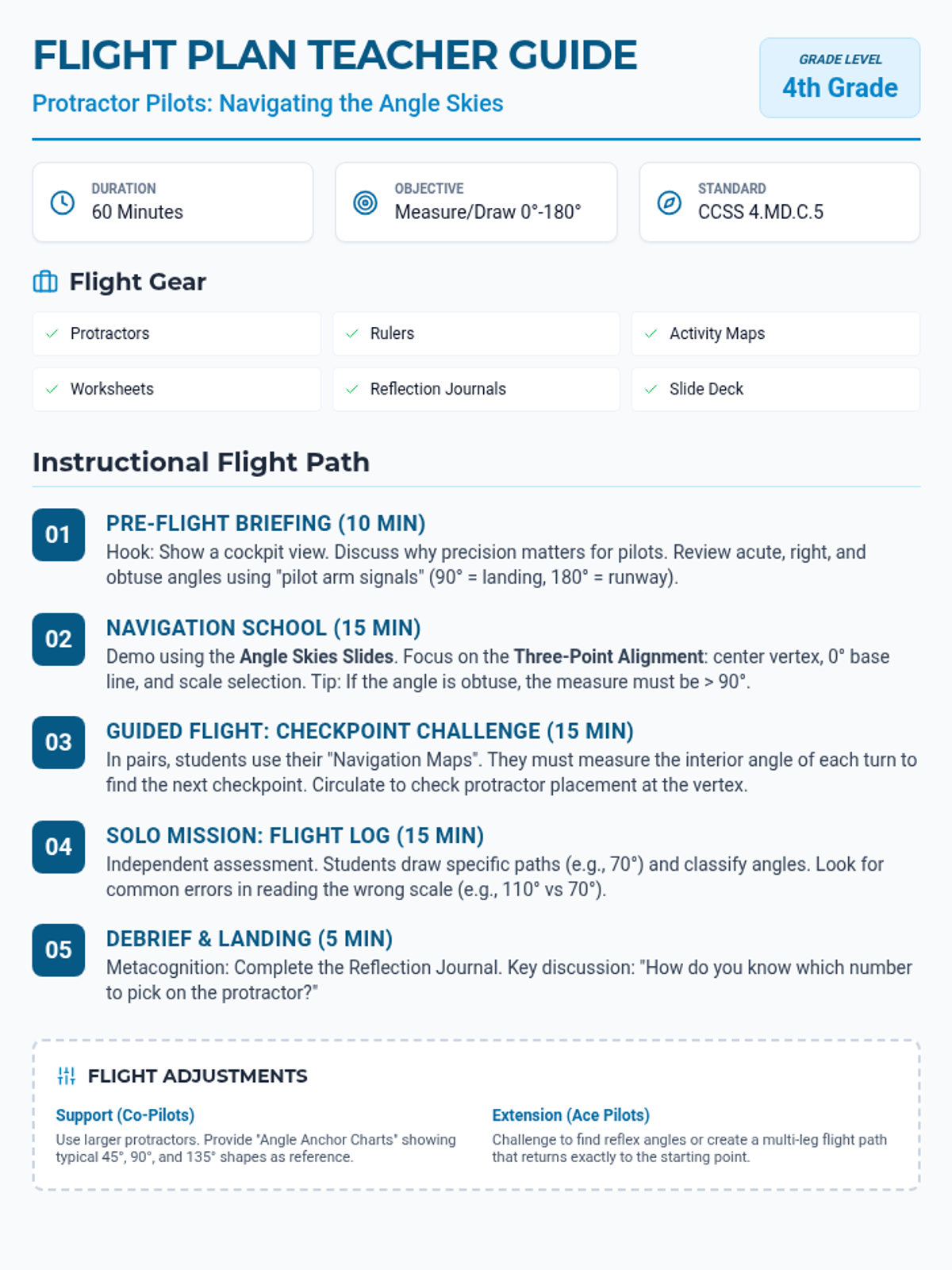
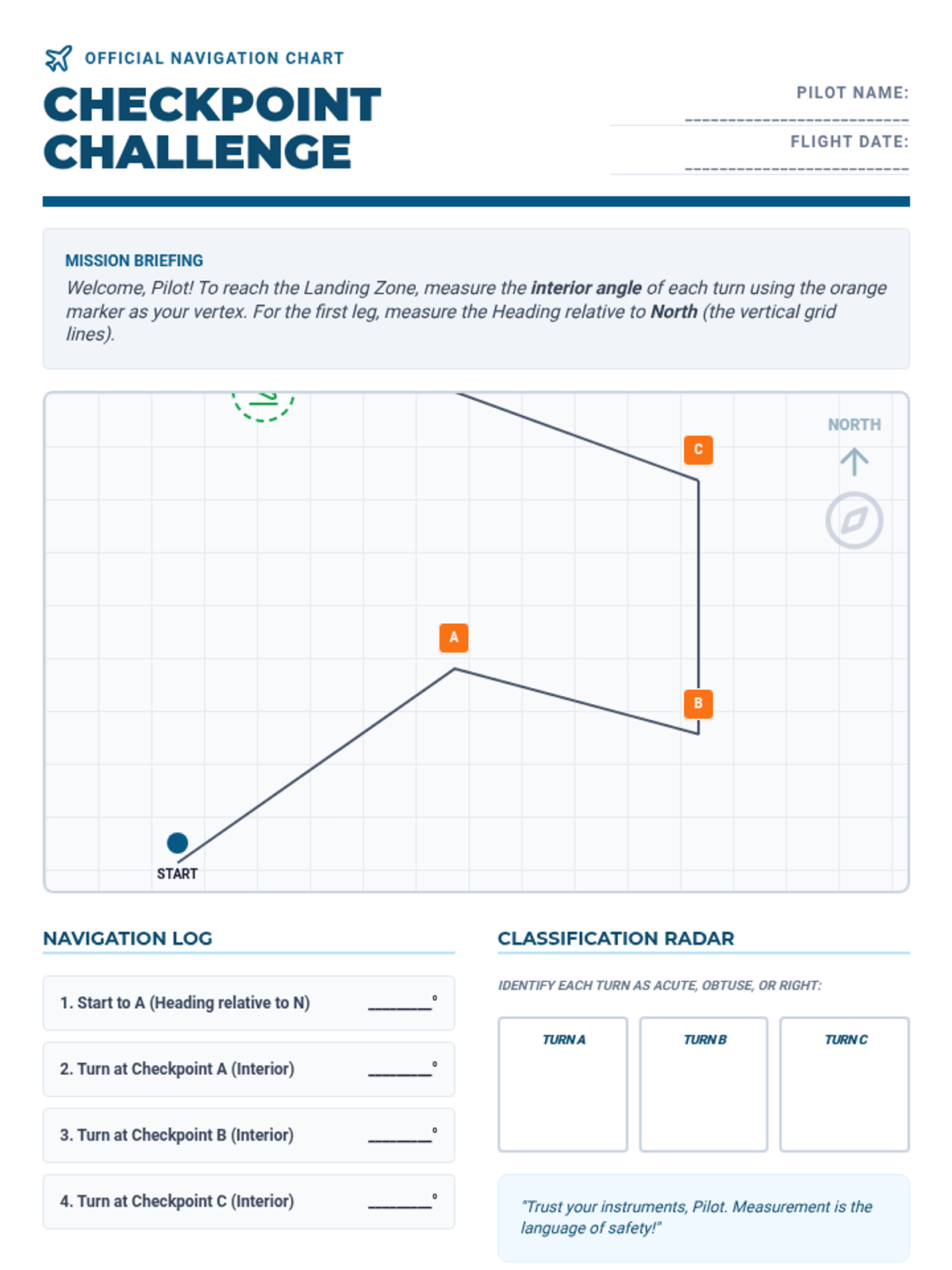
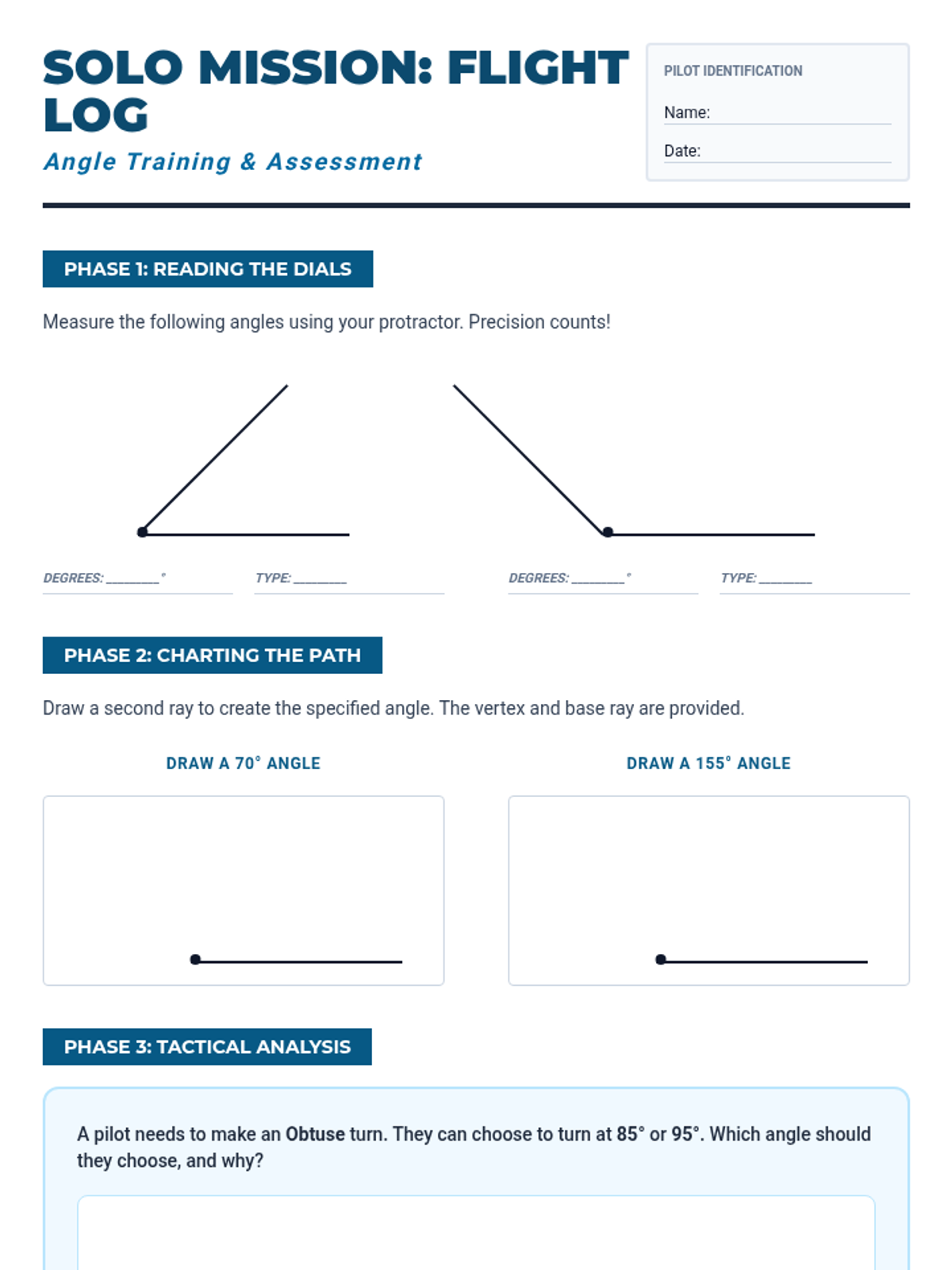
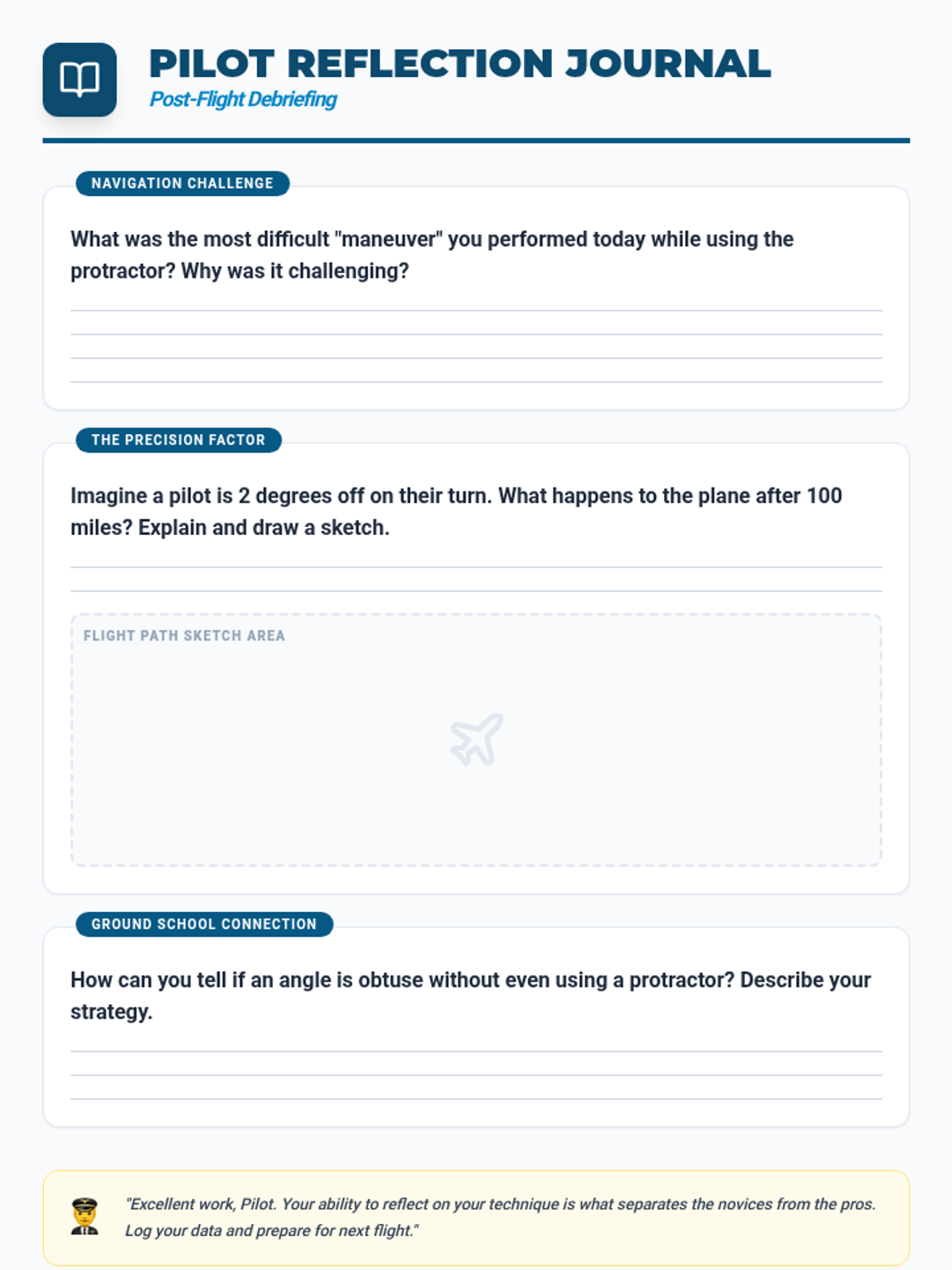
Students take to the skies as 'Protractor Pilots' to master measuring and drawing angles. This aviation-themed lesson focuses on precision, classifying angles, and spatial reasoning through a flight navigation simulation.
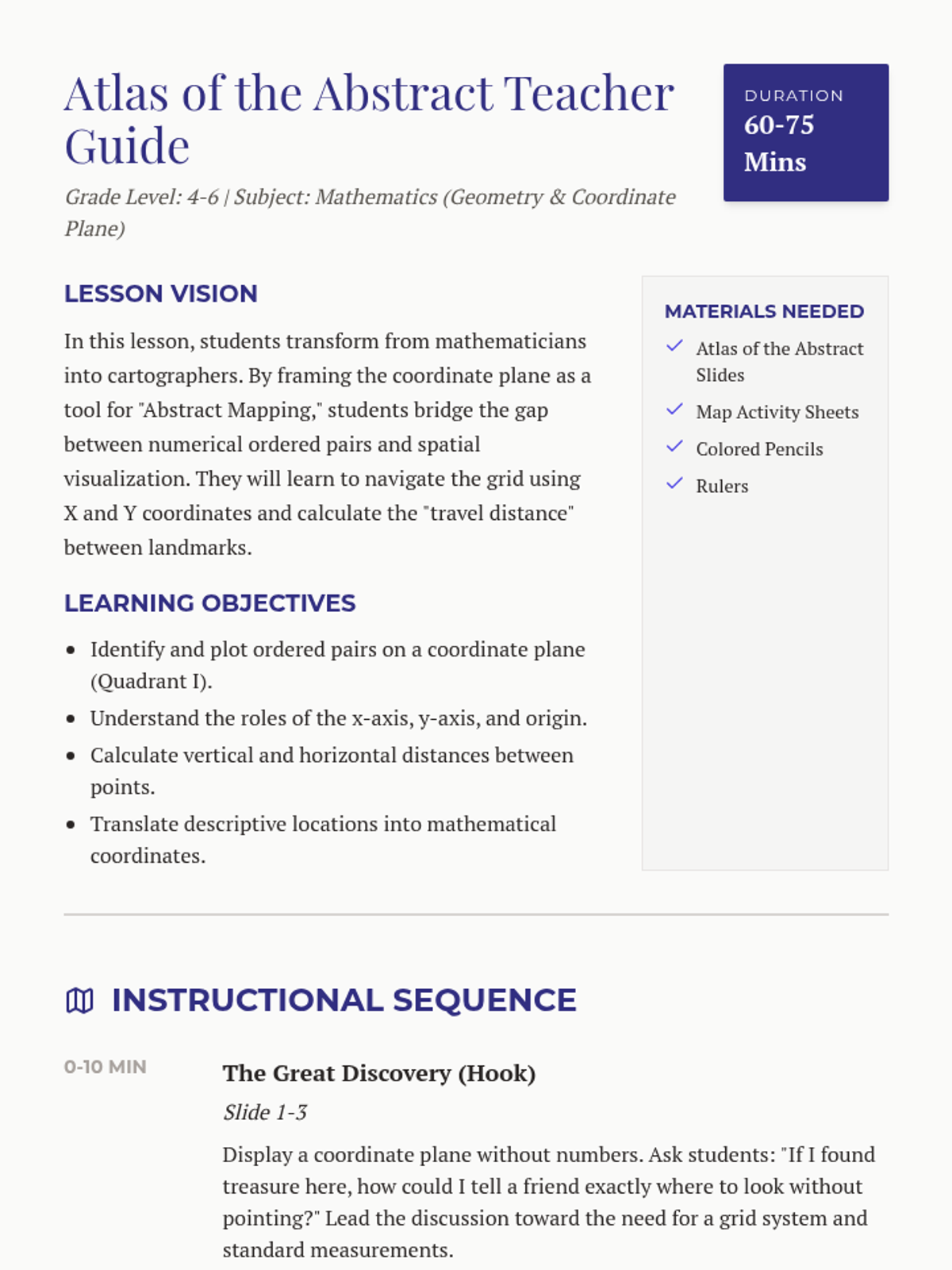
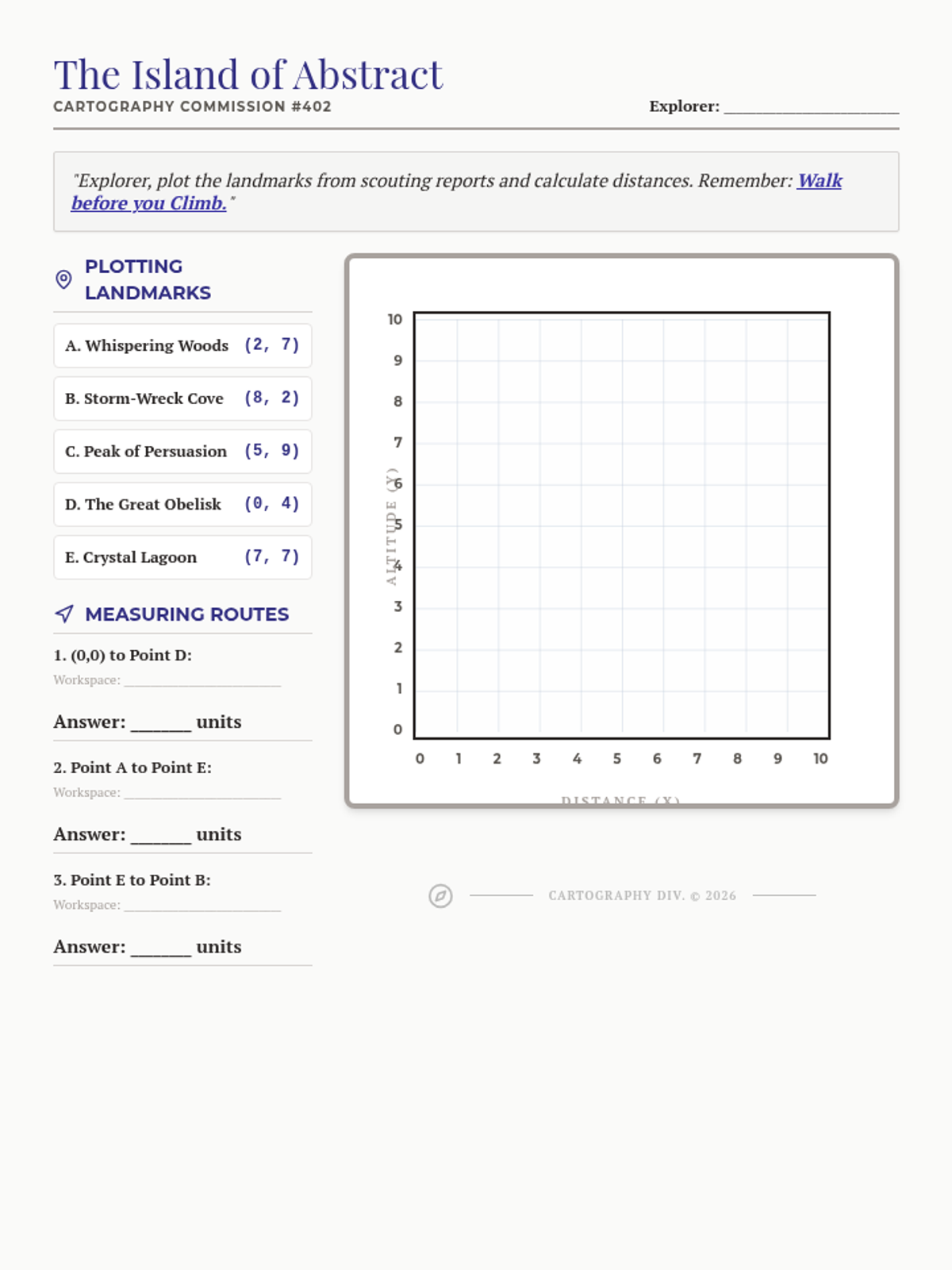
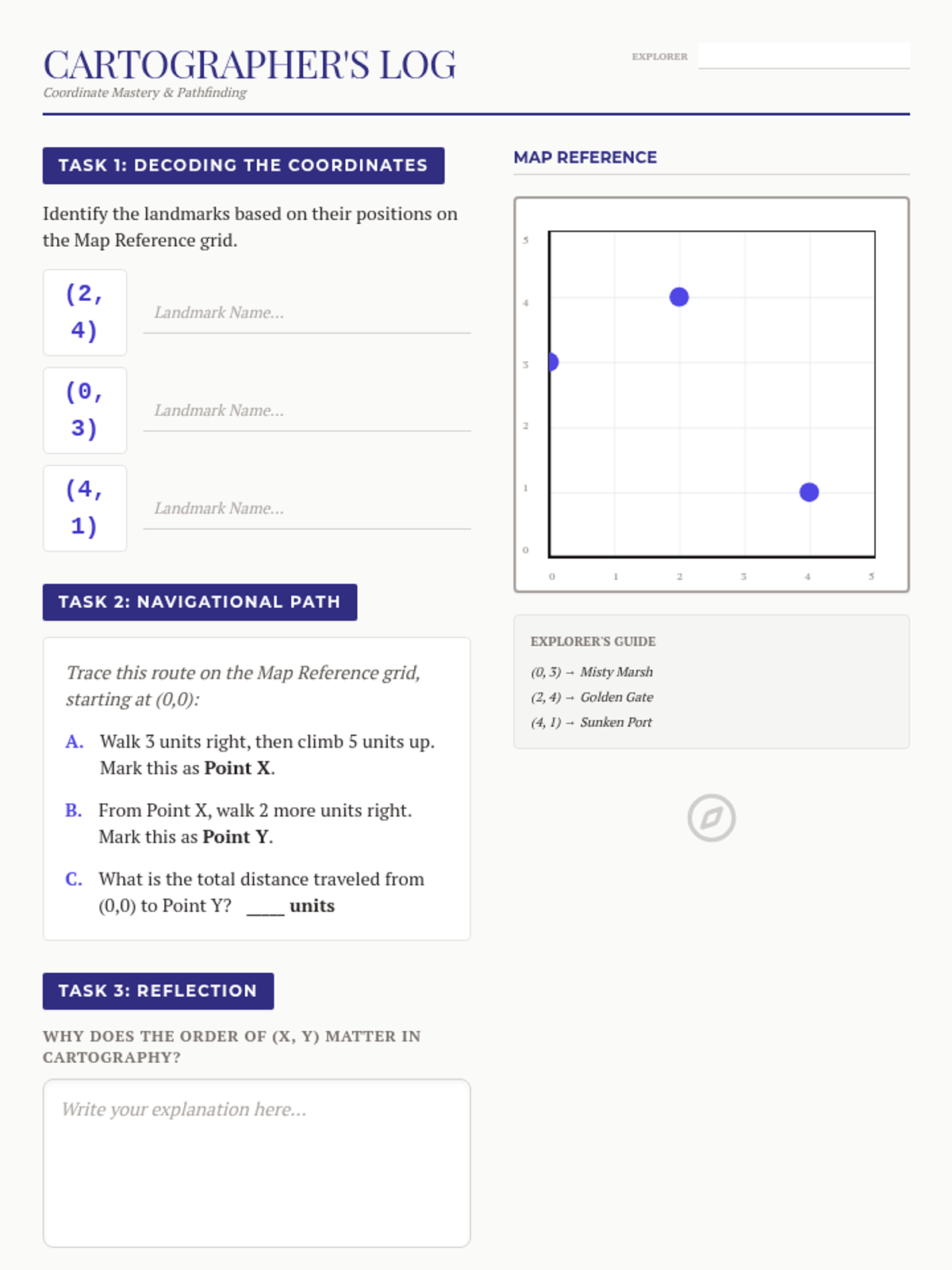
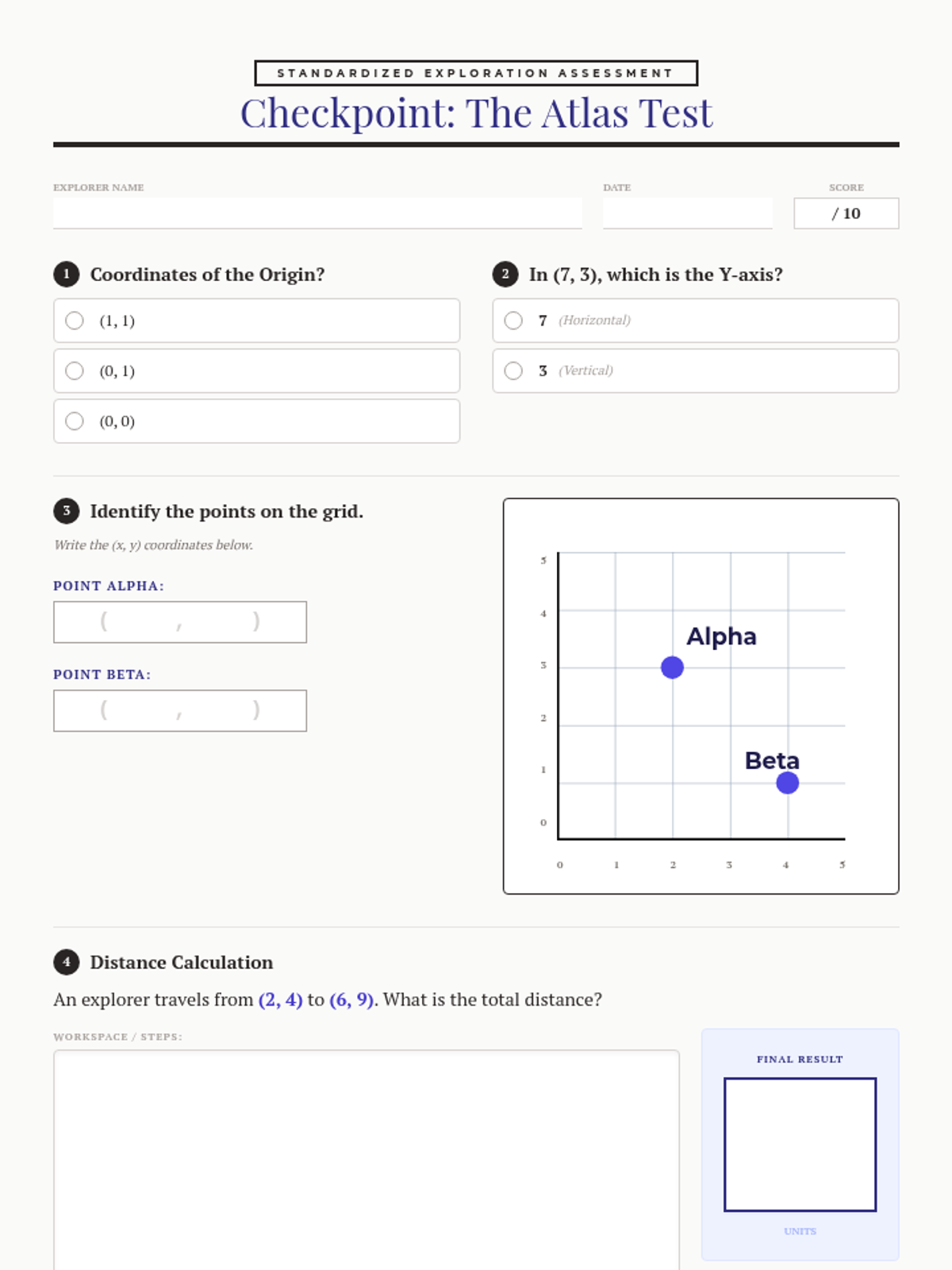
Students explore the coordinate plane through the lens of cartography, mapping imaginary landscapes using ordered pairs and calculating distances between landmarks.
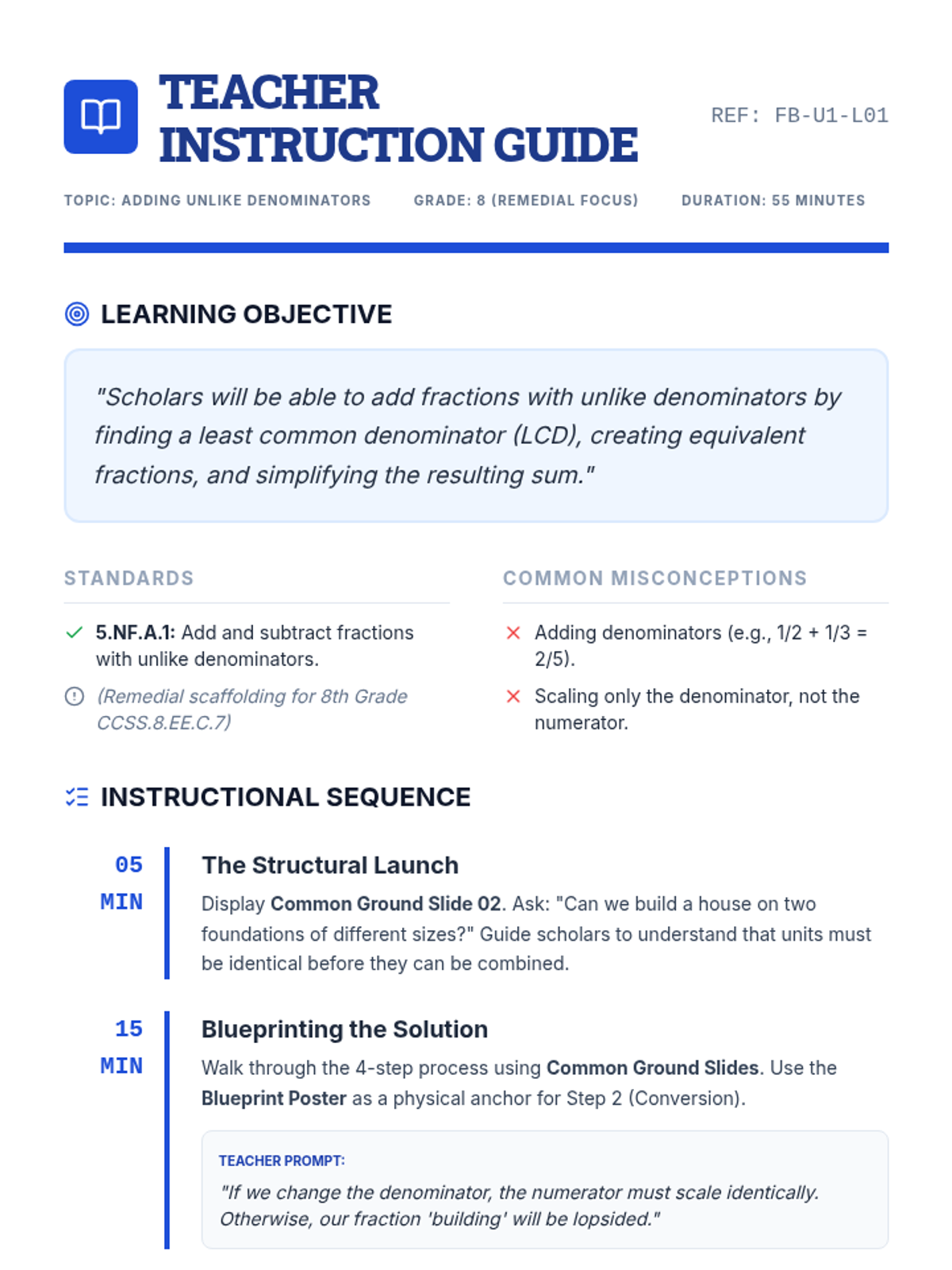
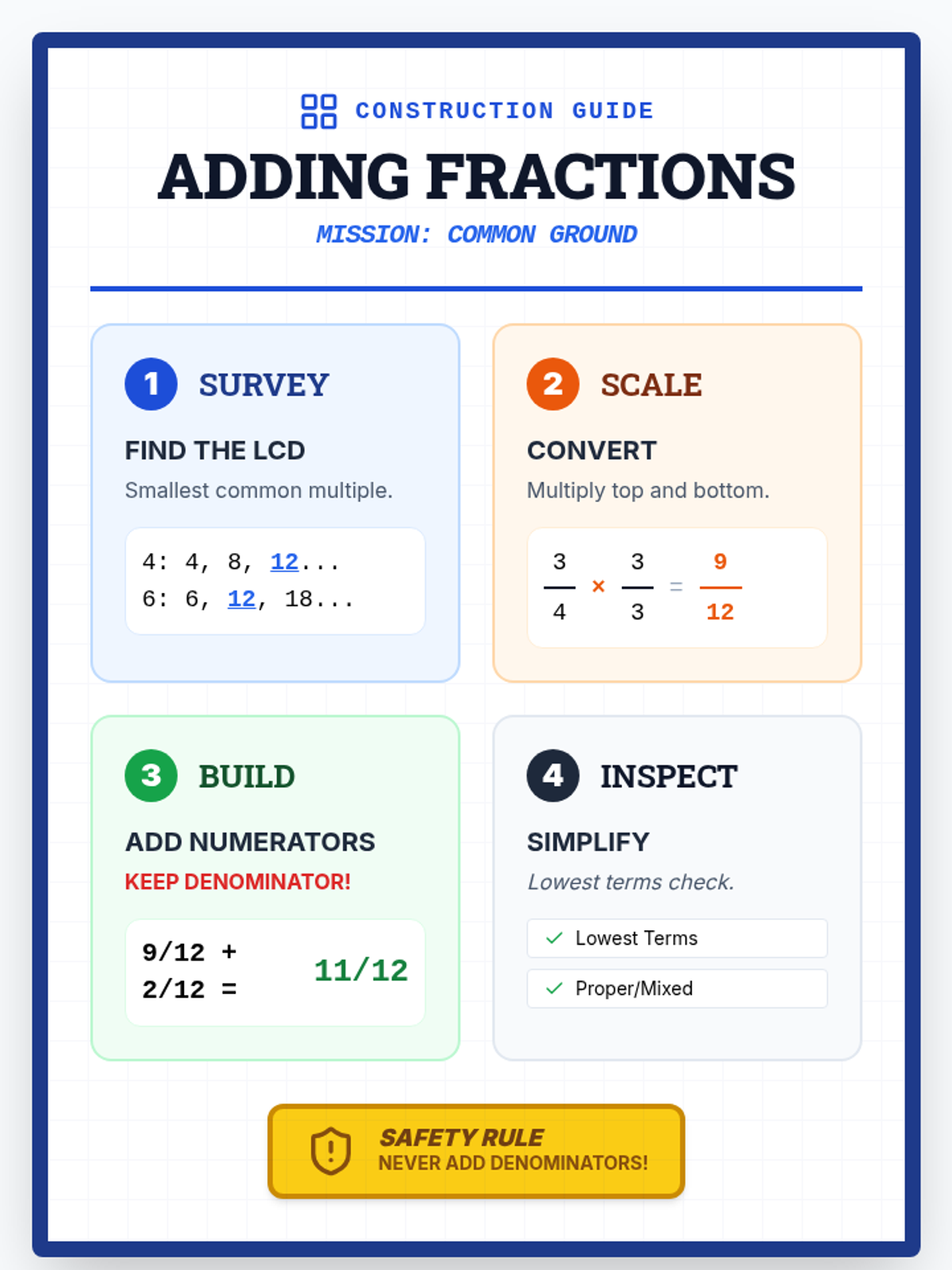
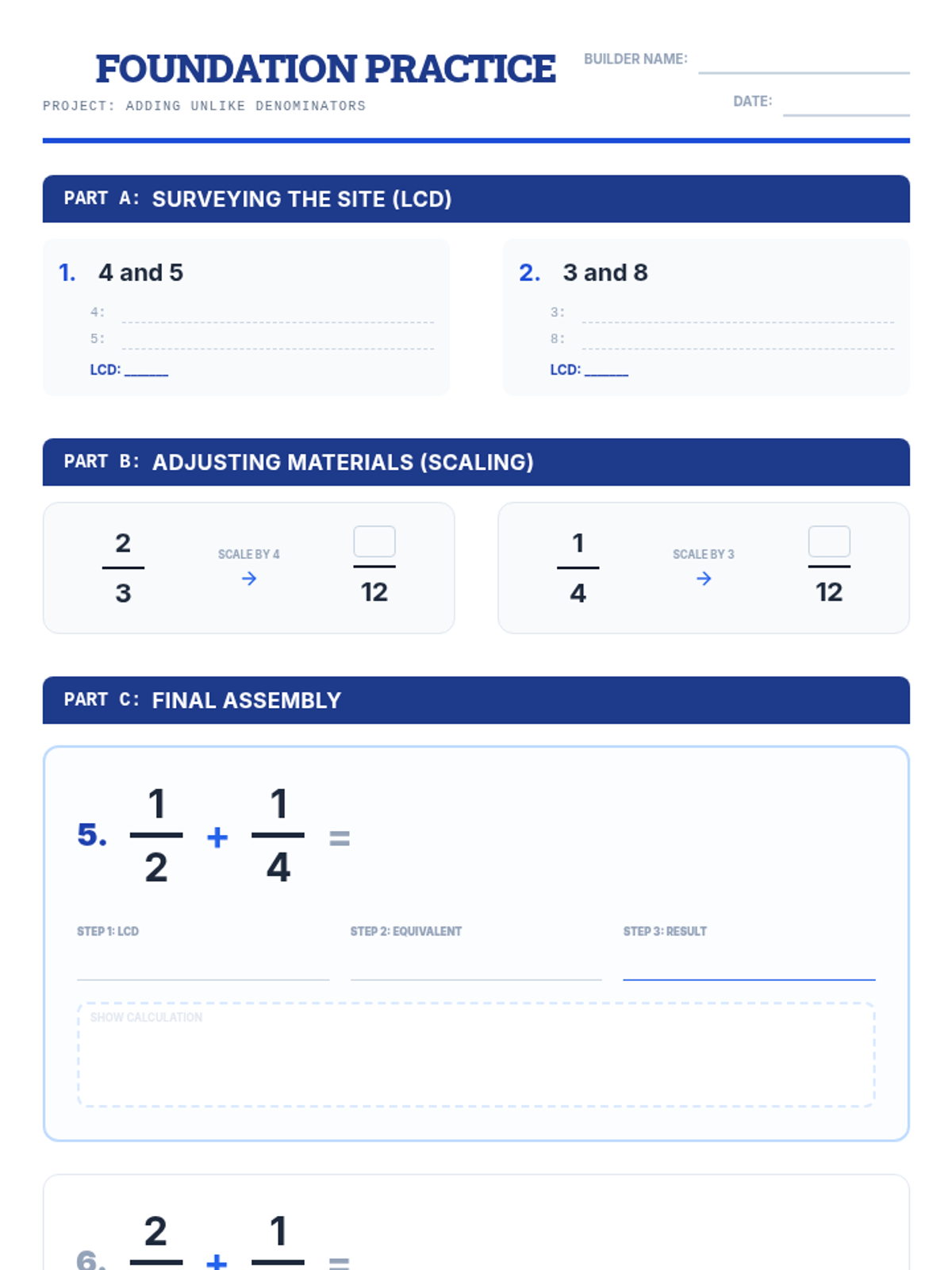
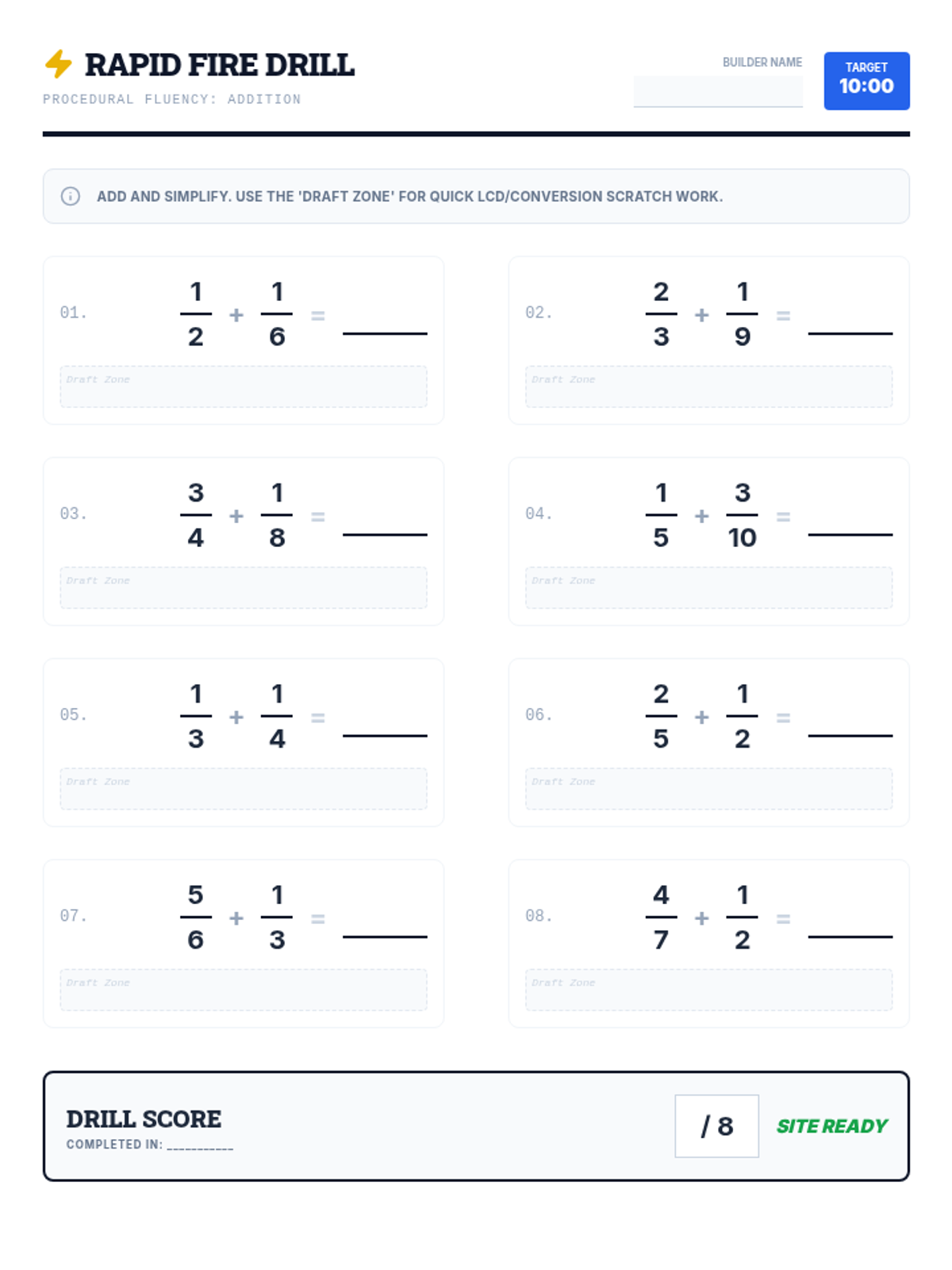
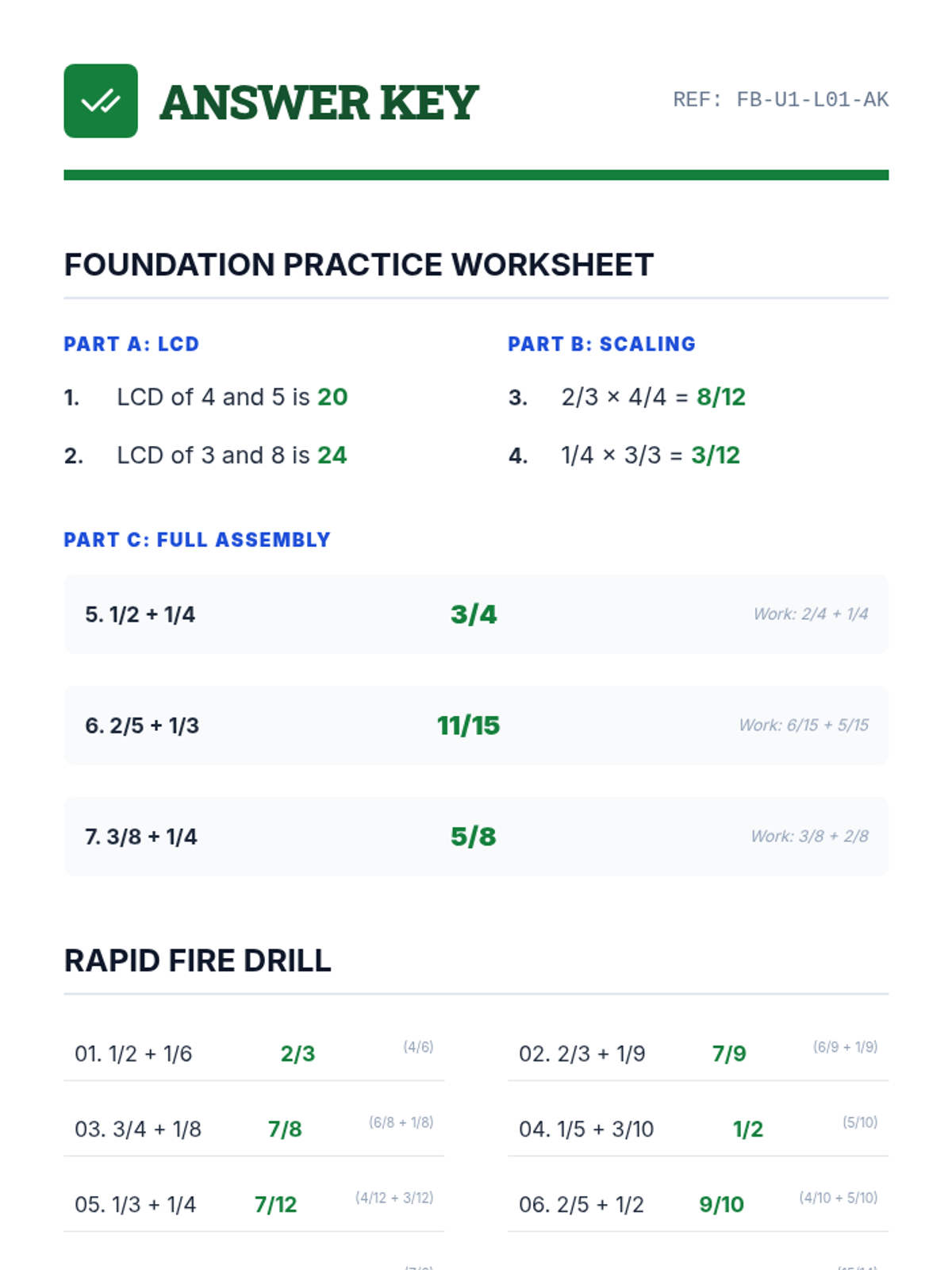
A focused lesson on adding fractions with unlike denominators using a blueprint-inspired approach to building common denominators.
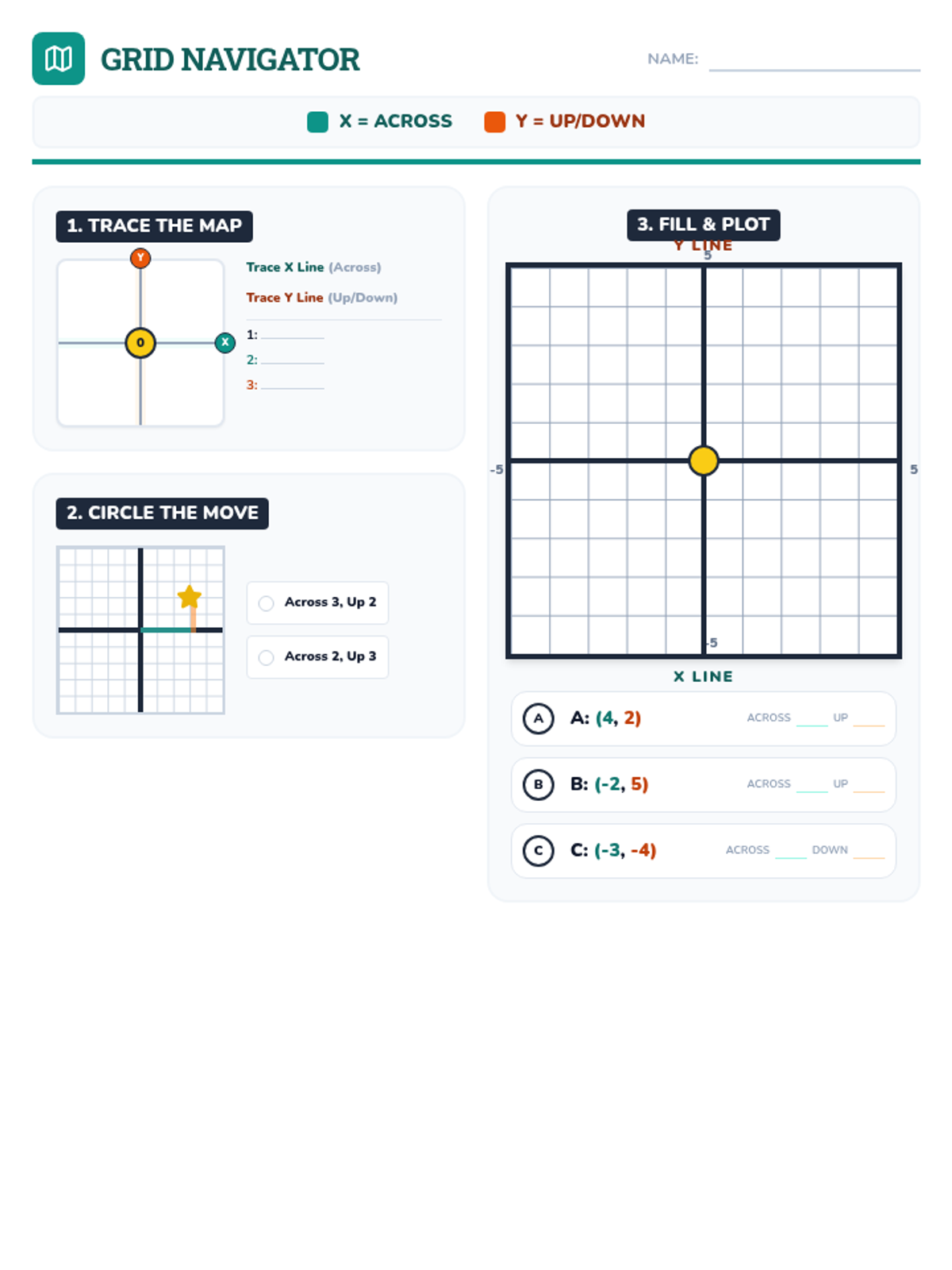
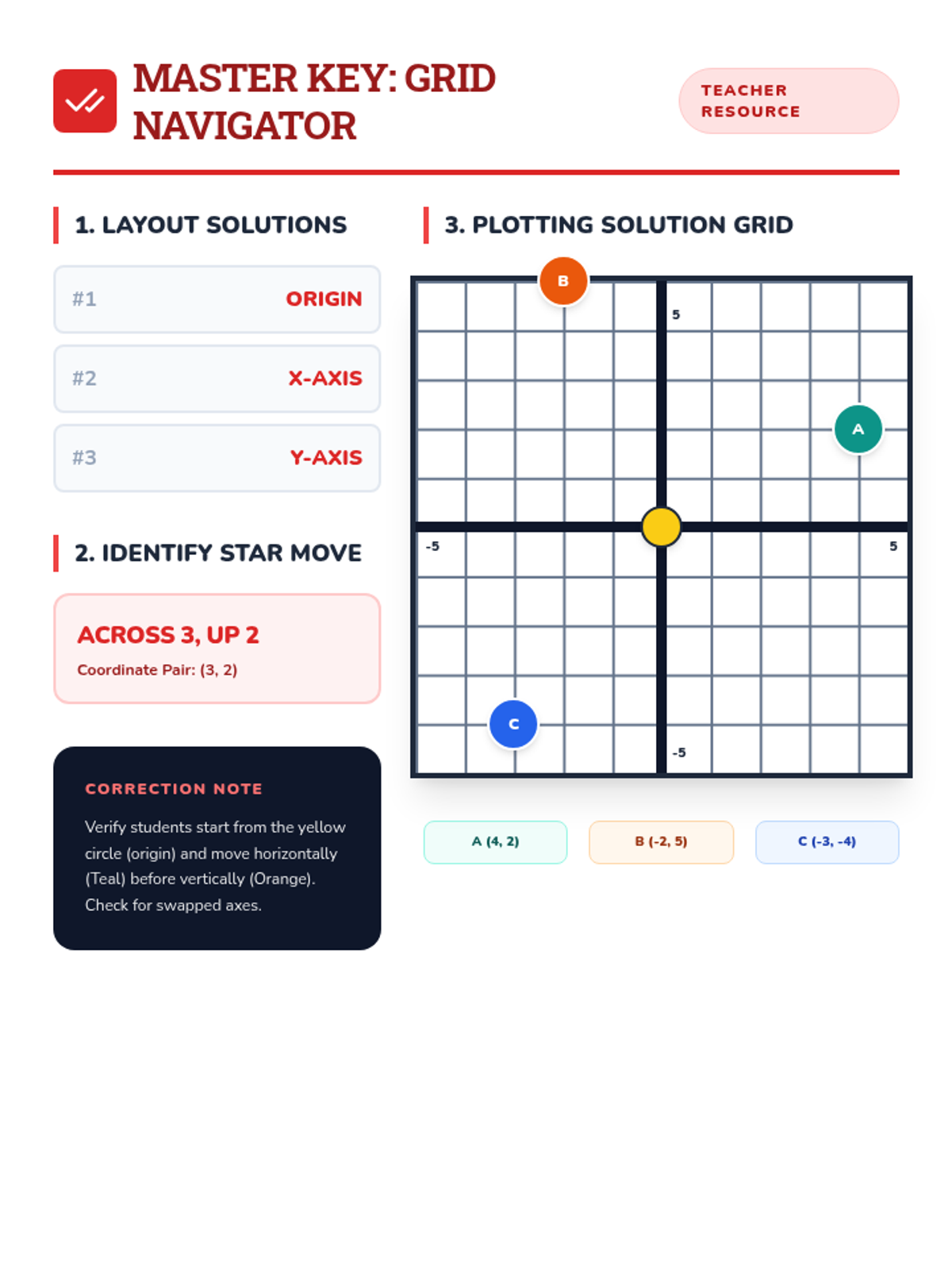
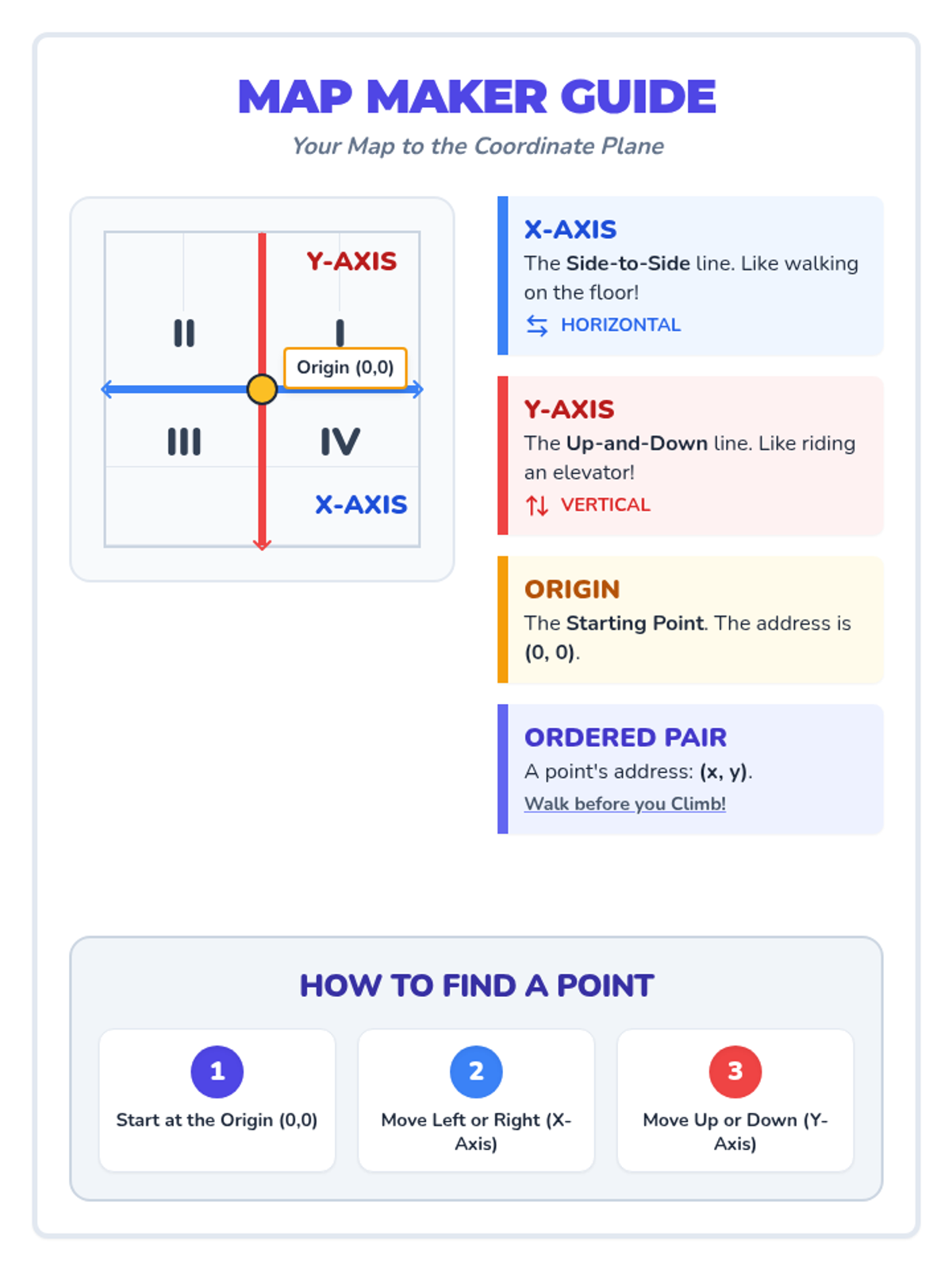
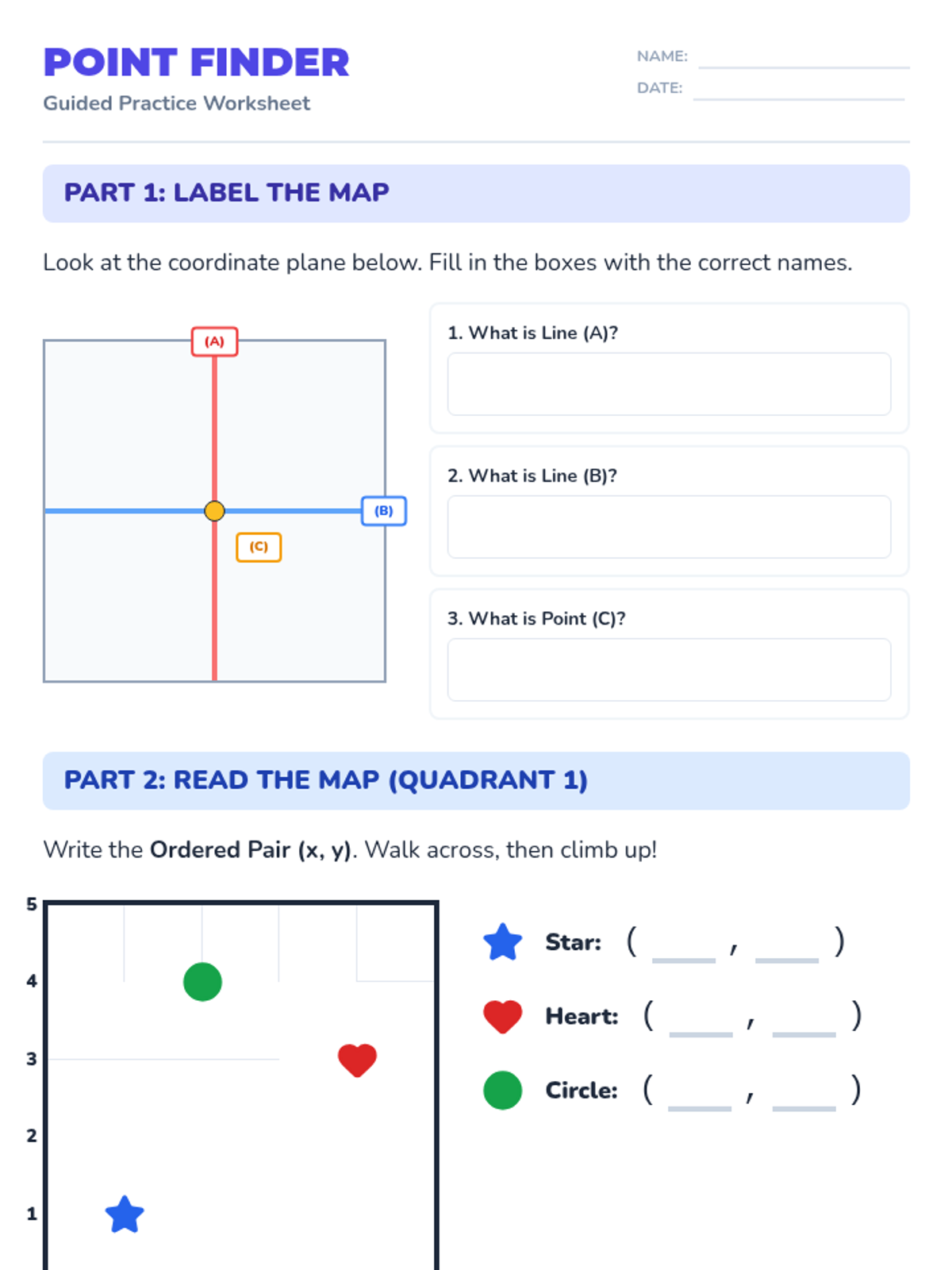
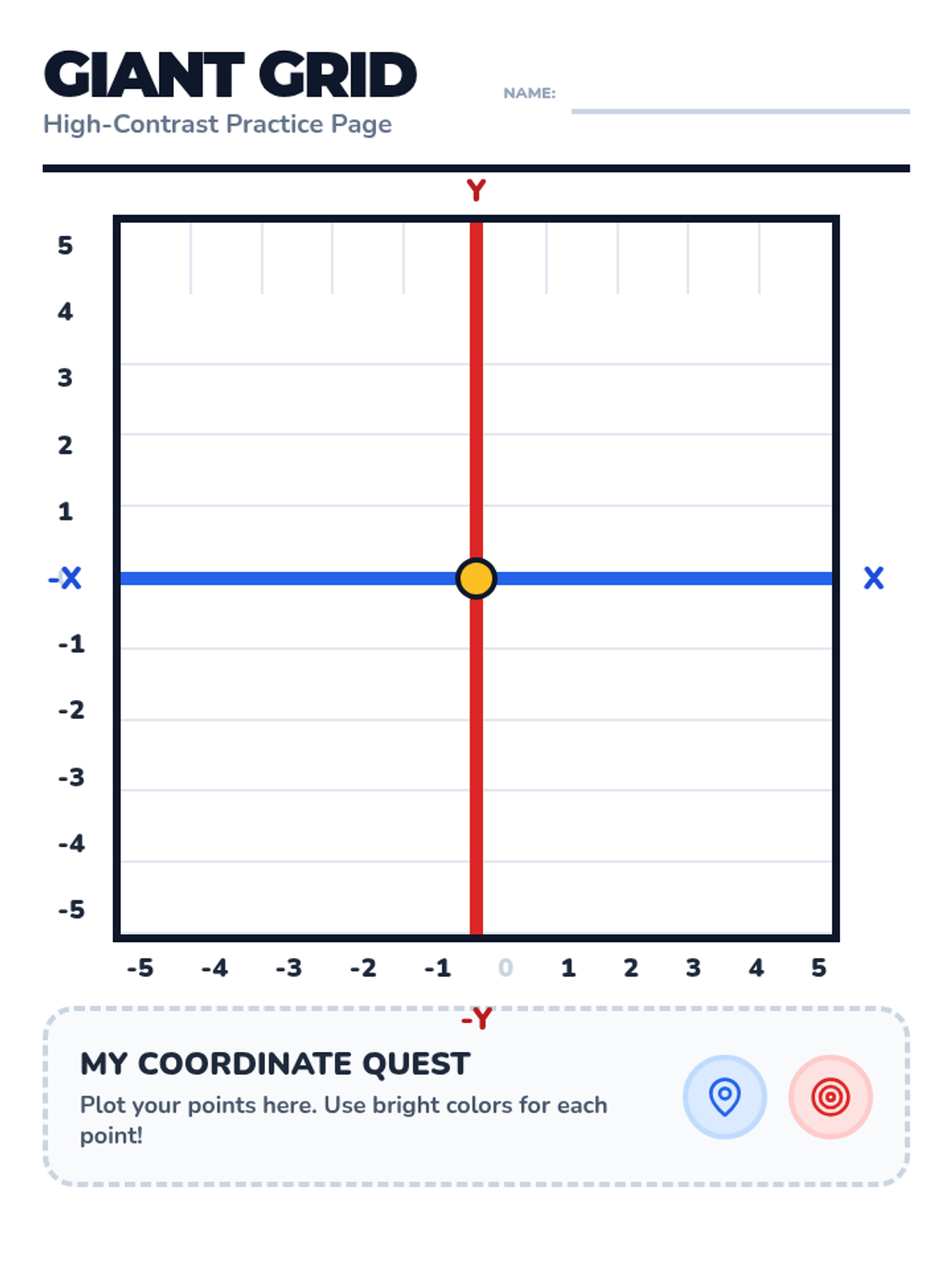
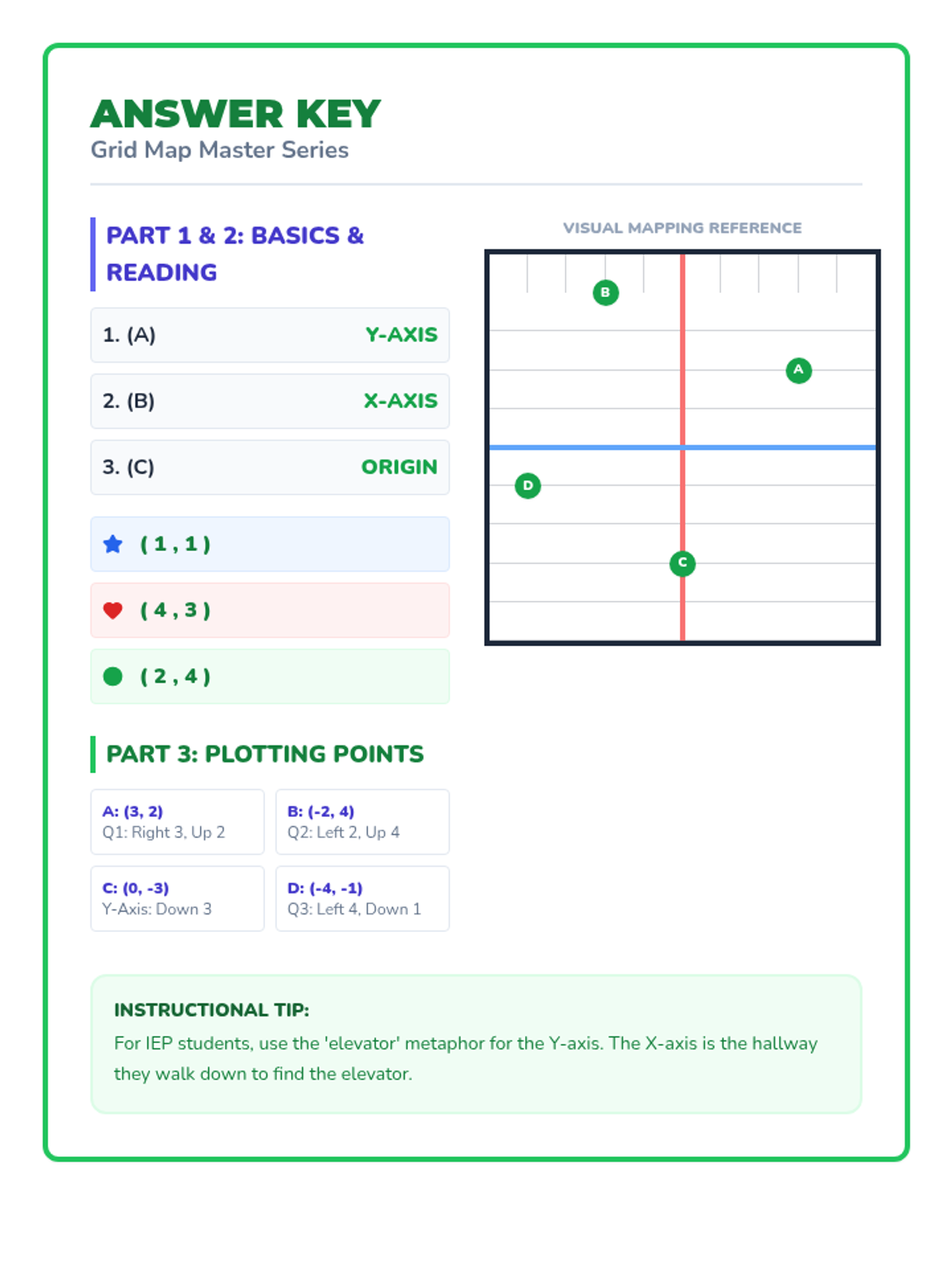
A modified lesson on the coordinate plane focusing on identifying axes, the origin, and plotting points in all four quadrants with visual scaffolding.
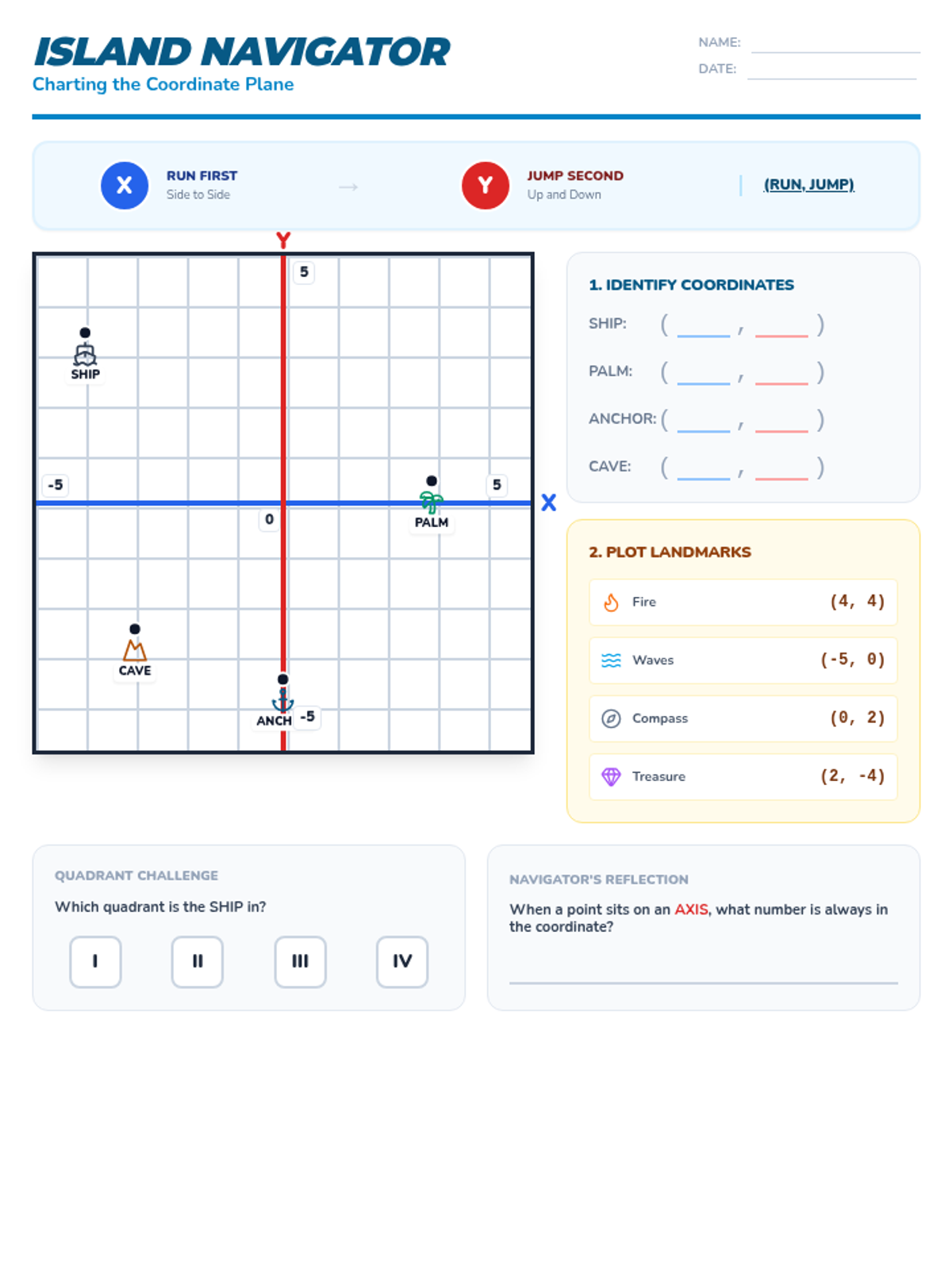
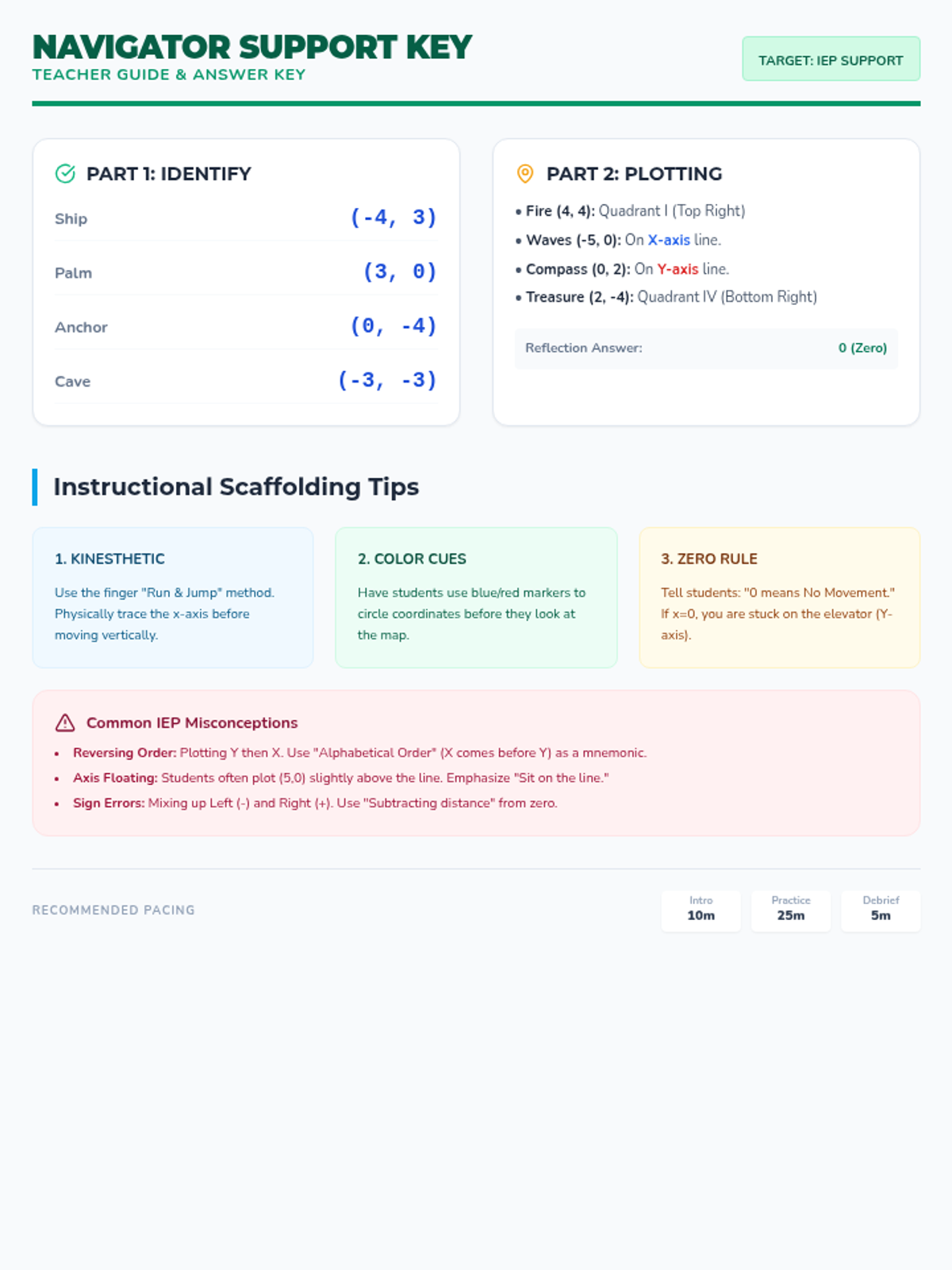
A specialized math lesson for plotting coordinates across all four quadrants and on the axes, designed with heavy scaffolding and visual cues for IEP support. Students will use an island map theme to practice identifying and plotting points.
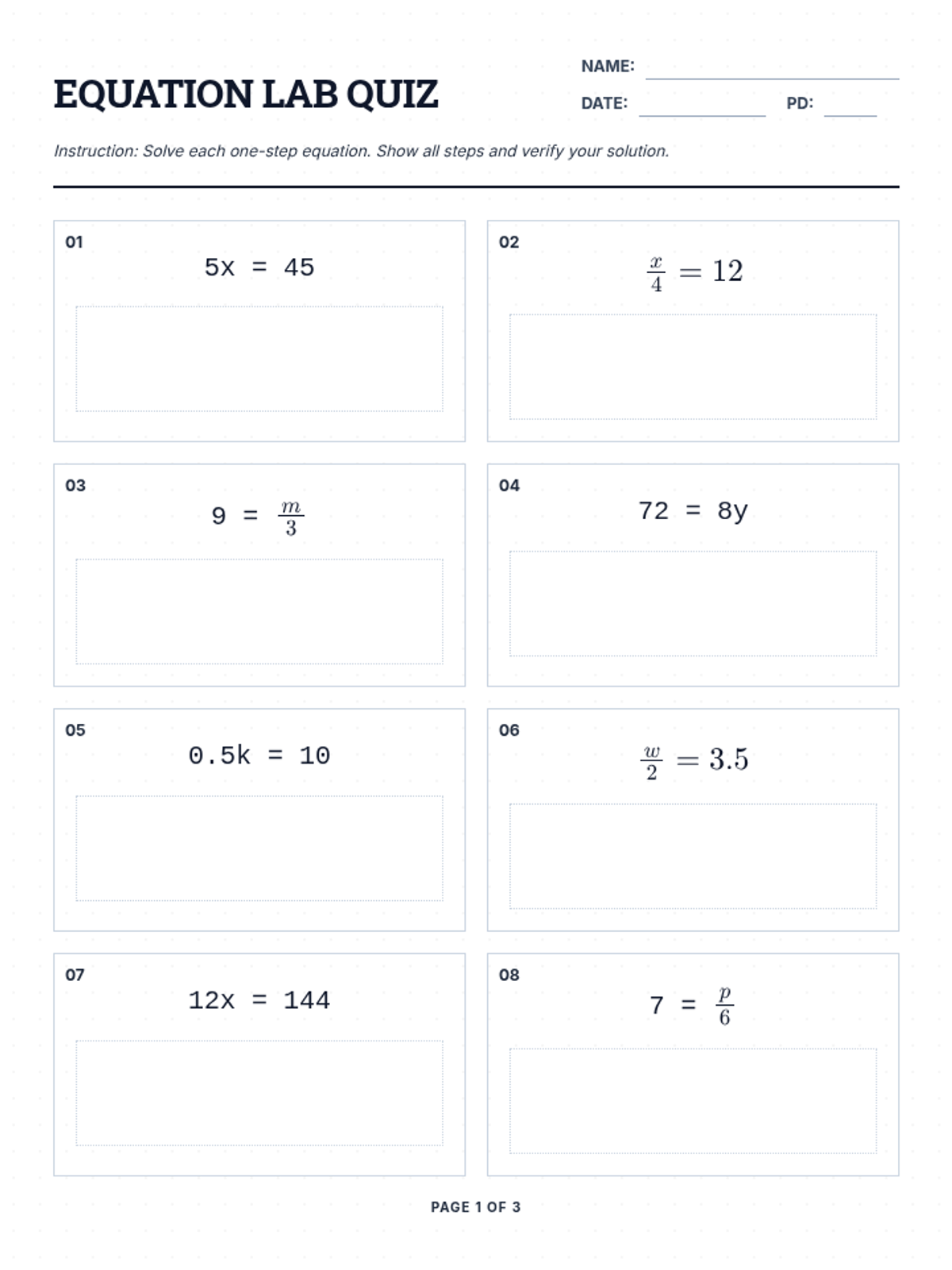
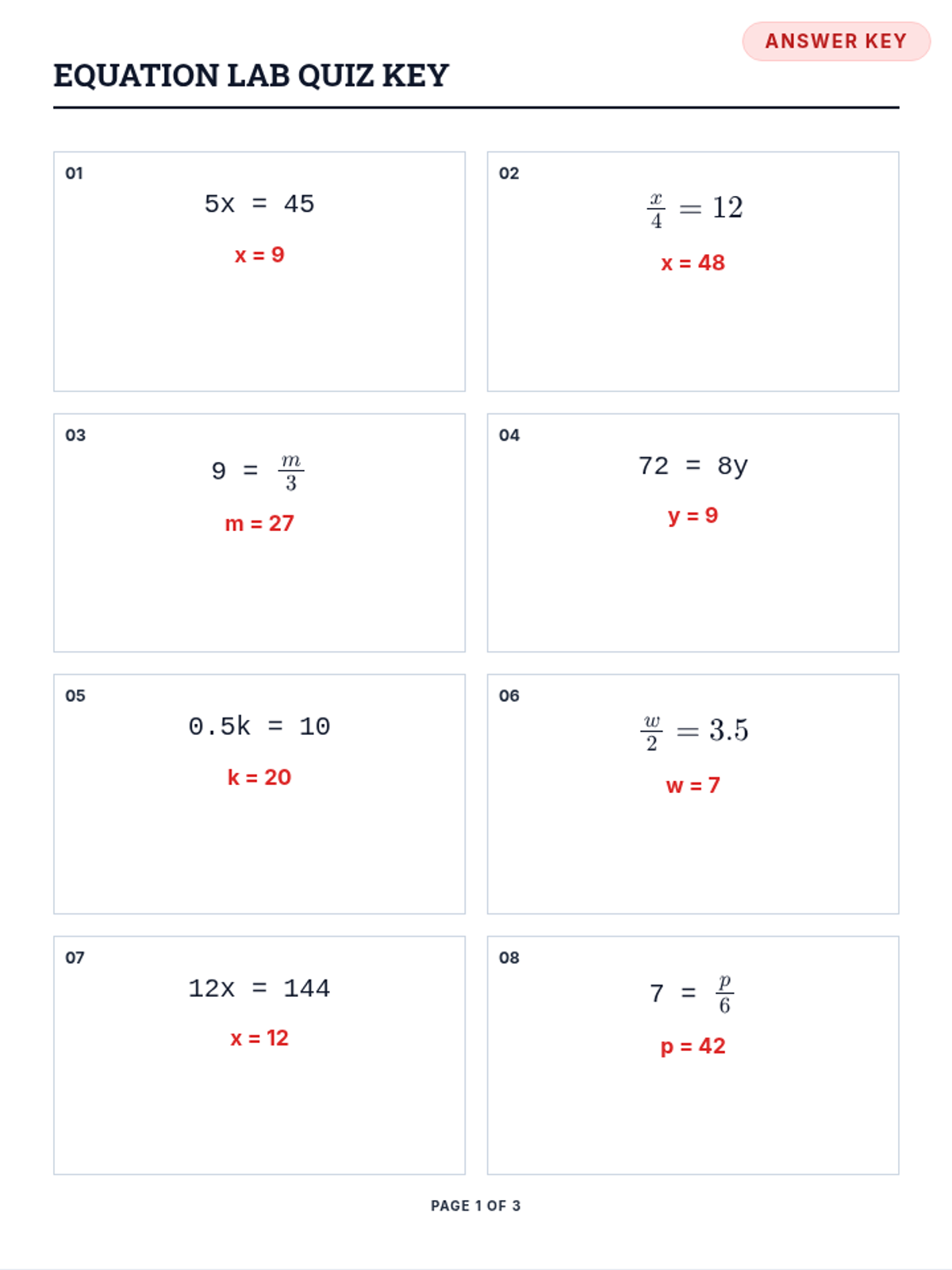
A comprehensive assessment lesson focusing on mastering one-step equations involving multiplication, division, and basic addition/subtraction.
A foundational lesson on the coordinate plane designed for IEP students, focusing on vocabulary, quadrant identification, and step-by-step plotting and reading of points.
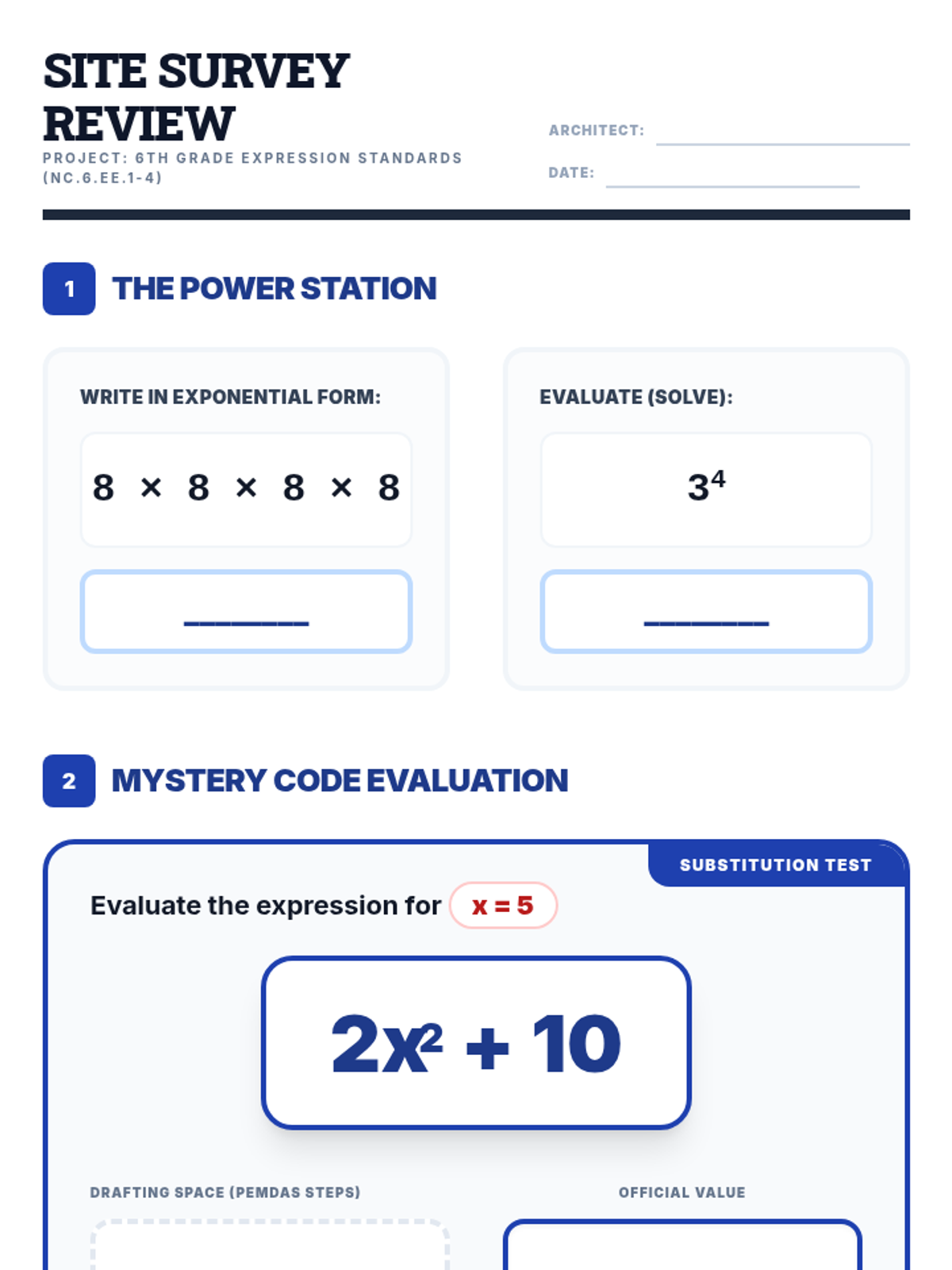
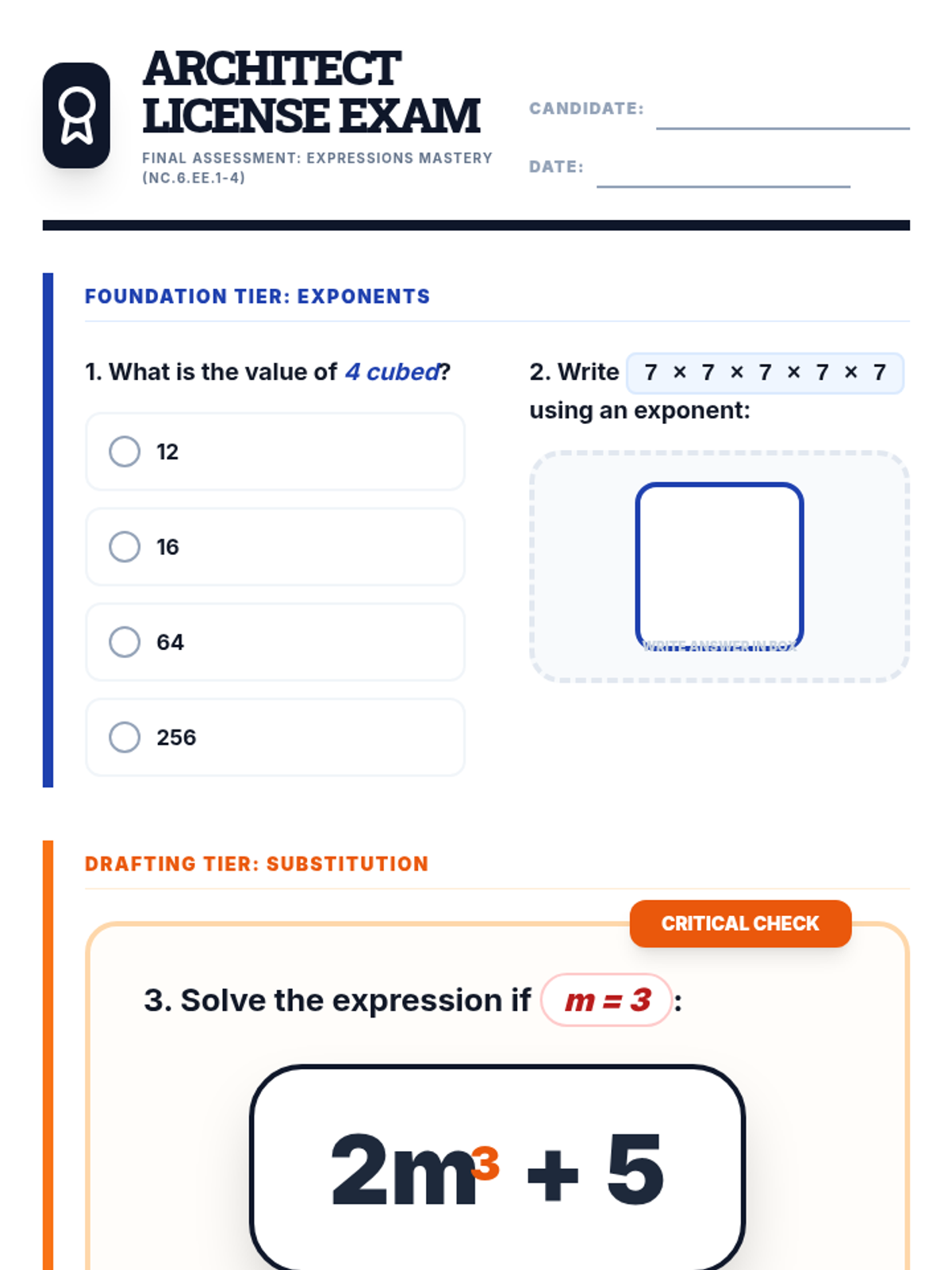
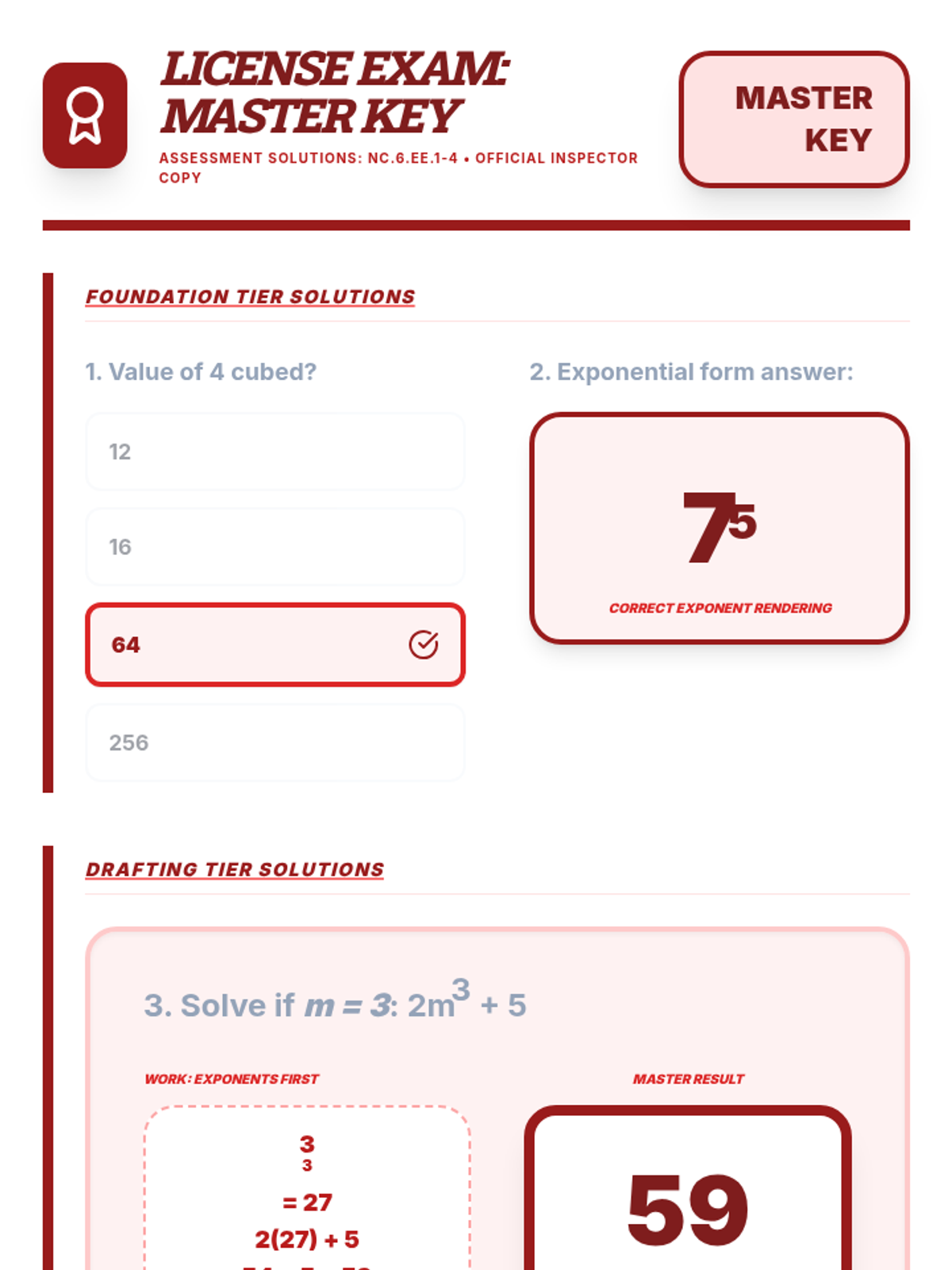
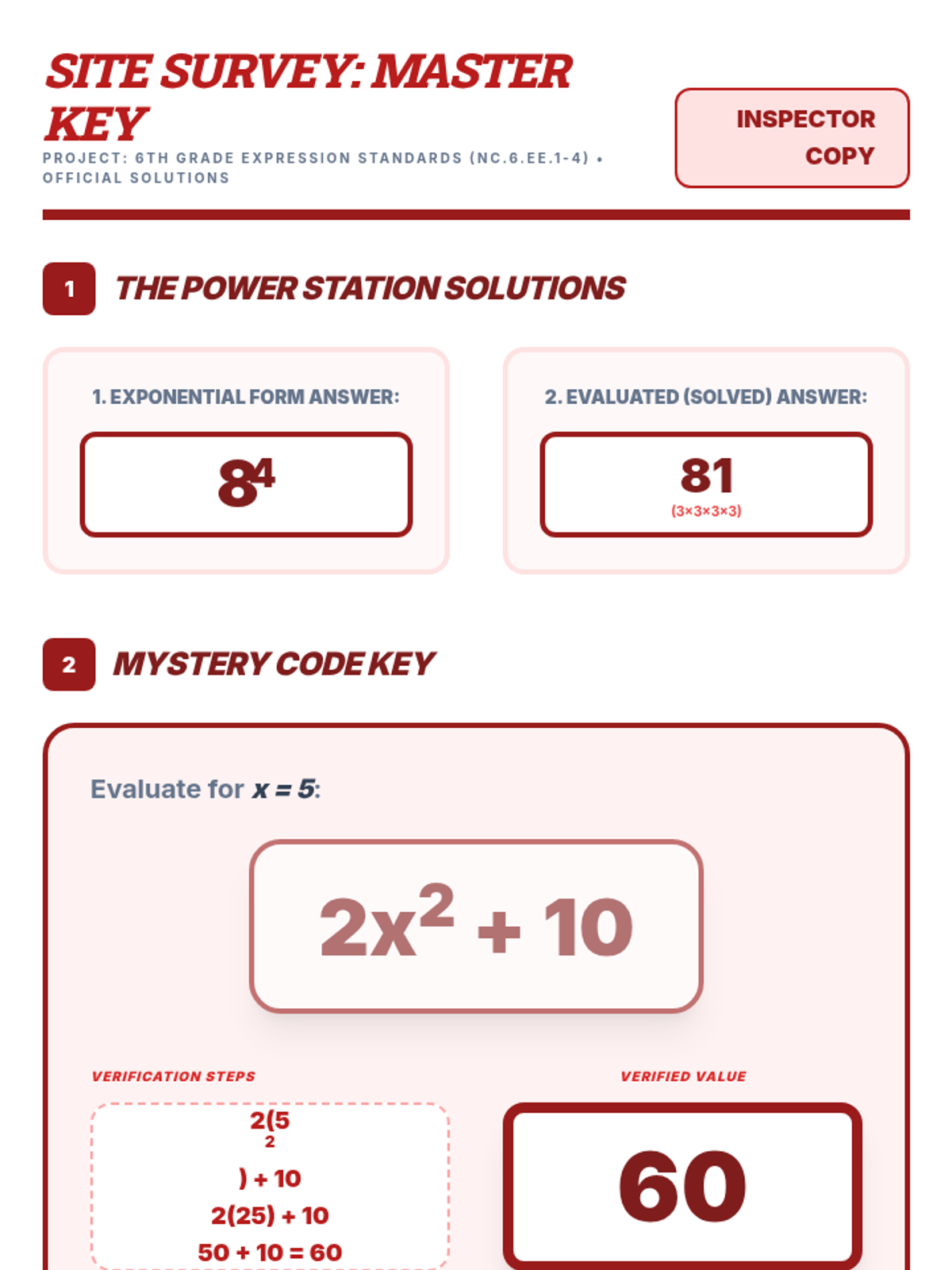
A comprehensive review of all expression standards (NC.6.EE.1-4) featuring EOG-style questions and a 'Final Inspection' simulation to prepare students for standardized testing.
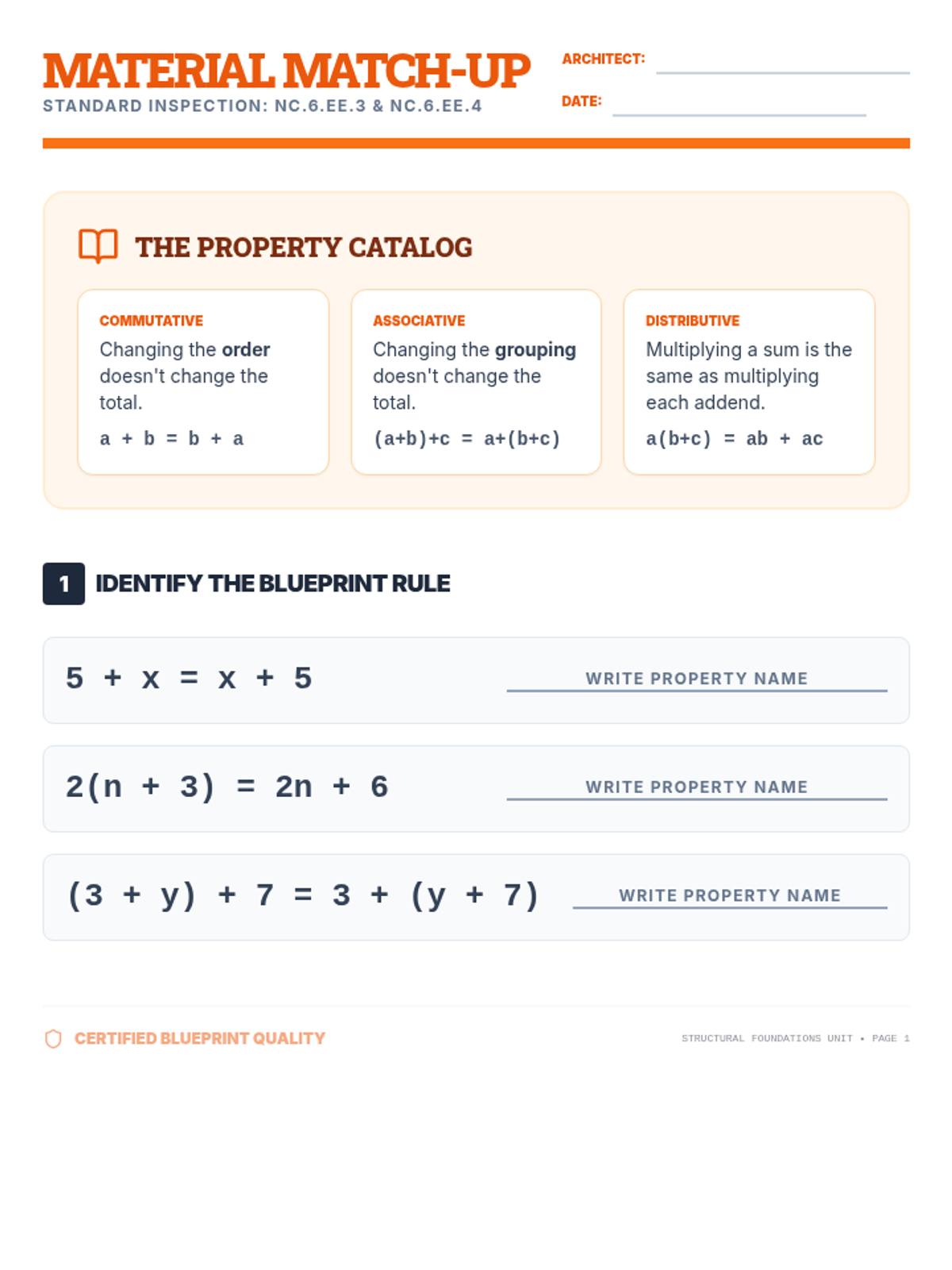
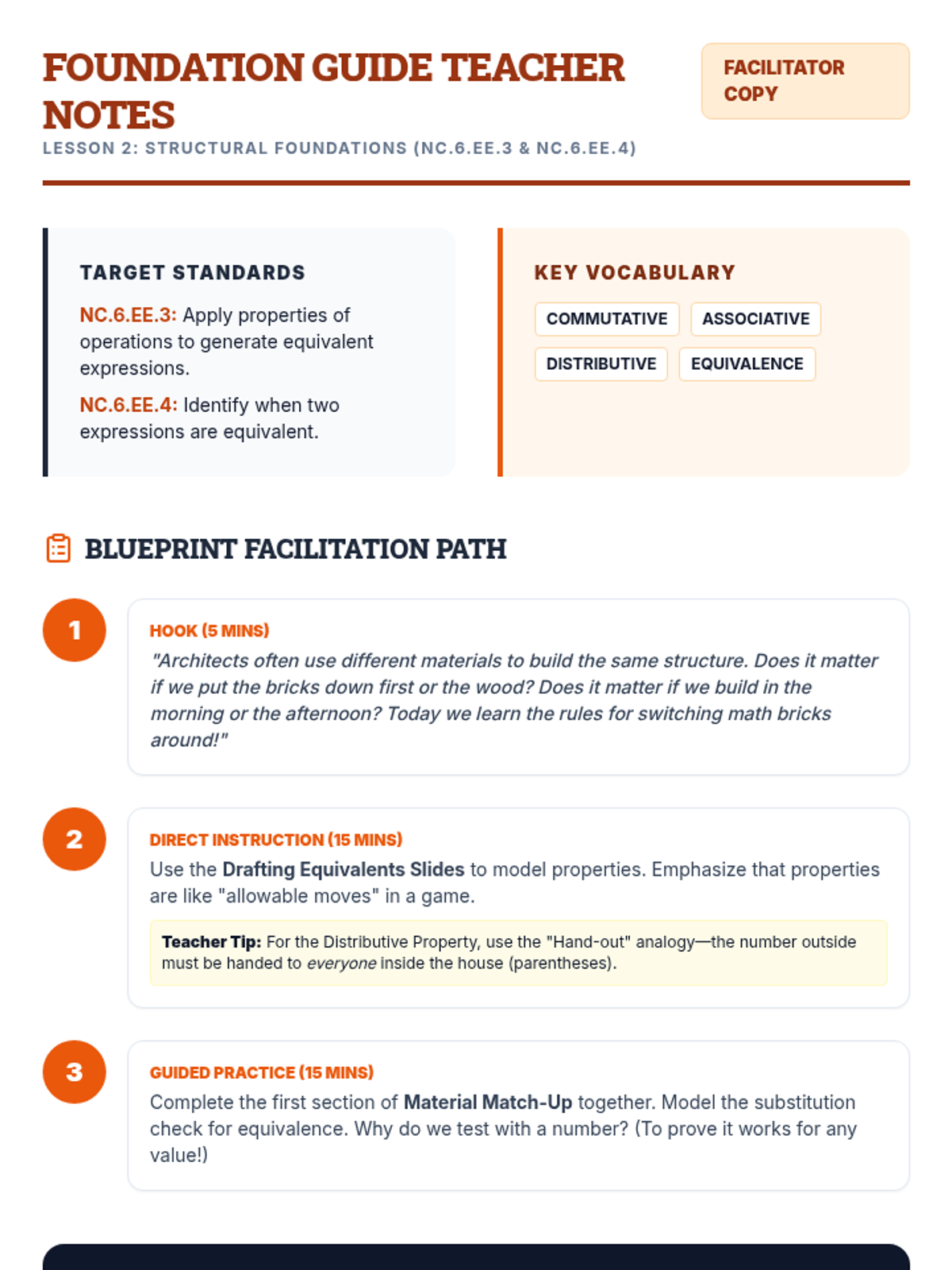
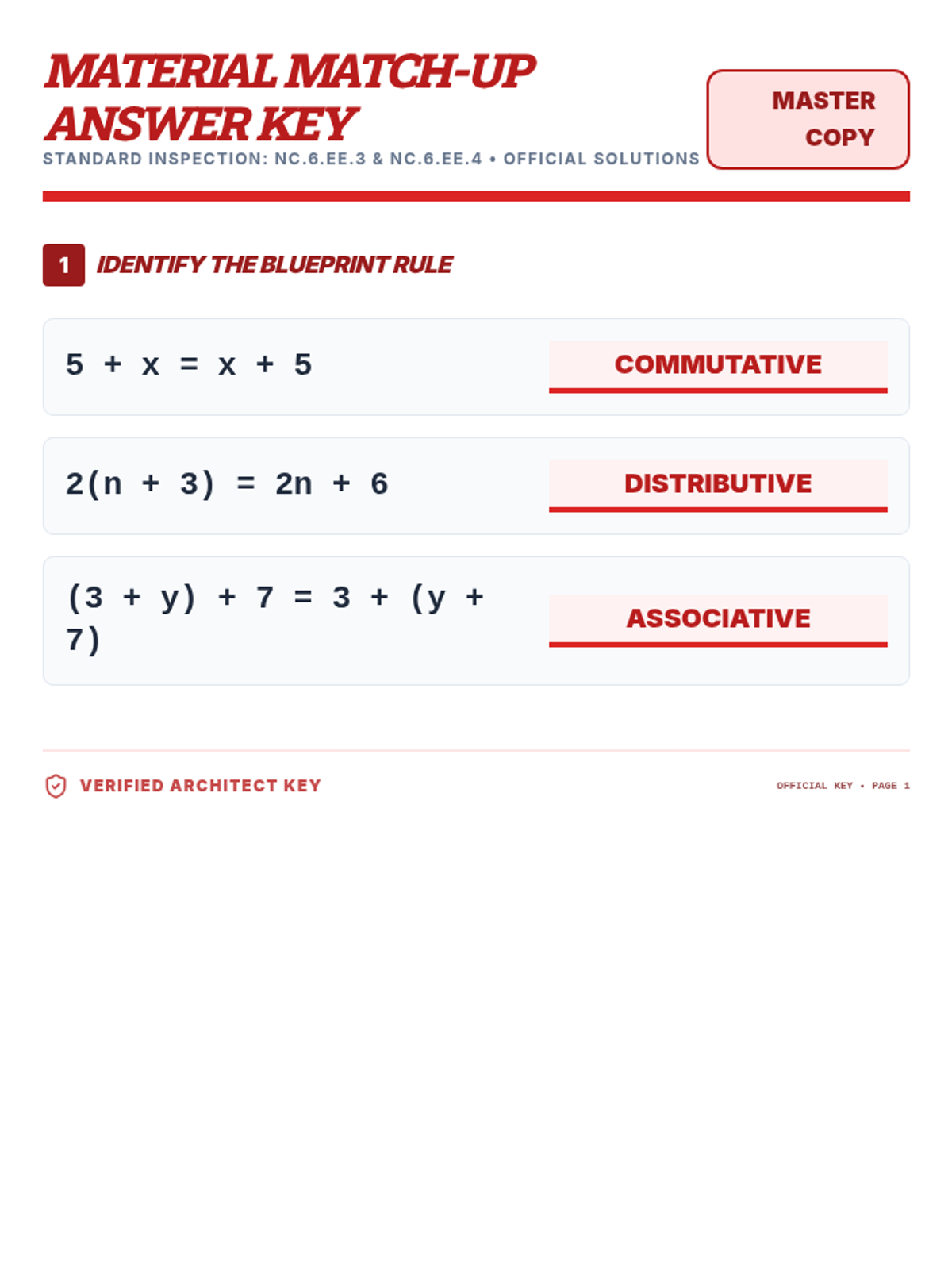
Students learn to apply properties of operations (distributive, associative, commutative) to generate equivalent expressions and identify when two expressions are equivalent using the 'Structural Foundation' theme.
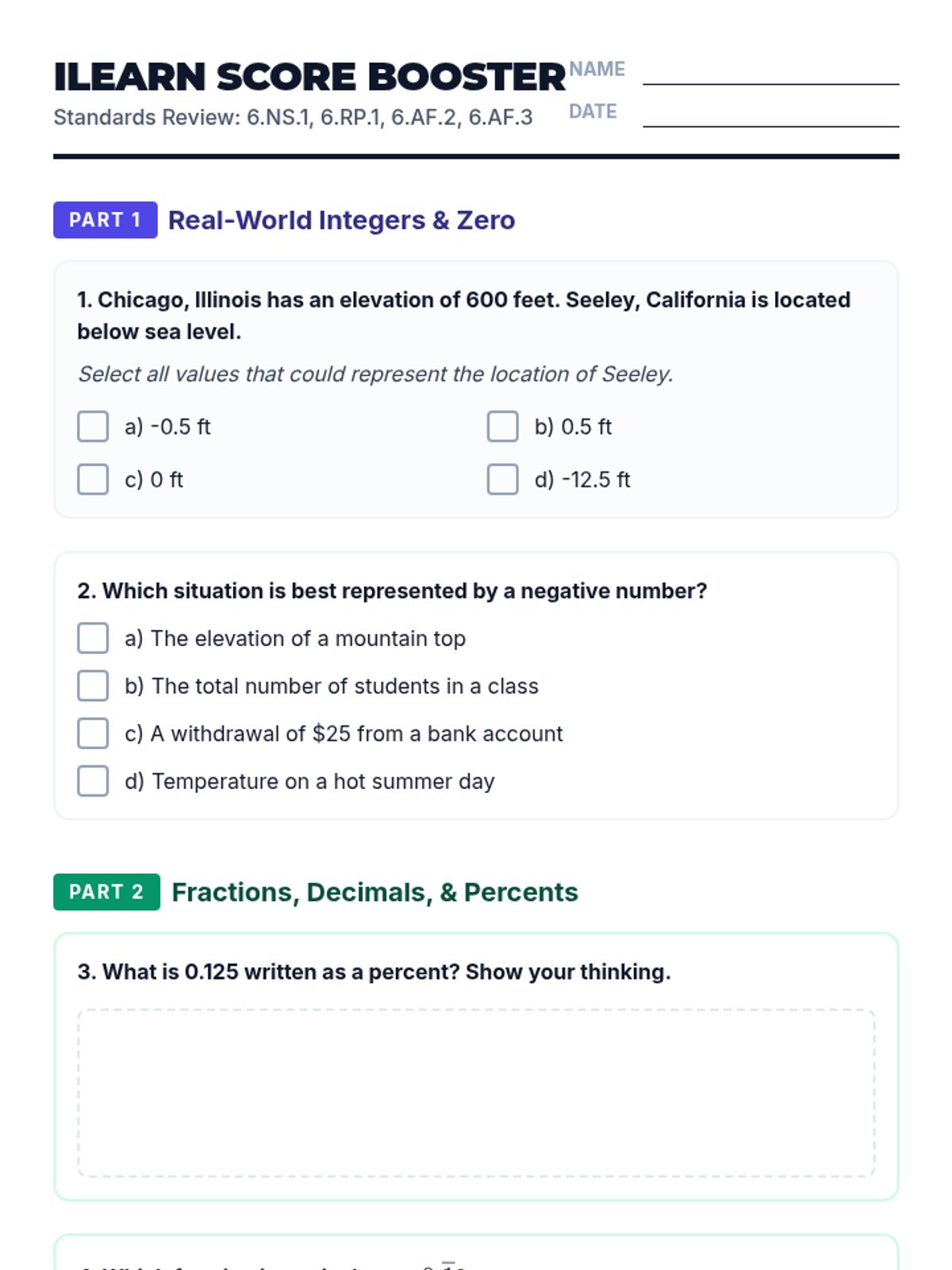
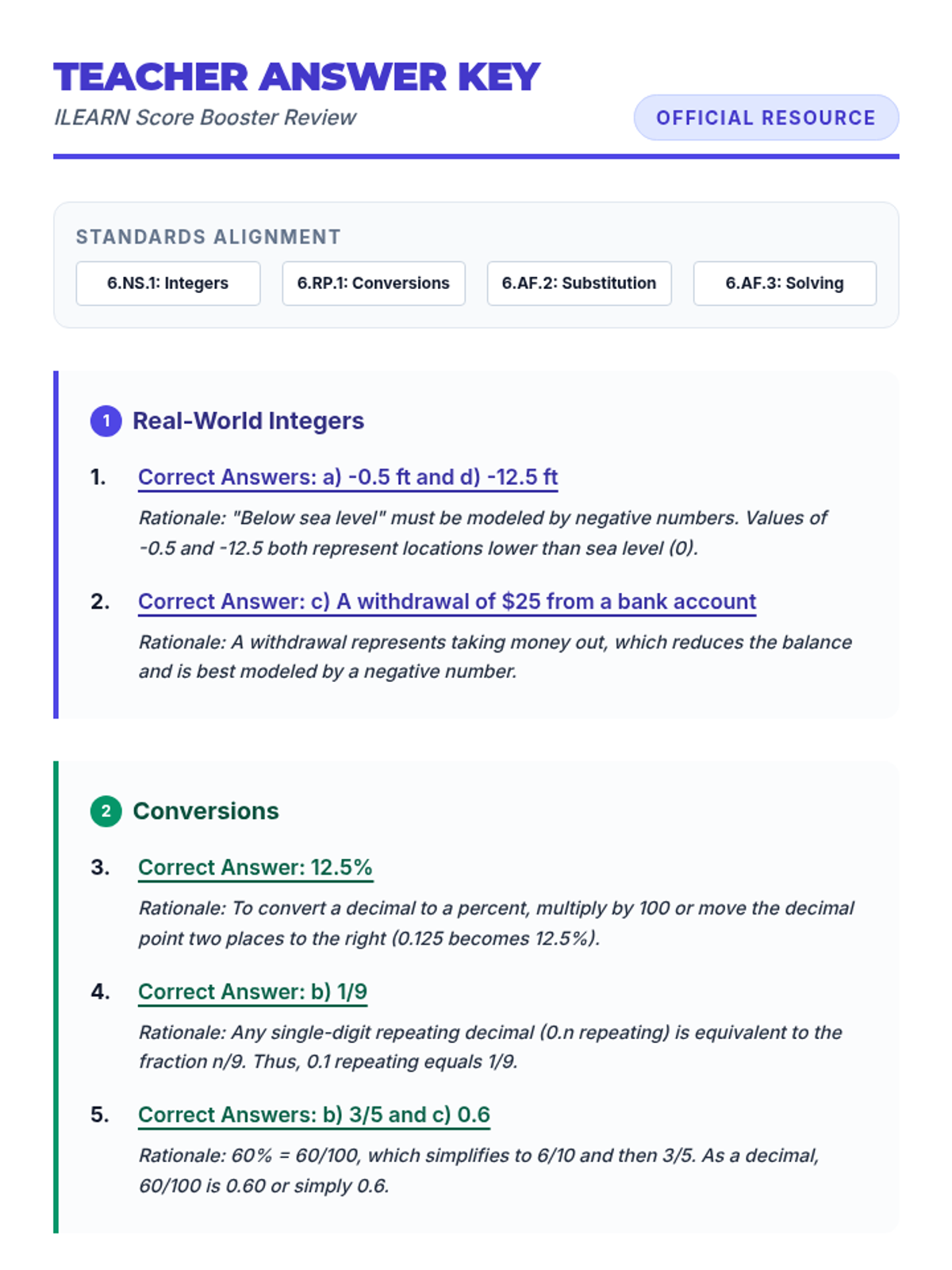
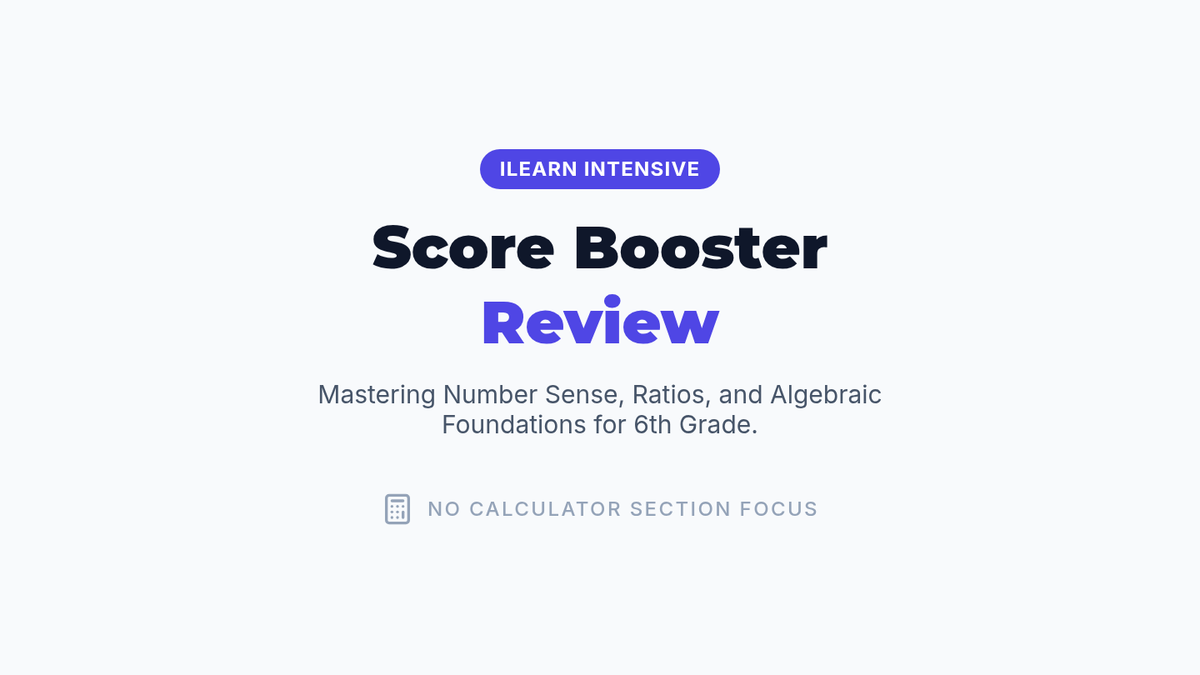
A comprehensive one-day review for ILEARN, targeting key 6th-grade math standards in Number Sense, Ratios, and Algebra. This lesson focuses on boosting students from 'Below' or 'Approaching' proficiency to 'At Proficiency' through targeted practice and concept reinforcement.
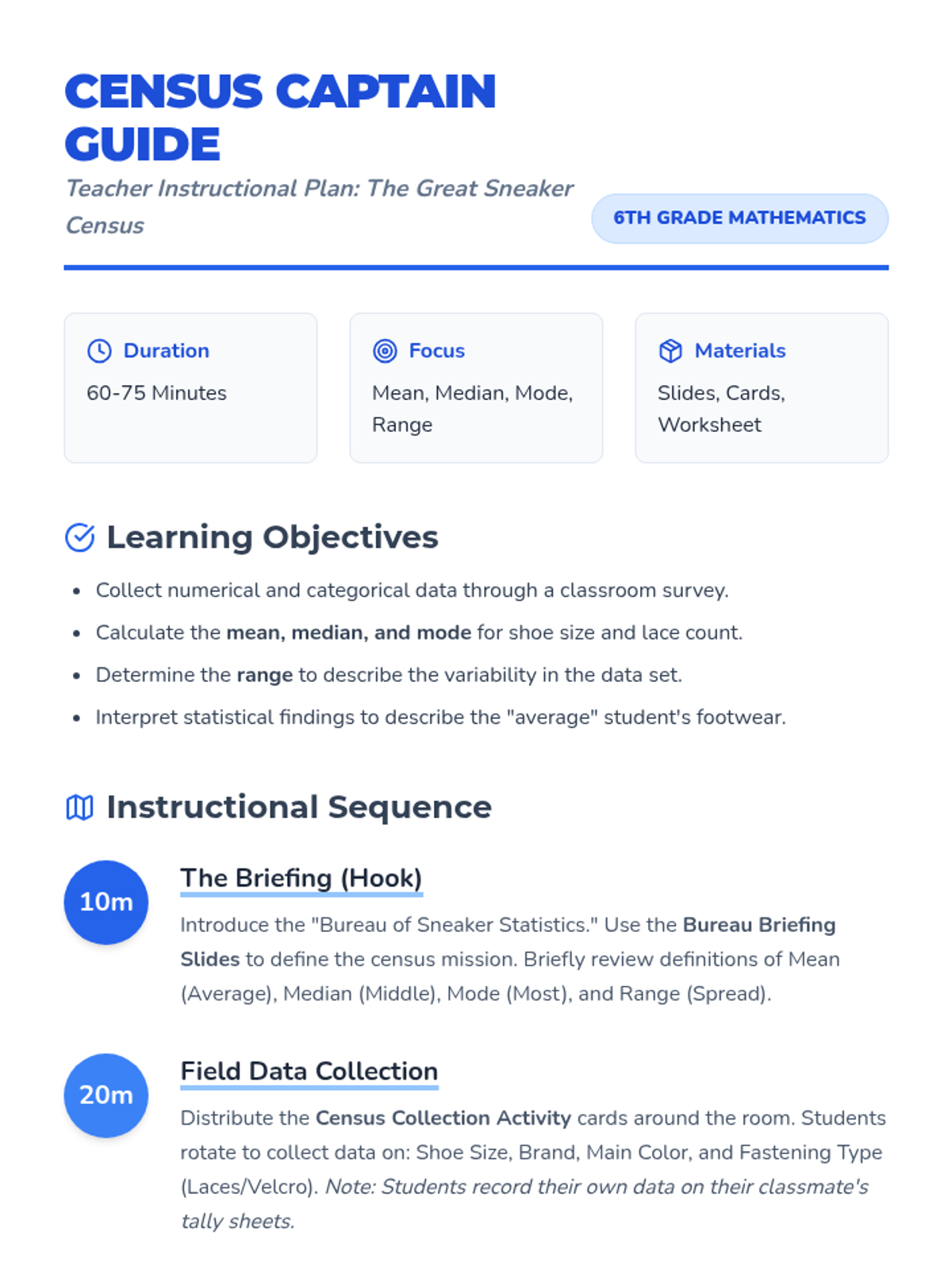
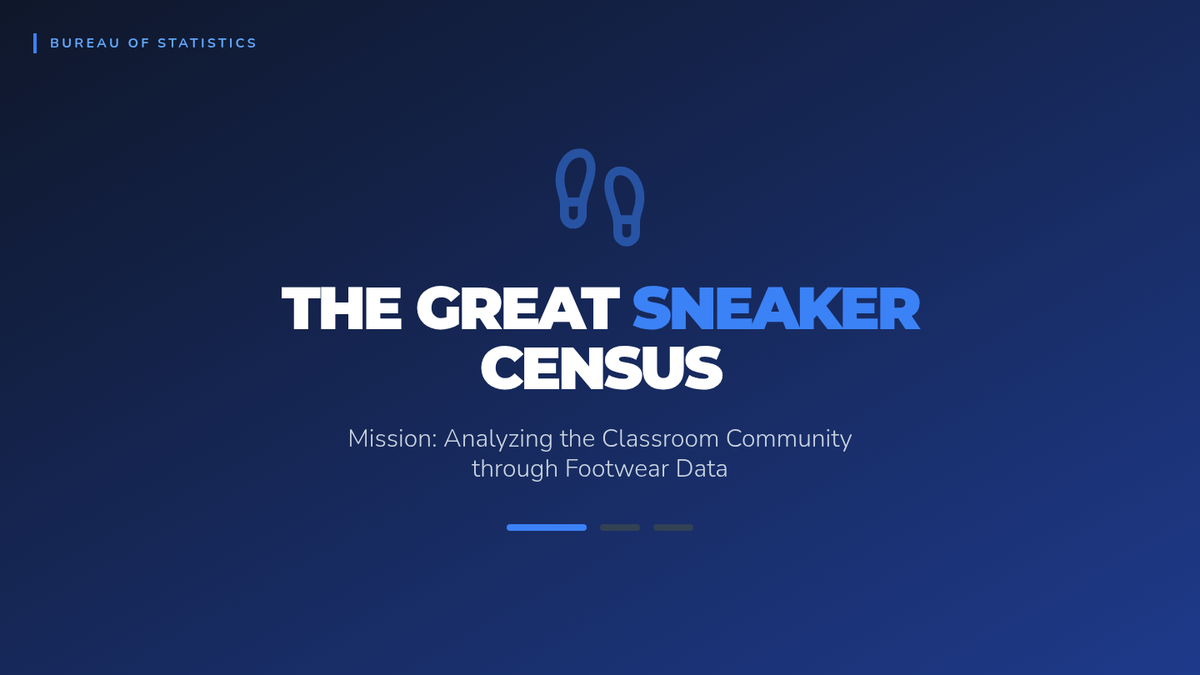
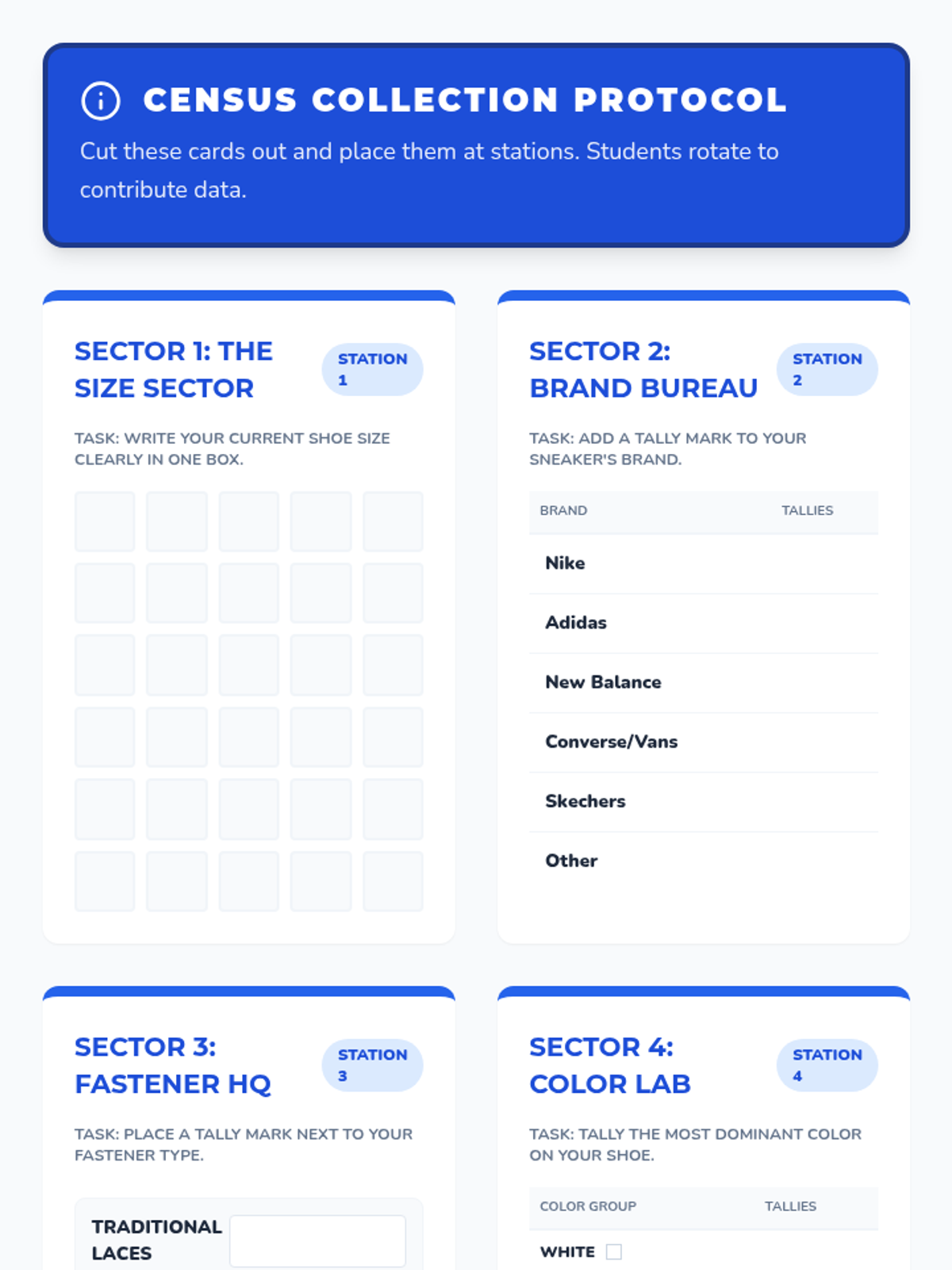
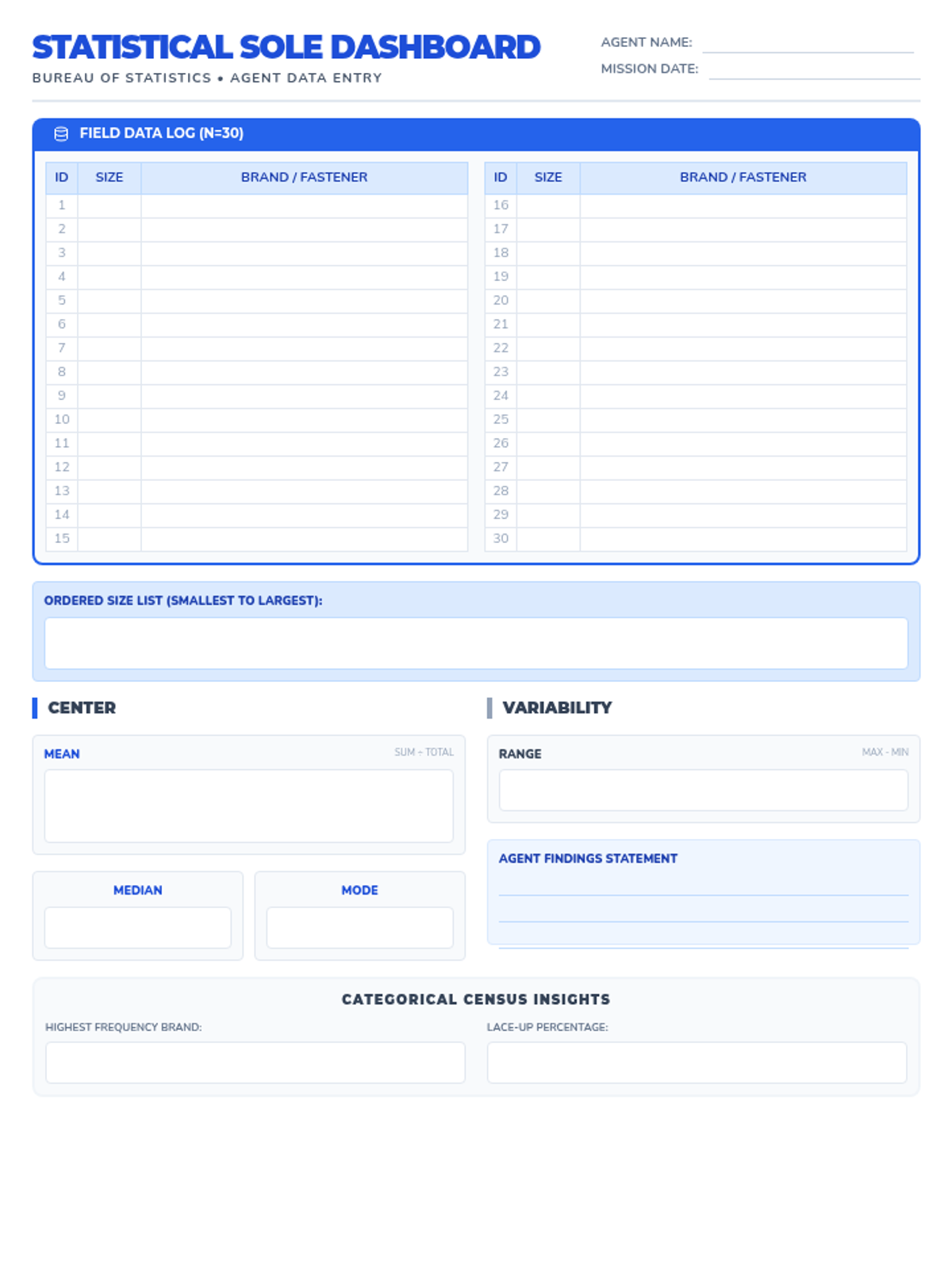
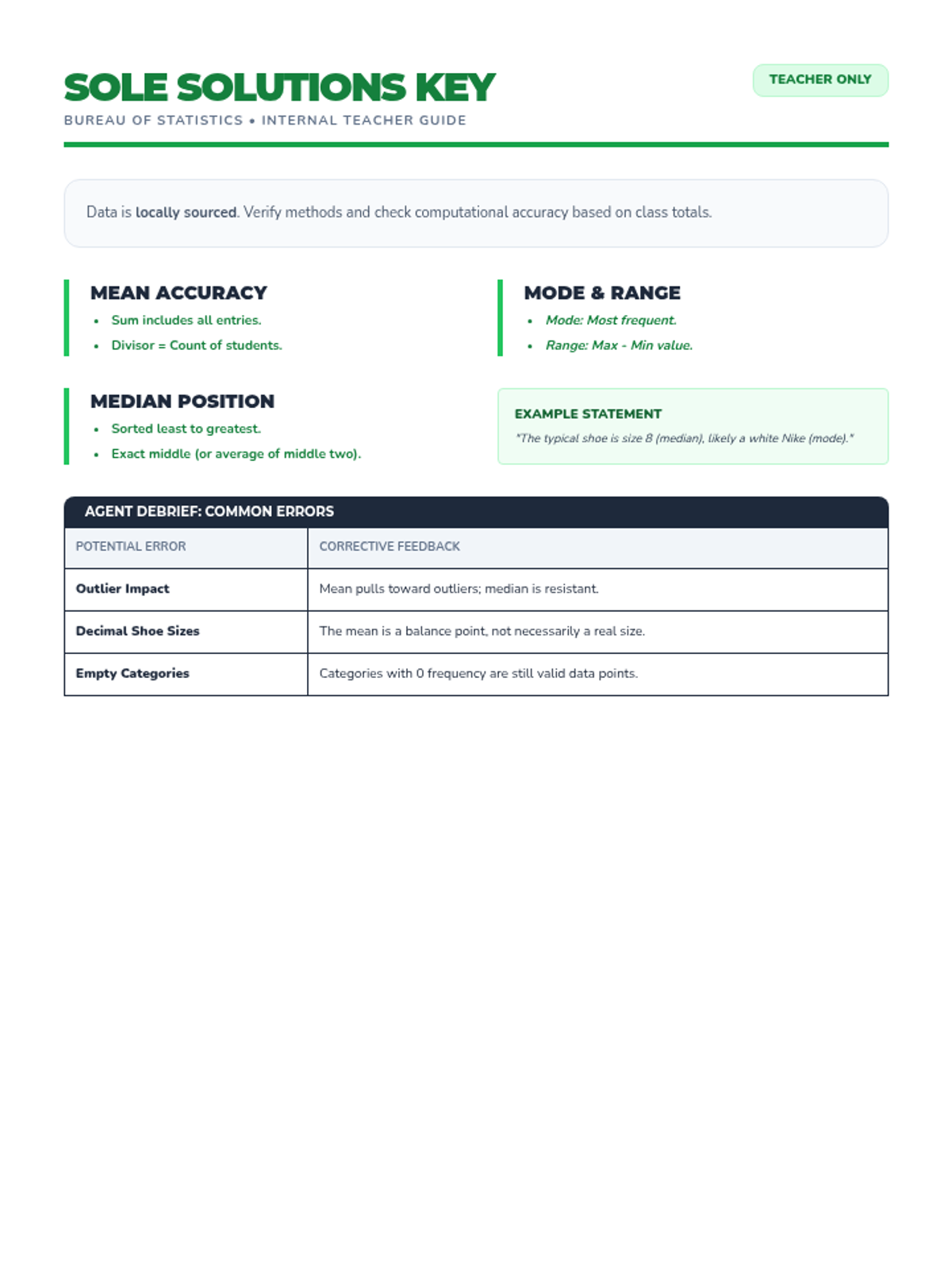
A hands-on statistics lesson where students collect and analyze footwear data from their peers to master measures of center and variability. Students act as 'Census Agents' to transform classroom trends into meaningful mathematical insights.
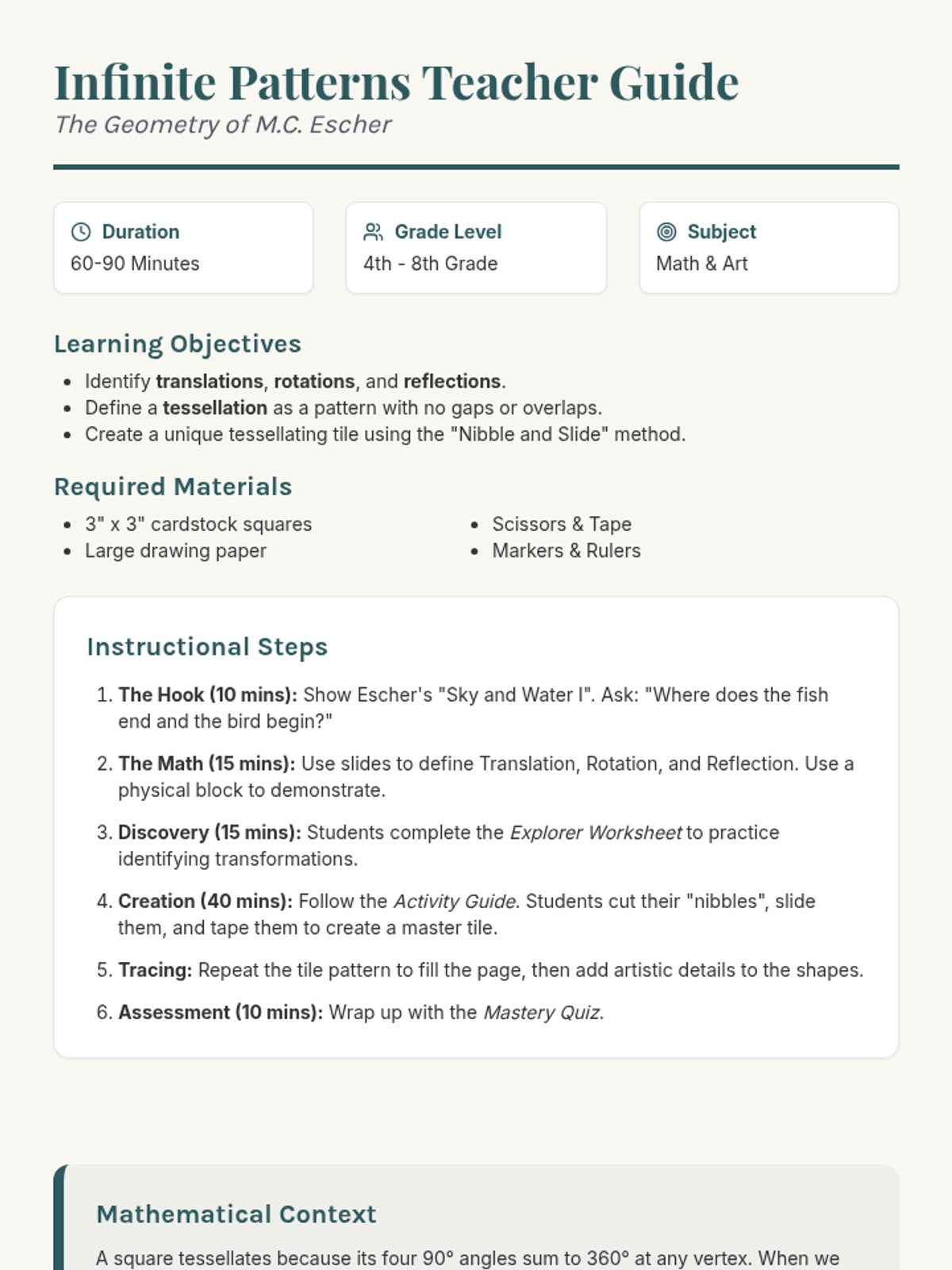
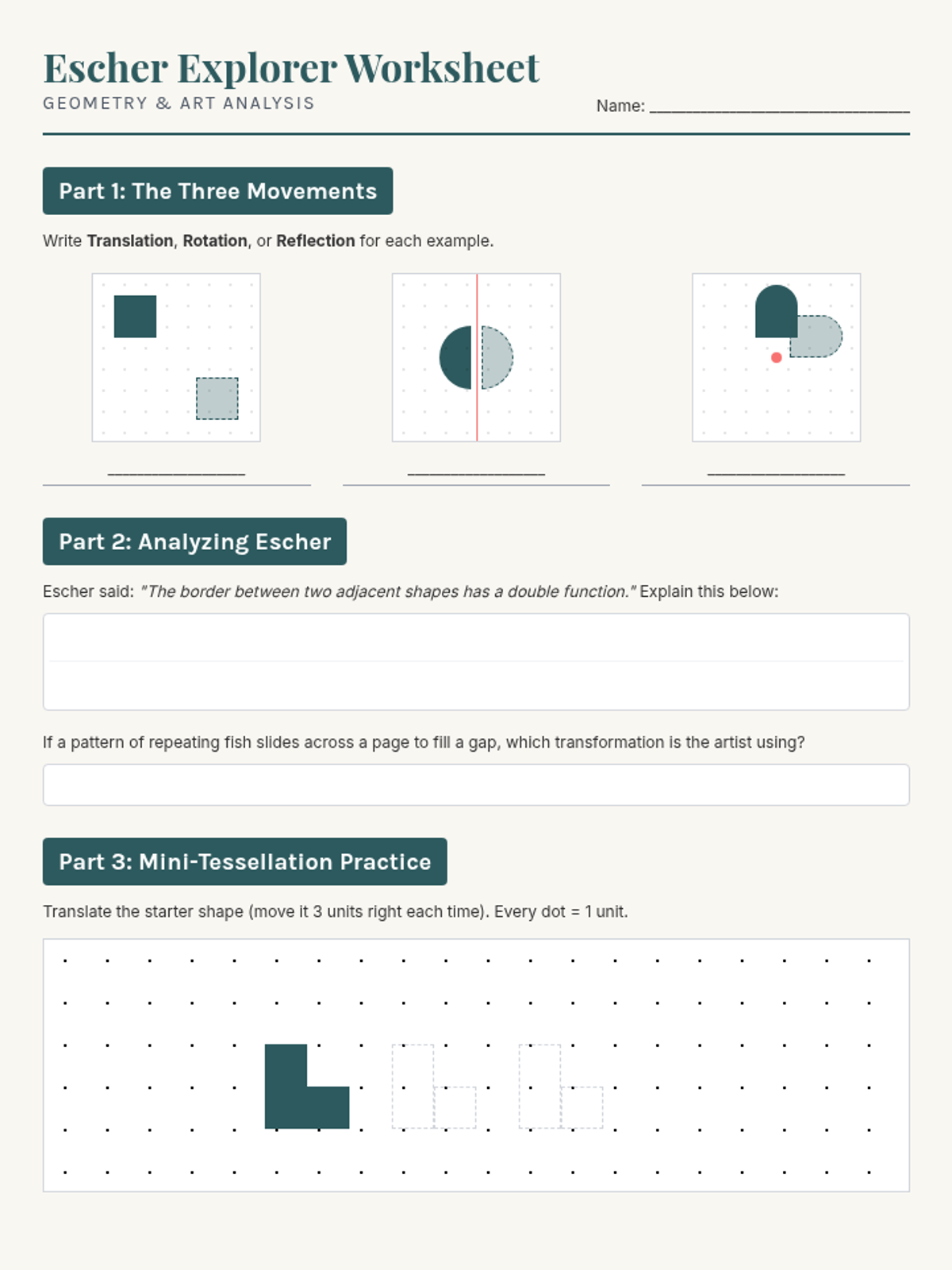
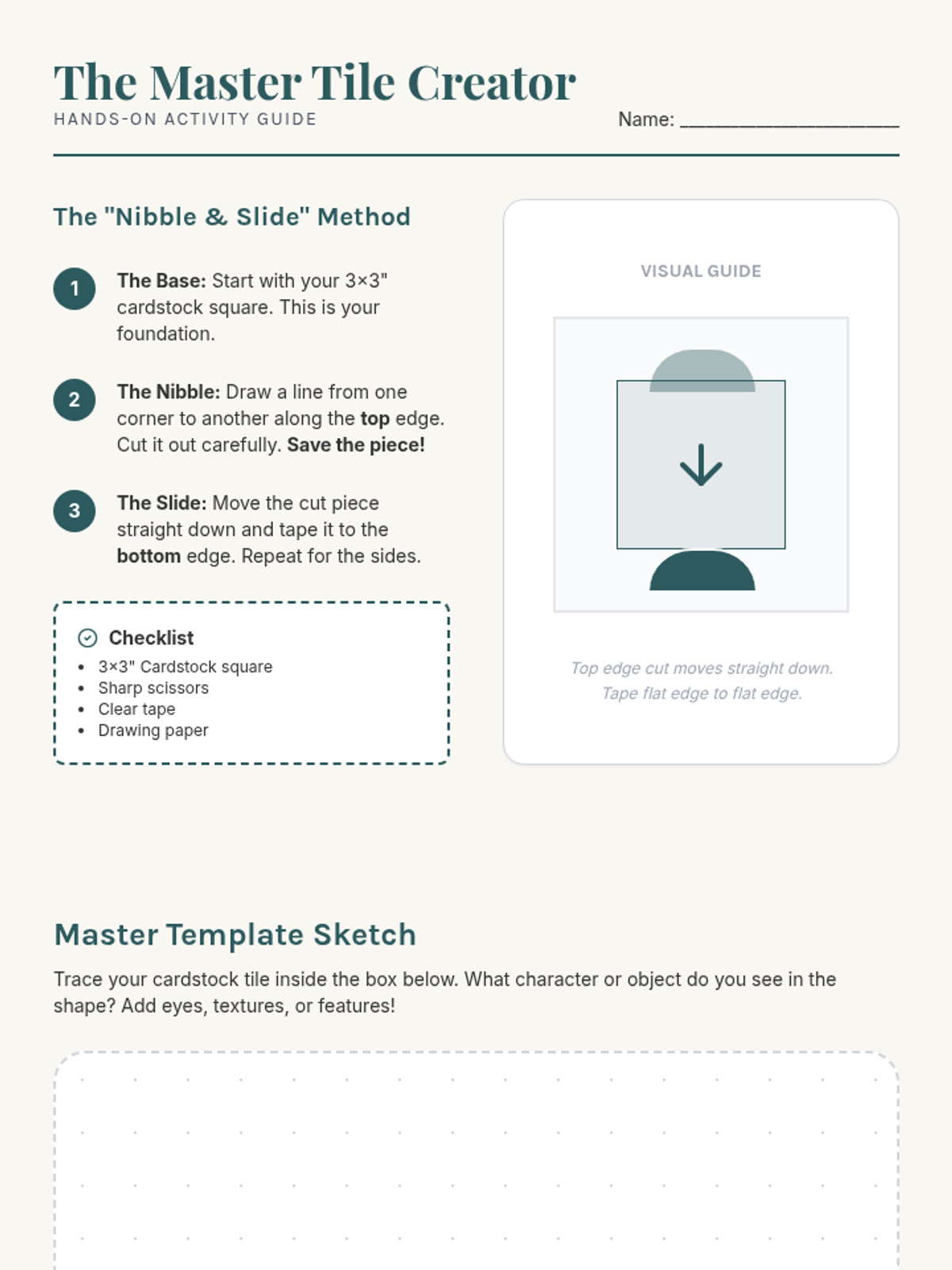
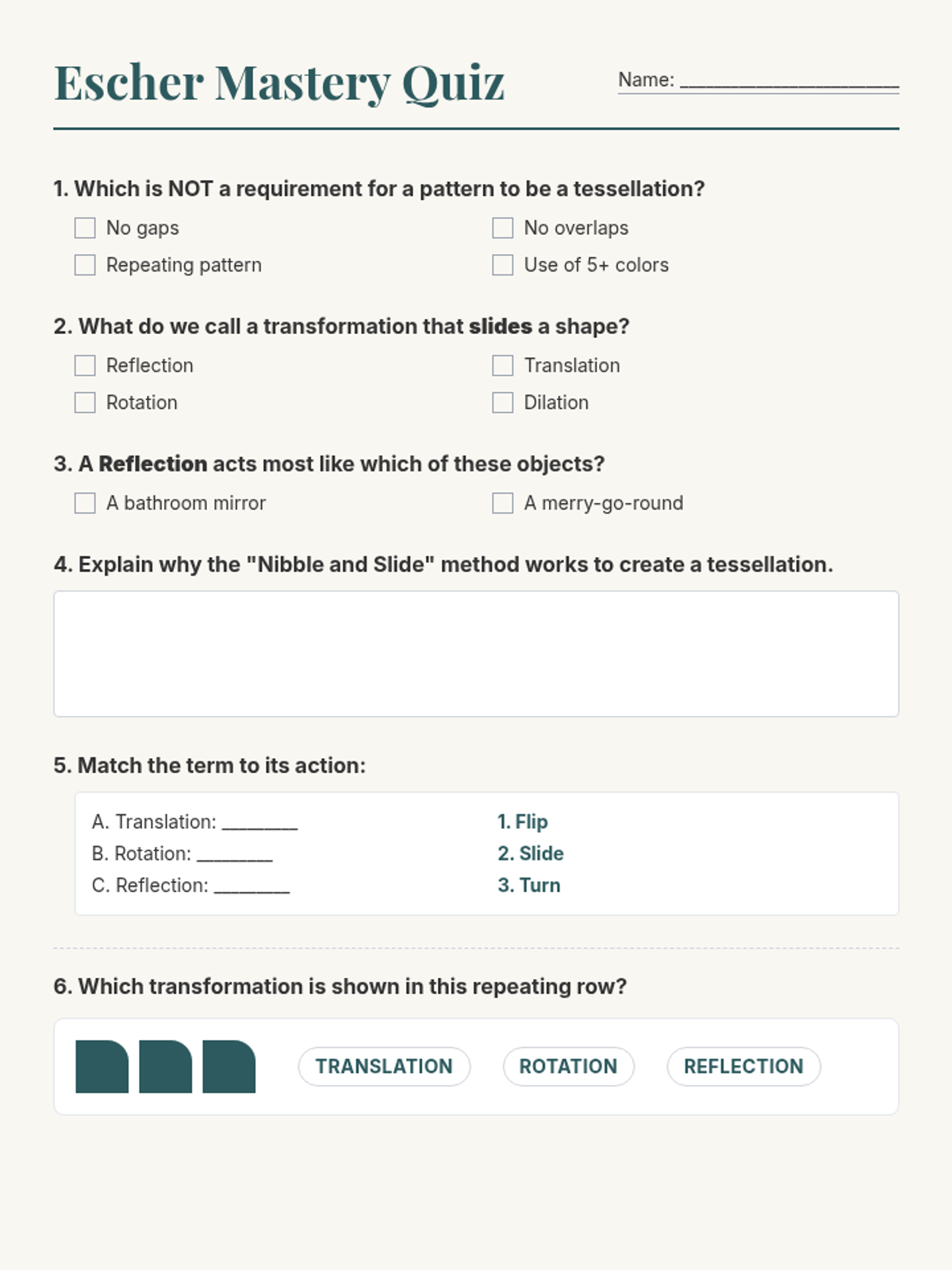
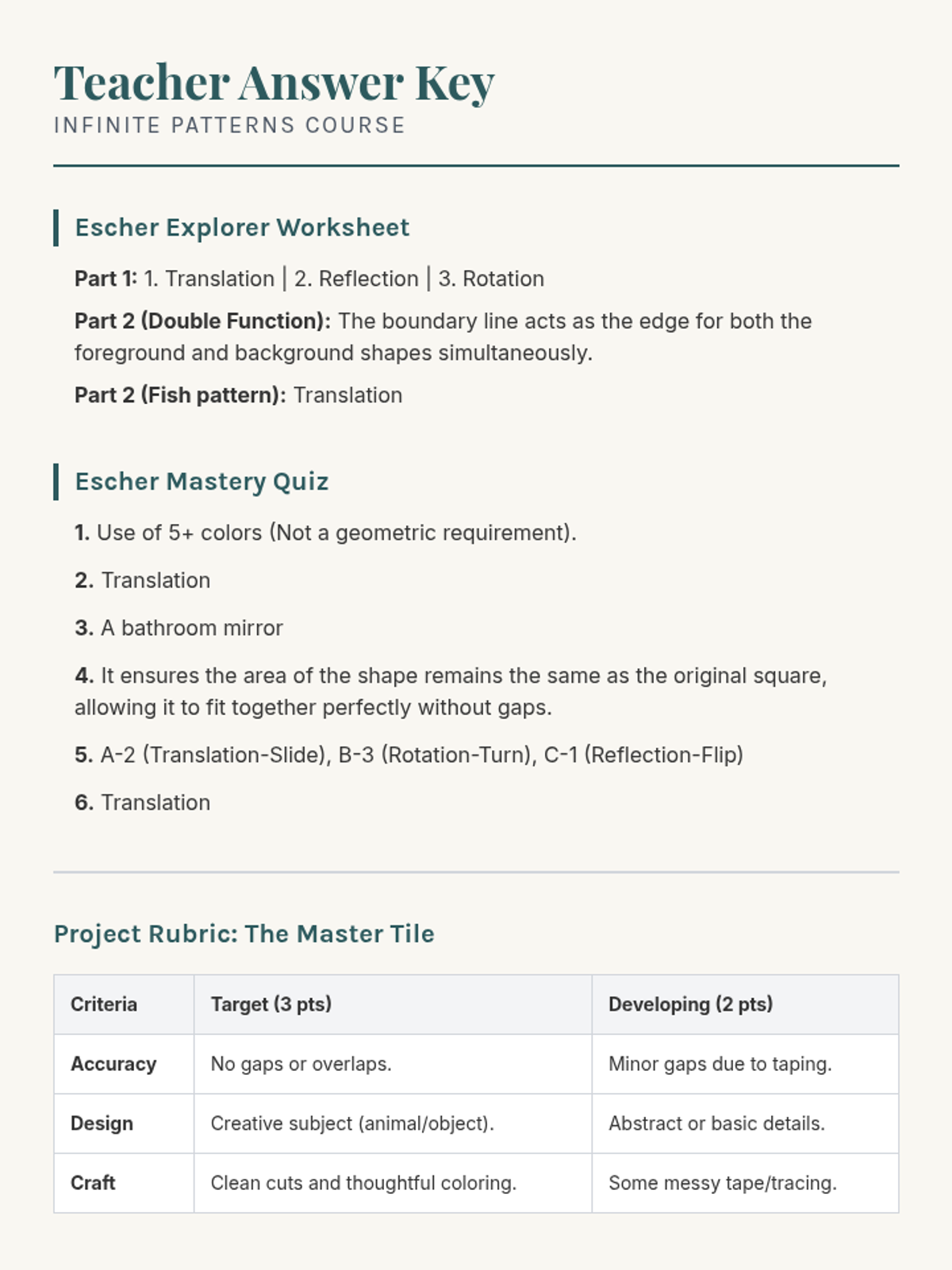
A hands-on interdisciplinary lesson blending geometry and art. Students explore M.C. Escher's work to understand and apply translations, rotations, and reflections through the creation of original tessellating patterns.
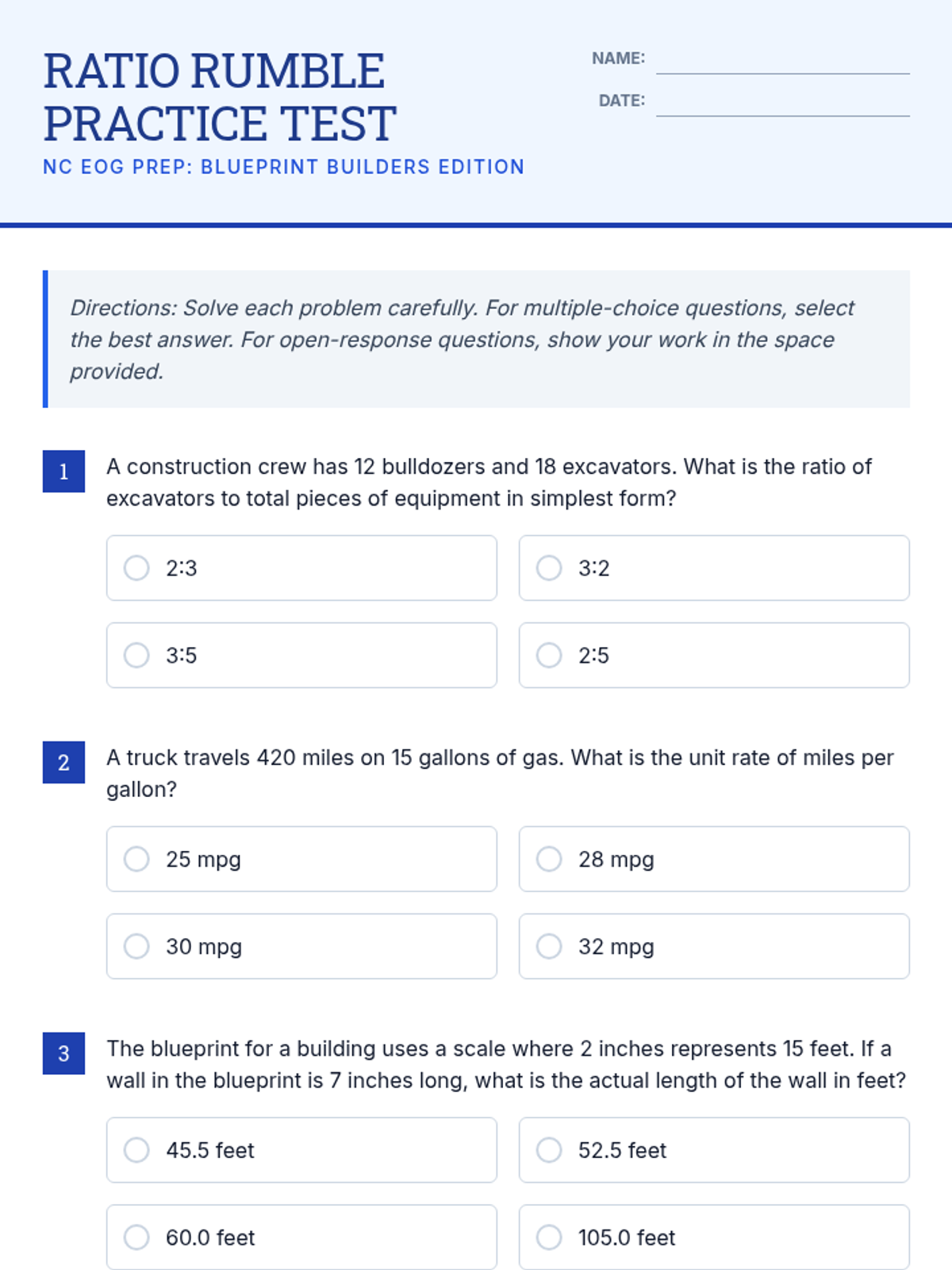
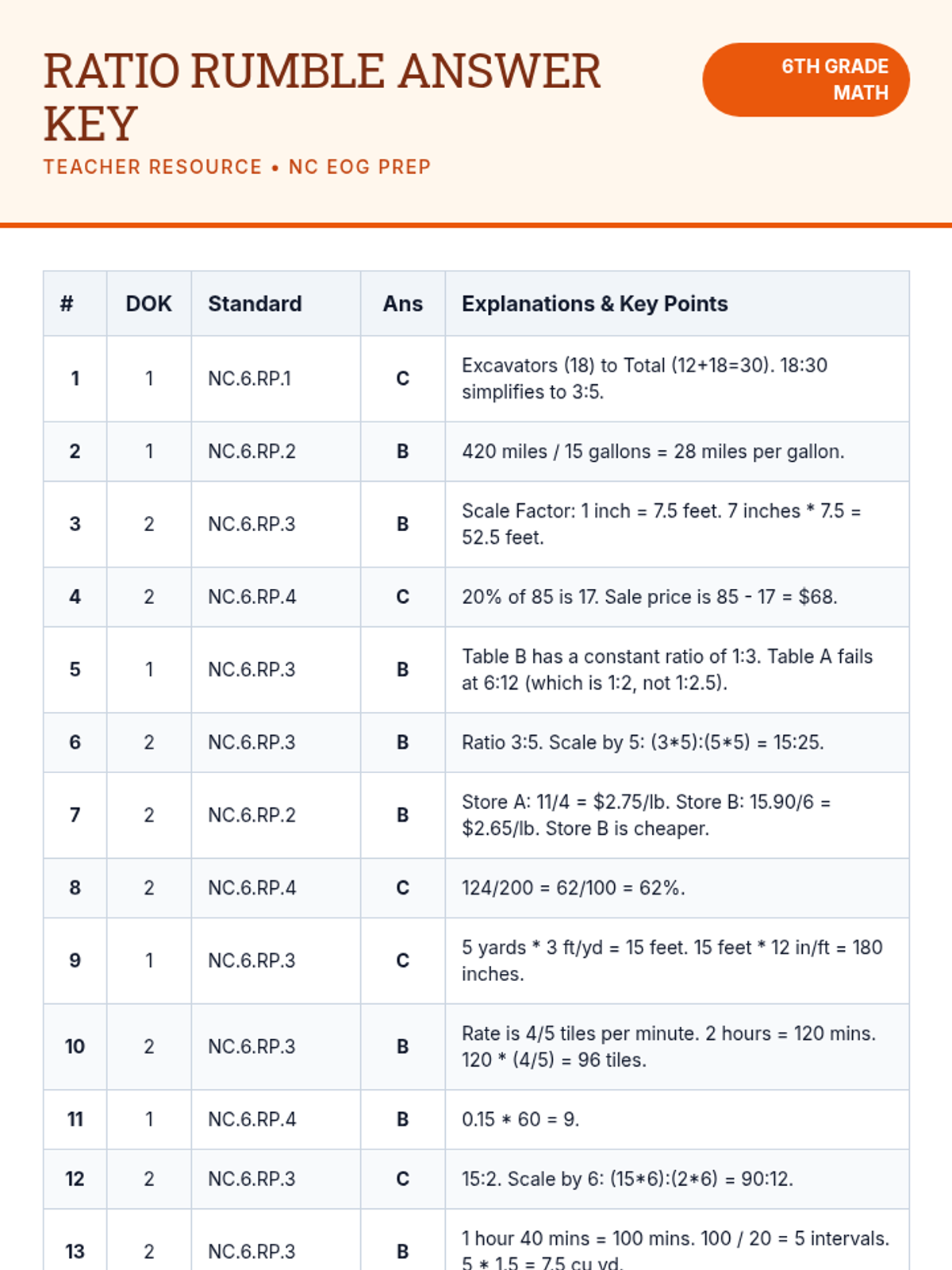
A practice-heavy lesson focused on solving 15 EOG-style ratio and proportional relationship questions with varied DOK levels.
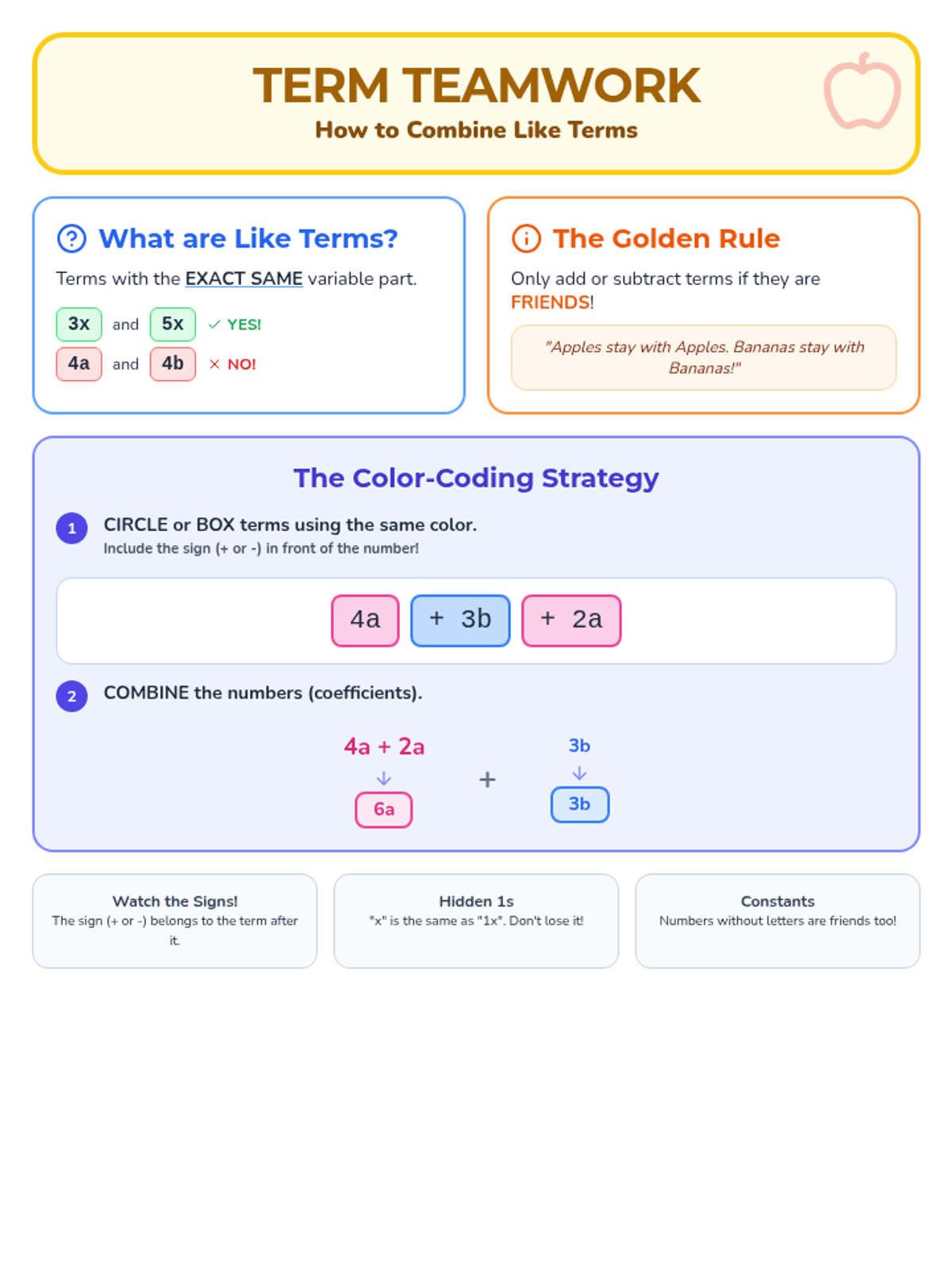
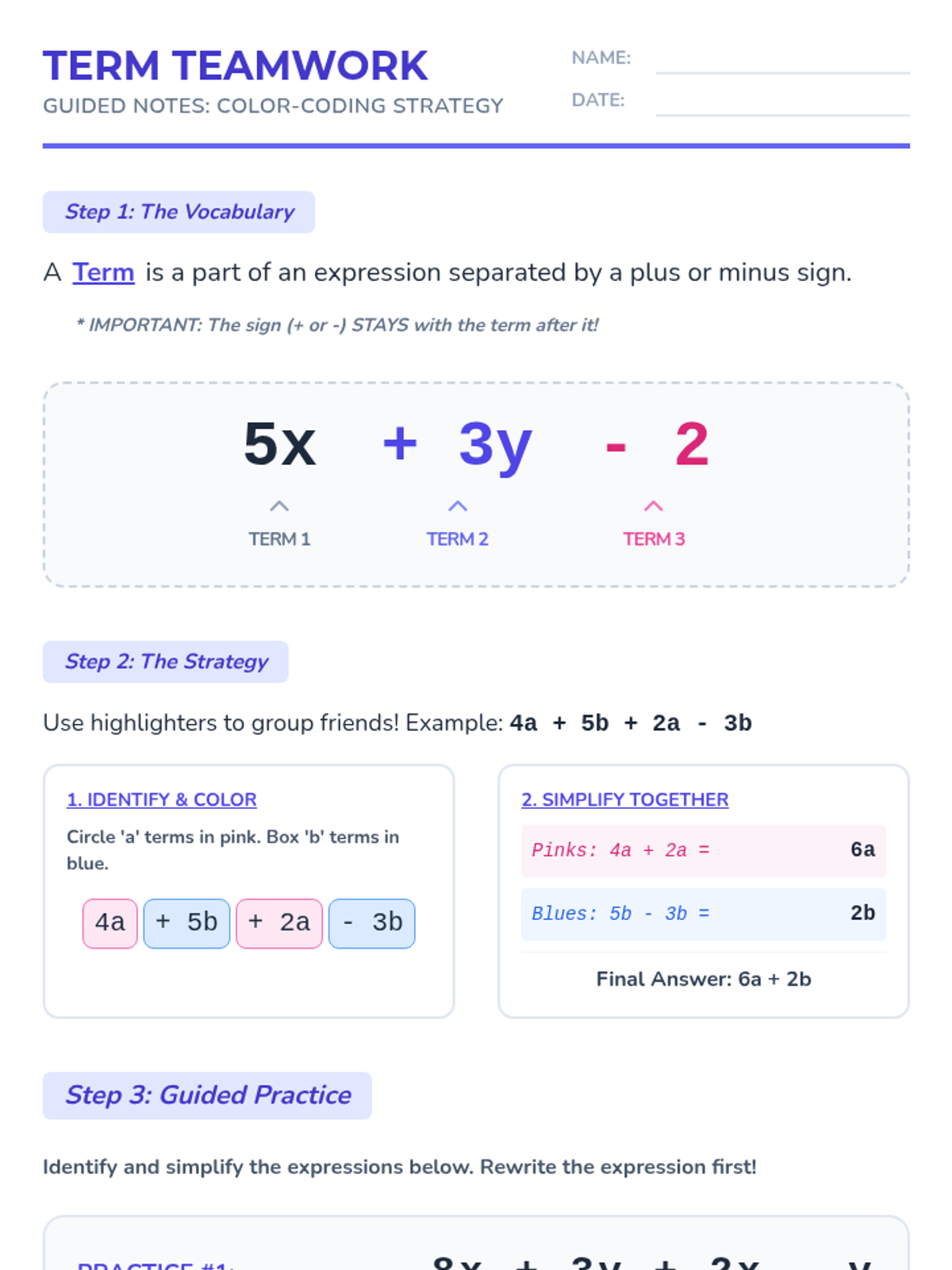
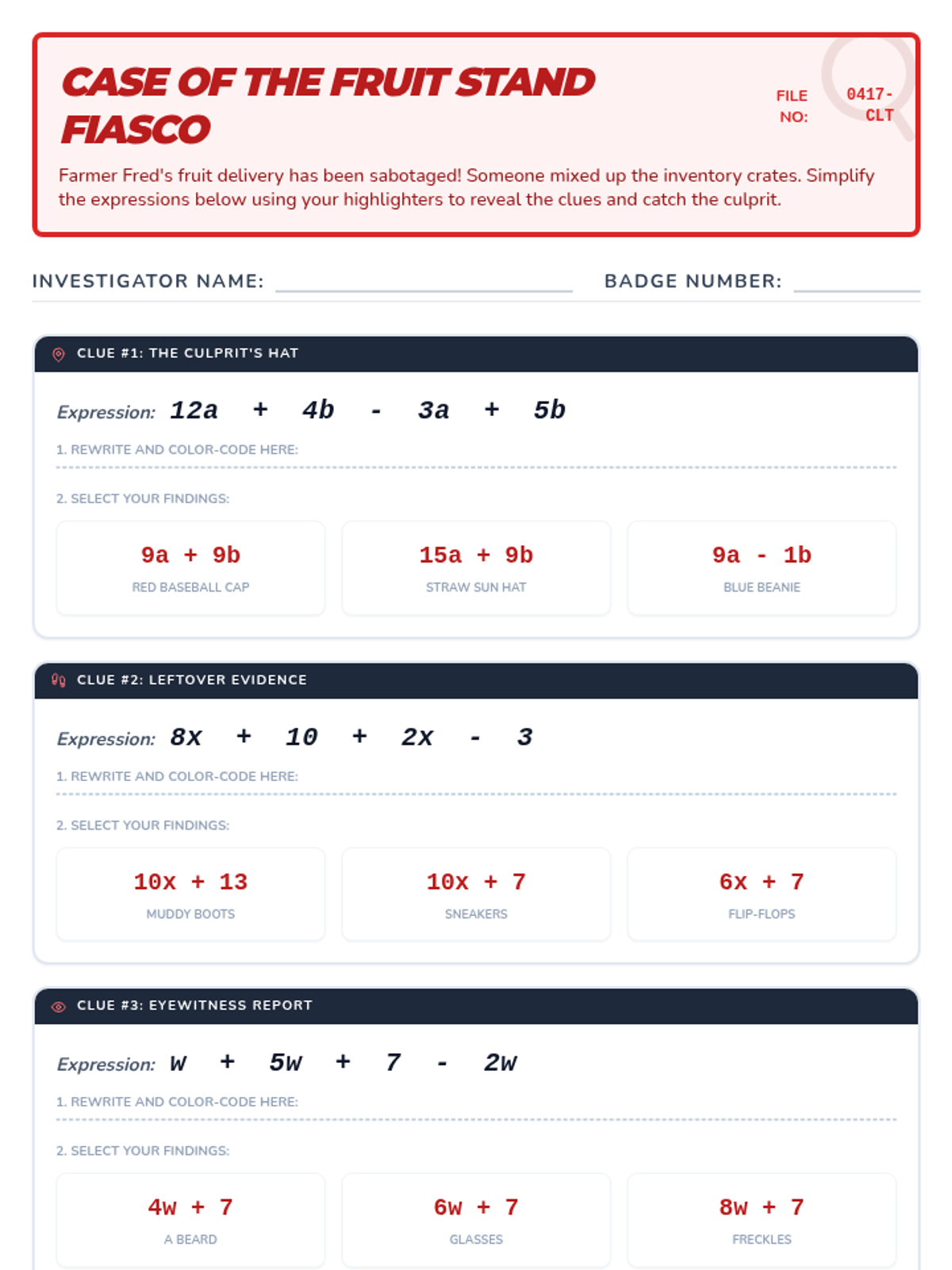
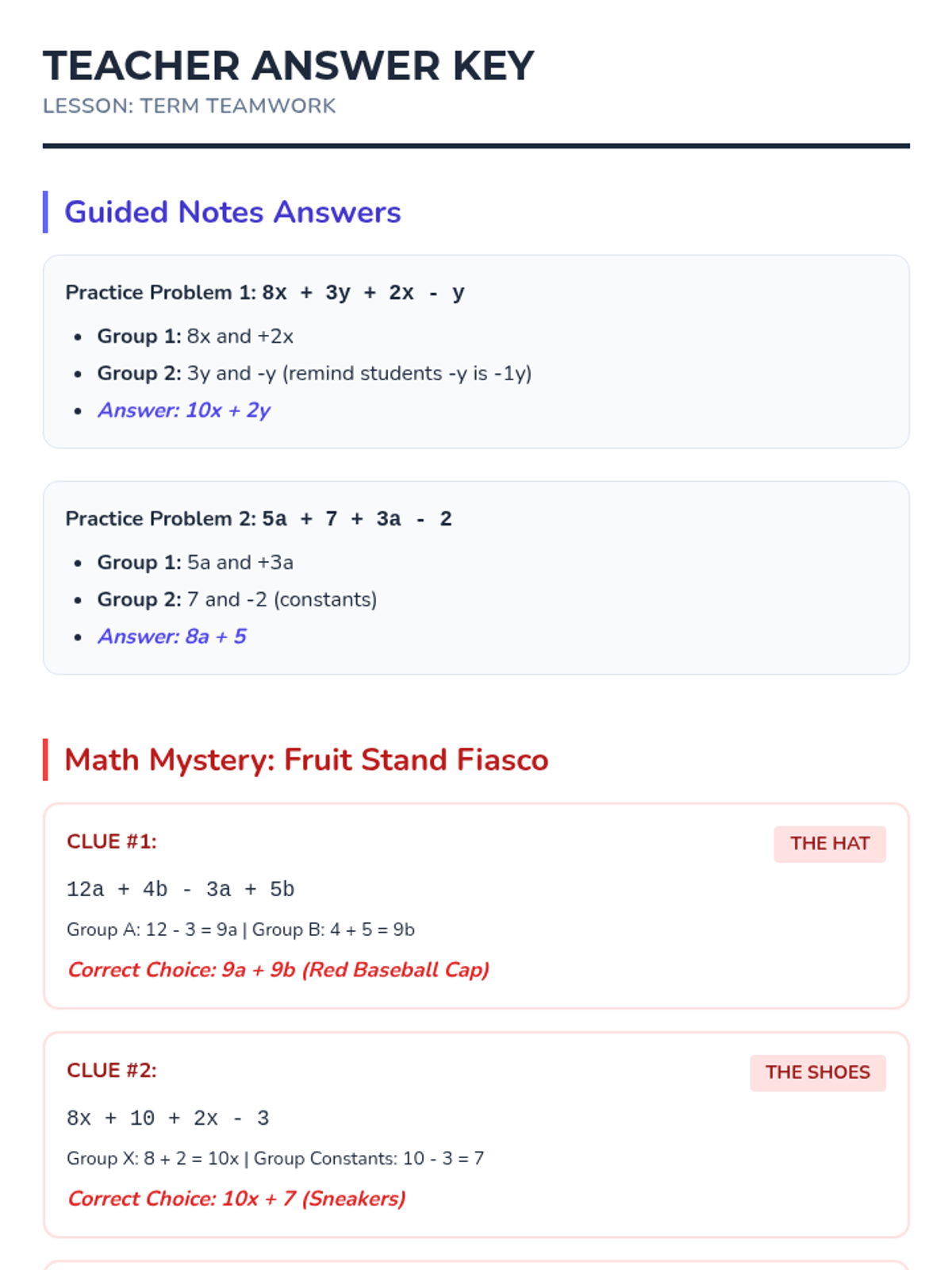
A beginner-friendly introduction to combining like terms using a color-coding strategy and a fun fruit-themed mystery to keep 5th graders engaged.
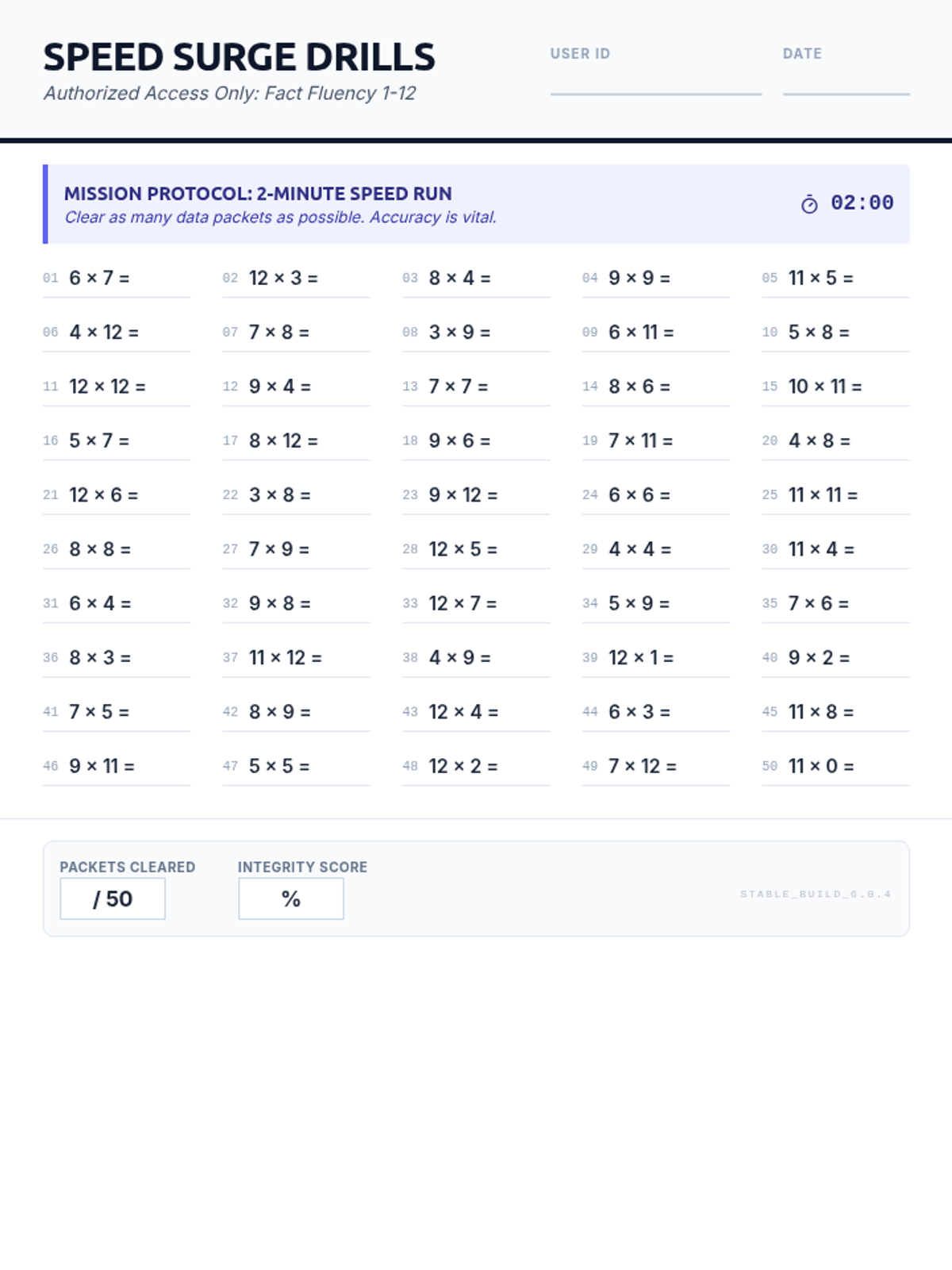
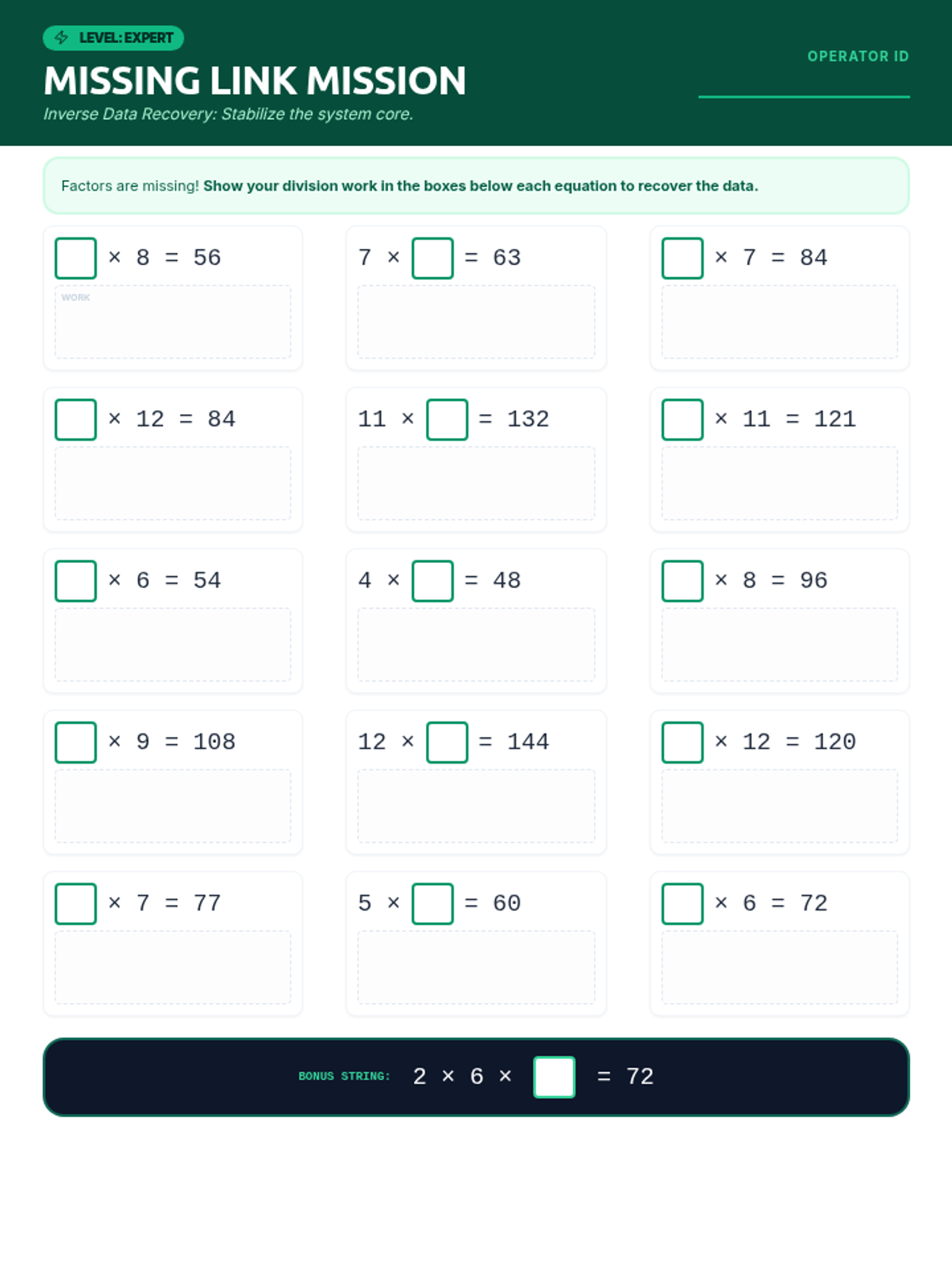
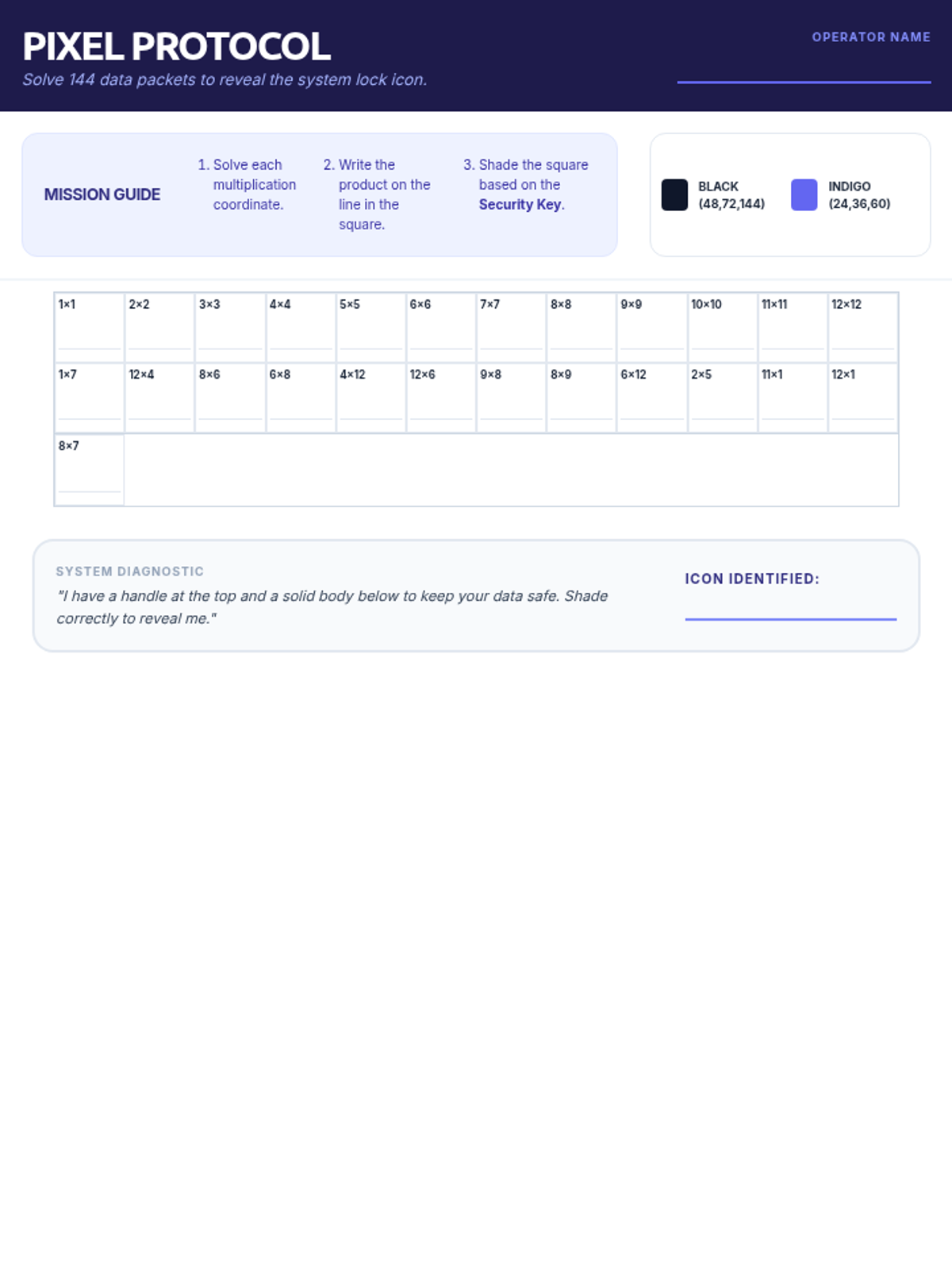
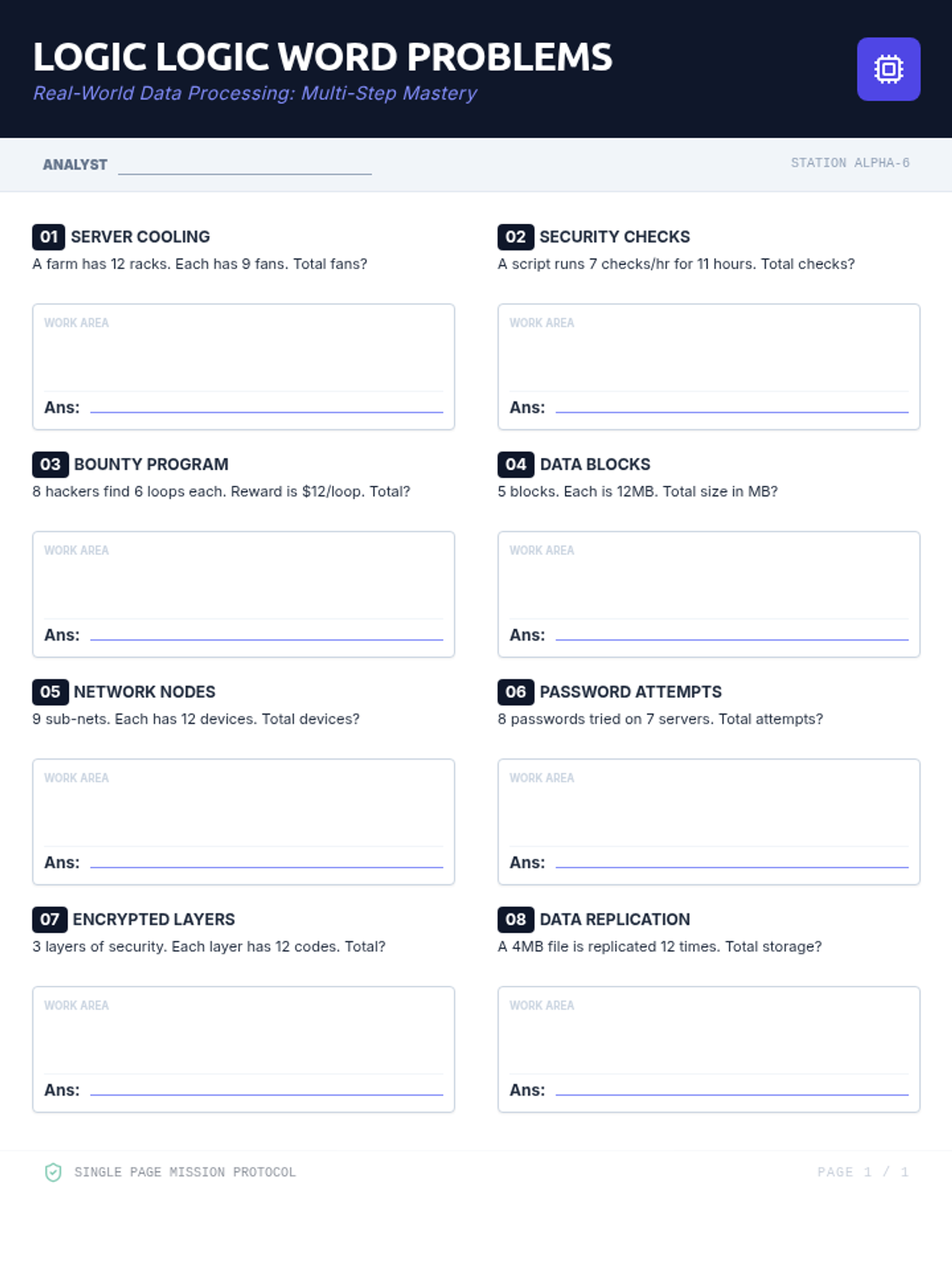
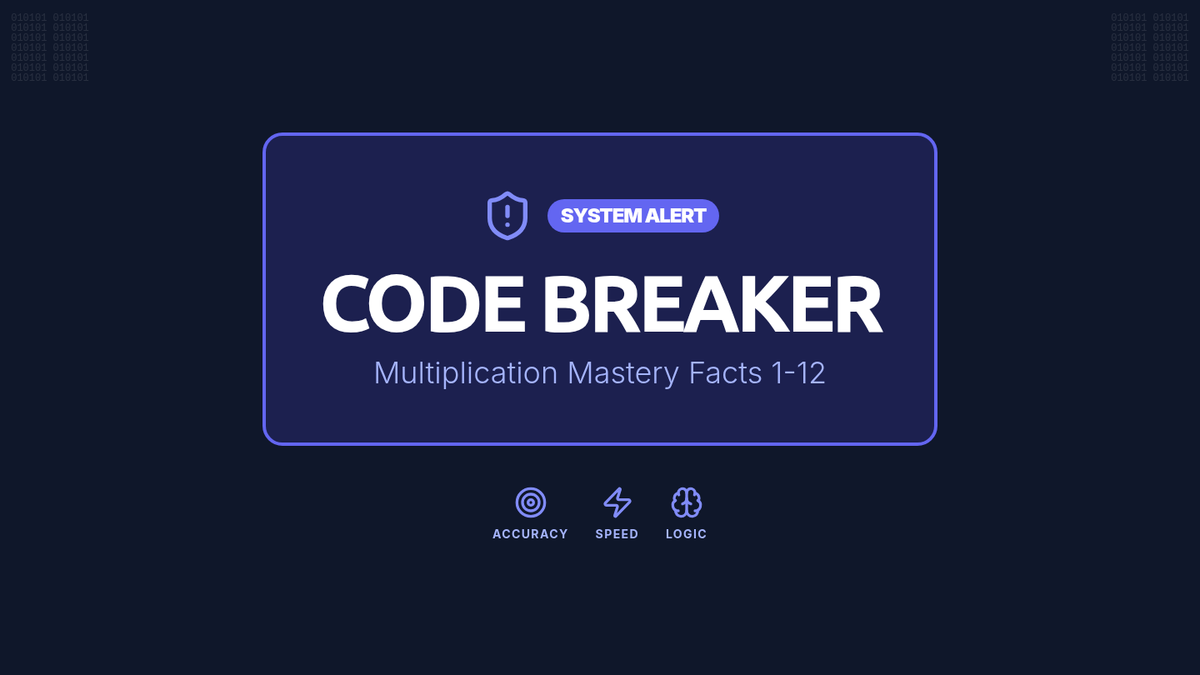
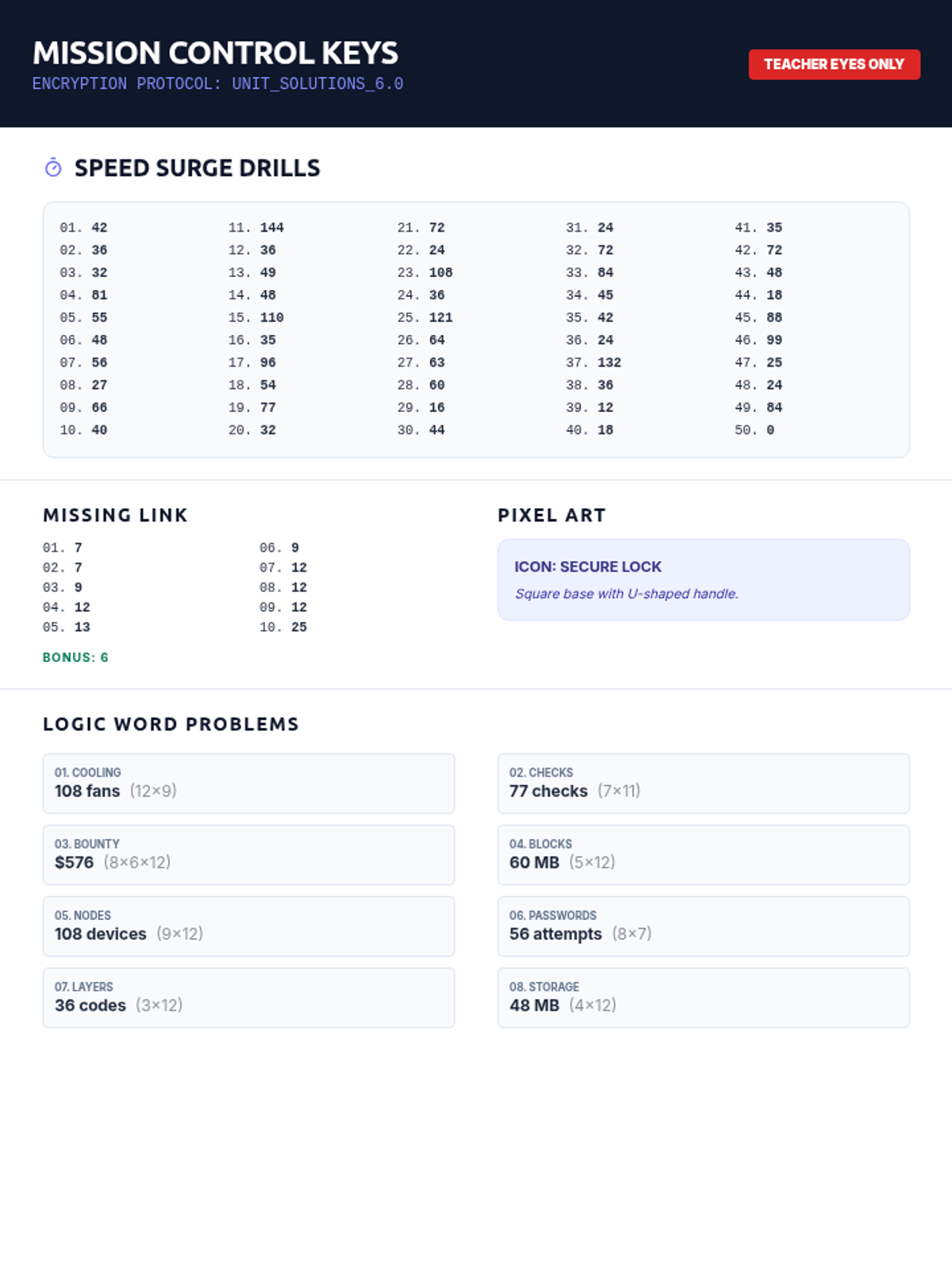
A fast-paced lesson focused on facts 1-12. Students act as 'Cyber Security' experts, using multiplication fluency to unlock data, solve logic problems, and visualize patterns through pixel art.
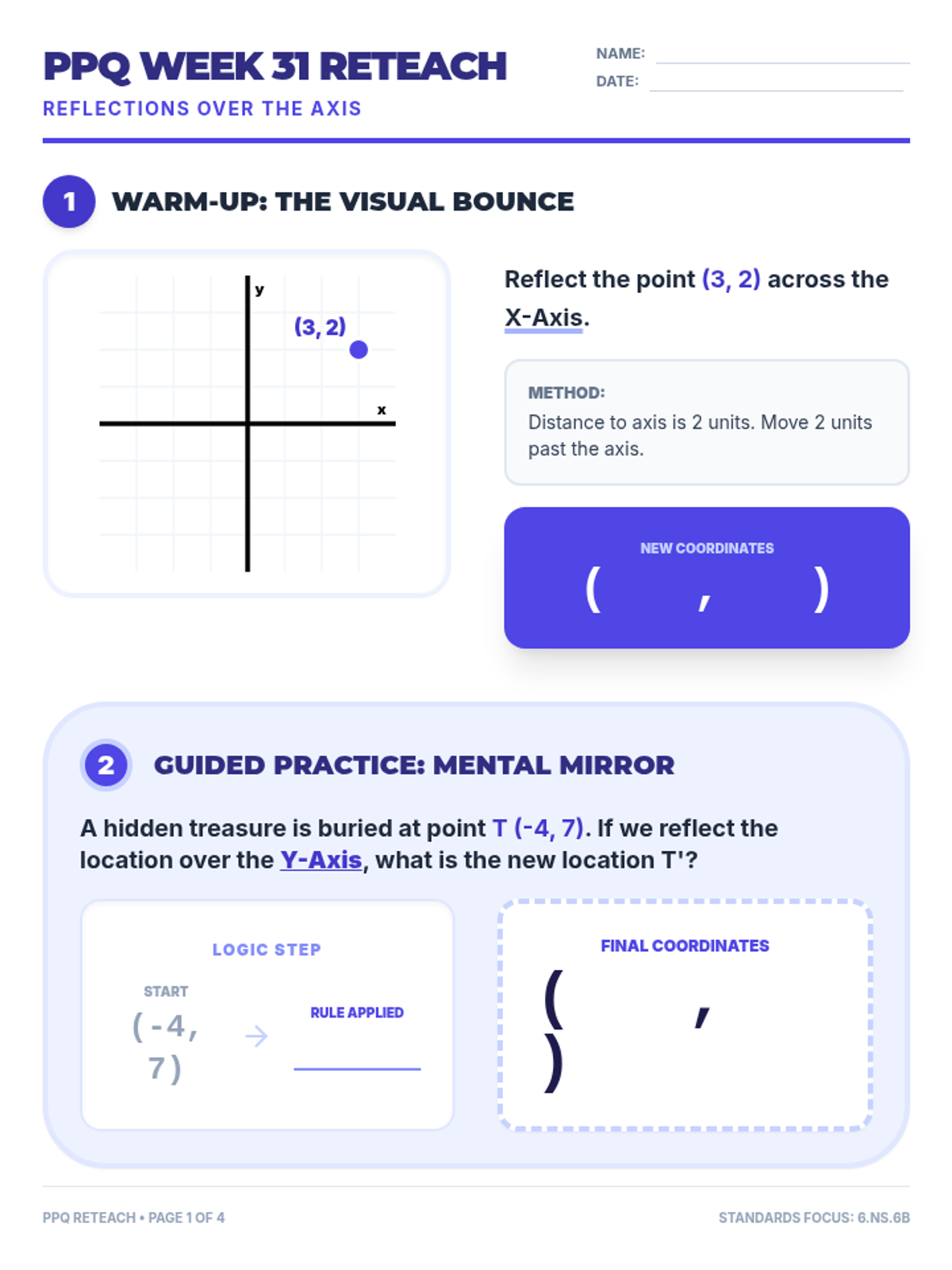
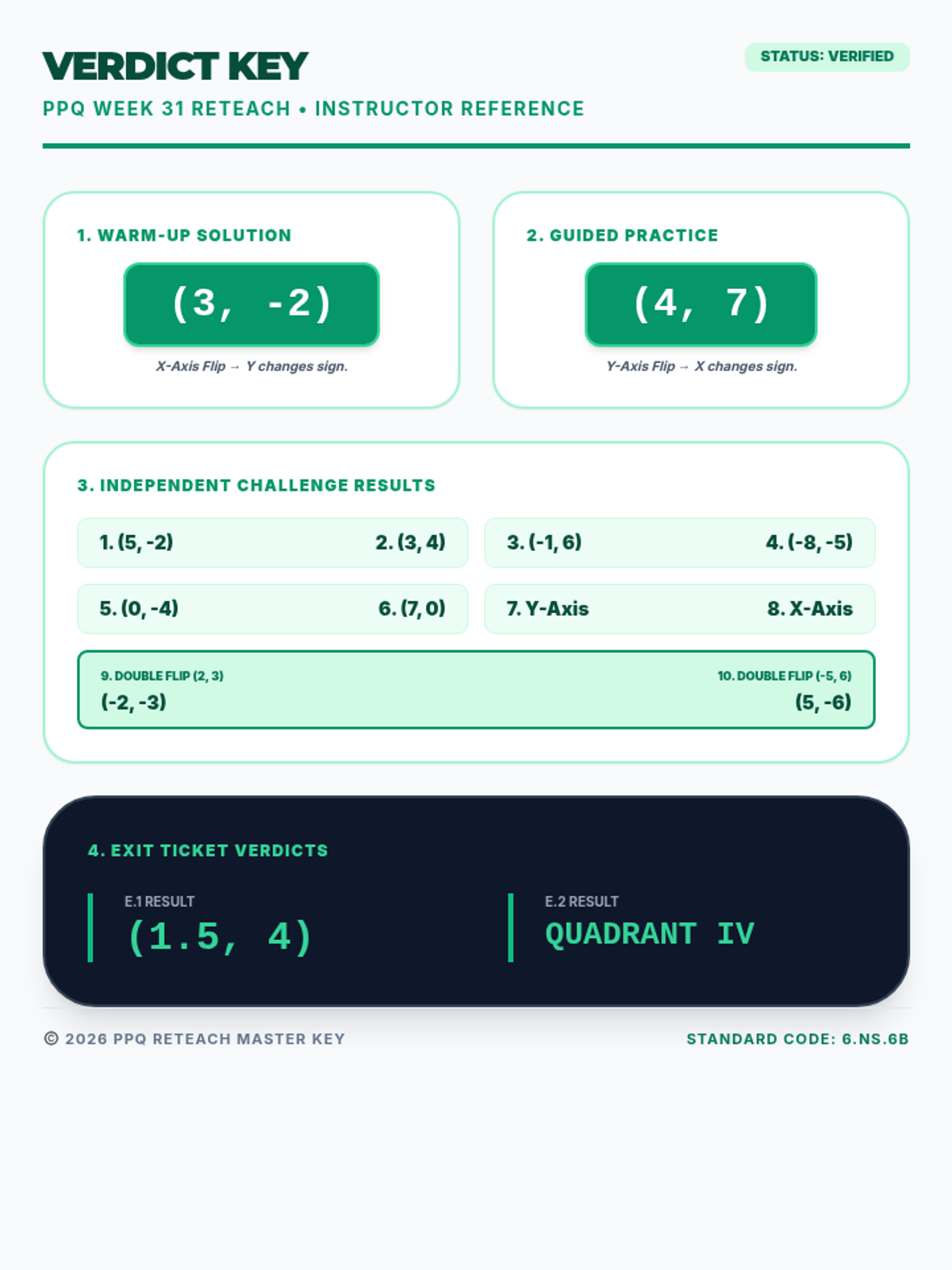
A focused re-teach lesson for 6th-grade standard 6.NS.6b (Reflections). Students master the rules for reflecting points across the x and y axes through visual mapping, mental rules, and repeated practice.
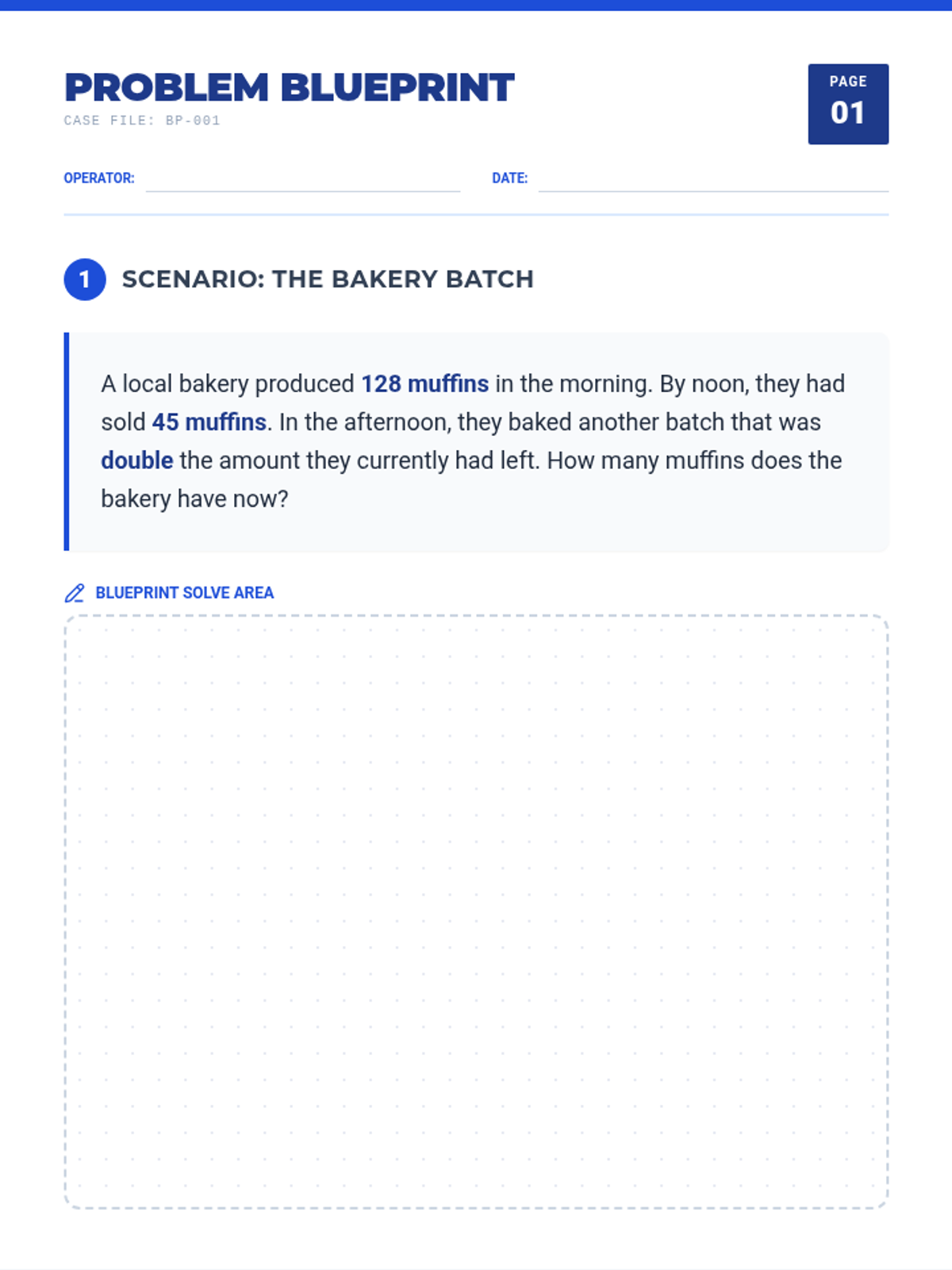
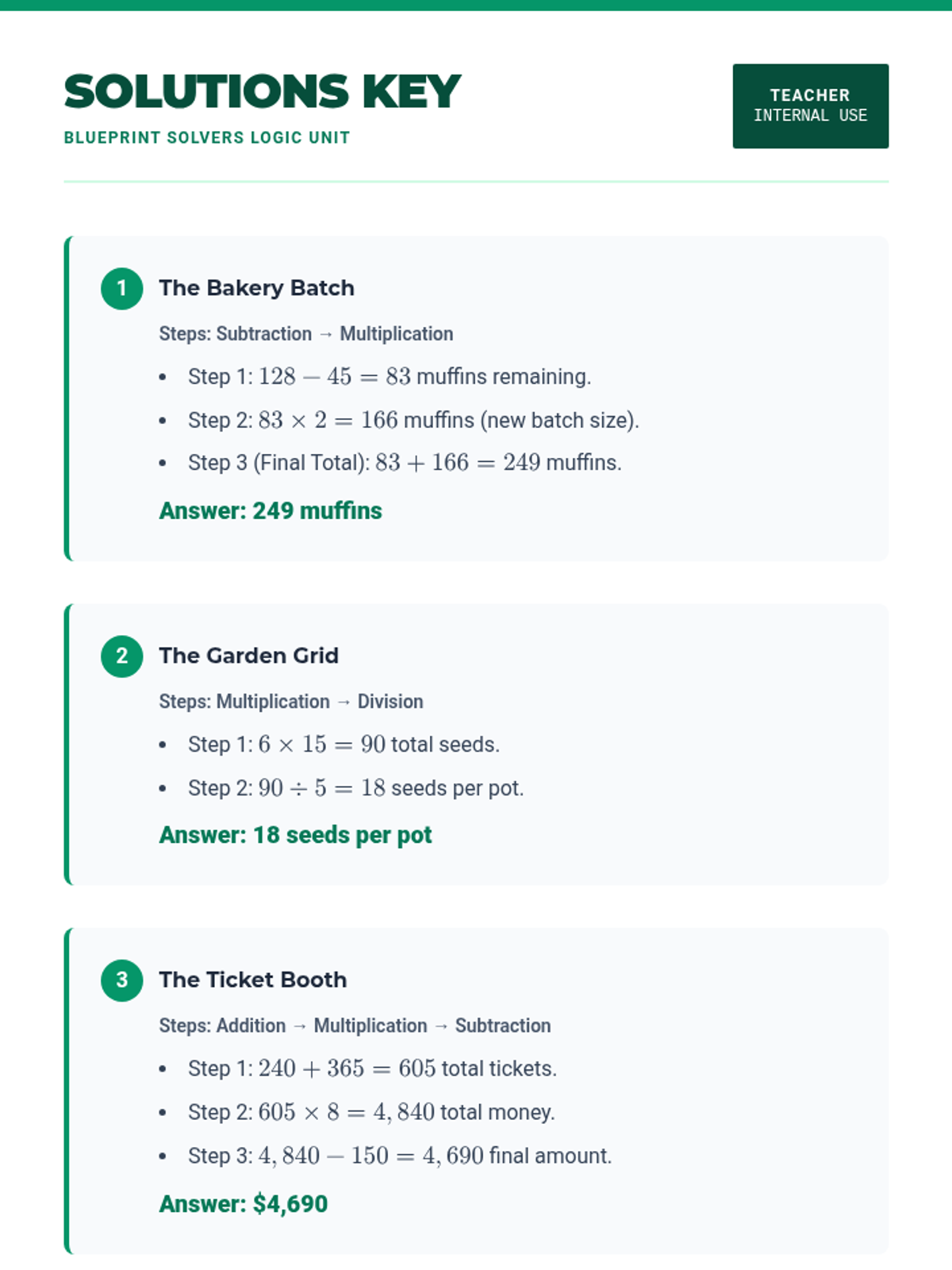
A collection of multi-step word problems involving addition, subtraction, multiplication, and division, designed to challenge students' logic and calculation skills through a 'blueprint' themed layout.
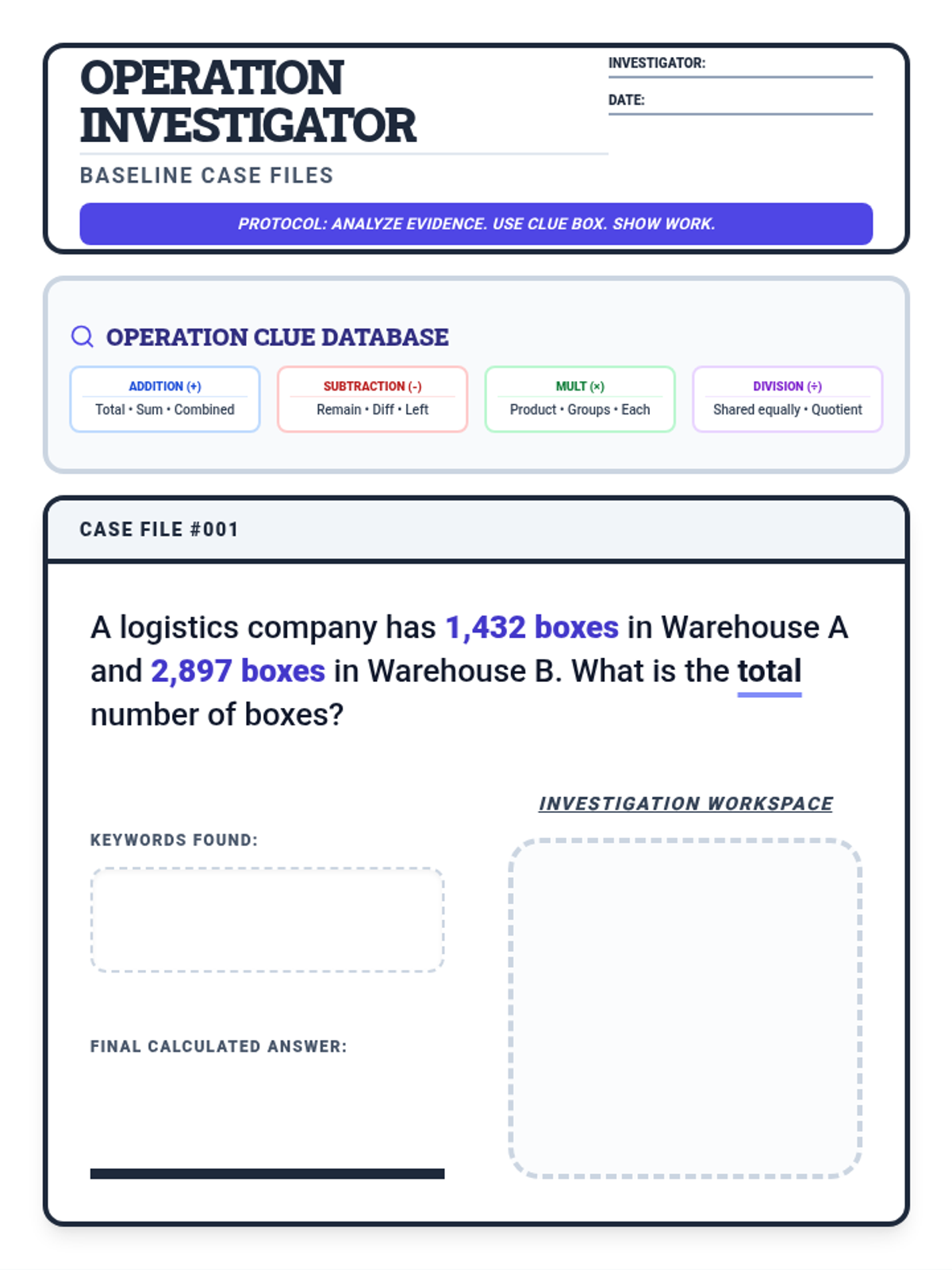
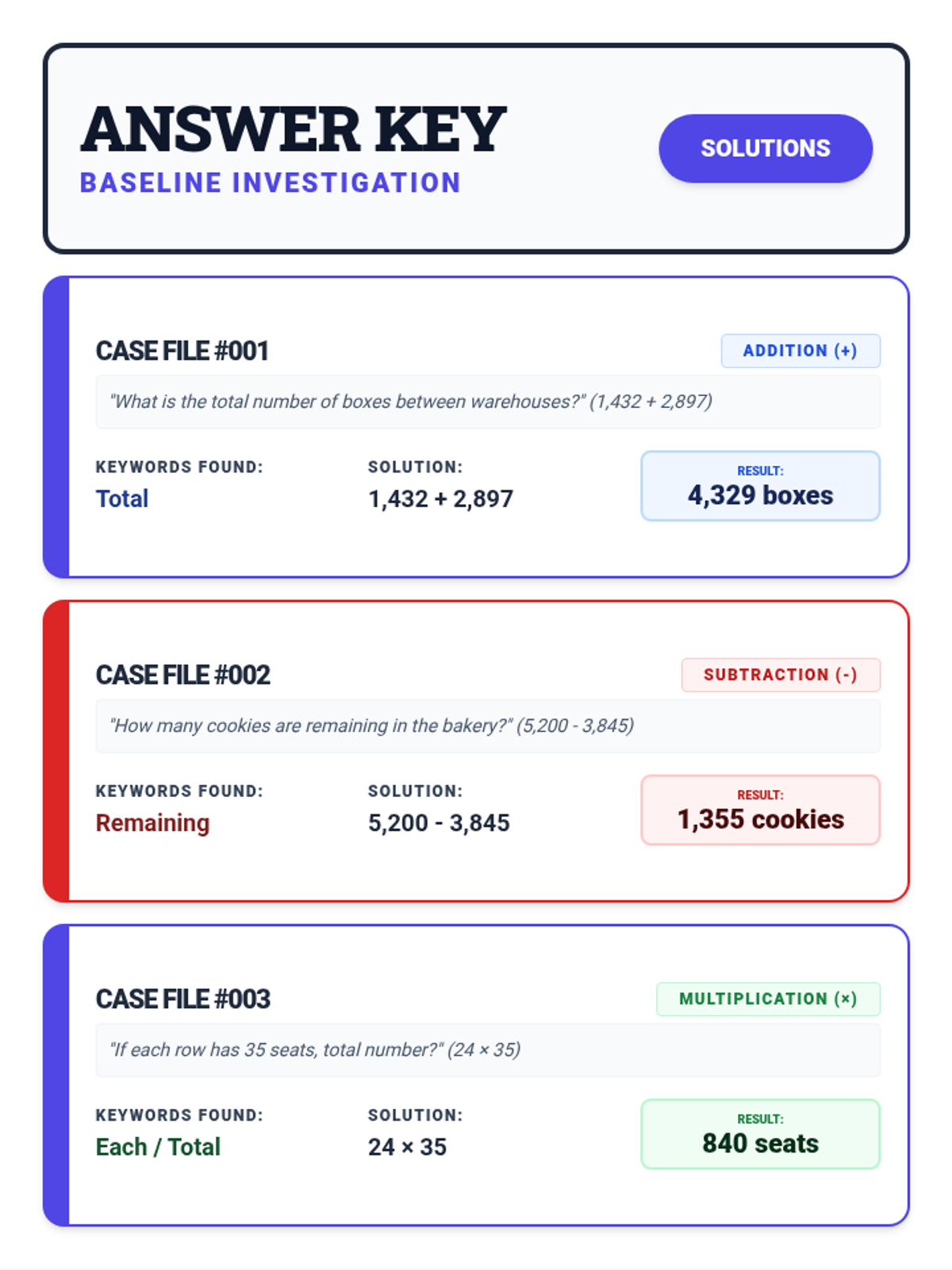
A baseline assessment lesson designed to evaluate a student's ability to identify and execute all four basic operations in multi-digit word problems. Includes a student worksheet with keyword supports and a teacher answer key.
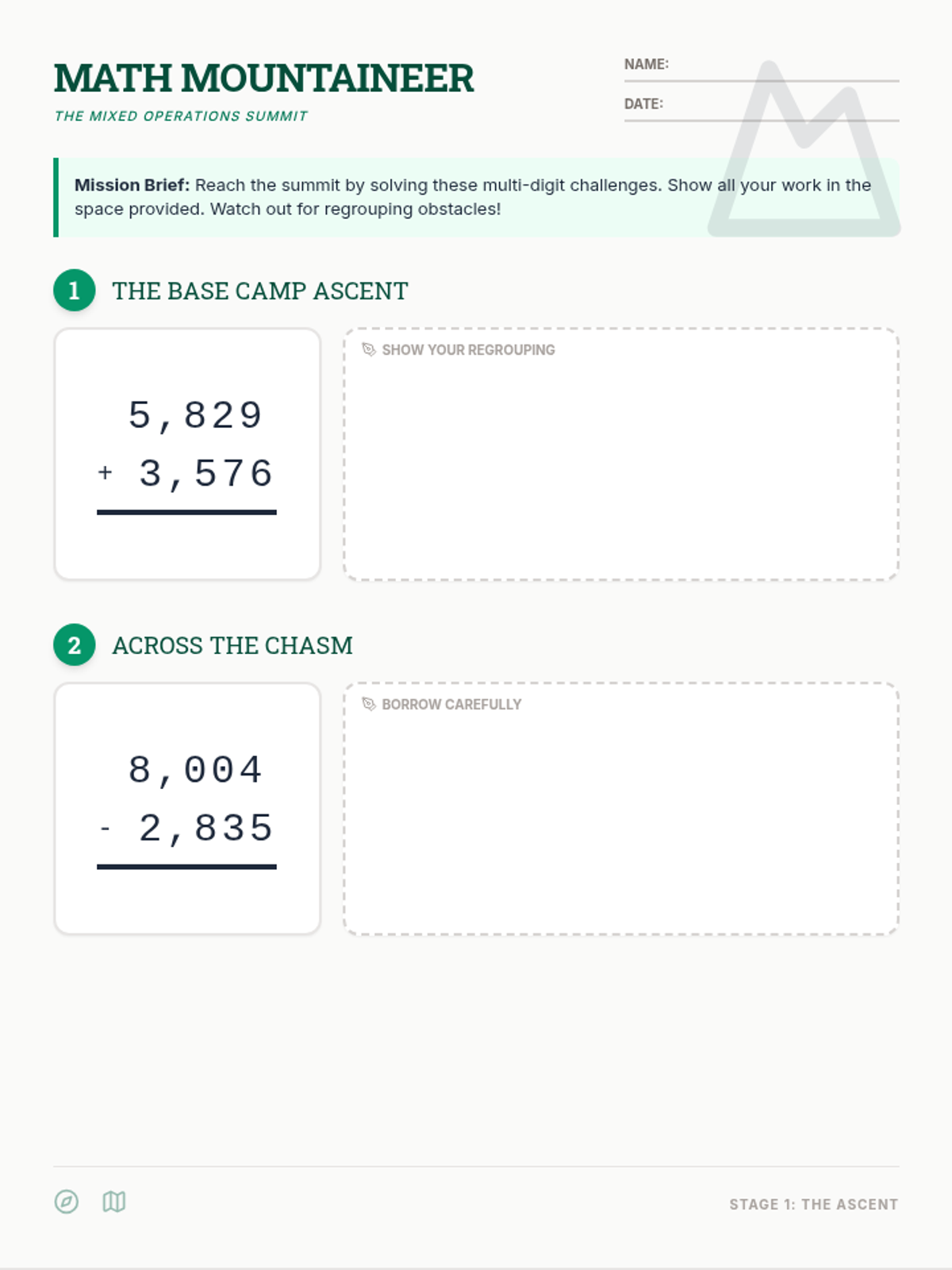
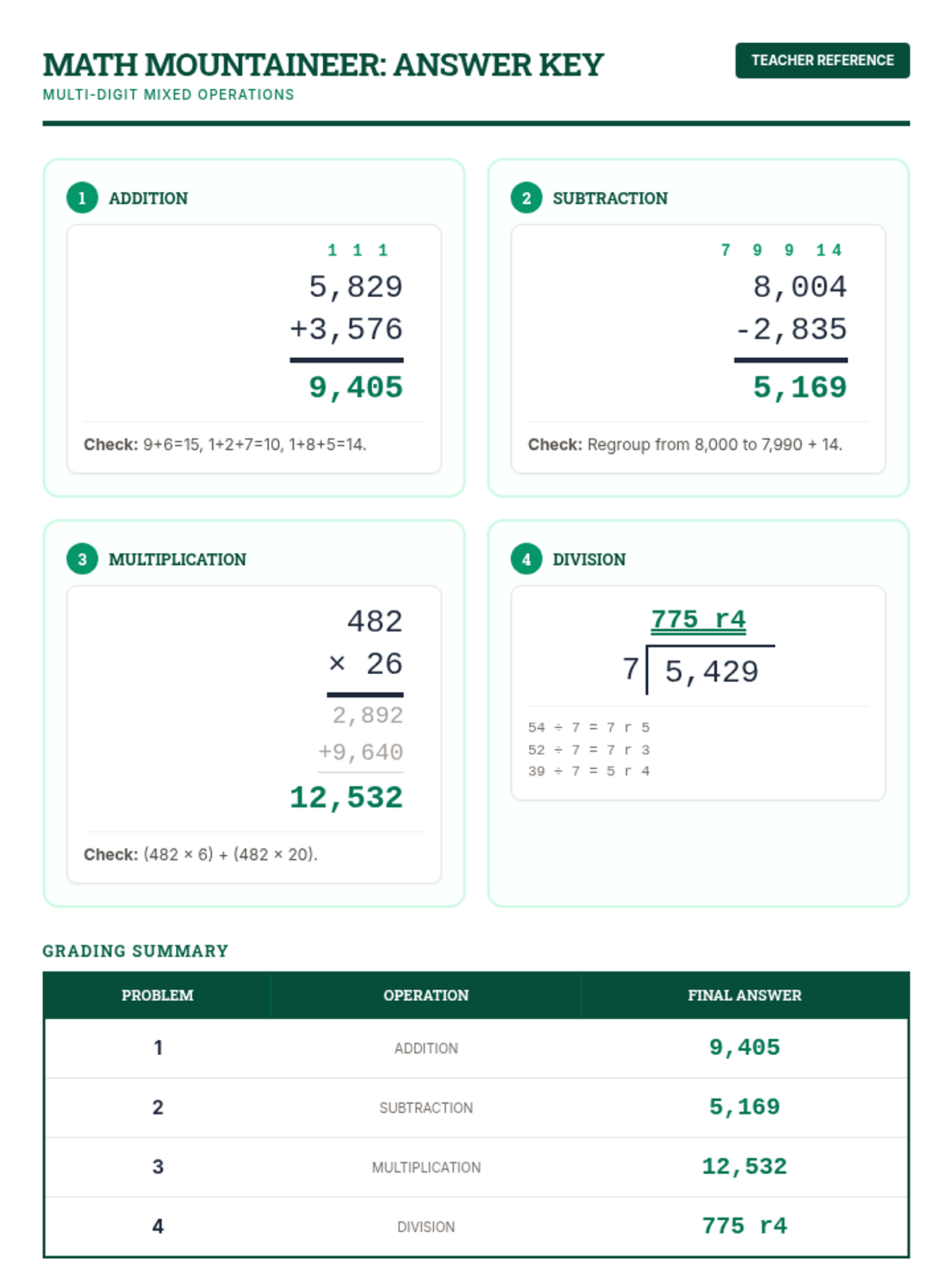
A lesson on multi-digit arithmetic using all four operations with regrouping, set in a mountaineering adventure theme.
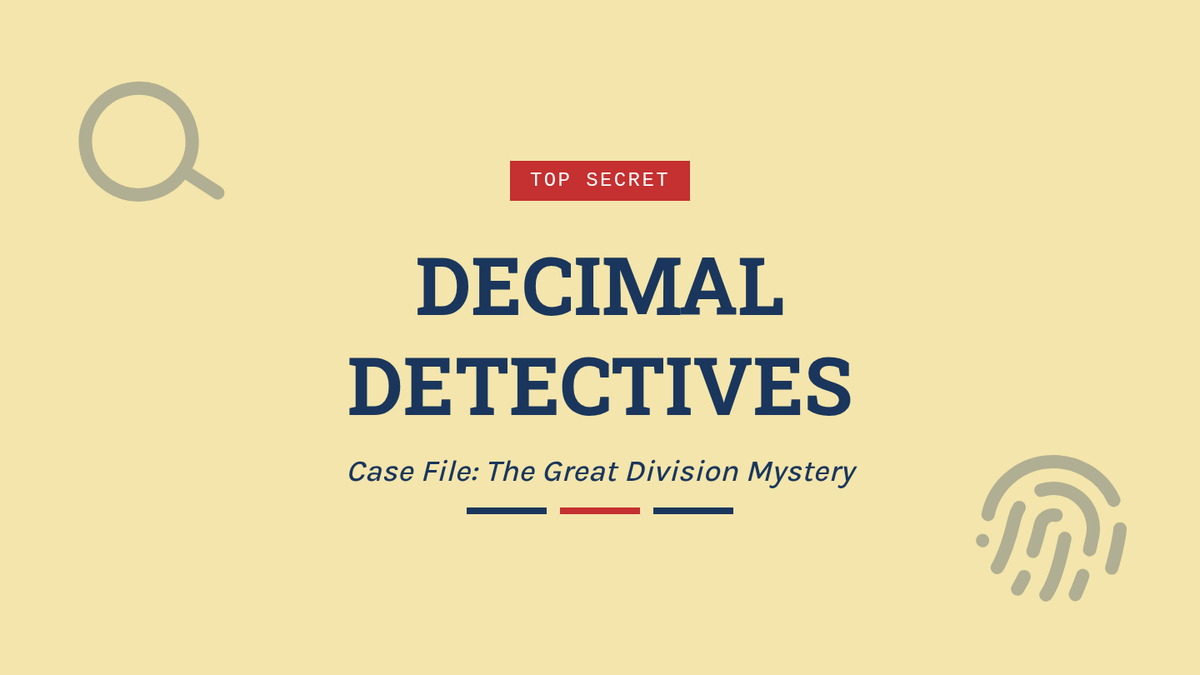
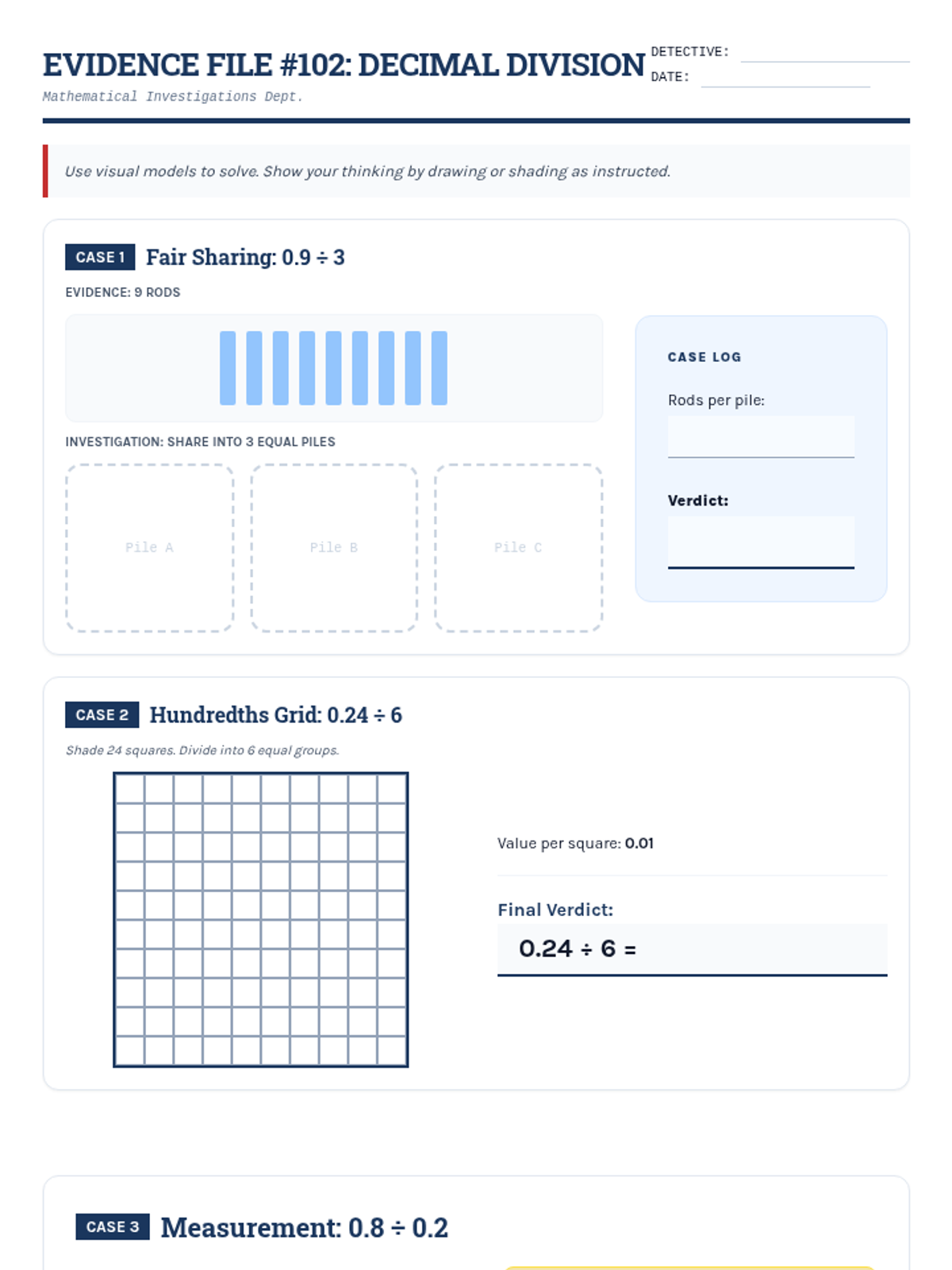
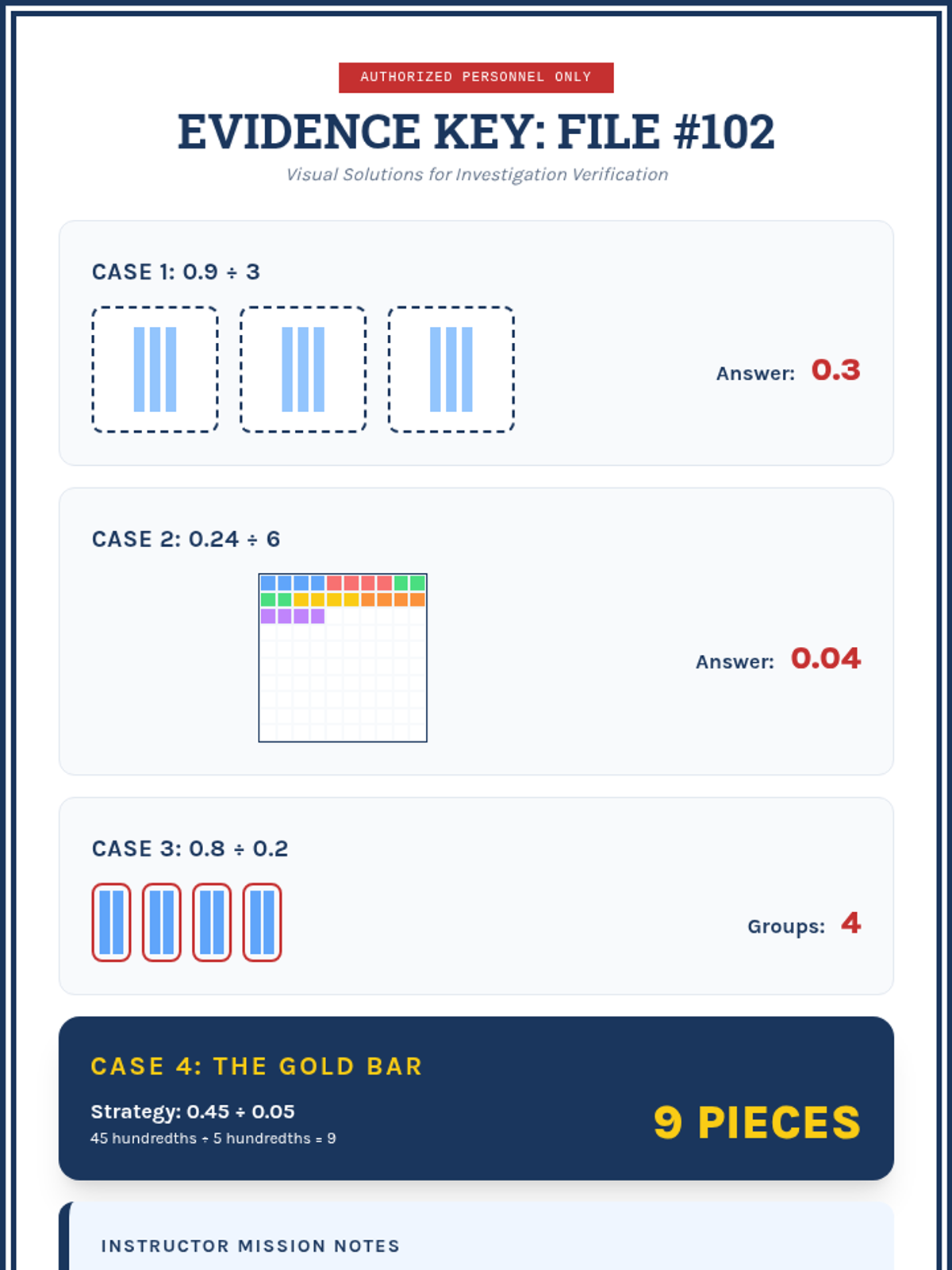
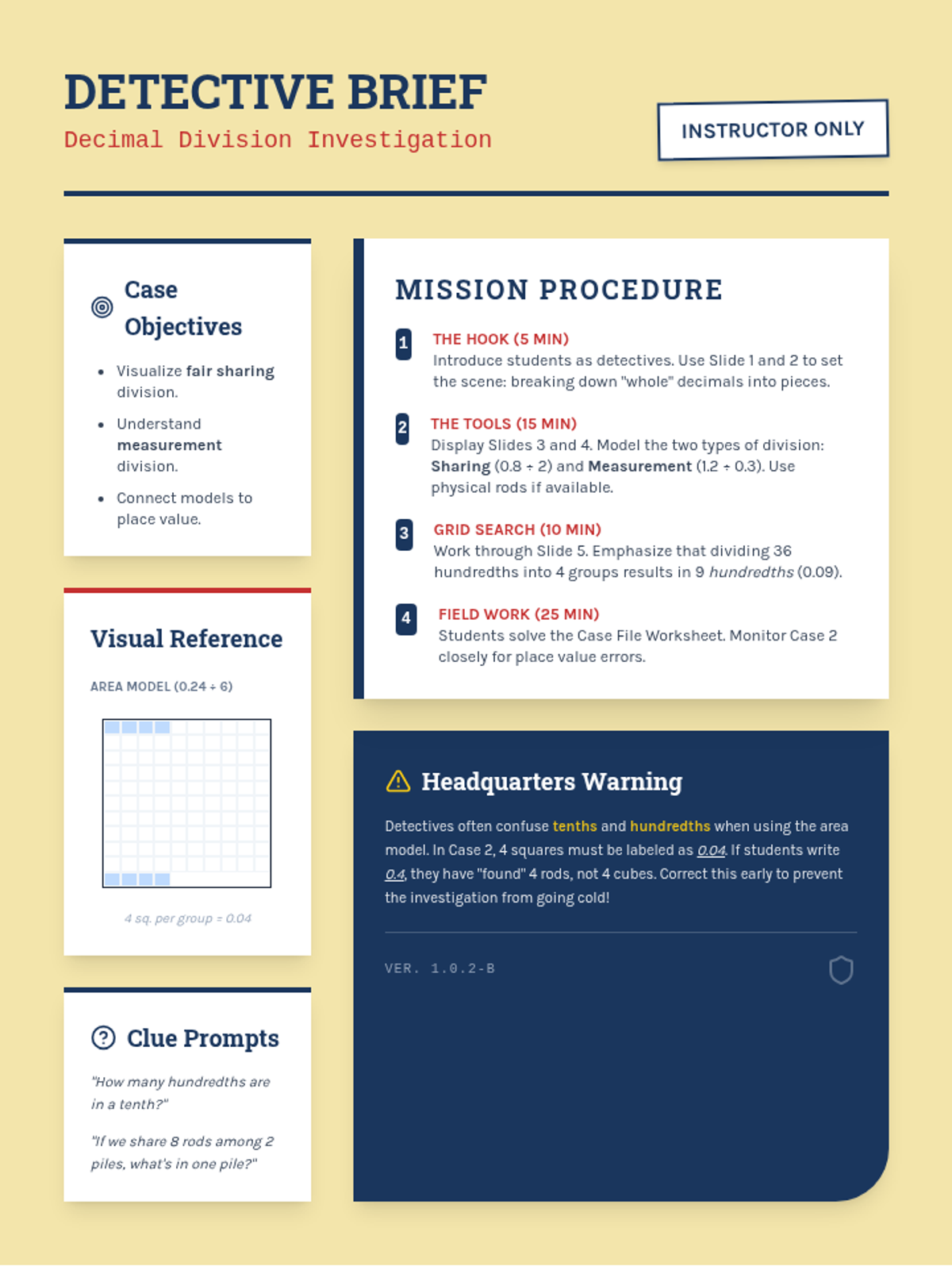
A comprehensive lesson on dividing decimals using visual models like base-ten blocks and area models, set in a detective-themed investigation.
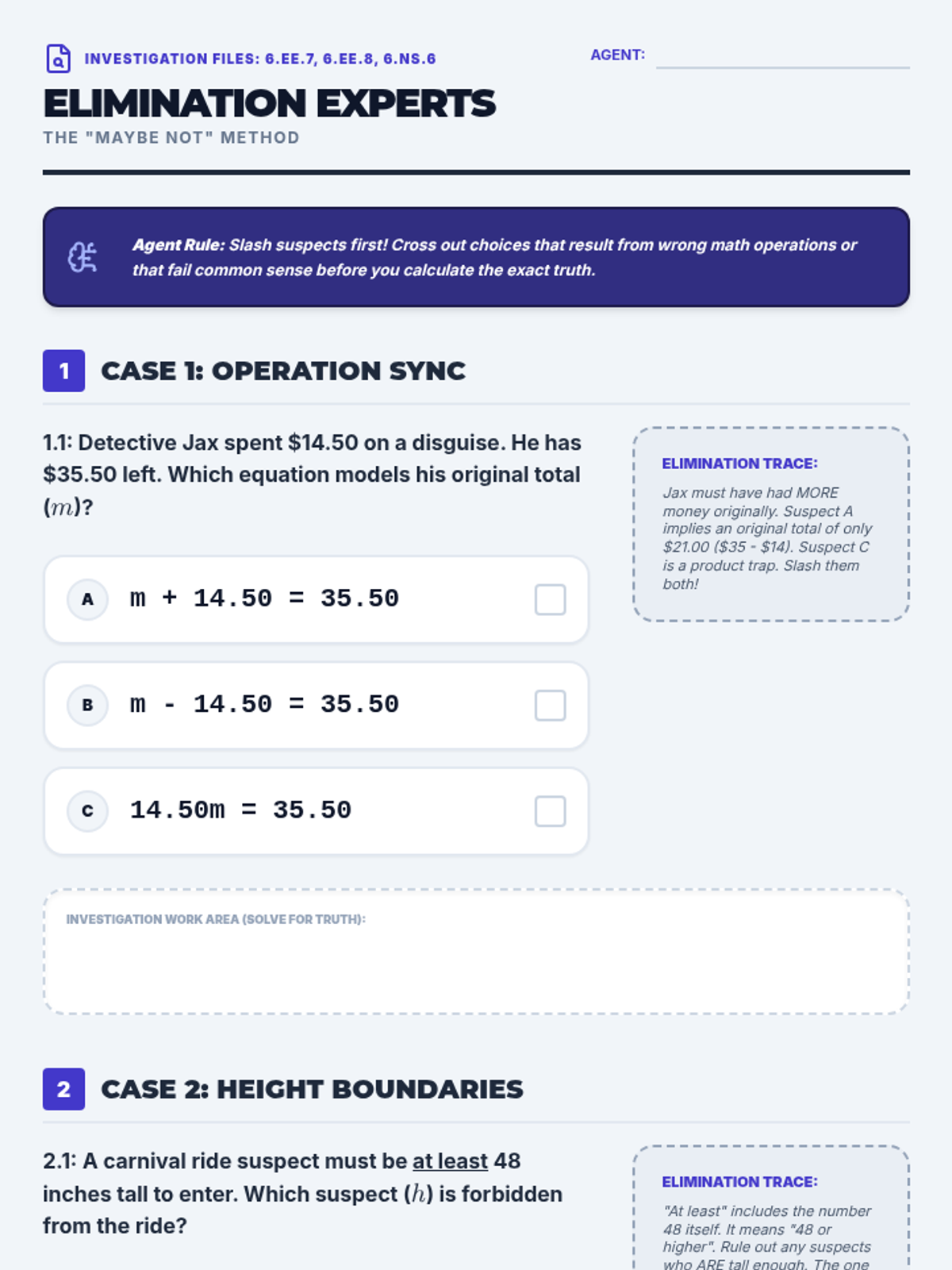
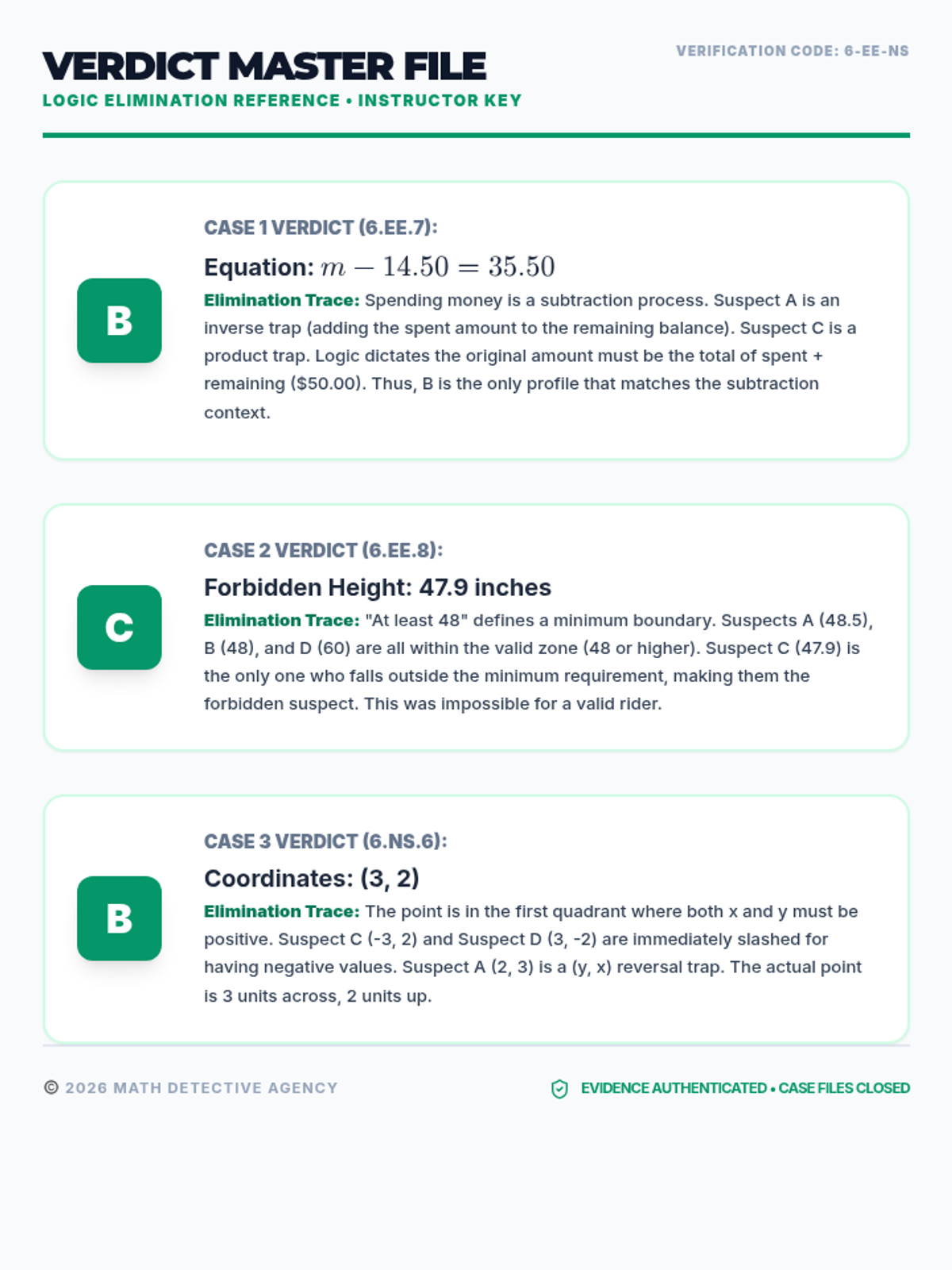
A specialized skill-building lesson focusing on standard 6.EE.7, 6.EE.8, and 6.NS.6. Students learn to use the process of elimination to solve one-step equations, identify inequality constraints, and map points on the coordinate plane.