A comprehensive lesson on chemical handling and waste disposal protocols for high school chemistry students, featuring instructional slides and a formal assessment.
An inquiry-based lab where students use the PhET Coulomb's Law simulation to discover the relationships between charge, distance, and electrostatic force.
A lesson exploring the physics of Hooke's Law and the mechanics of ideal springs. Students investigate the relationship between force, displacement, and stored energy in elastic systems.
An introductory lesson on physical and chemical changes for 5th-grade students, focusing on identifying signs of change and understanding reversibility.
A lesson focused on the basics of genetic inheritance and how traits are passed from parents to offspring, designed for students with a 2nd-grade reading level.
A comprehensive lesson on plant transport systems, covering the structure and function of xylem and phloem, transpiration, and various plant tropisms through hands-on lab work and station-based learning.
A lesson focused on helping Level 3 ESL students master the Claim, Evidence, Reasoning framework through the analysis of bar and line graphs. Students act as 'Data Detectives' to uncover trends and support their conclusions with specific data points.
Esta lección explora el control avanzado del flujo de datos en archivos mediante el manejo del puntero, permitiendo lecturas y escrituras no secuenciales con Python.
Los estudiantes exploran el poder de los bucles "mientras" (while) en Microsoft MakeCode Arcade para crear comportamientos repetitivos en sus juegos. Aprenden a usar condiciones para controlar la repetición y automatizar mecánicas como la generación de enemigos o el seguimiento de puntajes.
Students will learn how to use conditional statements (if, elif, else) to control the flow of a Python program, understanding indentation and logical operators.
Students explore how roots, stems, leaves, and reproductive systems work together, using Pando as a case study for survival and adaptation.
A comprehensive homework assignment covering biological organization, cell types, and organelle functions for 8th-grade students.
A series of feedback and reflection tools for students, parents, and teachers to evaluate learning after completing the Wild Adventure project. It uses an explorer theme to make the assessment process engaging and collaborative.
A comprehensive strategic planning resource for educators to analyze Grade 5 MCAS results and align Grade 6 instruction with identified student needs in ELA, Math, and Science.
Une formation complète pour maîtriser Wooclap en contexte universitaire, allant de la création d'activités simples à l'intégration avancée dans PowerPoint et Moodle.
Une exploration diachronique des grands courants pédagogiques, de l'humanisme aux neurosciences, conçue pour les étudiants en sciences de l'éducation.
This lesson covers the fundamental differences between transverse and longitudinal waves, focusing on their physical properties, parts, and real-world examples. Students will practice identifying wave characteristics and comparing how energy travels through different mediums.
A celebratory biology-themed activity for the 100th day of school, challenging students to recall and categorize 100 key biological concepts.
A remediation-focused lesson designed for 11th and 12th-grade Environmental Science students to master plate tectonics and their environmental impacts (TEKS 9A). Students analyze a complex geologic scenario, identify plate boundaries, and evaluate the resulting environmental consequences of earthquakes and volcanic eruptions.
A high school child development lesson using a jigsaw strategy to explore Piaget's four stages of cognitive development, featuring expert research and peer-to-peer teaching.
A comprehensive 99-minute lesson exploring child development theorists (Piaget, Erikson, Vygotsky, Bowlby) with a focus on infancy, featuring collaborative research and guided note-taking.
This lesson explores the complex business ecosystem of the Super Bowl, focusing on advertising costs, consumer behavior, brand strategy, and economic impact. Students will analyze how the biggest sporting event in the U.S. functions as a multi-billion dollar marketing machine.
A comprehensive introduction to the fundamental behaviors of sound and light waves, focusing on key phenomena like reflection, refraction, and interference.
An introductory exploration of cybersecurity fundamentals for middle and high school students, covering the CIA triad, common threats, and defensive strategies through hands-on projects and conceptual mapping.
Students explore the intersection of physical electronics and digital audio by building interactive sound installations. They will learn about conductivity, circuit logic, and basic programming to transform everyday objects into musical instruments.
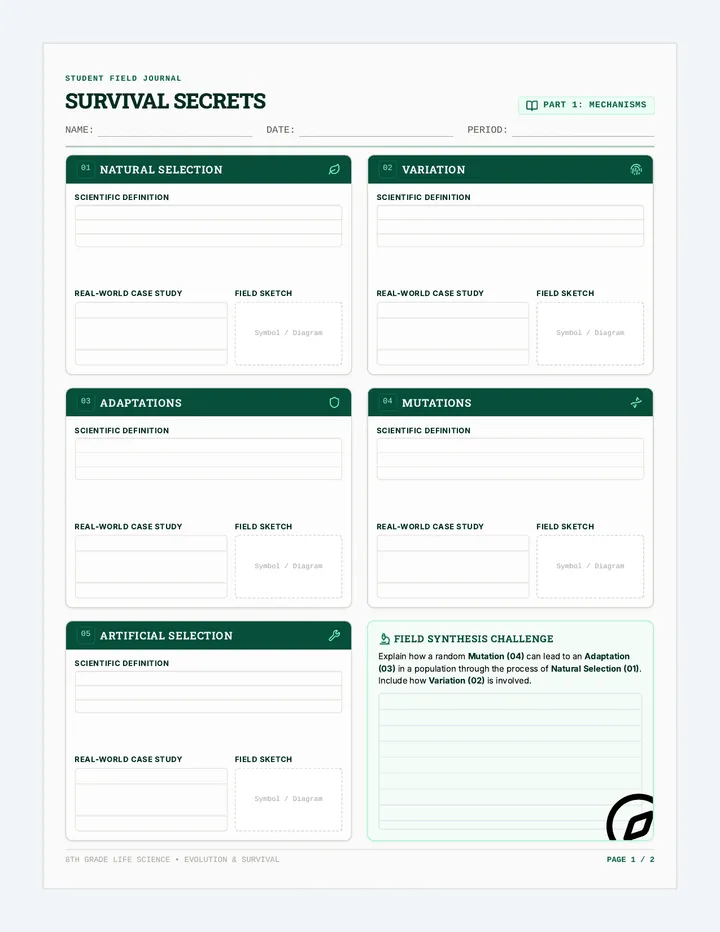
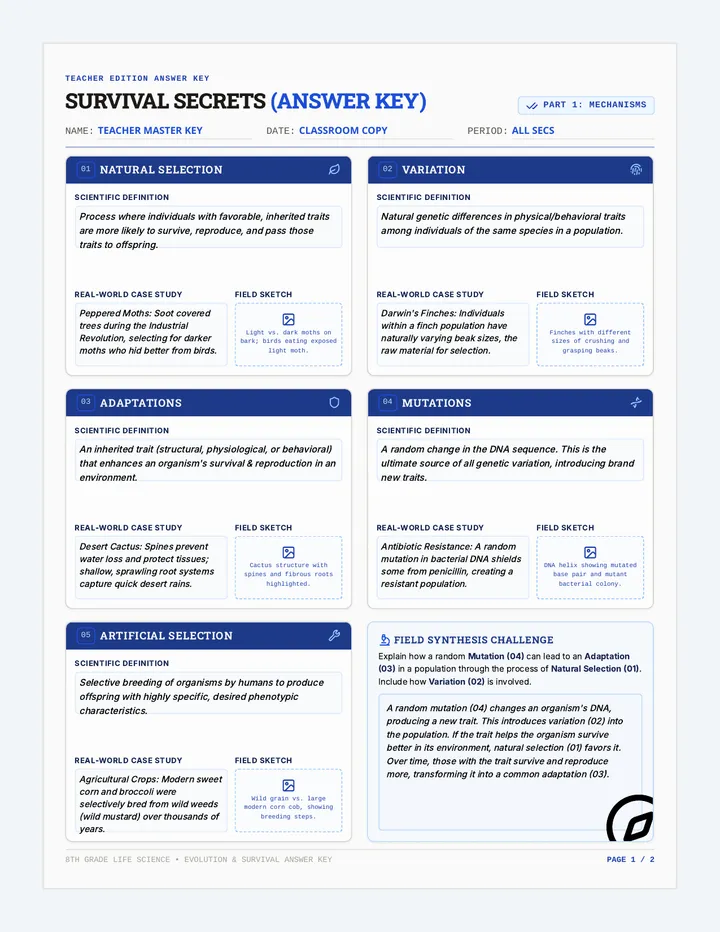
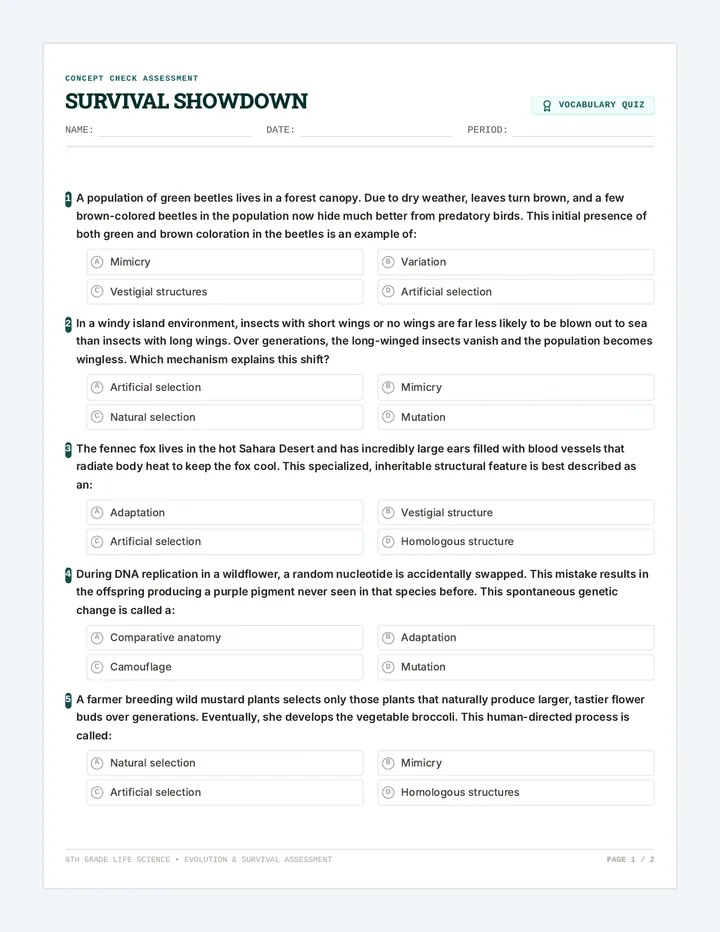
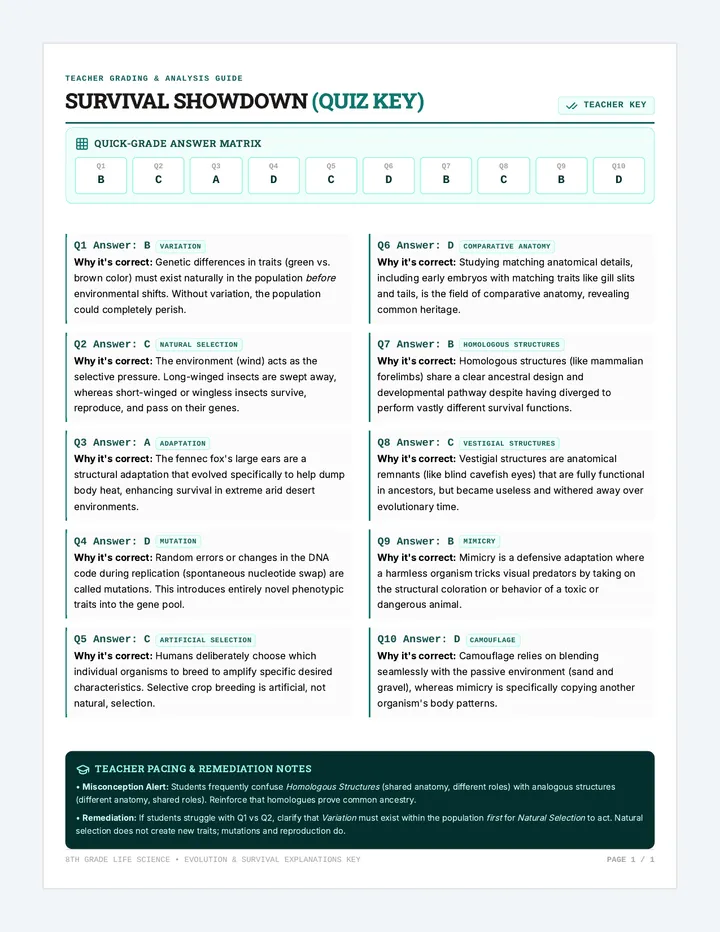
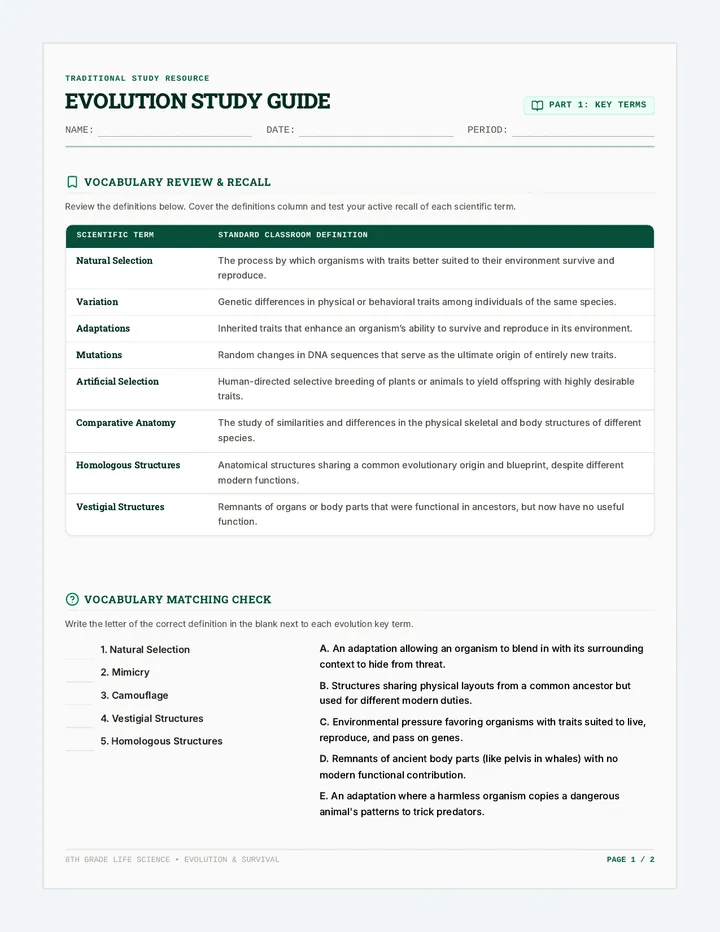
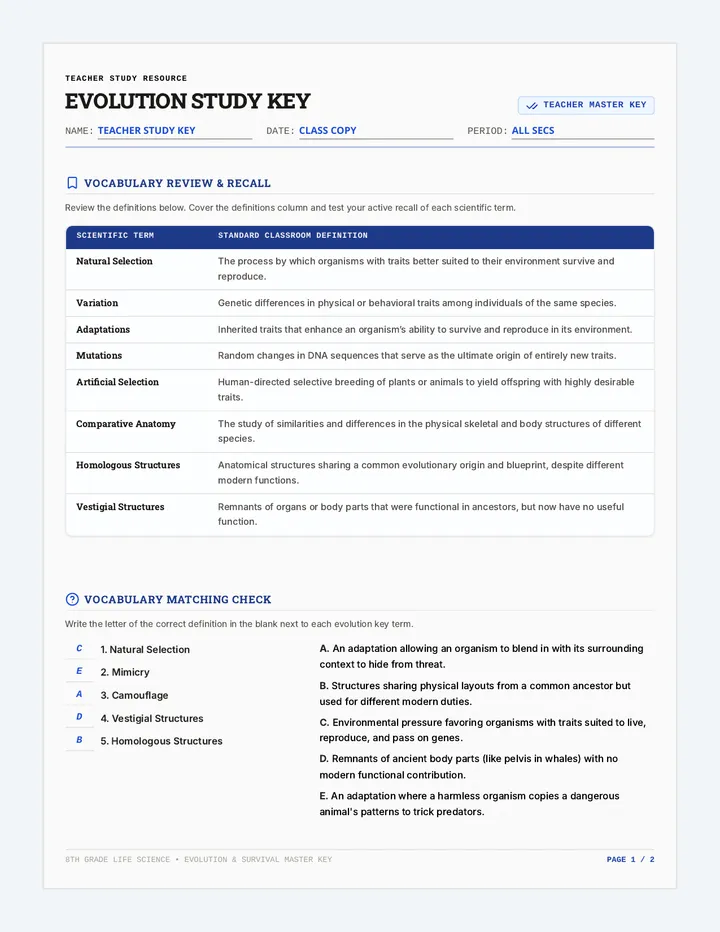
This lesson explores how natural selection drives population changes and evaluates the evidence for common ancestry. It features a hands-on jigsaw activity and STAAR-aligned practice questions to master TEKS 7C.
A comprehensive review lesson on the digestive system and enzyme function, focusing on the path of food, mechanical vs. chemical digestion, and enzyme specificity through interactive activities and guided notes.
A 30-minute PLC session designed to analyze Grade 5 and 8 MCAS Science results, identifying cross-curricular opportunities for improvement through data-driven discussion and actionable teaching strategies.
A movement-based scavenger hunt where students solve 'planetary mysteries' covering Earth's spheres, internal layers, and the rock cycle. This lesson includes task cards and a structured recording sheet for 6th grade science review.
A lesson focusing on the quantitative analysis of energy flow and matter cycling within ecosystems, emphasizing the 10% rule, productivity, and human impact.
This lesson explores how living and nonliving components interact within an ecosystem, focusing on energy flow and population dynamics.
A 45-minute introductory lesson on macroinvertebrates and their role as bioindicators, preparing students for a leaf pack study. Students will learn key ecosystem vocabulary and identification techniques across grades 5-9.
A series of visual anchor charts designed for reference during laboratory investigations into plant vascular systems, photosynthesis, and transpiration.
A high-energy, movement-based review activity where students solve 'medical cases' by identifying body systems and their functions. This lesson includes task cards for a classroom scavenger hunt and a structured recording sheet for students.
A two-block exploration of animal systems, focusing on homeostasis, nutrient absorption, reproduction, and defense mechanisms.
A two-block investigation into plant tissue systems, vascular transport, reproductive adaptations, and environmental responses.
Students analyze the relationship between chemical structure, mode of delivery, and addiction potential using the 'Speed of Delivery' concept. The lesson features a comparative analysis of substances like heroin vs. morphine and vaping vs. nicotine patches to understand the biological 'why' behind addiction.
This lesson connects behavioral symptoms of schizoaffective disorder to neurotransmitter imbalances and explores the pharmacological mechanisms of antipsychotics and mood stabilizers through research and diagramming.
A clinical diagnostic workshop for nursing and pre-med students focused on applying DSM-5 criteria to differentiate schizoaffective disorder from other mood and psychotic disorders. Students analyze patient case studies and use evidence-based criteria to reach accurate diagnoses.
A 6th-8th grade science and health lesson exploring neuroplasticity through a hands-on yarn simulation and a video-based discussion. Students learn how neural pathways strengthen through use and dissolve through neglect.
This lesson explores the dual approach to treating the five major anxiety disorders, focusing on the physiological mechanisms of medications (SSRIs, Benzos, Beta-blockers) and the cognitive-behavioral shifts of psychotherapy. Students will analyze the 'tandem' treatment model to understand why biological and psychological interventions are often used together for optimal patient outcomes.
Students investigate the intersection of neurobiology and external substances, analyzing how drugs and hormones alter neurotransmitter function to change a person's perception of reality.
A comprehensive biology lesson for 9th-10th grade students exploring the biological feedback loops between the endocrine and nervous systems during stress, focusing on the role of corticosteroids, the amygdala, and the prefrontal cortex in memory.
Bilan des acquis à travers une évaluation sommative permettant de vérifier la compréhension de l'énoncé du principe d'inertie et sa mise en œuvre dans des situations variées.
Application du principe d'inertie et de sa réciproque pour prédire ou expliquer le mouvement d'objets du quotidien. Consolidation via des exercices de synthèse.
Utilisation d'un simulateur numérique pour explorer l'effet de forces compensées ou non sur le mouvement d'un système. Introduction de la notion de forces qui se compensent.
Introduction historique au principe d'inertie à travers l'opposition entre Aristote et Galilée/Newton. Les élèves découvrent que le mouvement ne nécessite pas forcément une force pour être maintenu.