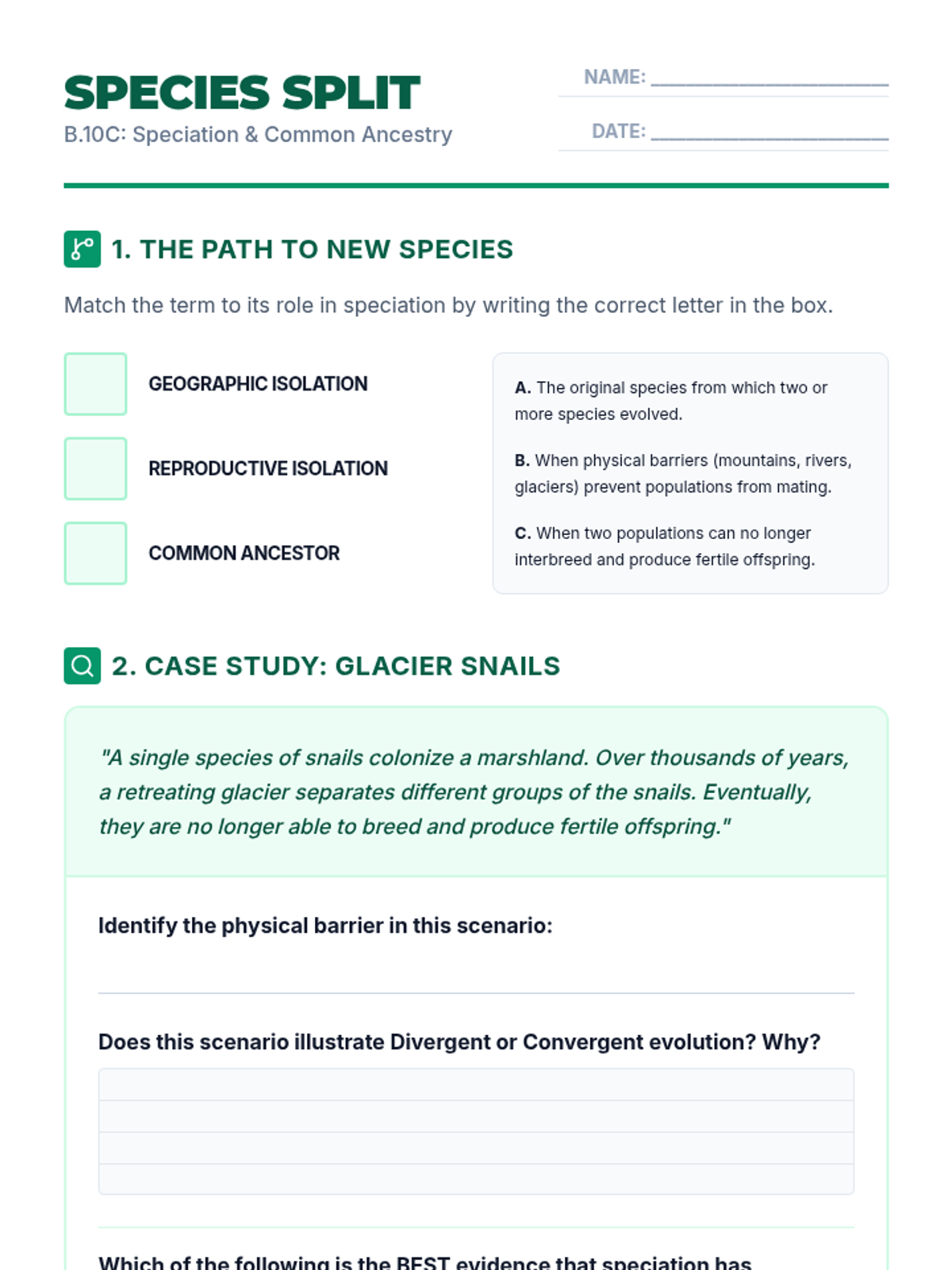
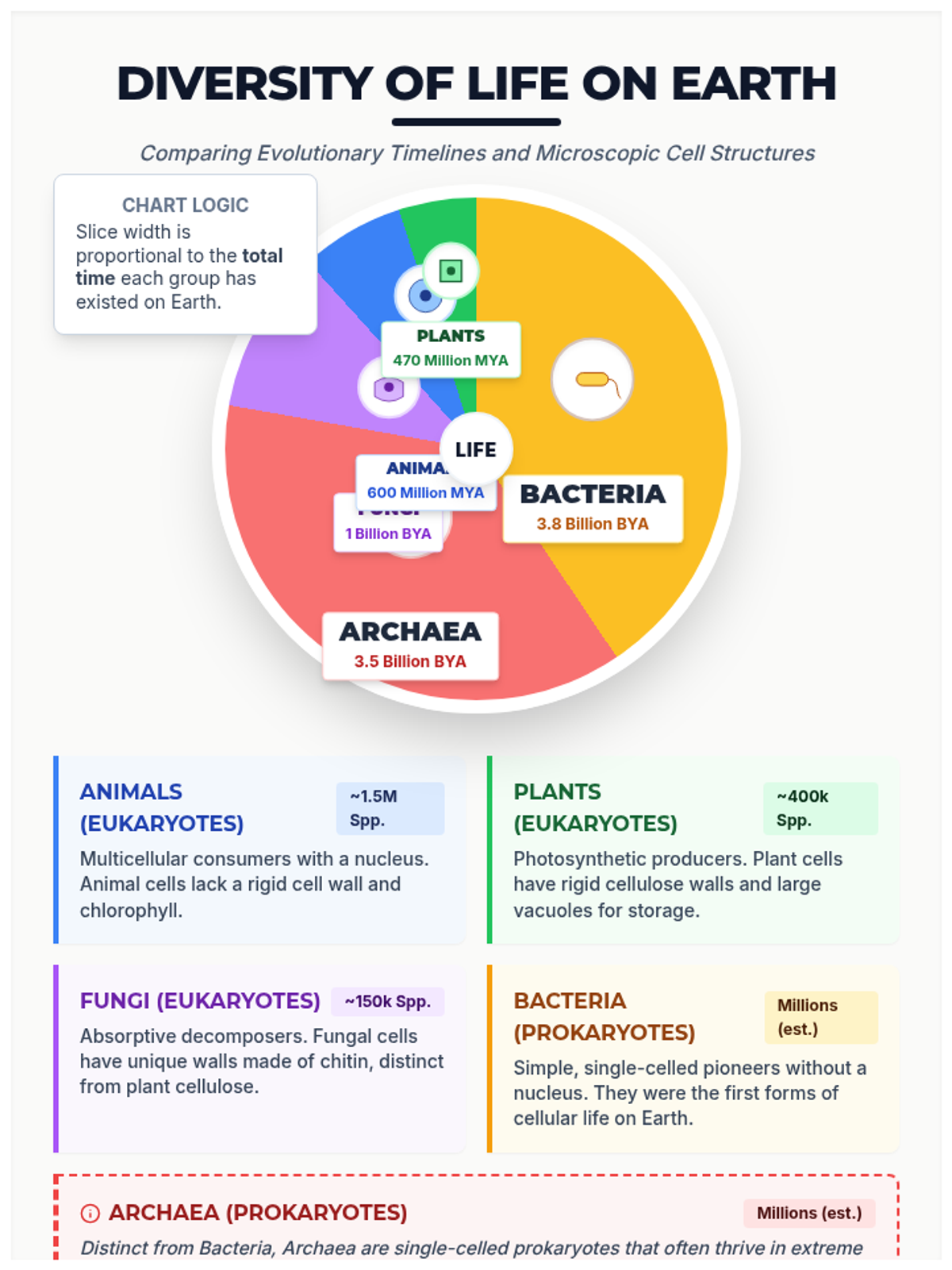
This lesson explores how natural selection drives population changes and evaluates the evidence for common ancestry. It features a hands-on jigsaw activity and STAAR-aligned practice questions to master TEKS 7C.
An introductory exploration of cybersecurity fundamentals for middle and high school students, covering the CIA triad, common threats, and defensive strategies through hands-on projects and conceptual mapping.
Students explore the intersection of physical electronics and digital audio by building interactive sound installations. They will learn about conductivity, circuit logic, and basic programming to transform everyday objects into musical instruments.
A comprehensive review lesson on the digestive system and enzyme function, focusing on the path of food, mechanical vs. chemical digestion, and enzyme specificity through interactive activities and guided notes.
A lesson focusing on the quantitative analysis of energy flow and matter cycling within ecosystems, emphasizing the 10% rule, productivity, and human impact.
This lesson explores how living and nonliving components interact within an ecosystem, focusing on energy flow and population dynamics.
A 45-minute introductory lesson on macroinvertebrates and their role as bioindicators, preparing students for a leaf pack study. Students will learn key ecosystem vocabulary and identification techniques across grades 5-9.
A series of visual anchor charts designed for reference during laboratory investigations into plant vascular systems, photosynthesis, and transpiration.
A two-block exploration of animal systems, focusing on homeostasis, nutrient absorption, reproduction, and defense mechanisms.
A two-block investigation into plant tissue systems, vascular transport, reproductive adaptations, and environmental responses.
Students analyze the relationship between chemical structure, mode of delivery, and addiction potential using the 'Speed of Delivery' concept. The lesson features a comparative analysis of substances like heroin vs. morphine and vaping vs. nicotine patches to understand the biological 'why' behind addiction.
This lesson connects behavioral symptoms of schizoaffective disorder to neurotransmitter imbalances and explores the pharmacological mechanisms of antipsychotics and mood stabilizers through research and diagramming.
This lesson explores the dual approach to treating the five major anxiety disorders, focusing on the physiological mechanisms of medications (SSRIs, Benzos, Beta-blockers) and the cognitive-behavioral shifts of psychotherapy. Students will analyze the 'tandem' treatment model to understand why biological and psychological interventions are often used together for optimal patient outcomes.