A series of feedback and reflection tools for students, parents, and teachers to evaluate learning after completing the Wild Adventure project. It uses an explorer theme to make the assessment process engaging and collaborative.
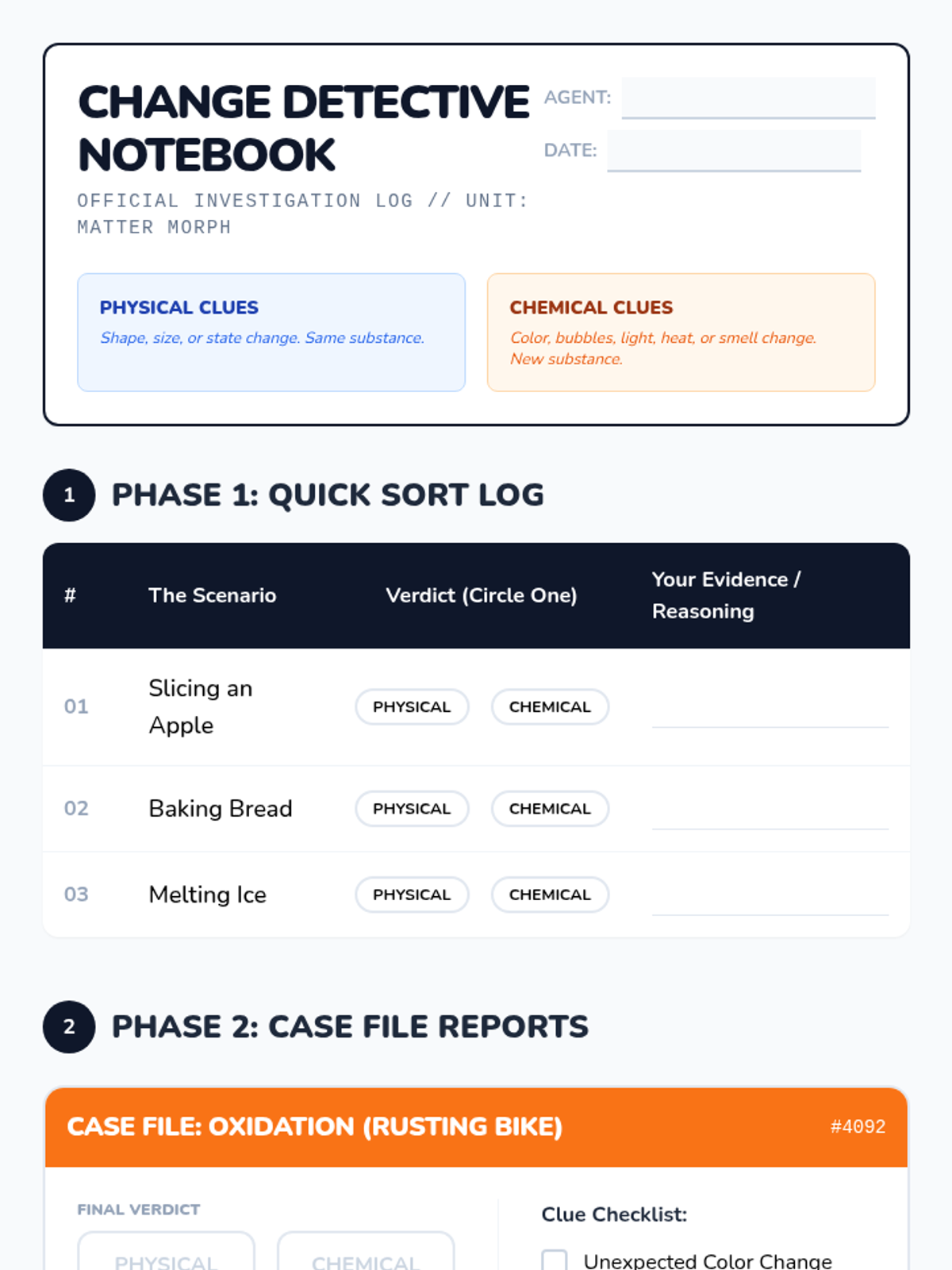
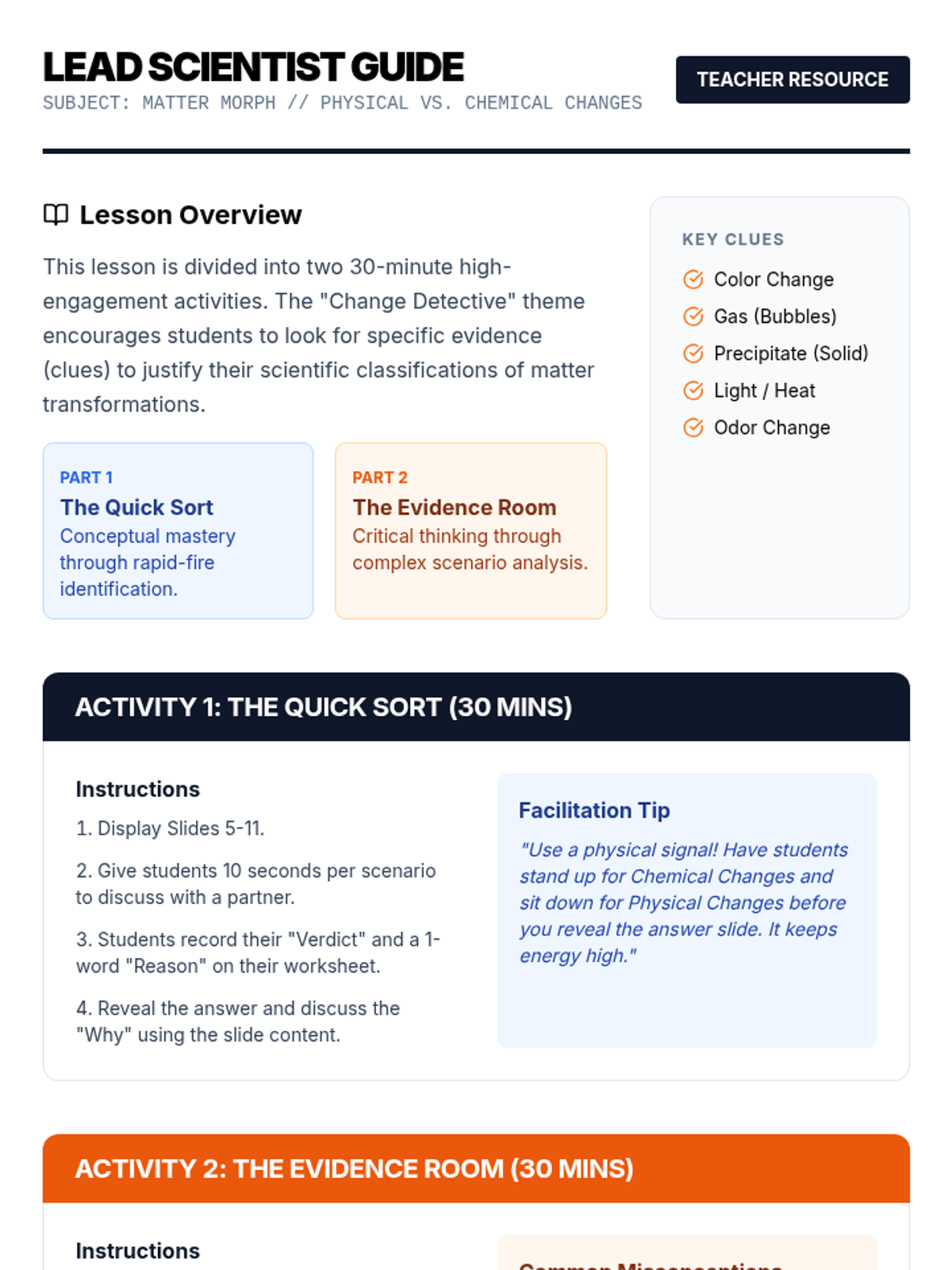
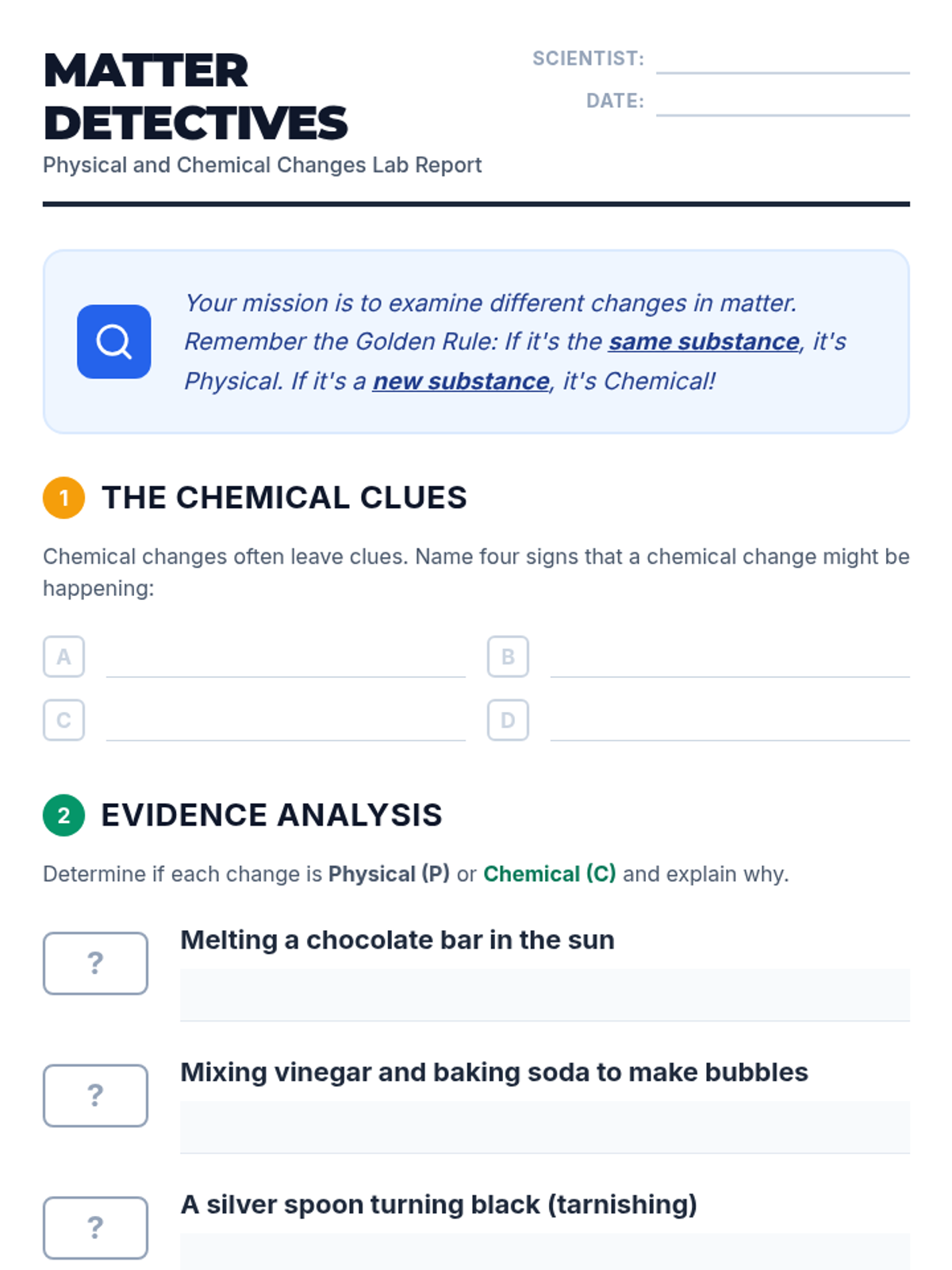
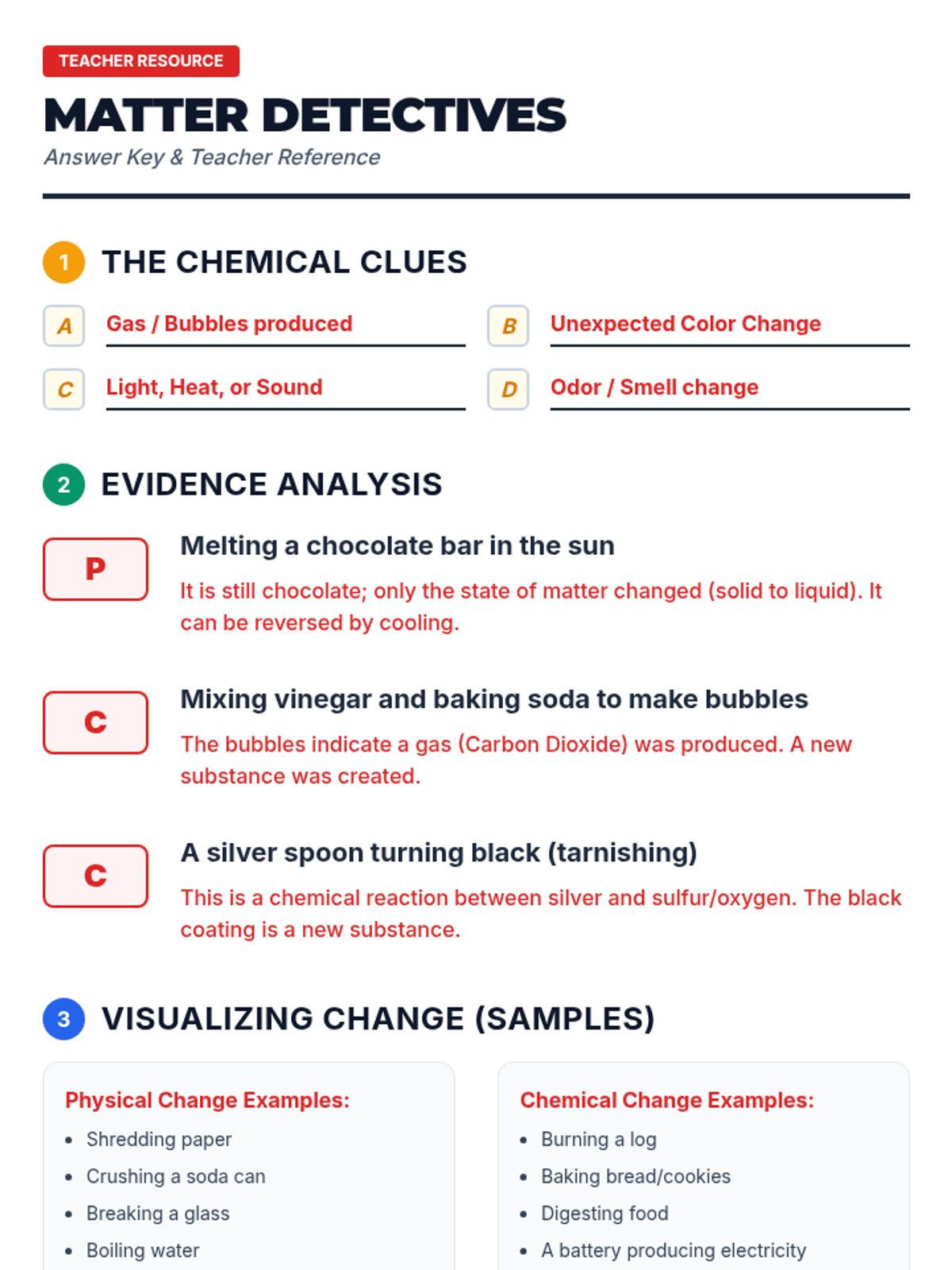
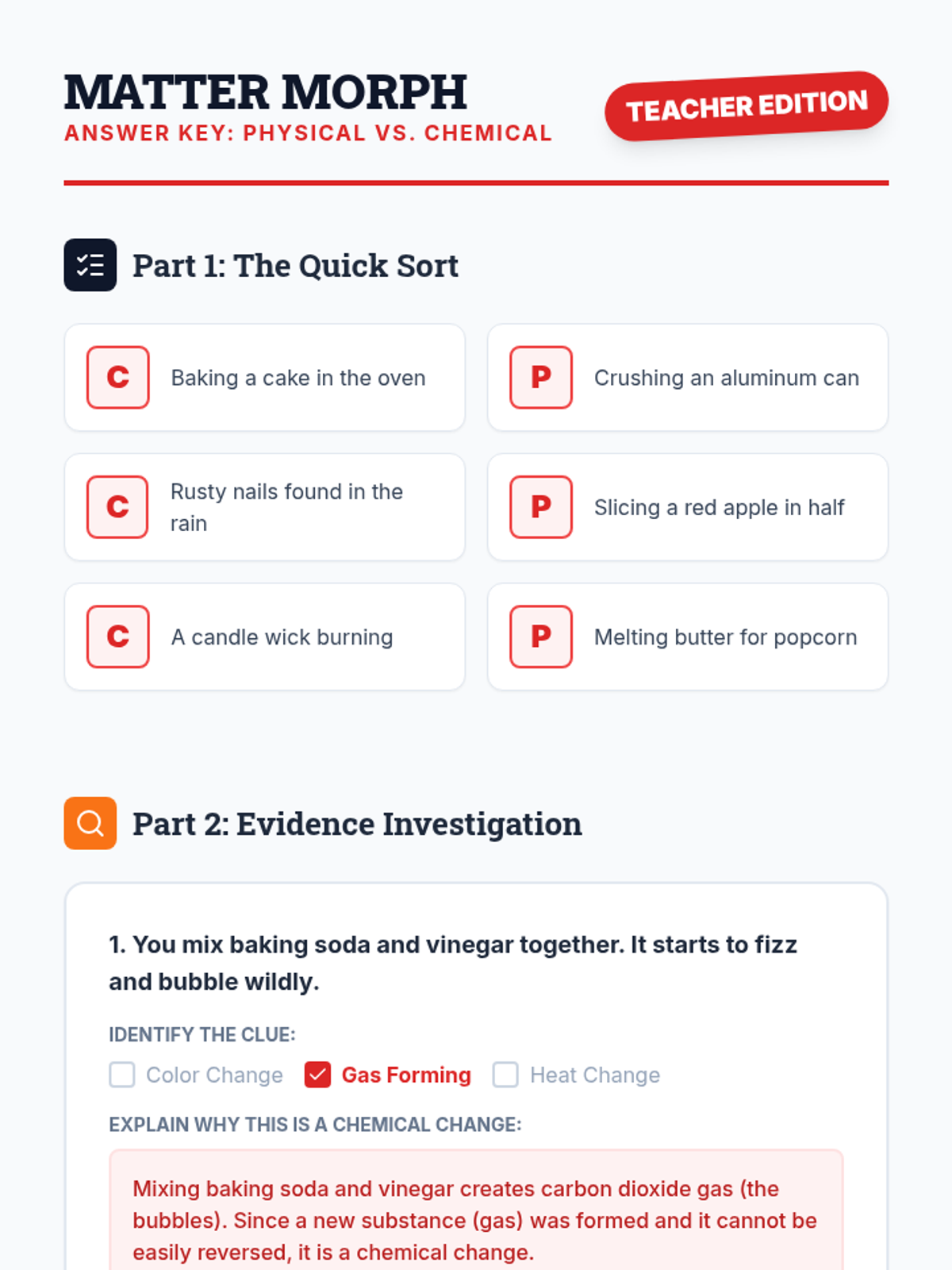
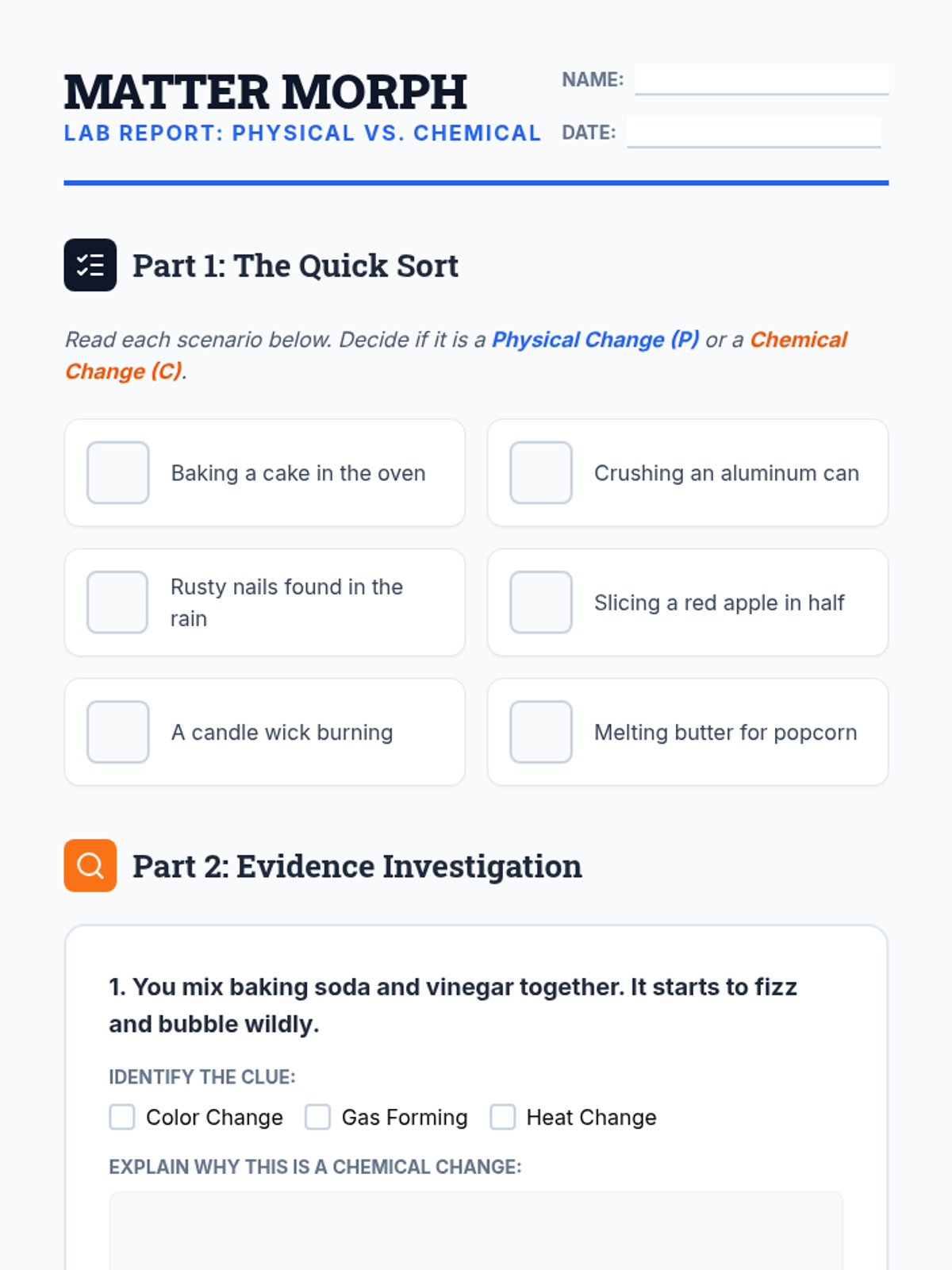
A high-energy lesson where students become 'Change Detectives' to identify and justify the differences between physical and chemical changes through two distinct 30-minute investigations.
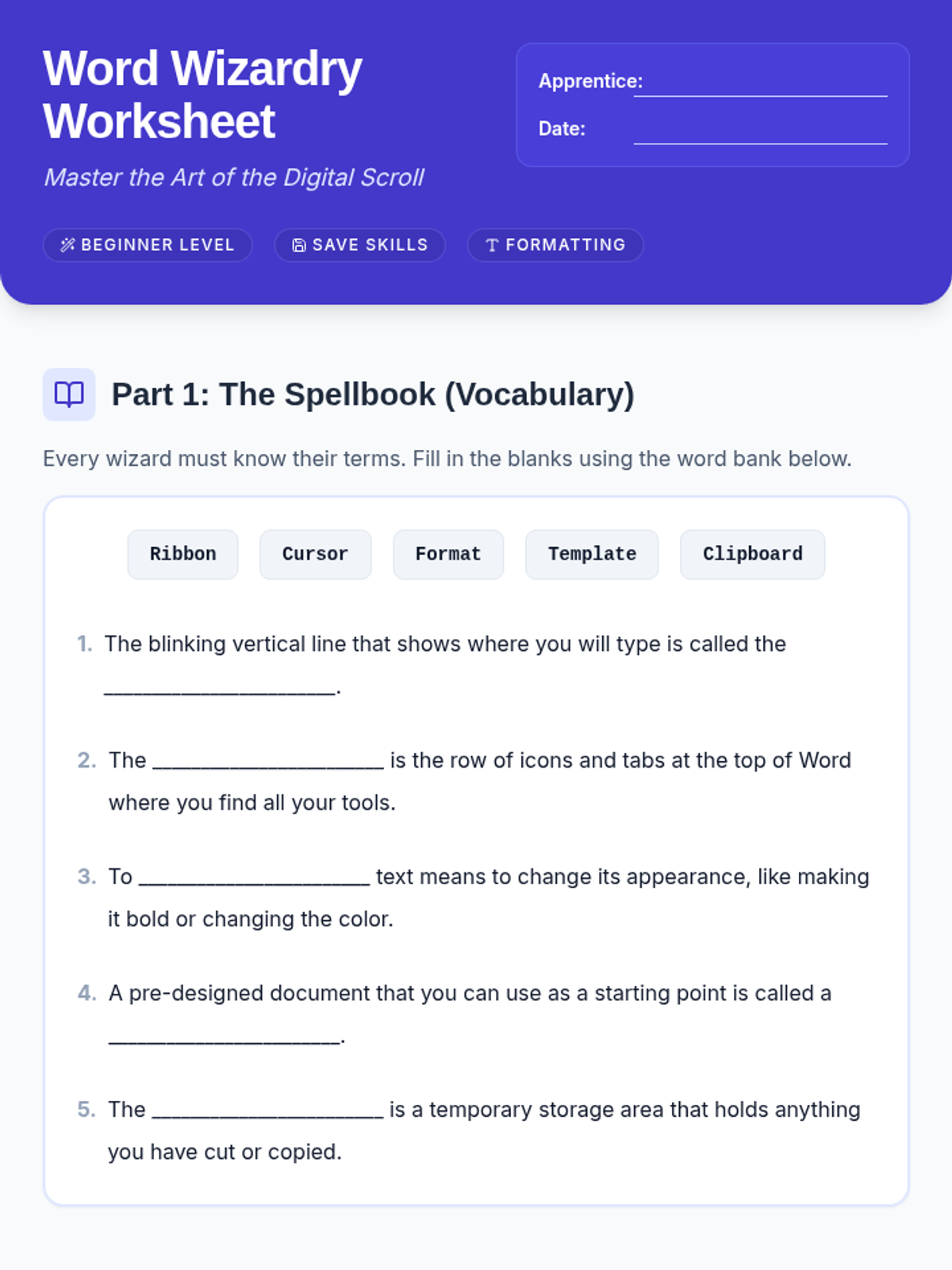
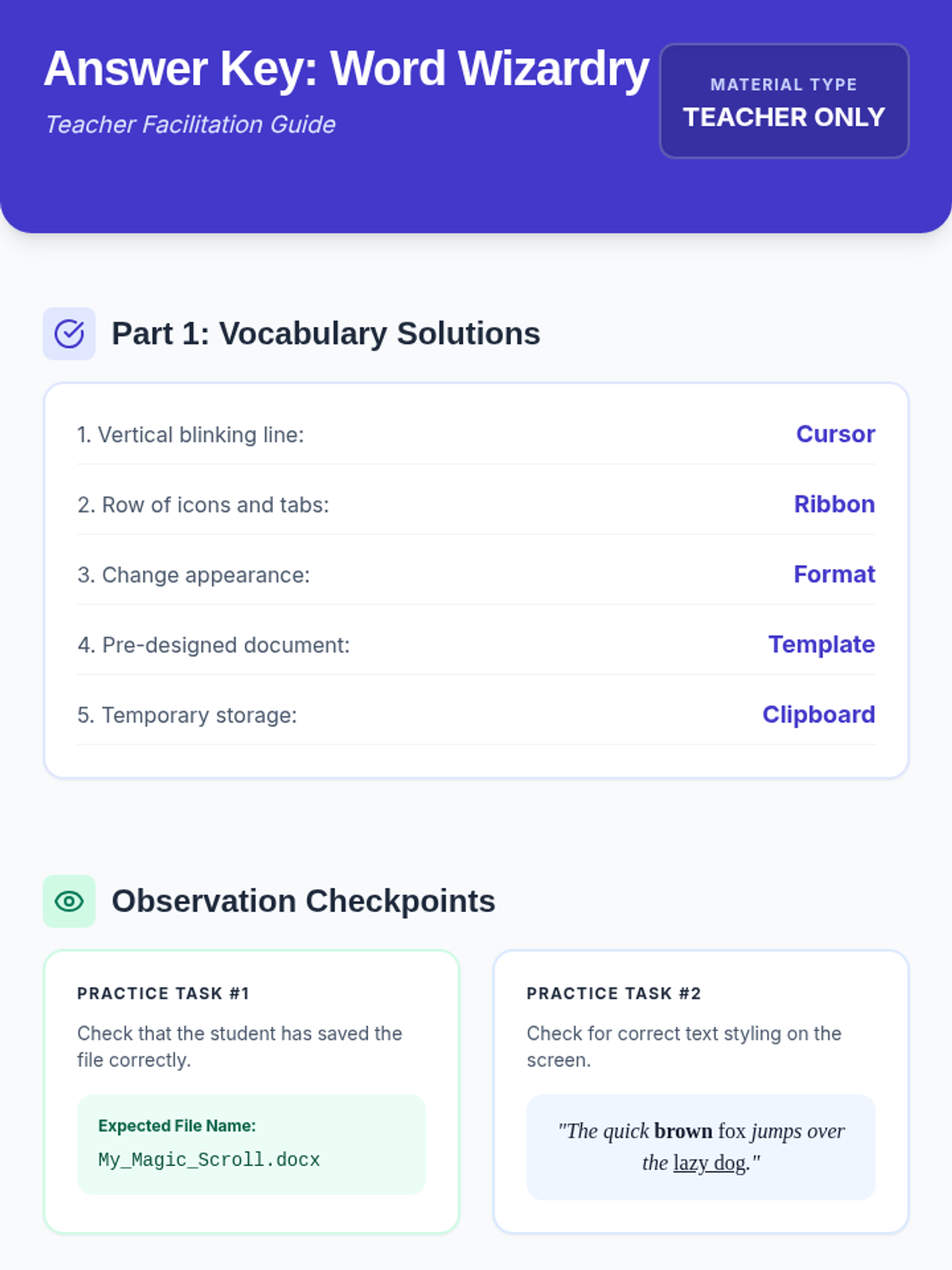
An introductory lesson on Microsoft Word basics, covering document creation, saving, text formatting, and clipboard actions (copy/cut/paste). Students will learn through a 'Word Wizardry' theme, transforming technical skills into creative magic.
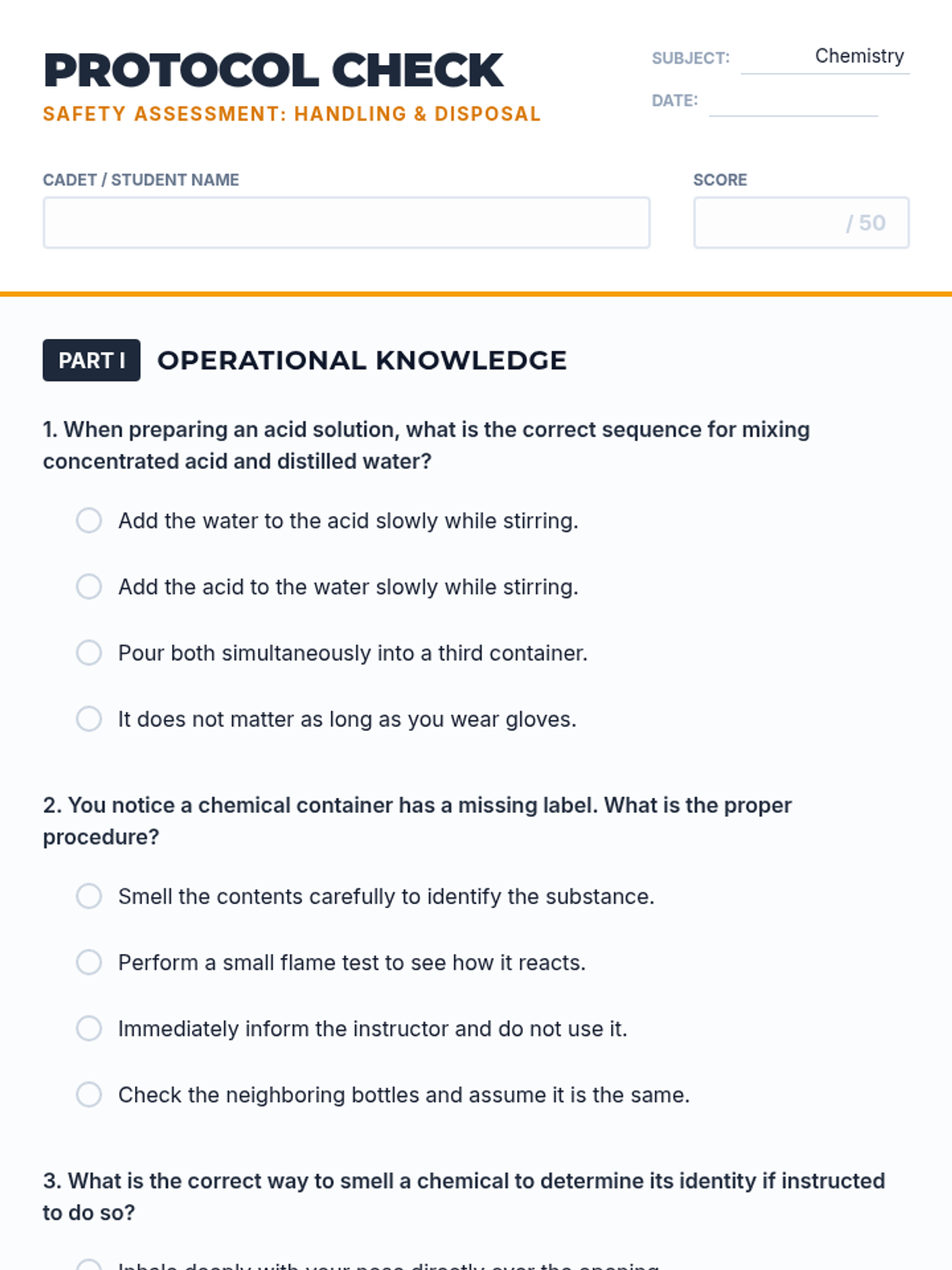
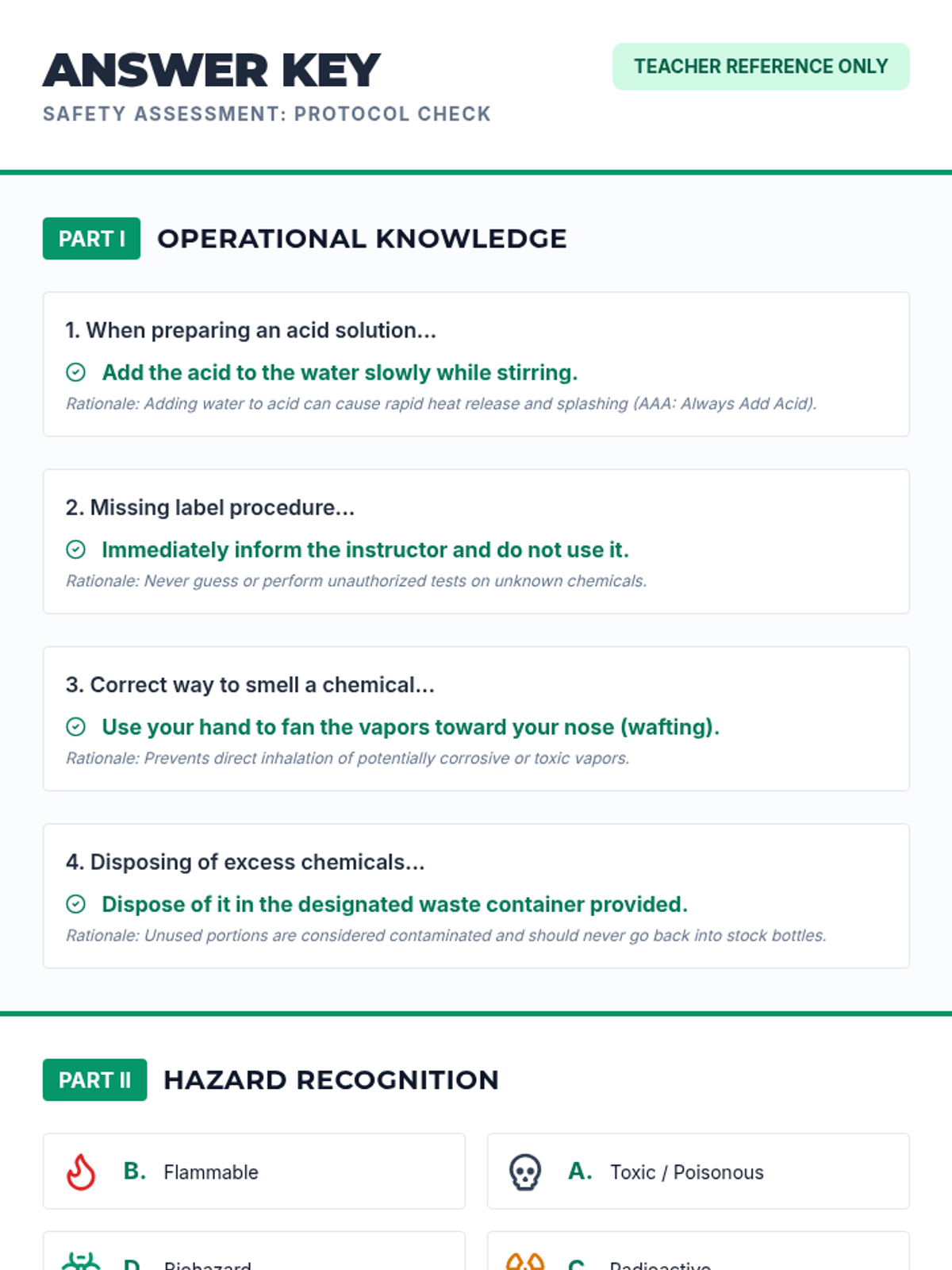
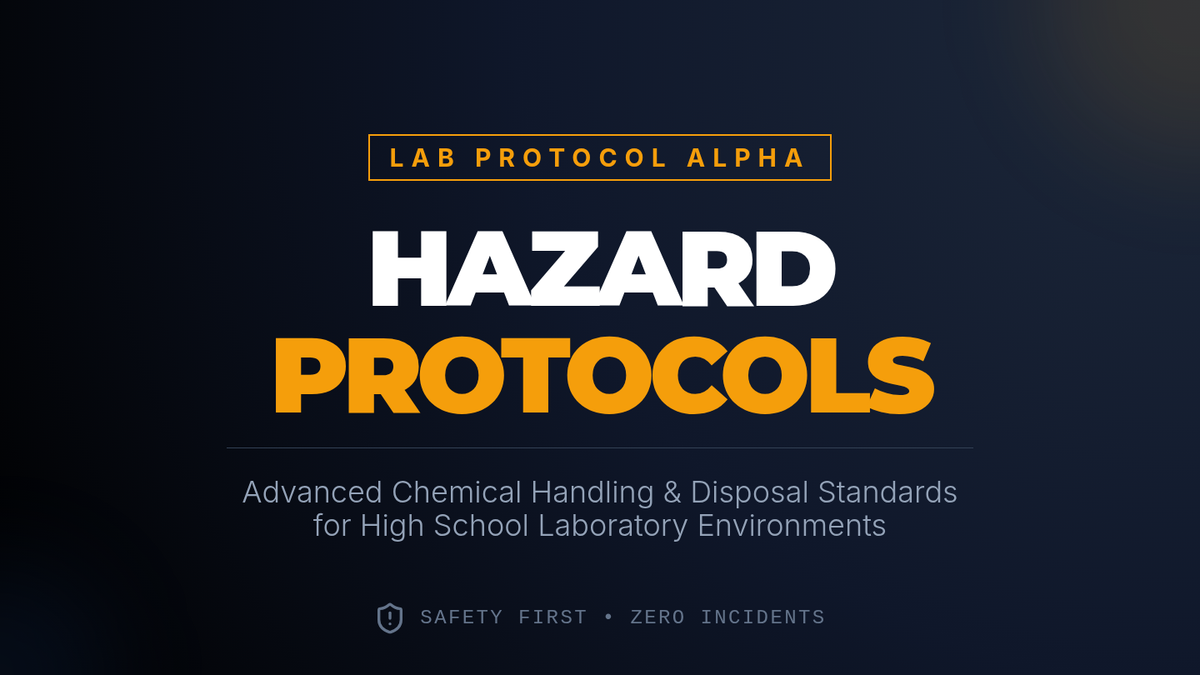
A comprehensive lesson on chemical handling and waste disposal protocols for high school chemistry students, featuring instructional slides and a formal assessment.
Students will learn to distinguish between physical and chemical changes in matter through visual examples and key indicators.
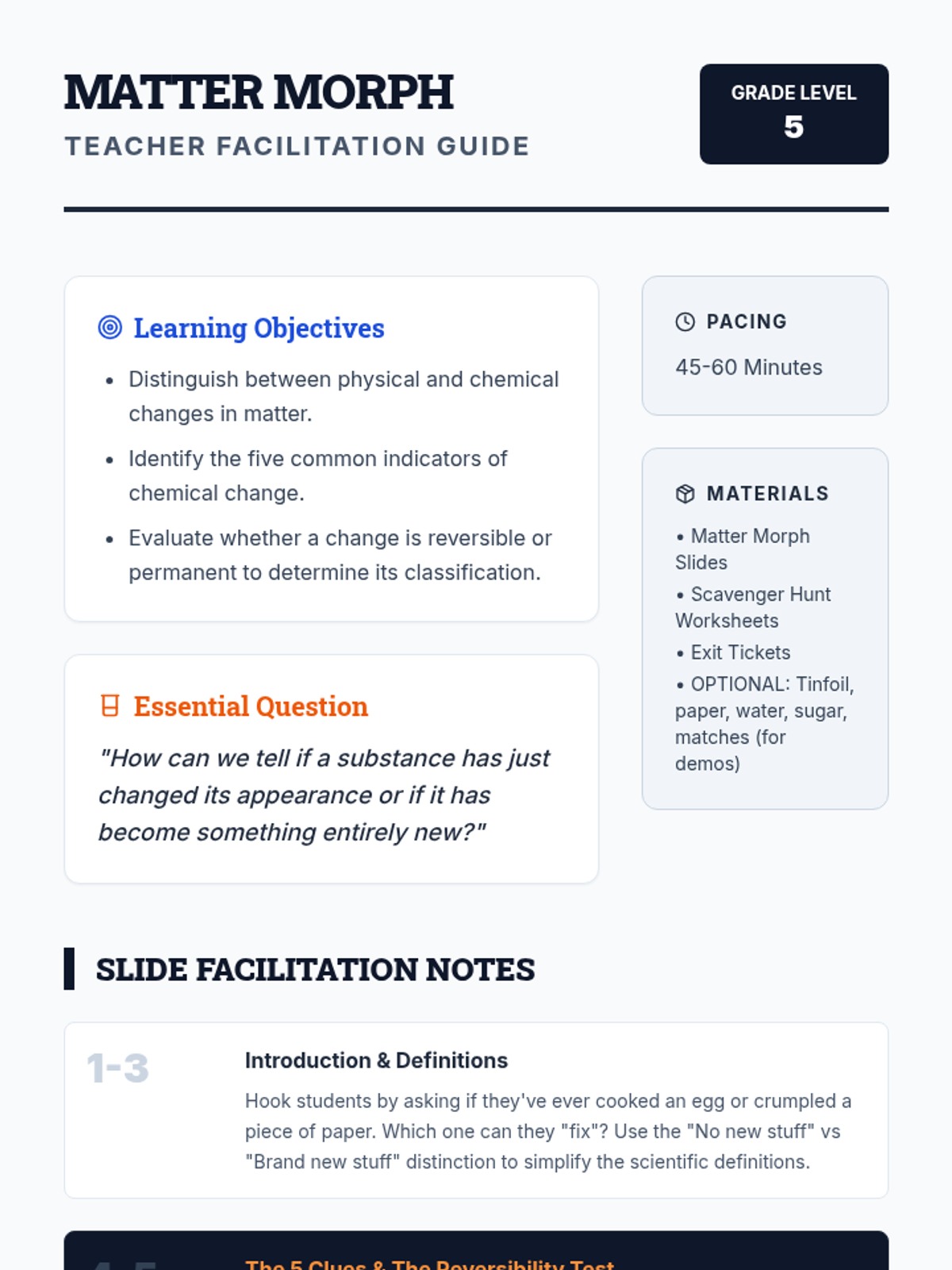
An introductory lesson on physical and chemical changes for 5th-grade students, focusing on identifying signs of change and understanding reversibility.
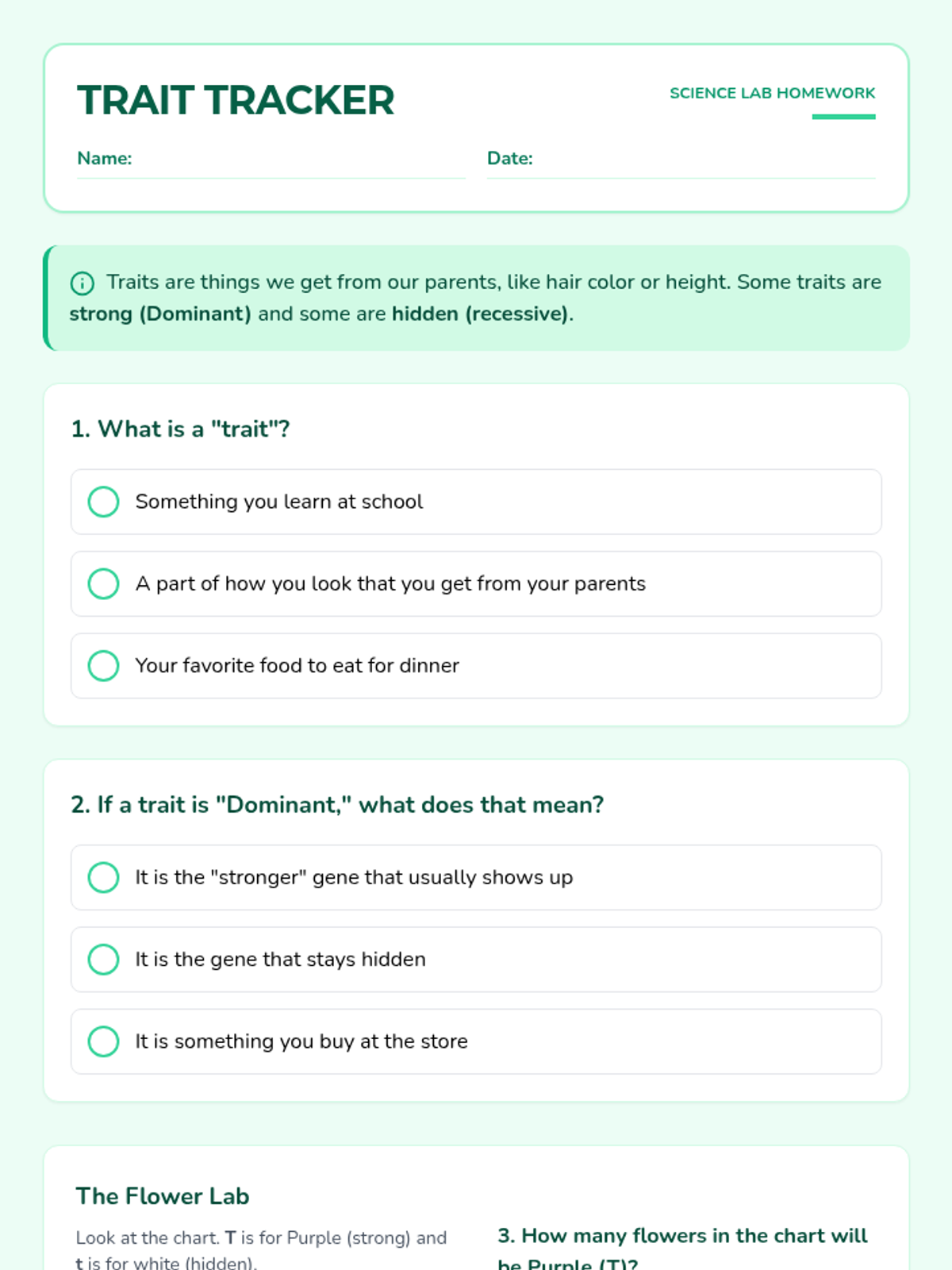
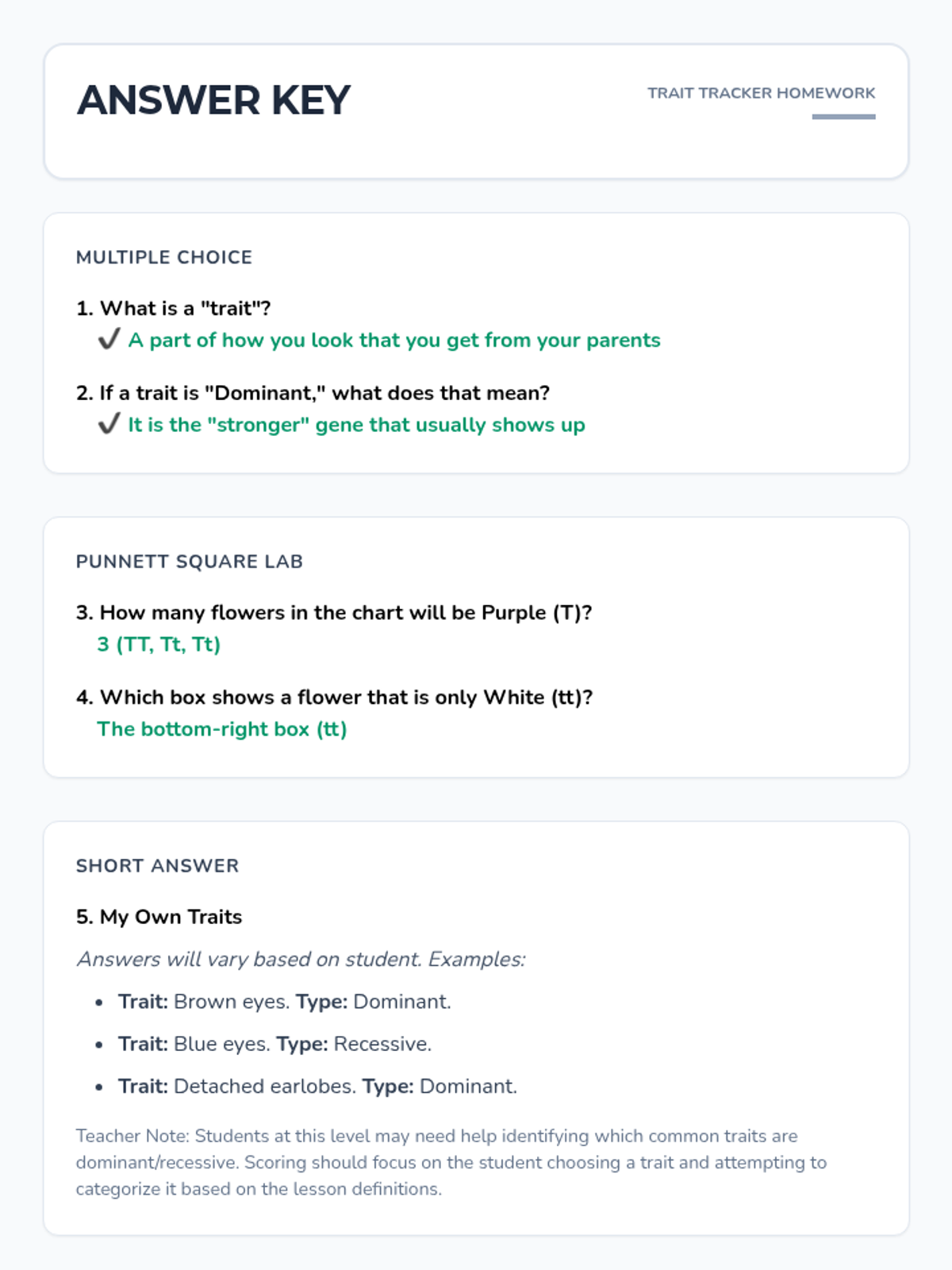
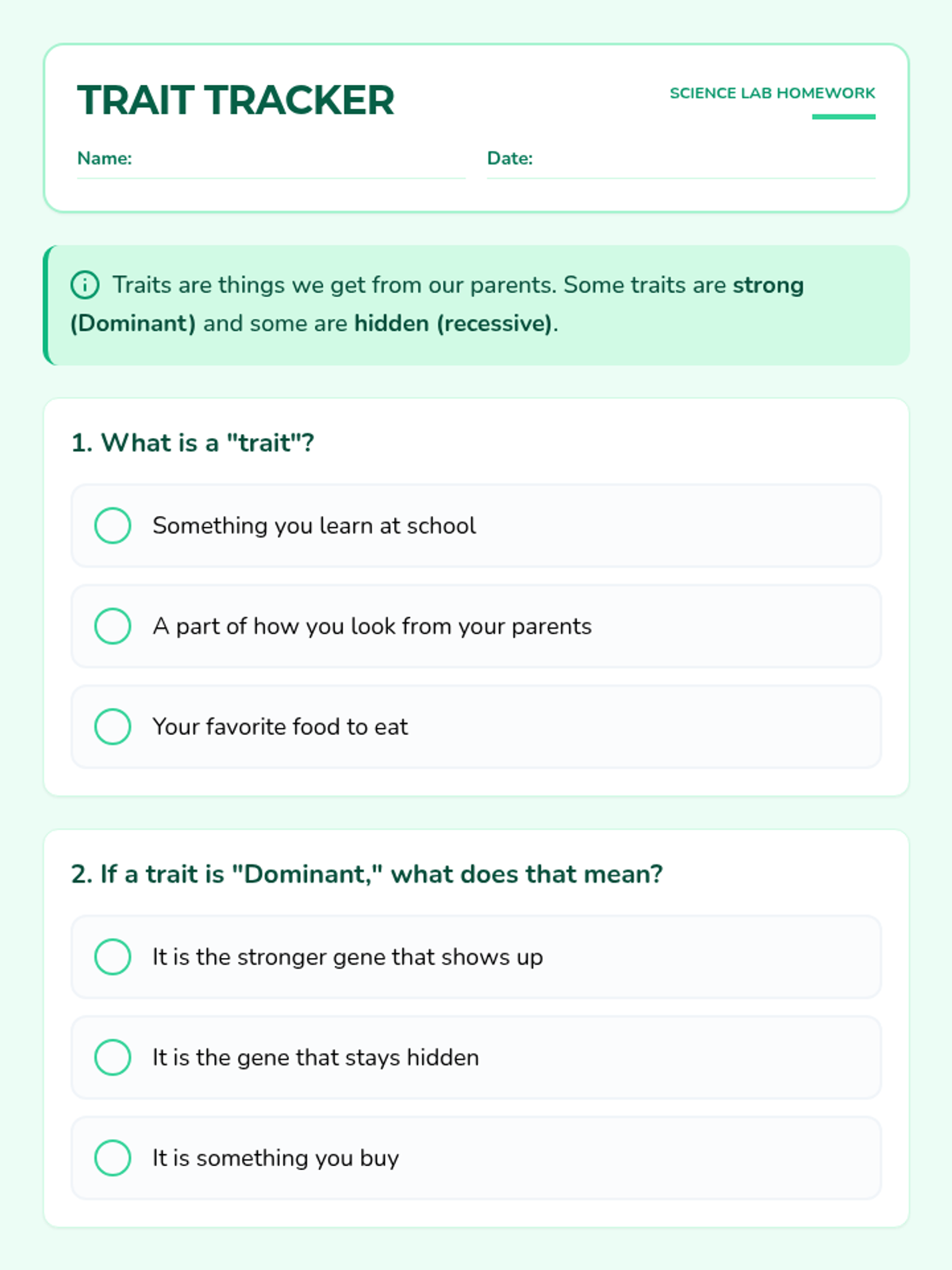
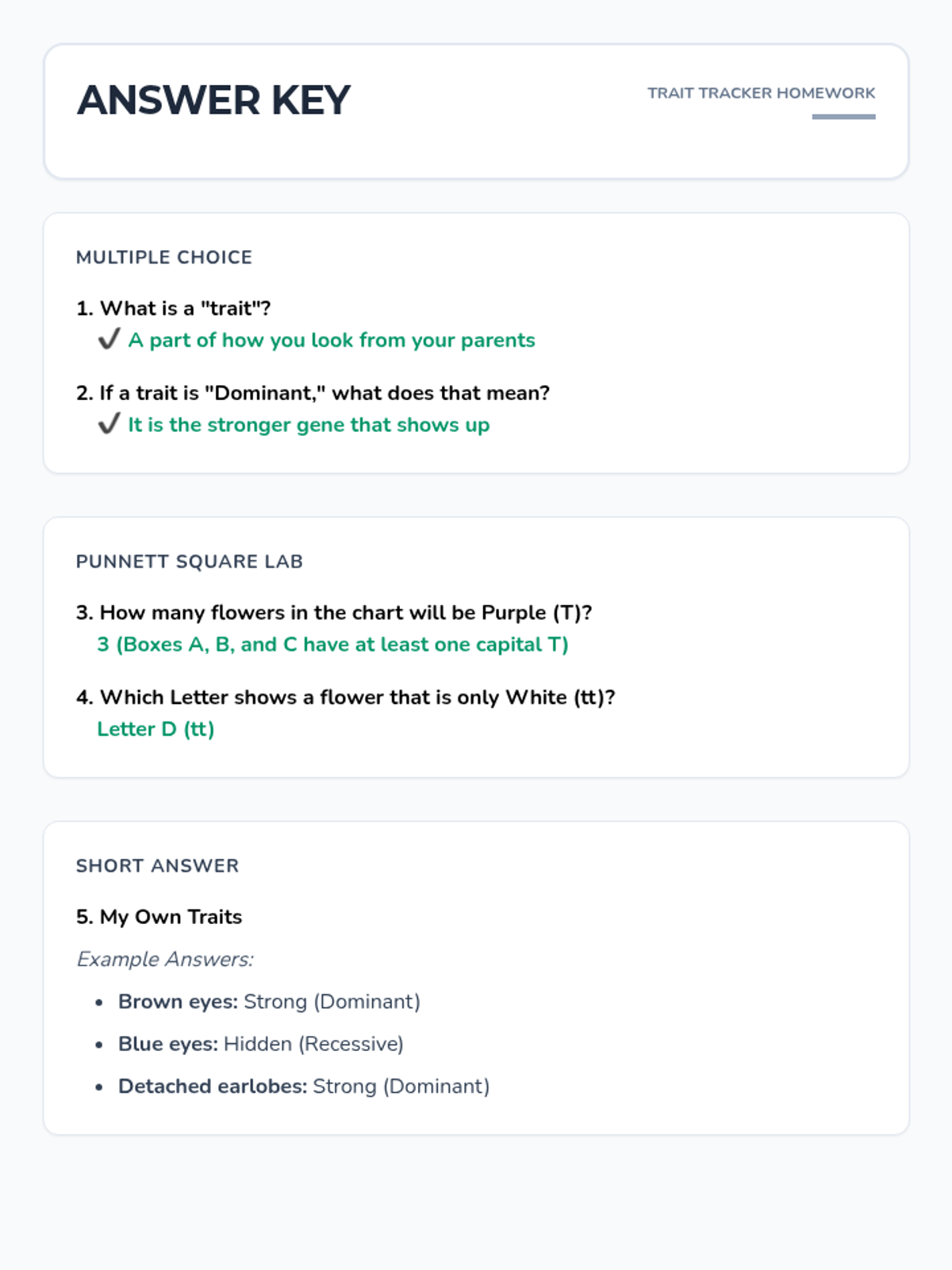
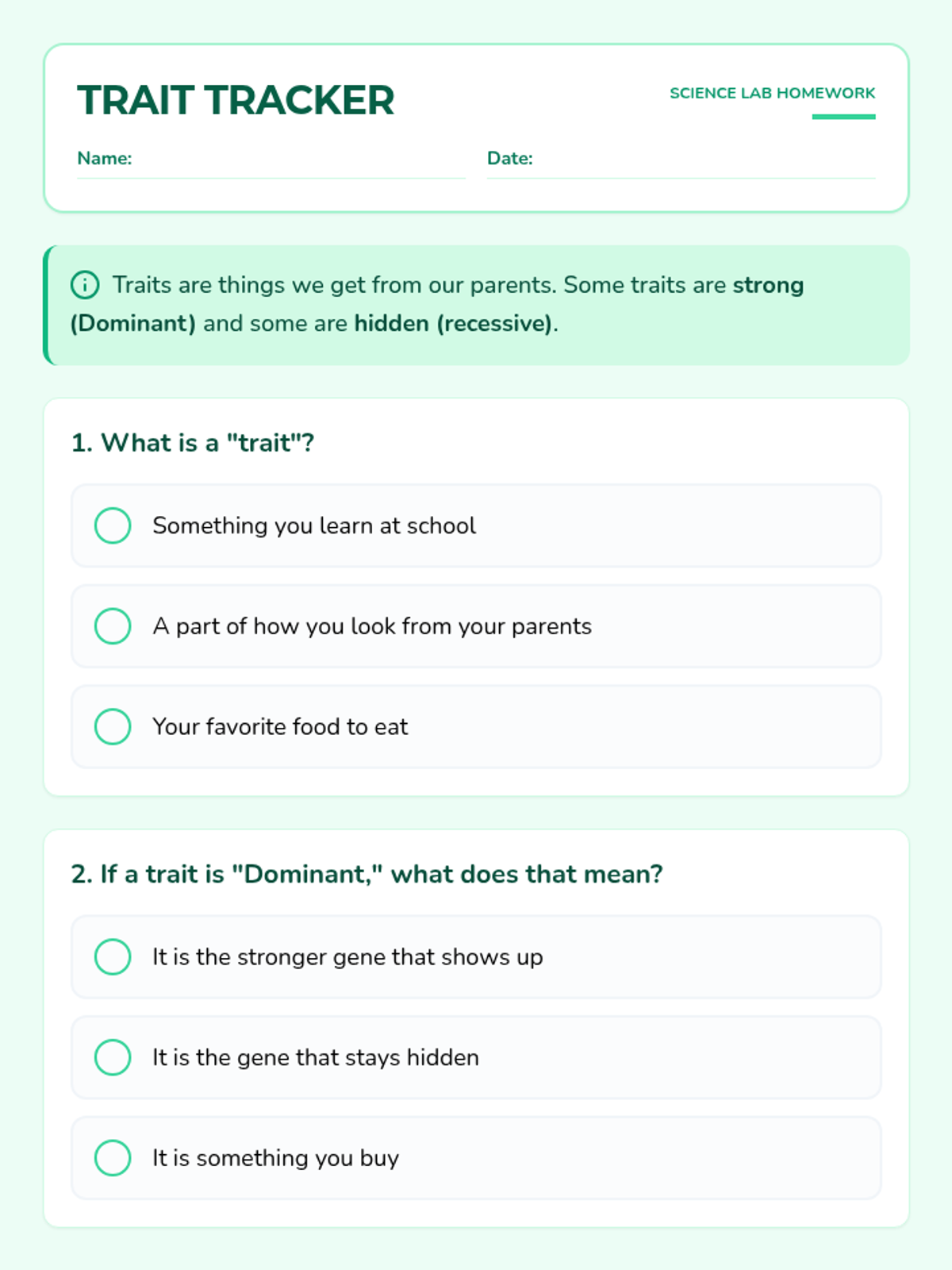
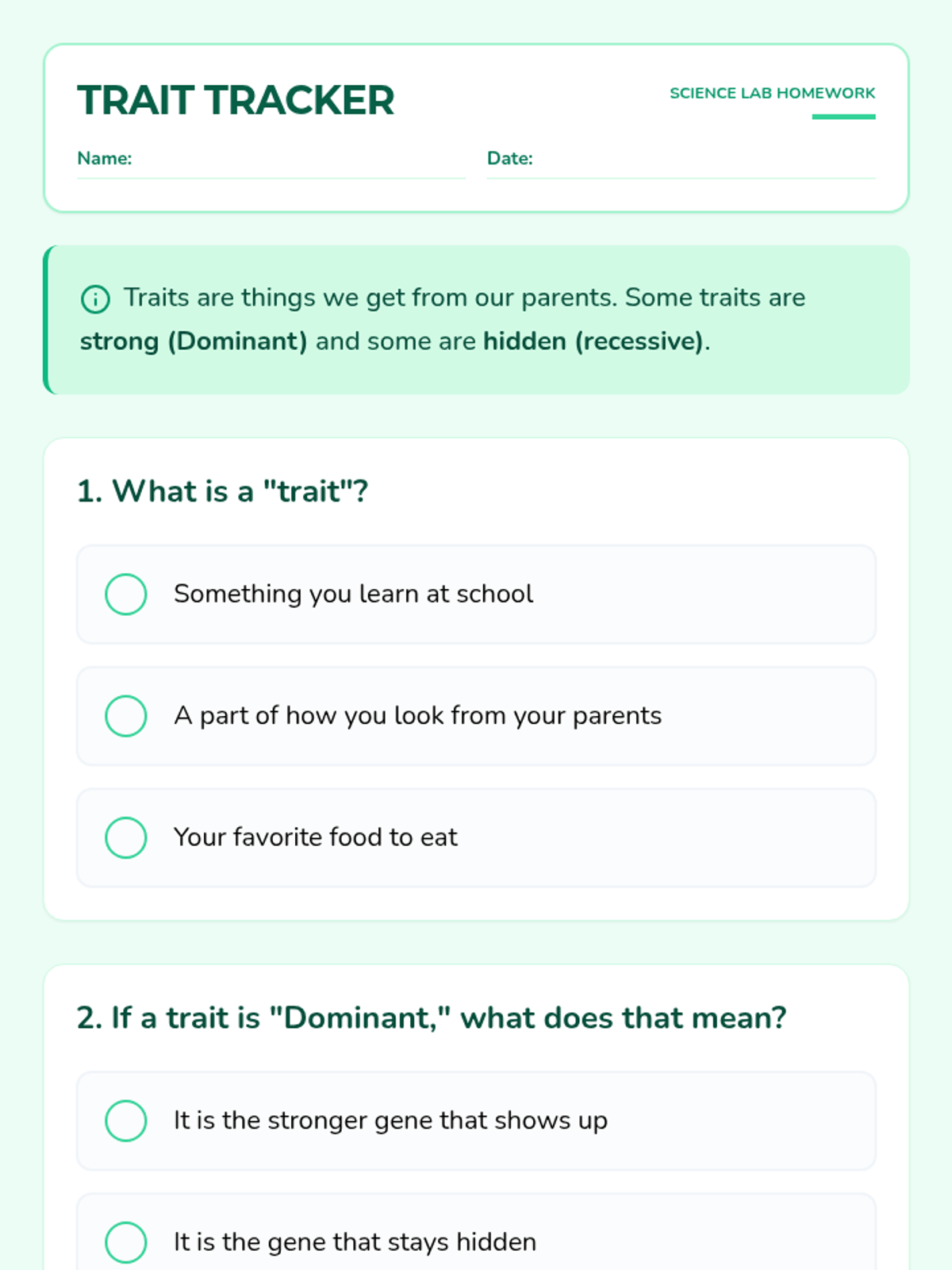
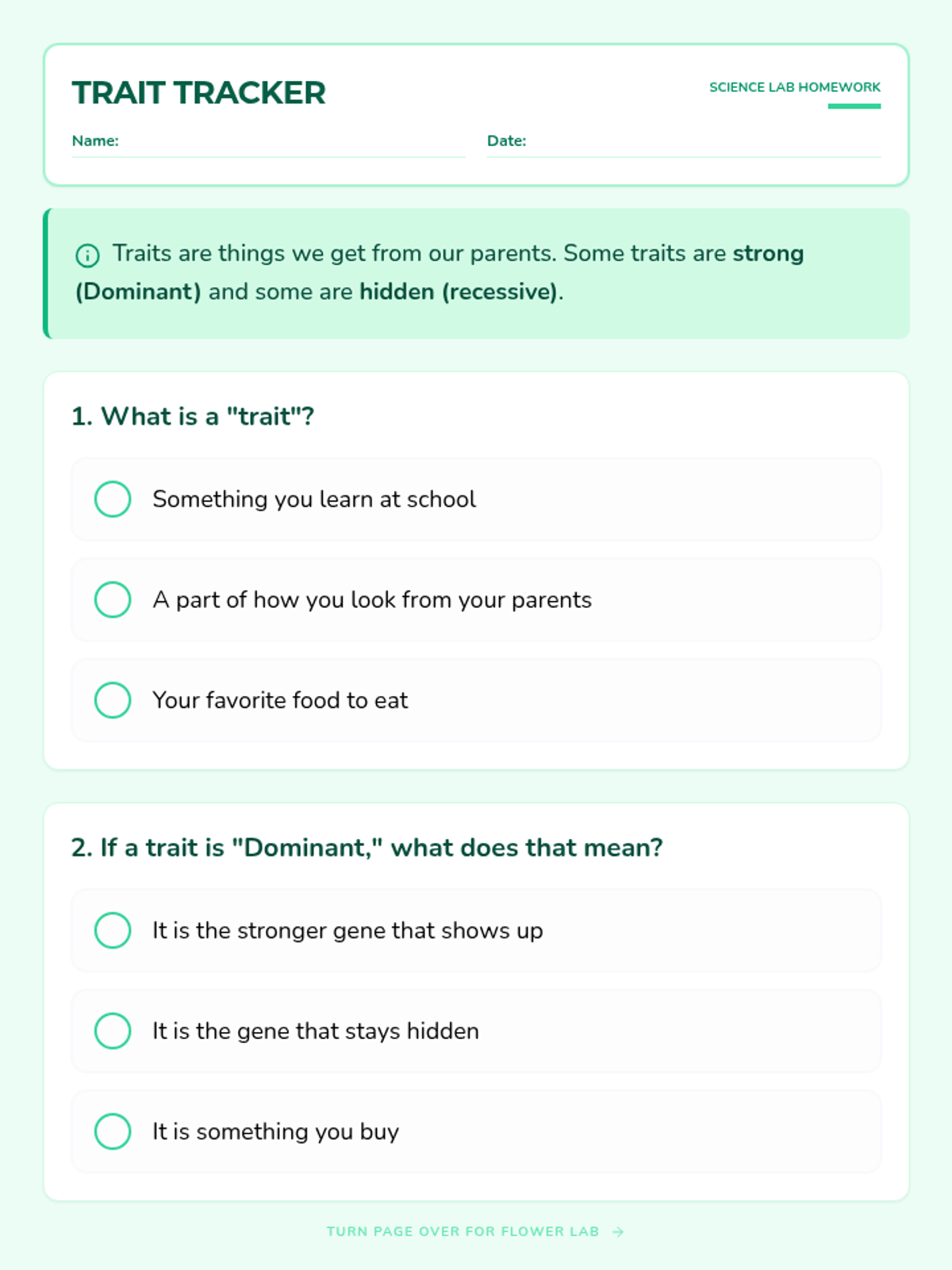
A lesson focused on the basics of genetic inheritance and how traits are passed from parents to offspring, designed for students with a 2nd-grade reading level.
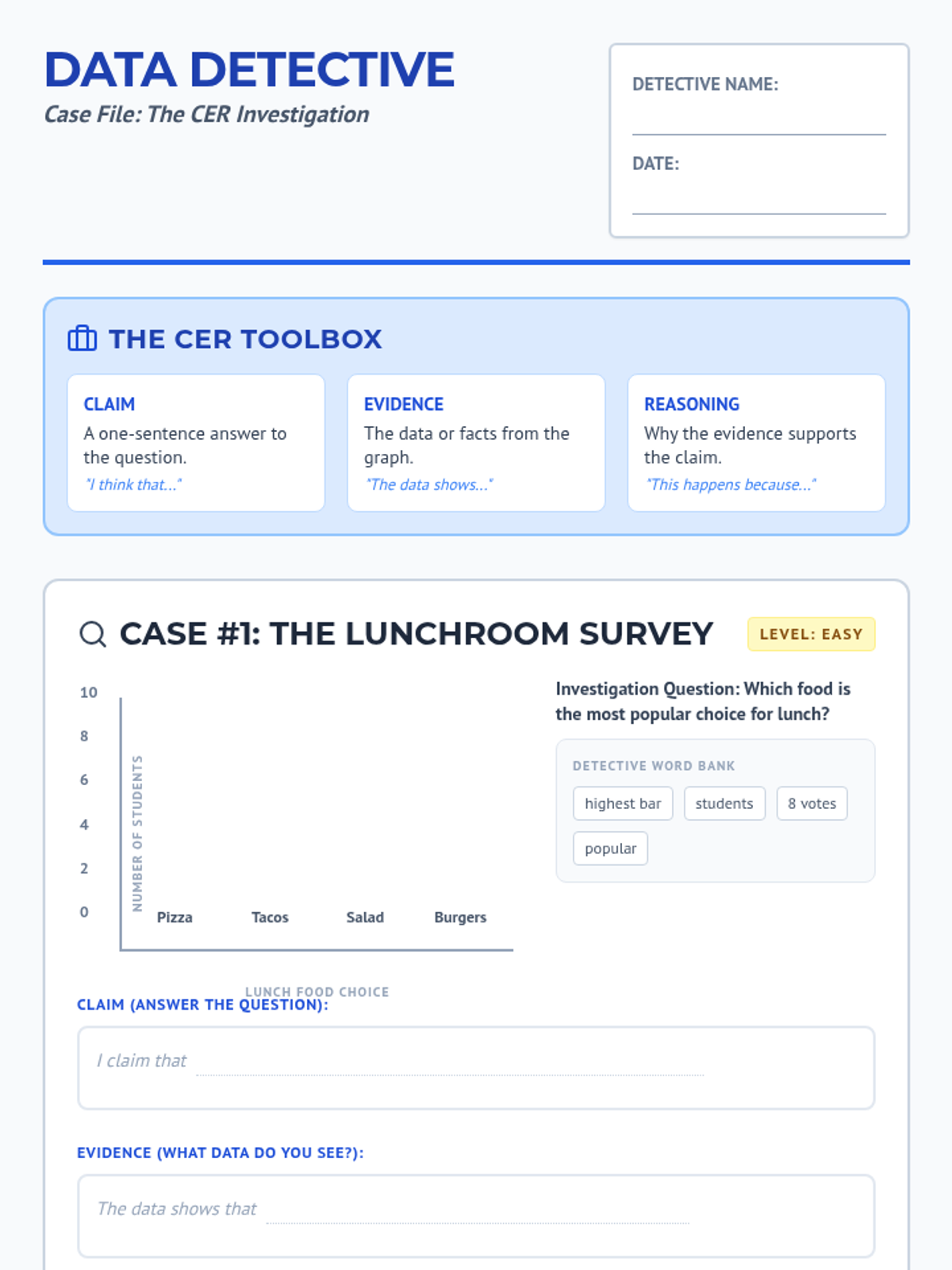
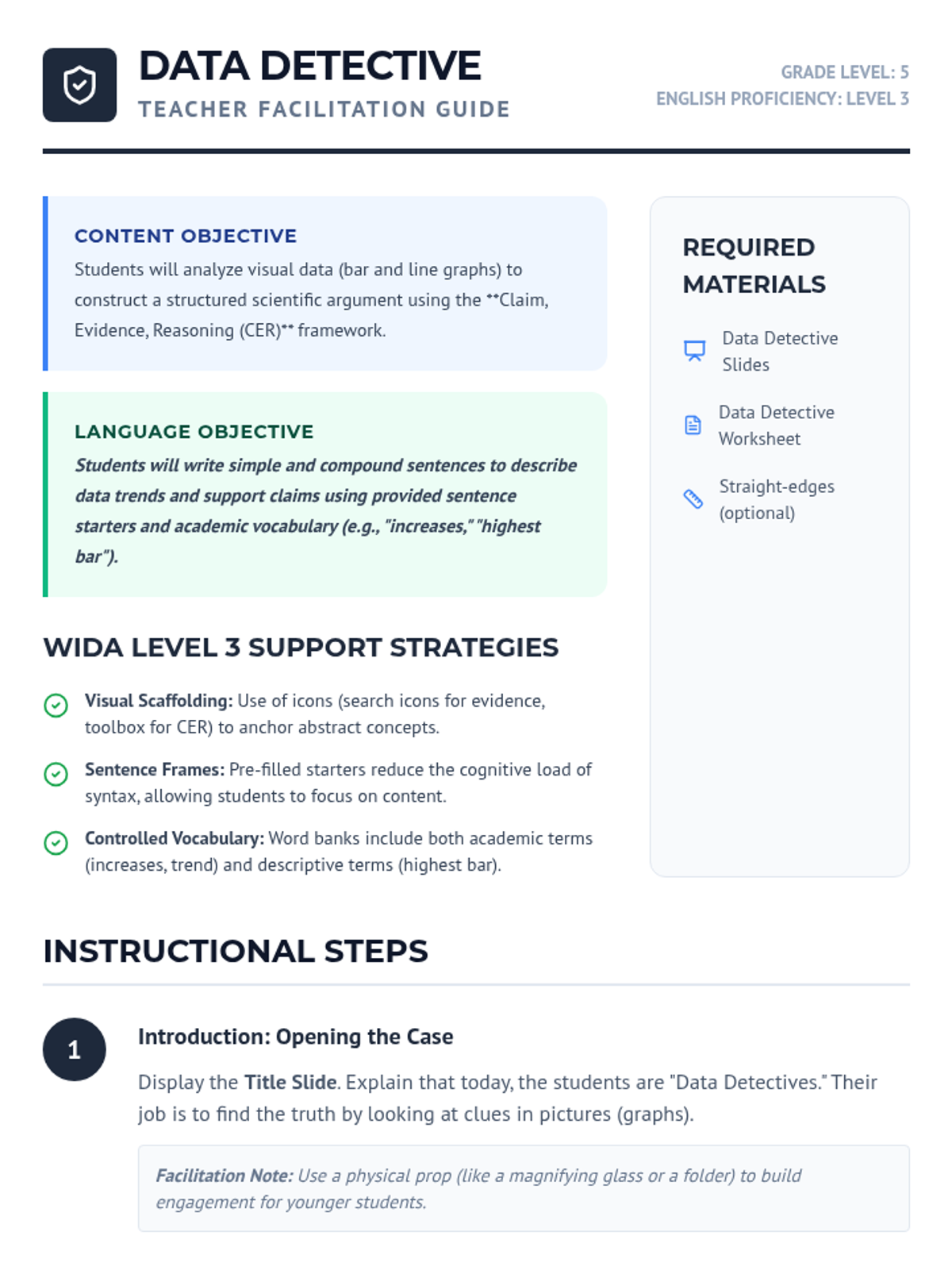
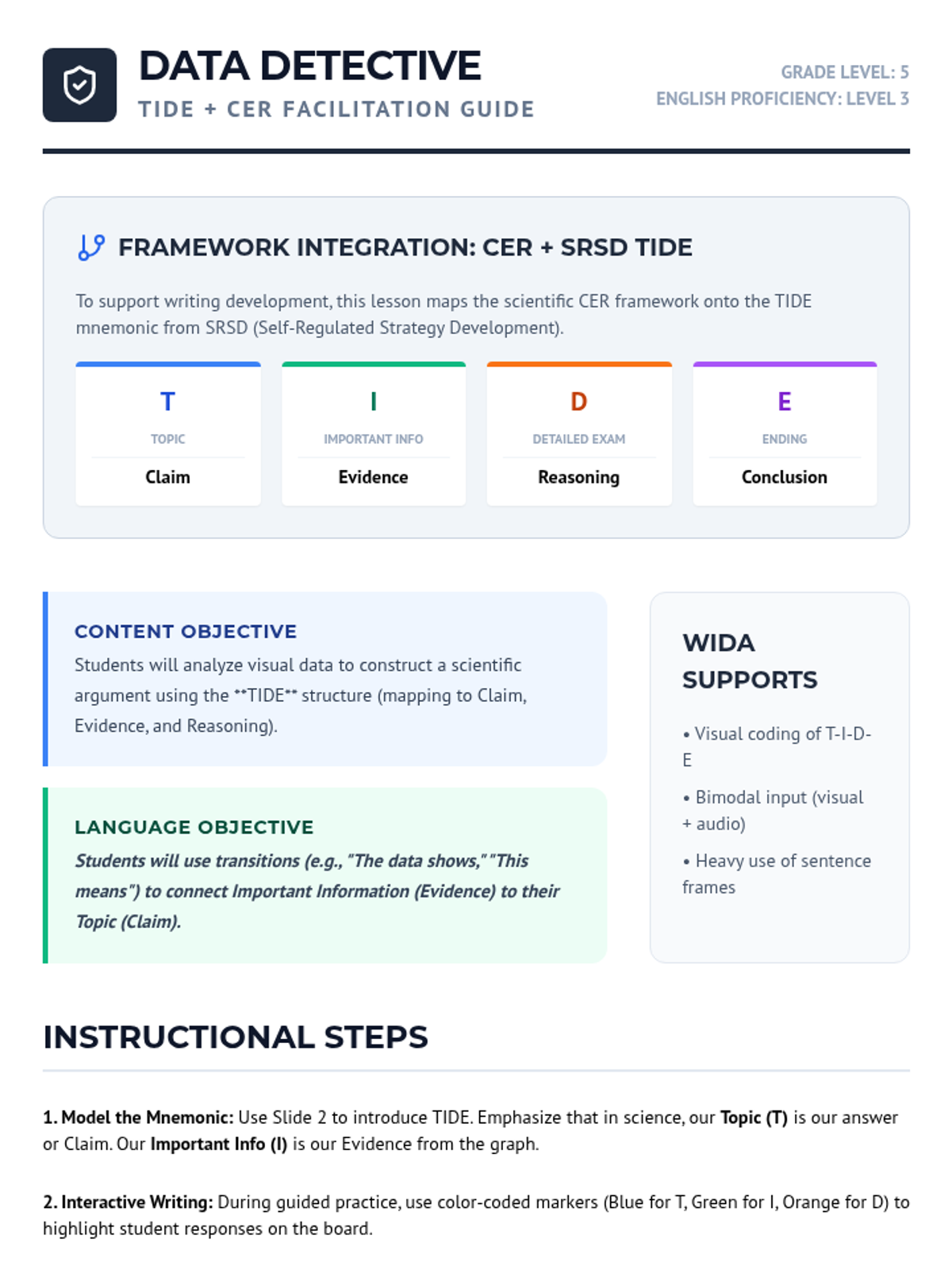
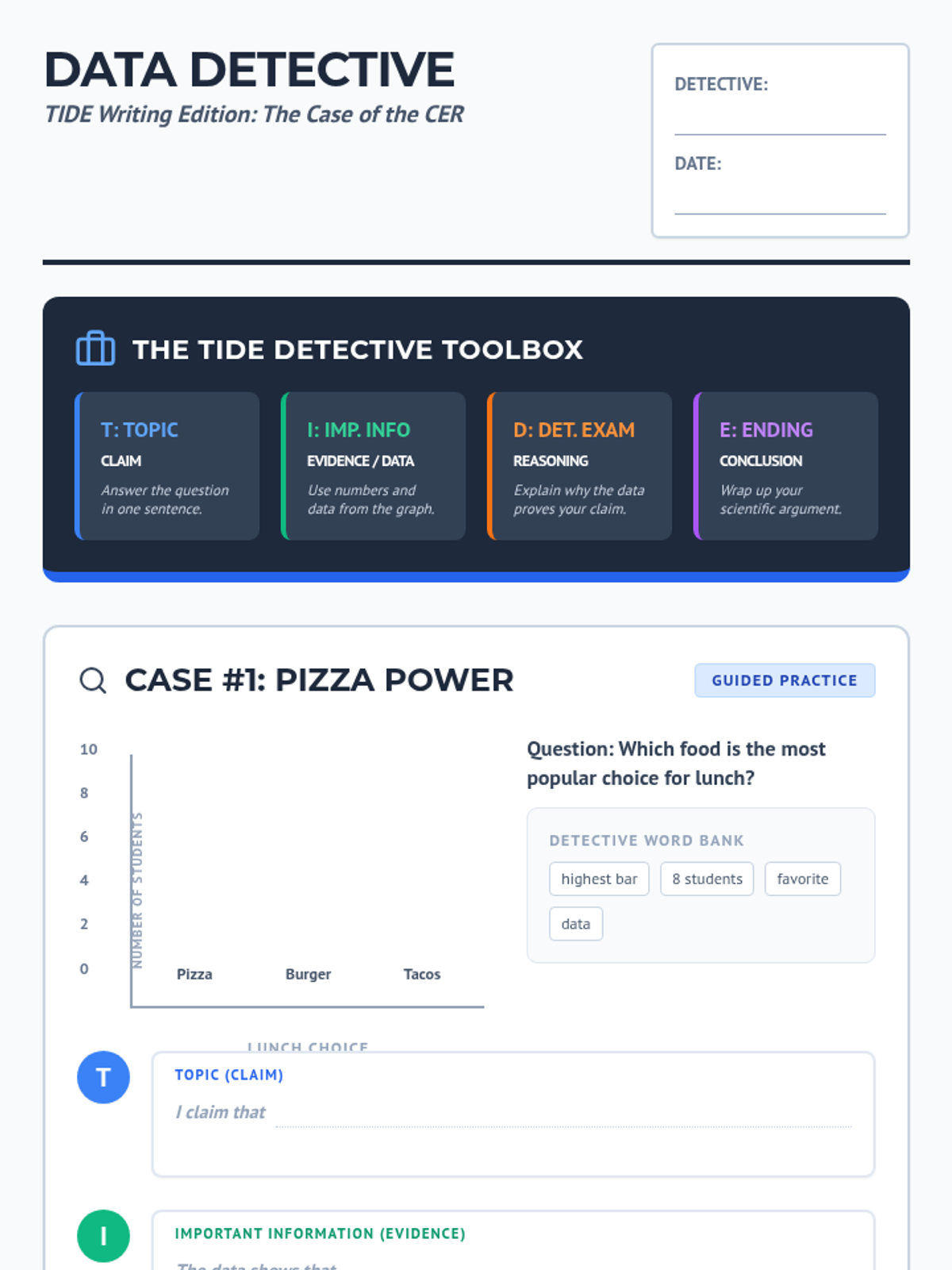
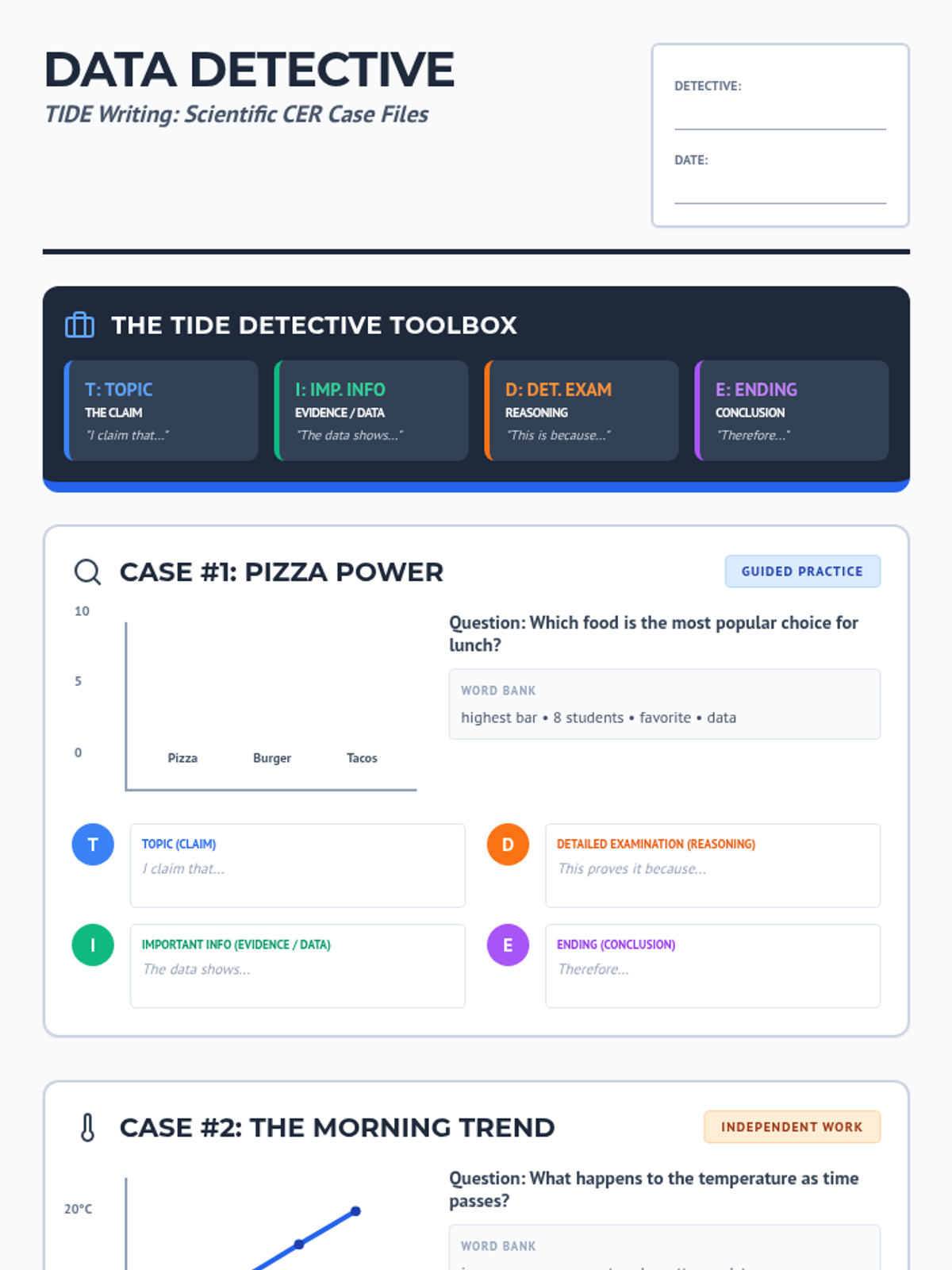
A lesson focused on helping Level 3 ESL students master the Claim, Evidence, Reasoning framework through the analysis of bar and line graphs. Students act as 'Data Detectives' to uncover trends and support their conclusions with specific data points.
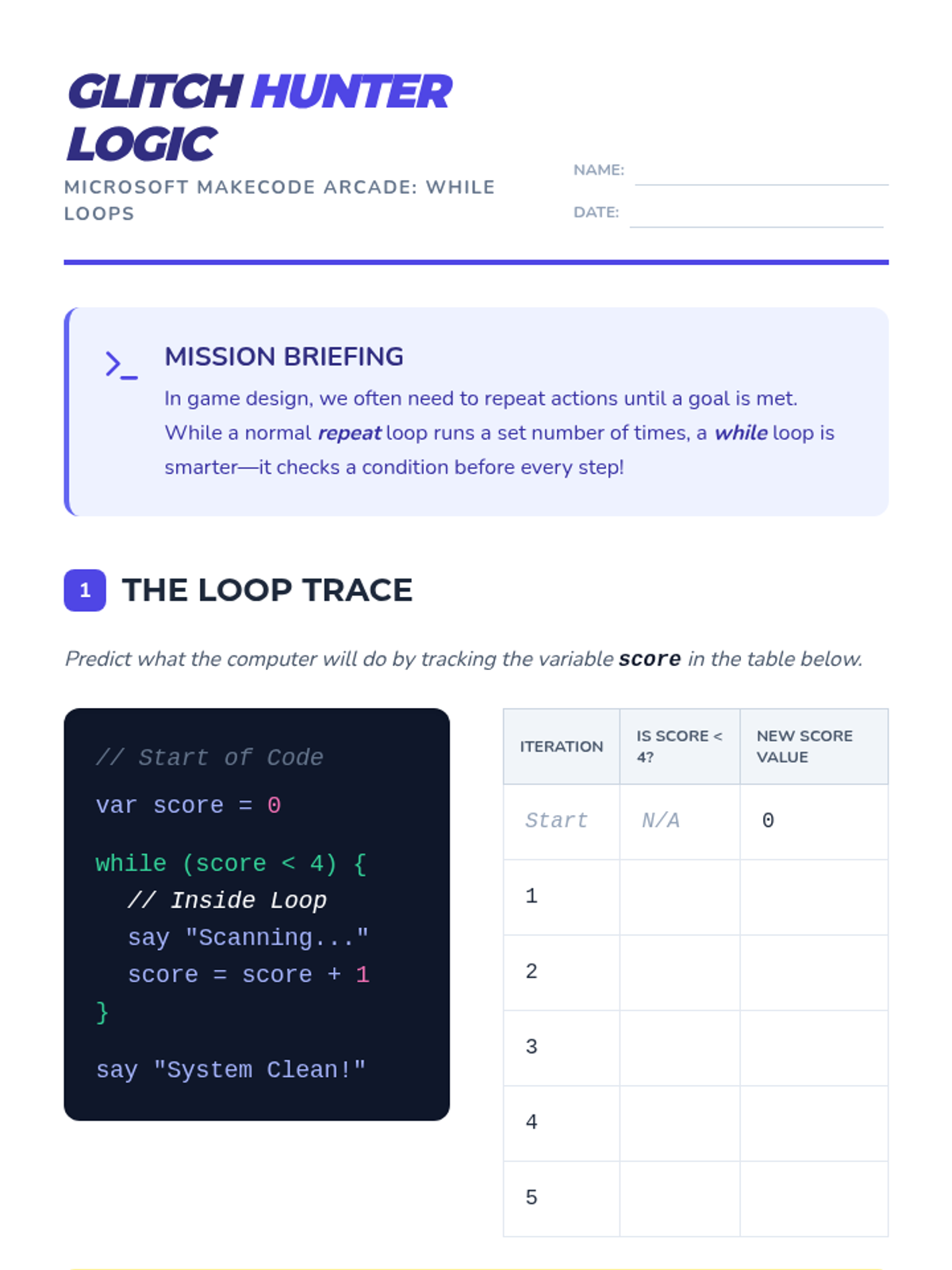
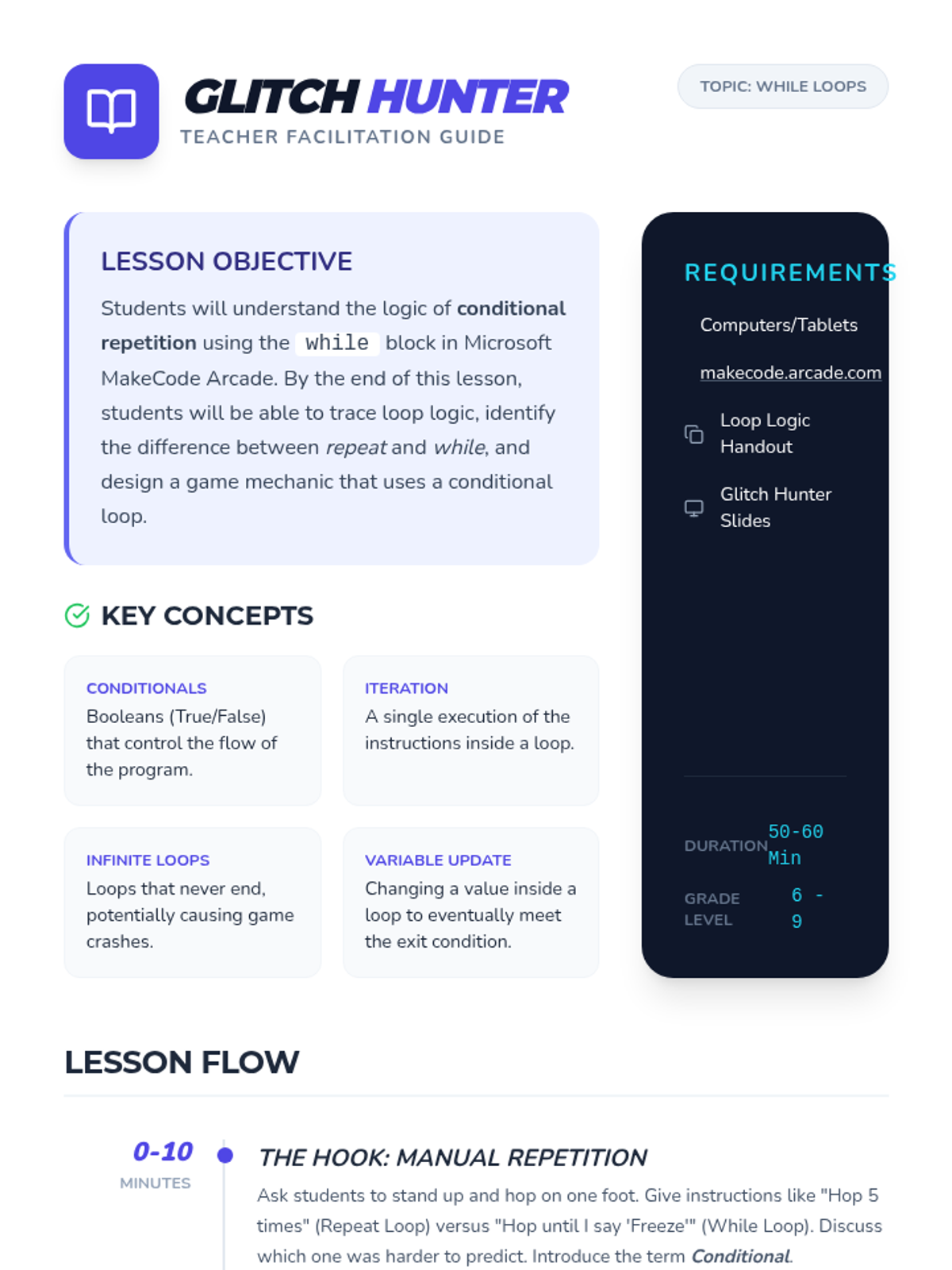
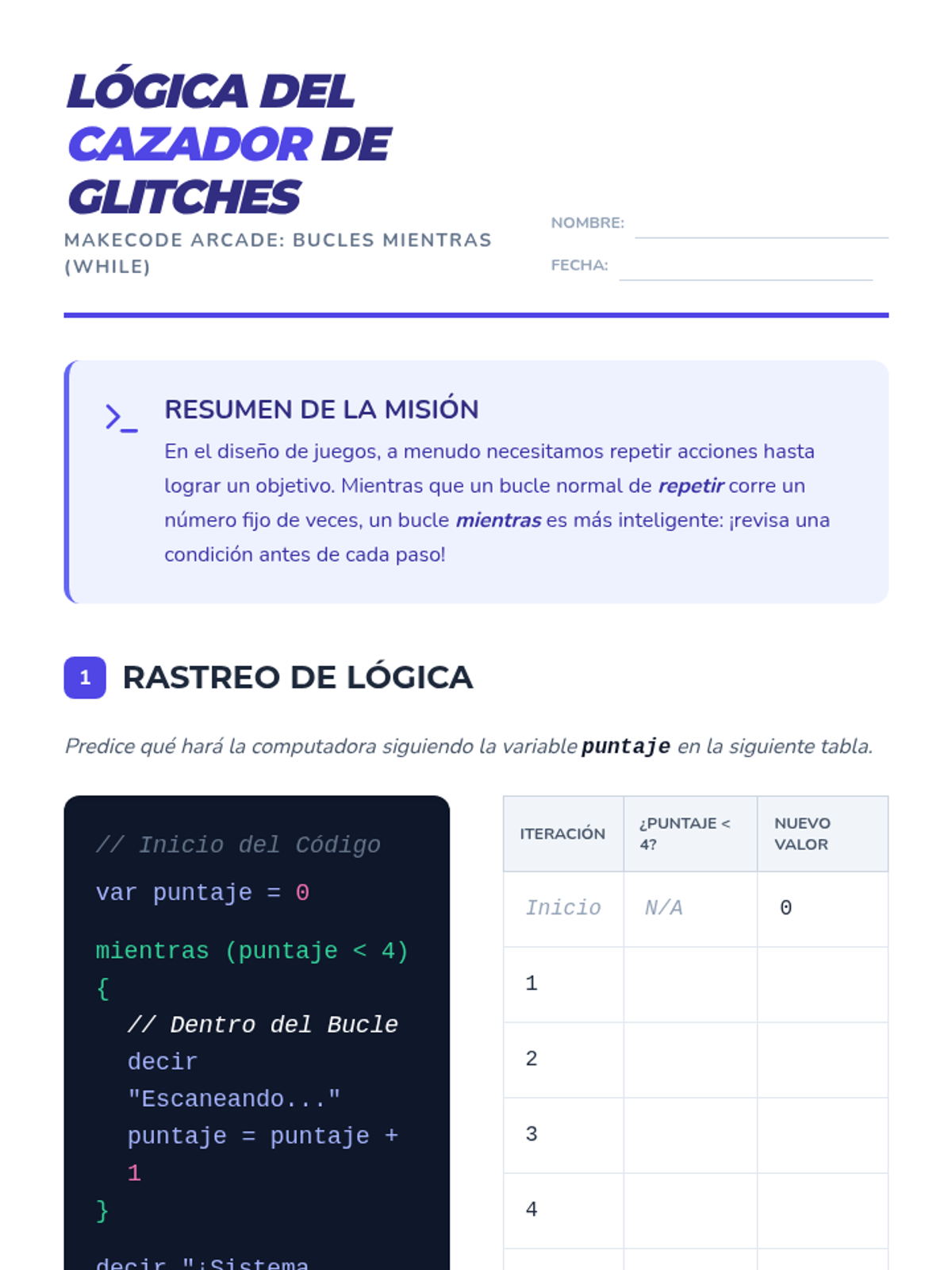
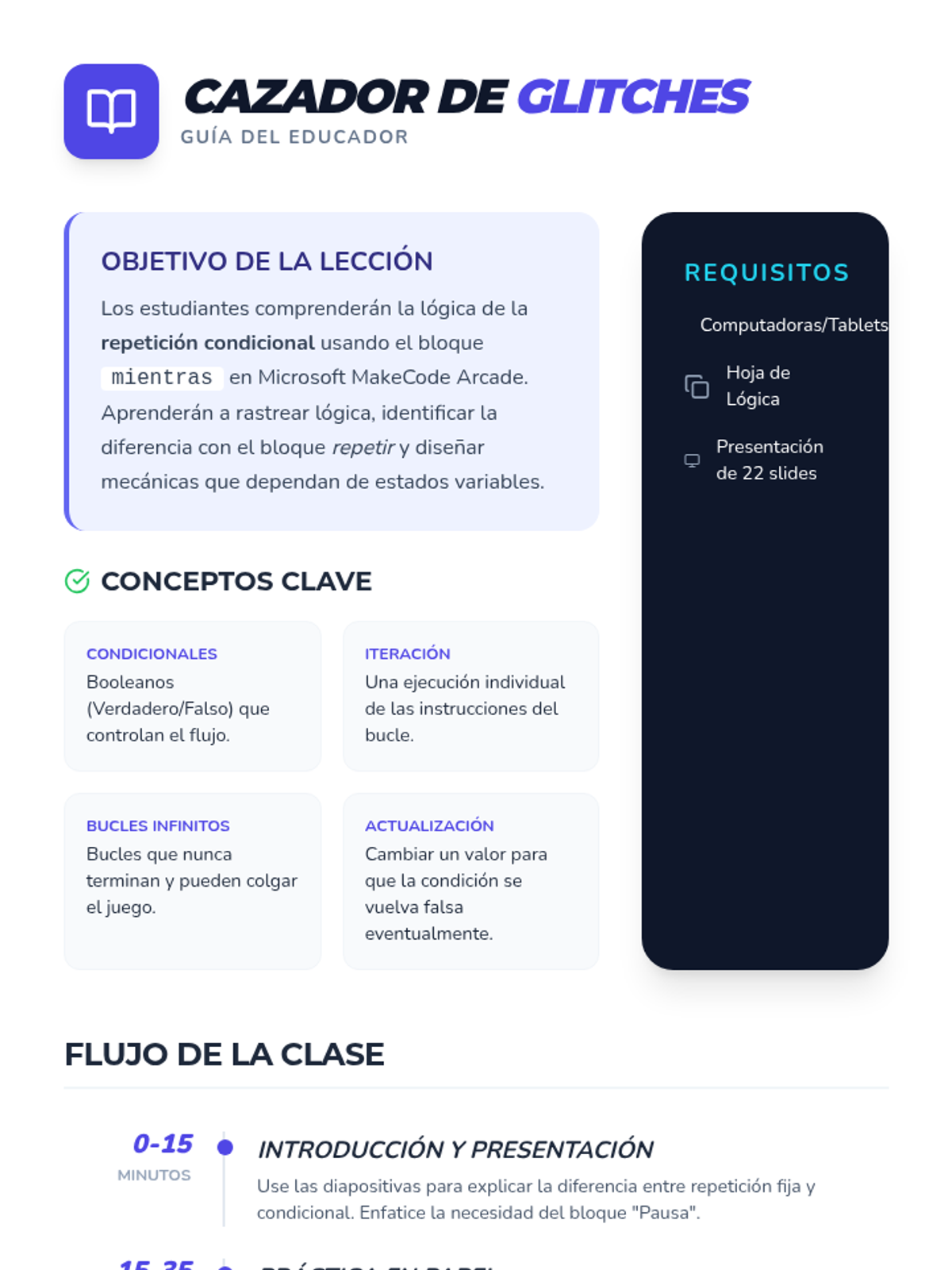
Los estudiantes exploran el poder de los bucles "mientras" (while) en Microsoft MakeCode Arcade para crear comportamientos repetitivos en sus juegos. Aprenden a usar condiciones para controlar la repetición y automatizar mecánicas como la generación de enemigos o el seguimiento de puntajes.
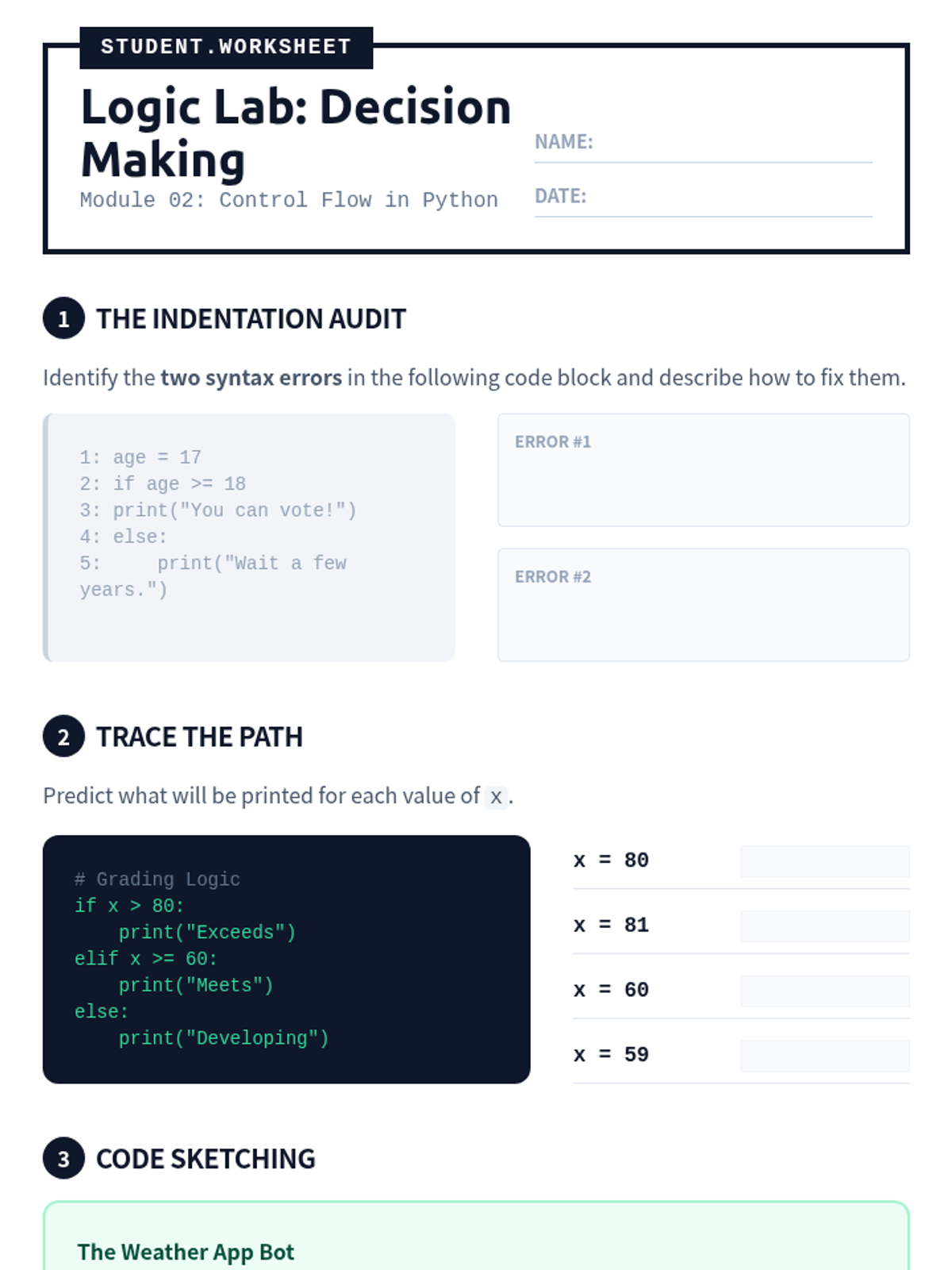
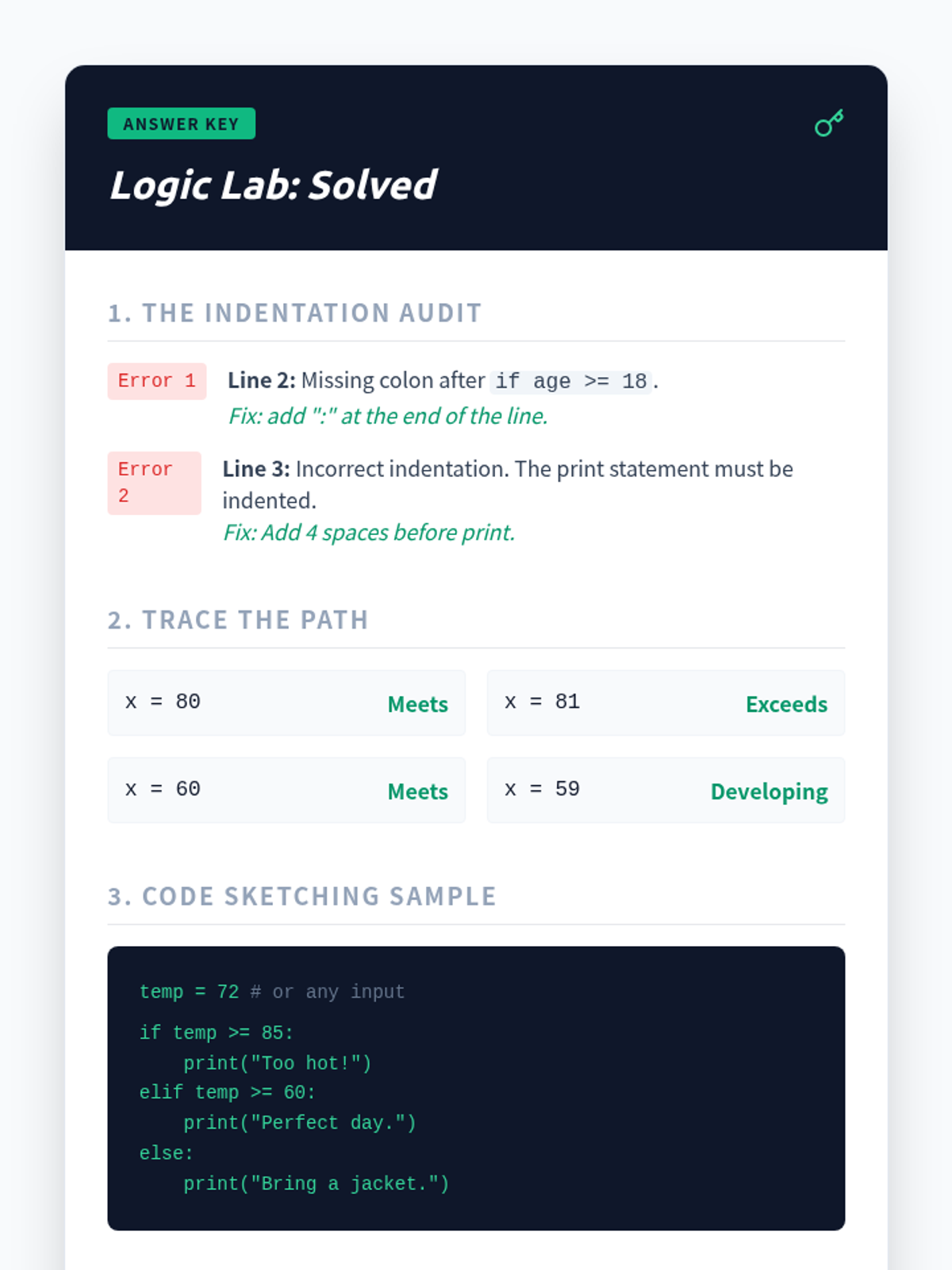
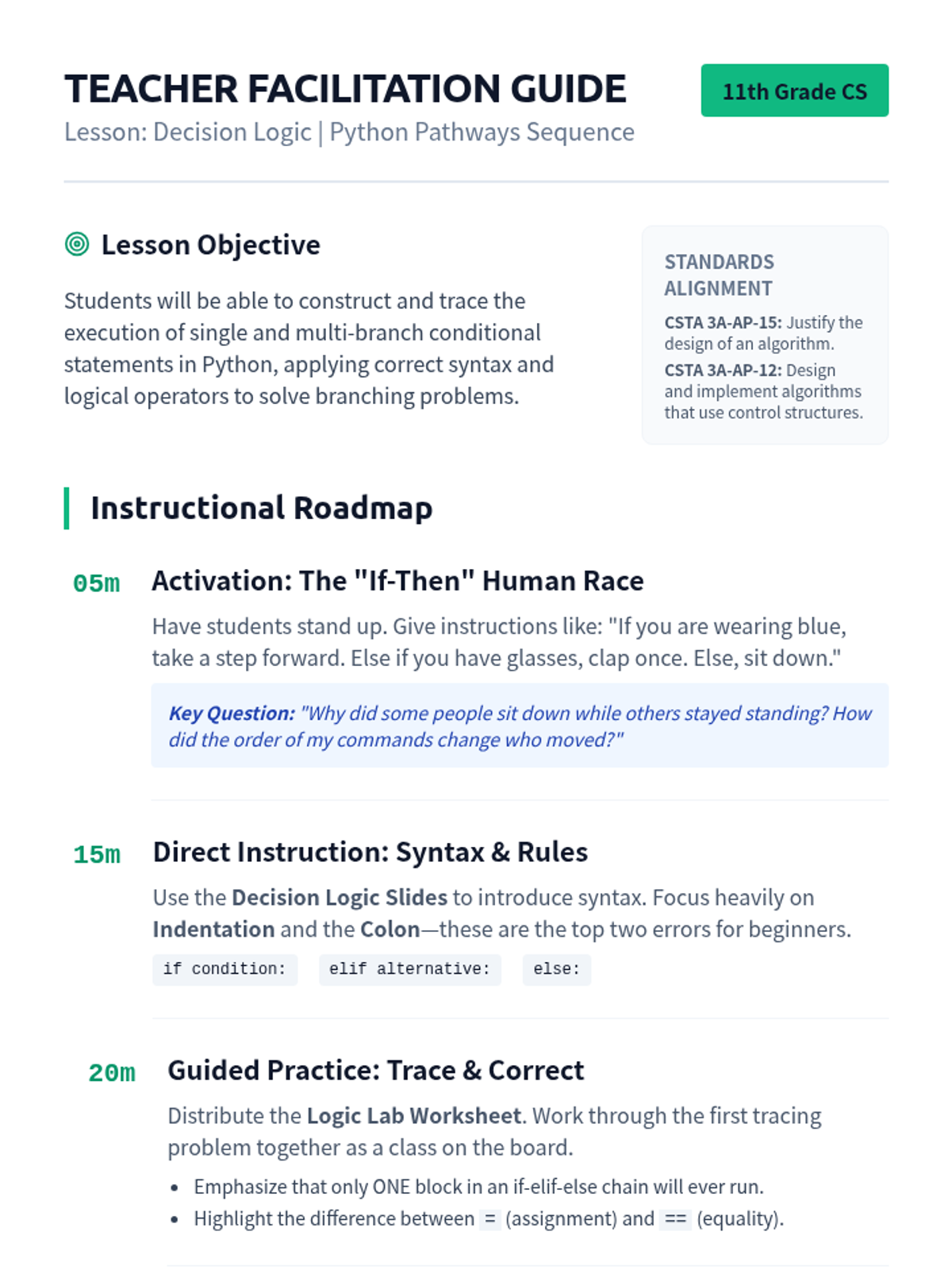
Students will learn how to use conditional statements (if, elif, else) to control the flow of a Python program, understanding indentation and logical operators.
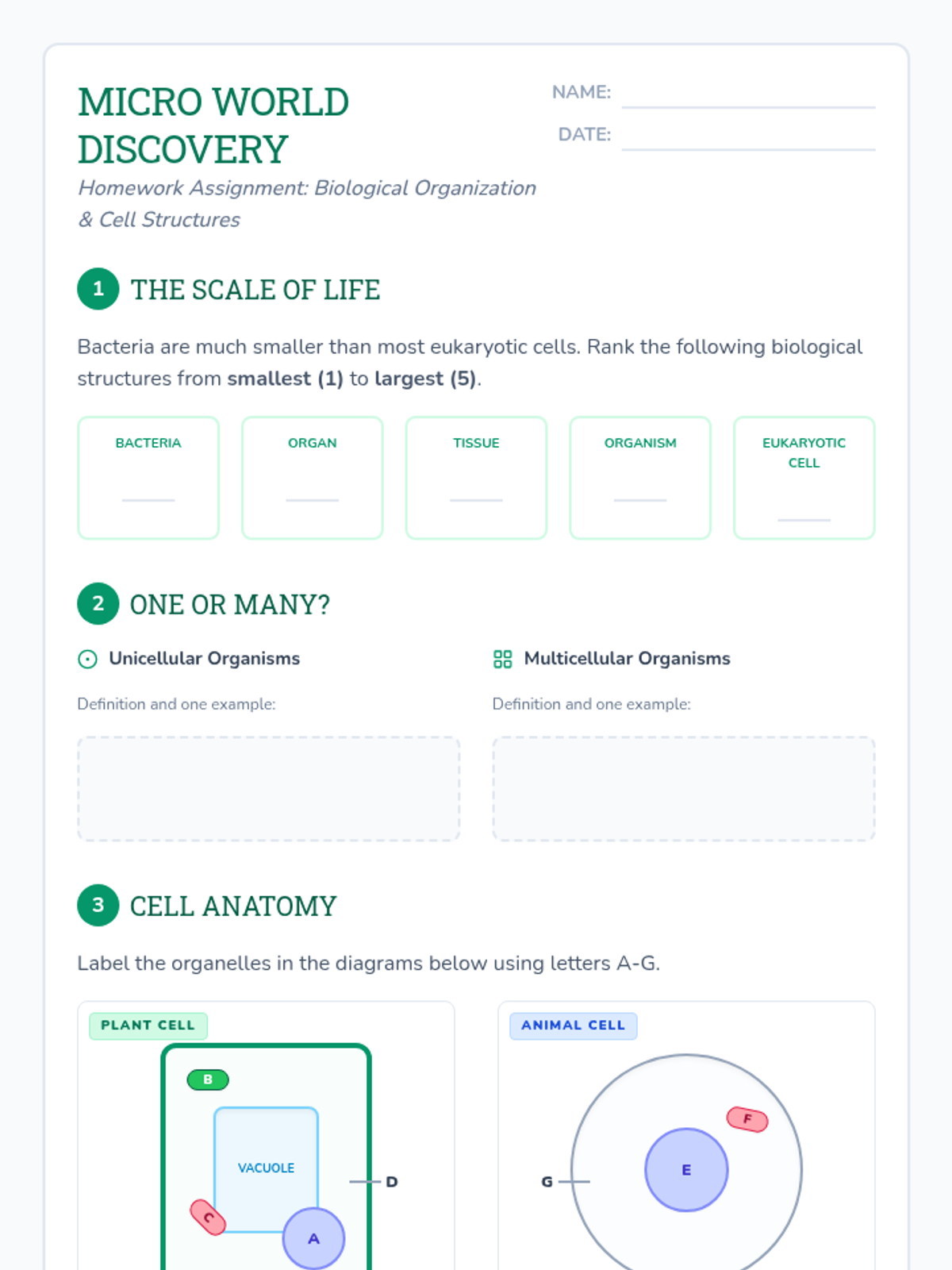
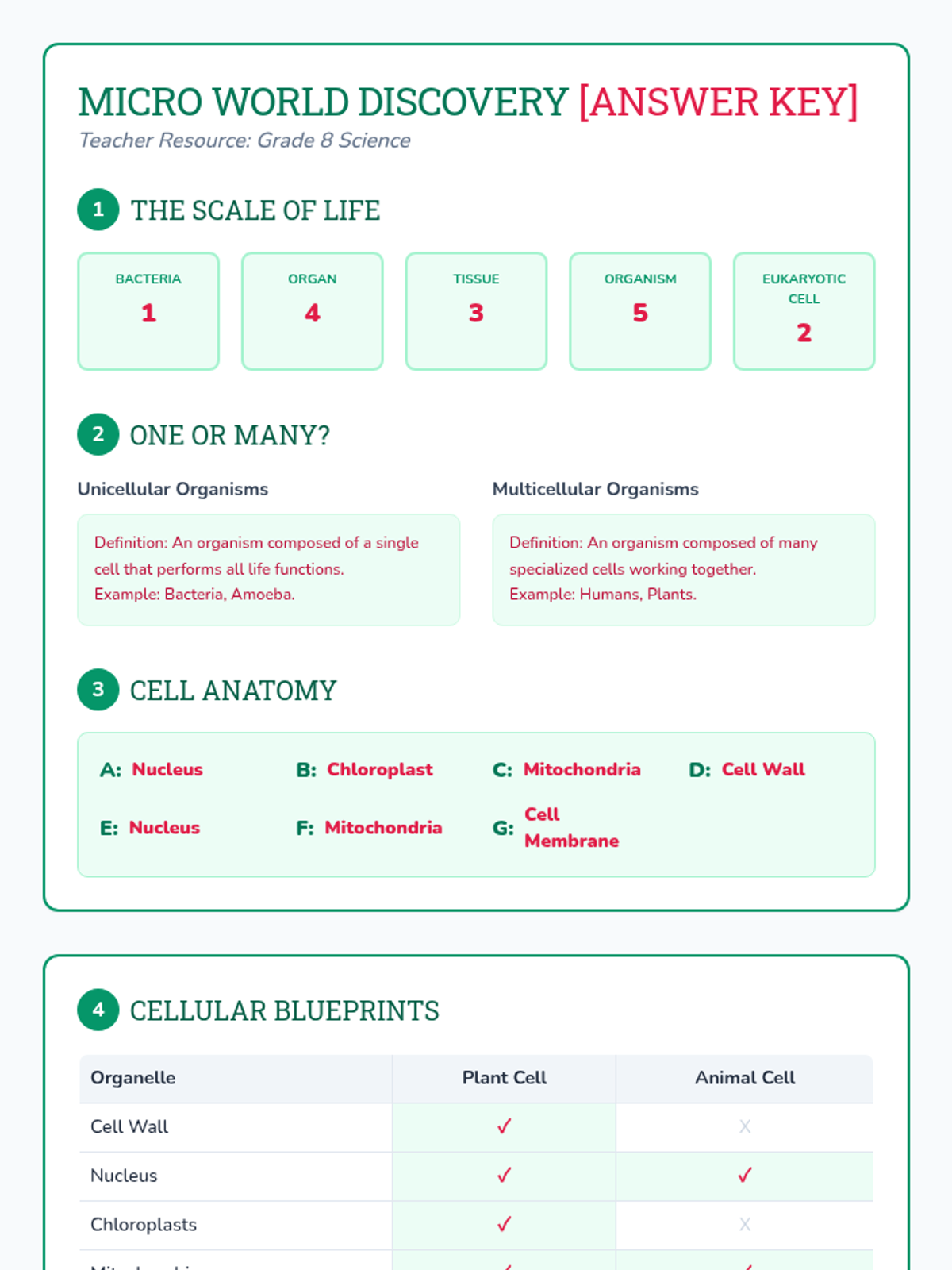
A comprehensive homework assignment covering biological organization, cell types, and organelle functions for 8th-grade students.
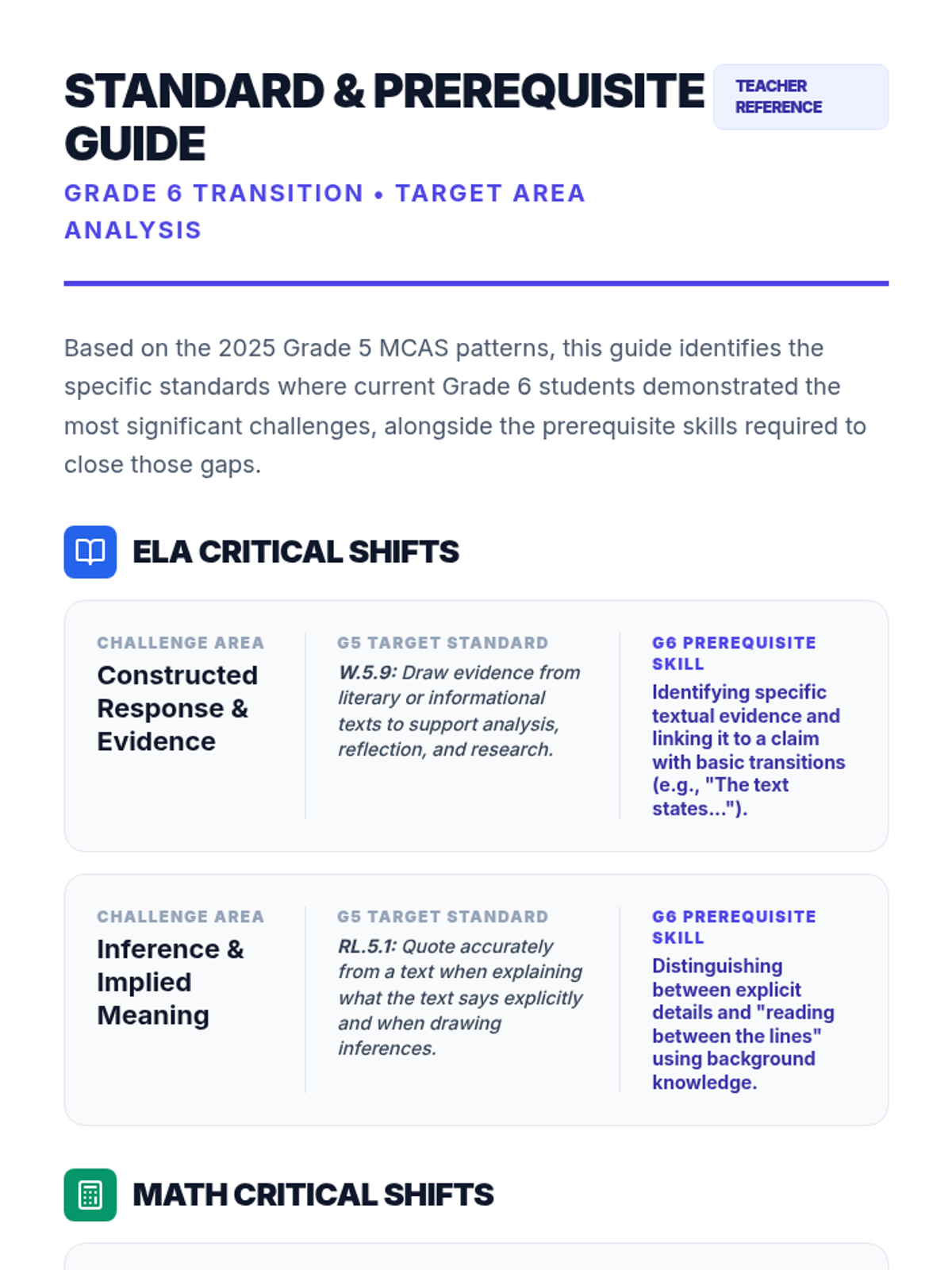
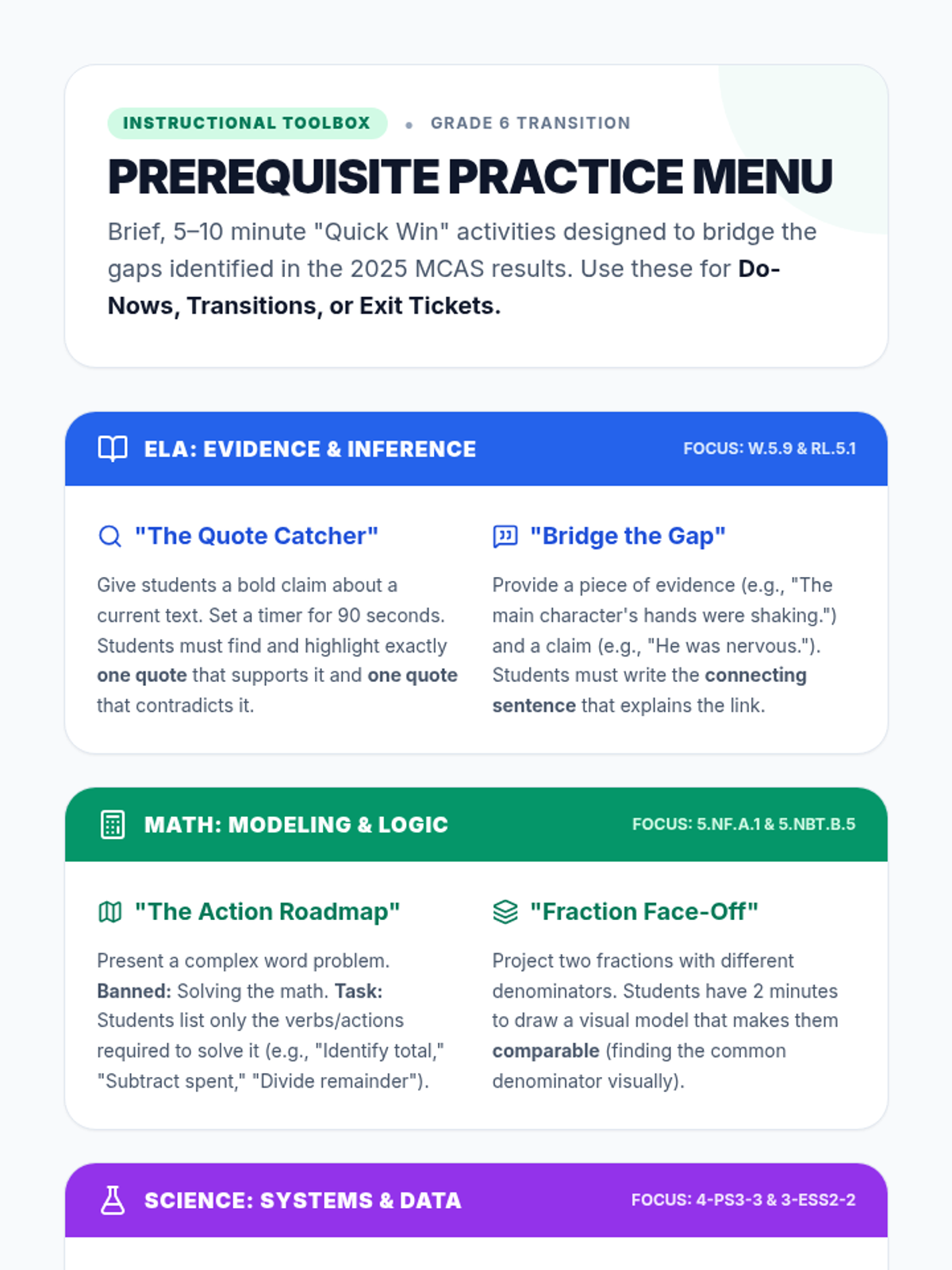
A comprehensive strategic planning resource for educators to analyze Grade 5 MCAS results and align Grade 6 instruction with identified student needs in ELA, Math, and Science.
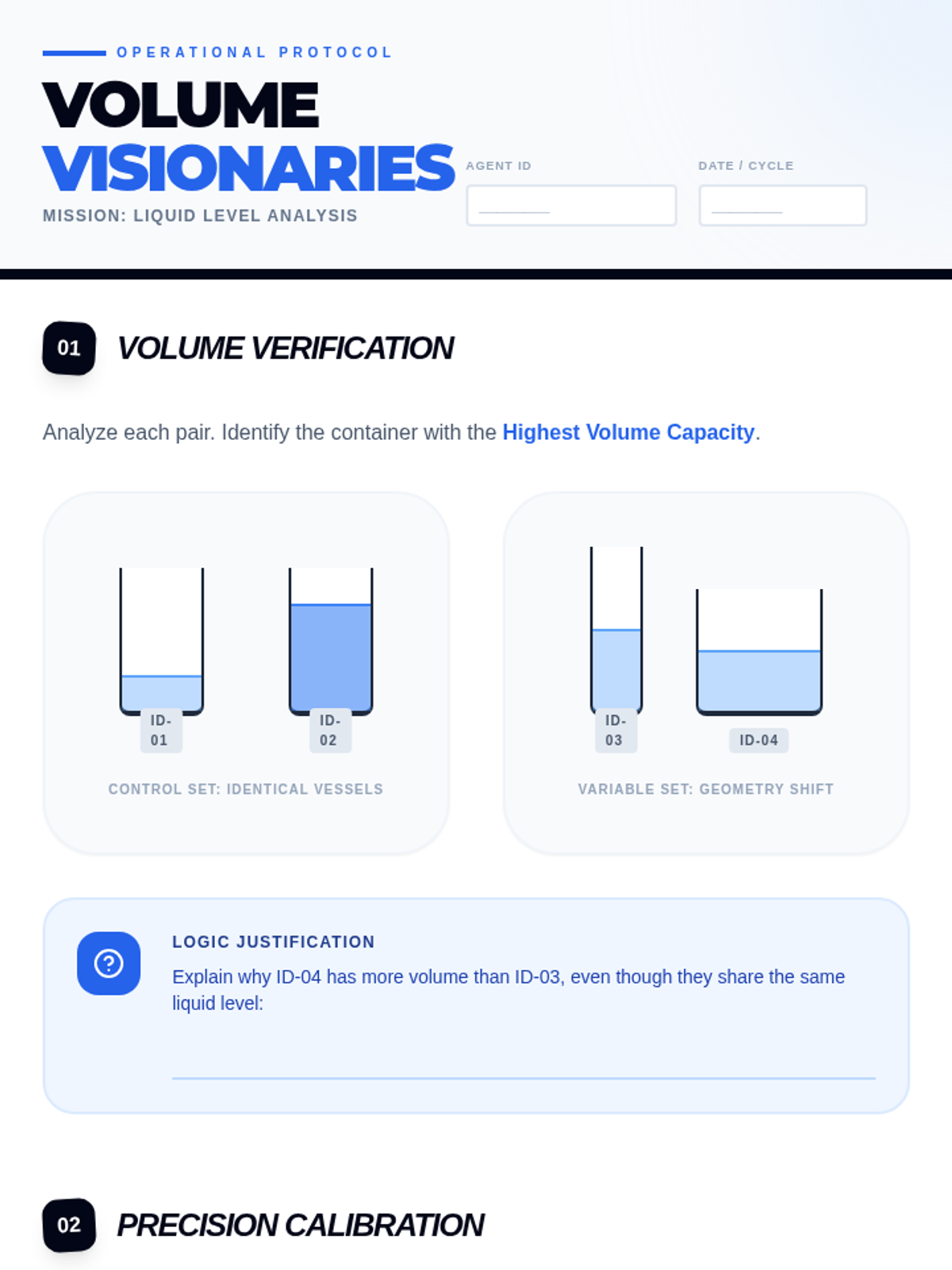
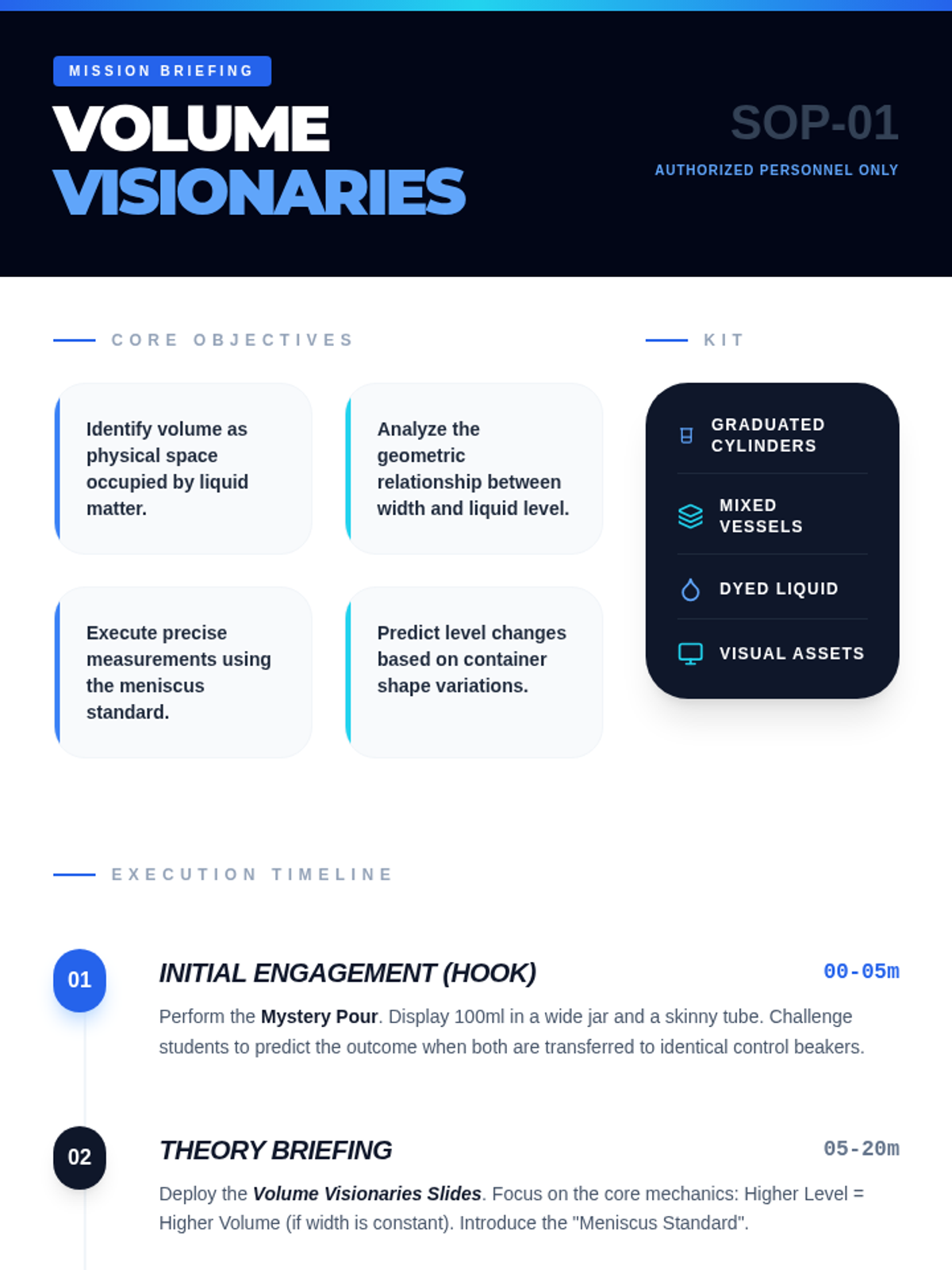
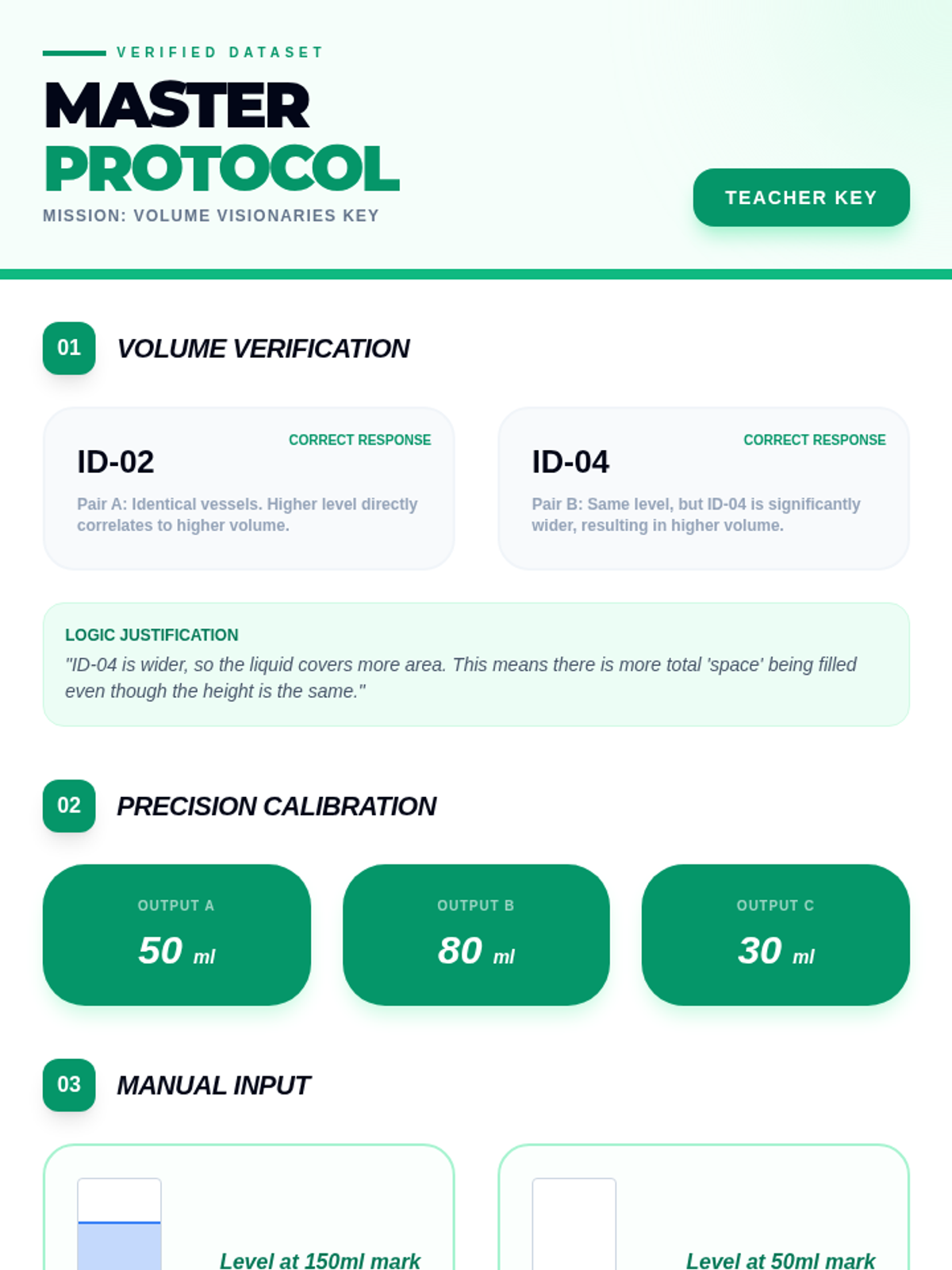
A hands-on lesson exploring the relationship between water level and volume, teaching students how to observe, measure, and compare how much liquid a container holds.
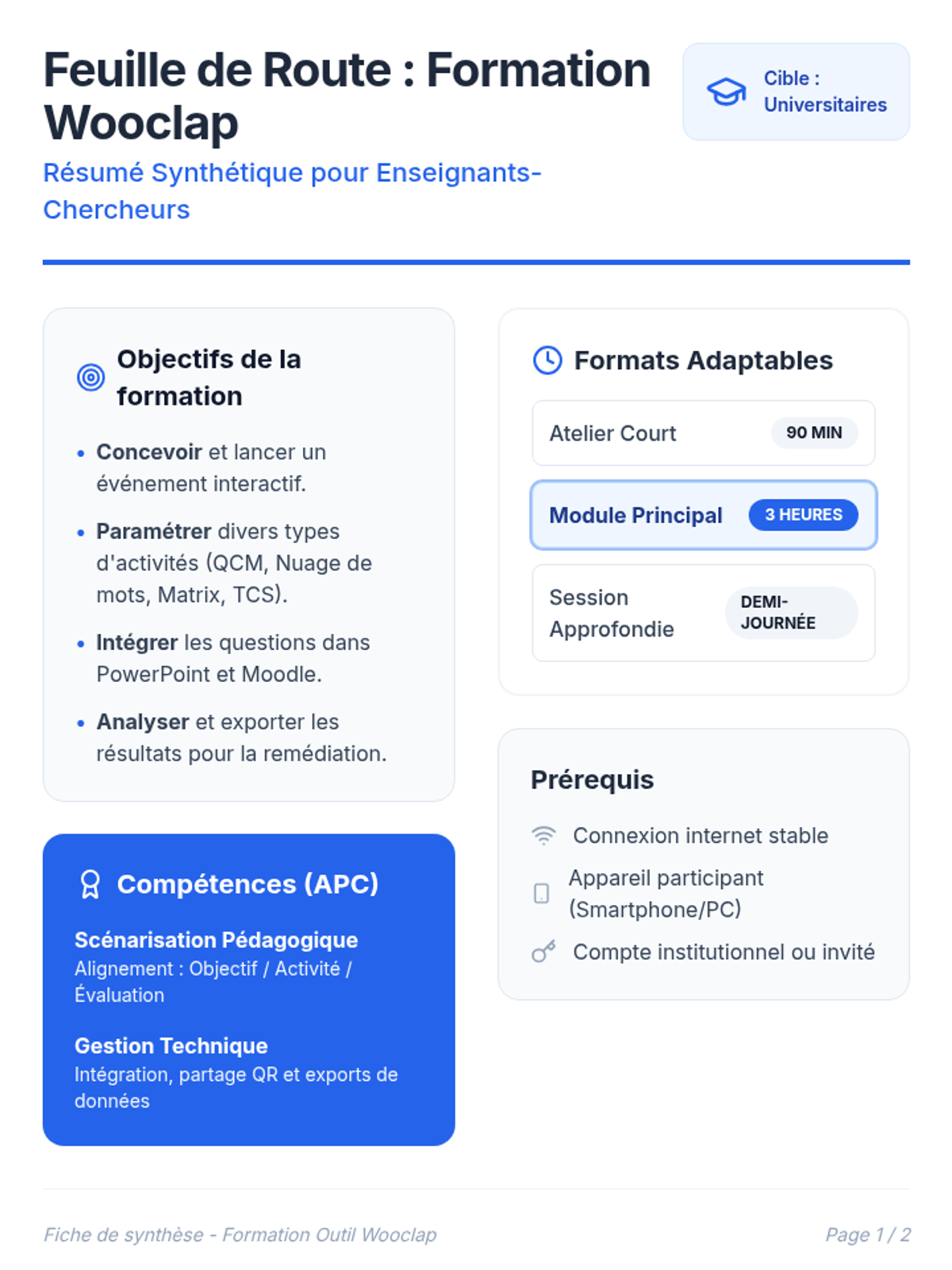
Une formation complète pour maîtriser Wooclap en contexte universitaire, allant de la création d'activités simples à l'intégration avancée dans PowerPoint et Moodle.
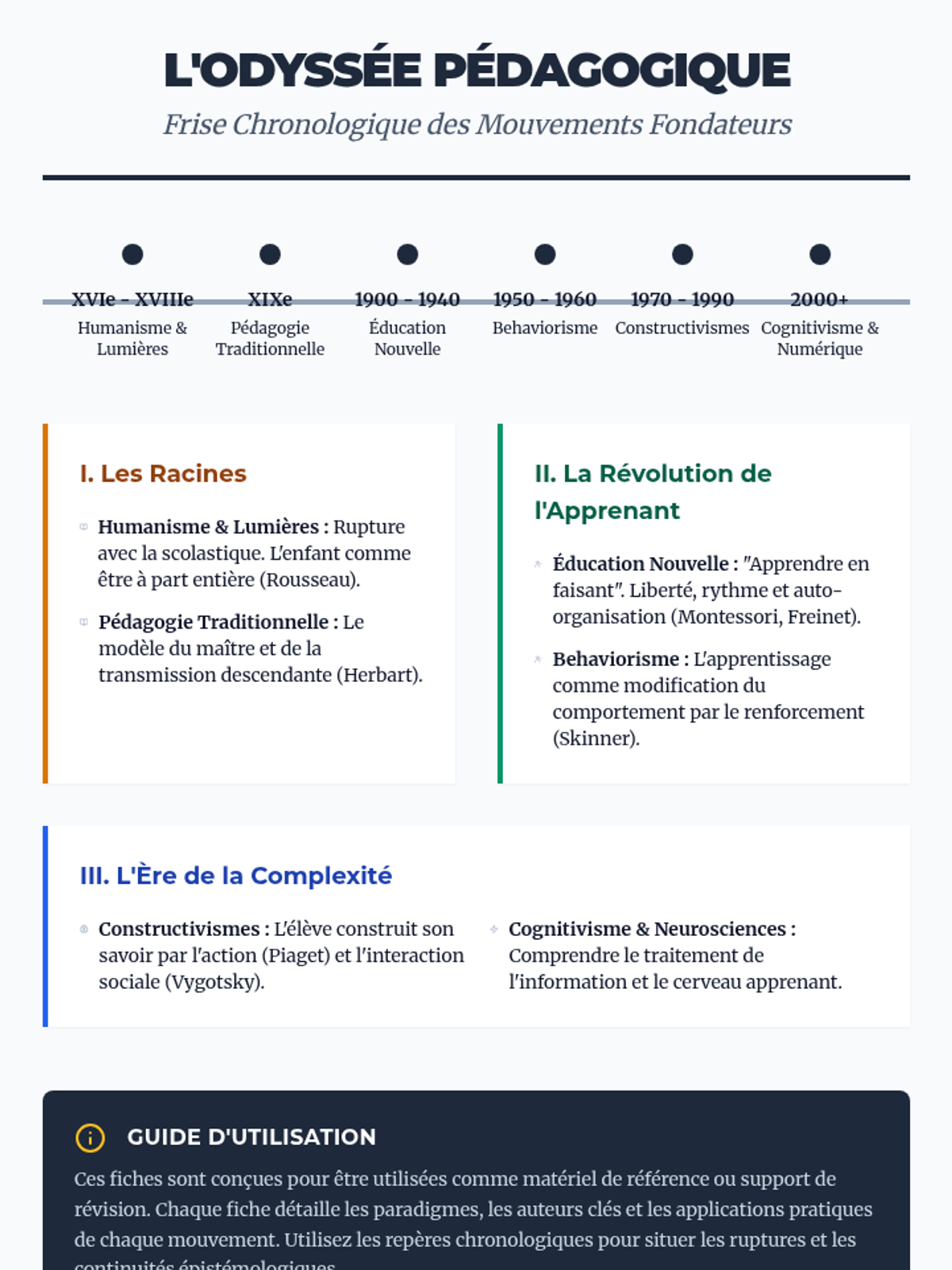
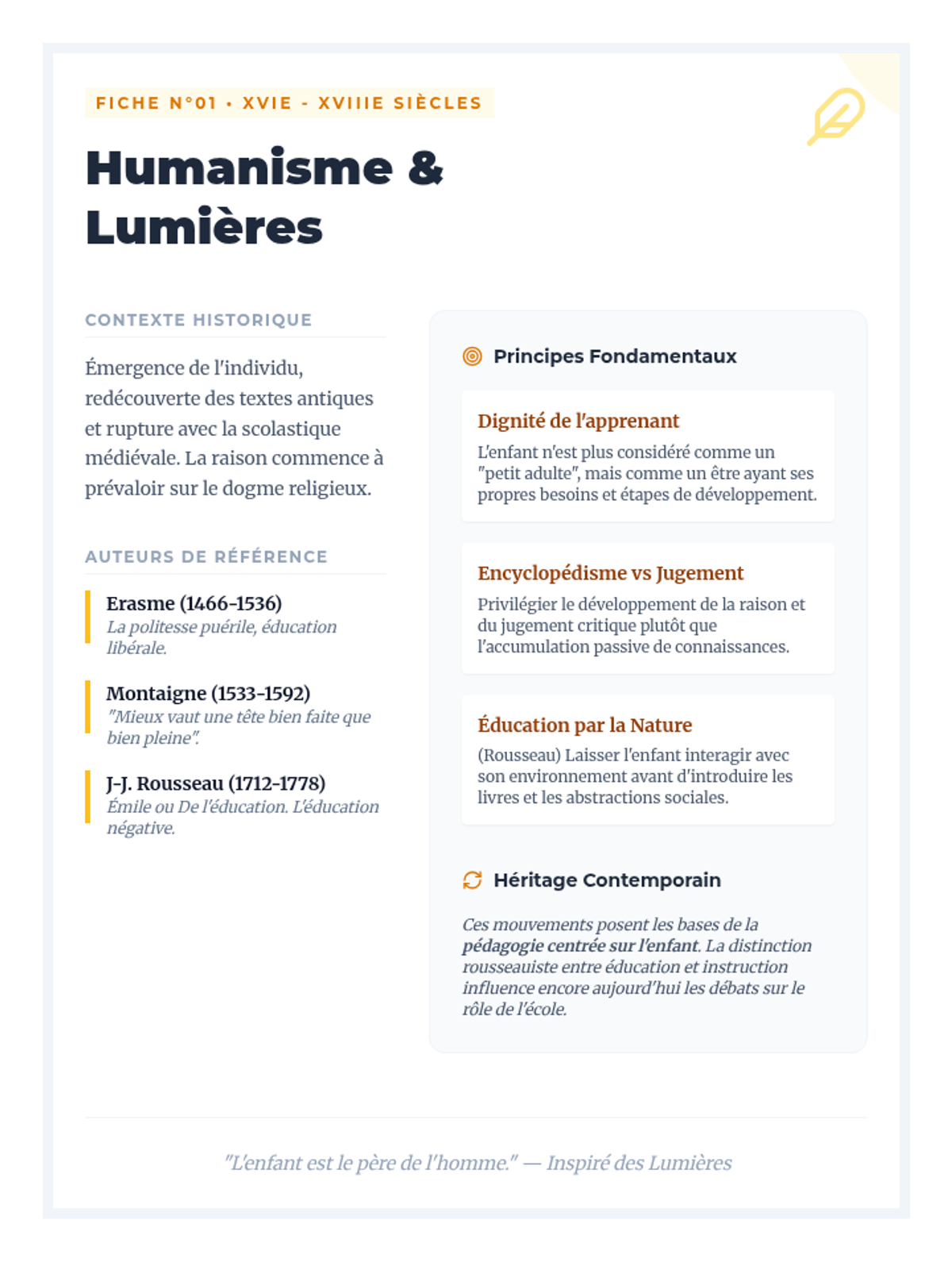
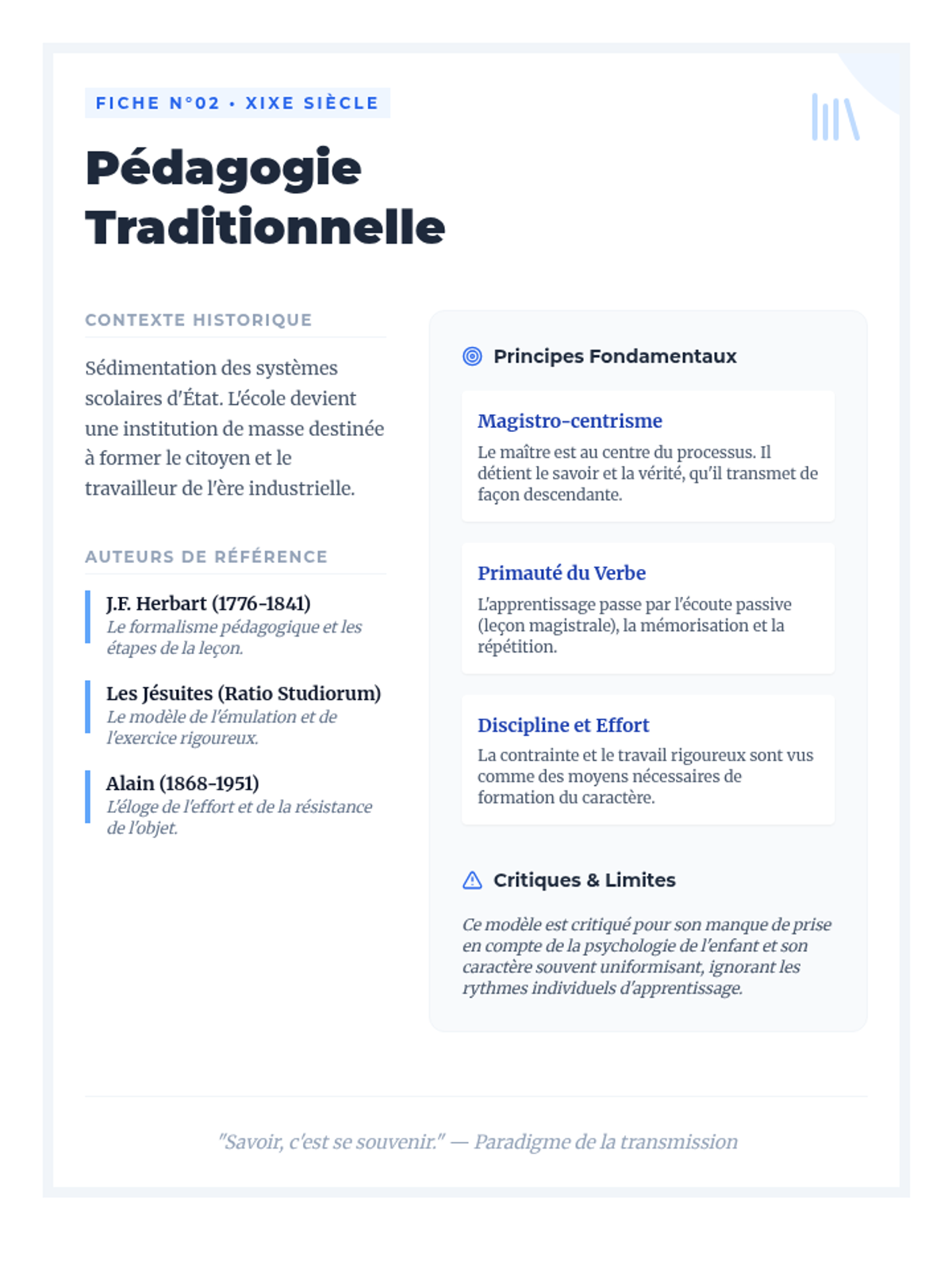
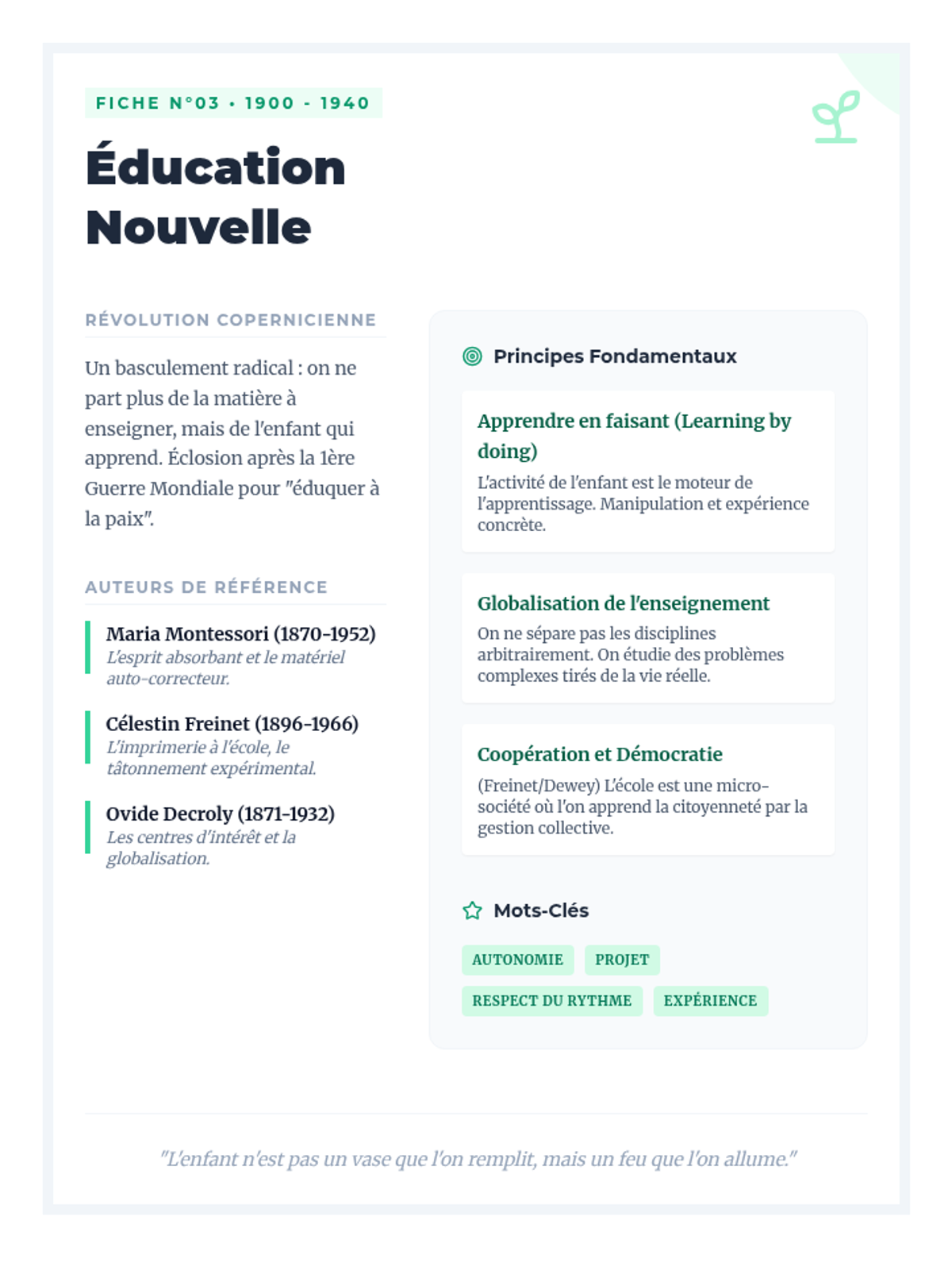
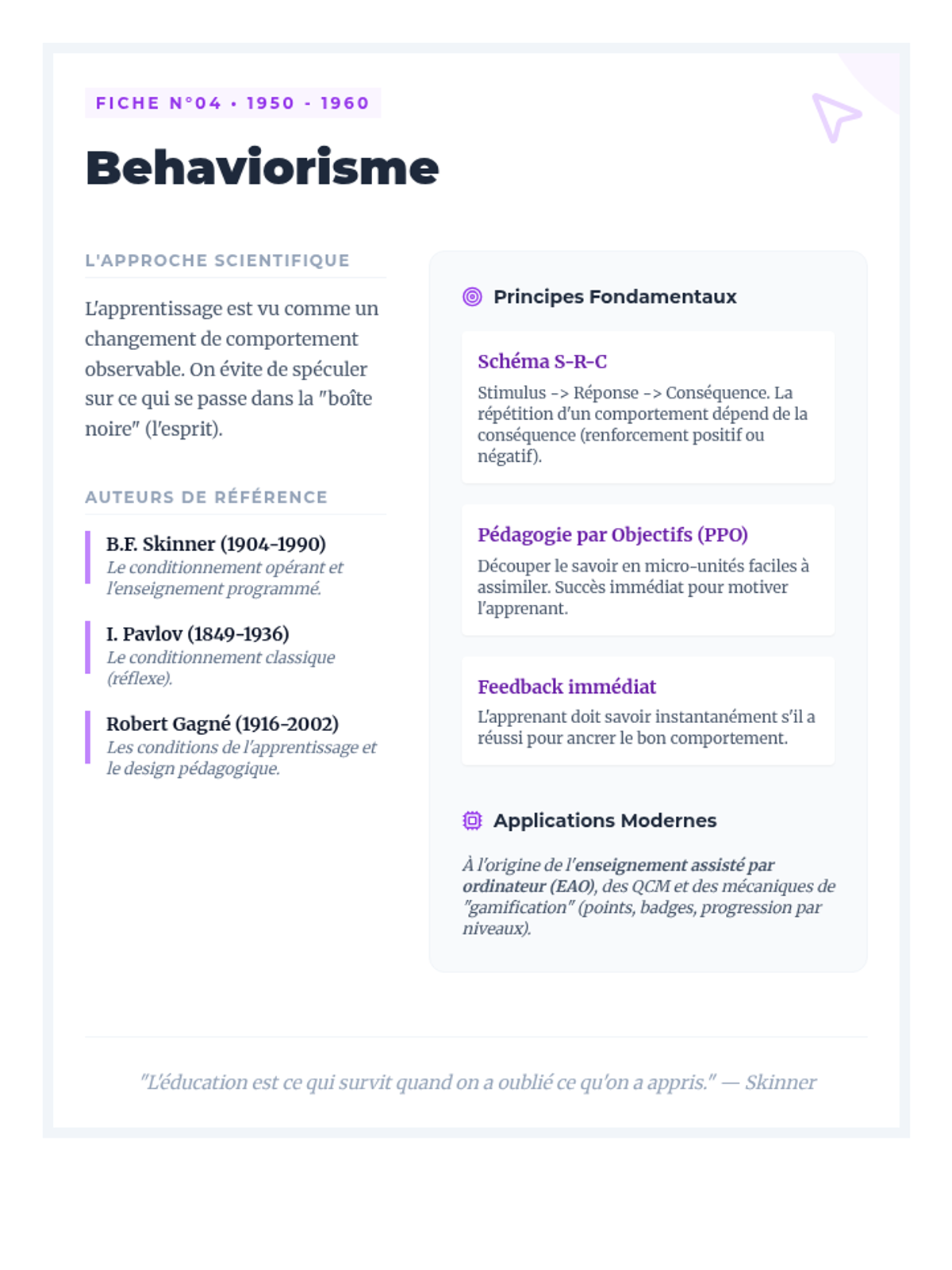
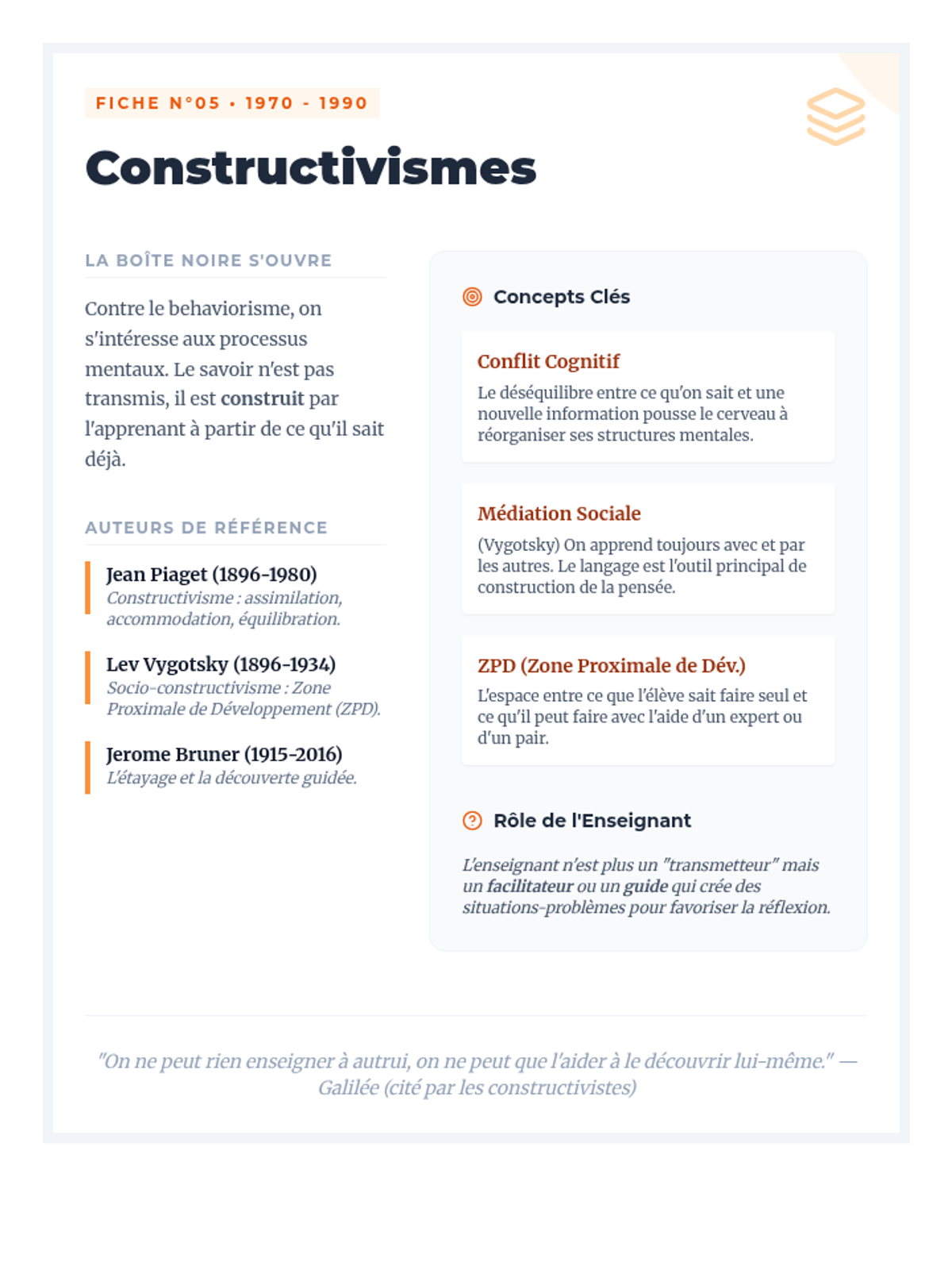
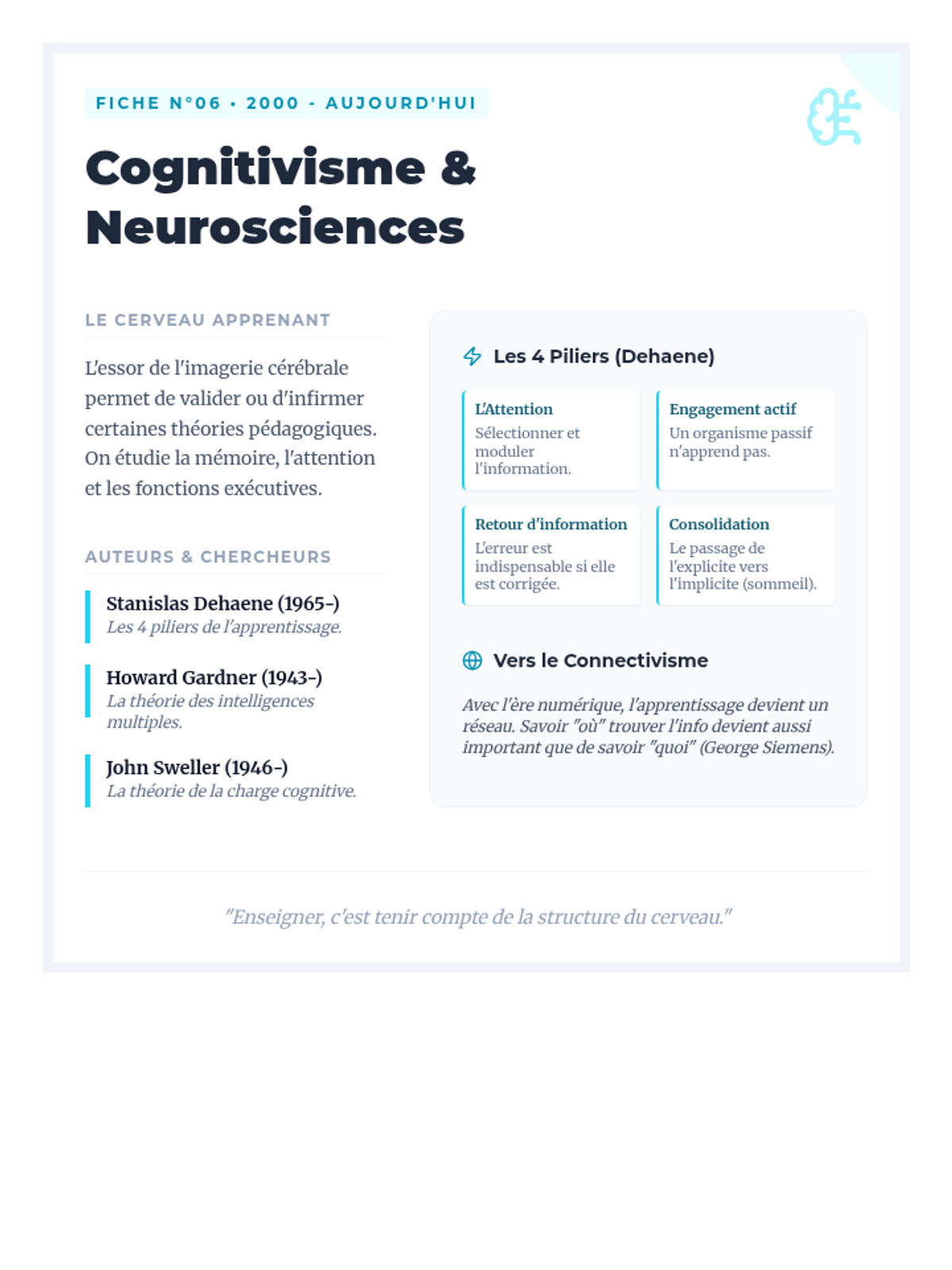
Une exploration diachronique des grands courants pédagogiques, de l'humanisme aux neurosciences, conçue pour les étudiants en sciences de l'éducation.
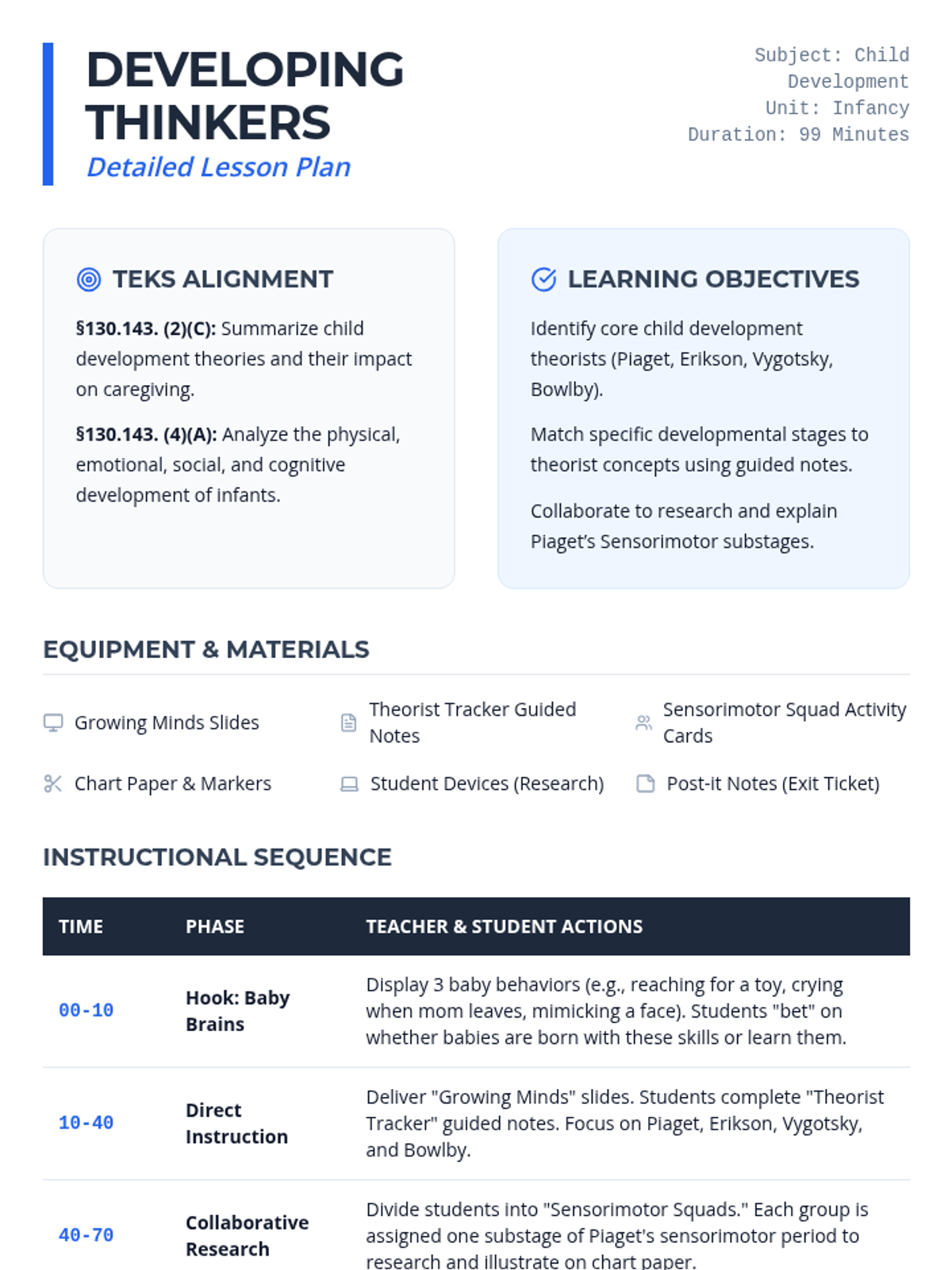
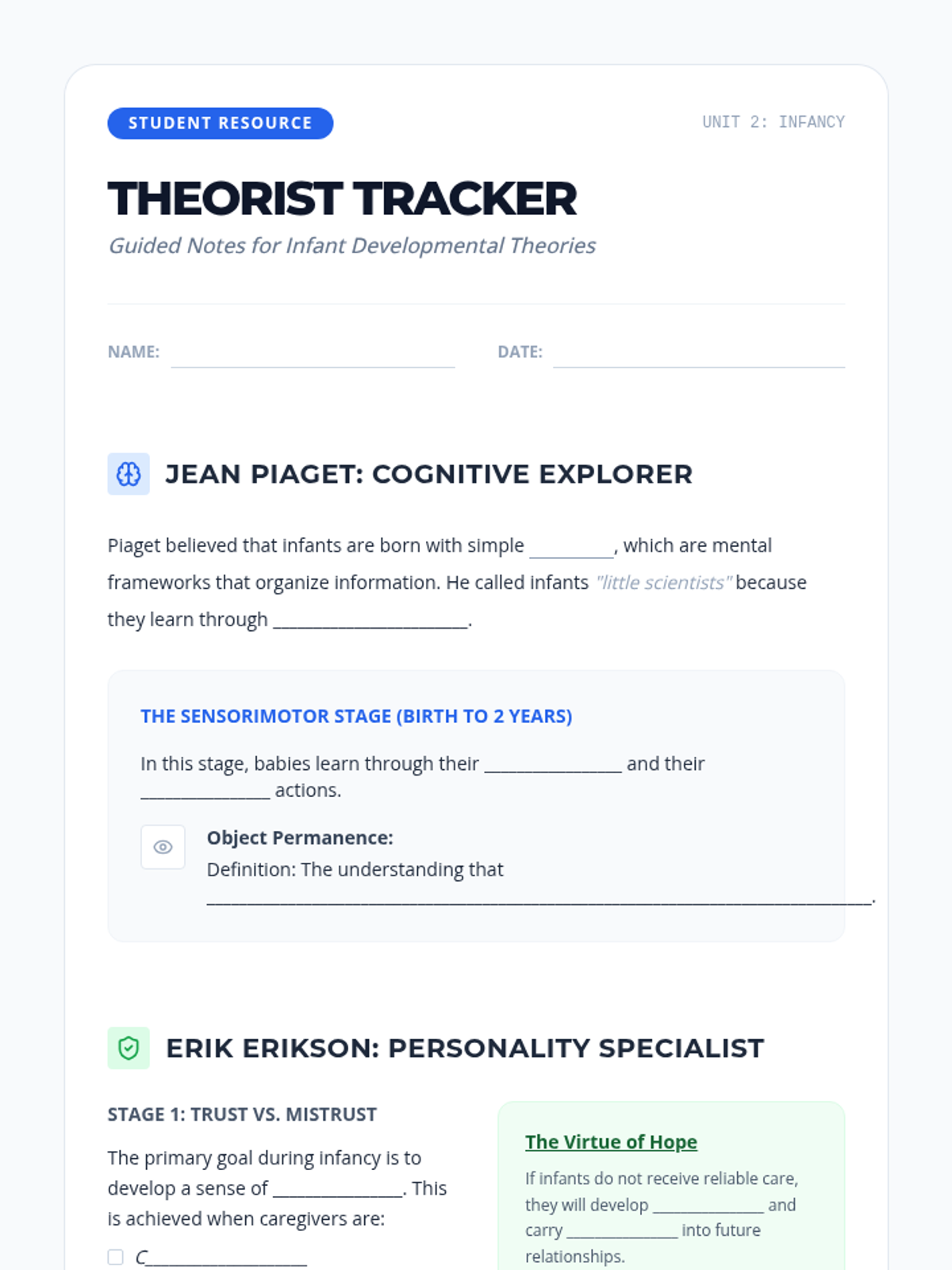
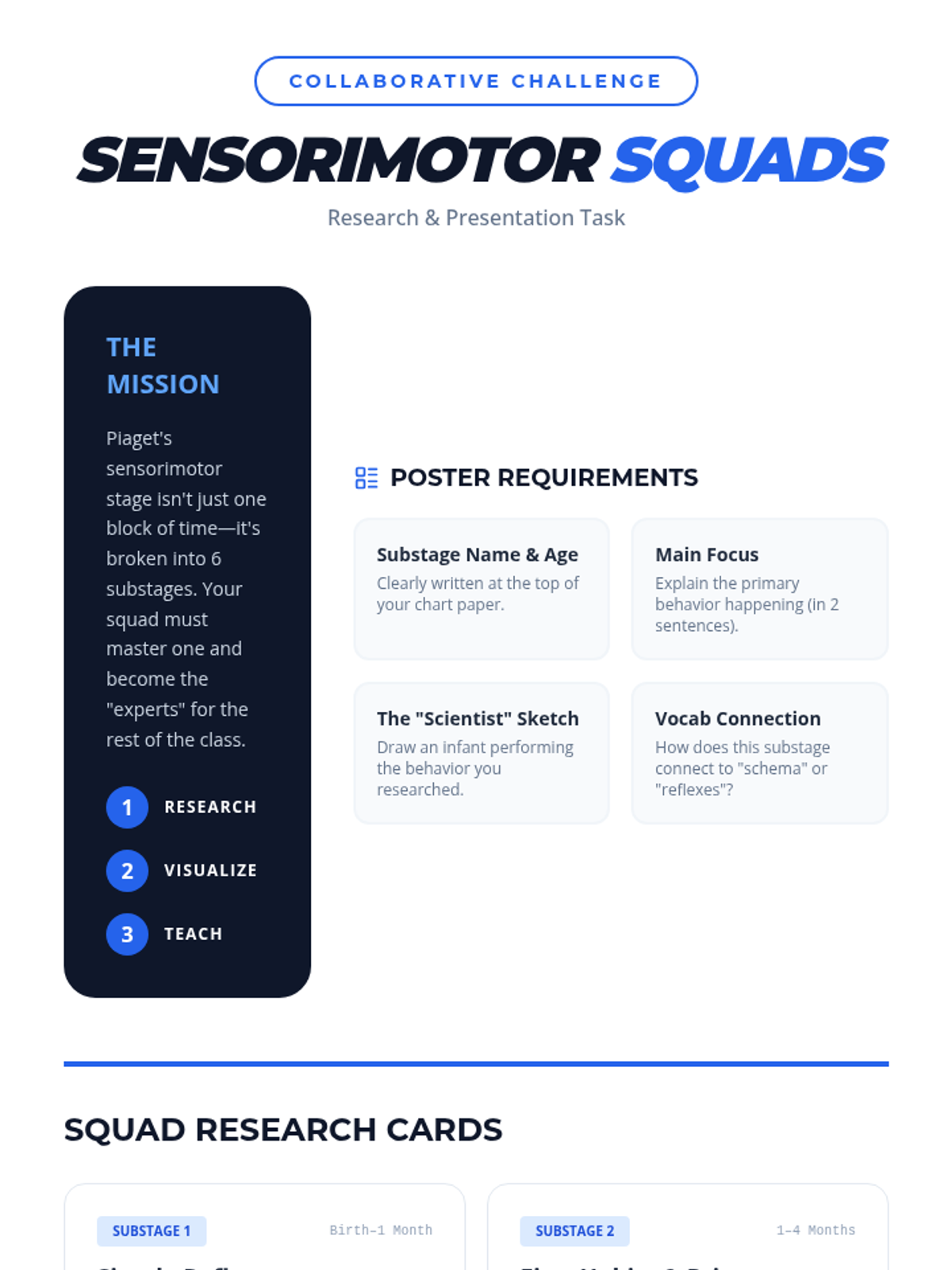
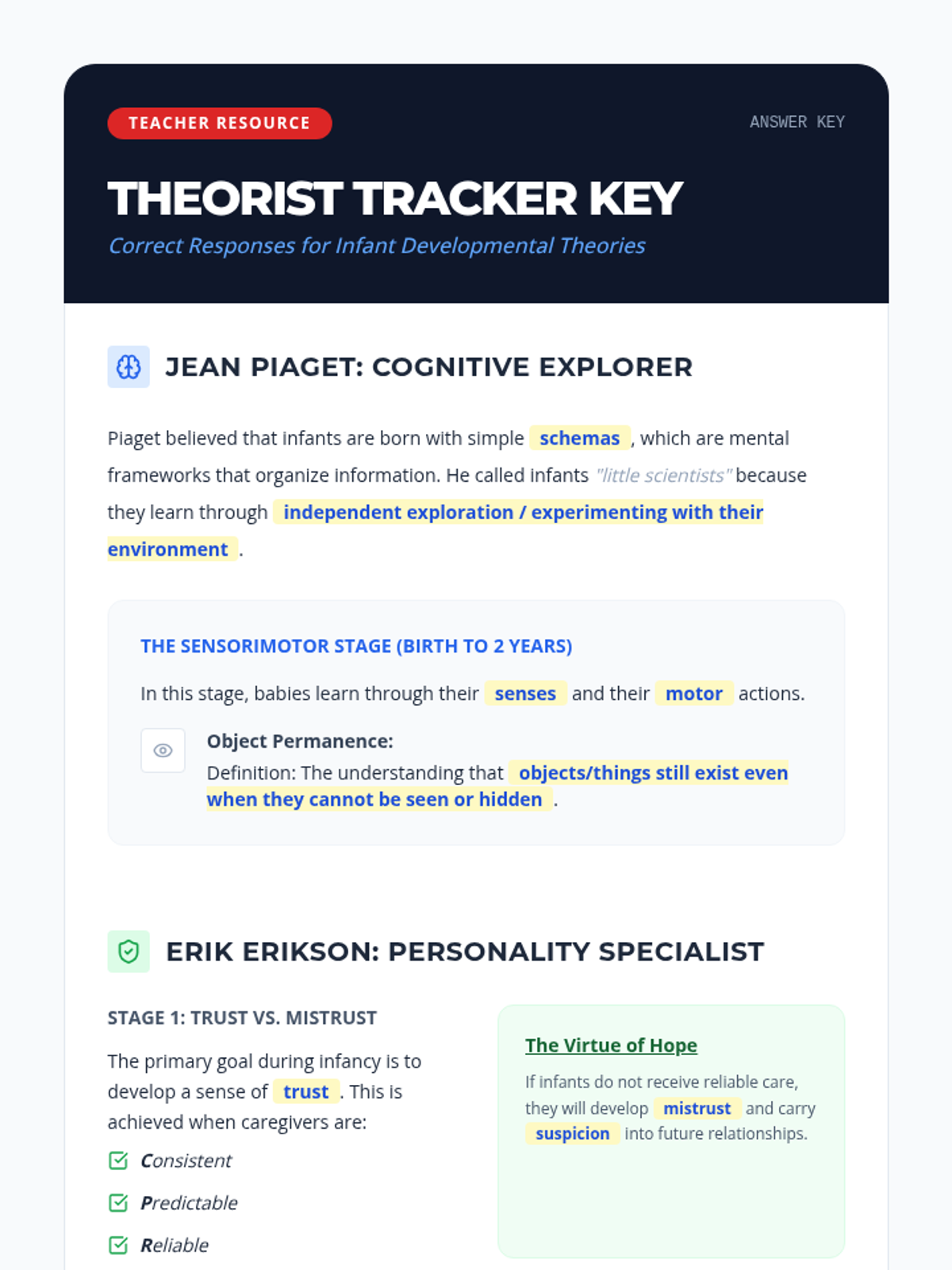
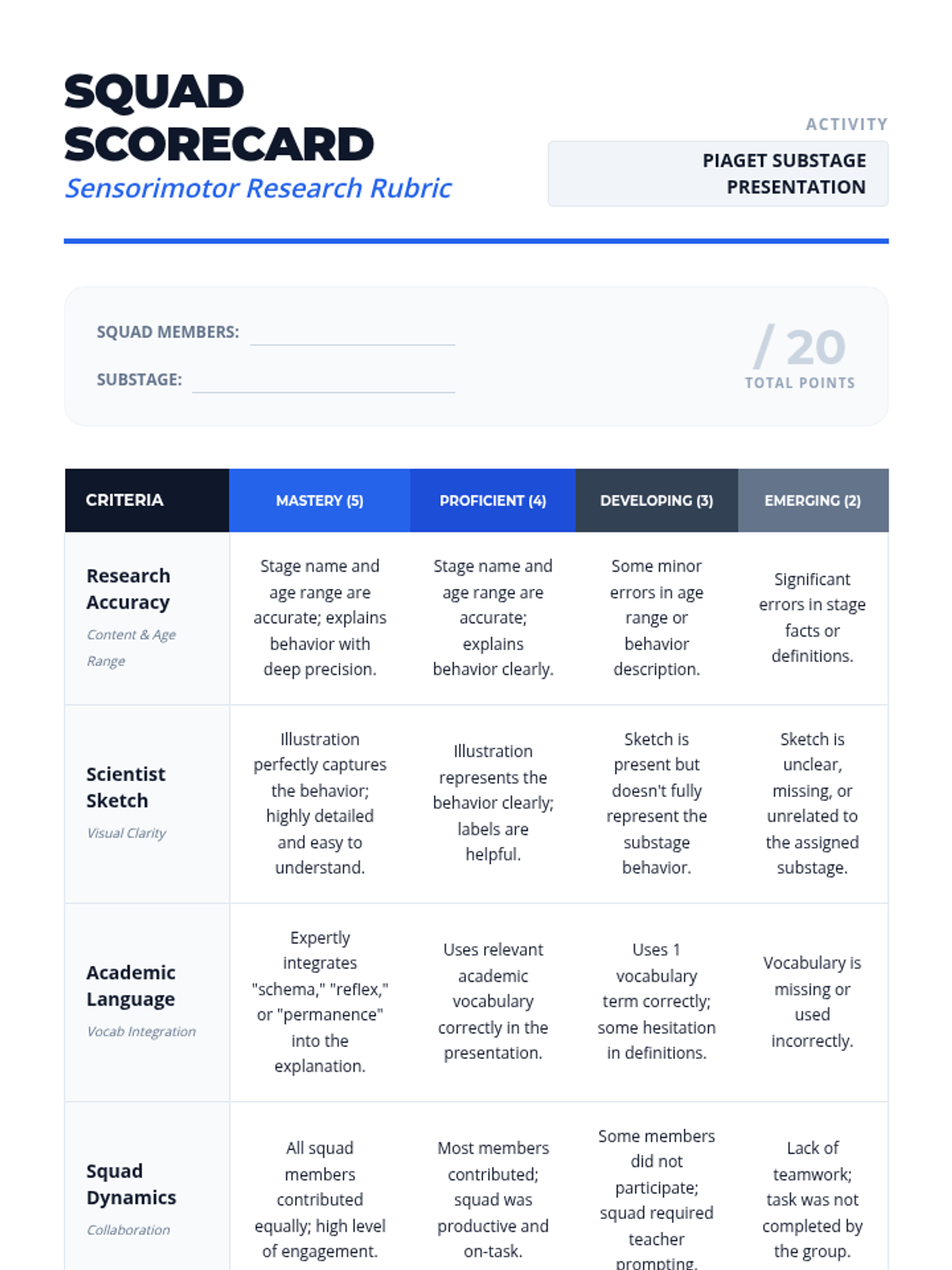
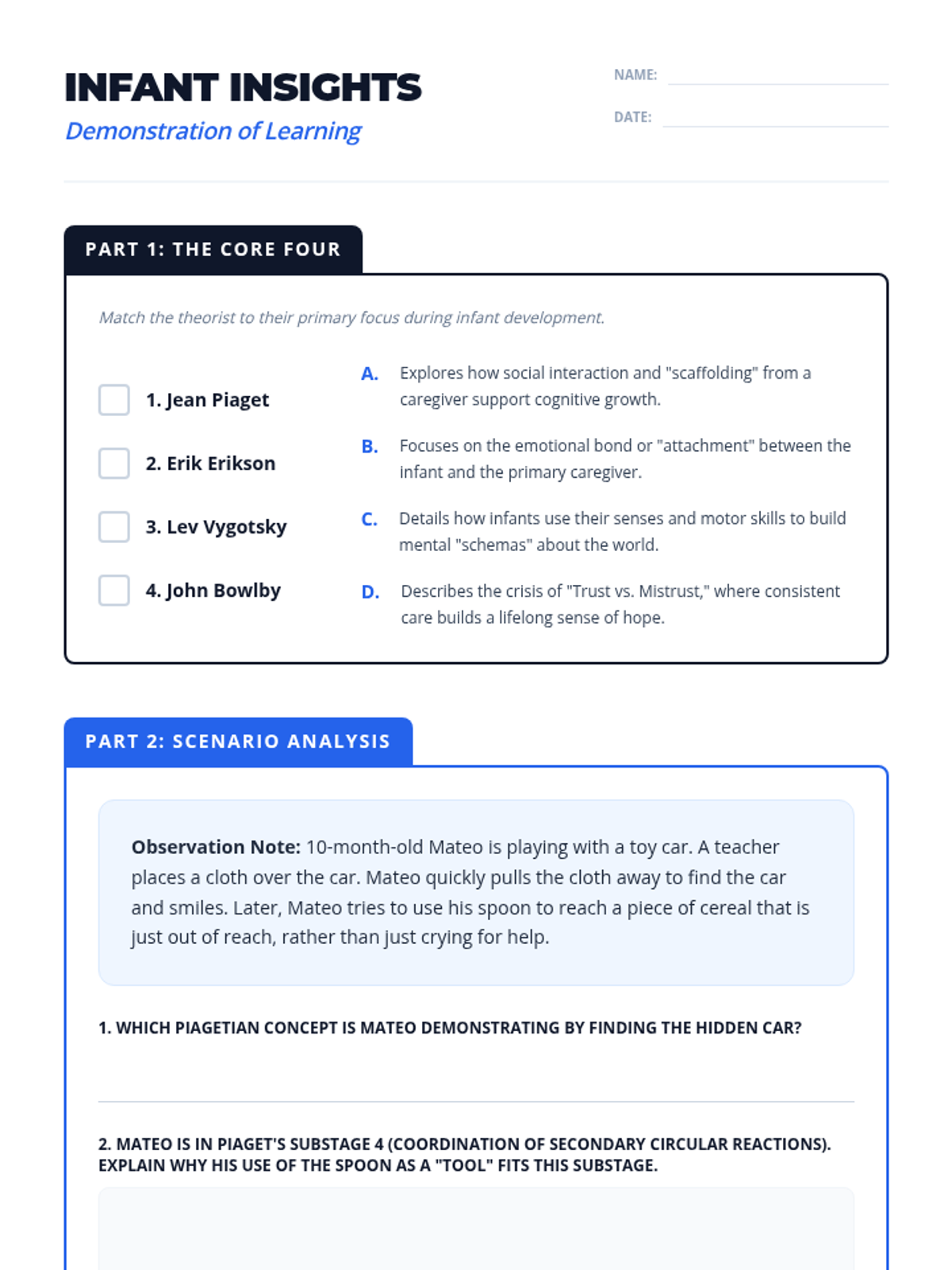
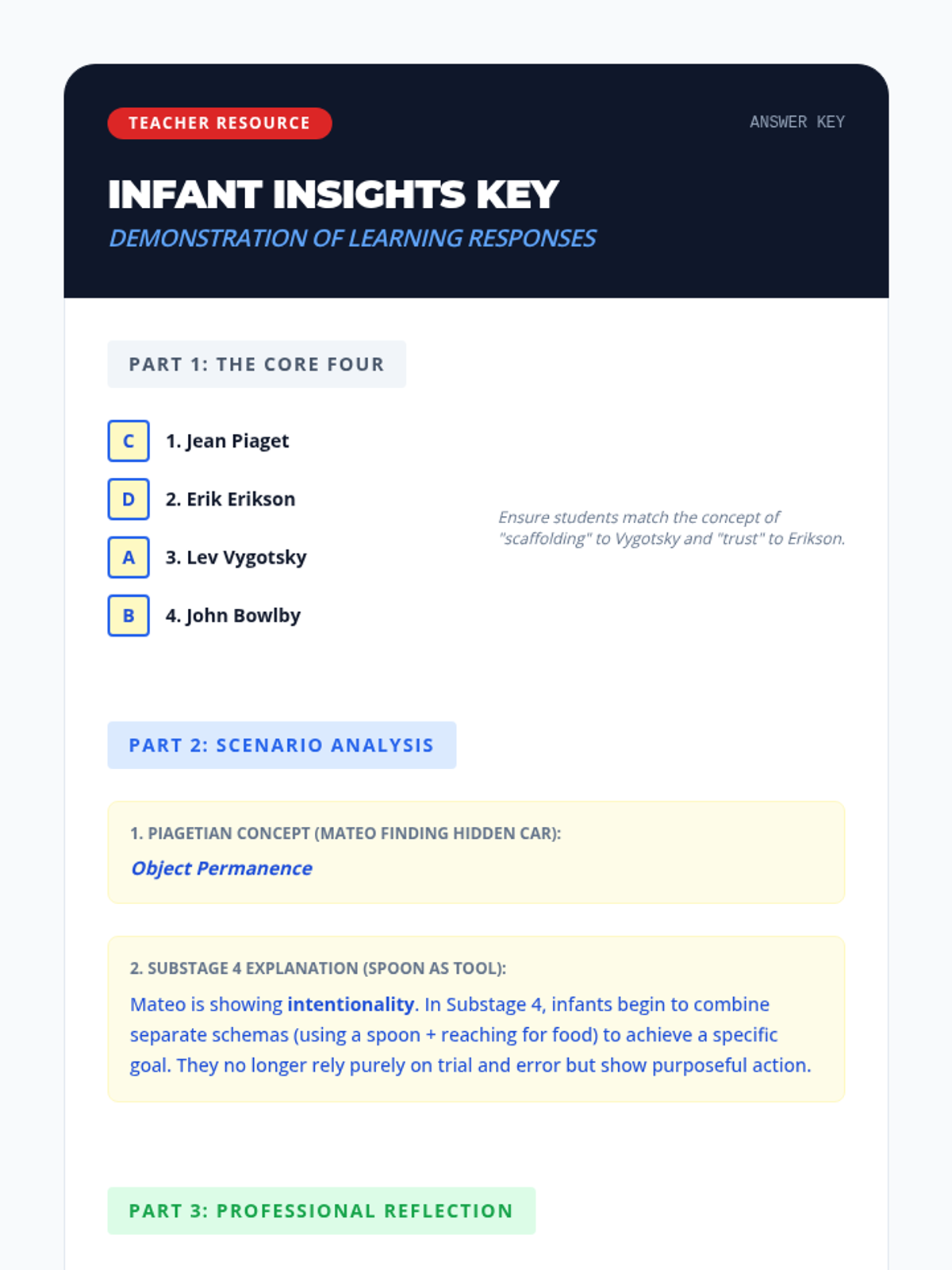
A comprehensive 99-minute lesson exploring child development theorists (Piaget, Erikson, Vygotsky, Bowlby) with a focus on infancy, featuring collaborative research and guided note-taking.
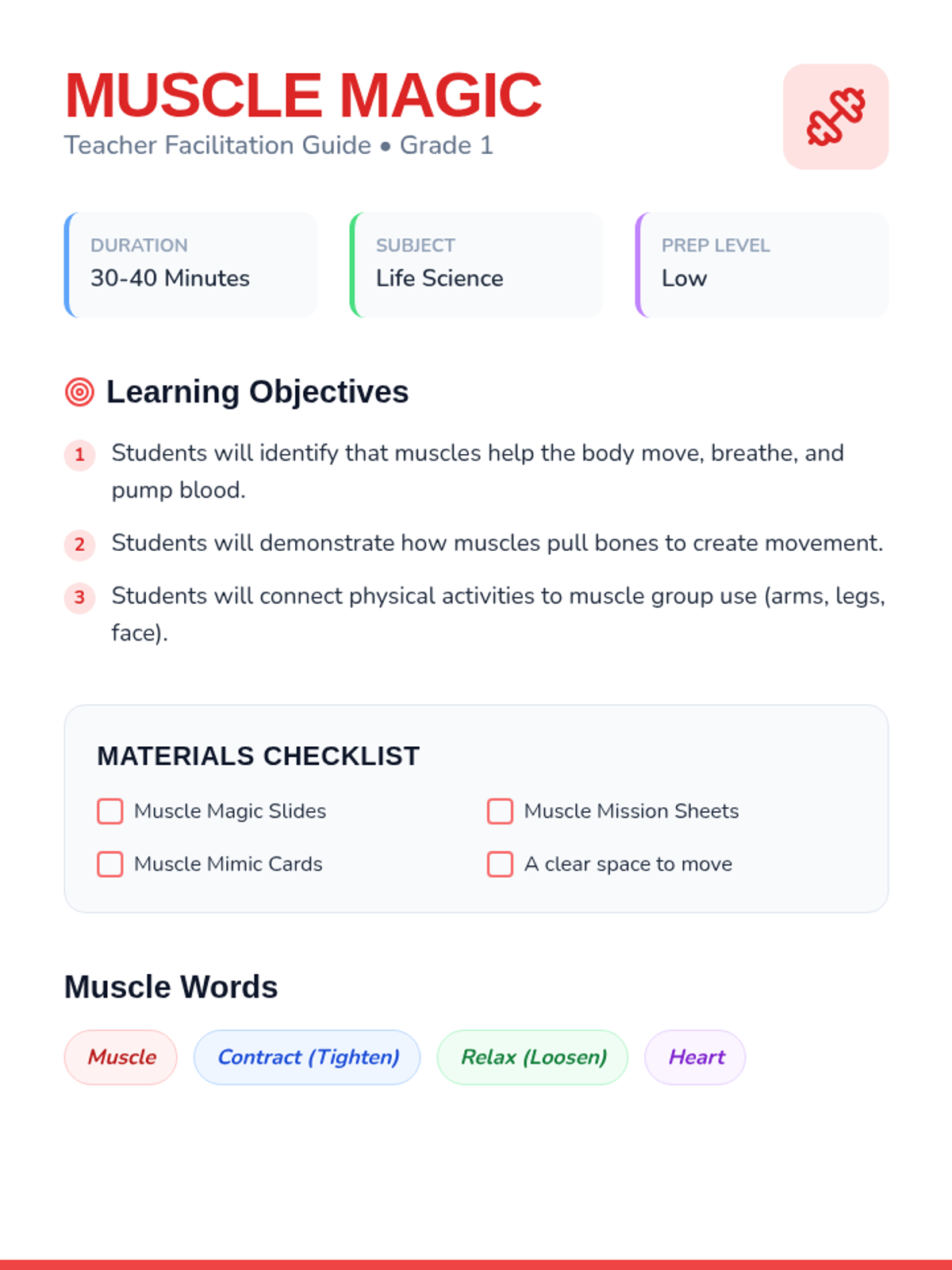
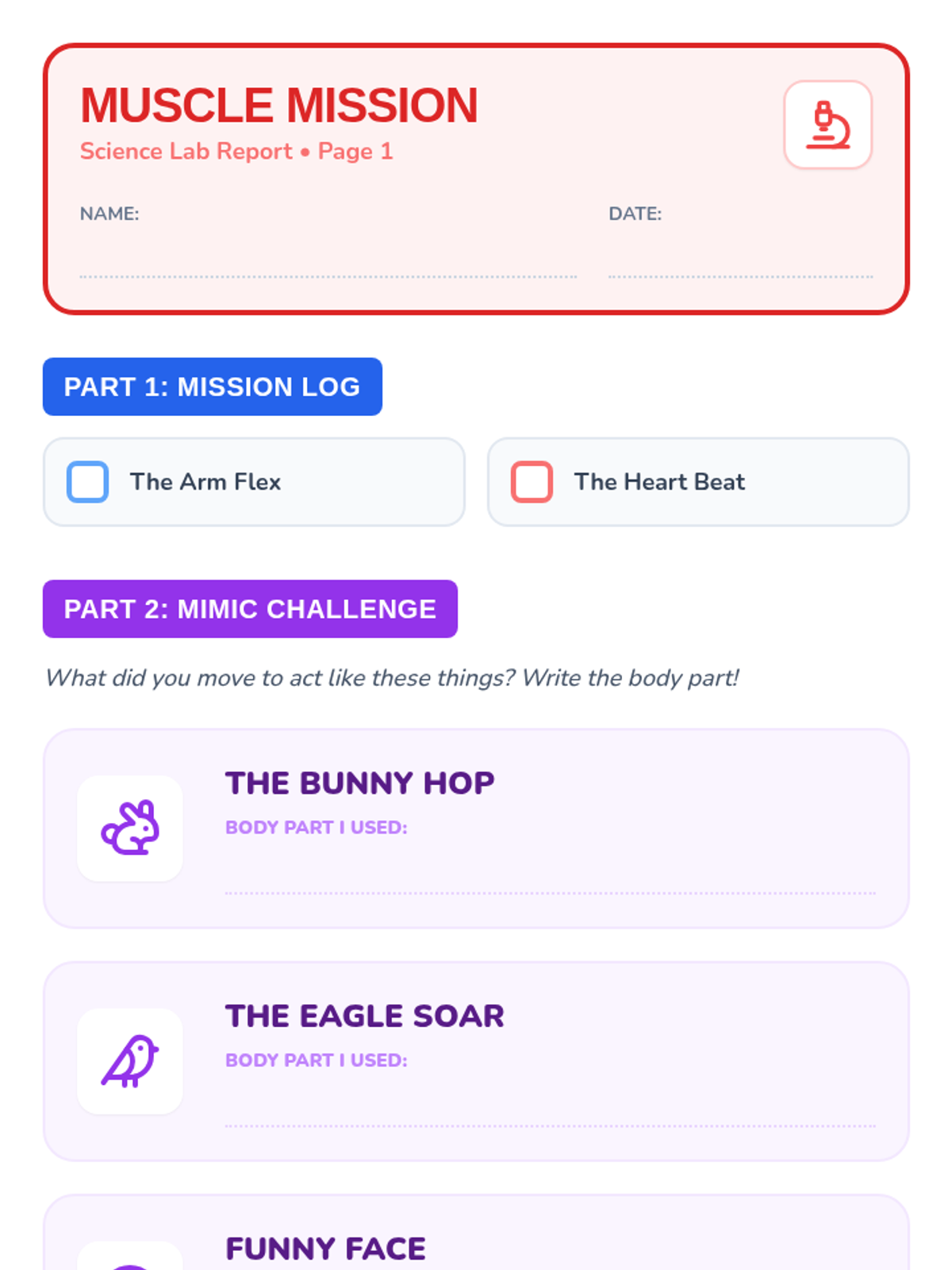
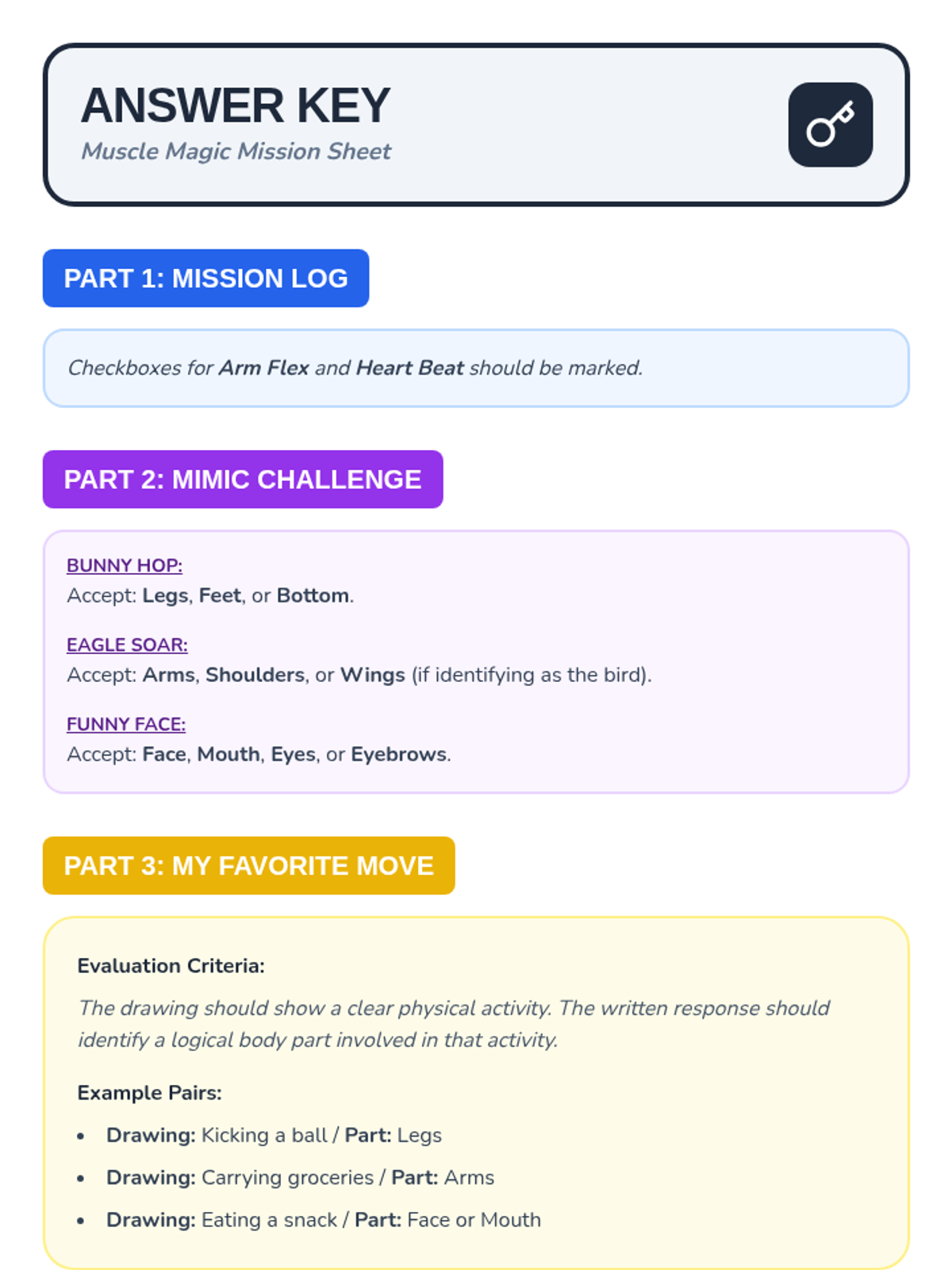
An introductory lesson for 1st graders to explore how muscles help our bodies move, including a hands-on activity and a simple labeling worksheet.
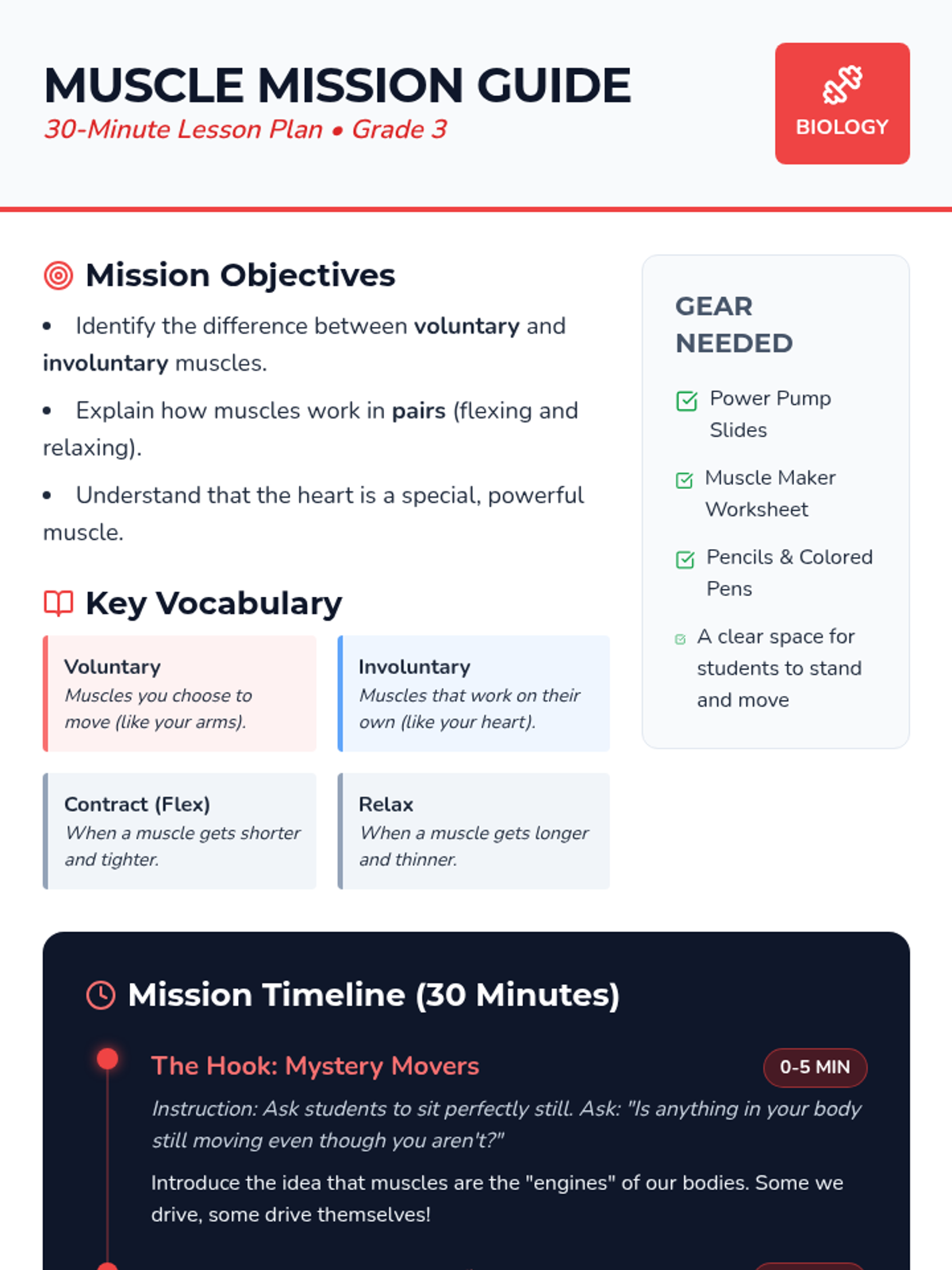
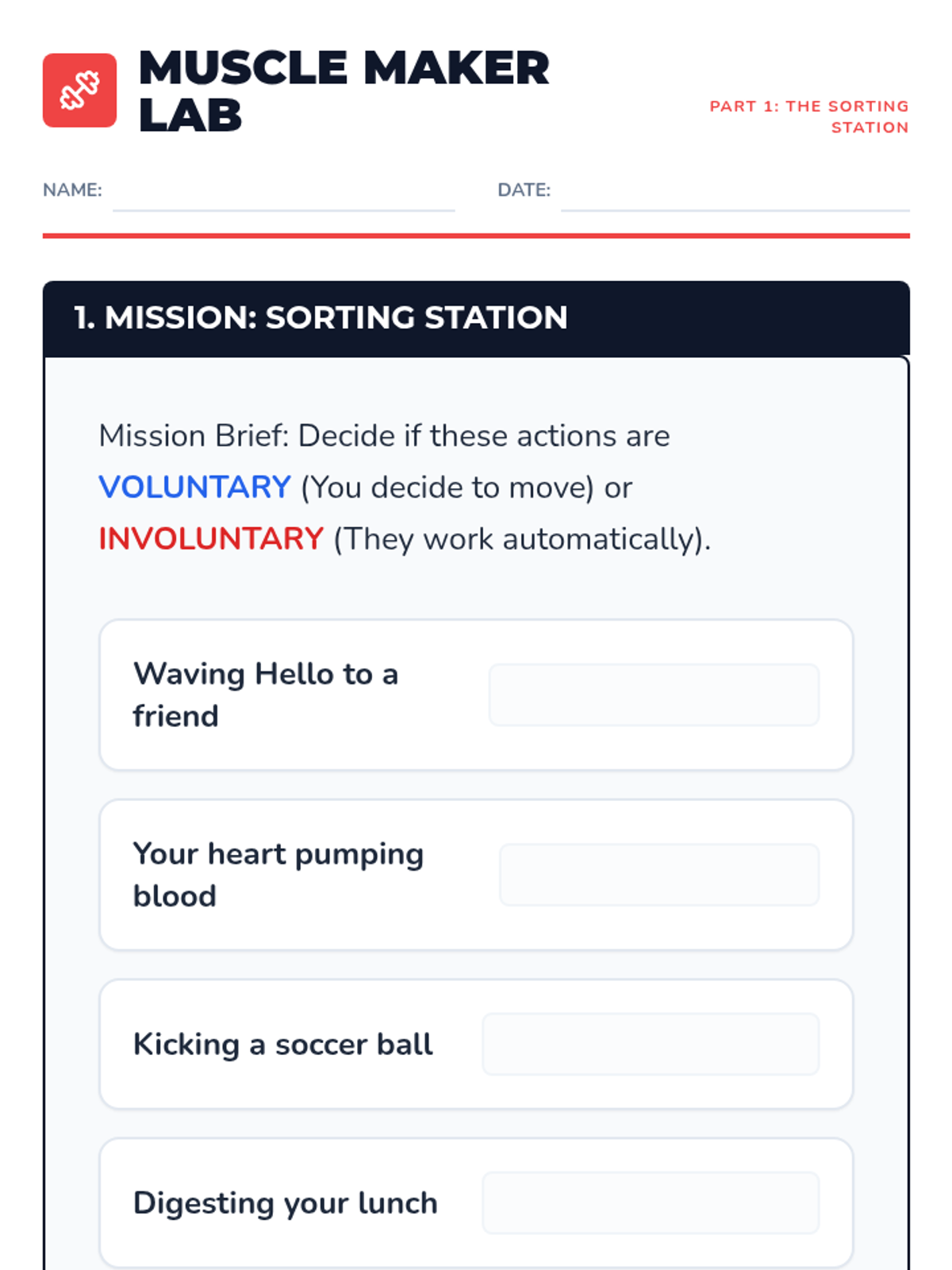
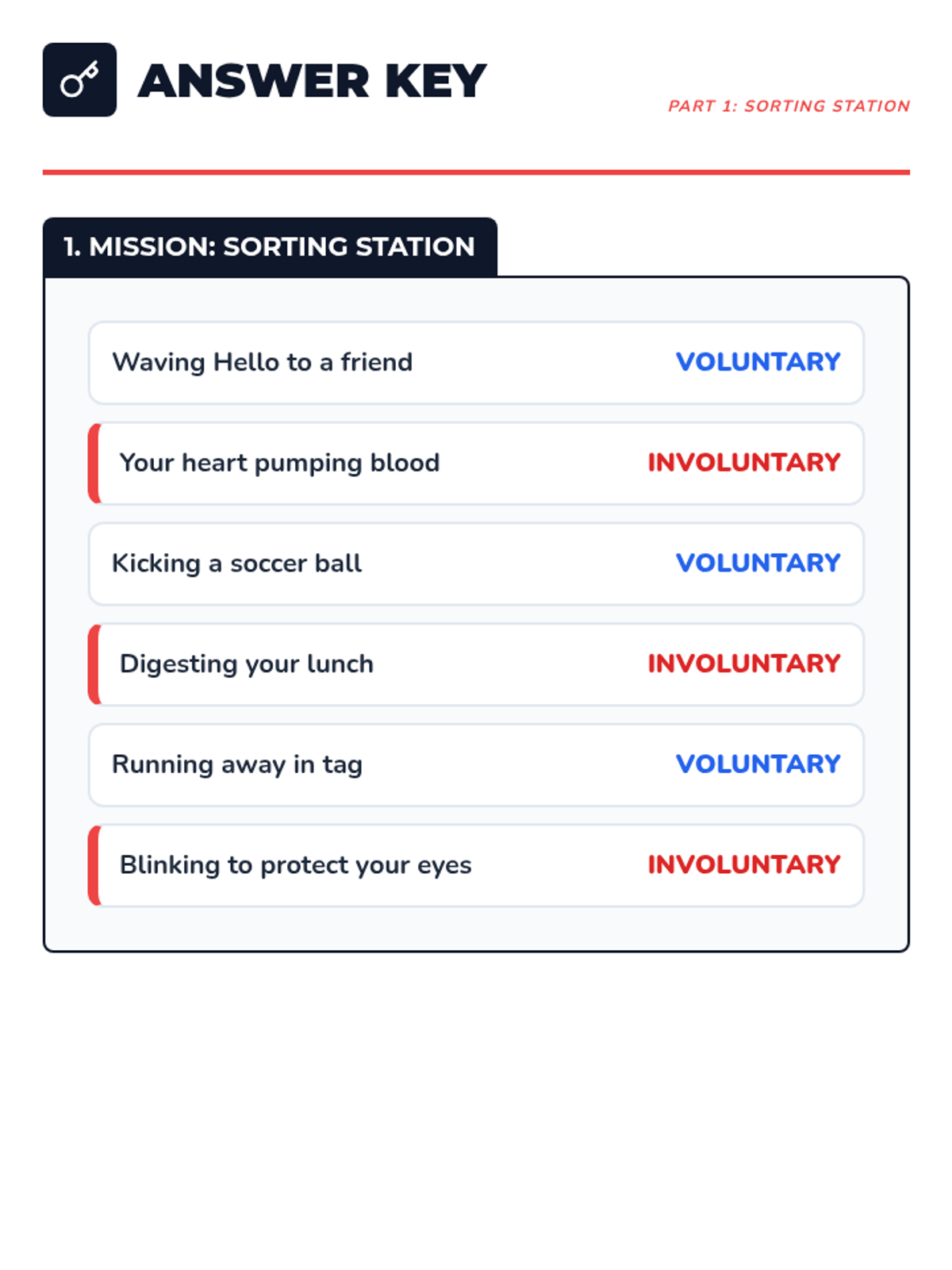
A fast-paced, interactive 30-minute introduction to the muscular system for 3rd graders, focusing on voluntary versus involuntary muscles and how they work in pairs.
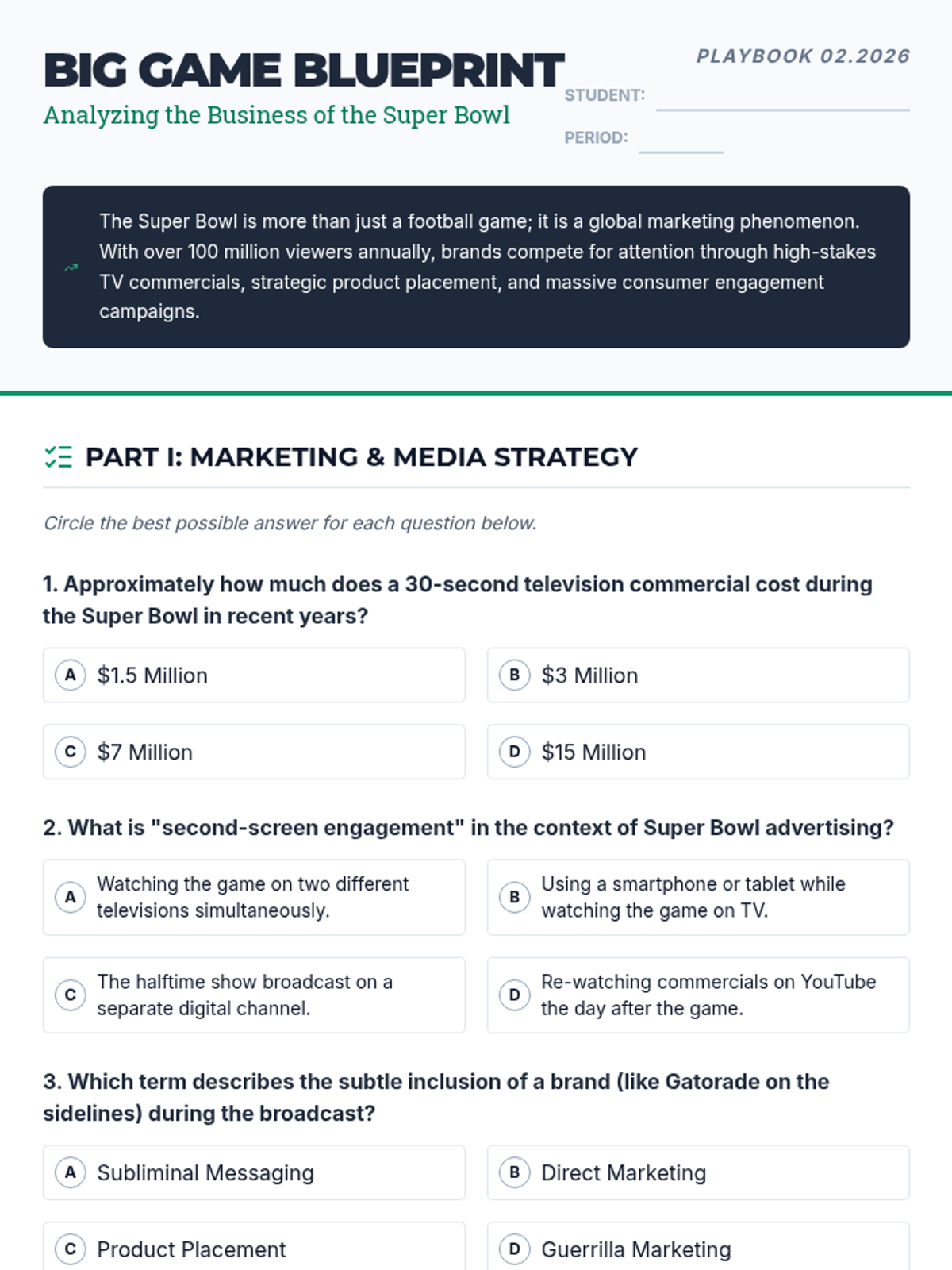
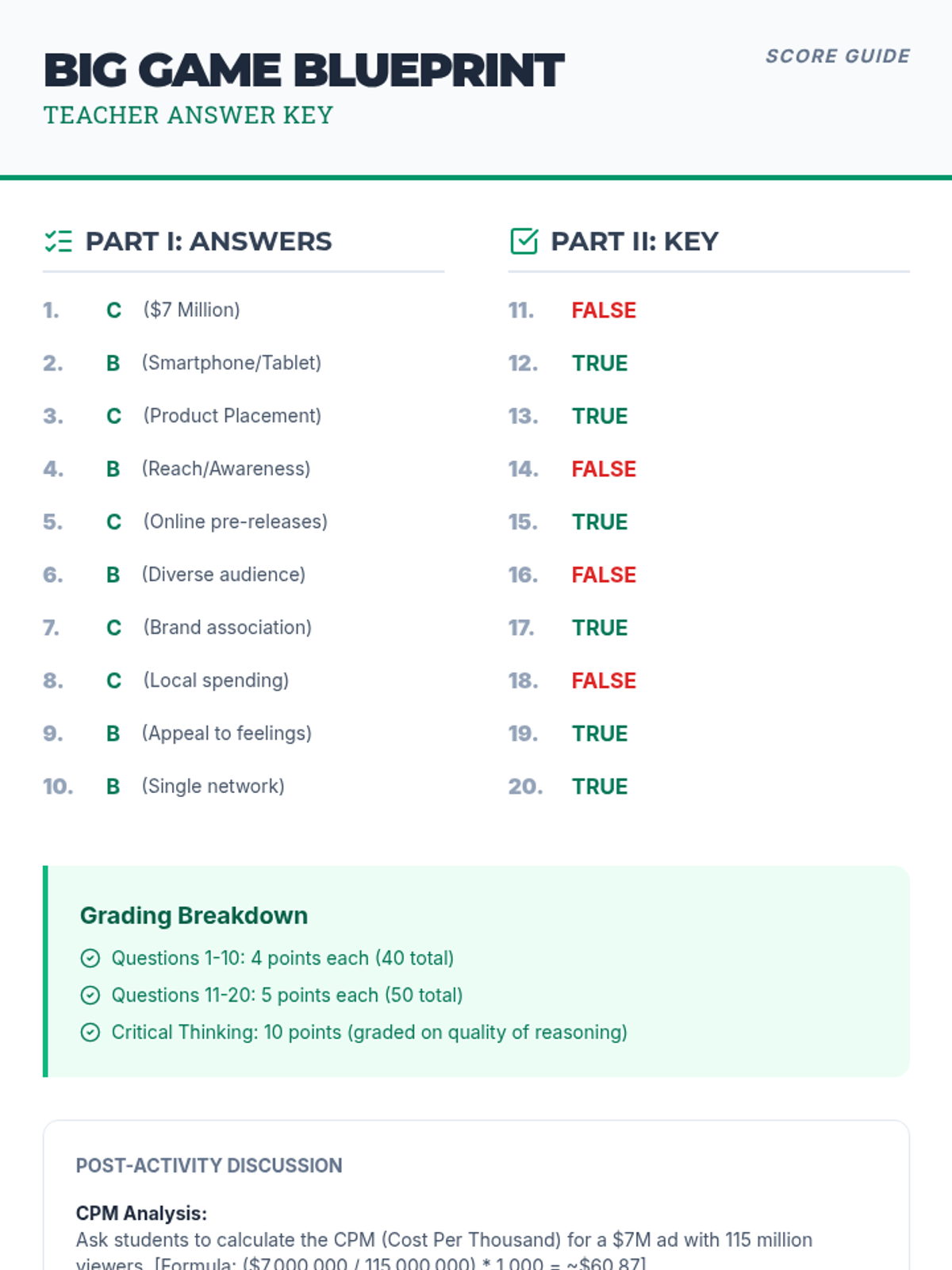
This lesson explores the complex business ecosystem of the Super Bowl, focusing on advertising costs, consumer behavior, brand strategy, and economic impact. Students will analyze how the biggest sporting event in the U.S. functions as a multi-billion dollar marketing machine.
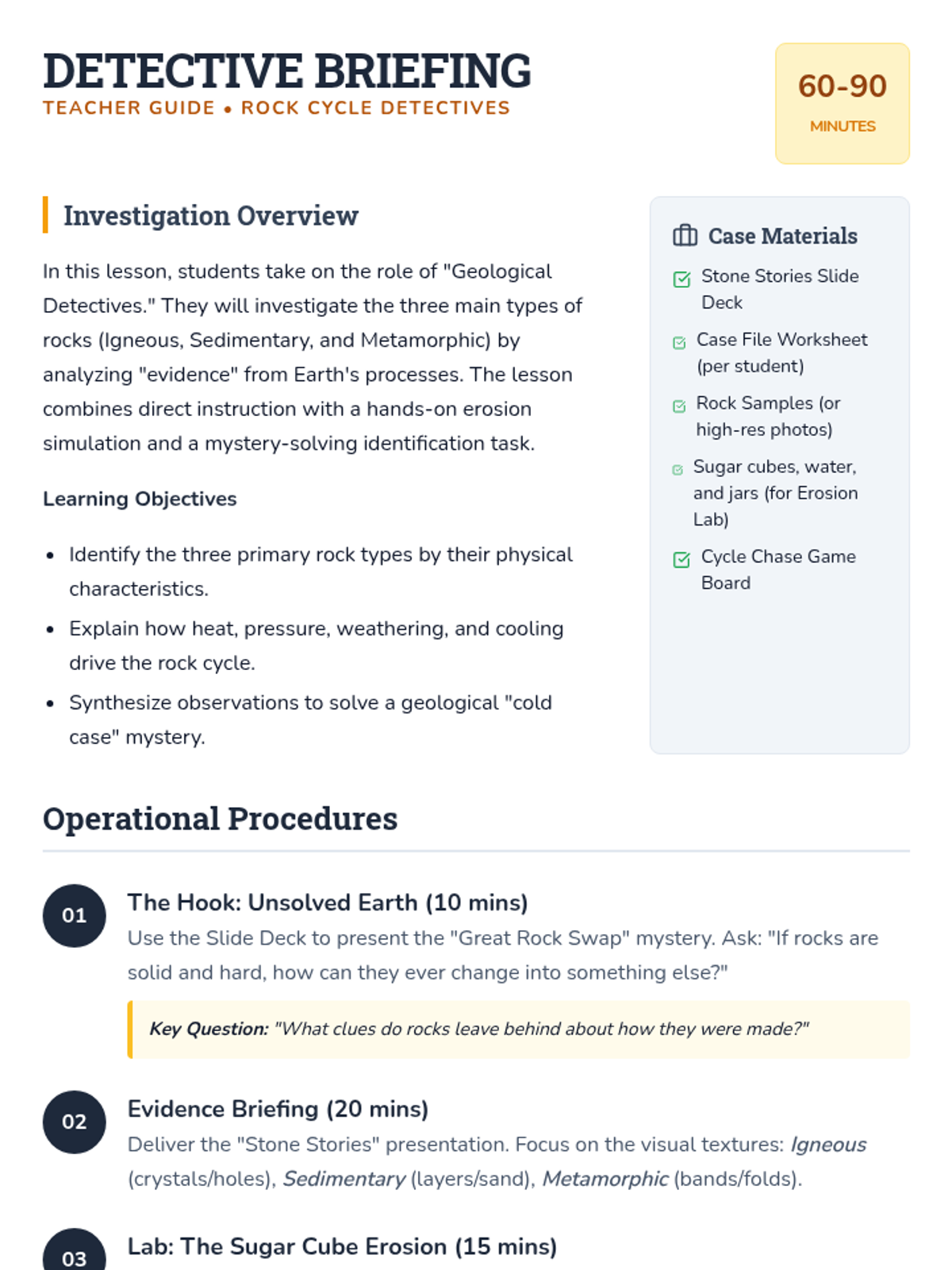
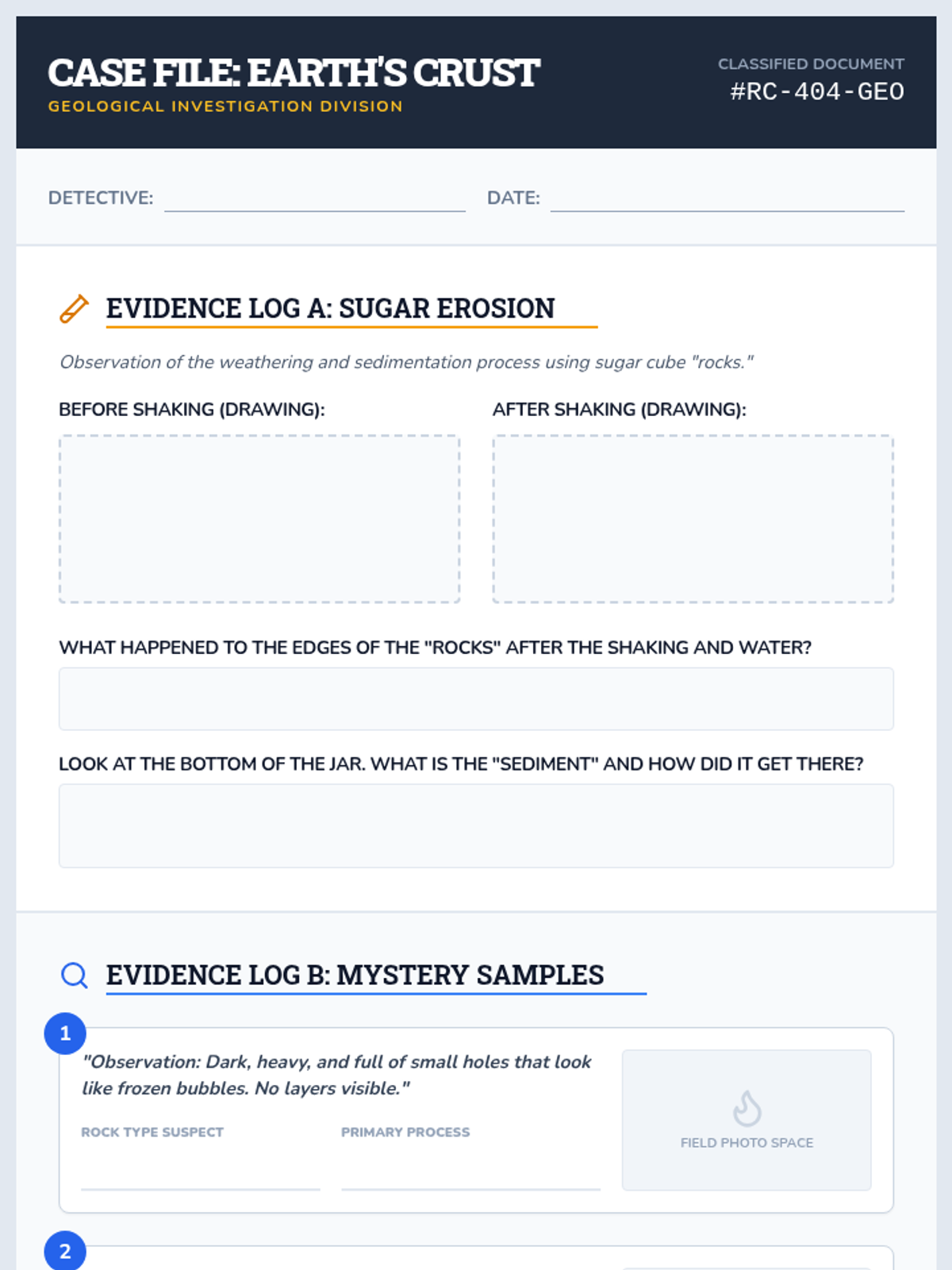
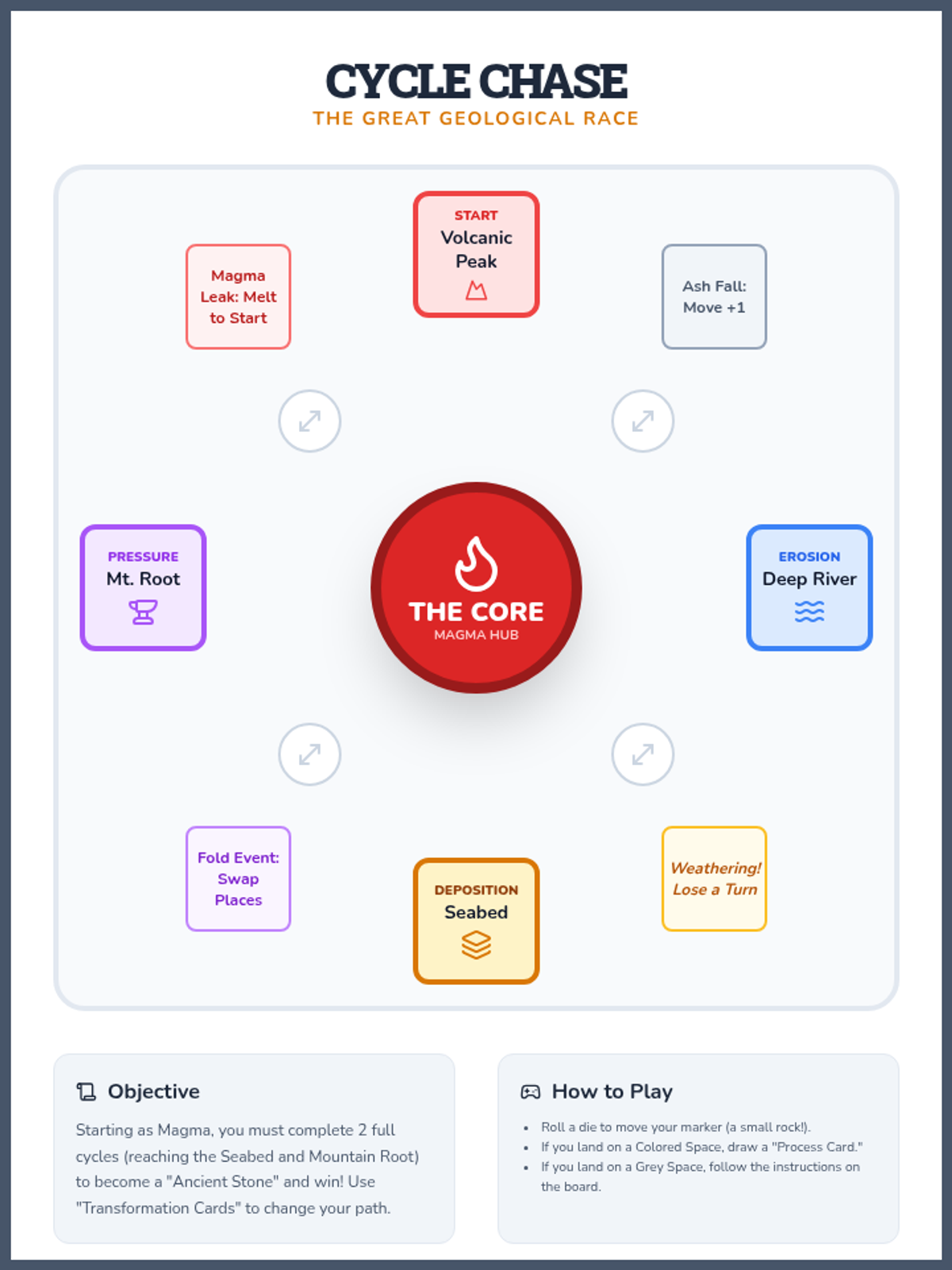
Students become geological detectives to investigate how rocks change over time through heat, pressure, and erosion, culminating in a mystery-solving identification challenge.
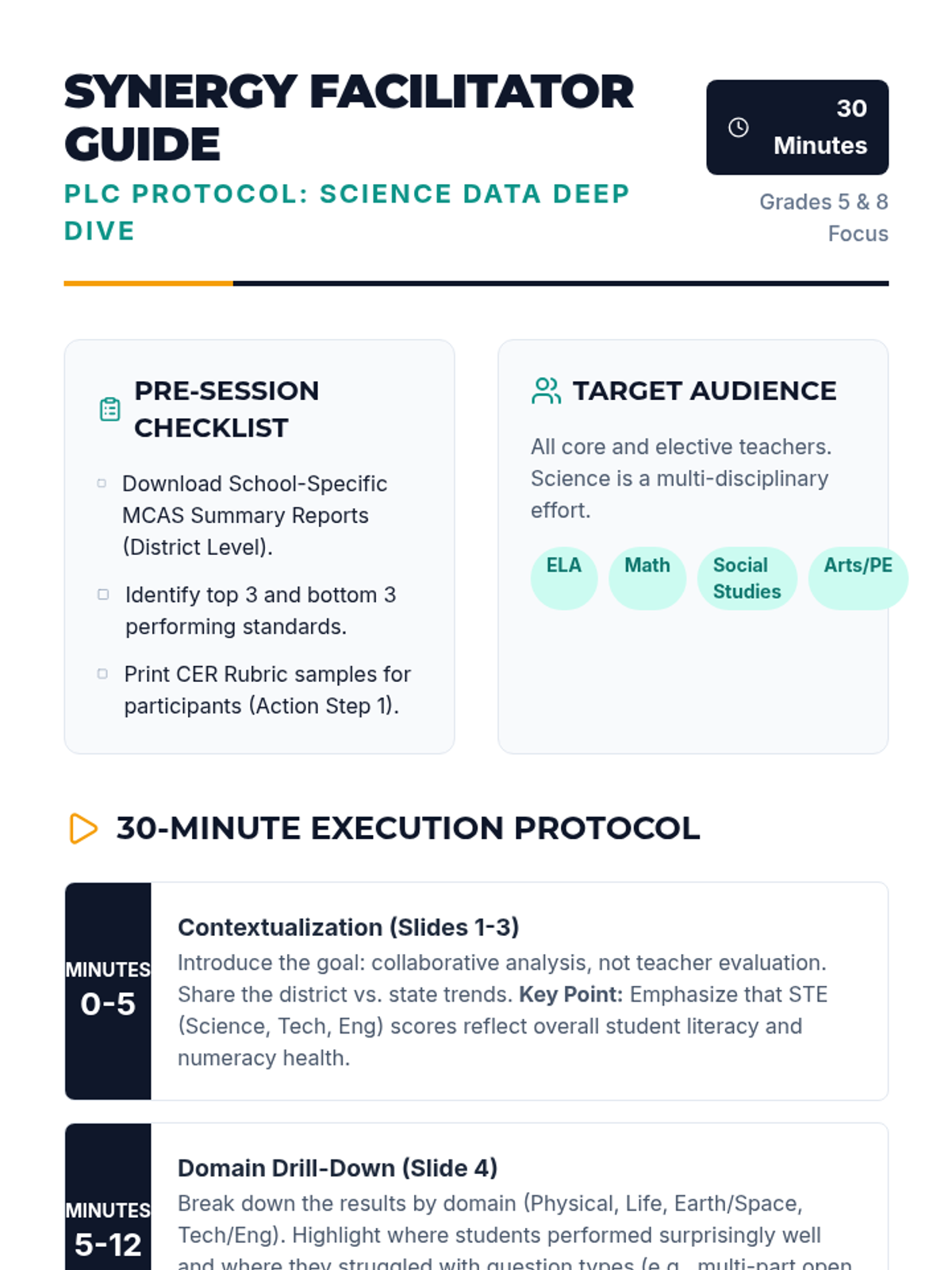
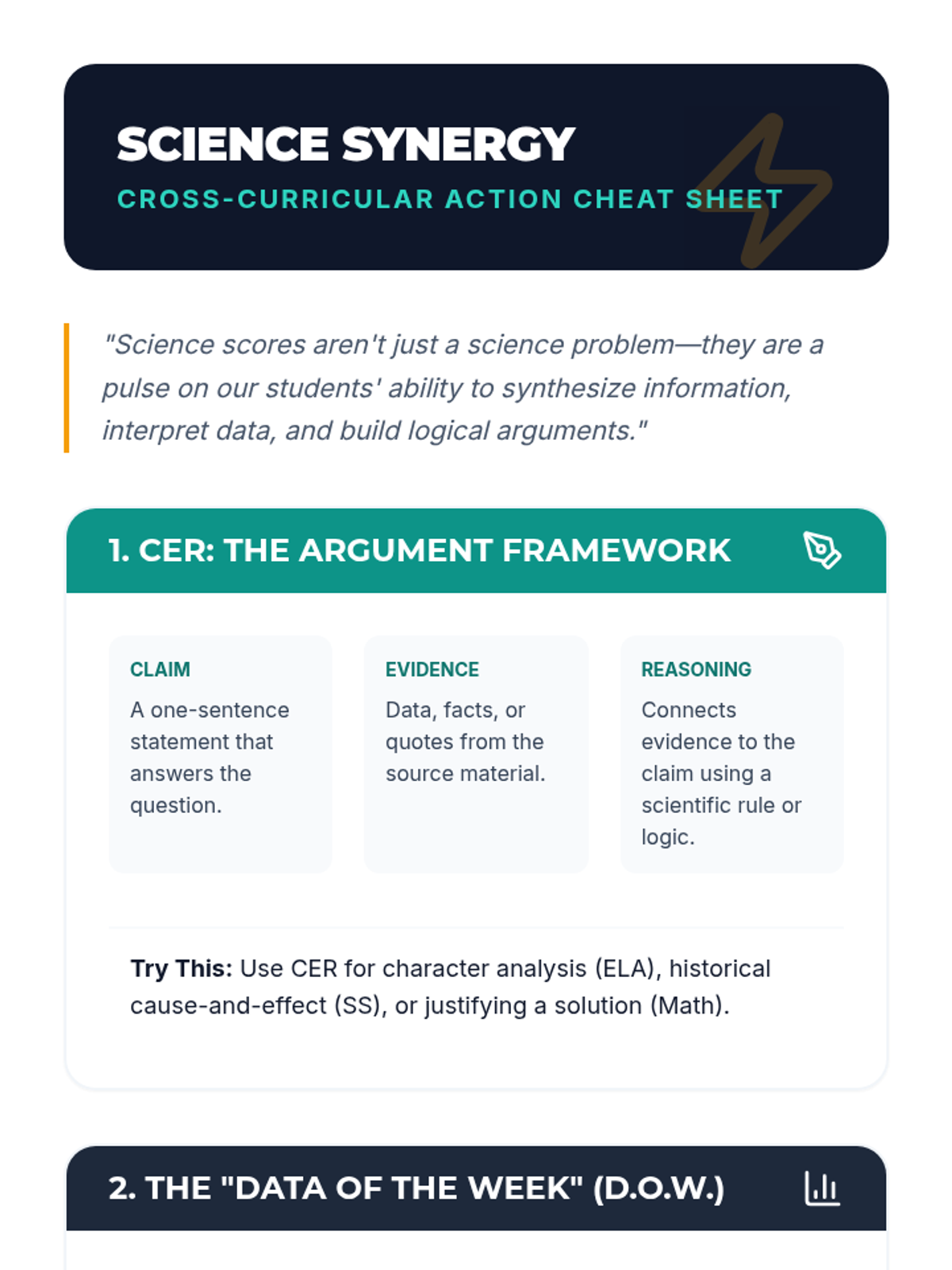
A 30-minute PLC session designed to analyze Grade 5 and 8 MCAS Science results, identifying cross-curricular opportunities for improvement through data-driven discussion and actionable teaching strategies.
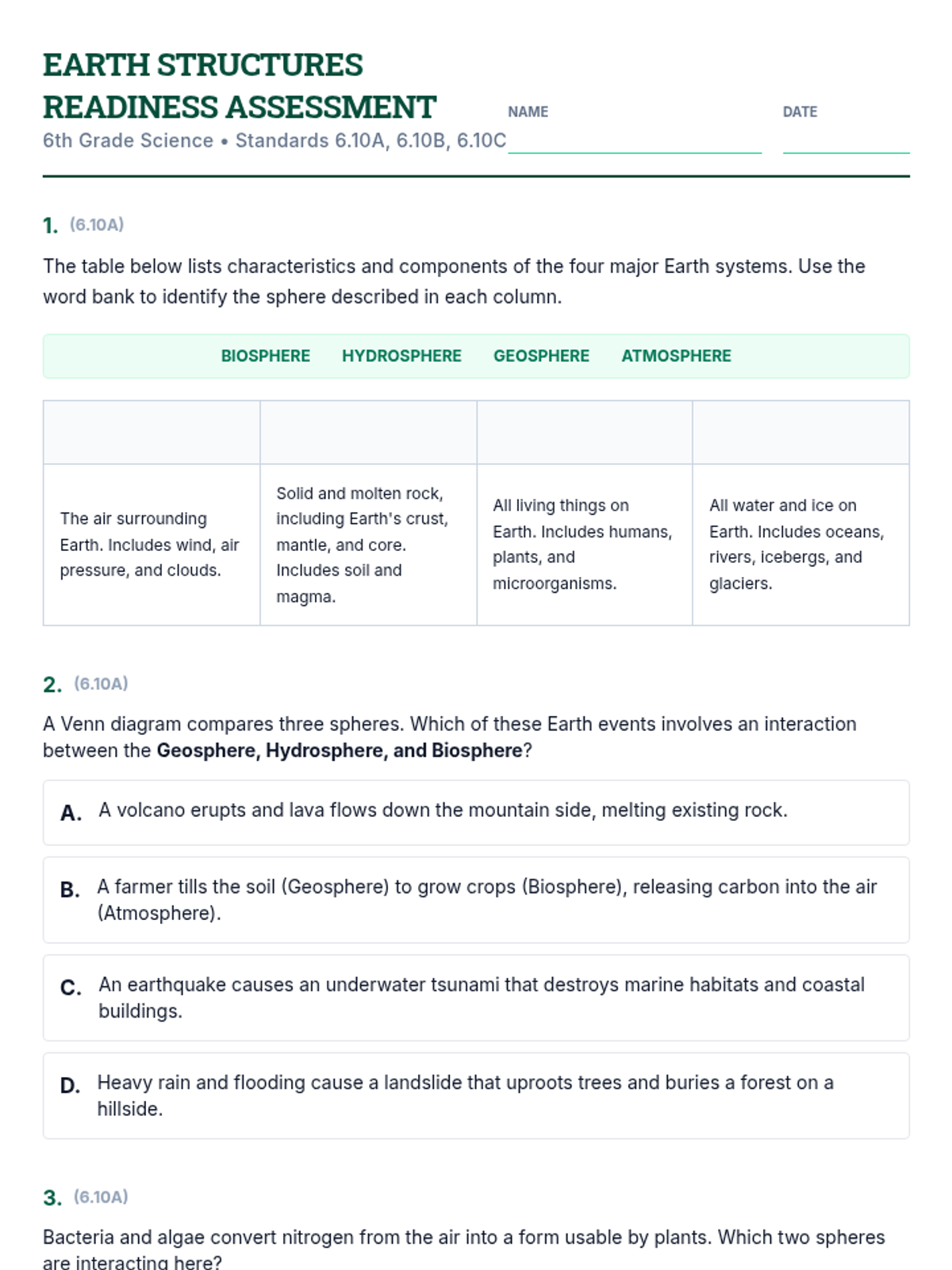
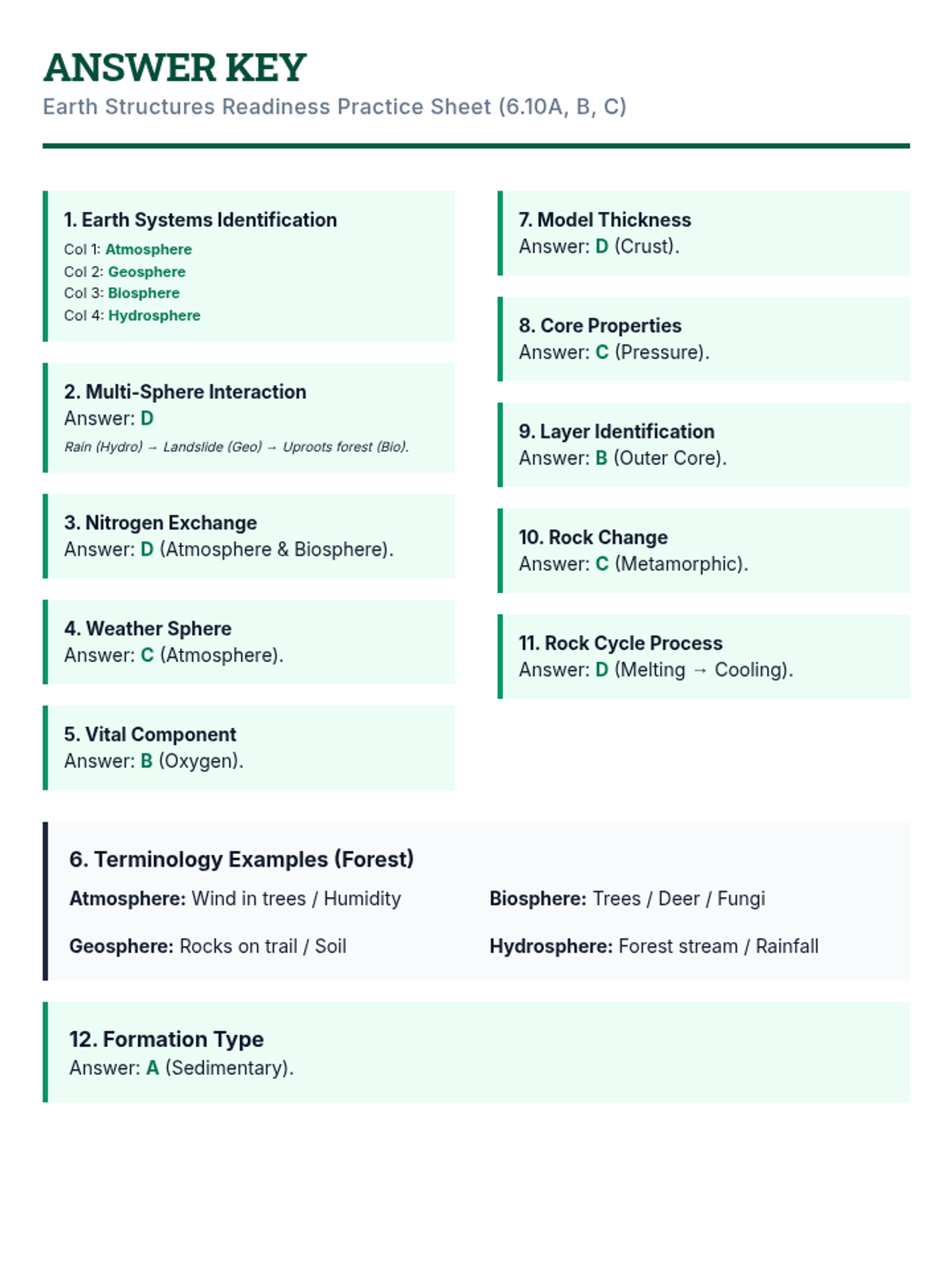
A movement-based scavenger hunt where students solve 'planetary mysteries' covering Earth's spheres, internal layers, and the rock cycle. This lesson includes task cards and a structured recording sheet for 6th grade science review.
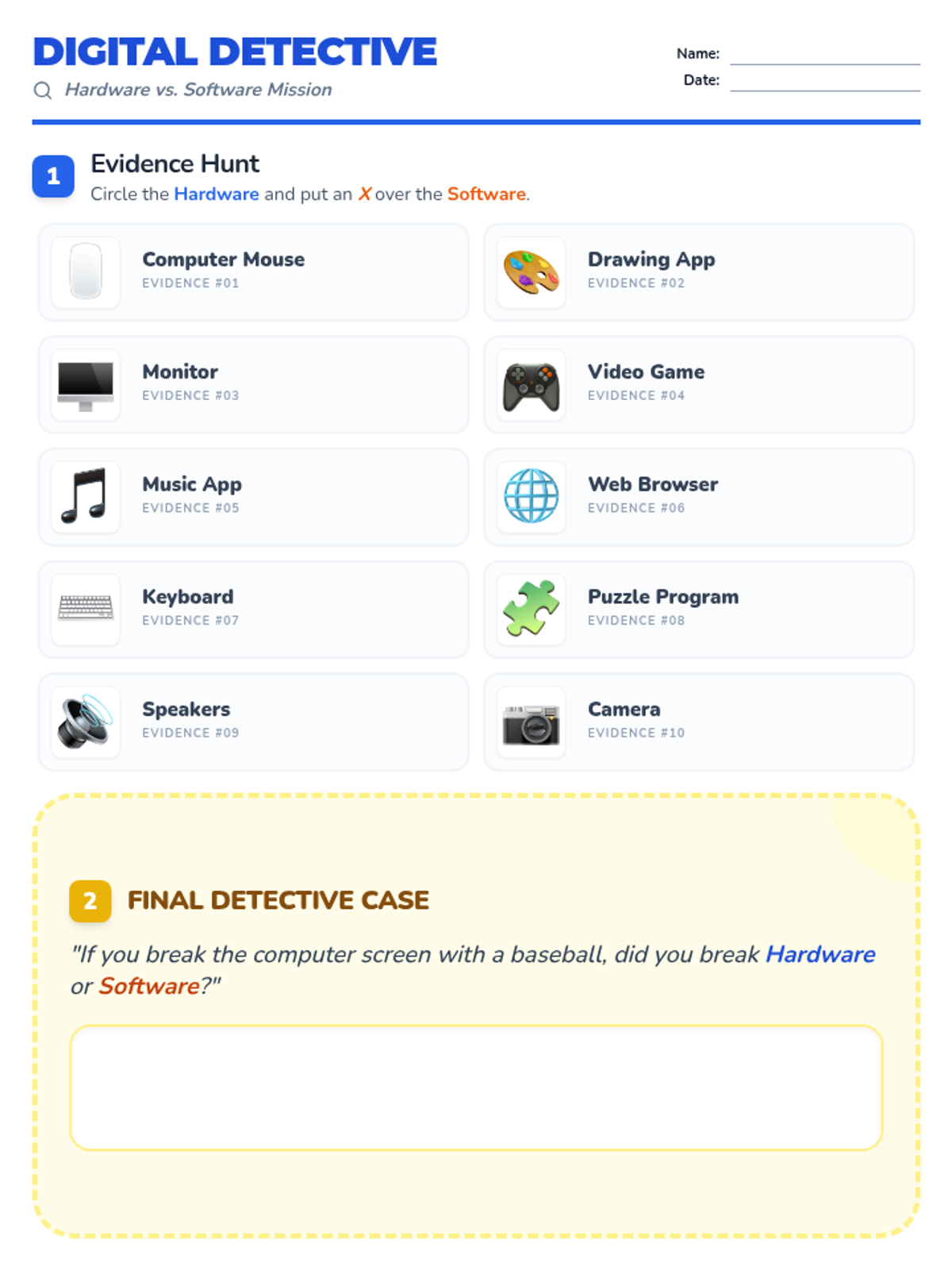
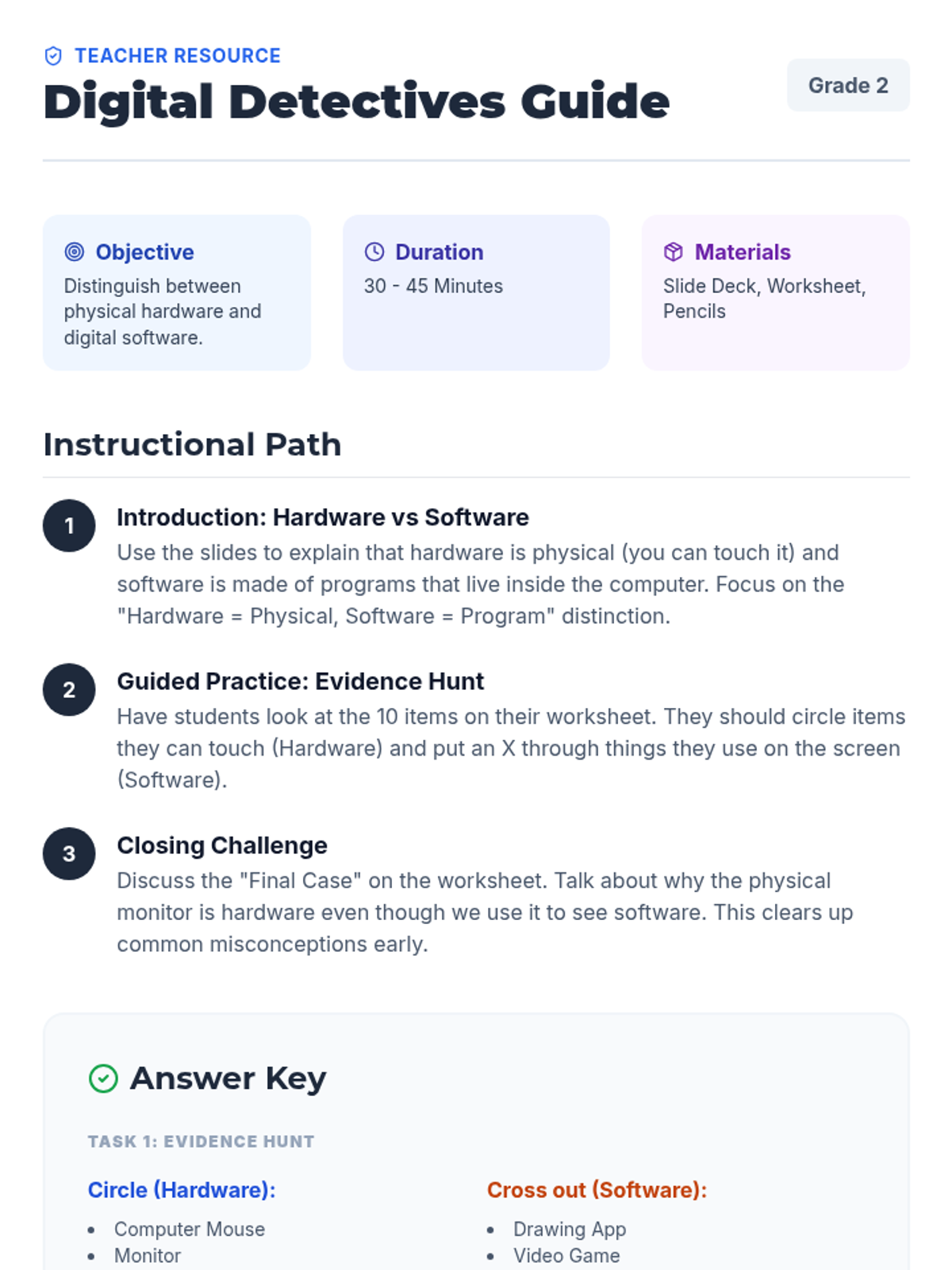
A fun, introductory lesson for second graders to distinguish between physical computer hardware and the digital programs that make them run. Students will explore examples of both through visual aids and hands-on classification.
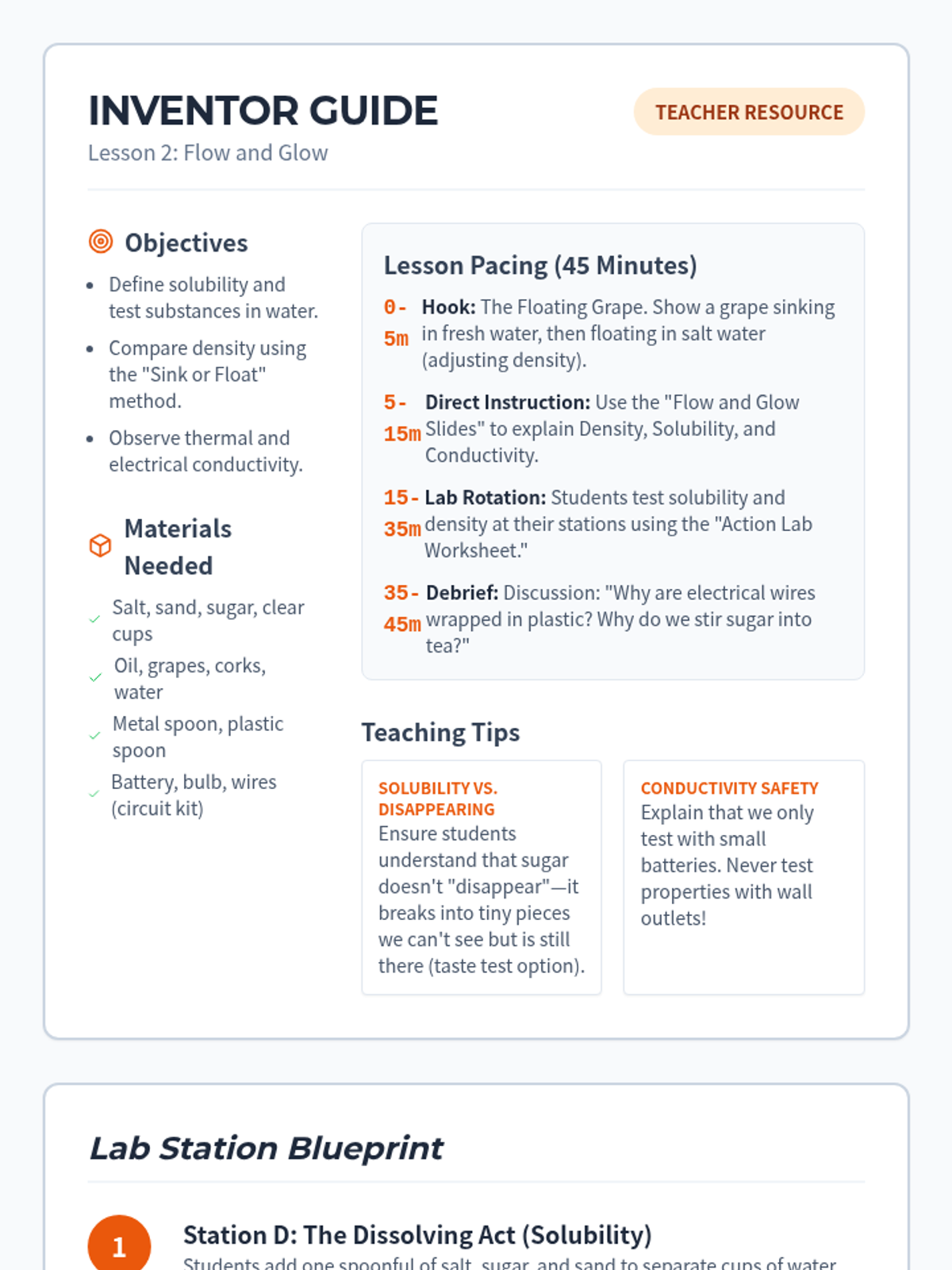
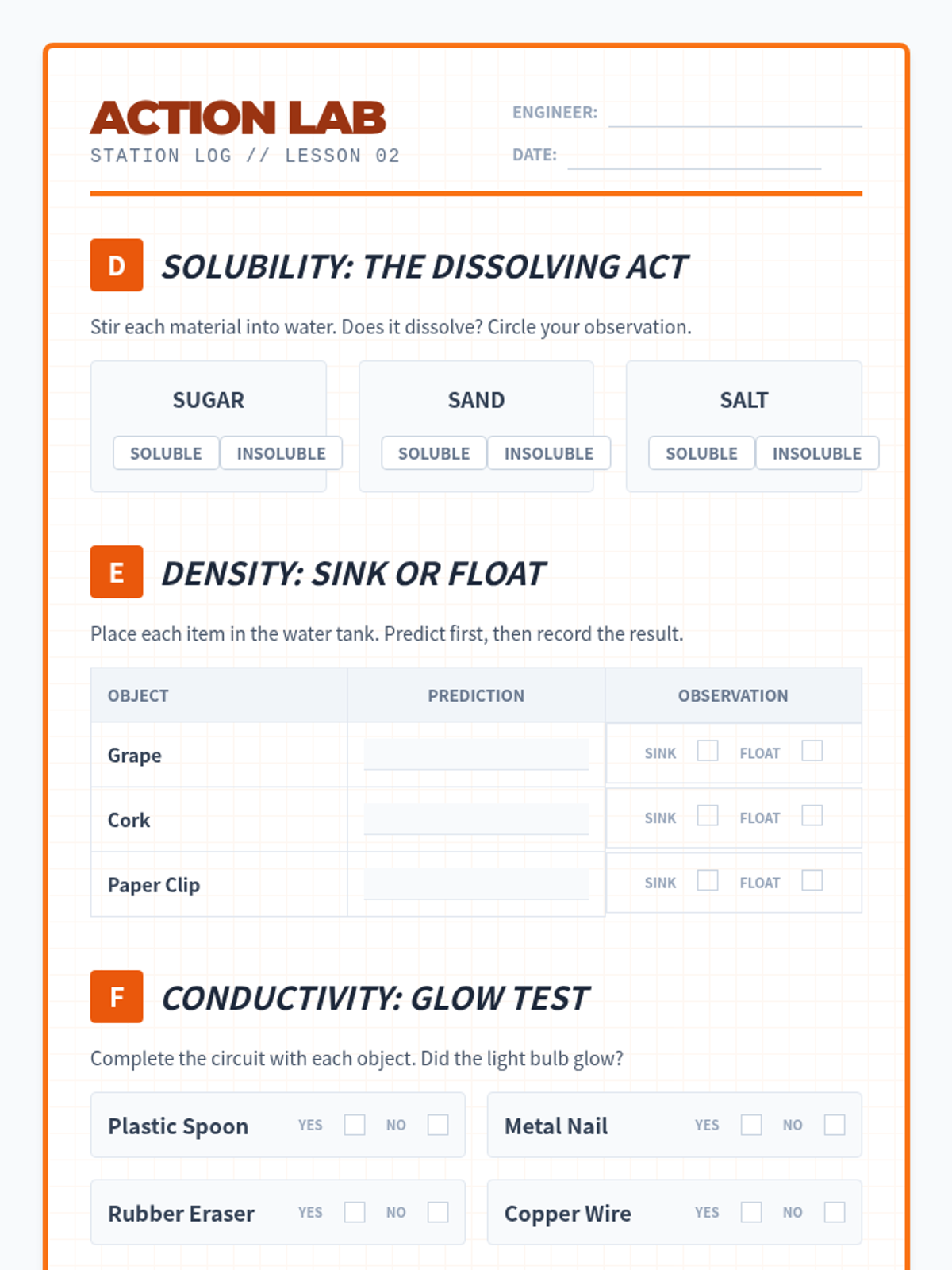
Students explore how materials interact with water and energy, focusing on solubility, density, and the conduction of heat and electricity.
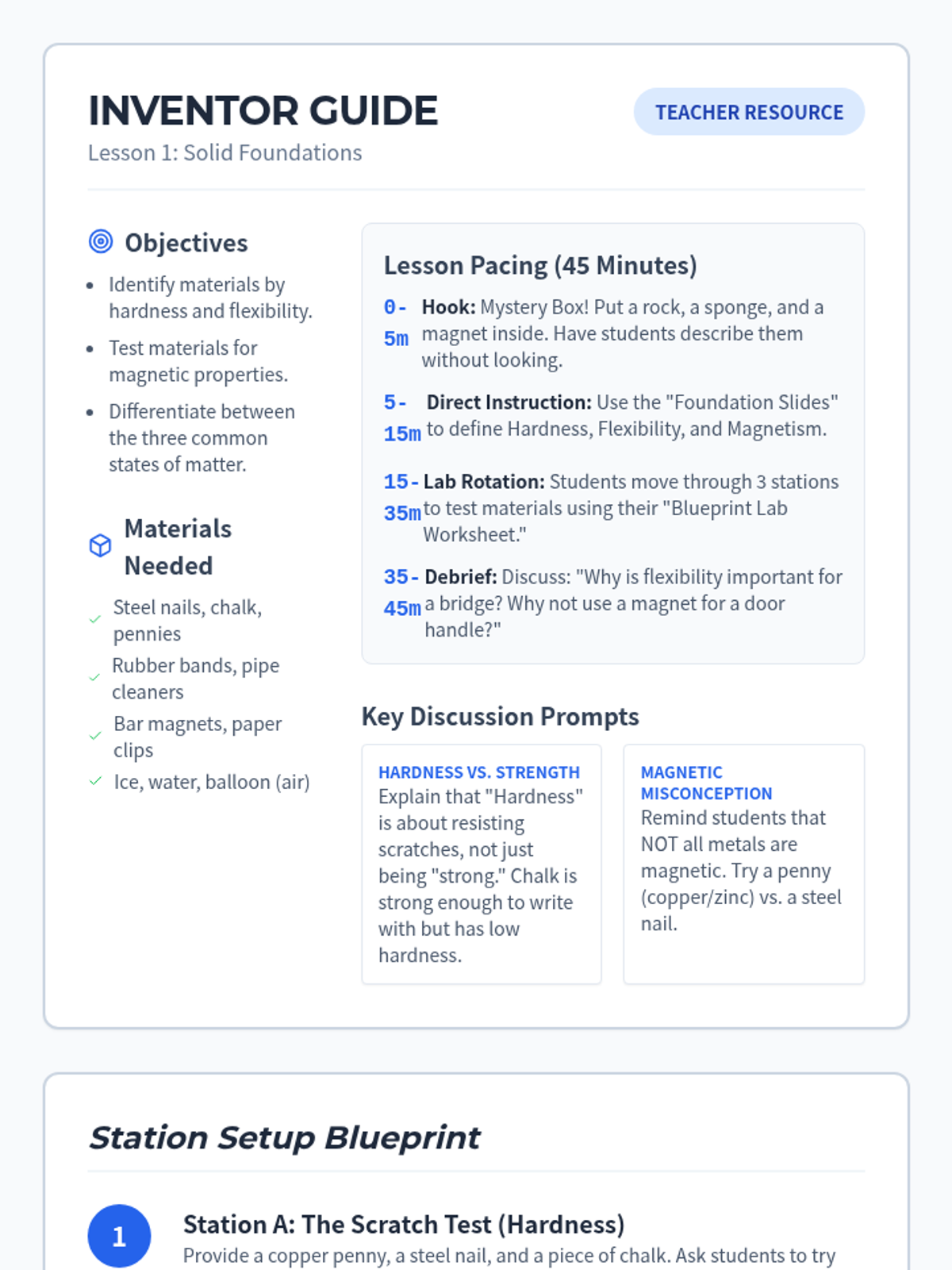
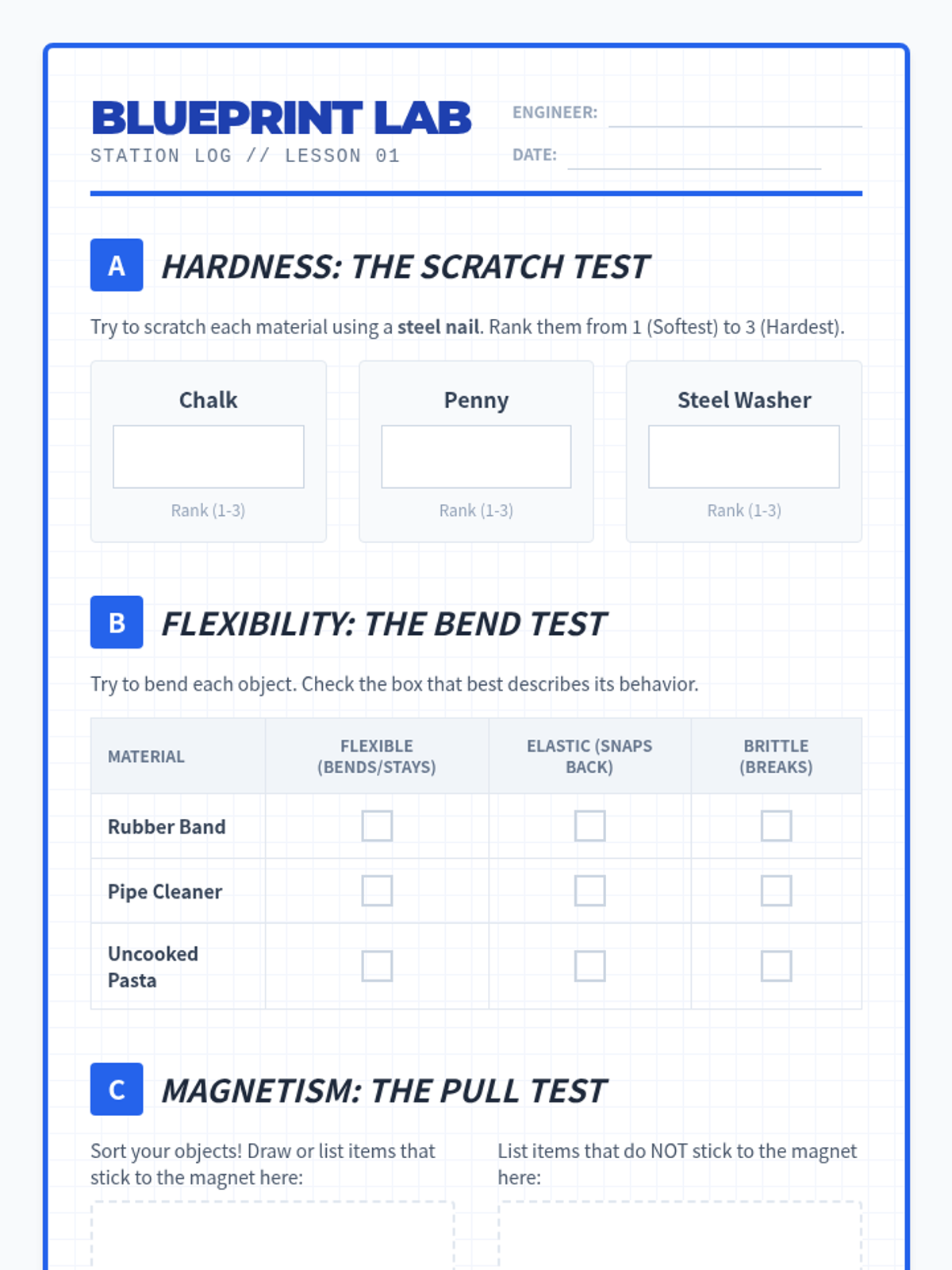
Students investigate the physical properties of solid objects, including hardness, flexibility, magnetism, and how states of matter define a material's initial form.
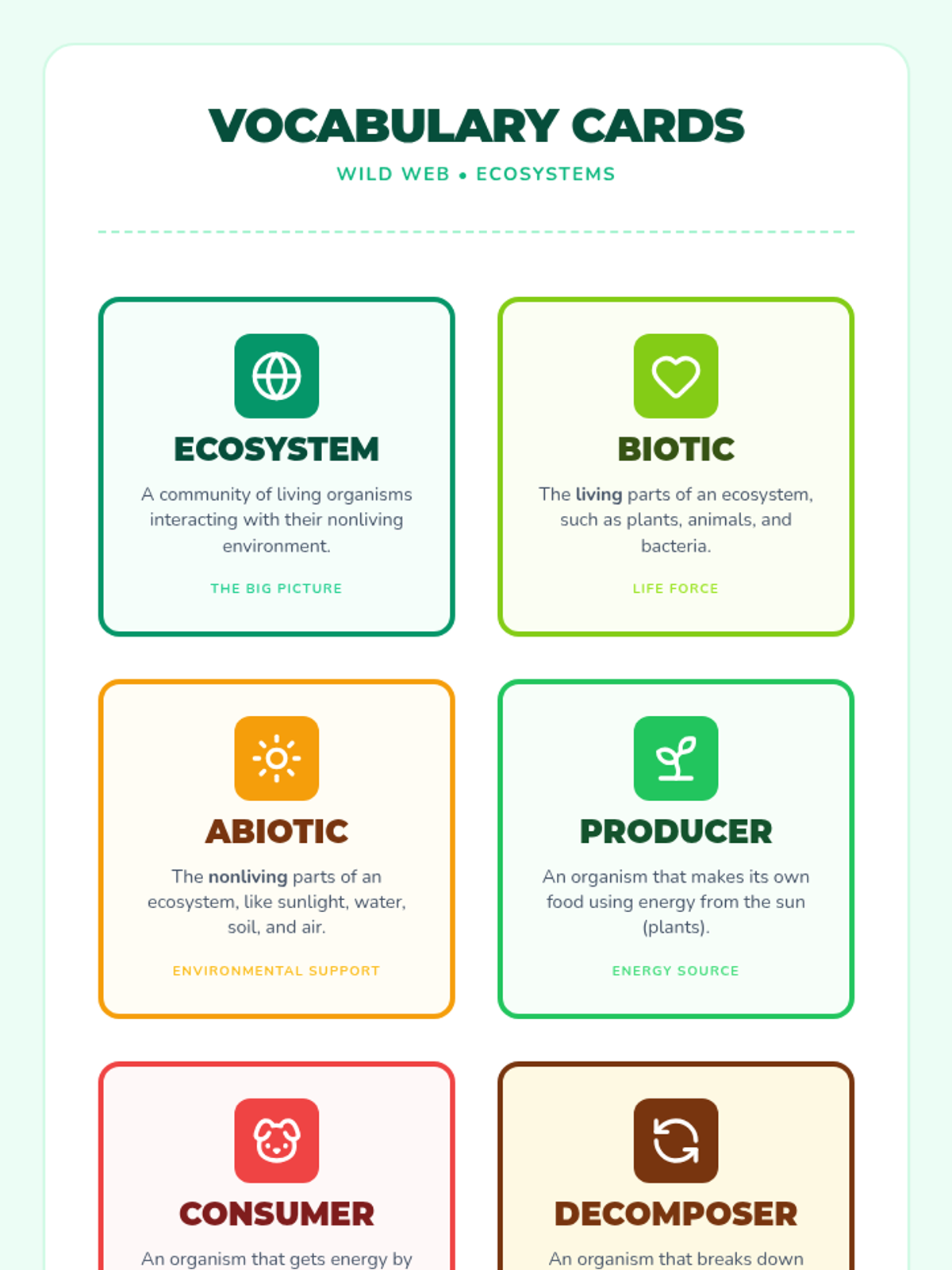
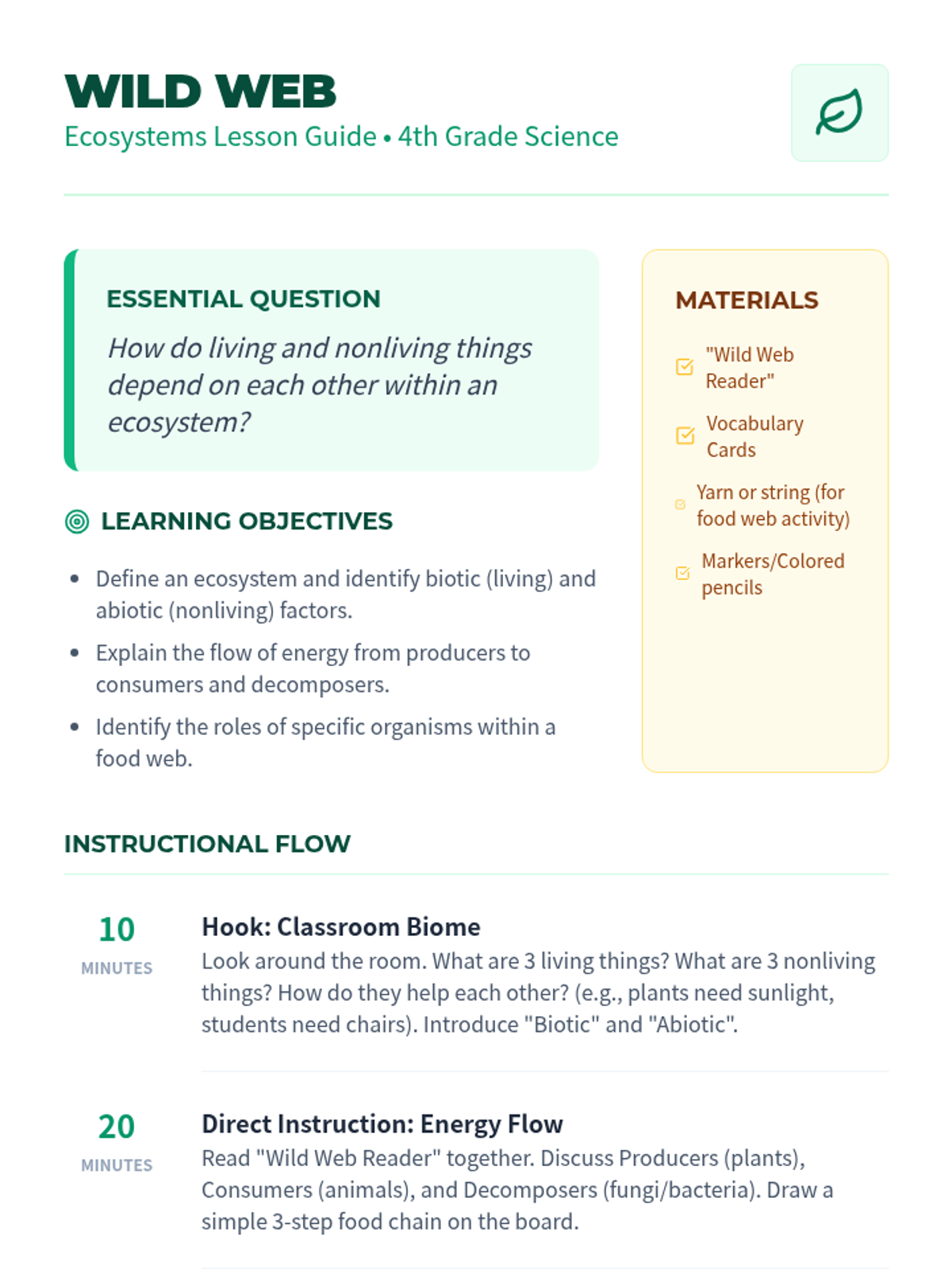
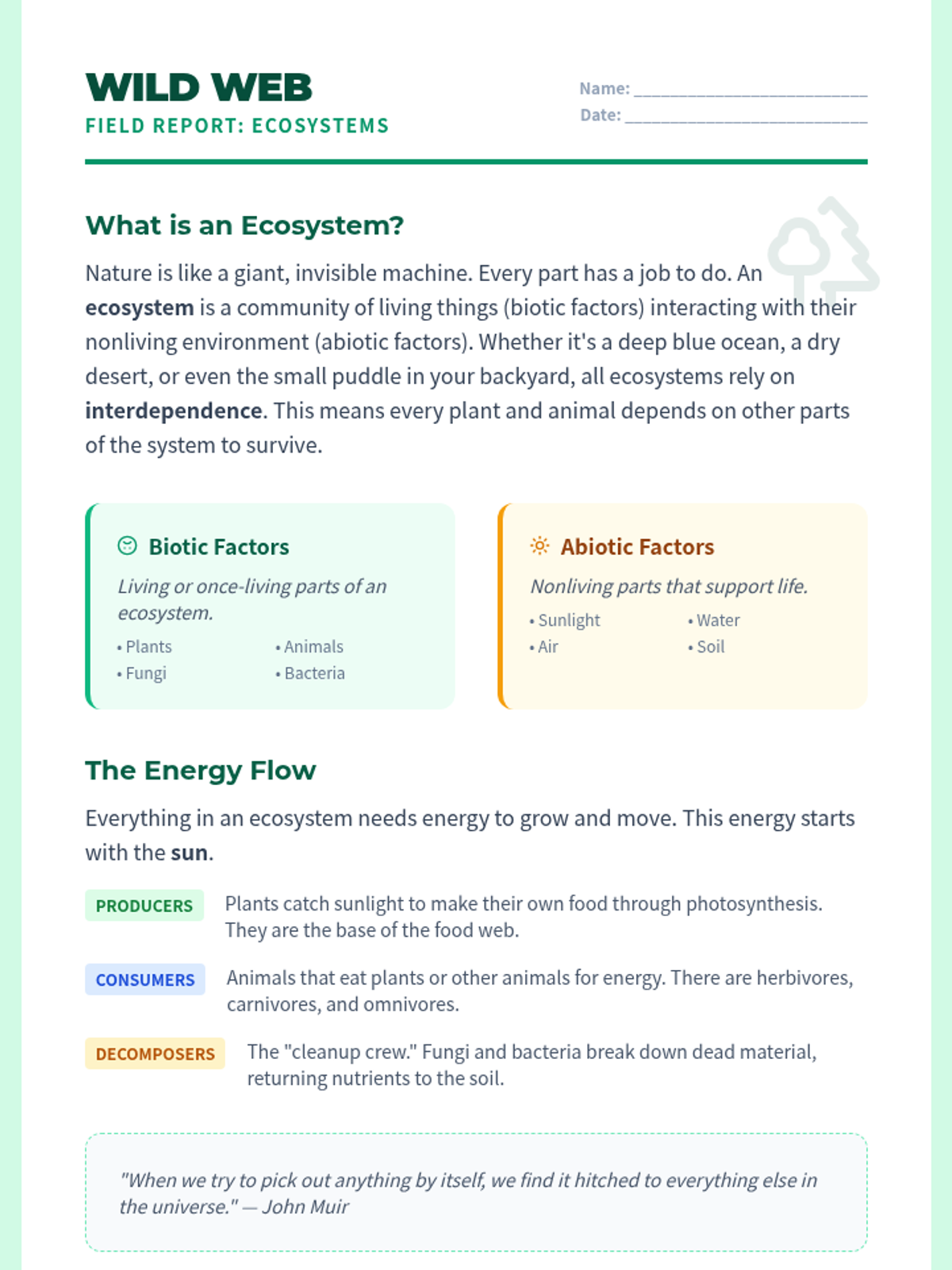
Investigates how living and nonliving things interact within an ecosystem, focusing on energy flow and environmental balance.
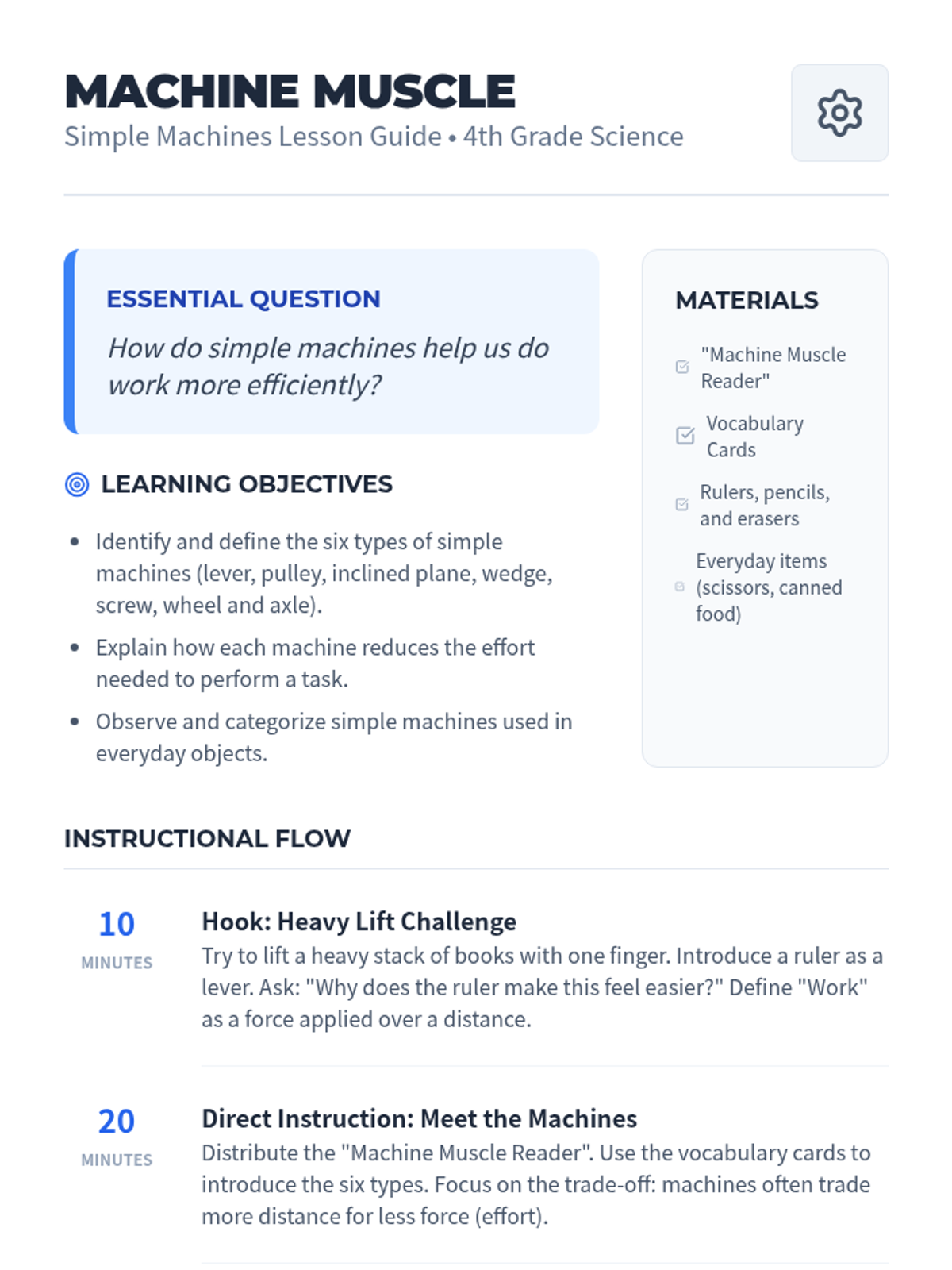
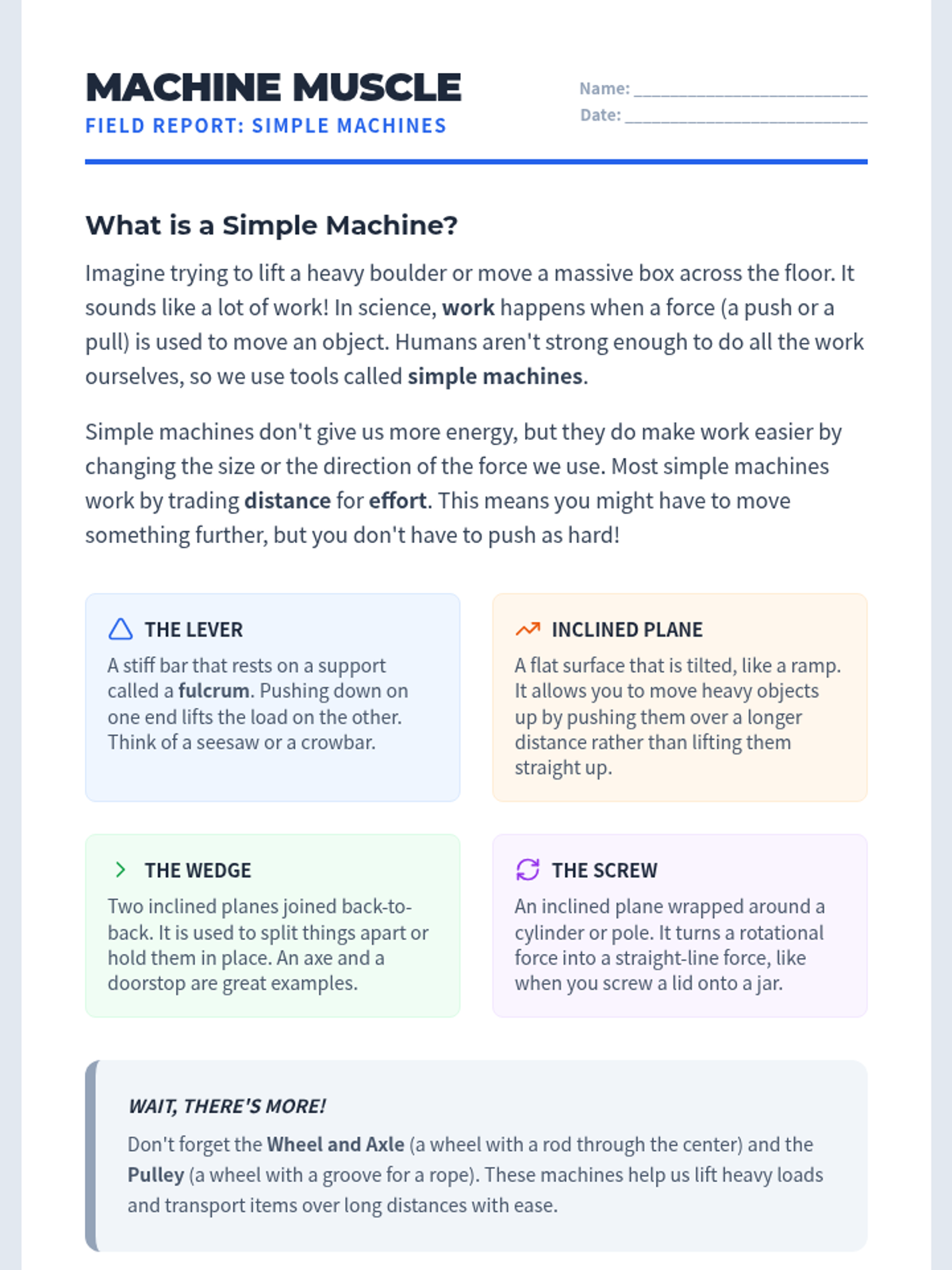
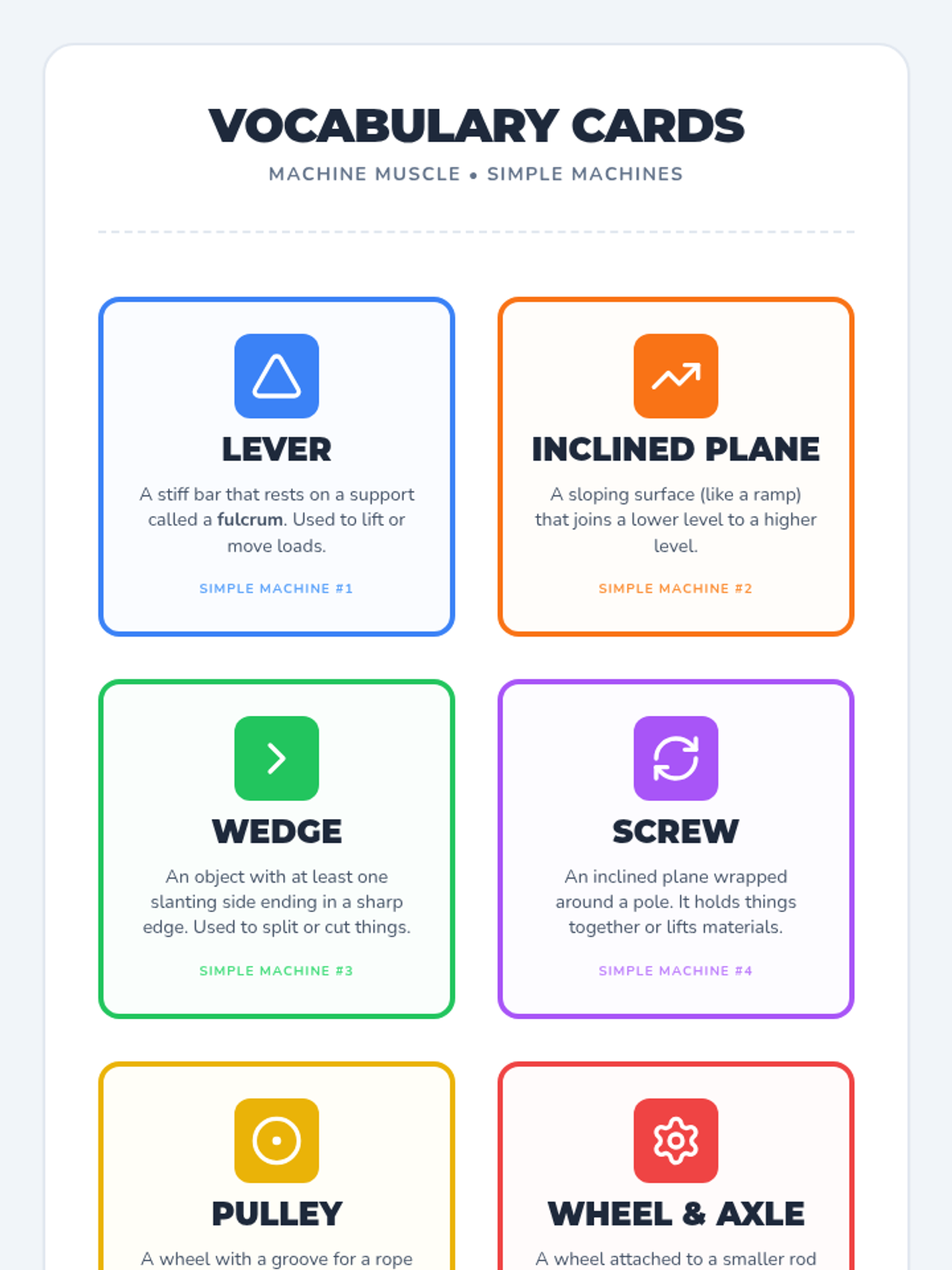
Explores the six simple machines and how they make work easier by changing the direction or magnitude of a force.