A comprehensive review lesson on the digestive system and enzyme function, focusing on the path of food, mechanical vs. chemical digestion, and enzyme specificity through interactive activities and guided notes.
A comprehensive 45-minute lesson exploring the mechanics of earthquakes, tectonic plate movements, and the build-up of seismic energy. Students engage in a hands-on simulation to visualize how stress and friction lead to sudden crustal shifts.
An introductory exploration of cybersecurity fundamentals for middle and high school students, covering the CIA triad, common threats, and defensive strategies through hands-on projects and conceptual mapping.
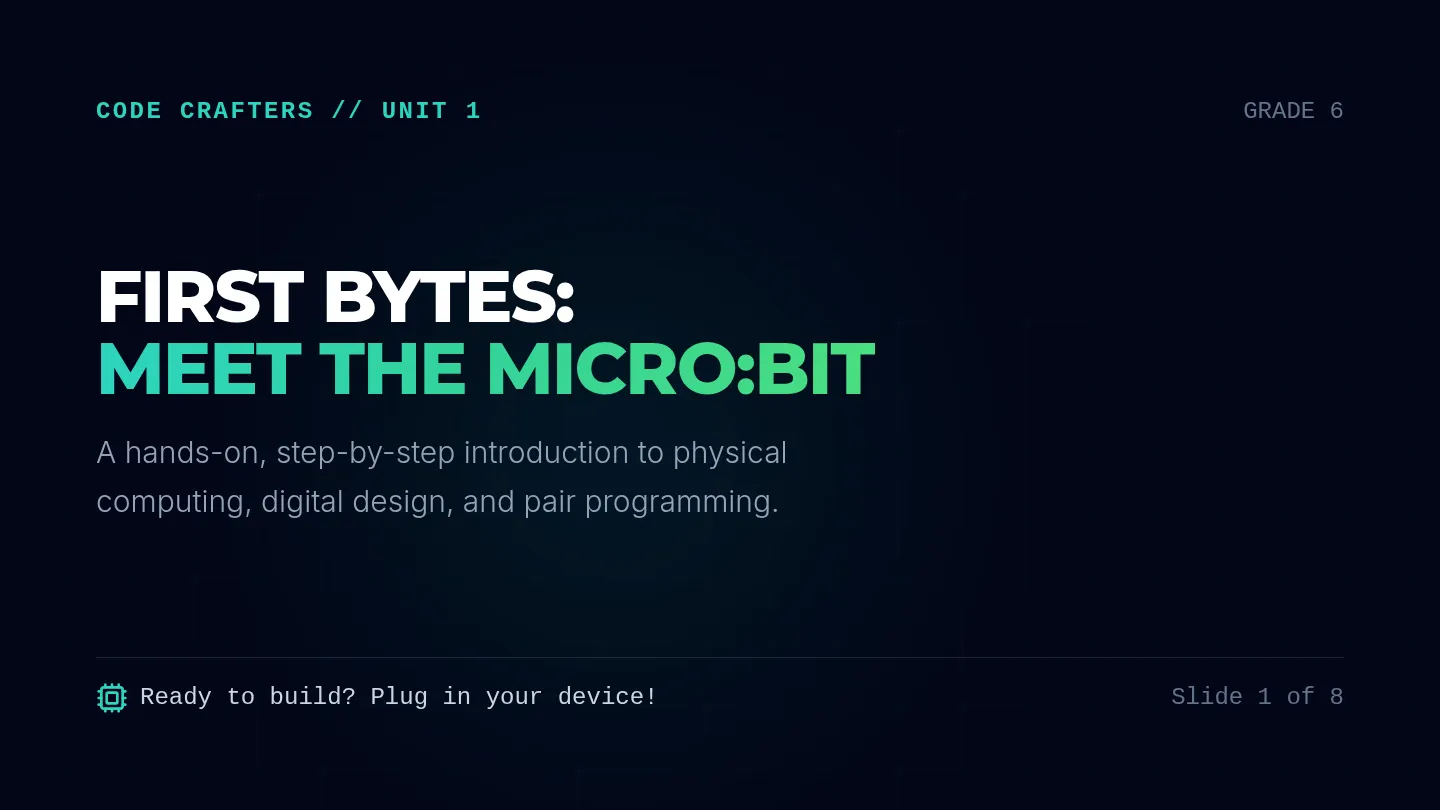
Students explore the intersection of physical electronics and digital audio by building interactive sound installations. They will learn about conductivity, circuit logic, and basic programming to transform everyday objects into musical instruments.
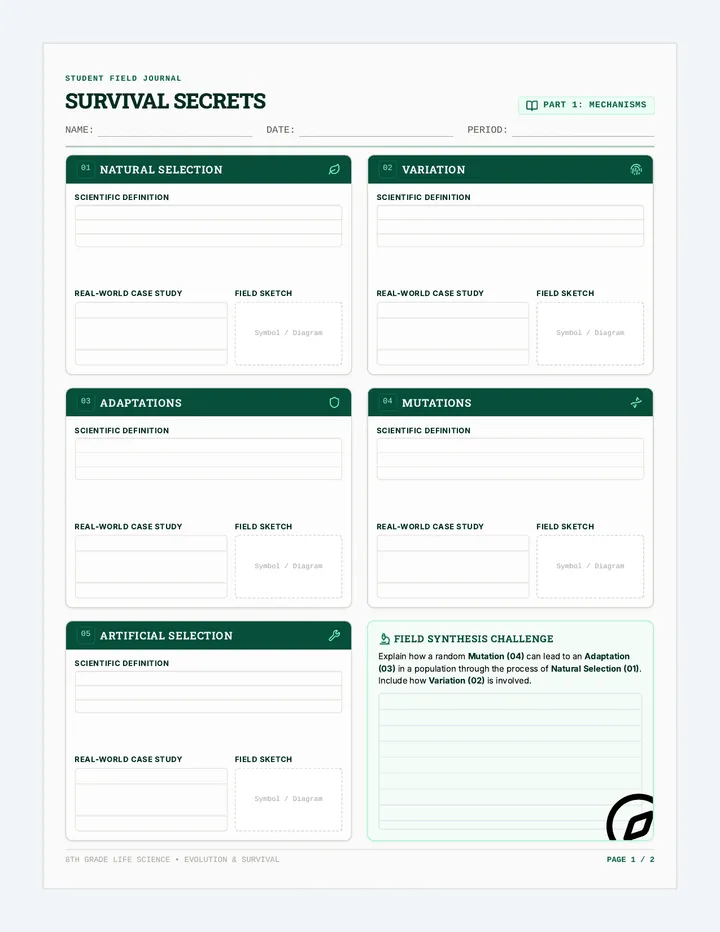
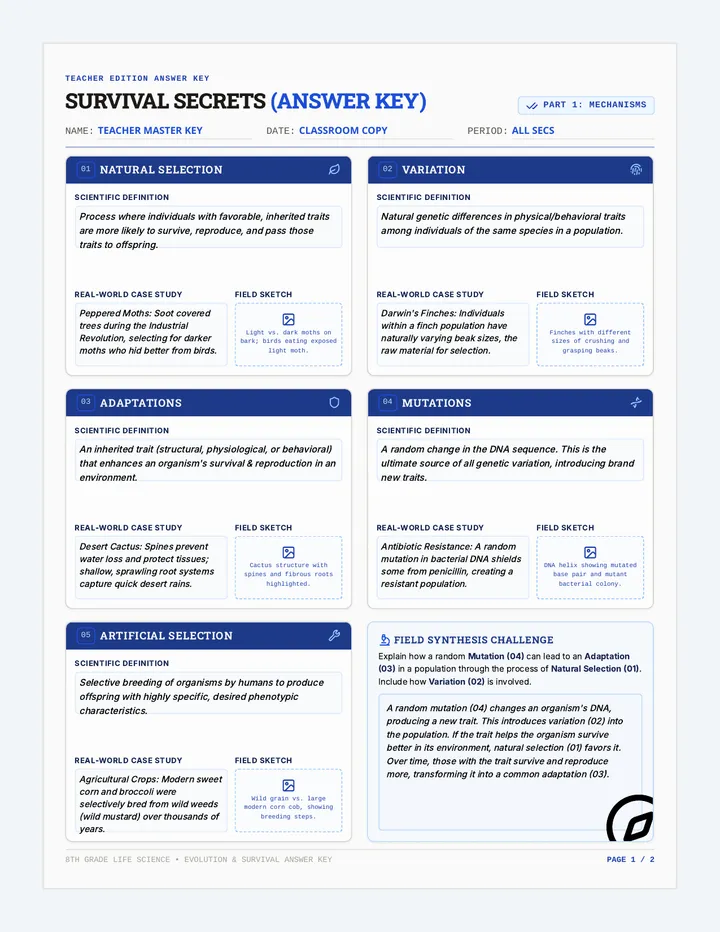
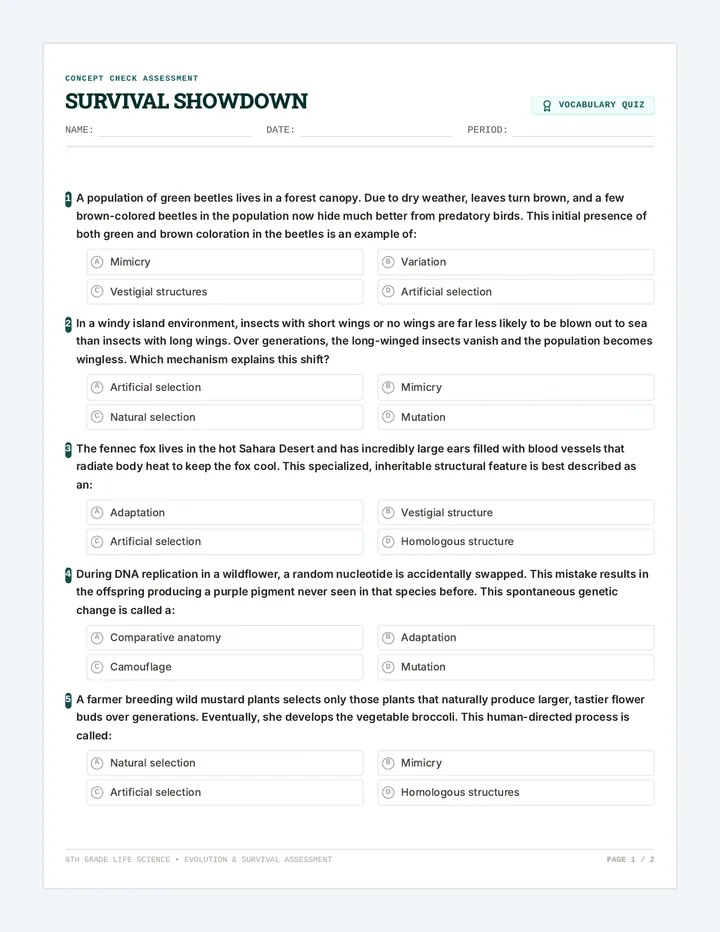
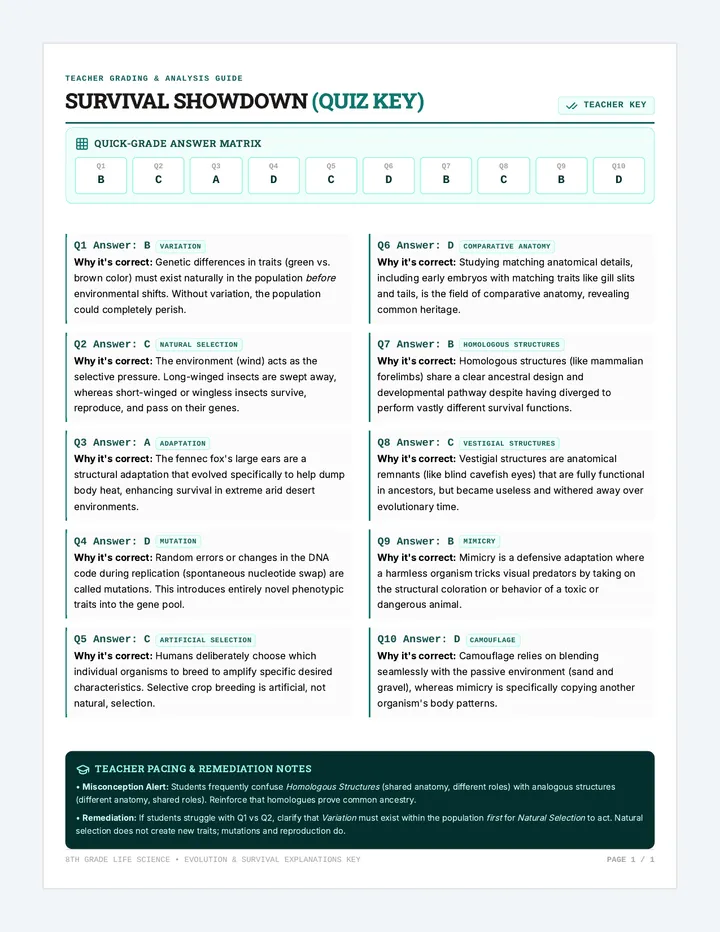
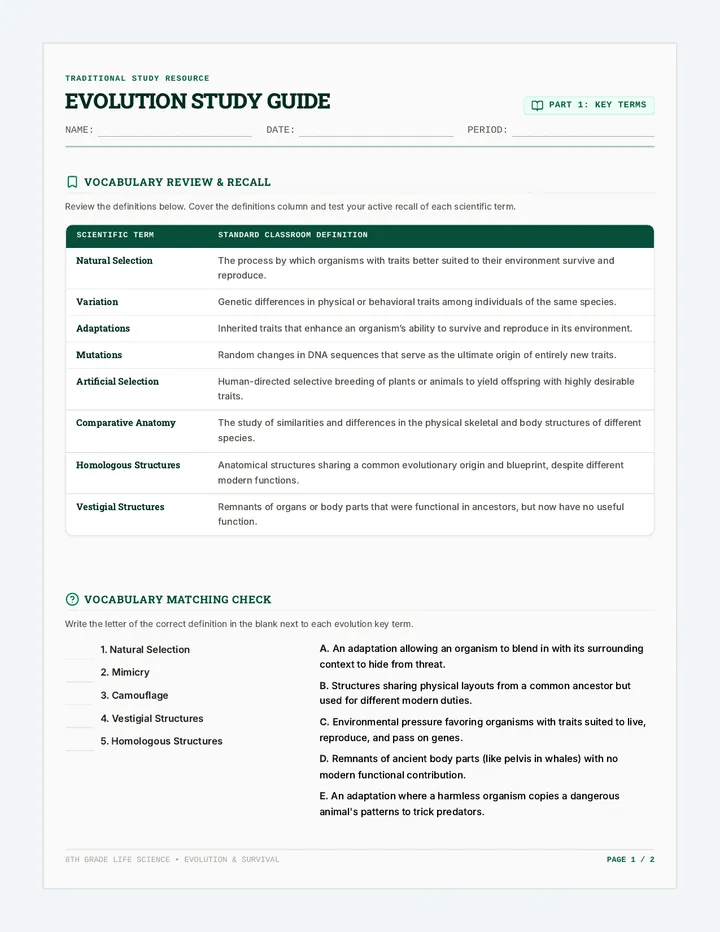
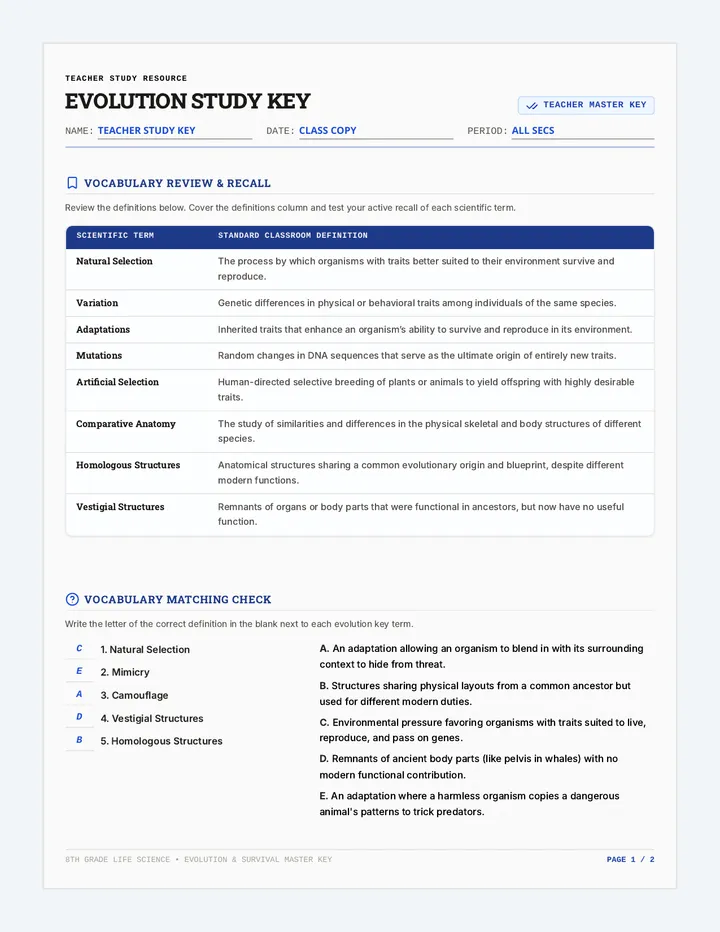
This lesson explores how natural selection drives population changes and evaluates the evidence for common ancestry. It features a hands-on jigsaw activity and STAAR-aligned practice questions to master TEKS 7C.
Students become geological detectives to investigate how rocks change over time through heat, pressure, and erosion, culminating in a mystery-solving identification challenge.
A 30-minute PLC session designed to analyze Grade 5 and 8 MCAS Science results, identifying cross-curricular opportunities for improvement through data-driven discussion and actionable teaching strategies.
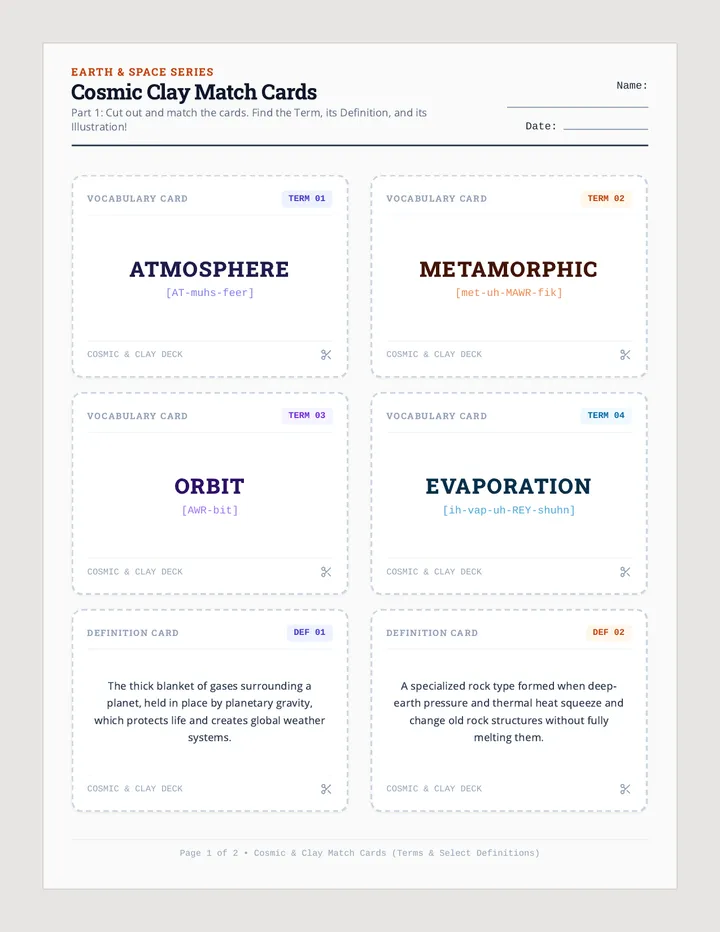
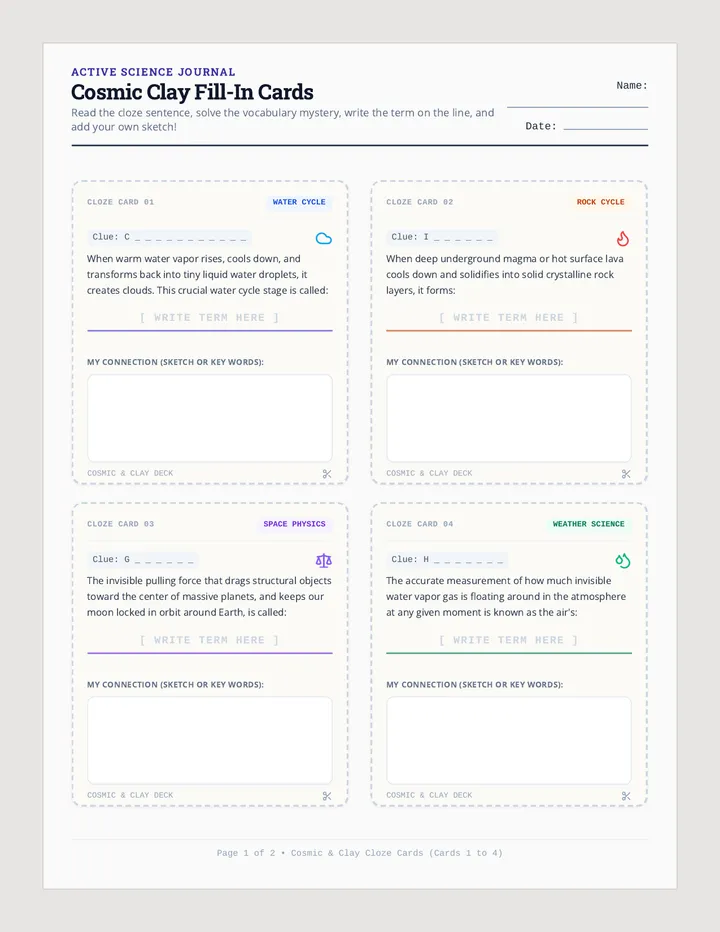
A movement-based scavenger hunt where students solve 'planetary mysteries' covering Earth's spheres, internal layers, and the rock cycle. This lesson includes task cards and a structured recording sheet for 6th grade science review.
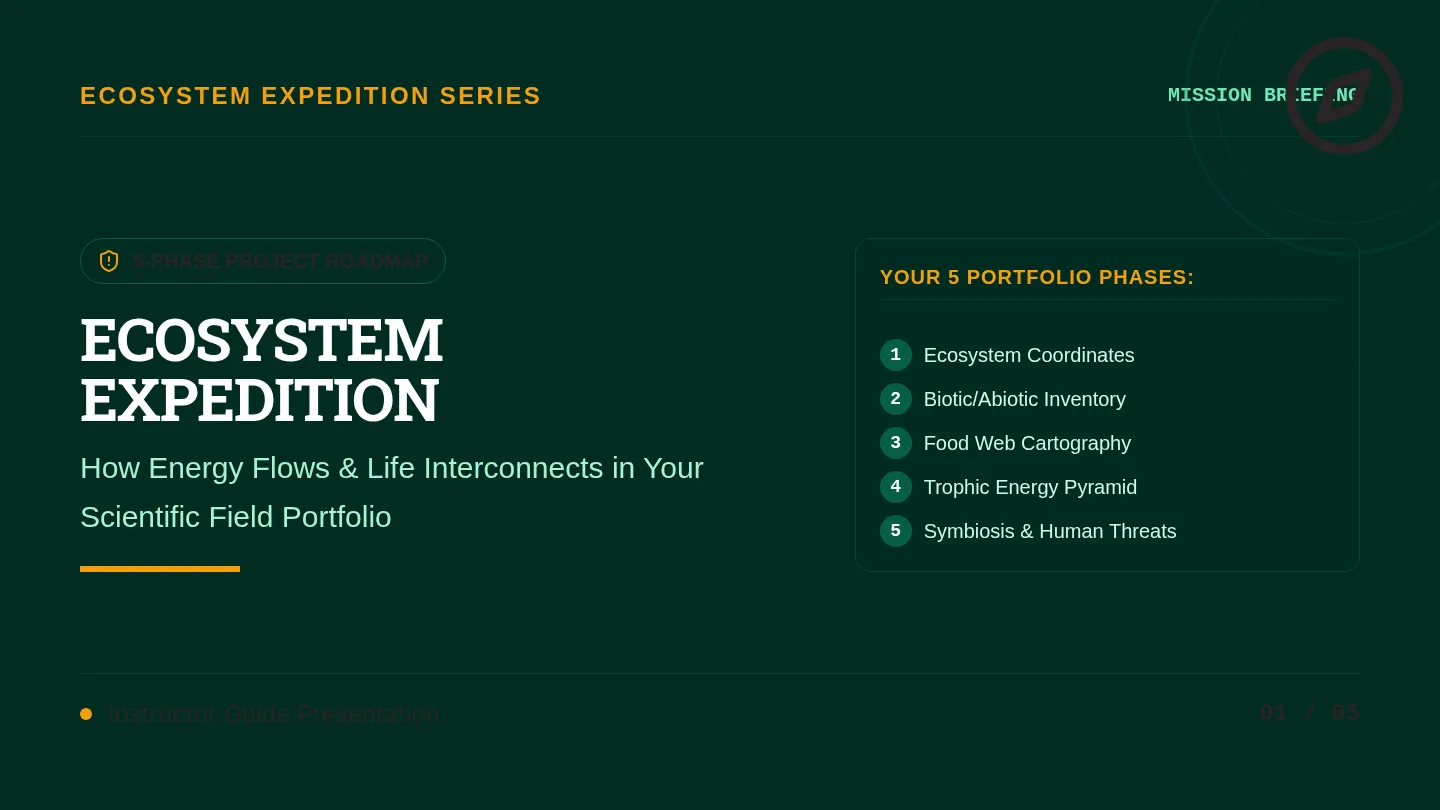
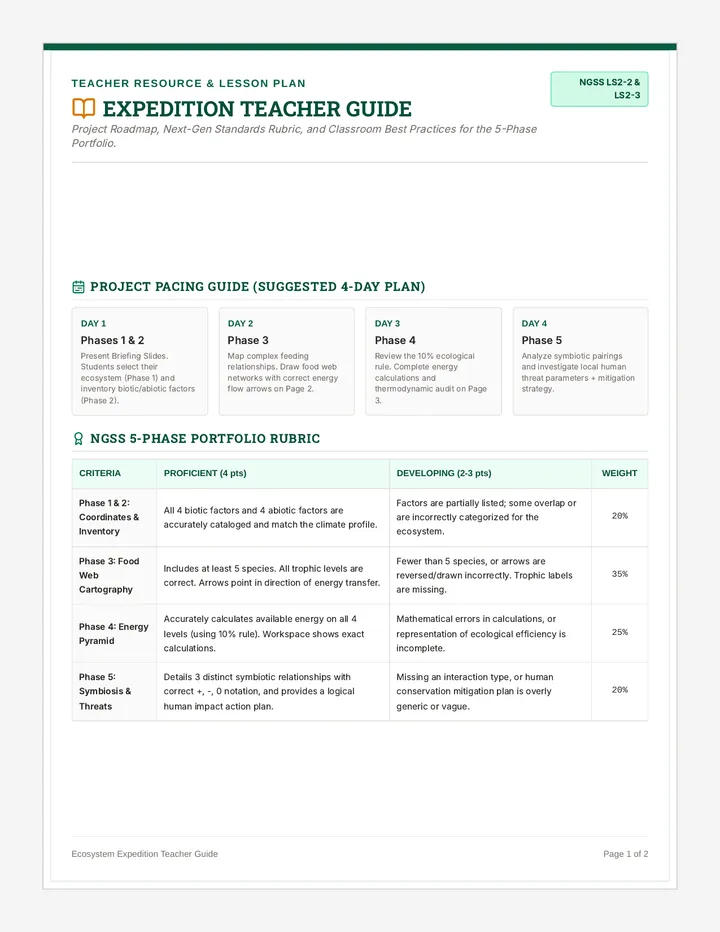
A lesson focusing on the quantitative analysis of energy flow and matter cycling within ecosystems, emphasizing the 10% rule, productivity, and human impact.
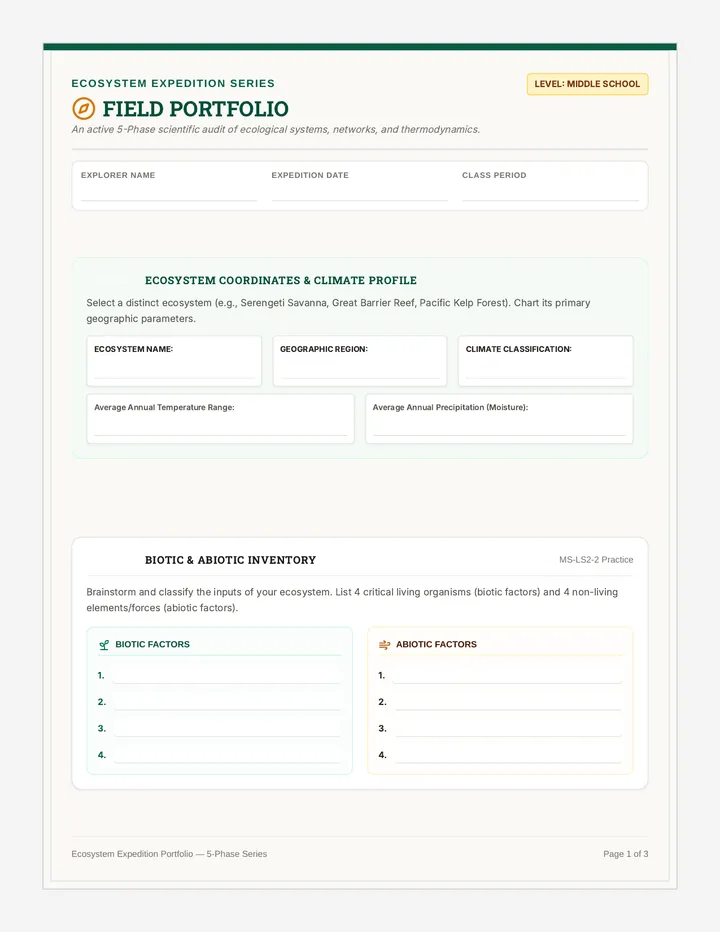
This lesson explores how living and nonliving components interact within an ecosystem, focusing on energy flow and population dynamics.
A foundational introduction to ecosystems, biomes, and the roles living things play in their environments. Students explore biotic and abiotic factors and the simple energy paths within food chains and webs.
A 45-minute introductory lesson on macroinvertebrates and their role as bioindicators, preparing students for a leaf pack study. Students will learn key ecosystem vocabulary and identification techniques across grades 5-9.
An ecology-themed mystery where students analyze plant biology, photosynthesis rates, and soil chemistry to find who sabotaged the lab's carbon-offset project.
A geology-themed mystery where students analyze mineral properties like hardness, luster, and density to find out who stole a rare lunar meteor sample.
A chemistry-themed mystery where students analyze flame tests, atomic mass, and chemical reactivity to find out who stole a sample of a rare heavy metal.
A physics-themed mystery where students analyze electrical circuits, resistance, and conductivity to find out who short-circuited the lab's main power grid.
A microbiology-themed mystery where students analyze bacterial traits, Gram stains, and antibiotic resistance to find who contaminated a bio-engineered enzyme.
A fast-paced science mystery where students use 8 scientific clues to identify who sabotaged a high-stakes experiment. Students analyze pH, density, chromatography, and more to eliminate suspects.