A 90-minute Halloween-themed science and sensory lesson for Pre-K students exploring the pumpkin life cycle through story, math, and literacy centers.
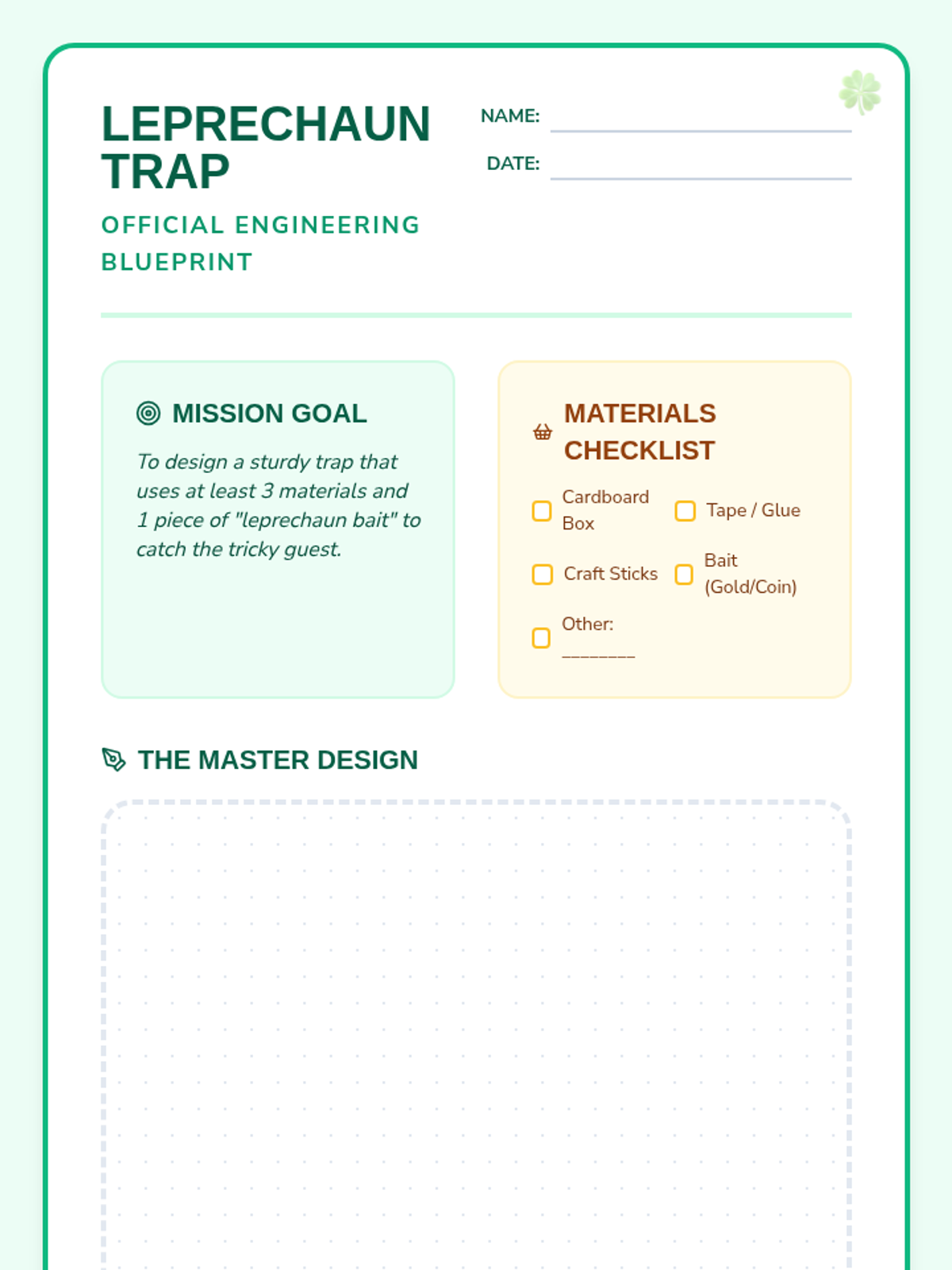
Students design and build a STEM leprechaun trap inspired by 'How to Catch a Leprechaun', focusing on multi-step directions and problem-solving through the engineering design process.
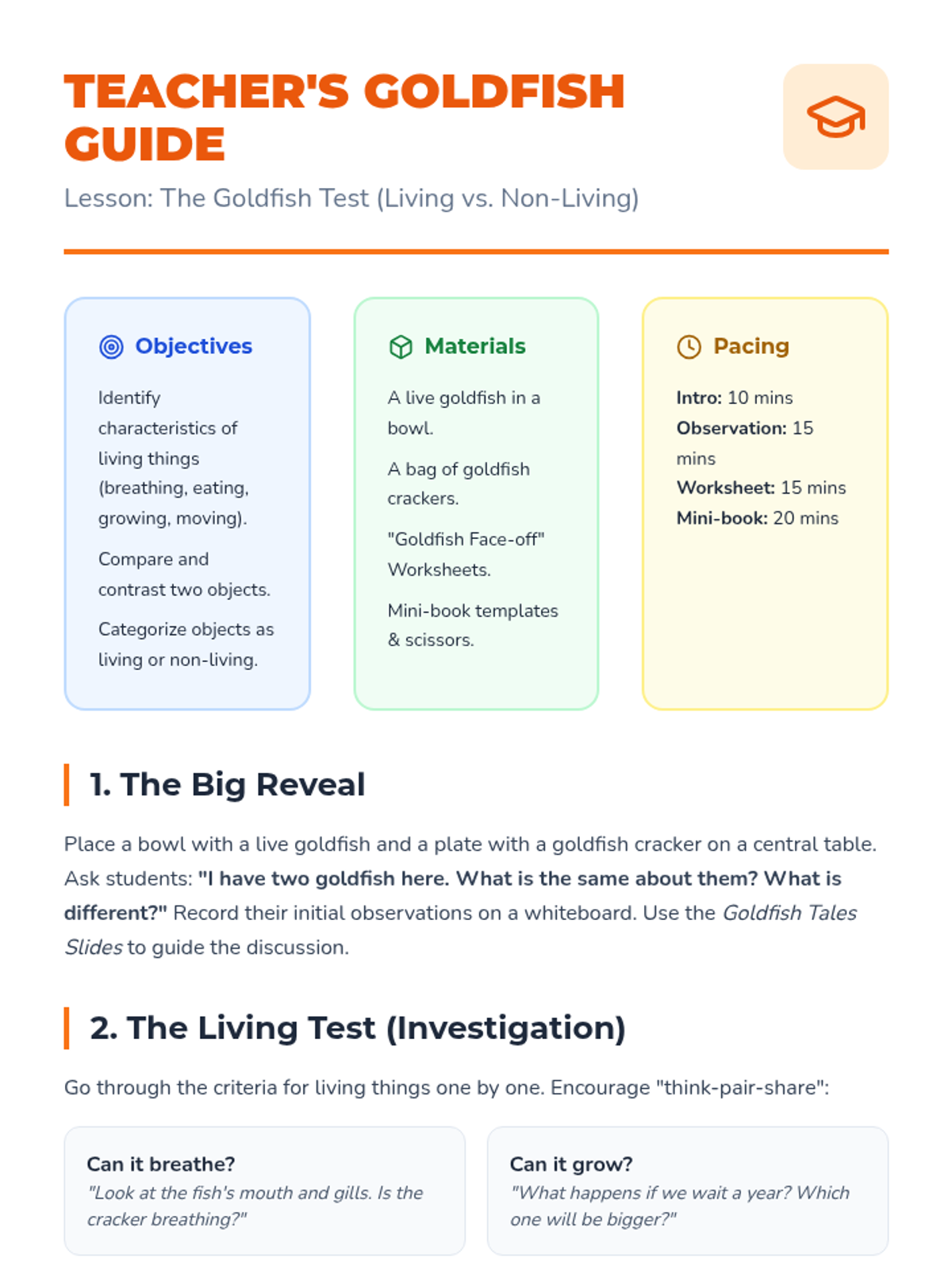
An introductory science lesson comparing a live goldfish to a goldfish cracker to help students identify the characteristics of living and non-living things.
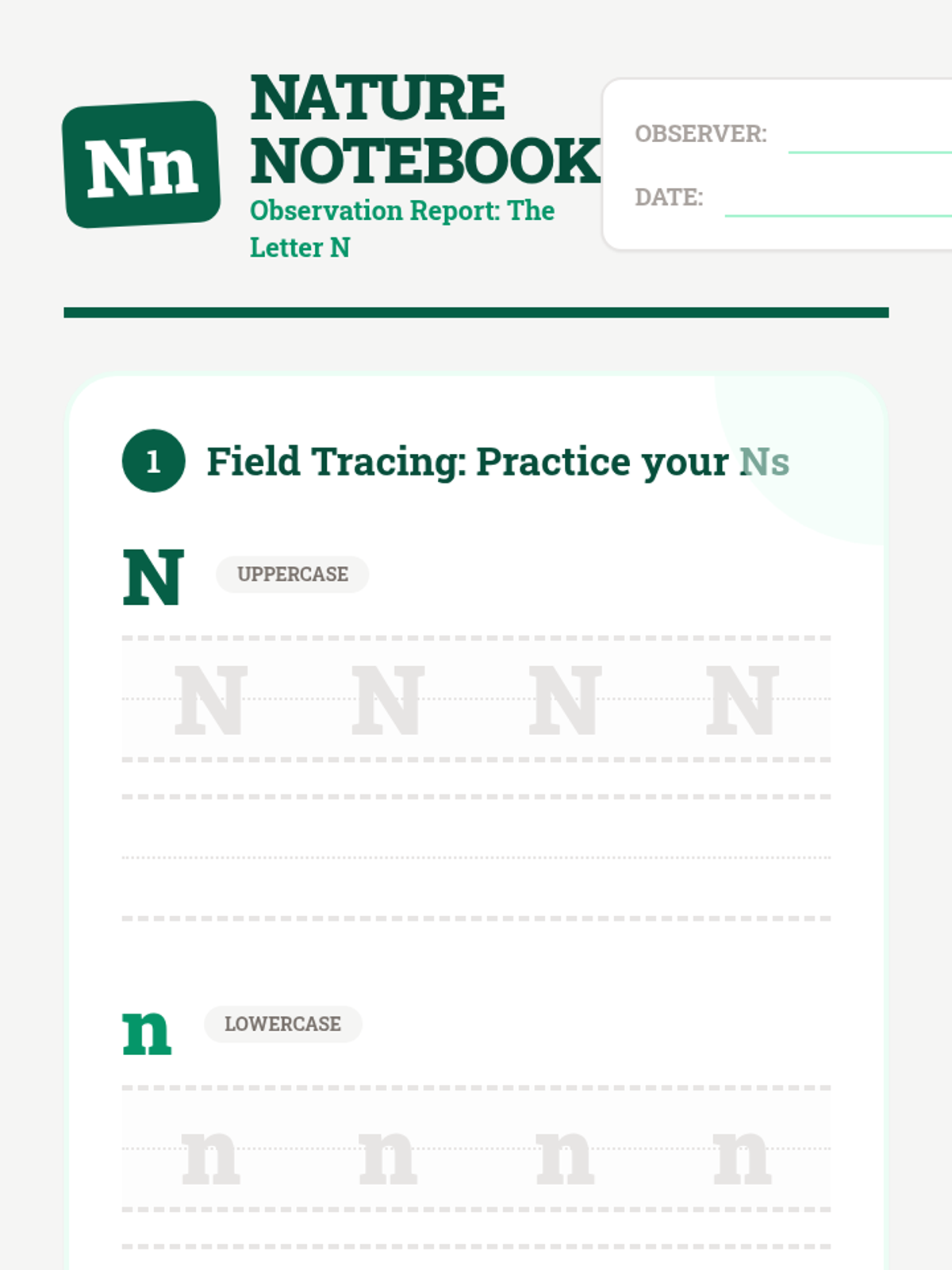
A nature-themed exploration of the letter N, focusing on lowercase and uppercase identification, the /n/ sound, and nature-based vocabulary like nests, nuts, and newts.
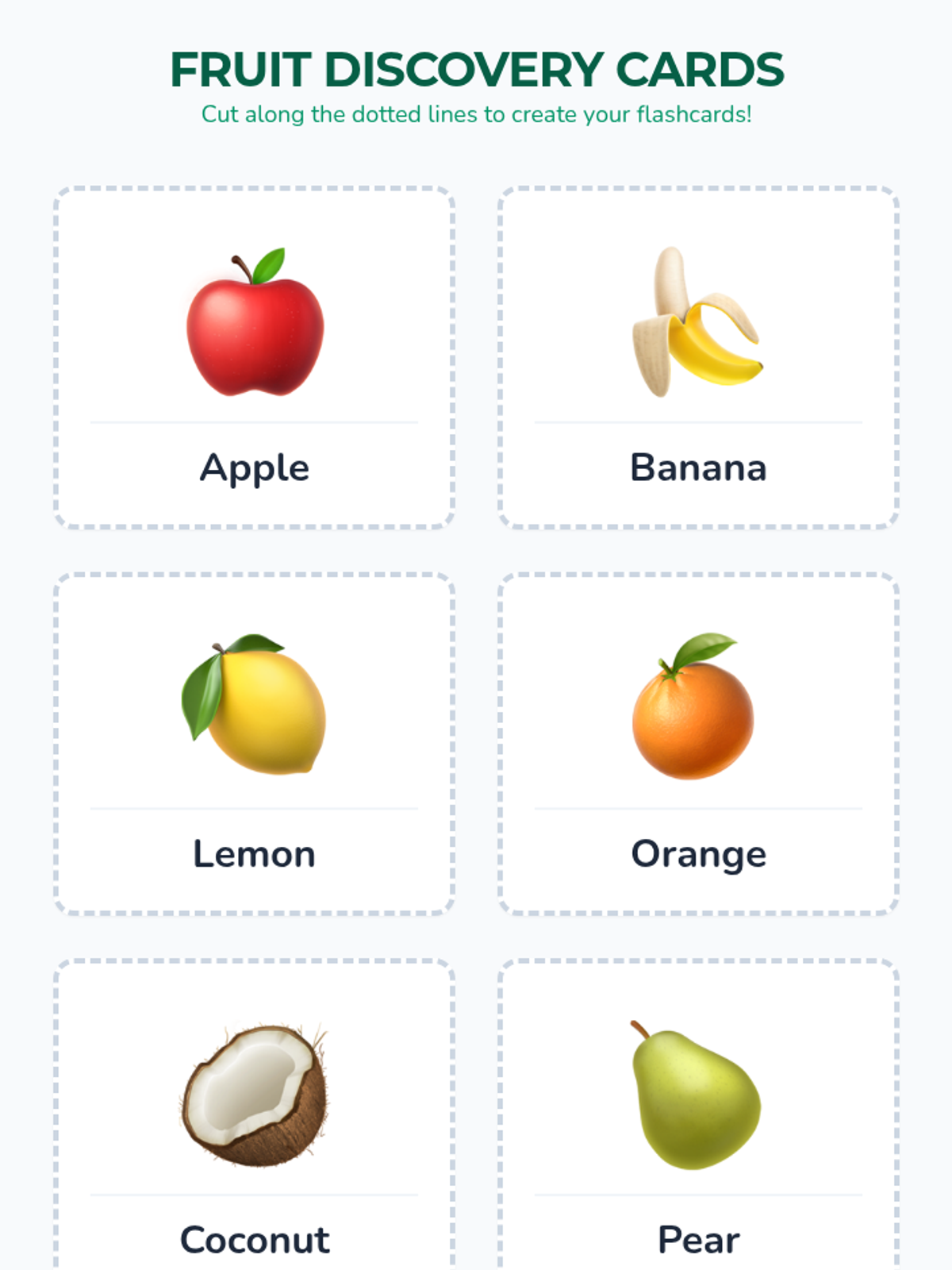
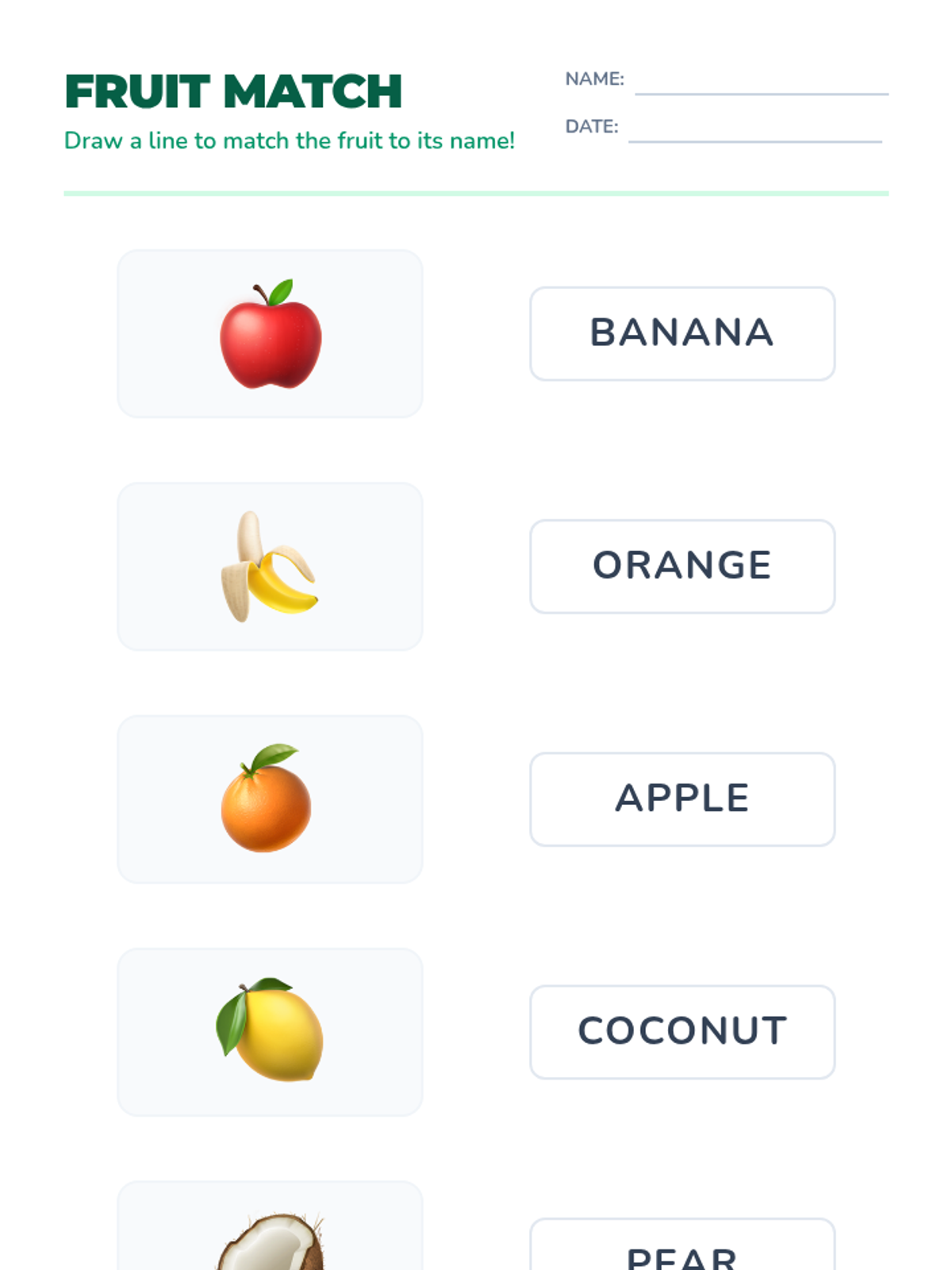
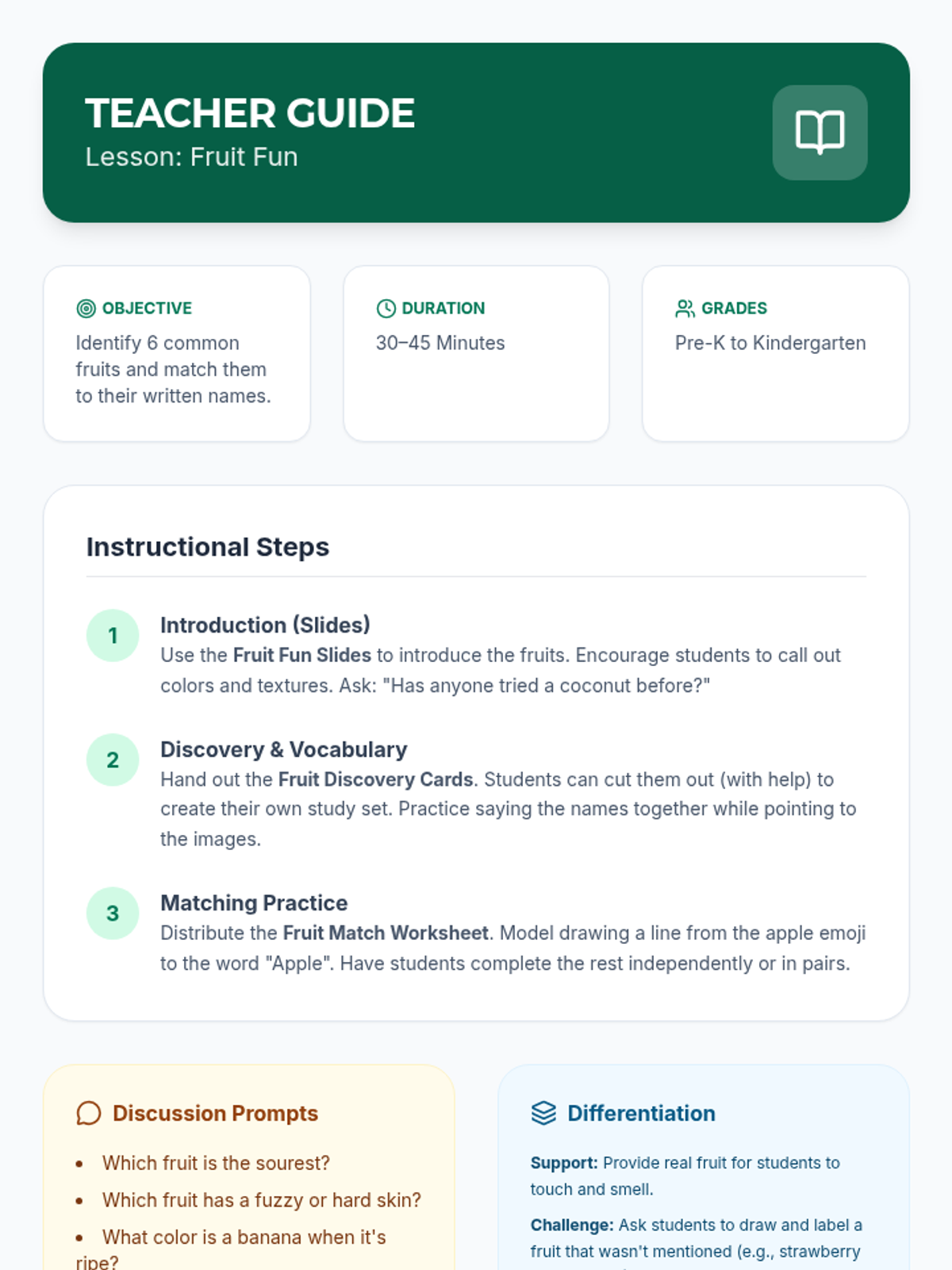
A foundational lesson for early learners to identify and name common fruits using visual aids and matching activities.
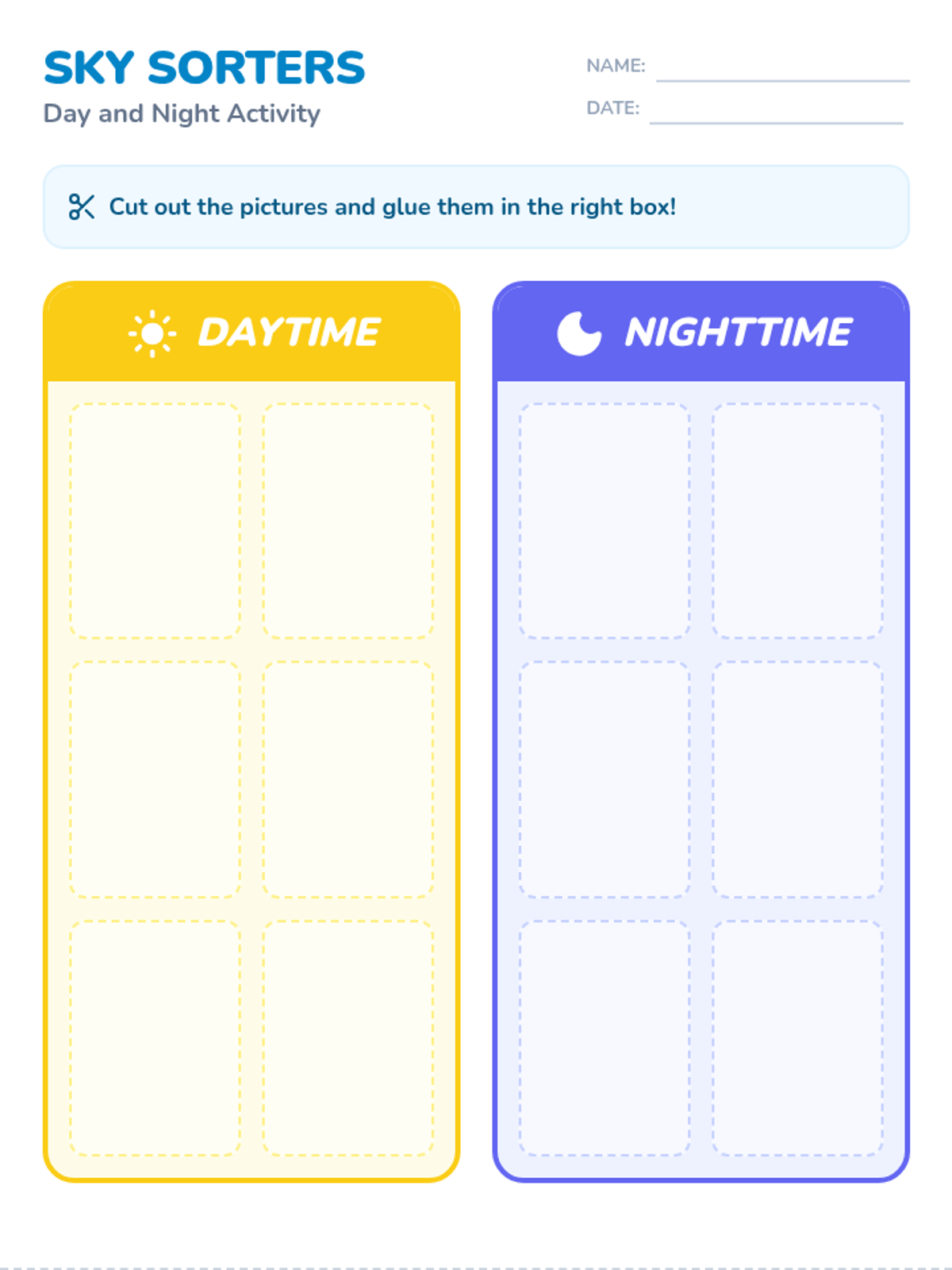
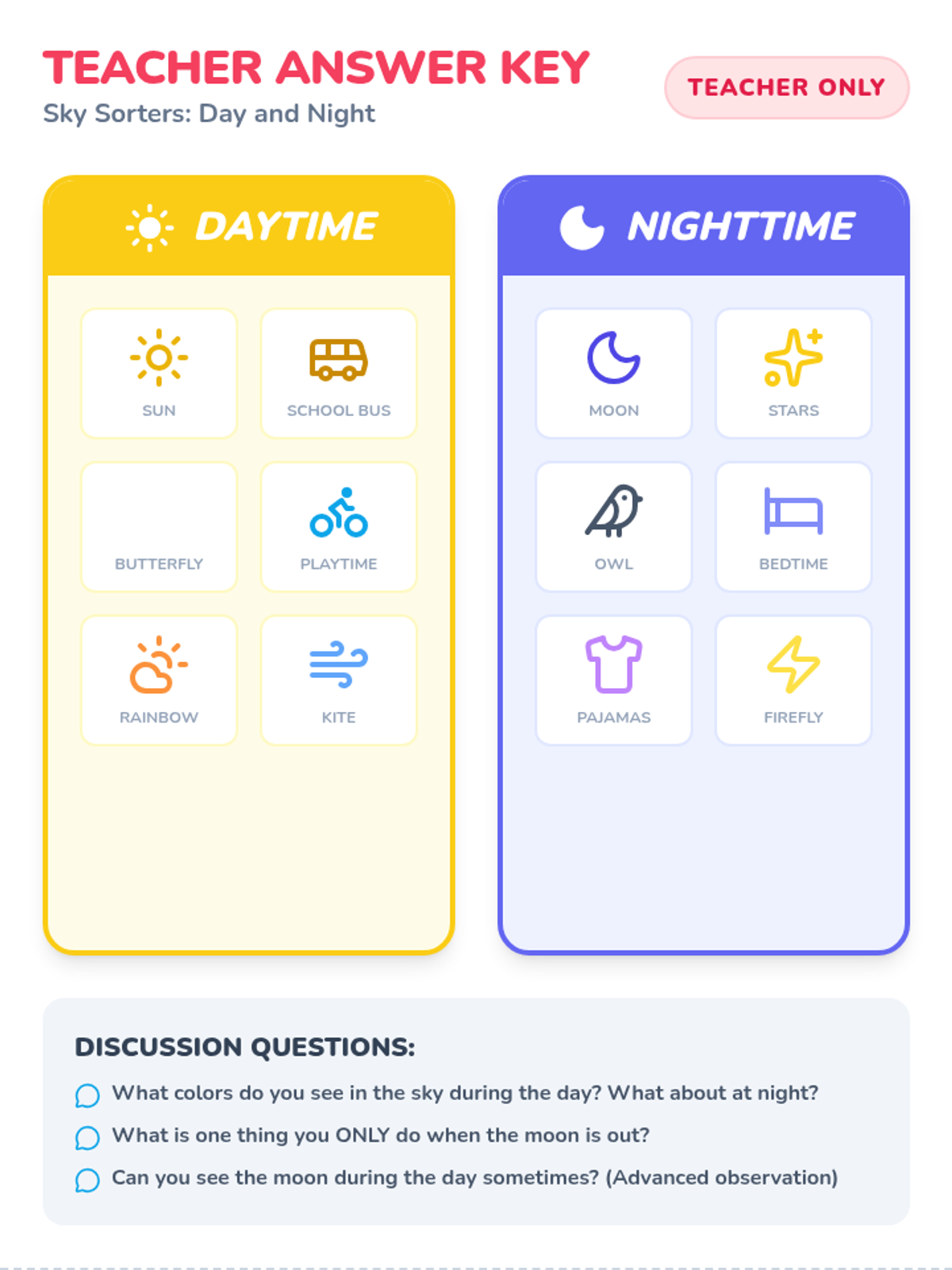
A Pre-K lesson focused on identifying and categorizing objects and activities associated with daytime and nighttime. Students will develop fine motor skills through cutting and pasting while building early science and observation skills.
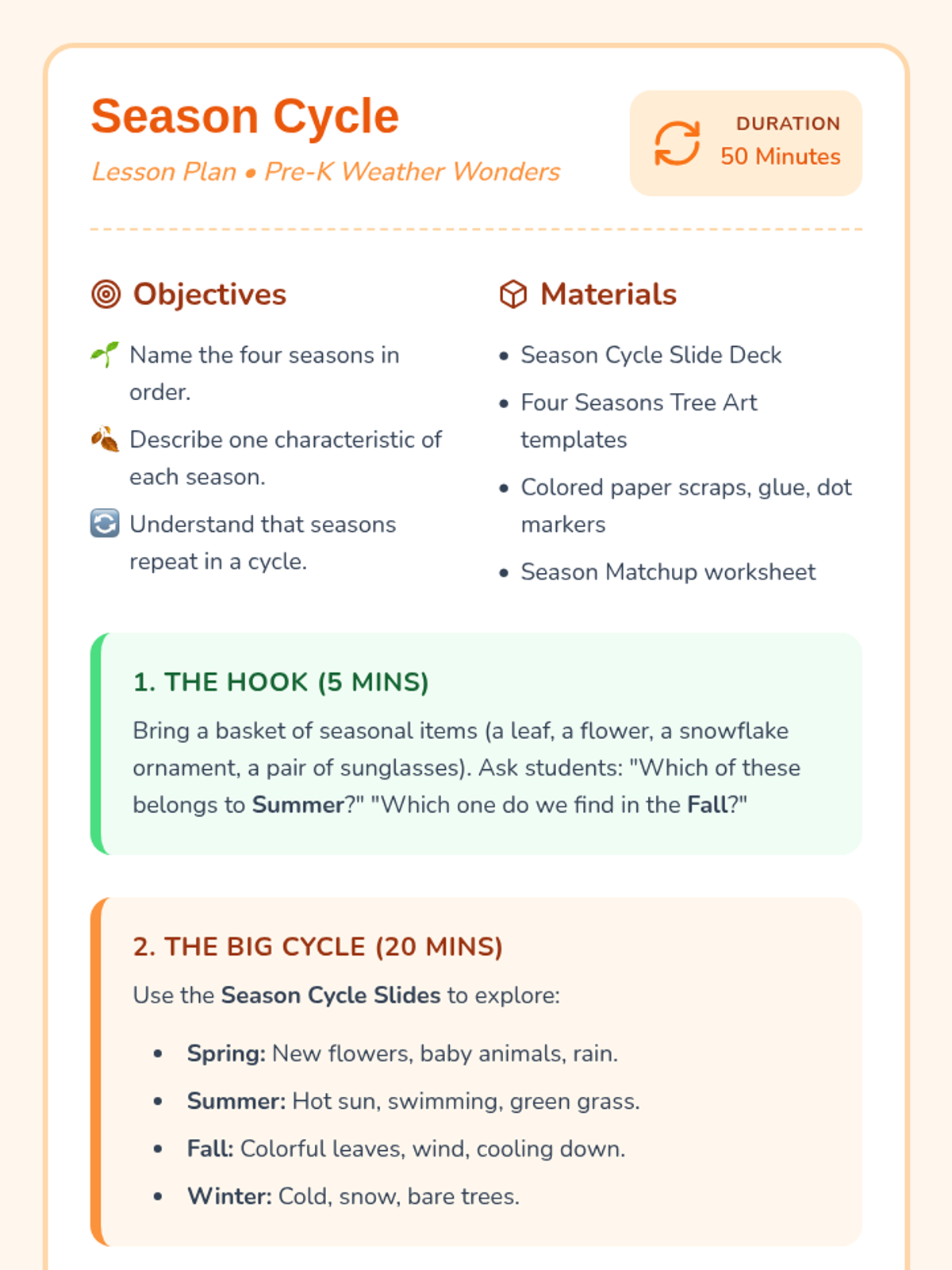
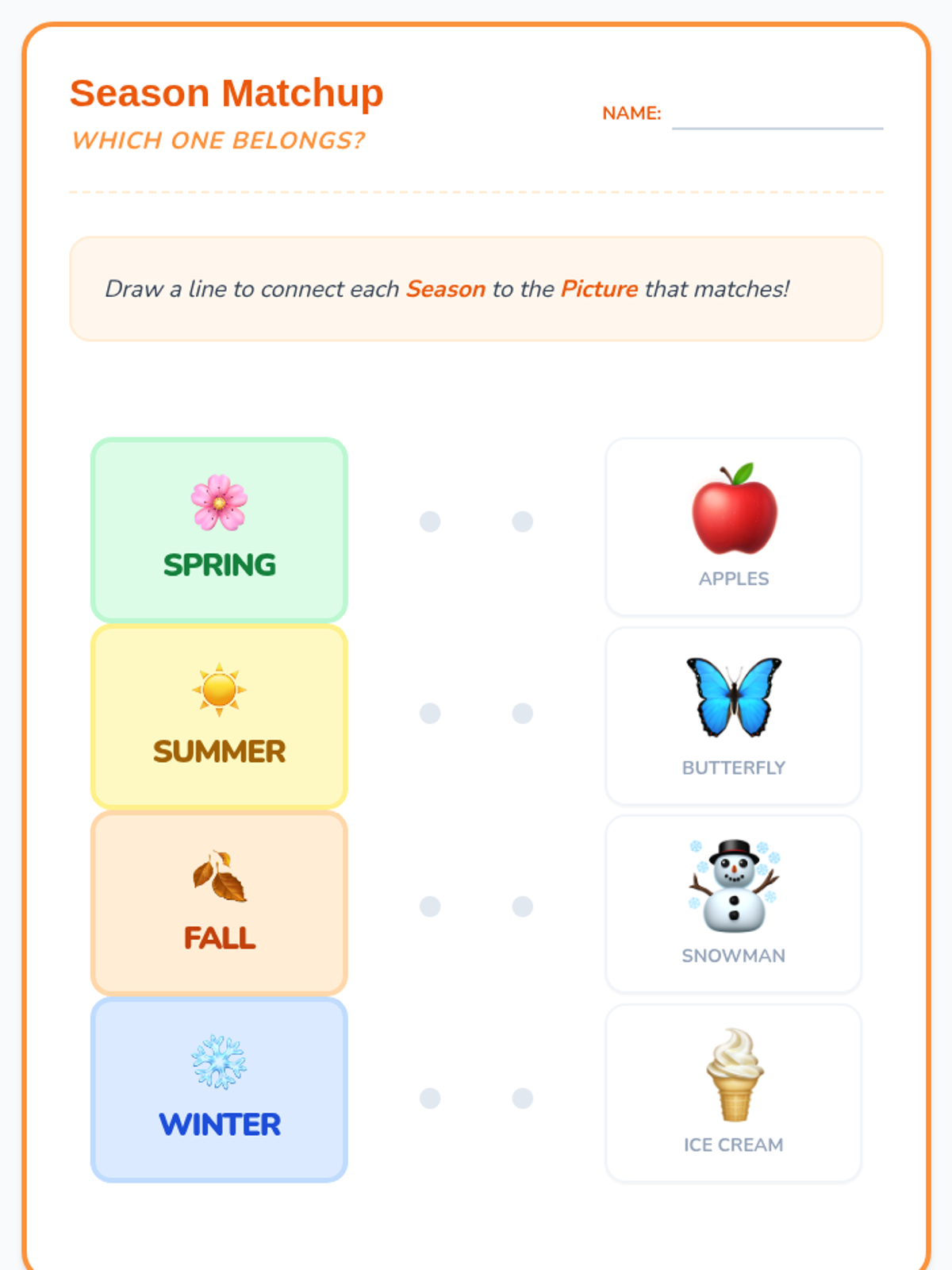
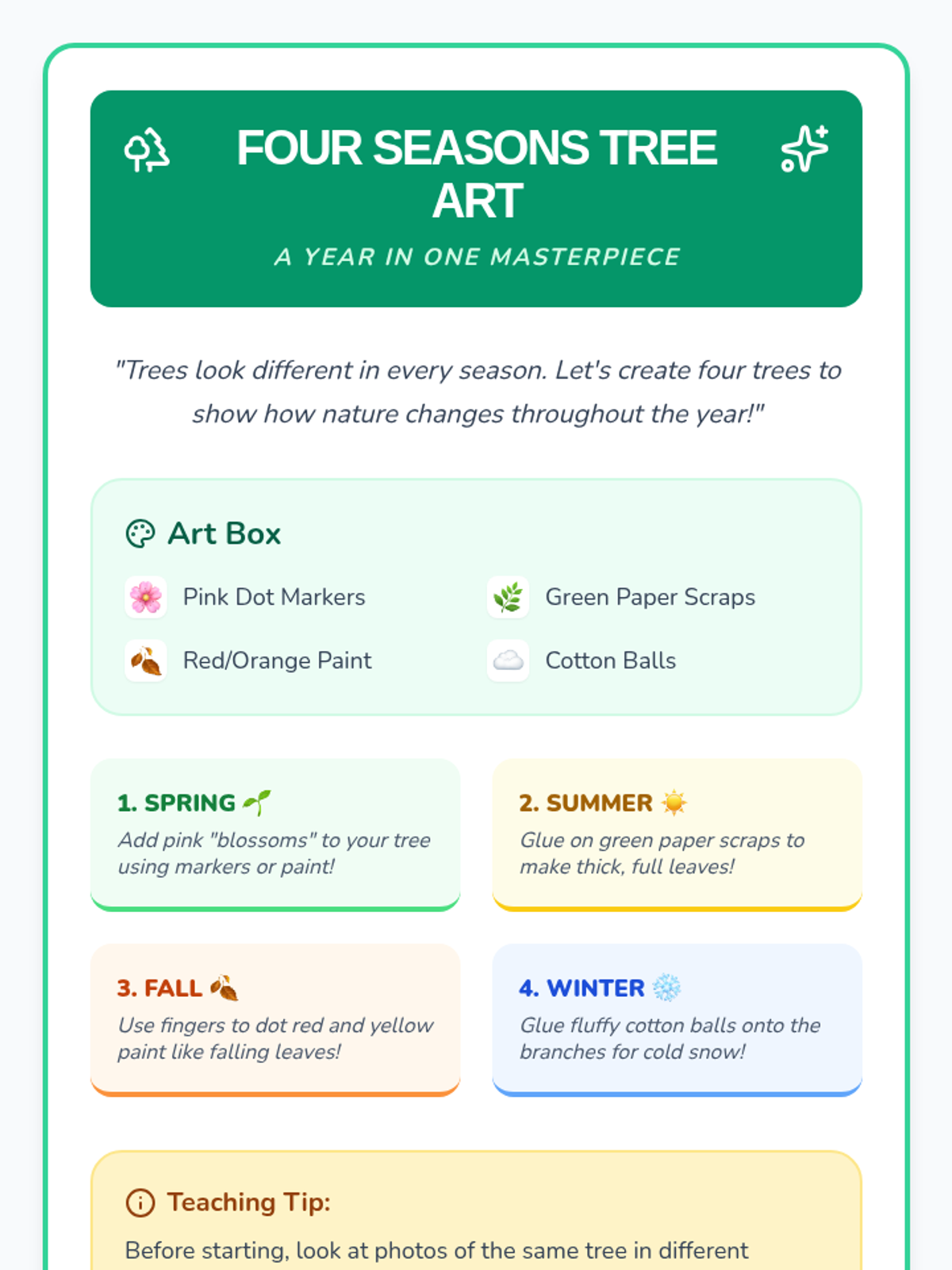
Synthesizes weather patterns into the cycle of the four seasons. Students will learn to distinguish Summer, Fall, Winter, and Spring through visual changes in nature and a sorting activity.
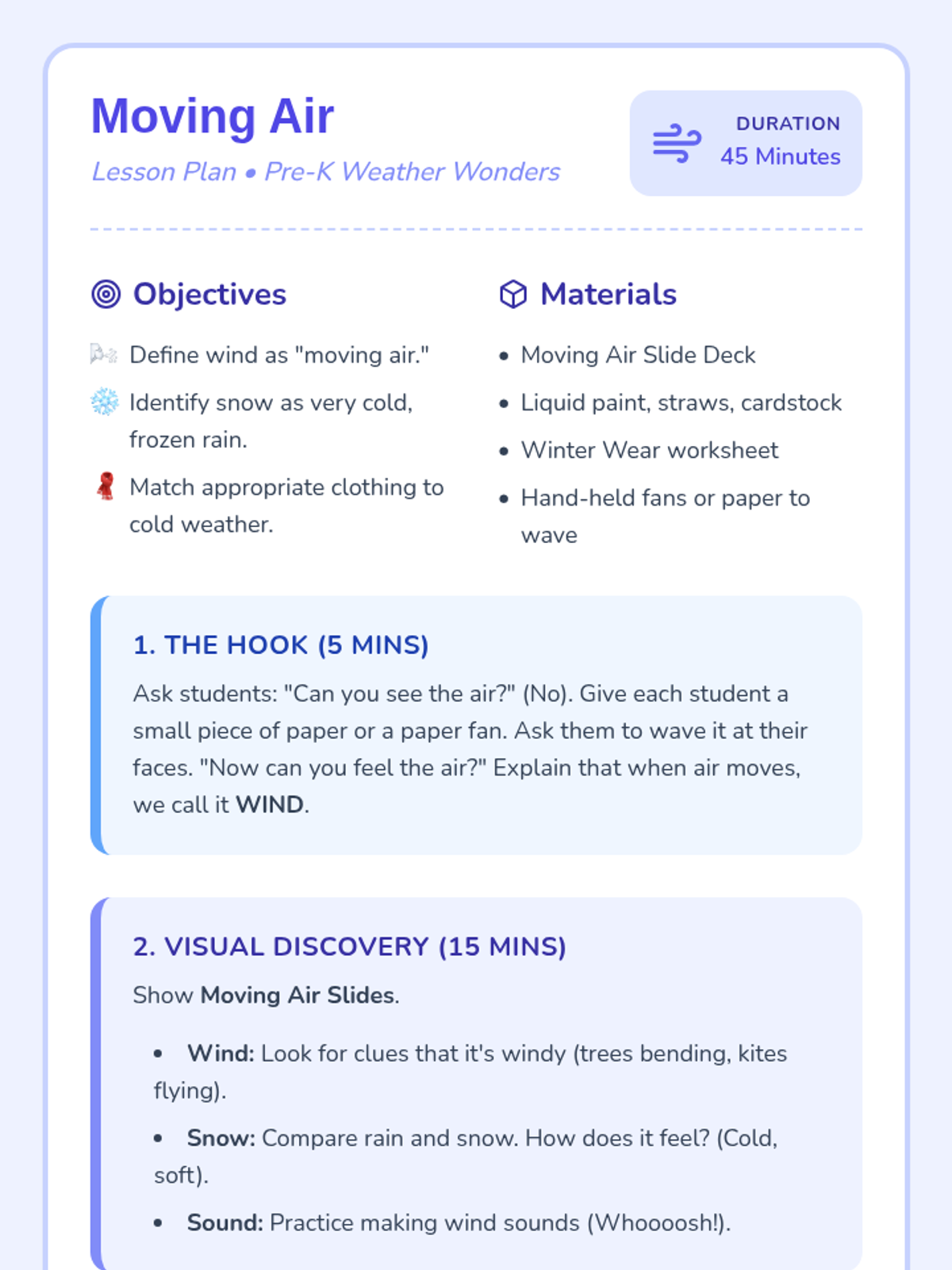
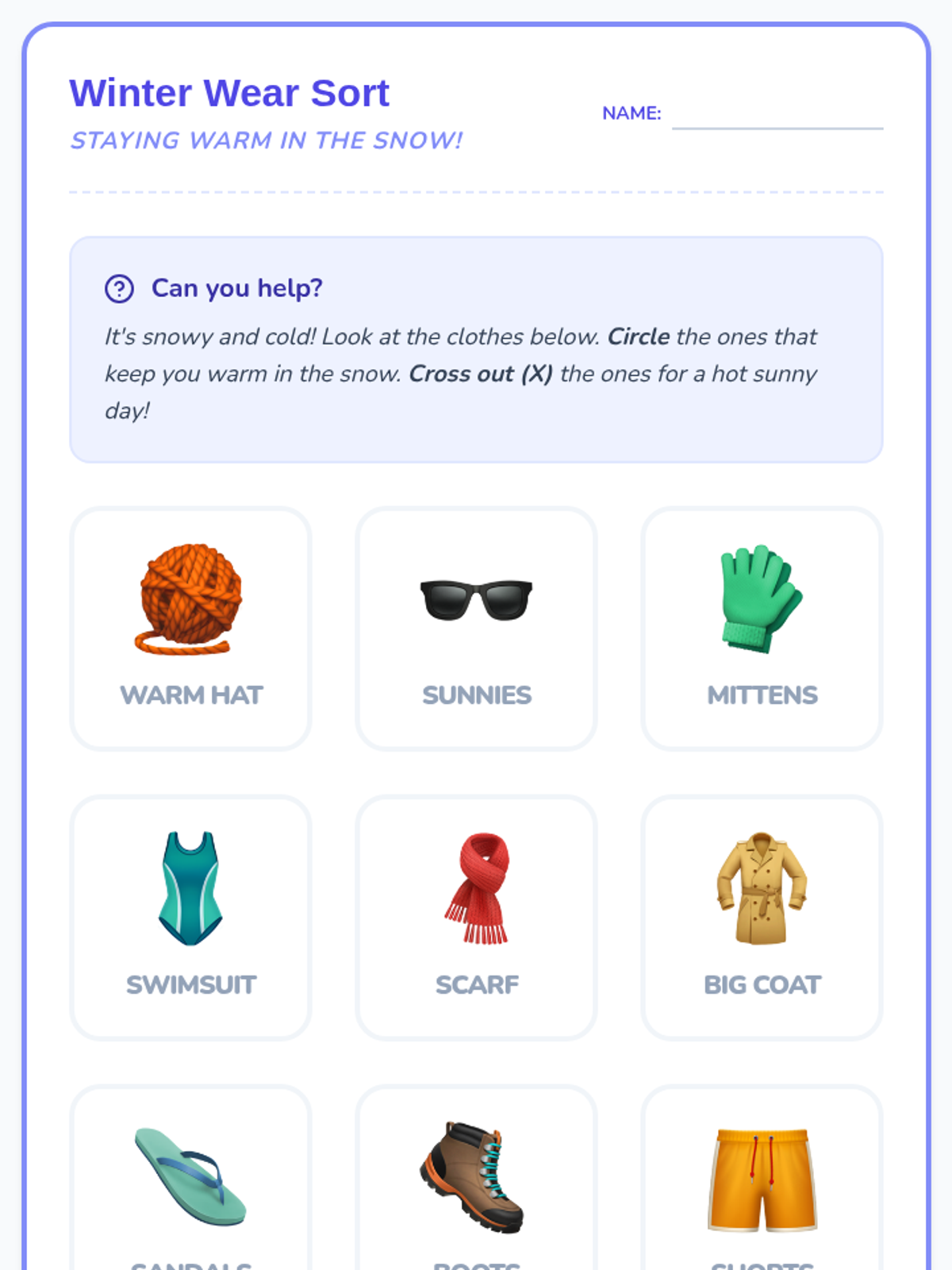
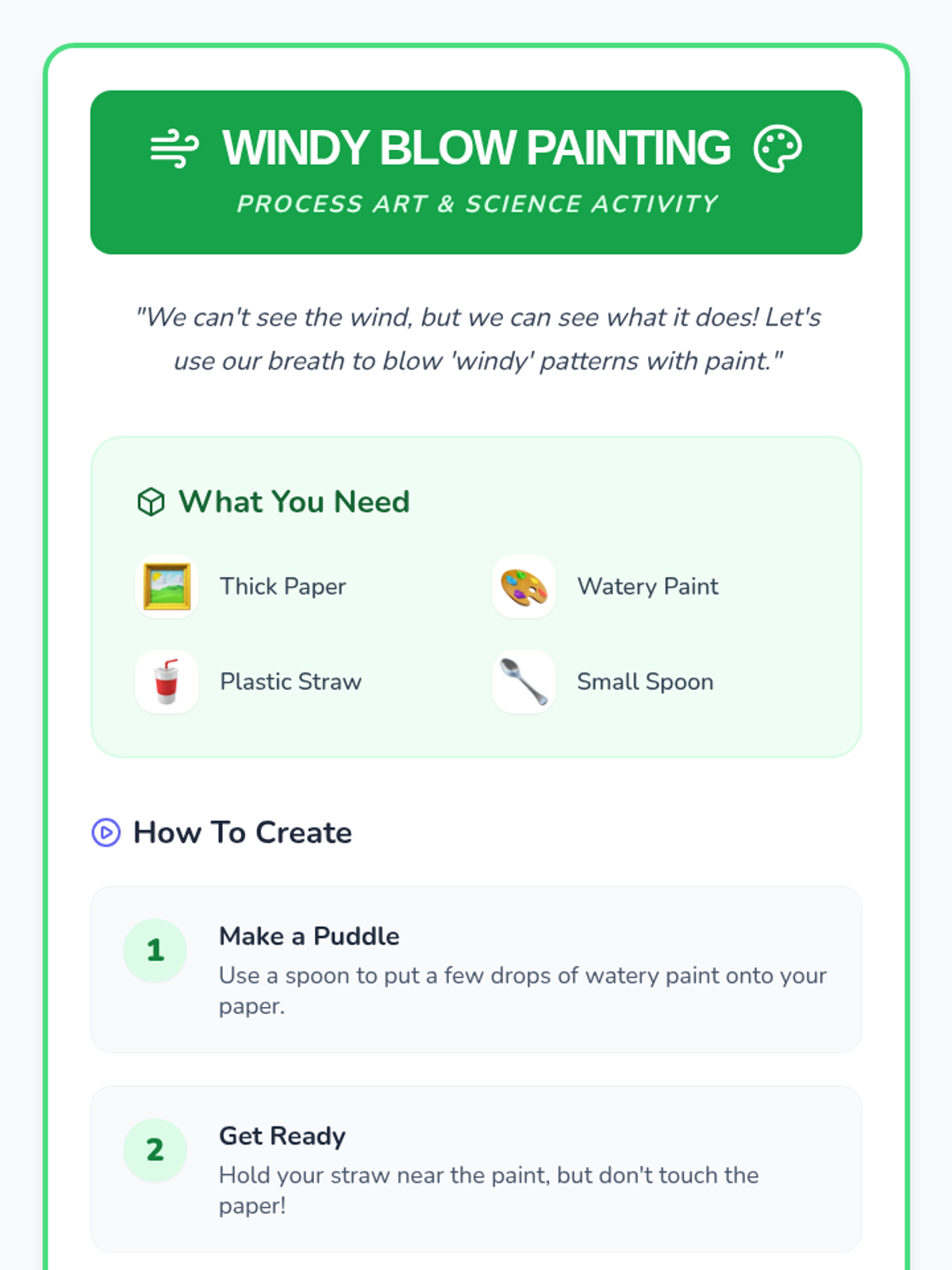
Explores how air moves (wind) and introduces cold weather patterns (snow) through creative 'blow painting' and seasonal clothing sorting.
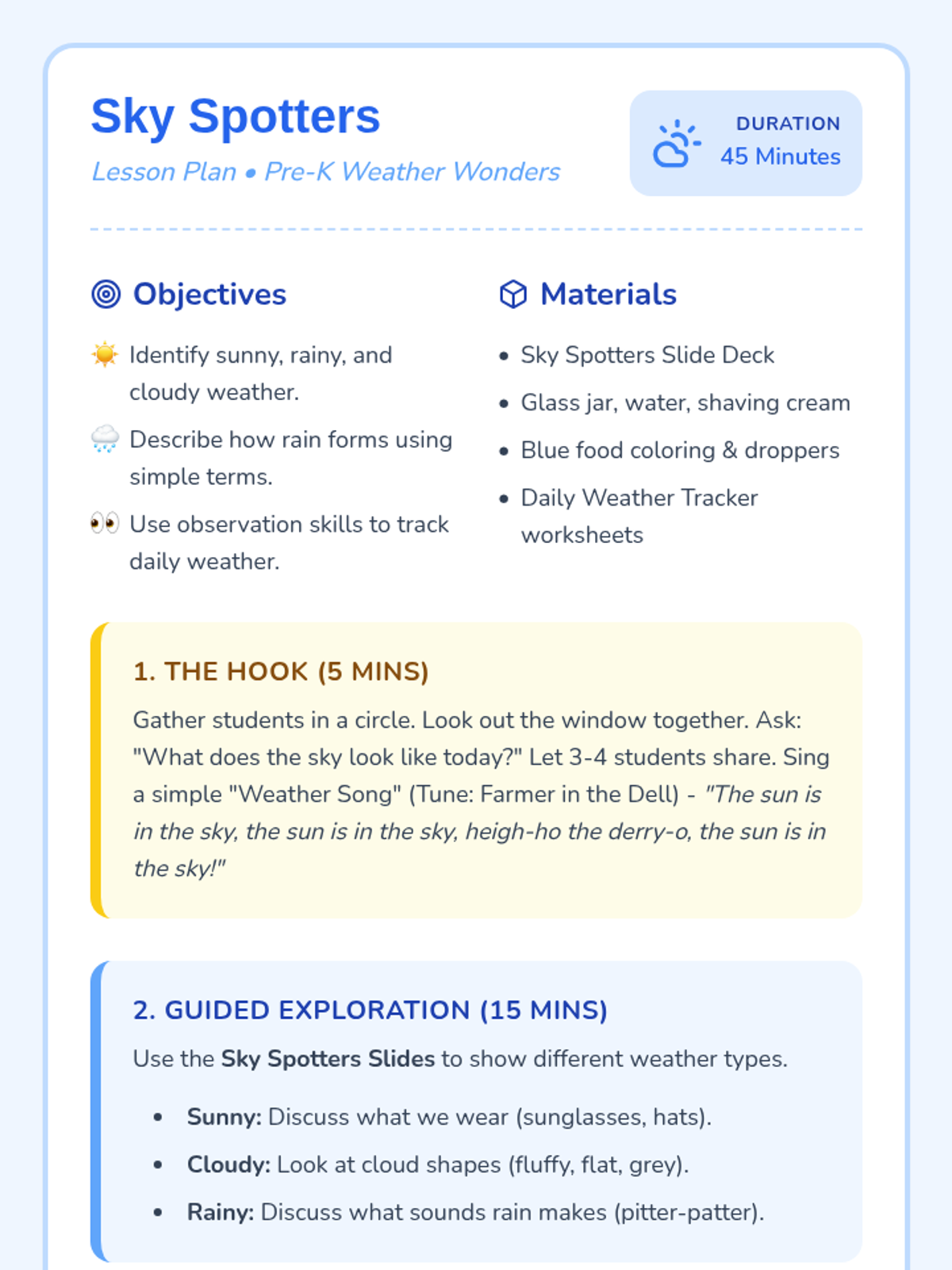
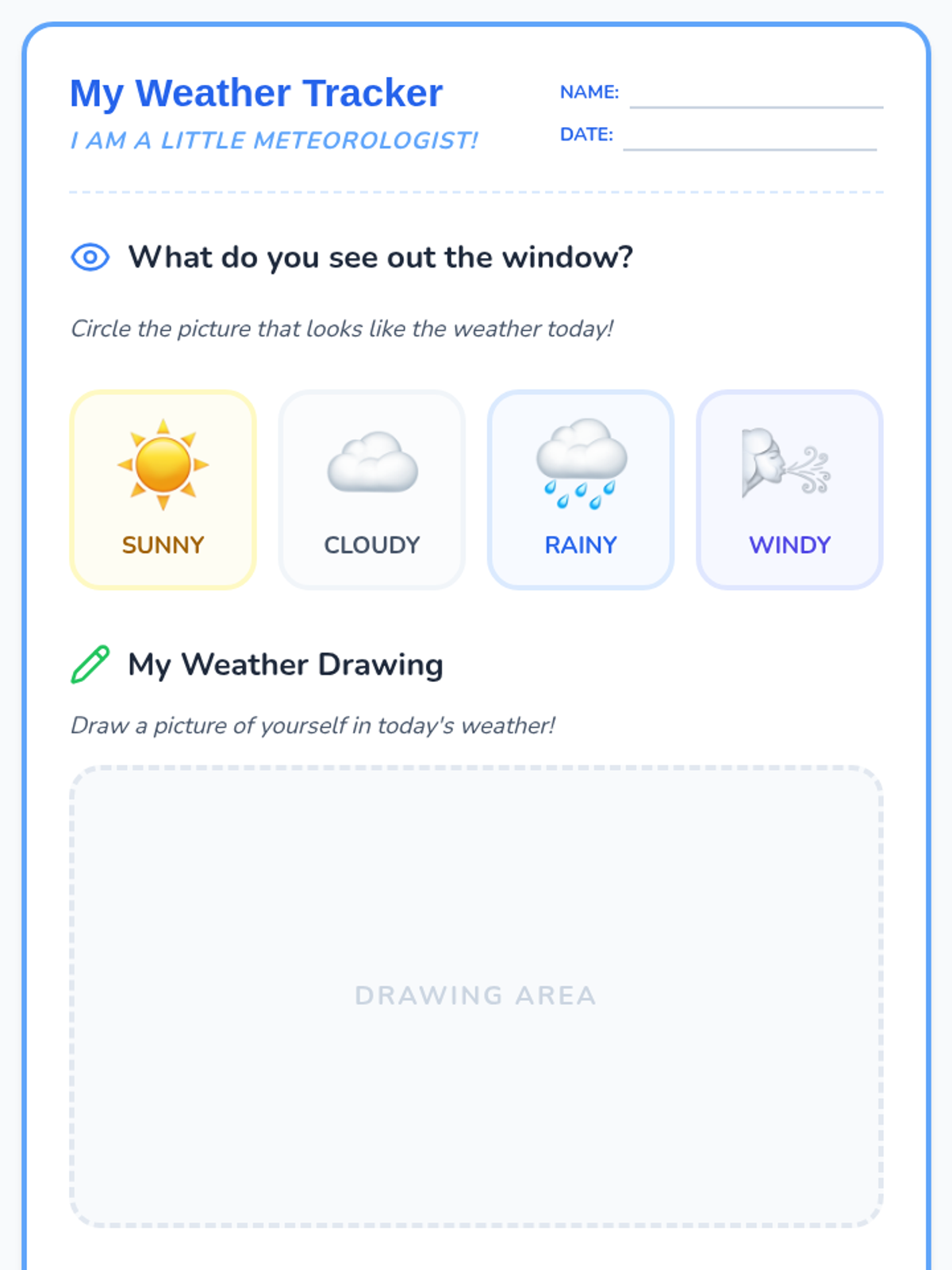
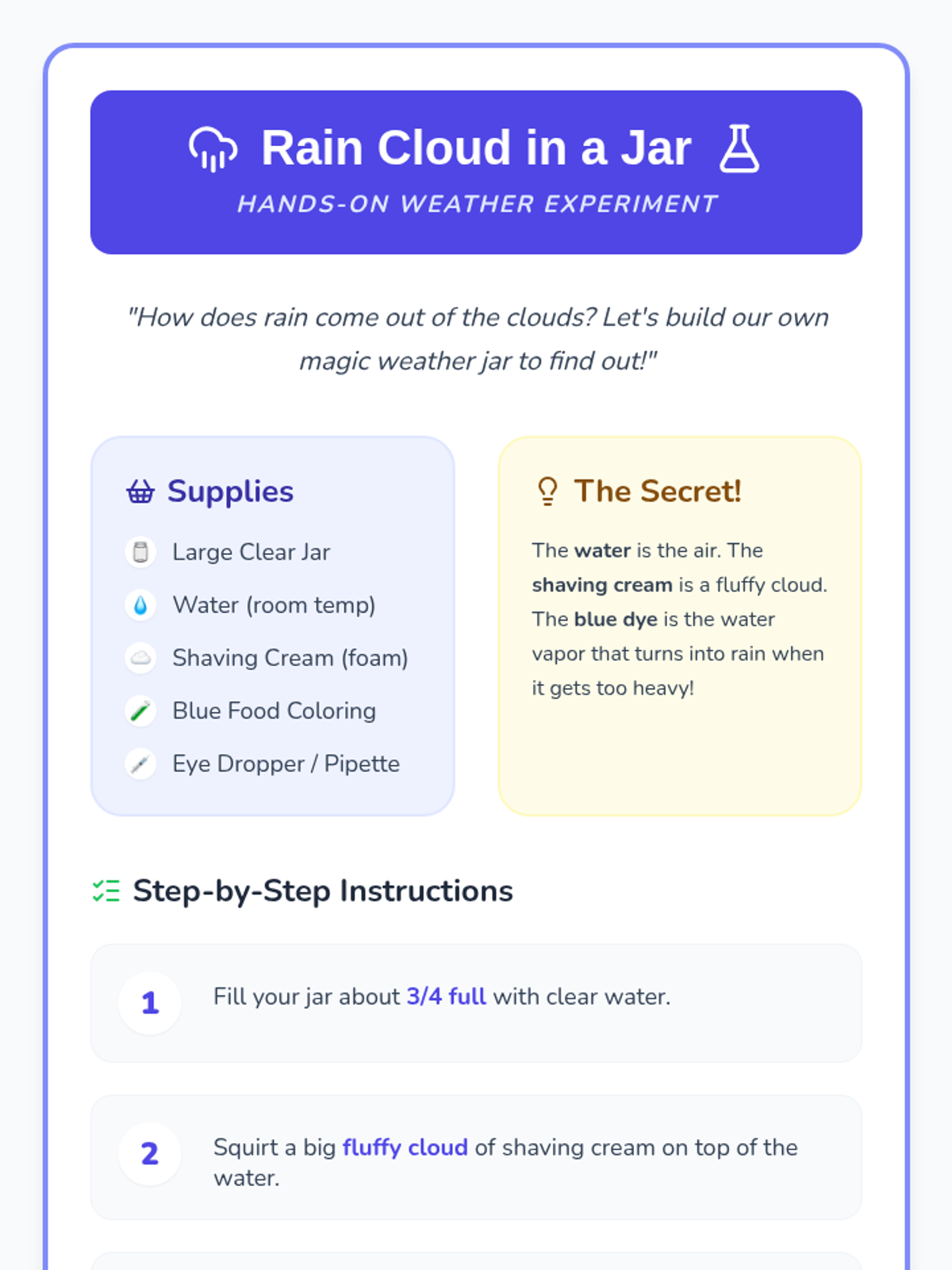
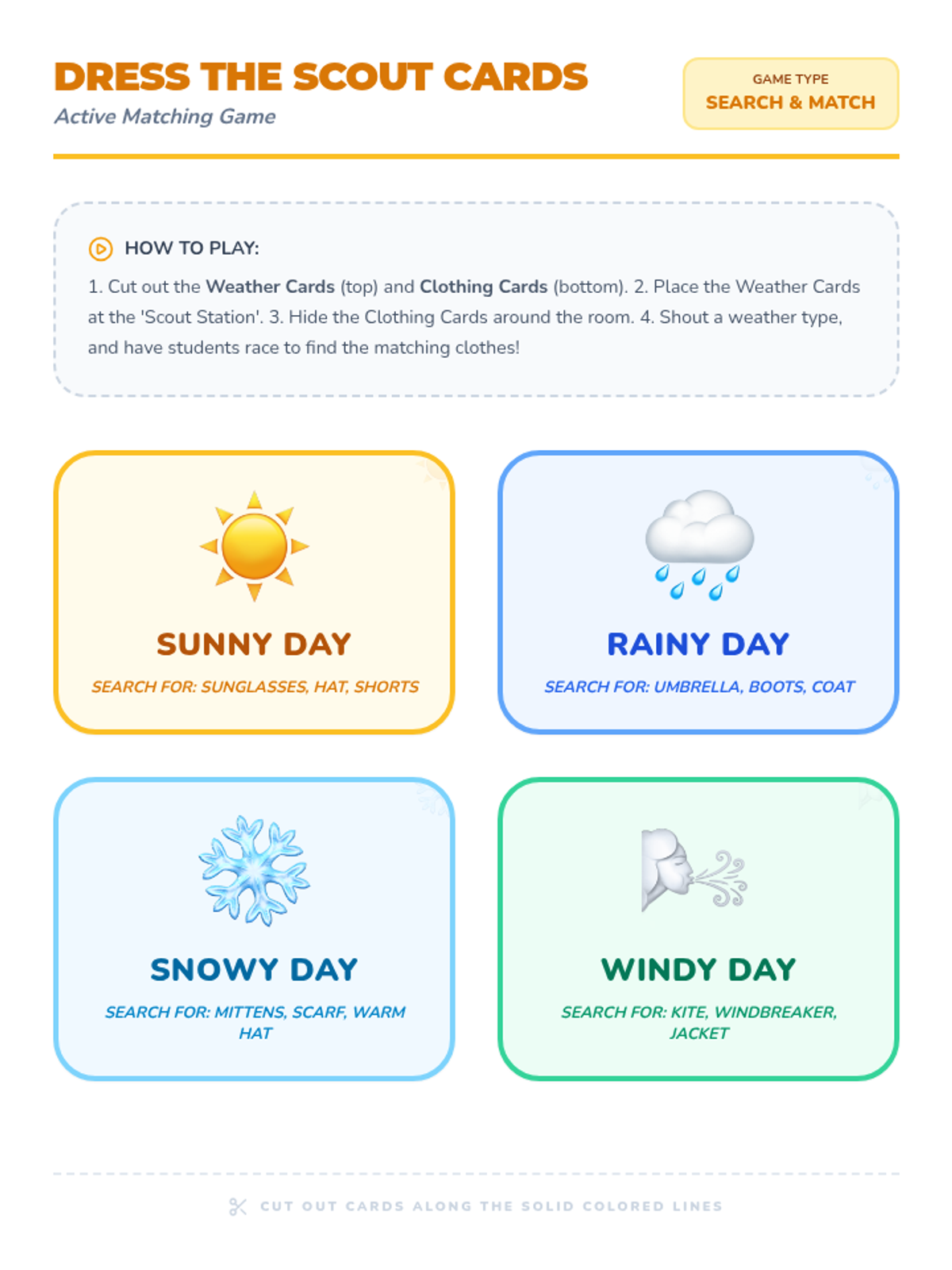
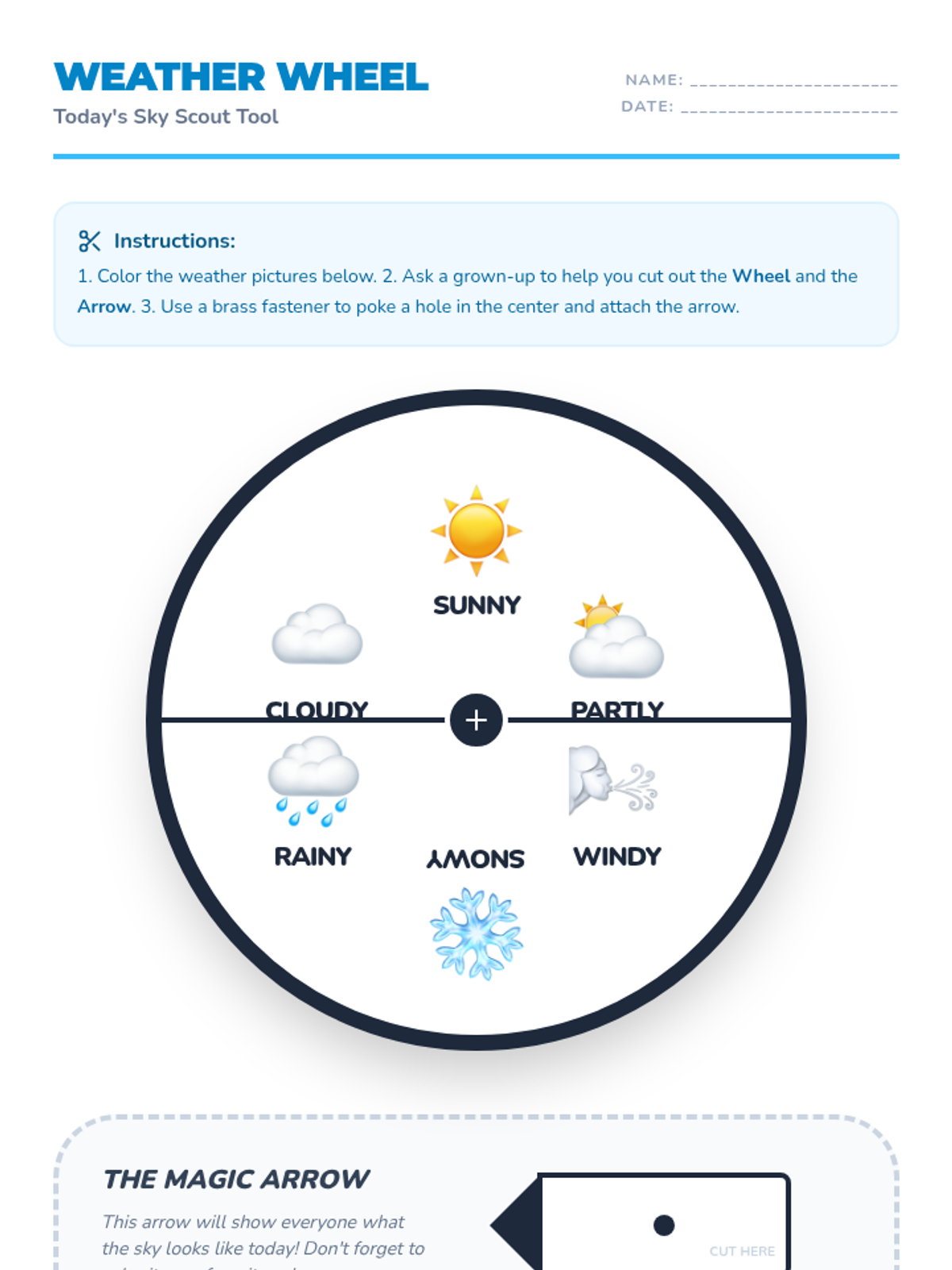
Introduces students to basic weather types (sunny, rainy, cloudy) through visual observation and a hands-on 'rain cloud in a jar' experiment.
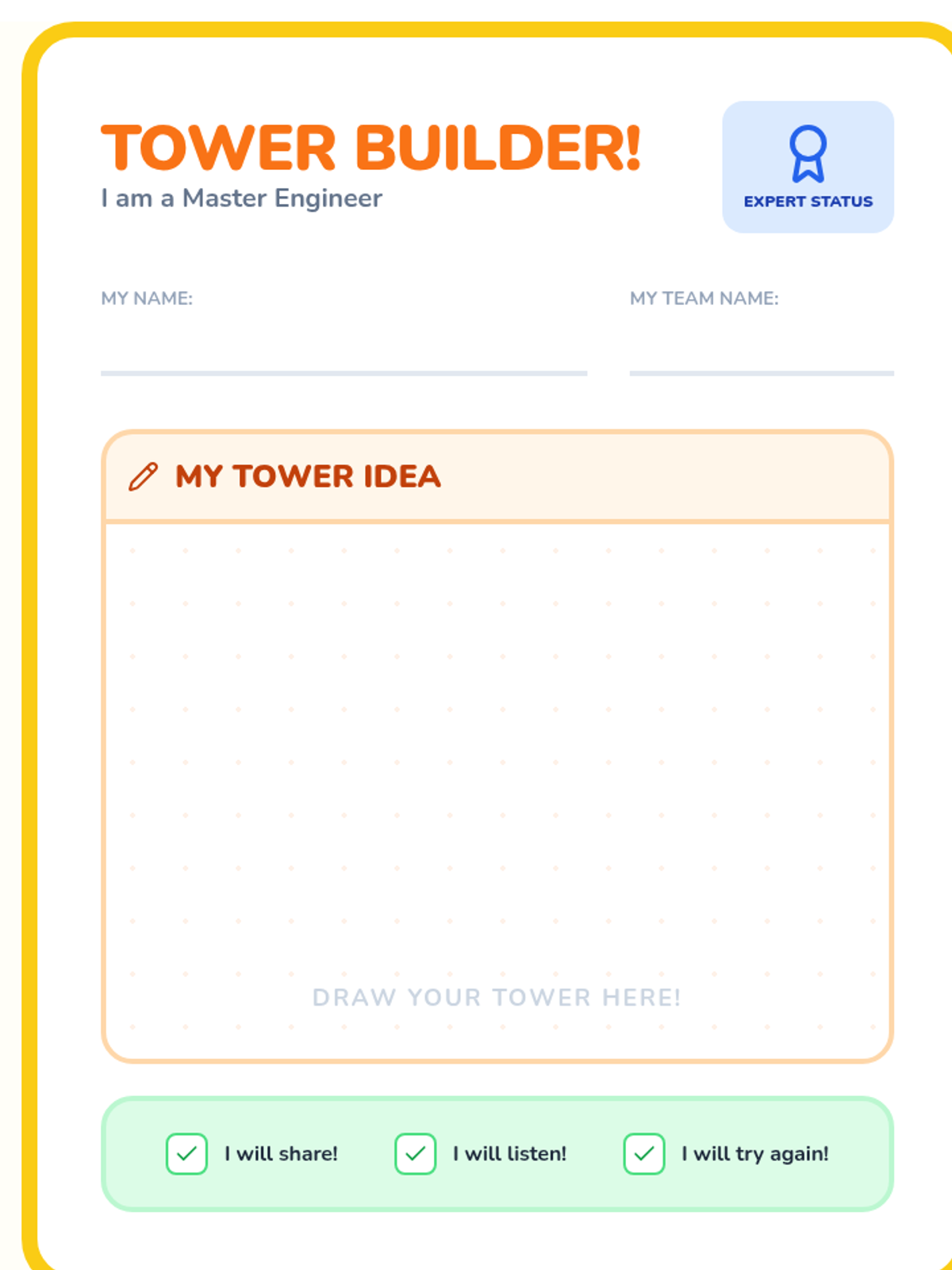
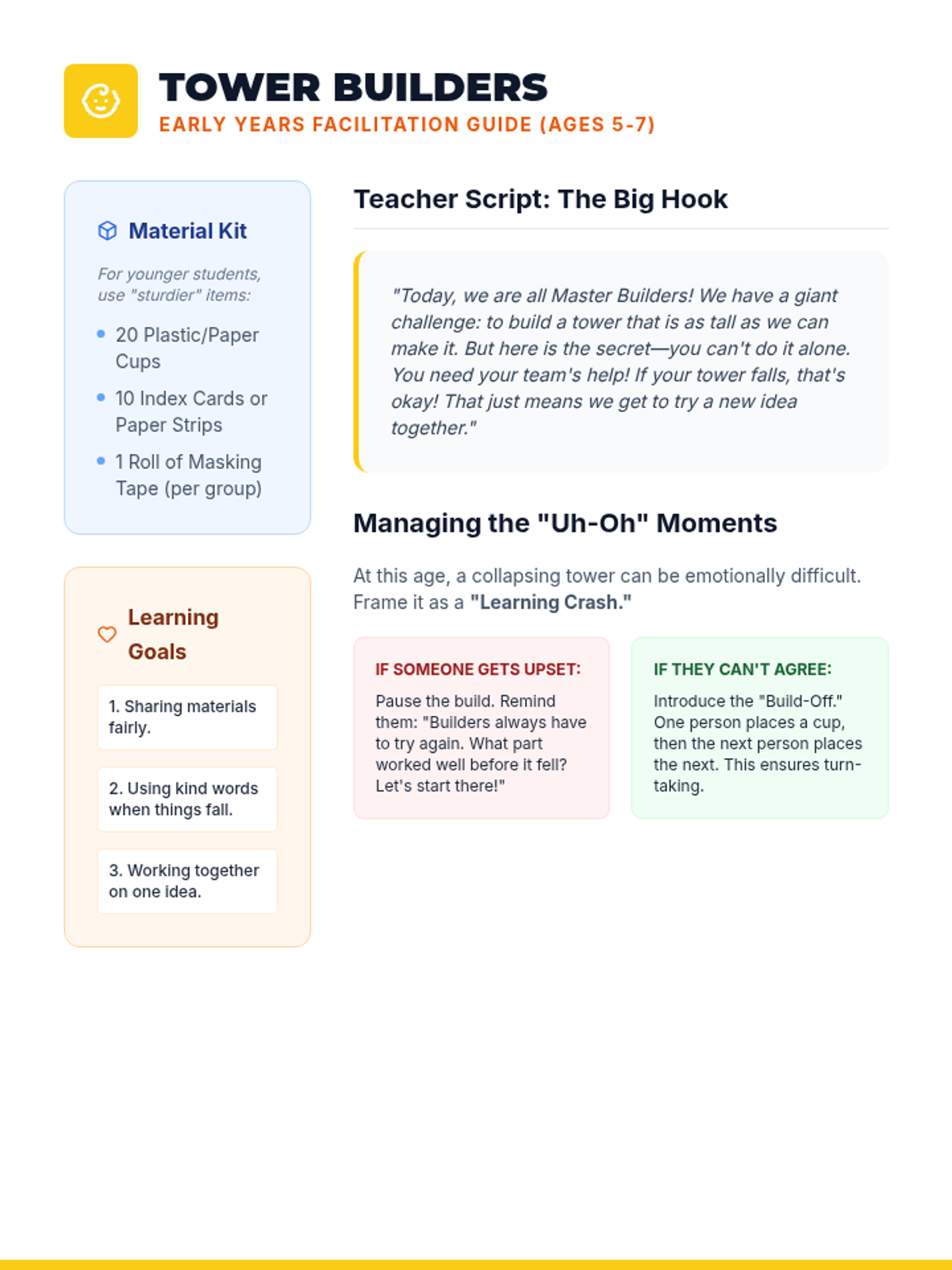
A fun, playful building challenge for early learners. Small teams work together to build the tallest tower they can using simple materials, focusing on sharing, taking turns, and trying again.
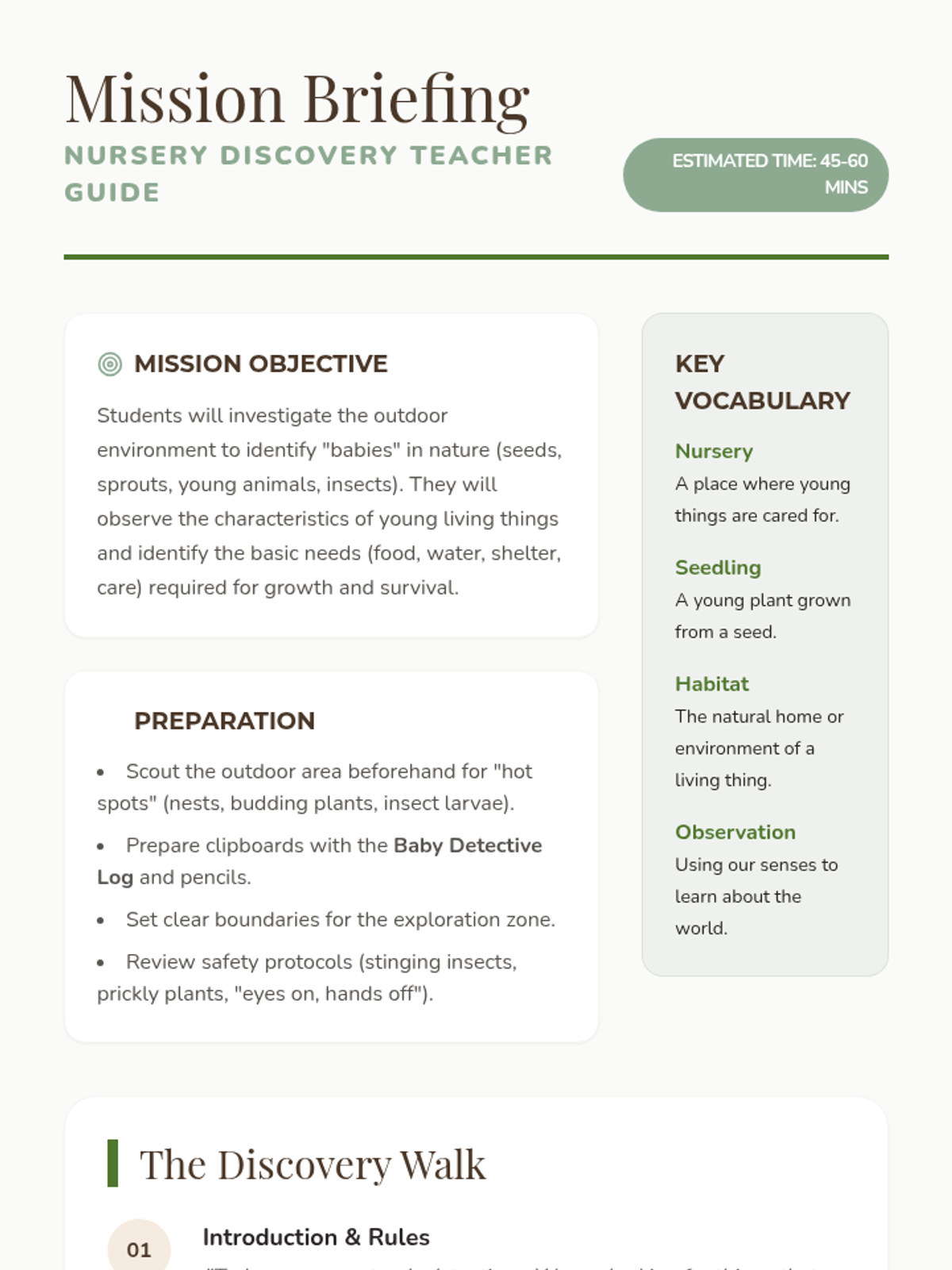
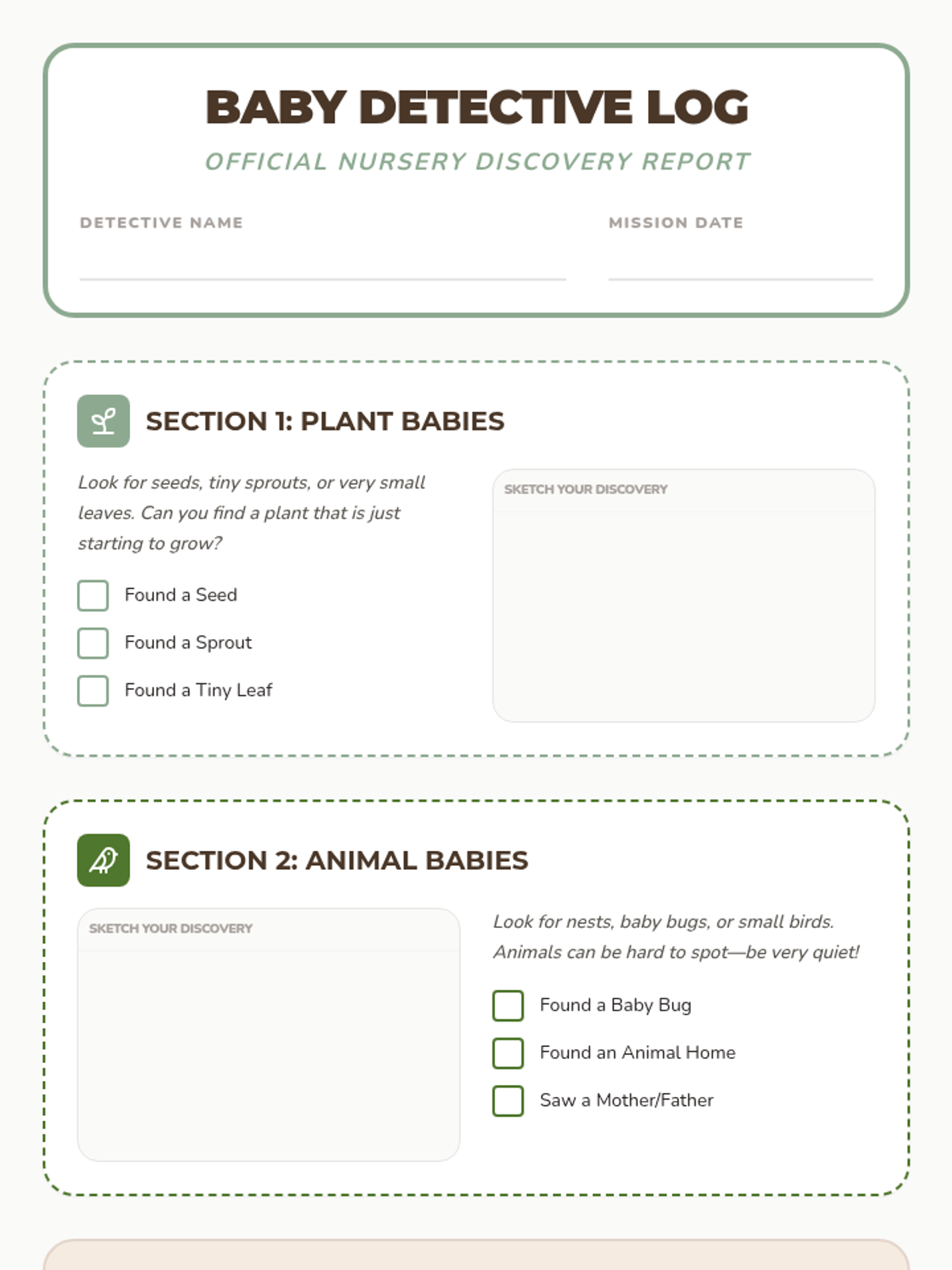
An outdoor exploration where students become 'Baby Detectives' to find and observe different types of babies in nature, including human, animal, and plant life. Students will learn that all living things start small and require care and specific environments to grow.
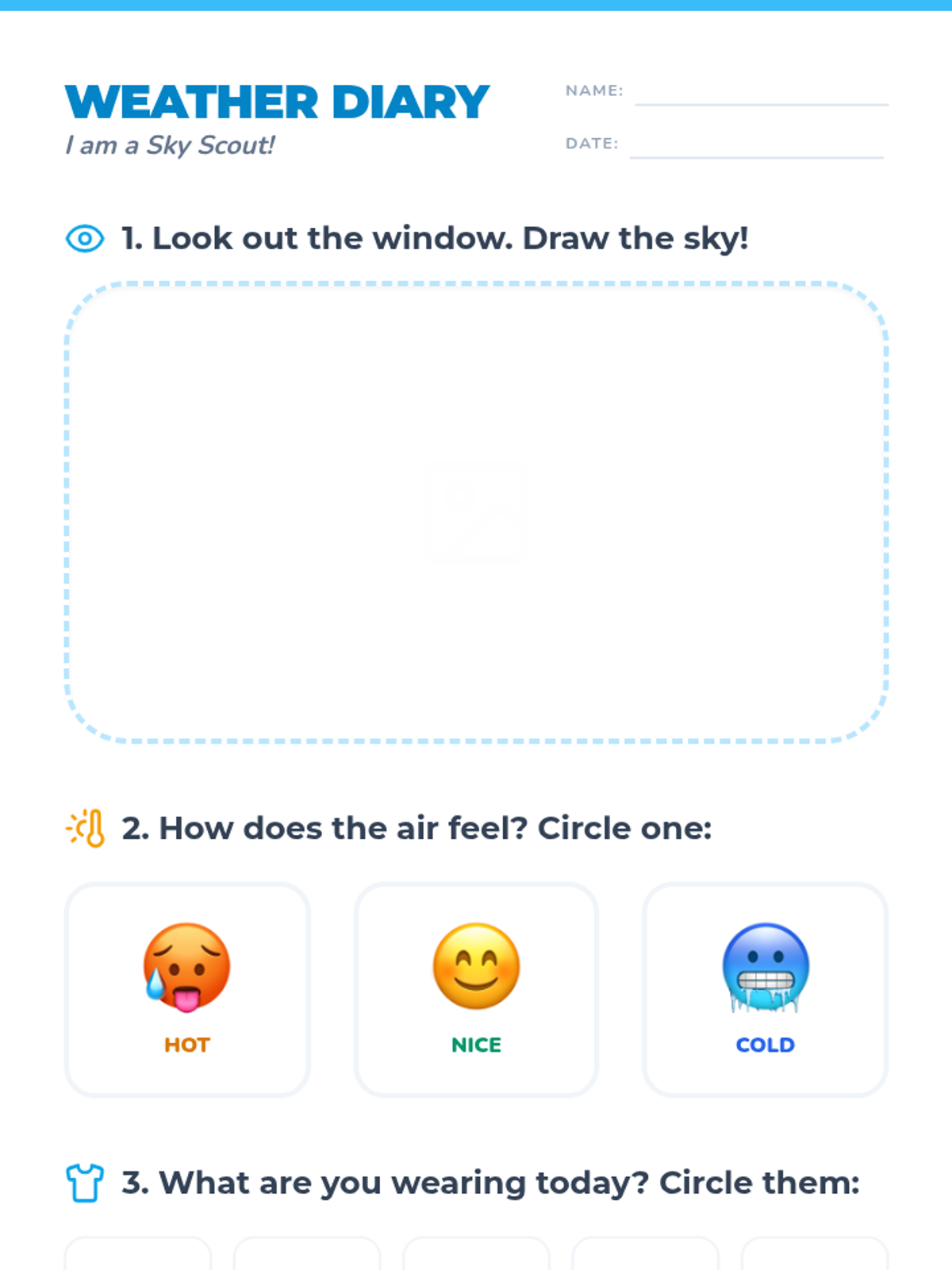
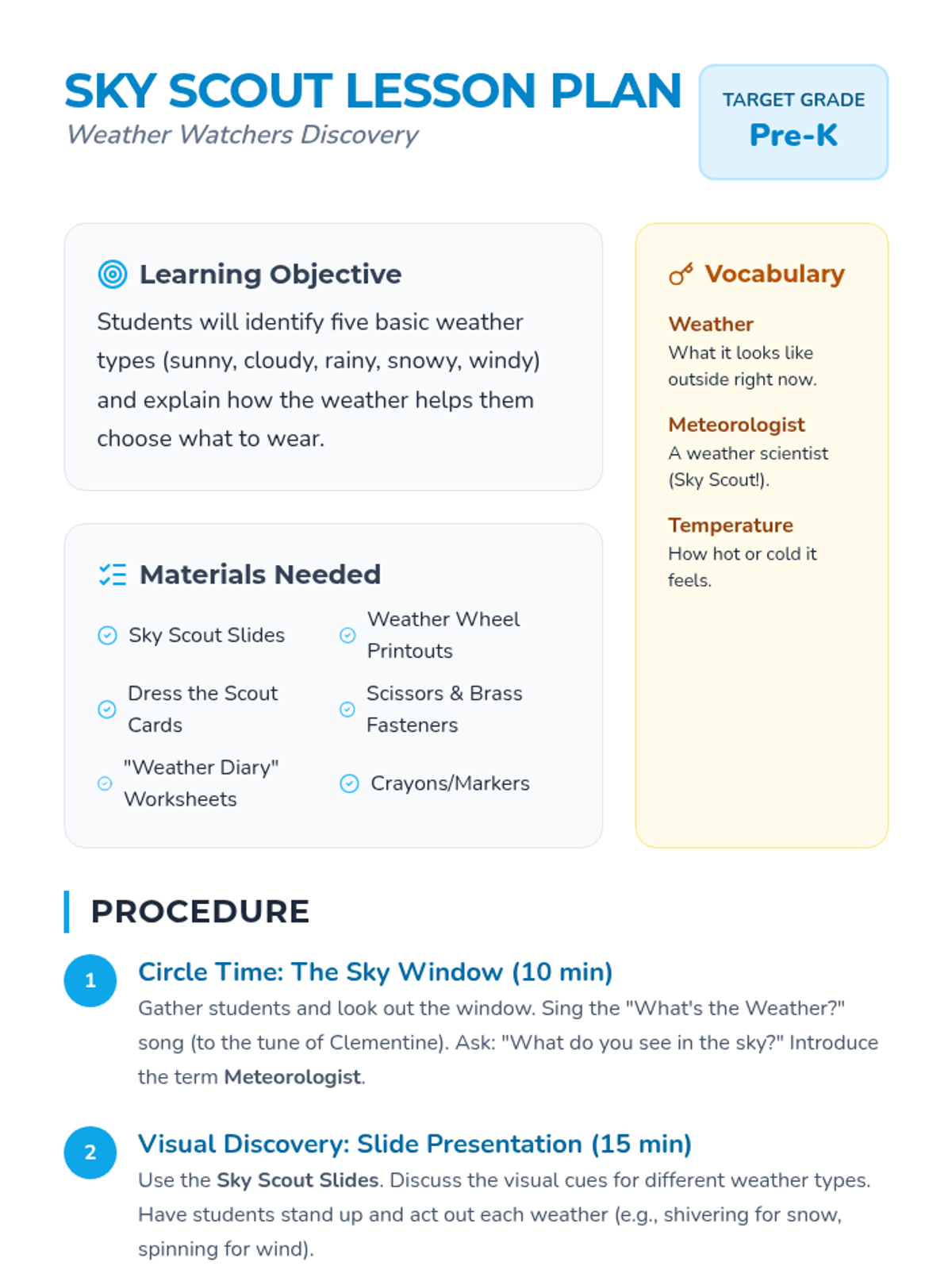
An introductory lesson for Pre-K students to observe, identify, and describe daily weather patterns and how they affect our lives.
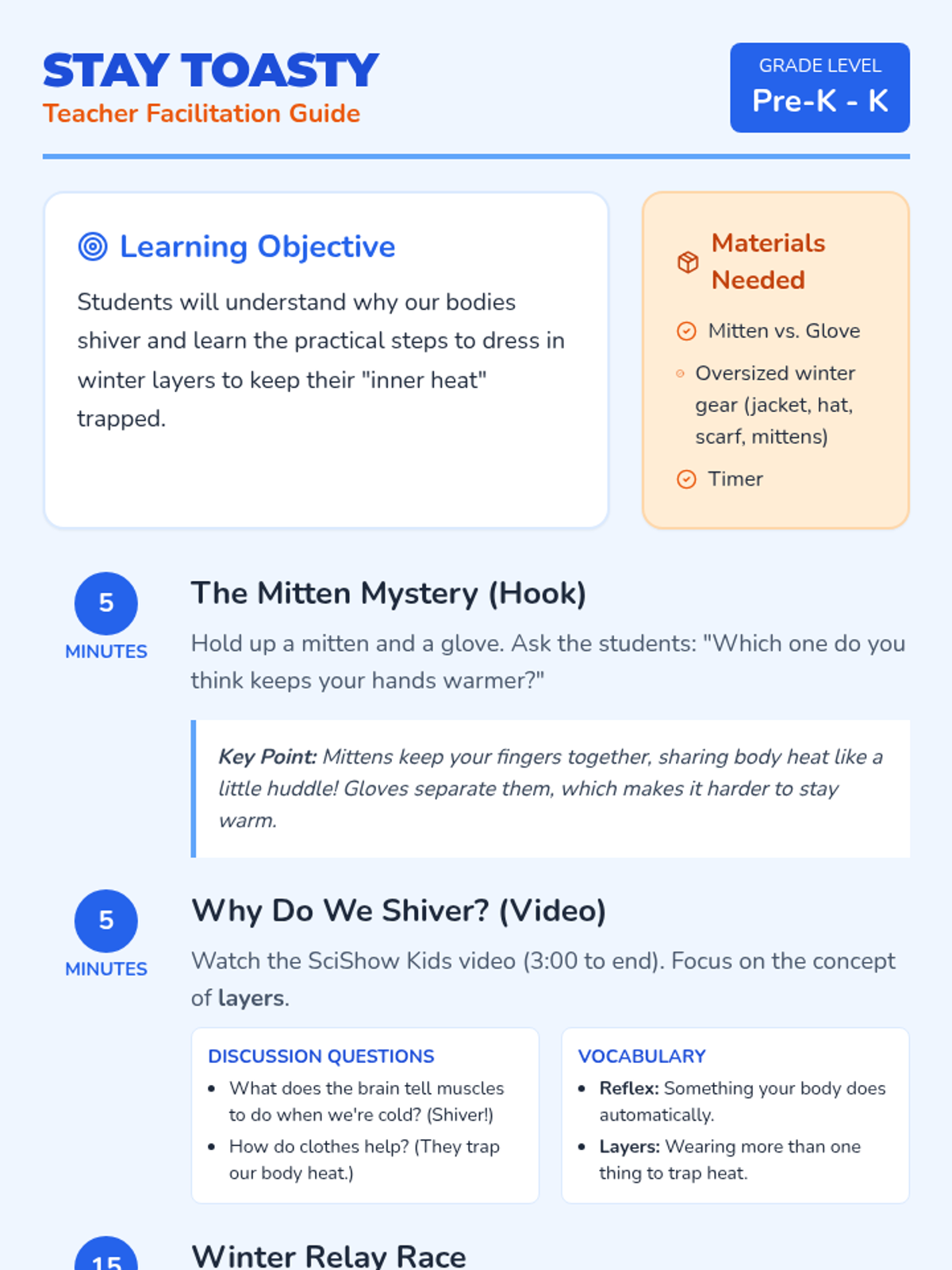
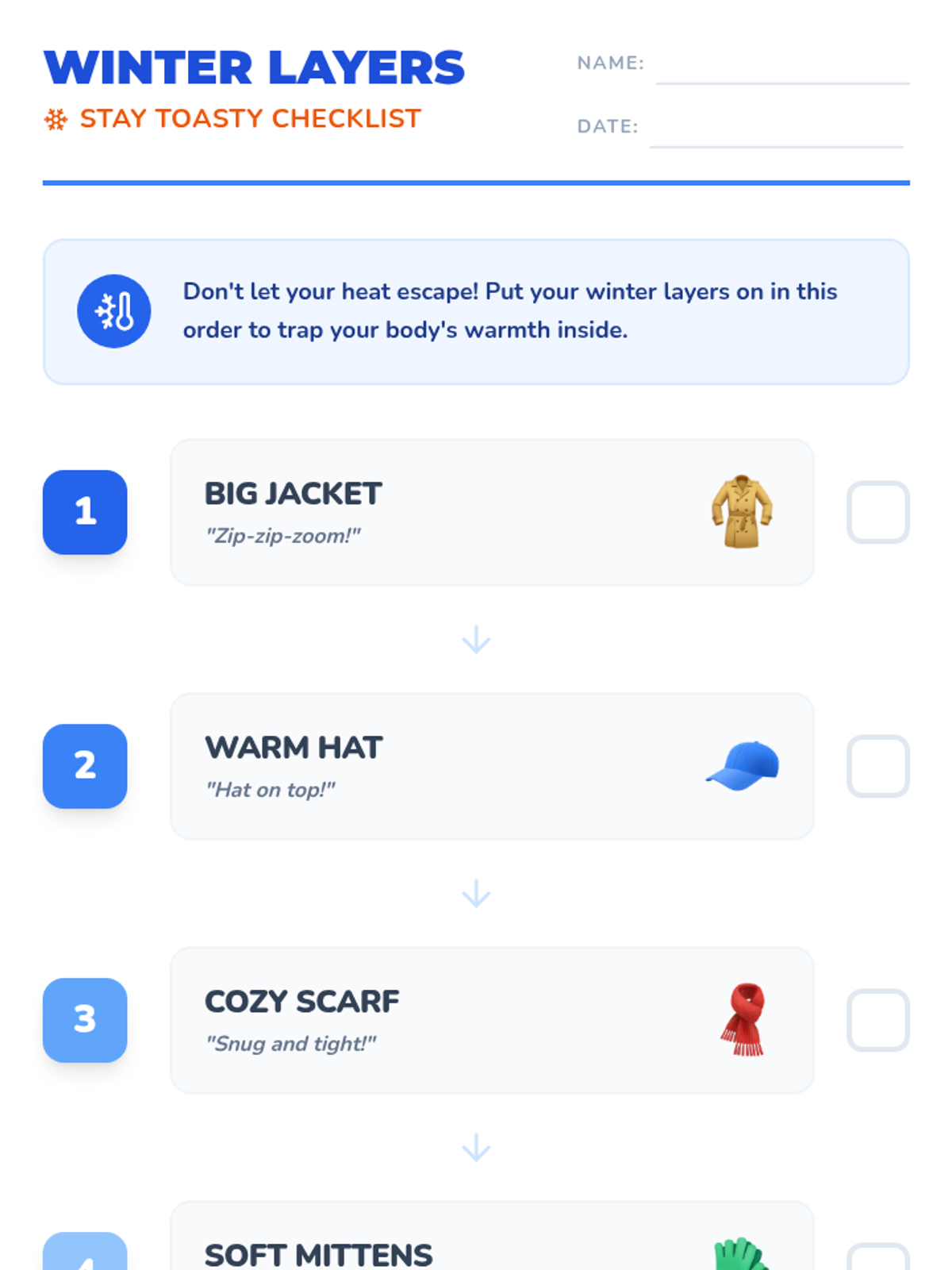
A hands-on lesson for Pre-K and Kindergarten students to learn the science of staying warm and the practical skill of dressing in winter layers. Features a science video, a high-energy relay race, and a mnemonic rhyme for dressing independently.
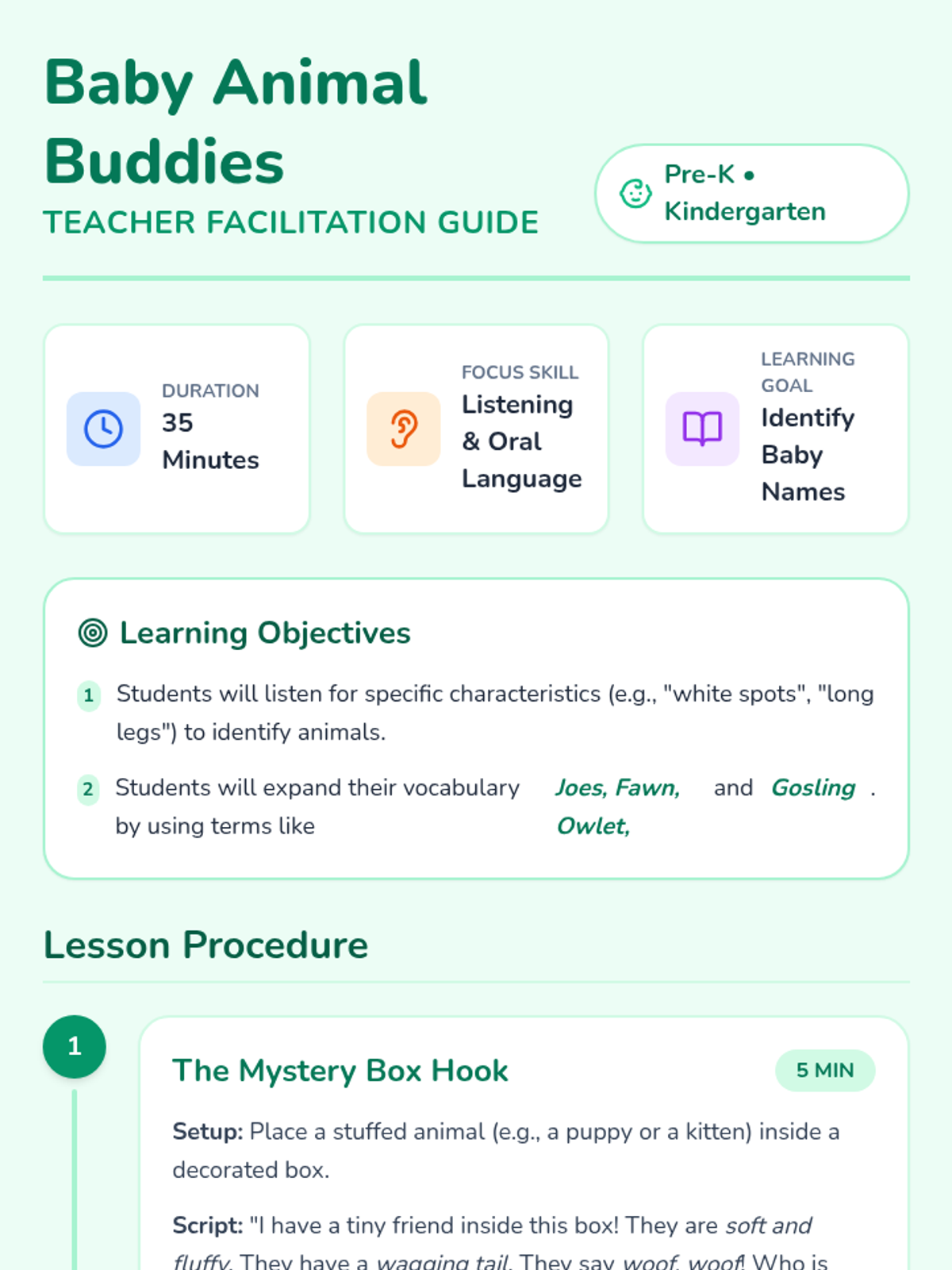
A Pre-K to Kindergarten lesson focused on listening skills and oral language as students identify and describe baby animals using specific vocabulary from a nature video.
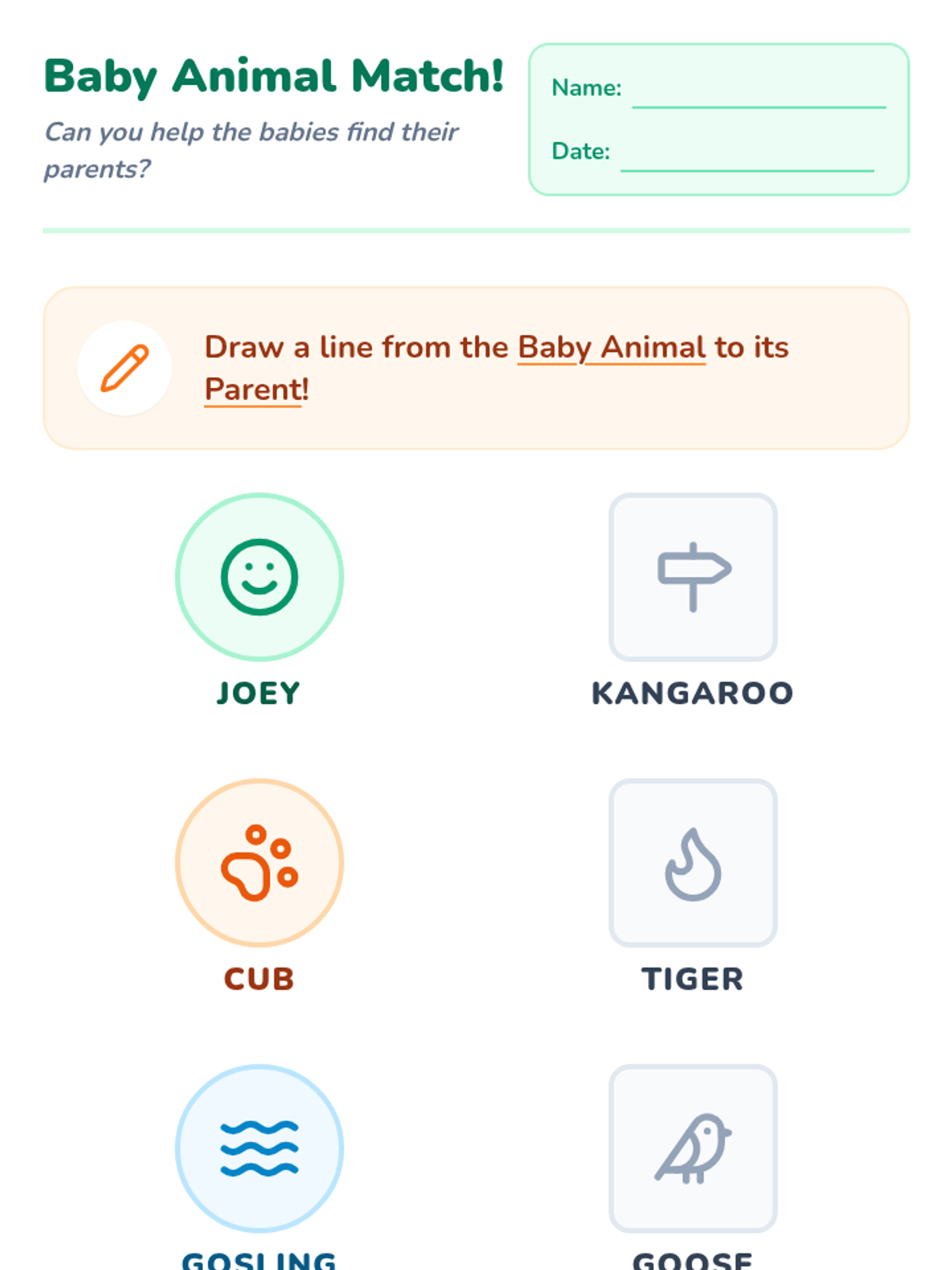
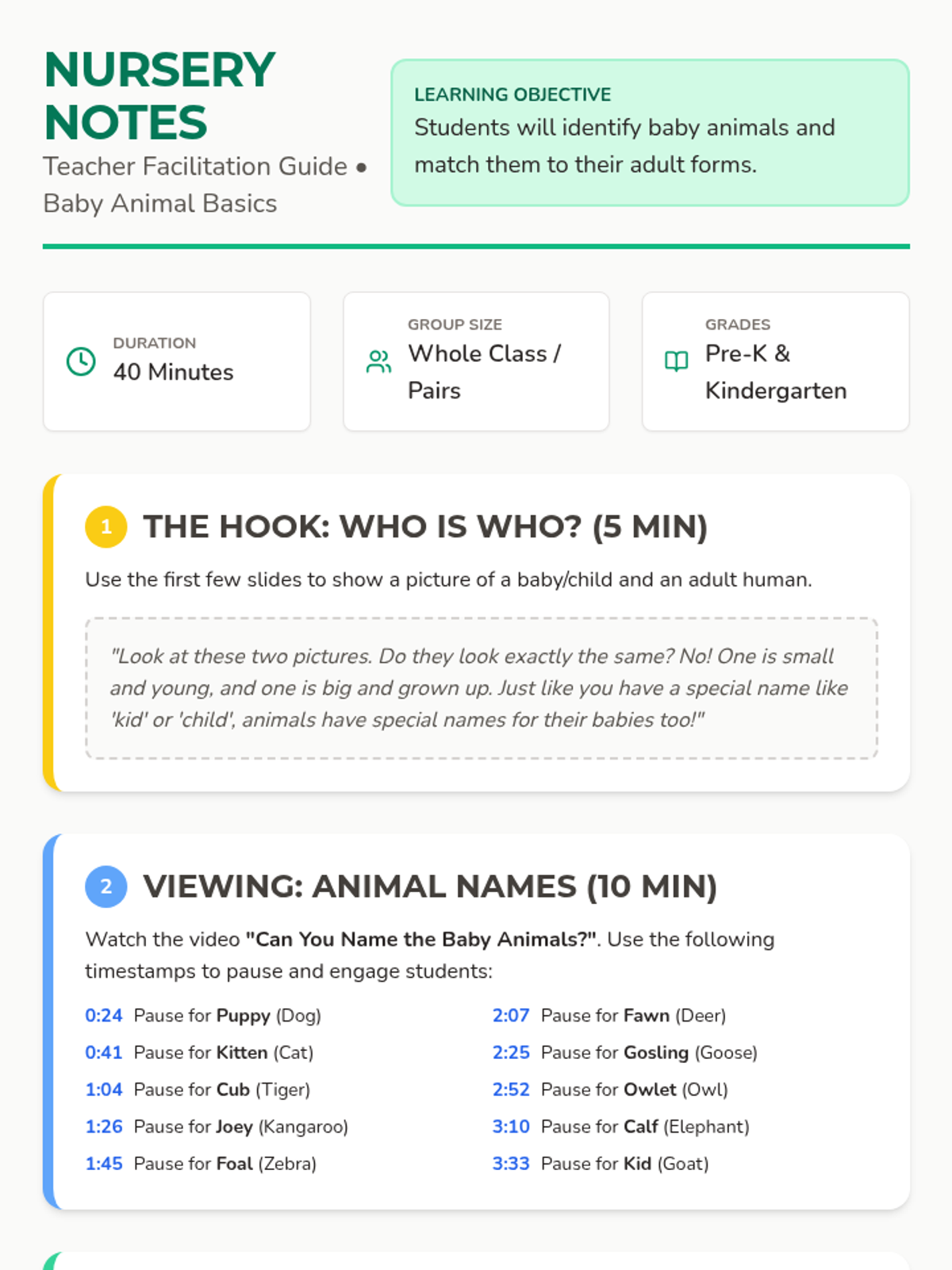
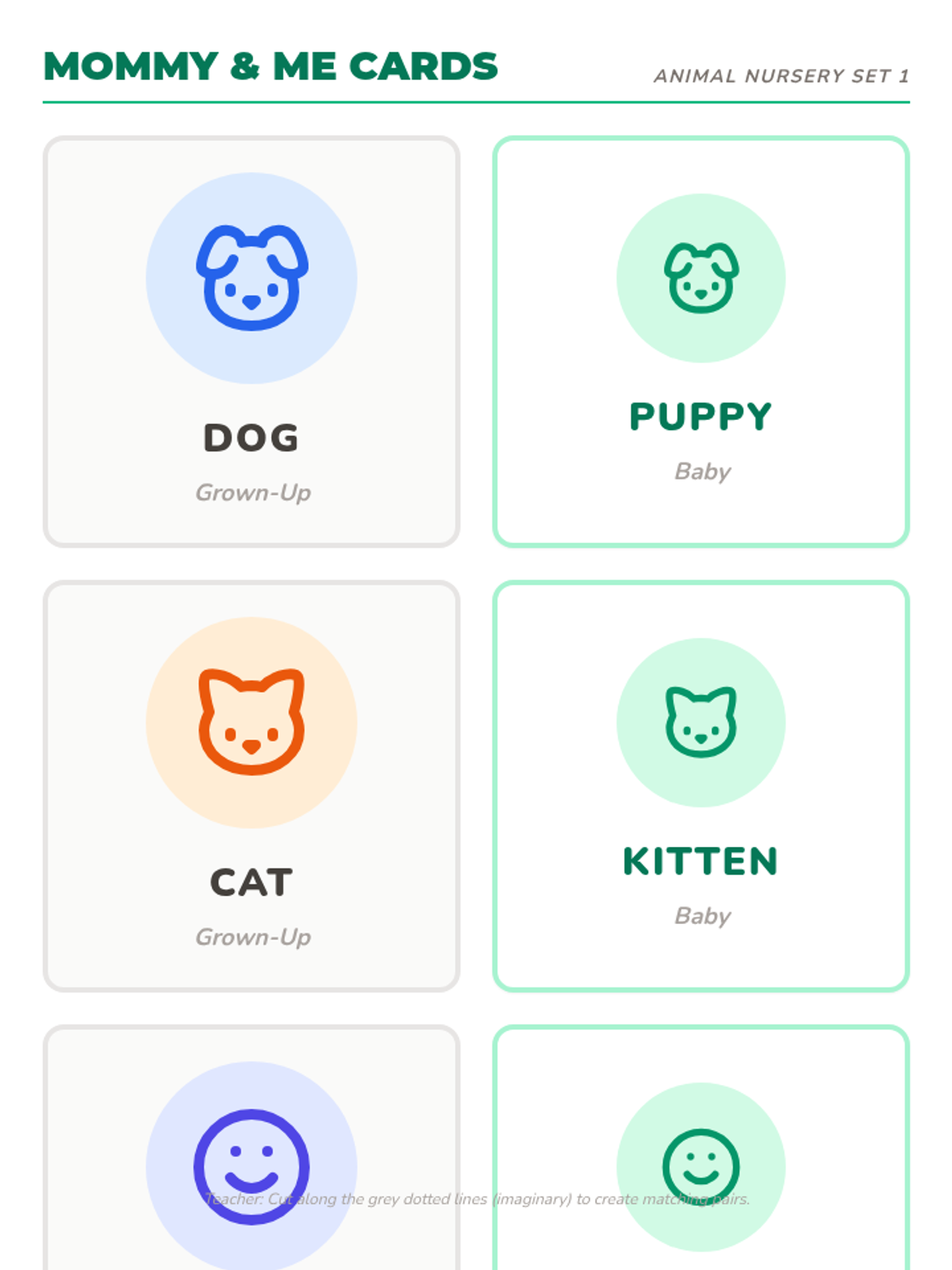
A charming introductory lesson where young learners identify baby animals and their adult counterparts through a video, interactive discussion, and a hands-on matching game.
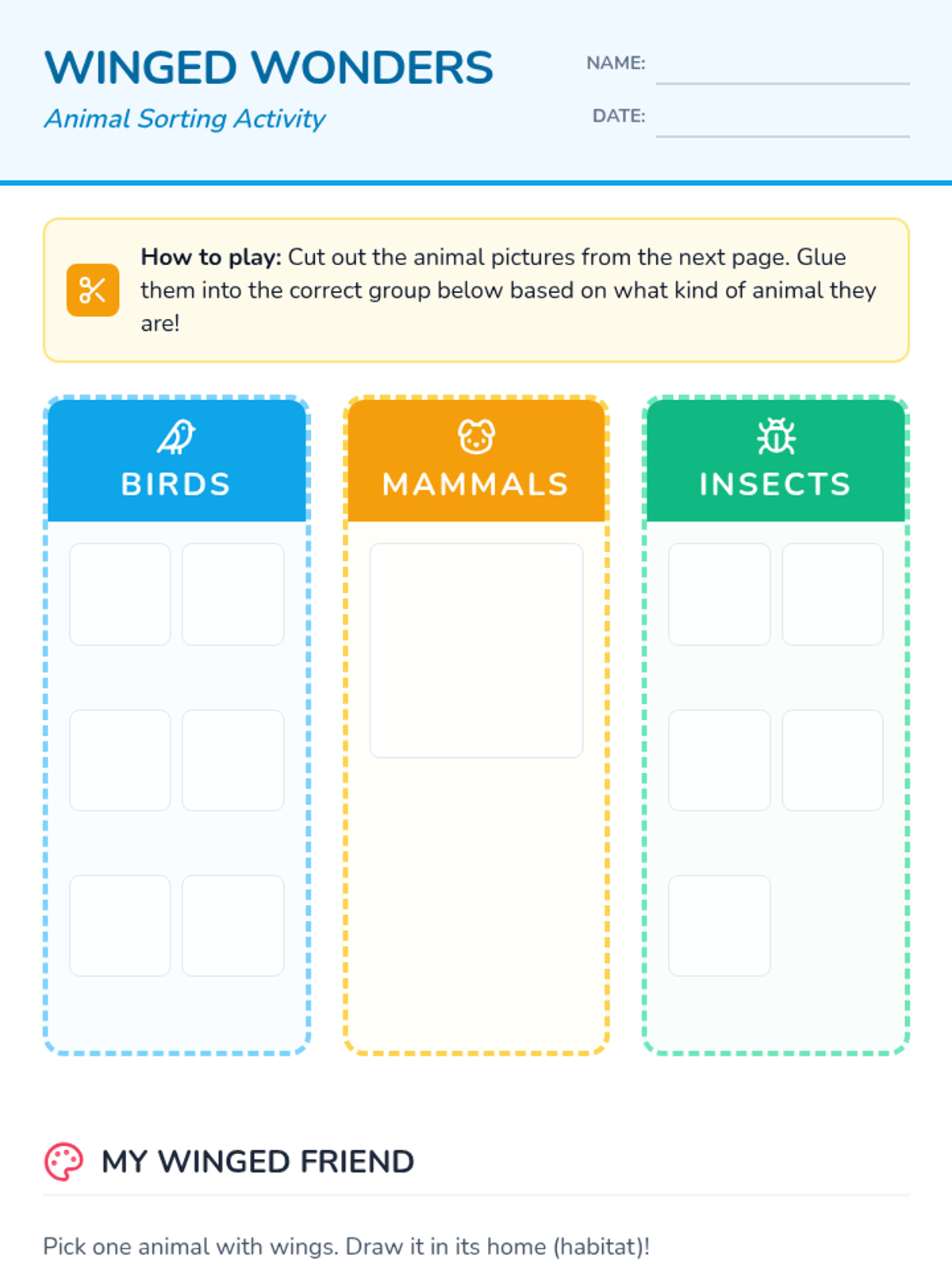
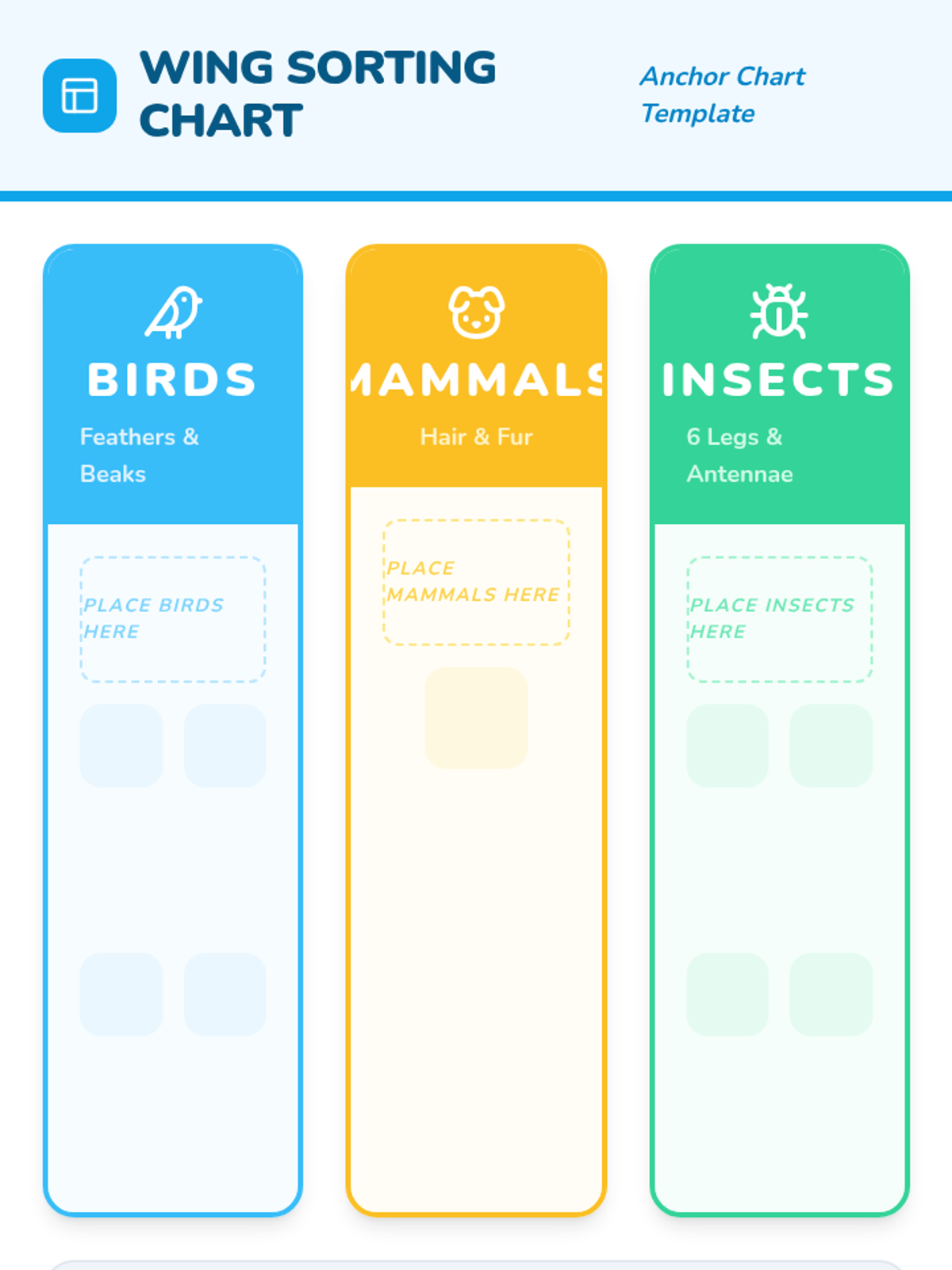
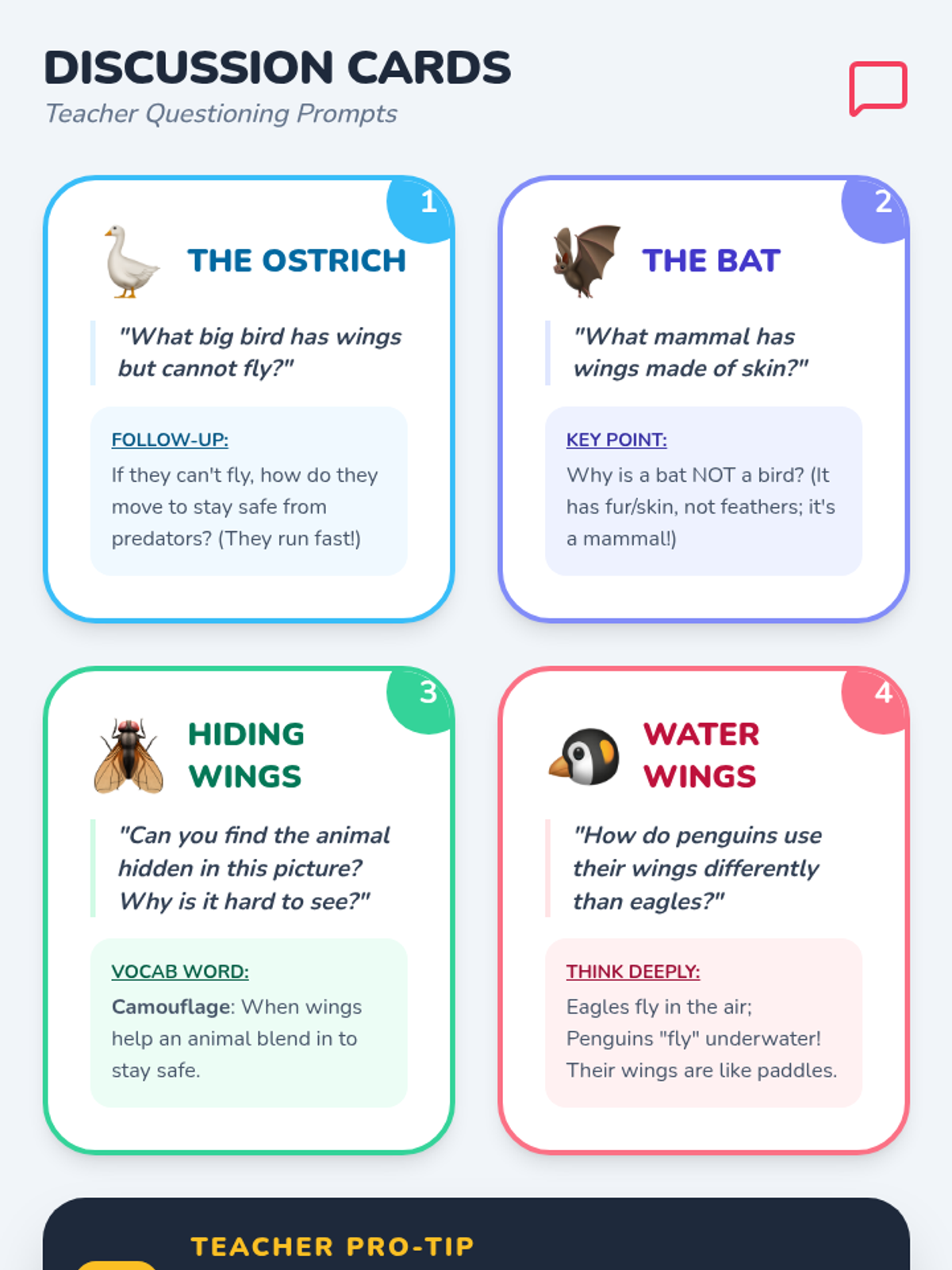
Students will learn to identify and categorize different winged animals, including birds, mammals, and insects, while exploring the various ways they use their wings to move and survive.
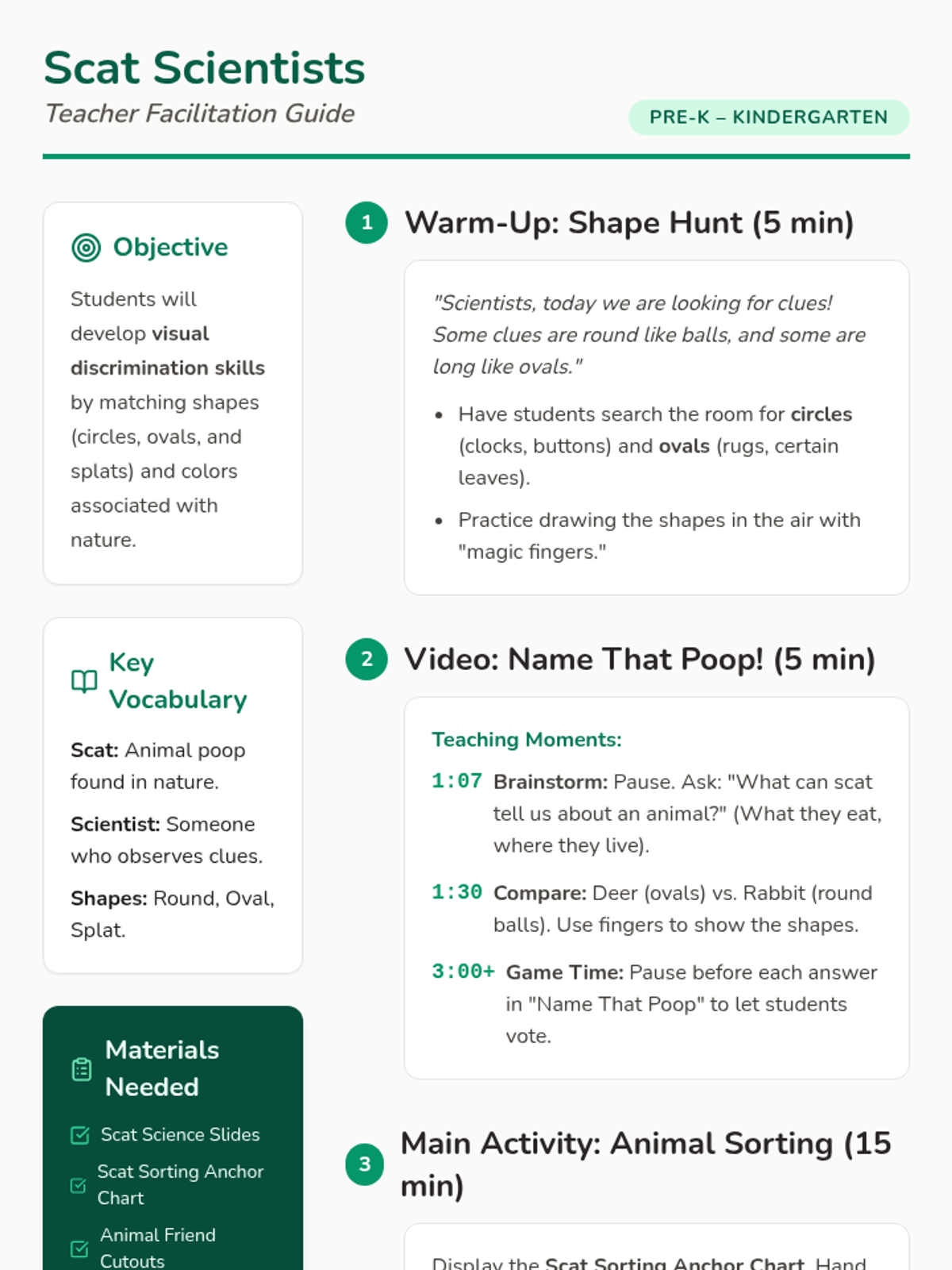
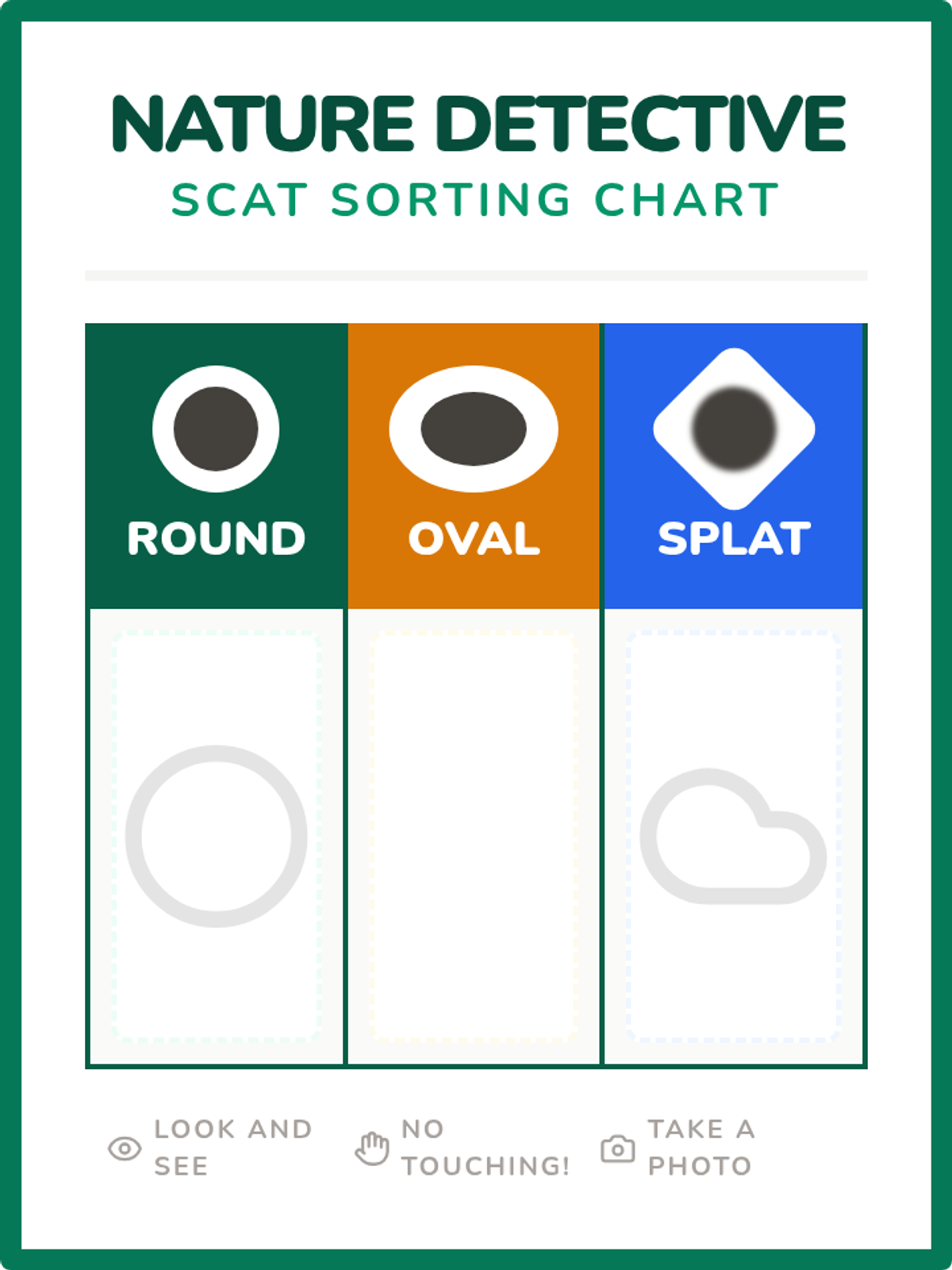
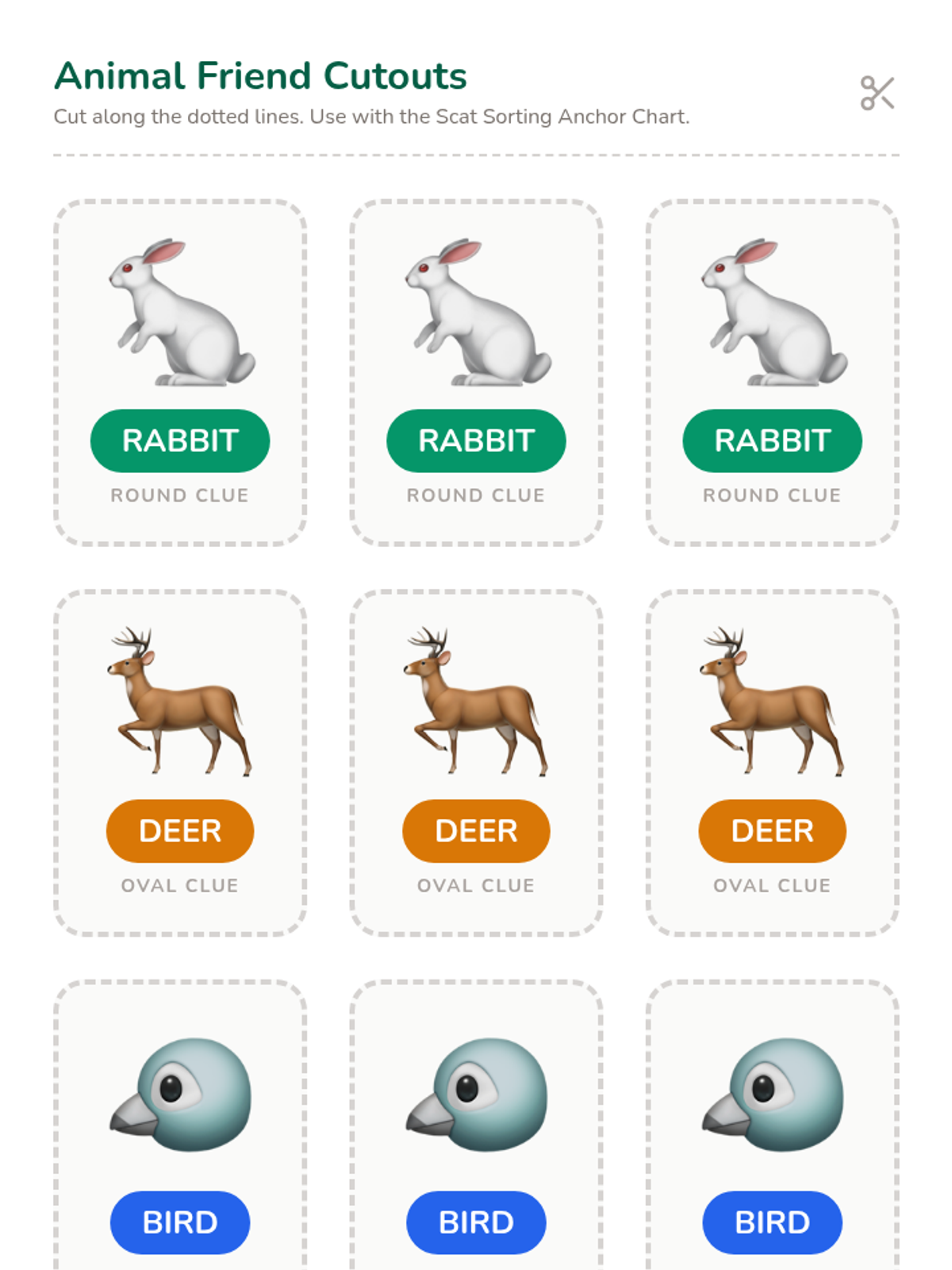
Students will learn to identify animal scat by its shape (round, oval, or splat) to develop visual discrimination skills through a nature-themed scientific lens.
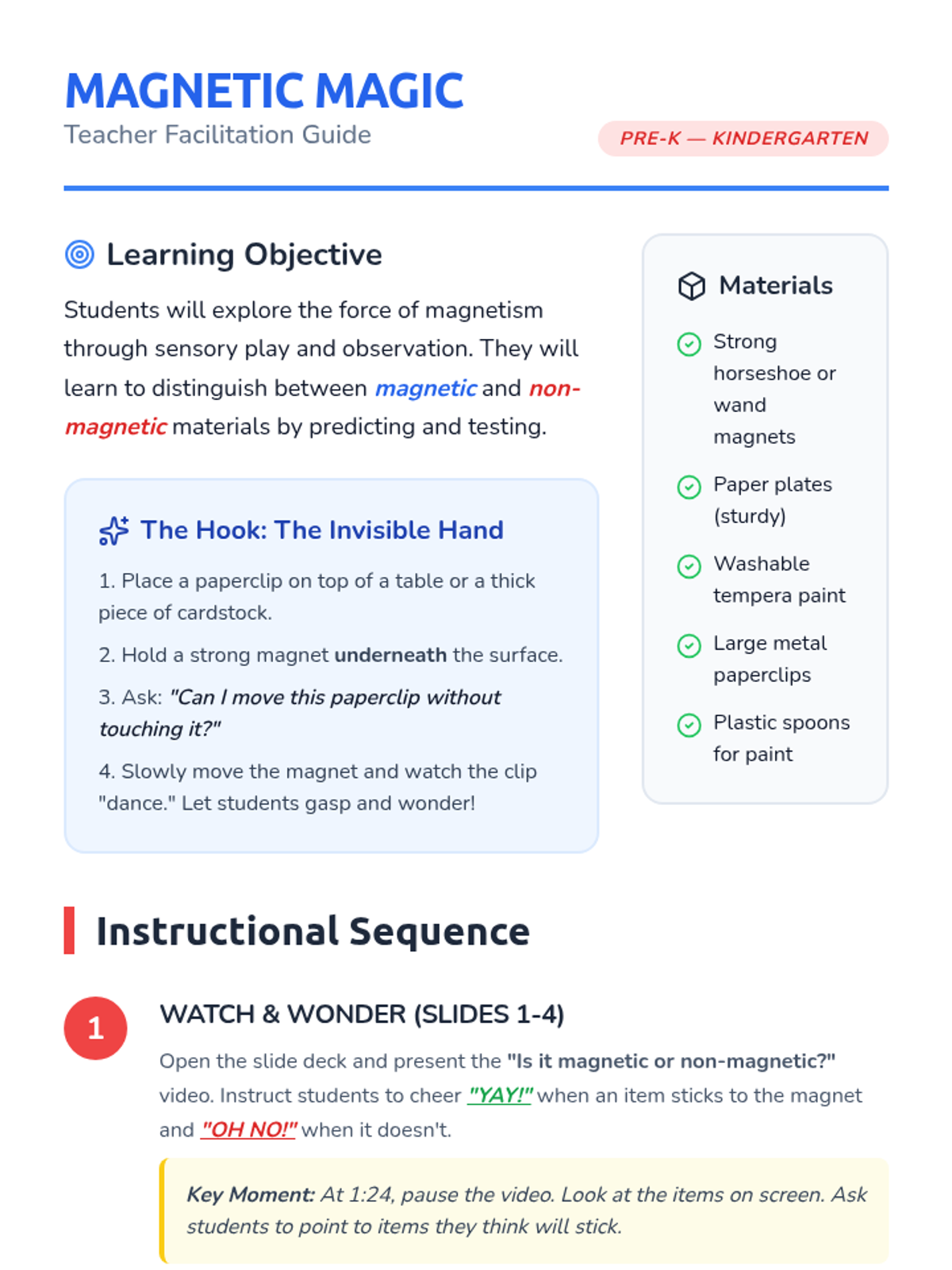
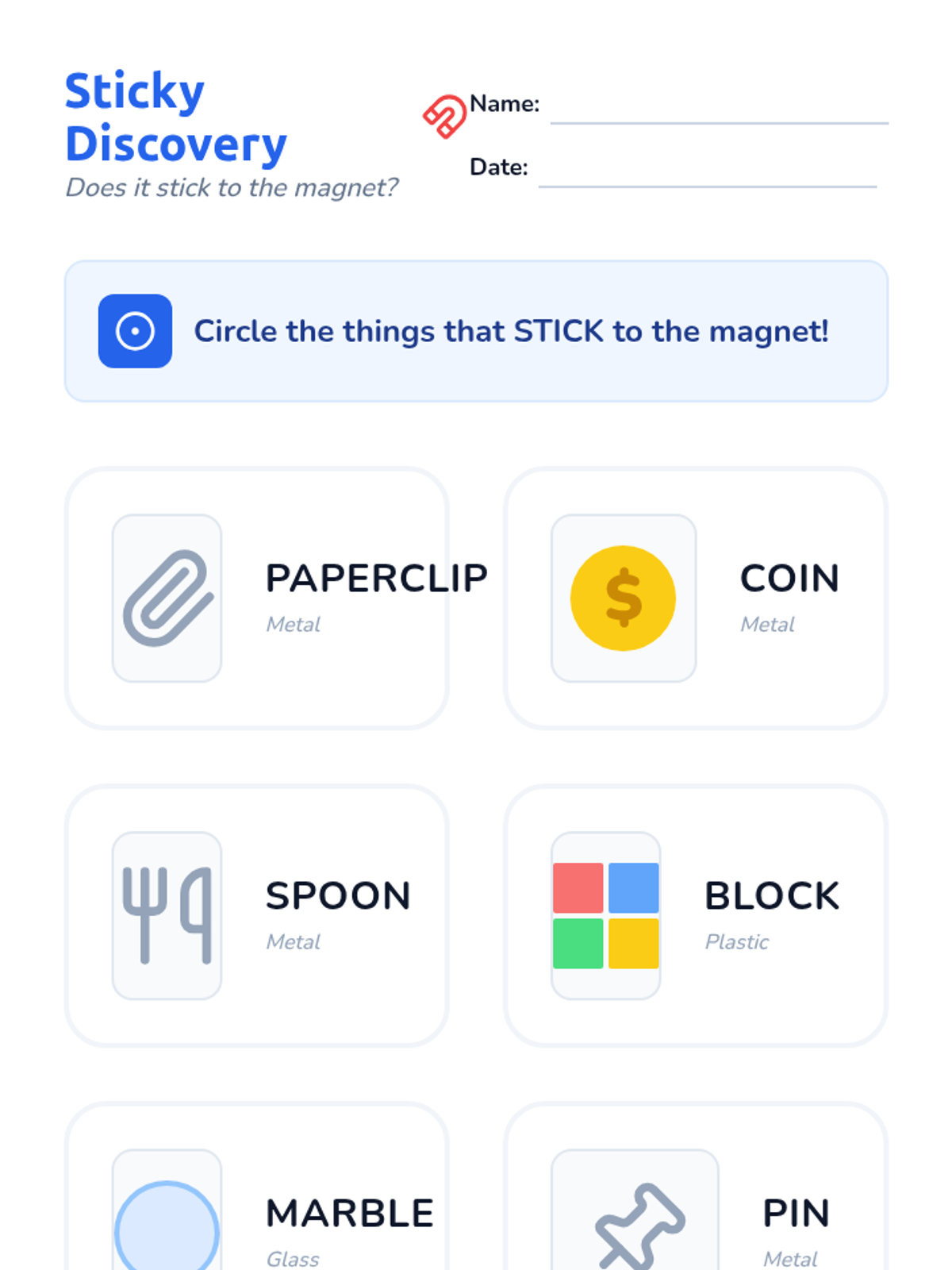
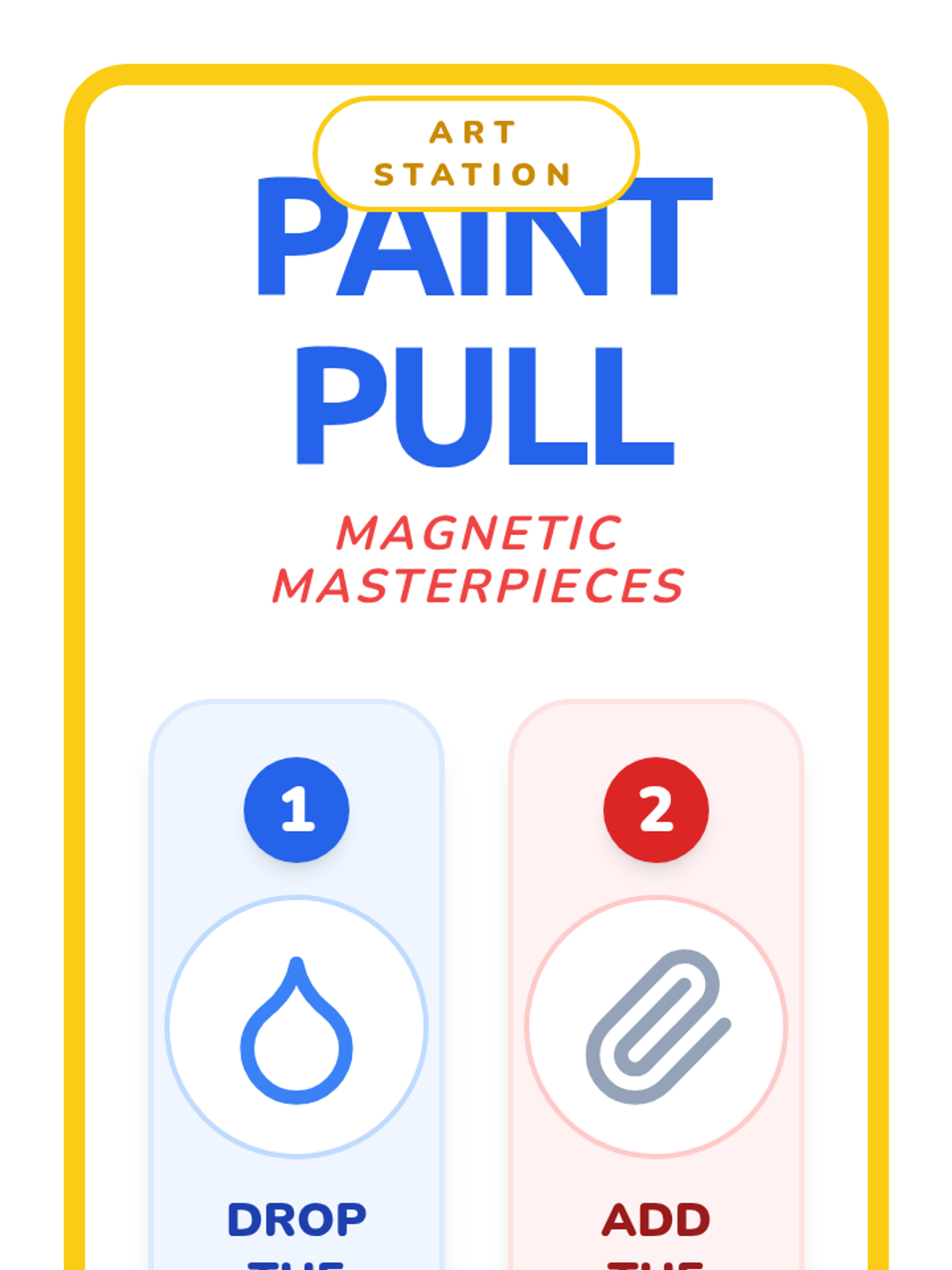
Students will explore the invisible force of magnetism through a hands-on 'Magnetic Painting' activity and a virtual sorting lab. They will learn to predict and test whether items are attracted to magnets while creating unique process art.
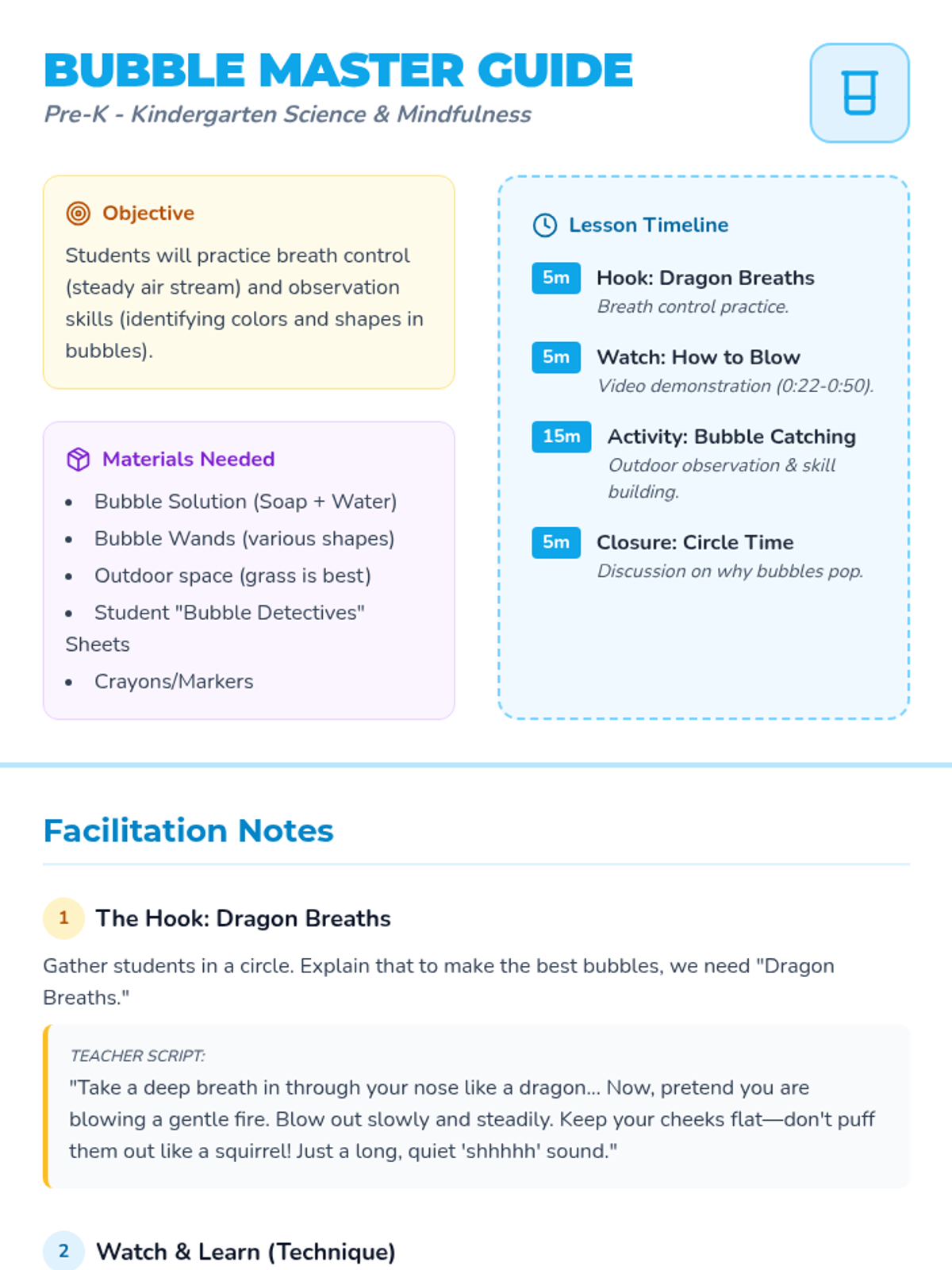
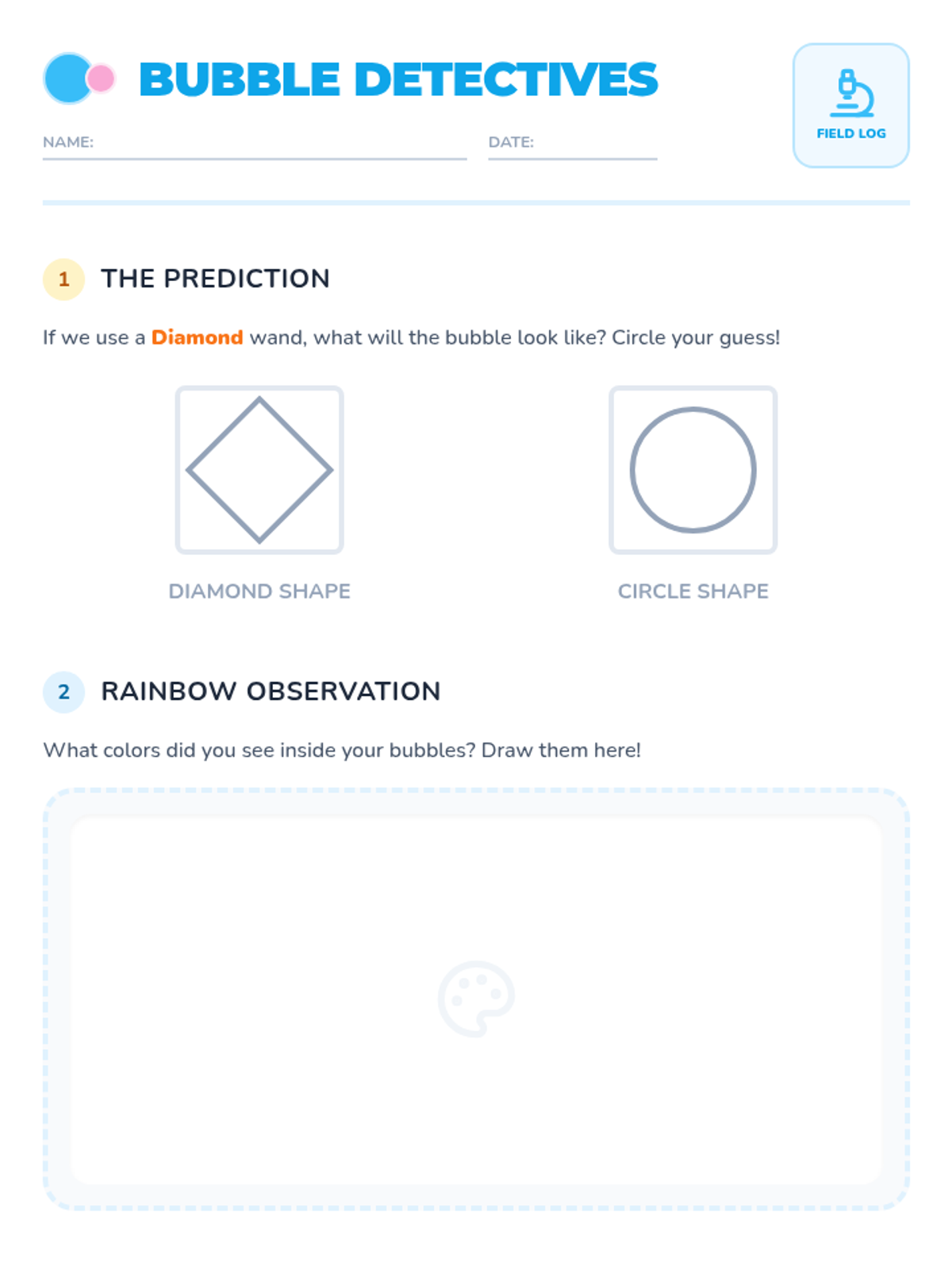
A playful science and mindfulness lesson for Pre-K and Kindergarten students focused on breath control and observation through the magic of bubbles. Students learn the physics of why bubbles are round and practice the art of gentle 'Dragon Breaths' to create them.
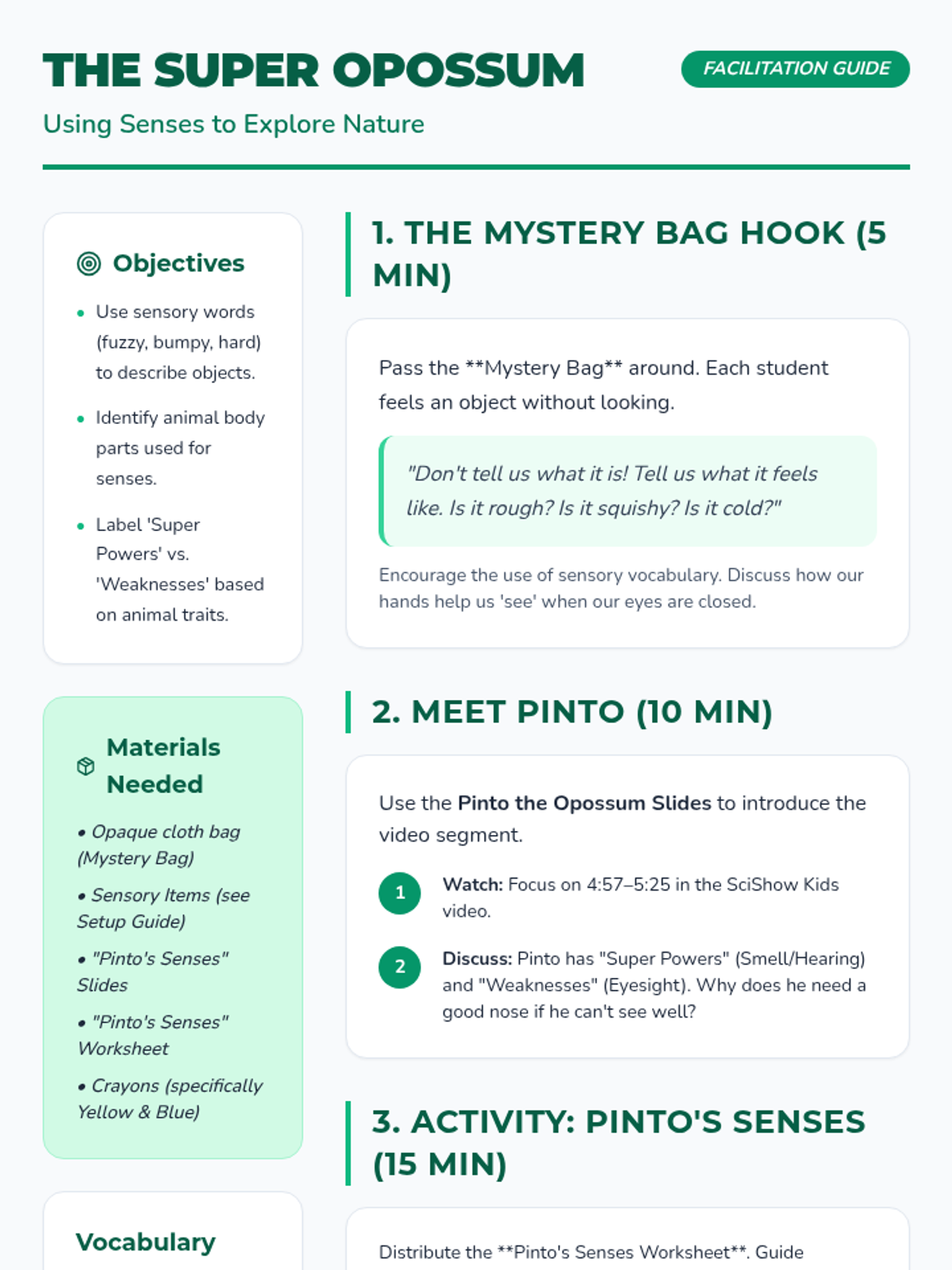
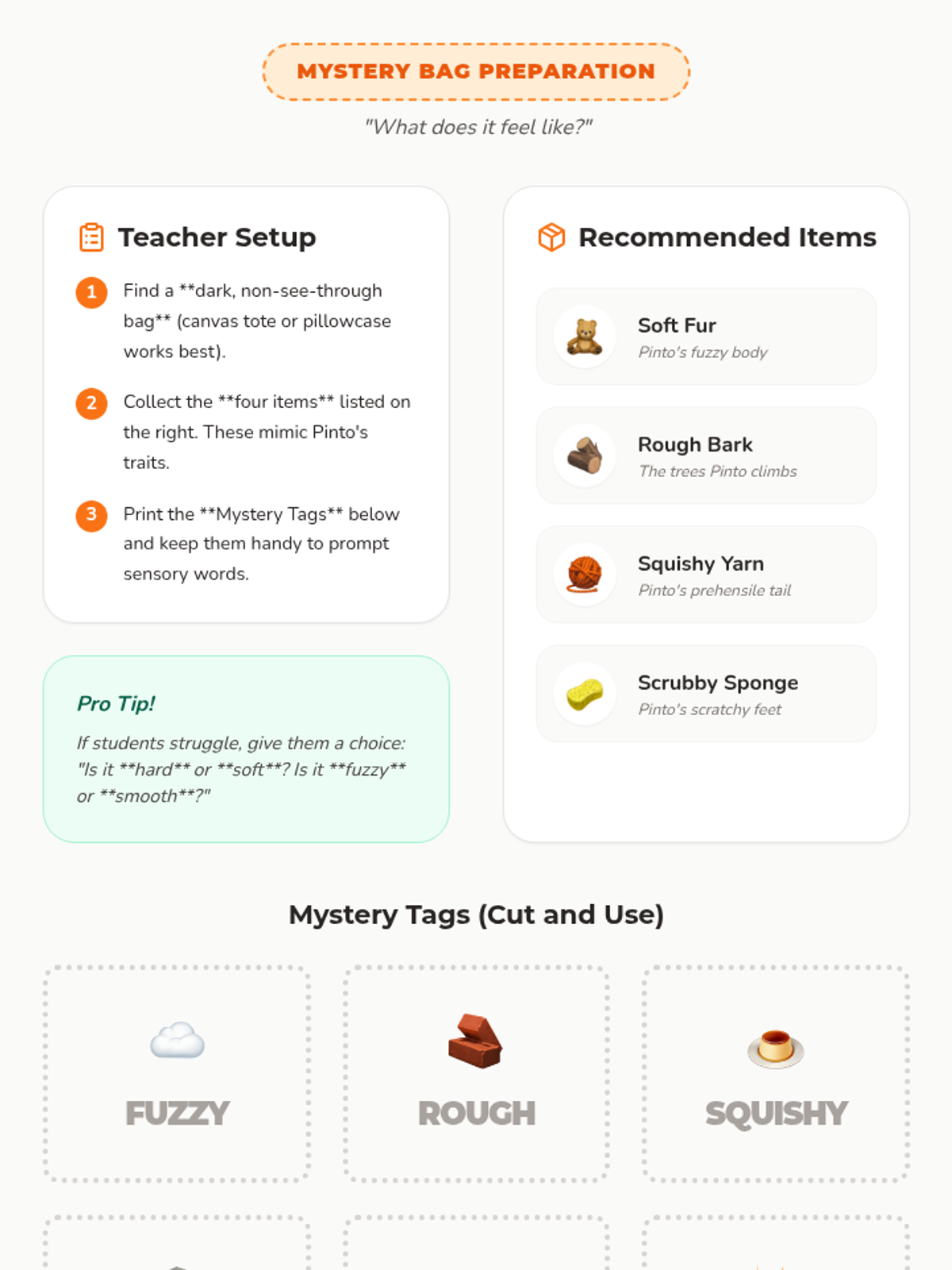
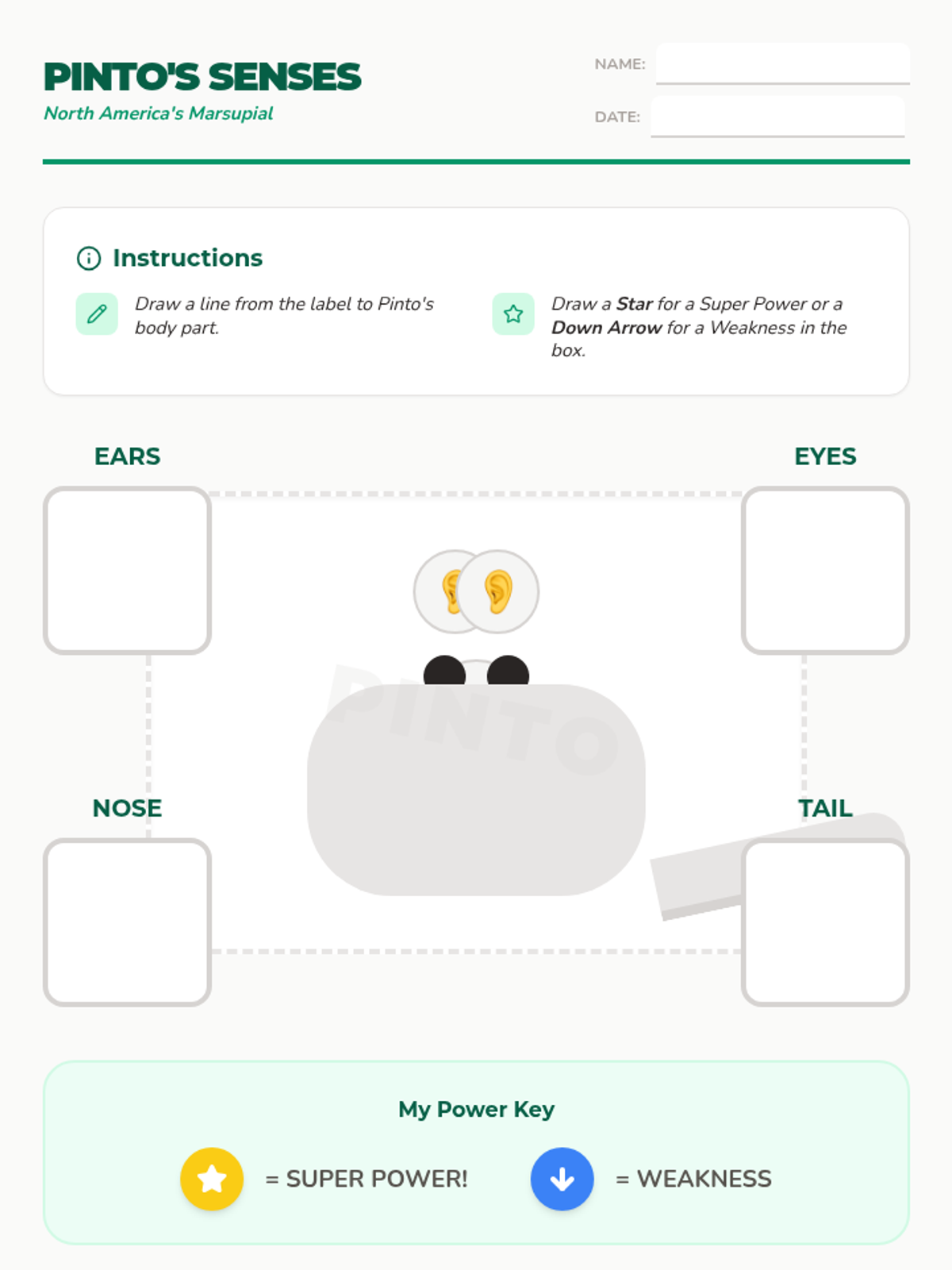
Students explore sensory vocabulary and animal adaptations through the lens of a North American marsupial, the Virginia Opossum. They will identify 'super powers' (smell and hearing) and 'weaknesses' (eyesight) while practicing descriptive language.