A focused lesson on identifying and generating equivalent fractions using visual models and multiplication strategies, themed around a bustling neighborhood bakery.
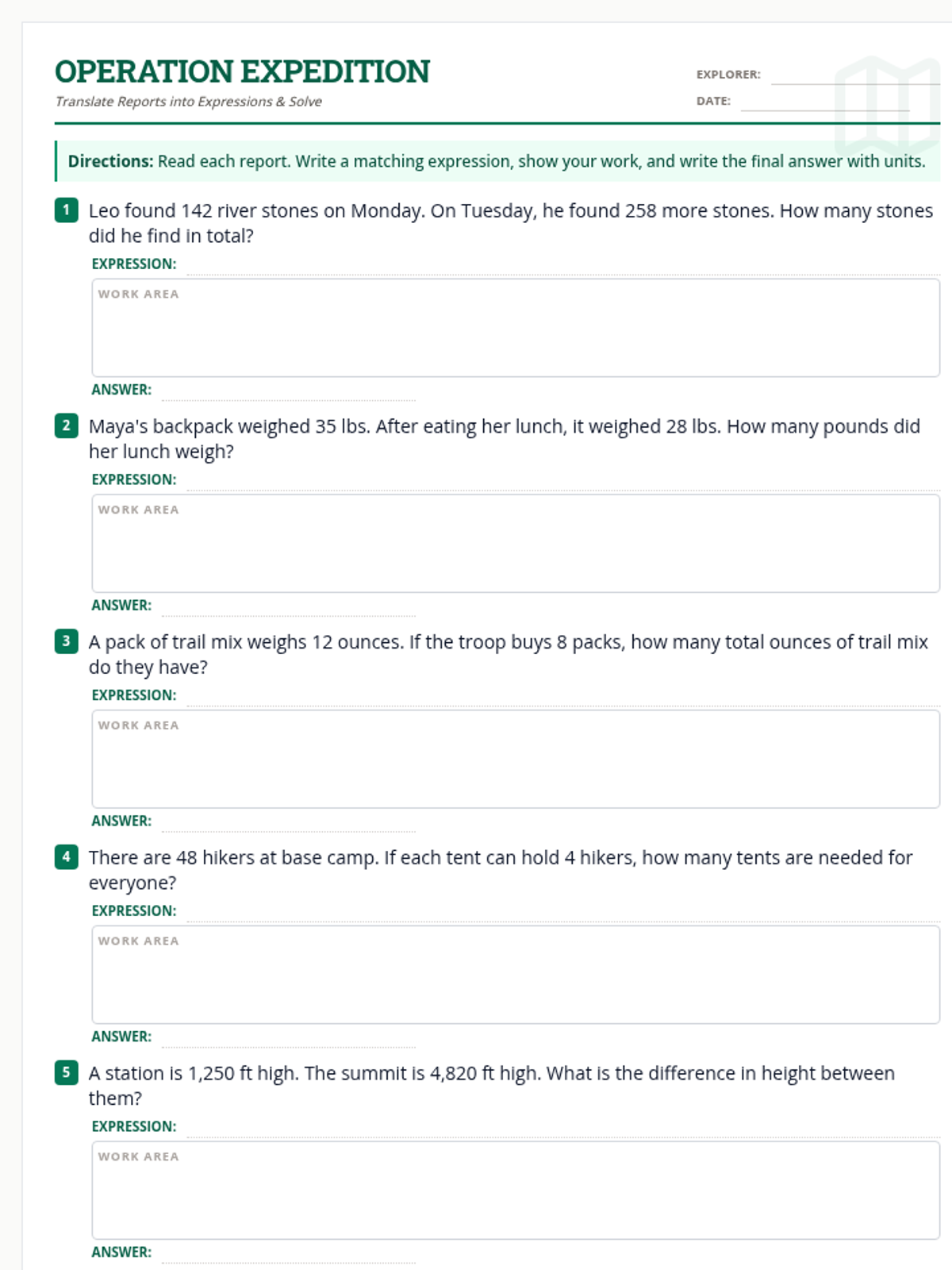
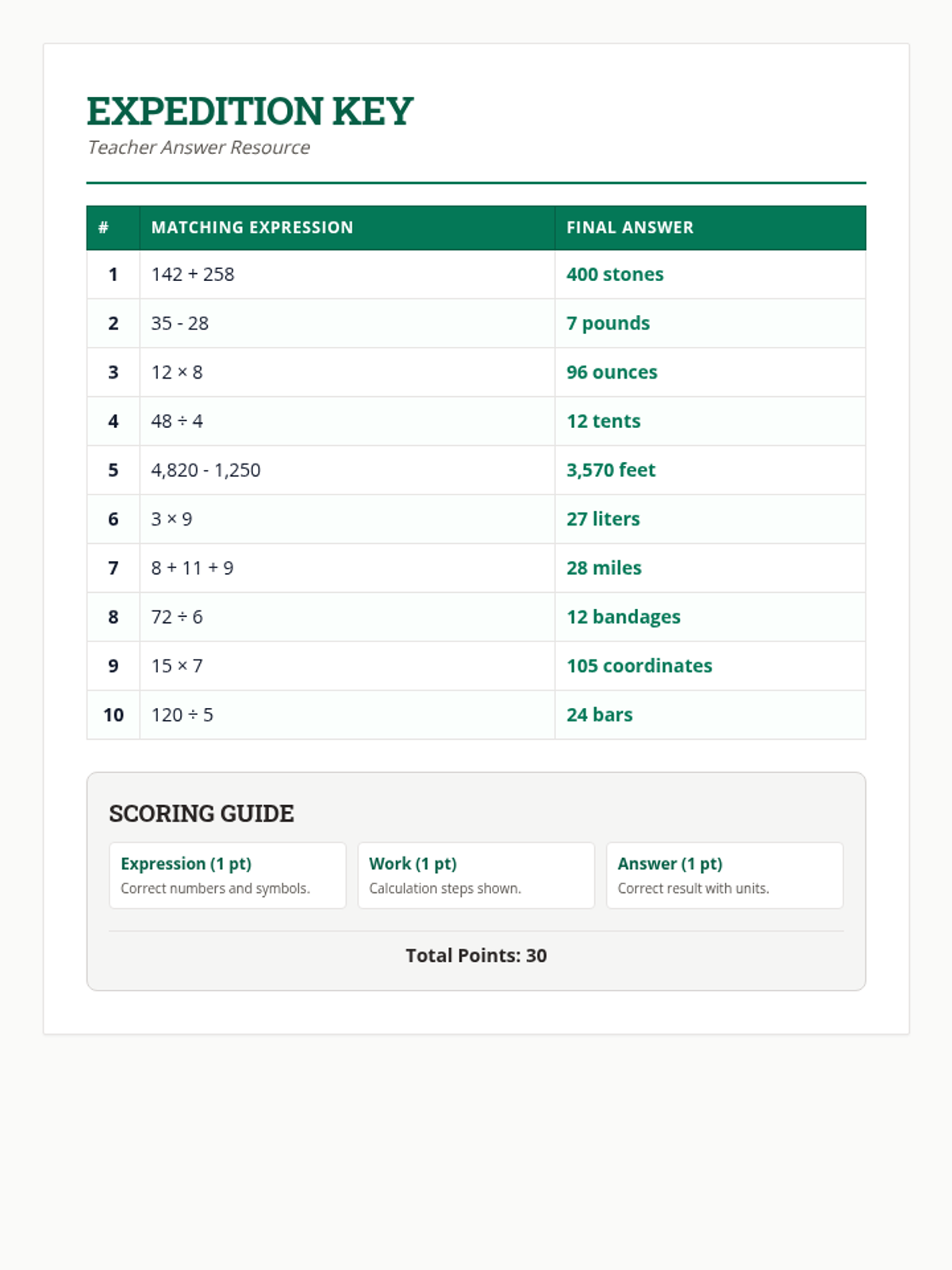
A fourth-grade math lesson focused on translating real-world adventure scenarios into numerical expressions using addition, subtraction, multiplication, and division. Students practice identifying key operations and solving multi-digit problems.
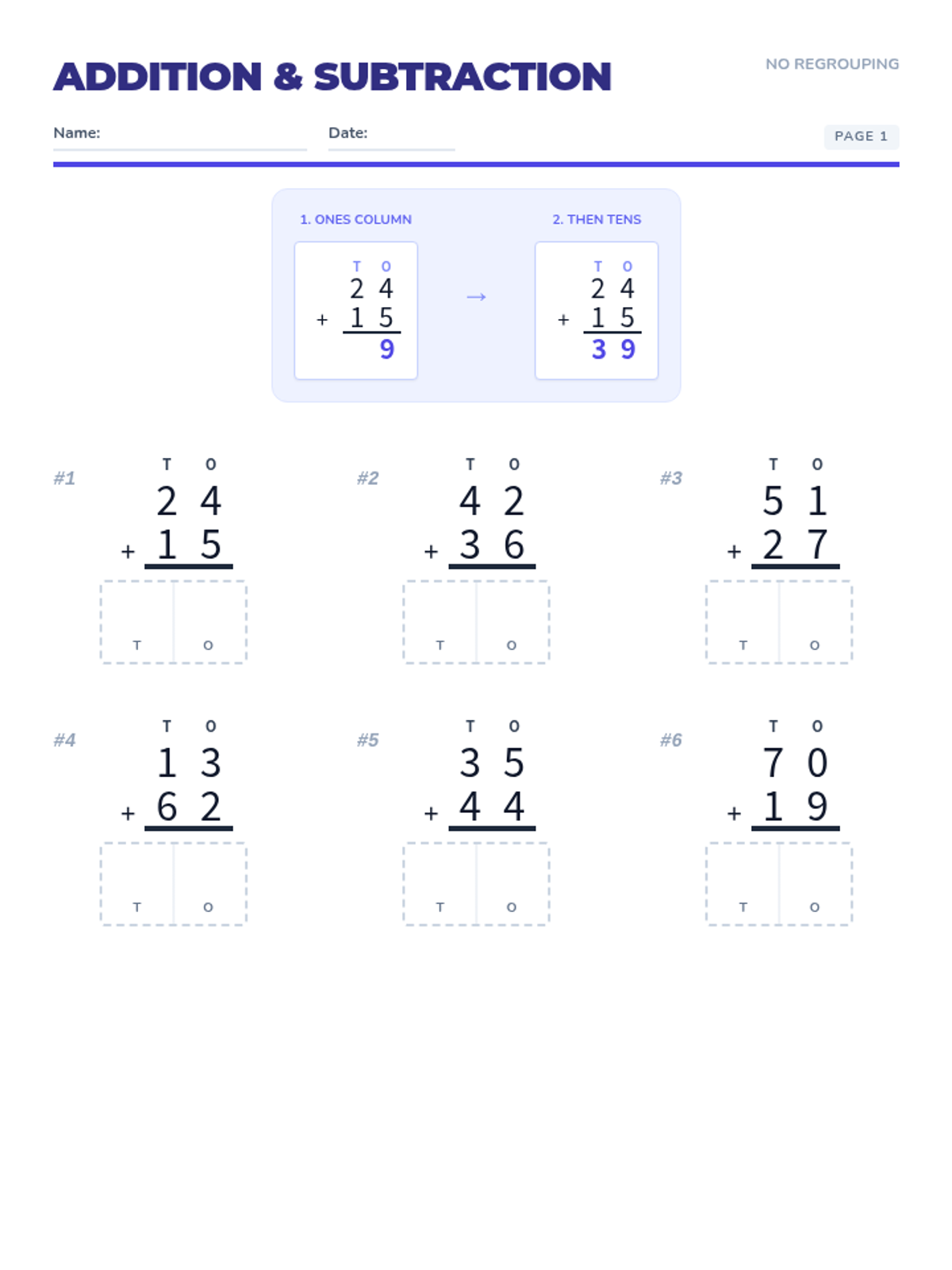
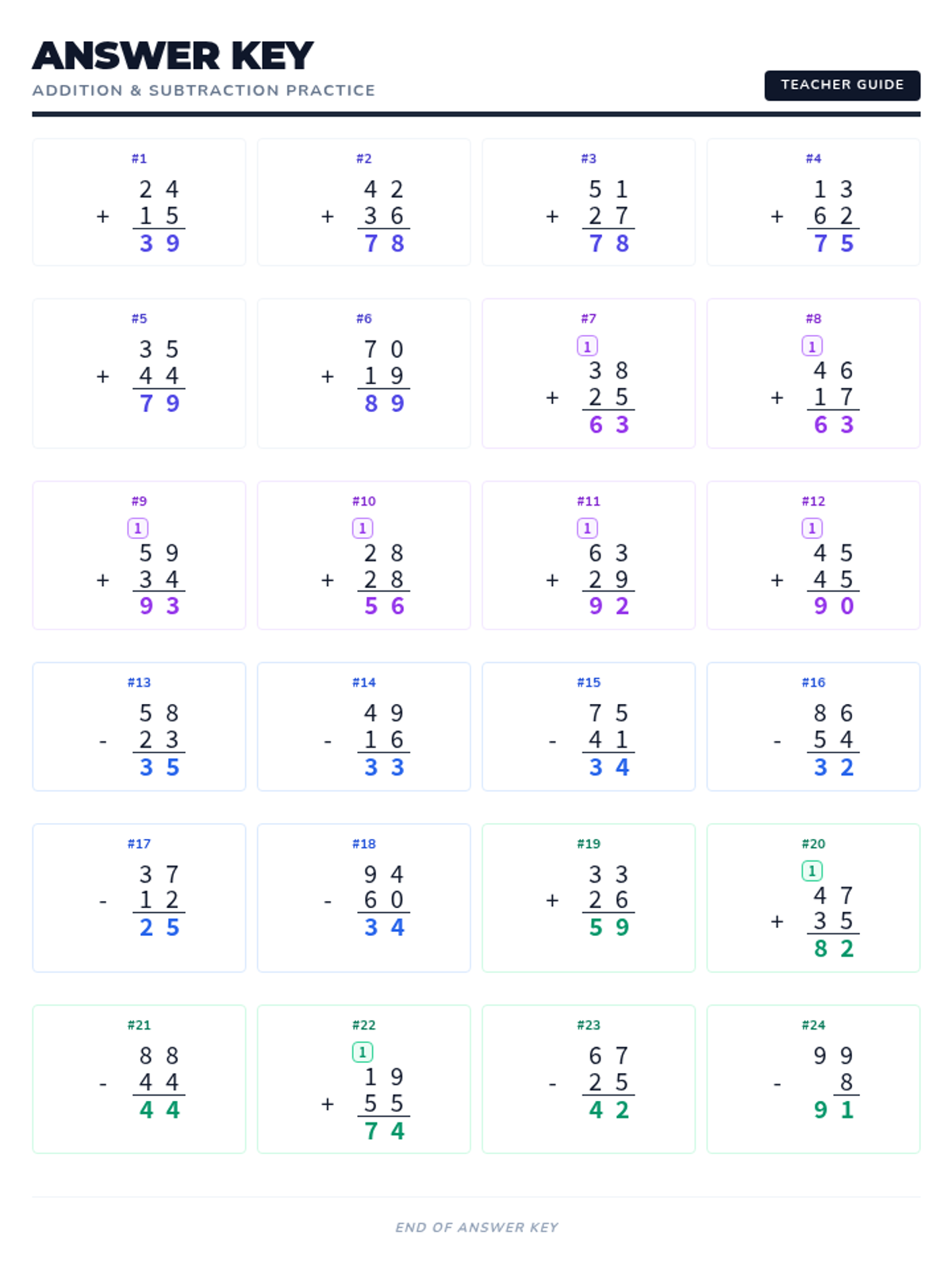
A comprehensive 2-digit addition and subtraction practice packet with a cosmic space theme, covering regrouping in addition and subtraction without borrowing.
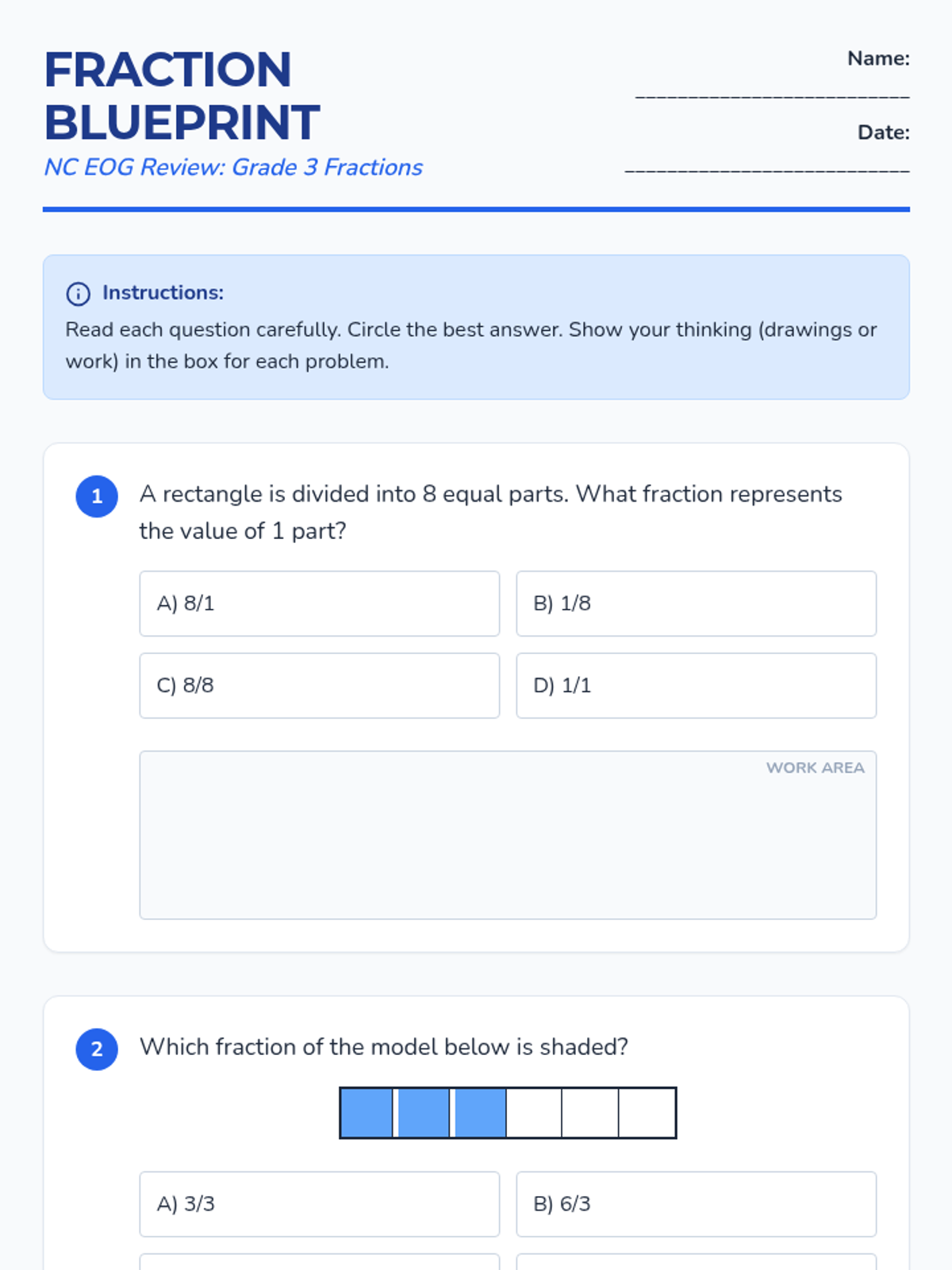
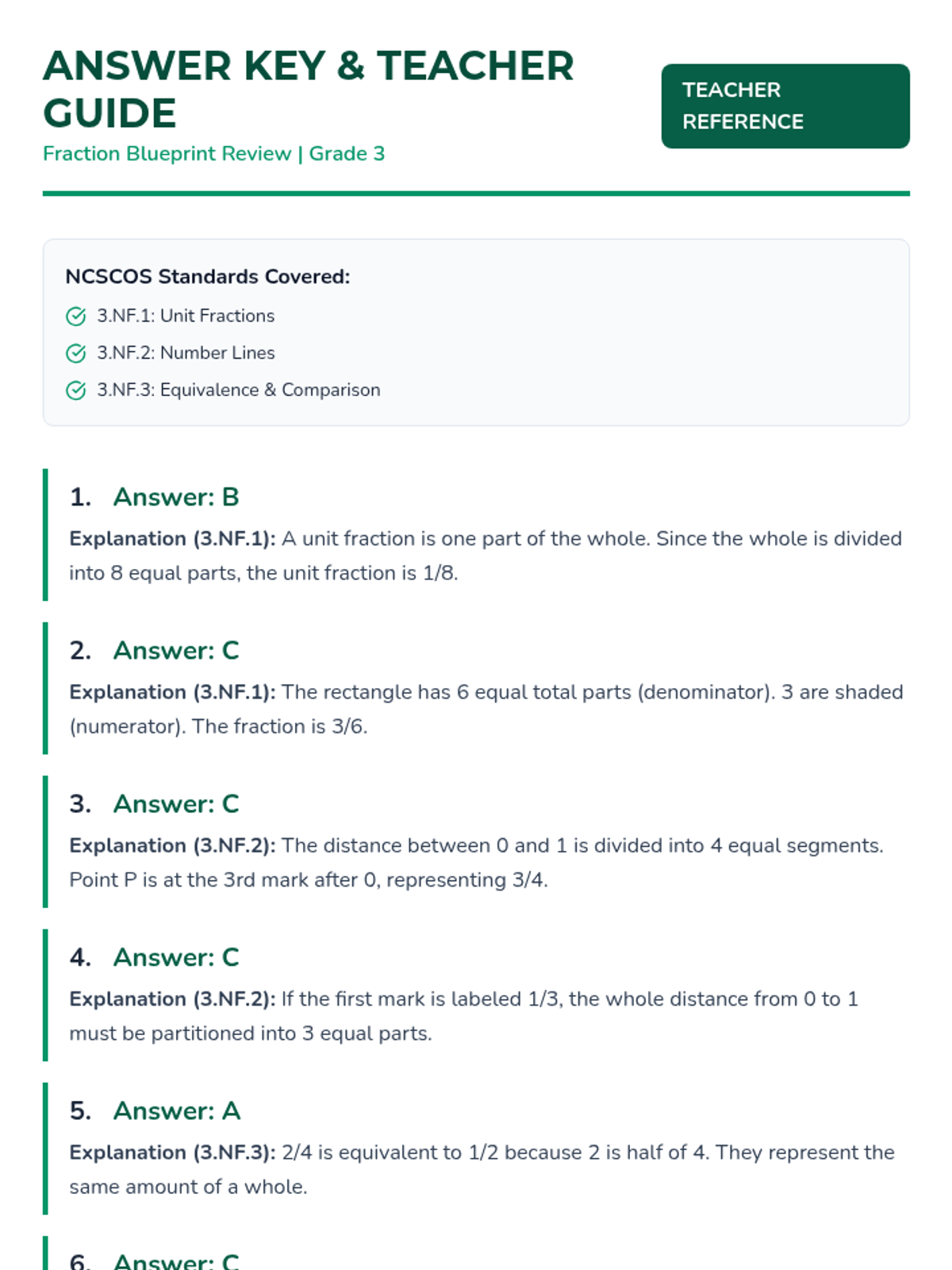
A comprehensive review of 3rd Grade North Carolina Standard Course of Study (NCSCOS) fraction standards, featuring EOG-style questions covering partitioning, number lines, and equivalence.
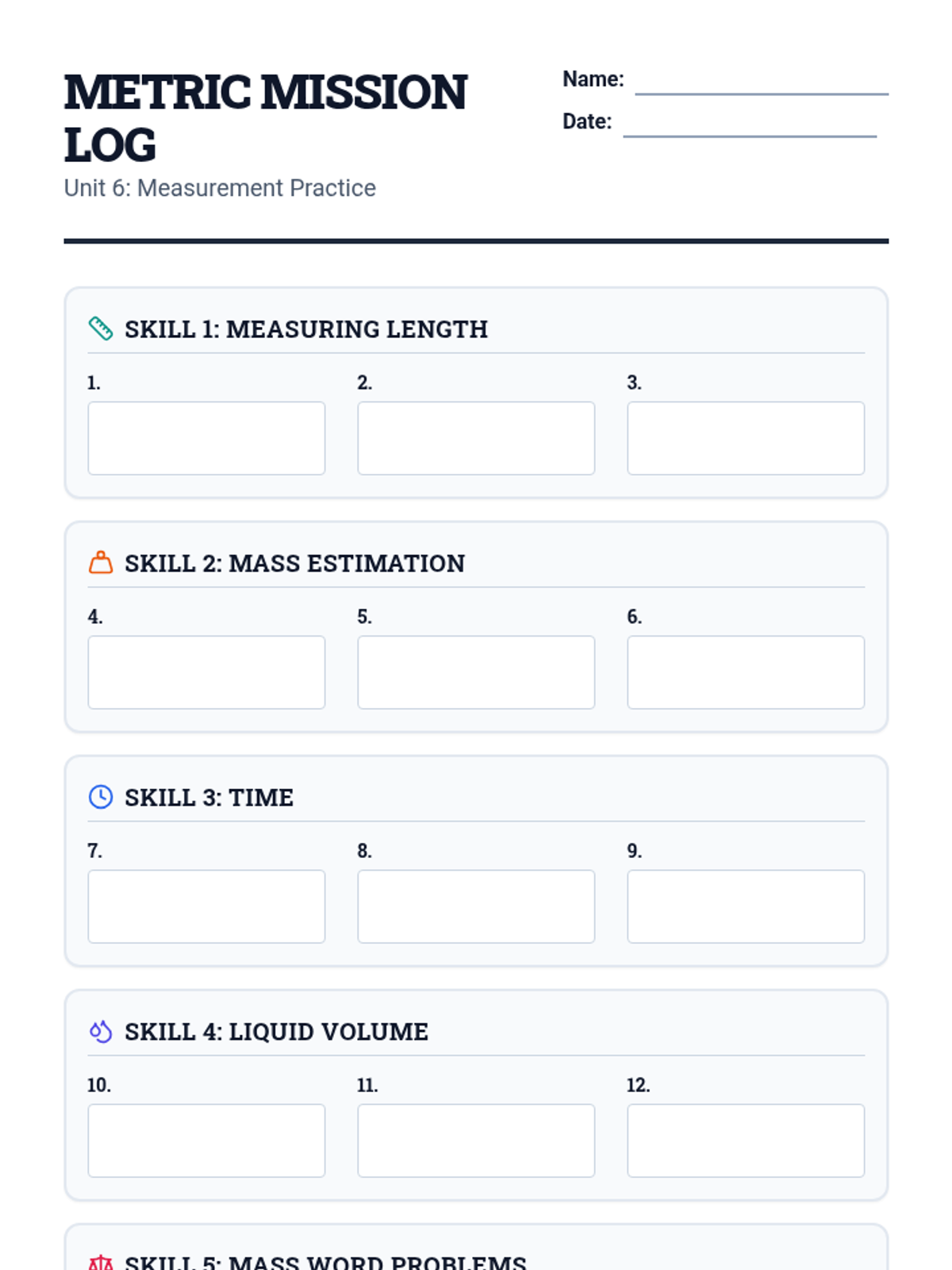
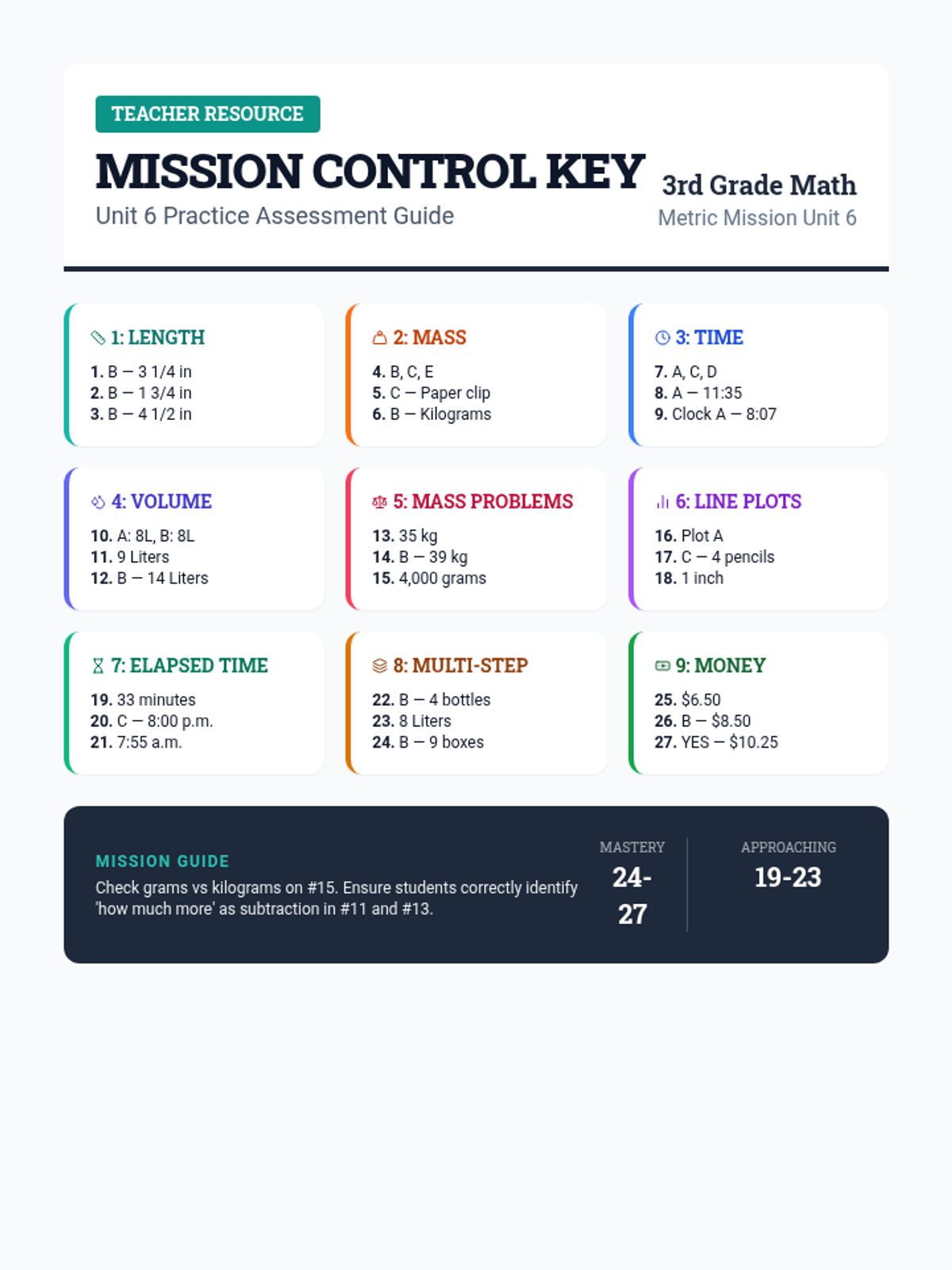
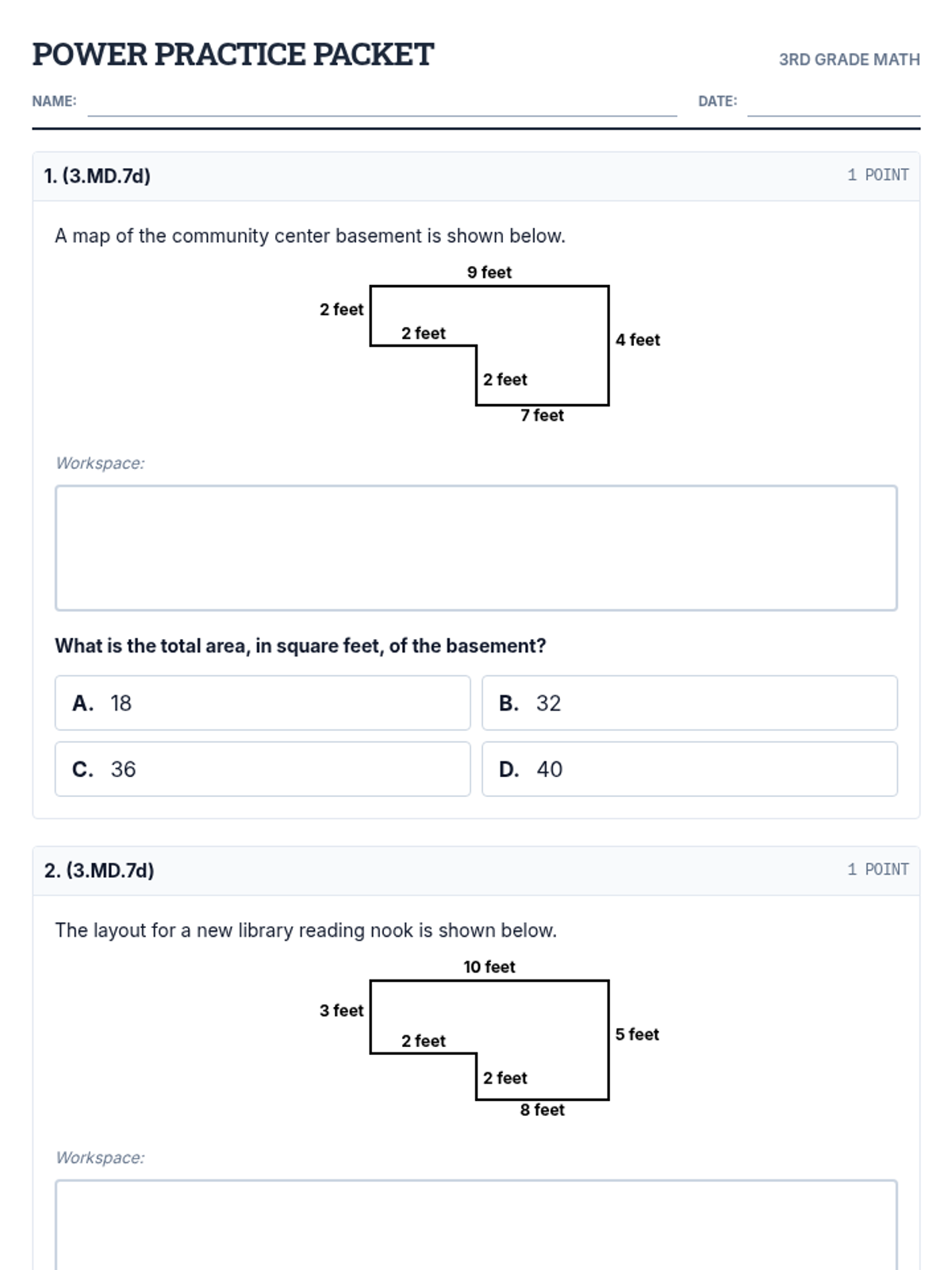
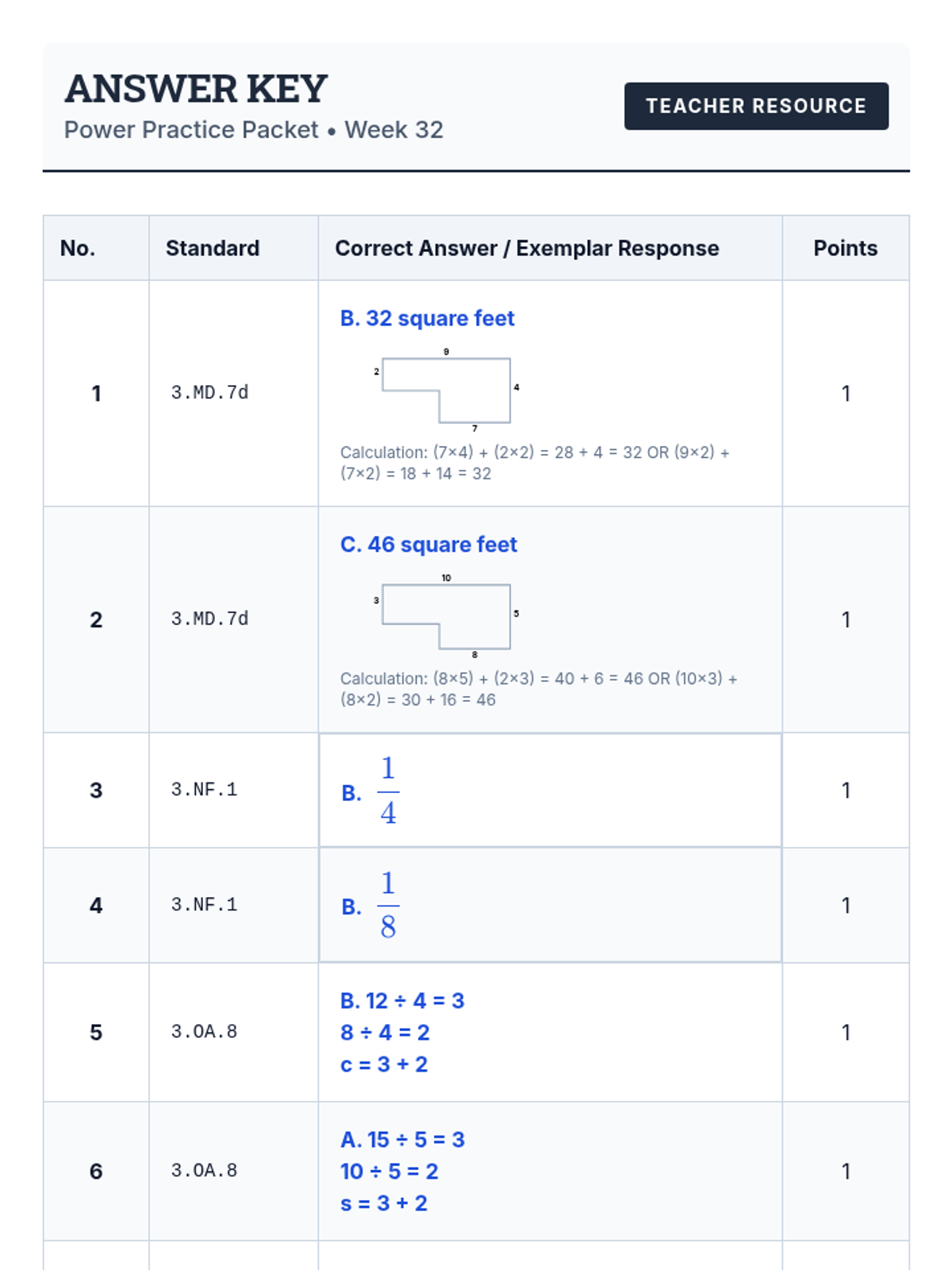
A comprehensive practice lesson covering 3rd-grade measurement standards including length to the quarter-inch, mass estimation, liquid volume, time, and multi-step word problems. Students engage with a variety of practice problems designed to mirror unit assessment items.
A focused practice session where students work through two variations of five core mathematical problems to solidify their understanding of measurement, data, and number operations.
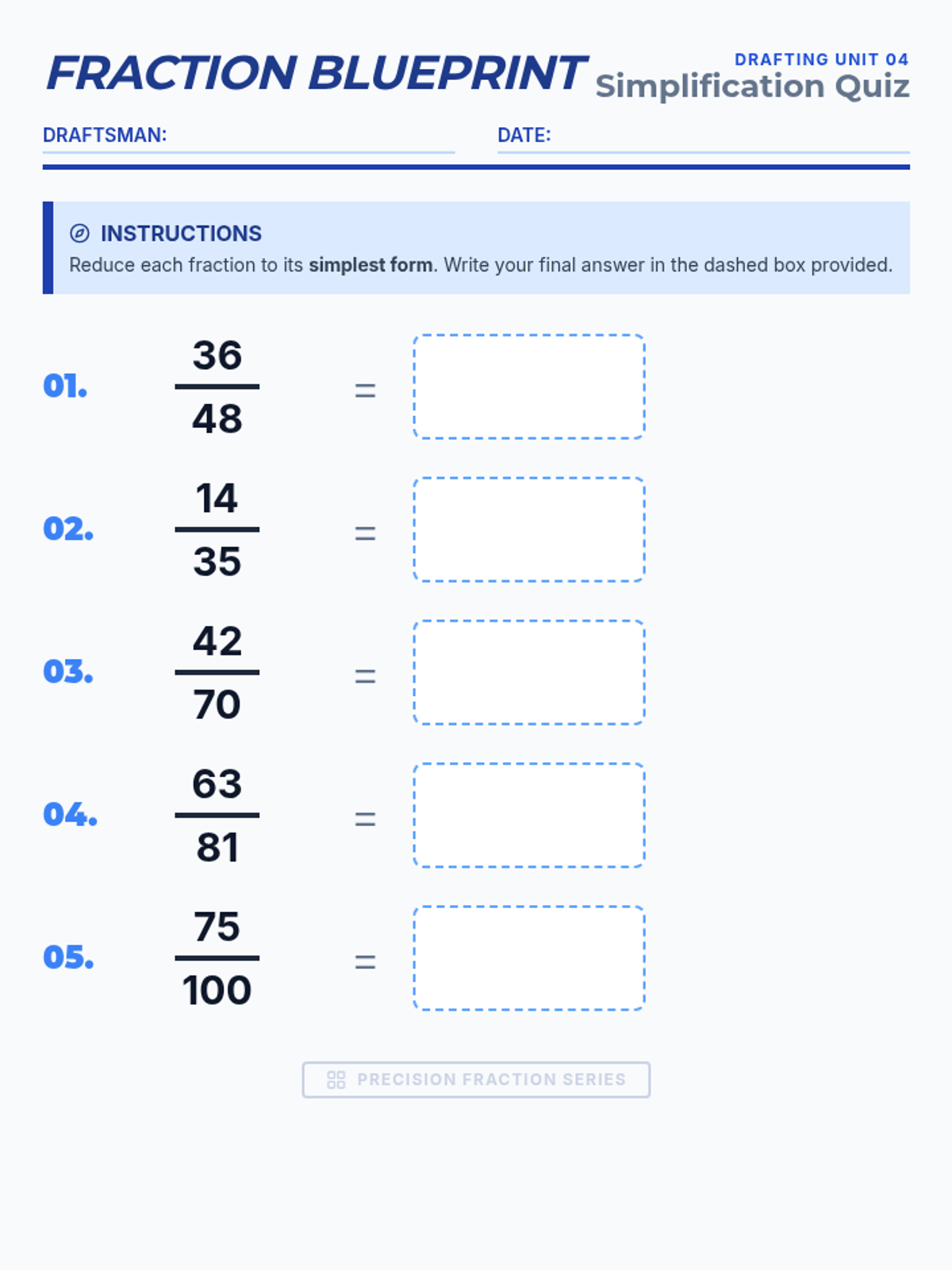
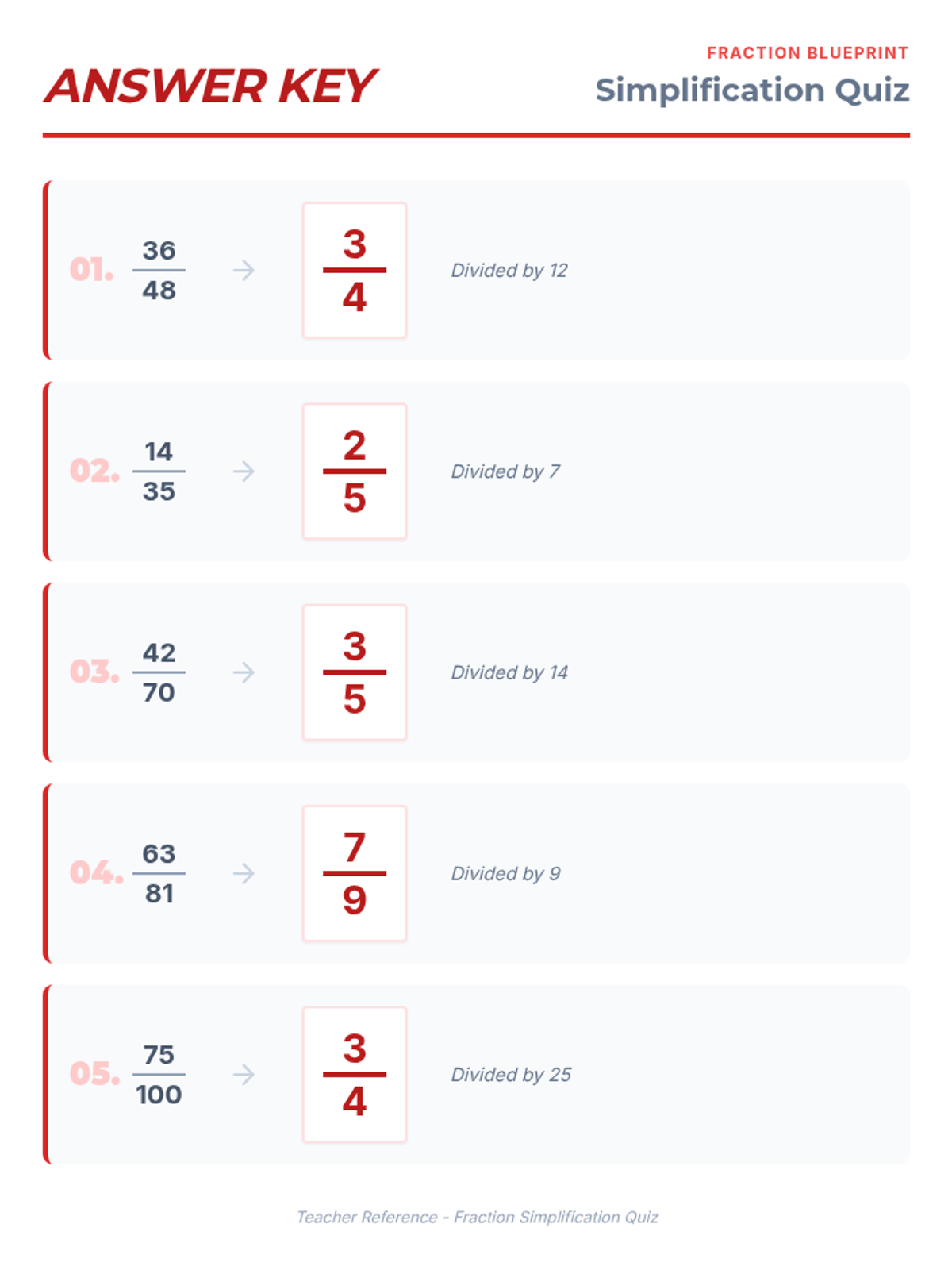
A quick assessment focusing on simplifying fractions with numerators and denominators up to 100 into their simplest form.
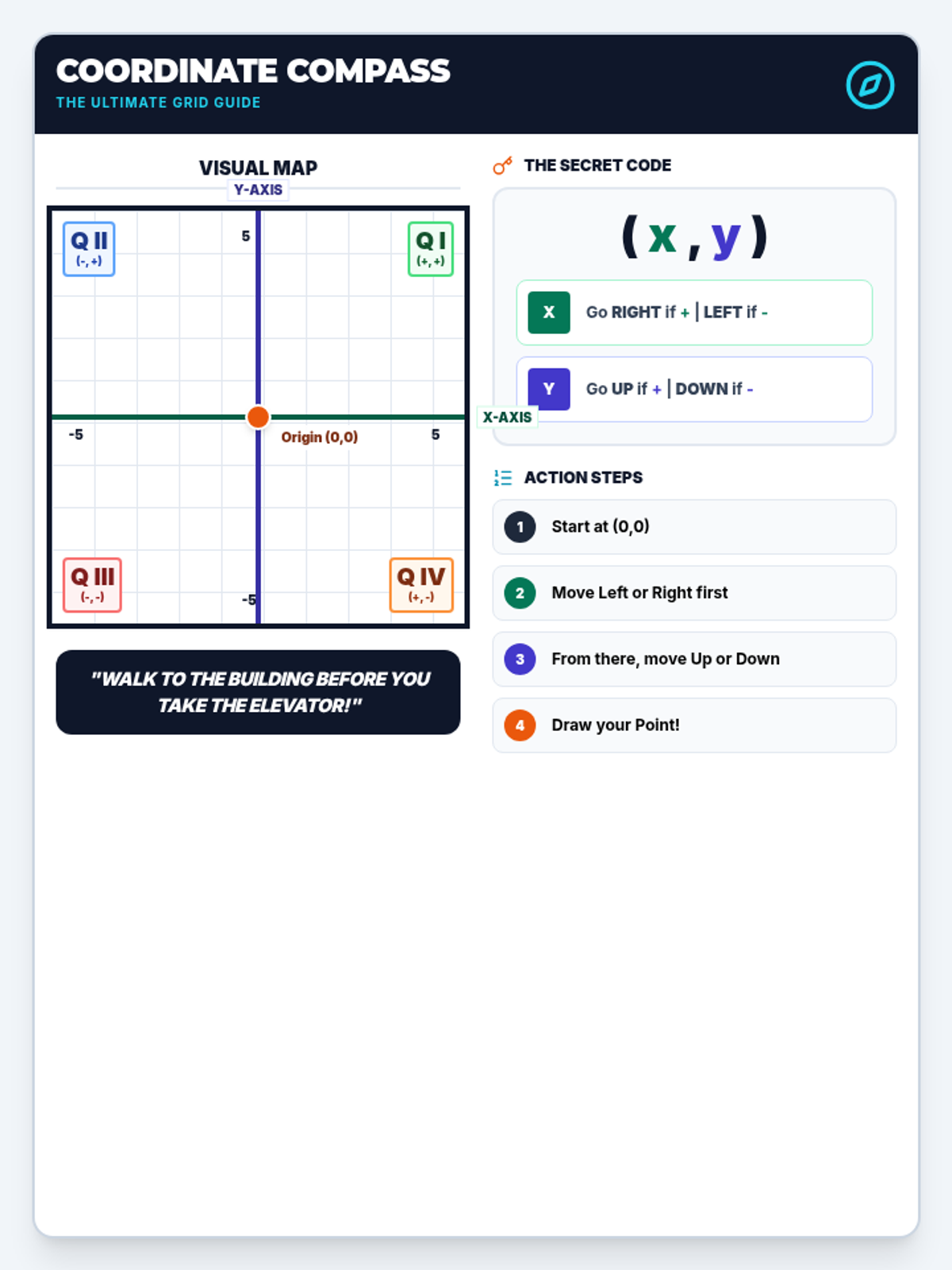
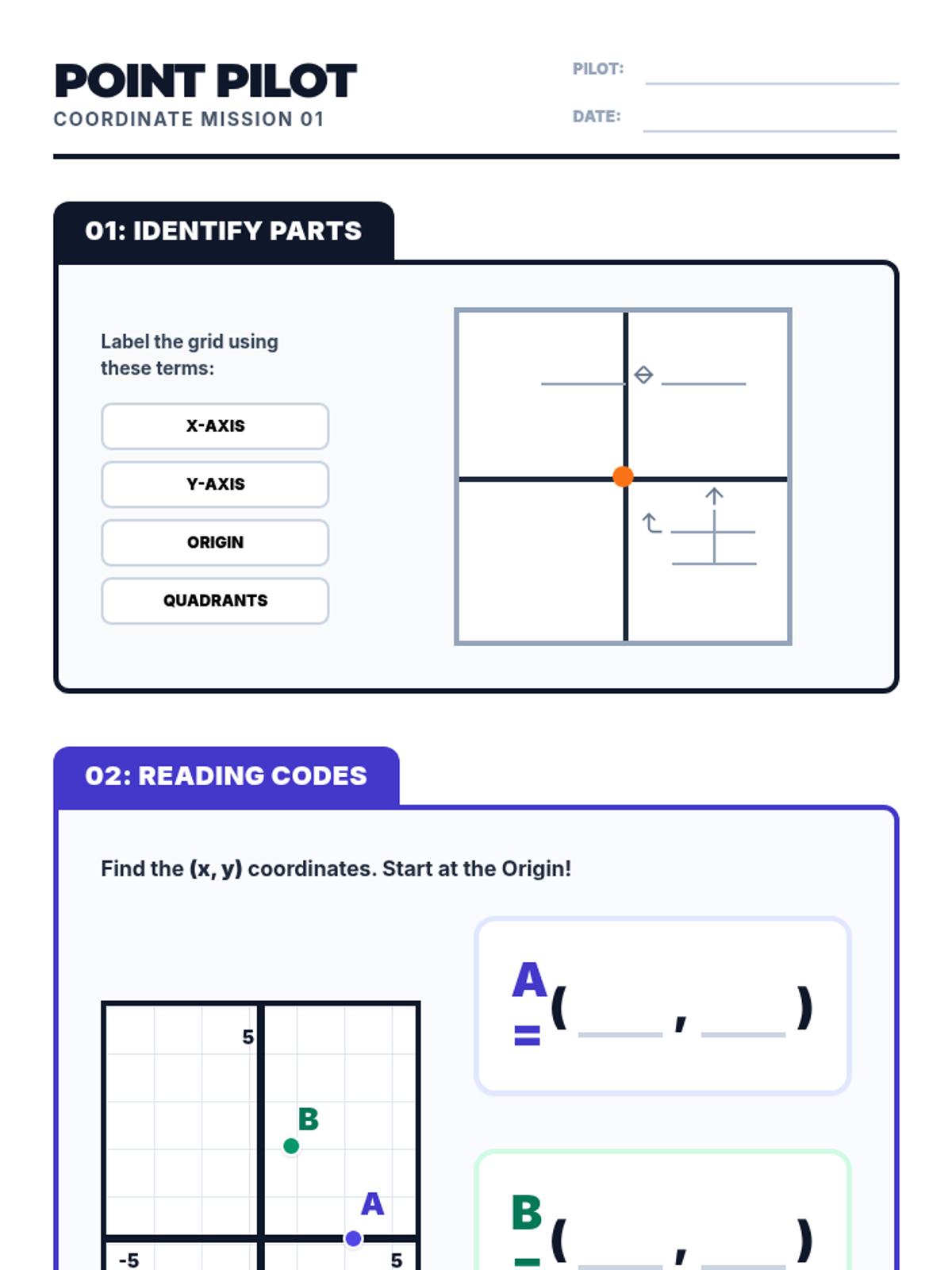
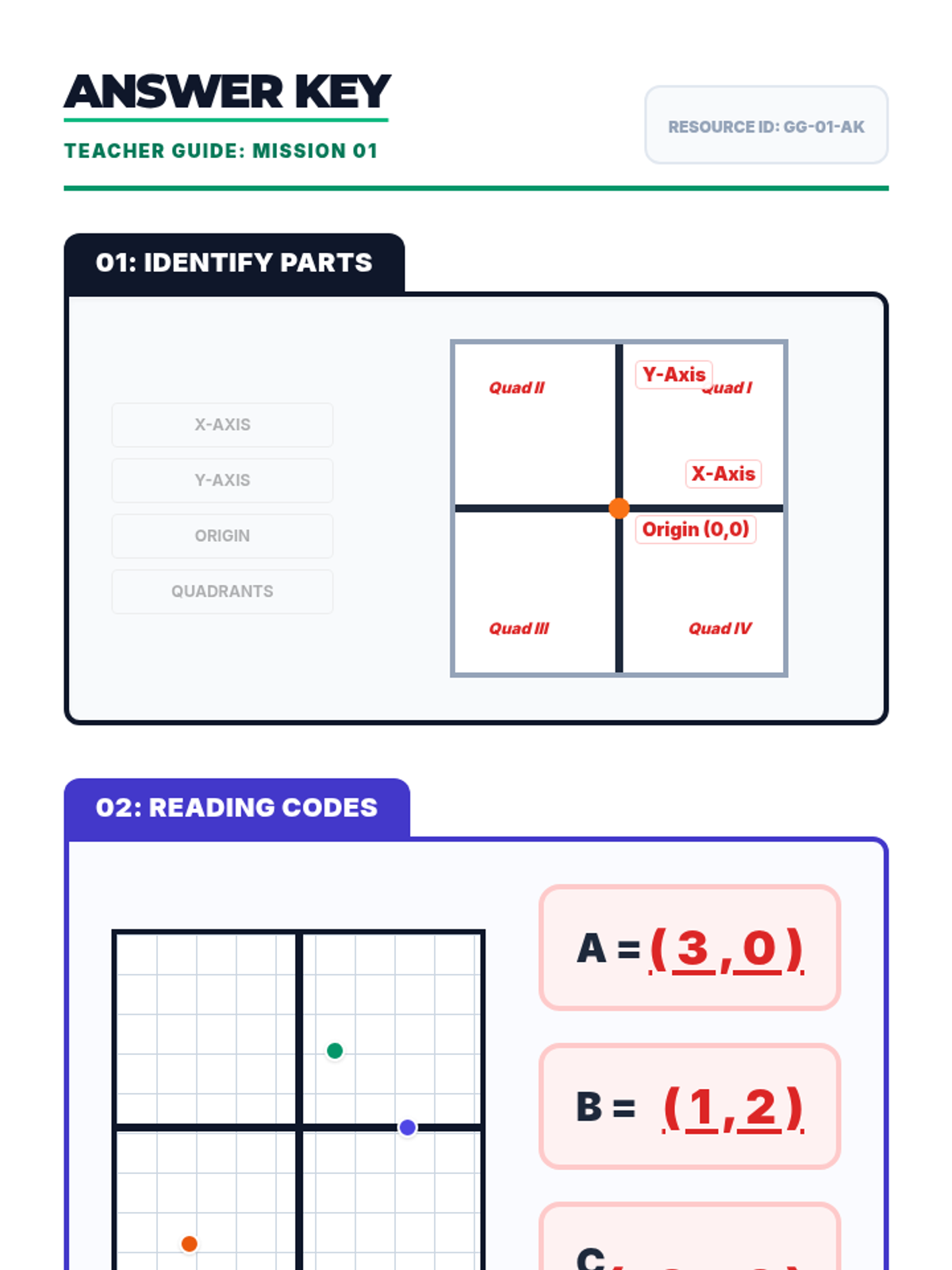
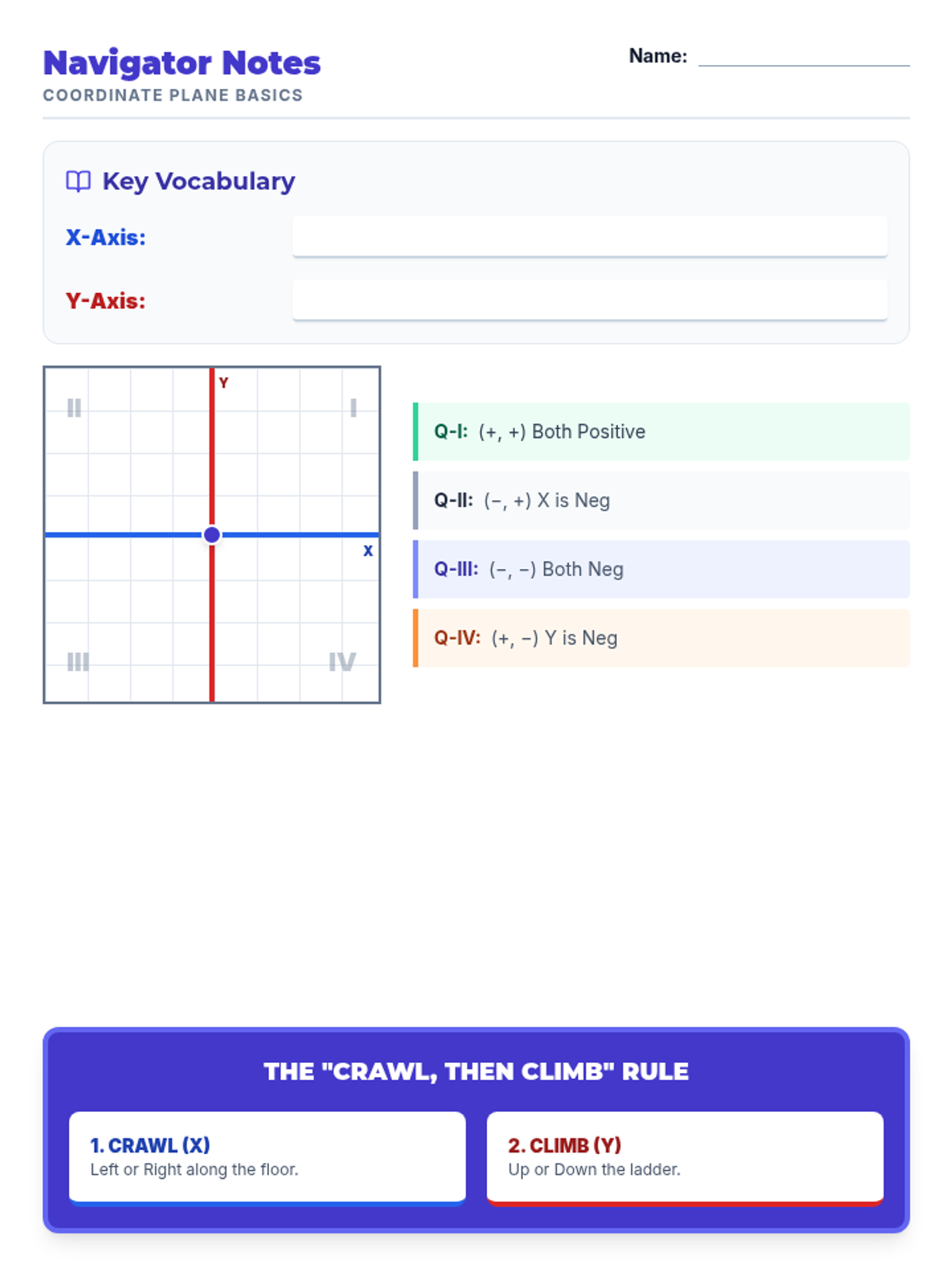
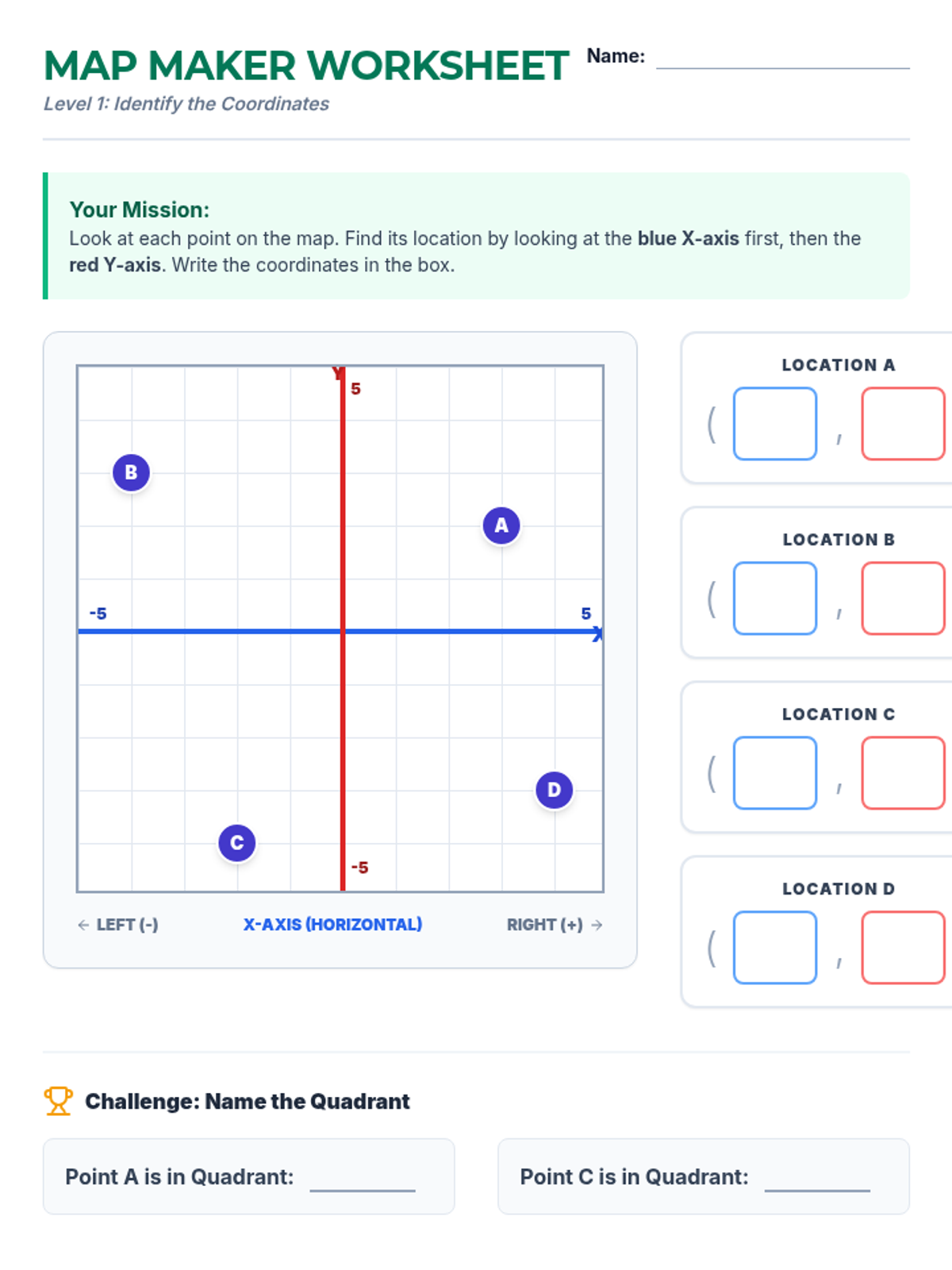
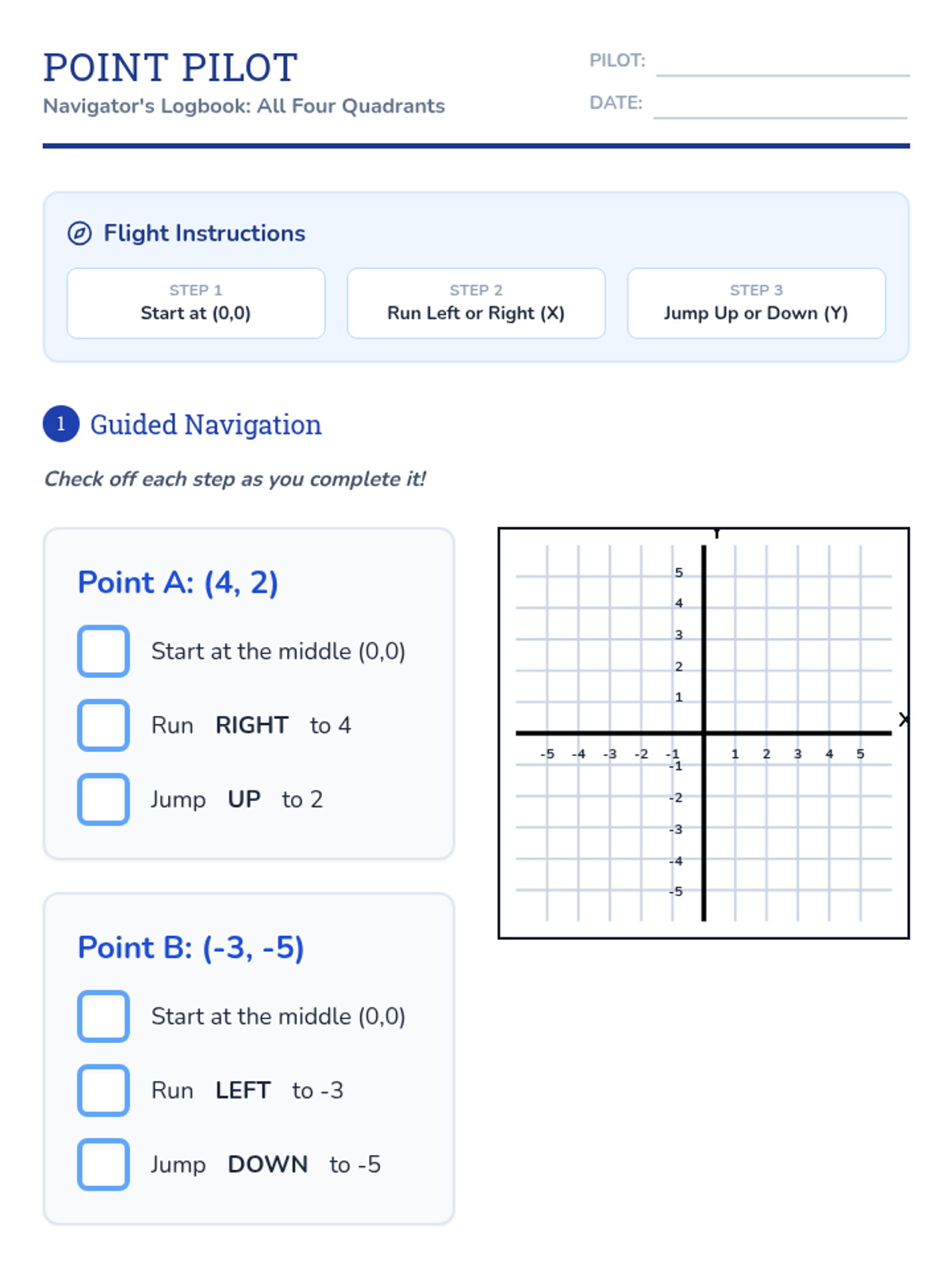
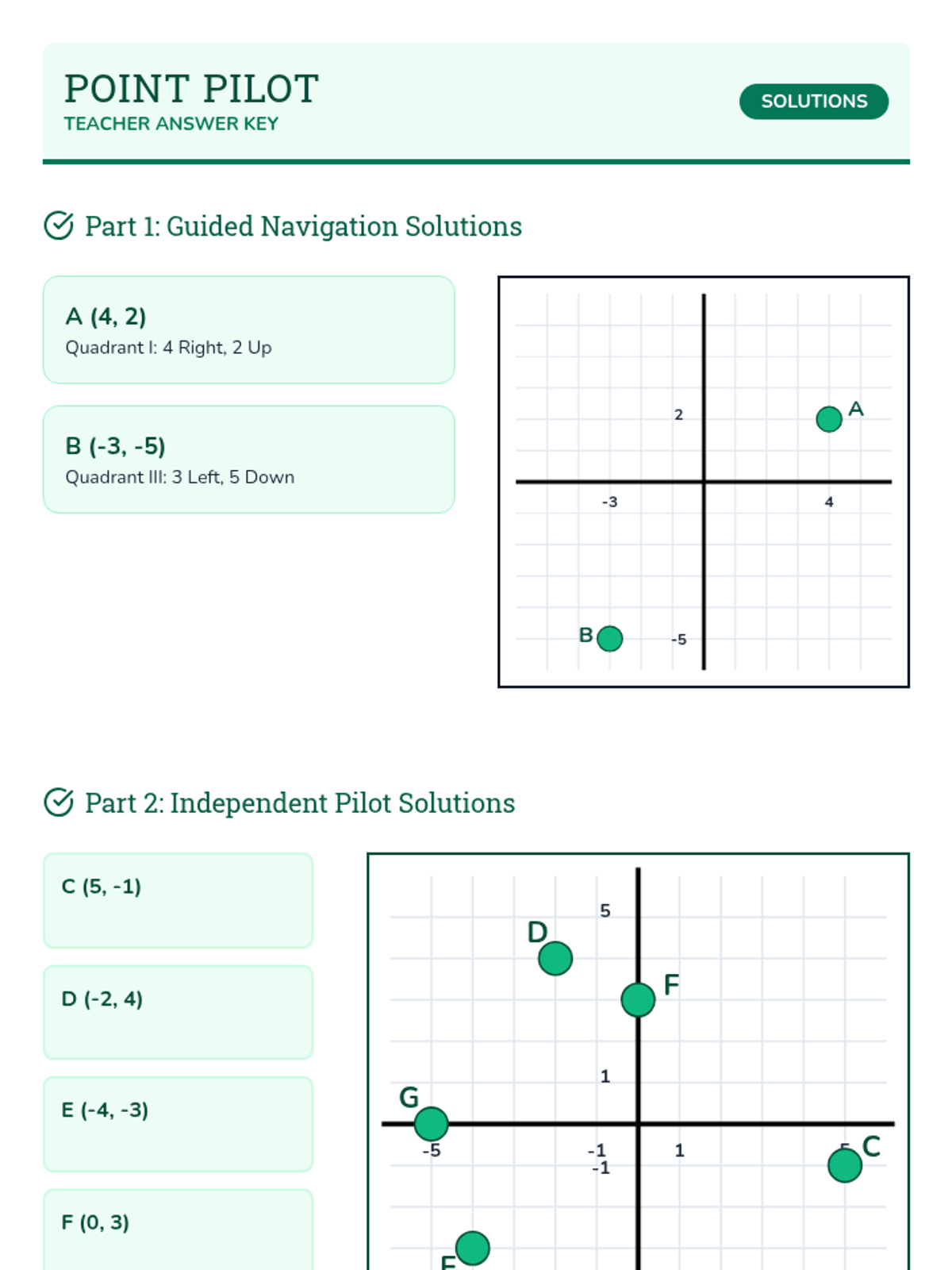
A scaffolded introduction to the four-quadrant coordinate plane, designed for students needing extra support. It covers identifying the axes and origin, understanding quadrants, and step-by-step plotting of points.
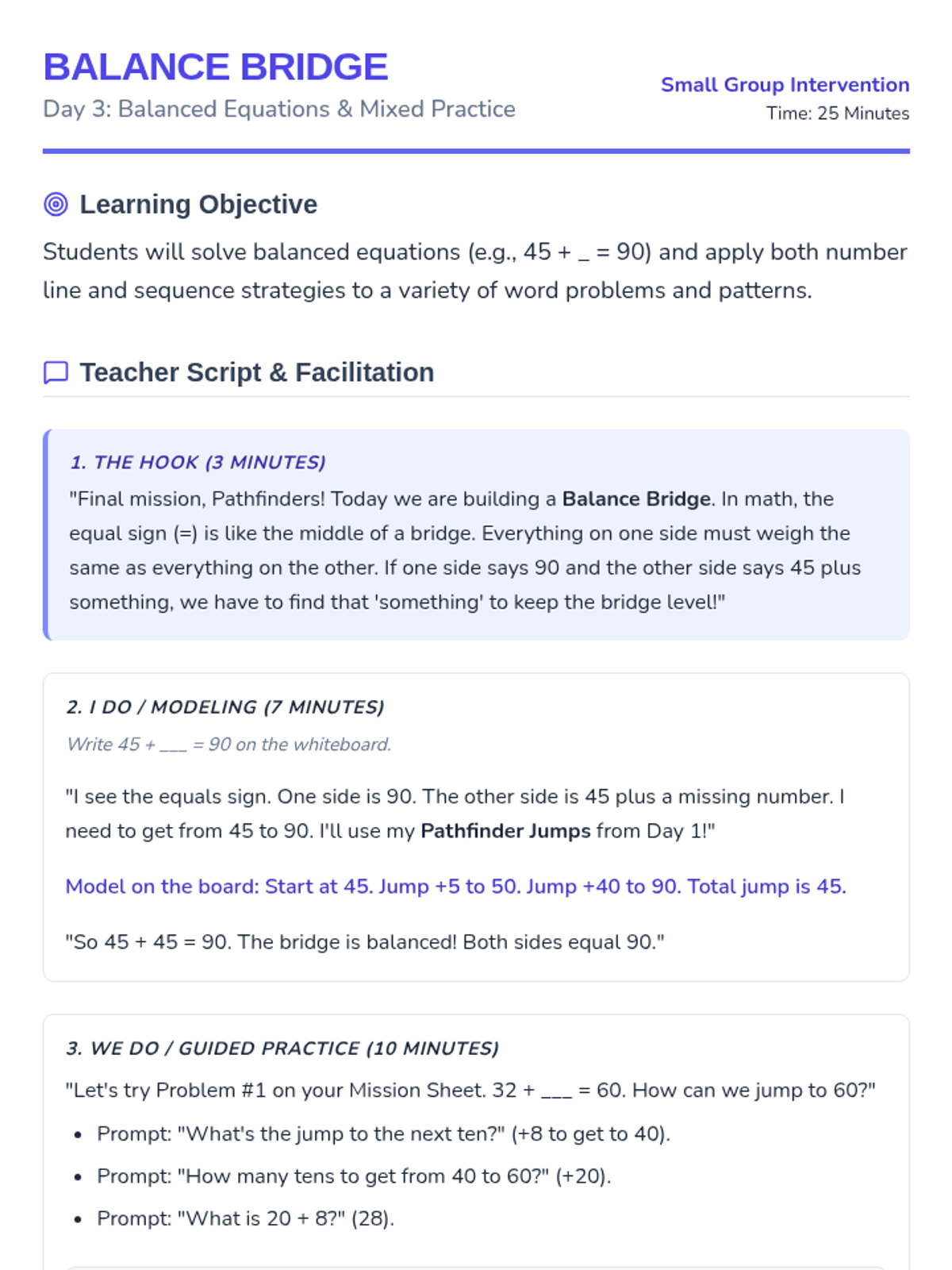
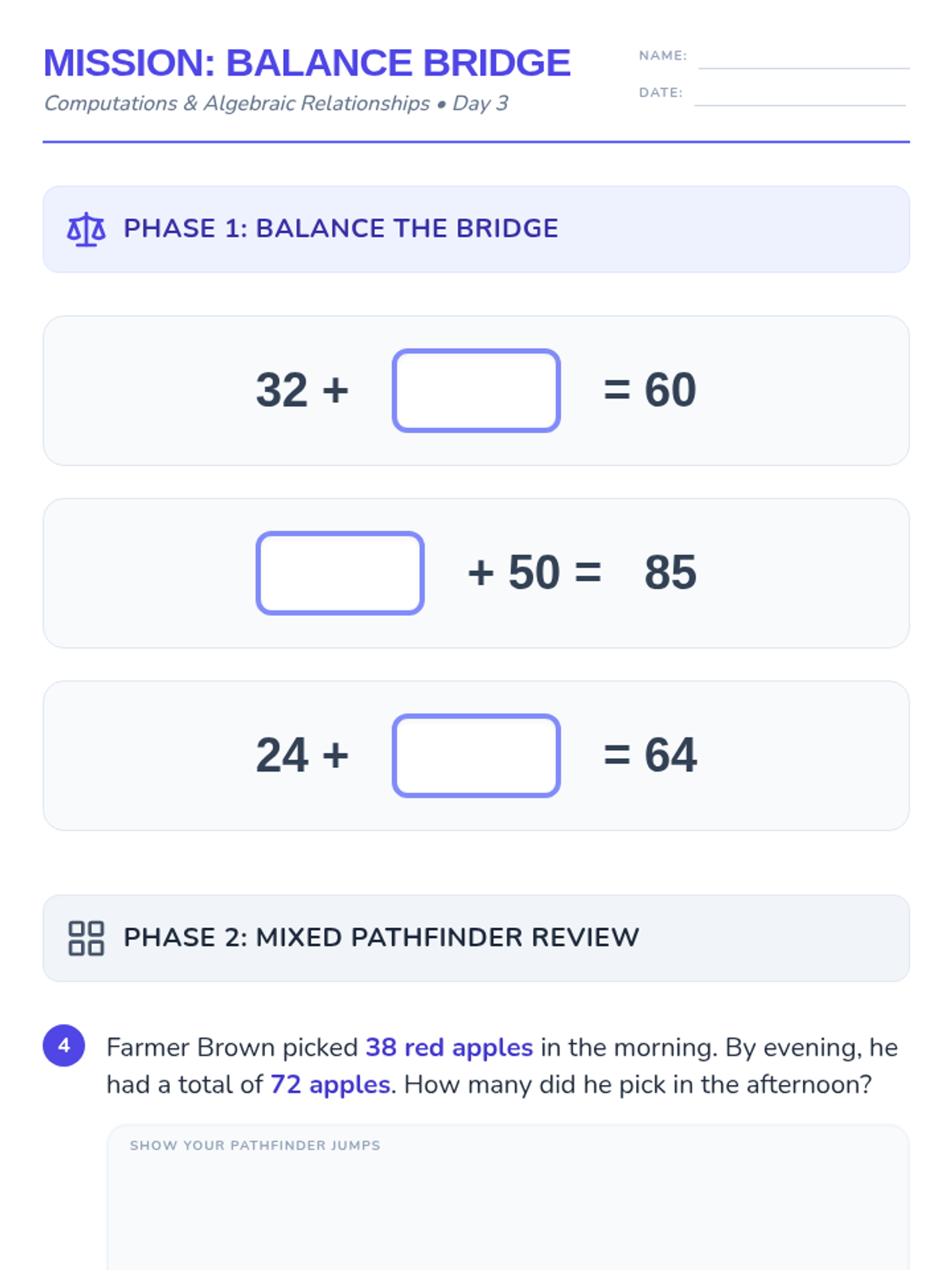
Introduces balanced equations and a cumulative review of word problems and sequences. Students will use their knowledge of part-part-whole relationships to solve equations like 45 + _ = 90.
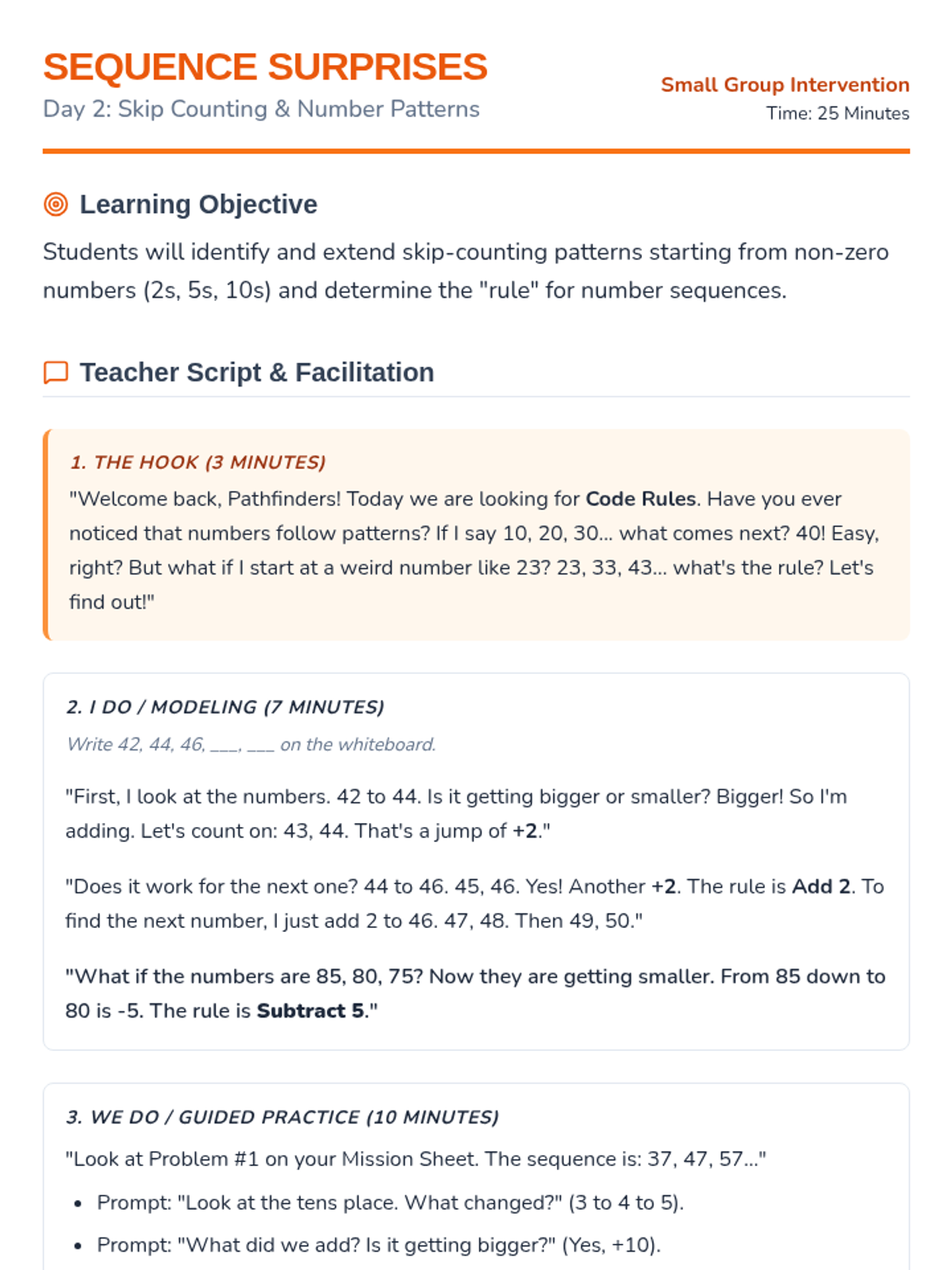
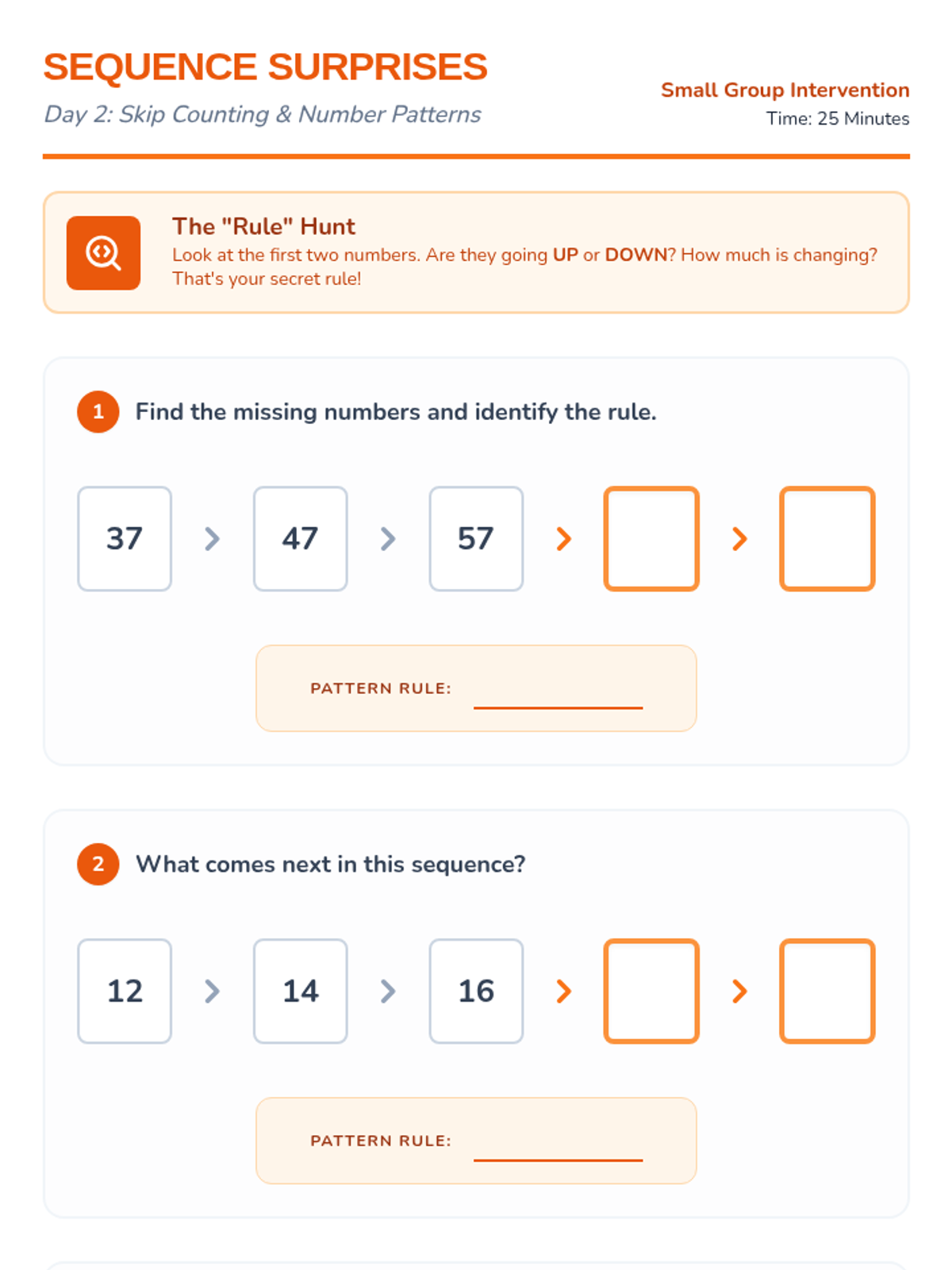
Teaches students to identify and extend number patterns and skip-counting sequences starting from various numbers. Students will learn to determine the 'rule' of a pattern to predict future values.
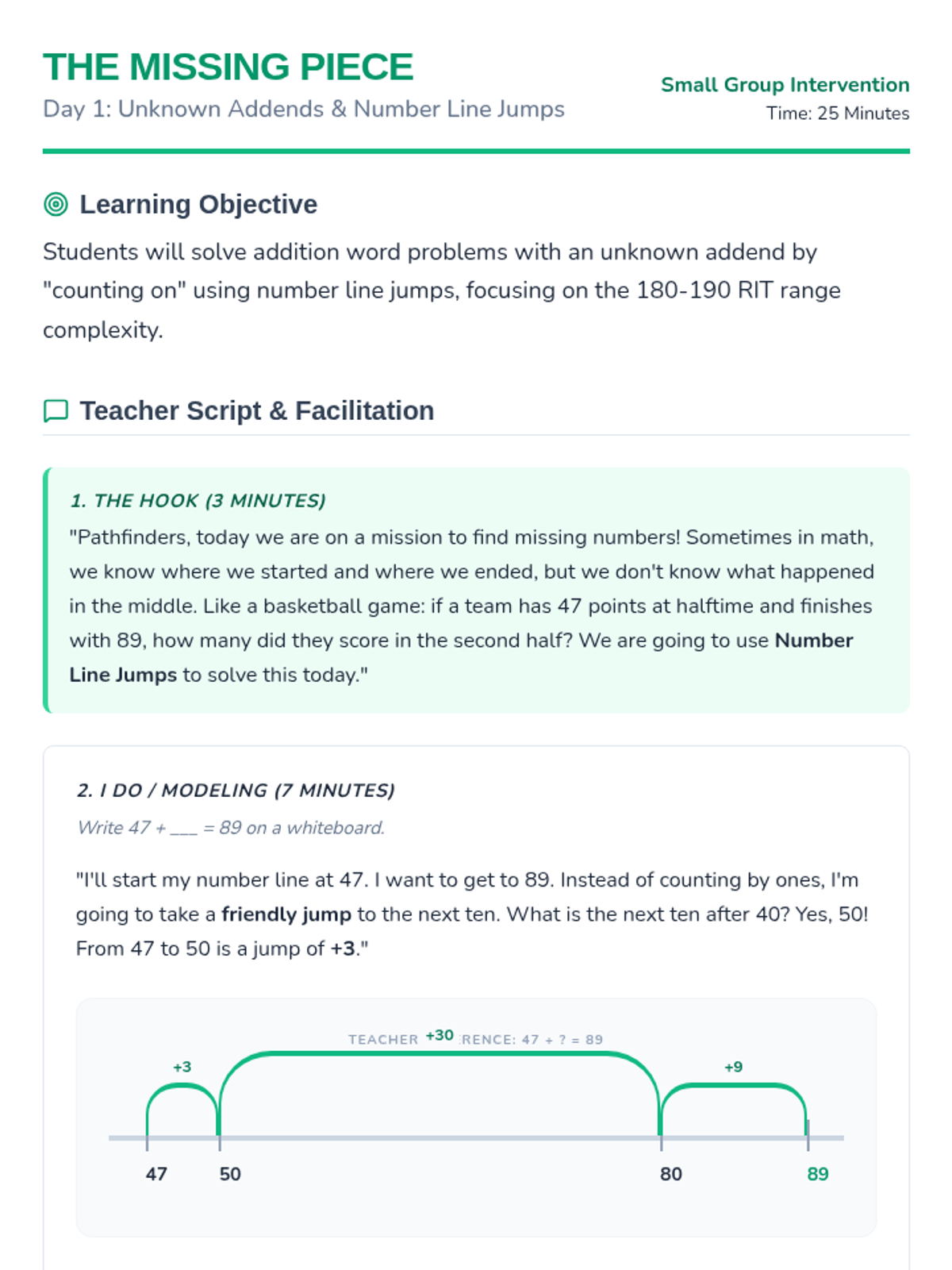
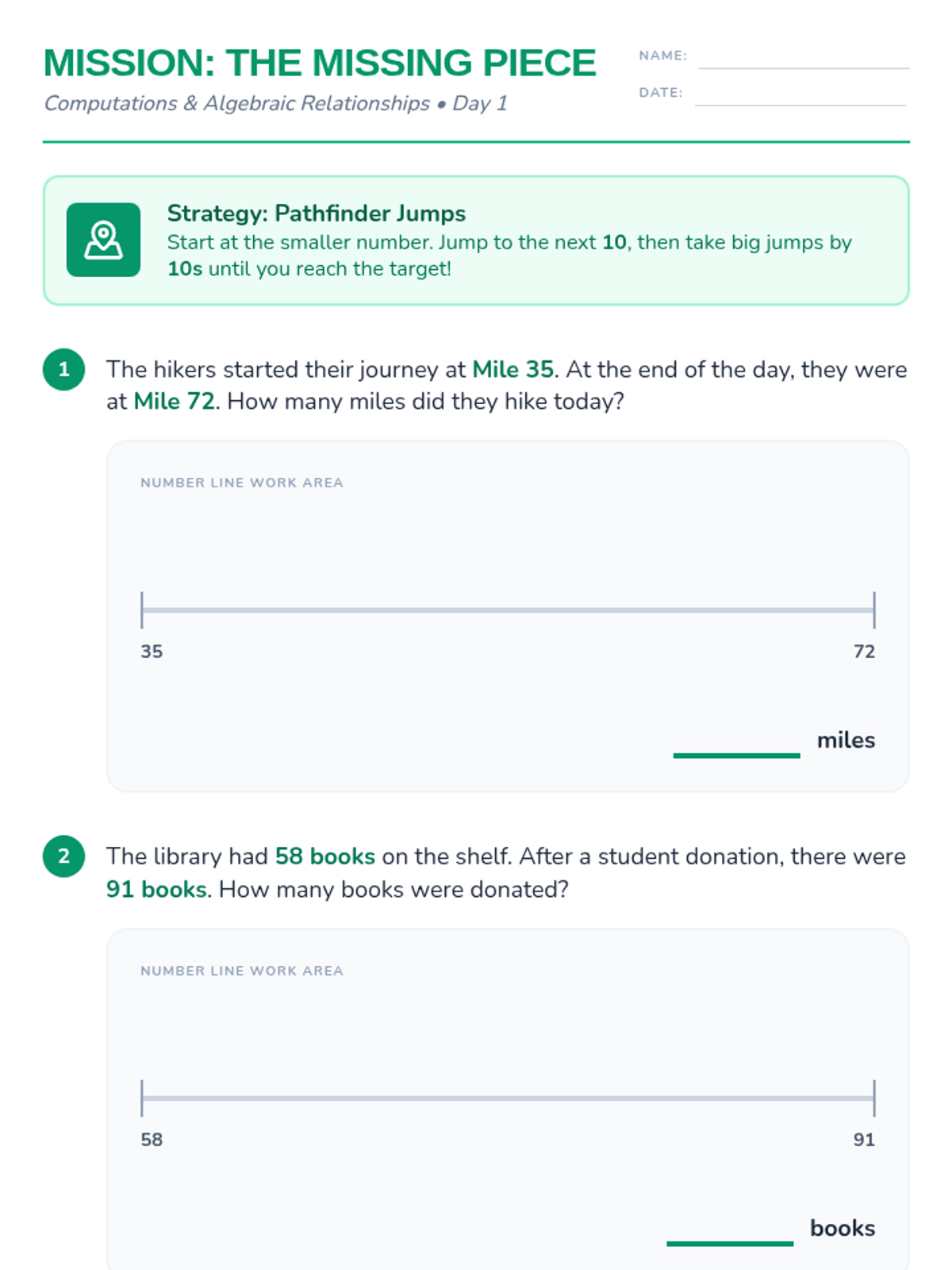
Focuses on finding missing addends in word problems using the 'counting on' strategy and number line jumps. Students will analyze scenarios similar to NWEA assessment items to bridge the 170-190 RIT range.
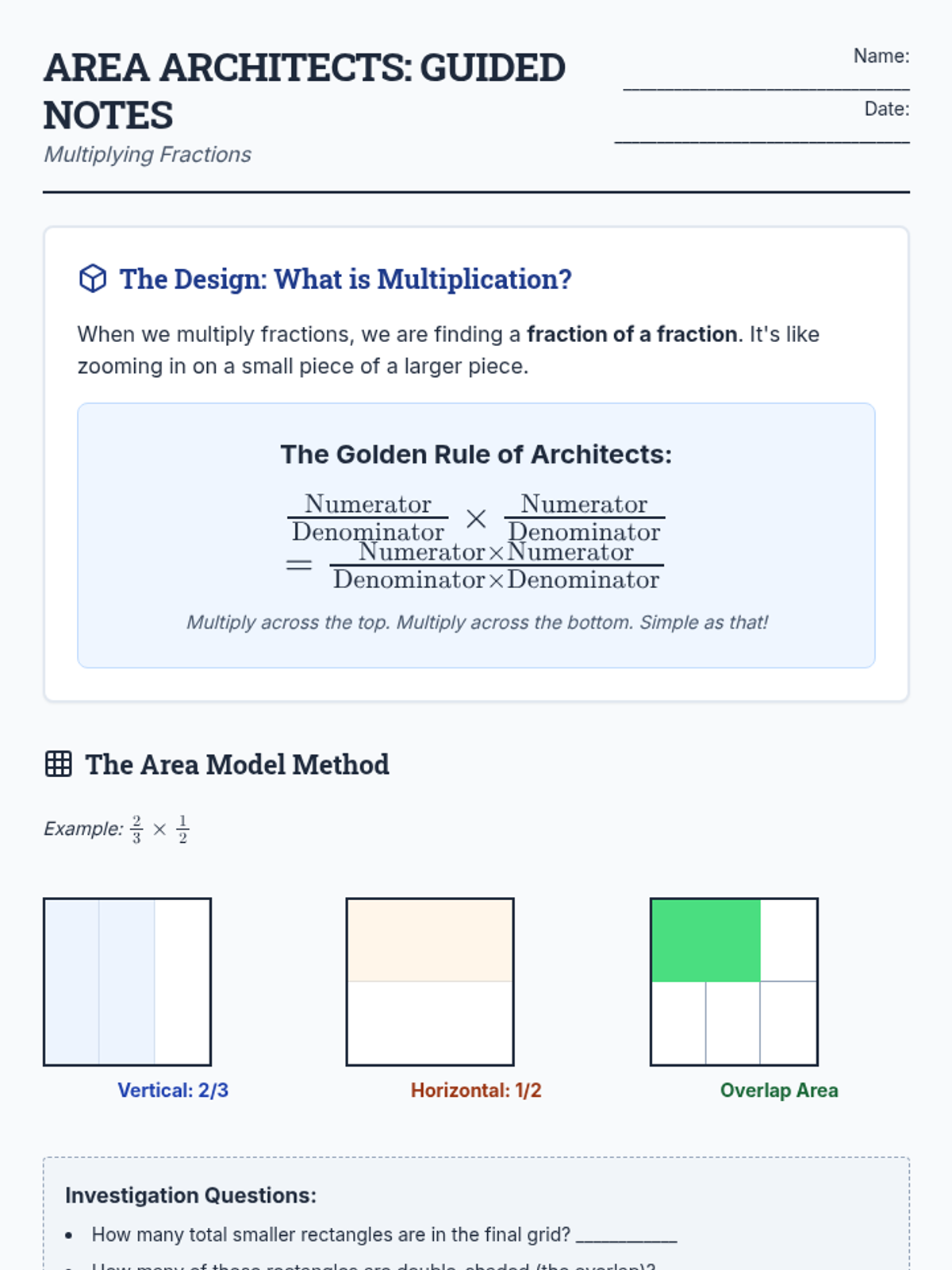
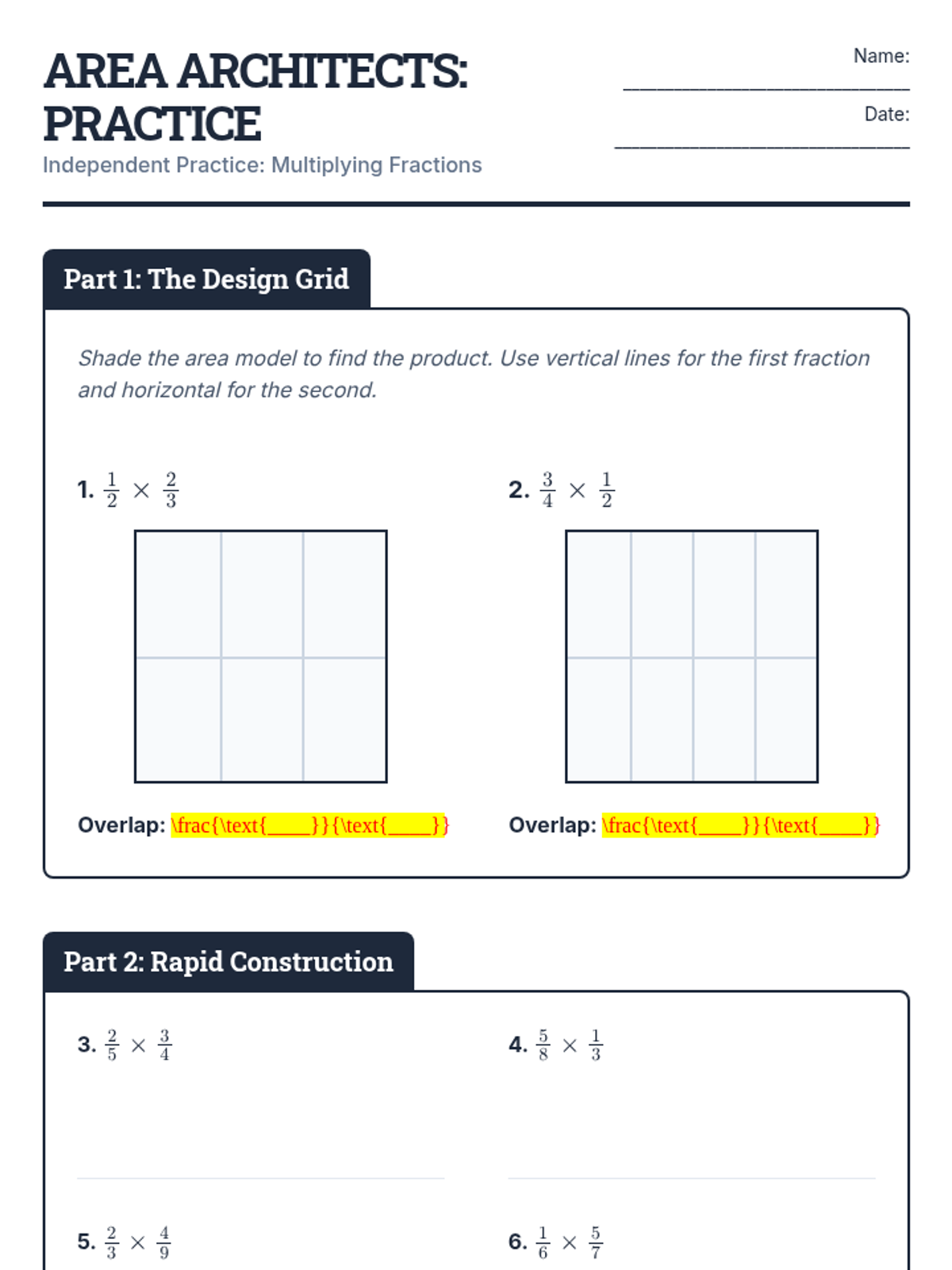
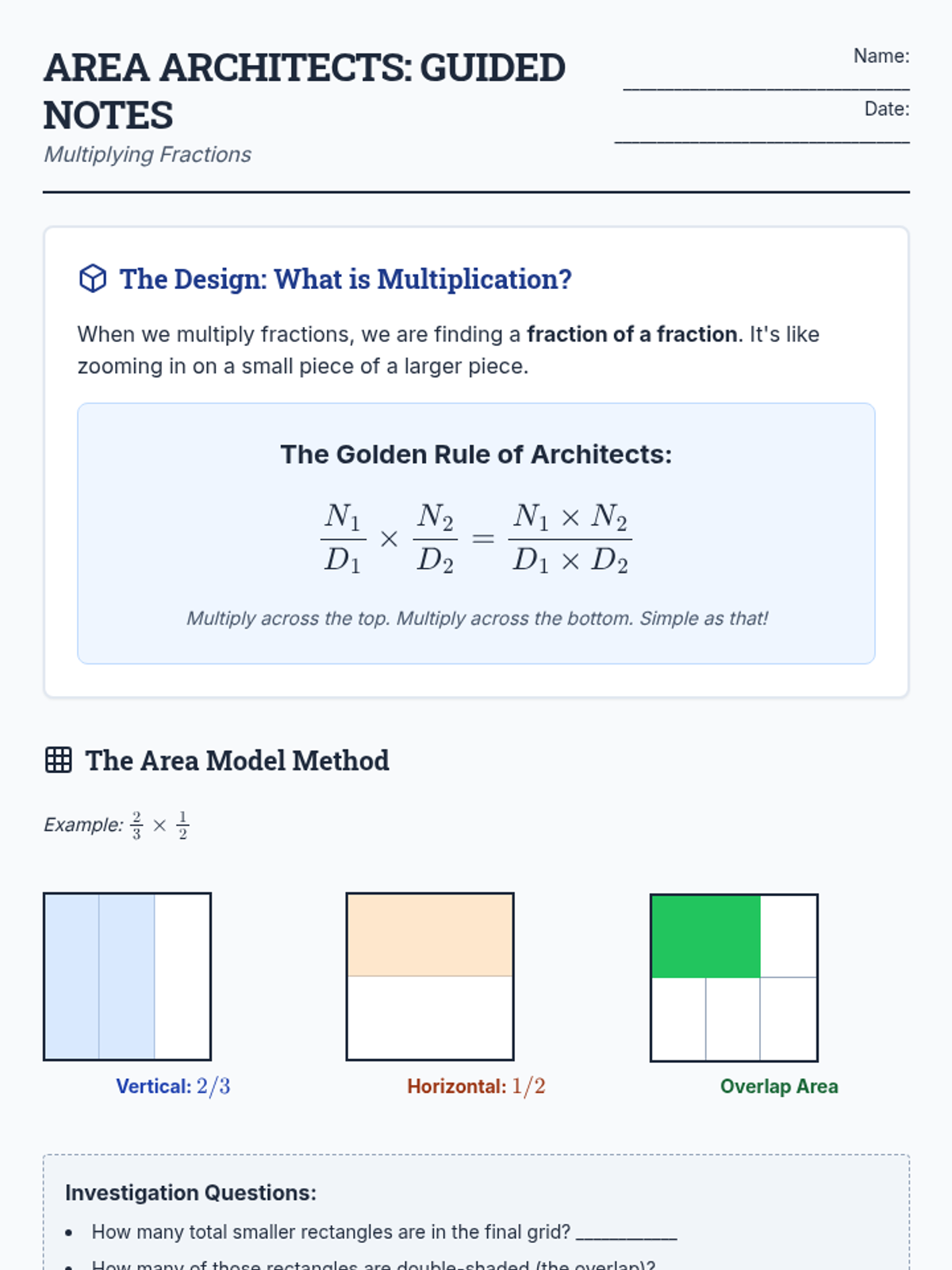
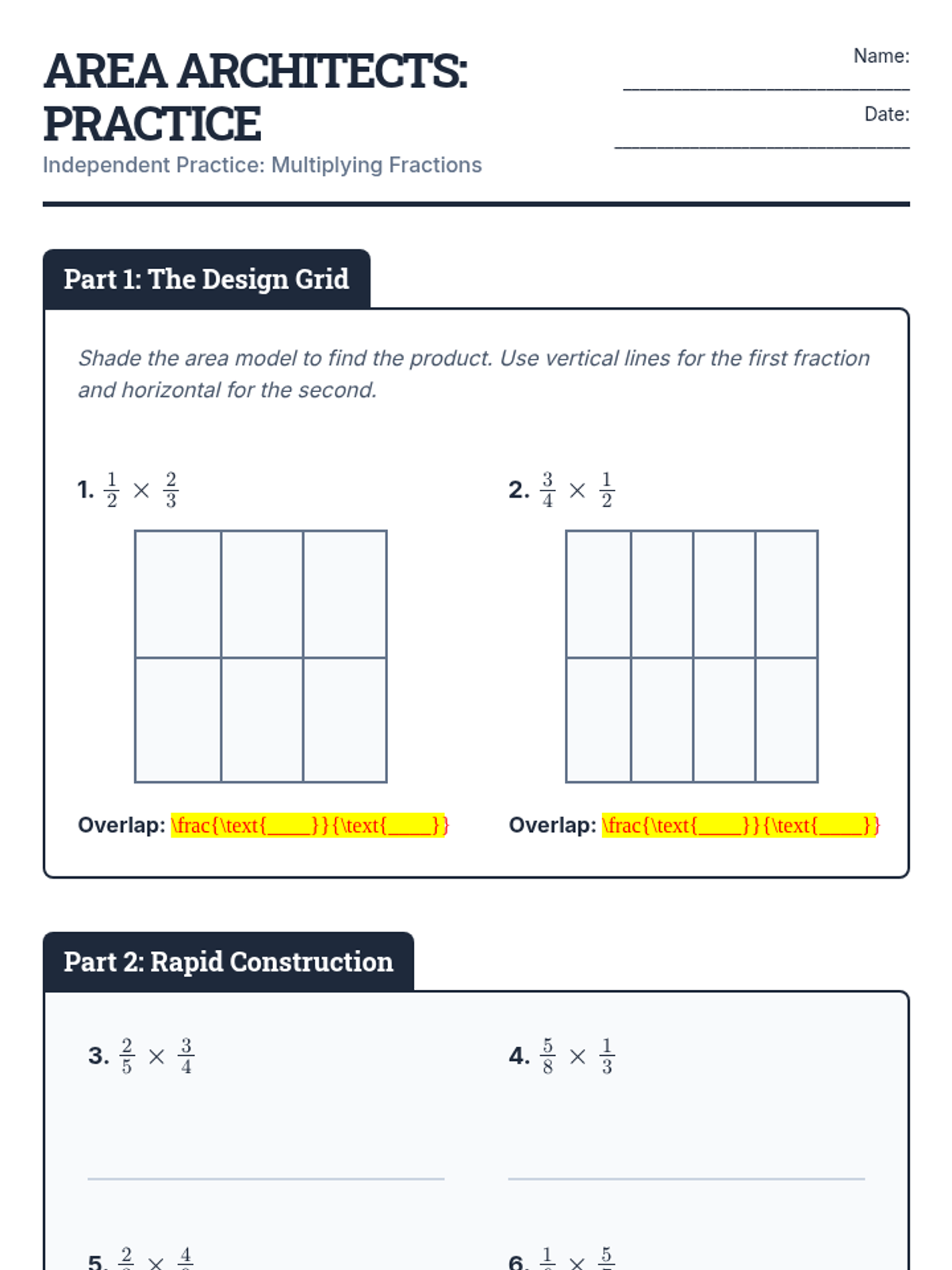
Students explore fraction multiplication through area models, understanding how to find a fraction of a fraction in real-world contexts.
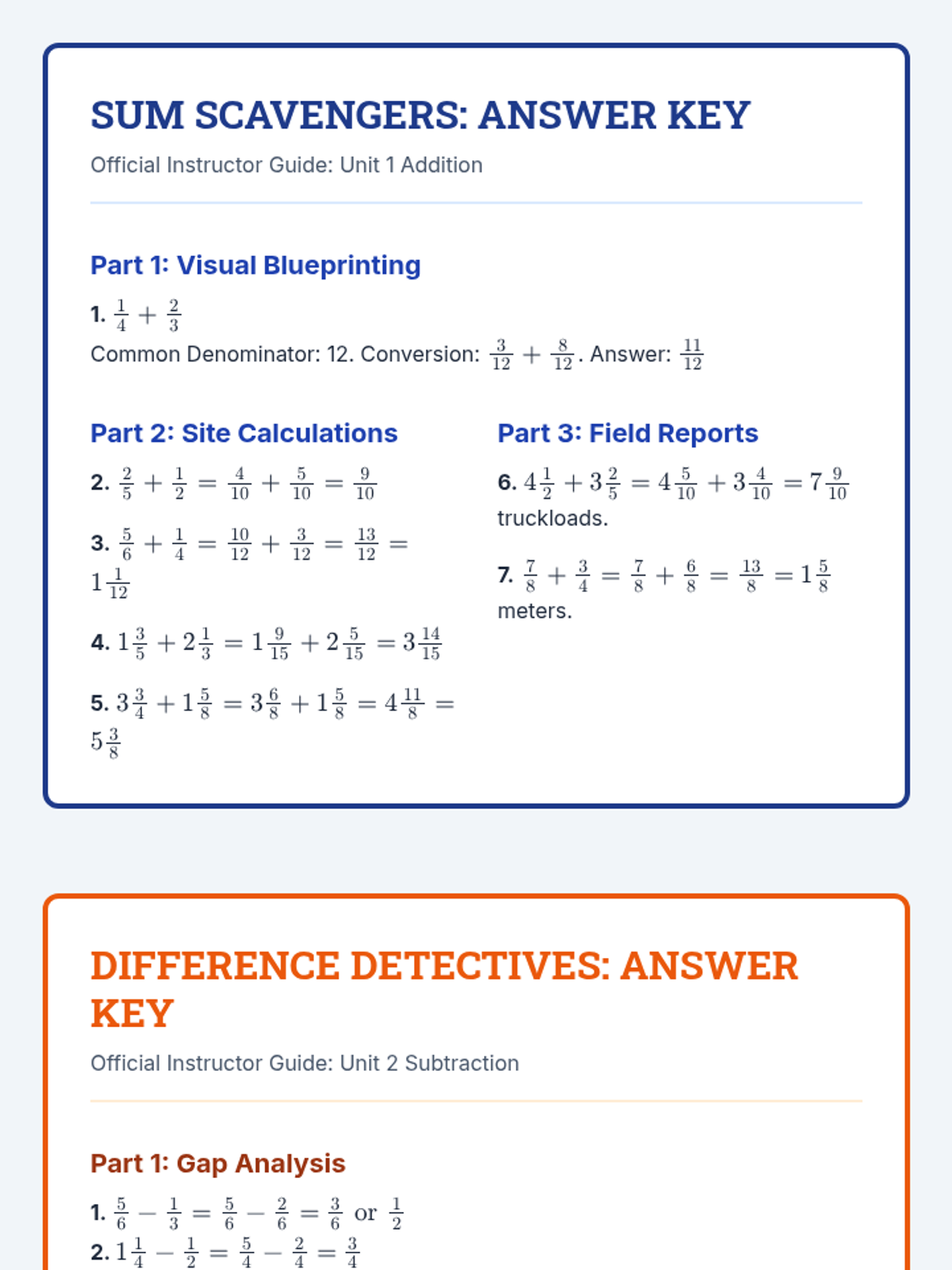
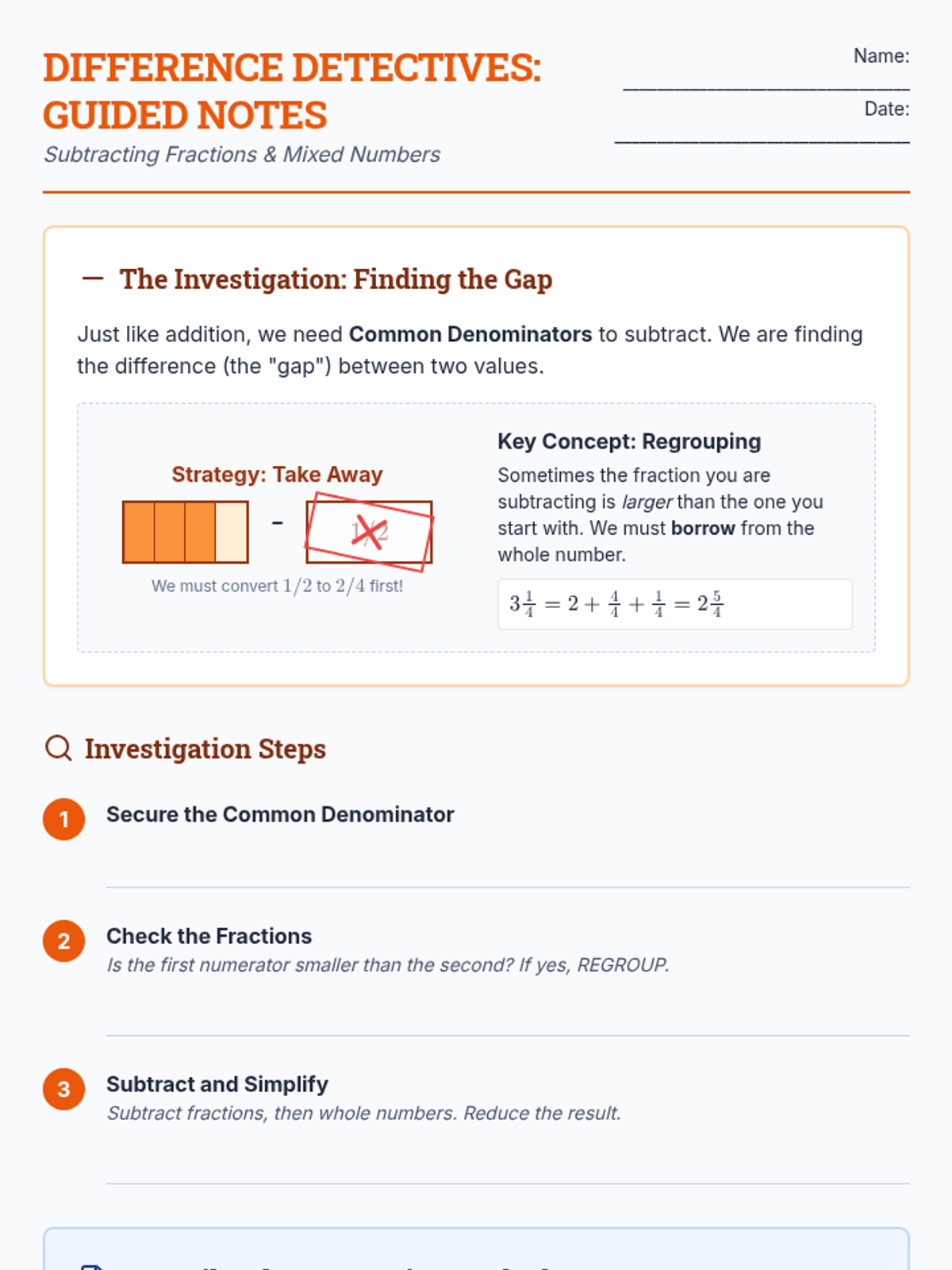
Students master subtracting fractions and mixed numbers with unlike denominators, focusing on regrouping strategies and visual representations.
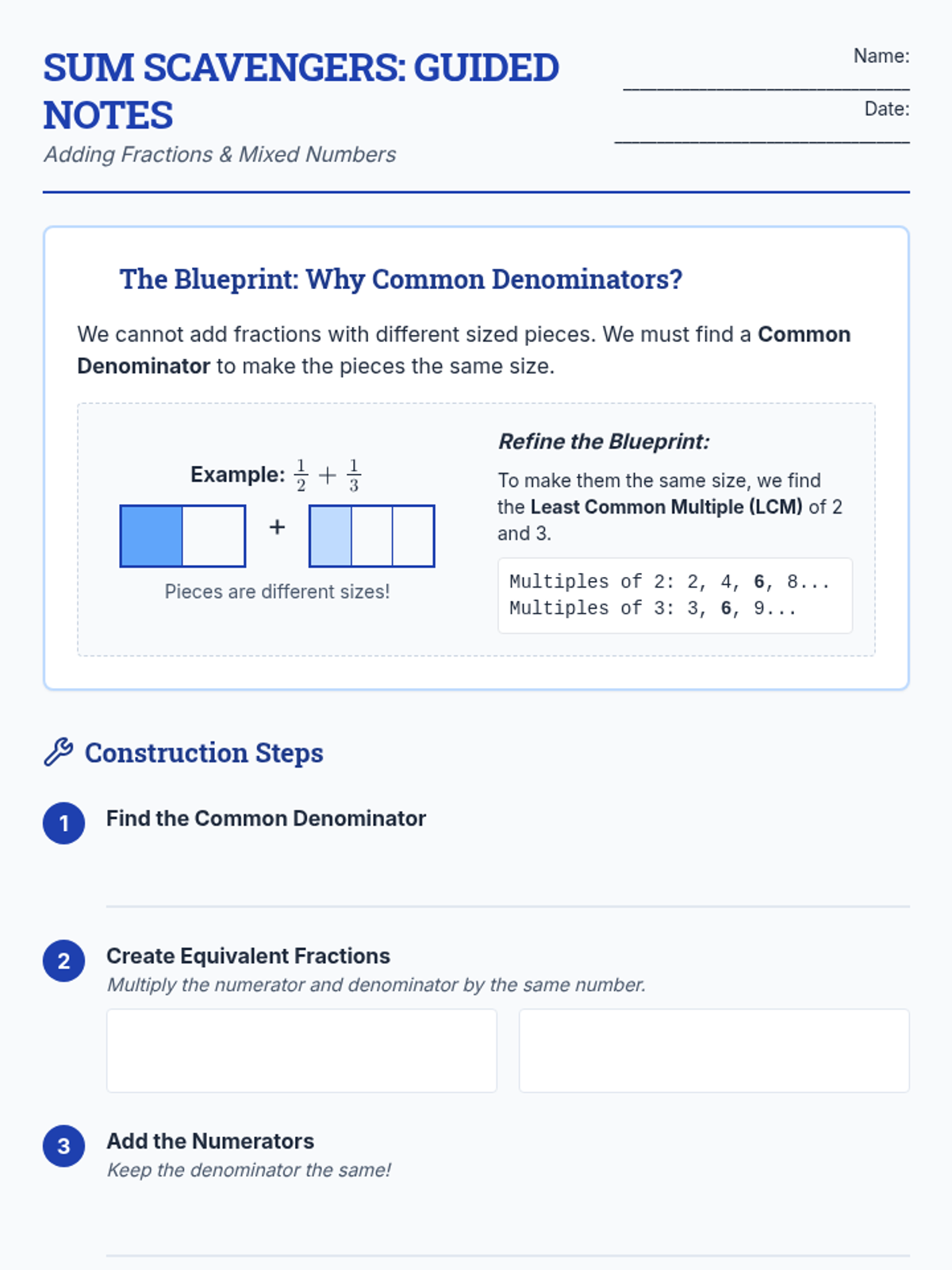
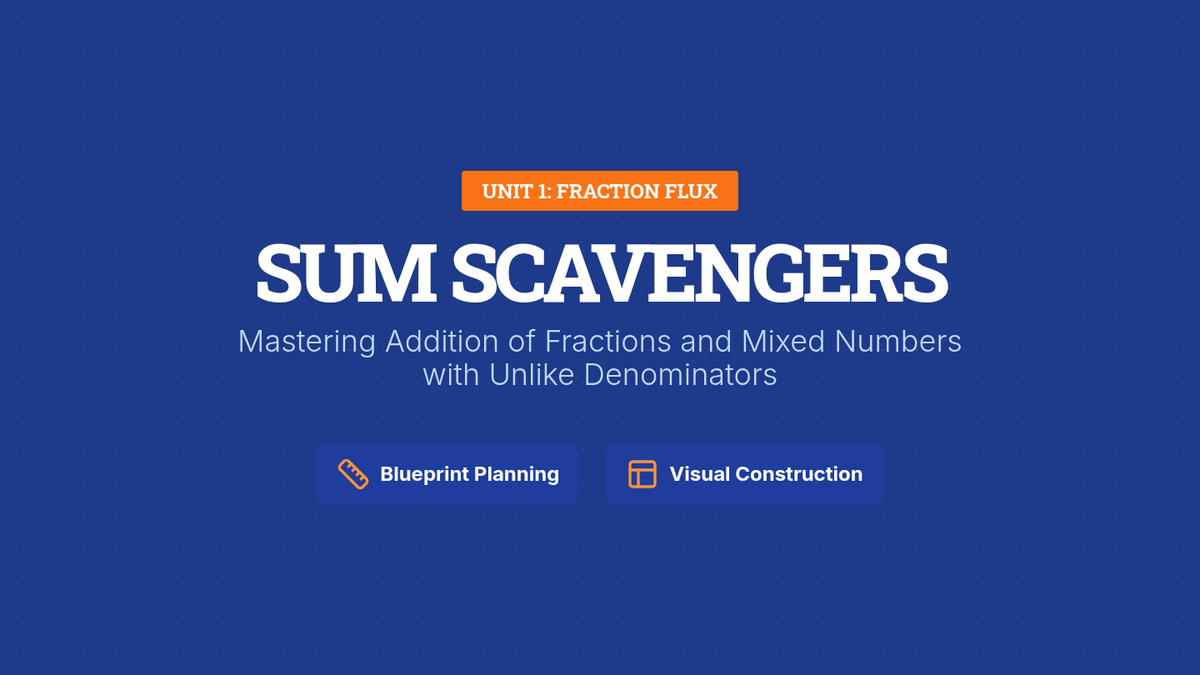
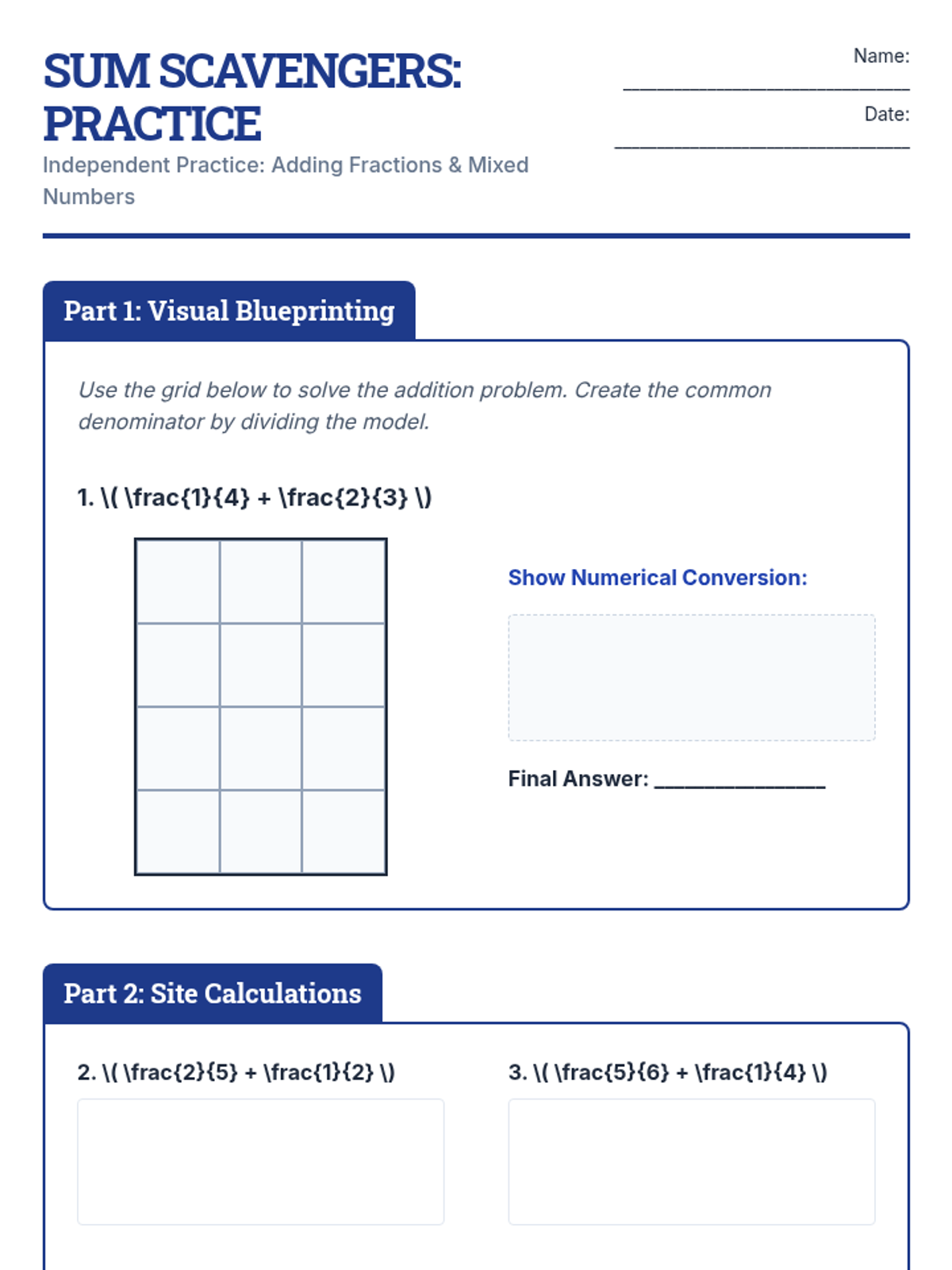
Students learn to add fractions and mixed numbers with unlike denominators using area models and number lines to find common grounds.
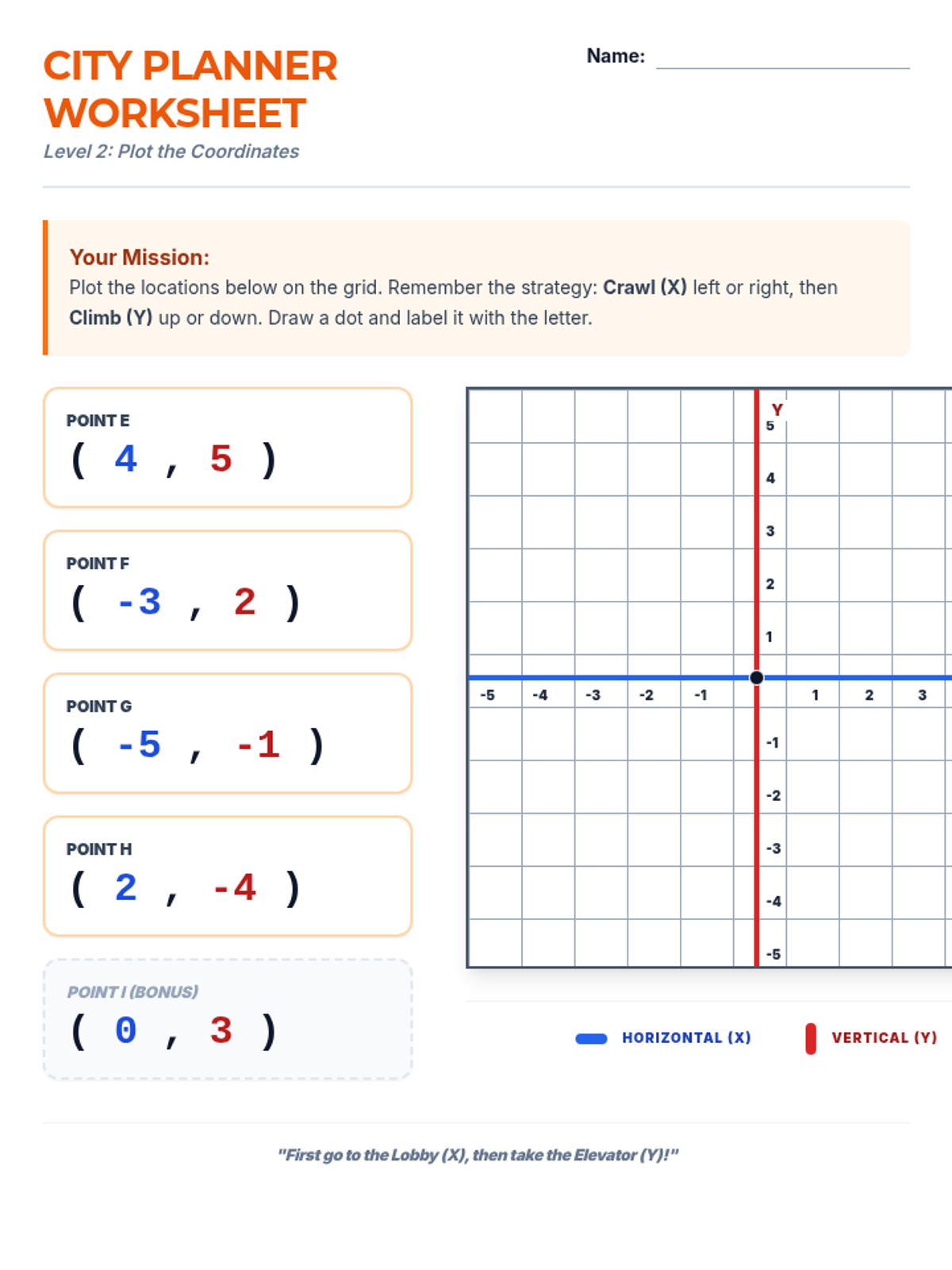
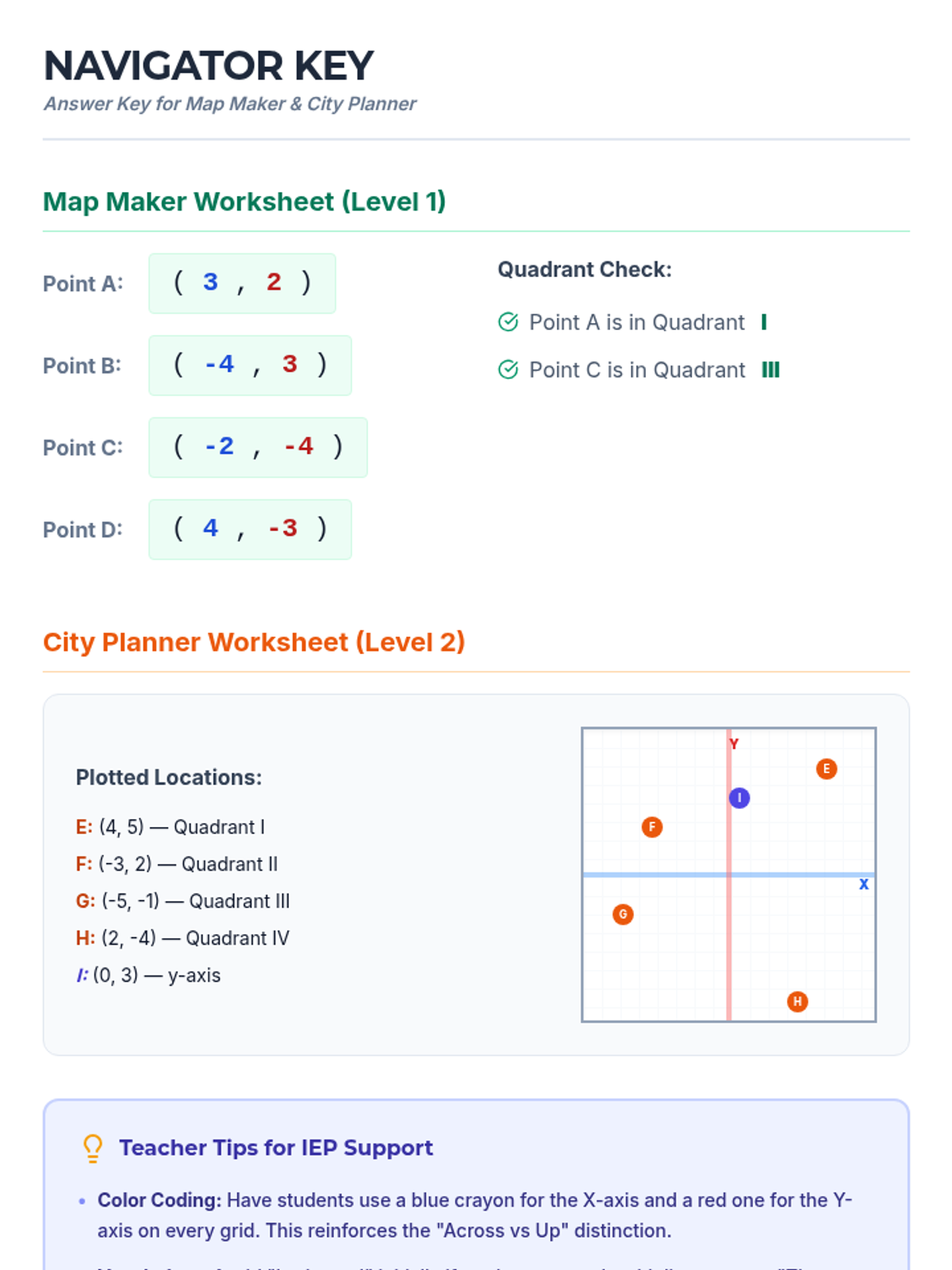
A foundational lesson on the 4-quadrant coordinate plane, specifically designed for students with IEPs. Includes visual-heavy instruction on identifying and plotting ordered pairs using color-coded axes and step-by-step strategies.
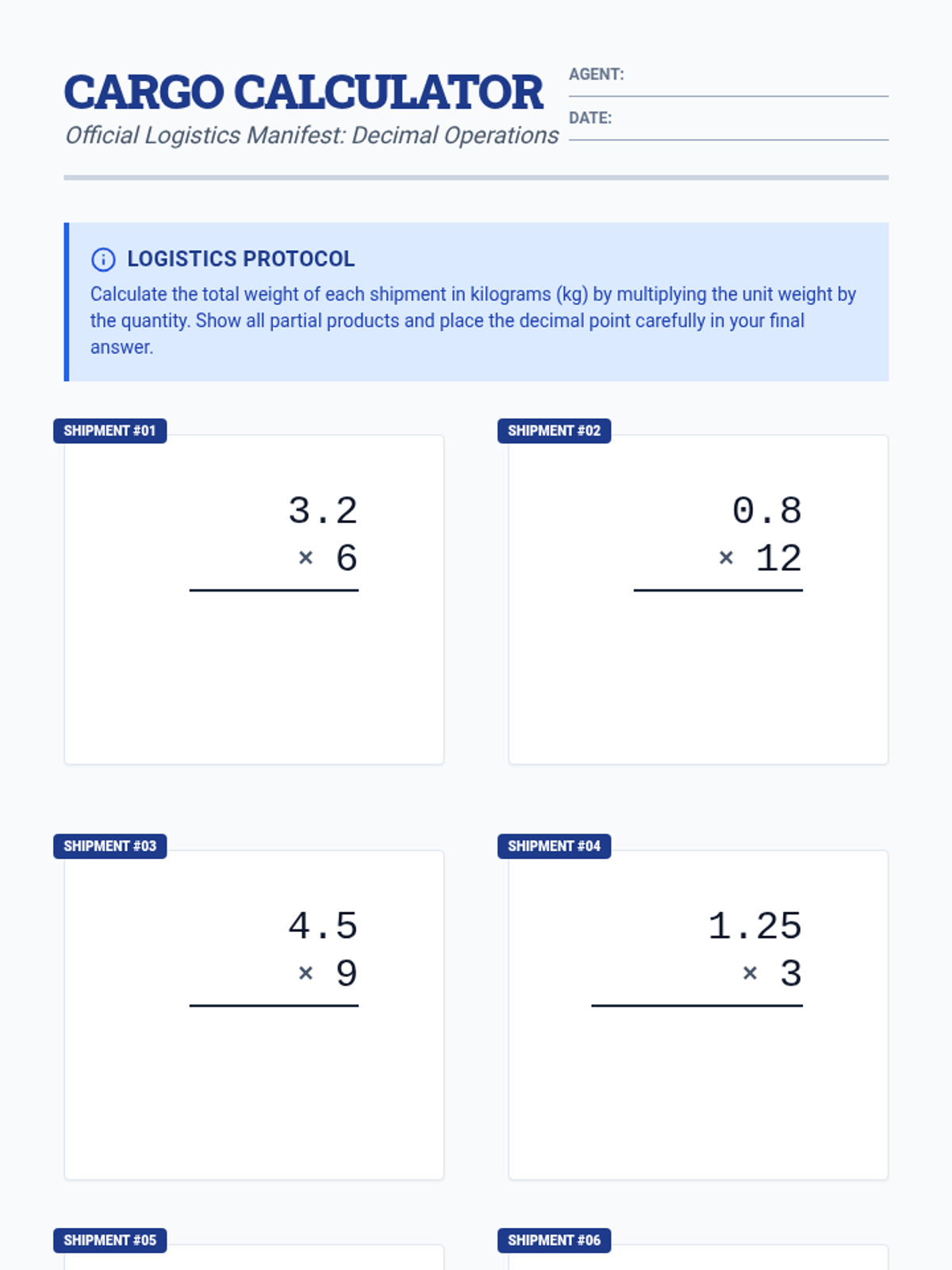
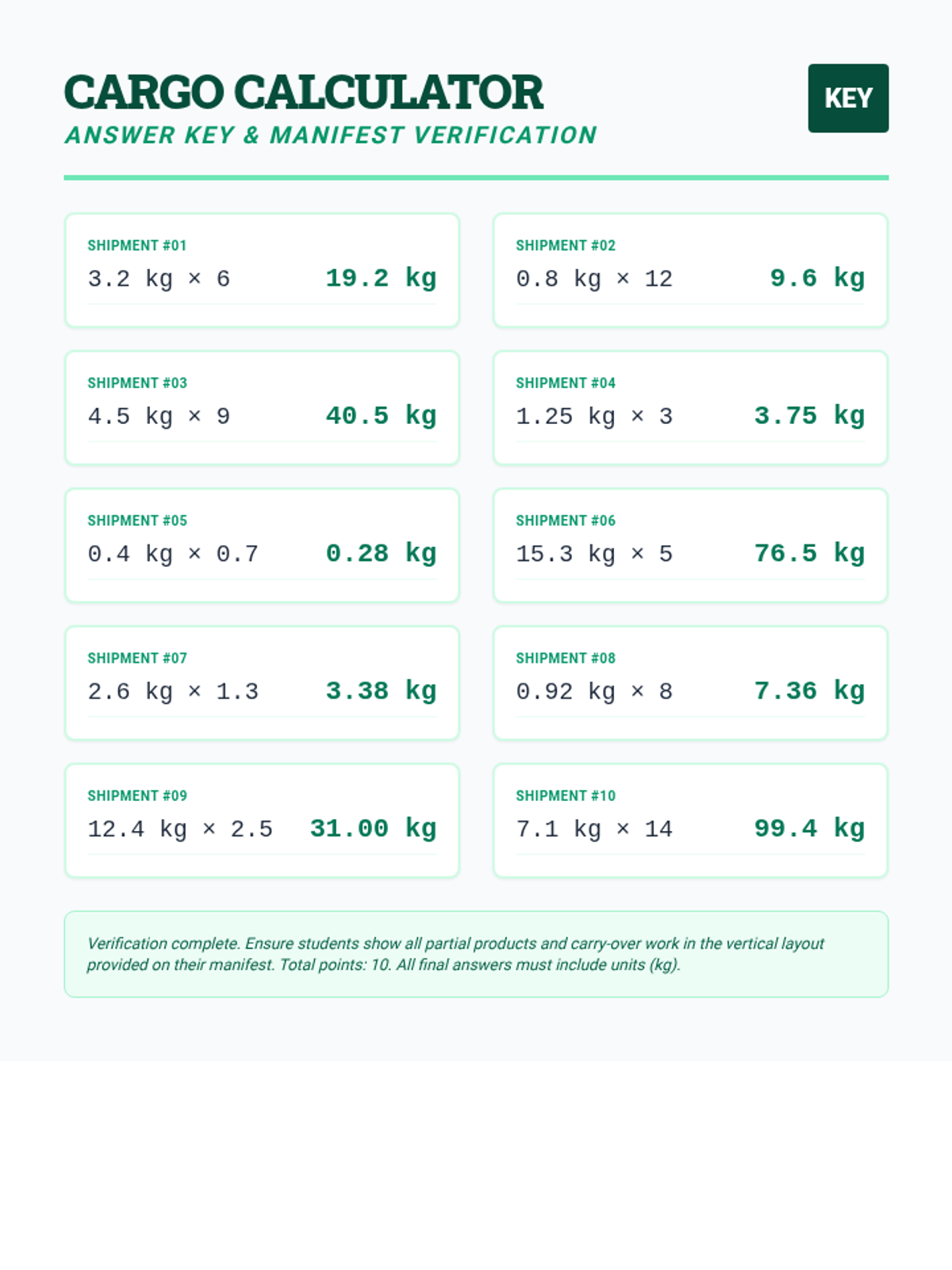
A lesson focused on multiplying decimals by whole numbers and other decimals using a cargo/shipping theme. Students will practice vertical multiplication and decimal point placement.
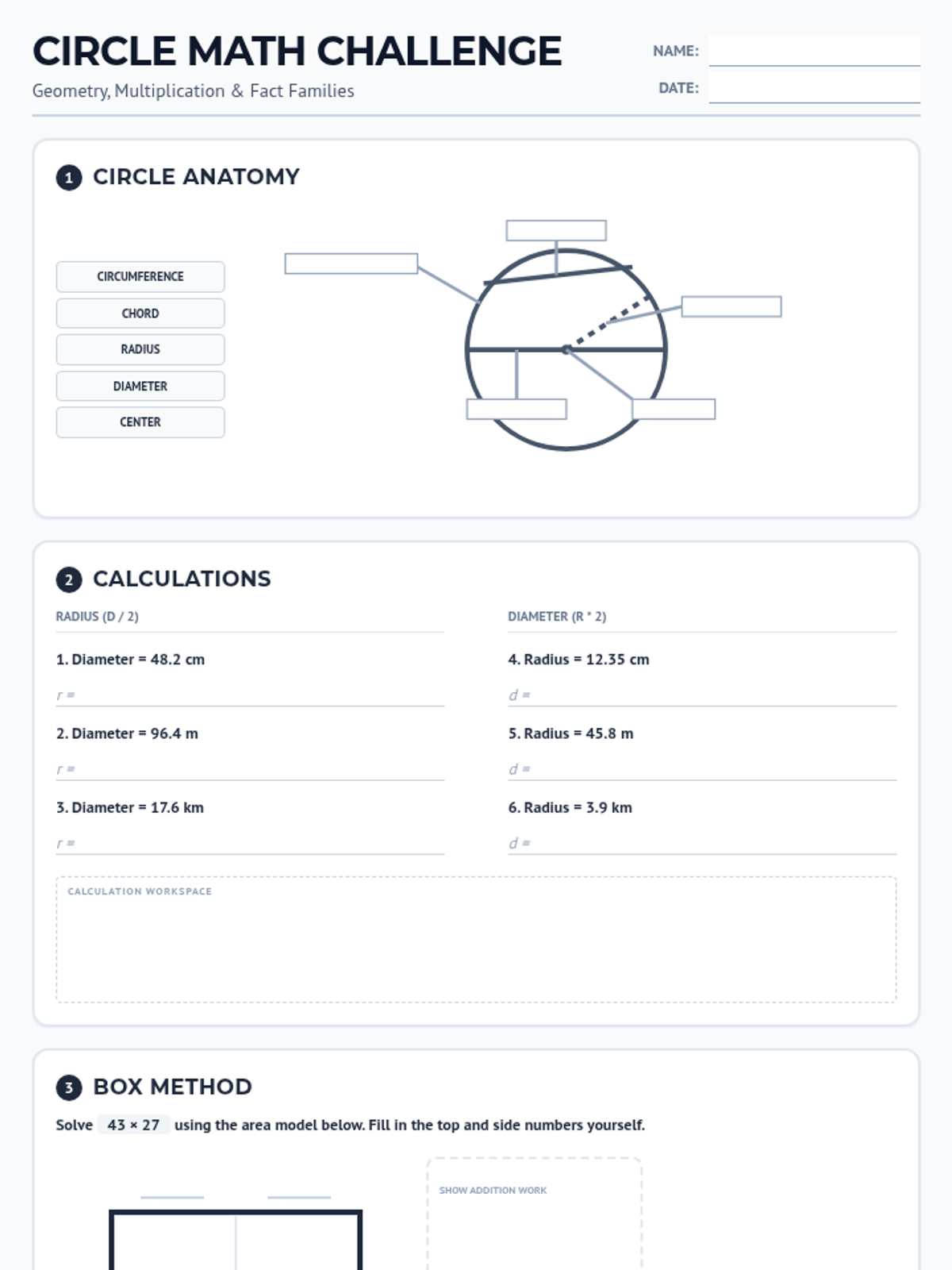
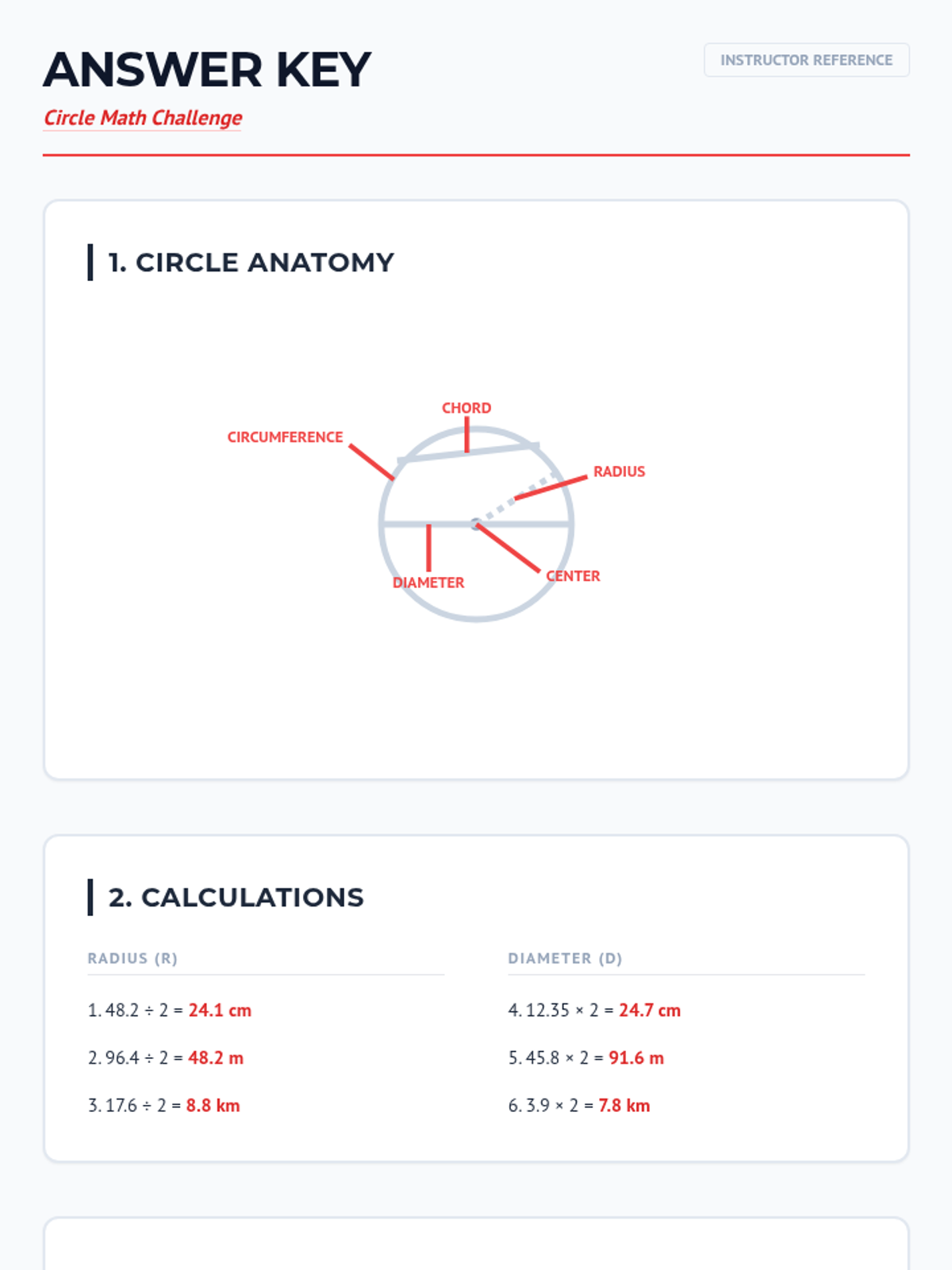
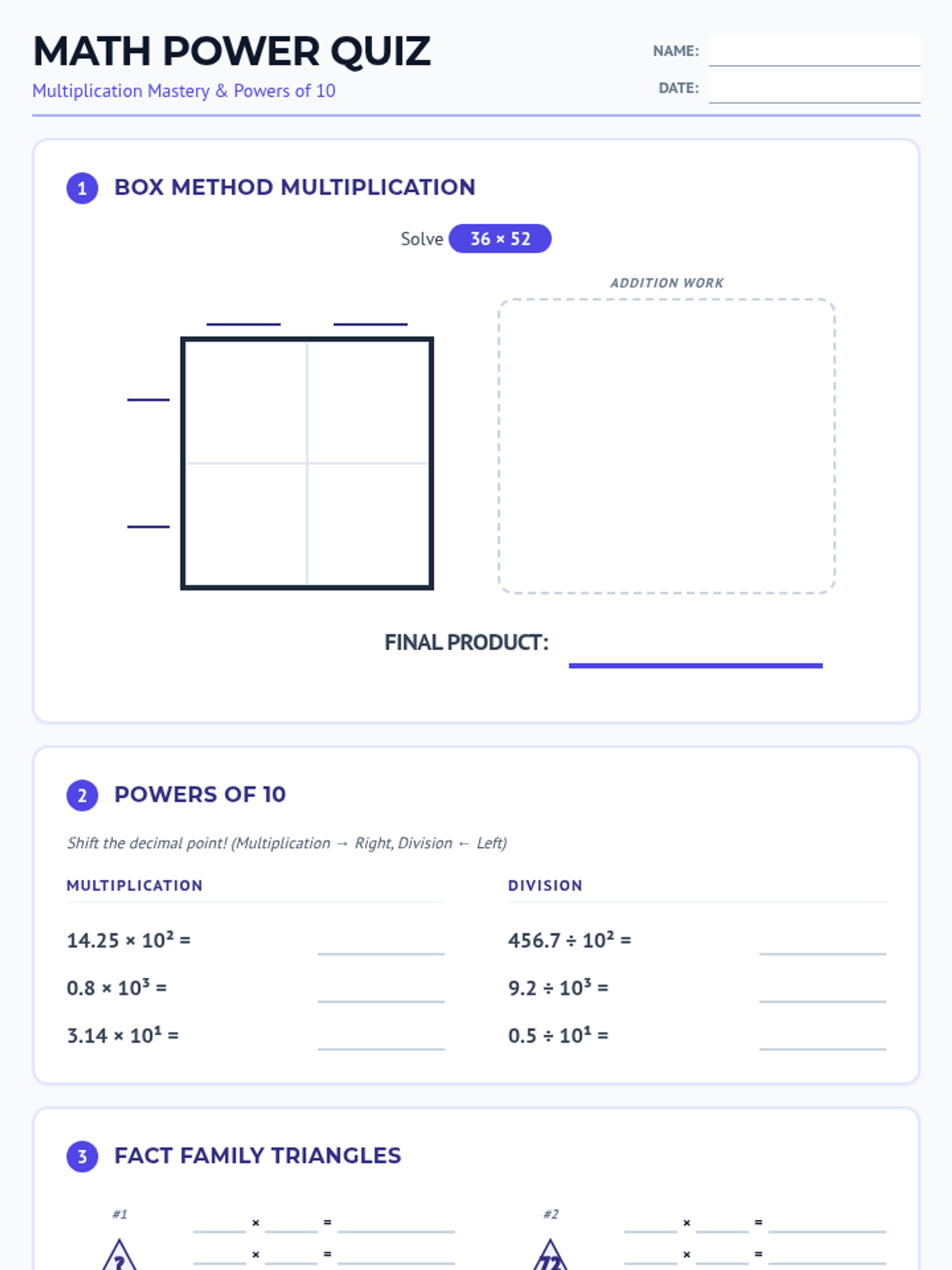
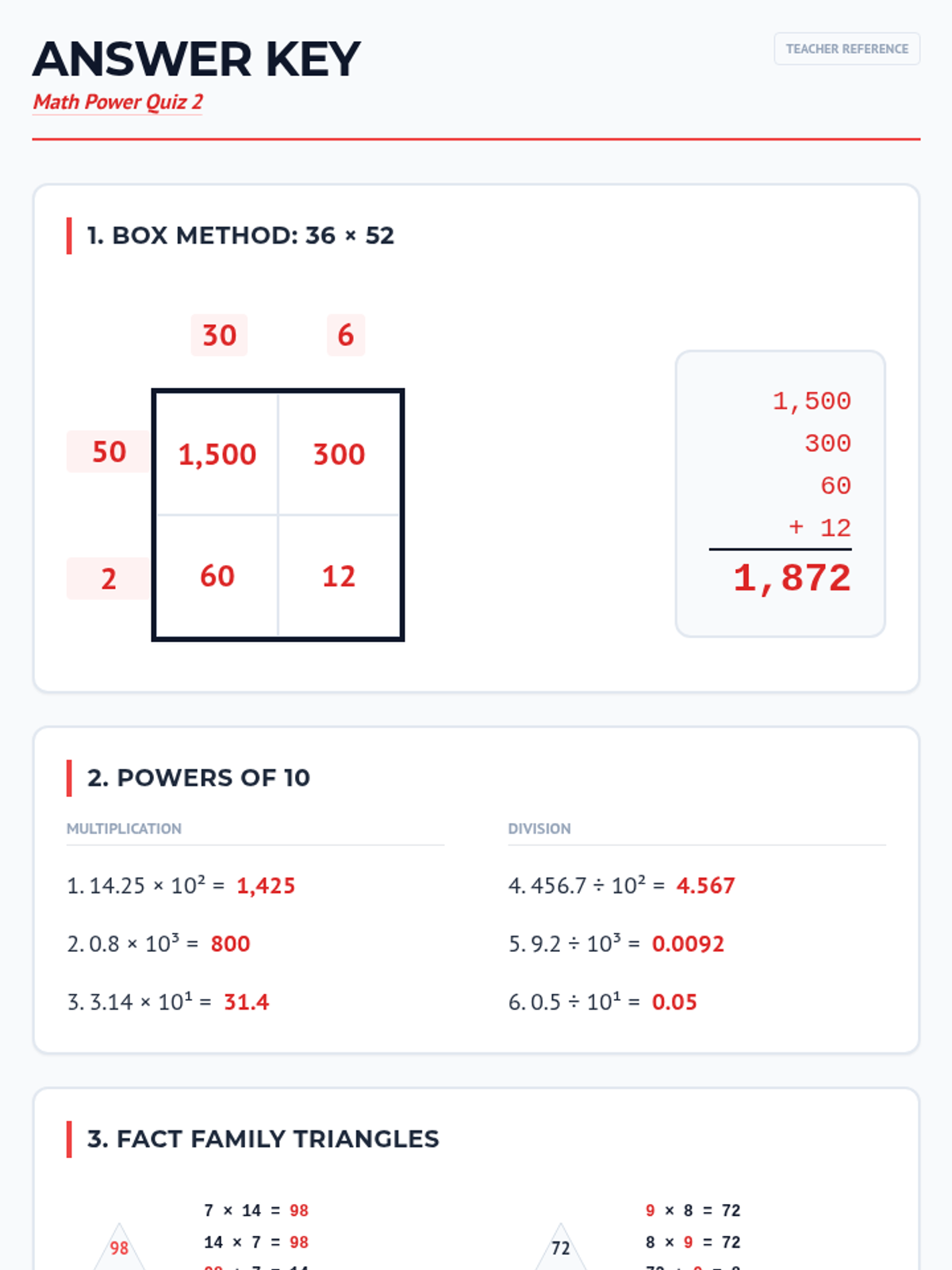
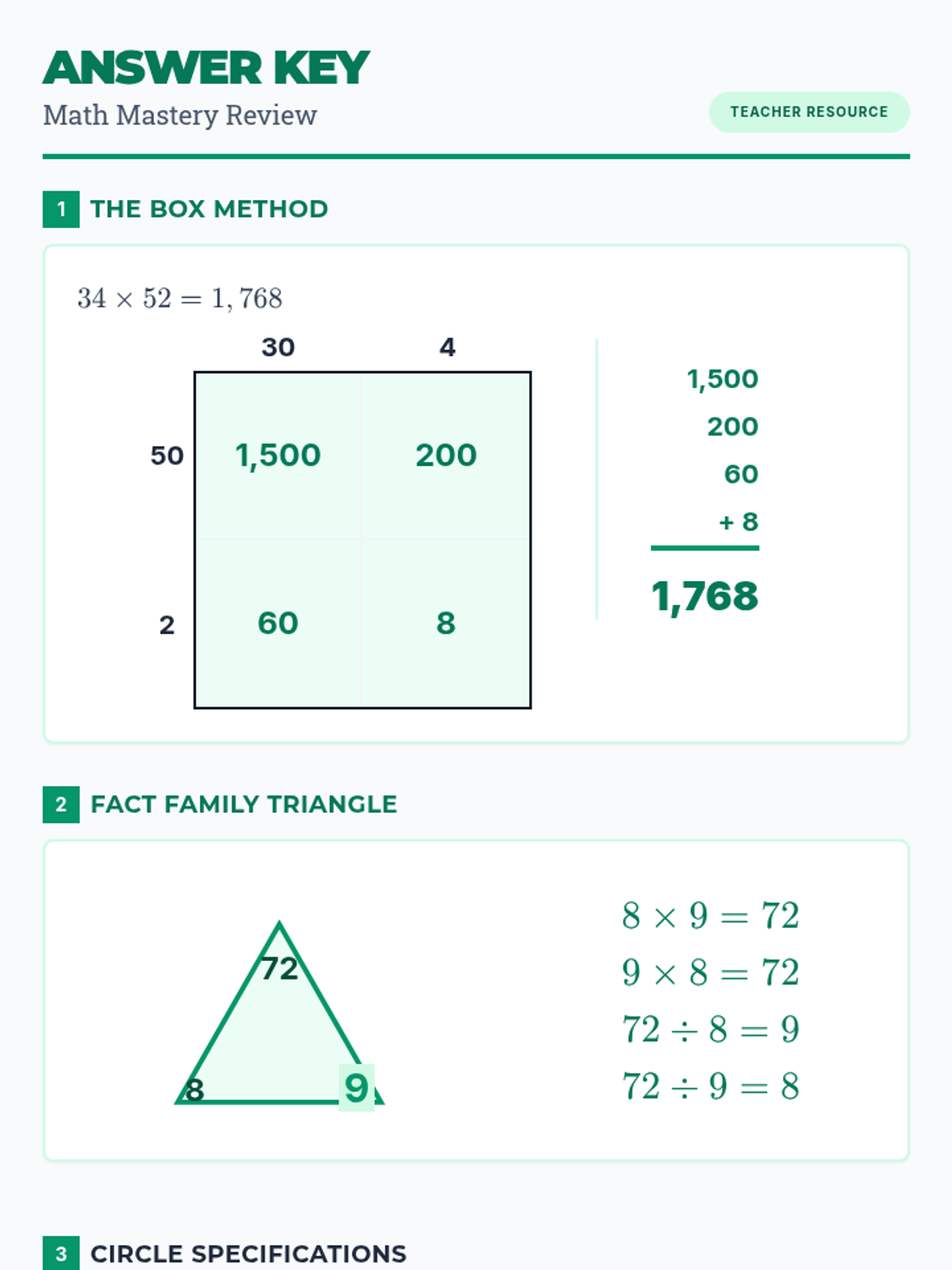
A comprehensive assessment covering circle geometry, area model multiplication, and multiplication/division fact families. Students will demonstrate their understanding of geometric parts, calculation skills, and algebraic relationships.
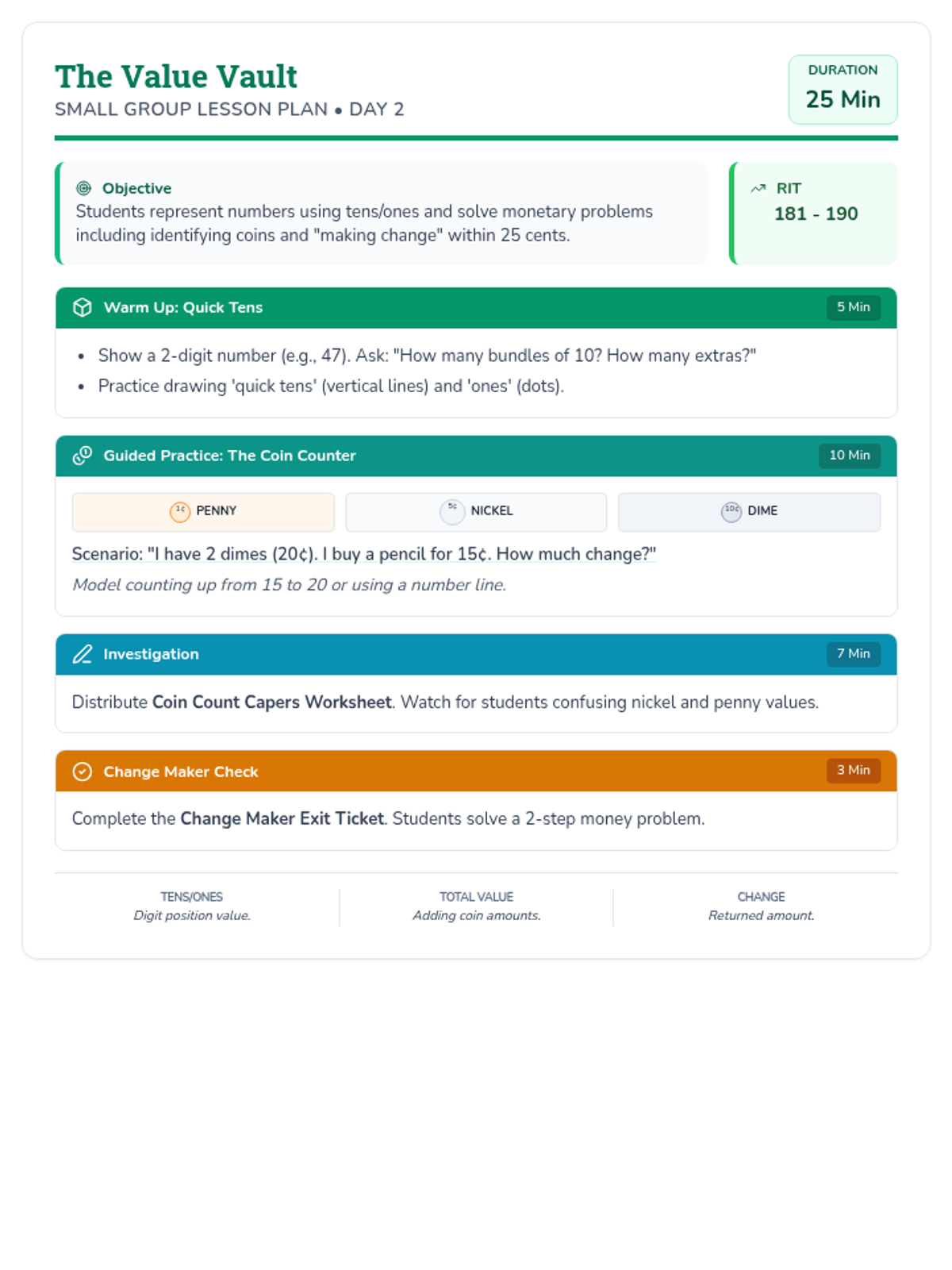
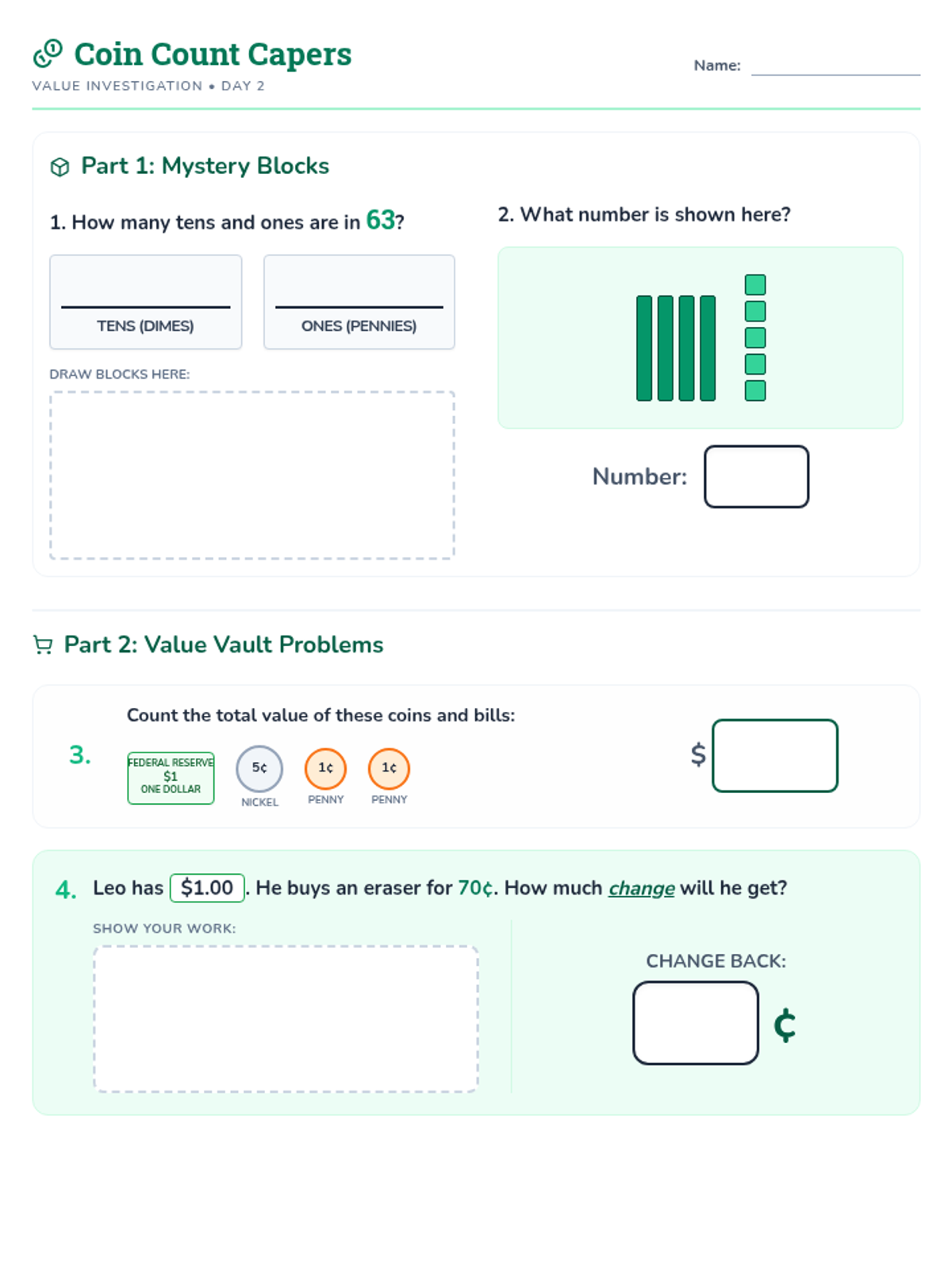
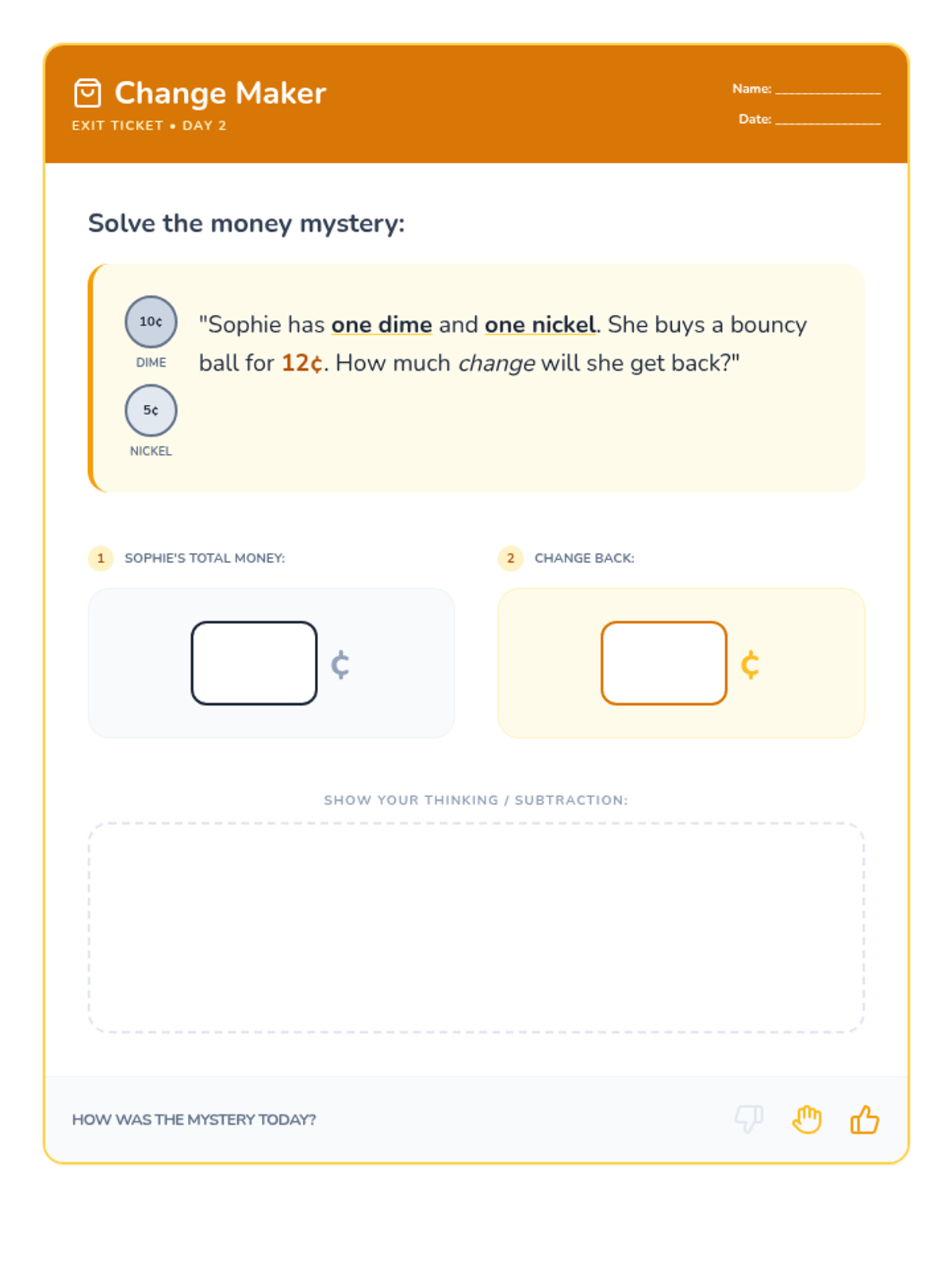
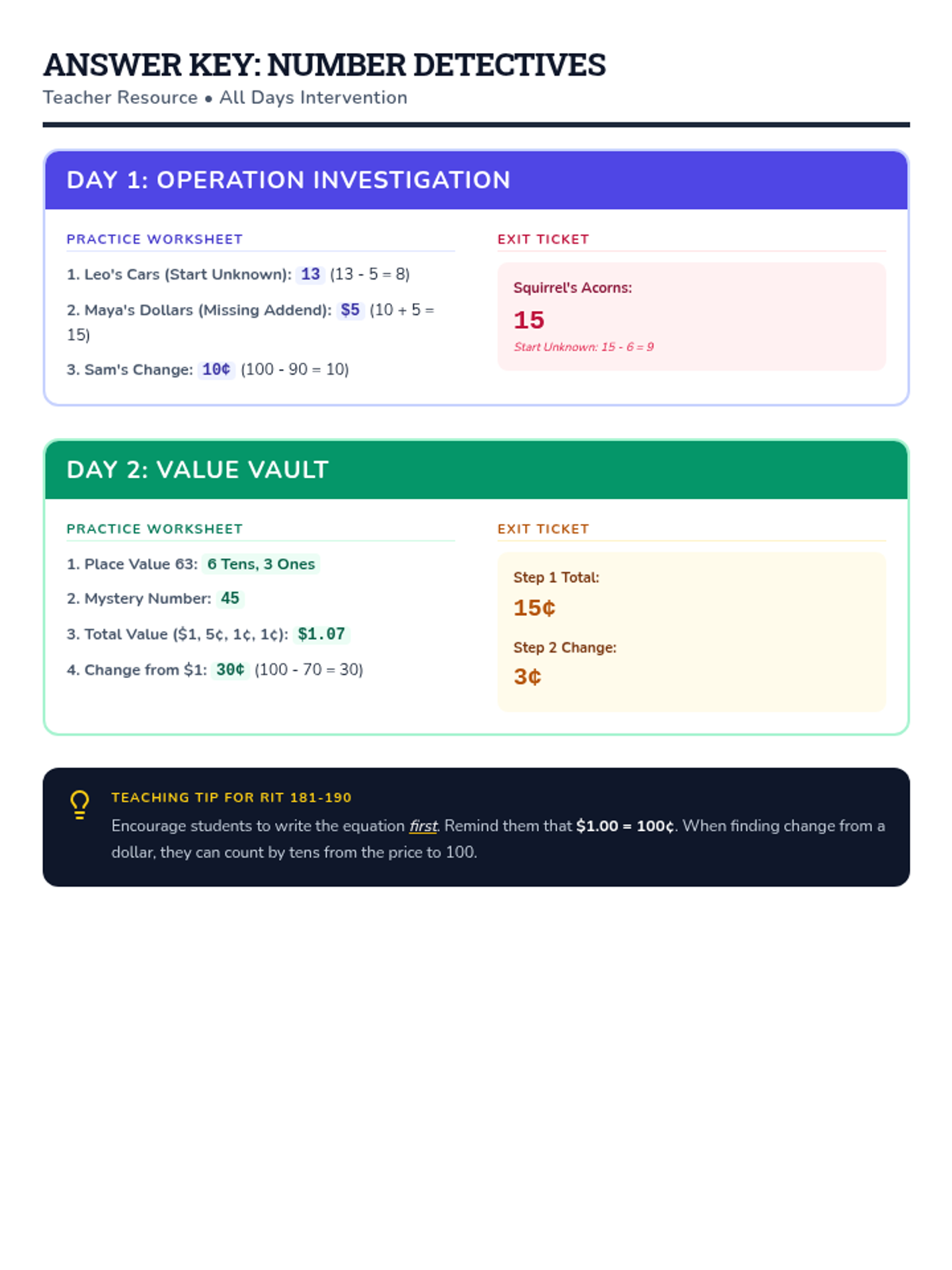
Focuses on place value (tens and ones) and monetary problems including identifying coins and making change.
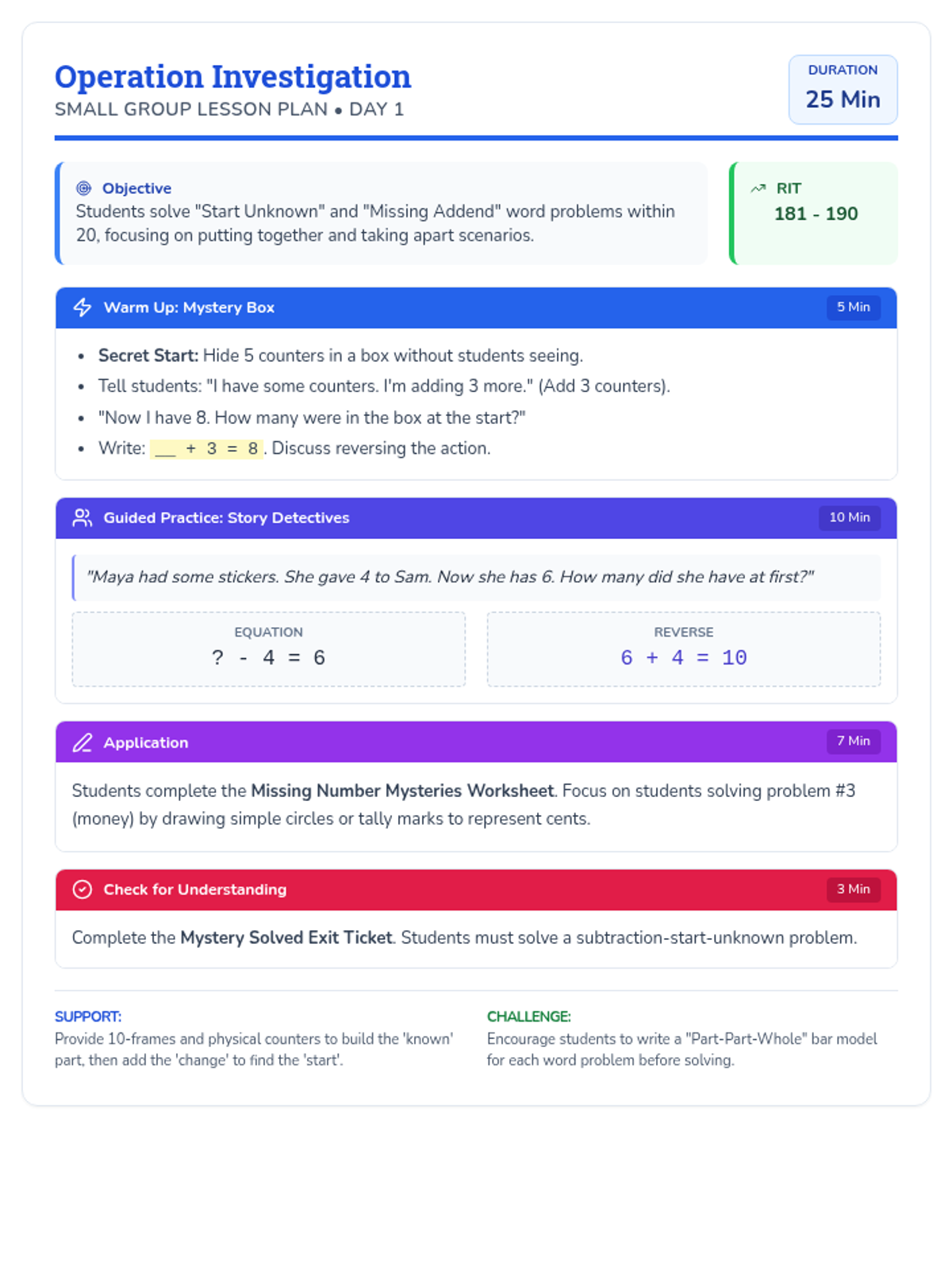
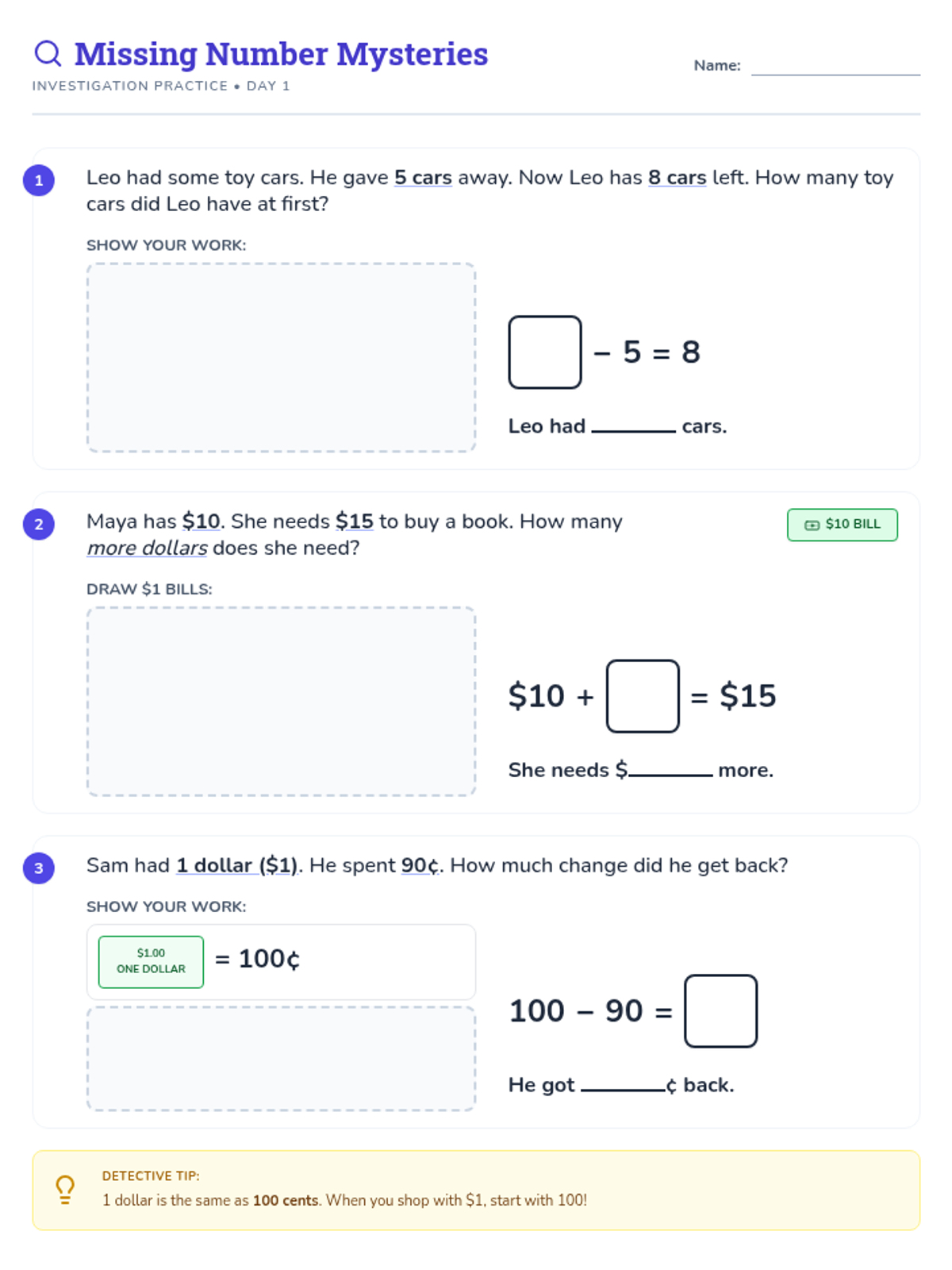
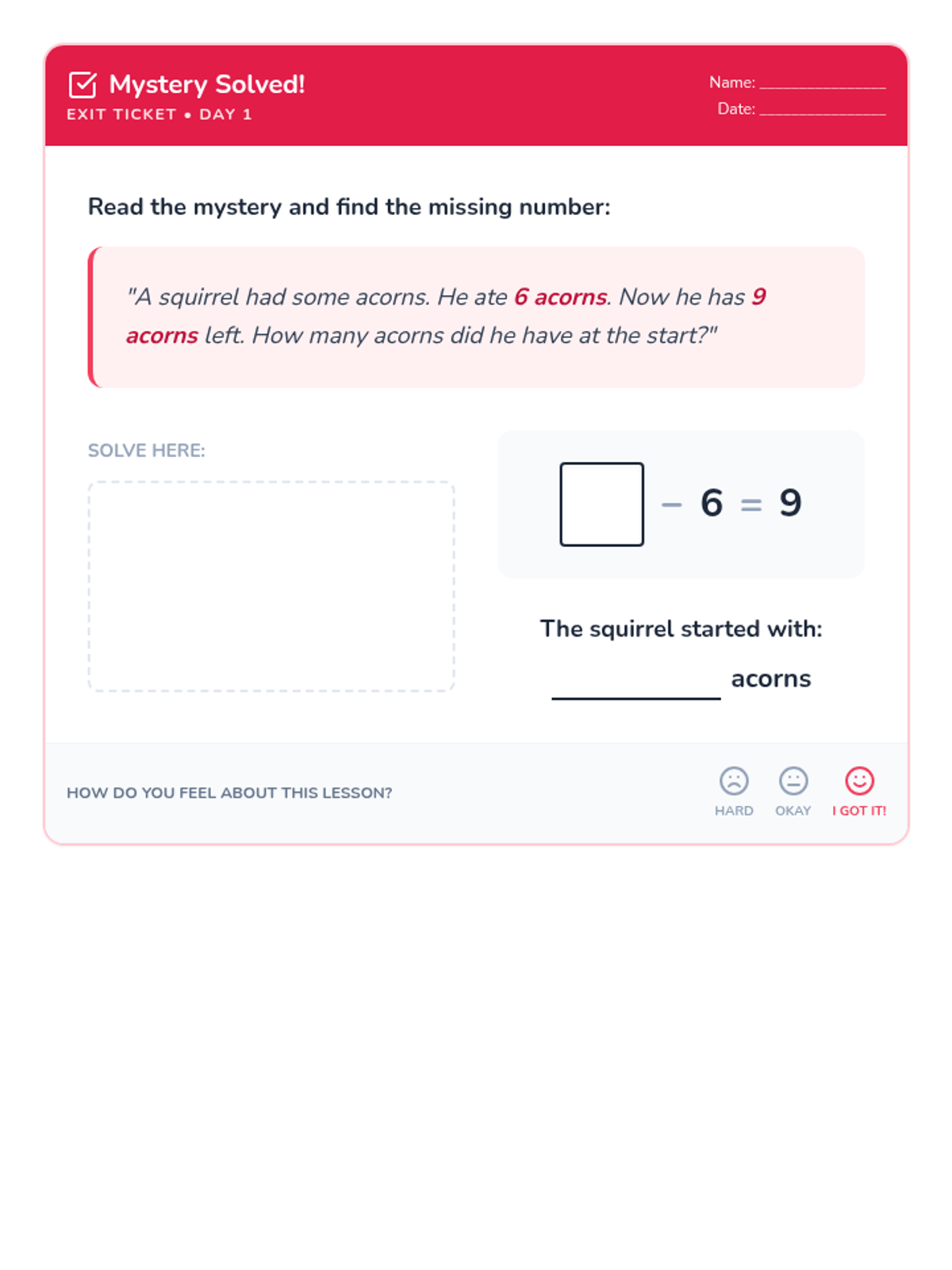
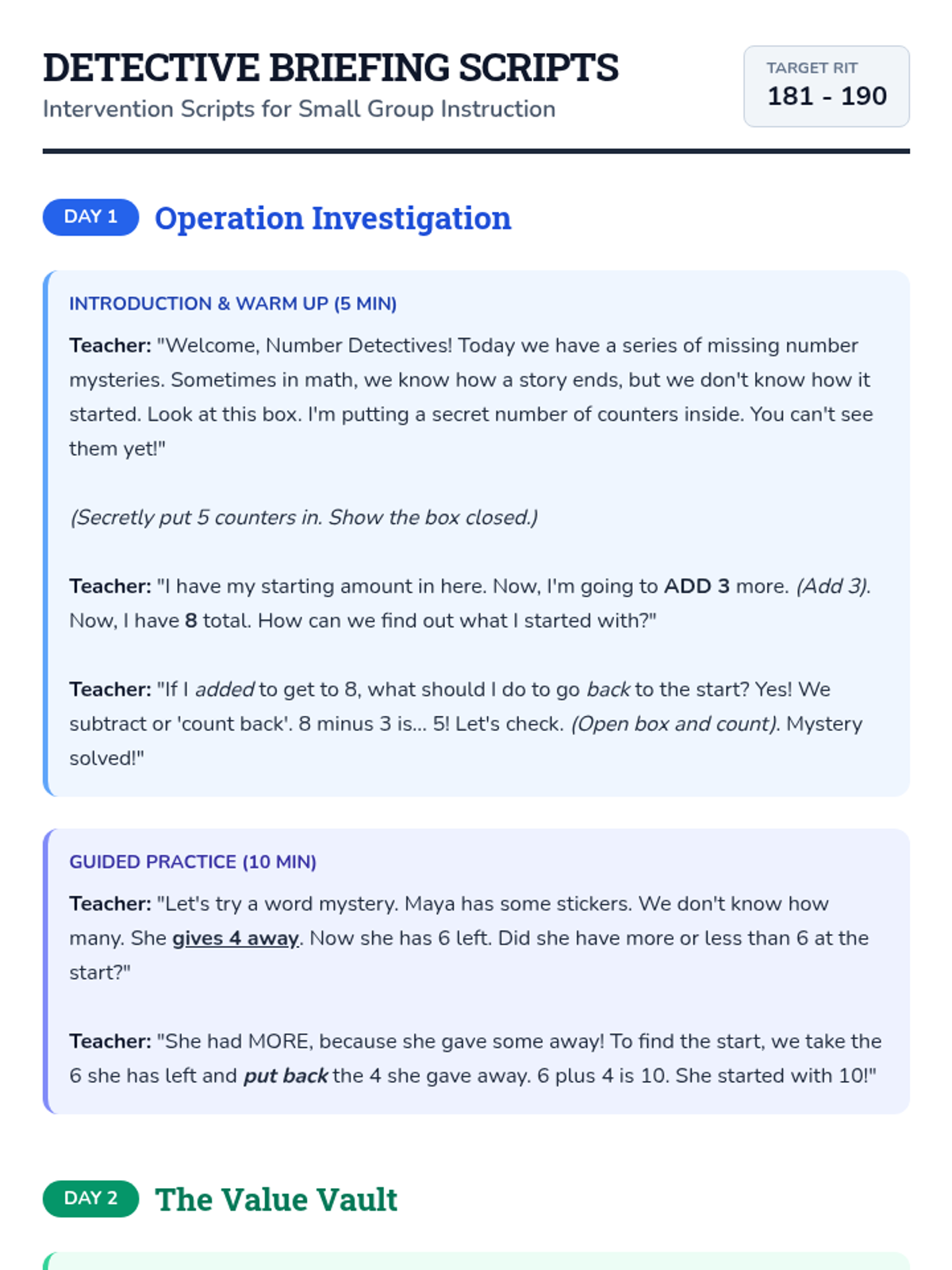
Focused on solving Start Unknown and Missing Addend word problems involving putting together and taking apart scenarios.
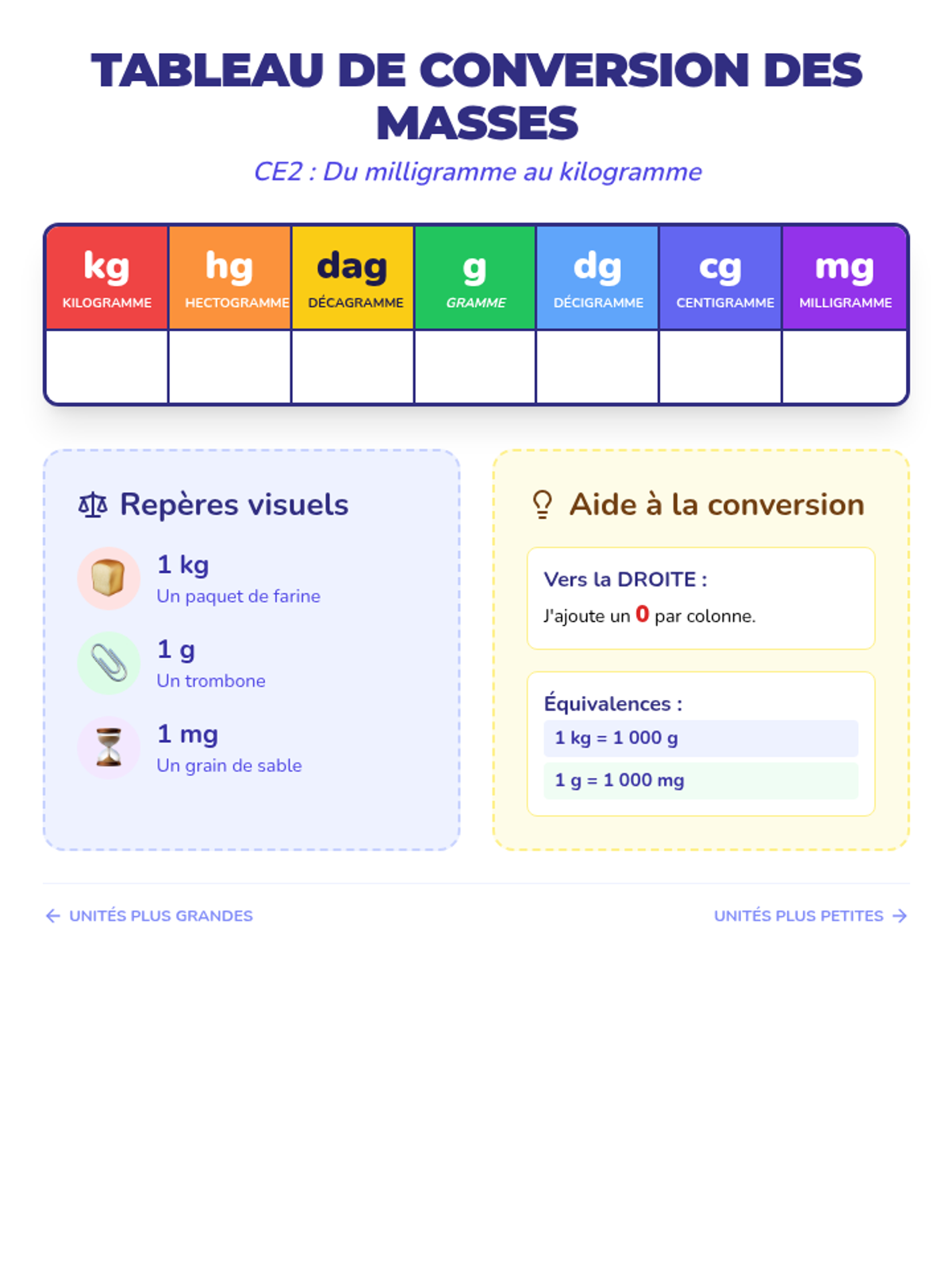
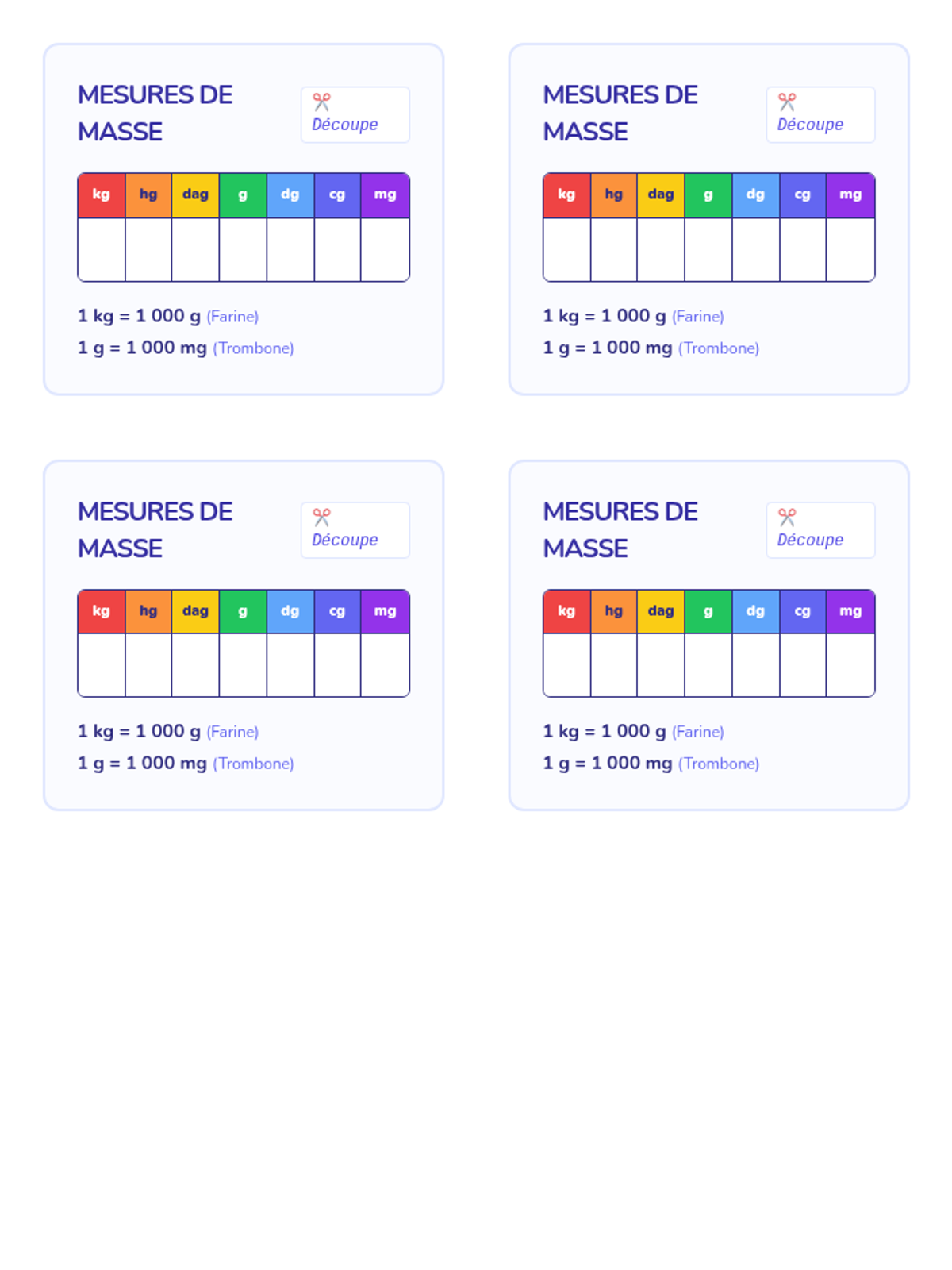
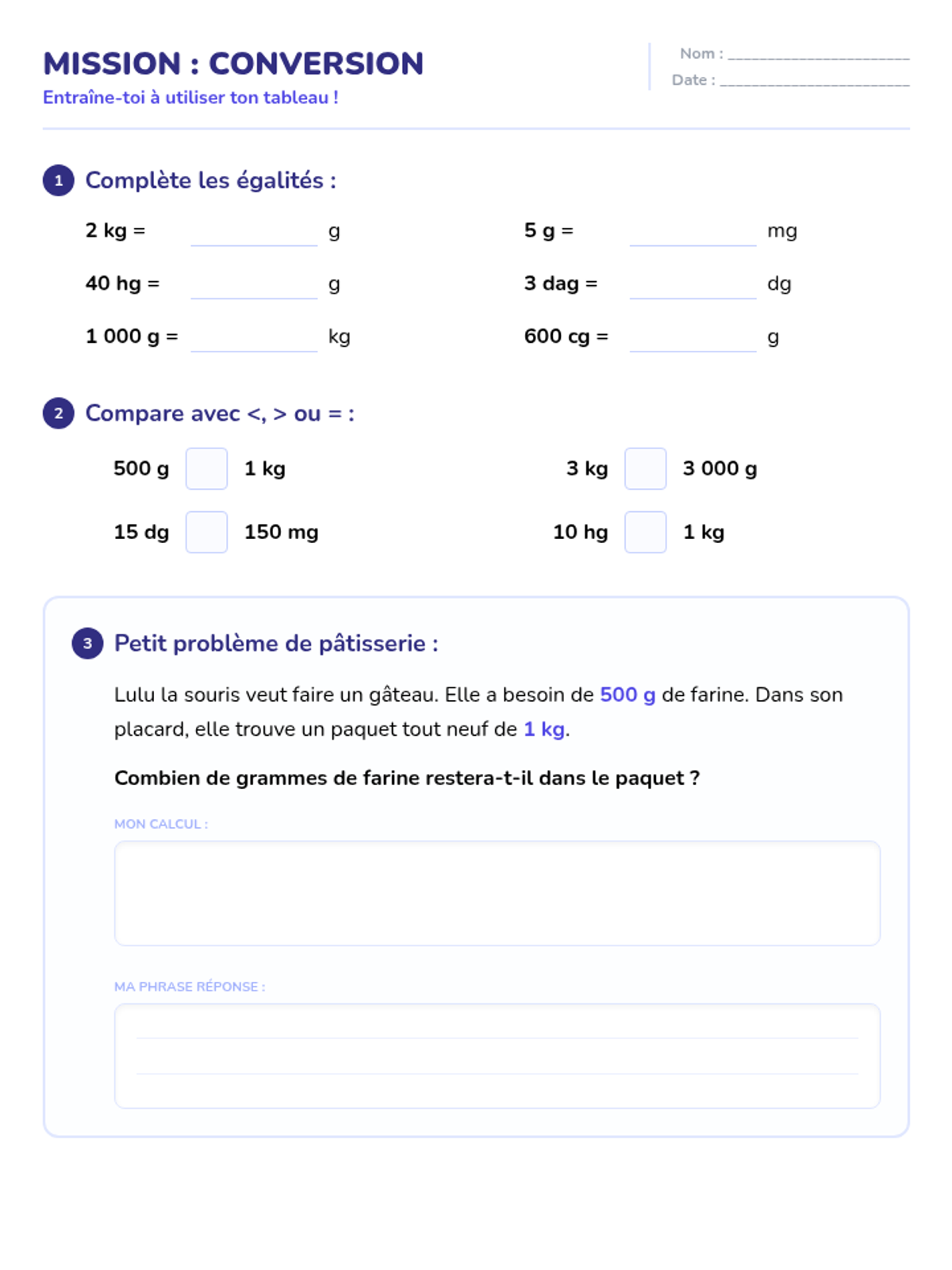
Une leçon pour apprendre à convertir les masses avec un tableau de conversion coloré et des exemples concrets pour les élèves de CE2.
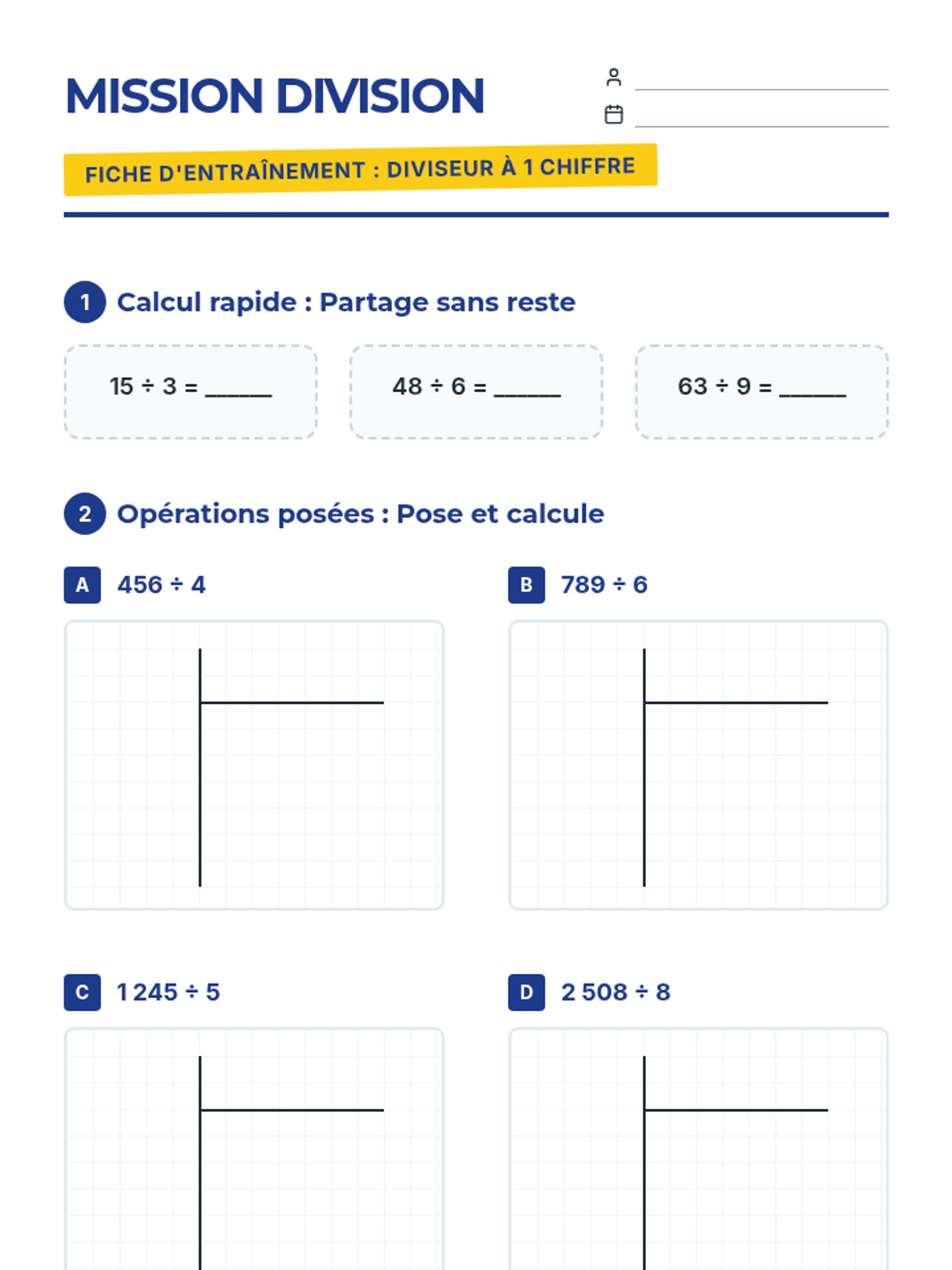
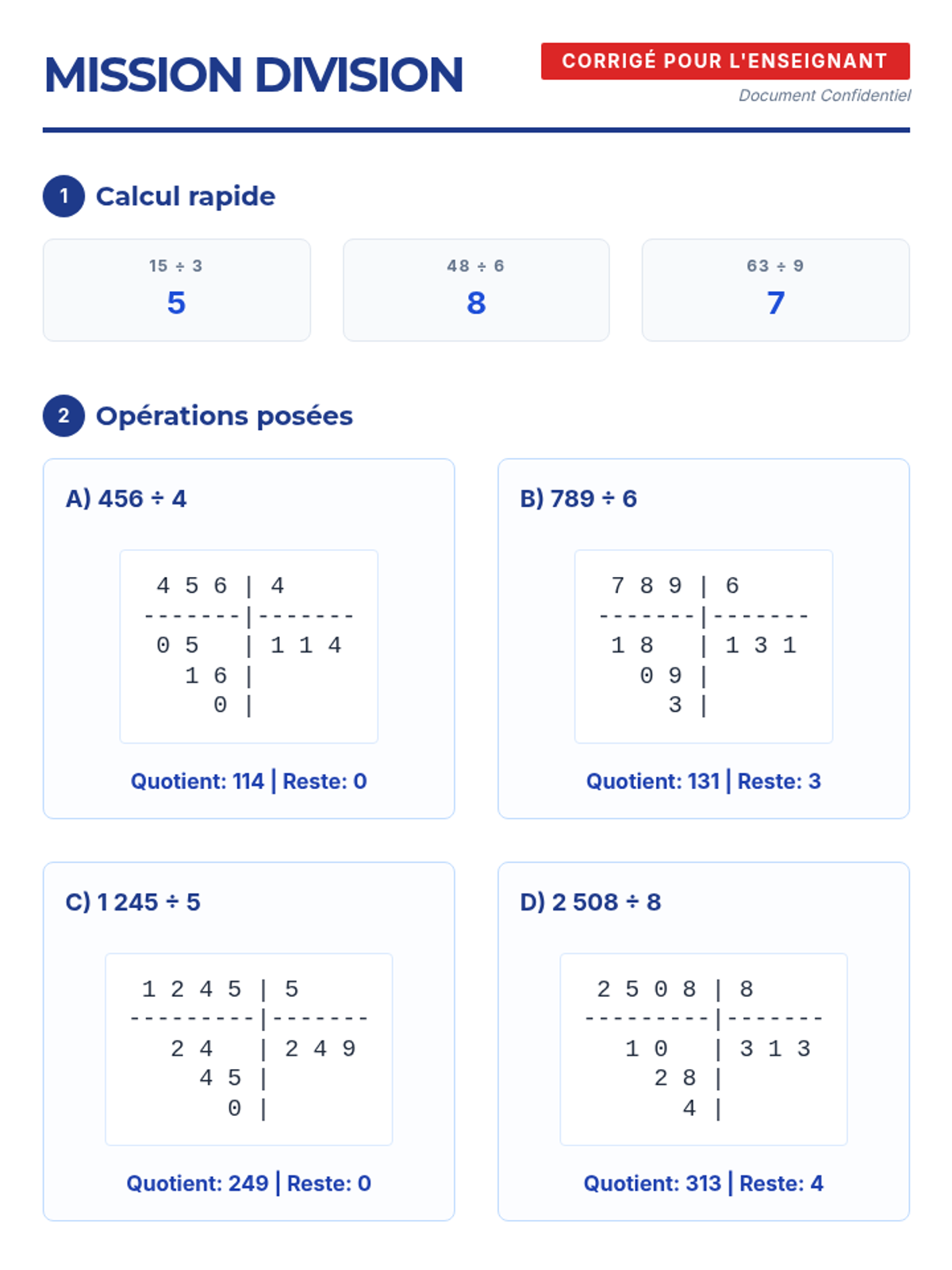
Une leçon focalisée sur la pratique des divisions posées avec un diviseur à un chiffre pour les élèves de CM1 et CM2.
A scaffolded lesson on plotting points across all four quadrants of the coordinate plane, designed specifically for students with IEPs through visual aids and step-by-step guided practice.
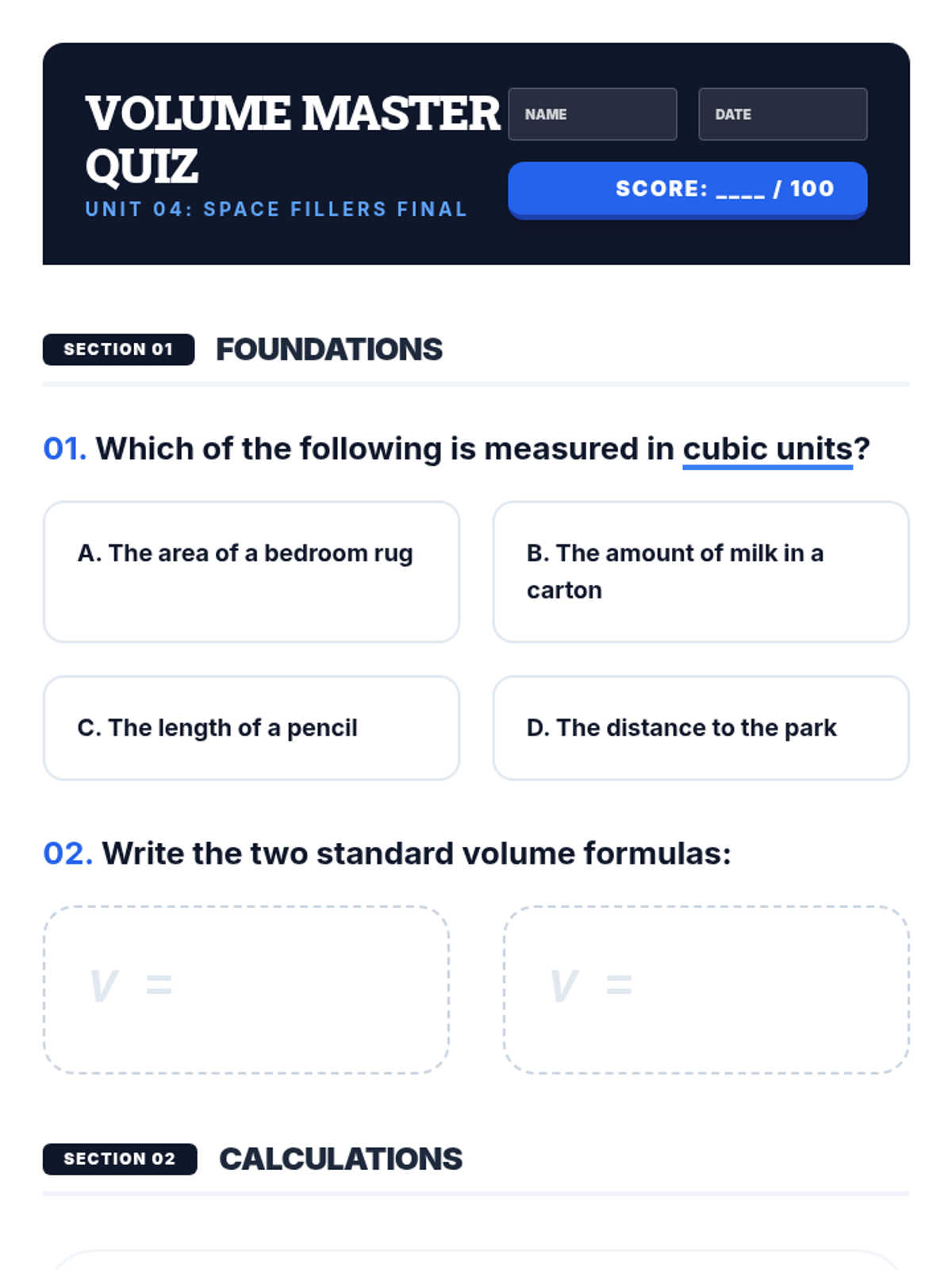
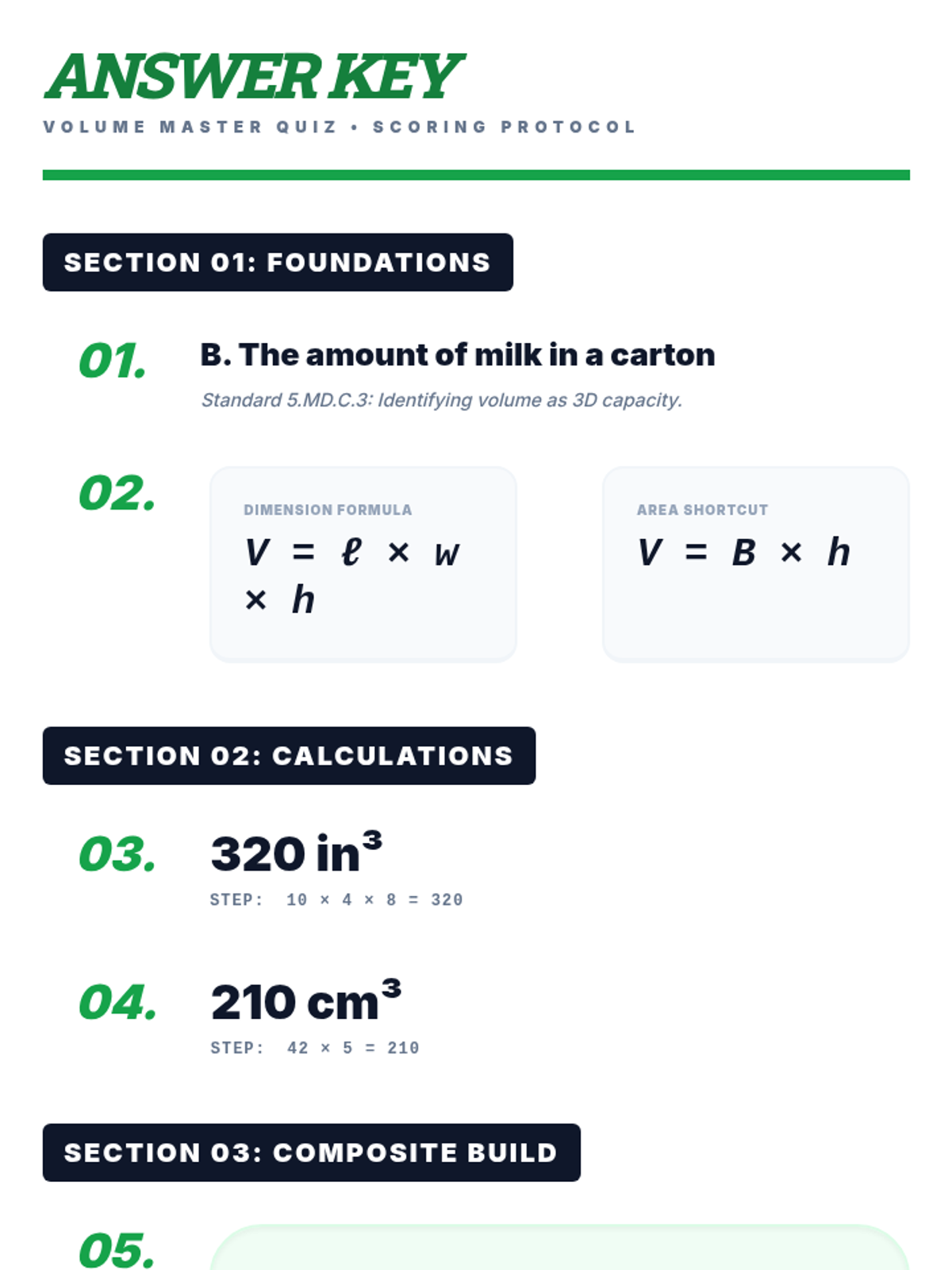
A final assessment of the unit covering all 5th-grade volume standards, including word problems and multi-step calculations.
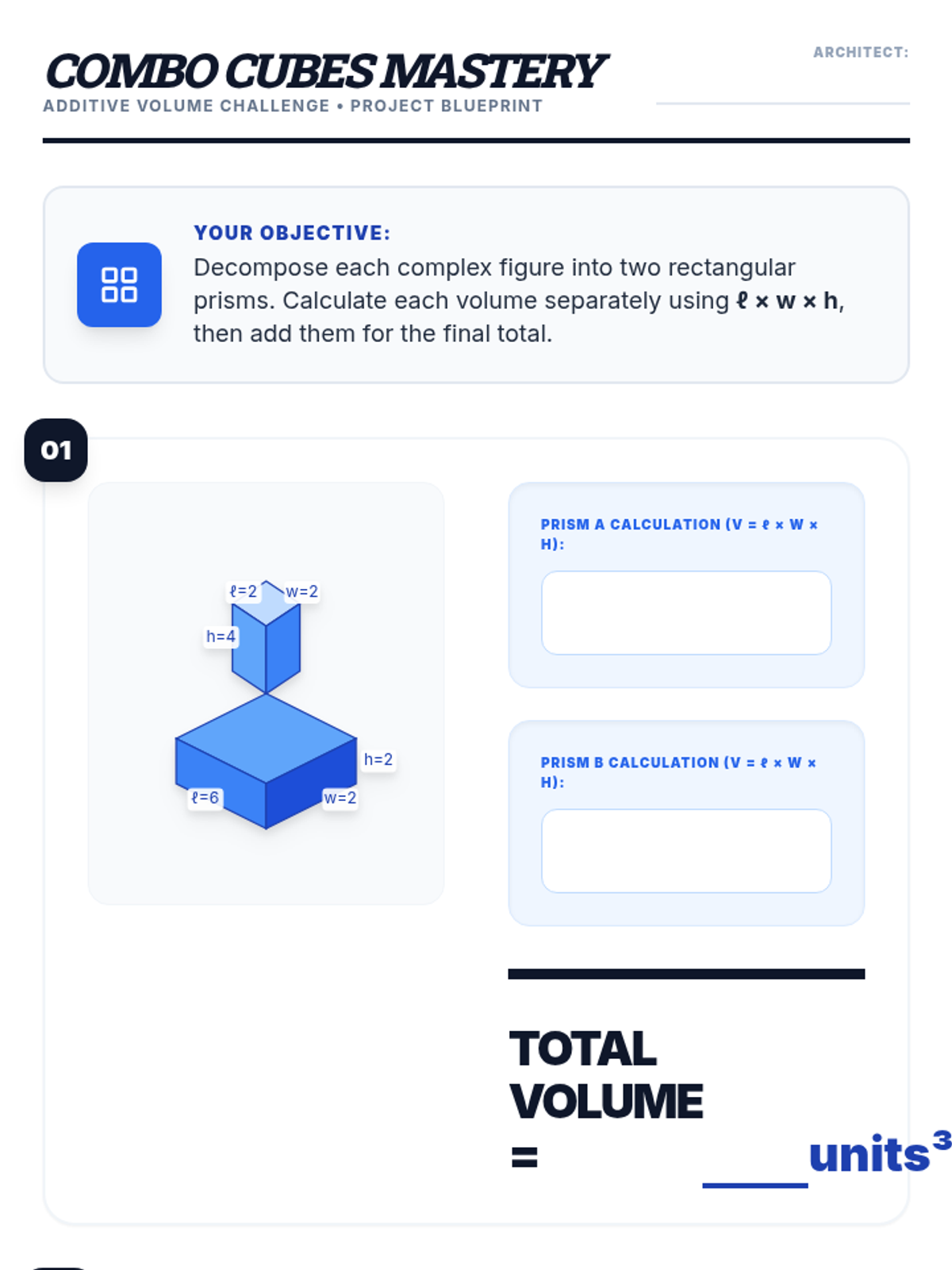
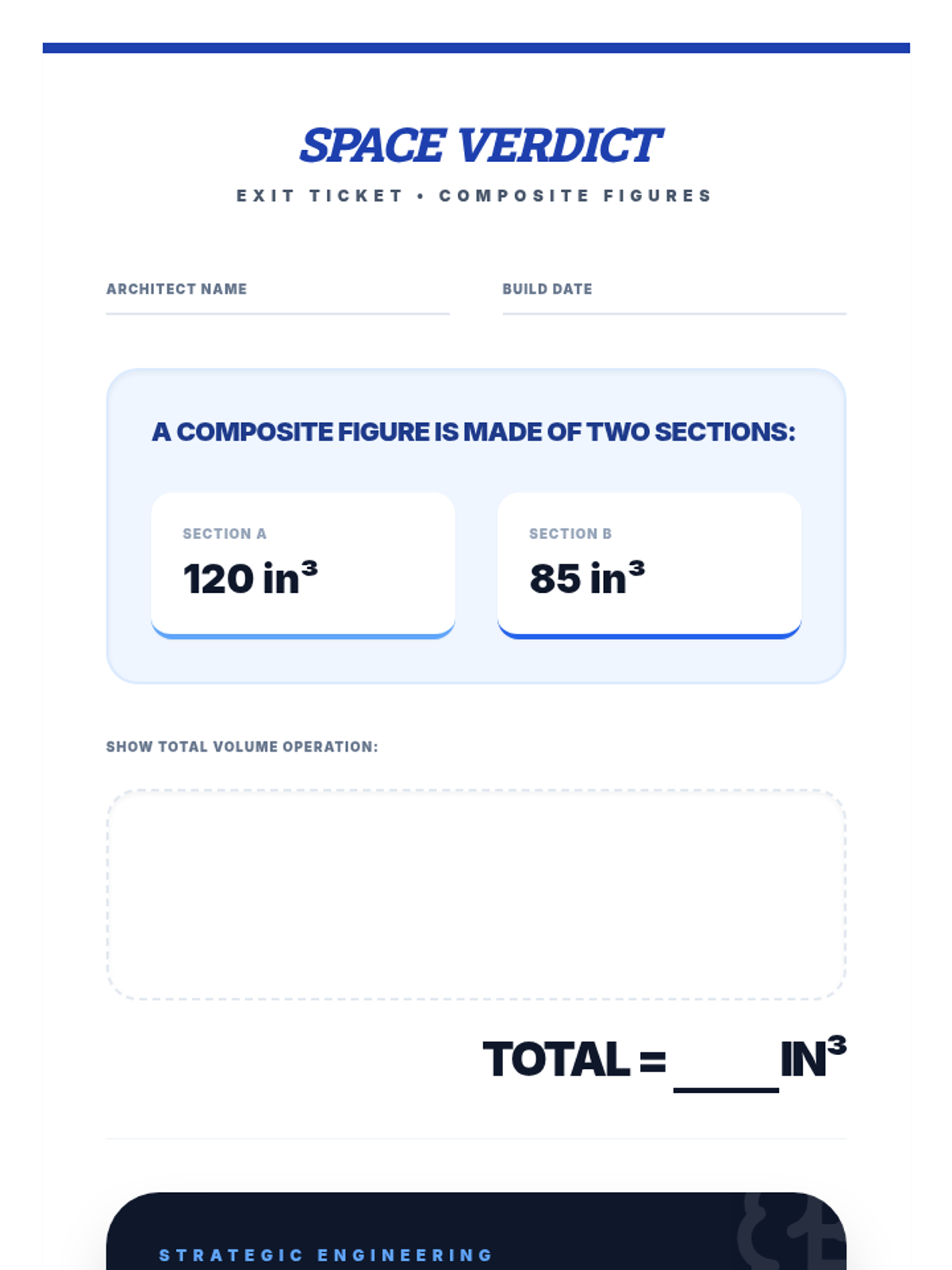
Calculating the volume of composite figures made of two non-overlapping rectangular prisms. Students learn to decompose complex shapes into simpler parts.
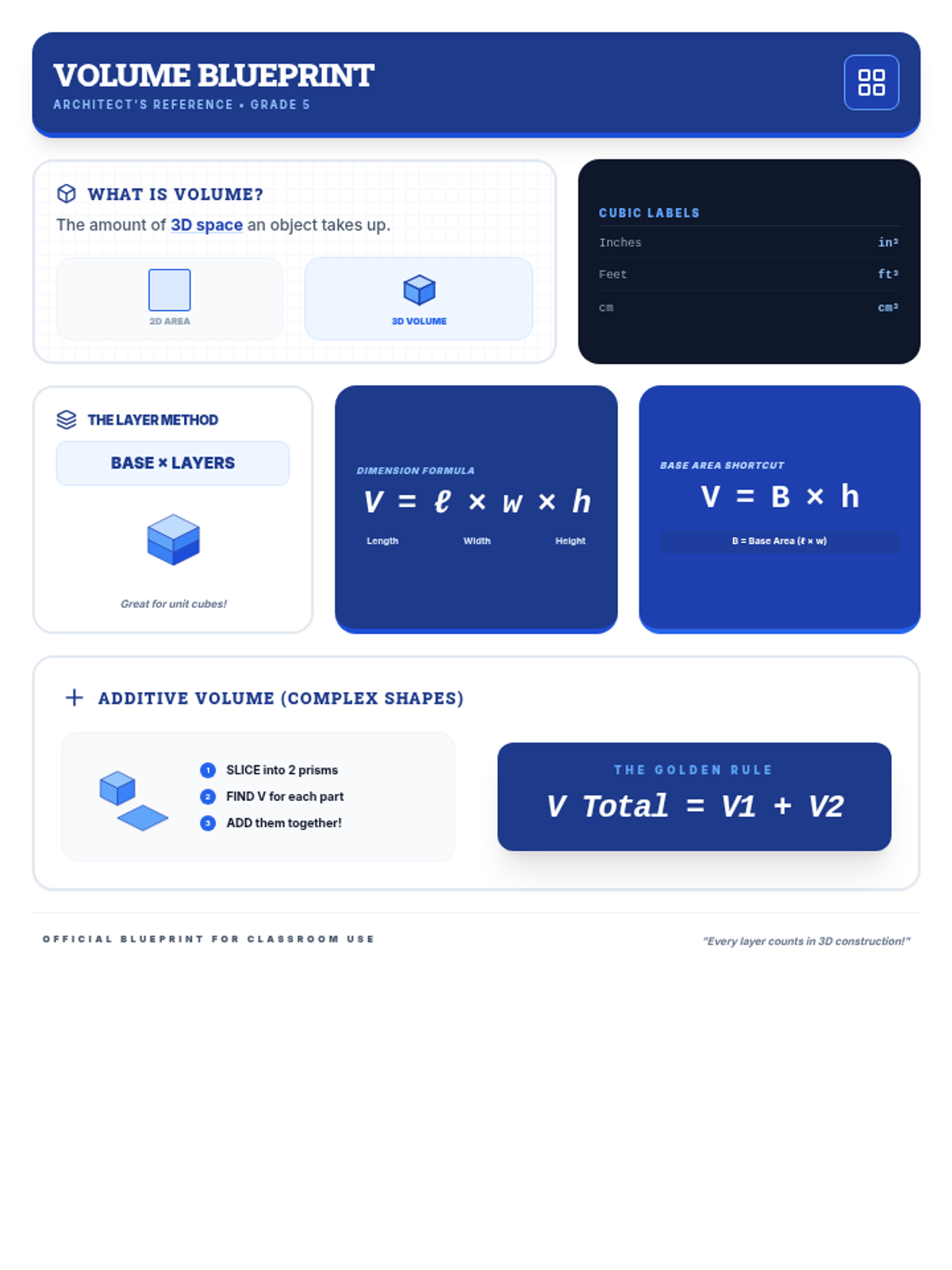
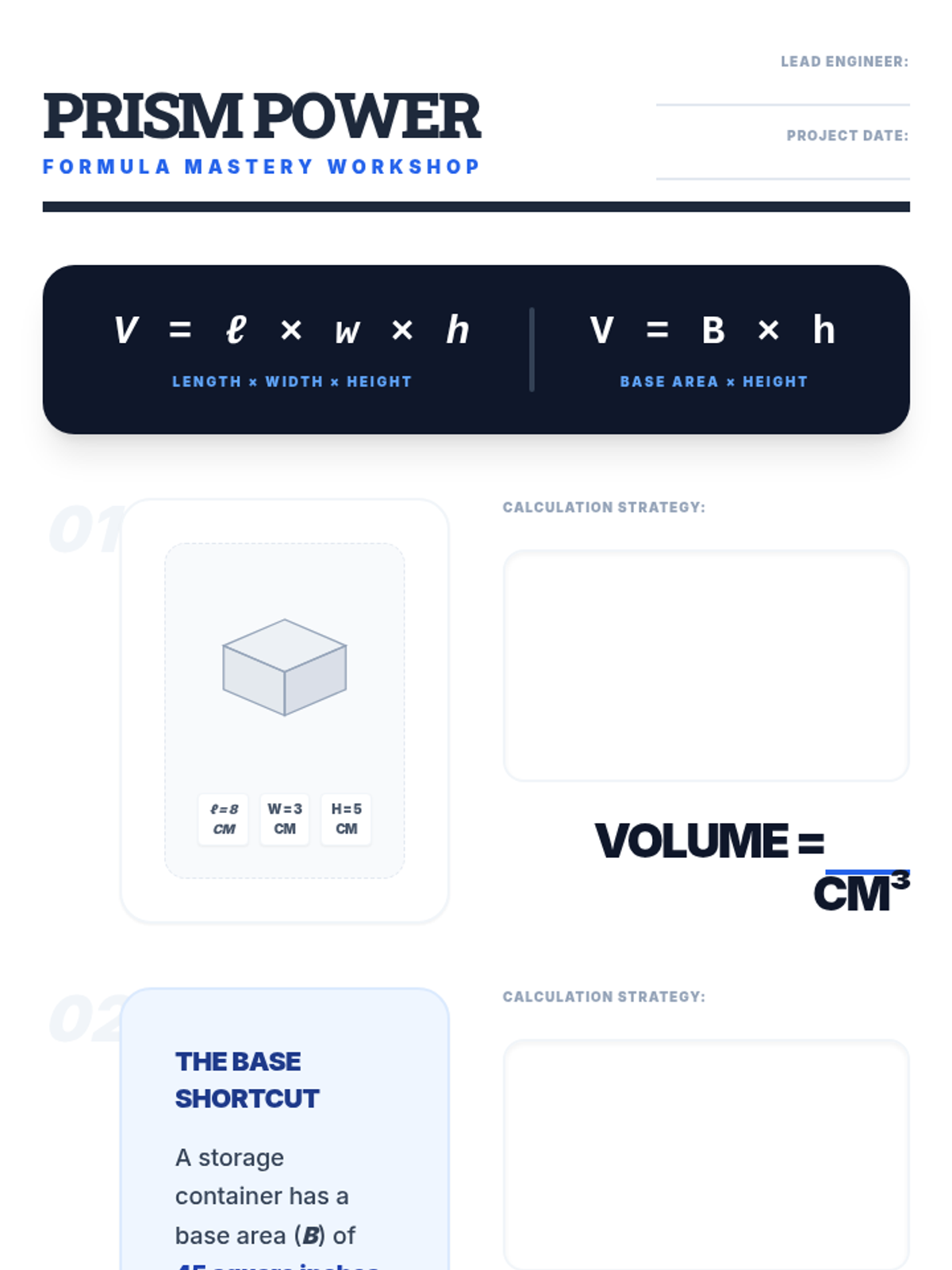
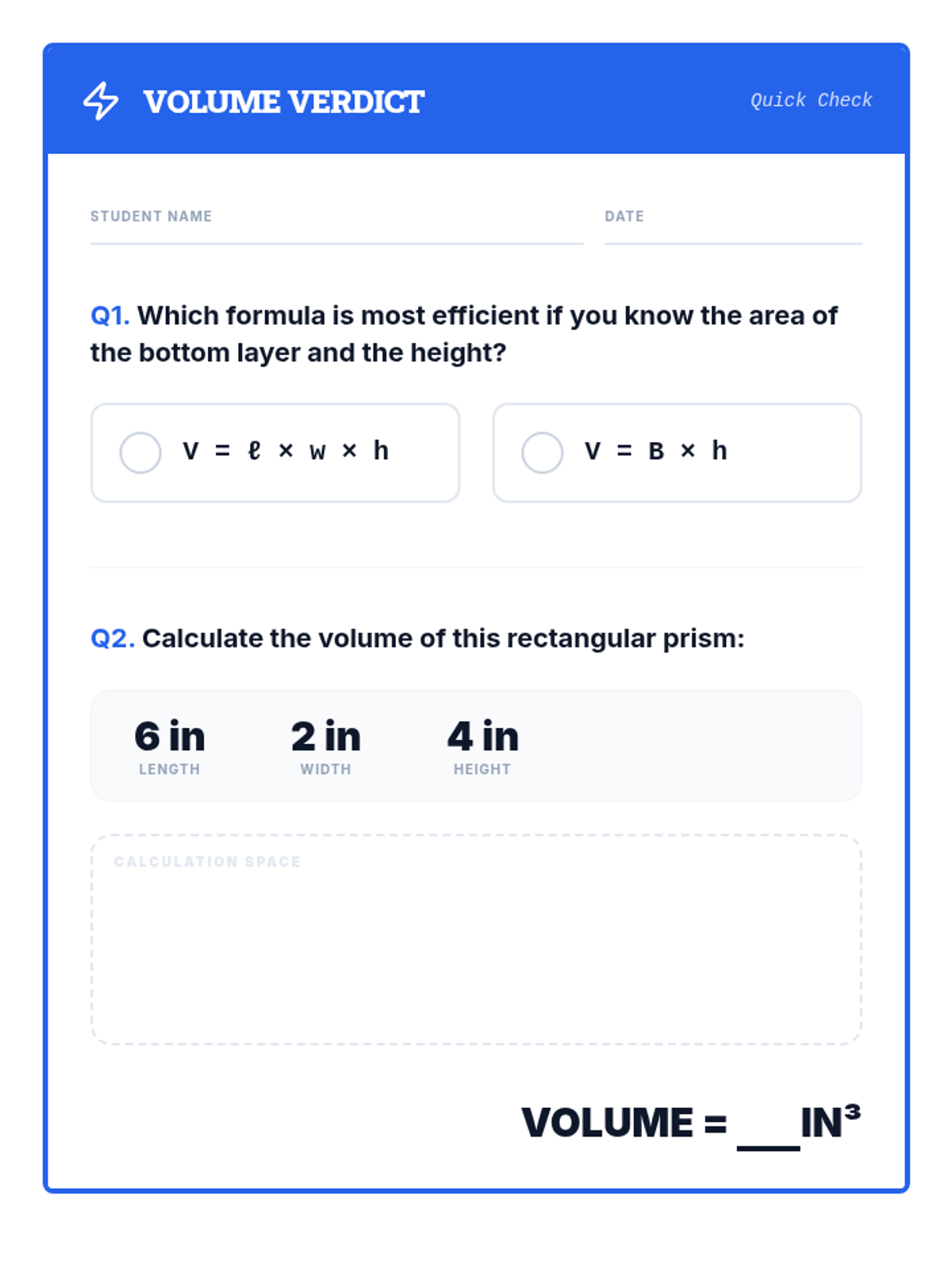
Moving from counting cubes to using the standard formulas V = l x w x h and V = B x h. Focuses on efficiency and understanding the relationship between layers and total volume.
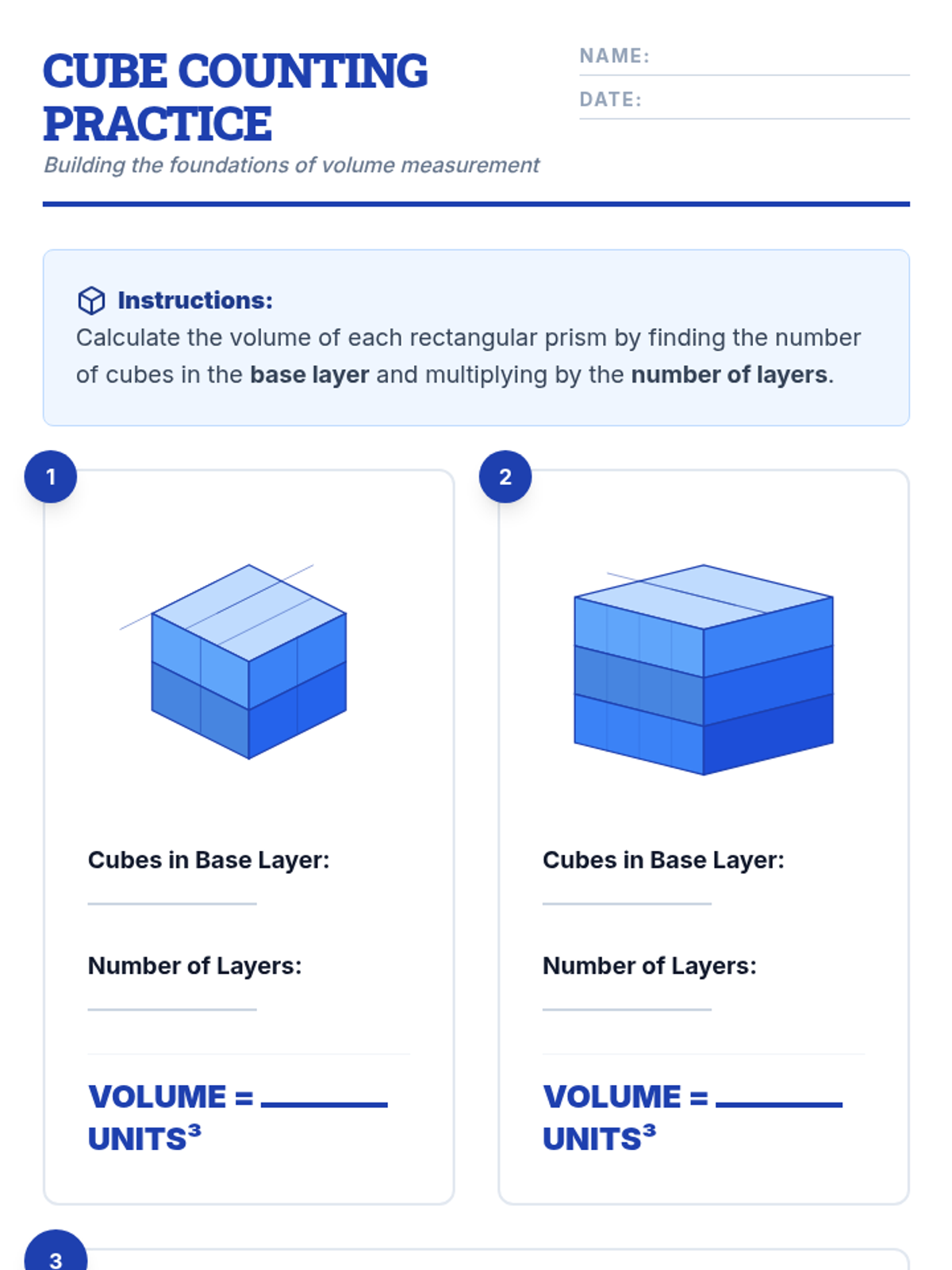
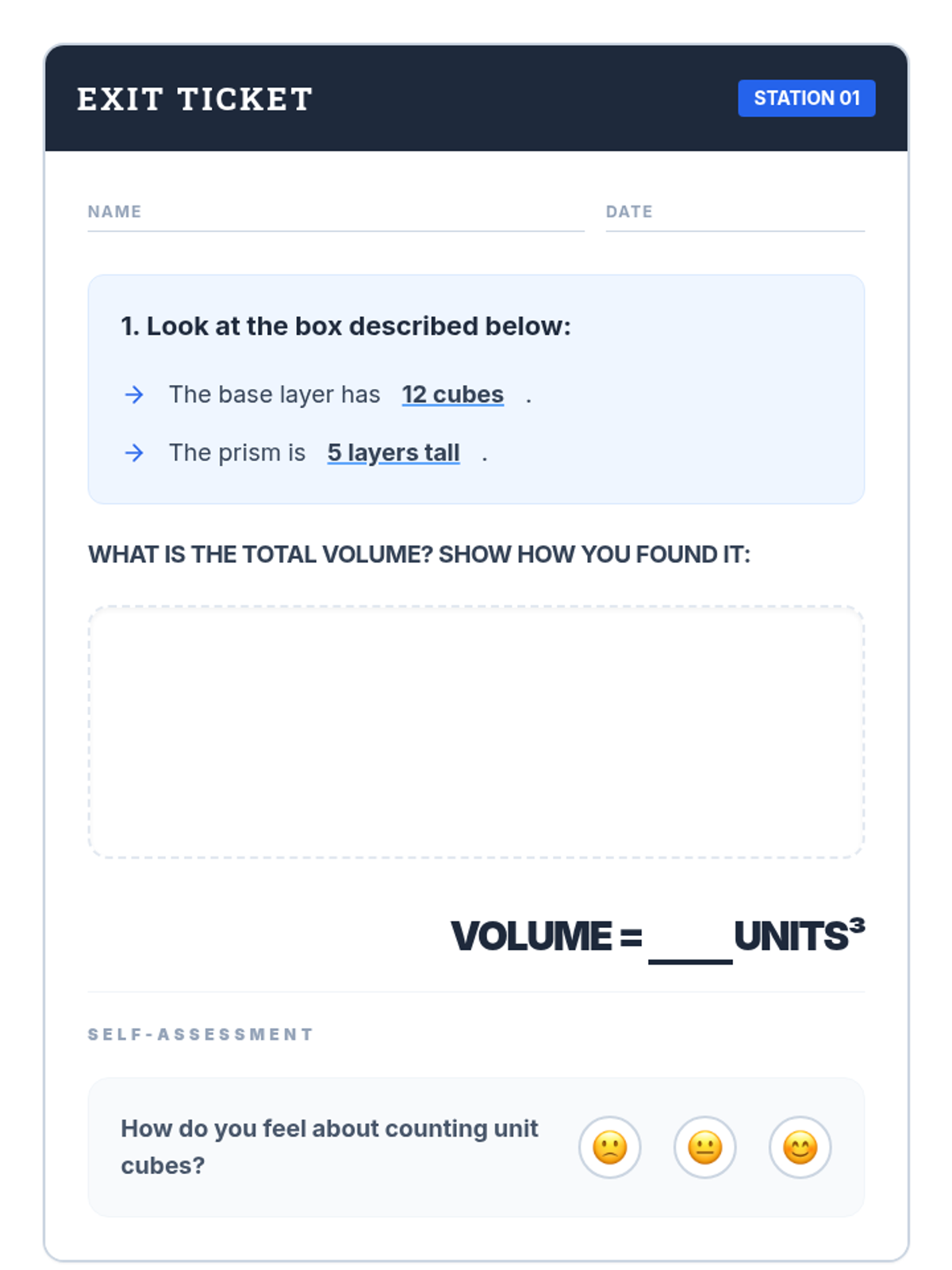
Introduction to the concept of volume using unit cubes to fill rectangular prisms. Students learn that volume is the amount of space an object occupies, measured in cubic units.
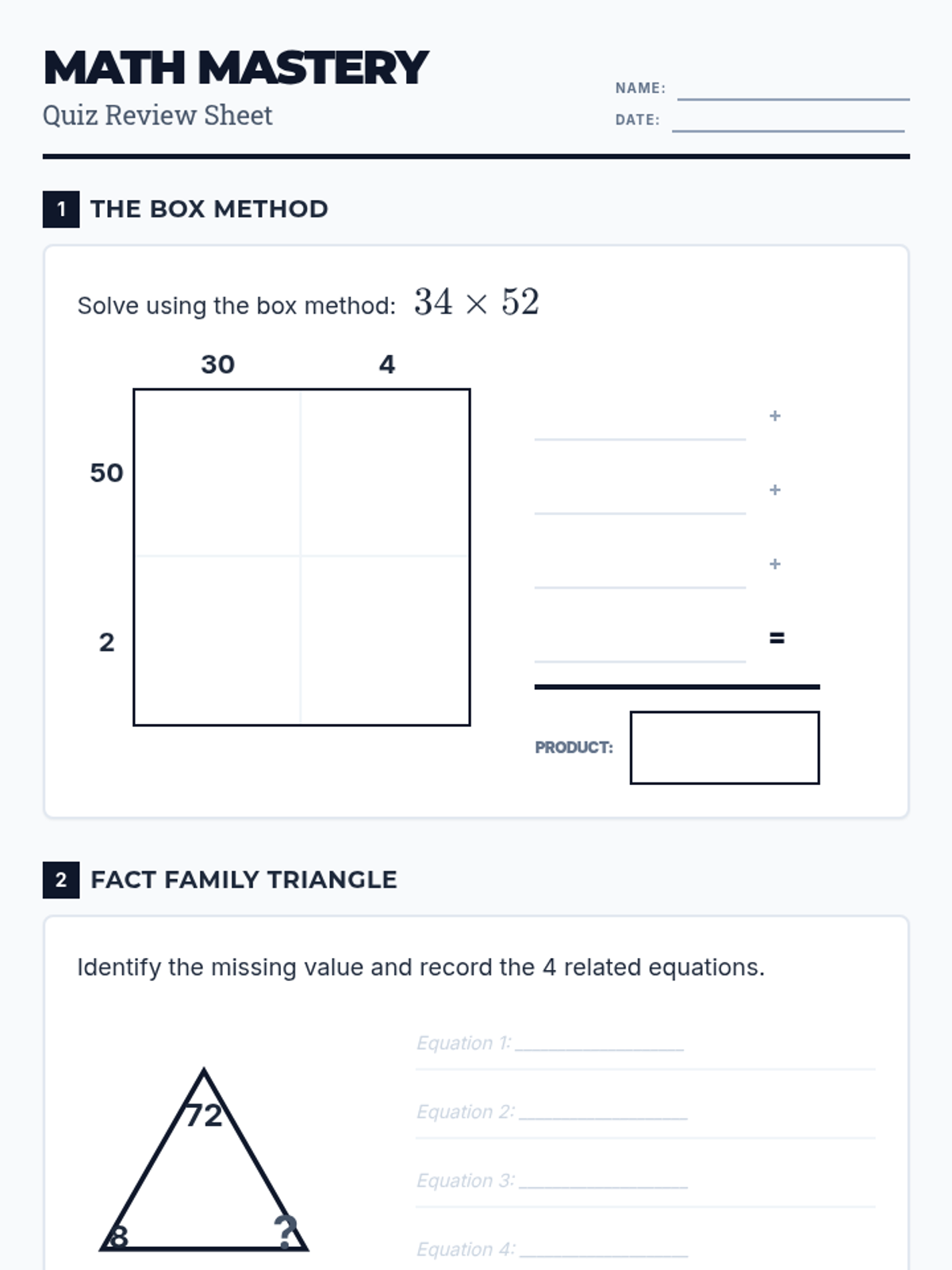
A comprehensive review lesson covering multi-digit multiplication, circle geometry, fact families, and decimal operations with powers of ten.
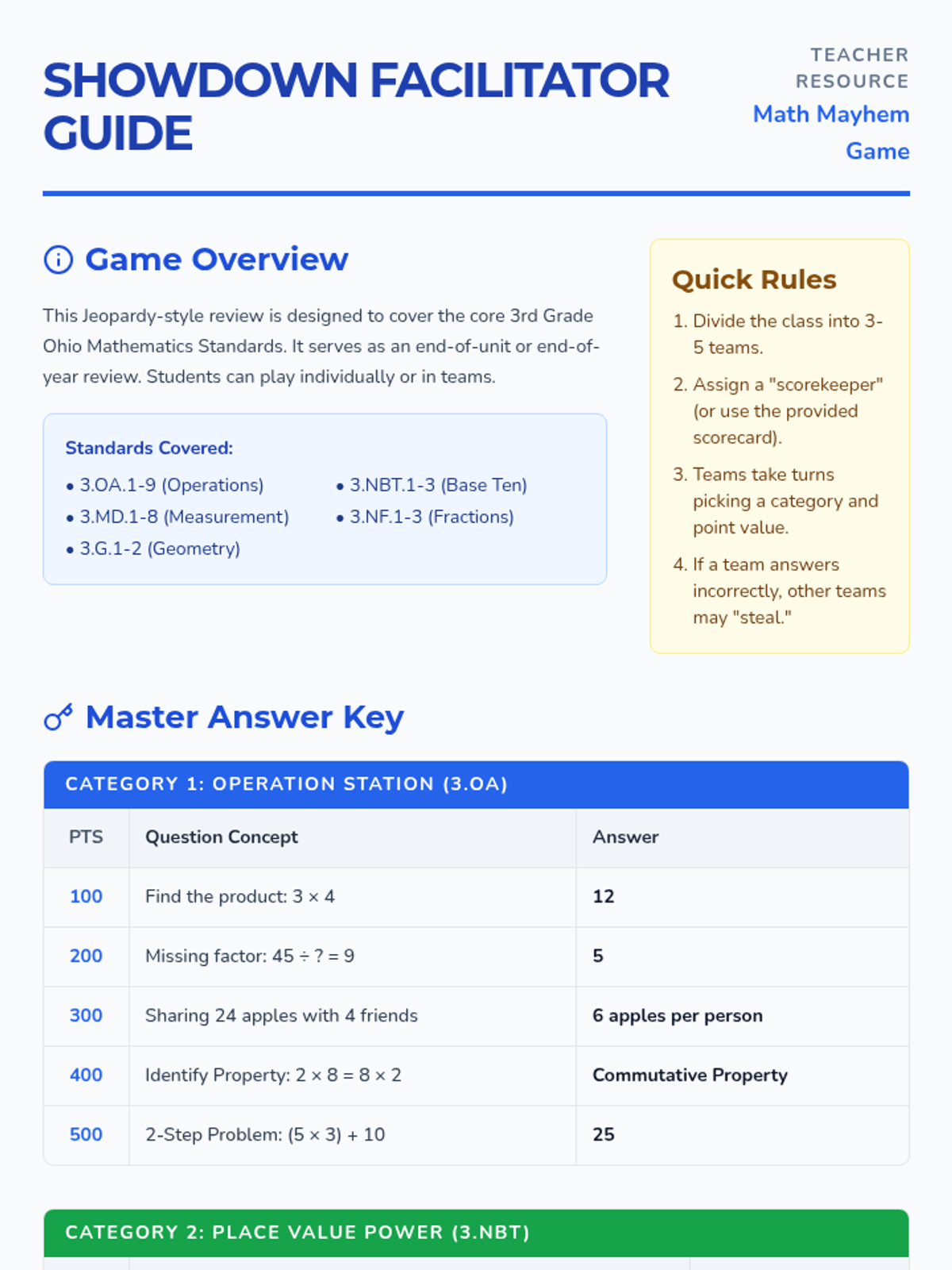
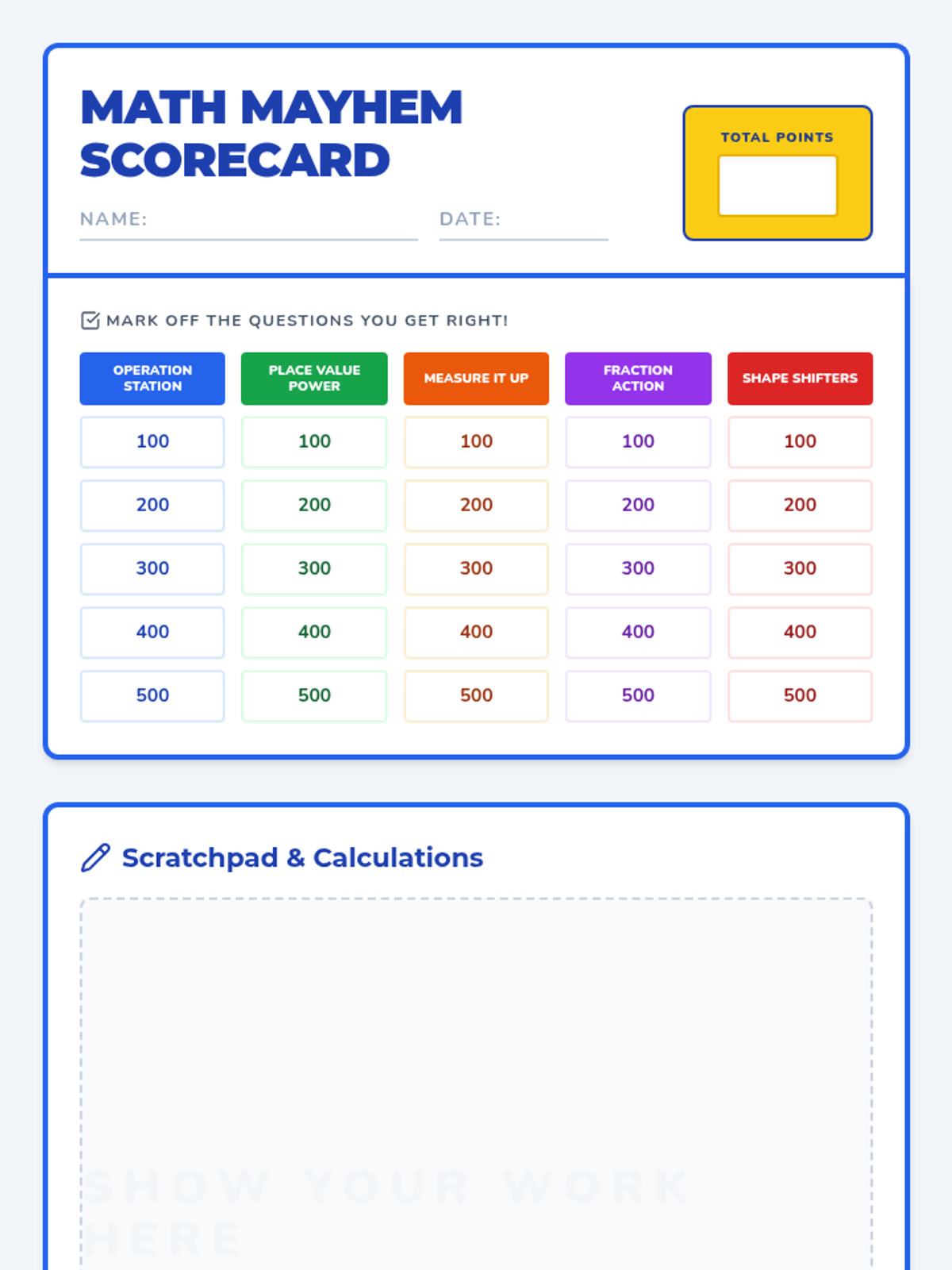
A comprehensive 3rd-grade math review game covering Ohio standards for OA, NBT, MD, G, and NF. Students compete in a Jeopardy-style showdown to test their knowledge across all domains.
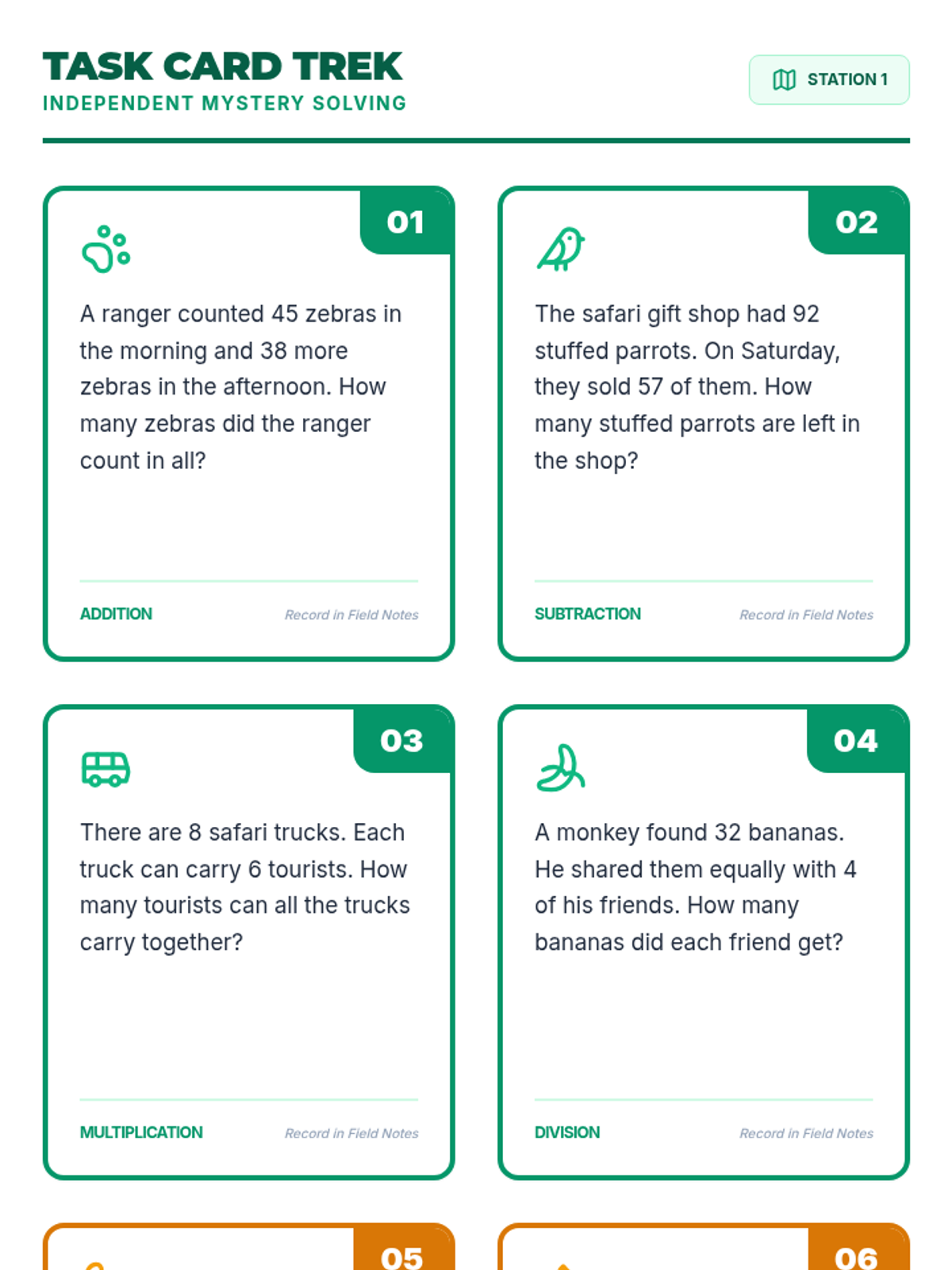
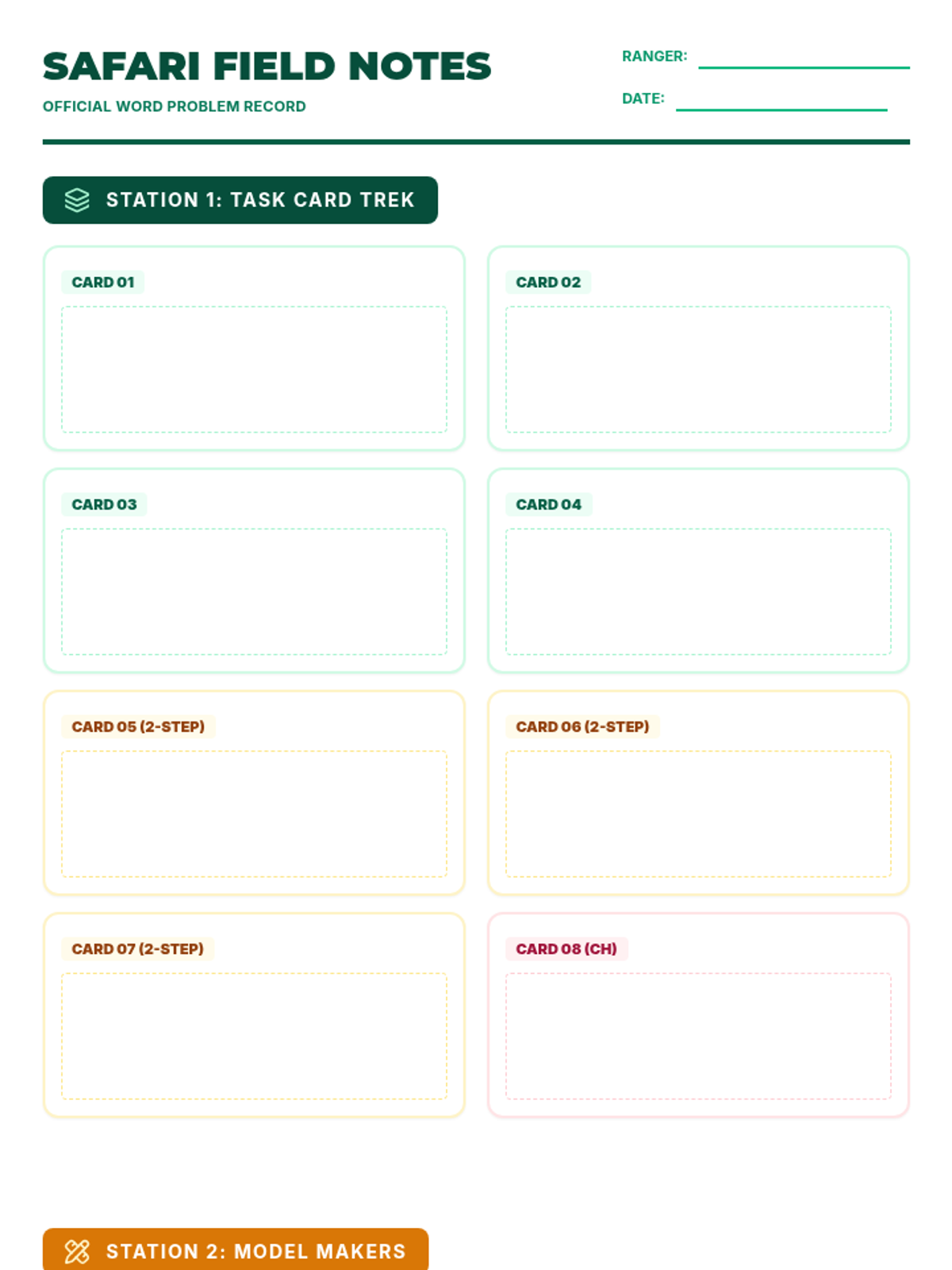
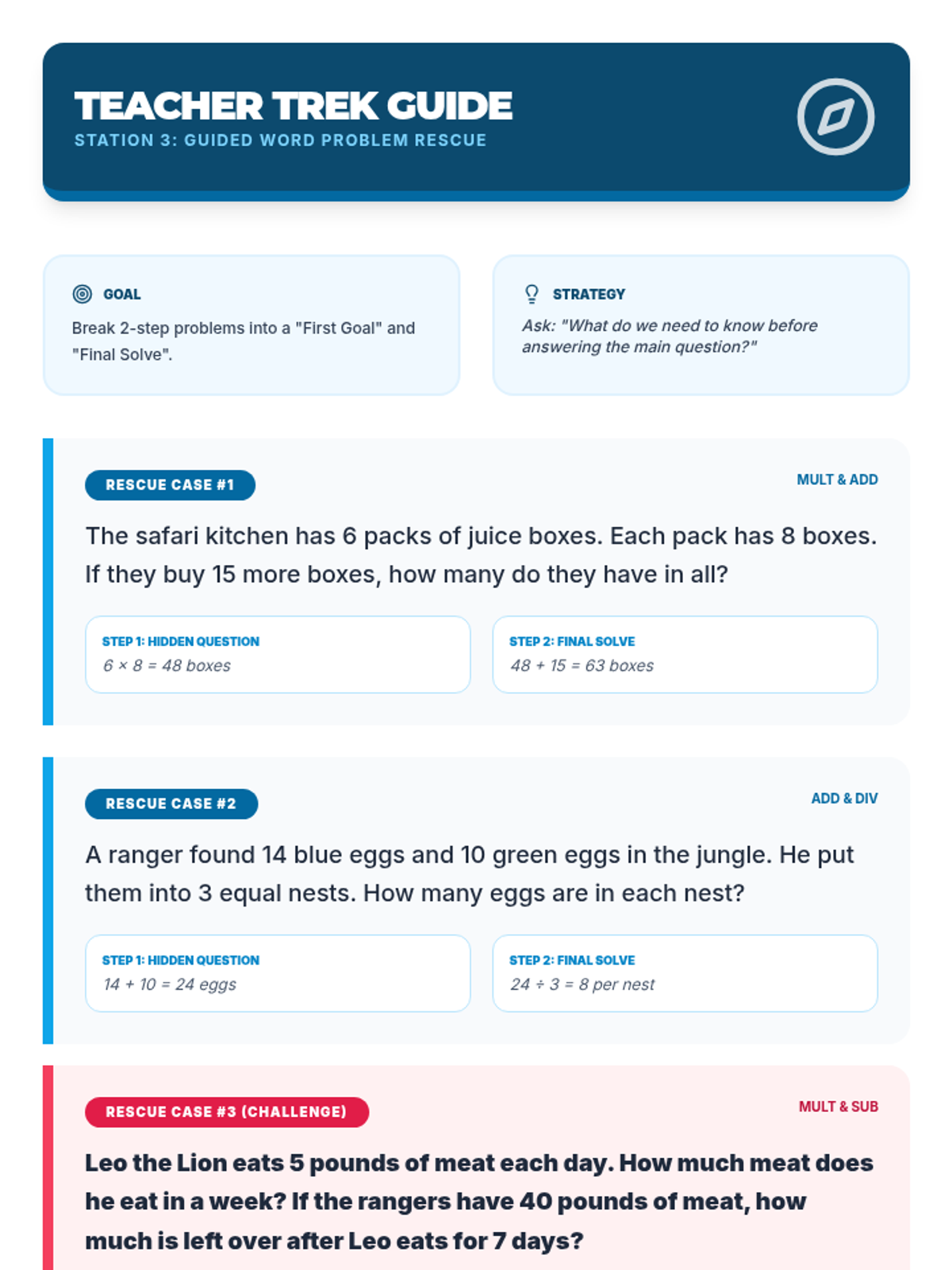
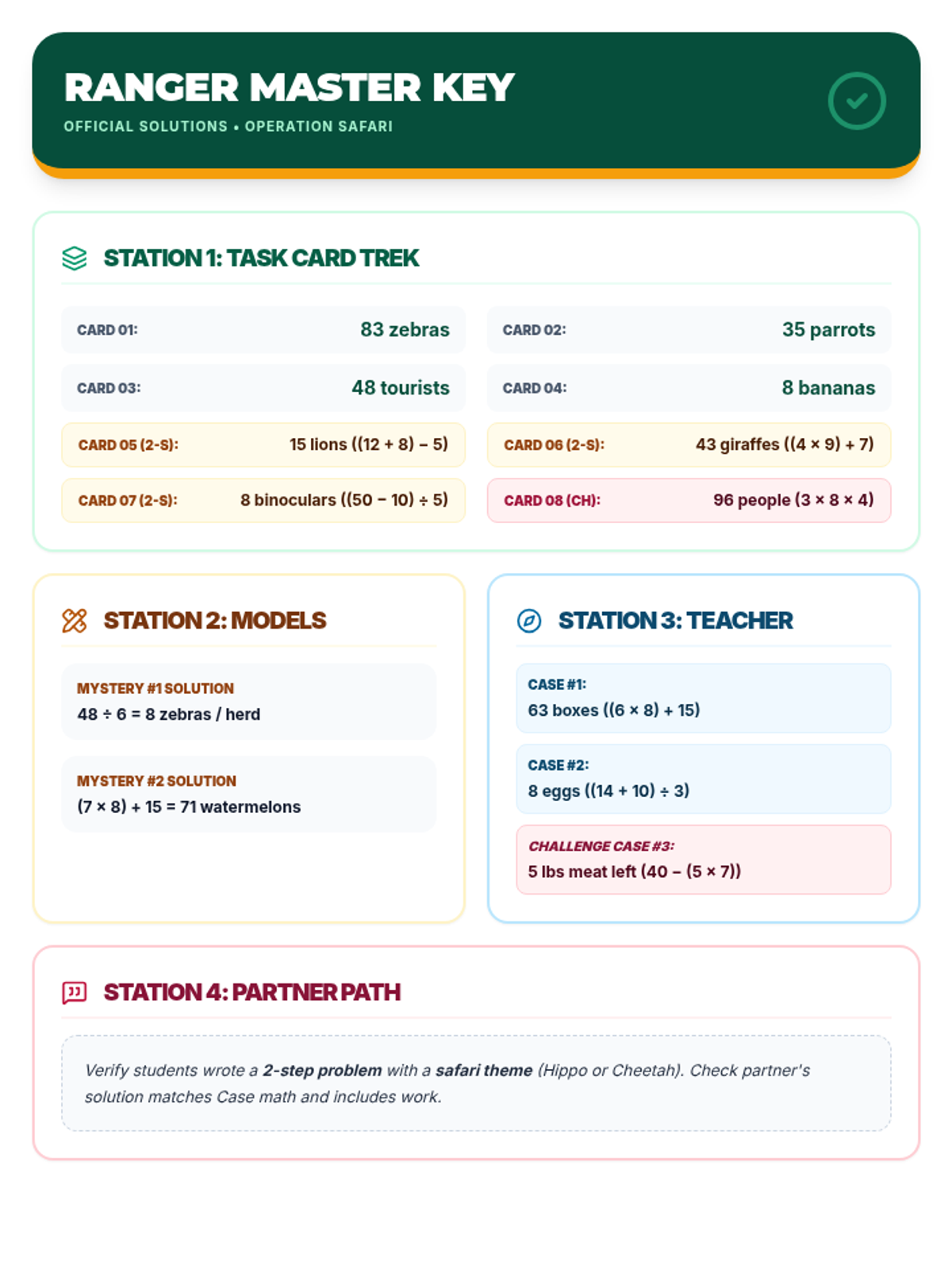
A set of four math stations for third graders to review one- and two-step word problems using addition, subtraction, multiplication, and division in a jungle safari theme.
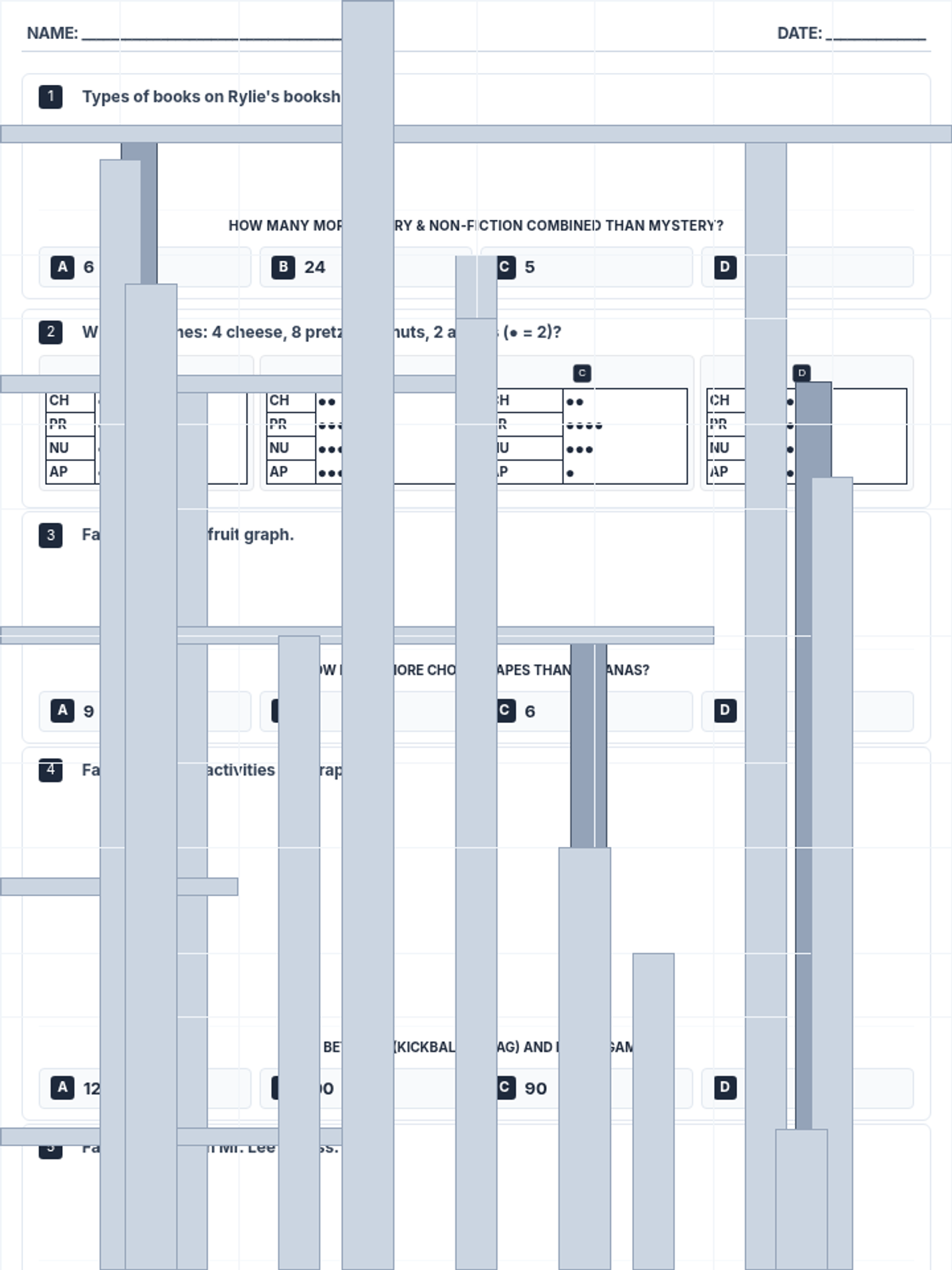
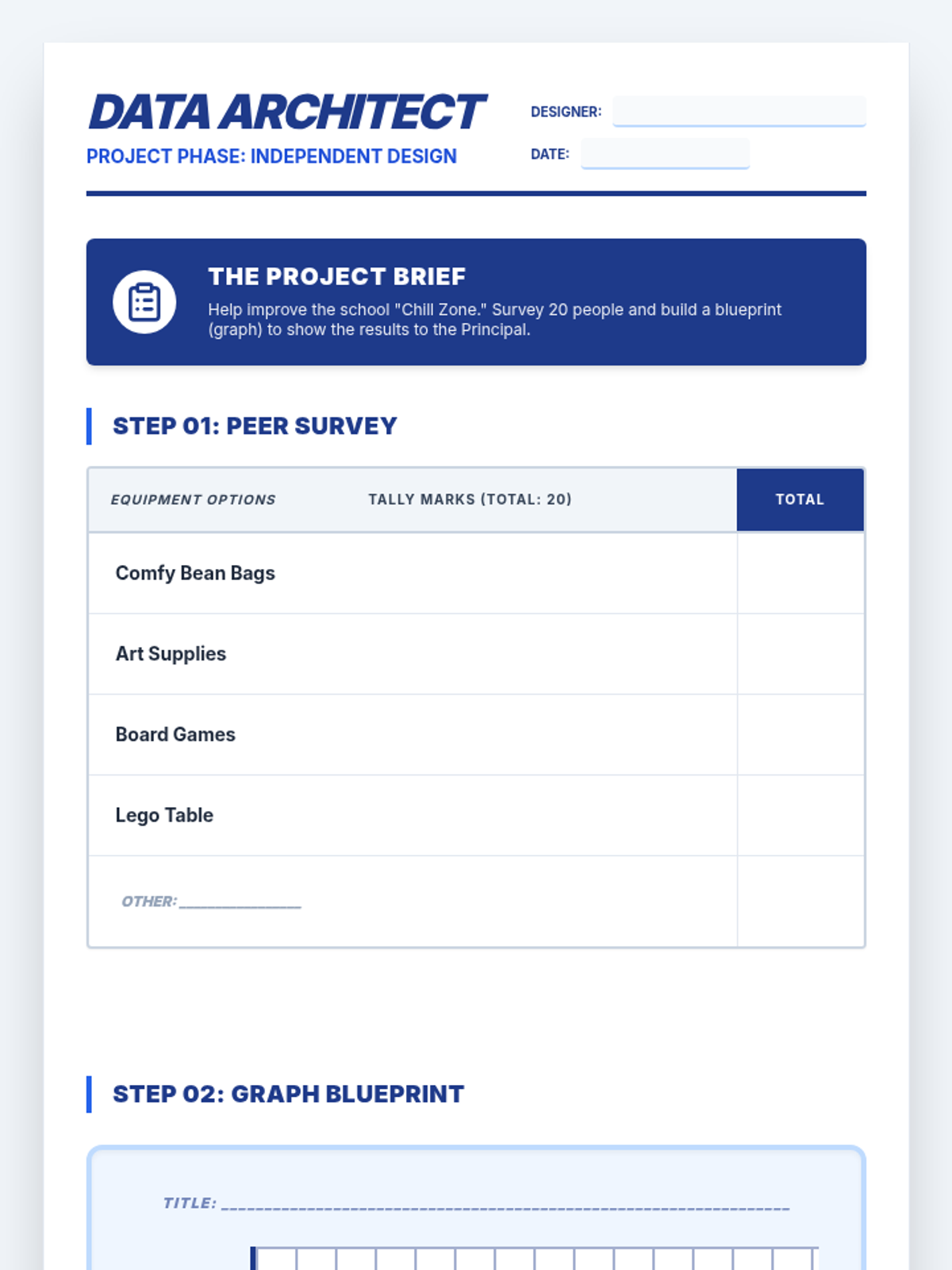
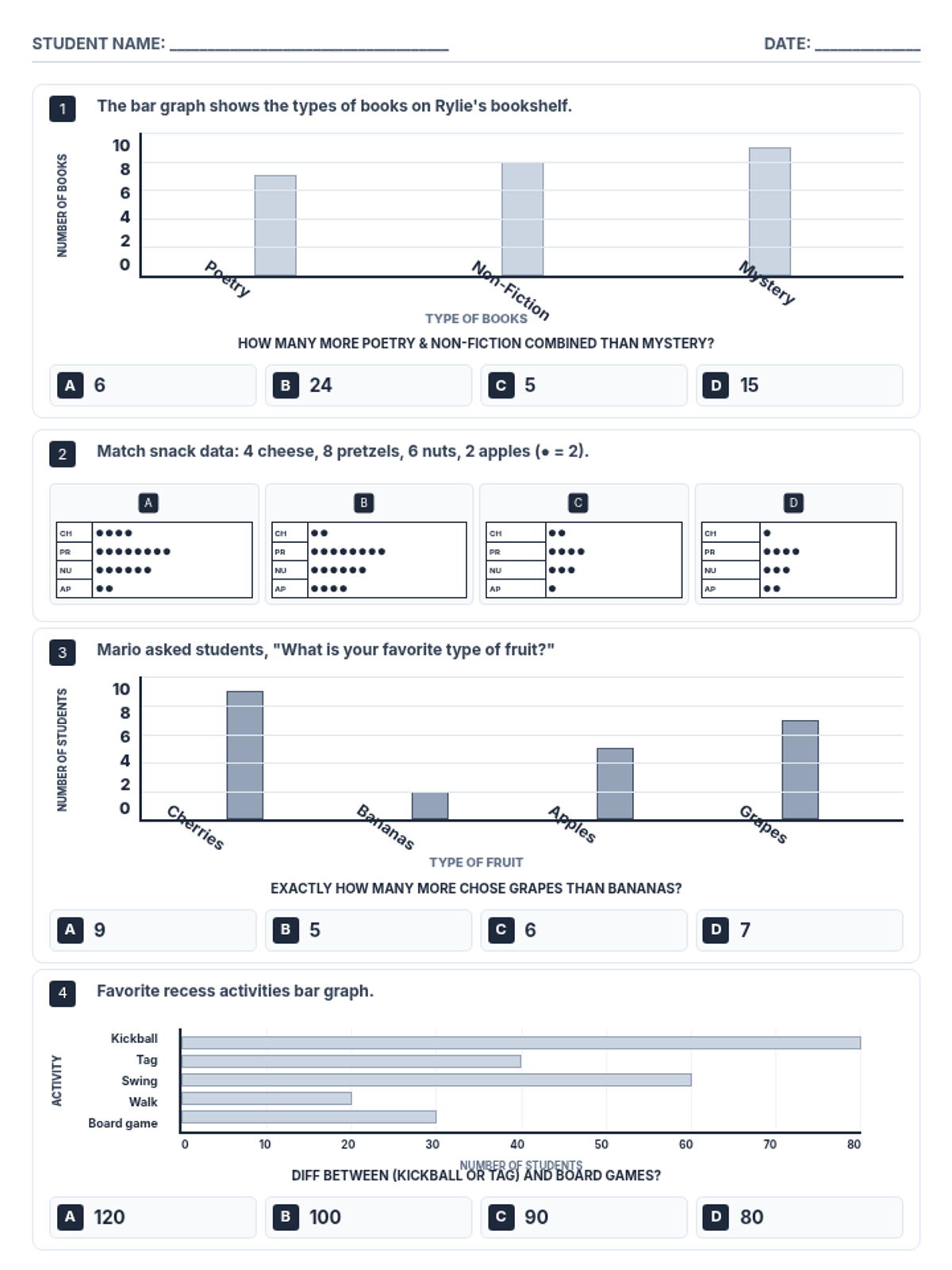
A comprehensive lesson on data interpretation and graphing, moving from foundational skill practice to an independent data collection and design project.
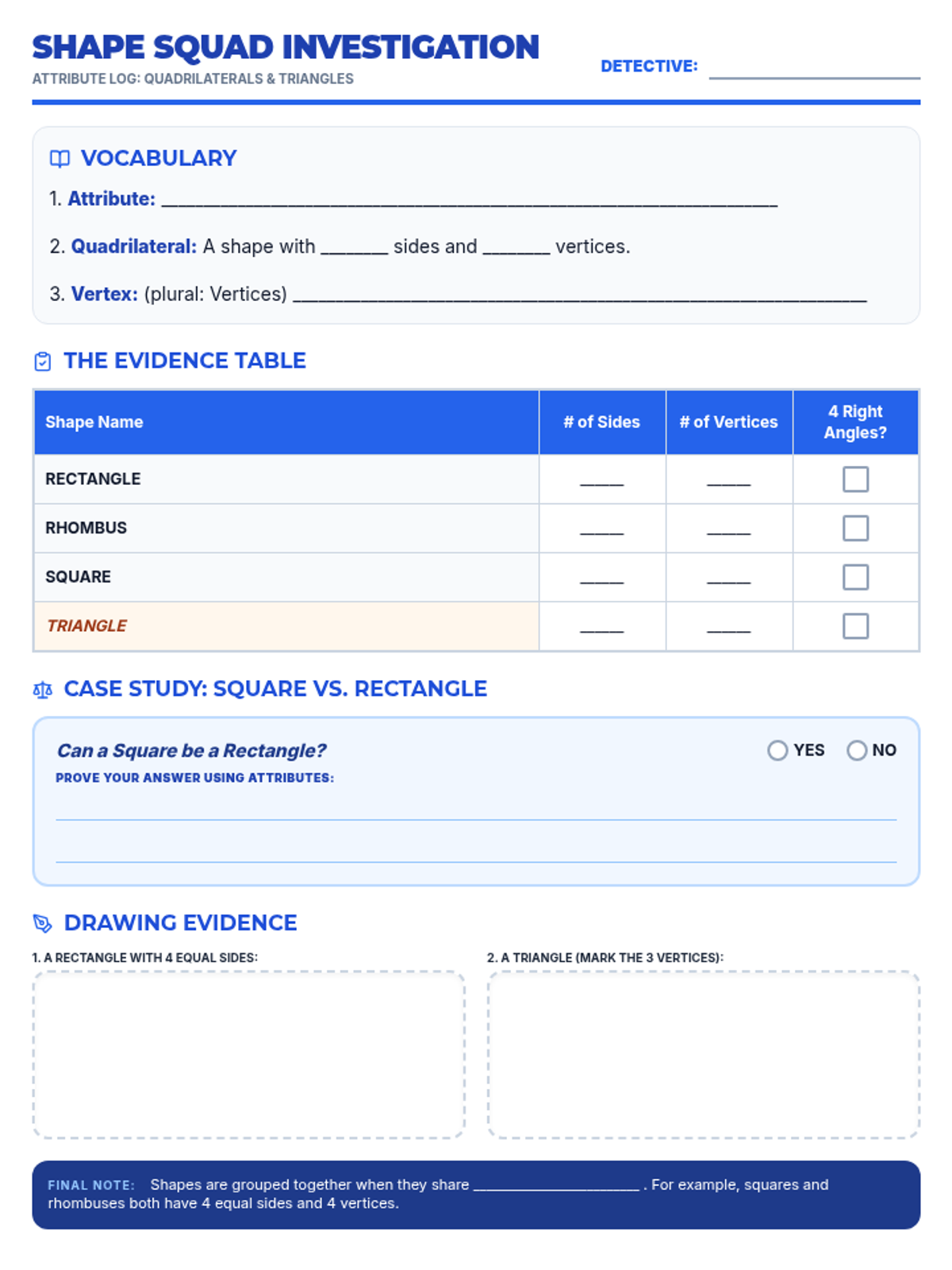
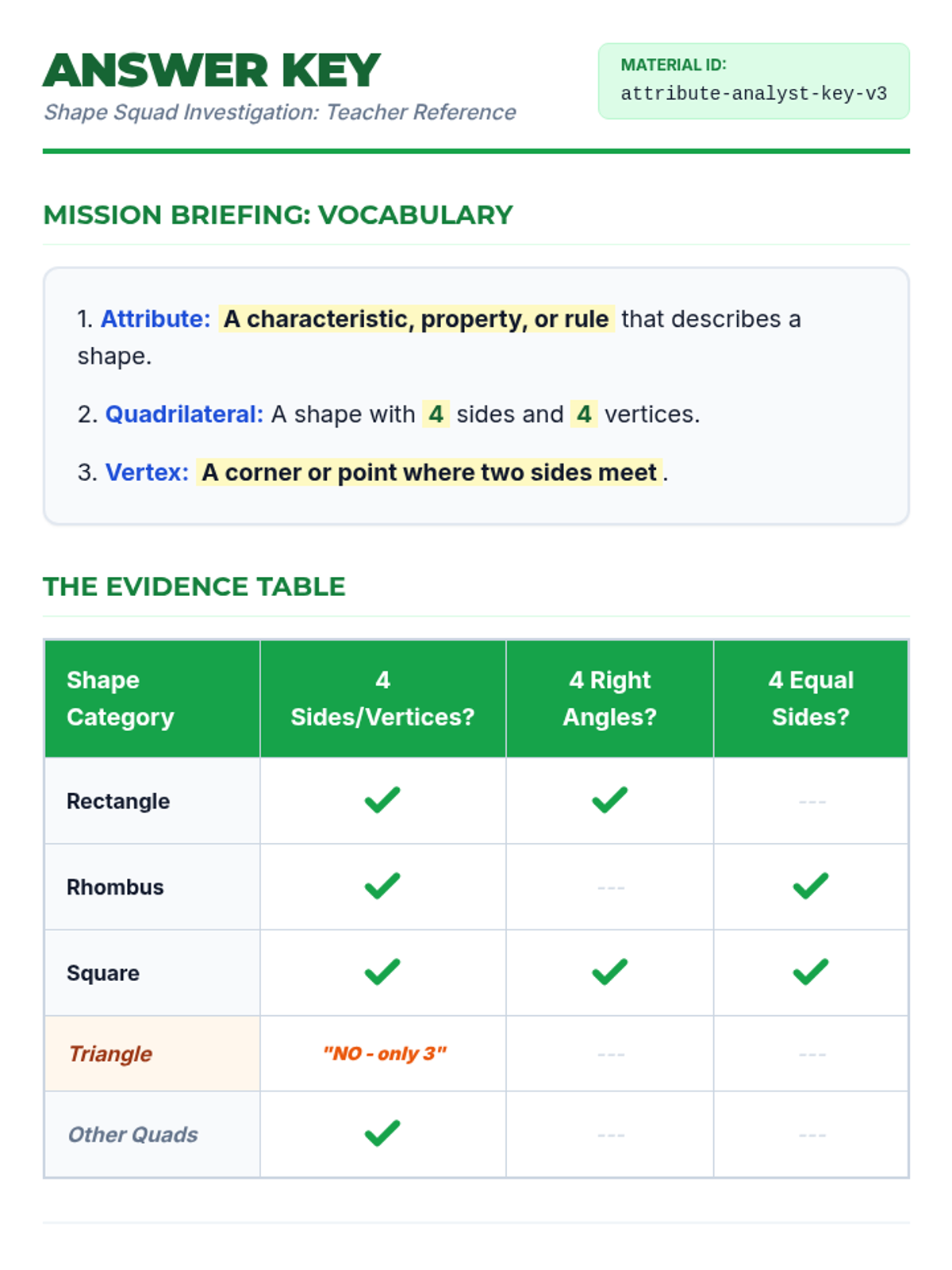
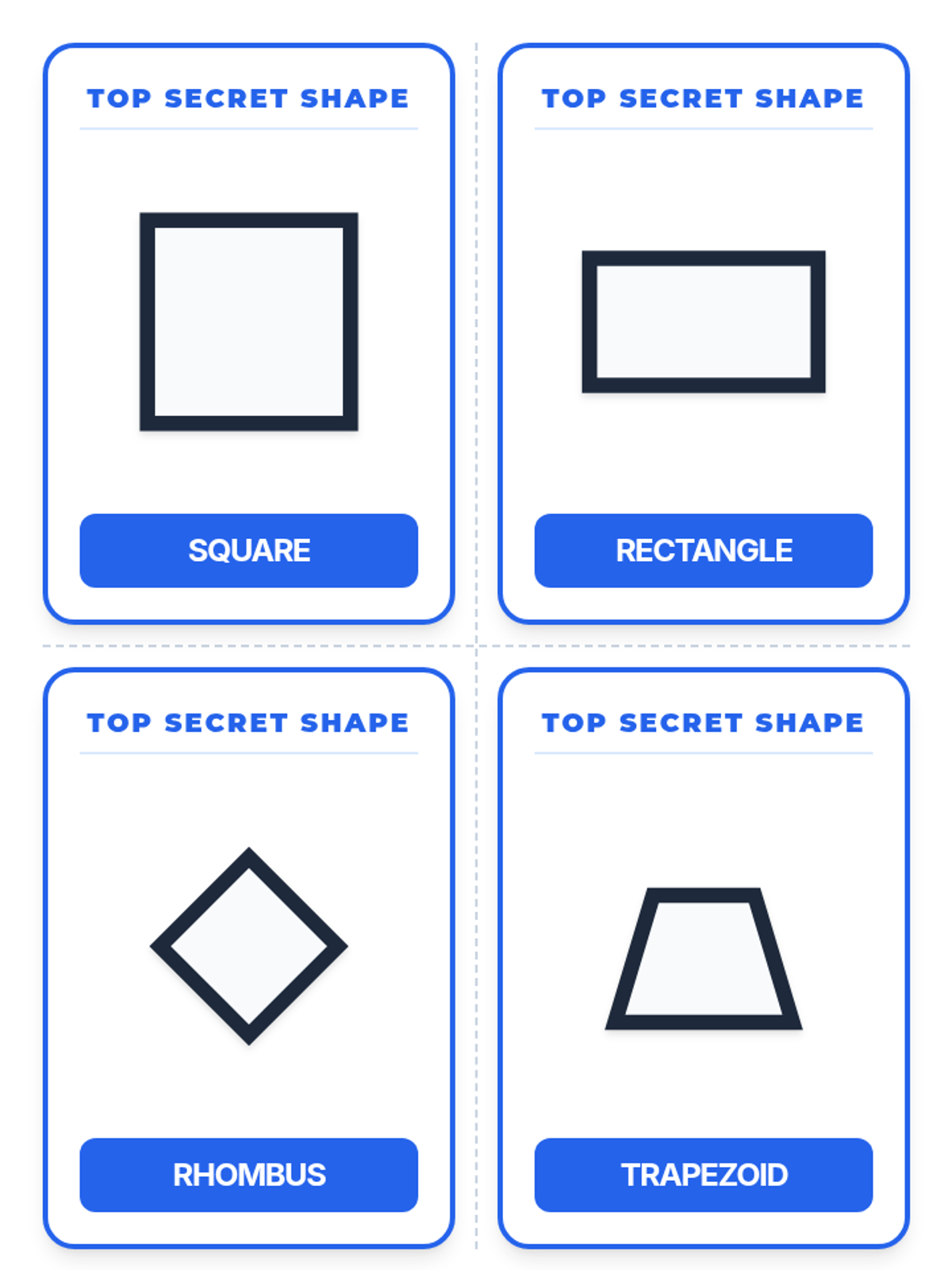
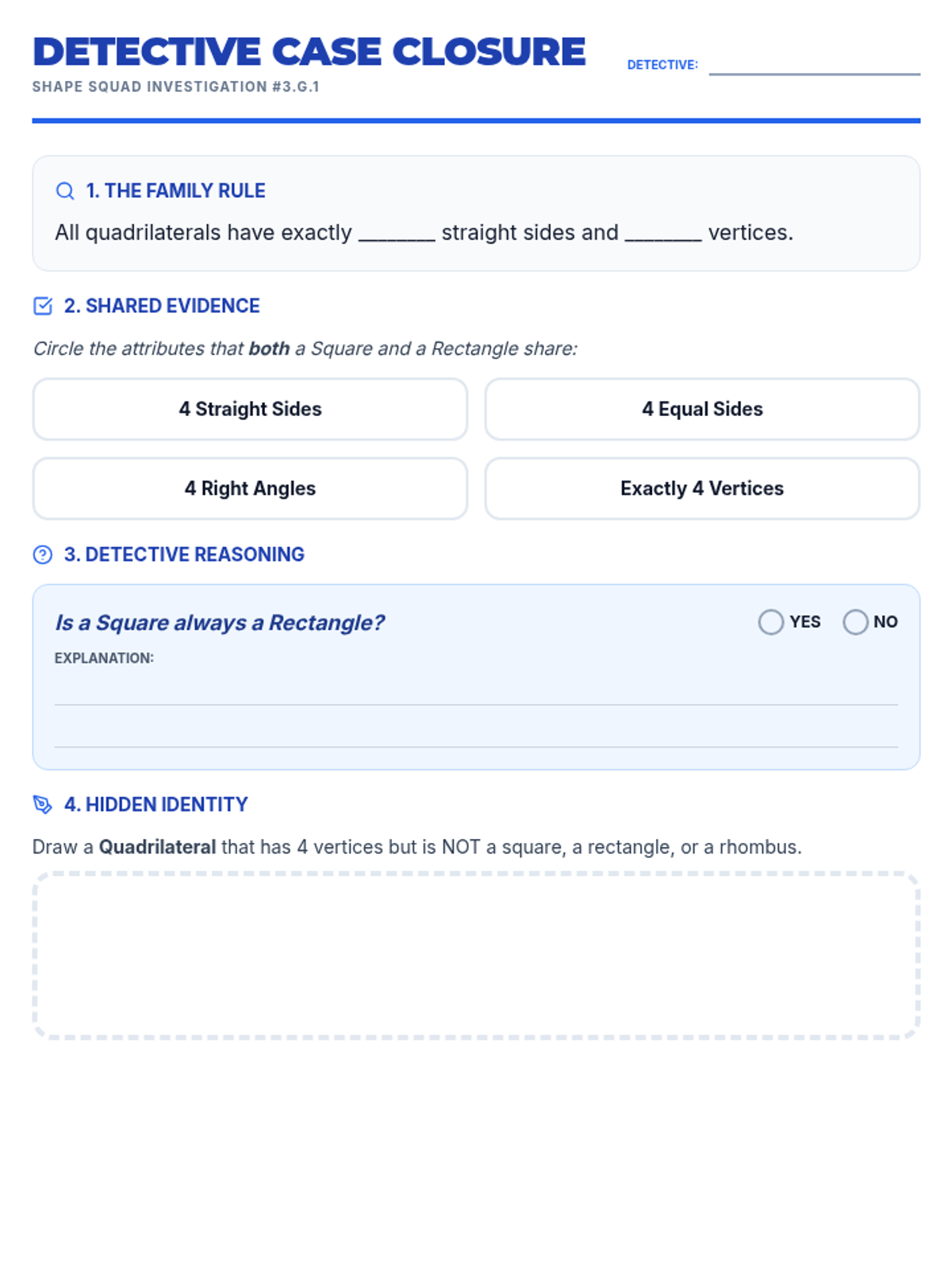
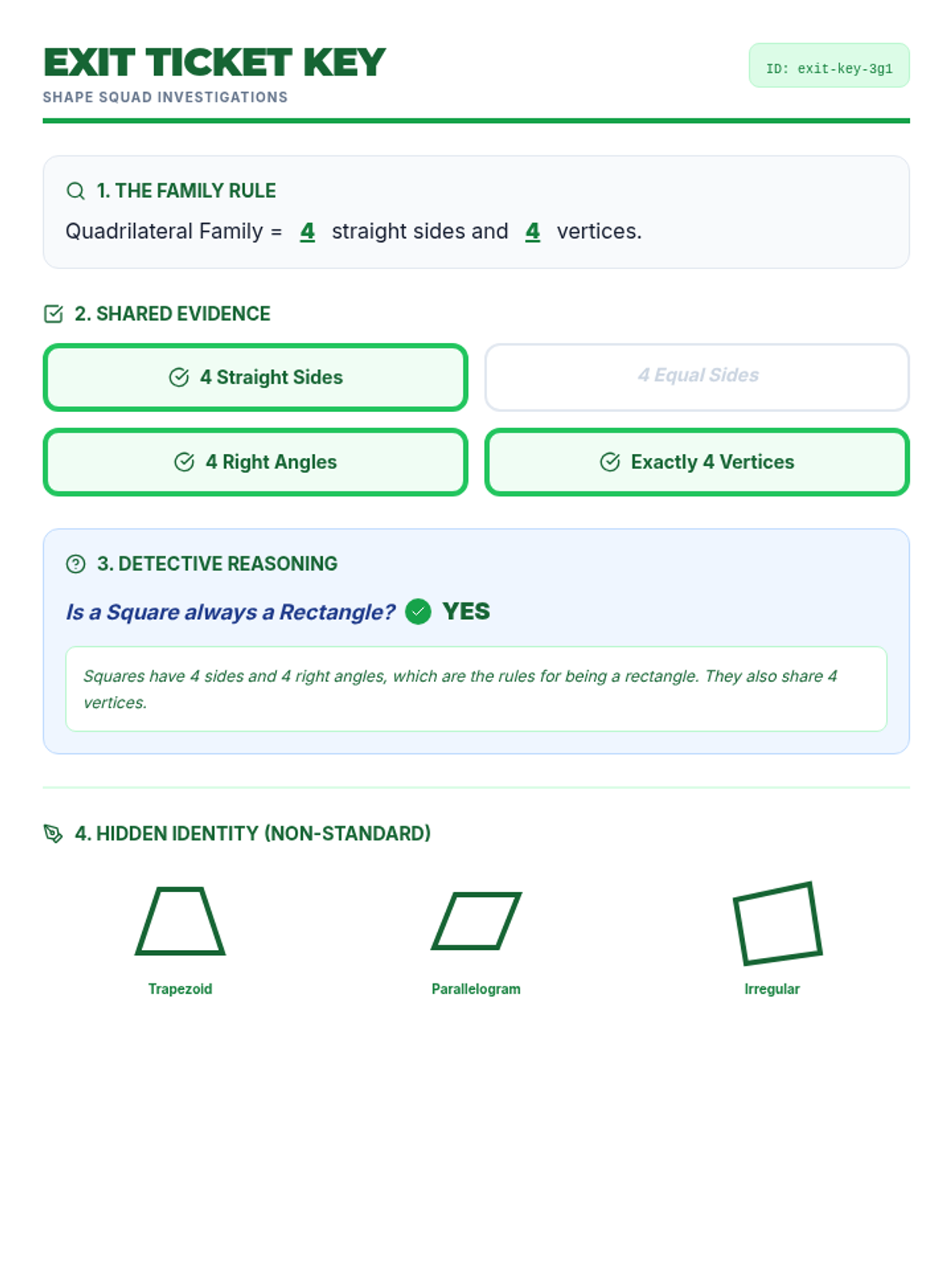
Students explore shared attributes of shapes to understand the category of quadrilaterals, specifically identifying squares, rectangles, and rhombuses while also creating non-standard quadrilaterals.