Students synthesize their skills to present a data-driven argument about the relationship (or lack thereof) between two real-world variables.
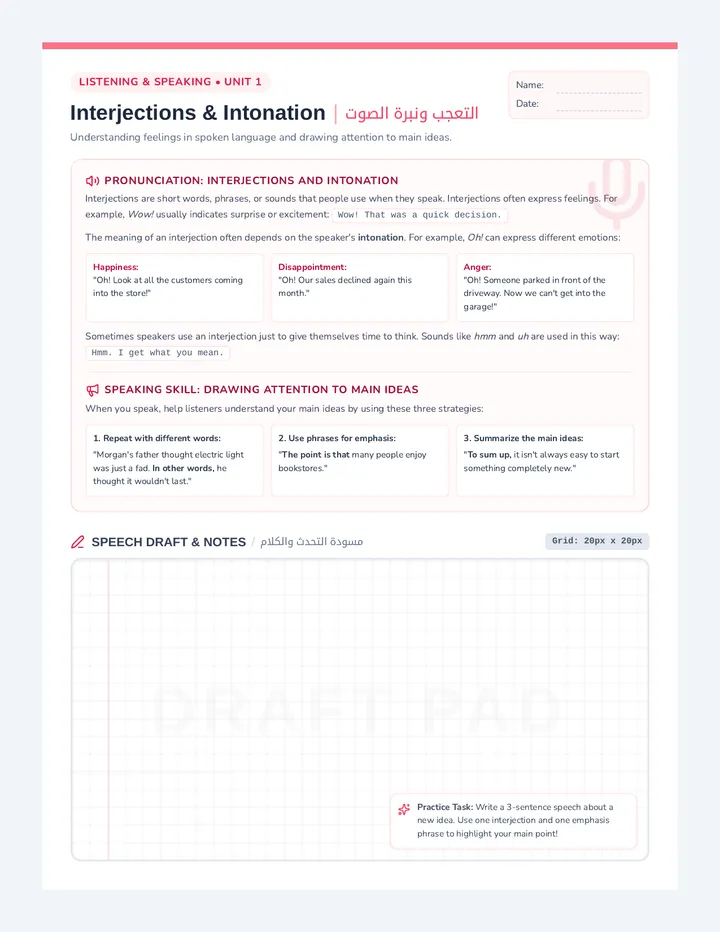
A premium, student-facing draft and rule booklet for English Listening and Speaking (L&S) across 8 core units of pronunciation and speech skills.
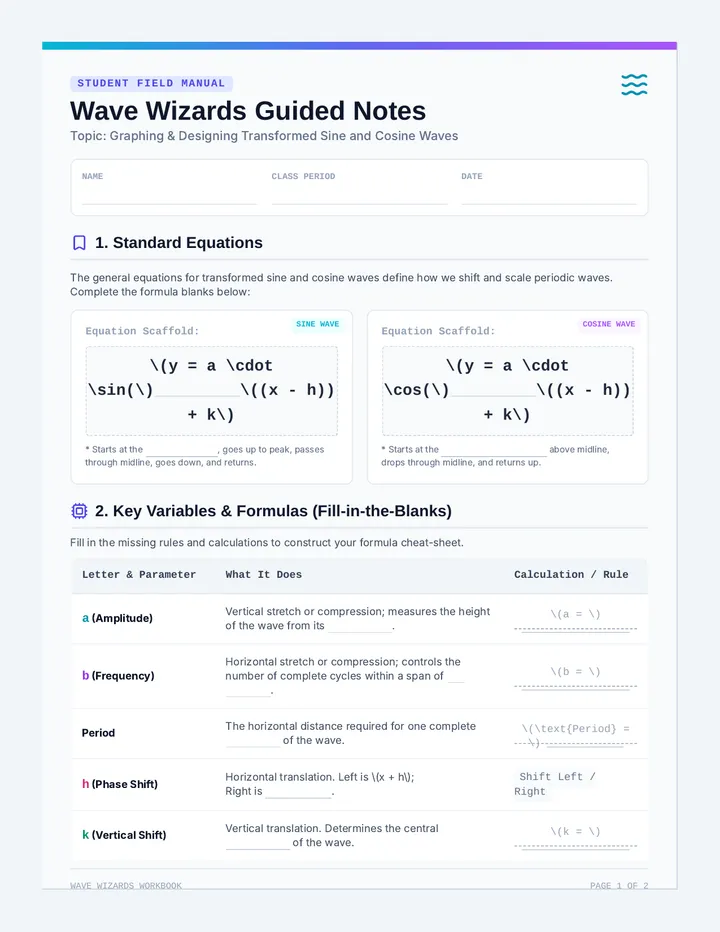
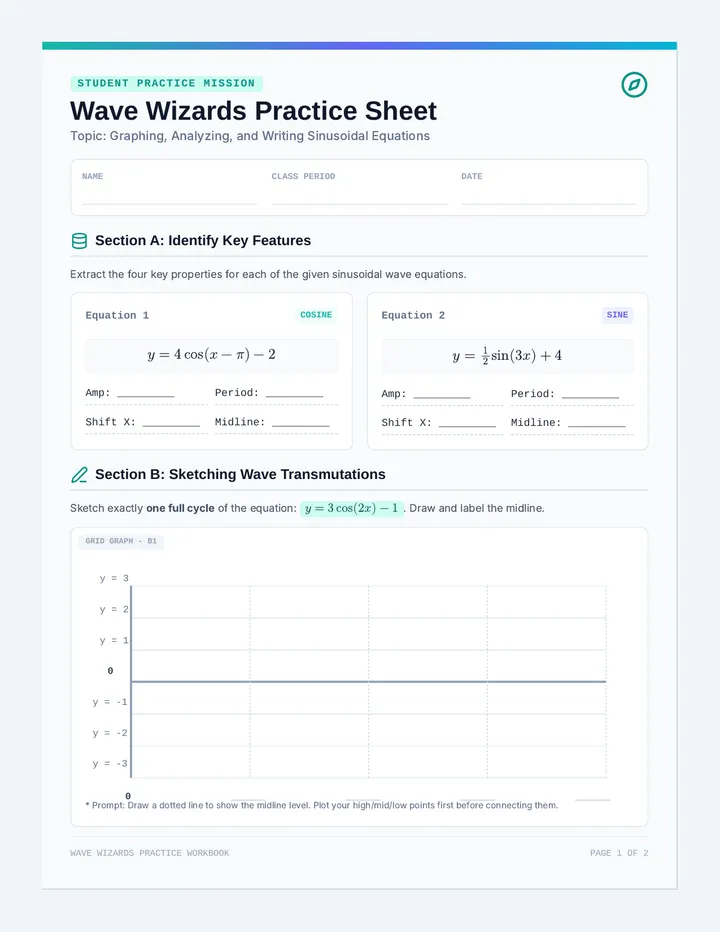
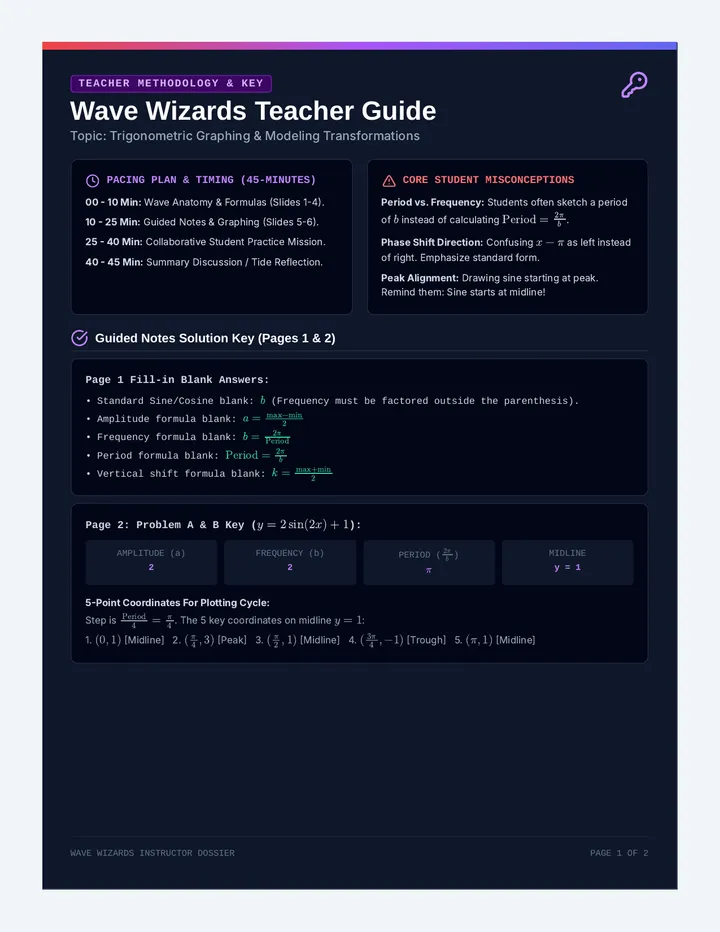
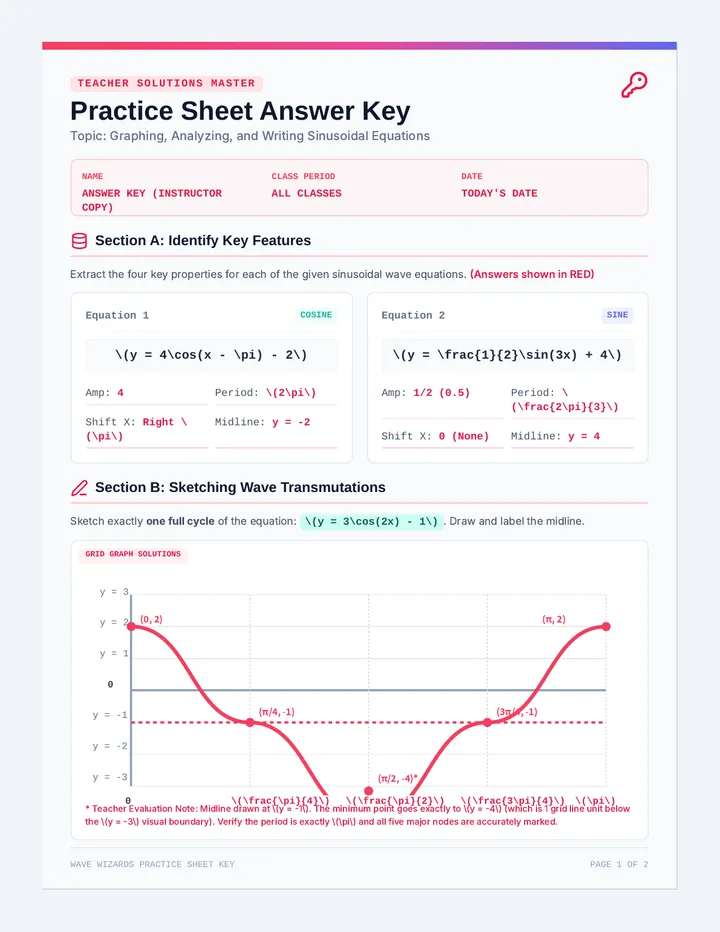
A mini-lesson on transforming trigonometric sine and cosine functions. Students will learn to identify key wave parameters, sketch transformations on a grid, write equations from sinusoidal graphs, and model real-world periodic phenomena.
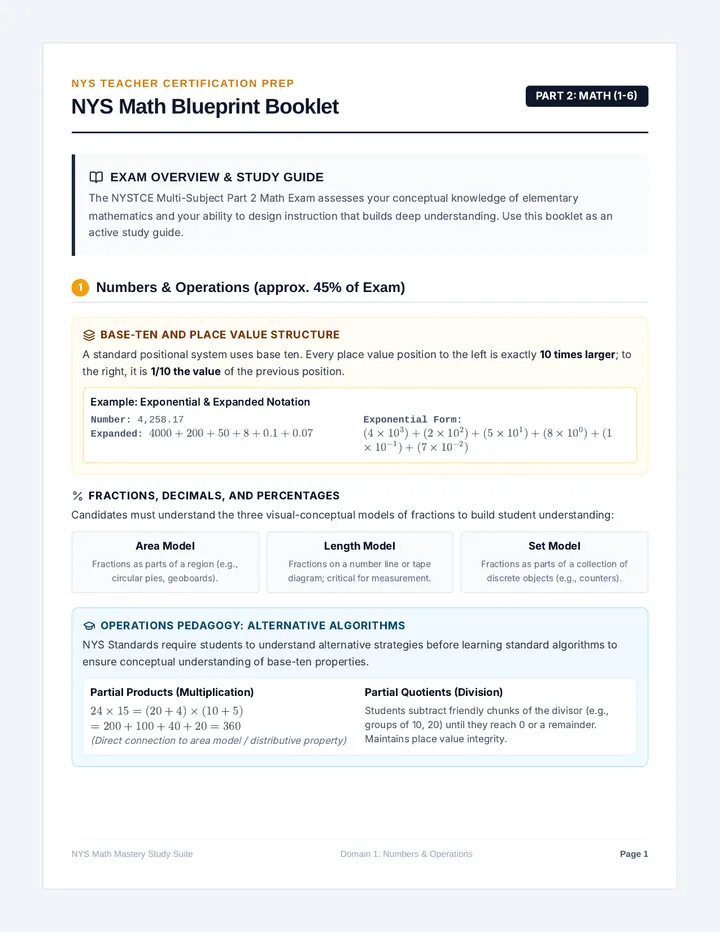
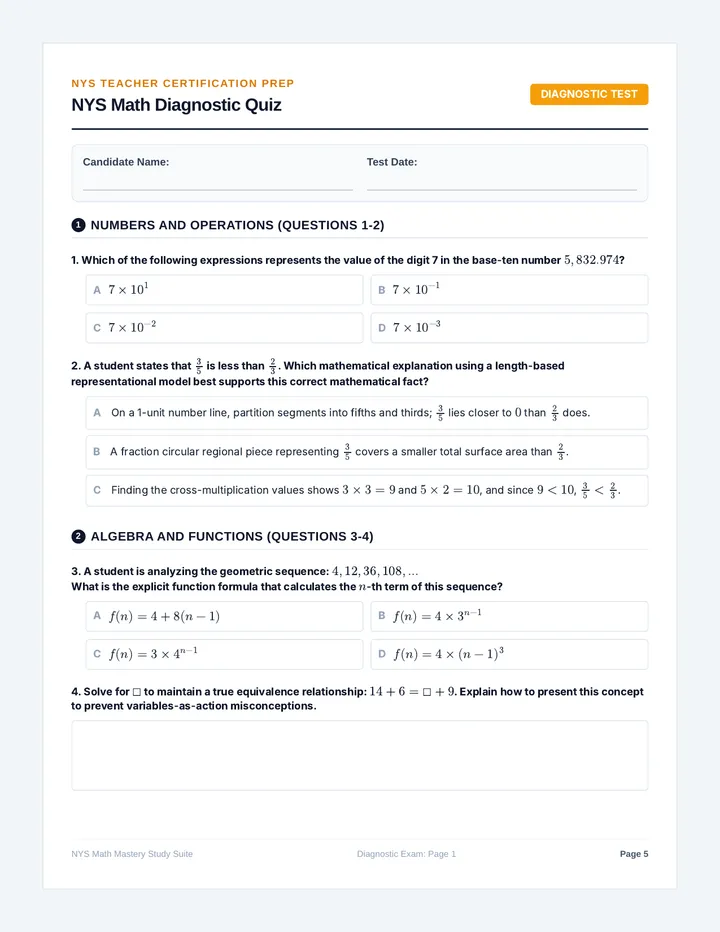
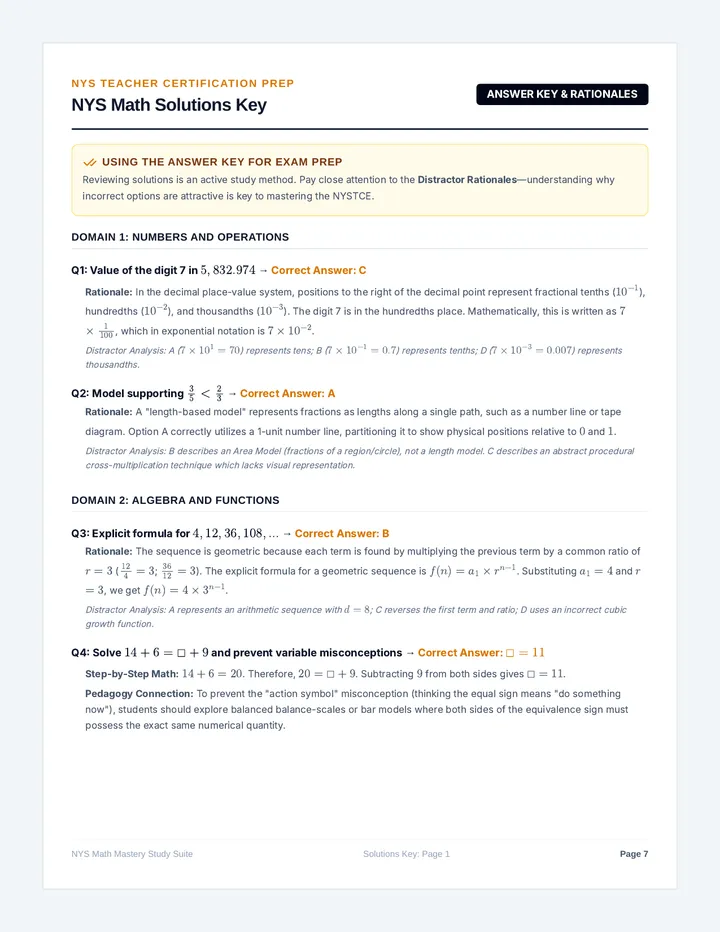
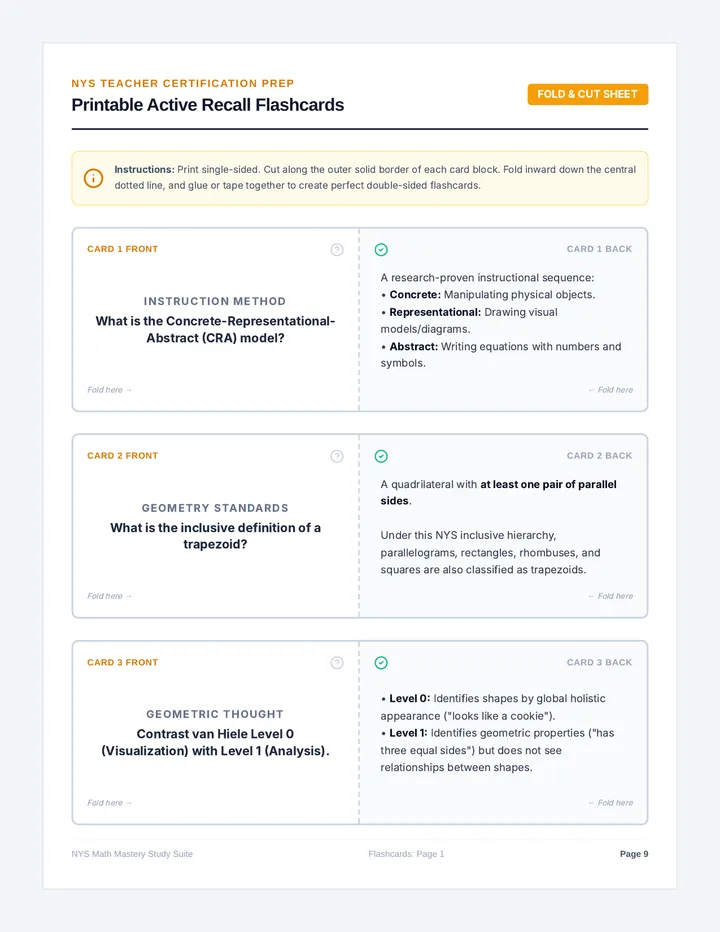
A comprehensive test preparation suite for the NYSTCE Multi-Subject (Grades 1-6) Math Exam (Part 2). Includes an in-depth study booklet, interactive review slides, diagnostic quiz, step-by-step solutions, and active recall flashcards covering all four key domains and standards-aligned pedagogy.
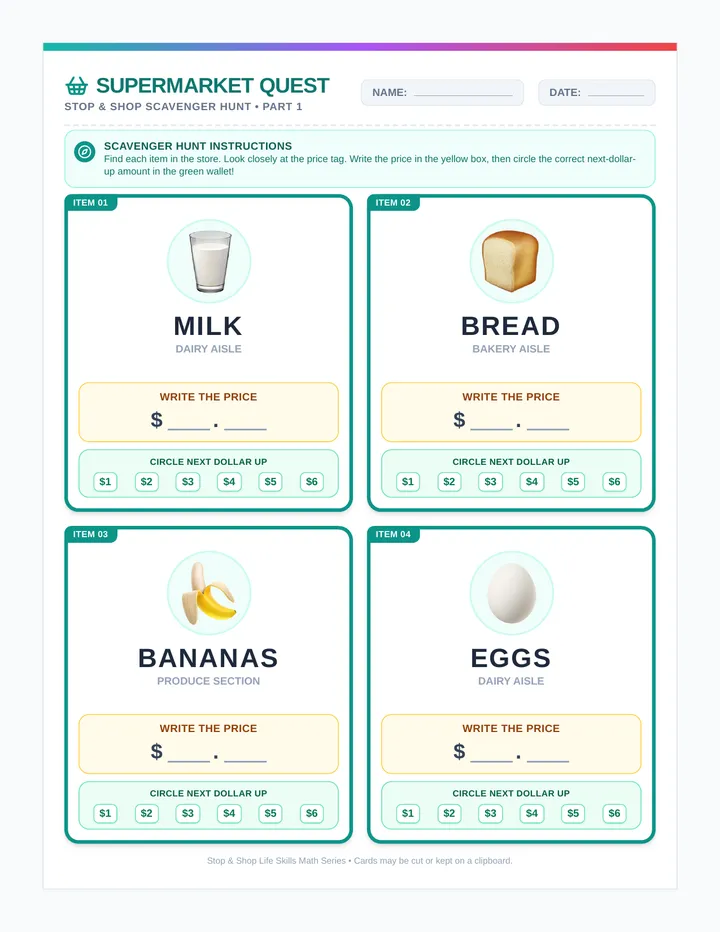
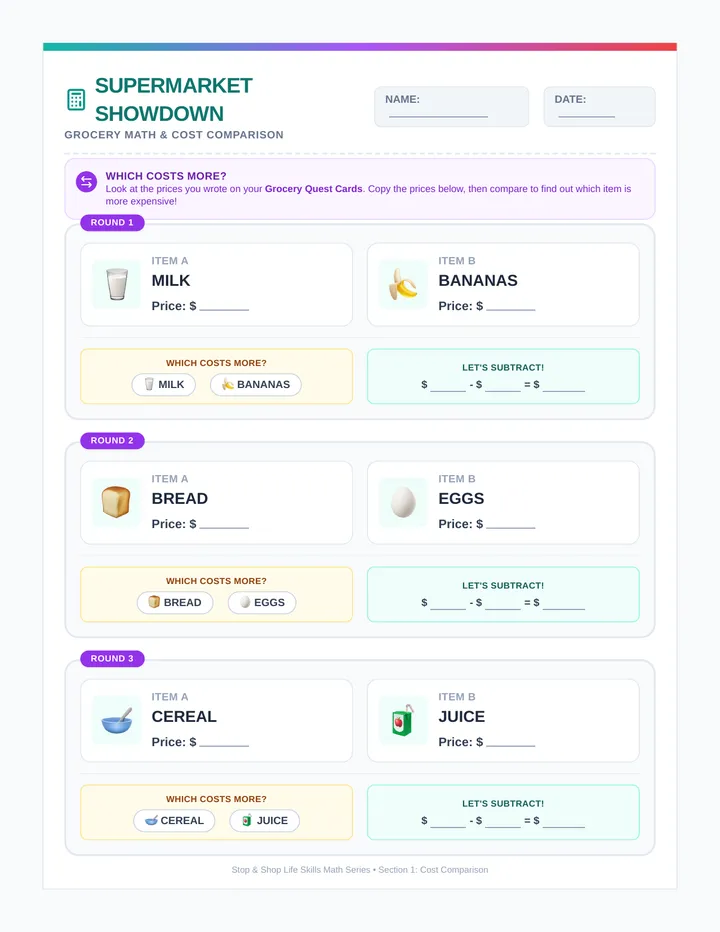
A real-world functional math lesson designed for life skills students. Students navigate a Stop & Shop store to locate items, read price tags, and calculate next-dollar-up budgets using highly visual scaffolded cards.
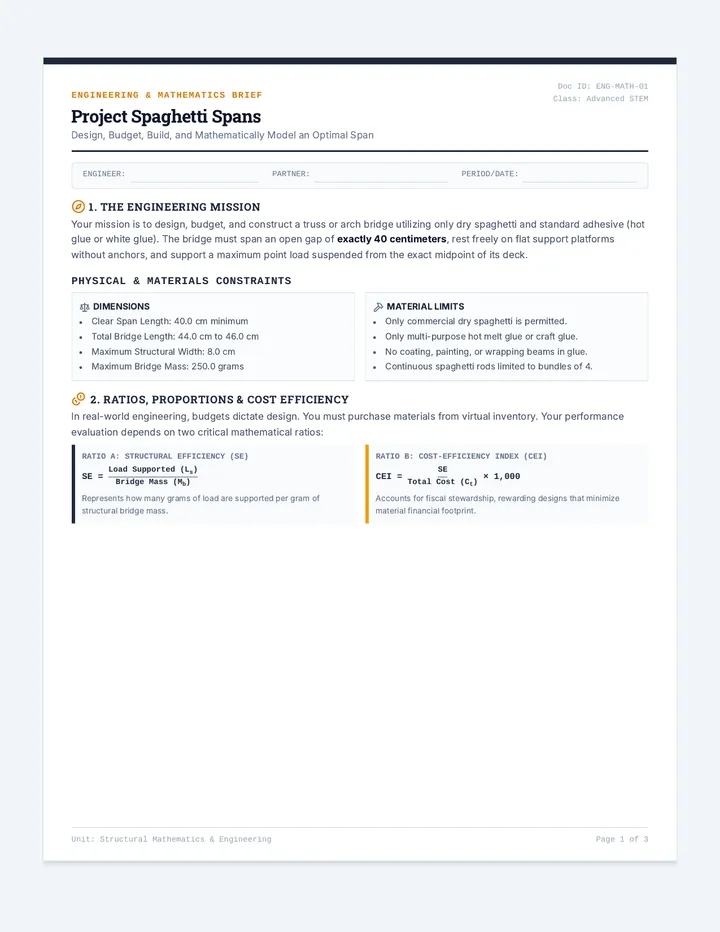
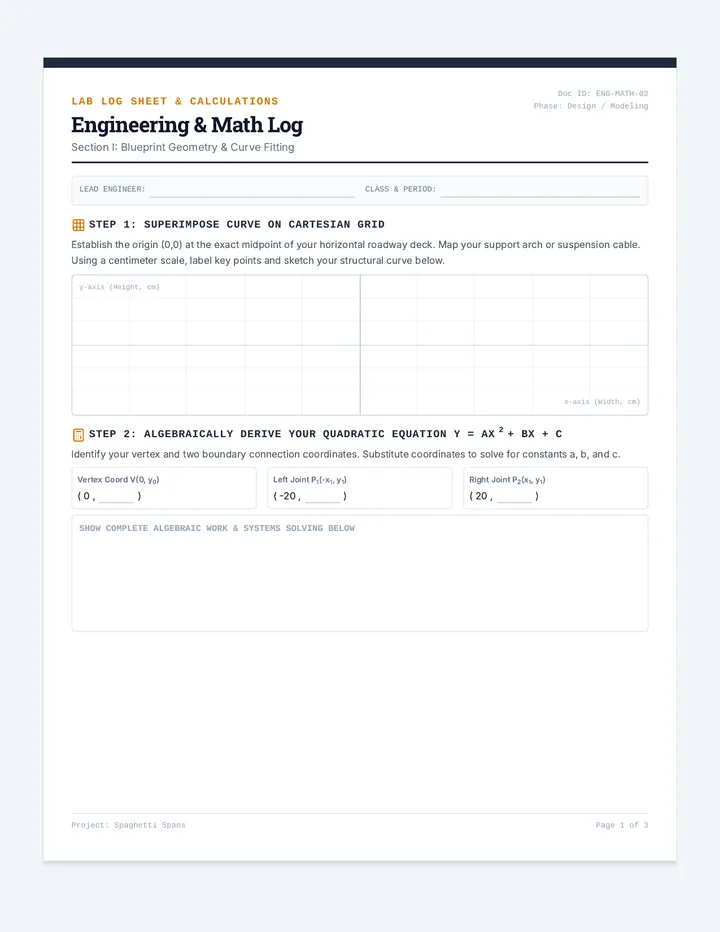
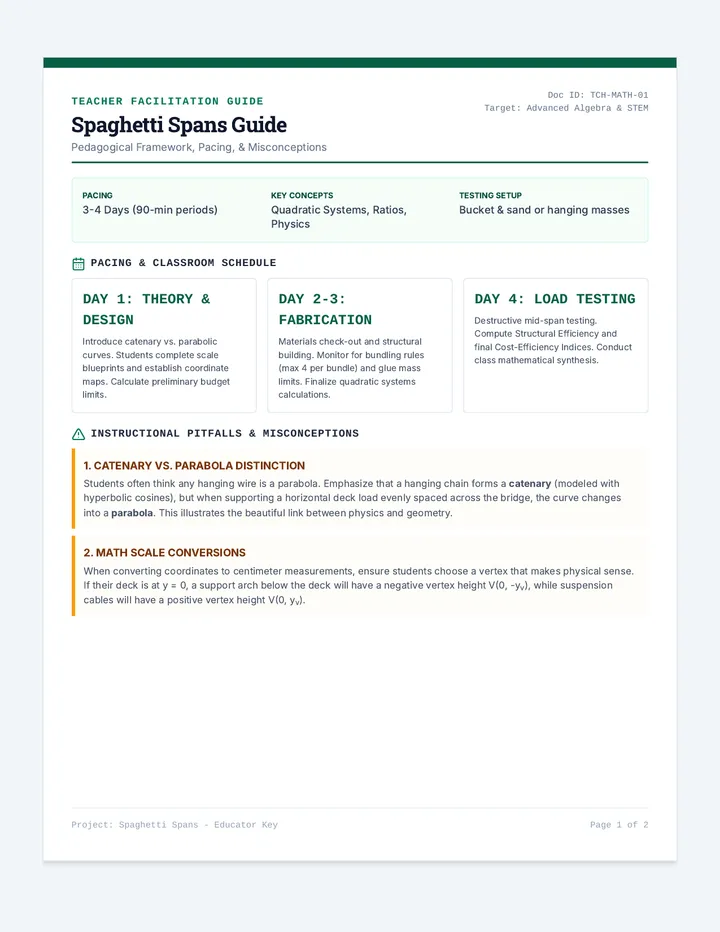
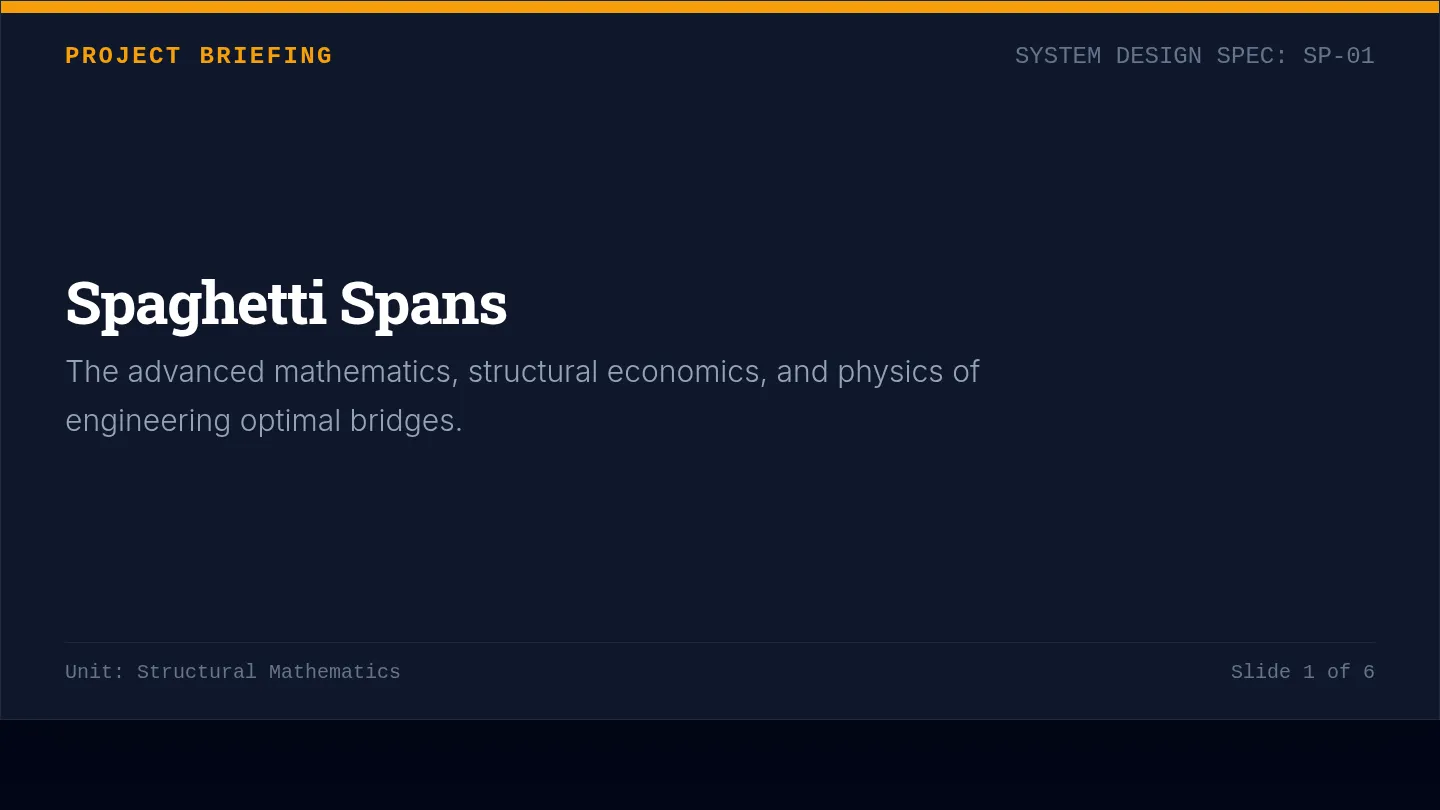
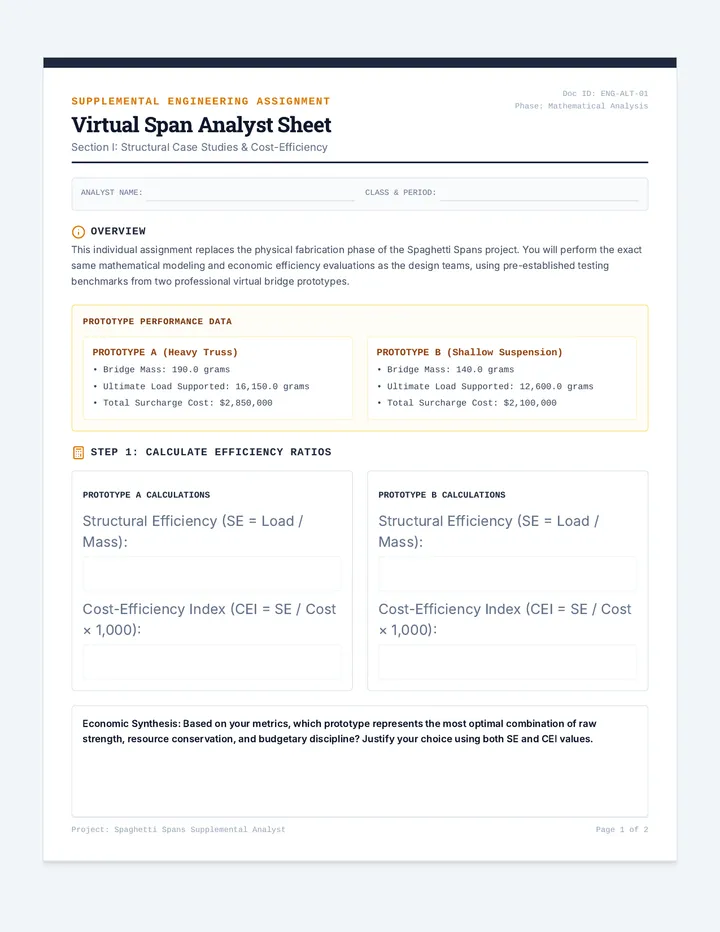
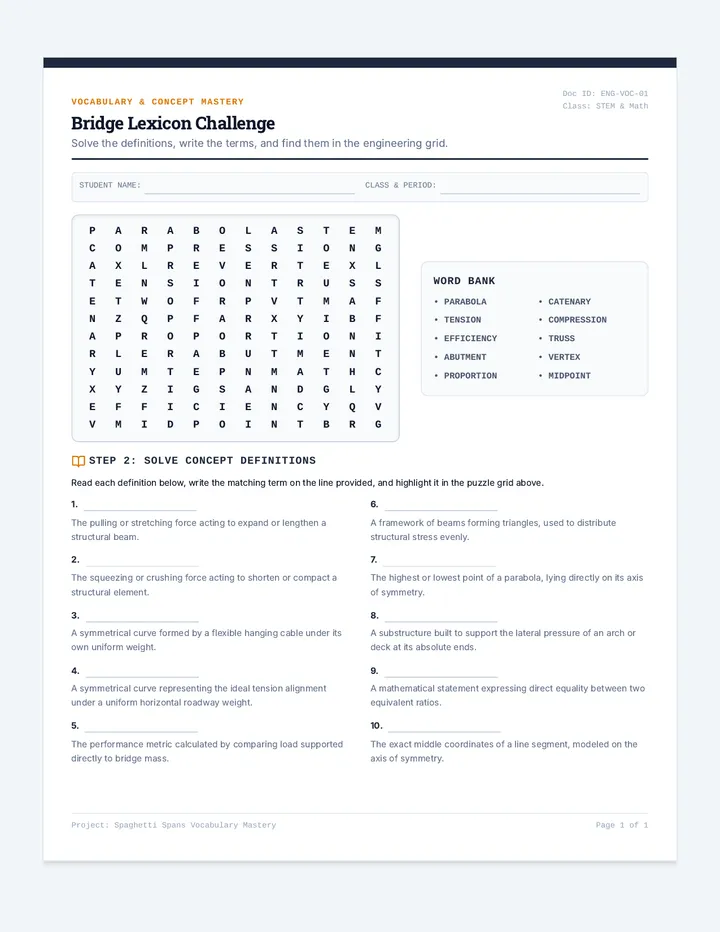
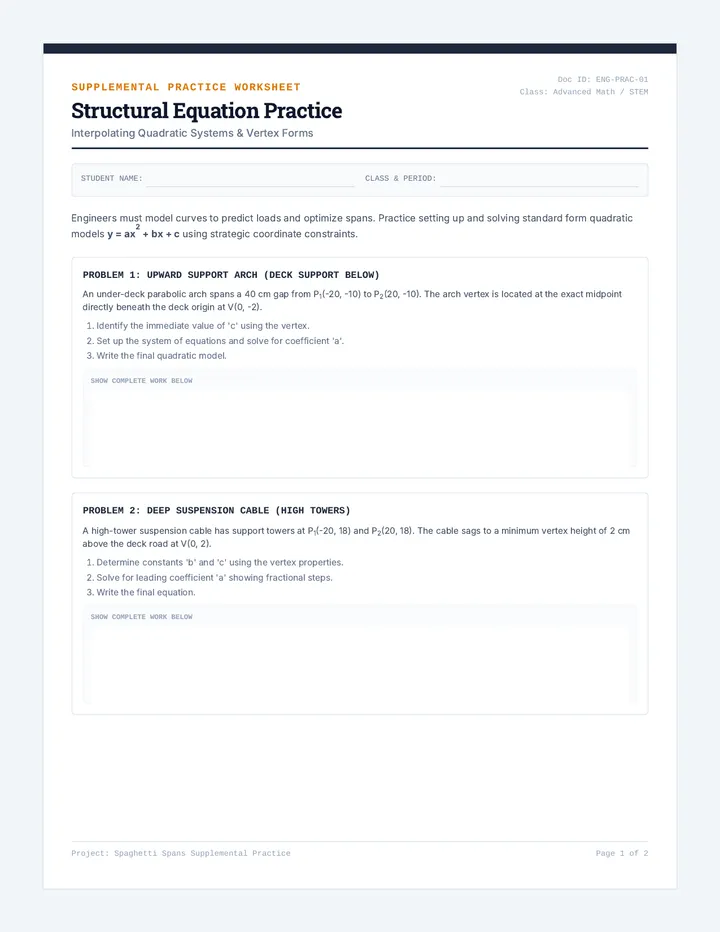
A rigorous STEM project combining structural engineering with advanced mathematics. Students design, budget, build, and test spaghetti bridges using ratios, proportions, cost-efficiency metrics, quadratic modeling, and catenary curves.
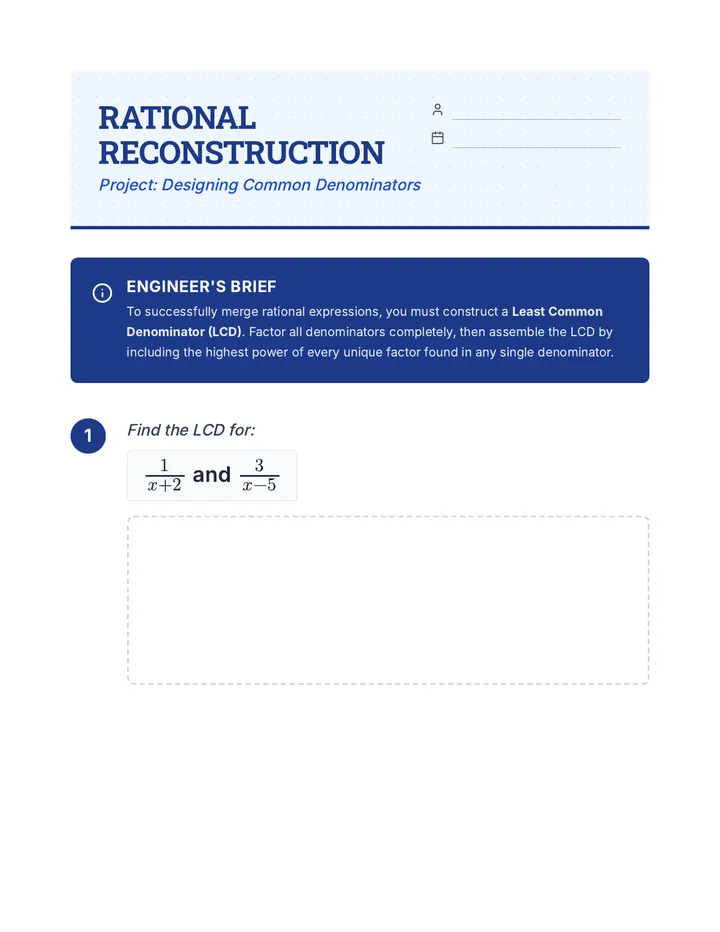
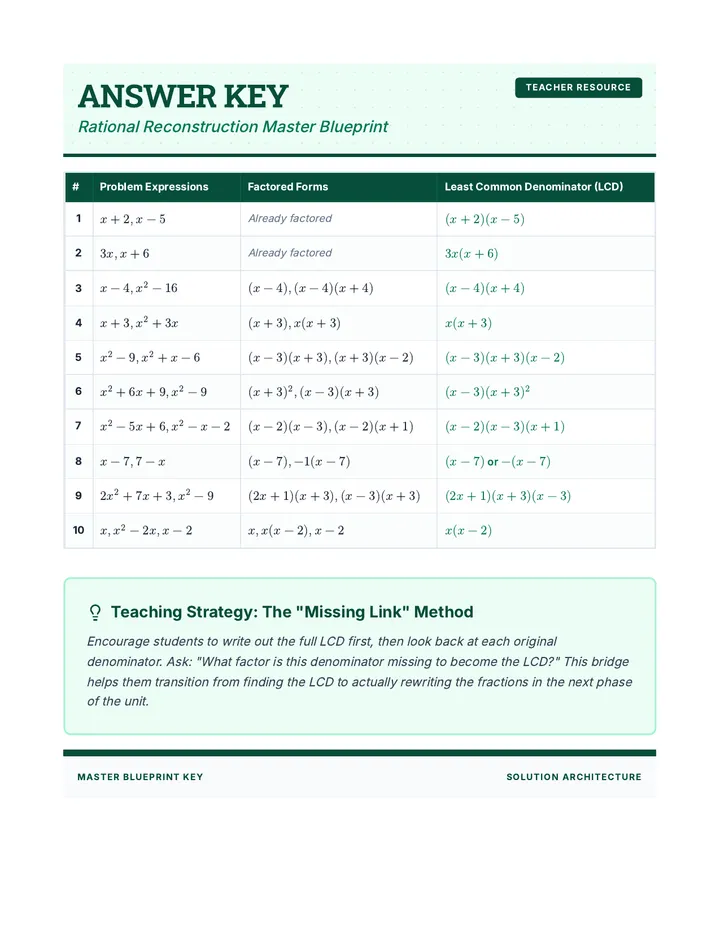
A focused lesson on finding the Least Common Denominator (LCD) for rational expressions involving binomials and trinomials, emphasizing factoring techniques.
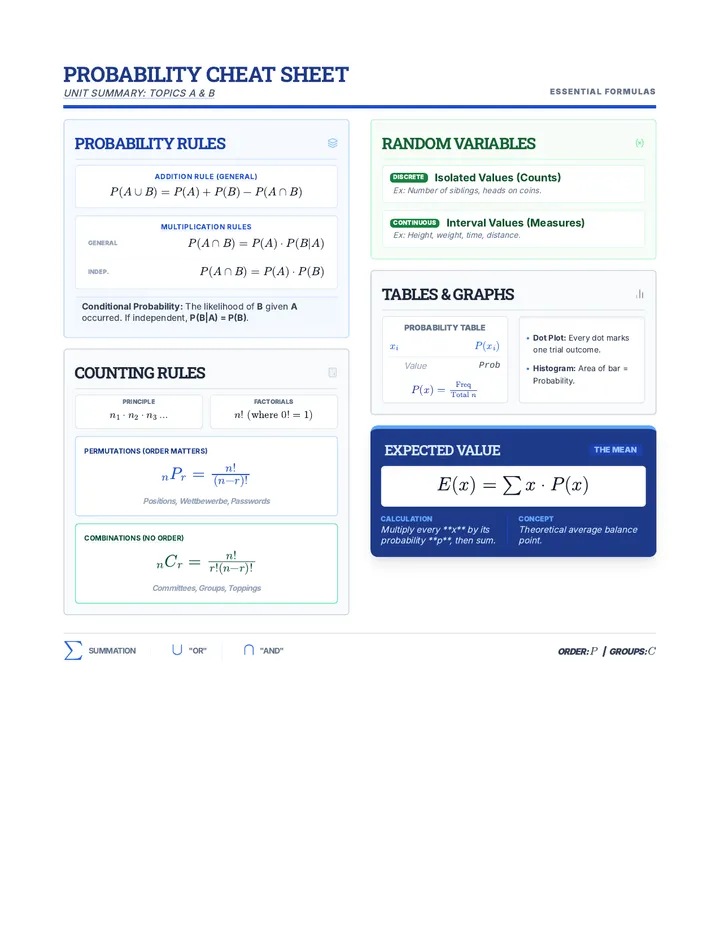
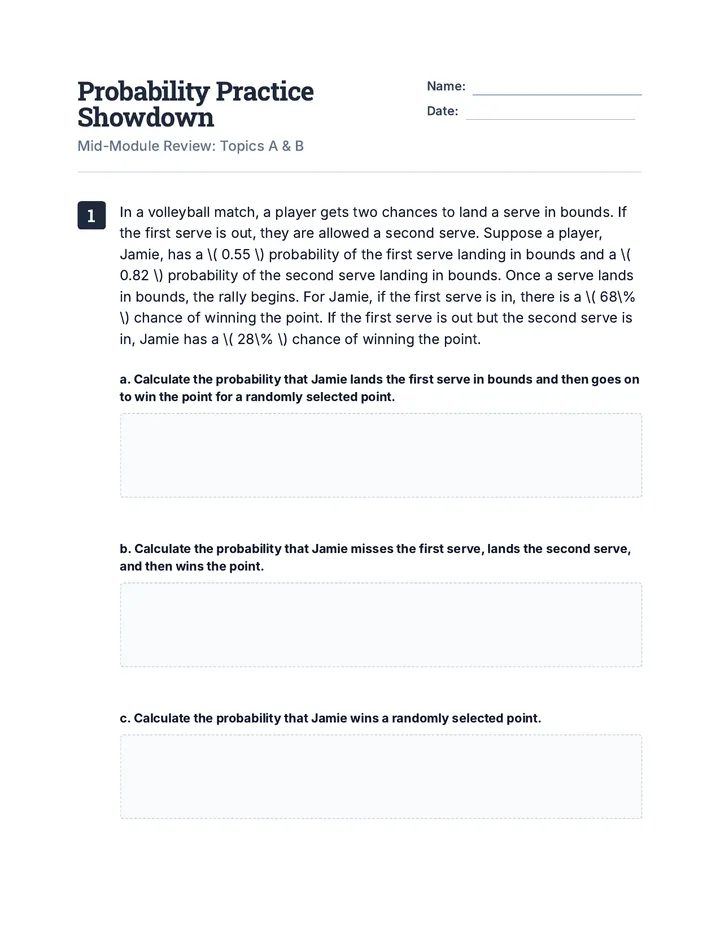
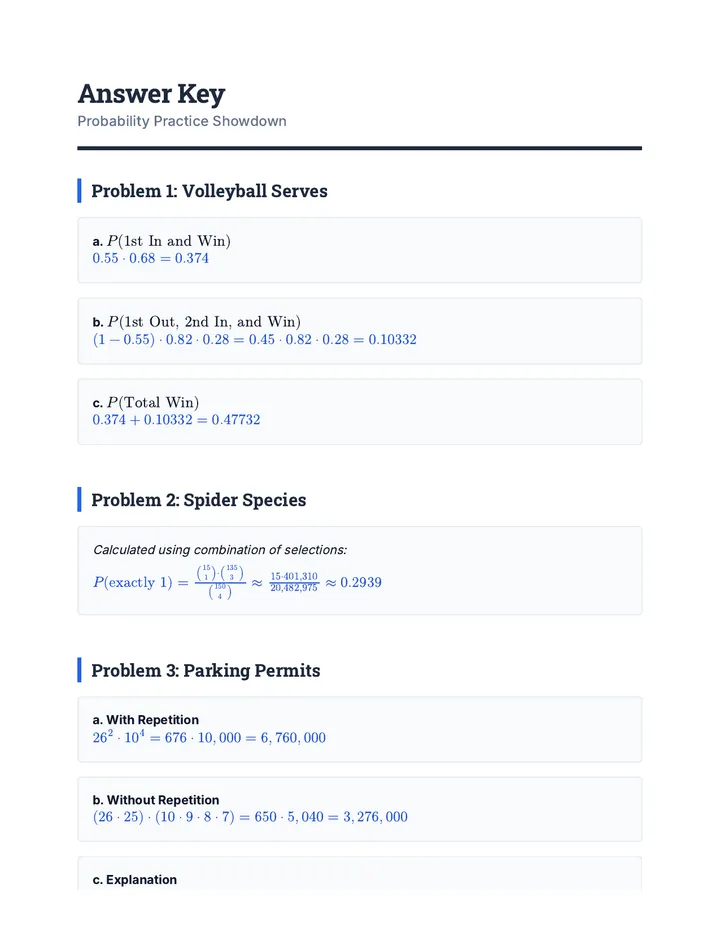
A comprehensive lesson covering probability rules, counting principles, discrete random variables, and empirical distributions. Includes a condensed reference sheet and a practice review worksheet.
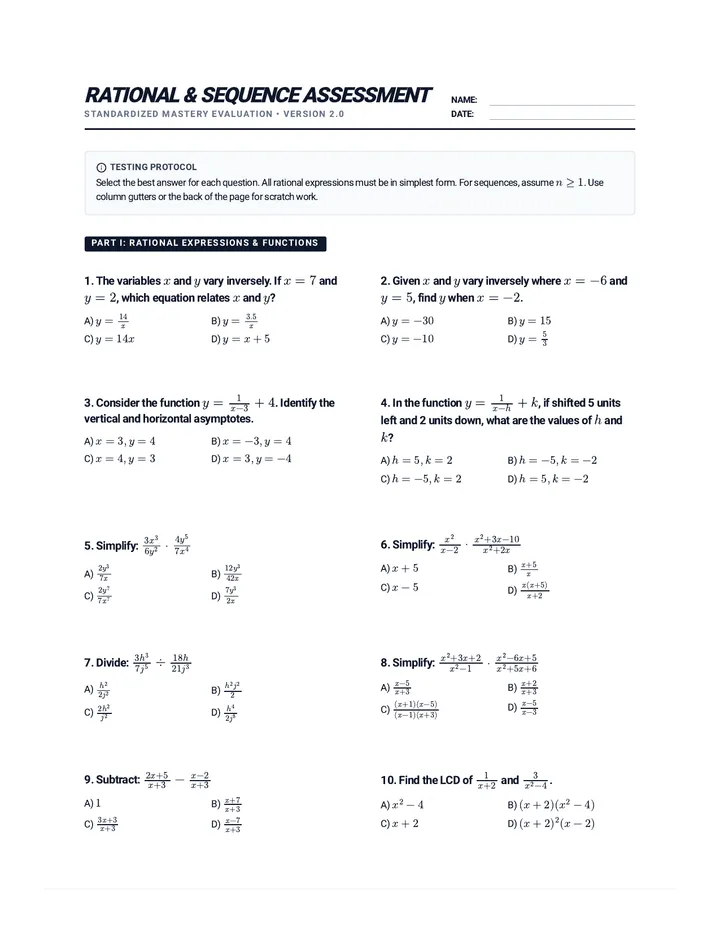
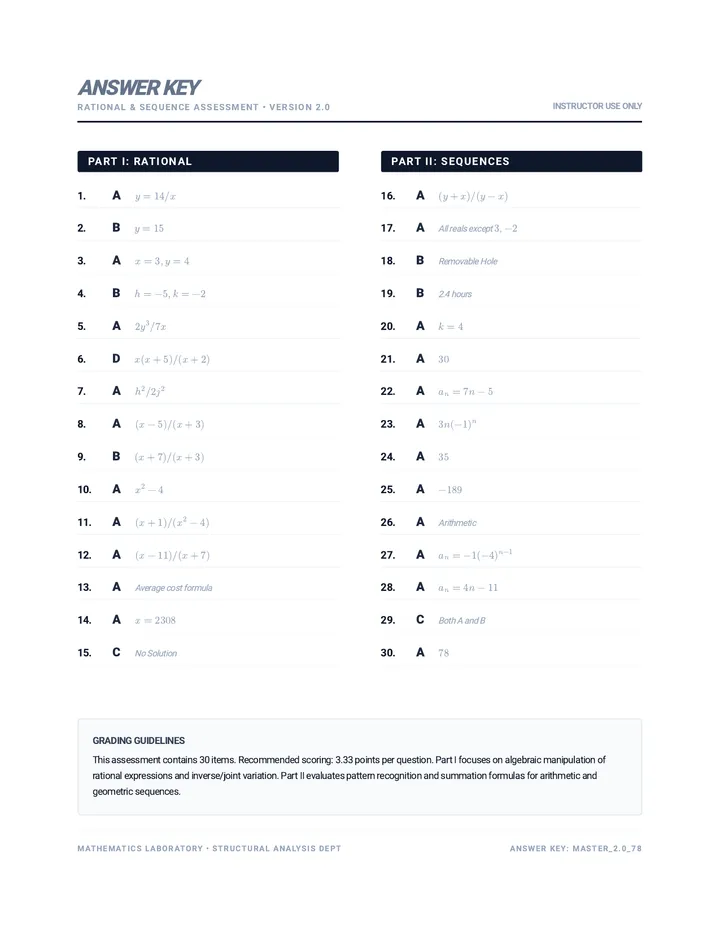
A comprehensive assessment covering rational expressions, functions, variation, and arithmetic/geometric sequences and series.
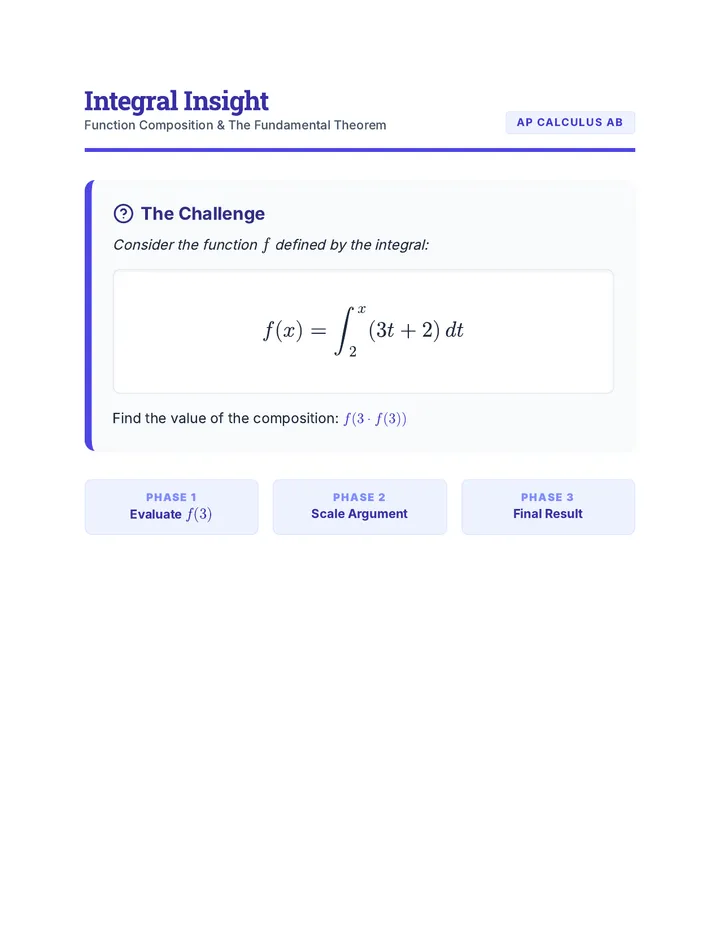
A focused study on applying the Fundamental Theorem of Calculus to evaluate functions defined by integrals. Students will practice finding specific values by integrating and evaluating at given boundaries.
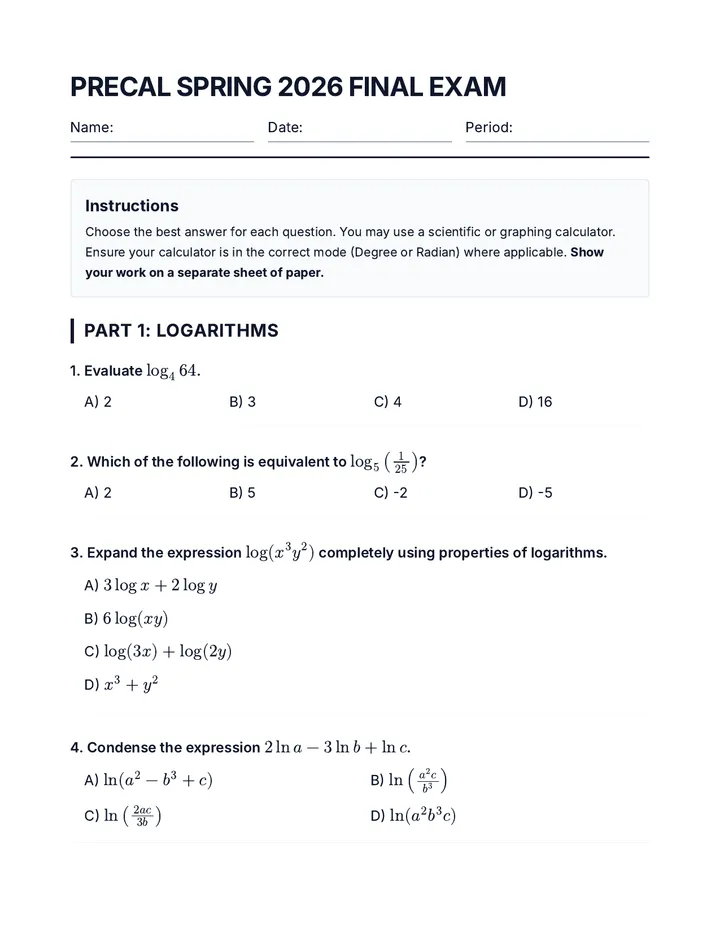
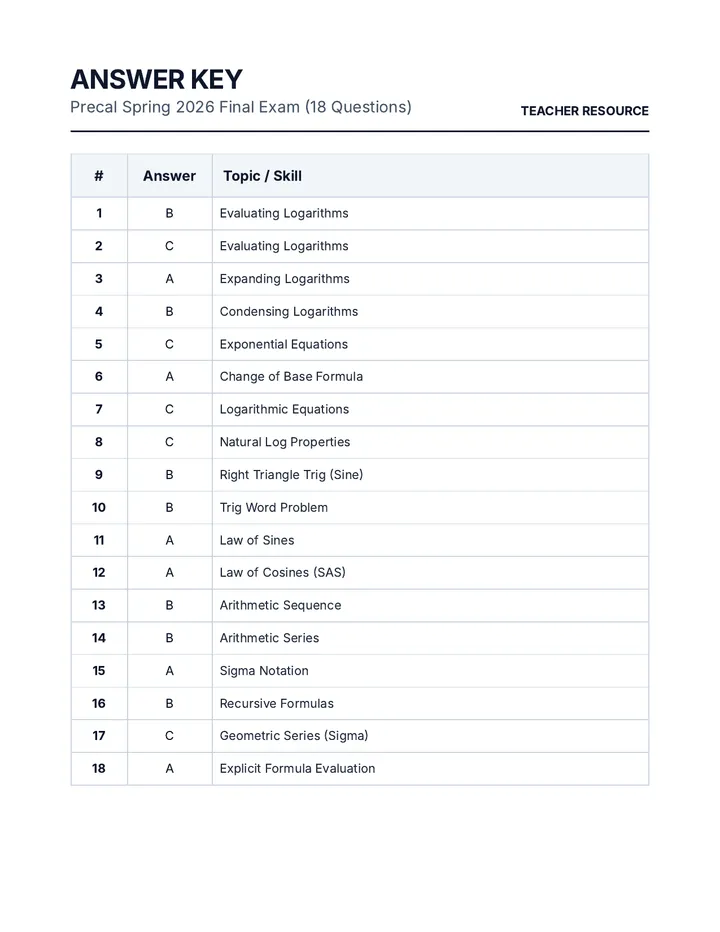
A comprehensive final exam for Spring 2026 covering logarithms, trigonometry of triangles, and sequences and series for a Precalculus course.
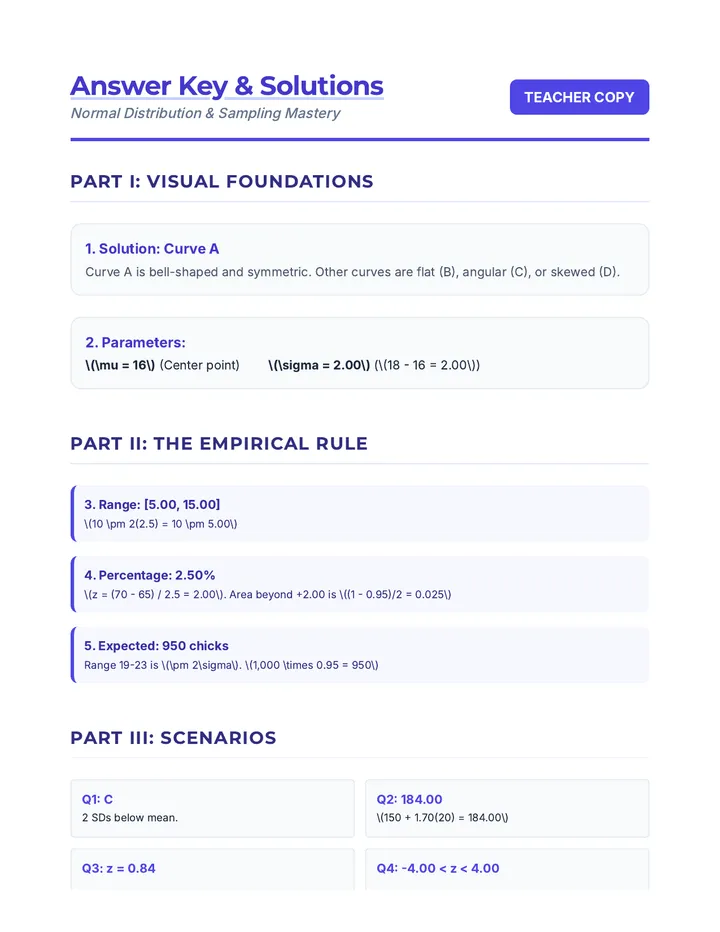
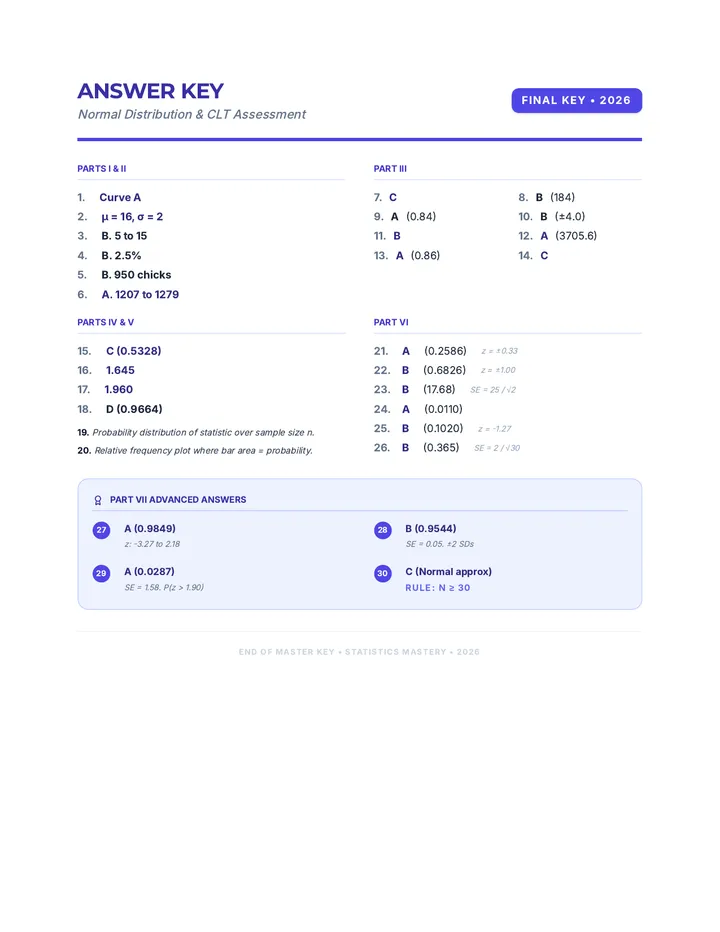
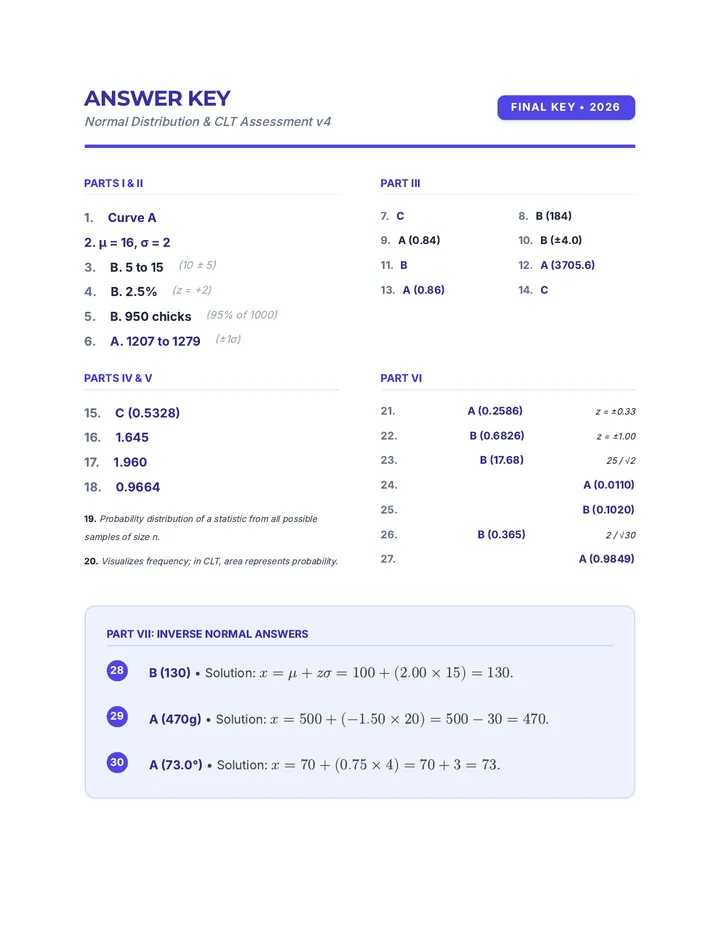
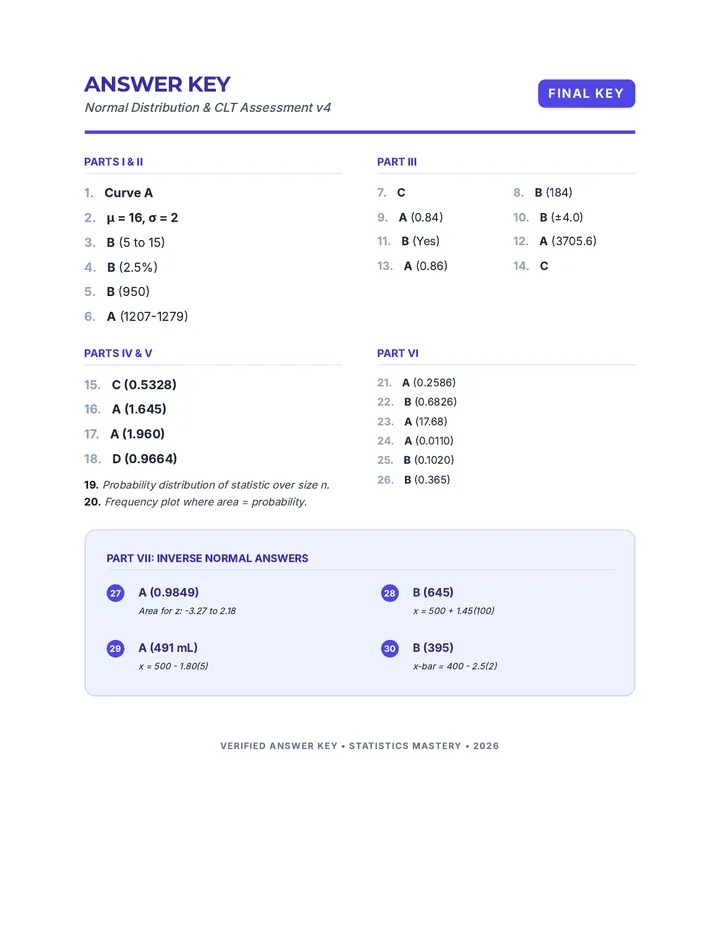
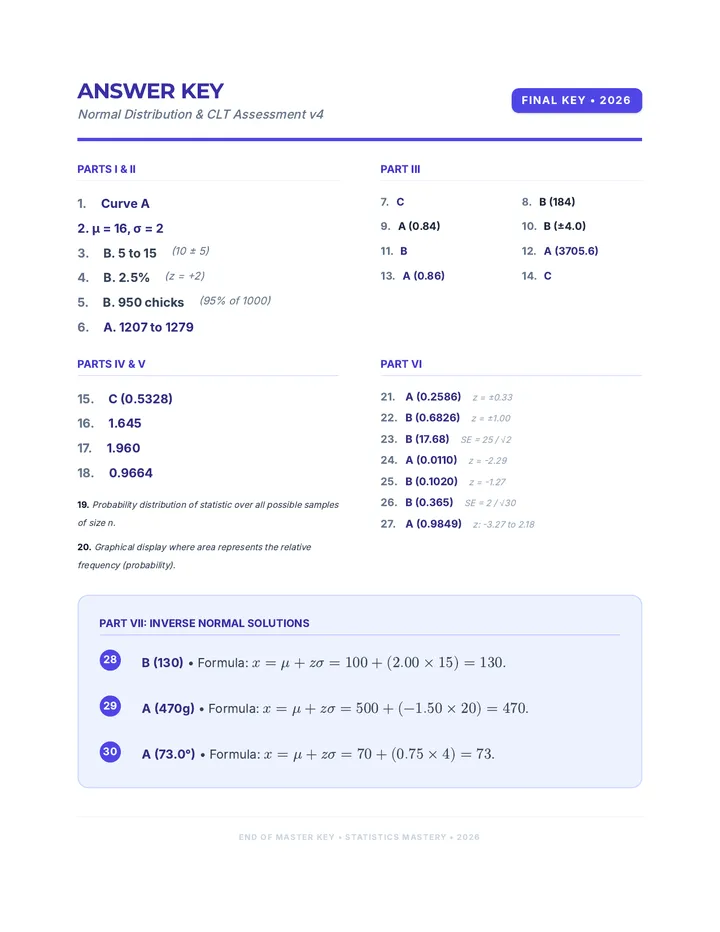
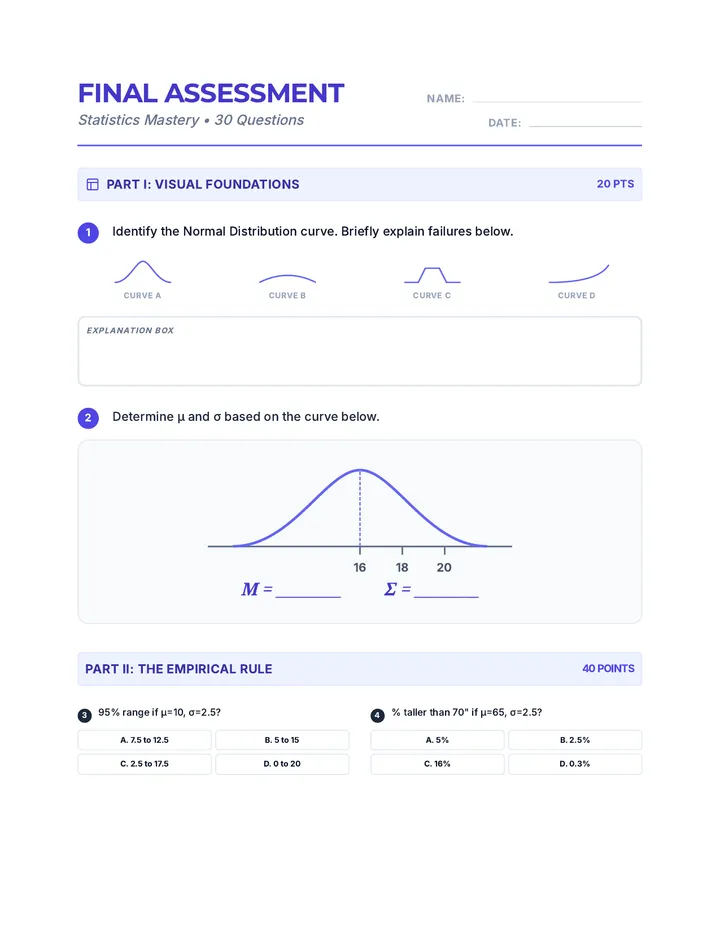
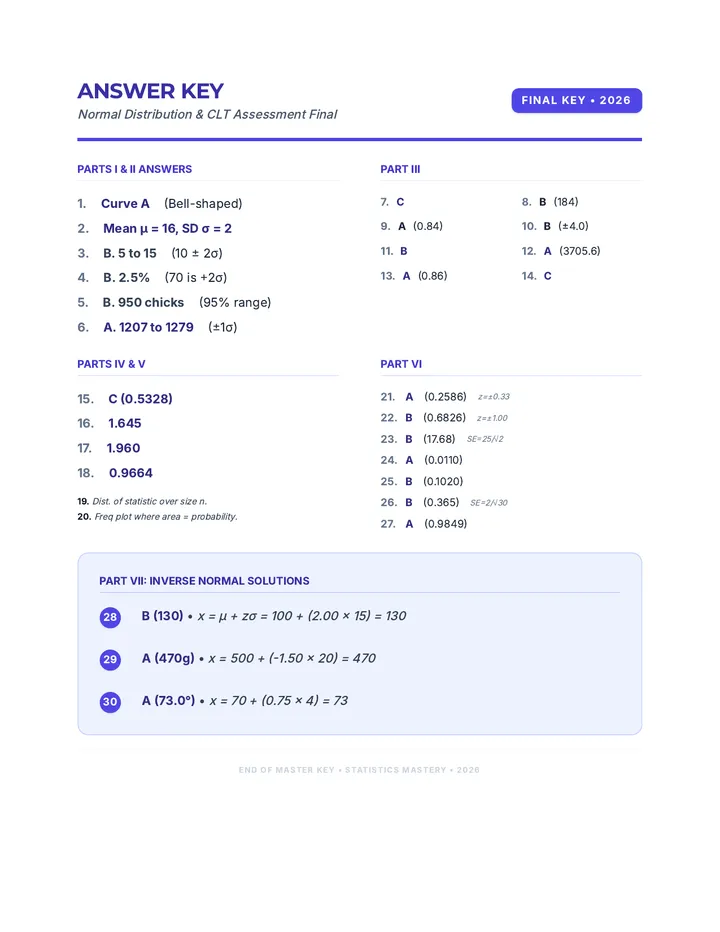
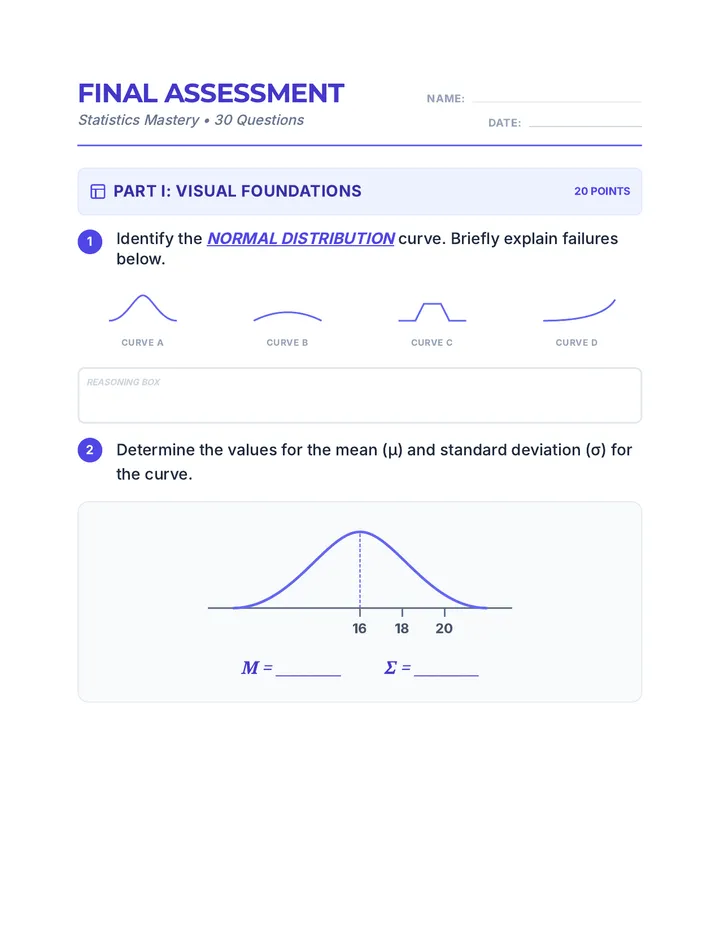
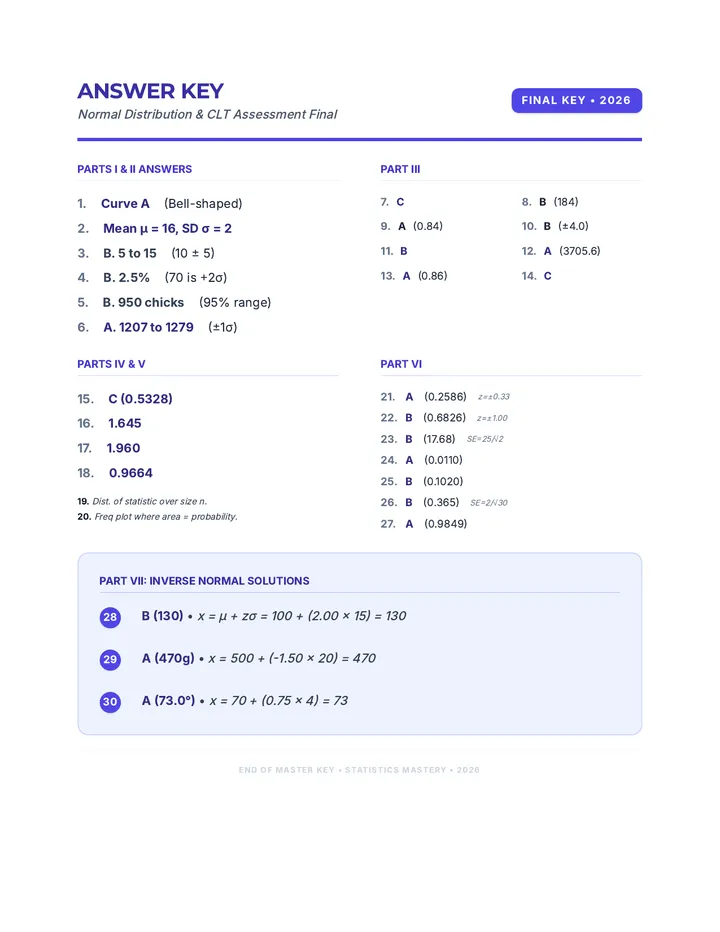
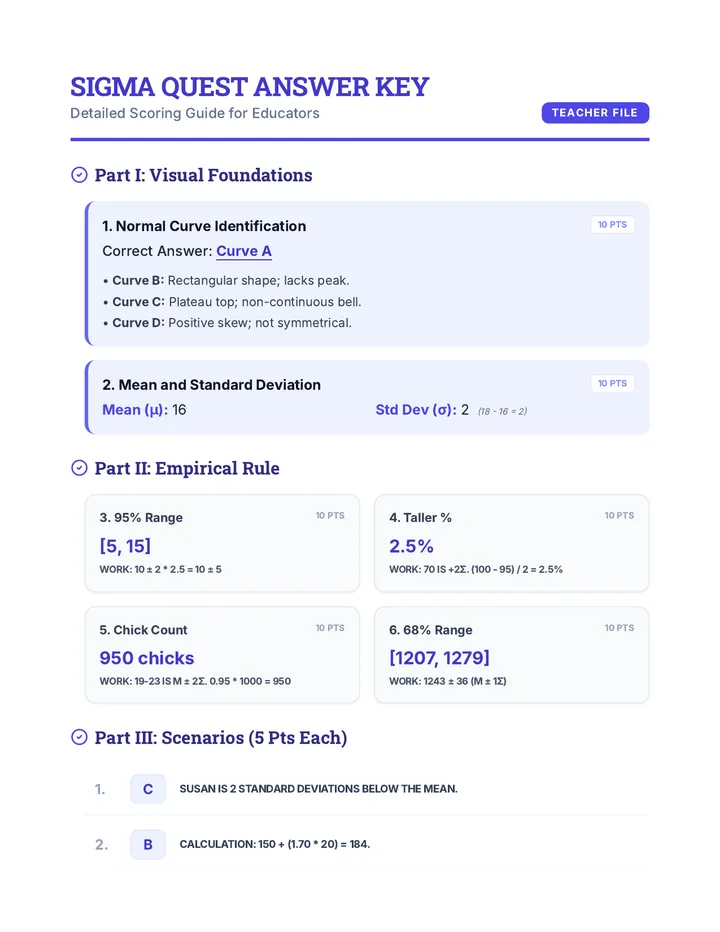
A comprehensive assessment covering normal distributions, the Empirical Rule, z-scores, and sampling distributions. This lesson combines conceptual understanding with complex statistical calculations.
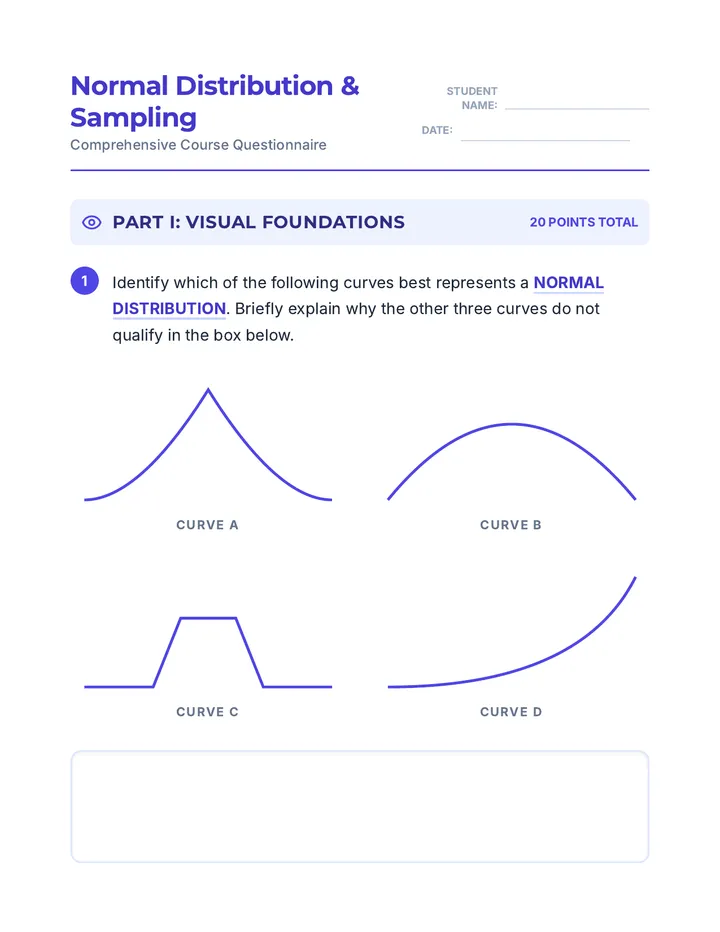
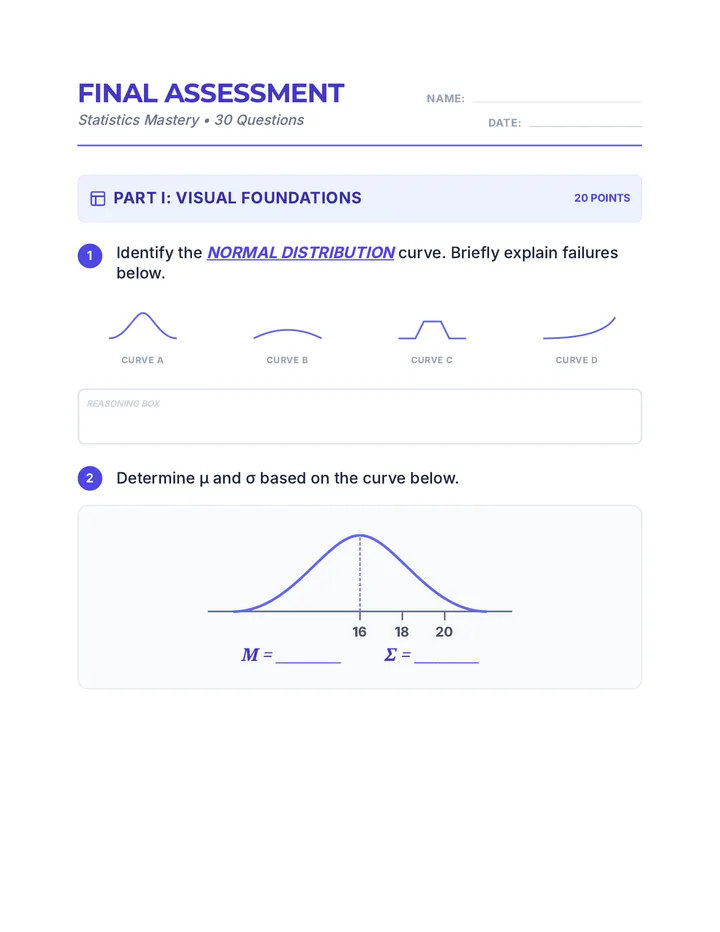
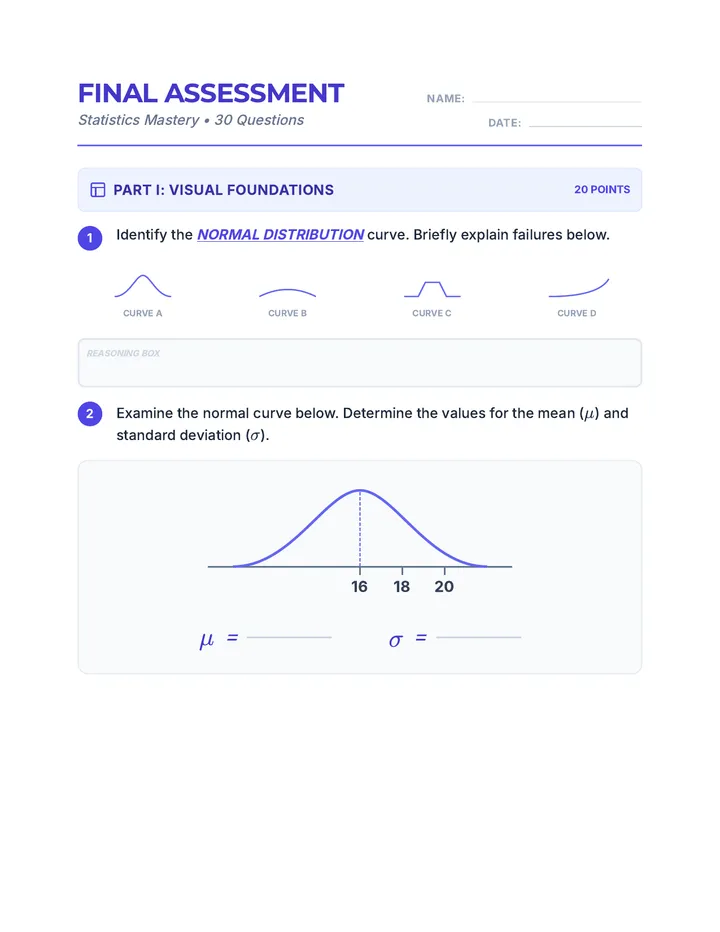
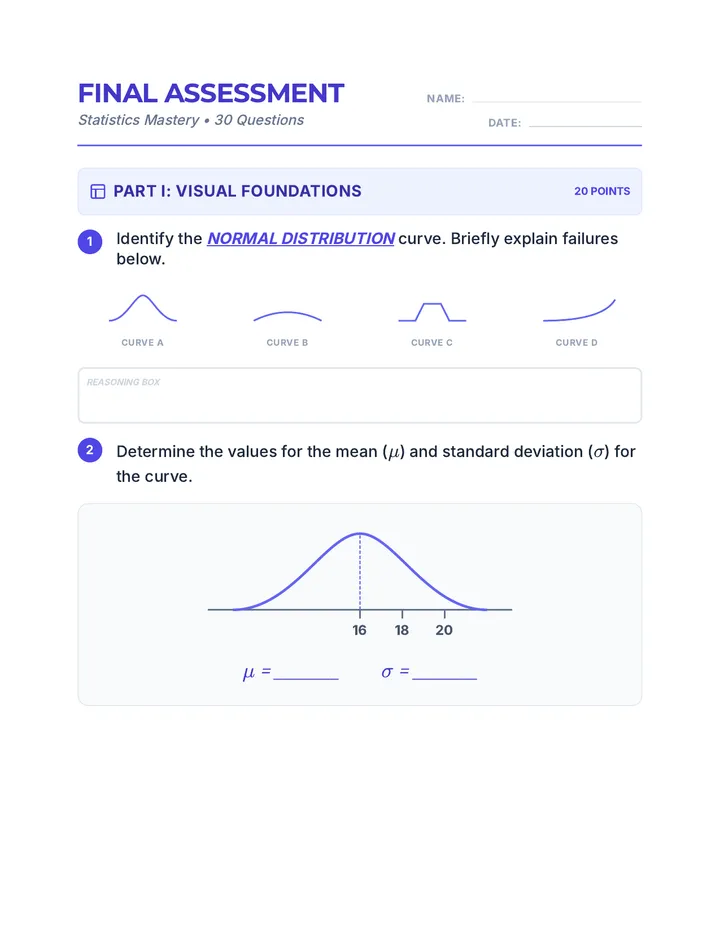
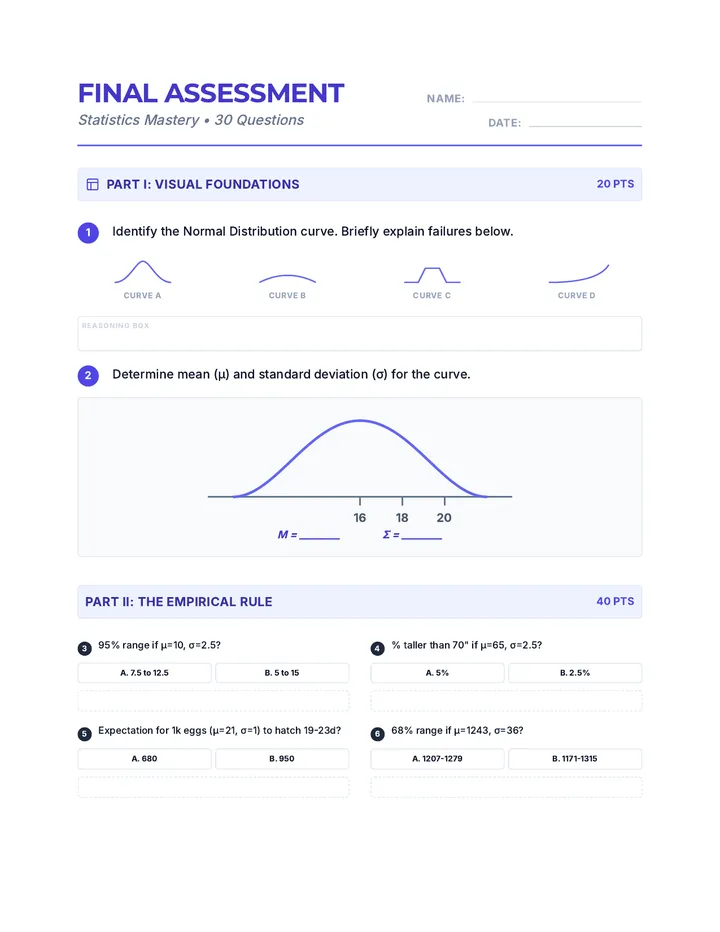
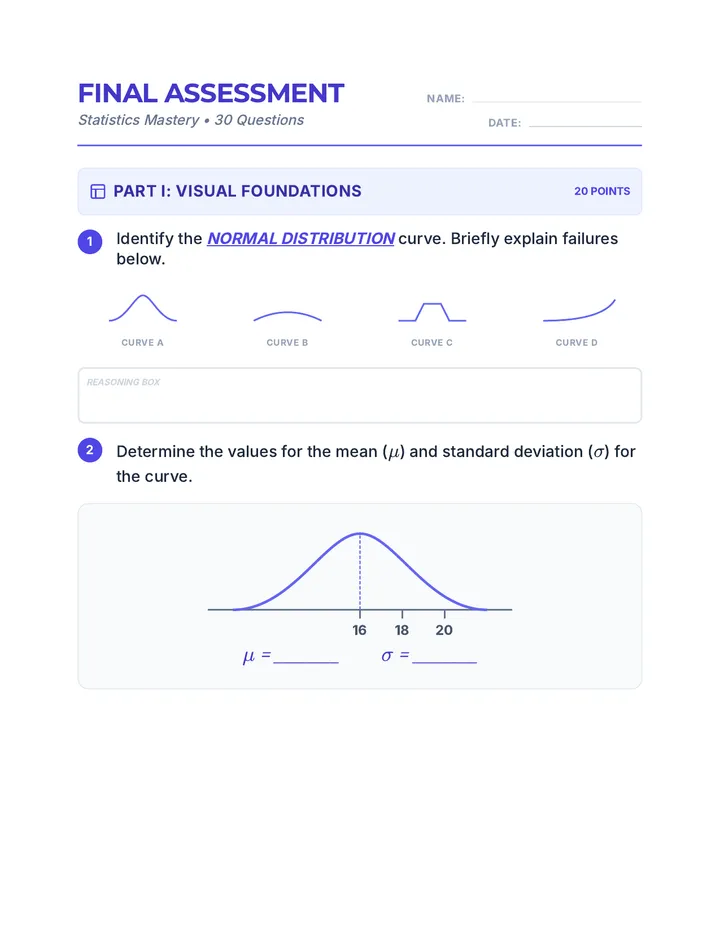
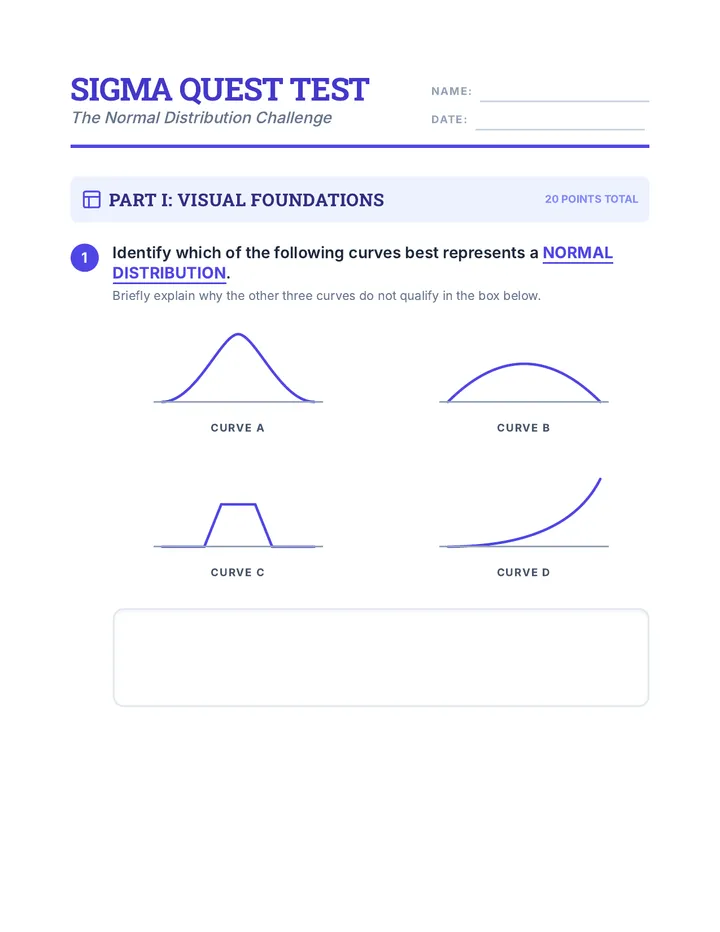
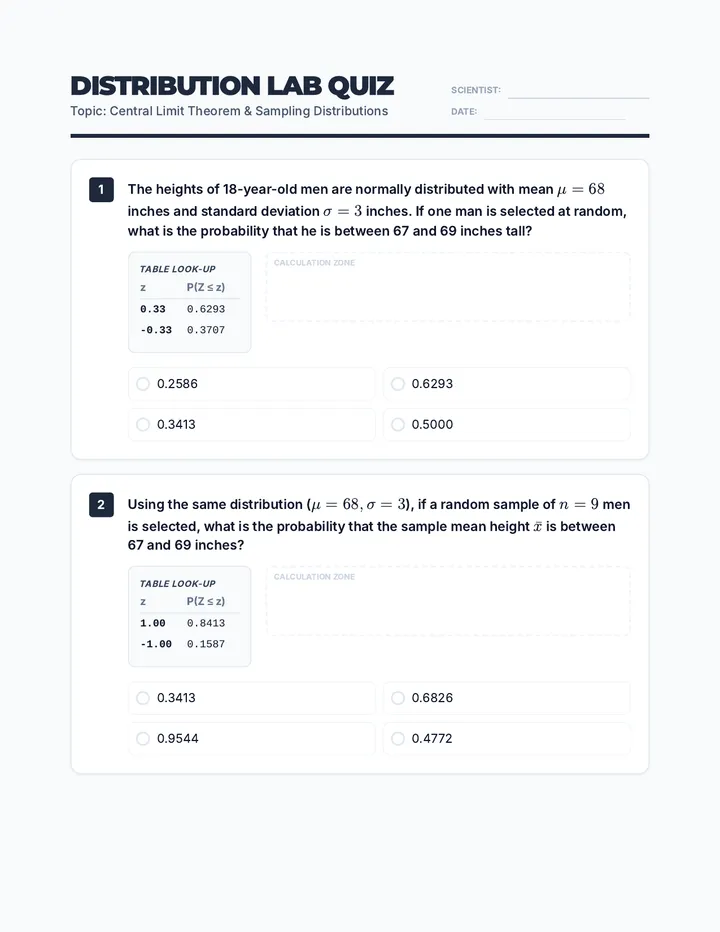
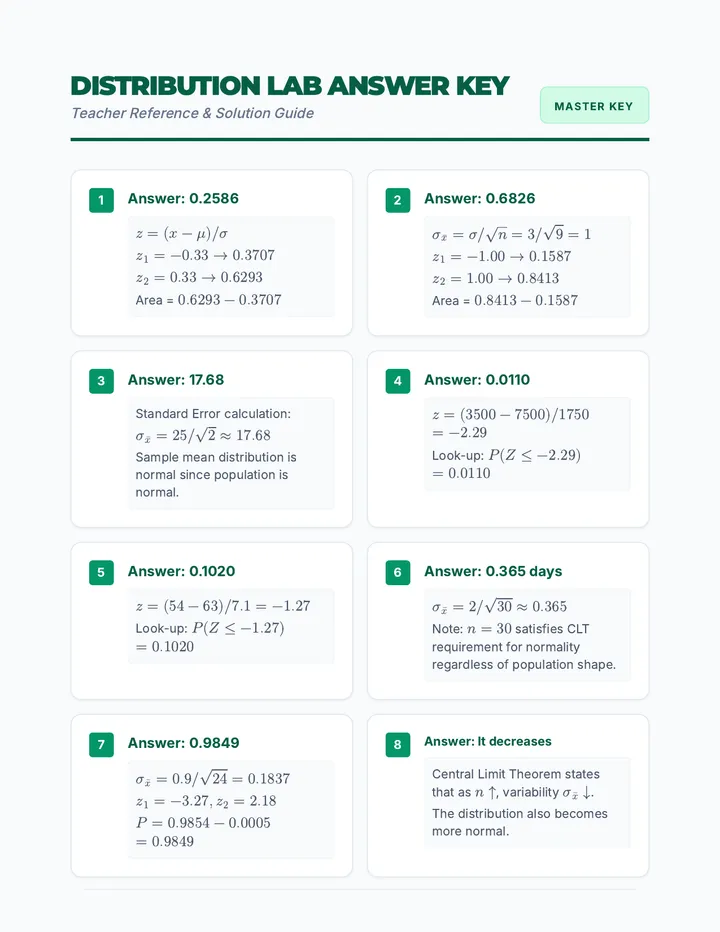
A summative assessment lesson focusing on visual foundations, probability calculations, and the application of the Central Limit Theorem to sampling distributions.
A comprehensive lesson covering the properties of normal distributions, the empirical rule, and z-score calculations through various real-world scenarios.
A focused lesson on the Central Limit Theorem (CLT) and its application to real-world datasets. Students practice calculating Z-scores for sample means and using Z-tables to determine probabilities.
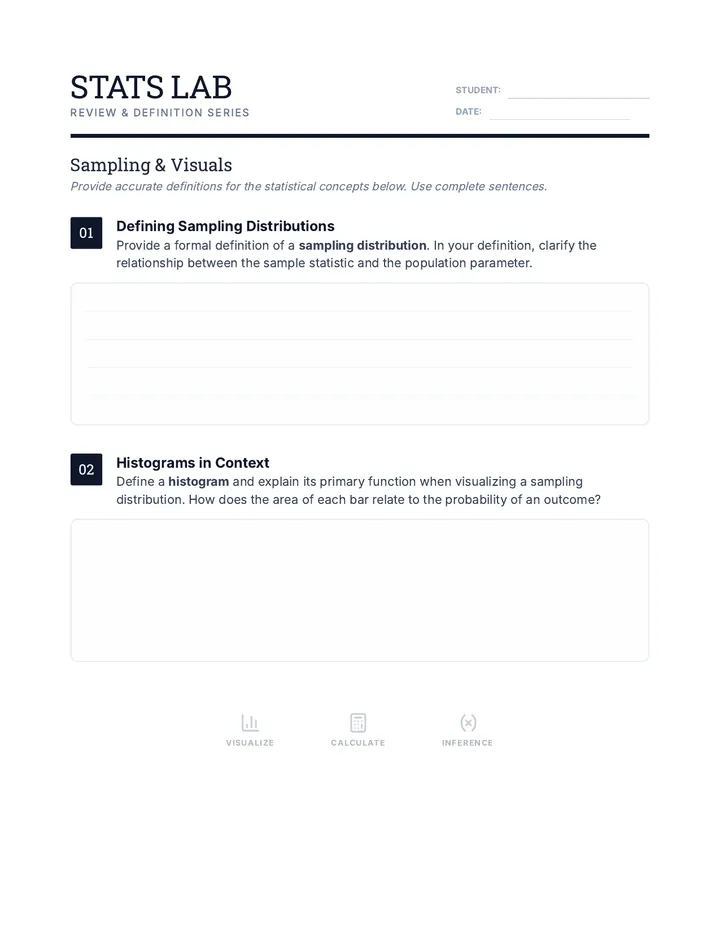
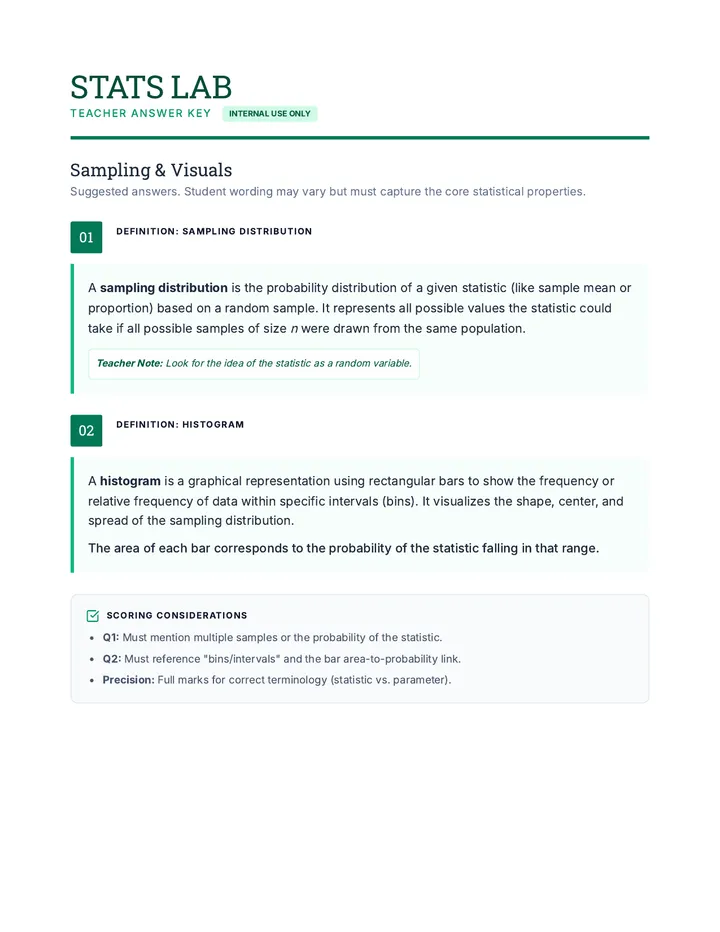
A lesson focused on fundamental statistical concepts including sampling distributions and the visual representation of data using histograms.
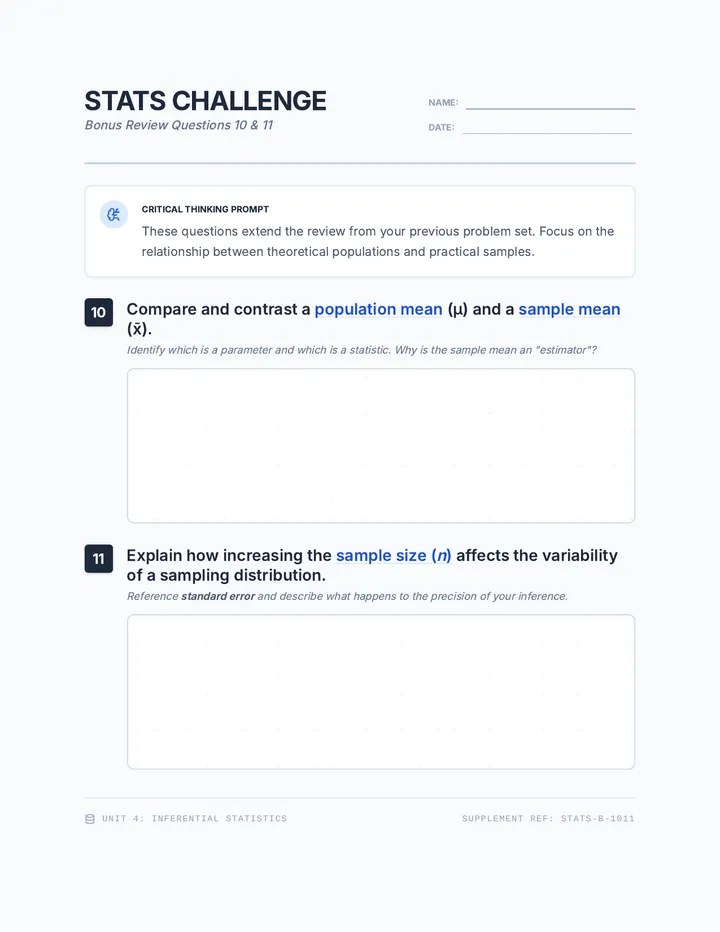
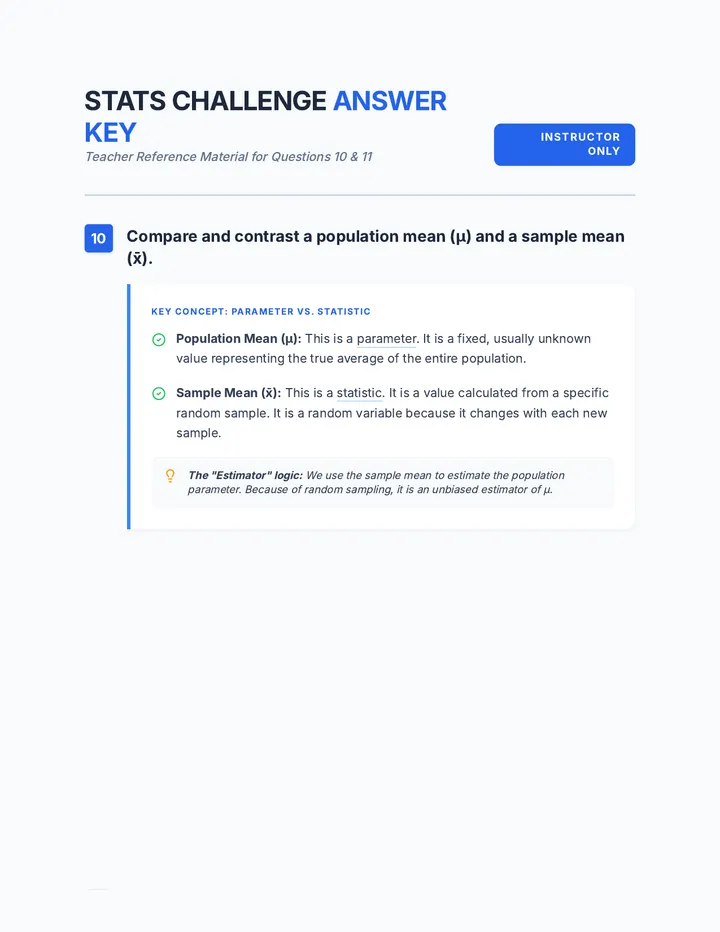
A concise lesson reviewing advanced statistical concepts including population parameters, sample statistics, and the behavior of sampling distributions.
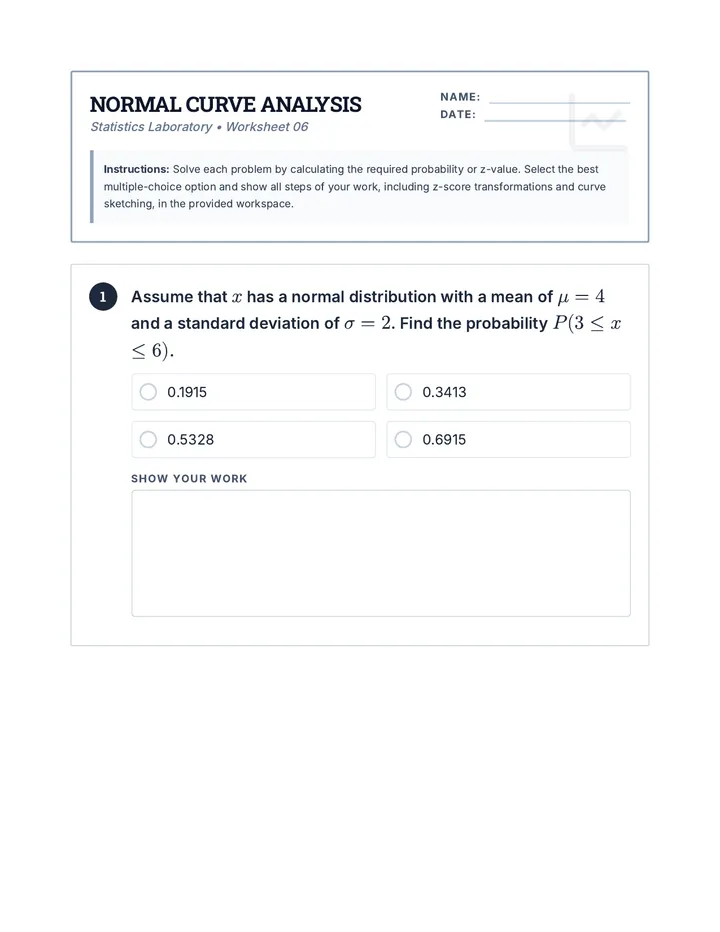
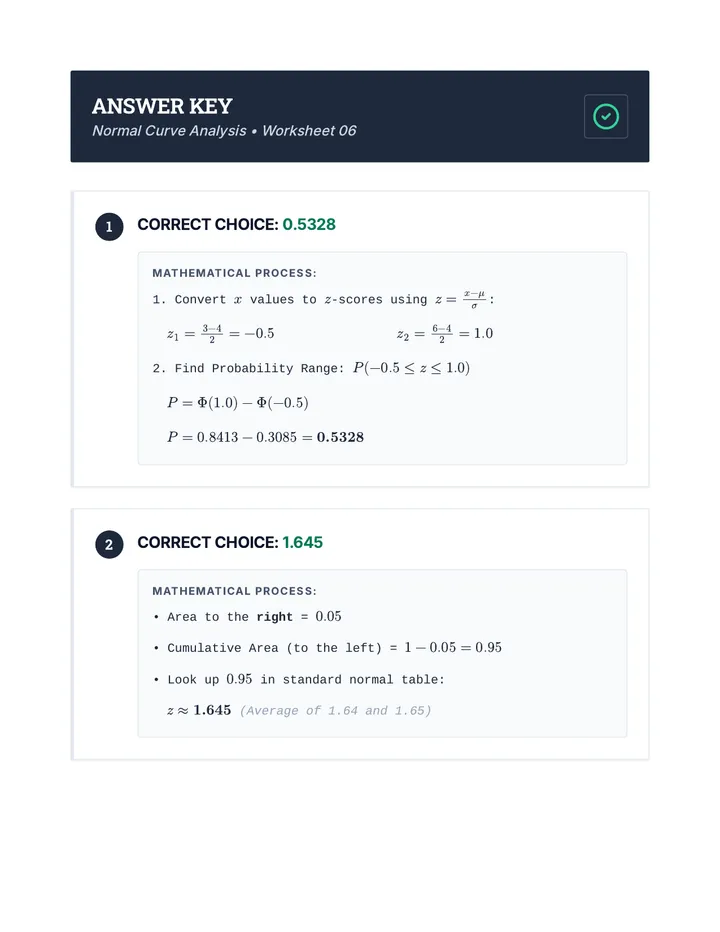
A focused practice session on calculating probabilities and z-values for normal distributions, based on medical and abstract data.
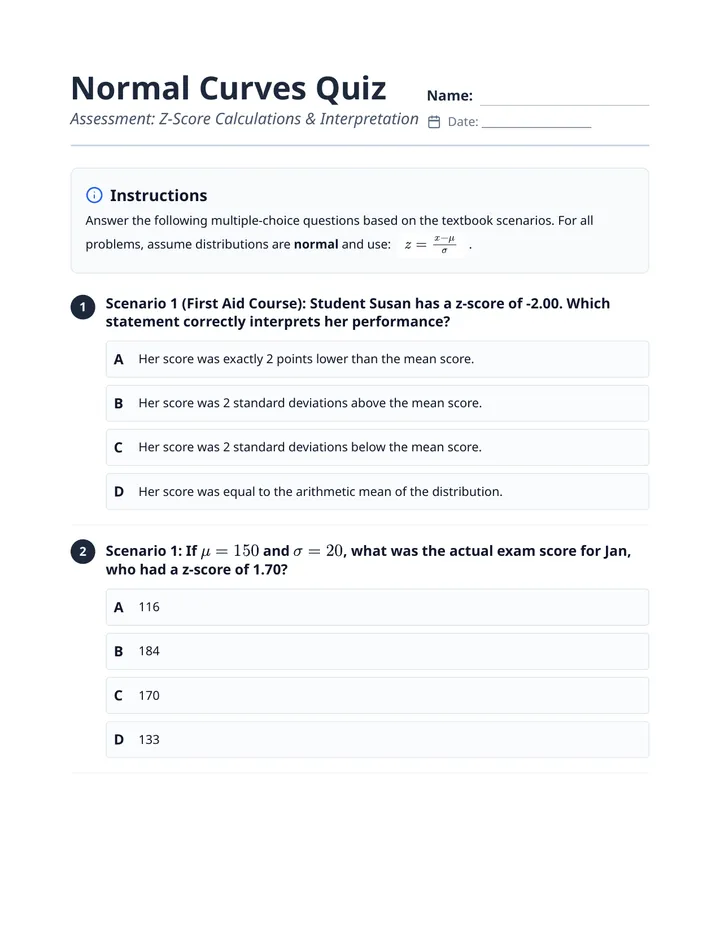
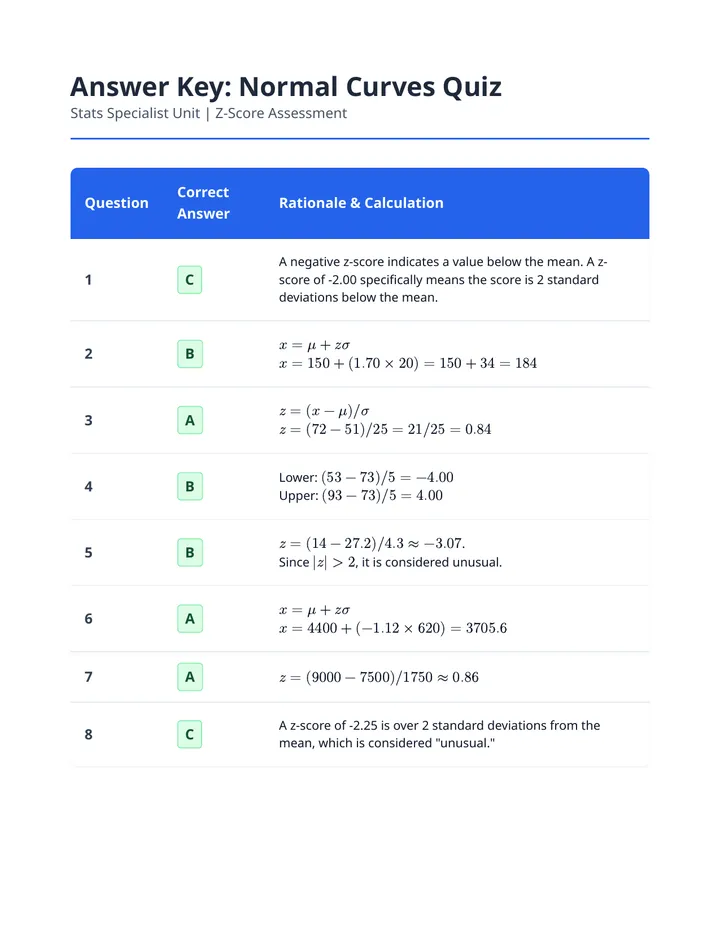
A focused lesson on calculating and interpreting z-scores and normal distributions using real-world scenarios from the textbook. Students will practice converting between raw scores and z-scores and determine the "unusualness" of specific data points.
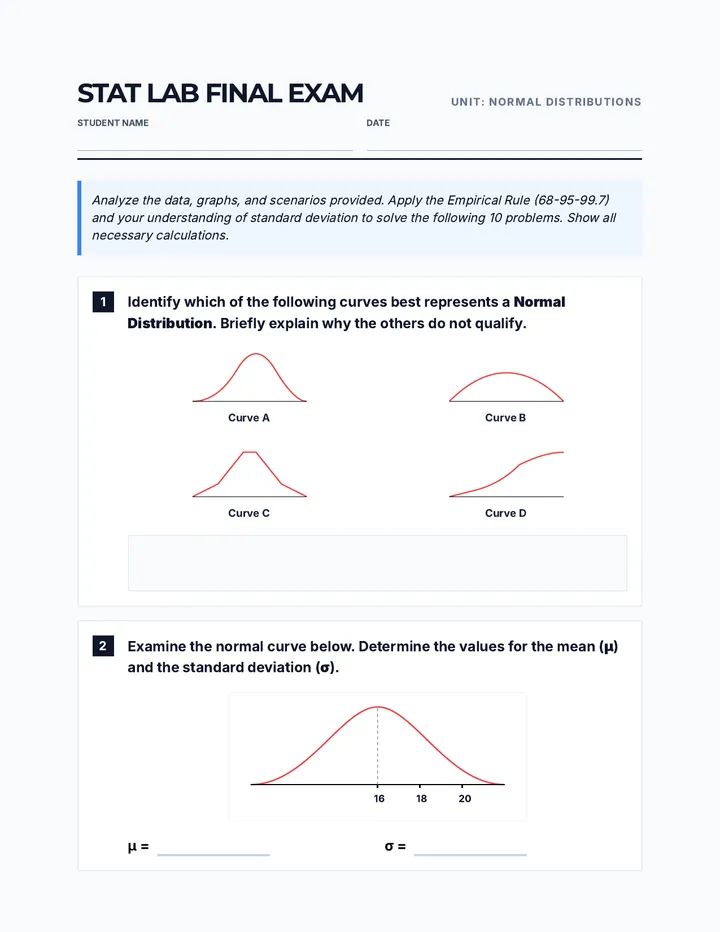
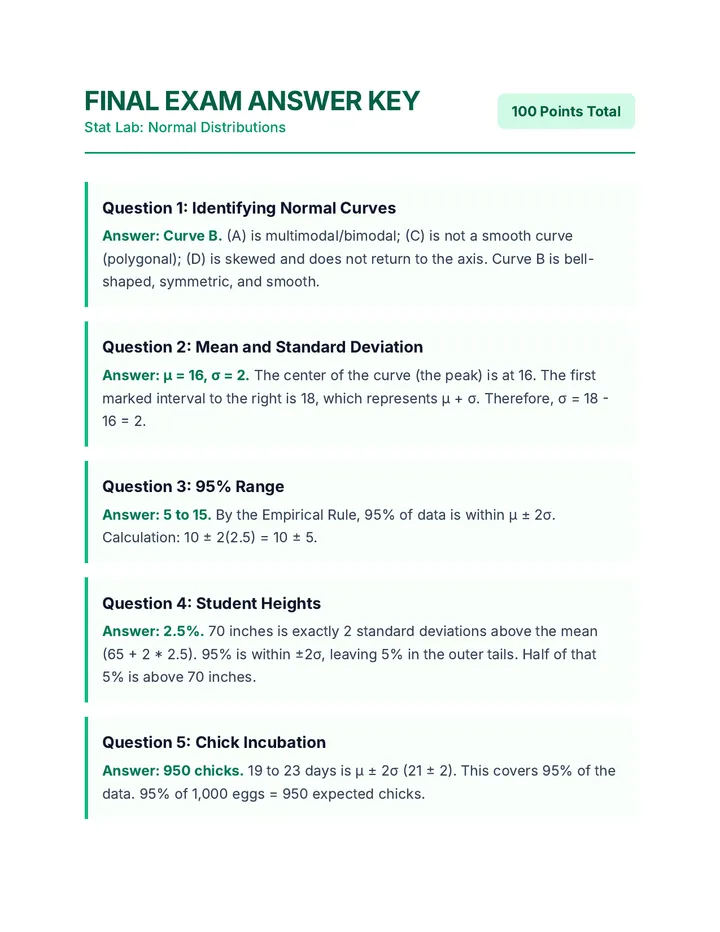
This lesson covers the fundamentals of normal distributions, including identifying bell curves, applying the empirical rule, and interpreting control charts for real-world data analysis.