Students explore the persistence of common names (ammonia, baking soda, acetone) versus their systematic counterparts. They create a translation guide for common laboratory chemicals.

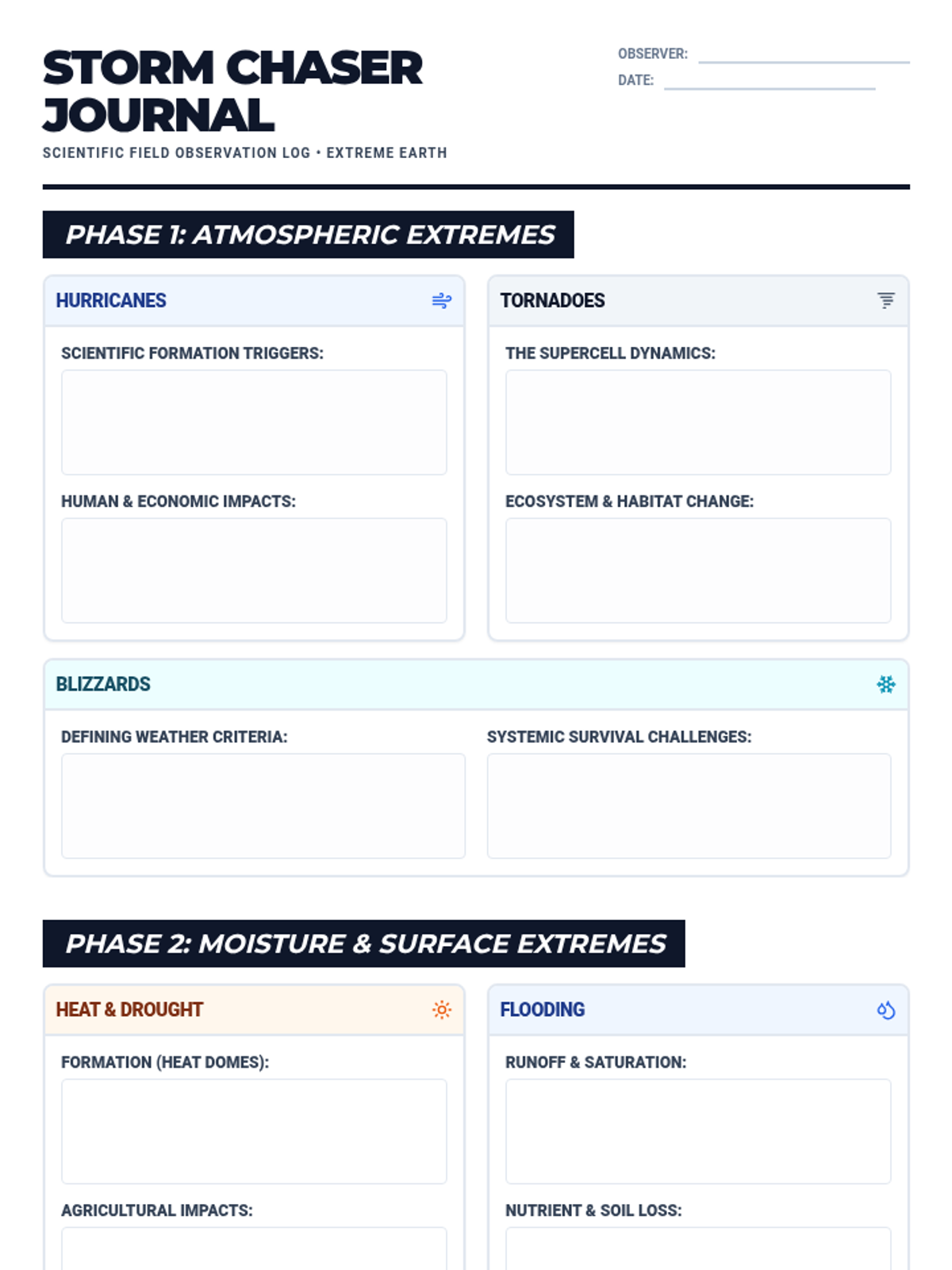
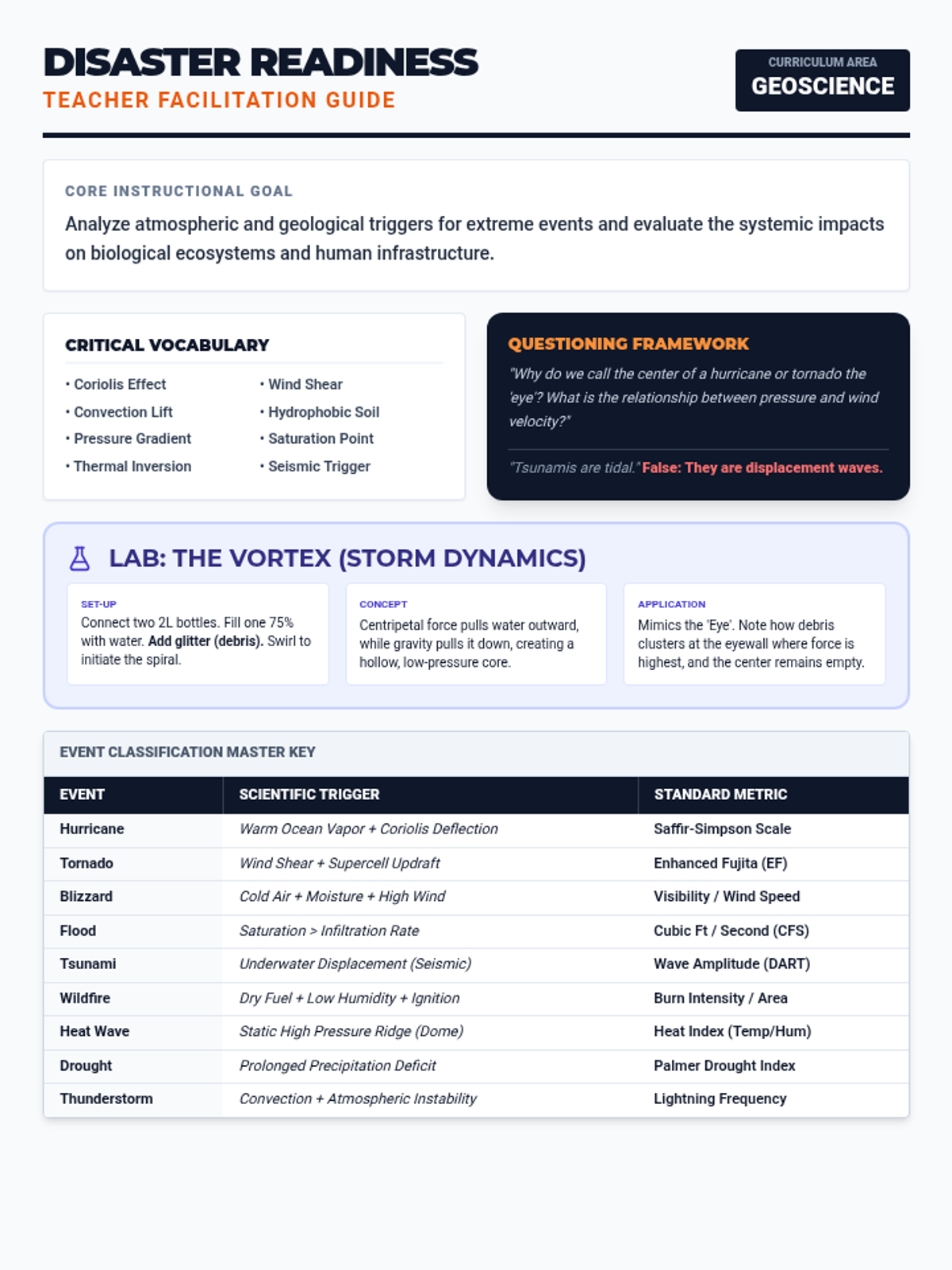
An exploration of Earth's most intense weather events, focusing on the atmospheric physics that drive them and their profound effects on the planet's residents and habitats.
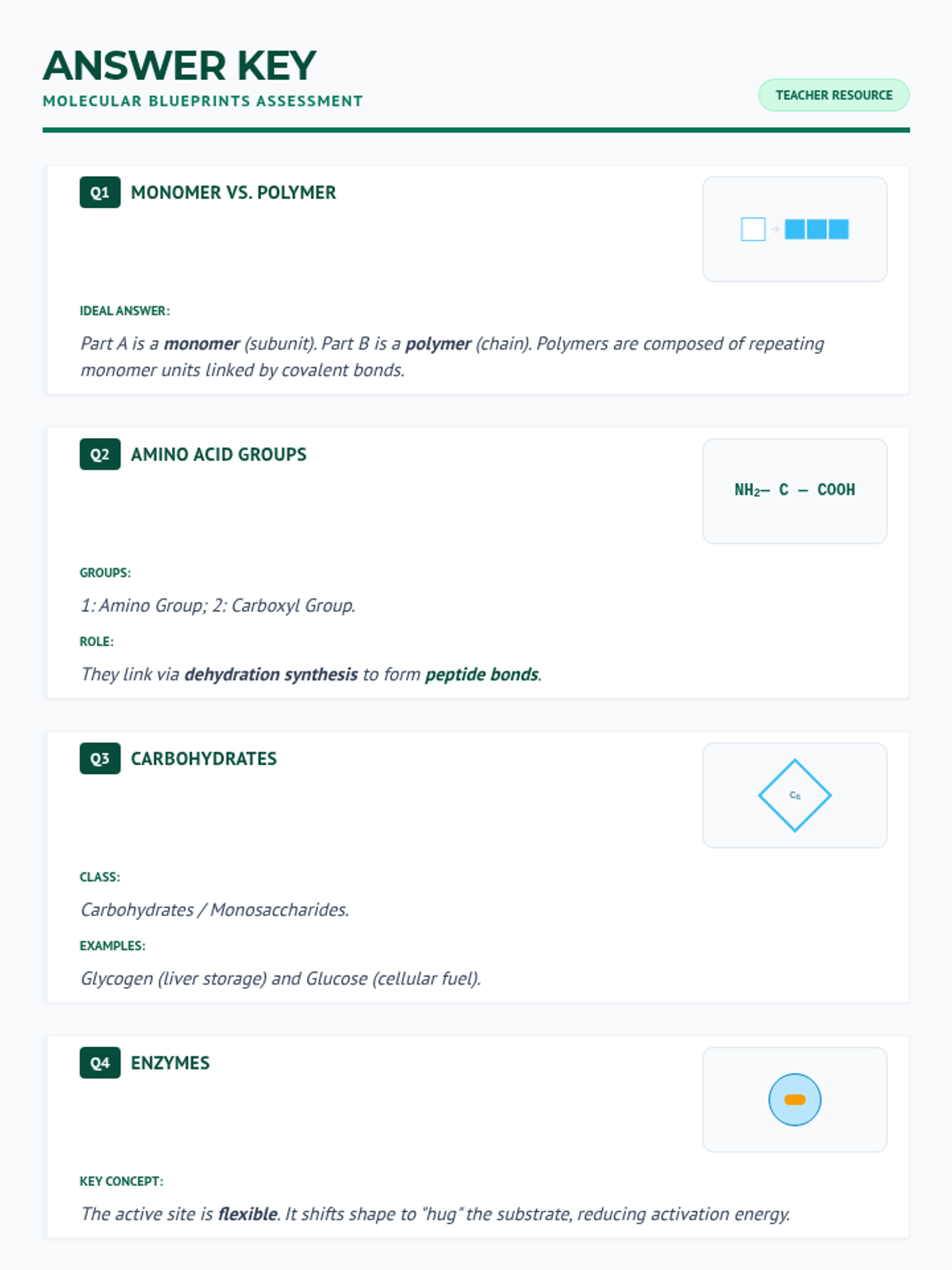
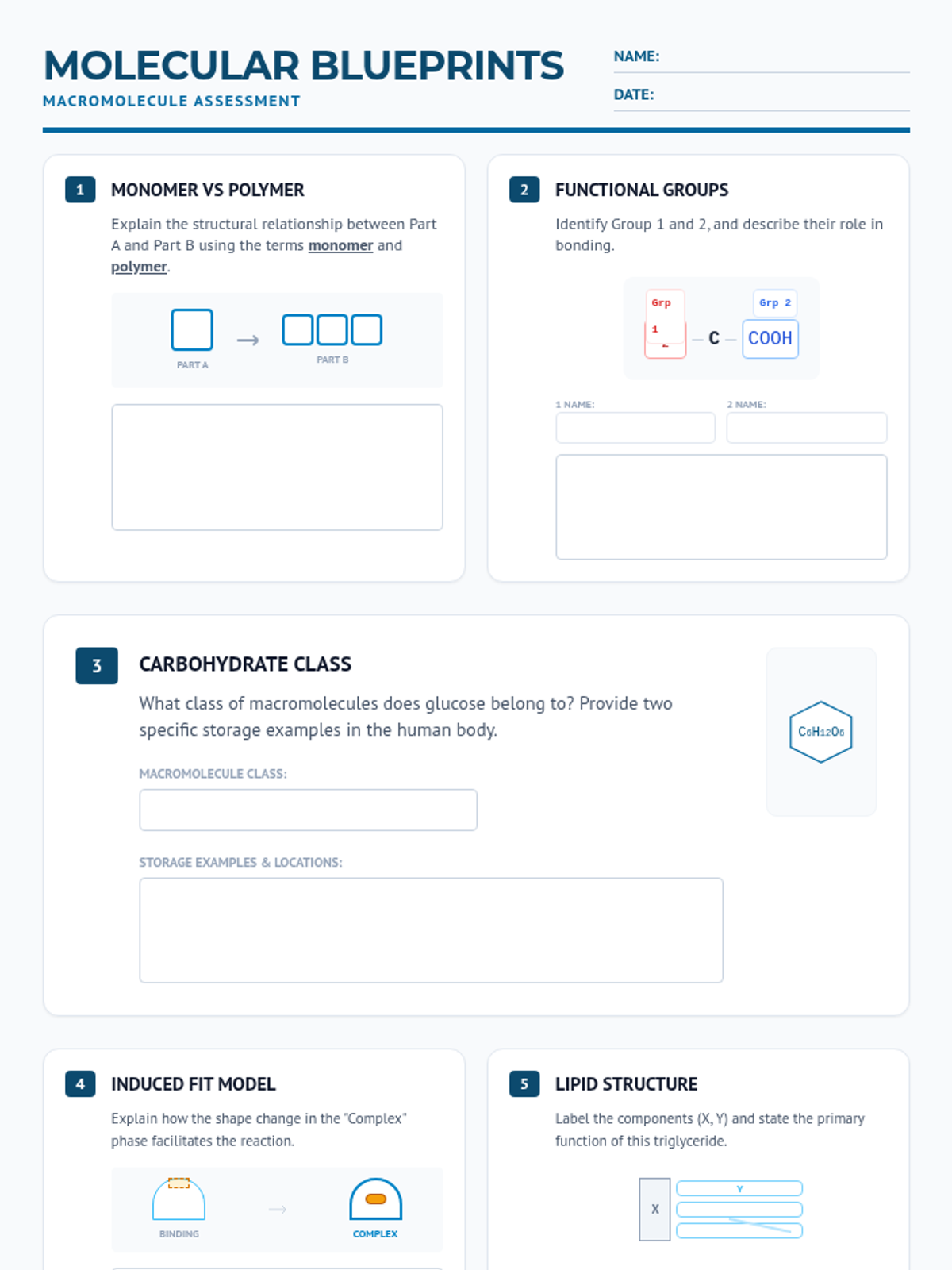
A focused assessment and review on the four major biological macromolecules, their structures, and enzymatic functions. Students will identify functional groups, analyze monomer-polymer relationships, and explain enzyme-substrate interactions through visual diagrams.
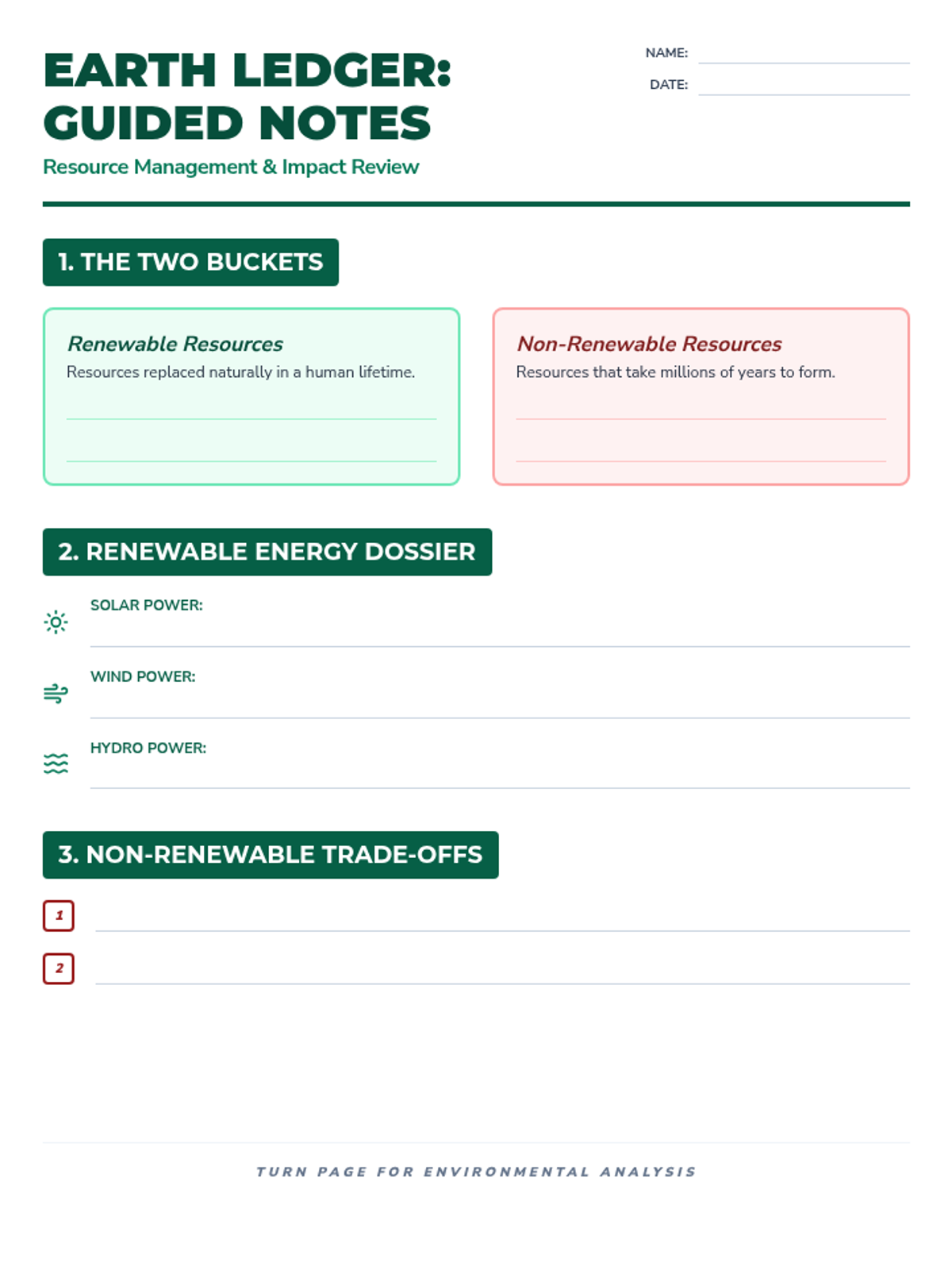
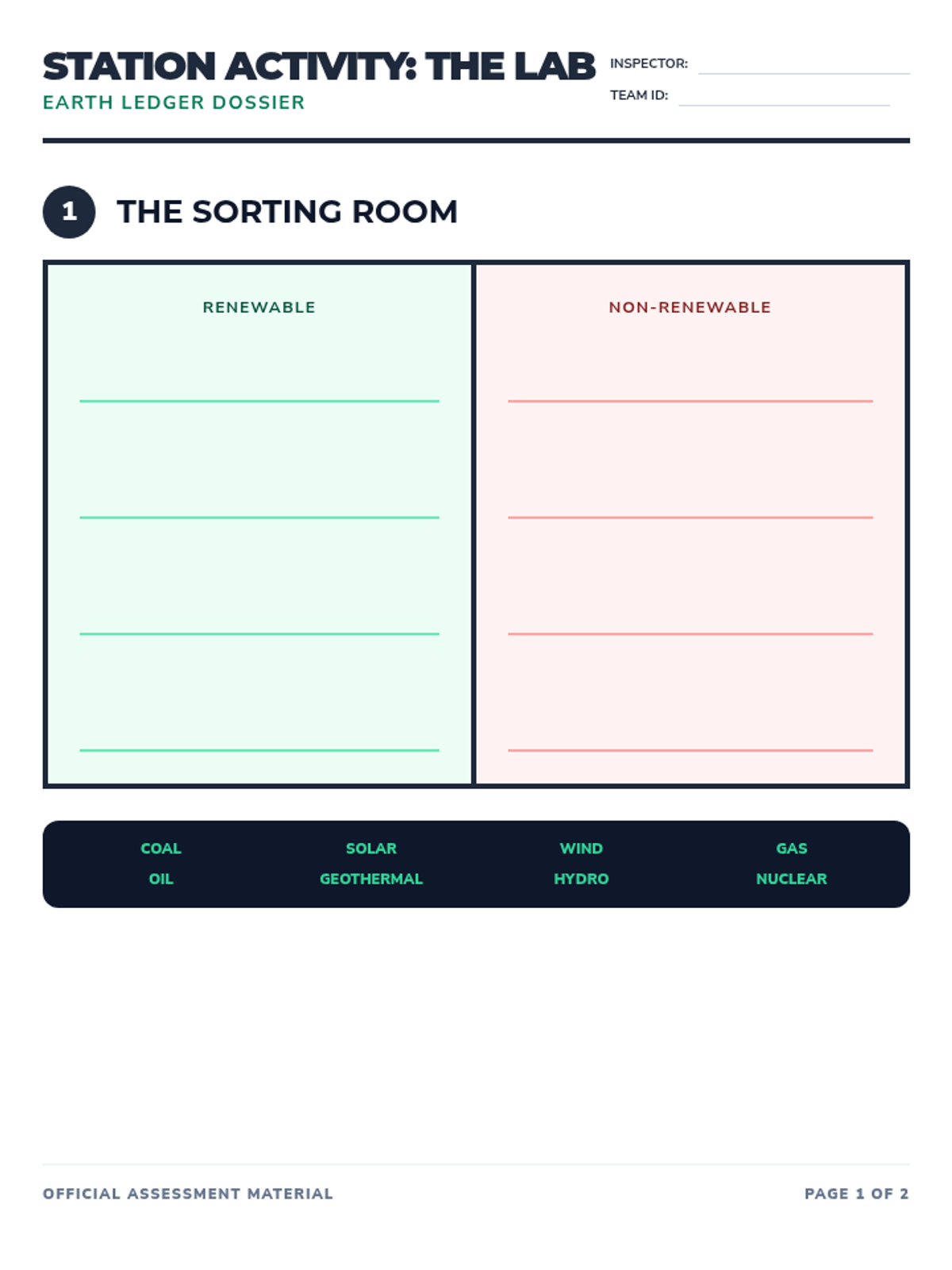
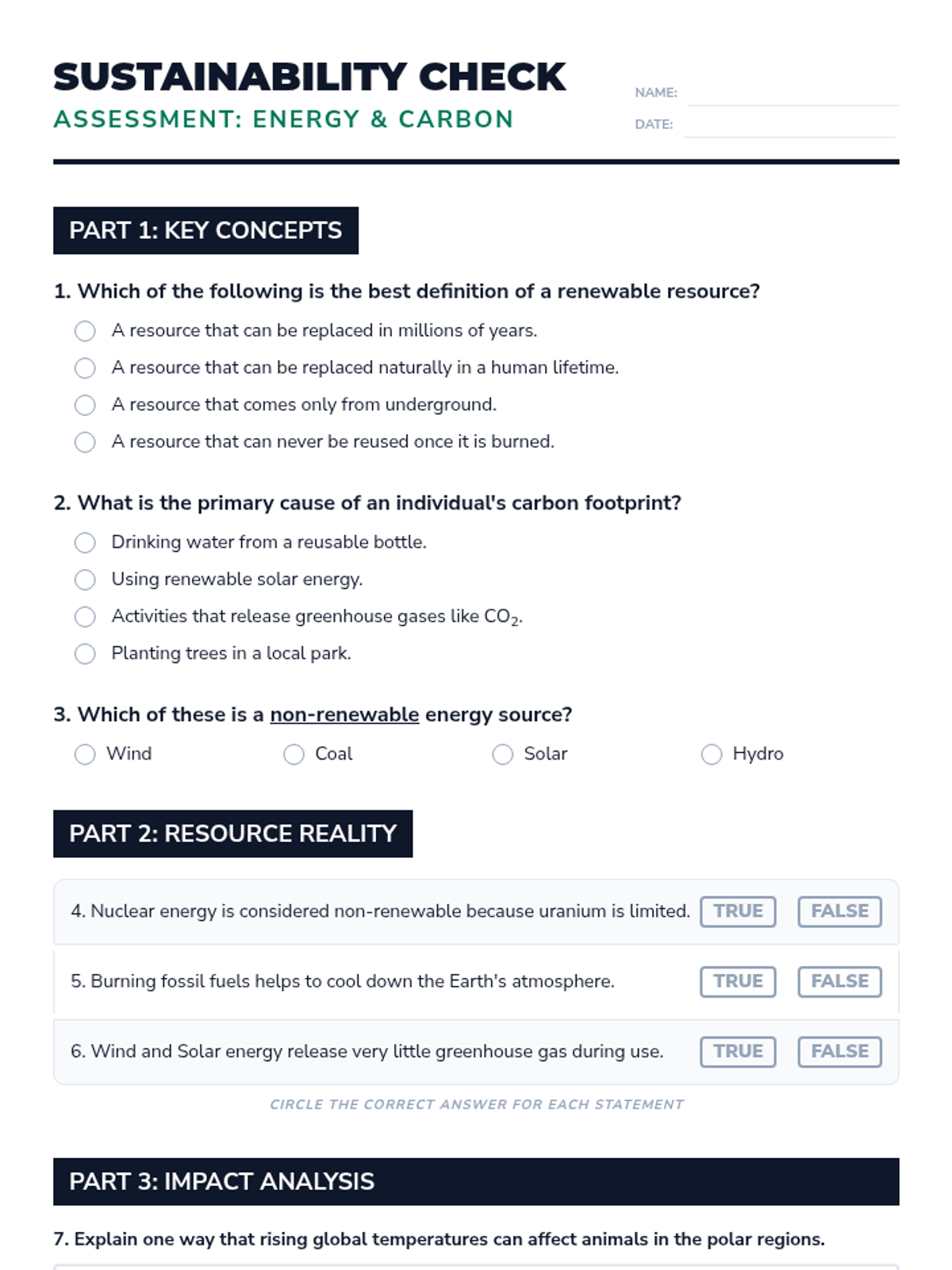
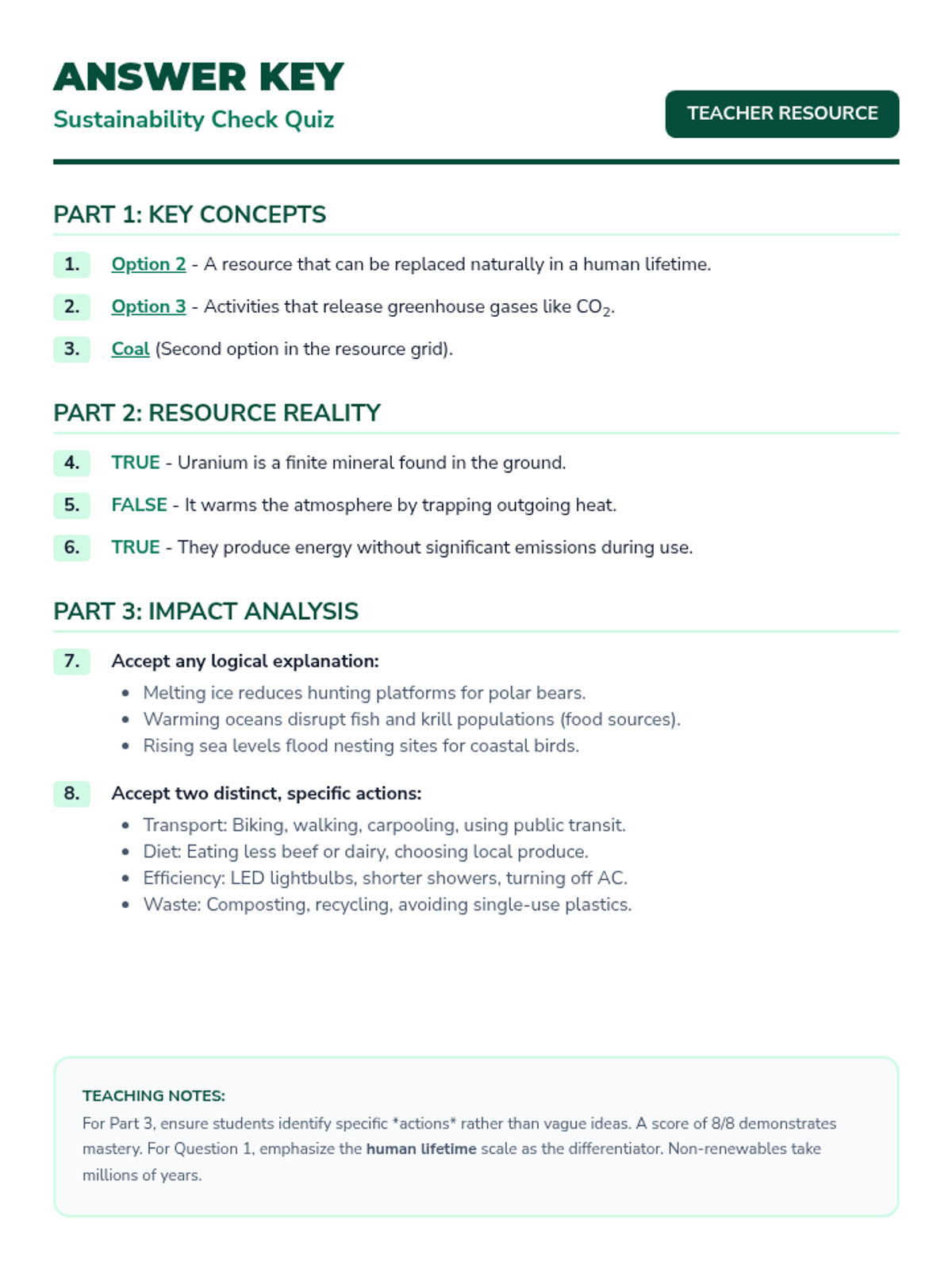
A comprehensive review of renewable and non-renewable energy sources and the environmental impact of carbon footprints, designed with accessible language for high school students.
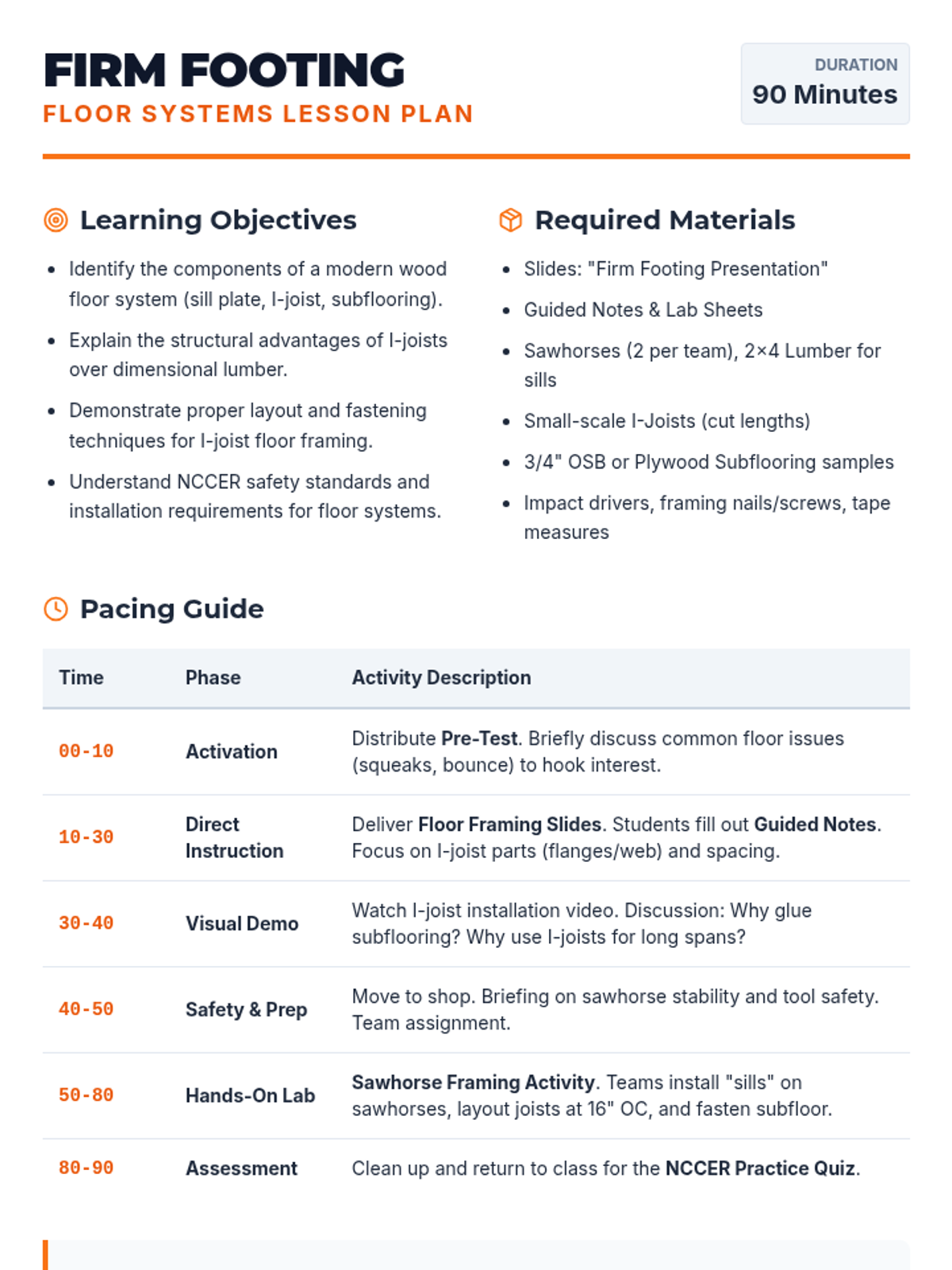
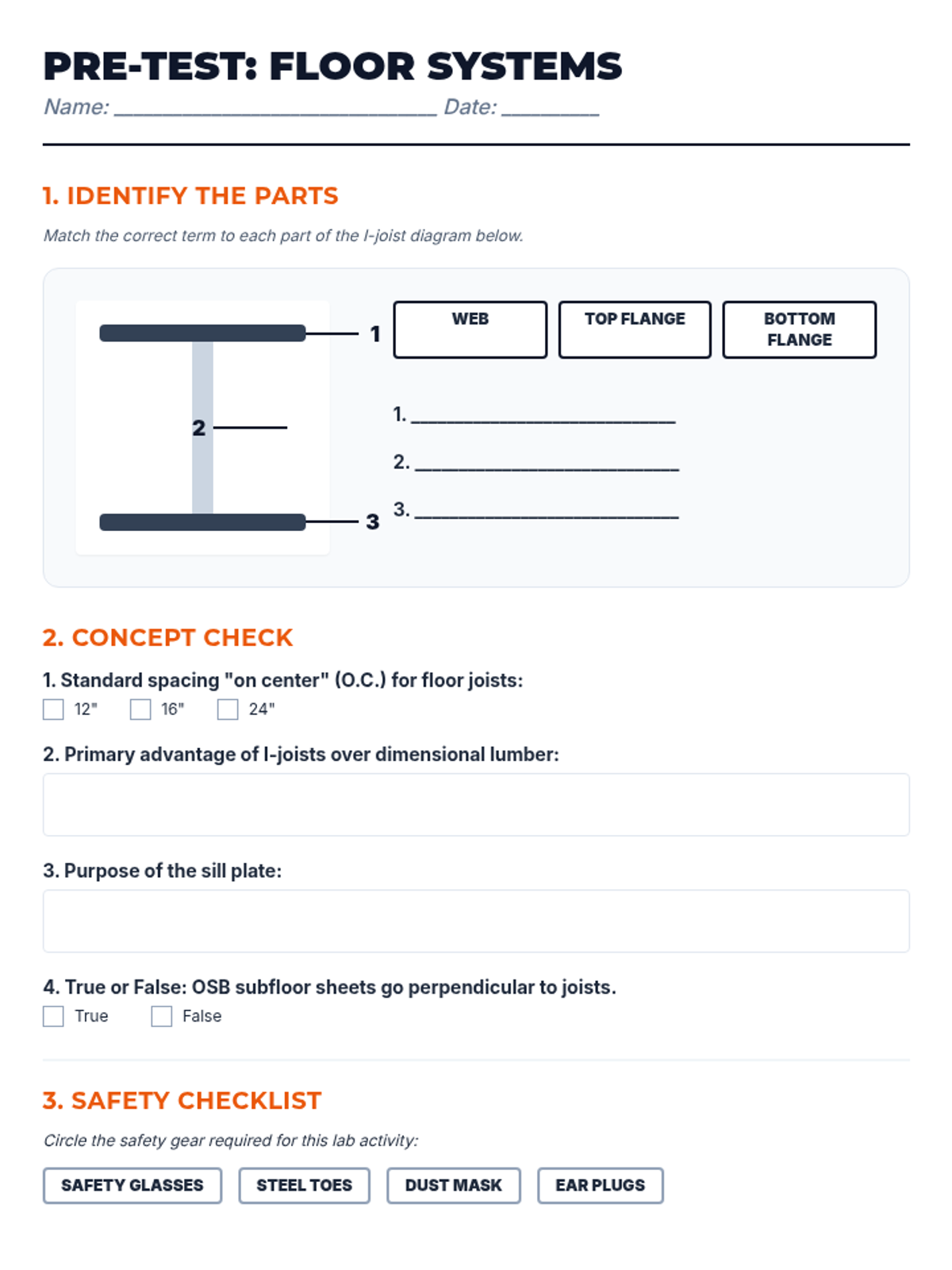
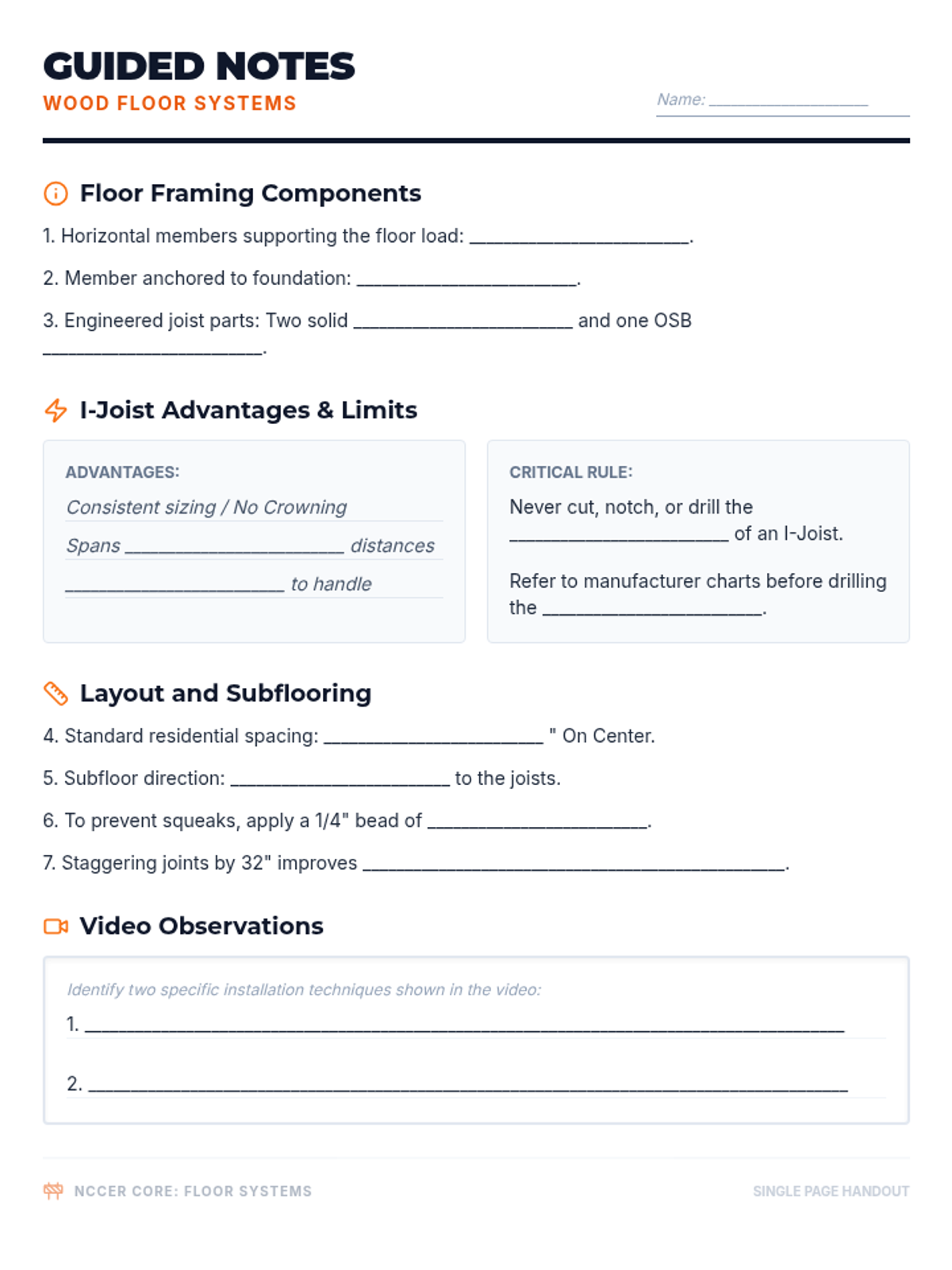
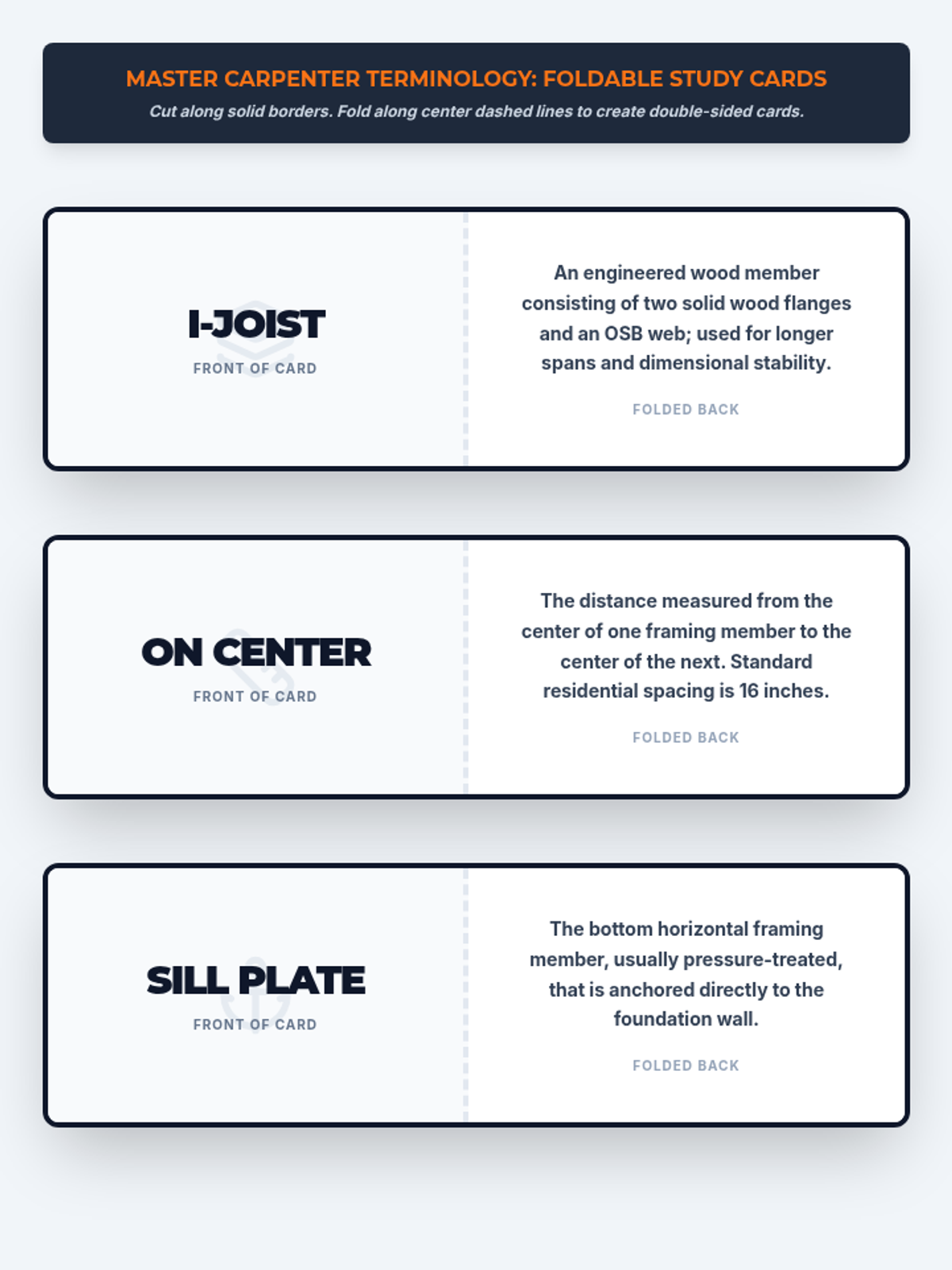
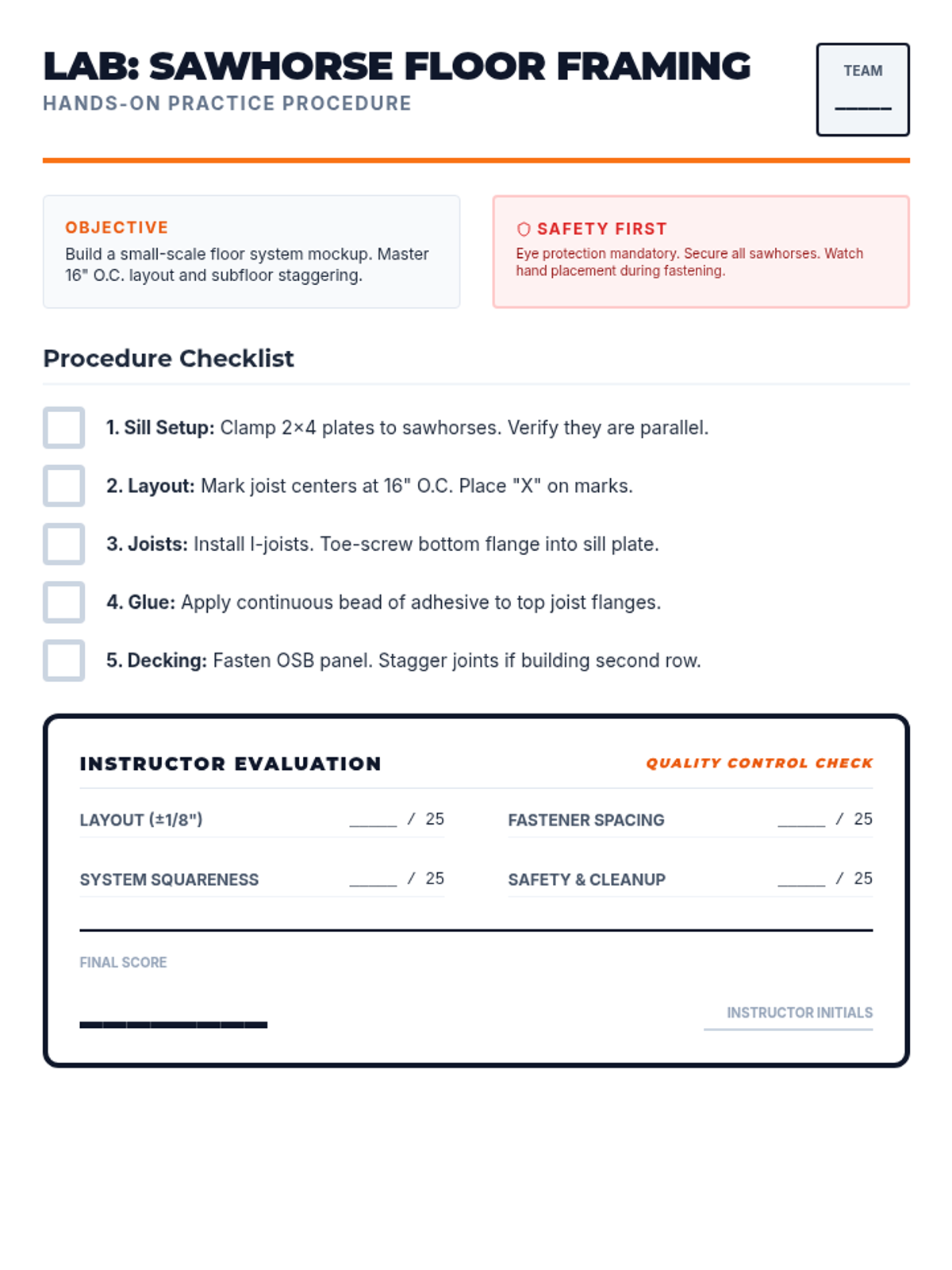
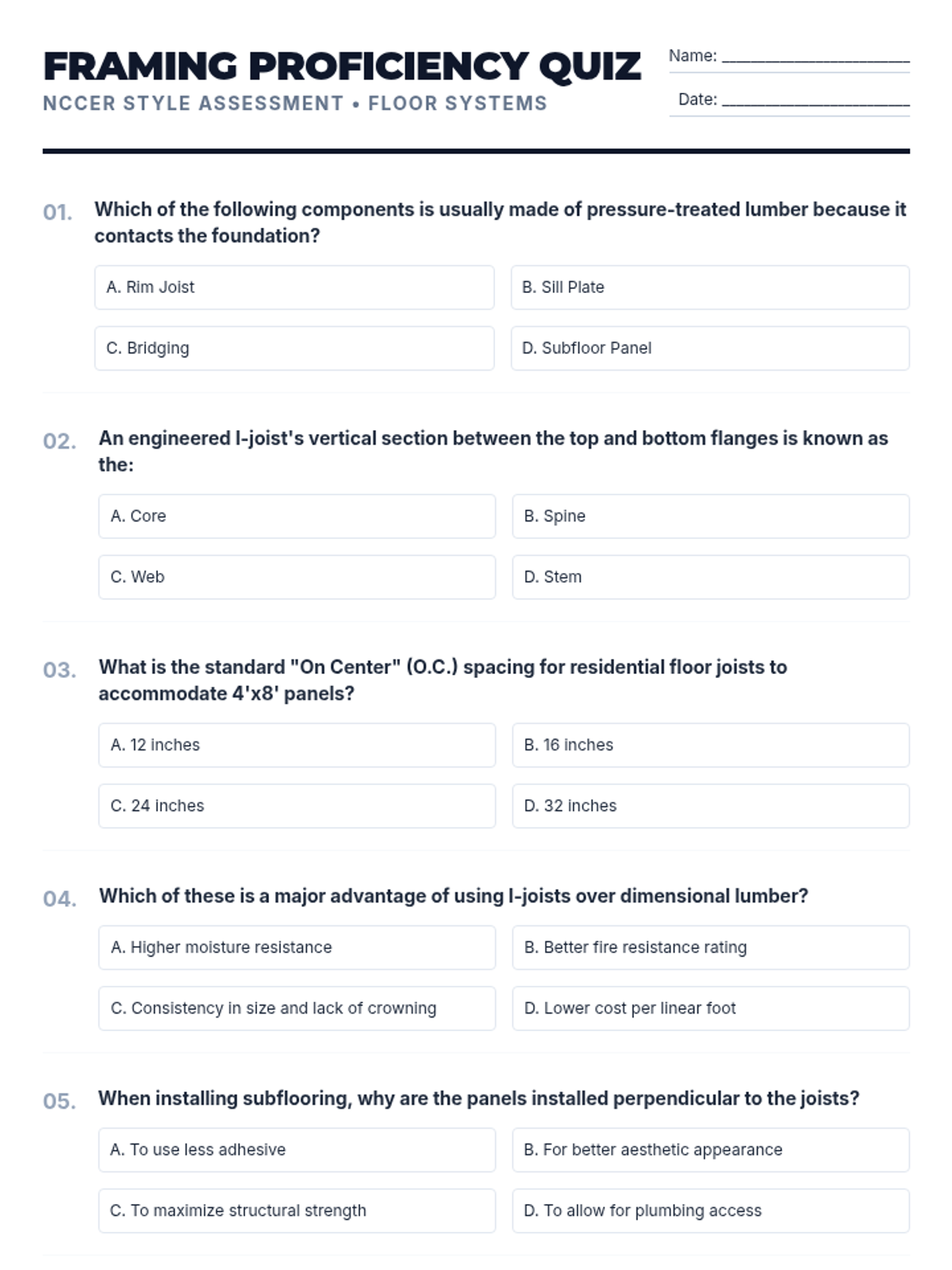
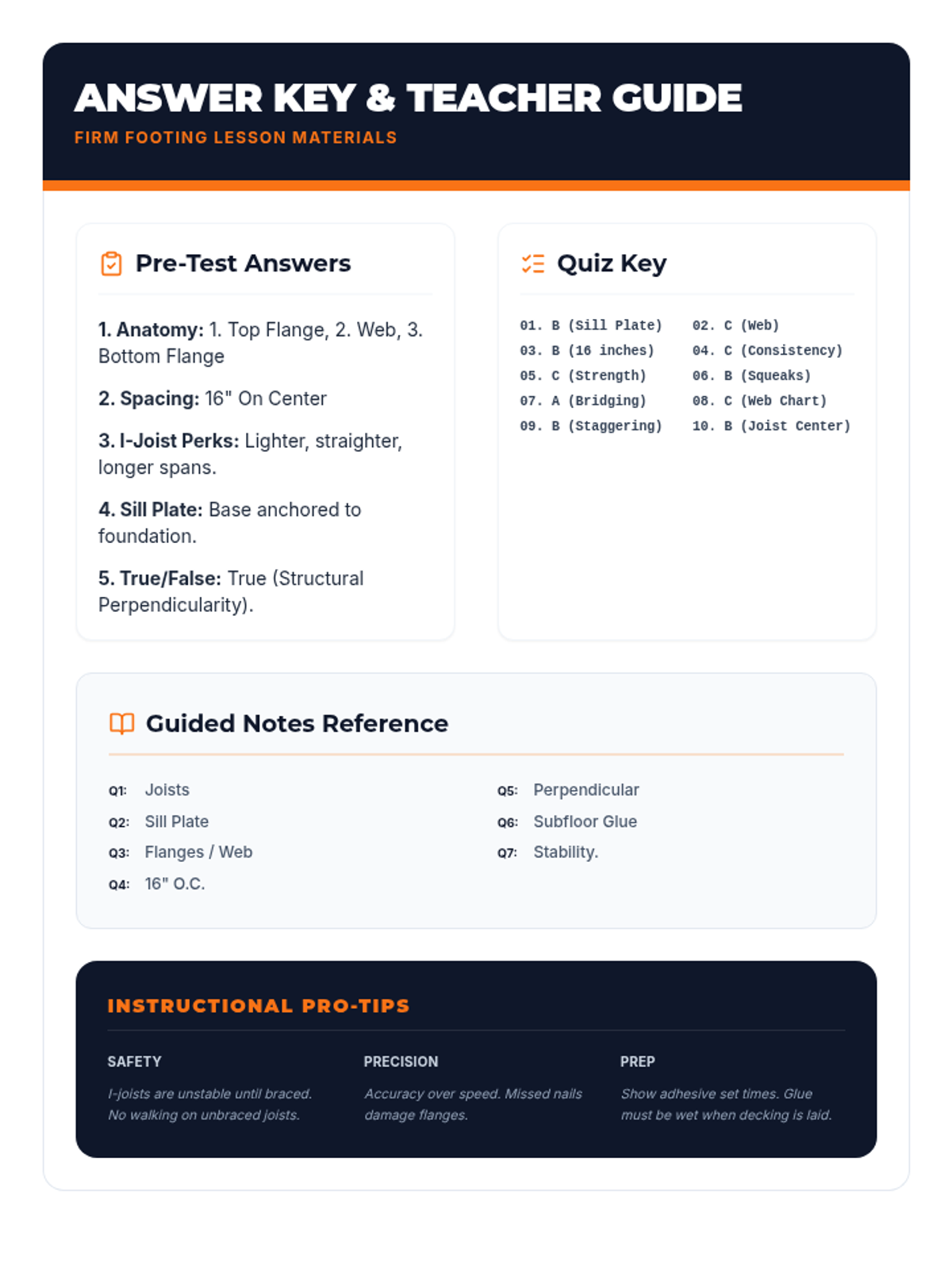
A comprehensive 90-minute lesson on modern wood floor systems, focusing on I-joist installation, subflooring techniques, and structural components. Students will engage in classroom instruction followed by hands-on small-scale framing practice.
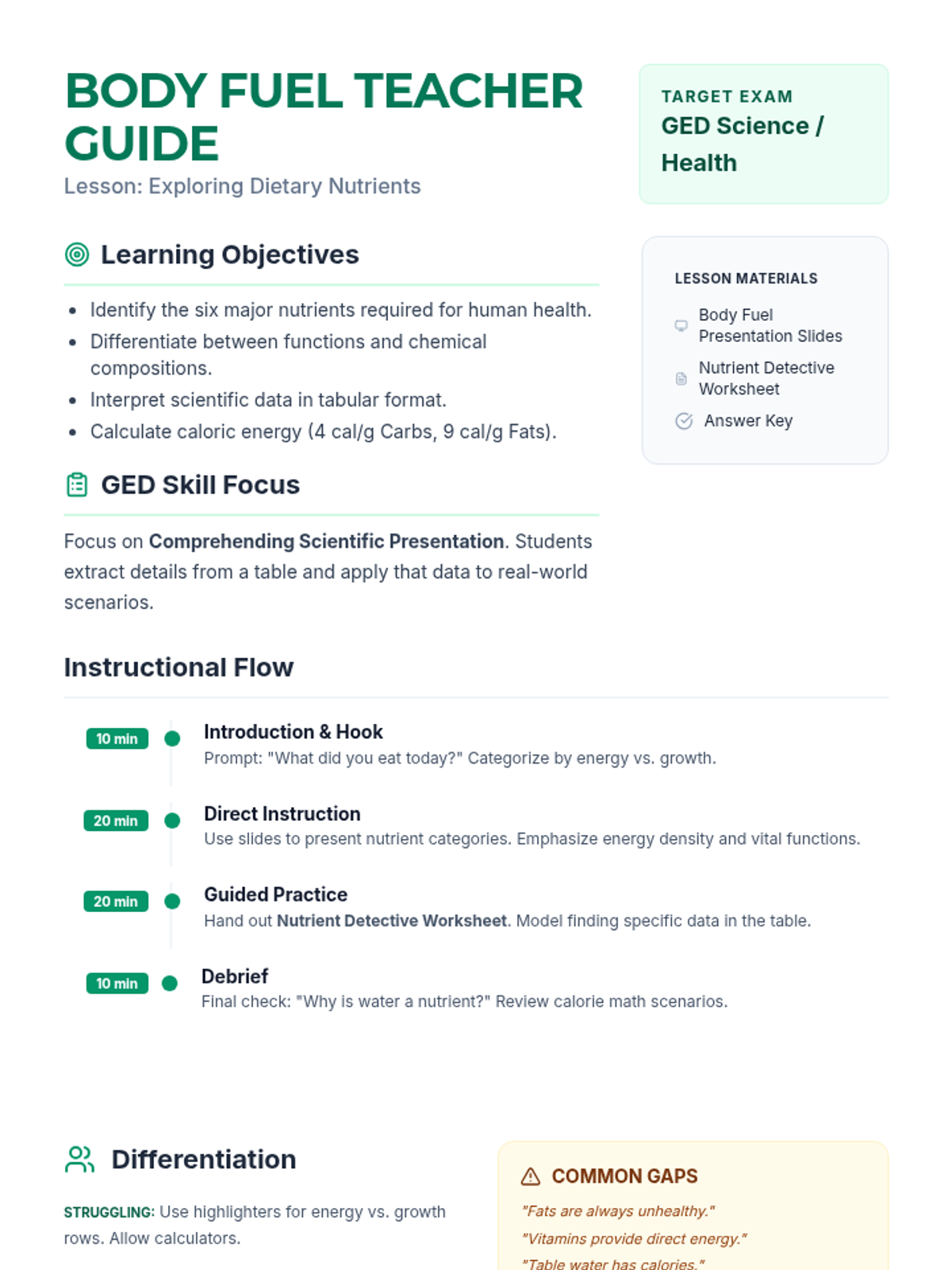
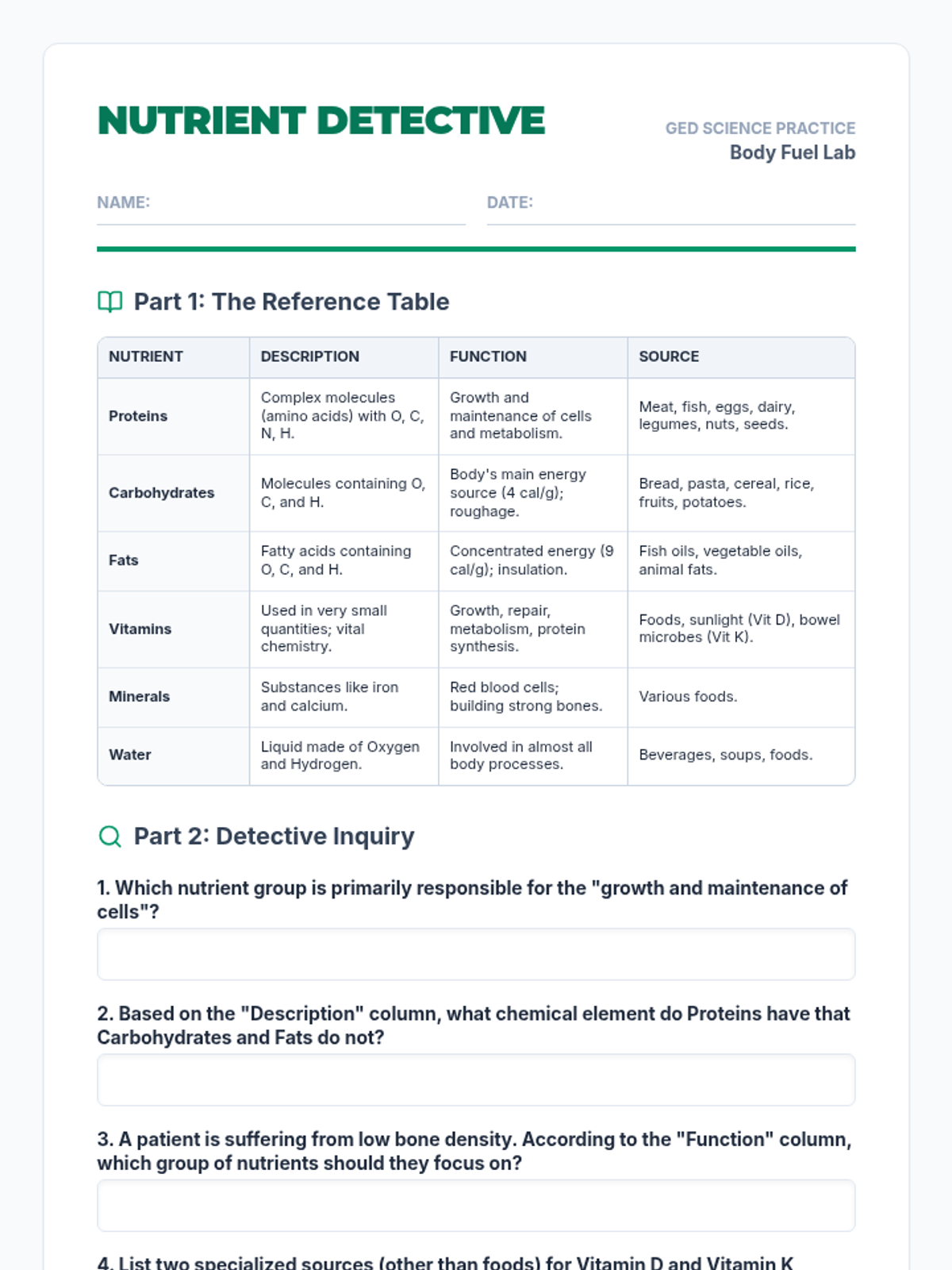
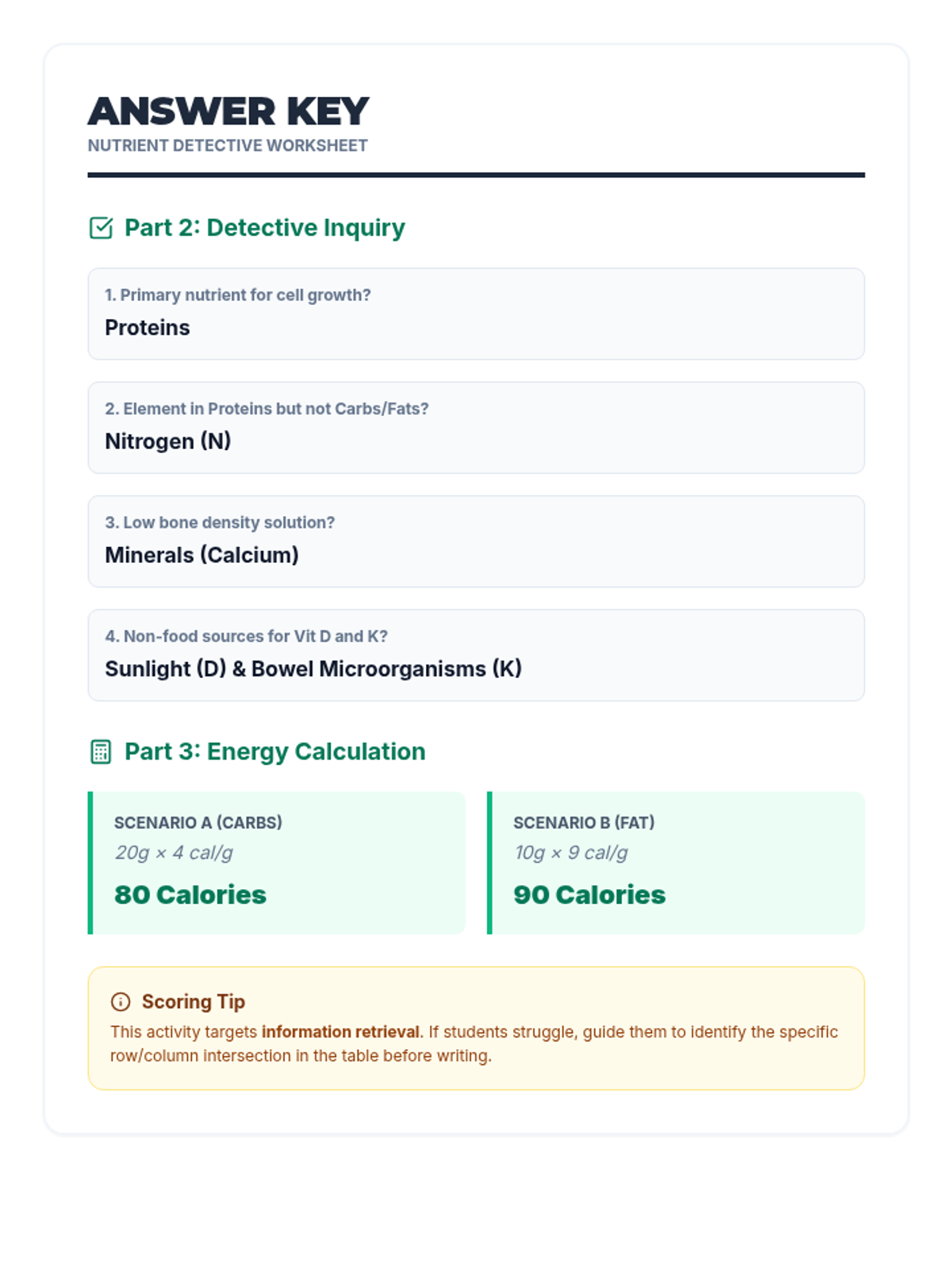
A comprehensive lesson designed for GED students to understand the roles of essential nutrients, how to interpret nutritional data from tables, and apply this knowledge to personal health.
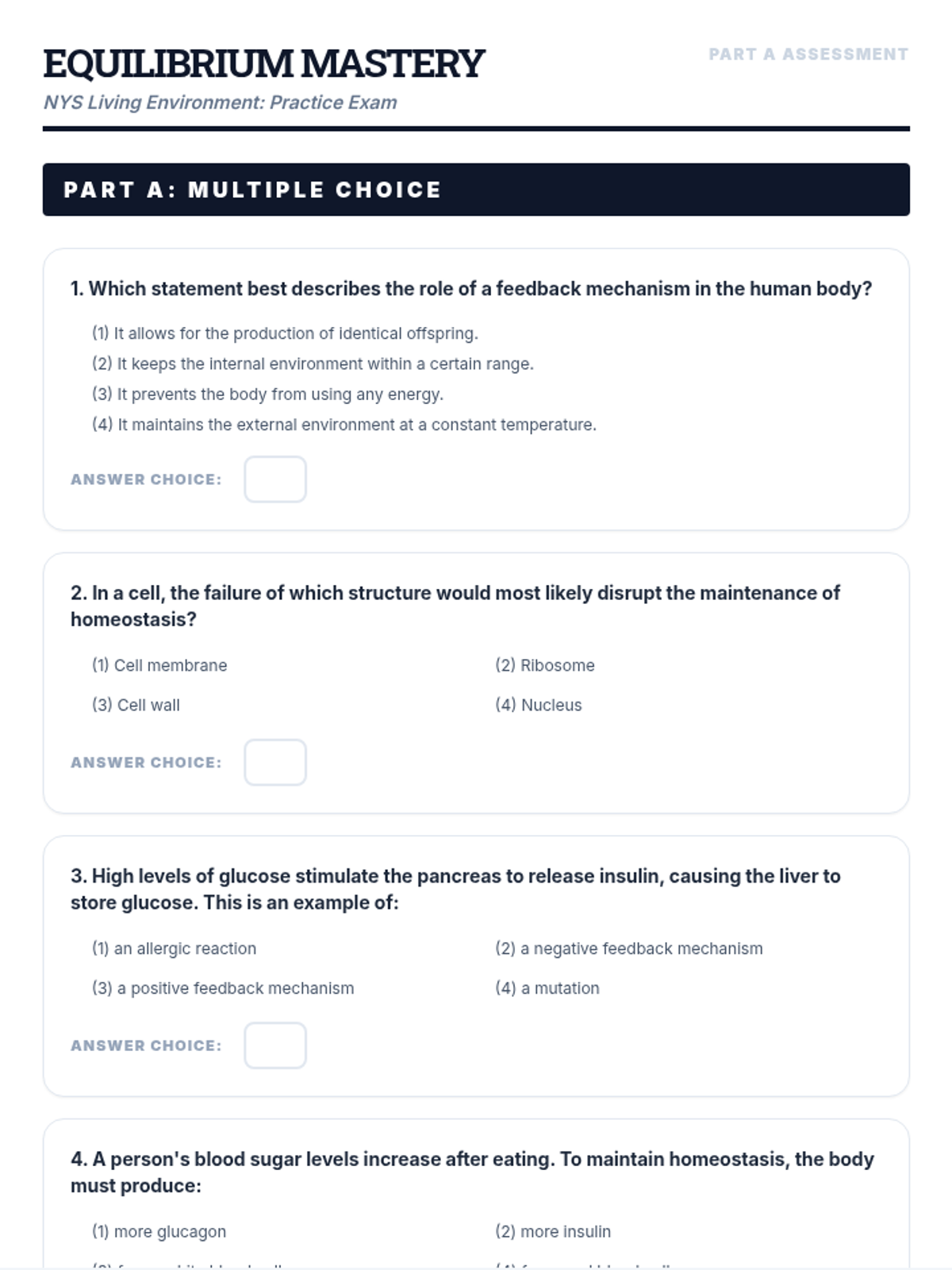
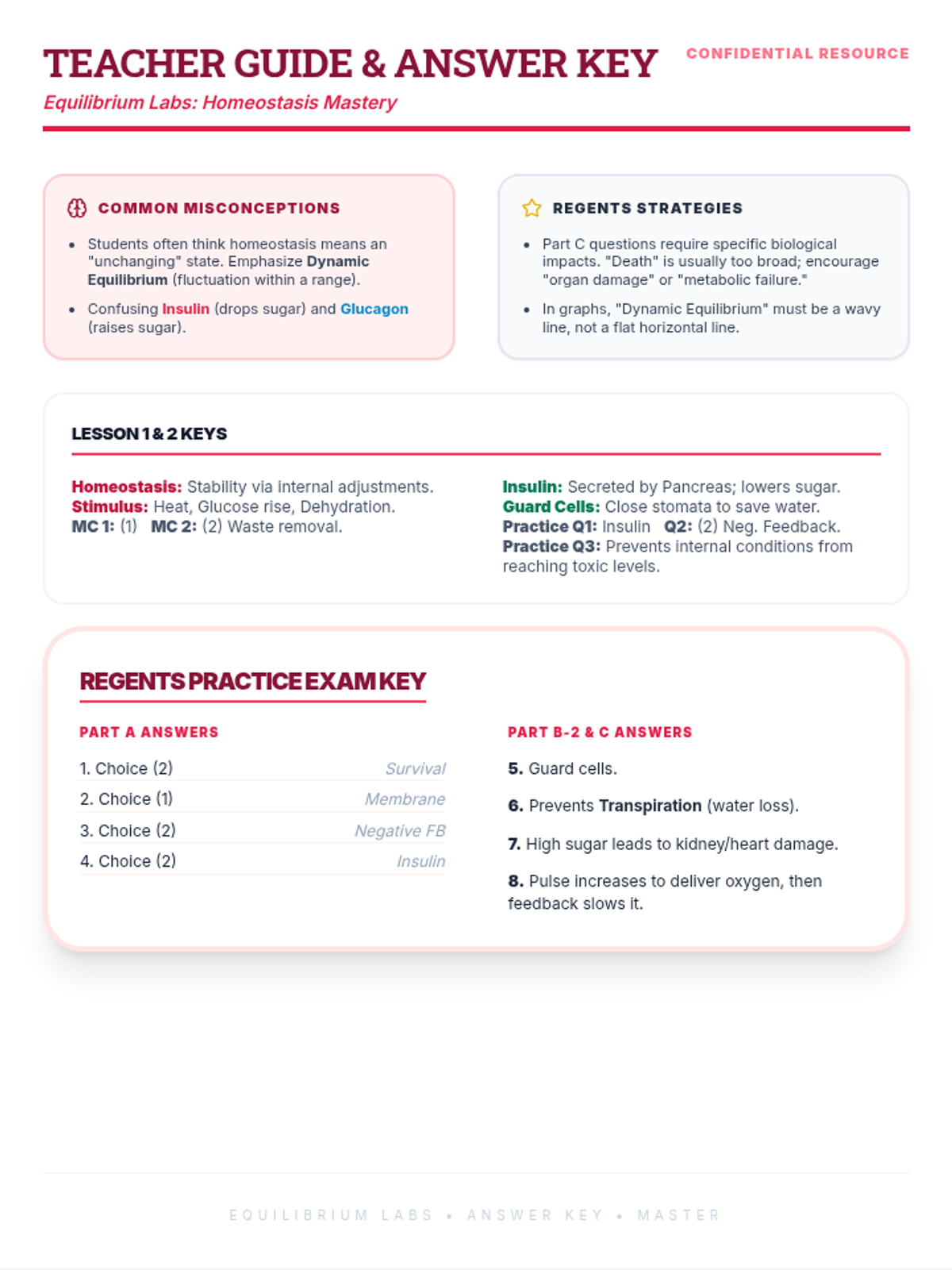
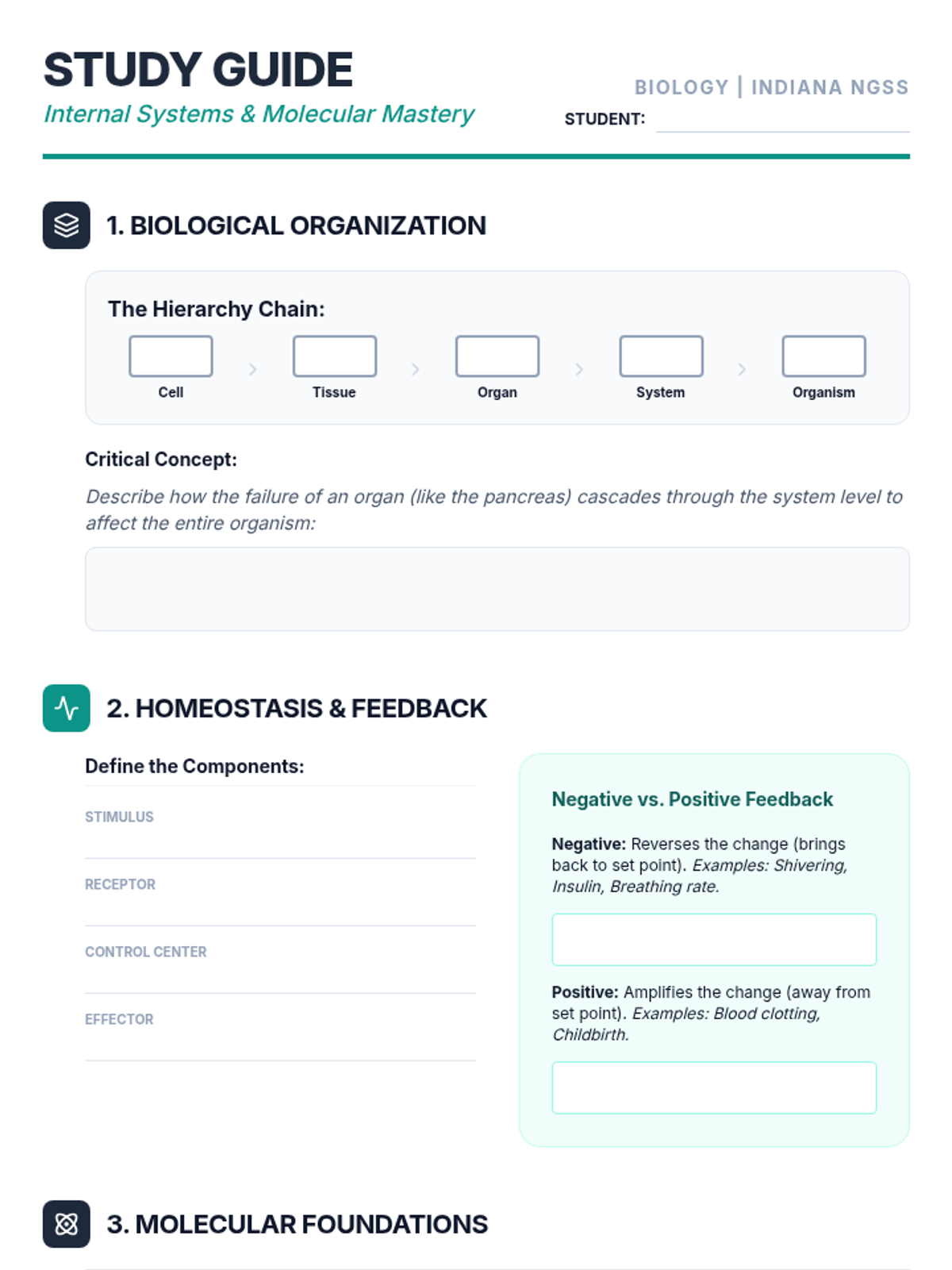
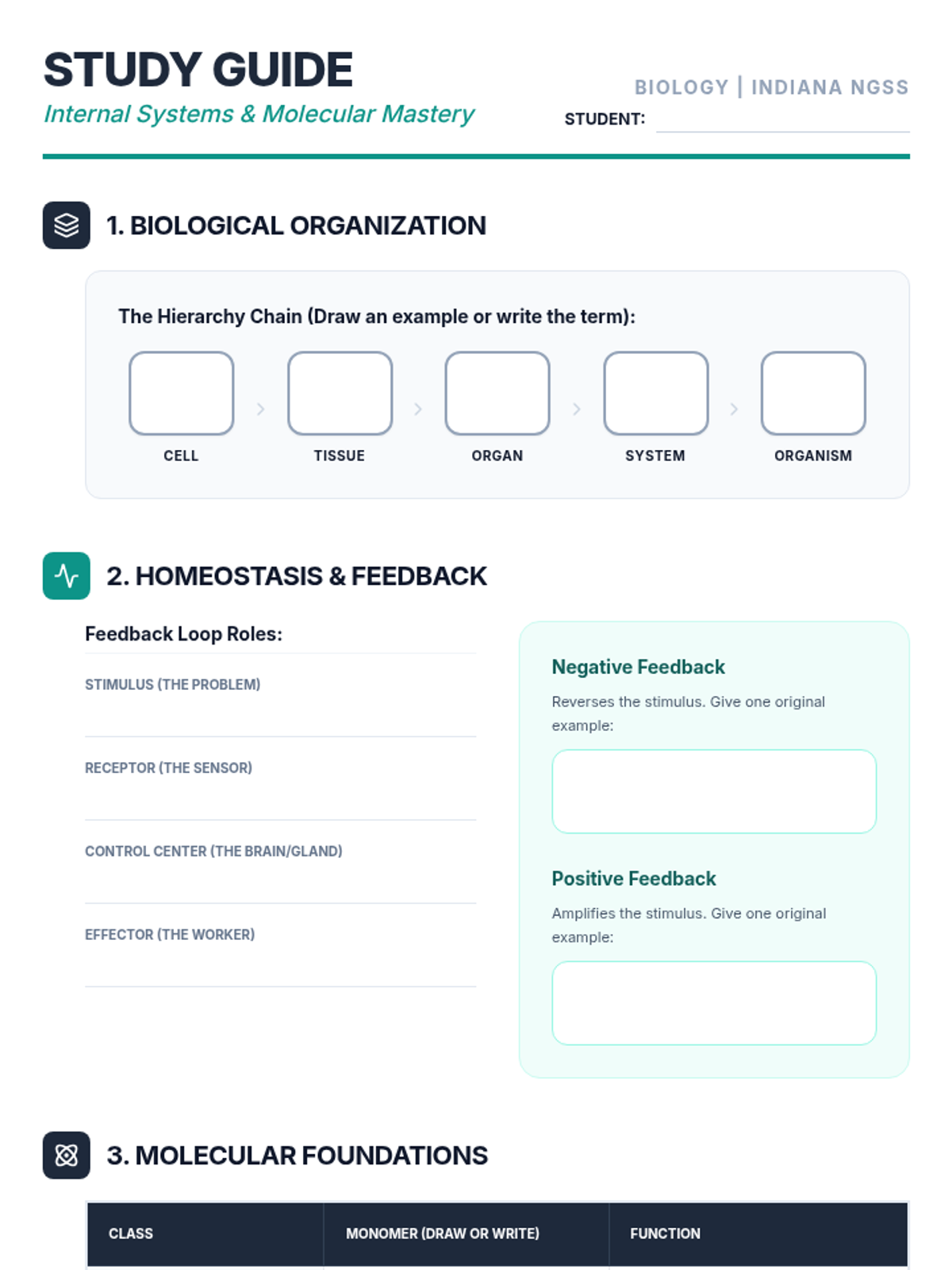
Exploring how human body systems collaborate to maintain homeostasis, featuring Regents-style practice problems and analysis.
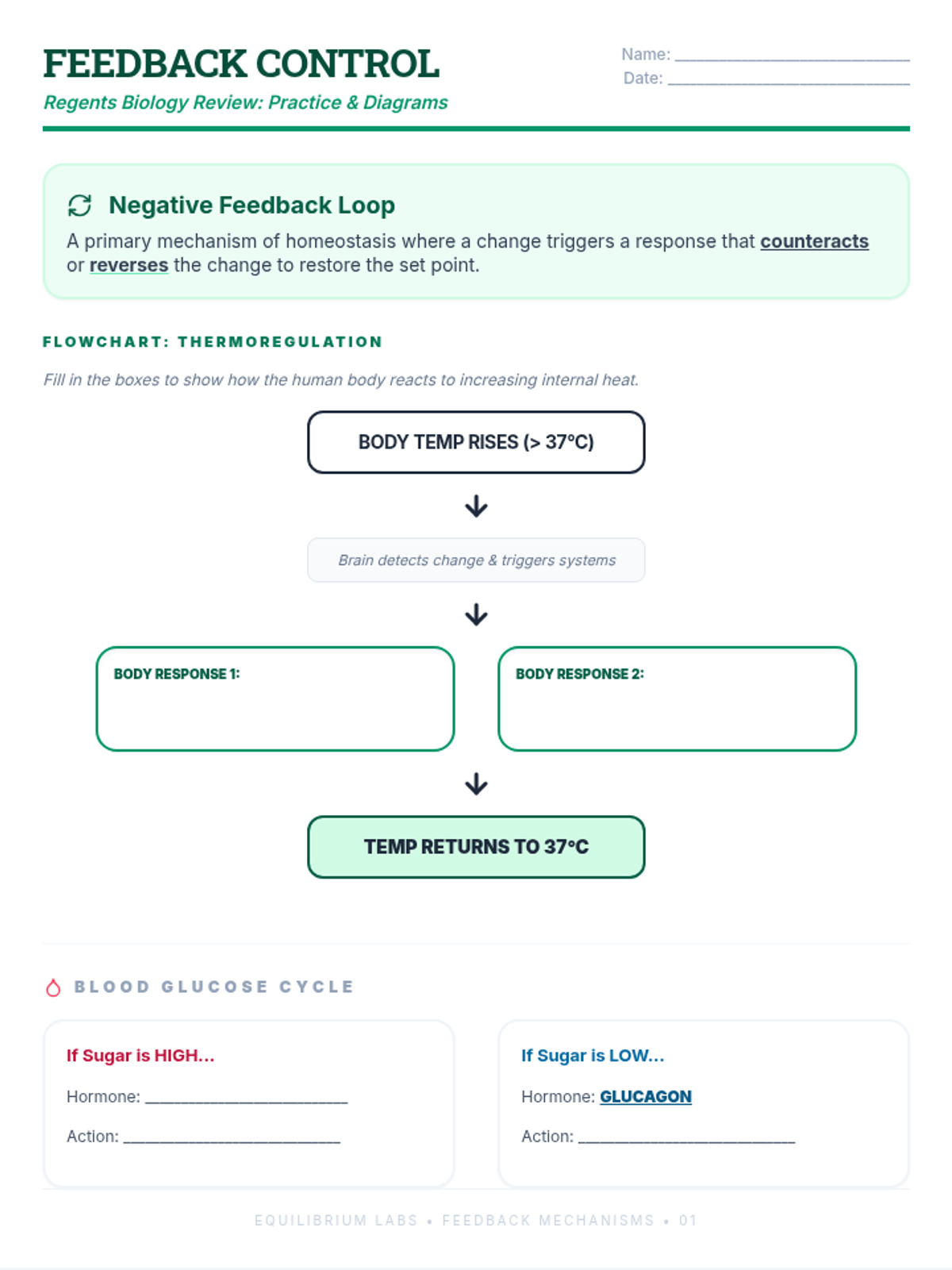
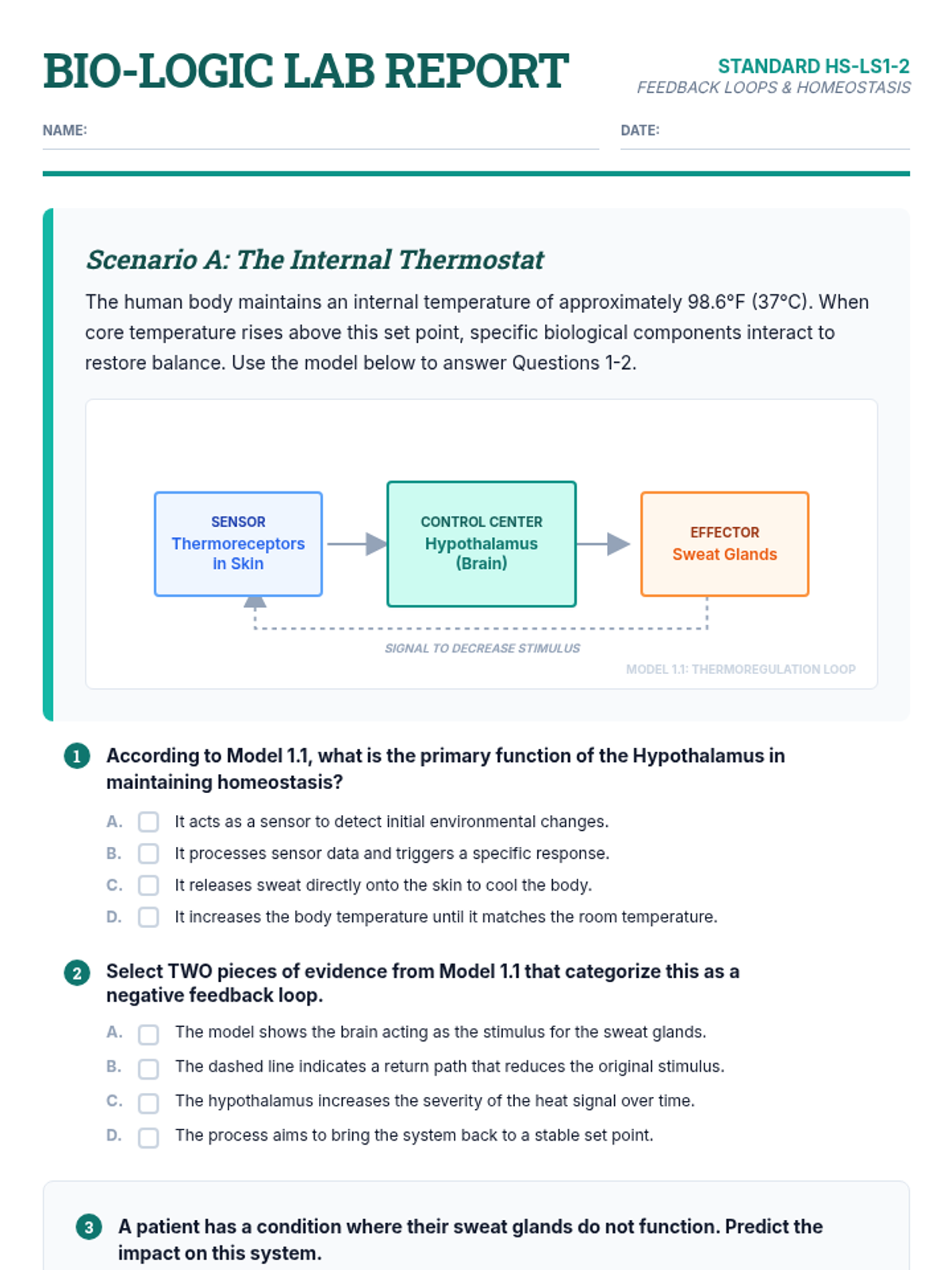
Deep dive into negative and positive feedback mechanisms with a focus on thermoregulation and blood sugar control.
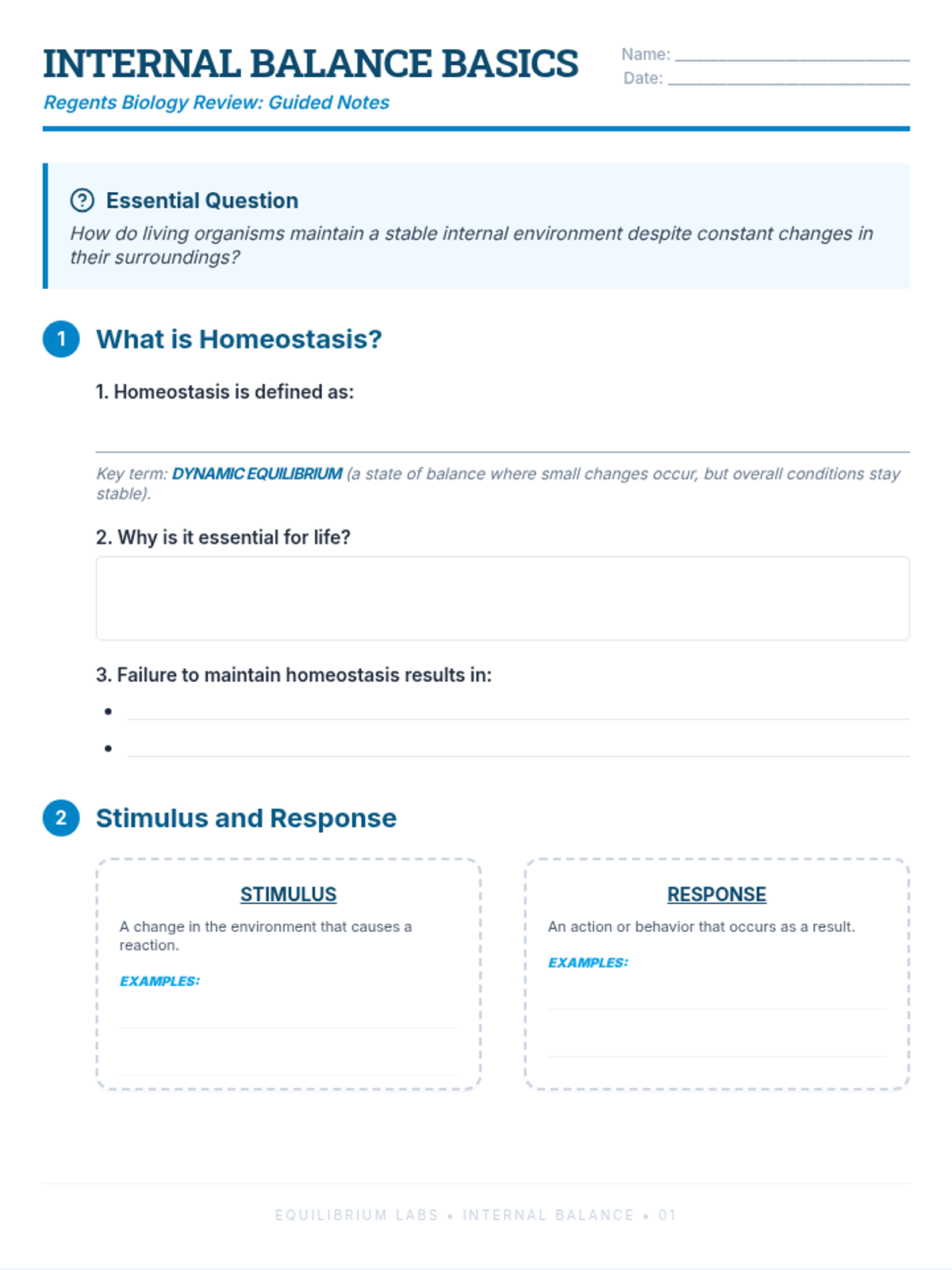
Introduction to homeostasis, dynamic equilibrium, and the basic mechanisms life uses to maintain stability in a changing environment.
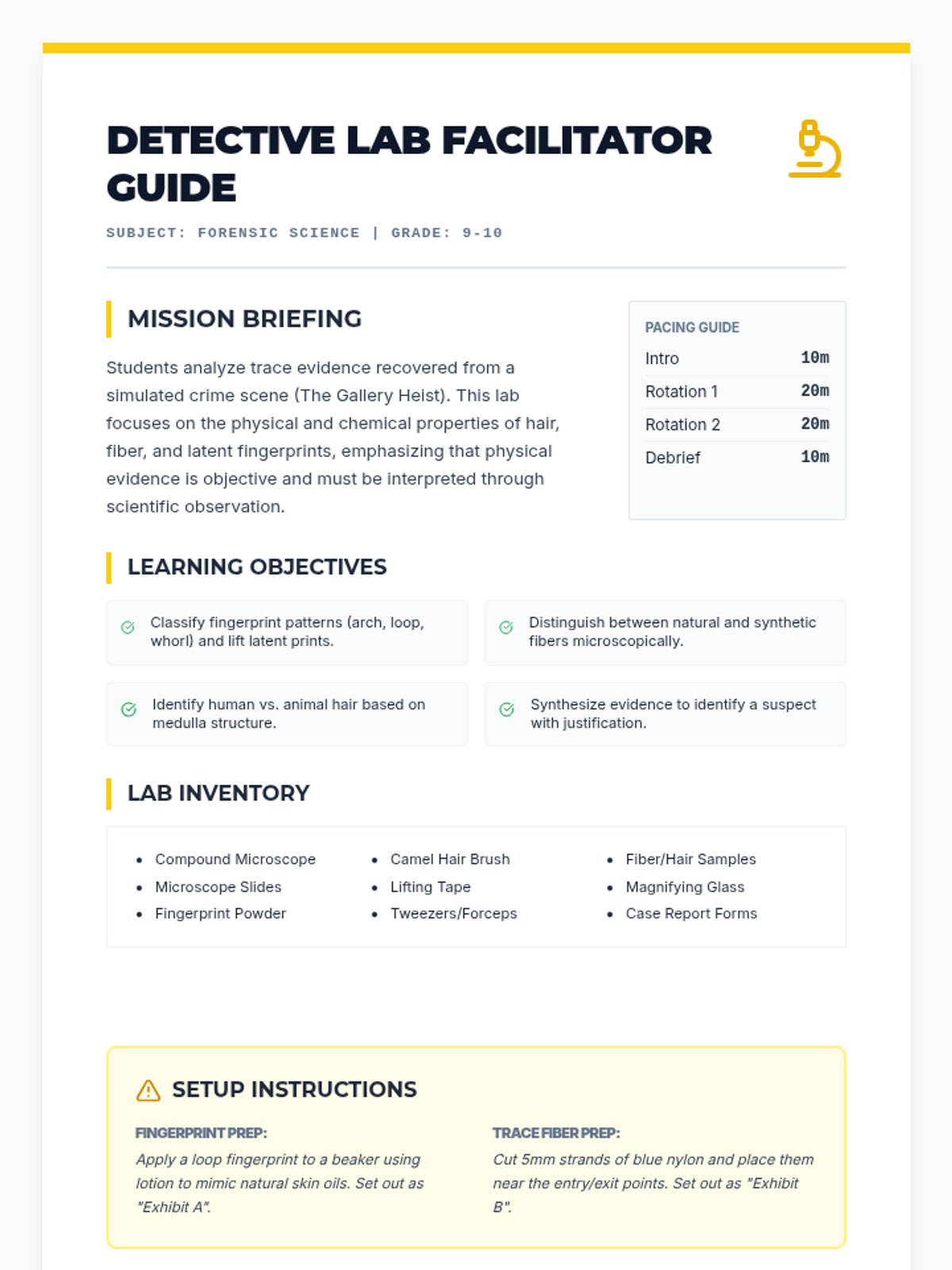
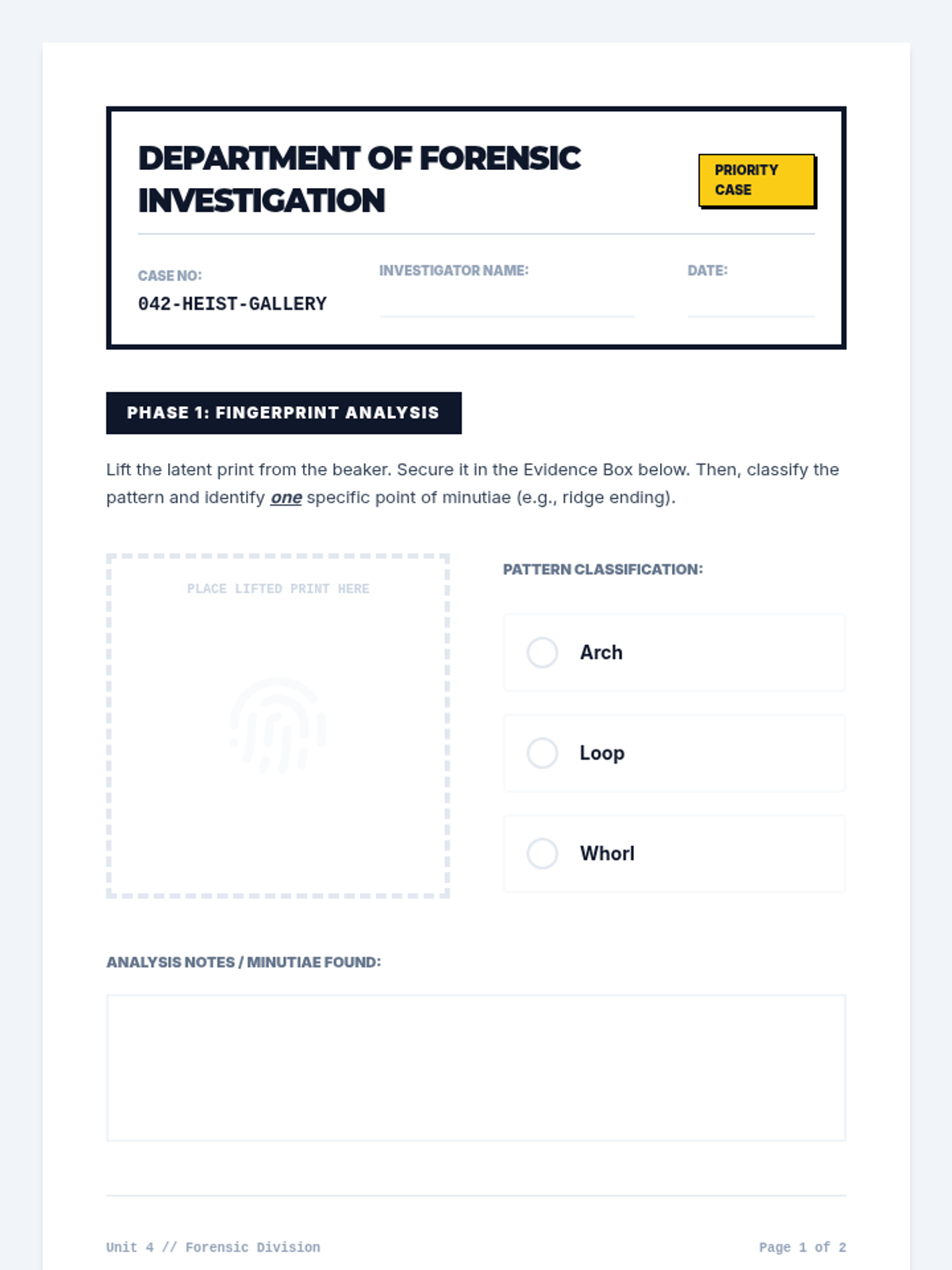
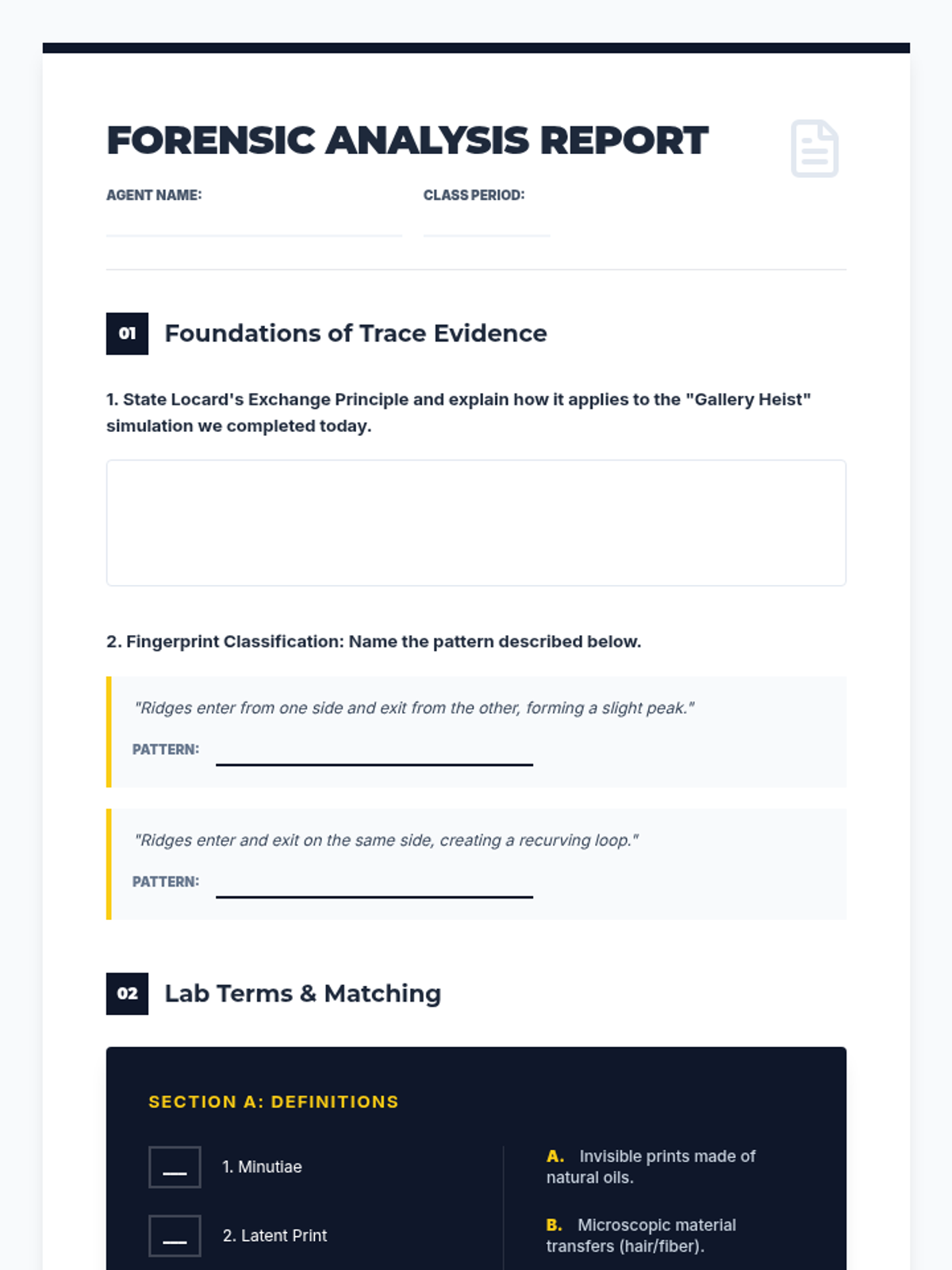
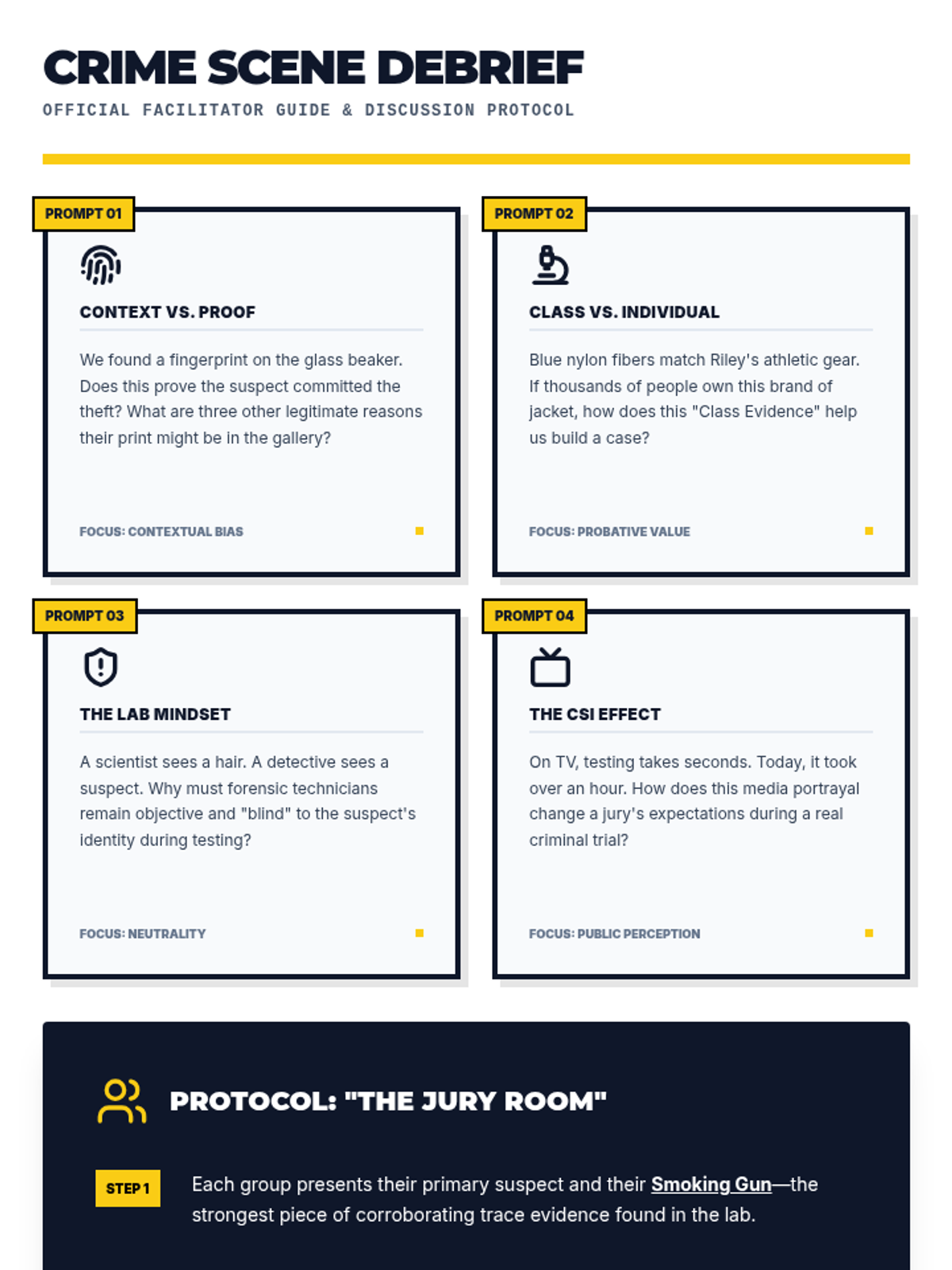
A high-school forensic science lab where students analyze fingerprints and fibers to solve a simulated crime, focusing on physical and chemical properties and deductive reasoning.
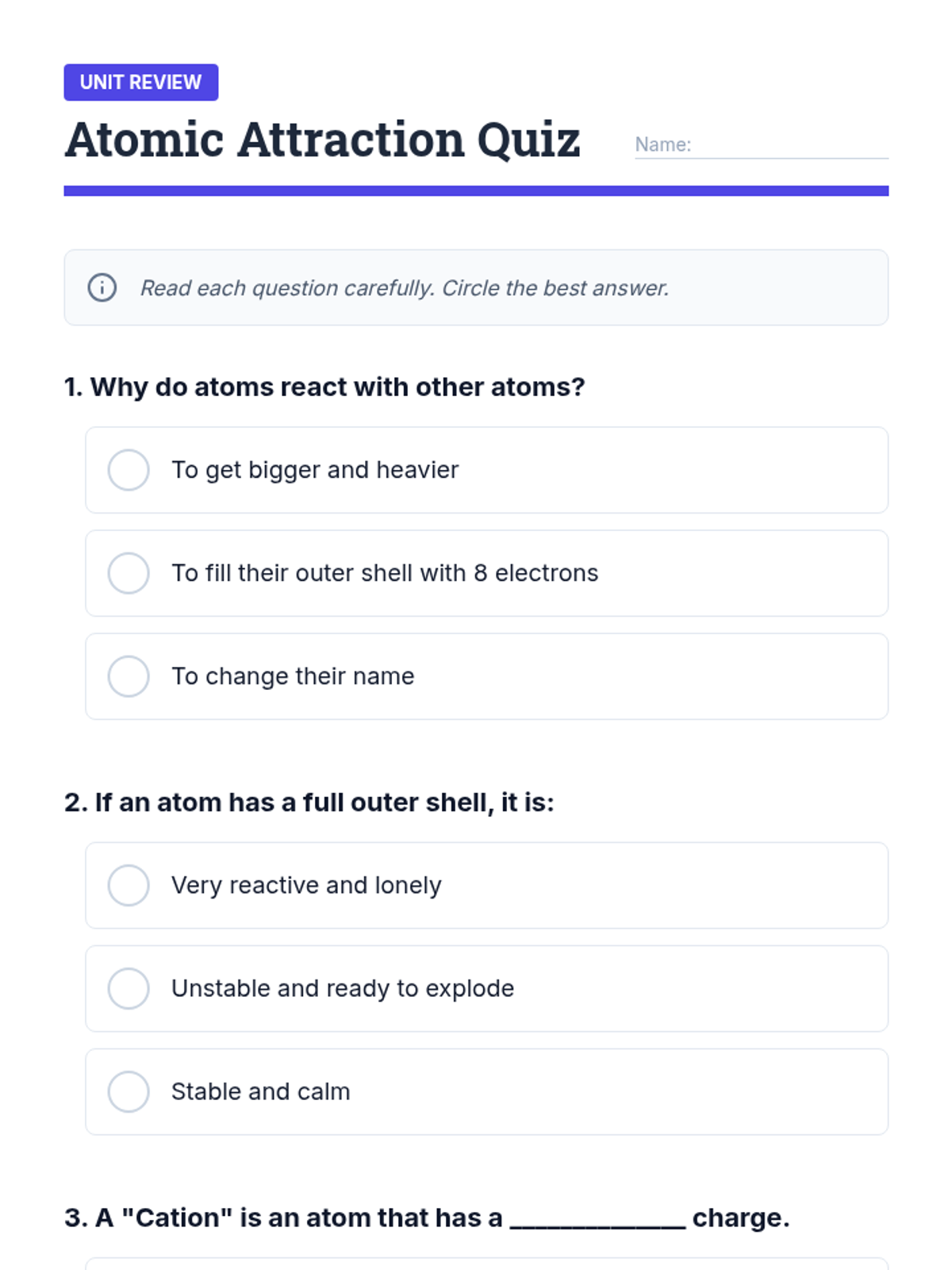
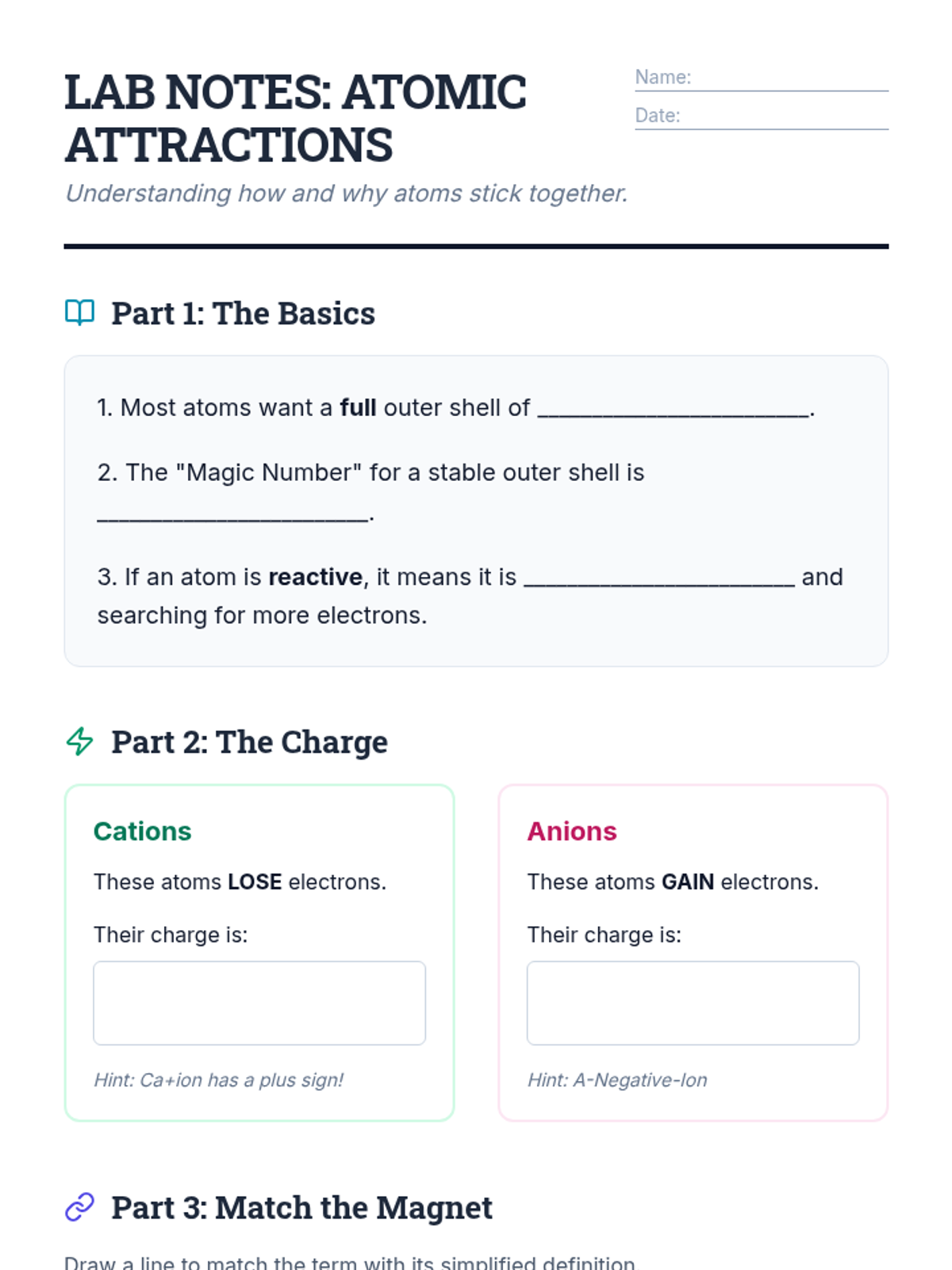
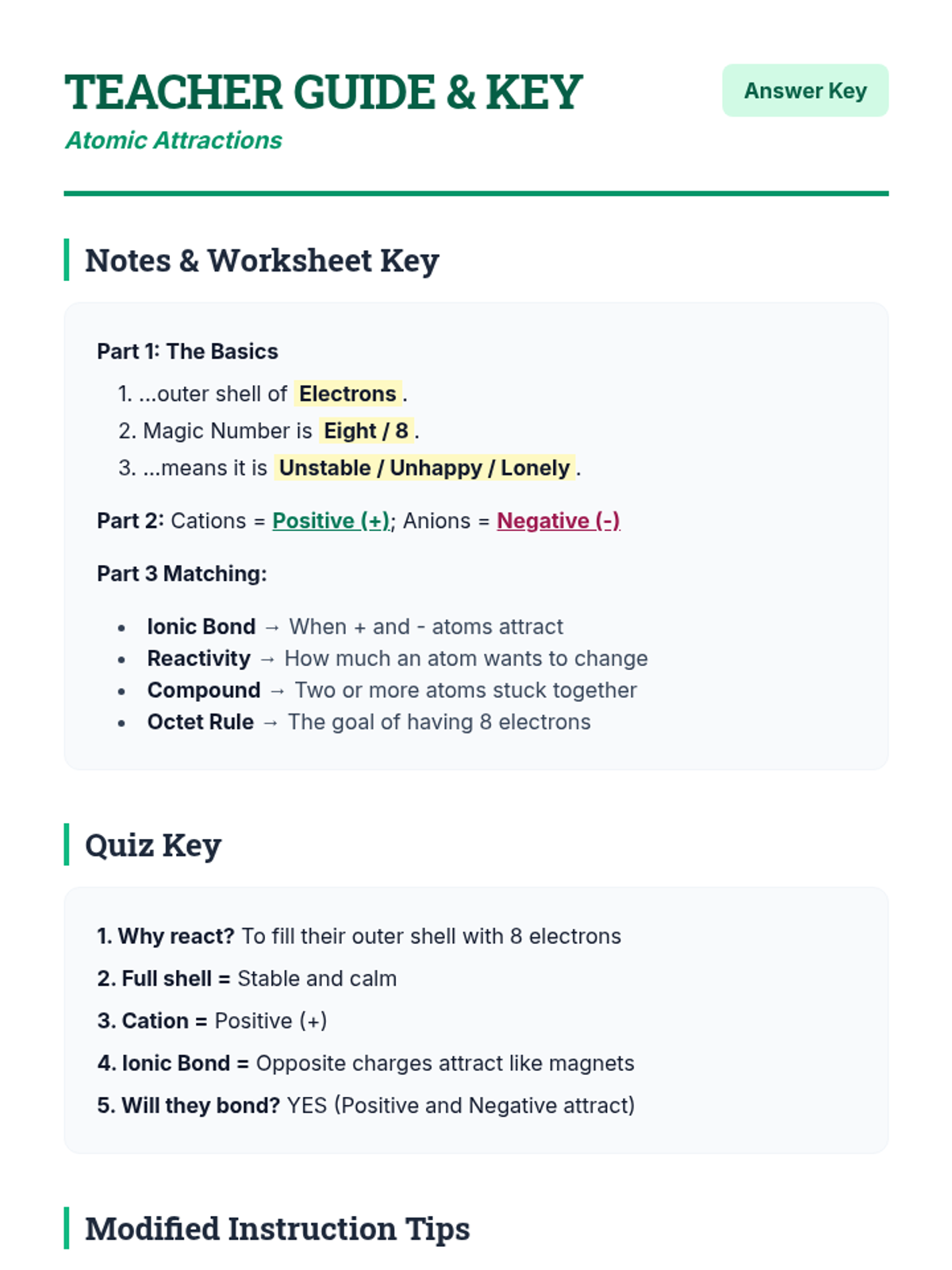
A modified-text lesson covering why elements react, the formation of cations and anions, and how ionic bonds are formed. Designed for lower reading levels with clear visuals and simplified language.
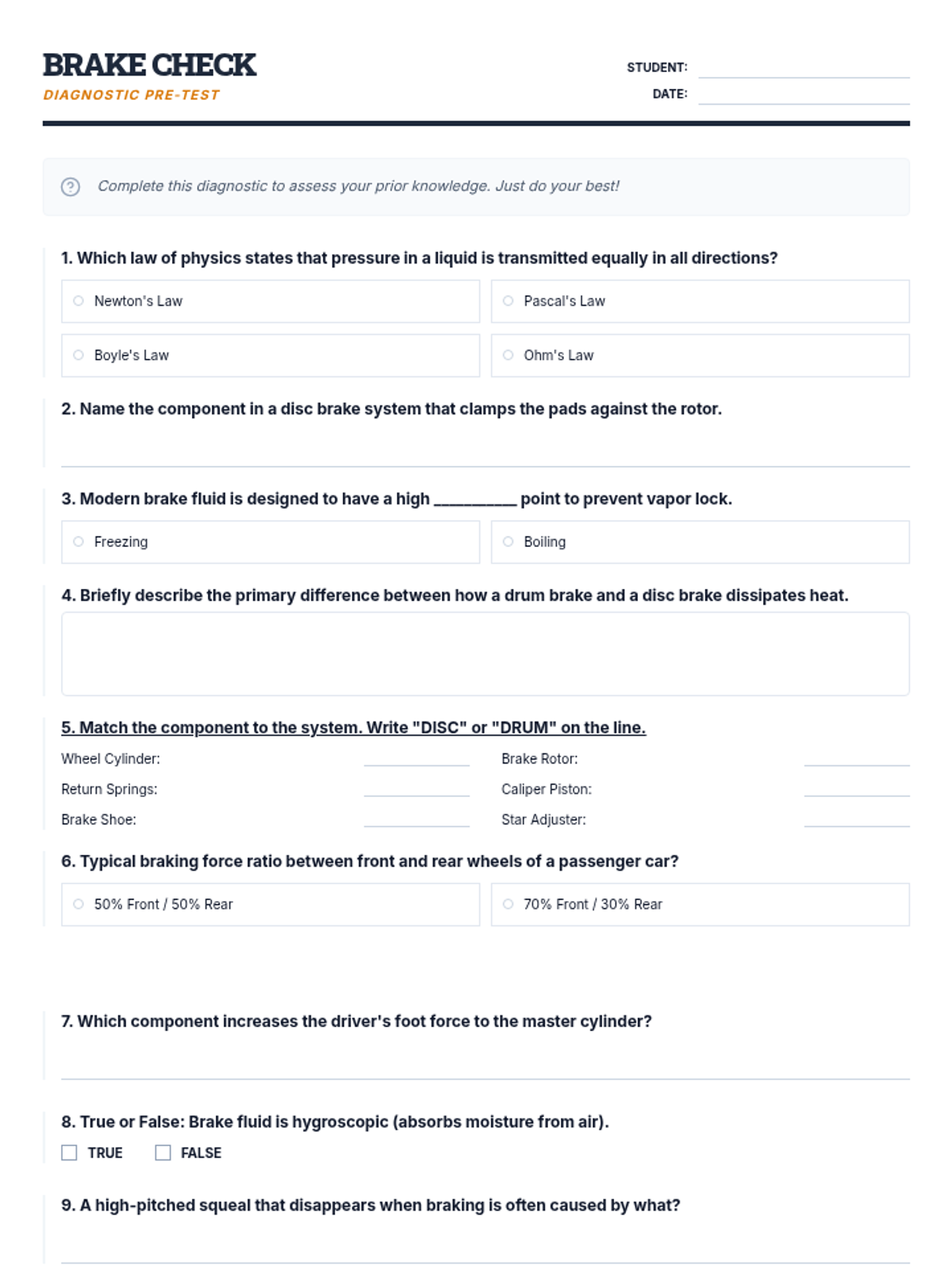
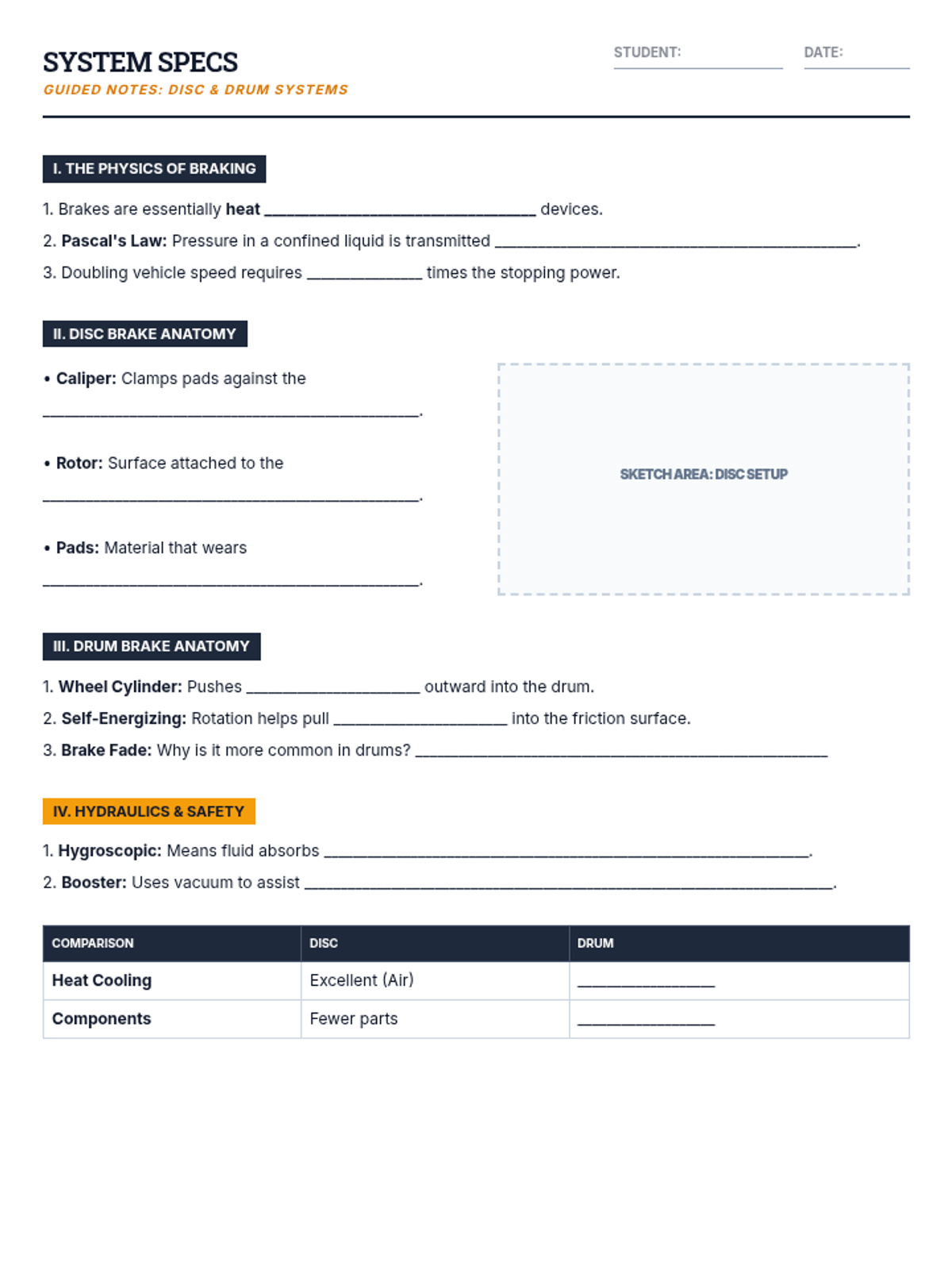
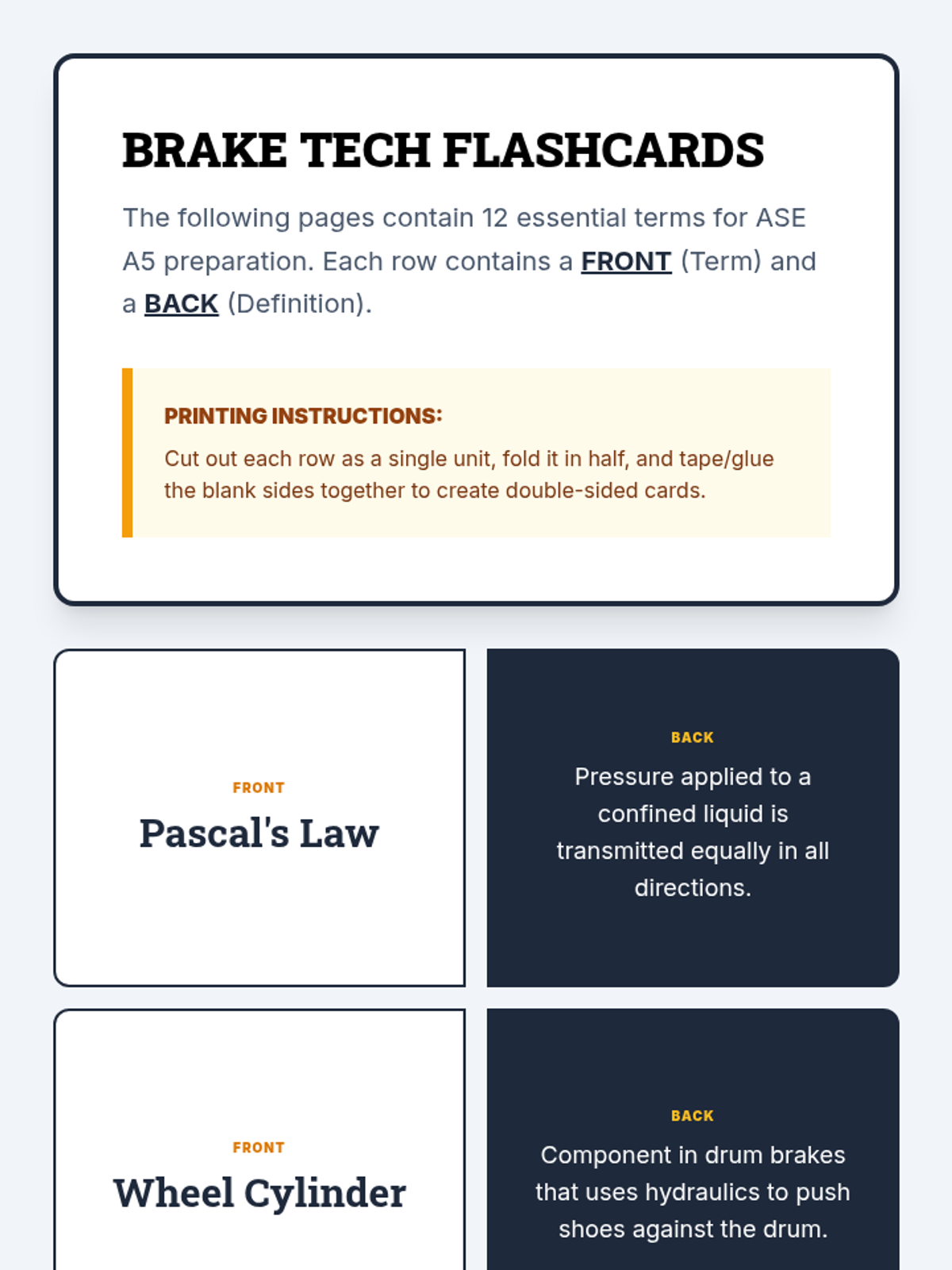
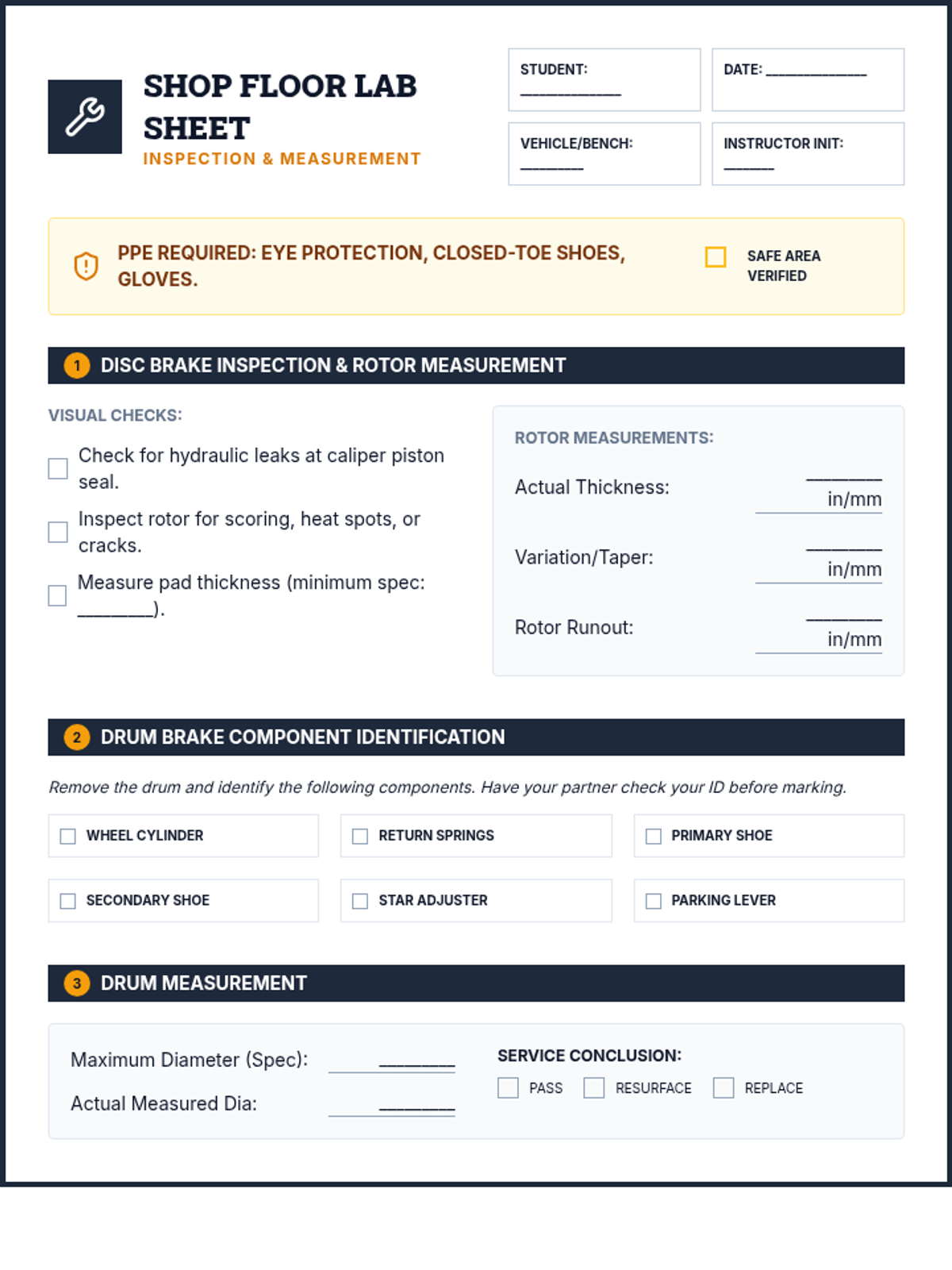
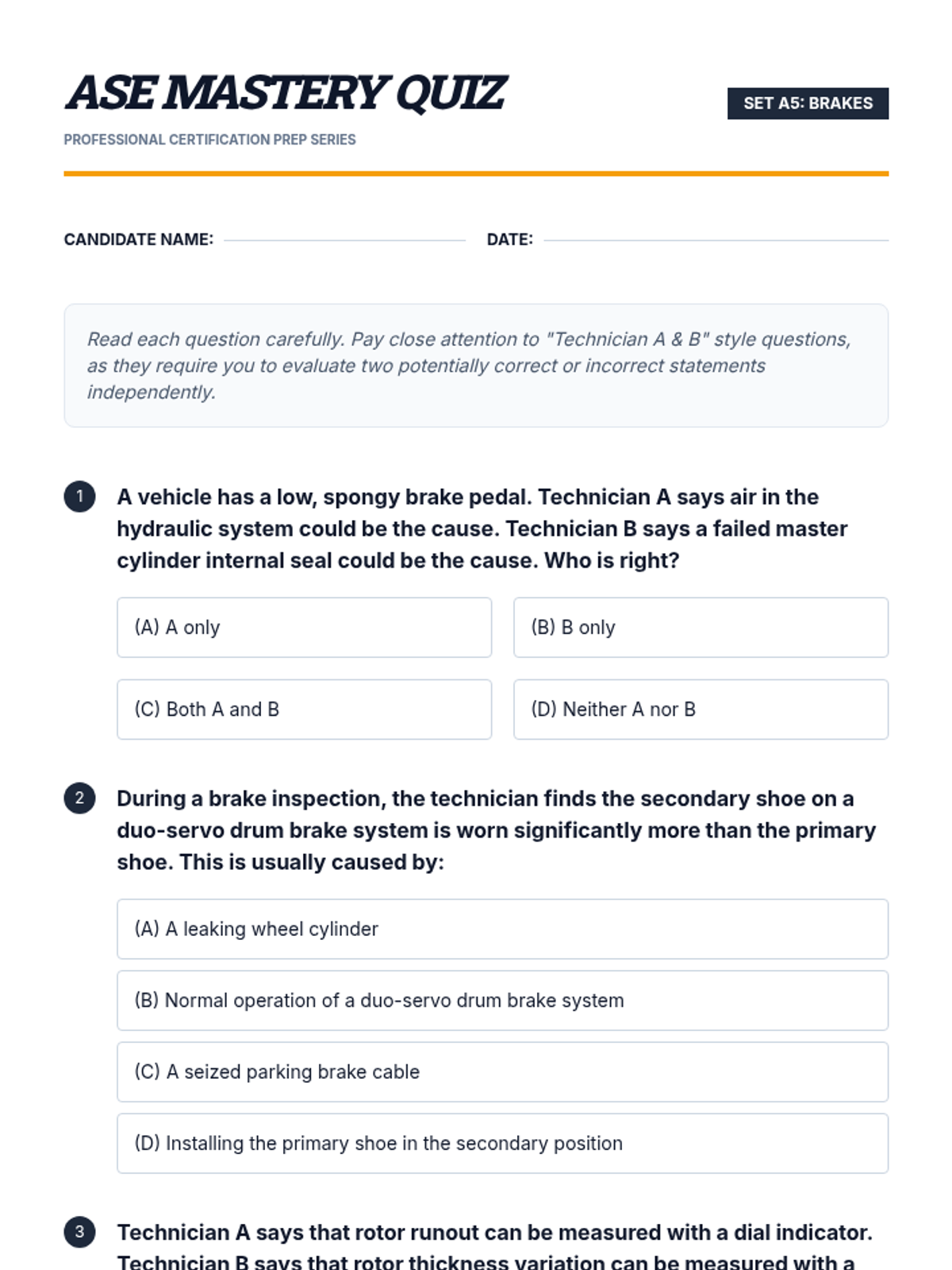
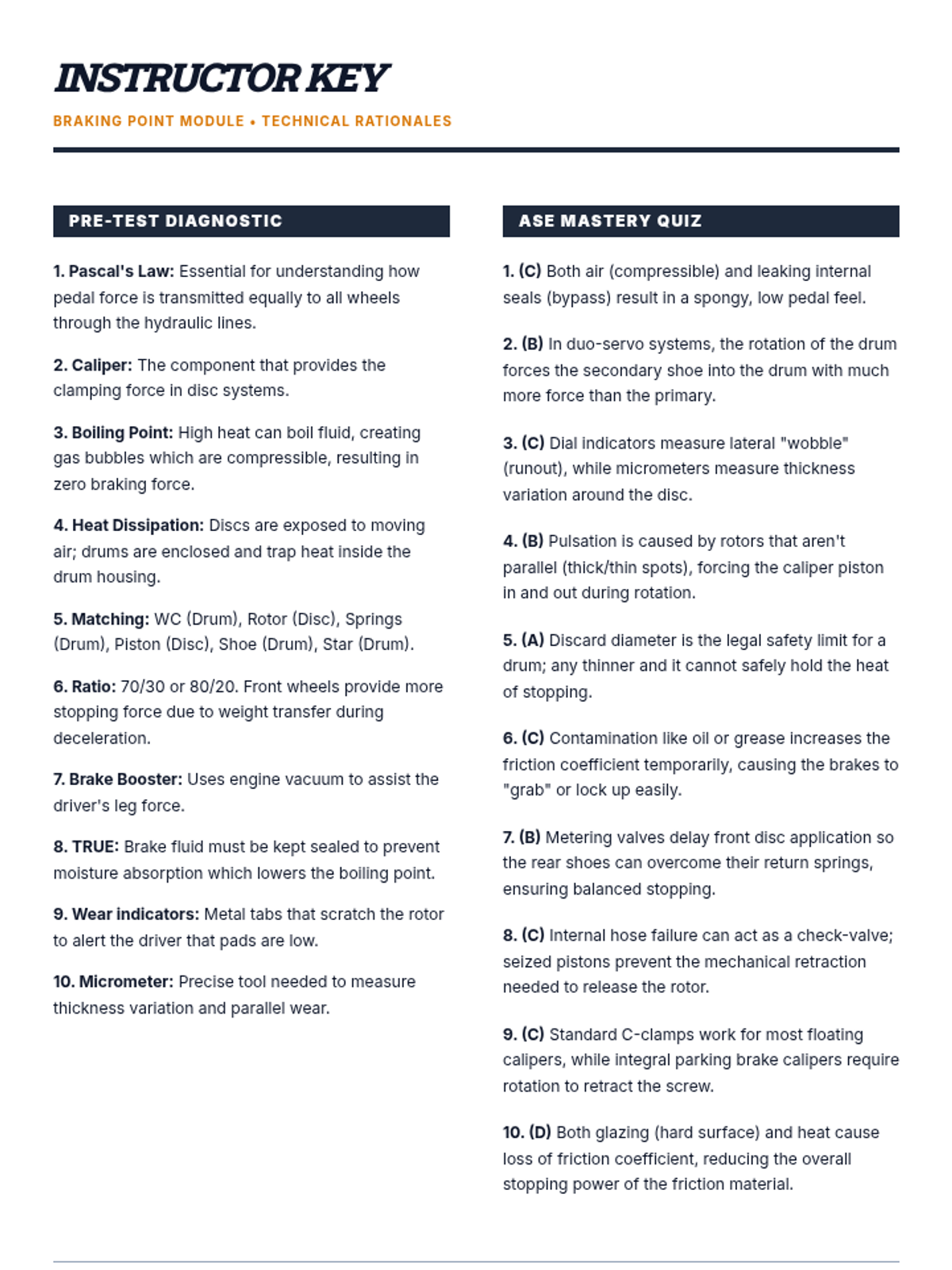
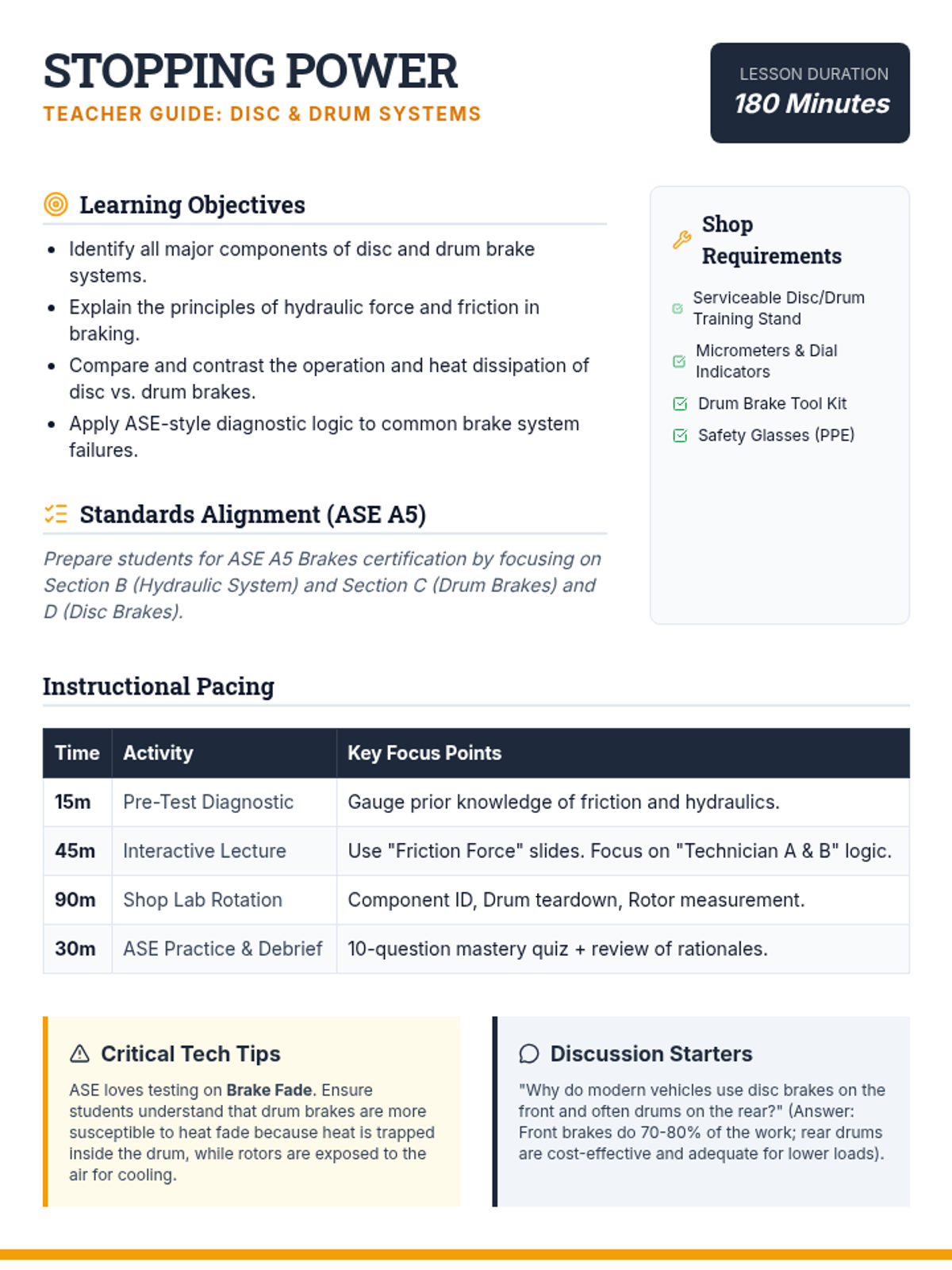
A comprehensive introduction to automotive disc and drum brake systems, covering components, operation, and ASE-style diagnostic theory for first-year students.
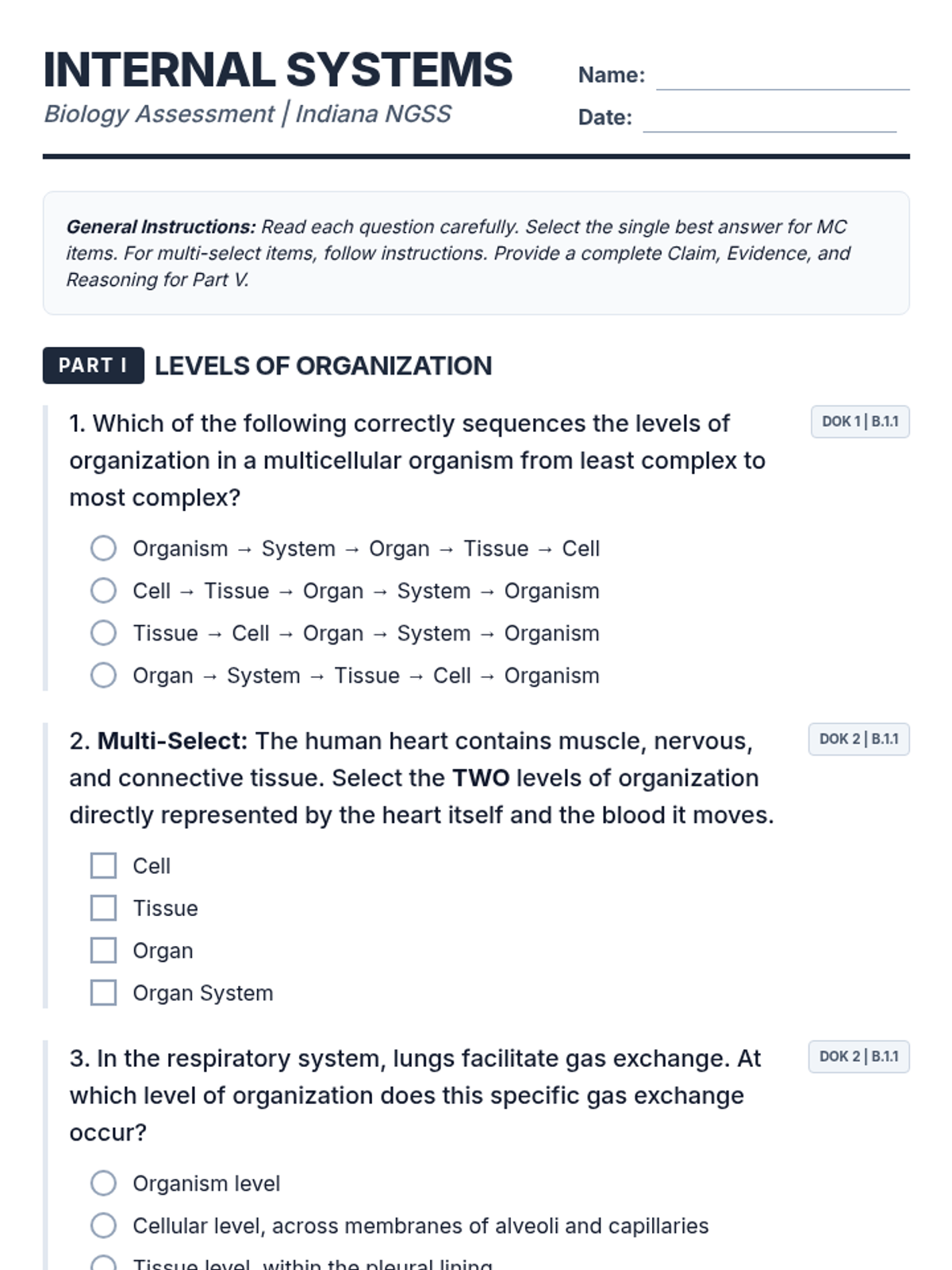
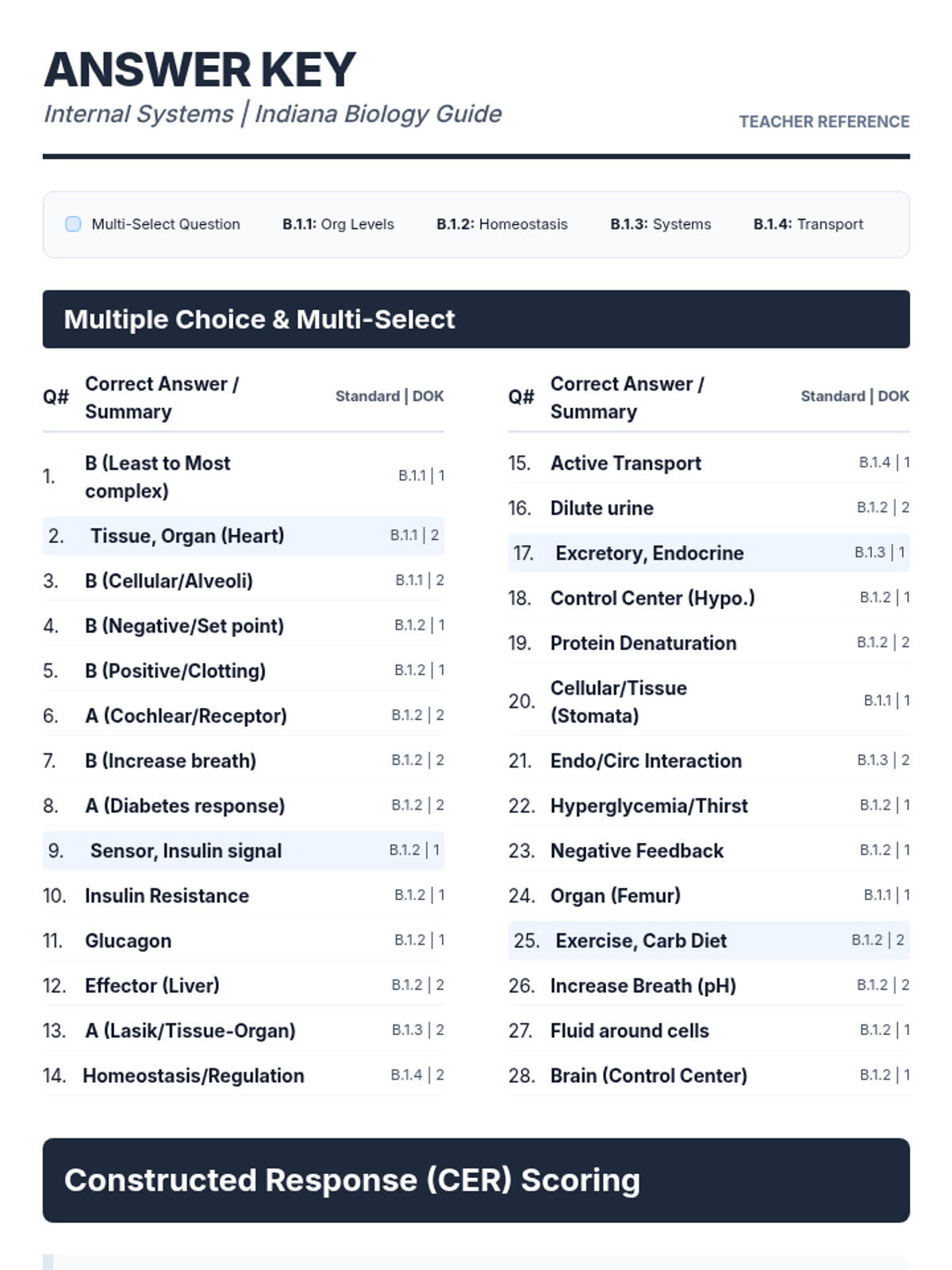
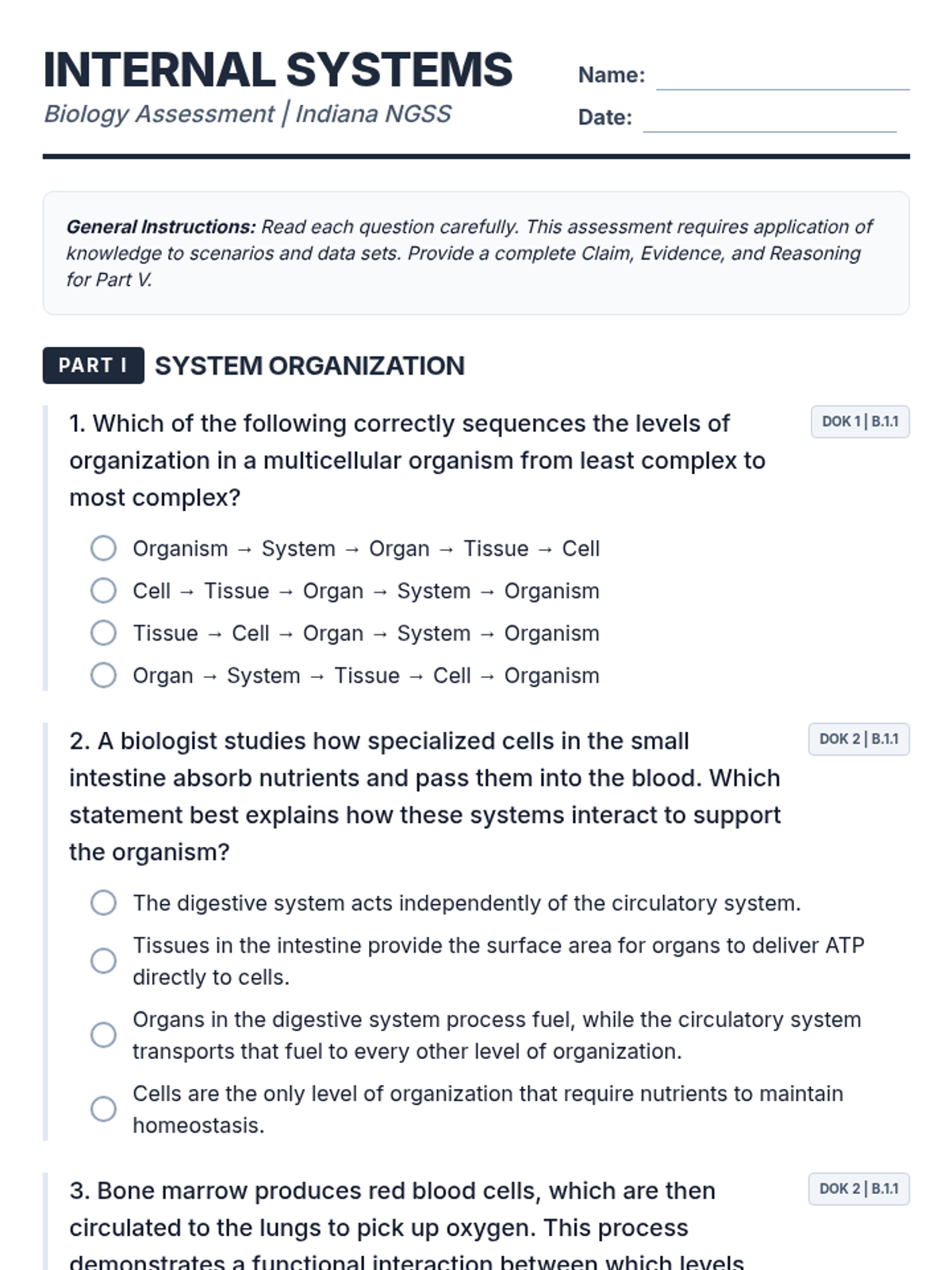
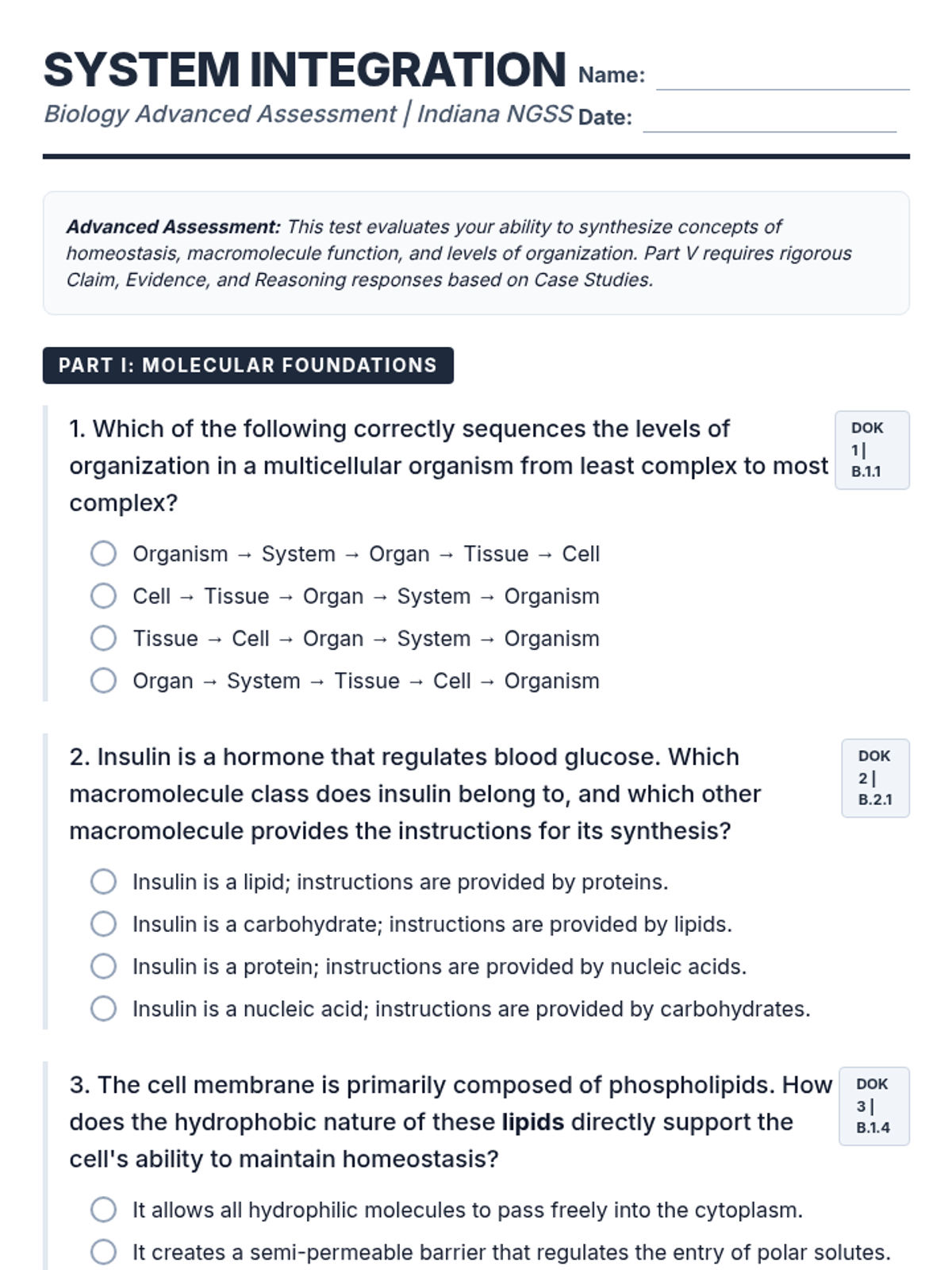
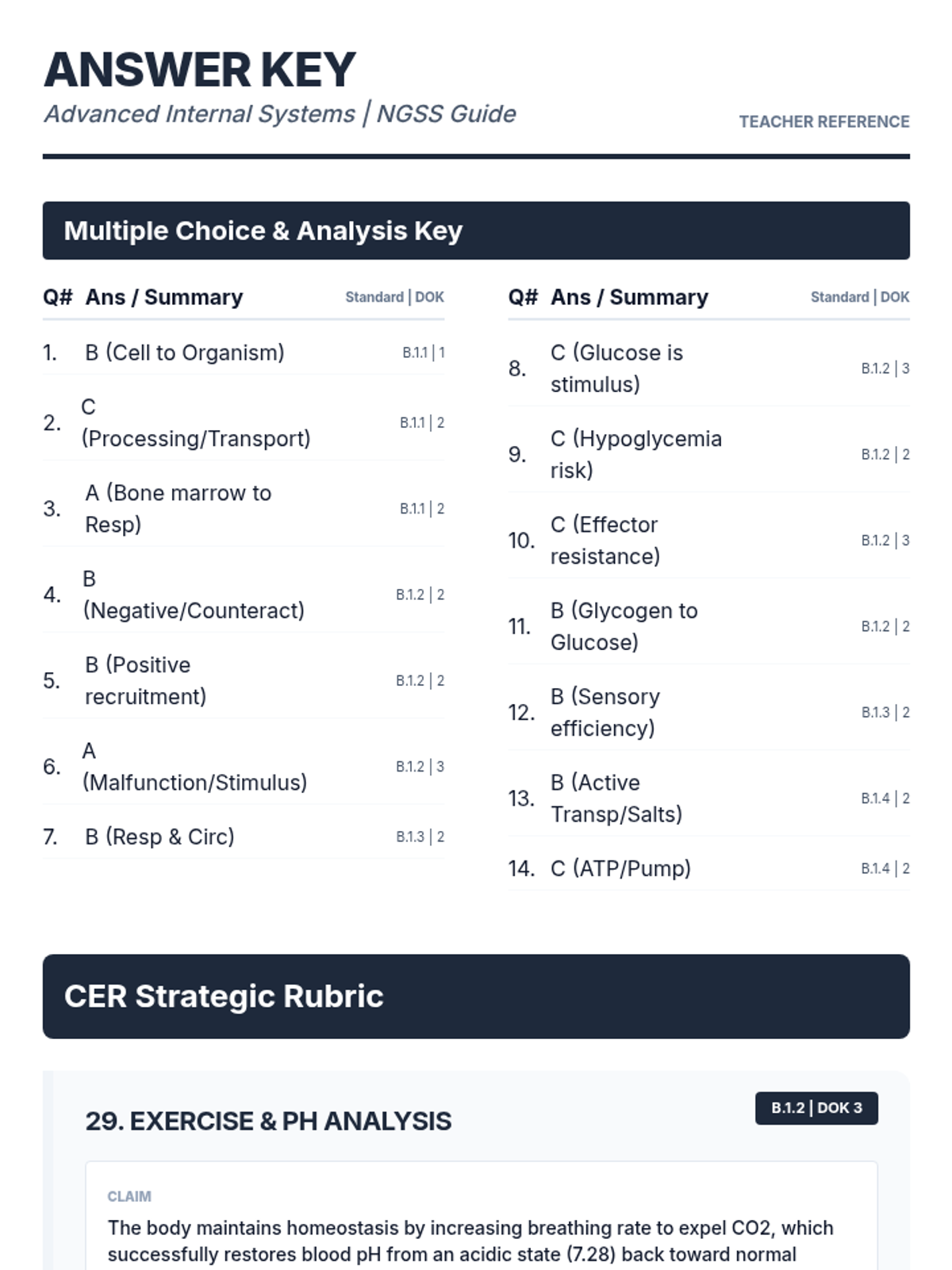
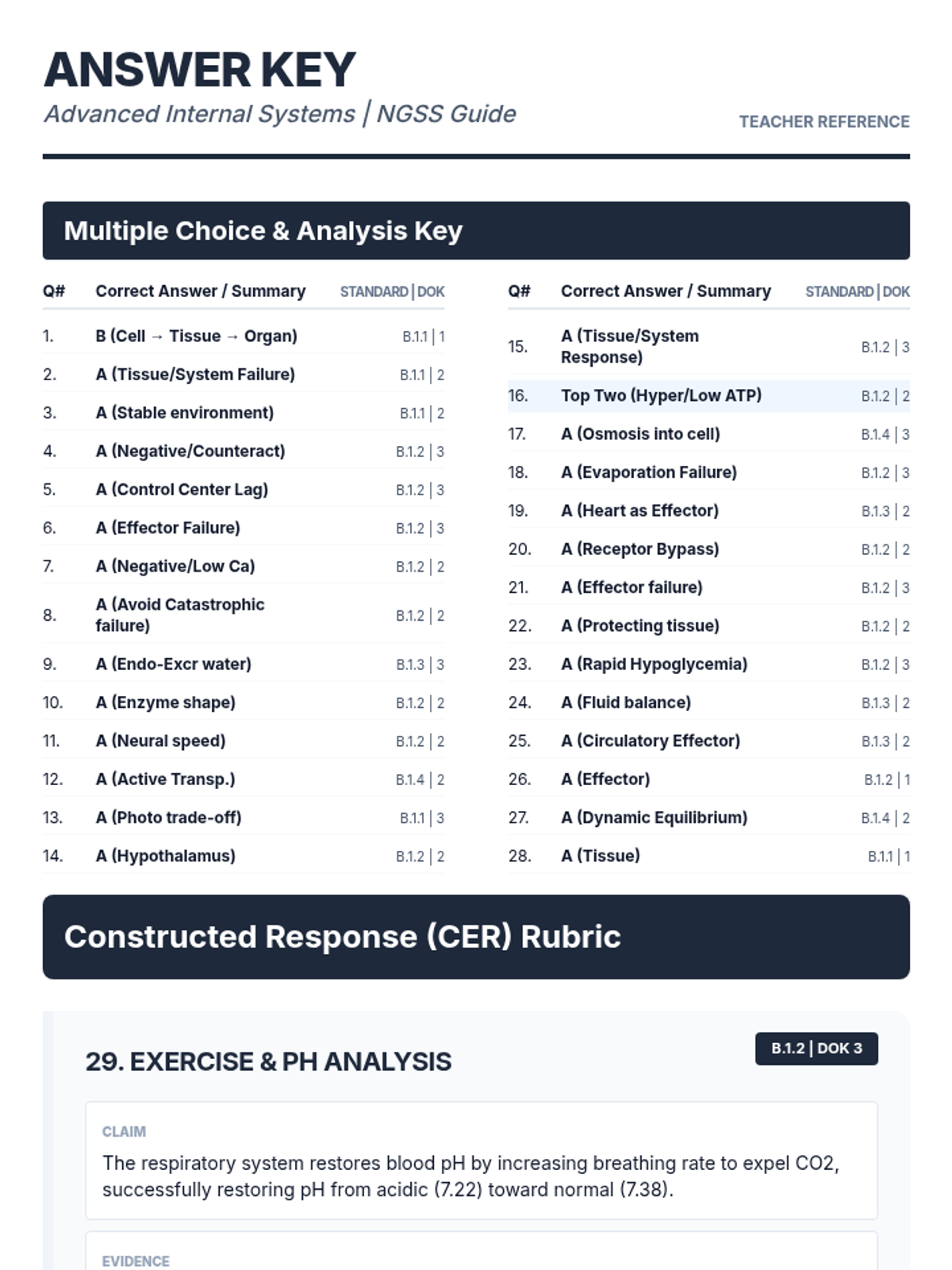
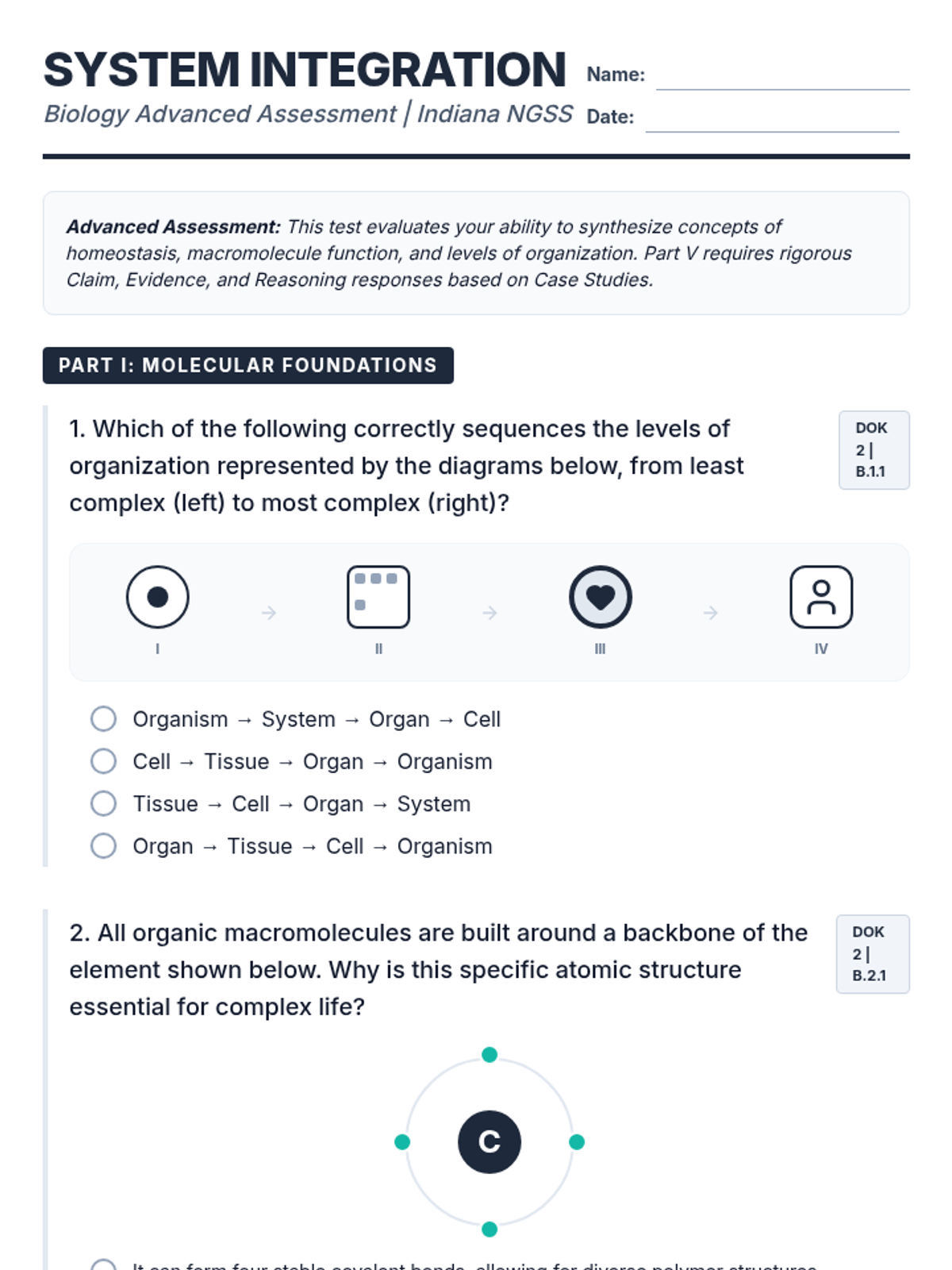
A comprehensive assessment on Indiana Biology standards focusing on homeostasis, levels of organization, and feedback loops, including ILEARN-style item types and CER responses.
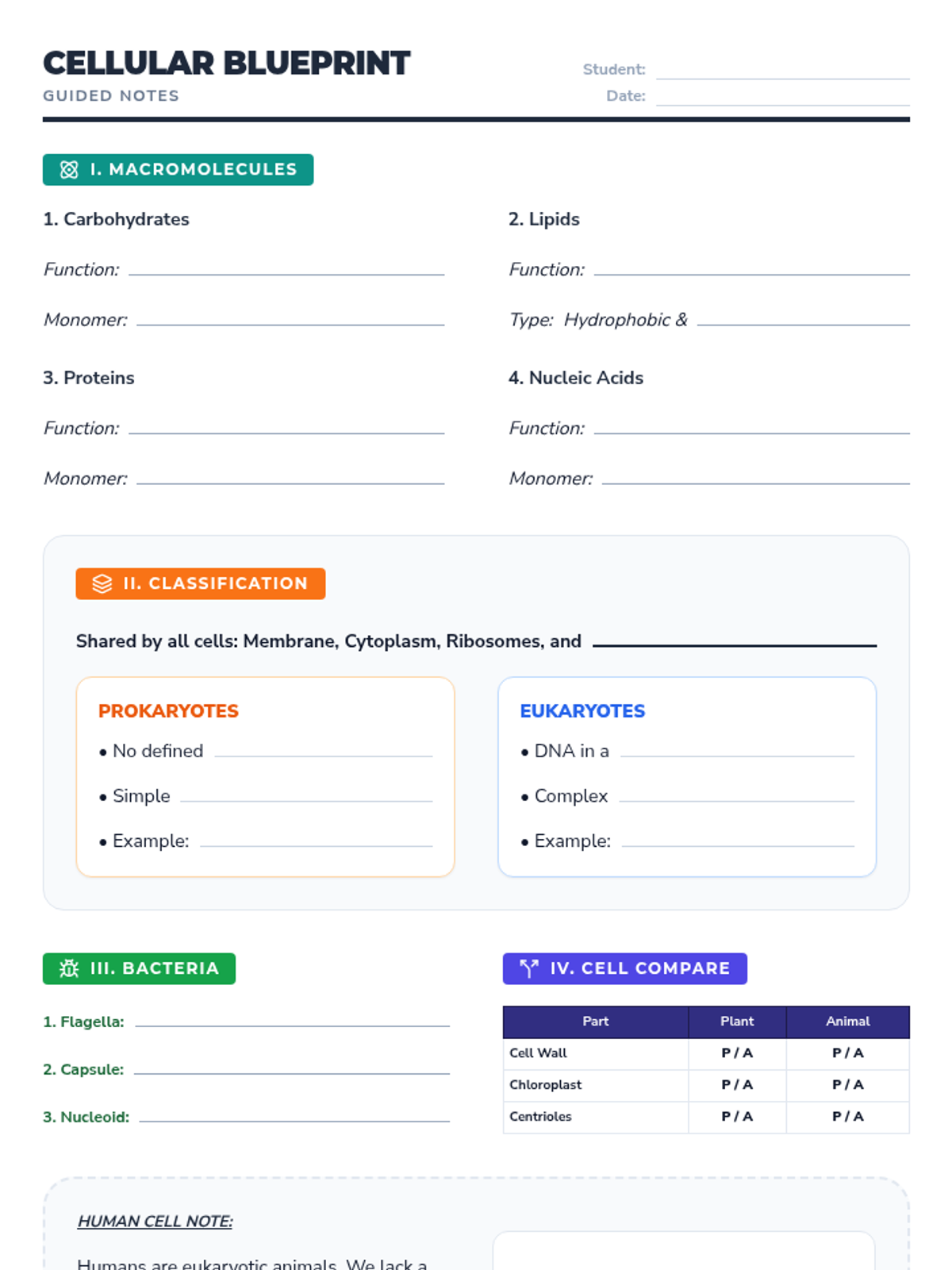
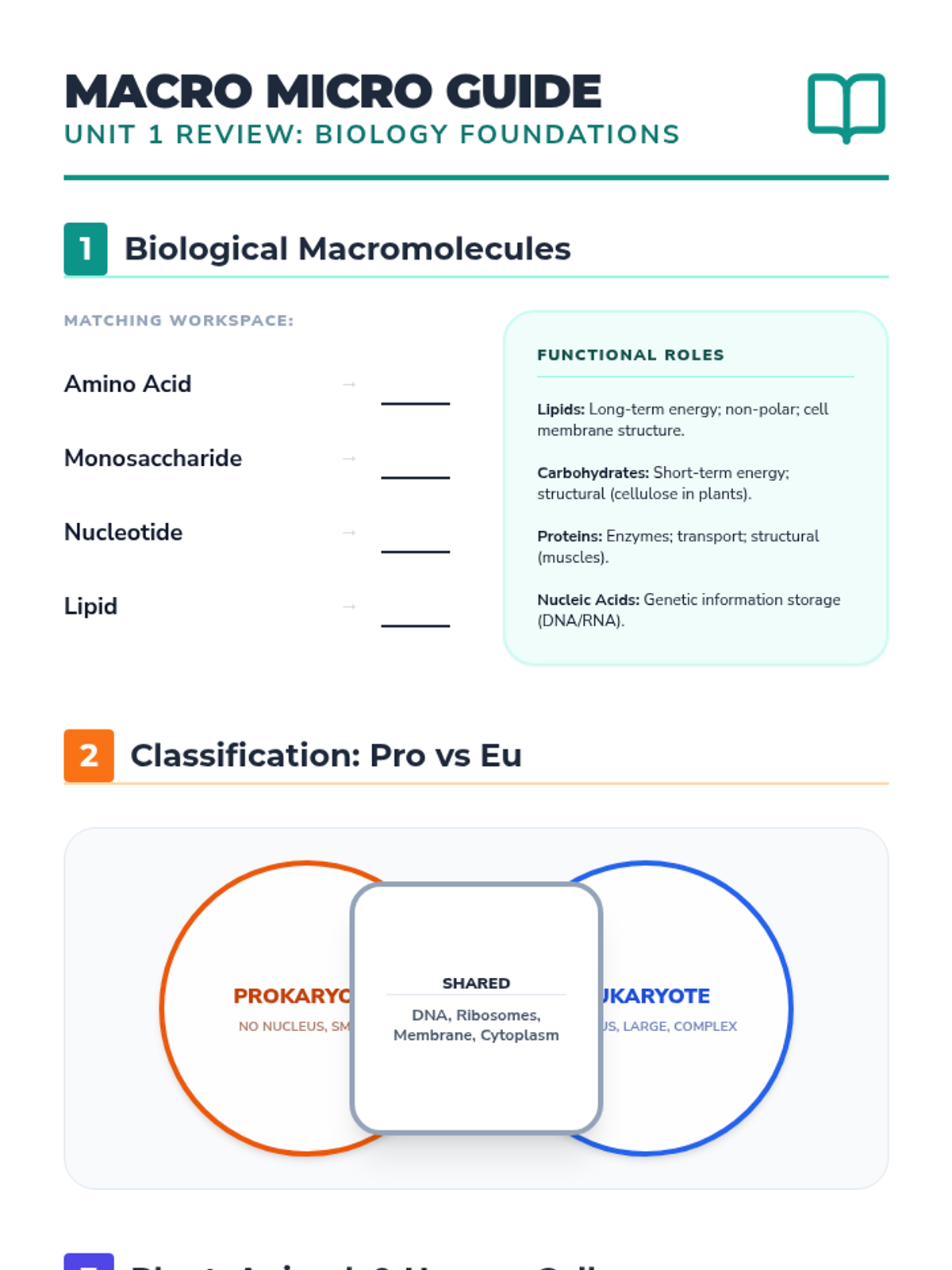
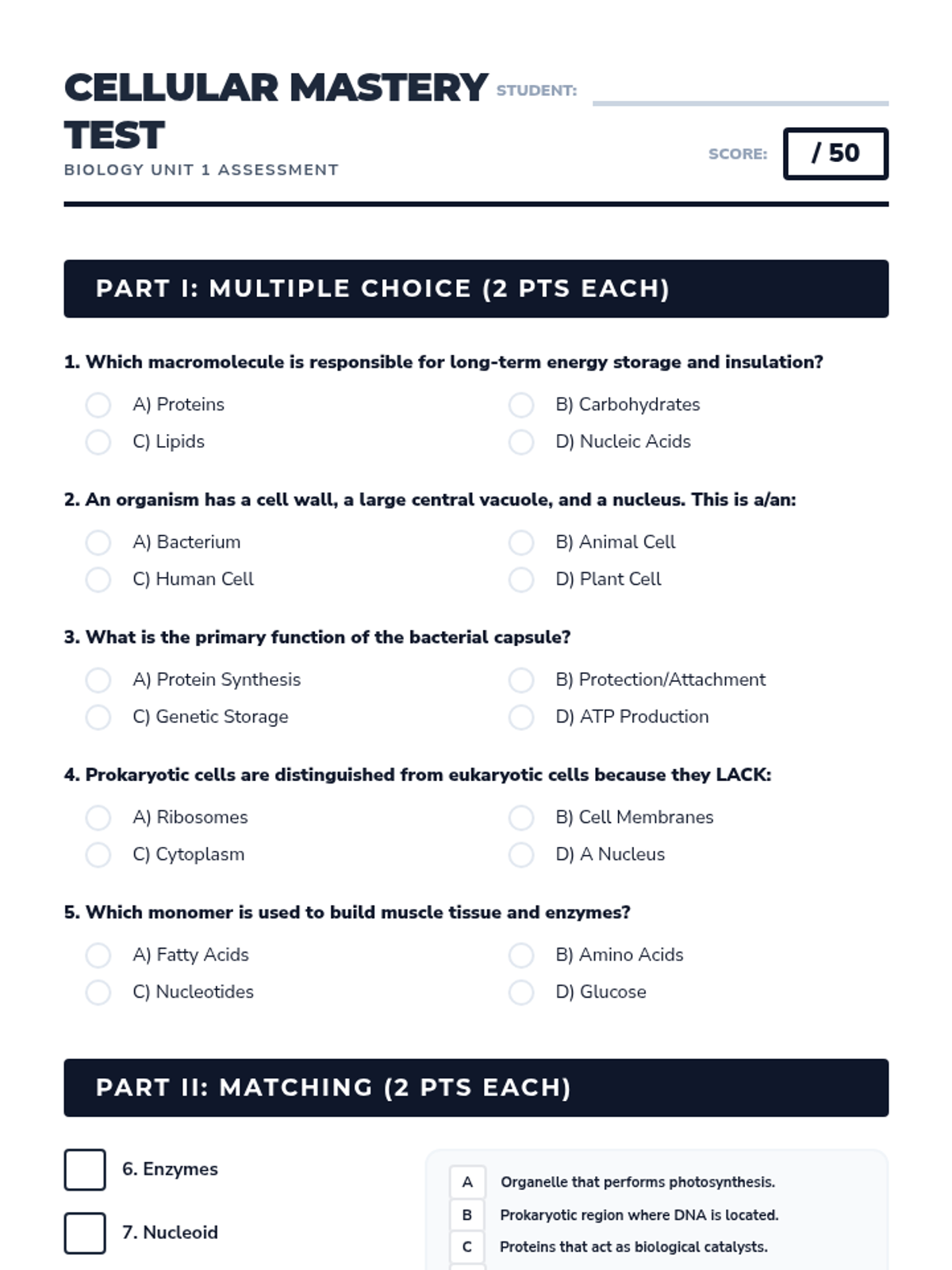
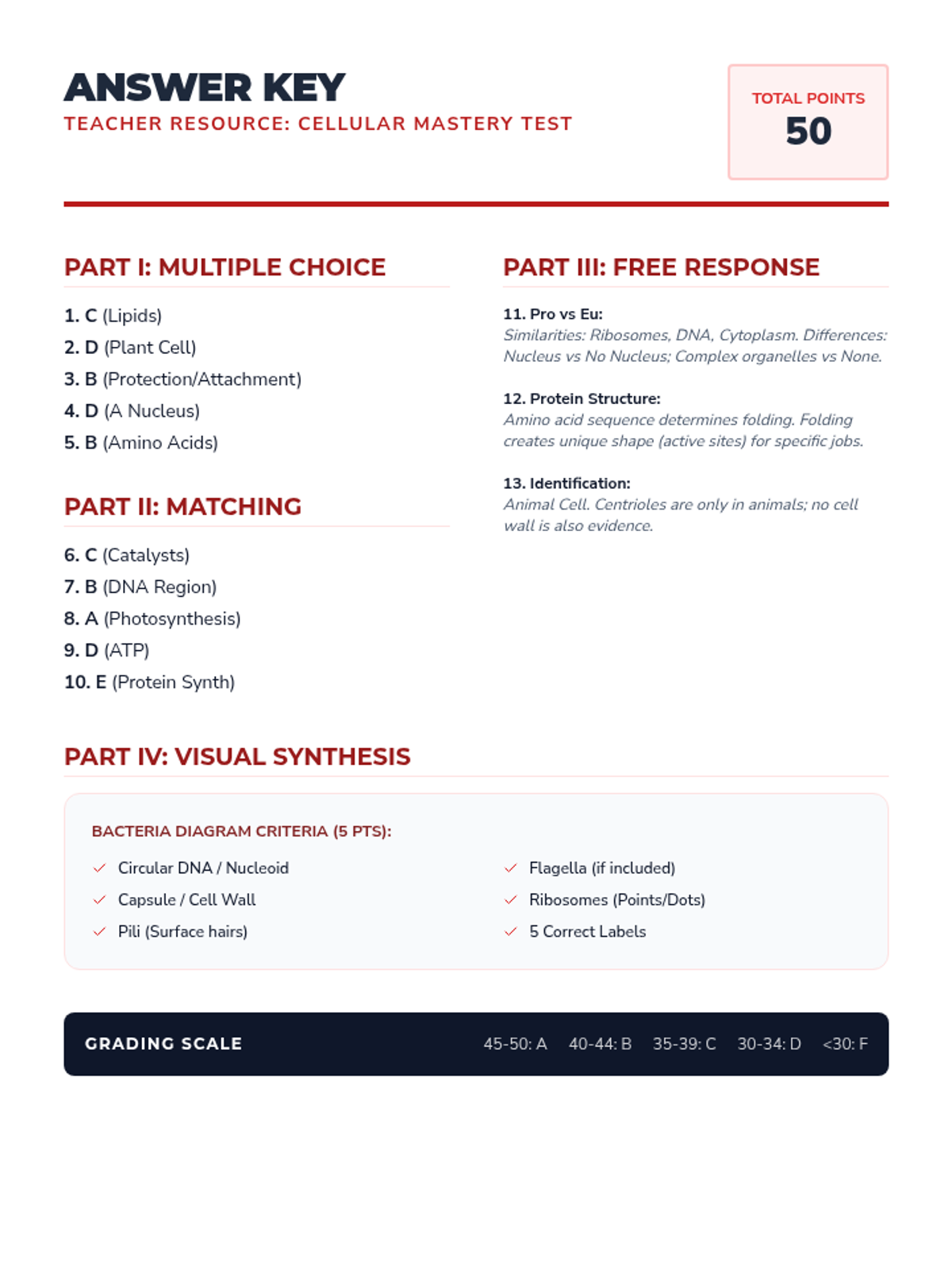
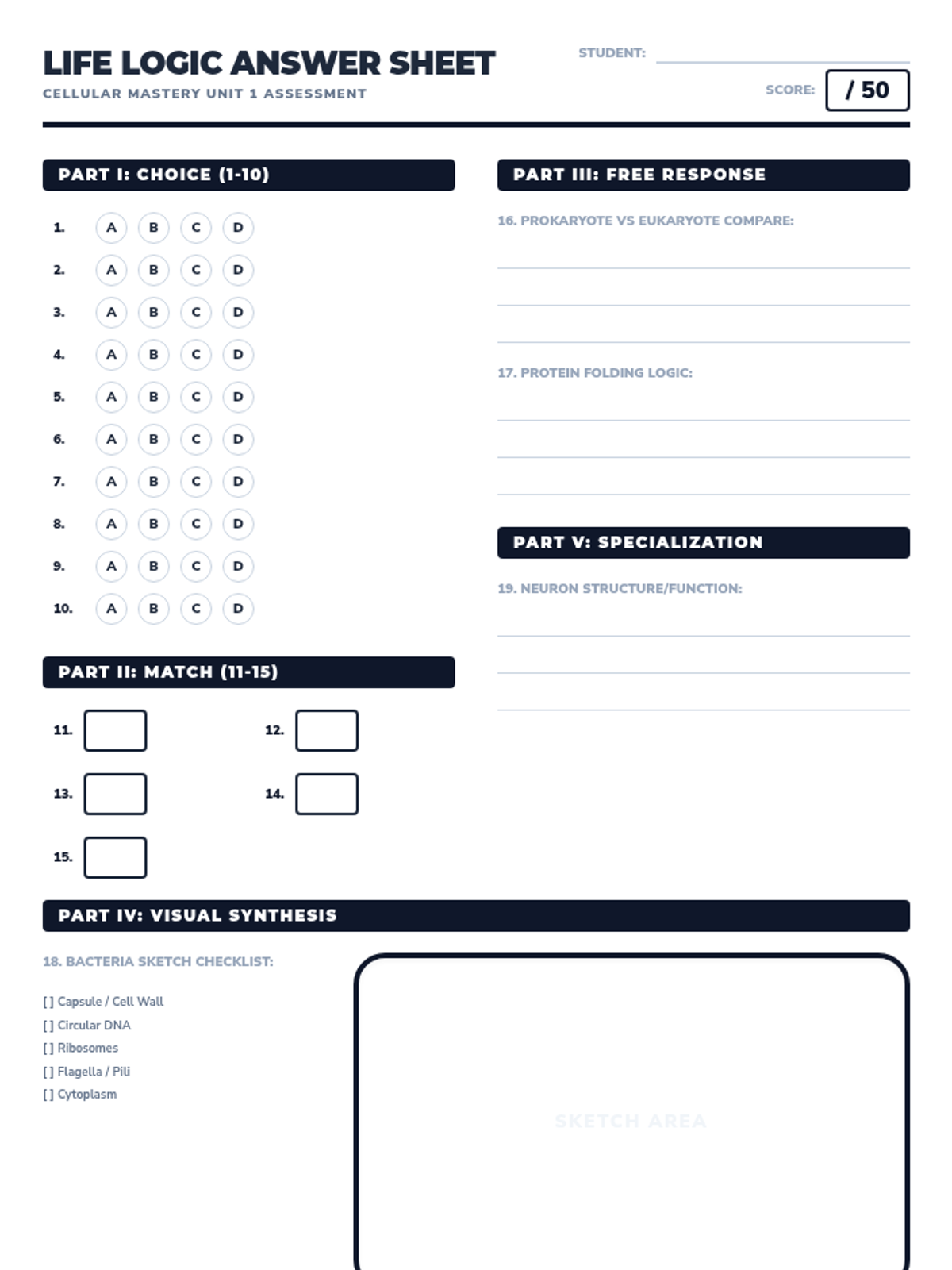
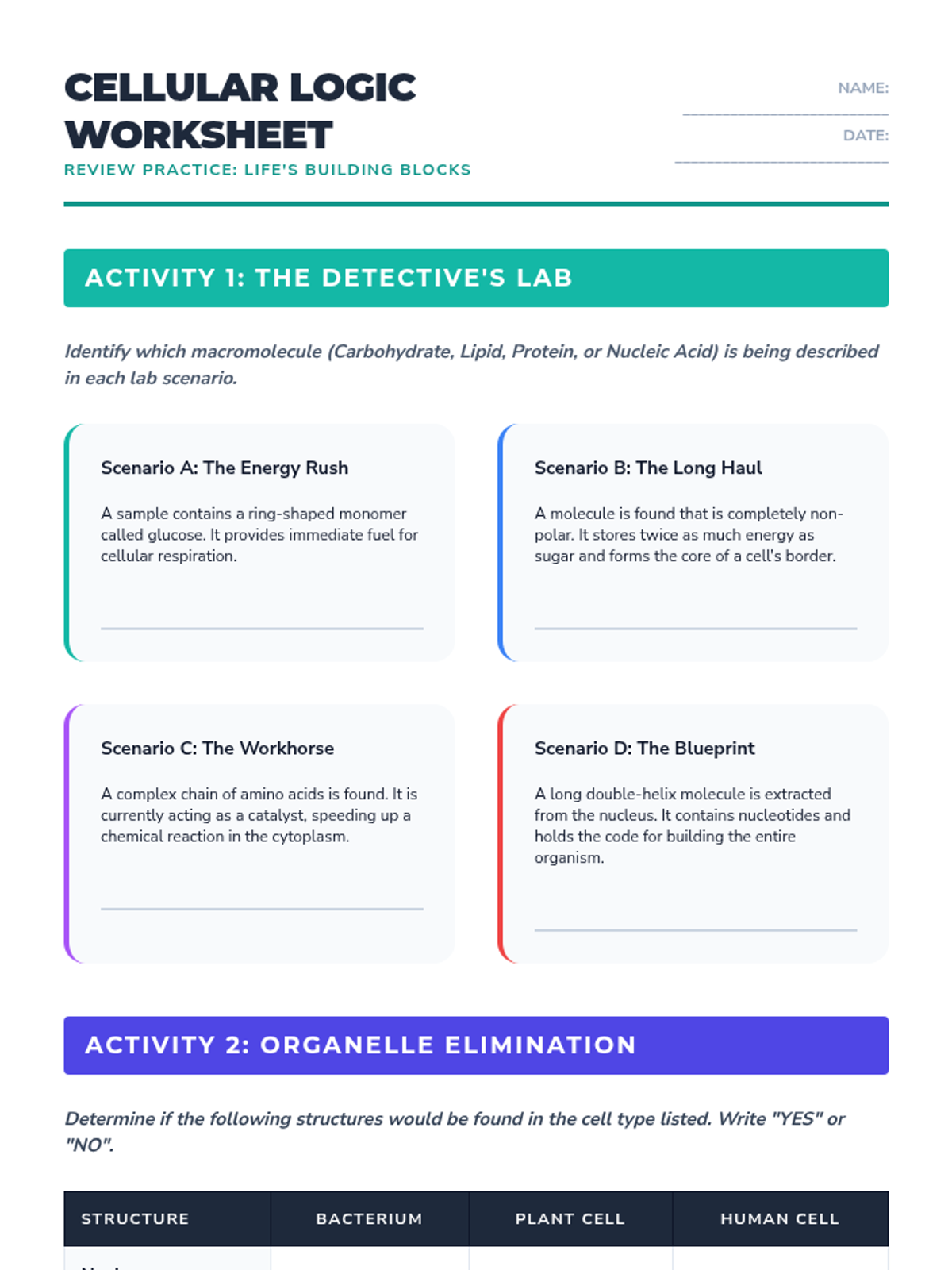
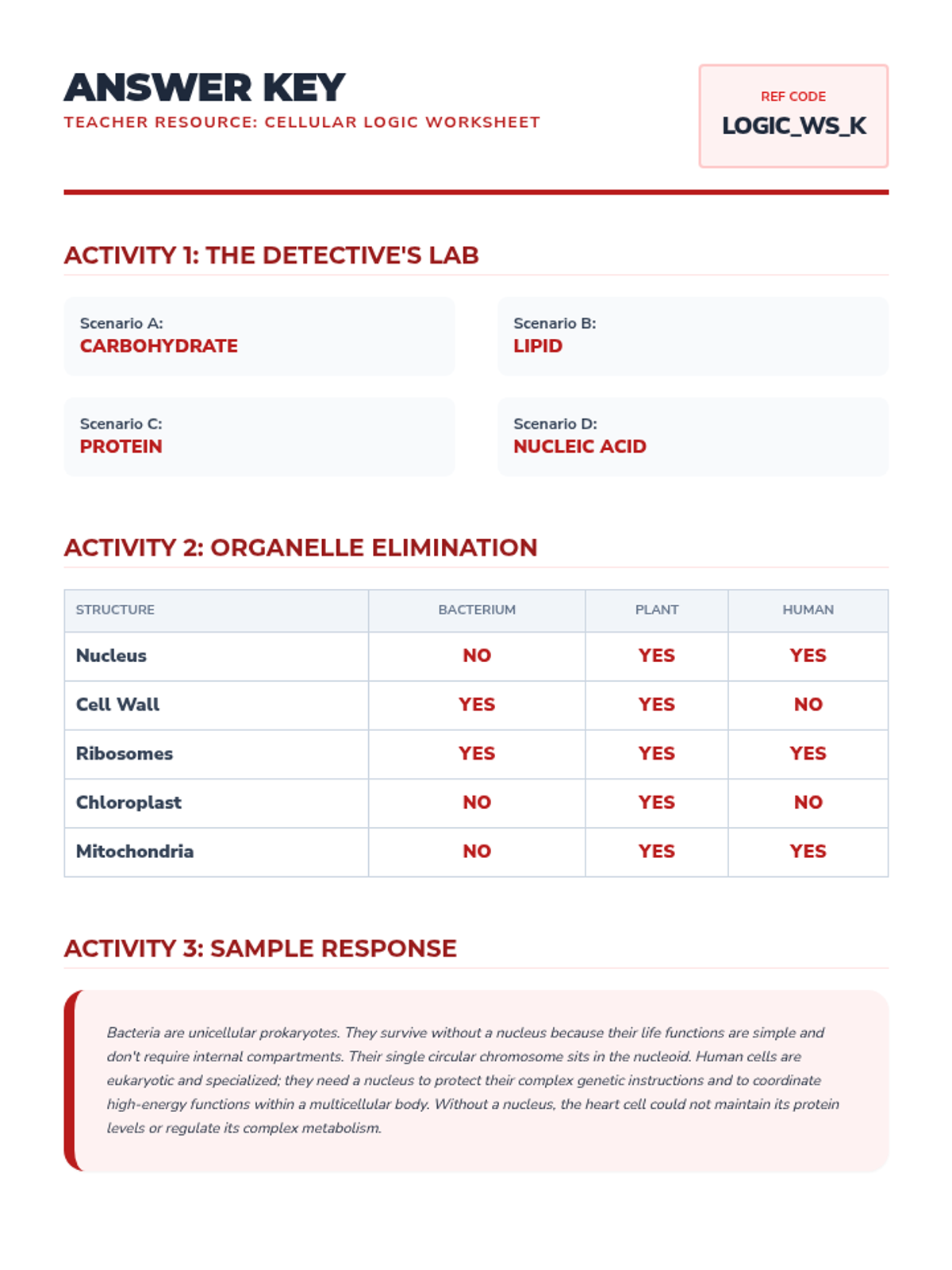
A review-focused lesson that synthesizes knowledge of macromolecules, bacterial structure, and the differences between plant and animal cells.
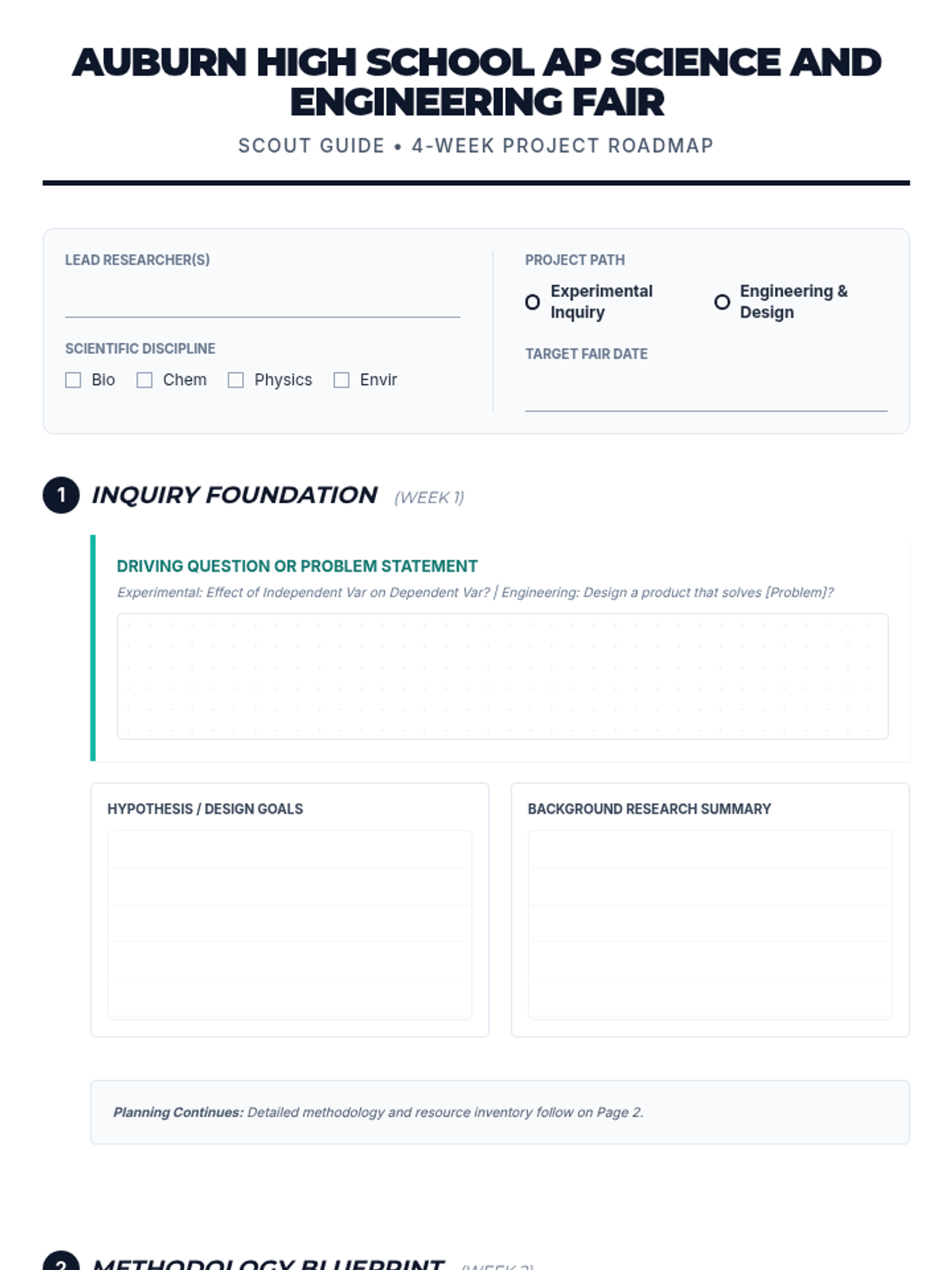
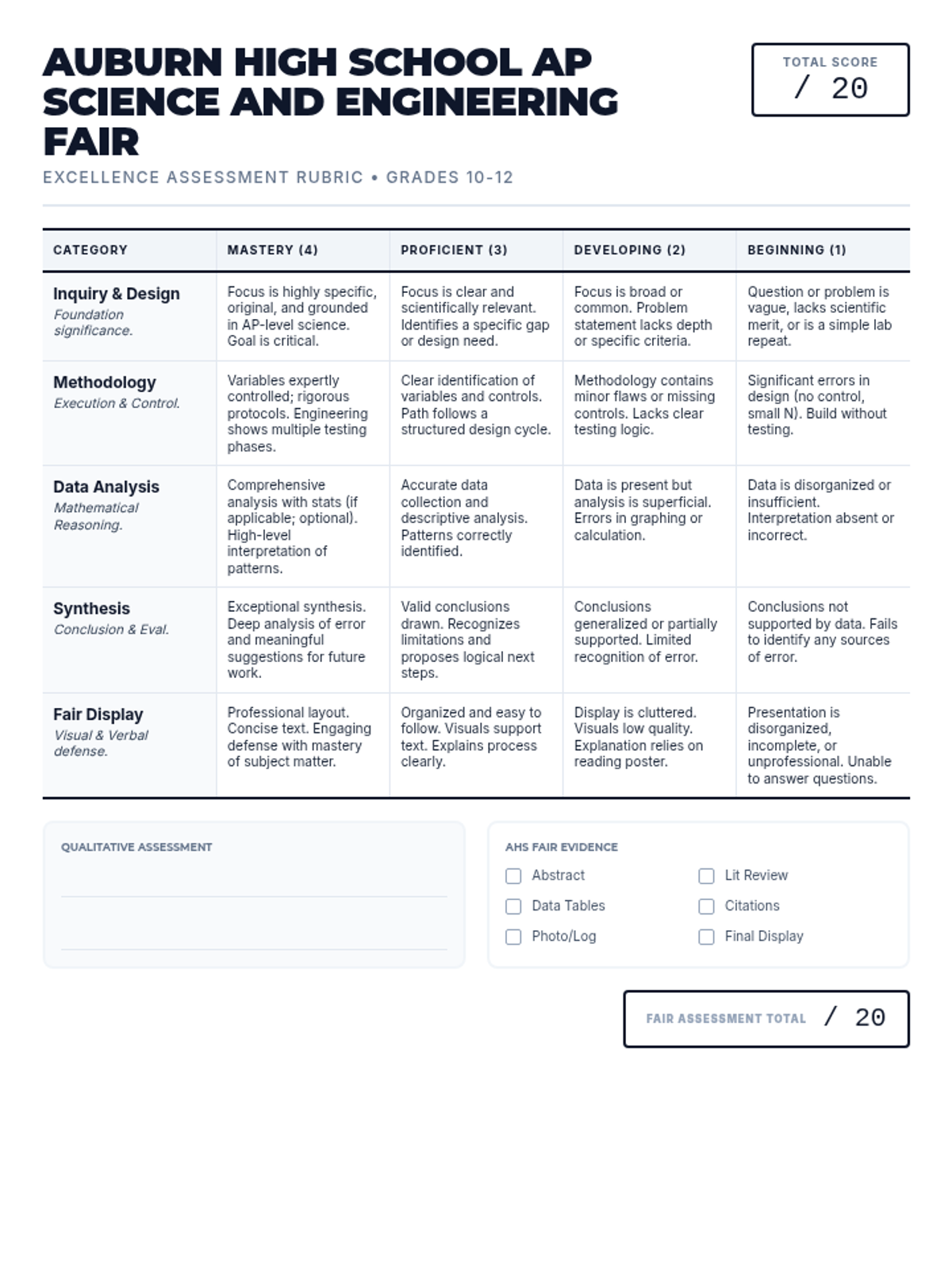
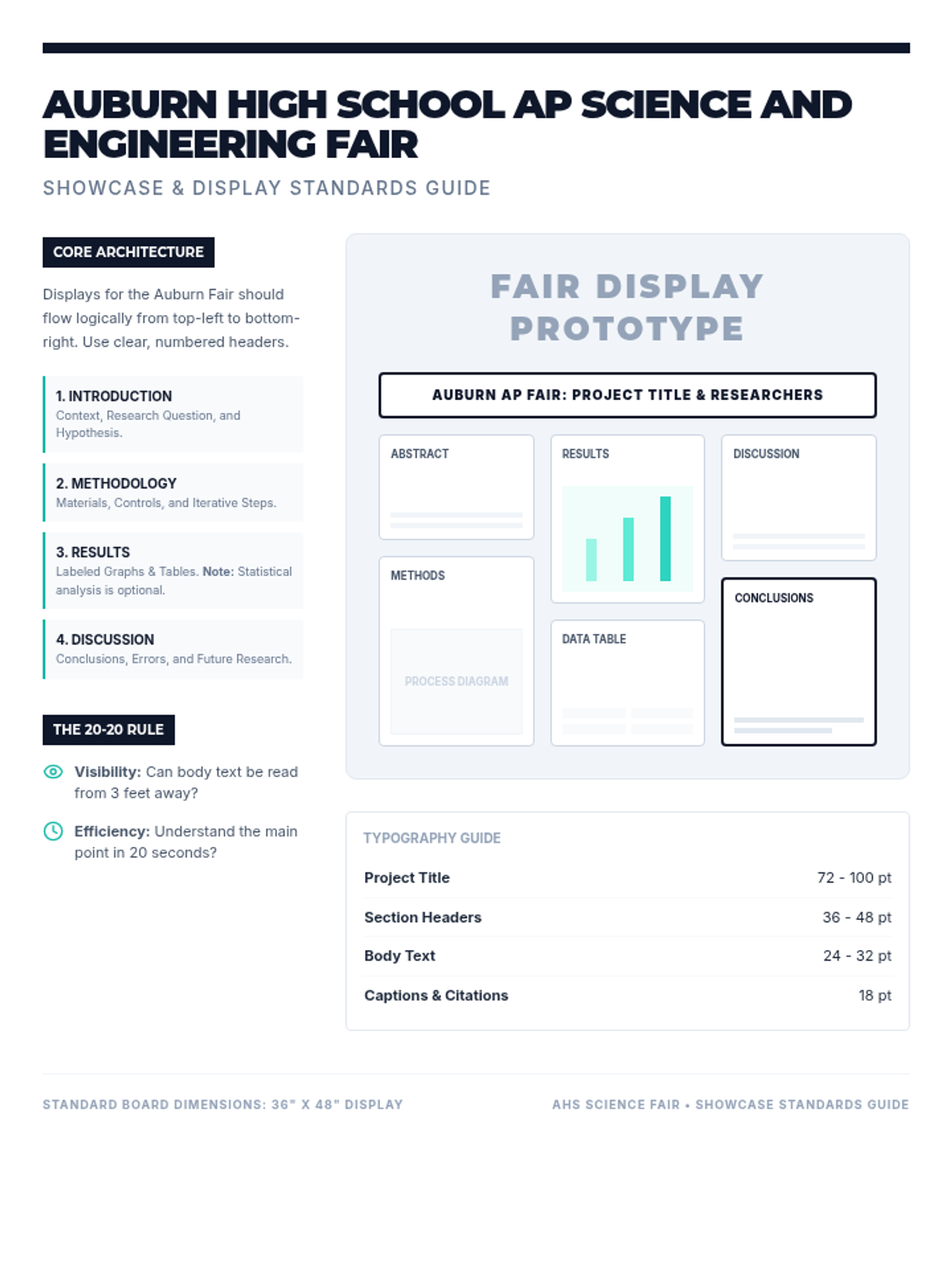
A comprehensive post-exam project framework for Auburn High School AP students to conduct original research or engineering designs over four weeks, culminating in a professional poster fair.
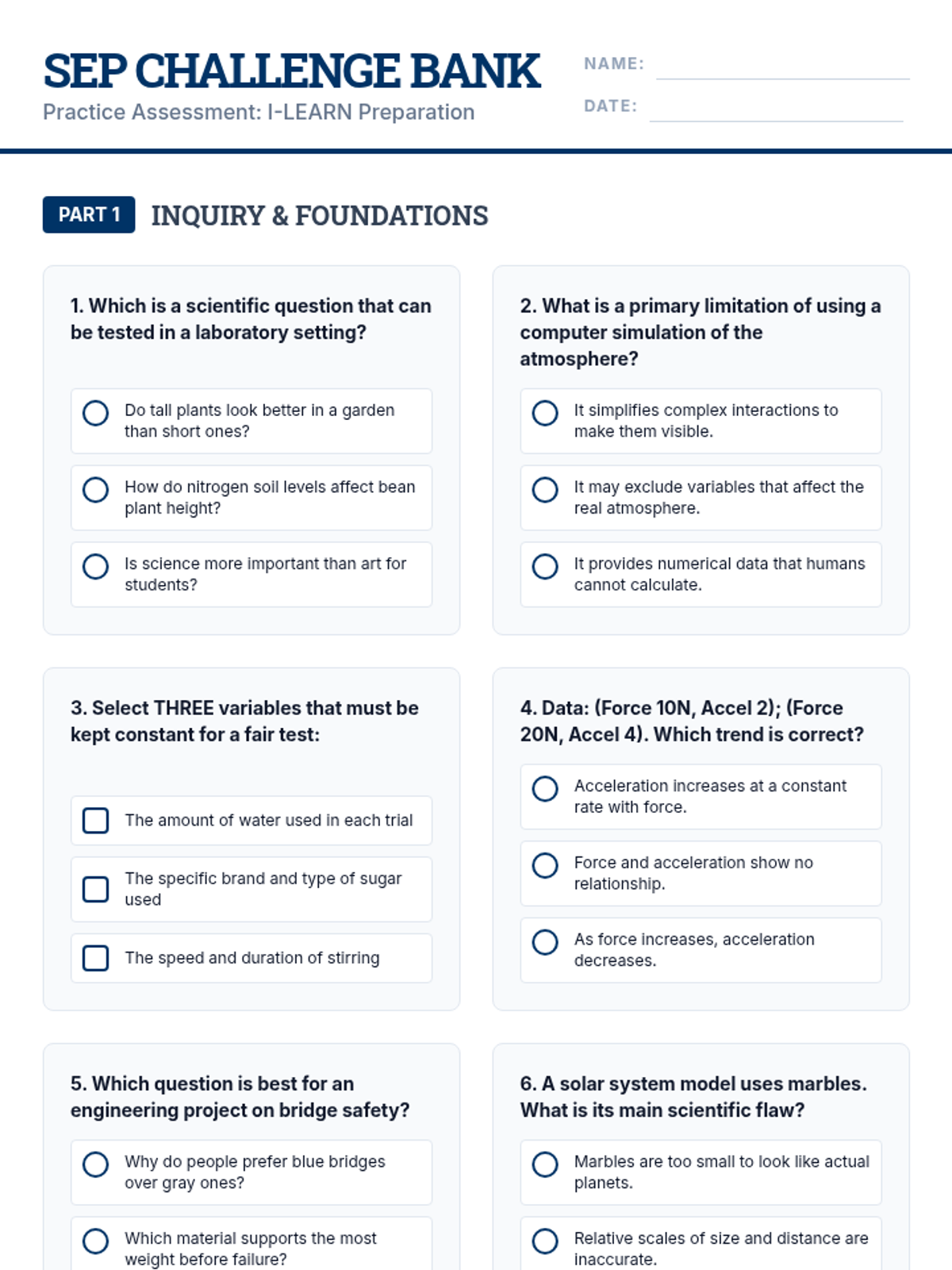
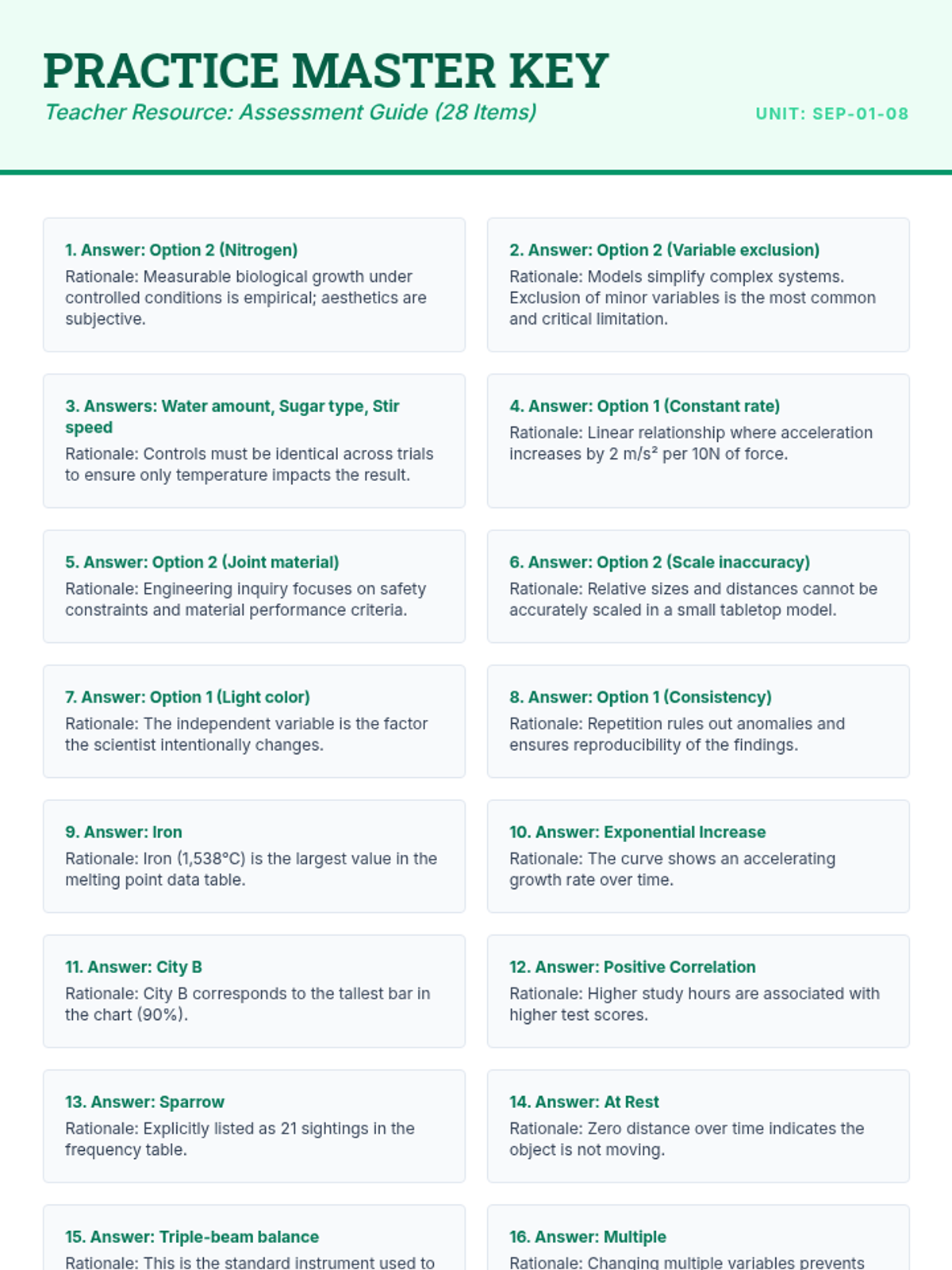
A comprehensive collection of I-LEARN style assessment items covering all eight Science and Engineering Practices (SEP), designed to prepare students for high-stakes testing through application-based questions.
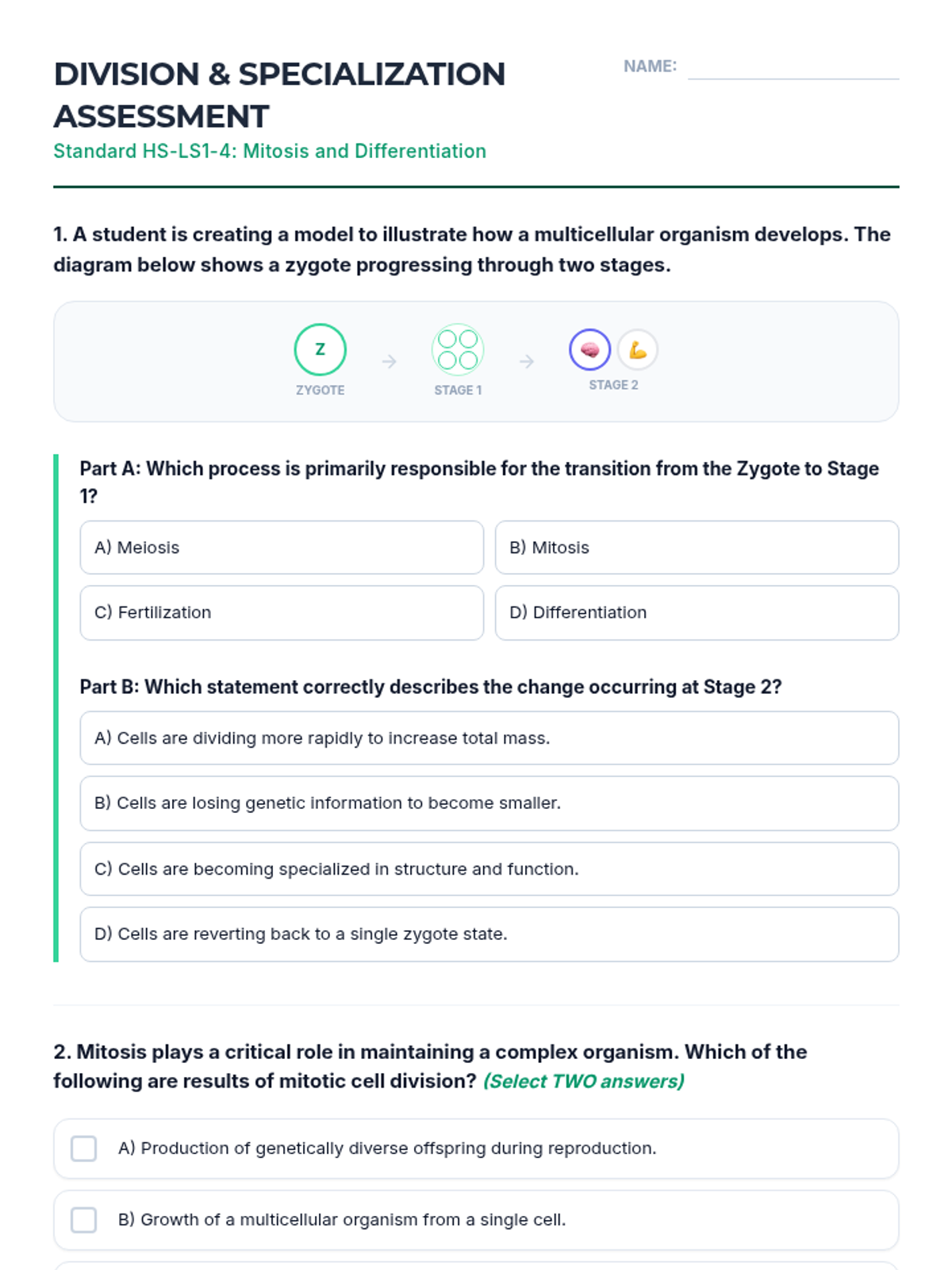
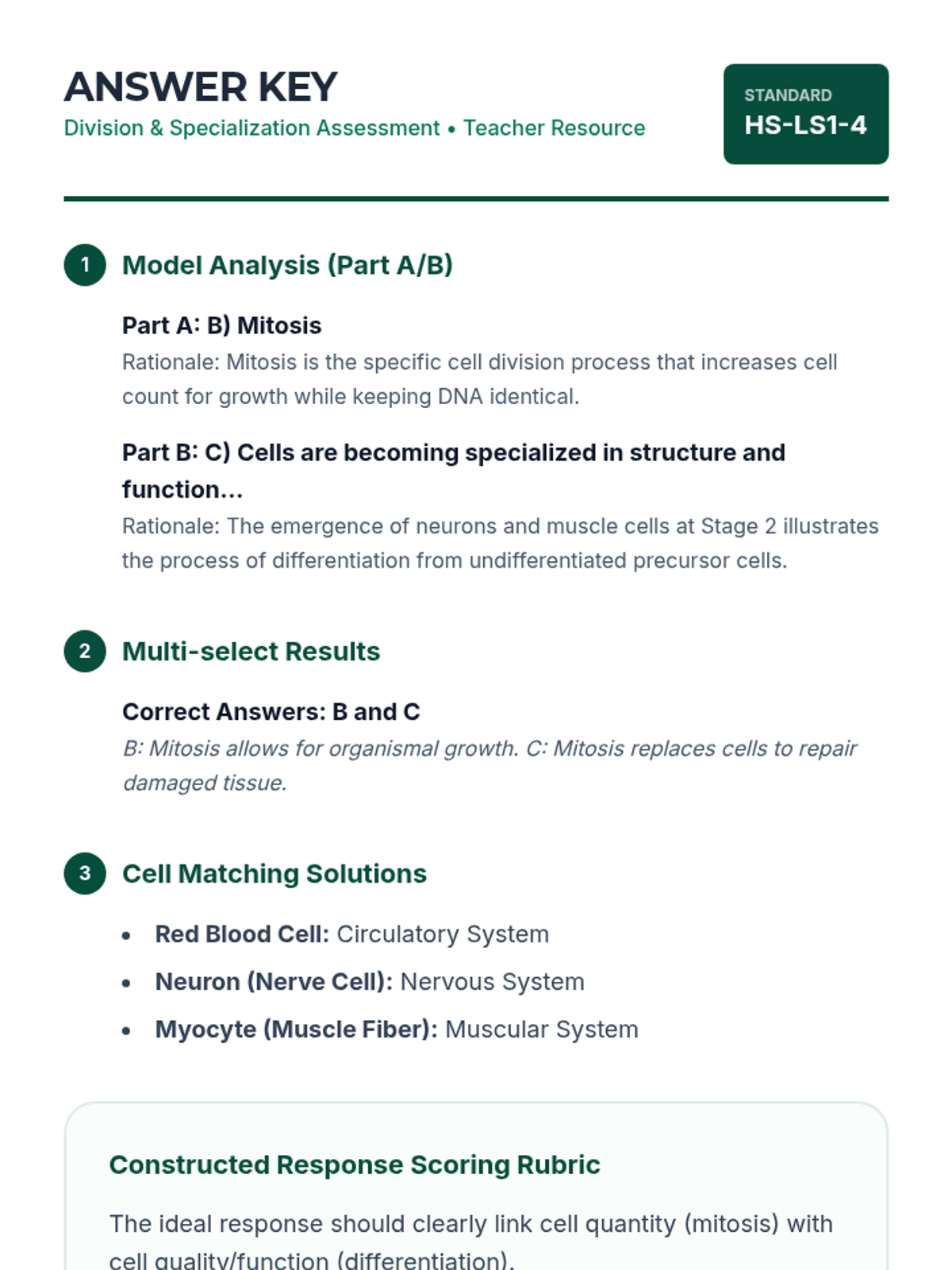
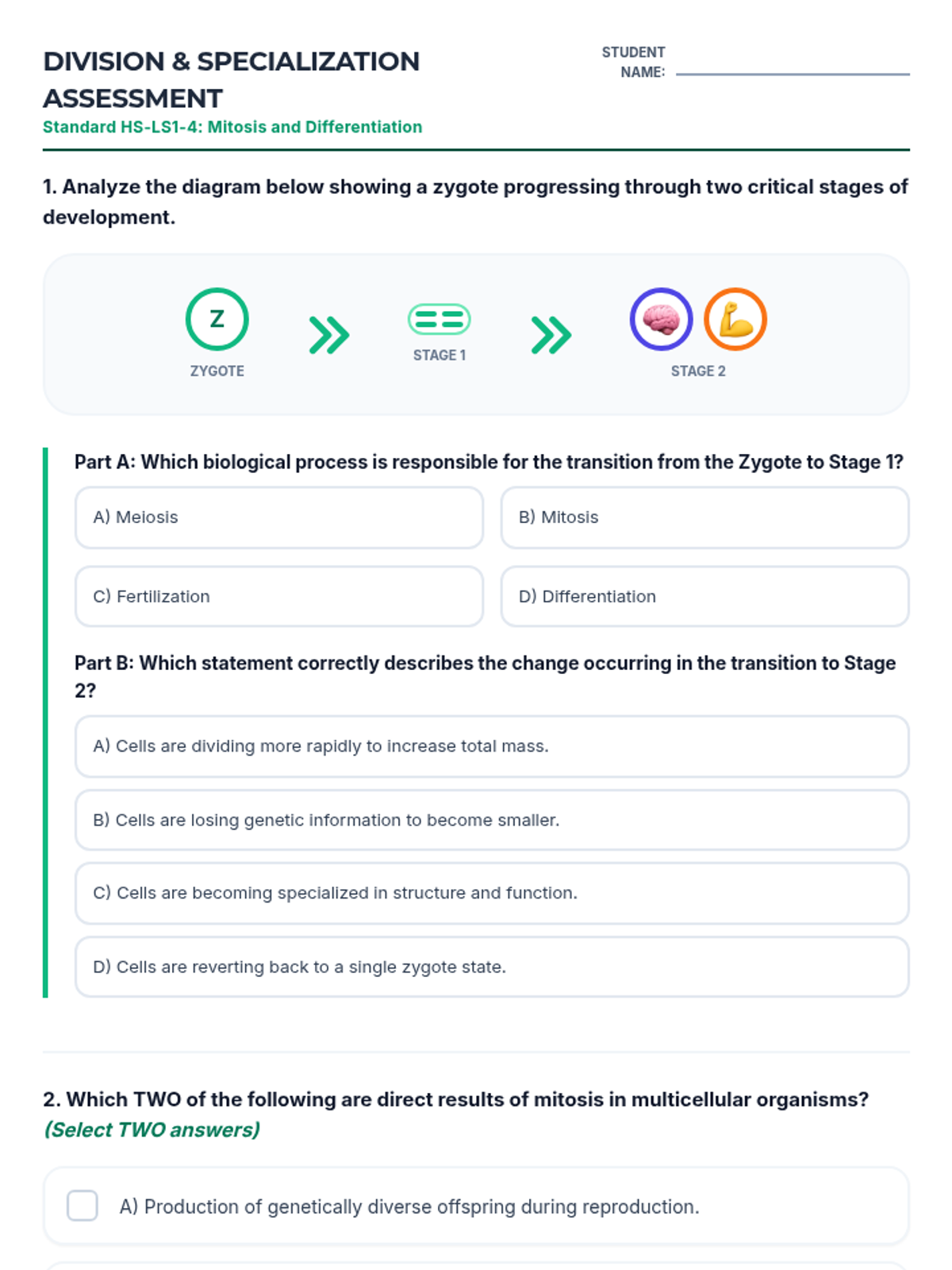
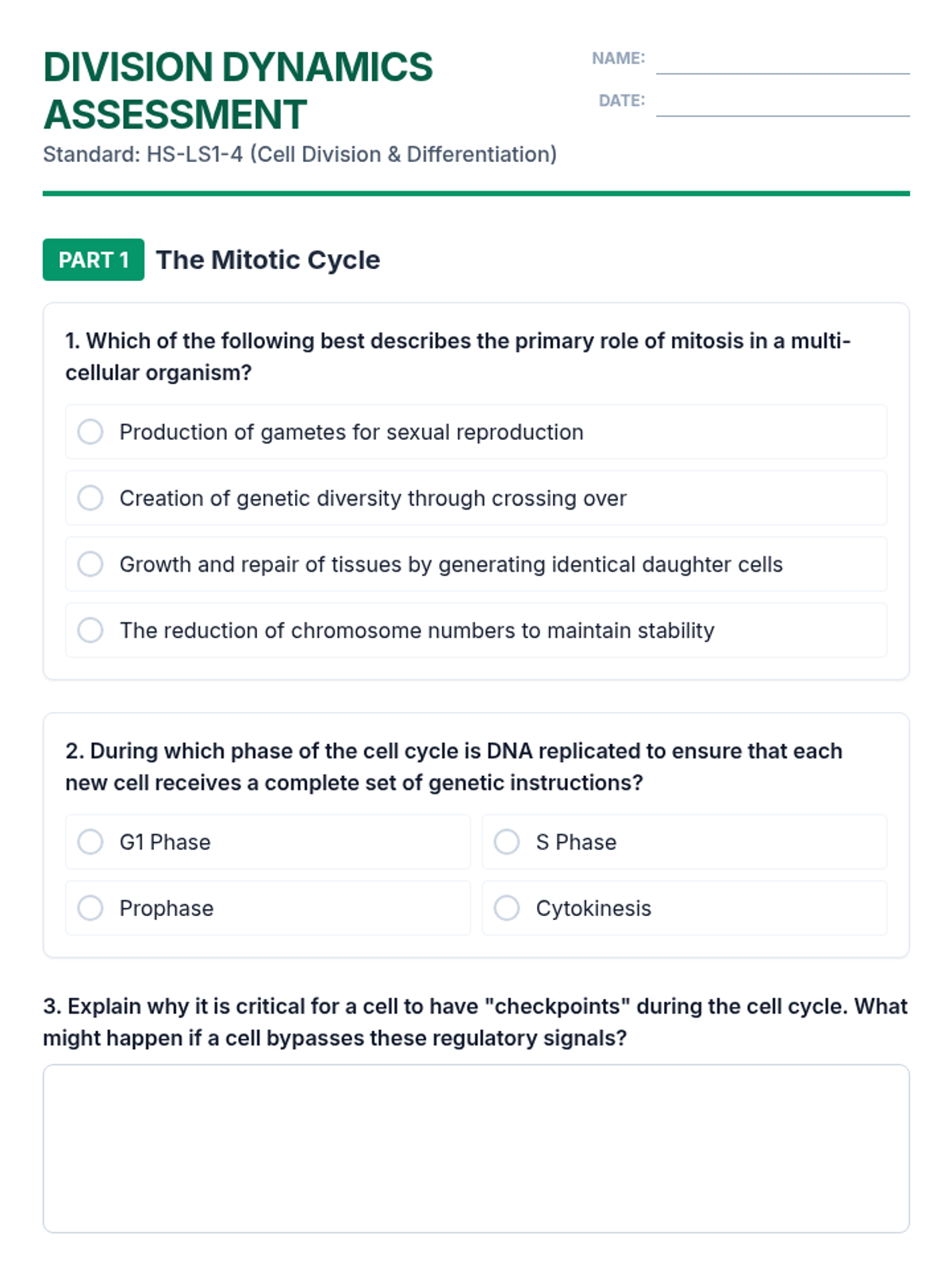
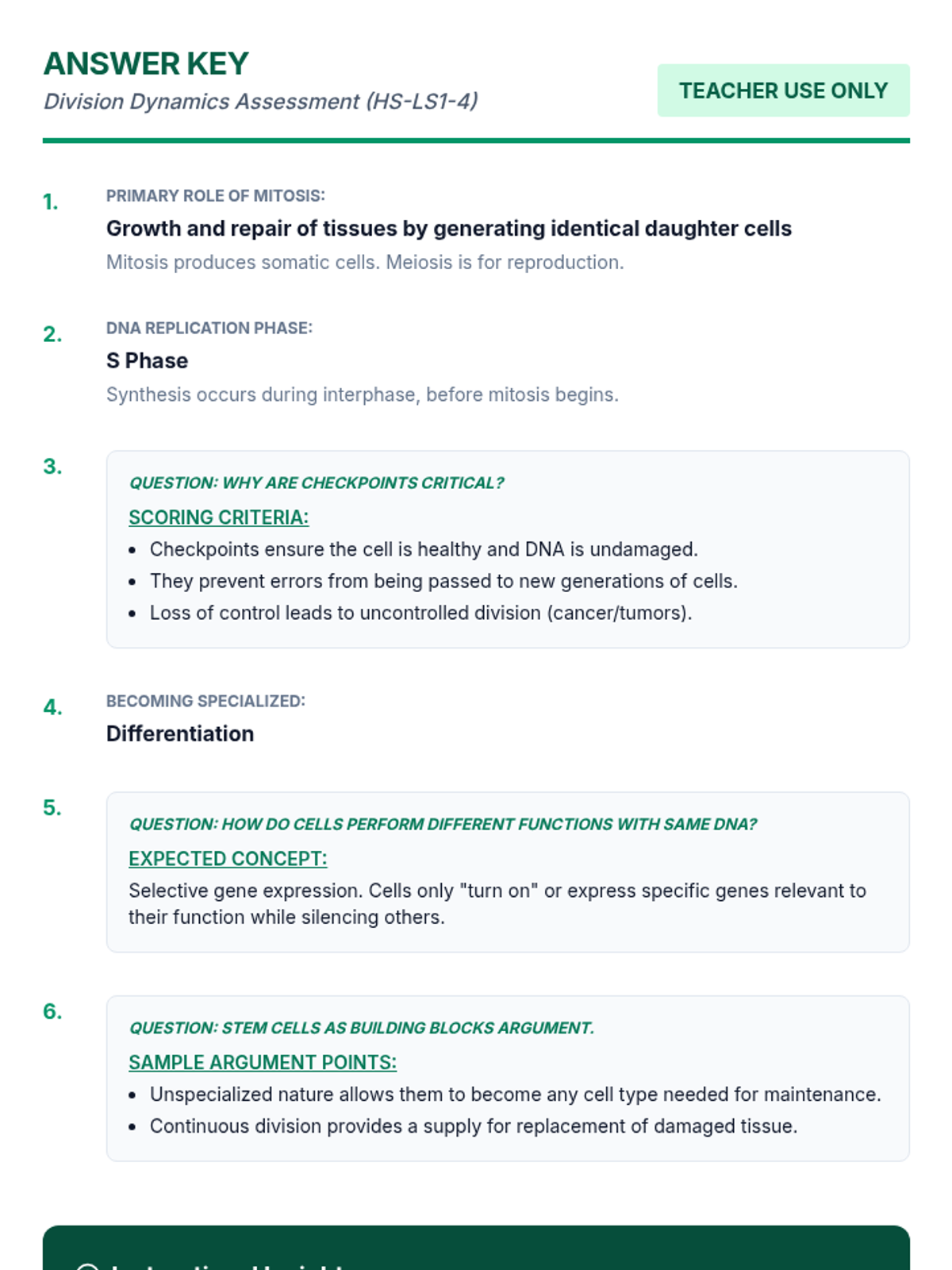
An exploration of the cellular processes that allow organisms to grow and maintain complexity, specifically focusing on mitosis and cell differentiation.
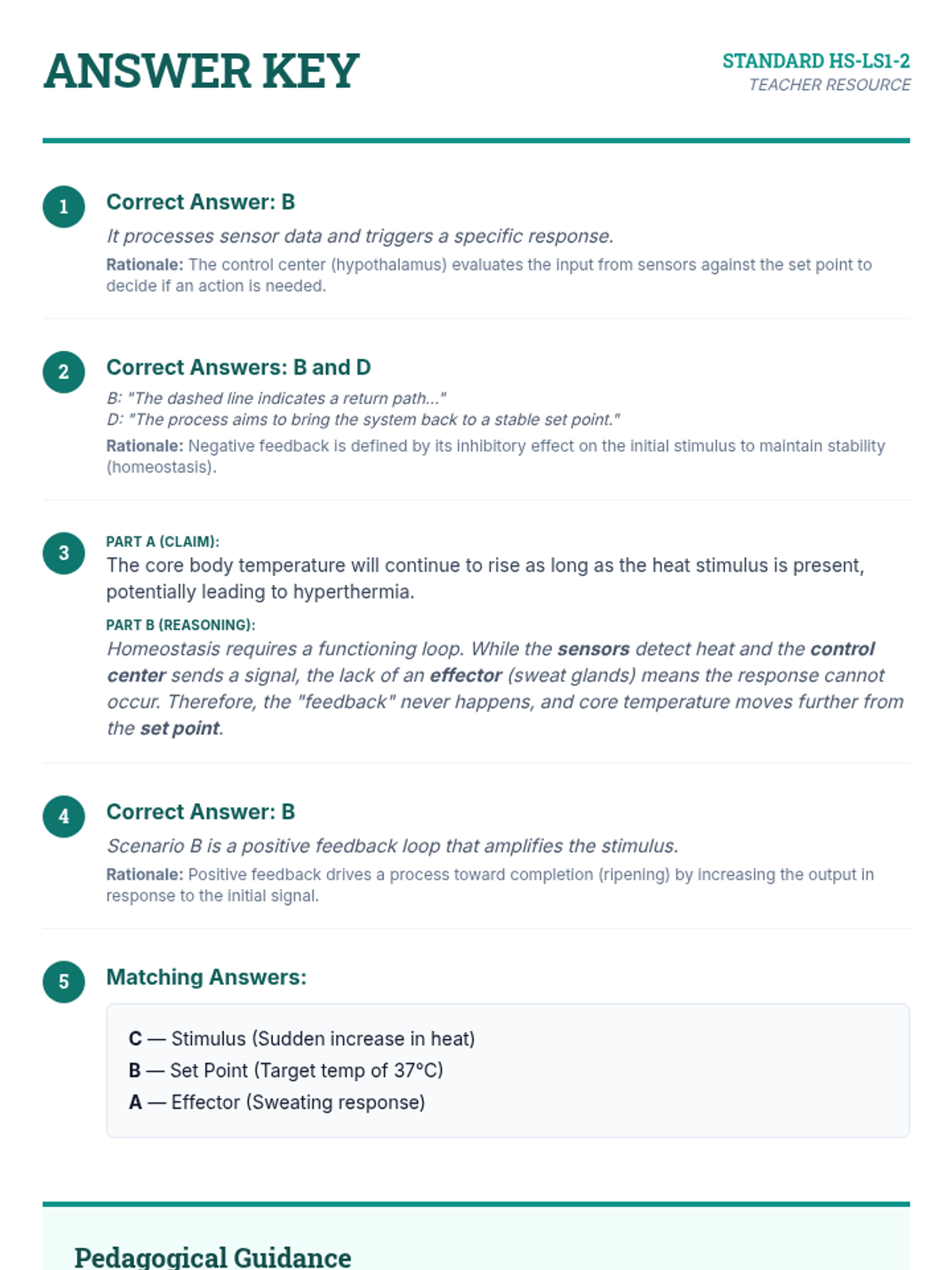
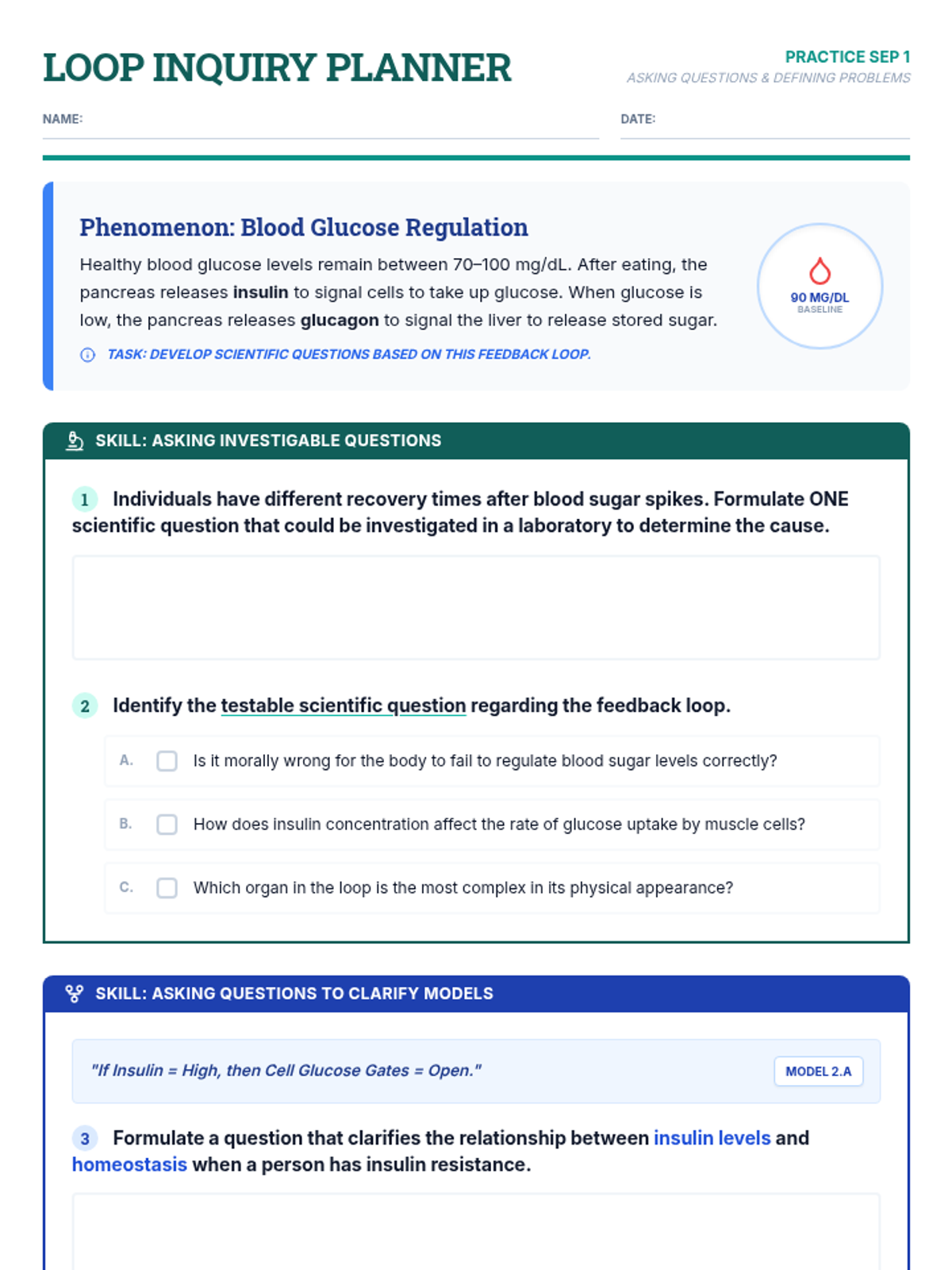
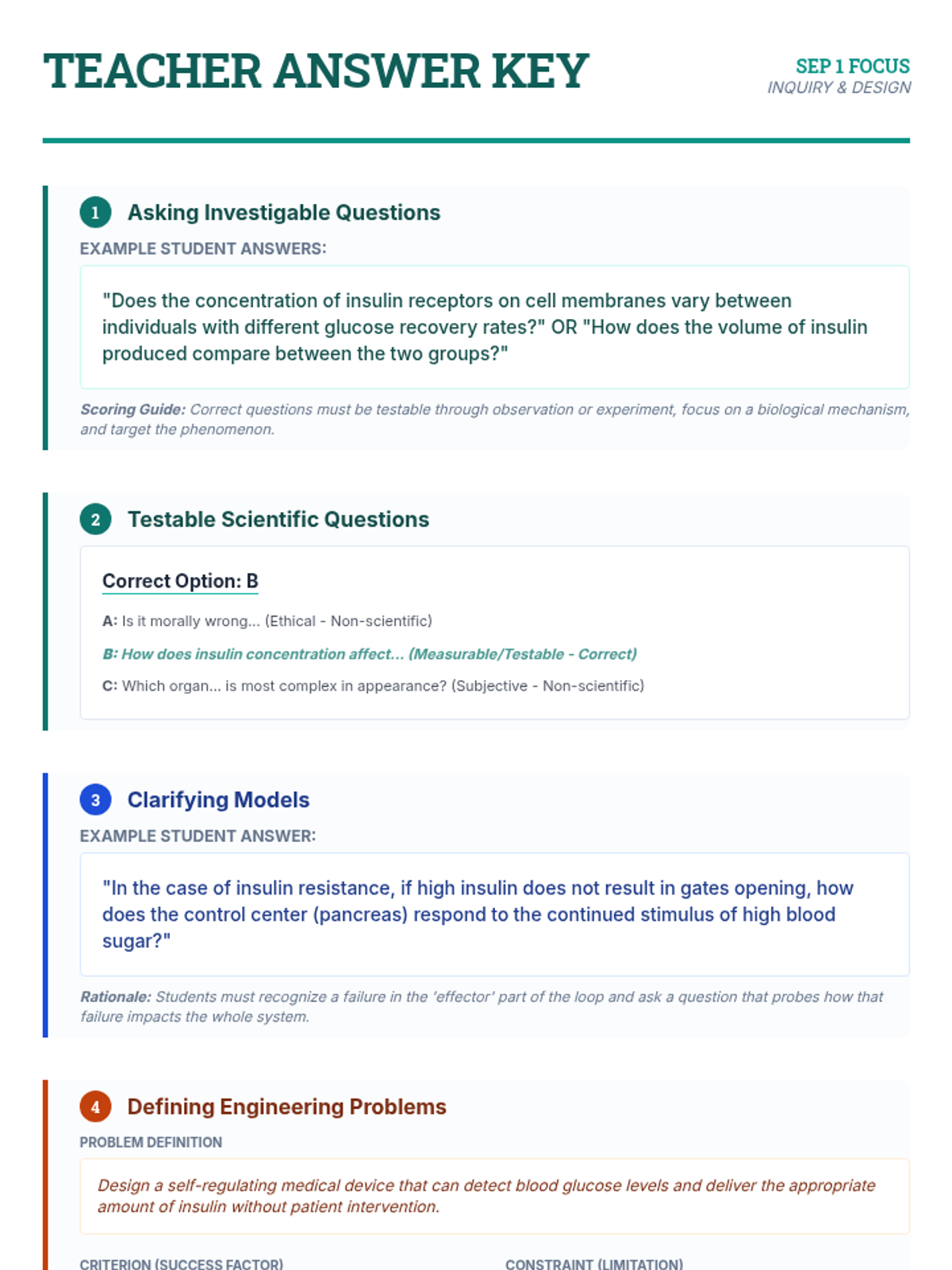
A focused practice lesson on biological feedback loops (HS-LS1-2), featuring standardized test-style questions and visual models.
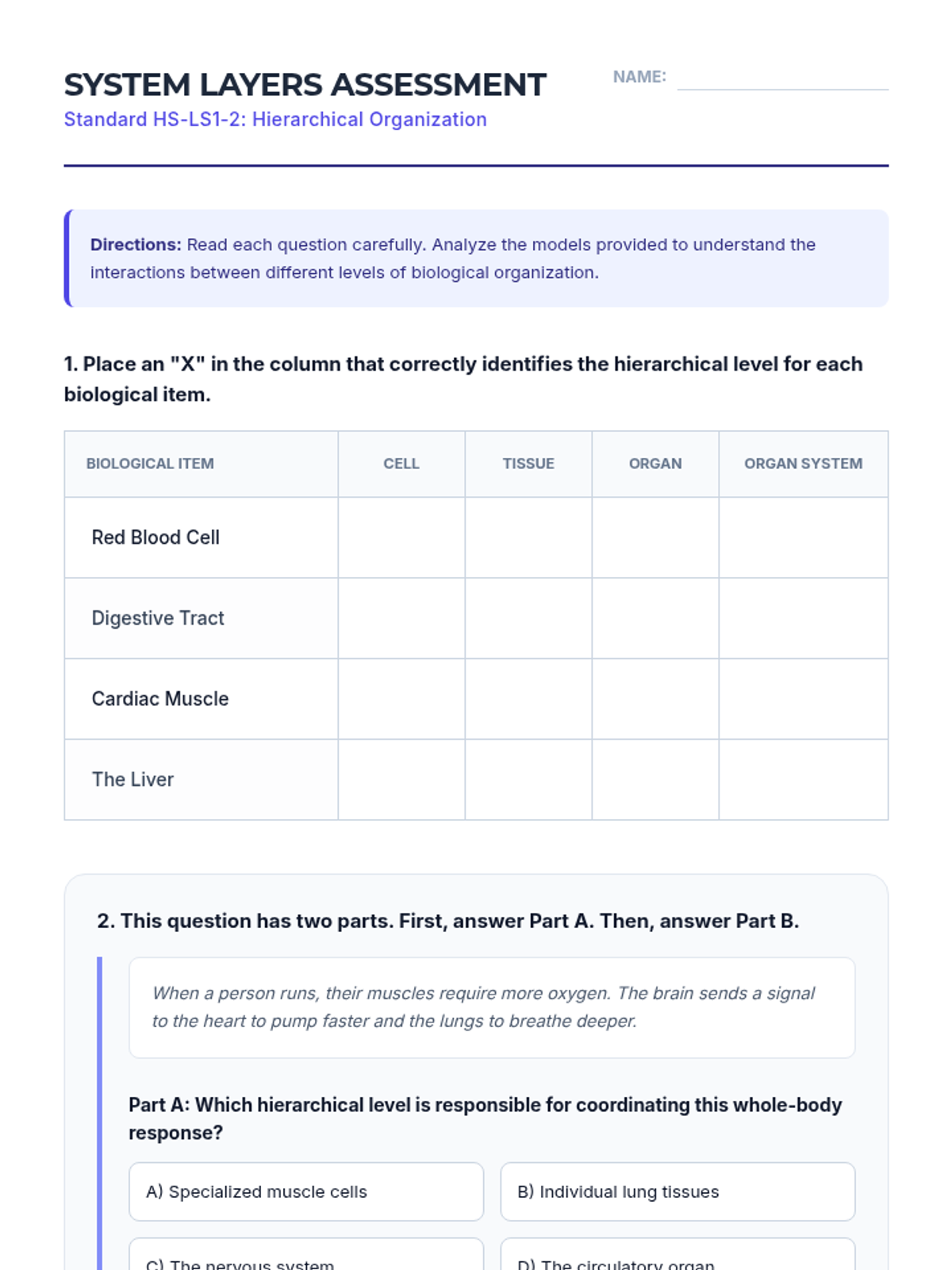
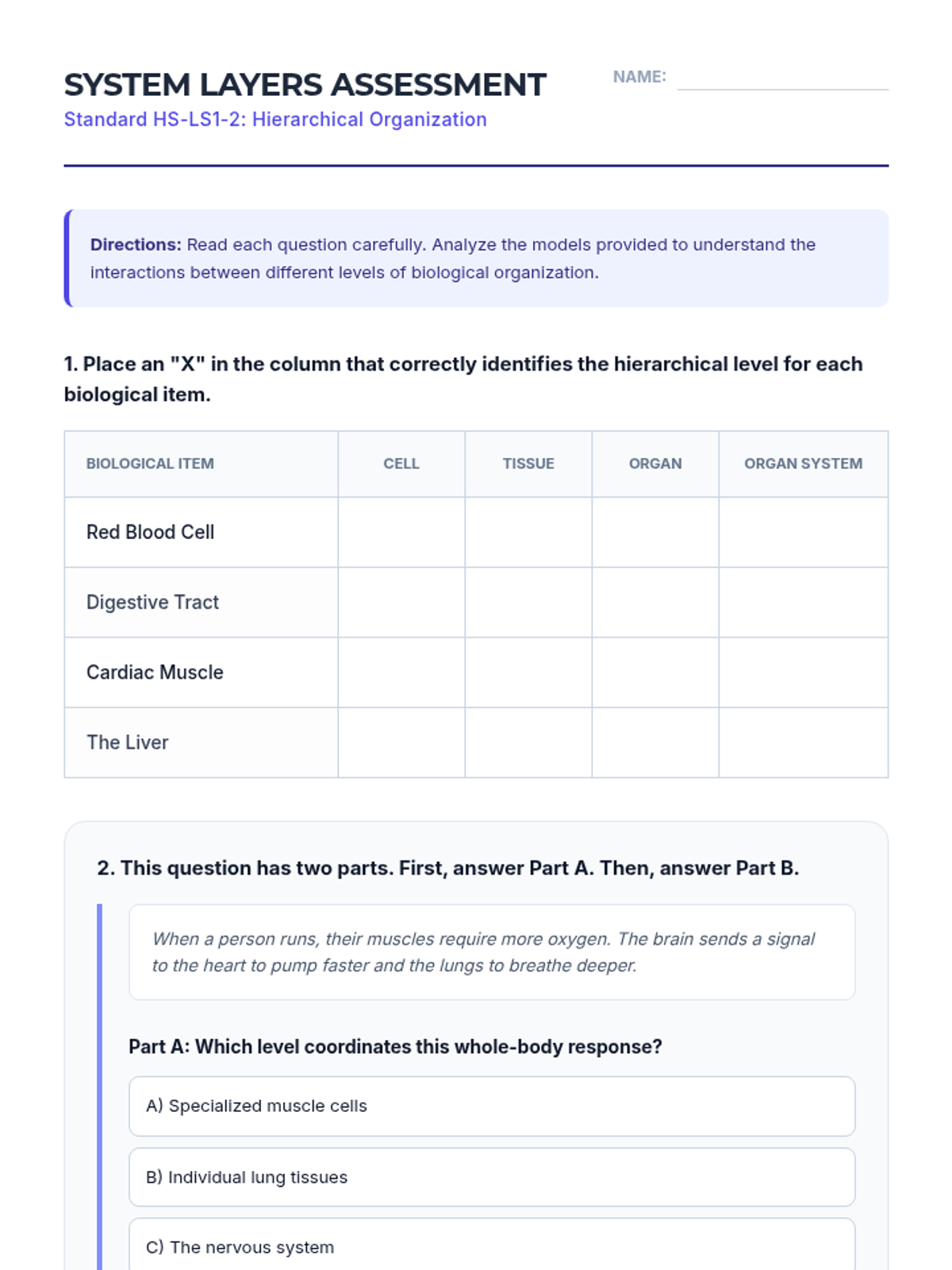
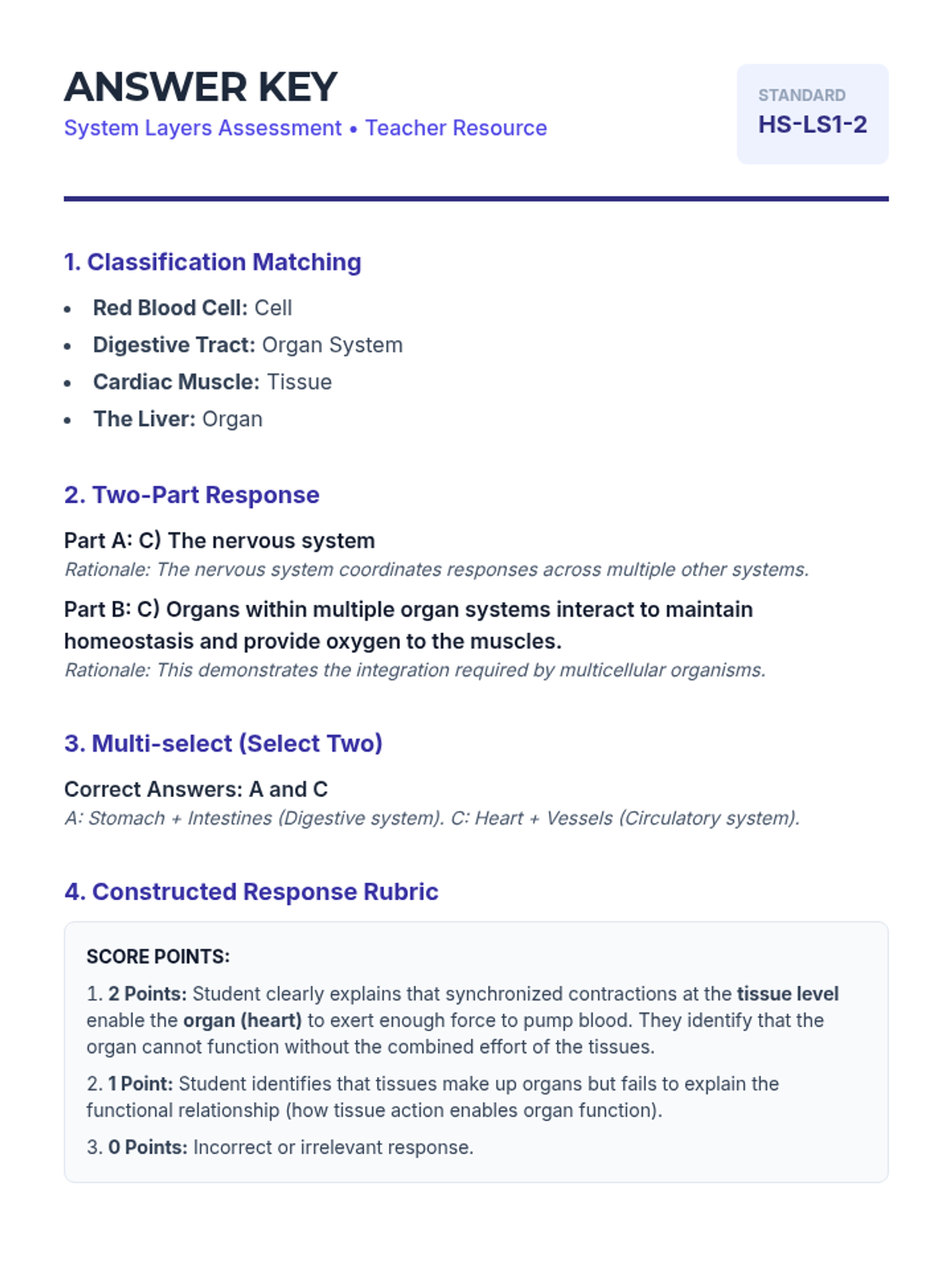
An exploration of the hierarchical organization of multicellular organisms, focusing on how cells, tissues, organs, and organ systems interact to perform complex functions.
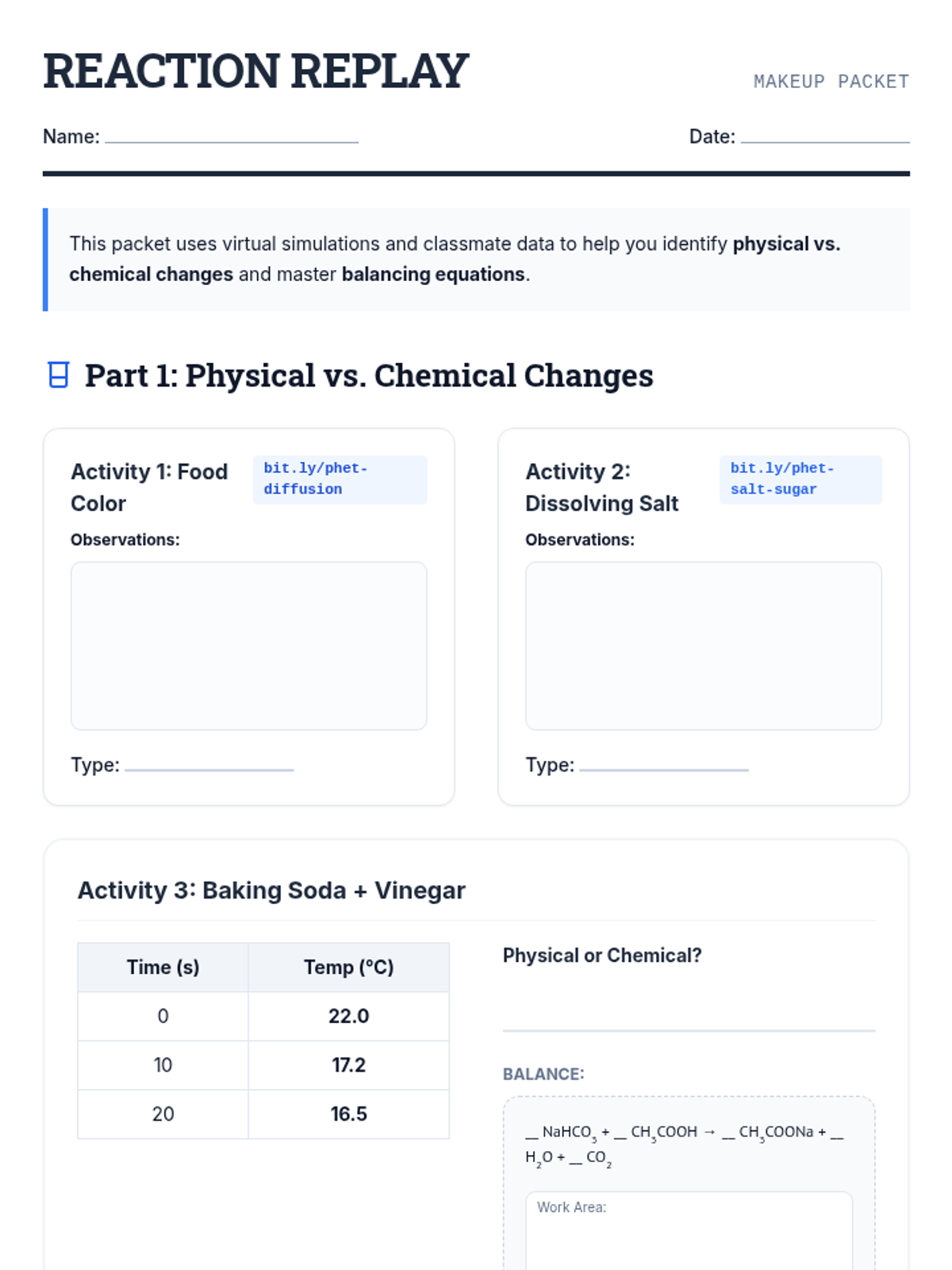
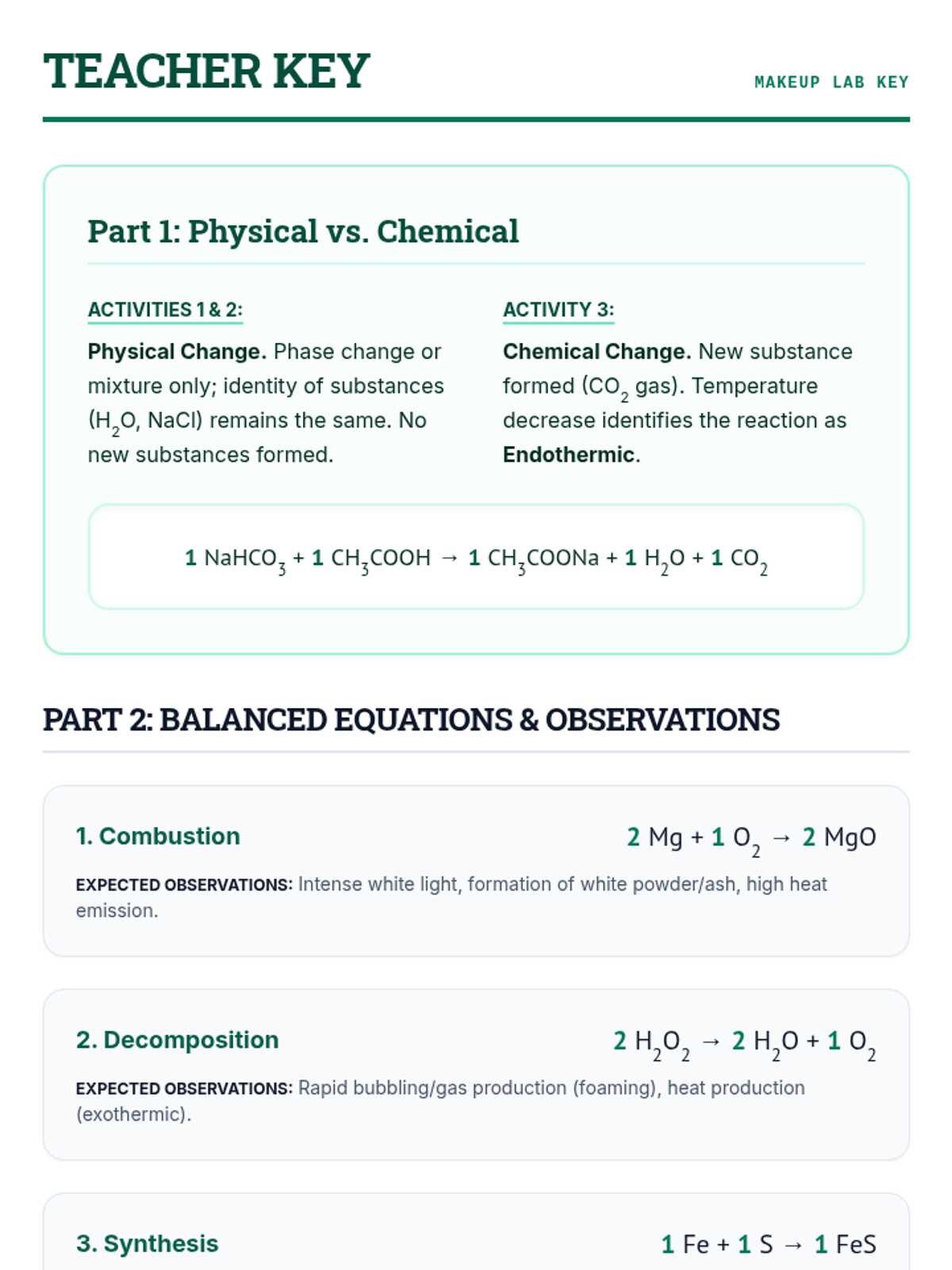
A comprehensive makeup packet for students who missed the Chemical Reactions lab. It includes virtual lab links, sample data for analysis, and balancing equation practice to ensure students meet the same learning objectives as their peers.
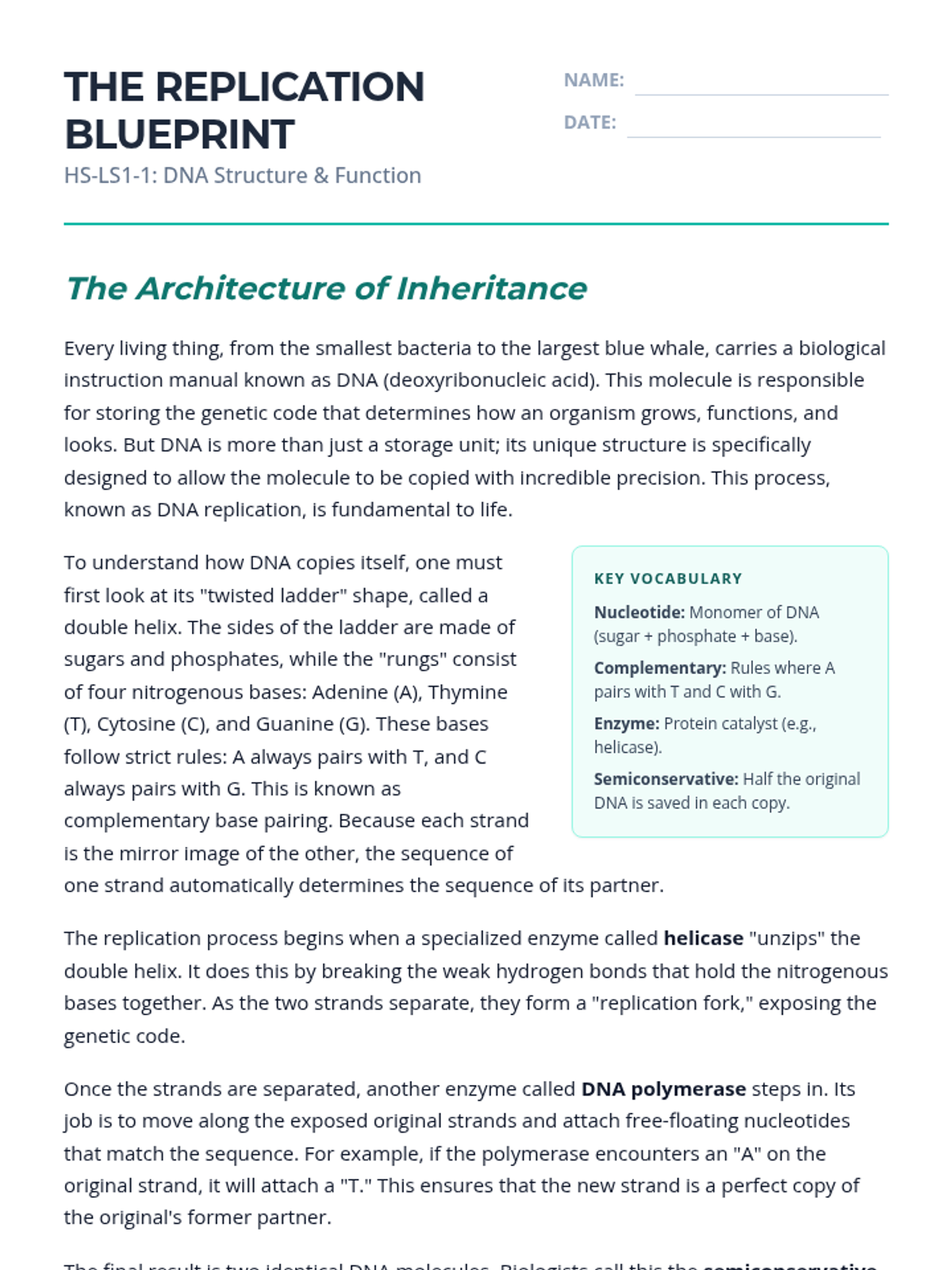
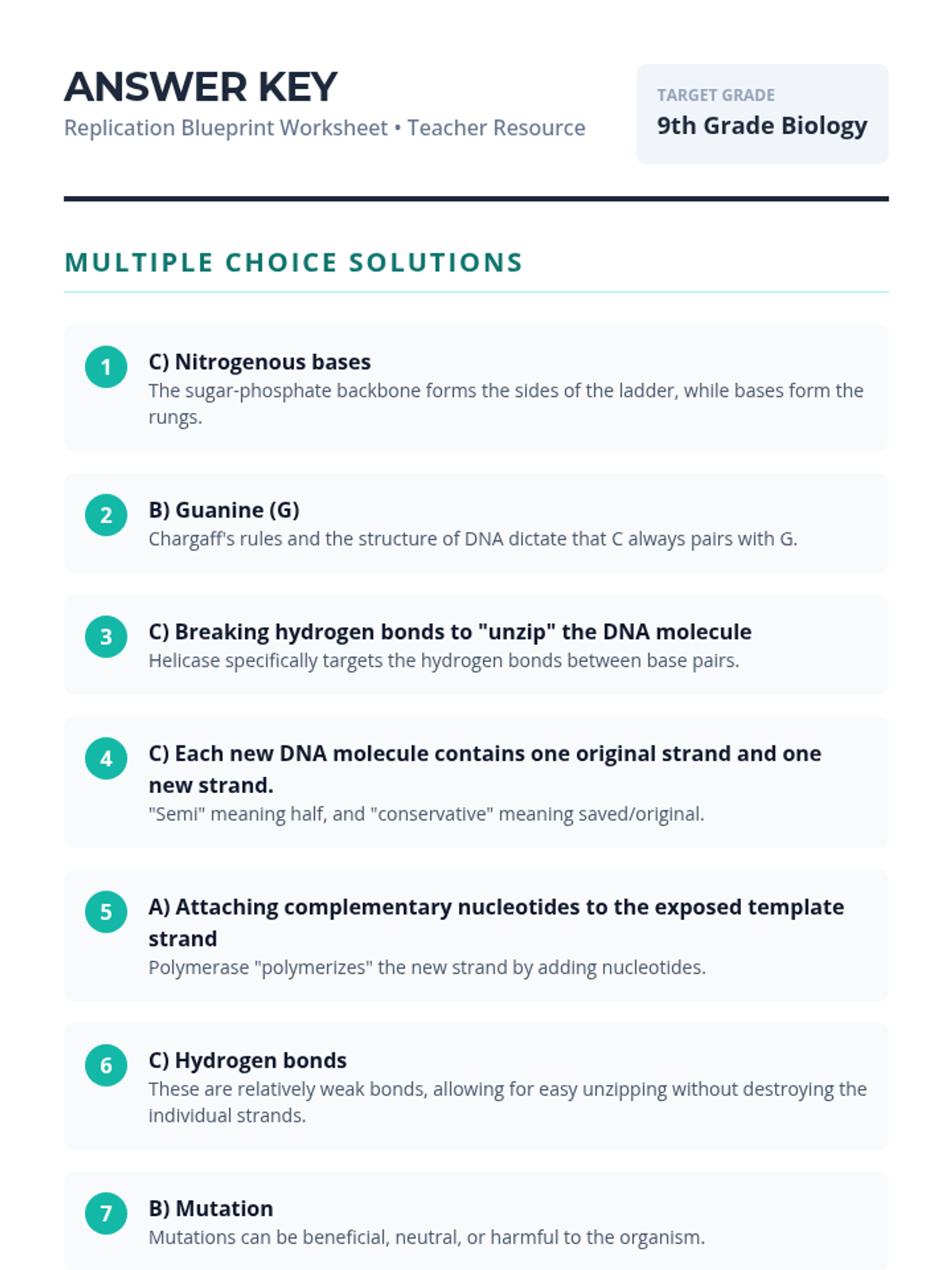
A comprehensive lesson on DNA replication, focusing on how the structure of DNA allows for precise copying of genetic information to support life functions and protein synthesis.
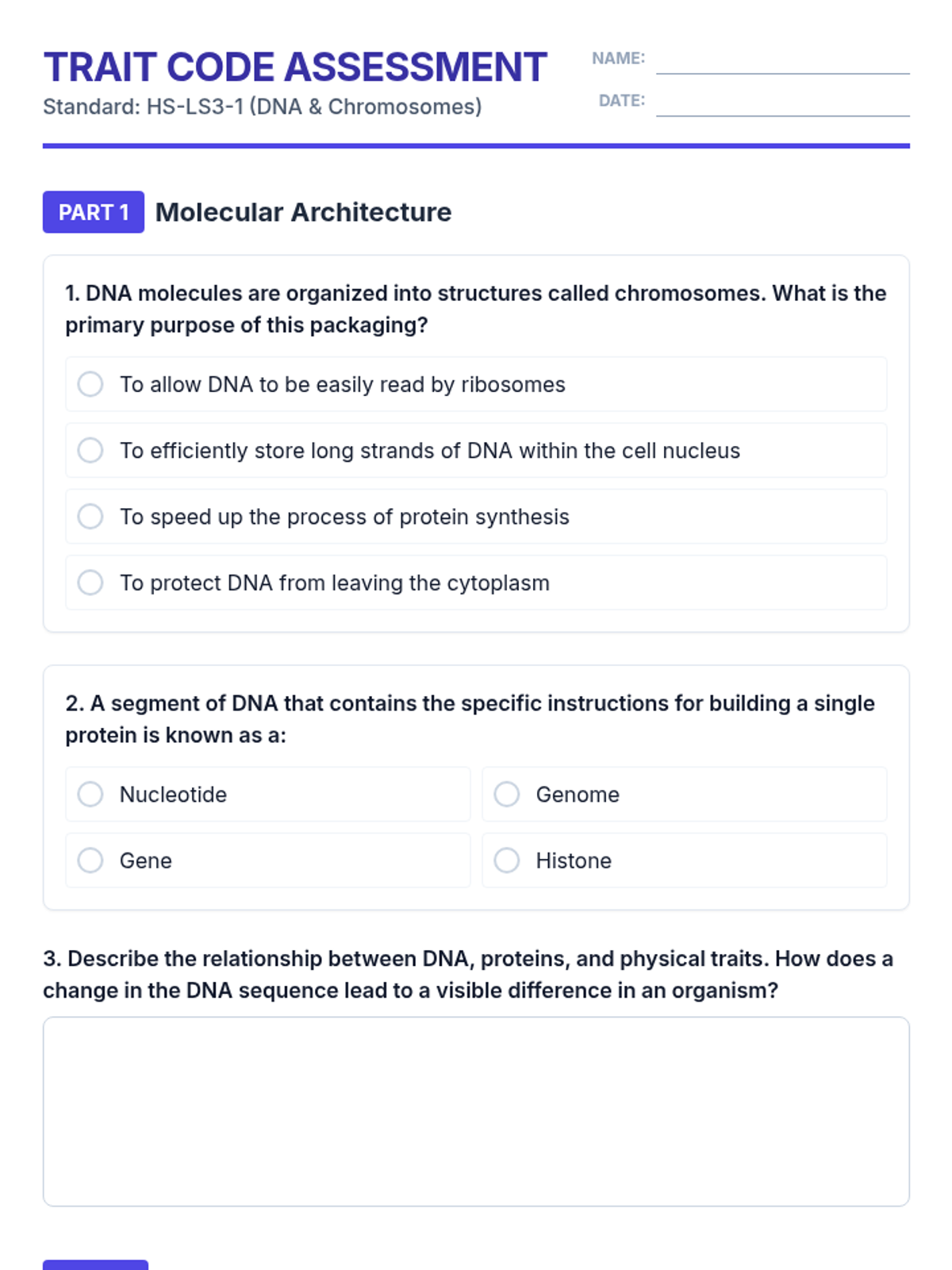
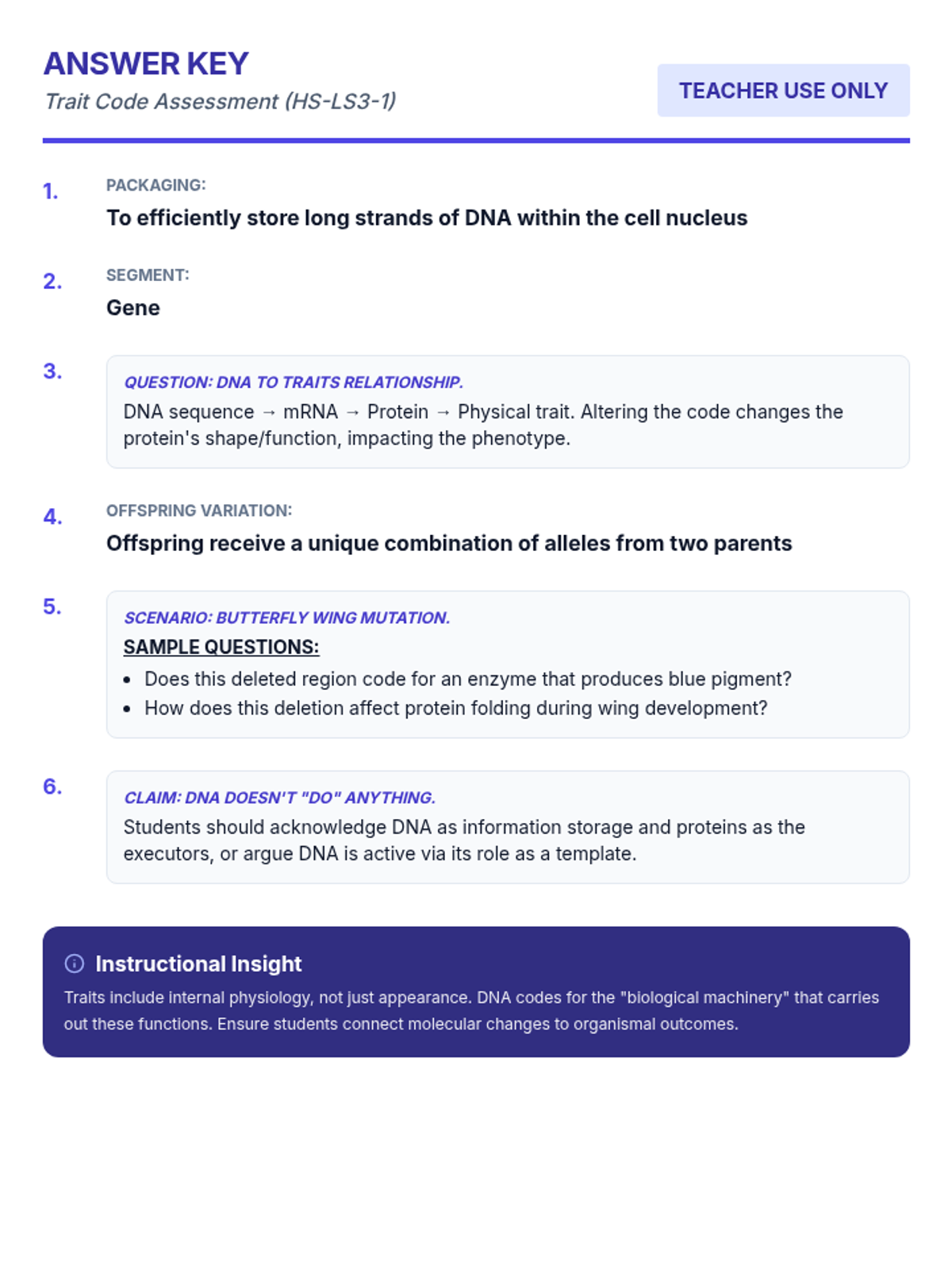
A focused assessment set covering NGSS standards HS-LS1-4 (Cell Division and Differentiation) and HS-LS3-1 (DNA and Chromosomes). These materials provide rigorous, structured evaluation of student understanding of biological blueprints and life cycles.
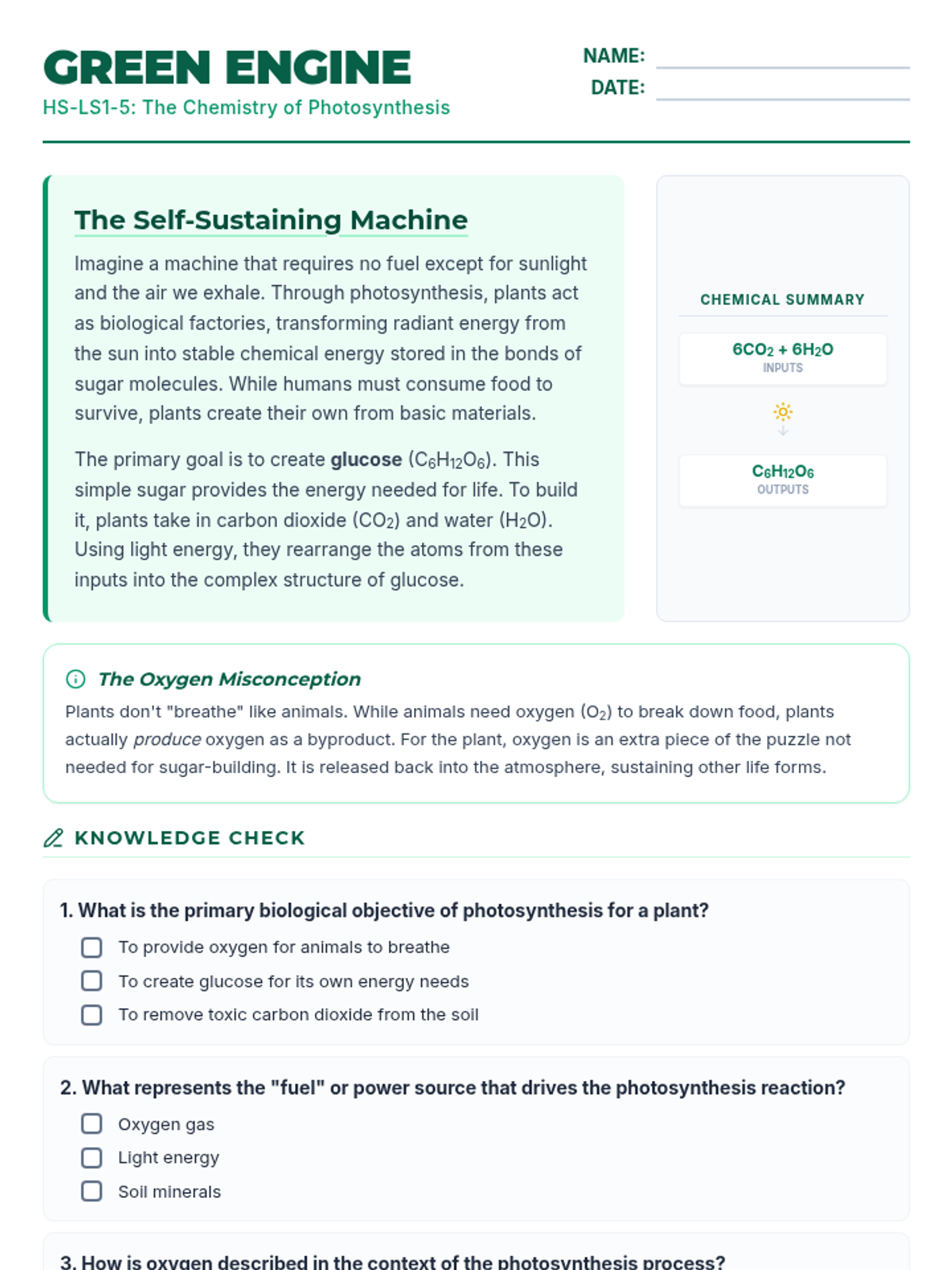
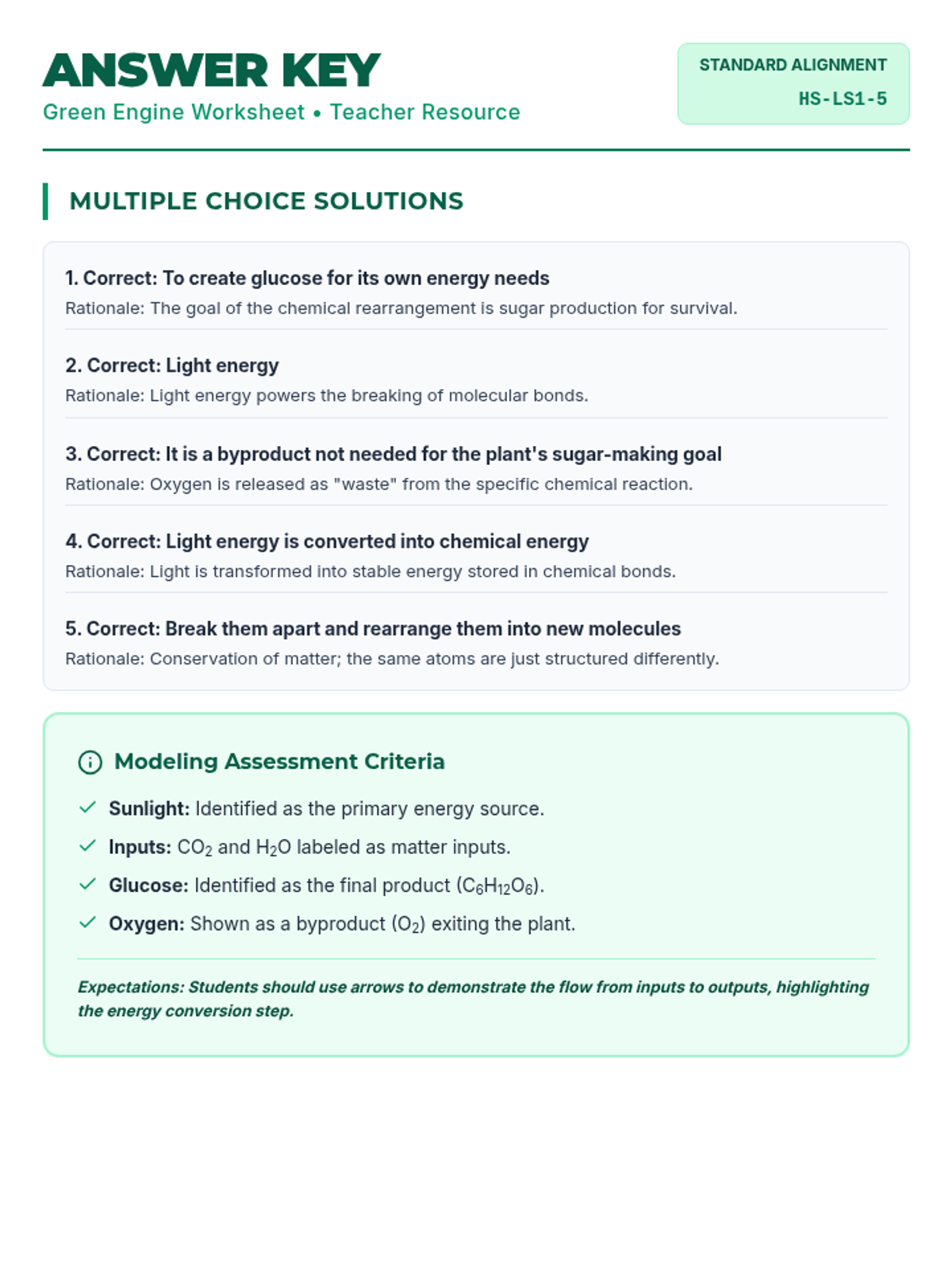
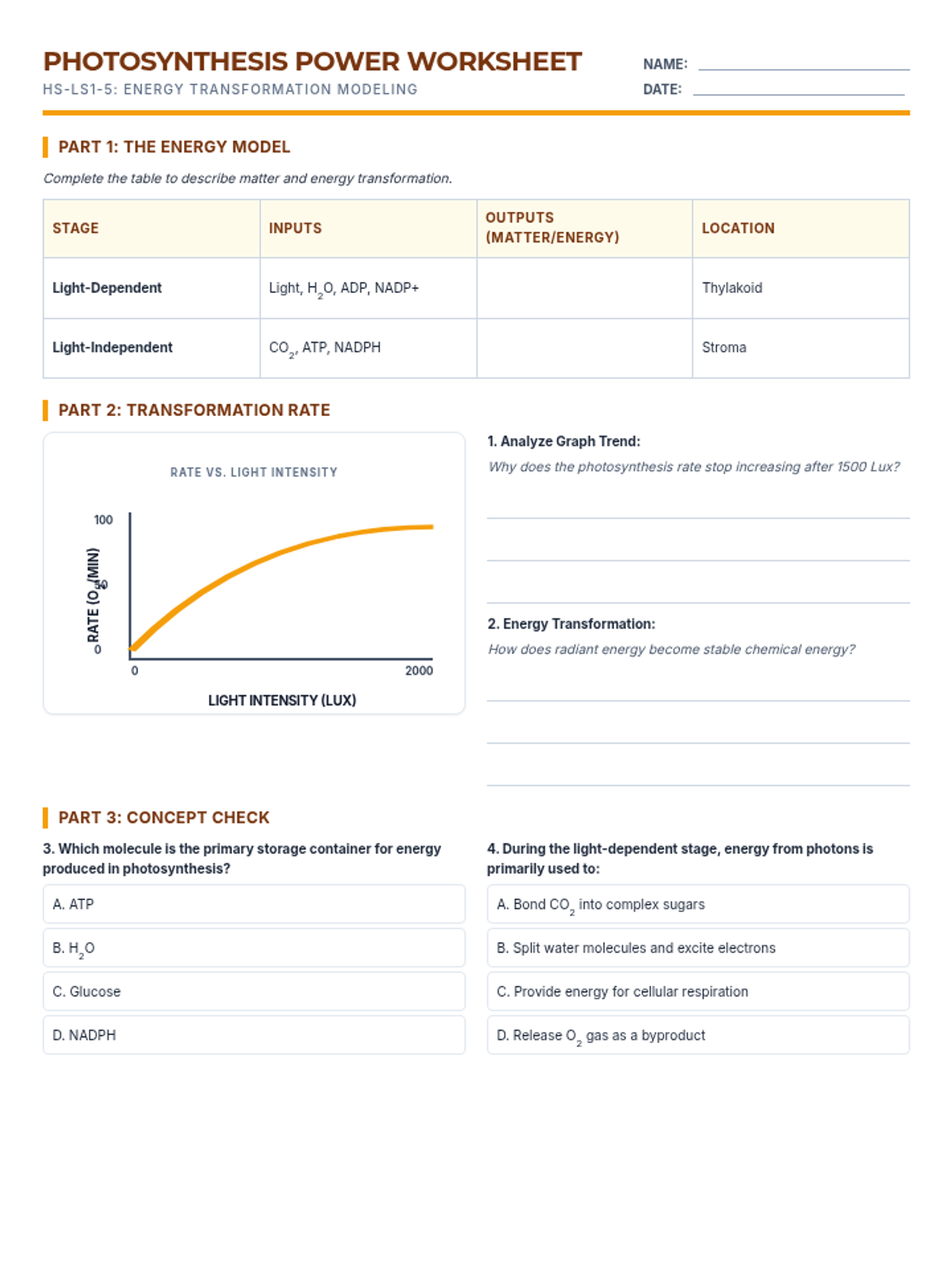
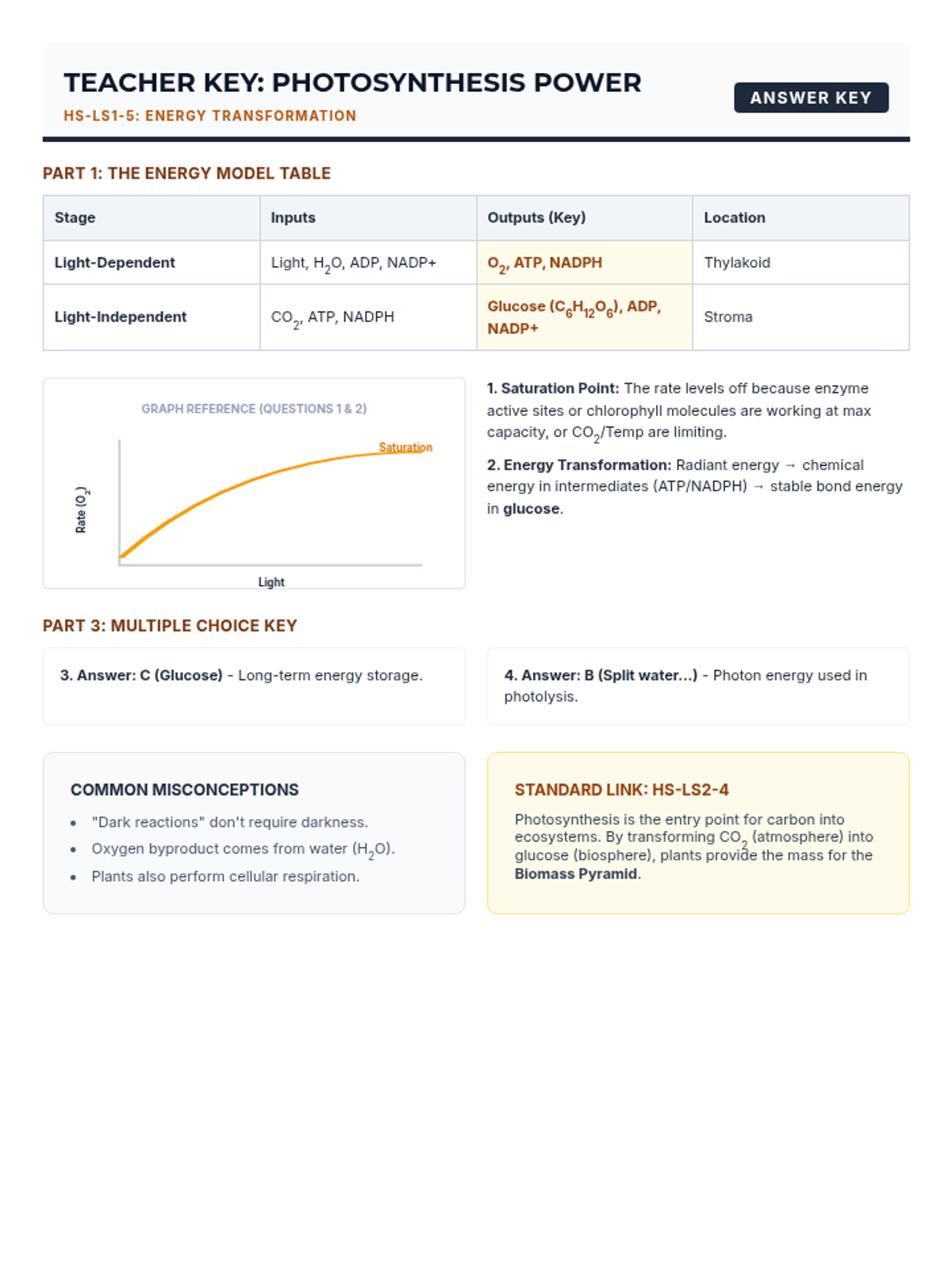
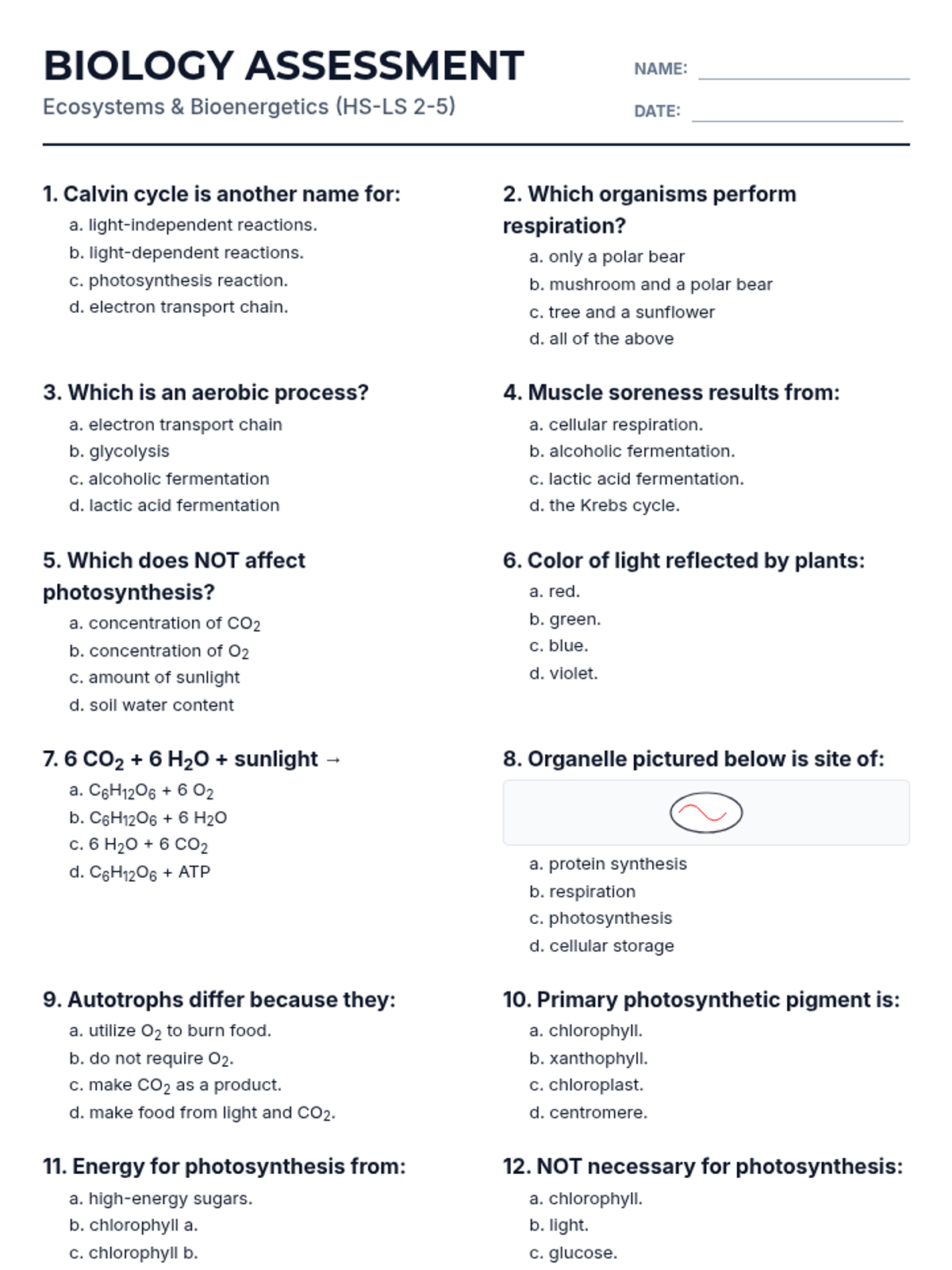
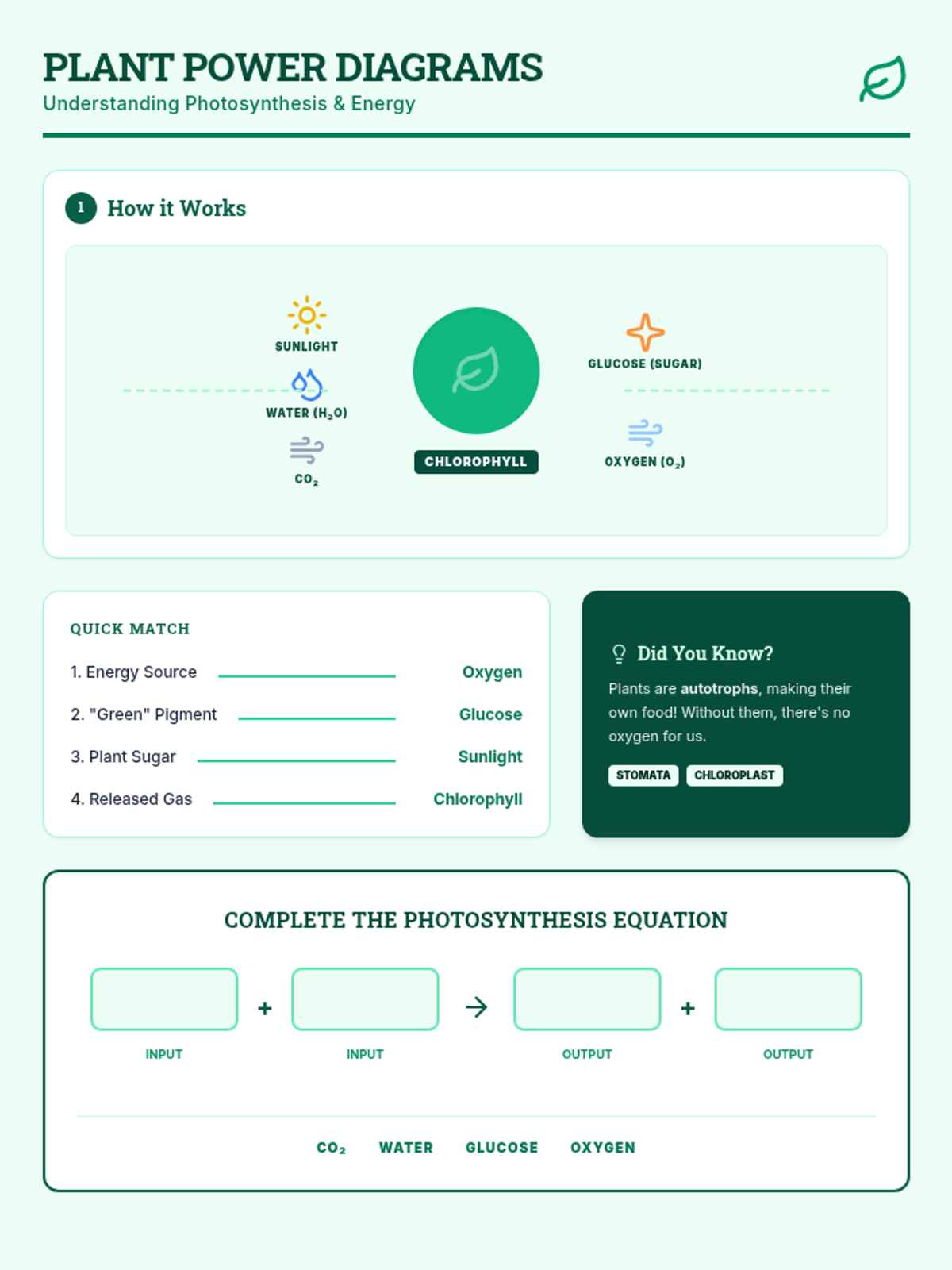
This lesson focuses on the chemical transformation of light energy into glucose through photosynthesis, emphasizing that plants are self-sustaining producers that generate oxygen as a byproduct. Students will analyze the relationship between inputs (CO2, H2O, light) and outputs (Glucose, O2) to understand the fundamental energy cycle of life.
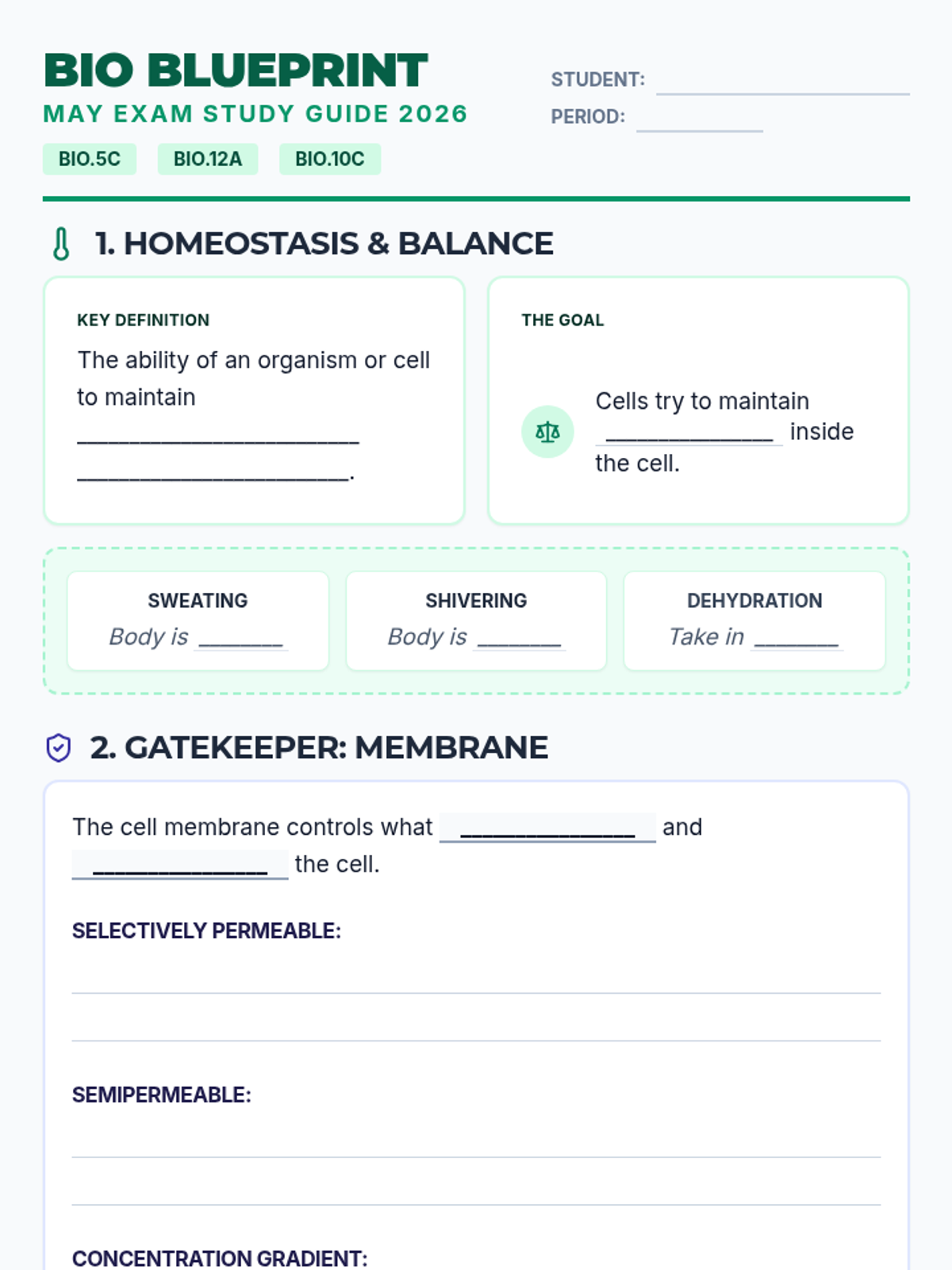
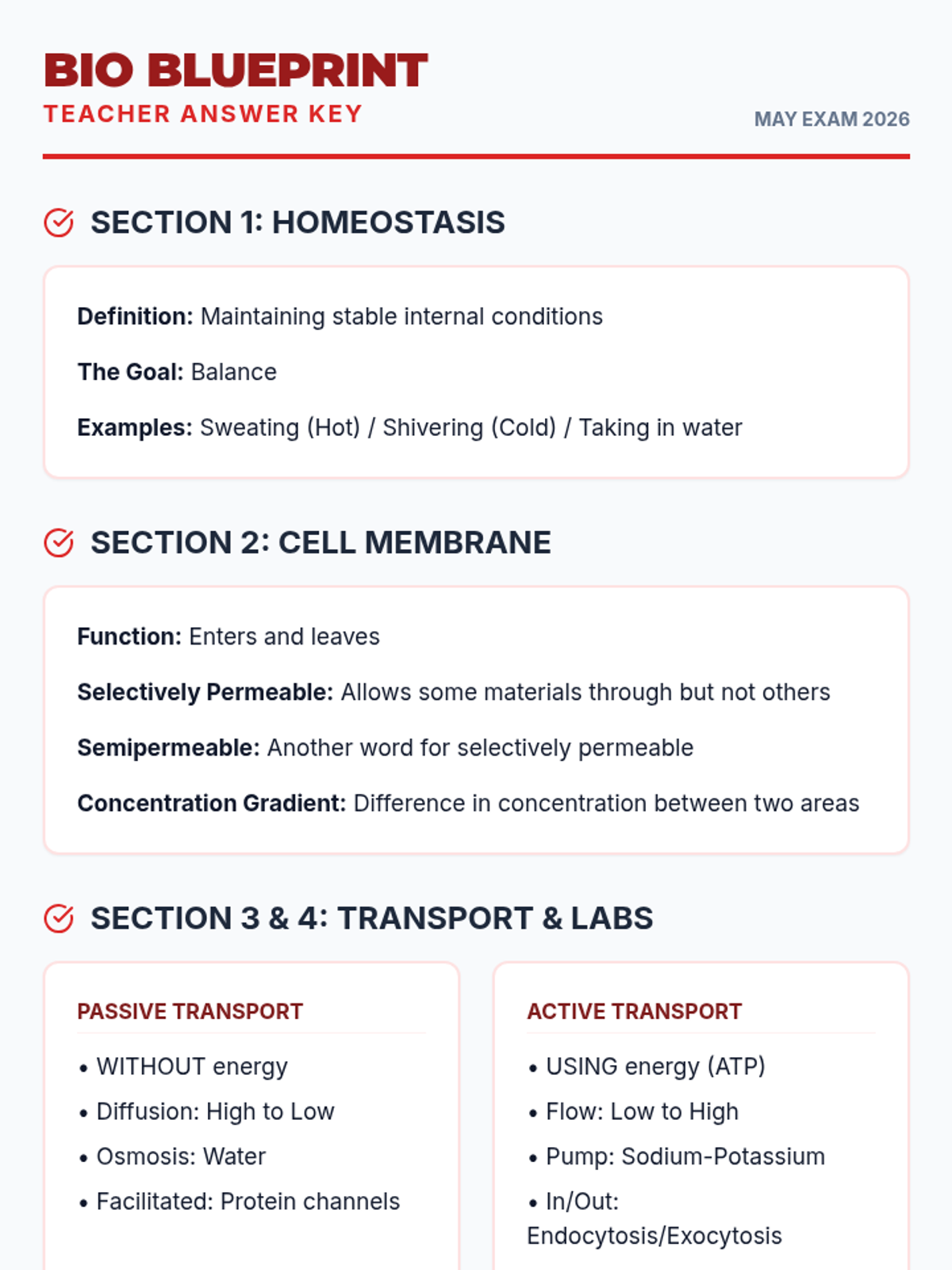
A comprehensive biology review focusing on homeostasis, cell transport, body systems, and speciation to prepare students for their May exams.
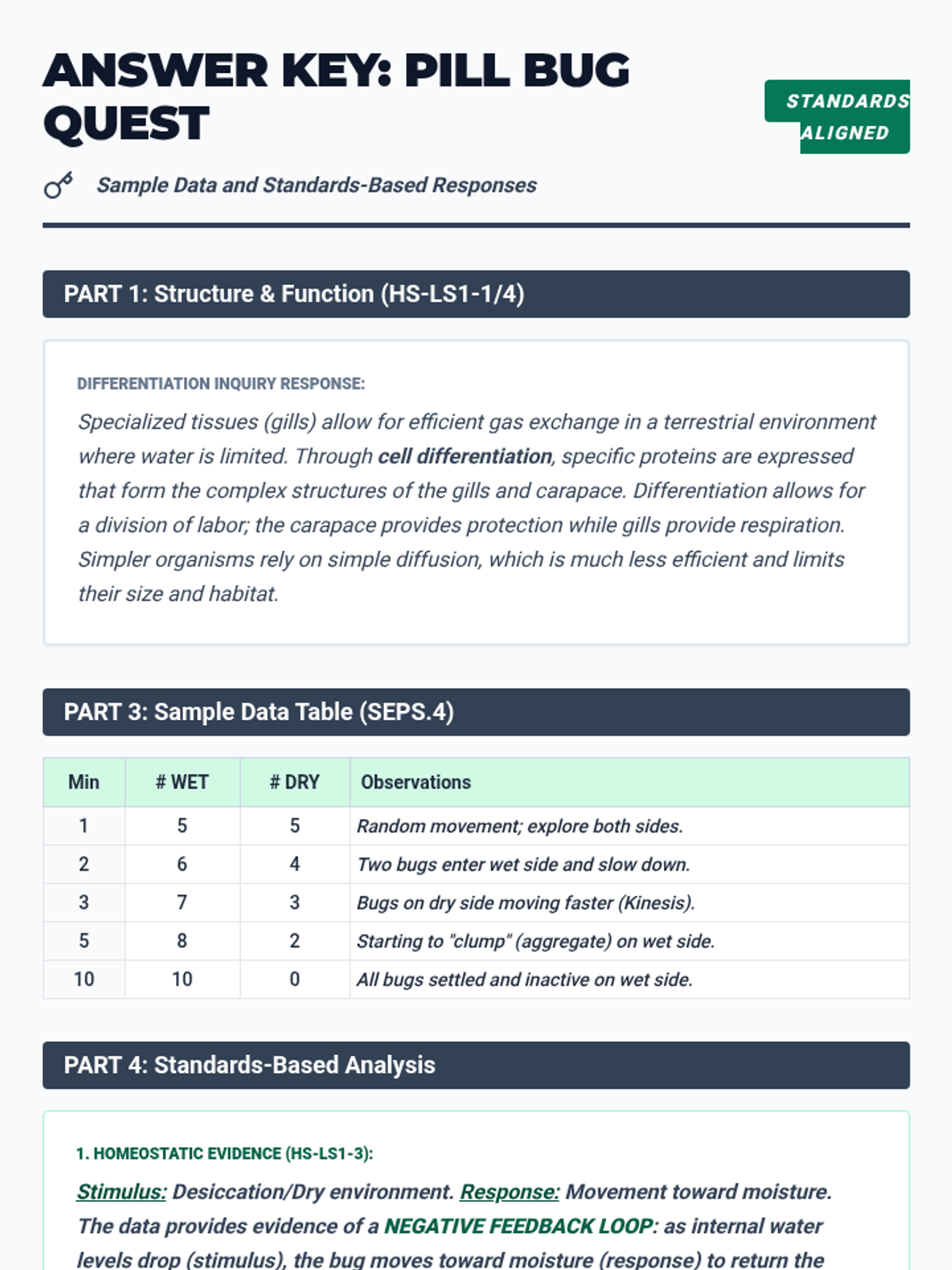
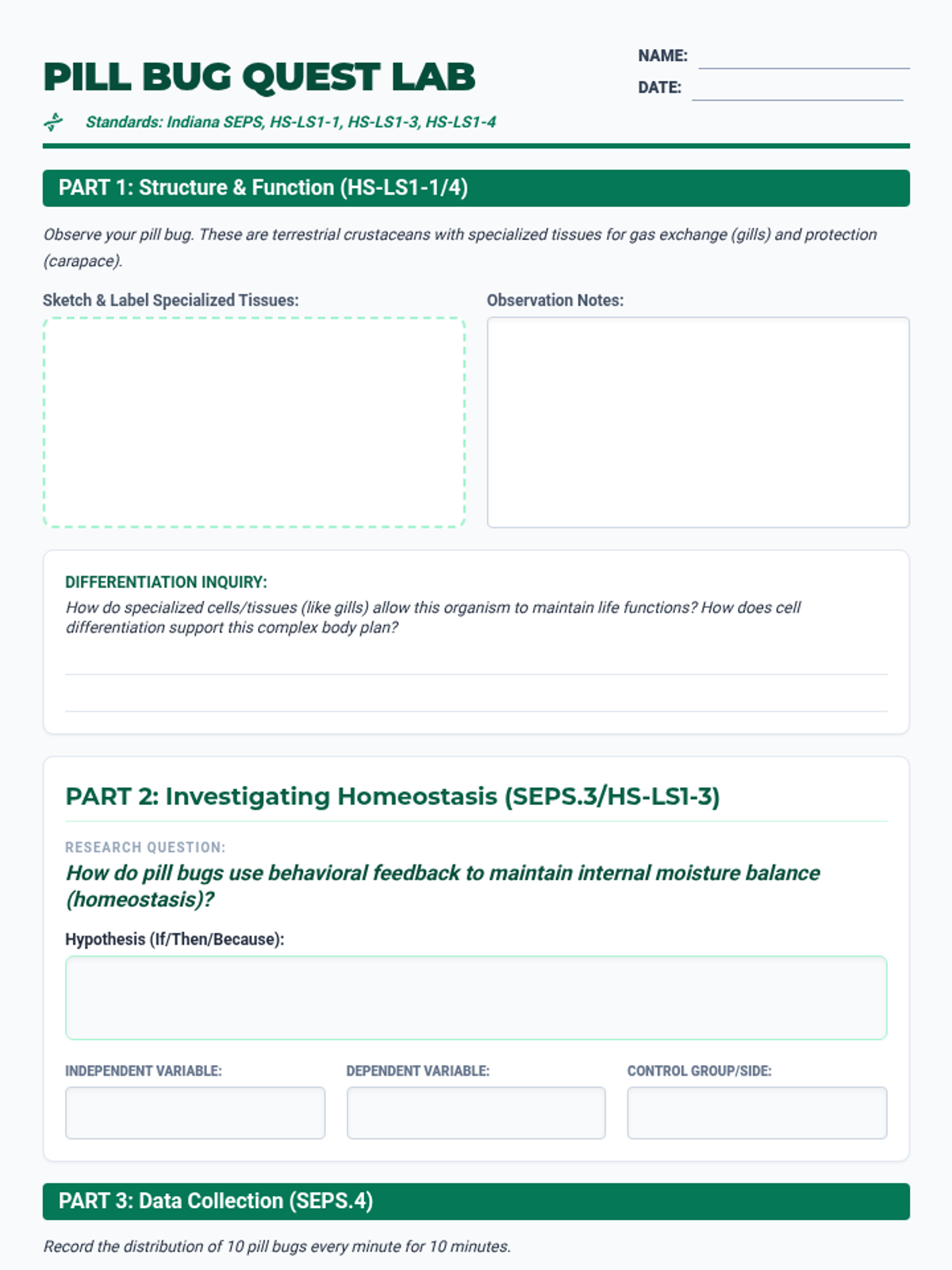
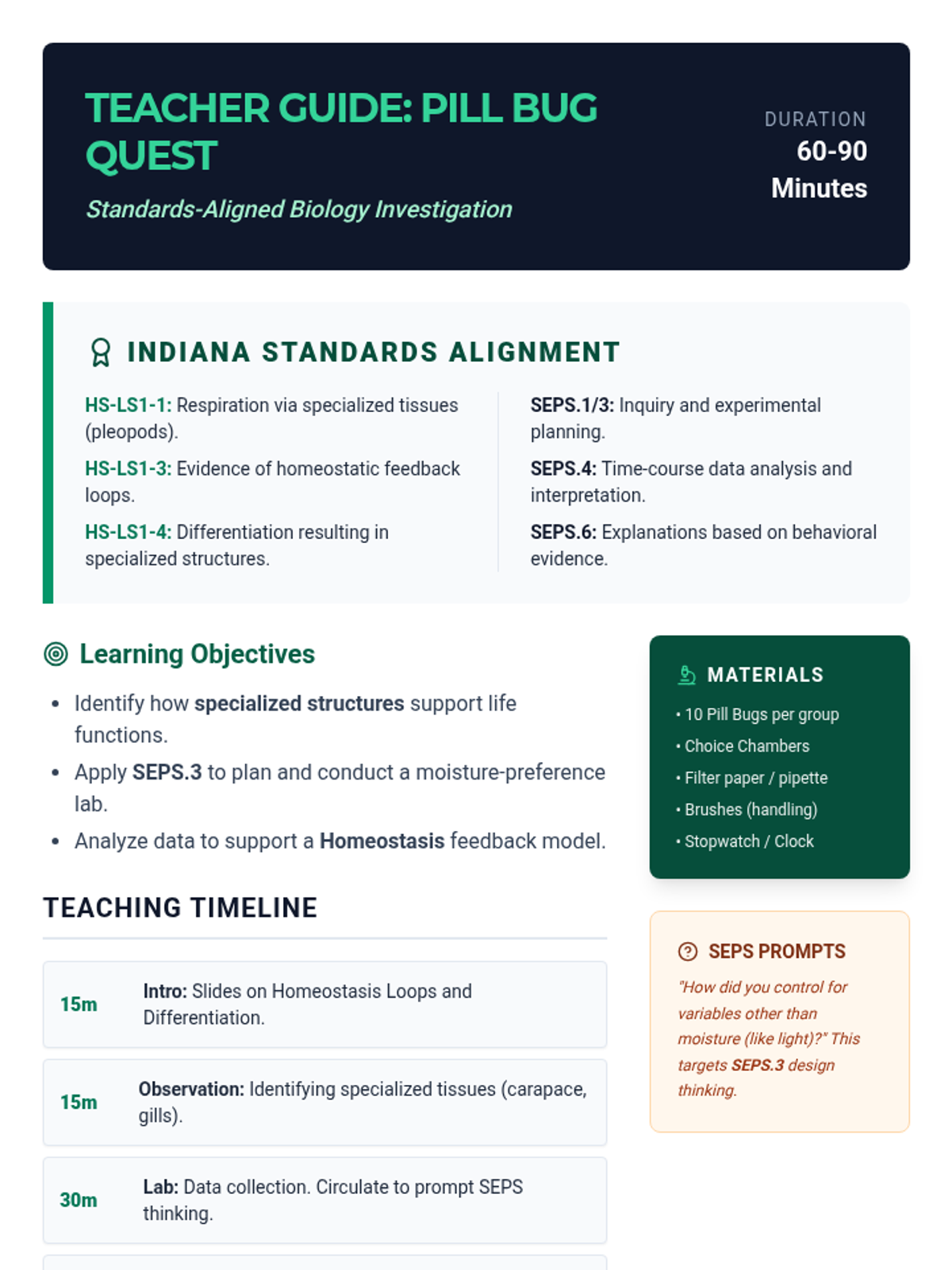
A hands-on biology lab where students use the scientific method to investigate the characteristics of life through the observation and experimentation of pill bugs (Armadillidium vulgare).
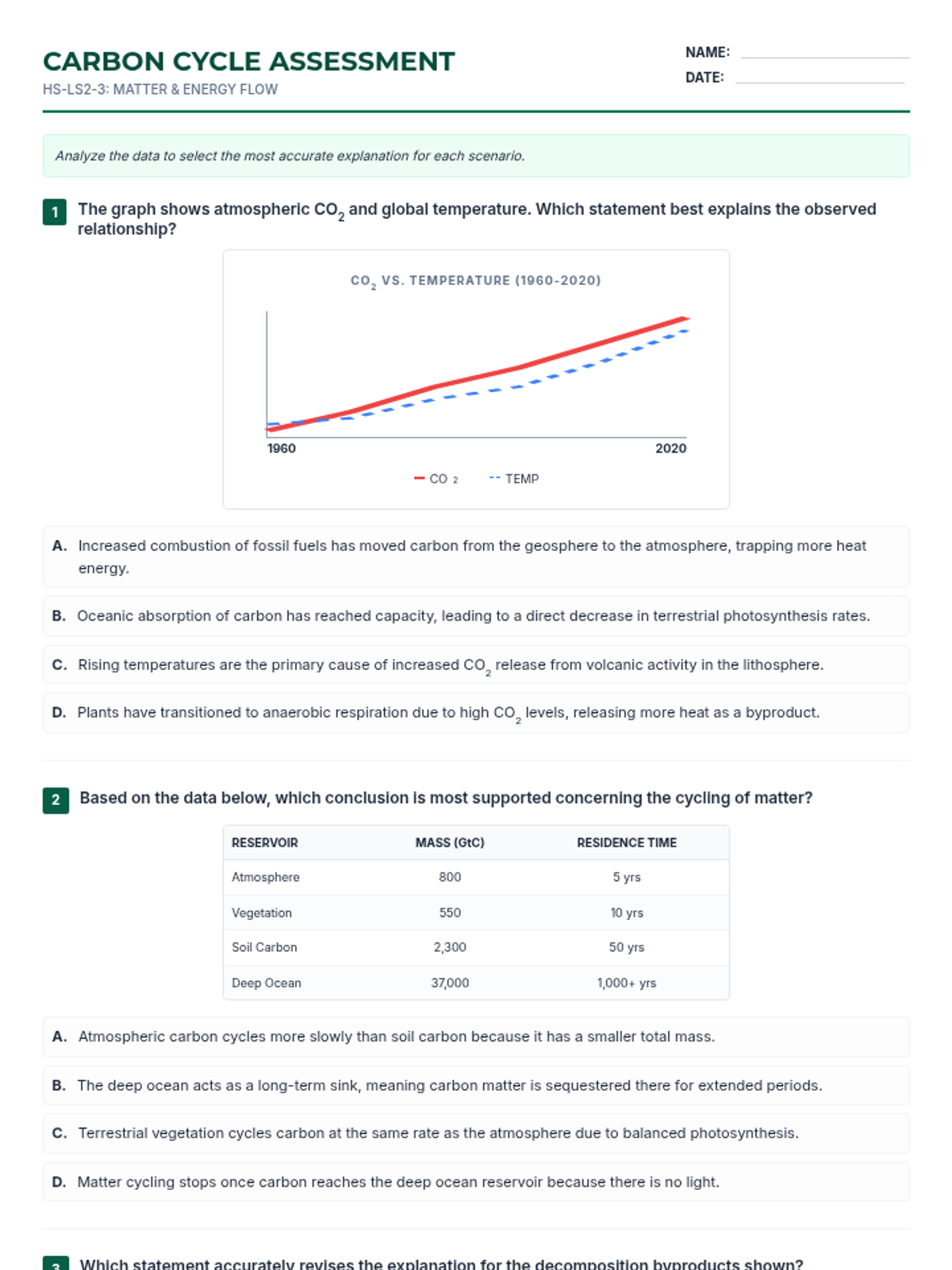
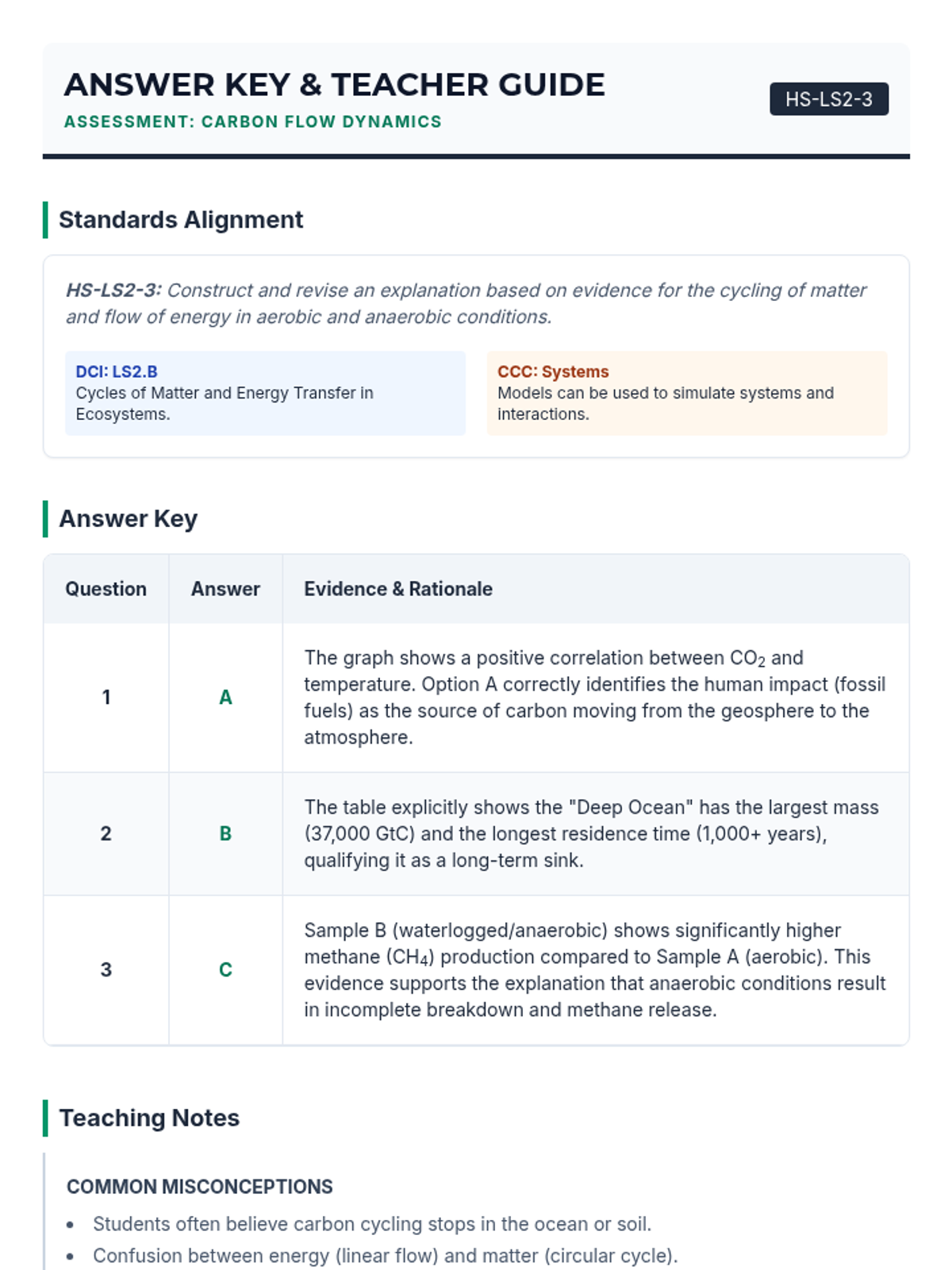
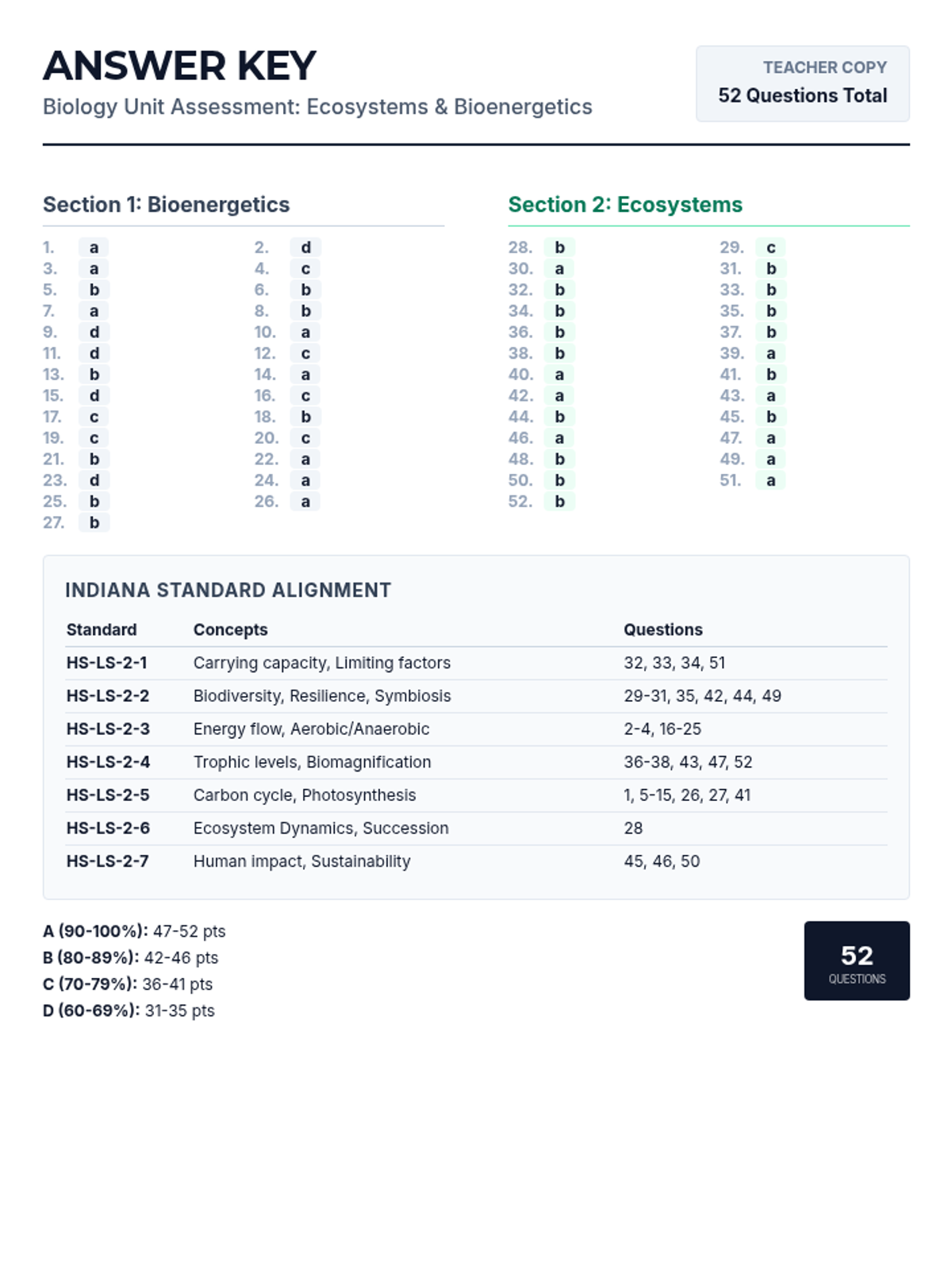
An assessment-focused lesson on carbon cycling in ecosystems, focusing on matter cycling and energy flow in aerobic and anaerobic conditions as per HS-LS2-3.
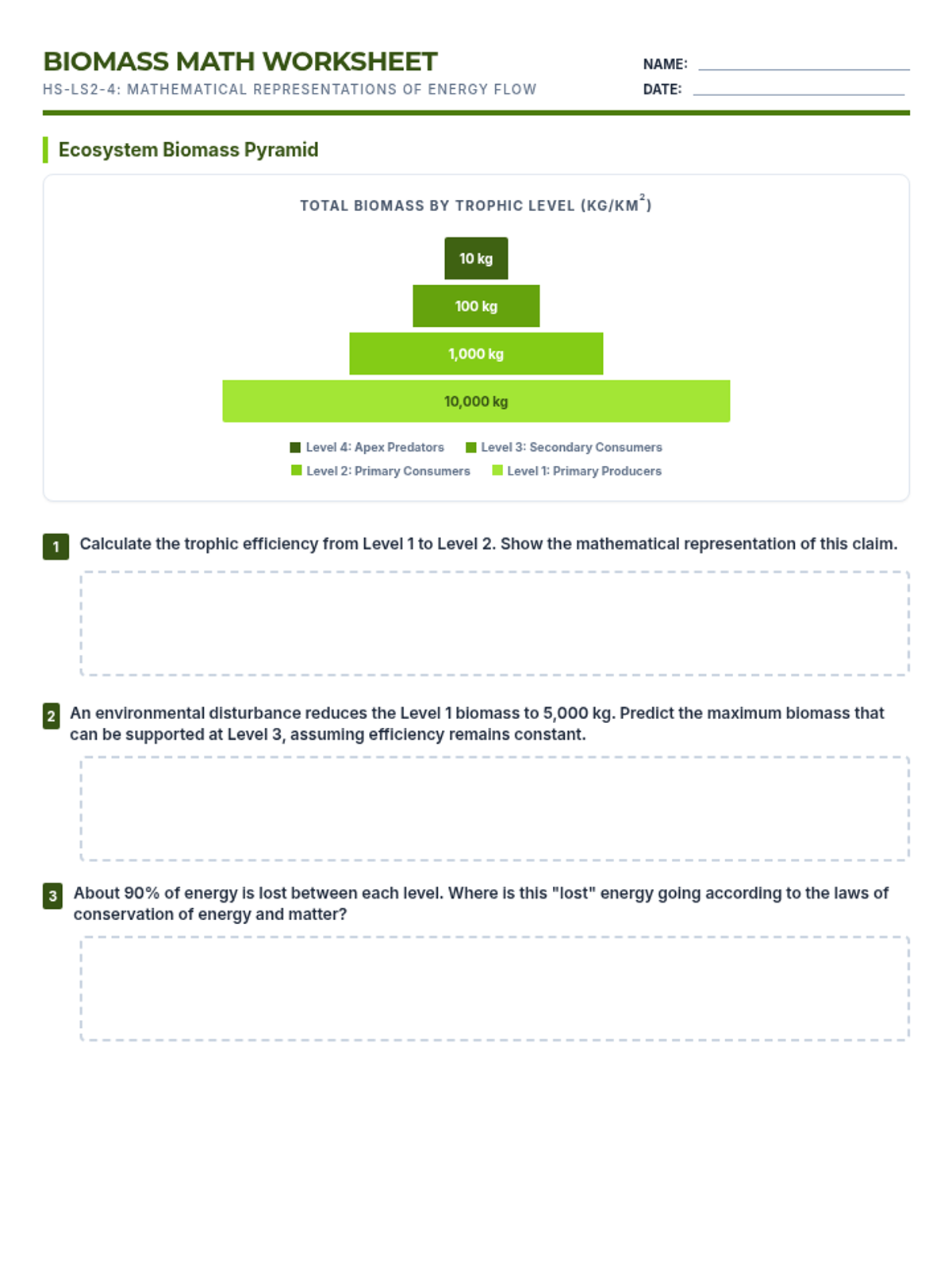
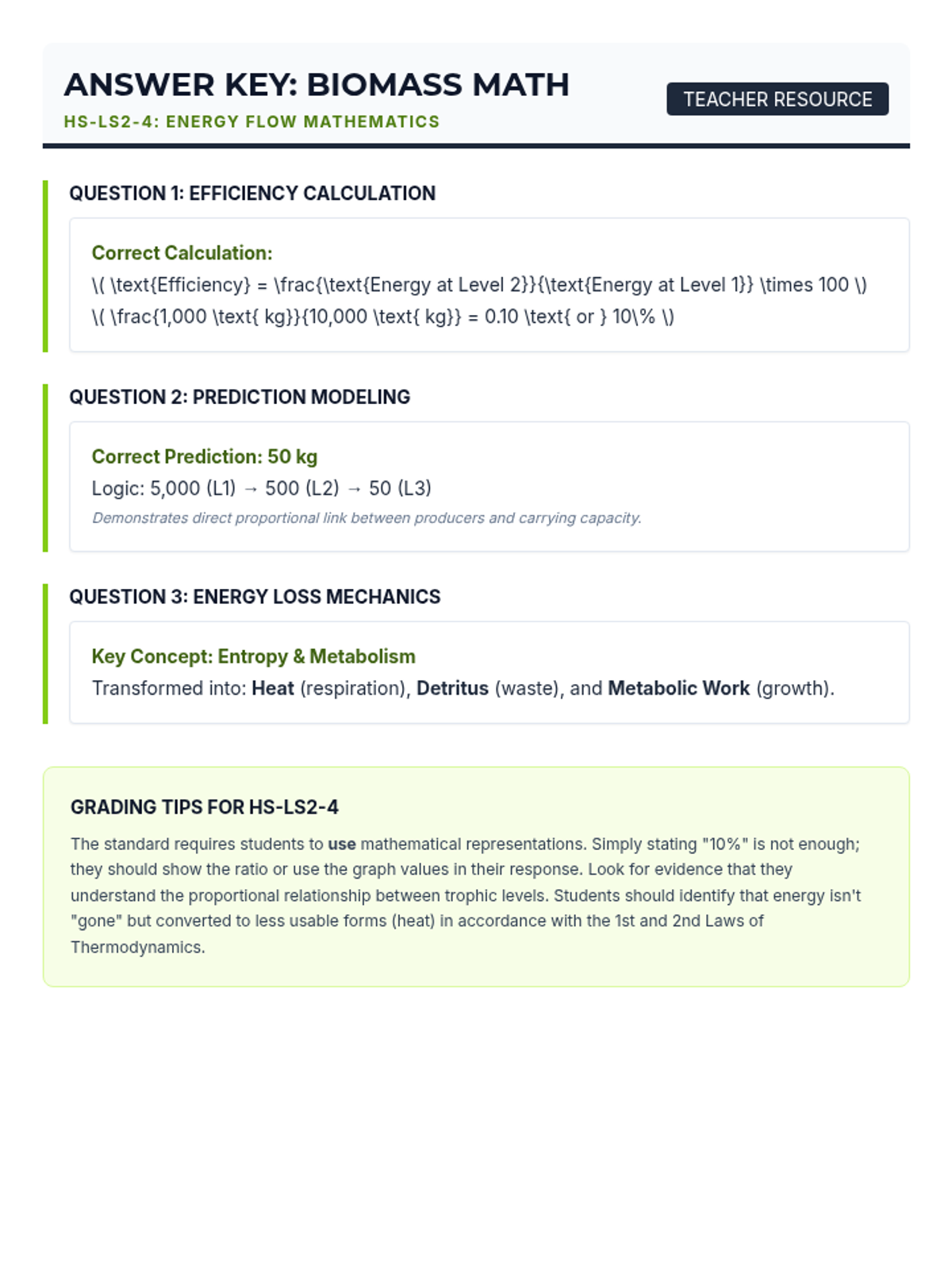
A comprehensive unit on the flow of energy and matter within ecosystems, focusing on bioenergetics (photosynthesis and respiration) and population dynamics. Students explore how organisms interact with their environment and how energy is transferred through trophic levels.
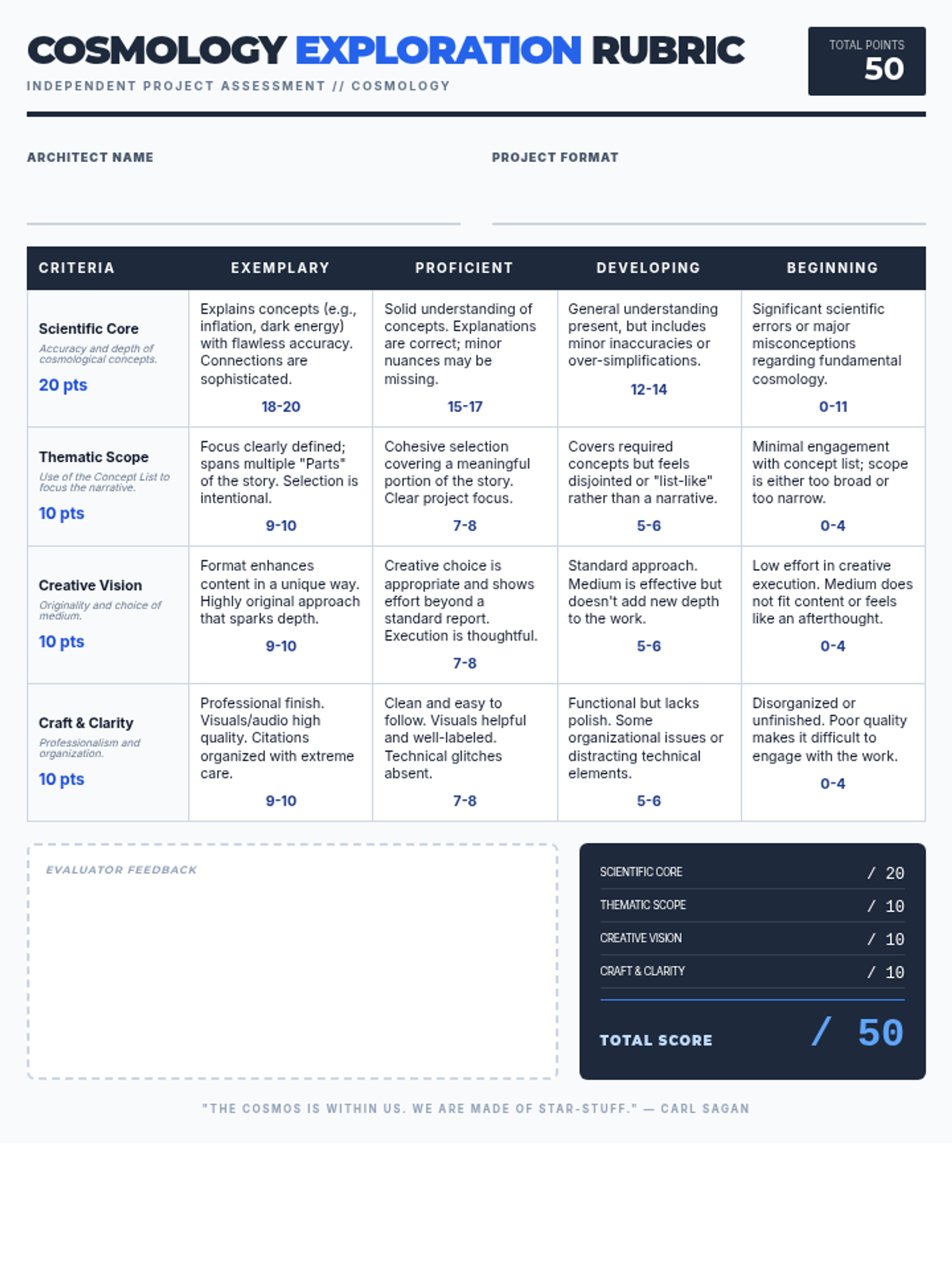
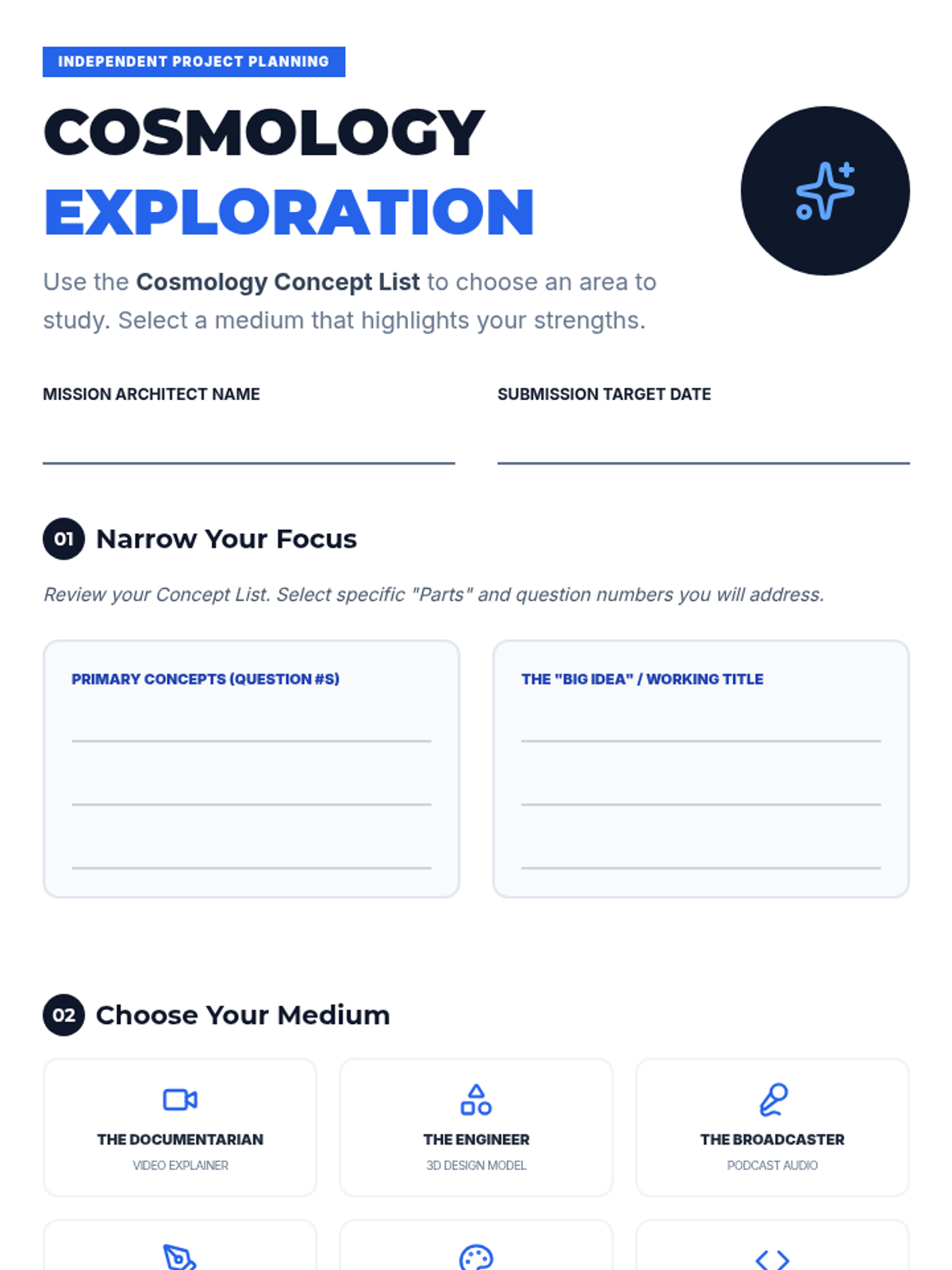
An independent project where students explore cosmological concepts from the birth of the universe to its ultimate fate, choosing their own creative medium to demonstrate mastery.
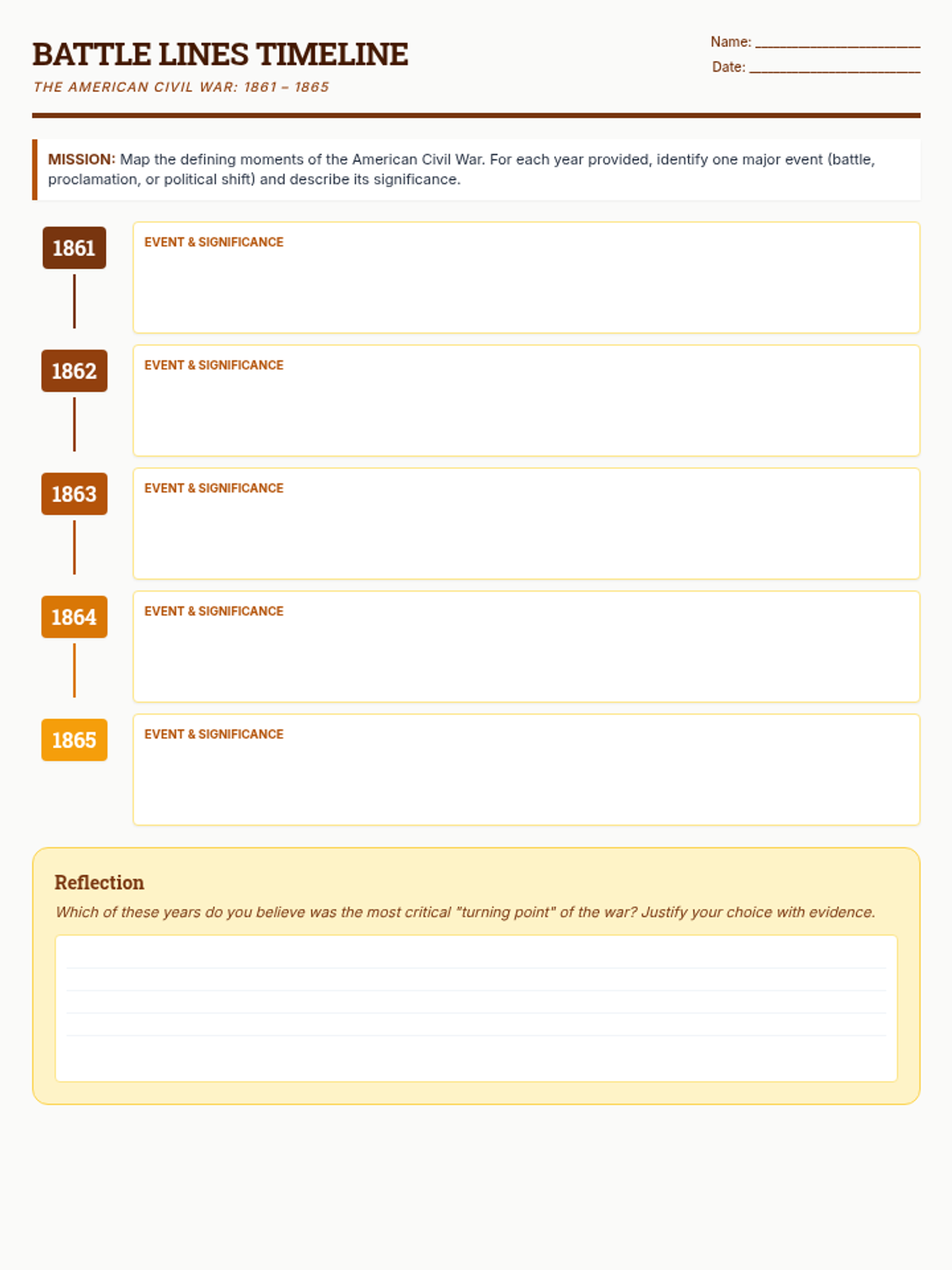
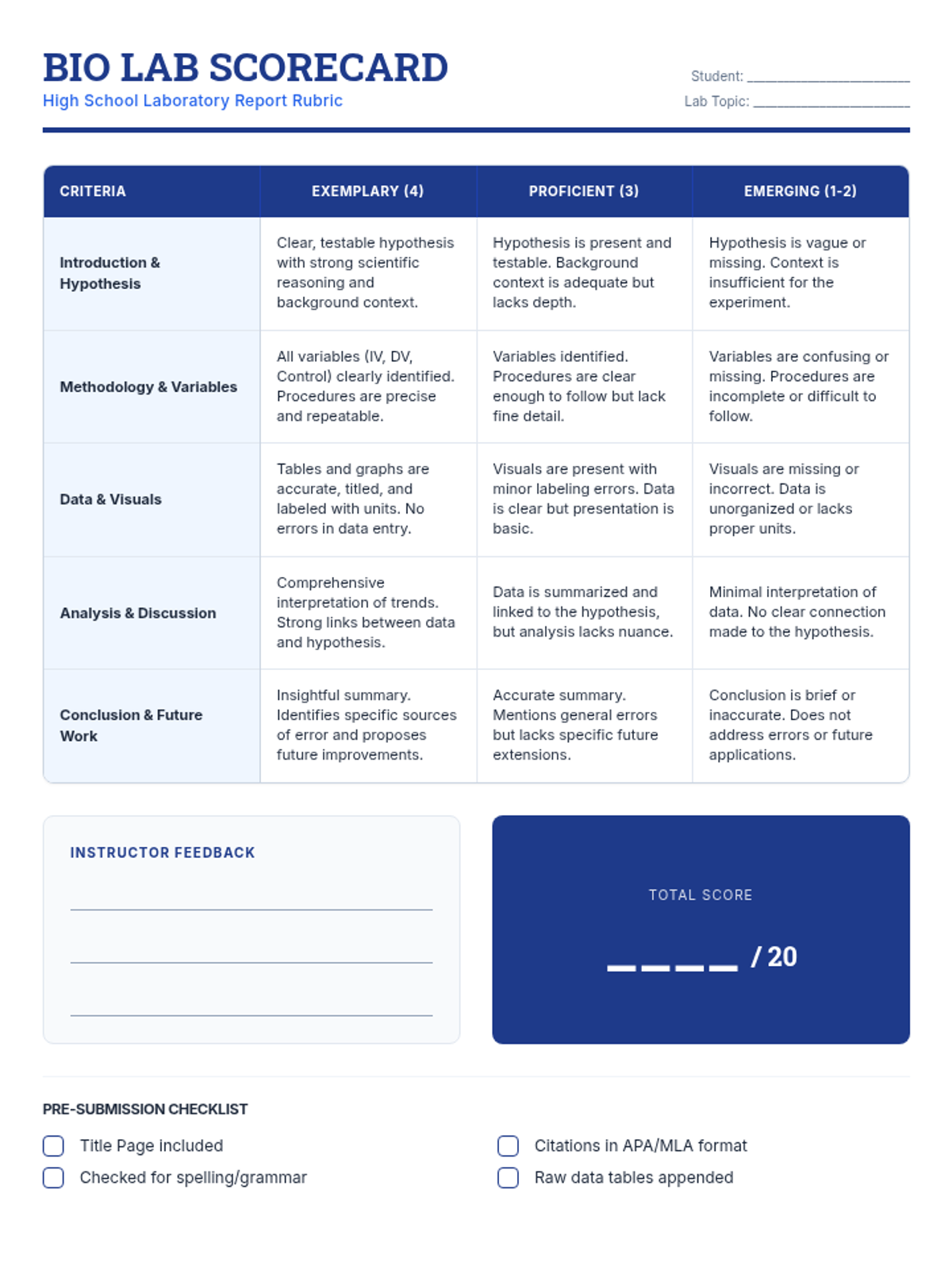
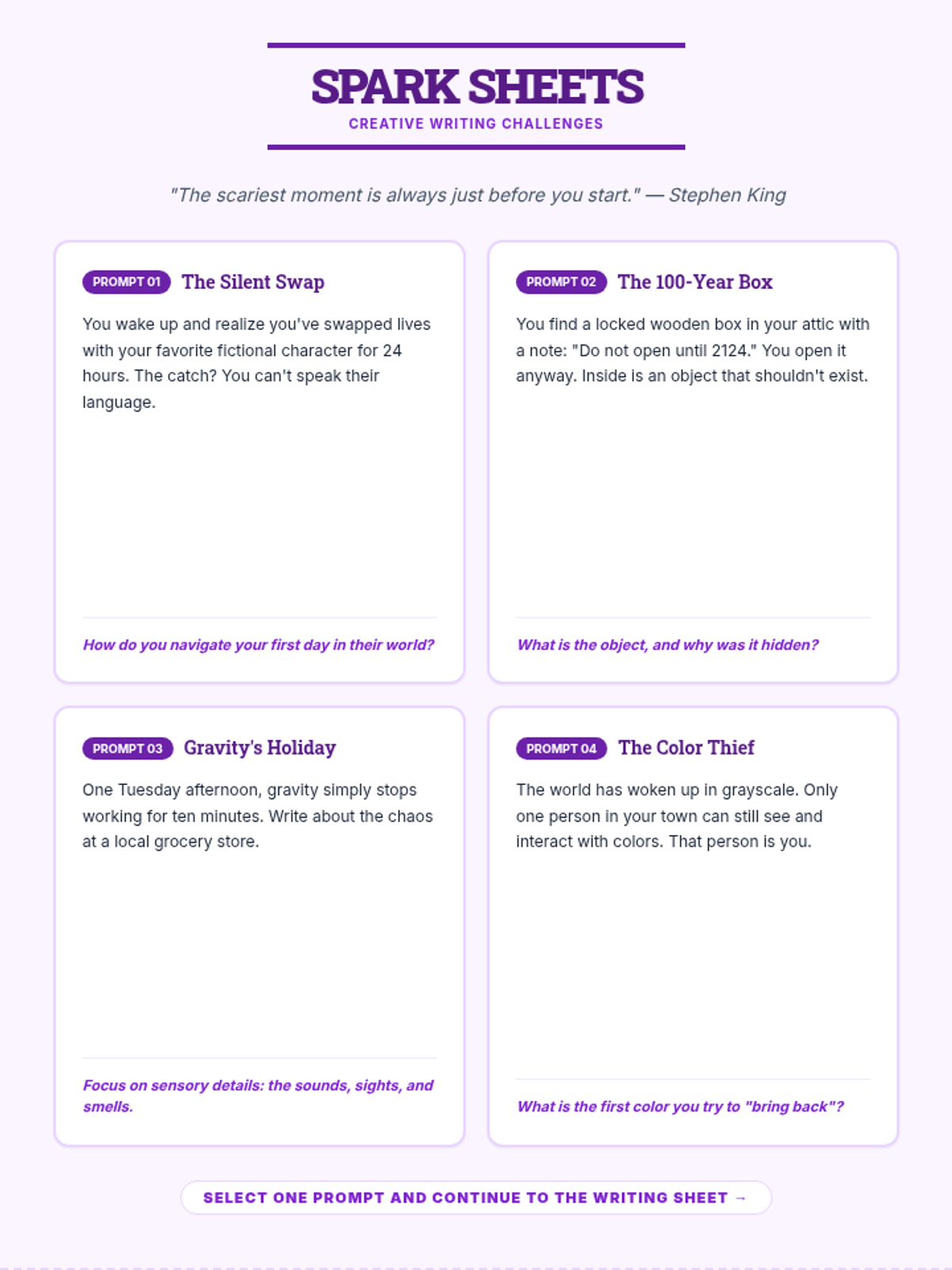
A diverse collection of high-quality educational resources spanning history, science, and language arts. This bundle includes graphic organizers, rubrics, writing prompts, and scientific diagrams.
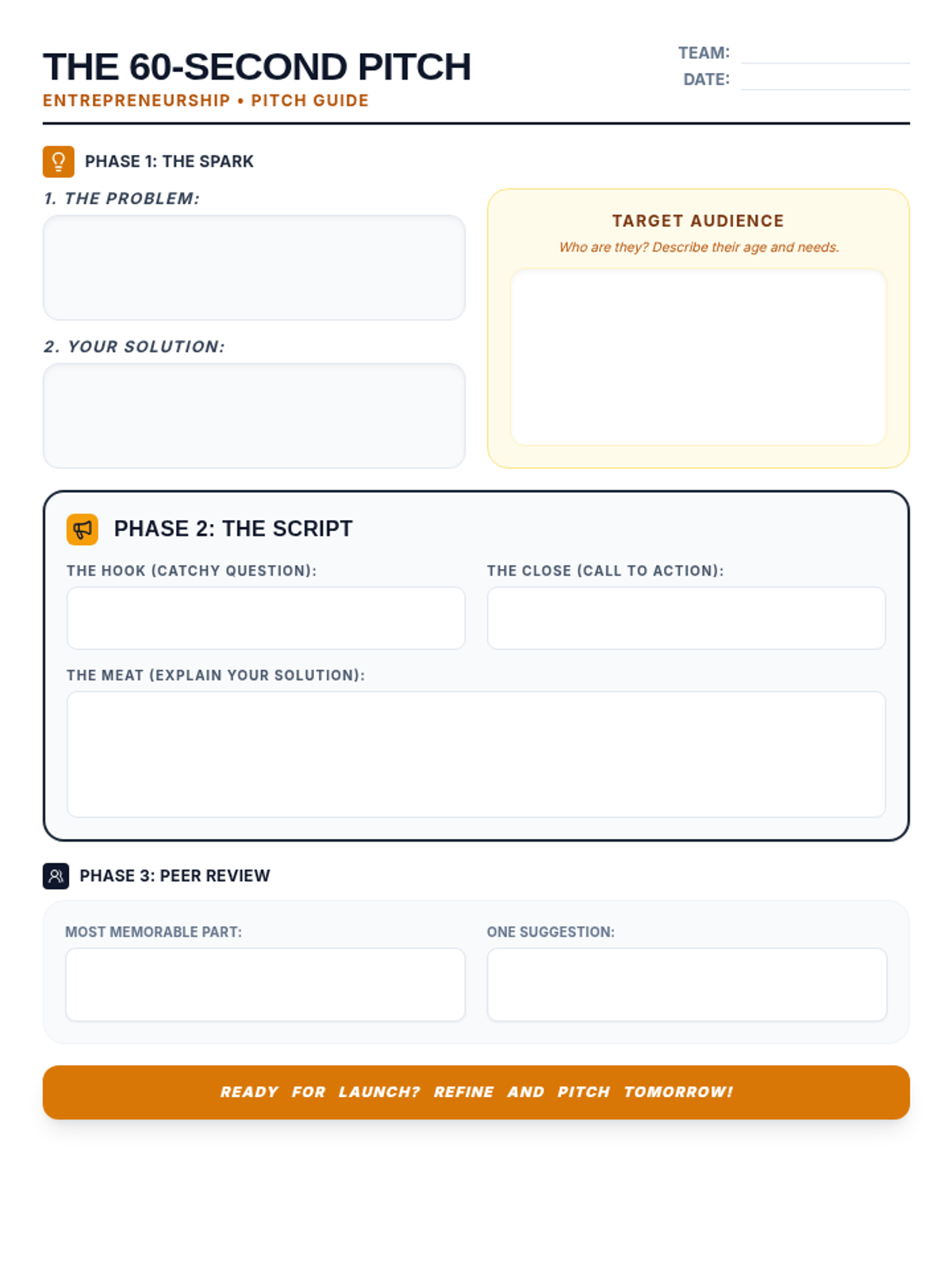
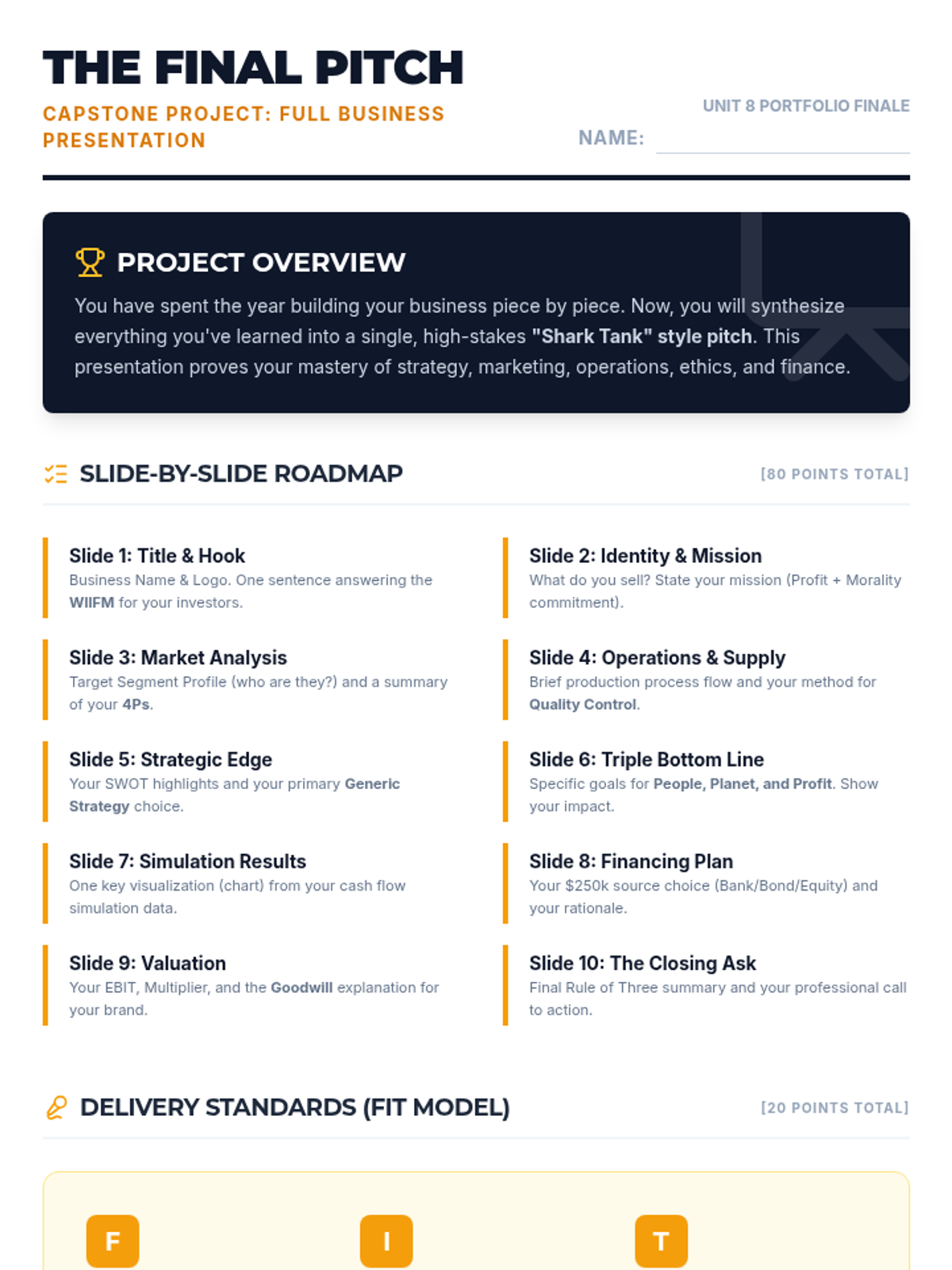
Explore the process of identifying problems and developing innovative solutions, culminating in an elevator pitch for a new business idea.
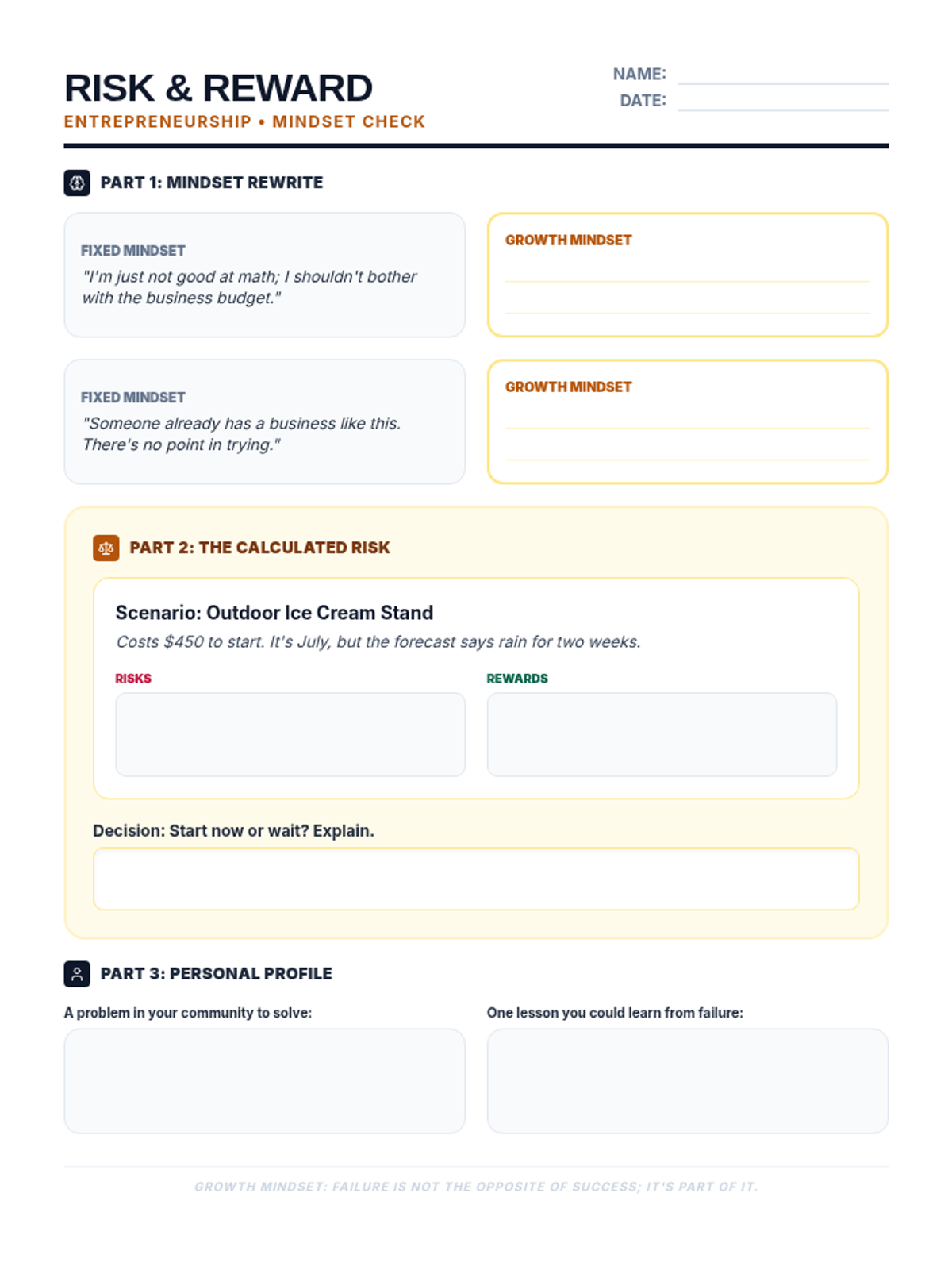
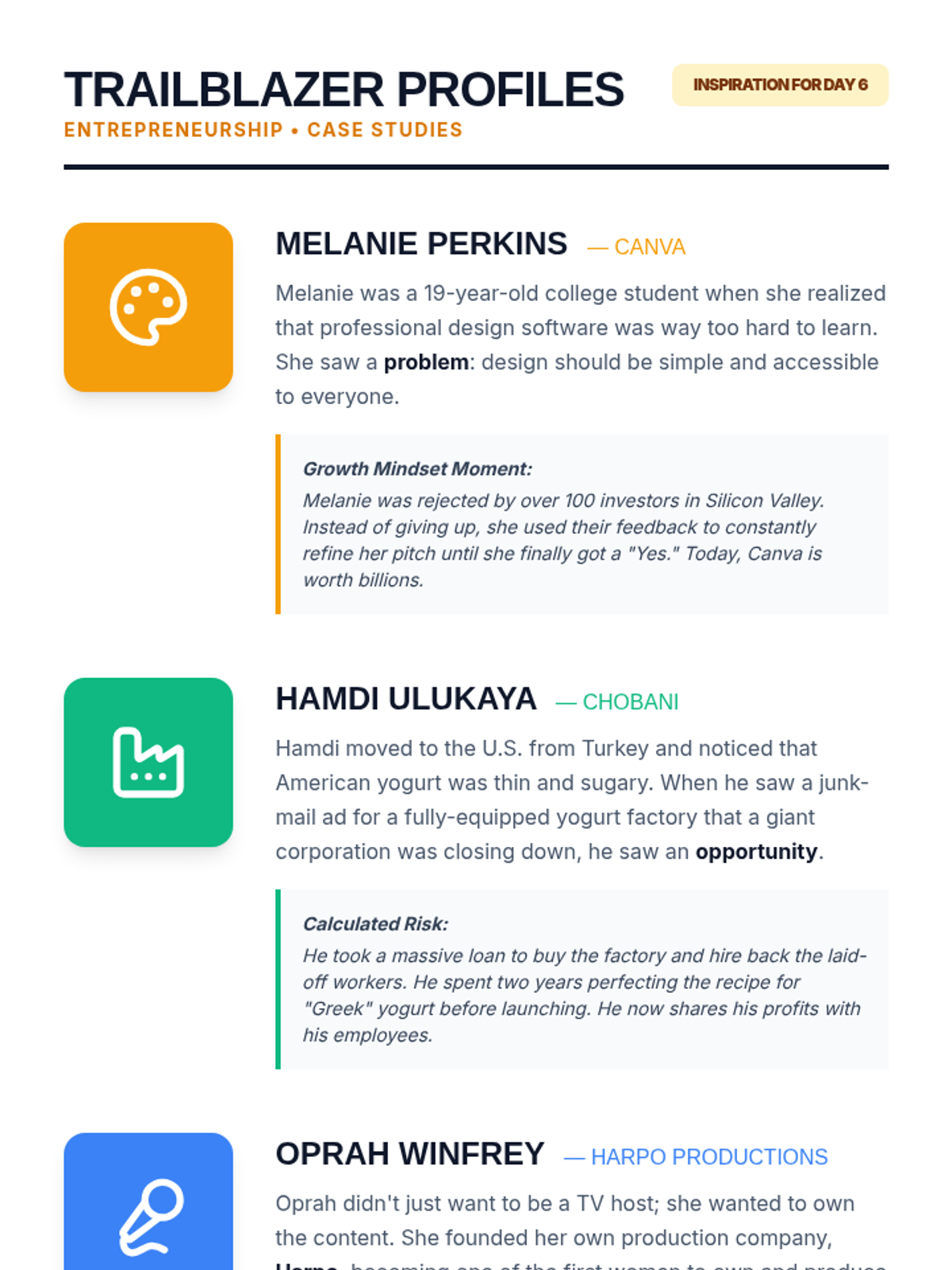
Discover the characteristics of an entrepreneur, the importance of a growth mindset, and the balance between risk and reward.
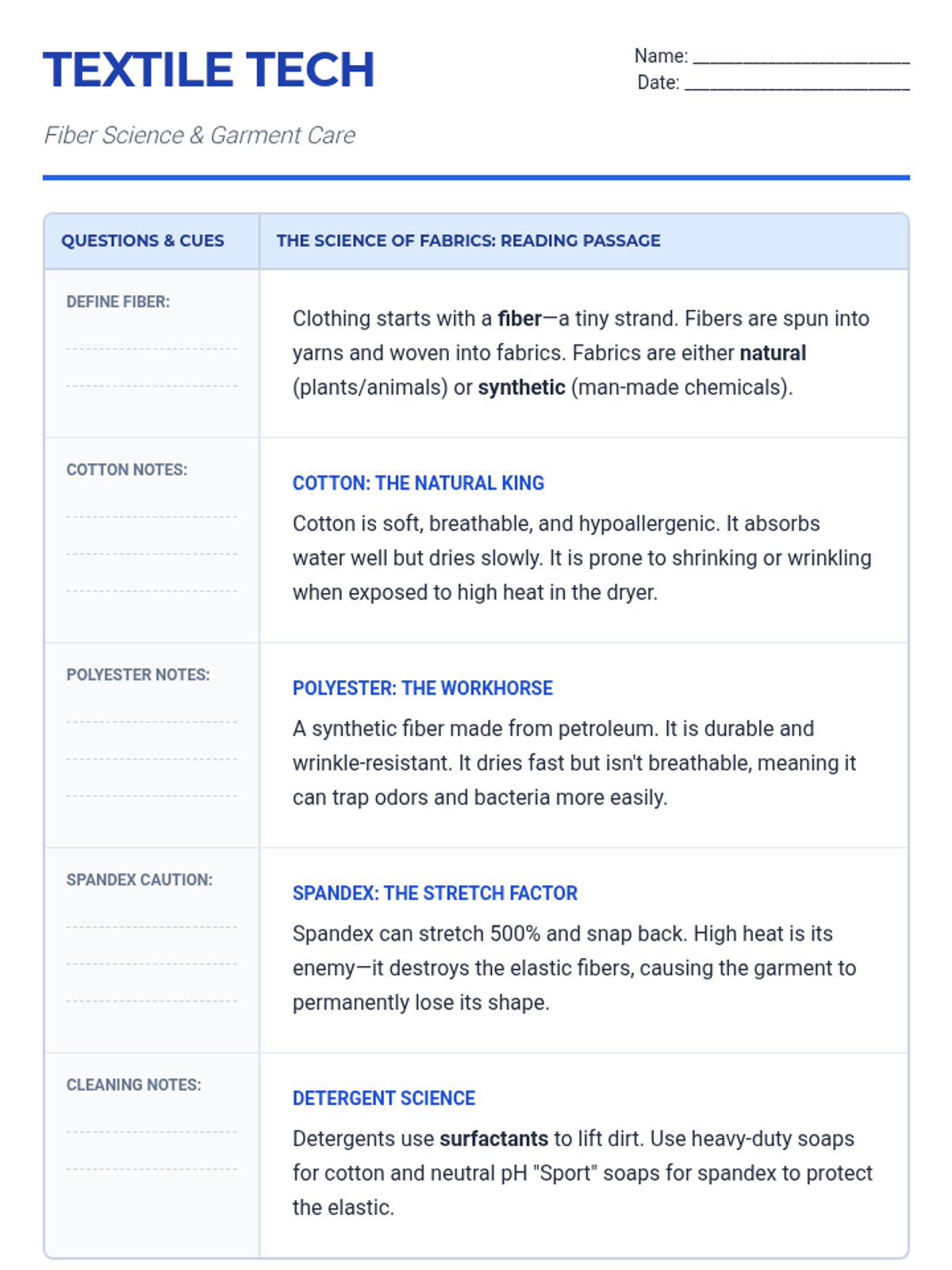
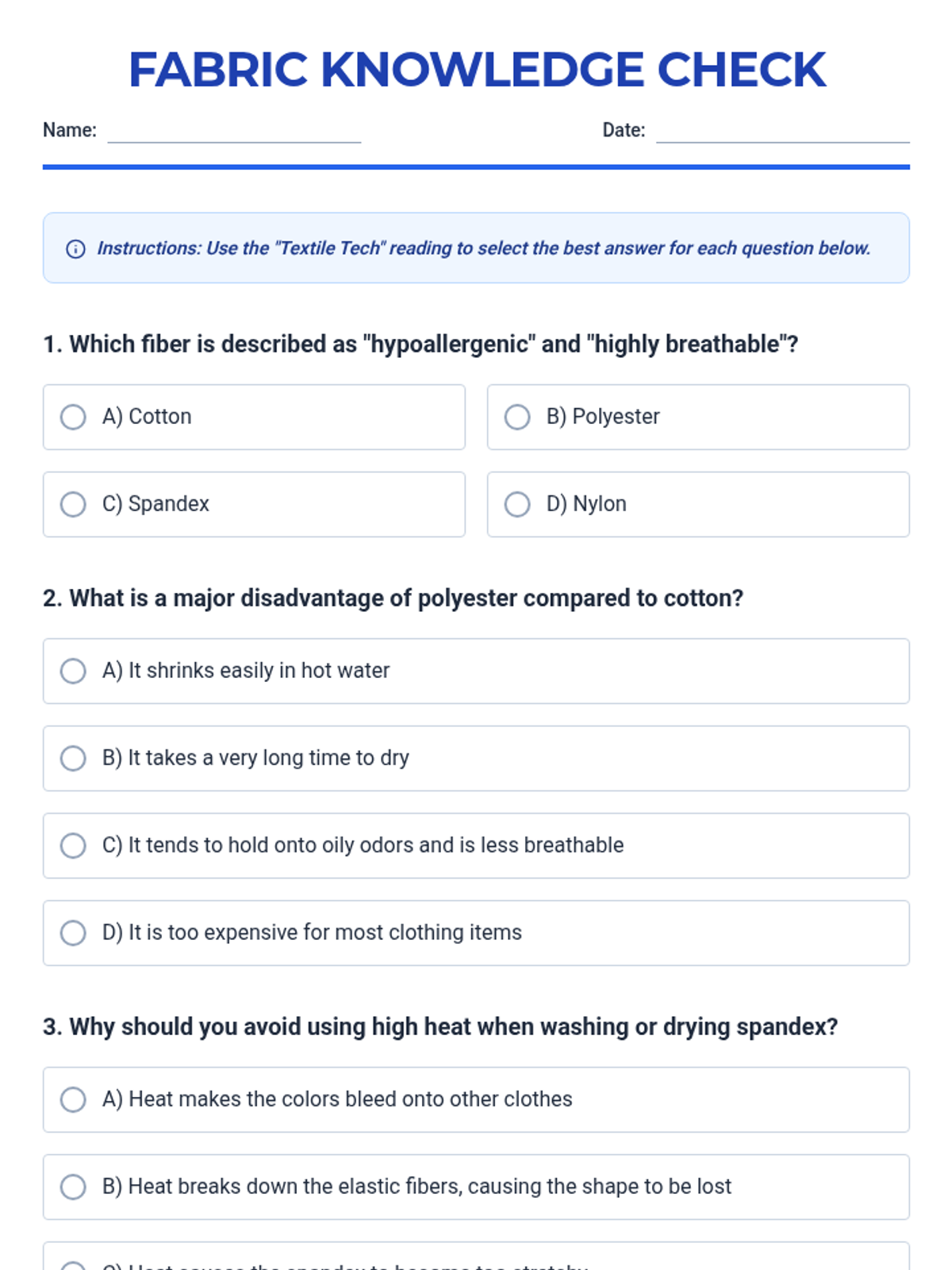
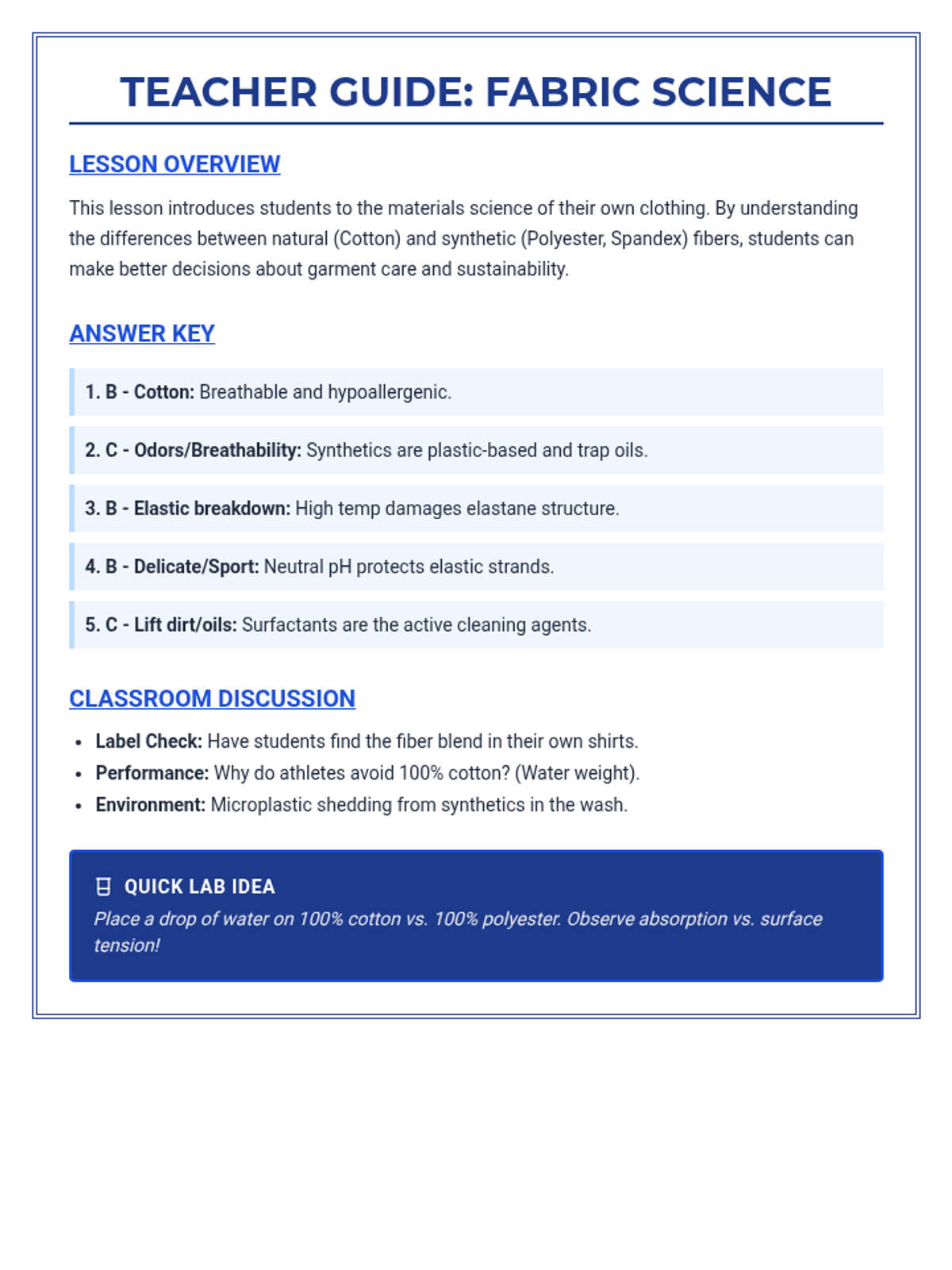
A lesson exploring the science of common clothing fibers (cotton, polyester, spandex) and the chemistry of detergents used to clean them. Students learn about fabric properties and how to select the best cleaning agents for different materials.
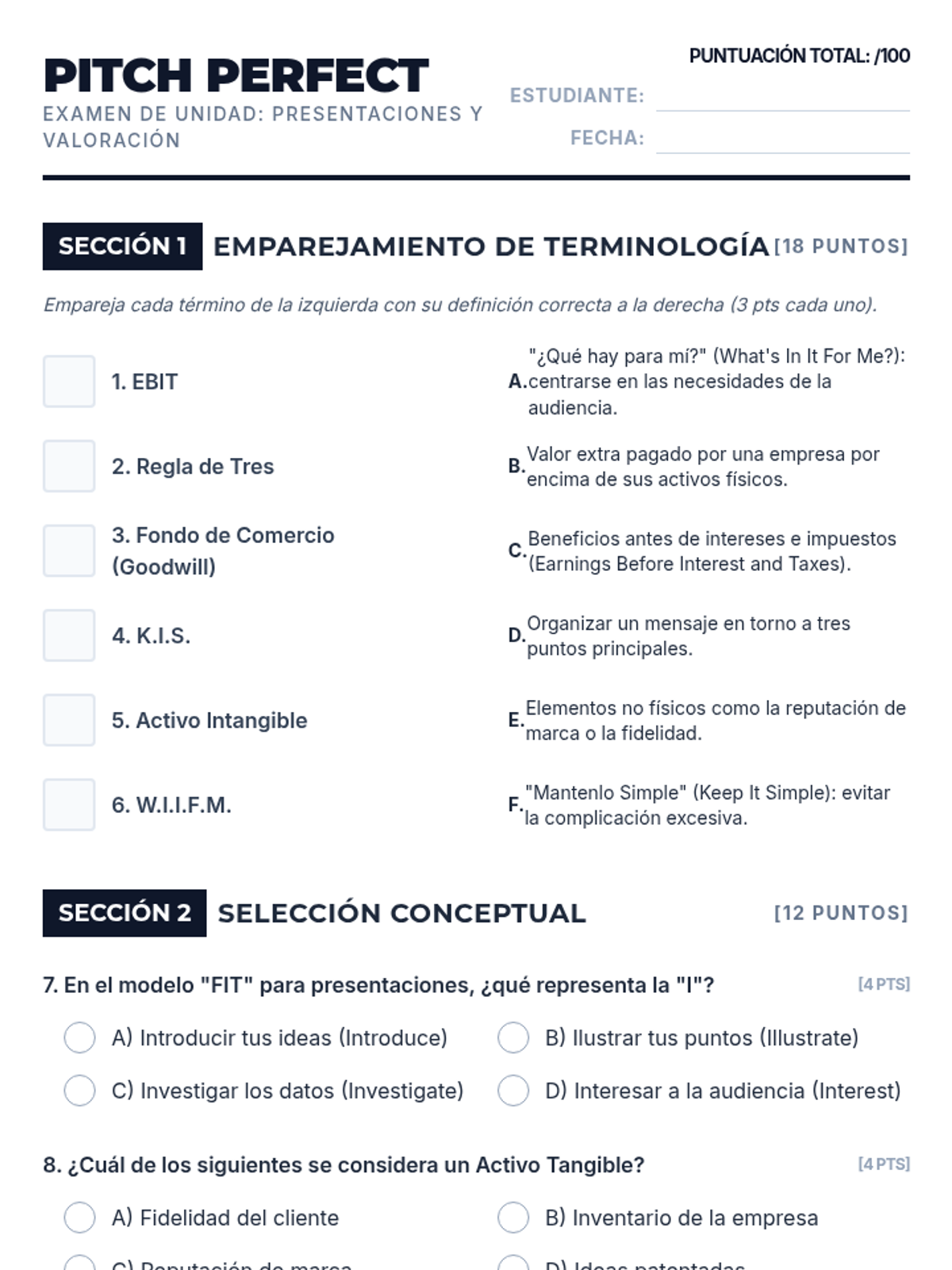
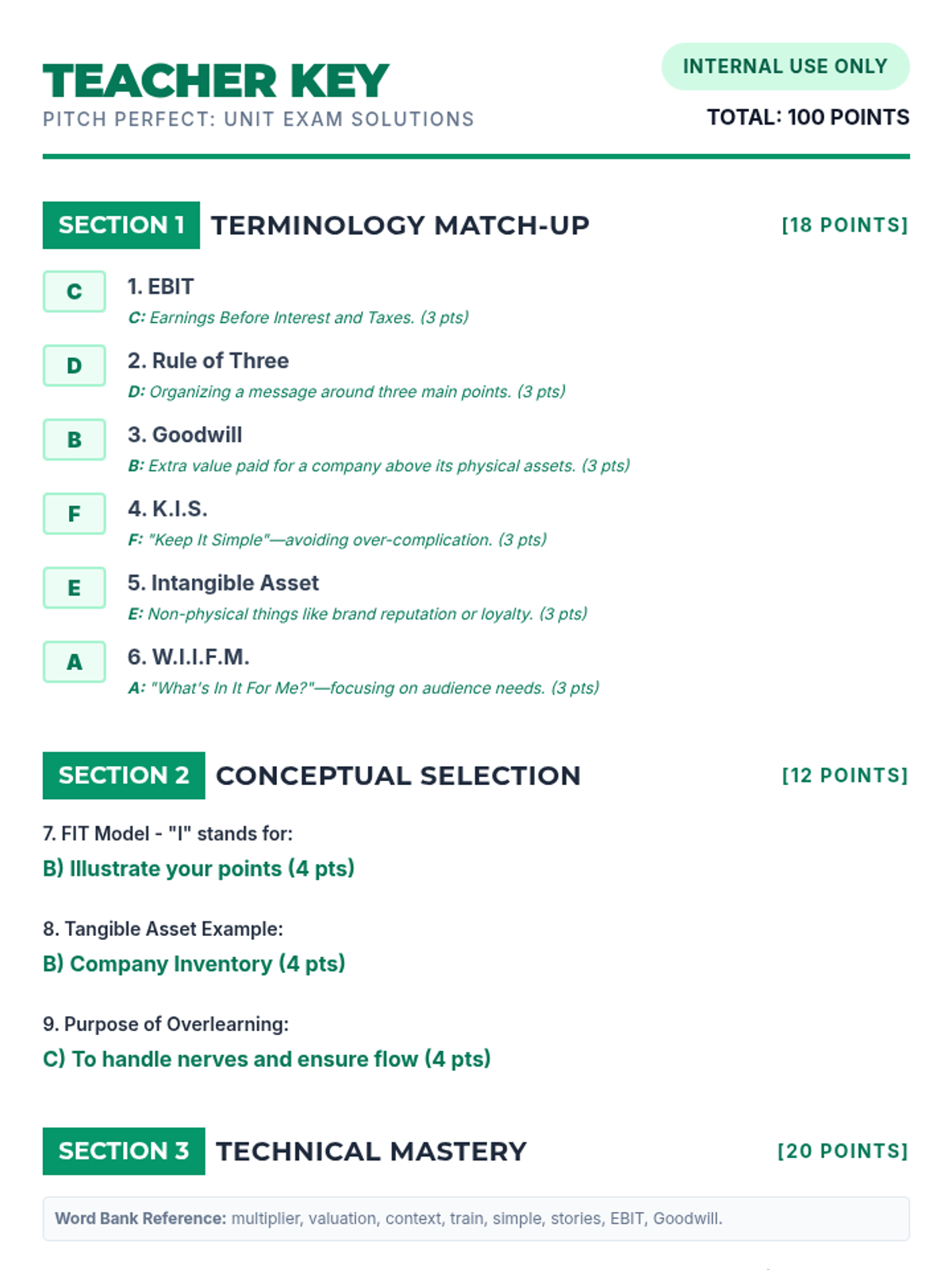
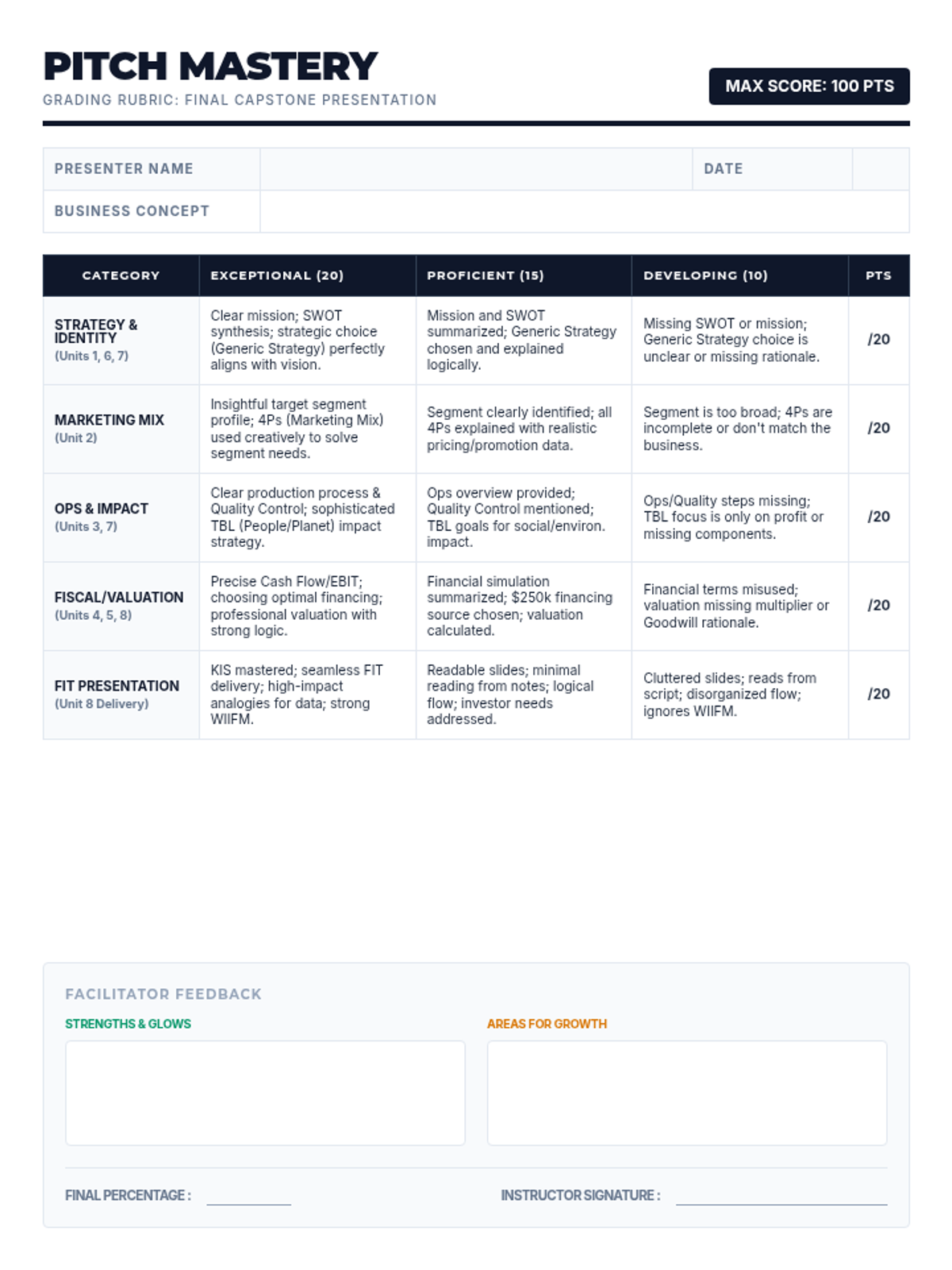
This lesson concludes the unit on business presentation skills and company valuation, testing students on the FIT model, the Rule of Three, and core financial assessment concepts.
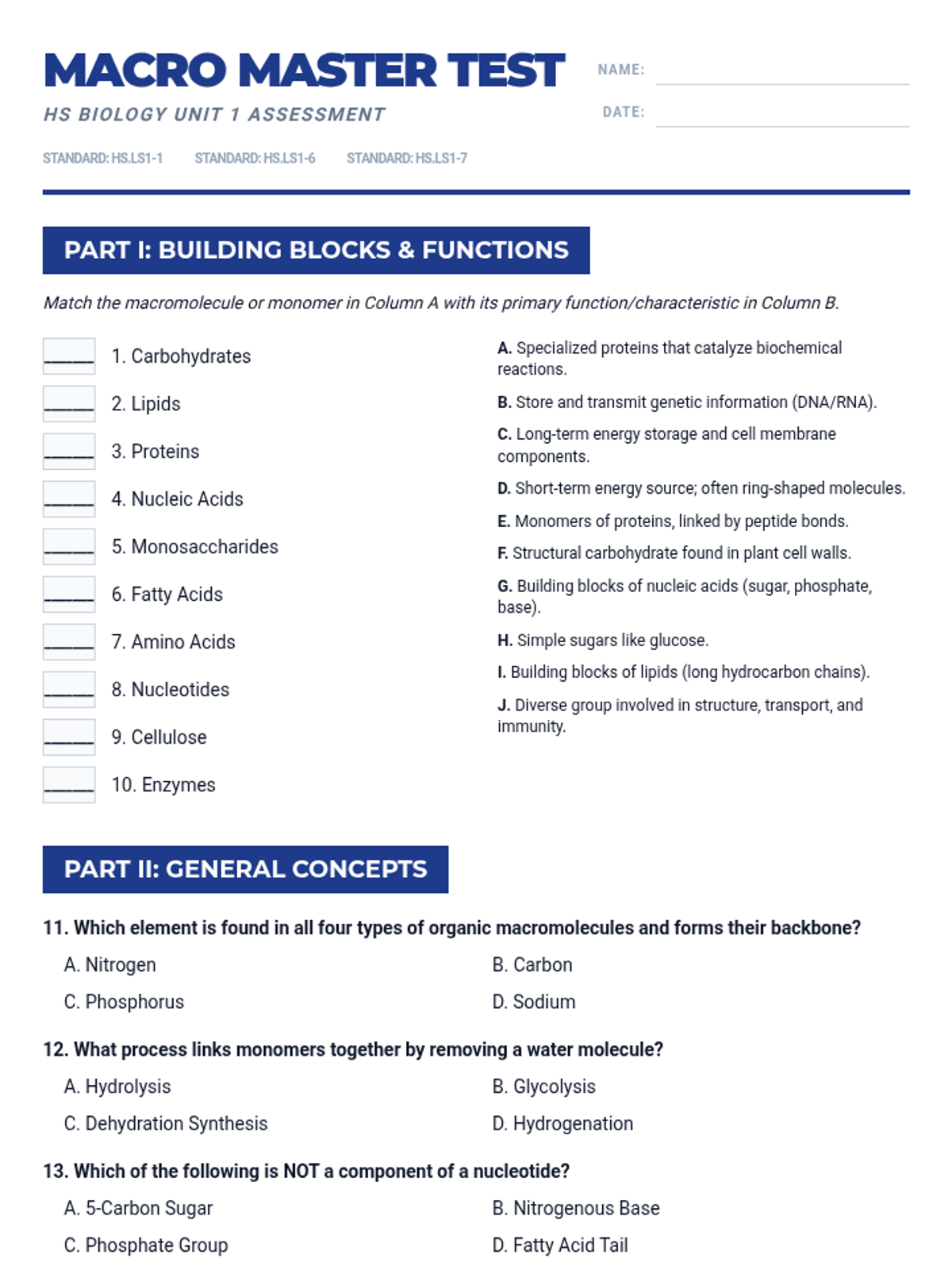
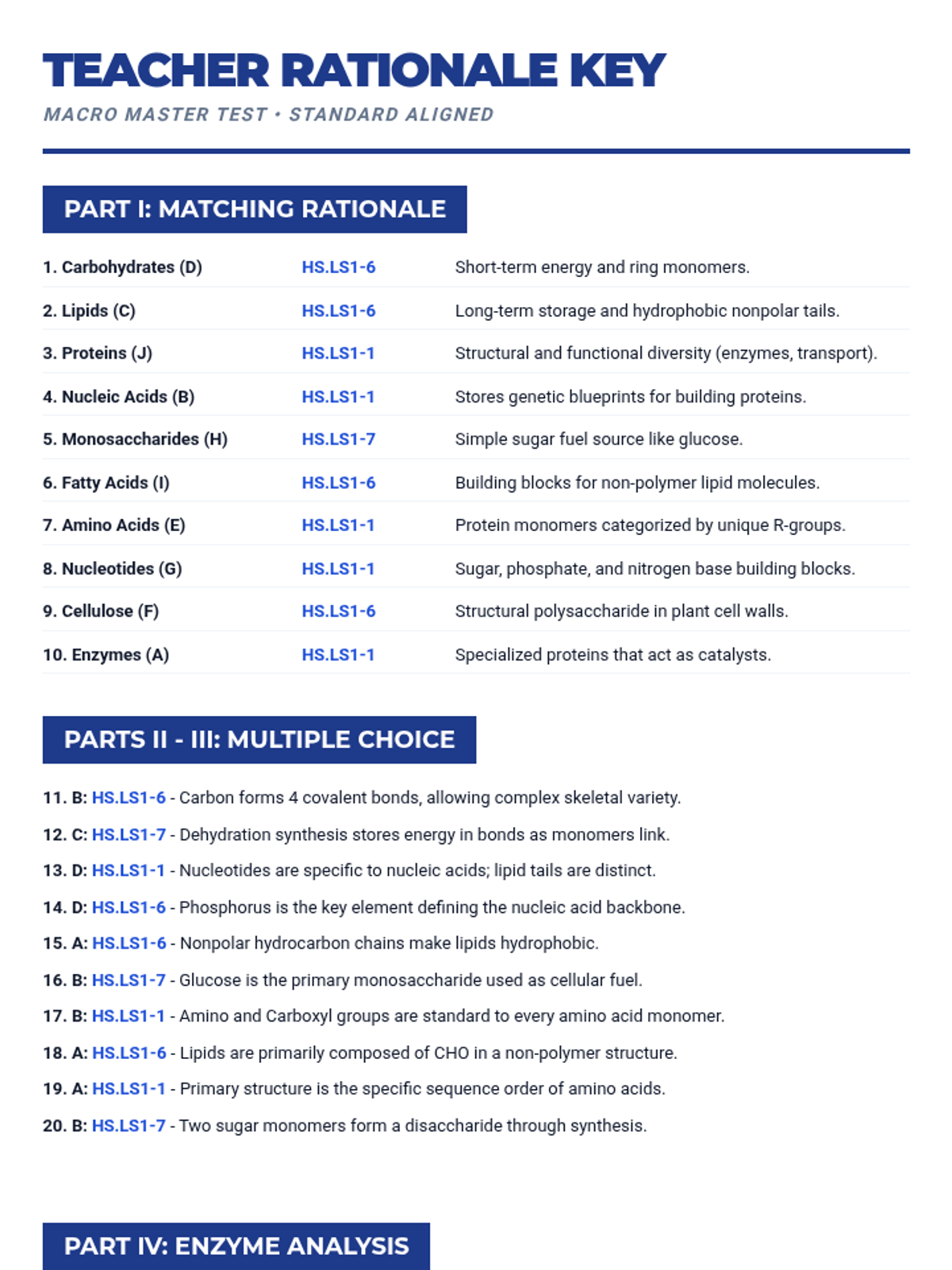
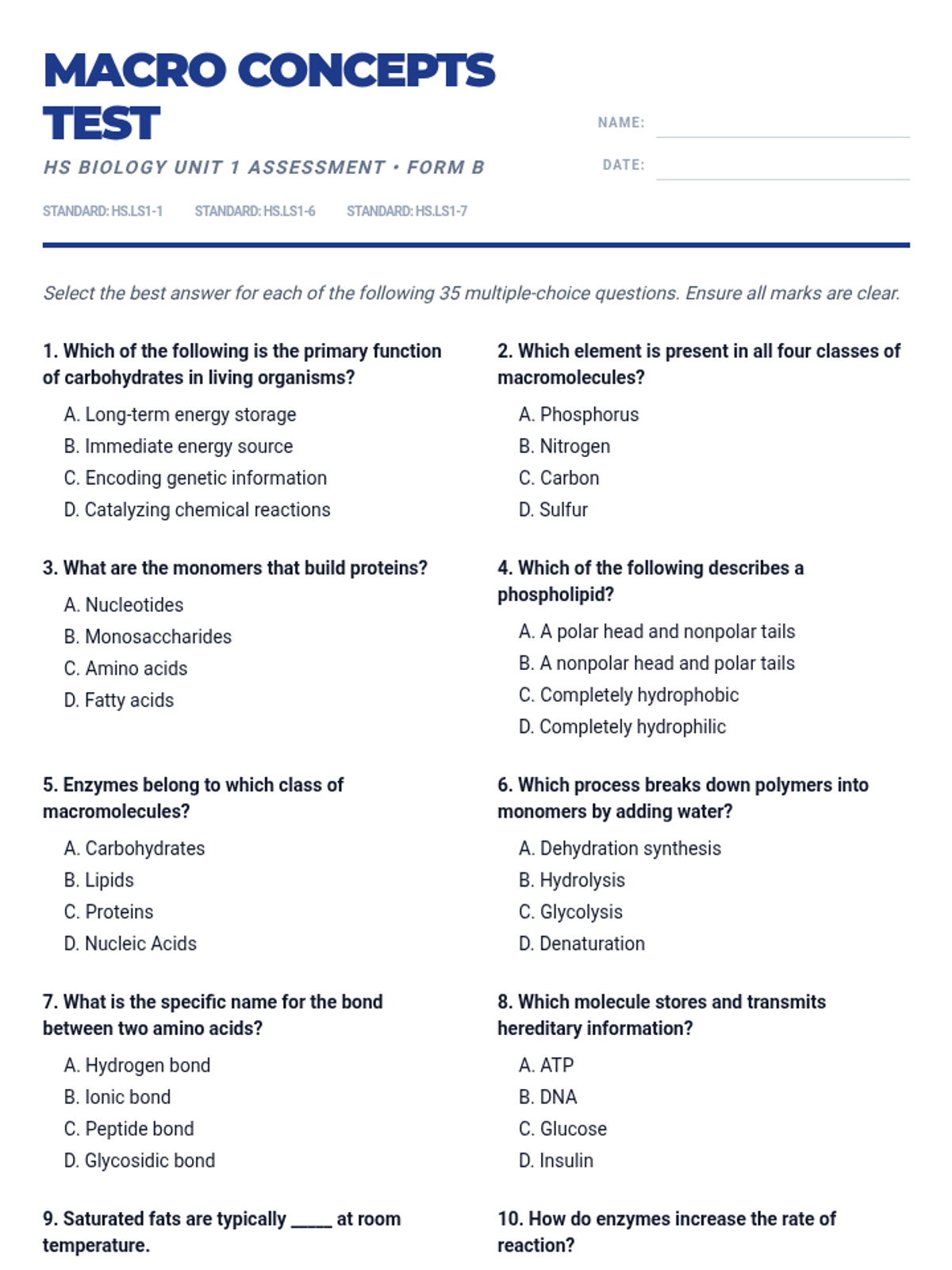
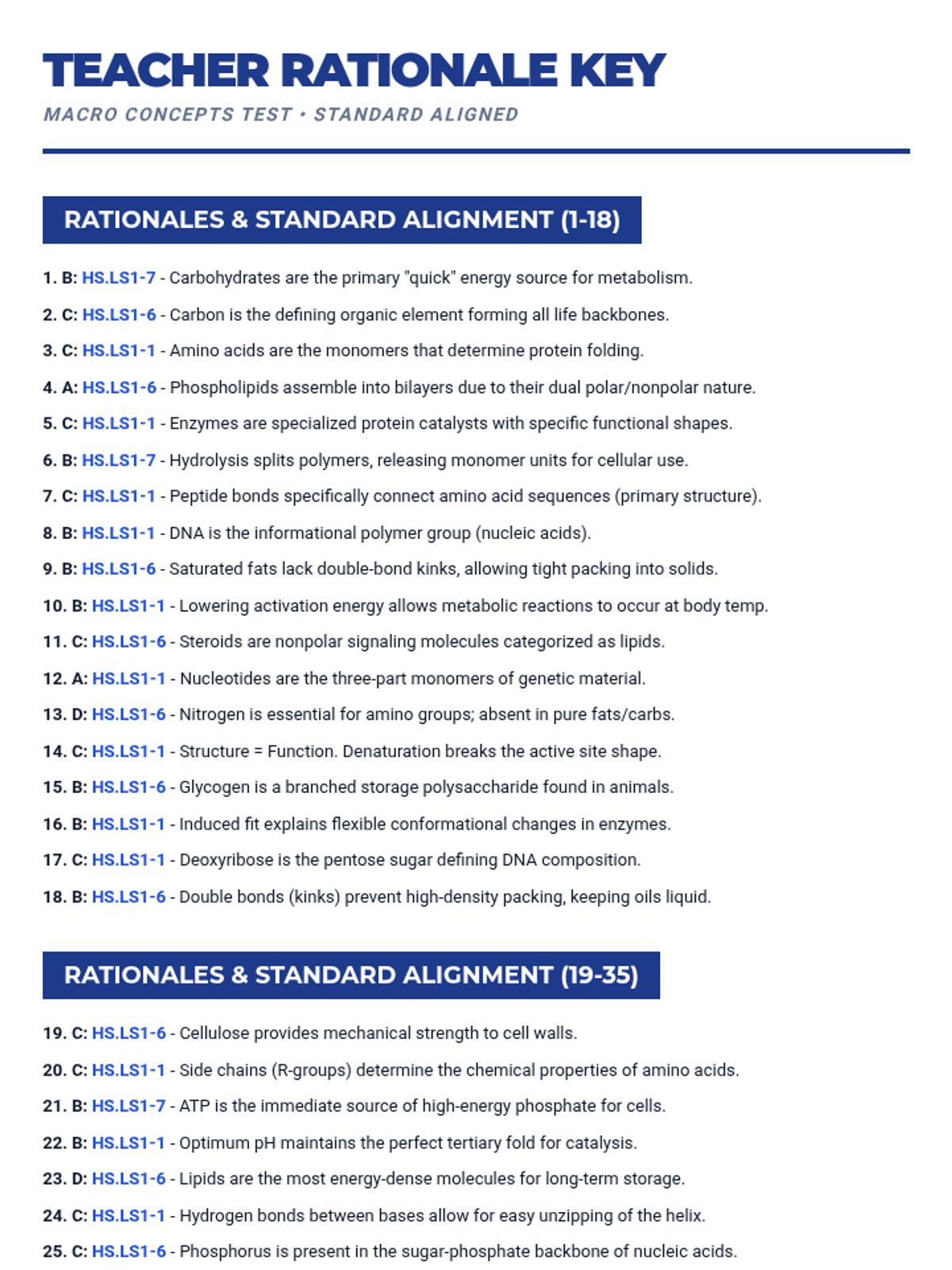
A comprehensive assessment covering the structure and function of macromolecules (carbohydrates, lipids, proteins, nucleic acids) and the catalytic role of enzymes. Aligned with Indiana State Standards for High School Biology.
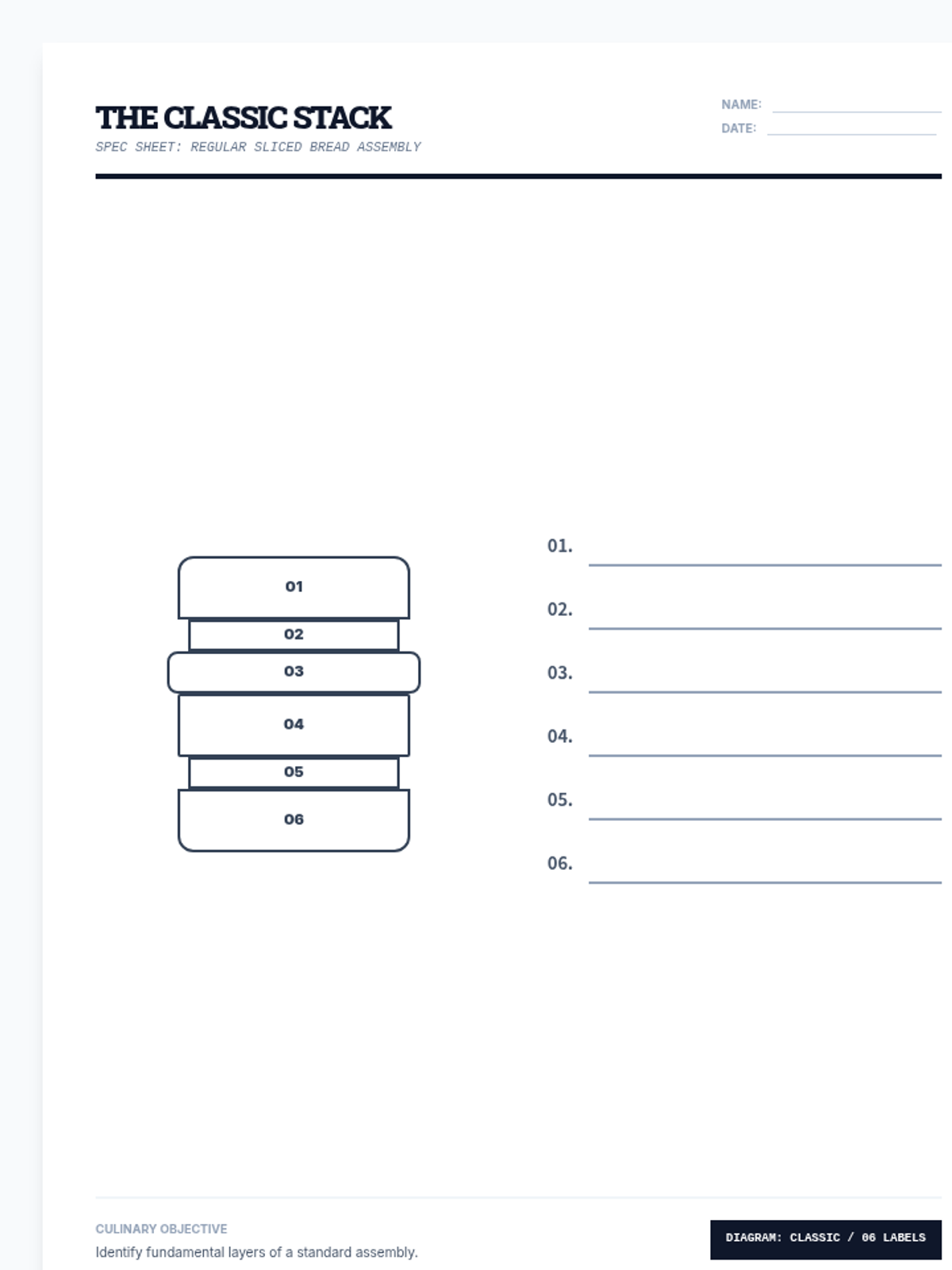
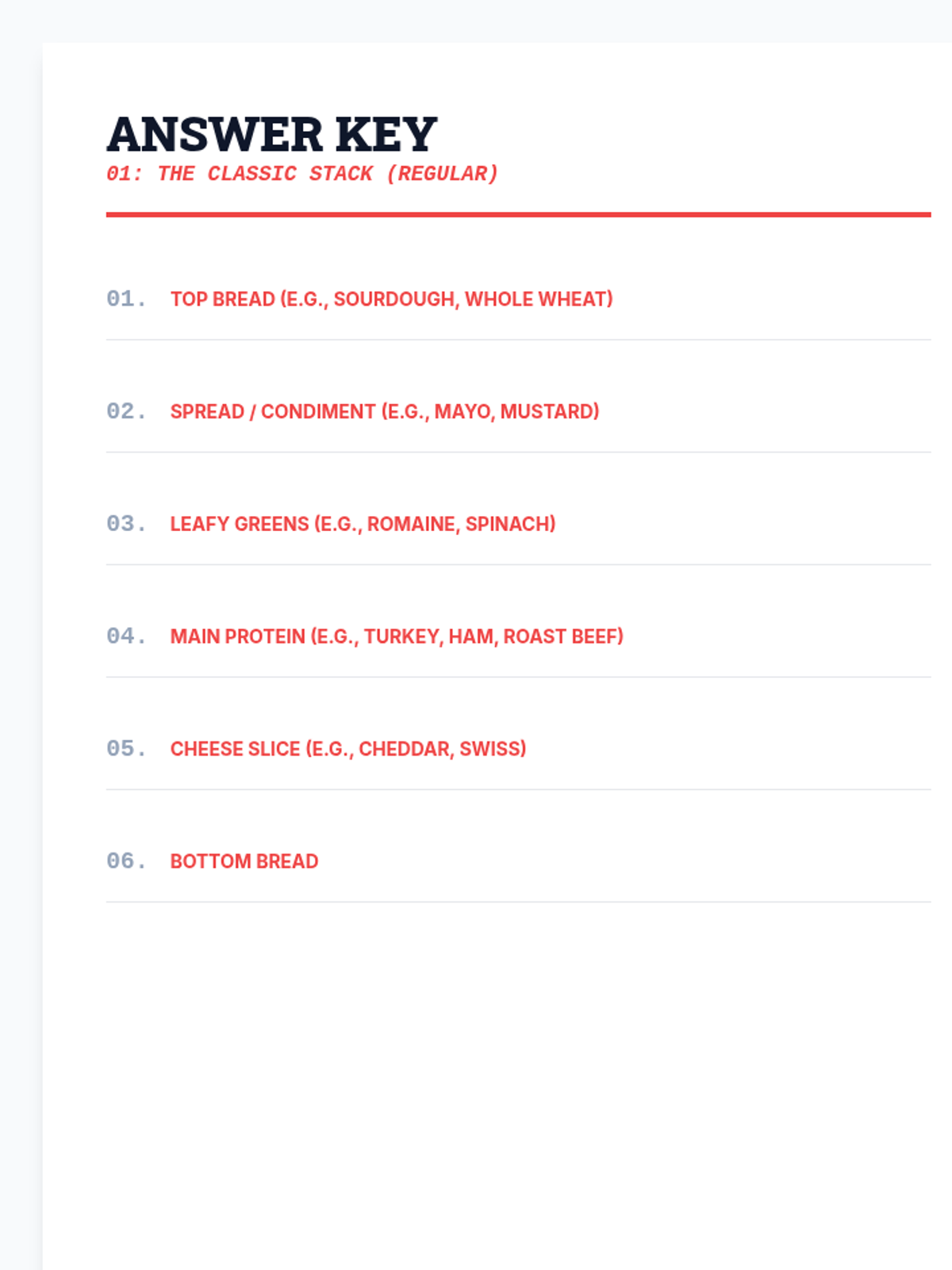
A comprehensive lesson on the structural assembly of various sandwich types, focusing on culinary terminology and layering techniques through anatomical diagrams.
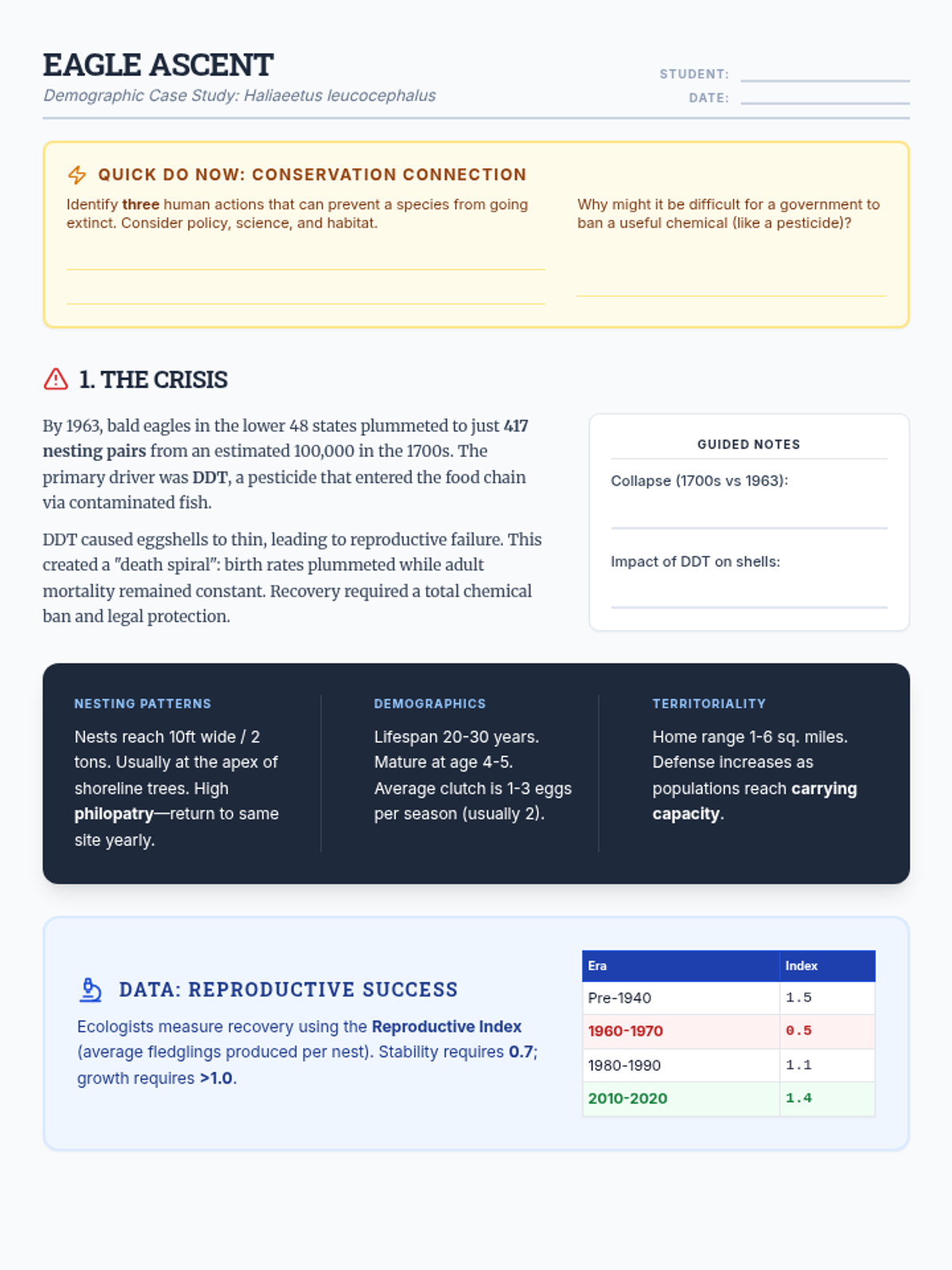
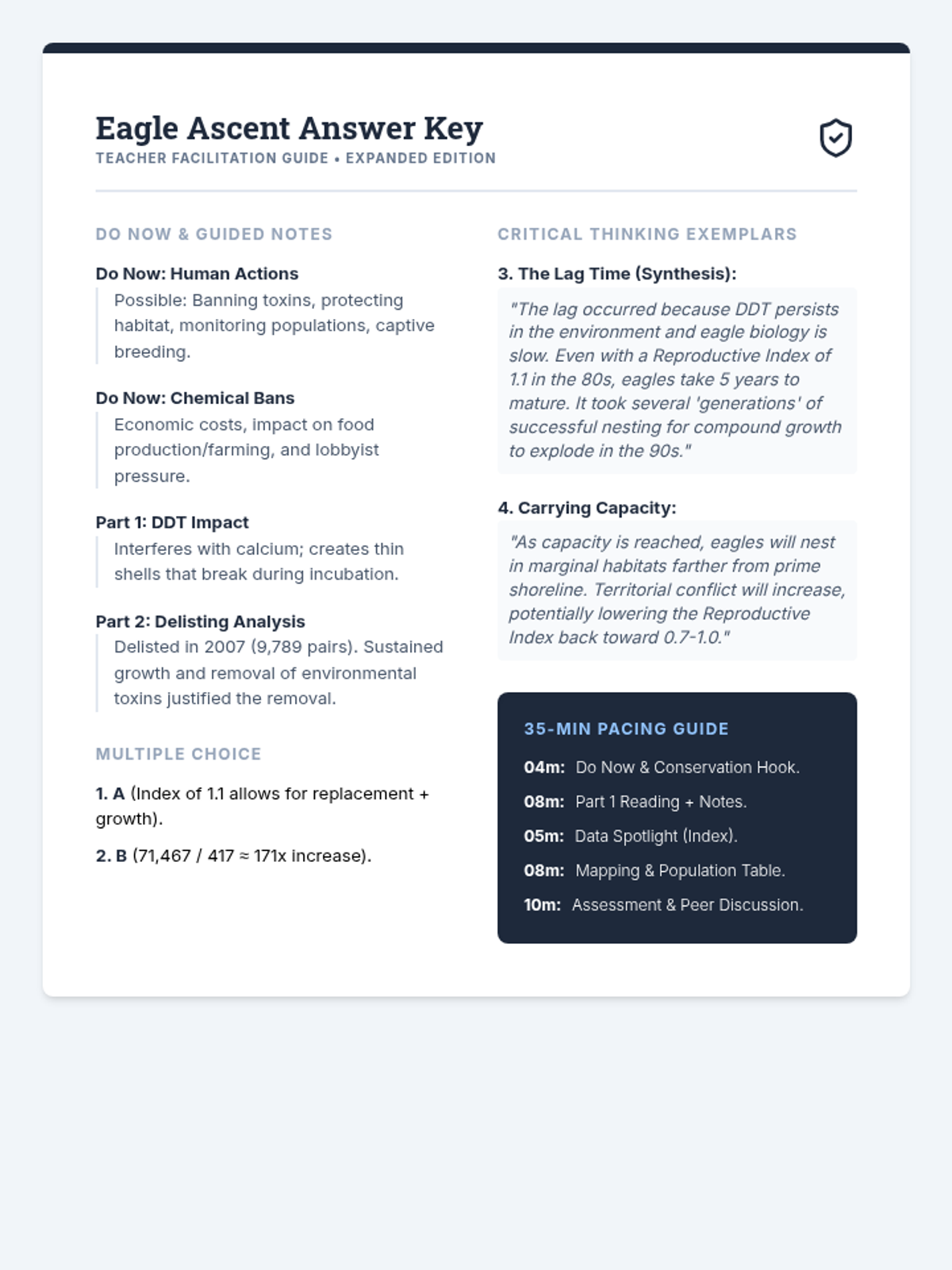
A deep dive into the demographic recovery of the bald eagle, exploring the impact of DDT and the success of the Endangered Species Act through data analysis and guided reading.
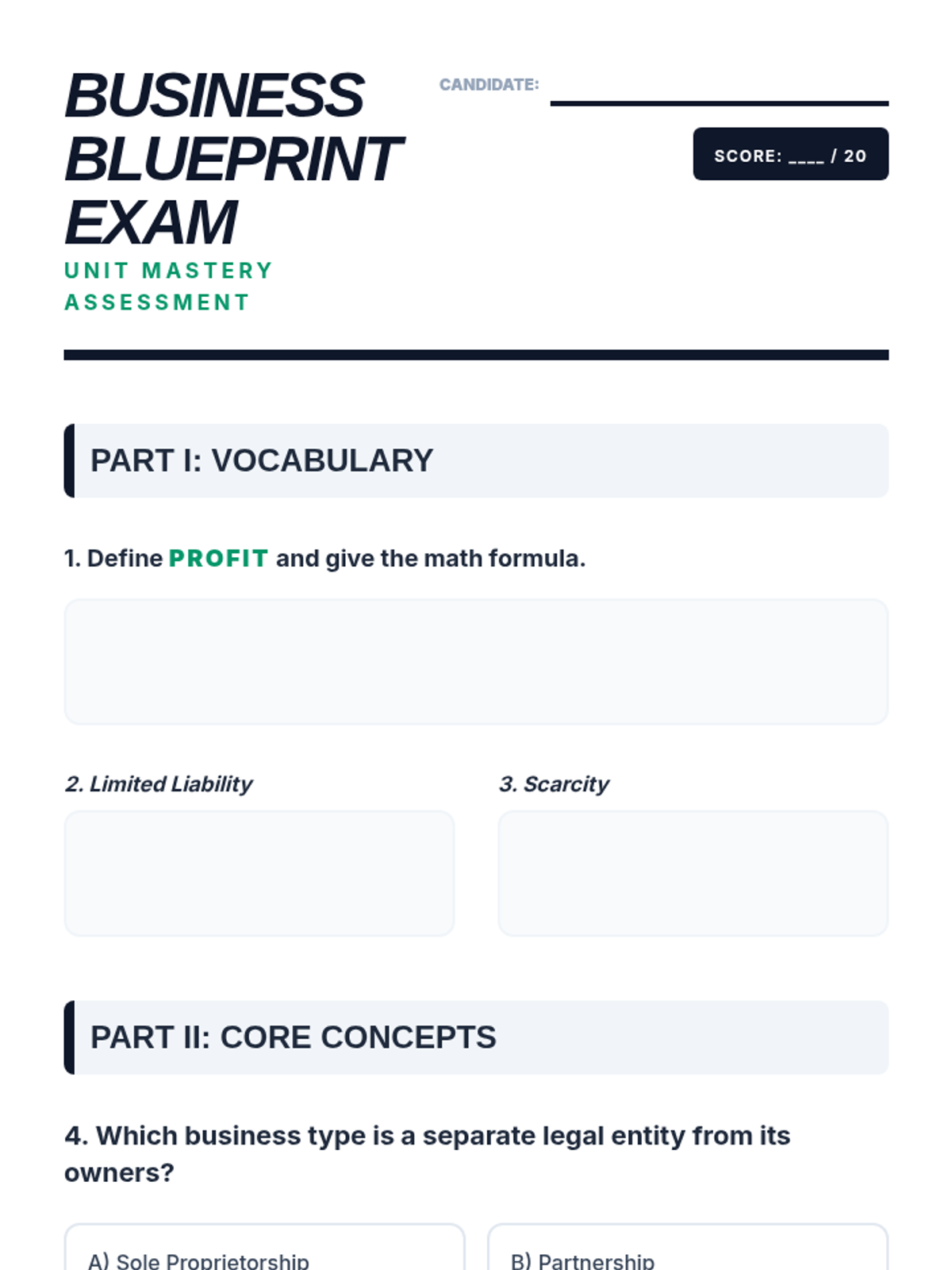
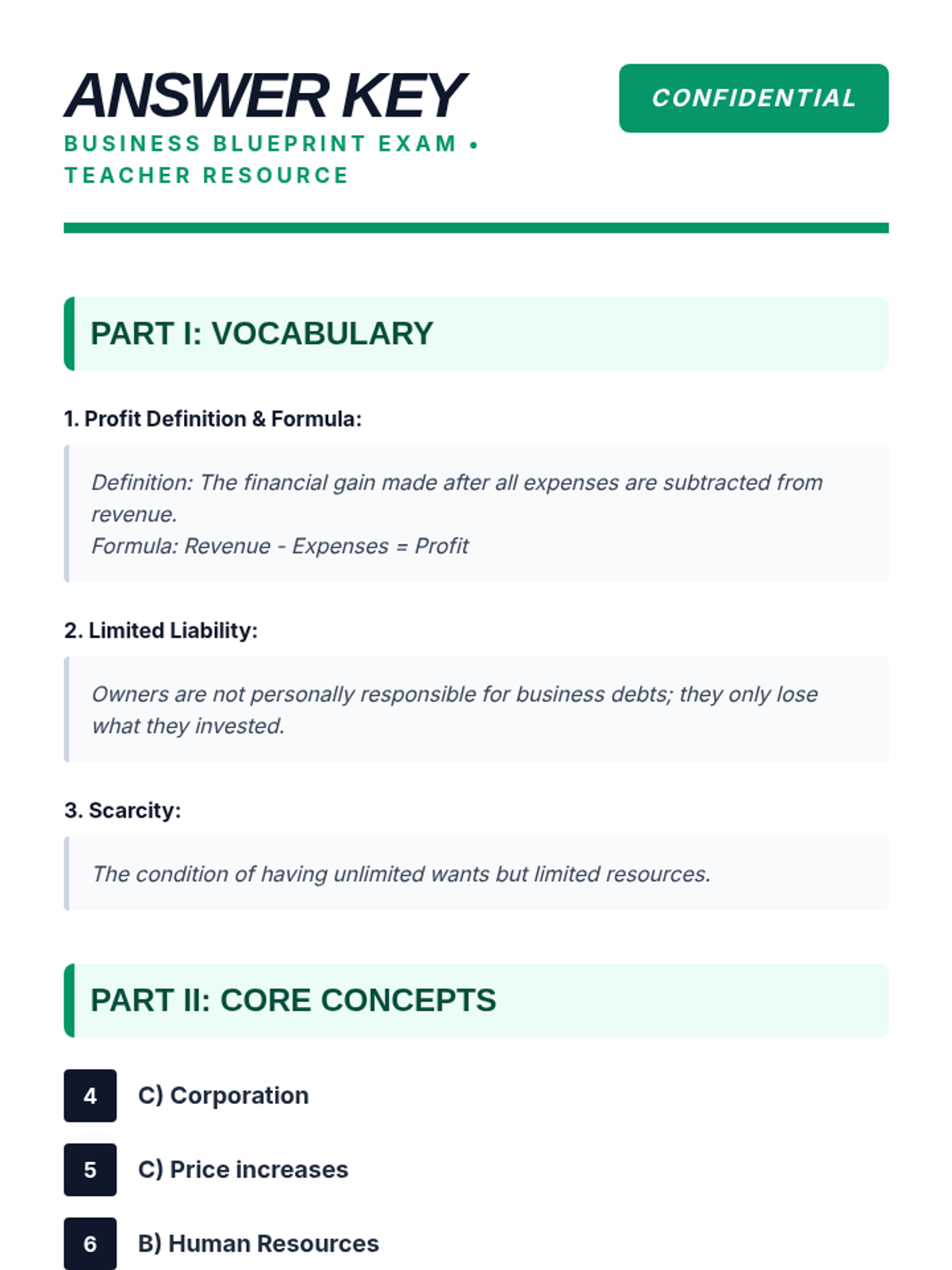
A comprehensive review of the unit's key concepts followed by a summative assessment to measure student understanding.
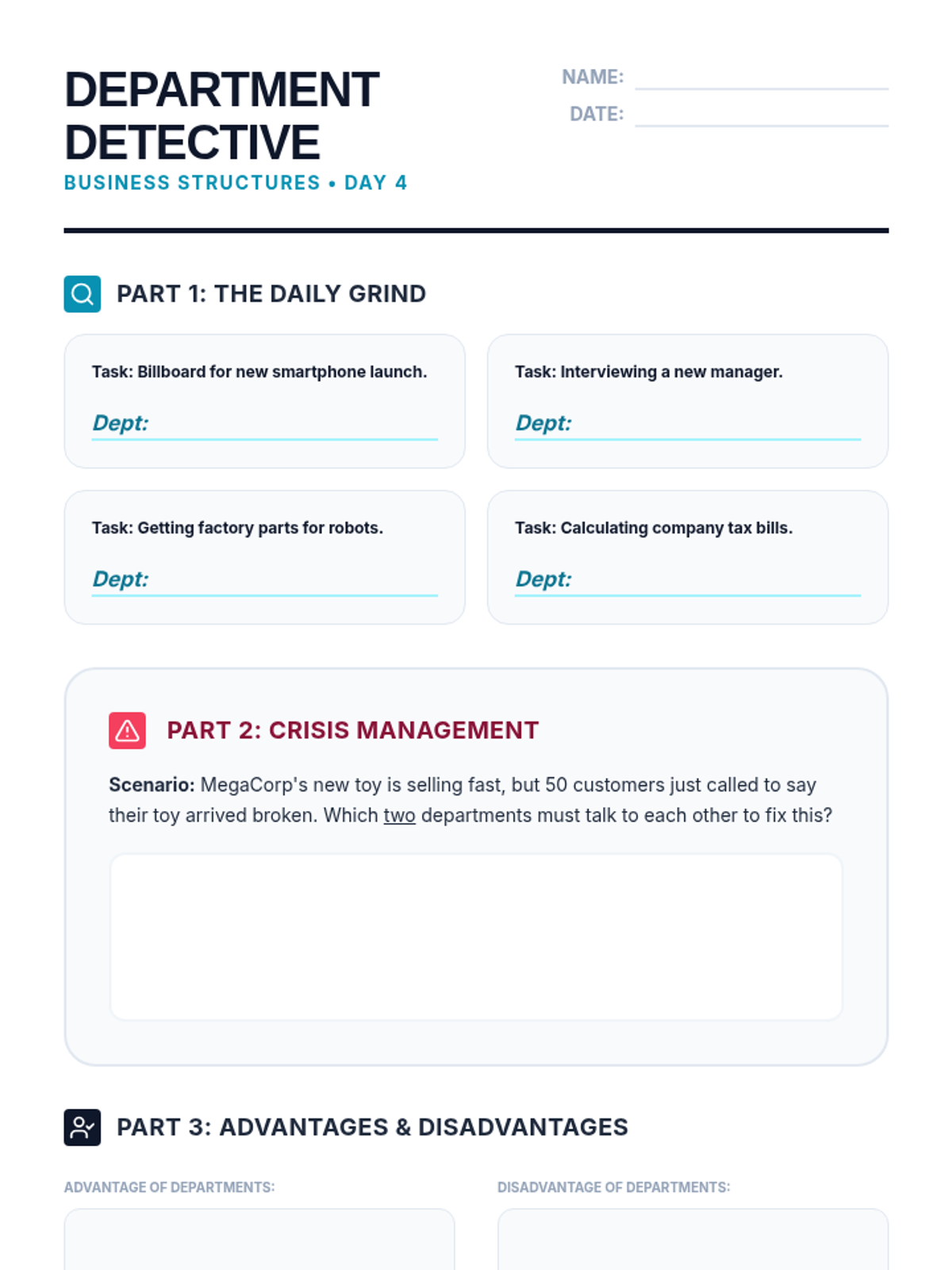
Peek inside the internal departments of a company to understand how functions like Marketing, Finance, and HR work together.
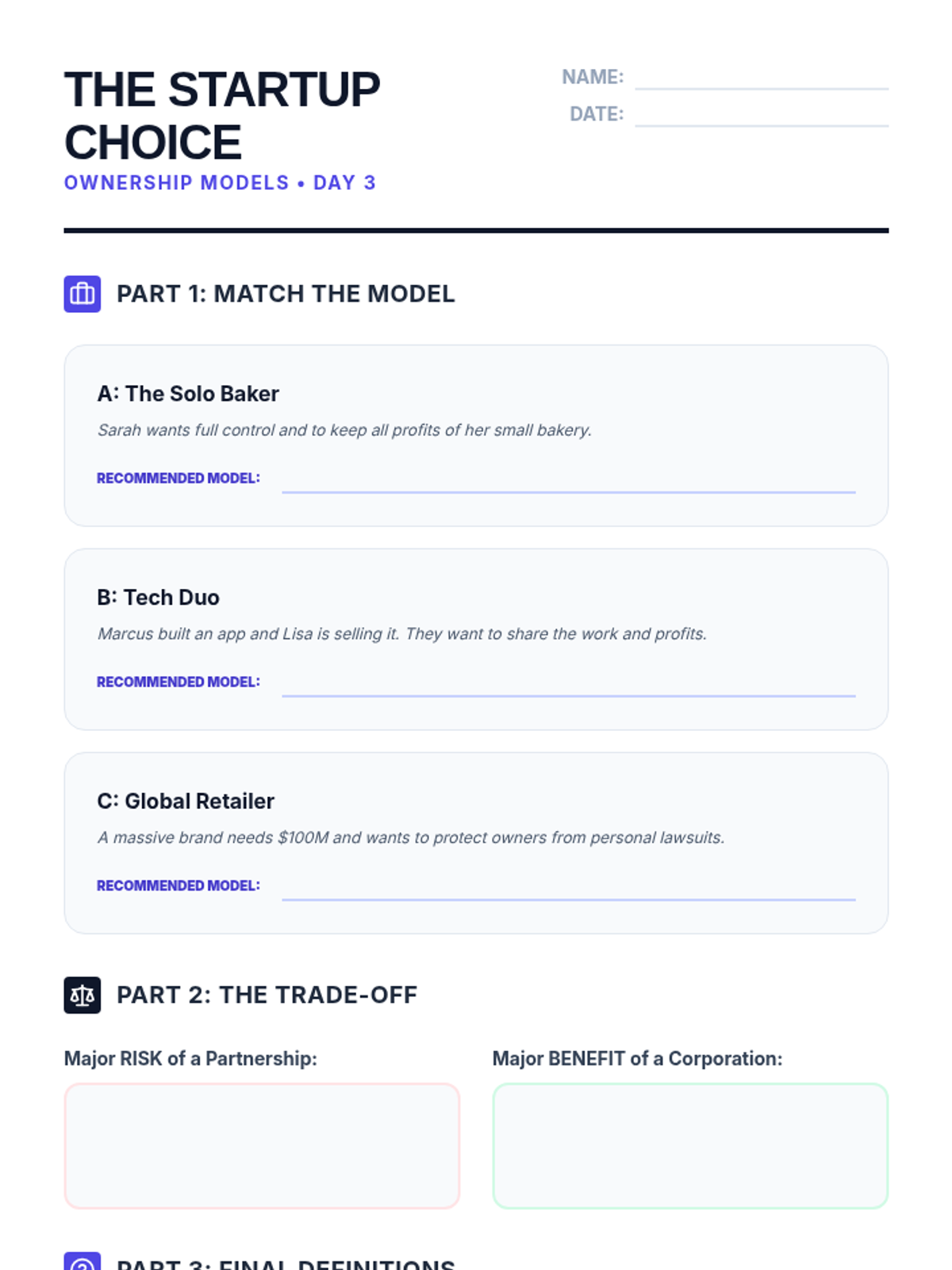
Compare different ways a business can be legally structured, including sole proprietorships, partnerships, and corporations.
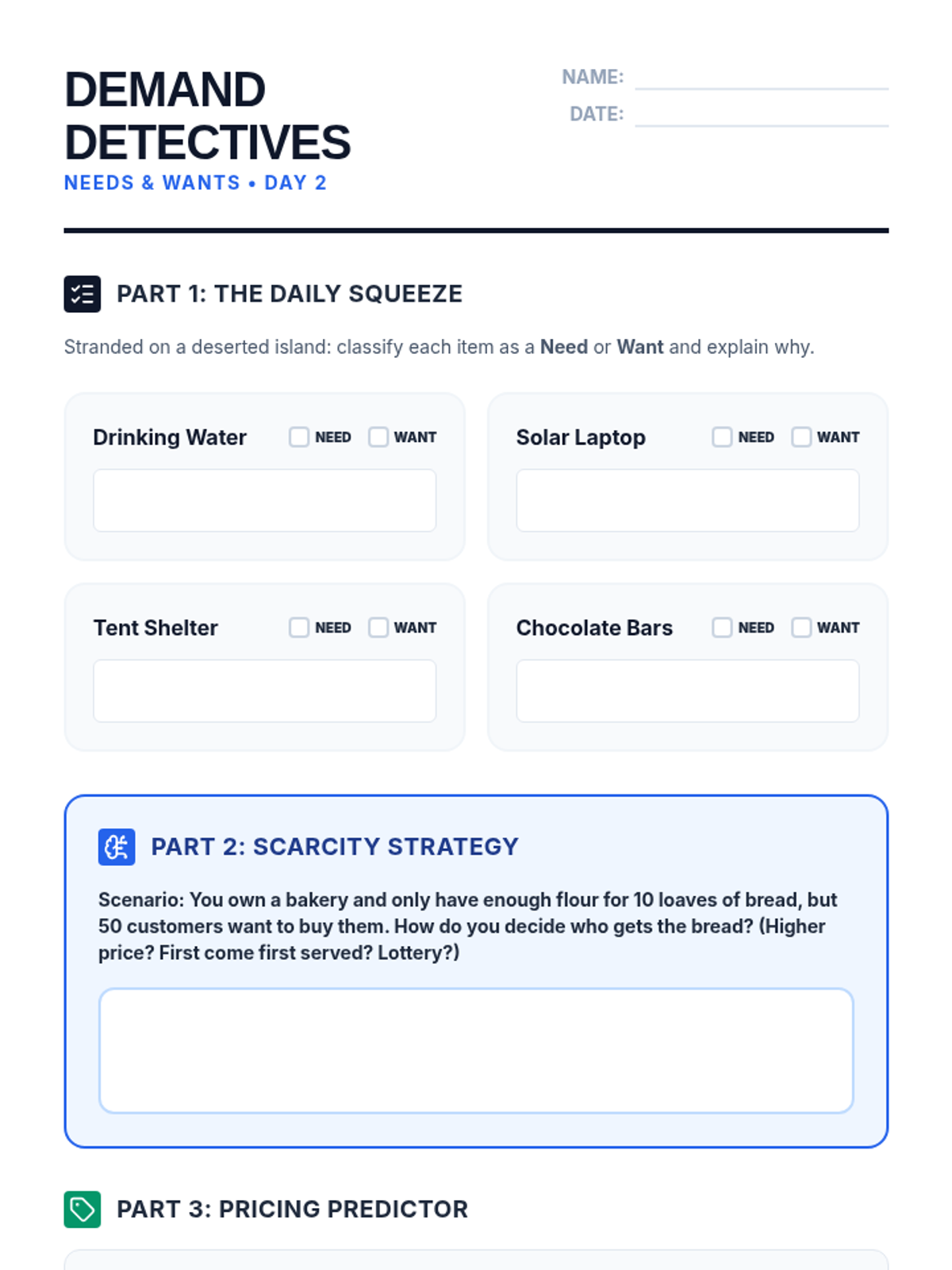
Investigate how businesses satisfy human needs and wants through the production of goods and services within the framework of supply and demand.
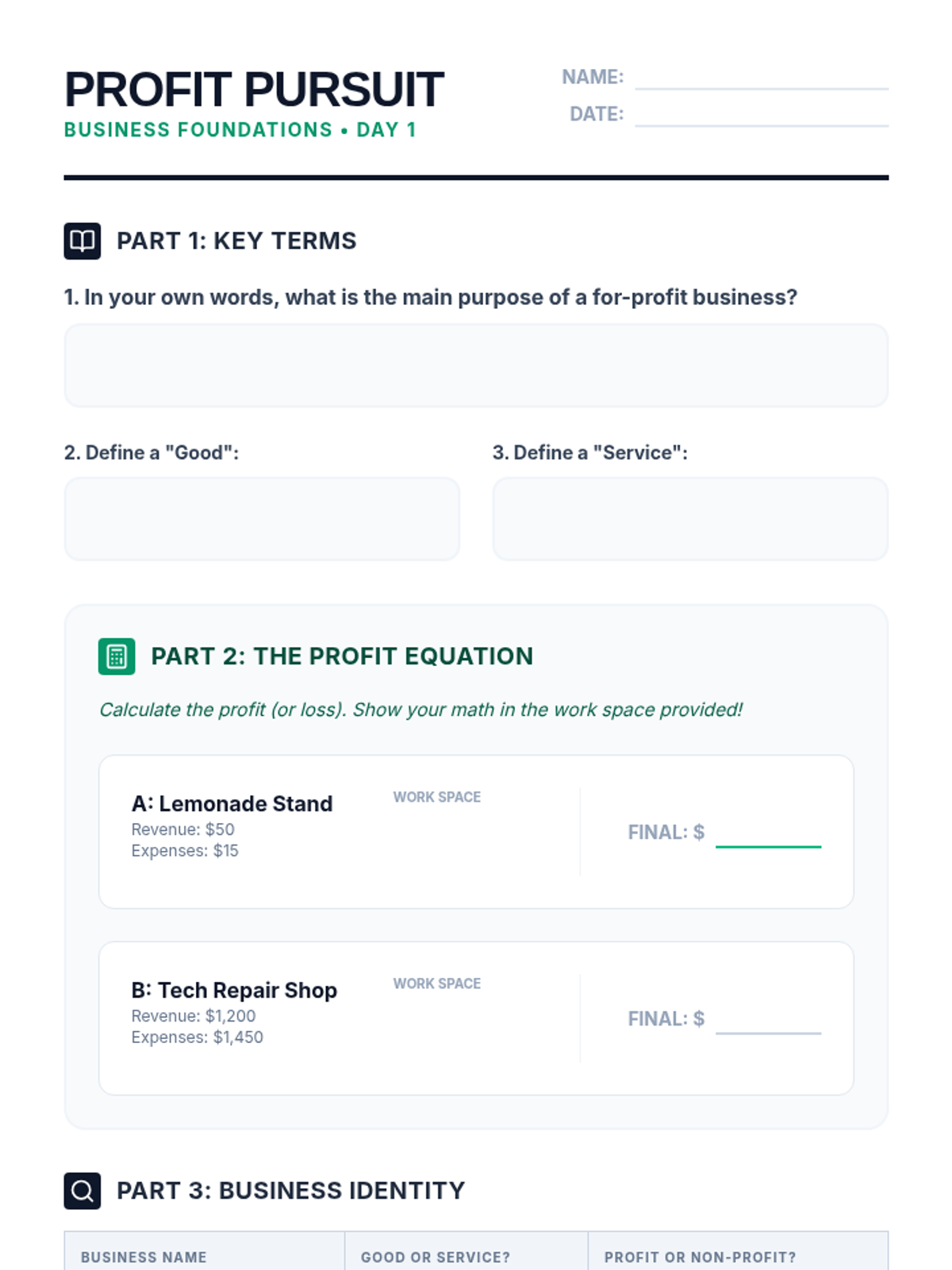
Explore the fundamental purpose of a business, distinguishing between for-profit and non-profit organizations and identifying the role of profit.