An exploration of Earth's most intense weather events, focusing on the atmospheric physics that drive them and their profound effects on the planet's residents and habitats.
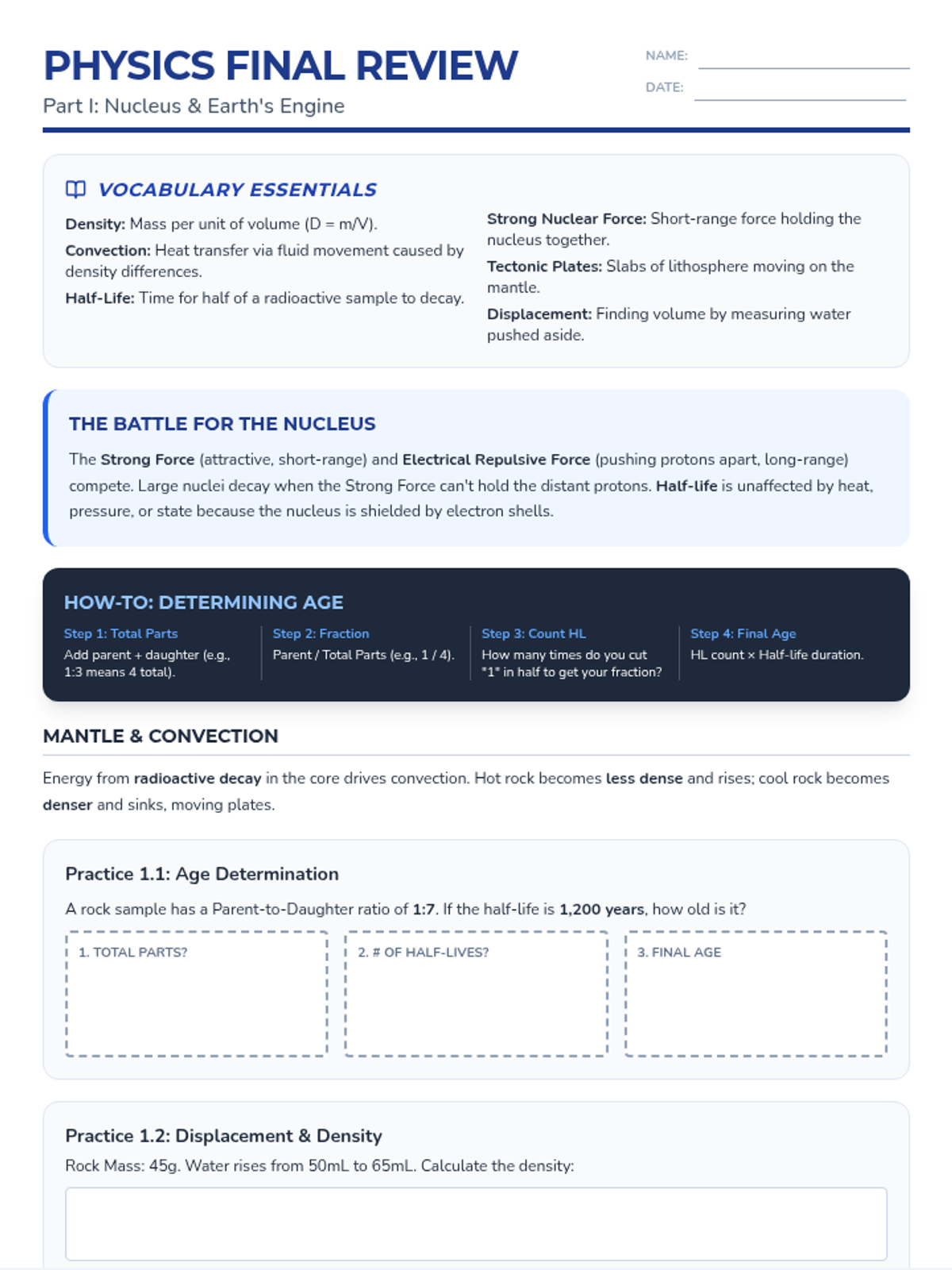
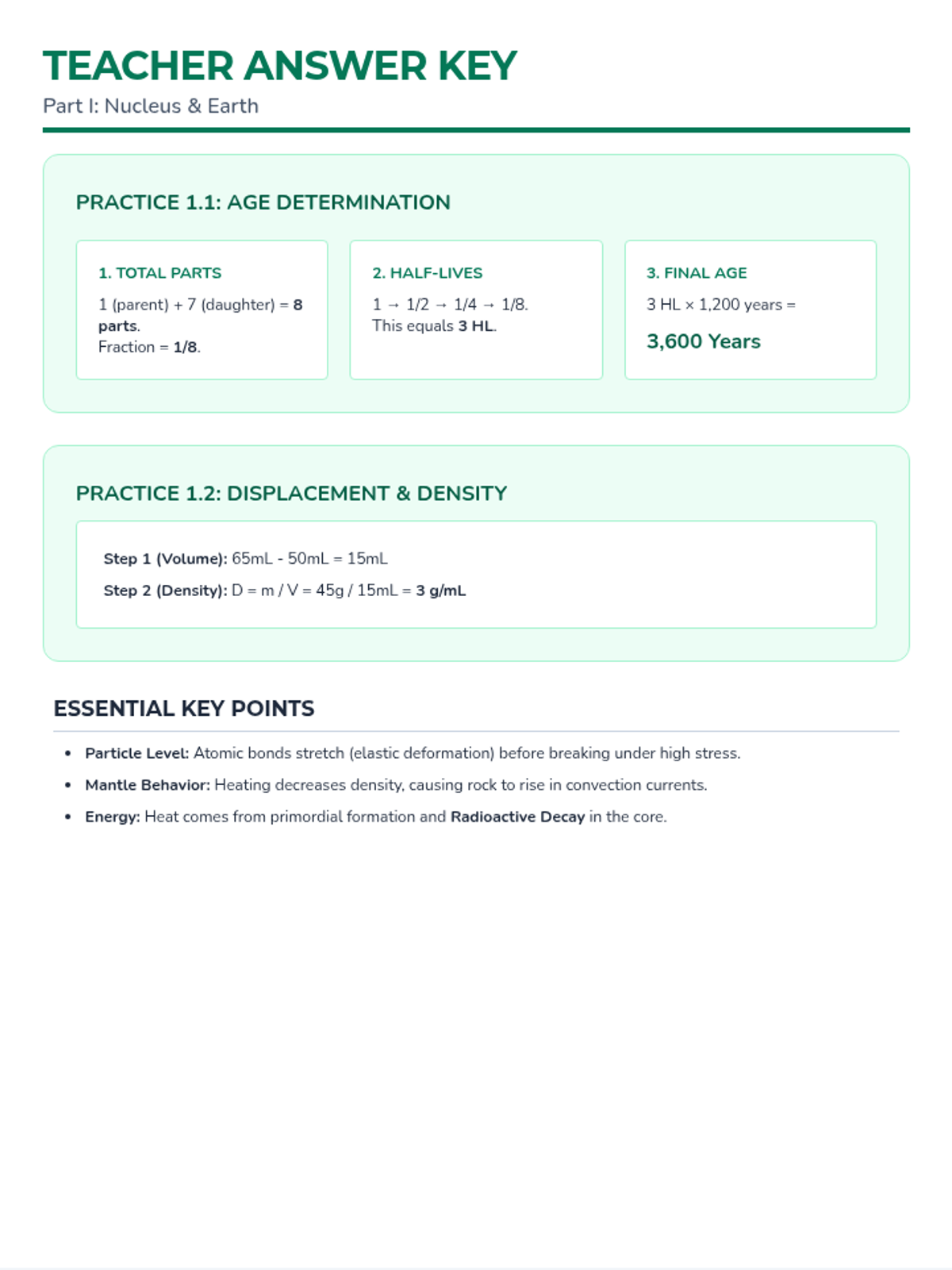
A comprehensive 3-page study guide covering Radioactive Decay, Geophysics, Waves, and Momentum for a 9th grade Conceptual Physics final exam.
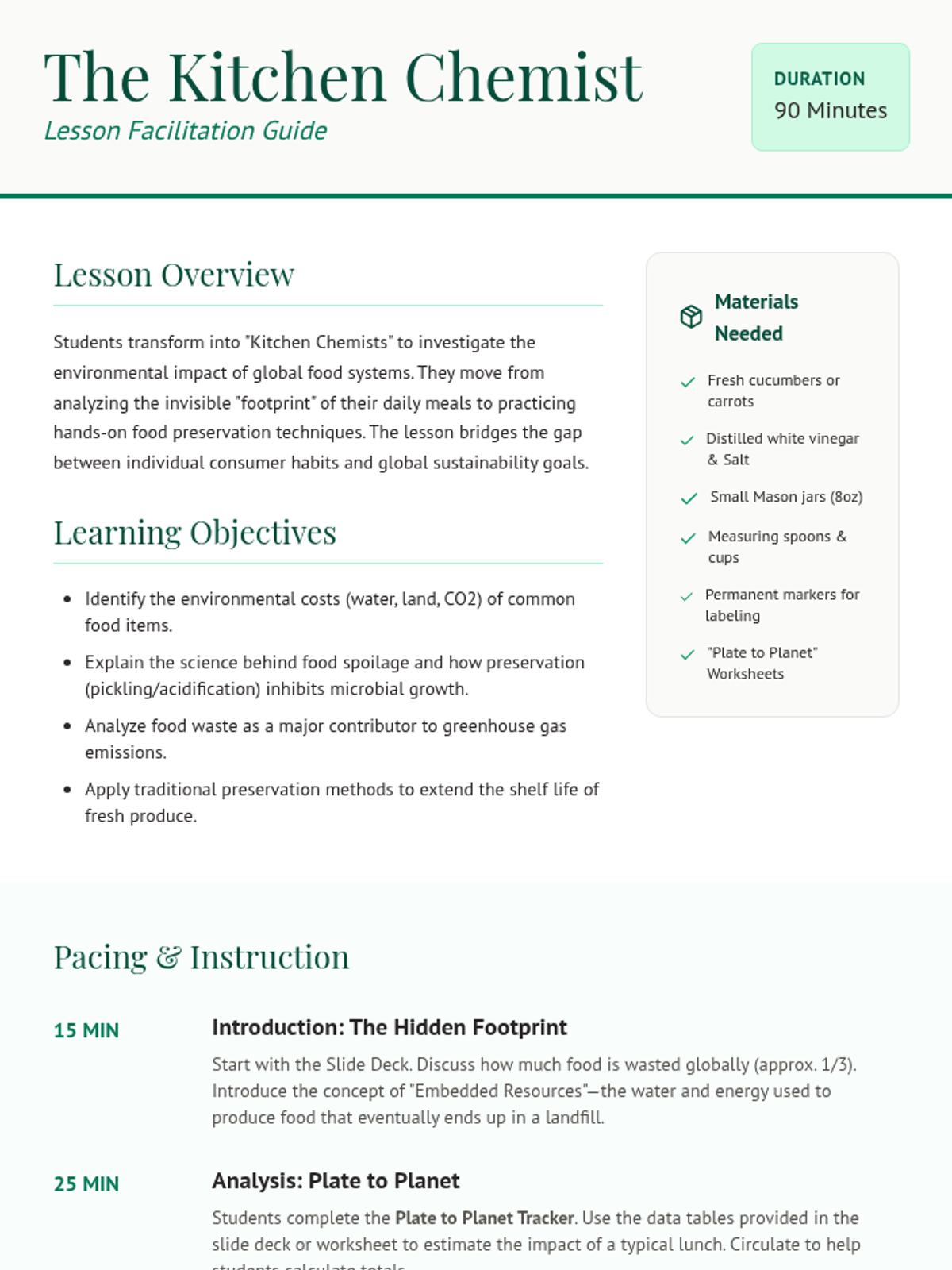
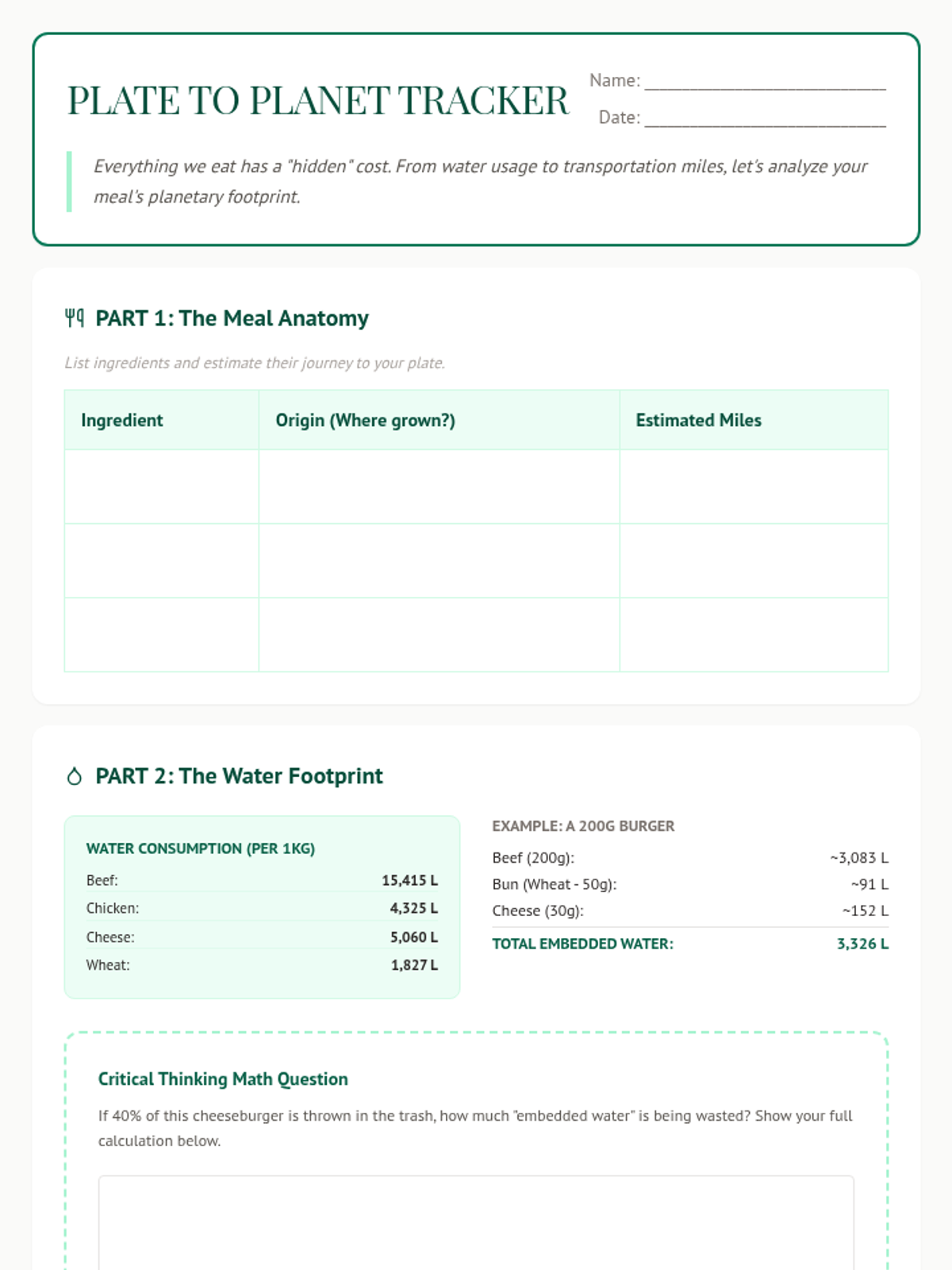
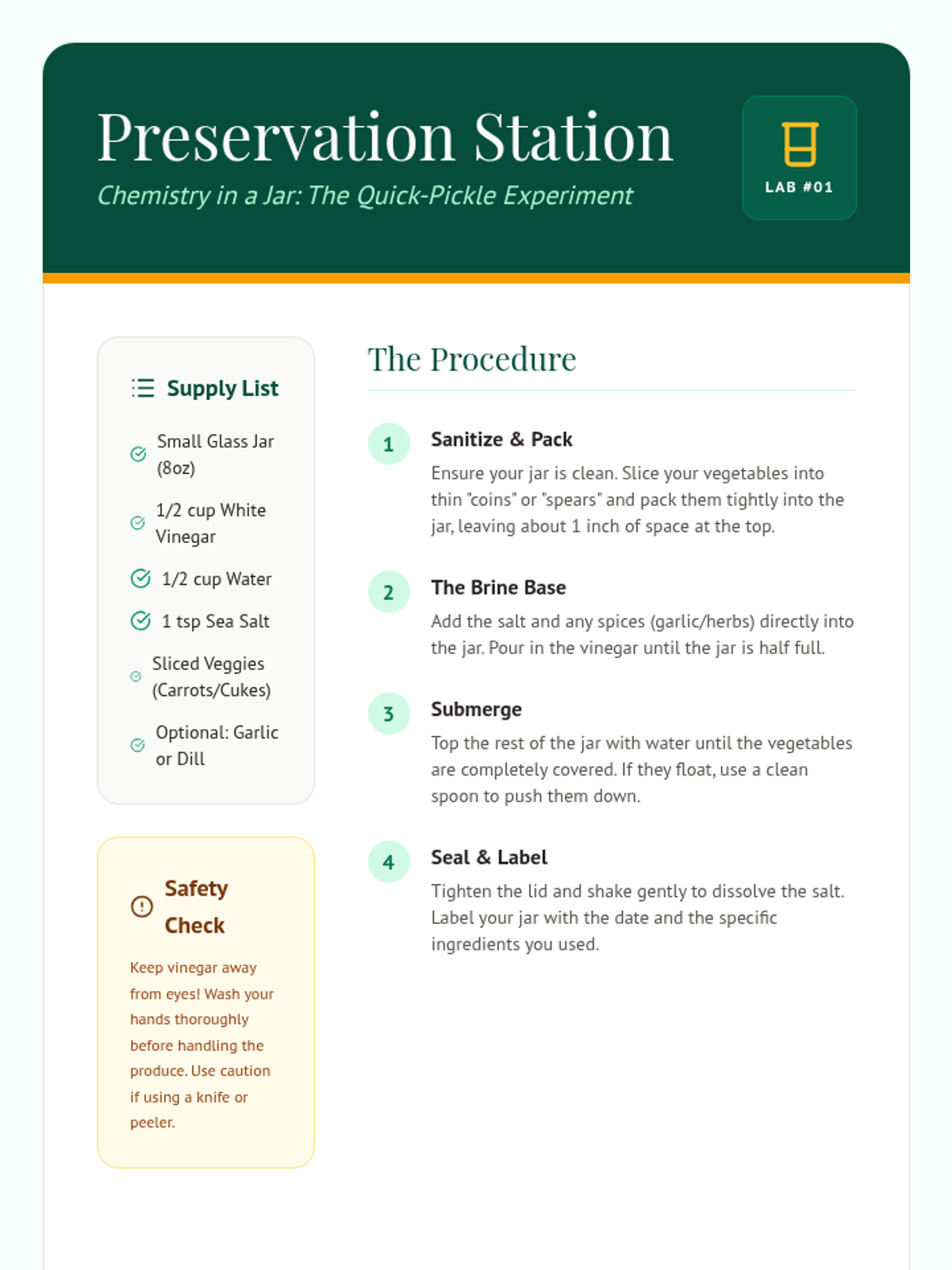
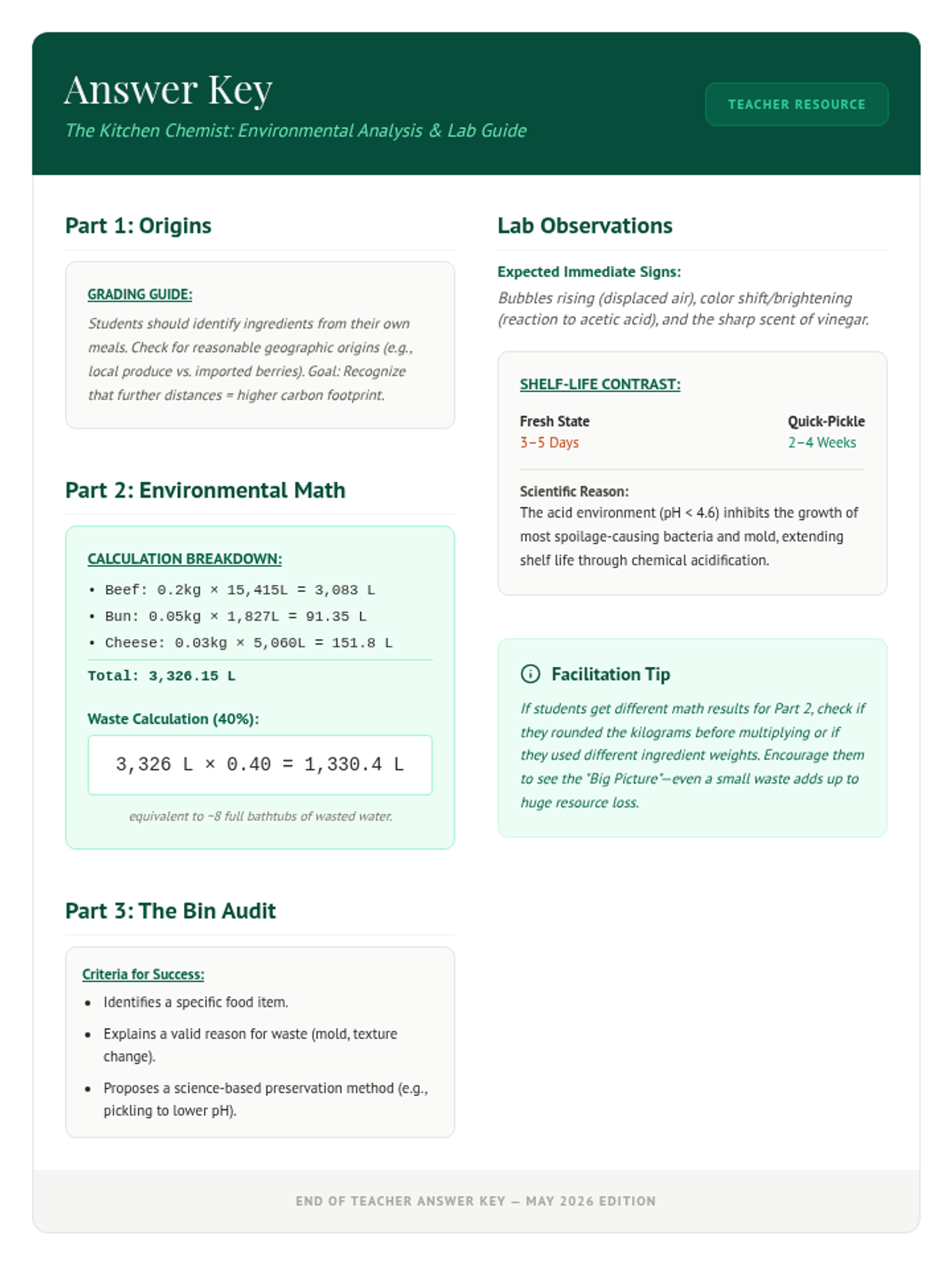
A comprehensive workshop where students explore the intersection of food science and environmental sustainability, focusing on food waste reduction and traditional preservation techniques.
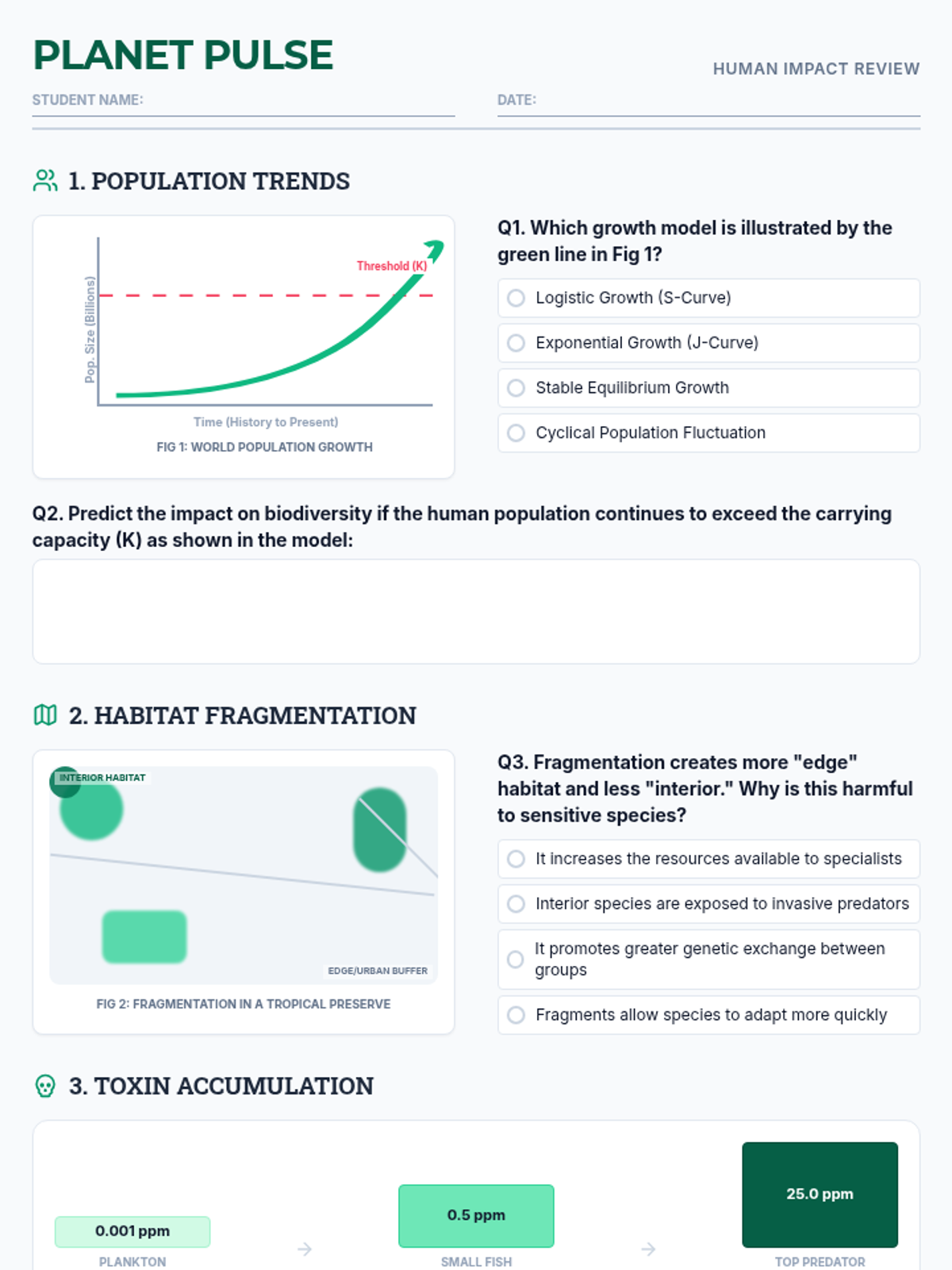
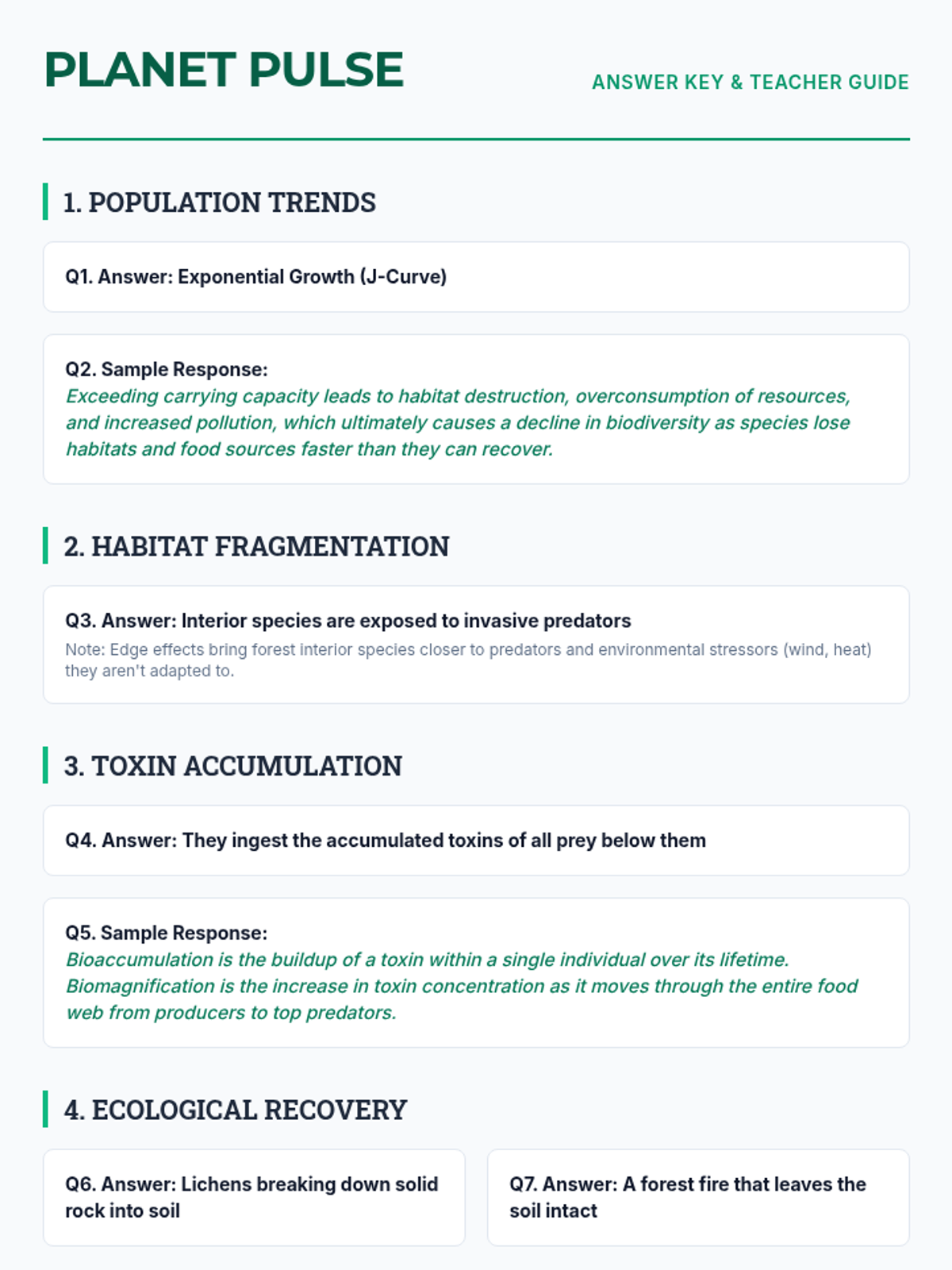
A comprehensive review lesson covering human impact on the environment, including population dynamics, biodiversity loss, biomagnification, and ecological succession. Students analyze real-world data, maps, and diagrams to evaluate environmental health and sustainability practices.
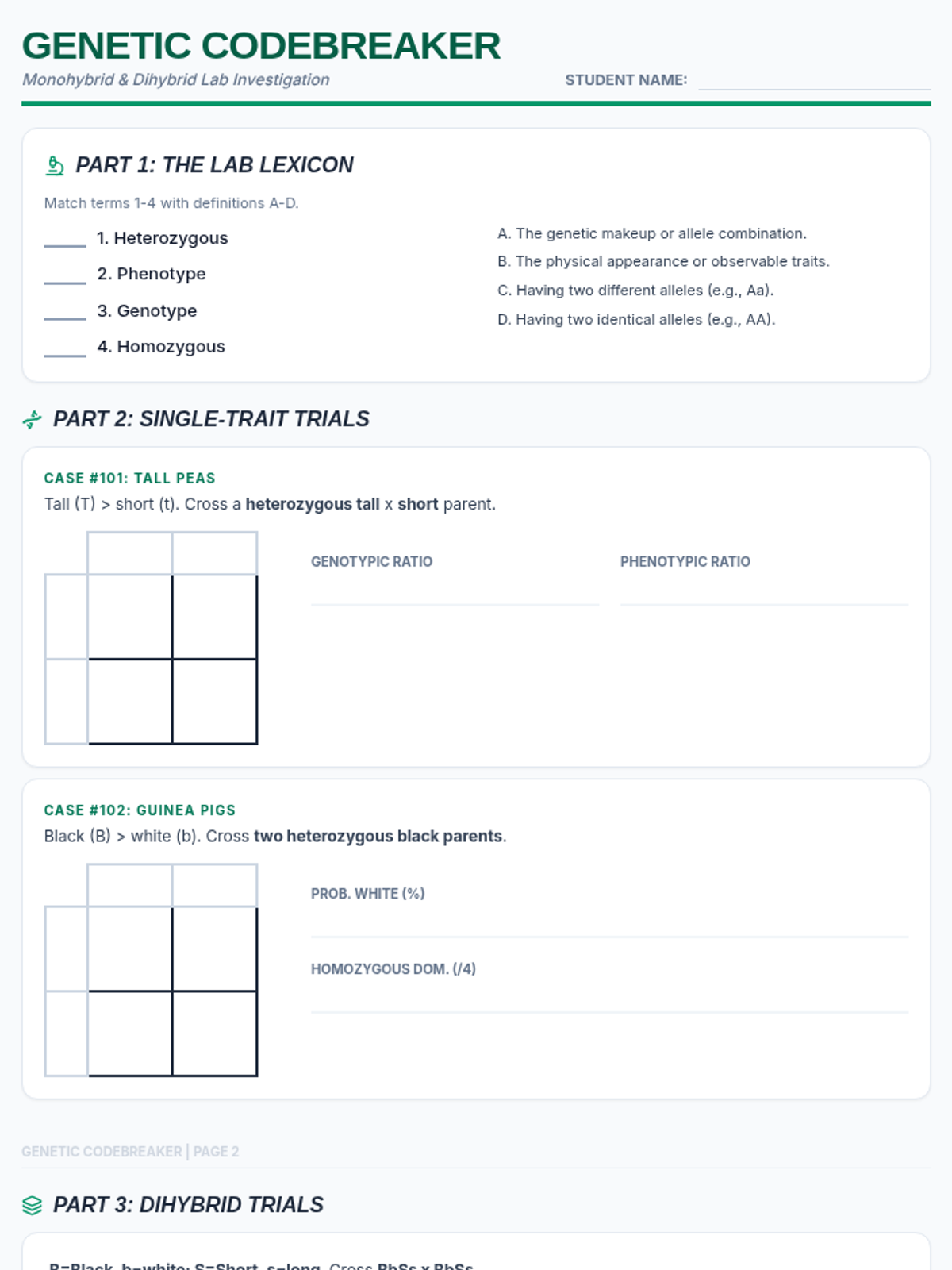
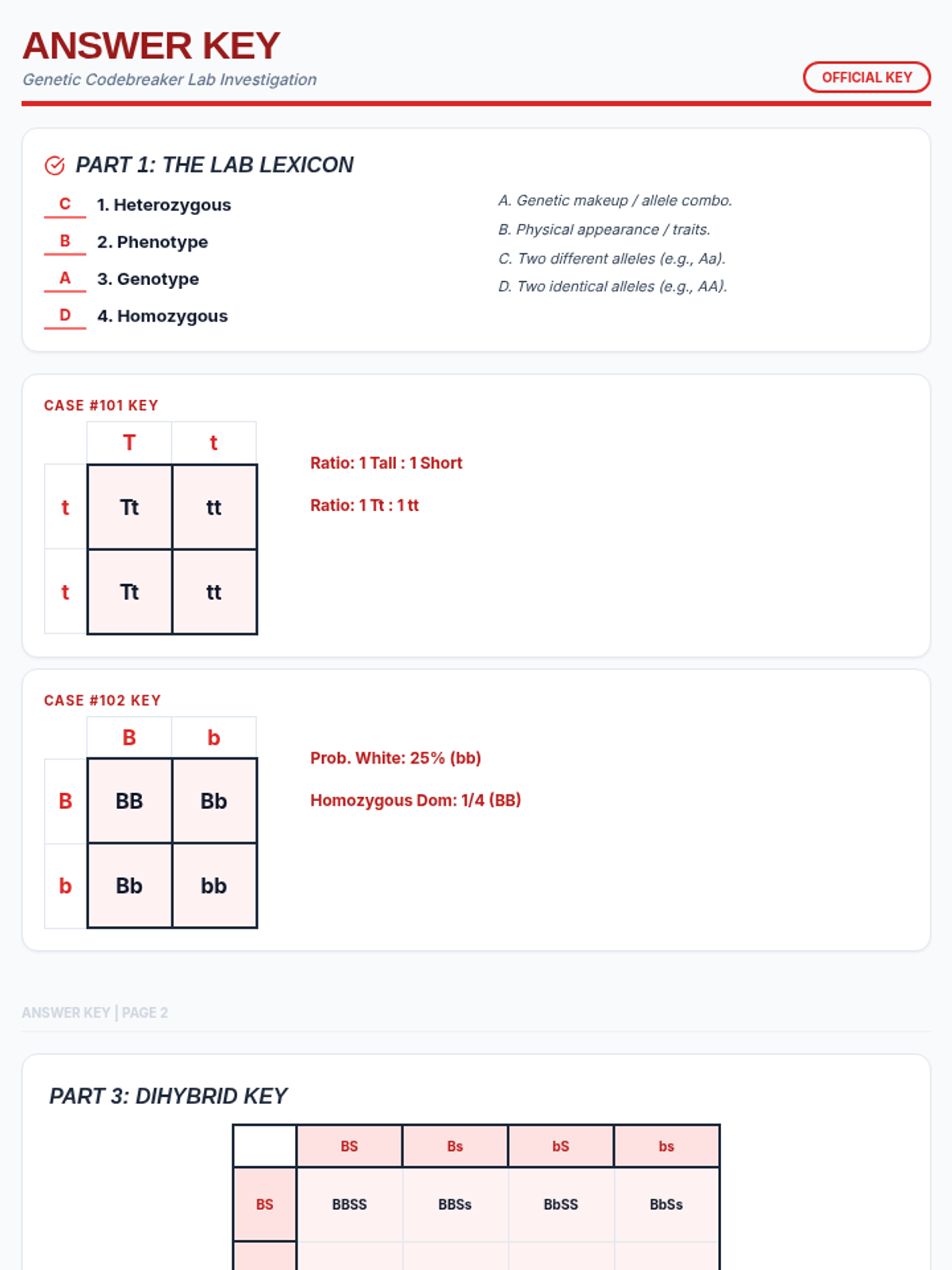
A focused practice session on monohybrid and dihybrid crosses, designed for 10th-grade biology students to master genetic probability and ratio calculation.
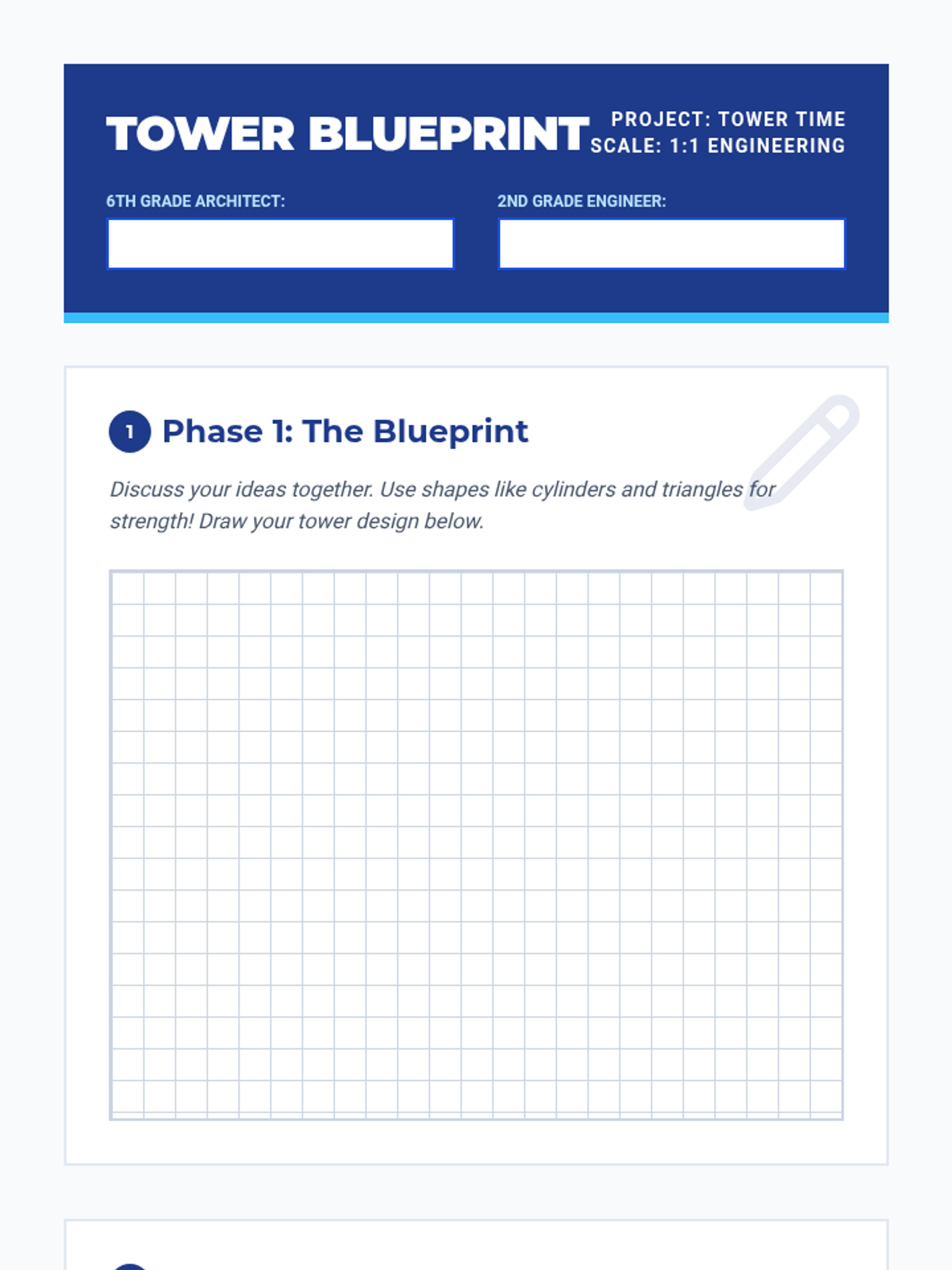
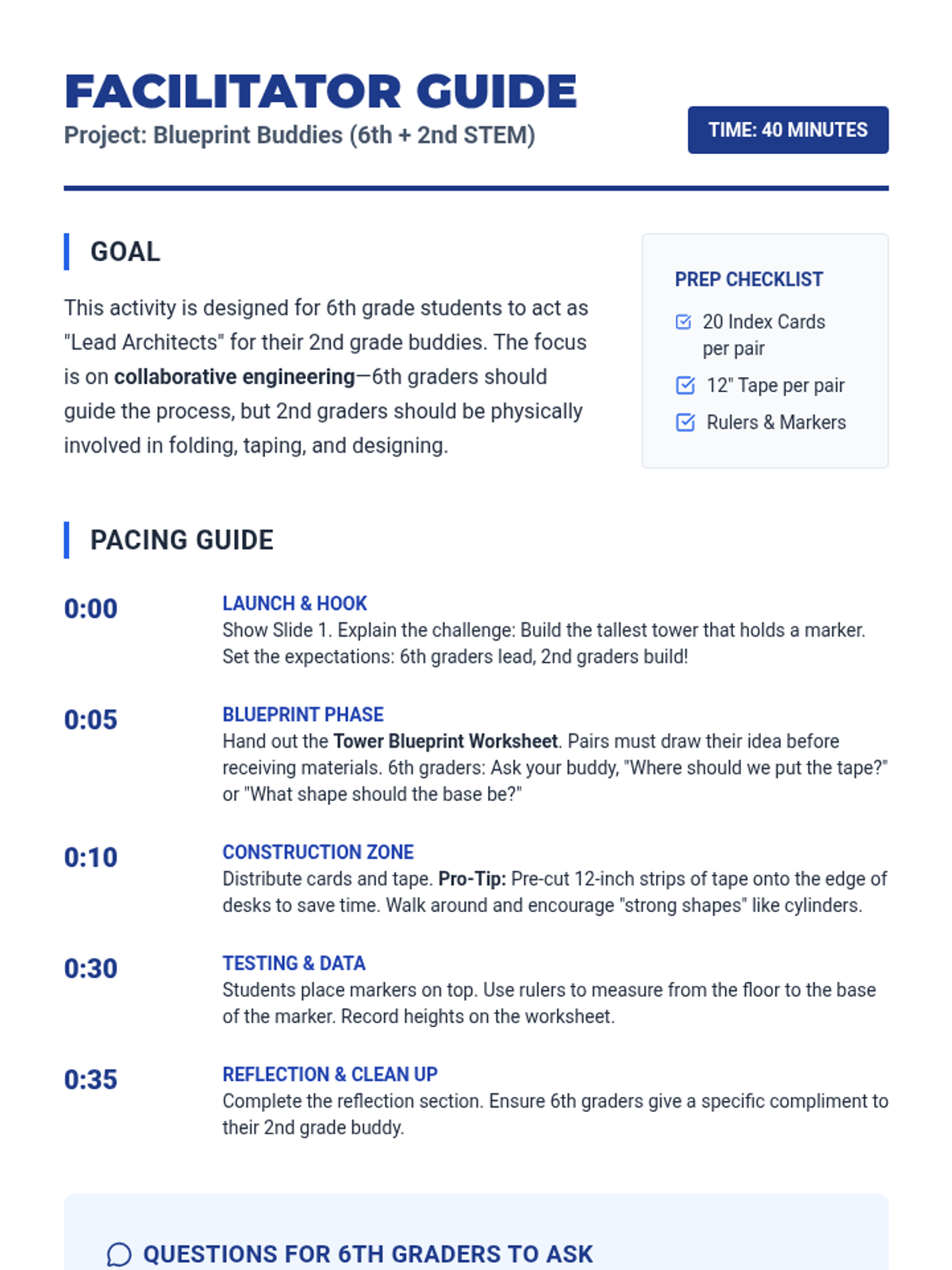
A collaborative STEM challenge where 6th grade mentors guide 2nd grade buddies to design and build the tallest possible tower using only index cards and tape. This lesson focuses on teamwork, engineering design principles, and measurement skills within a 40-minute window.
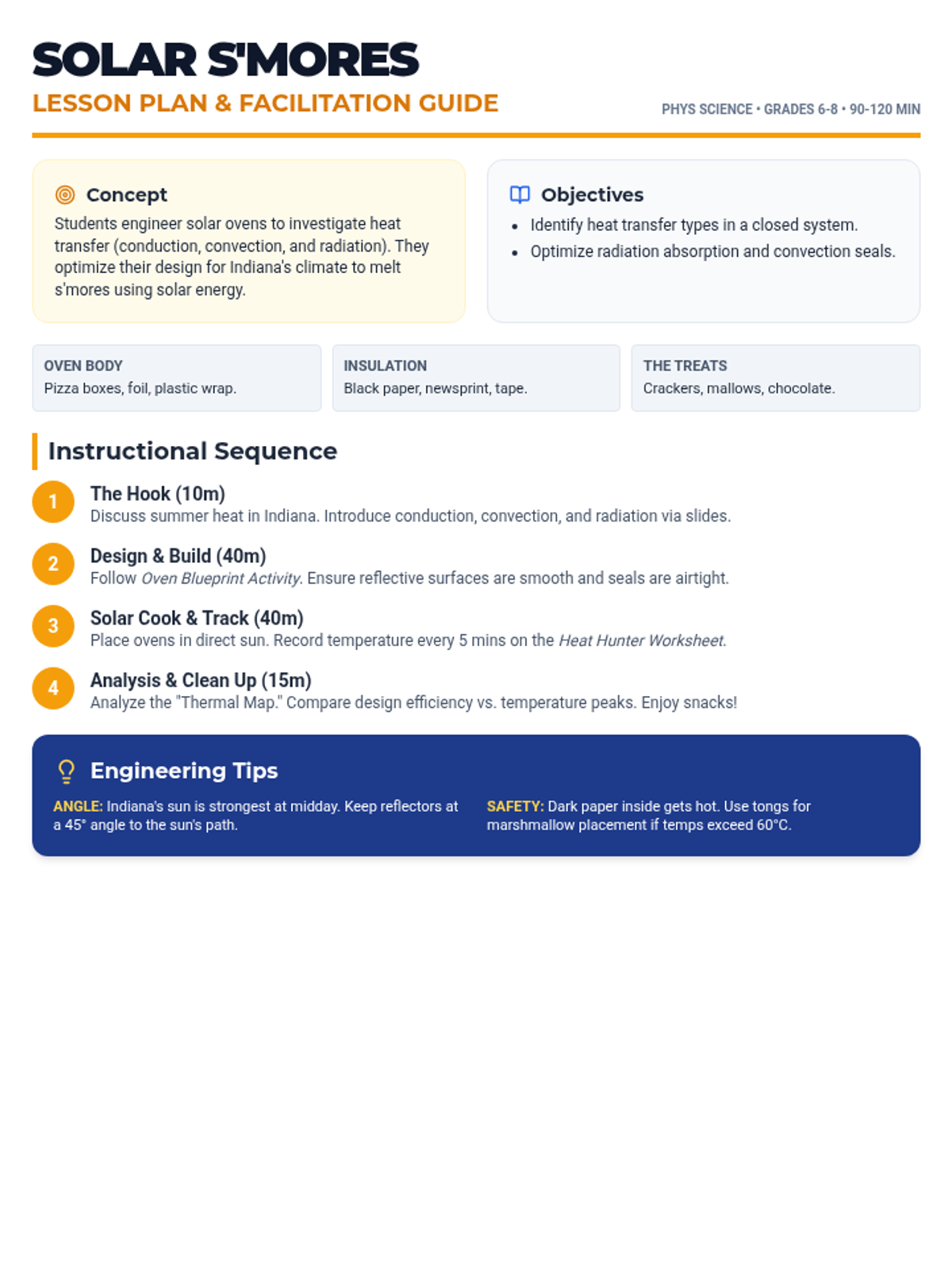
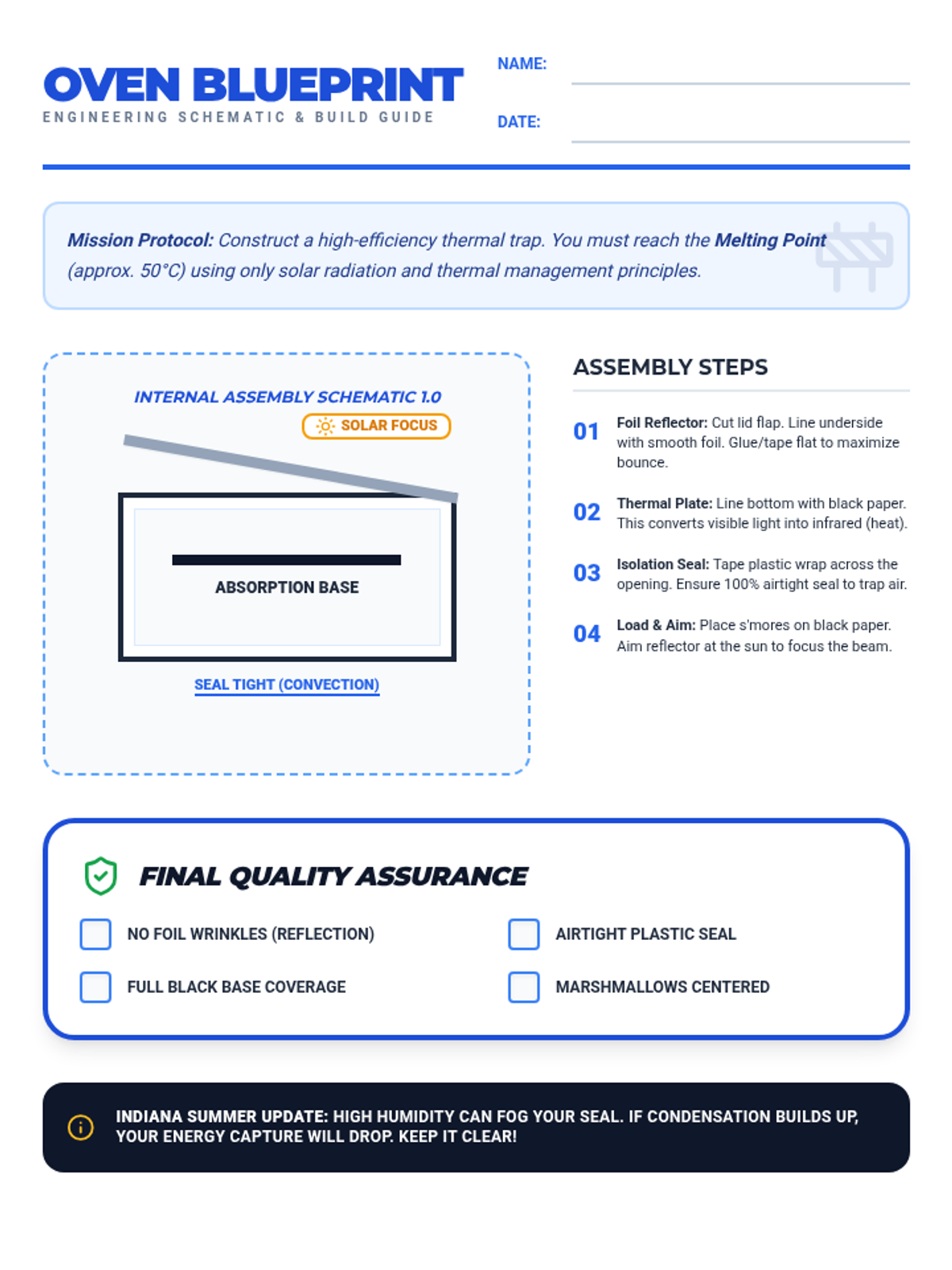
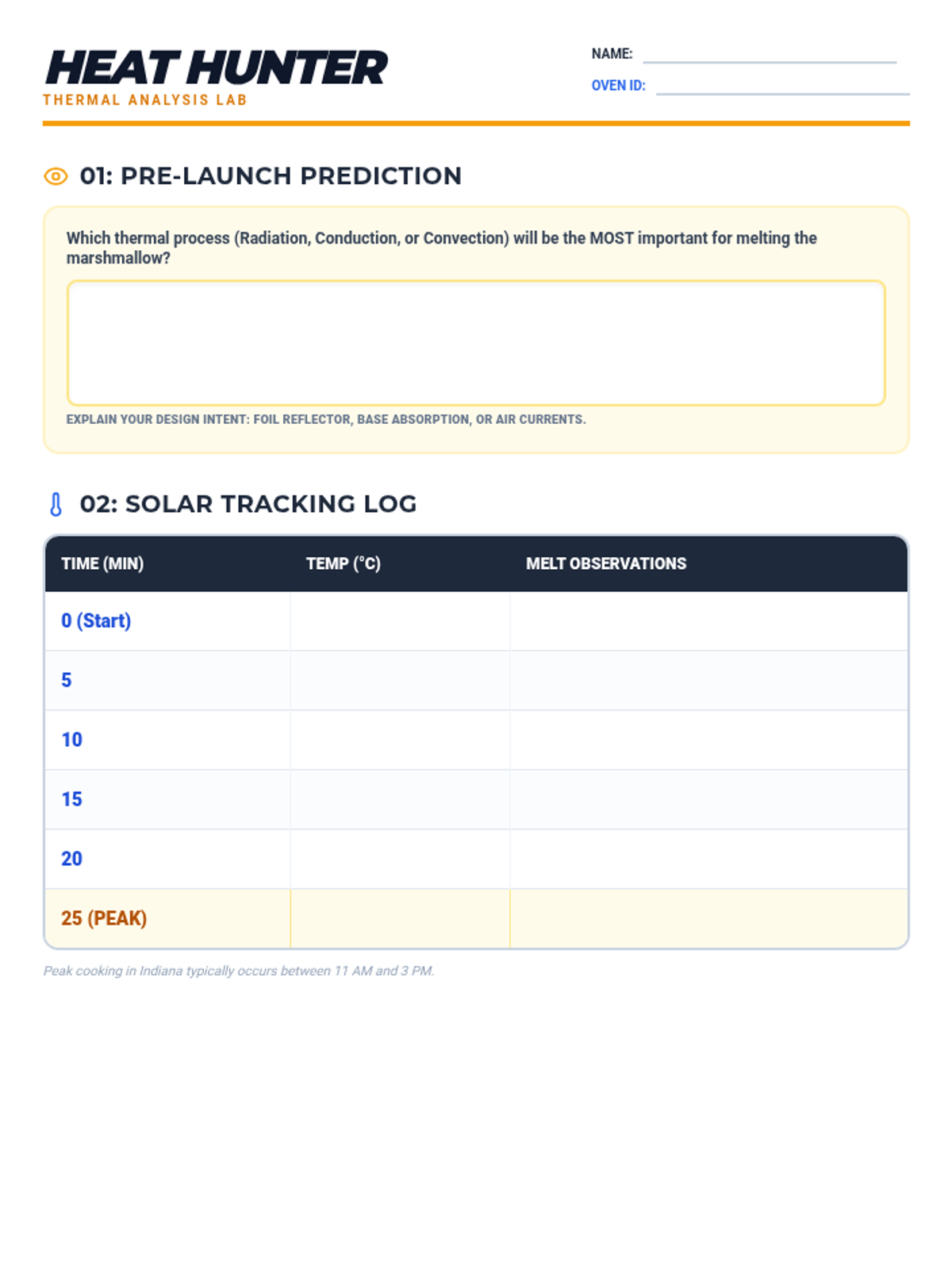
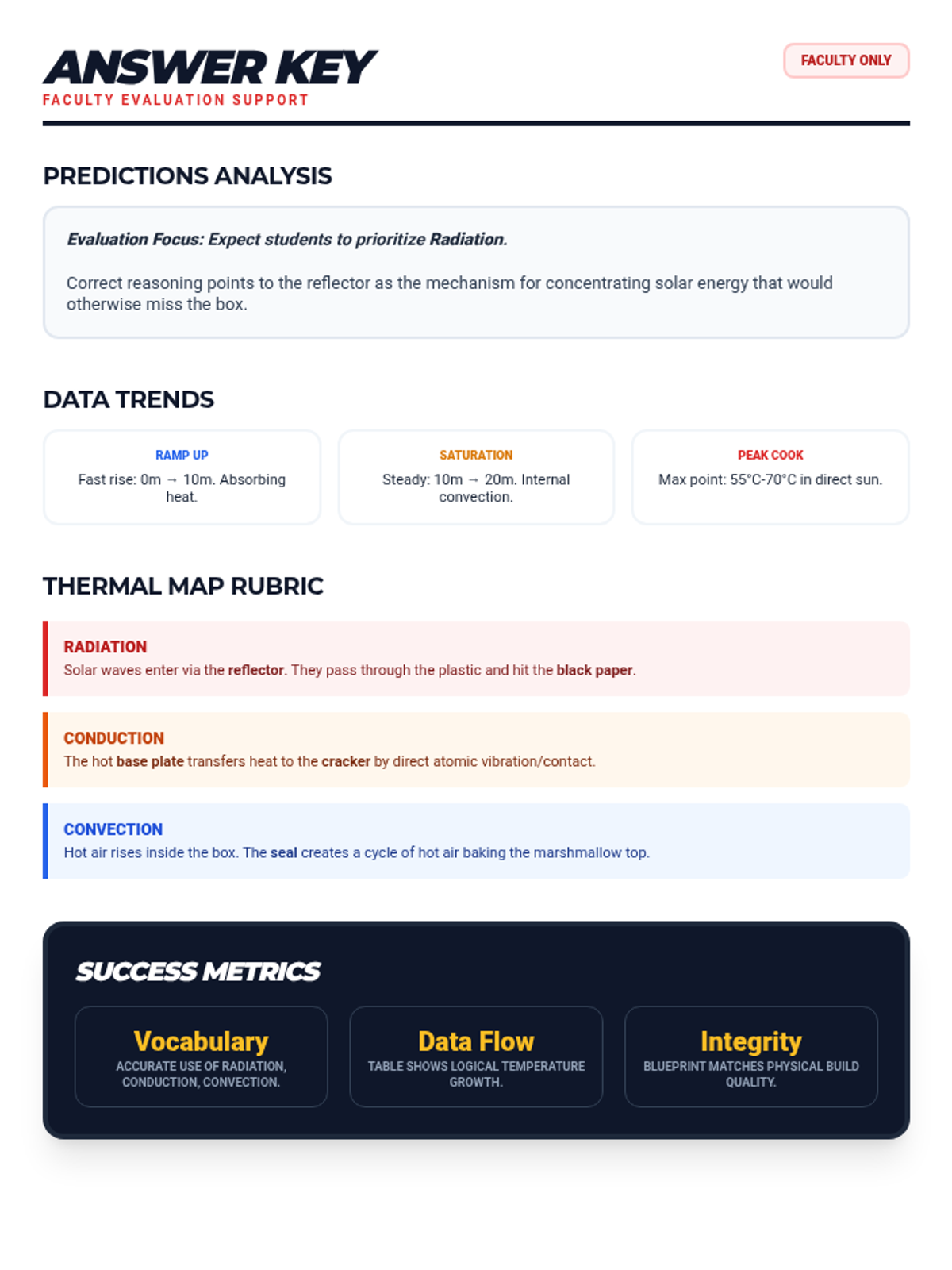
Students engineer functional solar ovens to investigate thermal energy transfer through convection, conduction, and radiation while celebrating the start of Indiana's summer weather.
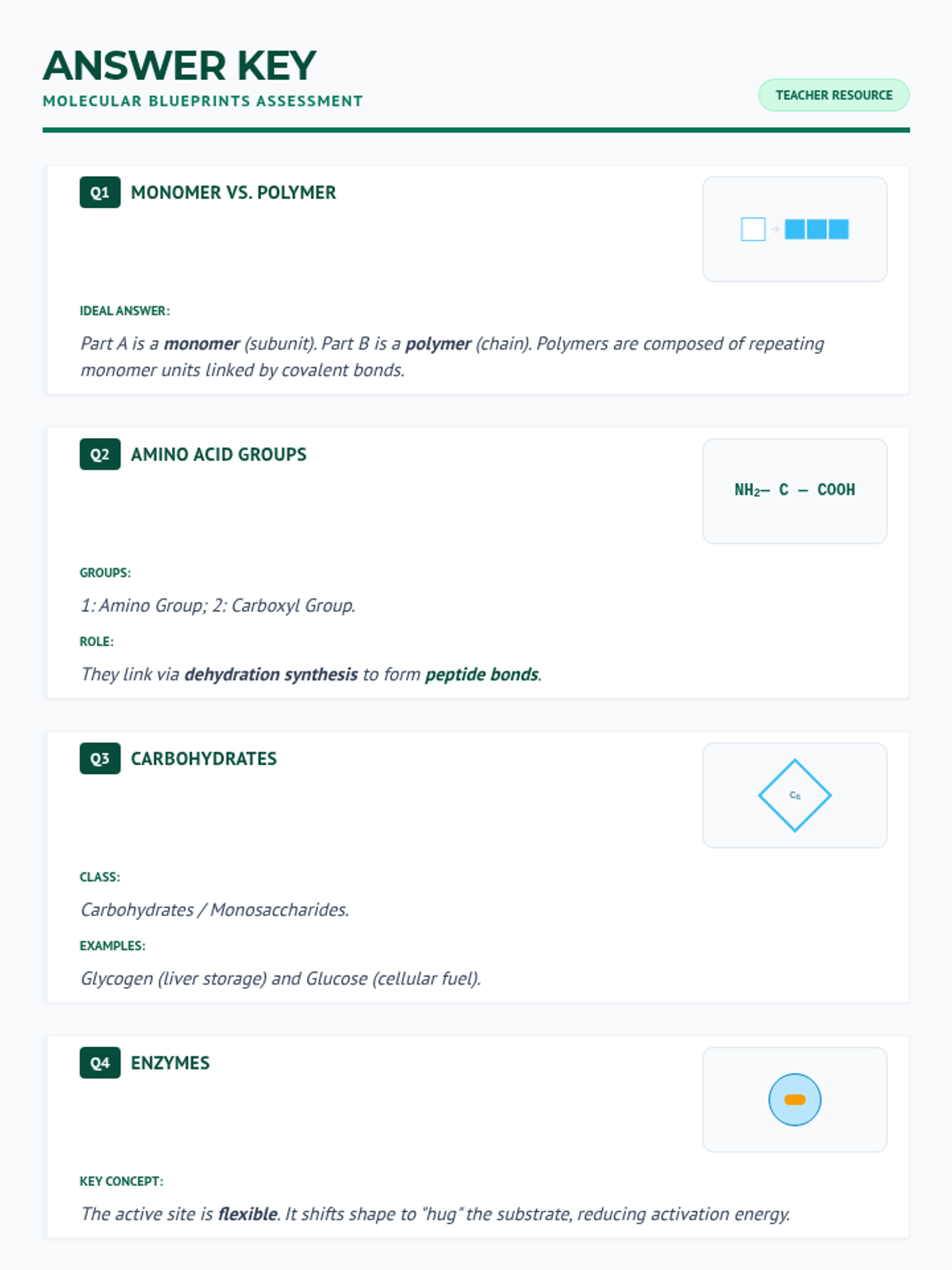
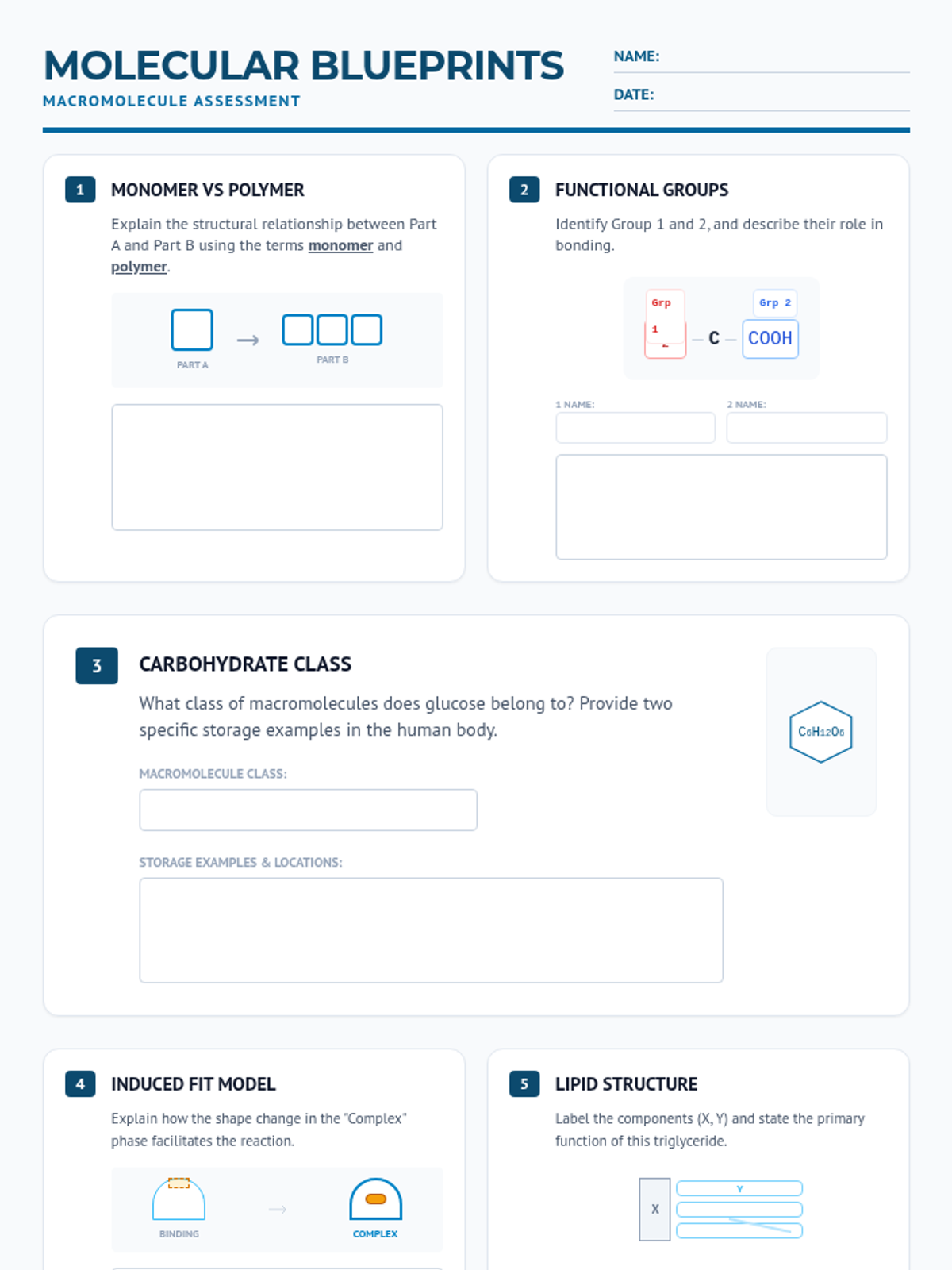
A focused assessment and review on the four major biological macromolecules, their structures, and enzymatic functions. Students will identify functional groups, analyze monomer-polymer relationships, and explain enzyme-substrate interactions through visual diagrams.
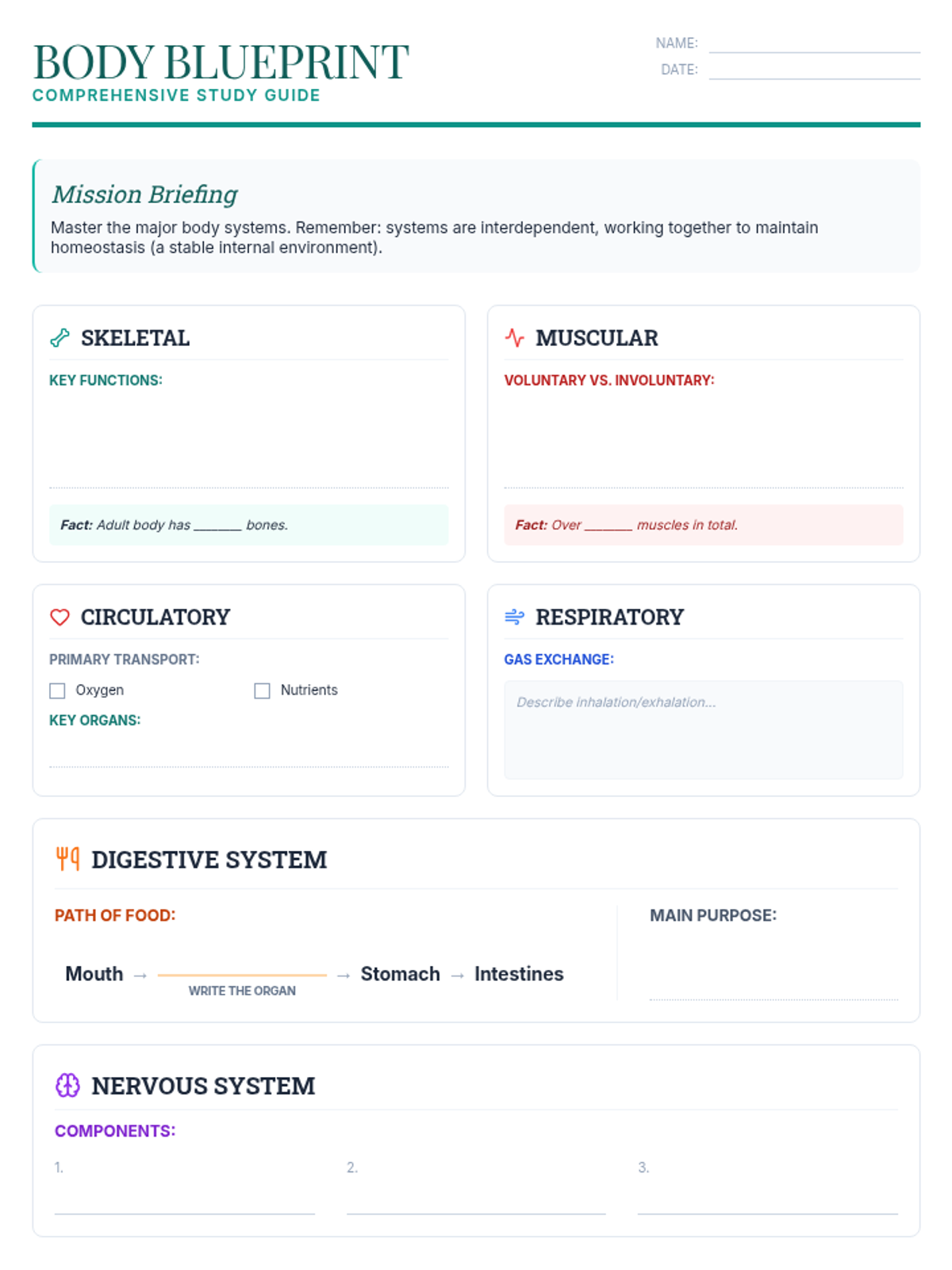
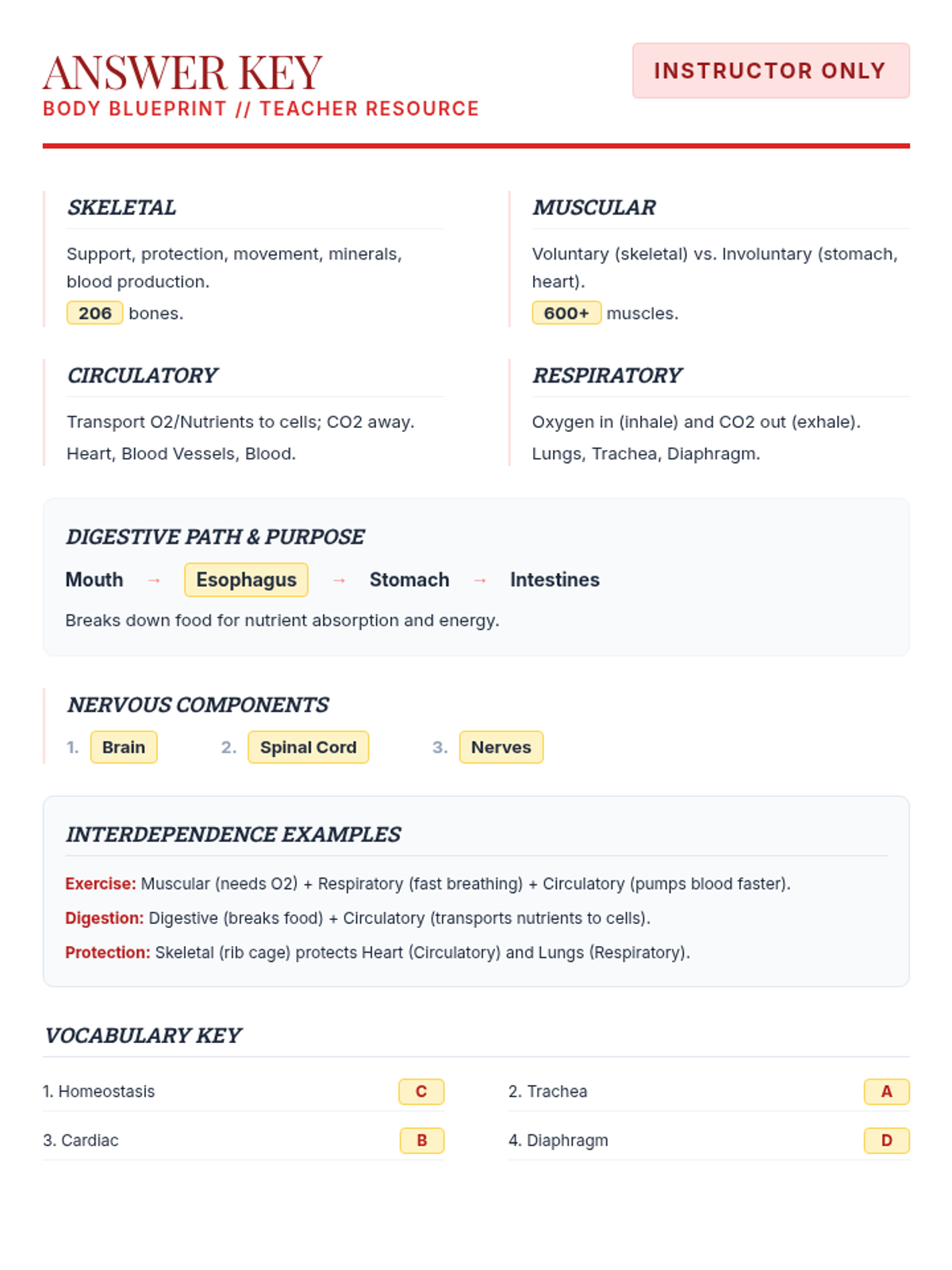
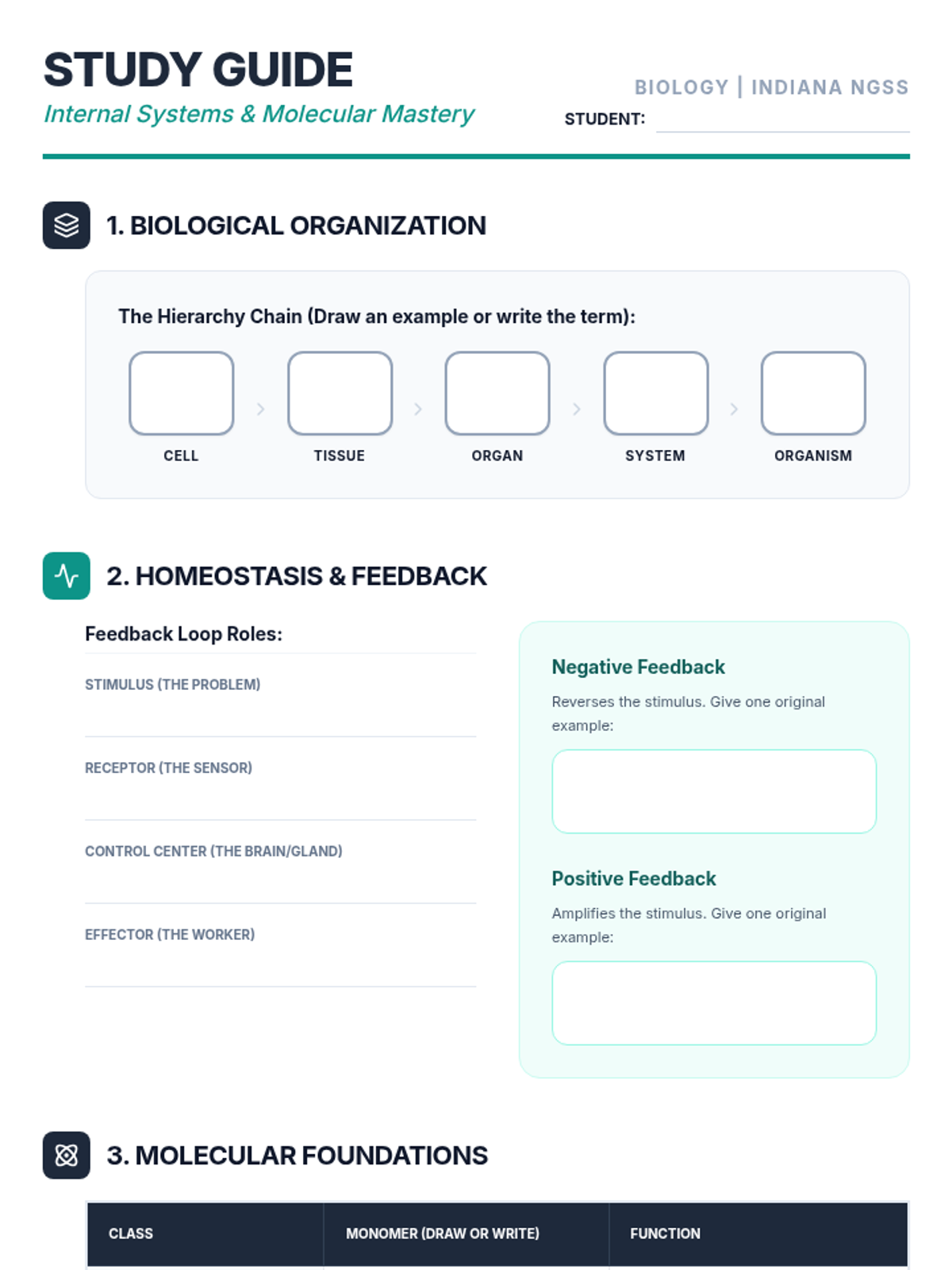
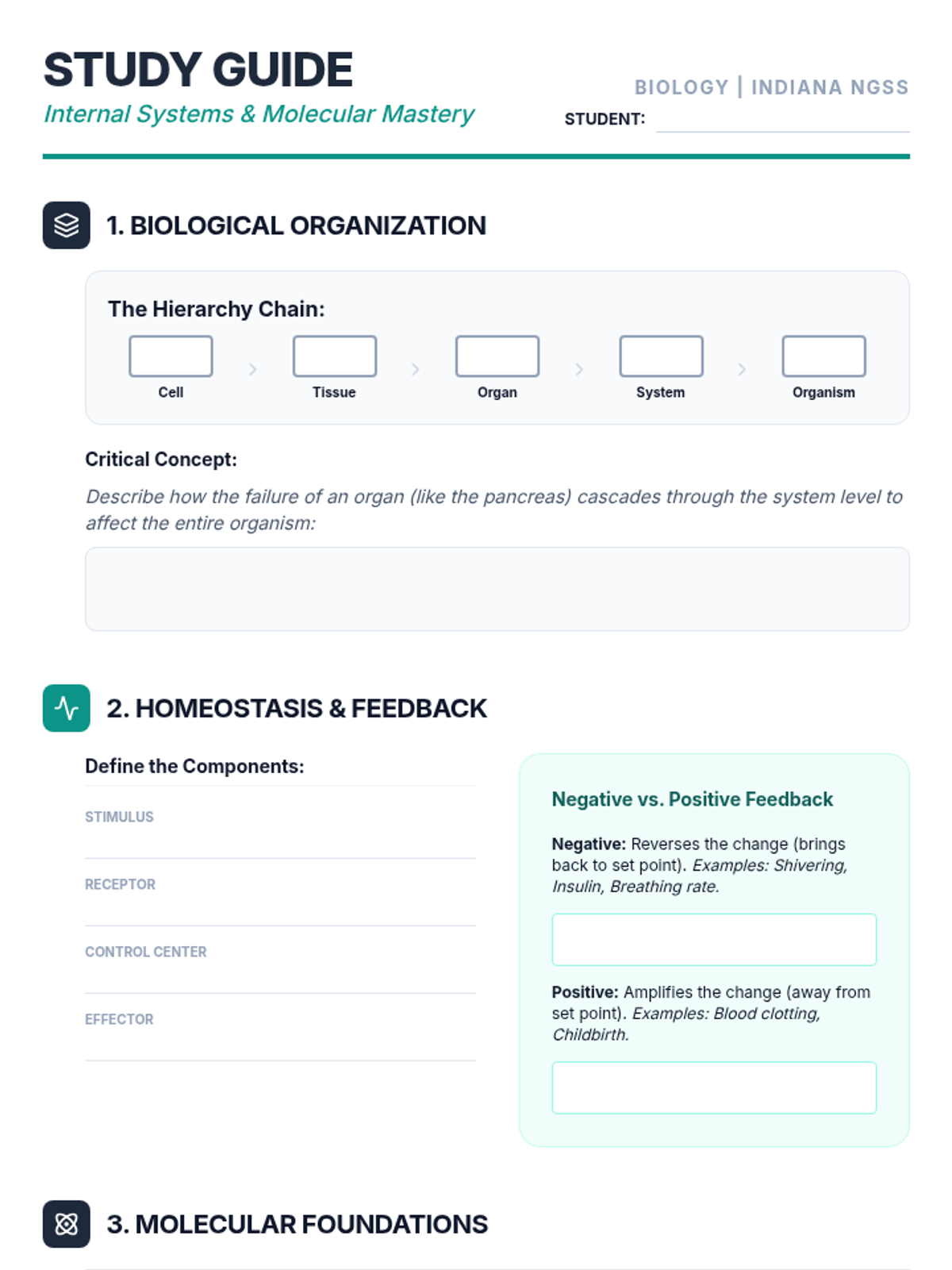
A comprehensive review of the major human body systems, focusing on their primary functions, key organs, and how they work together to maintain homeostasis.
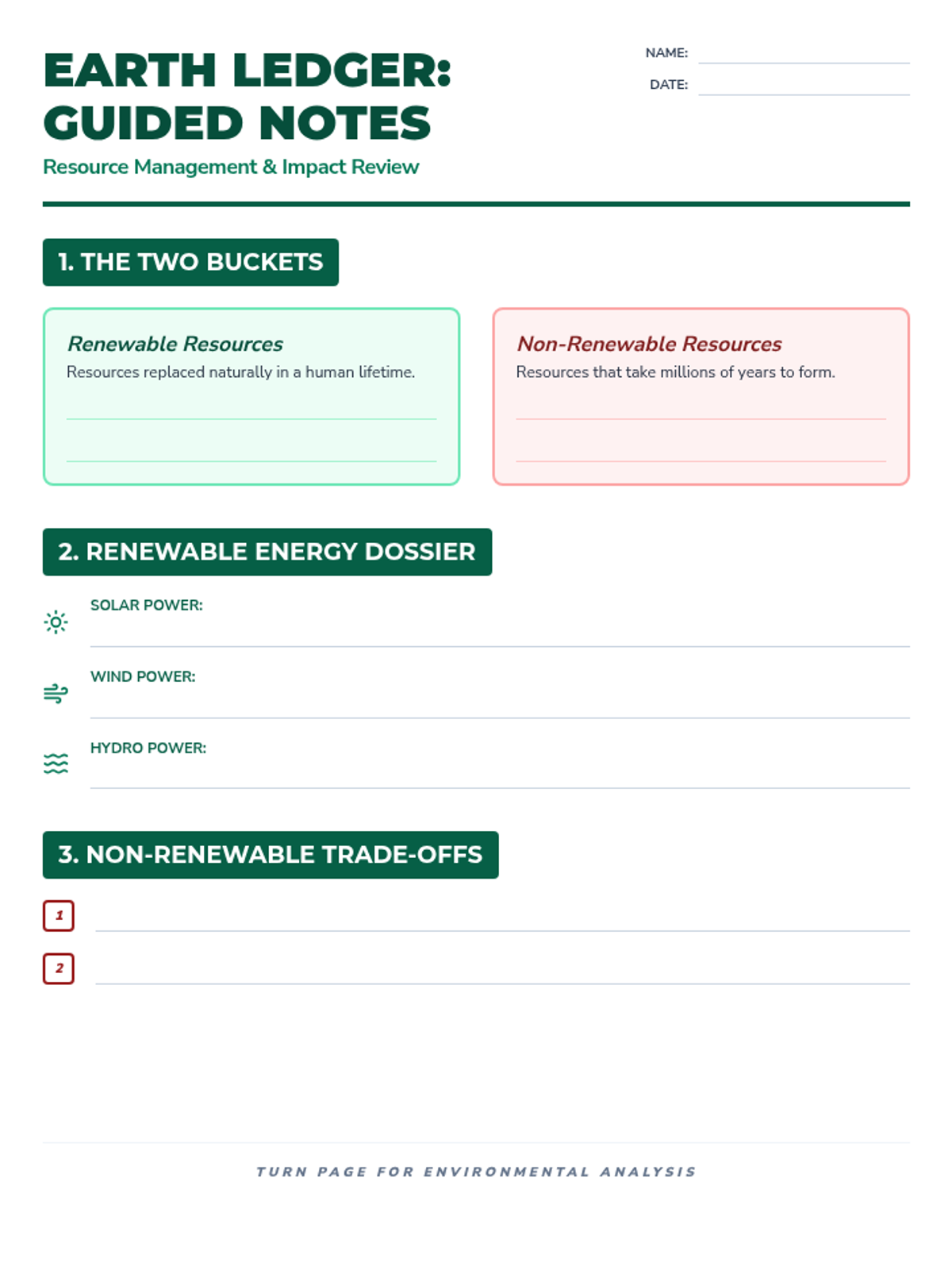
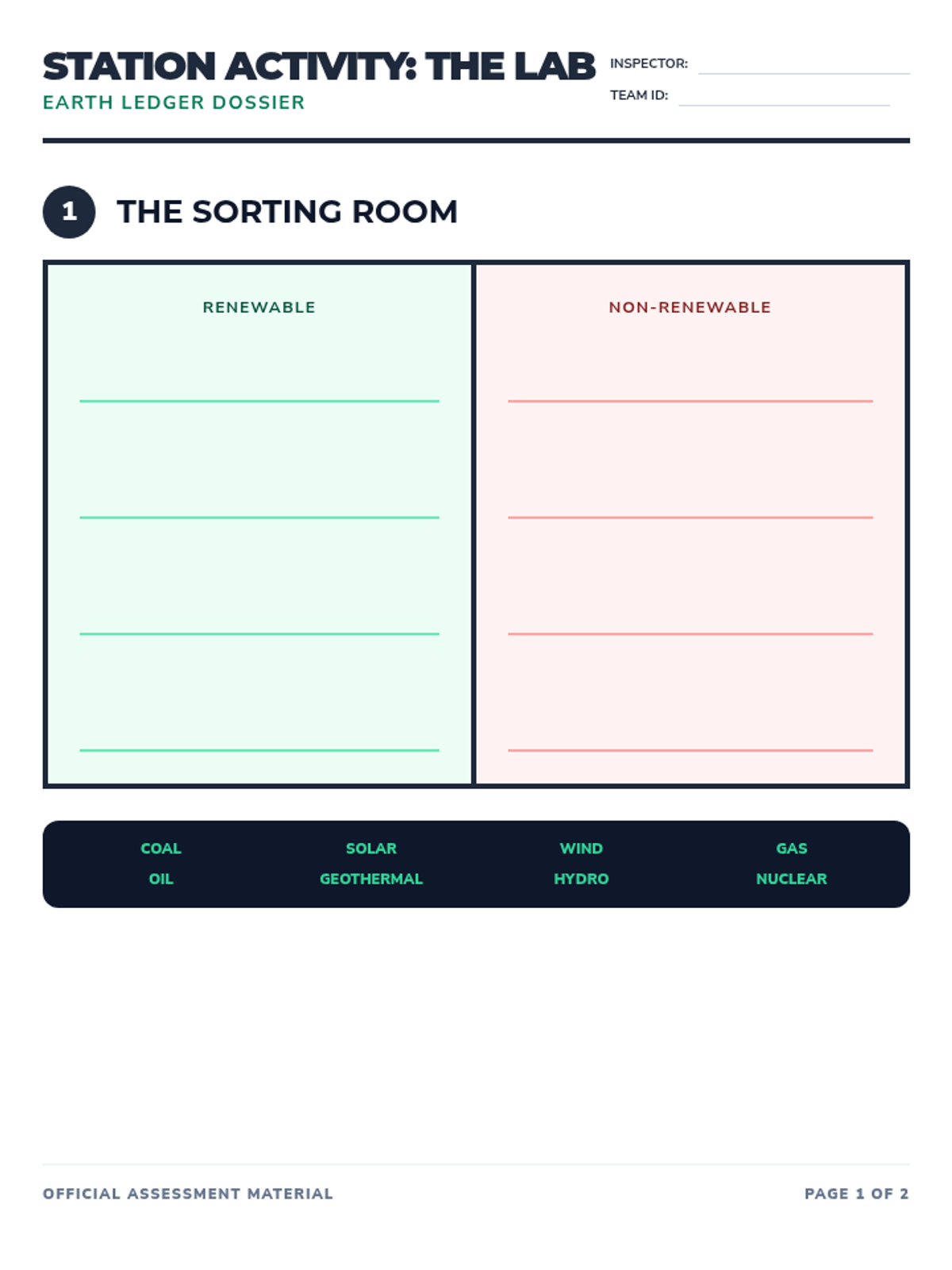
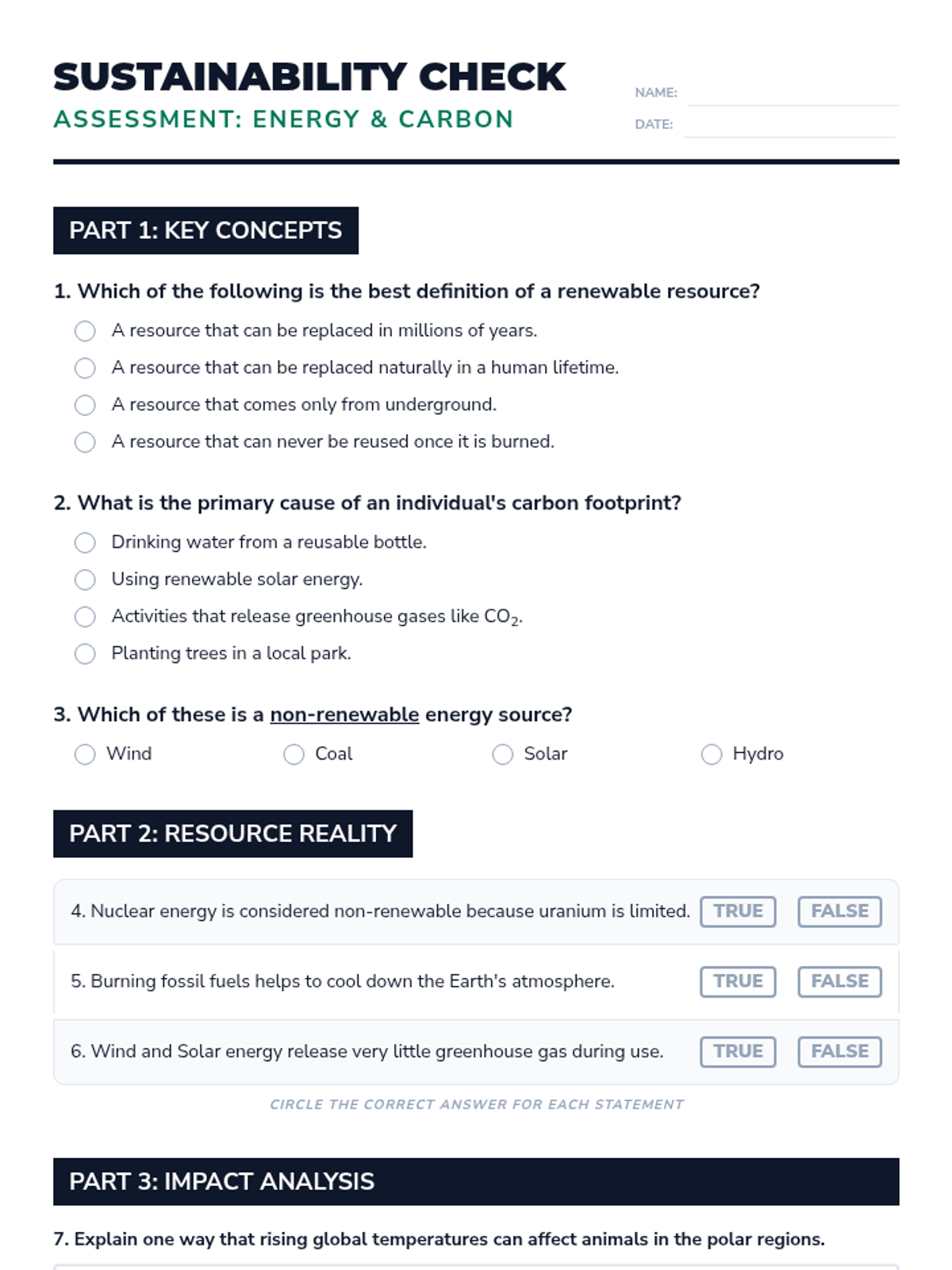
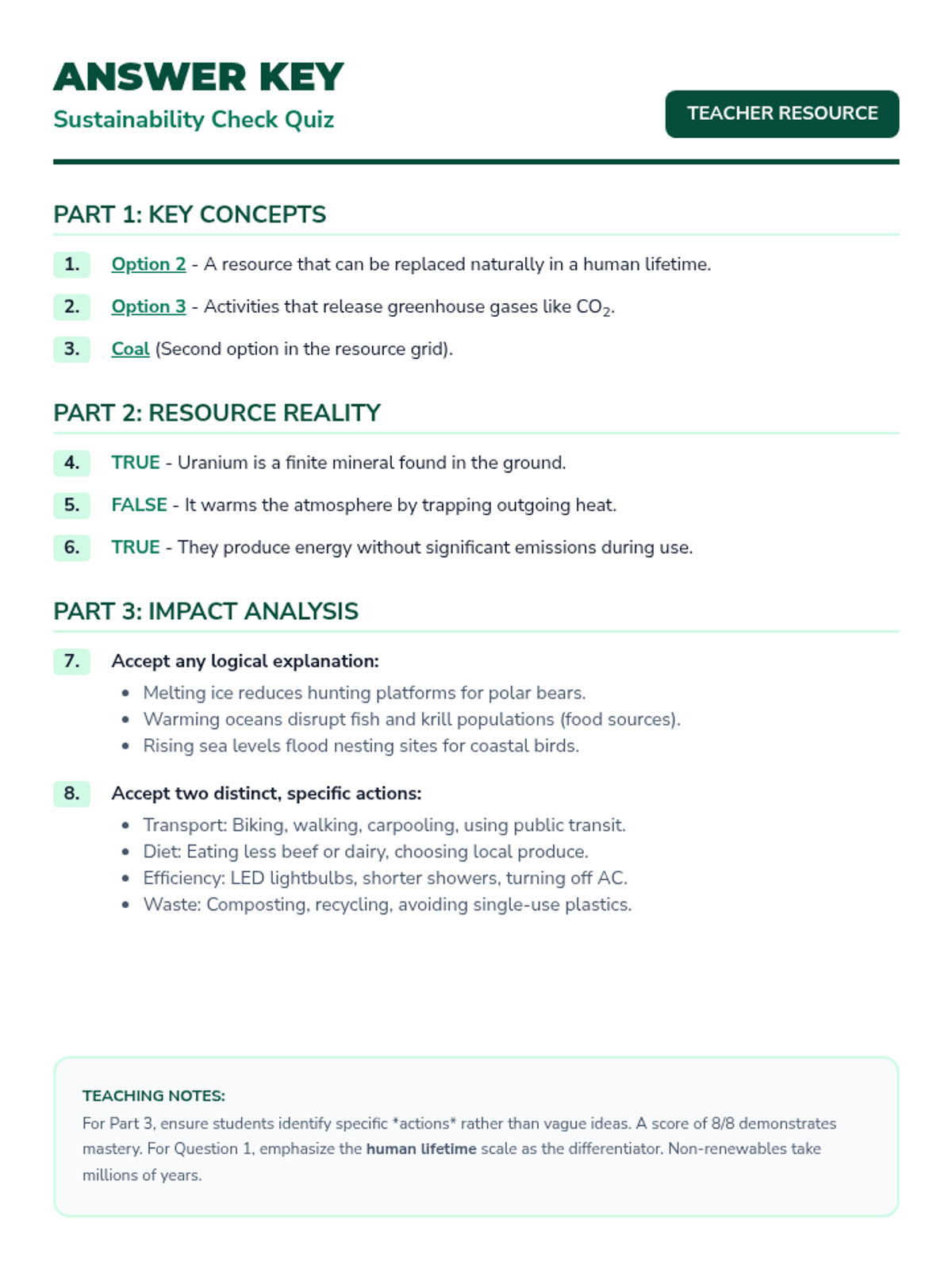
A comprehensive review of renewable and non-renewable energy sources and the environmental impact of carbon footprints, designed with accessible language for high school students.
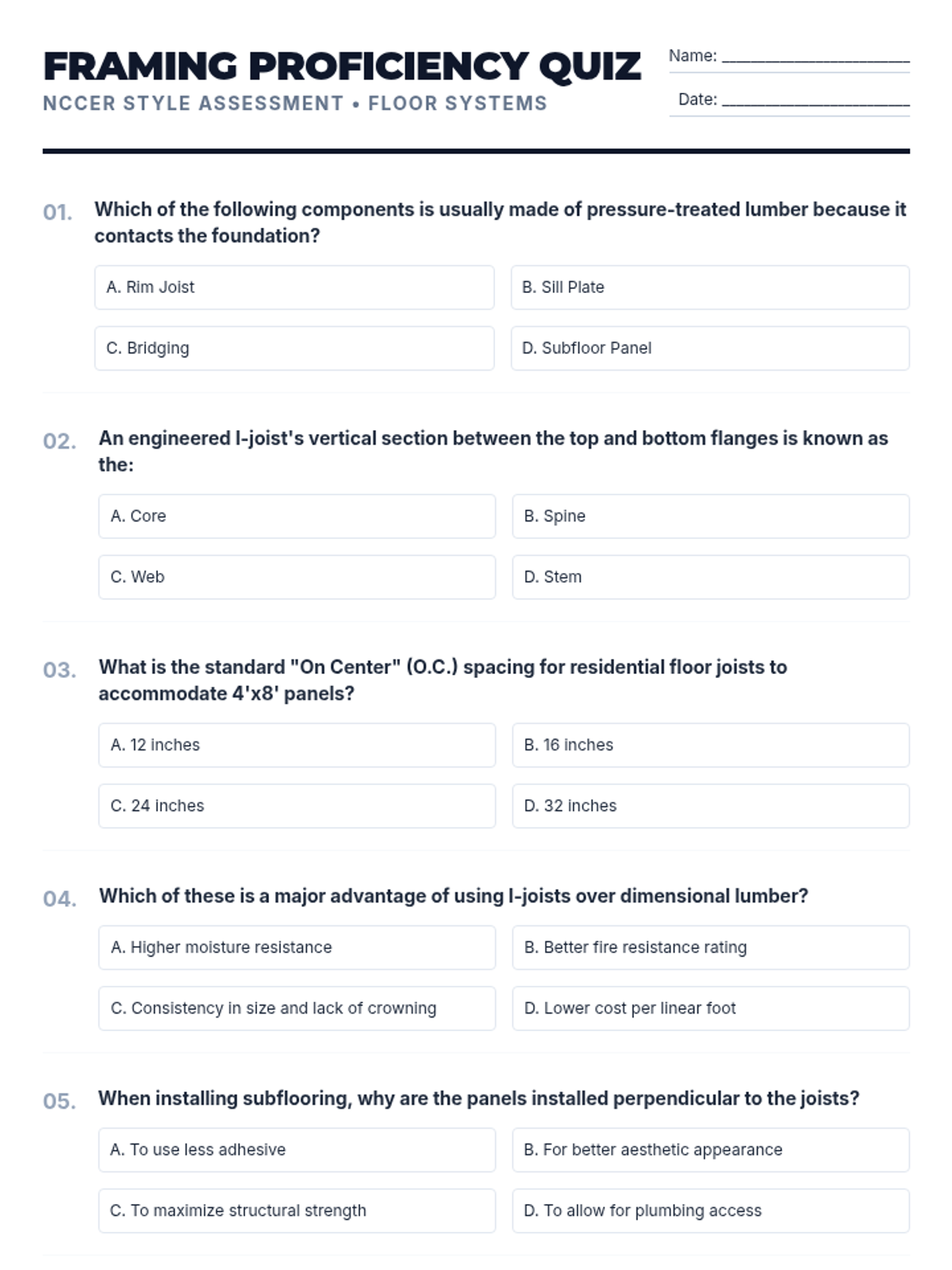
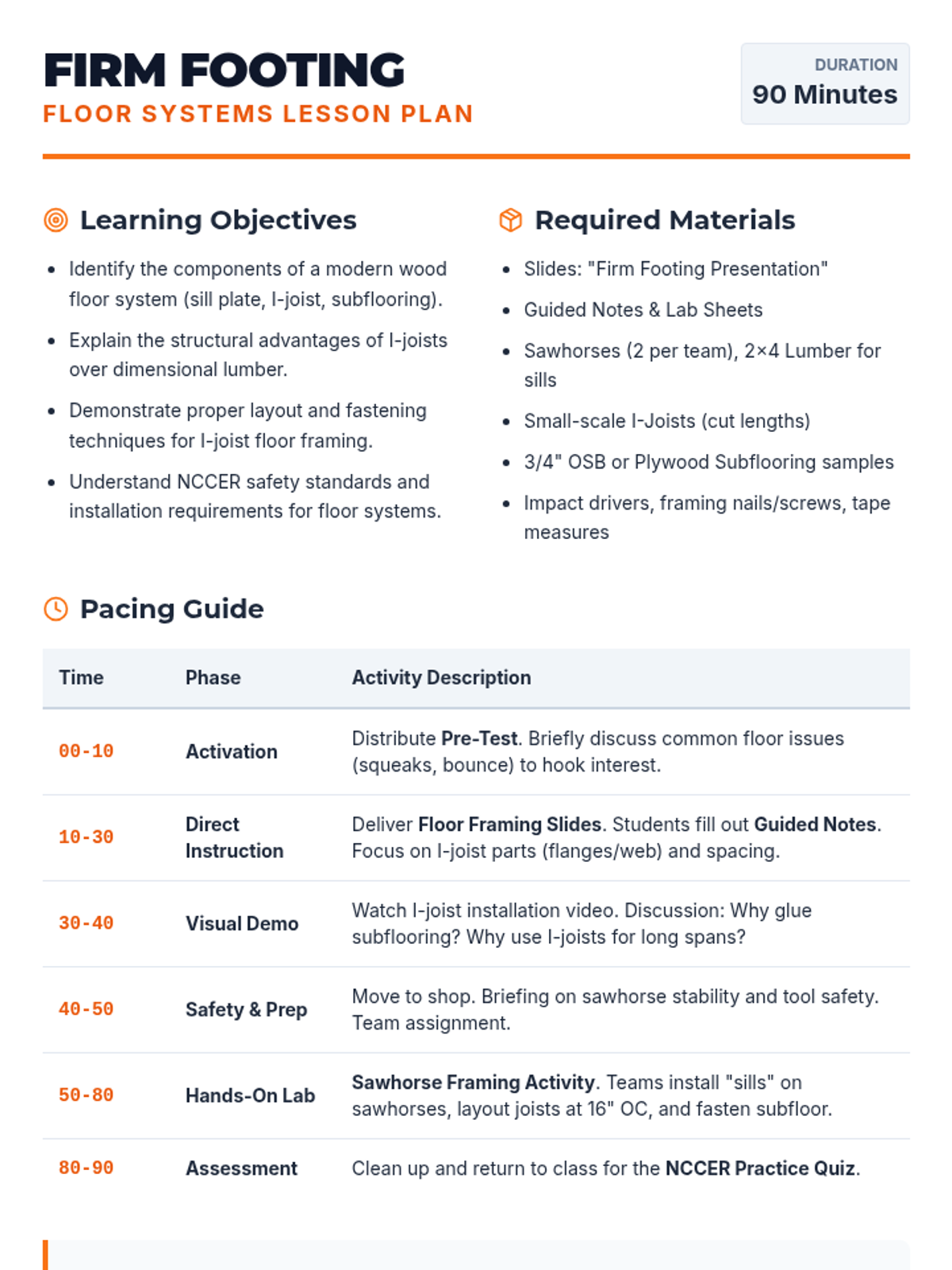
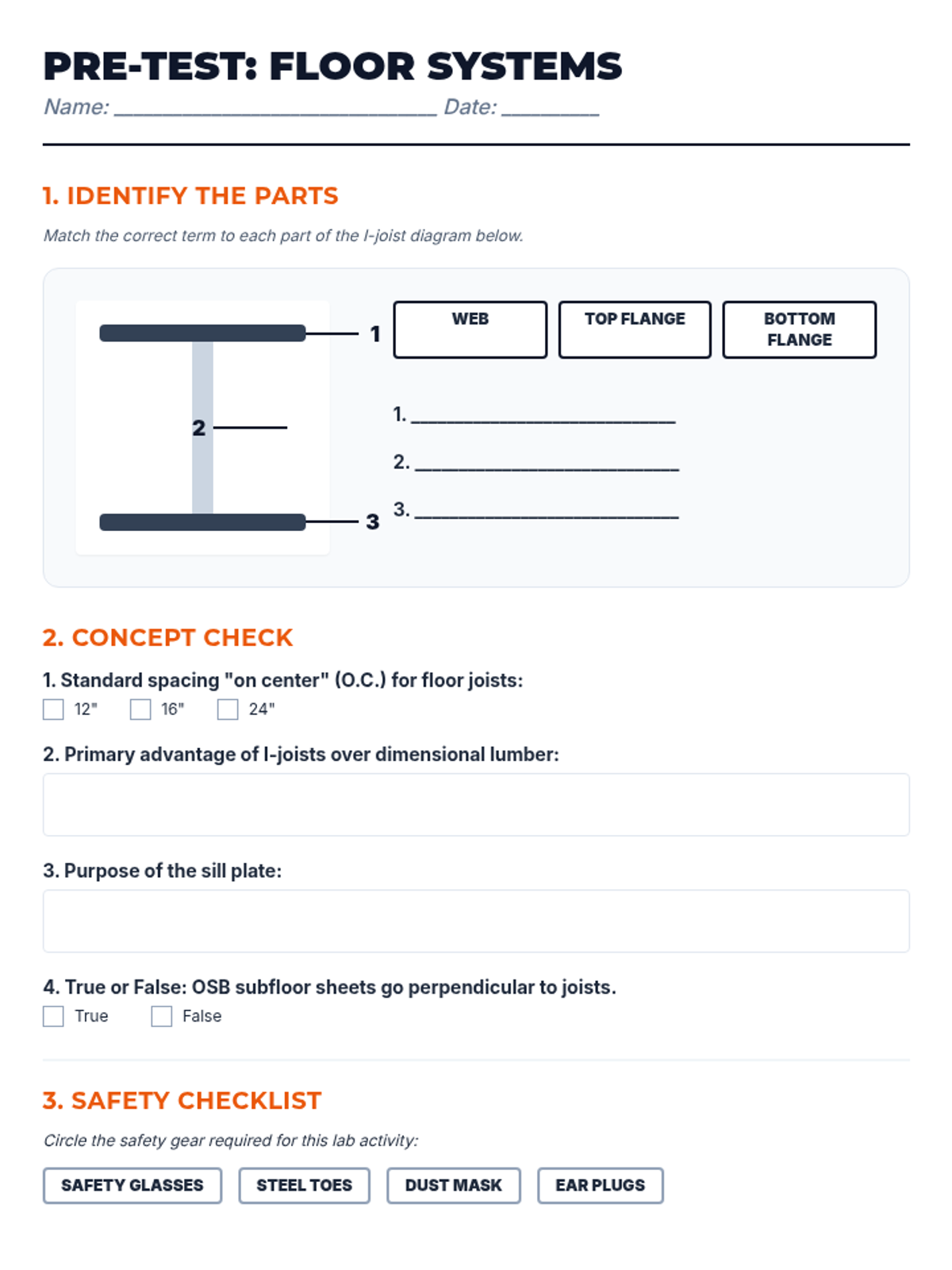
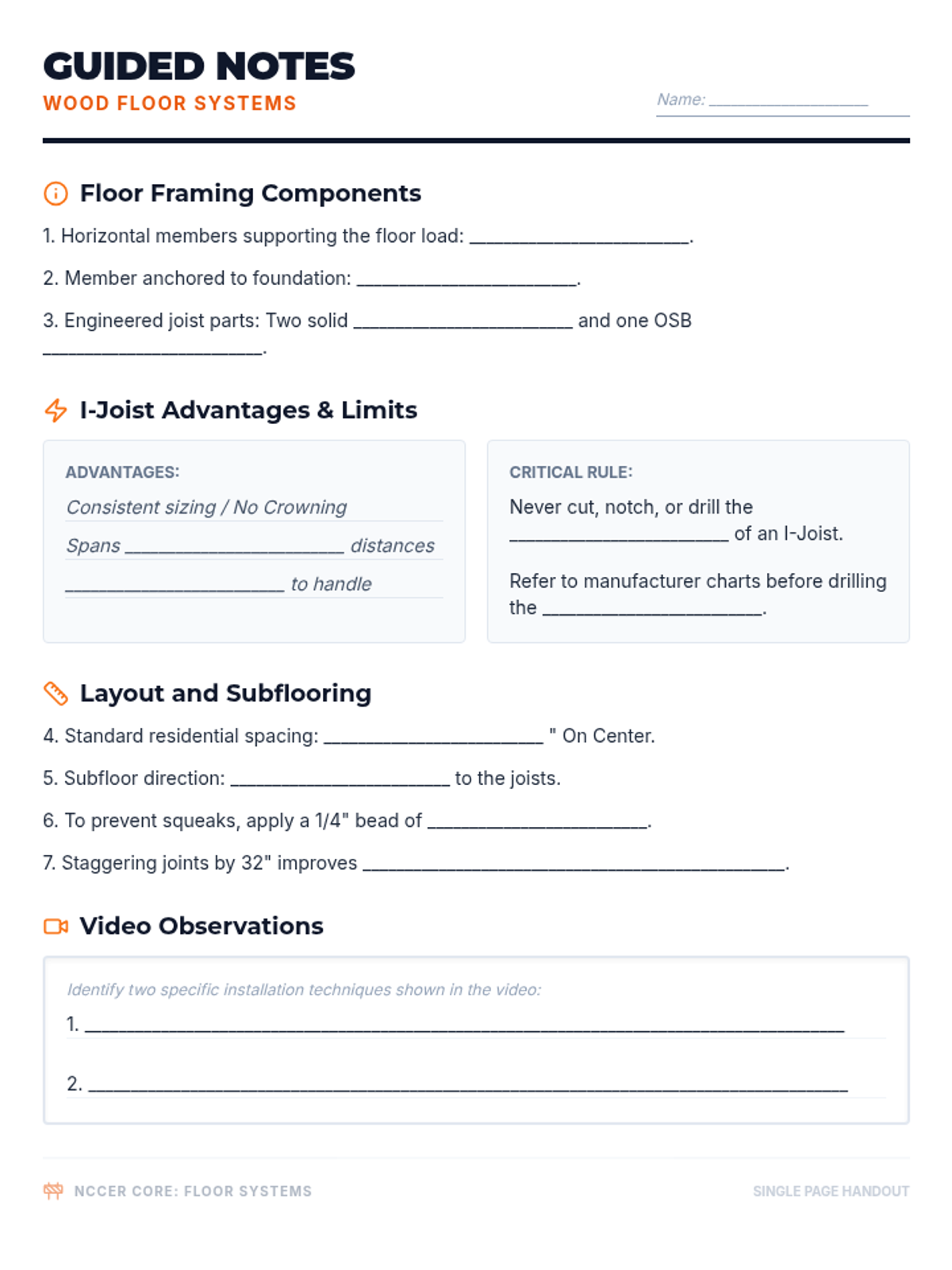
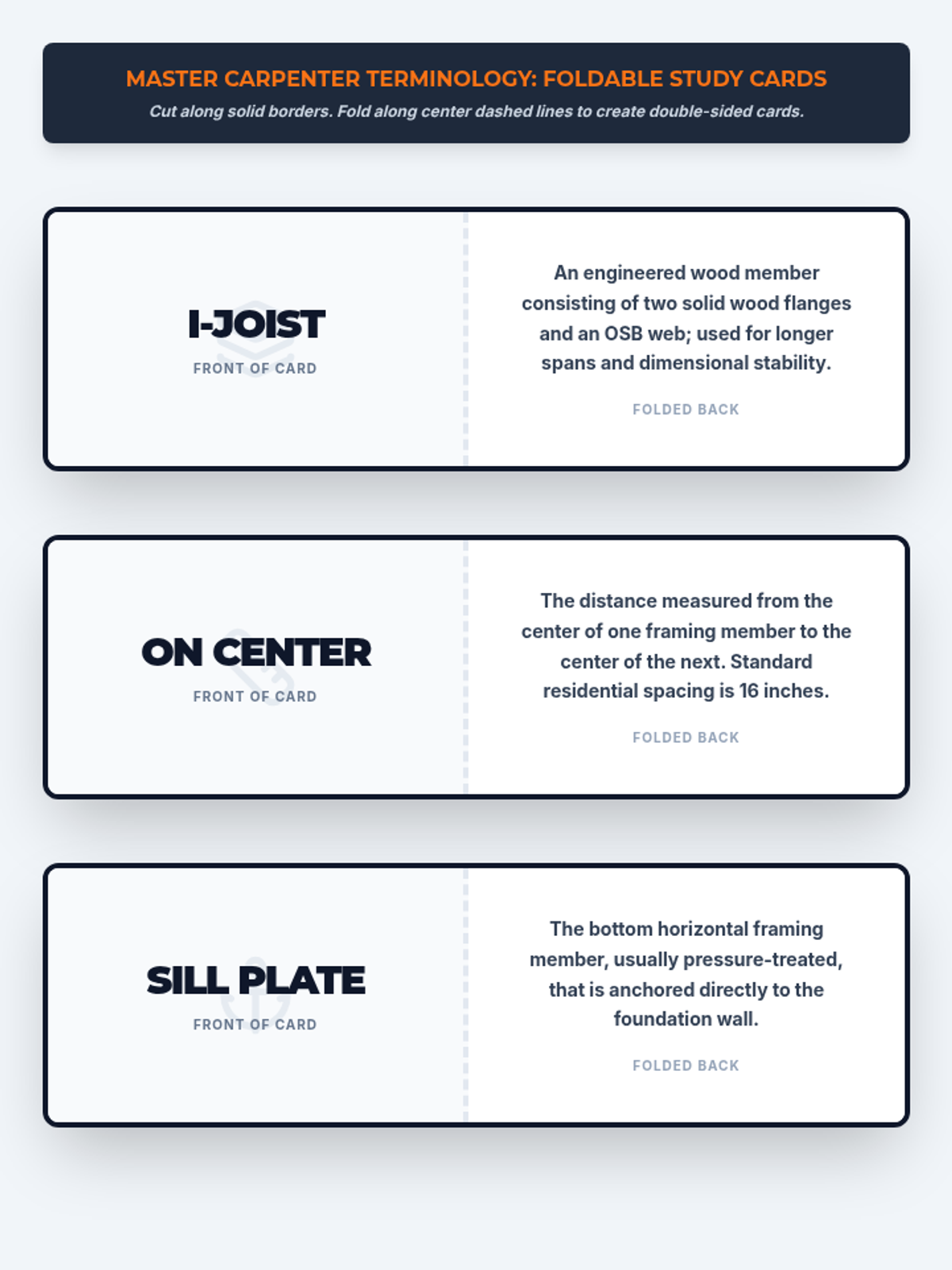
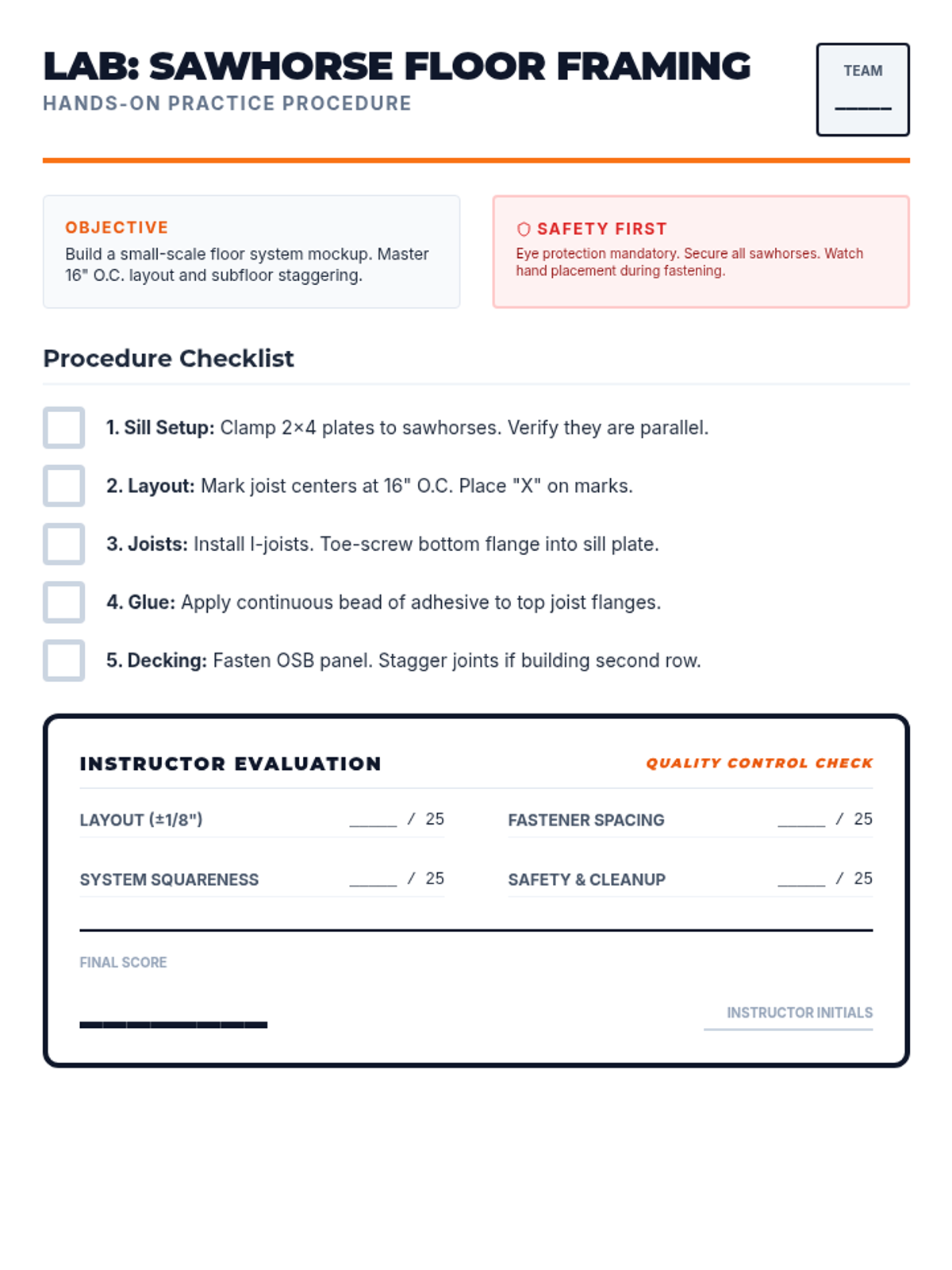
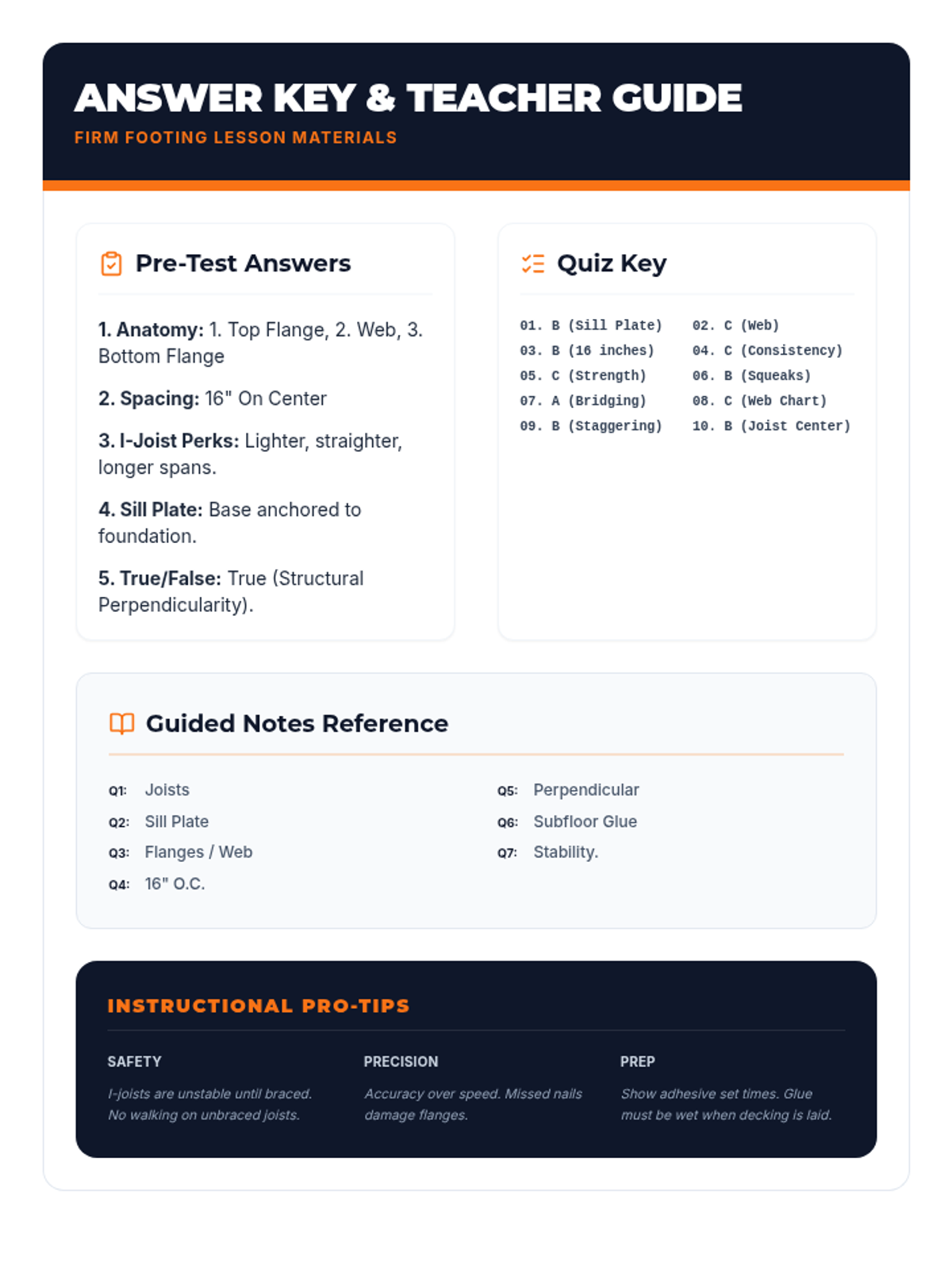
A comprehensive 90-minute lesson on modern wood floor systems, focusing on I-joist installation, subflooring techniques, and structural components. Students will engage in classroom instruction followed by hands-on small-scale framing practice.
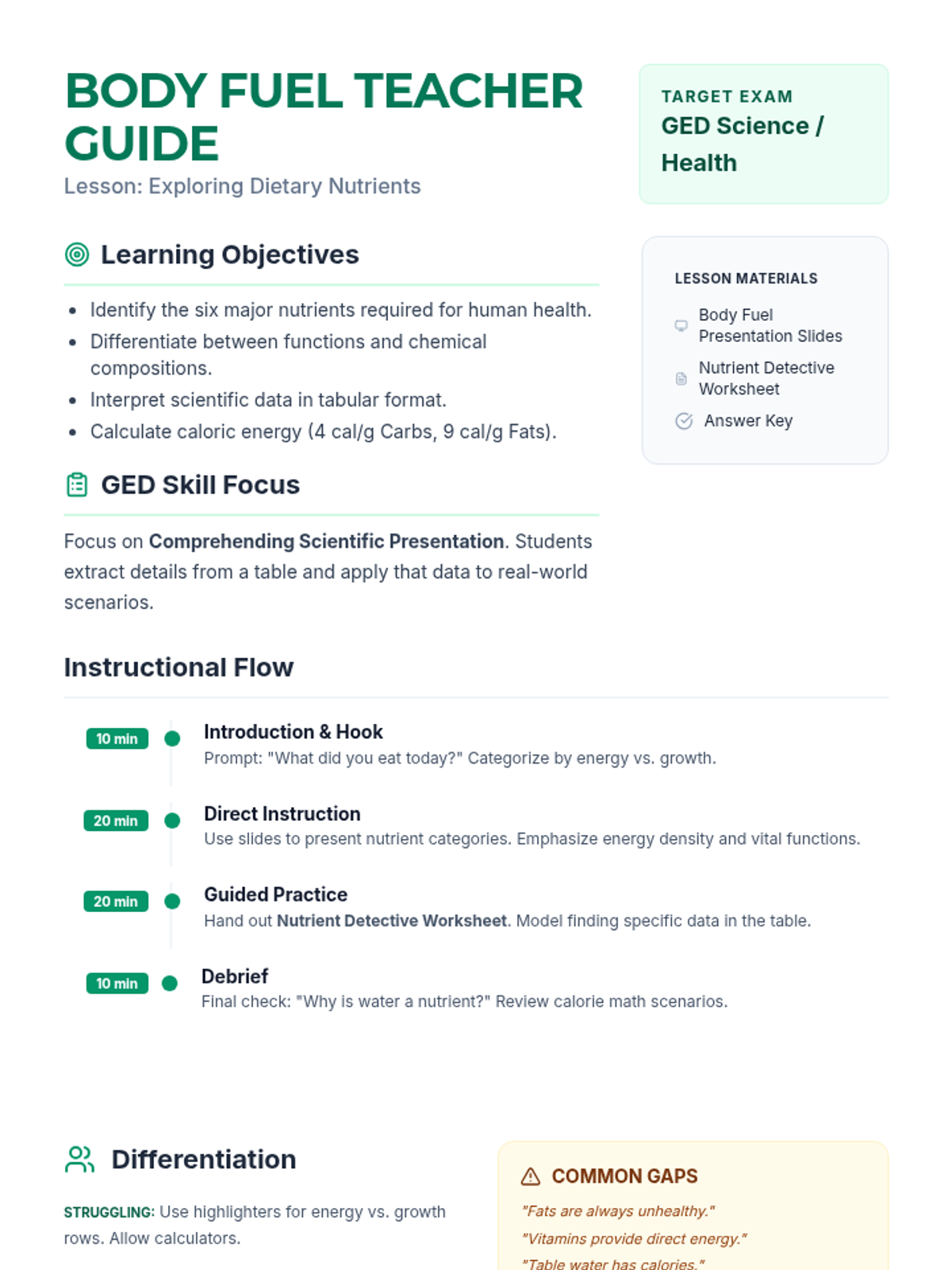
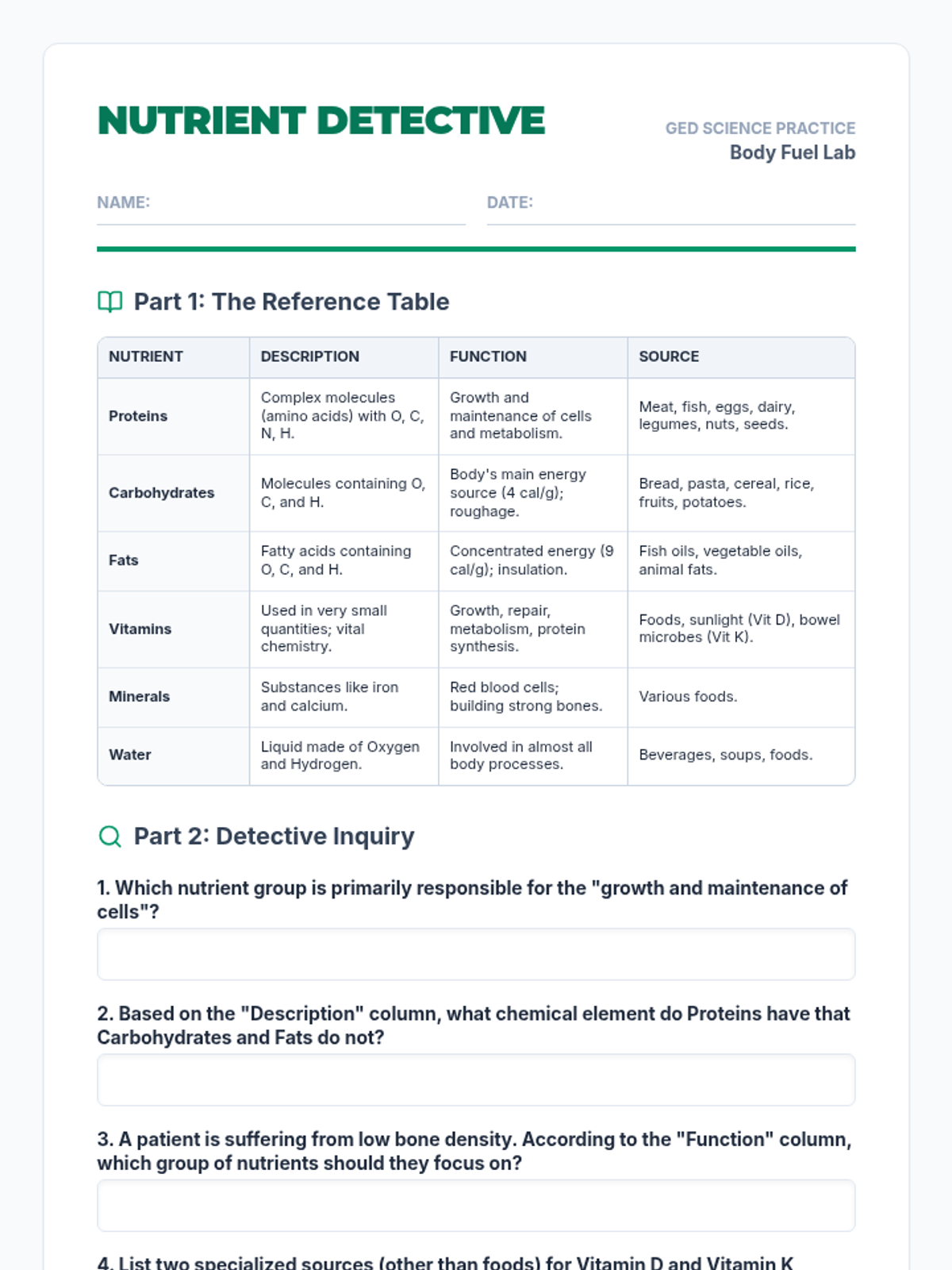
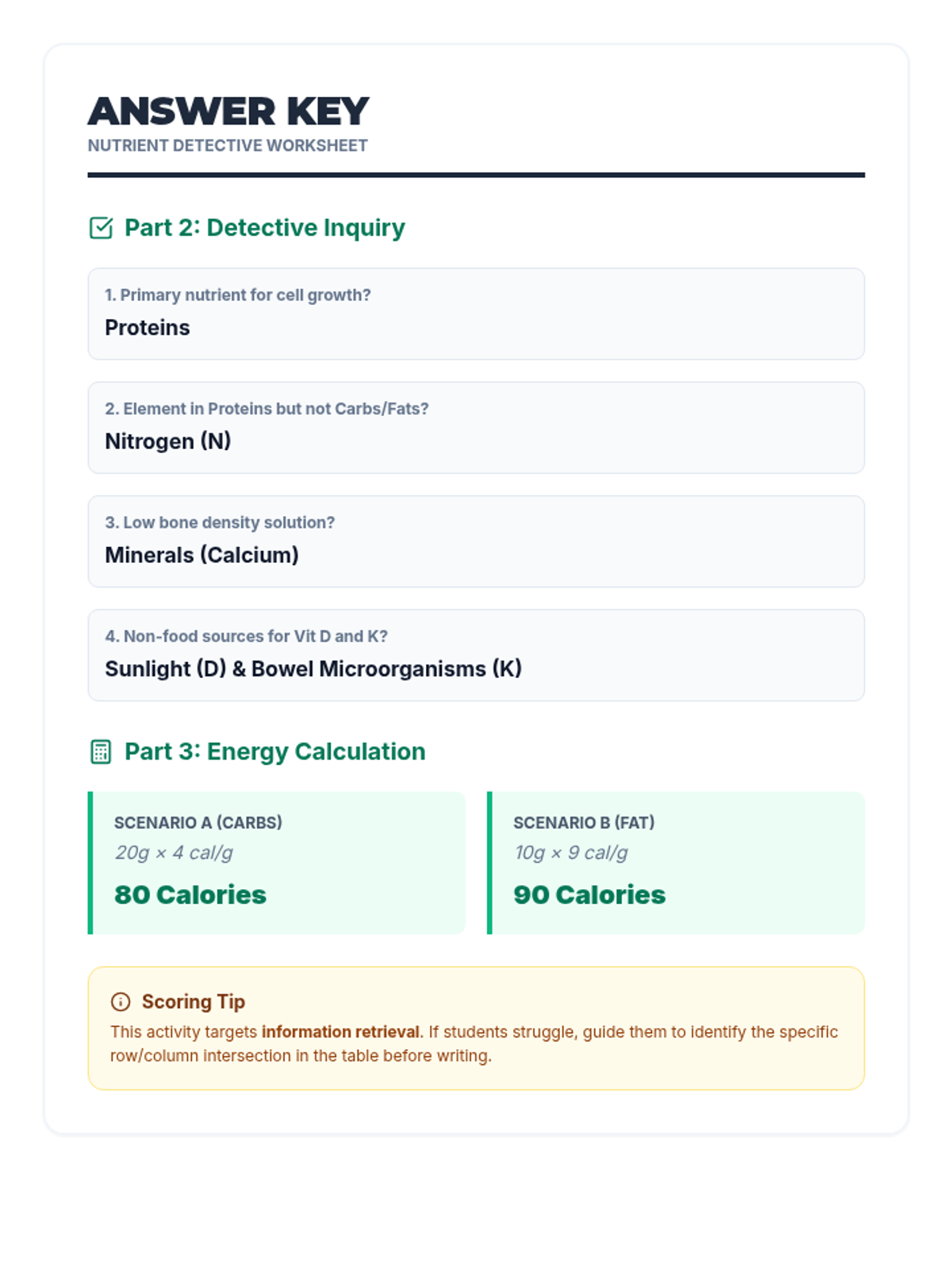
A comprehensive lesson designed for GED students to understand the roles of essential nutrients, how to interpret nutritional data from tables, and apply this knowledge to personal health.
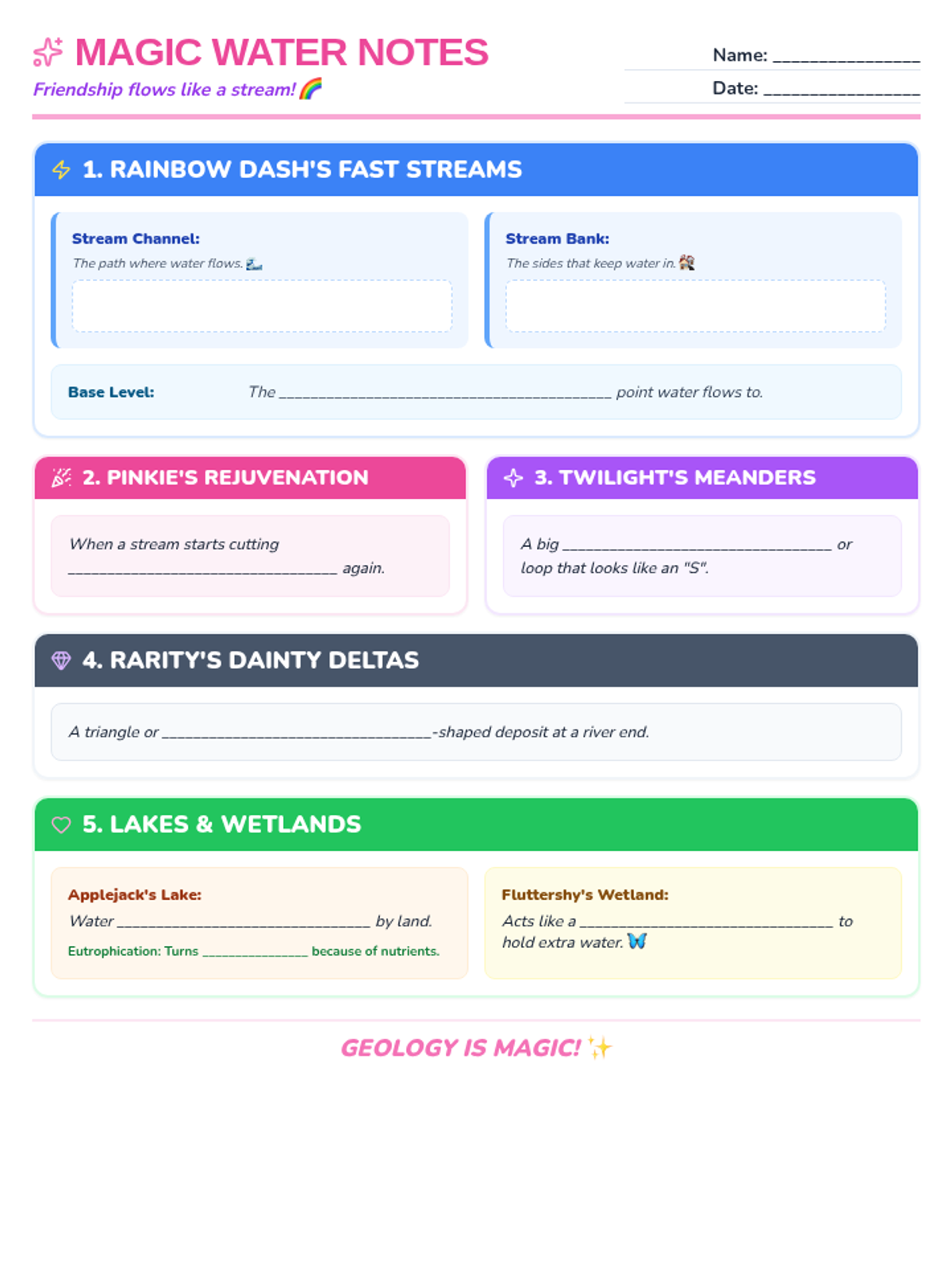
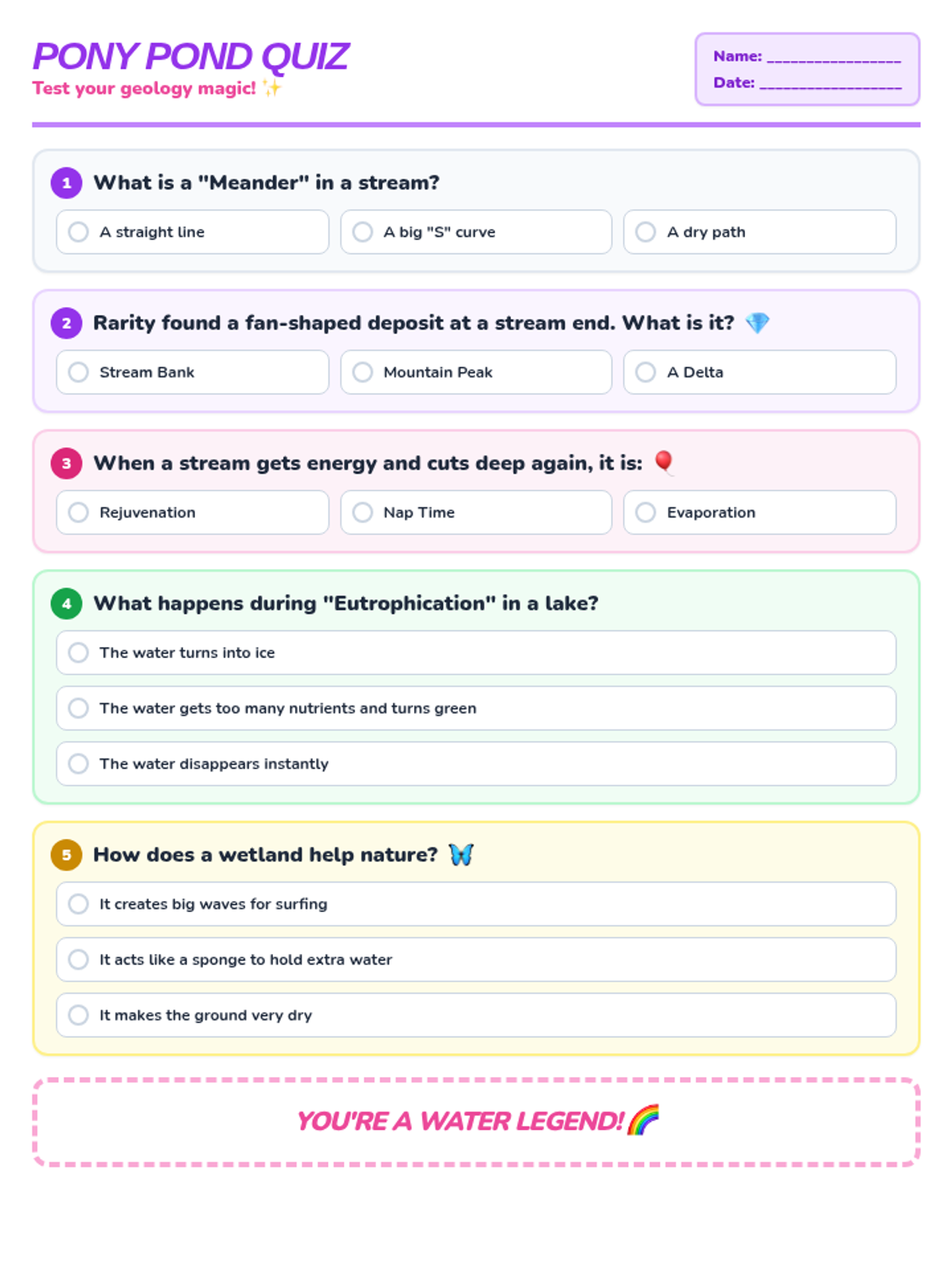
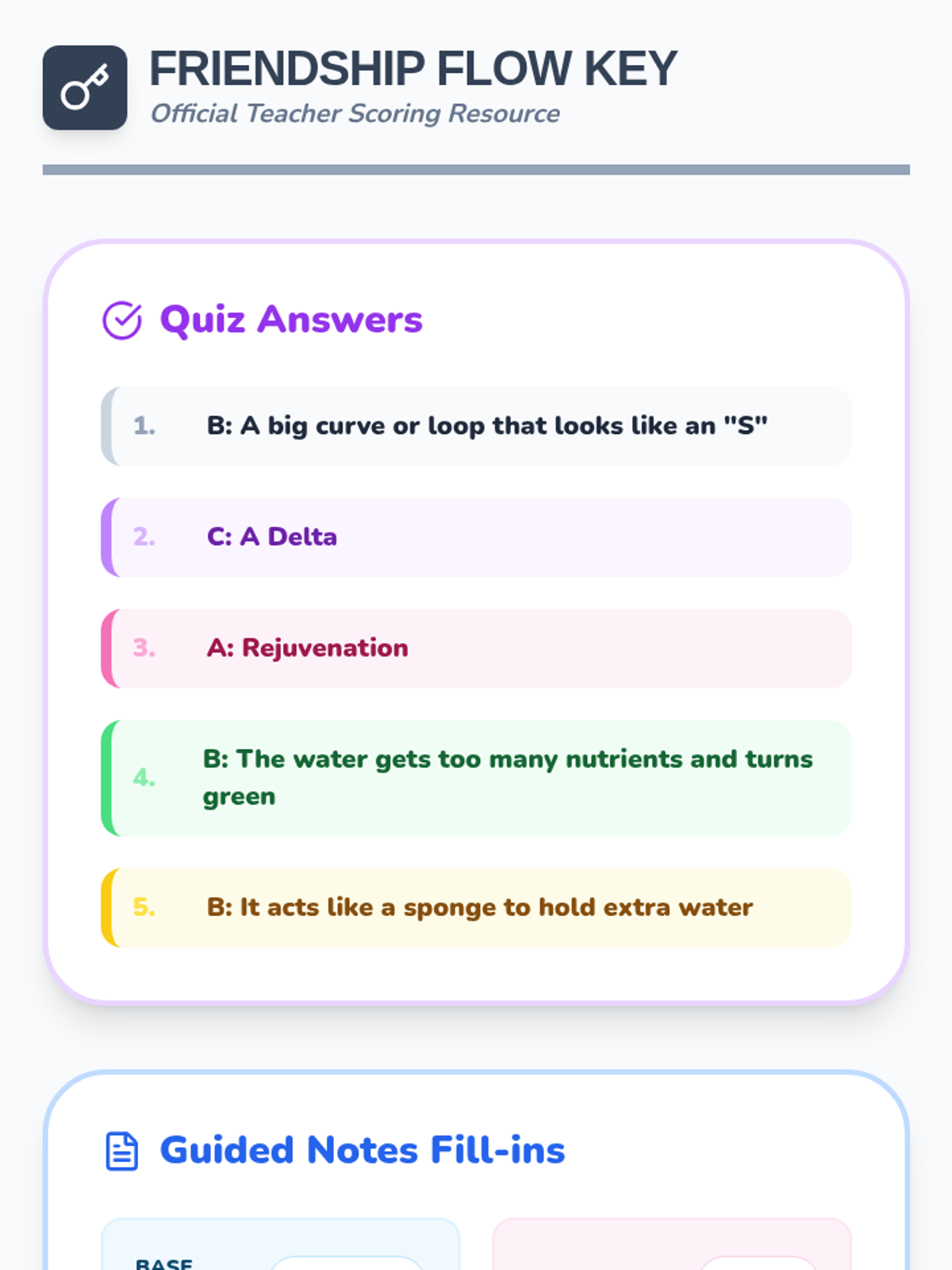
A lesson on surface water interactions with land, featuring My Little Pony characters to explain streams, lakes, and wetlands. Students learn key geological terms through simple bullet points and visual support.
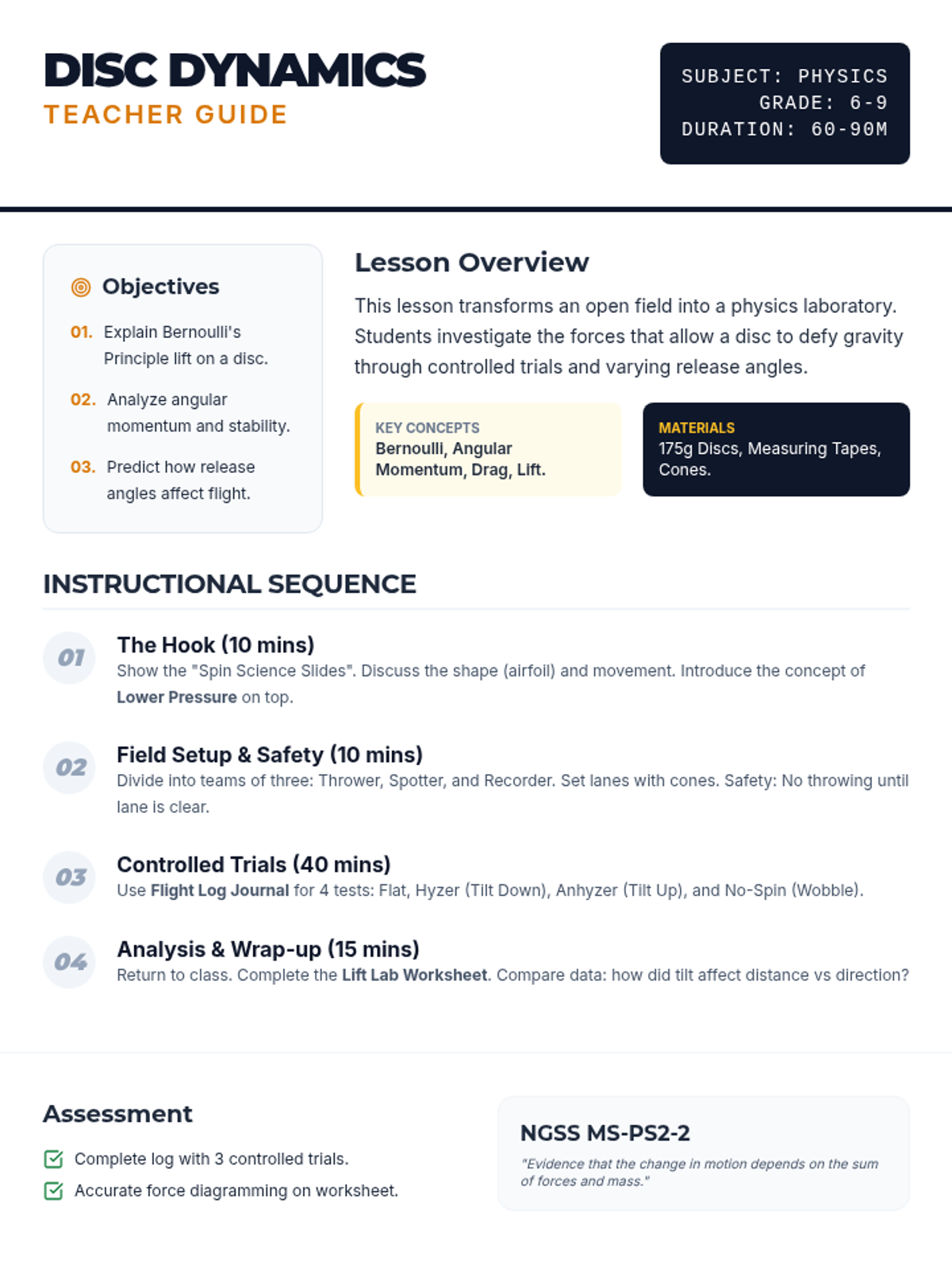
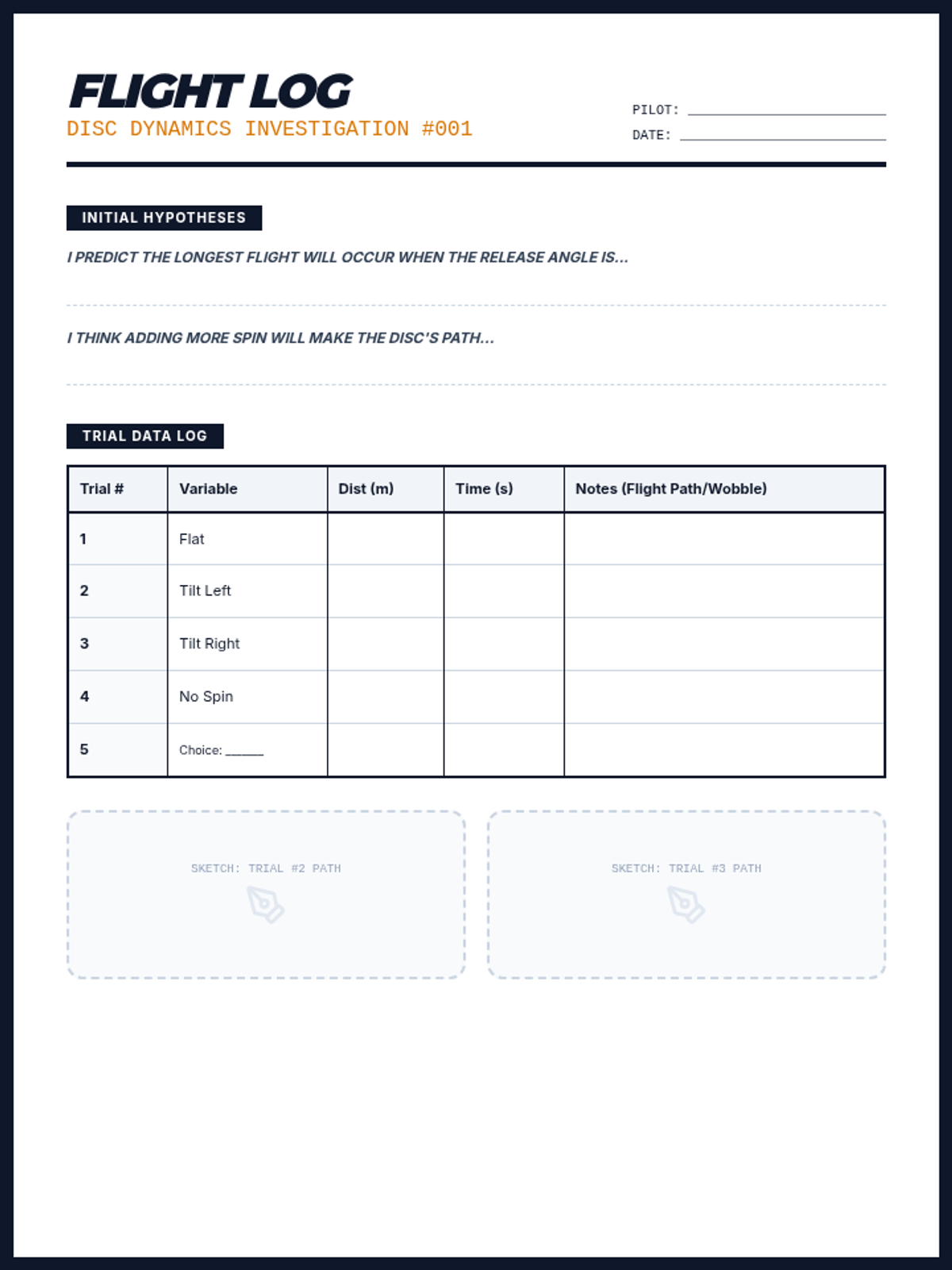
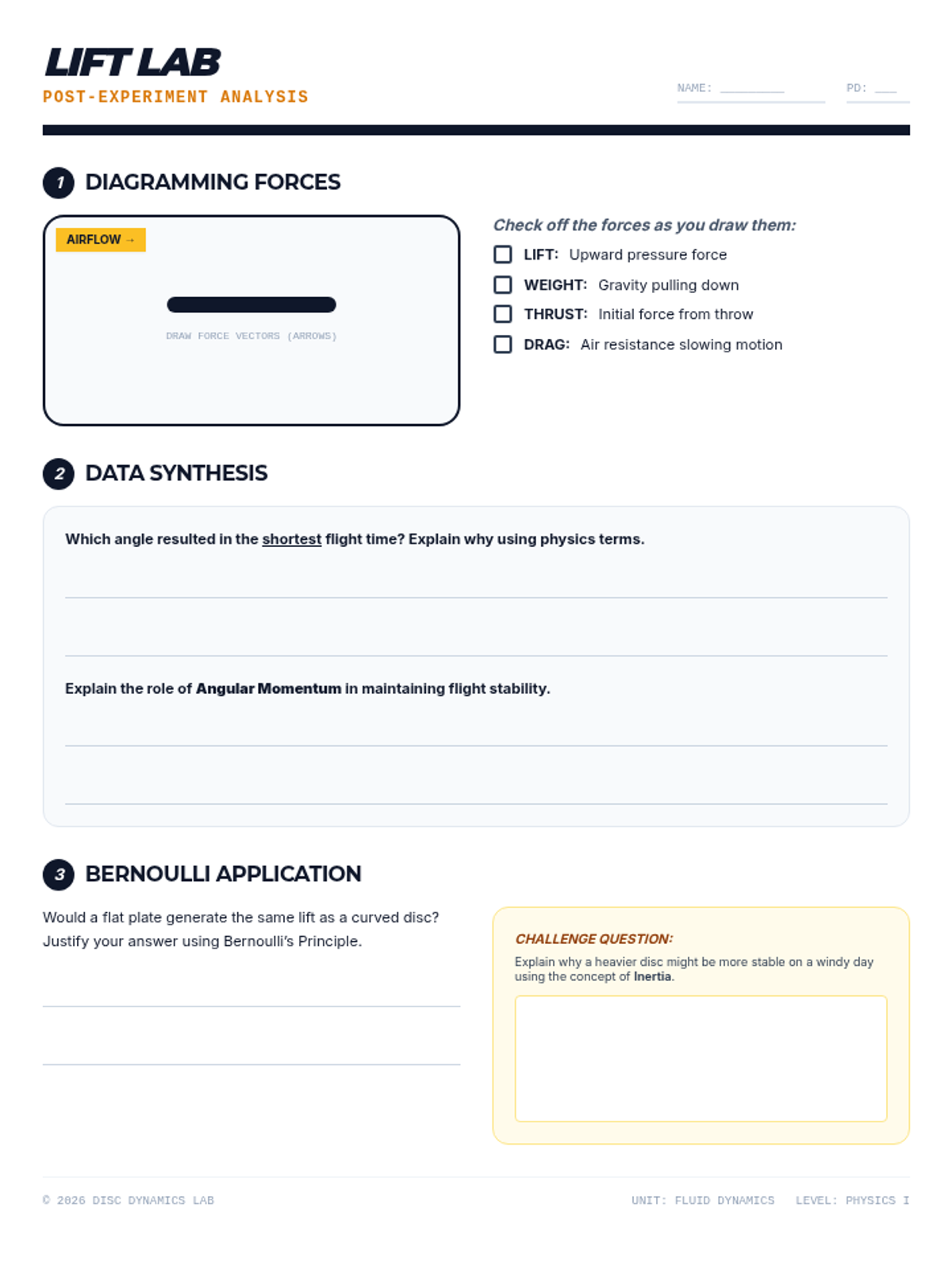
An interactive physics lesson exploring Bernoulli's principle and angular momentum through hands-on flying disc trials. Students analyze flight paths and vary release angles to observe lift and drag forces in action.
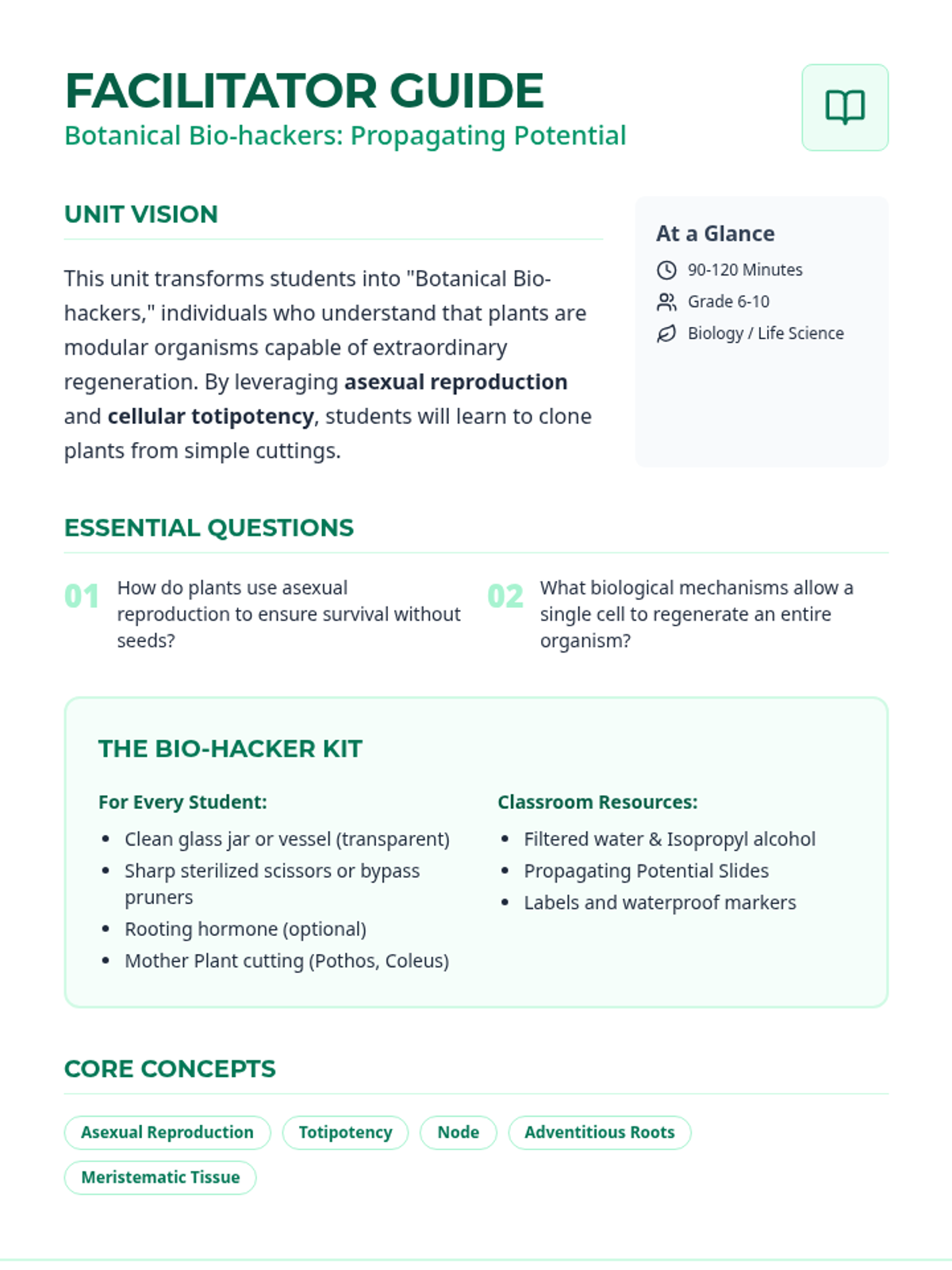
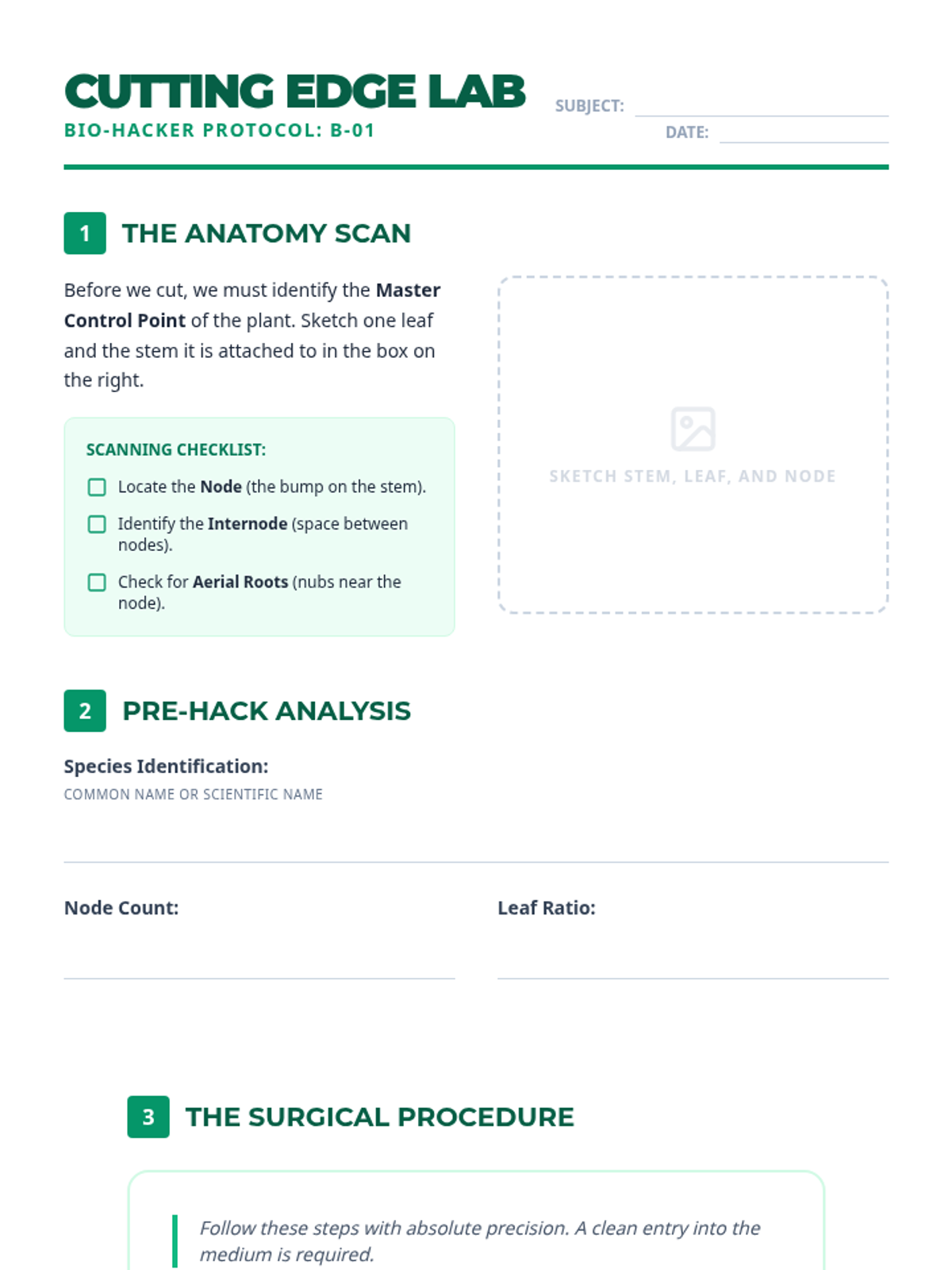
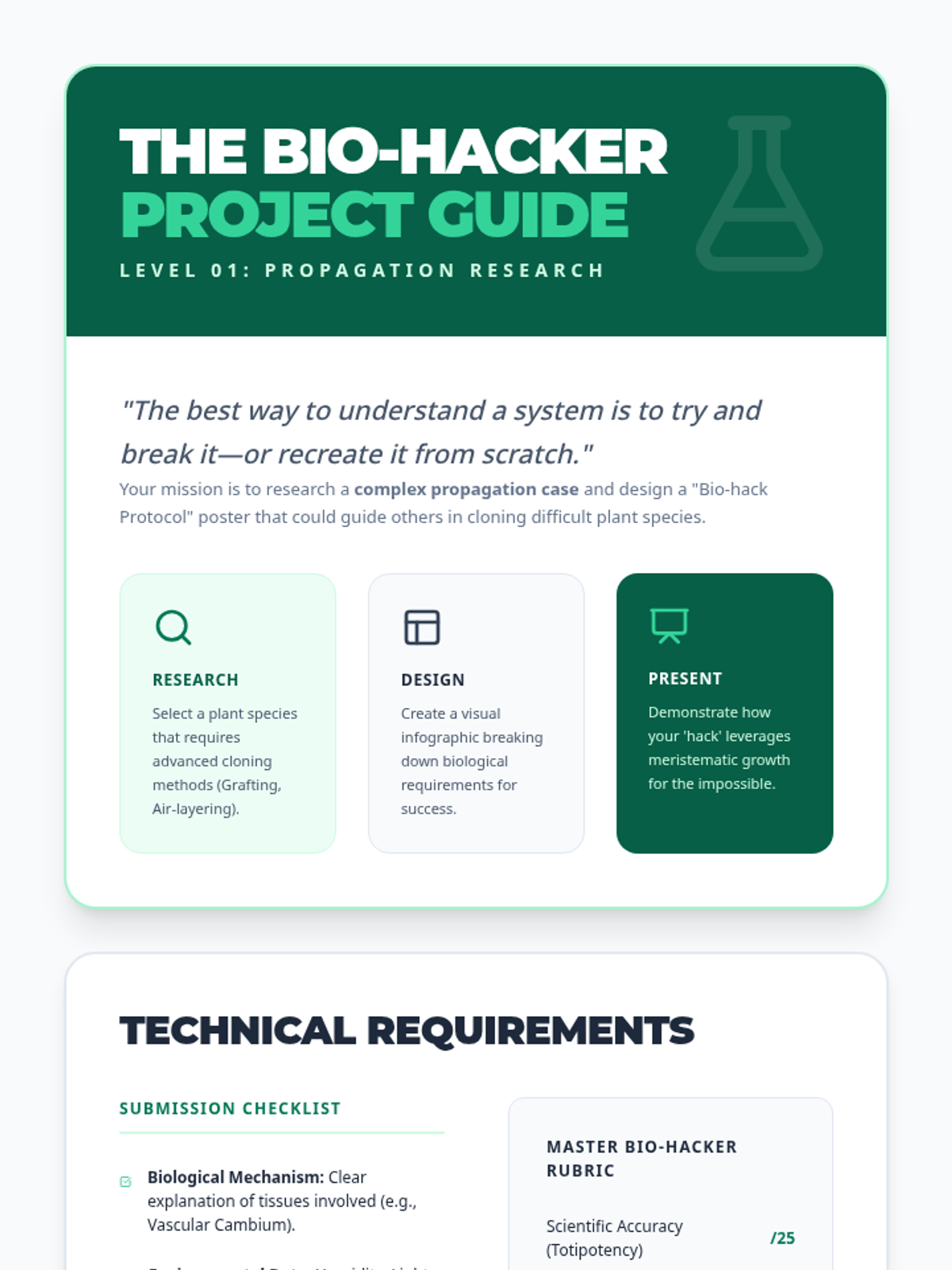
Students learn the mechanics of asexual reproduction and cellular regeneration through the process of taking and rooting plant cuttings. This lesson covers the biological foundations of totipotency and the practical application of propagation techniques.
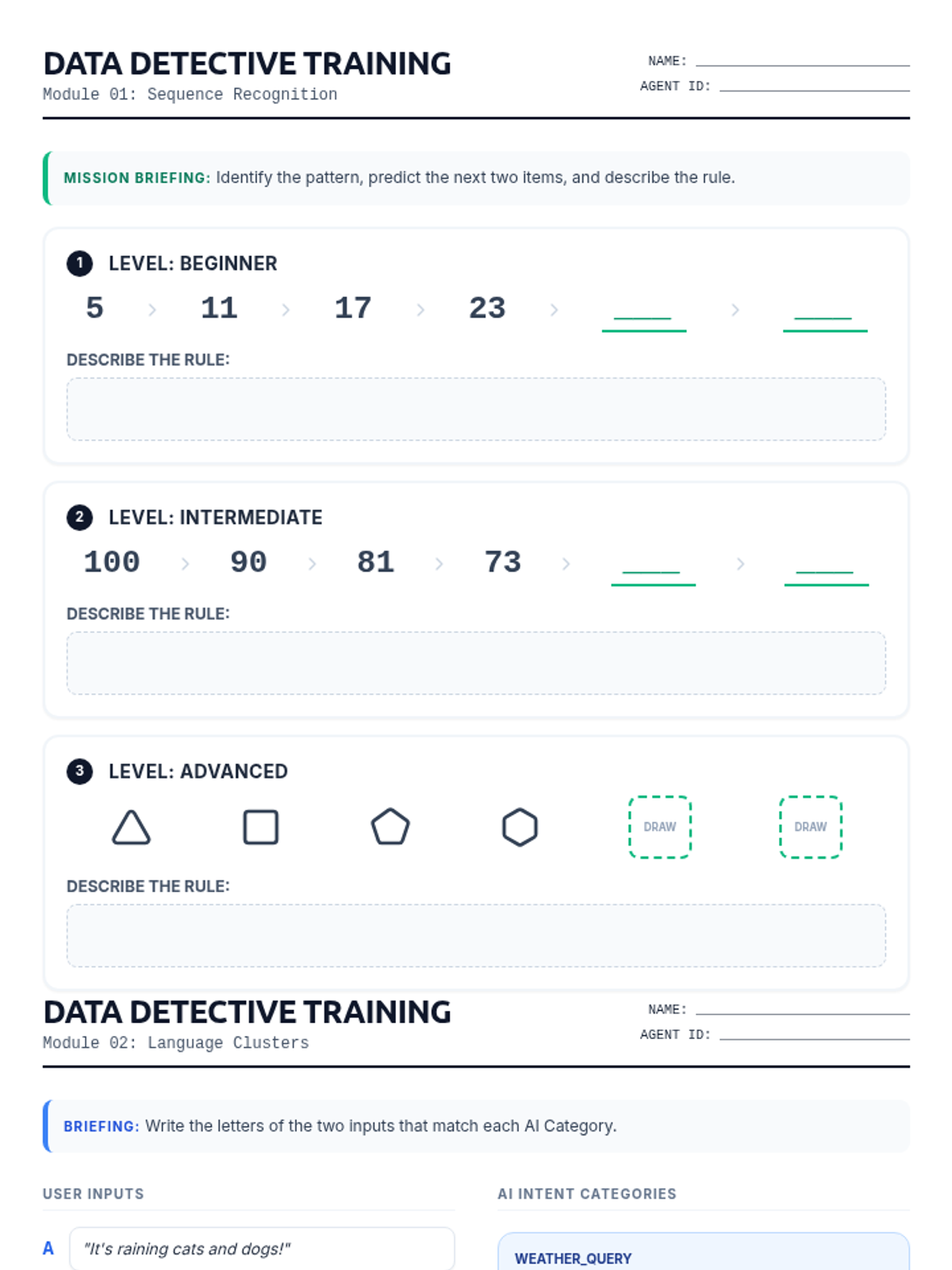
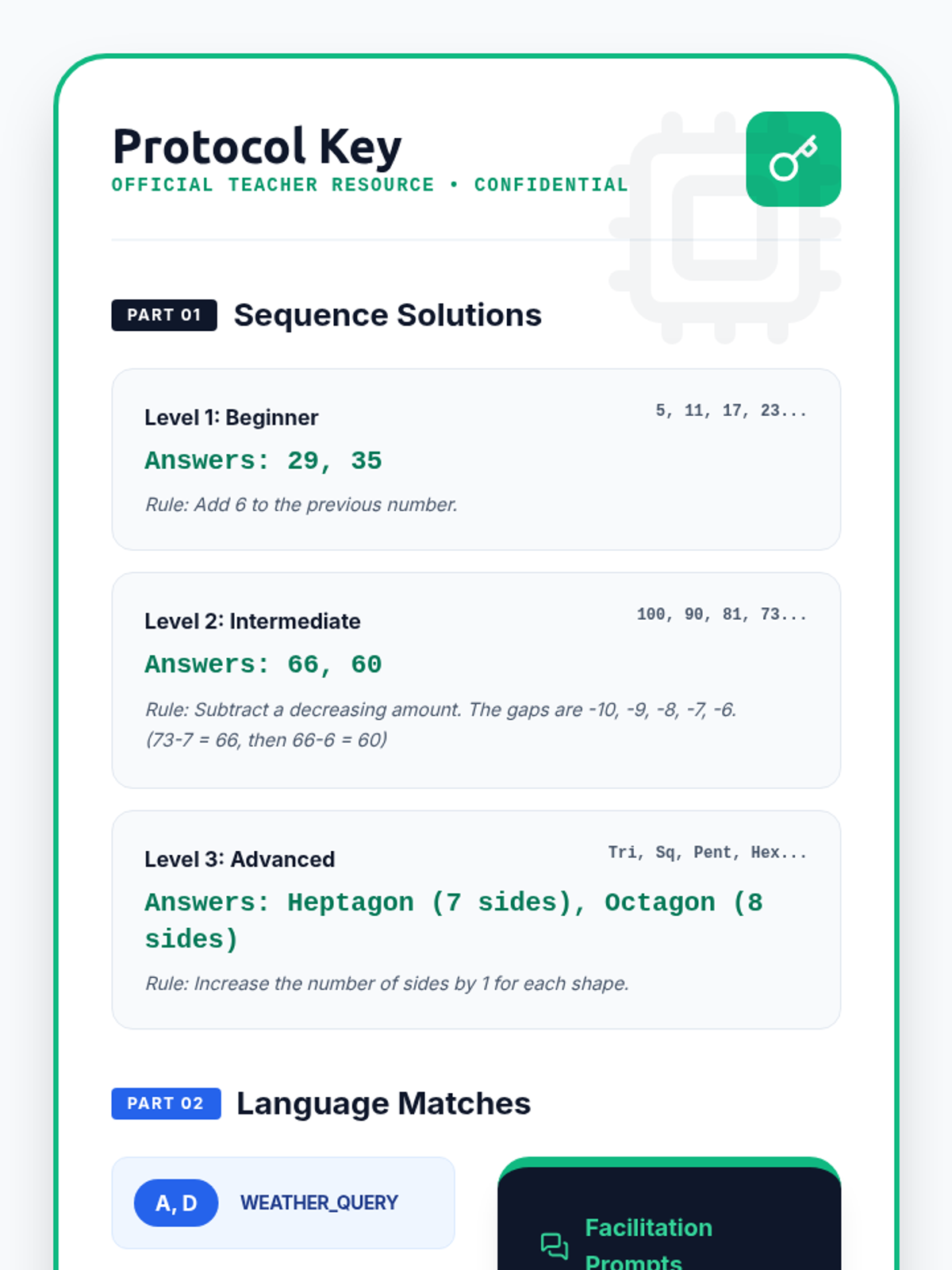
Students explore how AI uses pattern recognition to predict sequences and understand human language through hands-on logic puzzles and guided discussion.
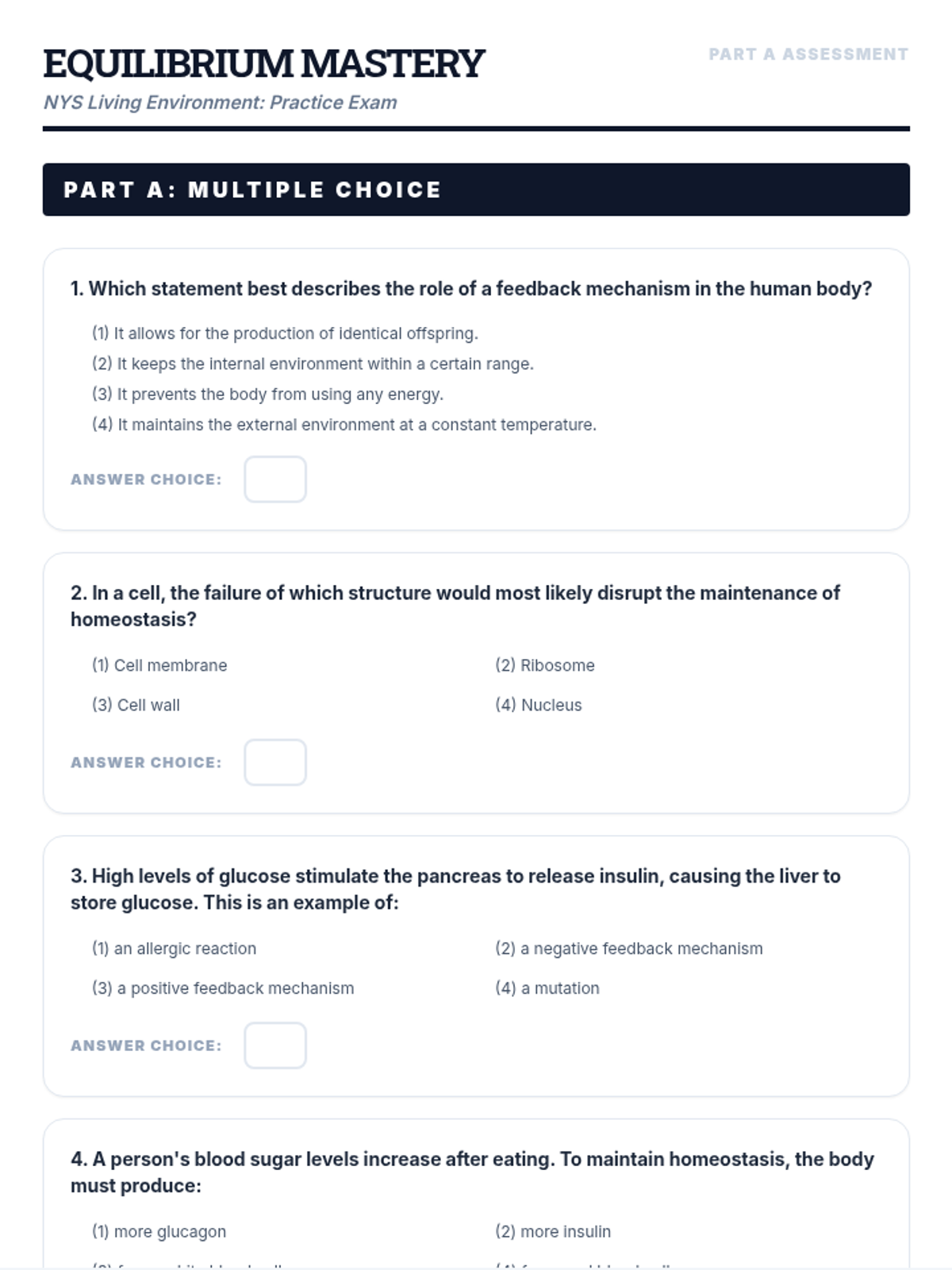
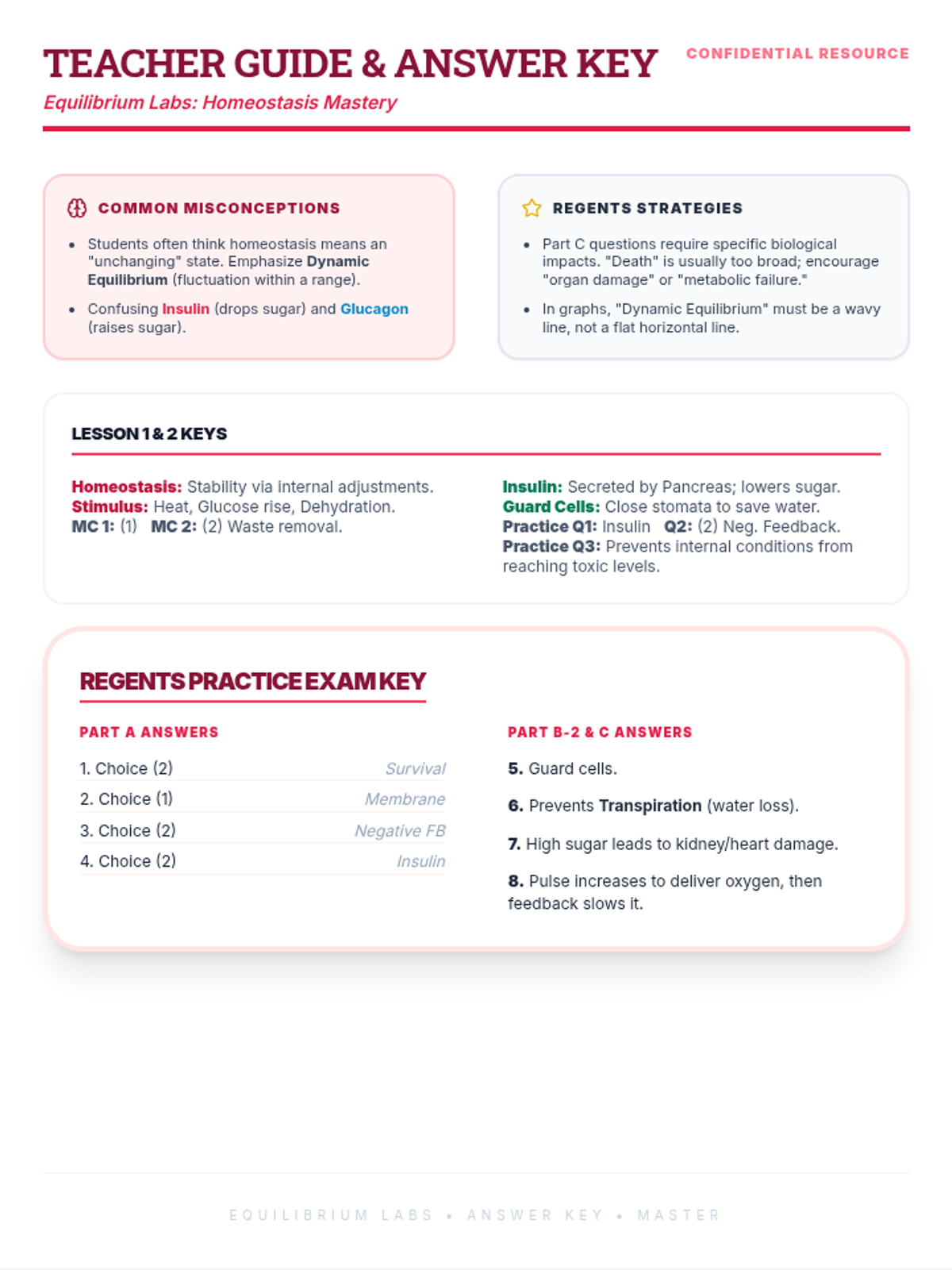
Exploring how human body systems collaborate to maintain homeostasis, featuring Regents-style practice problems and analysis.
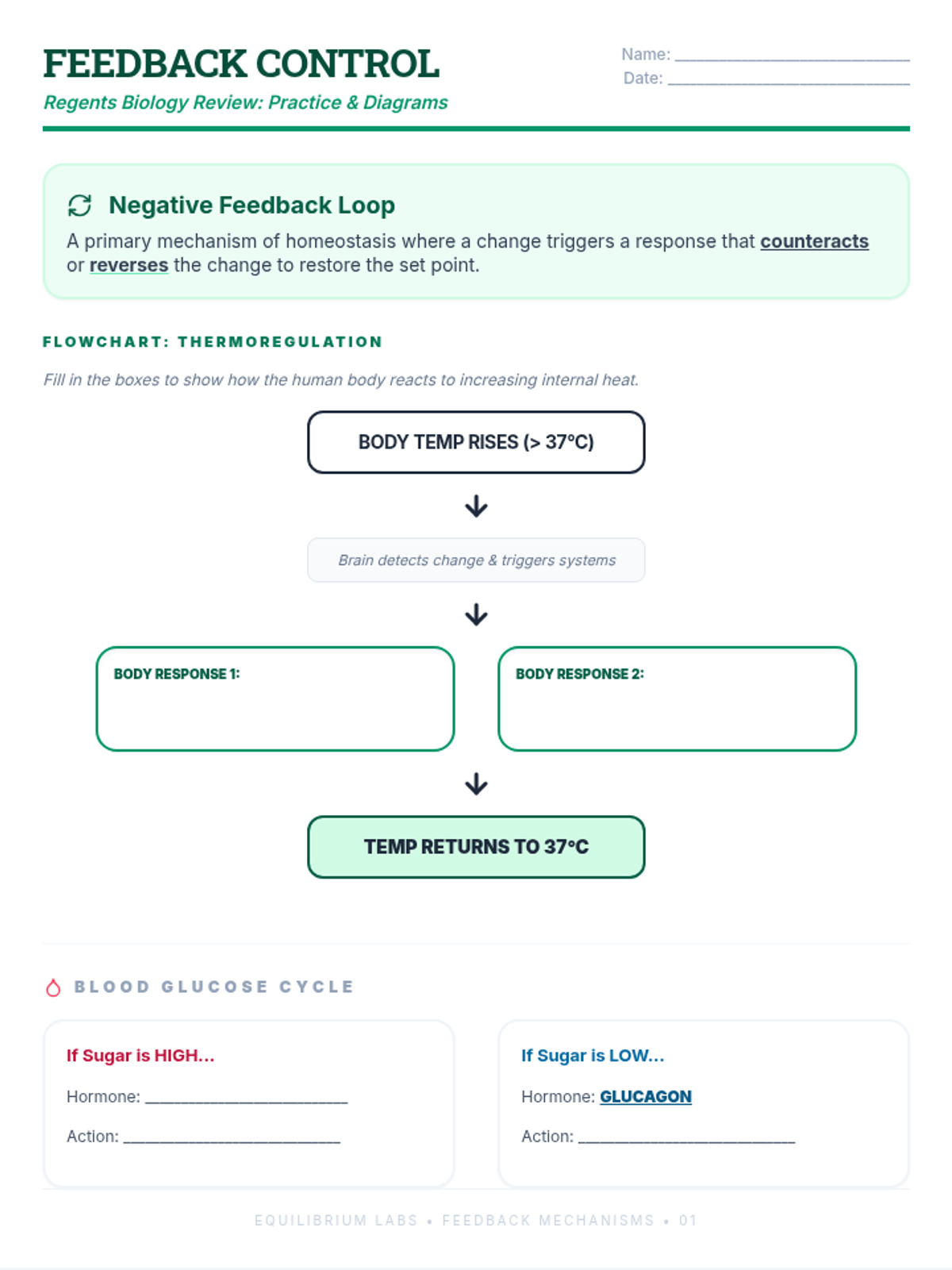
Deep dive into negative and positive feedback mechanisms with a focus on thermoregulation and blood sugar control.
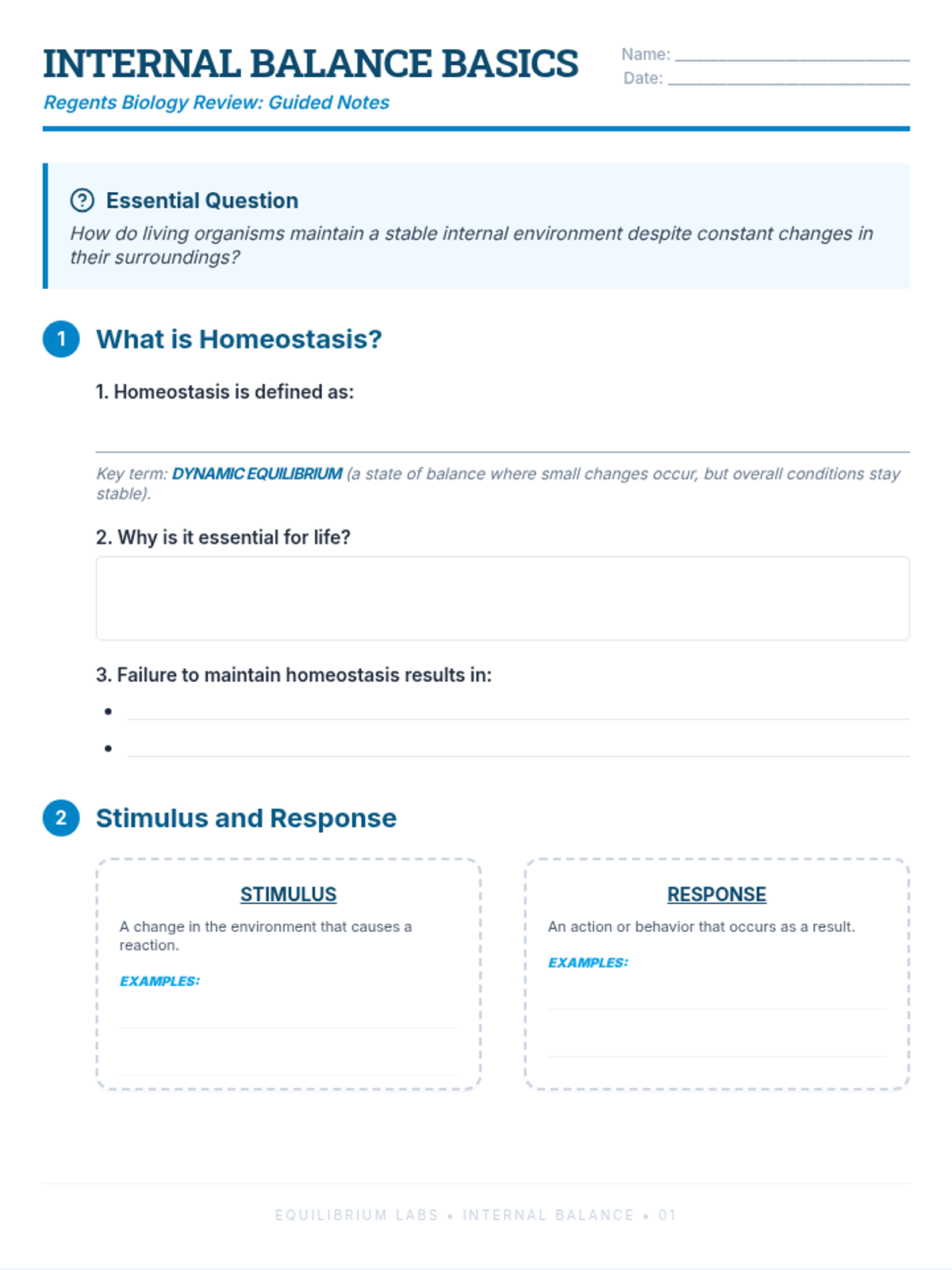
Introduction to homeostasis, dynamic equilibrium, and the basic mechanisms life uses to maintain stability in a changing environment.
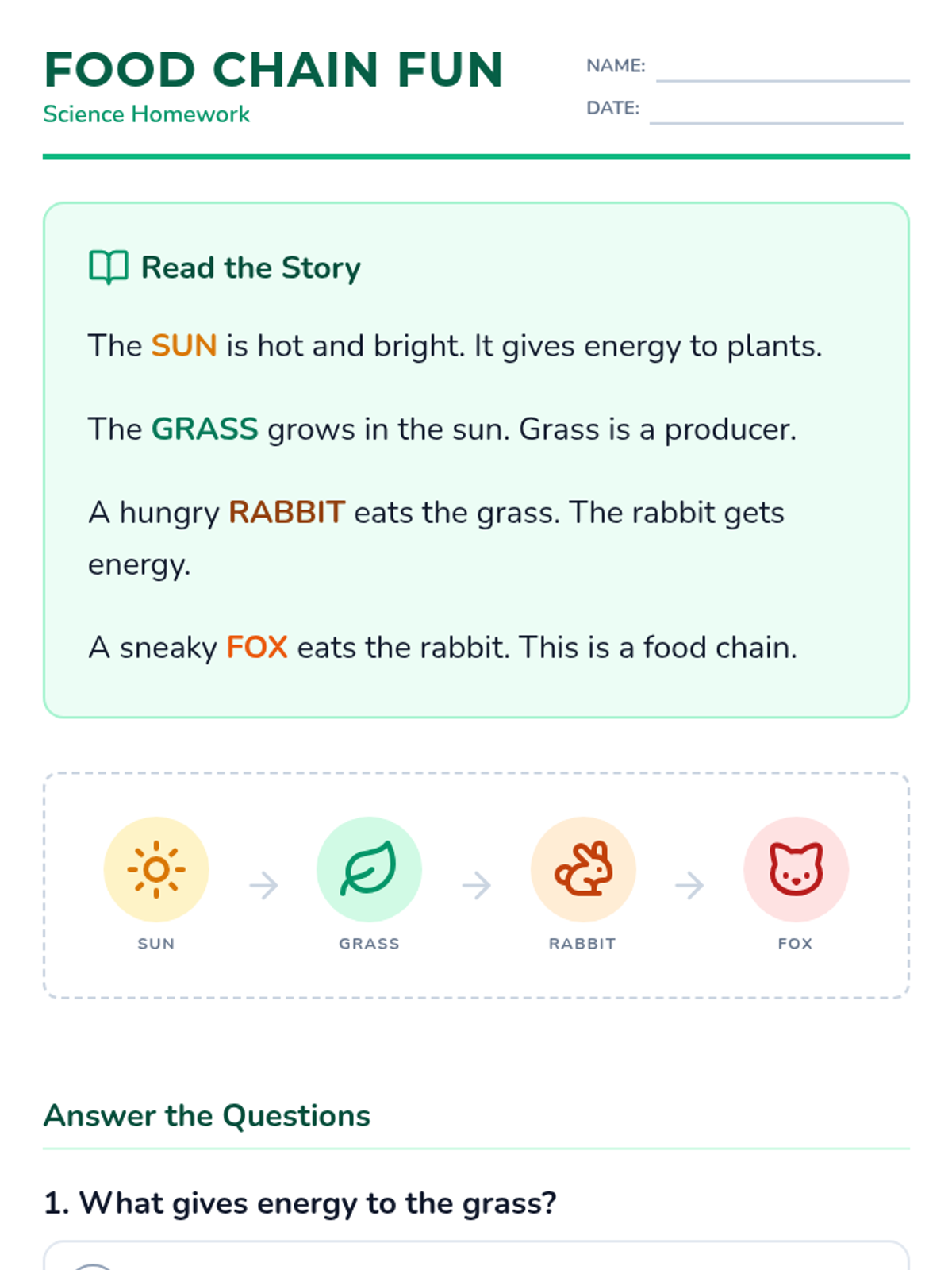
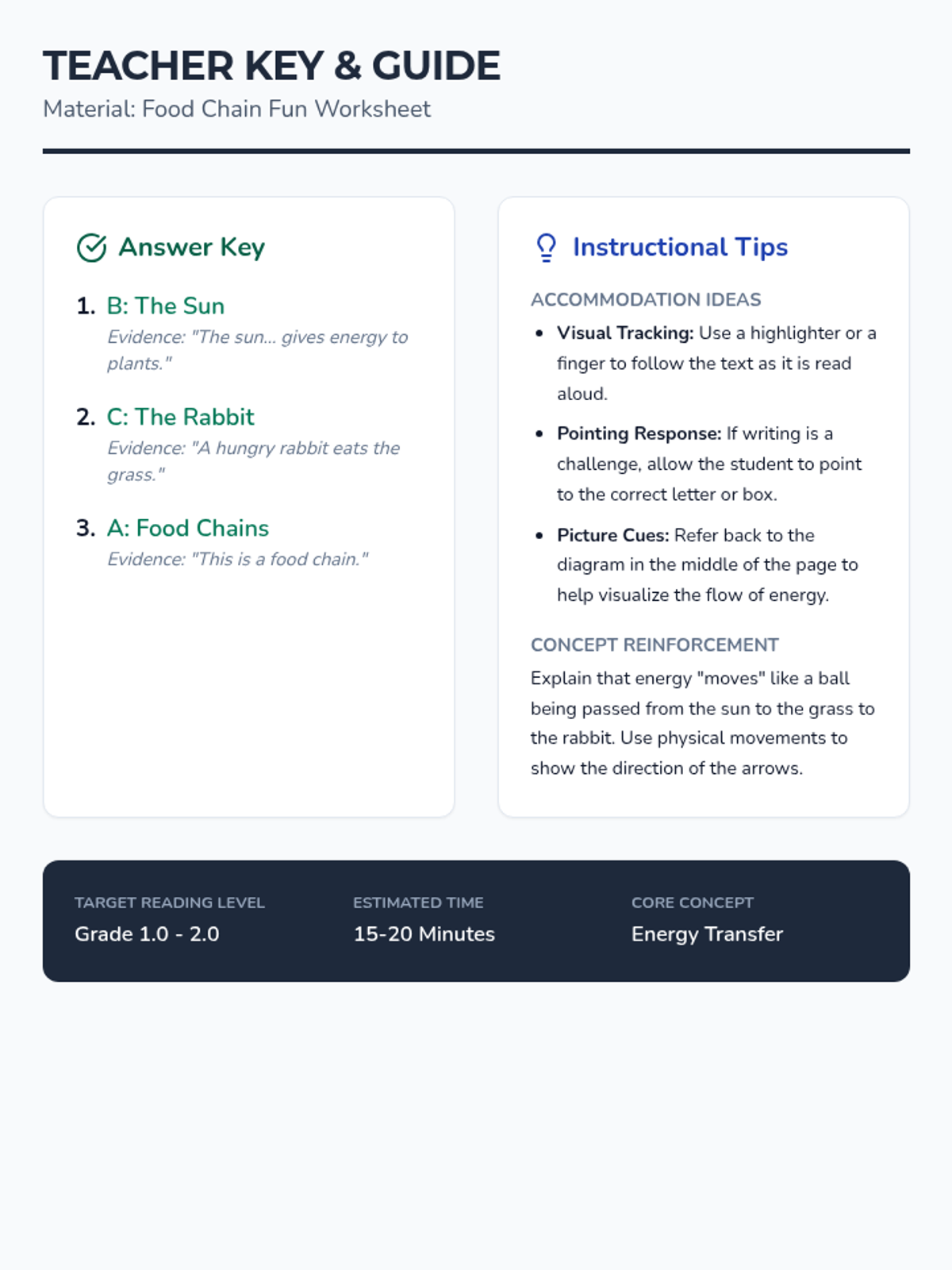
A simplified science lesson on food chains designed for 8th-grade students with severe disabilities, focusing on basic energy flow from sun to predator.
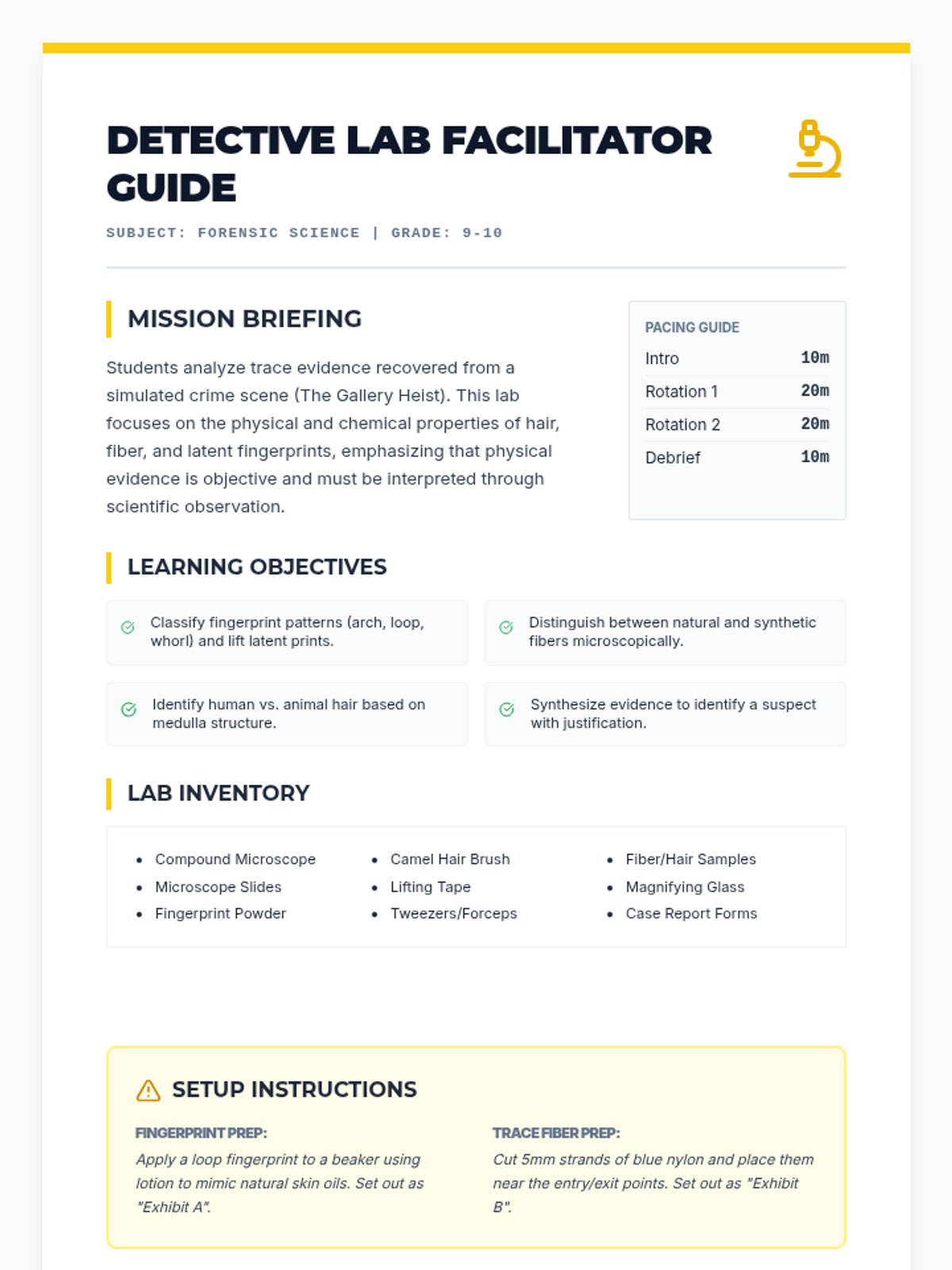
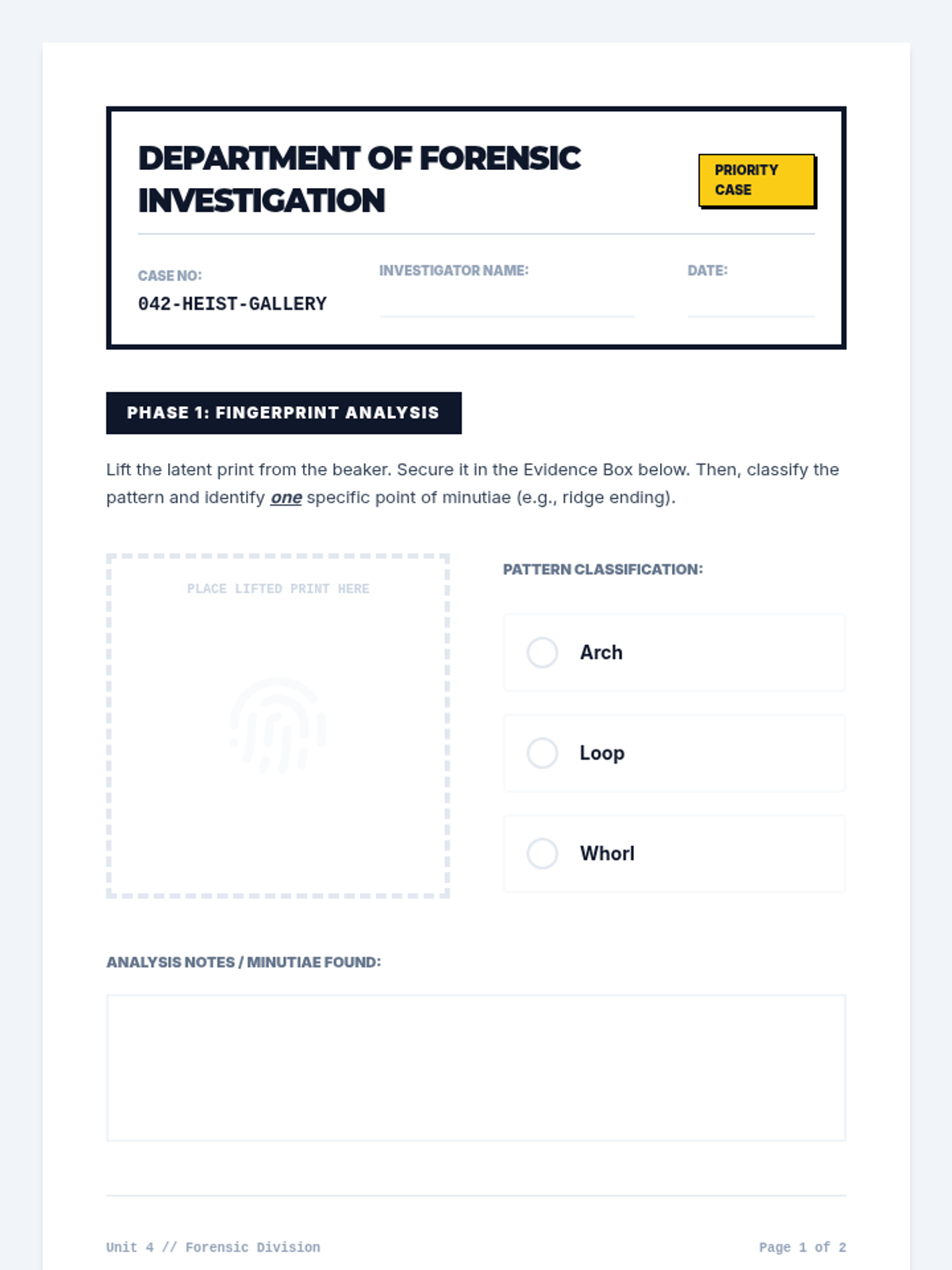
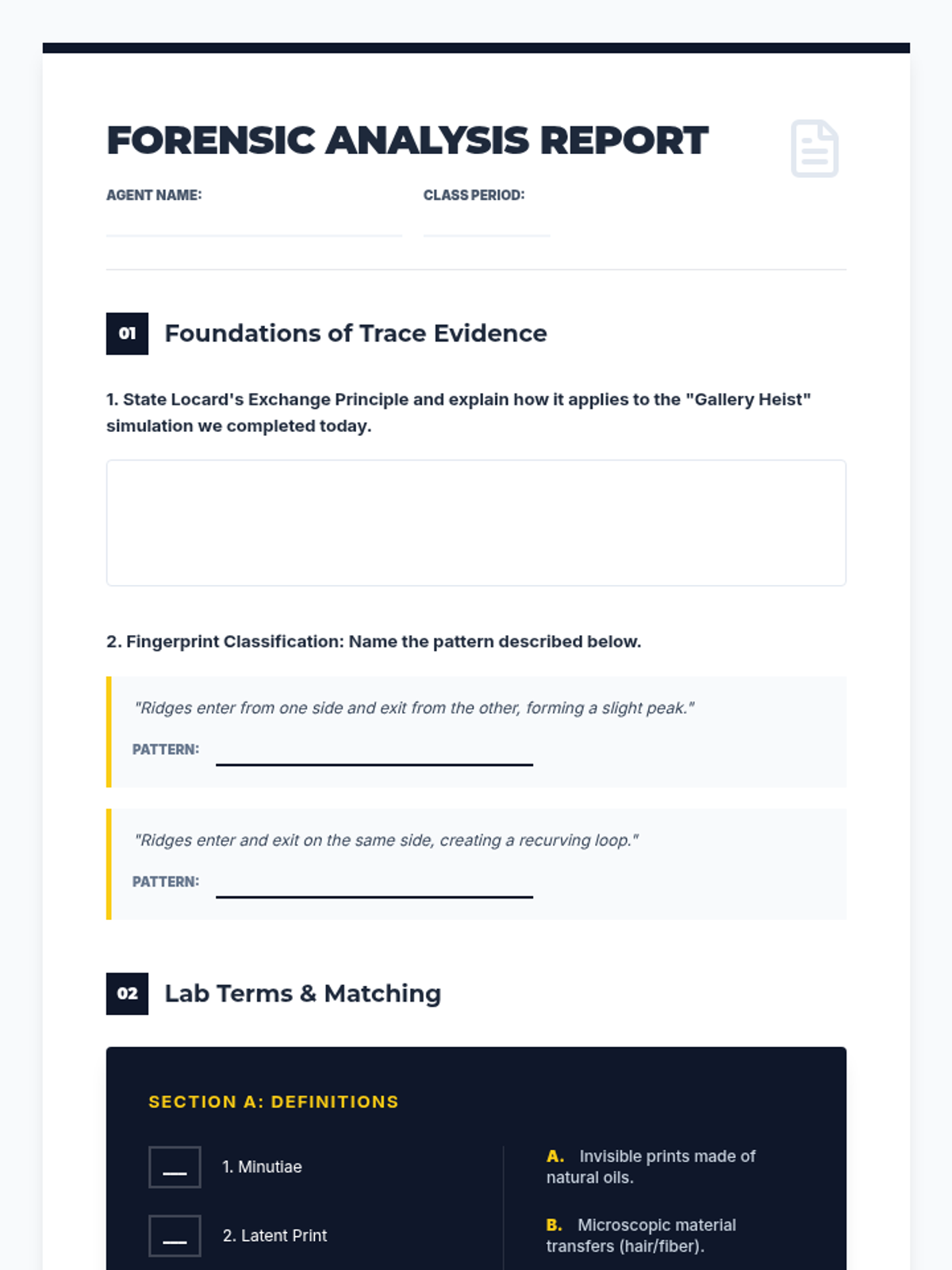
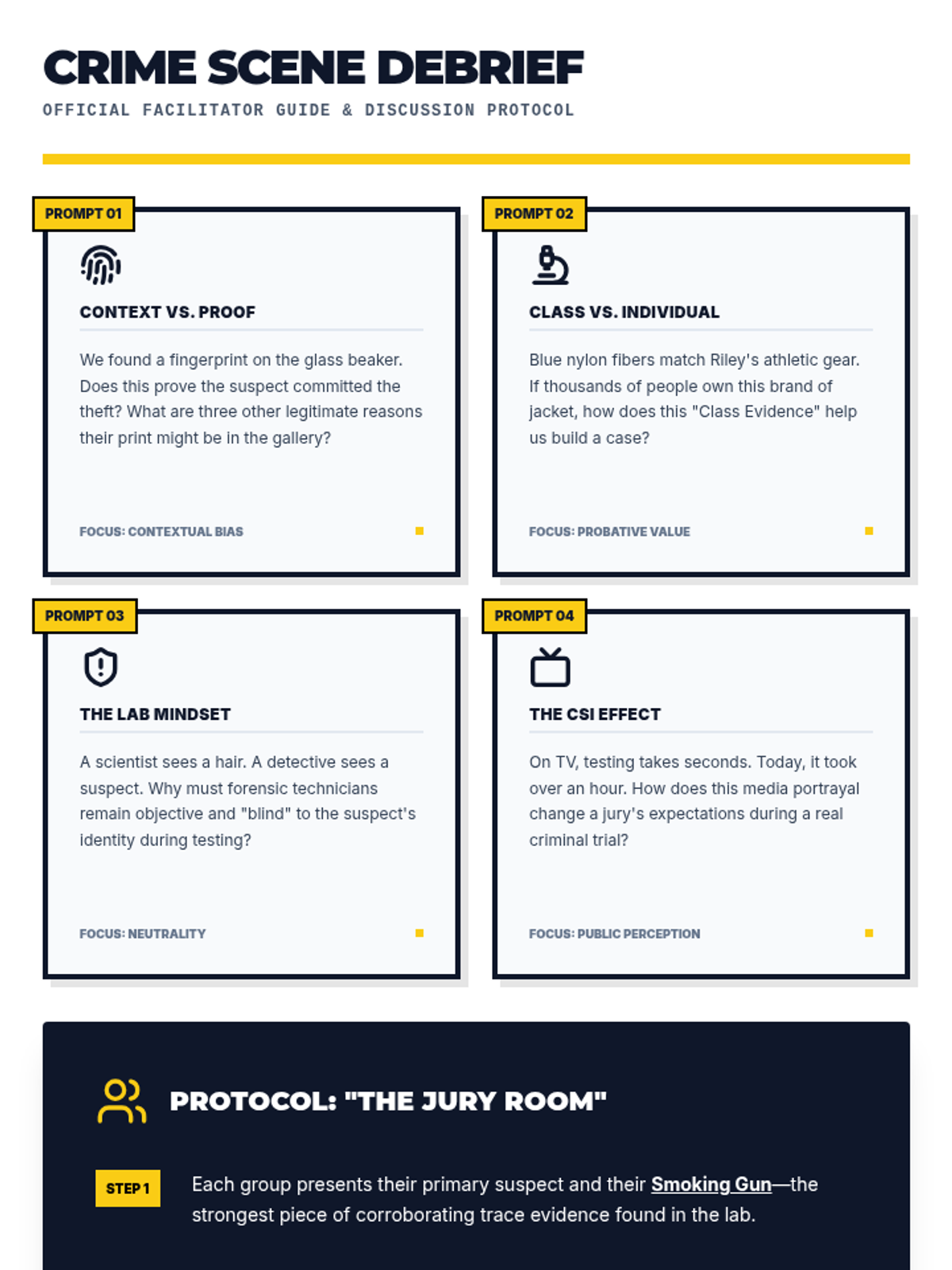
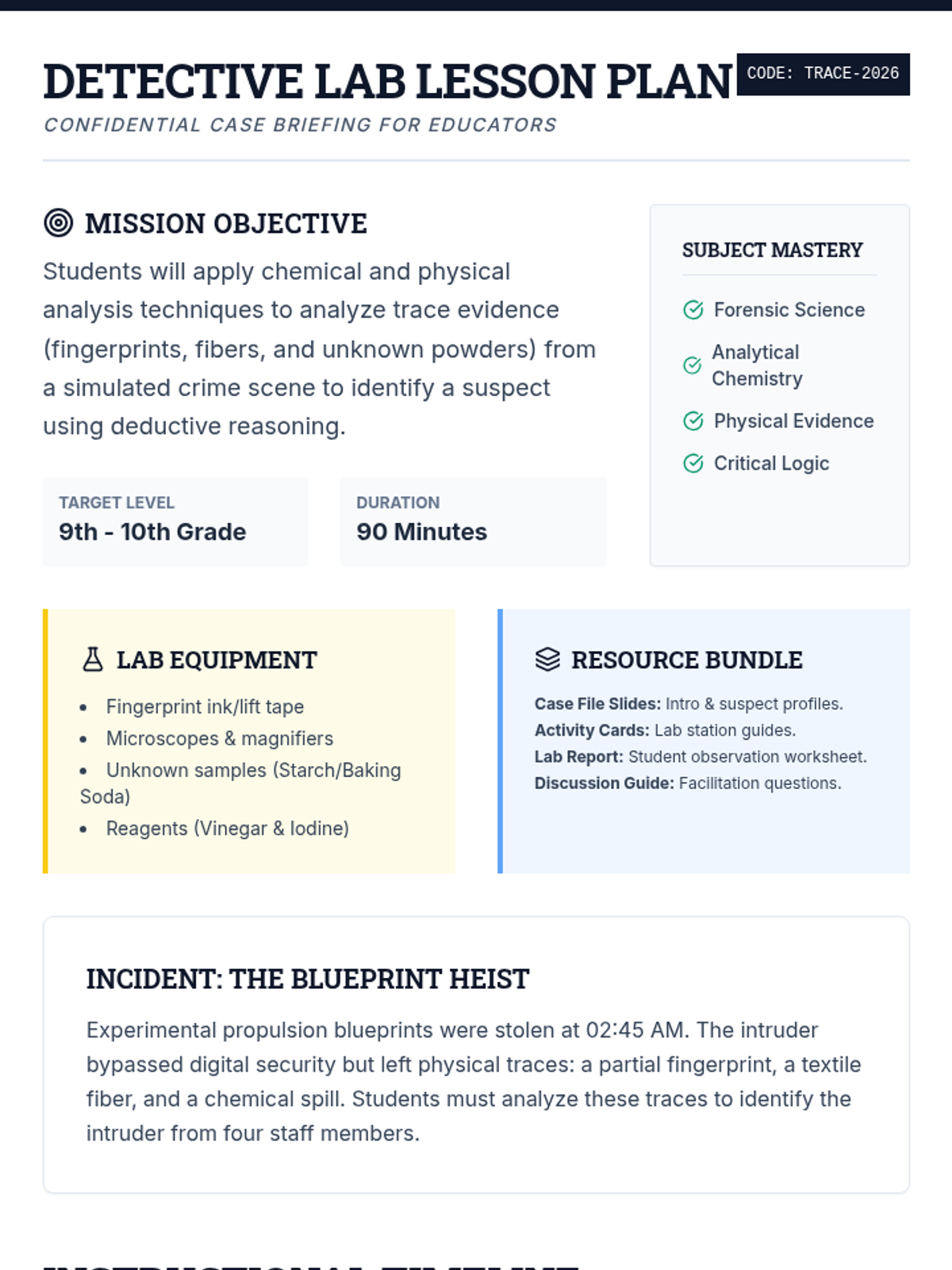
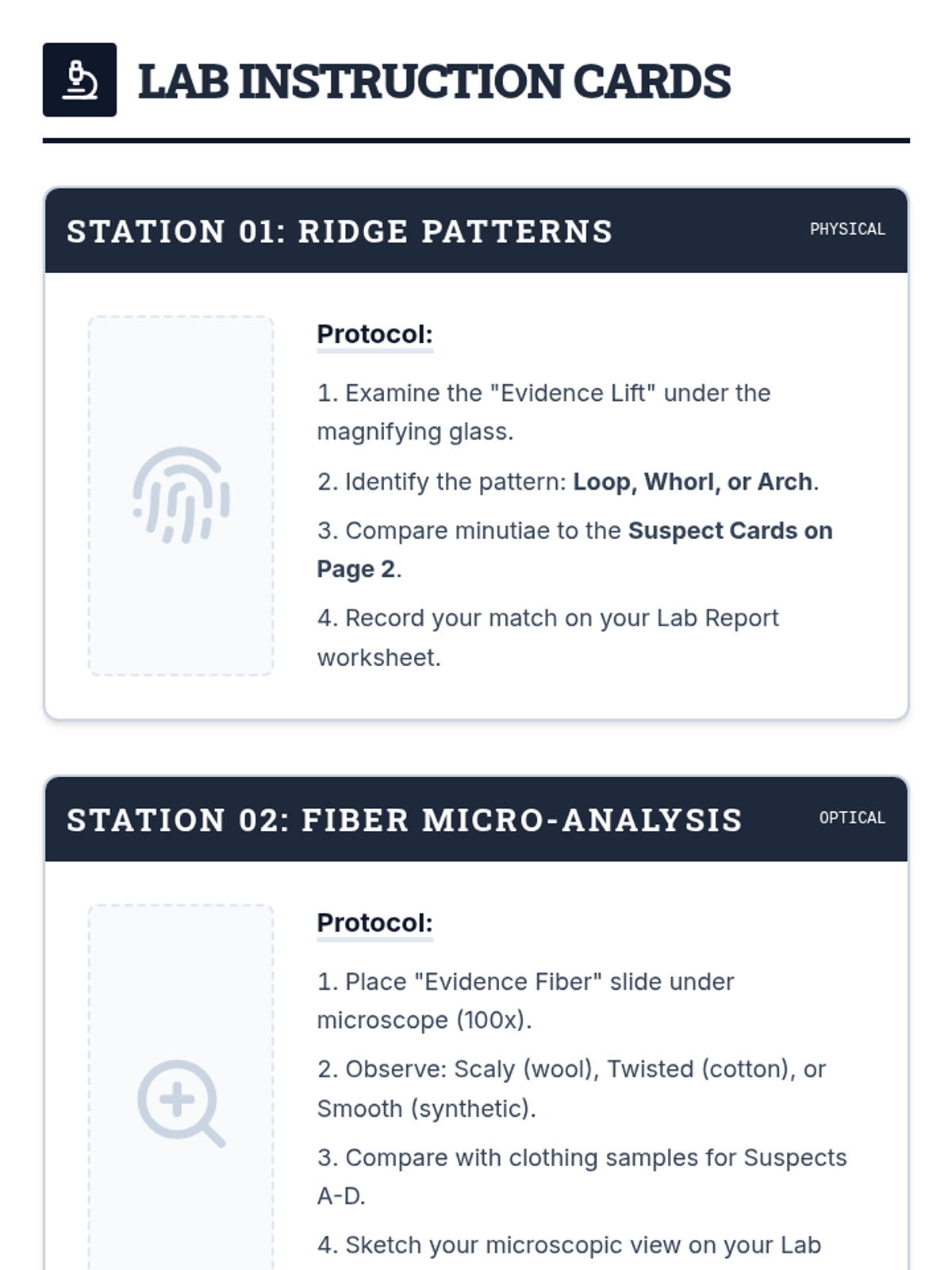
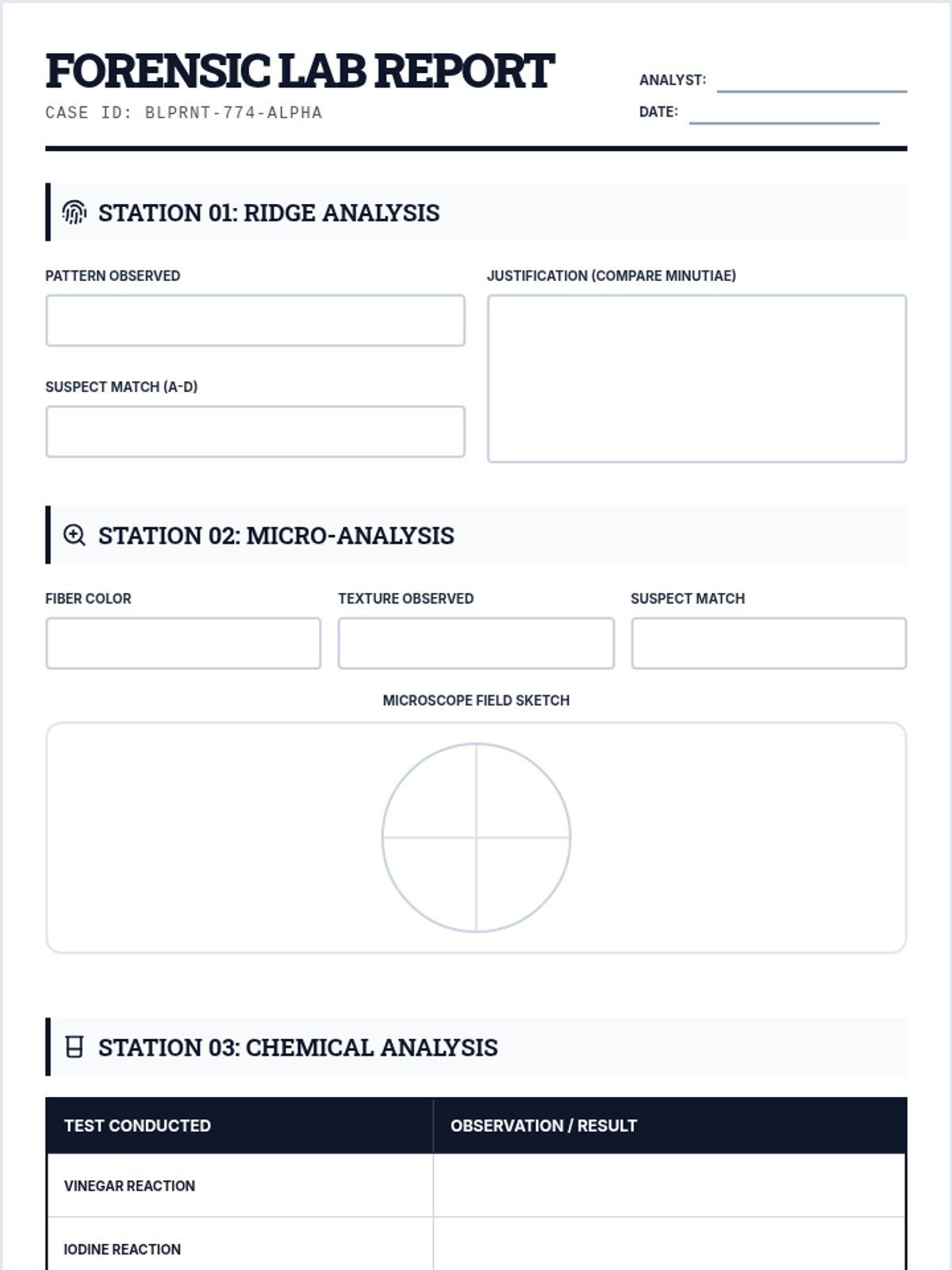
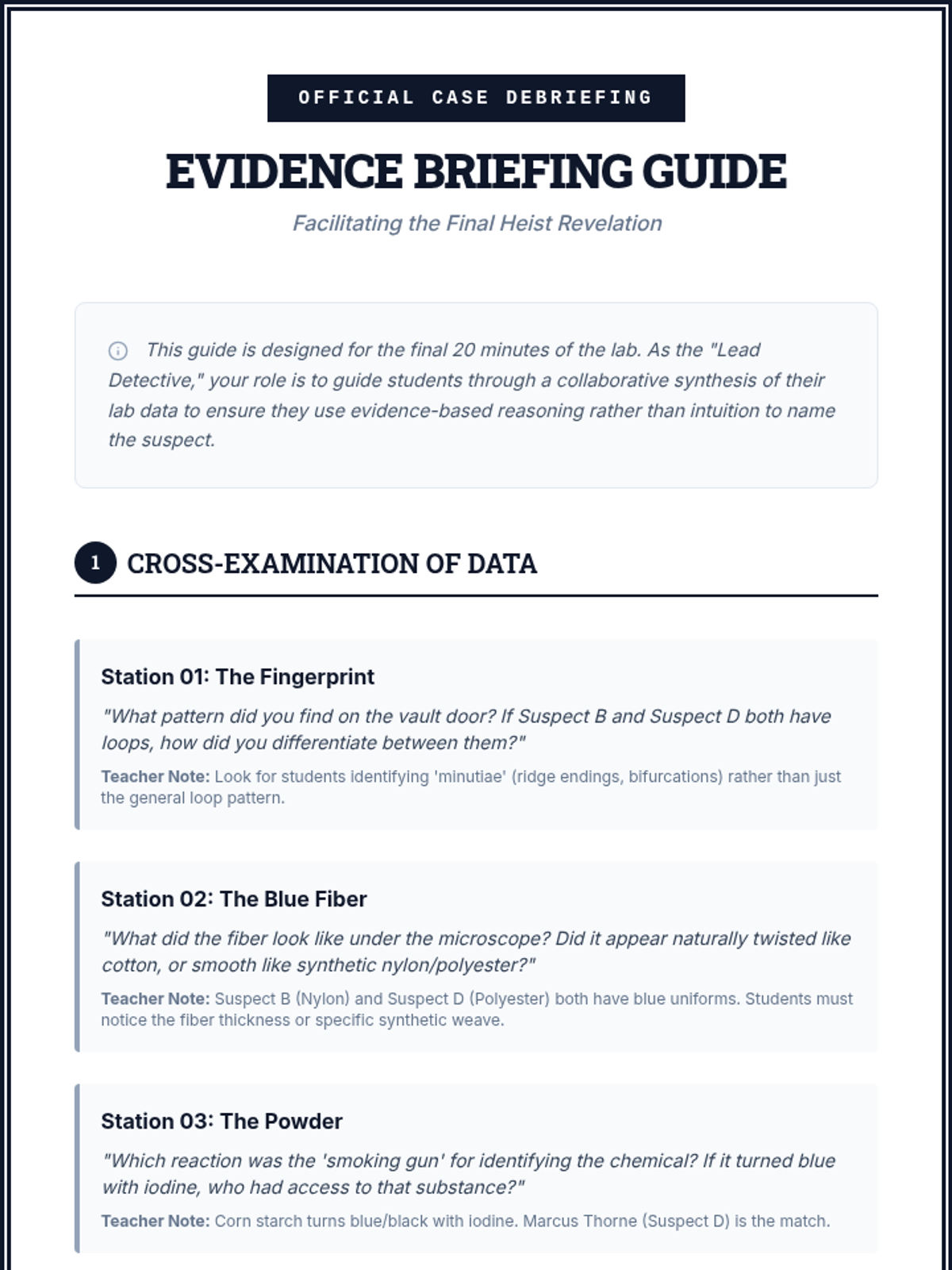
A high-school forensic science lab where students analyze fingerprints and fibers to solve a simulated crime, focusing on physical and chemical properties and deductive reasoning.
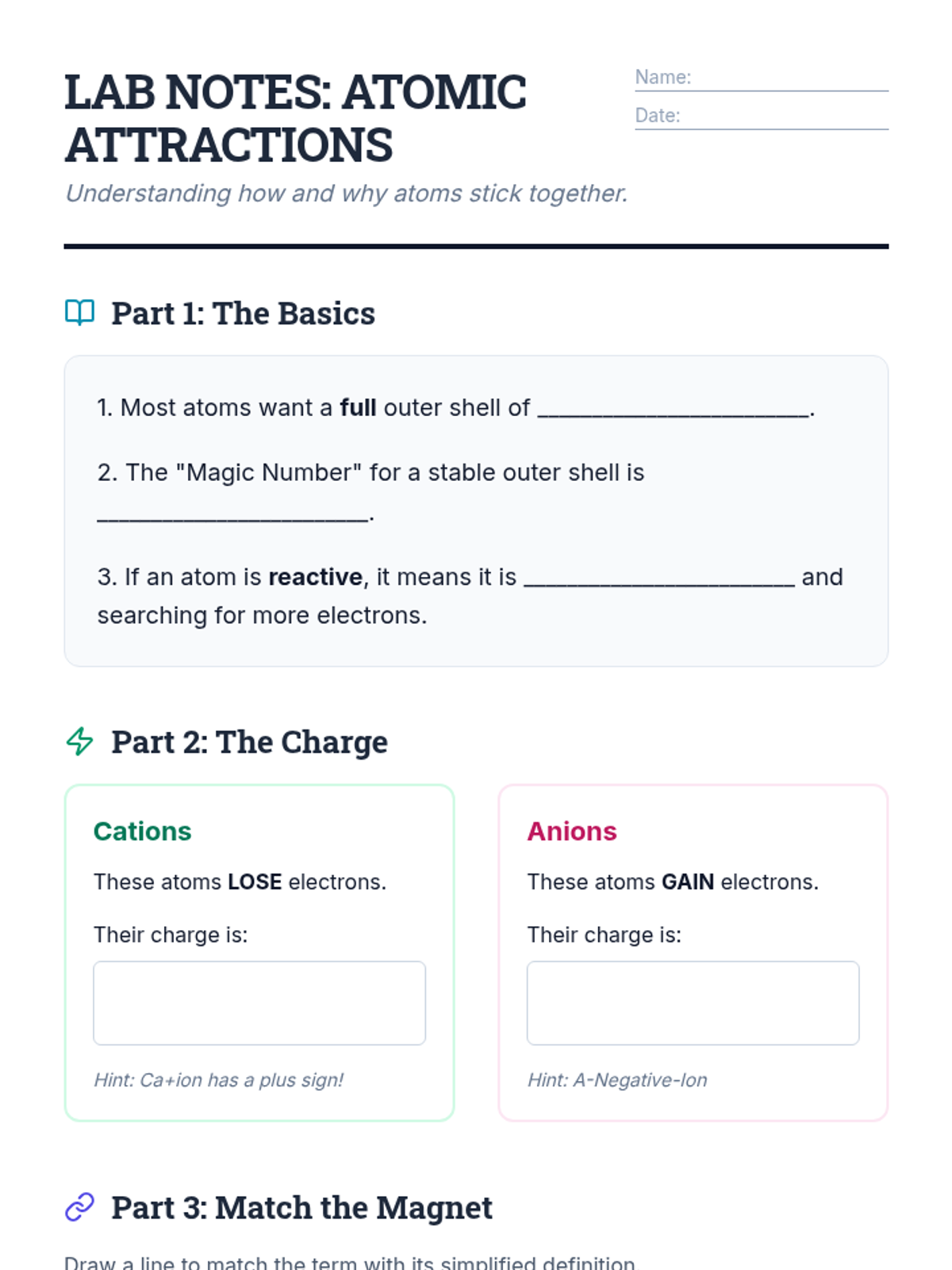
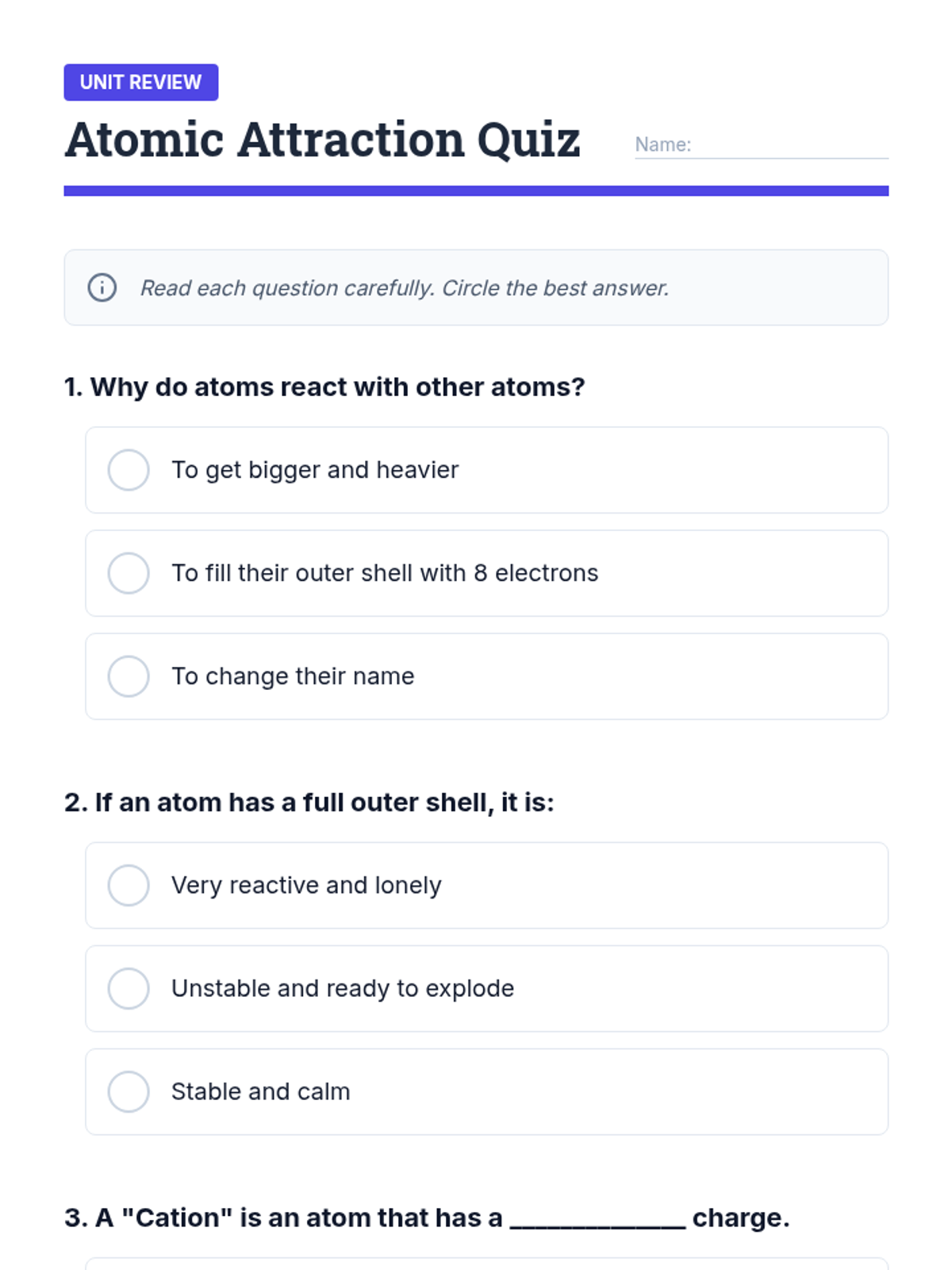
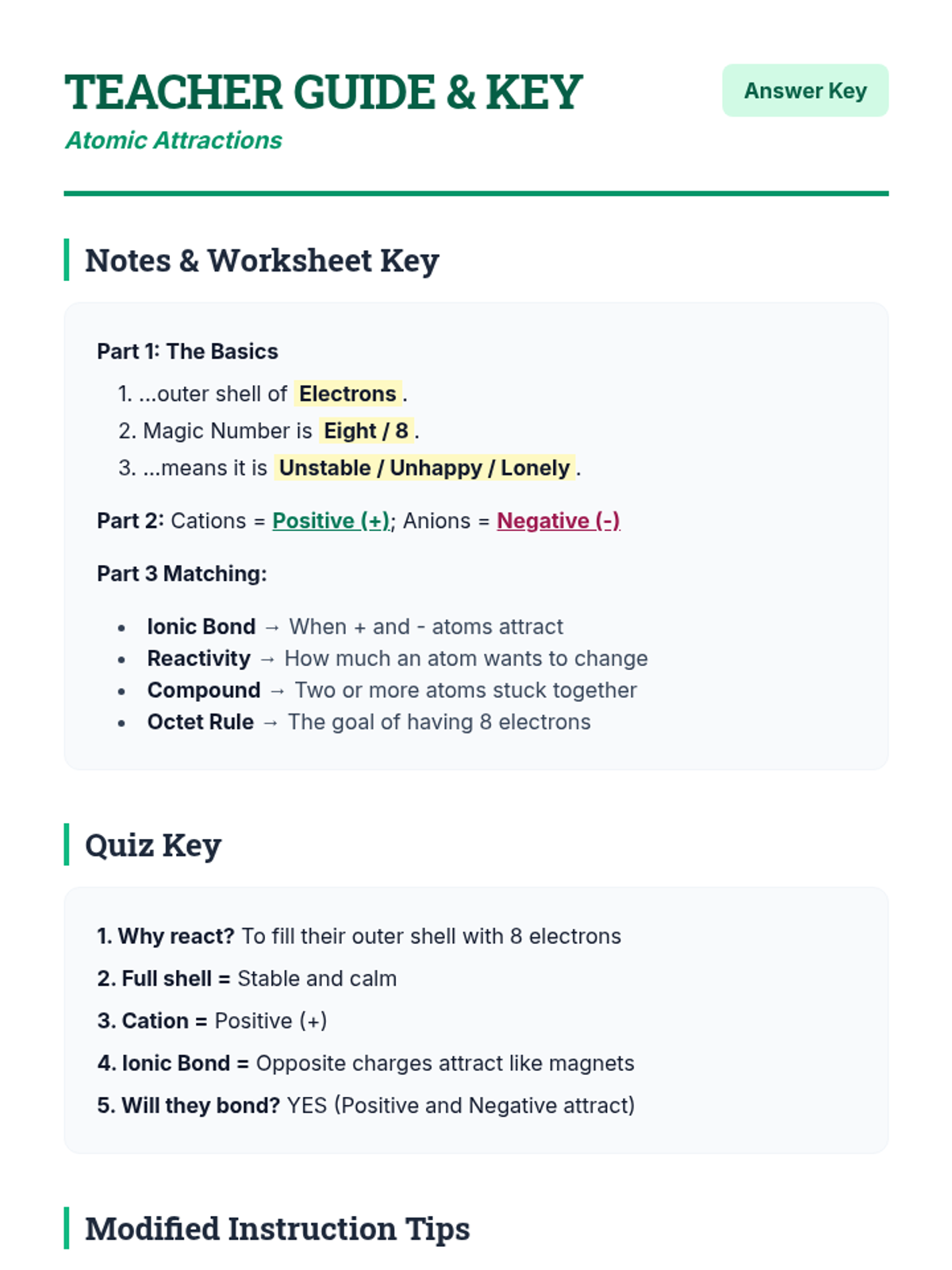
A modified-text lesson covering why elements react, the formation of cations and anions, and how ionic bonds are formed. Designed for lower reading levels with clear visuals and simplified language.
Students step into the role of forensic scientists to analyze physical and chemical evidence from a simulated crime scene. This lesson integrates chemistry and biology through fingerprinting, fiber analysis, and unknown substance testing to build deductive reasoning skills.
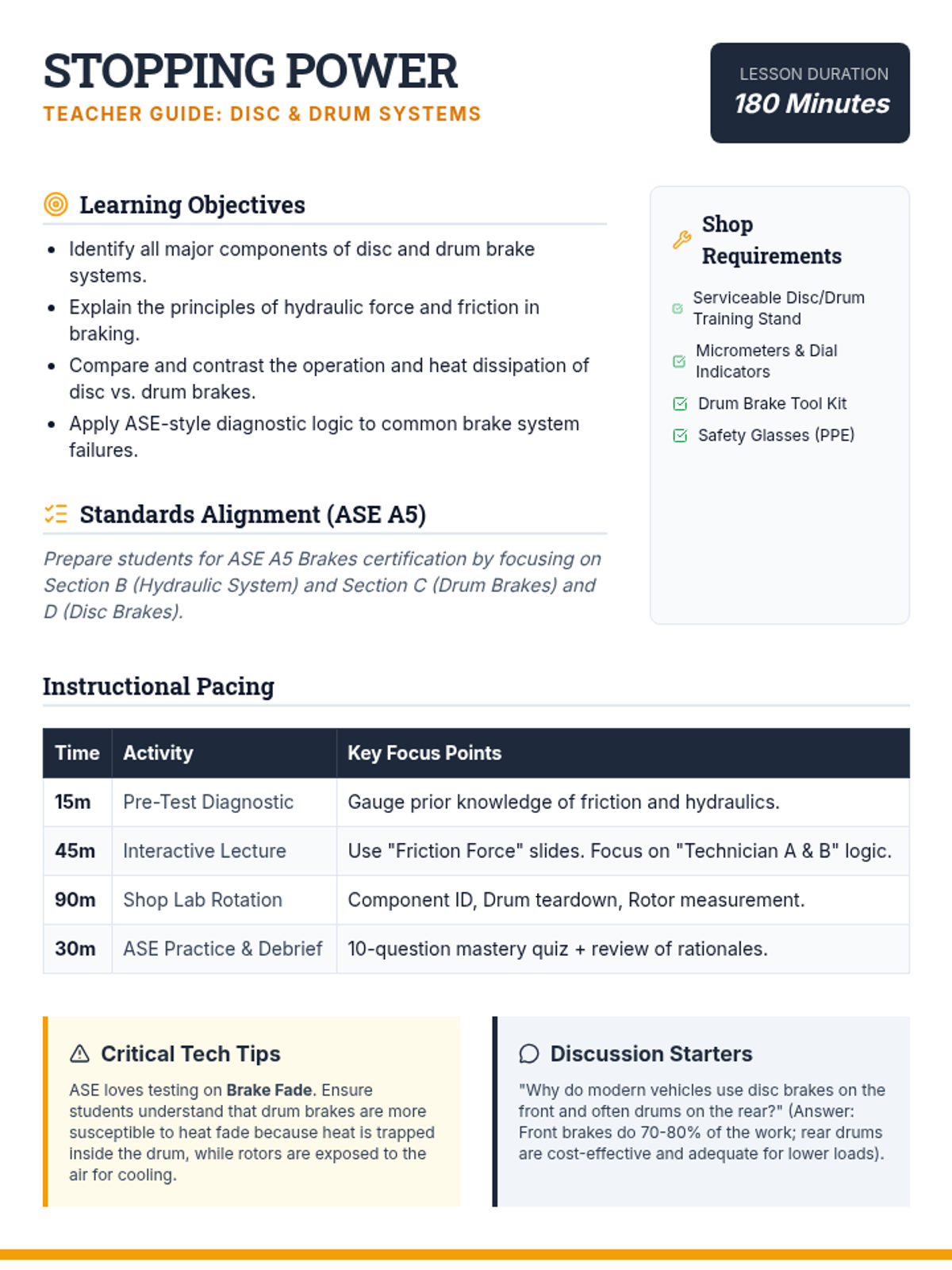
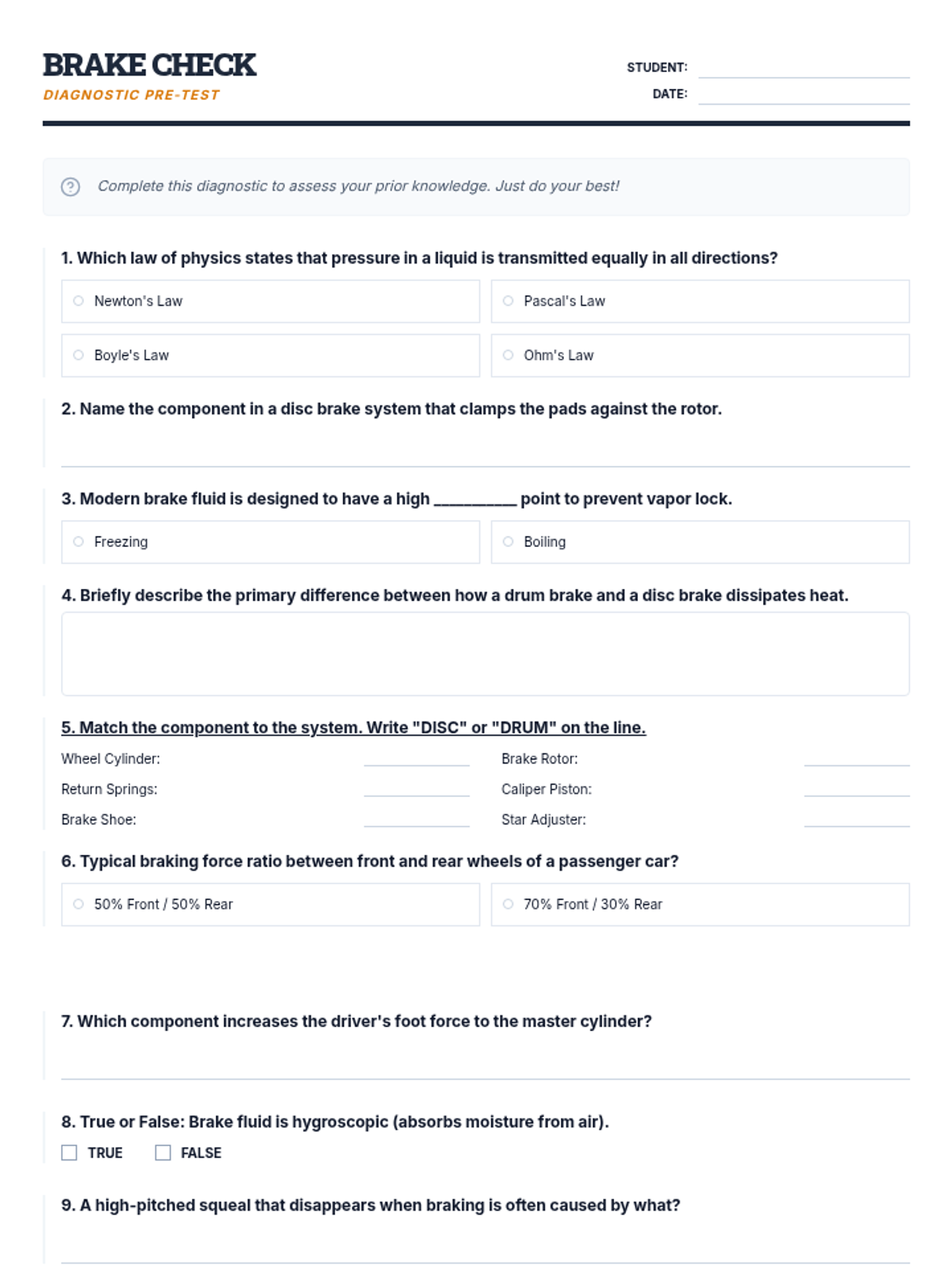
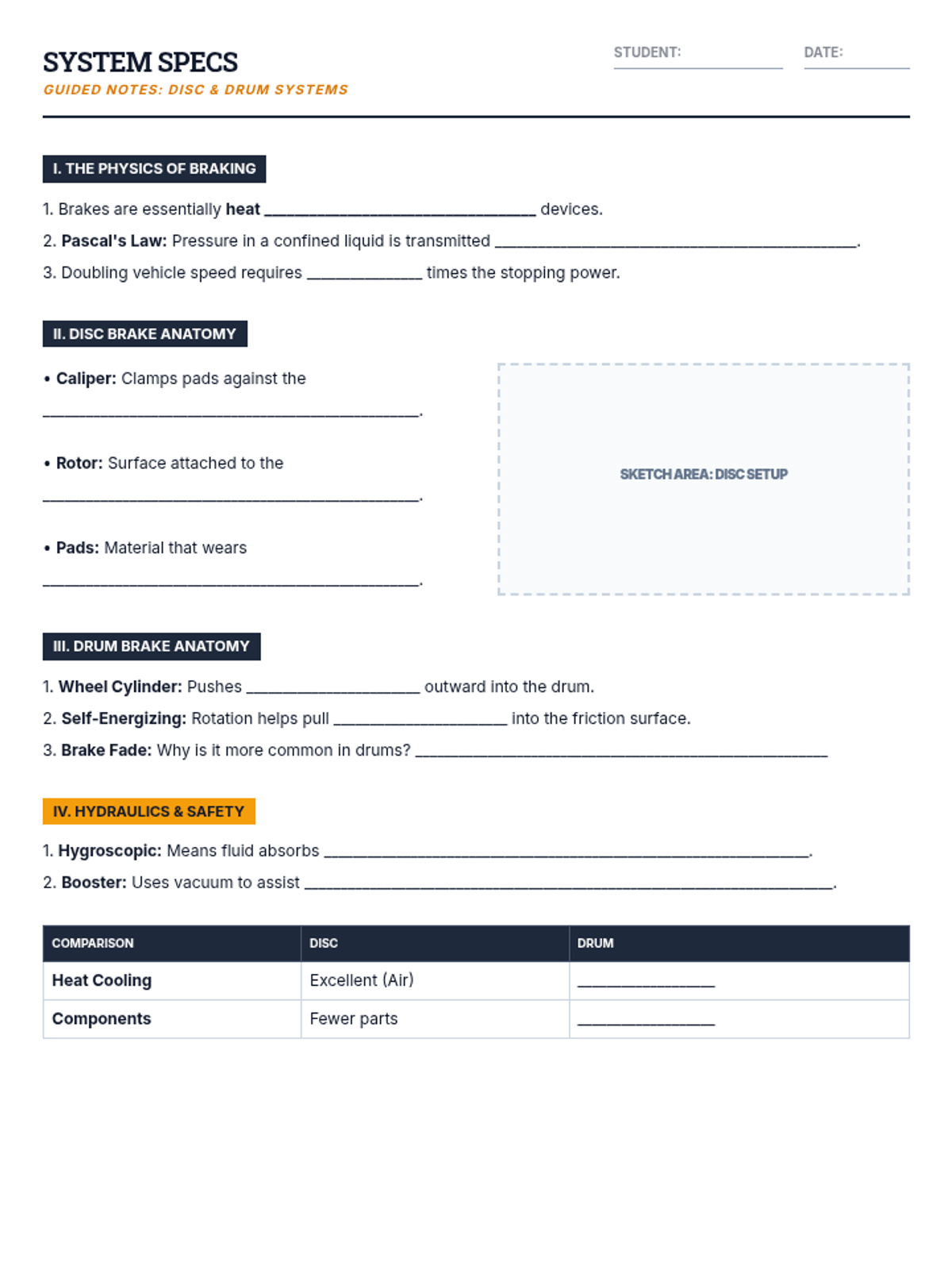
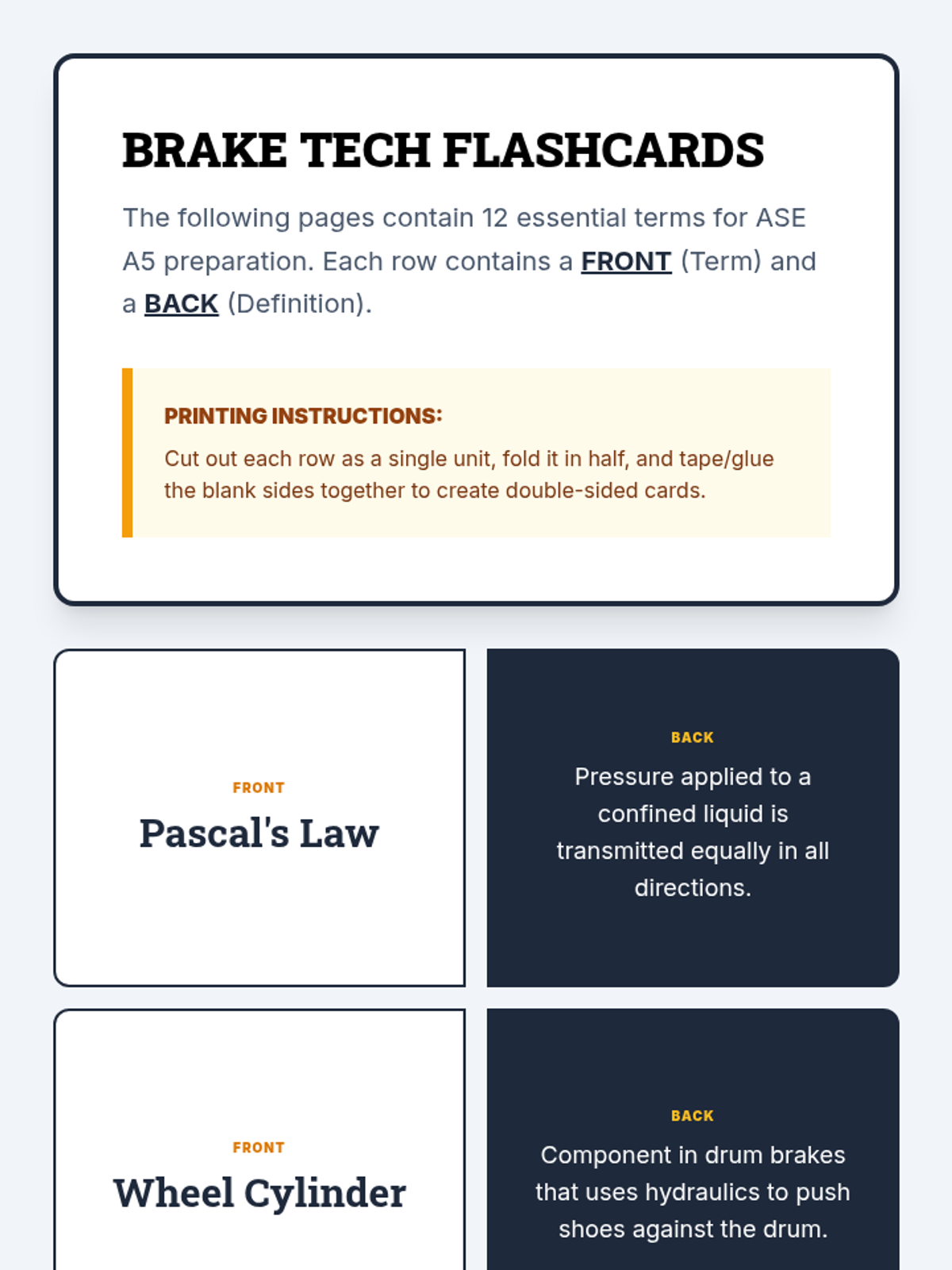
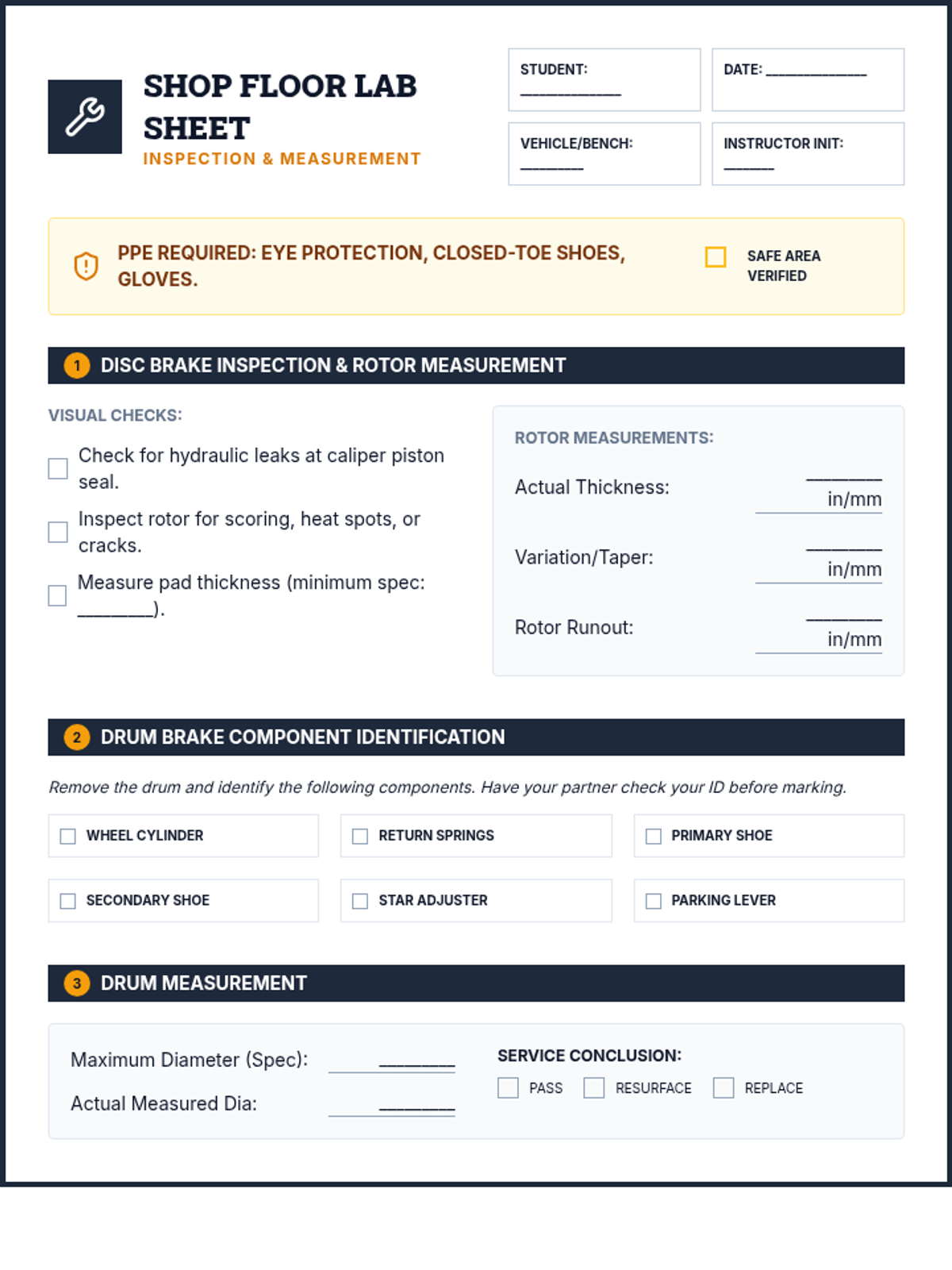
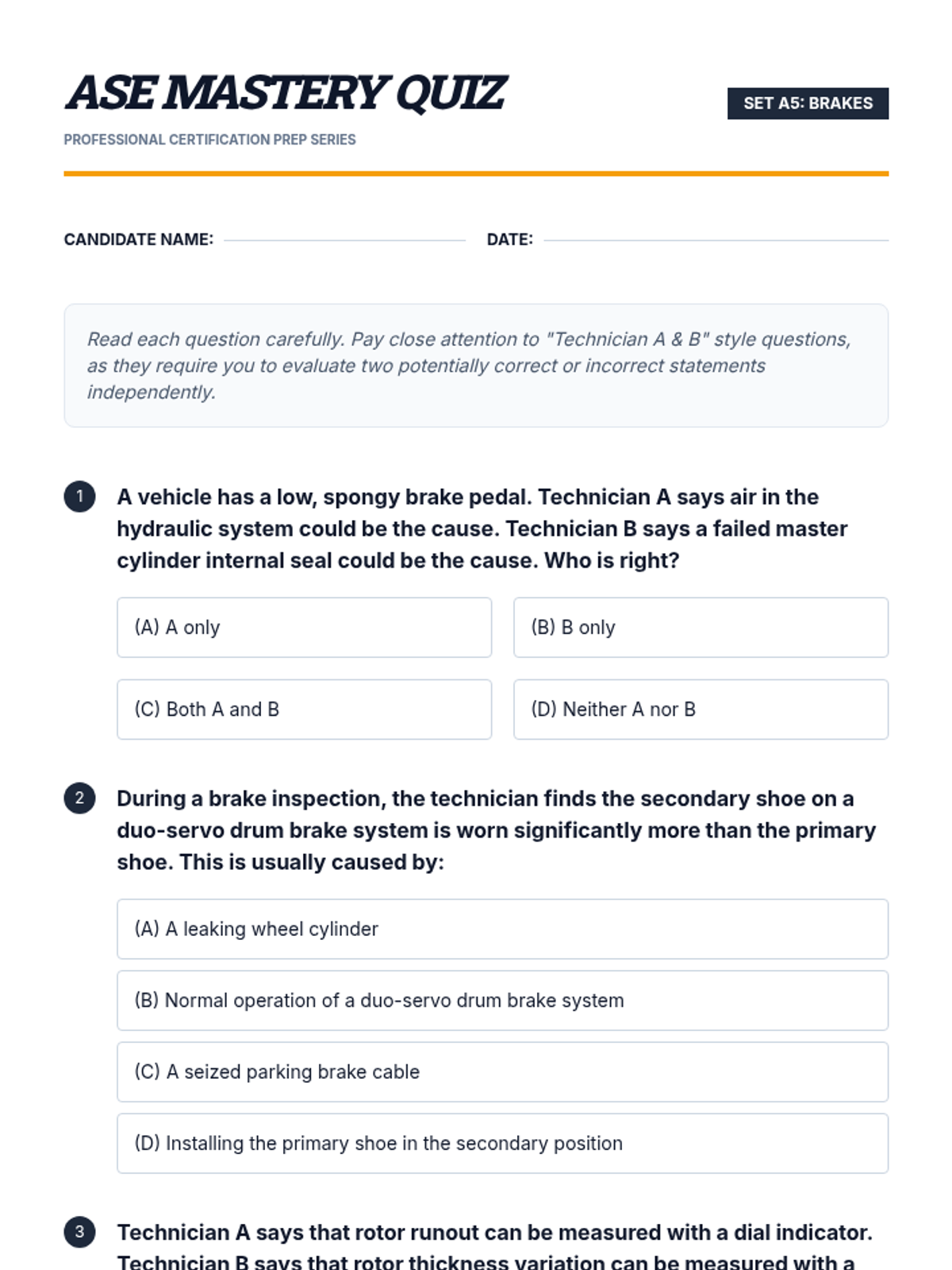
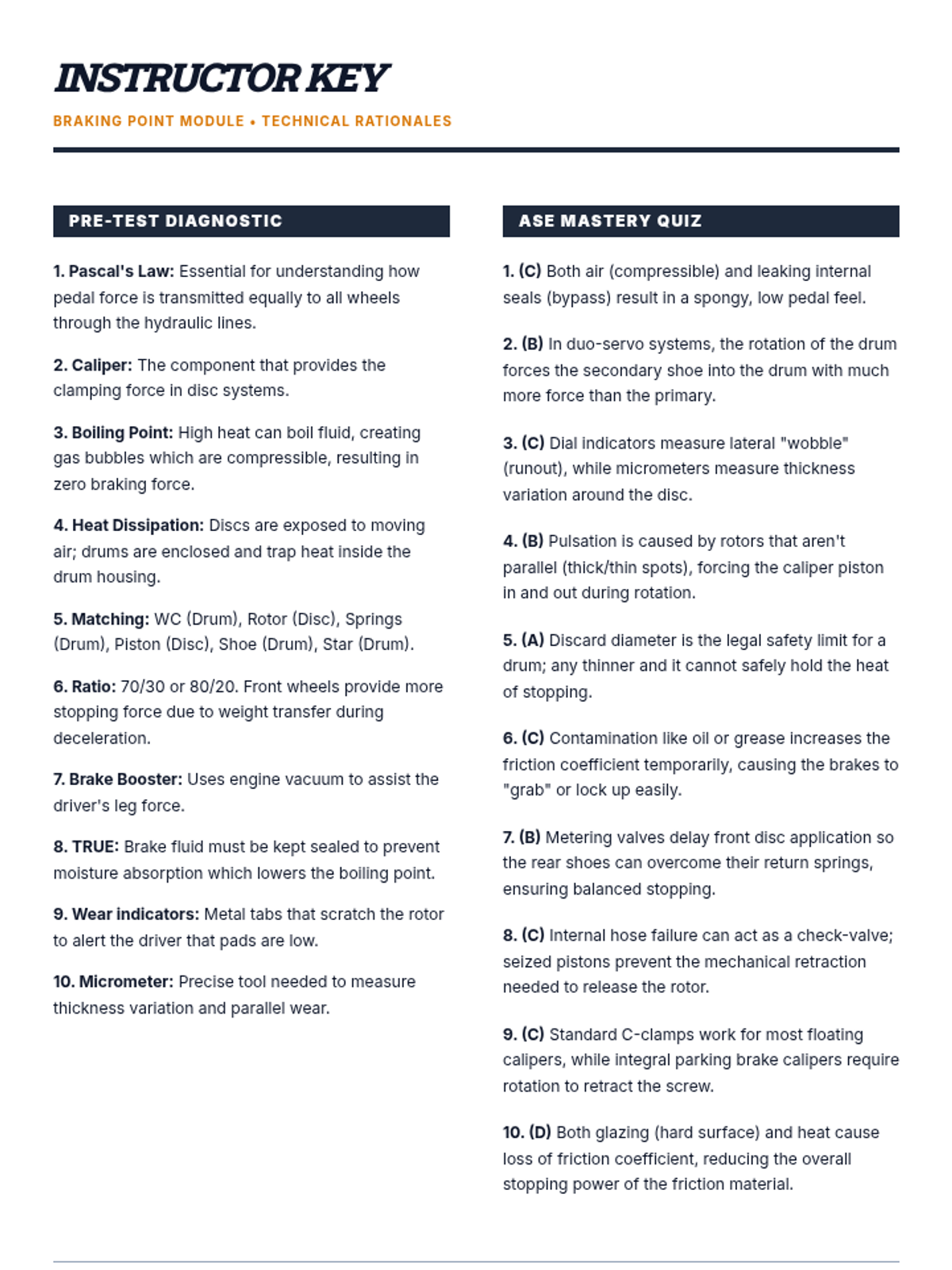
A comprehensive introduction to automotive disc and drum brake systems, covering components, operation, and ASE-style diagnostic theory for first-year students.
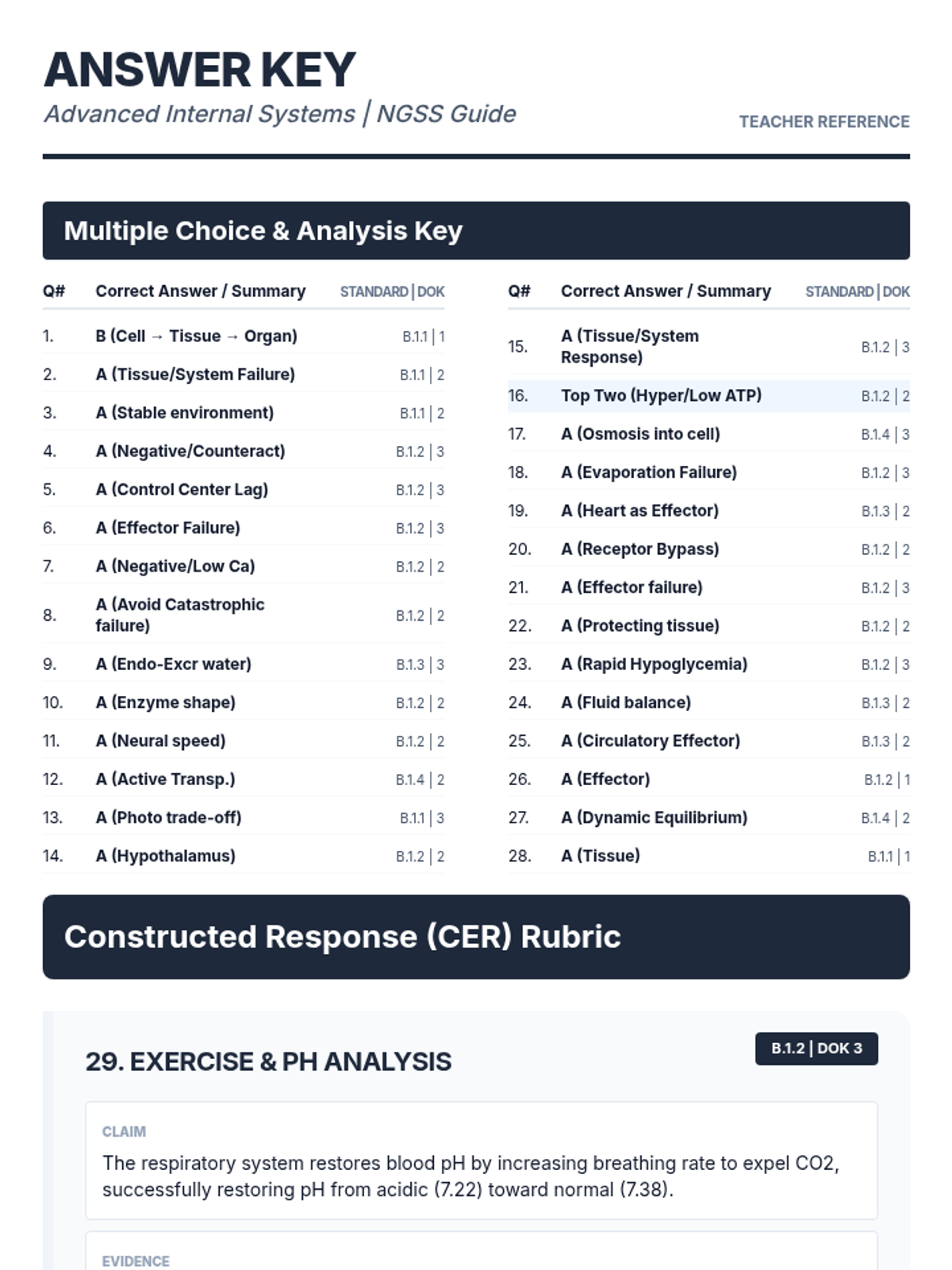
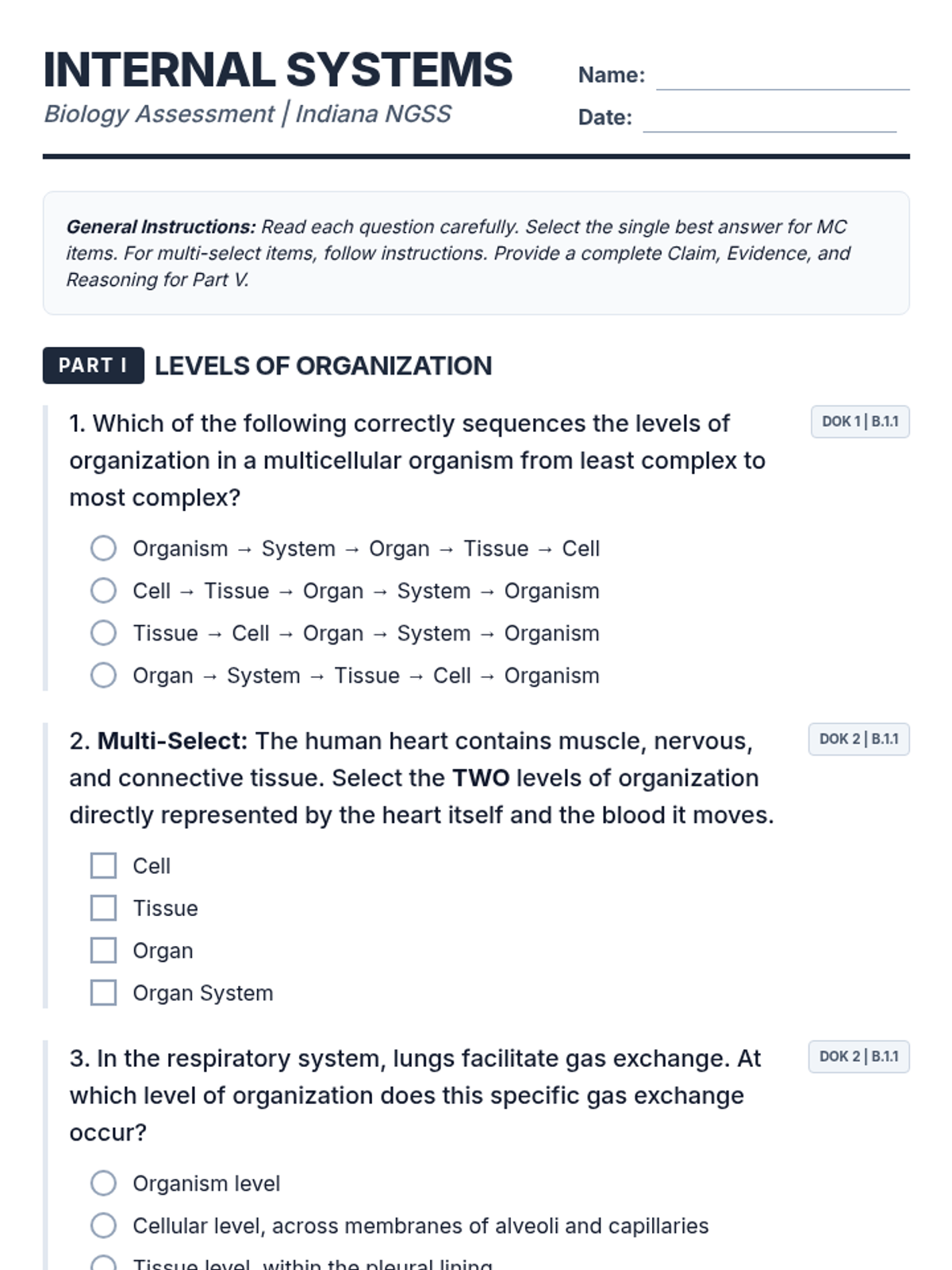
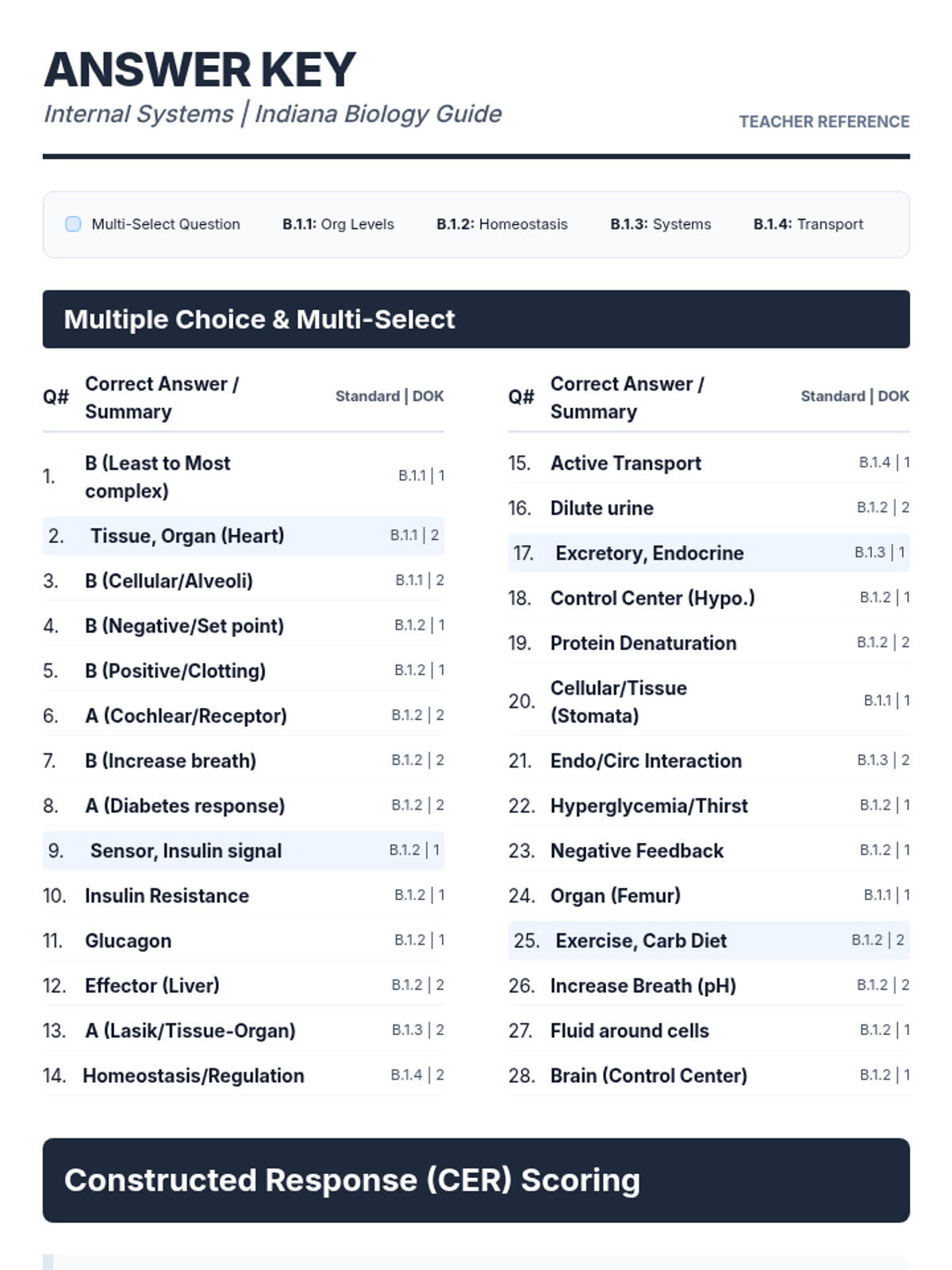
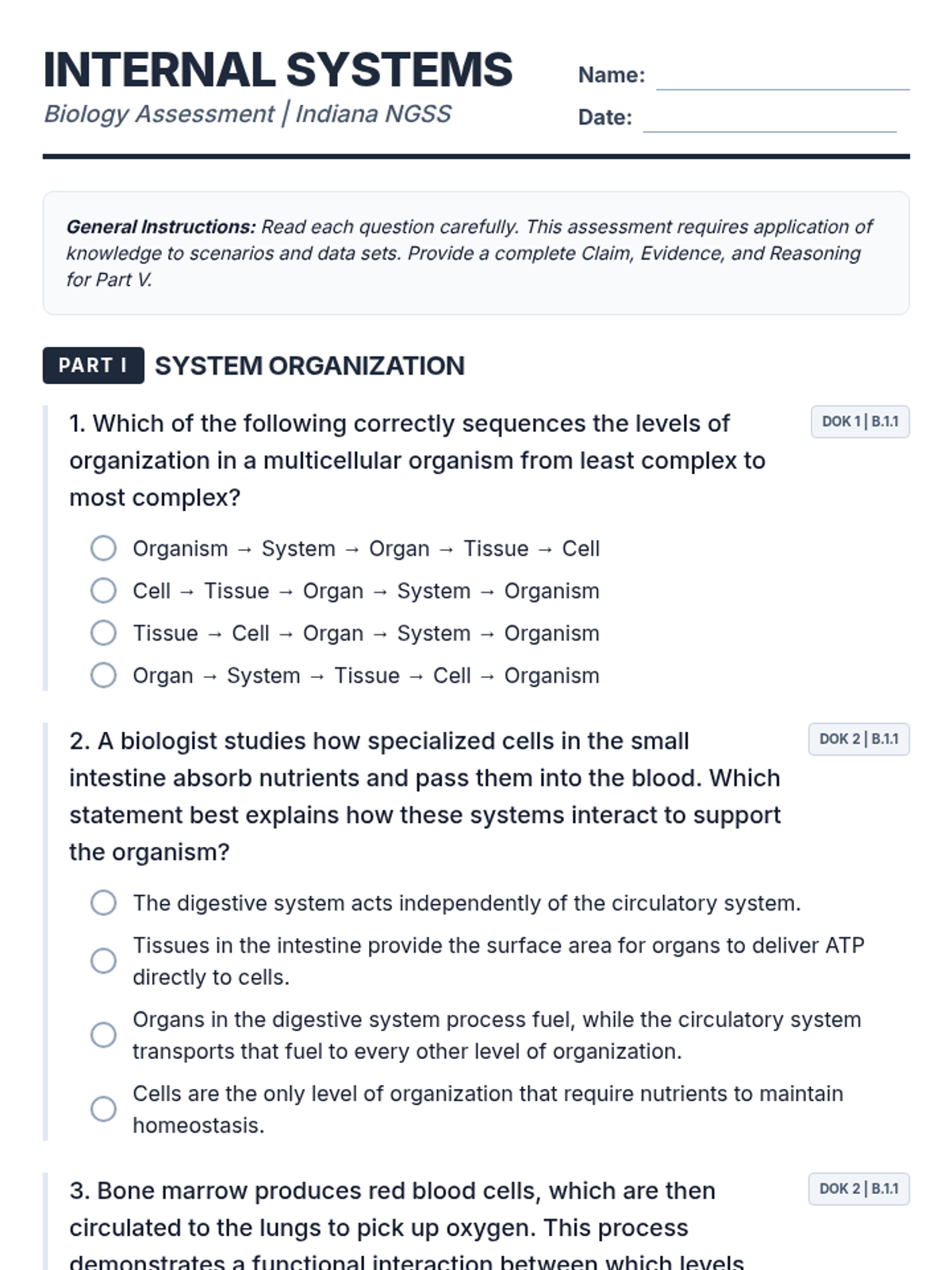
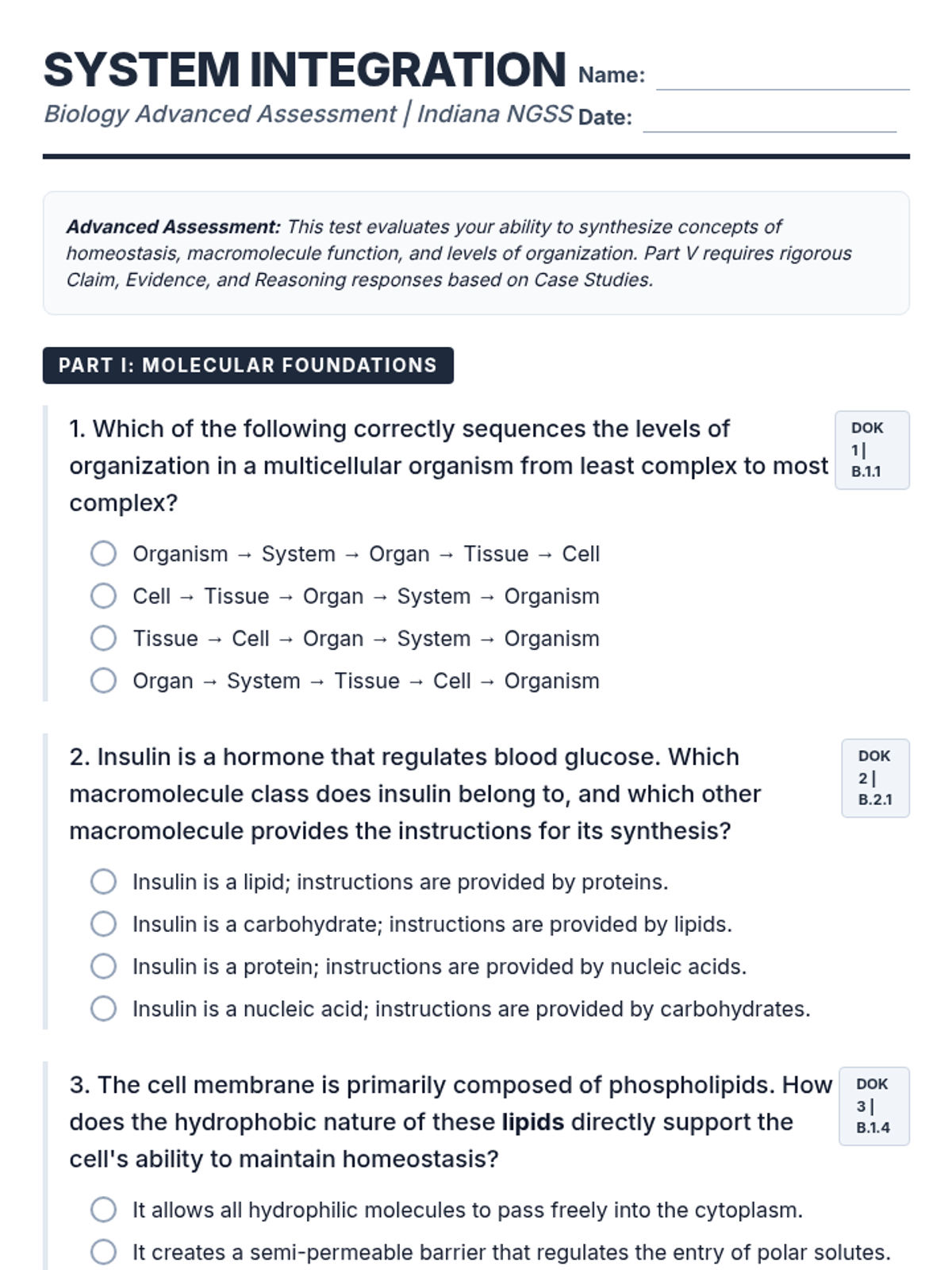
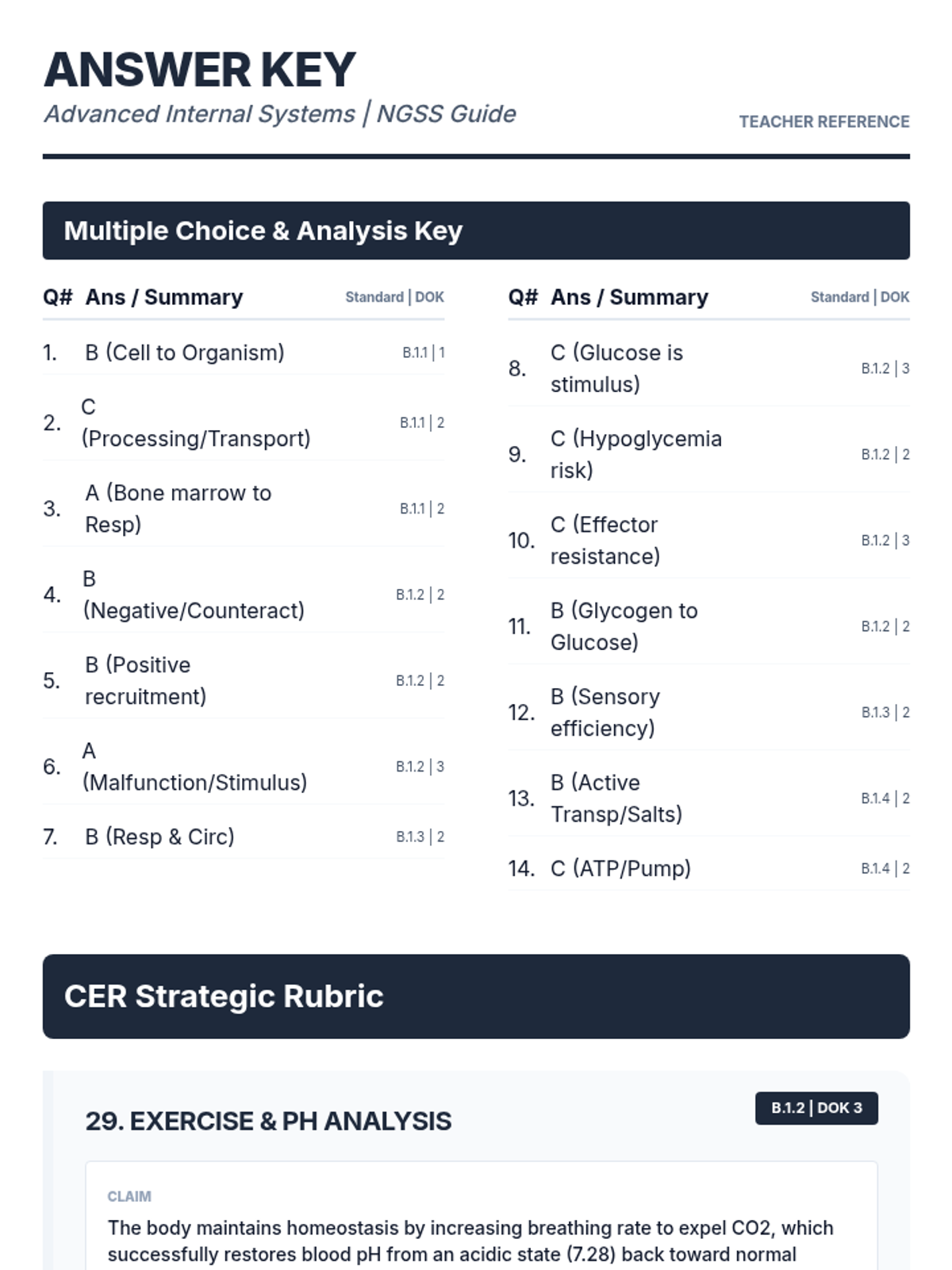
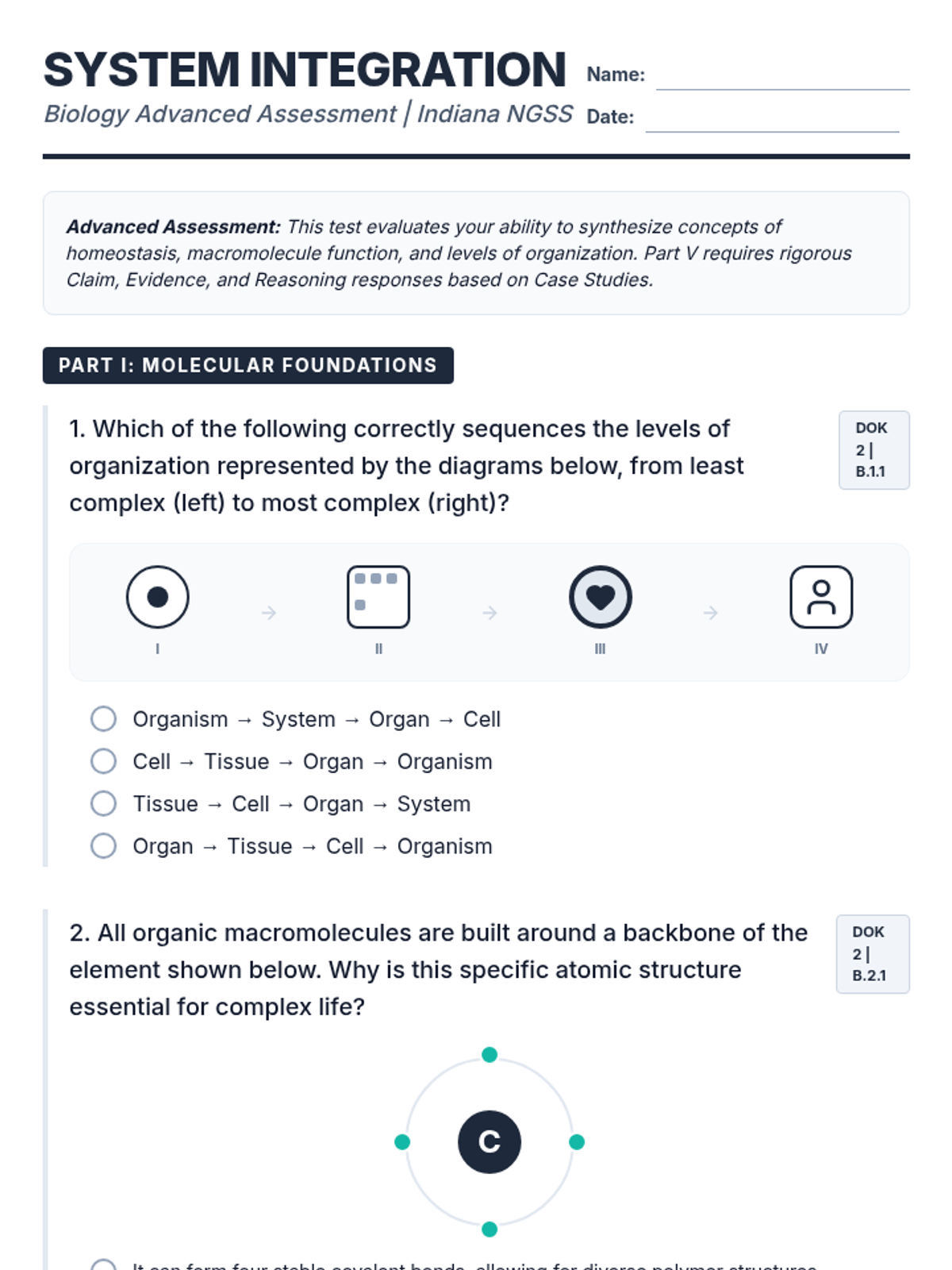
A comprehensive assessment on Indiana Biology standards focusing on homeostasis, levels of organization, and feedback loops, including ILEARN-style item types and CER responses.
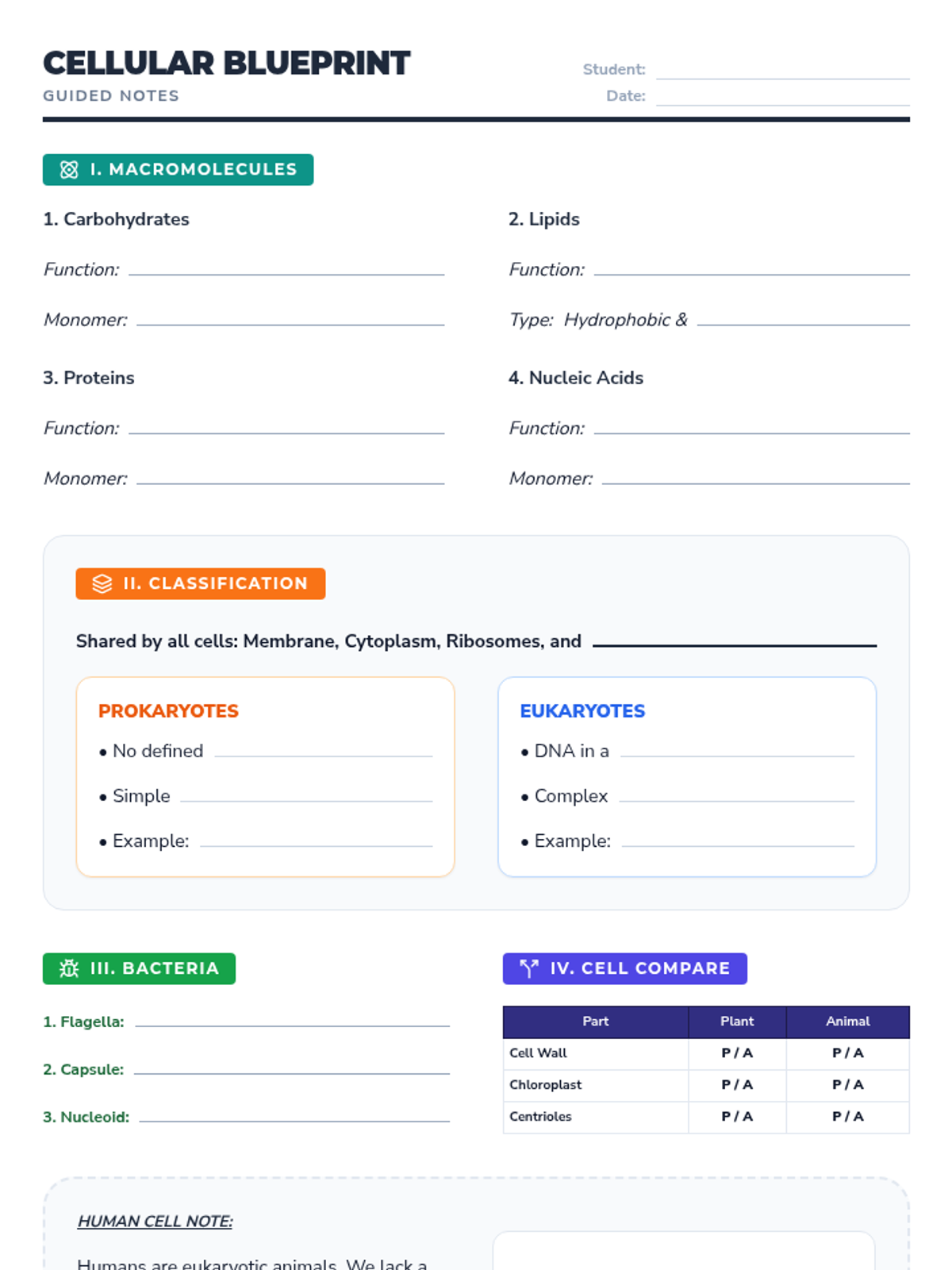
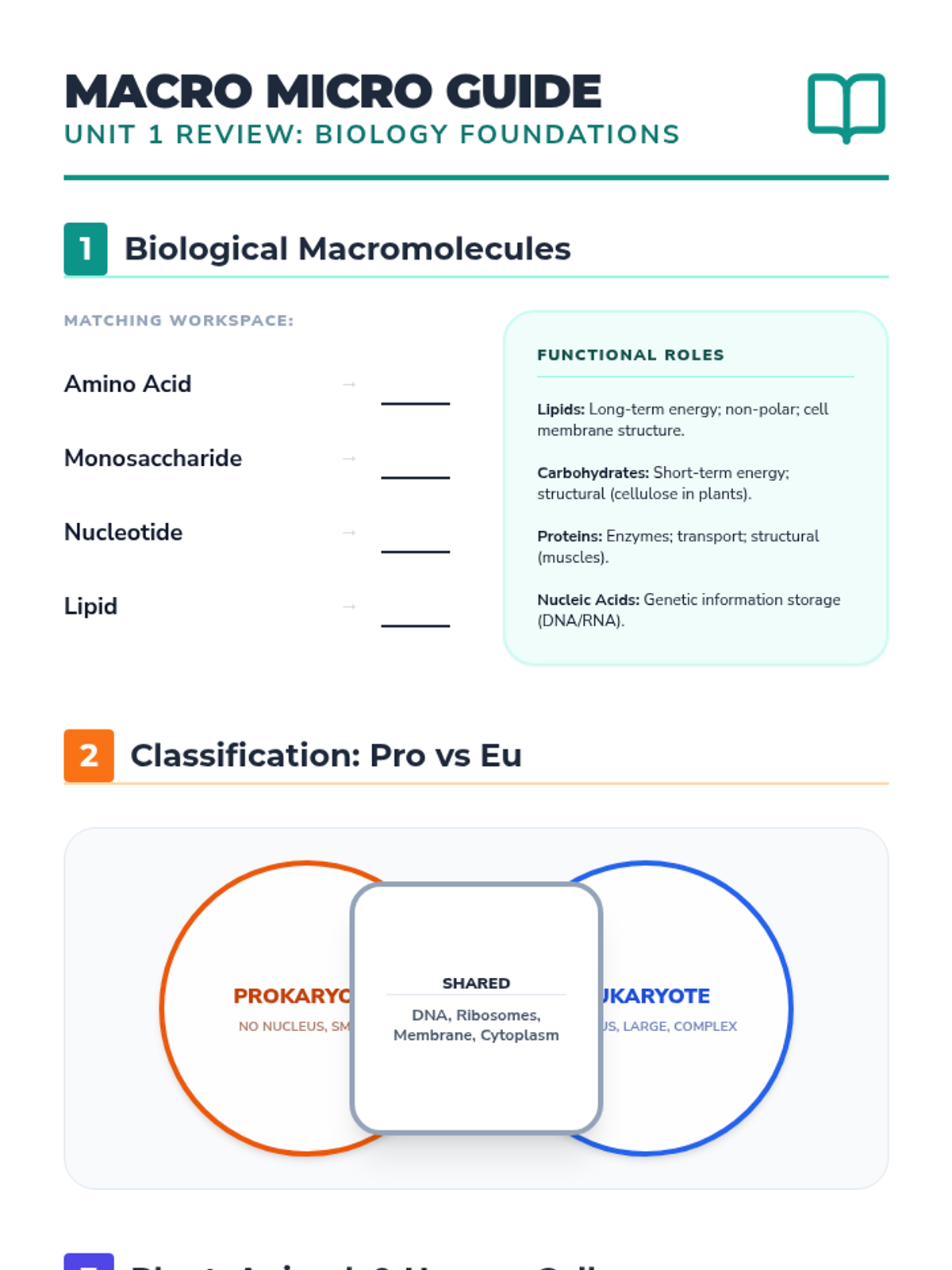
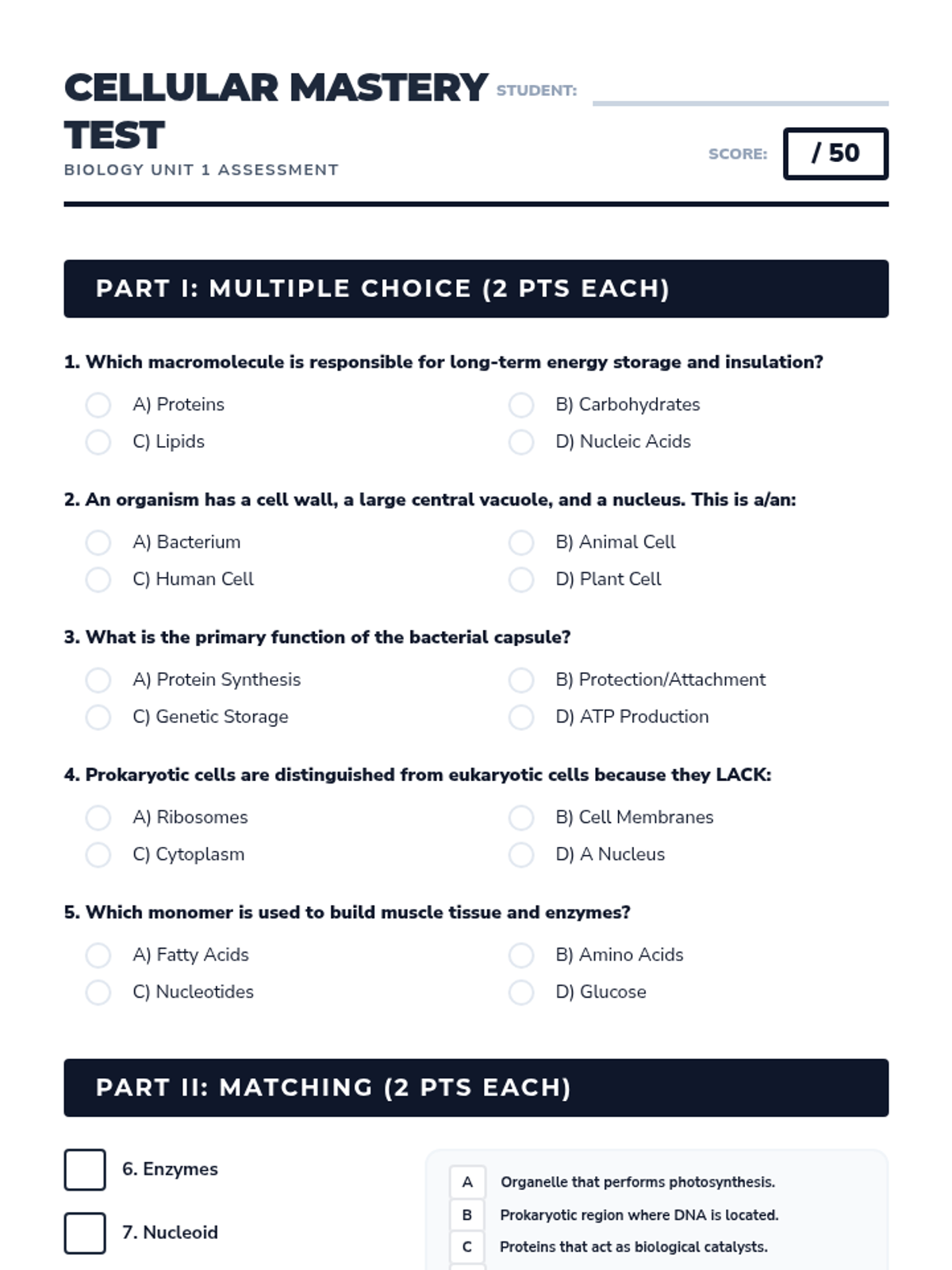
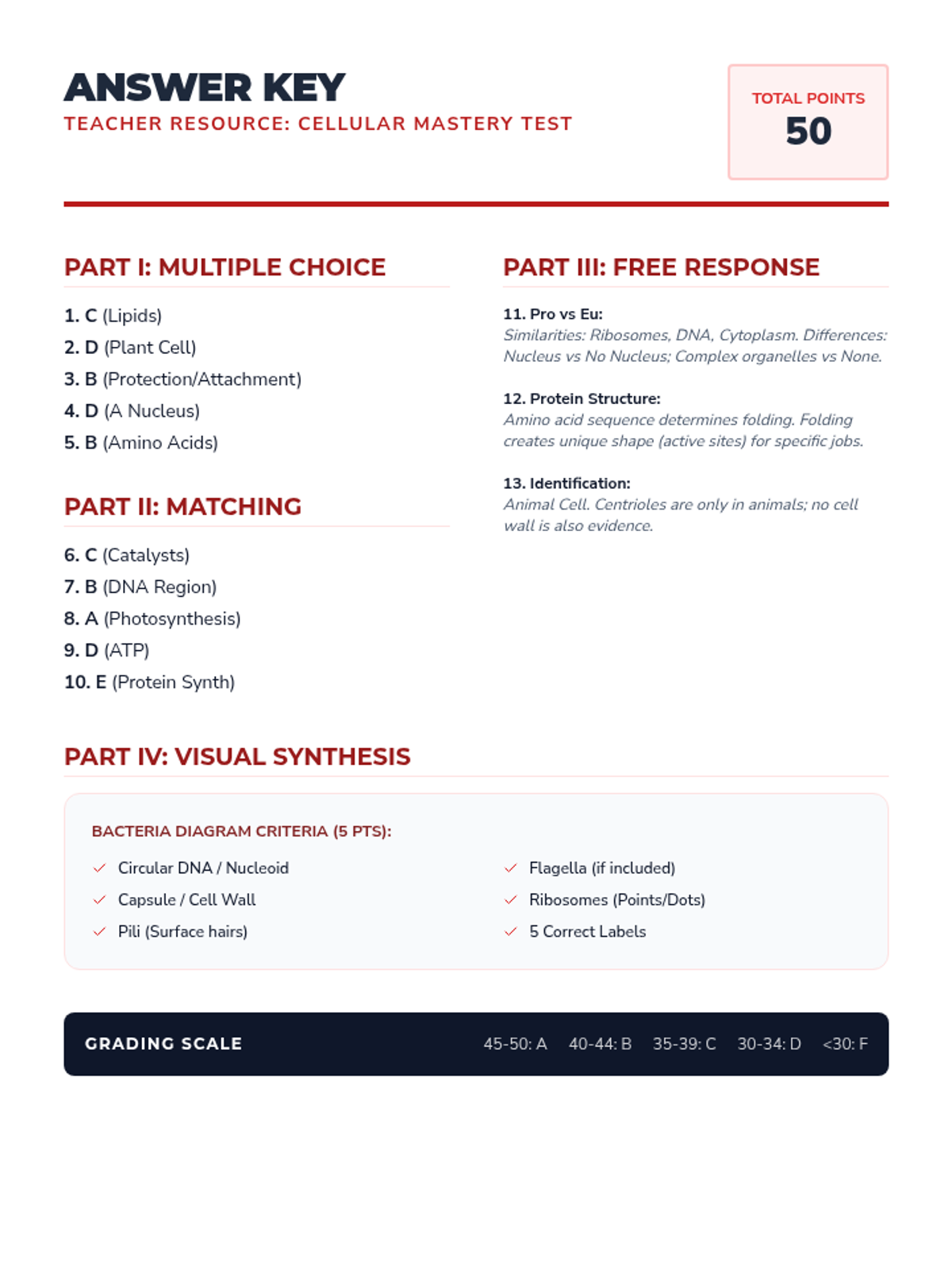
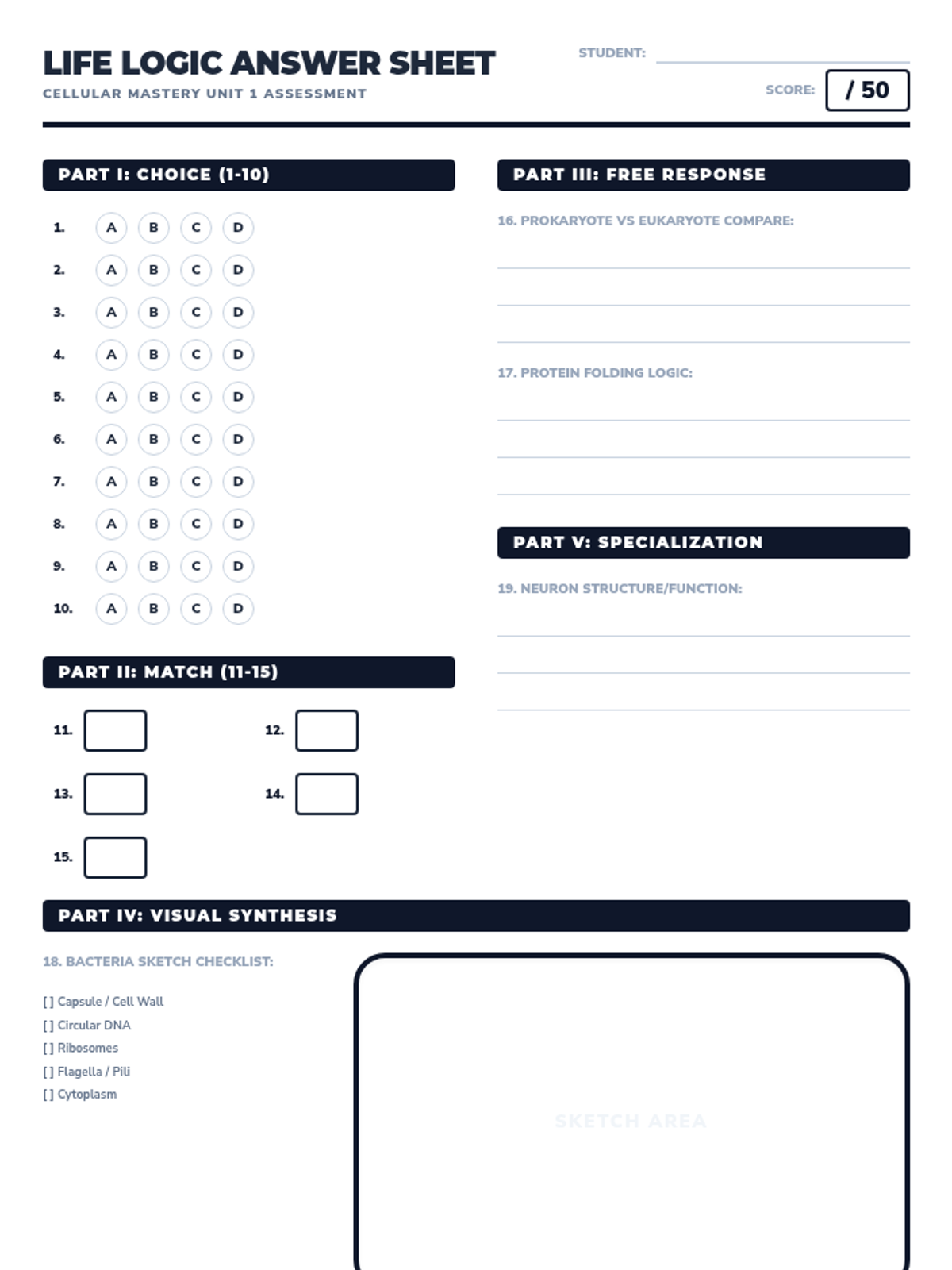
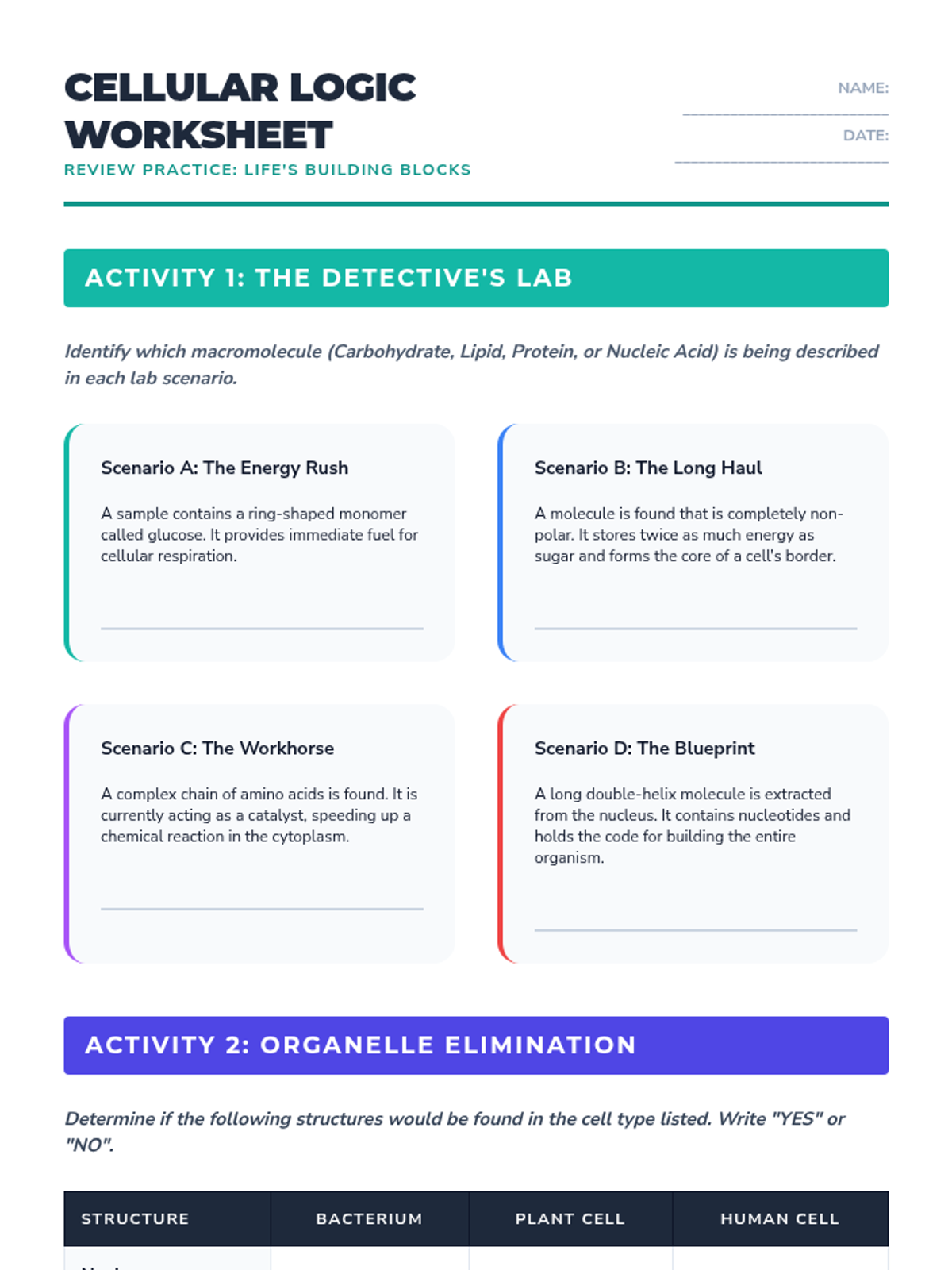
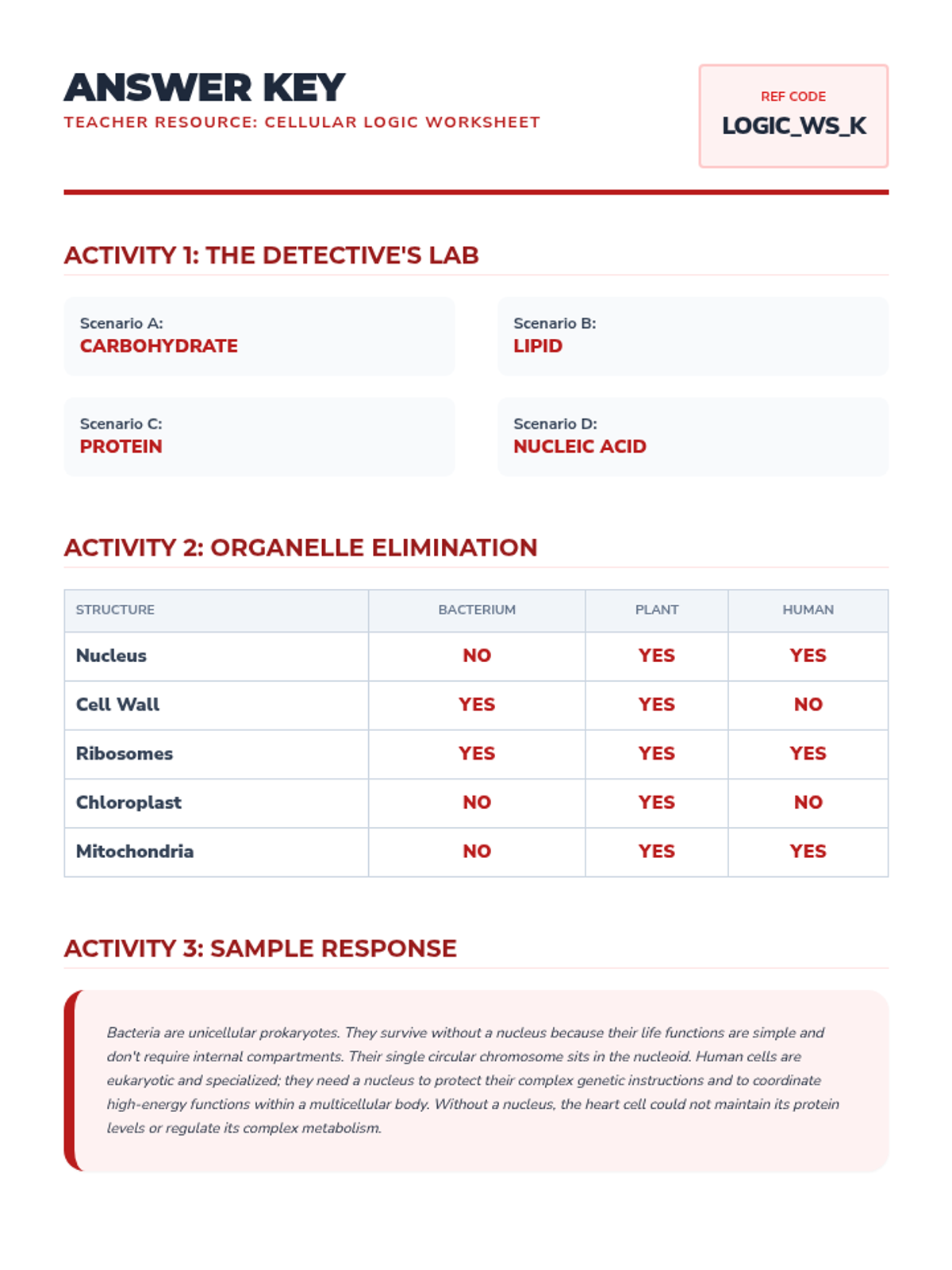
A review-focused lesson that synthesizes knowledge of macromolecules, bacterial structure, and the differences between plant and animal cells.
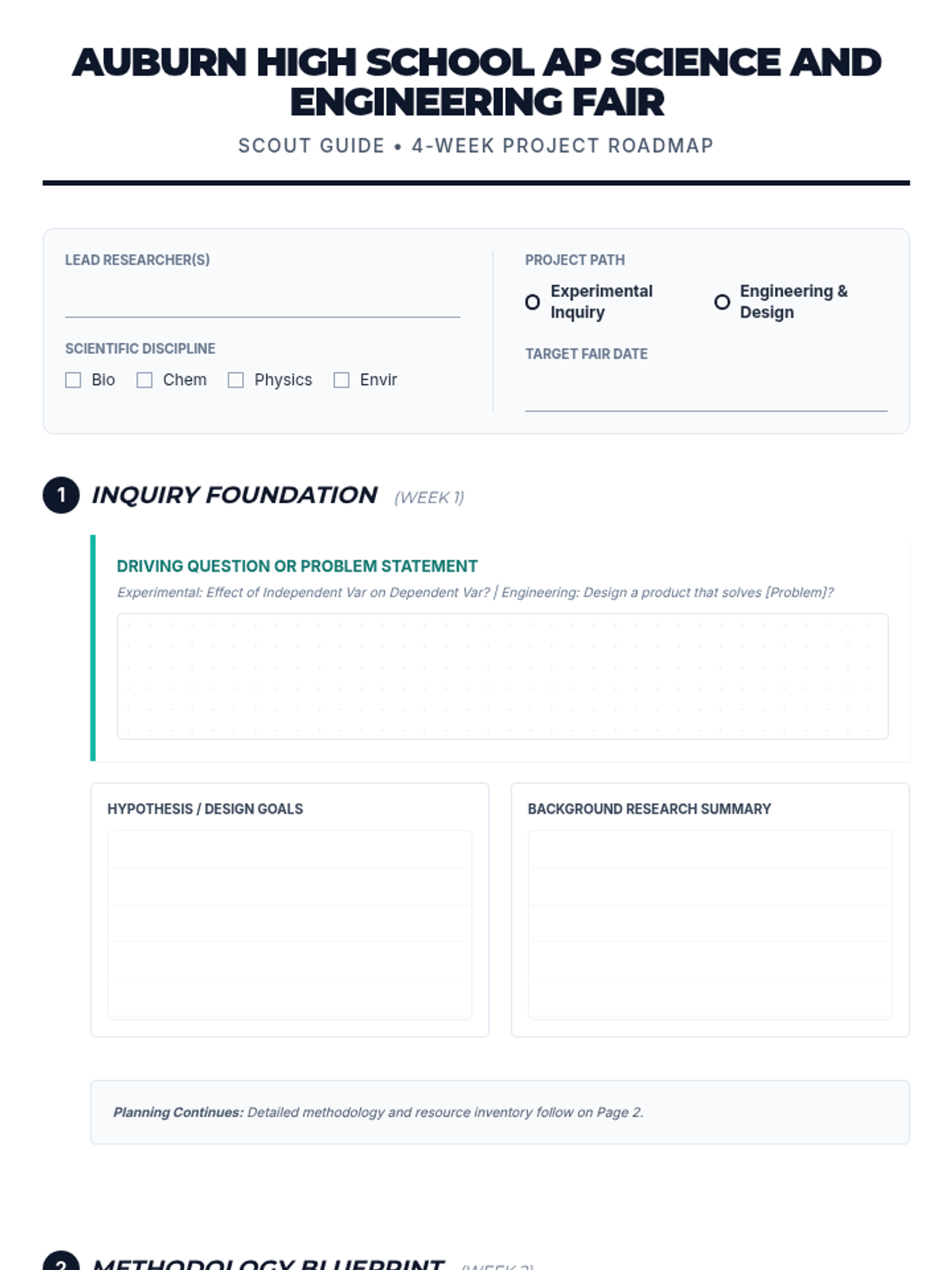
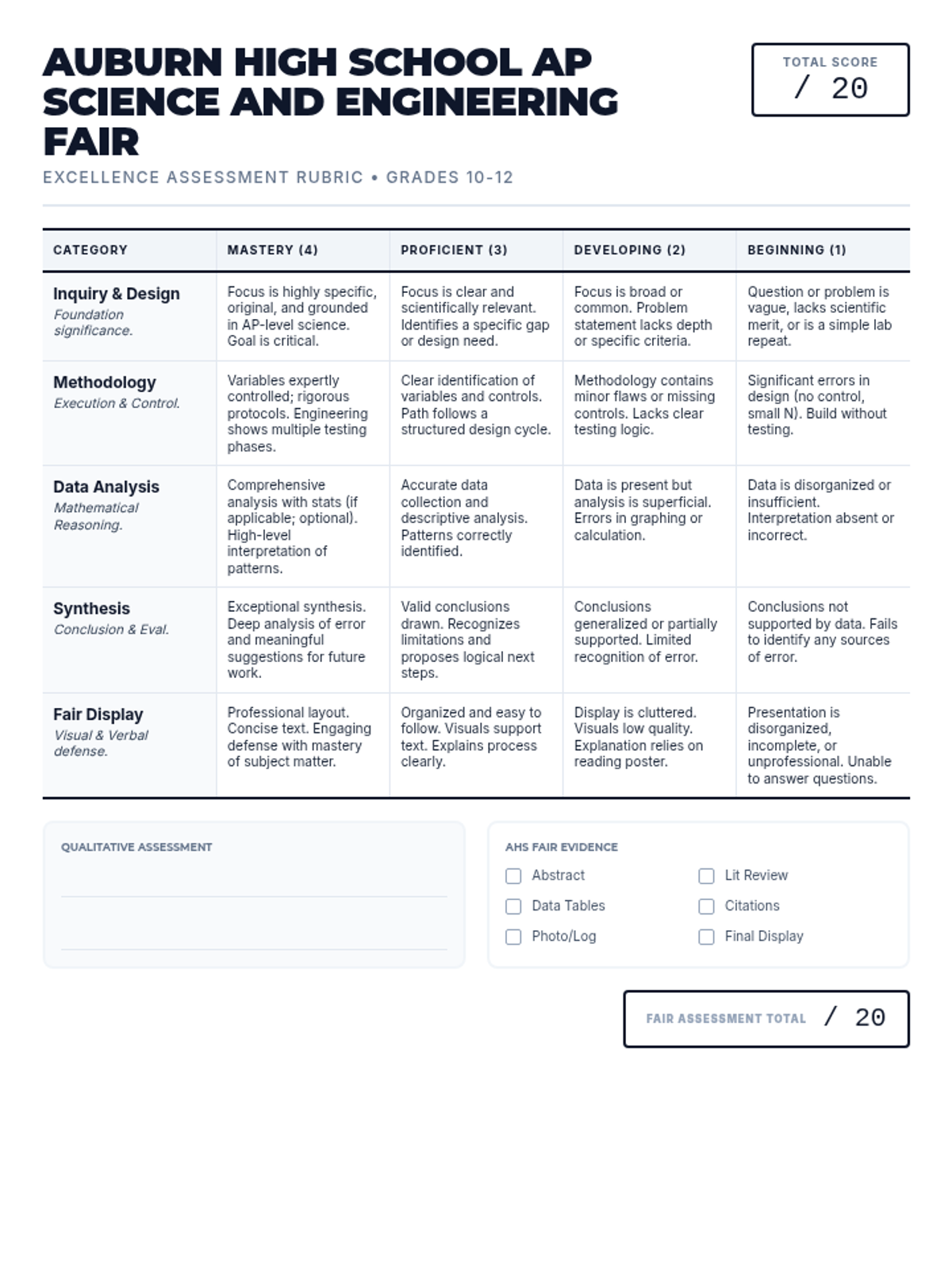
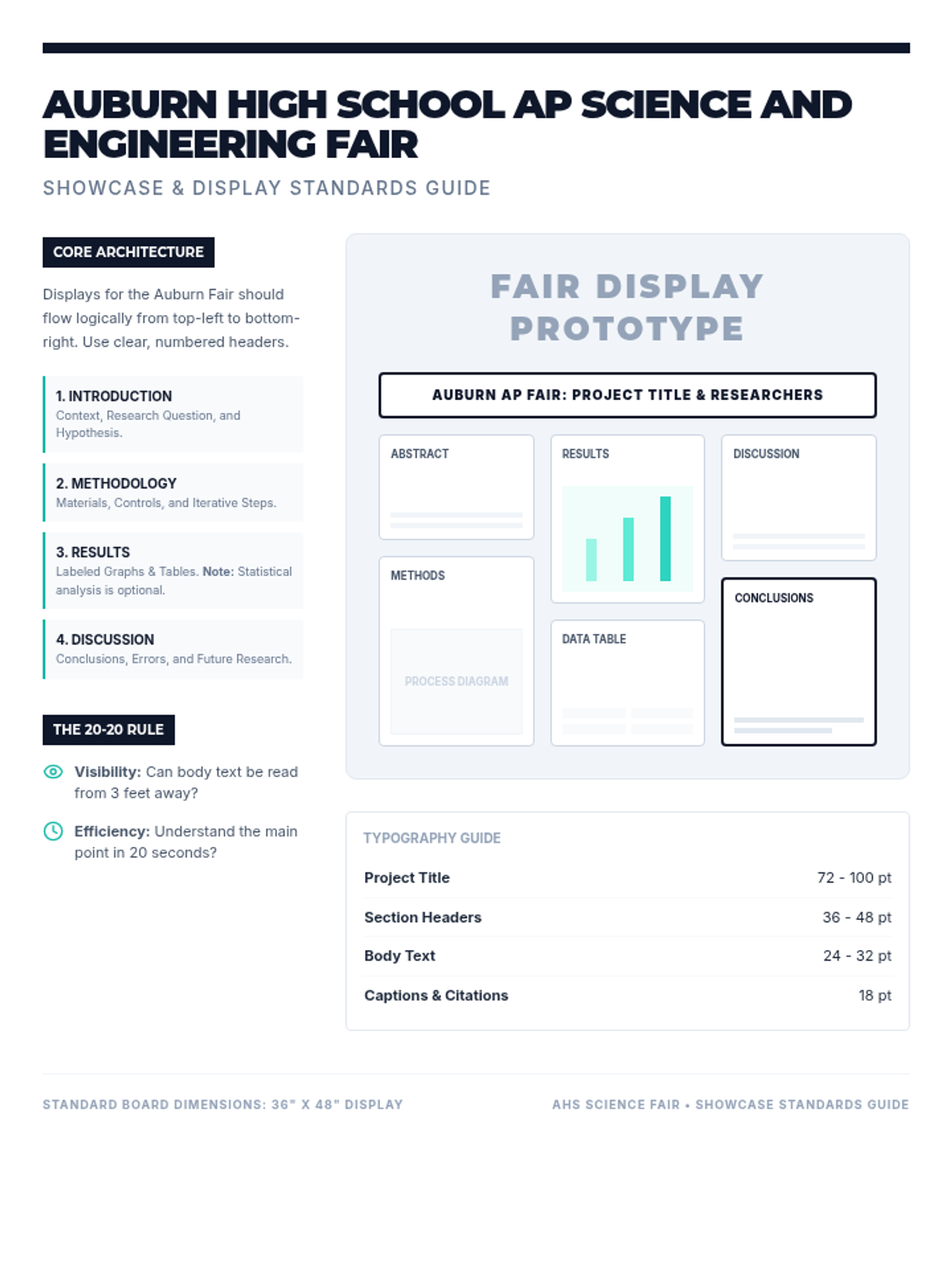
A comprehensive post-exam project framework for Auburn High School AP students to conduct original research or engineering designs over four weeks, culminating in a professional poster fair.
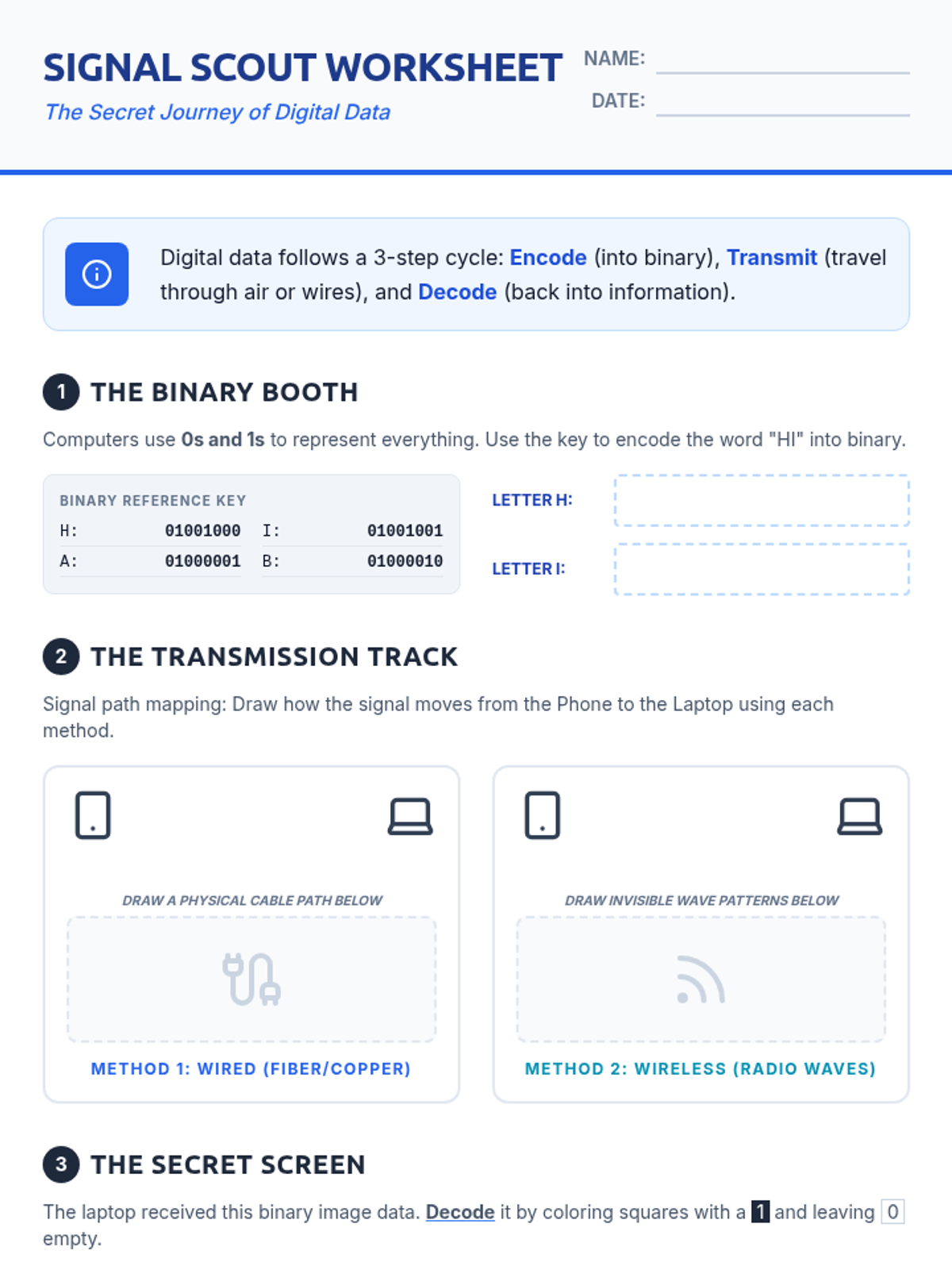
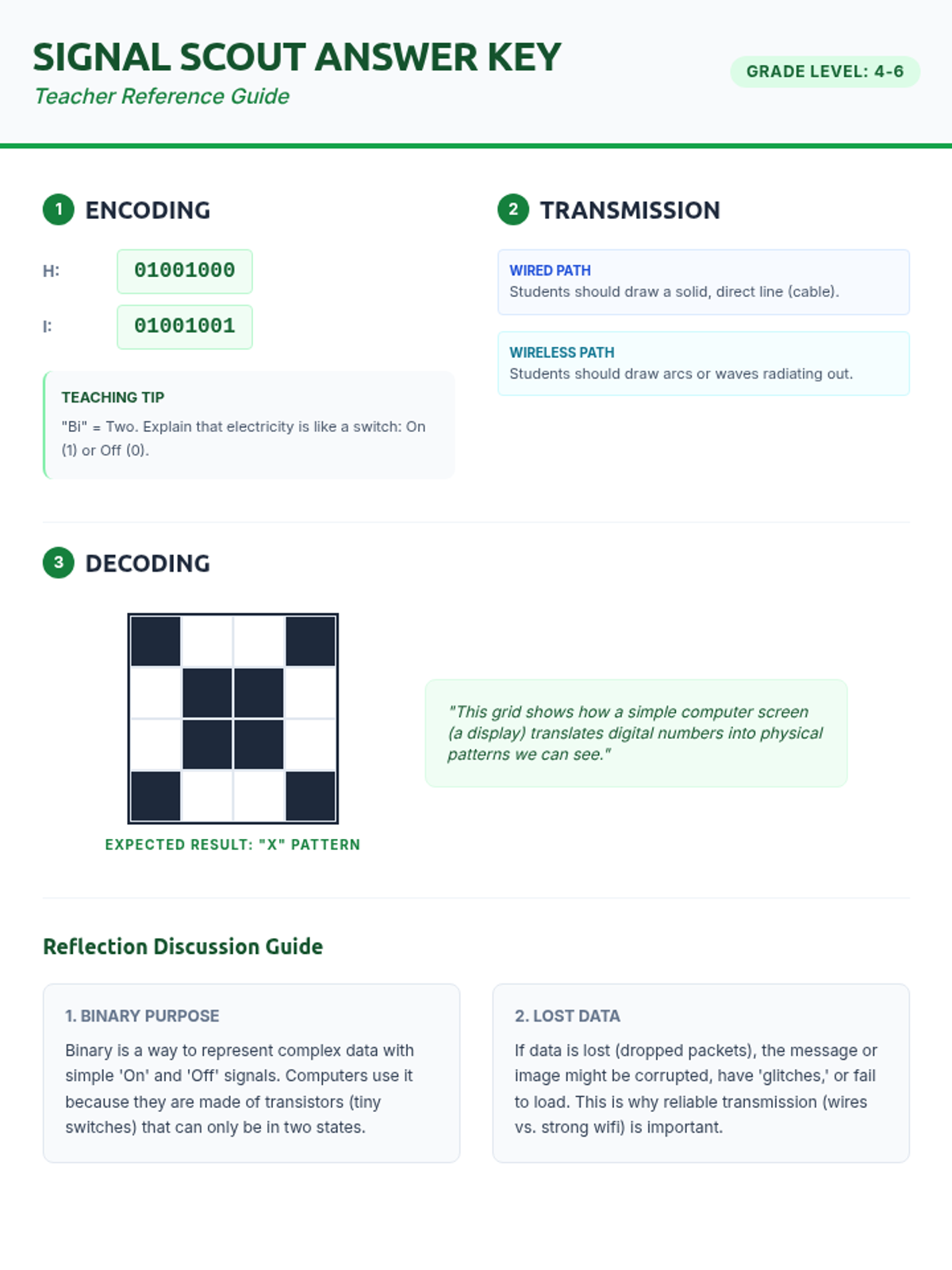
A hands-on lesson where students explore the journey of digital data, from encoding letters into binary to transmitting signals through wires or air, and finally decoding them back into information.
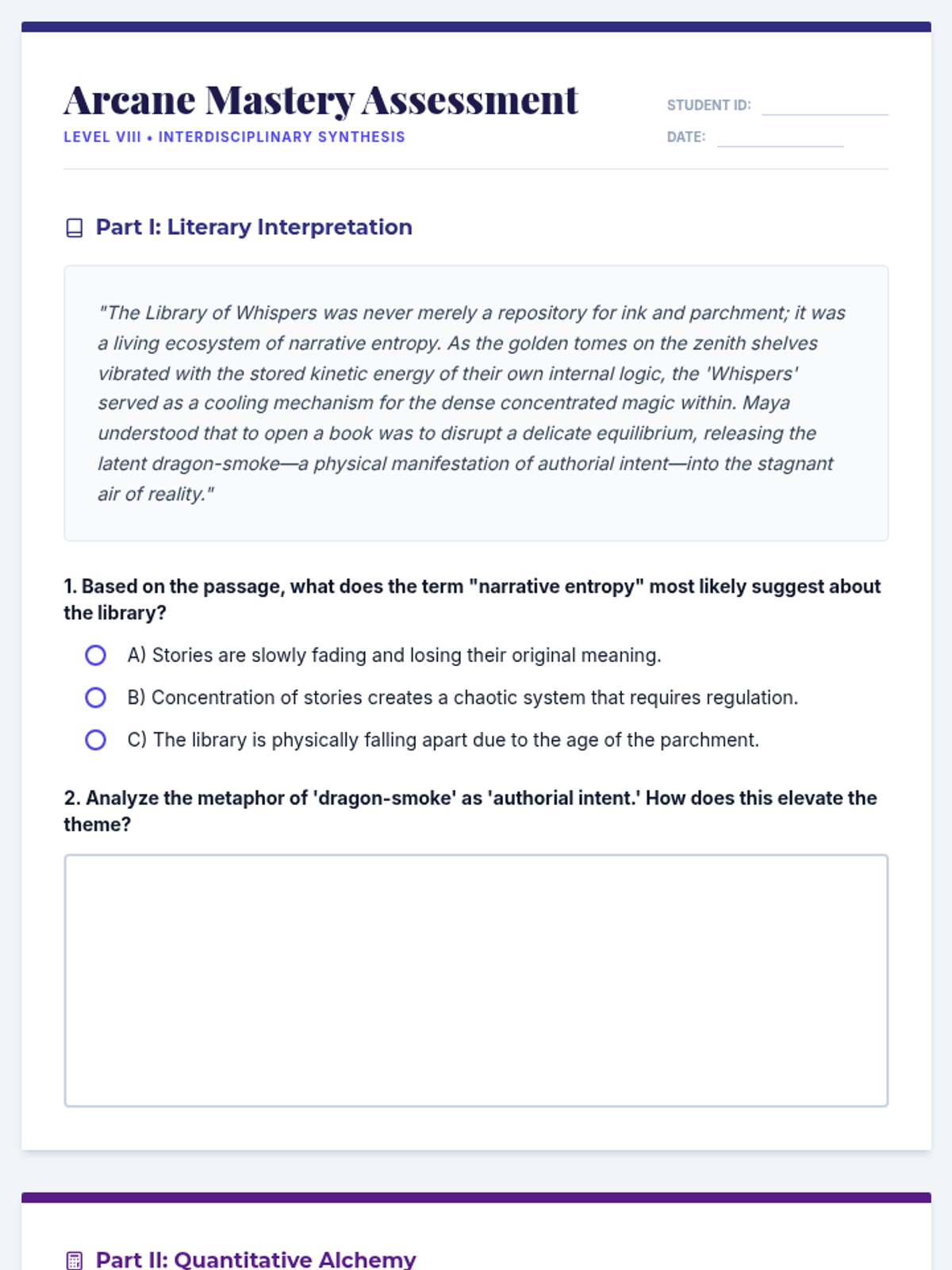
Advanced academic challenges for 8th-grade students, synthesizing reading, math, and science within a complex fantasy framework.
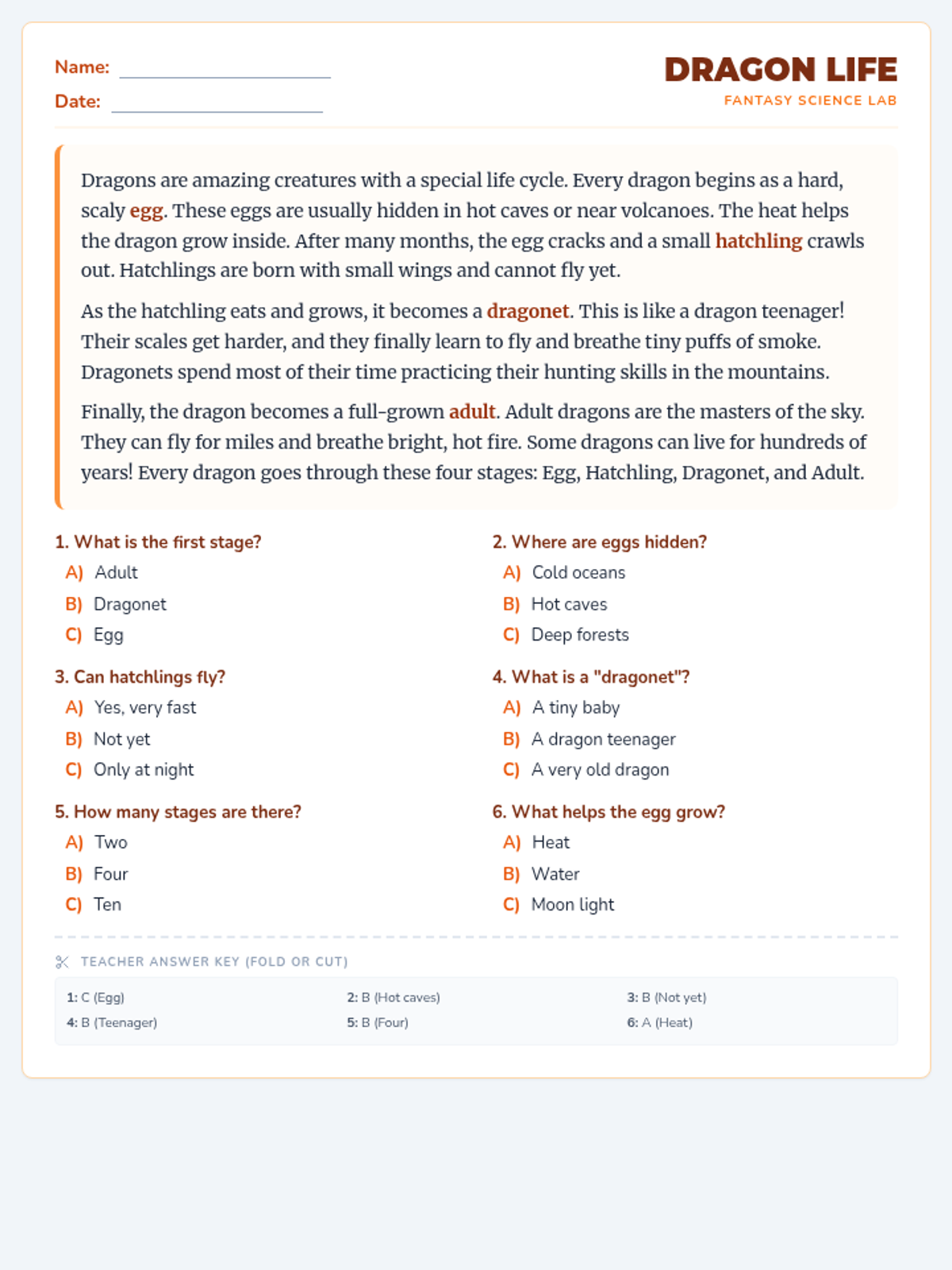
Science exploration through a fantasy lens, covering life cycles, habitats, and simple physical science for 2nd graders.