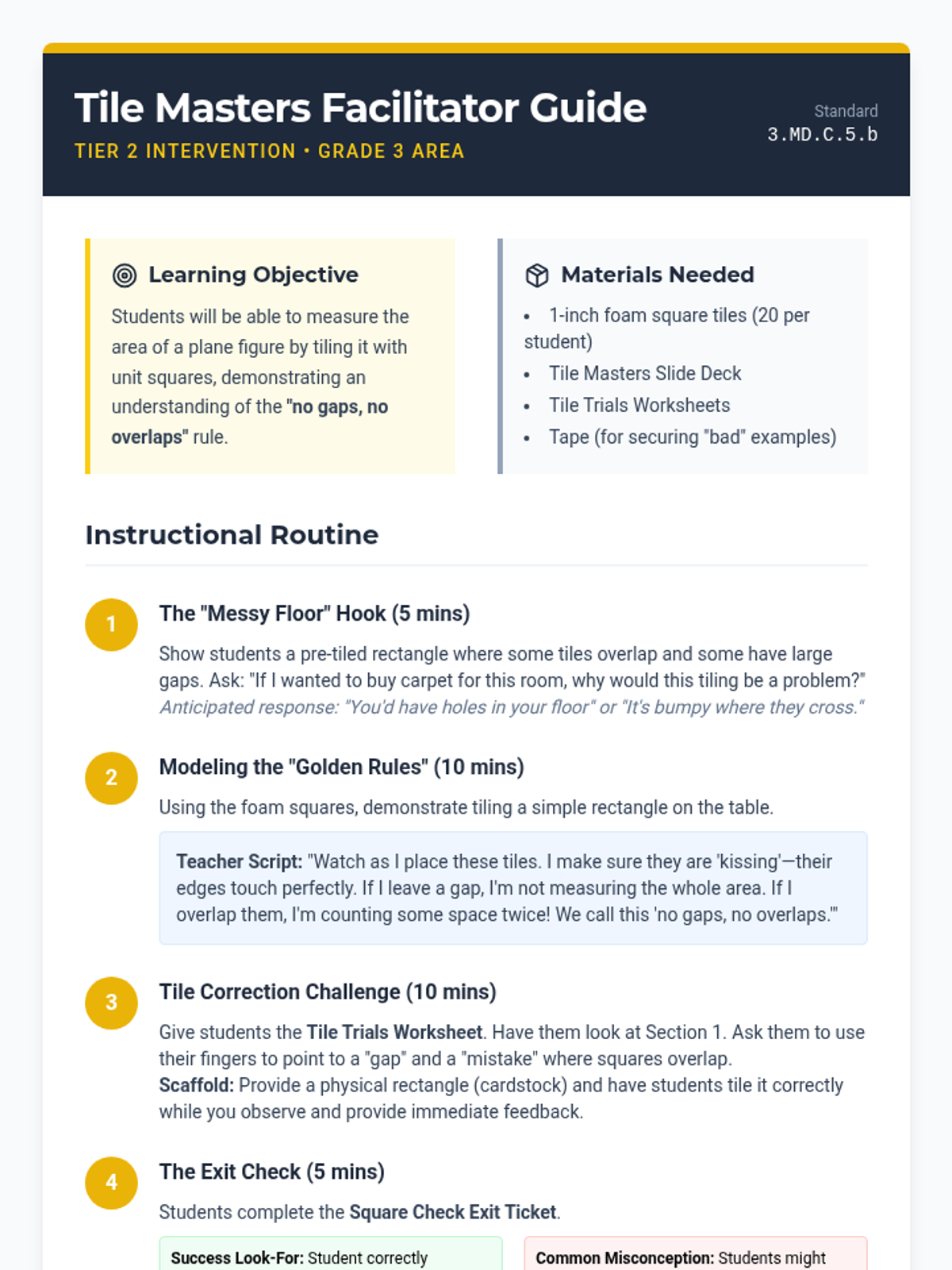
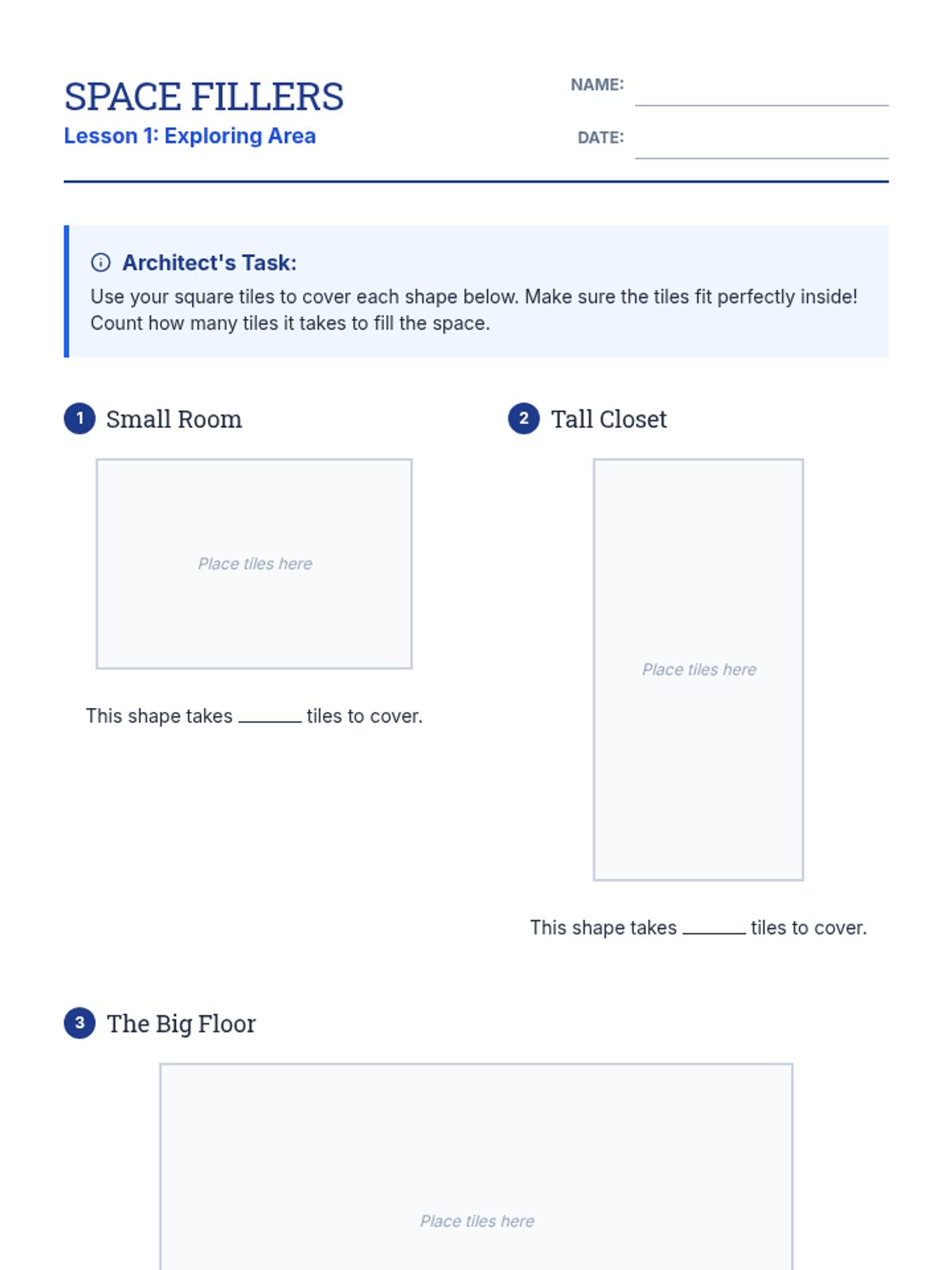
A Grade 3 intervention sequence focused on foundational area measurement concepts through hands-on tiling with standard and improvised units. Students move from concrete counting to understanding area as covering space without gaps or overlaps.
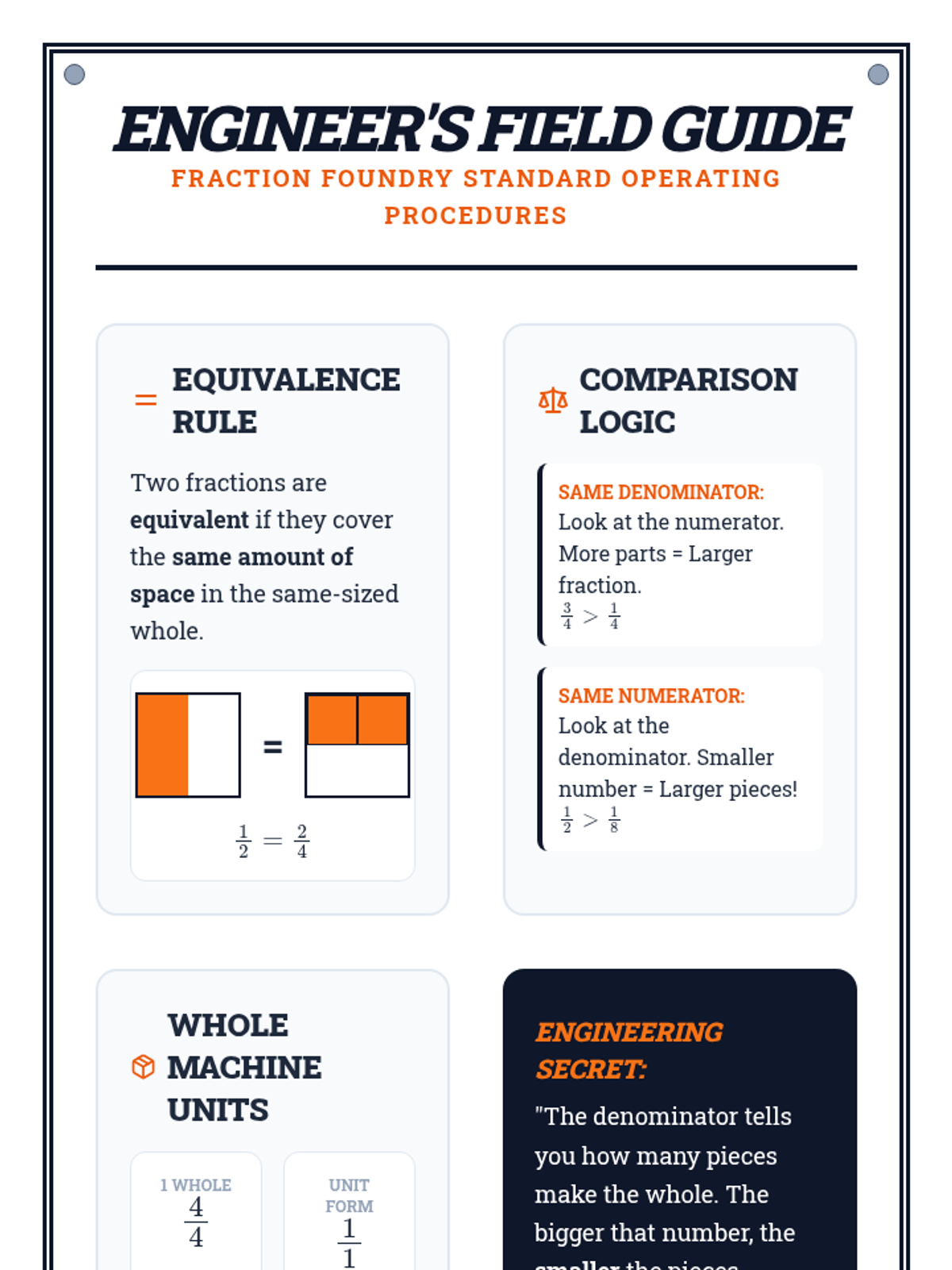
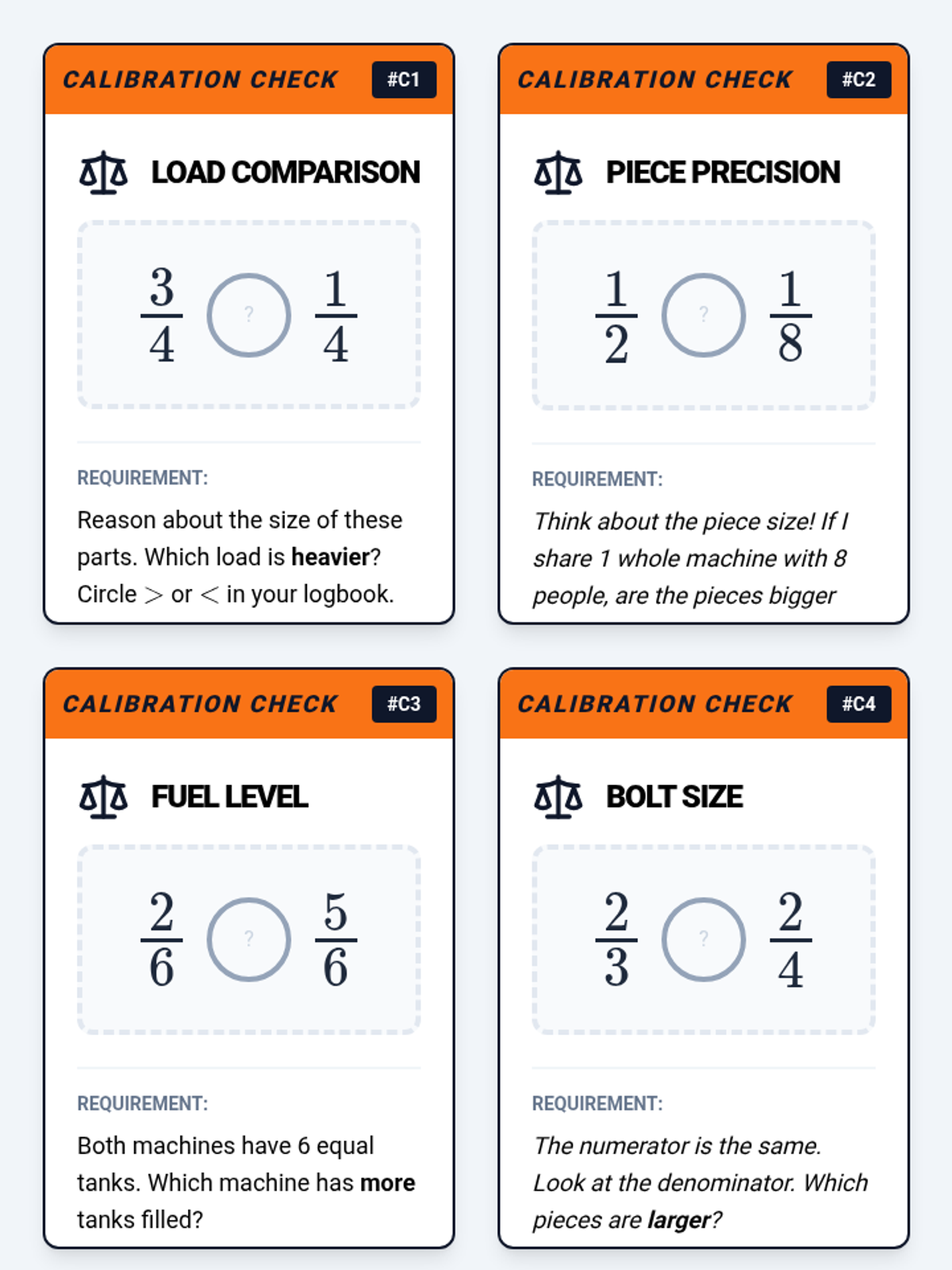
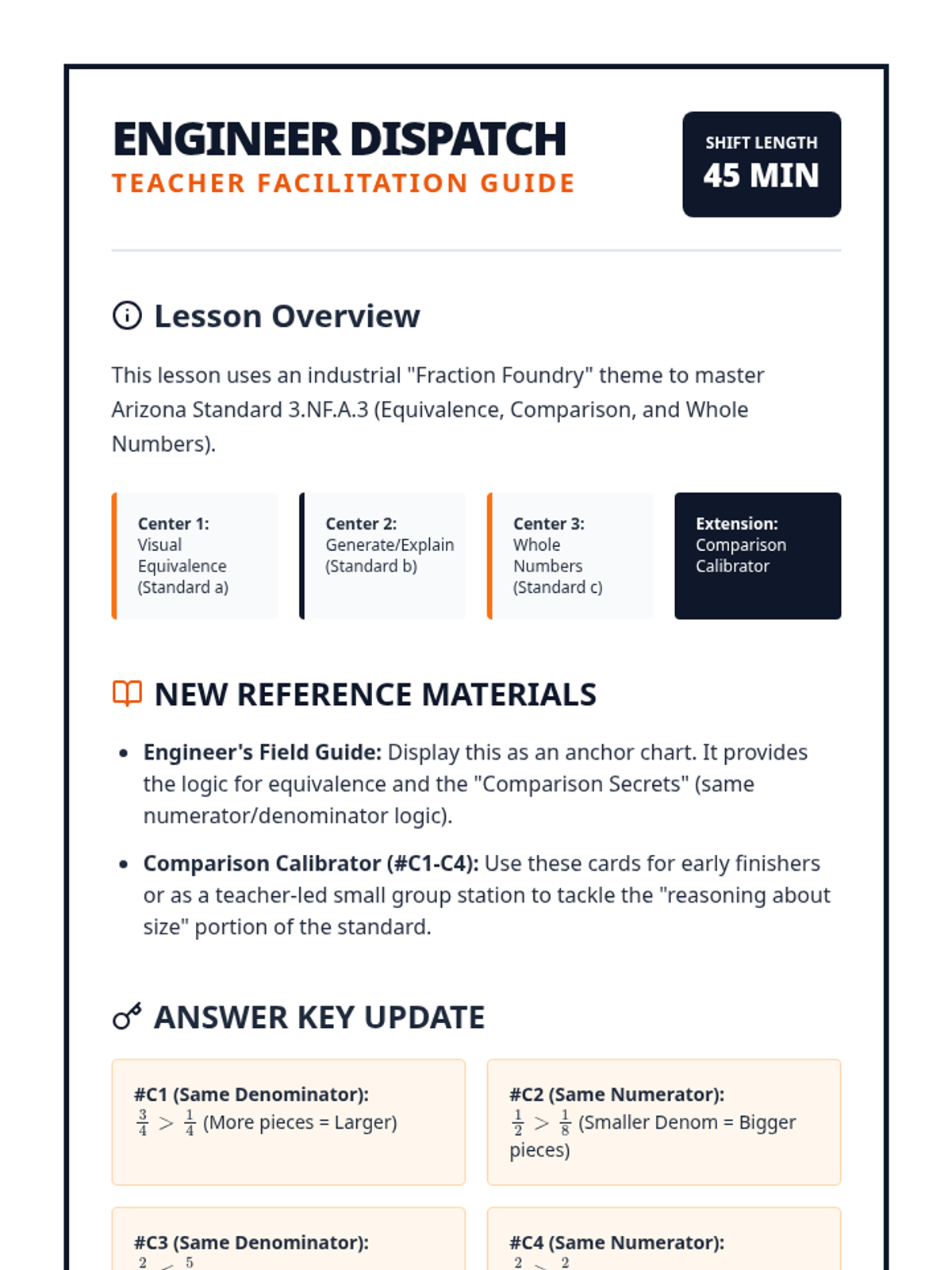
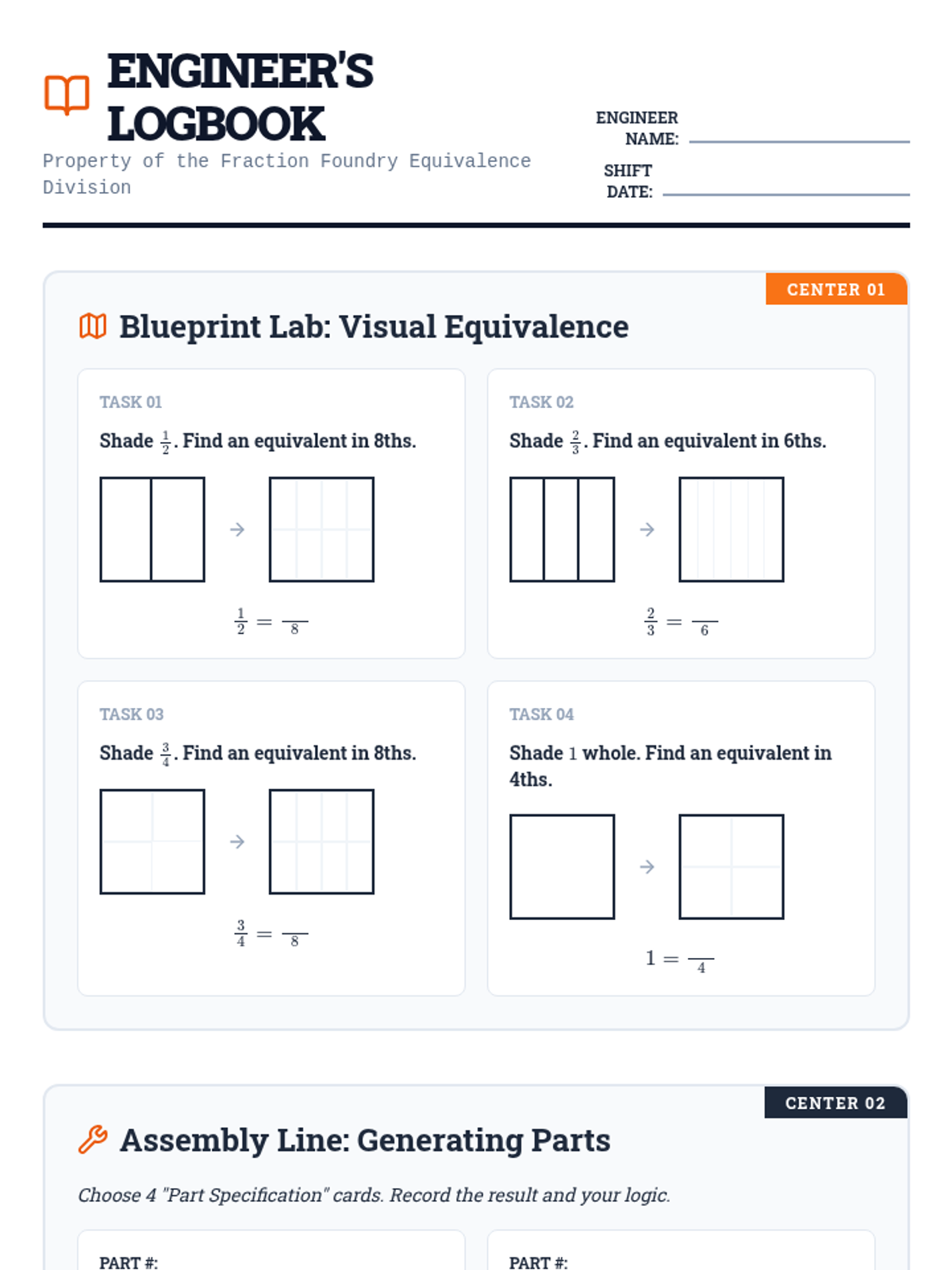
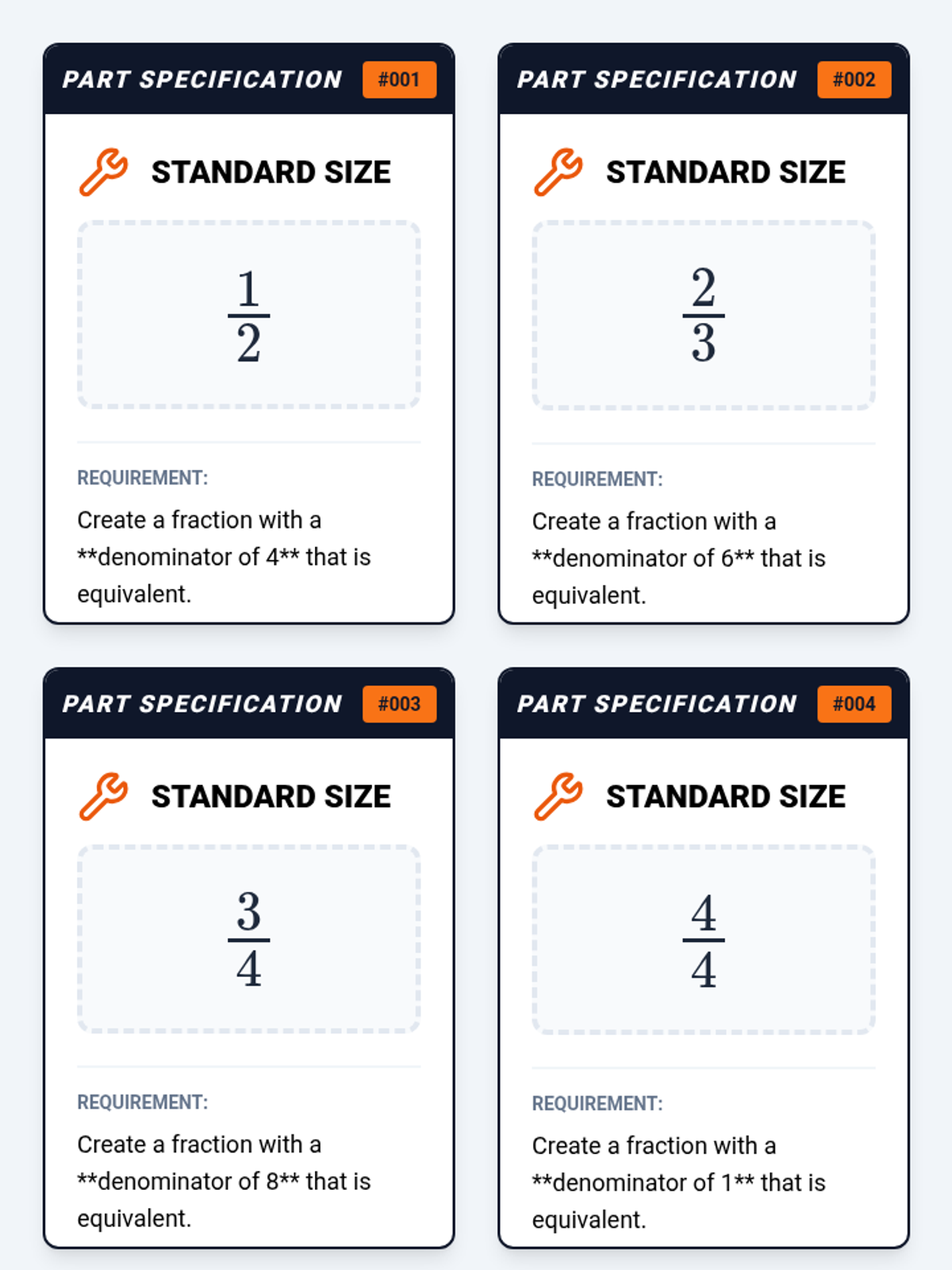
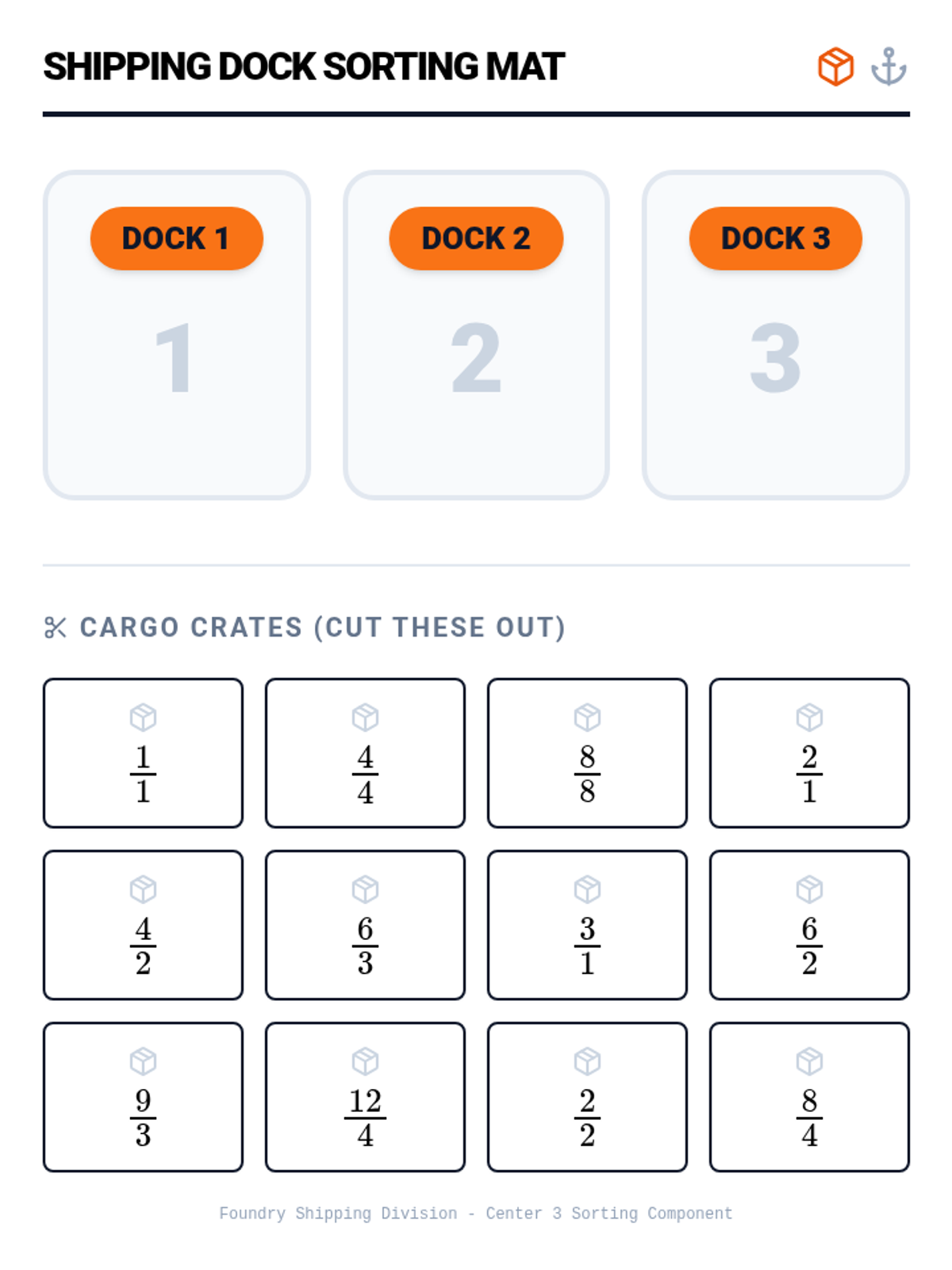
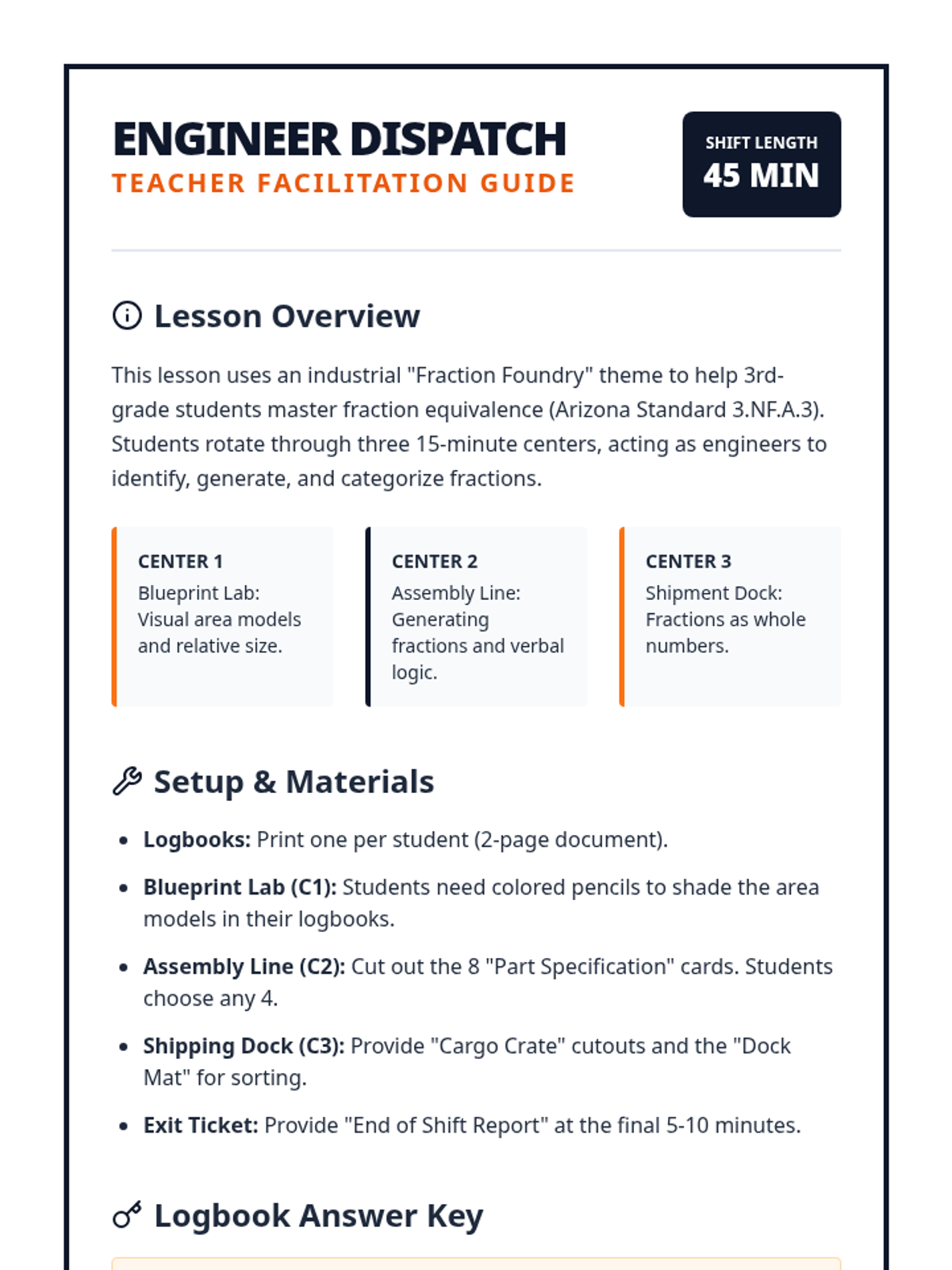
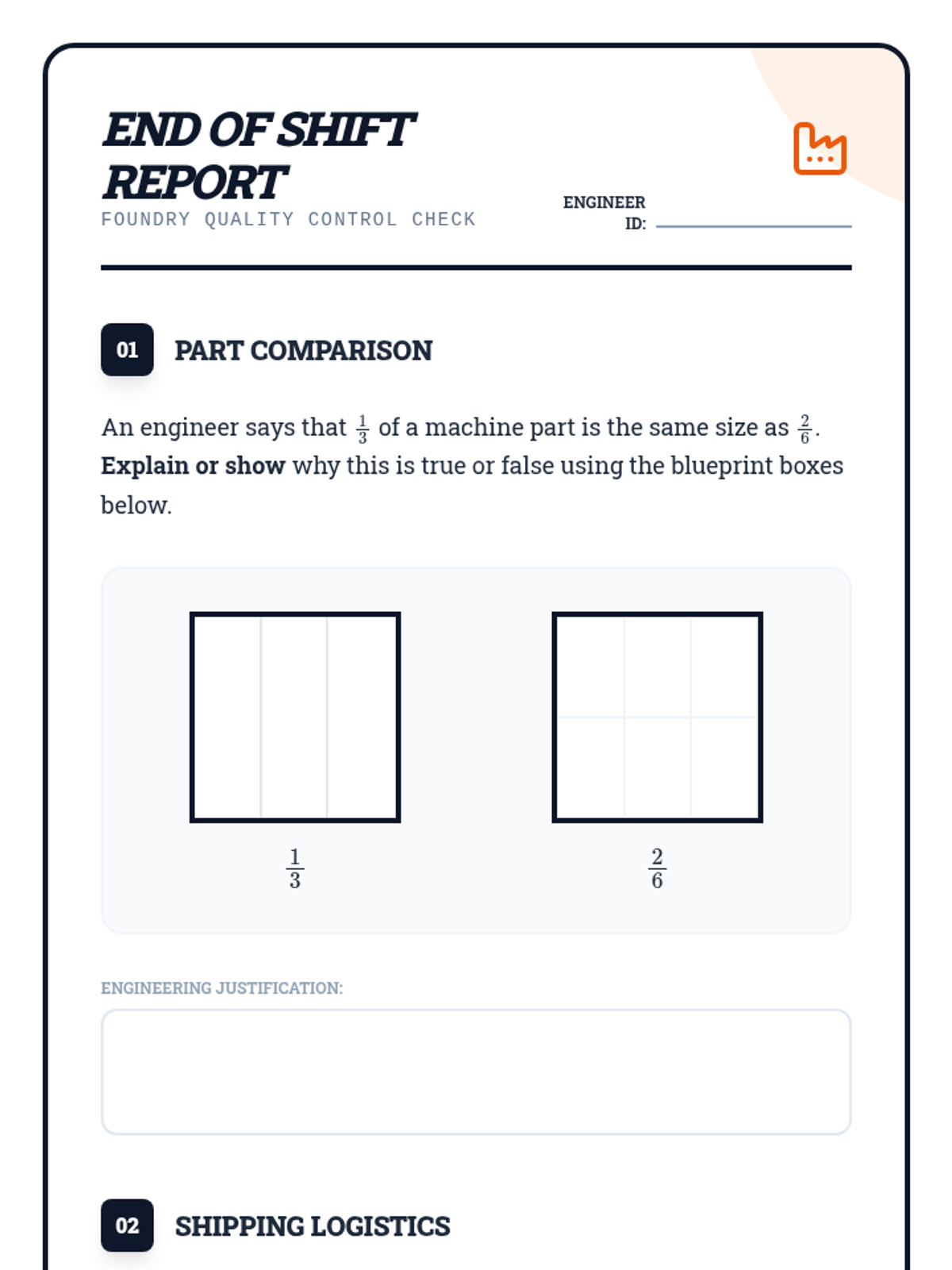
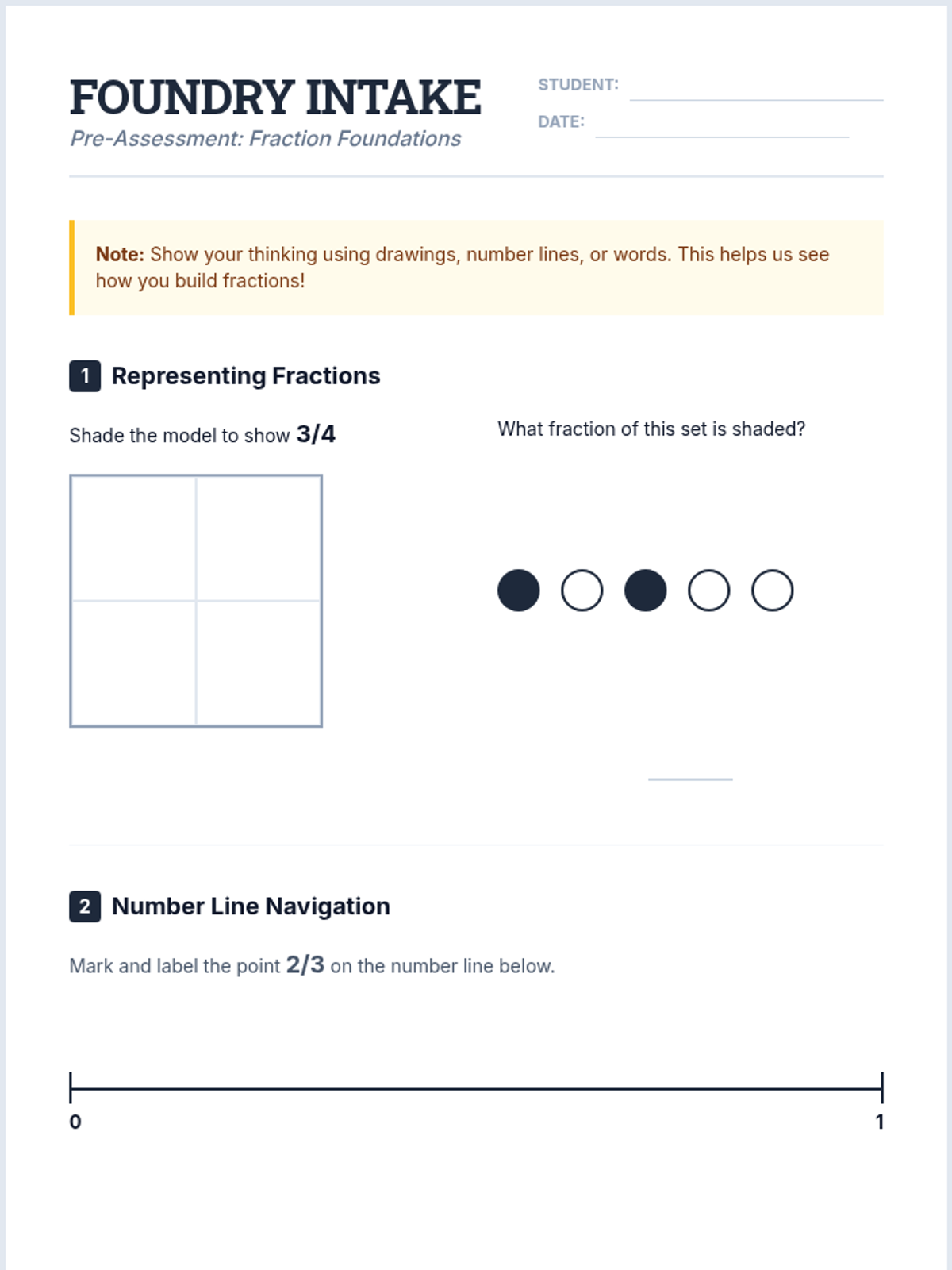
A hands-on, industrial-themed unit focused on understanding, generating, and explaining equivalent fractions through interactive centers. Students act as 'Foundry Engineers' to master visual equivalence, symbolic representation, and whole-number fractions.
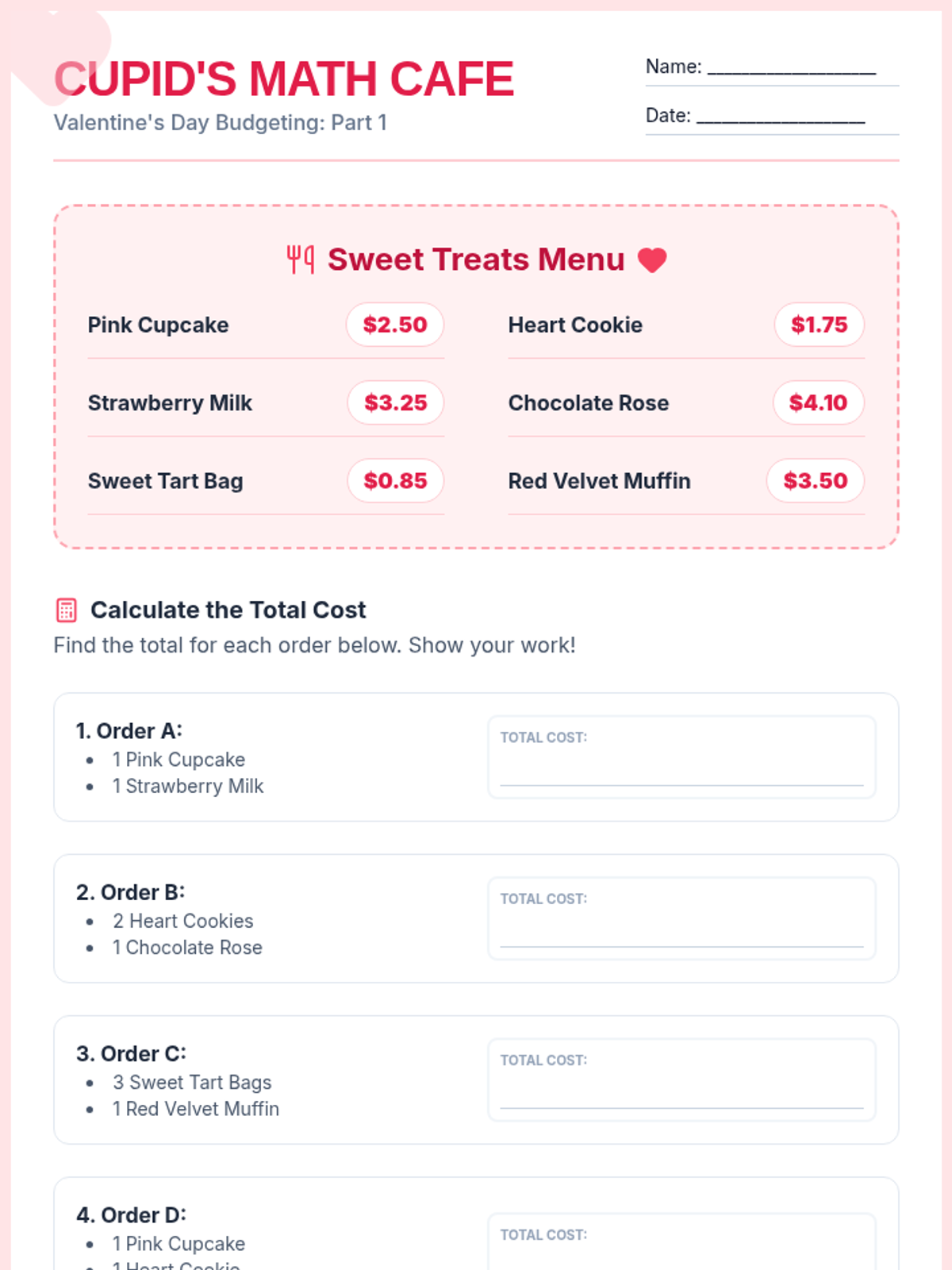
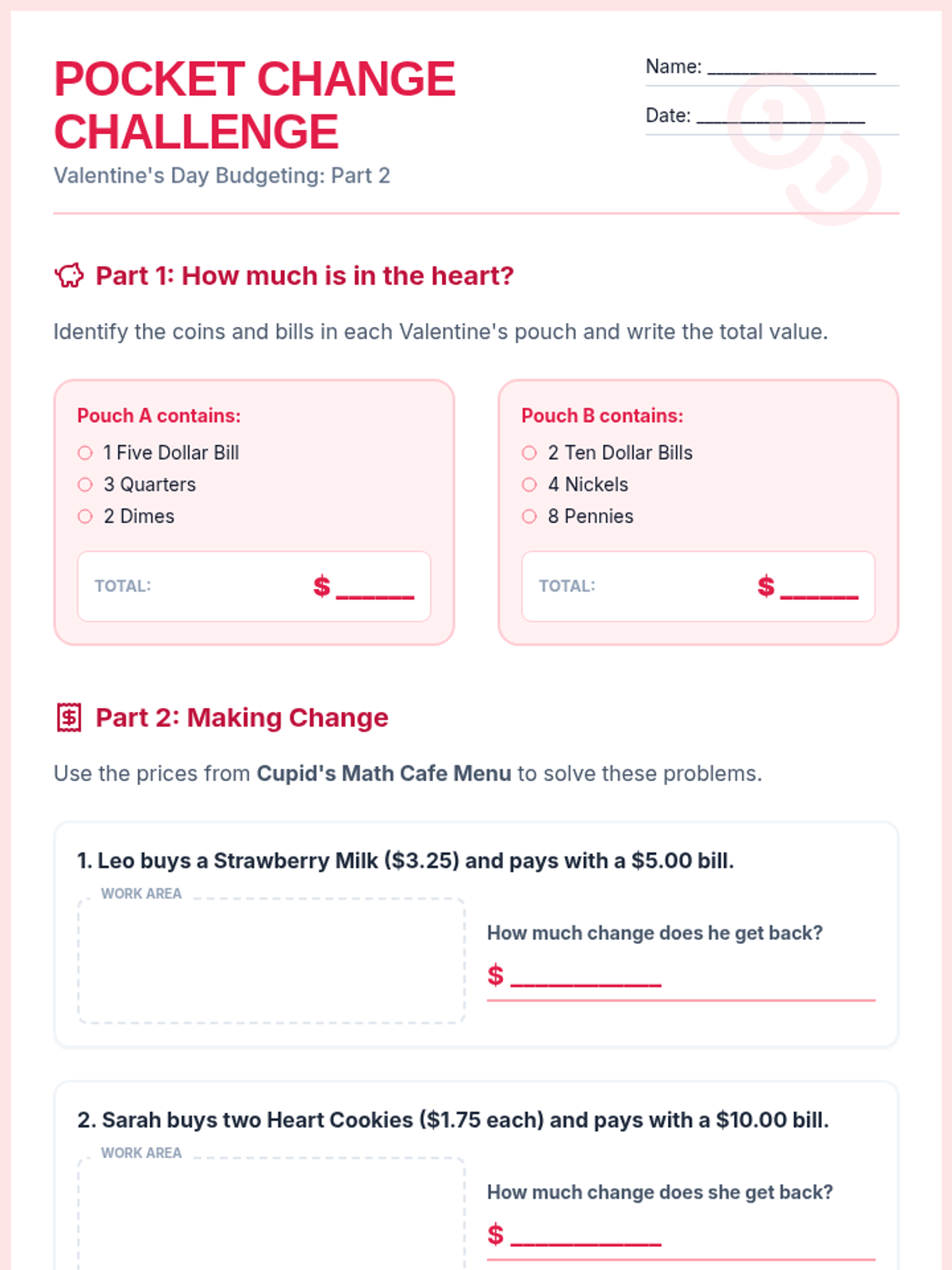
A collection of Valentine's Day math packets at two different levels (Level 1 and Quest), covering budgeting, graphing, measurement, time, and word problems.
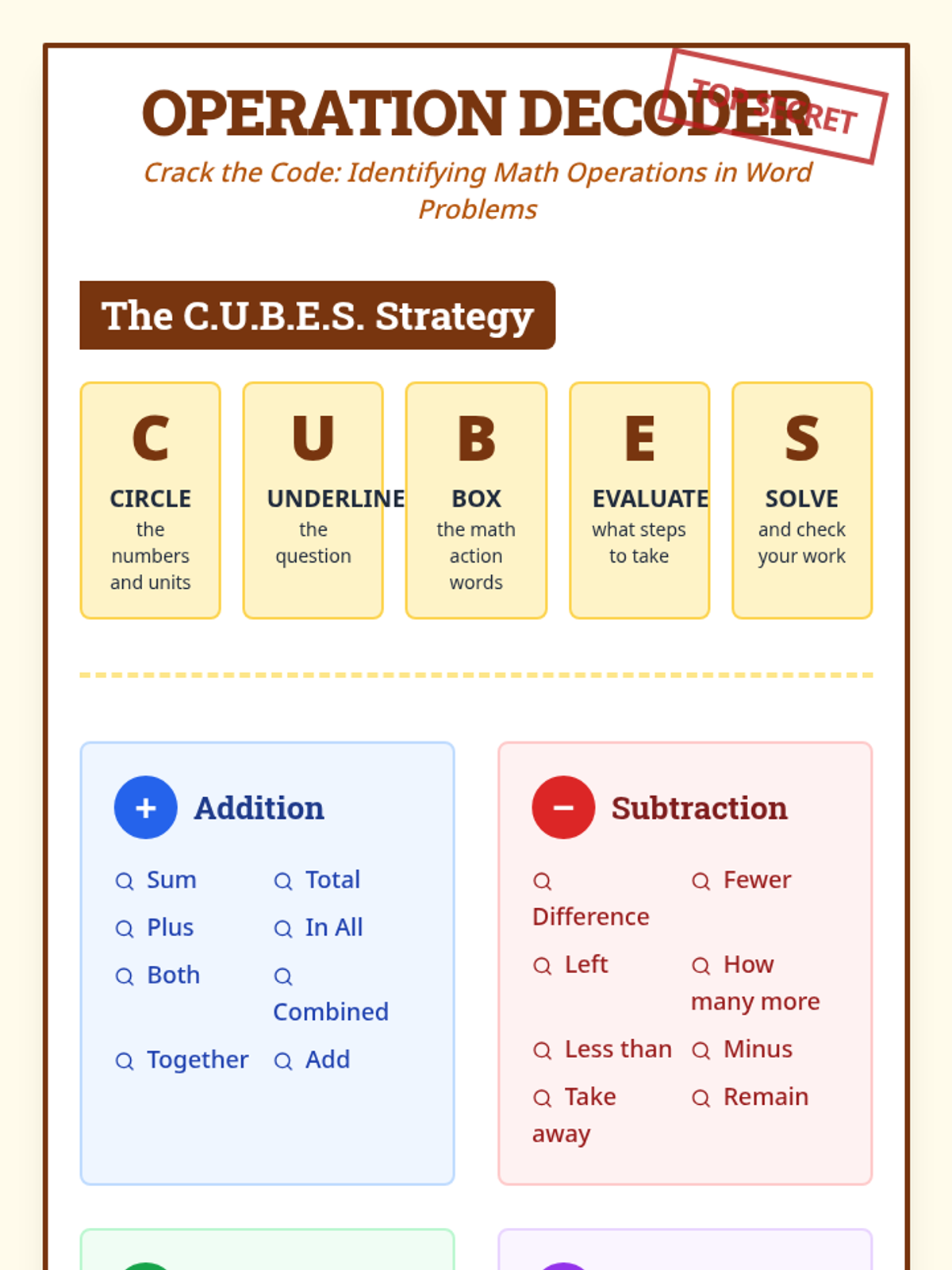
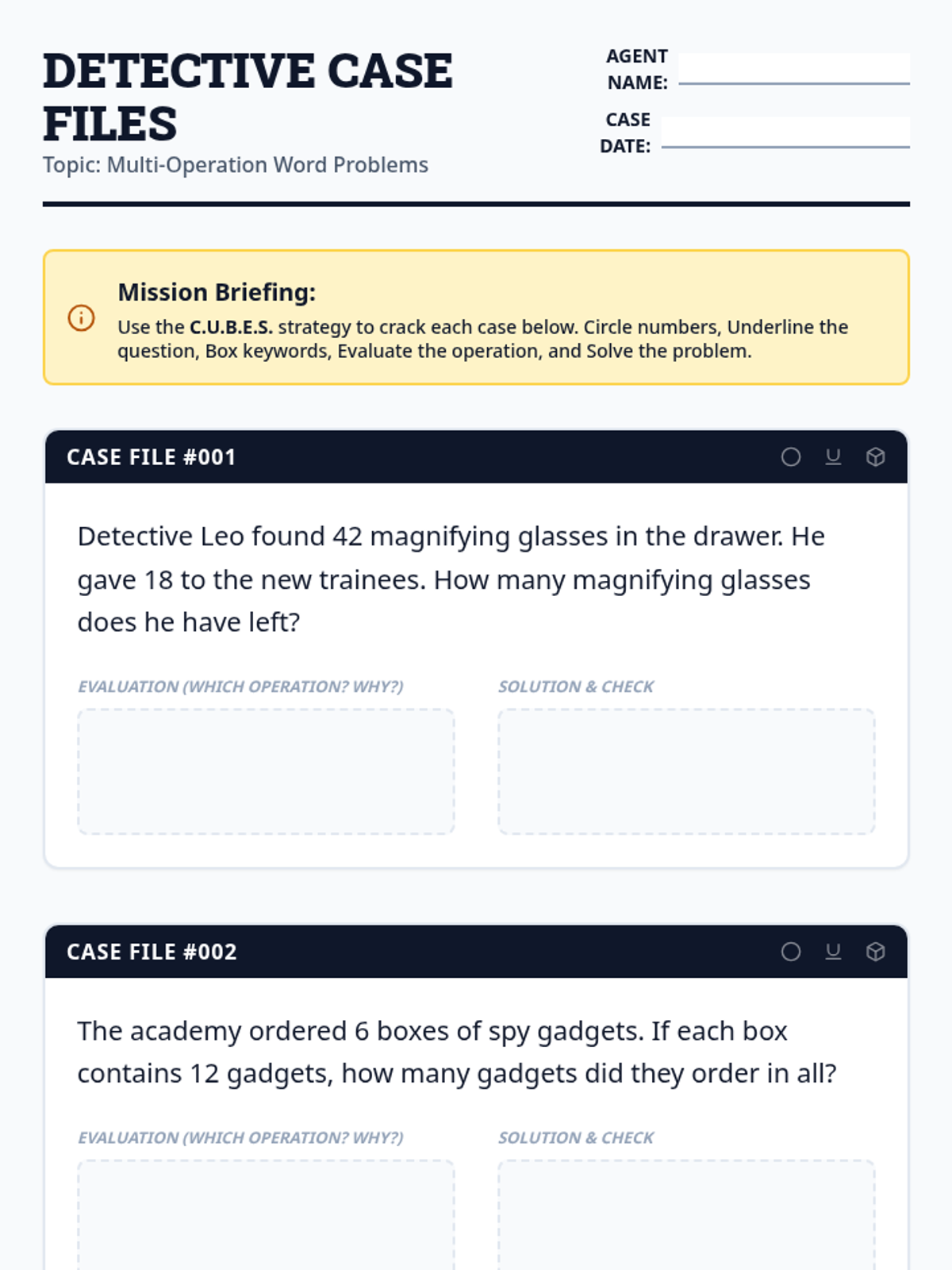
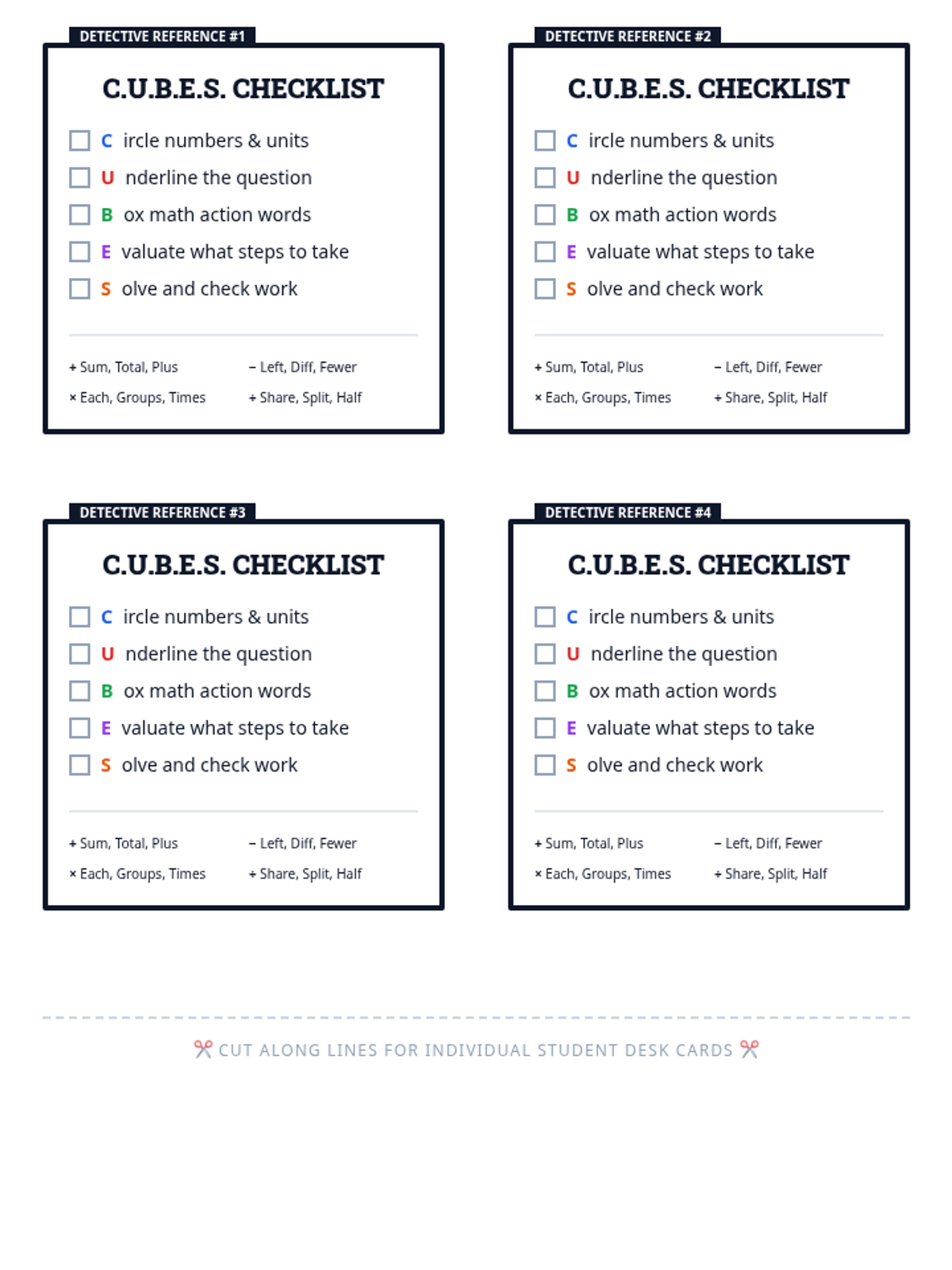
A comprehensive suite of strategies and visual supports designed to help K-5 students decode and solve addition, subtraction, multiplication, and division word problems using a detective-themed approach.
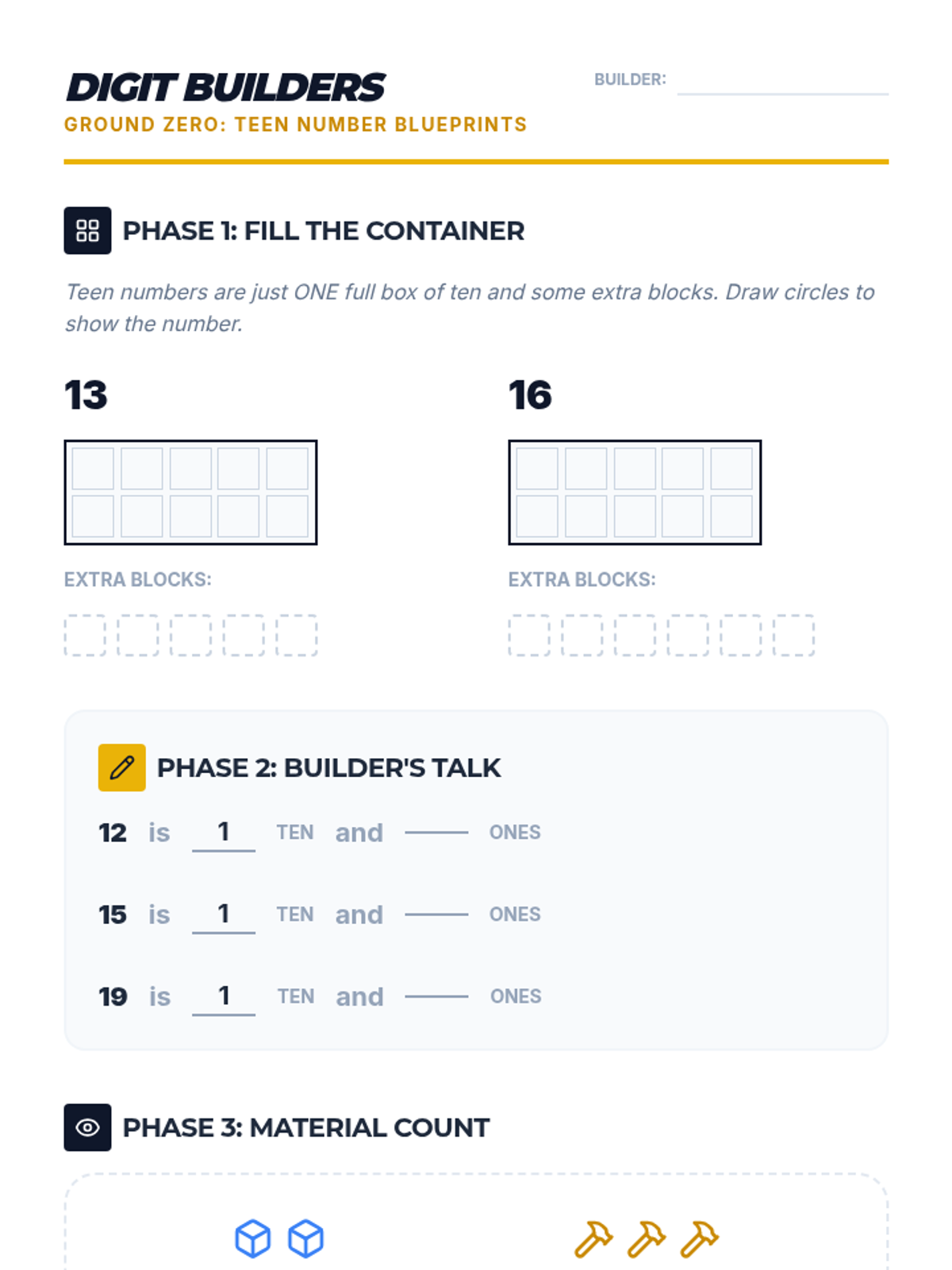
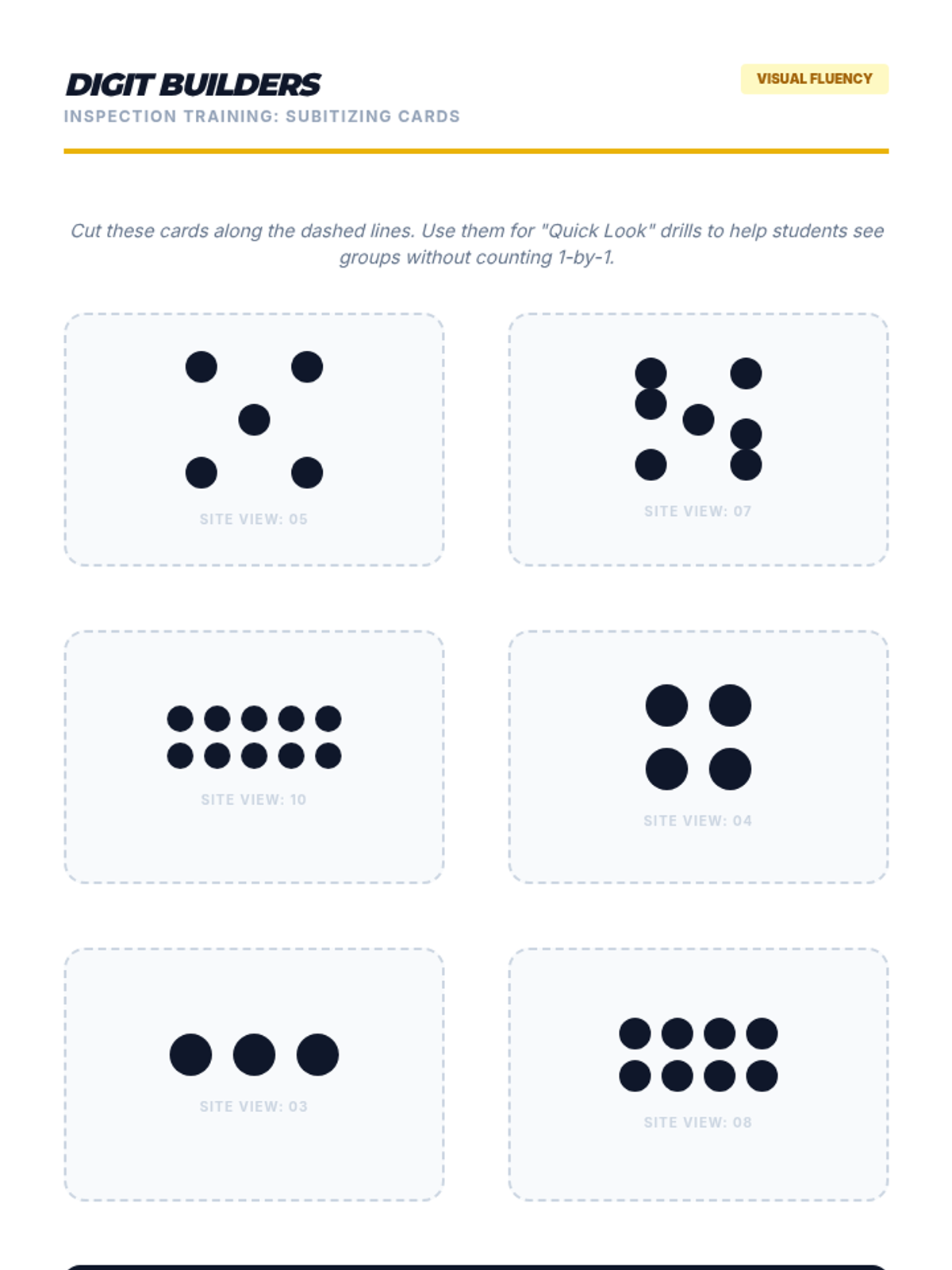
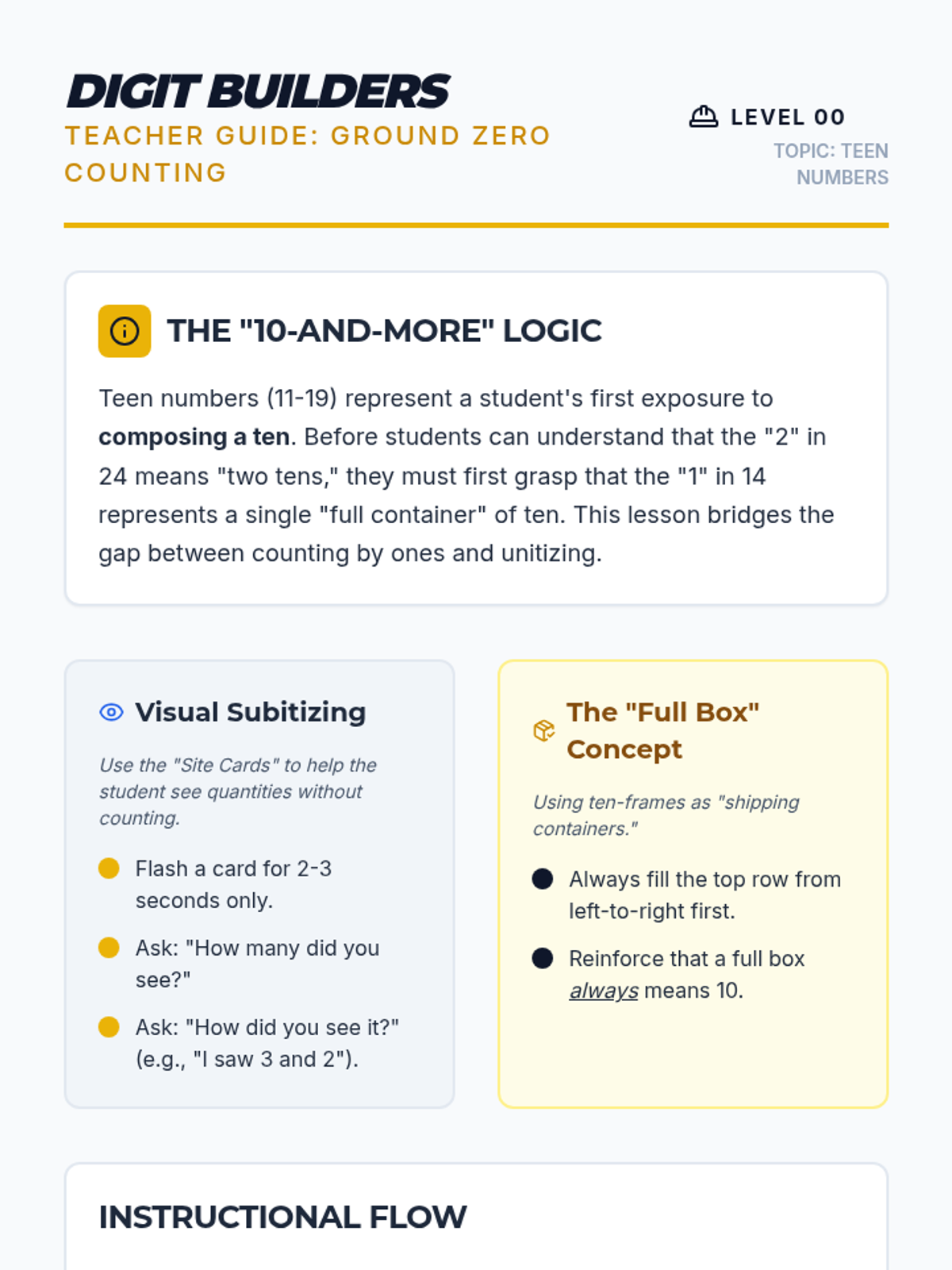
A foundational unit on place value that spirals from teen numbers up to the hundreds place. Using a 'Digit Builders' architectural theme, students learn to construct, deconstruct, and compare 2-digit and 3-digit numbers, building a solid foundation for future math.
A comprehensive 7-lesson intervention sequence designed to build conceptual fraction understanding through visual models, number lines, and scaffolded practice. The sequence moves from basic area models to adding and subtracting with unlike denominators, prioritizing 'why' over 'how'.
A small group intervention sequence focused on Grade 3 area concepts, specifically multiplying side lengths to solve real-world problems. Students move from concrete measurement to representational grid work and abstract formula application.
A targeted intervention sequence focused on developing conceptual understanding and procedural fluency with the area formula for rectangles. This sequence bridges the gap between counting unit squares and multiplying side lengths to solve real-world problems.
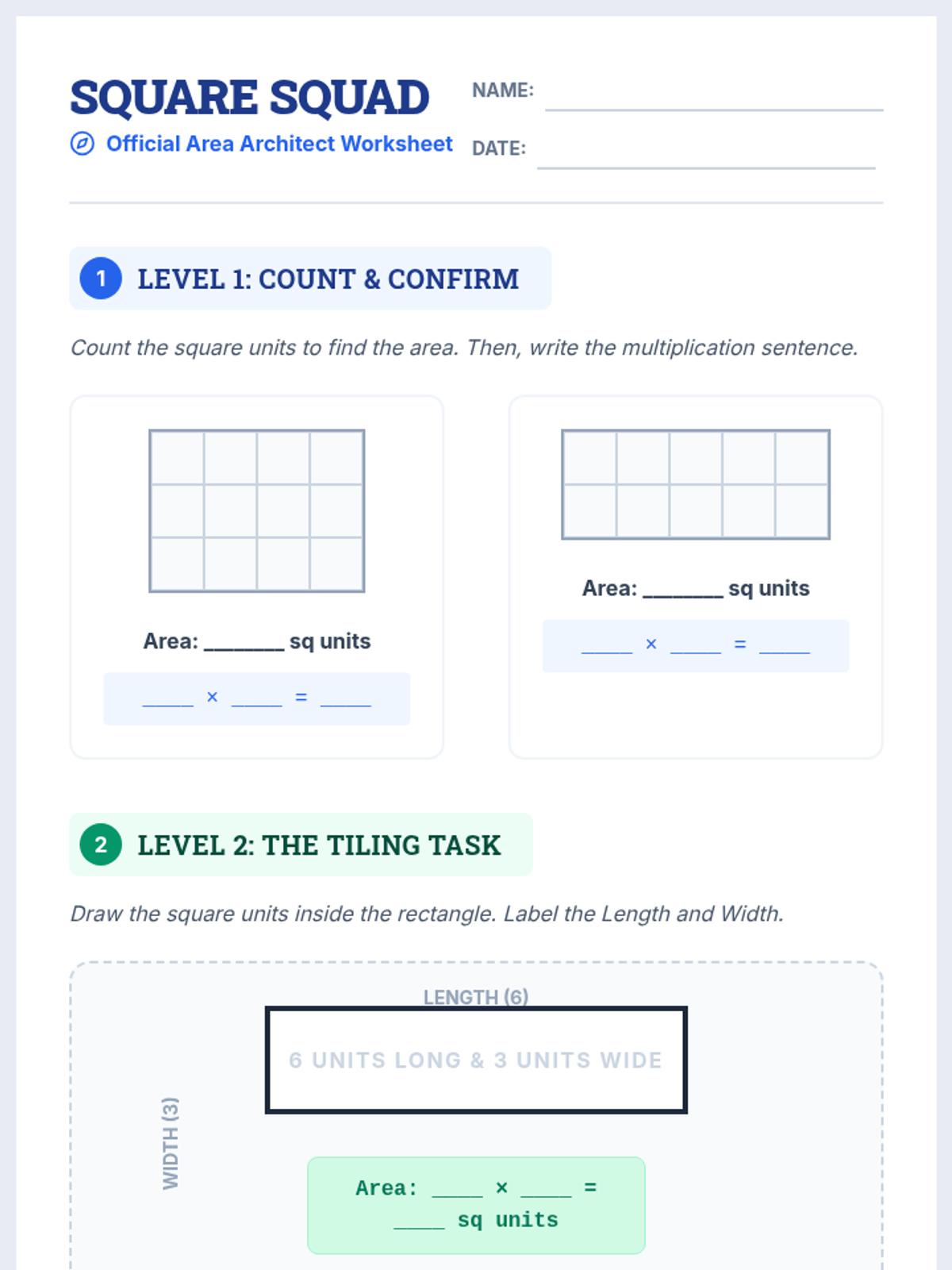
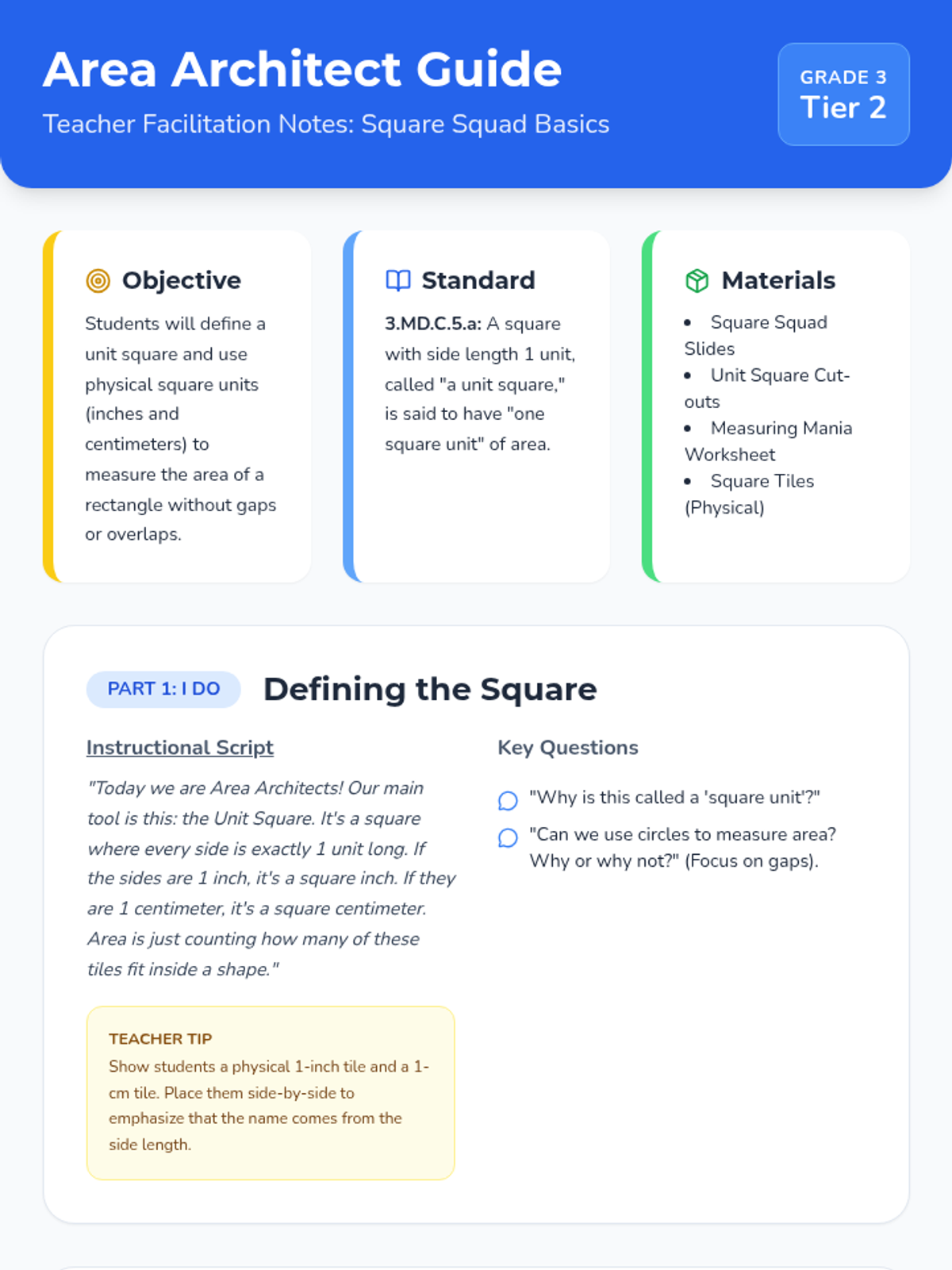
A targeted intervention sequence focused on understanding the concept of area through unit squares, comparing different sizes of units, and applying these concepts to measure rectangles without gaps or overlaps.

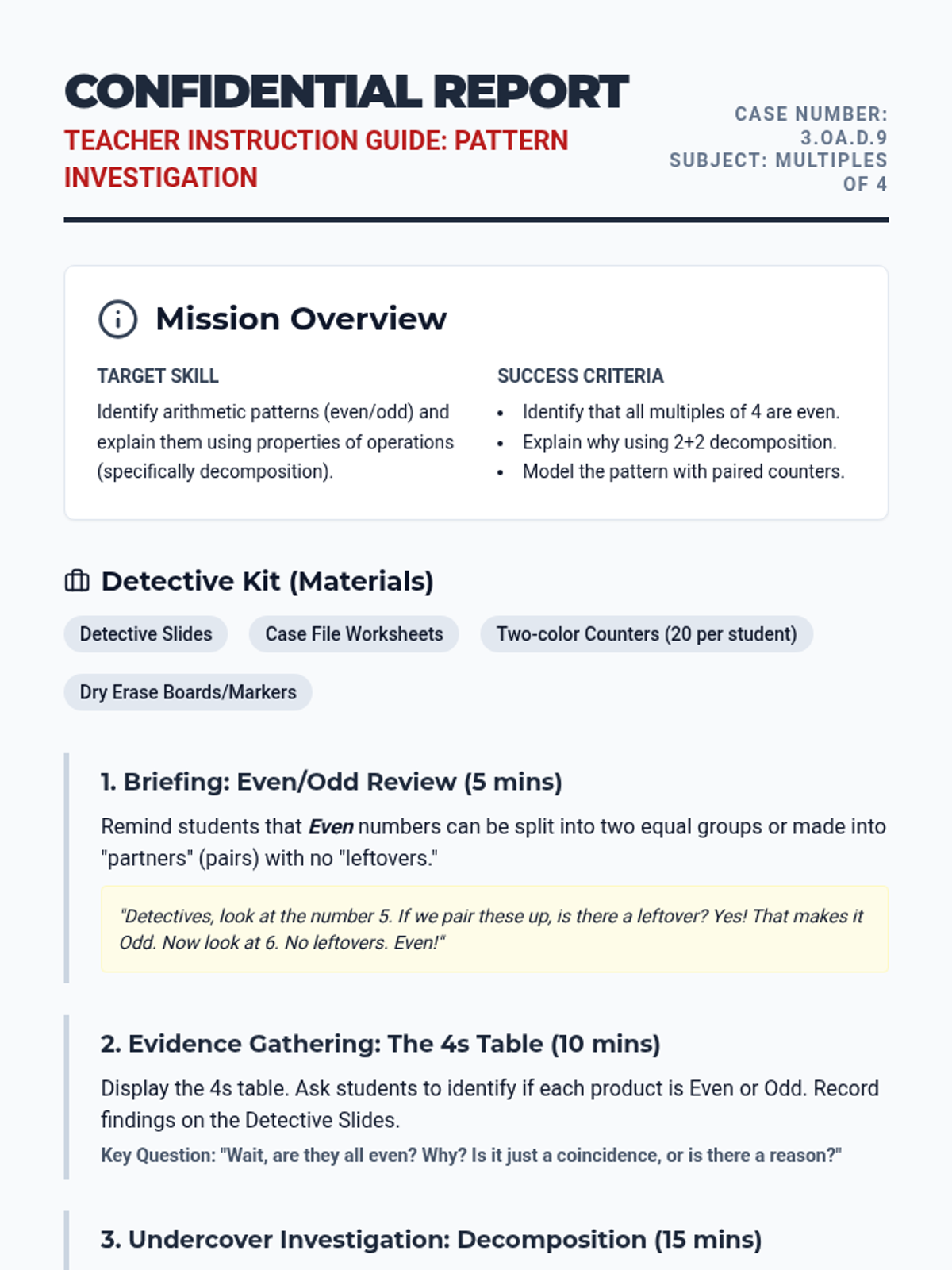
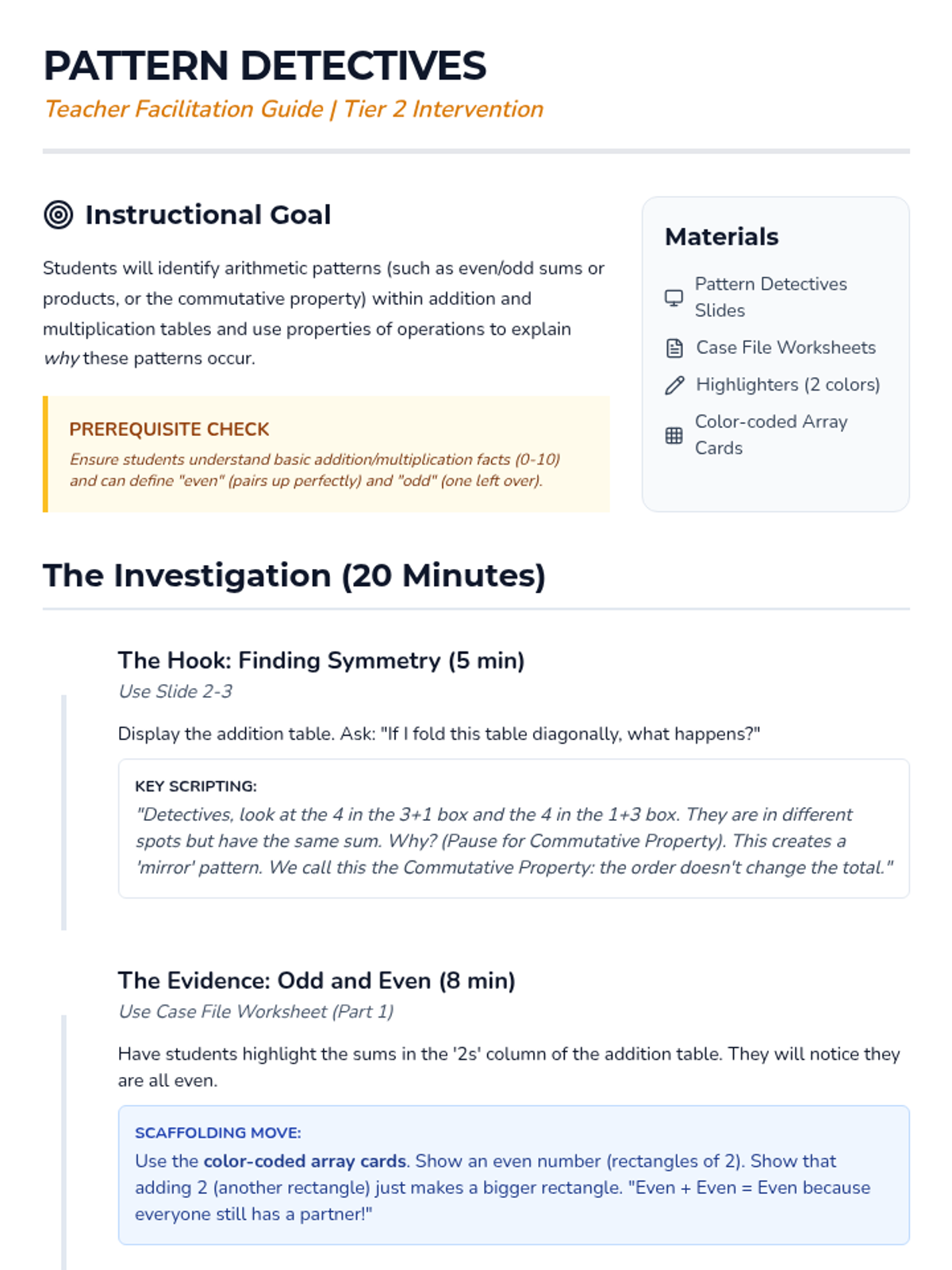
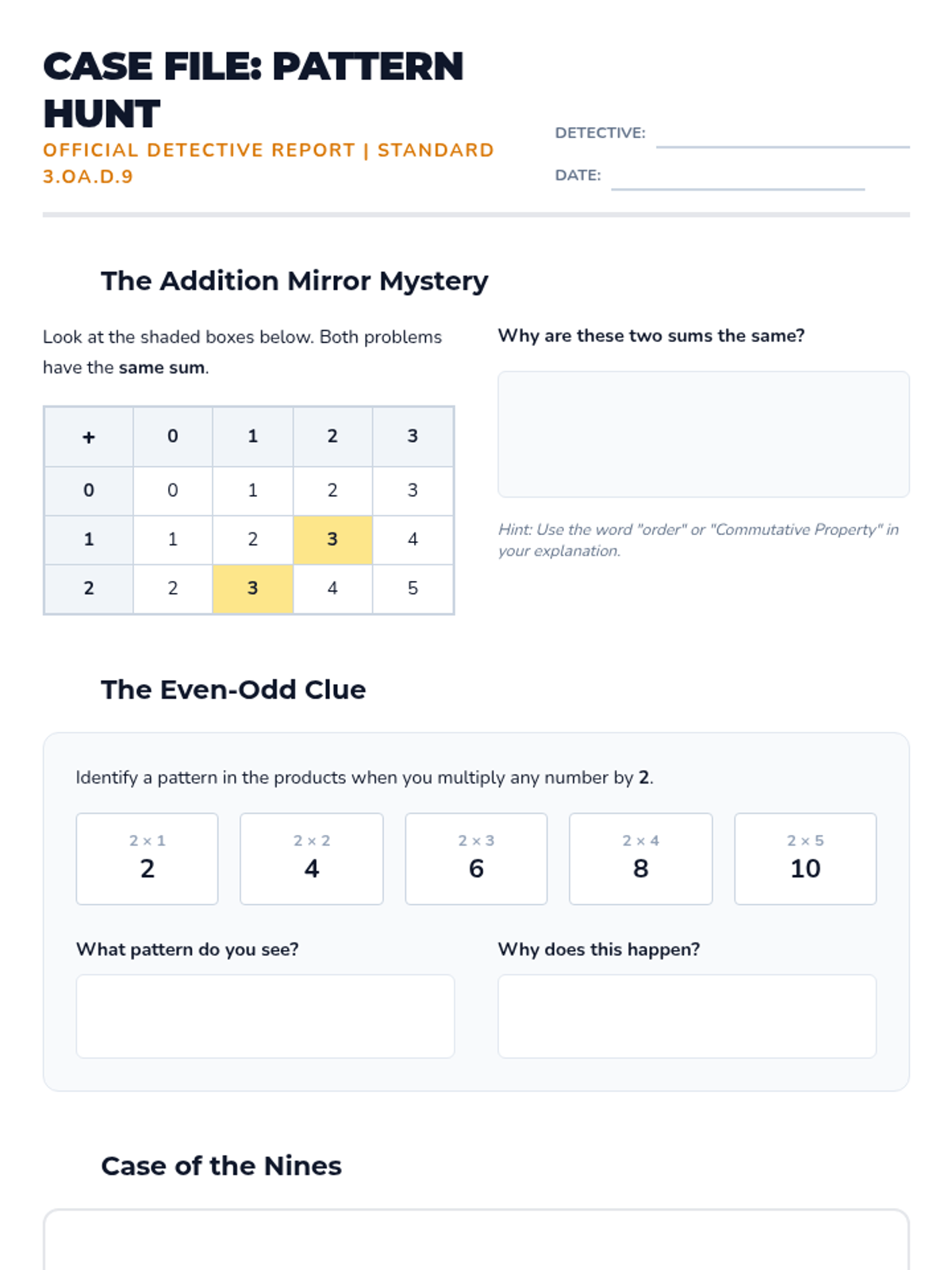
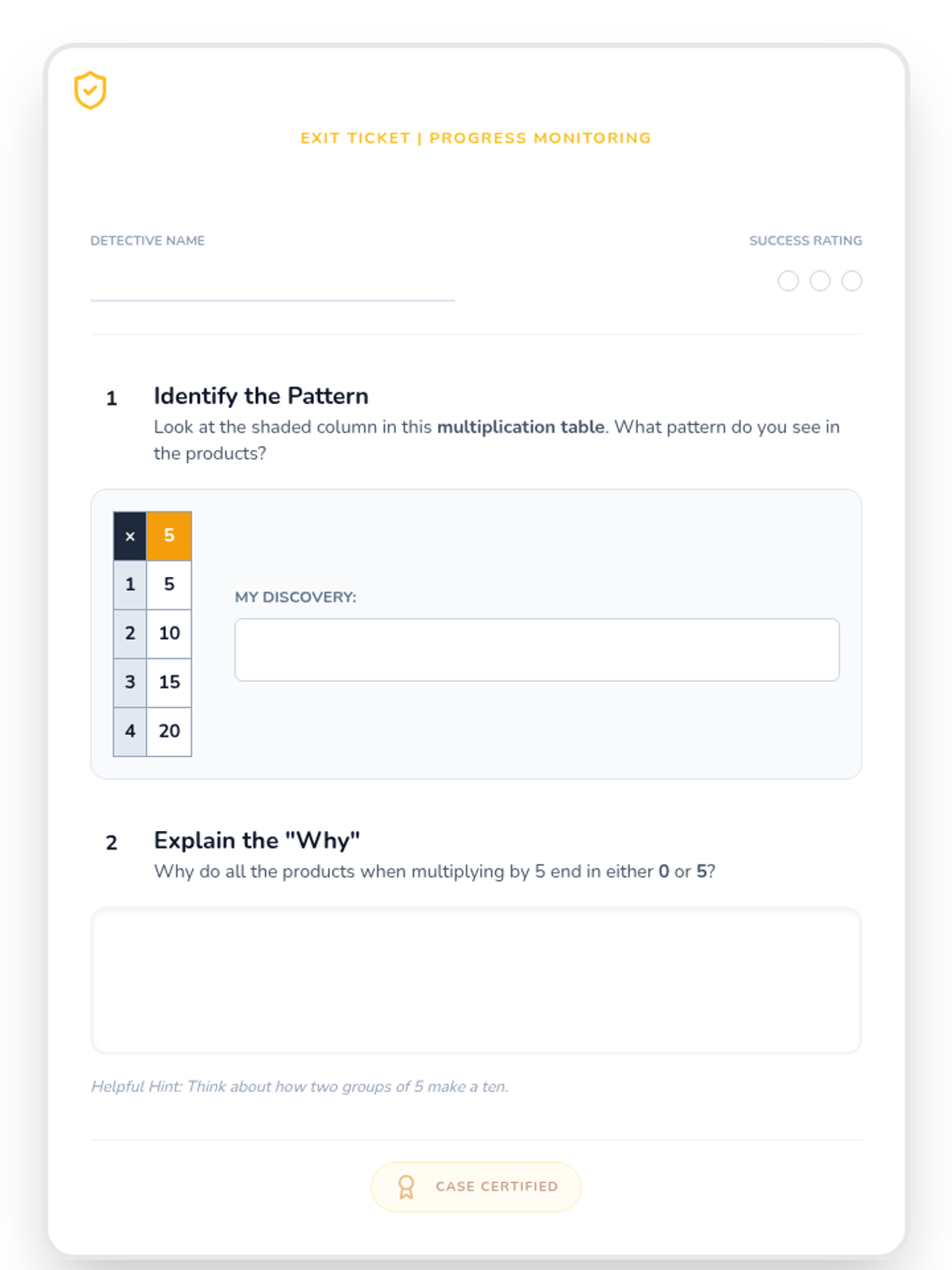
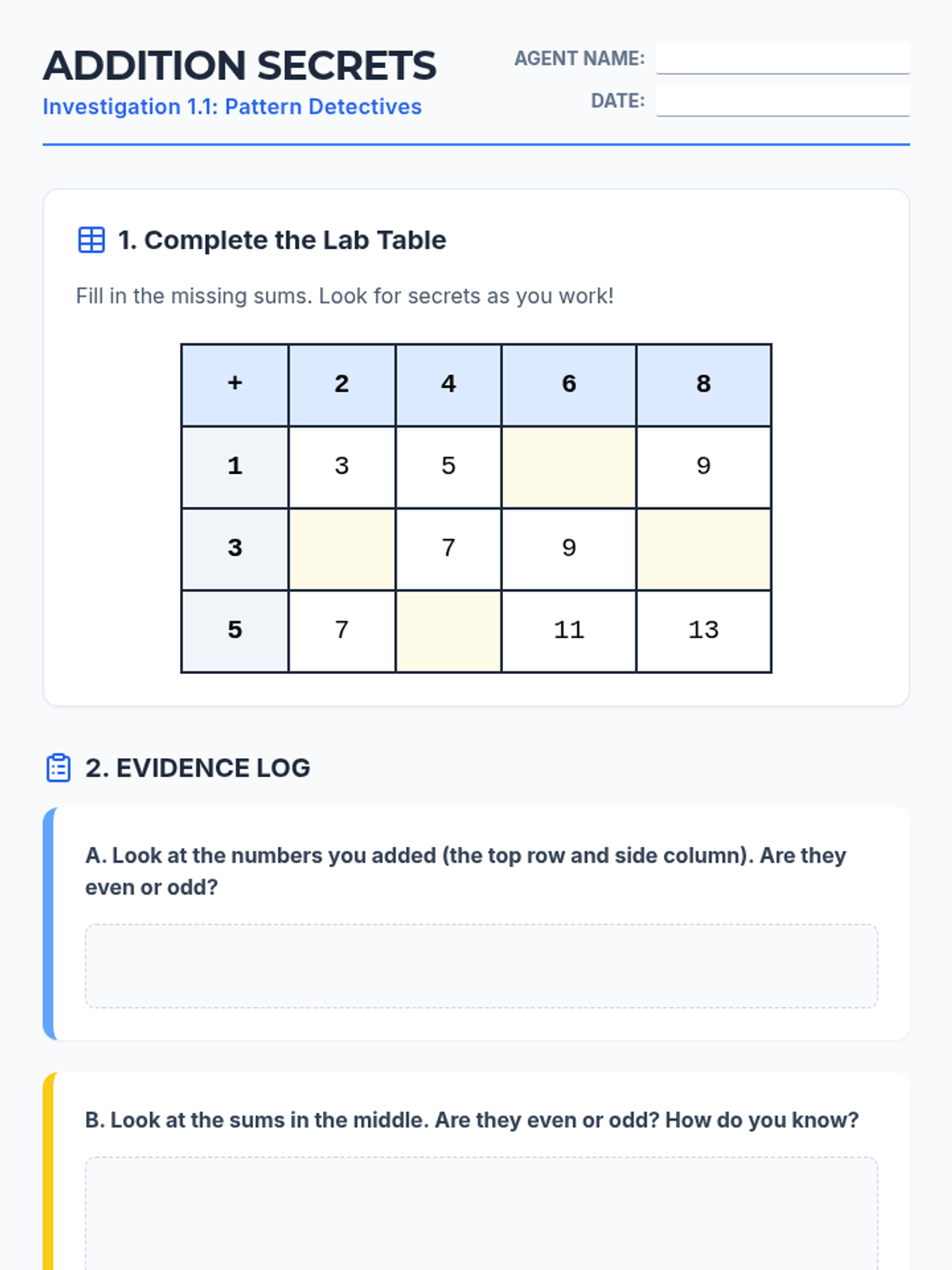
A Tier 2 intervention unit focused on uncovering and explaining arithmetic patterns using properties of operations, specifically targeting even/odd relationships and decomposition strategies for Grade 3.
A specialized intervention sequence designed for small groups to master identifying and explaining arithmetic patterns in addition and multiplication tables using properties of operations.

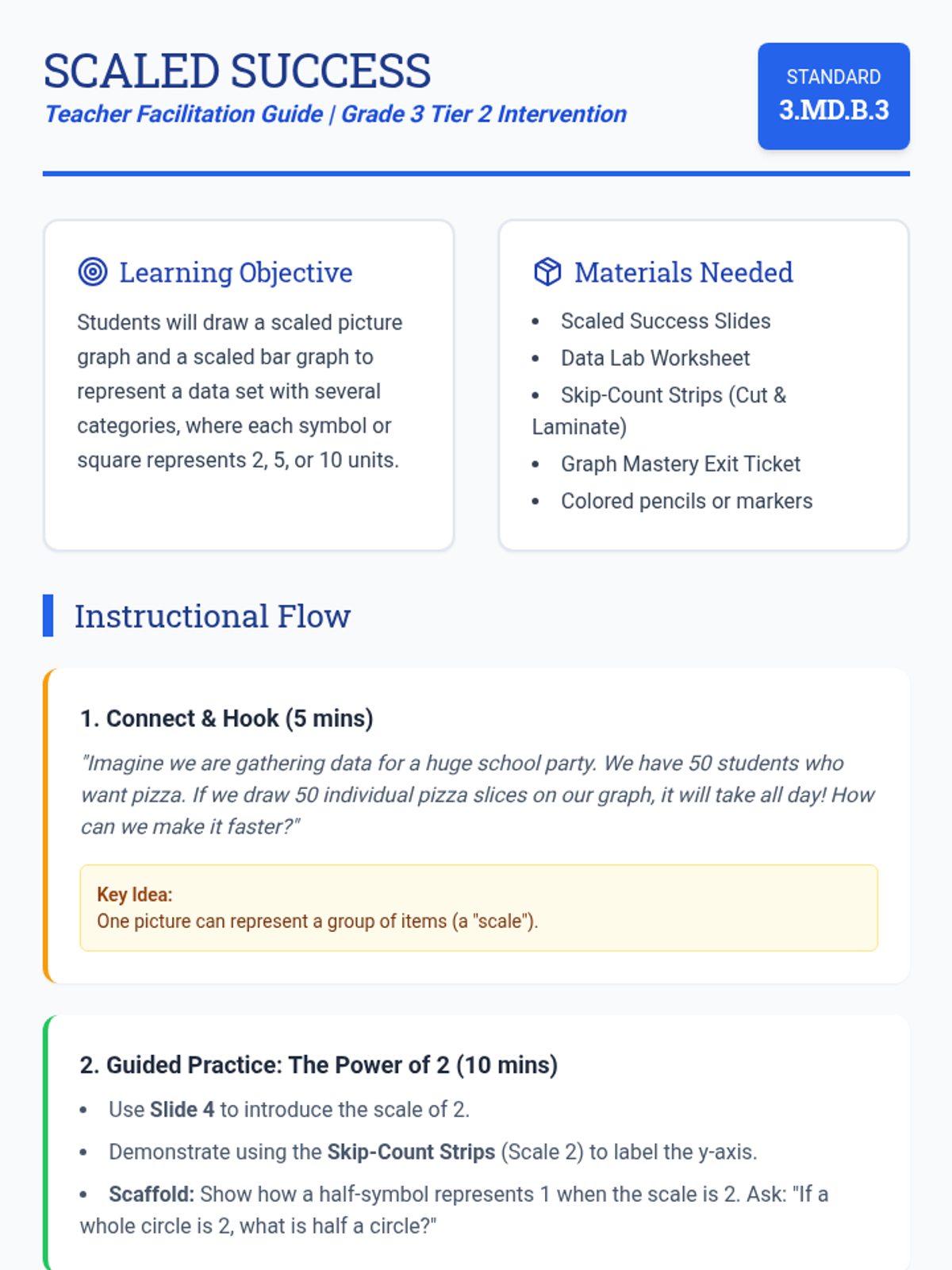
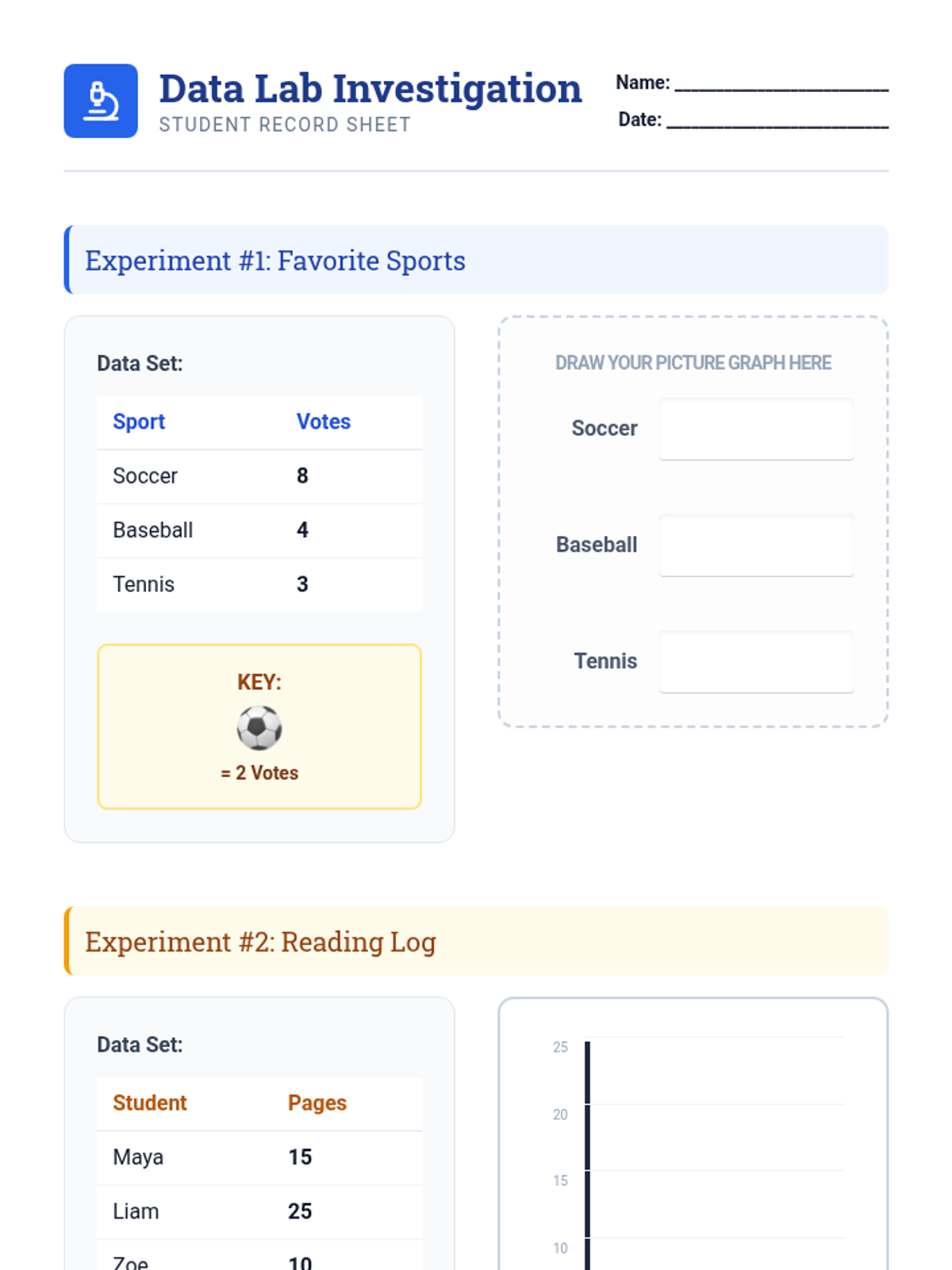
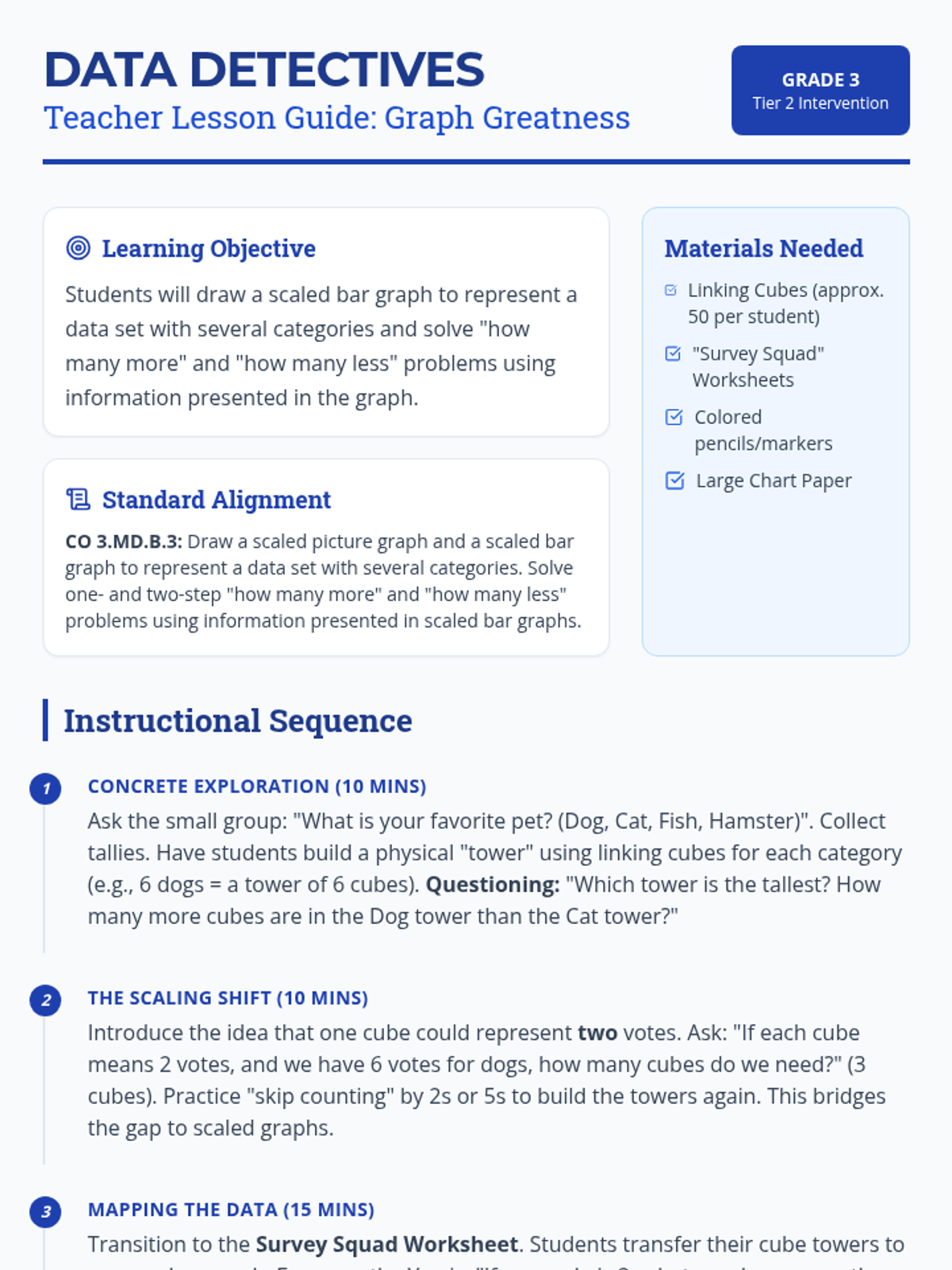
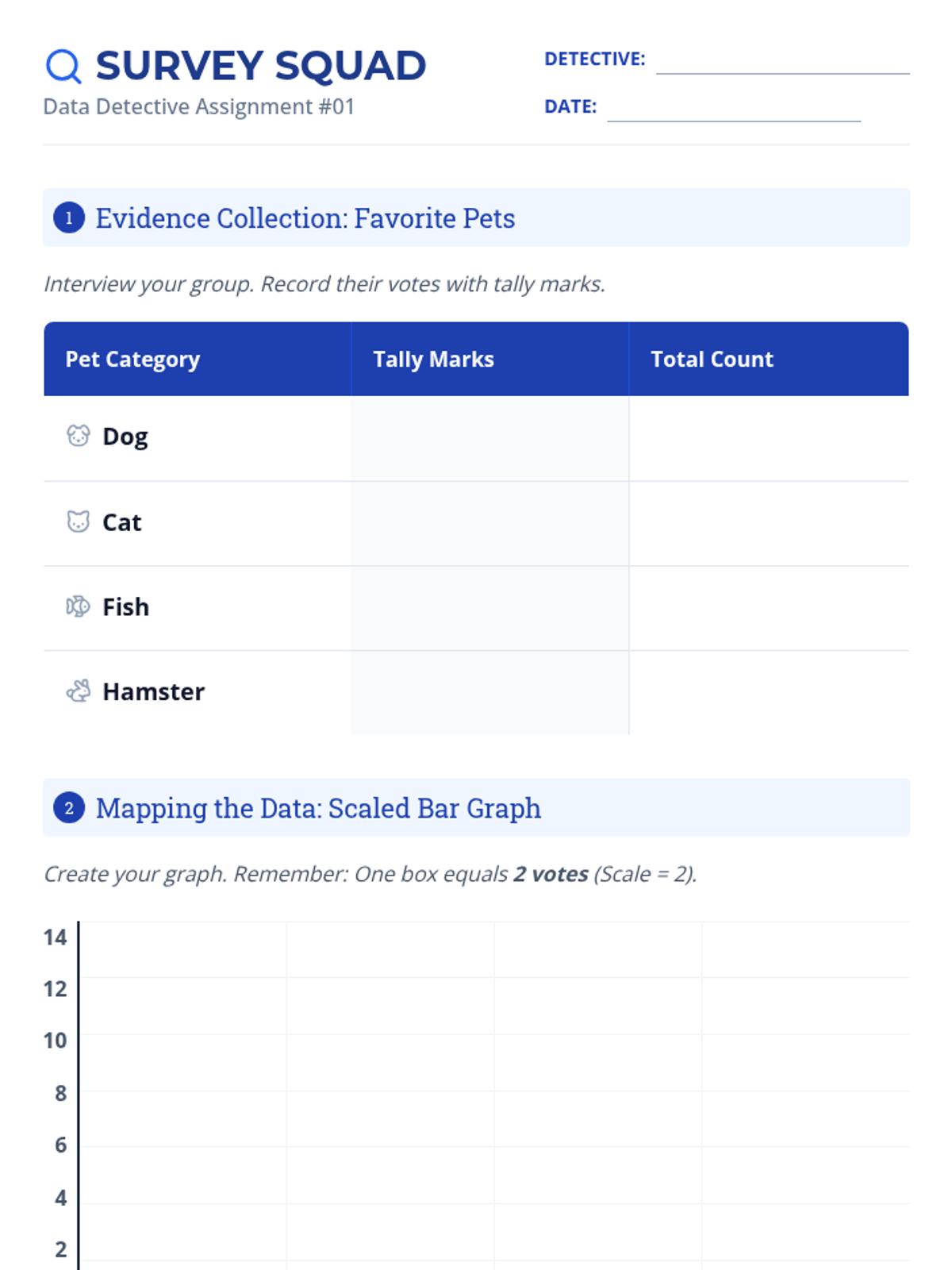
A small group intervention sequence focused on Grade 3 data representation, specifically teaching students to use scales greater than one in bar and picture graphs through scaffolded practice.
A series of intervention lessons focused on foundational area concepts, starting with unit squares and the no-gaps-no-overlaps rule.
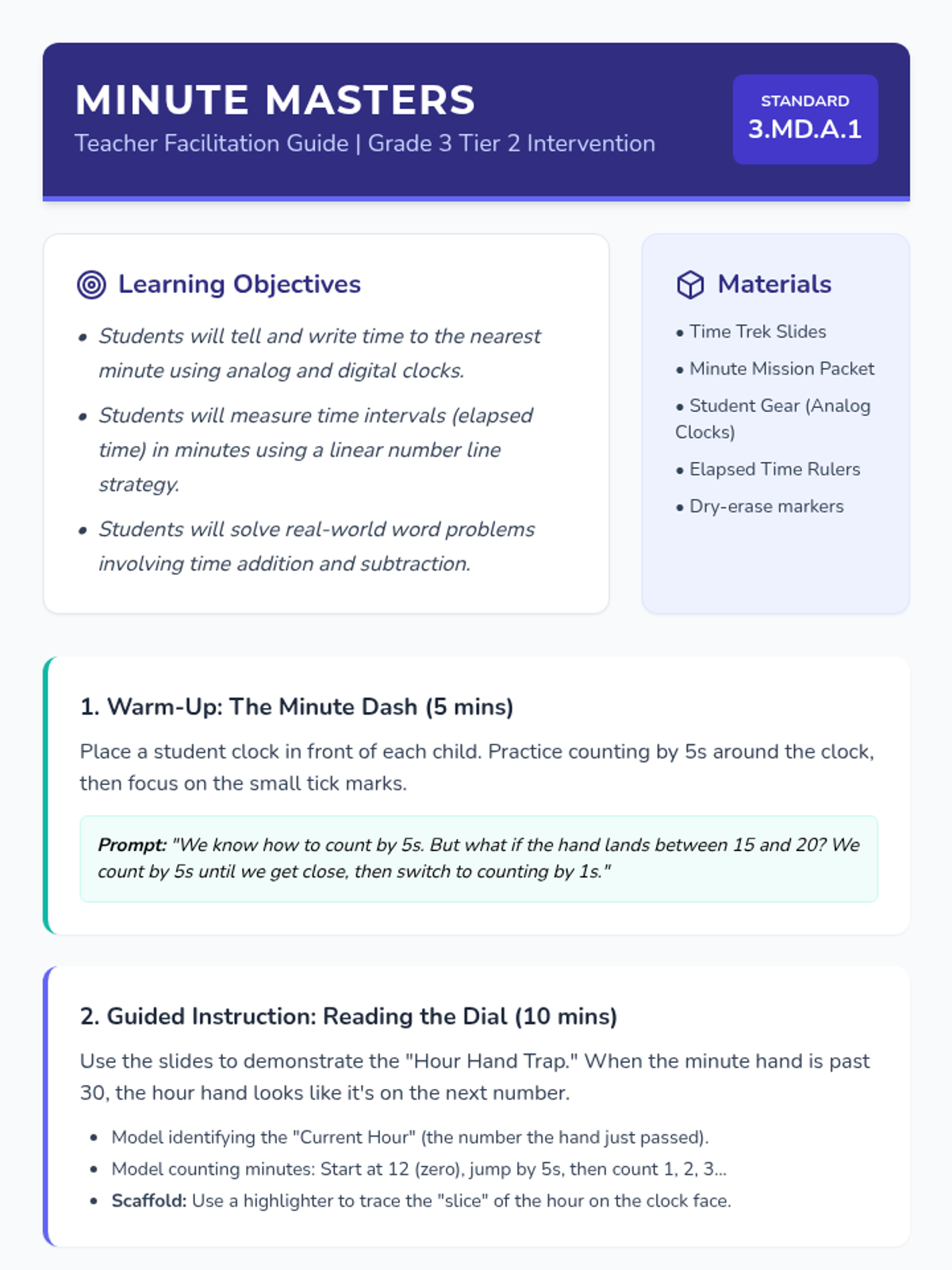
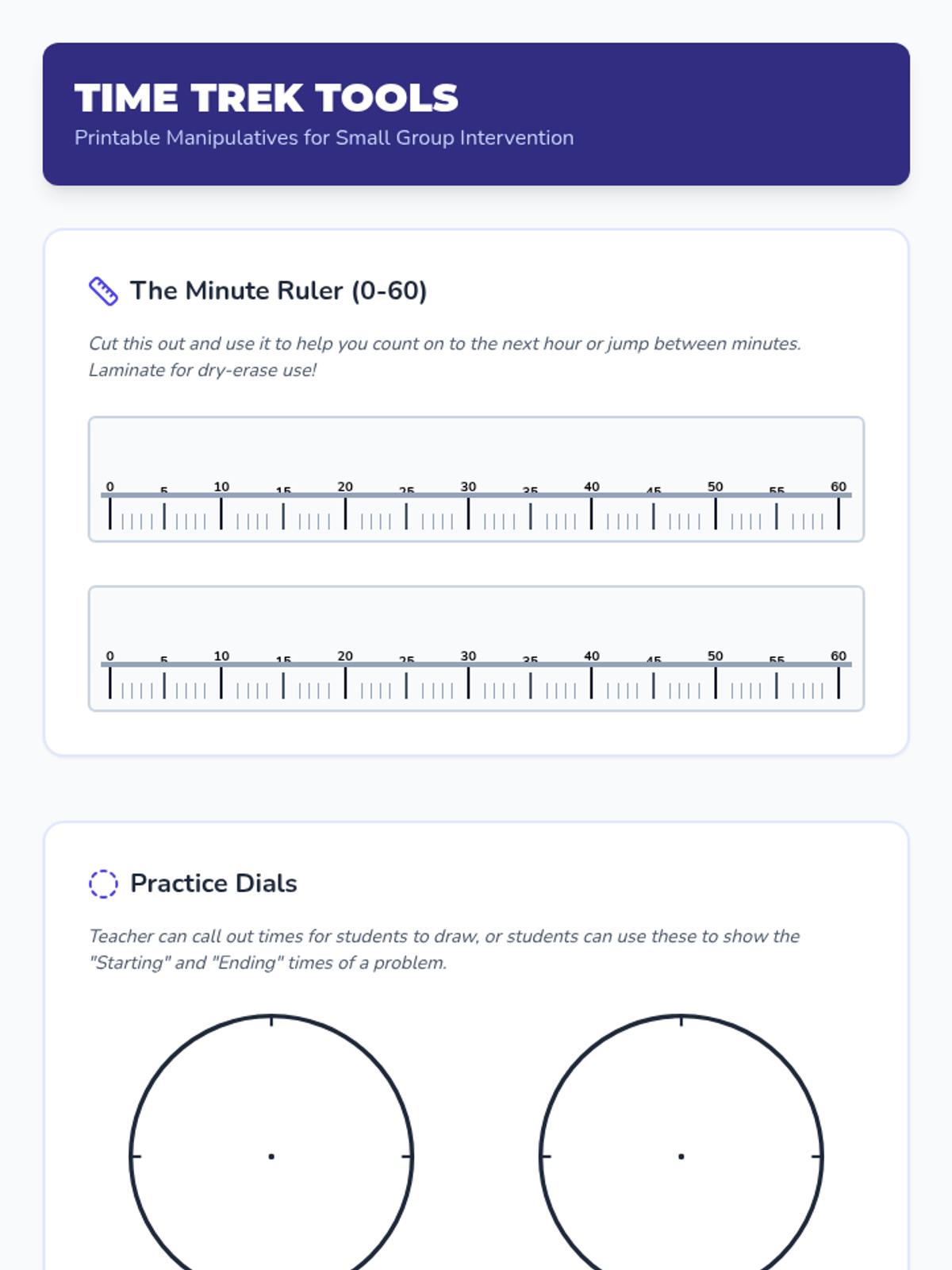
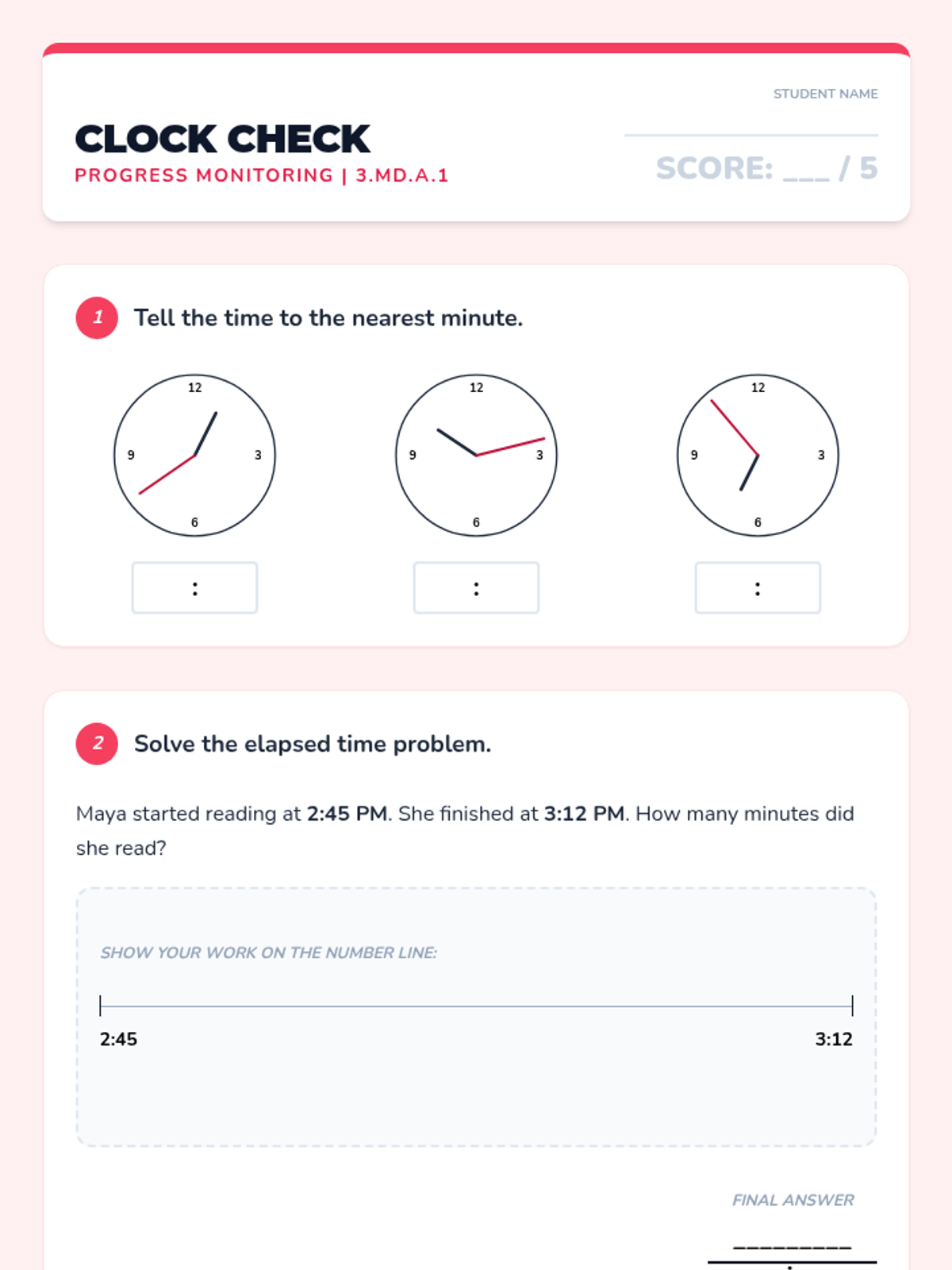
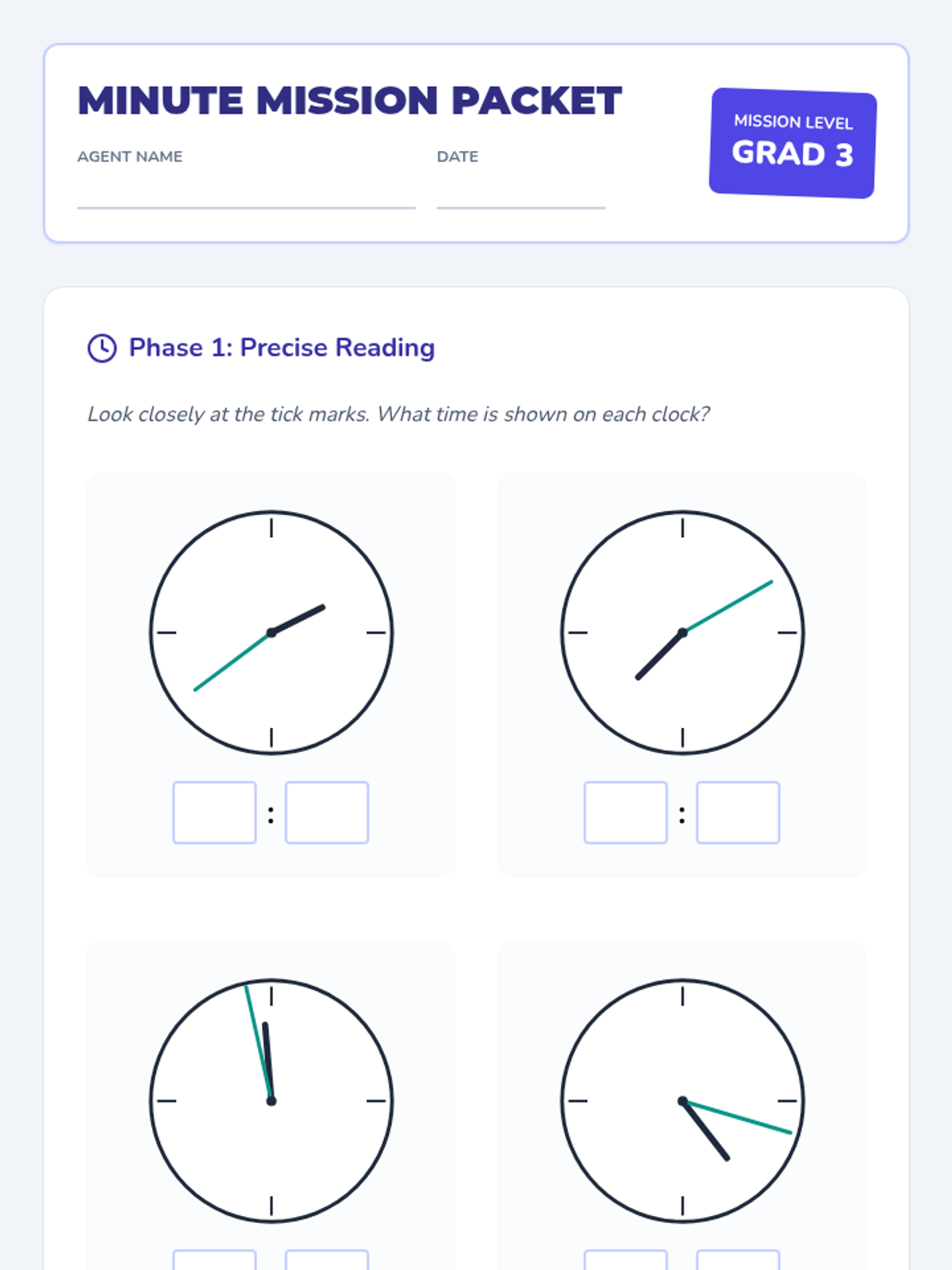
A Tier 2 intervention sequence focused on Grade 3 time measurement, including reading analog clocks to the nearest minute and calculating elapsed time using number line strategies.
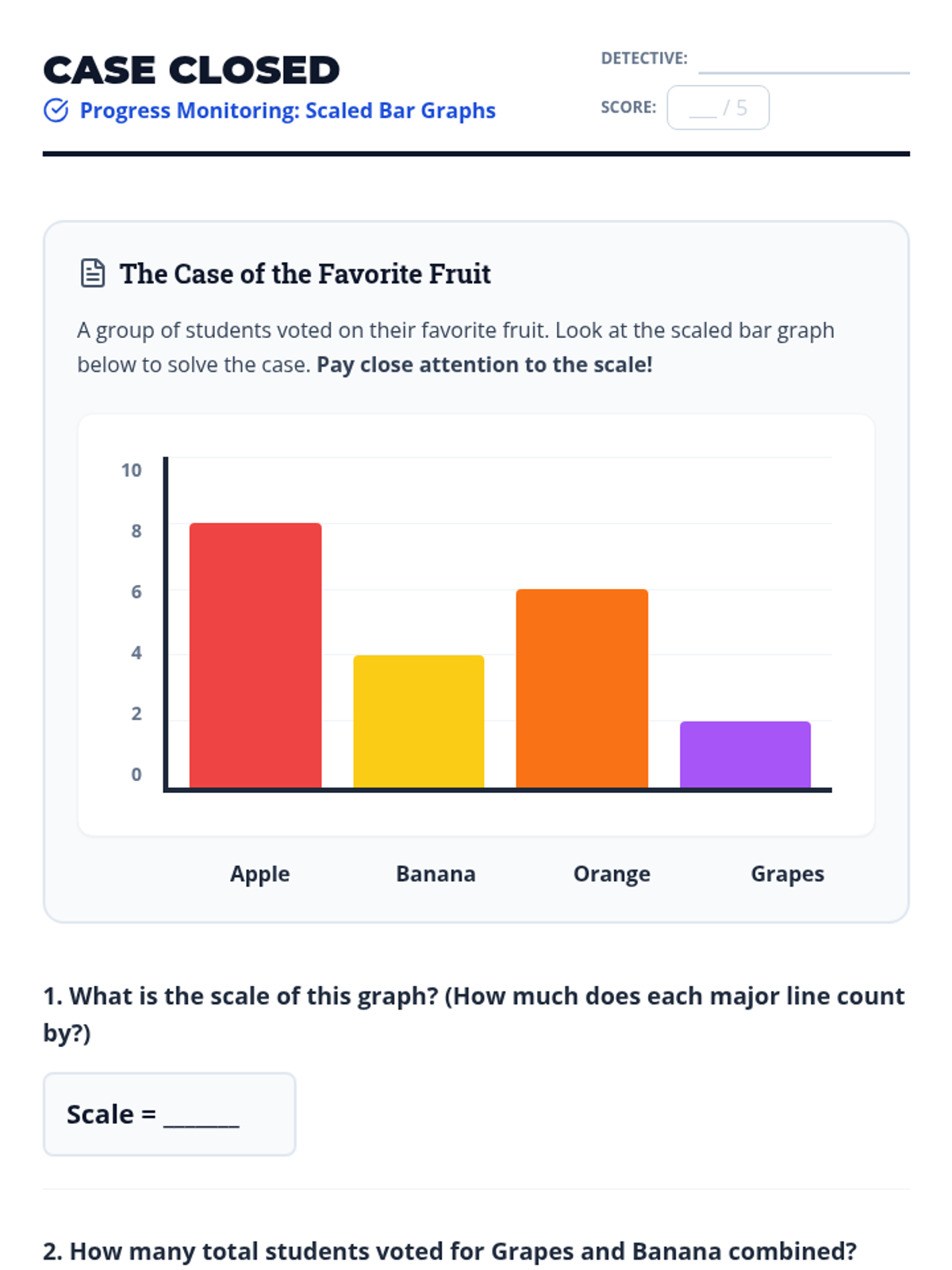
A specialized intervention sequence focused on mastering scaled bar graphs and using them to solve comparison problems for Grade 3 students.

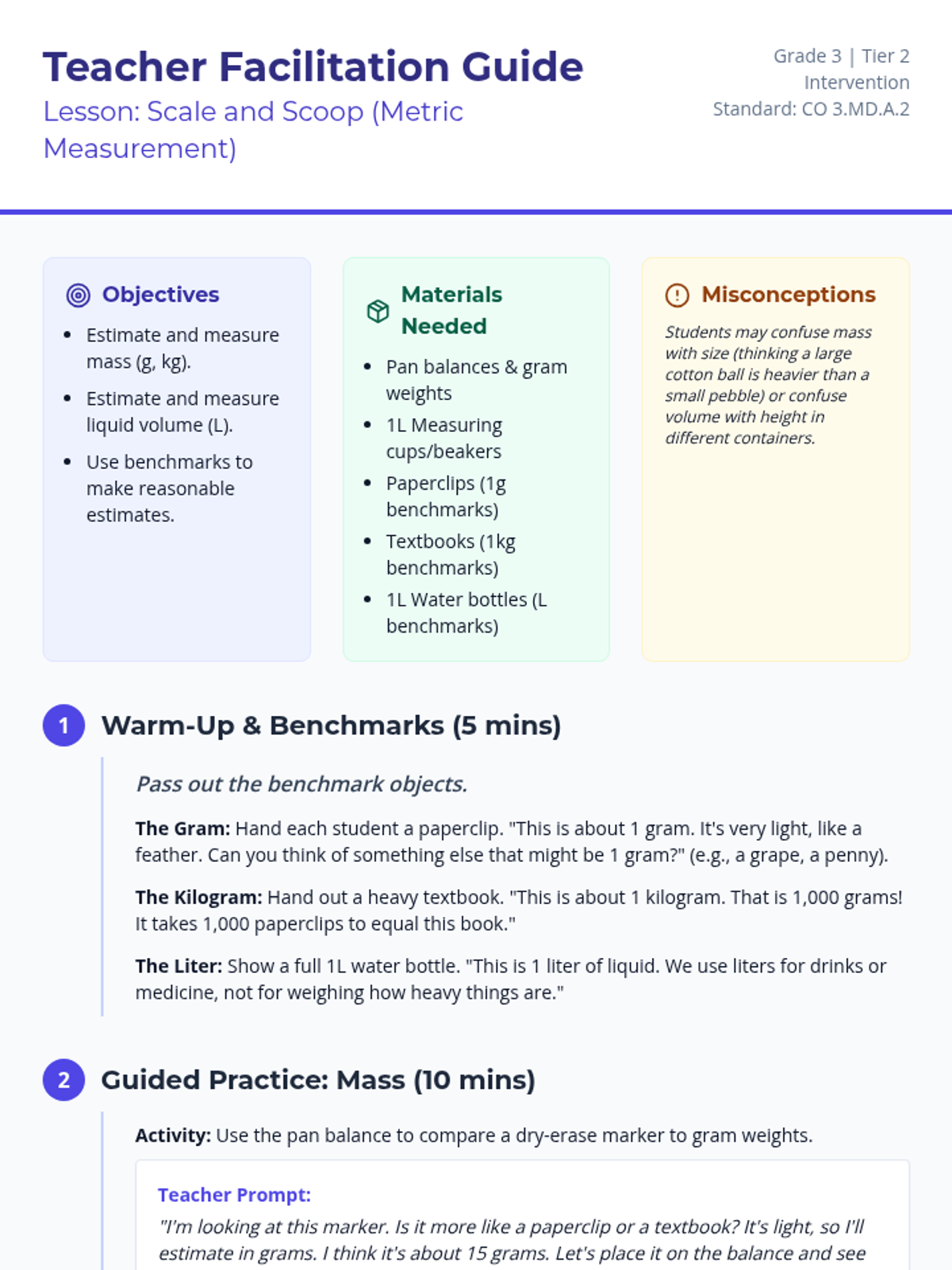
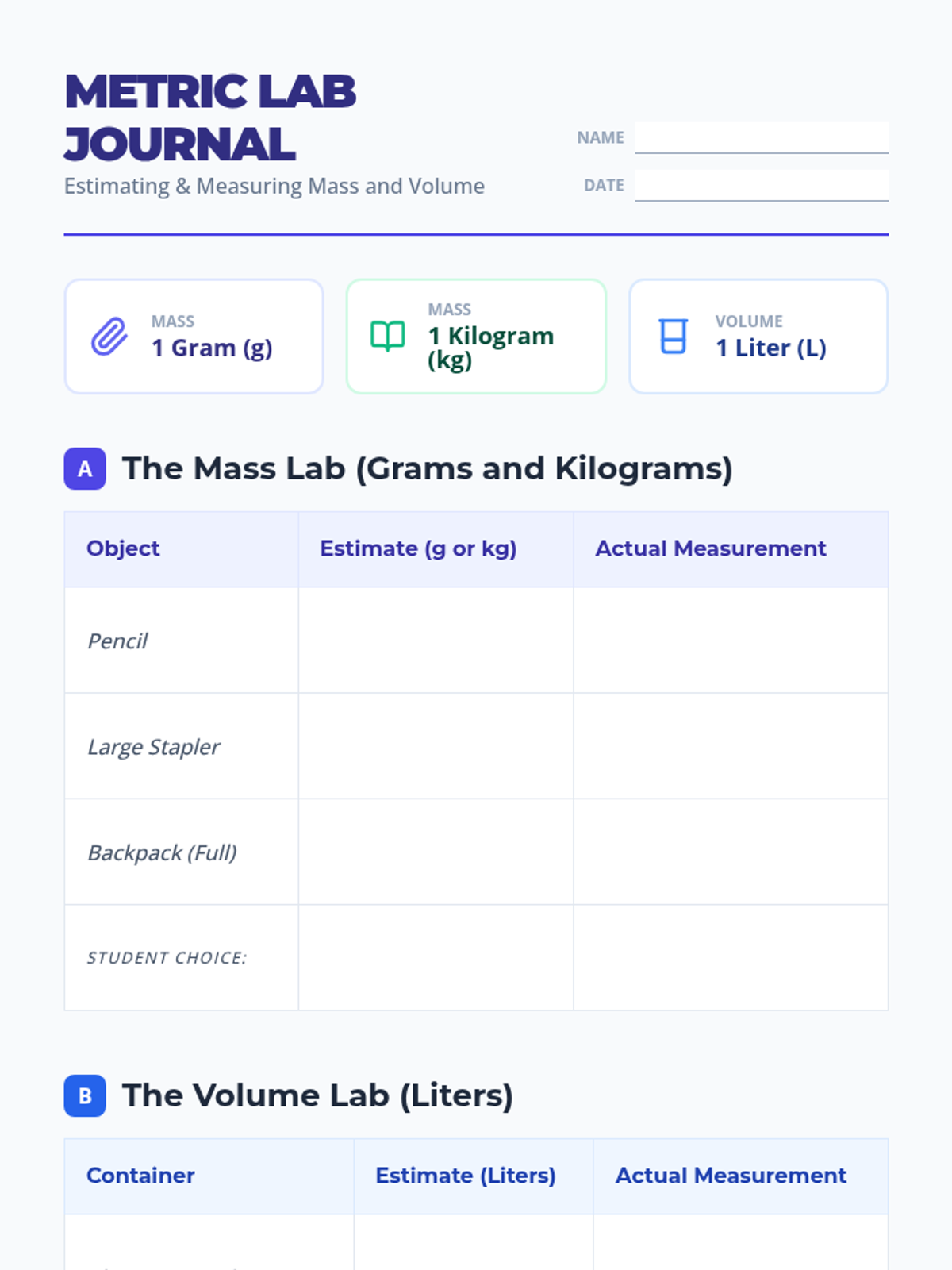
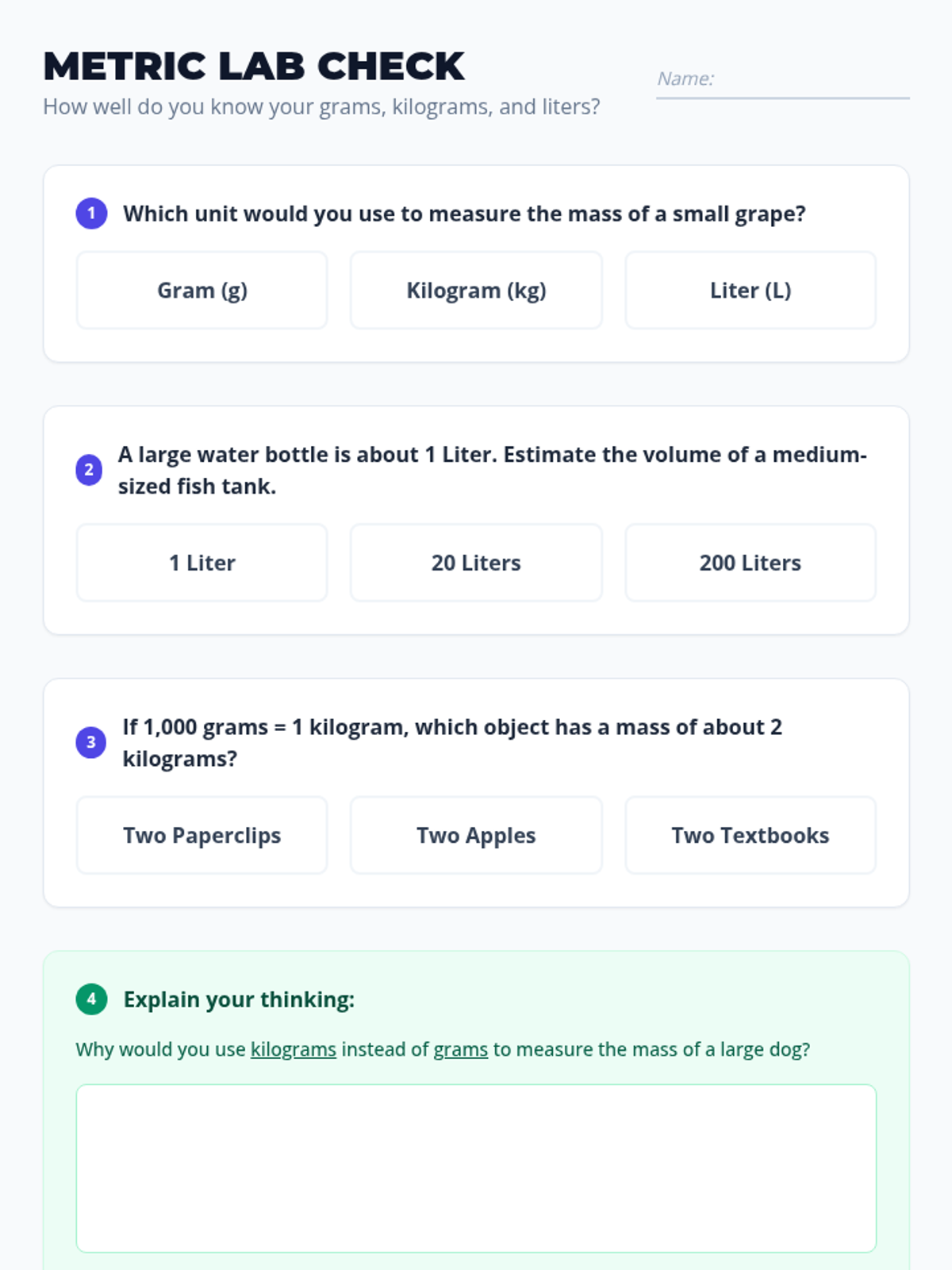
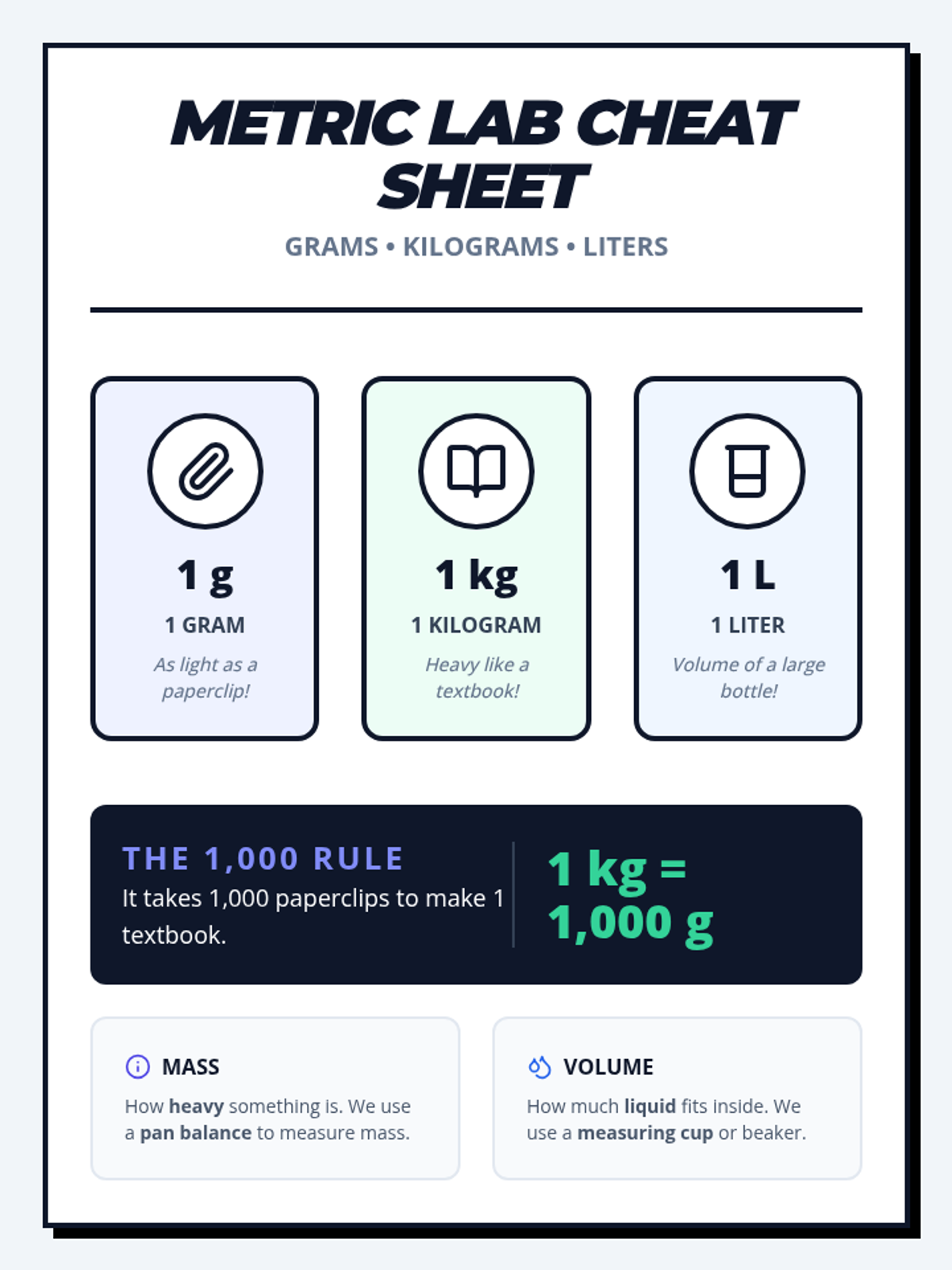
A targeted intervention sequence focused on developing conceptual understanding of mass and liquid volume using standard metric units (g, kg, L). Students use benchmark objects and hands-on tools like pan balances and measuring cups to build estimation and measurement skills.
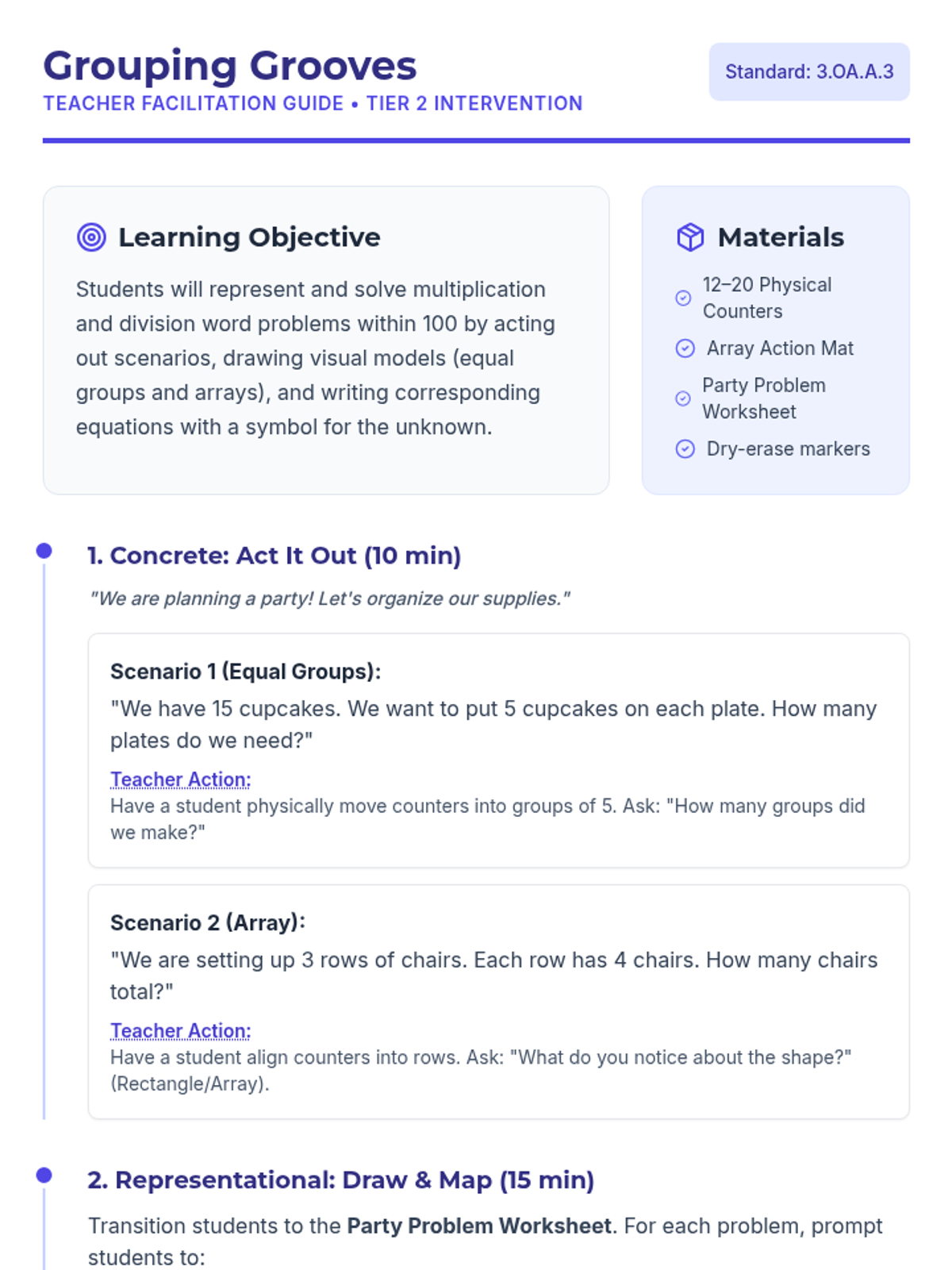
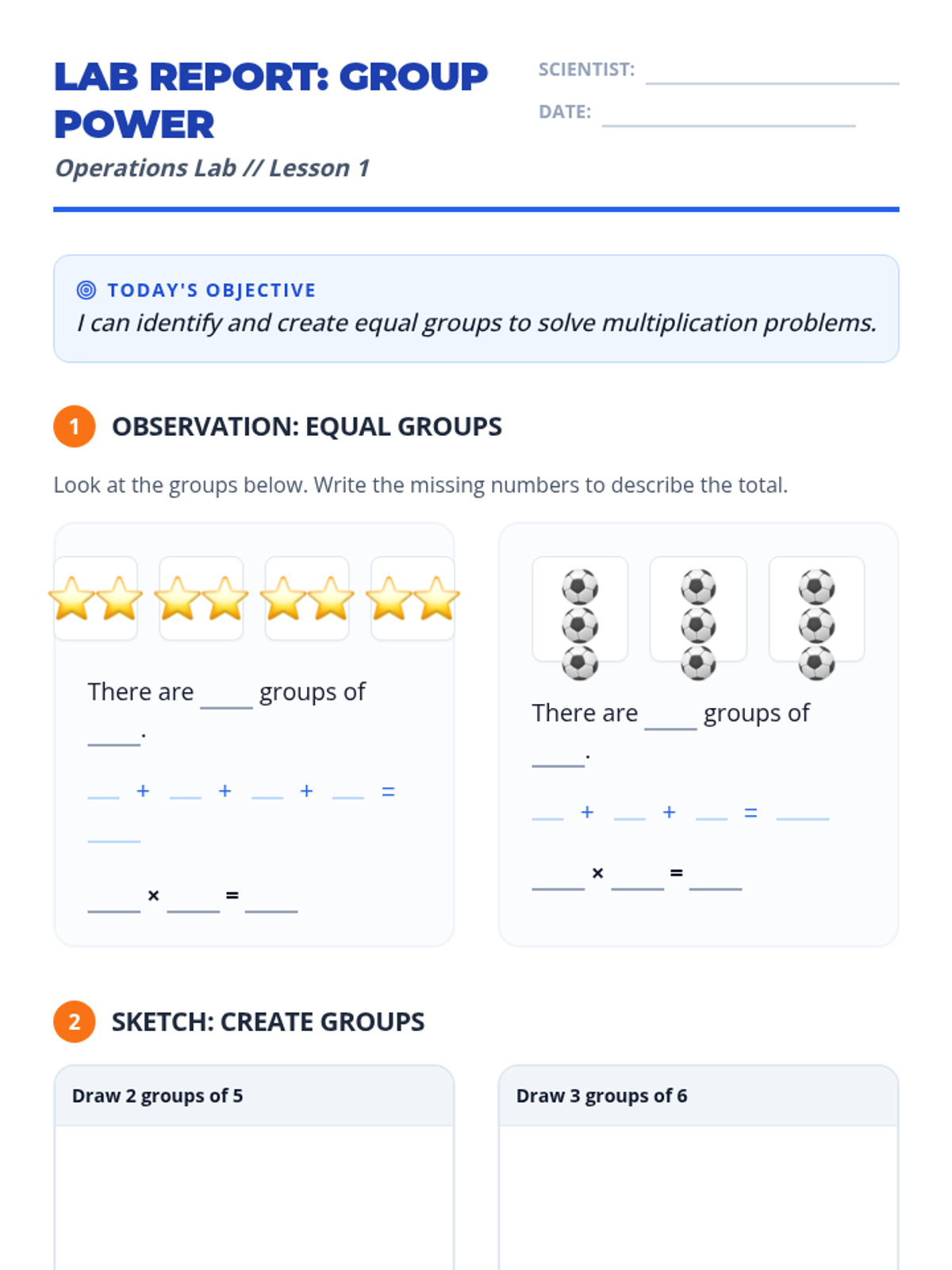
A targeted intervention sequence focused on representing and solving multiplication and division word problems using equal groups and arrays within 100. Students progress from concrete acting out to visual modeling and symbolic representation.
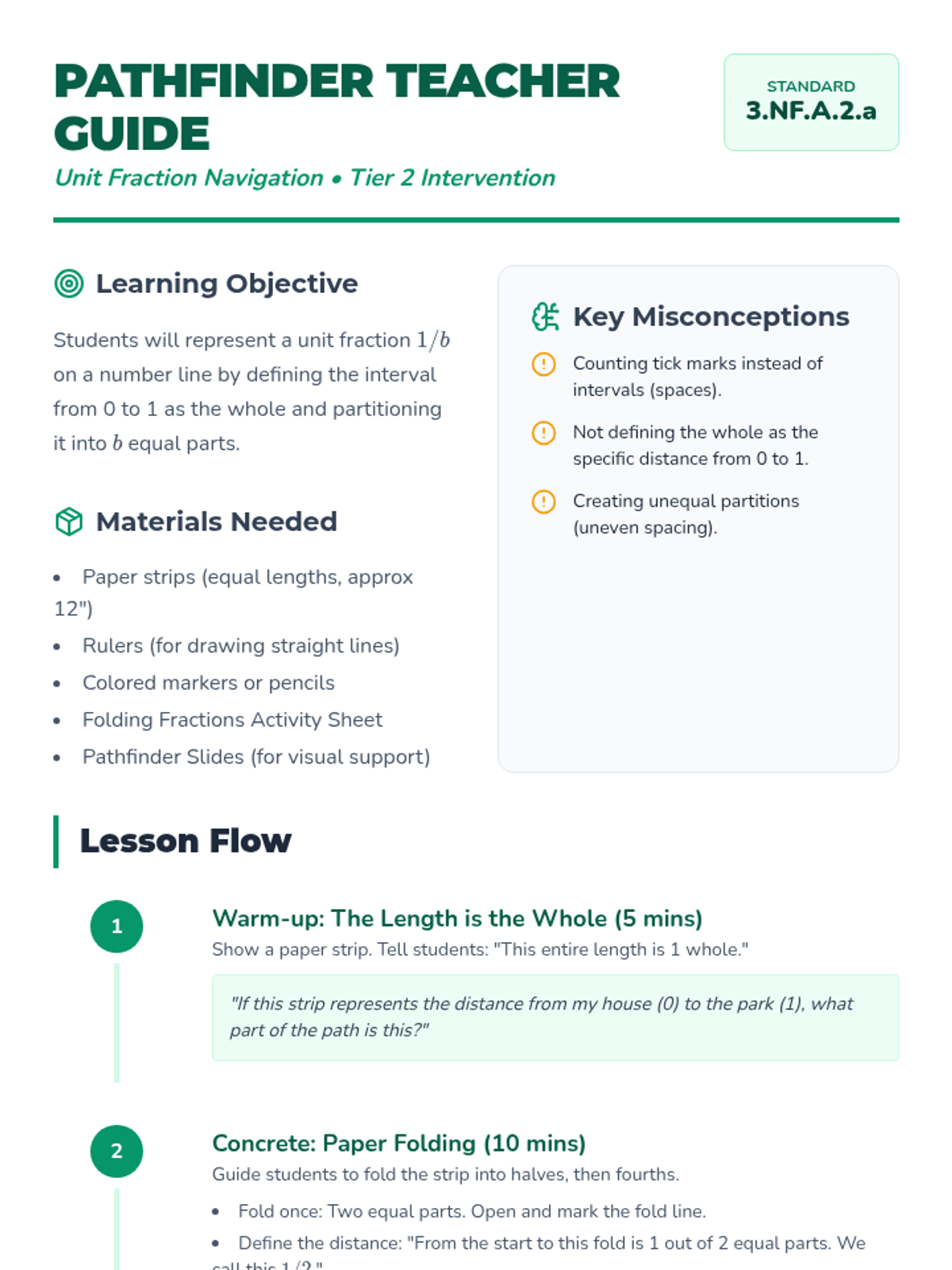
A Tier 2 intervention sequence focused on foundational fraction concepts for 3rd grade students, specifically targeting the representation of unit fractions on a number line by defining the whole as the interval from 0 to 1.
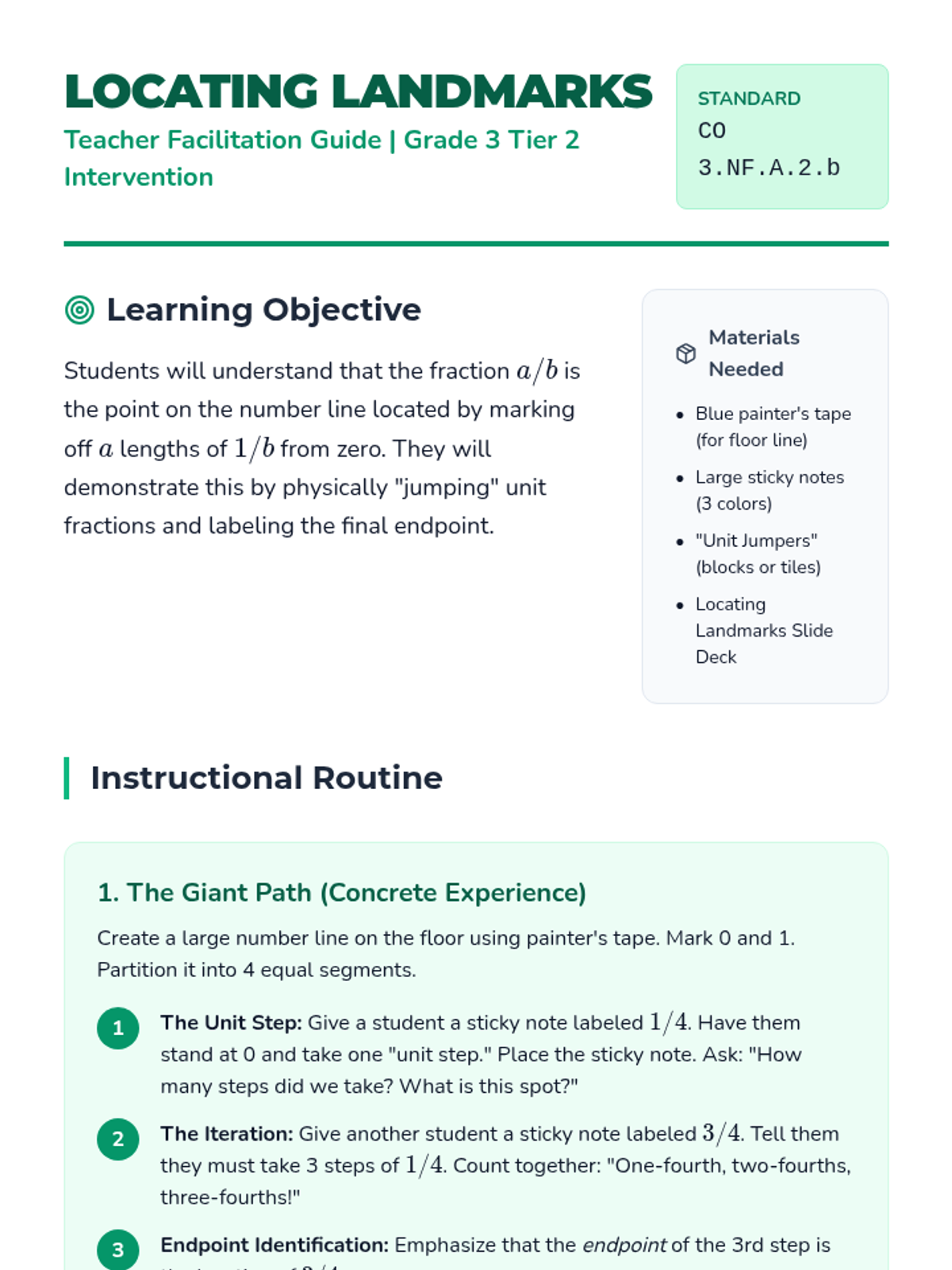
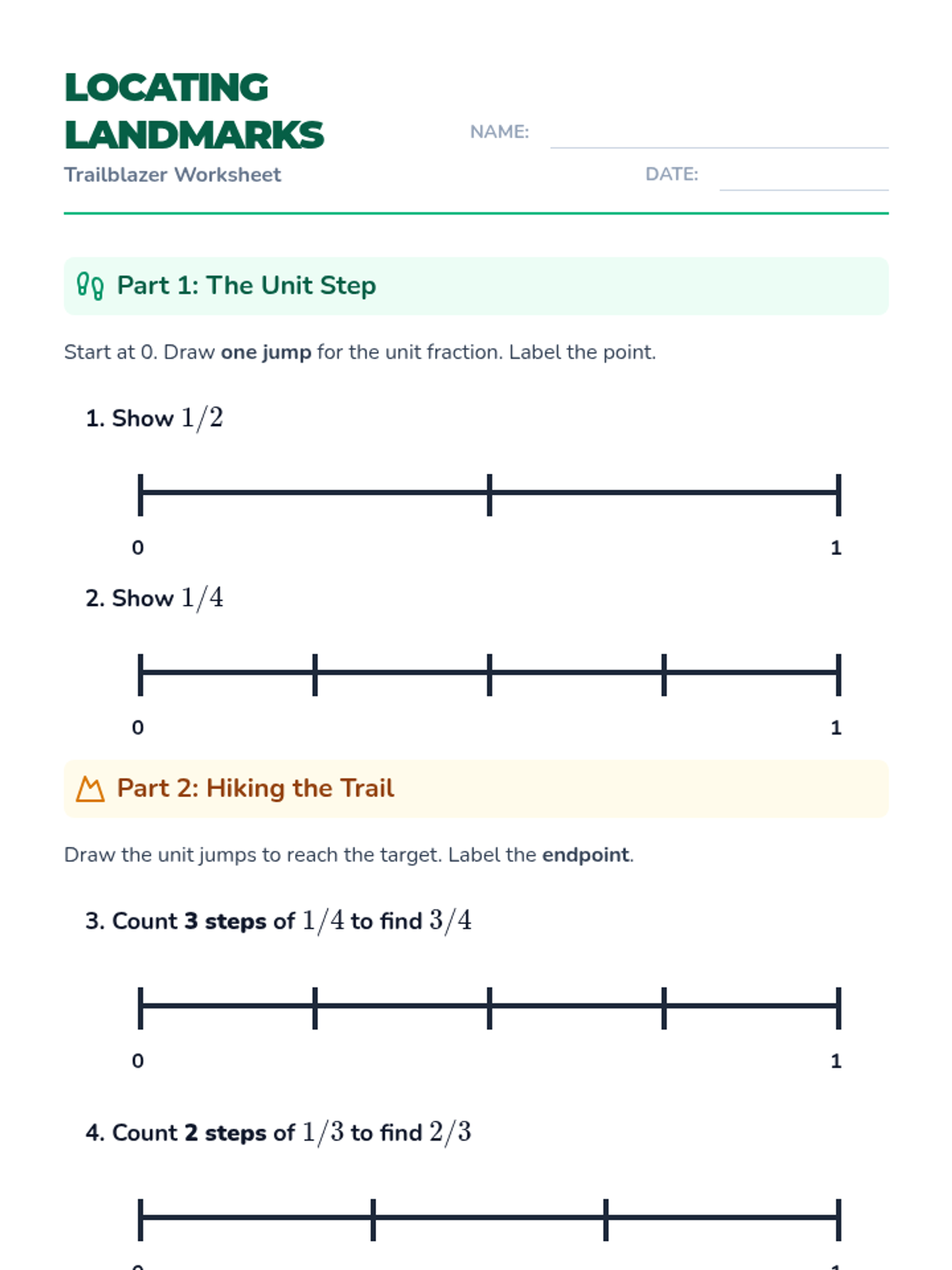
A Tier 2 intervention sequence focused on developing a deep conceptual understanding of fractions on a number line, specifically locating non-unit fractions by iterating unit fractions.
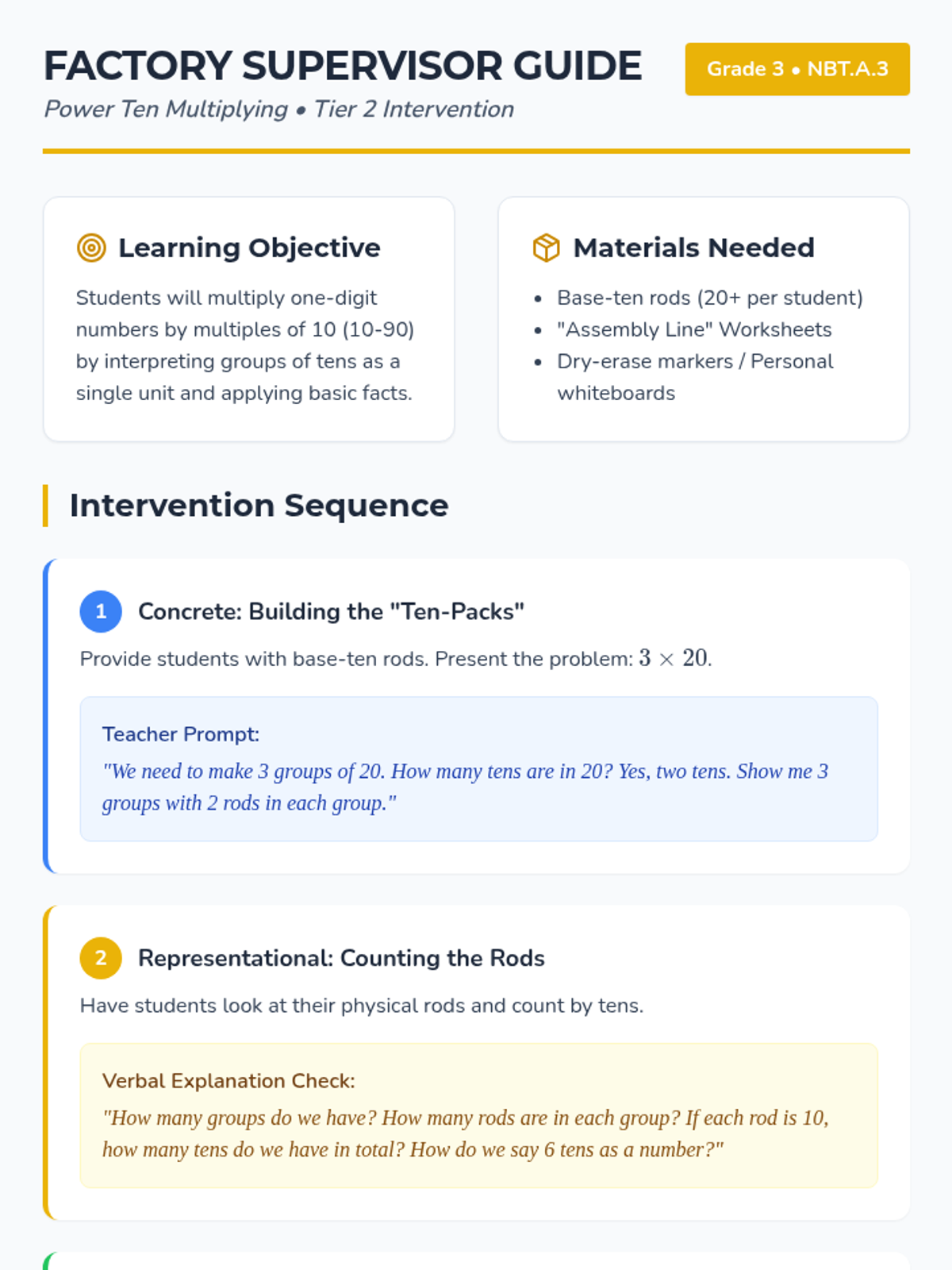
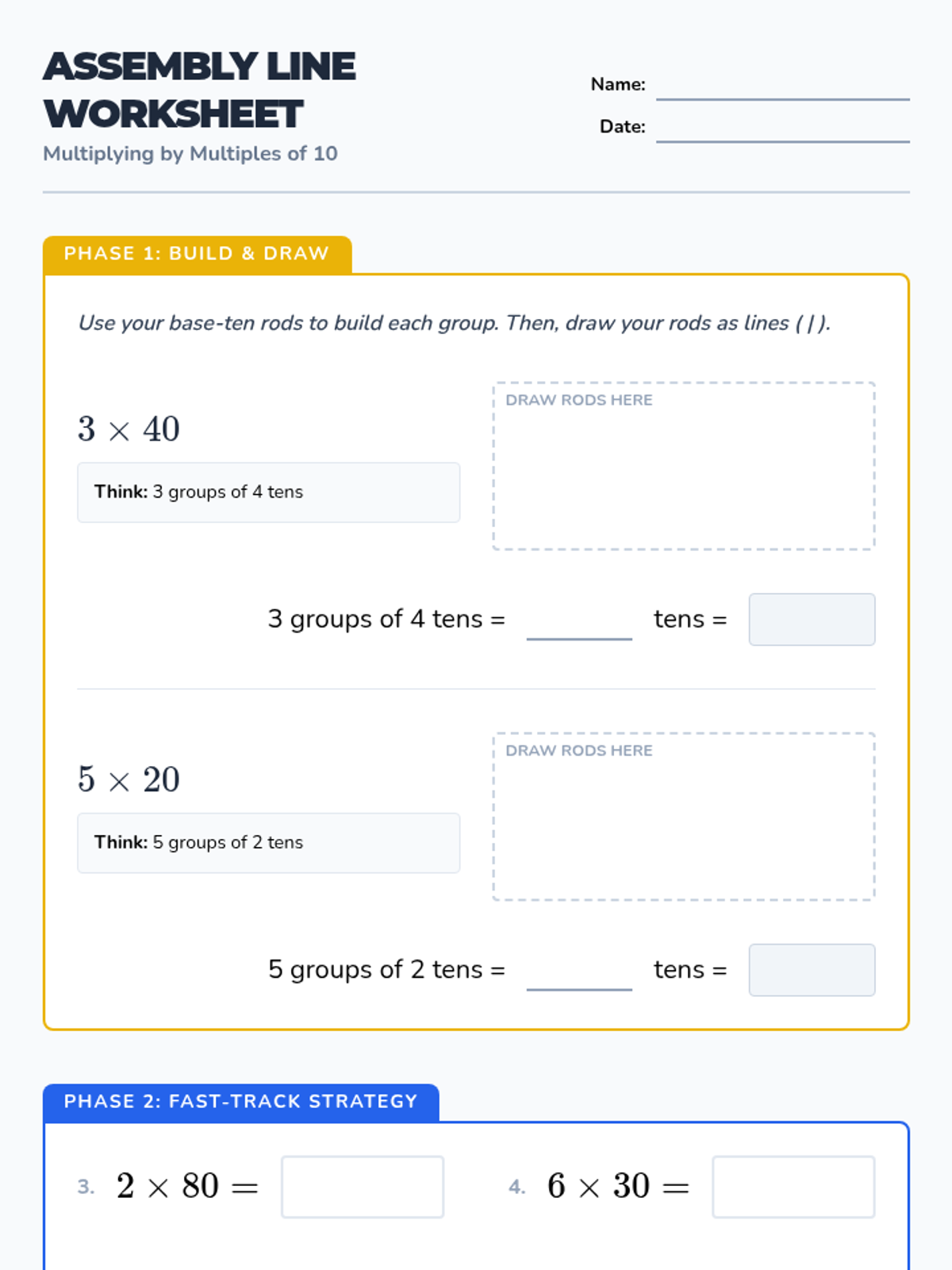
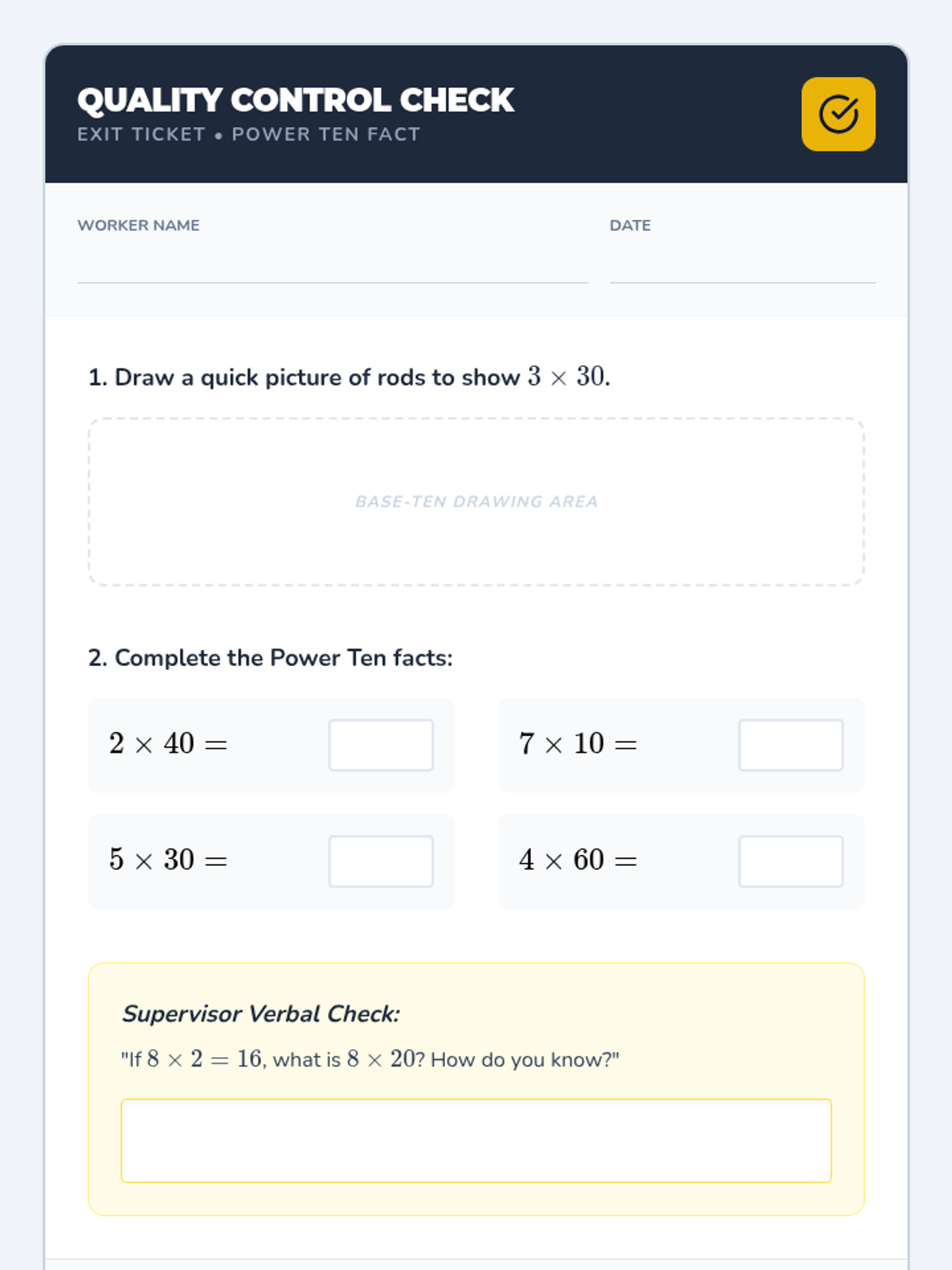
A targeted Tier 2 intervention unit focused on multiplying one-digit numbers by multiples of 10, utilizing concrete base-ten representations and place value strategies to build conceptual understanding and procedural fluency.
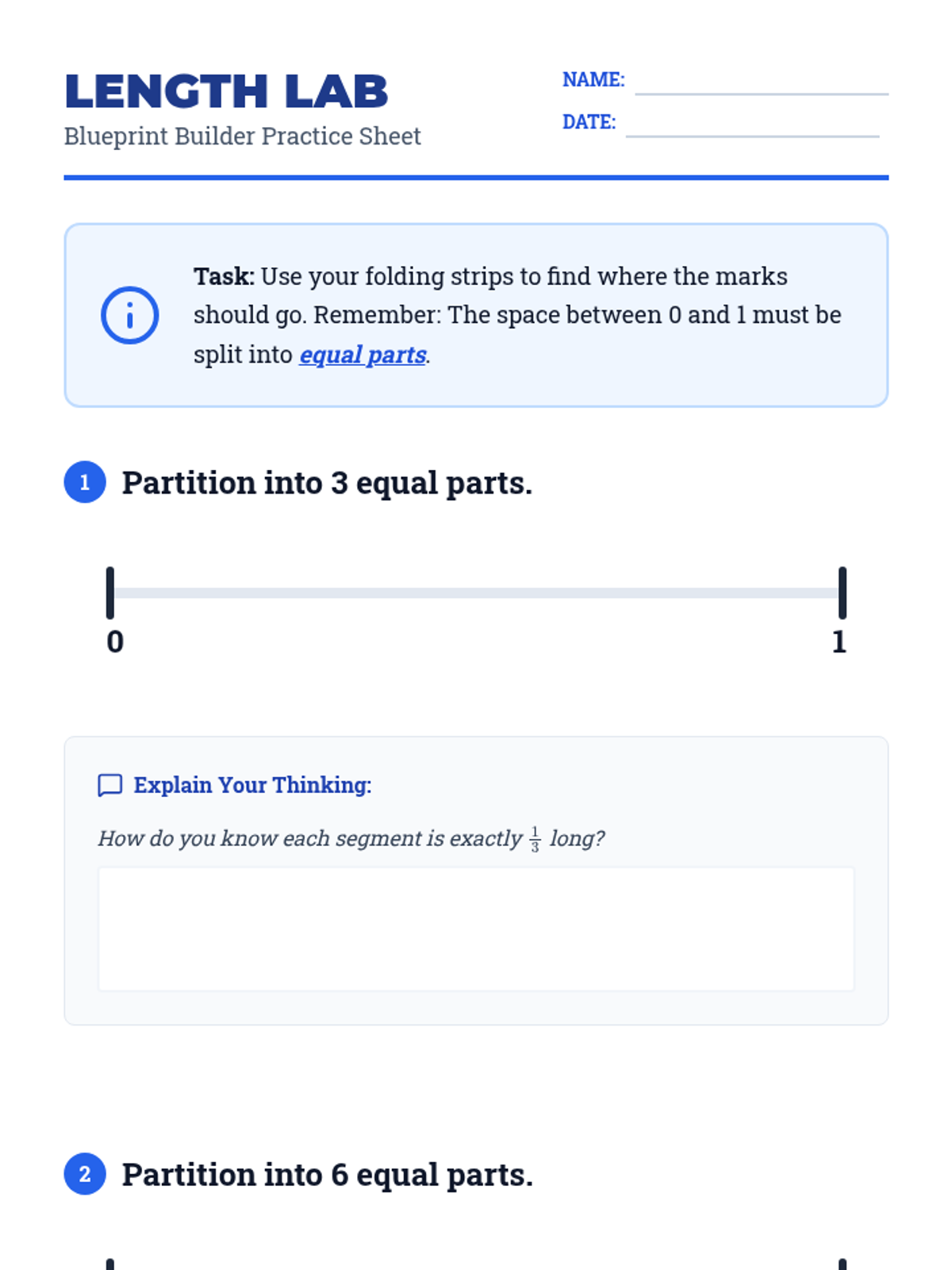
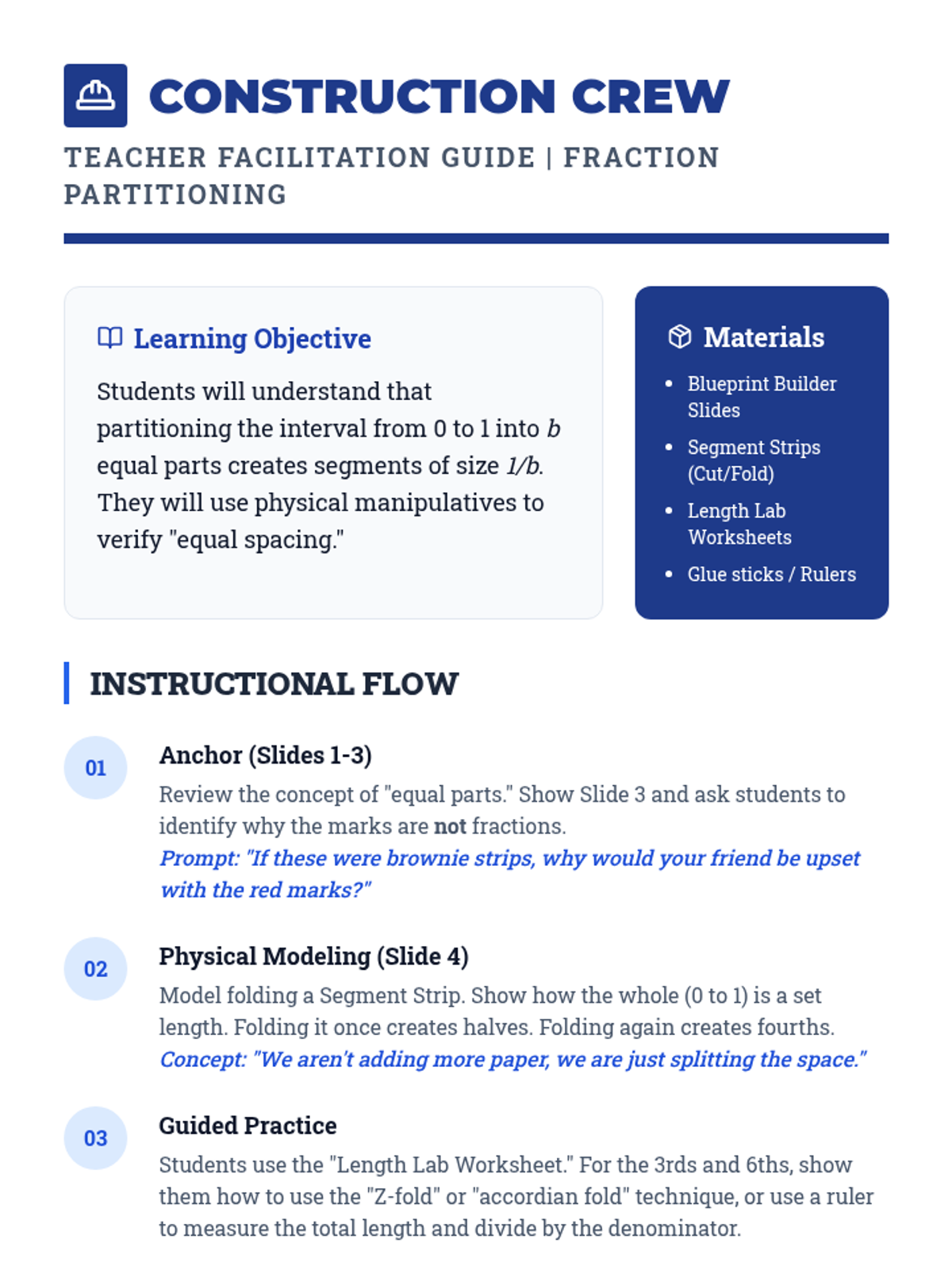
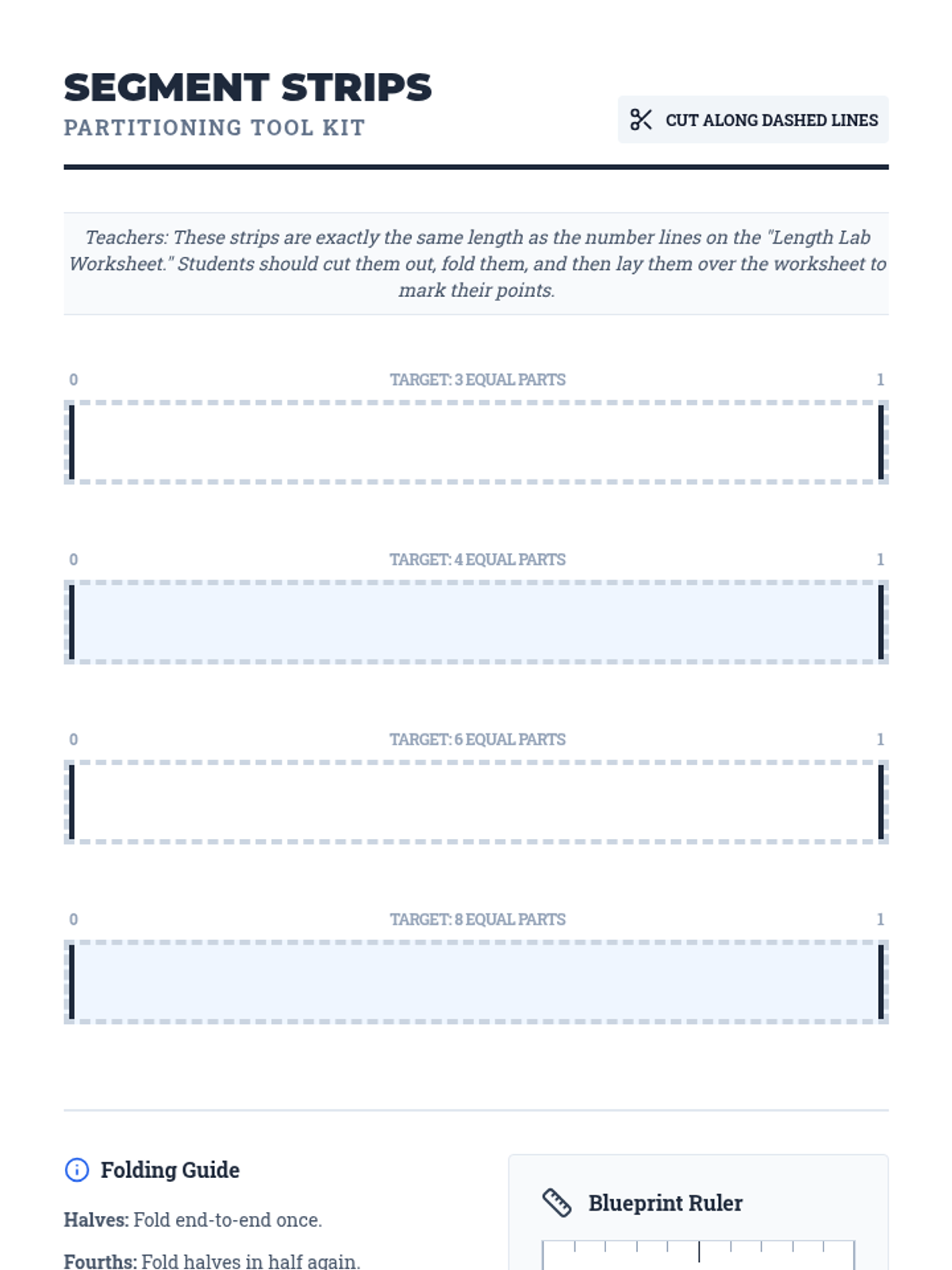
A series of targeted interventions focusing on foundational fraction concepts, specifically partitioning and representing fractions on number lines.
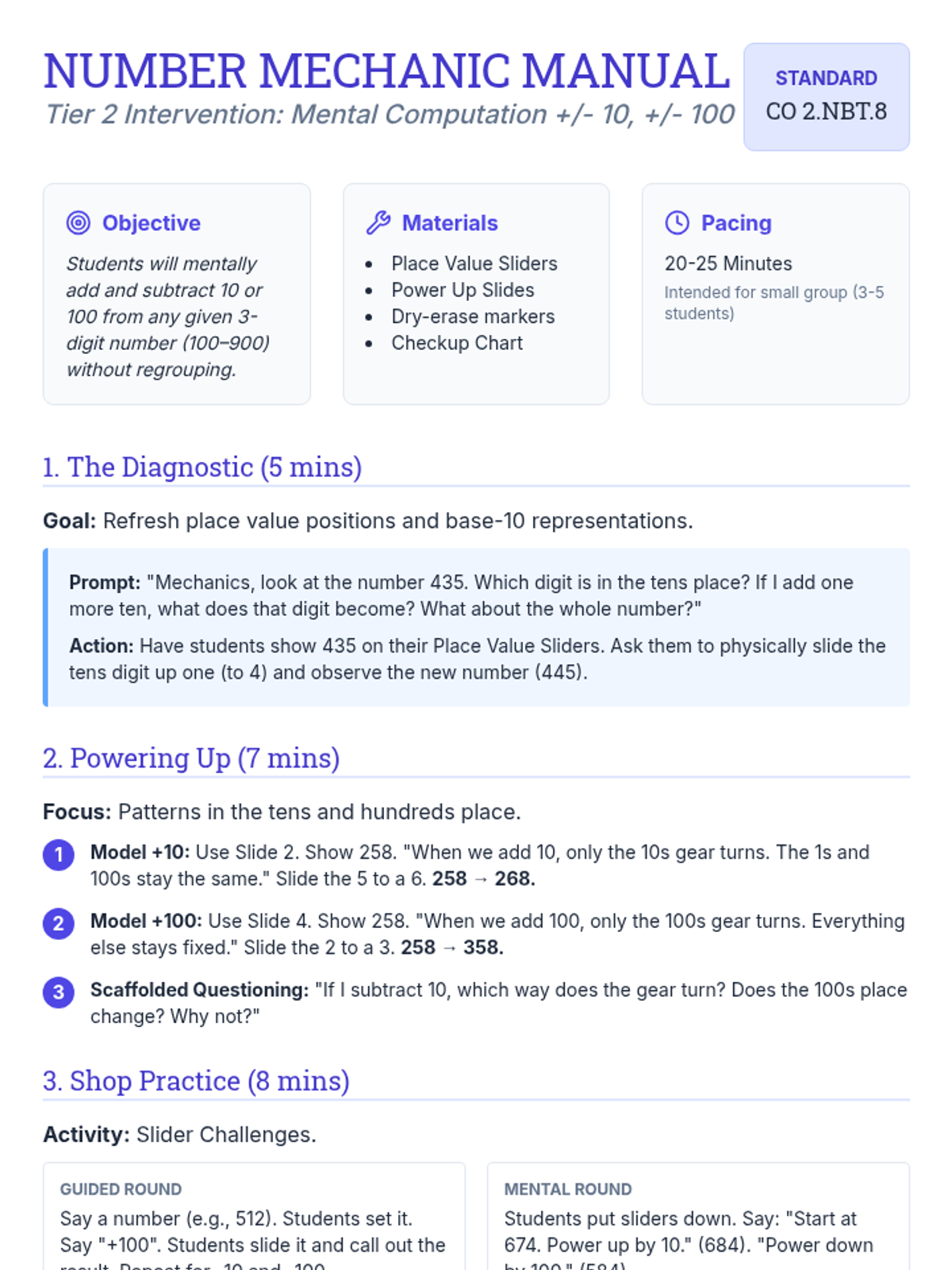
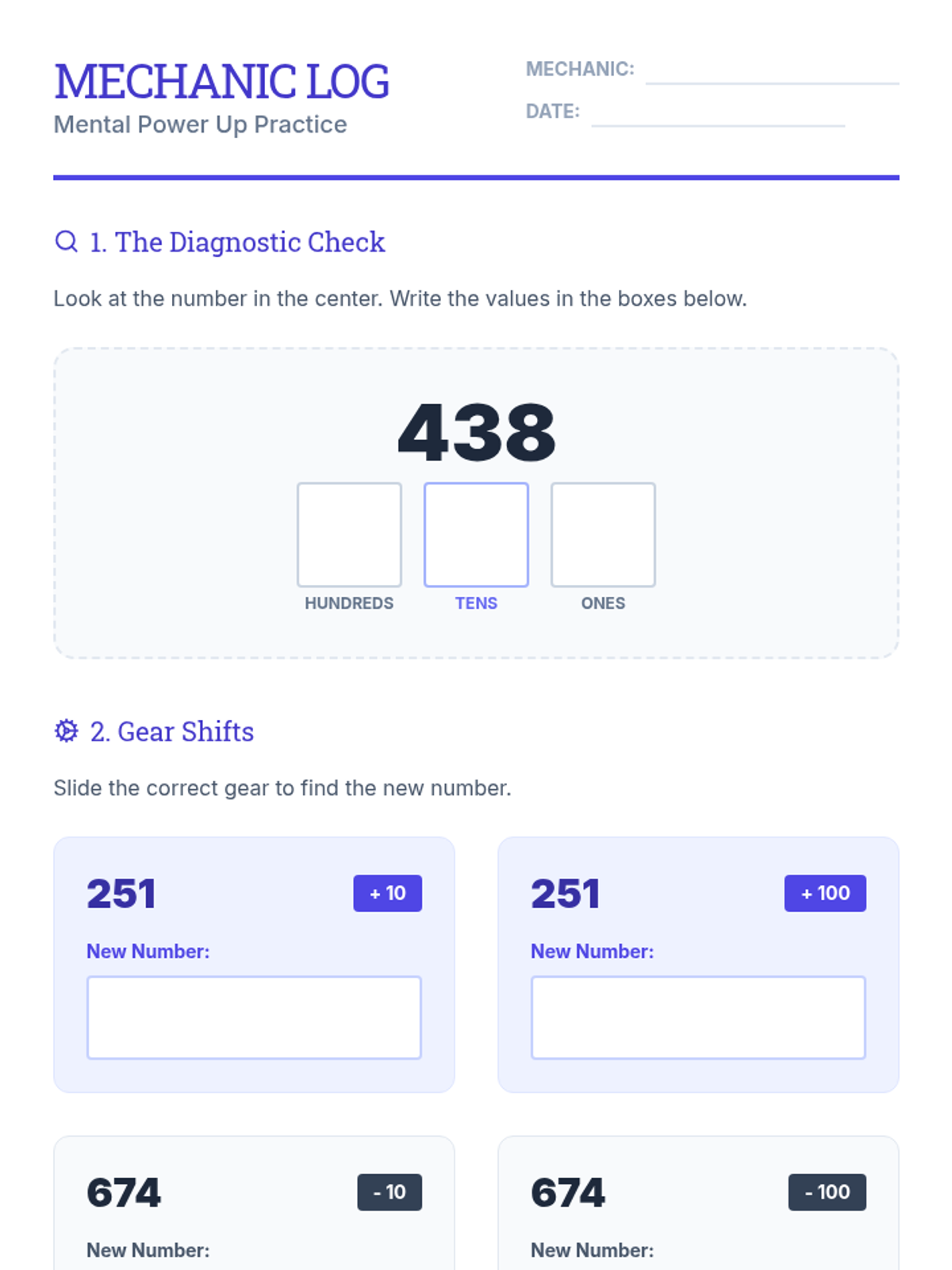
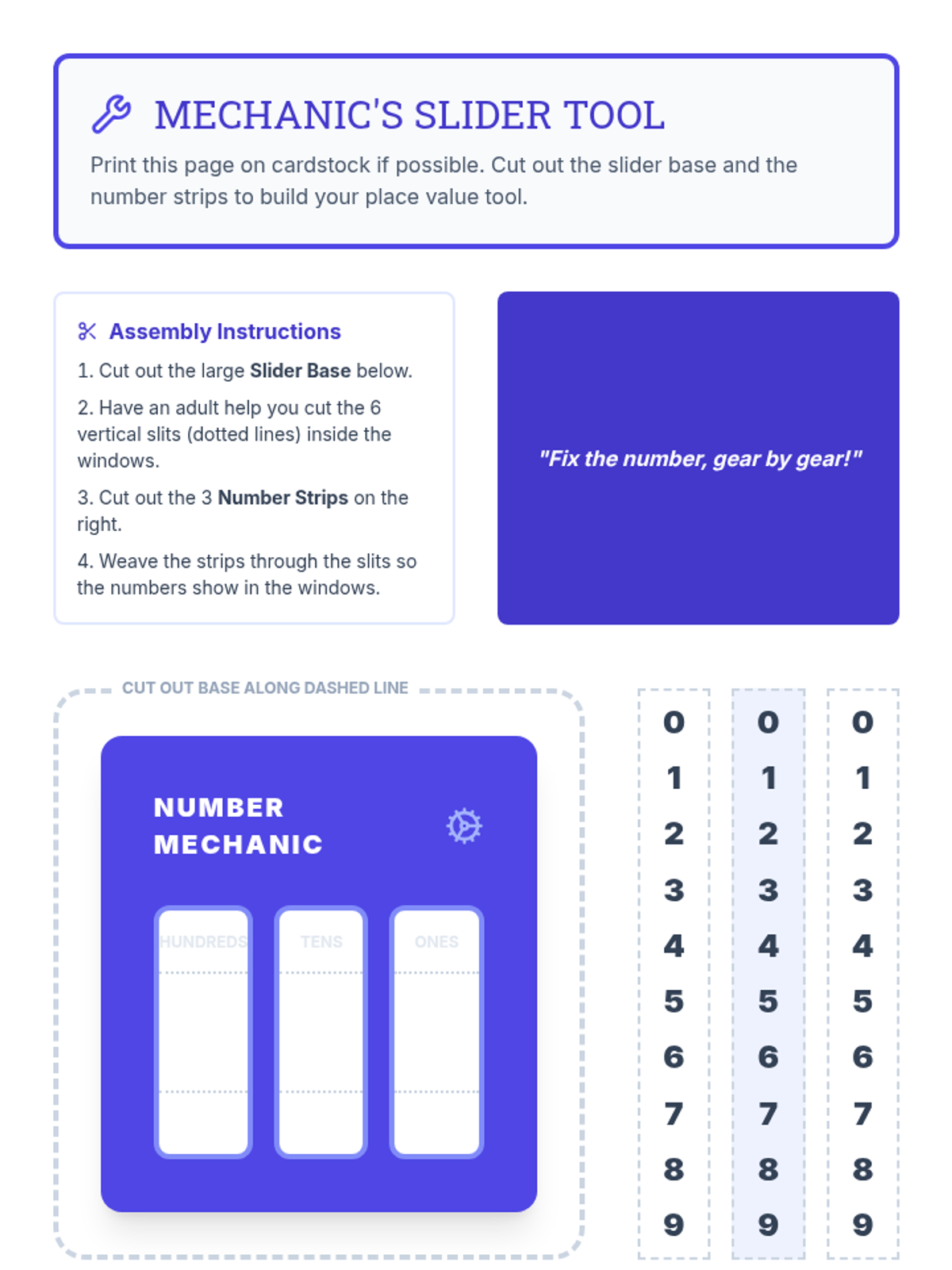
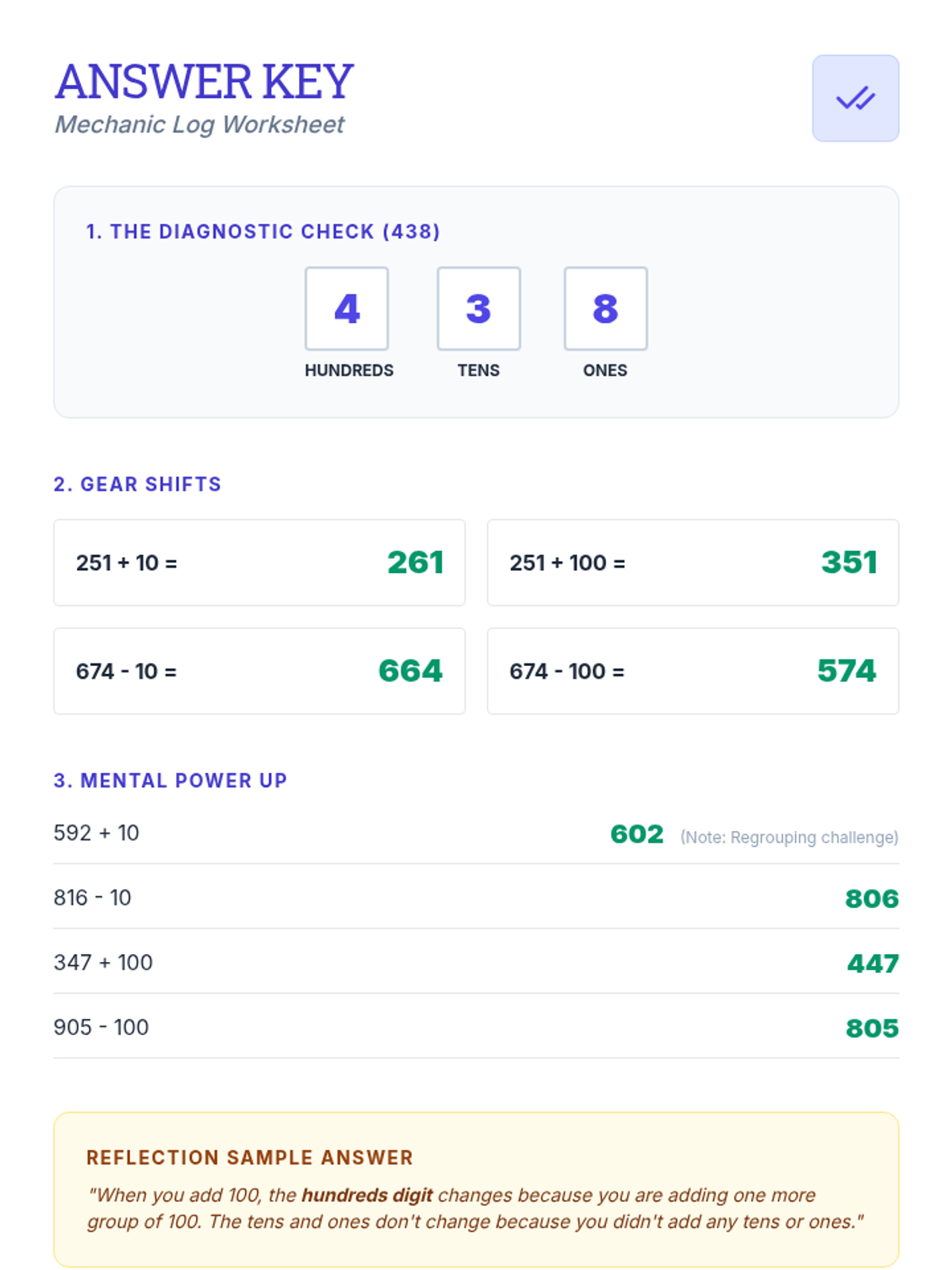
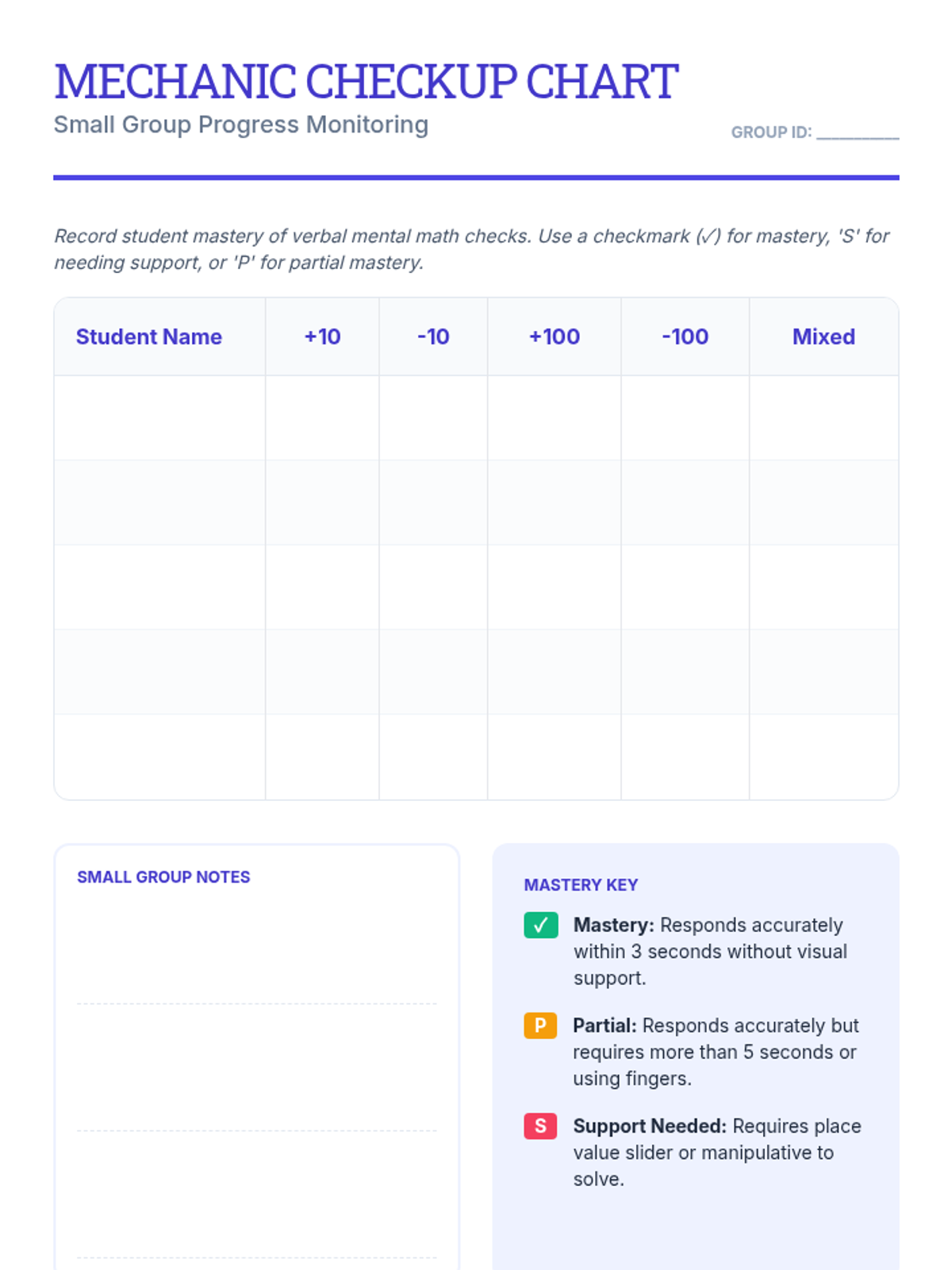
A Tier 2 intervention sequence focused on developing mental math fluency for adding and subtracting 10 and 100 from three-digit numbers. Students use place value strategies and visual manipulatives to build conceptual understanding before moving to mental computation.
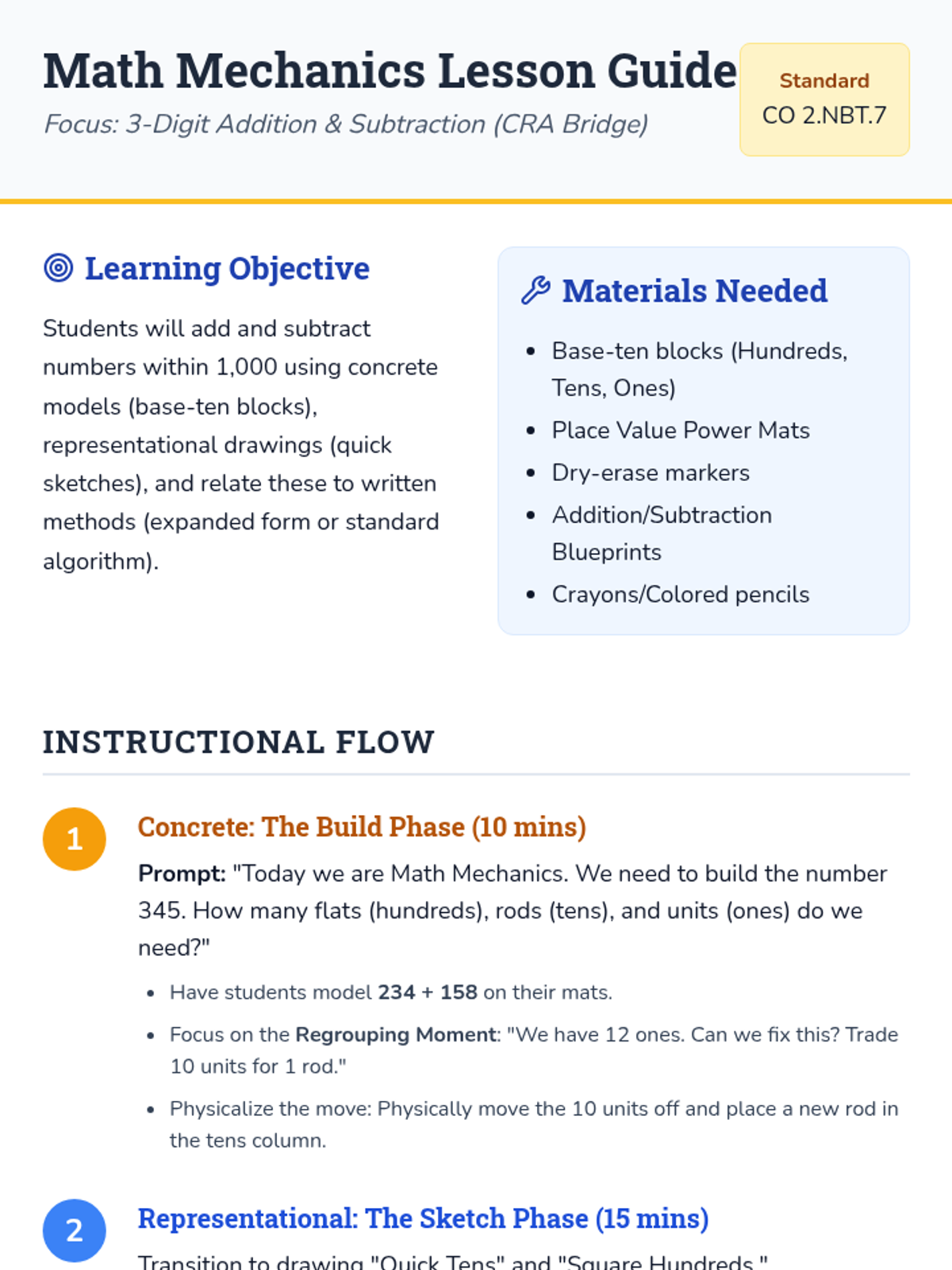
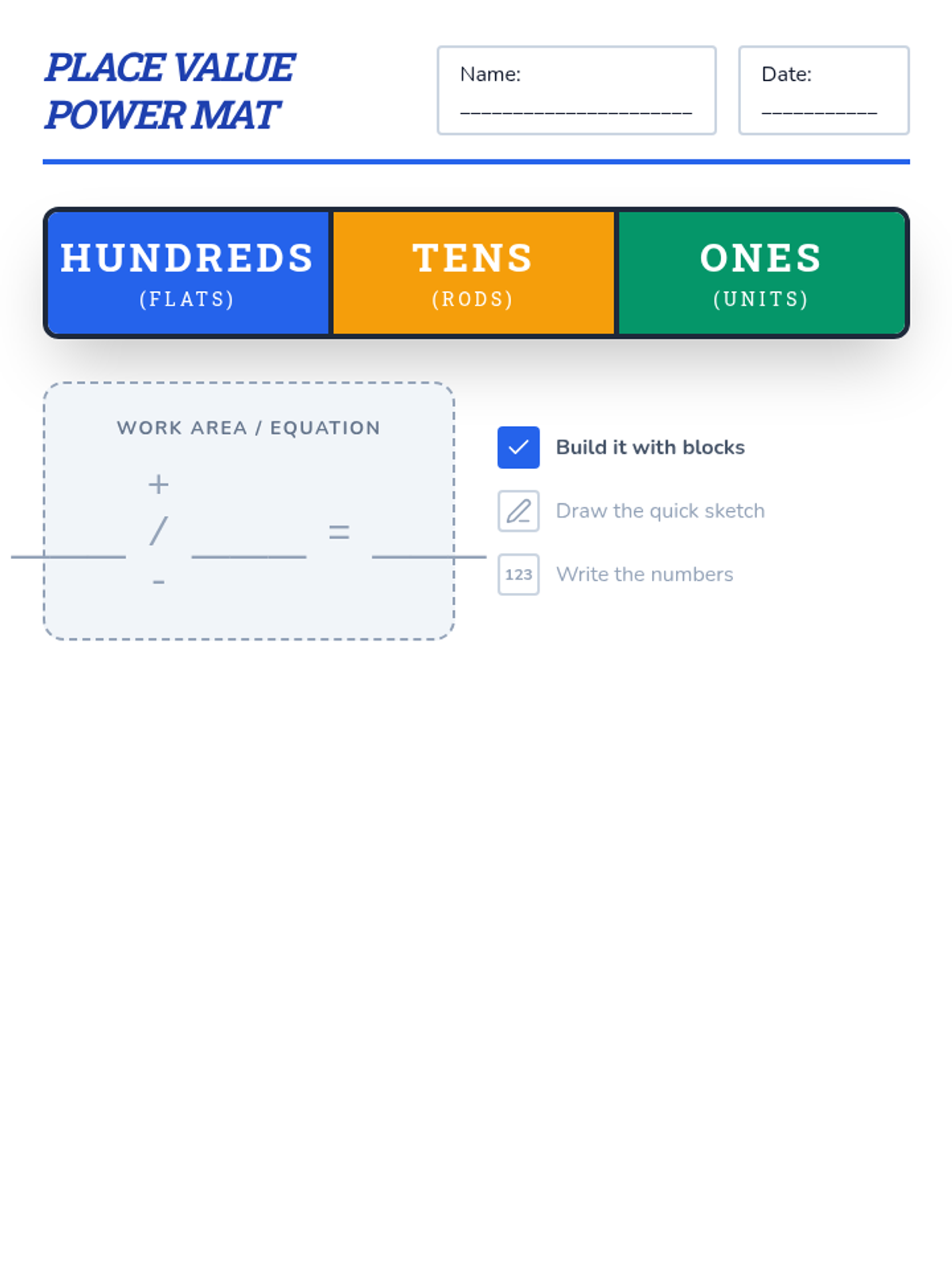
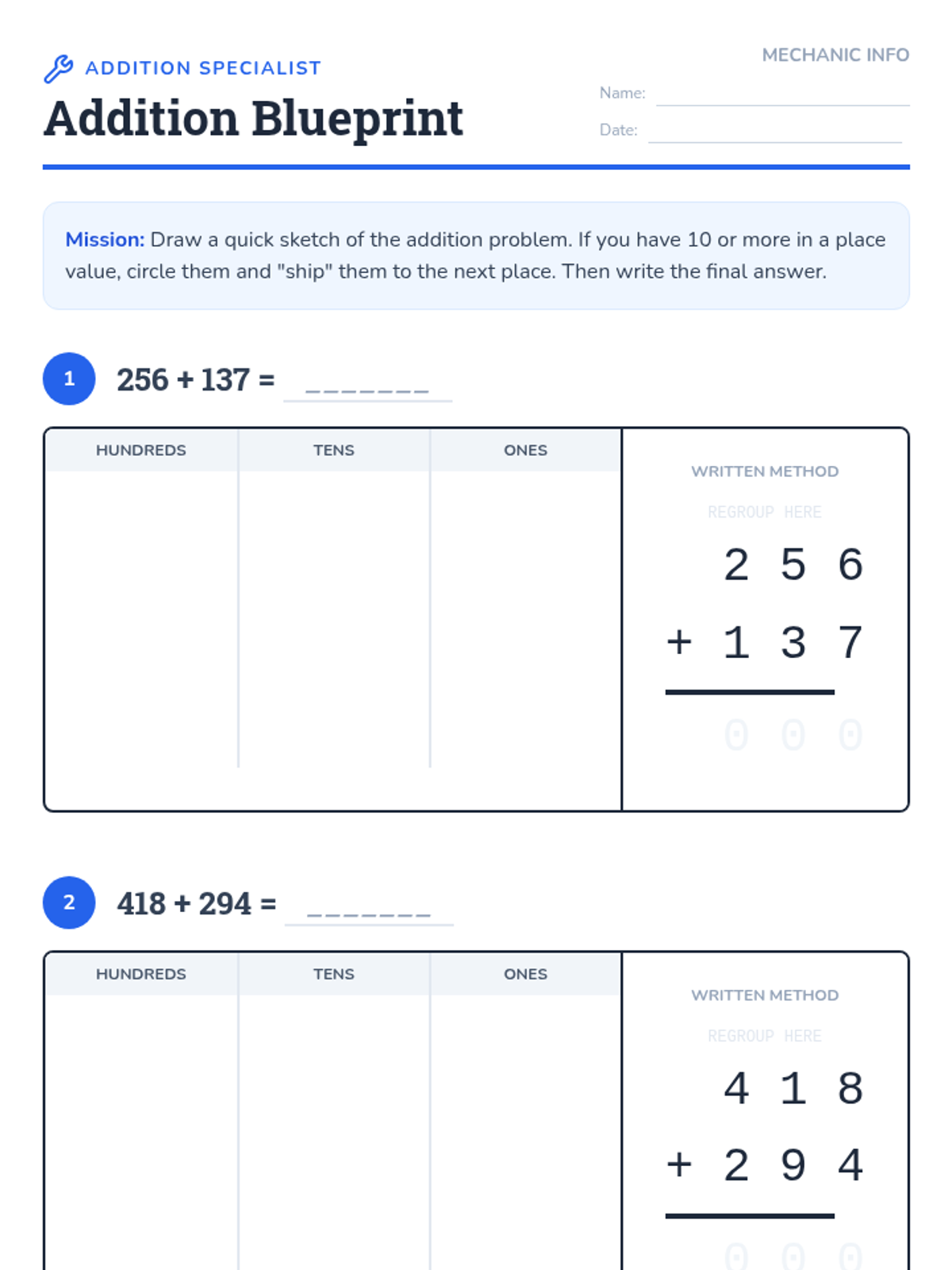
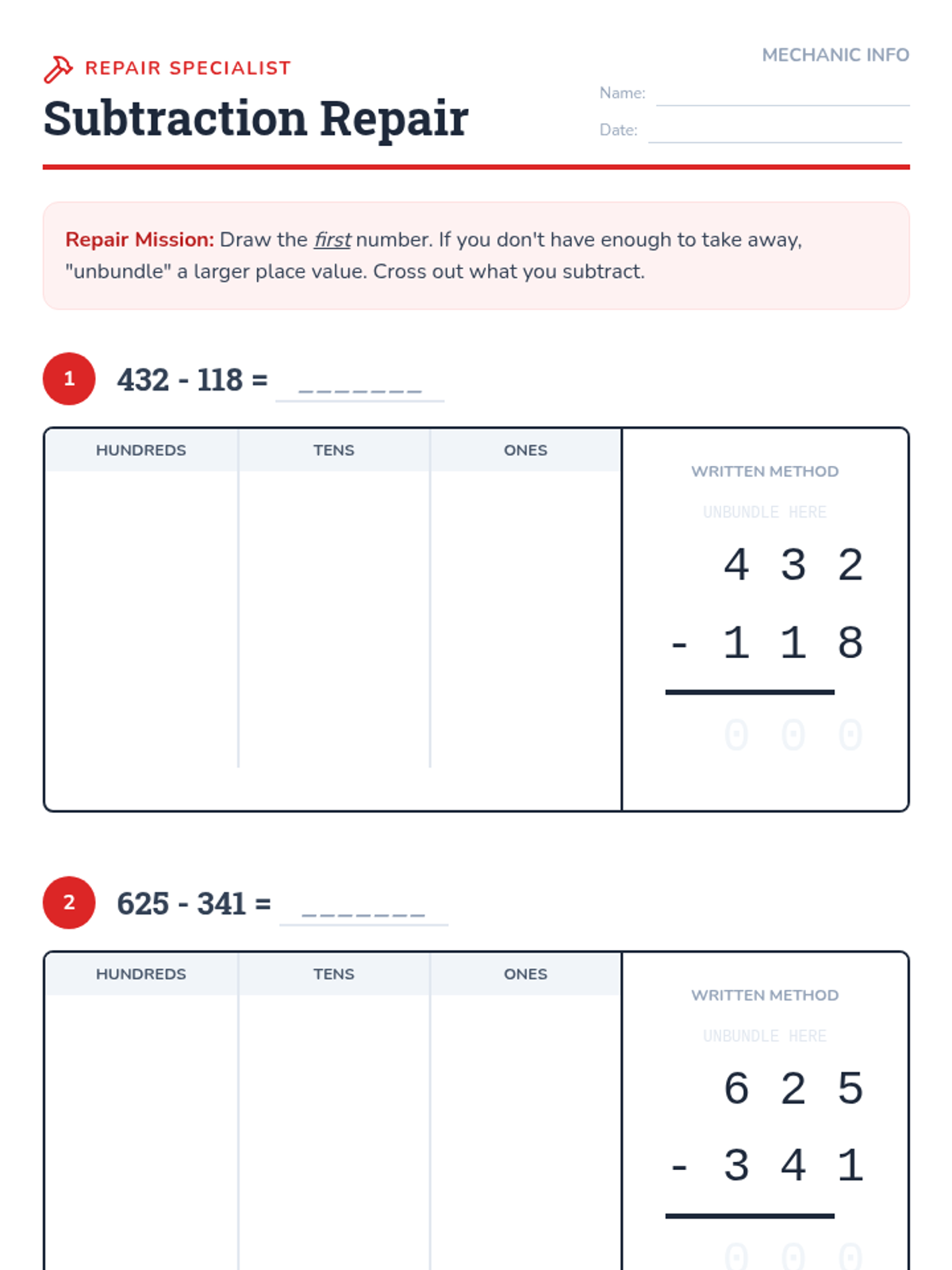
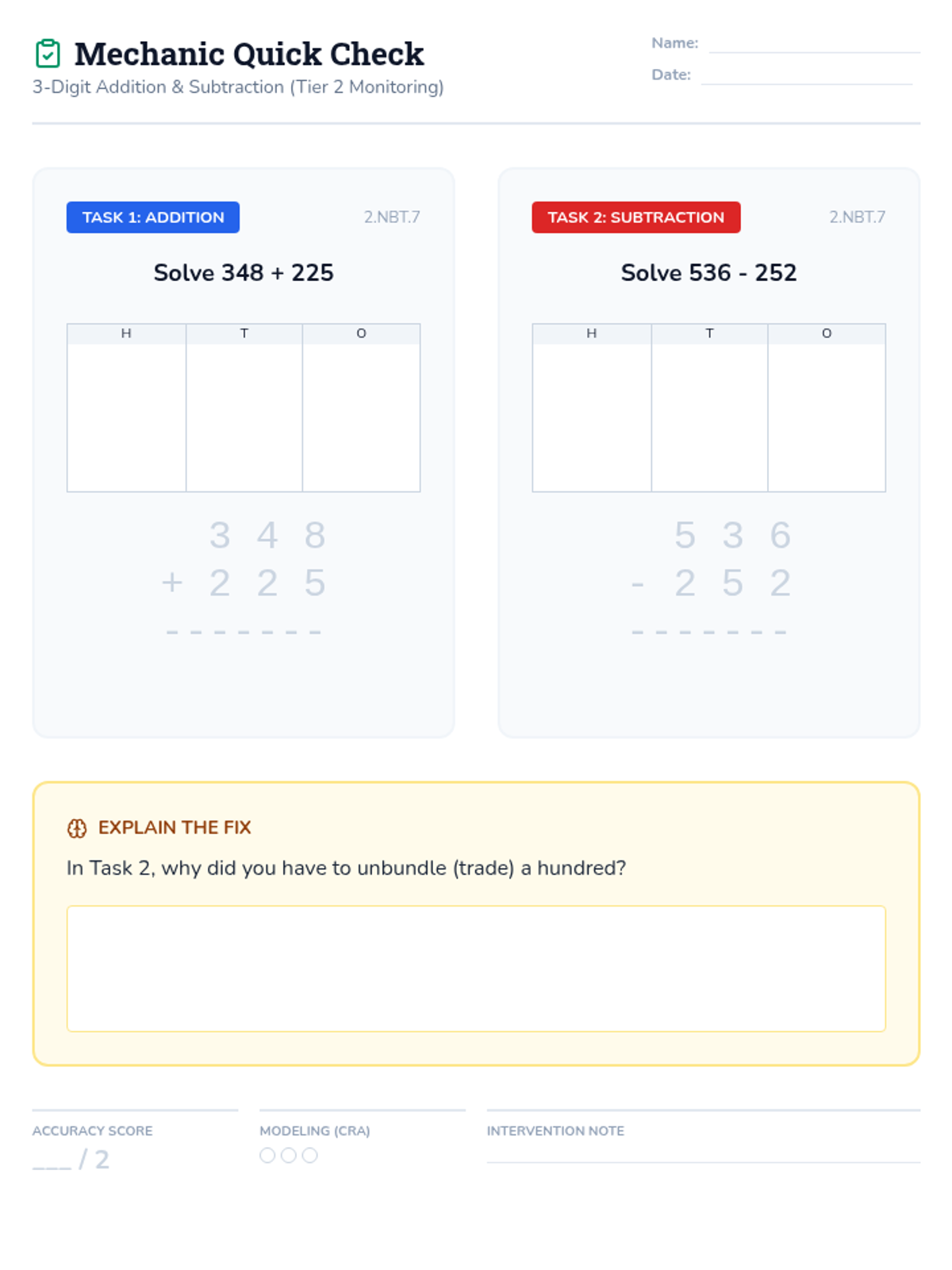
A Tier 2 intervention sequence focused on mastering 3-digit addition and subtraction through the Concrete-Representational-Abstract (CRA) instructional framework. Students use place value tools and visual models to bridge the gap between physical manipulation and written algorithms.
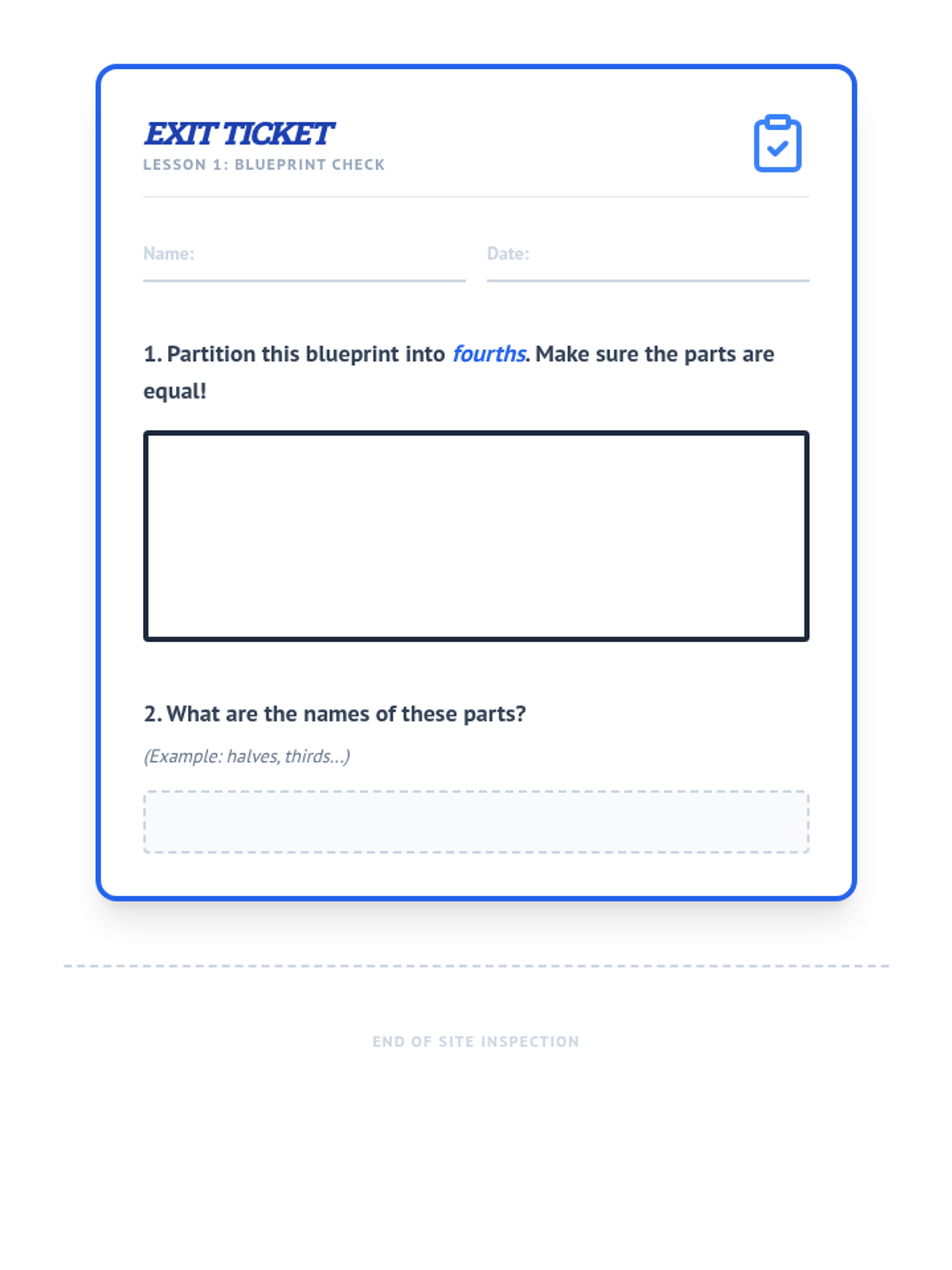
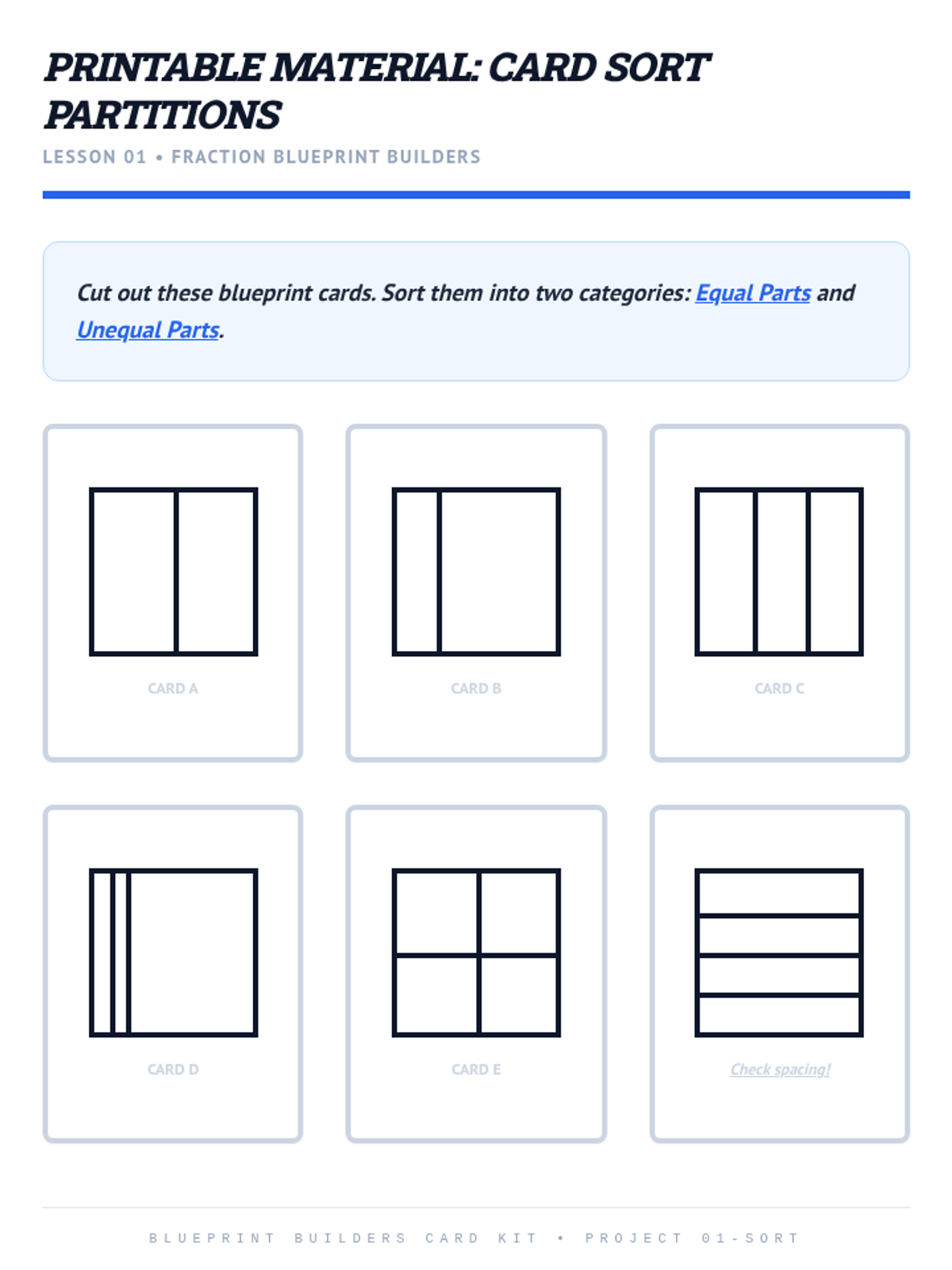
A 12-lesson series focused on understanding fractions as numbers, partitioning shapes and number lines, and exploring equivalence through a 'Blueprint Builder' architectural theme. Students progress from naming parts of a whole to locating fractions greater than 1 on number lines.
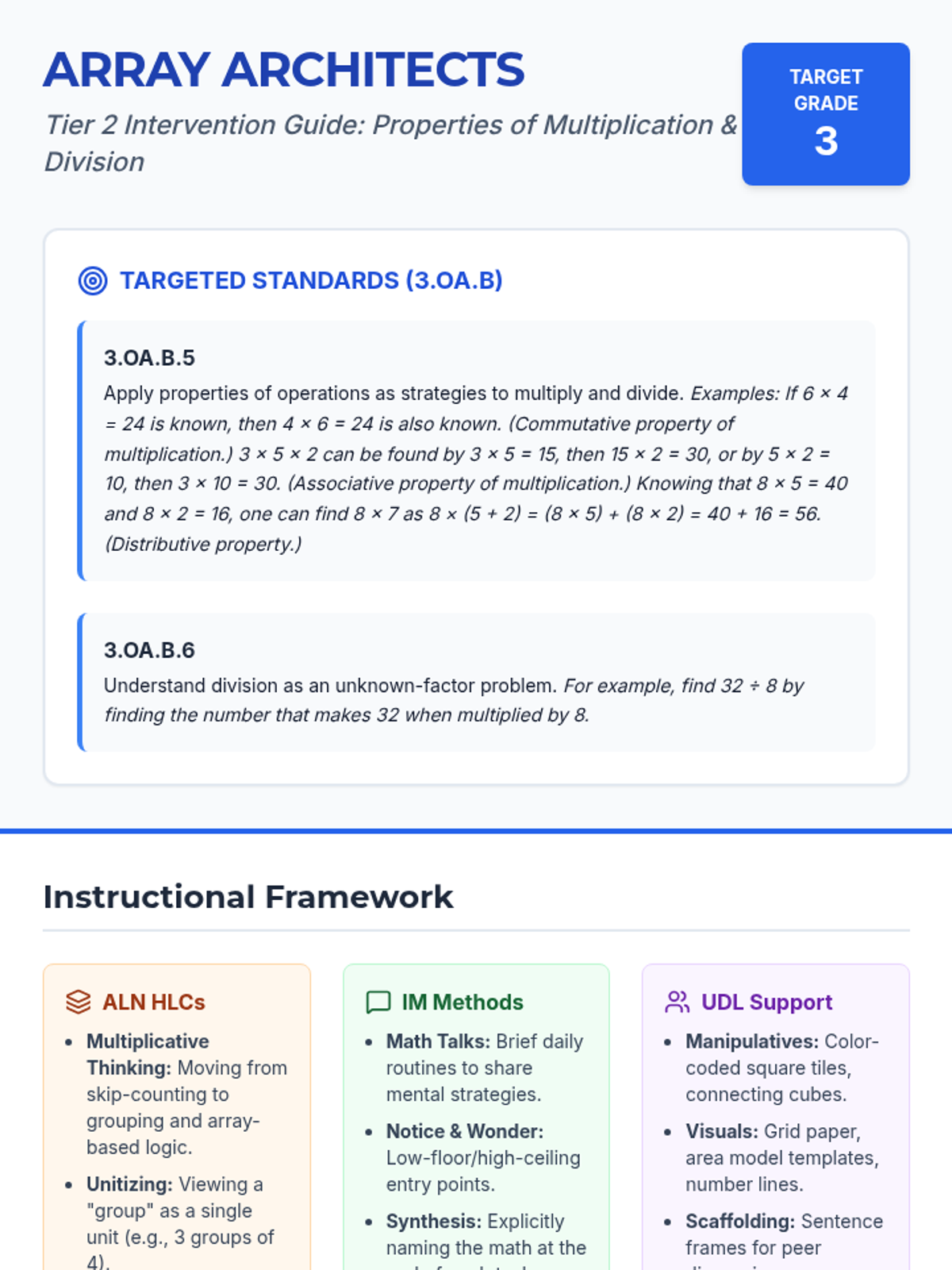
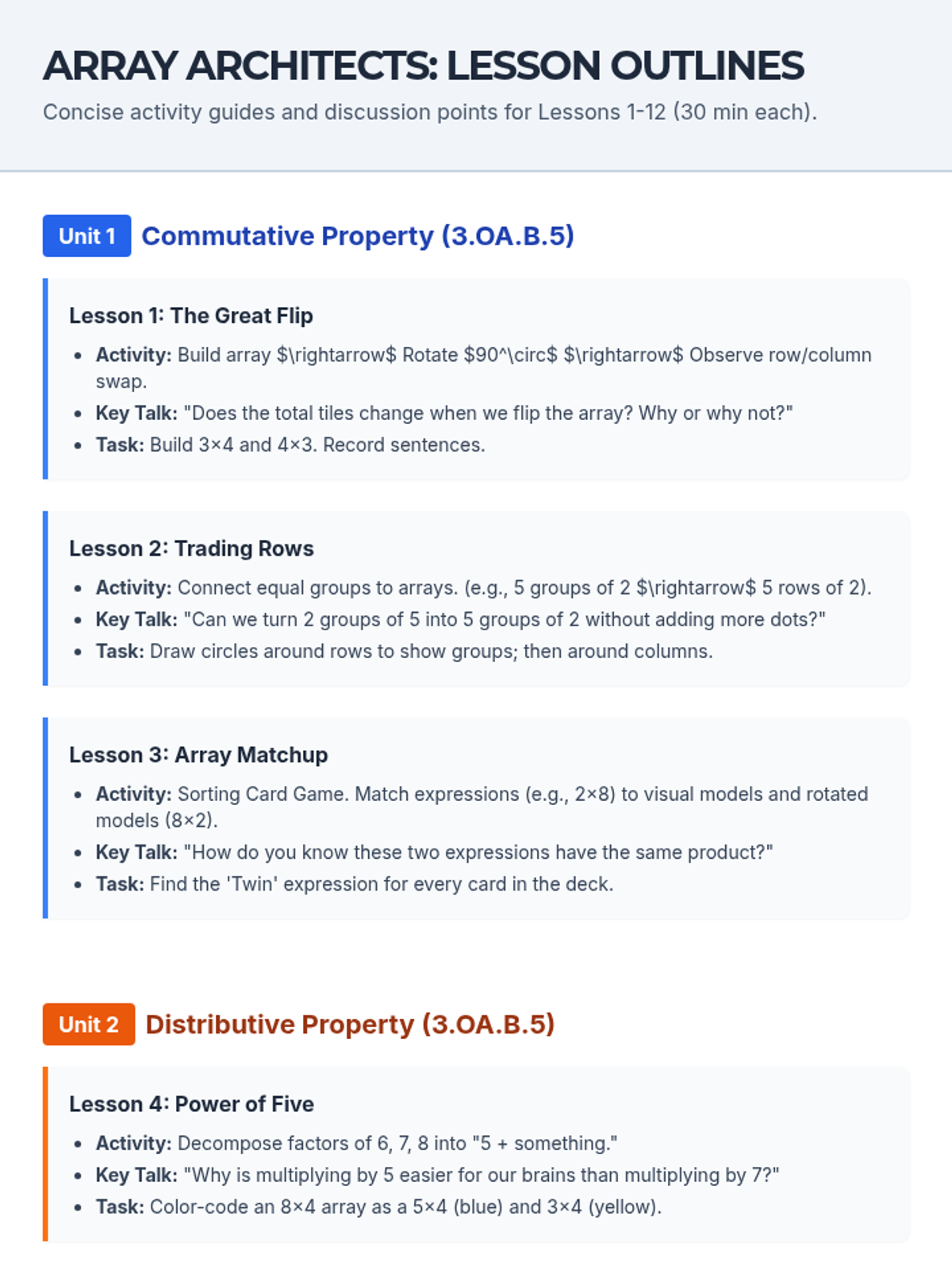
A 12-lesson Tier 2 intervention sequence for third-grade students focusing on 3.OA.B standards. This sequence uses All Learners Network's High Leverage Concepts and Illustrative Mathematics methods to build conceptual understanding of multiplication properties and the relationship between multiplication and division.
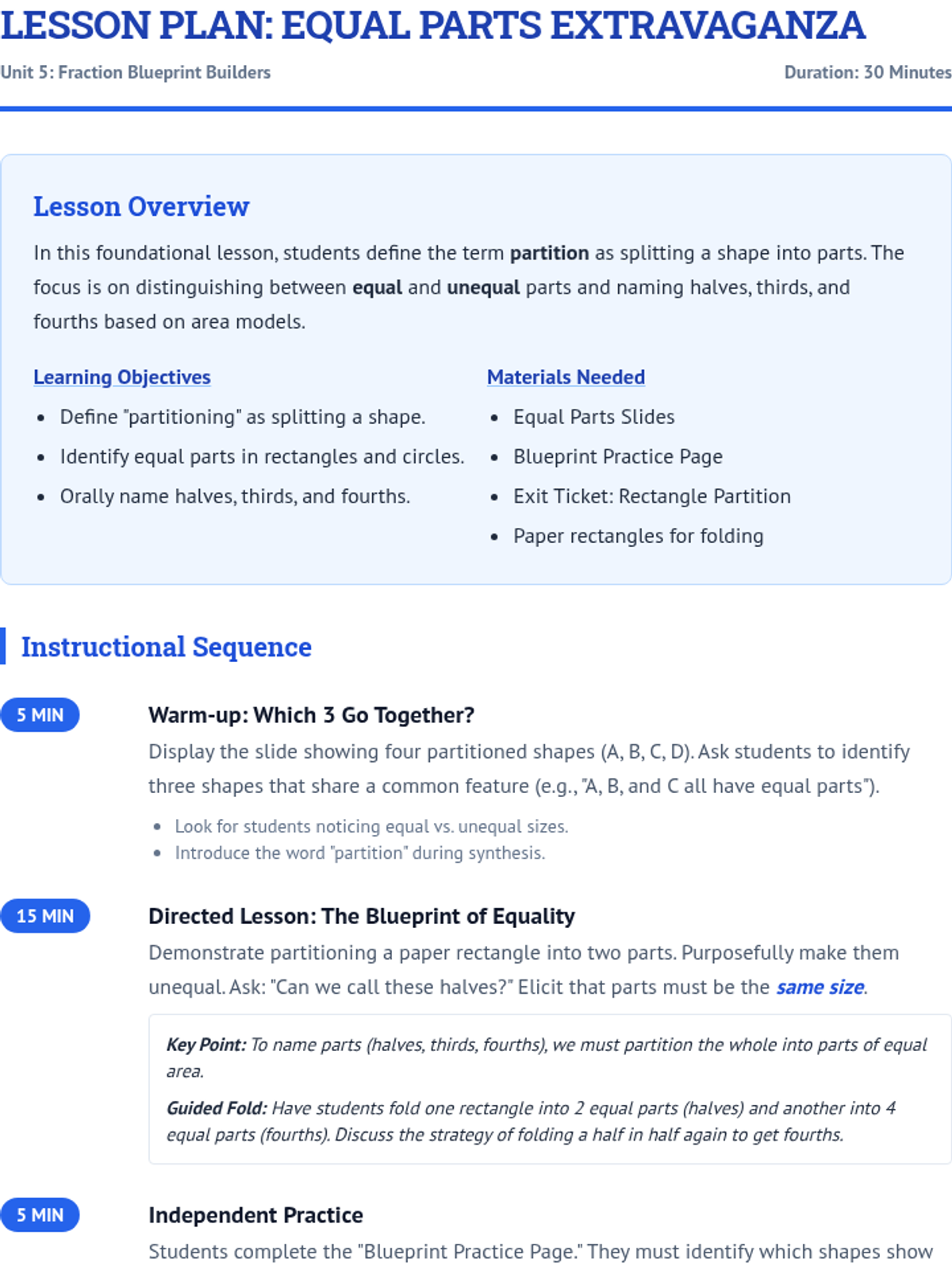
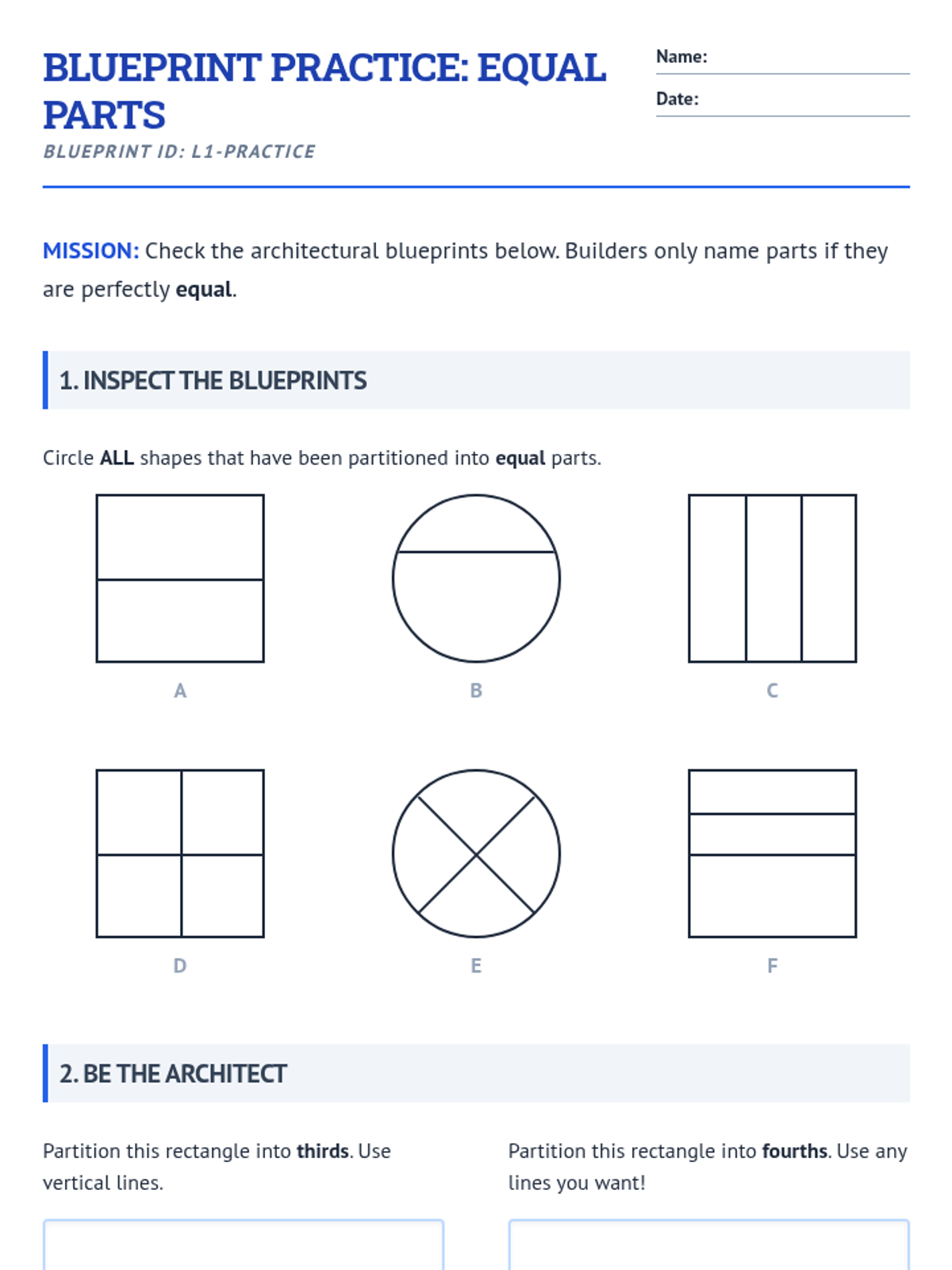
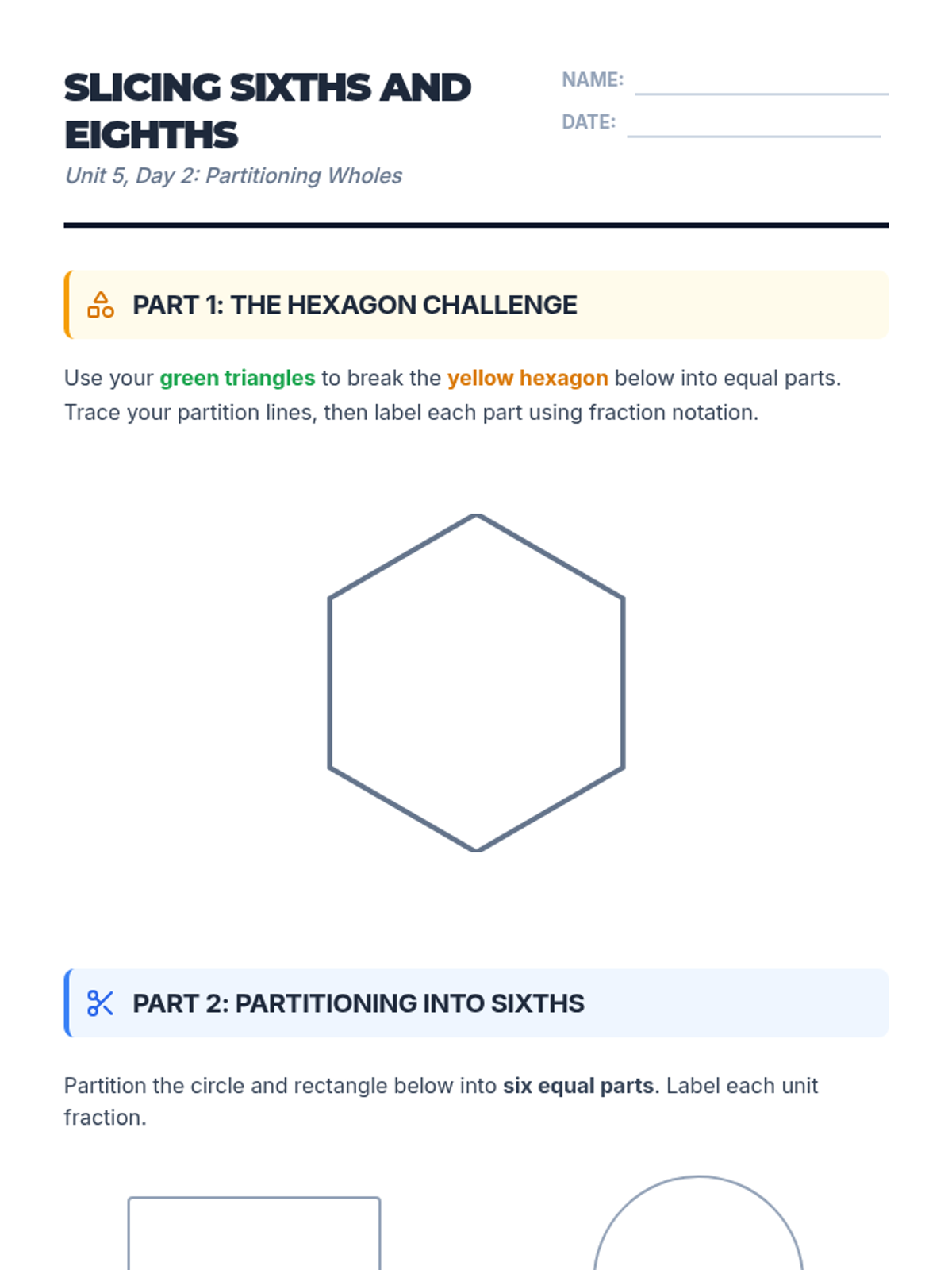
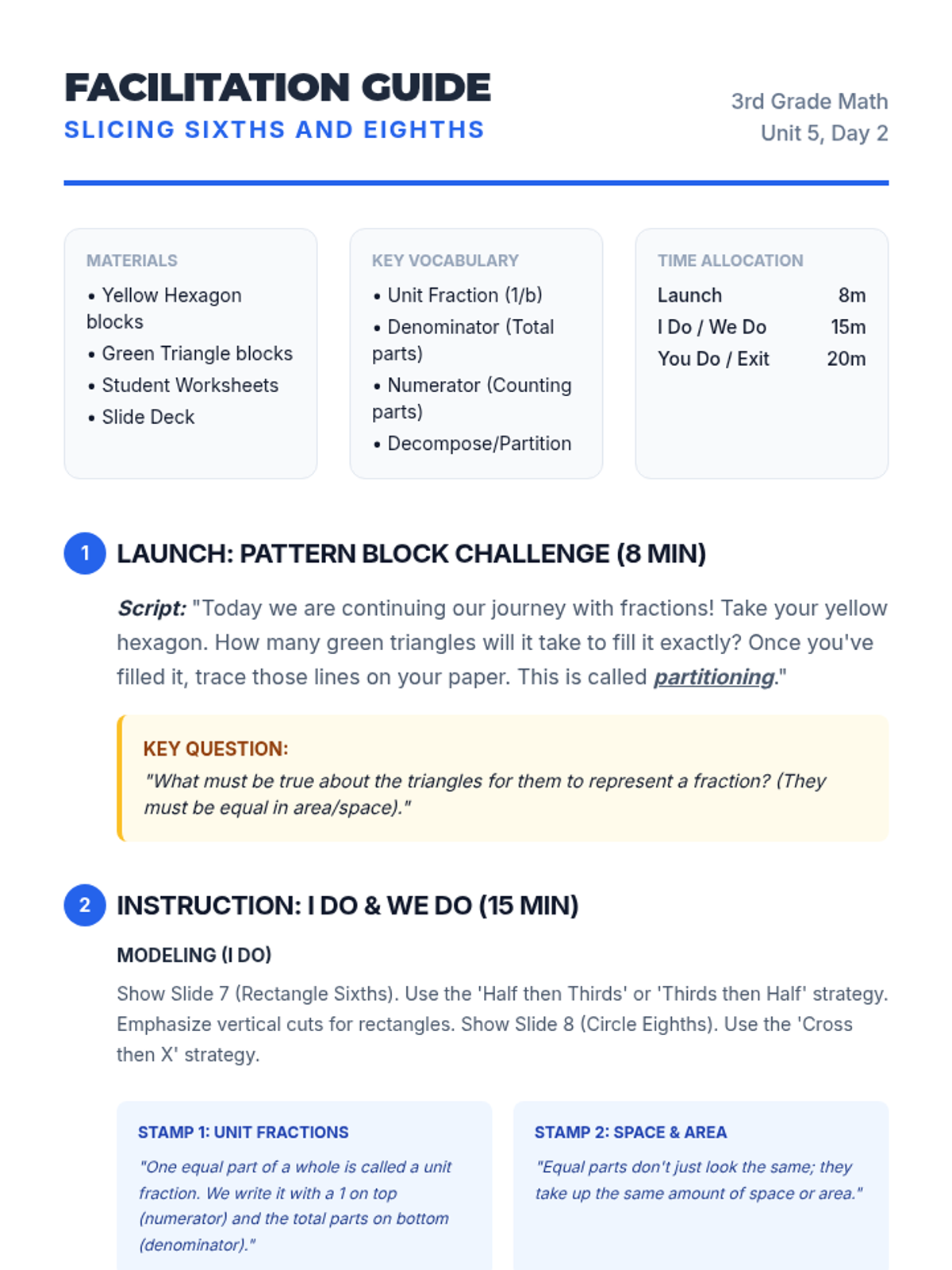
A comprehensive unit on foundational fraction concepts for 3rd grade, focusing on partitioning shapes into equal parts, understanding unit fractions, and naming parts through eighths.
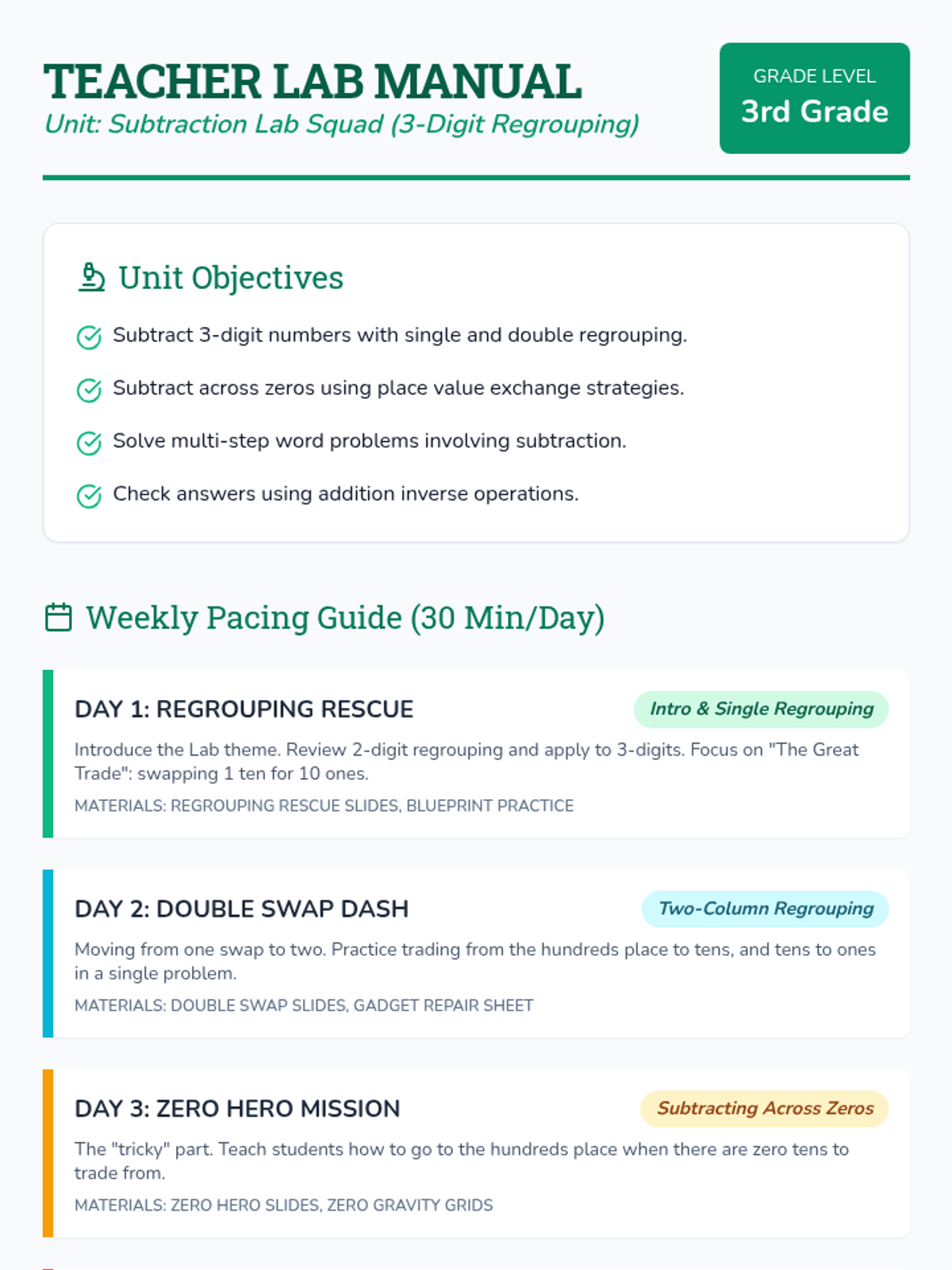
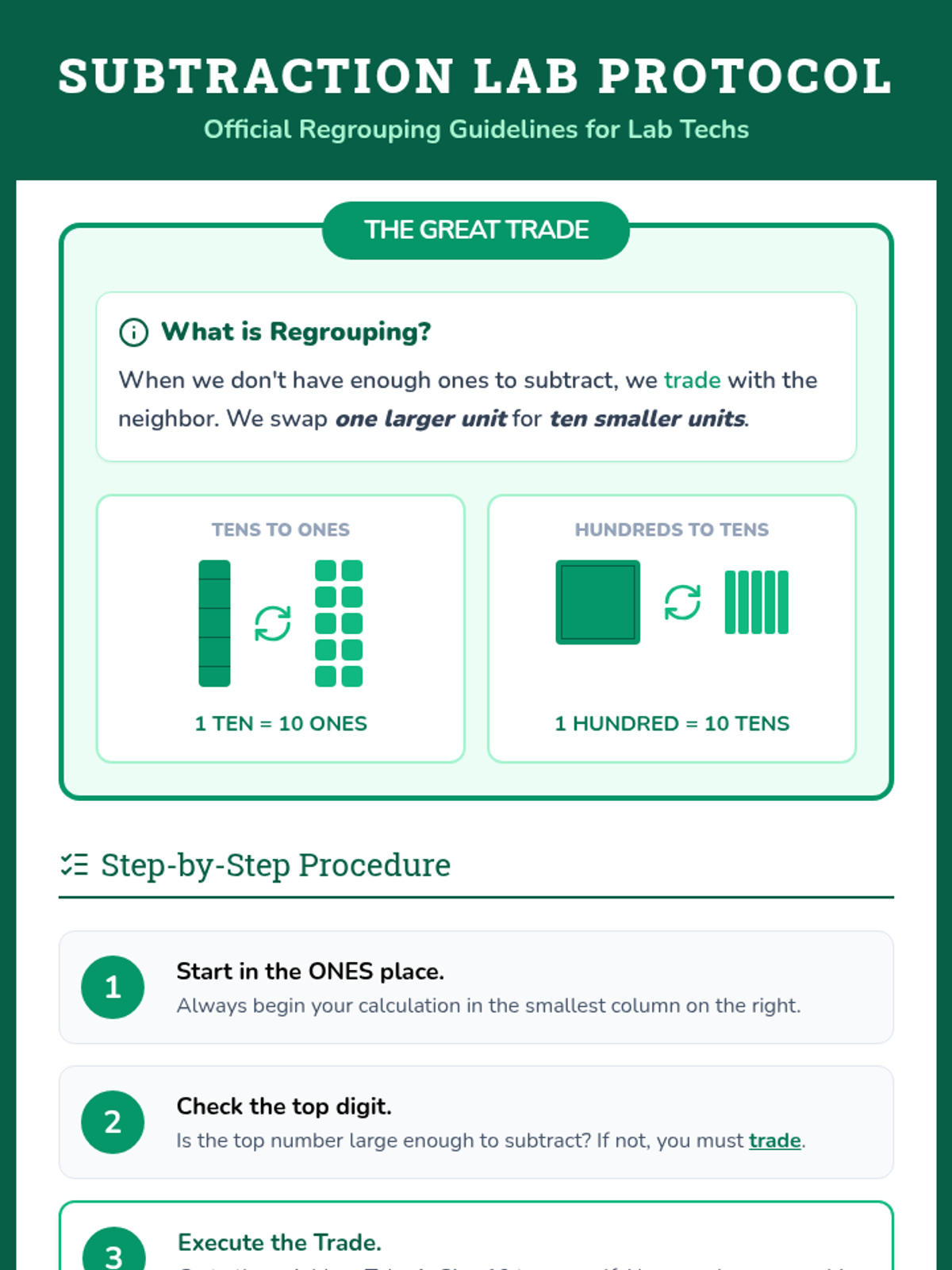
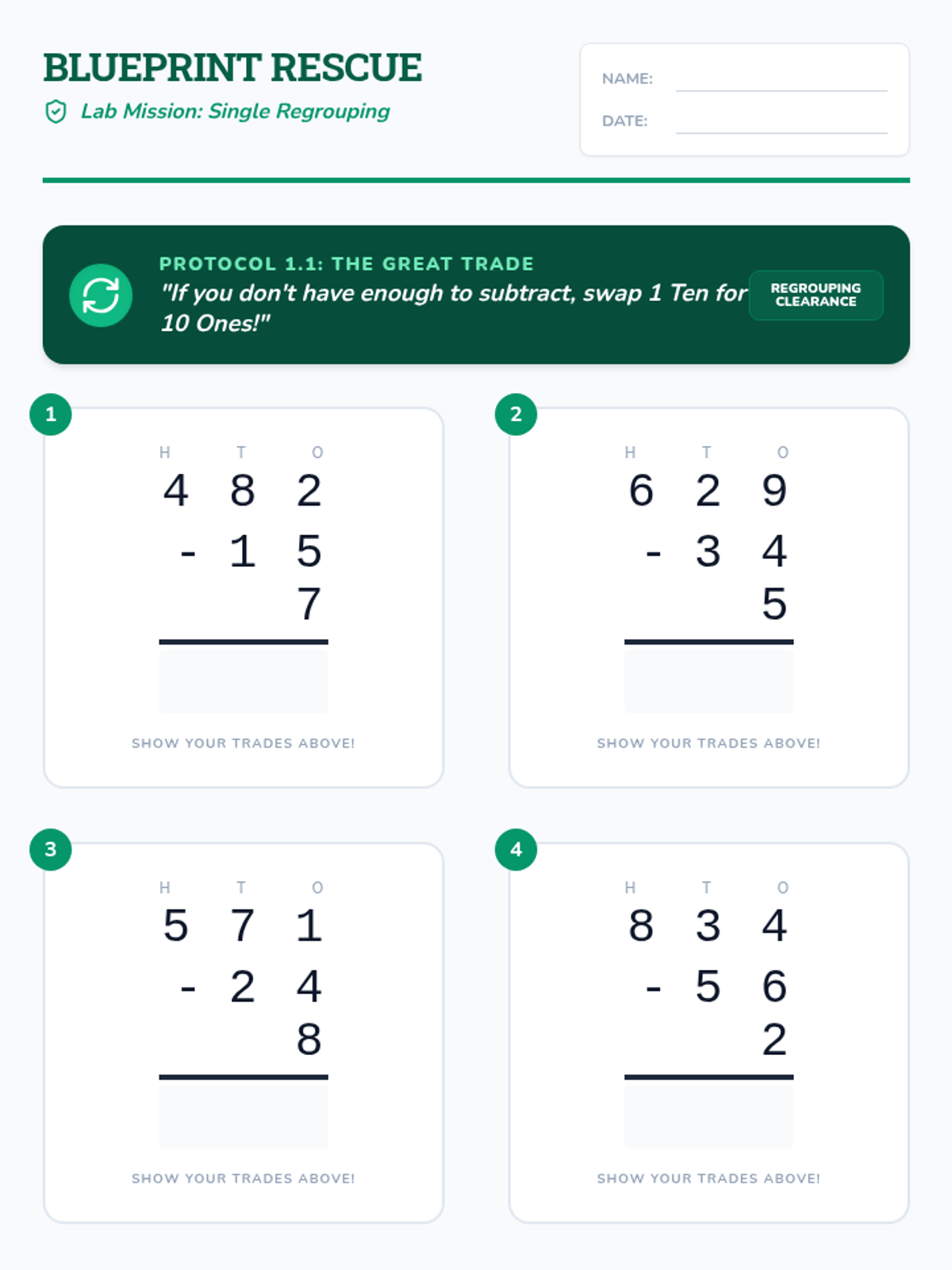
A comprehensive 5-day unit for 3rd-grade students to master 3-digit subtraction with regrouping. The sequence follows a 'Math Lab' theme, moving from single regrouping to double regrouping, subtracting across zeros, and multi-step word problems.
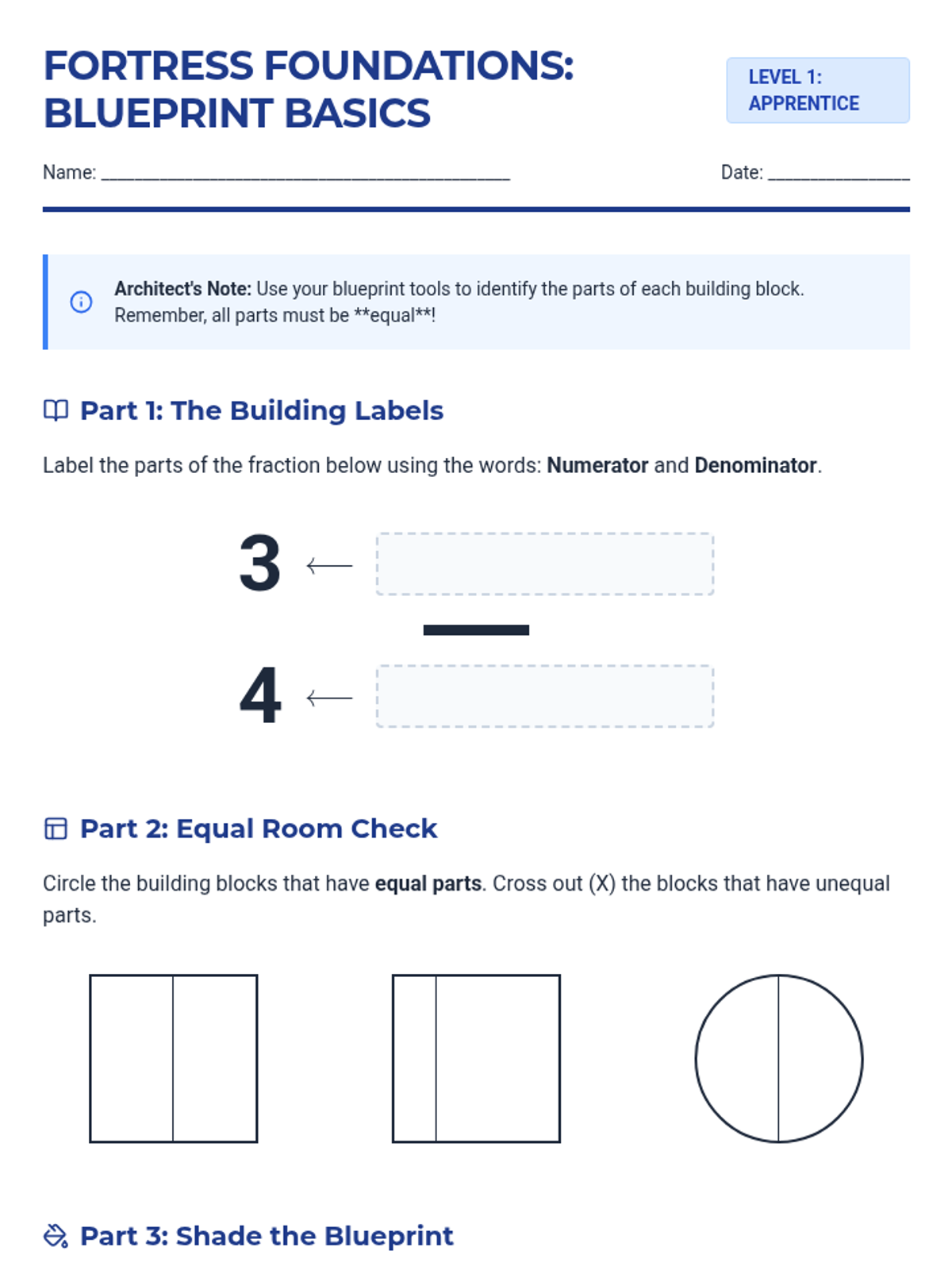
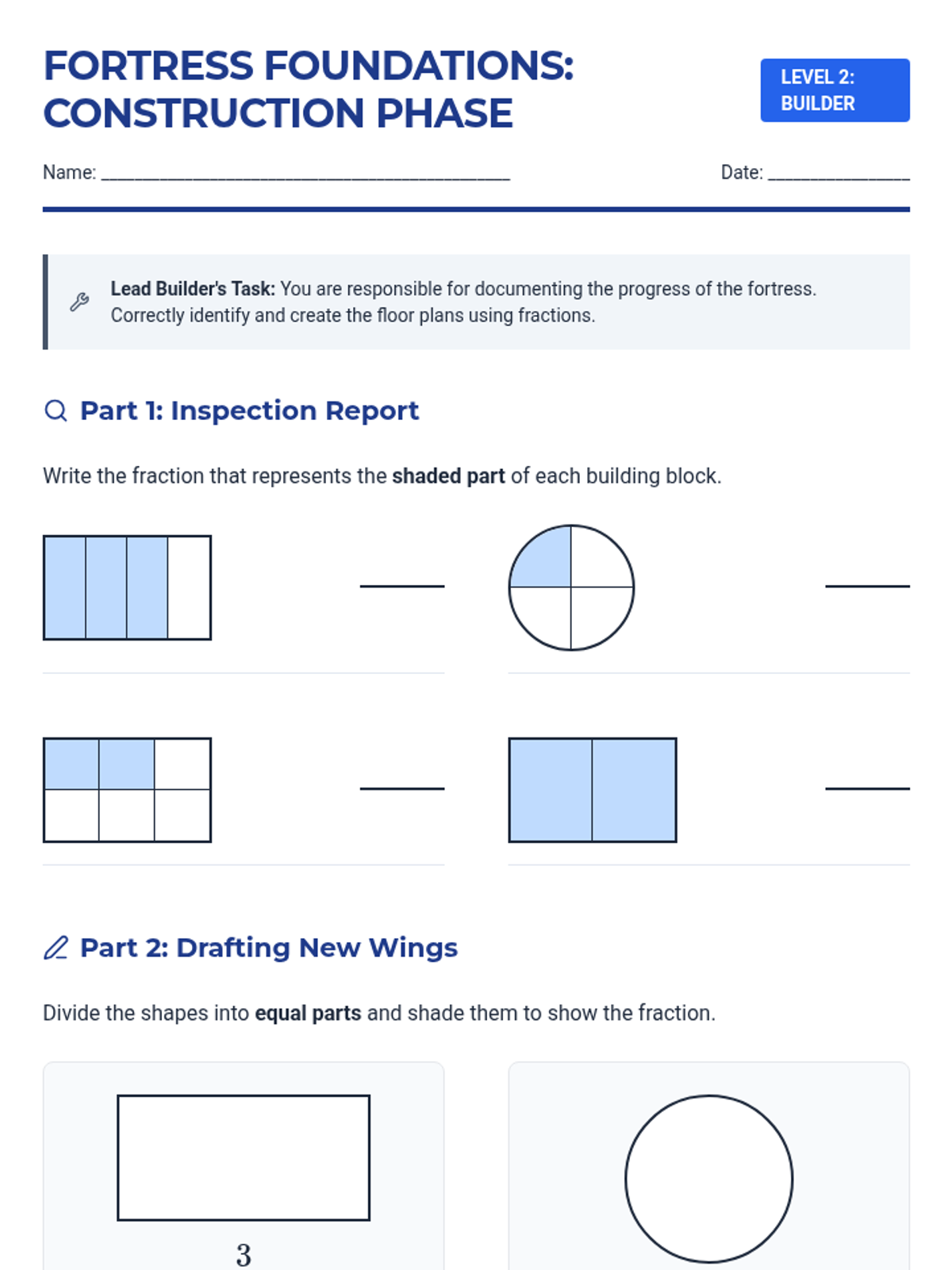
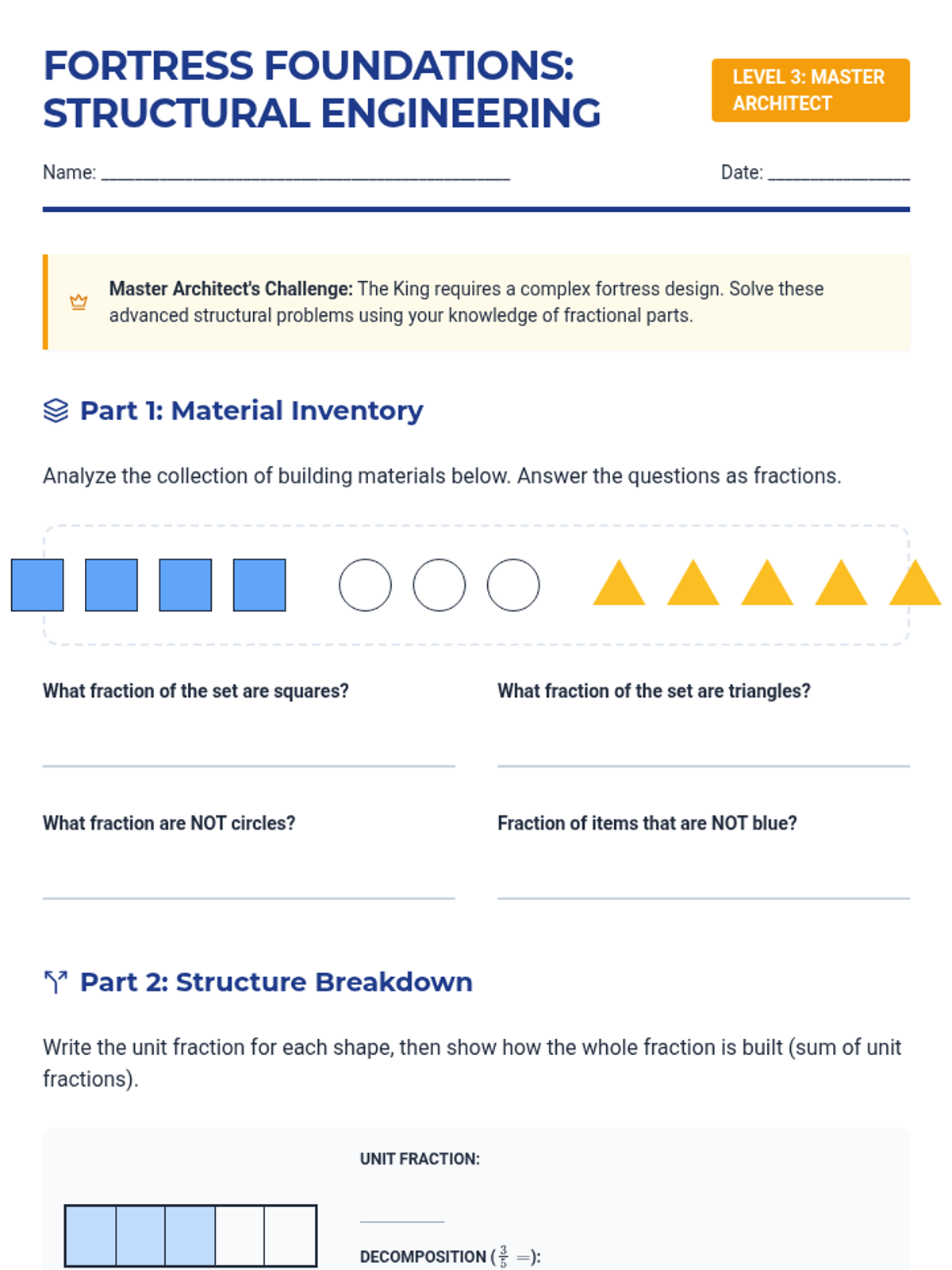
A comprehensive math unit on fractions, themed around architecture and building. Students progress from basic parts of a whole to equivalent fractions and comparisons through tiered, differentiated activities.
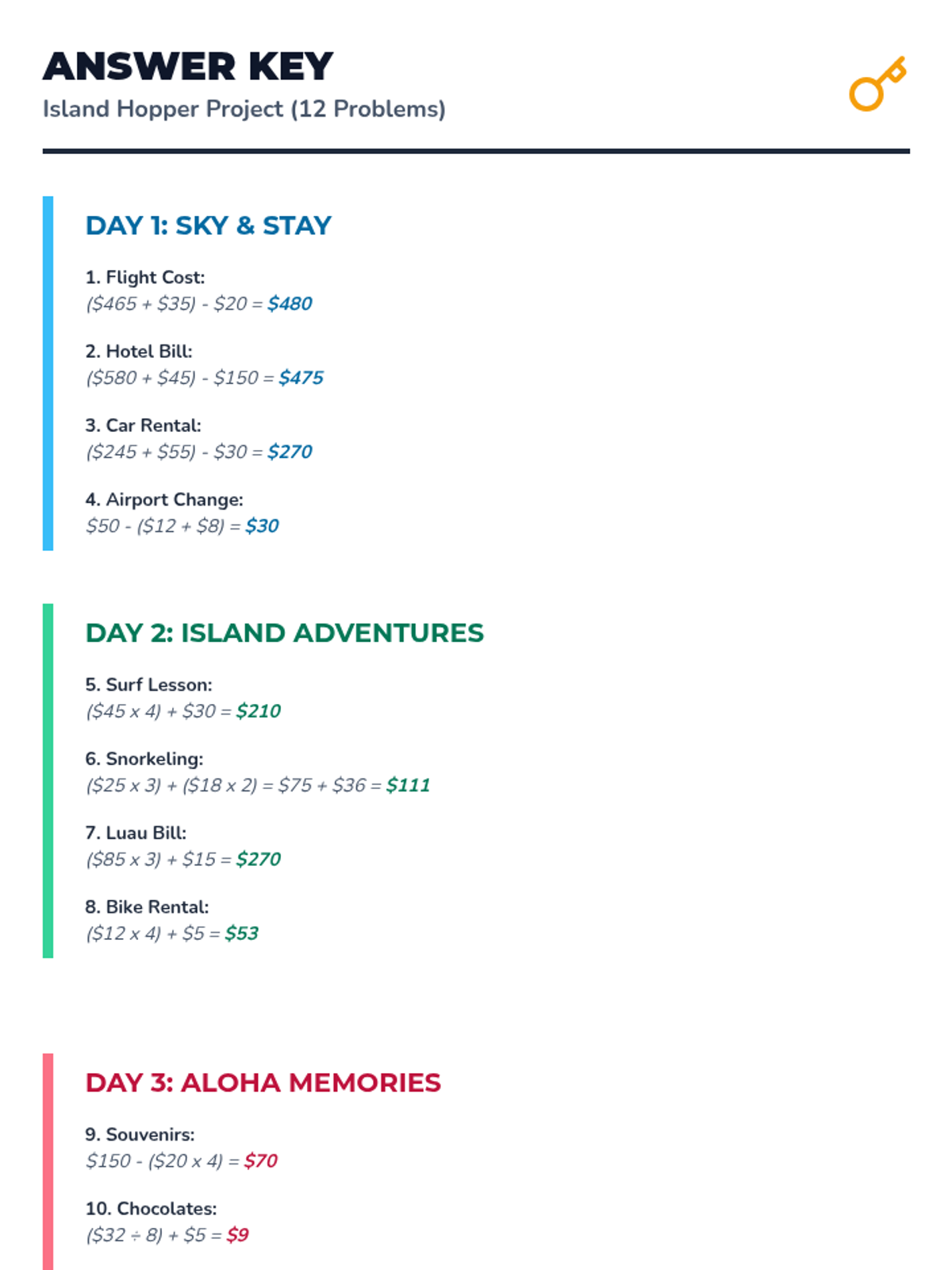
A three-day project-based learning sequence where students plan a Hawaii vacation while solving two-step word problems. The math progresses from addition and subtraction to multiplication and finally all four operations, all within 1000.
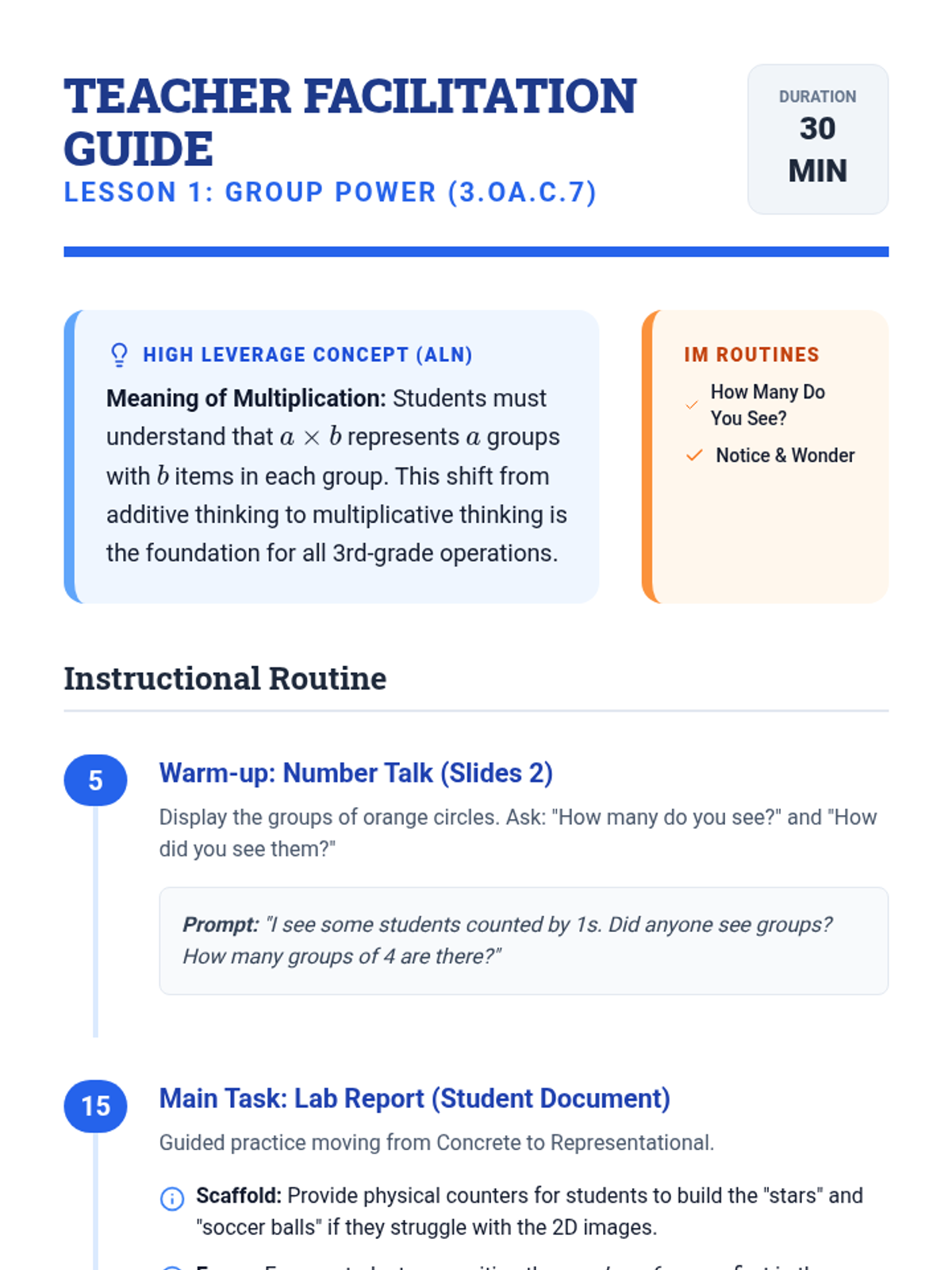
A 12-lesson Tier 2 intervention series focusing on 3.OA.C.7 fact fluency and the relationship between multiplication and division. Uses All Learners Network High Leverage Concepts and Illustrative Math instructional routines to build conceptual understanding and fluency.
A 12-lesson Tier 2 intervention sequence for 3rd grade students focusing on CCSS 3.OA.D. Students explore arithmetic patterns, solve two-step word problems, and use estimation to check reasonableness. The lessons utilize High Leverage Concepts from the All Learners Network and instructional routines from the Illustrative Mathematics curriculum.
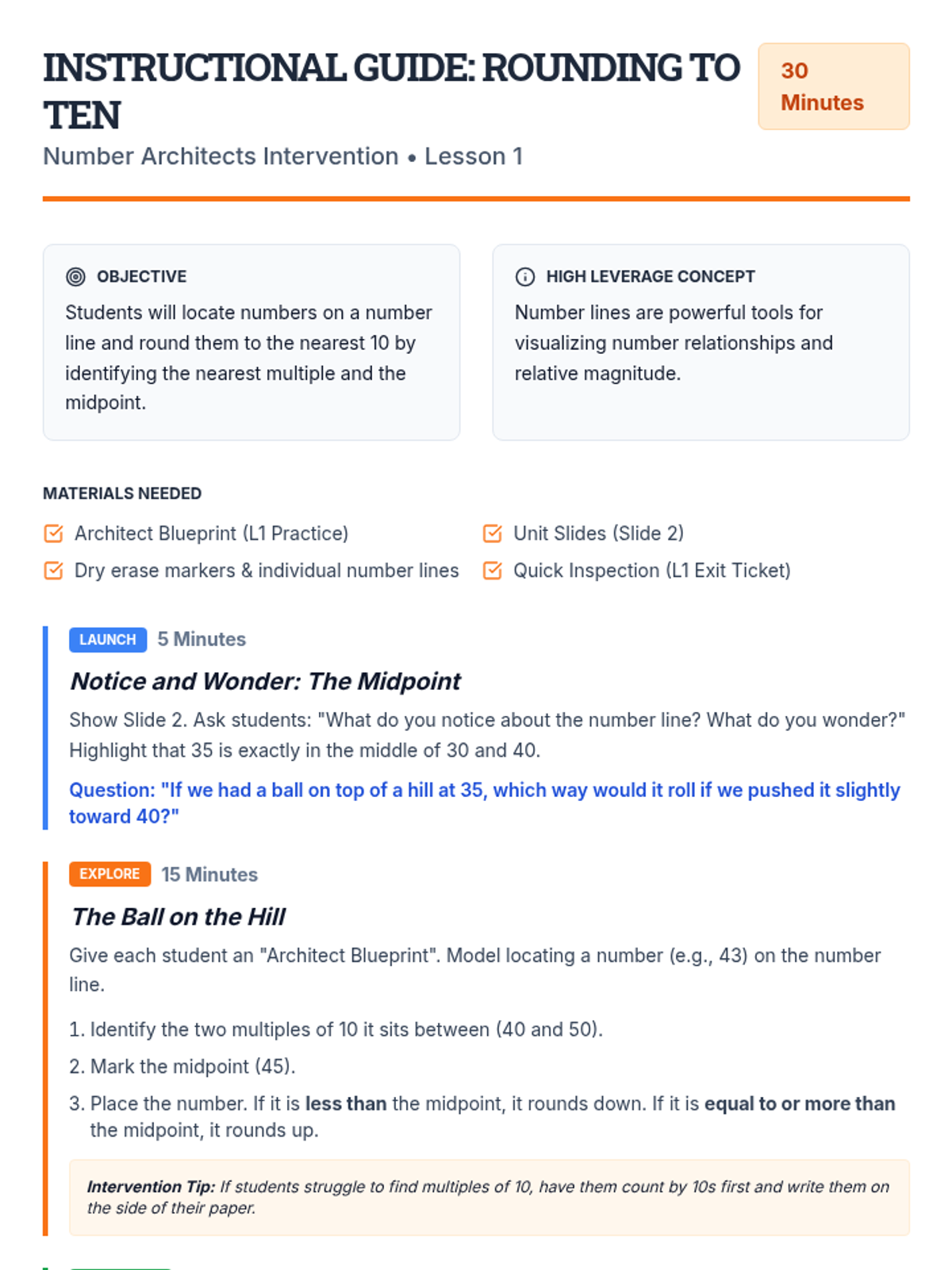
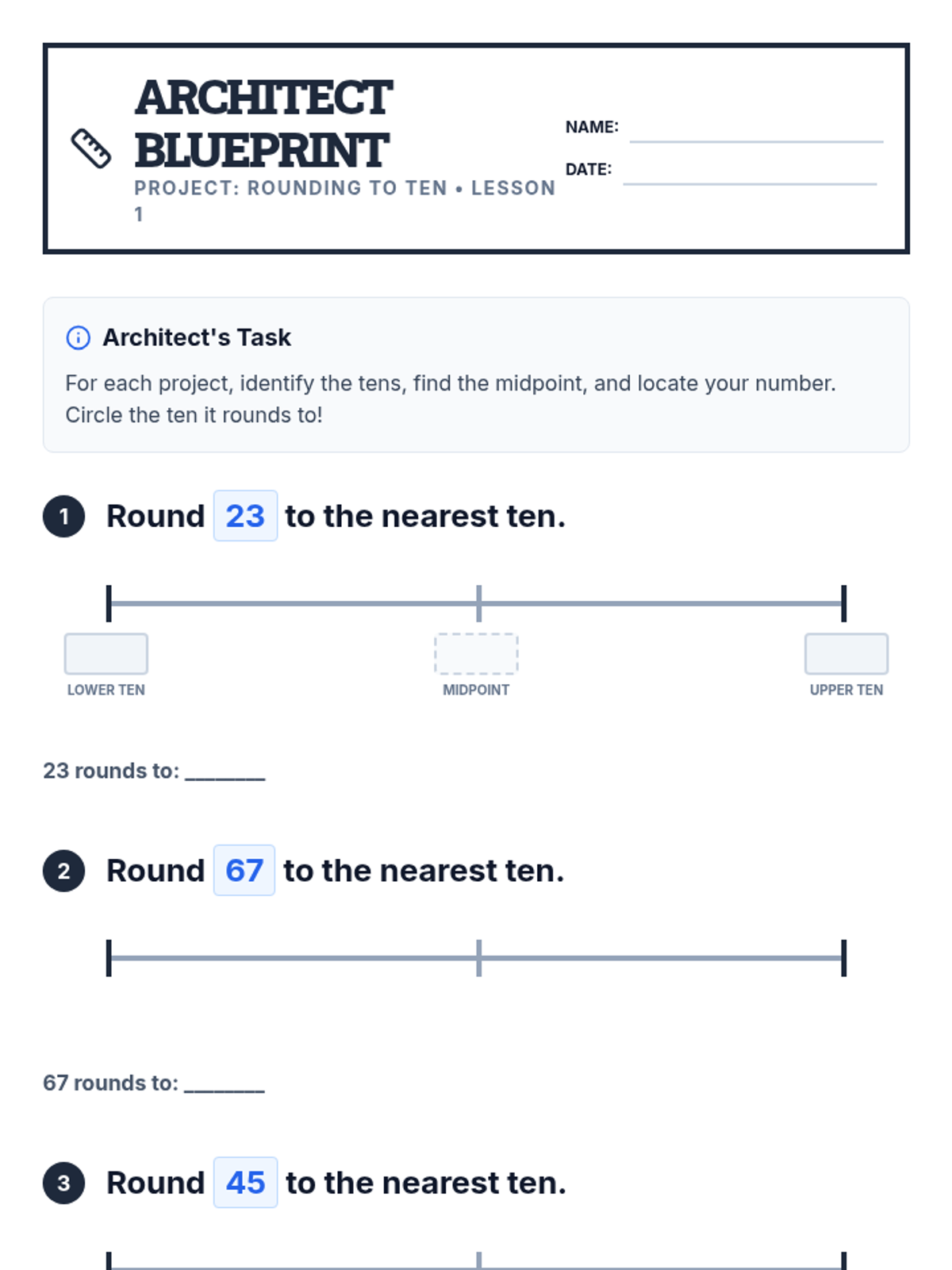
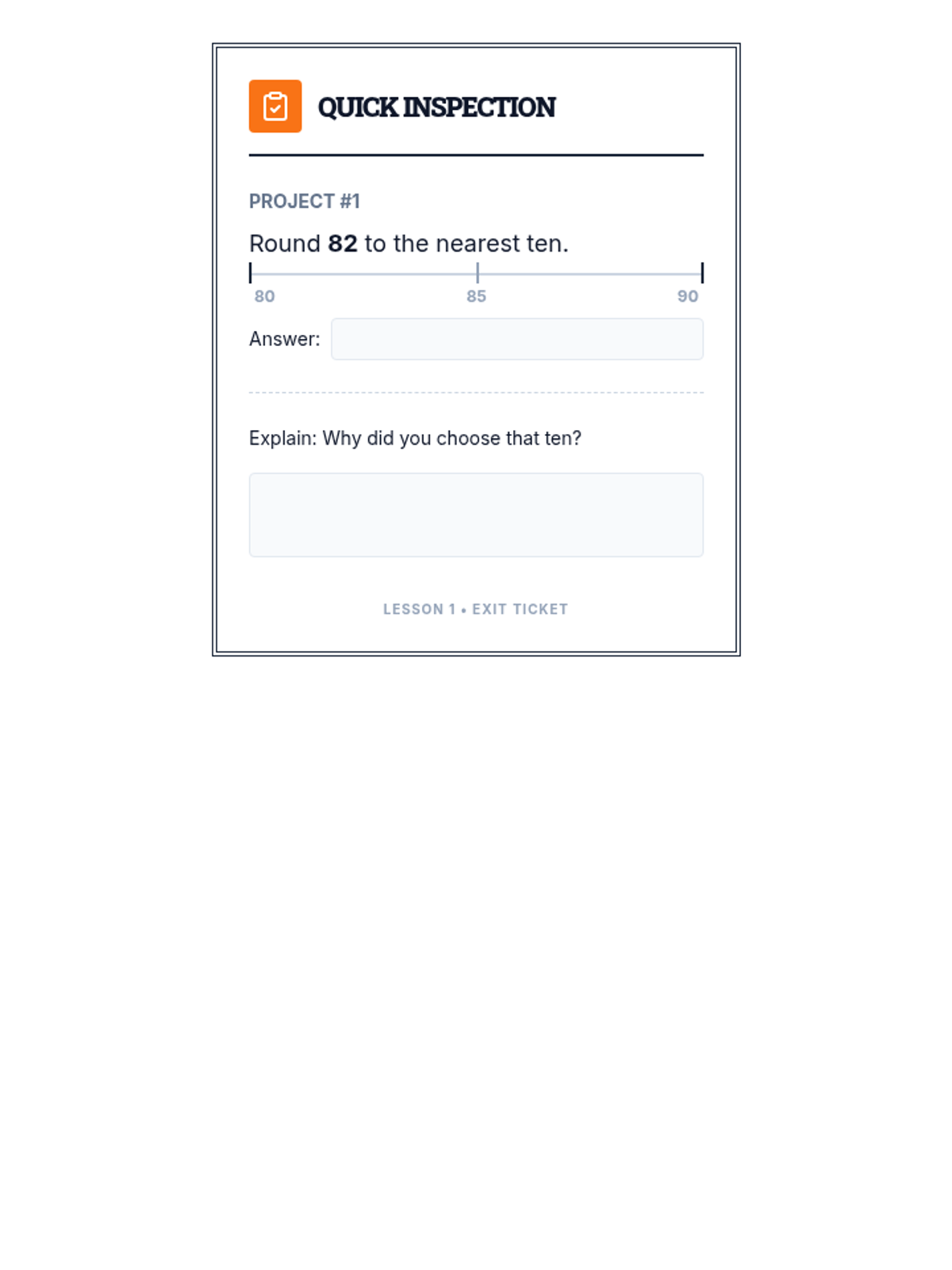
A 12-lesson Tier 2 intervention sequence for 3rd grade, focusing on place value, rounding, and multi-digit addition and subtraction within 1000. This unit uses All Learners Network (ALN) High Leverage Concepts and Illustrative Mathematics (IM) strategies to build conceptual understanding and procedural fluency.
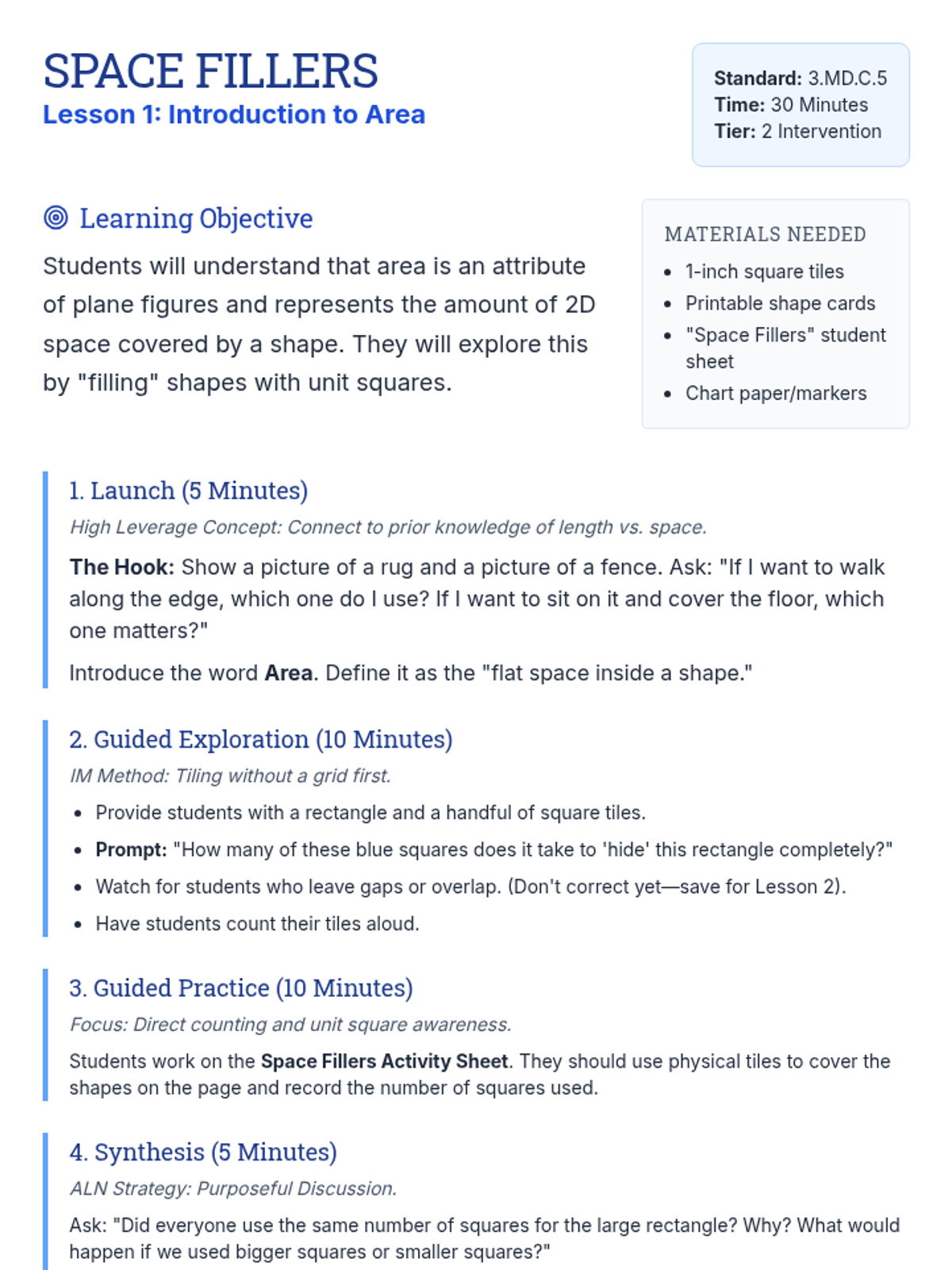
A 12-lesson Tier 2 math intervention sequence focusing on the concept of area for 3rd-grade students. Using ALN and IM strategies, students progress from tiling with unit squares to using the multiplication formula for real-world problems.
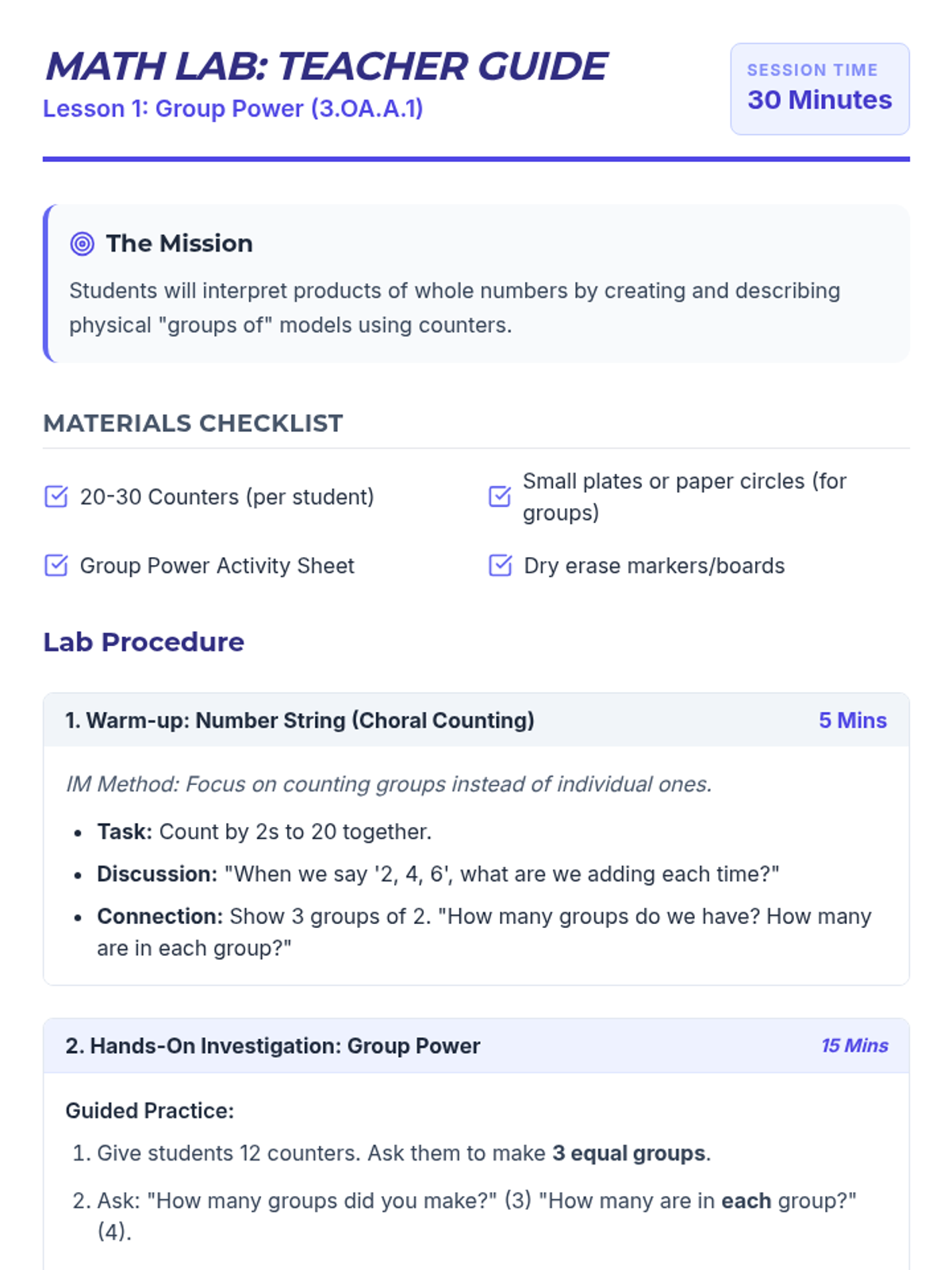
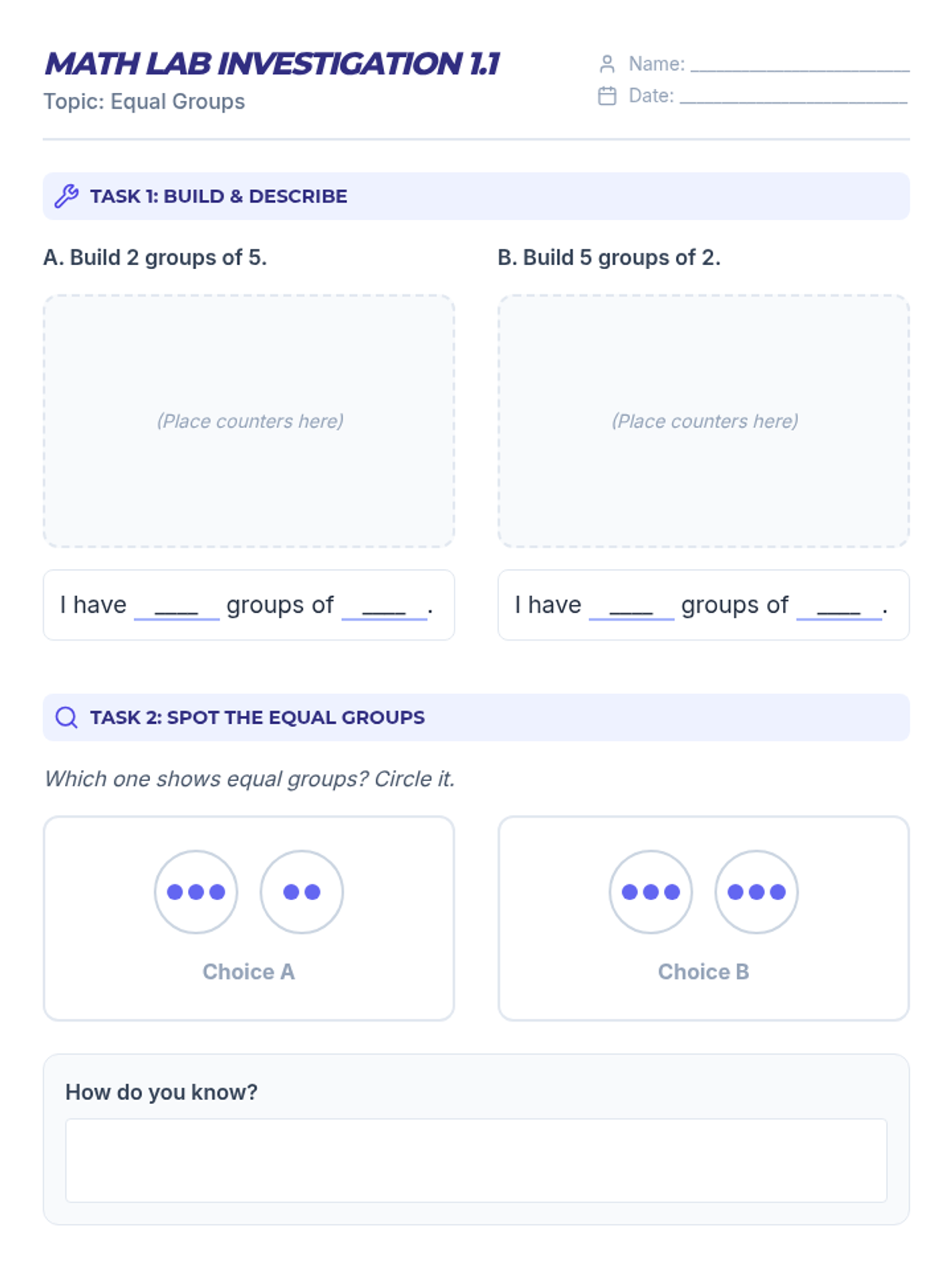
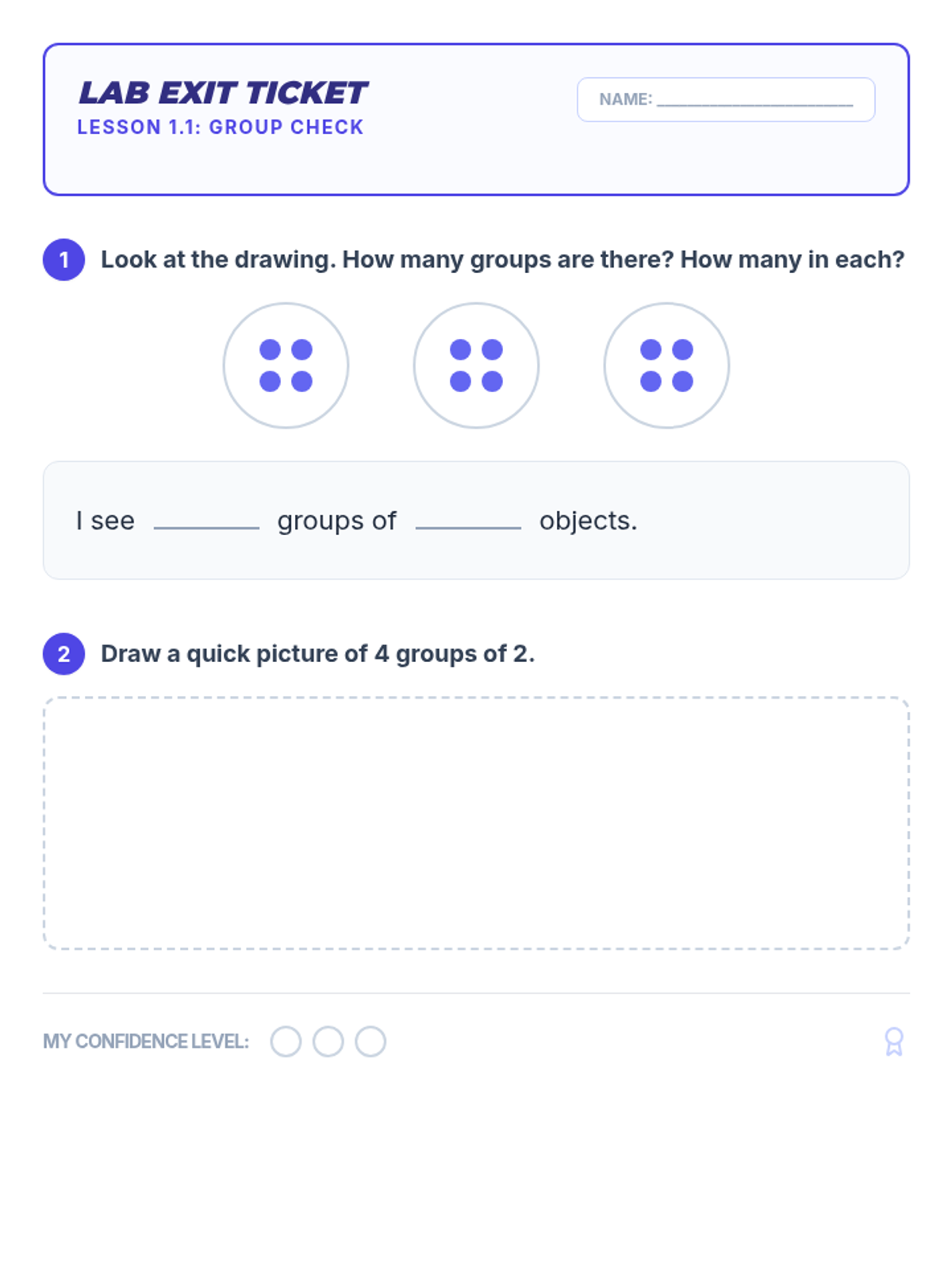
A 12-lesson Tier 2 intervention sequence for third-grade multiplication standards, focusing on equal groups, arrays, and unknown factors using IM-aligned strategies and All Learners Network concepts.
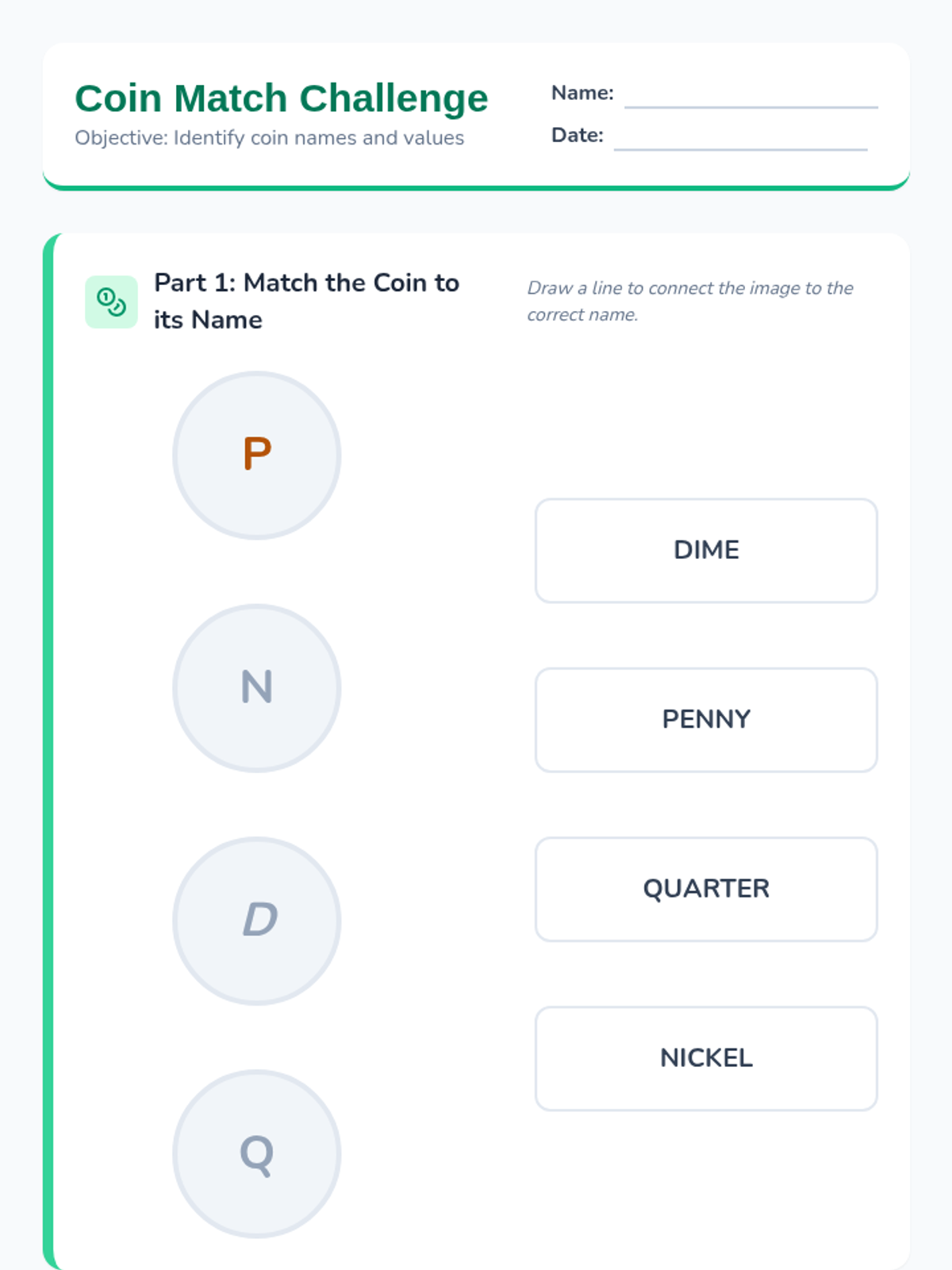
A comprehensive week-long math unit focused on identifying coin values and performing addition and subtraction of money up to $20 using a calculator in real-world contexts.