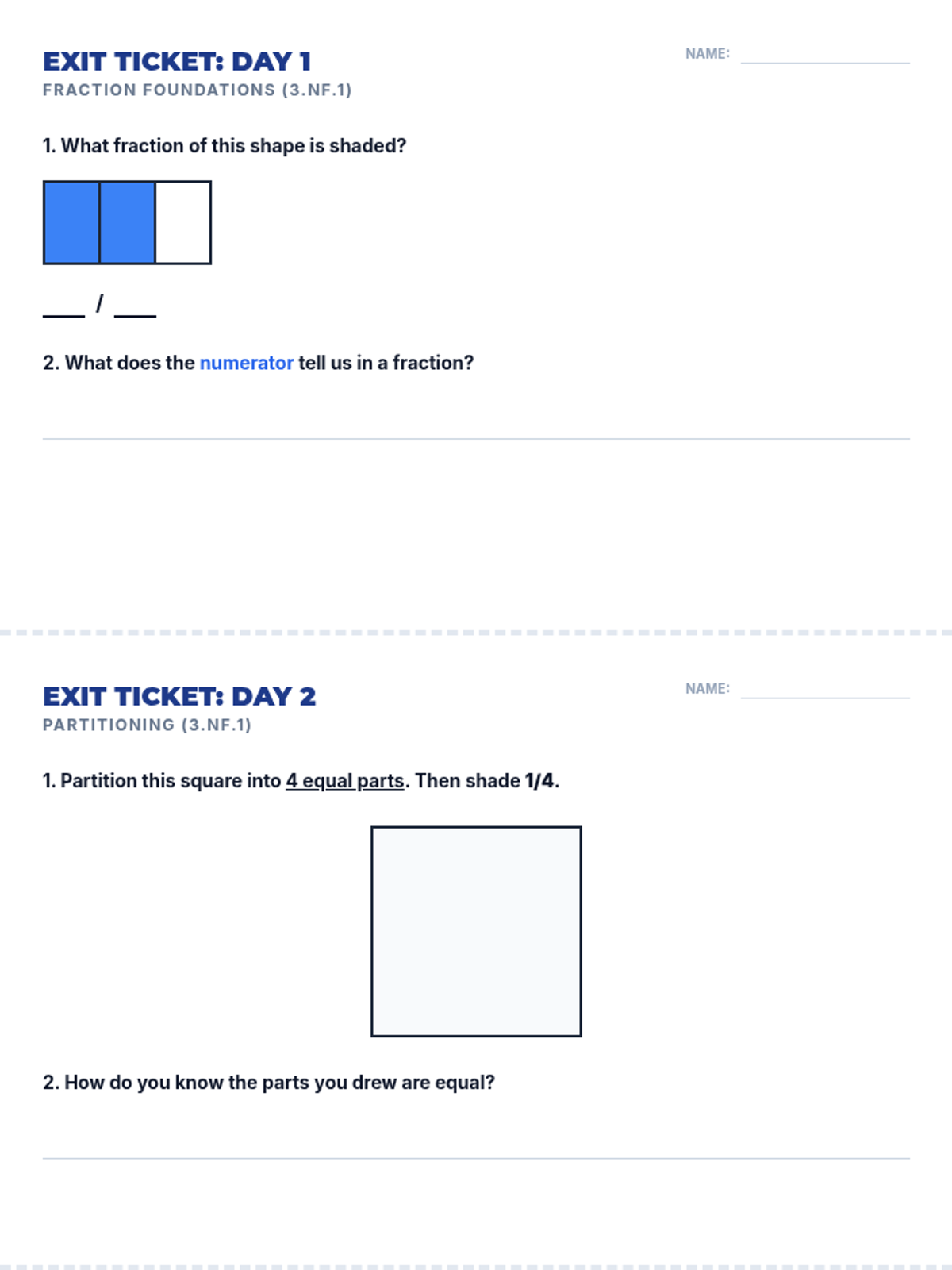
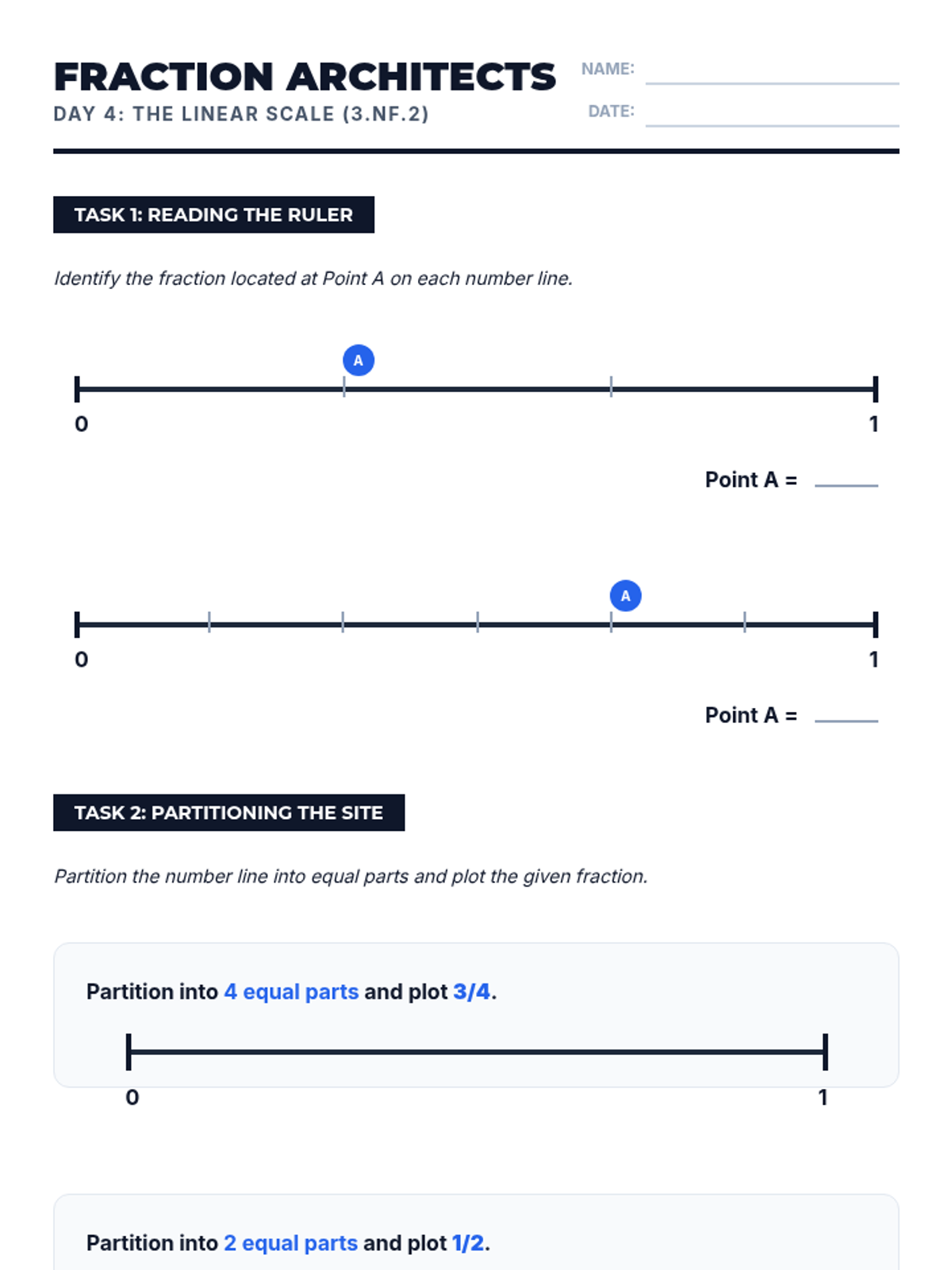
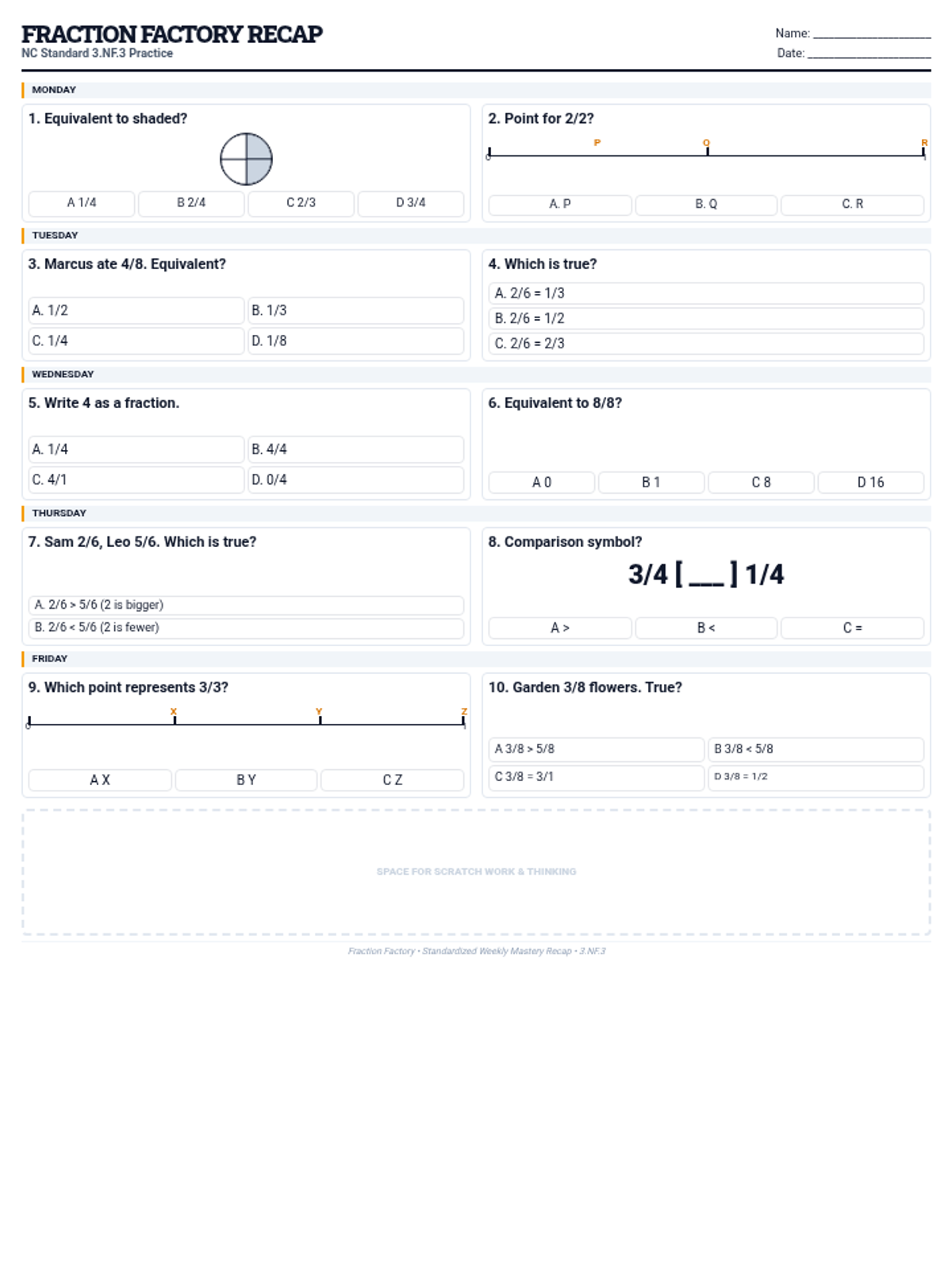
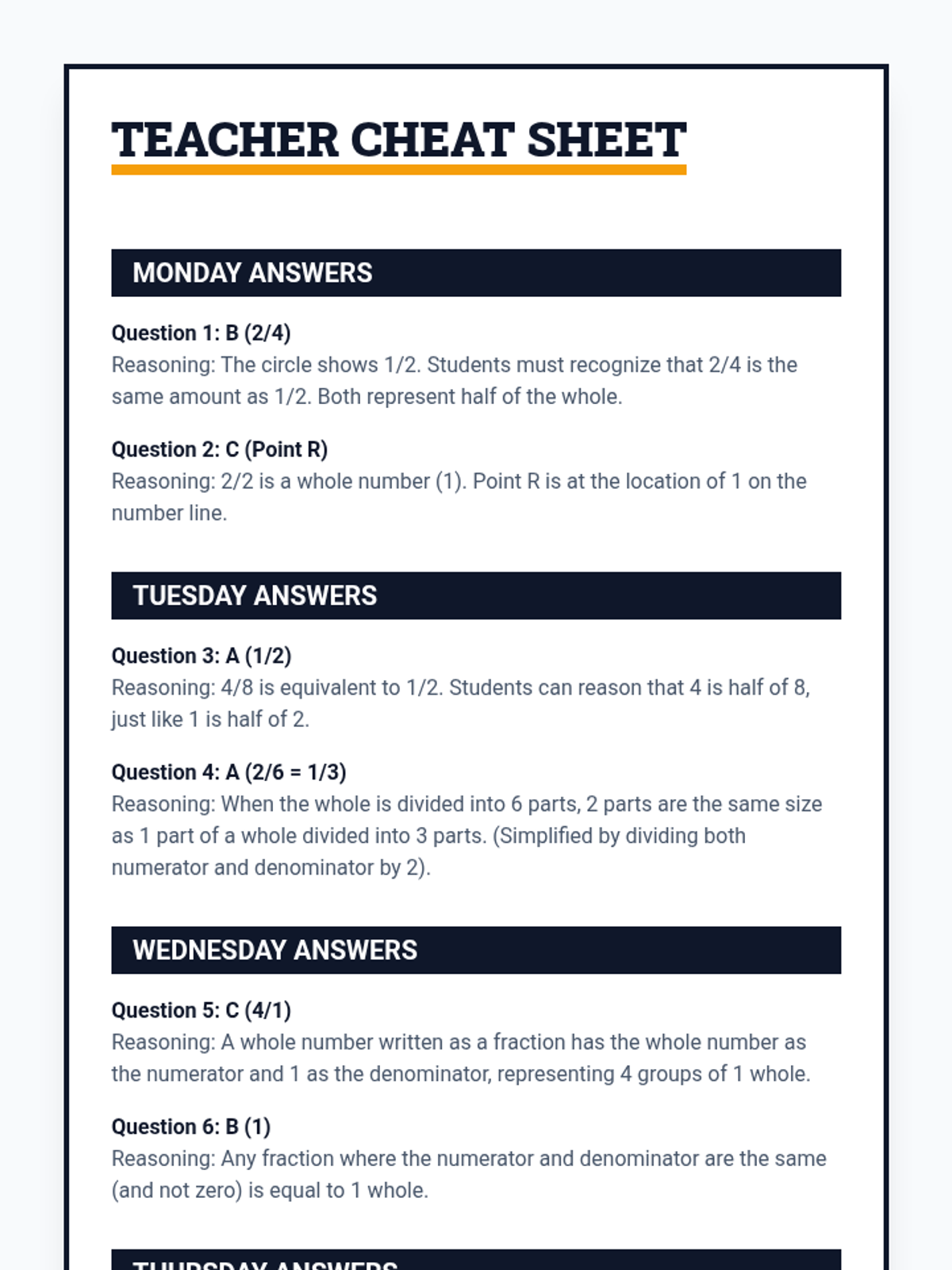
A comprehensive unit on foundational fraction concepts for 3rd grade, focusing on partitioning shapes into equal parts, understanding unit fractions, and naming parts through eighths.
A 12-lesson Tier 2 intervention sequence for third-grade students focusing on 3.OA.B standards. This sequence uses All Learners Network's High Leverage Concepts and Illustrative Mathematics methods to build conceptual understanding of multiplication properties and the relationship between multiplication and division.
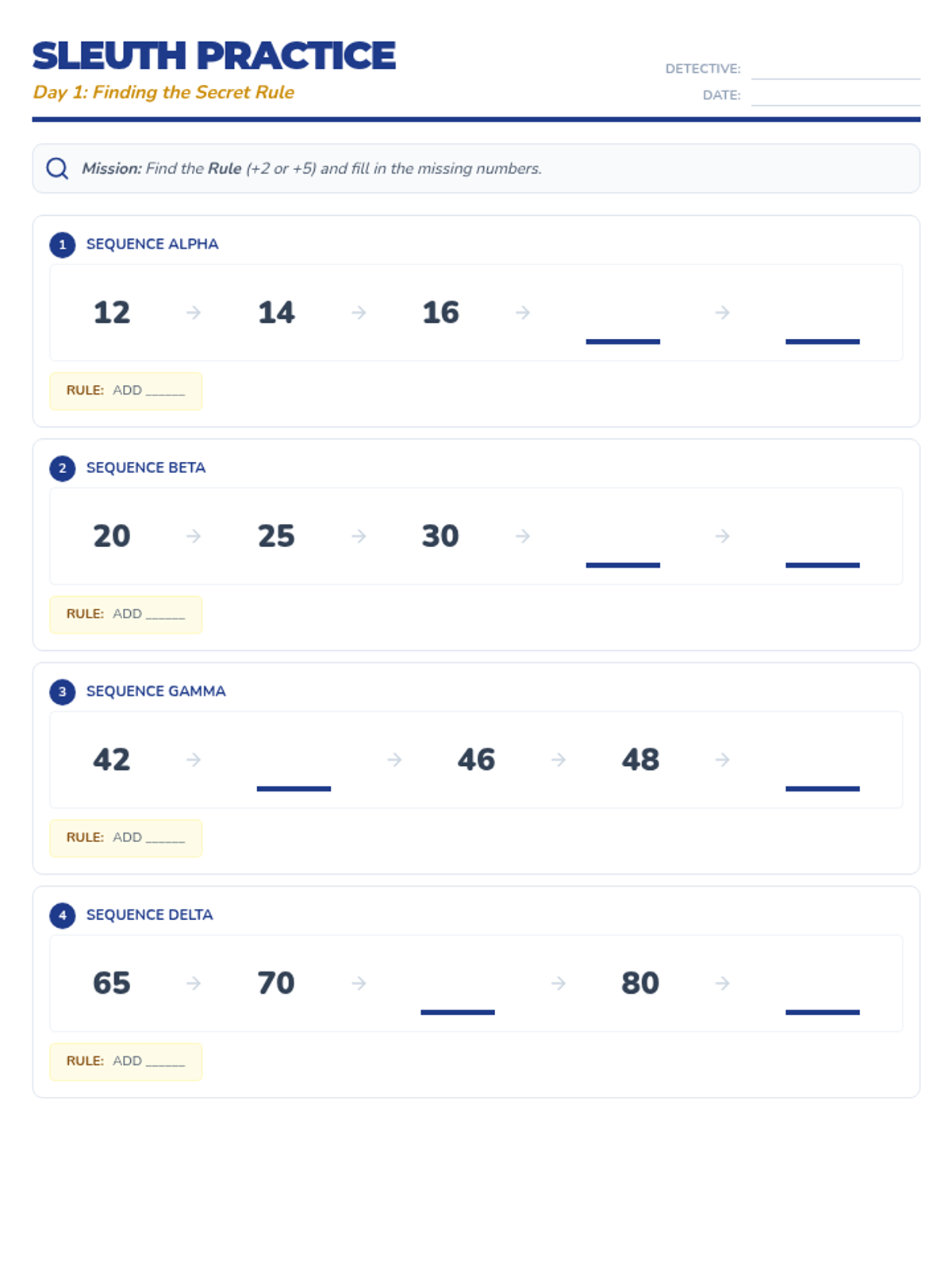
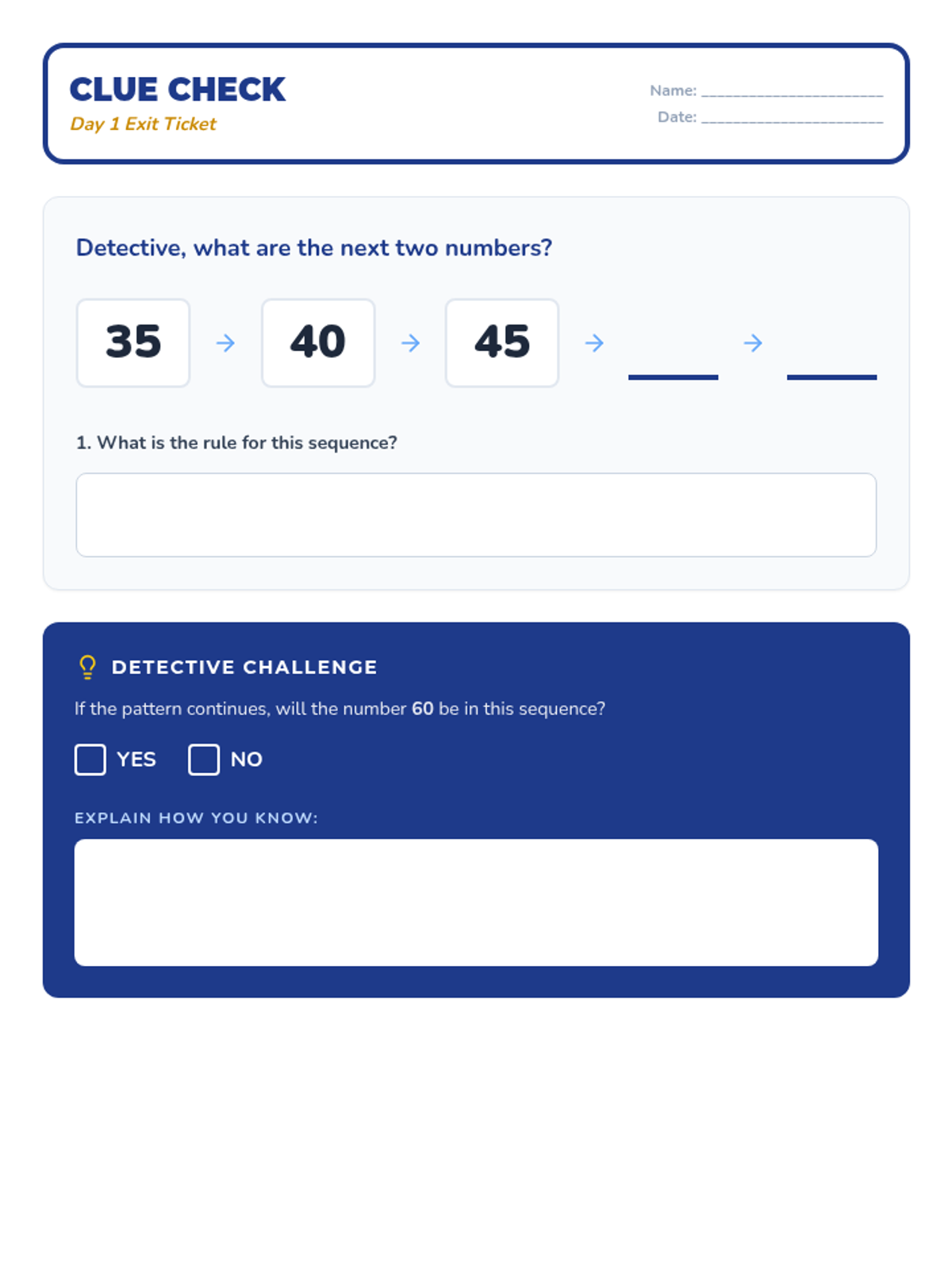
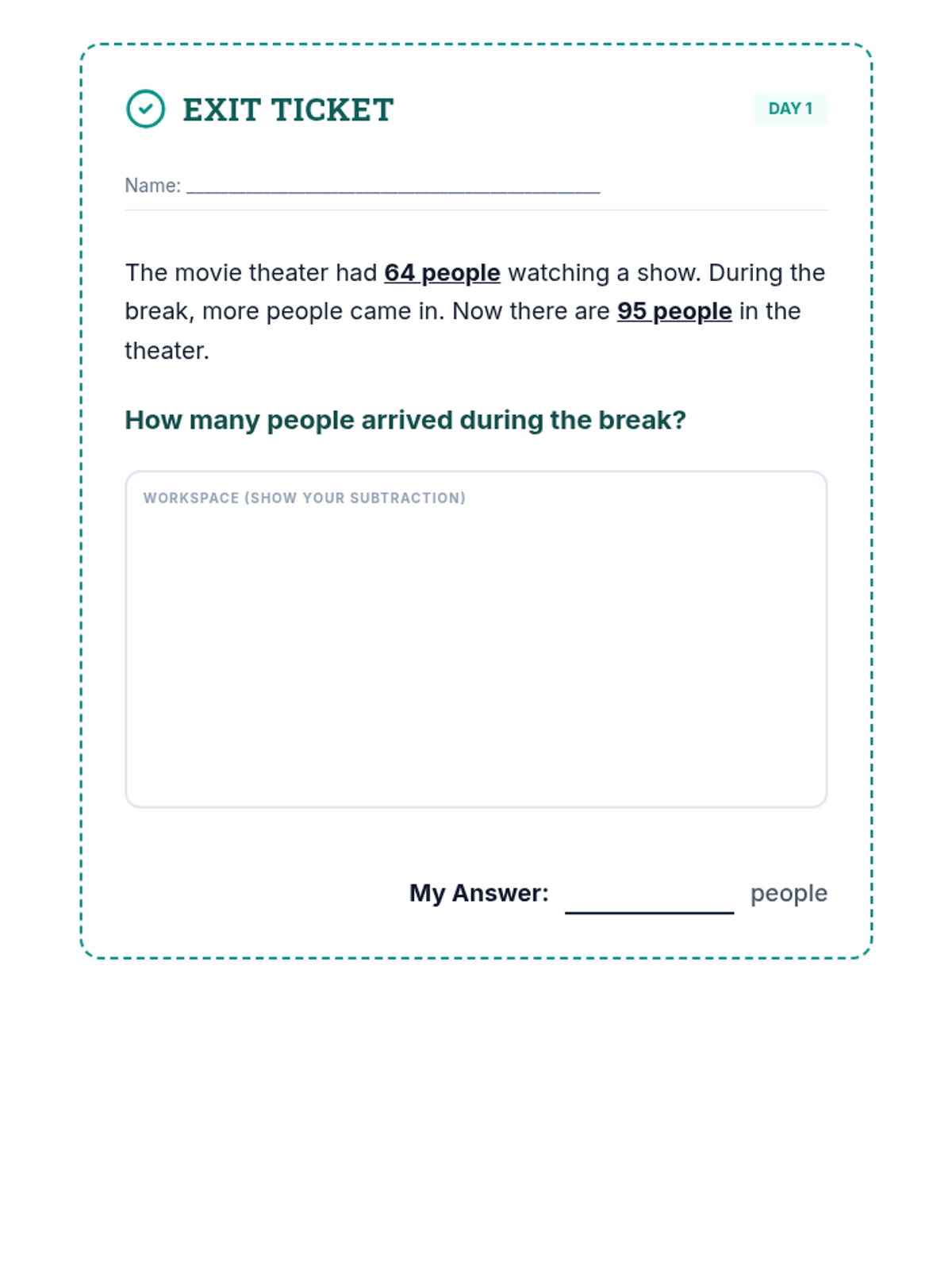
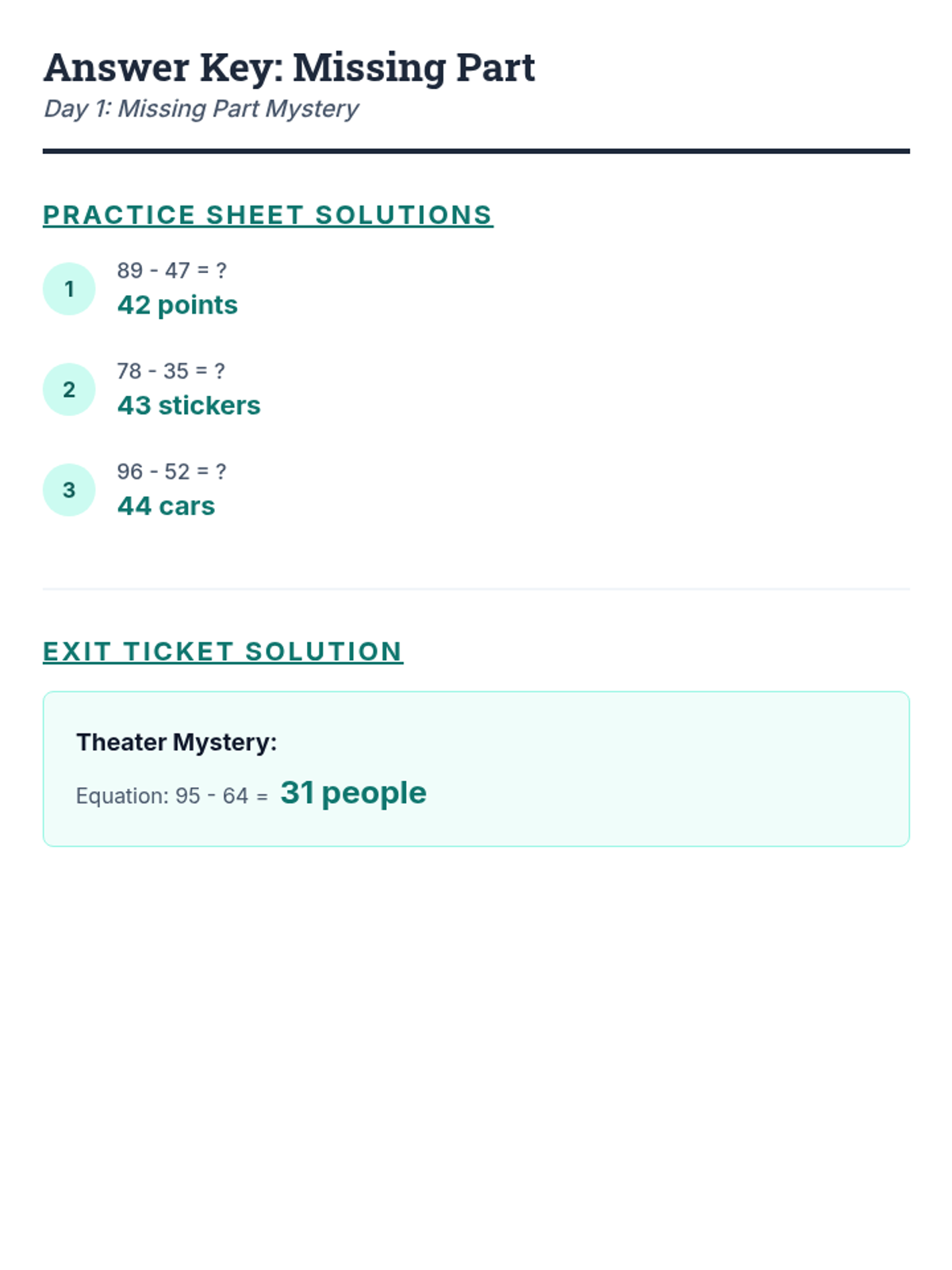
A comprehensive 5-day unit for 3rd-grade students to master 3-digit subtraction with regrouping. The sequence follows a 'Math Lab' theme, moving from single regrouping to double regrouping, subtracting across zeros, and multi-step word problems.
A comprehensive baseline assessment suite for 3rd-grade mathematics, focusing on addition, subtraction, multiplication, division, and fractions to identify student starting points.
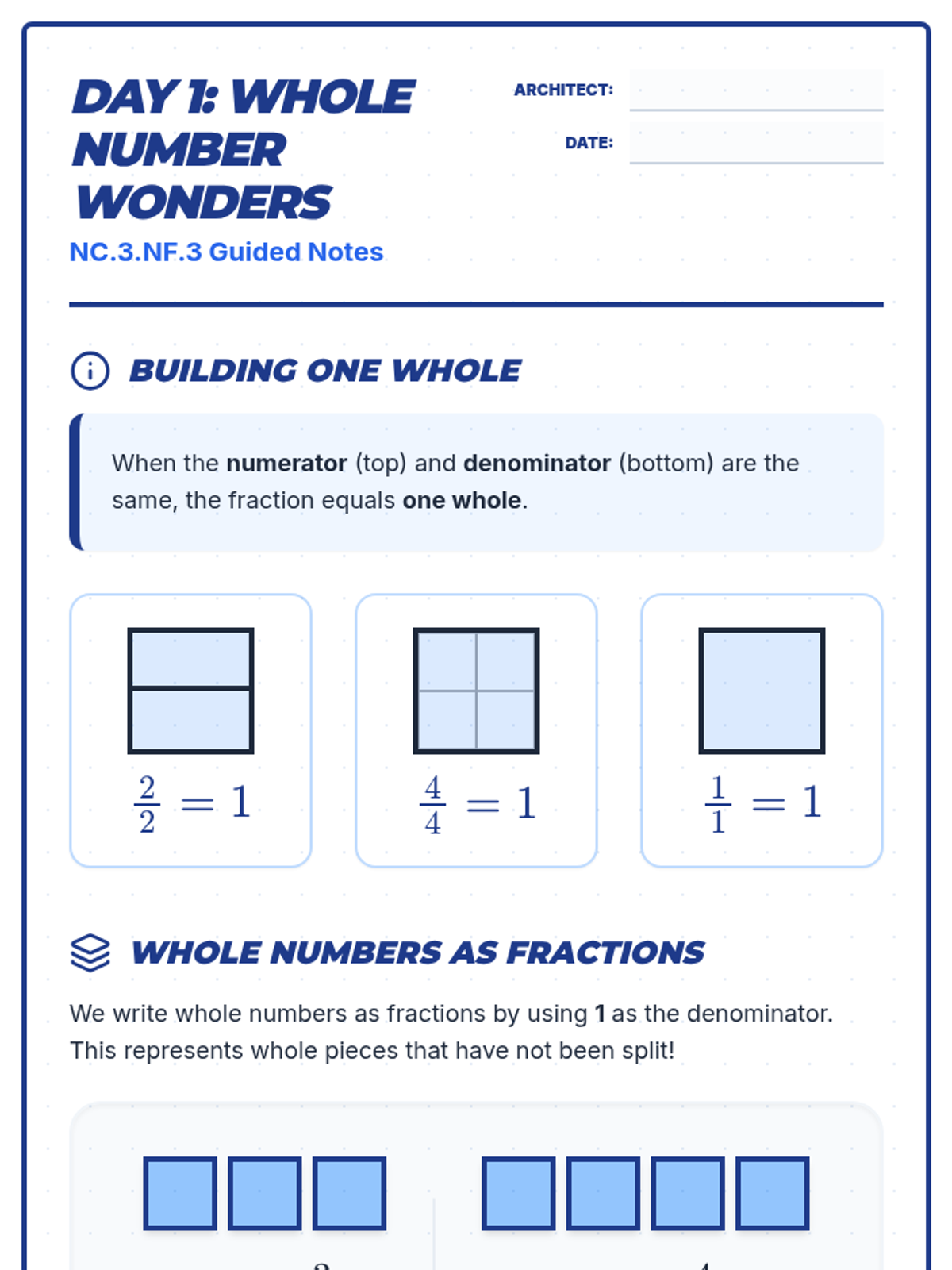
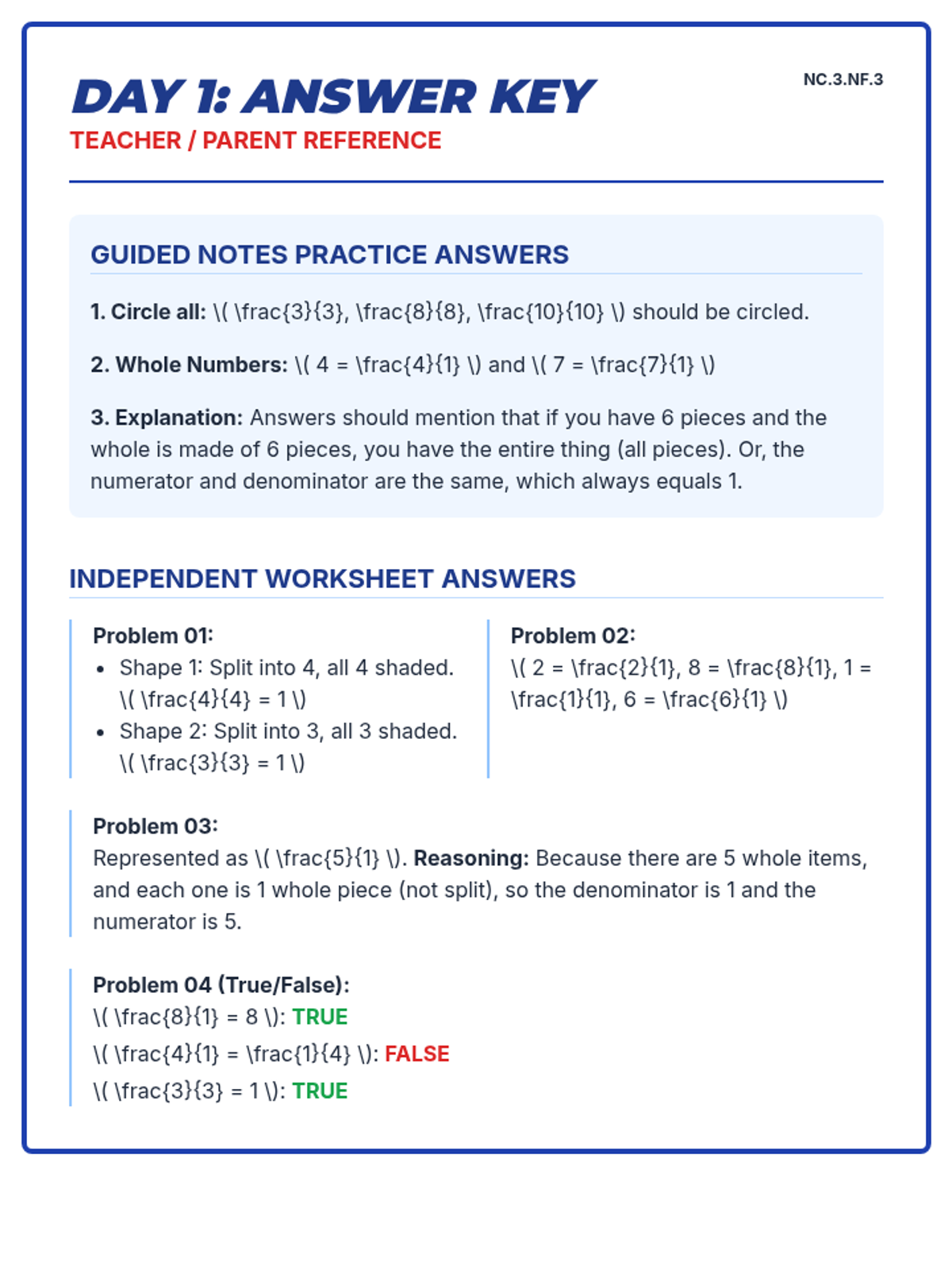
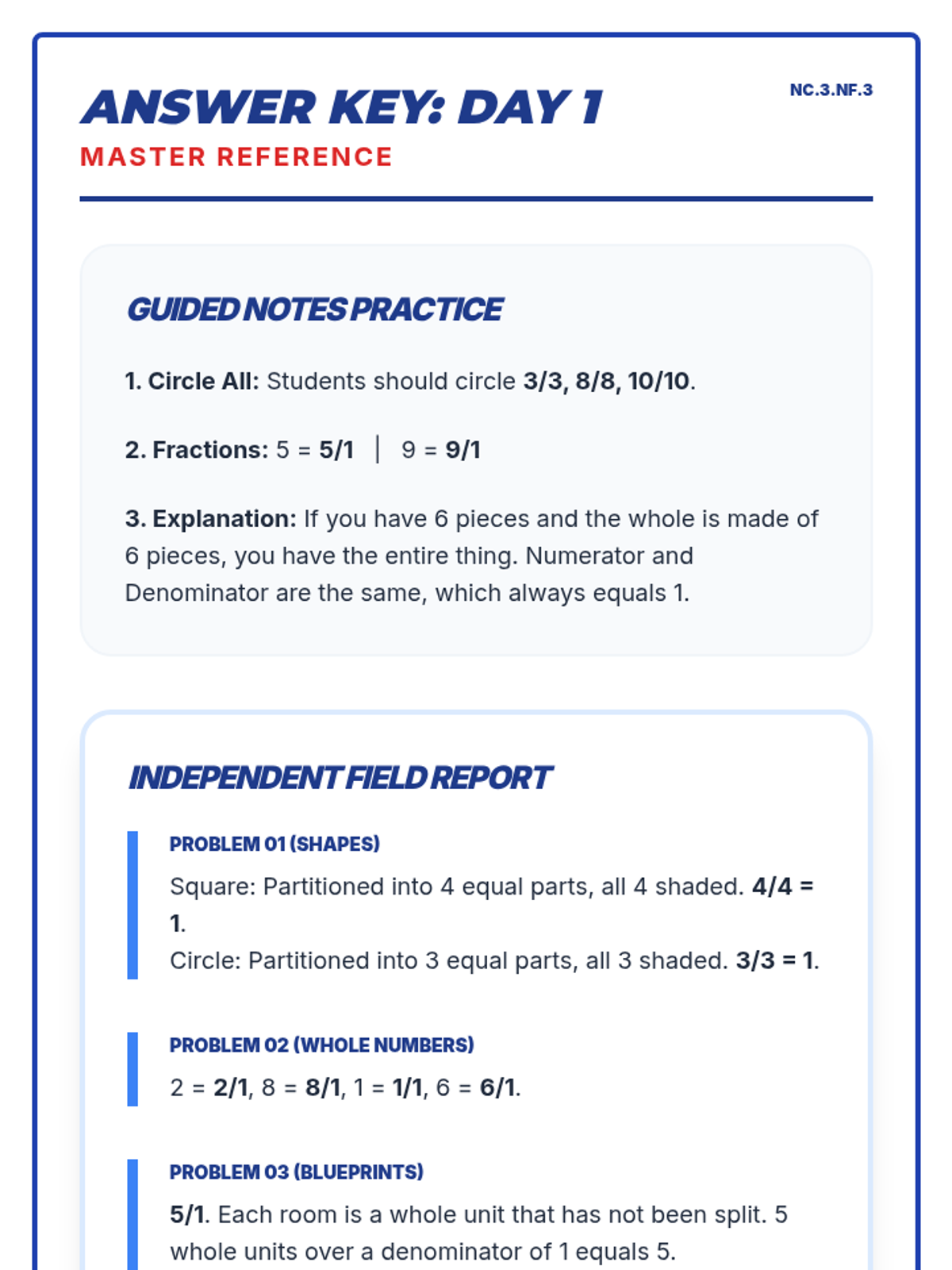
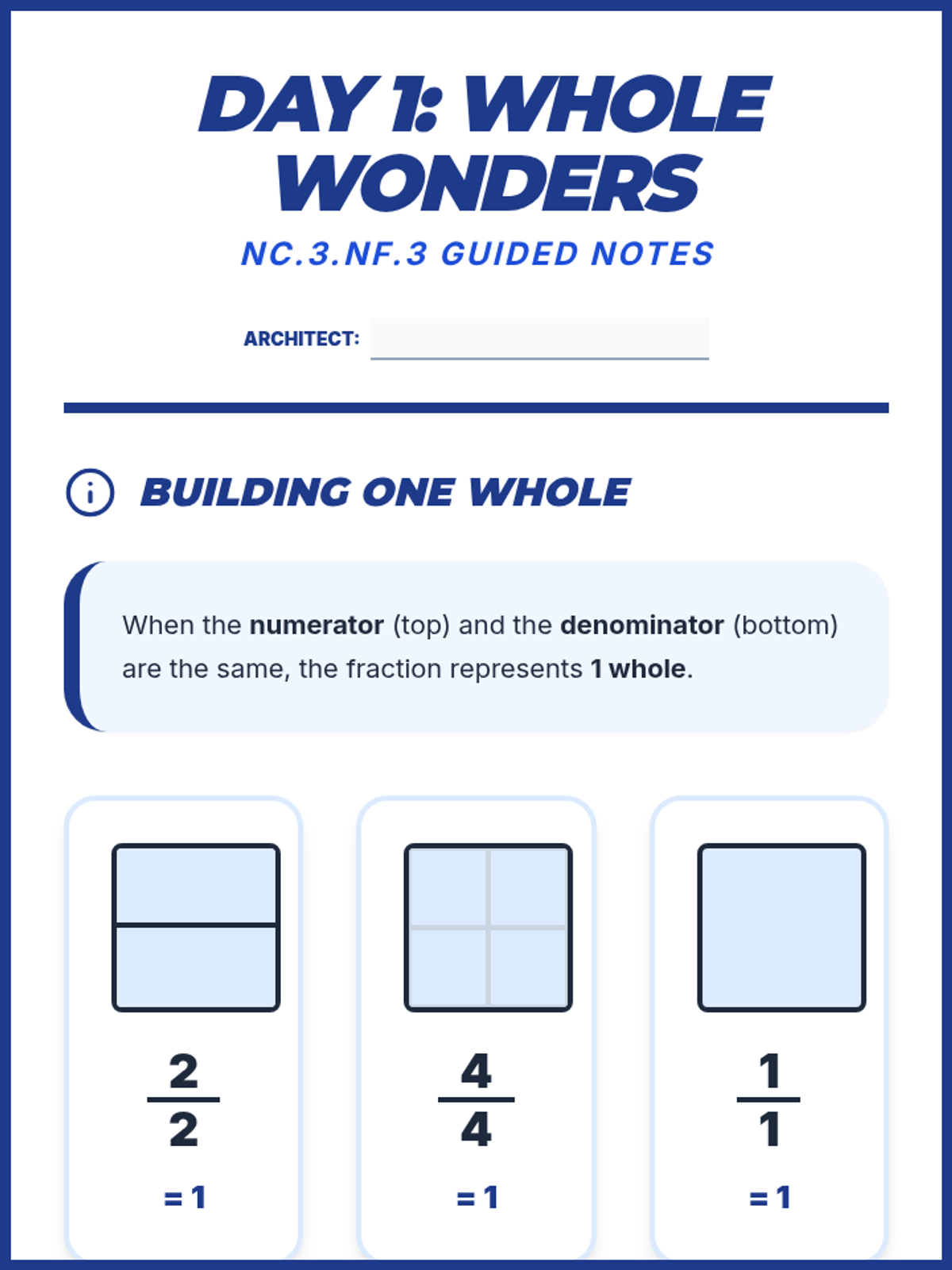
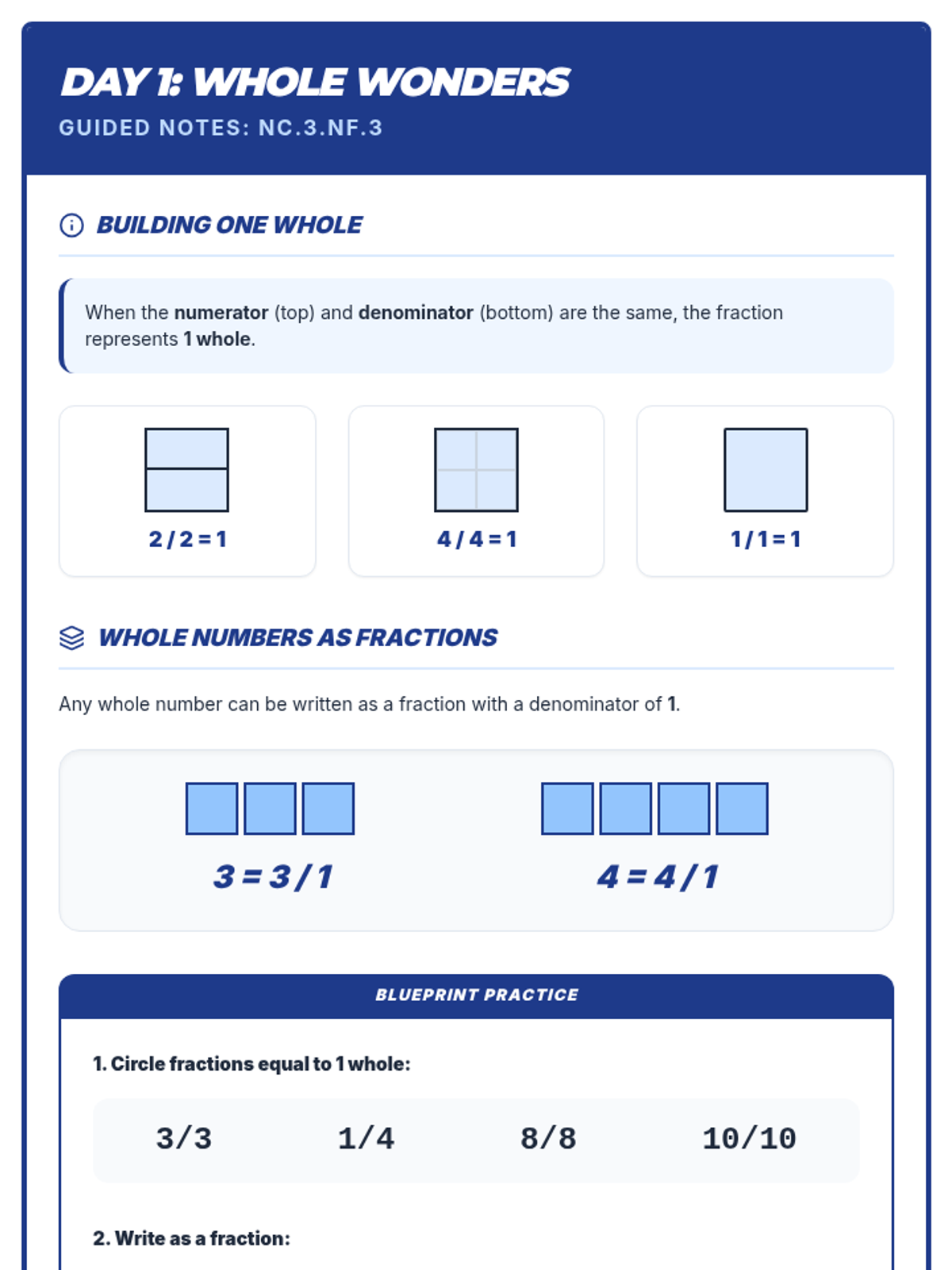
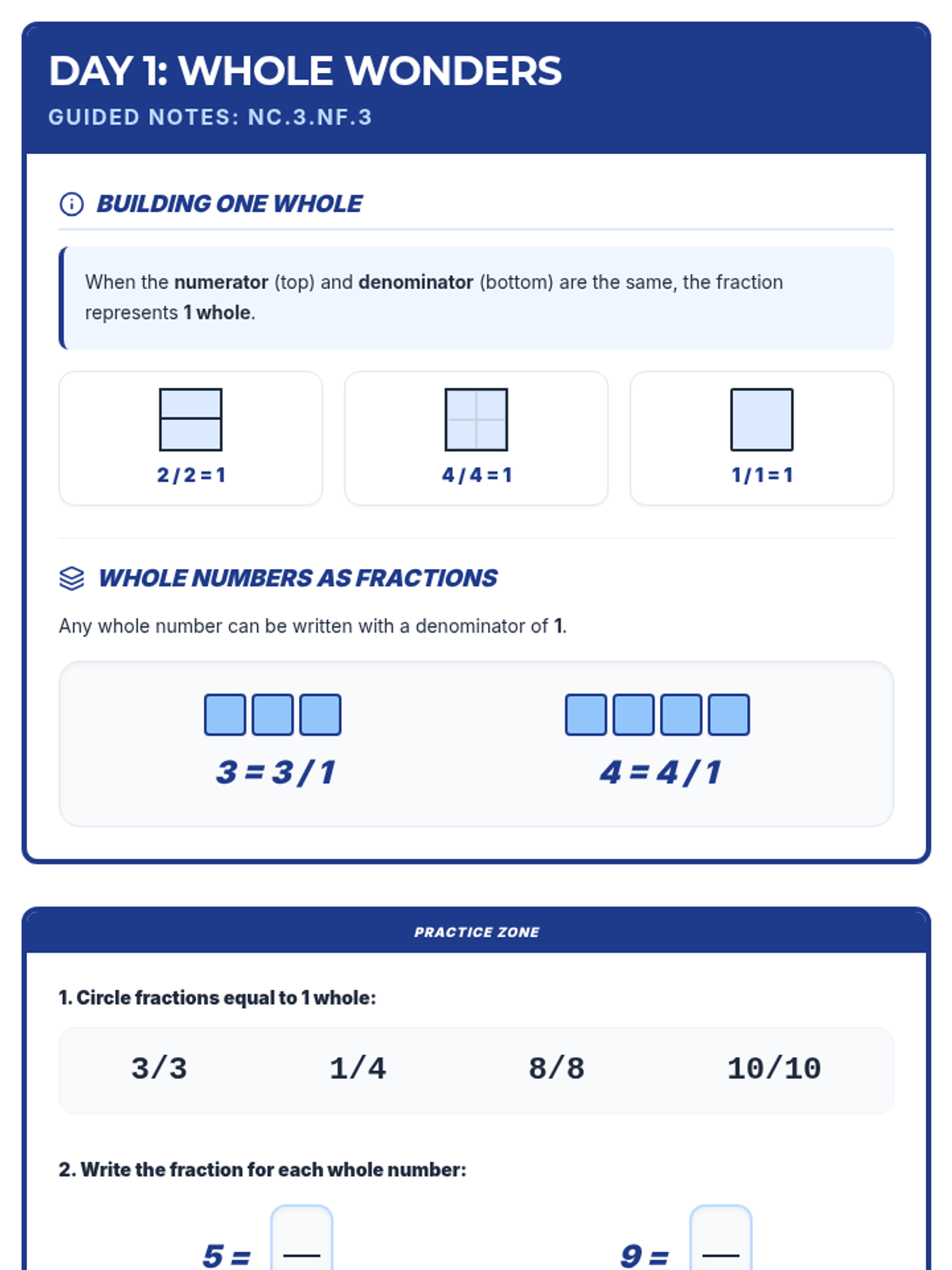
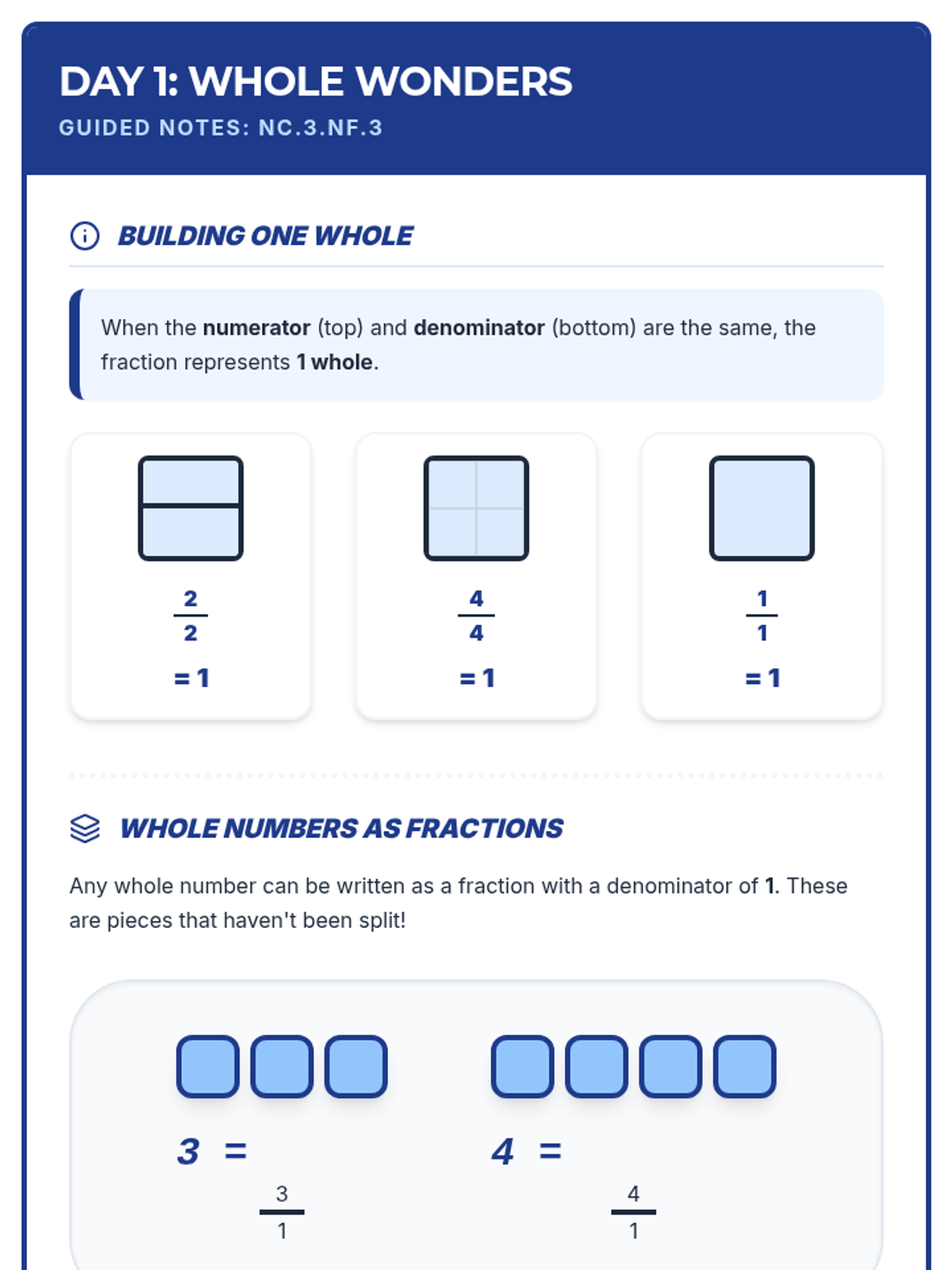
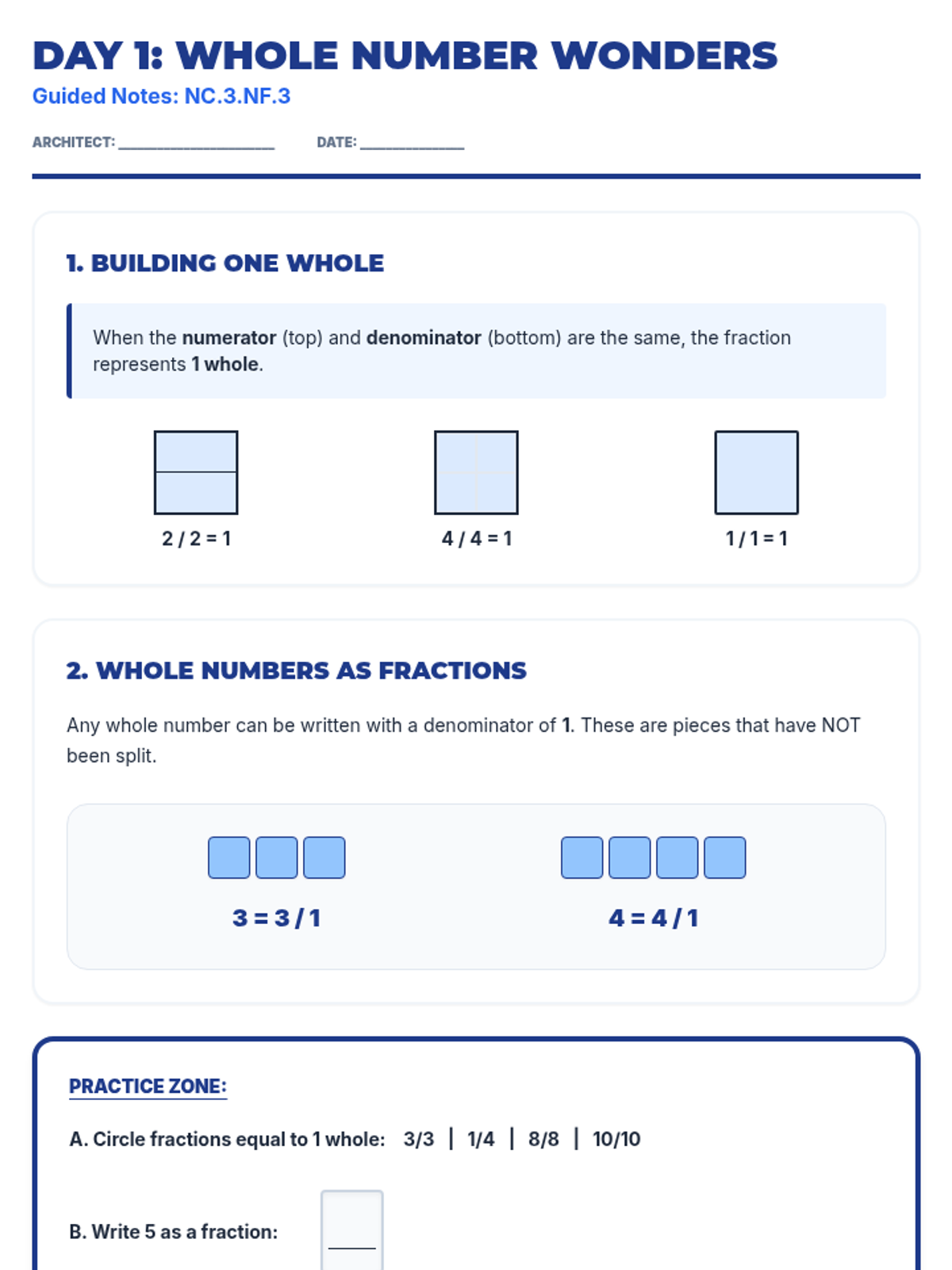
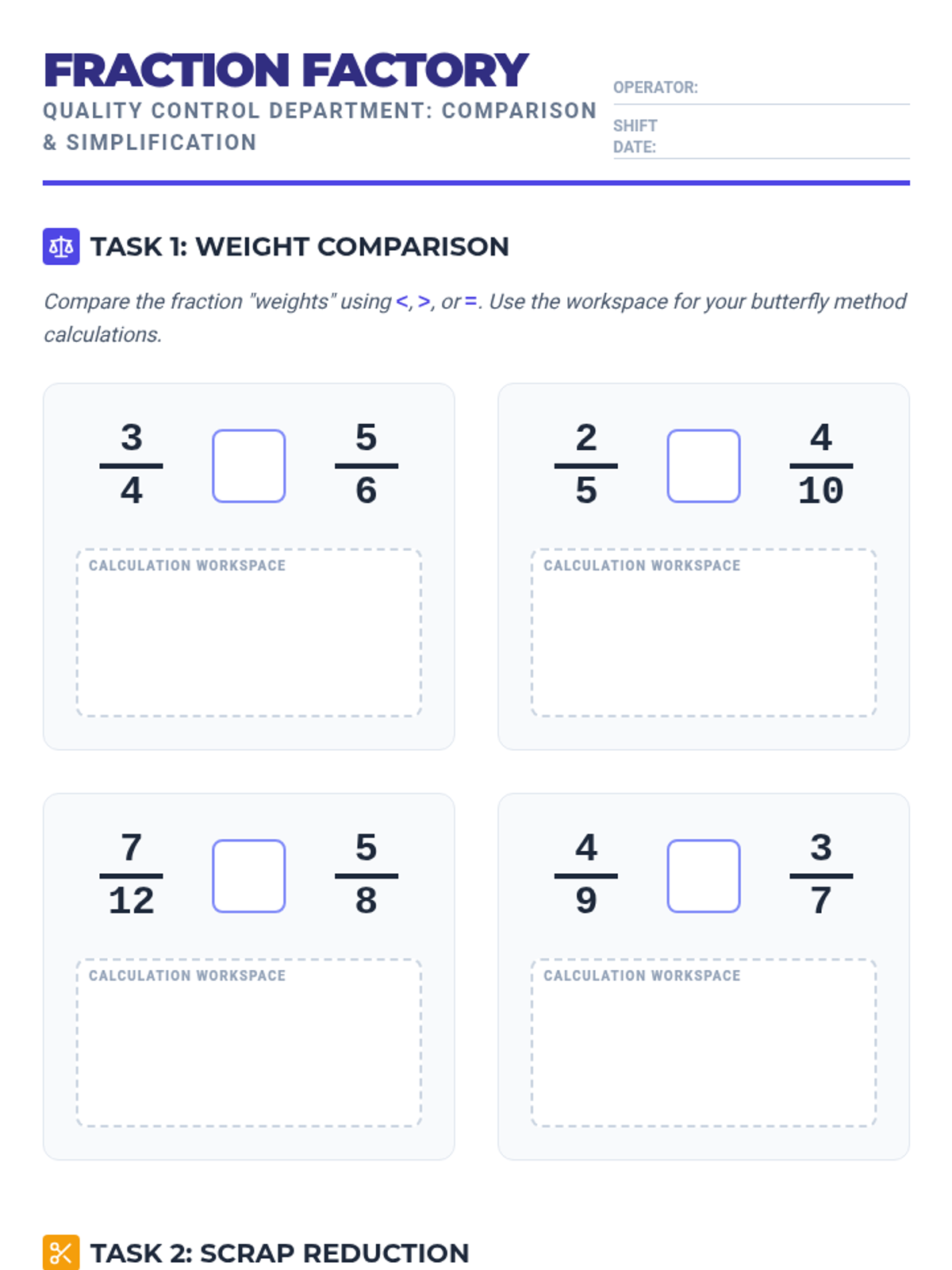
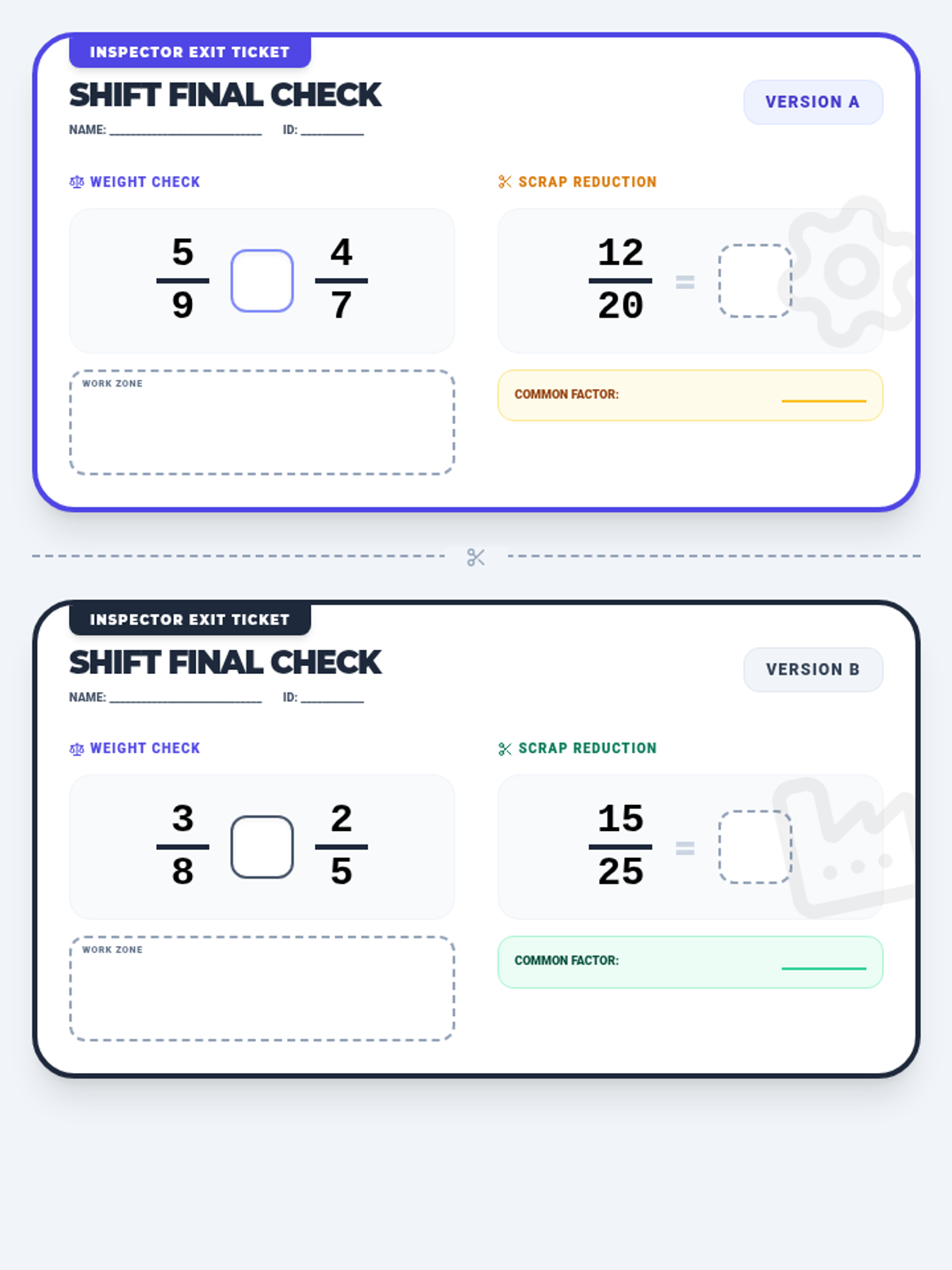
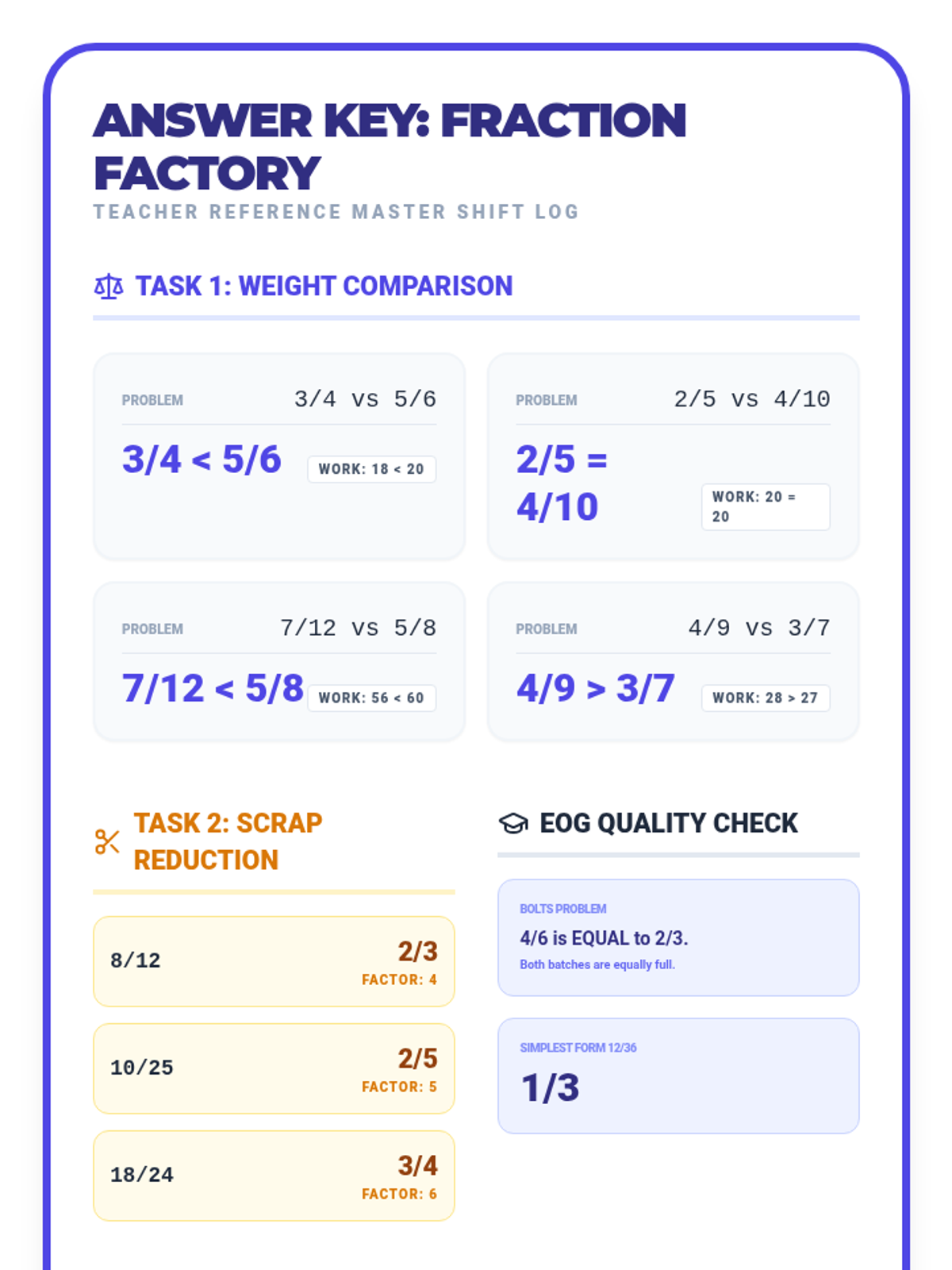
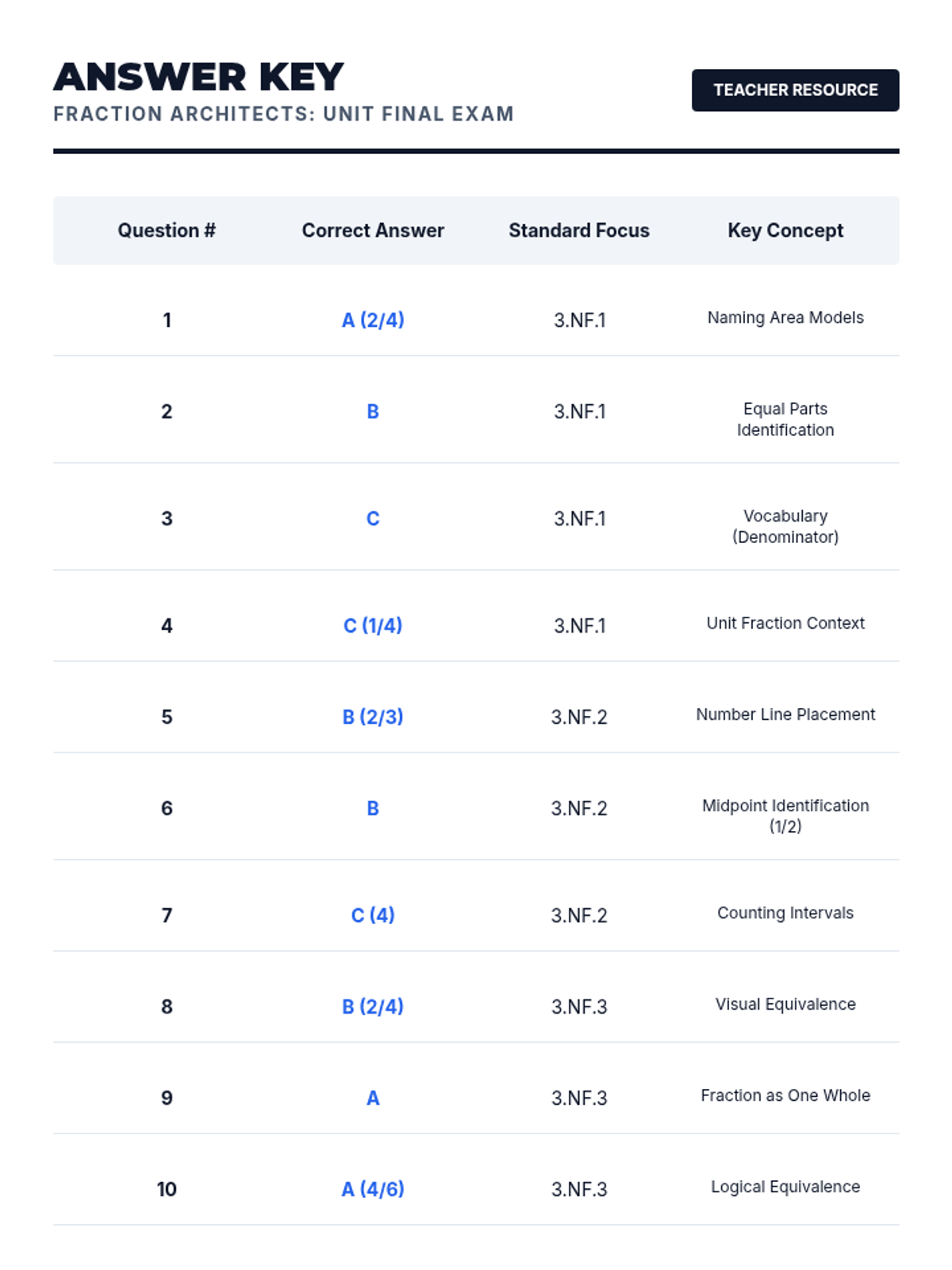
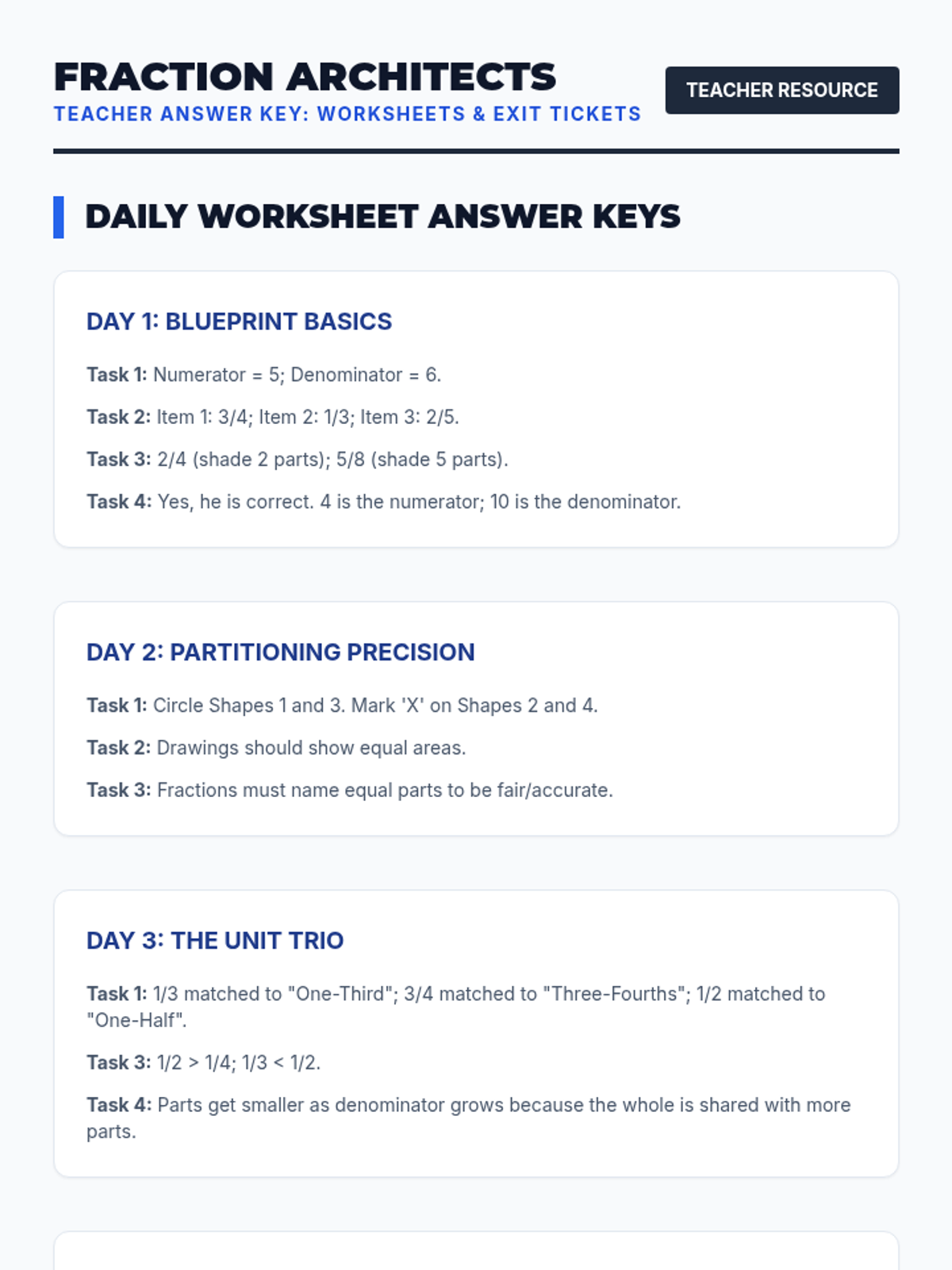
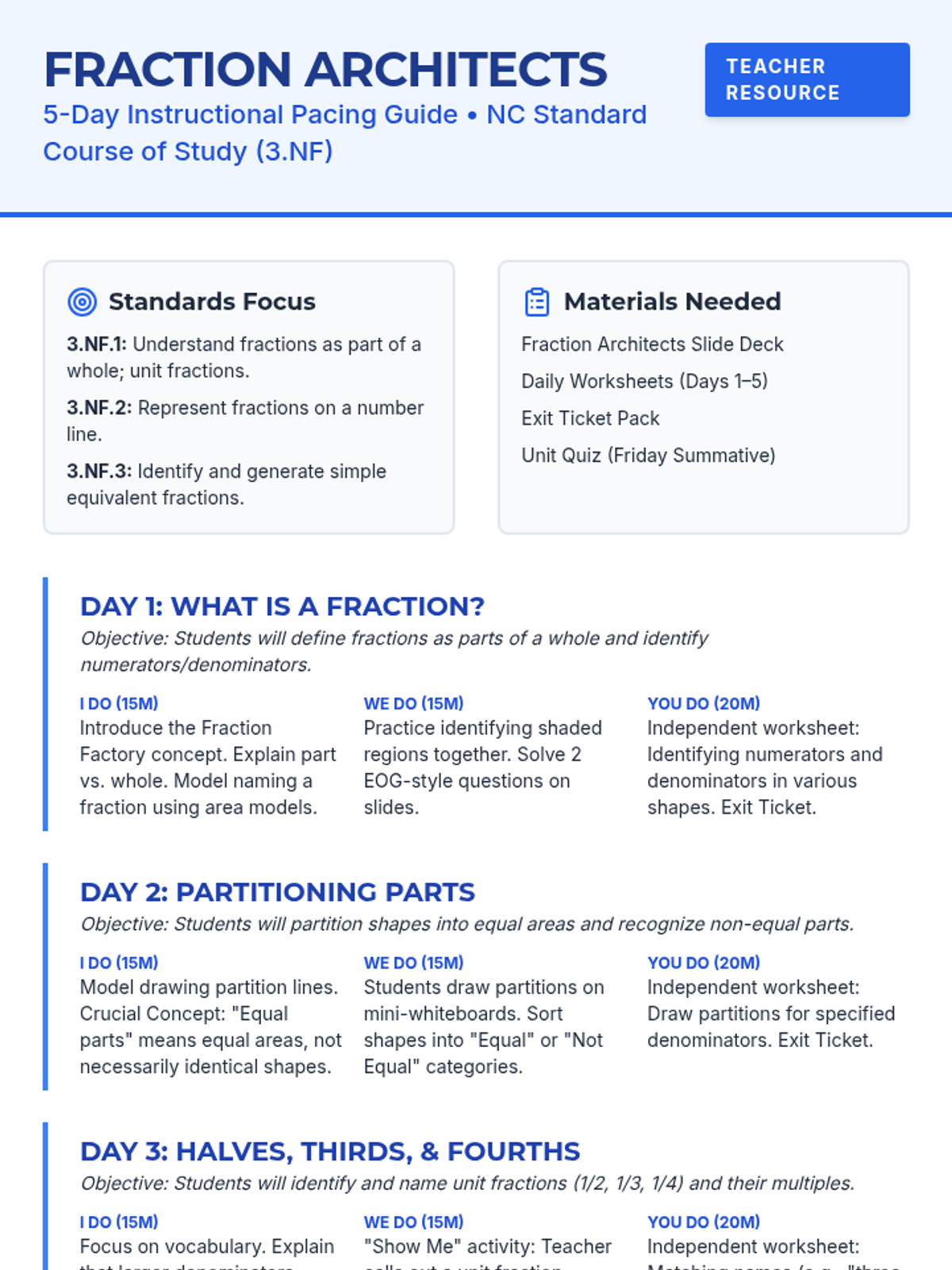
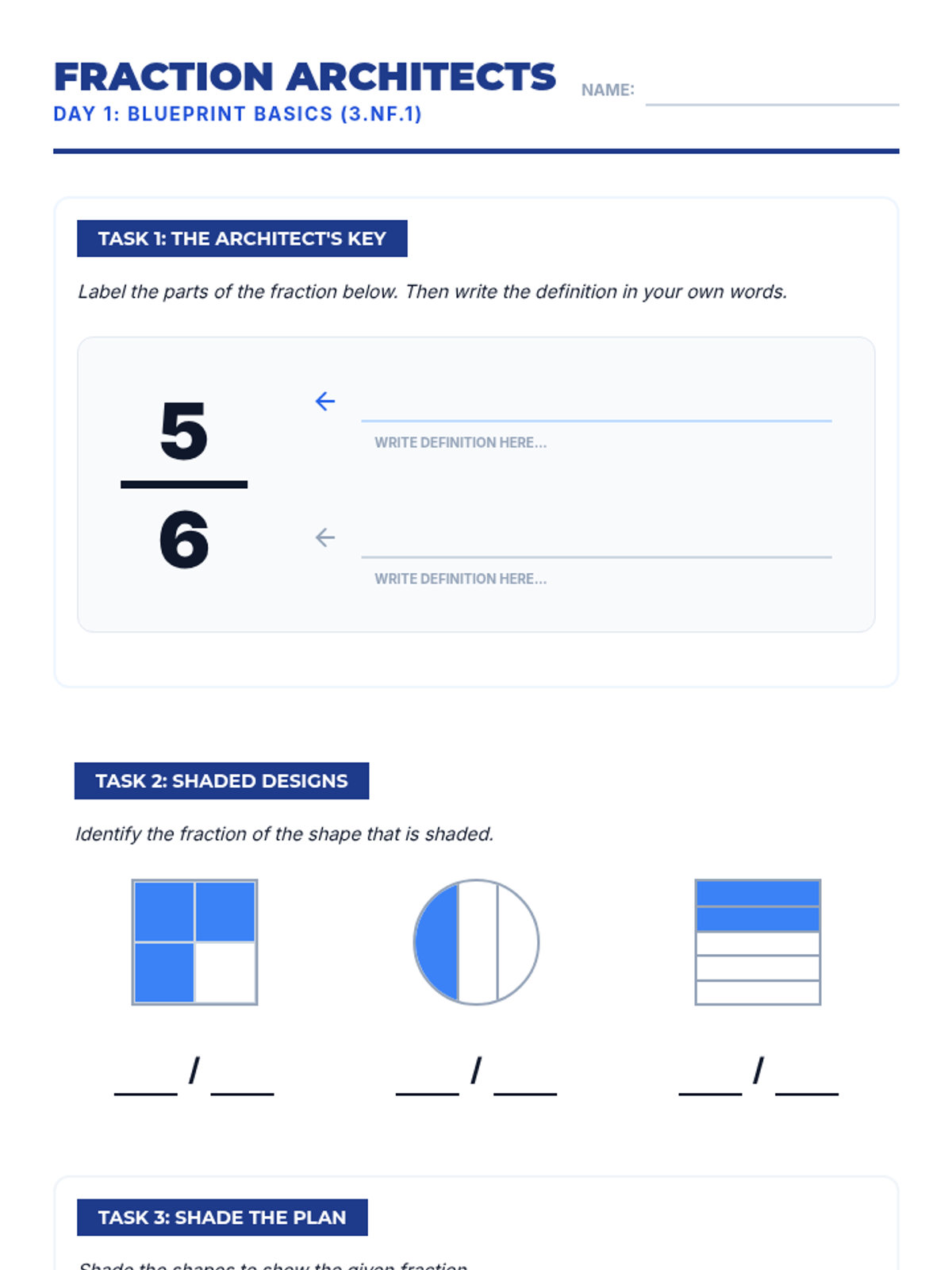
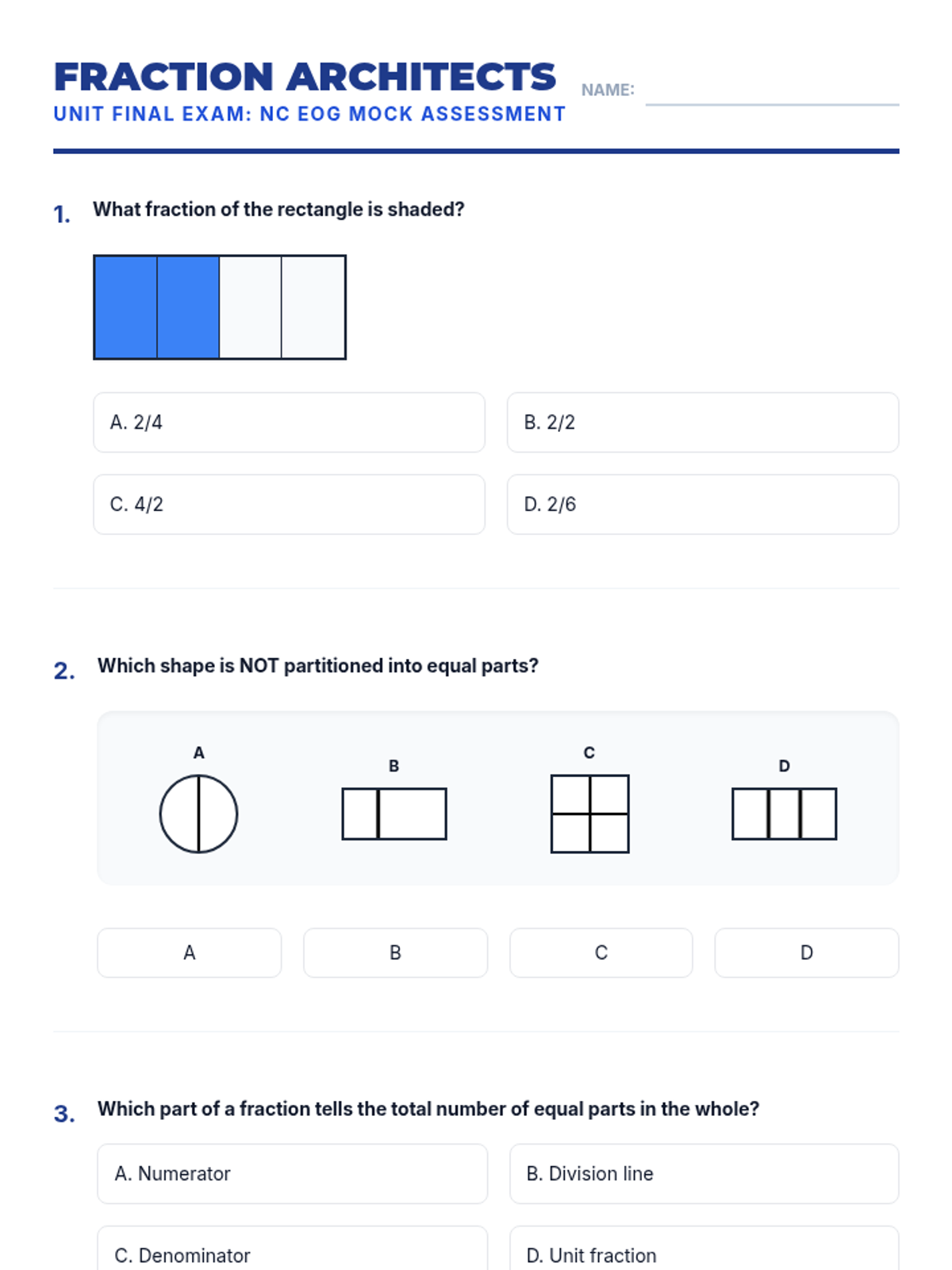
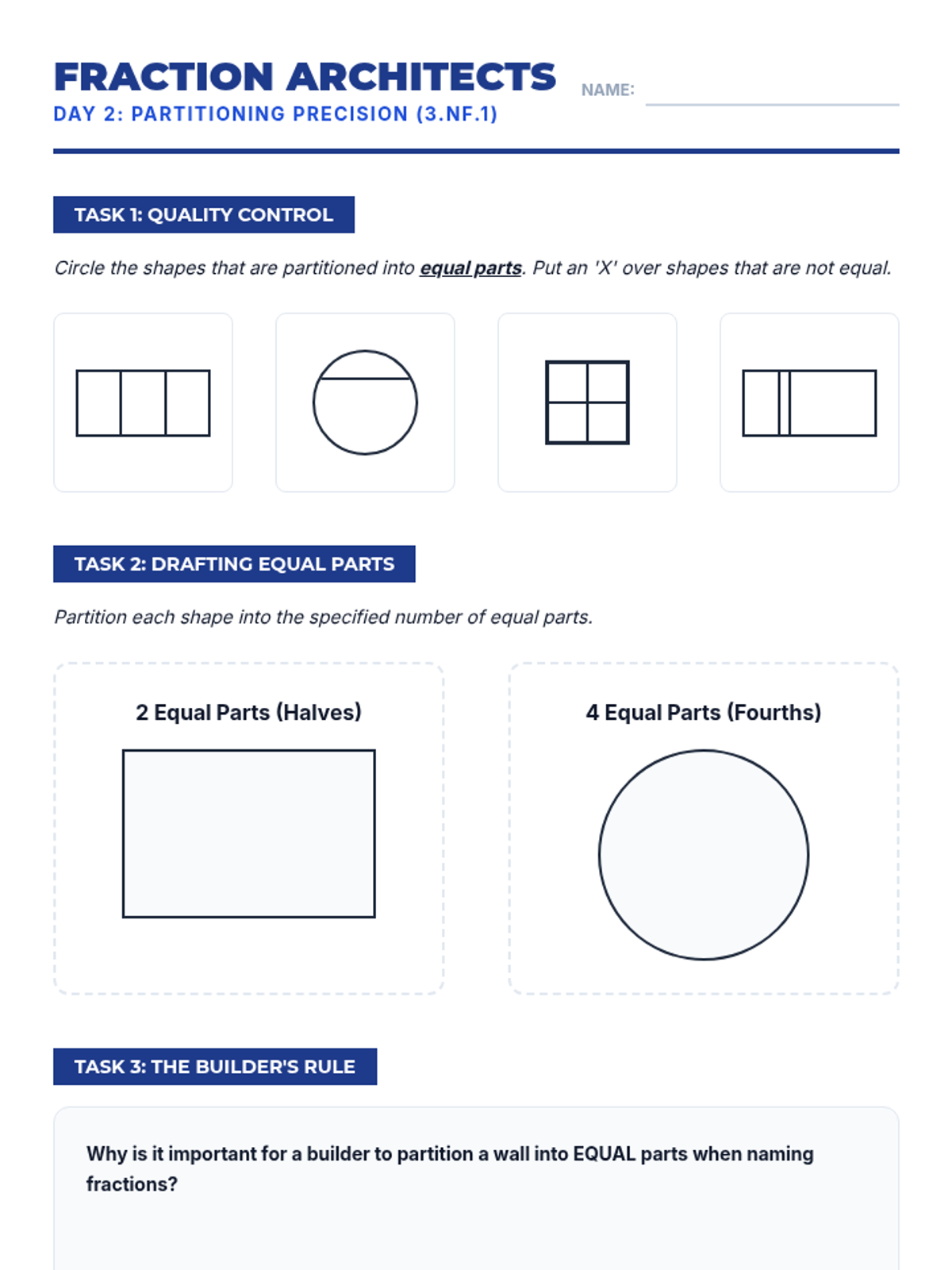
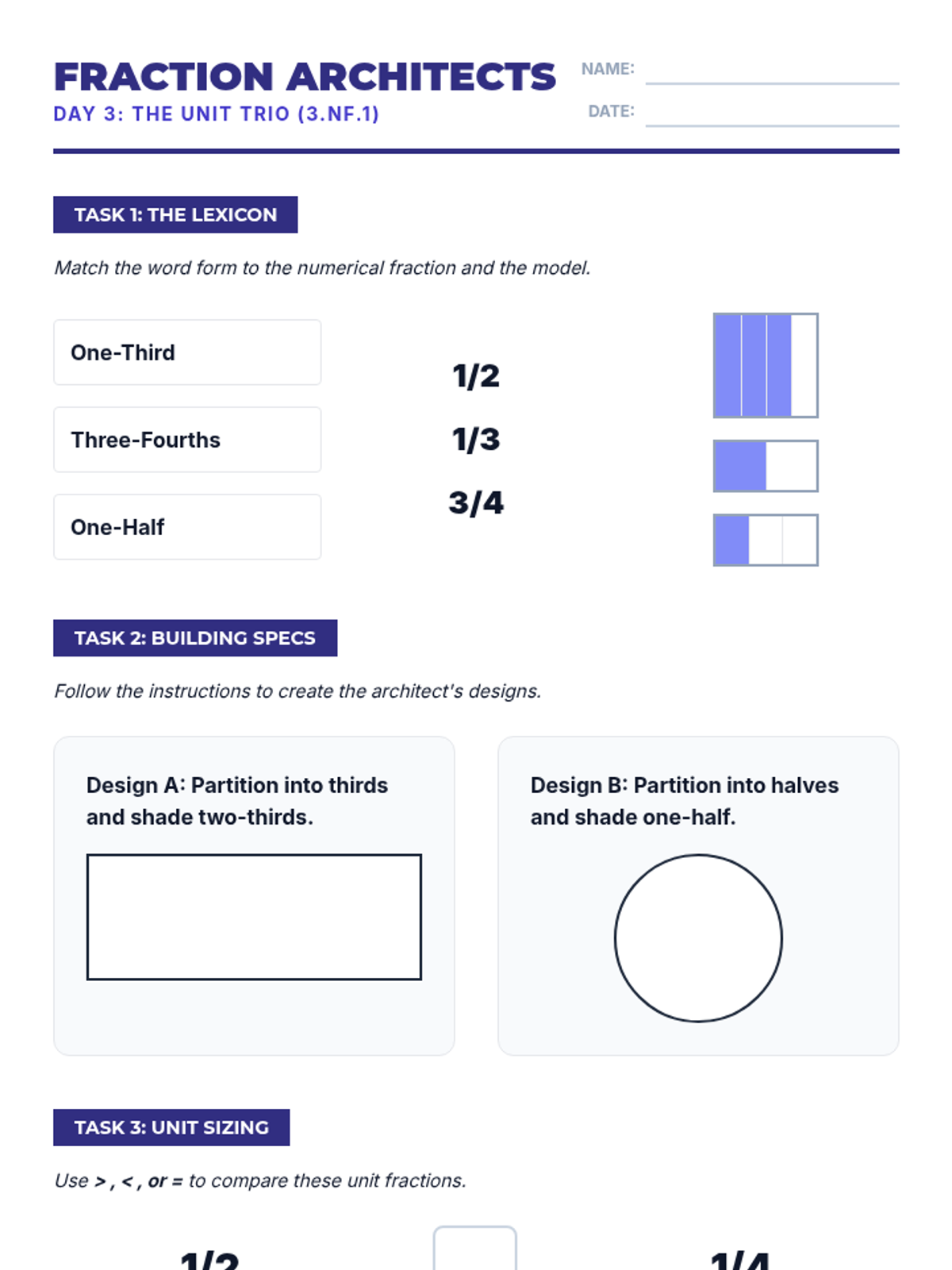
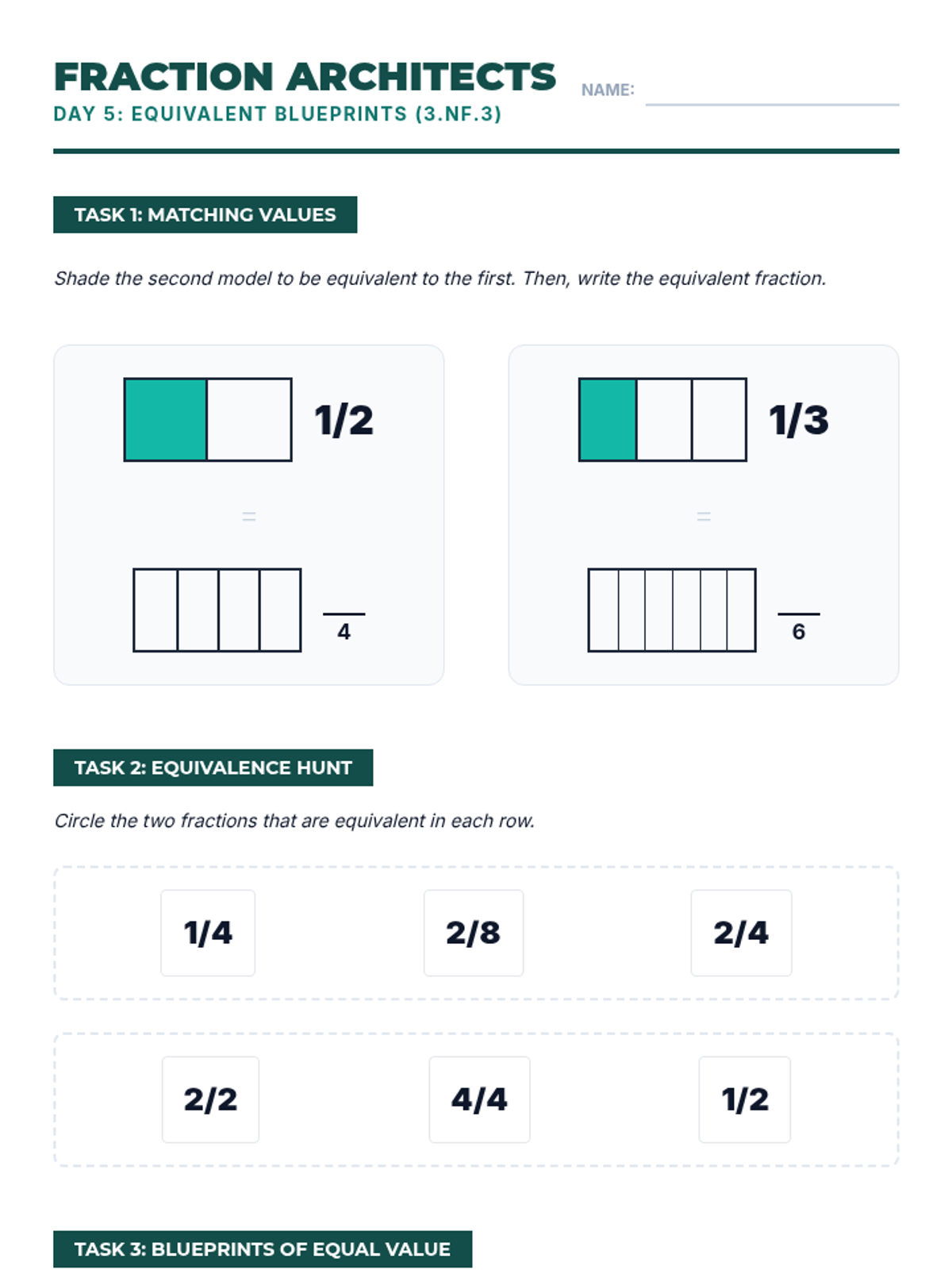
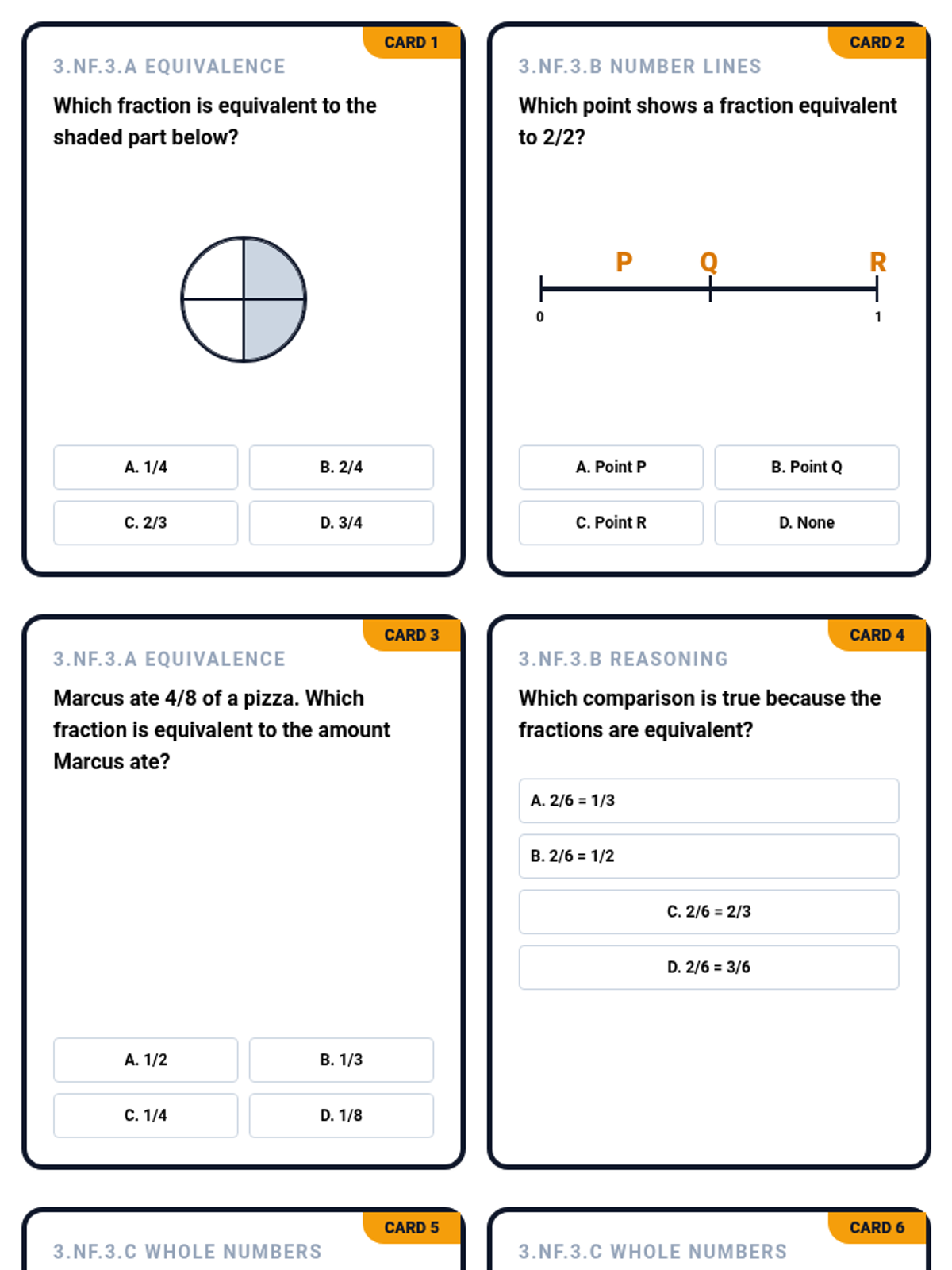
A comprehensive math unit on fractions, themed around architecture and building. Students progress from basic parts of a whole to equivalent fractions and comparisons through tiered, differentiated activities.
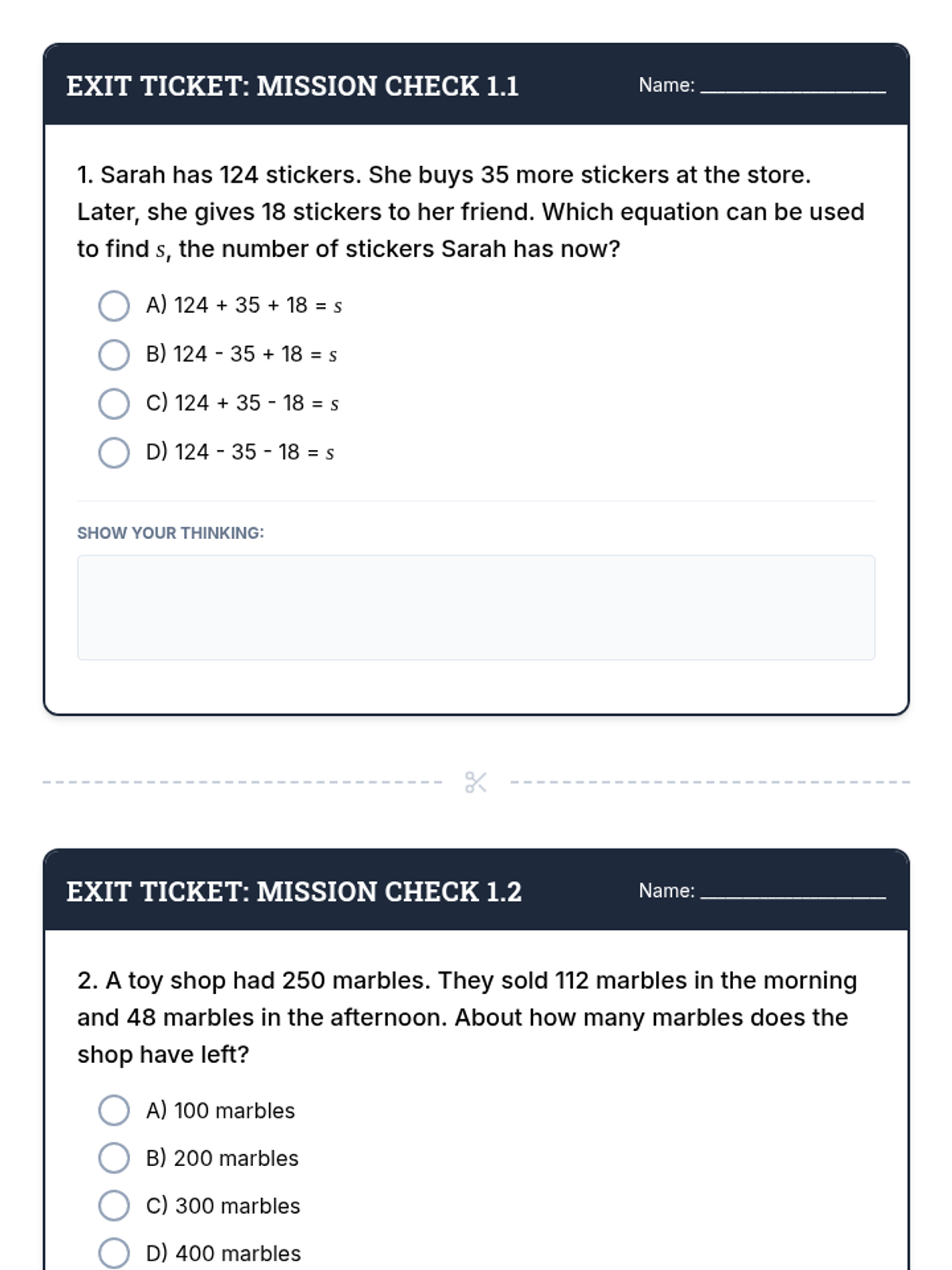
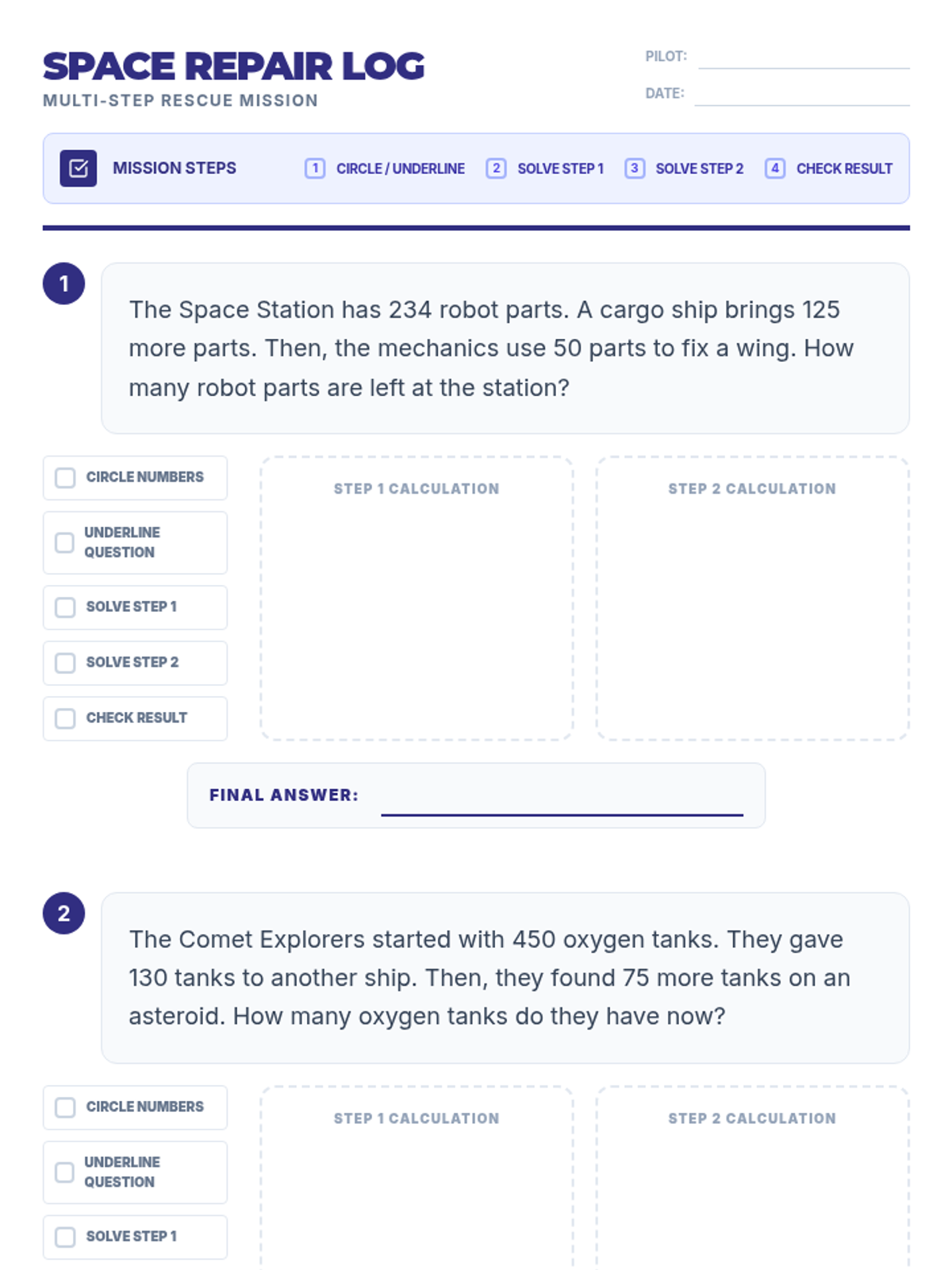
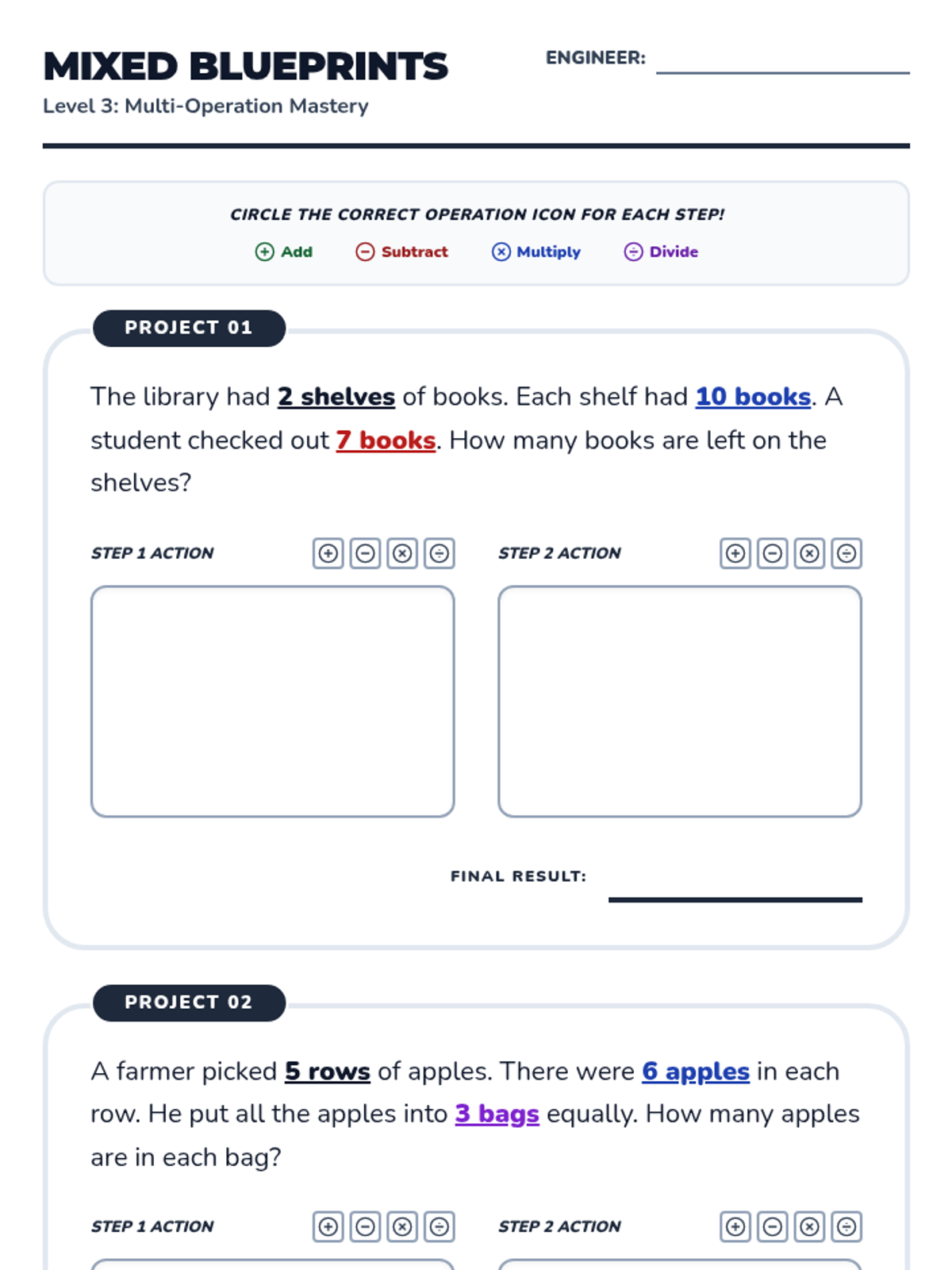
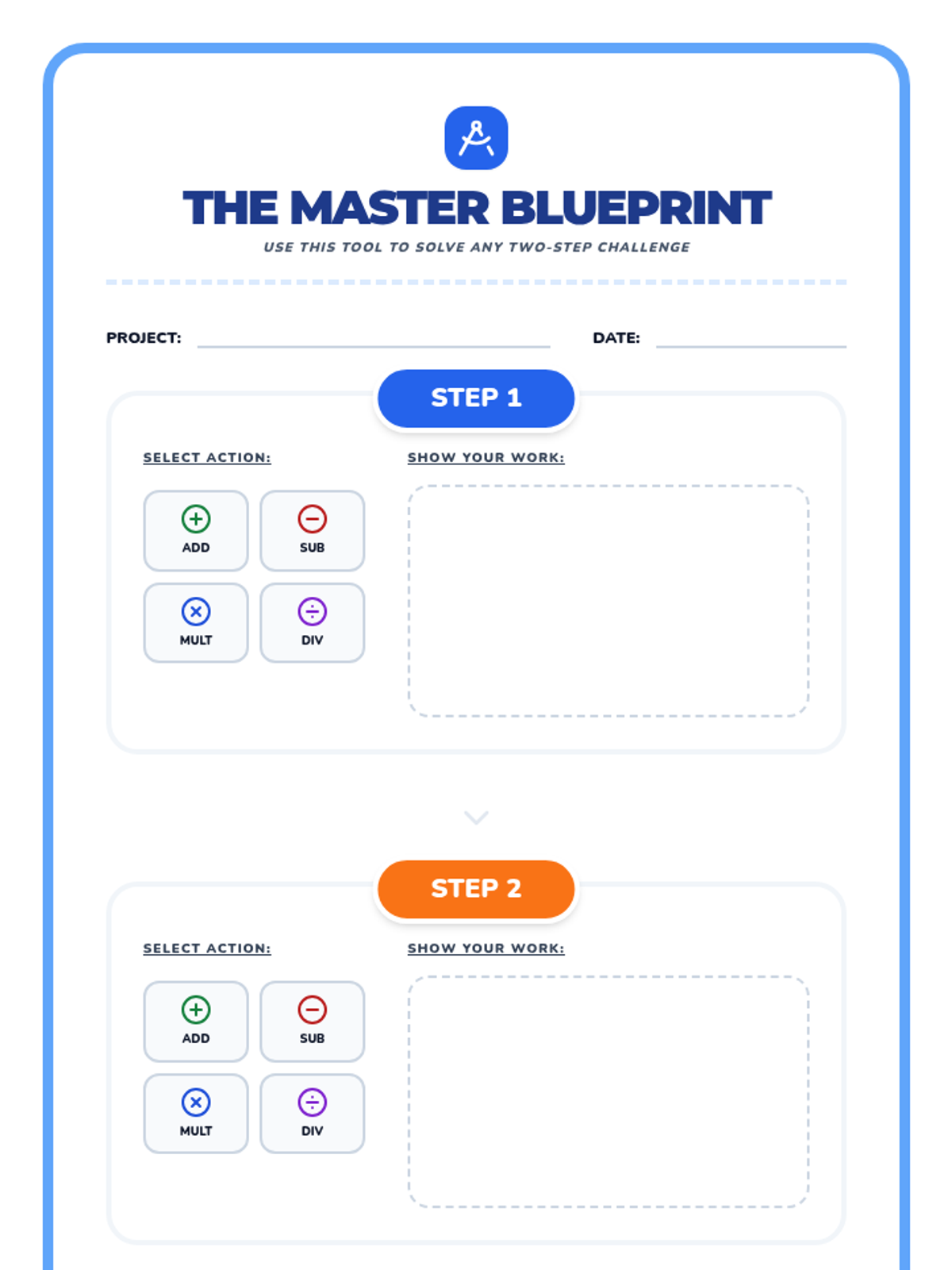
A three-day project-based learning sequence where students plan a Hawaii vacation while solving two-step word problems. The math progresses from addition and subtraction to multiplication and finally all four operations, all within 1000.
A 12-lesson Tier 2 intervention series focusing on 3.OA.C.7 fact fluency and the relationship between multiplication and division. Uses All Learners Network High Leverage Concepts and Illustrative Math instructional routines to build conceptual understanding and fluency.
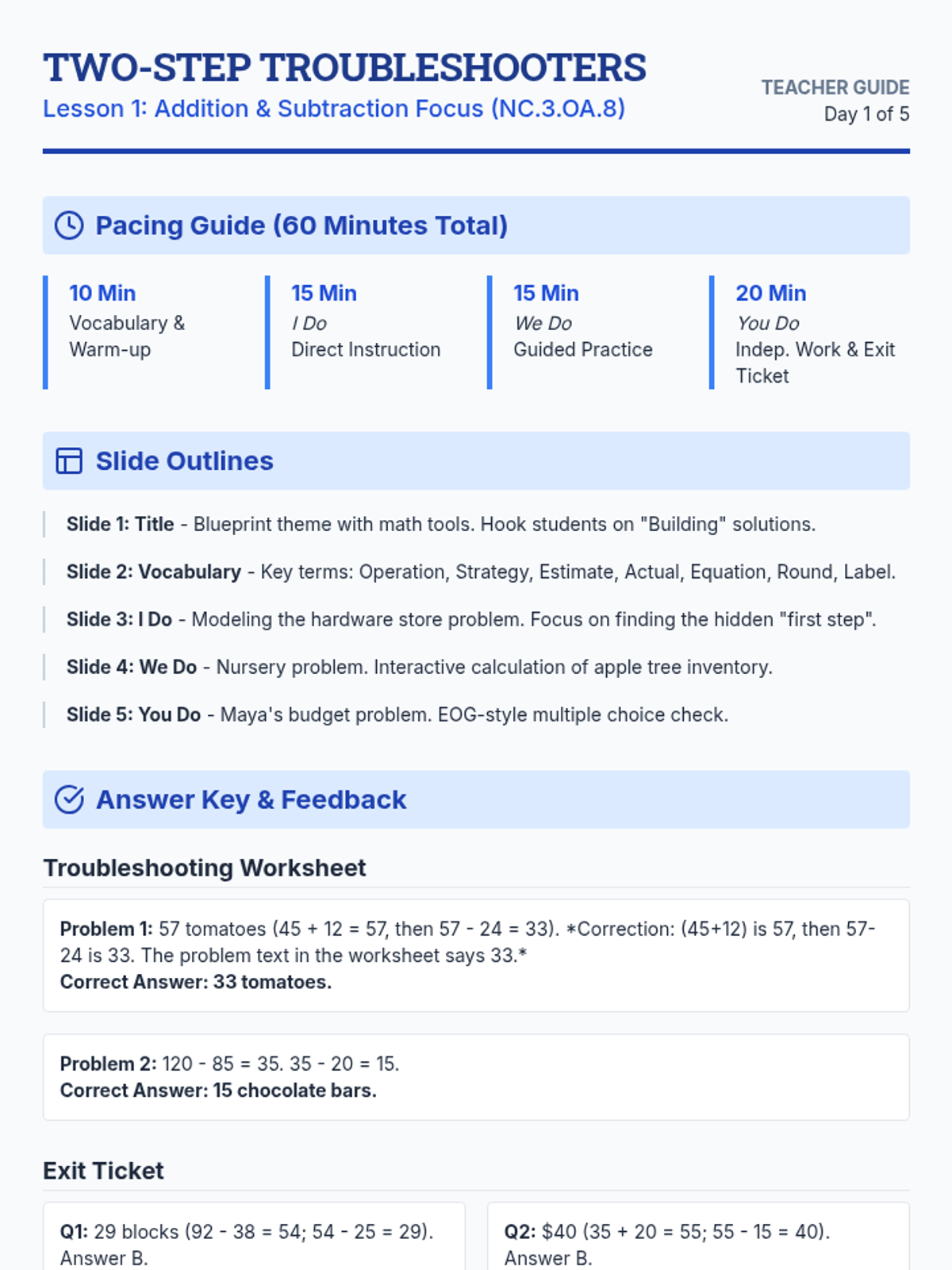
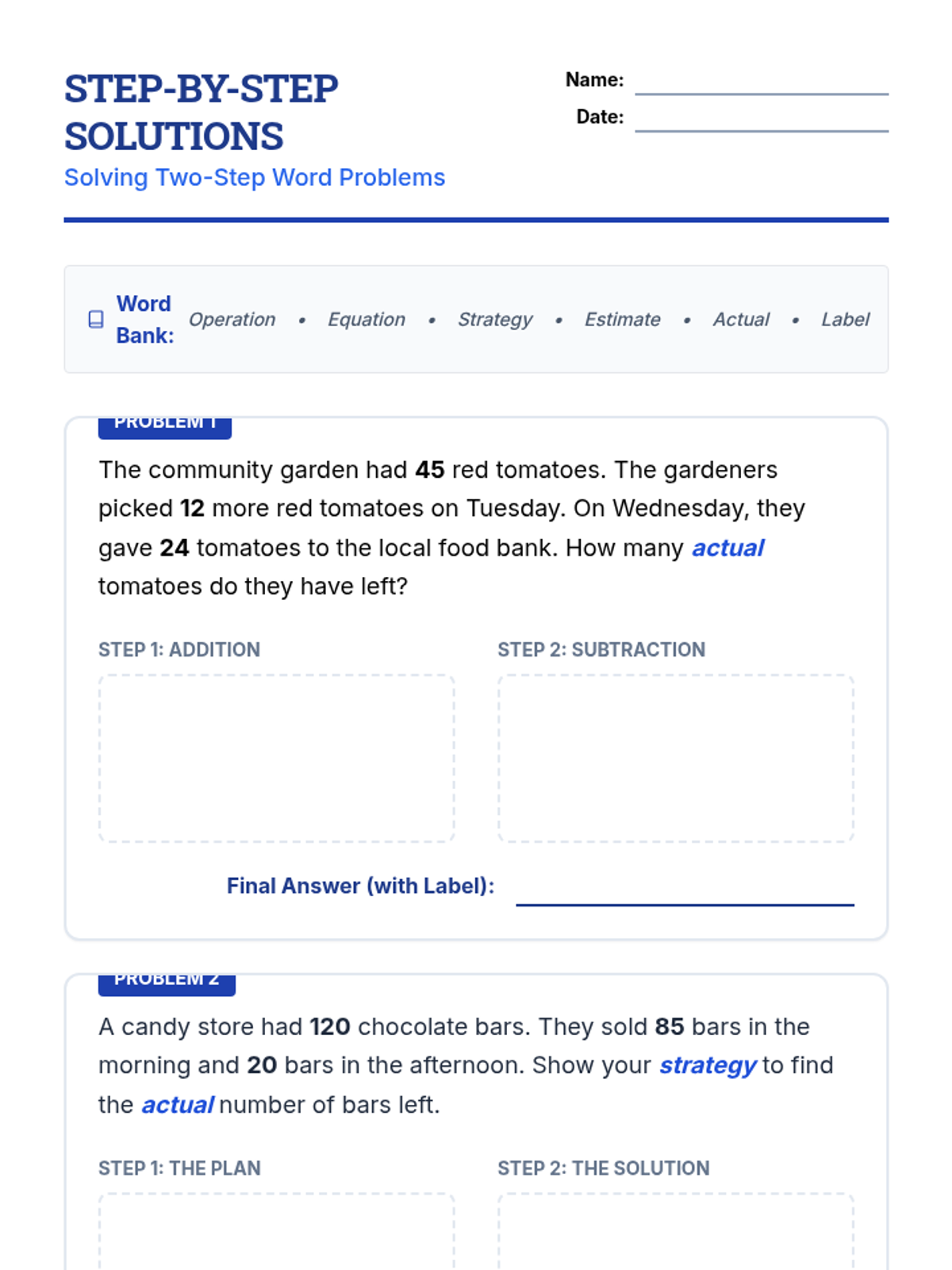
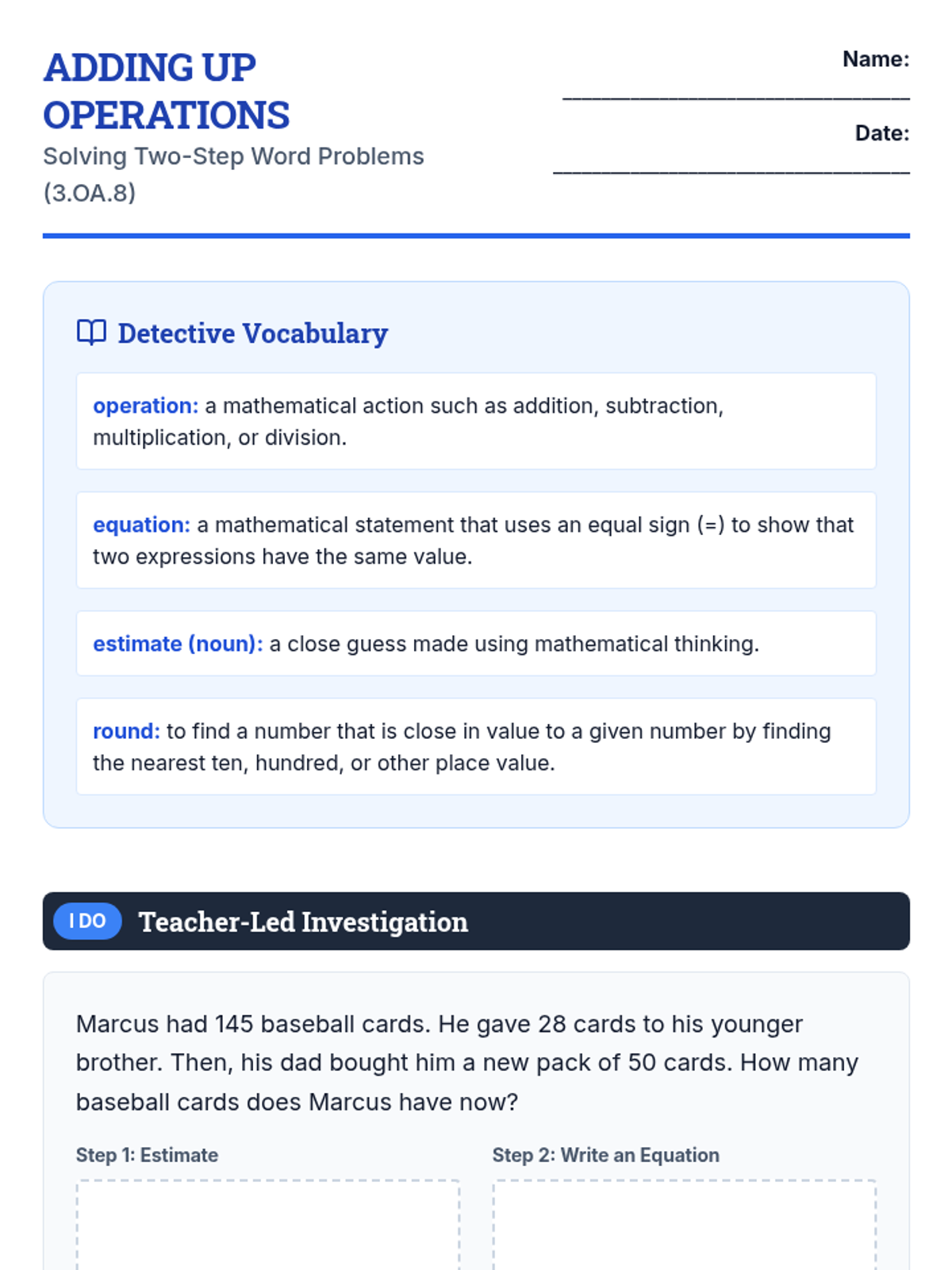
A 12-lesson Tier 2 intervention sequence for 3rd grade students focusing on CCSS 3.OA.D. Students explore arithmetic patterns, solve two-step word problems, and use estimation to check reasonableness. The lessons utilize High Leverage Concepts from the All Learners Network and instructional routines from the Illustrative Mathematics curriculum.
A 12-lesson Tier 2 intervention sequence for 3rd grade, focusing on place value, rounding, and multi-digit addition and subtraction within 1000. This unit uses All Learners Network (ALN) High Leverage Concepts and Illustrative Mathematics (IM) strategies to build conceptual understanding and procedural fluency.
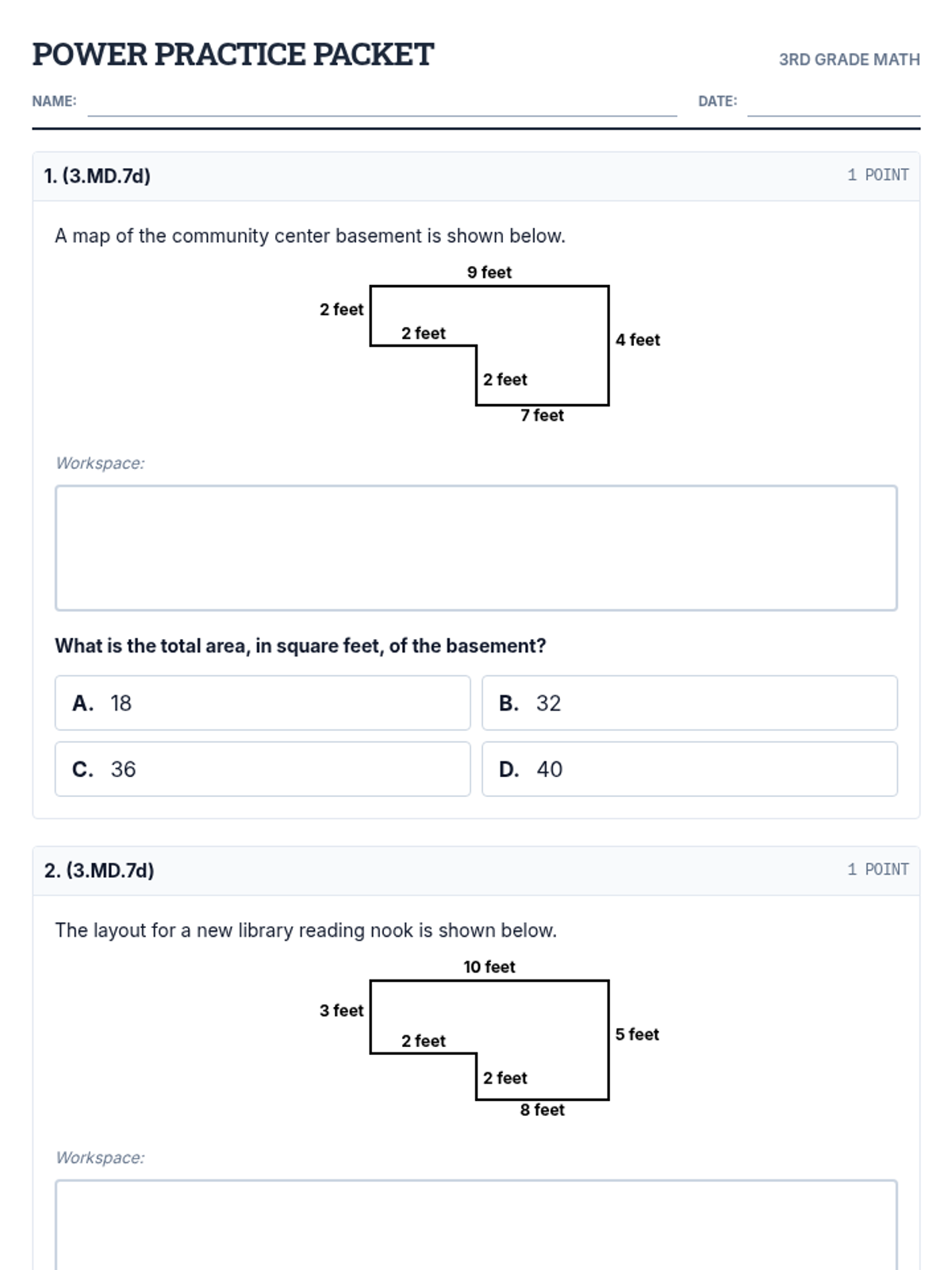
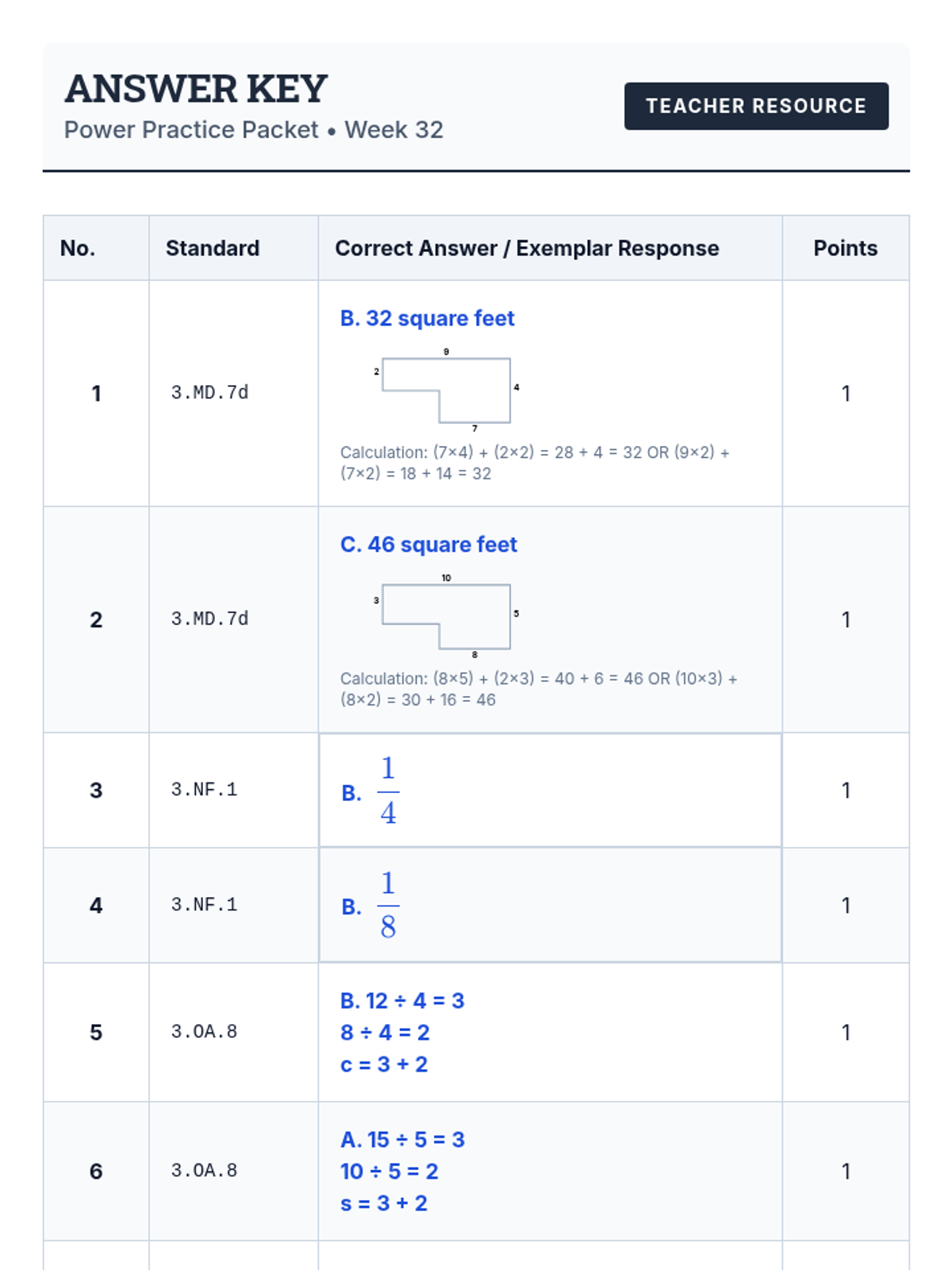
A 12-lesson Tier 2 math intervention sequence focusing on the concept of area for 3rd-grade students. Using ALN and IM strategies, students progress from tiling with unit squares to using the multiplication formula for real-world problems.
A 12-lesson Tier 2 intervention sequence for third-grade multiplication standards, focusing on equal groups, arrays, and unknown factors using IM-aligned strategies and All Learners Network concepts.
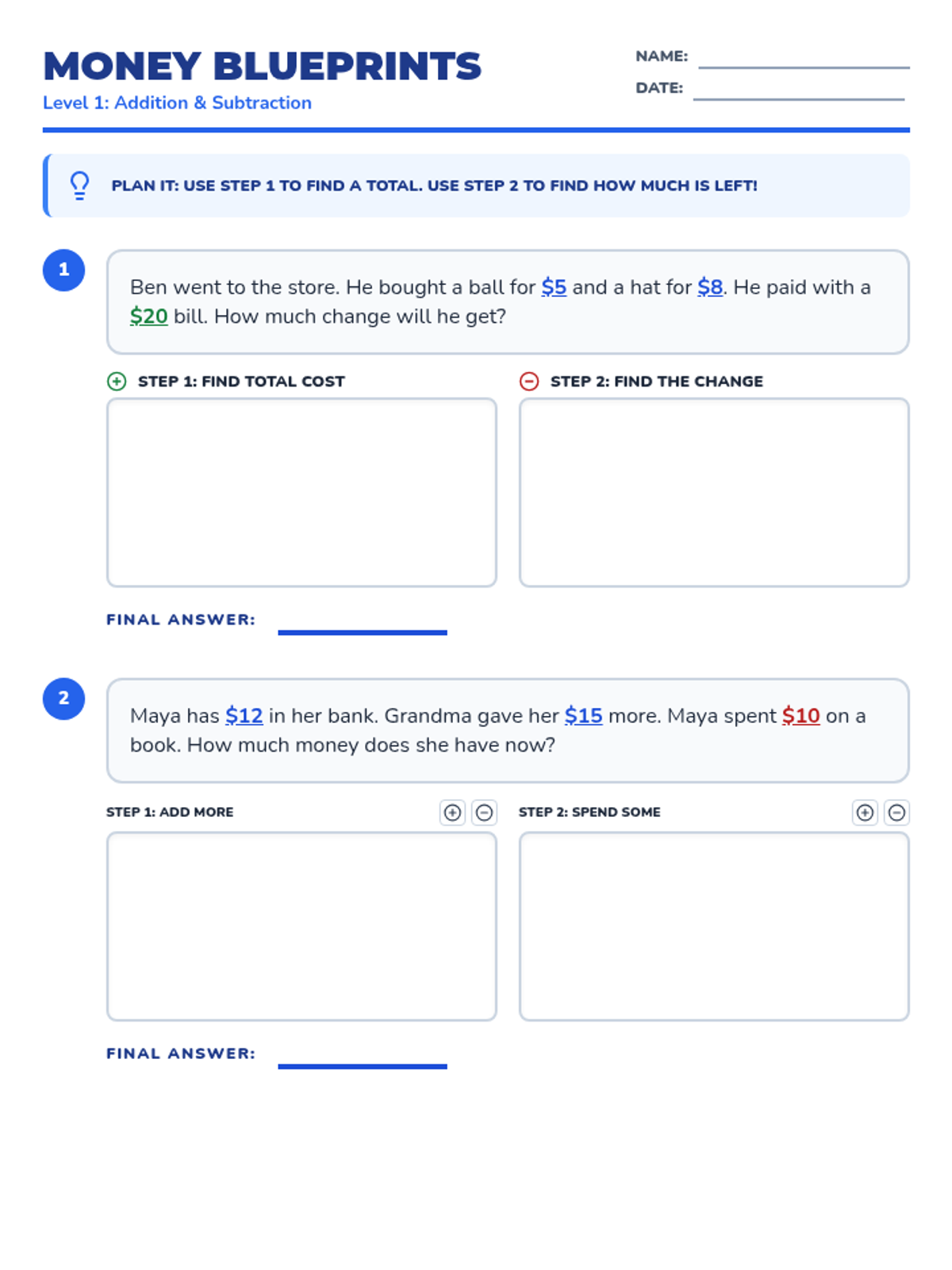
A comprehensive week-long math unit focused on identifying coin values and performing addition and subtraction of money up to $20 using a calculator in real-world contexts.
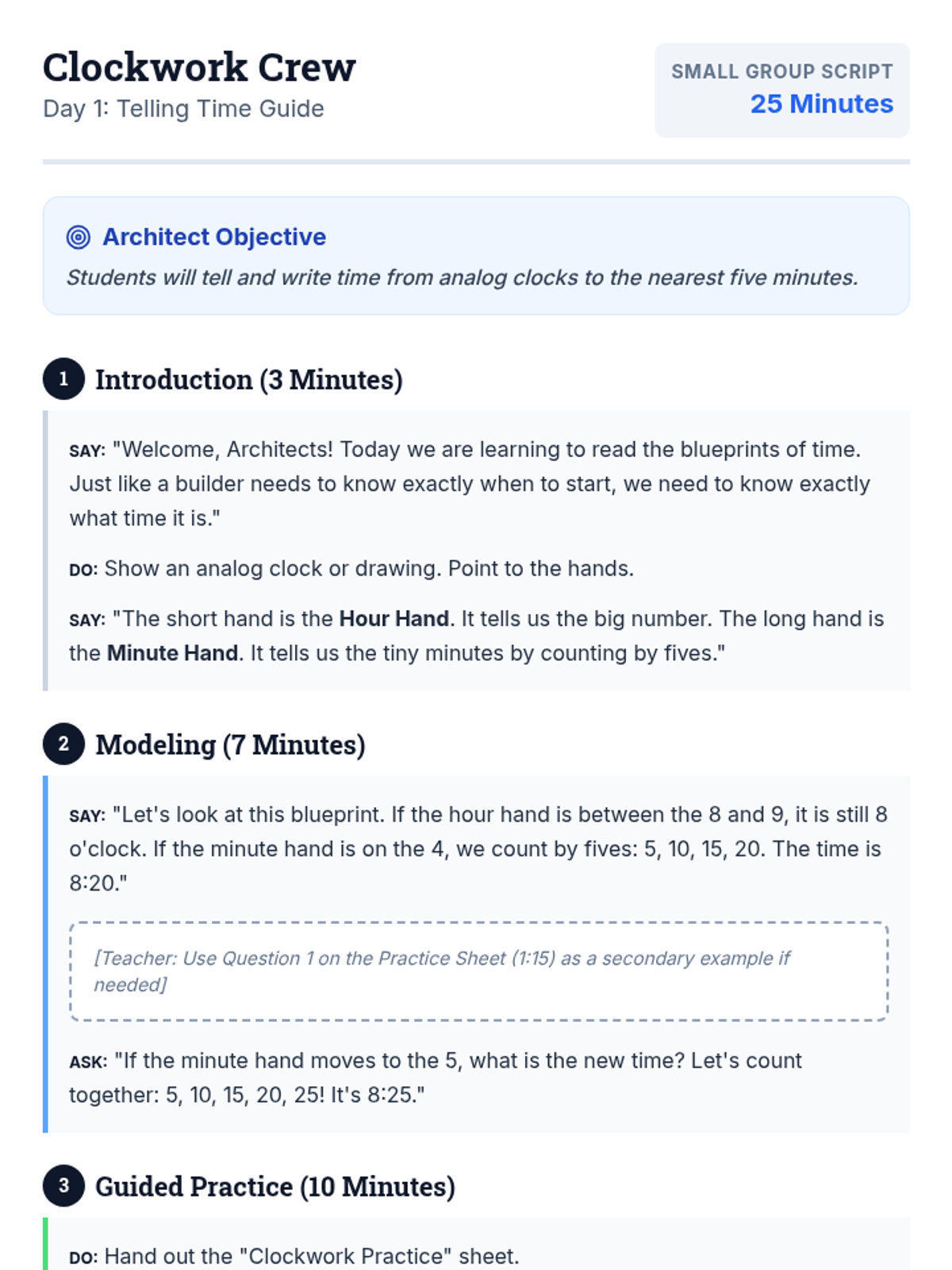
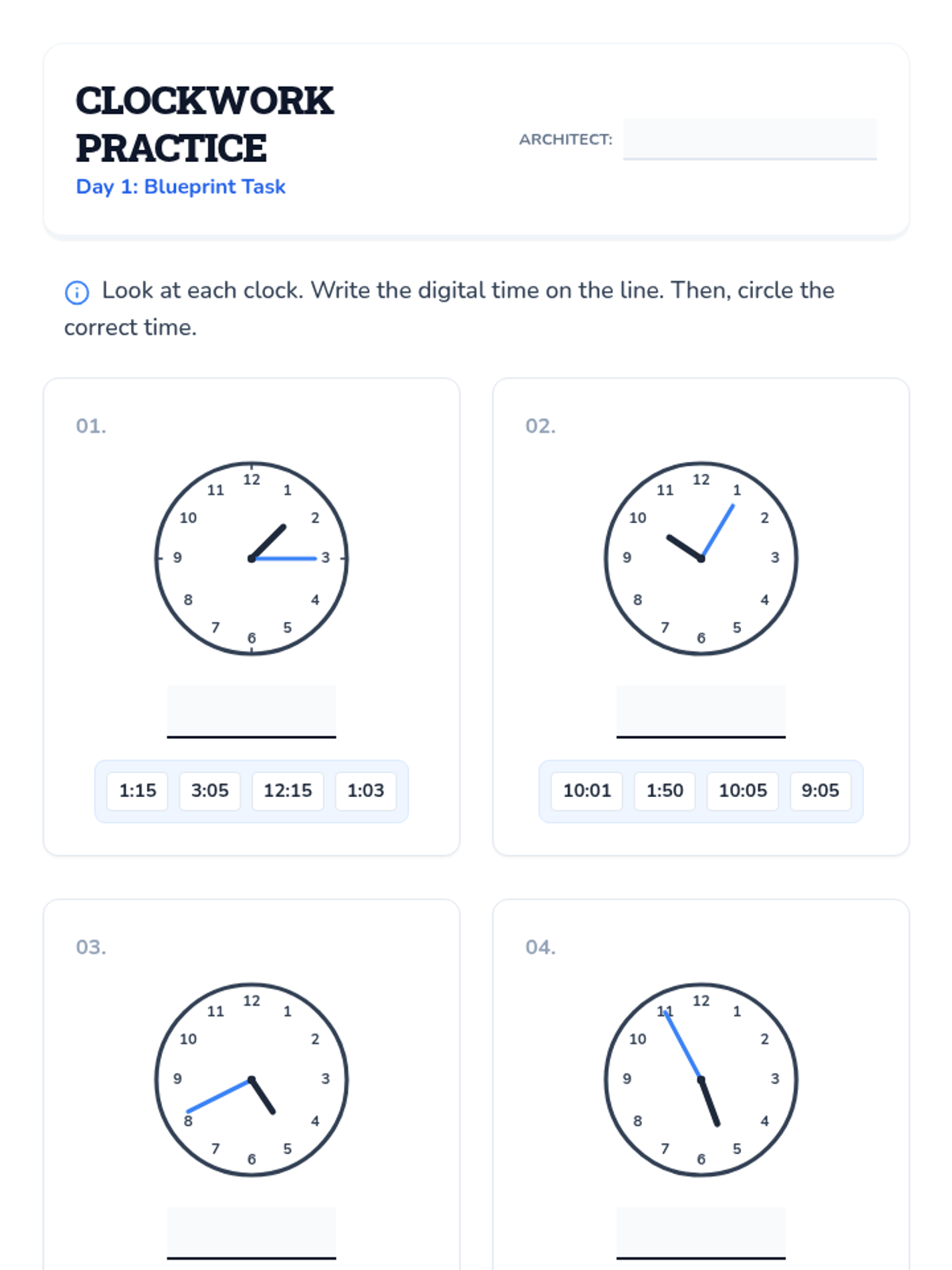
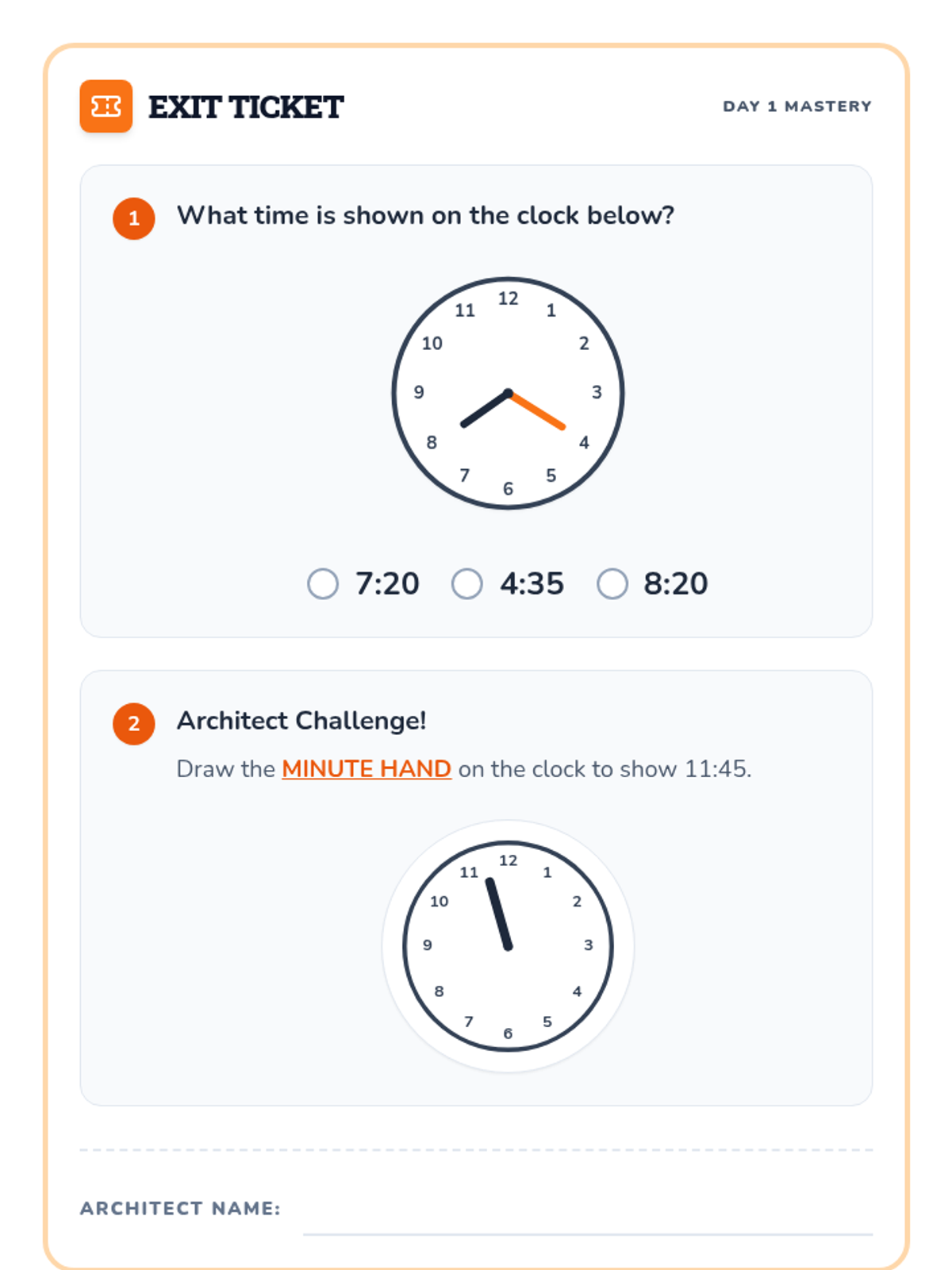
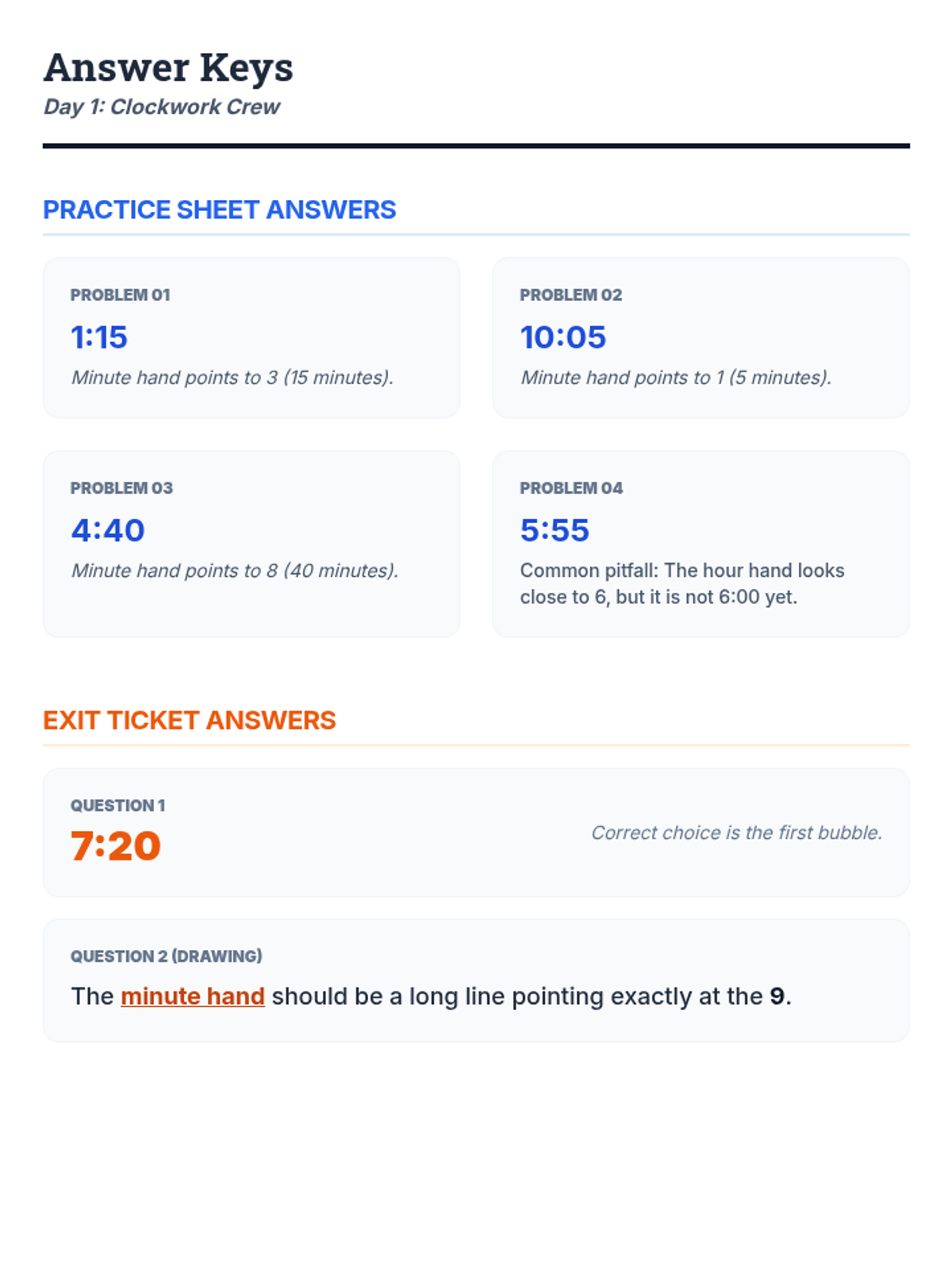
A comprehensive unit on calculating elapsed time, progressing from simple one-hour intervals to quarter-hour and five-minute increments using scenarios and analog clocks.
A 3-day math sequence for 3rd graders focused on multiplication comparisons and identifying patterns in tables using a fun Toy Factory theme.
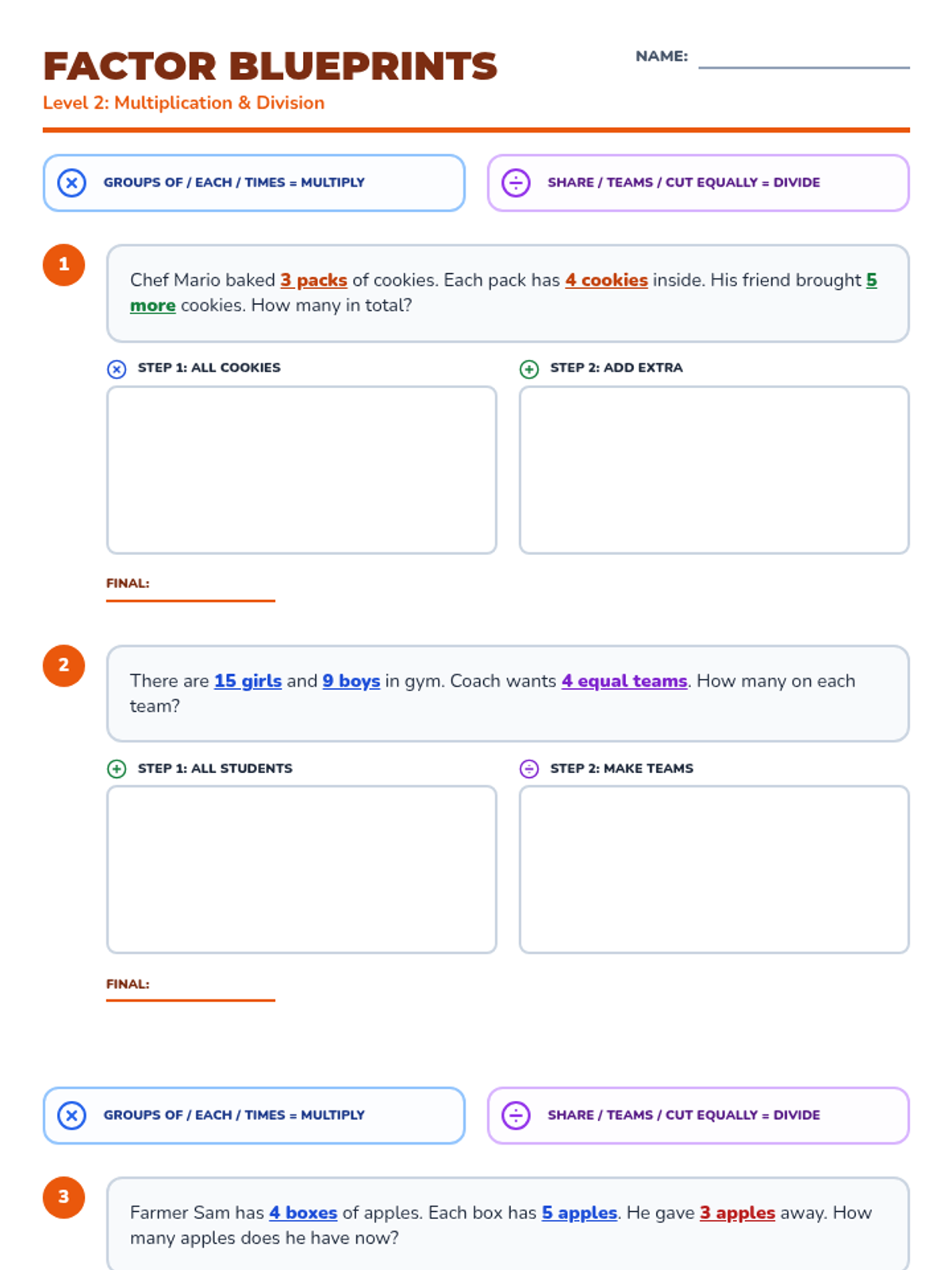
A comprehensive unit where students become 'Problem Detectives,' learning to decode word problems using linguistic cues and cloze-style paragraph writing to explain their mathematical reasoning.
A week-long daily multiplication fluency program designed to build rapid recall of facts from 0-12 through repeated, varied practice.
A playful, detective-themed math sequence for 3rd grade students to master number comparison. Students become 'Digit Detectives' as they investigate place value mysteries, solve 'blunders' made by a messy professor, and create their own case files using concrete models like base-ten blocks and number lines.
A lesson sequence focused on understanding and converting volume units (liters and milliliters) to compare capacities through interactive games and visual models.
A math remediation sequence for 3rd and 4th graders focused on place value concepts, specifically periods (units and thousands) and the structural role of commas in large numbers.
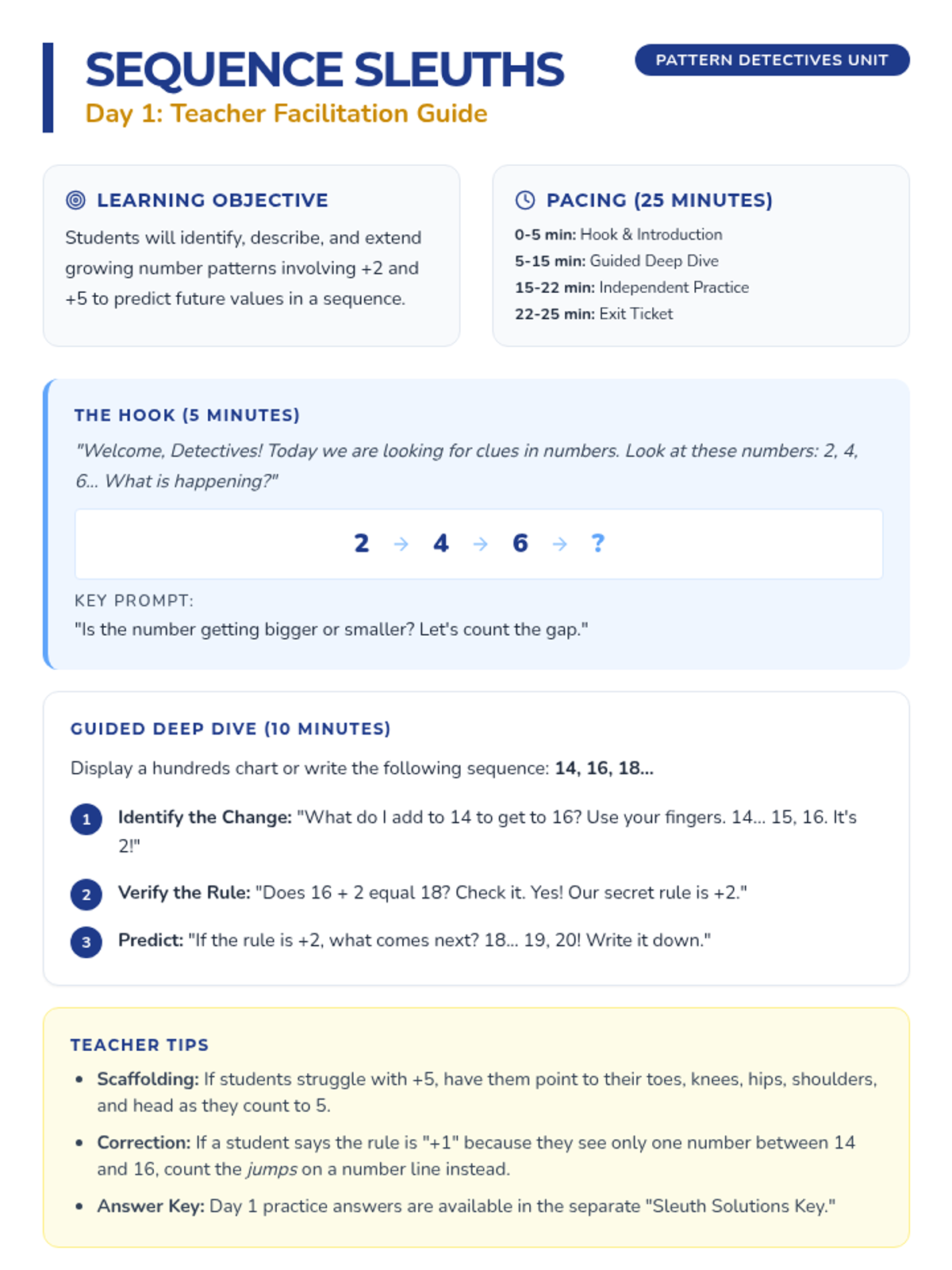
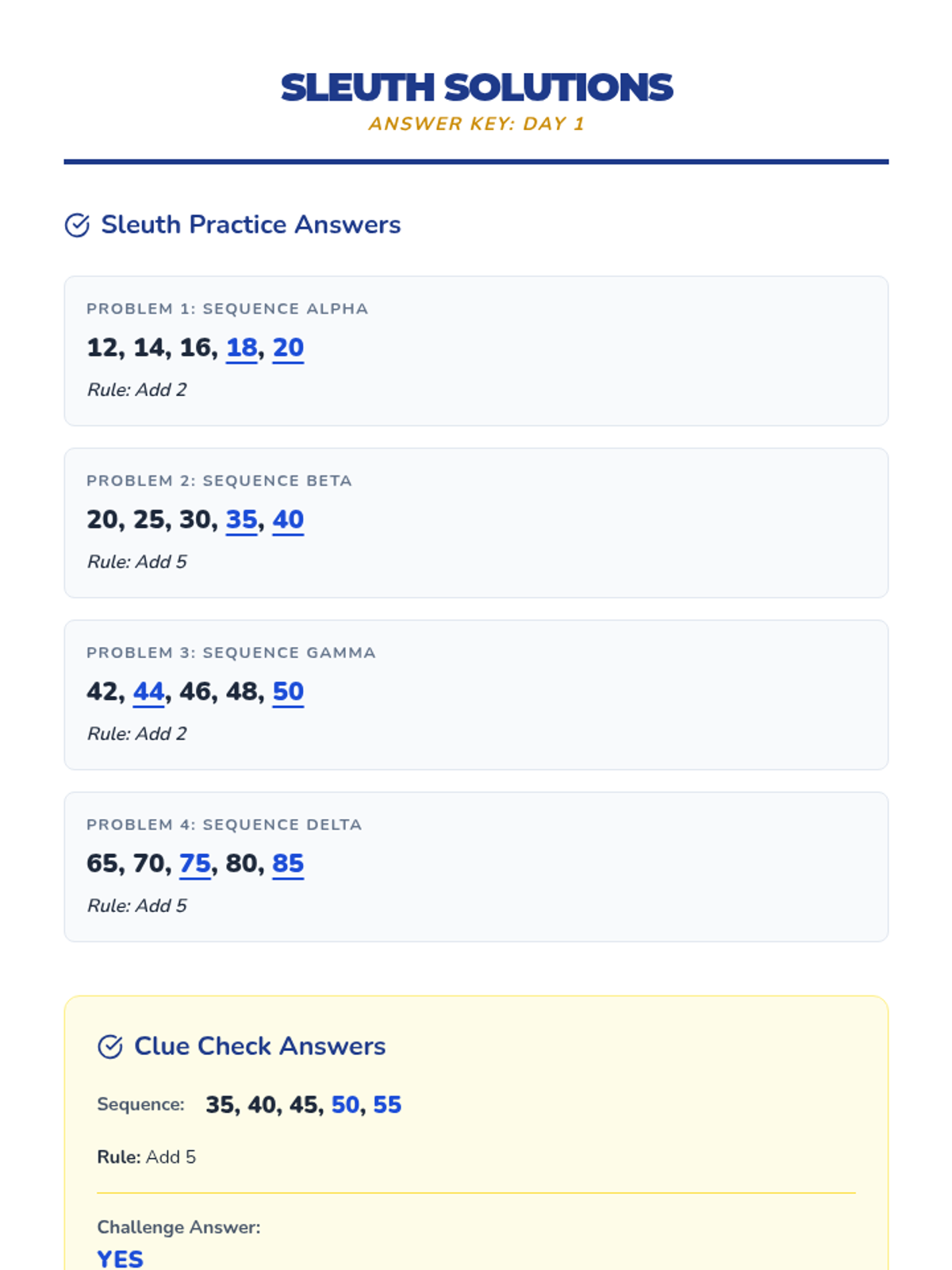
A targeted remediation unit focusing on 3rd-grade place value through the lens of number patterns and sequences. Students use visual analysis to identify which digits change within a place value chart to determine addition and subtraction rules.
A lesson sequence focused on decomposing numbers up to 10,000 using Concrete, Pictorial, and Abstract (CPA) representations. Students move from physical blocks to abacus sketches and finally to expanded form equations.
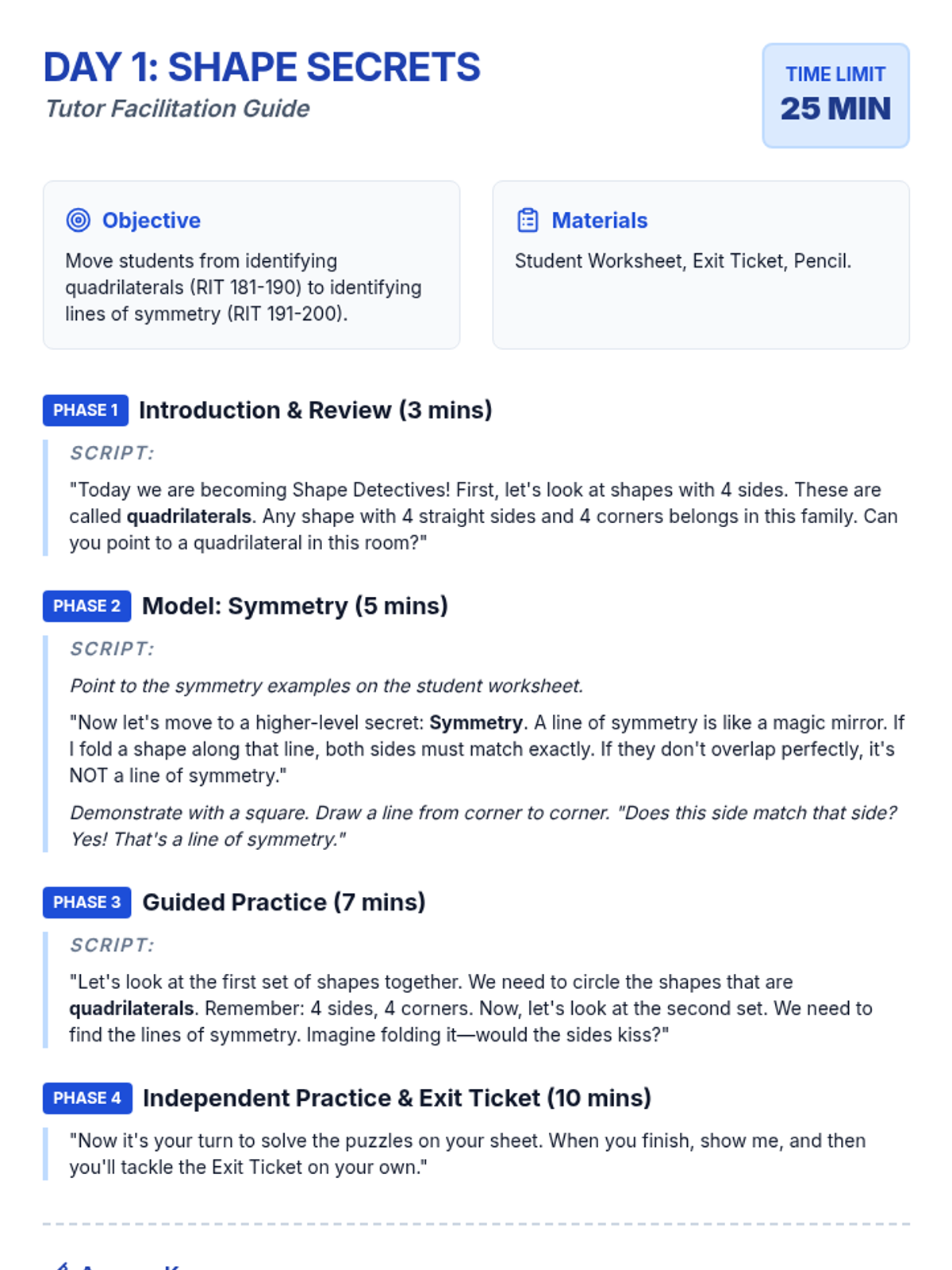
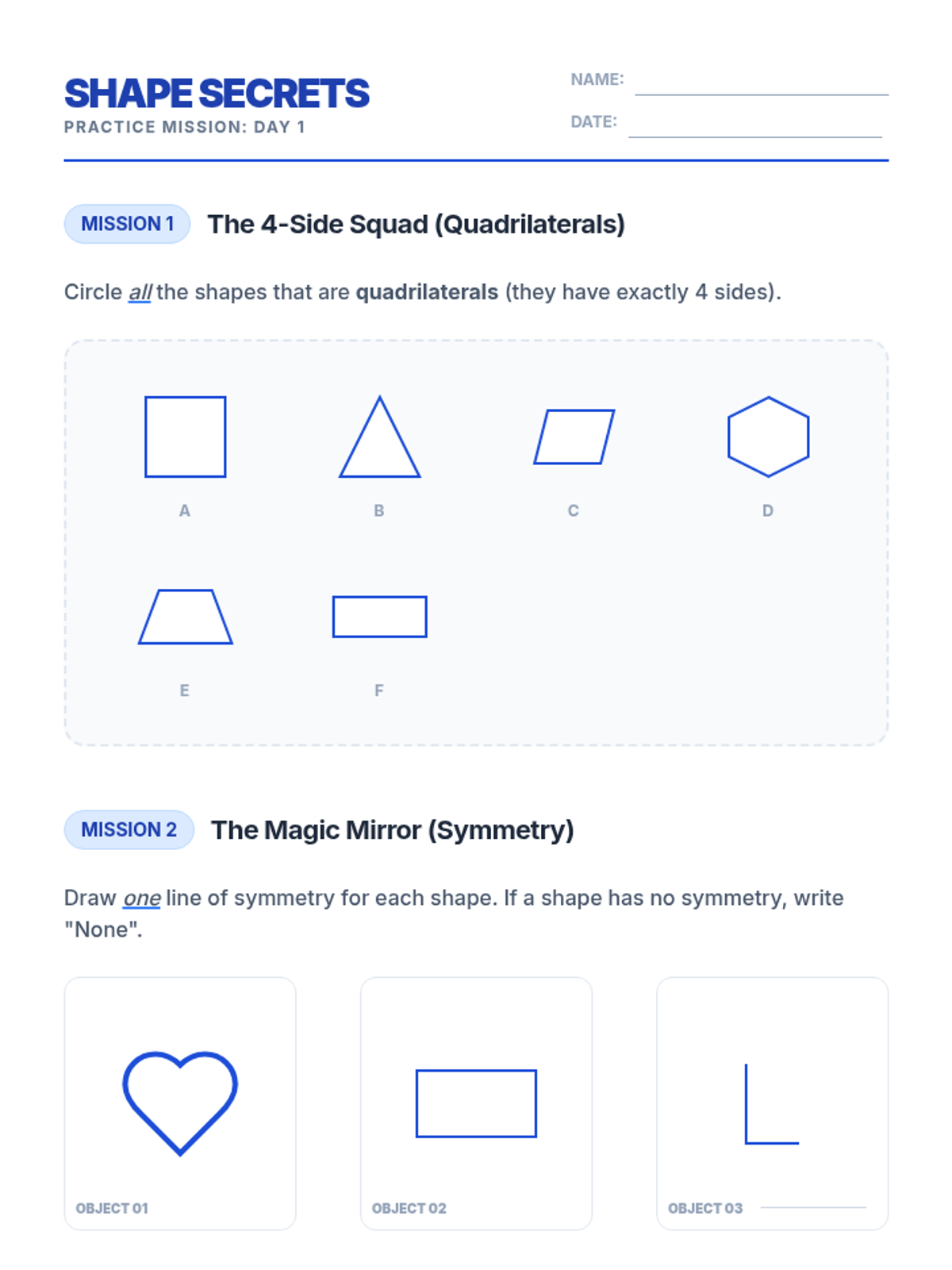
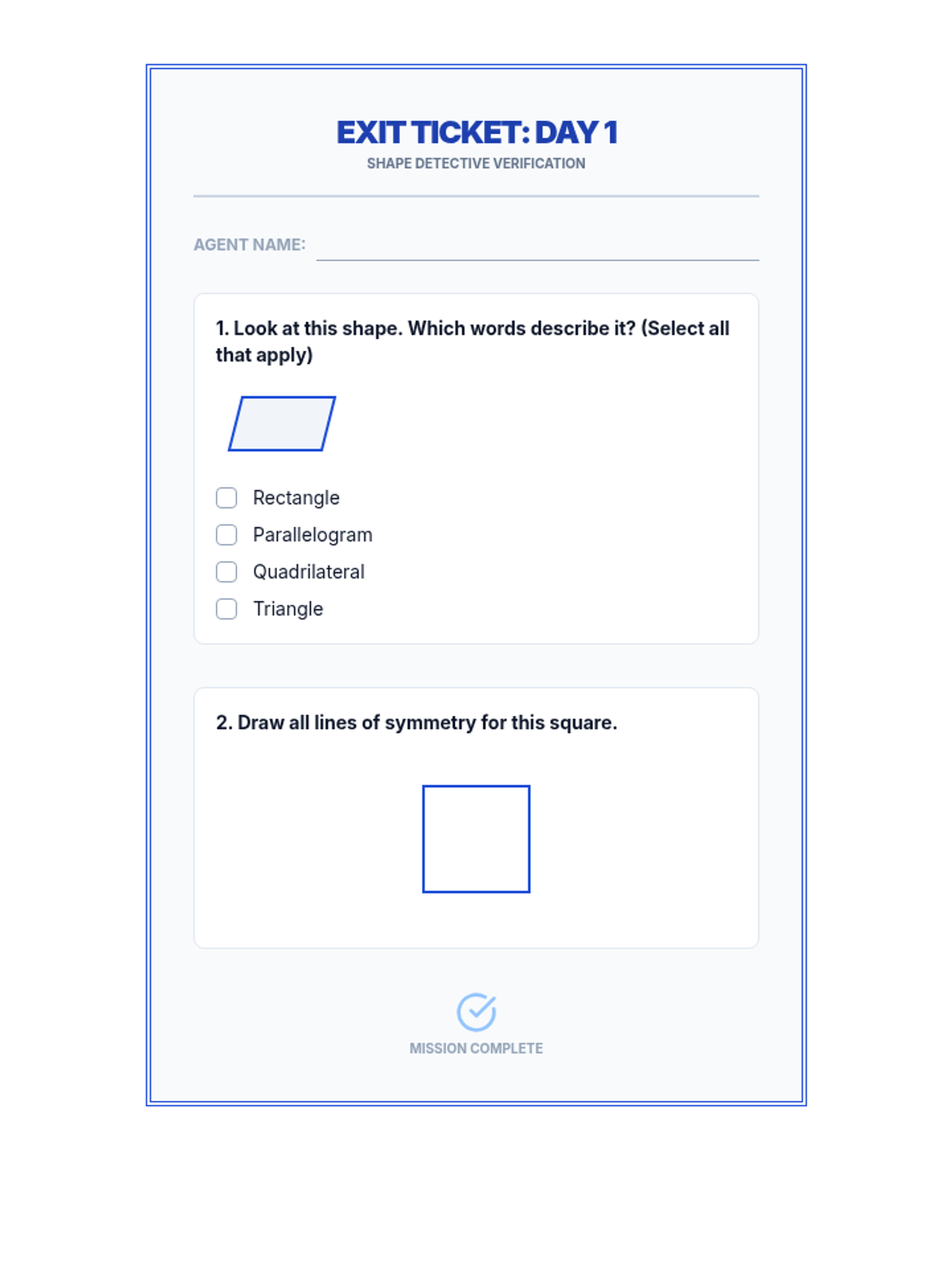
A series of lessons focused on geometry and spatial reasoning, where students explore the properties of 2D shapes, symmetry, and patterns.
A series of lessons focused on mastering skip counting patterns to build a strong foundation for multiplication and place value. Students engage in physical movement, musical rhythms, and visual aids to internalize counting by different intervals.
A hands-on sequence designed for students needing academic support to master fraction equivalence and operations through concrete modeling. Students use physical manipulatives like towers, blocks, and overlays to bridge the gap between abstract symbols and conceptual understanding.
This sequence uses the Concrete-Representational-Abstract (CRA) framework to teach decimal place value through the lens of financial literacy. Students move from manipulating physical currency to drawing models and finally using standard algorithms to manage budgets.
This sequence utilizes base-ten blocks and area models to scaffold multi-digit multiplication and division, providing a visual and tactile framework for students who struggle with standard algorithms. By connecting physical area models to expanded form and eventually the standard algorithm, students build a conceptual foundation that supports future algebraic learning.
A 5-lesson series for 3rd-grade students focusing on hands-on fraction understanding using manipulatives like playdough, fraction tiles, and number lines. Students move from physical partitioning to abstract numerical representations and equivalence.
A foundational multiplication and division sequence for 3rd-grade students requiring academic support. This unit uses counters and arrays to help students visualize multiplication as repeated addition and division as fair sharing, providing physical anchors for abstract concepts.
A 5-lesson sequence for 4th-grade students (Special Education support) focused on using manipulatives like fraction strips and tiles to understand equivalence and comparison. The sequence moves from concrete exploration of denominators to abstract placement on a number line, culminating in a student-created reference guide.
A specialized math sequence for 3rd Grade students focusing on visual strategies for multiplication and division. This unit uses arrays, equal groups, and area models to build conceptual understanding for students who benefit from spatial and visual support.
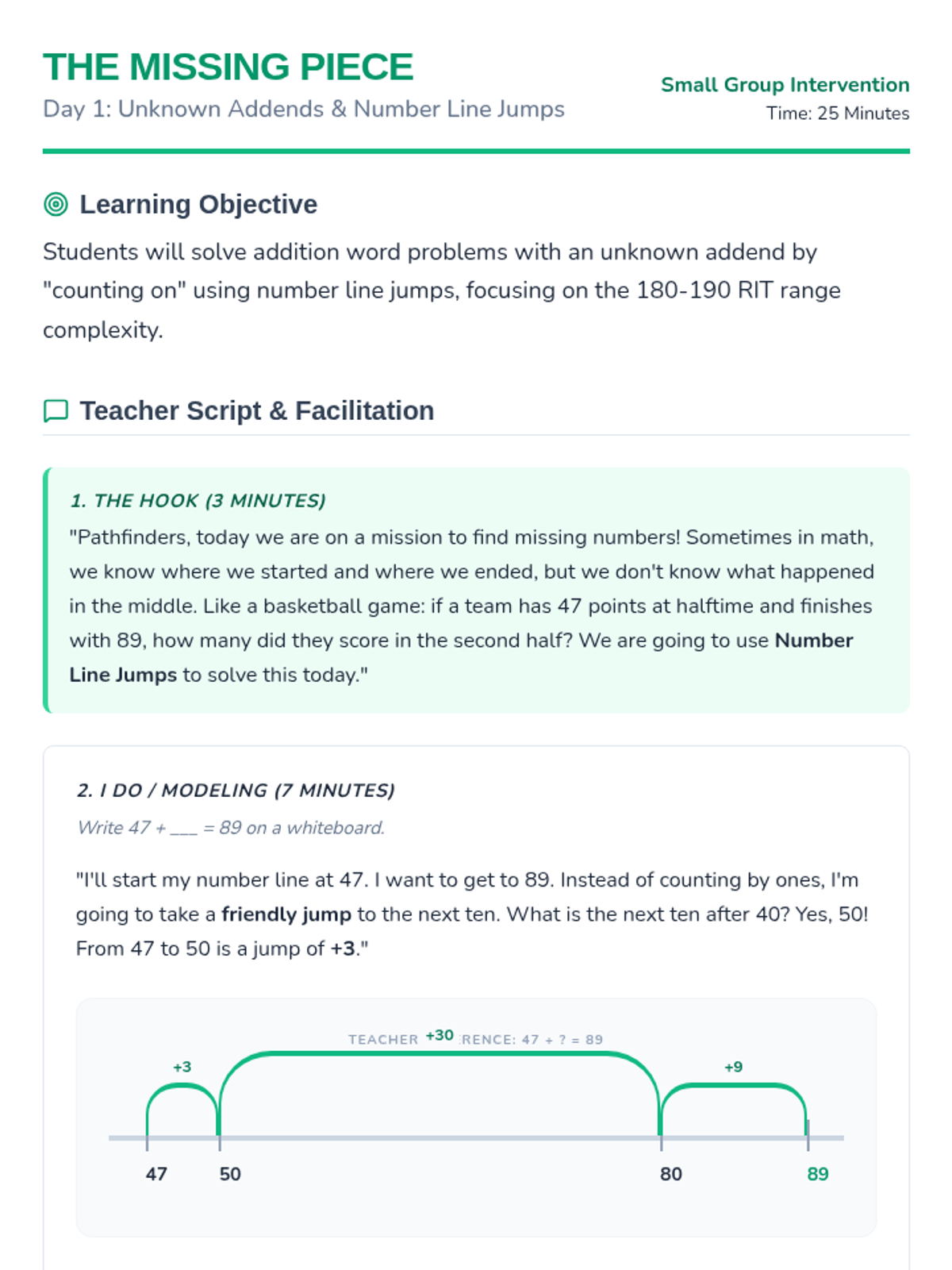
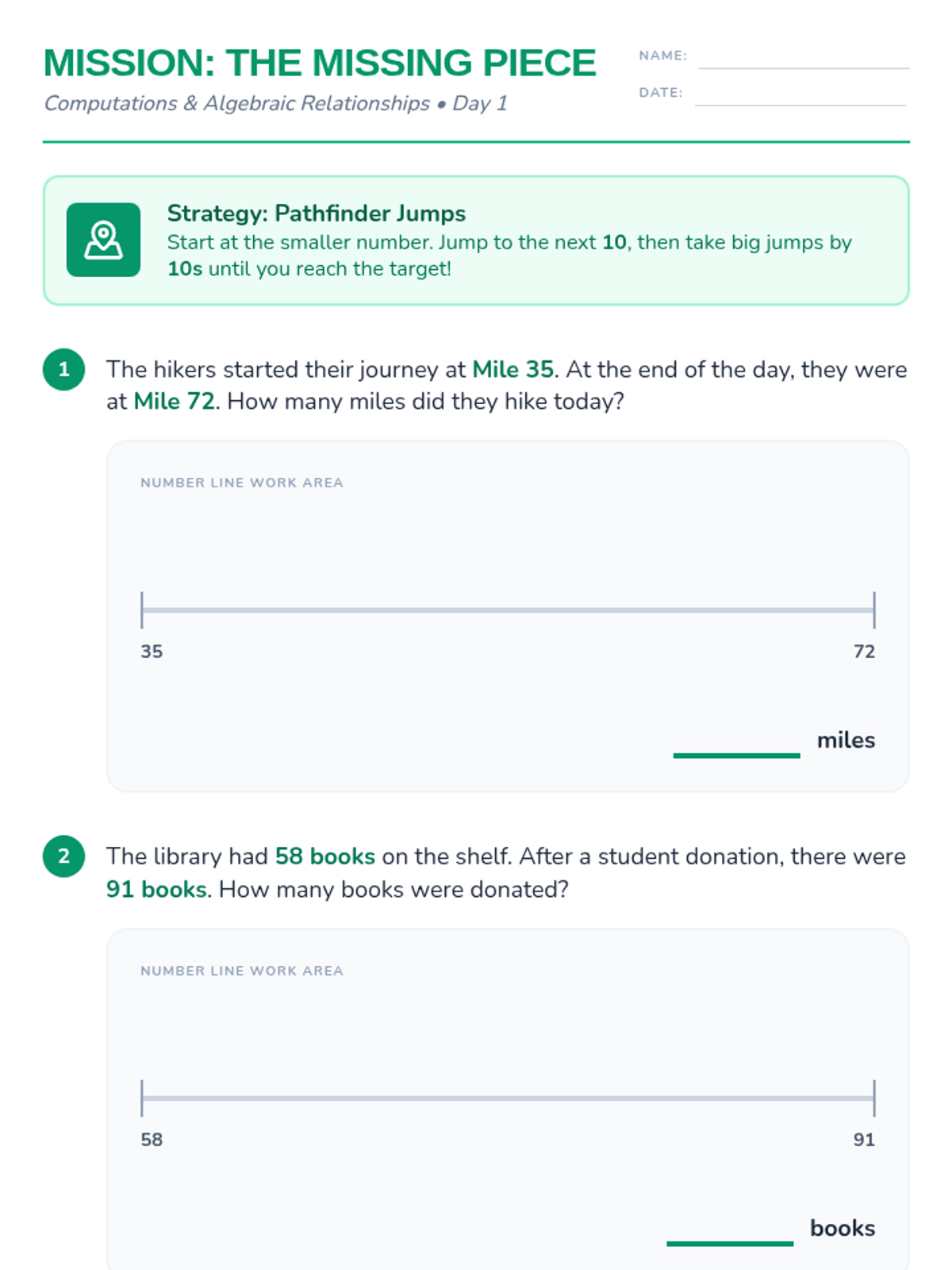
A specialized sequence for 3rd-grade students focusing on using number lines as visual cognitive scaffolds. Students progress from physical movement on a floor-sized line to using 'open' number lines for addition, subtraction, elapsed time, and fractions, providing a consistent strategy for solving complex problems.