A 5-lesson sequence for 7th-grade beginner ELLs focusing on narrative comprehension through graphic novels and Readers Theater to build reading fluency and engagement.
No materials in this lesson.
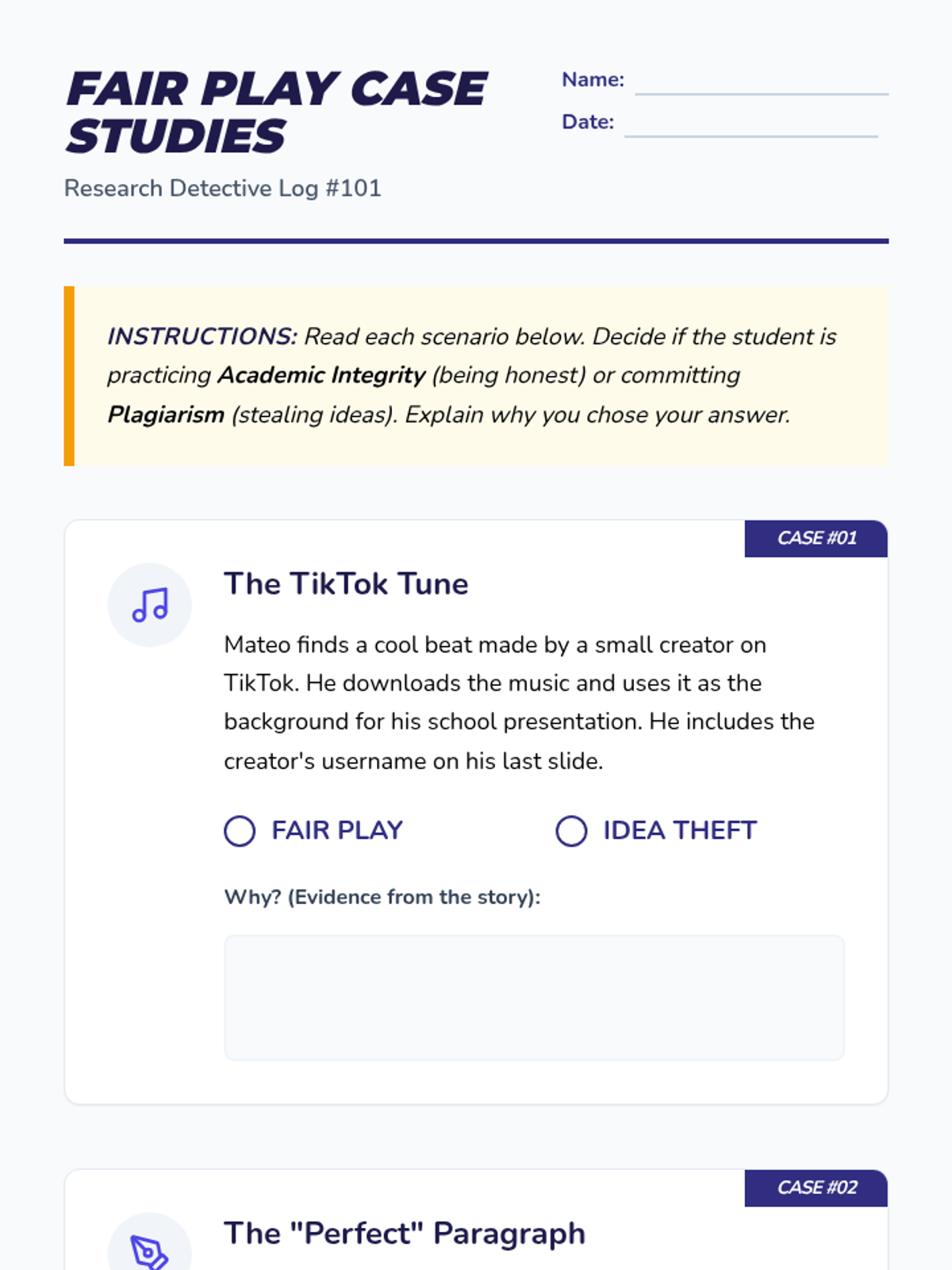
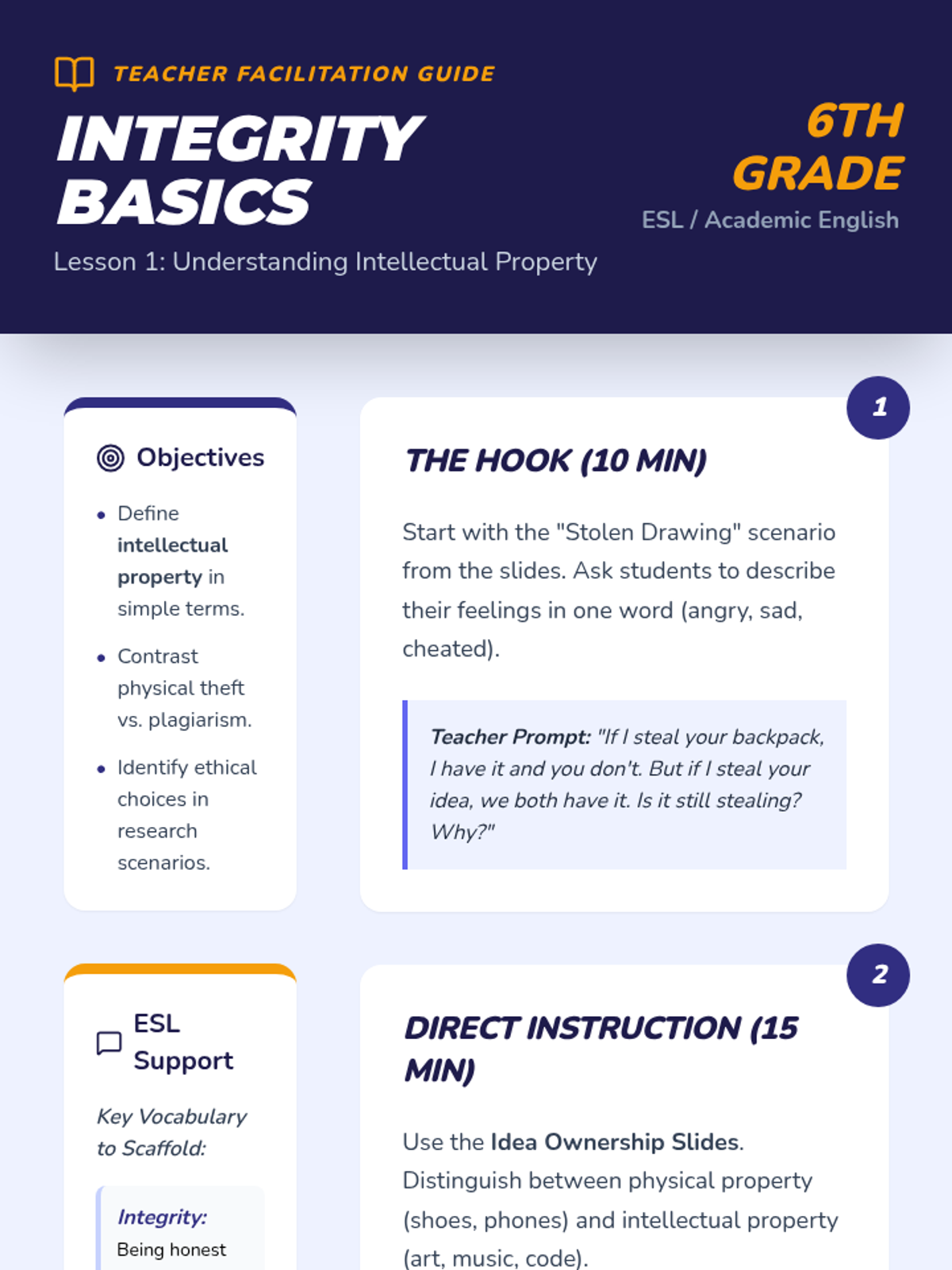
This 5-lesson sequence for 6th-grade ESL students covers the ethical use of information, focusing on intellectual property, MLA citation components, digital tools, and in-text attribution. Students progress from conceptual understanding to creating a mini-bibliography for a personal project.
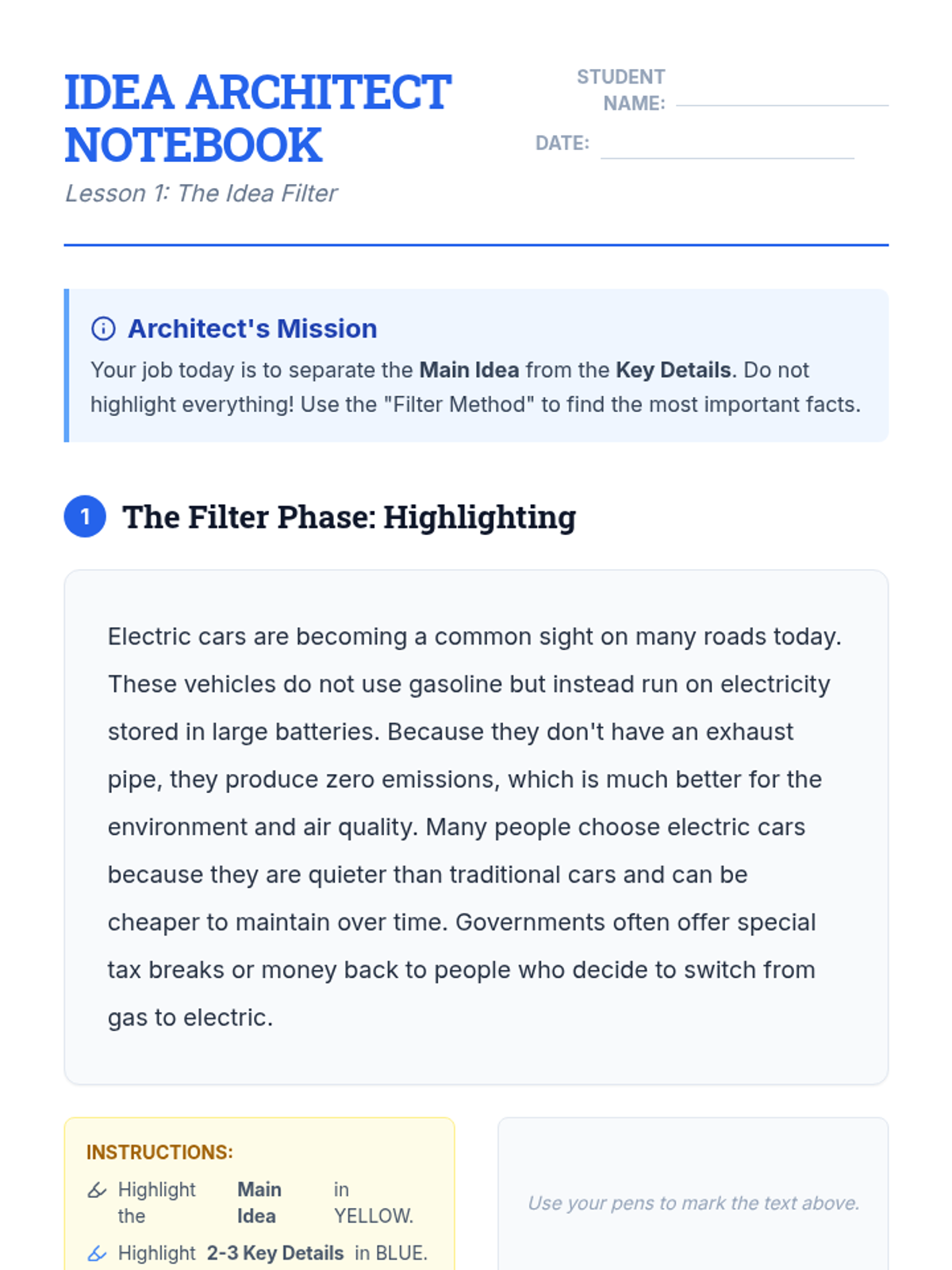
A comprehensive workshop-style unit for 6th Grade ESL students focused on the linguistic mechanics of paraphrasing and synthesizing information. Students move from identifying core concepts to orally retelling information, transforming individual sentences, and finally weaving multiple sources into a single coherent paragraph without plagiarizing.
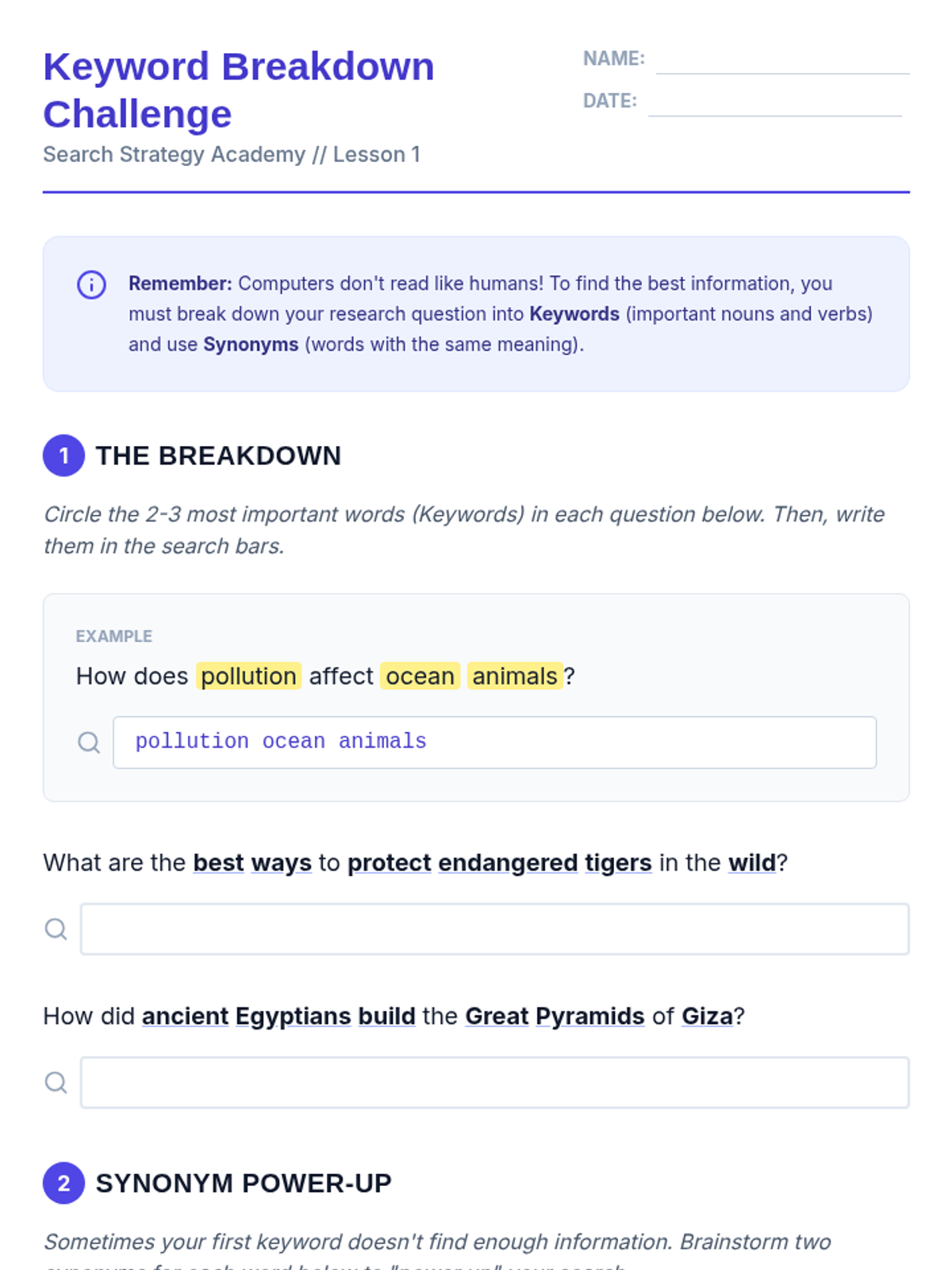
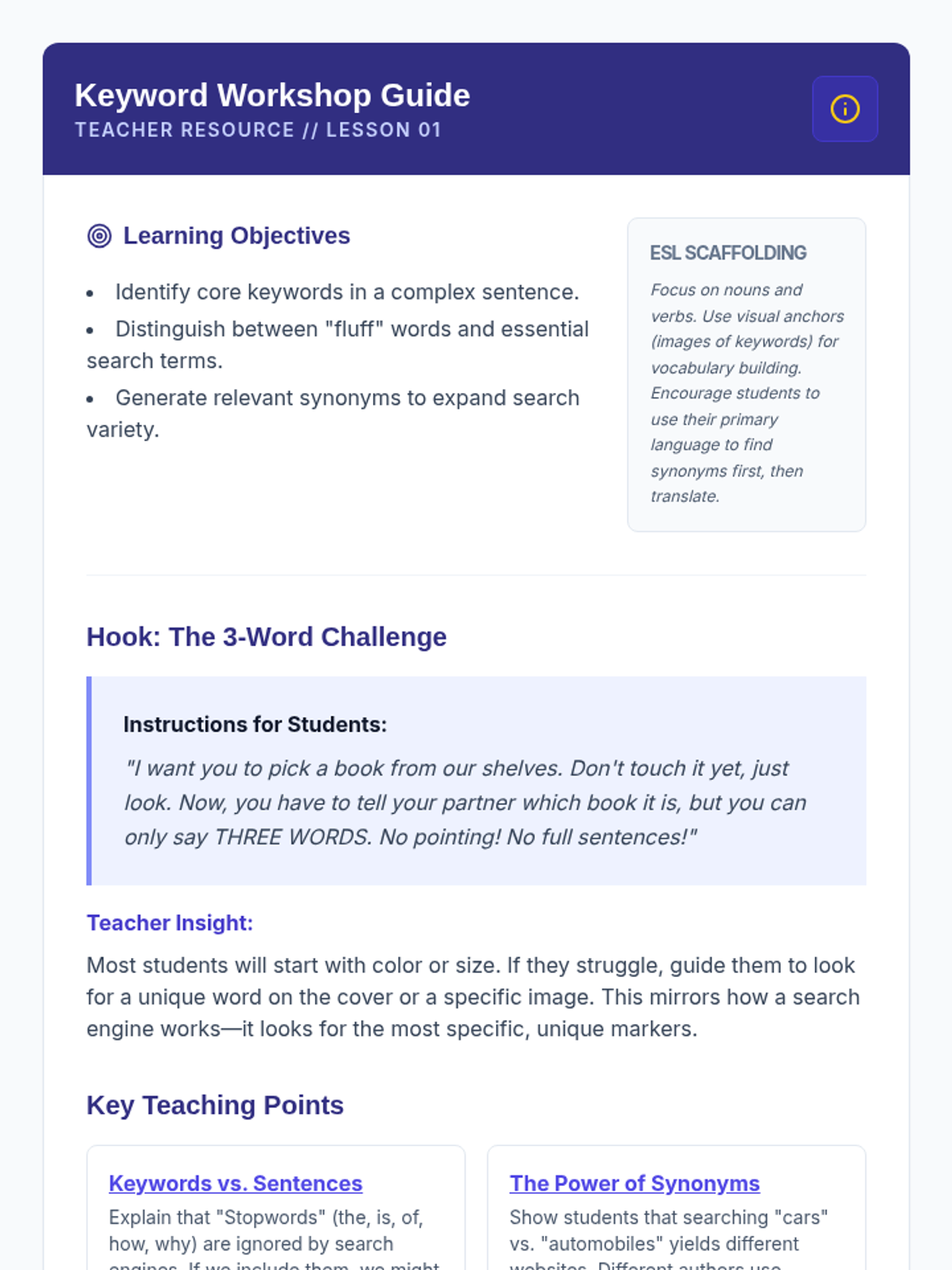
A 5-lesson unit for 6th-grade ESL students focused on transforming search habits from natural language questions to strategic keyword and Boolean operator techniques. Students move from basic vocabulary brainstorming to navigating academic databases and skimming snippets for relevance.
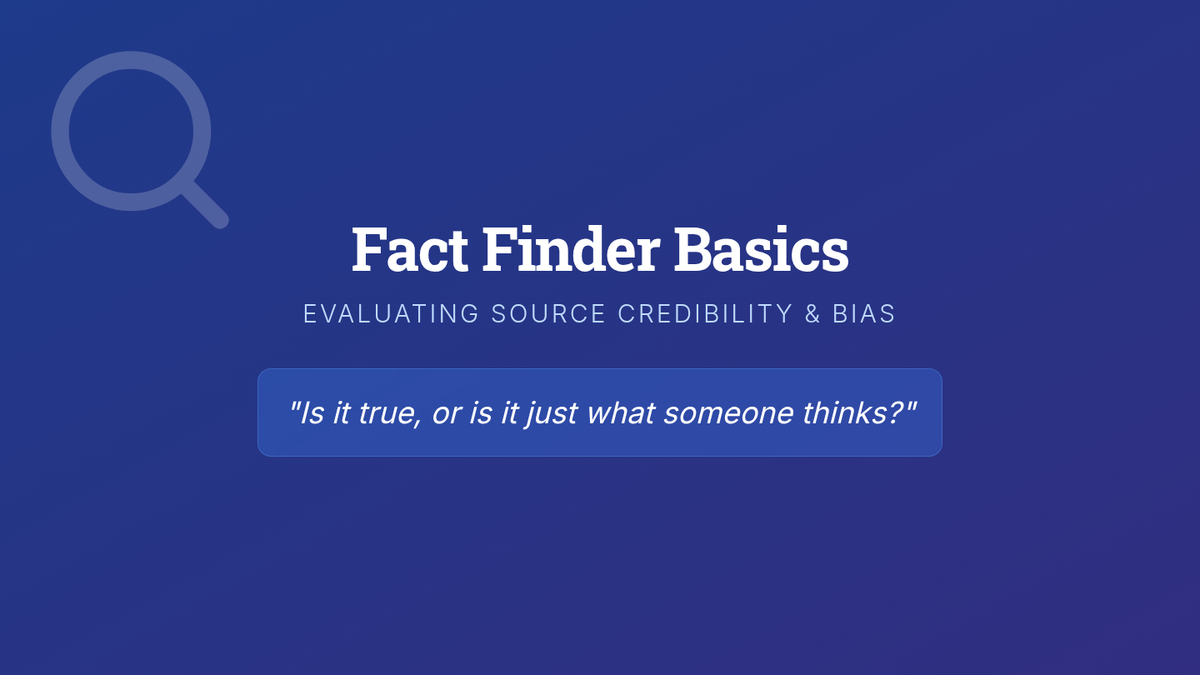
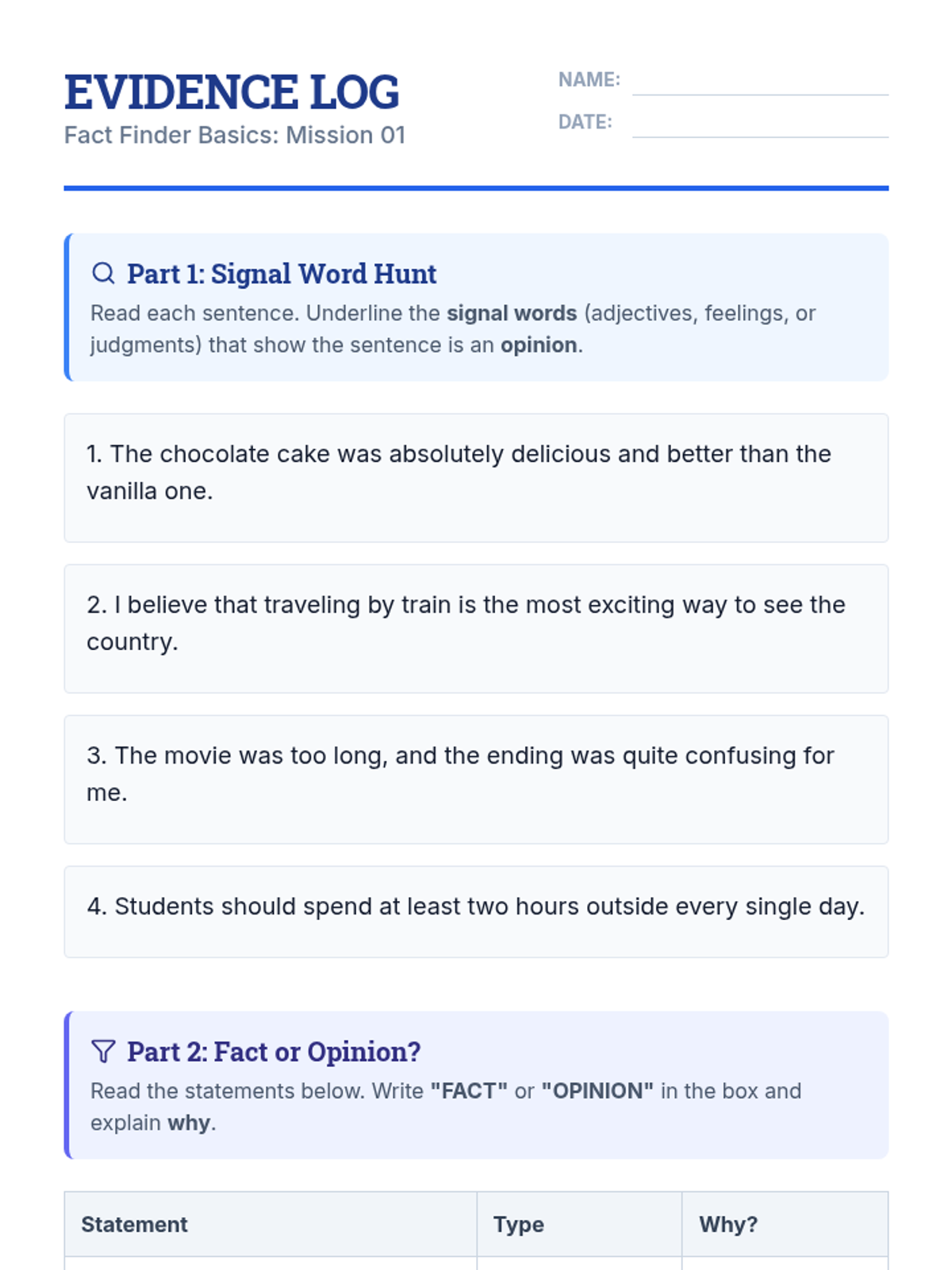
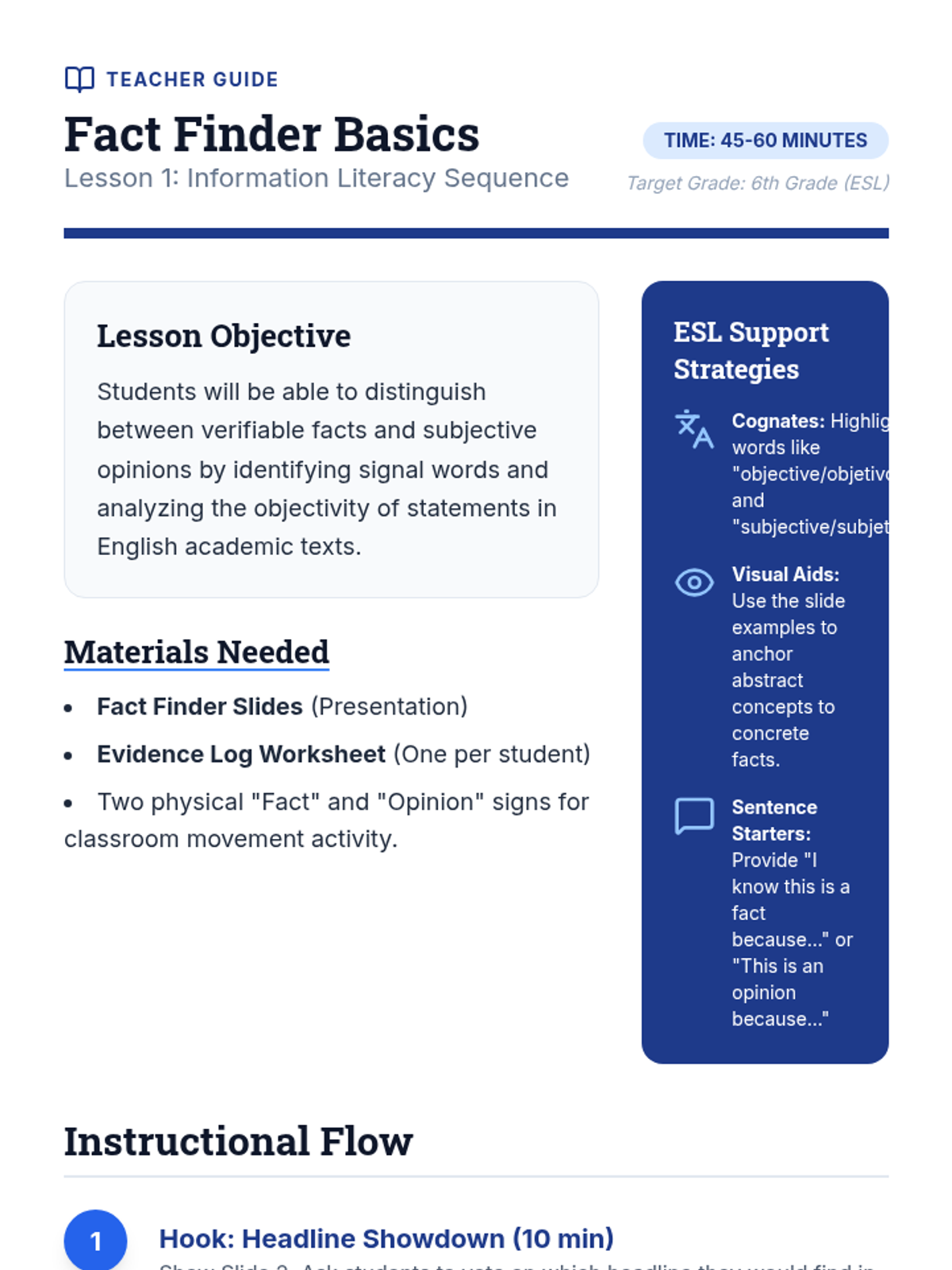
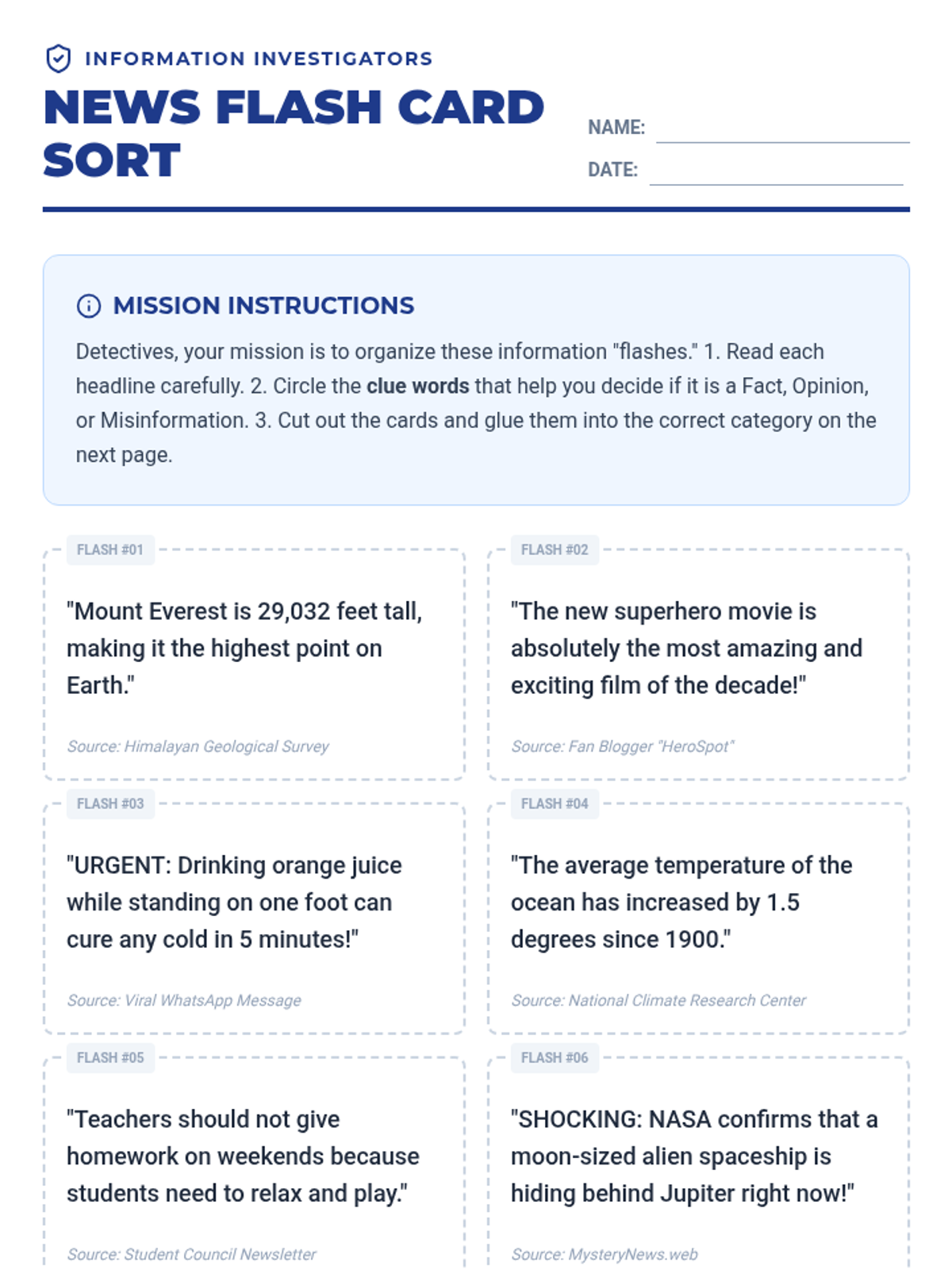
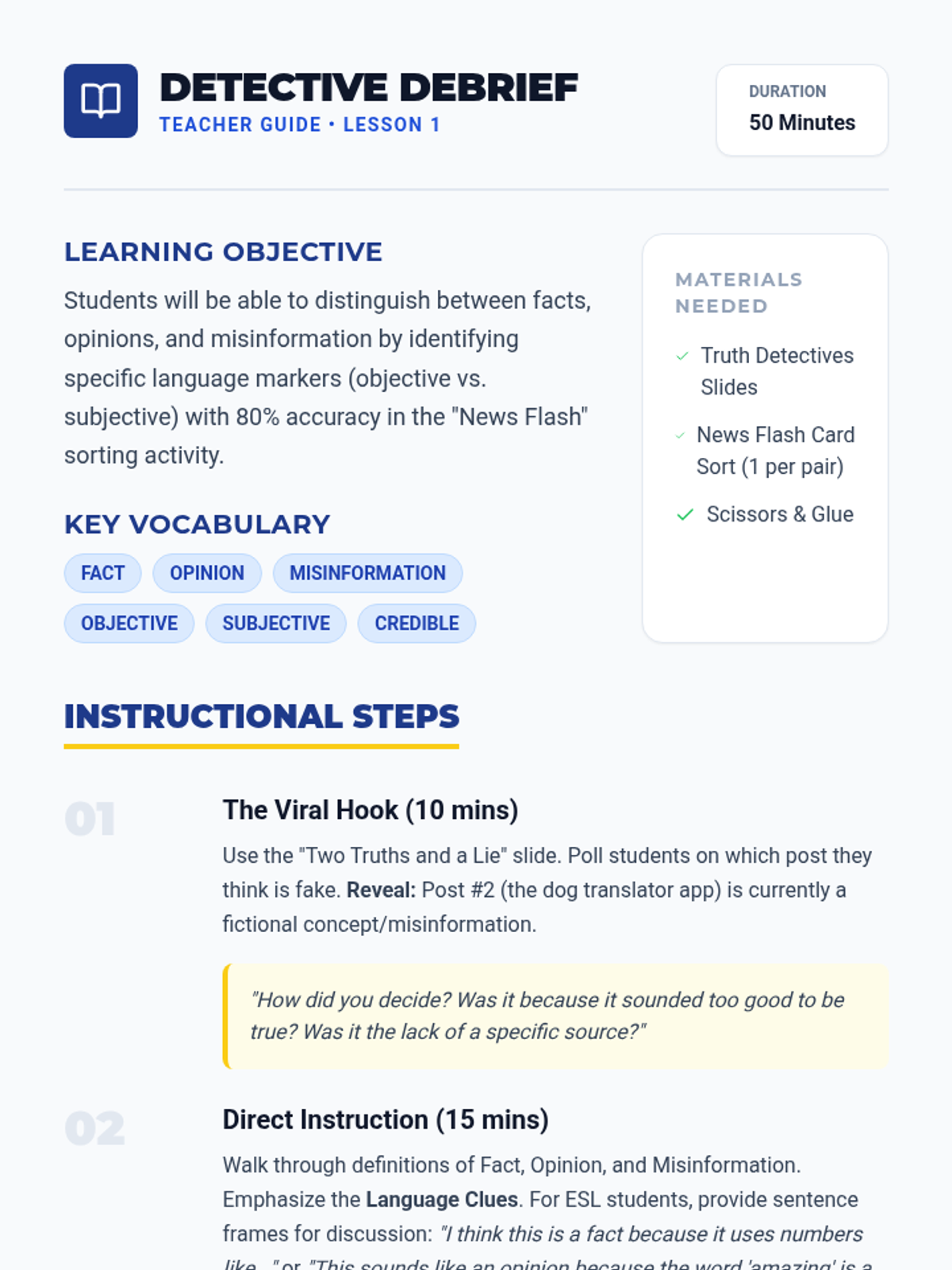
A comprehensive sequence for 6th Grade ESL students to develop critical research and information literacy skills. Students progress from distinguishing basic facts and opinions to applying professional evaluation frameworks like the CRAAP test to determine source credibility.
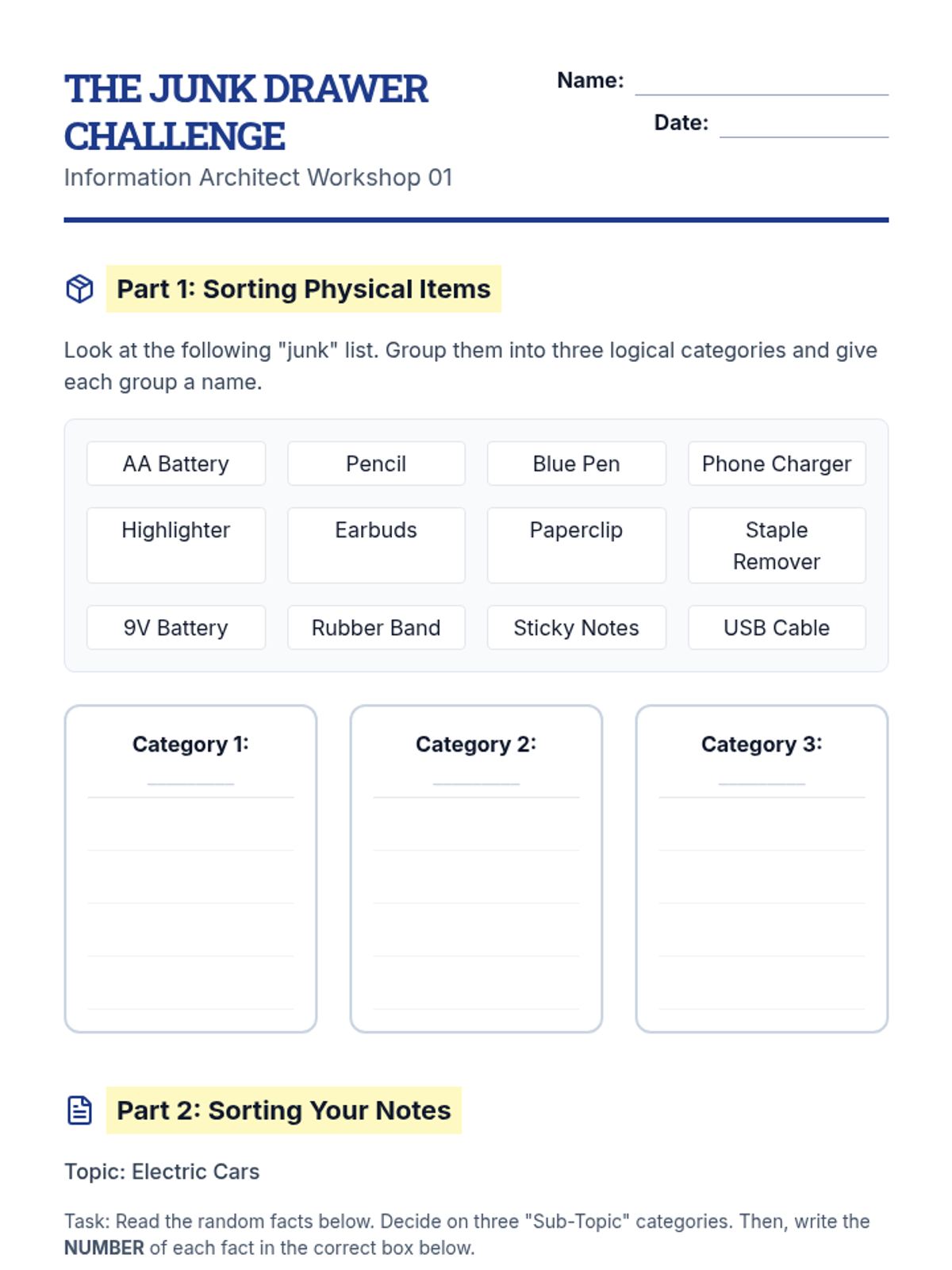
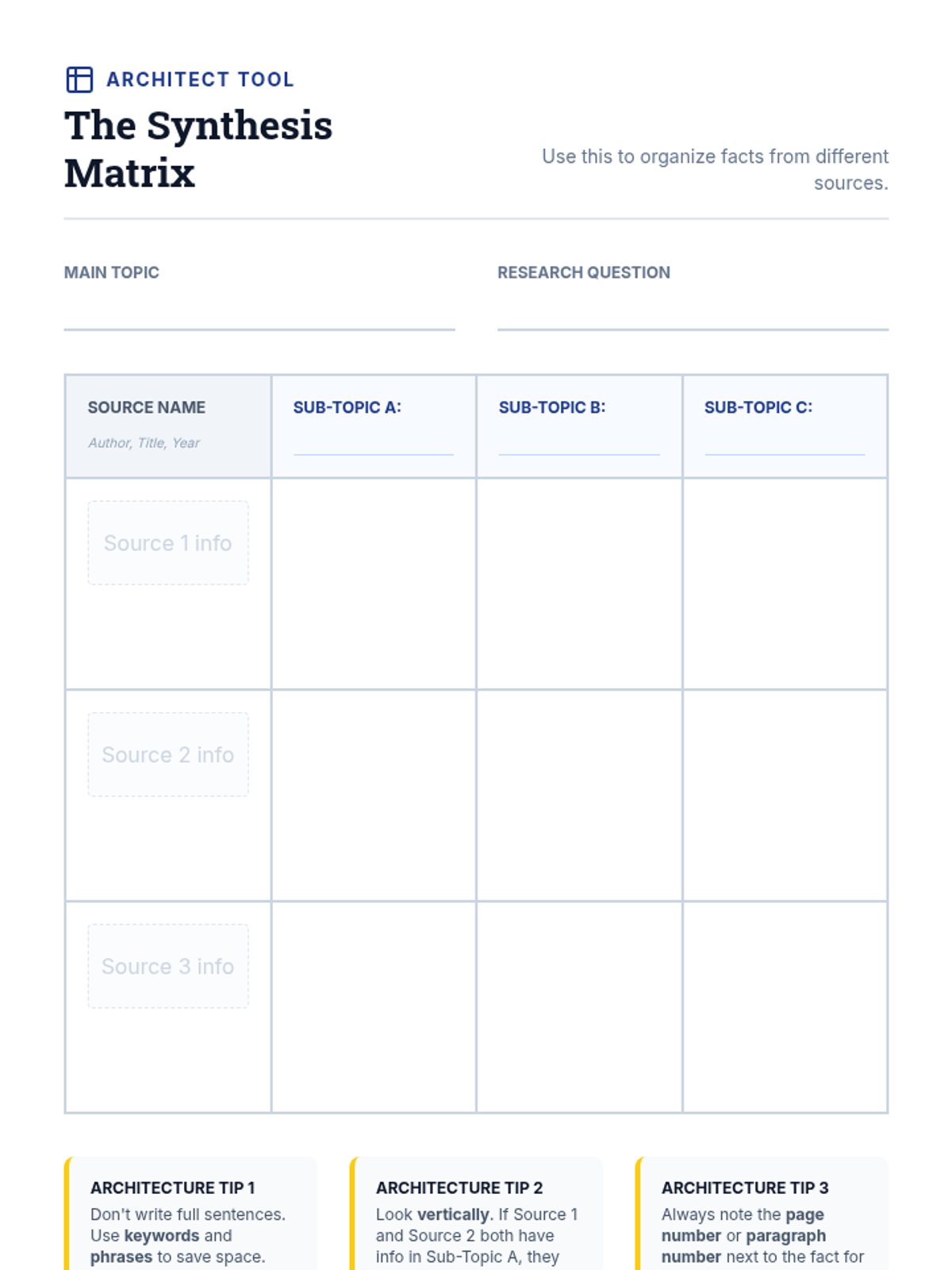
A comprehensive 5-lesson sequence designed for 7th-grade ESL students to master the art of synthesizing information. Students progress from organizing raw research notes to writing sophisticated, cohesive academic paragraphs using evidence from multiple sources.
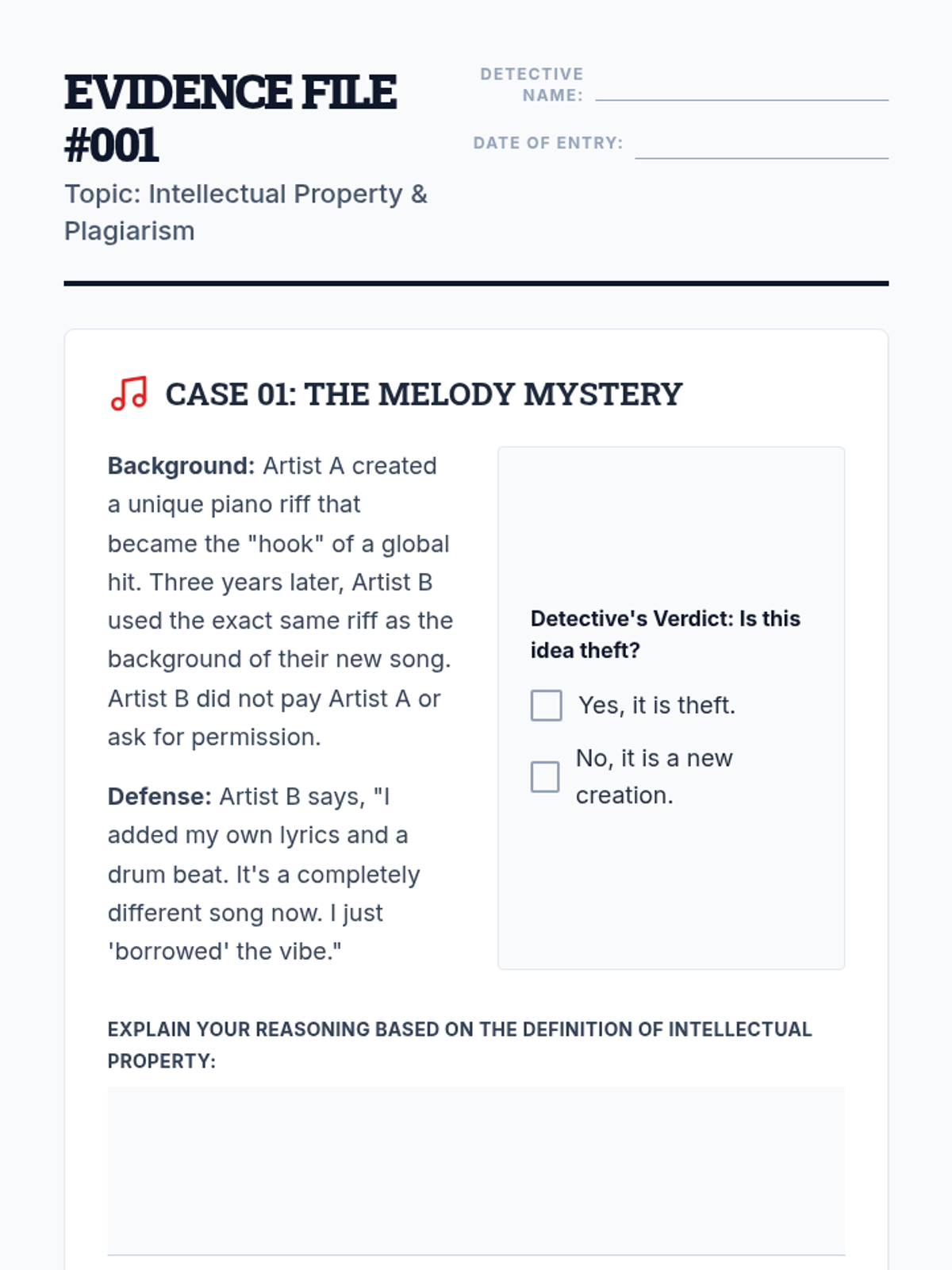
A comprehensive 7th-grade ESL sequence focusing on the ethics of academic integrity, the mechanics of paraphrasing and summarizing, and the technical accuracy of MLA citations. Students transition from understanding intellectual property to performing independent 'plagiarism audits' on research samples.
A sequence for 7th-grade ESL students focusing on digital literacy, evaluating source credibility, and mastering search strategies for academic research. Students move from identifying misinformation to independently curating high-quality sources using databases and Boolean logic.
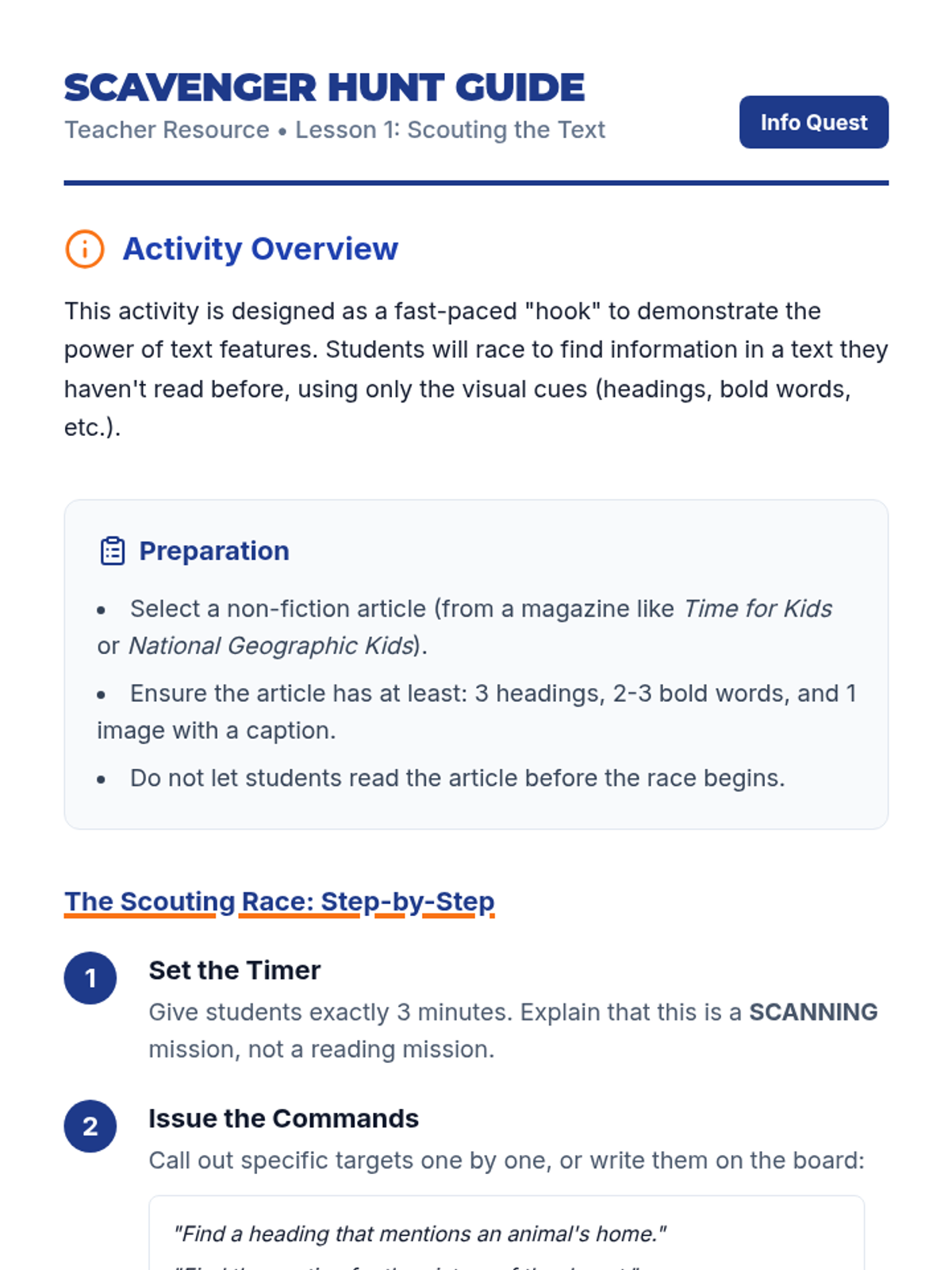
A comprehensive workshop-style sequence for 4th Grade ESL students to master academic research skills. Students progress from navigating text features to note-taking, paraphrasing, summarizing, and ultimately synthesizing information from multiple sources while avoiding plagiarism.
A comprehensive sequence for 8th-grade ESL students to master information literacy. Students progress from identifying bias and evaluating source credibility to performing advanced searches and ethically synthesizing research with proper MLA citations.
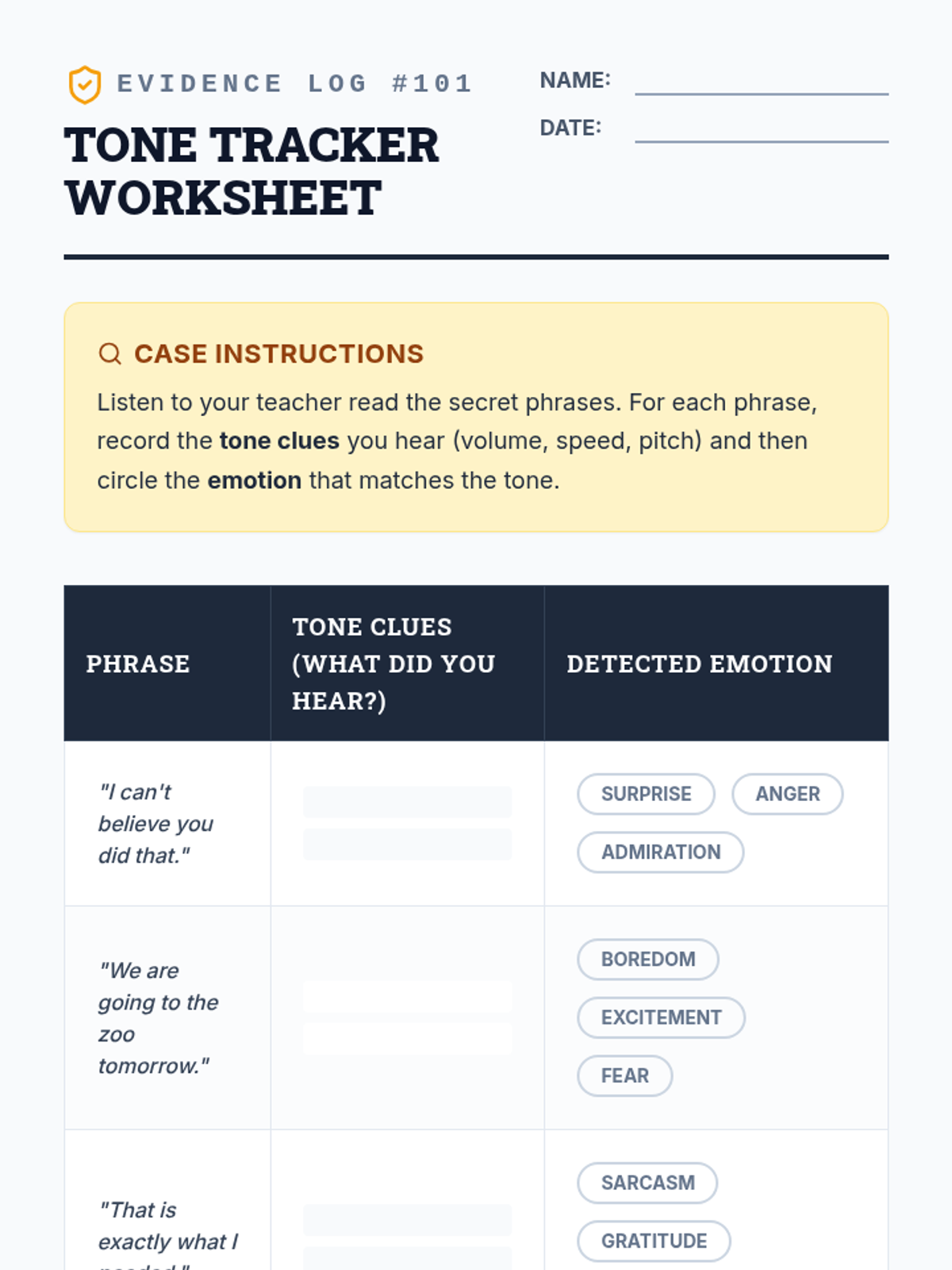
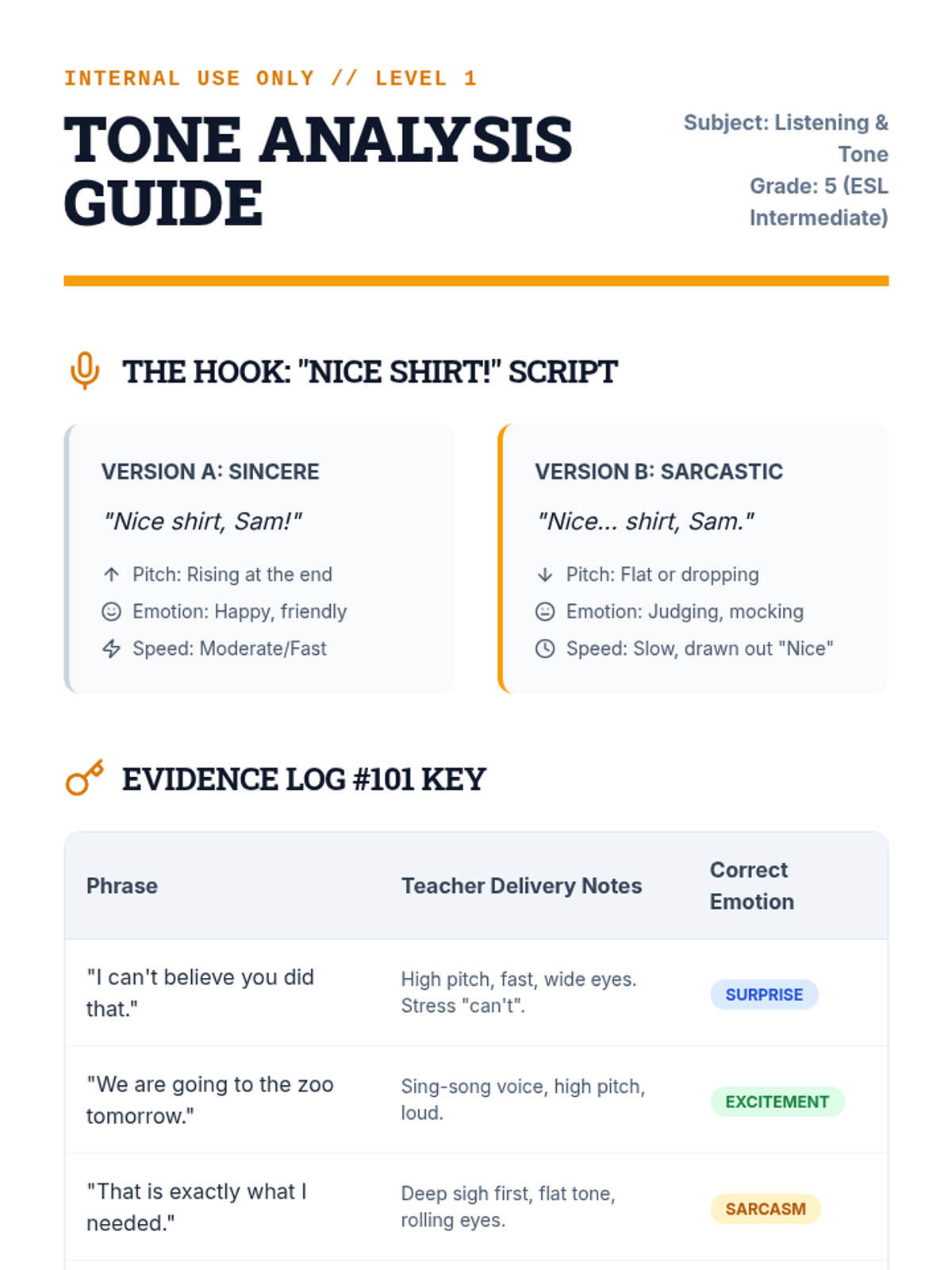
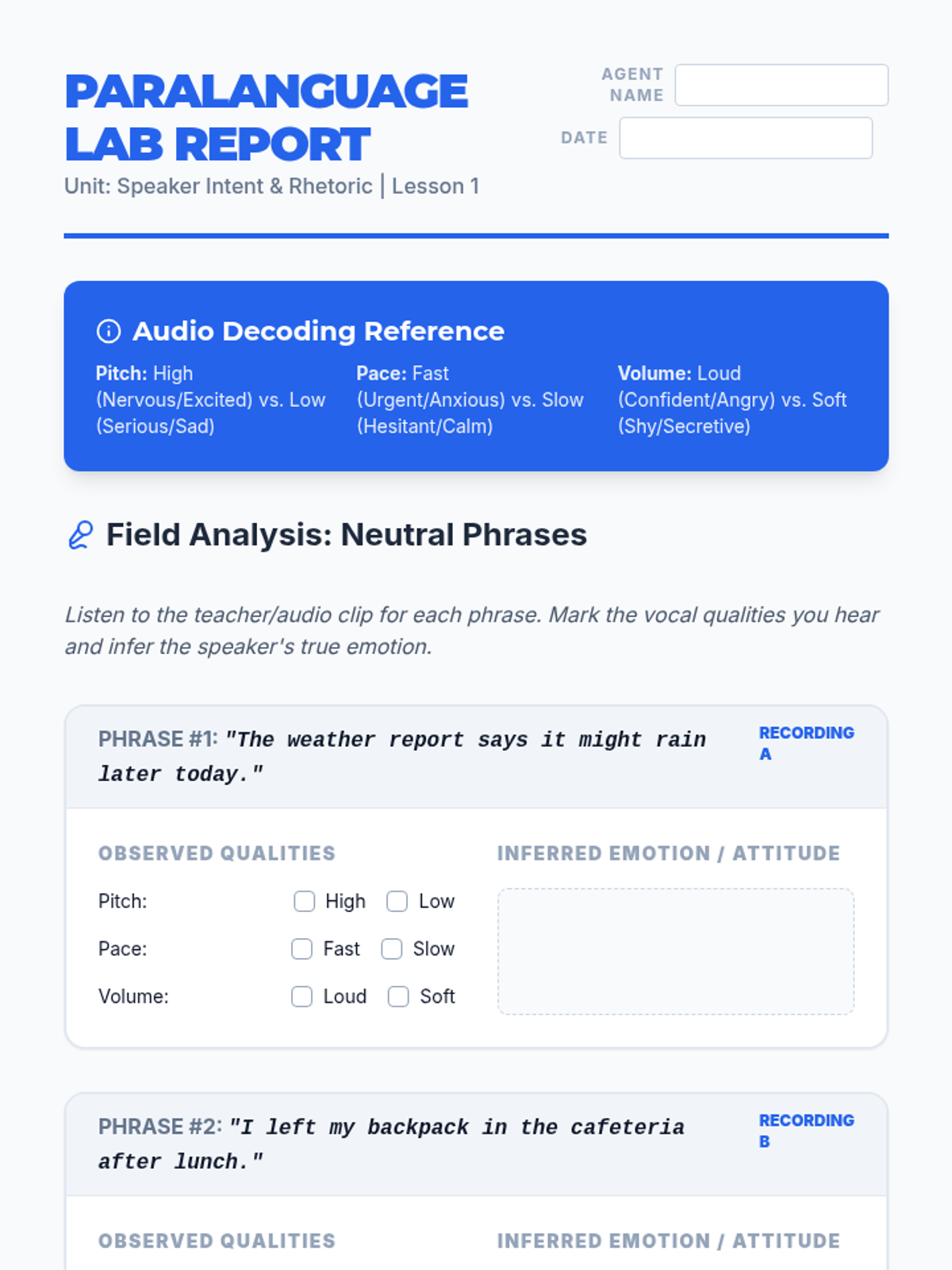
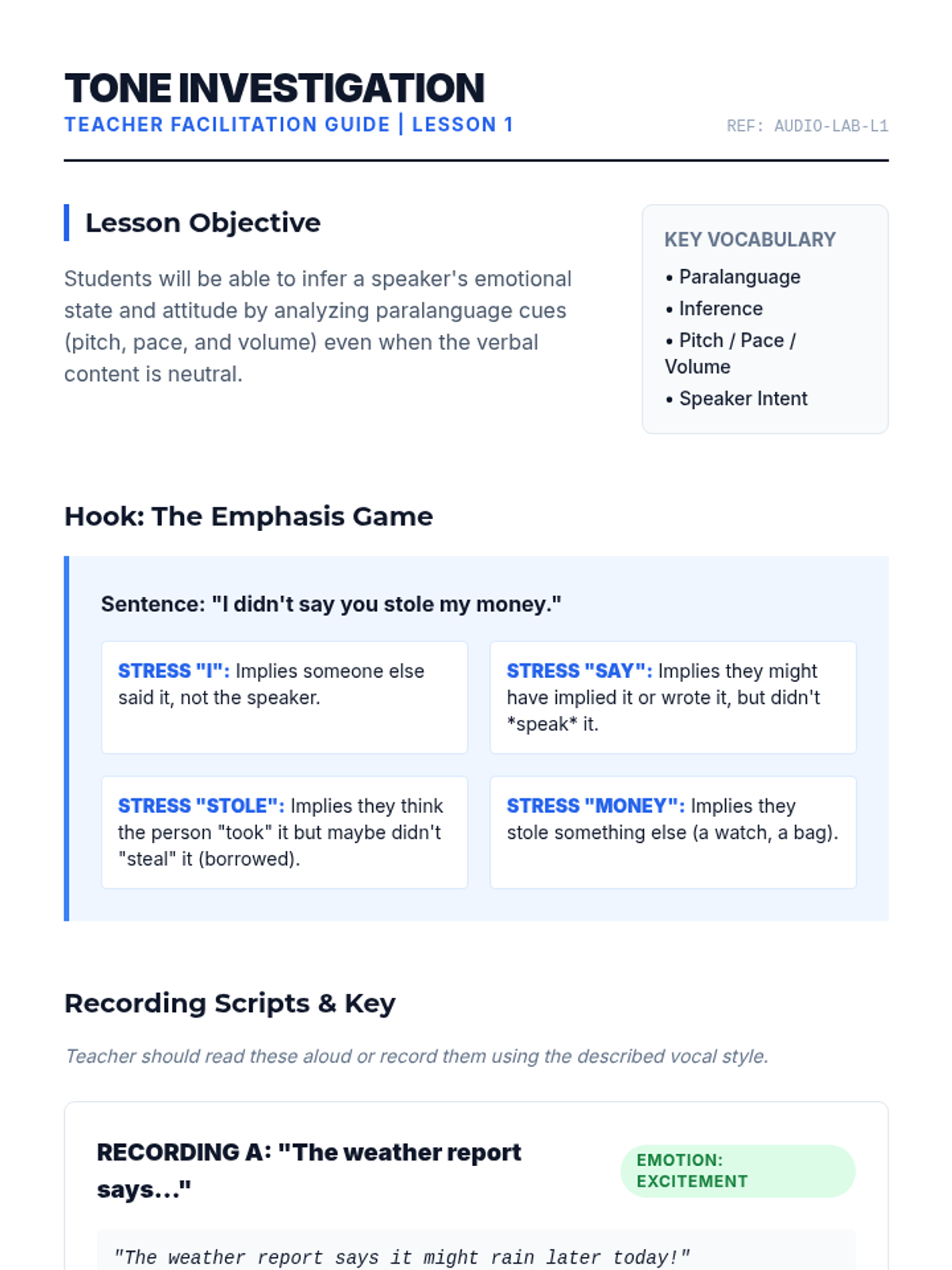
An intermediate ESL sequence where students act as 'communication detectives' to analyze tone, idioms, exaggeration, and speaker intent in spoken English. The sequence culminates in a mystery simulation requiring students to synthesize all listening skills to solve a case.
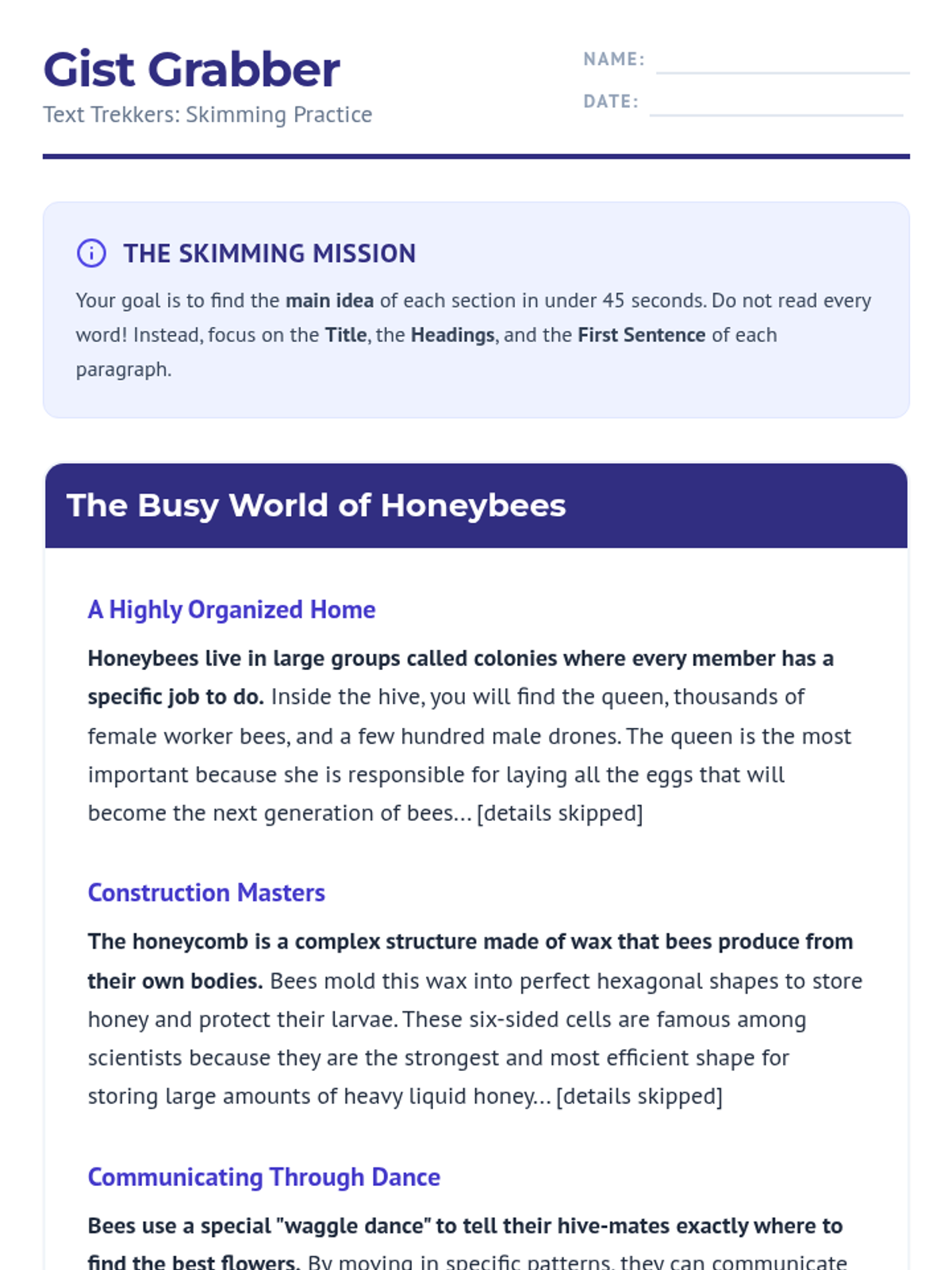
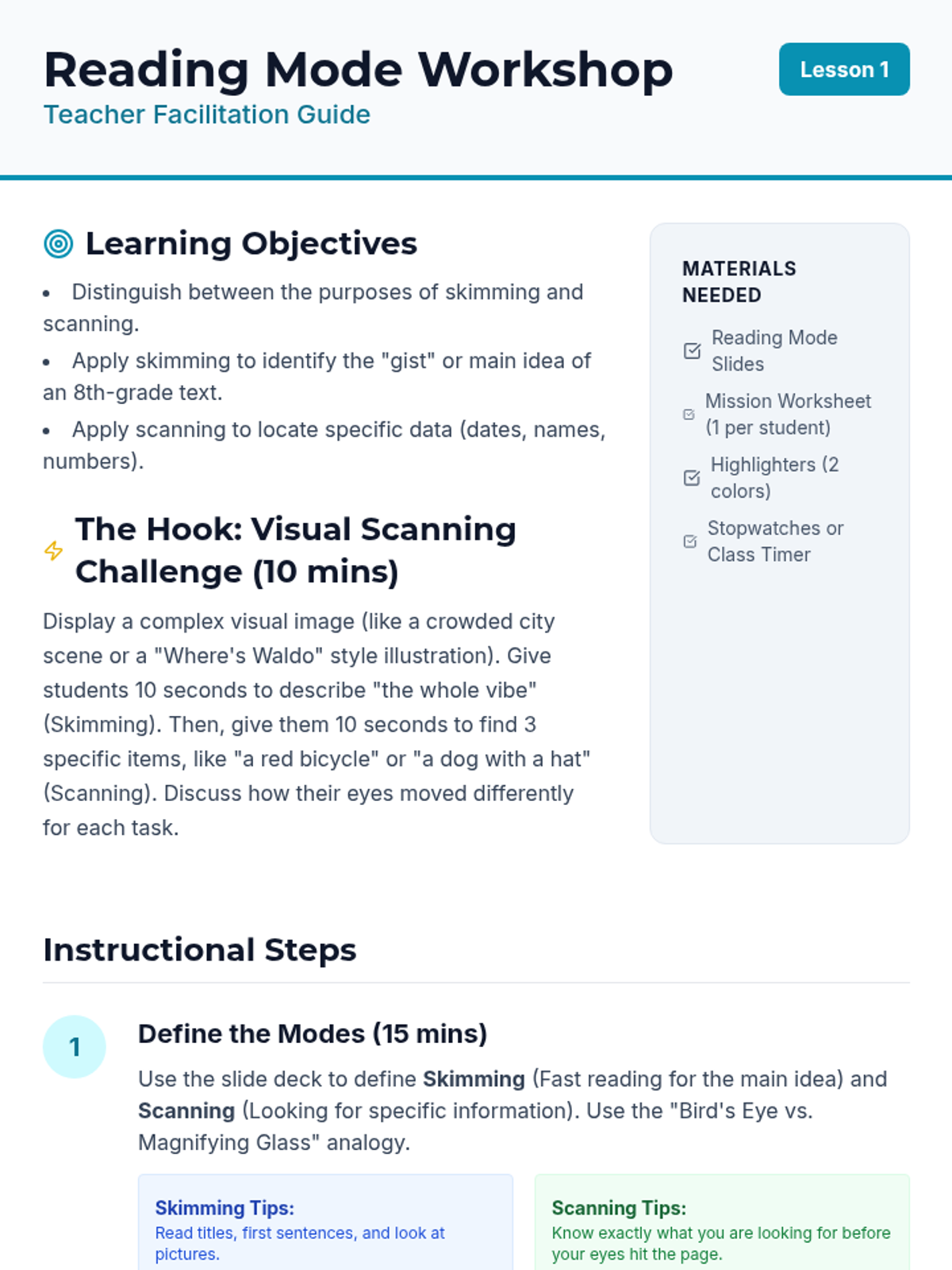
This sequence teaches 5th-grade ESL students how to navigate informational texts efficiently using skimming and scanning strategies. Students will move from understanding the big picture to locating specific keywords and using text features to answer test-style questions under time pressure.
A workshop-style sequence for undergraduate ESL students to master skimming and scanning techniques for high-stakes academic exams. Students move from conceptual understanding to timed application, focusing on efficiency and accuracy in dense academic texts.
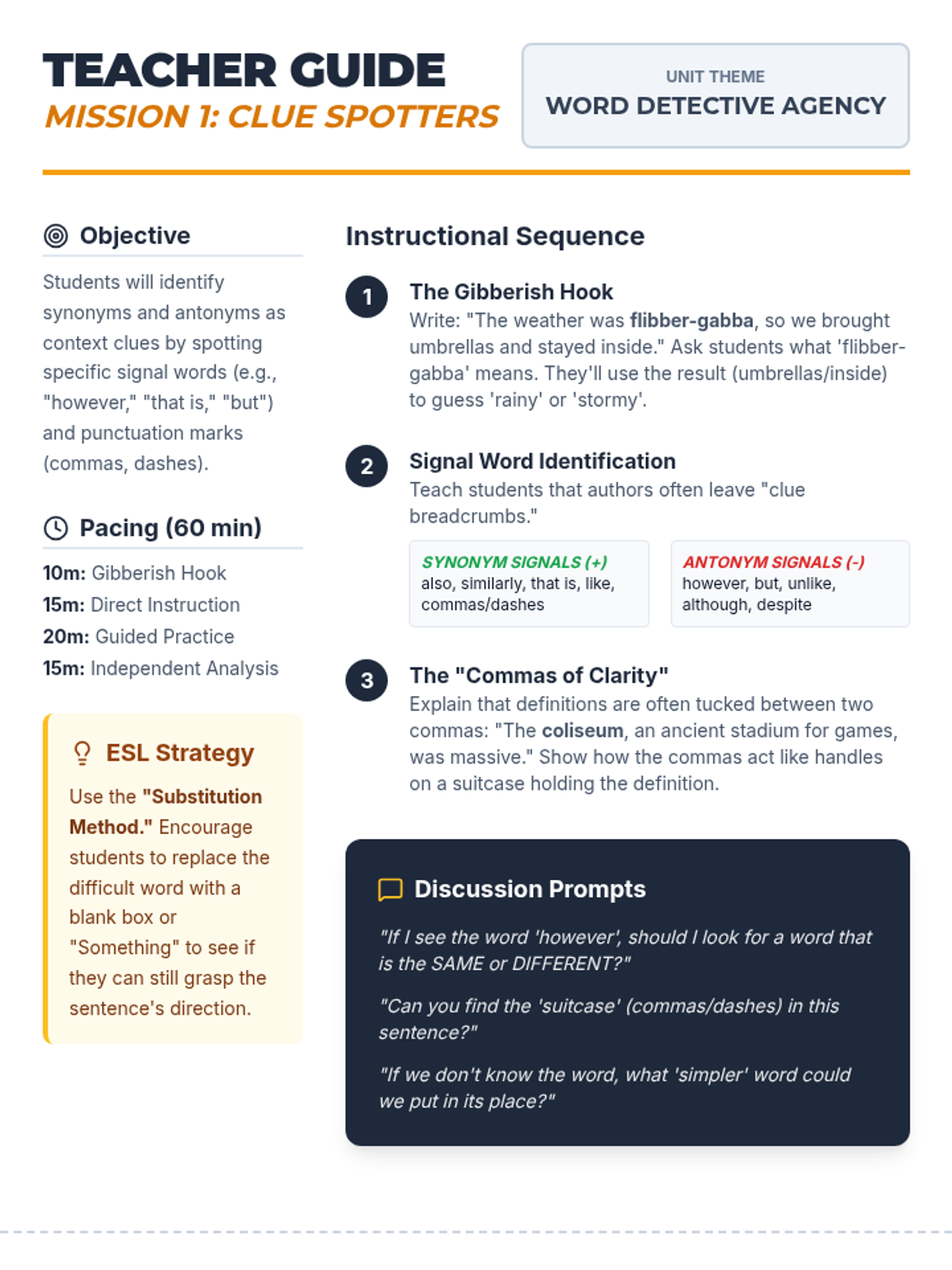
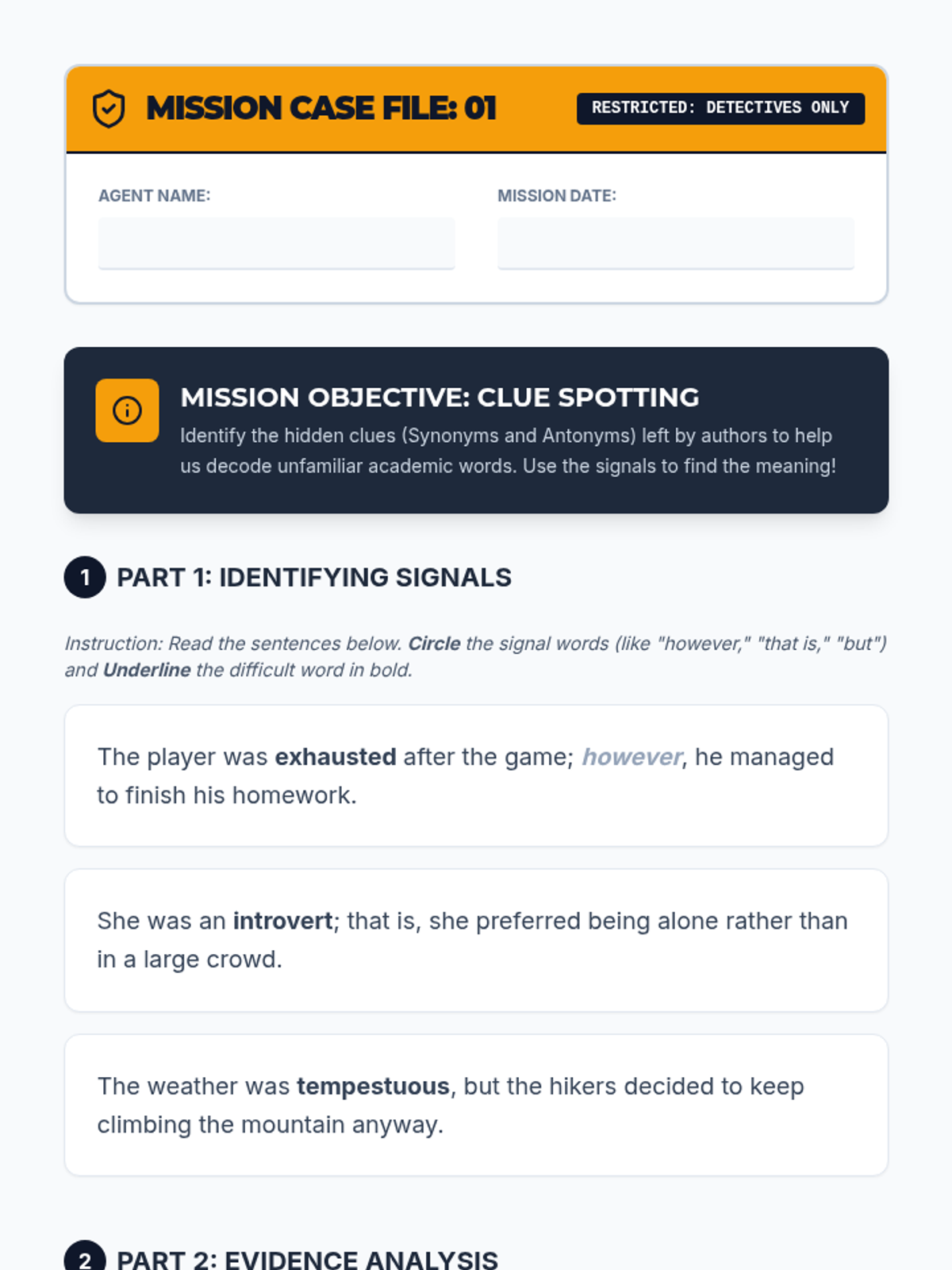
A sequence designed for 7th-grade ESL students to master the art of inferring unknown academic vocabulary through context clues, morphology, syntax, and tone analysis. This unit transforms vocabulary gaps from roadblocks into solvable puzzles using a "Word Detective" theme.
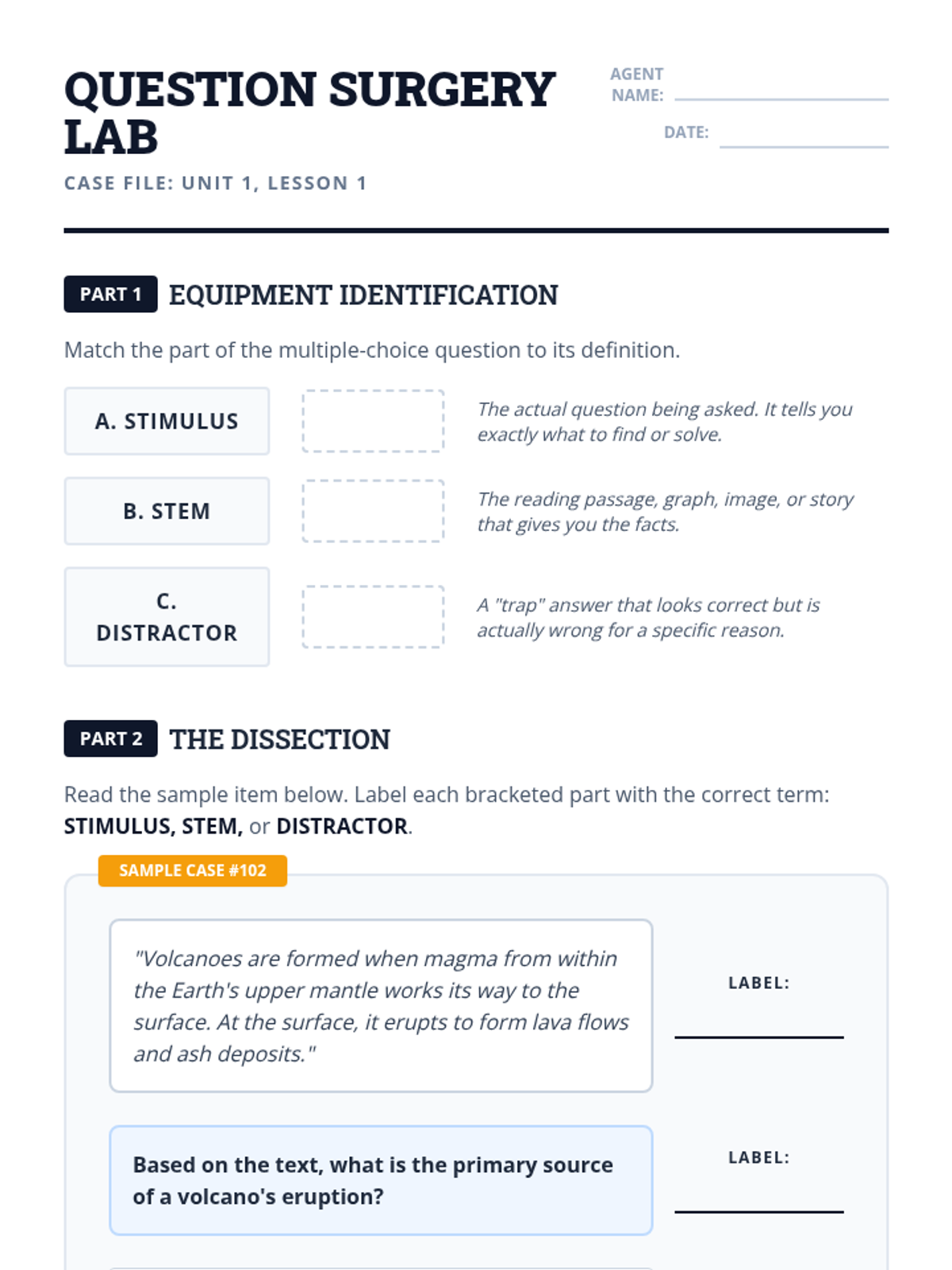
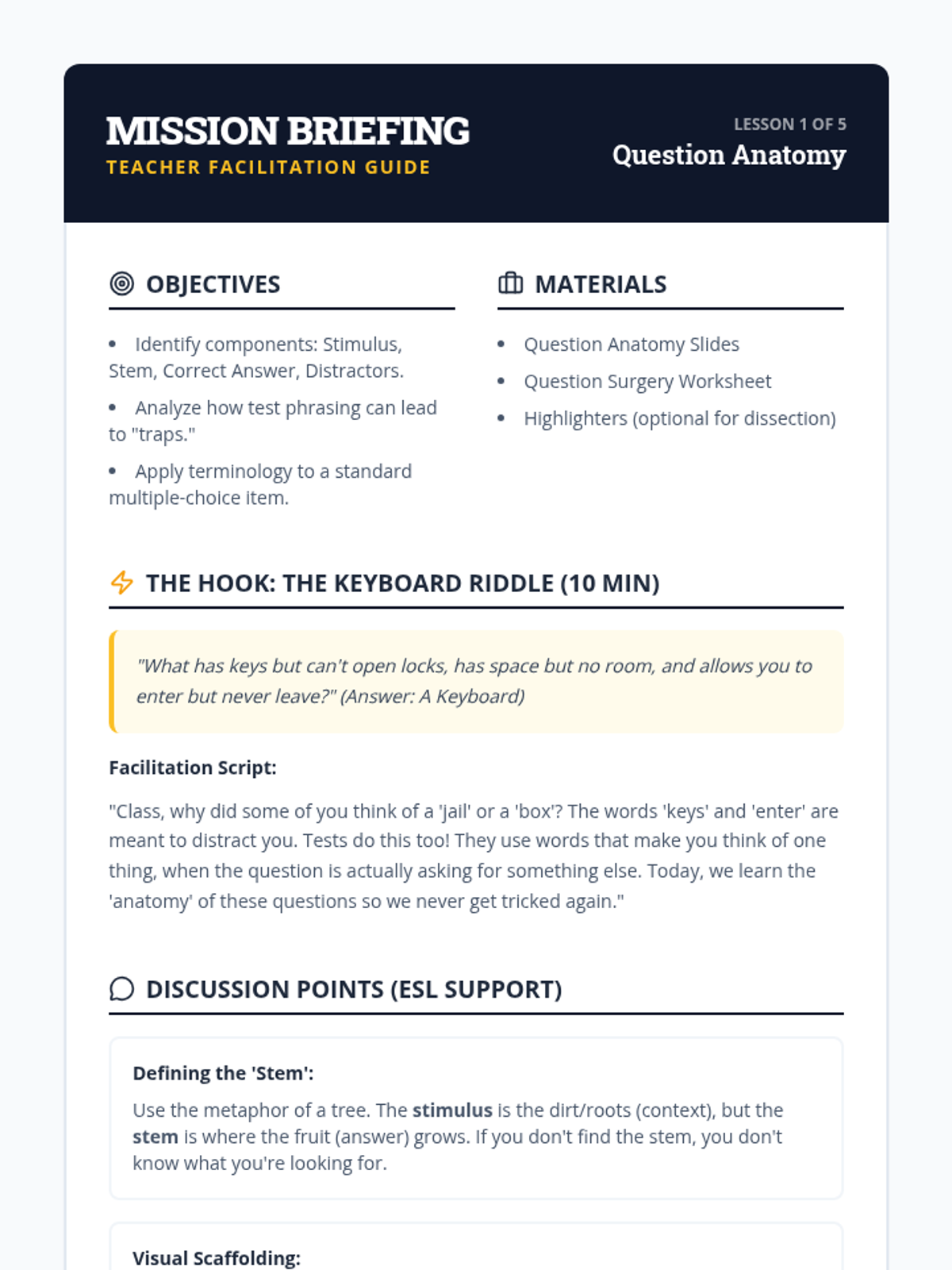
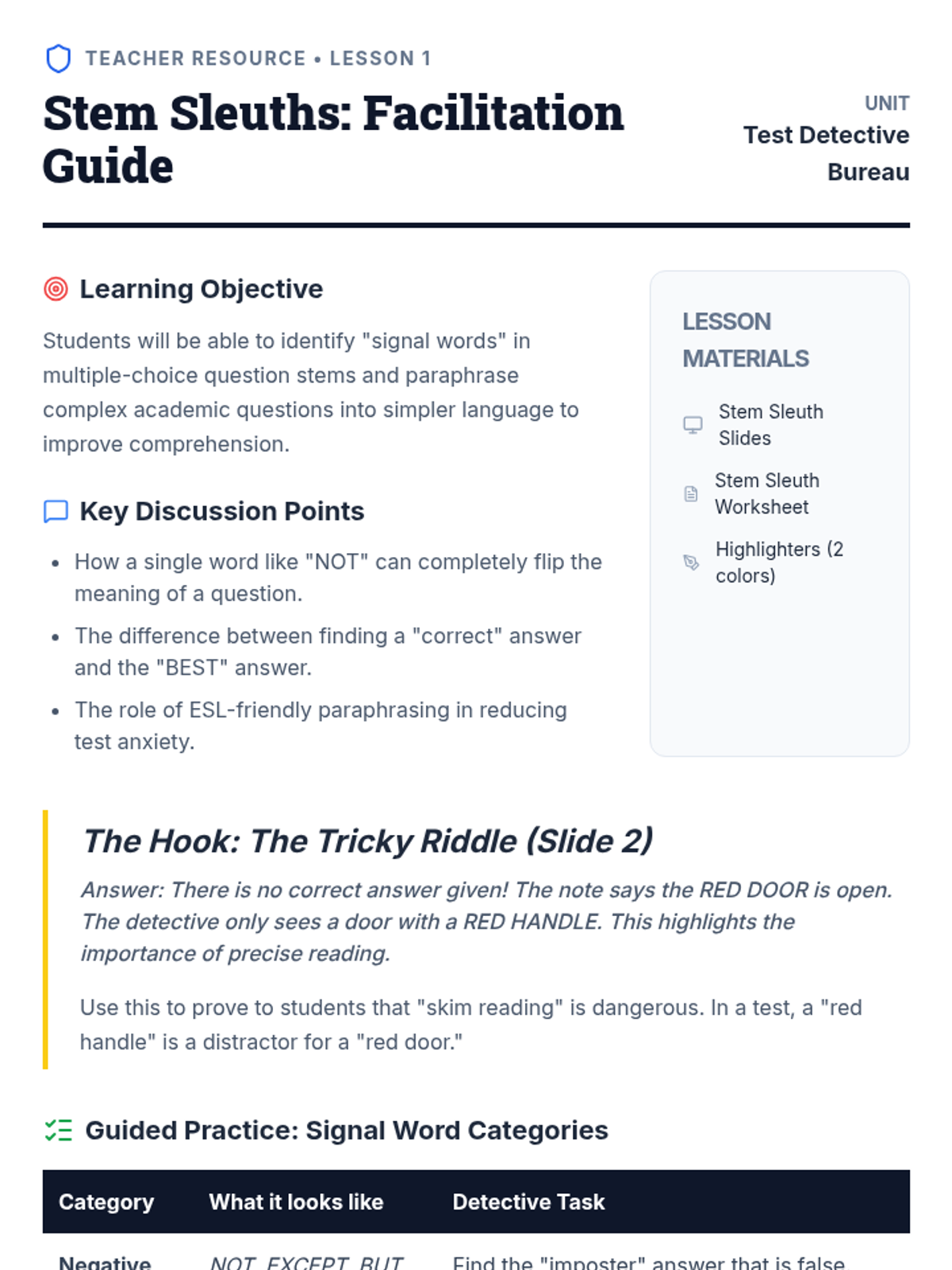
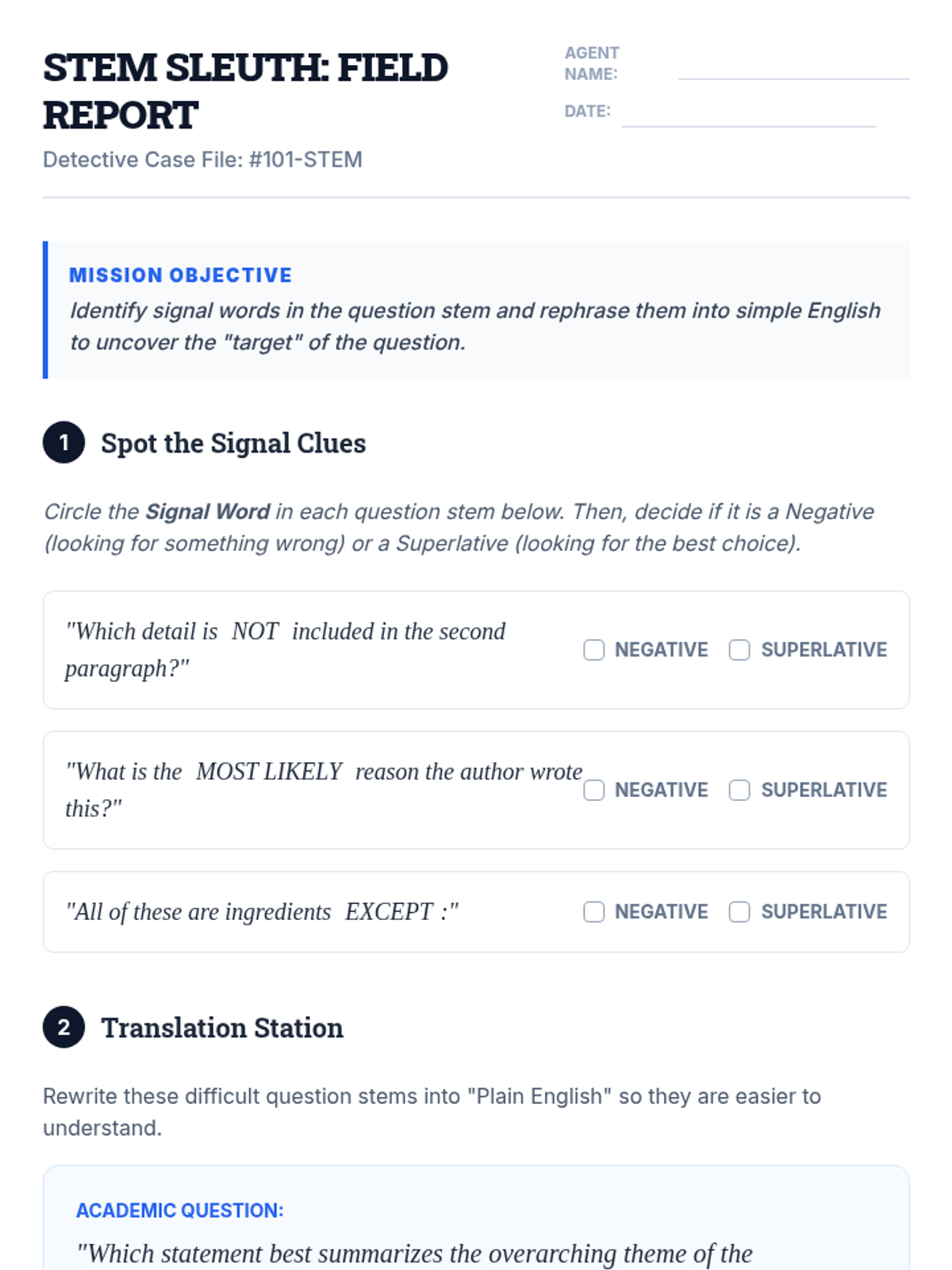
This sequence targets the analytical skills required to dismantle multiple-choice questions for 7th Grade ESL learners. Students move from understanding the anatomy of a question to identifying common logical fallacies and 'trap' answers, utilizing game-based learning and deductive reasoning.
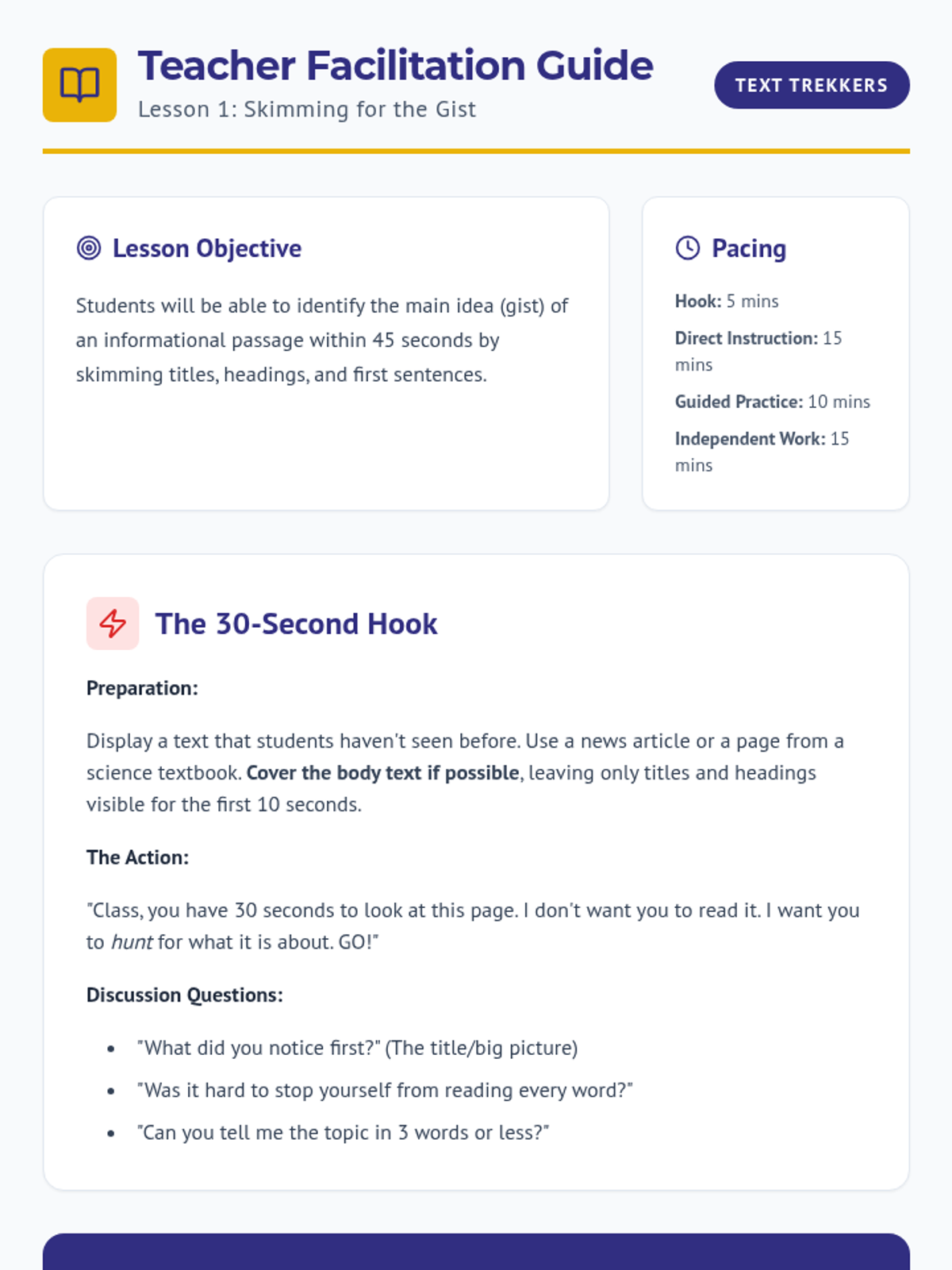
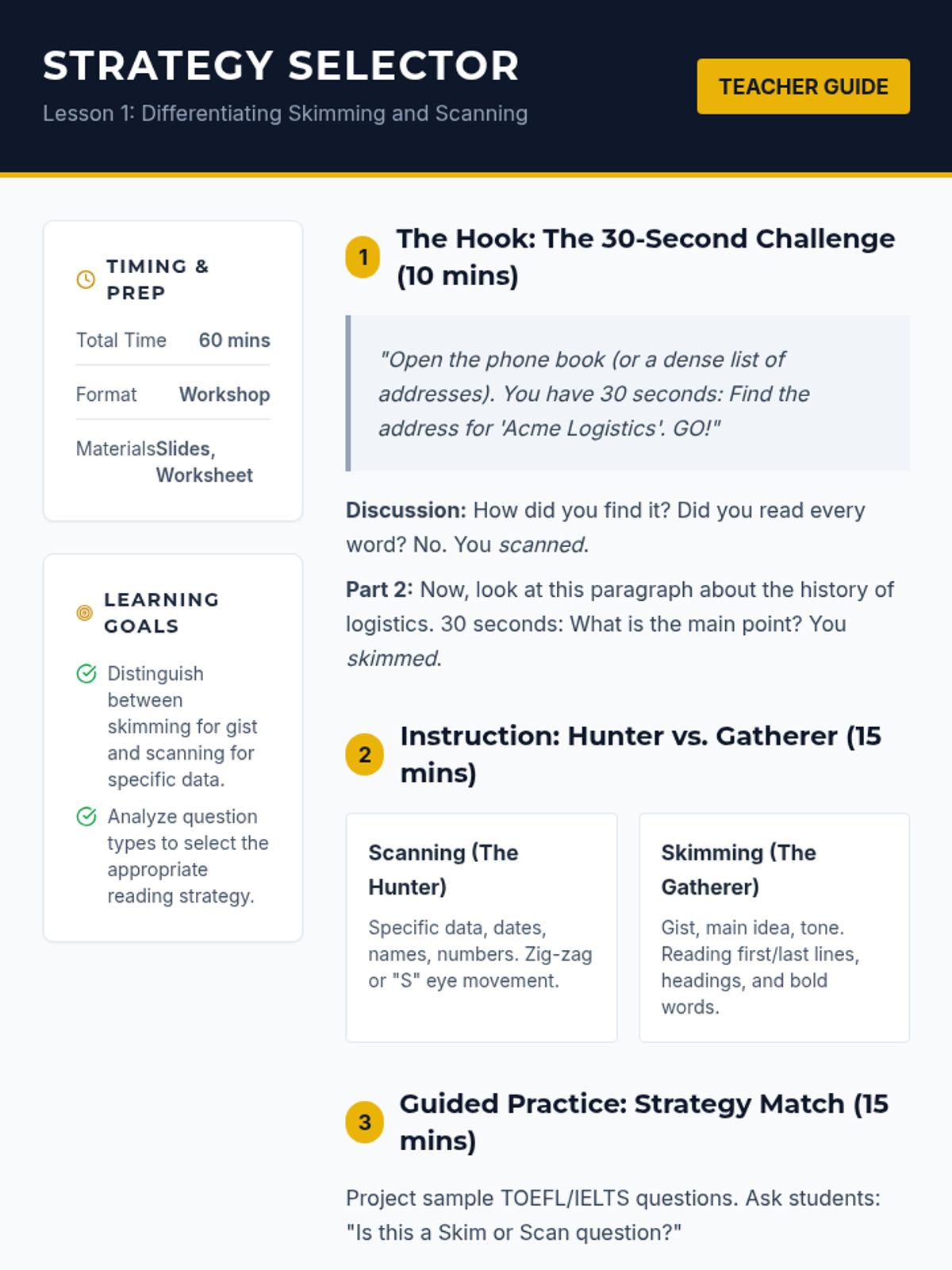
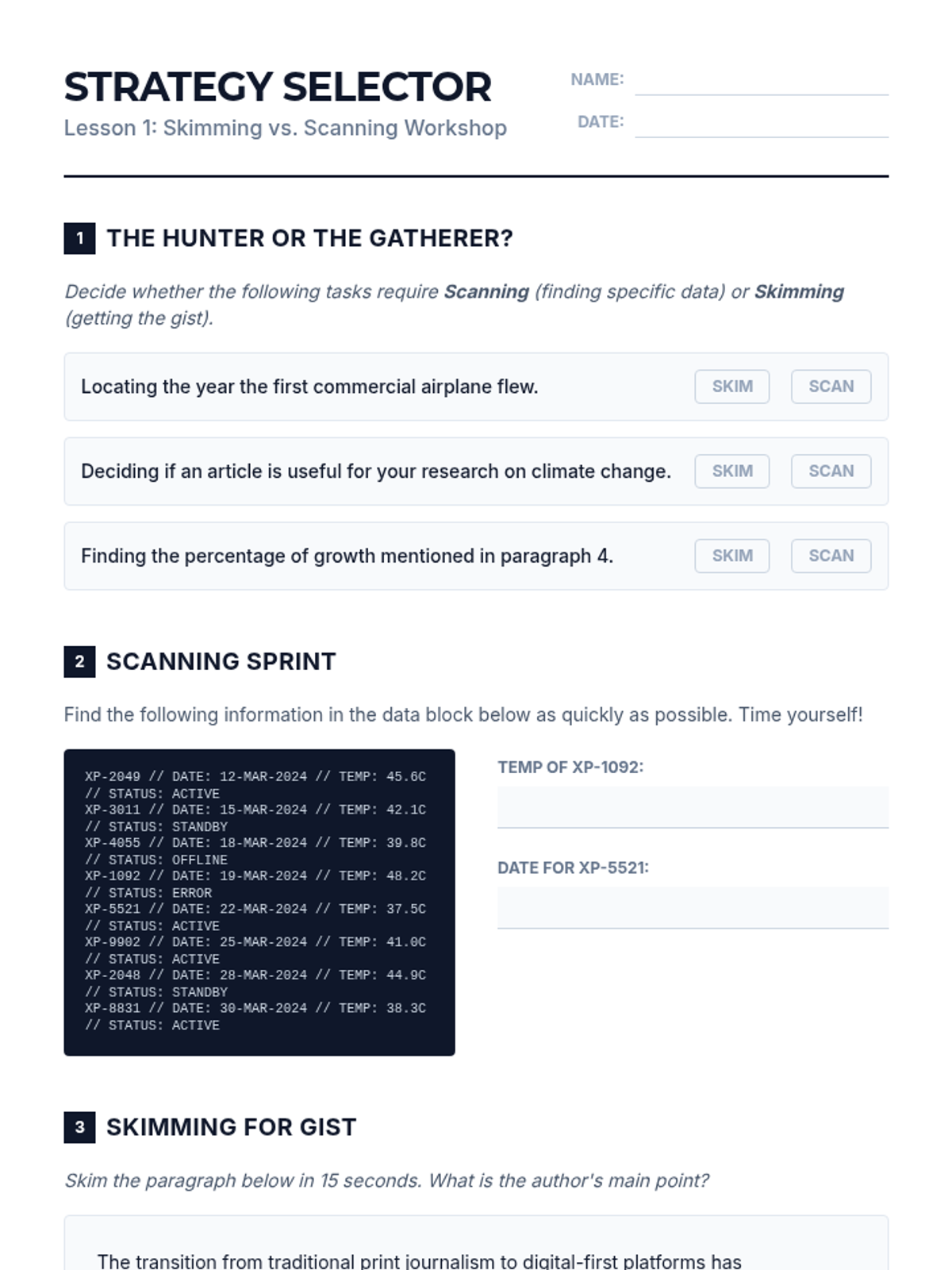
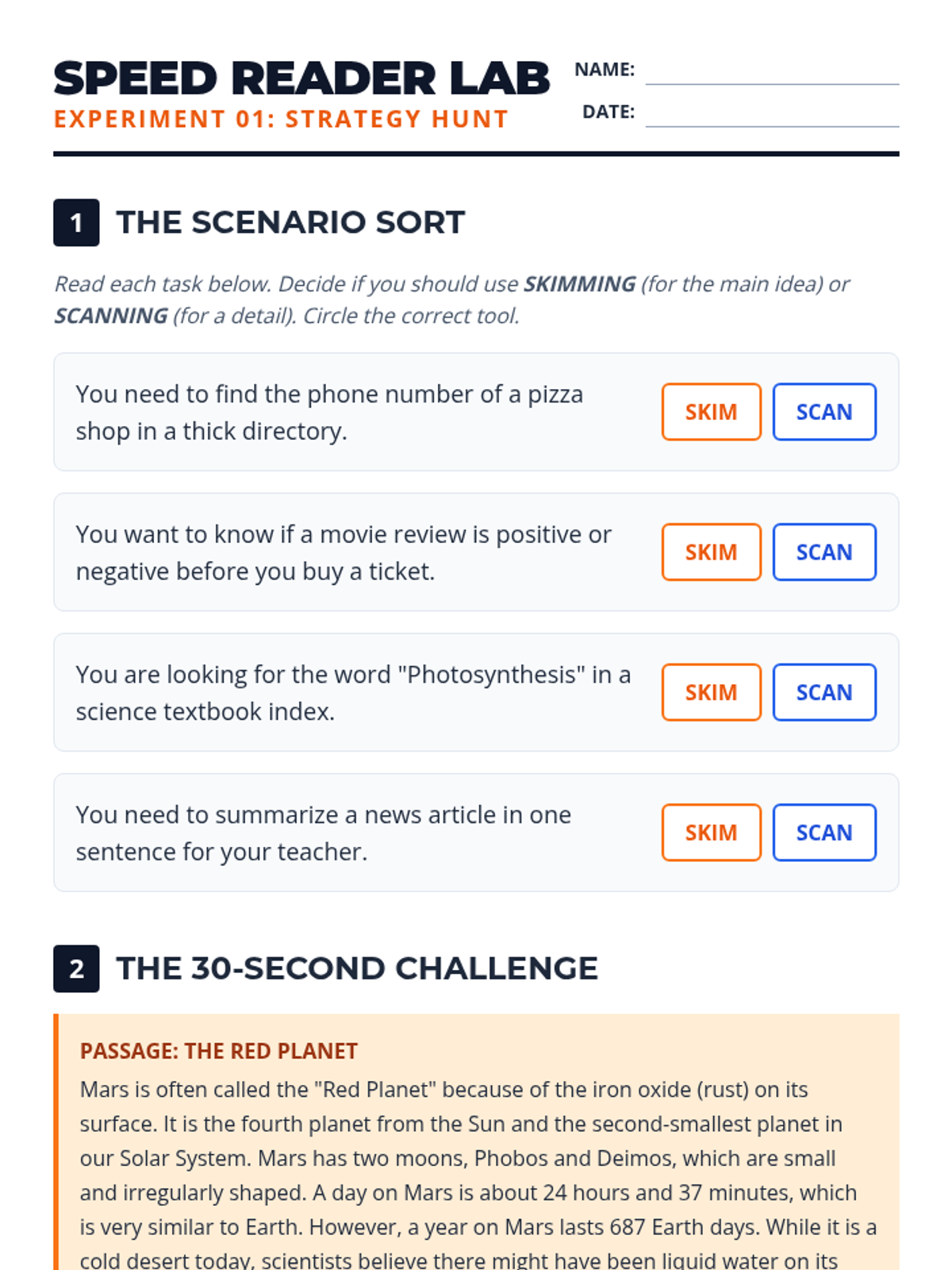
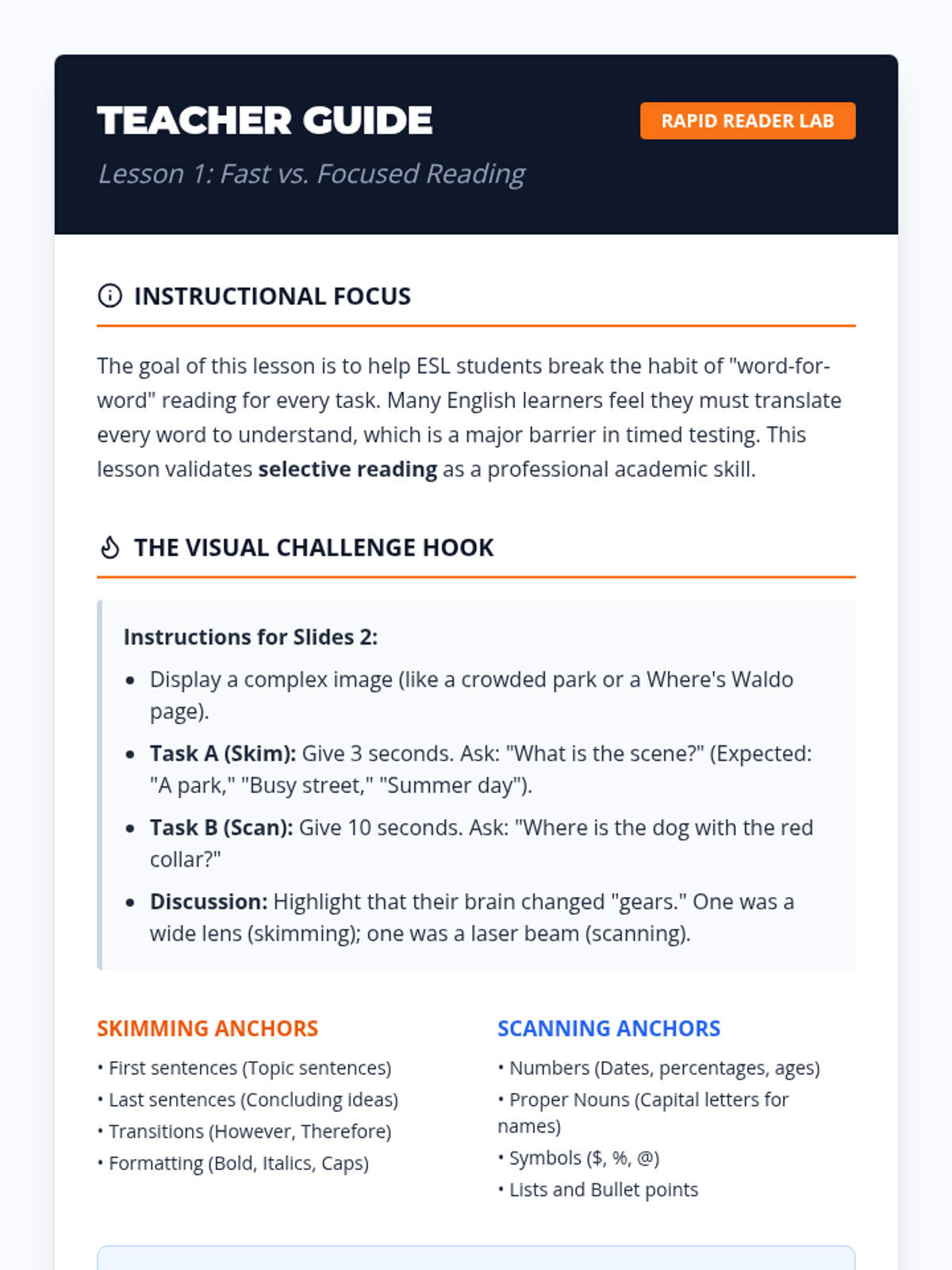
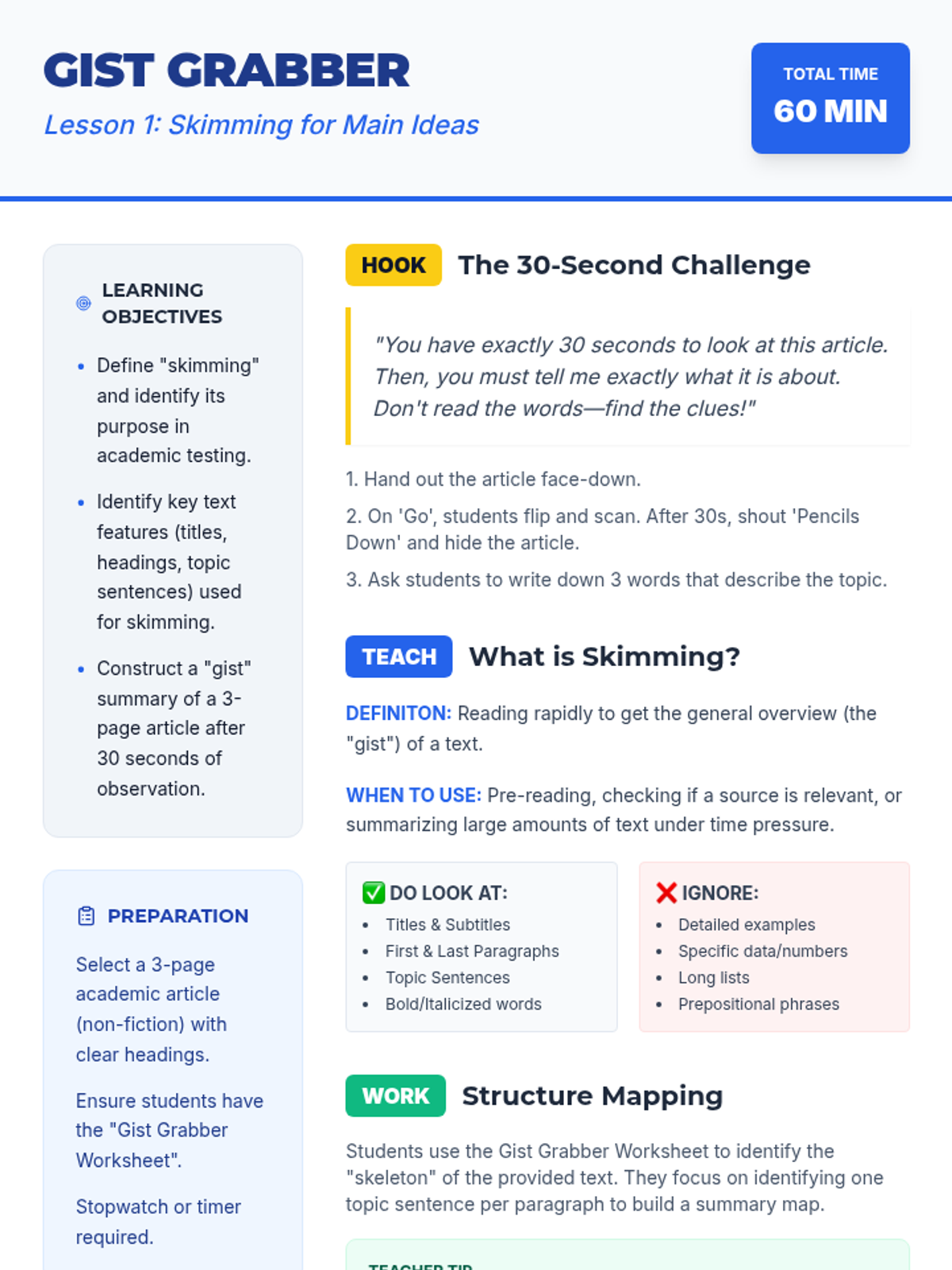
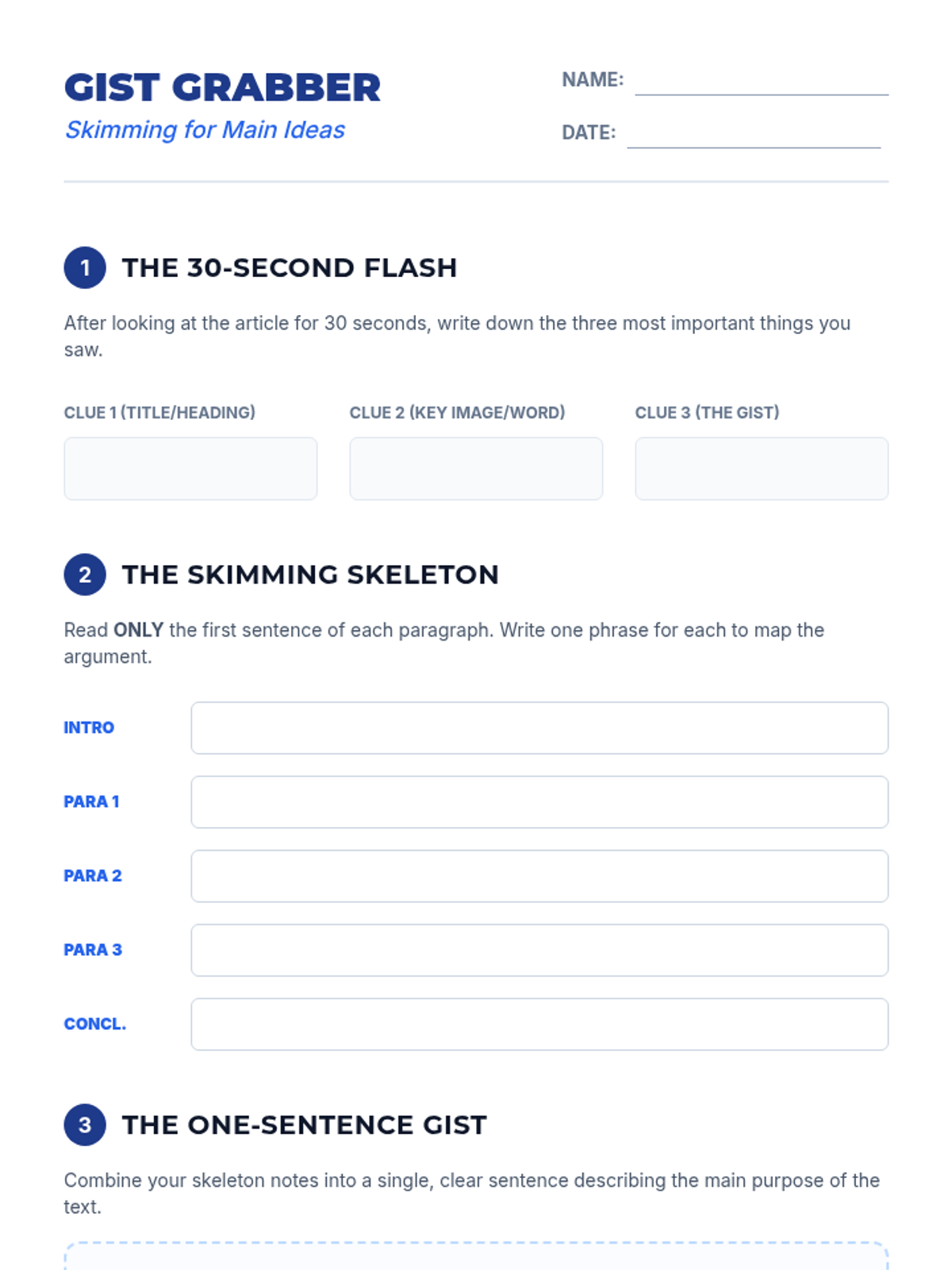
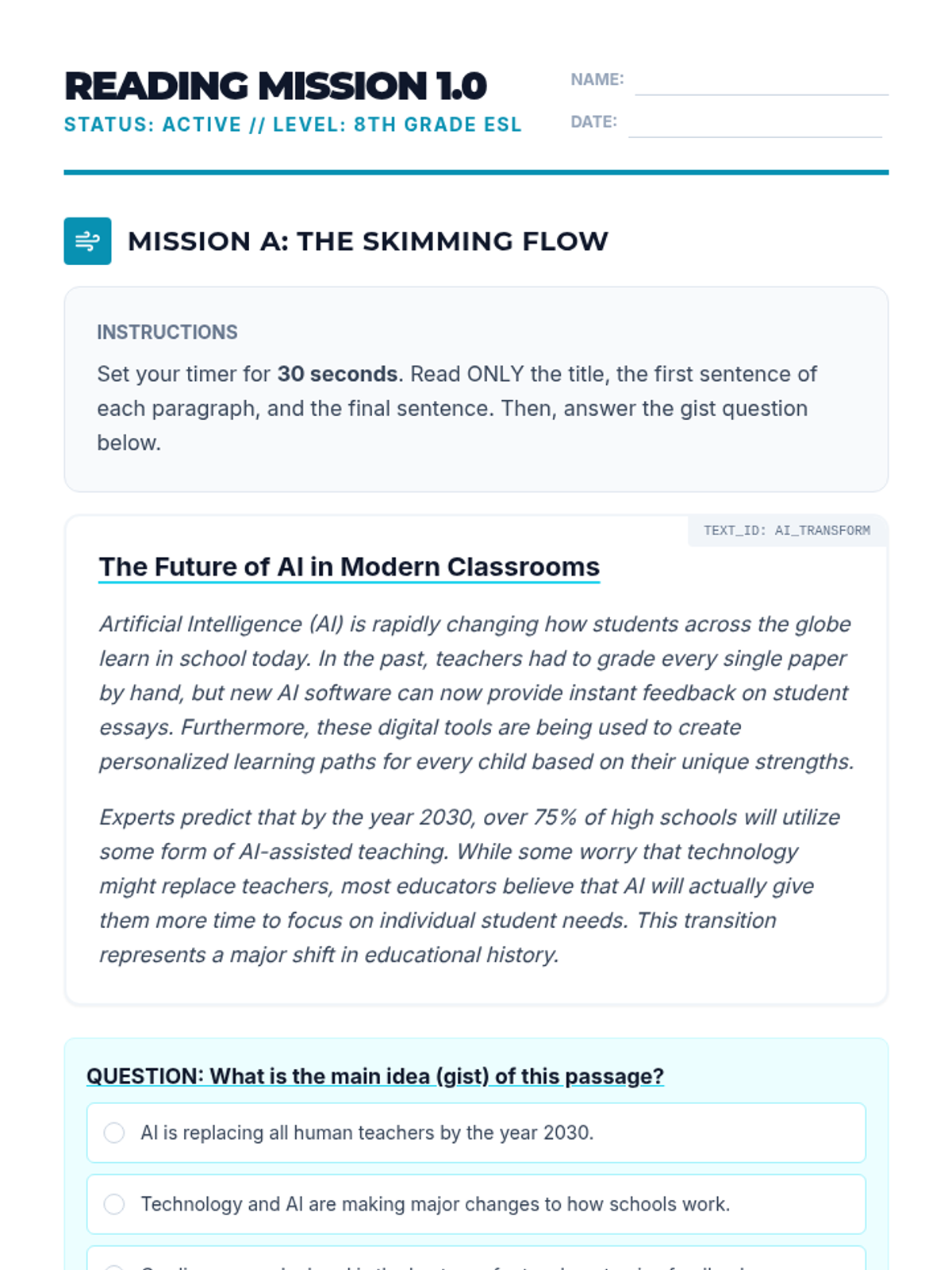
A comprehensive 5-lesson sequence designed for 7th Grade ESL students to master skimming and scanning techniques. Students progress from basic differentiation of reading styles to high-speed information retrieval and synthesis, building the confidence and fluency needed for timed academic assessments.
A comprehensive sequence for 6th Grade ESL students to master Short Constructed Responses (SCR) using the R.A.C.E. strategy under time constraints. Students learn to decode prompts, craft strong topic sentences, integrate evidence, and rapidly edit their work.
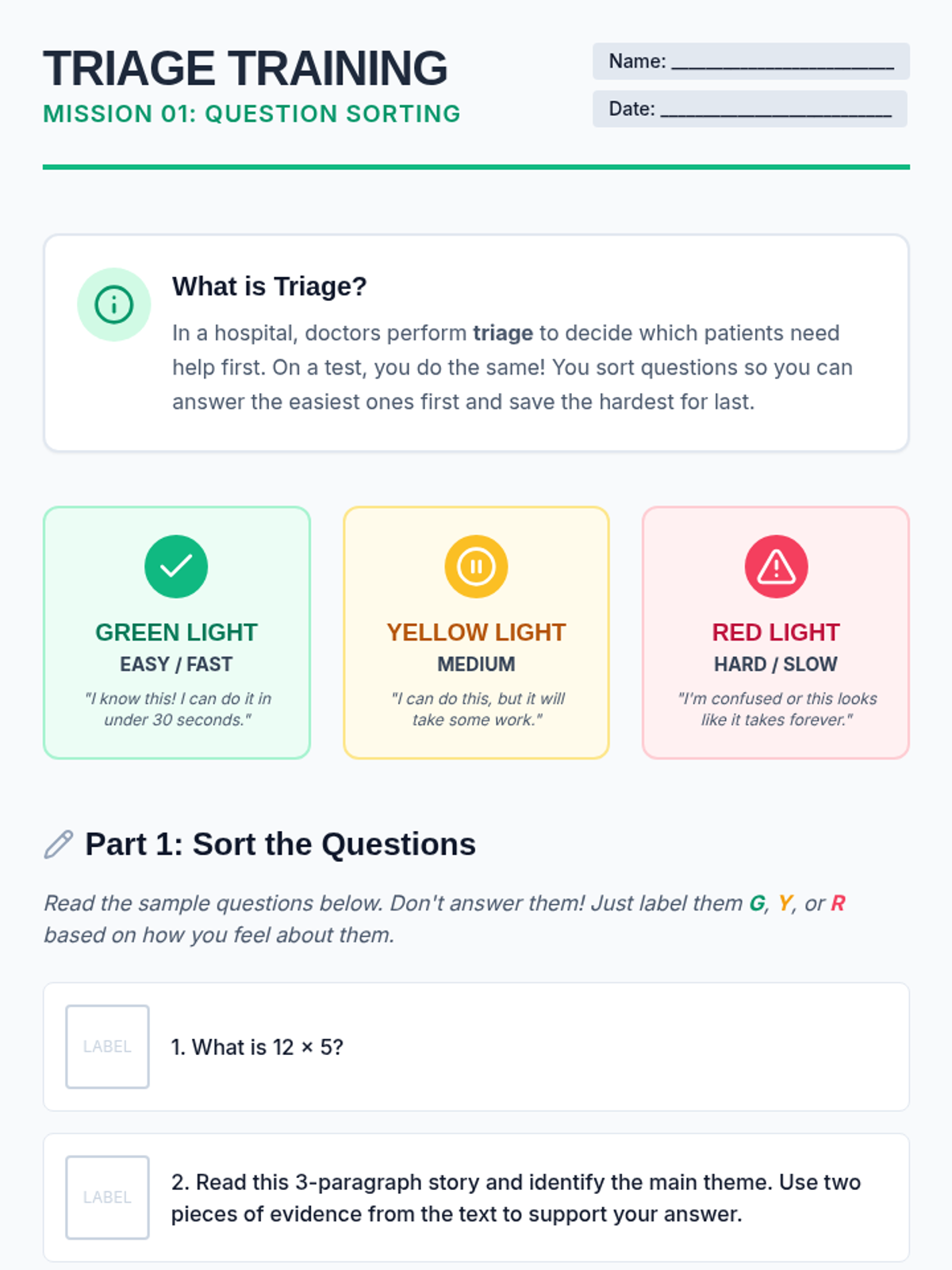
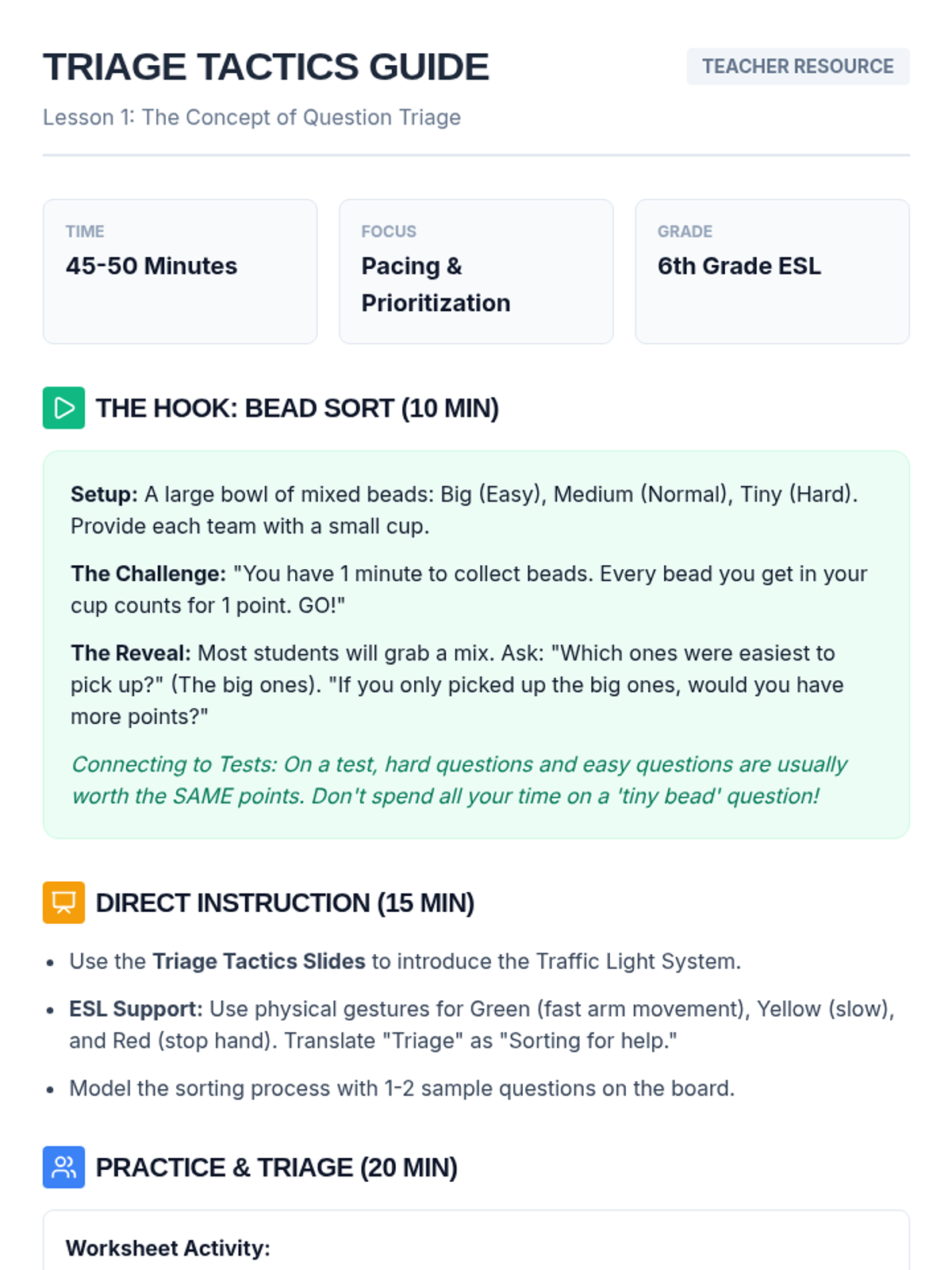
A comprehensive sequence for 6th-grade ESL students focusing on time management and pacing strategies for standardized testing. Students learn to triage questions, manage anxiety when stuck, master bubble sheet mechanics, and monitor their progress against the clock.
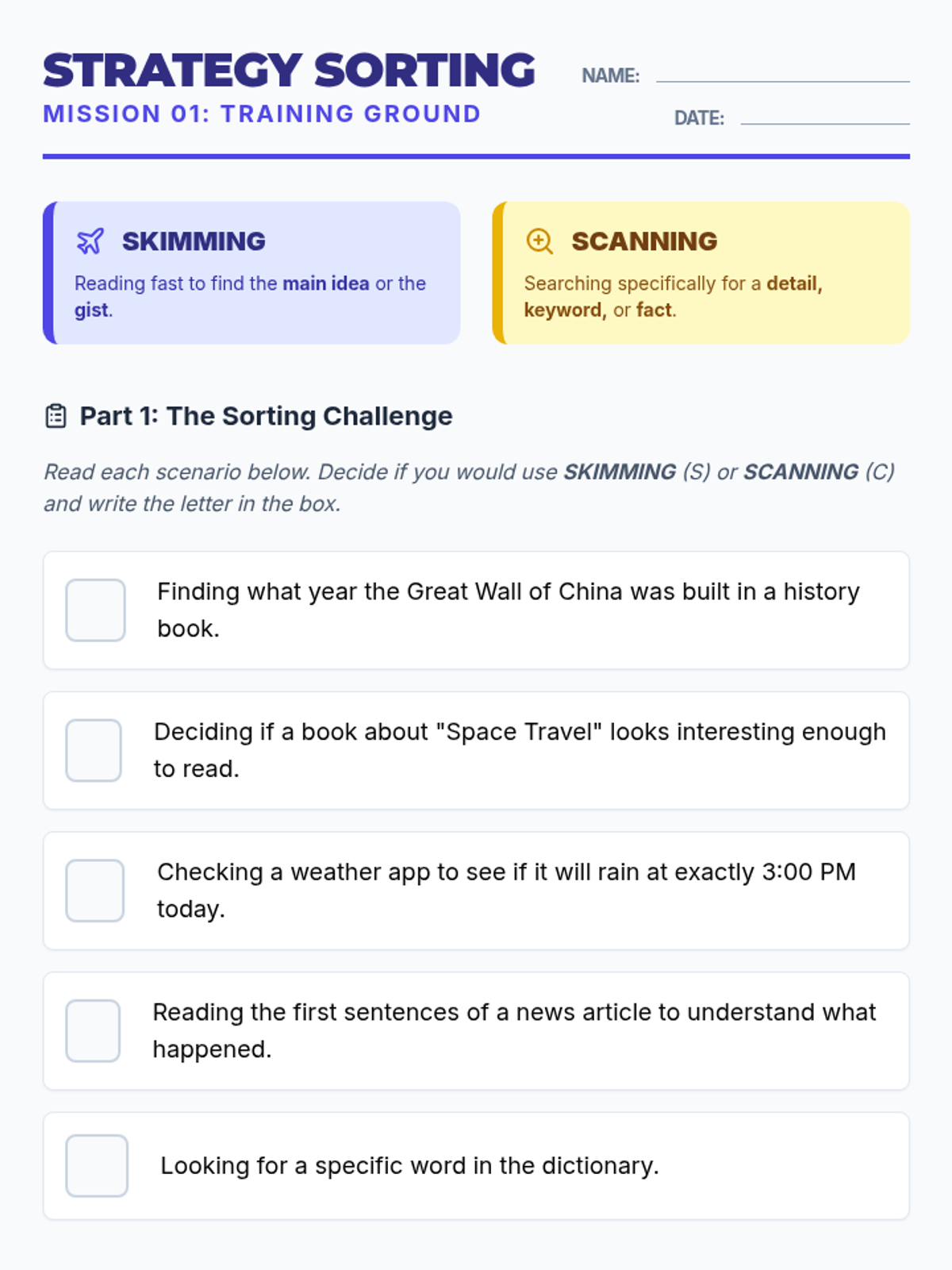
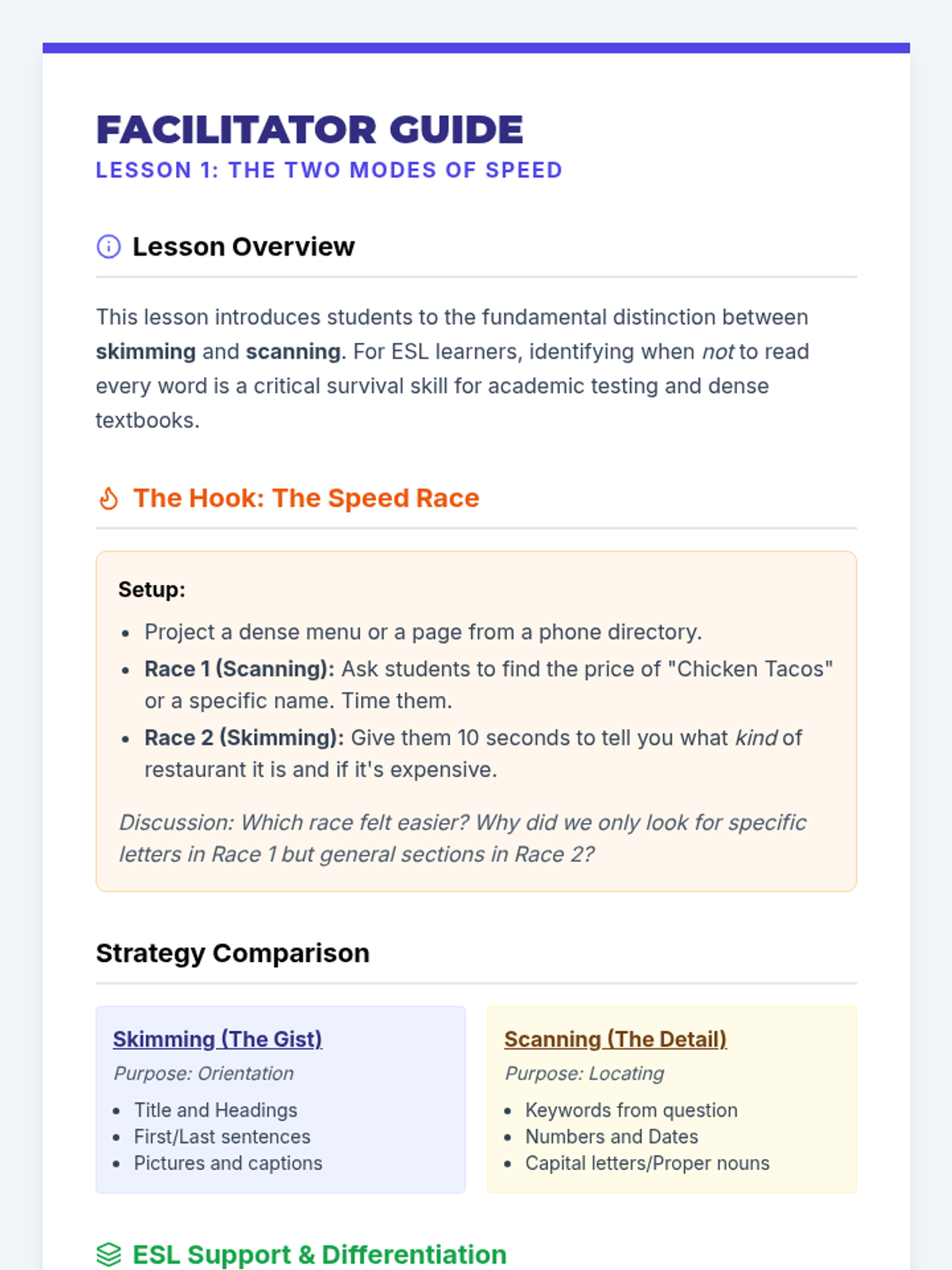
This sequence teaches 6th-grade ESL students the essential test-taking strategies of skimming and scanning. Through a 'Speed Scout' academy theme, students learn to navigate academic texts efficiently, identifying when to look for the 'gist' versus specific details to save time and improve accuracy on standardized tests.
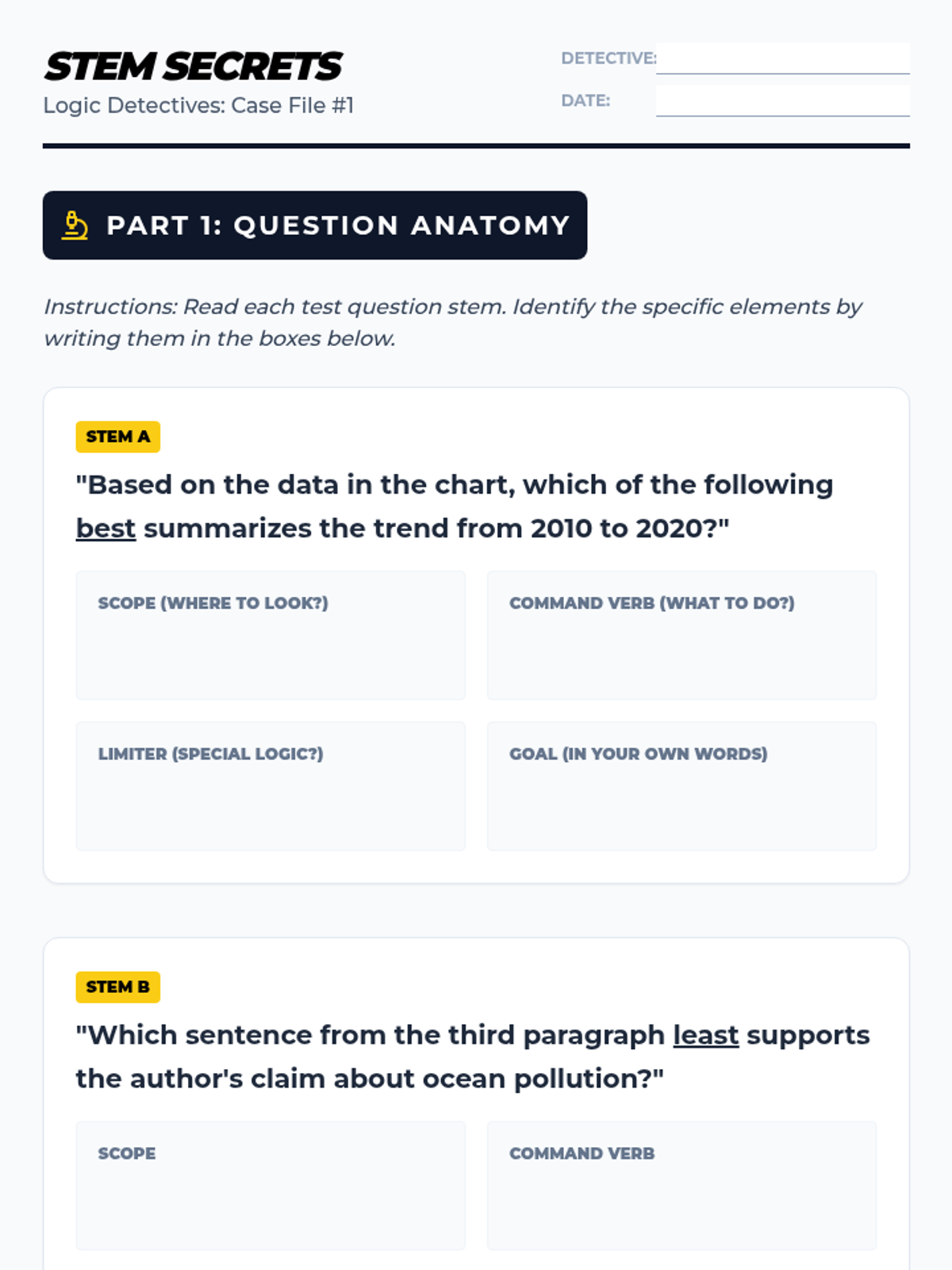
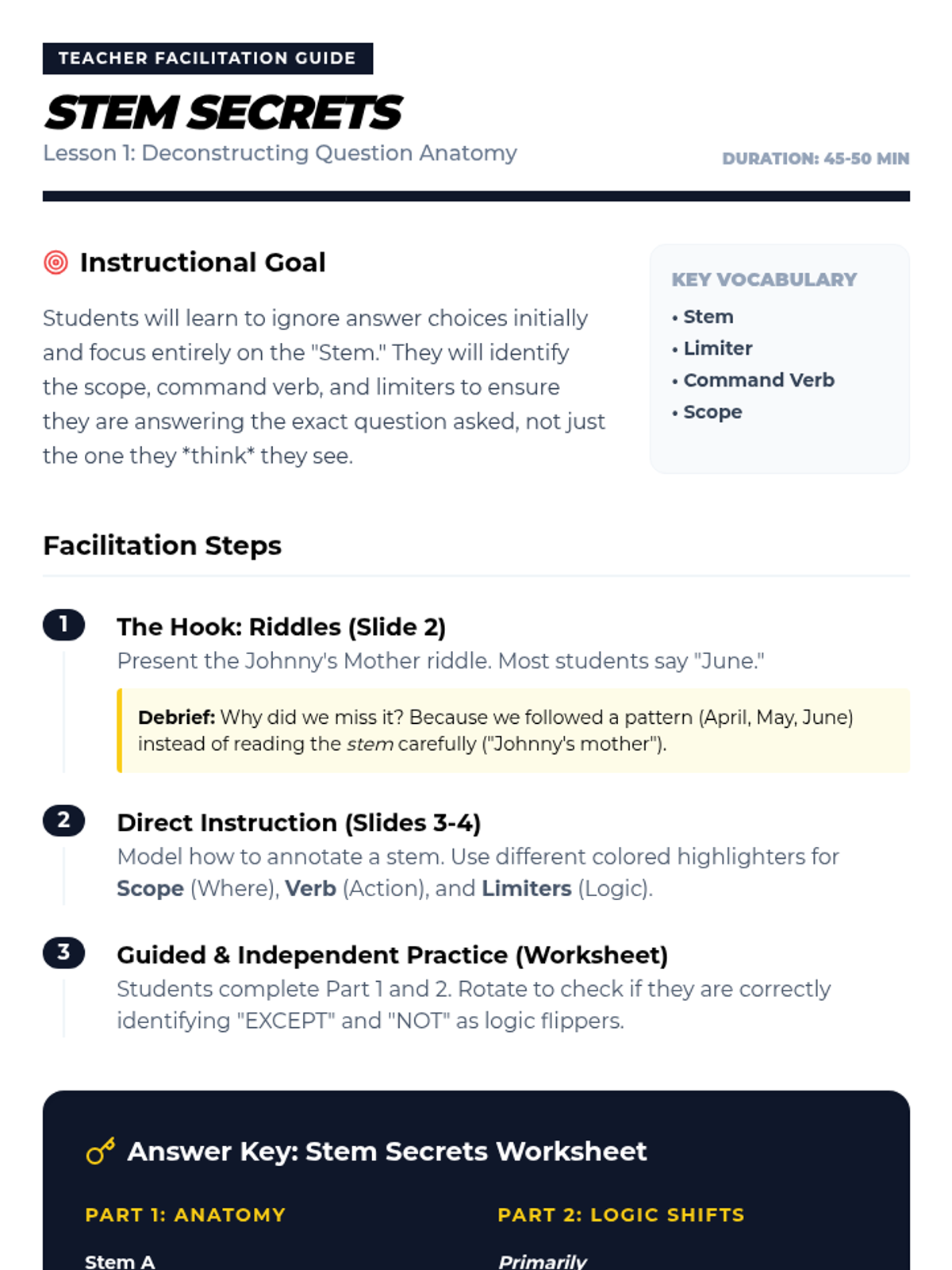
A sequence for 6th-grade ESL students to master academic test-taking through logic and deduction, using a detective-themed approach to analyze question stems and eliminate distractor answers.
This sequence develops critical reading efficiency for 9th-grade ESL students, focusing on skimming for main ideas and scanning for specific details to succeed in timed academic exams. Students progress from grasping the 'gist' using text features to locating specific data points and utilizing signpost words to navigate complex arguments.
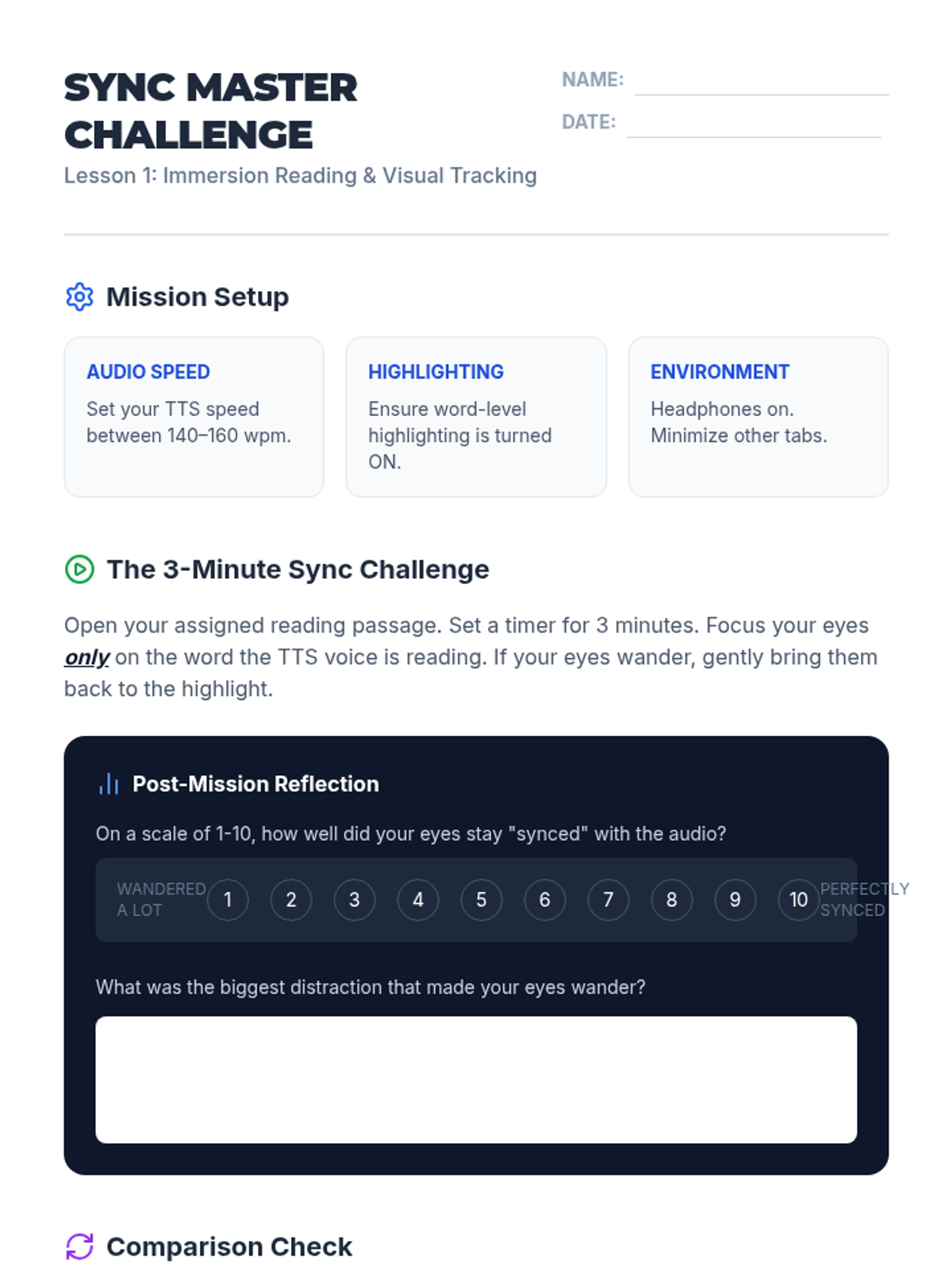
A comprehensive sequence designed to teach 8th-grade students how to move from passive listening to active comprehension using Text-to-Speech (TTS) technology. Students develop skills in immersion reading, strategic chunking, vocabulary acquisition, and digital annotation.
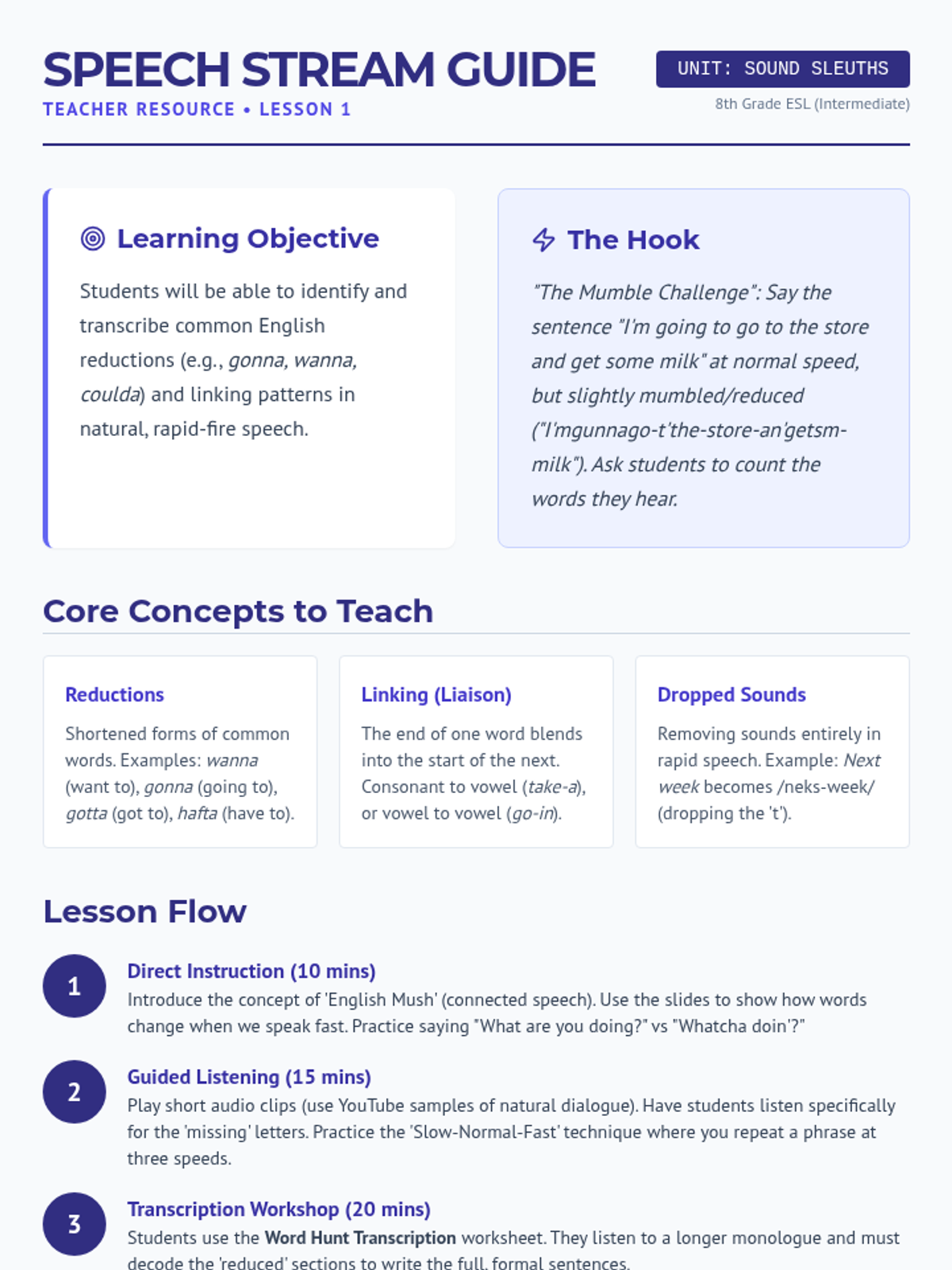
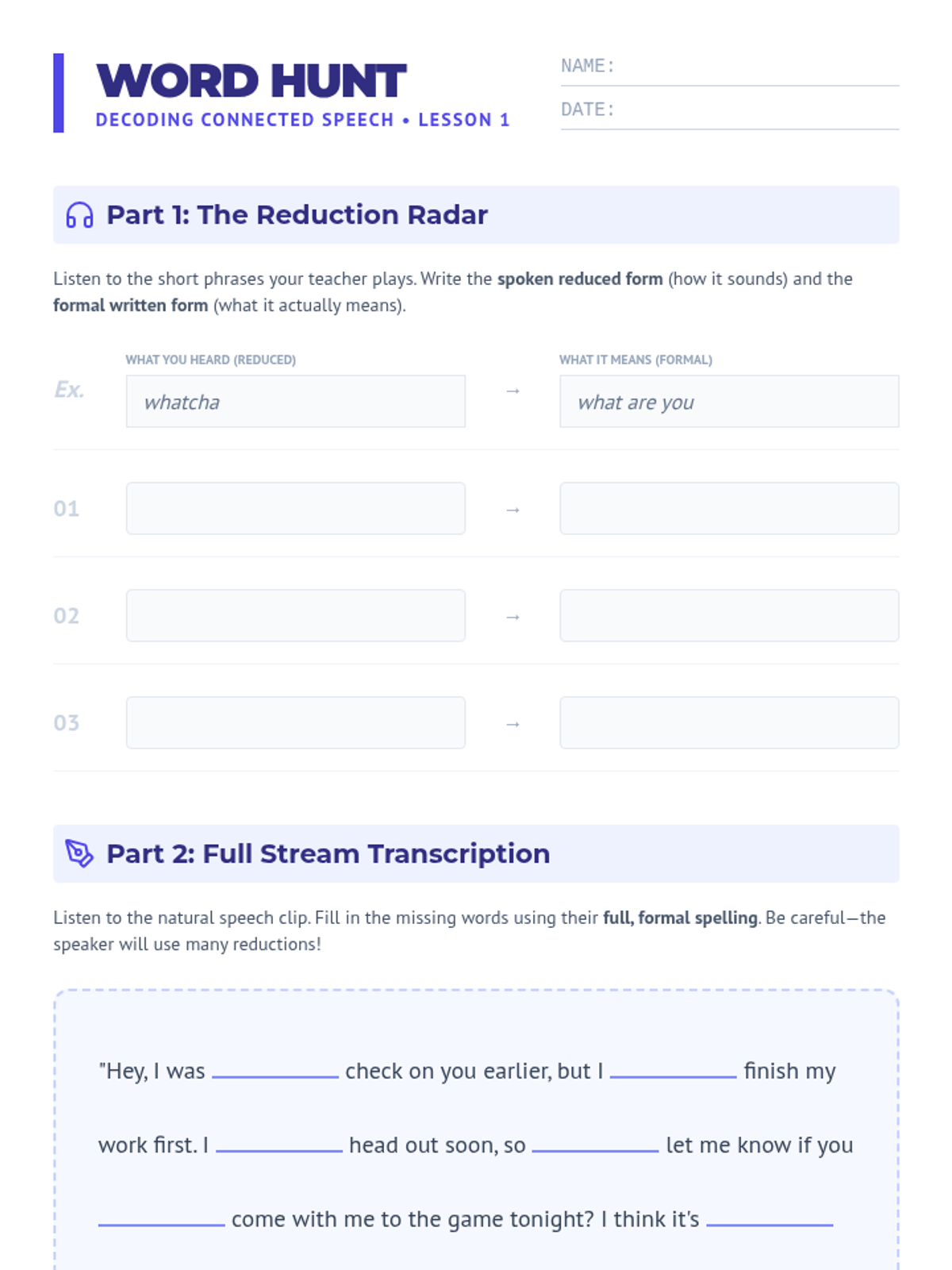
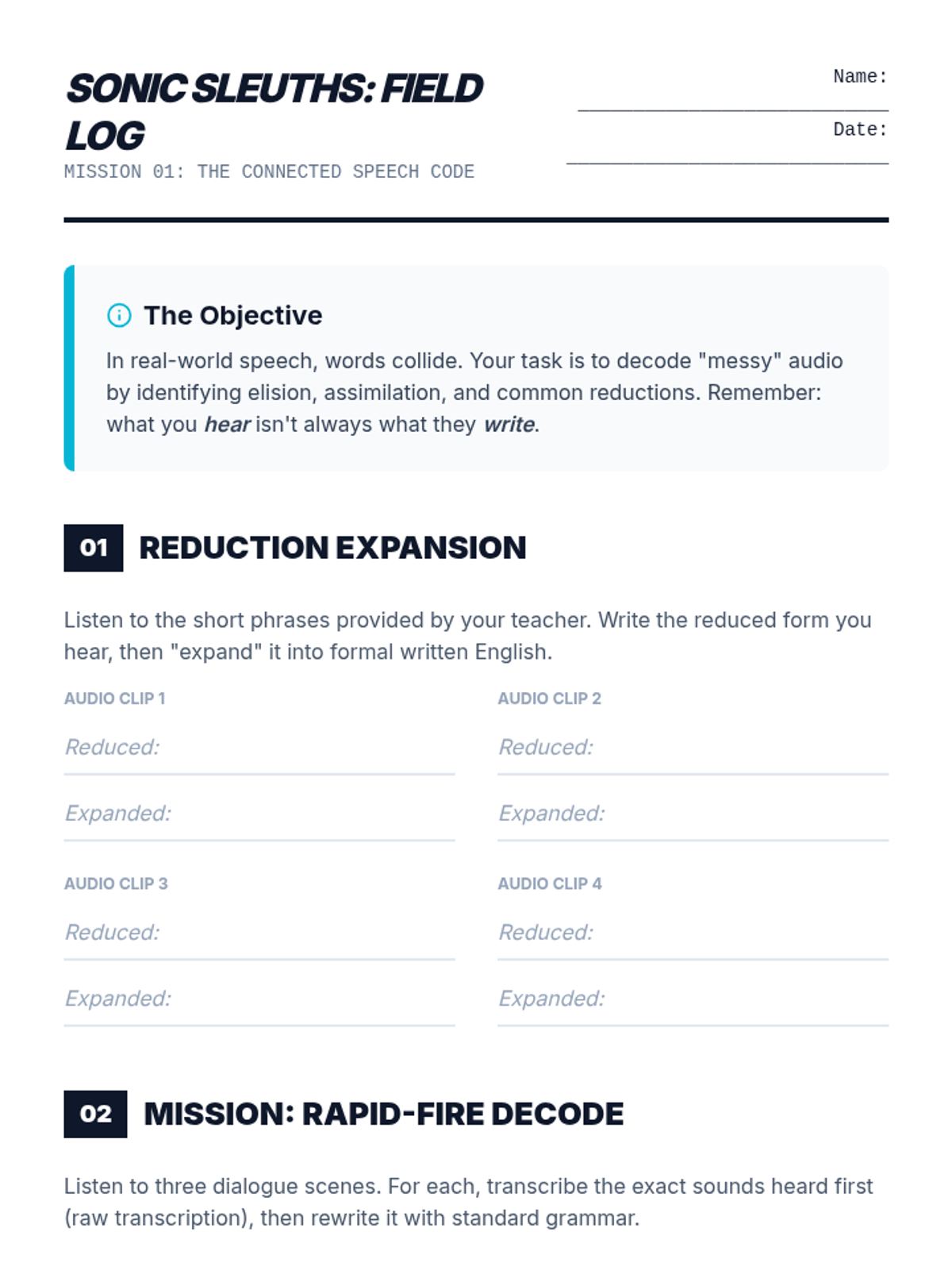
A comprehensive 5-lesson sequence for 8th Grade Intermediate ESL students focused on mastering the nuances of listening comprehension, from decoding connected speech to evaluating speaker bias and intent in complex narratives.
An inquiry-based sequence for 8th Grade ESL students to master academic test-taking by deconstructing question stems, identifying distractor patterns, and applying logical elimination strategies. Students transition from test-takers to 'test detectives' and finally 'exam creators' to gain deep insight into question logic.
A comprehensive 5-lesson sequence for 8th-grade ESL students focusing on mastering skimming and scanning techniques to improve academic reading efficiency and test performance. Students learn to navigate text structures, identify keywords, recognize synonyms, and apply these strategies under timed conditions.
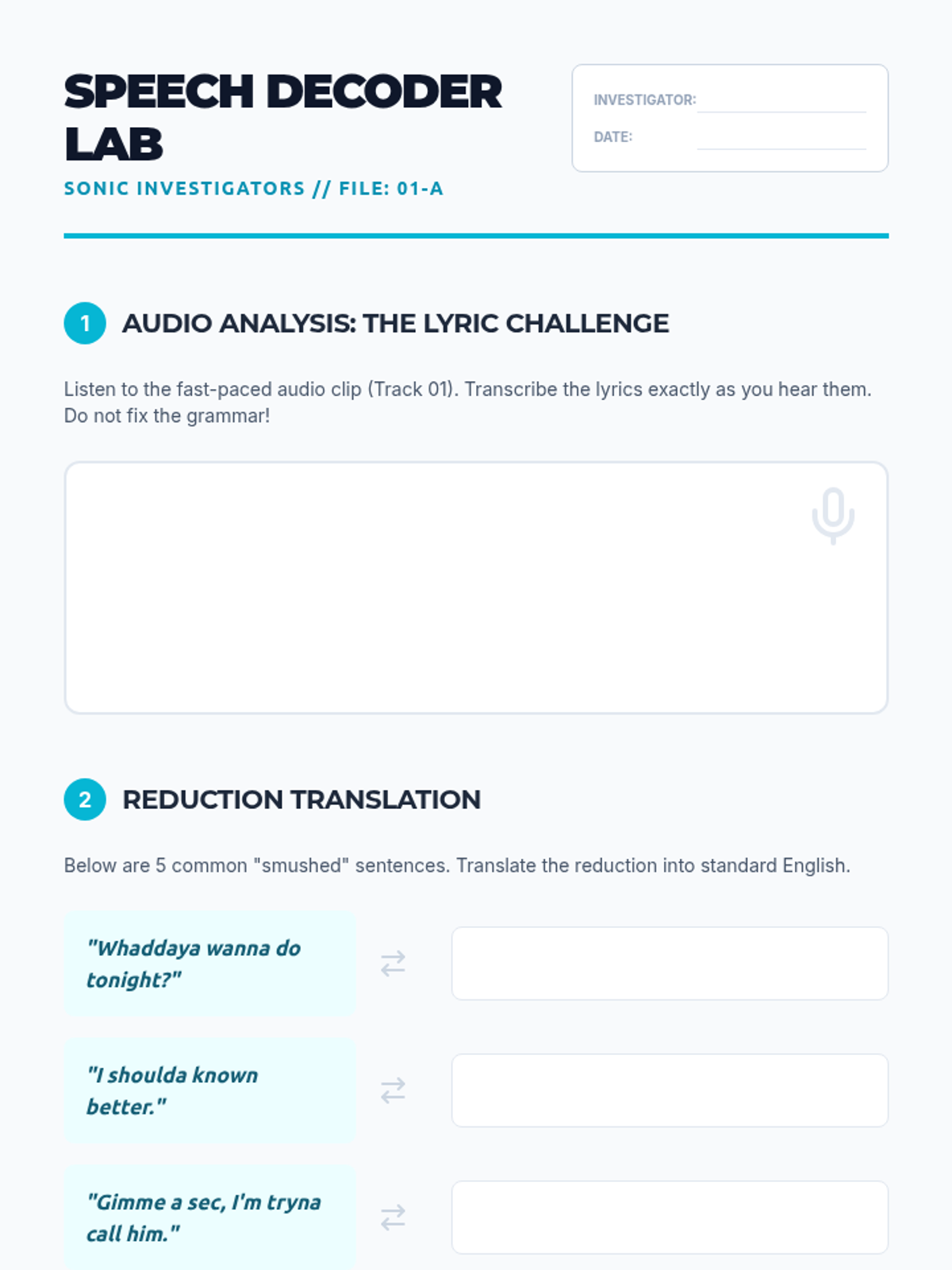
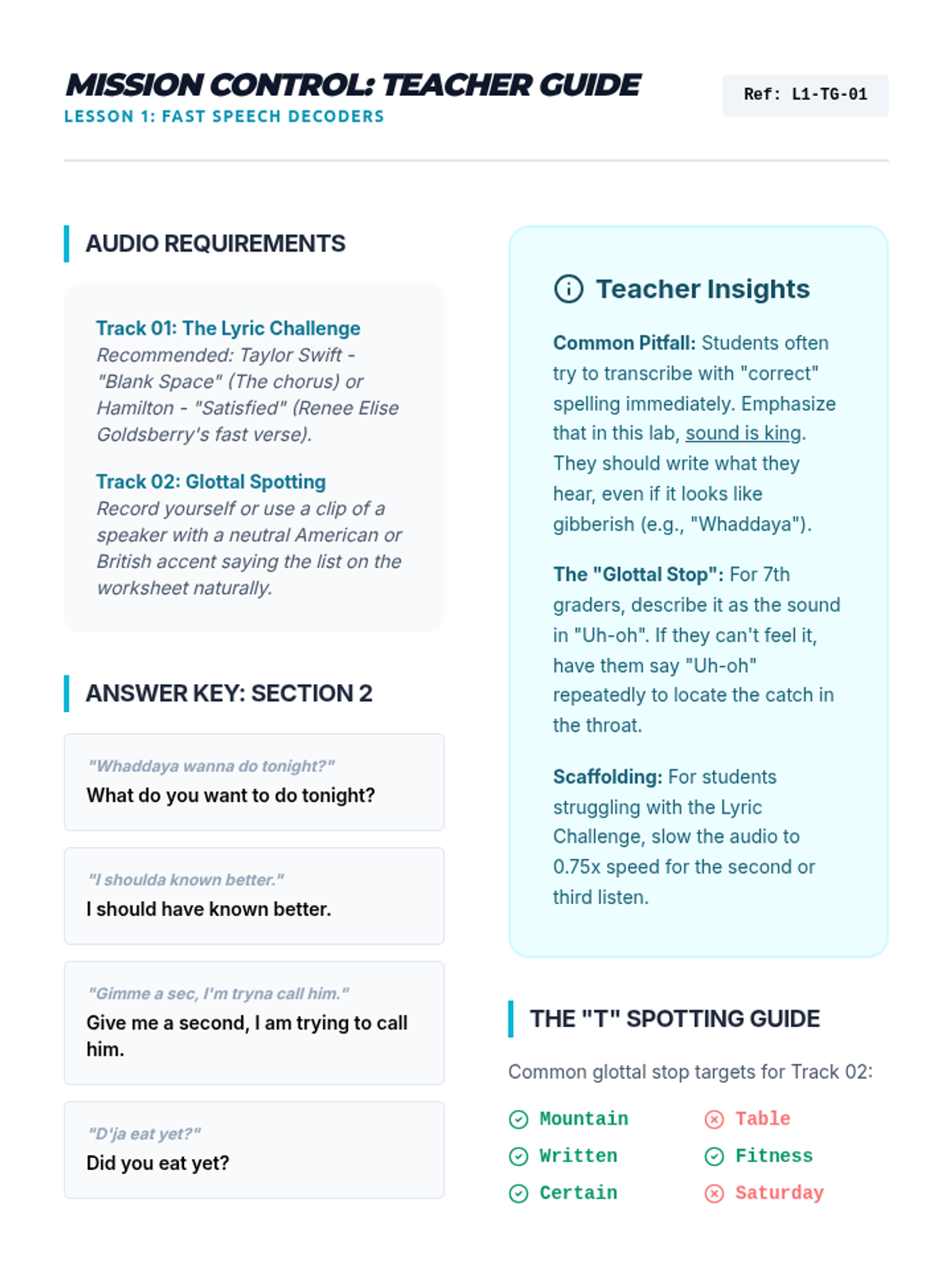
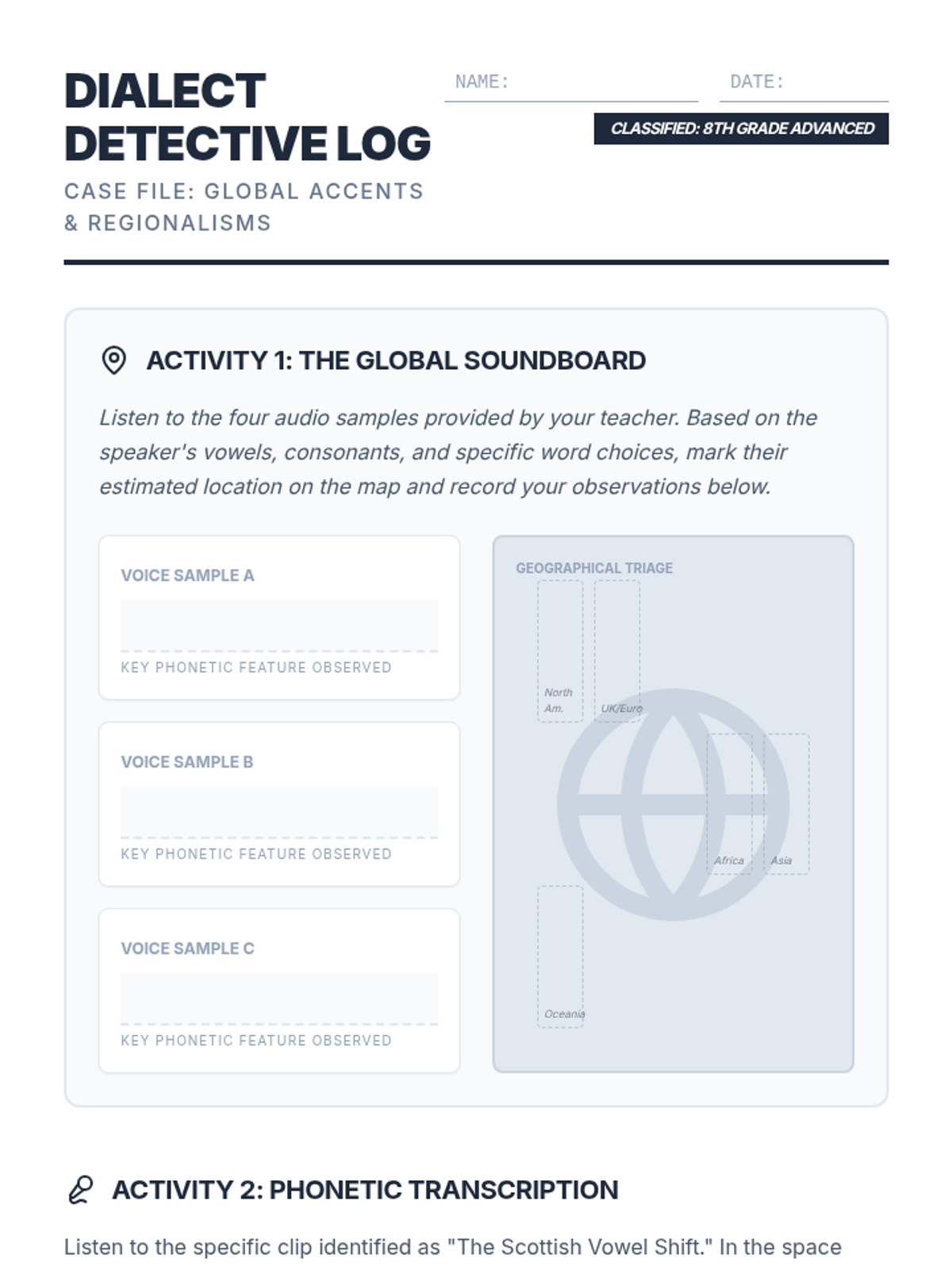
This sequence immerses advanced ESL students in the complexities of authentic, rapid-fire English speech. It covers connected speech mechanics, global accent variation, slang usage, and the sociolinguistics of code-switching, culminating in the analysis of real-world street interviews.
An advanced ESL sequence for 7th graders focusing on critical listening. Students learn to detect speaker intent, bias, and rhetorical devices, moving from basic comprehension to deep analysis of oral media and persuasive communication.
Students explore English beyond the textbook, focusing on authentic fast-paced speech, regional dialects, and varying registers to improve real-world listening comprehension.
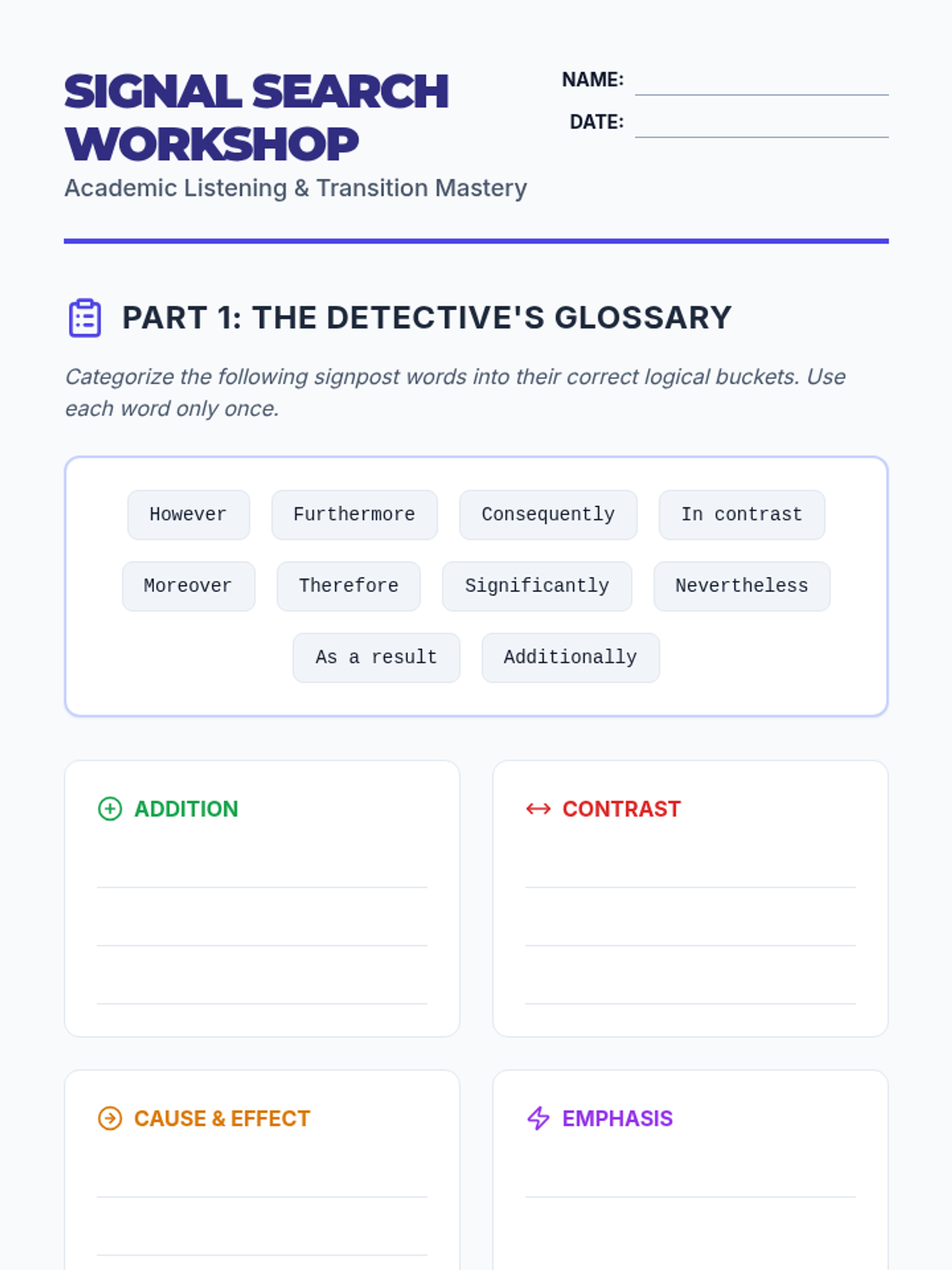
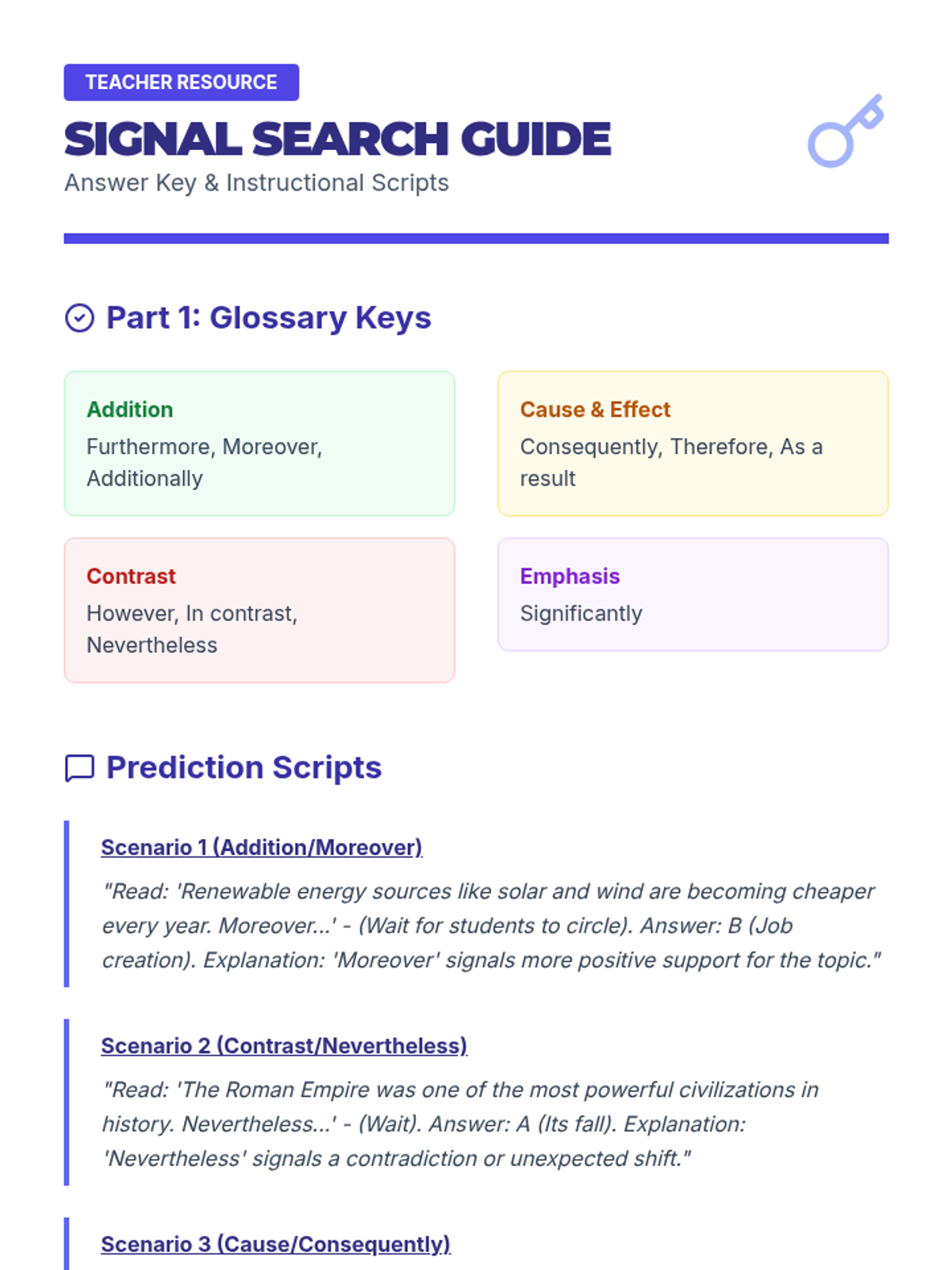
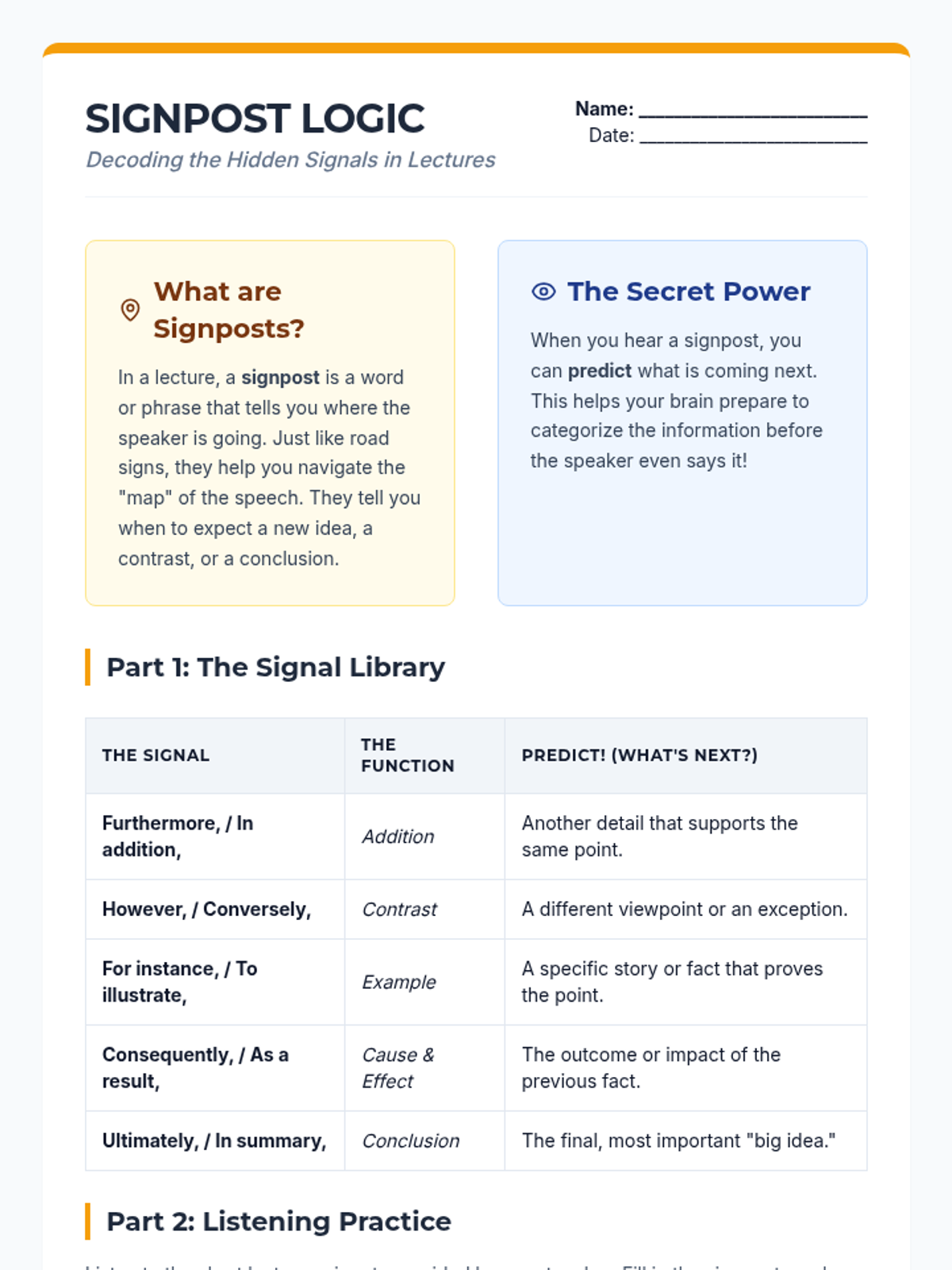
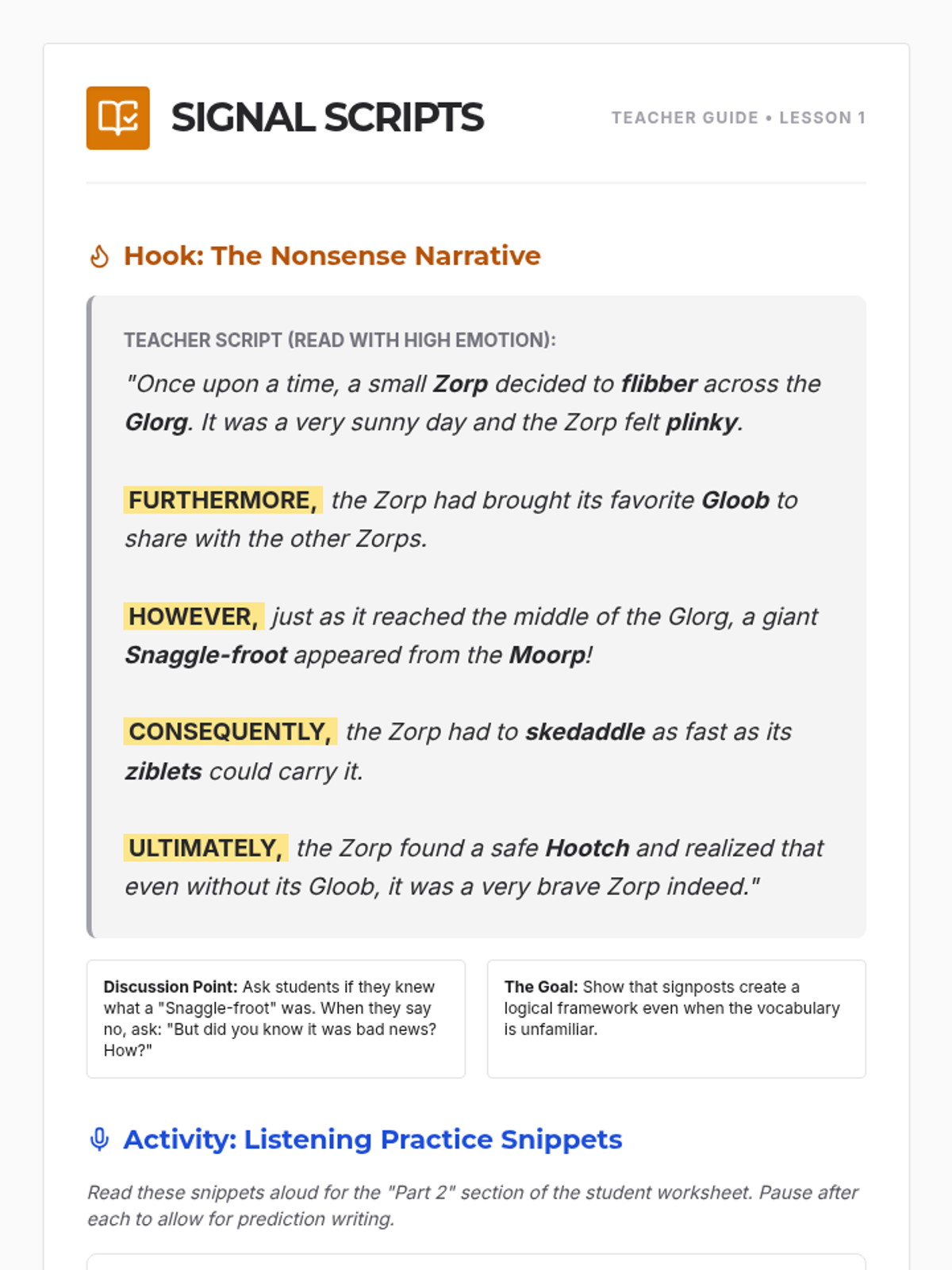
This sequence equips advanced 7th-grade ESL students with the skills to navigate complex academic lectures. It covers identifying verbal transitions, mastering Cornell notes, distinguishing main ideas from trivia, visualizing oral descriptions, and synthesizing information into accurate summaries.
This sequence equips advanced ESL students with strategies for academic listening, focusing on verbal signposts, main idea extraction, Cornell note-taking, and synthesizing complex information for academic discussion.
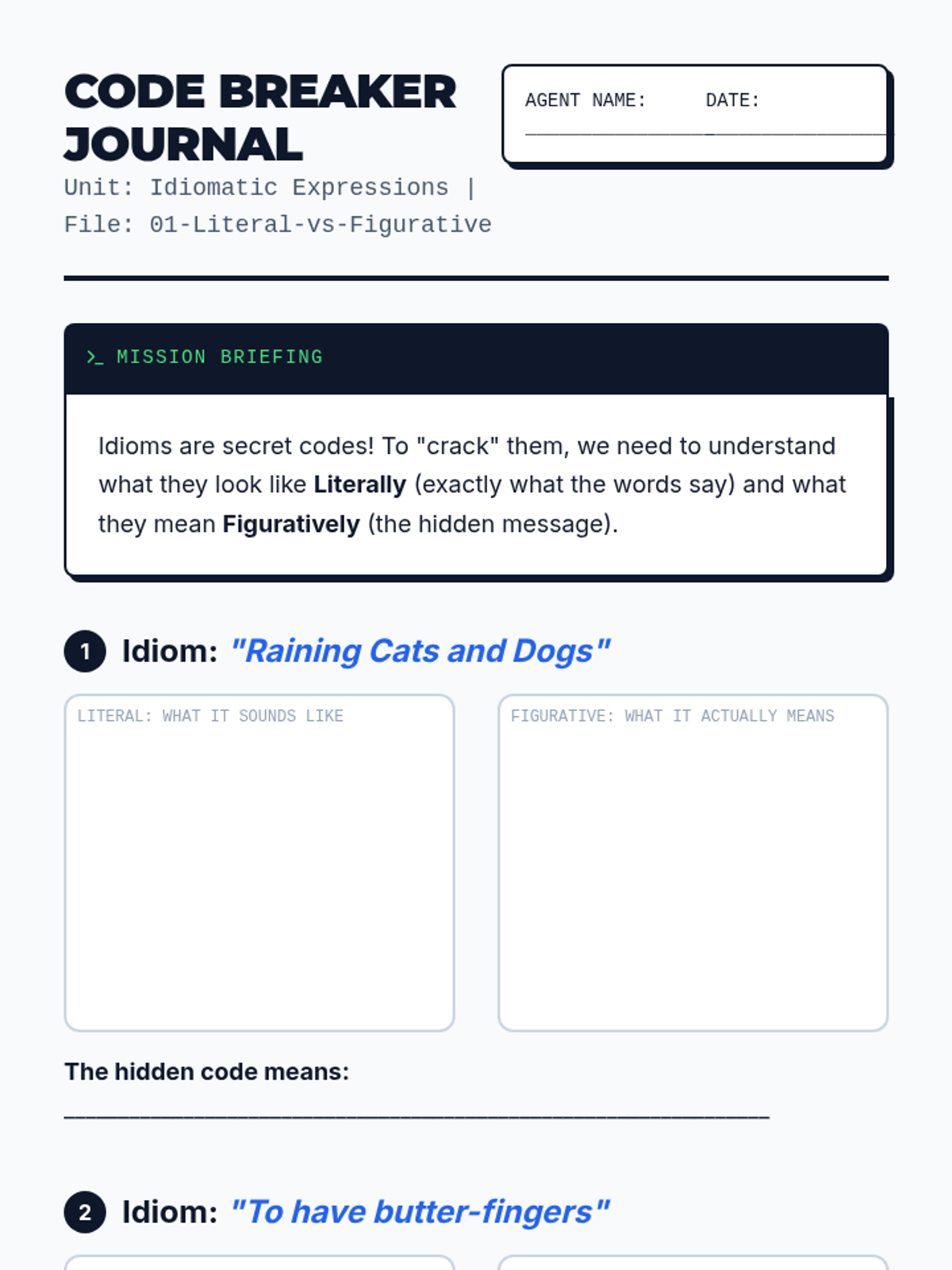
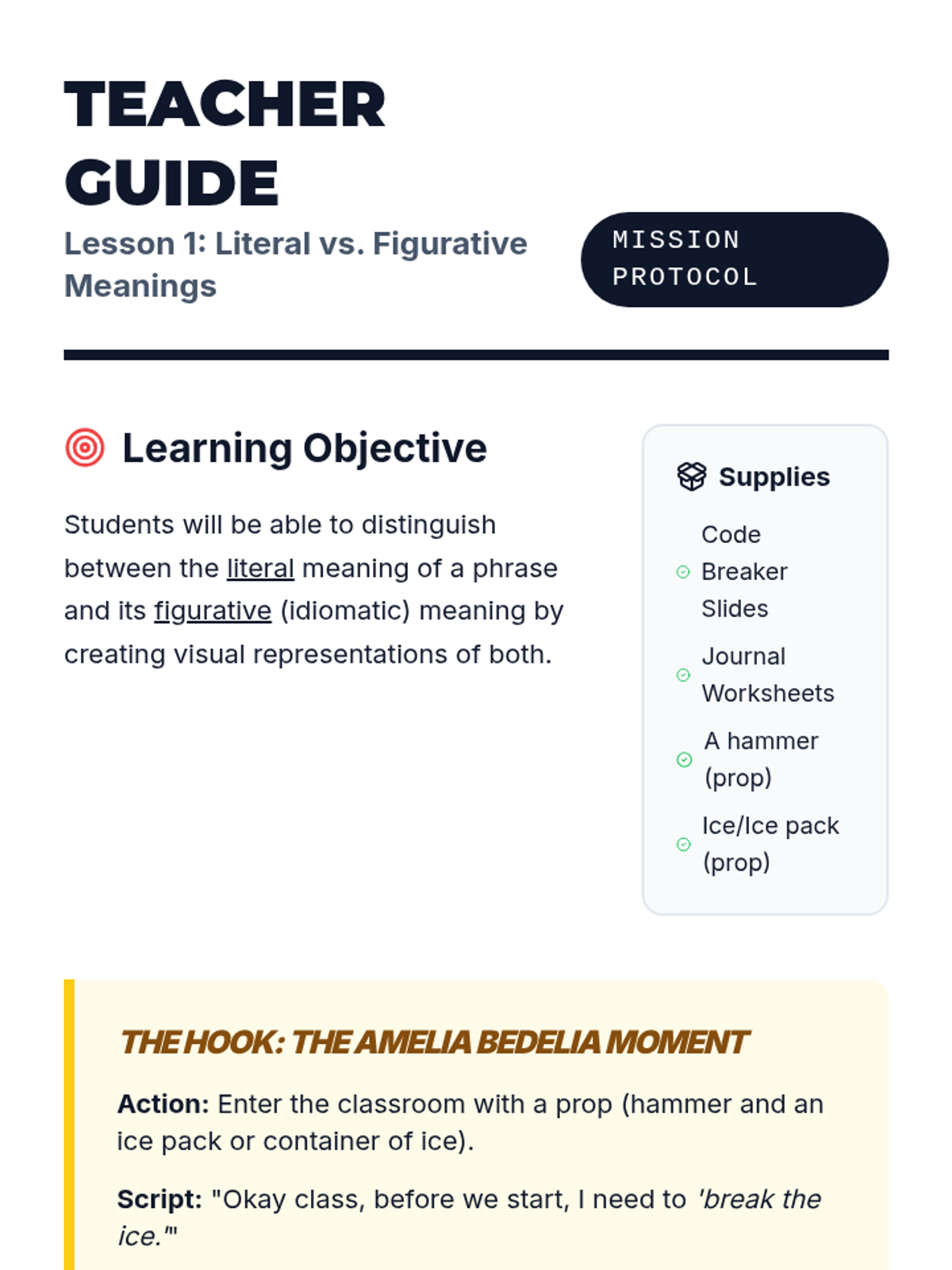
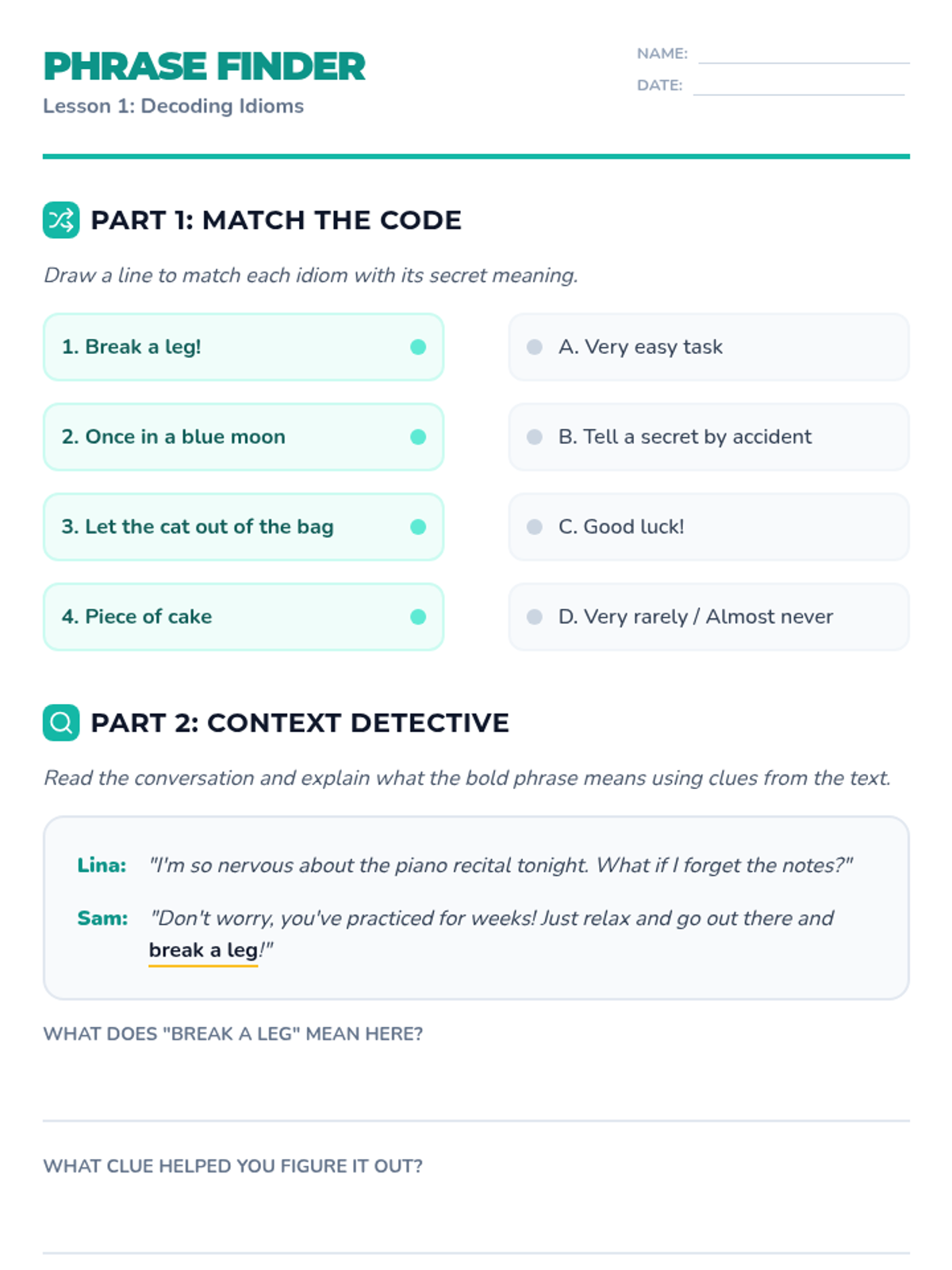
A 5-lesson sequence for 4th-grade ESL students to master English idioms through a 'Code Breaker' theme, moving from literal understanding to natural conversational usage.
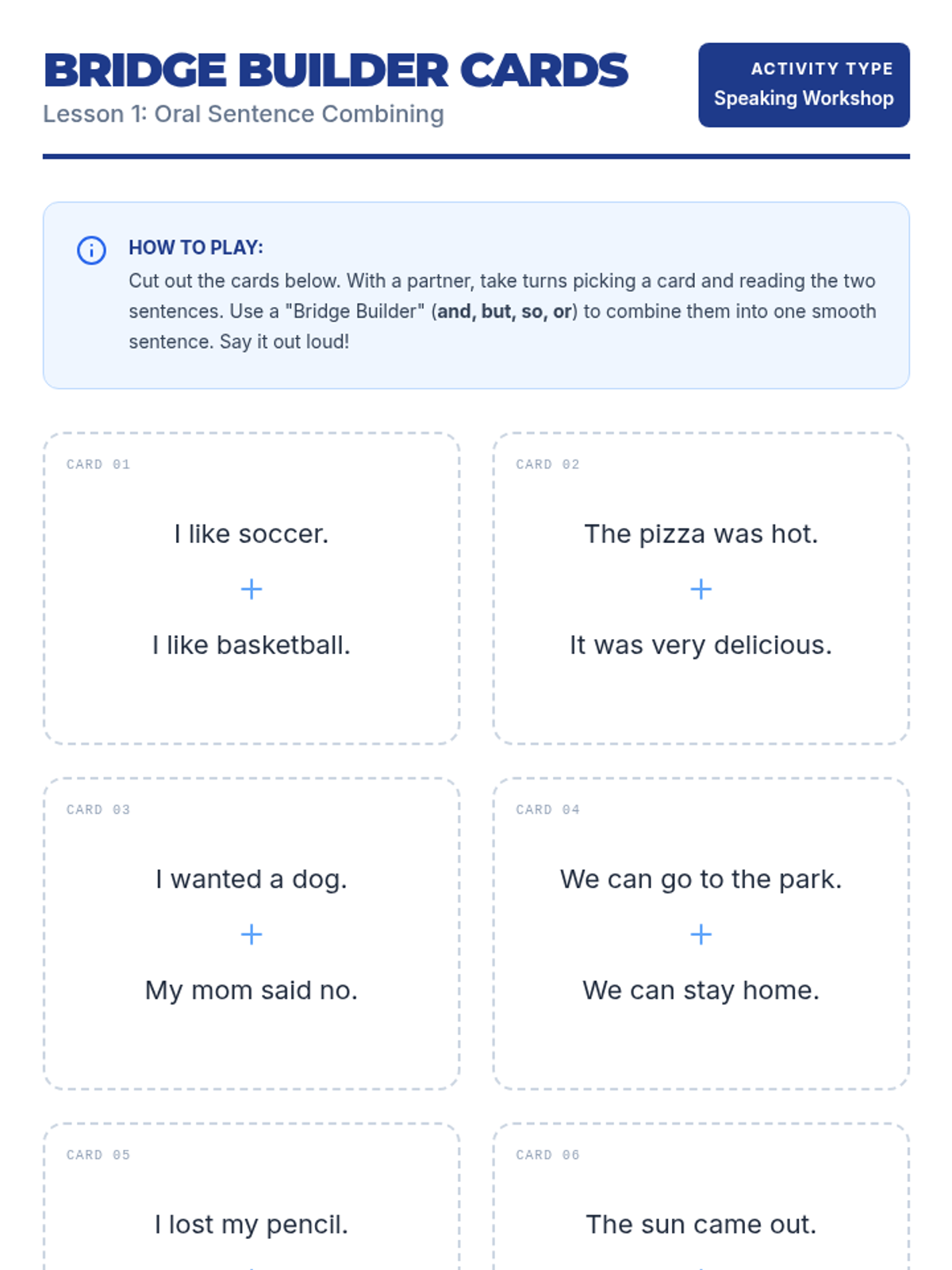
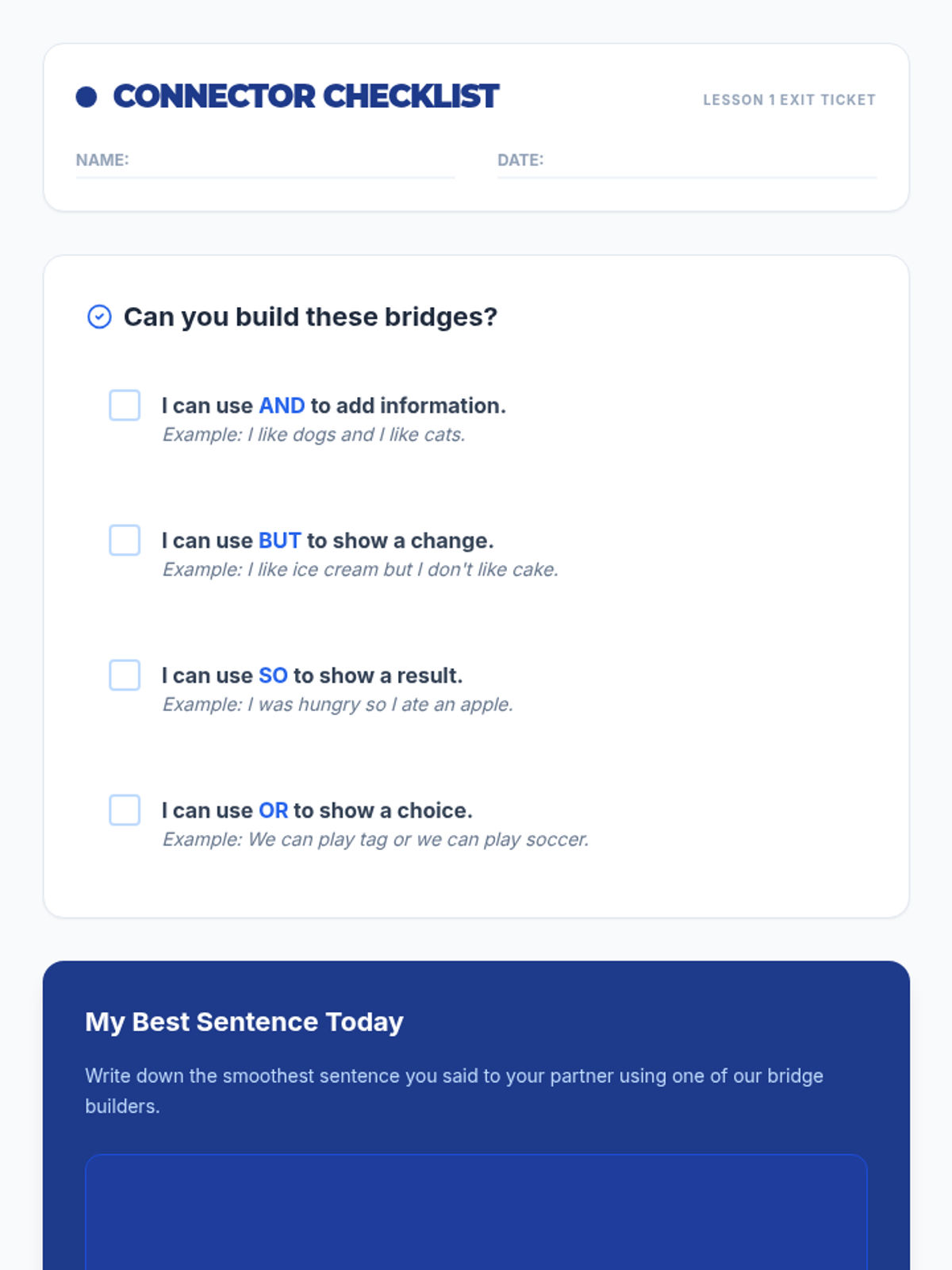
A sequence for intermediate ESL students to master complex sentence structures in oral storytelling. Students transition from choppy, simple sentences to fluid narratives using conjunctions, transitions, and relative clauses.
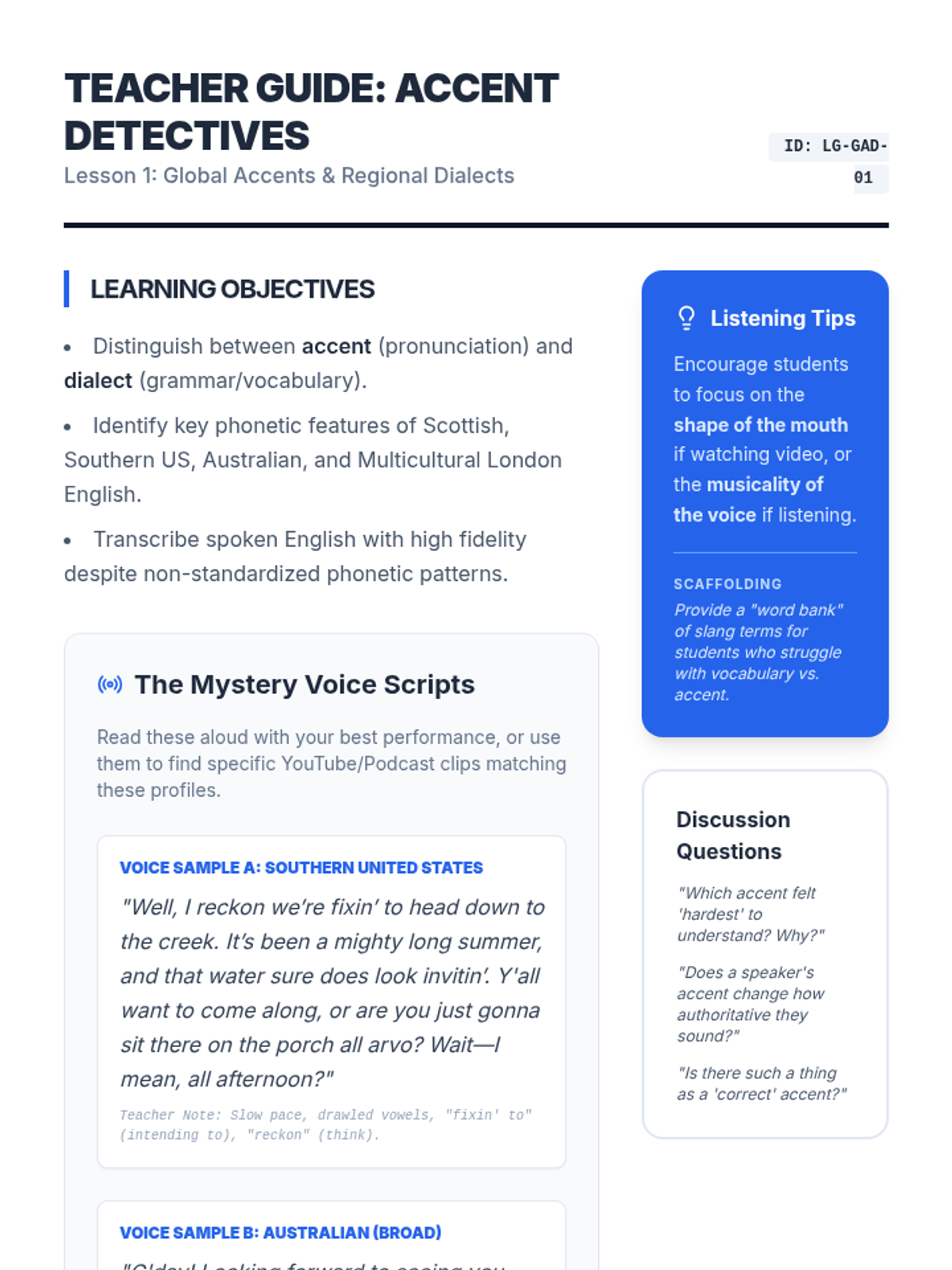
An advanced 8th Grade ESL listening sequence that teaches students to move beyond literal comprehension. Students learn to decode global accents, connected speech, speaker bias, sarcasm, and rhetorical devices through authentic-style audio analysis and investigative tasks.
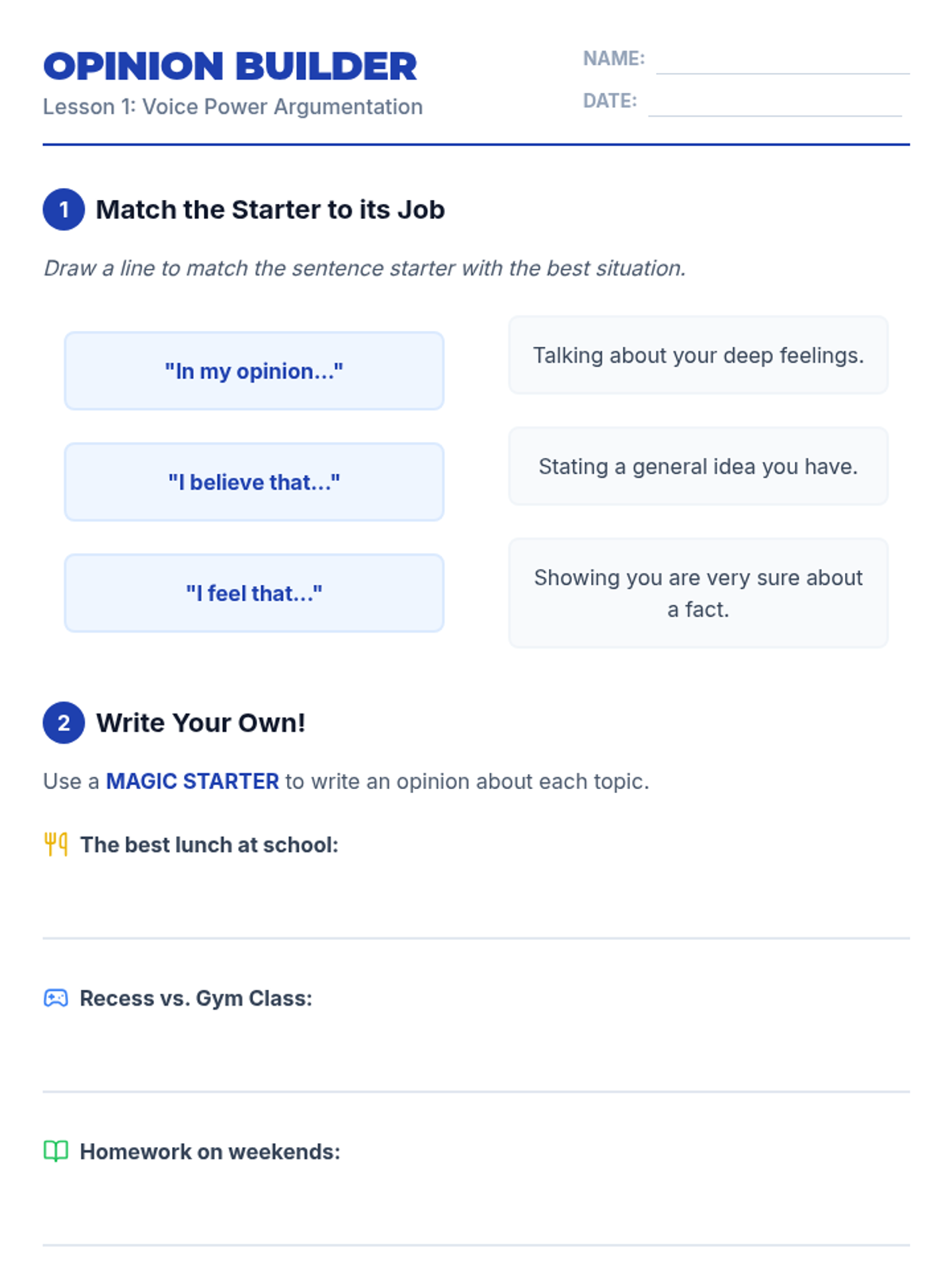
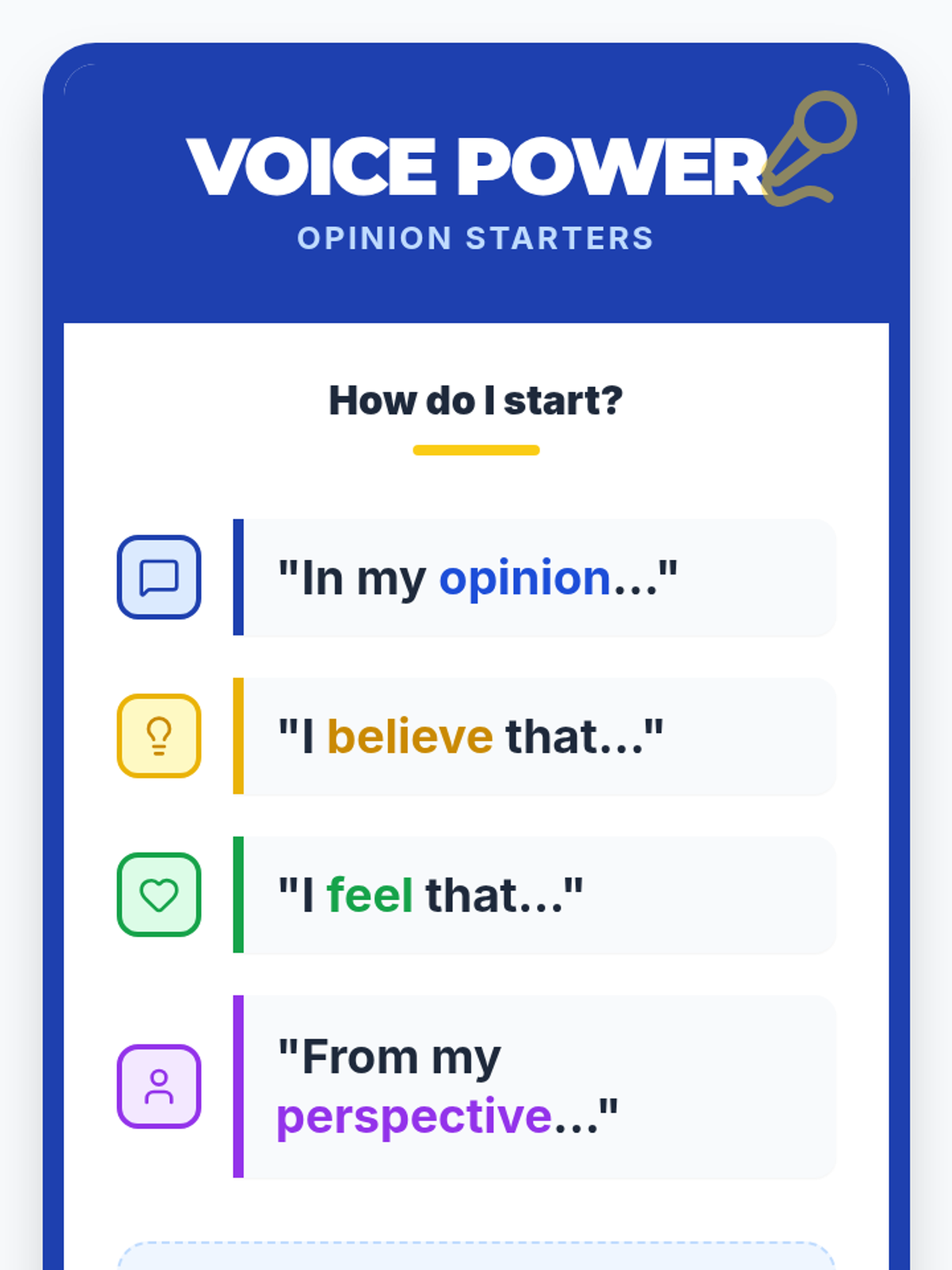
This sequence guides 3rd Grade ESL students through the process of forming opinions, justifying them with logic, and engaging in respectful debate using complex sentence structures.
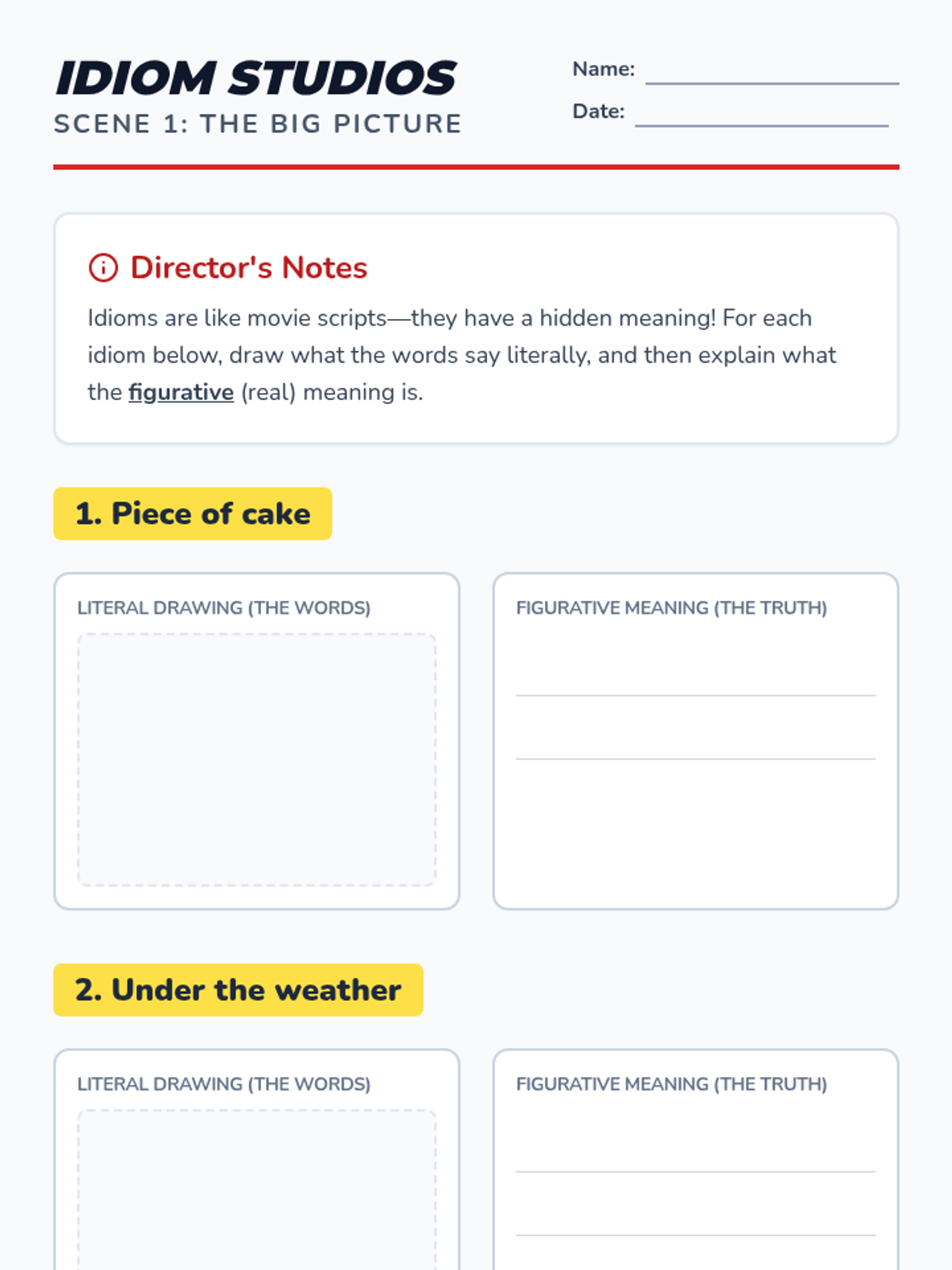
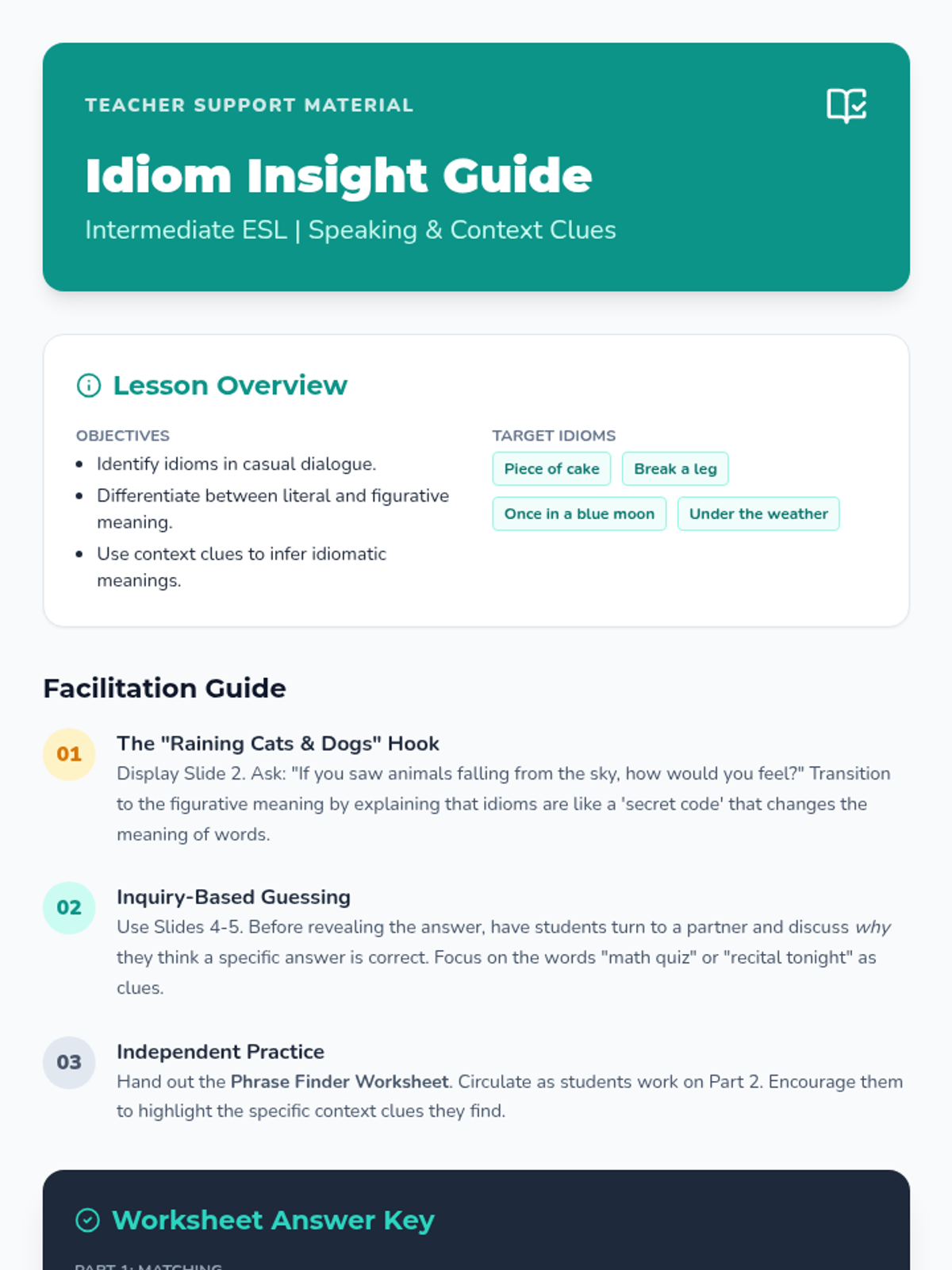
A 5-lesson unit for intermediate ESL students to master English idioms through visualization, categorization, and narrative performance. Students transition from understanding literal vs. figurative meanings to performing original skits that use idioms naturally.
This sequence immerses intermediate ESL students in the nuances of casual English conversation, focusing on idiomatic expressions, emotional intonation, and social registers. Students transition from literal understanding to figurative fluency through inquiry, simulation, and performance.
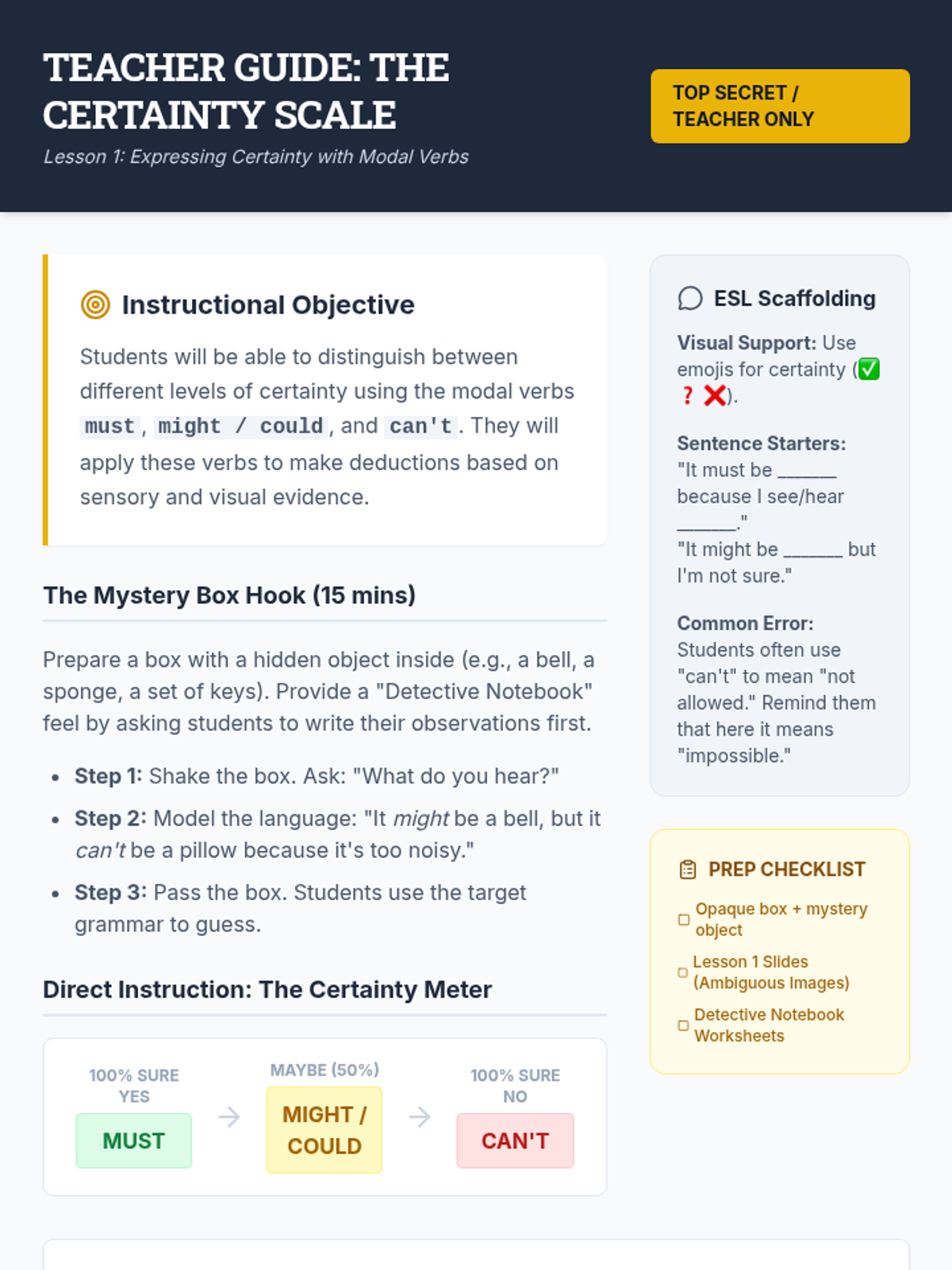
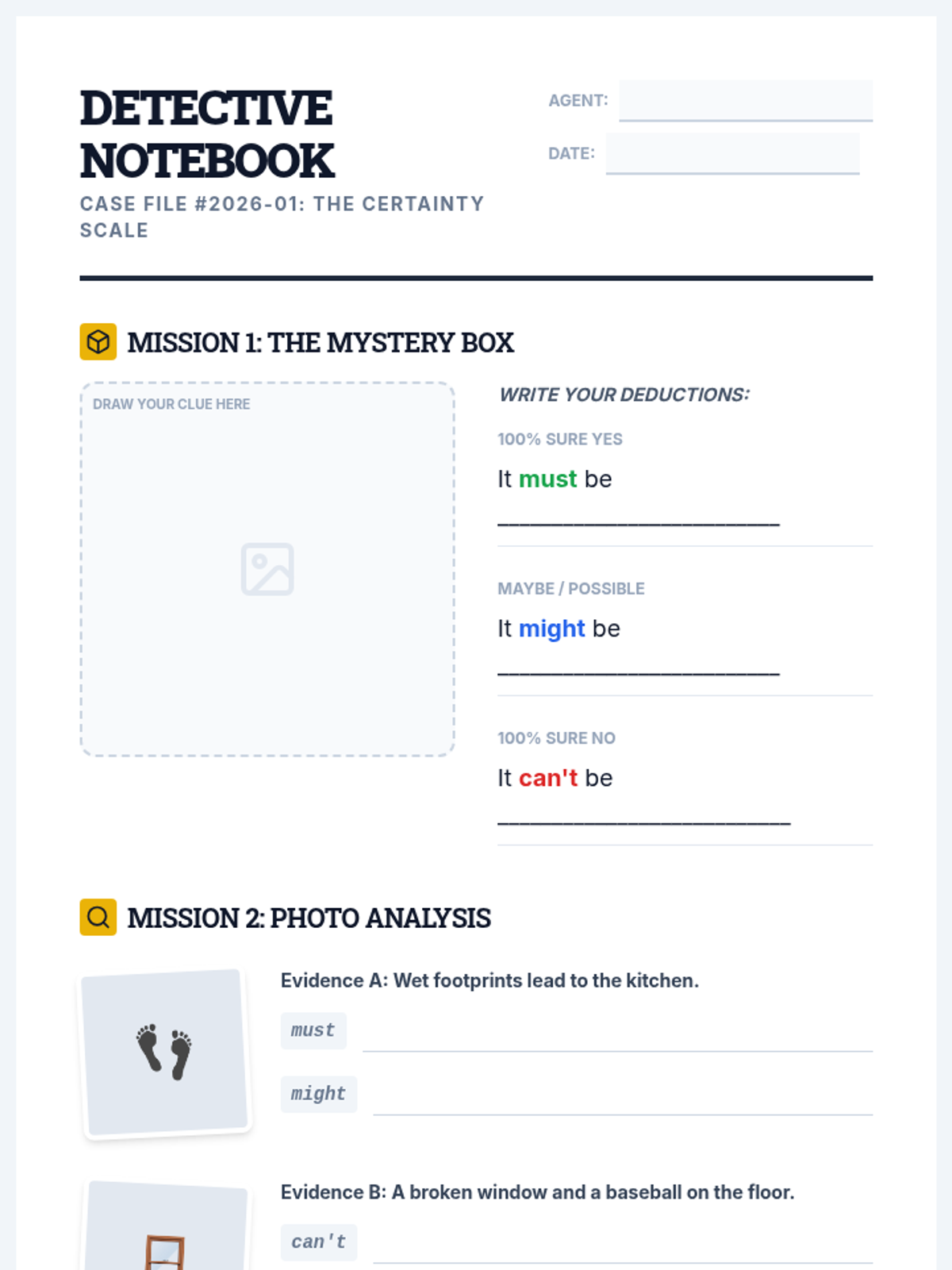
A 5-lesson inquiry-driven unit where 4th-grade ESL students become 'Grammar Detectives' to master modal verbs of deduction (must, might, can't) and reported speech. Students use these tools to solve mysteries, interview witnesses, and write investigative reports.
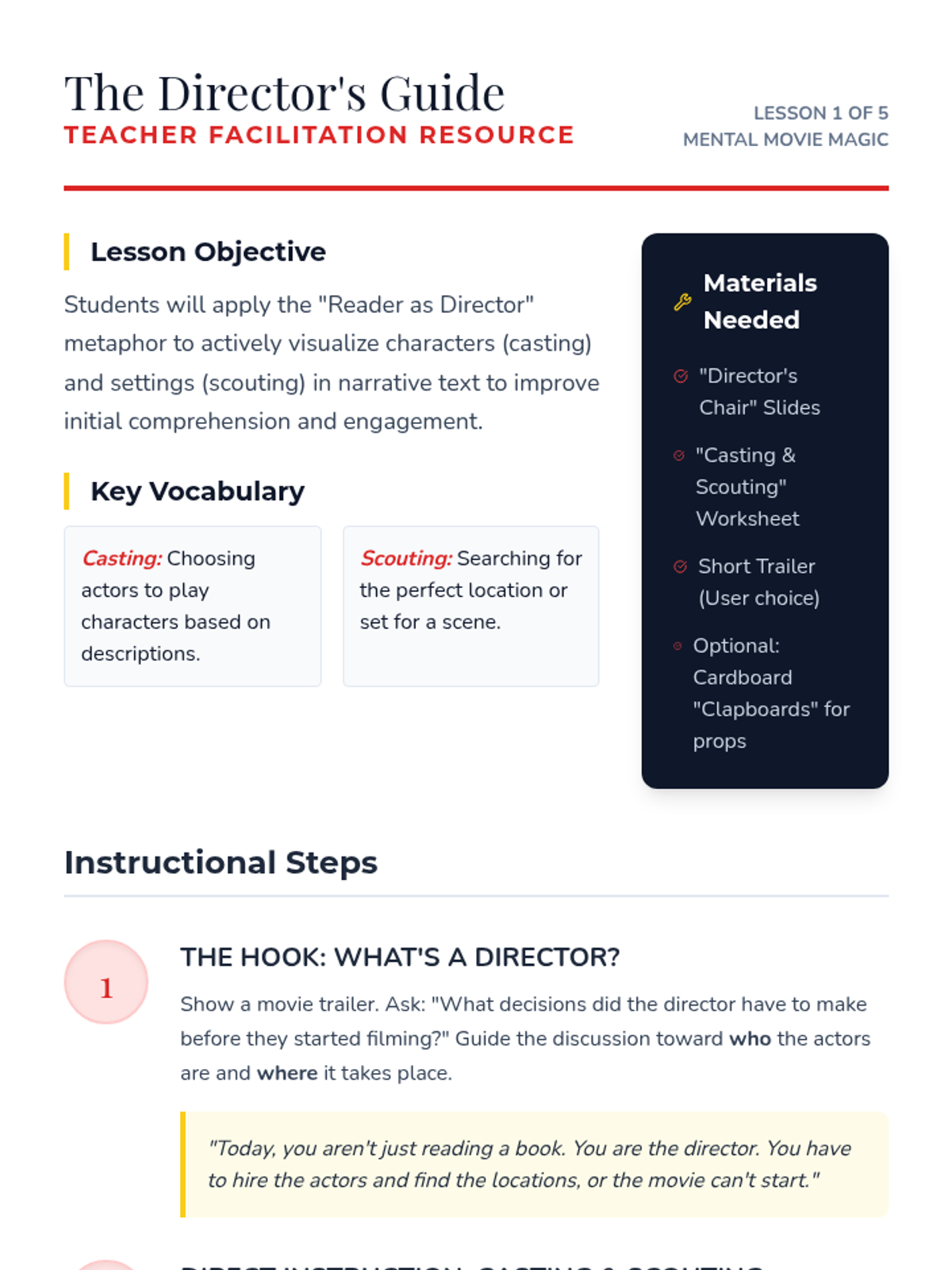
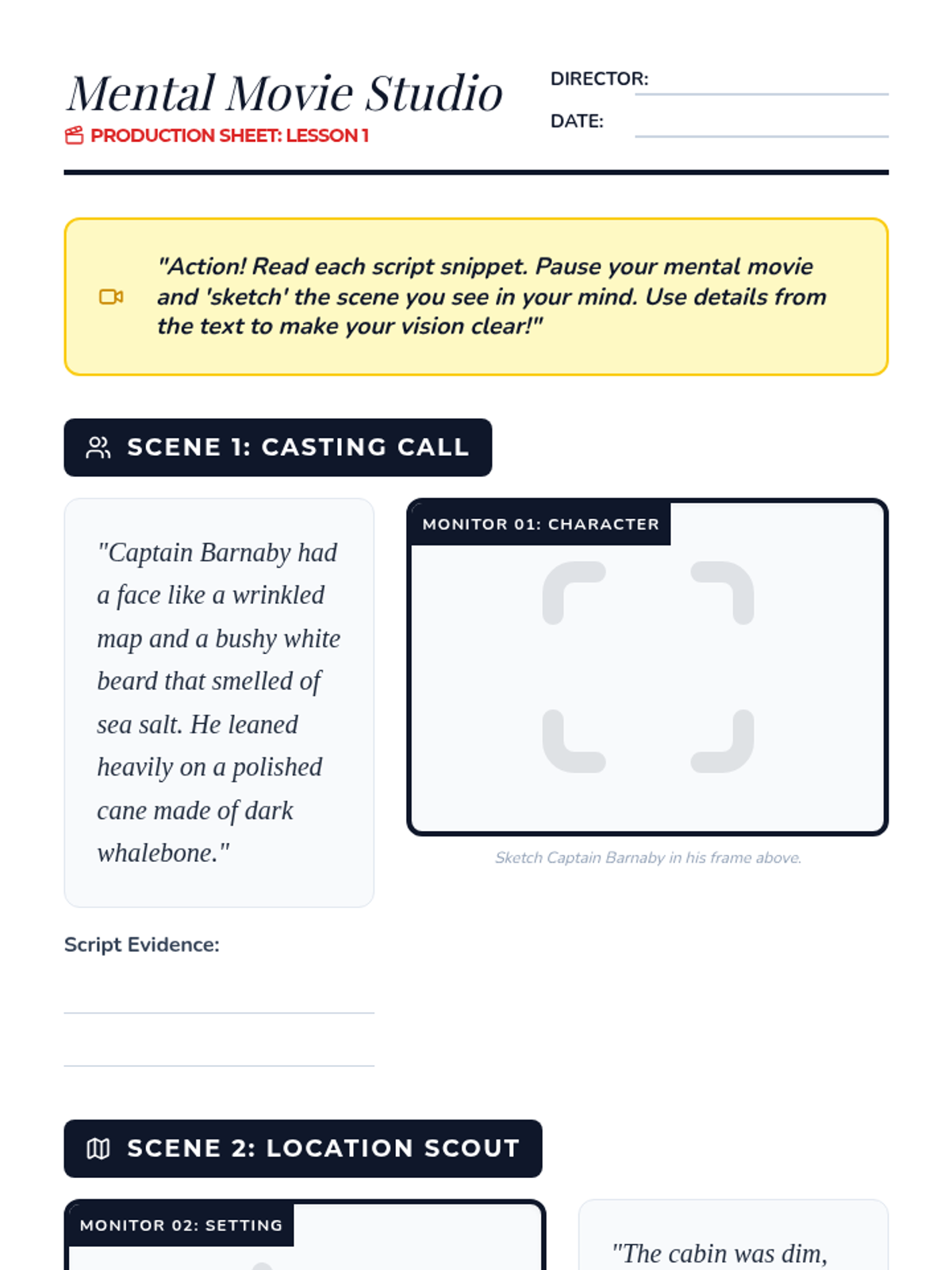
This sequence teaches 6th-grade students to use the 'Mental Movie' metaphor to improve reading comprehension and narrative recall. Students act as 'directors,' learning to visualize characters, settings, and actions while self-monitoring for 'glitches' in their understanding.