This sequence guides 3rd Grade ESL students through the process of forming opinions, justifying them with logic, and engaging in respectful debate using complex sentence structures.

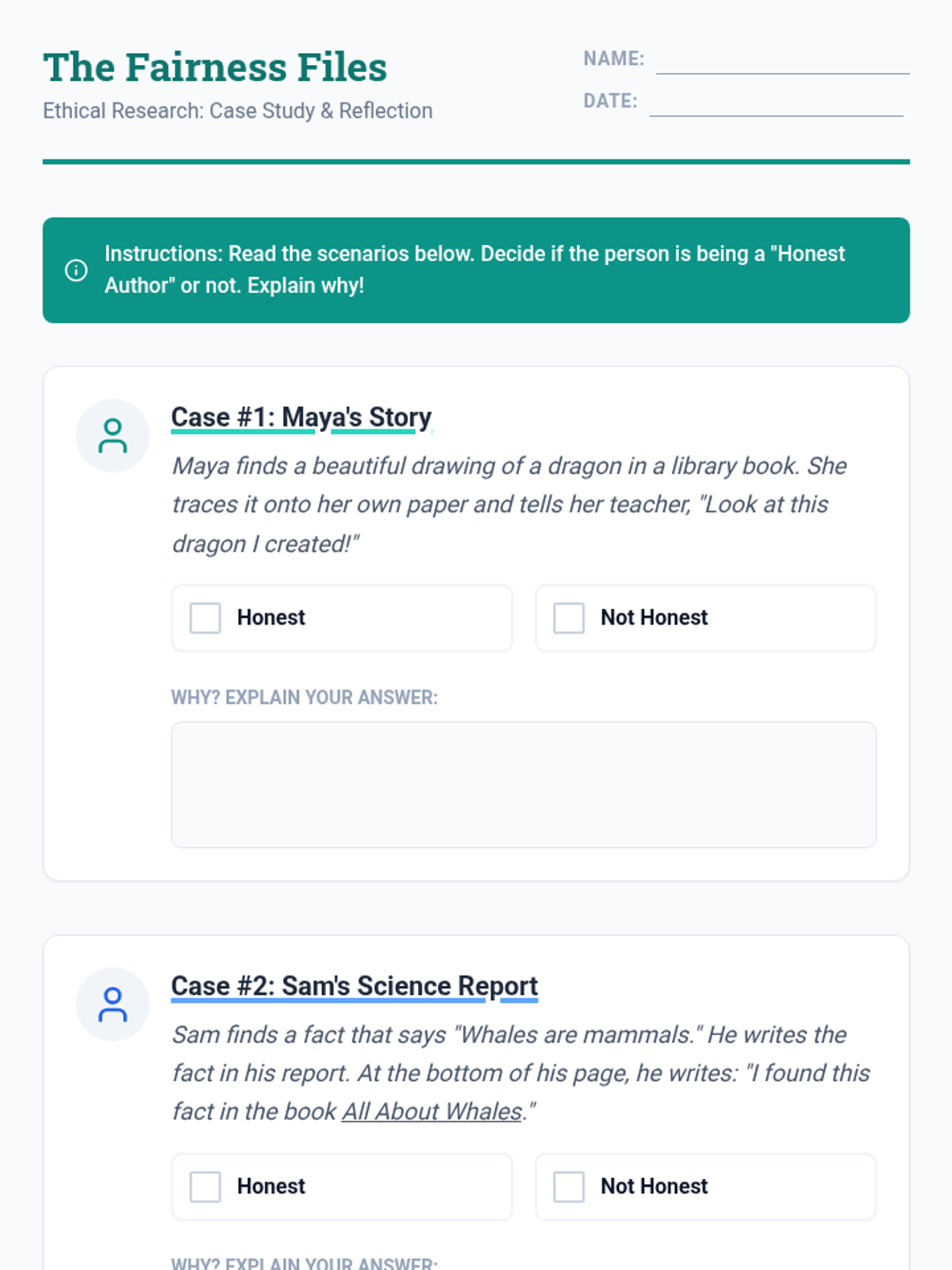
This 3rd-grade ESL sequence teaches students the foundations of academic integrity, focusing on why and how to give credit to authors. Students learn to locate bibliographic information, format simple citations, and synthesize research notes into a final product with a proper source list.
A workshop-style workshop sequence for 3rd grade ESL students focusing on note-taking and paraphrasing. Students learn to extract information without plagiarizing using strategies like keyword highlighting, visual sketching, and the 'Read-Cover-Write' method.
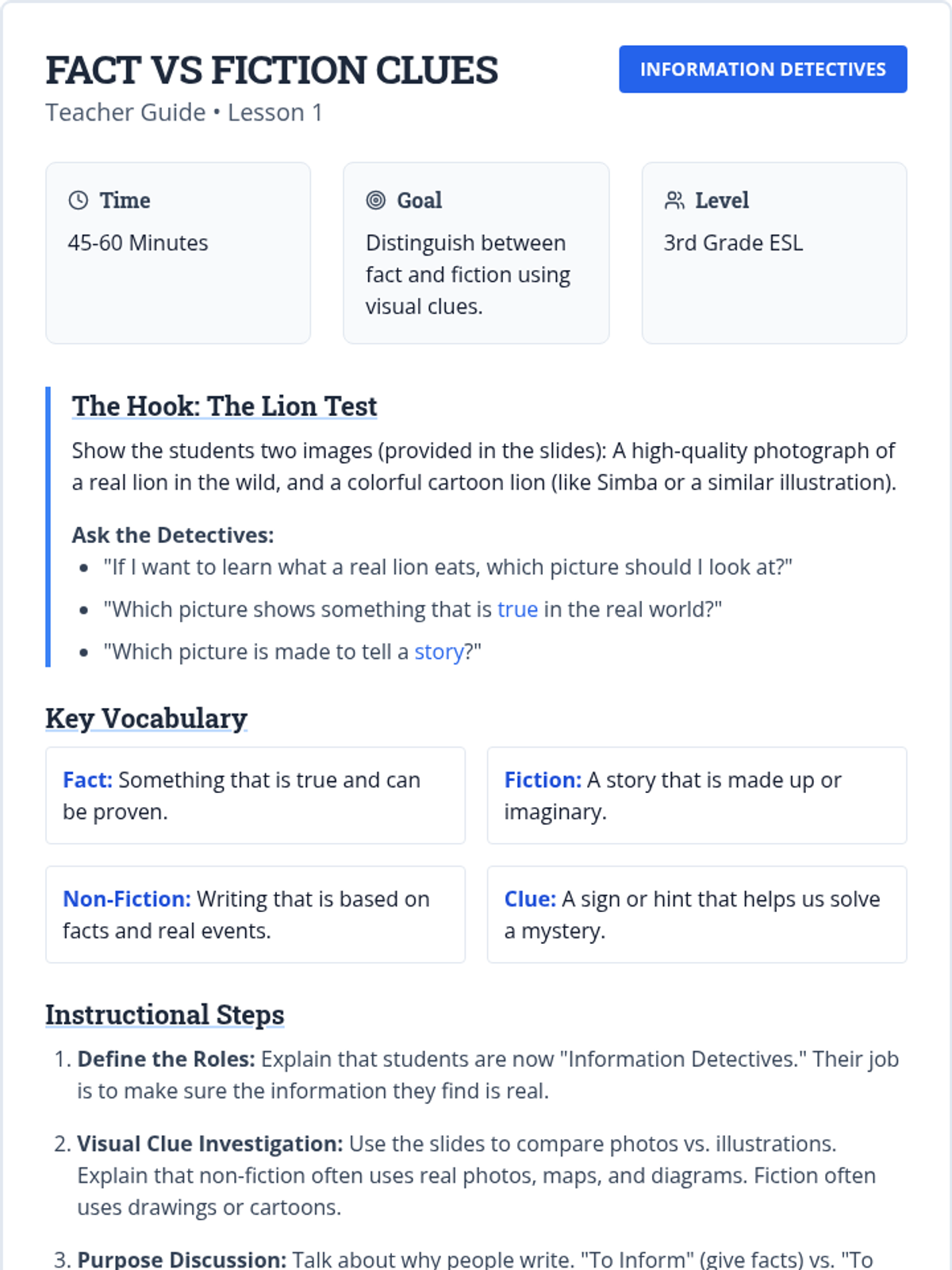
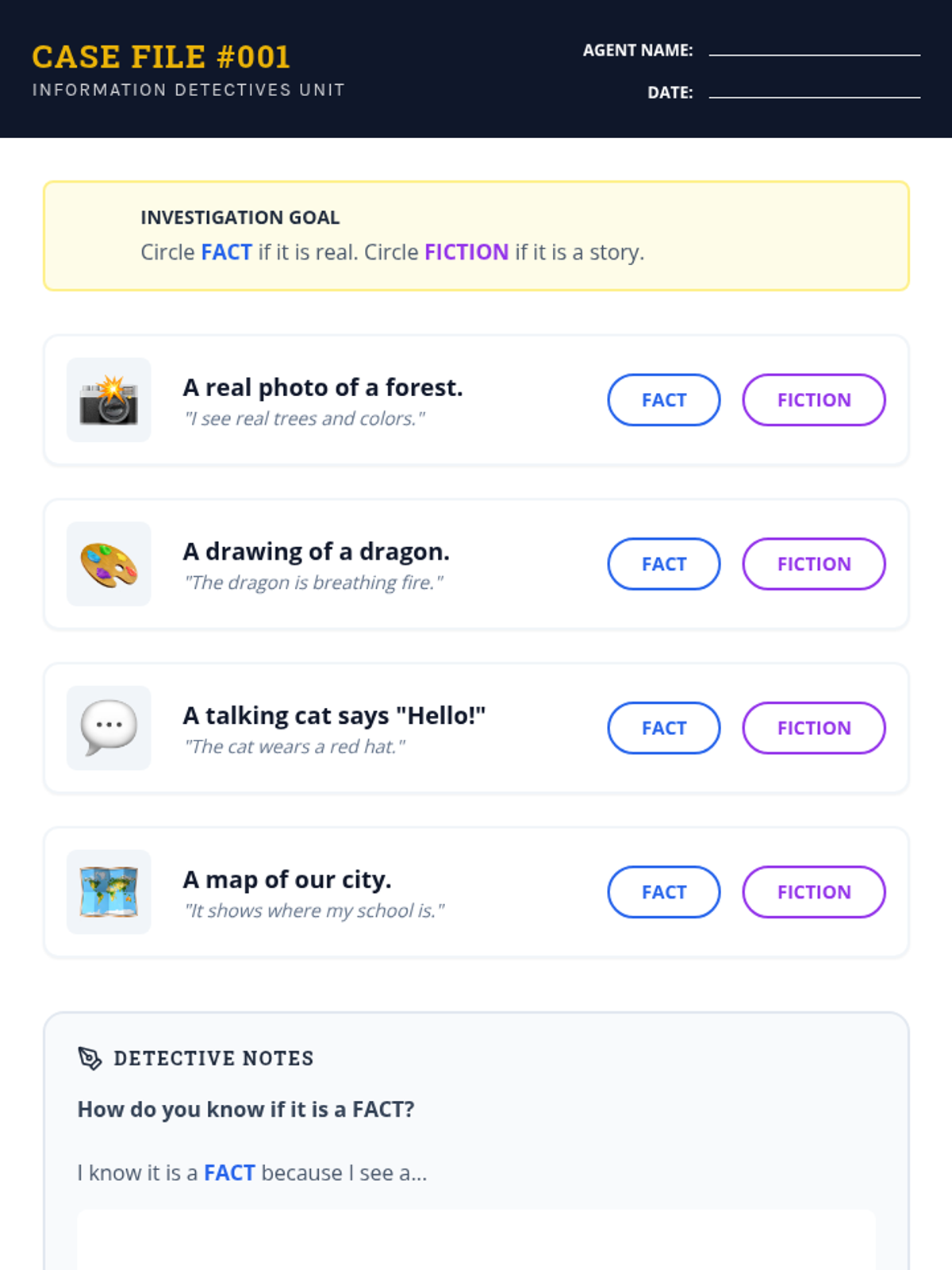
A 5-lesson sequence for 3rd-grade ESL students to learn the basics of source credibility and fact-checking through the lens of 'Information Detectives'. Students learn to distinguish fact from fiction, identify authors, recognize advertisements, and cross-check information.
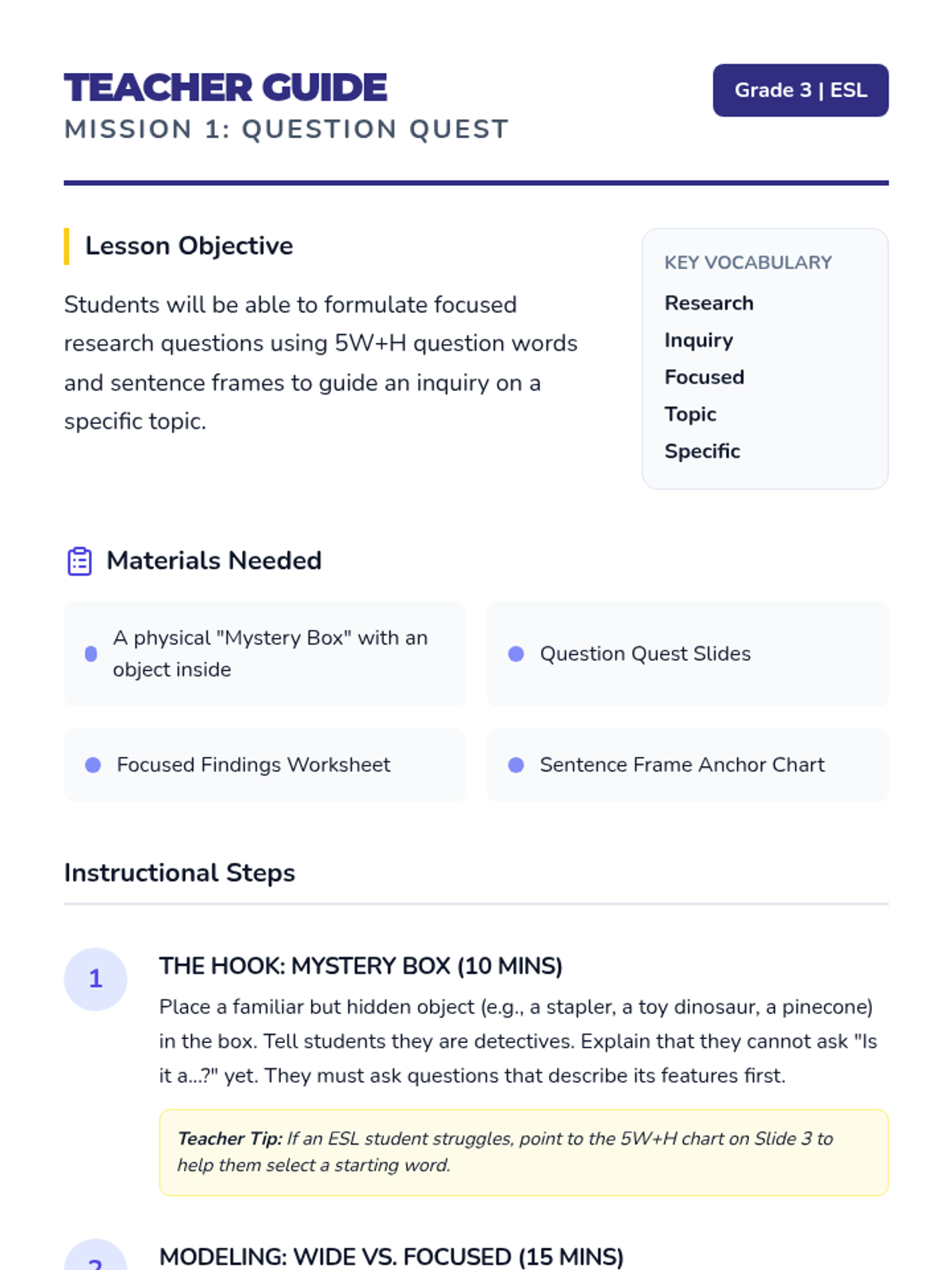
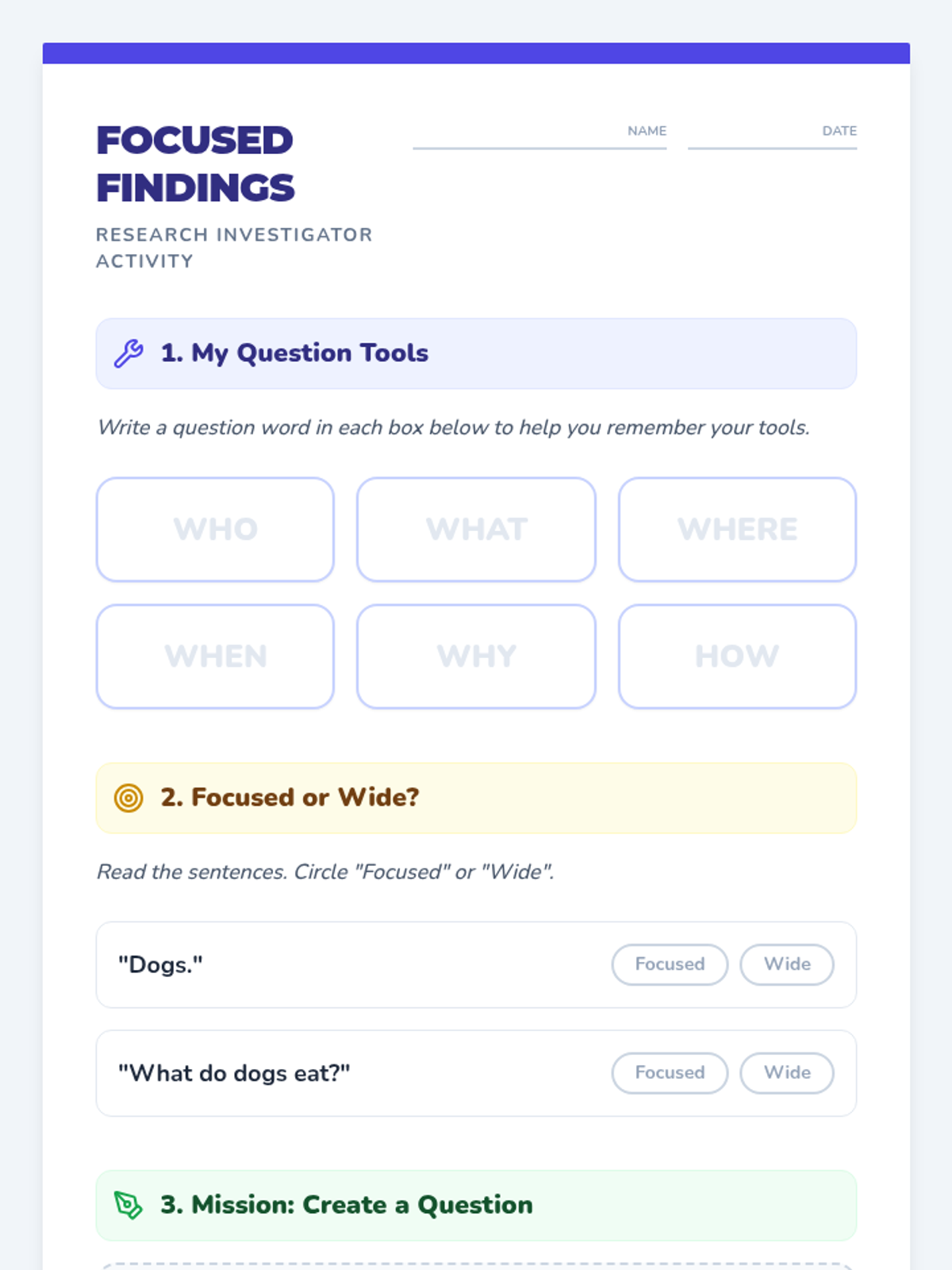
A 5-lesson unit for 3rd grade ESL students on foundational research skills, focusing on formulating questions, using keywords, navigating text features, and evaluating source relevance.
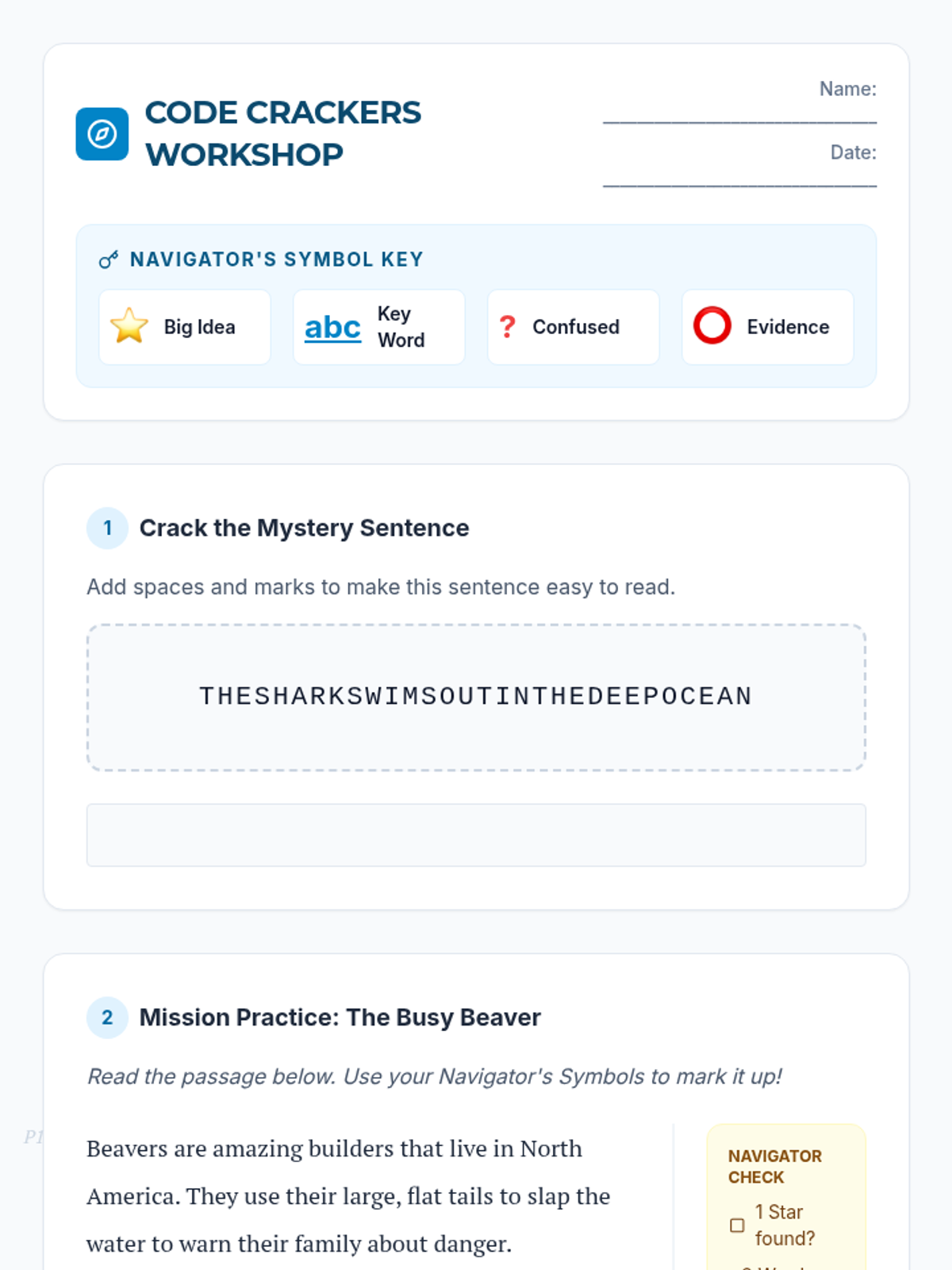
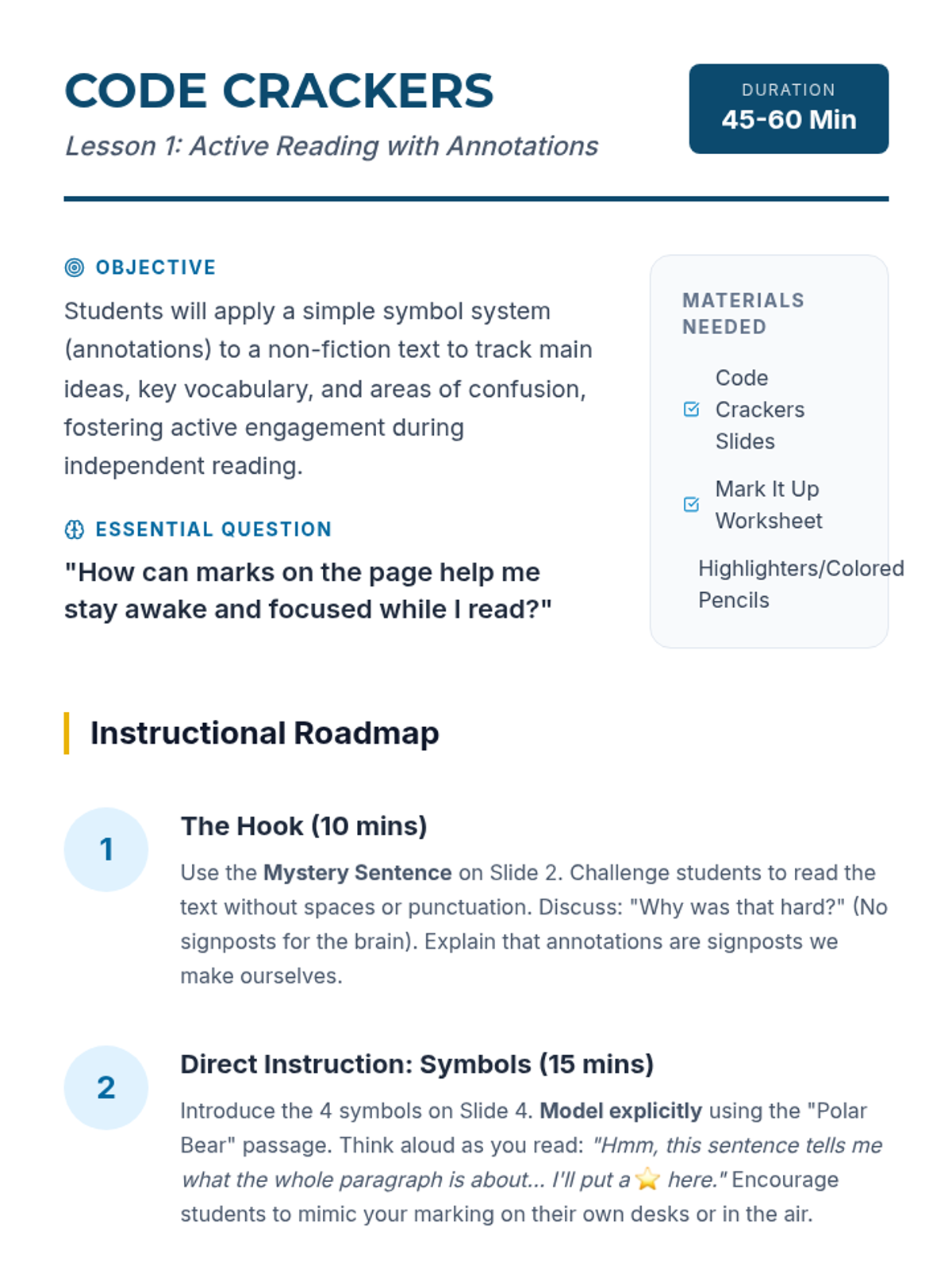
A comprehensive 3rd-grade sequence focused on transition from passive to active reading for ESL students, mastering annotation, summarization, and visual analysis strategies.
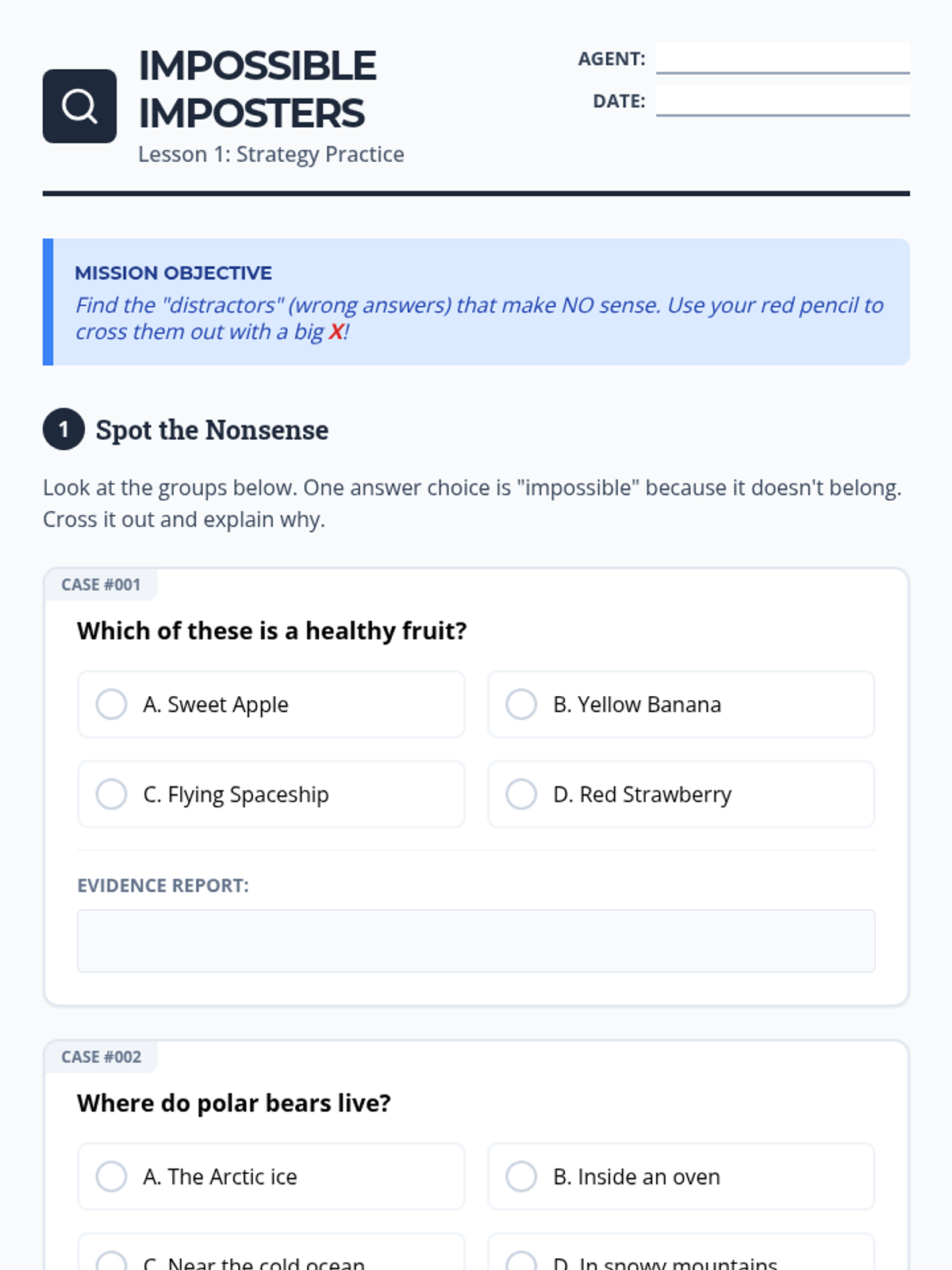
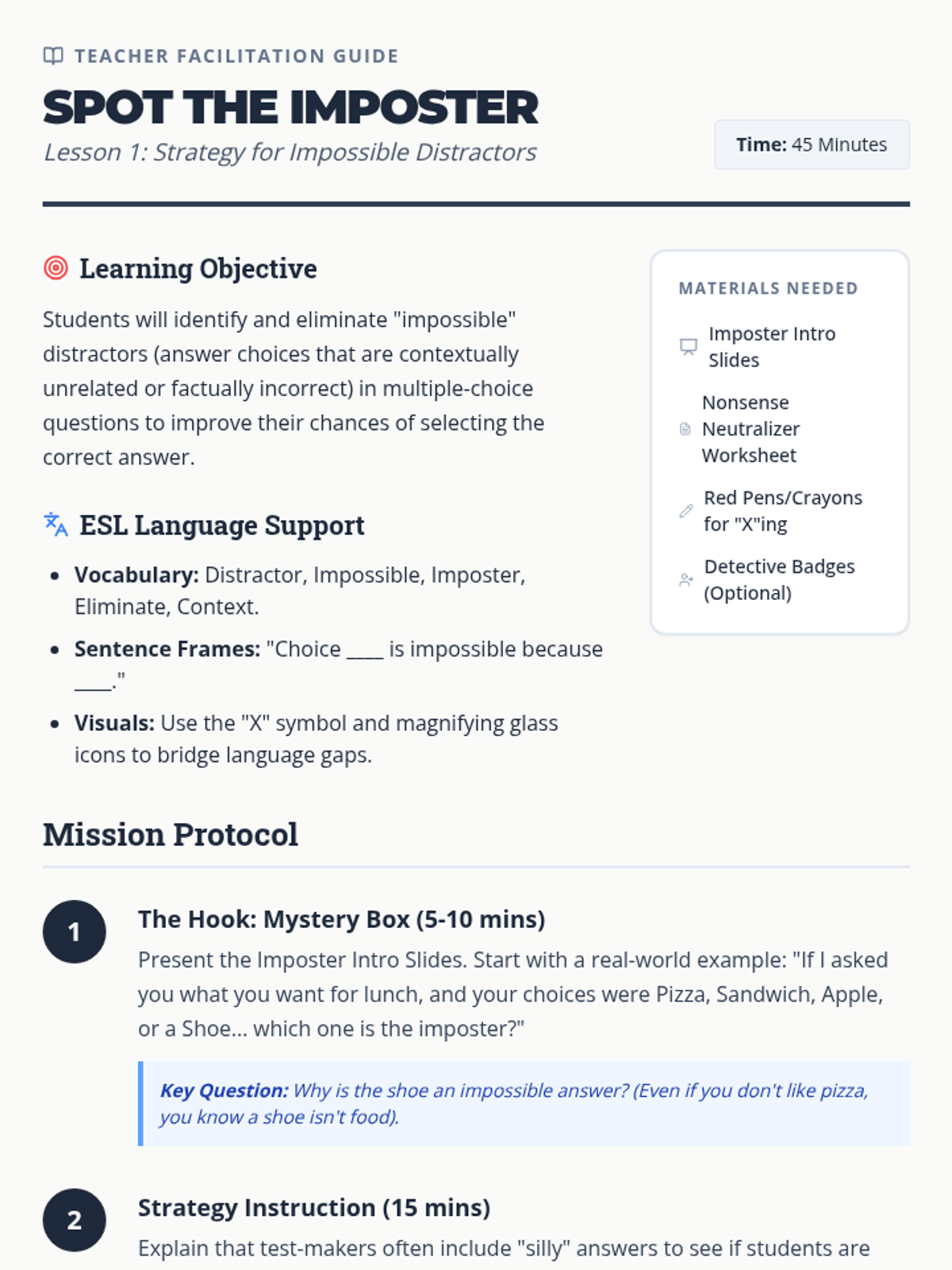
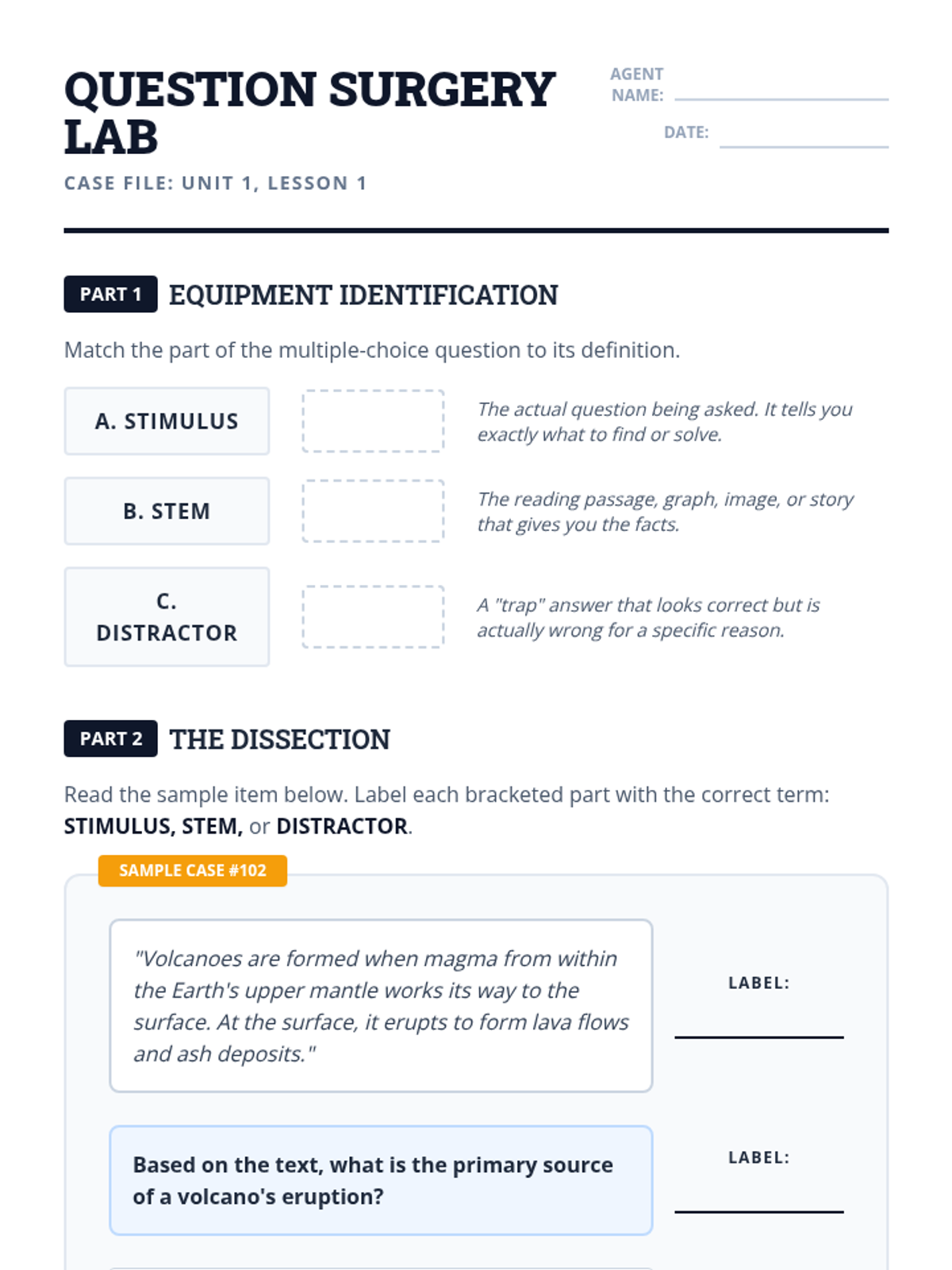
This sequence equips 3rd-grade ESL students with logical strategies for multiple-choice tests, focusing on identifying and eliminating 'distractor' answers. Through a 'Detective Academy' theme, students move from spotting obvious errors to navigating nuanced traps and complex answer formats.
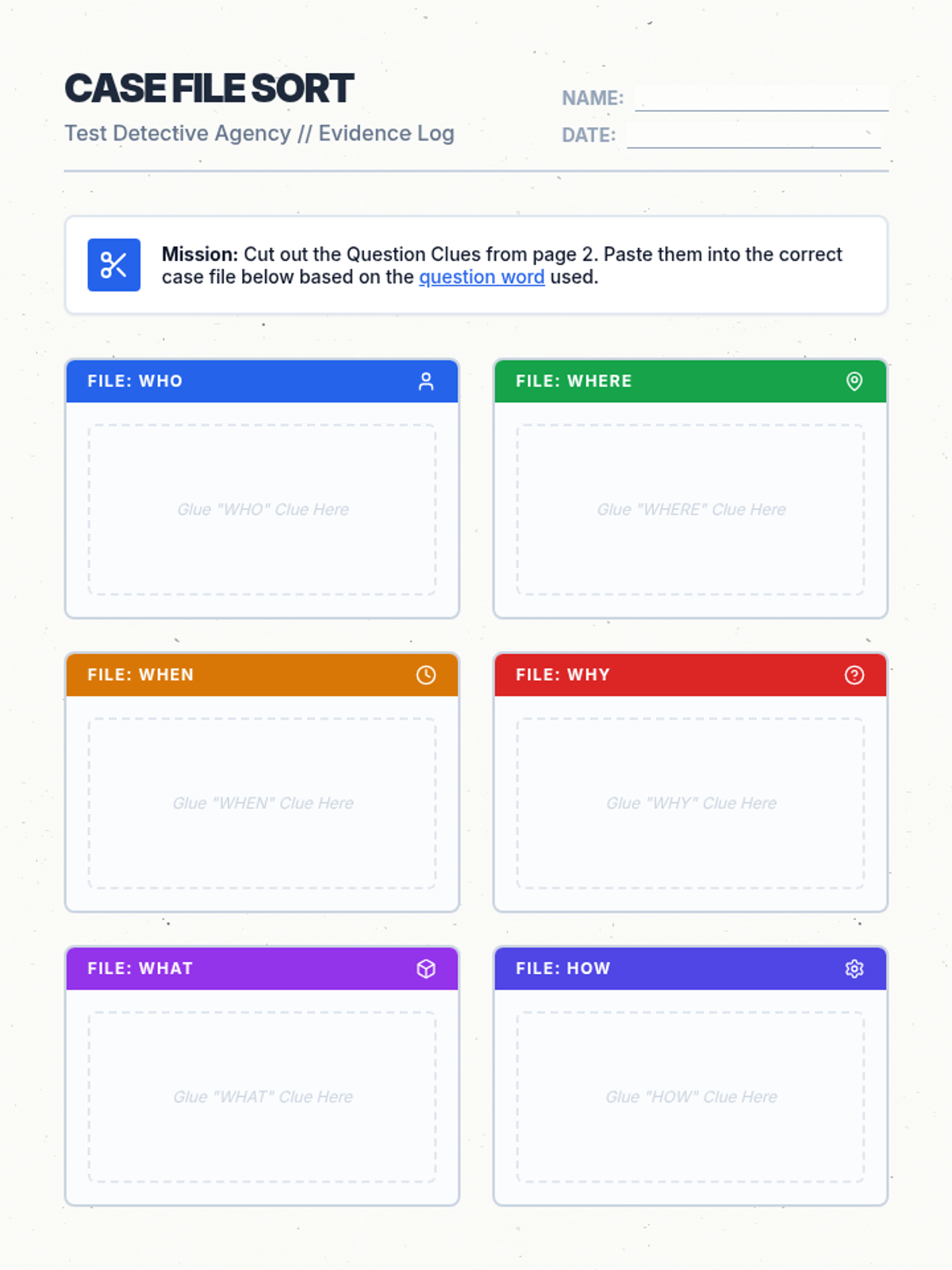
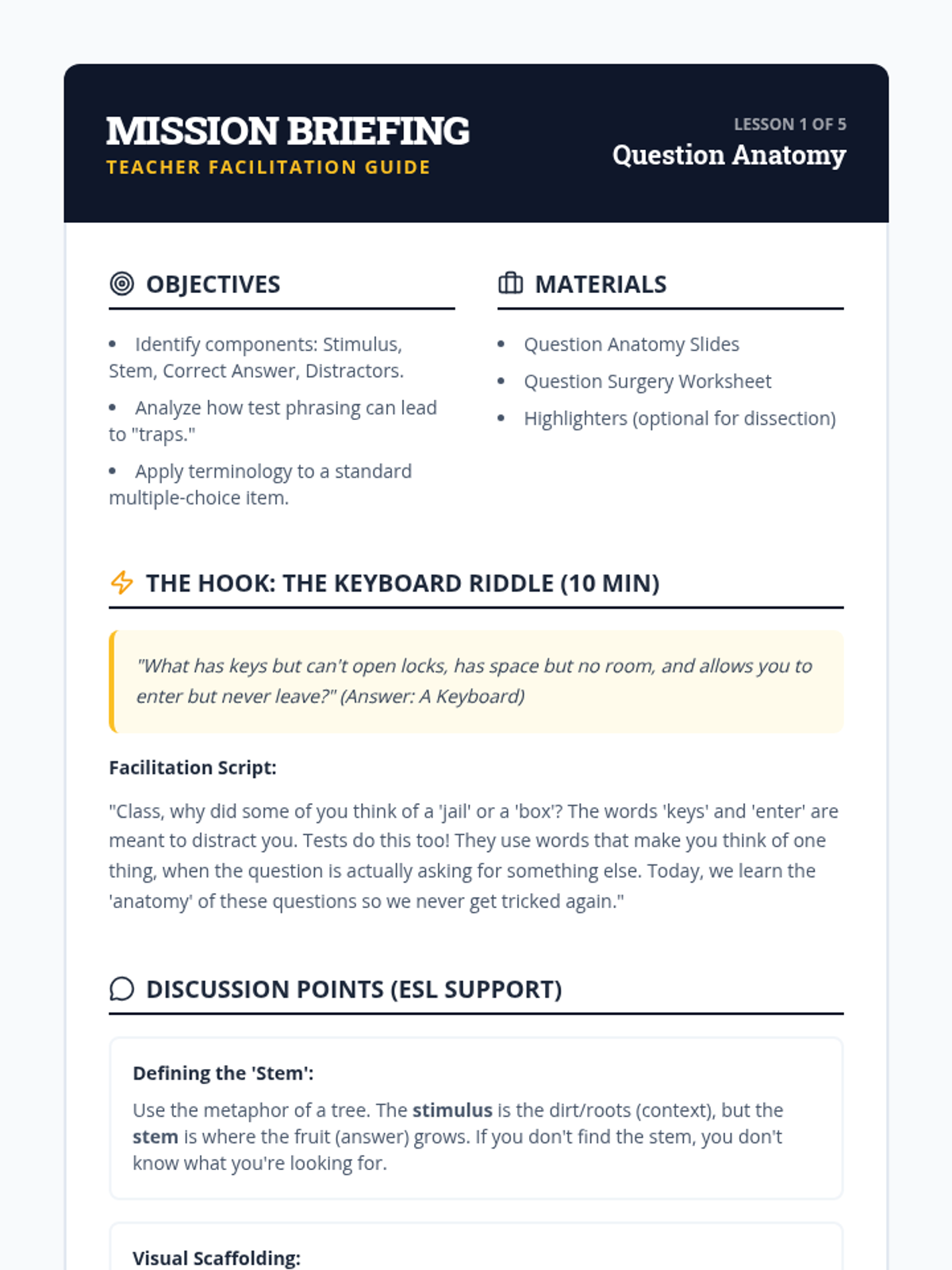
A 5-lesson unit for 3rd Grade ESL students focused on dissecting test questions, identifying academic verbs, and predicting answers to improve test-taking performance. Students act as 'Test Detectives' to uncover the requirements of various question types and provide evidence for their answers.
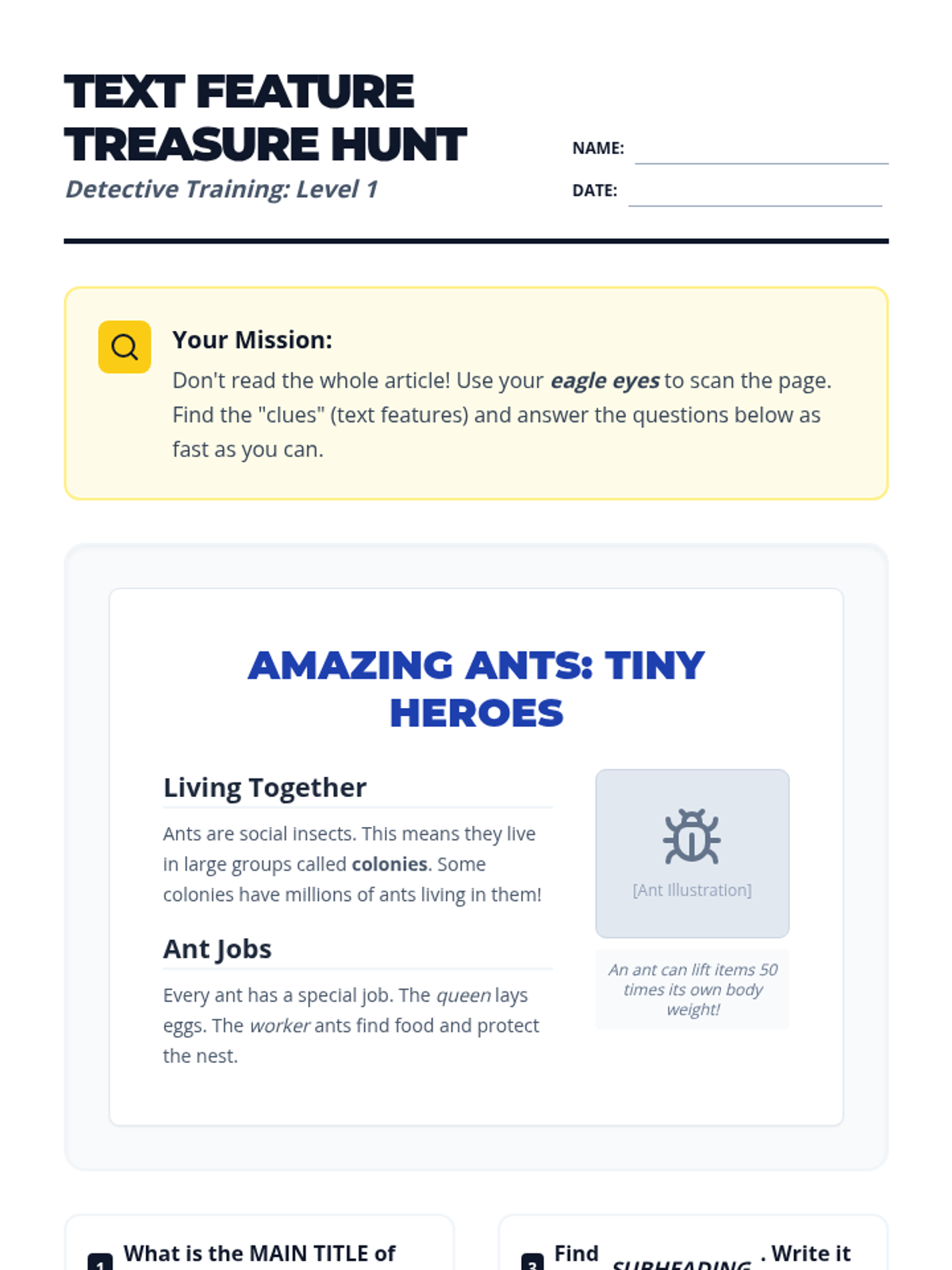
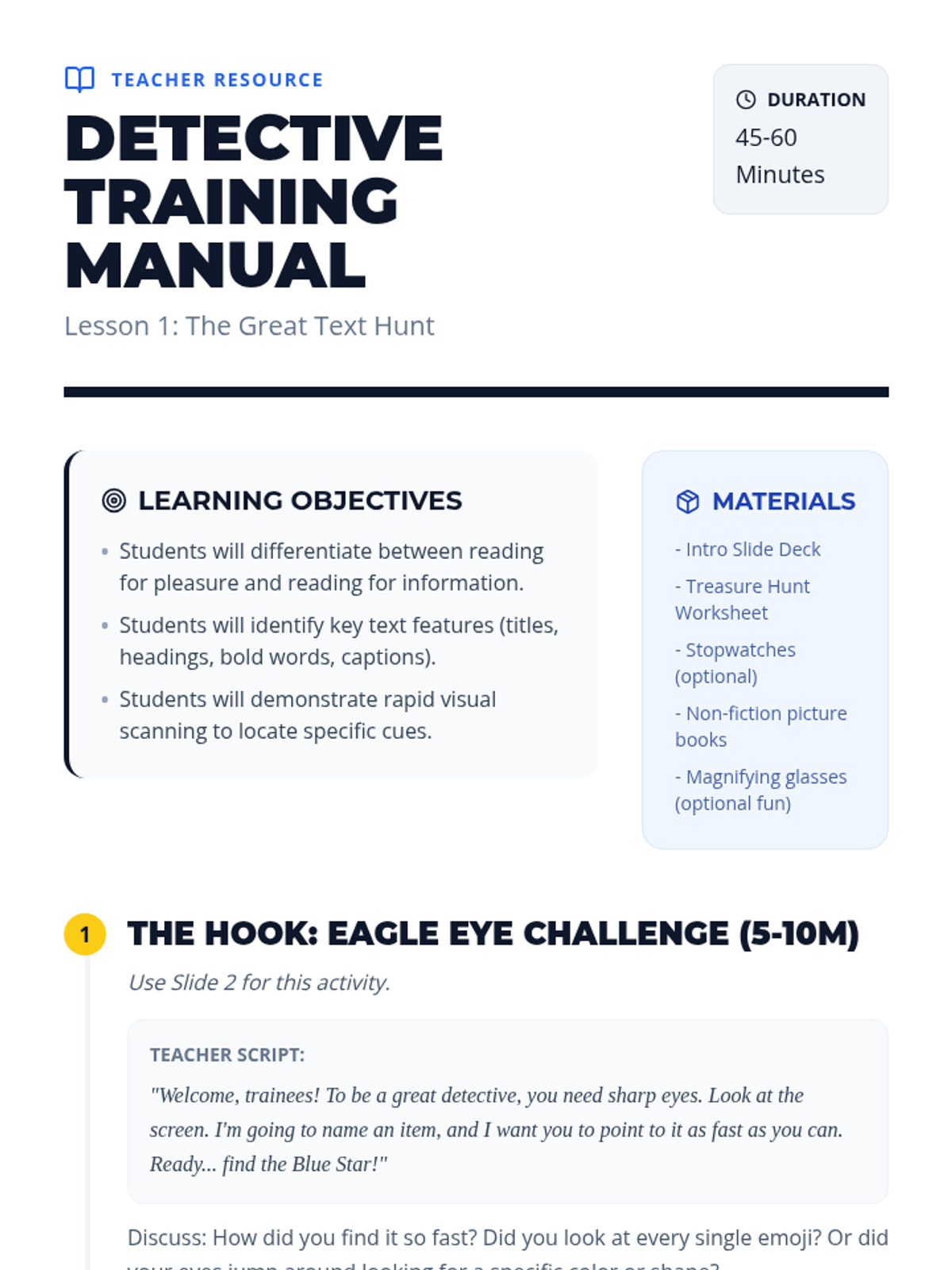
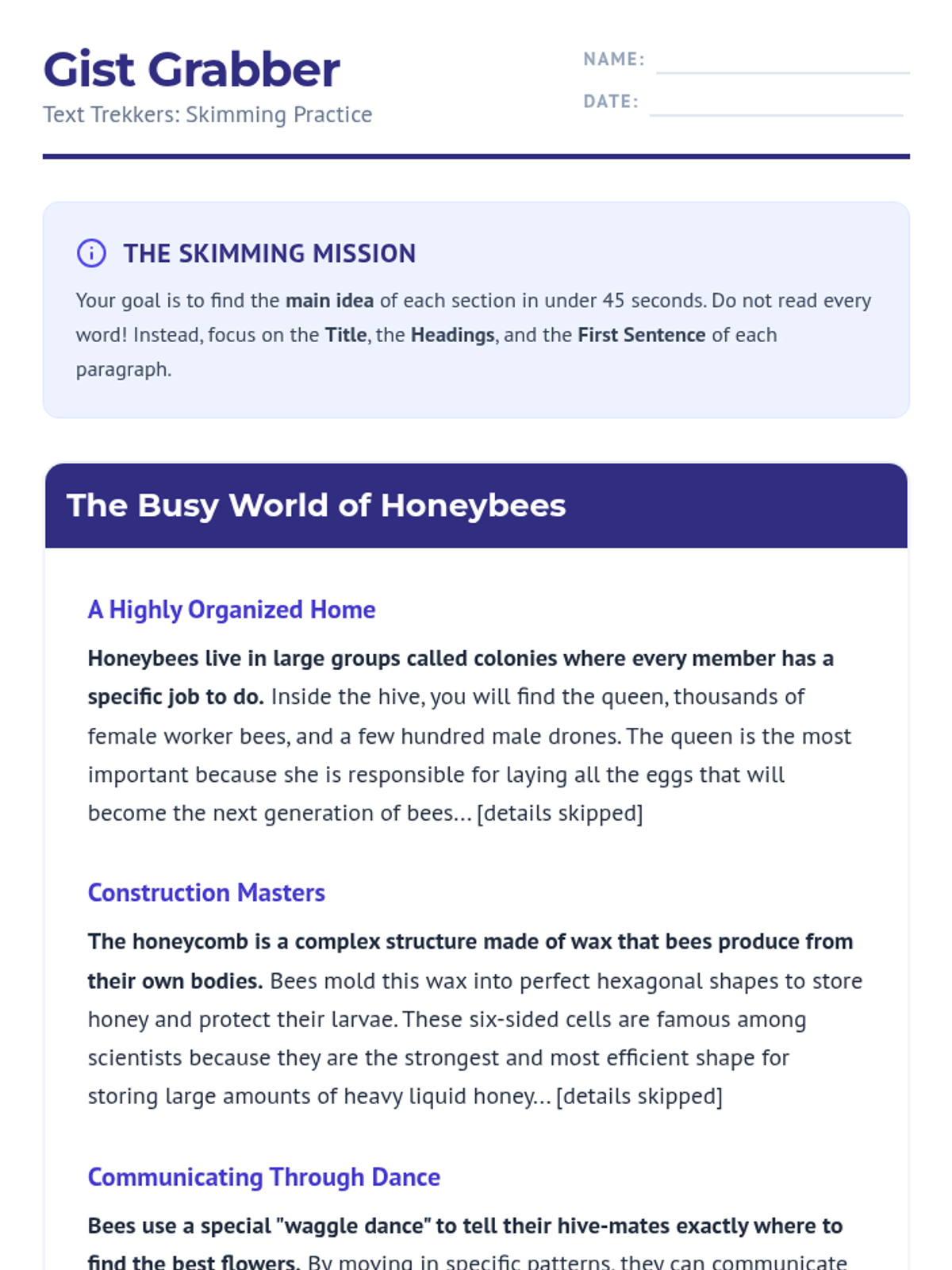
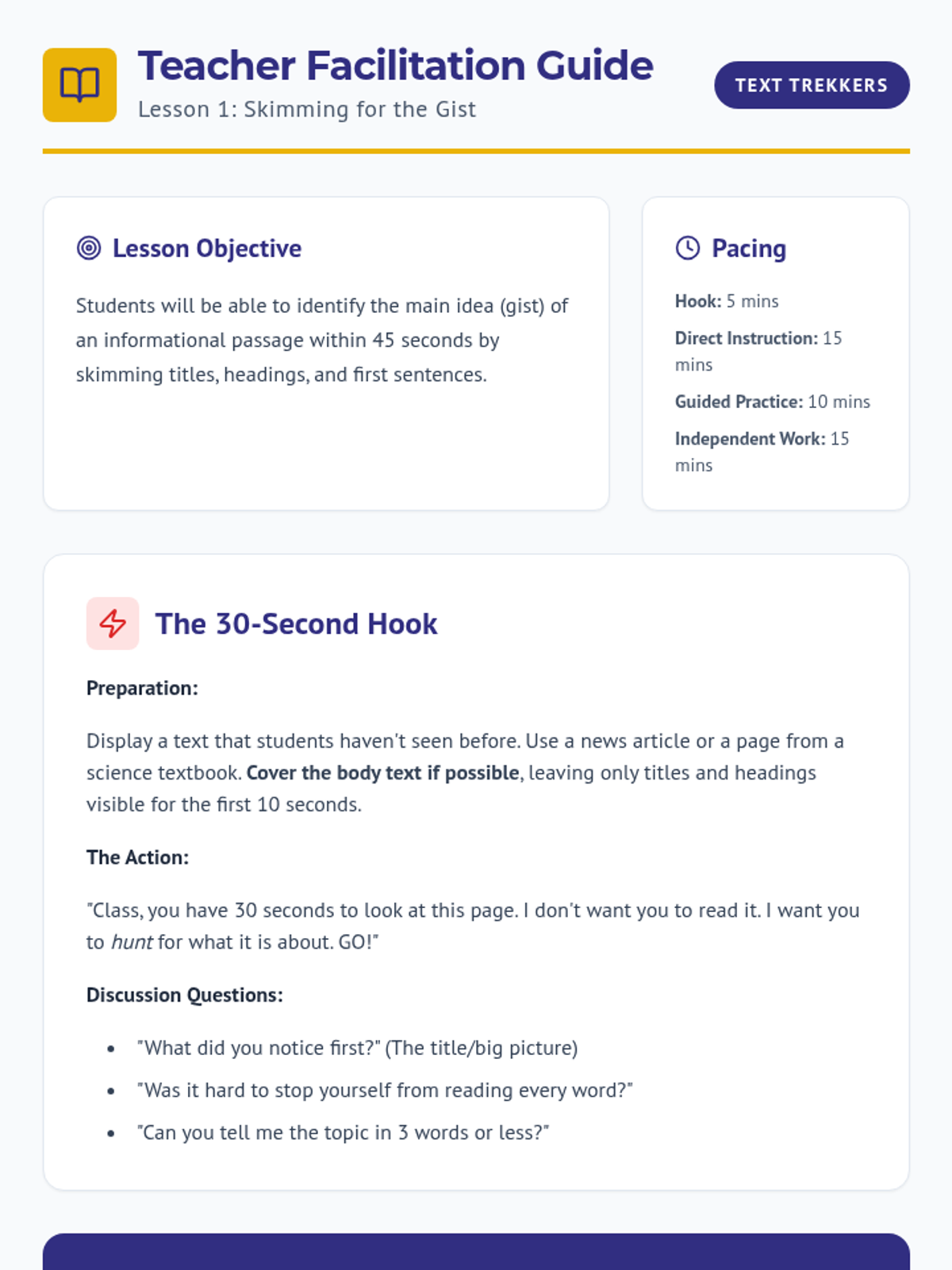
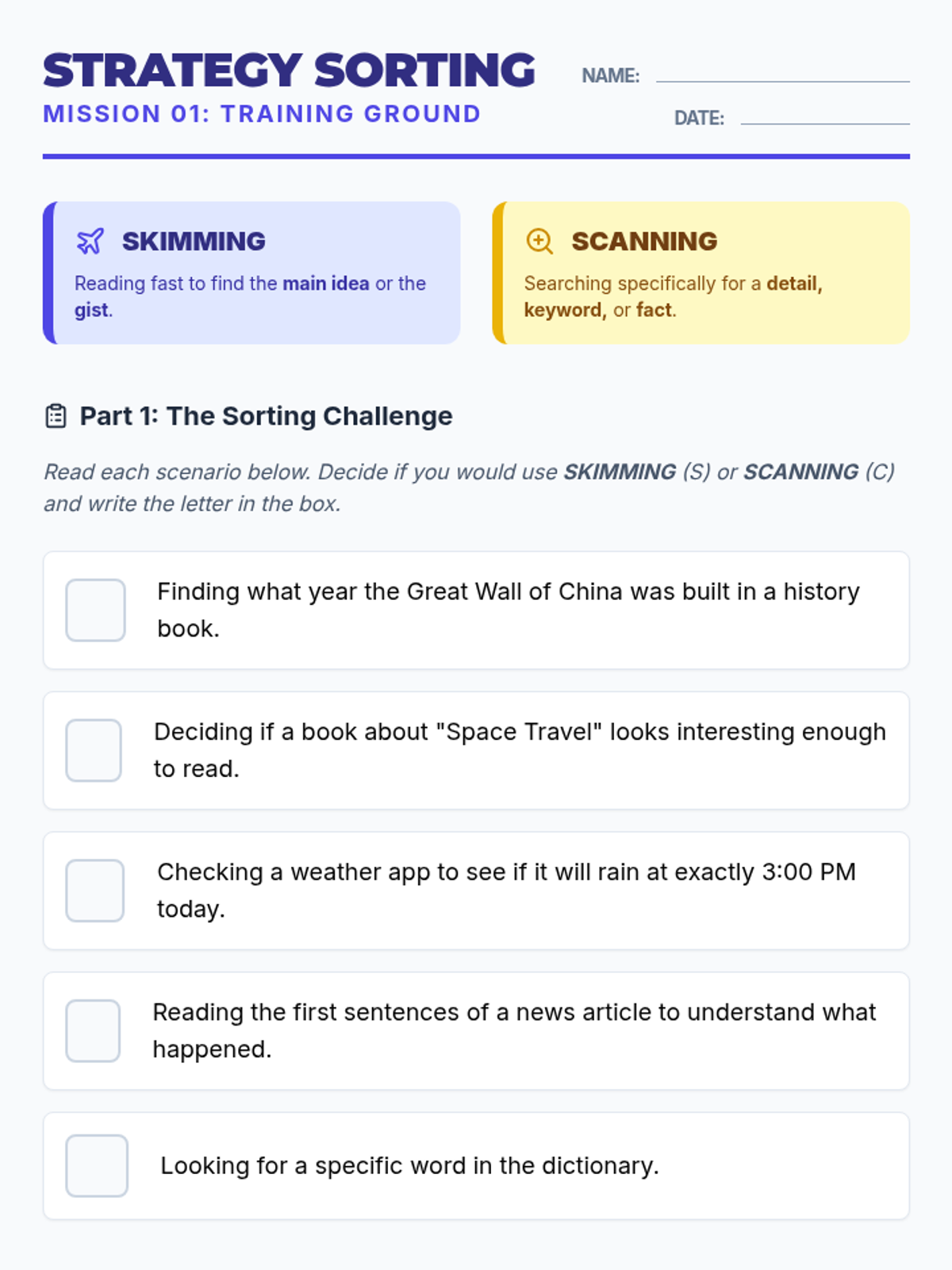
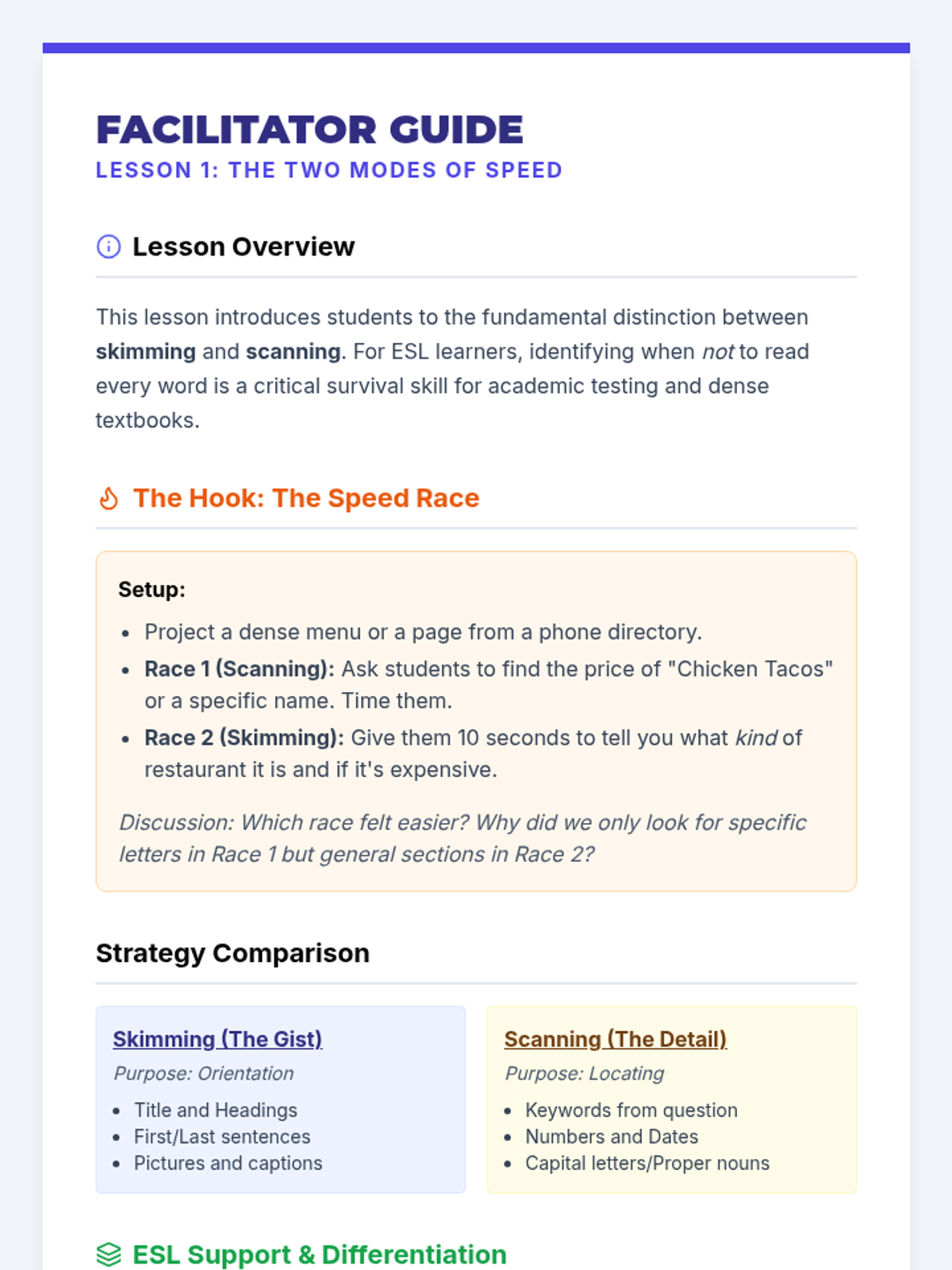
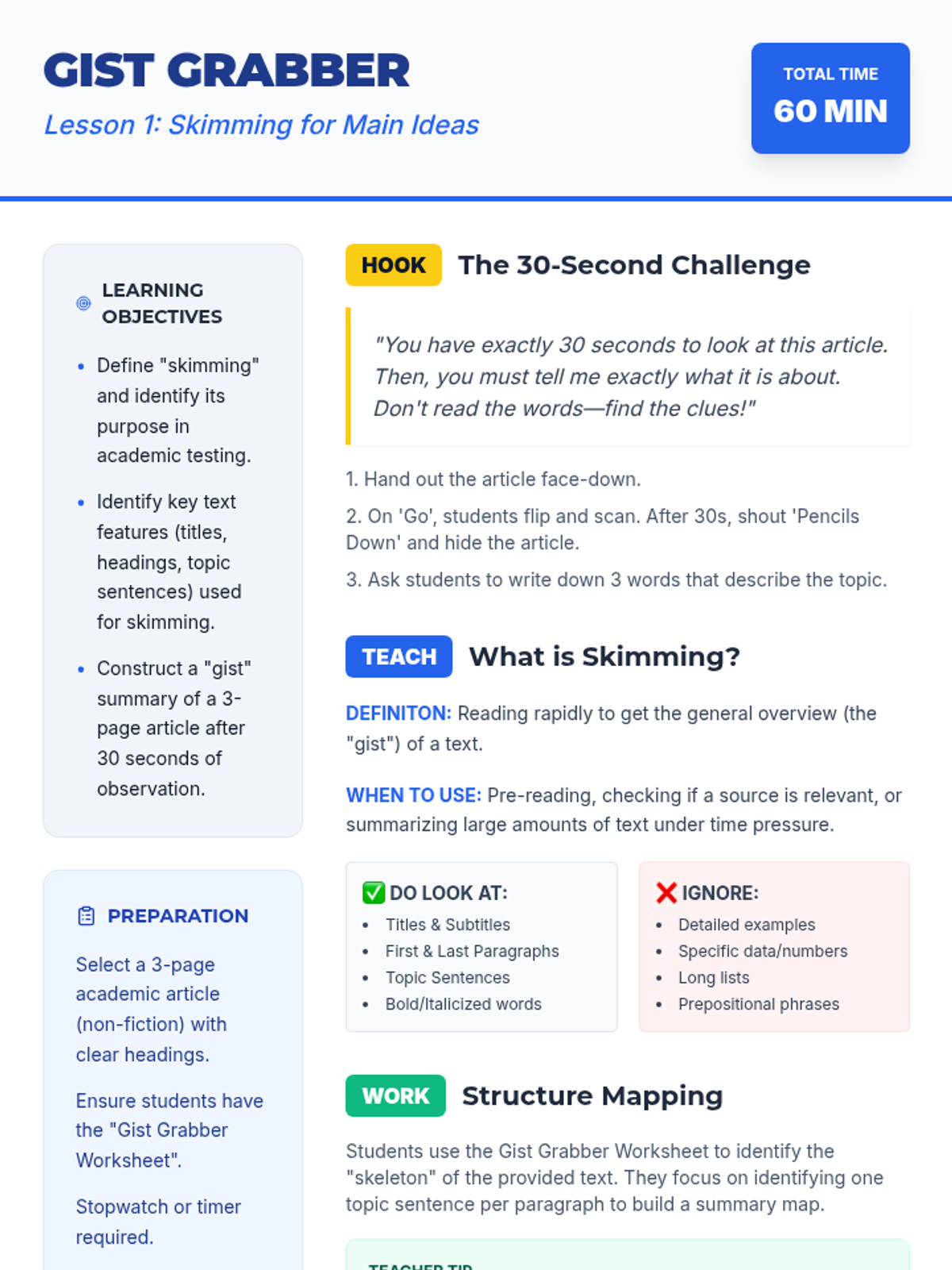
A comprehensive sequence for 3rd grade ESL students to master skimming and scanning techniques for academic success. Through a detective-themed curriculum, students learn to identify text features, isolate keywords in questions, and rapidly locate specific data to improve test-taking efficiency.
This sequence teaches 5th-grade ESL students how to navigate informational texts efficiently using skimming and scanning strategies. Students will move from understanding the big picture to locating specific keywords and using text features to answer test-style questions under time pressure.
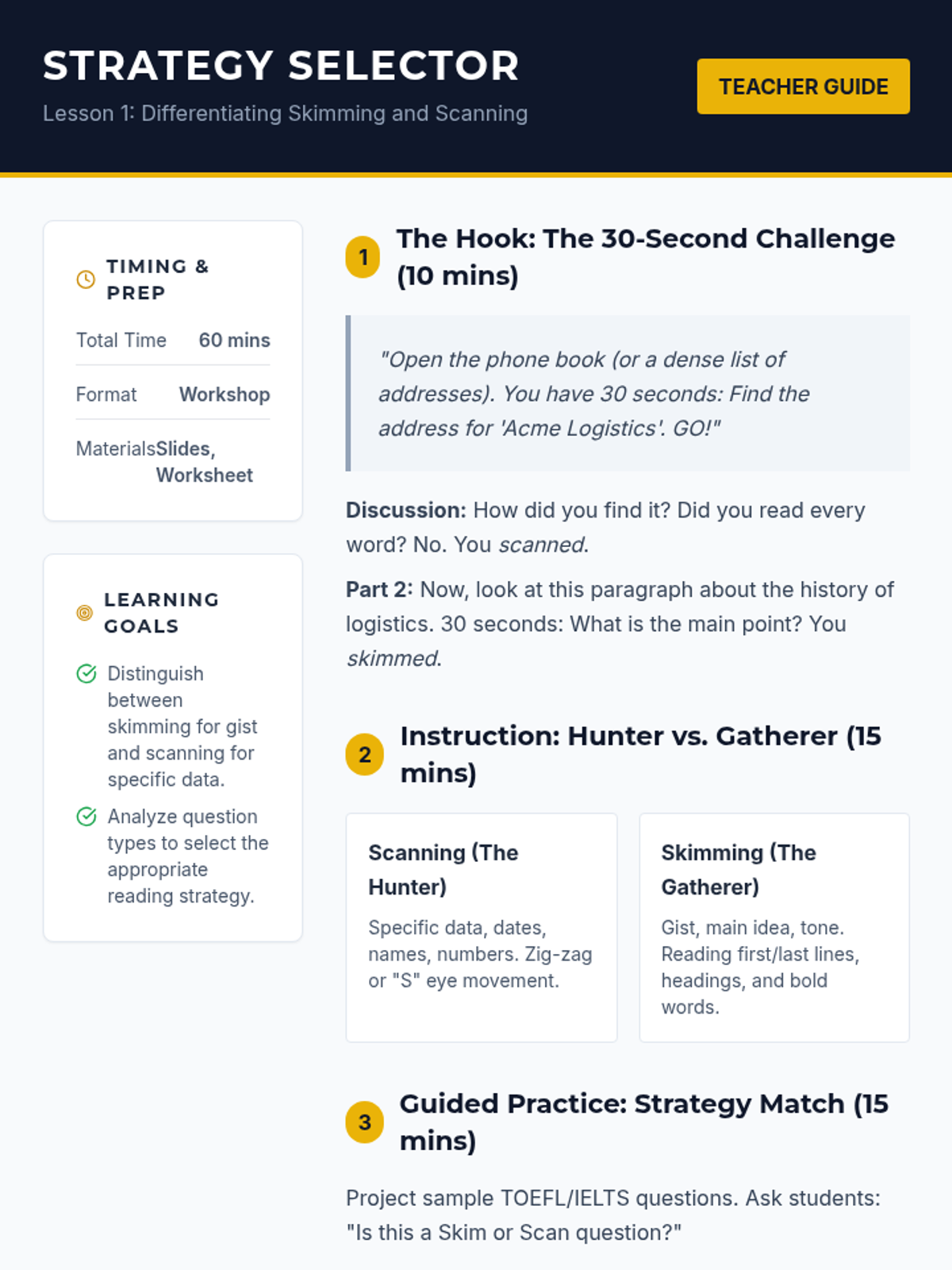
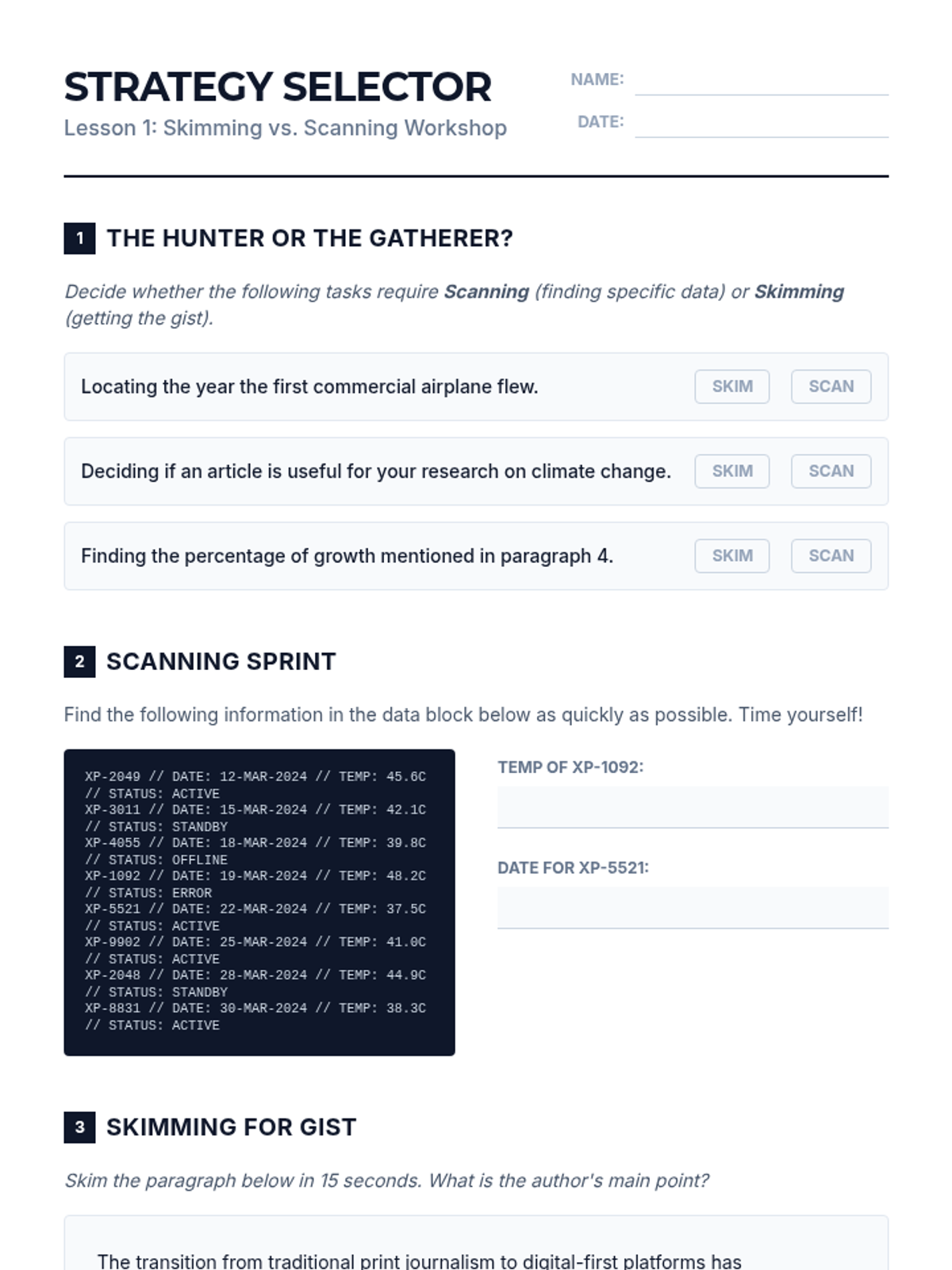
A workshop-style sequence for undergraduate ESL students to master skimming and scanning techniques for high-stakes academic exams. Students move from conceptual understanding to timed application, focusing on efficiency and accuracy in dense academic texts.
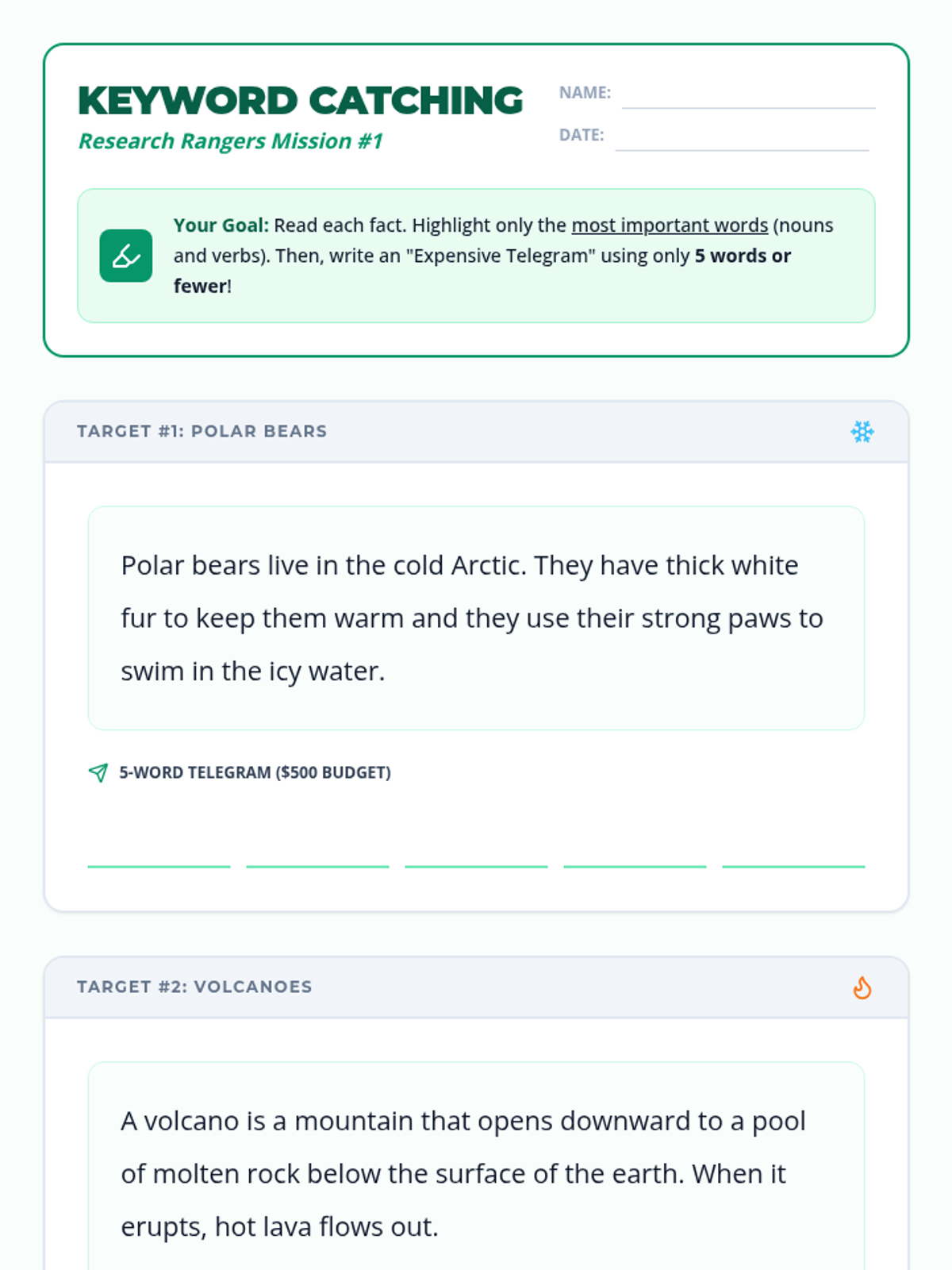
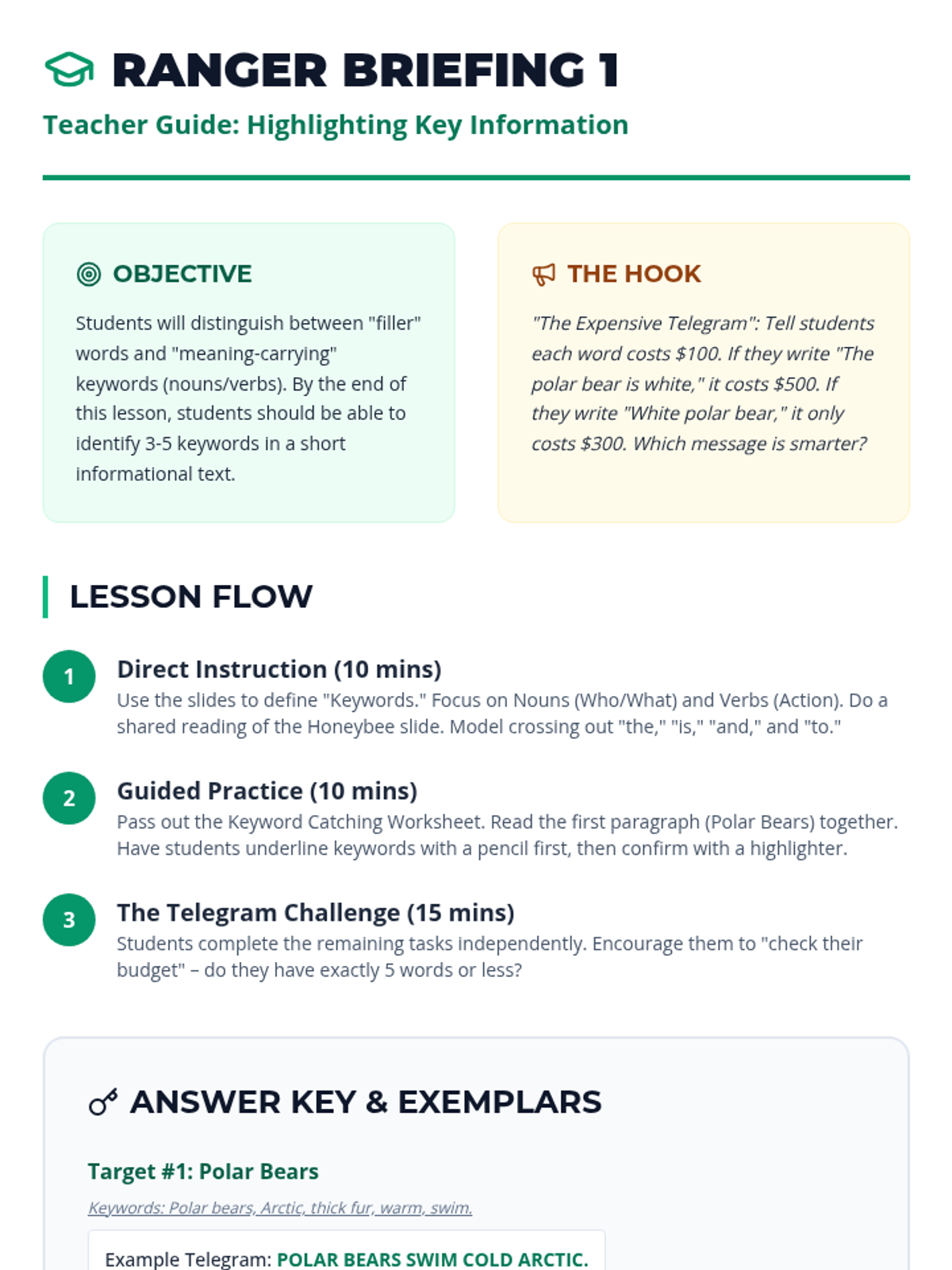
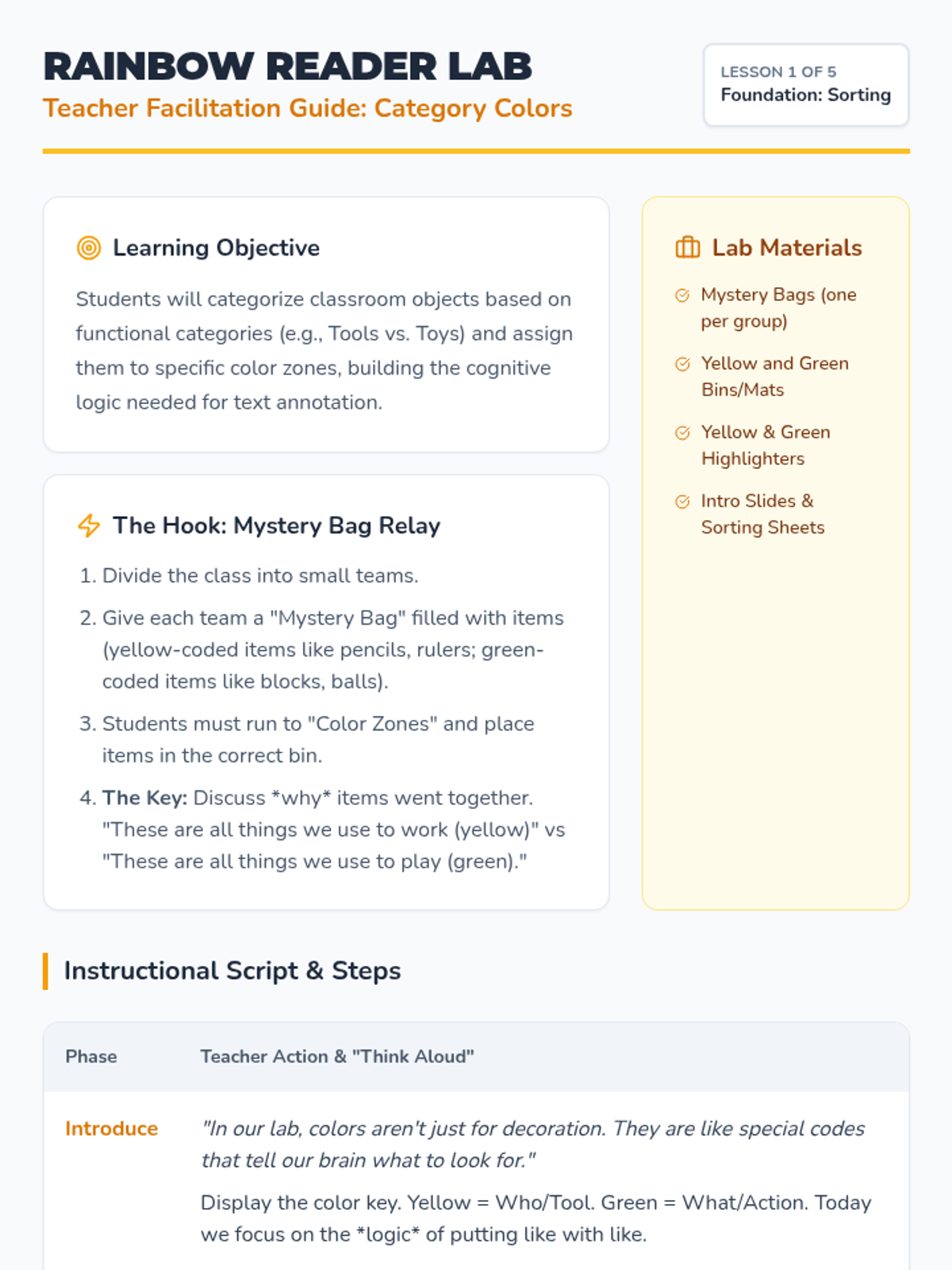
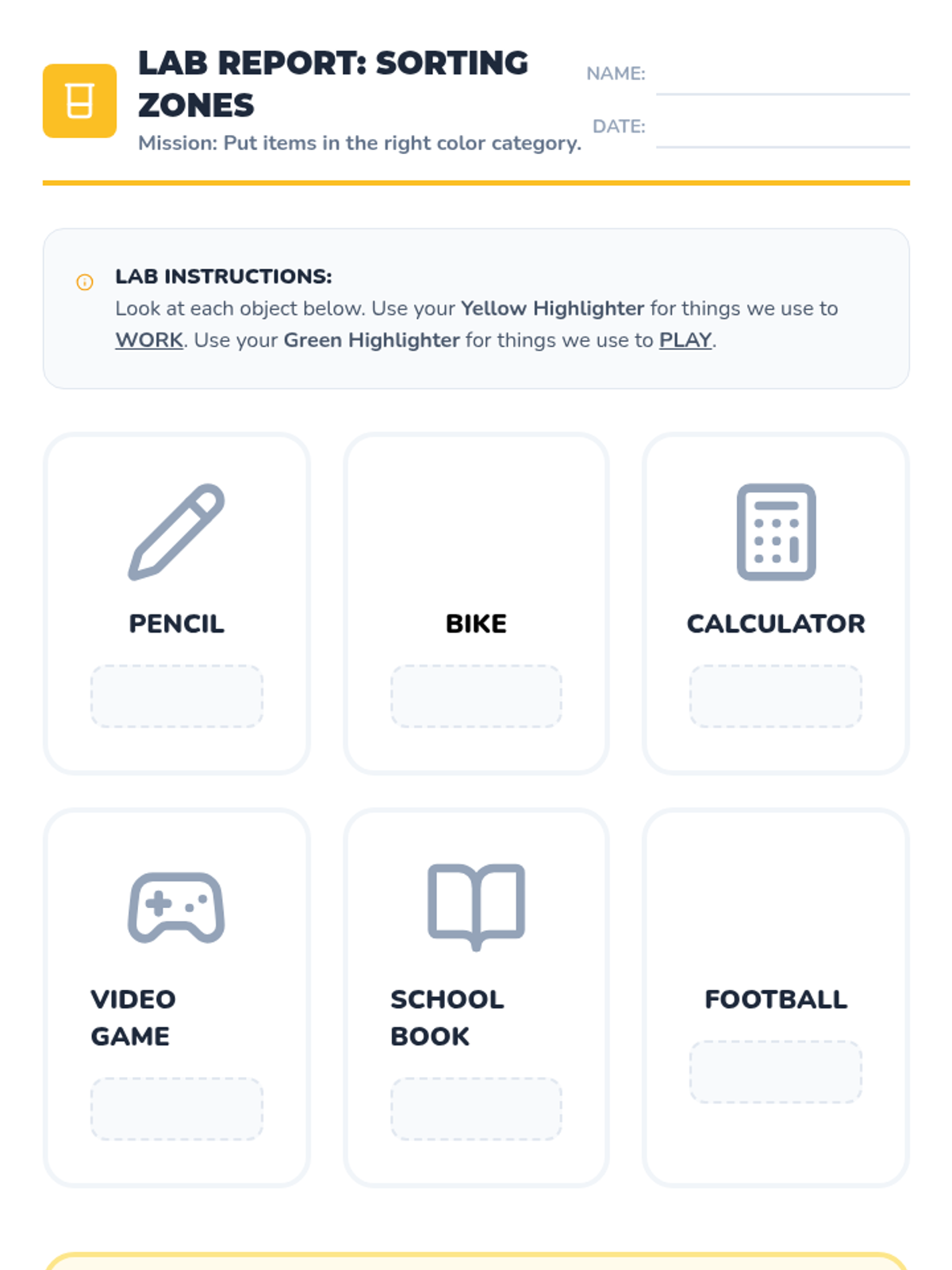
A 5-lesson sequence for 3rd-grade students focused on using a color-coded highlighting system (Yellow for 'Who', Green for 'What') to improve reading comprehension and text organization. This workshop-style unit moves from physical sorting to multi-color text annotation and summarization.
This sequence targets the analytical skills required to dismantle multiple-choice questions for 7th Grade ESL learners. Students move from understanding the anatomy of a question to identifying common logical fallacies and 'trap' answers, utilizing game-based learning and deductive reasoning.
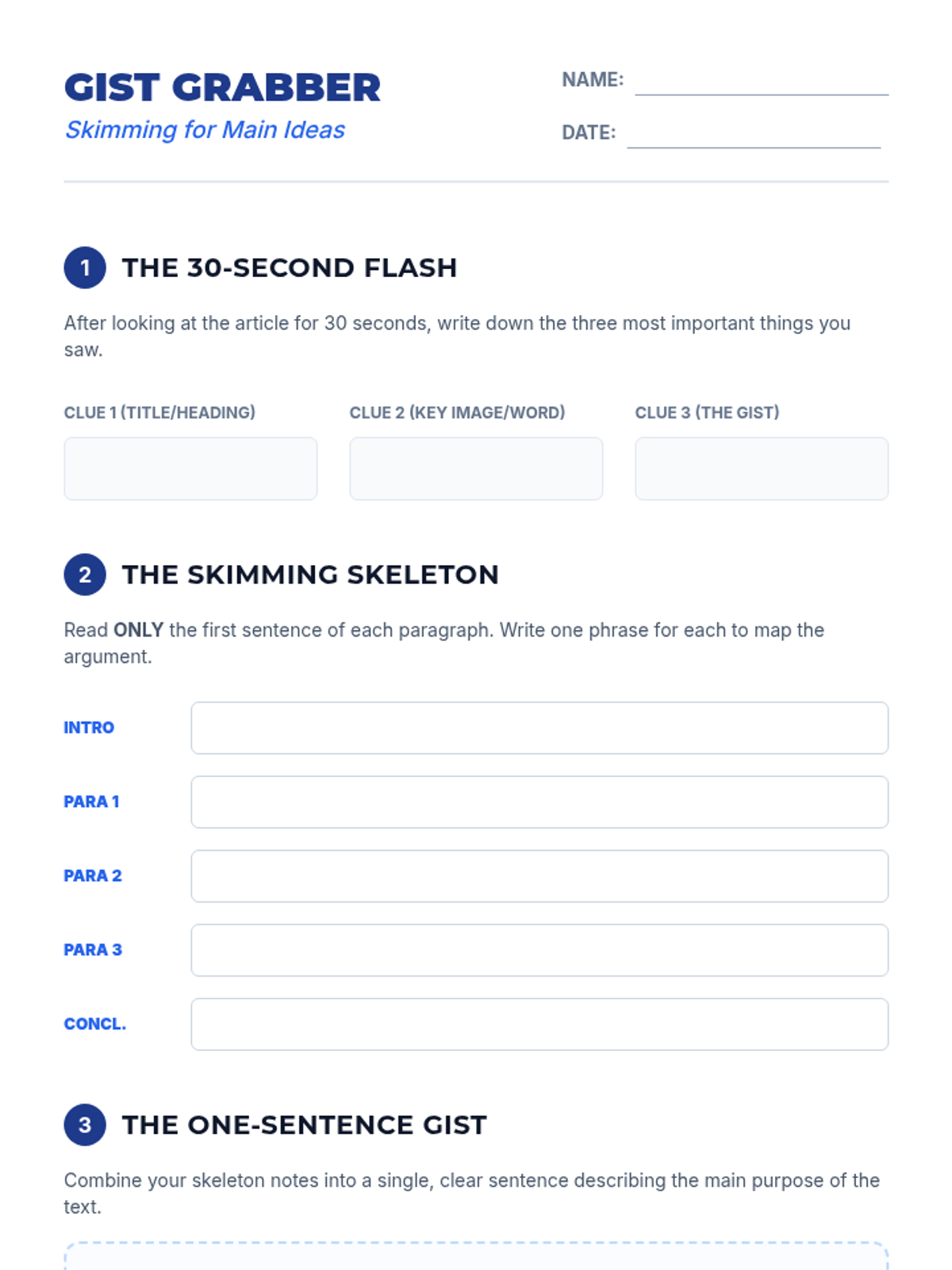
This sequence teaches 6th-grade ESL students the essential test-taking strategies of skimming and scanning. Through a 'Speed Scout' academy theme, students learn to navigate academic texts efficiently, identifying when to look for the 'gist' versus specific details to save time and improve accuracy on standardized tests.
This sequence develops critical reading efficiency for 9th-grade ESL students, focusing on skimming for main ideas and scanning for specific details to succeed in timed academic exams. Students progress from grasping the 'gist' using text features to locating specific data points and utilizing signpost words to navigate complex arguments.
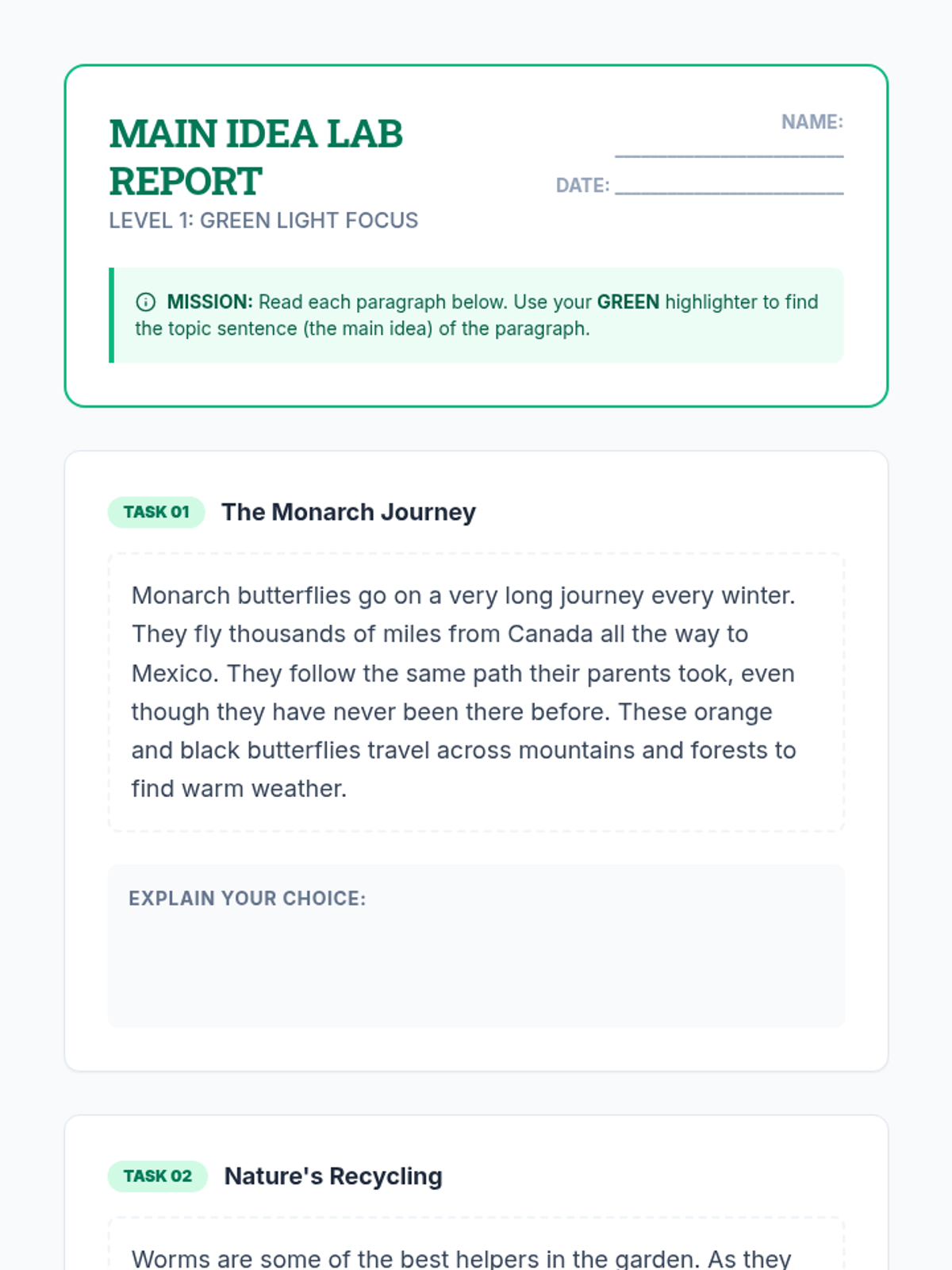
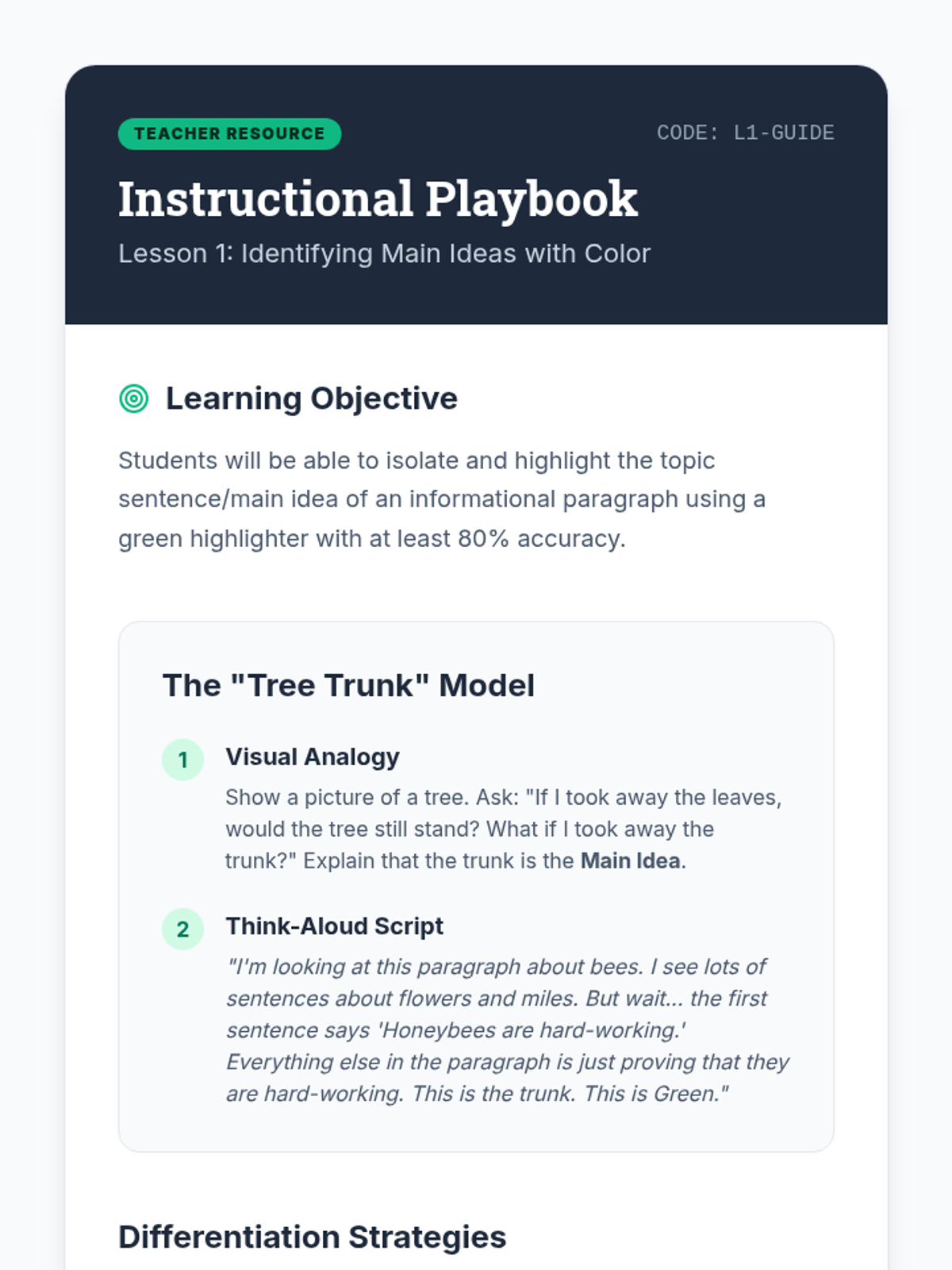
A multi-sensory, color-coded approach to reading comprehension. Students learn to systematically deconstruct informational texts using a tri-color system: green for main ideas, yellow for supporting details, and red for unknown vocabulary.
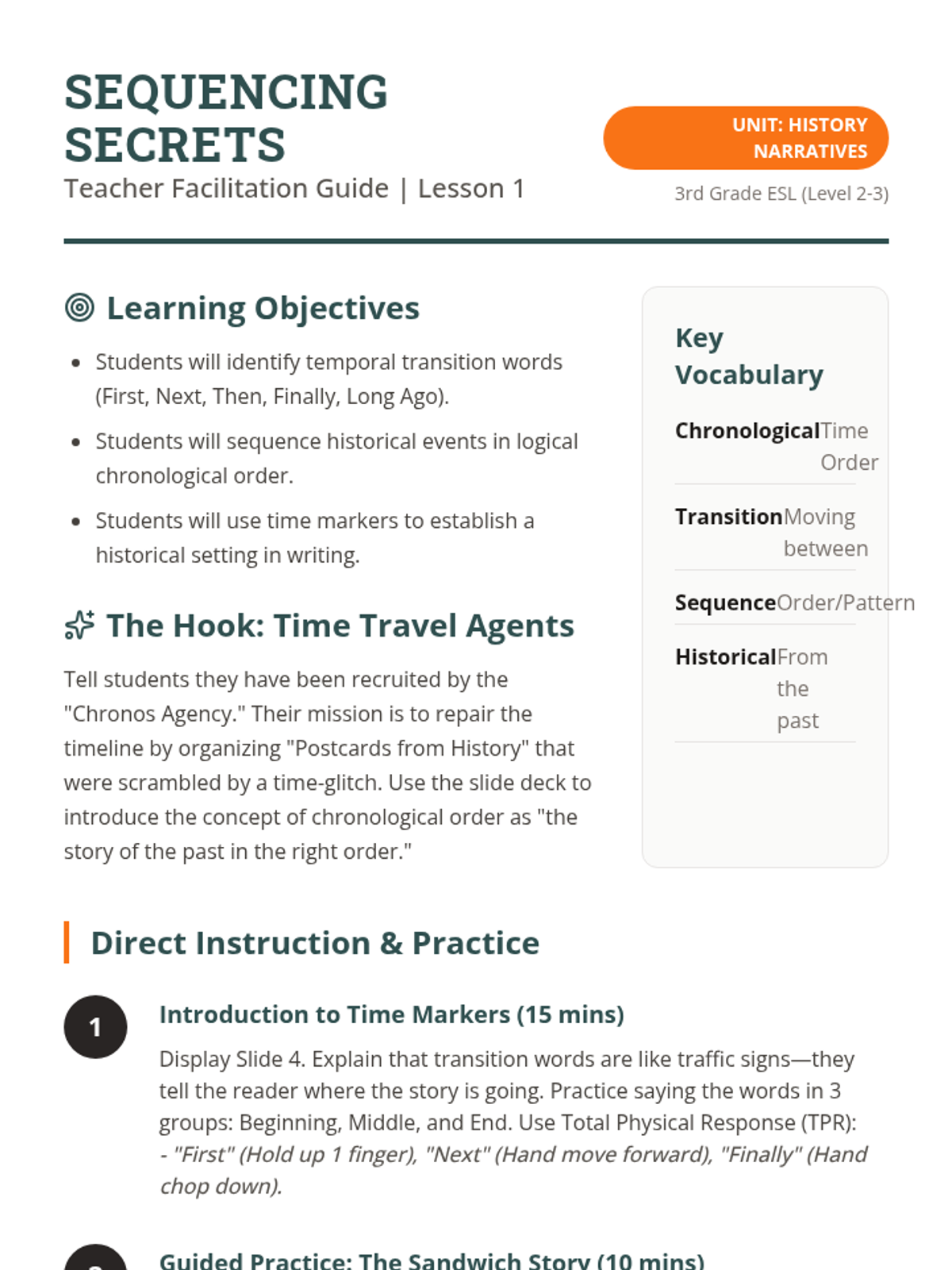
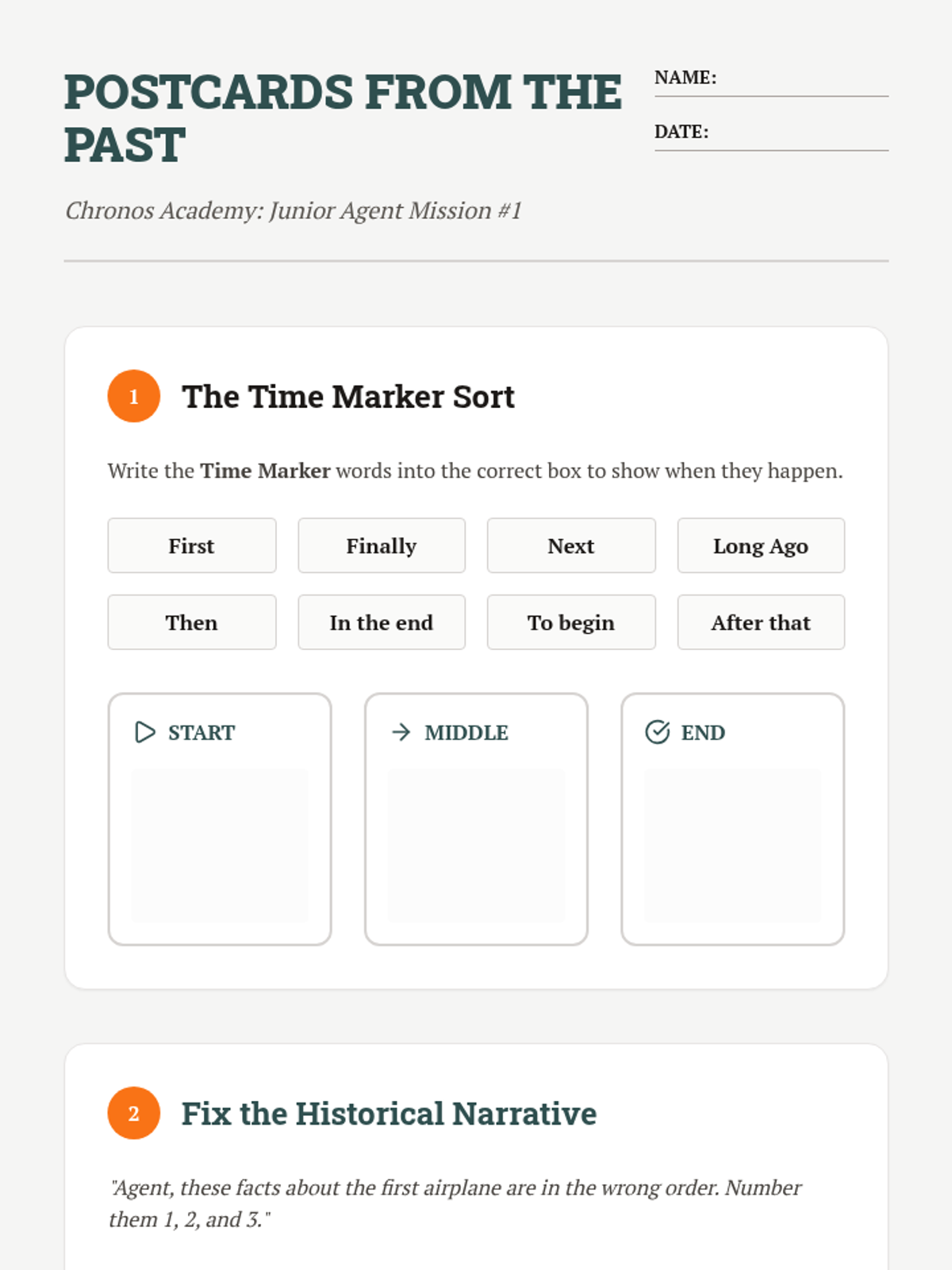
This sequence helps 3rd-grade ESL students master chronological language through social studies content. Students will learn to use transition words, past tense verbs, and biographical structures to tell stories of the past.