A 10th-grade ELA sequence focused on identifying, naming, and refuting logical fallacies in live debate settings using formal 'flowing' techniques and the four-step refutation method.
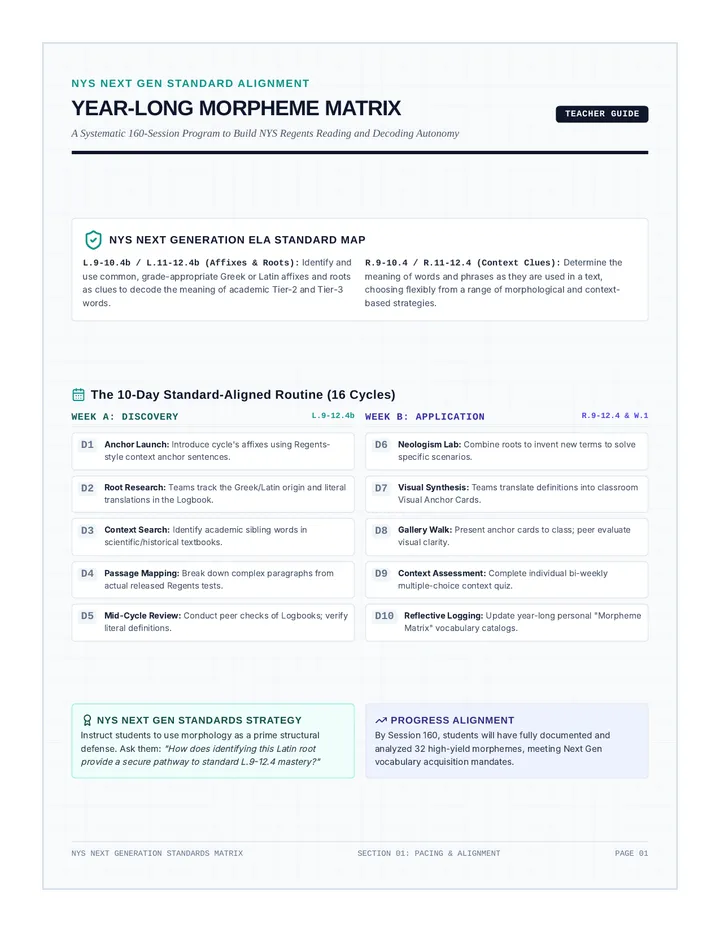
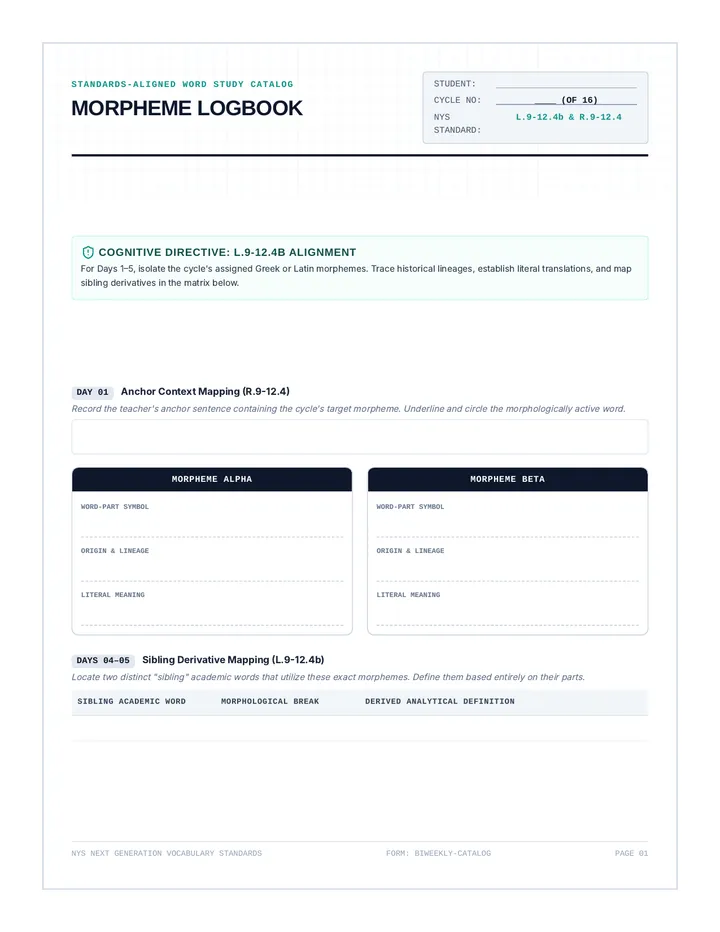
A comprehensive, year-long academic vocabulary system mapping 32 critical Greek and Latin roots across 16 bi-weekly cycles (covering 160 class sessions), designed specifically to build NYS Regents reading comprehension and decoding autonomy.
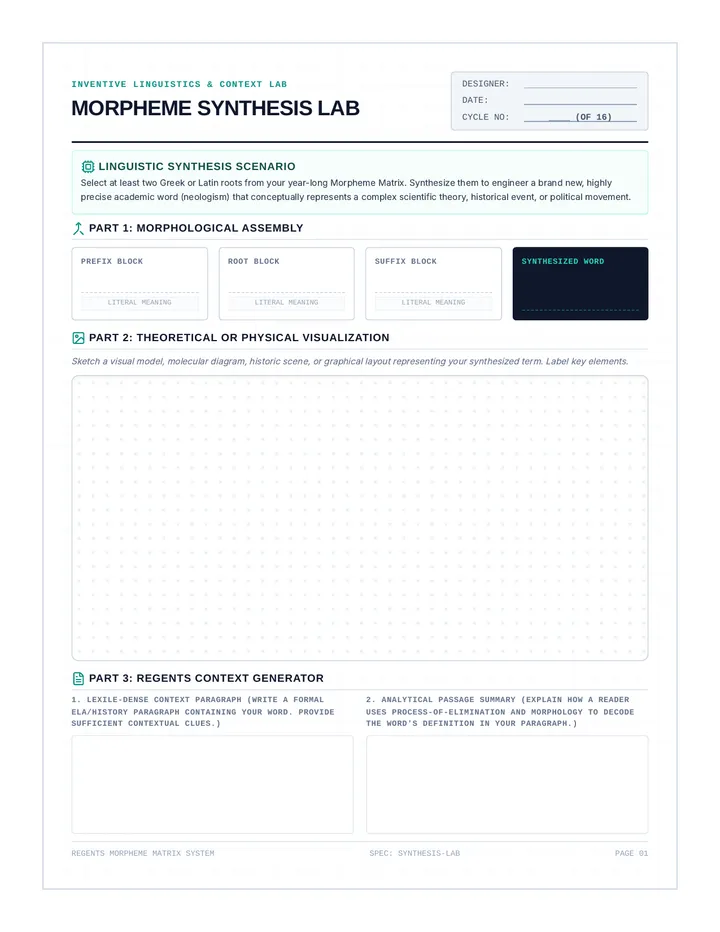
Students apply their compiled affix knowledge in a neologism design lab and demonstrate cumulative mastery using a comprehensive unit rubric.
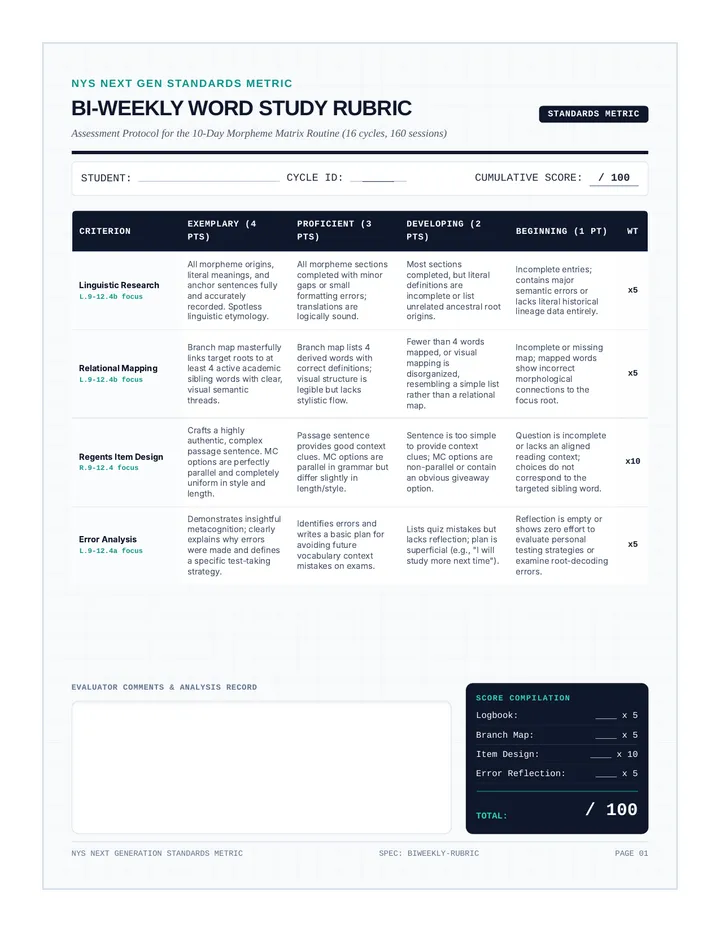
A comprehensive assessment rubric evaluating student research logbooks, visual anchor charts, invented neologisms, and presentations.
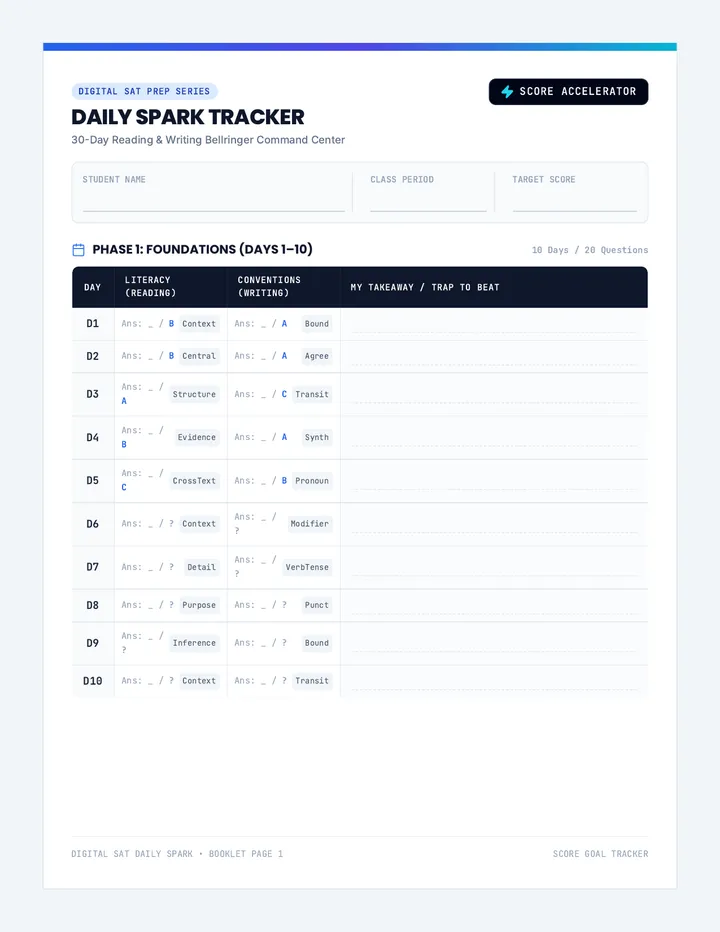
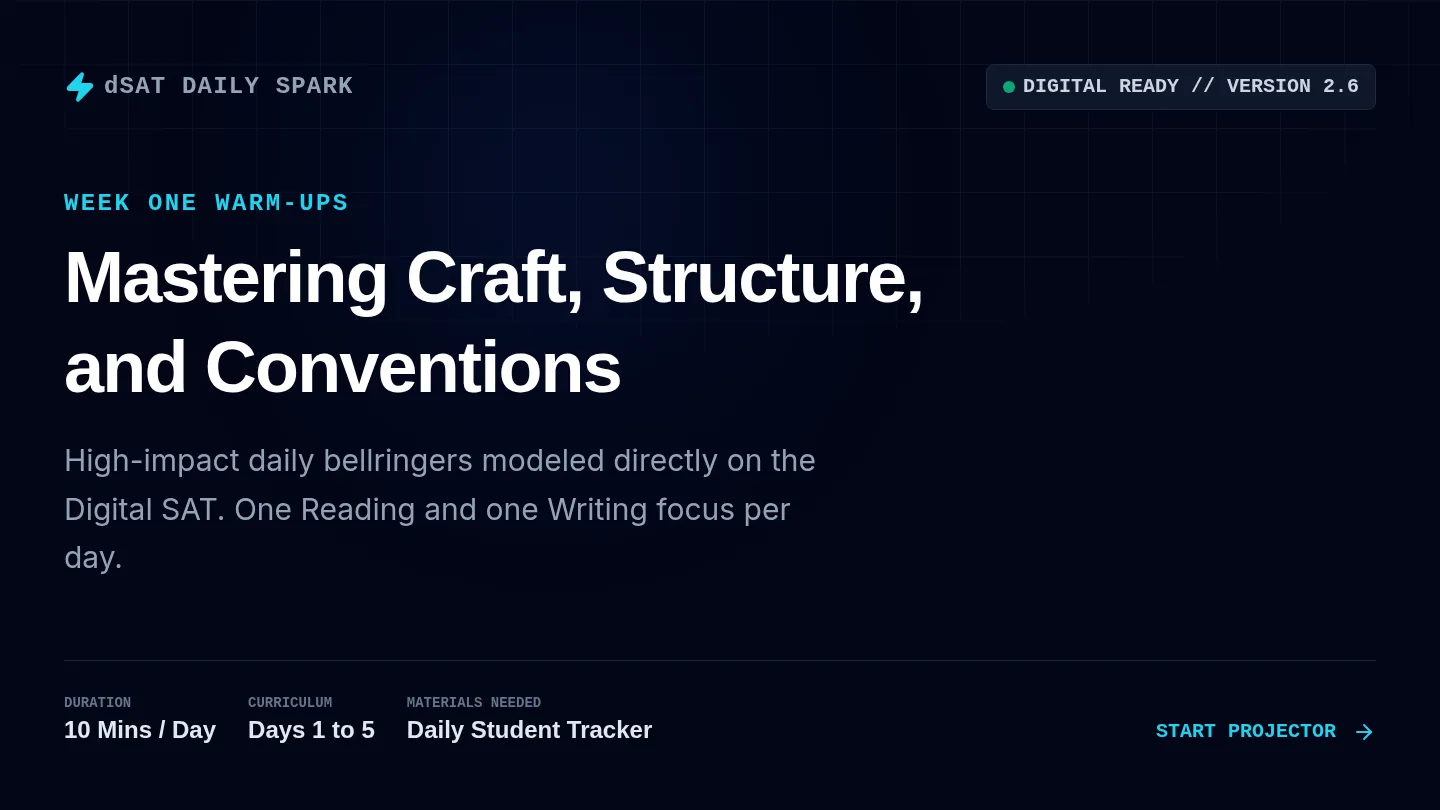
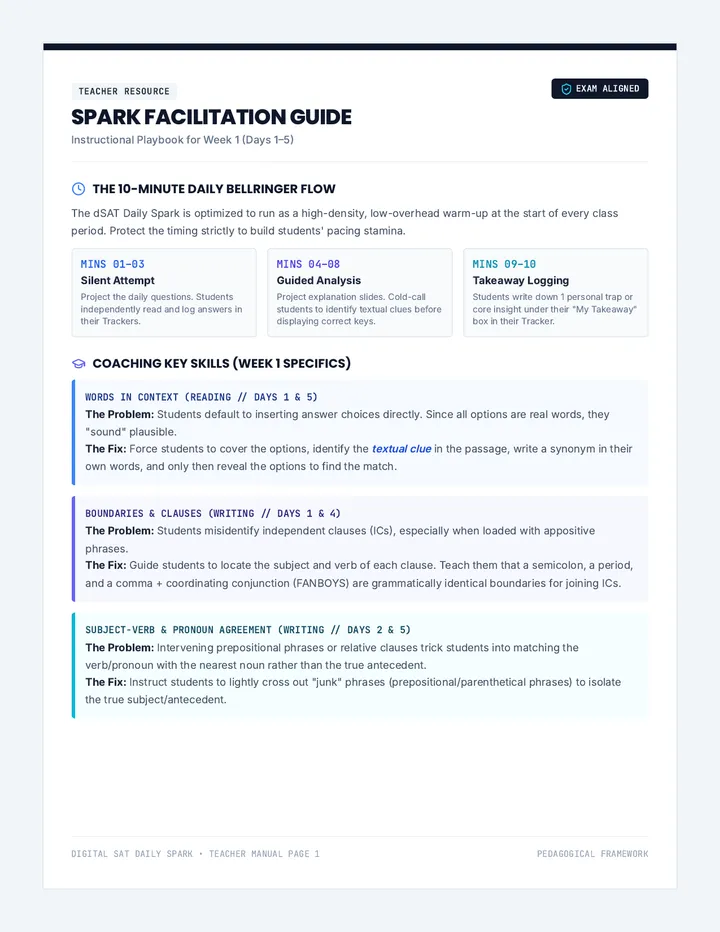
A comprehensive 30-day bellringer program designed to prepare students for the Digital SAT. Each day features one Reading and one Standard English Conventions question, complete with immediate skill breakdowns, detailed explanations, and strategic hints.
Students synthesize their research findings into visual anchor charts and interactive presentations, examining the crossover of Greek and Latin morphemes across various STEAM fields.
An engaging student design worksheet where students combine roots and affixes to invent, illustrate, and explain a brand-new scientific, medical, or mathematical technology.
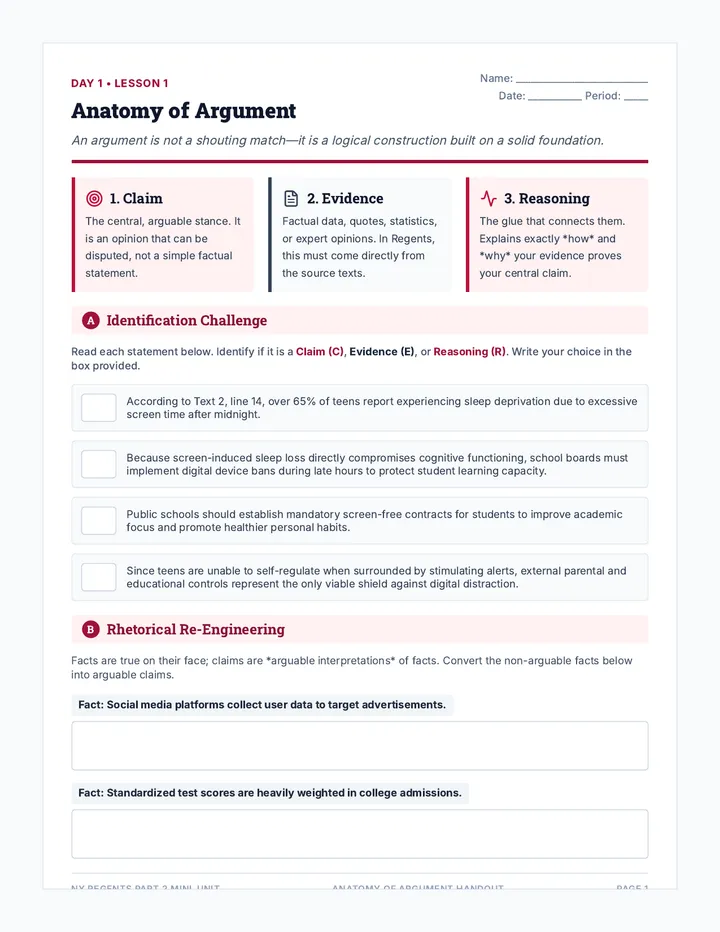
A 5-day, 10-lesson intensive writing unit aligned with the NYS Regents Part 2 Argumentation task. This unit scaffolds active reading, claim development, evidence citation, counterclaim construction, and the final 4-paragraph essay structure.
Students are introduced to the Morpheme Matrix framework, form research teams, select Regents-critical affixes, and begin their student-led linguistic investigation.
A beautiful 4-slide introductory slide deck presenting morphological anatomy and guiding the student inquiry mission.
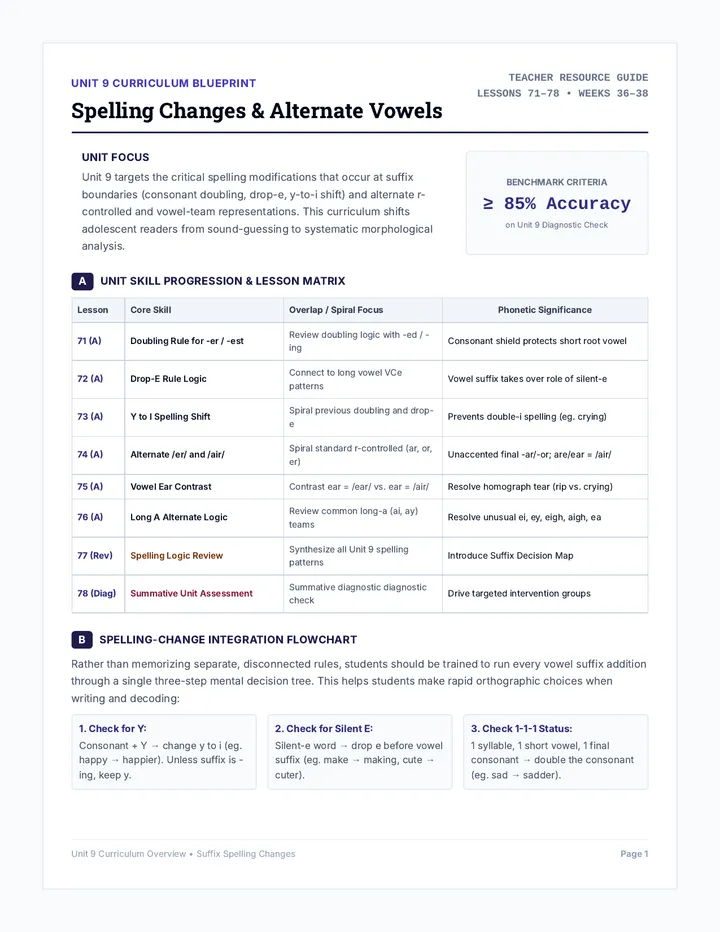
A reading intervention unit targeting the critical spelling changes that occur at suffix boundaries, designed for older struggling readers. The sequence covers final consonant doubling and silent-e dropping logic.
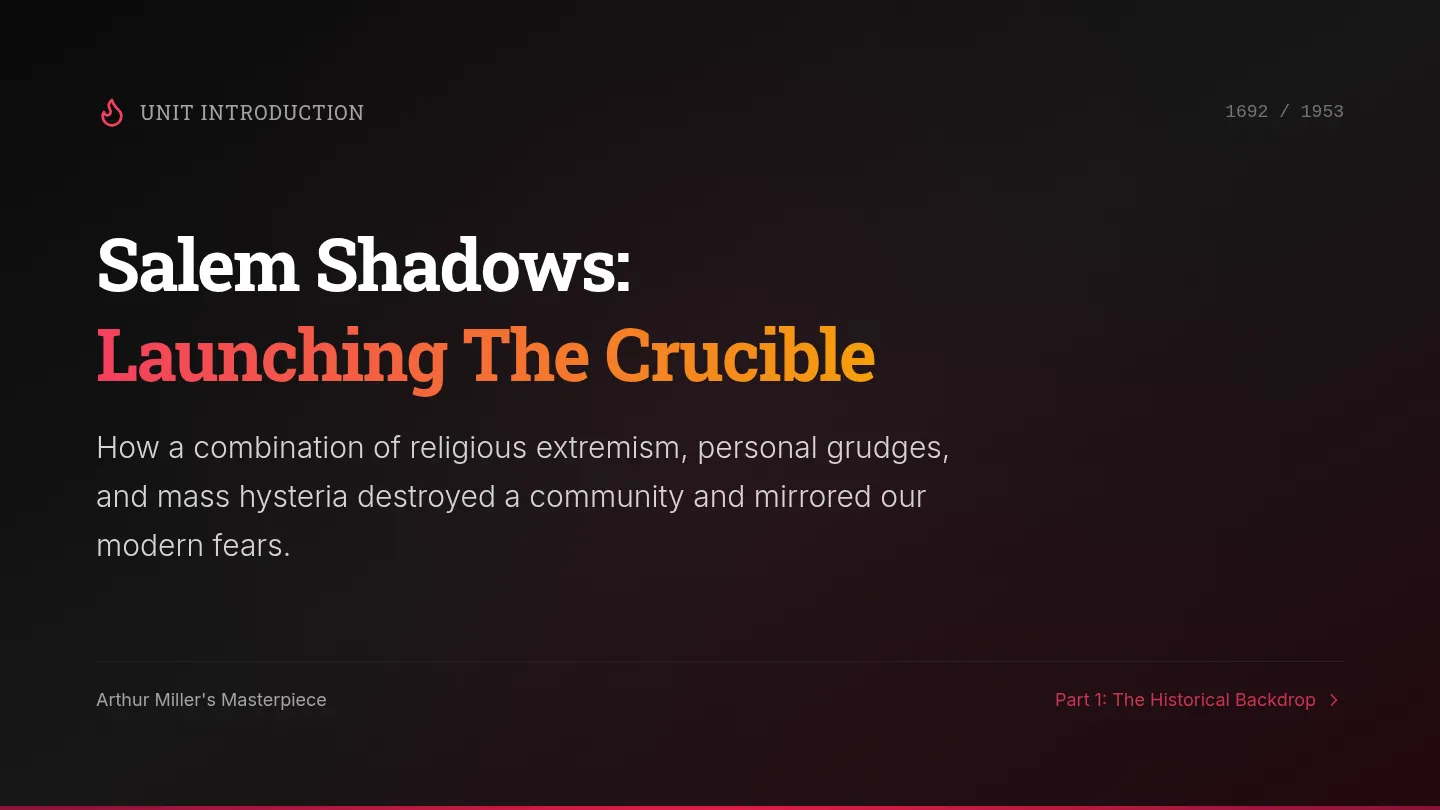
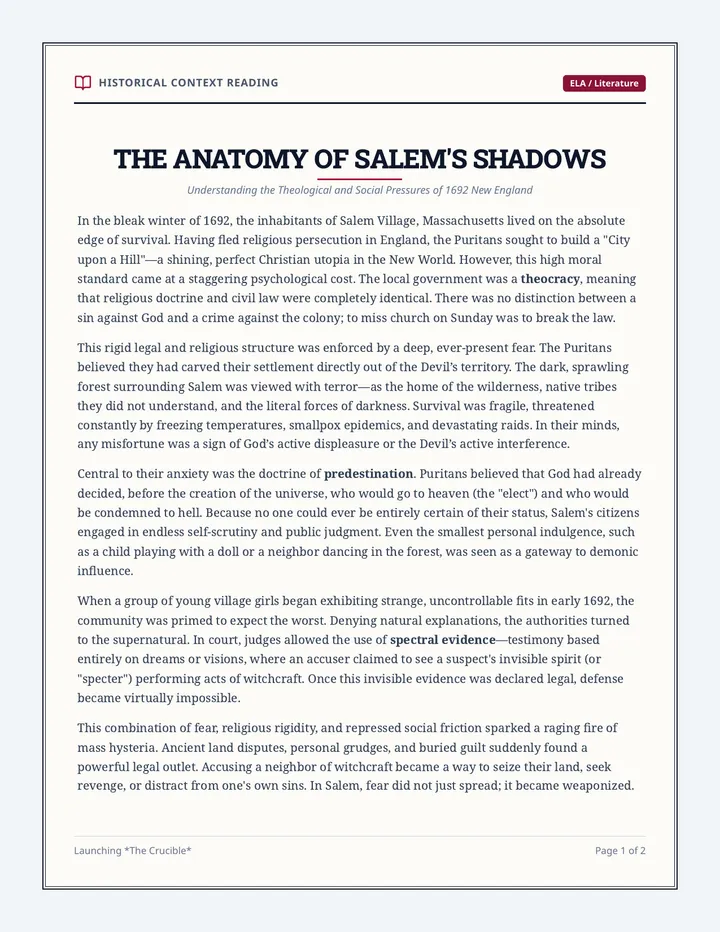
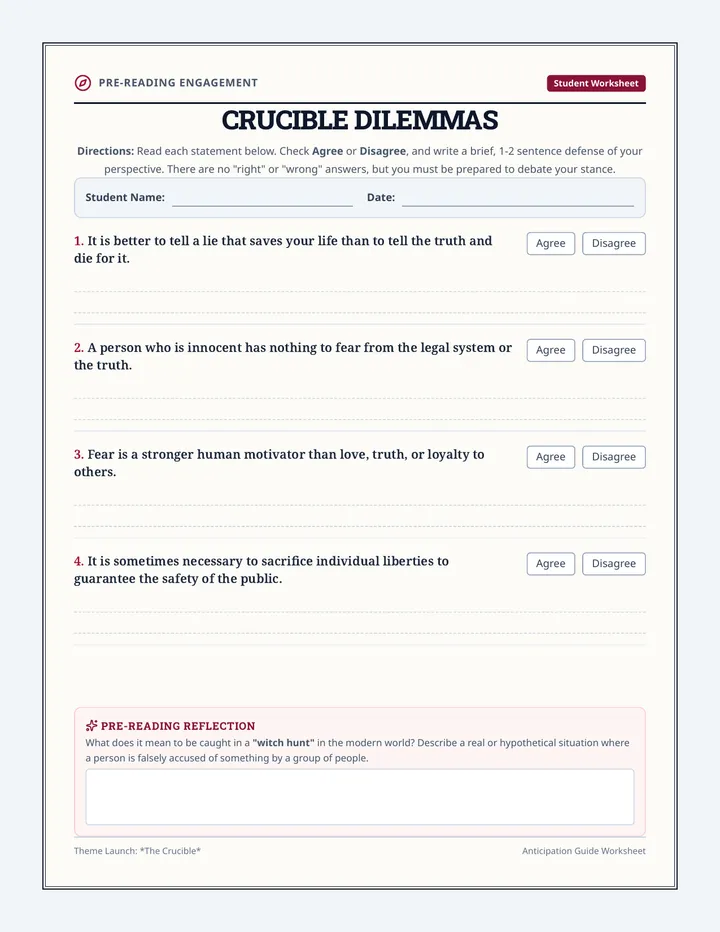
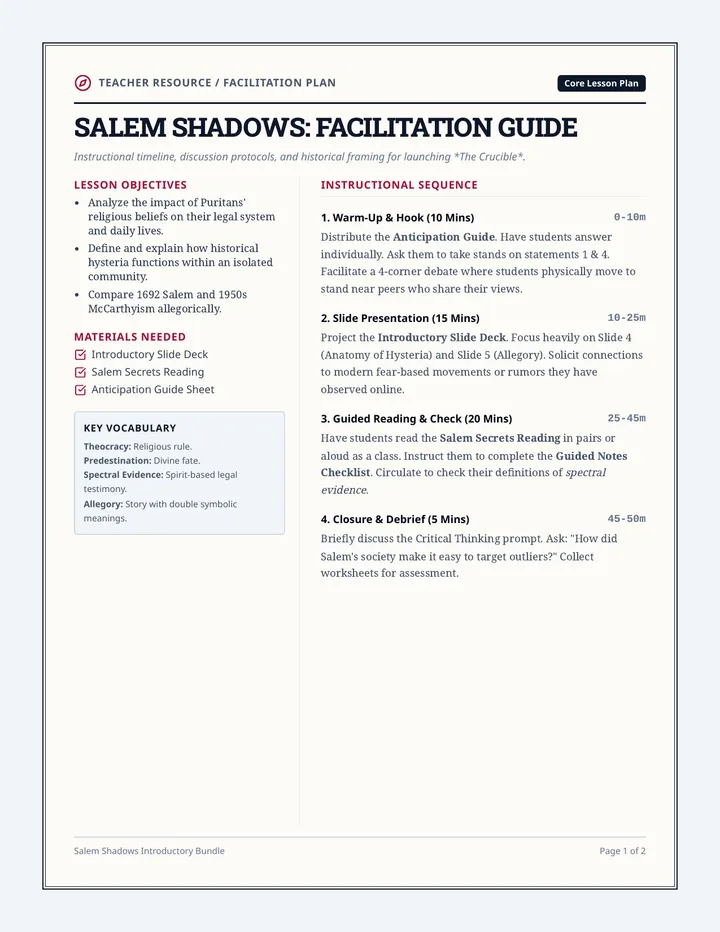
An immersive introductory lesson to Arthur Miller's *The Crucible* exploring the strict religious society of 1692 Salem, the psychological anatomy of hysteria, and the historical parallels to 1950s McCarthyism.
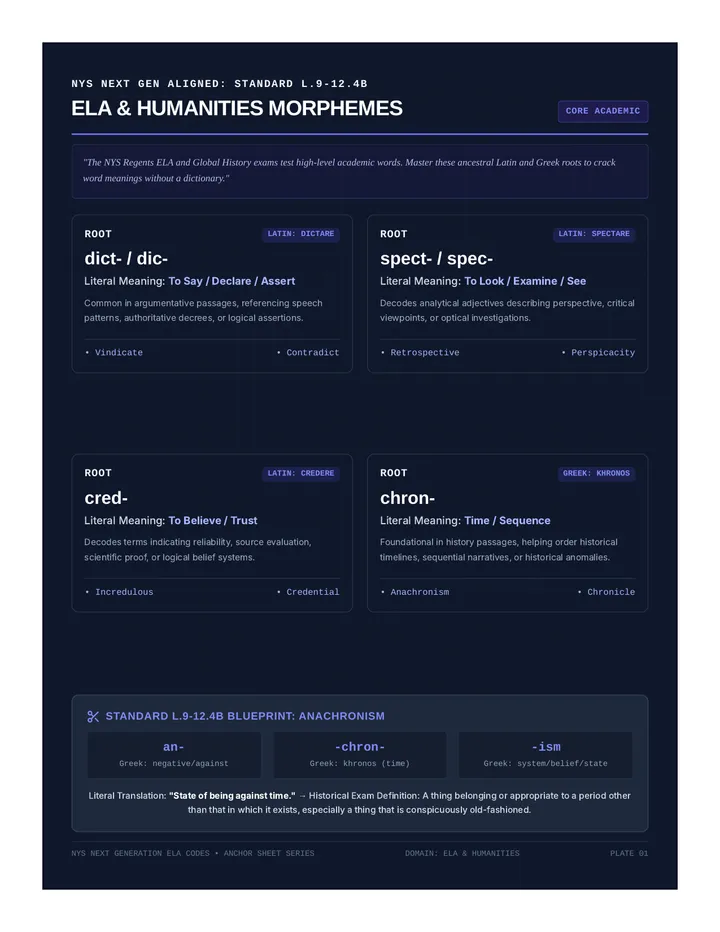
A 2-page visual reference and classroom anchor chart detailing high-frequency Greek and Latin affixes across ELA, Science, and Social Studies Regents exams, with etymology paths and academic context.