Teacher resource for Lesson 4, providing pedagogical cues for the smash, safety protocols, and a troubleshooting guide for common mechanical errors.
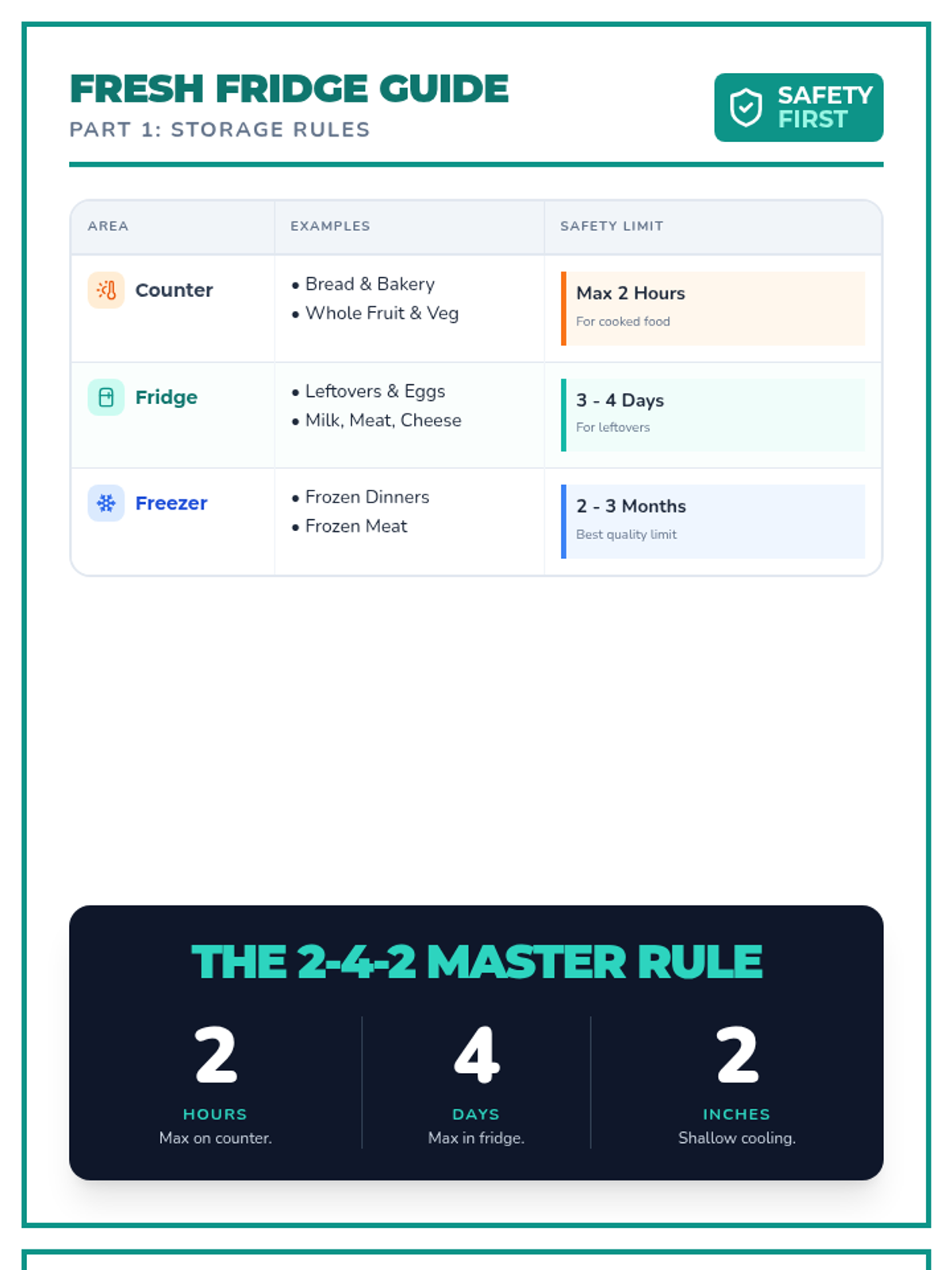
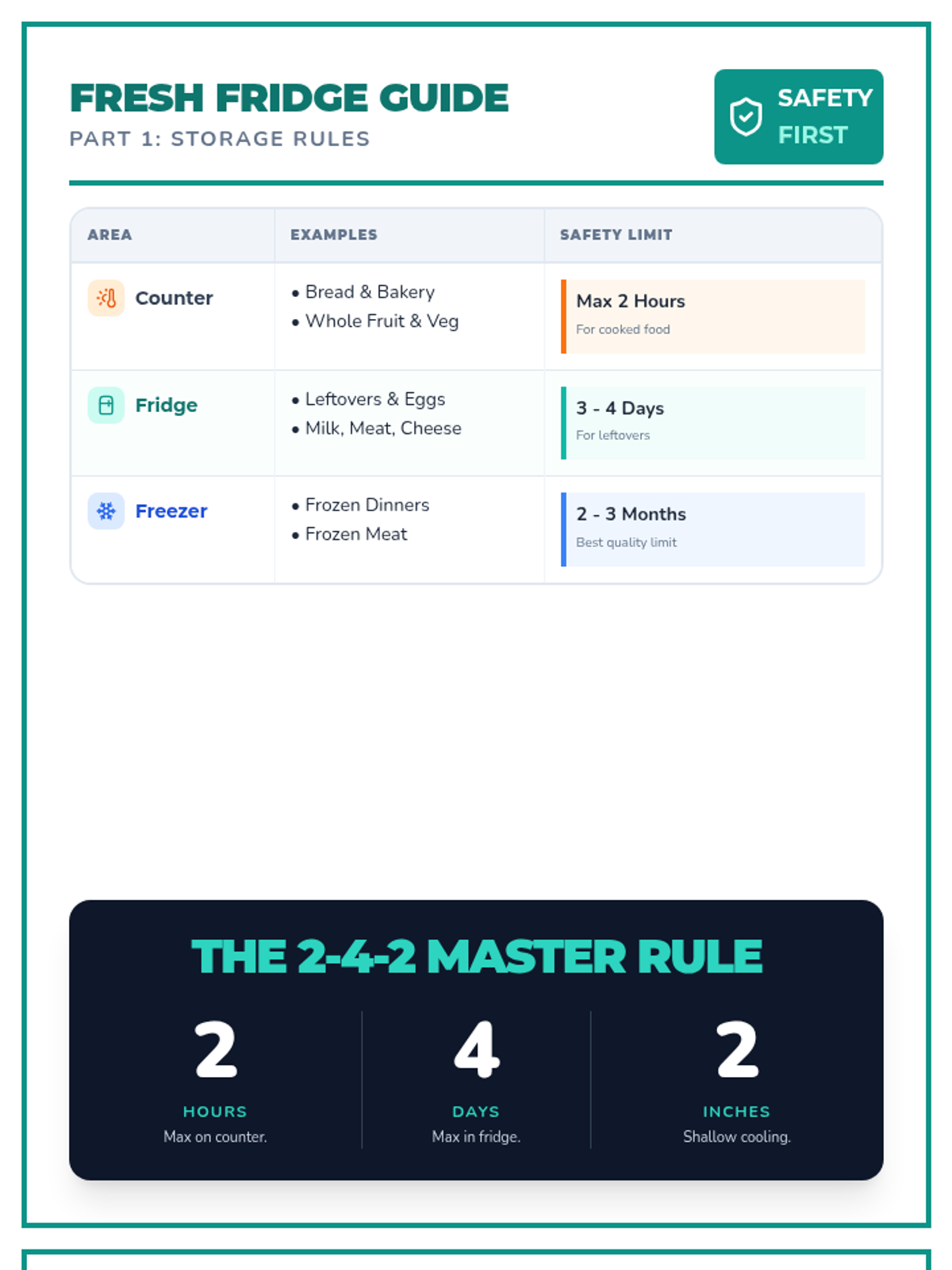
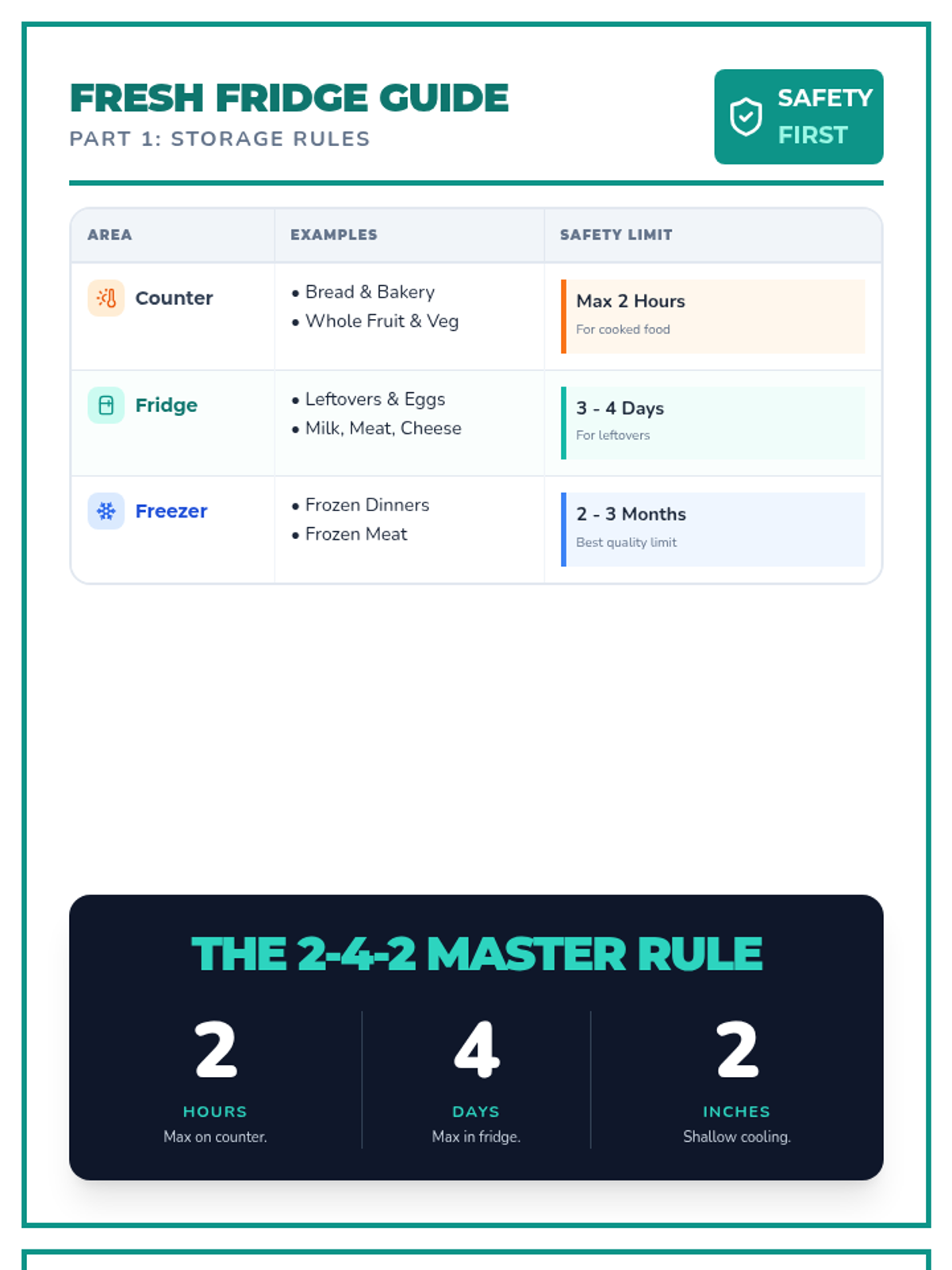
A reorganized visual guide for food storage and safety, featuring a clear tabular storage chart, the '2-4-2' rule, discard criteria, and a labeling tutorial with significantly increased font sizes for maximum readability.
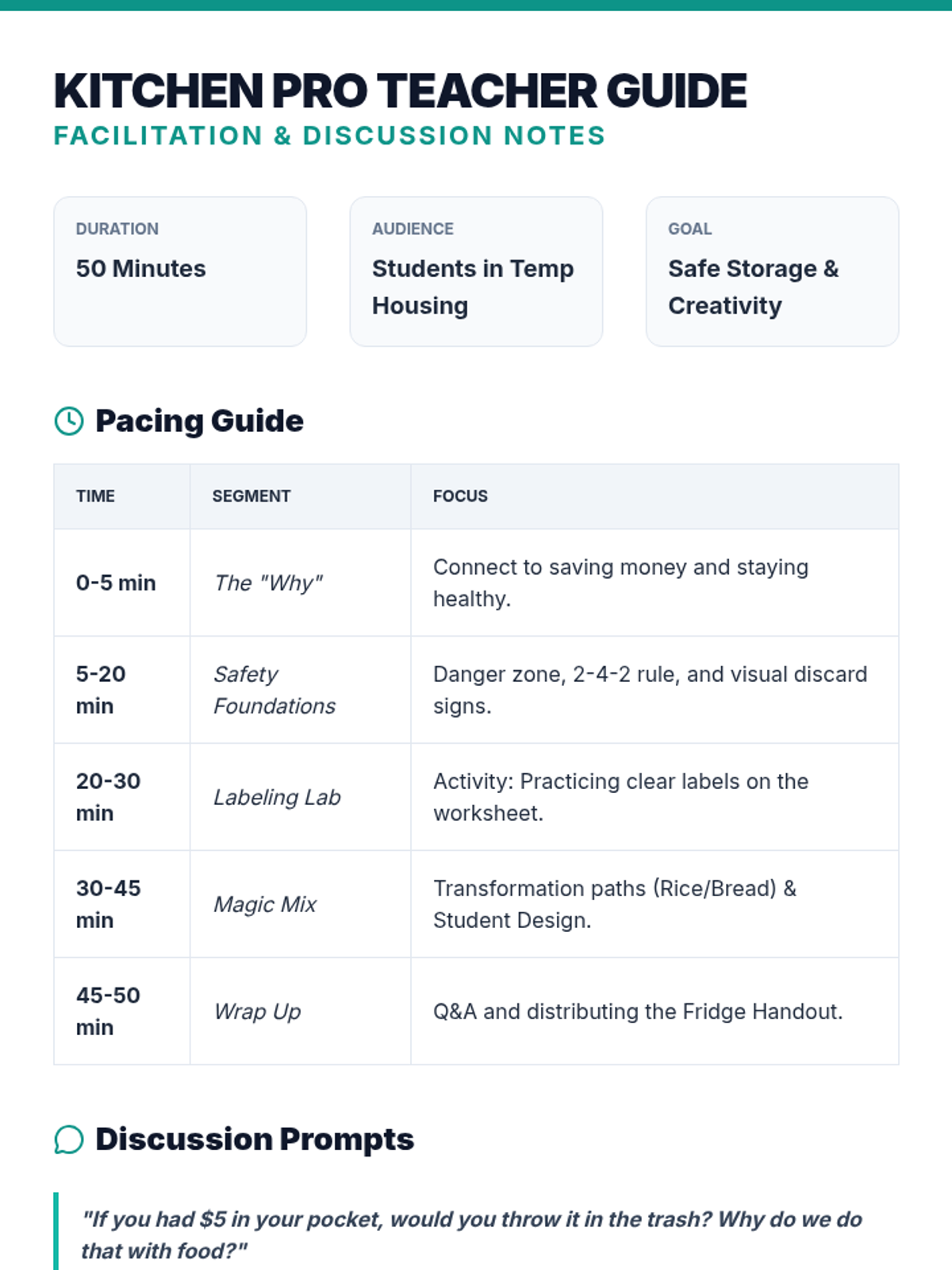
A comprehensive teacher's guide for the Kitchen Hacks lesson, including a 50-minute pacing guide, discussion prompts, and strategies for neurodiverse learners and students in temporary housing.
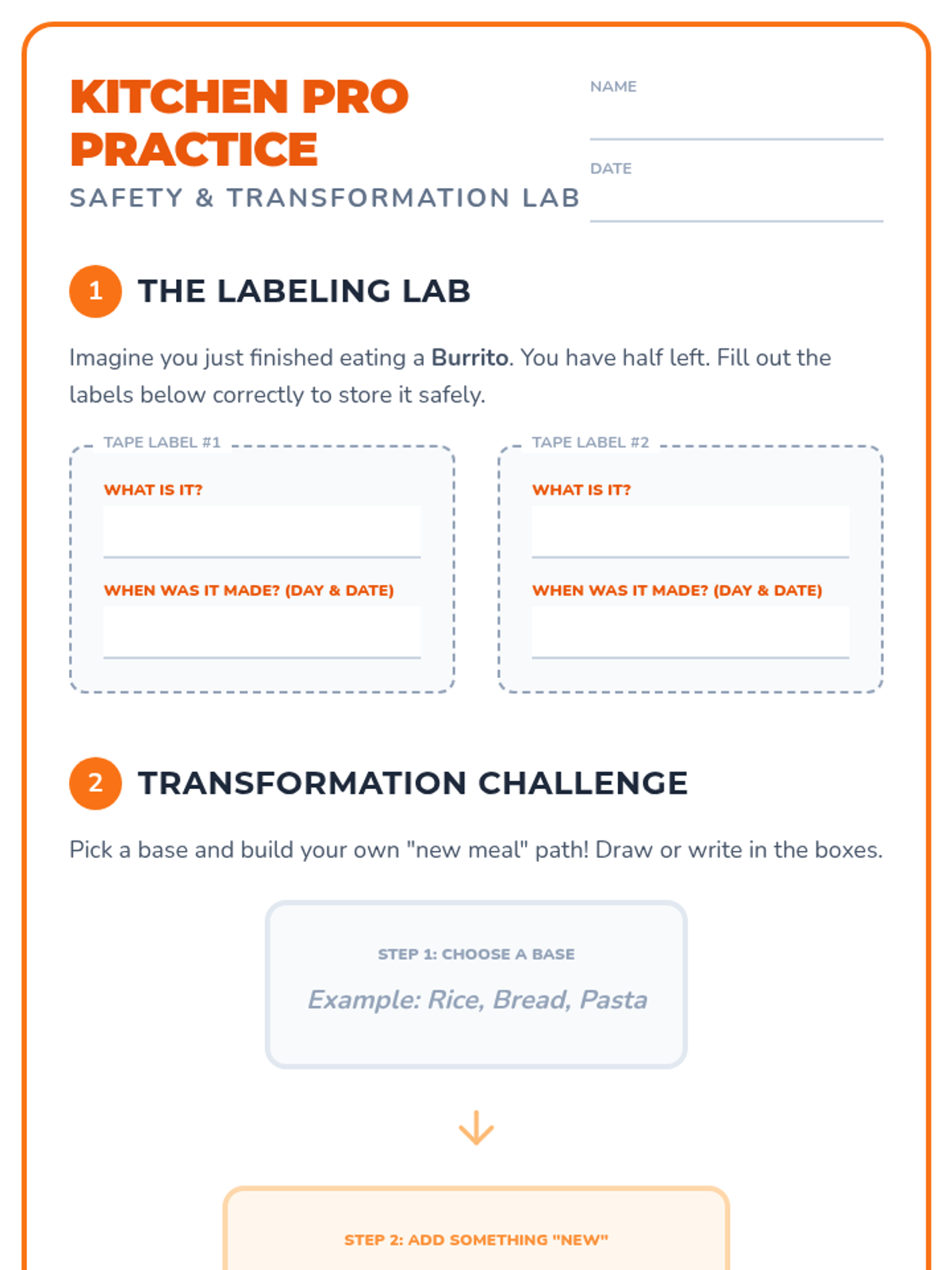
A student practice sheet for applying kitchen safety skills, including labeling exercises and a transformation flowchart activity.
A visually-driven slide deck for a 50-minute session on kitchen safety and food transformation, featuring the 2-4-2 rule and leftover flowcharts.
A reorganized visual guide for food storage and safety, featuring a clear tabular storage chart, the '2-4-2' rule, discard criteria, and a labeling tutorial with increased font sizes for readability.
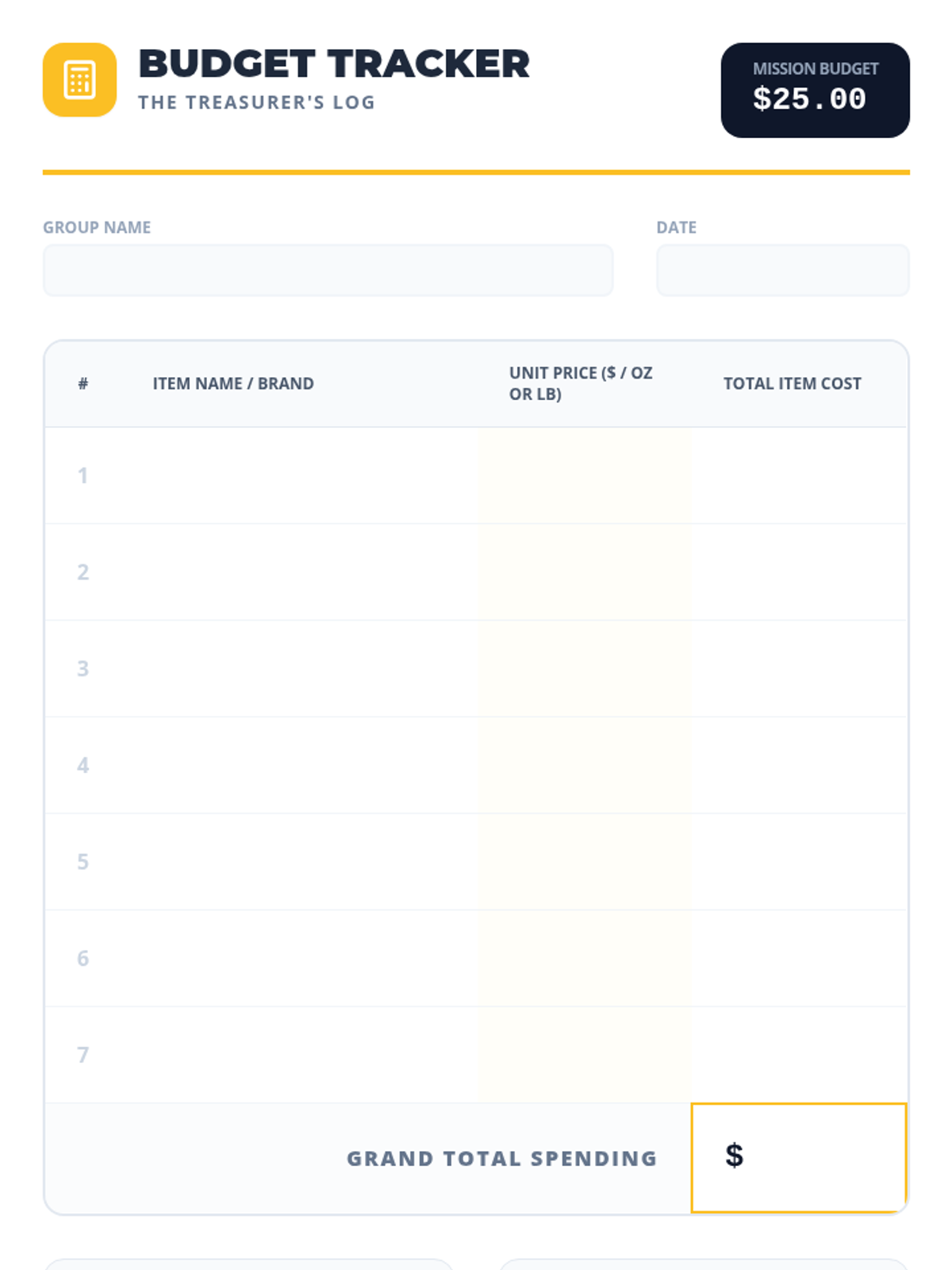
A specialized tracking sheet for the team 'Treasurer' to log grocery items, record unit prices, and calculate total spending within a $25 budget.
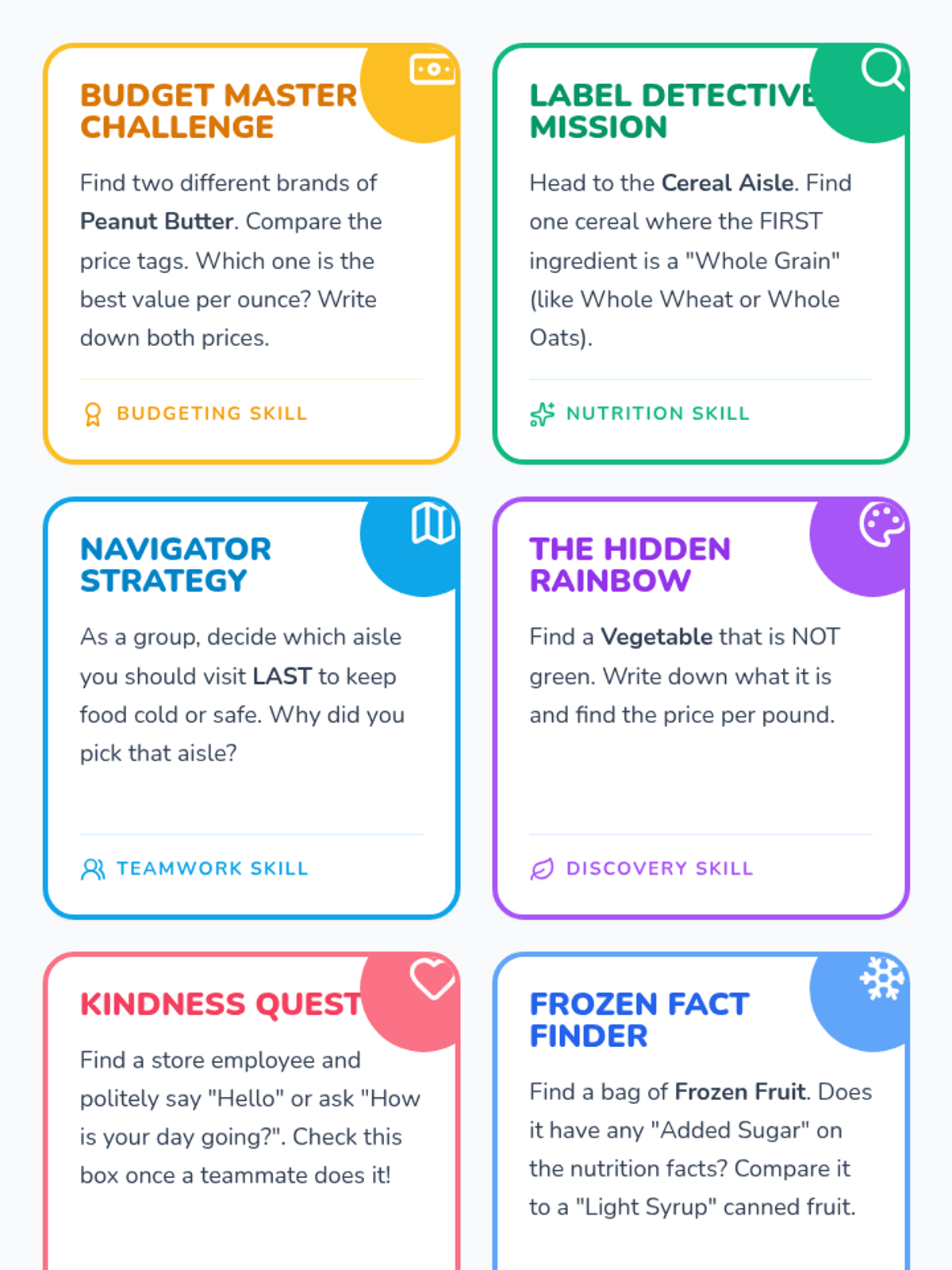
A set of 6 printable task cards that challenge student teams to perform specific missions involving nutrition, budgeting, and social skills.
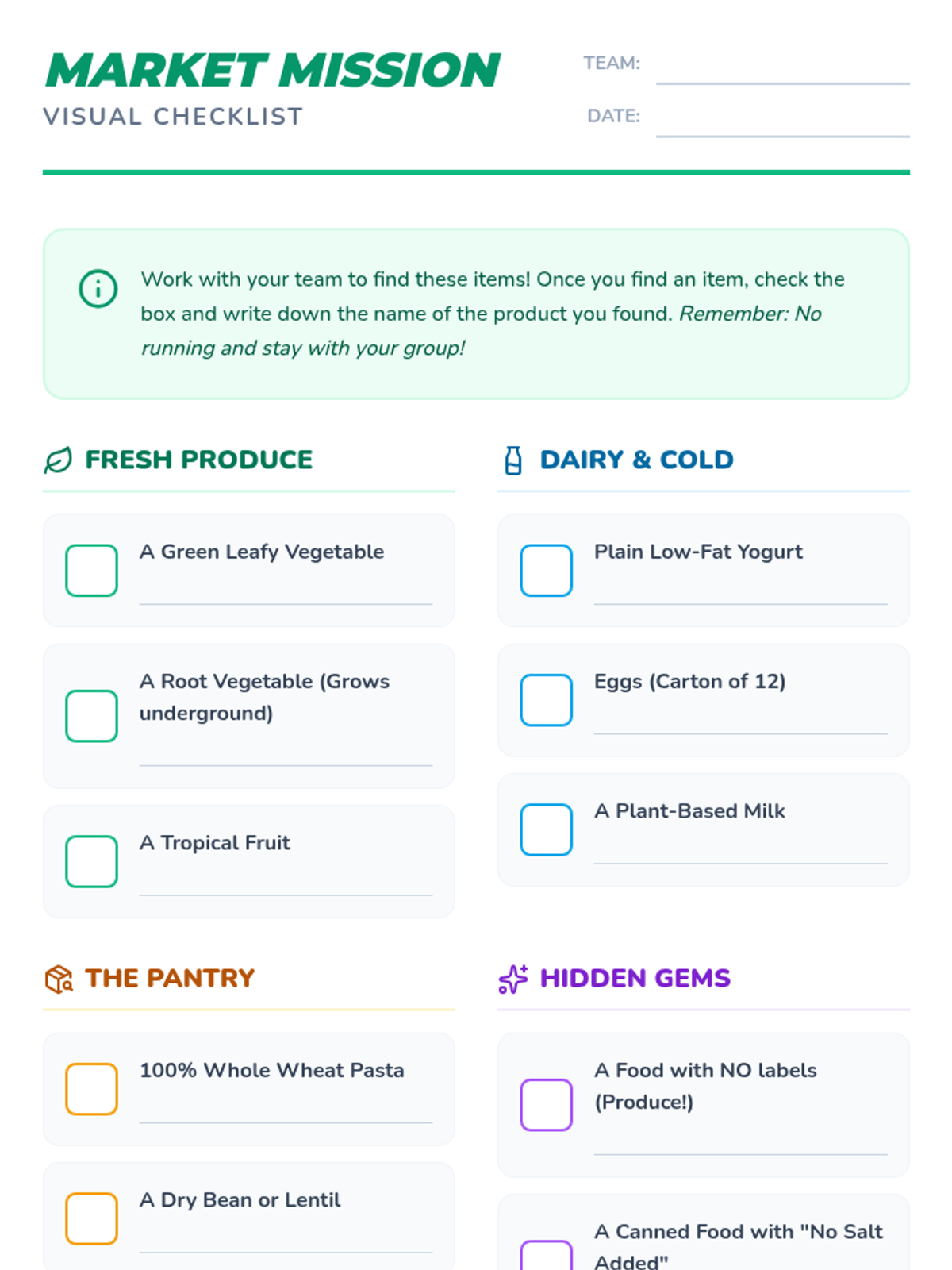
A visual checklist with icons and checkboxes for students to identify healthy grocery items across various departments.
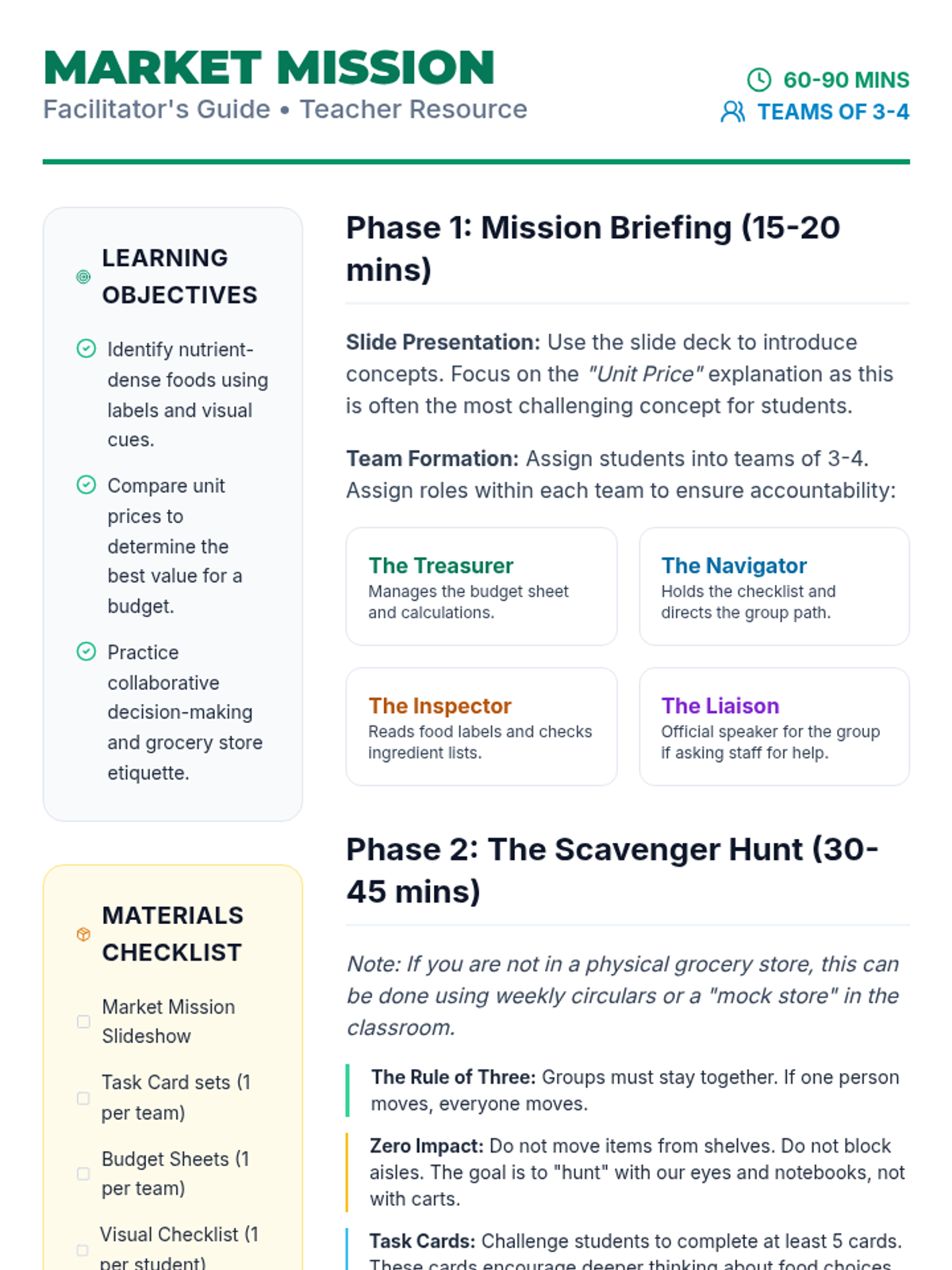
A comprehensive guide for teachers and facilitators to lead the Market Mission scavenger hunt, including learning objectives, team roles, and debrief questions.
A vibrant, visual slide deck that introduces the Market Mission scavenger hunt, covering health tips, budgeting basics, and teamwork expectations.
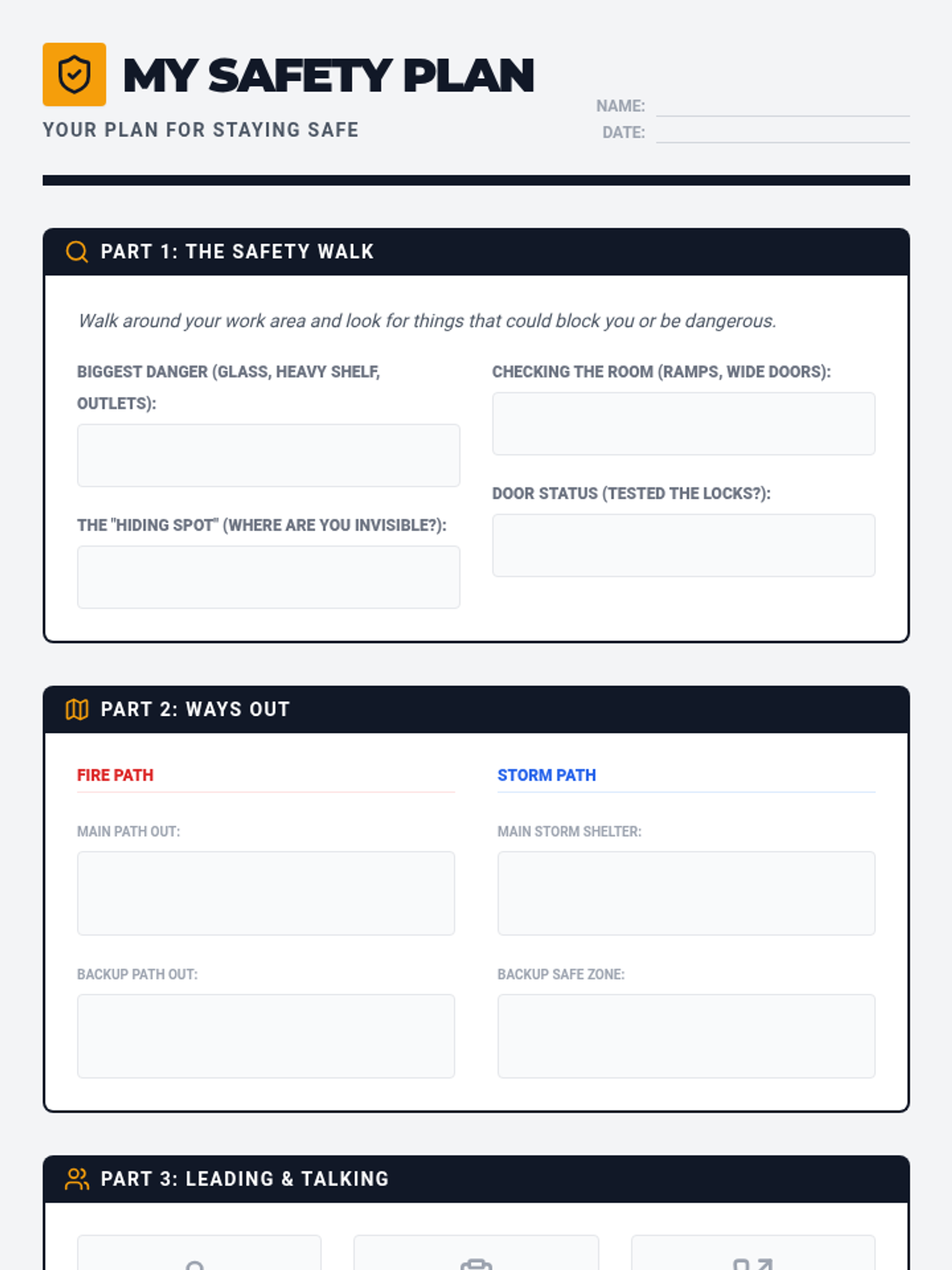
A practical, 4-phase safety planning worksheet for staff and students to audit their space, map emergency routes, and assign leadership roles during the training session. Revised with simple, understandable language.
Expanded 18-slide safety training presentation covering emergency protocols and a detailed step-by-step guide on building a custom safety plan. Revised with simple, easy-to-understand language.
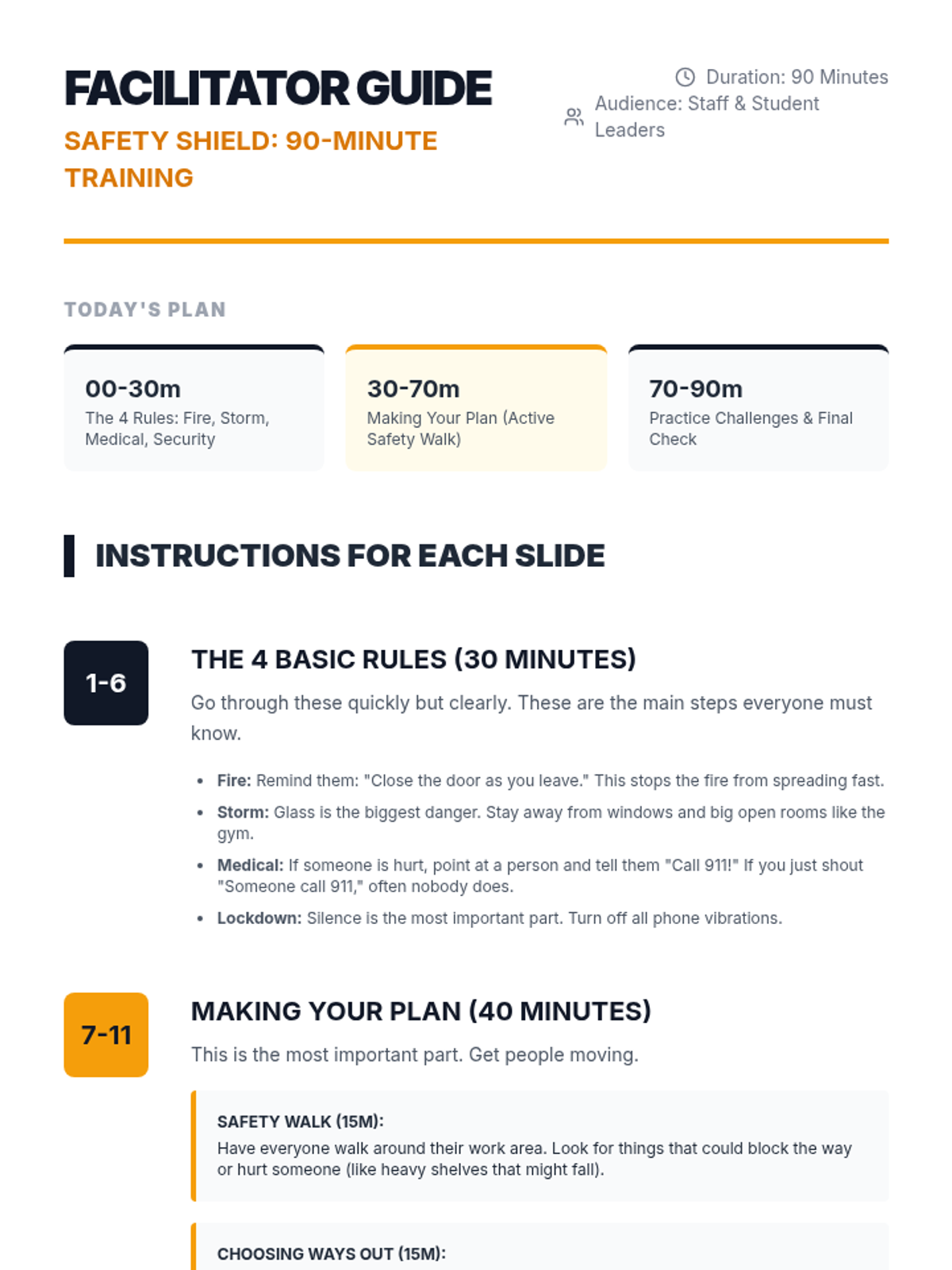
Expanded facilitator guide for the 90-minute Safety Shield Training, providing pacing blocks, workshop instructions, and curveball scenarios for stress testing. Revised with simple, clear language.
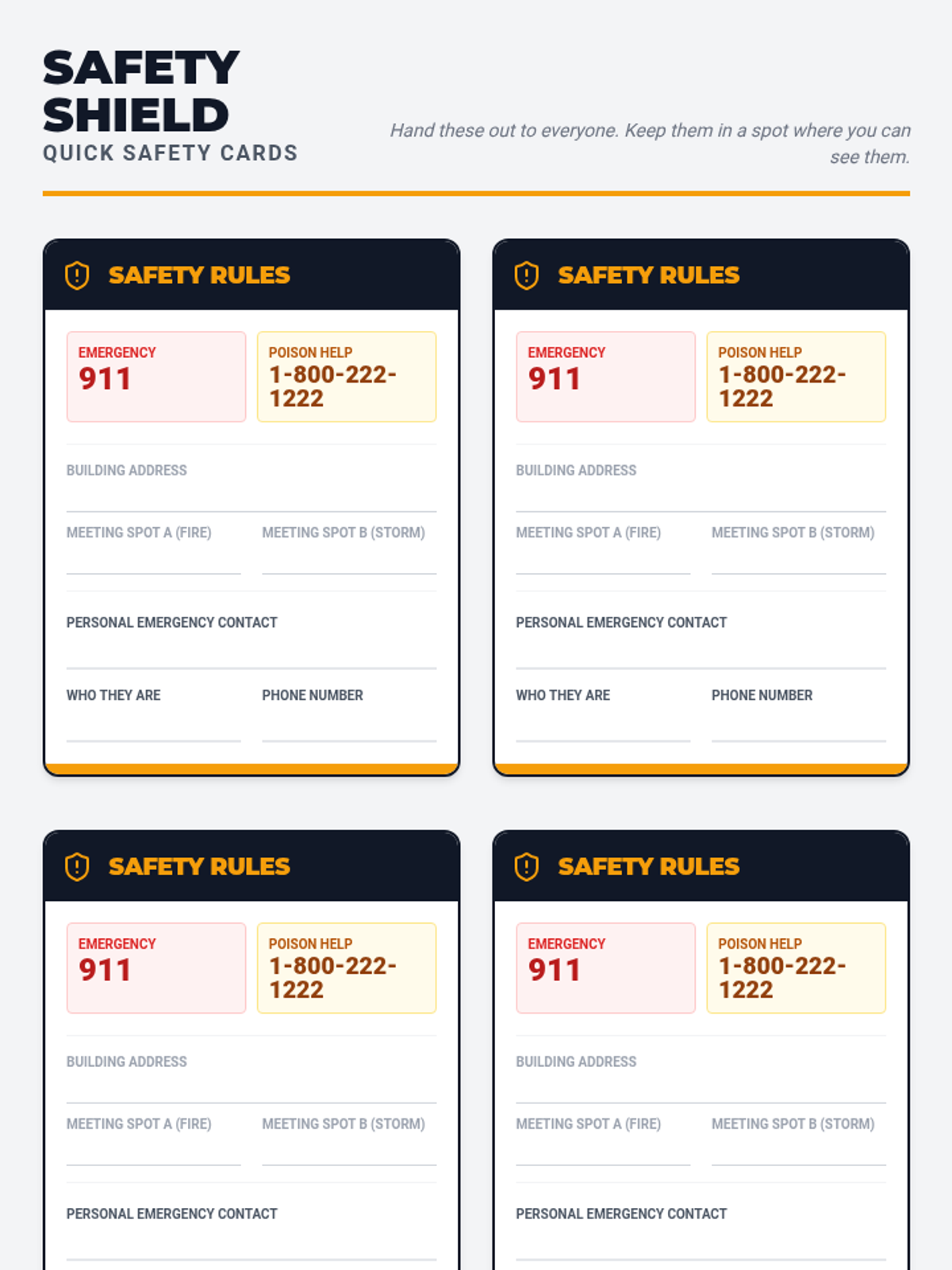
A set of printable emergency contact cards featuring quick-reference numbers, meeting spot fields, and personal contact sections for students and staff. Revised with simple, clear language.
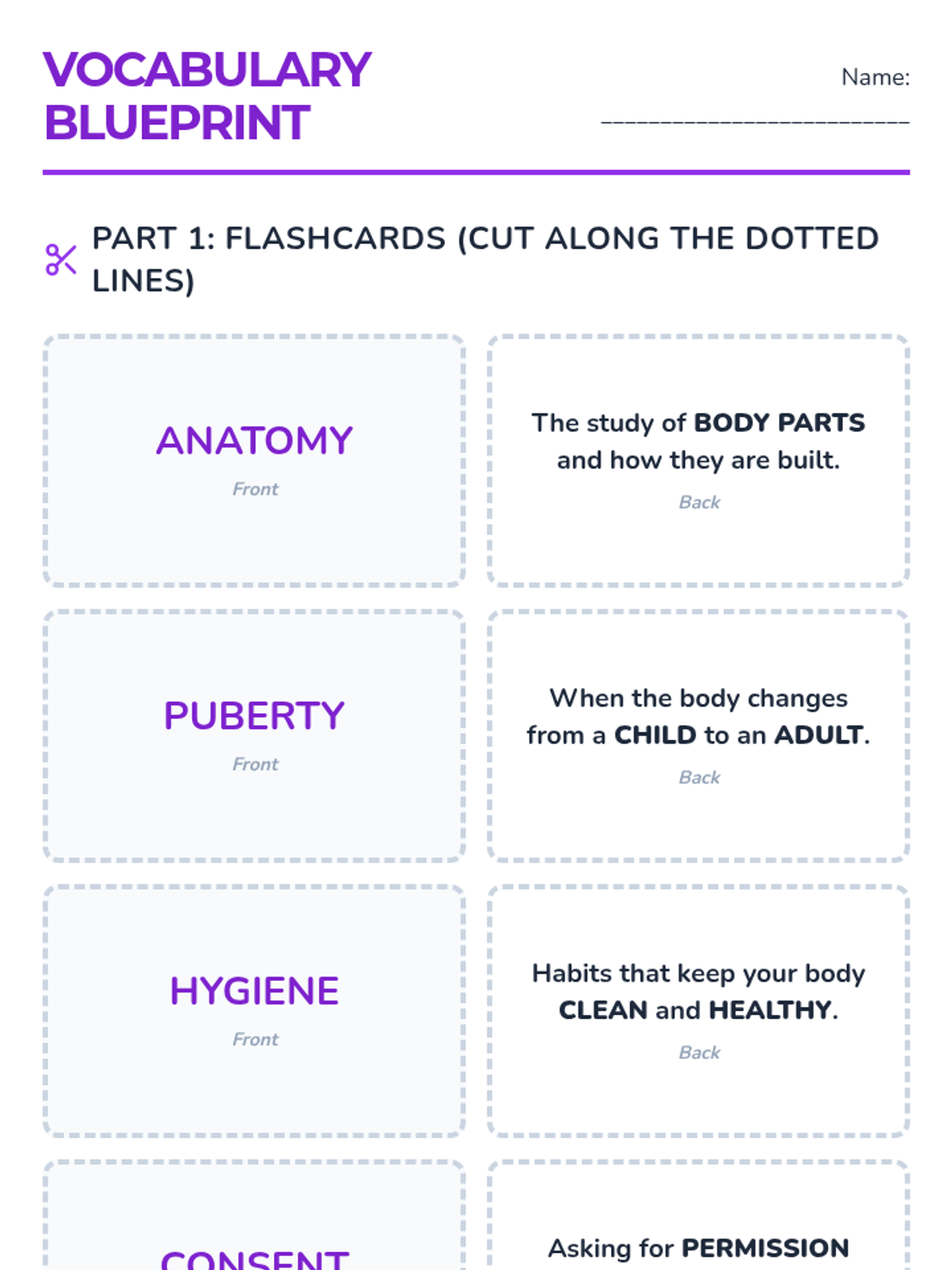
A set of cut-out vocabulary flashcards and a simplified matching activity featuring core sexual health terms like anatomy, puberty, consent, and boundary. Designed for students needing visual and textual scaffolding.
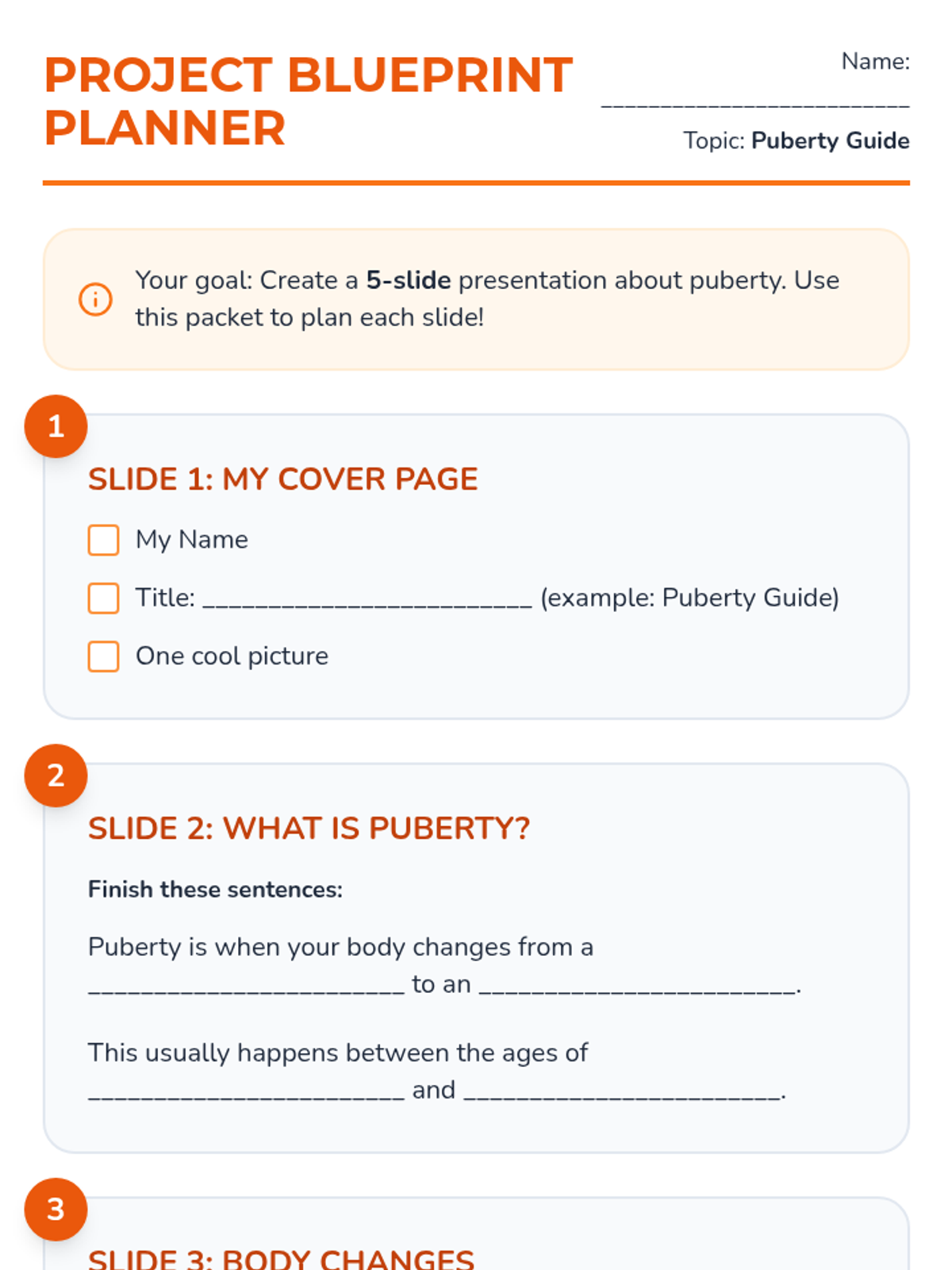
A step-by-step project planner that scaffolds the creation of a 5-slide puberty presentation. Features sentence starters and slide-by-slide checklists to support 6th-grade ELA resource room students.
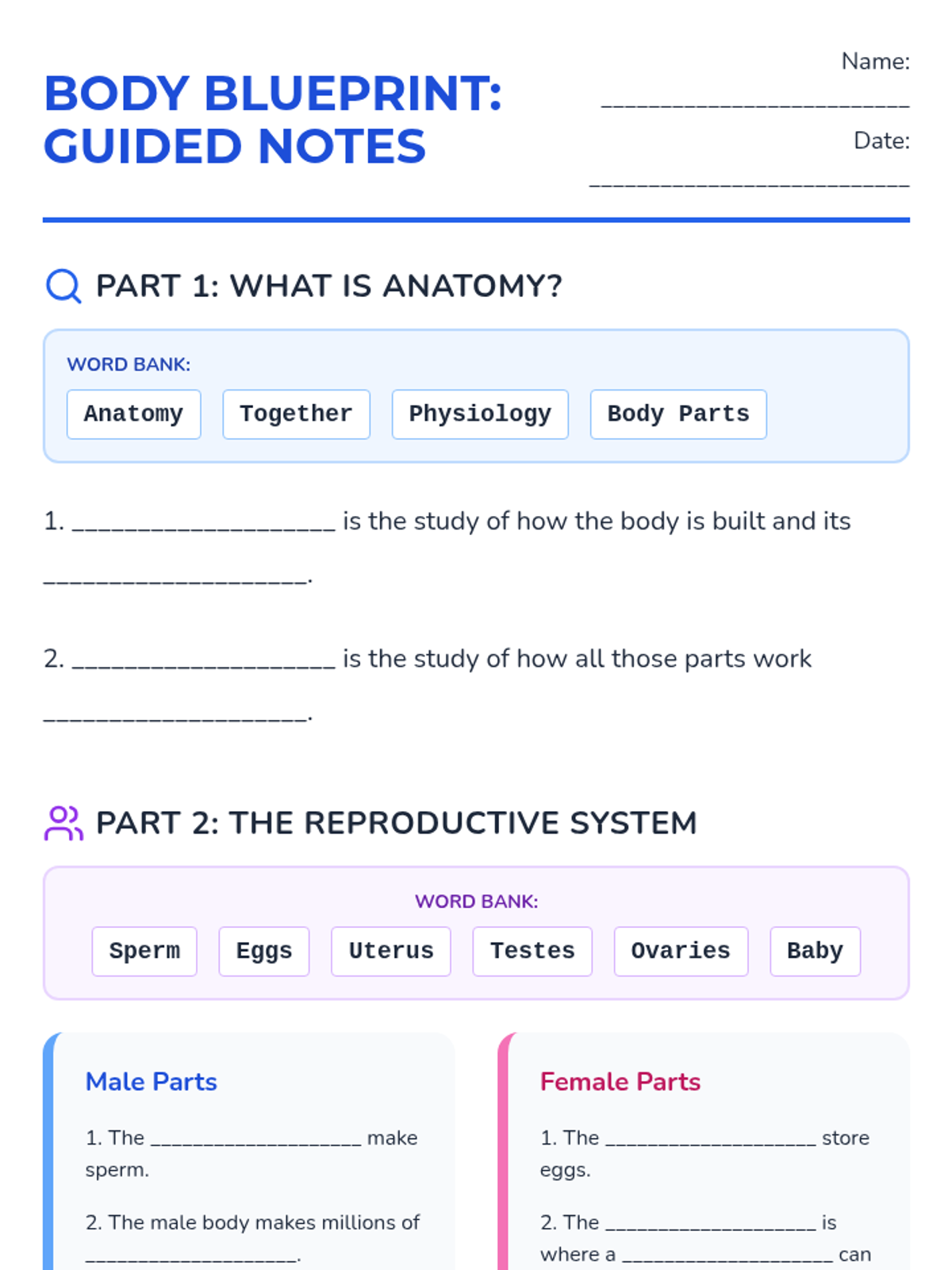
A guided notes worksheet for students to follow along with the "Body Blueprint" slides. Includes word banks, simple fill-in-the-blank sentences, and checkboxes for easy completion.
A visually-heavy, simplified slide deck on sexual health adapted for 6th-grade resource room students, featuring clear definitions, visual Check for Understanding slides, and a "Body Blueprint" theme.
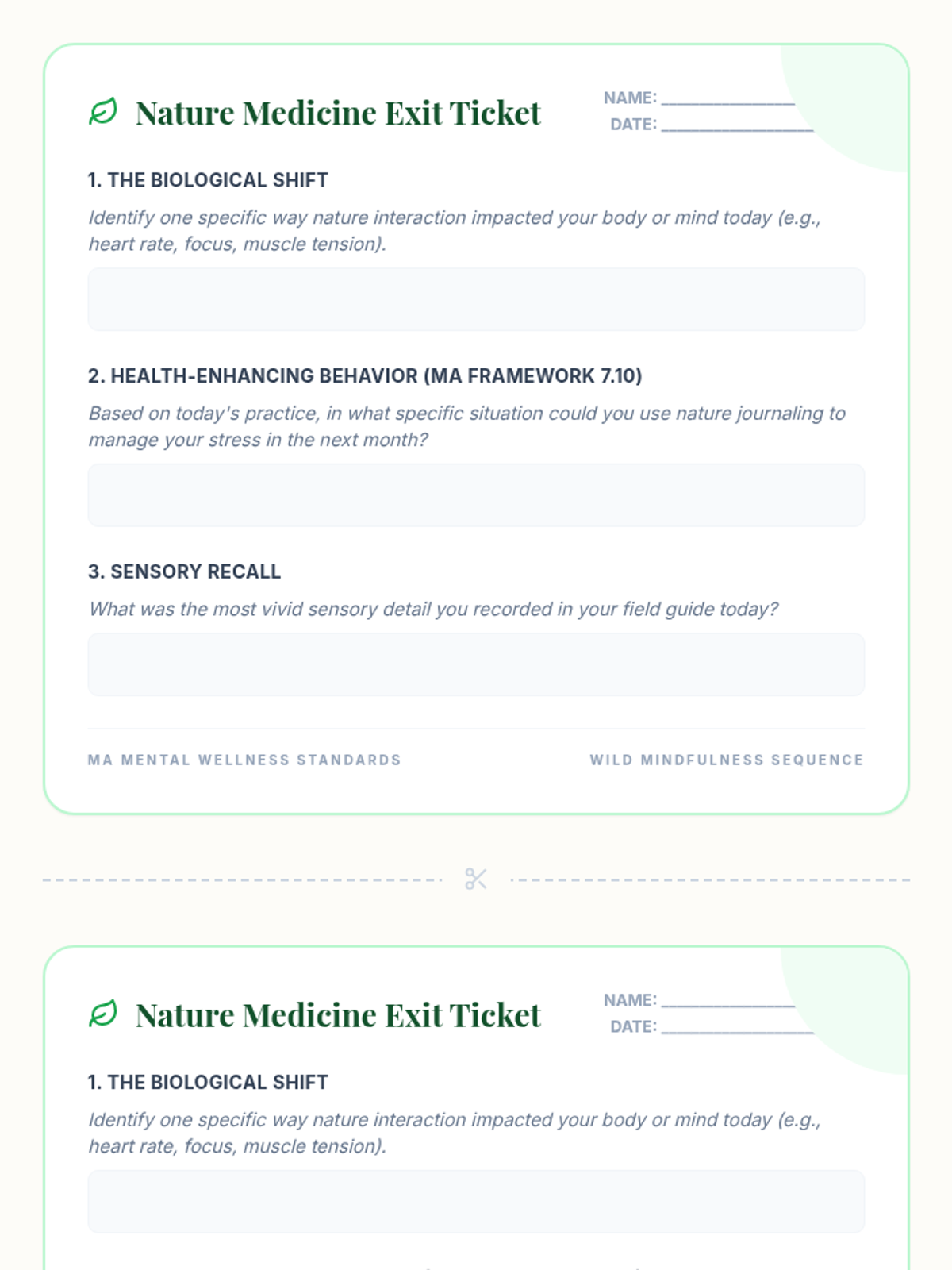
A printable exit ticket for Grade 10 health students to reflect on the mental health benefits of nature interaction and identify its use as a stress management tool.
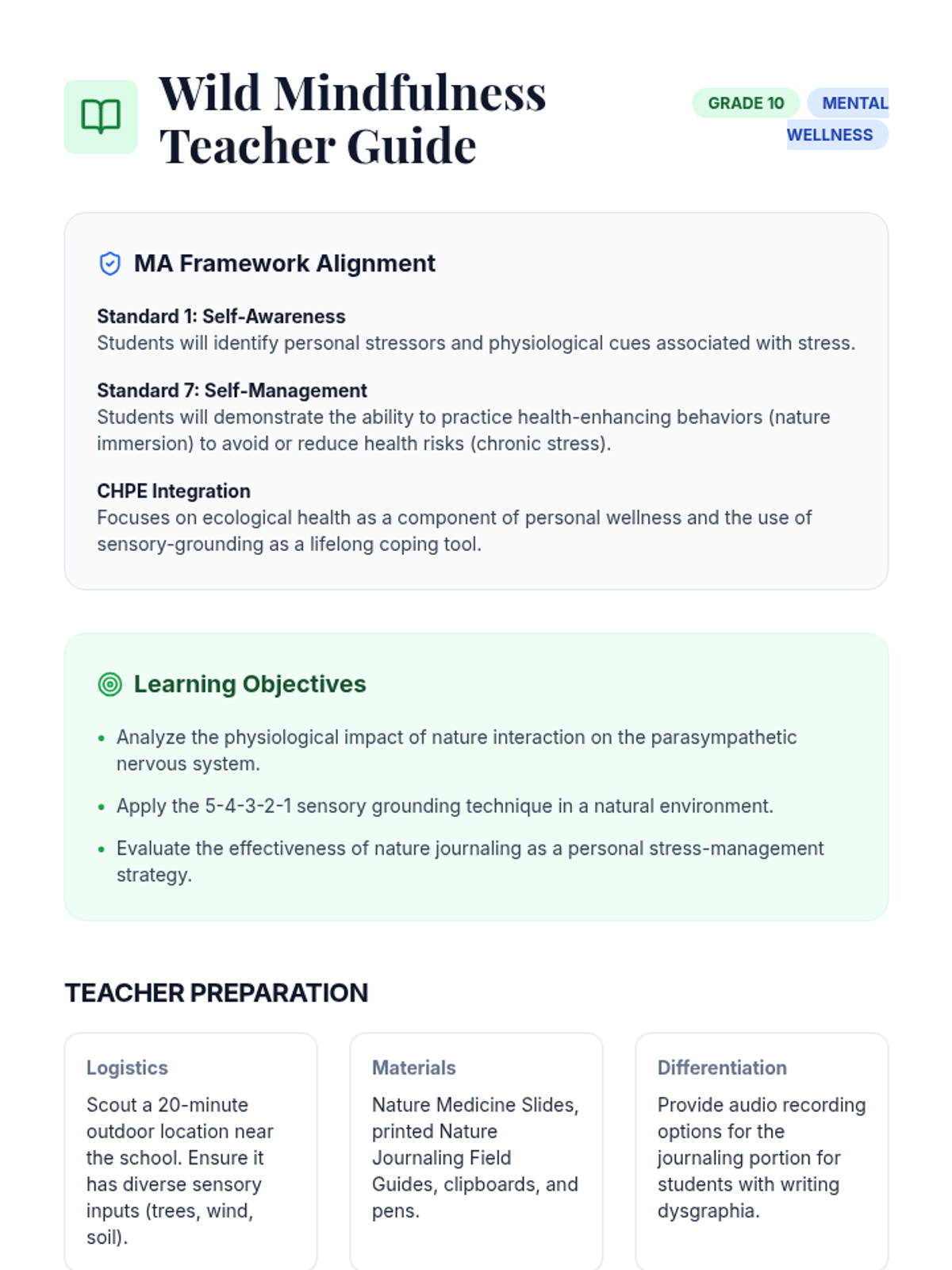
A comprehensive teacher facilitation guide for the Wild Mindfulness lesson, including MA framework alignment, lesson pacing, questioning prompts, and assessment rubrics.
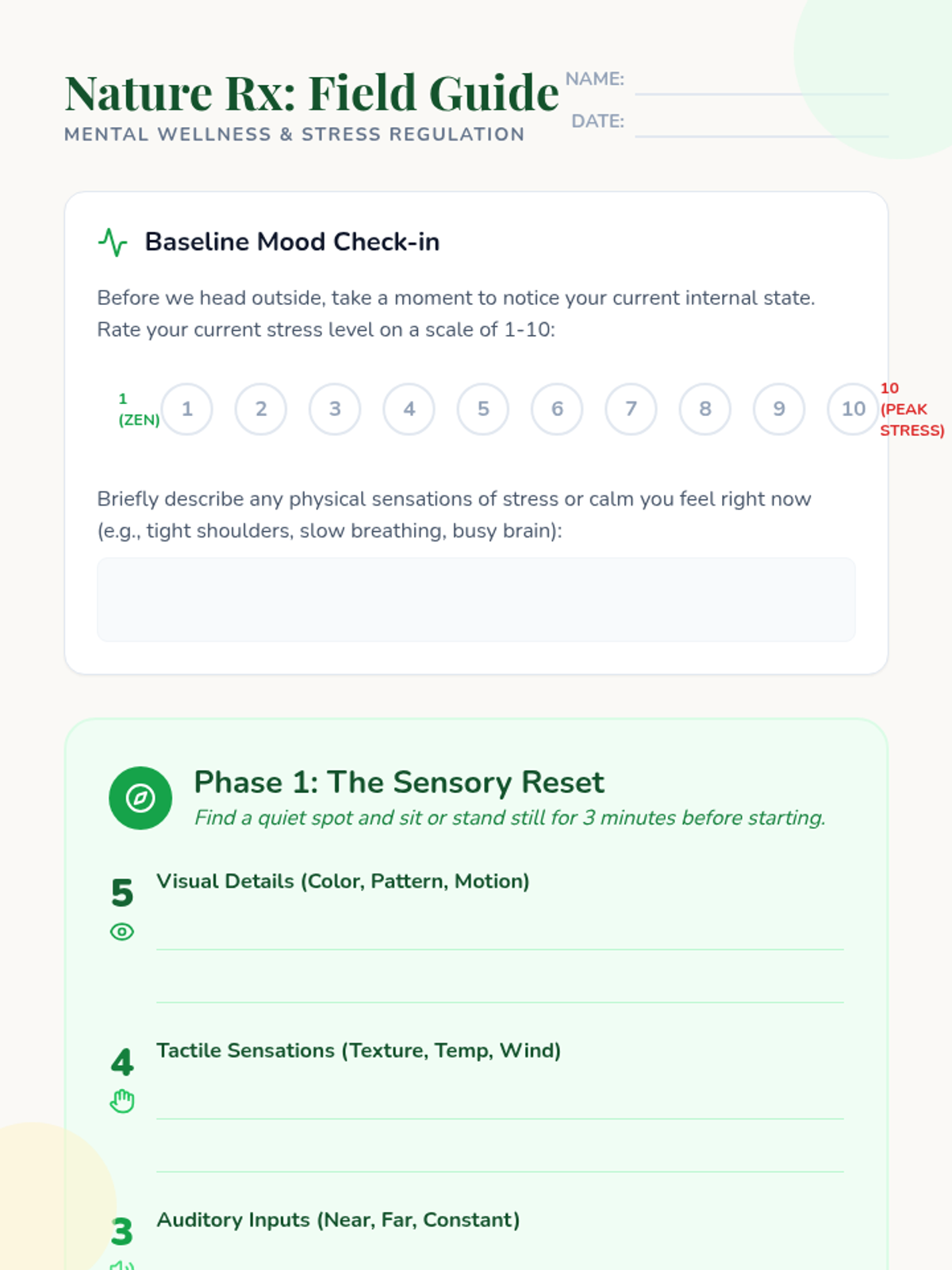
A printable 2-page nature journaling field guide for Grade 10 students, featuring sensory grounding exercises, specimen sketching, and emotional reflection to support MA mental wellness standards.
A visually engaging presentation introducing Grade 10 students to the mental health benefits of nature journaling and the practice of forest bathing, aligned with Massachusetts health standards.
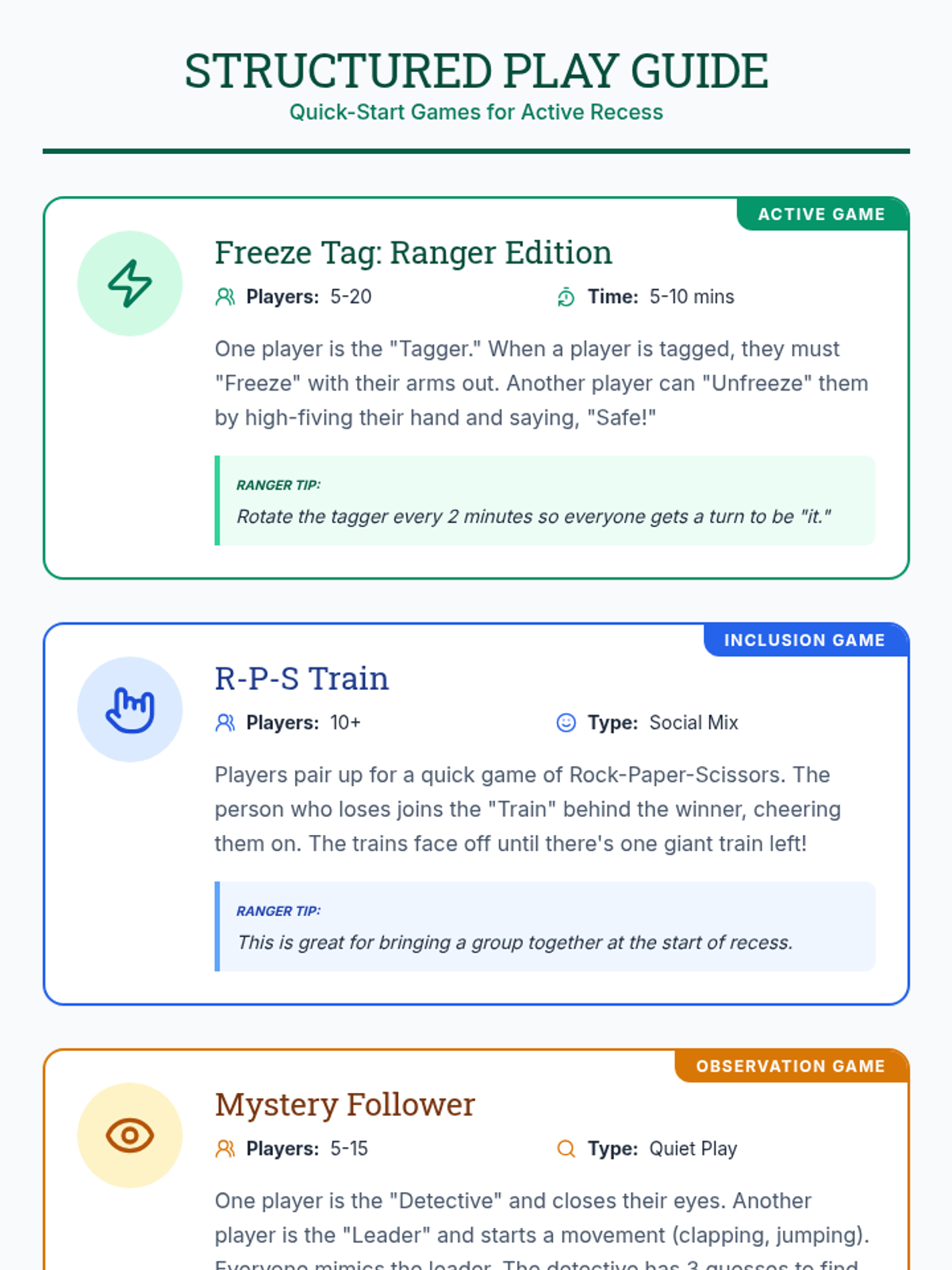
A structured play activity guide featuring simple, low-equipment games to encourage inclusion and engagement during outdoor recess.
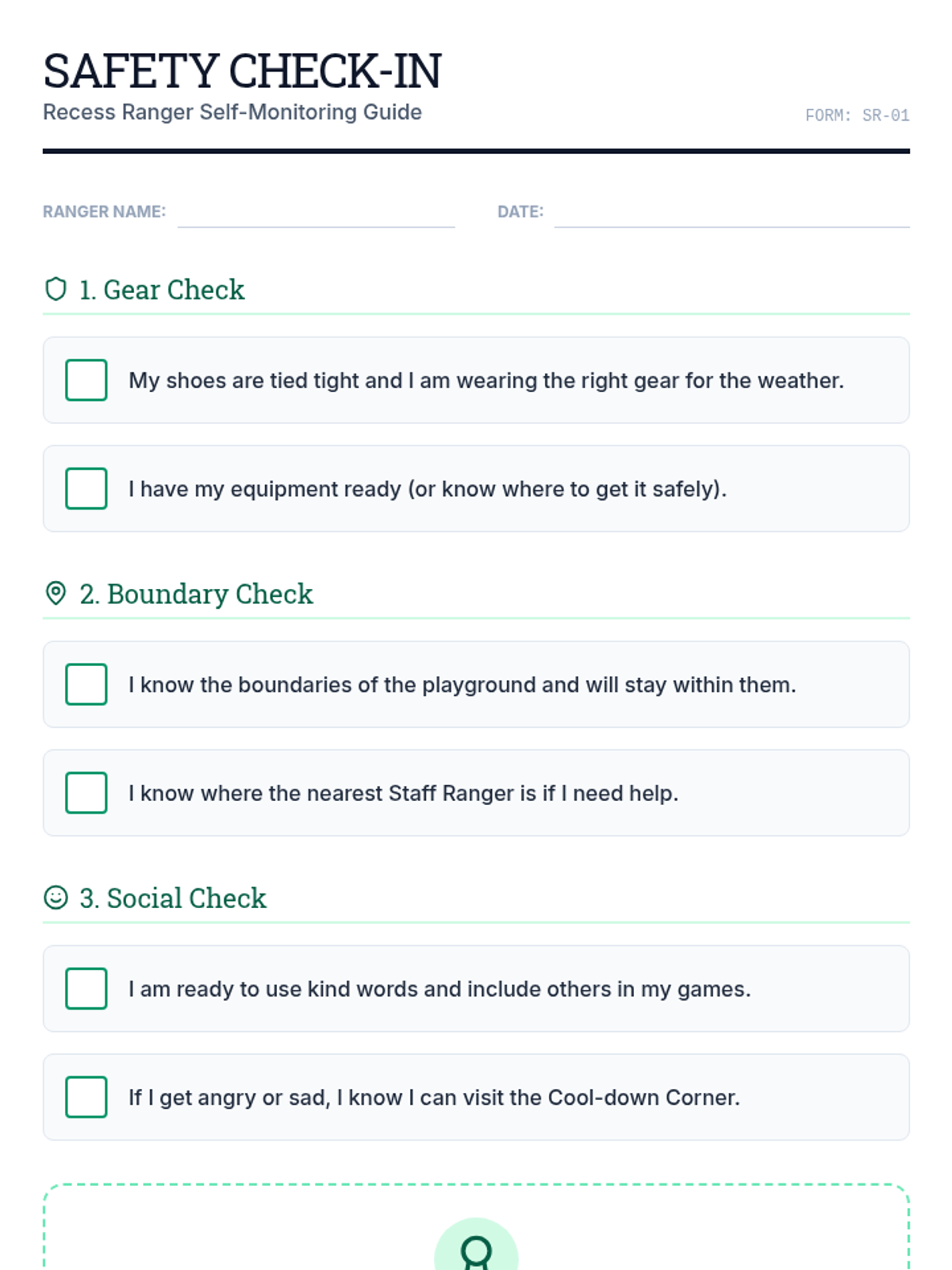
A dual-purpose document containing a student-facing safety checklist for pre-recess prep and a staff-facing incident report form for documenting playground events.
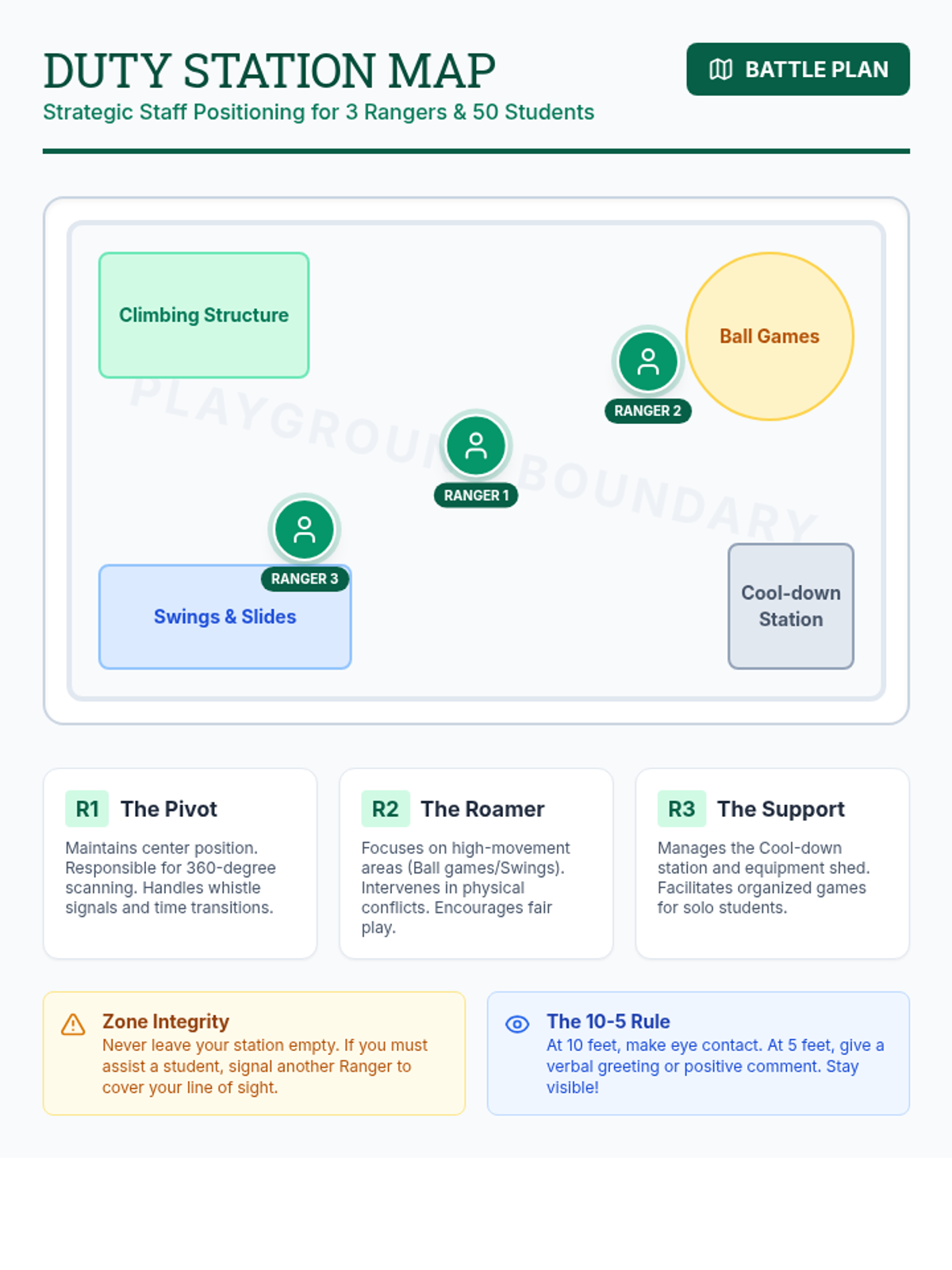
A strategic staff positioning map for outdoor recess, defining zones of responsibility and movement patterns for 3 staff members.
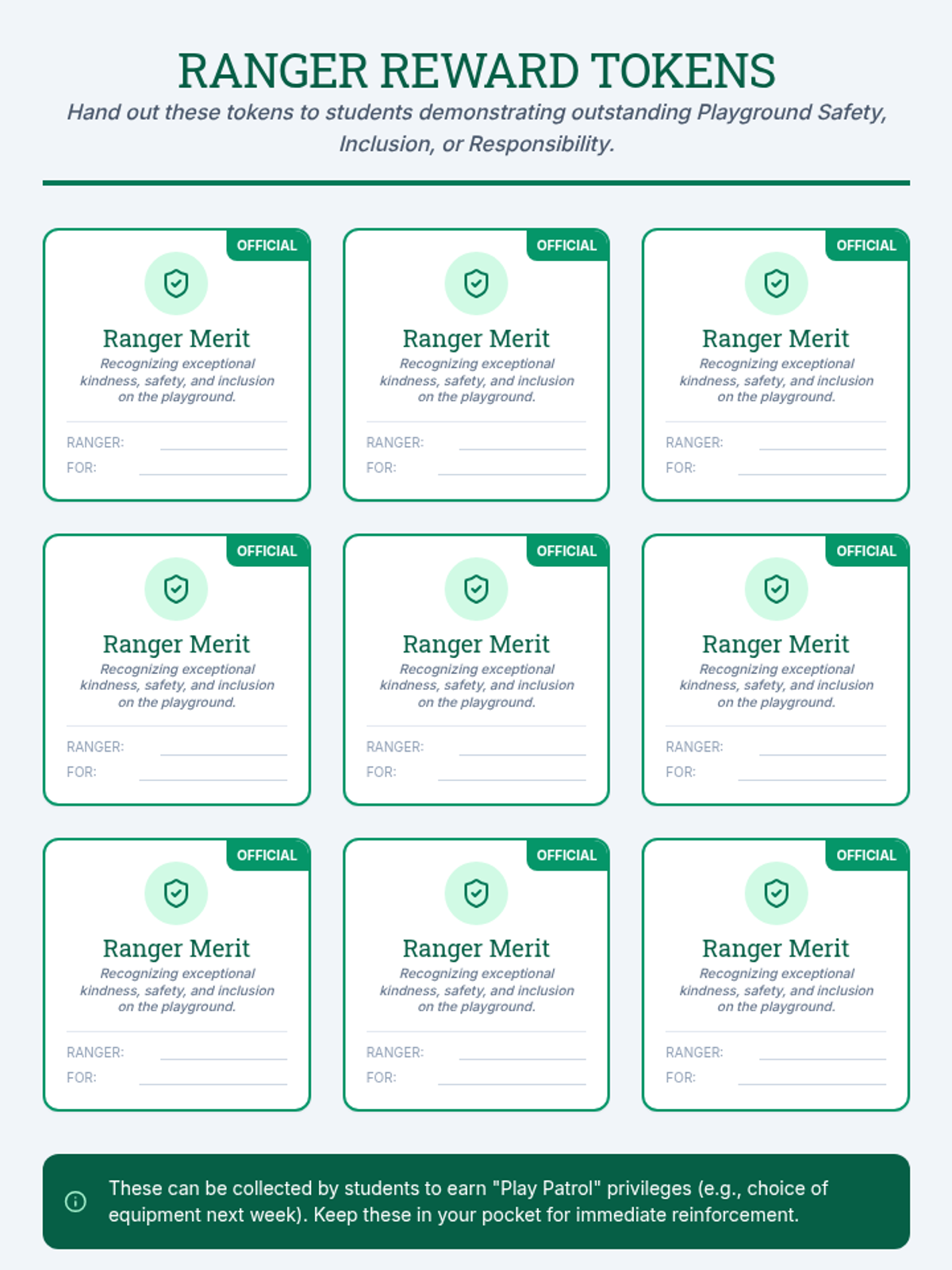
A printable sheet of positive reinforcement tokens to recognize students for outstanding behavior and playground responsibility.
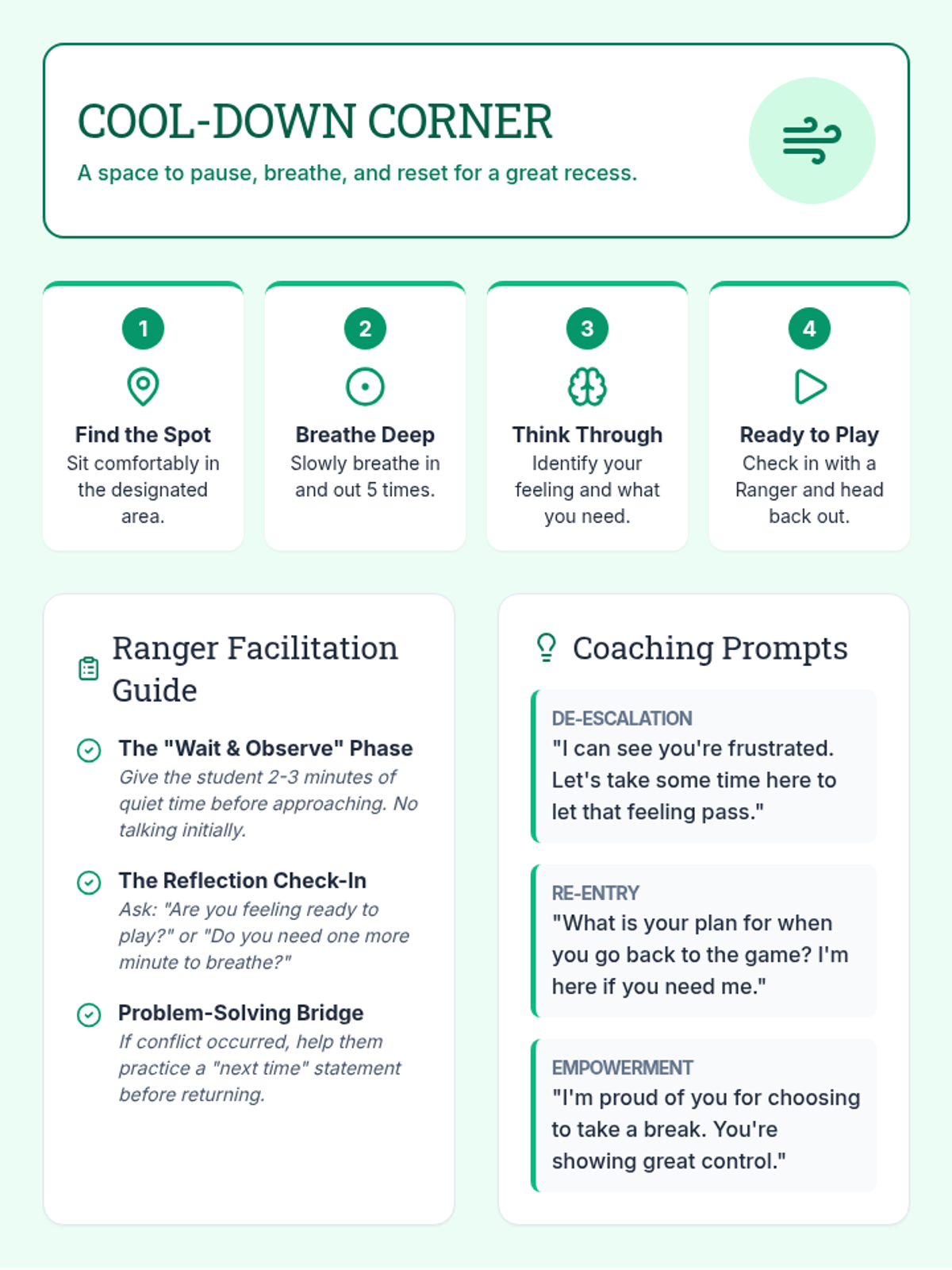
A guide for the designated cool-down station, providing both student-facing visual steps and staff-facing facilitation tips for managing emotions on the playground.
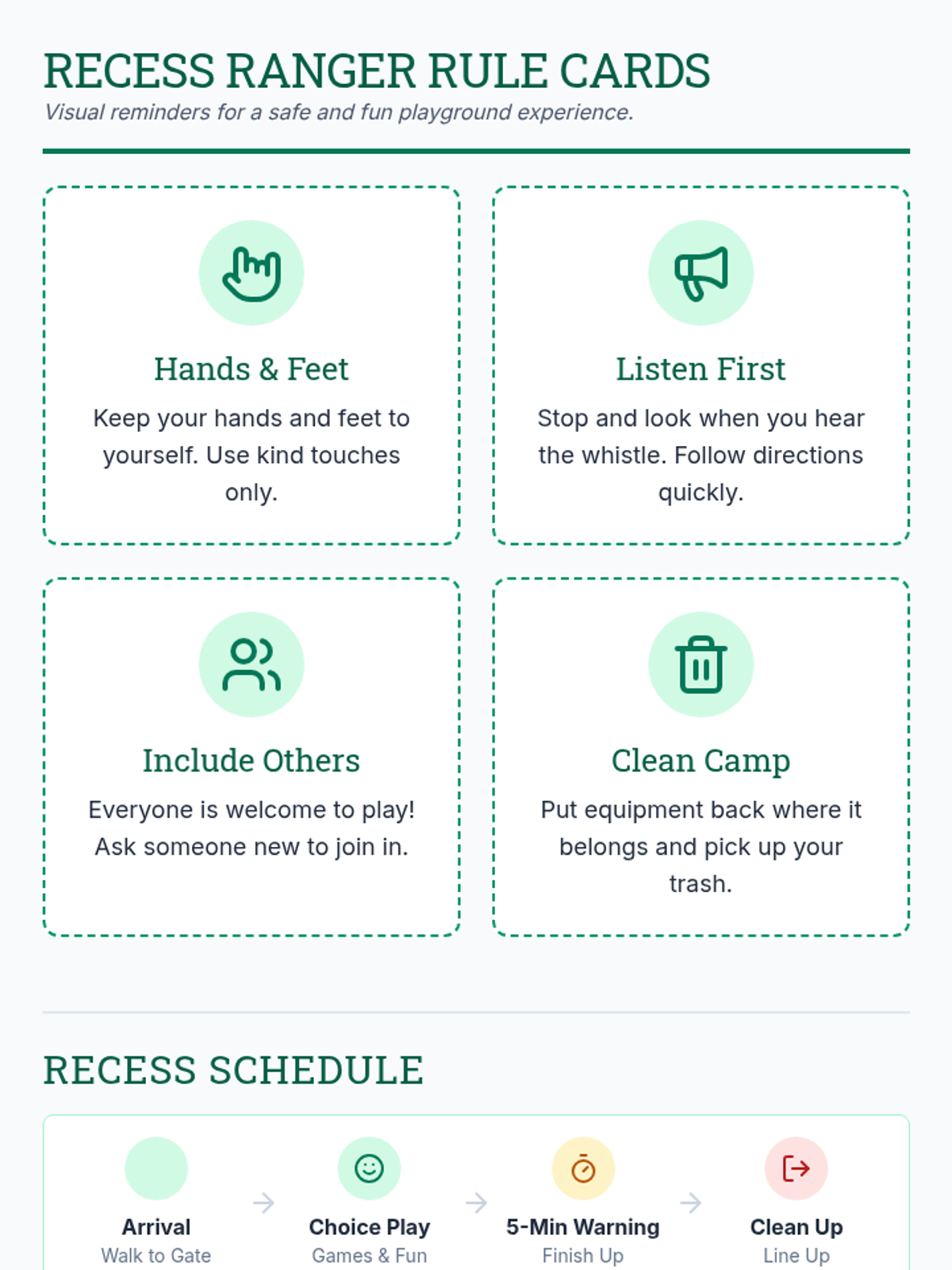
A set of visual rule cards and a simplified recess schedule for students and staff to follow. Designed for clear communication and easy reference on the playground.
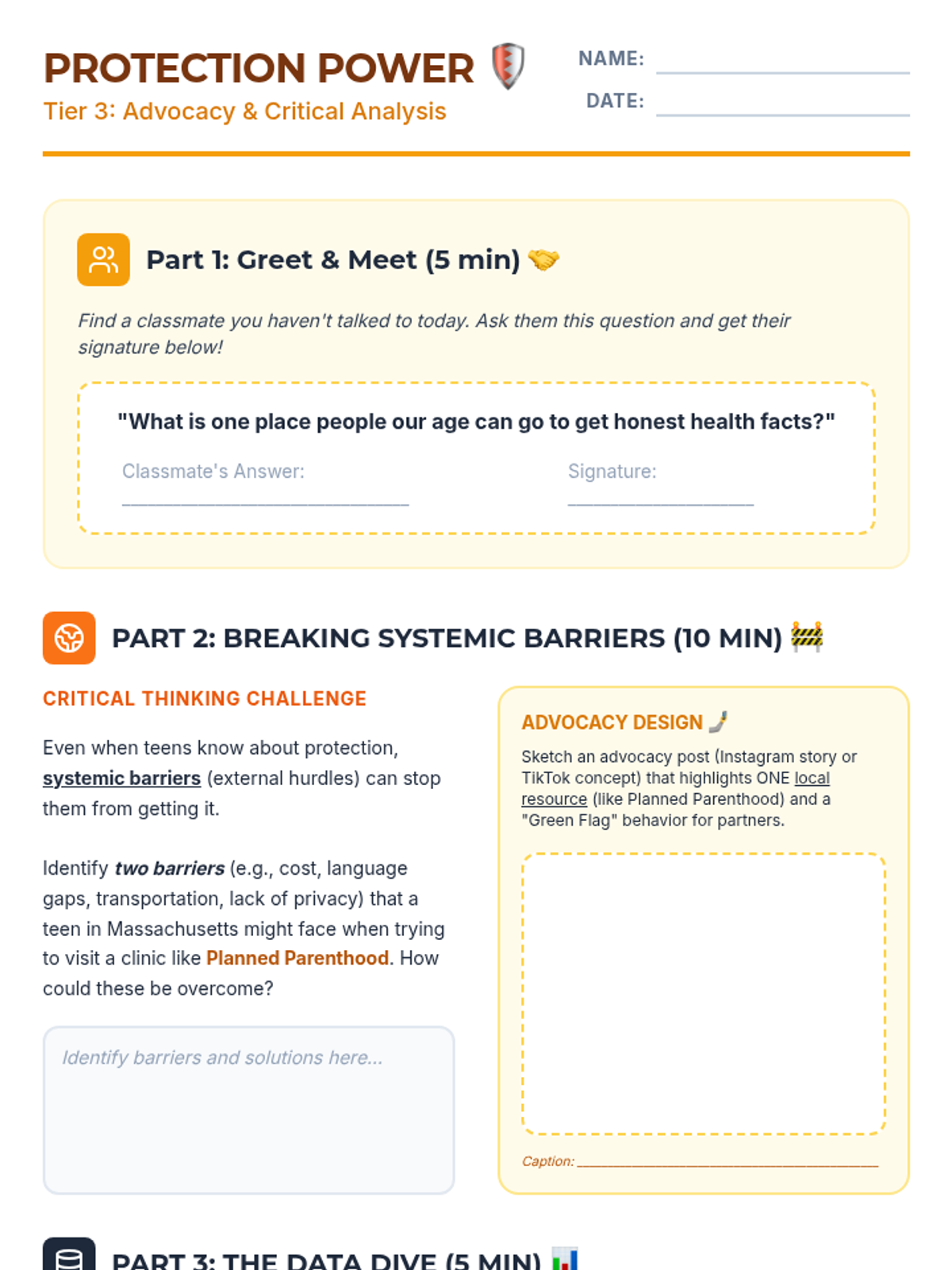
A tiered (Tier 3) student worksheet focusing on systemic barriers, advocacy design, and complex values-based debates regarding sexual health and contraceptive access.
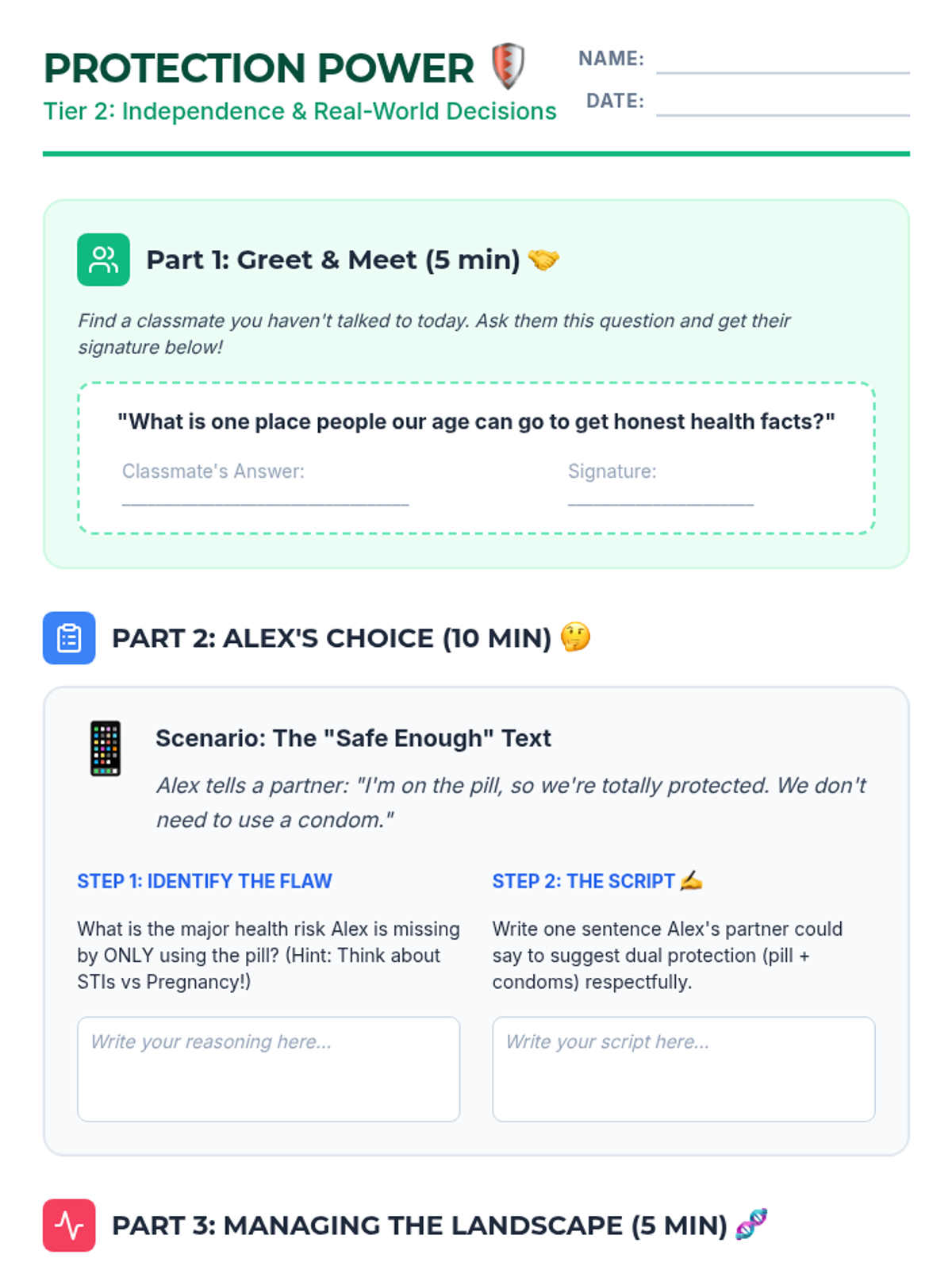
A tiered (Tier 2) student worksheet focusing on scenario analysis (Alex's choice), STI management, and role-playing communication skills for dual protection.
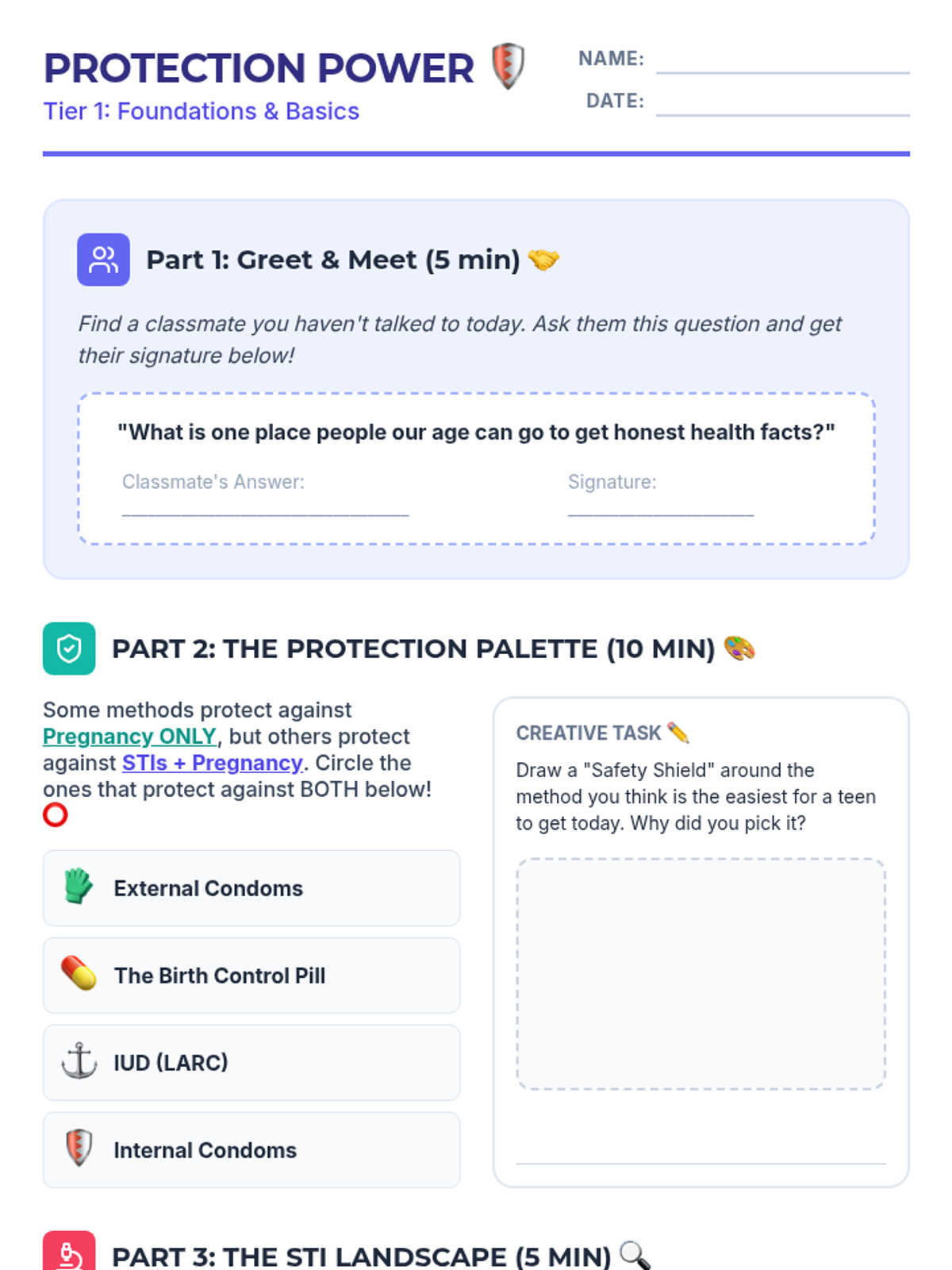
A tiered (Tier 1) student worksheet focused on foundational contraception concepts, STI categorization, and basic communication skills, featuring visual tasks and guided peer interaction.
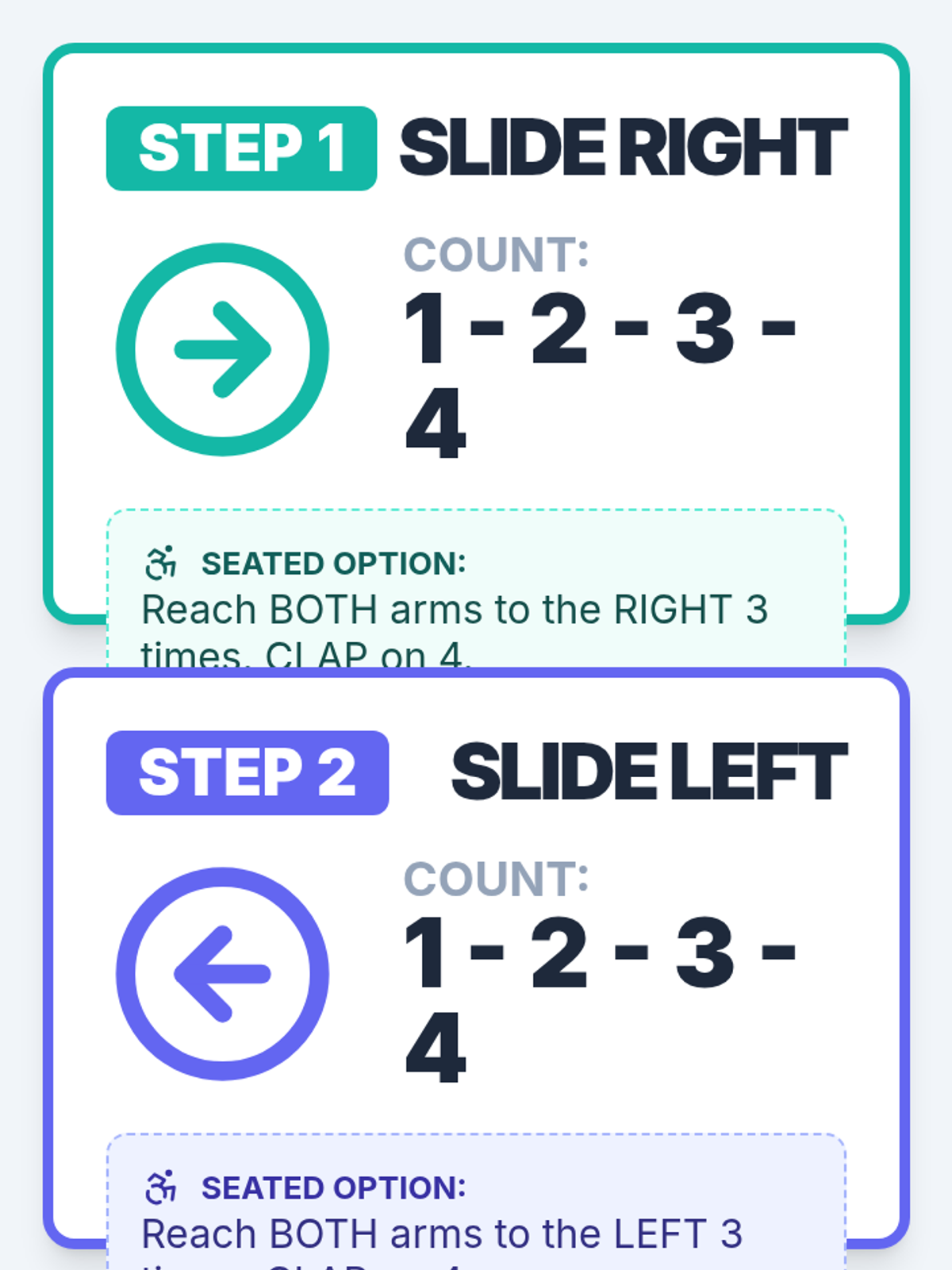
Large, high-contrast visual prompts for the Electric Slide dance sequence, featuring step names, count guides, and modifications for seated/limited mobility students. Each page is perfectly sized for 8.5x11 printing.
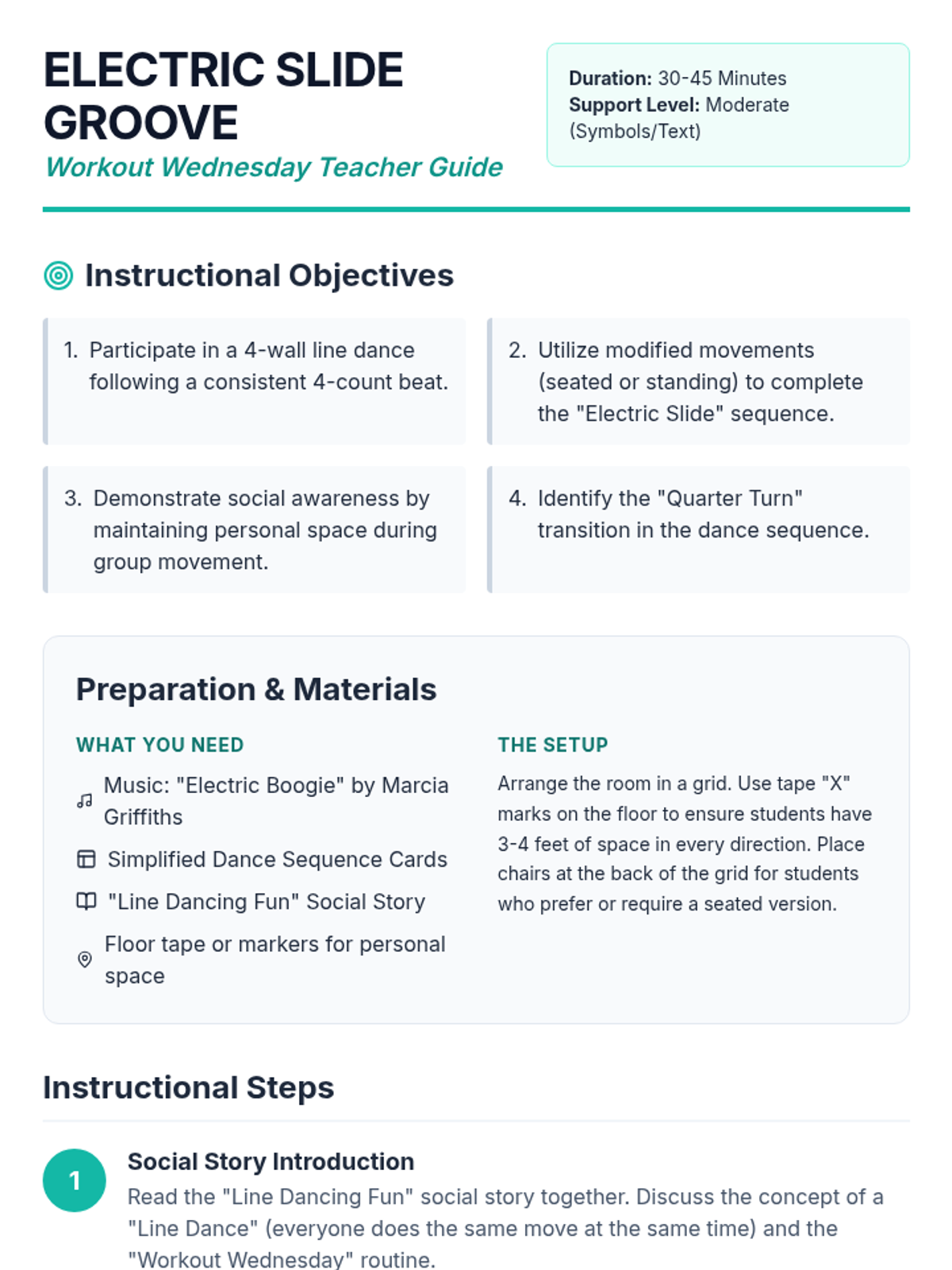
Teacher guide for the Electric Slide line dance, including instructional steps, an assessment rubric, and specific modifications for students with limited mobility or those using wheelchairs.
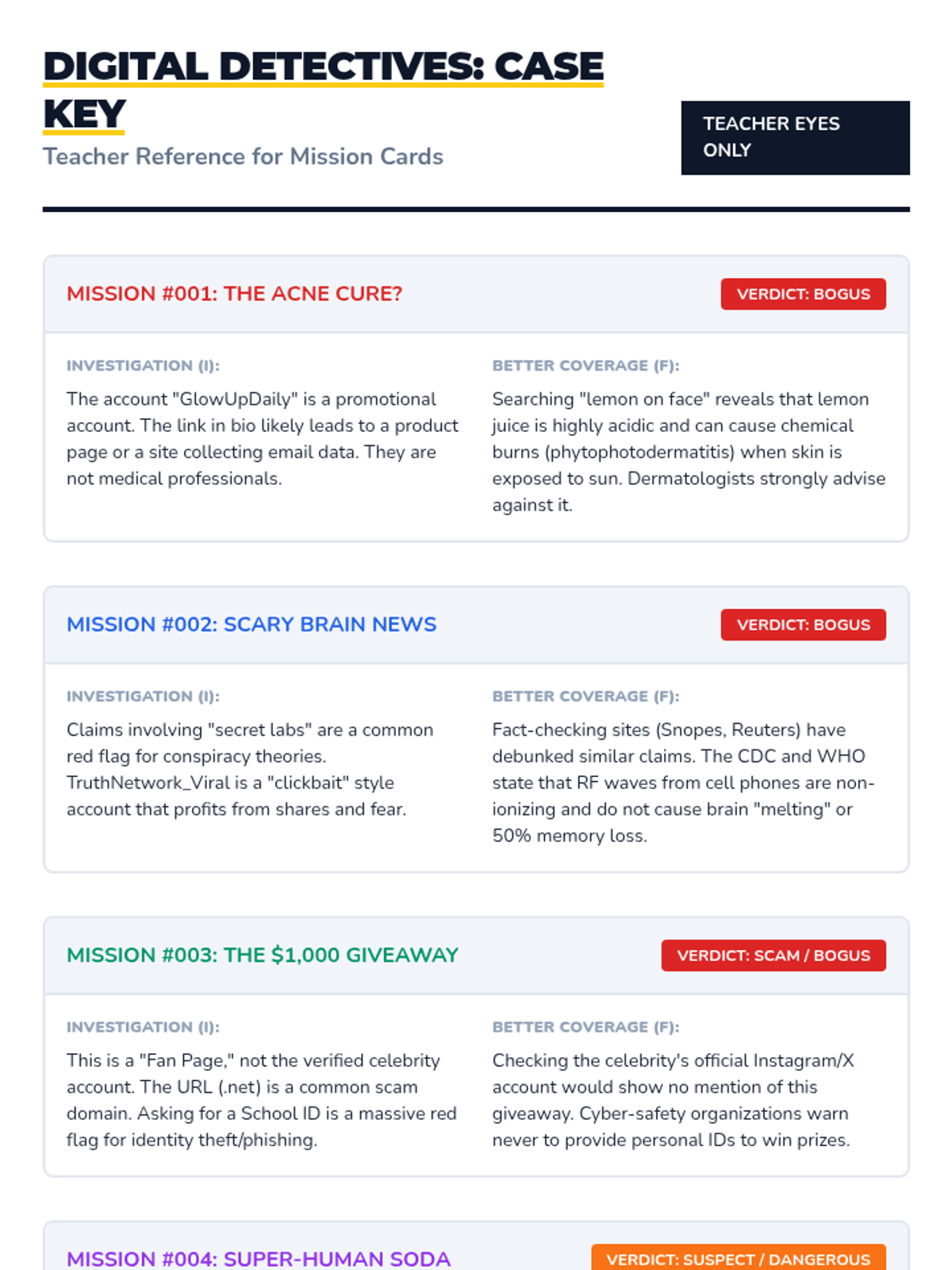
An answer key and facilitation guide for the Truth Sleuths Mission Cards. It provides the verdict for each case (Legit, Bogus, or Suspect) and details the evidence students should find during their investigation using the S.I.F.T. method.
A presentation to guide the Digital Detectives lesson. It introduces social media platforms, explains mental health impacts like the 'Comparison Trap,' and provides a step-by-step walkthrough of the S.I.F.T. method for fact-checking.