A slide presentation teaching the mental and physical shift required when possession is lost. Students focus on rapid recovery runs and re-organizing the defensive shape immediately after a turnover.
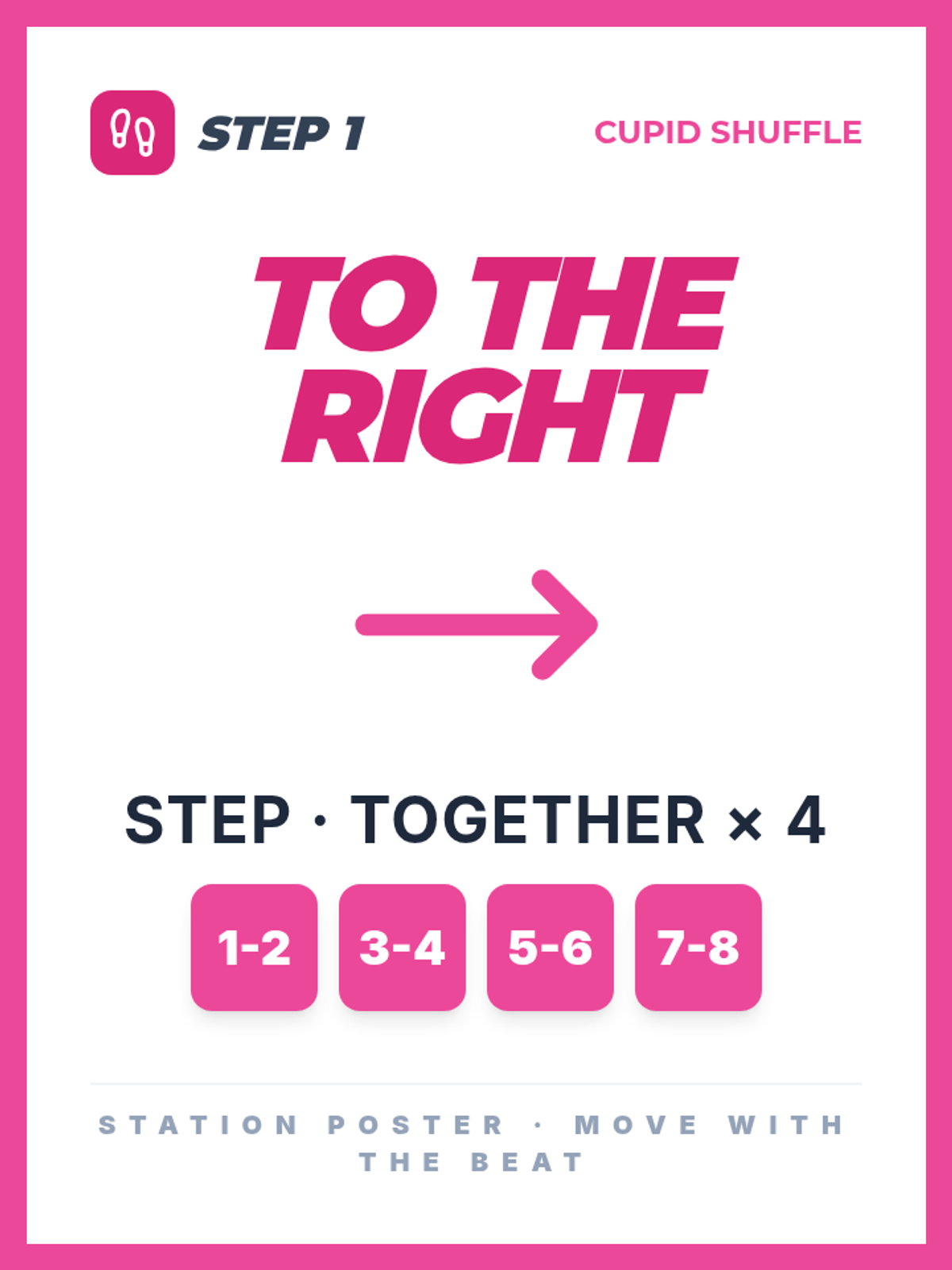
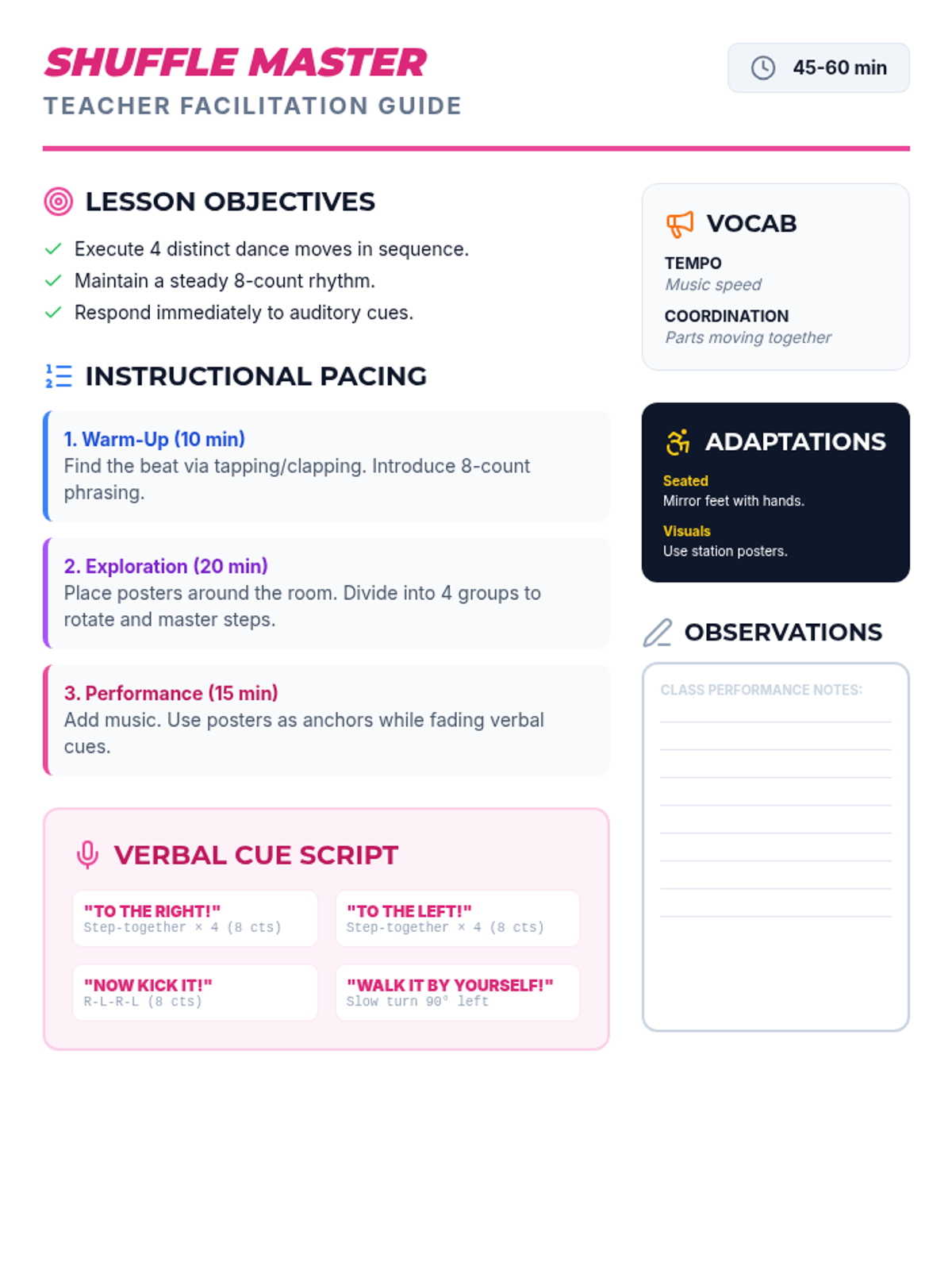
A comprehensive staff facilitator guide for teaching the Electric Slide, featuring an 8-count breakdown, directional arrows, a modified seated version for mobility, and a visual 4-count cheat sheet.
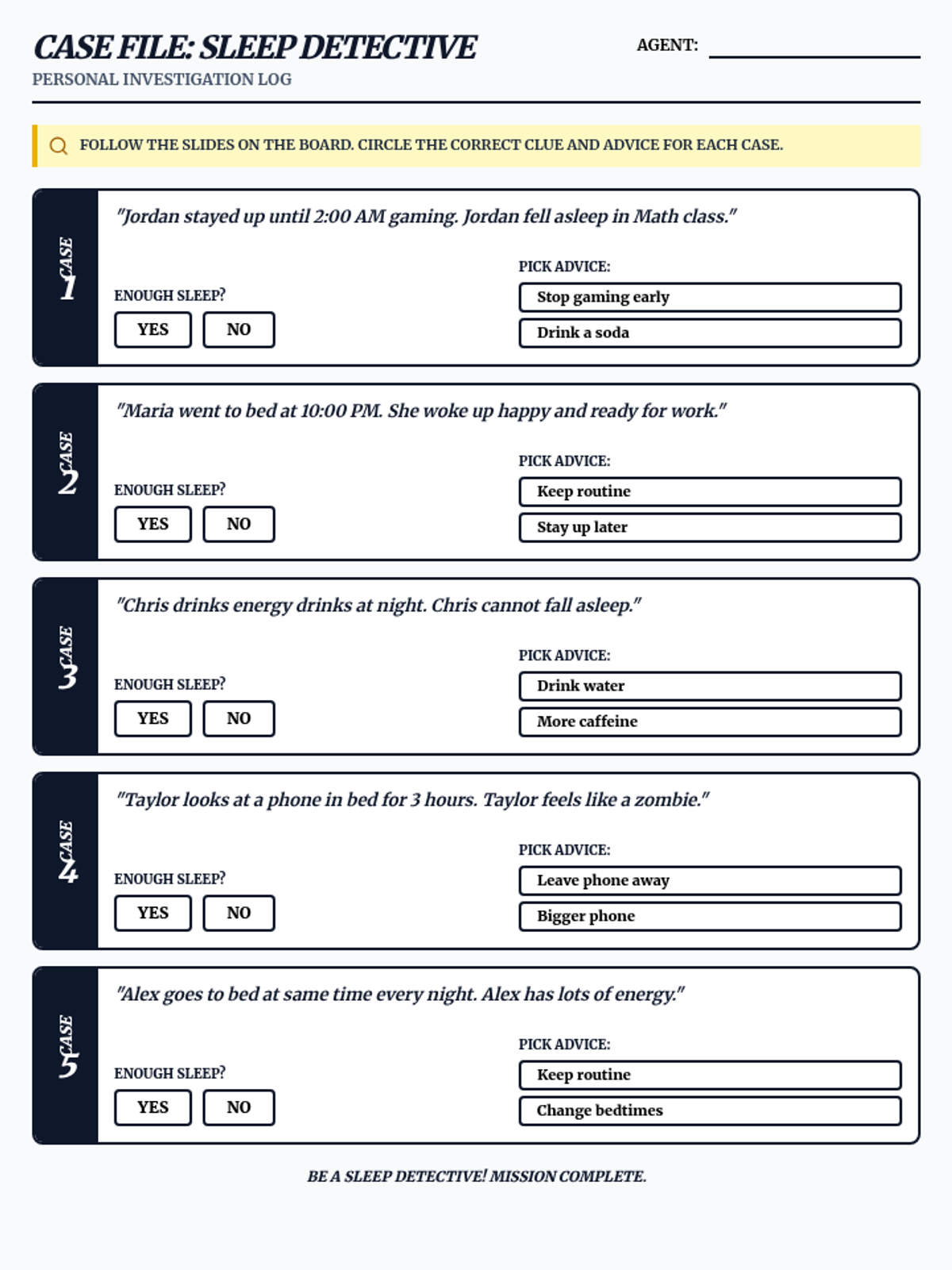
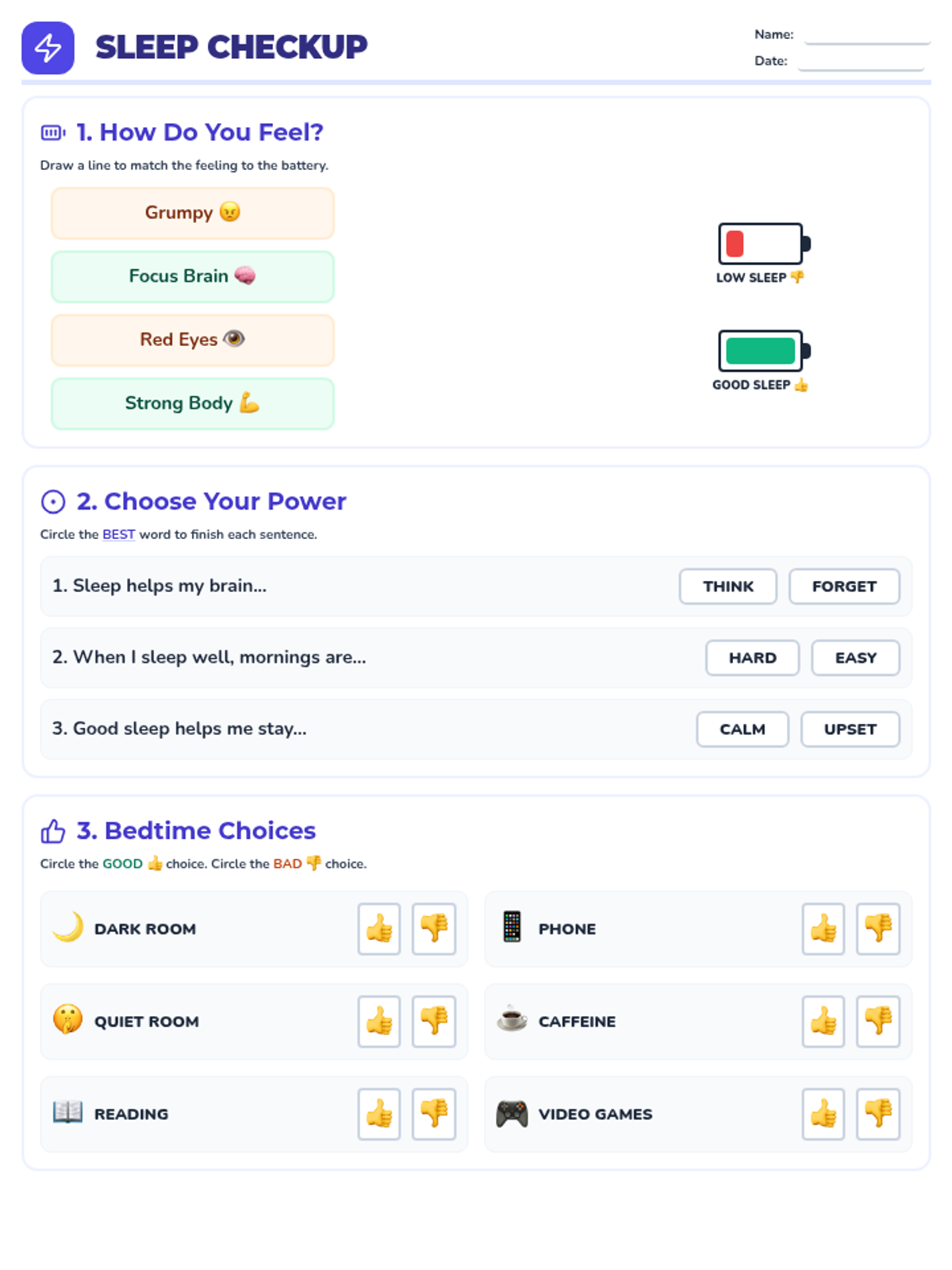
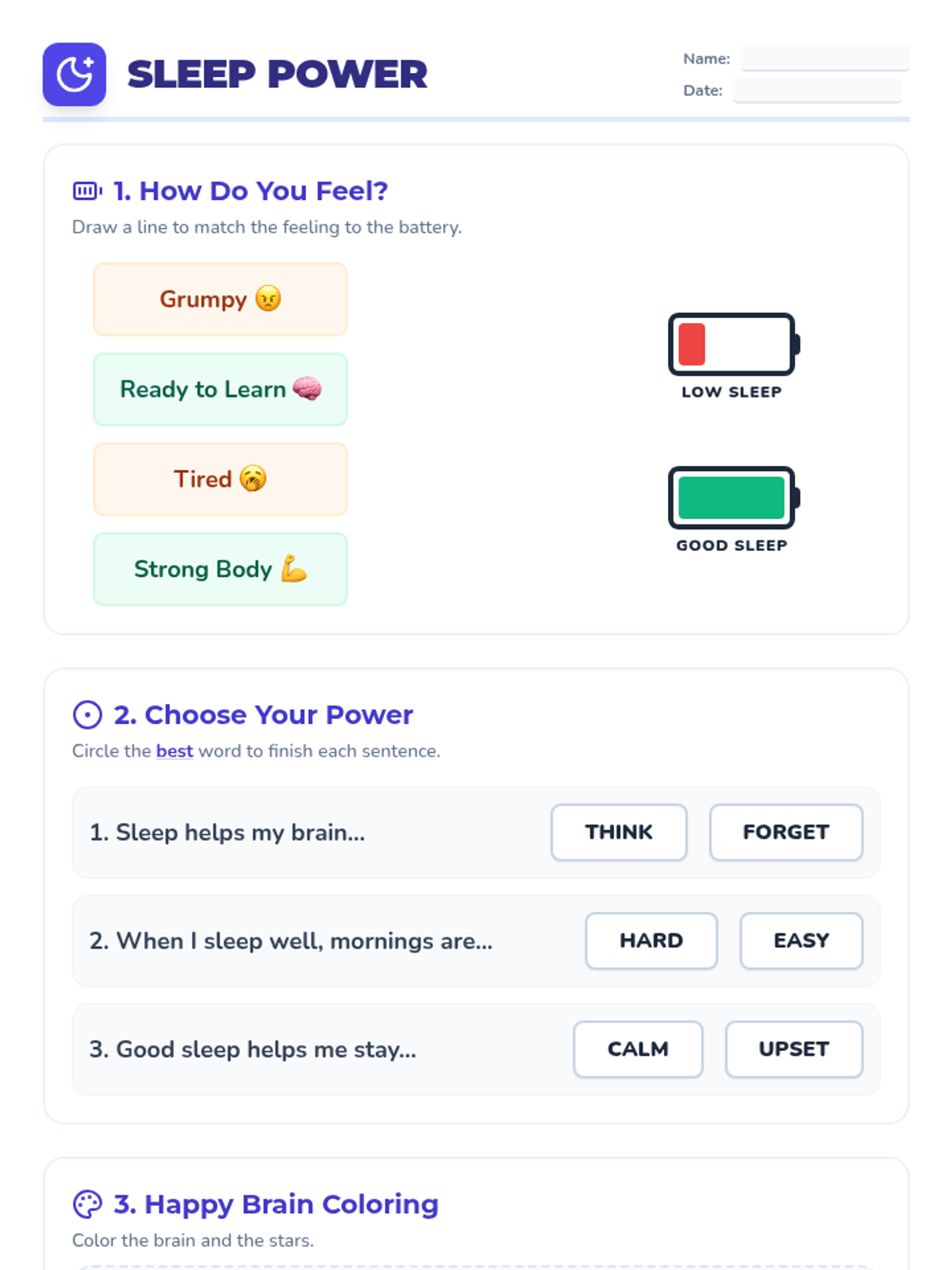
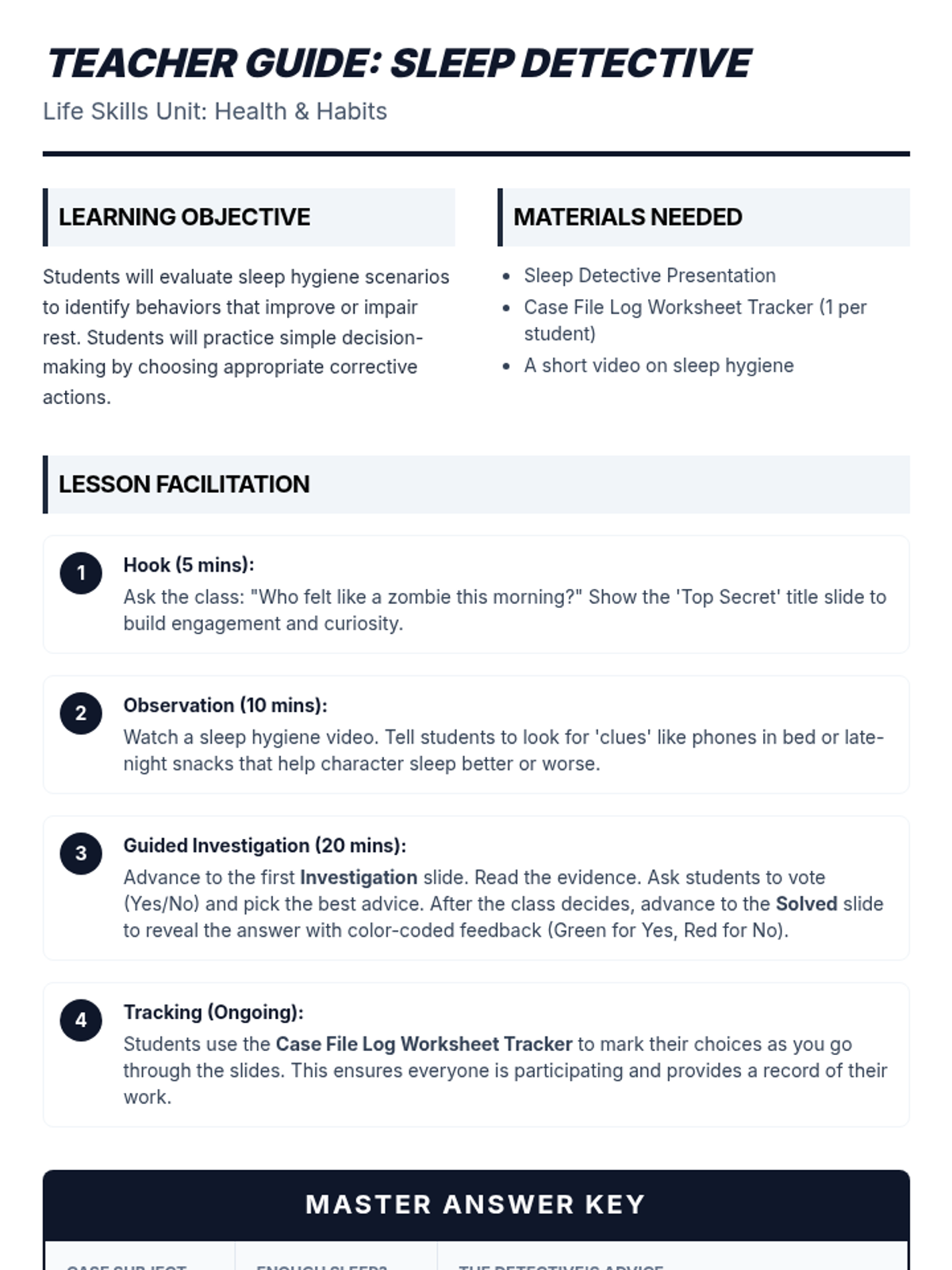
A two-page reflection and planning journal for 5th graders to track their current sleep habits and design a personalized "Wind-Down Blueprint" for optimal brain performance.
A technical-style worksheet for 5th graders to analyze the impact of blue light on melatonin production and identify "light invaders" in their personal evening routines.
A hands-on sorting activity for 5th graders to match the 4 stages of sleep with their physiological descriptions and brain functions.
Visual presentation for the "Sleep Circuit" lesson, covering brain maintenance, the 4 stages of sleep, the circadian rhythm, and the impact of blue light.
A comprehensive teacher's lesson plan for "Sleep Circuit," featuring a 60-minute pacing guide, learning objectives, and discussion prompts for teaching 5th graders about sleep stages and circadian rhythms.
A facilitator guide for teachers to effectively implement the Sleep Spy Tracker, including discussion prompts, hook ideas, and pacing tips.
An updated weekly sleep tracker specifically focusing on monitoring in-class sleepiness levels to help students connect their rest with academic focus.
A single-page combined guide featuring ADA dental guidelines, essential oral hygiene tips, and a morning/evening visual routine timeline for teens.
A visual timeline showing the morning and evening dental routines for a teen, including a clear visual for a 2-minute timer during brushing.
A clean, modern infographic for teens featuring ADA guidelines for brushing and flossing, along with essential oral health tips for a healthy smile.
A second social story explaining the process of calling 911, what a dispatcher does, and reinforcing that at school, students should find an adult first.
An answer key for the Emergency Check Worksheet, showing the correct classification for each scenario.
A worksheet for students to differentiate between emergency and non-emergency situations, with identical styling for all answer choices to ensure students focus on the content.
A revised full-page social story about phone boundaries with improved visuals, clearer icons, and reinforced messaging about seeking adult help.
A worksheet for students to differentiate between emergency and non-emergency situations, reinforcing the concept of when to seek adult help versus handling small problems independently.
A facilitation guide for teachers to lead the Help Call Heroes lesson. It includes learning objectives, a reading script, discussion prompts, and role-play activities.
A full-page social story about phone boundaries. It uses large visuals and simple text to explain why students should not take staff phones and how they can seek help during emergencies.
A set of role-play scenario cards designed to help students practice specific refusal tactics (Broken Record, Pivot, Exit Plan) in realistic social situations involving substances.
A strategic planning worksheet where students identify trusted adults and supportive peers, and establish an 'X-Plan' (a secret code for emergency pickup) as a practical safety tool.
A high-energy presentation teaching students three core refusal tactics (Broken Record, Pivot, Exit Plan) and the importance of having a supportive 'Shield Squad'.
A teacher-facing resource providing learning objectives, a script for a guided visualization activity, discussion prompts, and an answer key for the student worksheet.
A student-facing worksheet designed for 10-12 year olds to practice identifying internal emotions and external social pressures that influence choices. Includes a matching activity and a scenario-based reflection.
A visual slide deck for 10-12 year olds explaining the internal and external factors that influence choices about substance use. It breaks down complex psychological concepts into simple 'Inner' and 'Outer' categories.
A high-energy student reflection scorecard for the Field Force session, allowing kids to assess their focus and teamwork after the games.
A high-energy slide deck for introducing the Field Force games and the concept of shared responsibility.
A structured teacher's guide for a 20-minute large-group session on a football field, featuring two high-energy cooperative games and a debrief section.
A student activity where students design their own riding pattern on an arena floor plan, including specific movements and transitions.