A personal reflection handout for students to process the lesson on healthy relationships, identify key takeaways, and reflect on personal empowerment and safety.
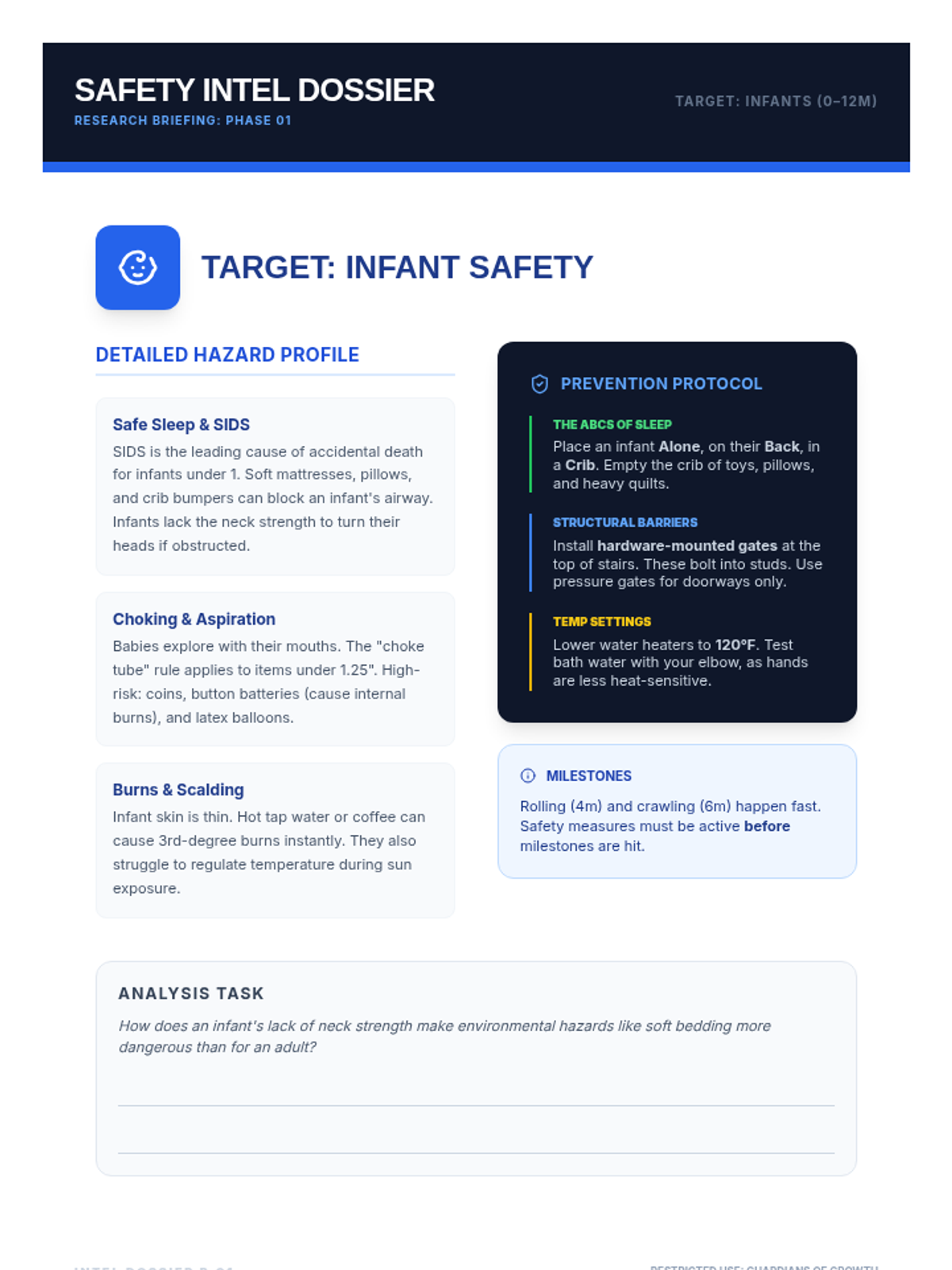
A comprehensive set of three expanded informational reading briefings for 7th-grade students, detailing specific hazards and prevention strategies for infants, toddlers, and preschoolers with in-depth explanations and analysis tasks.
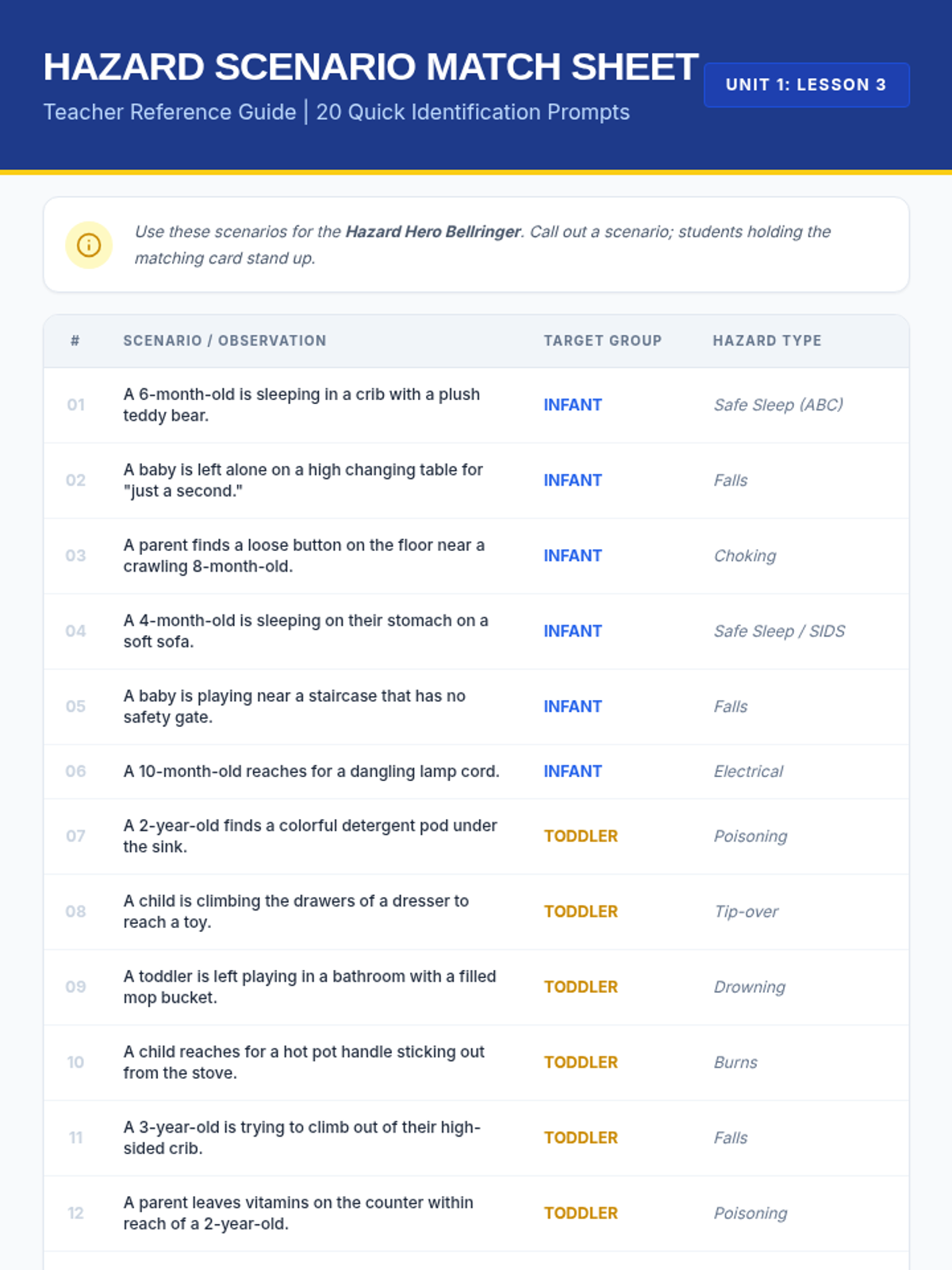
A comprehensive teacher-facing reference guide containing 20 scenarios across infant, toddler, and preschool age groups for the Hazard Hero matching activity.
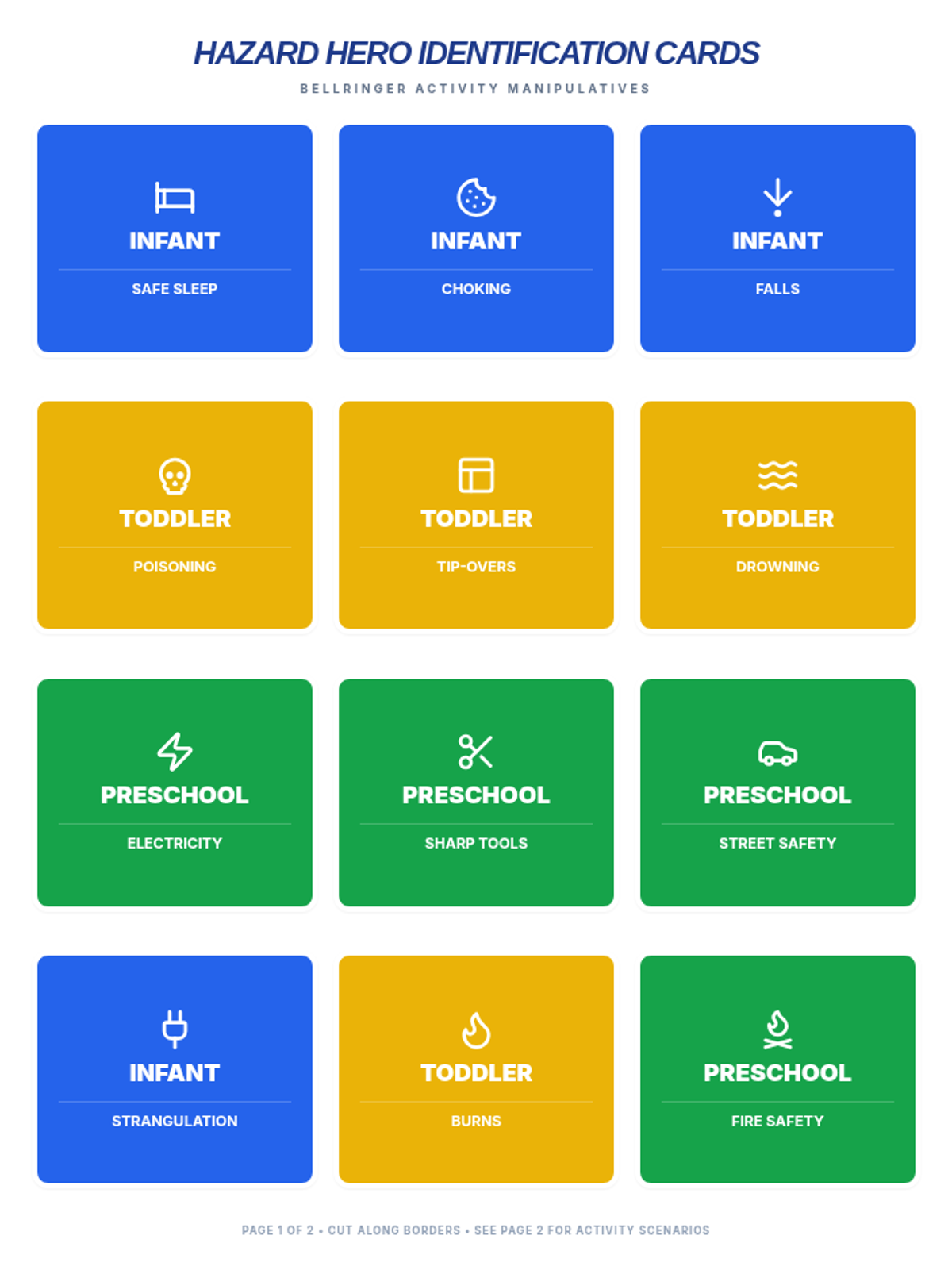
Printable activity cards for the Bellringer session, color-coded by age group, with each card featuring one specific hazard focus (Safe Sleep, Choking, Poisoning, etc.), along with a teacher reference sheet of 20 scenarios.
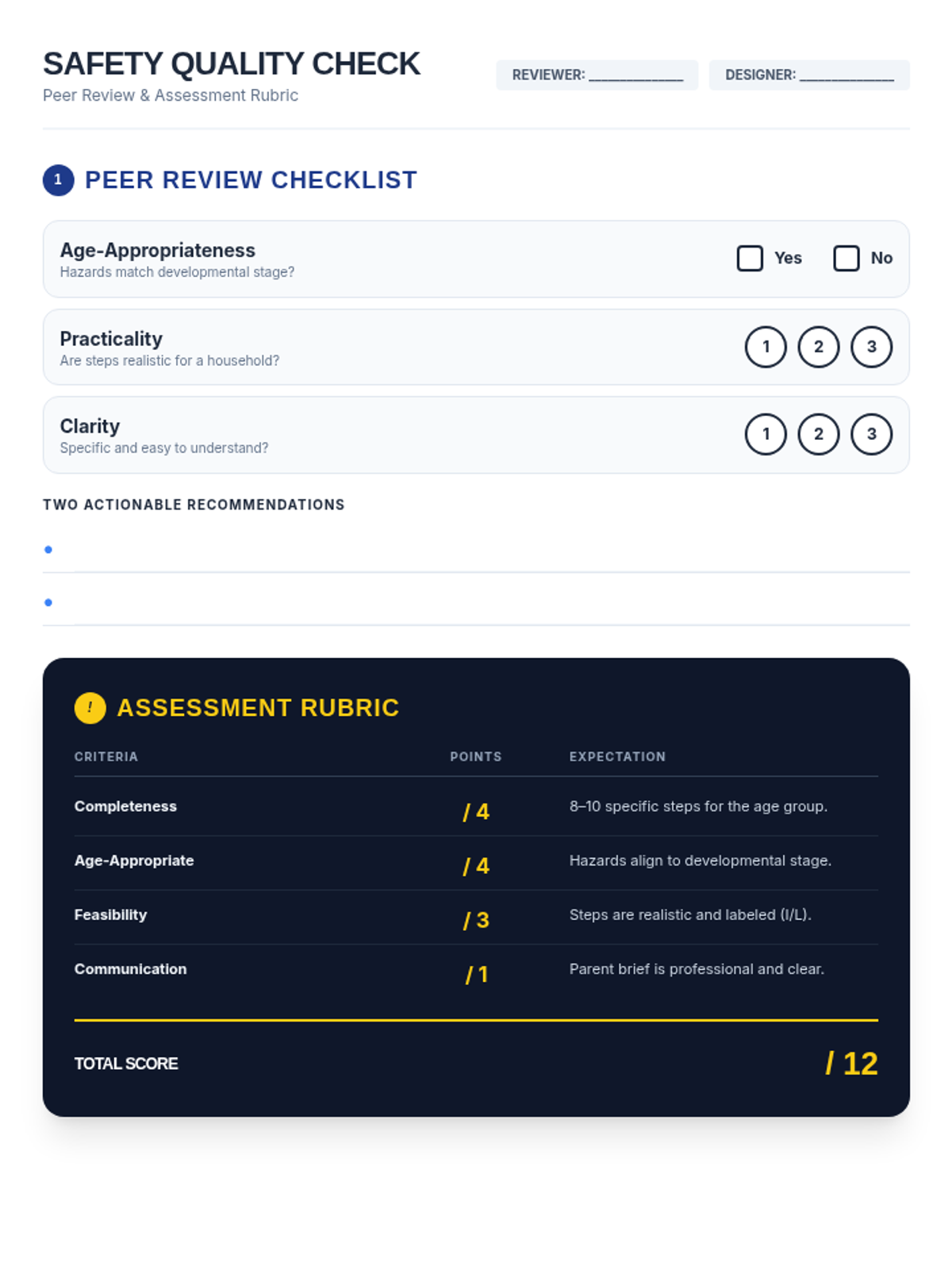
A comprehensive peer review checklist and grading rubric for the childproofing safety plan, featuring a 3-point practicality scale and clear point breakdowns.
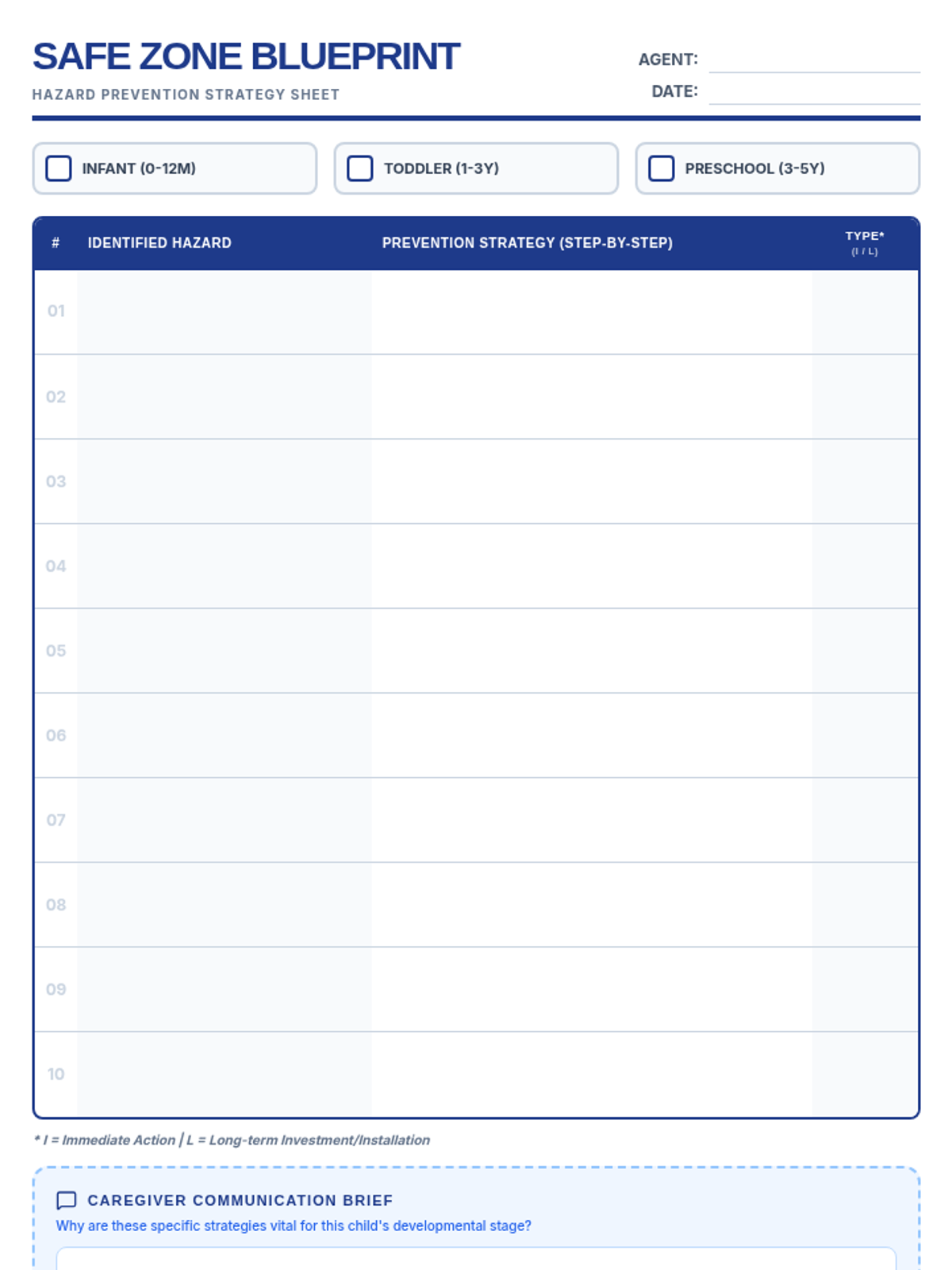
A professional blueprint-themed worksheet for students to design a 10-step childproofing safety plan for a specific age group.
A high-impact slide deck for teaching childproofing strategies, featuring clear visual breakdowns for infant, toddler, and preschooler safety hazards.
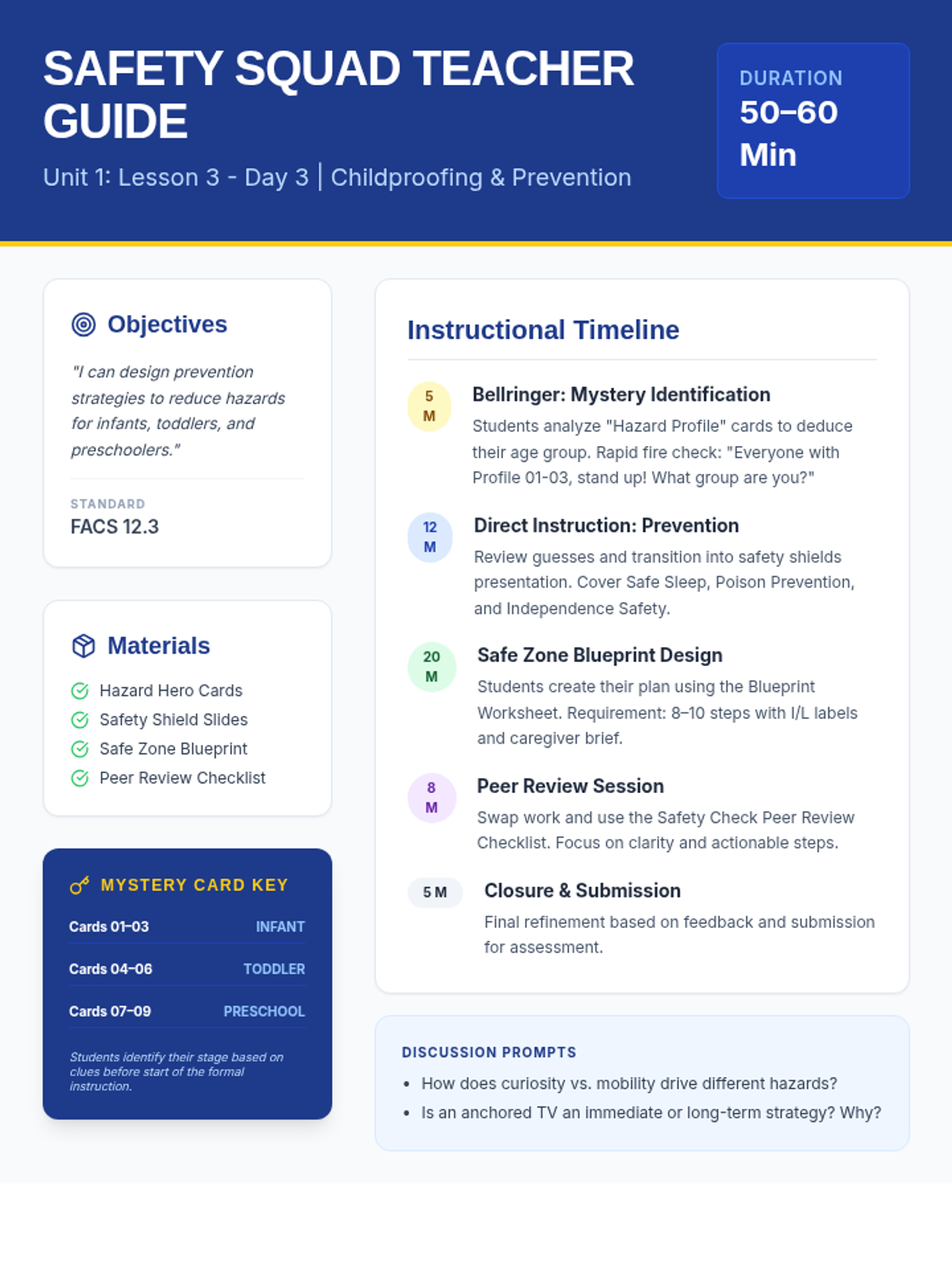
A comprehensive lesson guide for teachers, detailing the 60-minute instructional flow, objectives, and discussion prompts for teaching age-specific childproofing.
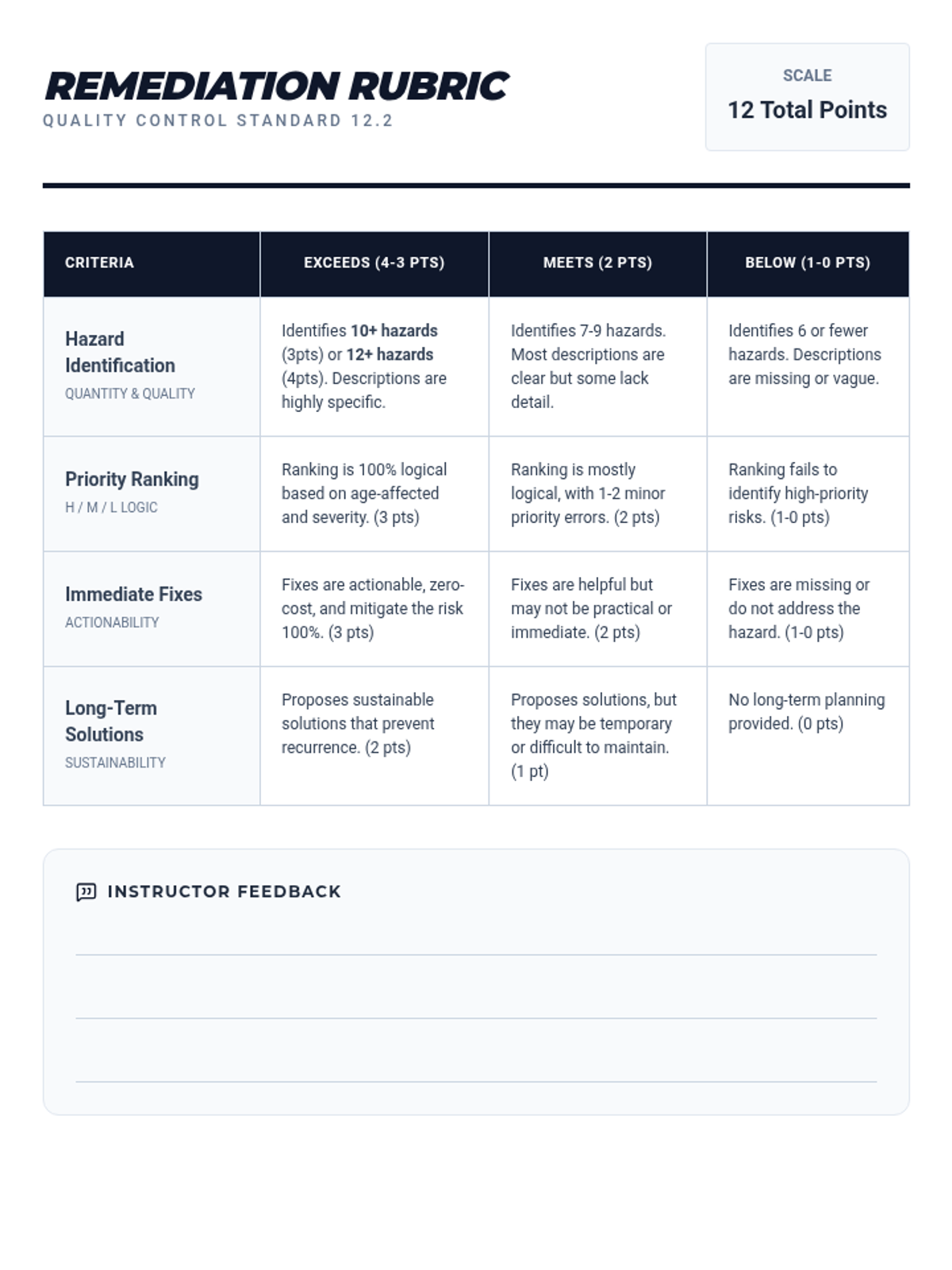
A clear and professional grading rubric for the remediation plan, assessing students on hazard identification, priority logic, and the feasibility of their proposed fixes.
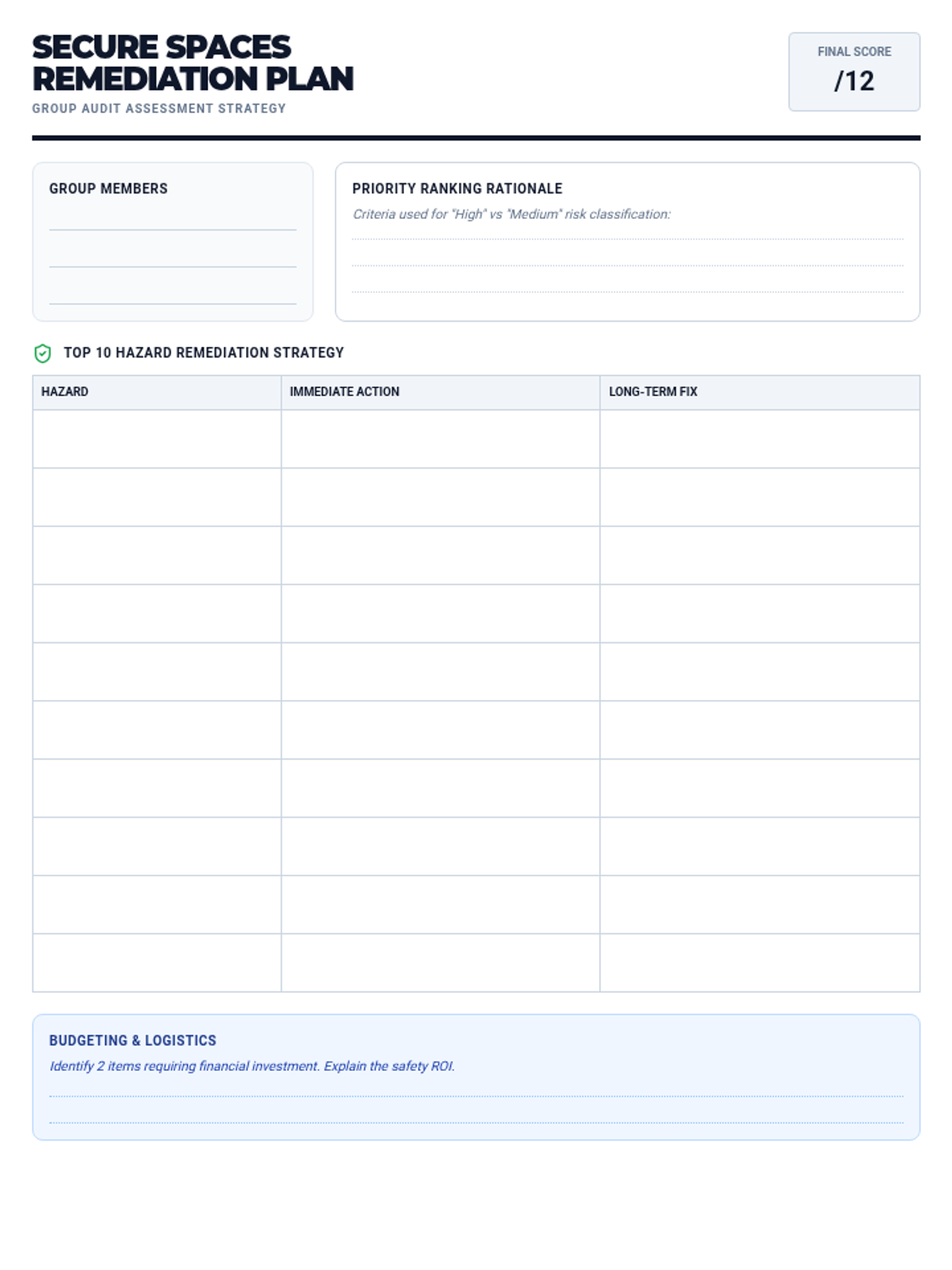
The culminating assessment template where student groups synthesize their walkthrough findings into a prioritized remediation plan, including budget considerations and rationale.
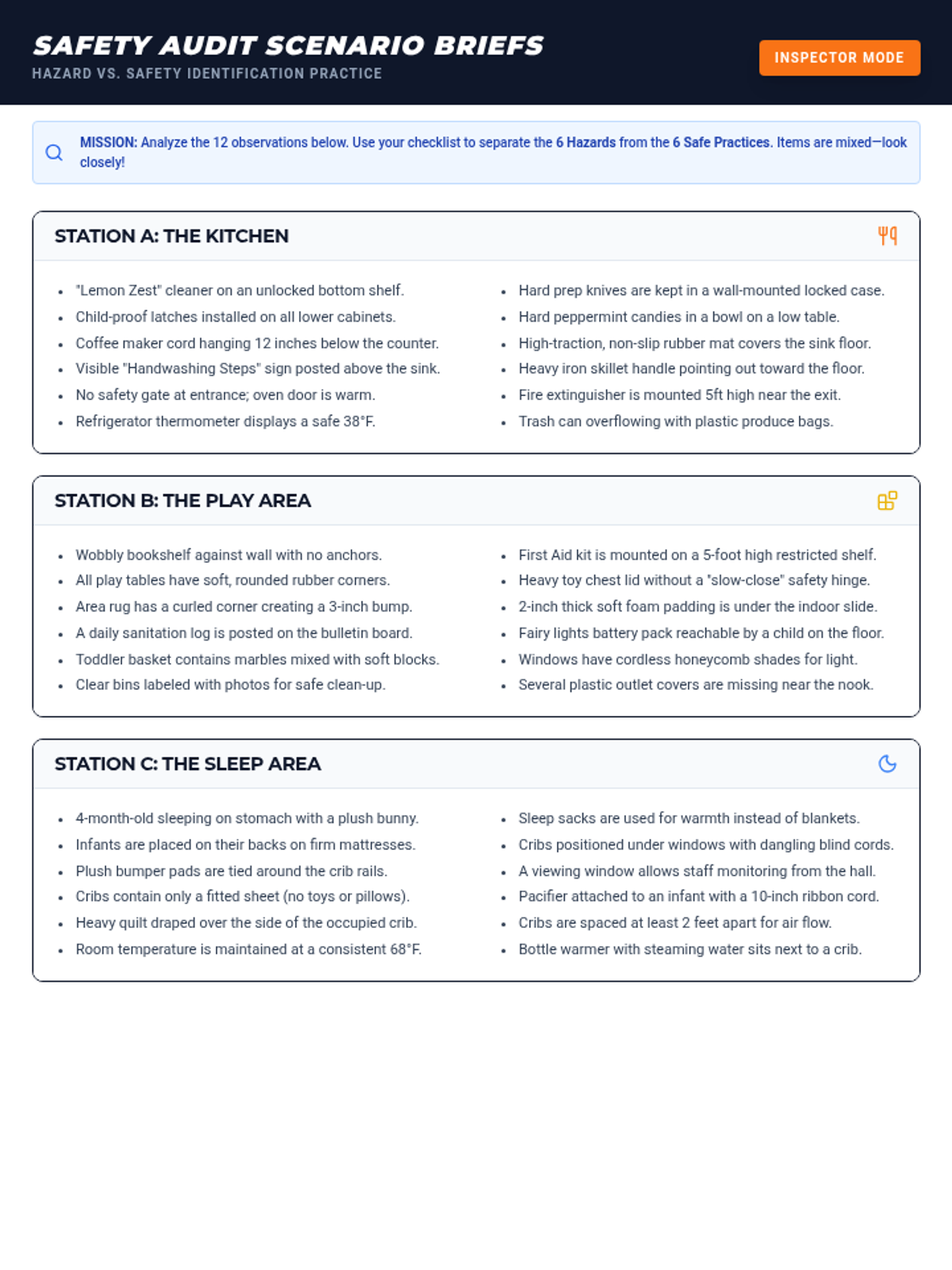
Descriptive station cards for the Kitchen, Play Area, and Sleep Area, presenting realistic childcare scenarios with a balanced and mixed list of 6 hazards and 6 safe practices per station.
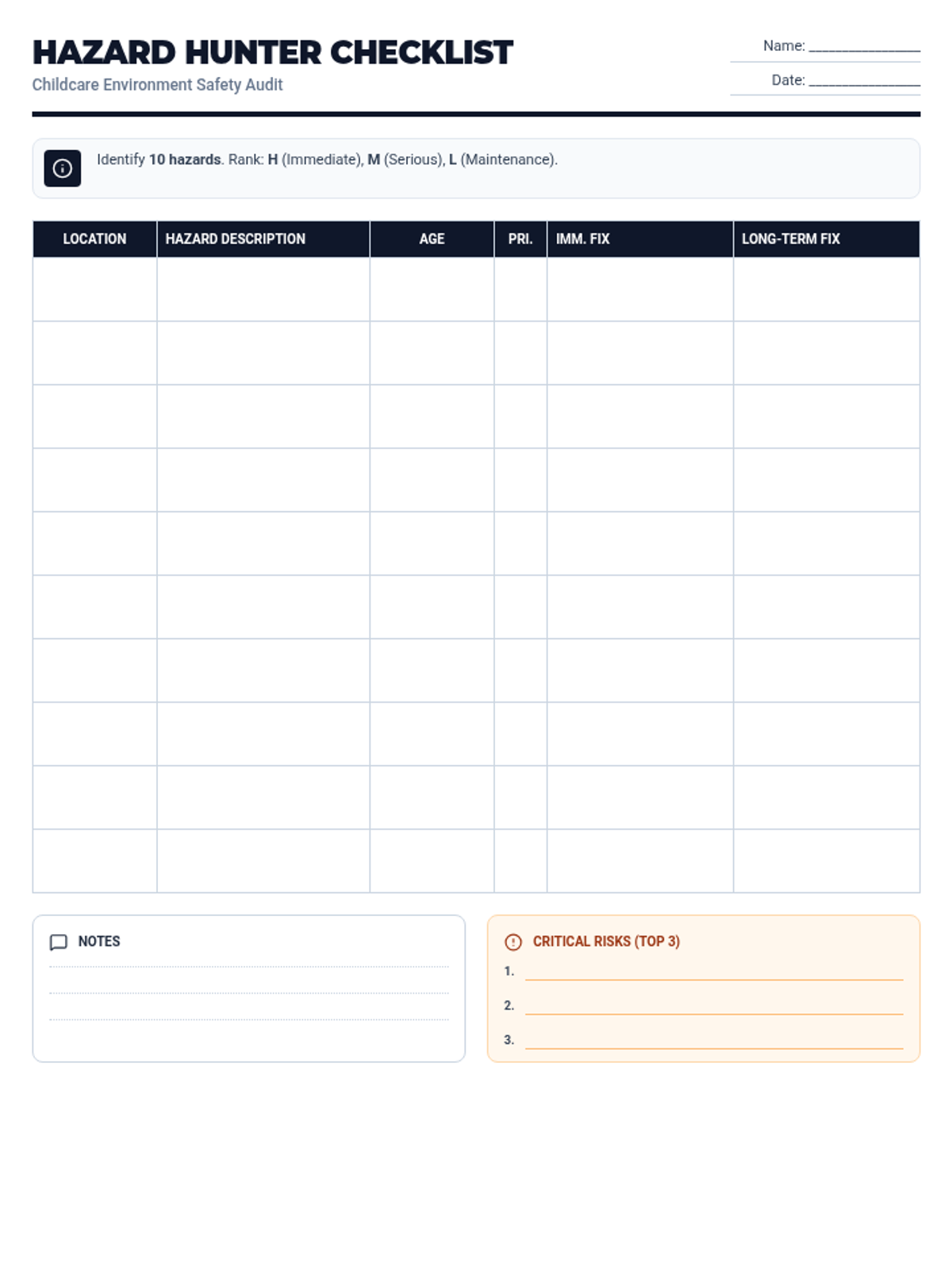
A structured observation checklist for students to use during the walkthrough activity, featuring columns for hazard description, age-affected analysis, priority ranking, and remediation steps.
Engaging slide deck for instruction on hazard identification, featuring the "3-Second Rule," priority ranking categories (High/Medium/Low), and modeling of remediation strategies.
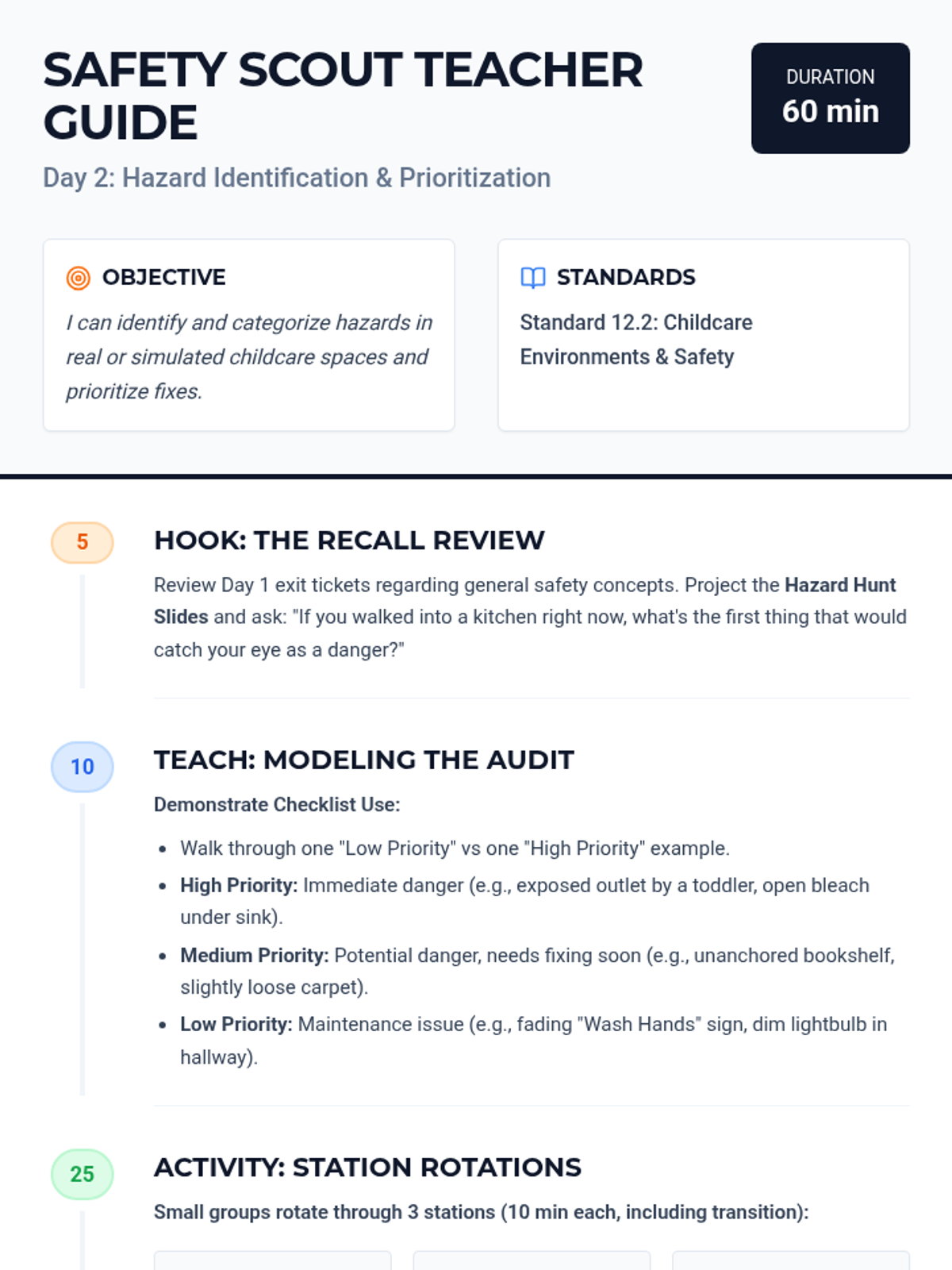
A professional teacher's guide for the Hazard Walkthrough lesson, including a timed instructional sequence, standards alignment, and differentiation strategies.
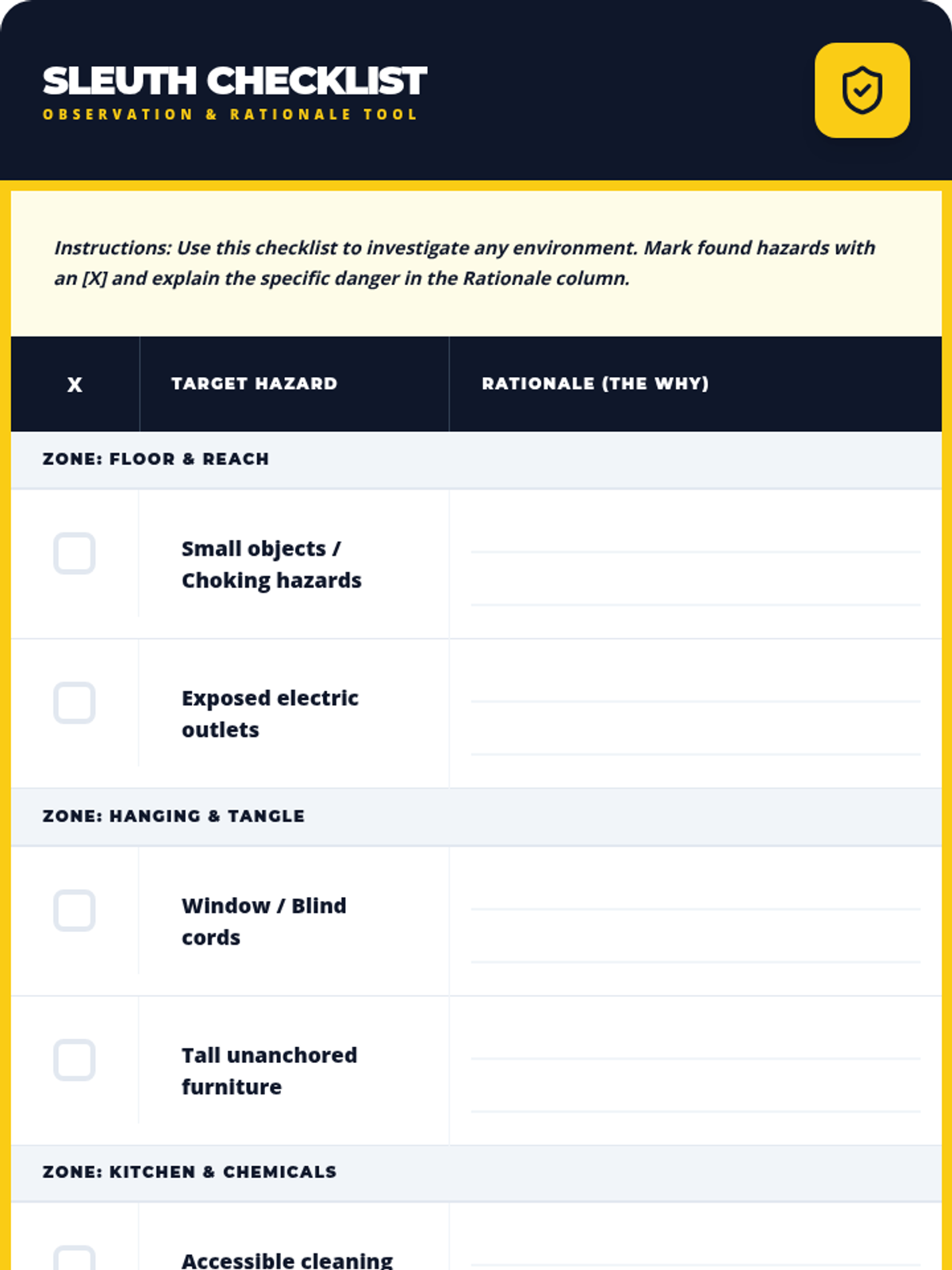
A scaffolded hazard checklist for the Safety Sleuths lesson, categorized by zone (Floor, Hanging, Kitchen, Outdoor) to support students during investigation activities.
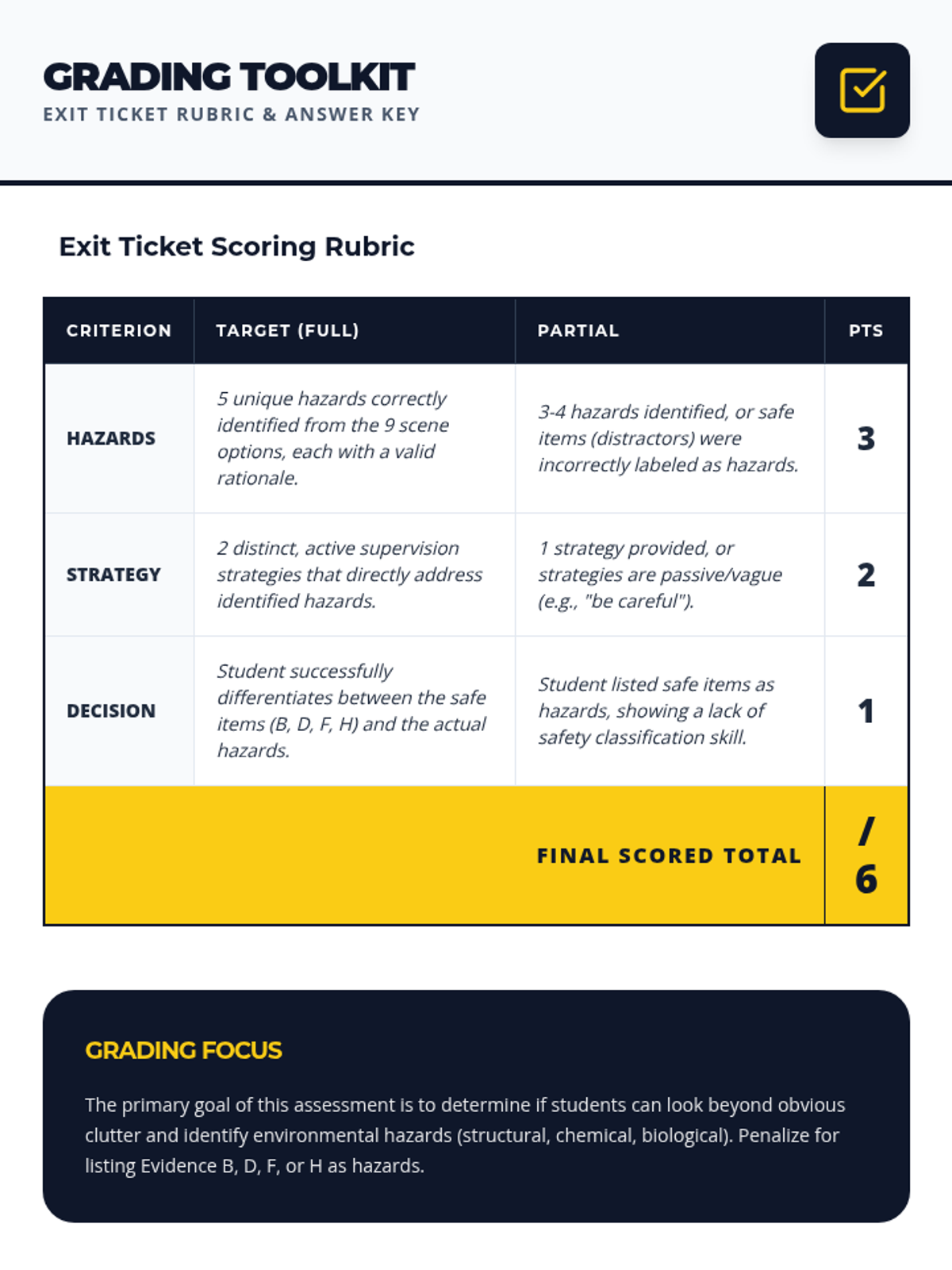
Updated the grading rubric and answer key to reflect the more complex 9-item exit ticket, including specific classifications for hazards versus safe distractors.
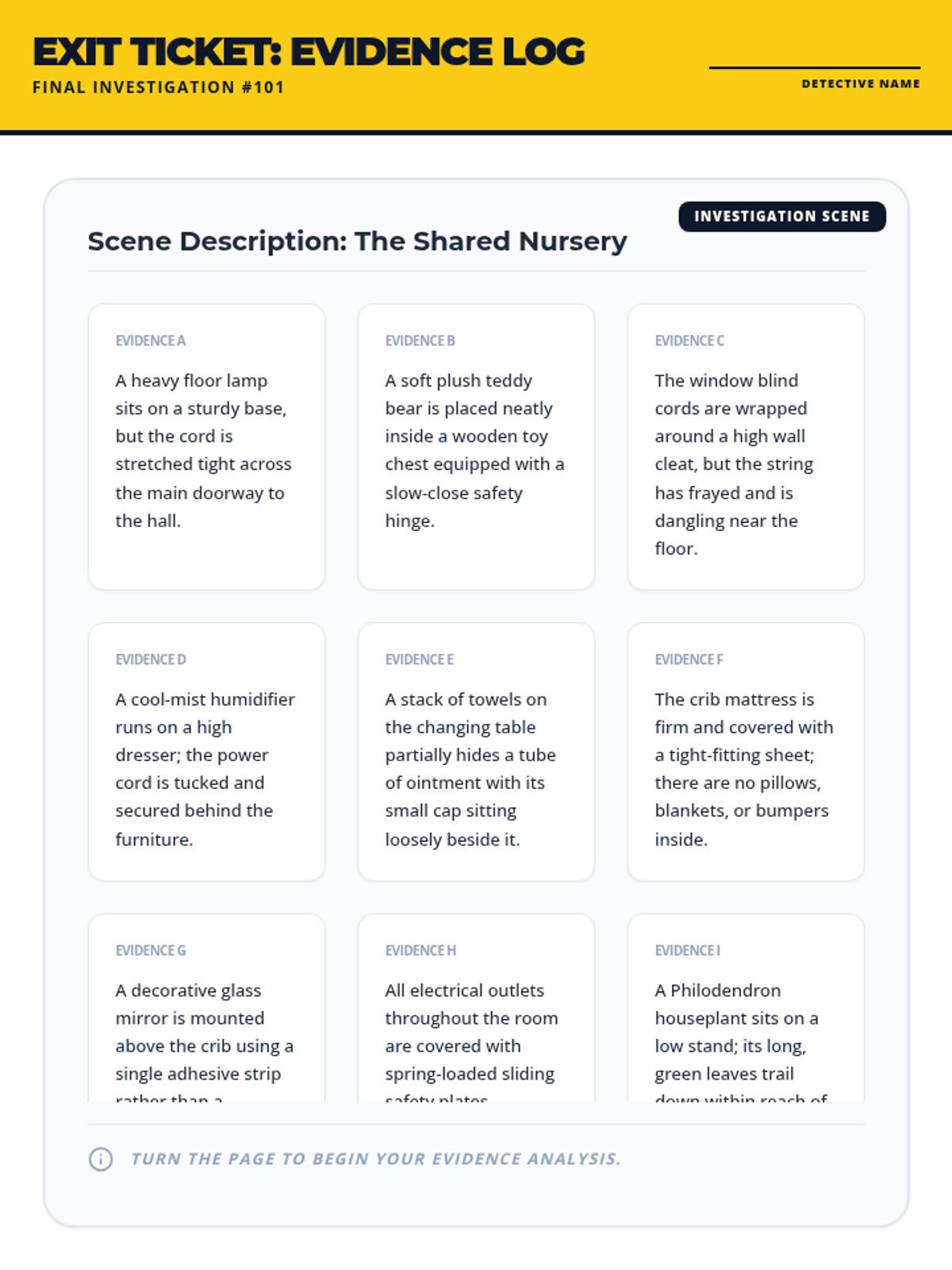
Updated the exit ticket assessment to feature a more complex "Nursery Scene" with 9 items (including distractors) to test students' ability to identify less obvious safety hazards and provide rationales.
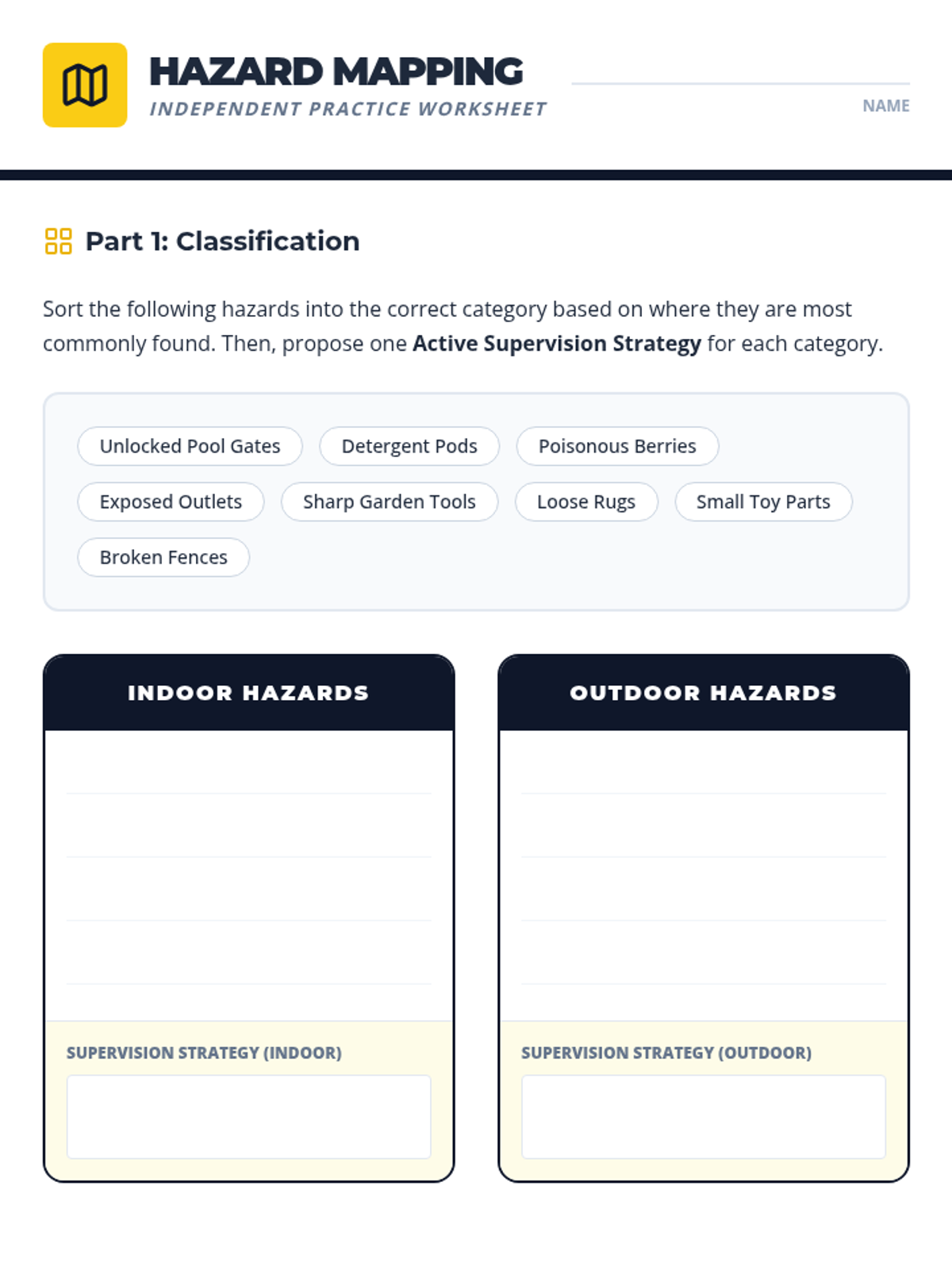
A classification worksheet for the Safety Sleuths lesson where students sort common hazards into indoor and outdoor categories and propose specific supervision strategies for each environment.