Teacher answer key for the Microbe Mystery Worksheet. Includes letter and word answers for all 12 MCQs and a consolidated instructional guide for teachers. Layout is optimized for a single page.
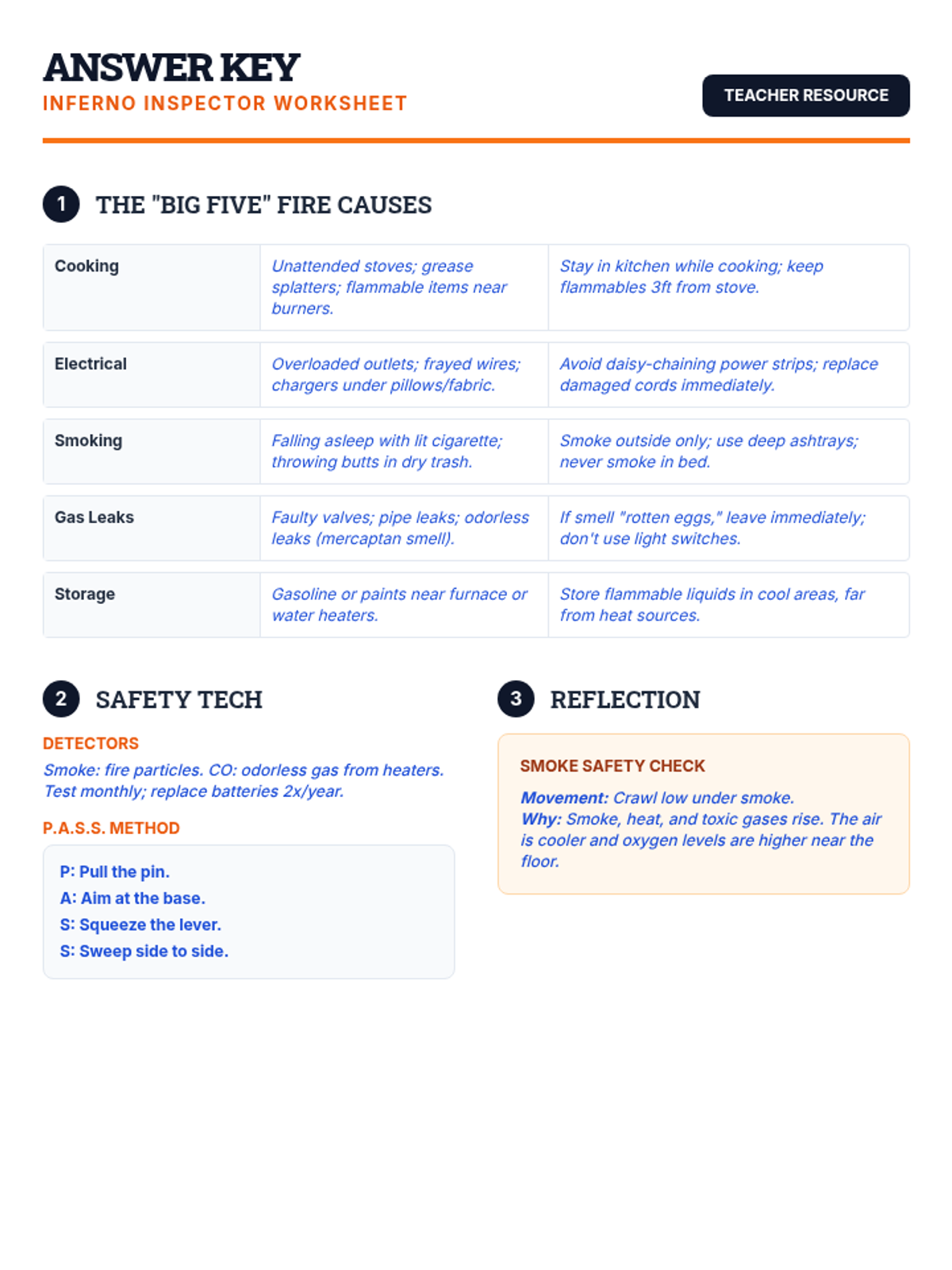
A concise, single-page teacher answer key for the Inferno Inspector Worksheet, containing all fire causes, safety tech details, and P.A.S.S. methodology.
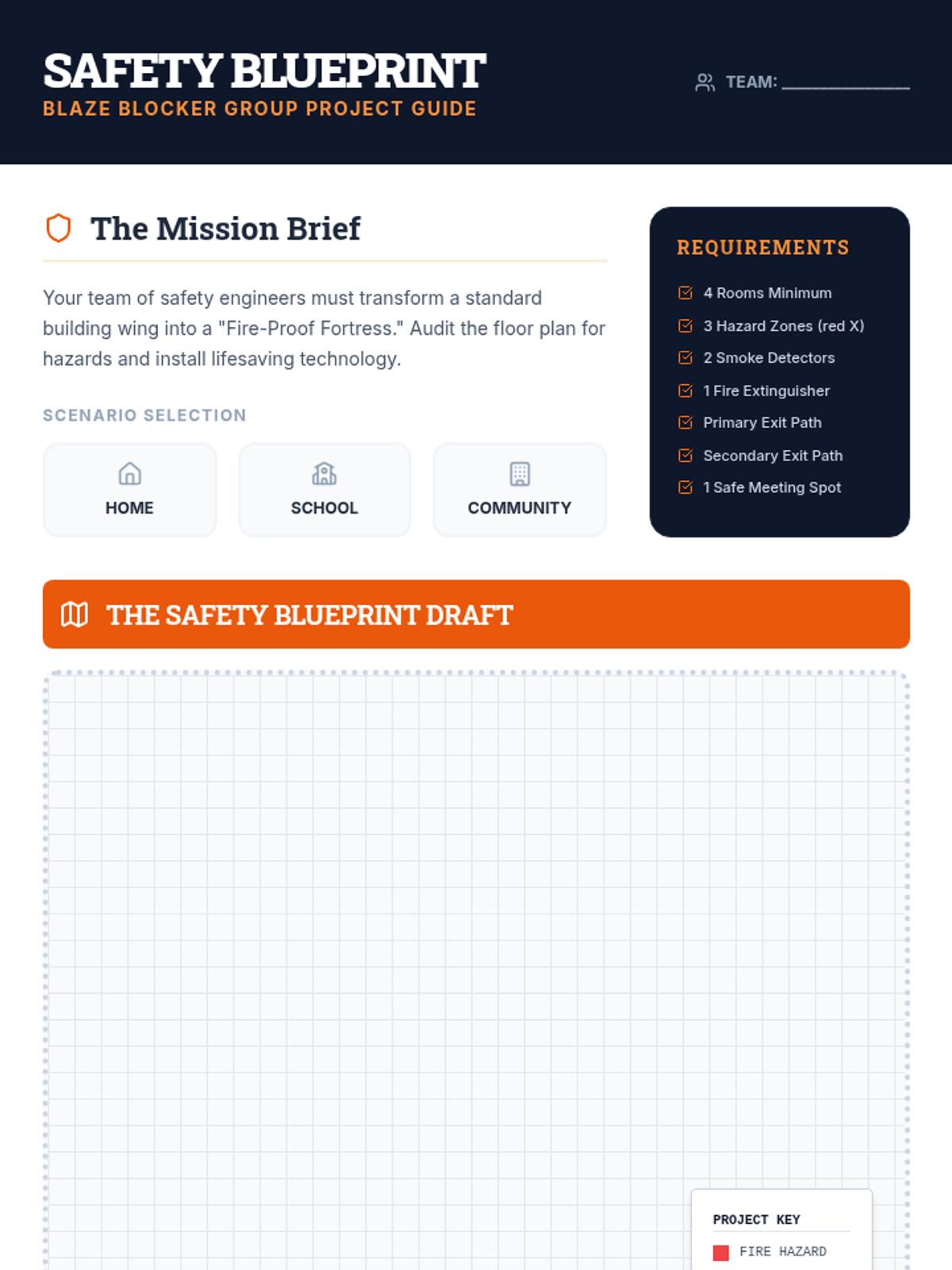
A guided group project resource for designing fire-safe floor plans, featuring a checklist, a large blueprint work area, and critical reflection sections on a logical two-page layout.
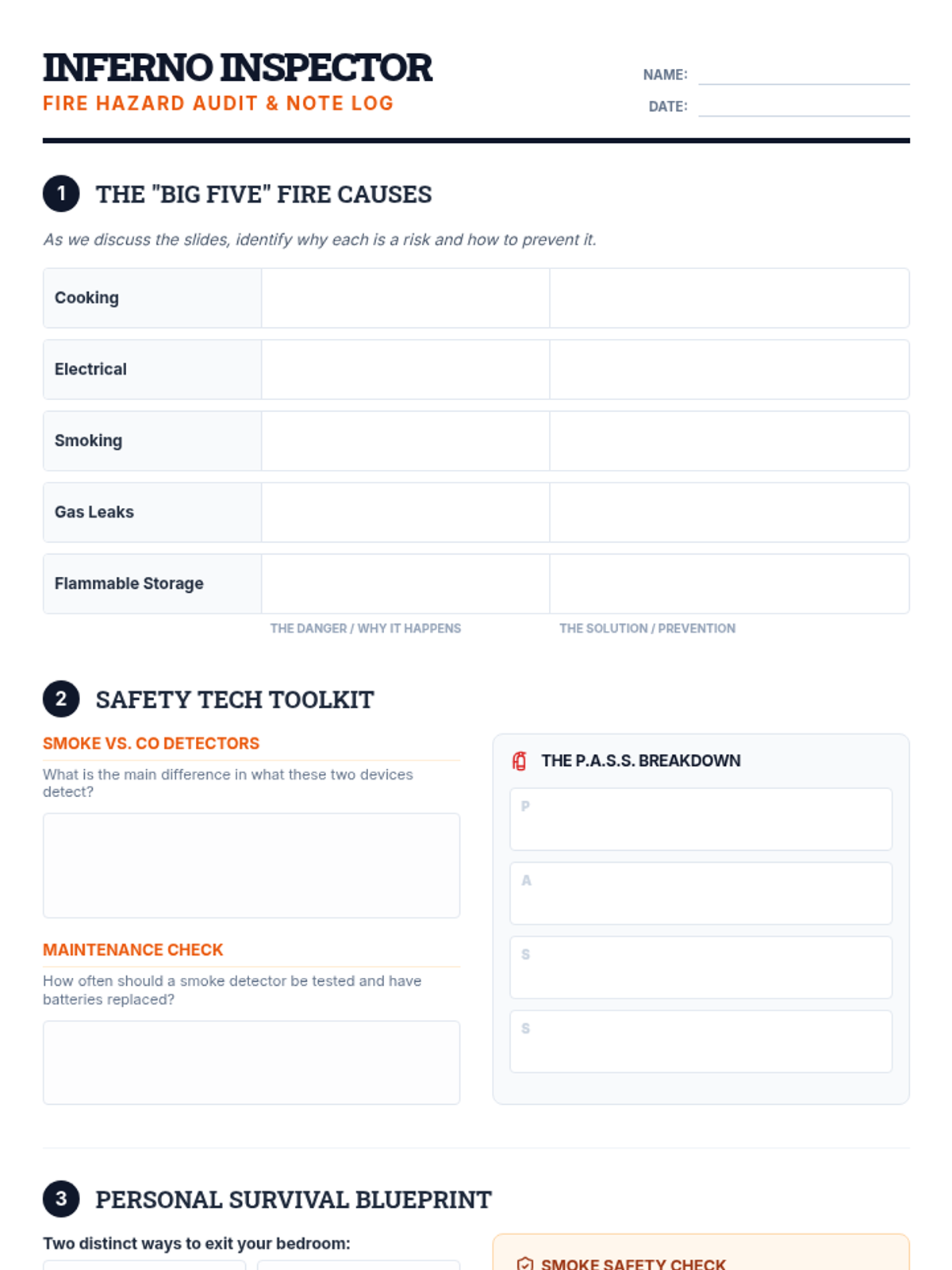
A one-page guided worksheet for students to record fire causes, safety technology functions, and personal escape reflections, optimized for a single-page layout.
Engaging instructional slides for the fire safety lesson, updated with improved text contrast and visual balance for better readability.
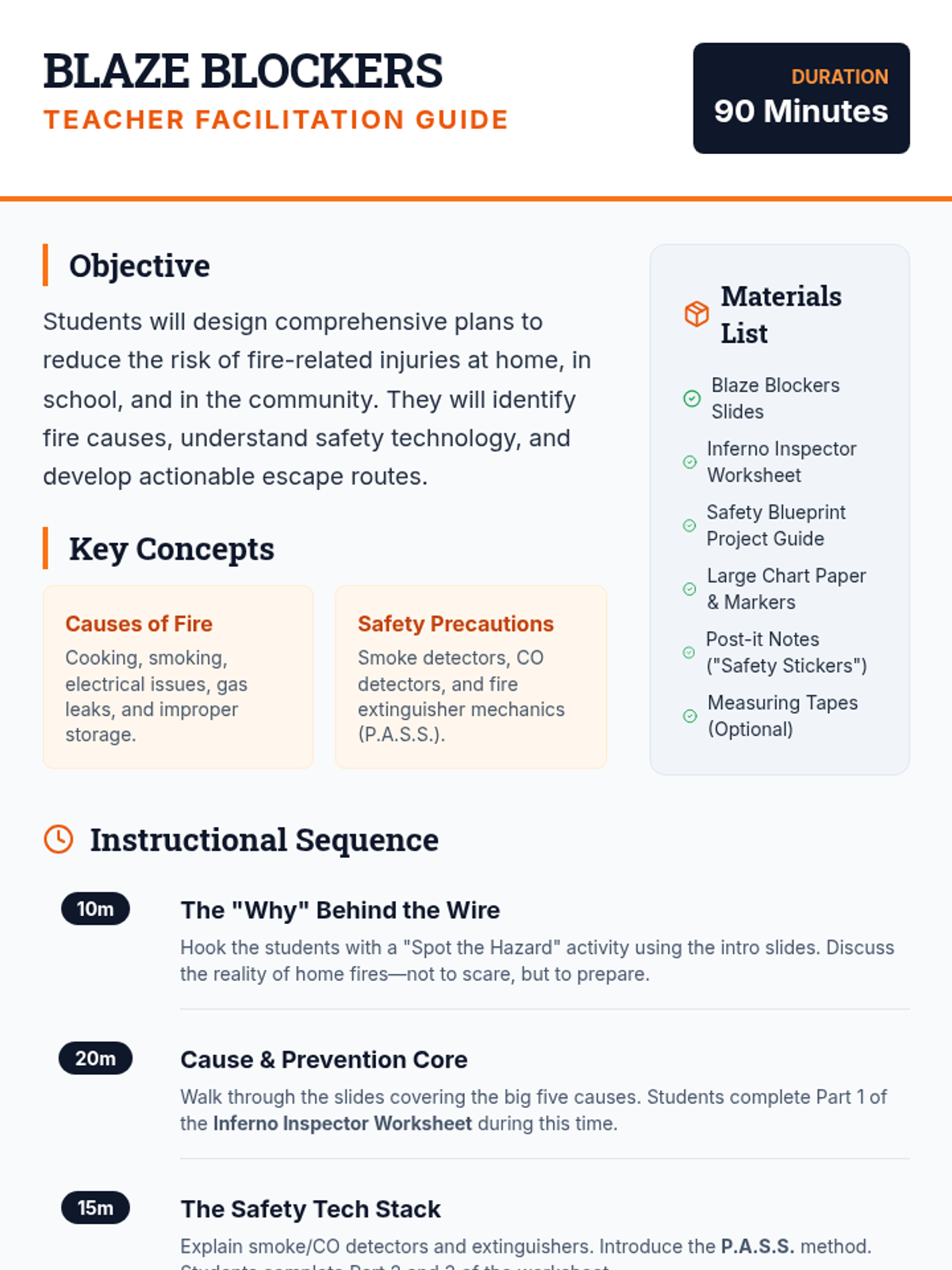
A comprehensive teacher guide for a 90-minute fire safety lesson, including pacing, materials, and discussion prompts, optimized to fit on fewer pages.
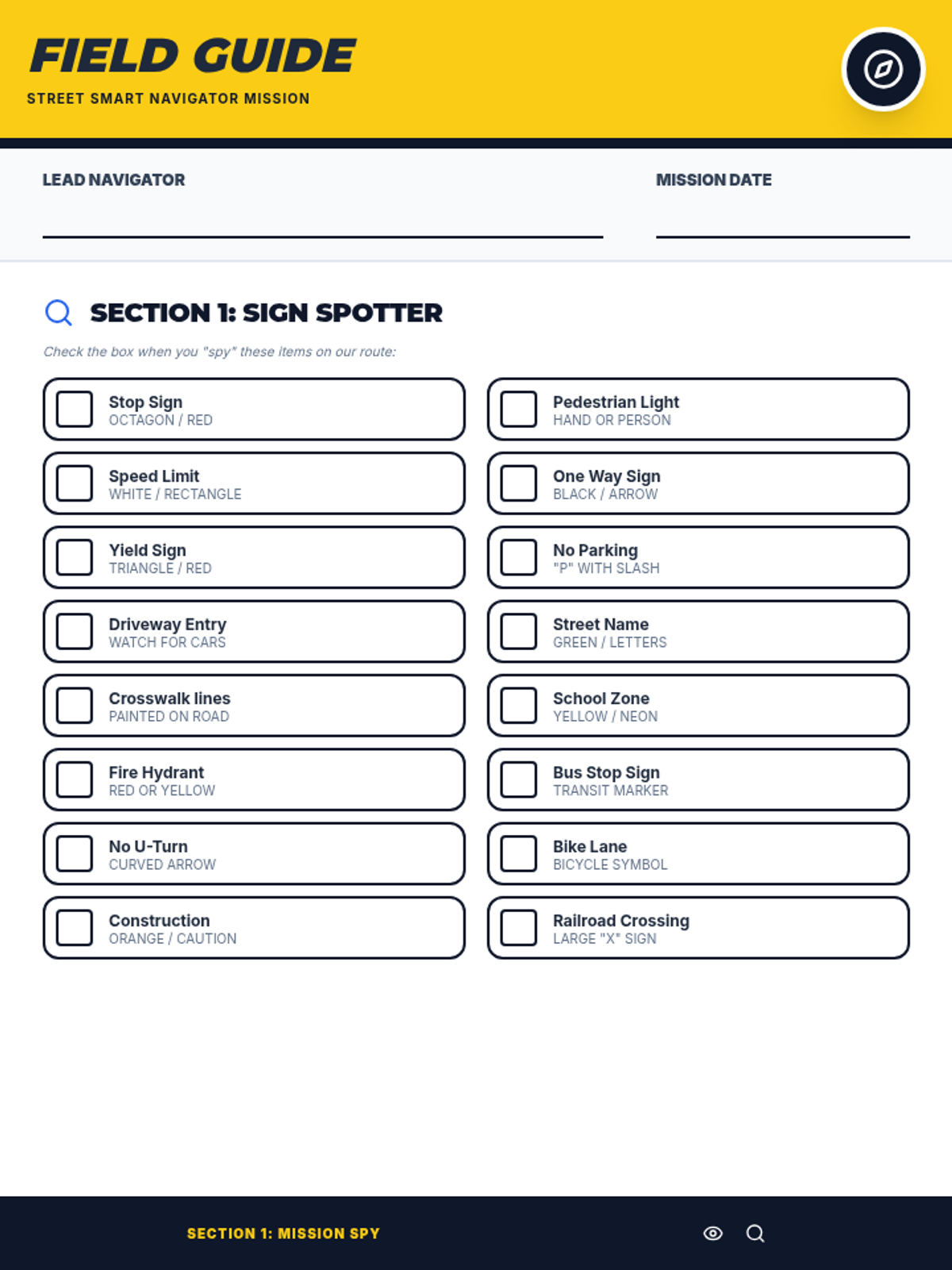
An expanded two-page field guide for students. Section 1 now features 8 signs to spot (including Yield, One Way, and No Parking). Revisions: Darkened input lines, standardized checkboxes, and optimized layout to maintain clear page breaks. Fixed spacing in headers.
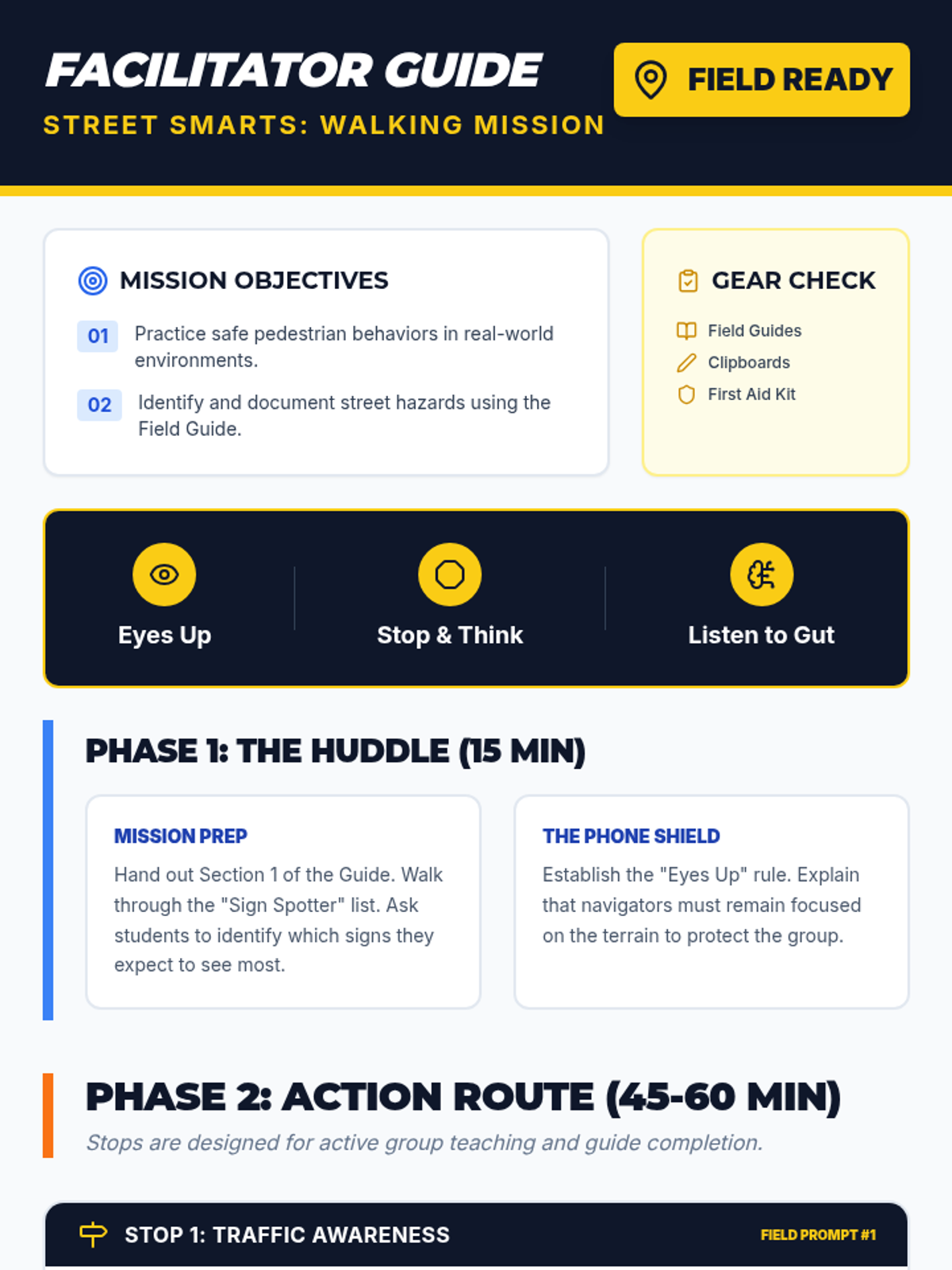
A comprehensive facilitator guide for staff, including objectives, pre-walk questions, step-by-step stop instructions, and a participant observation log for assessment. Revisions: Fixed page breaks, table layout, and text contrast on dark backgrounds. Added lines to the debrief box.
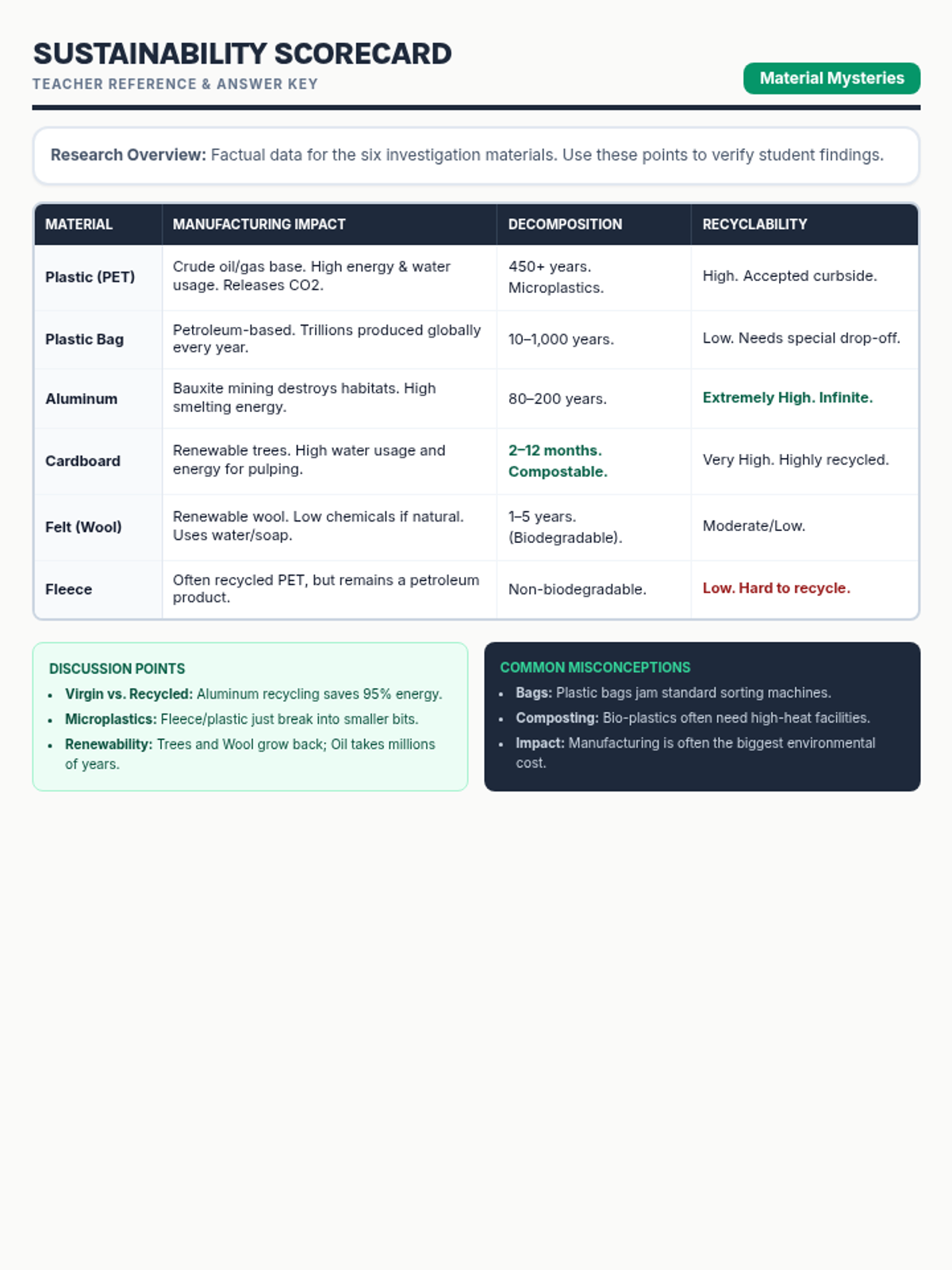
A comprehensive reference guide for teachers containing factual data on all six materials, including cardboard, to facilitate classroom discussion and provide an answer key for student research. Now with uniform objective styling and one-page layout.
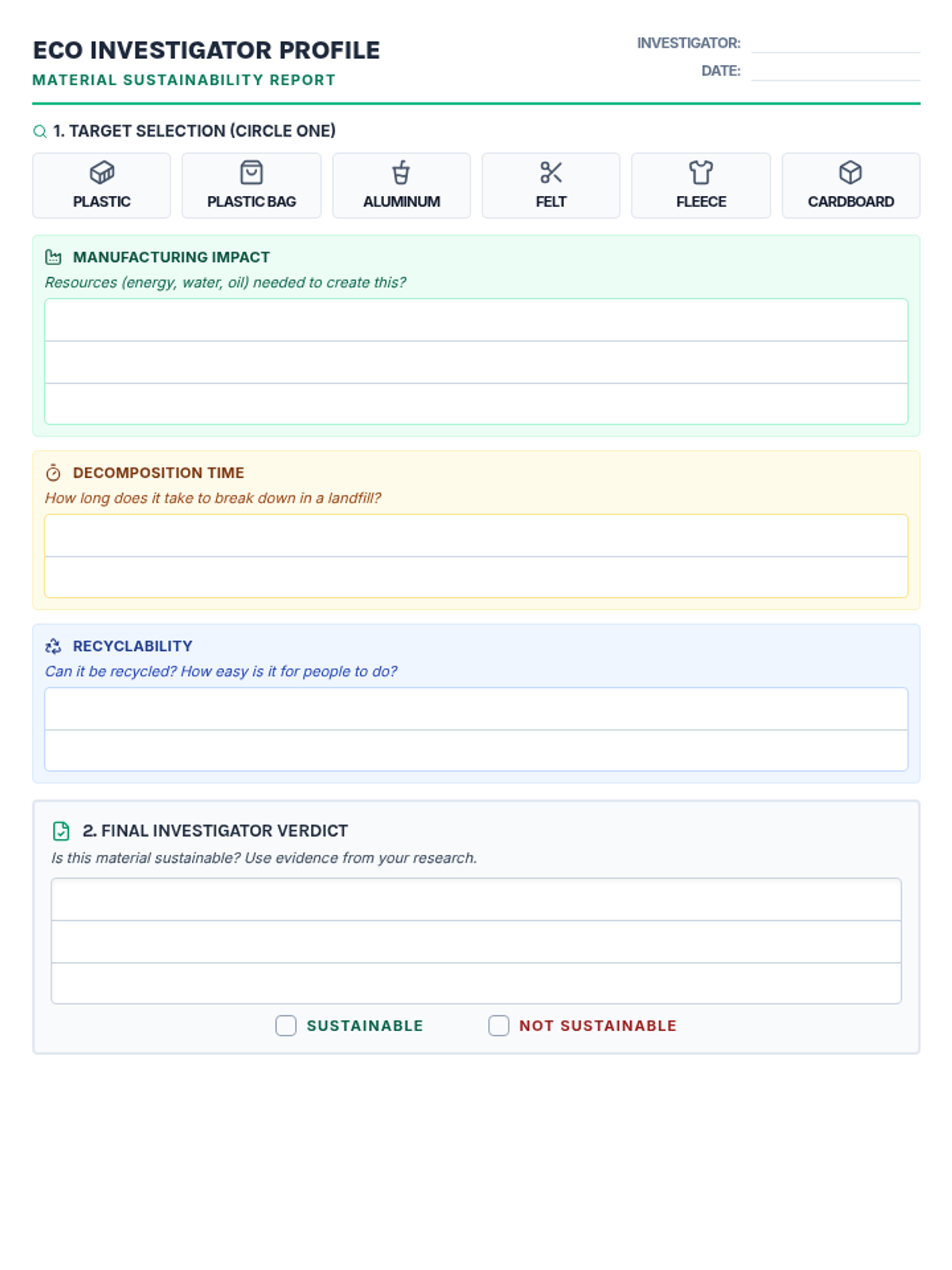
A research worksheet for students to investigate the sustainability of materials, now including cardboard. It features clear icons for selection, uniform research areas with ruled lines (32px), and a final verdict section designed for maximum handwriting legibility on a single page. Now with improved contrast and uniform styling.
A presentation introducing the concept of sustainability and the three key research factors: manufacturing impact, decomposition time, and recyclability. It outlines the six materials students can choose to investigate, including cardboard. Now with uniform visual styling.
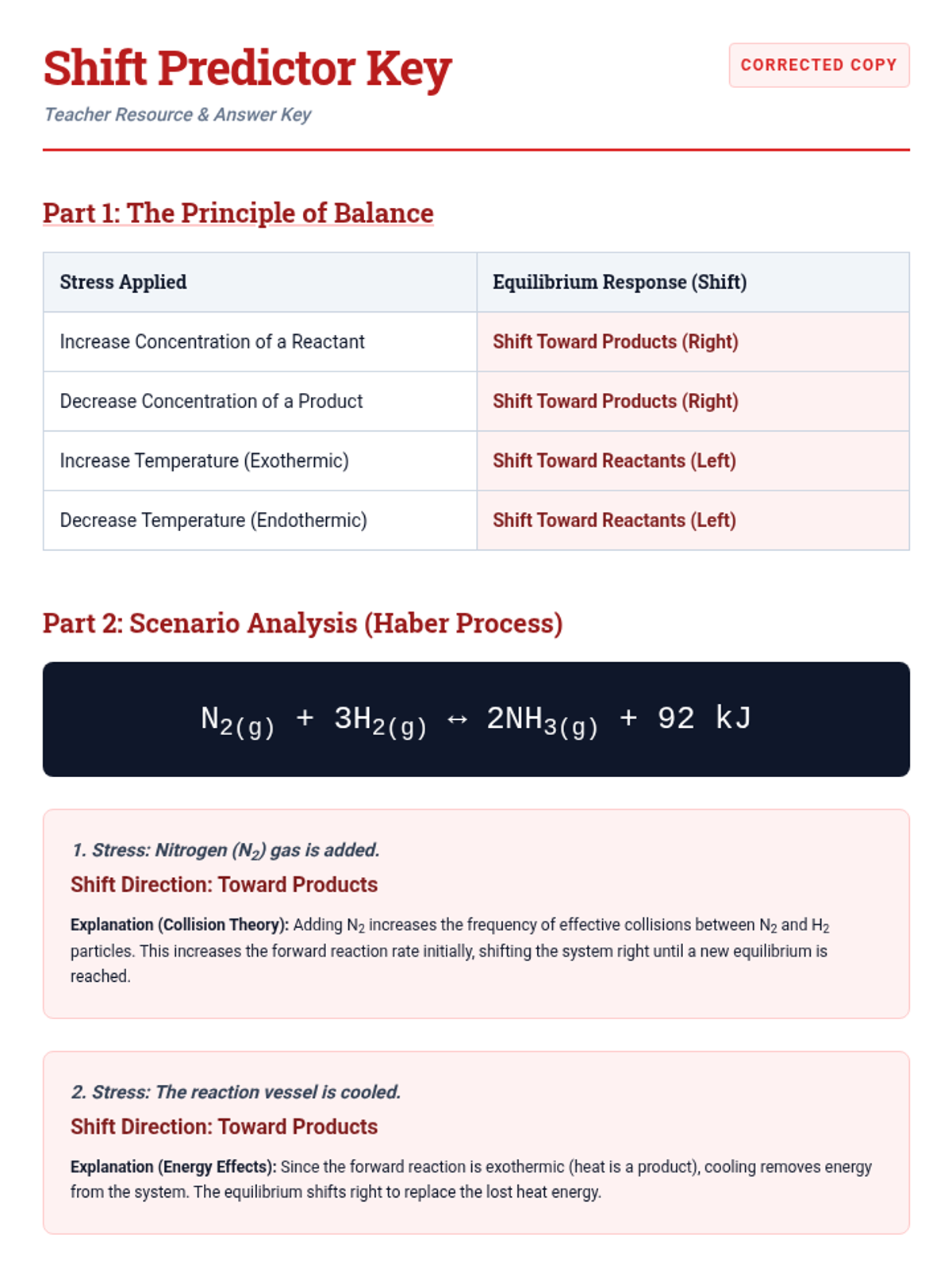
Detailed teacher answer key for the Shift Predictor Worksheet. Includes the summary table, scenario analysis with reasoning based on collision theory and energy effects, and a visual representation of equilibrium shifts on a concentration vs. time graph. Revised for better page breaks and math rendering.
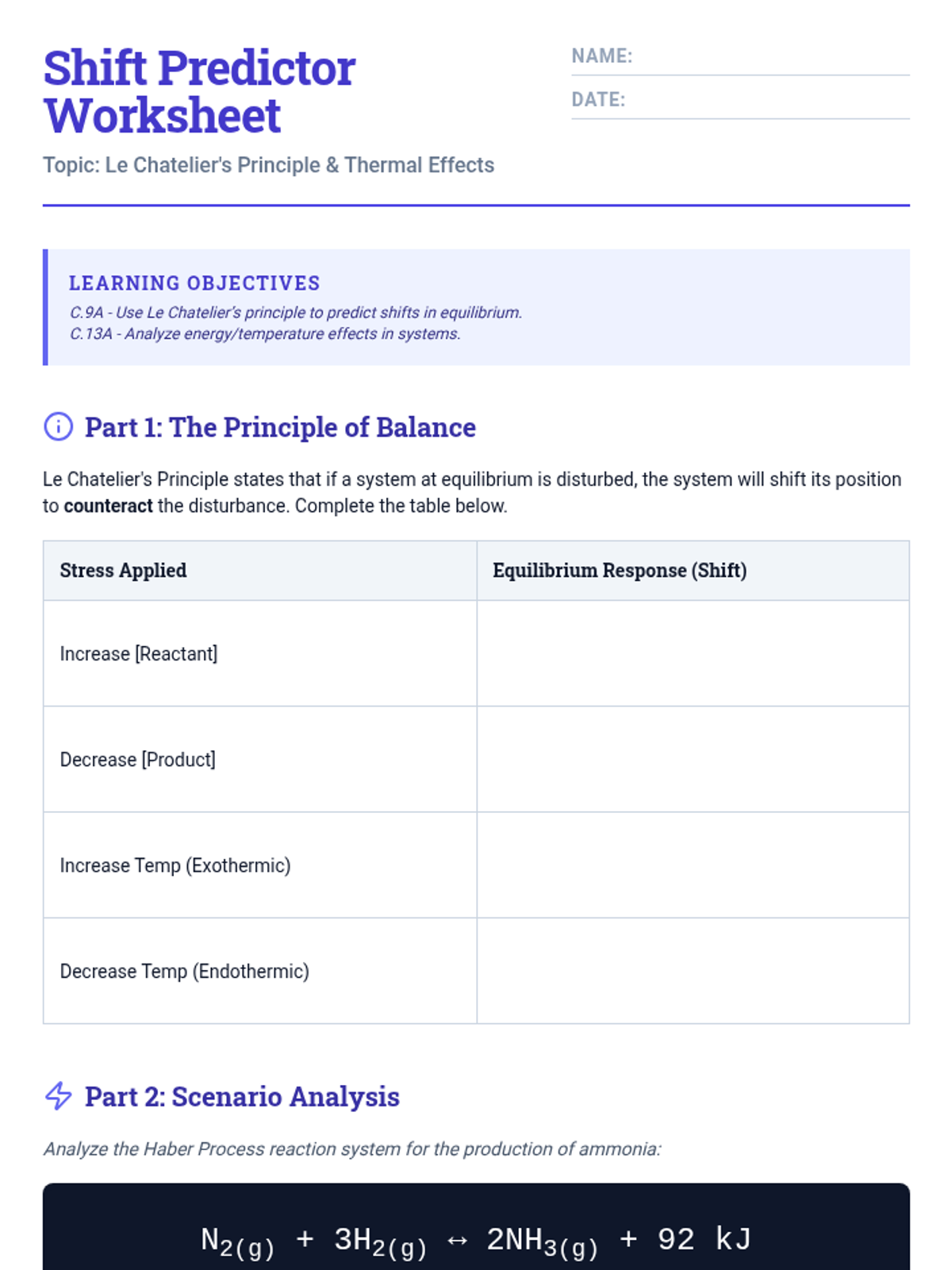
A student worksheet focused on Le Chatelier's Principle and thermal effects in chemical systems. Includes table summaries, scenario analysis for the Haber Process and biological carbonic acid systems, and a graphical synthesis section for visualizing equilibrium shifts. Revised for better page breaks, legibility, and technical rendering.
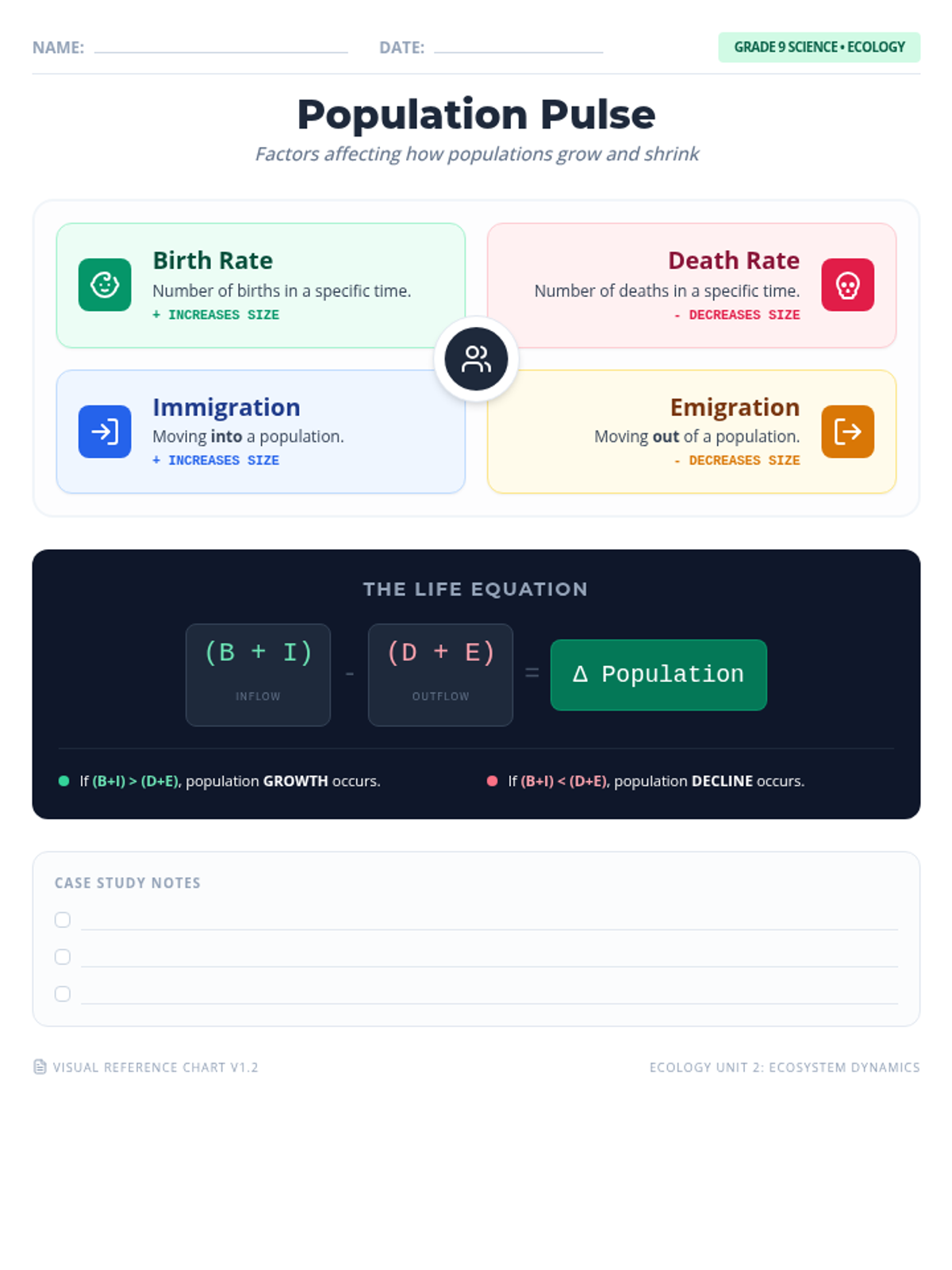
A high-contrast infographic anchor chart for Grade 9 Science explaining the four factors (birth, death, immigration, emigration) that influence population size, complete with a visual equation.
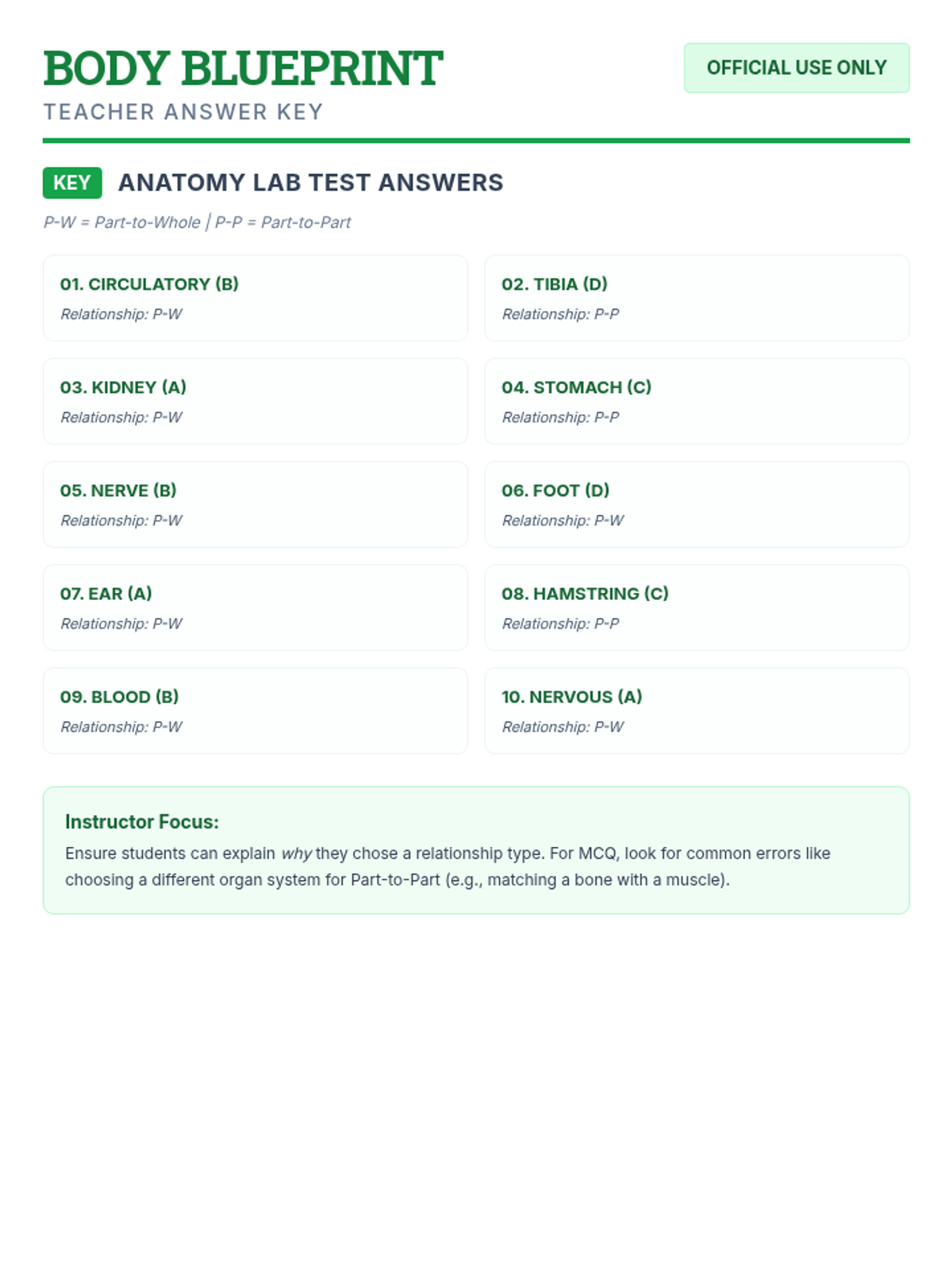
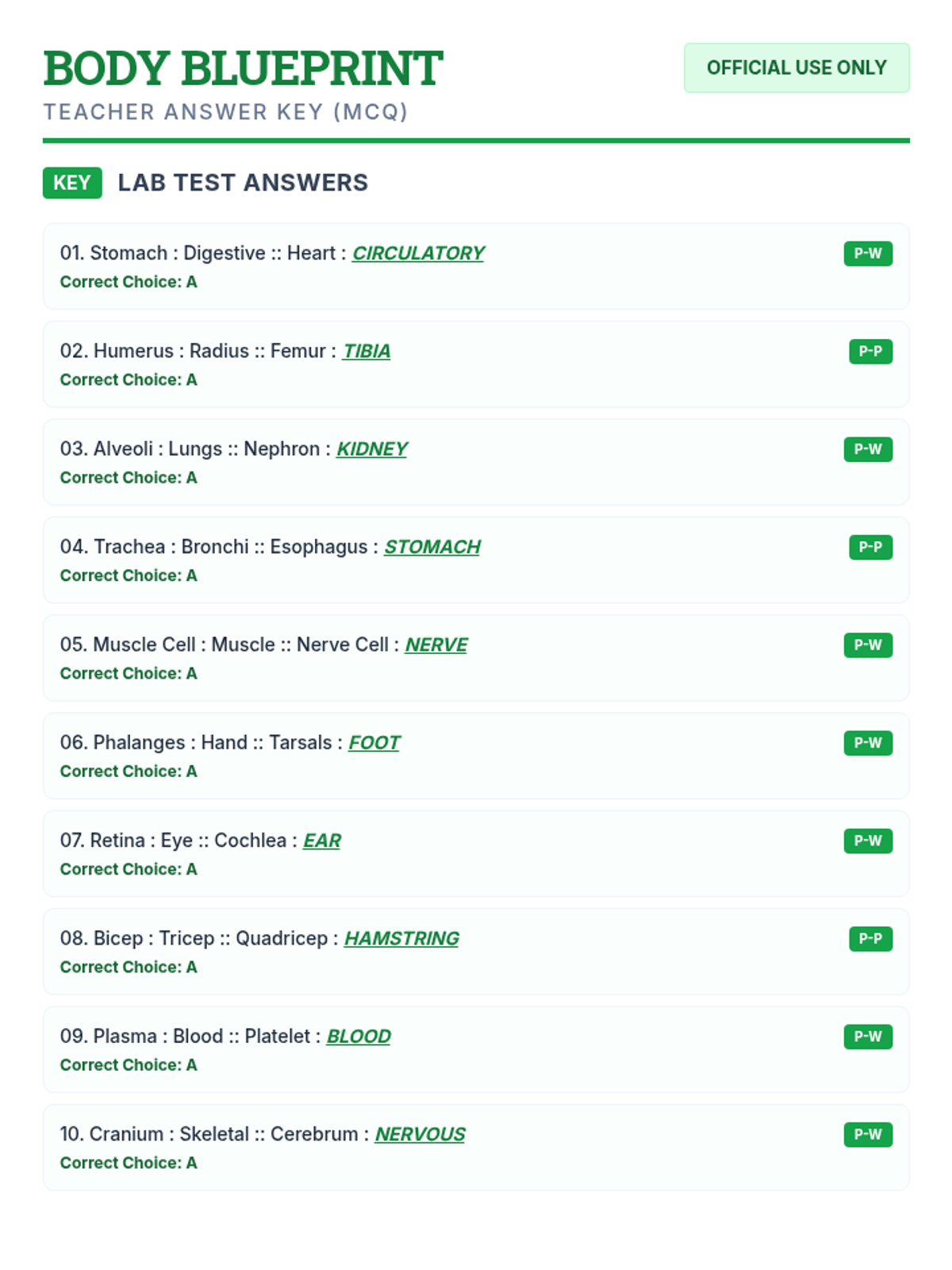
The updated teacher answer key for the randomized multiple-choice version of the Body Blueprint worksheet. Correct choice letters and relationship types are provided.
A polished slide deck for Anatomy Analogies with high-contrast text, uniform button styling for challenges, and progressively difficult examples.
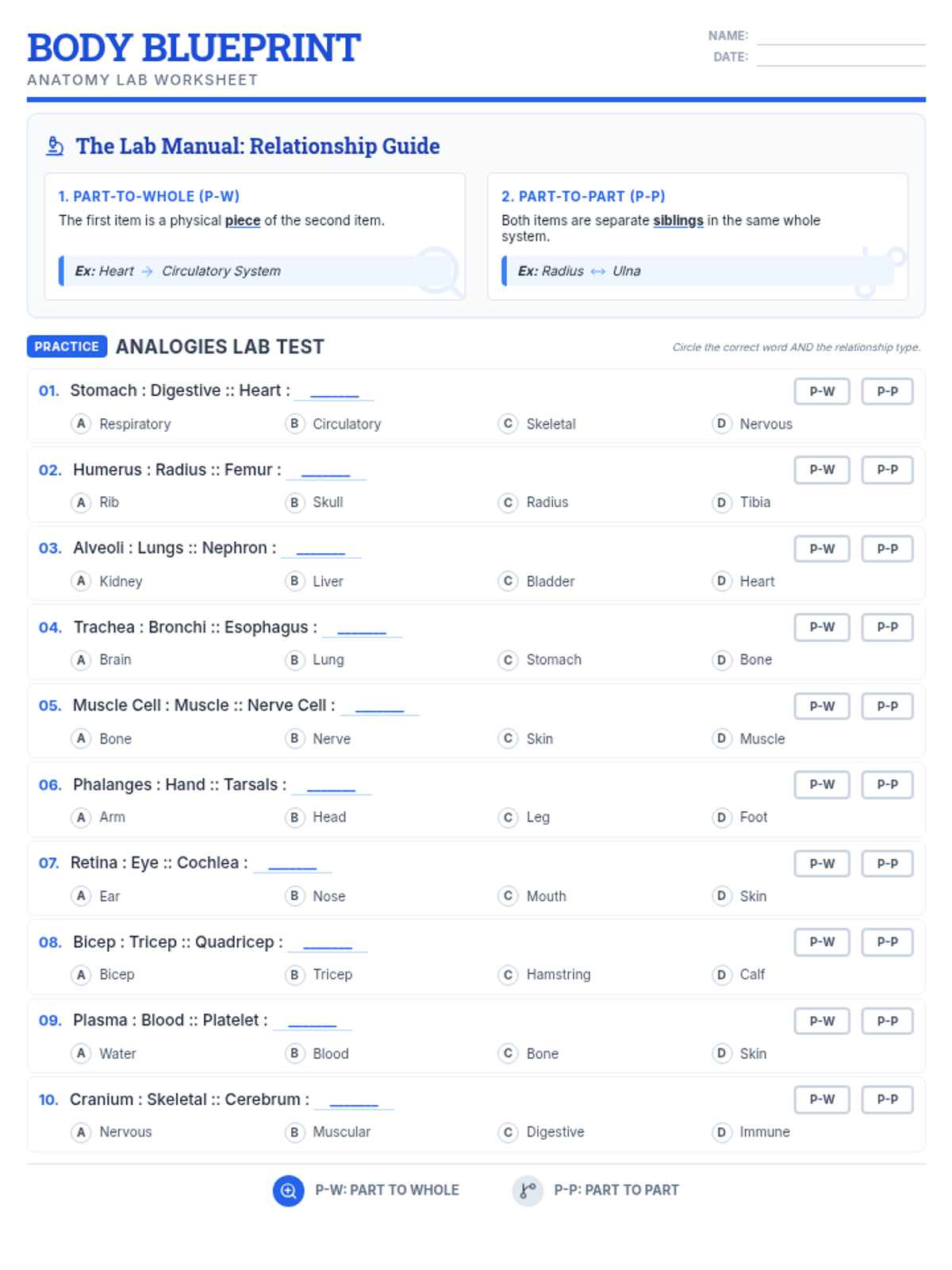
A multiple-choice version of the Body Blueprint worksheet, where students select the correct organ or system to complete the analogy and identify the relationship type. Correct answers are randomized and visual icons are included for instruction. All answer choices share uniform styling.
The updated teacher answer key for the multiple-choice version of the Body Blueprint worksheet.
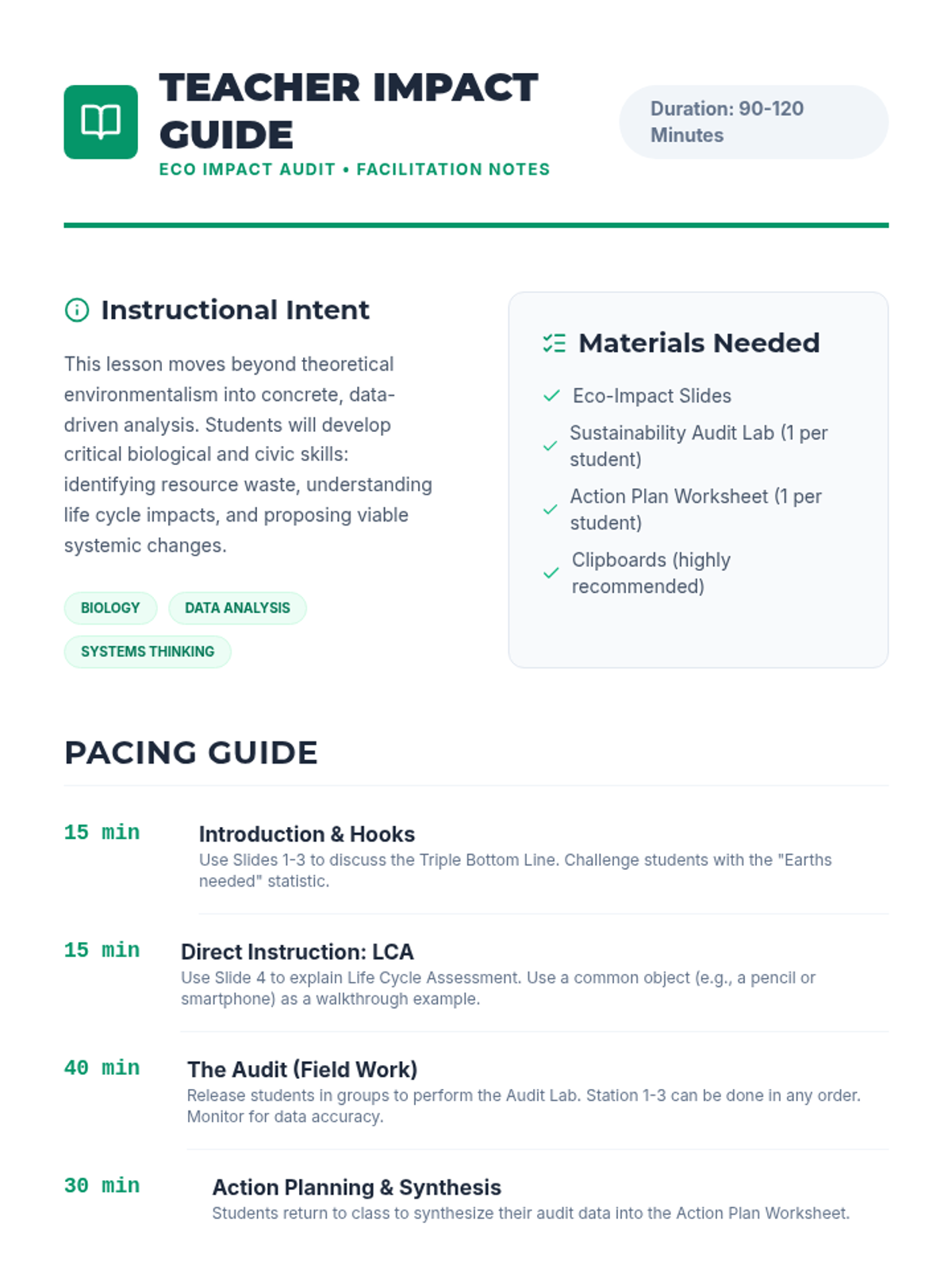
A teacher-facing instructional guide providing pacing, logistics, facilitation tips, and an assessment rubric for the Eco Impact Audit lesson.
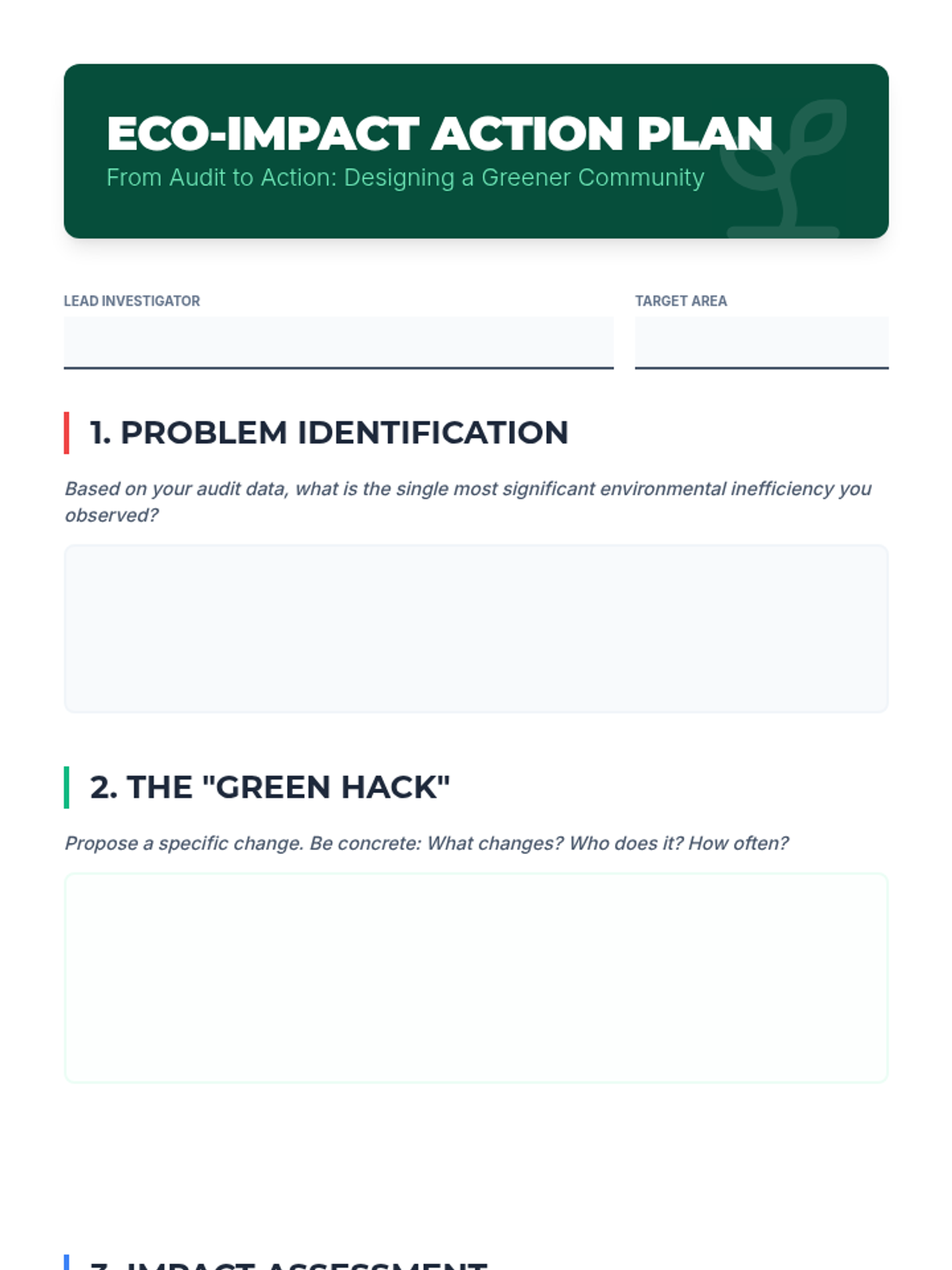
A student-facing worksheet for developing a sustainability proposal based on audit findings, featuring a triple bottom line analysis and an elevator pitch section.
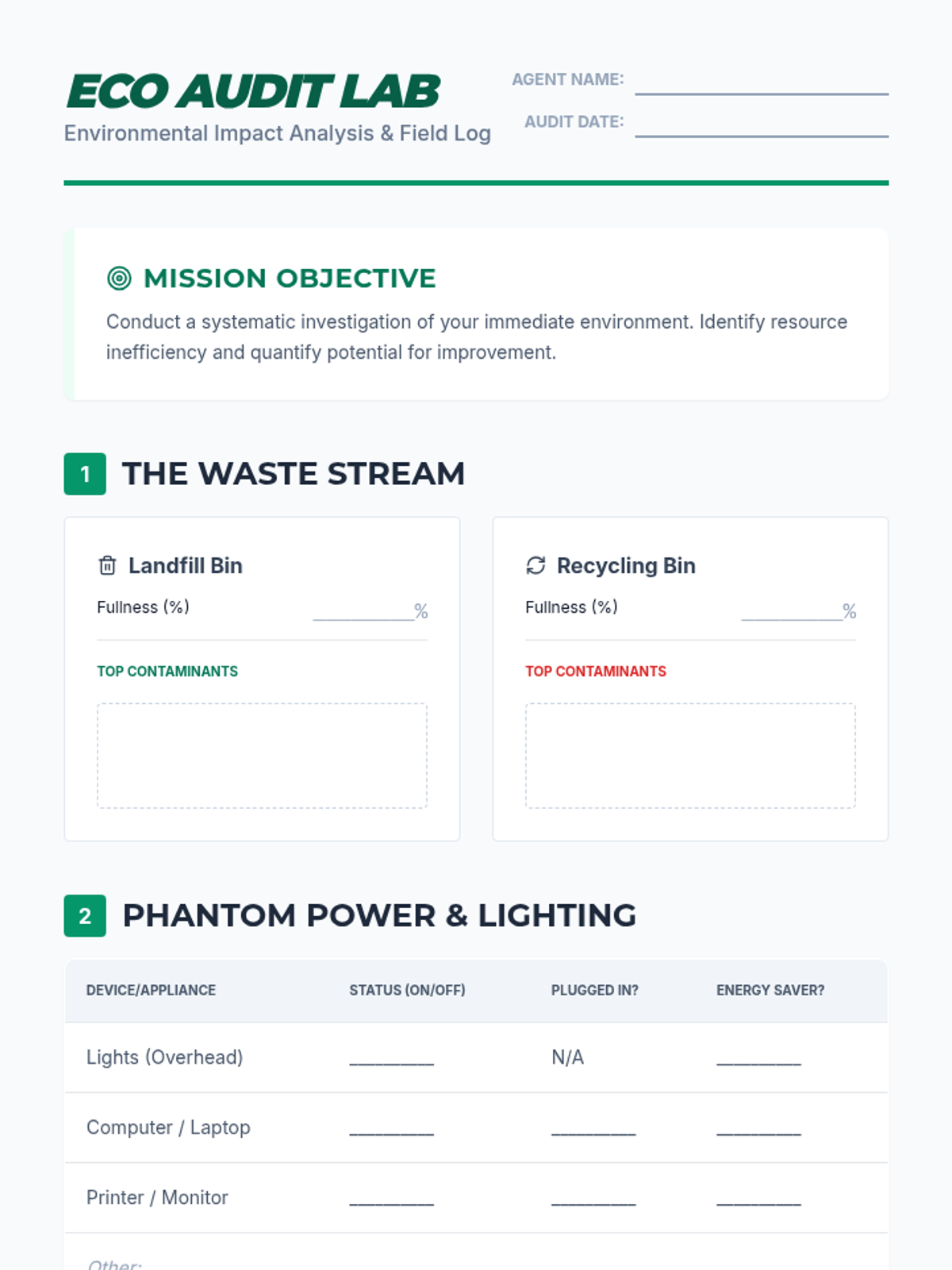
A hands-on environmental audit worksheet where students investigate waste, energy, and water usage in their local environment to identify inefficiencies.
A high-impact visual presentation introducing ecological footprints, the triple bottom line of sustainability, and the life cycle of products to prepare students for their environmental audit.