A visually engaging slide deck that introduces the six essential nutrients (carbohydrates, proteins, fats, vitamins, minerals, and water) using a 'factory' metaphor, detailing their functions and dietary sources.
Final refined campus training presentation for Somerset ISD. v3.9.7 finds the "sweet spot" for Slide 8 content, enlarging fonts and boxes while ensuring they fit comfortably within the slide. Slide 5's HB 6 requirement box has been enlarged for better visibility. All original graphics and the Slide 7 flowchart remain unchanged. v3.9.7.
Final refined campus training presentation for Somerset ISD. v3.9.6 finds the "sweet spot" for Slide 8 content, enlarging fonts and boxes while ensuring they fit comfortably within the slide. Slide 5's HB 6 requirement box has been enlarged for better visibility. All original graphics and the Slide 7 flowchart remain unchanged. v3.9.6.
Updated campus training presentation for Somerset ISD. v3.9.5 refines Slide 8 by enlarging boxes and fonts to the maximum size that fits comfortably within the viewport without clipping. Slide 5's HB 6 special education requirement box has been enlarged slightly for better visibility. All original graphics and the Slide 7 flowchart are preserved. v3.9.5.
Updated campus training presentation for Somerset ISD. v3.9.4 refines Slide 8 by enlarging boxes and fonts to the maximum size that fits comfortably within the viewport. Slide 5's HB 6 special education requirement box has been enlarged slightly for better visibility. All original graphics and the Slide 7 flowchart are preserved. v3.9.4.
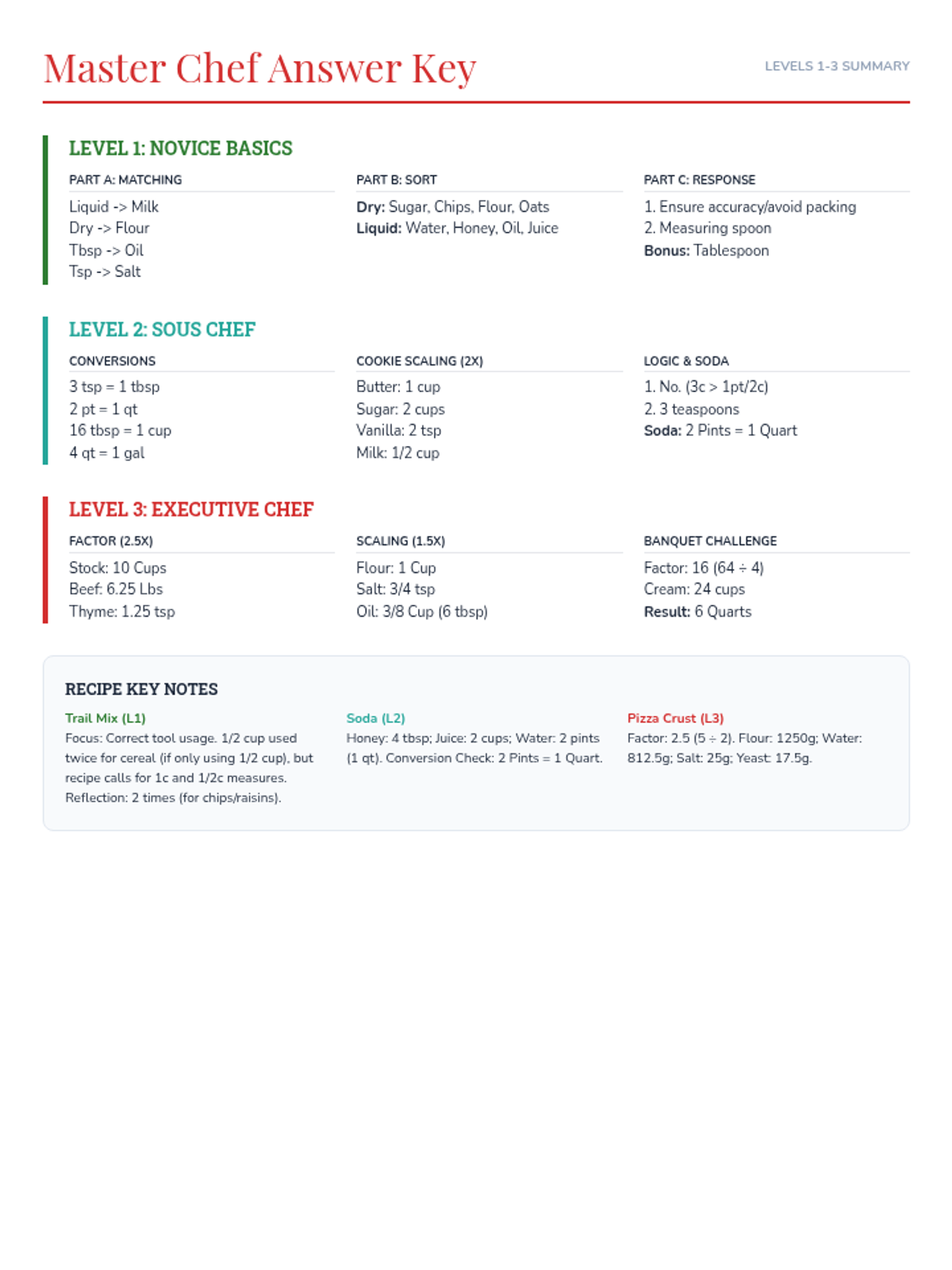
A condensed, single-page answer key covering all measurement levels and recipe activity solutions.
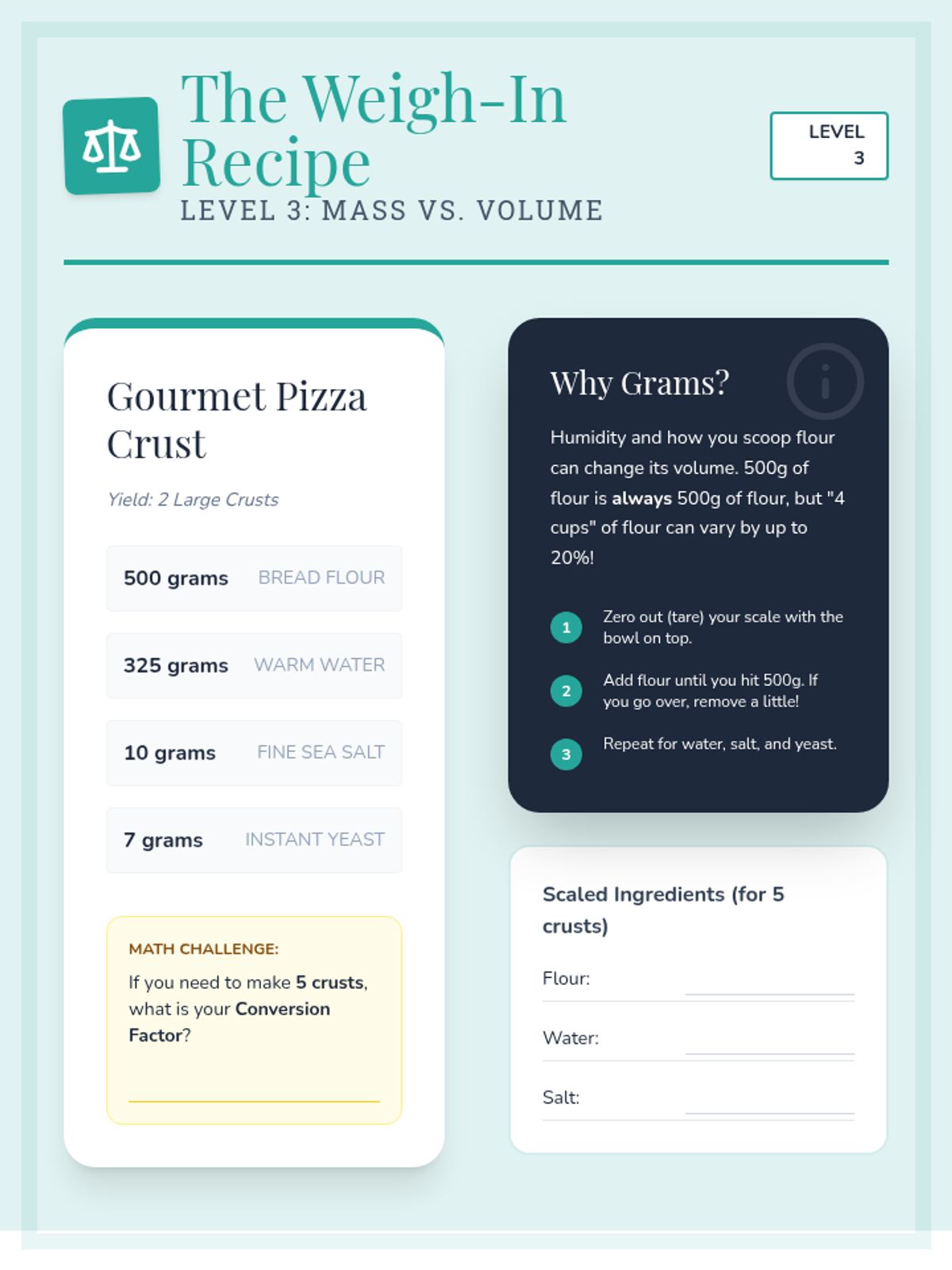
An advanced culinary activity where students practice measuring ingredients by weight (grams) and scaling a professional pizza crust recipe using a conversion factor.
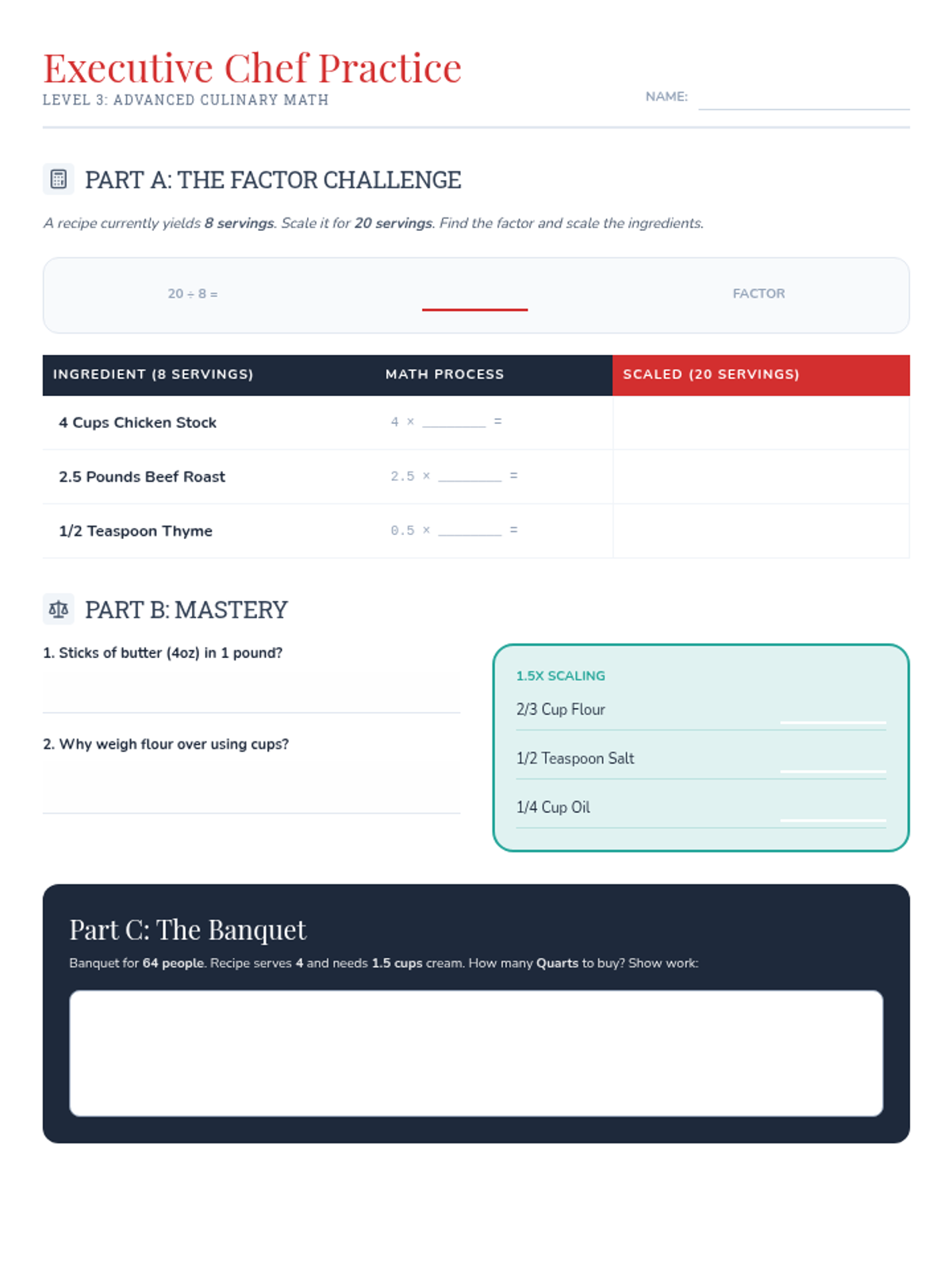
A rigorous culinary mathematics worksheet for advanced students, focusing on conversion factors, yield scaling, and weight vs. volume problems.
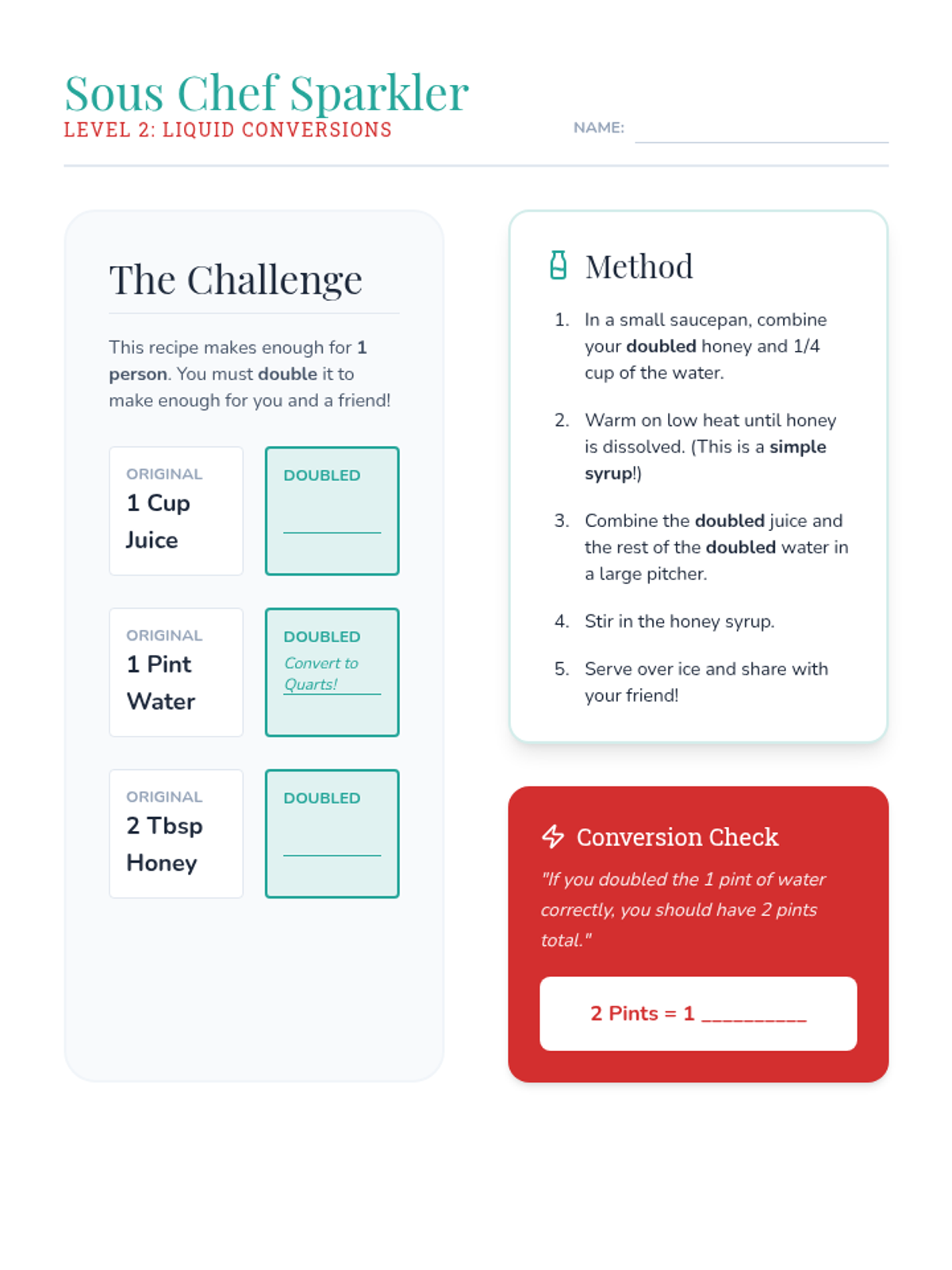
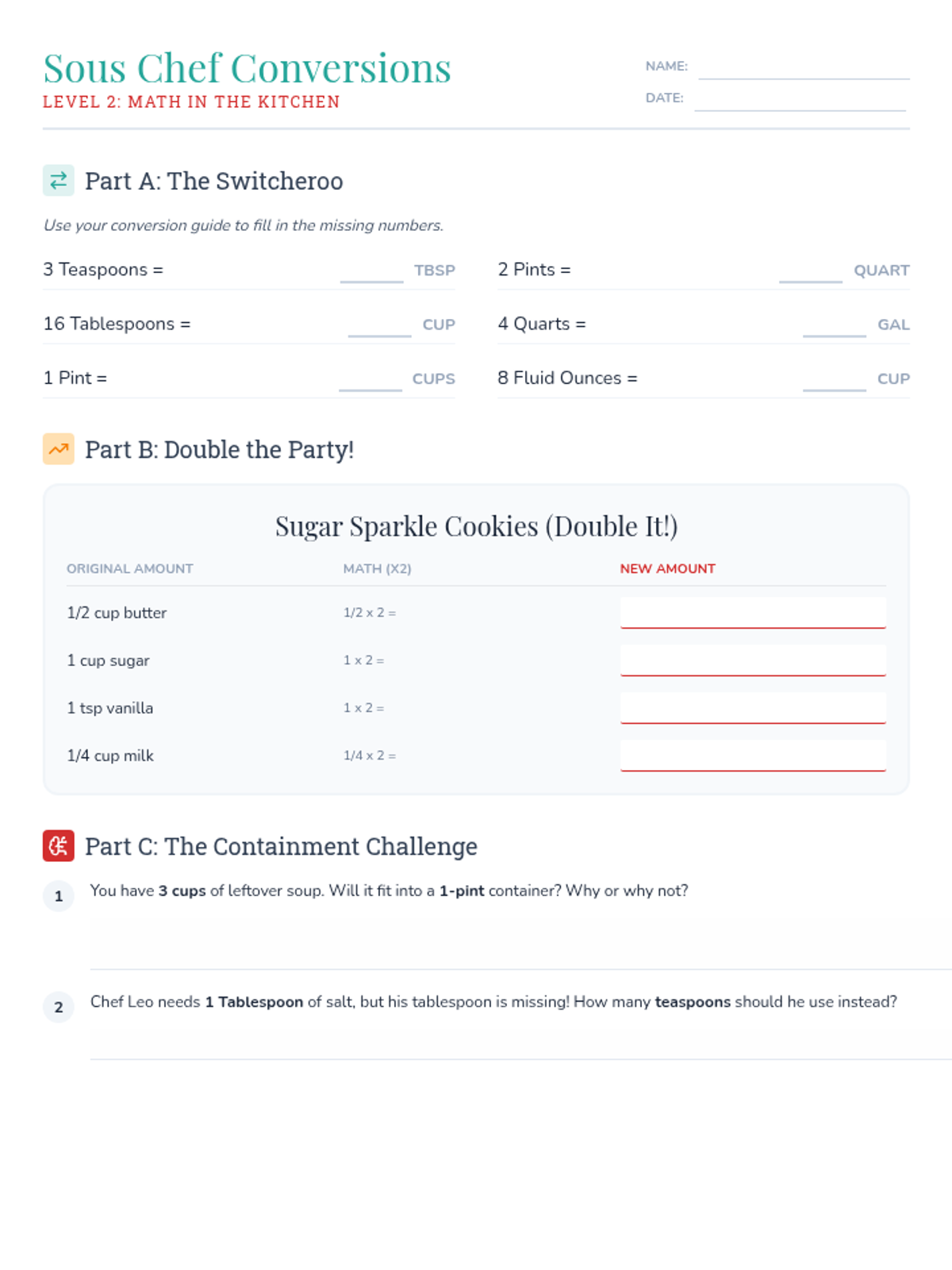
A liquid measurement and recipe scaling activity for Level 2 students, involving doubling a drink recipe and performing basic capacity conversions.
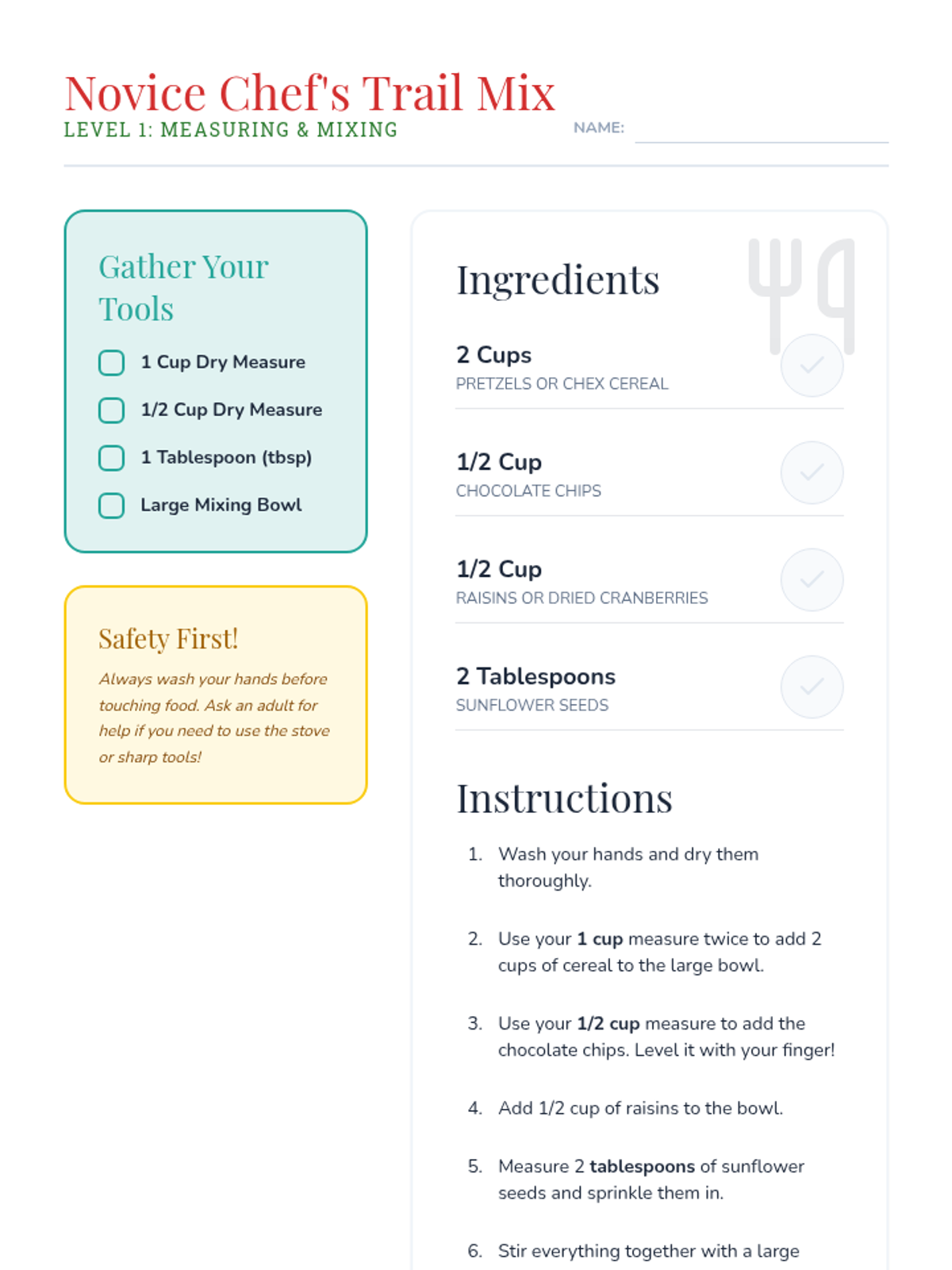
A simple trail mix recipe designed for Level 1 students to practice using basic dry measuring cups and spoons.
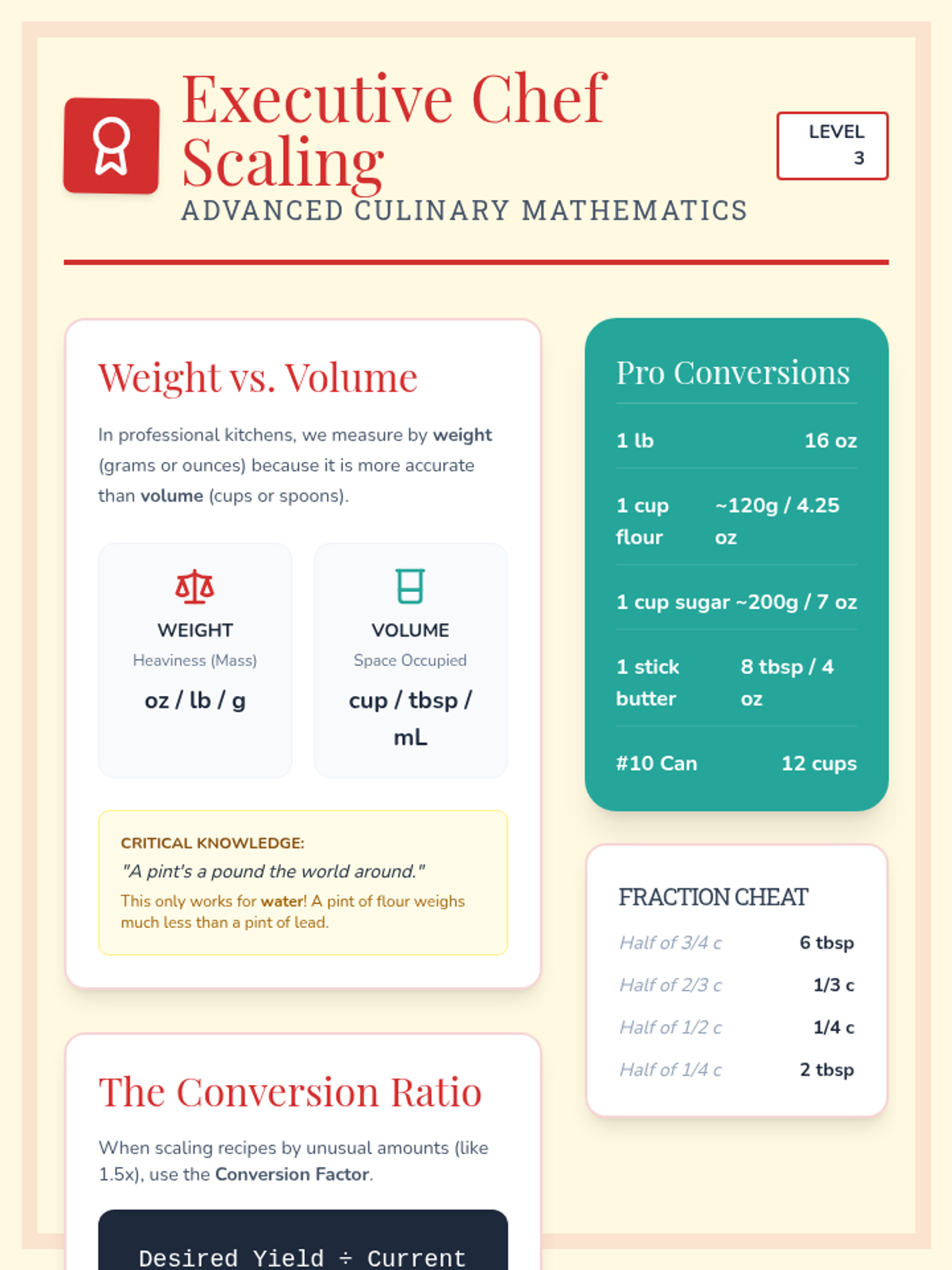
An advanced kitchen measurement guide focusing on weight vs volume, conversion factors, and professional scaling techniques.
A conversion and scaling worksheet for Level 2 students, focusing on doubling ingredients and understanding capacity relationships.
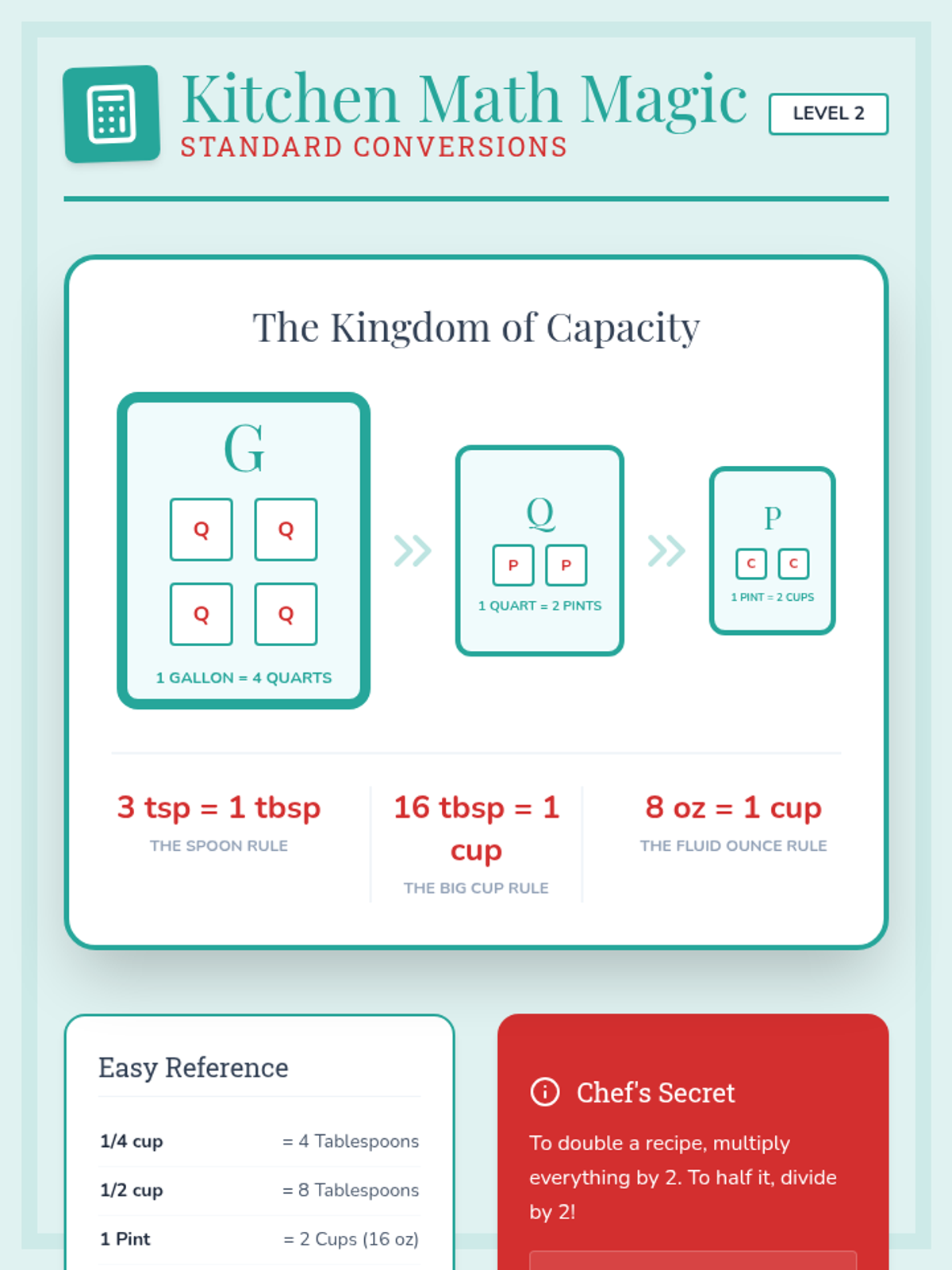
A standard kitchen conversion visual guide for Level 2 students, illustrating teaspoons to tablespoons, and the relationships between cups, pints, quarts, and gallons.
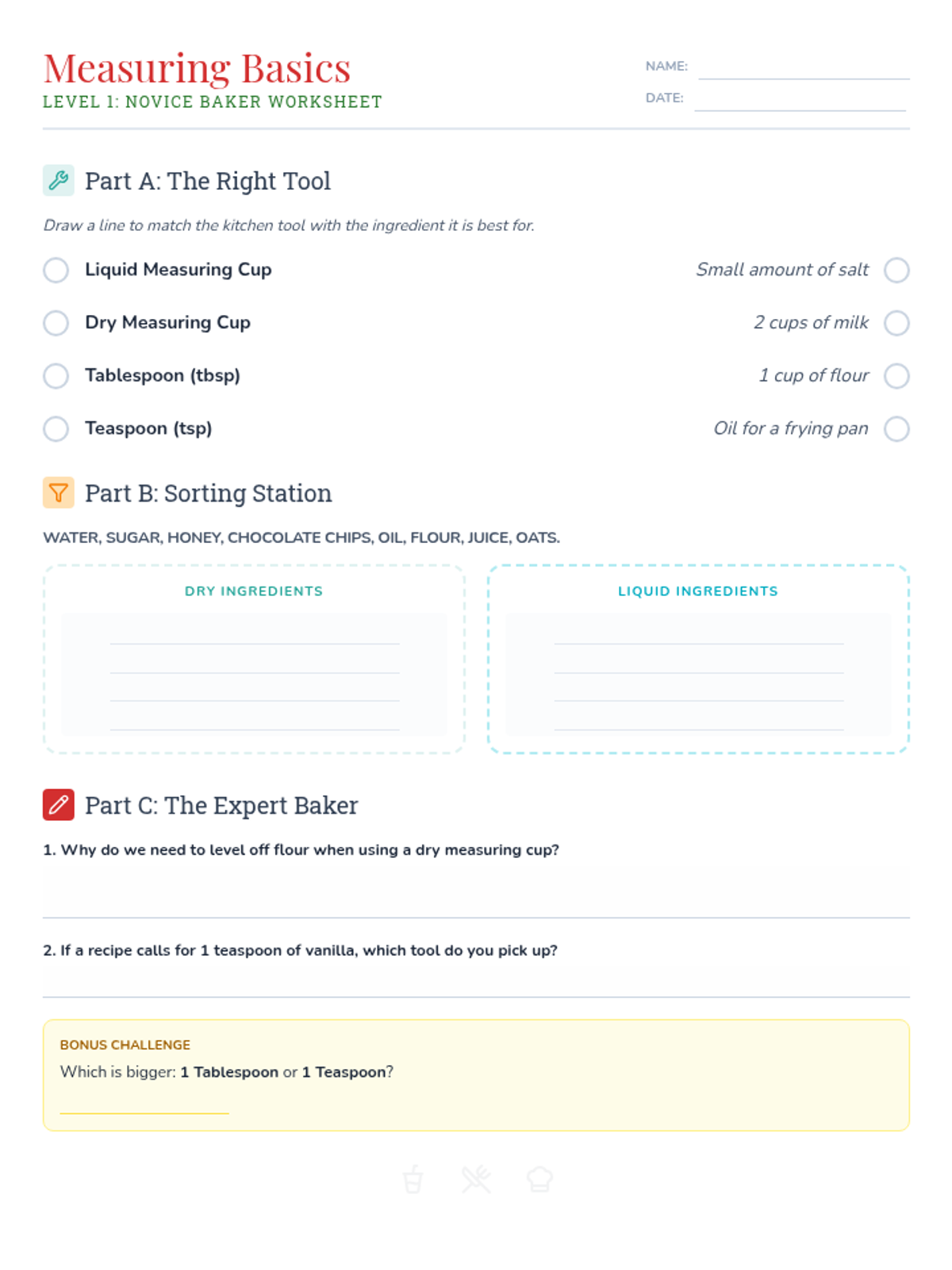
A basic kitchen measurement worksheet for beginners, featuring tool matching, dry/liquid ingredient sorting, and short answer questions, optimized for a single-page layout.
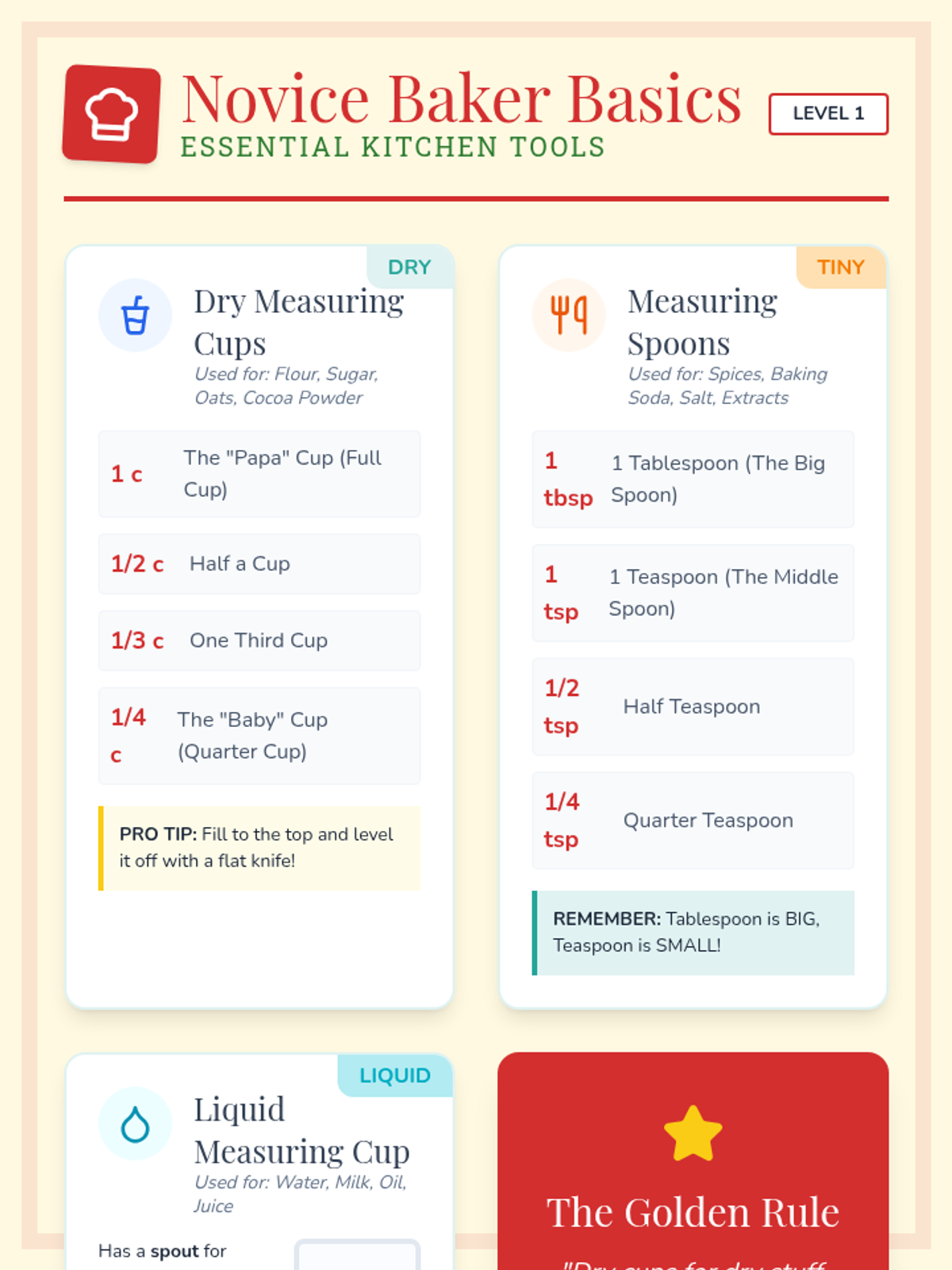
A visual anchor chart for beginner bakers identifying dry measuring cups, measuring spoons, and liquid measuring cups with usage tips.
Final refined campus training presentation for Somerset ISD. v3.9.3 enlarges the content boxes and fonts on Slide 8 while maintaining the original Slide 9 title and successfully re-engineered Slide 7 flowchart. All original Lucide icons have been preserved on all slides. v3.9.3.
Final refined campus training presentation for Somerset ISD. v3.9.2 enlarges the content boxes and fonts on Slide 8 while maintaining the original Slide 9 title and successfully re-engineered Slide 7 flowchart. No graphics on other slides have been altered. v3.9.2.
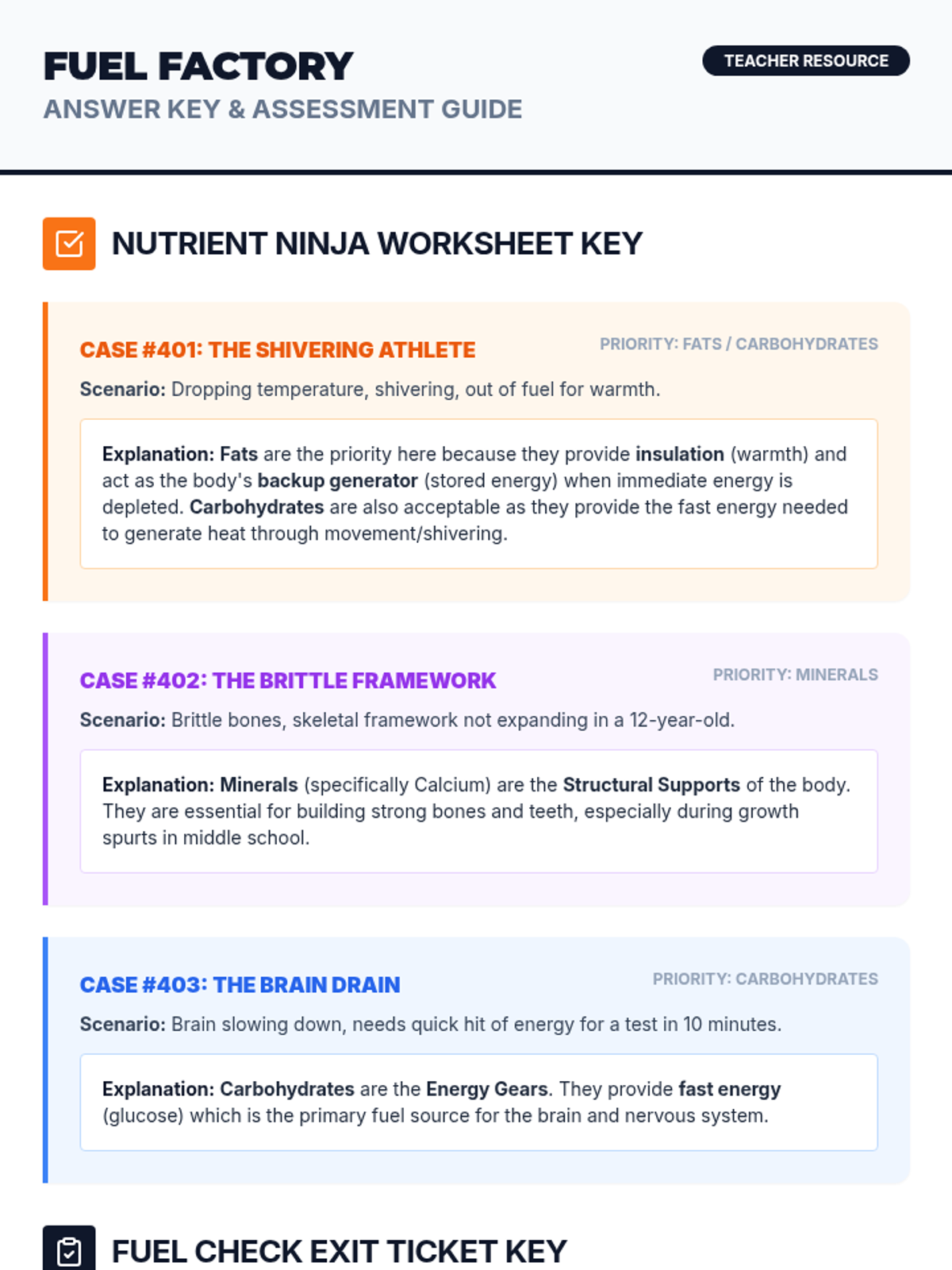
An answer key for the 'Fuel Factory' lesson materials, providing correct responses for the Nutrient Ninja worksheet and Fuel Check exit ticket, along with grading guidance for teachers.
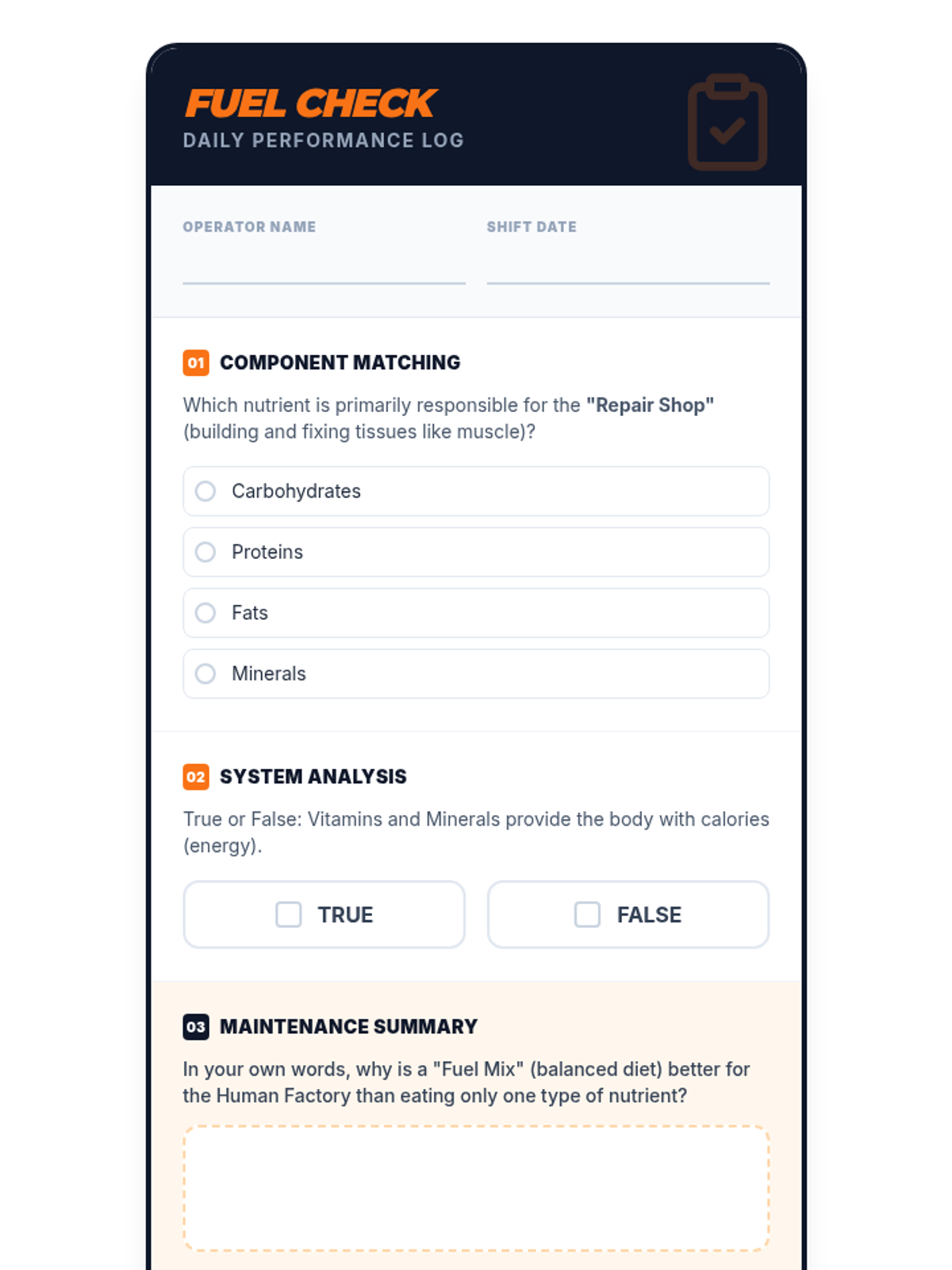
A quick assessment exit ticket for the 'Fuel Factory' lesson, designed to check student understanding of nutrient functions and the importance of a balanced diet.
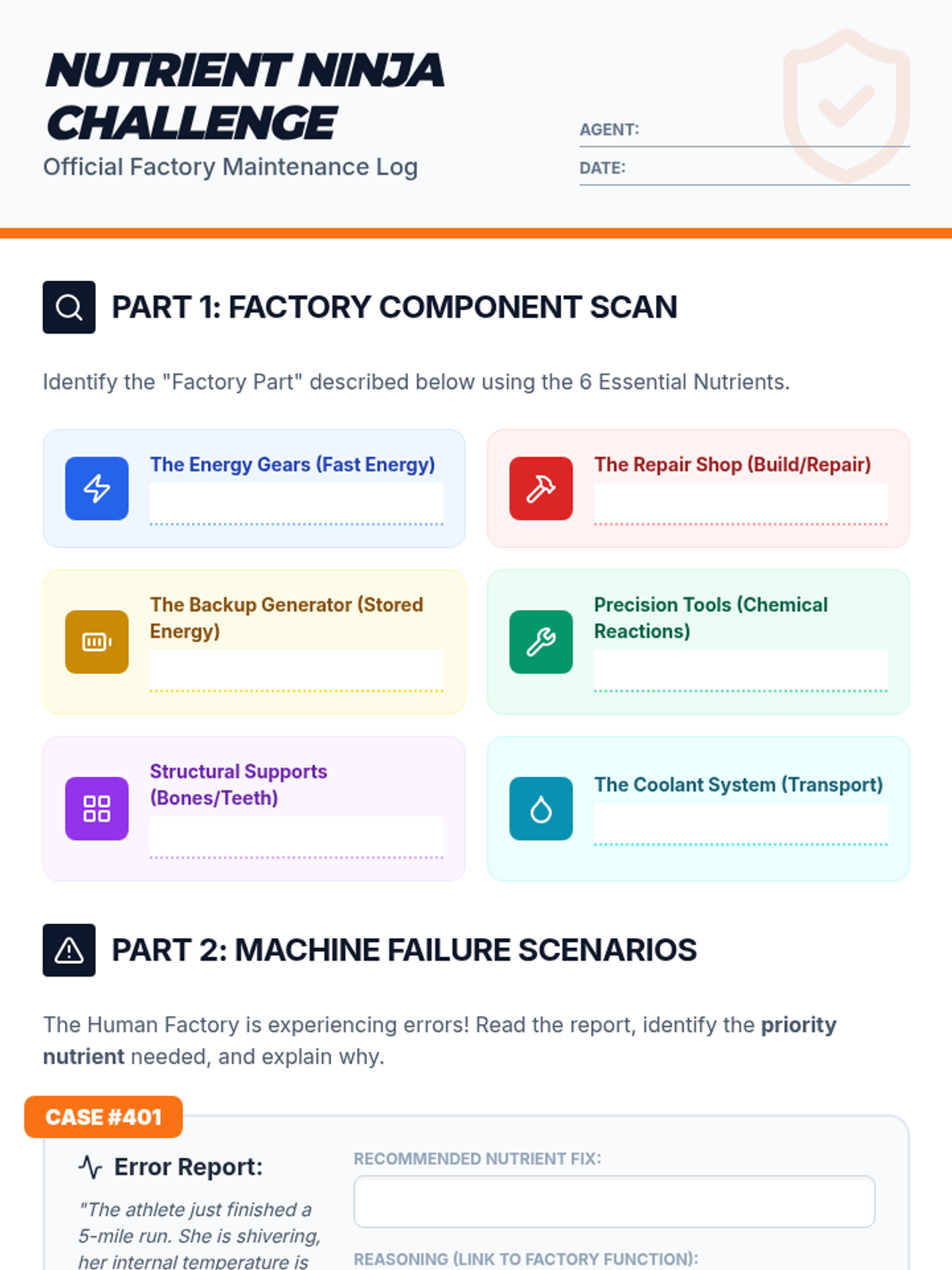
A student activity worksheet where students apply their knowledge of nutrients to 'repair' human machine scenarios in a factory maintenance log format.
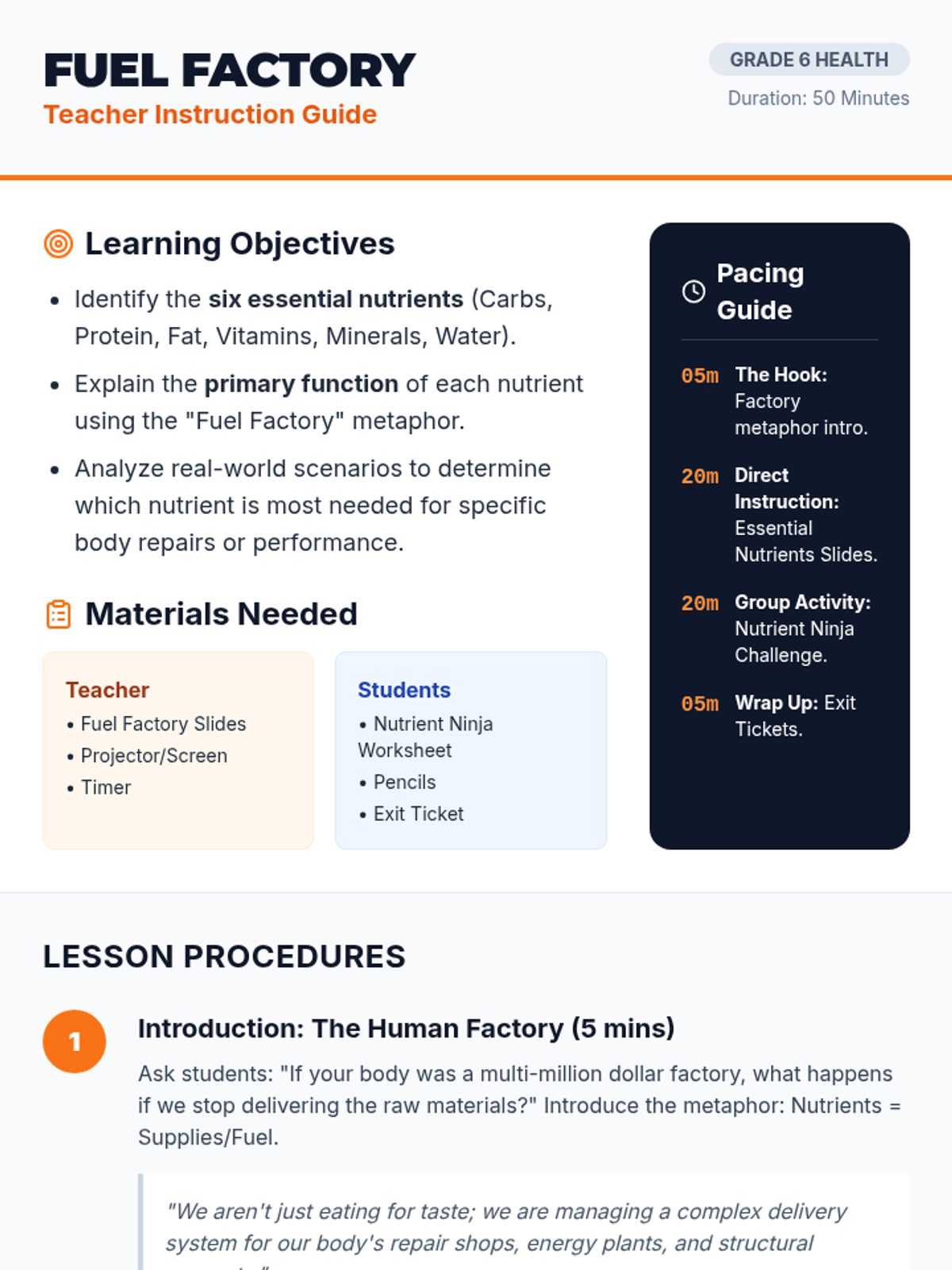
A comprehensive teacher guide for the 'Fuel Factory' lesson, featuring learning objectives, pacing, detailed instructional procedures, and strategies for addressing misconceptions.