A professional volunteer handbook formatted as a booklet with a vertical center-fold layout. Each 8.5" x 11" sheet contains two 5.5" x 8.5" book pages, featuring a dedicated cover, volunteer tips, station guides, and scoring notes.
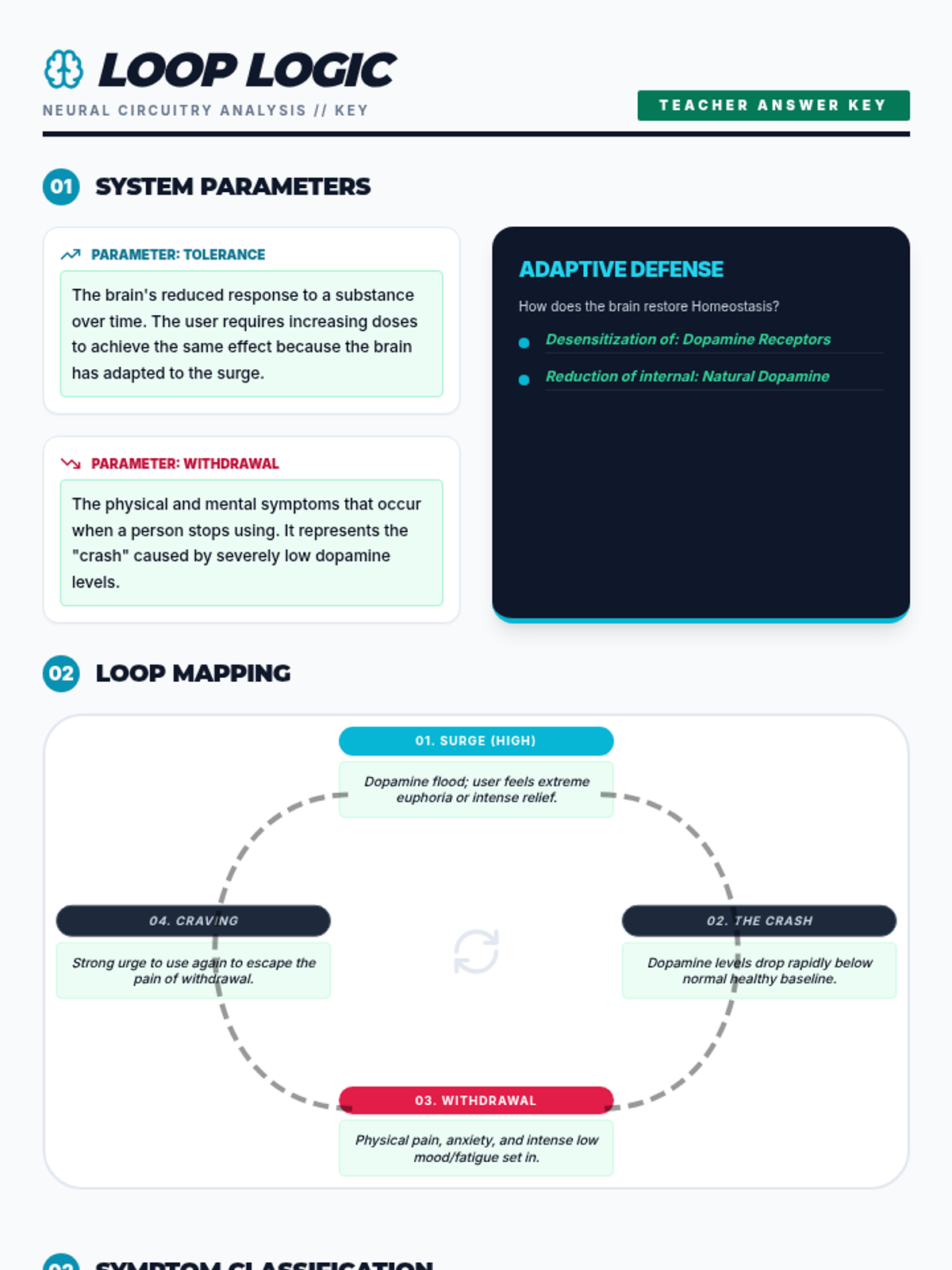
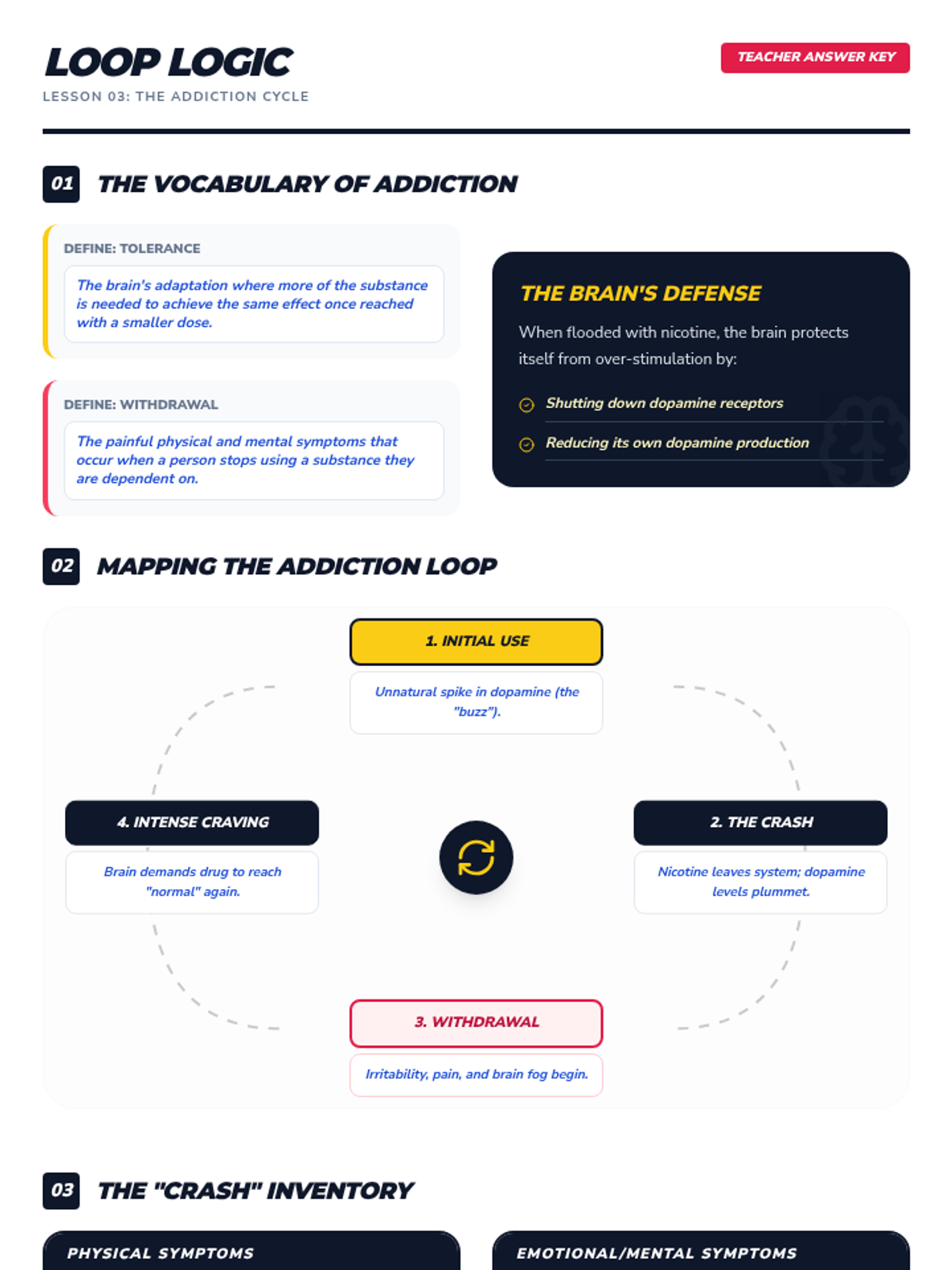
A teacher answer key for the Loop Logic Worksheet, providing suggested definitions, cycle descriptions, and sample critical thinking responses. Re-styled to match the 'System Schematic' theme of the slides with optimized page breaks and high-contrast answers.
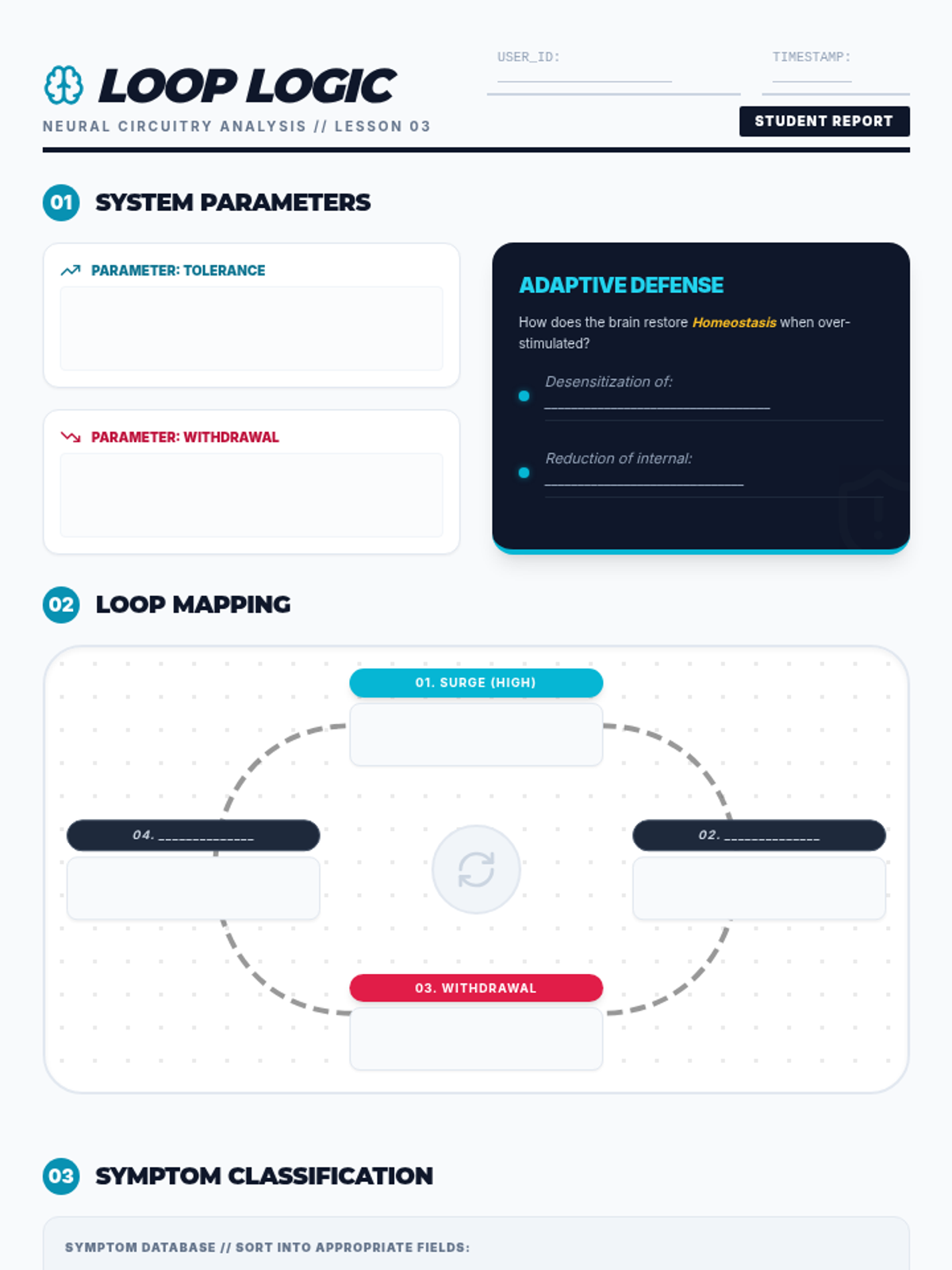
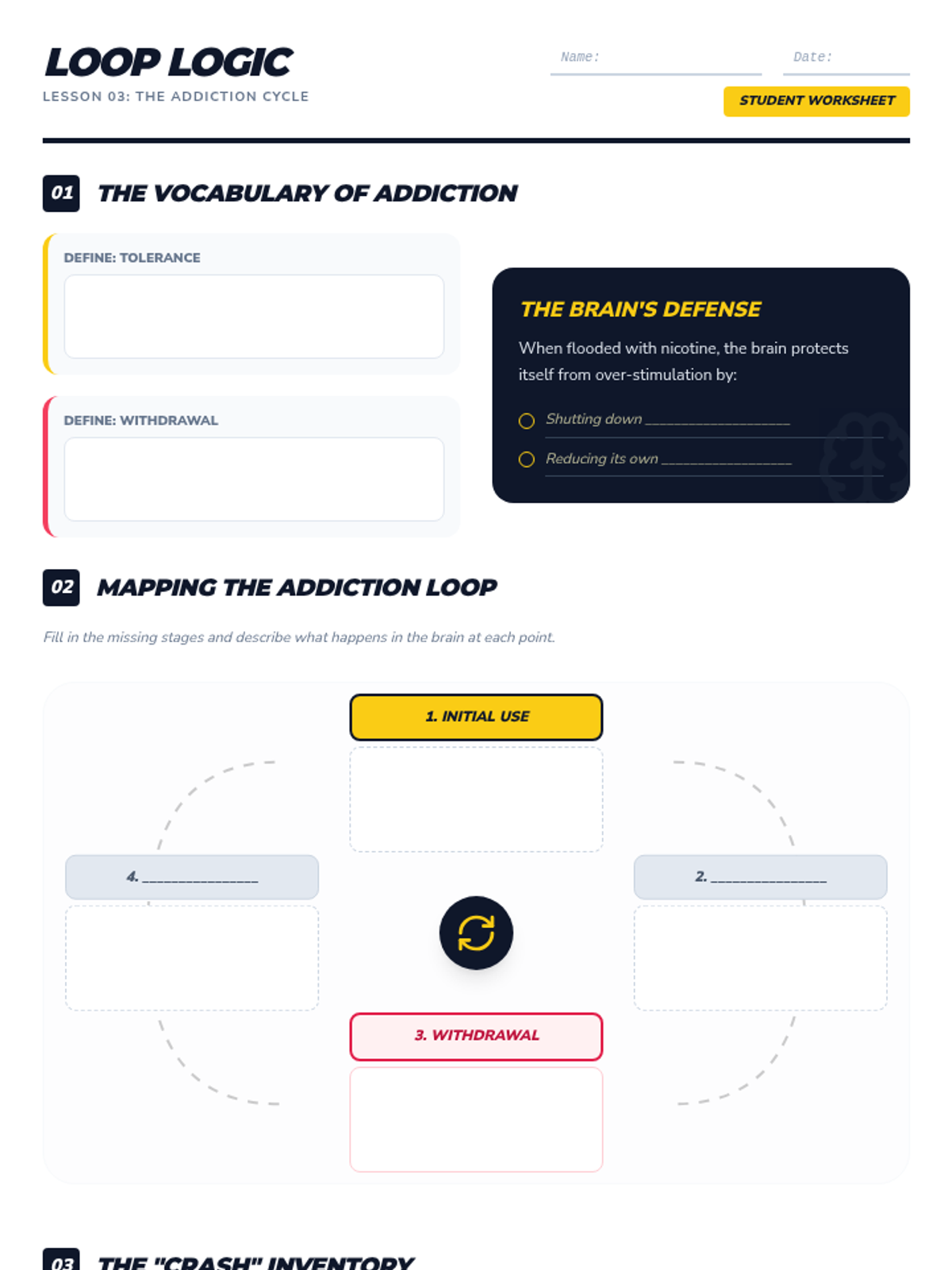
A comprehensive worksheet for students to map the addiction cycle, define key terminology like tolerance and withdrawal, and analyze the neurological shifts that occur during addiction. Re-styled to match the 'System Schematic' theme with optimized page breaks and visibility.
A high-impact slide presentation explaining the neurological process of addiction, including the role of dopamine, tolerance, withdrawal, and the cycle of the addiction loop. Designed with a modern 'System Schematic' aesthetic to engage students in complex biological concepts.
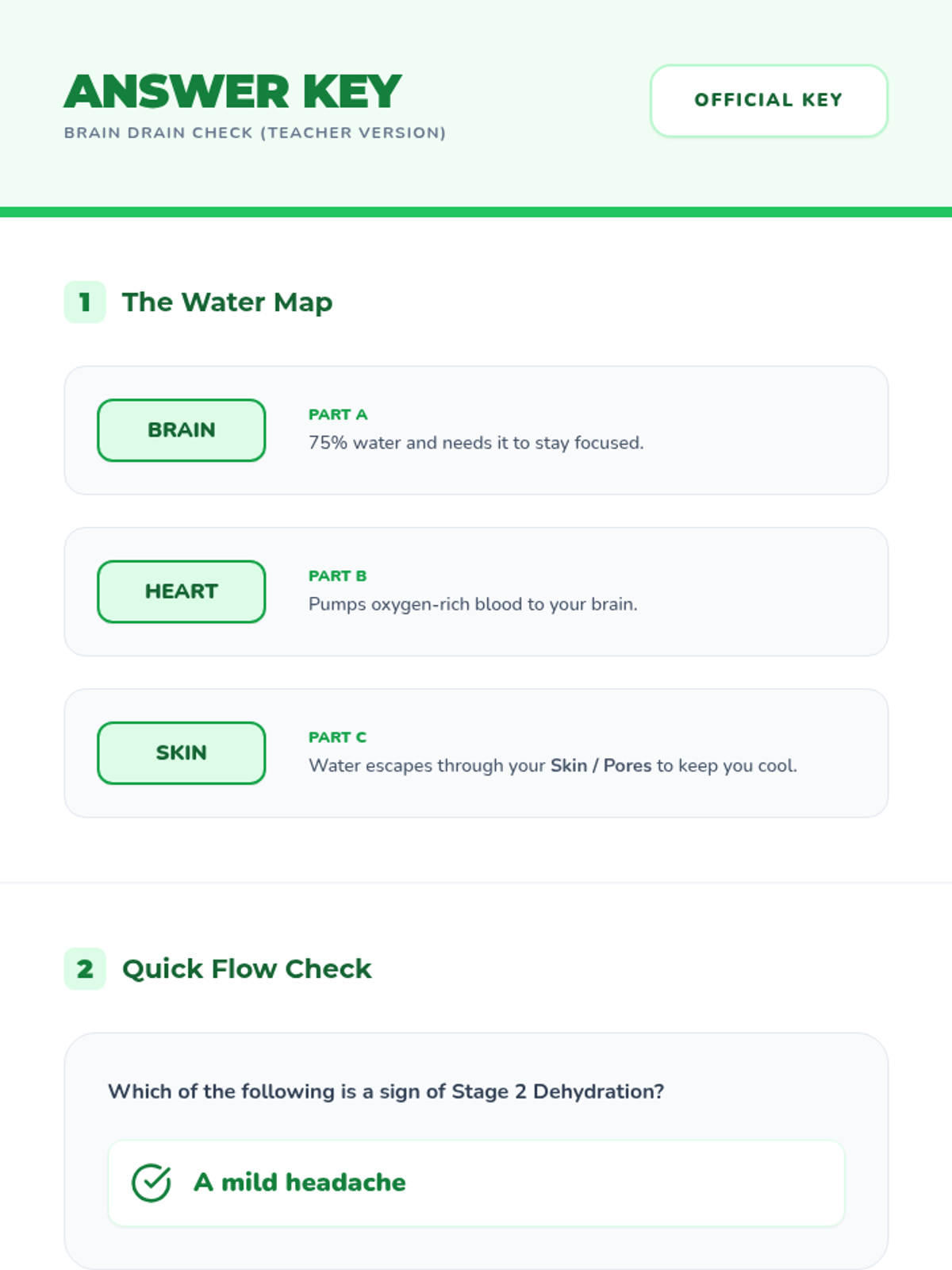
A teacher's answer key for the Brain Drain Worksheet. It provides the correct terms for the body mapping section, the correct answer for the multiple-choice question, and a grading rubric for the open-ended testing week strategy response.
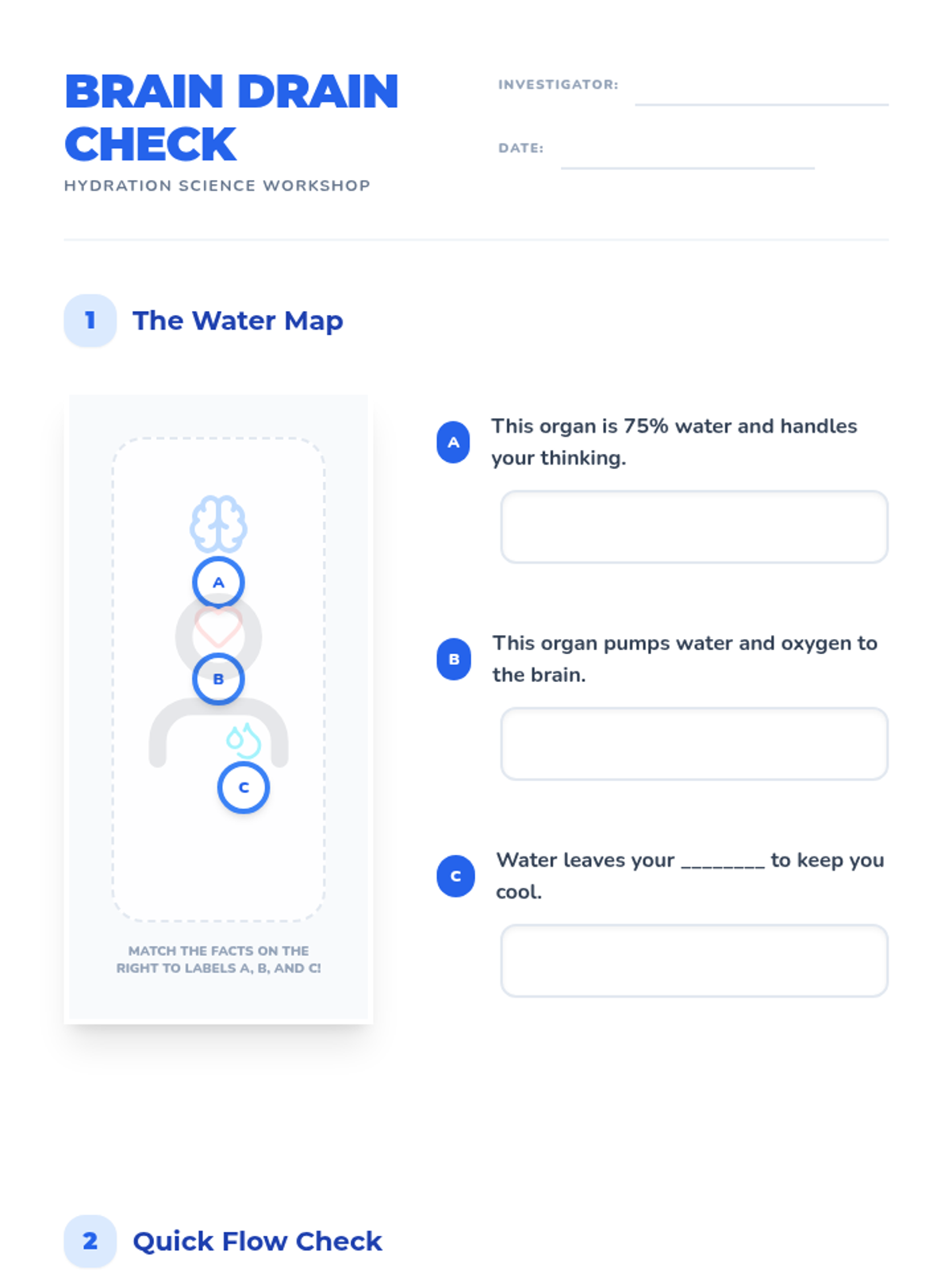
A student assessment worksheet that tests knowledge of hydration's effects on the body. It includes a body-mapping section, multiple-choice questions on dehydration stages, and a long-form response section for creating a testing-week hydration strategy.
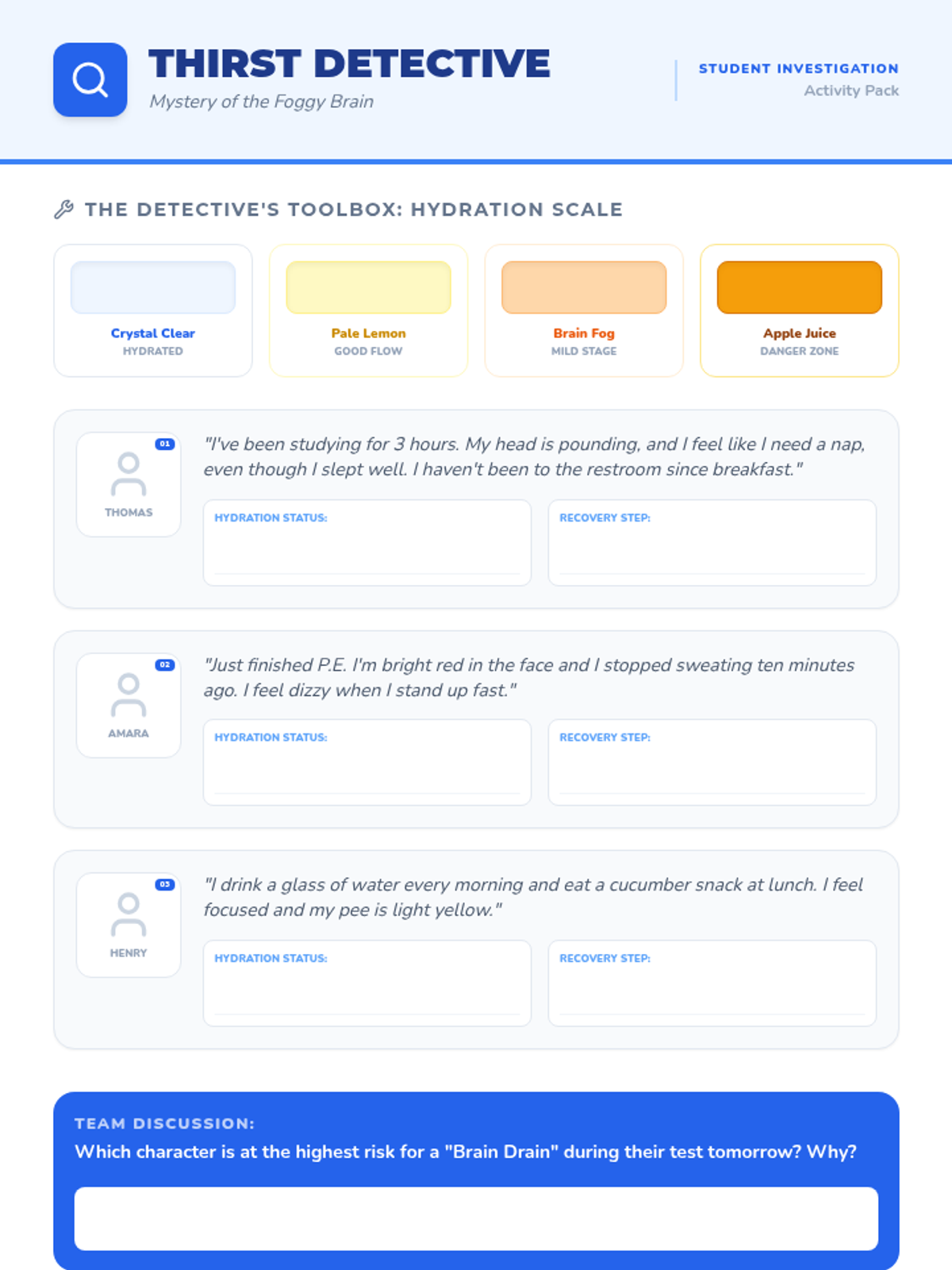
An investigative activity where students act as "Thirst Detectives" to diagnose dehydration levels in fictional characters. They use a provided hydration color scale to match symptoms with hydration statuses and recovery steps.
A visually engaging slide deck explaining the link between hydration and brain function. It covers the percentage of water in the brain, the role of sweating in temperature regulation, and the warning signs of dehydration like headaches and fatigue.
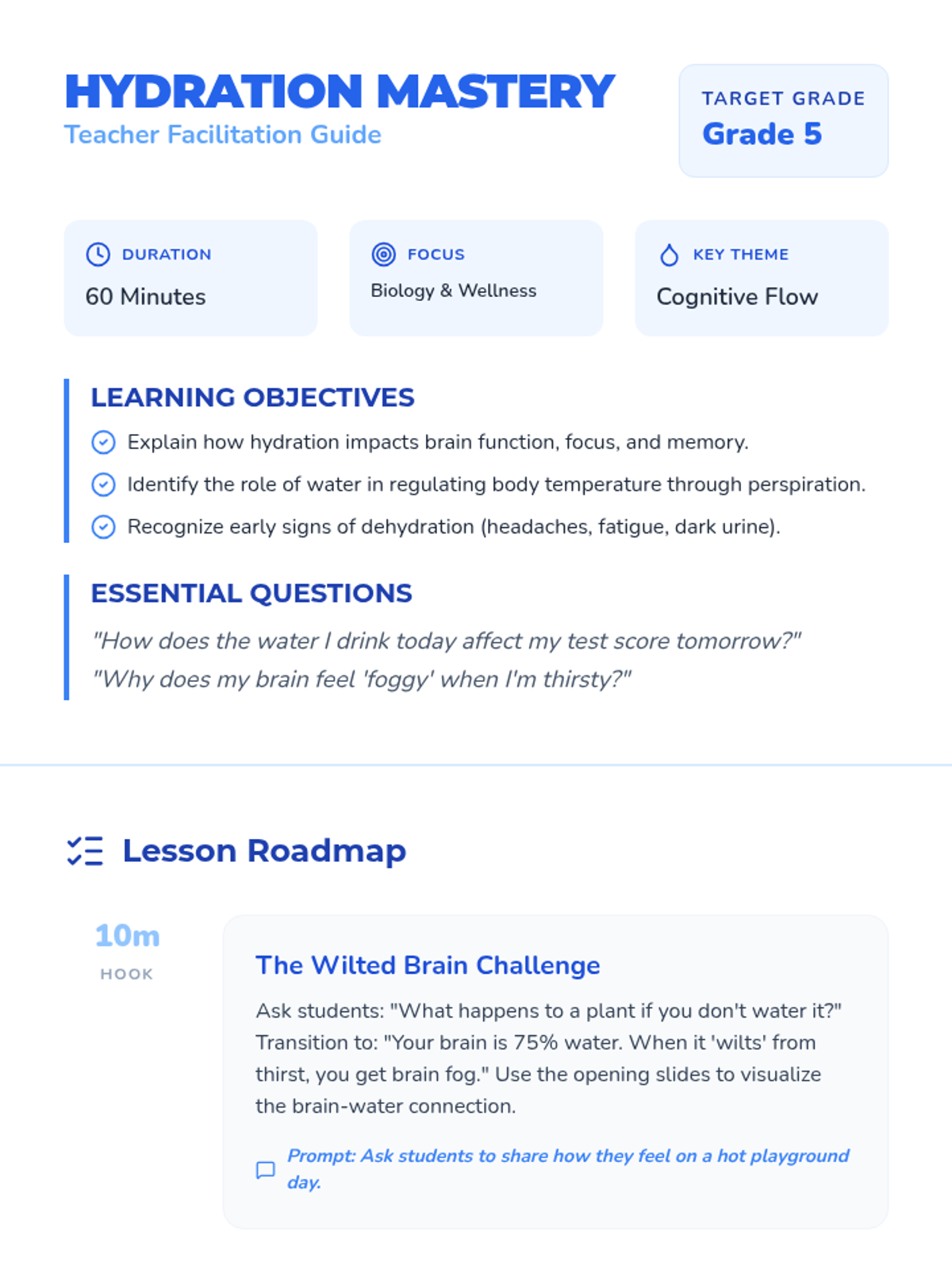
A detailed teacher guide for the H2O Flow lesson, featuring learning objectives, essential questions, a 60-minute instructional roadmap, and a preparation checklist for 5th-grade teachers.
A teacher answer key for the Loop Logic Worksheet, providing suggested definitions, cycle descriptions, and sample critical thinking responses.
A comprehensive worksheet for students to map the addiction cycle, define key terminology like tolerance and withdrawal, and analyze the neurological shifts that occur during addiction.
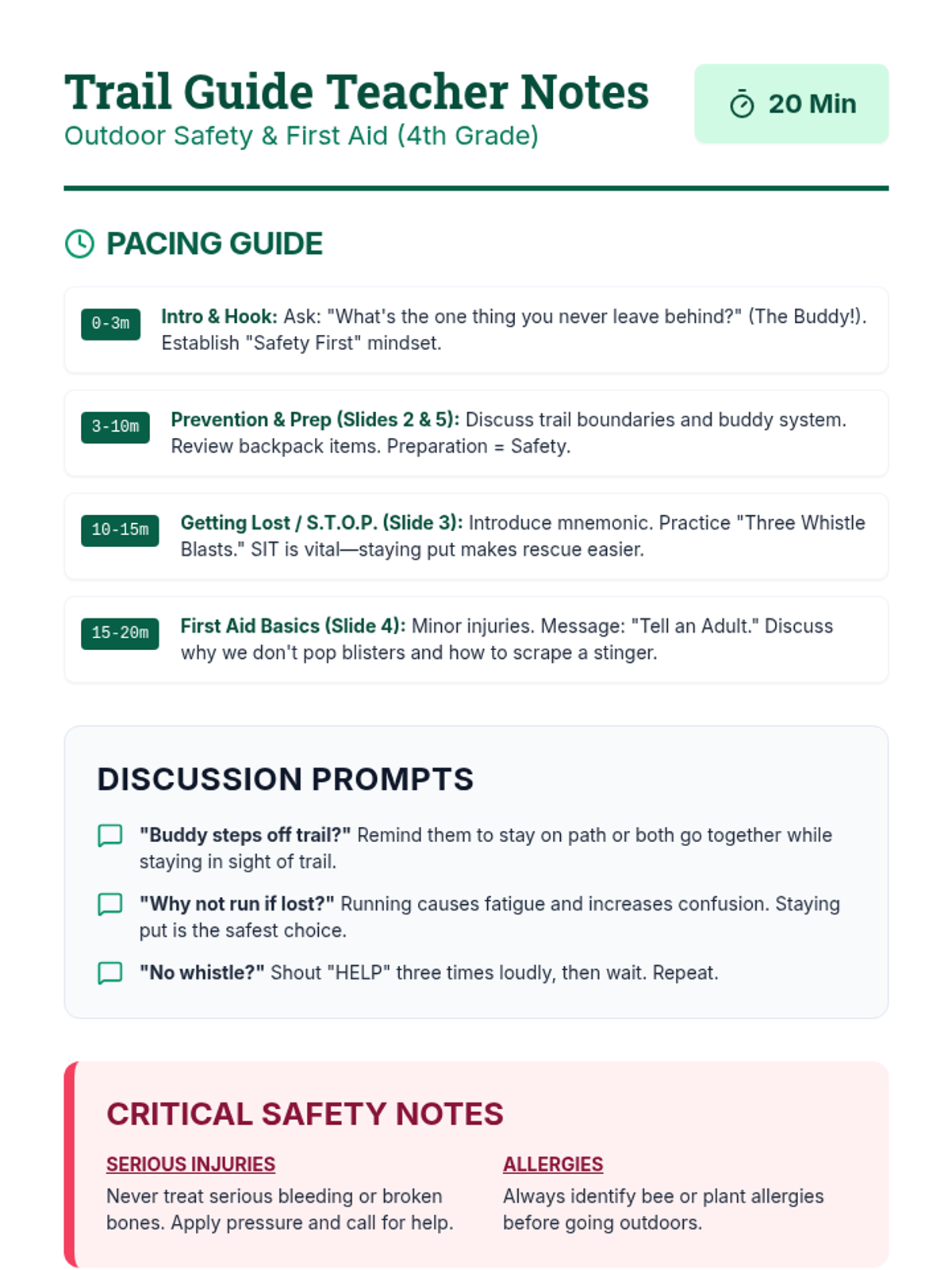
Teacher instructional guide with 20-minute pacing, discussion prompts, and critical safety reminders for teaching forest safety.
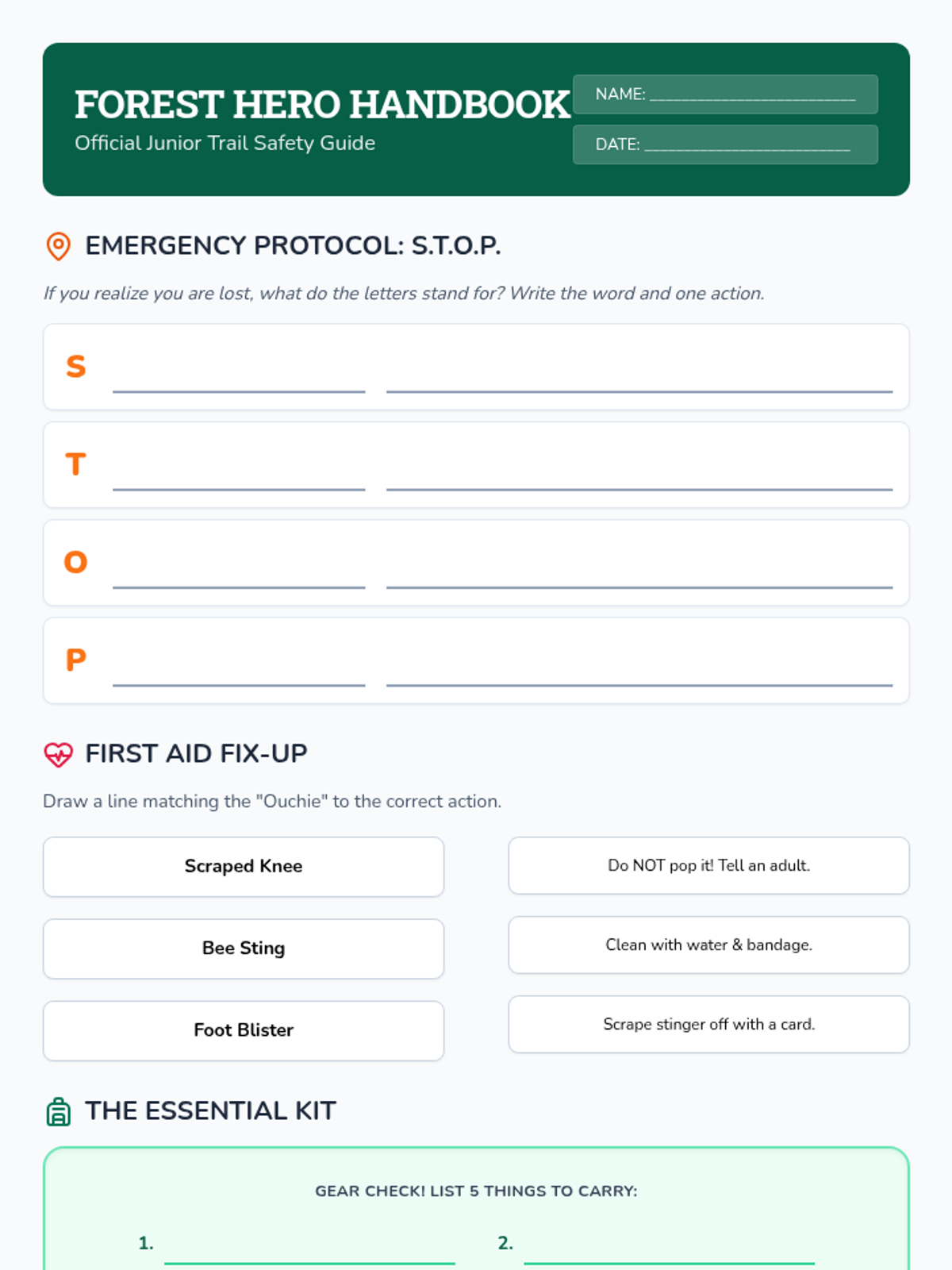
A printable student handout featuring the S.T.O.P. rule mnemonic exercise, first aid matching, and a hiking gear checklist.
A vibrant slide deck for 4th graders covering trail rules, the S.T.O.P. protocol, and basic first aid for common hiking injuries.
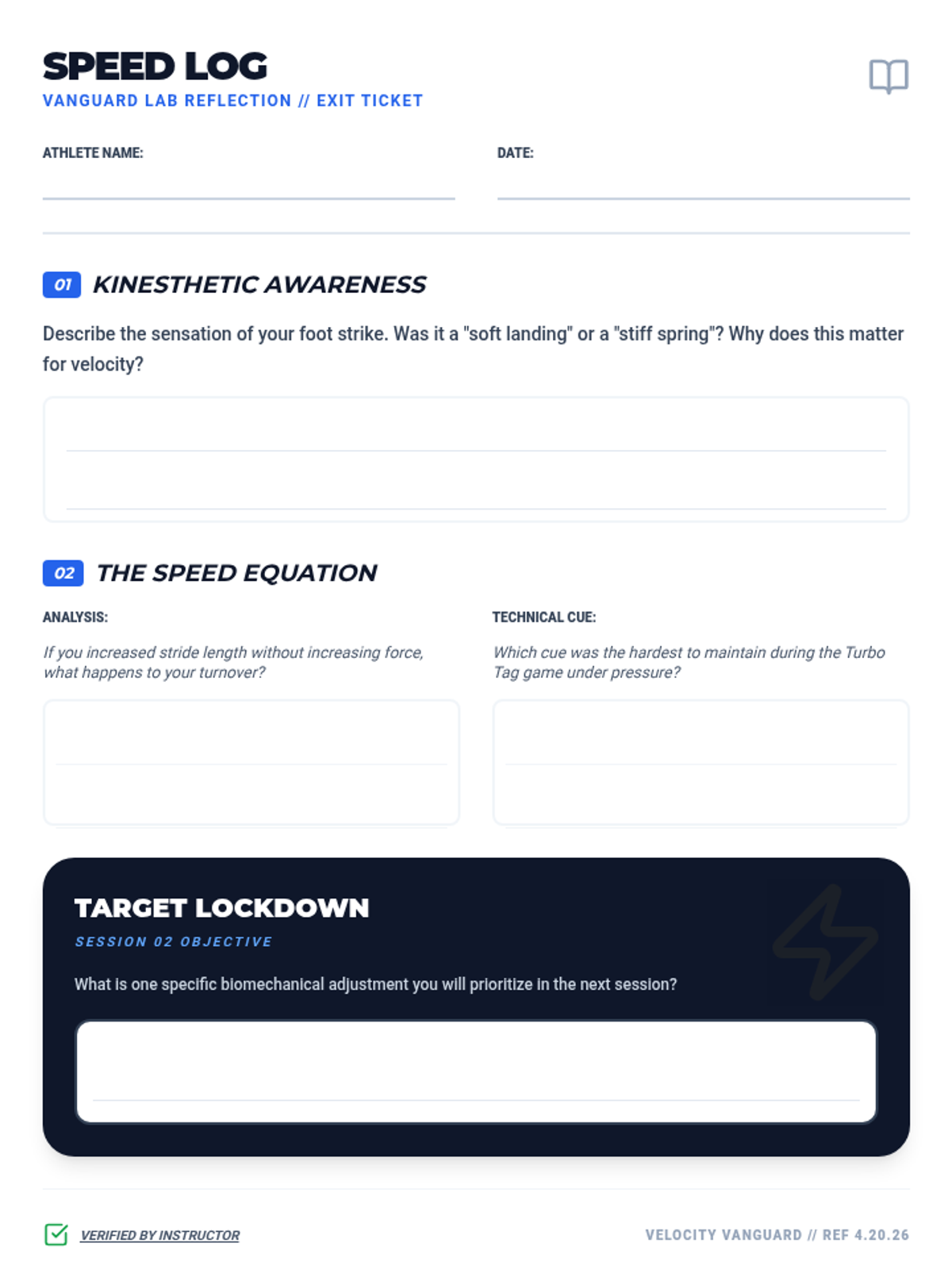
A reflective exit ticket and journal entry for students to self-assess their sprinting mechanics, analyze their stride data, and set specific biomechanical goals.
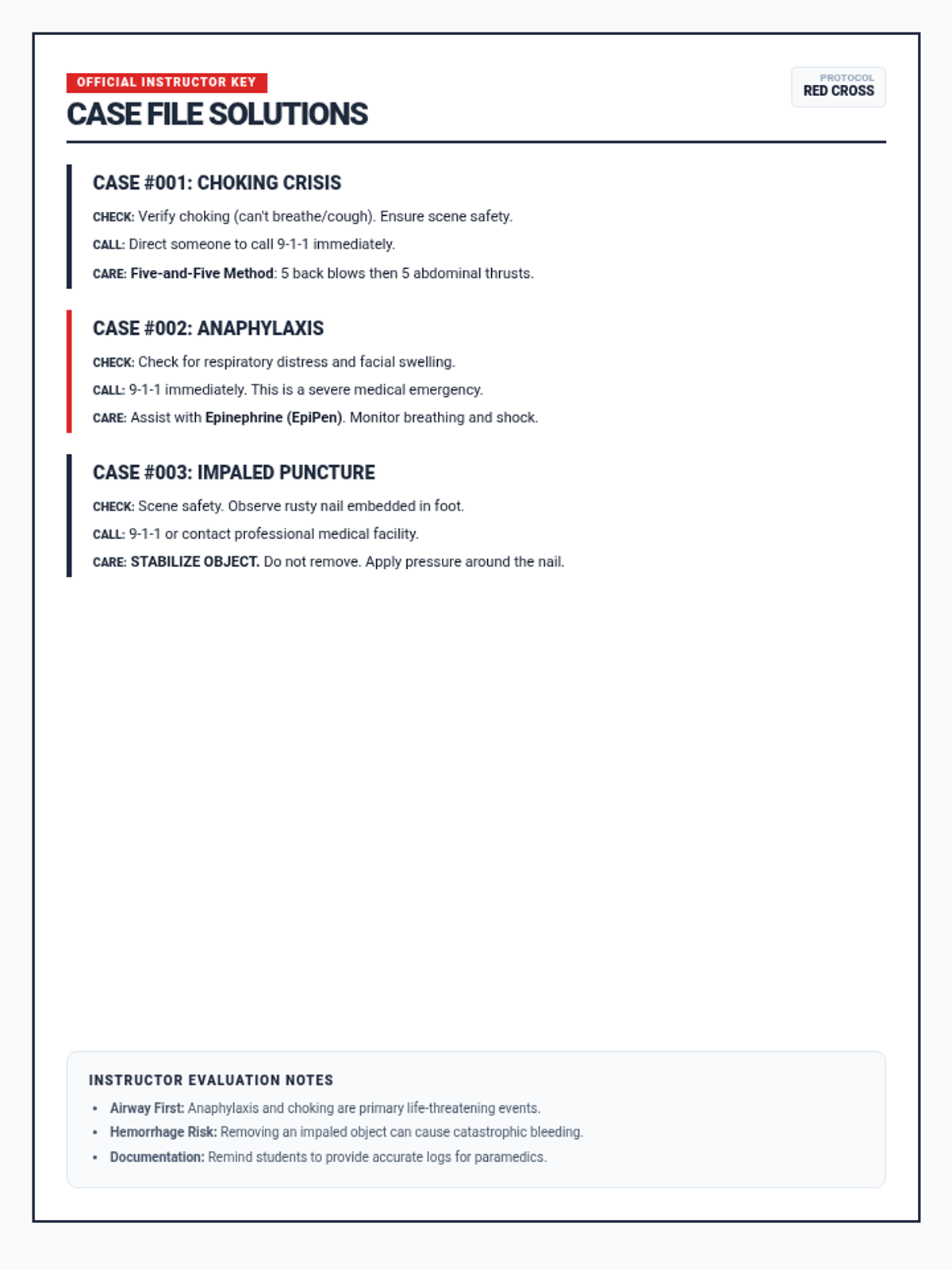
Teacher answer key for the 'Life Saver Case Files' worksheet, providing detailed response protocols for choking, anaphylaxis, and impaled objects based on American Red Cross standards. Revised for 1-page layout and better content flow.
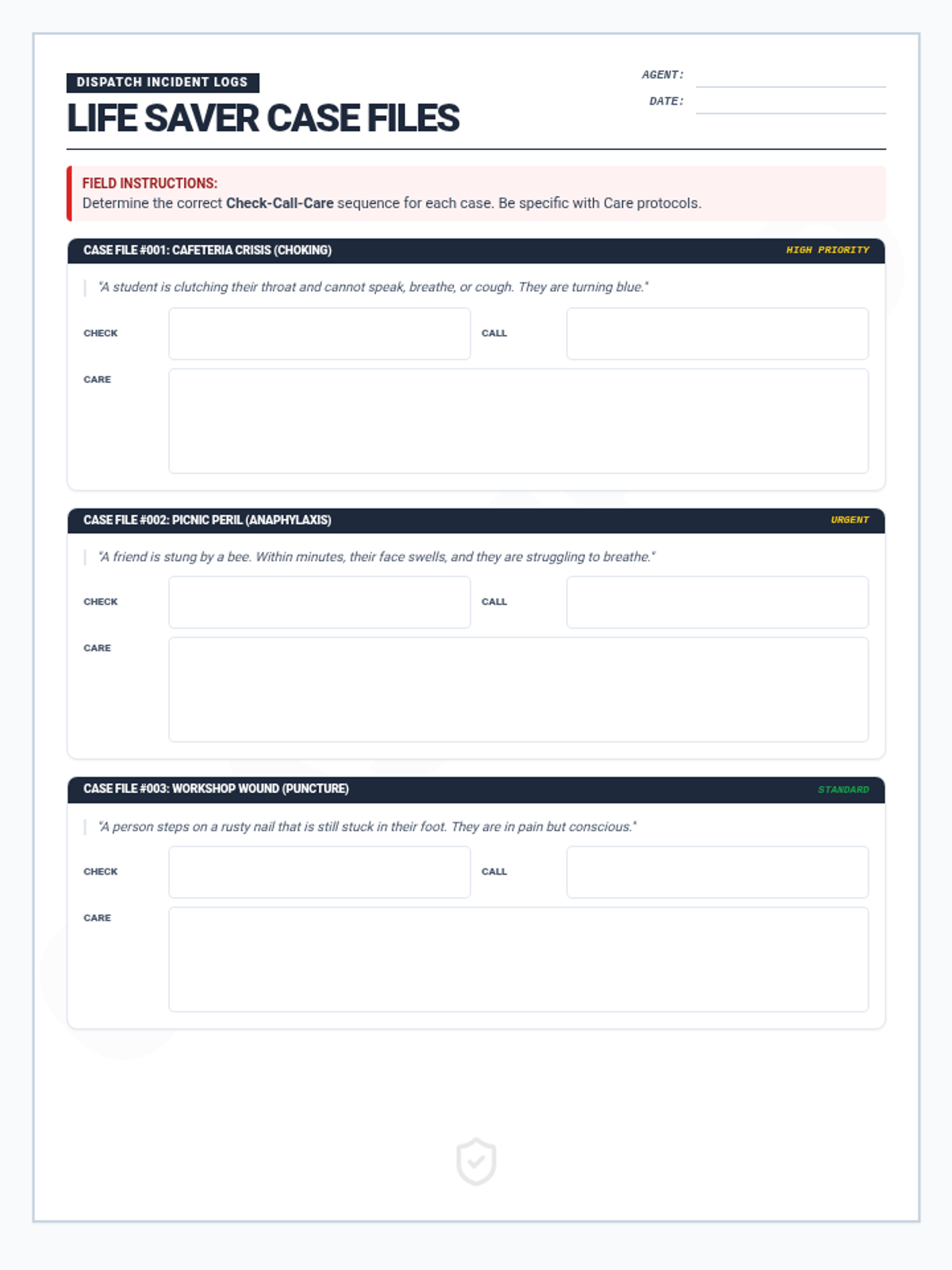
An advanced scenario-based worksheet designed as 'Case Files' where students must apply the Check-Call-Care protocol to complex first aid emergencies including choking, anaphylaxis, and puncture wounds. Revised for 1-page efficiency and optimized writing space.
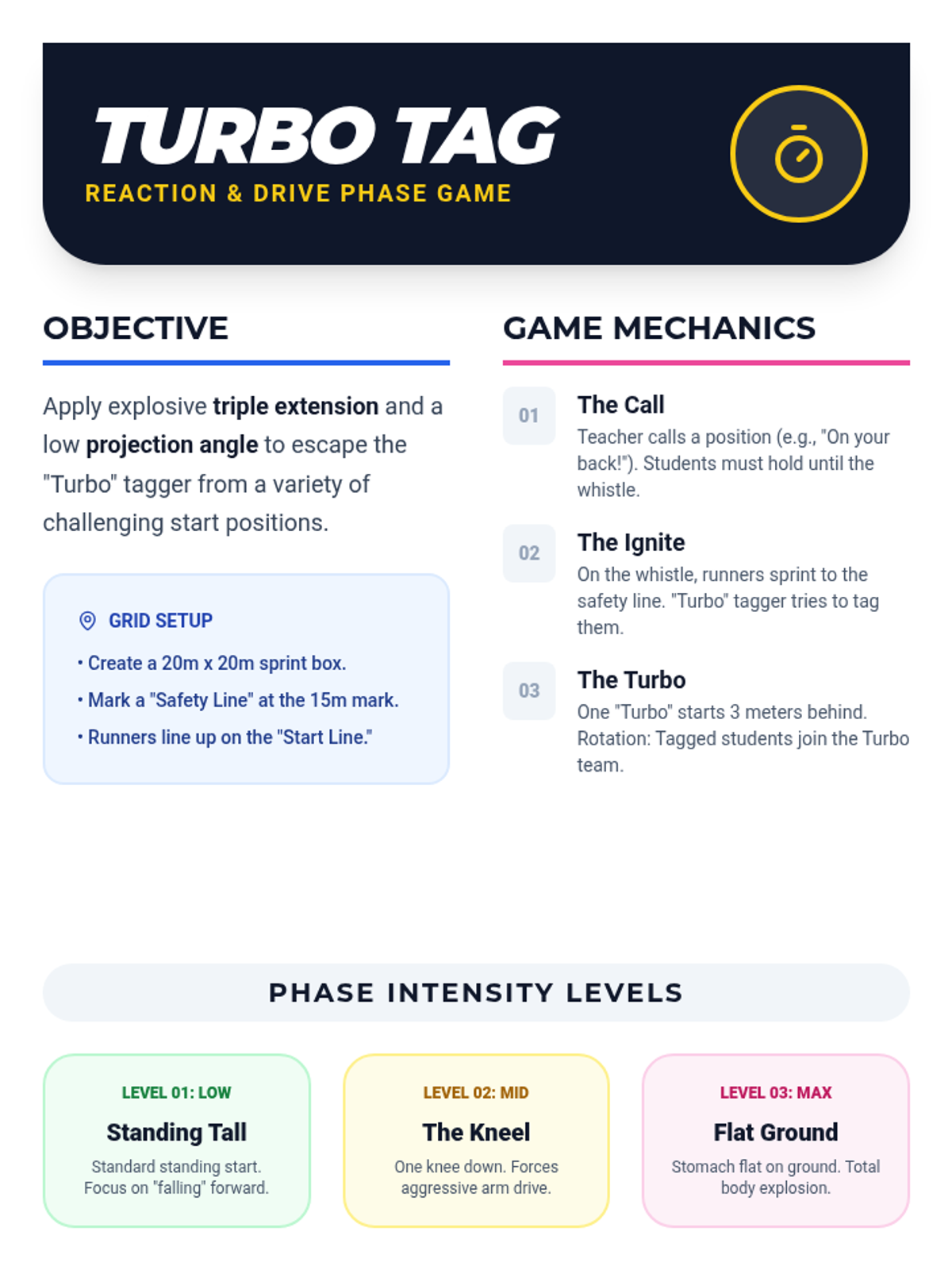
A high-intensity game guide for 'The Velocity Vanguard' lesson, focusing on reaction time and sprint starts through varying physical positions and tag mechanics.
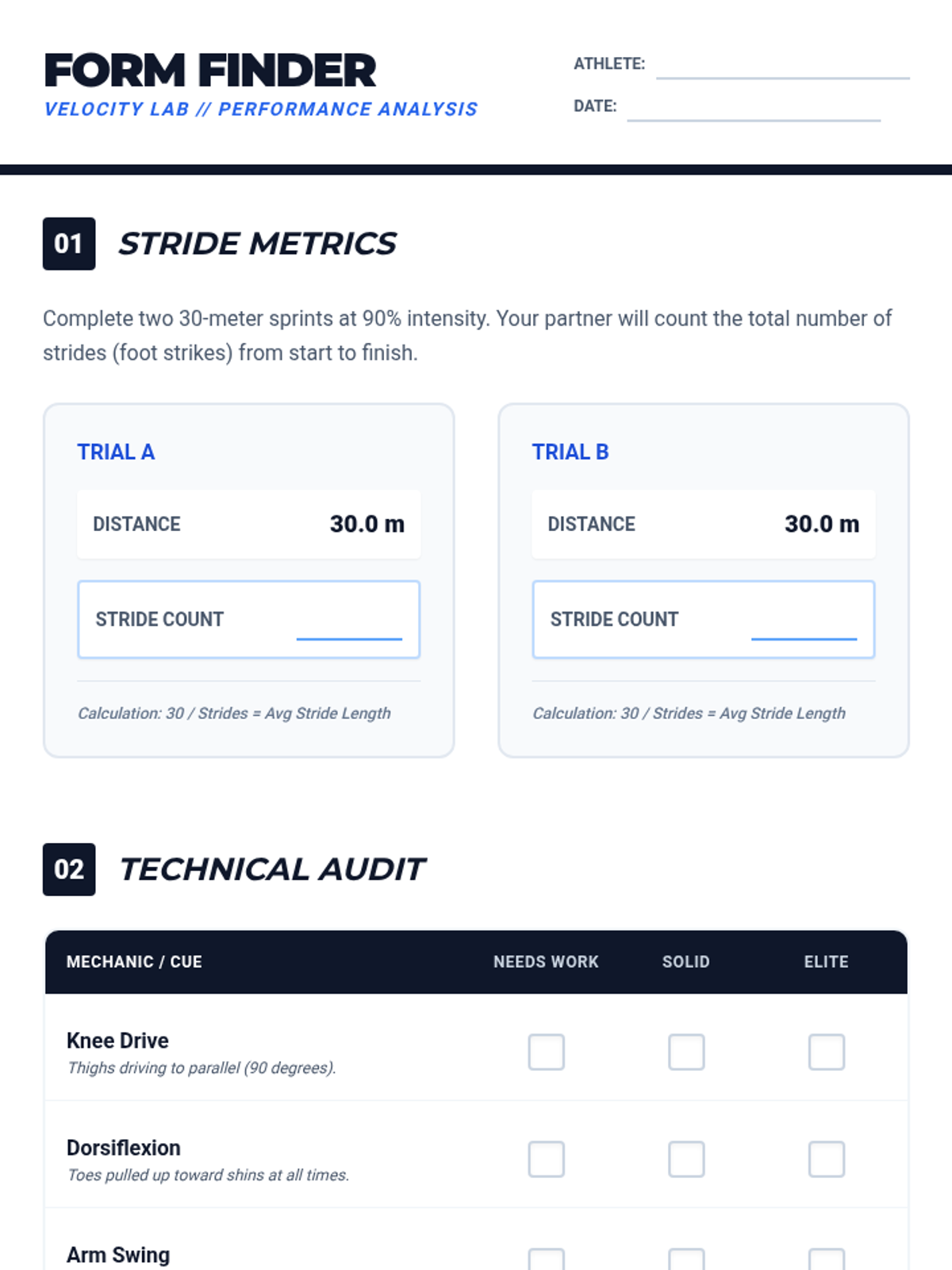
A student-facing data collection worksheet for analyzing sprinting form, recording stride metrics, and performing technical self-audits based on key biomechanical cues.
A high-impact slide deck for 'The Velocity Vanguard' lesson, covering the biomechanics of sprinting, the physics of force production, and technical cues for the drive phase and maximum velocity.
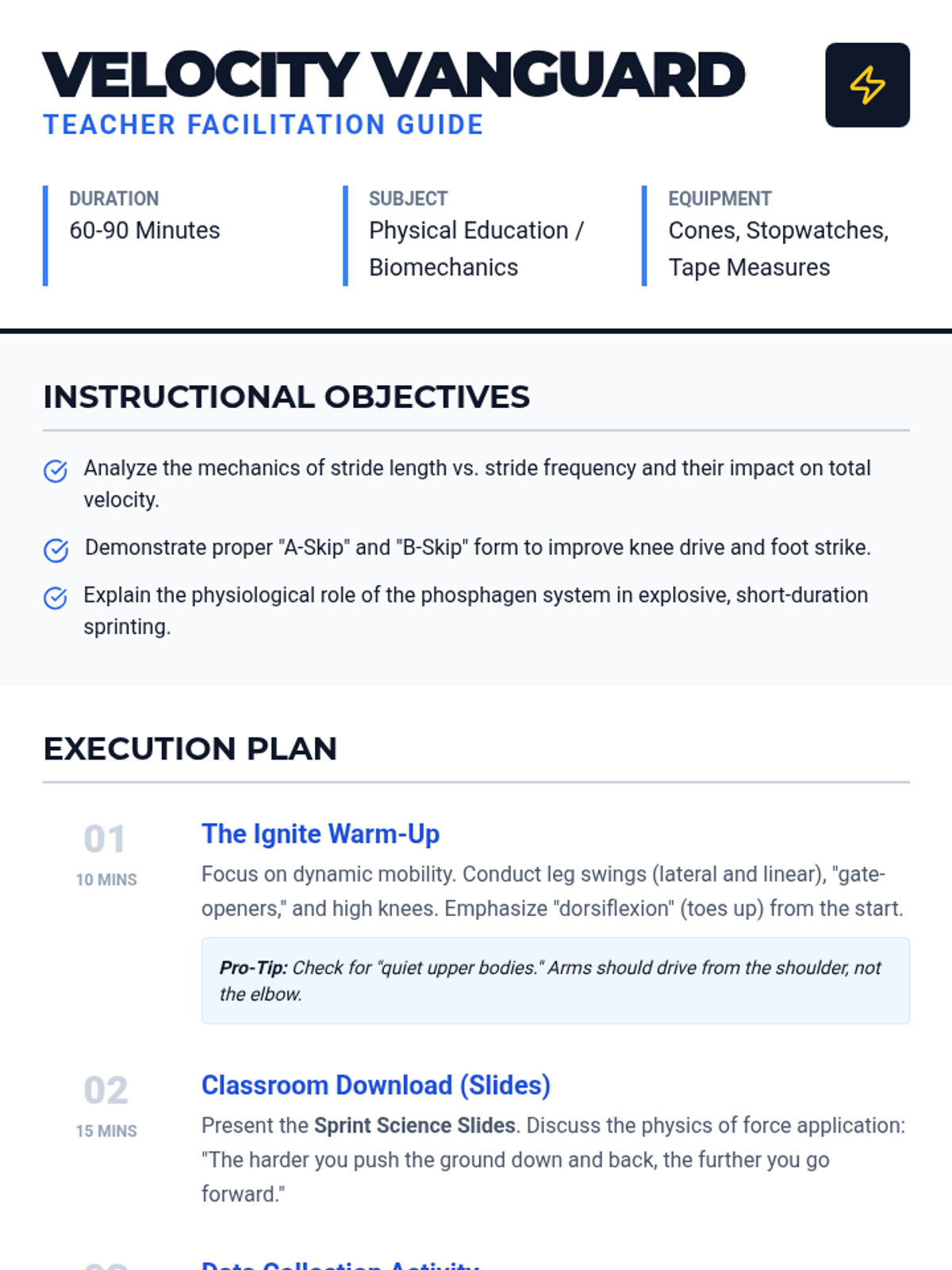
A comprehensive teacher guide for 'The Velocity Vanguard' lesson, outlining instructional objectives, a detailed 60-90 minute execution plan, and differentiation strategies for coaching sprinting biomechanics.