A student worksheet for the Body Mapping activity. Features a human body outline for students to label symptoms and biological causes of depression, a warm-up section for stress brainstorming, and a reflection journal area.
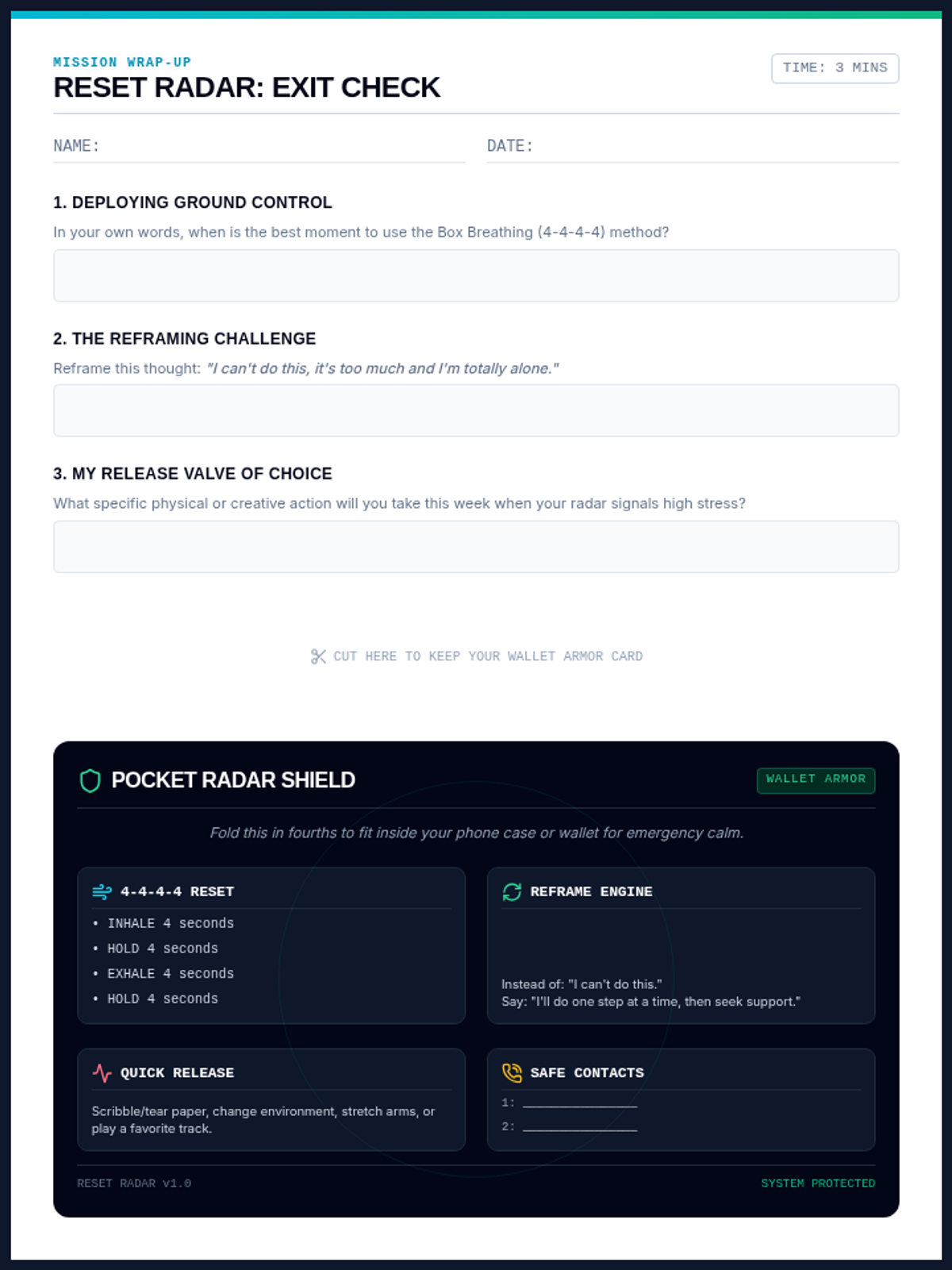
A 1-page exit ticket and cut-out pocket card. The top half functions as a quick 3-minute reflection tool, and the bottom half folds into a wallet-sized emergency stress cheat sheet.
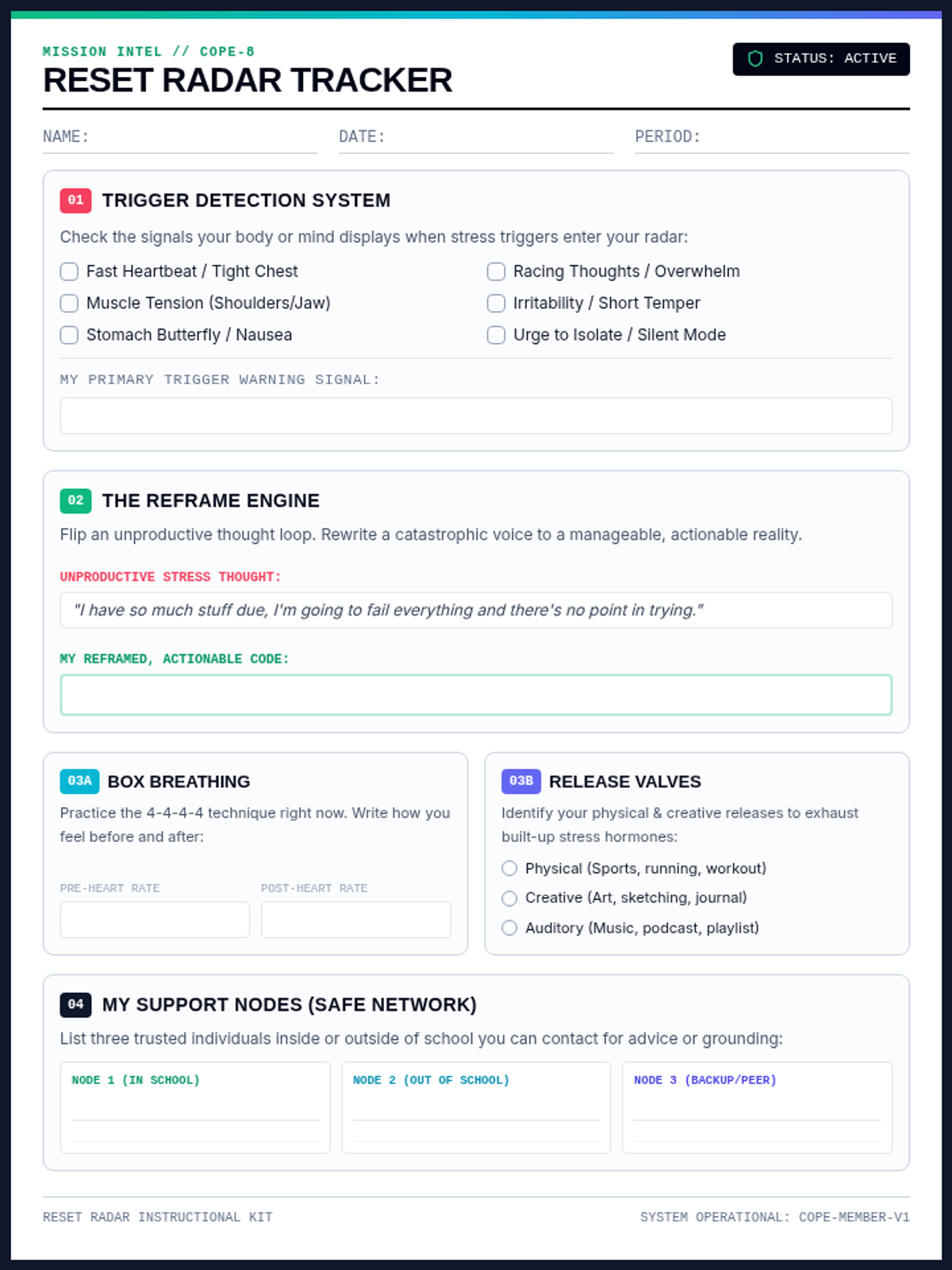
A high-utility, printable 1-page guided notes worksheet styled as a tactical mental radar dashboard. Students identify stress signals, construct a reframing formula, list emotional release outlets, and document trusted contacts.
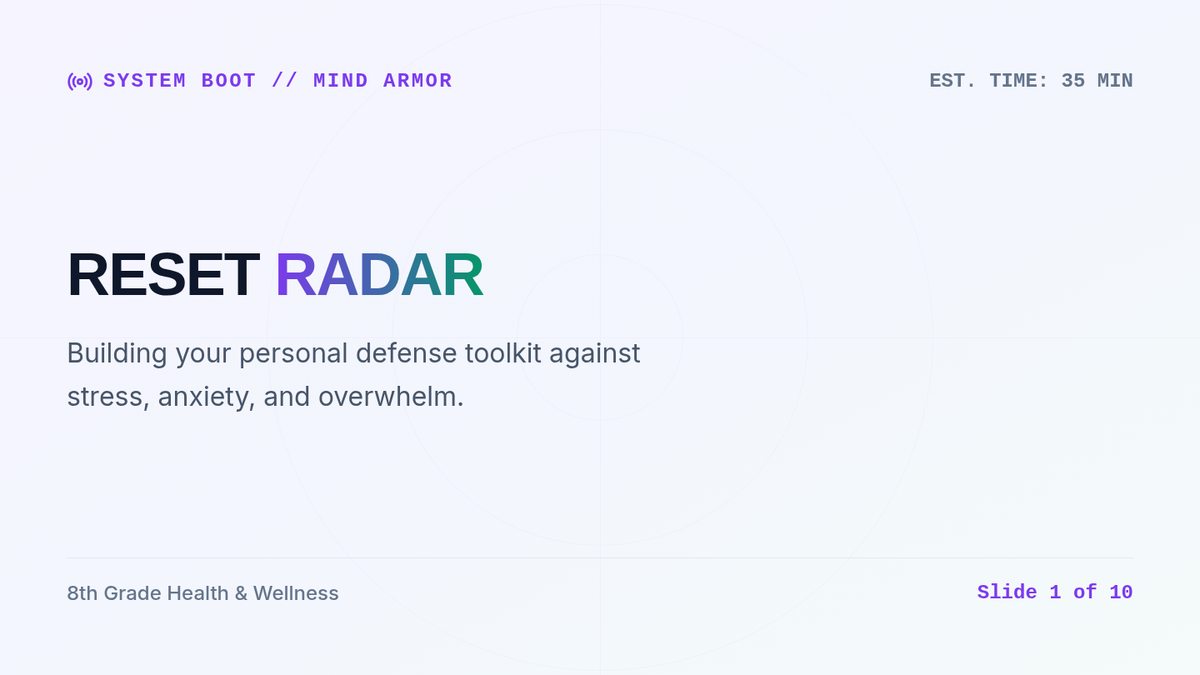
An interactive 10-slide presentation styled with a soft, clean pastel radar system. Teaches 8th graders evidence-based coping skills (box breathing, cognitive reframing, physical outlets, and boundaries) with highly readable dark text on pastel cards.
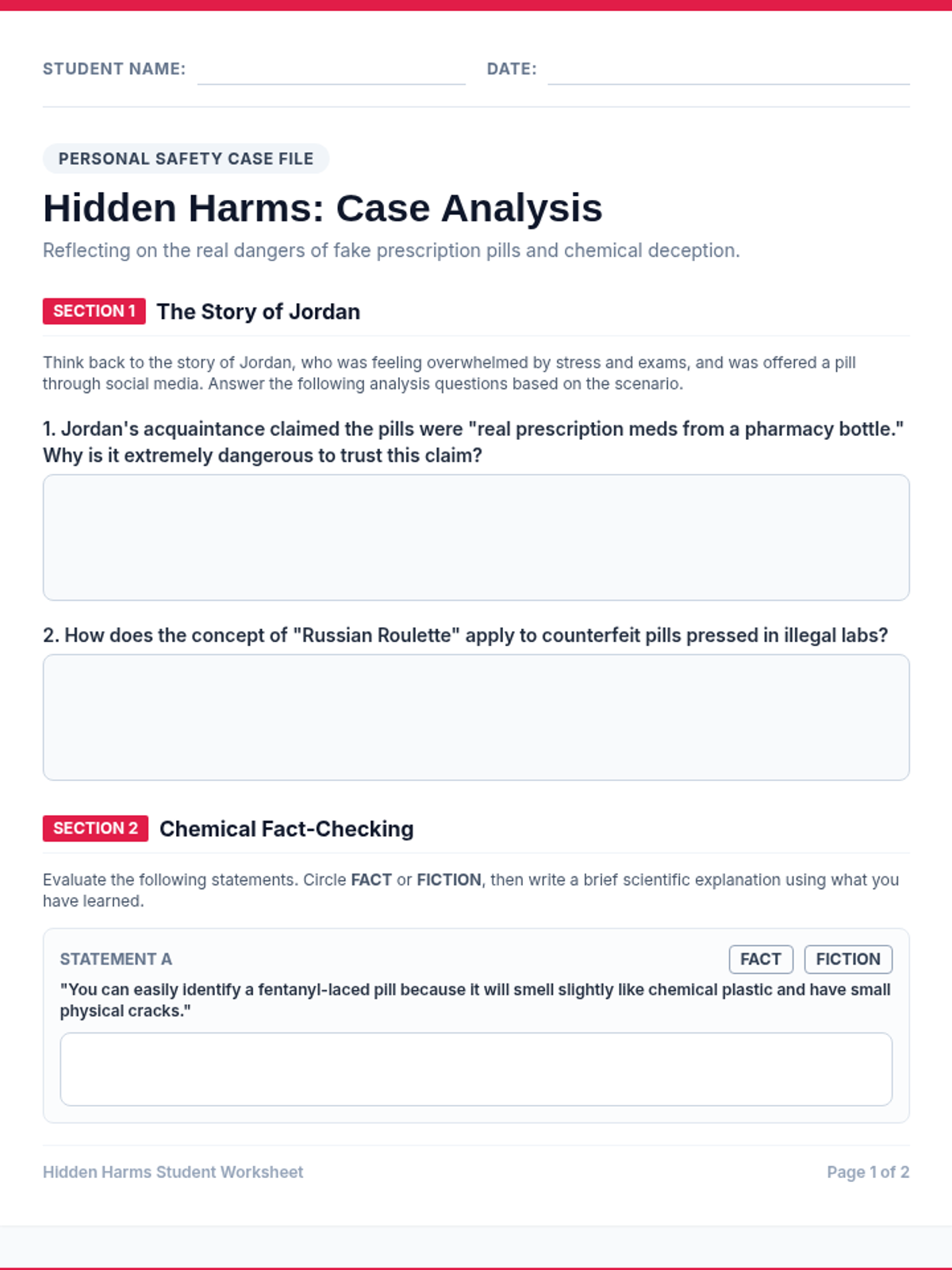
A 2-page student worksheet designed to accompany the drug safety read-aloud. It features case analysis questions, a fact-or-fiction section on synthetic drugs and chemical safety, custom refusal-skill drafting, and a structured worksheet for listing trusted personal support systems.
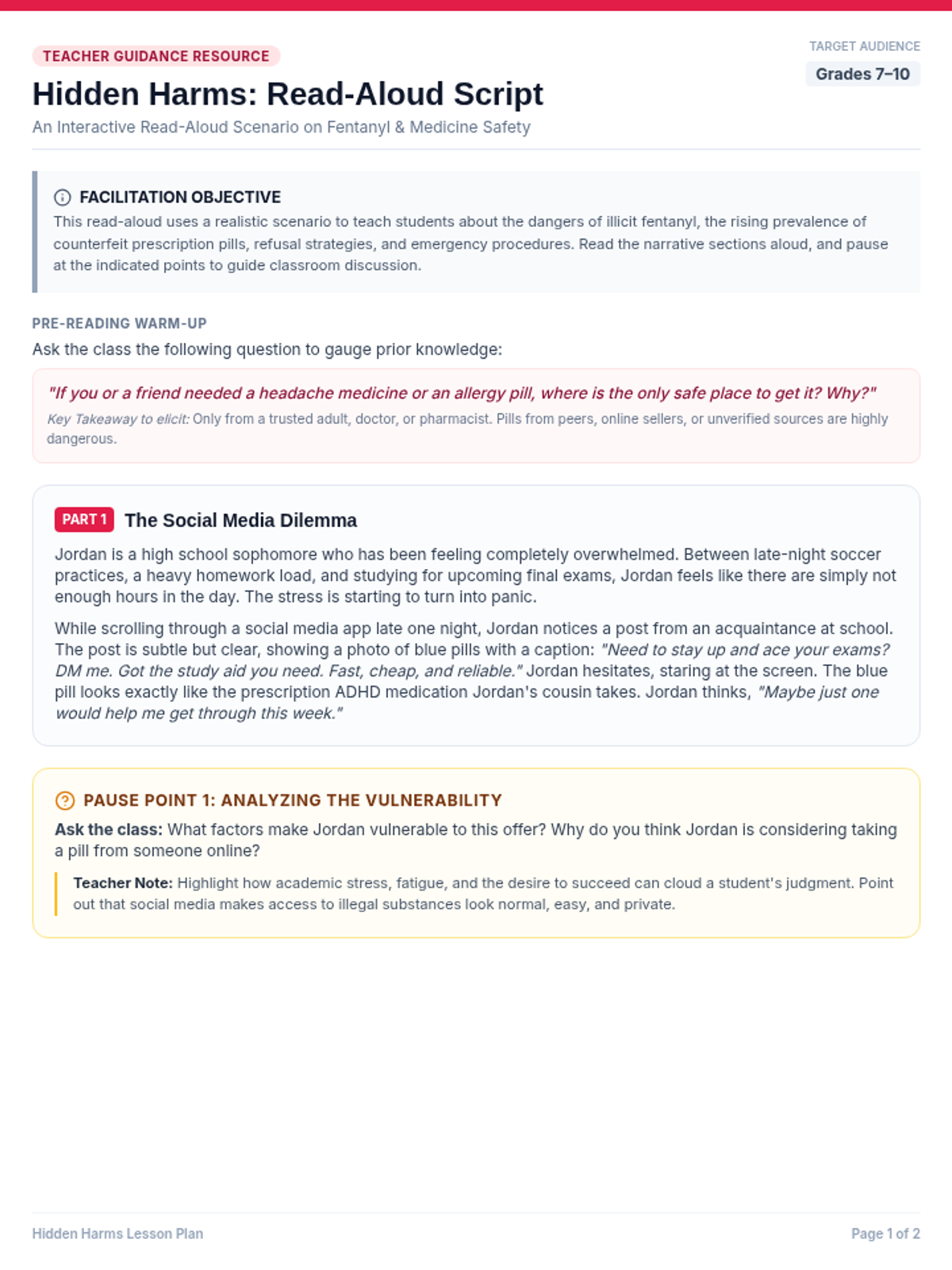
An interactive, 2-page teacher-facing read-aloud script on drug safety and fentanyl education. It features a relatable modern scenario, designated student-engagement pause points, clear teacher talking points, refusal scripts, and emergency action protocols.
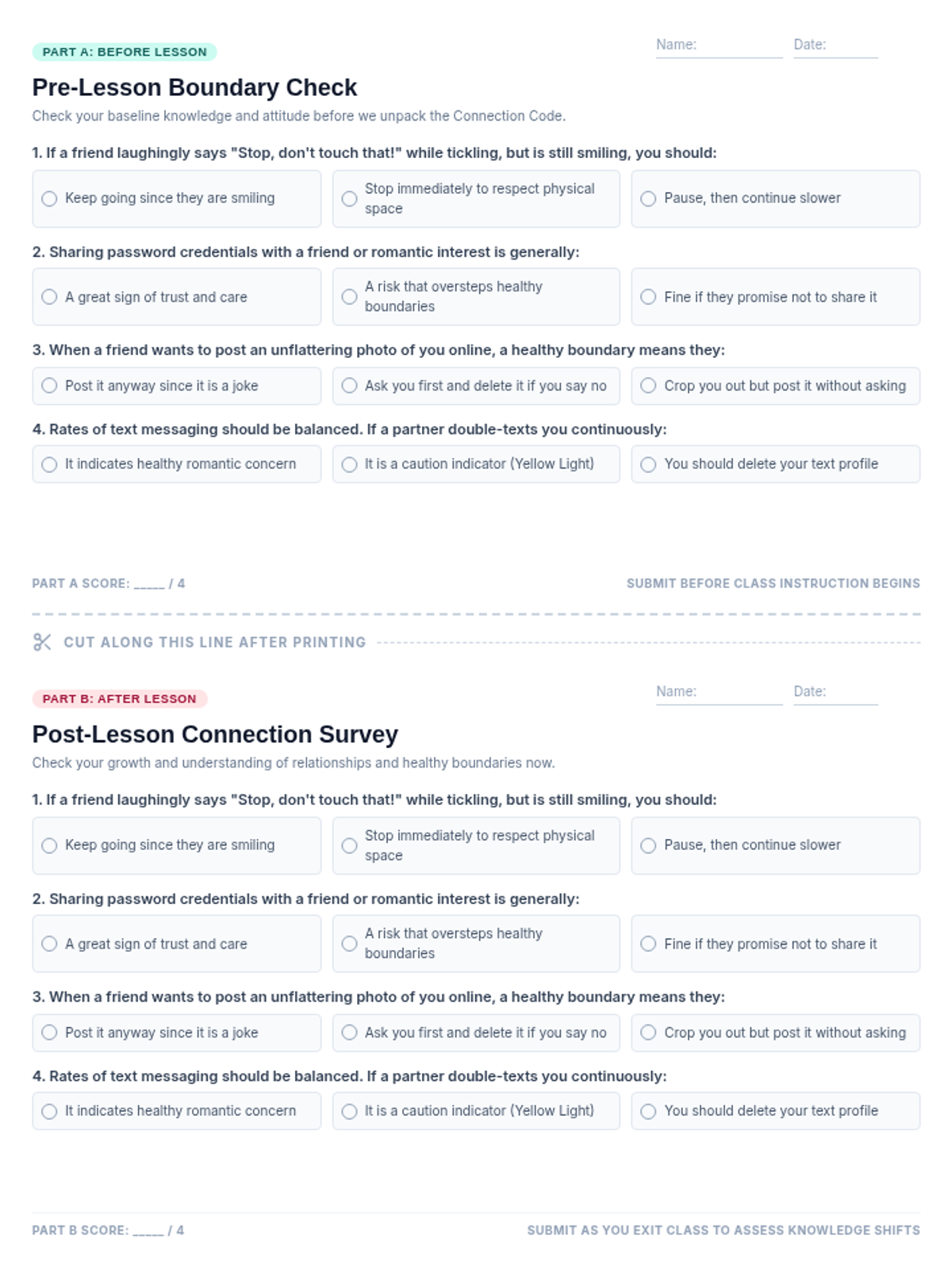
A pre- and post-lesson diagnostic survey designed as a half-page cut out worksheet. Features identical, styled multiple-choice questions to measure knowledge growth and attitude shifts regarding consent, passwords, and space.
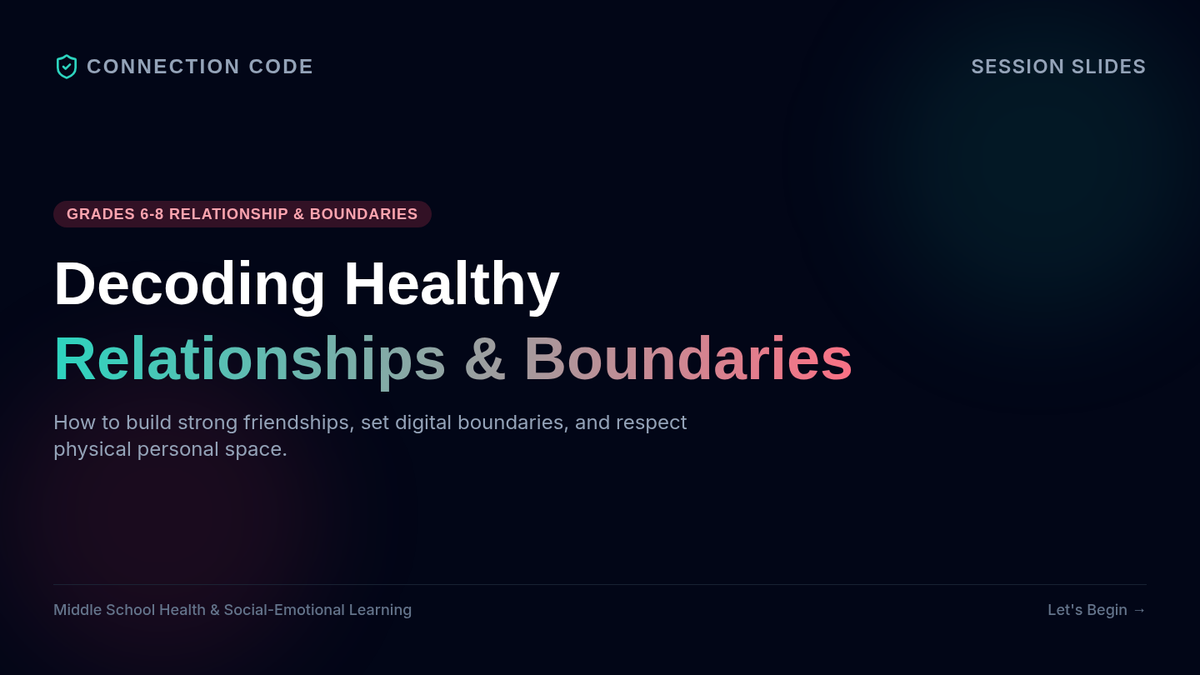
A comprehensive 5-slide visual presentation deck covering healthy physical space, digital boundaries, text etiquette, relationship indicators, and the assertive boundary-setting formula.
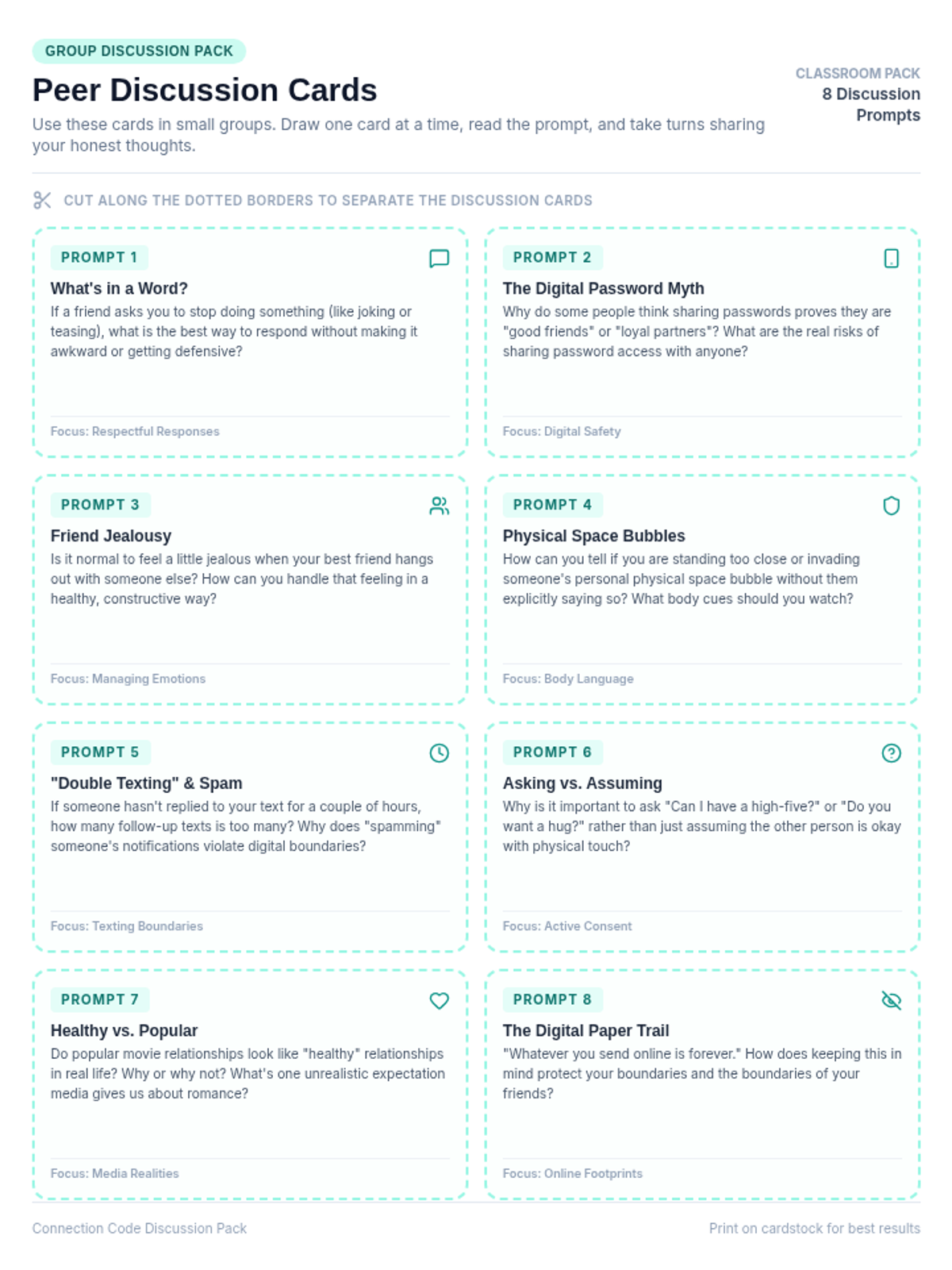
A classroom set of 8 printable discussion prompt cards focused on active consent, texting etiquette, password boundaries, personal physical space bubbles, and healthy relationship choices.
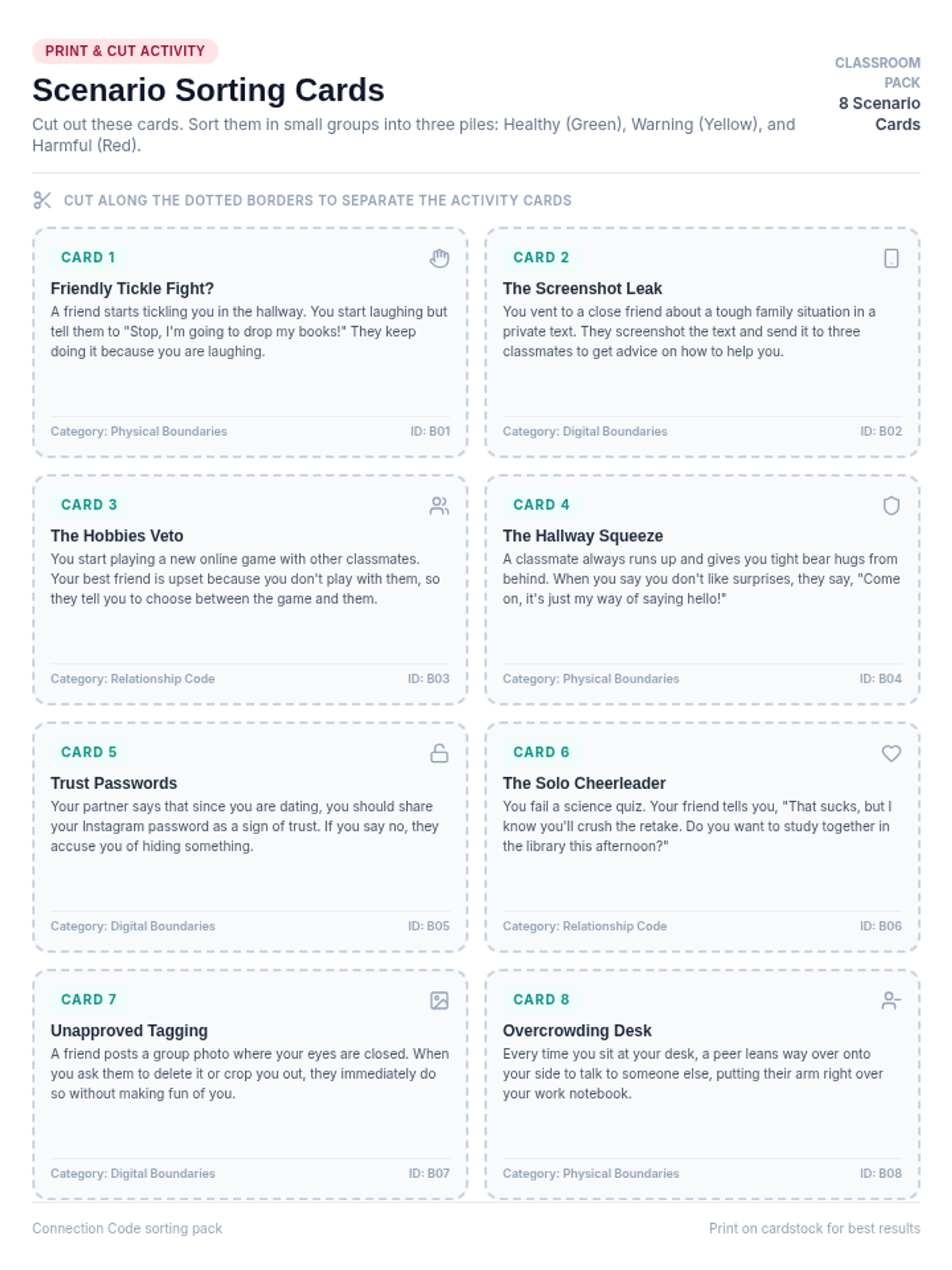
A classroom set of 8 printable scenario cards with real-world relationship, digital, and physical space boundary situations, formatted with dashed cutting guidelines for student group sorting.
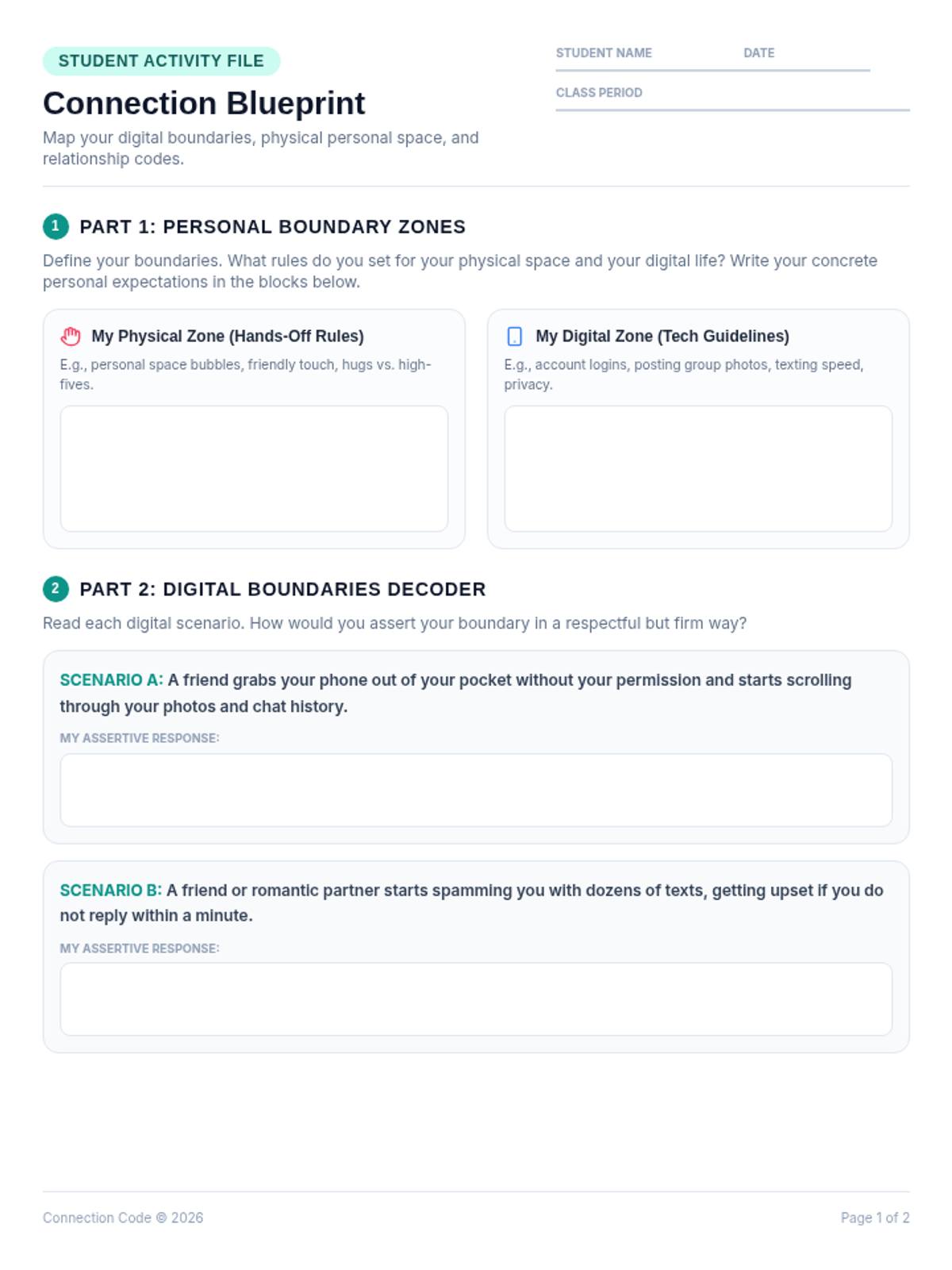
A student worksheet containing three parts: Personal Boundary Zones (physical/digital), a Digital Boundaries Decoder with real-world tech scenarios, and a Relationship Radar scorecard activity to evaluate behavior.
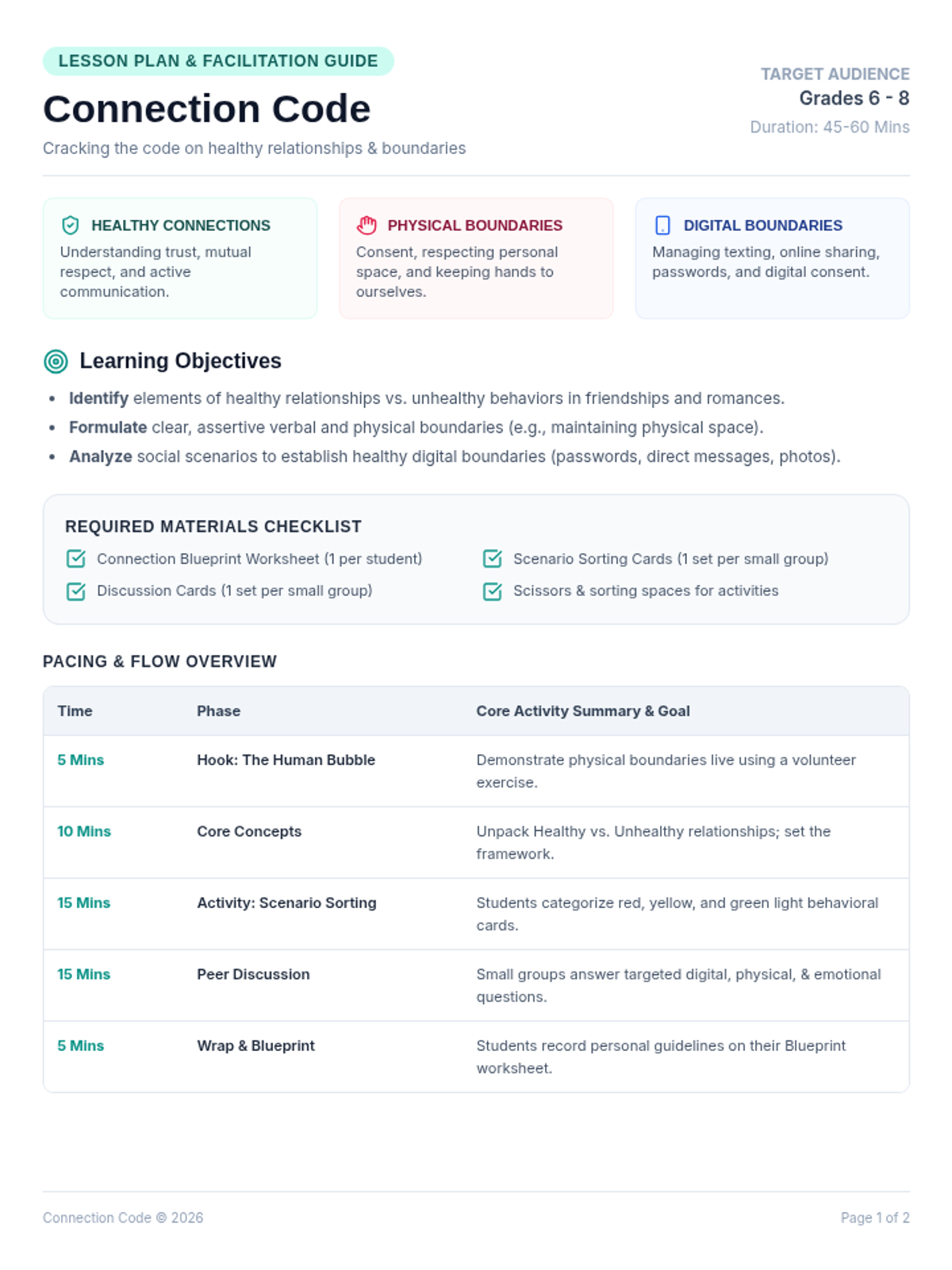
A 2-page detailed teacher guide and lesson plan outlining facilitation instructions, pacing, materials checklists, and developmental guidelines for running the Connection Code relationship and boundary lesson for grades 6-8.
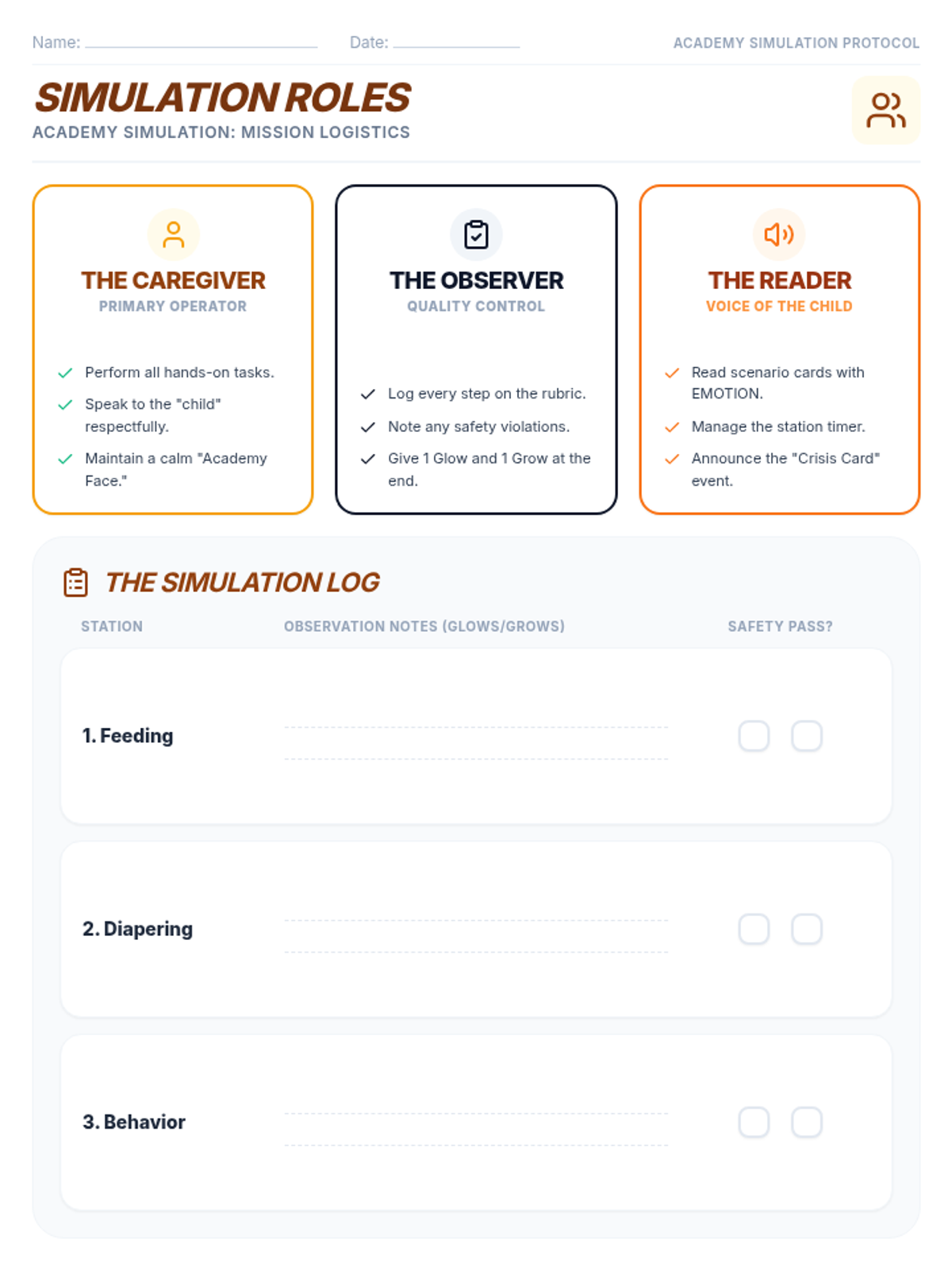
This document outlines simulation roles (Caregiver, Observer, and Reader) and provides an observation log sheet for recording feedback and safety compliance during feeding, diapering, and behavior stations.
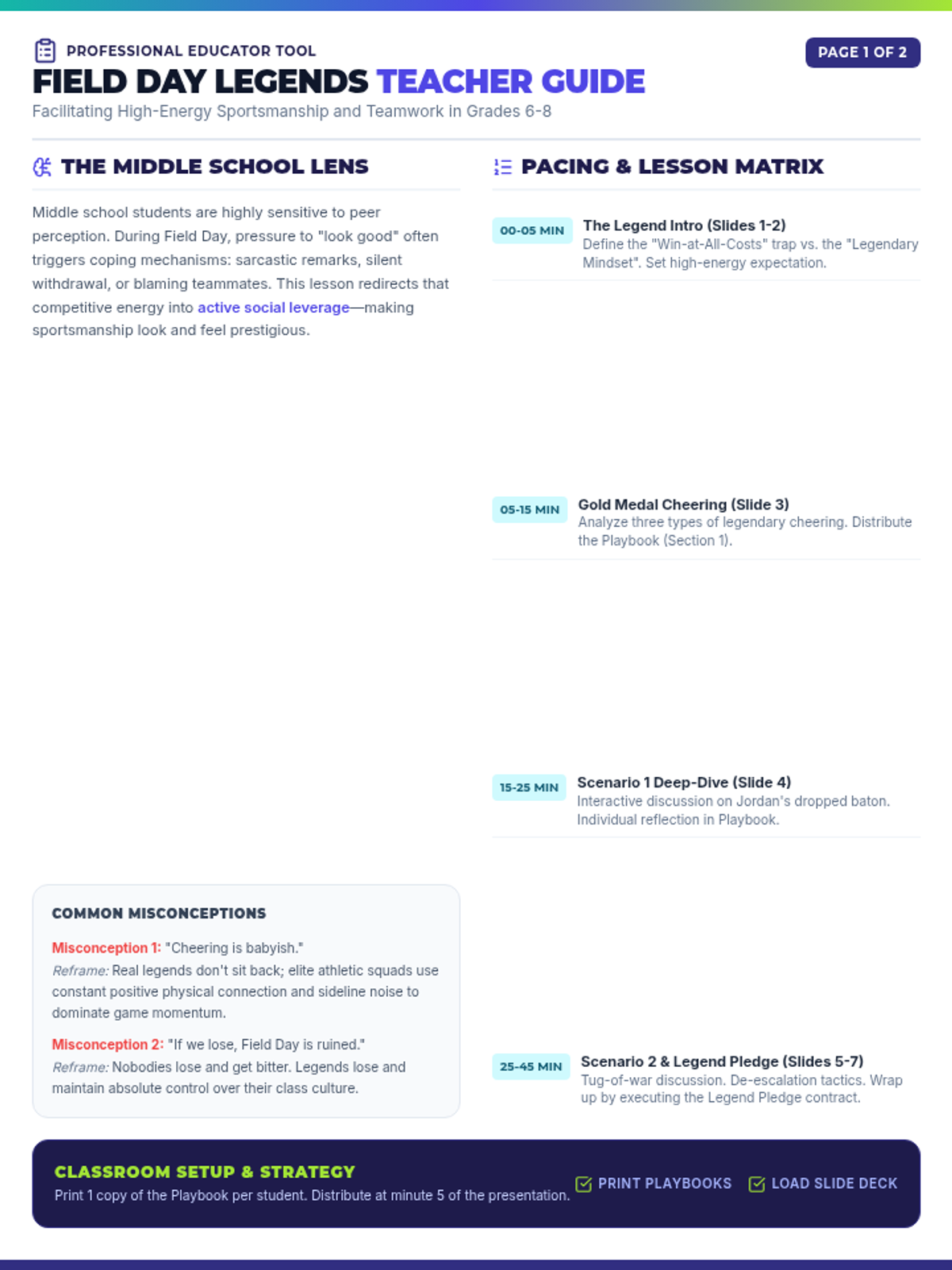
An educator-facing instructional and facilitation guide that maps out lesson pacing, slide-by-slide dialogue scripts, de-escalation scripts for competitive anger, and deep-dive key talking points for the interactive scenarios.
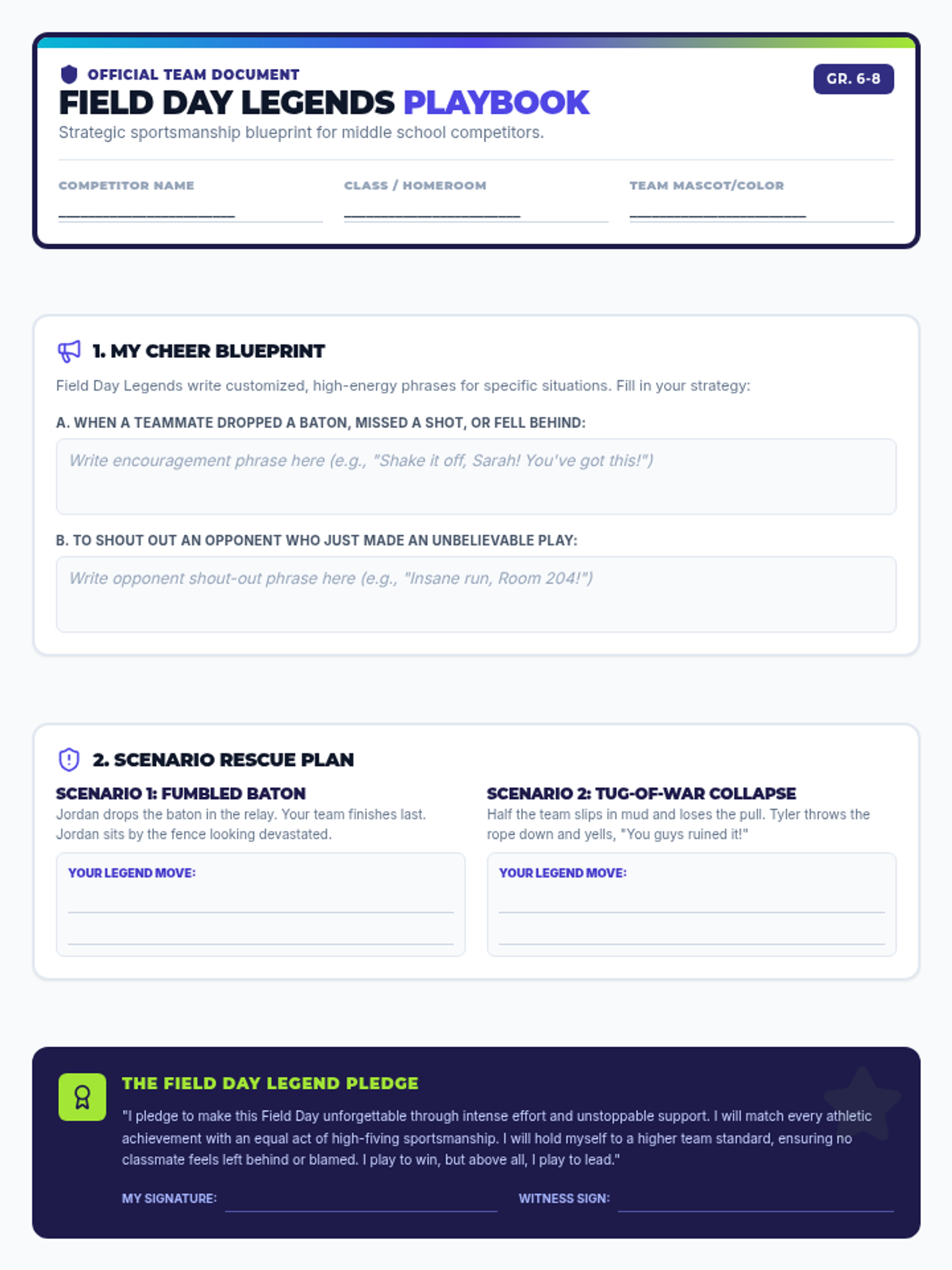
A strategic sportsmanship action-plan worksheet for middle schoolers to complete during or after the slide deck. Prompts active cheering phrase brainstorming, scenario solutions, and concludes with a championship pledge contract.
A high-energy, visually striking slide deck for middle school students preparing for Field Day. Focuses on sportsmanship, active cheering, and cooperative teamwork through interactive scenario discussion slides.
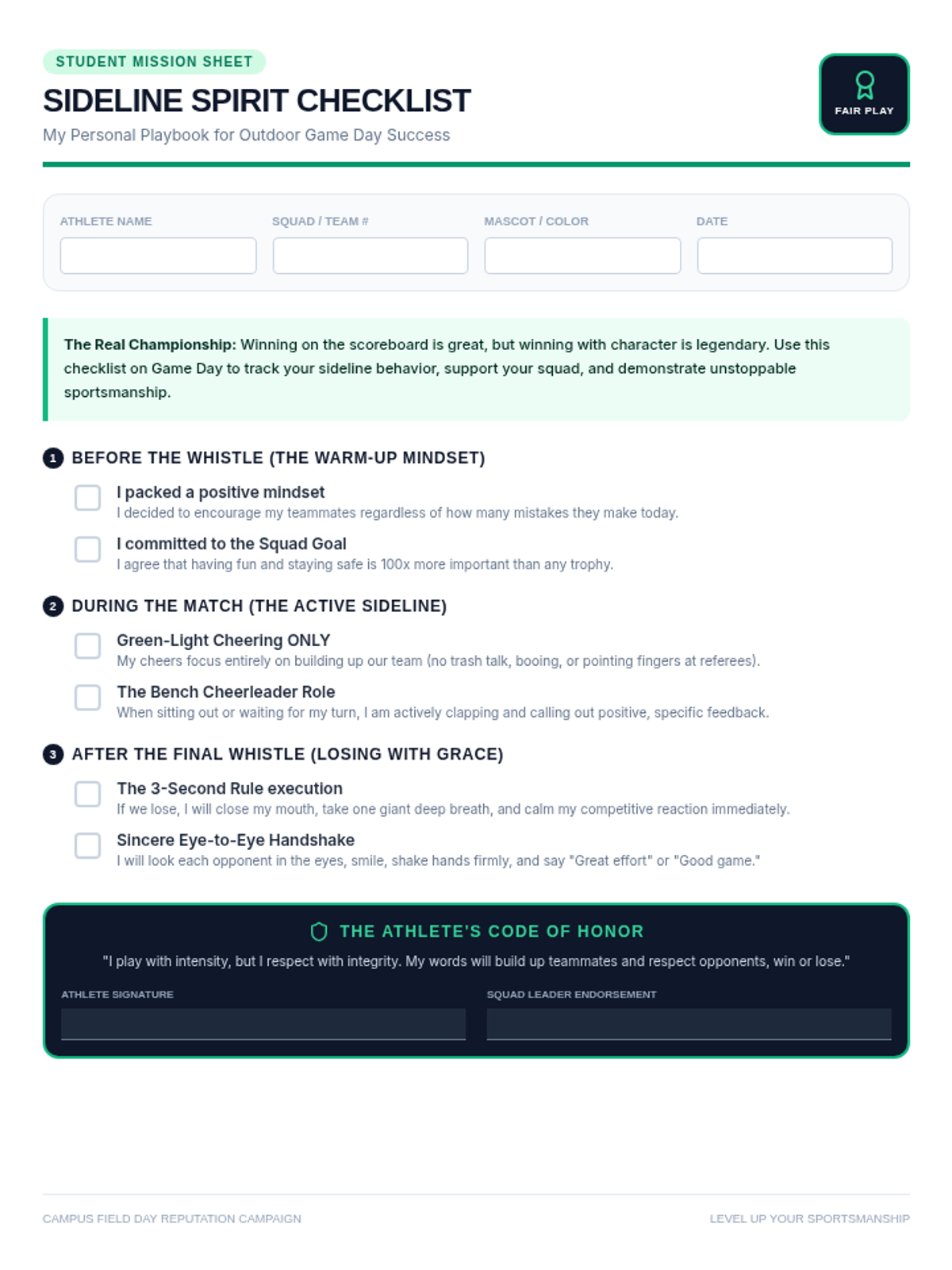
A student-facing visual checklist with clean checkbox fields, team details input boxes, three specific sportsmanship milestones (Warm-Up Mindset, Active Sideline, Losing with Grace), and a Code of Honor signature section at the bottom.
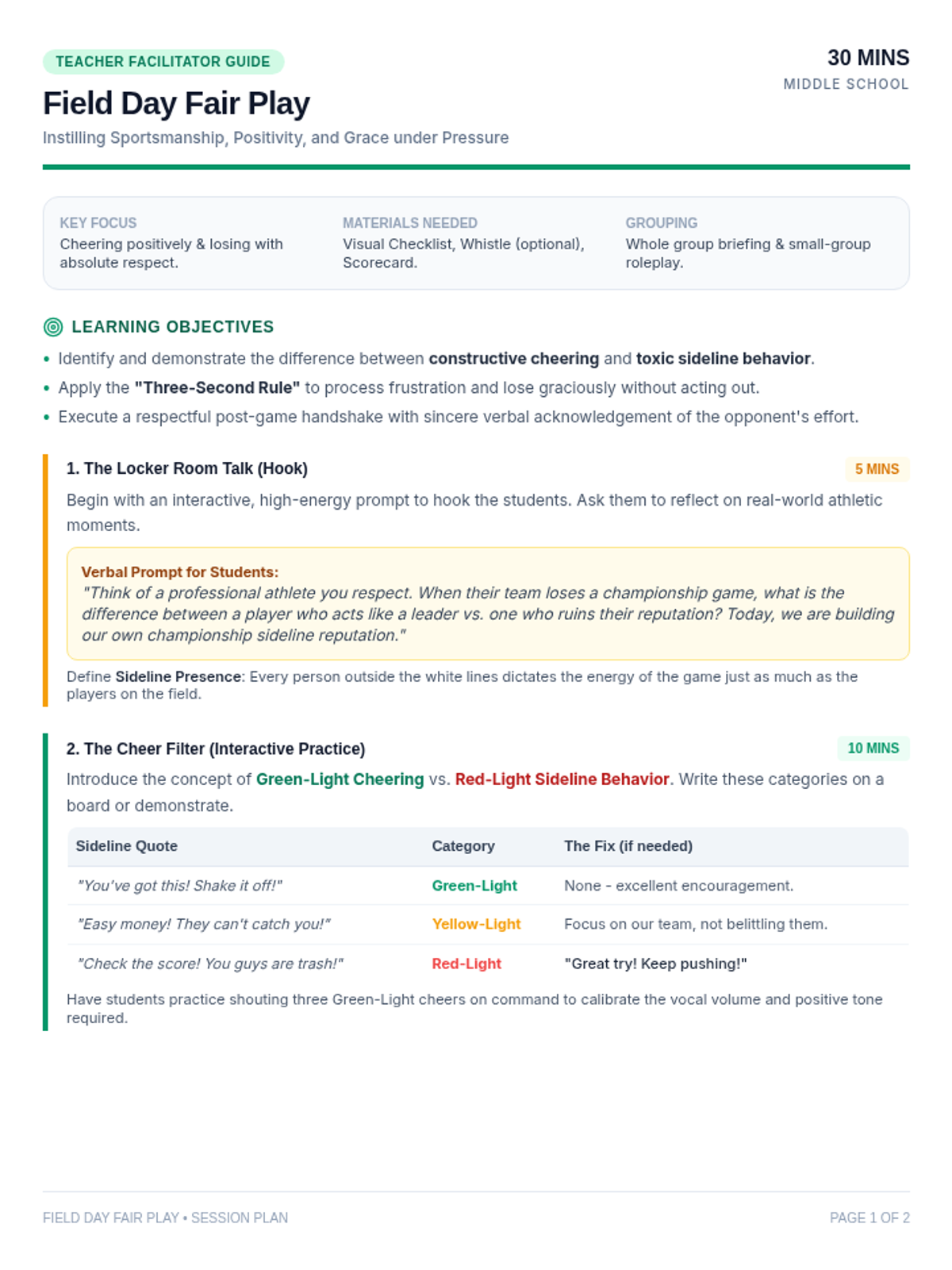
A comprehensive, beautifully formatted 2-page print-ready lesson plan for teachers preparing middle schoolers for an outdoor game day. Focuses on sideline cheer rules, the three-second rule for sportsmanship, and structured roleplays.
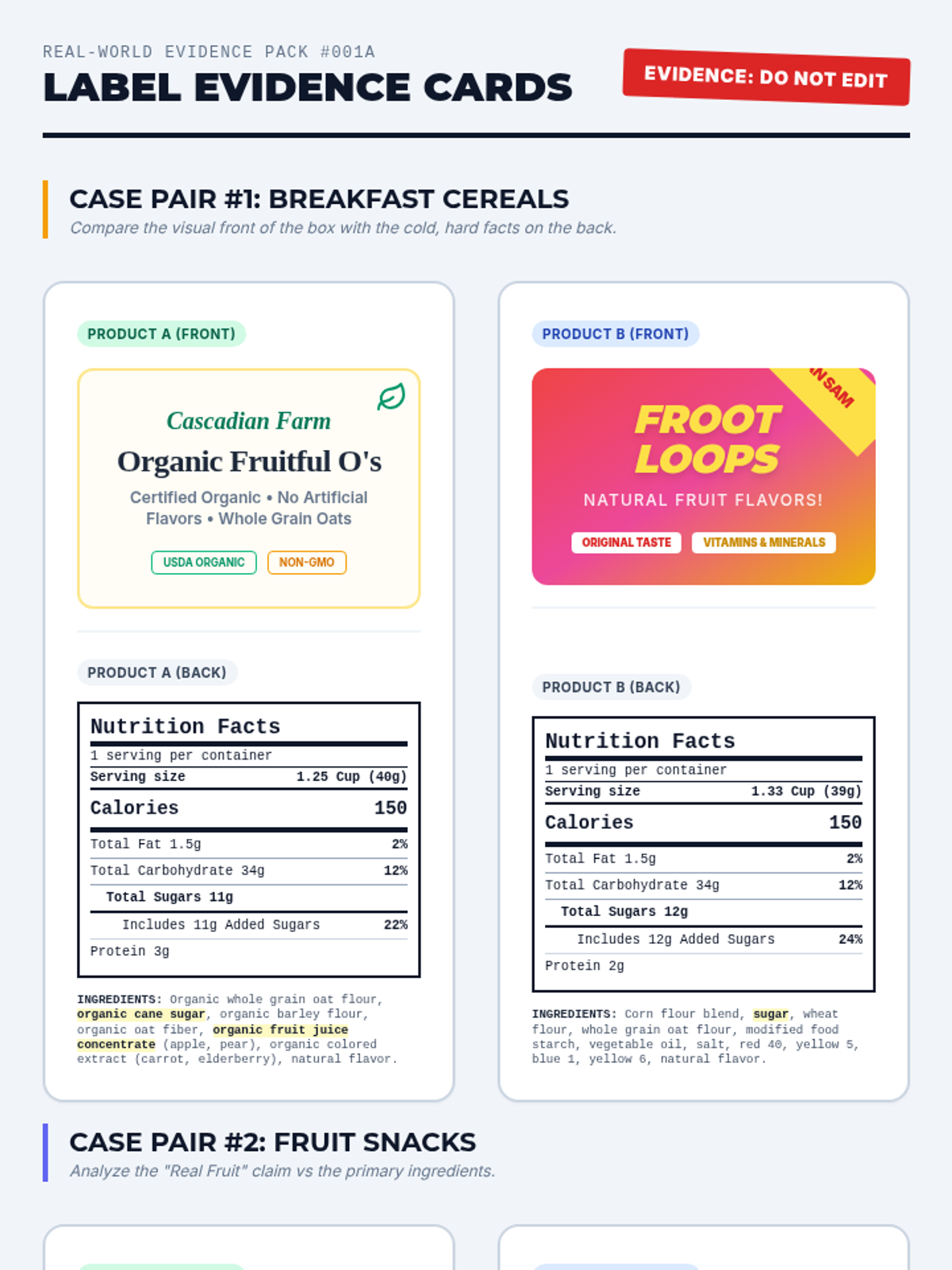
Evidence cards containing high-fidelity mockup designs for front and back labels of standard and "healthy" cereals and fruit snacks, designed for student comparison and analysis.