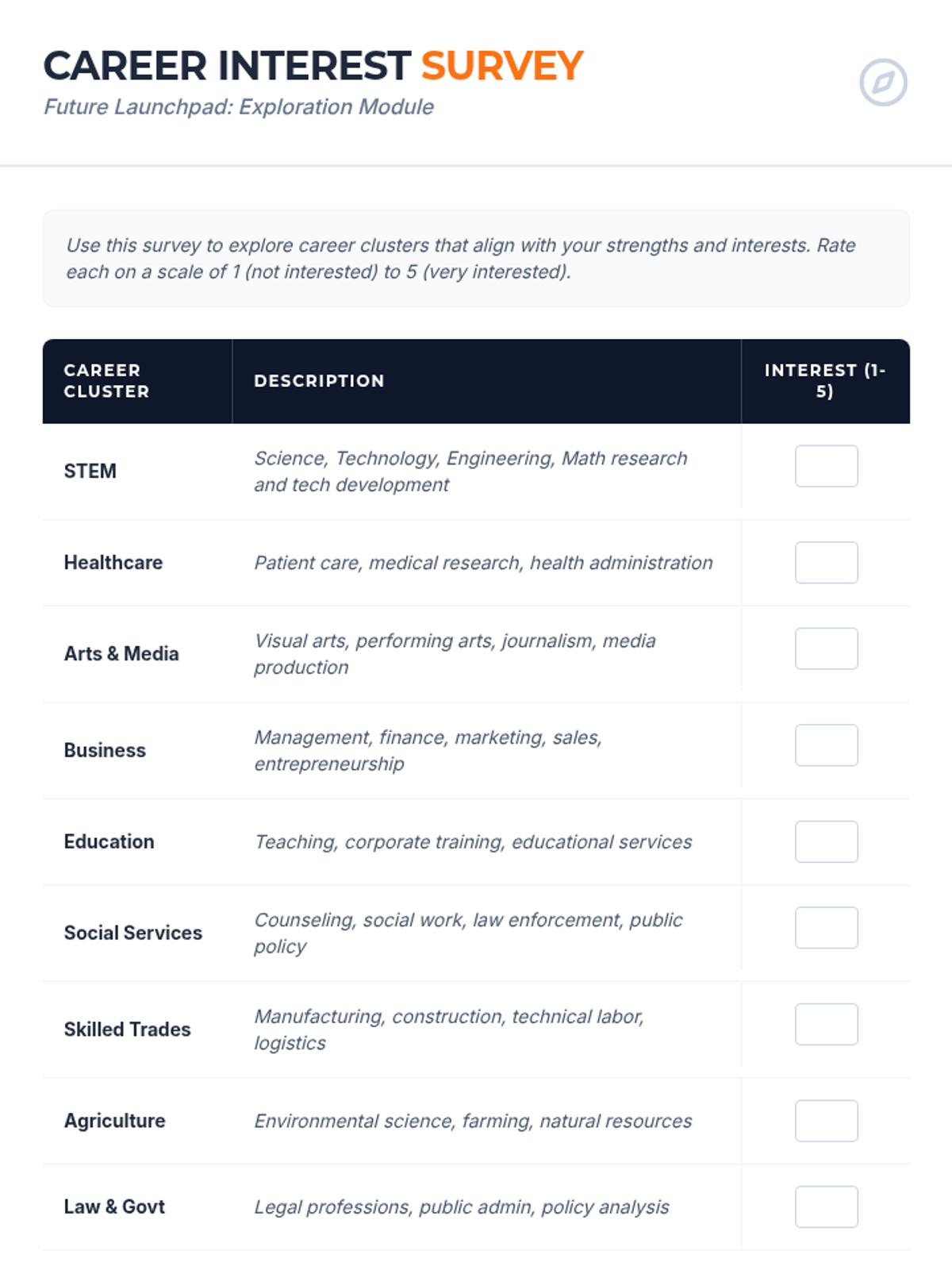
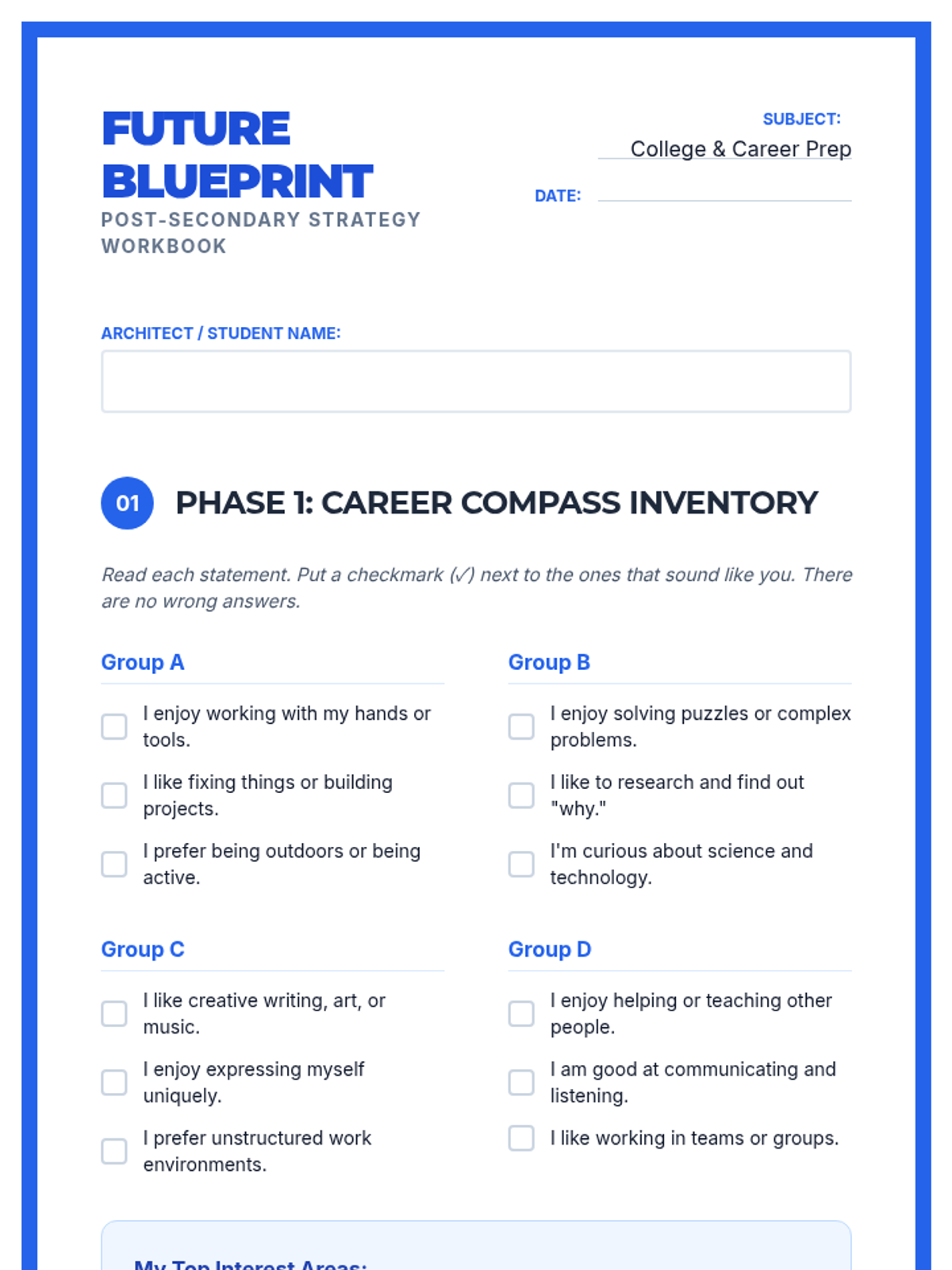
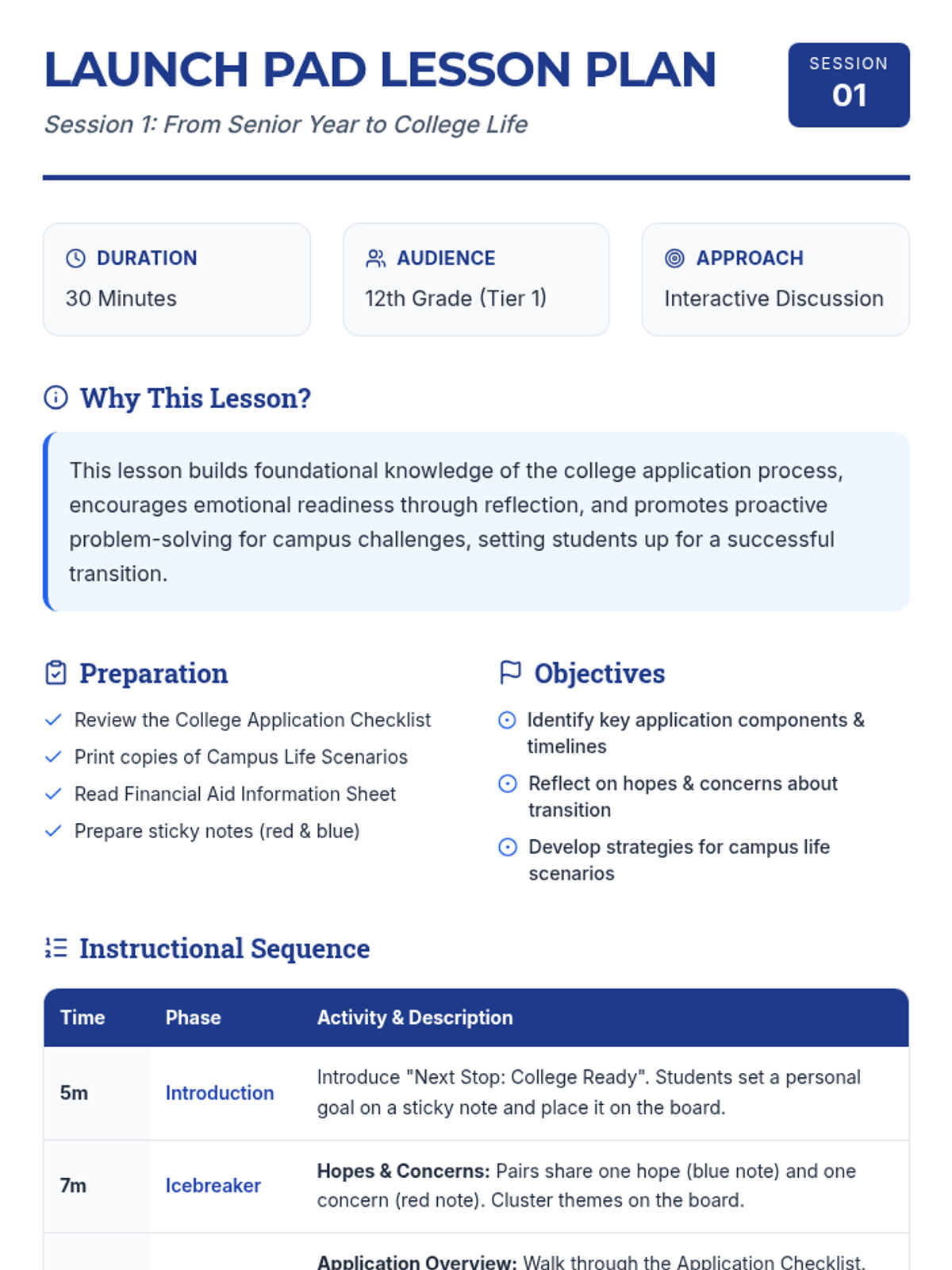
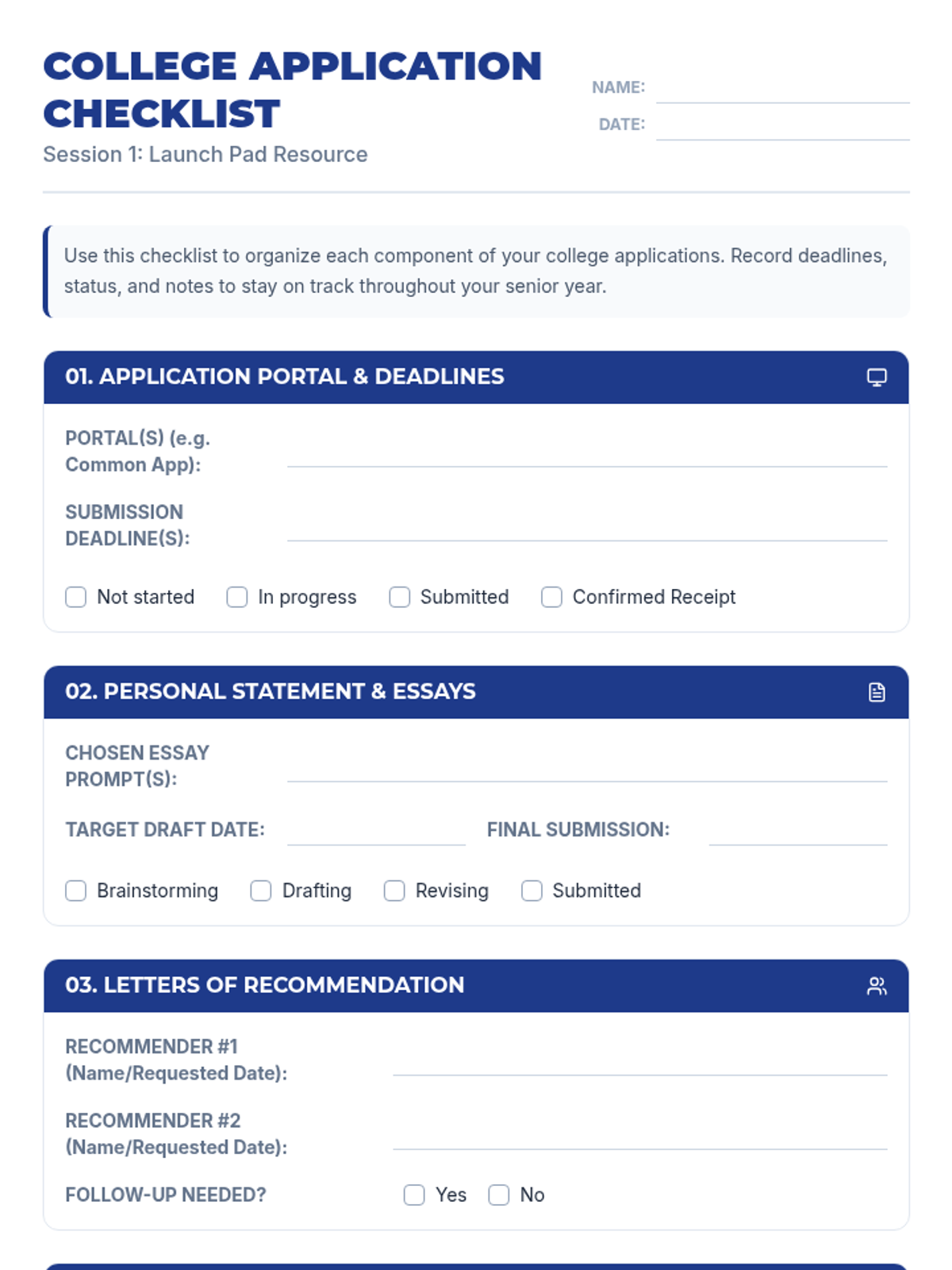
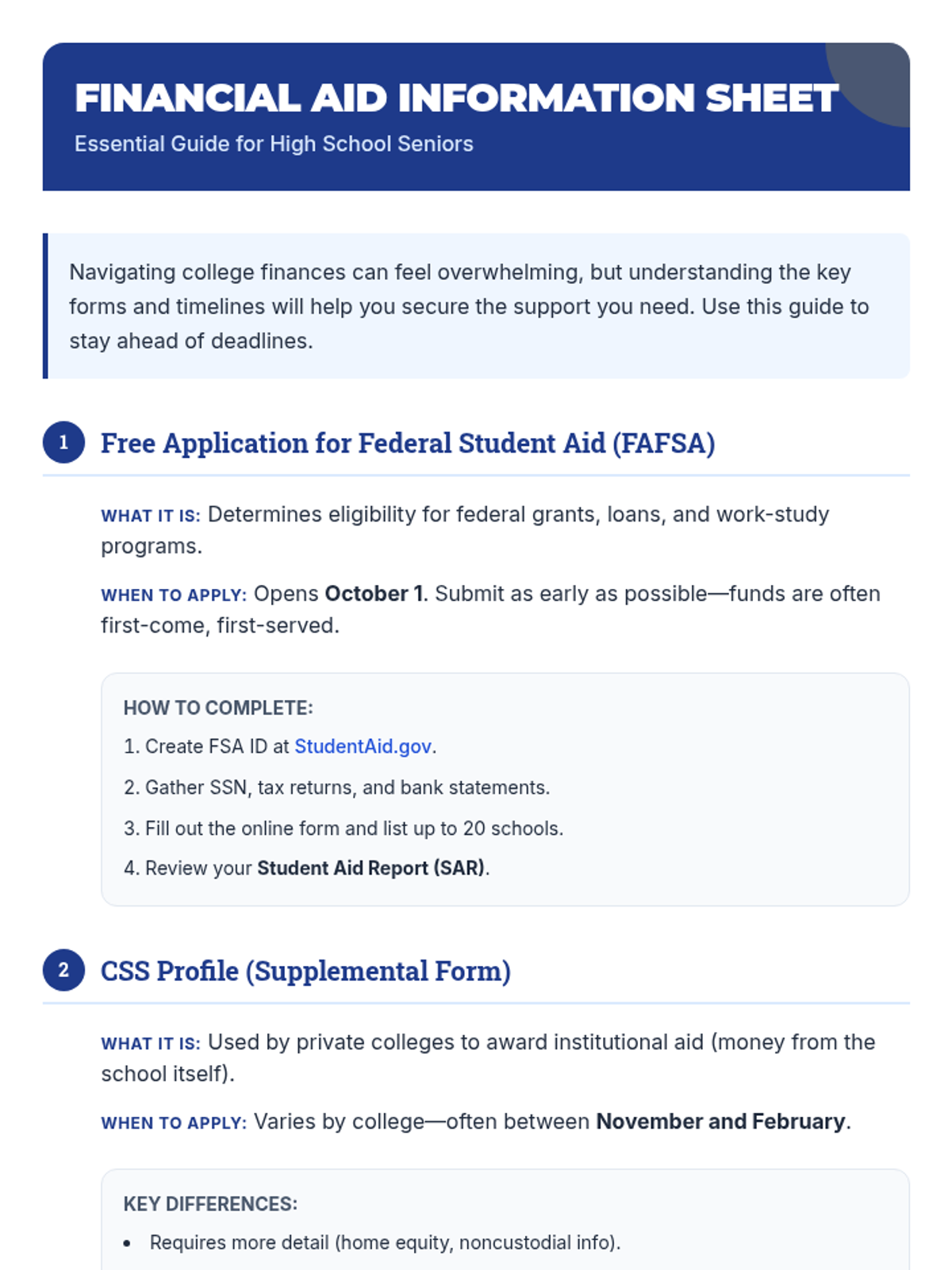
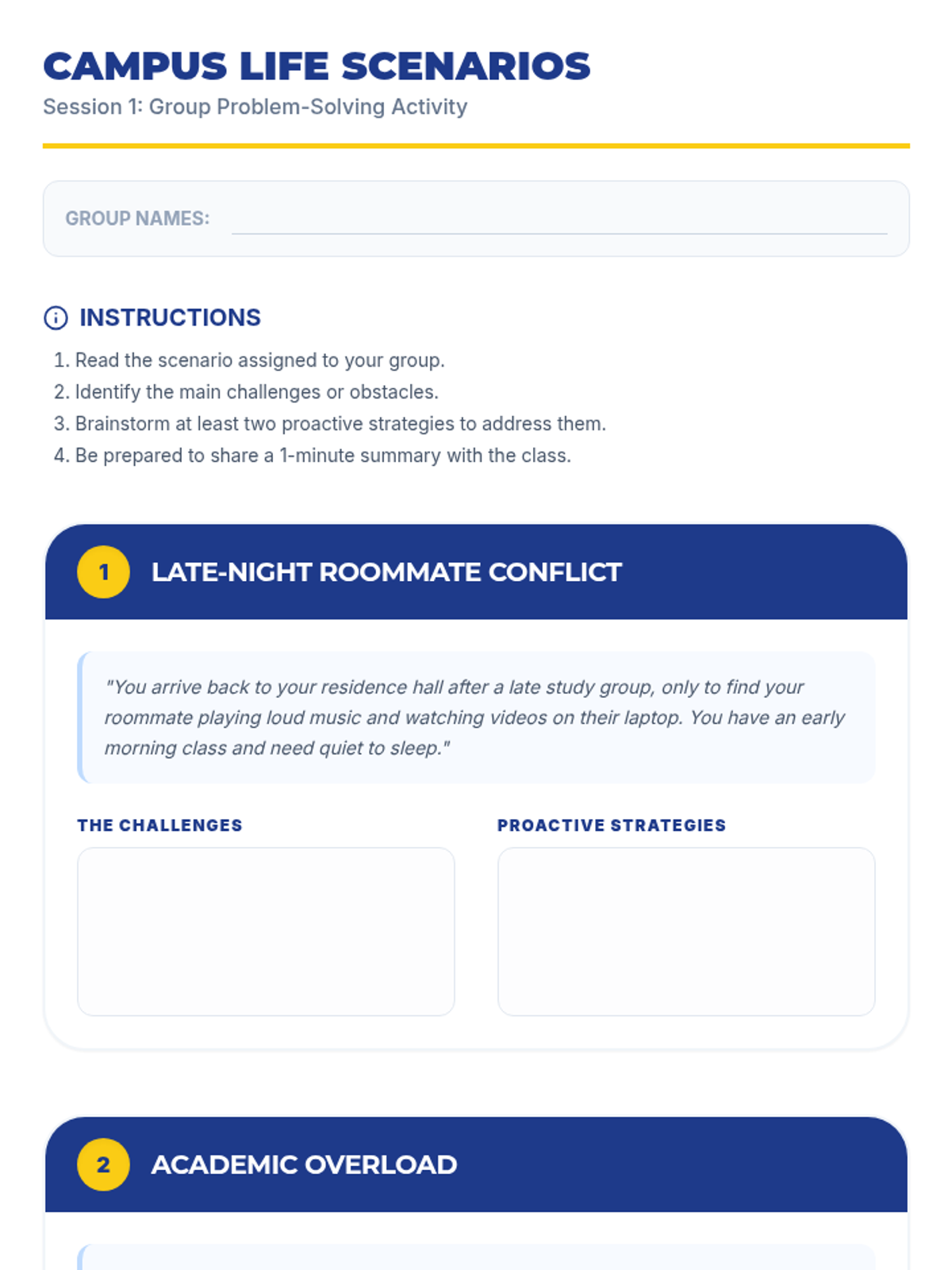
College selection, application workflows, and financial aid navigation including FAFSA and scholarship acquisition. Builds skills in personal statement writing and career exploration to align post-secondary choices with long-term professional goals.
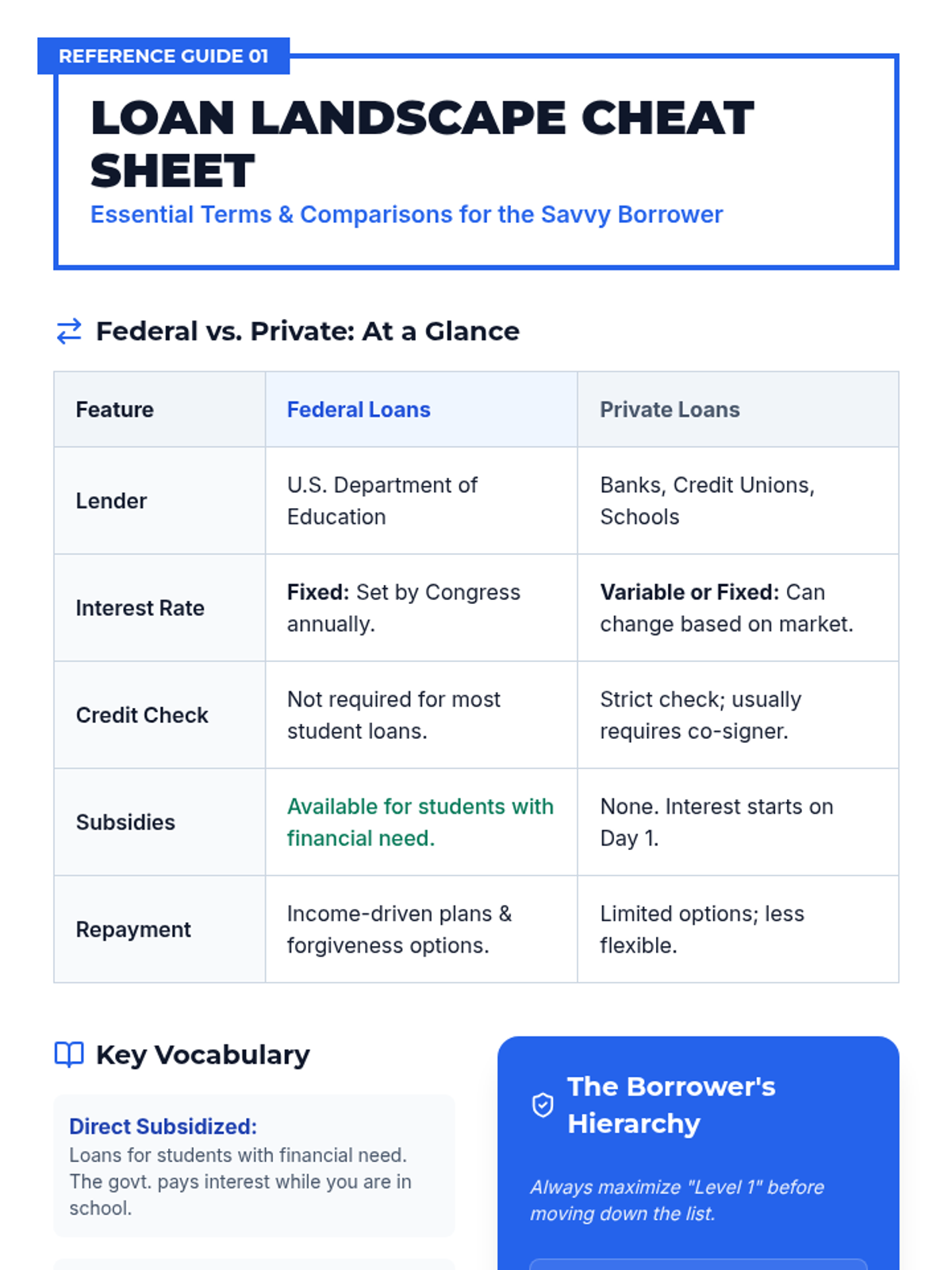
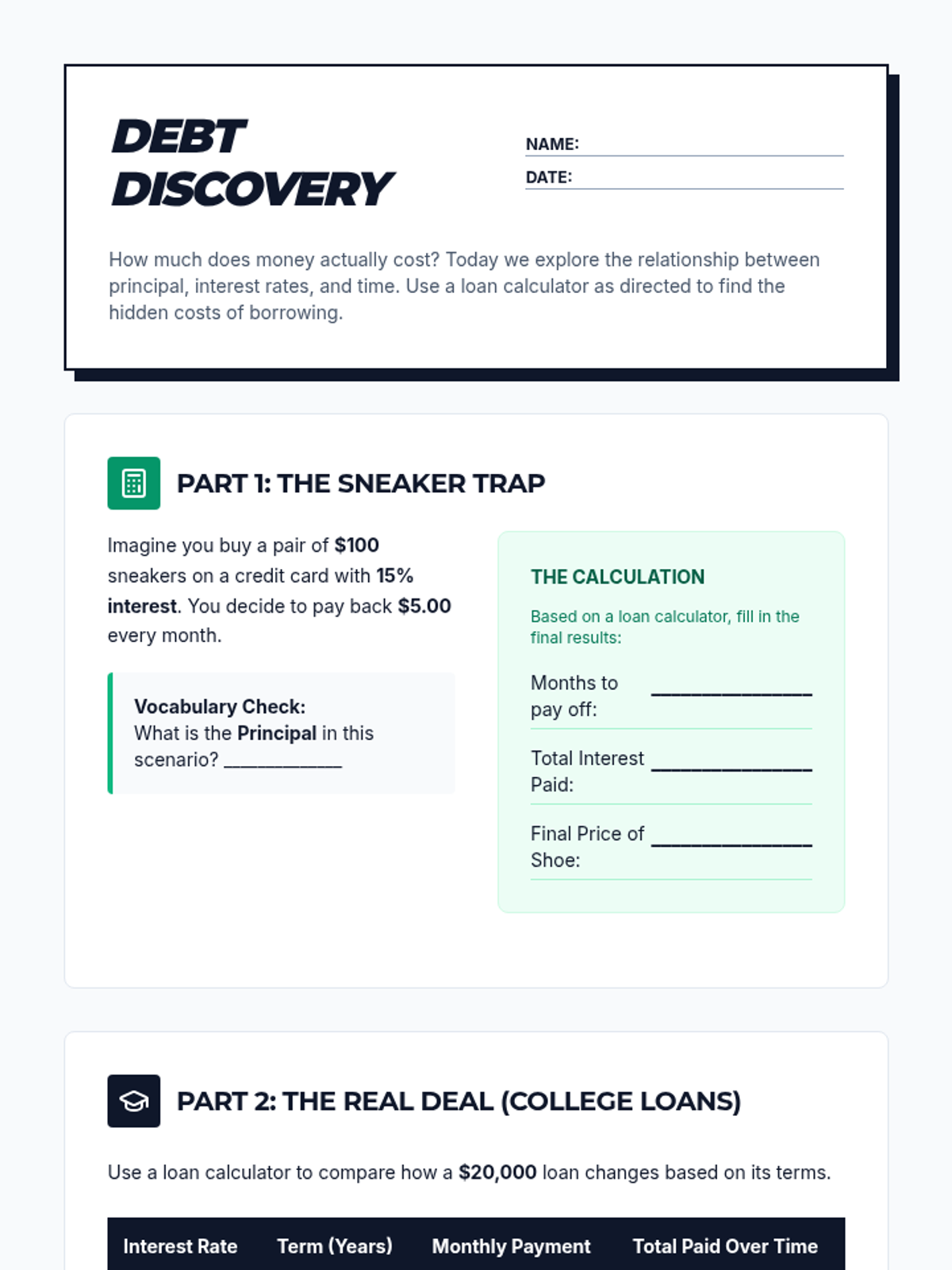
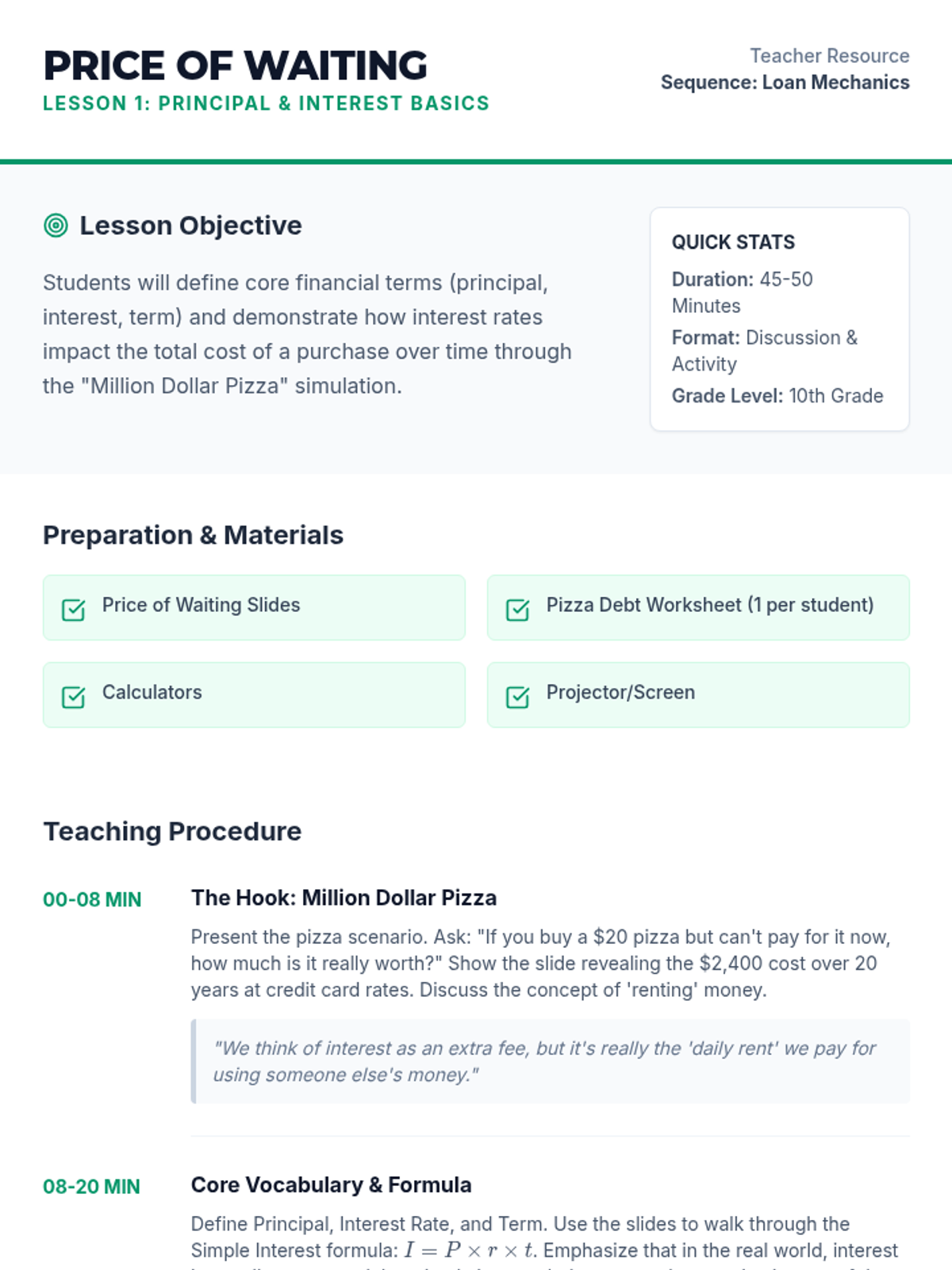
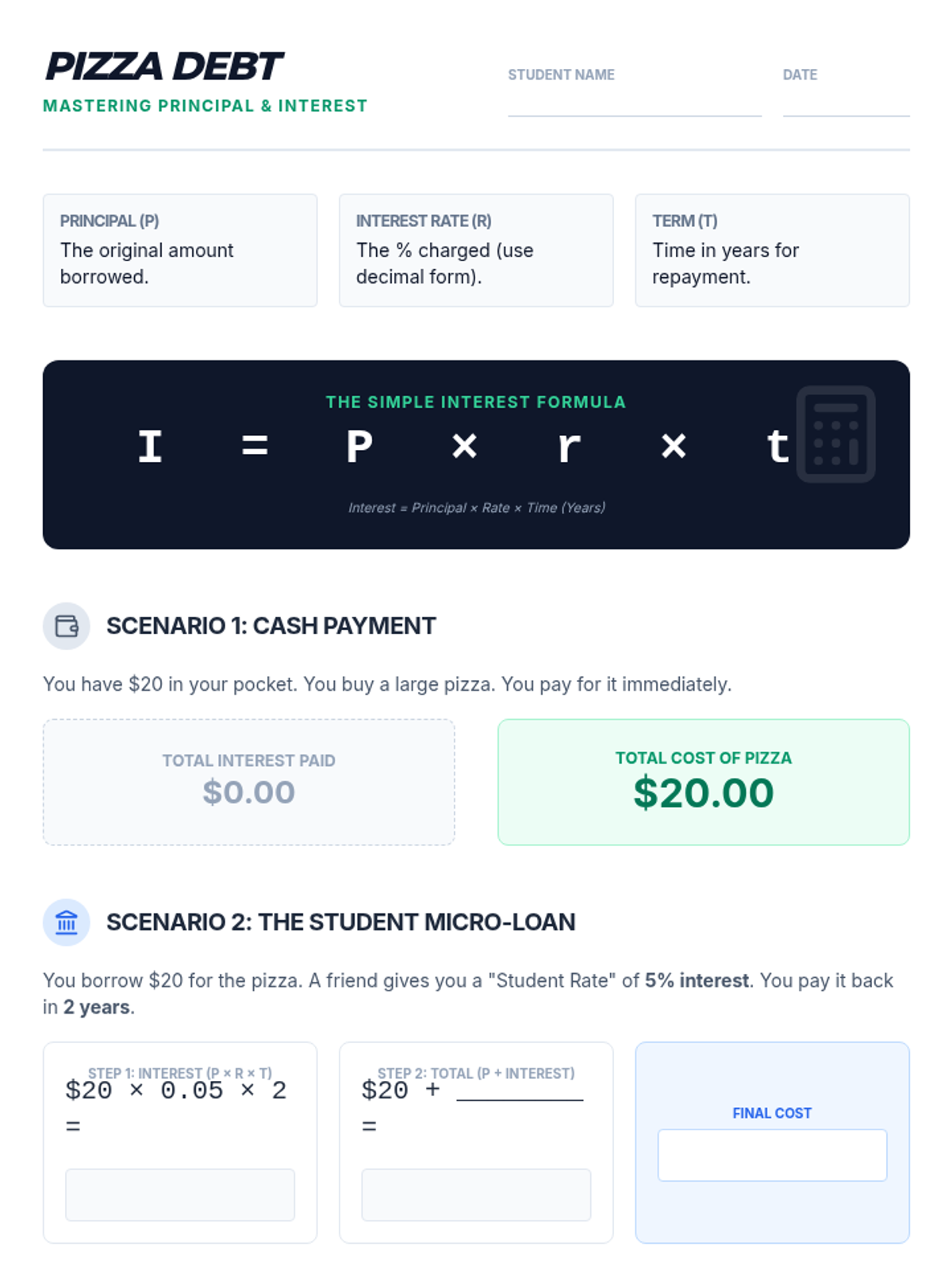
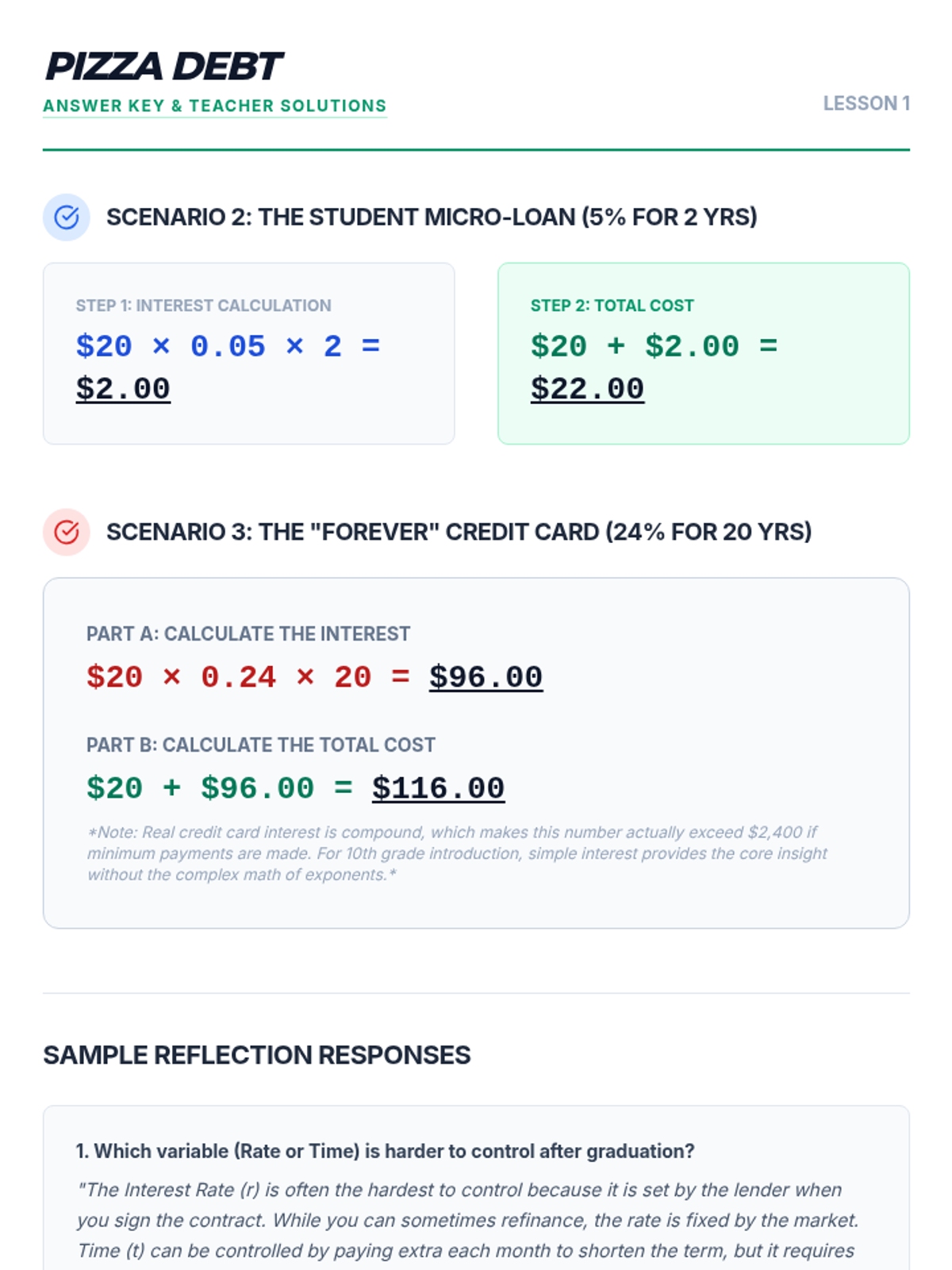
A comprehensive unit for 9th-grade students exploring the differences between federal and private student loans. Students learn to navigate financial aid terminology, calculate interest accrual, and evaluate the long-term impact of borrowing decisions.
This sequence guides 11th-grade students through the complexities of student loans, from distinguishing loan types to calculating long-term interest and simulating repayment strategies based on career goals.
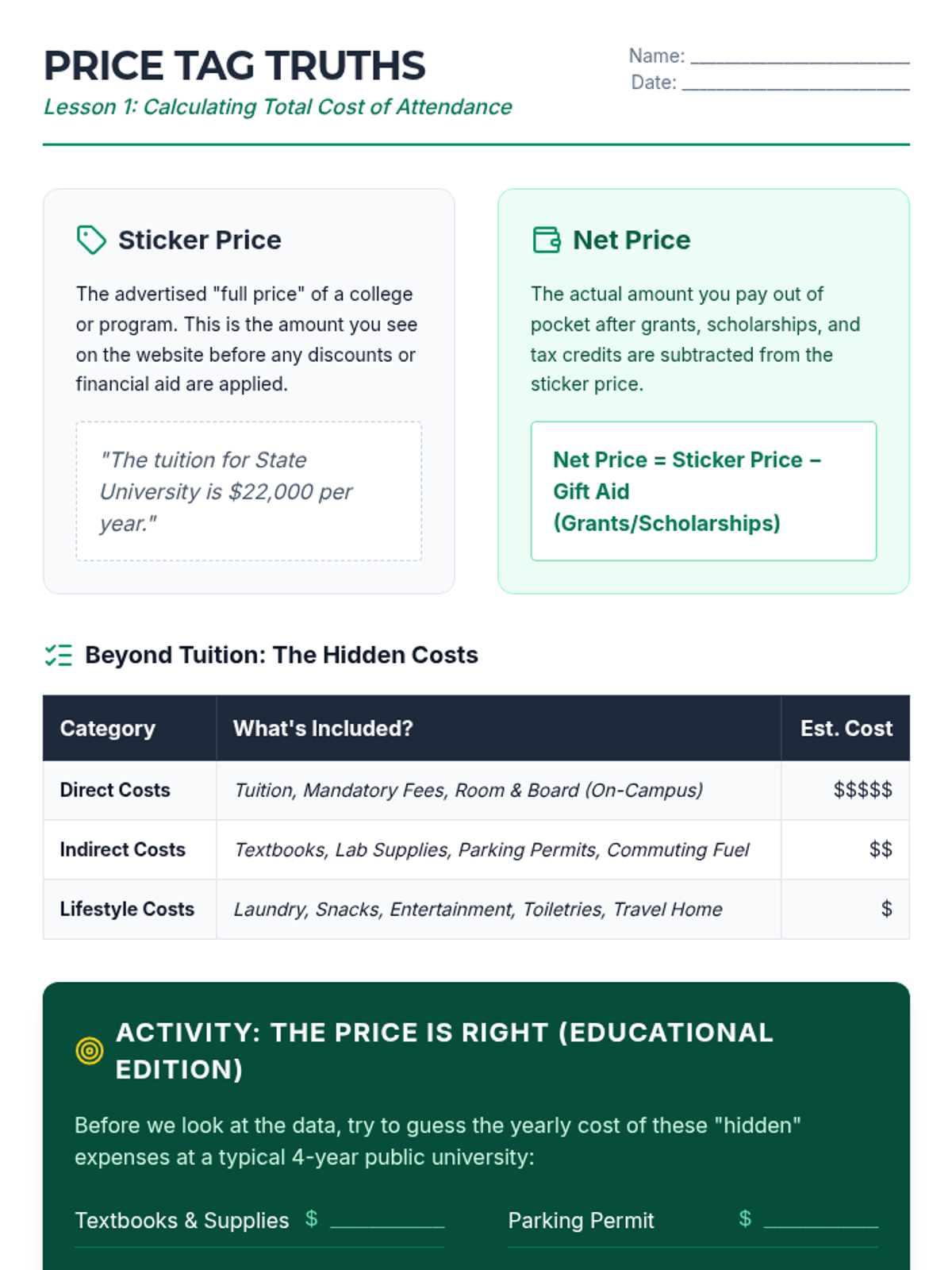
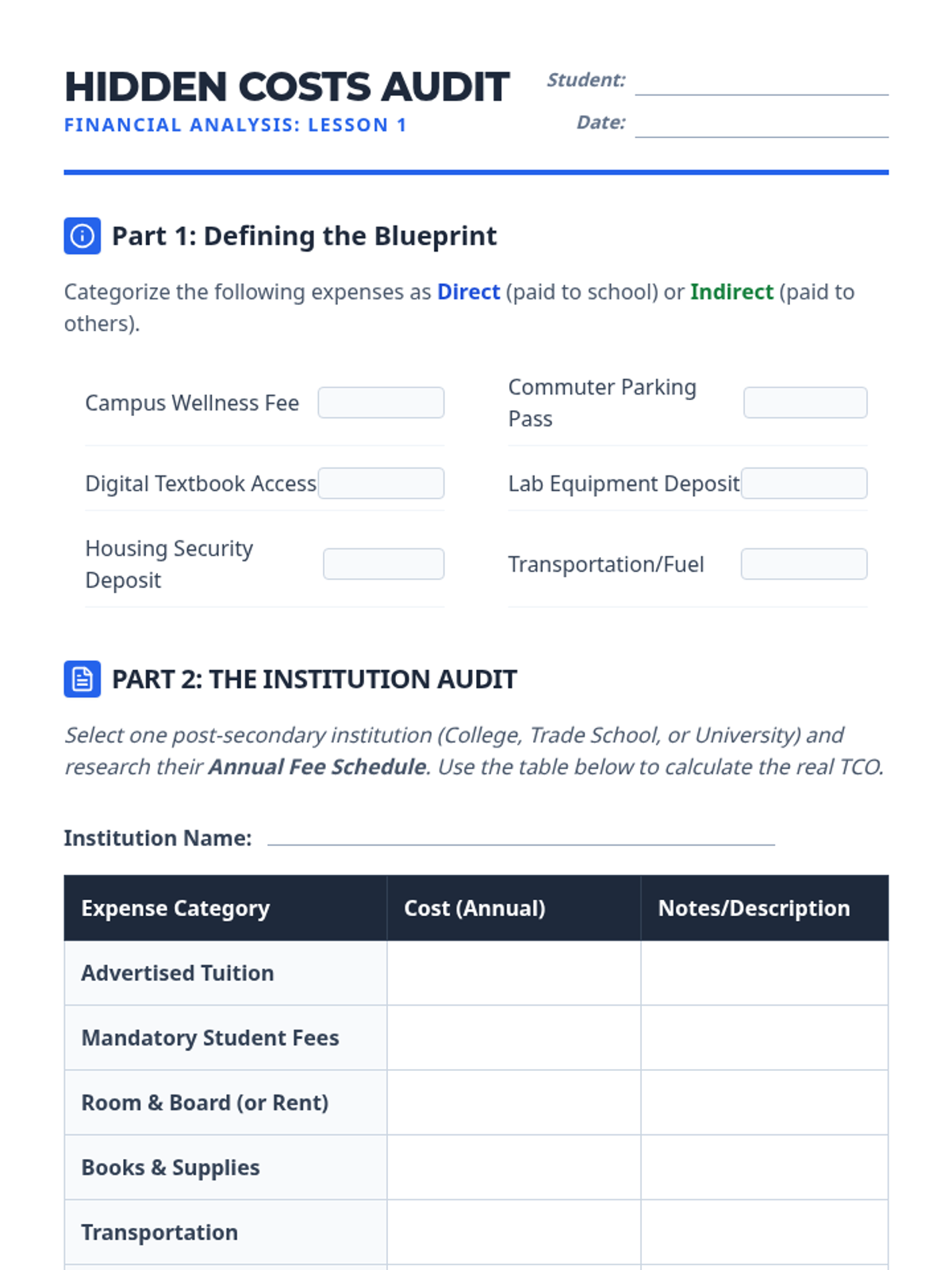
Students analyze the financial viability of post-secondary education by calculating total costs, exploring financial aid, and projecting return on investment based on career earnings. The sequence culminates in a strategic financial plan for a chosen educational path.
A comprehensive guide for 12th-grade students to navigate the financial complexities of post-secondary education. Students analyze total cost of ownership, debt structures, and Return on Investment (ROI) to create a sustainable financial roadmap for their future.
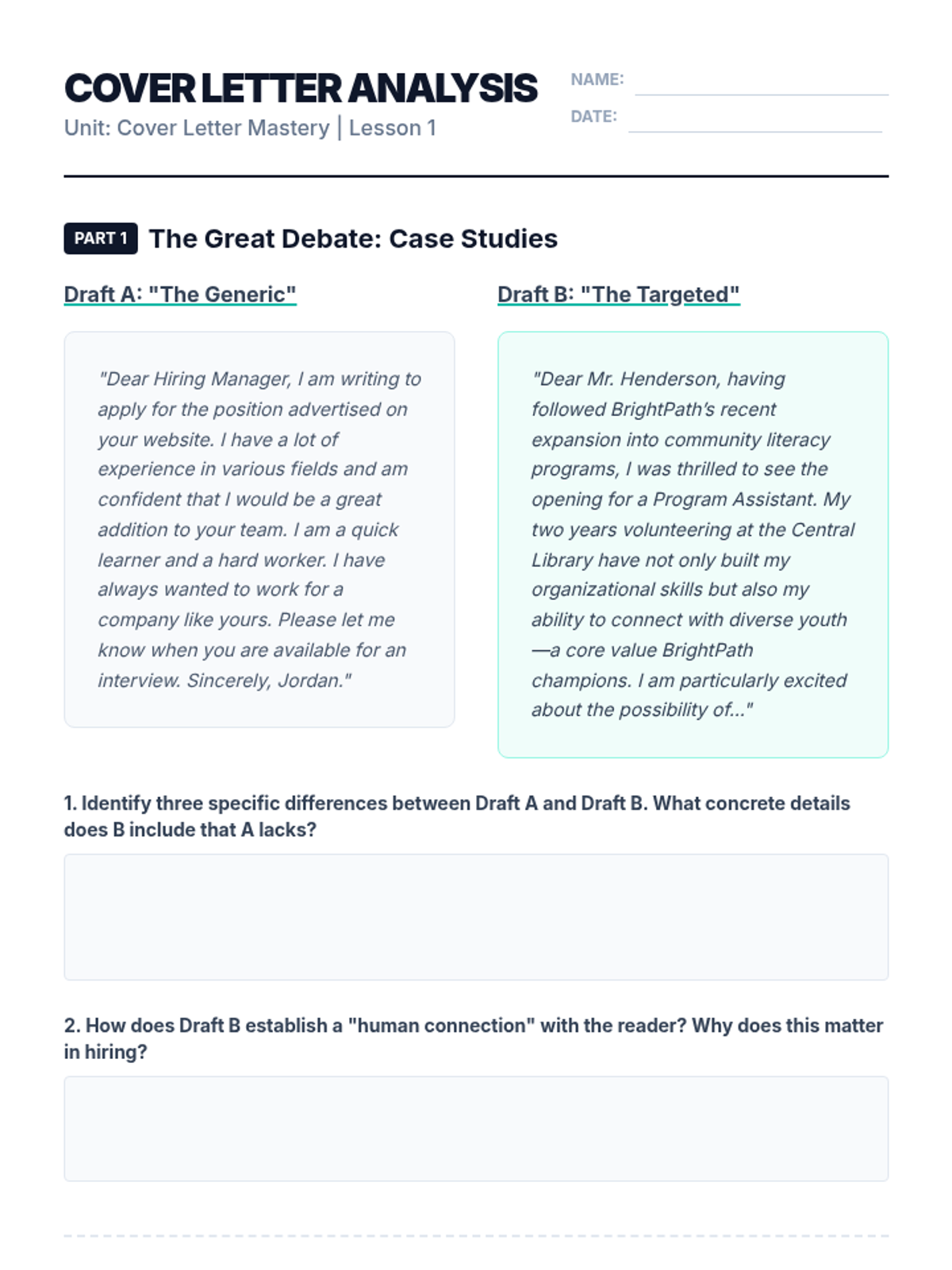
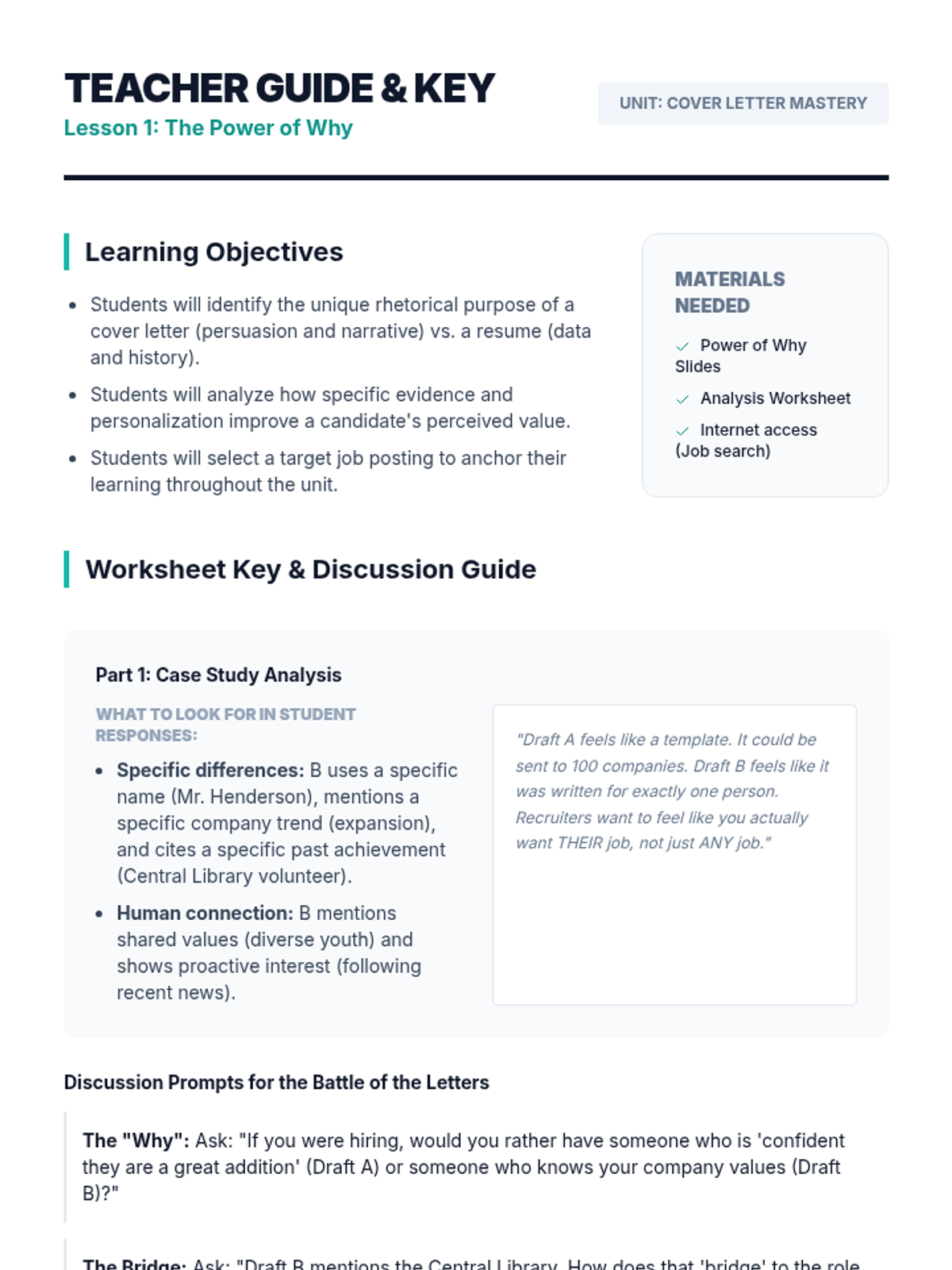
A comprehensive 5-lesson unit for 12th-grade students to master the art of writing persuasive, tailored cover letters. Students learn to decode job descriptions, craft compelling narratives, and apply professional business formatting.
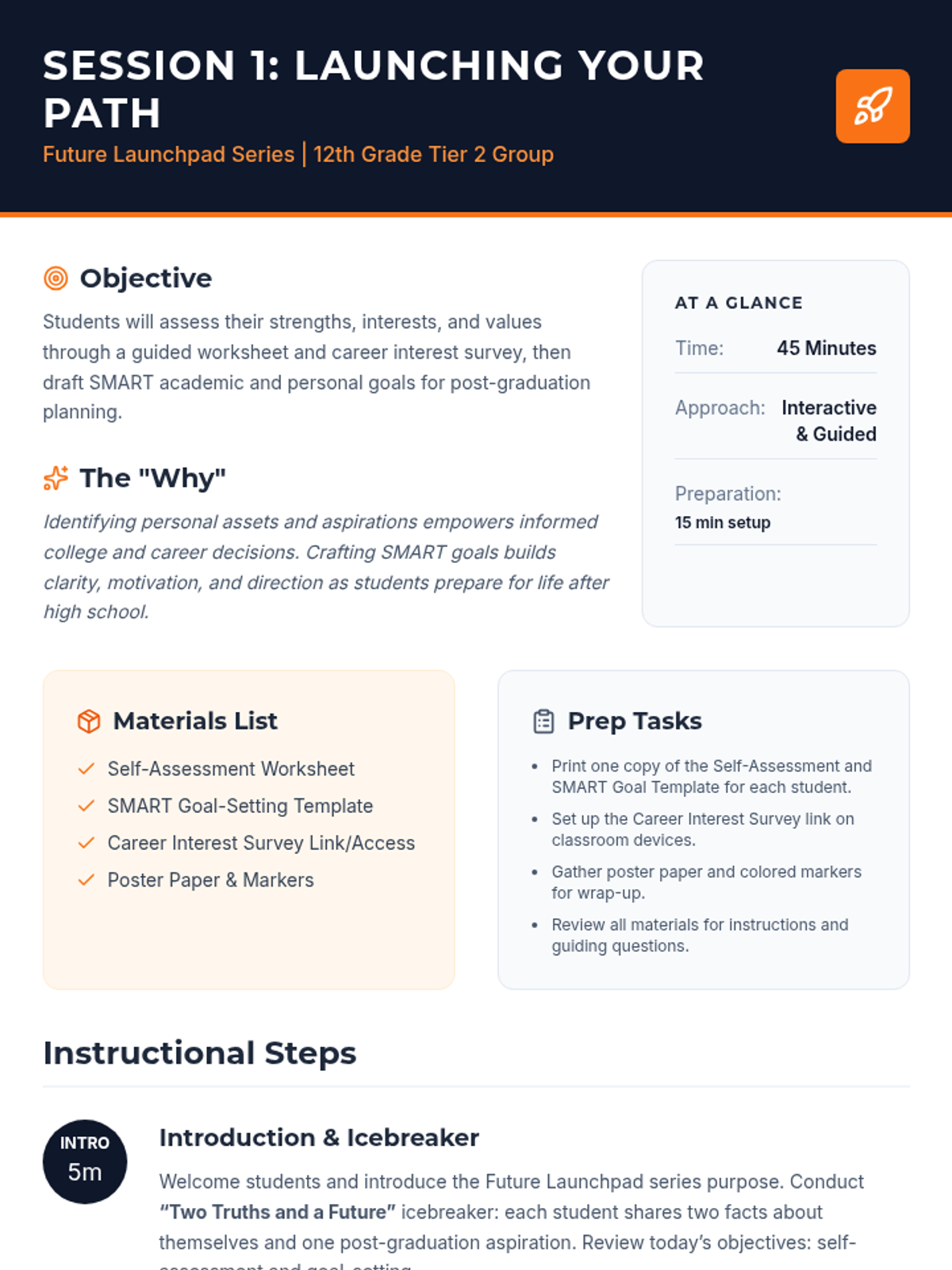
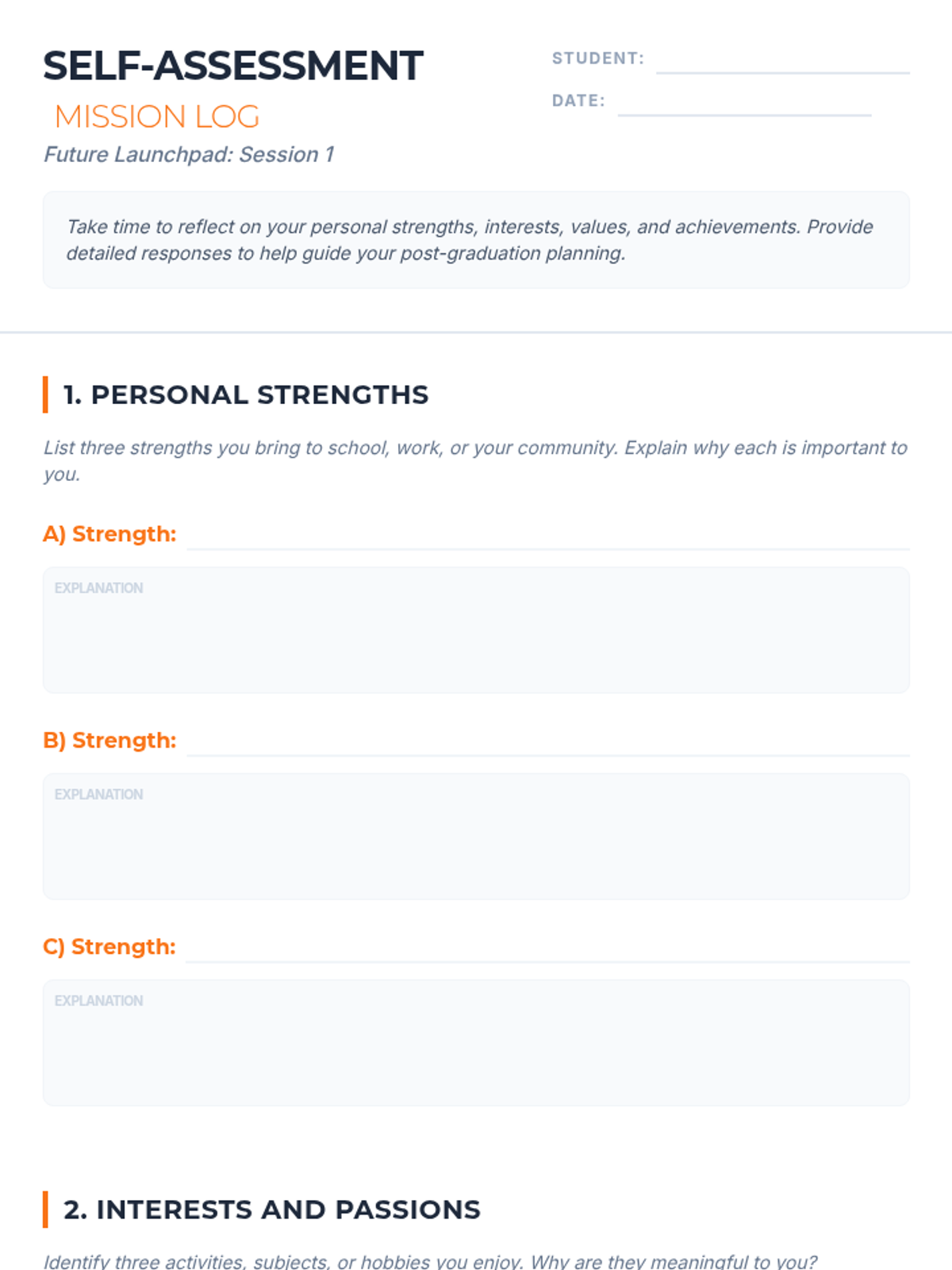
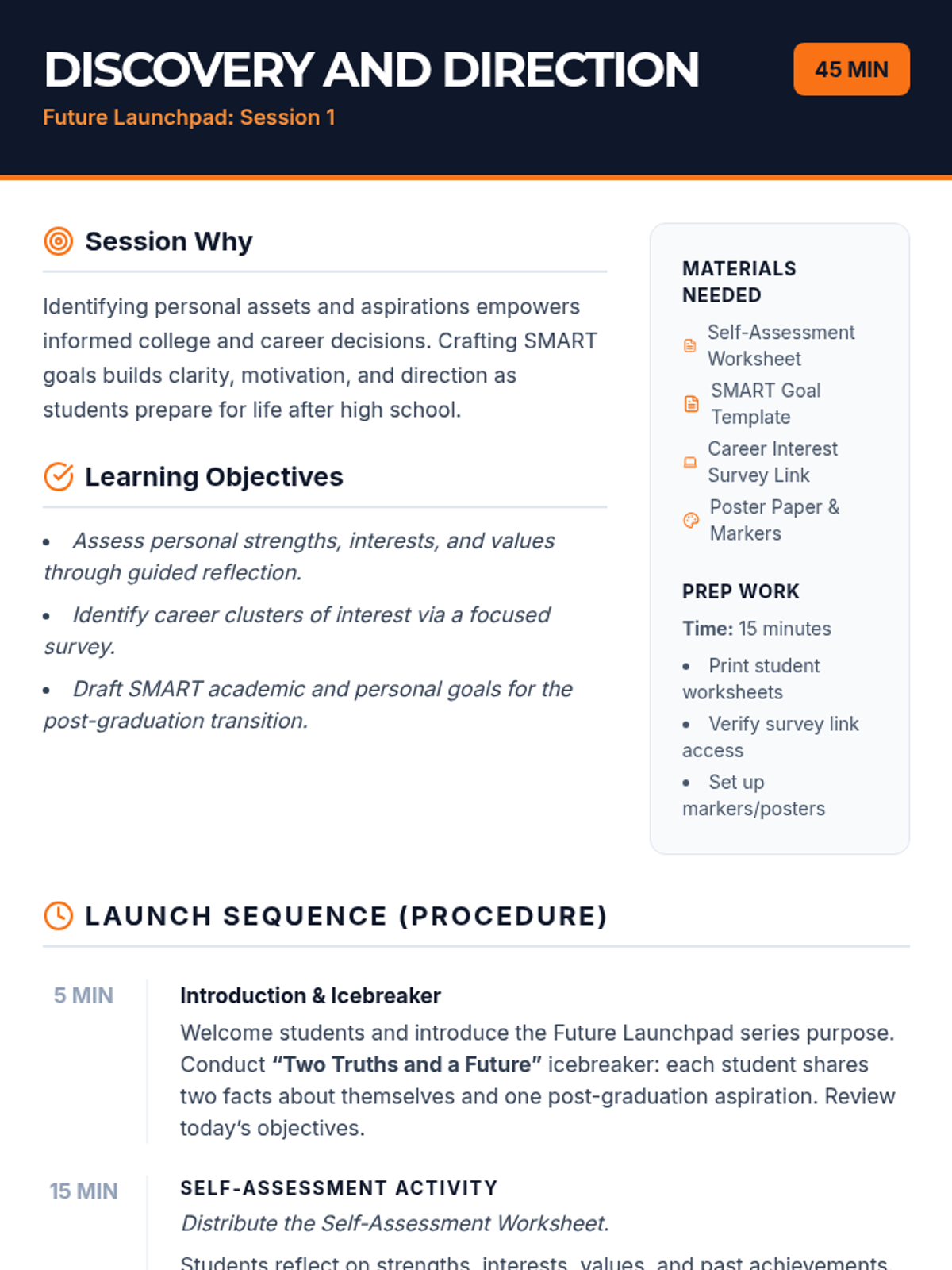
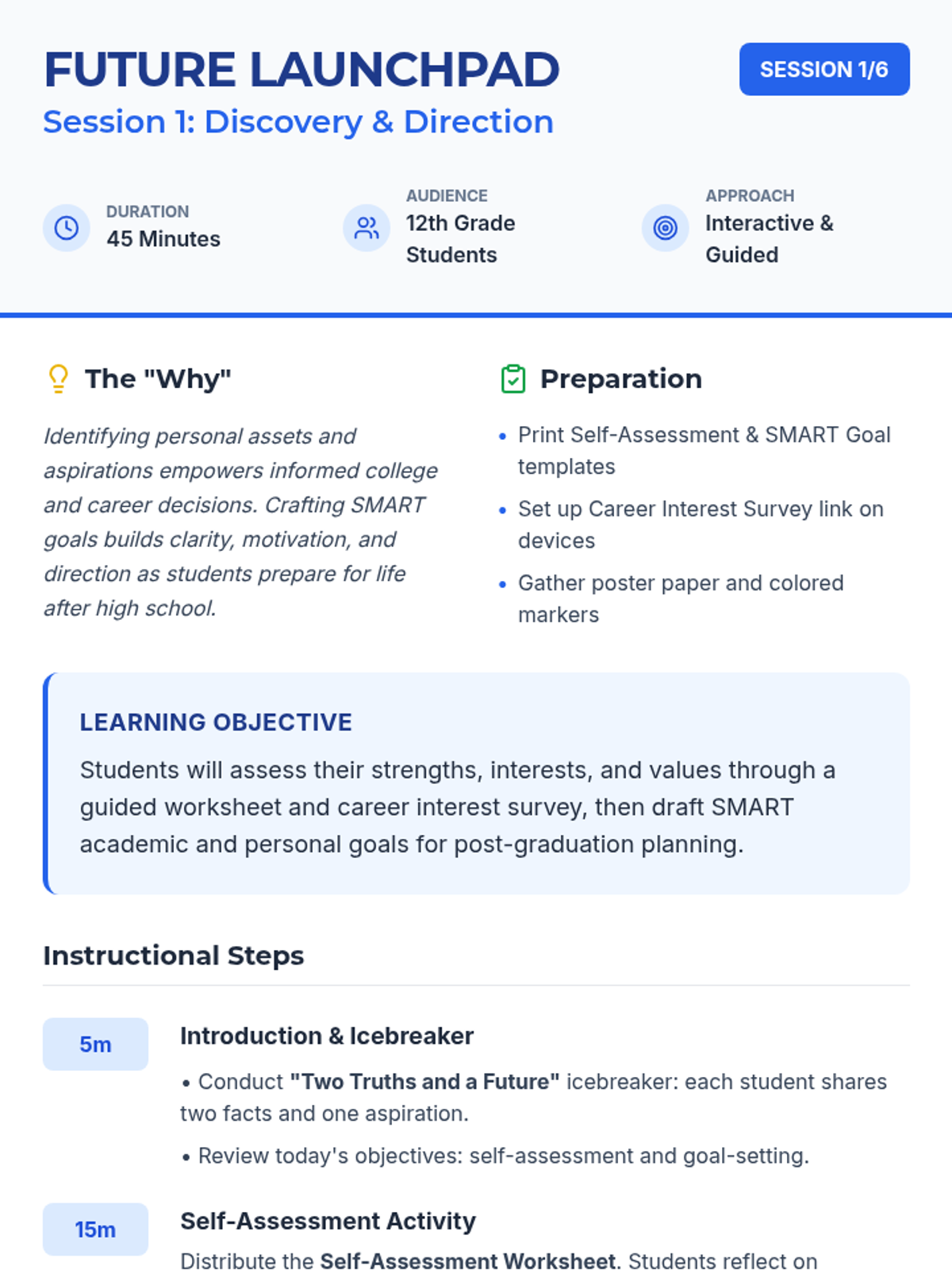
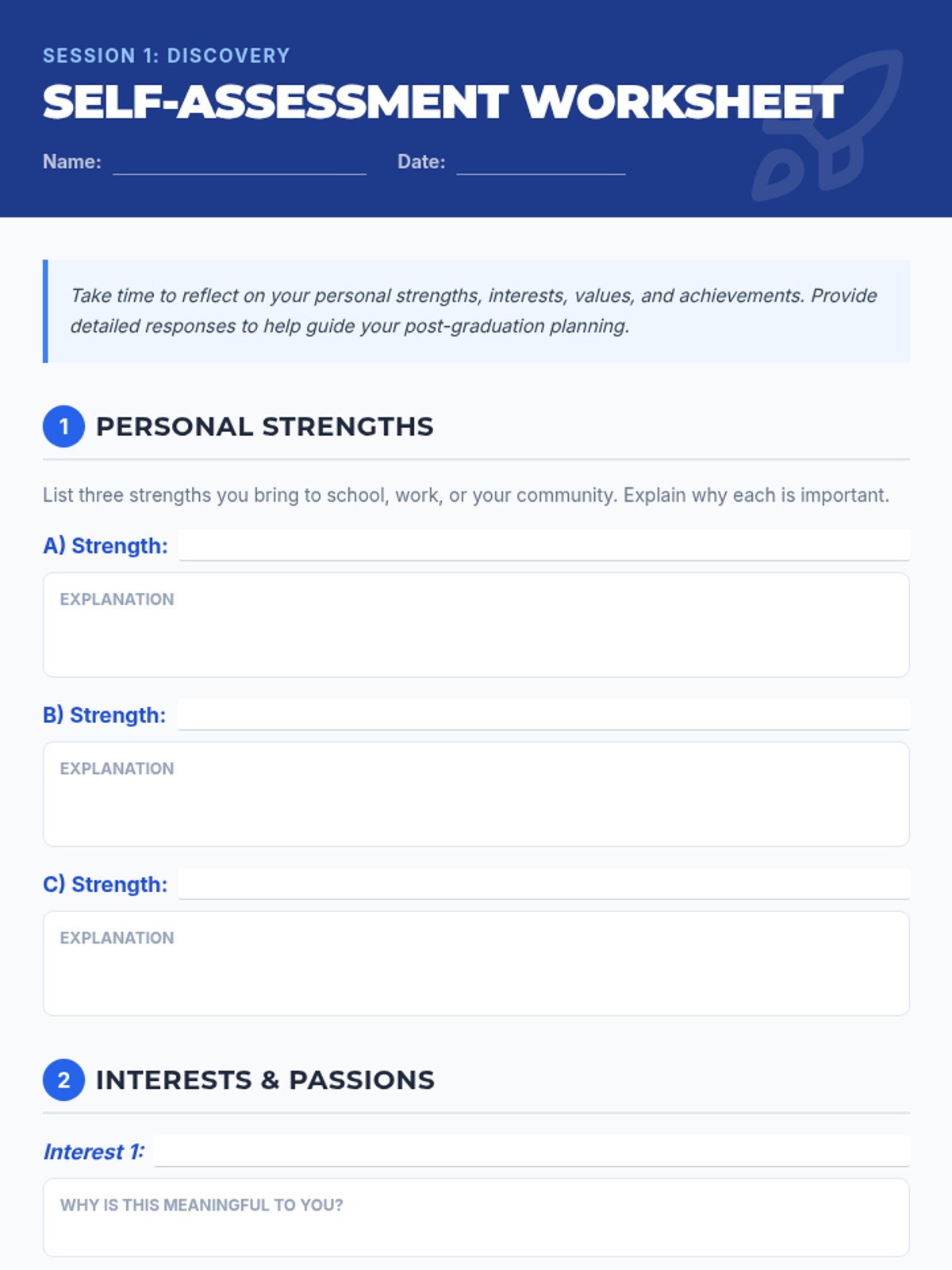
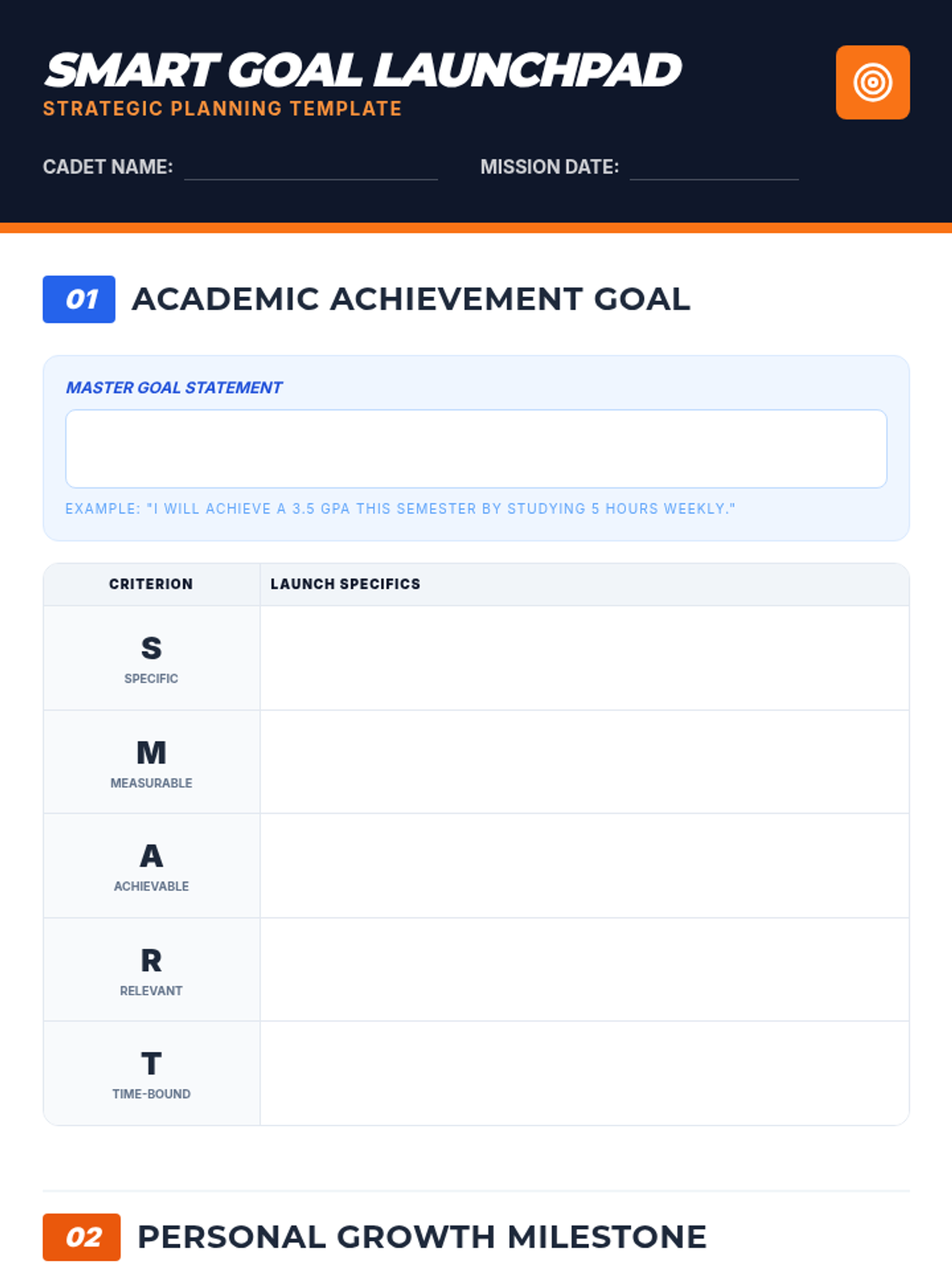
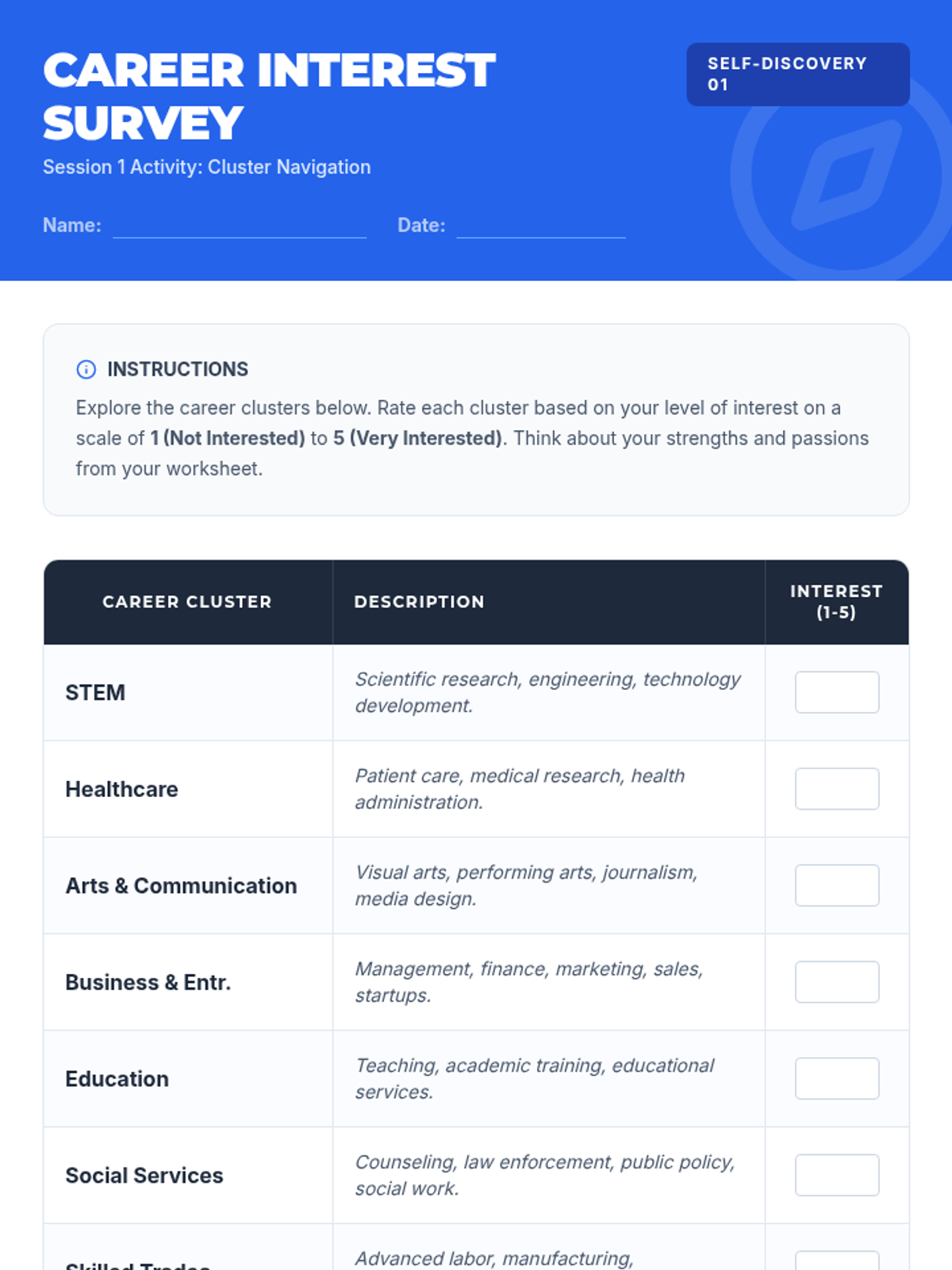
A 6-session Tier 2 group series for 12th-grade students to explore college and career pathways, develop application skills, and create a personalized post-graduation plan.
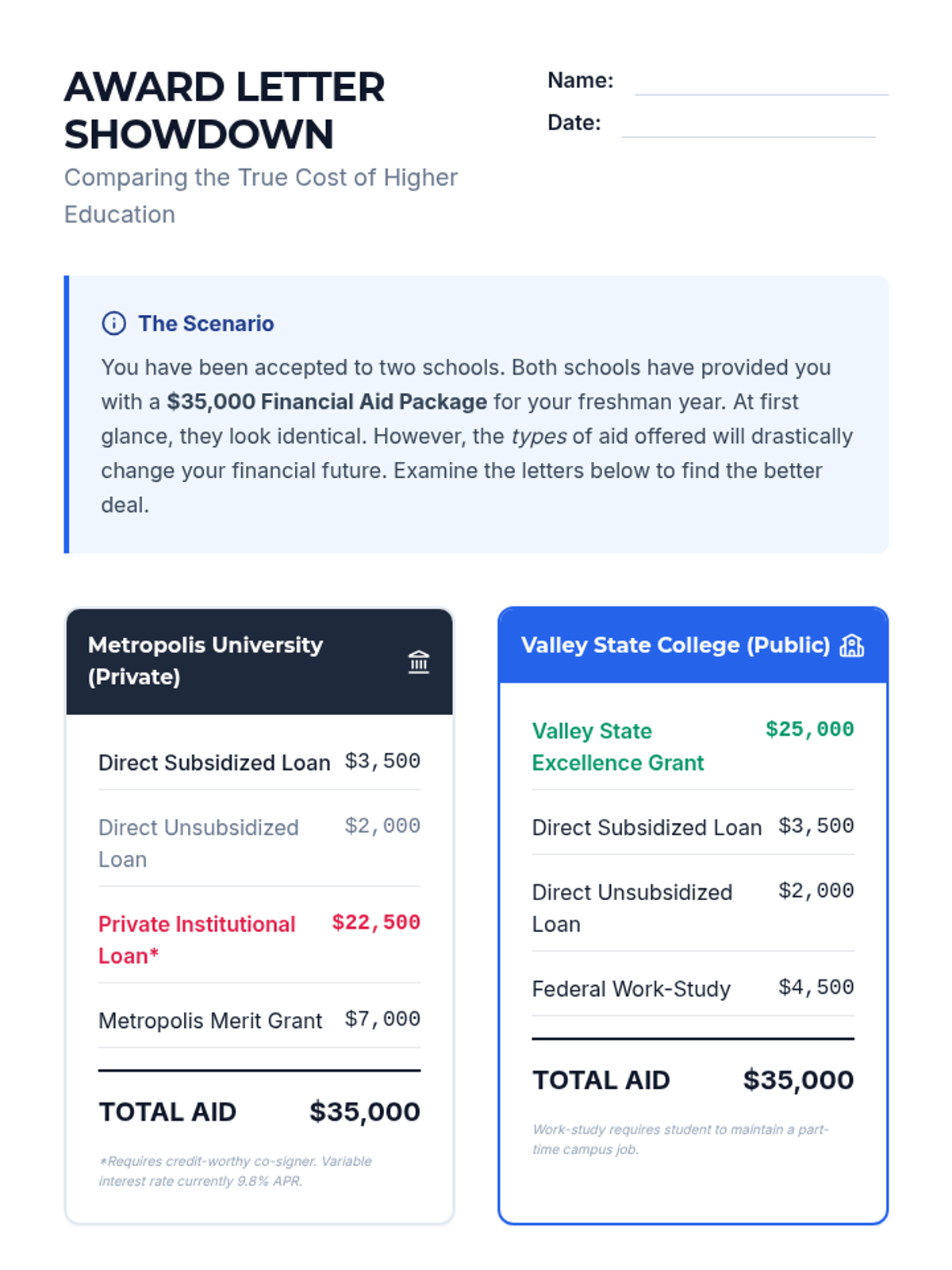
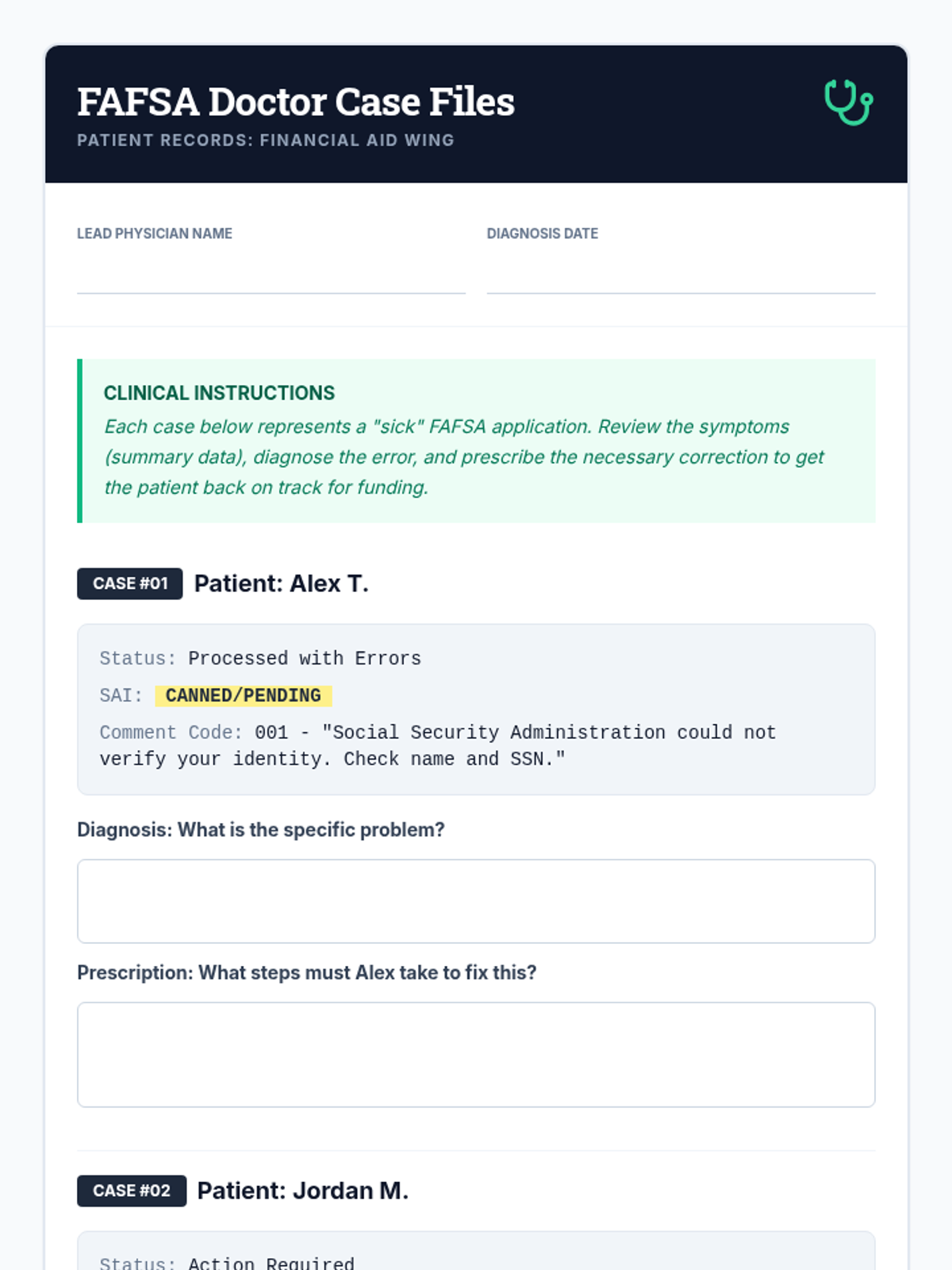
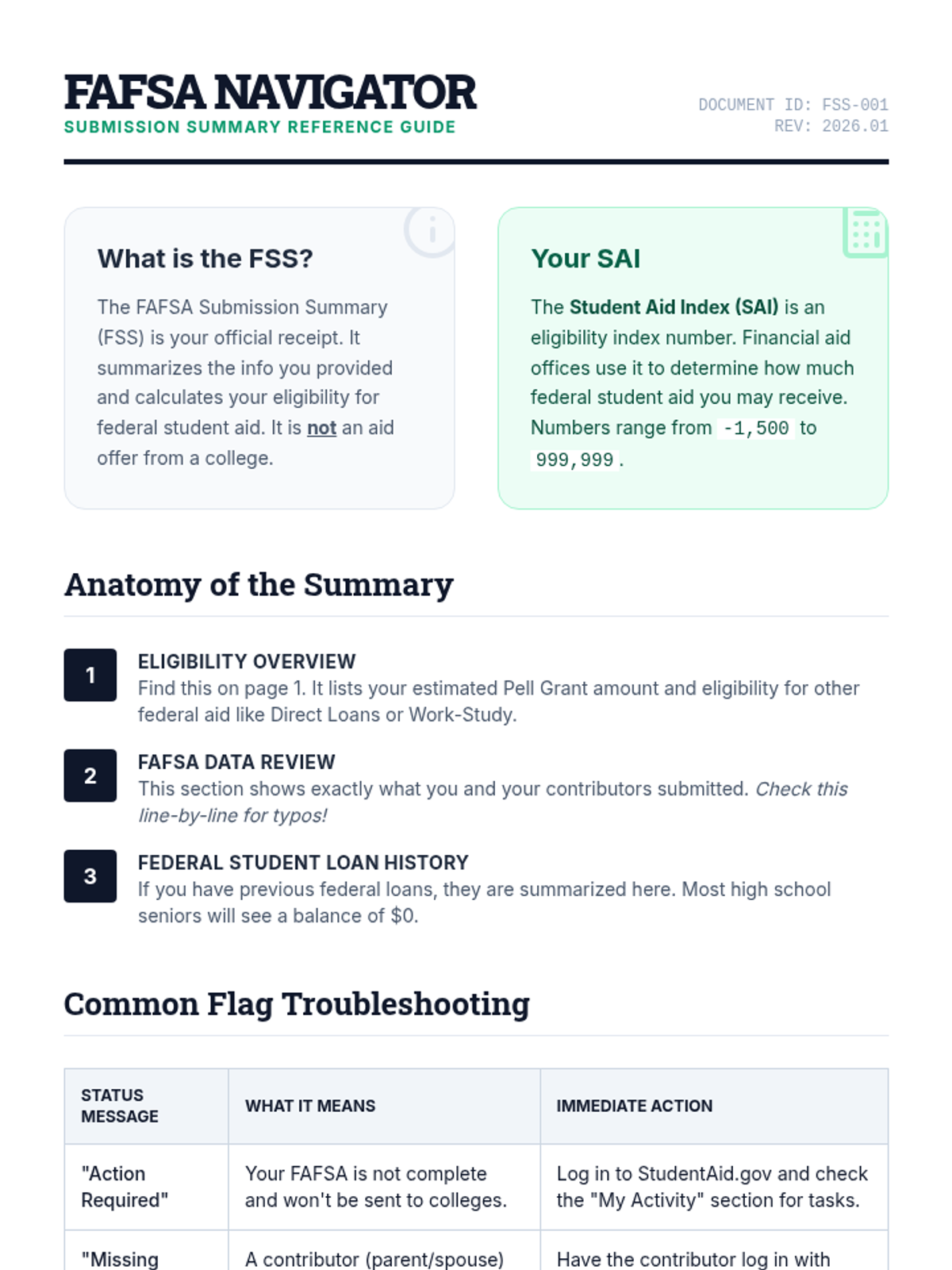
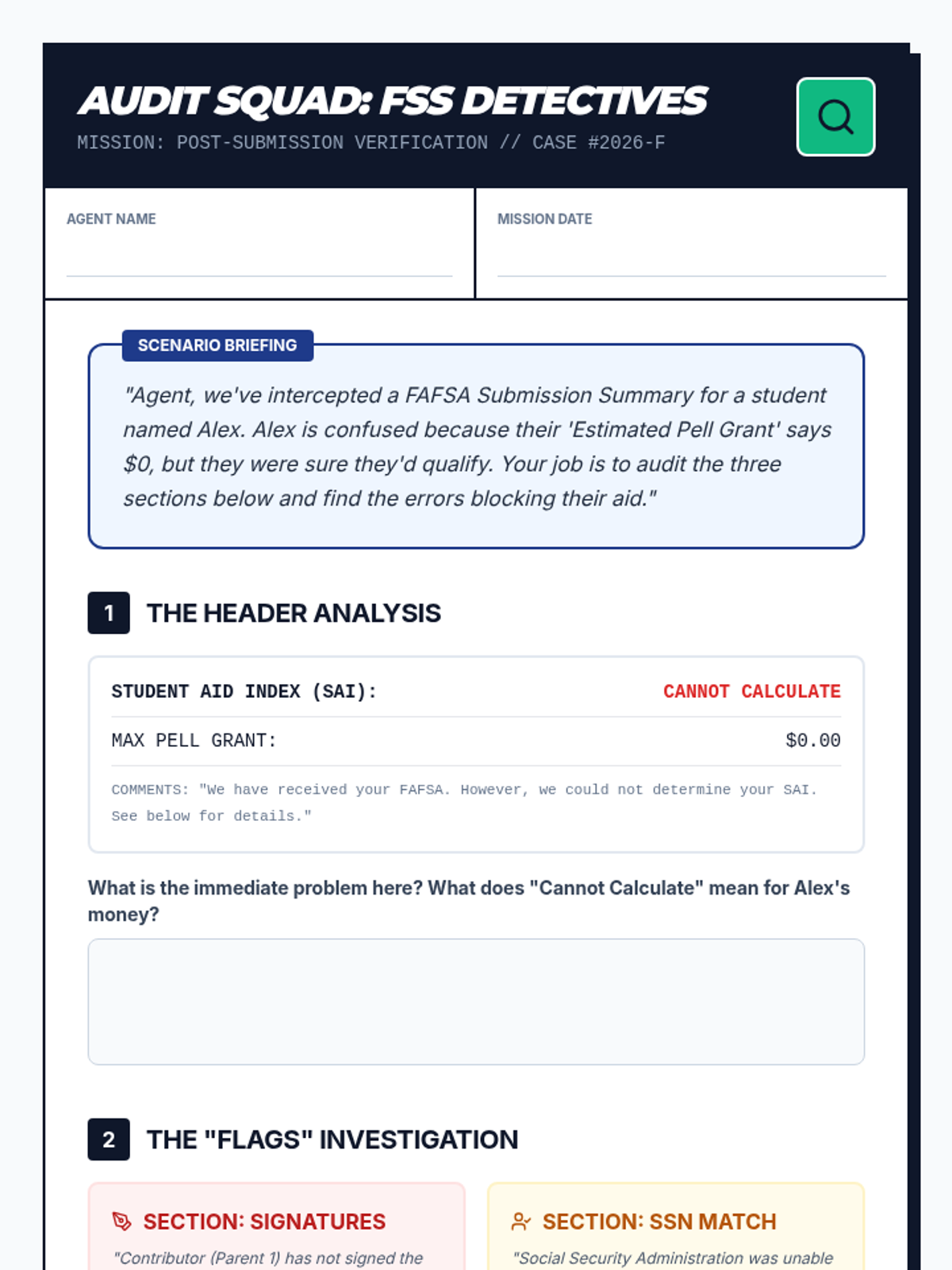
This sequence guides students through the post-submission phase of the FAFSA, including interpreting reports, navigating verification, making corrections, appealing for more aid, and comparing financial aid offers.
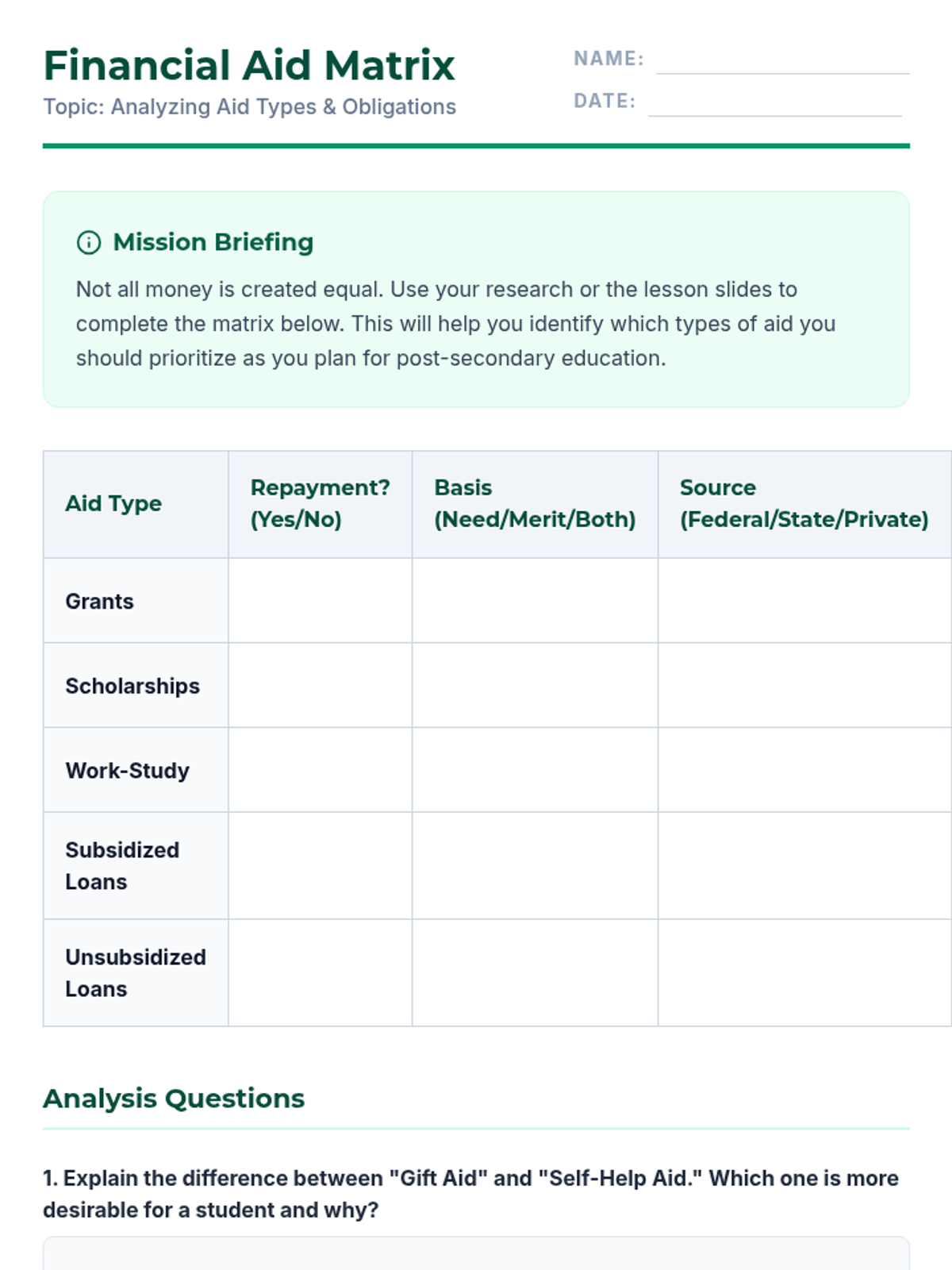
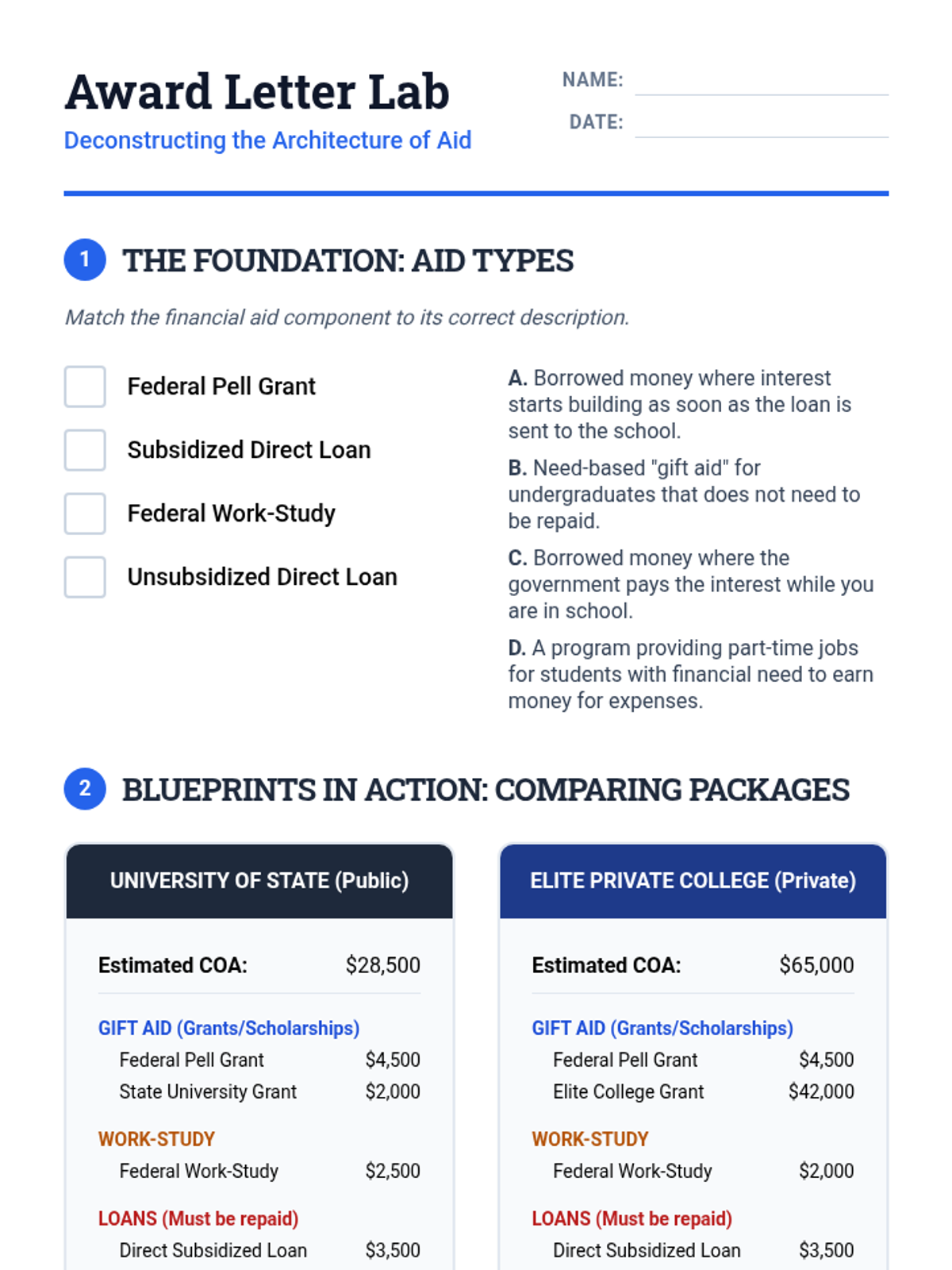
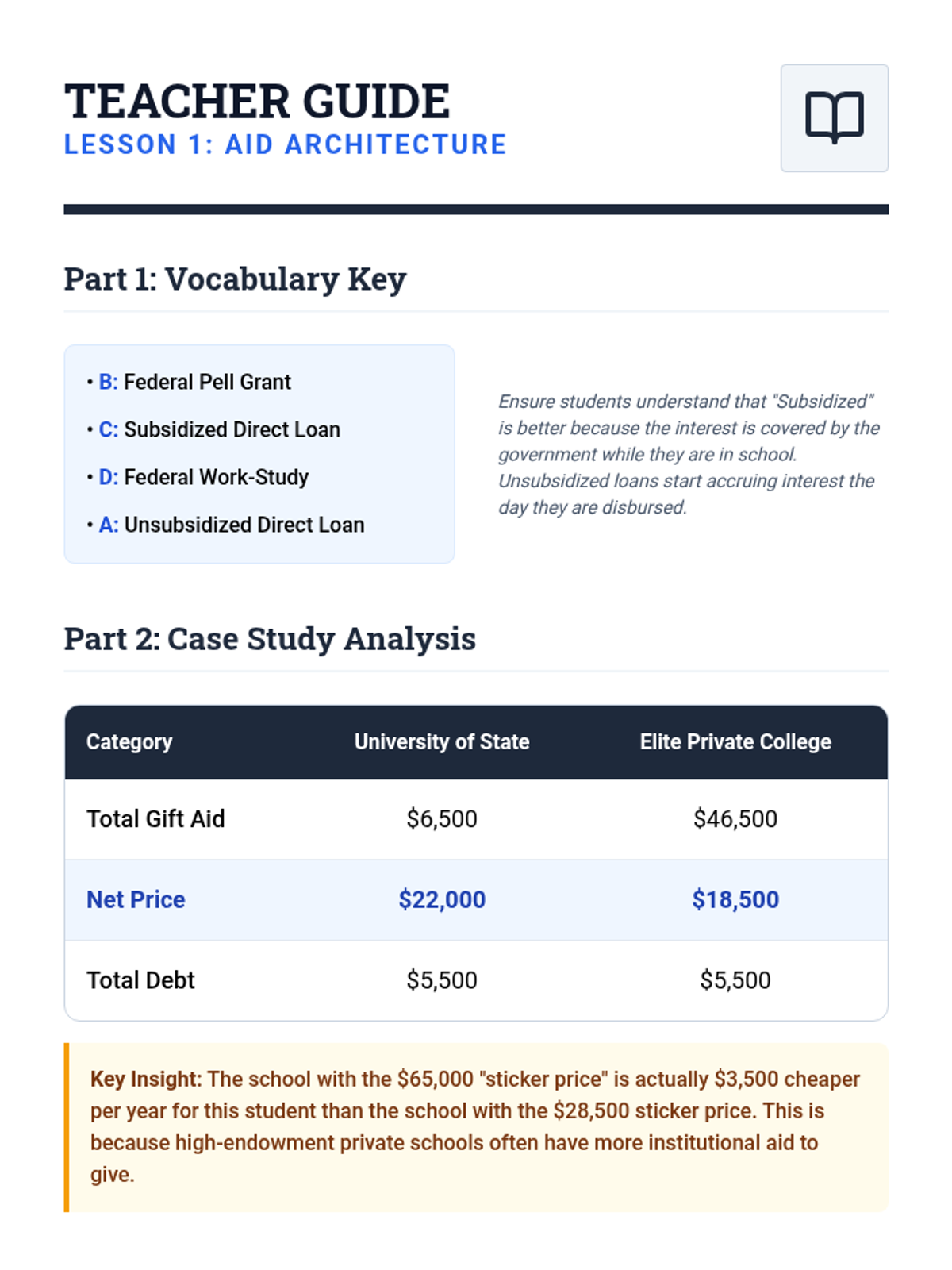
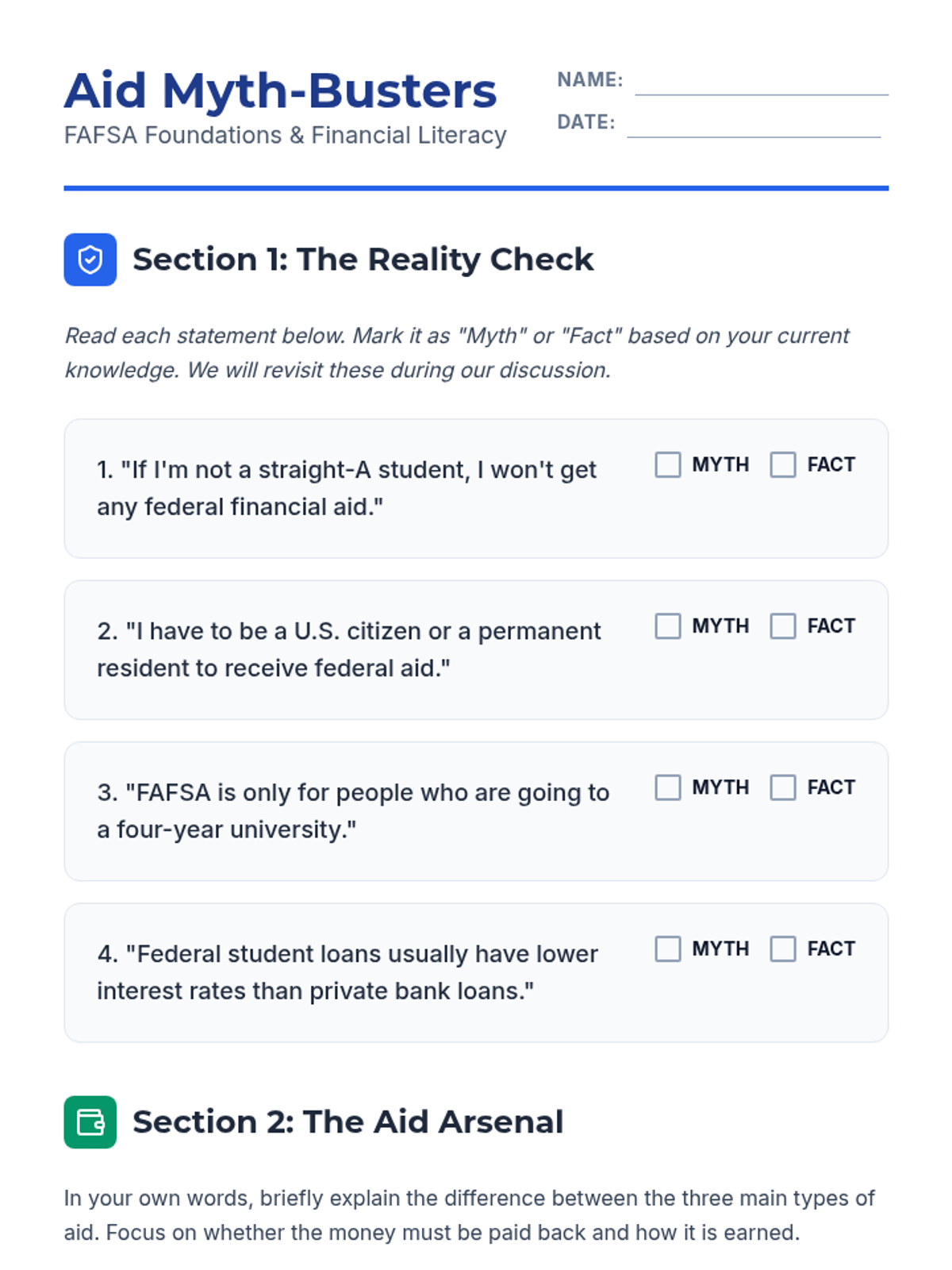
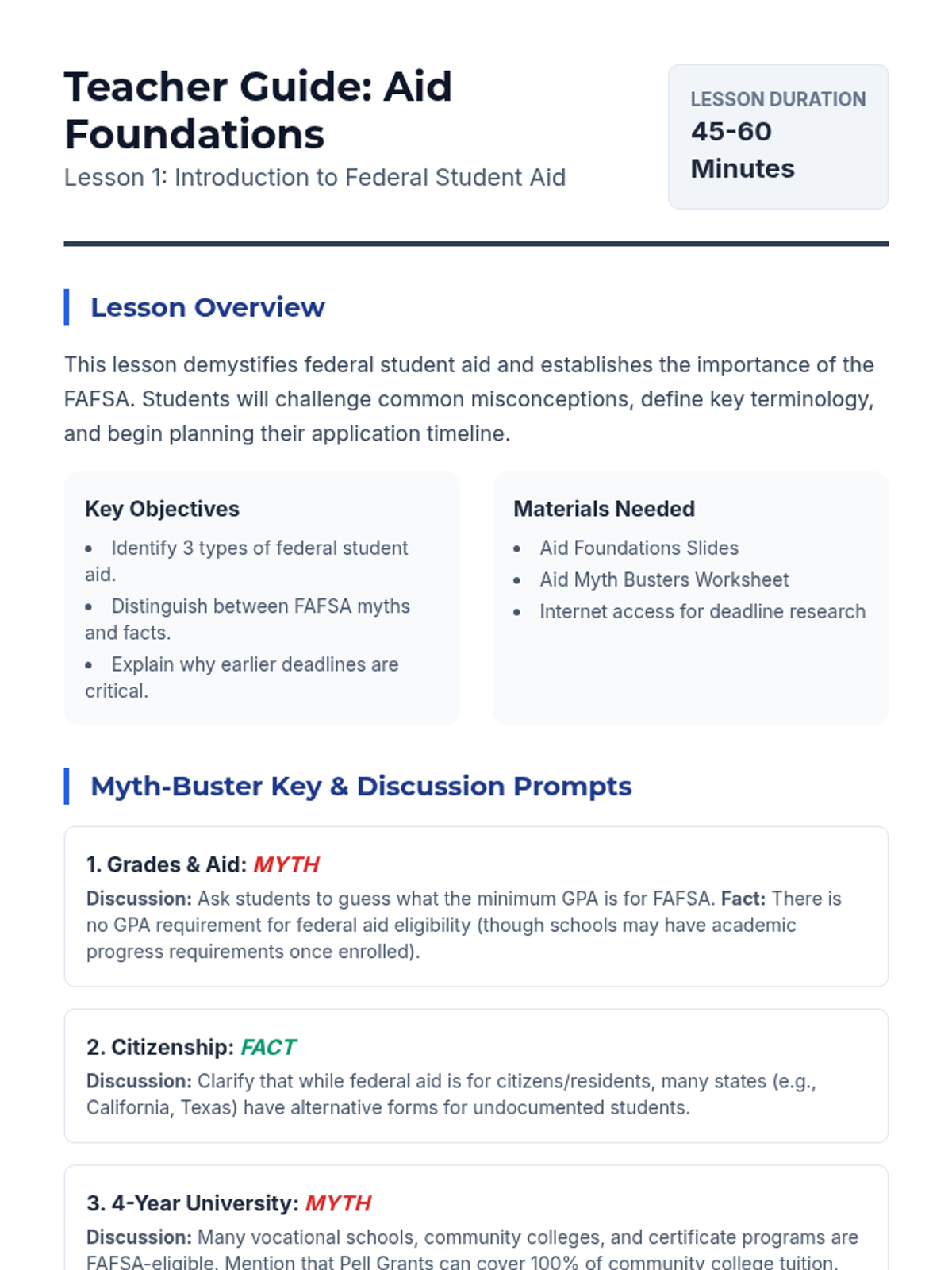
A comprehensive sequence for 11th-grade students to navigate the complexities of federal financial aid, FAFSA eligibility, and the actual cost of college. Students will move from understanding aid types to calculating net prices and debunking common myths.
This mastery-based sequence guides 12th-grade students through the post-FAFSA submission phase, teaching them to interpret the FAFSA Submission Summary (FSS), understand the Student Aid Index (SAI), navigate verification, and compare financial aid award letters. Students develop critical financial literacy skills to determine the true net price of college and make informed enrollment decisions.
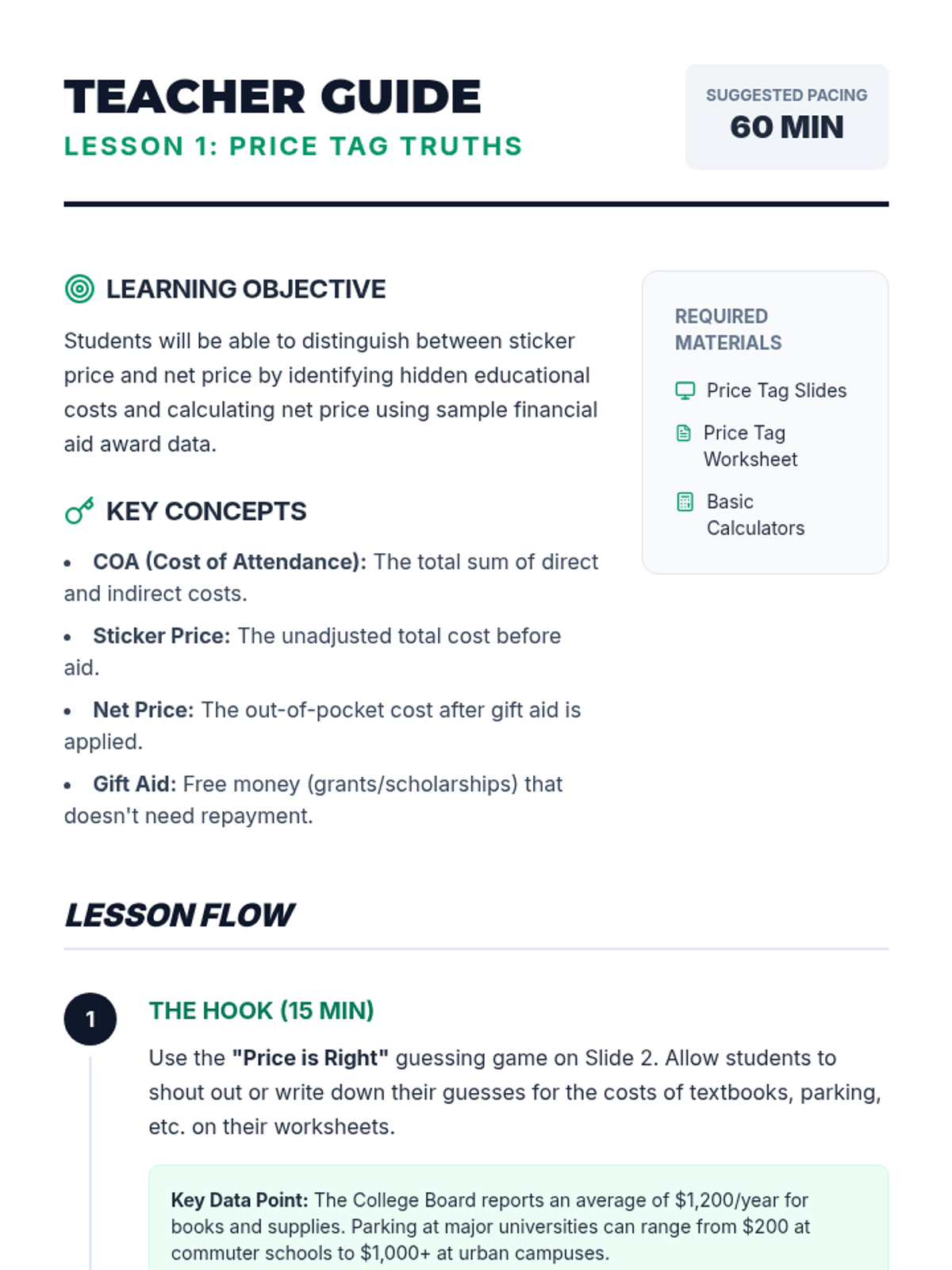
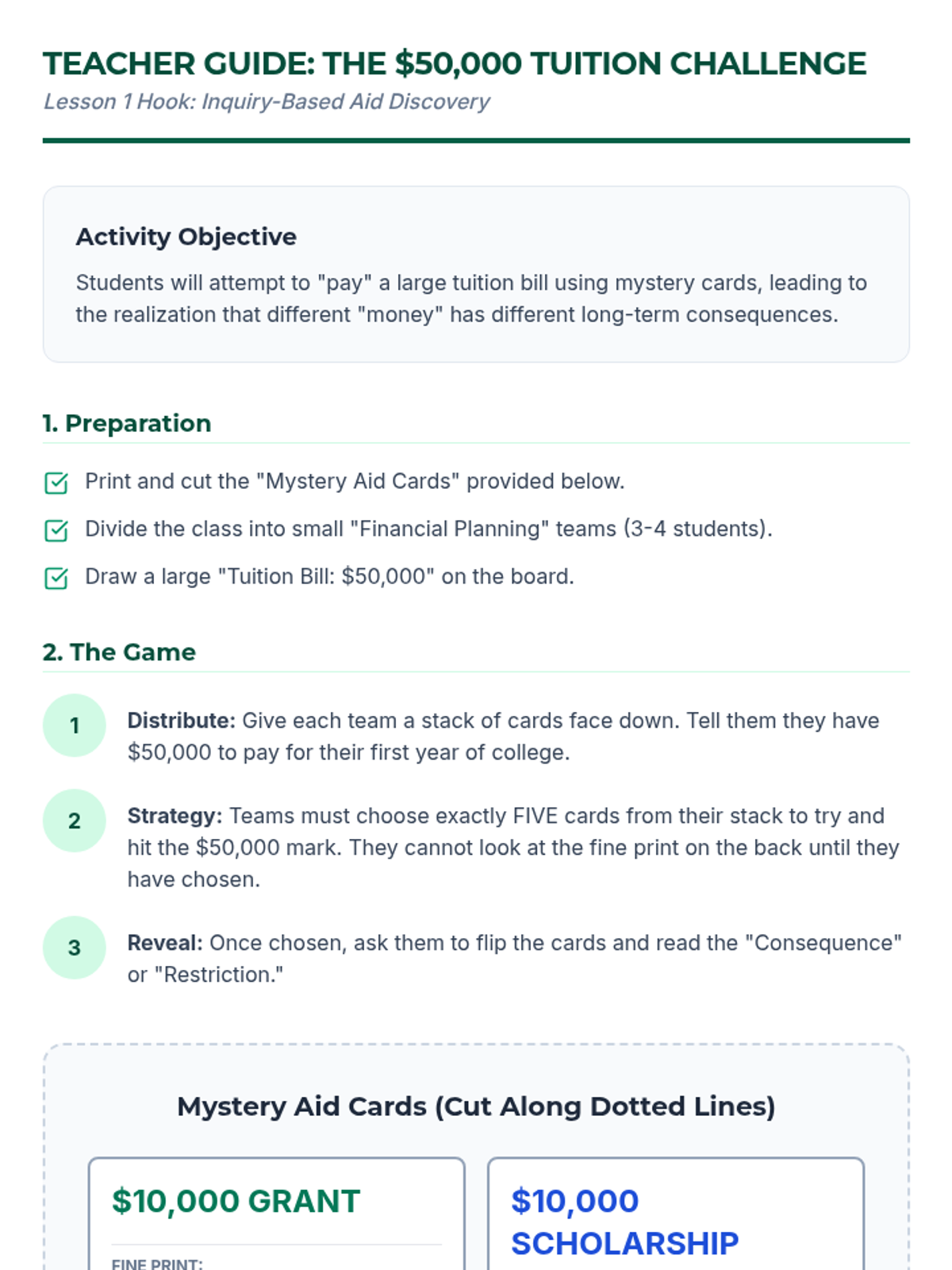
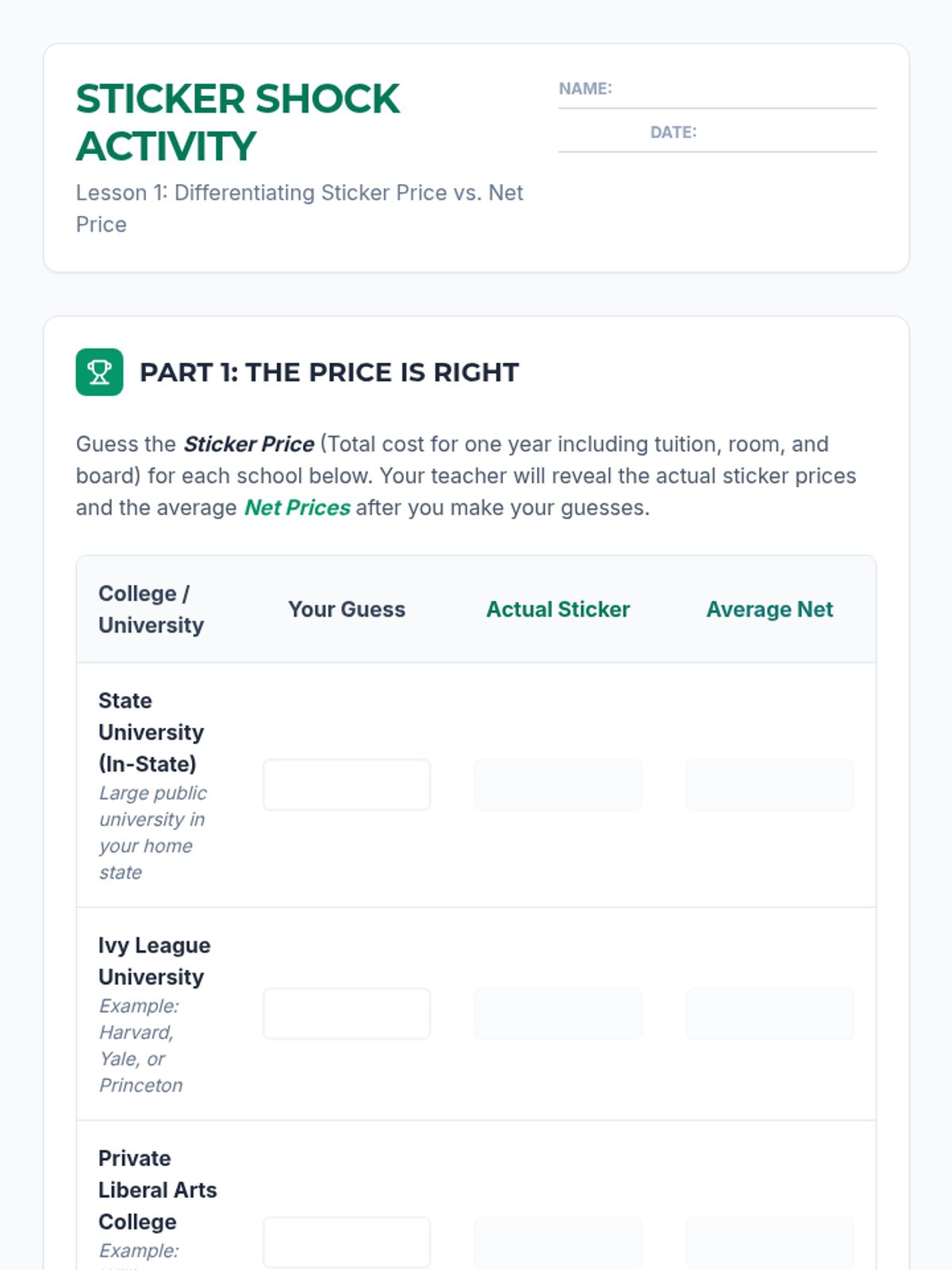
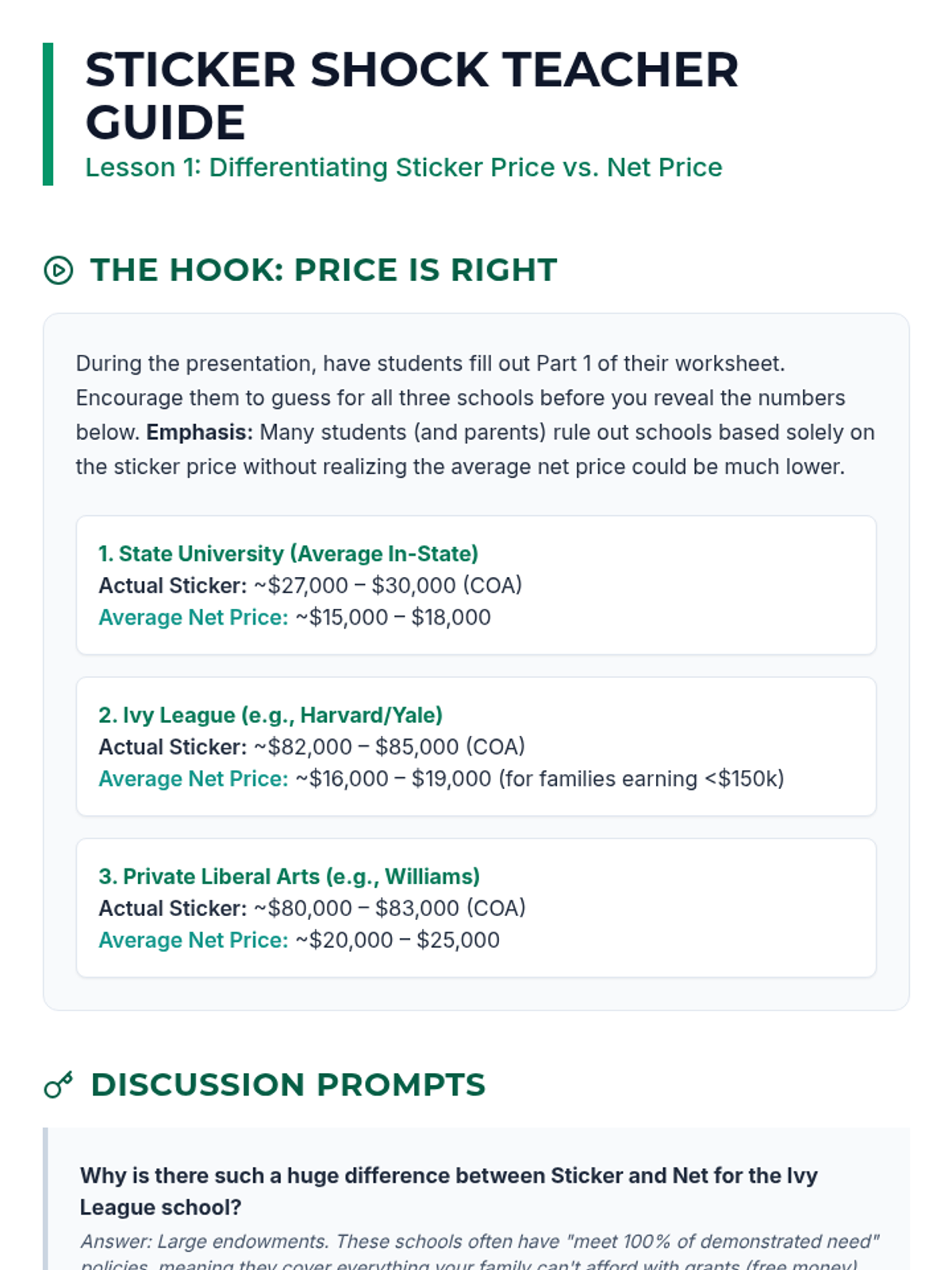
A comprehensive 10th-grade sequence focused on college affordability, teaching students to distinguish between sticker and net prices, use net price calculators, find scholarships, and calculate career ROI to build a financially sustainable college list.
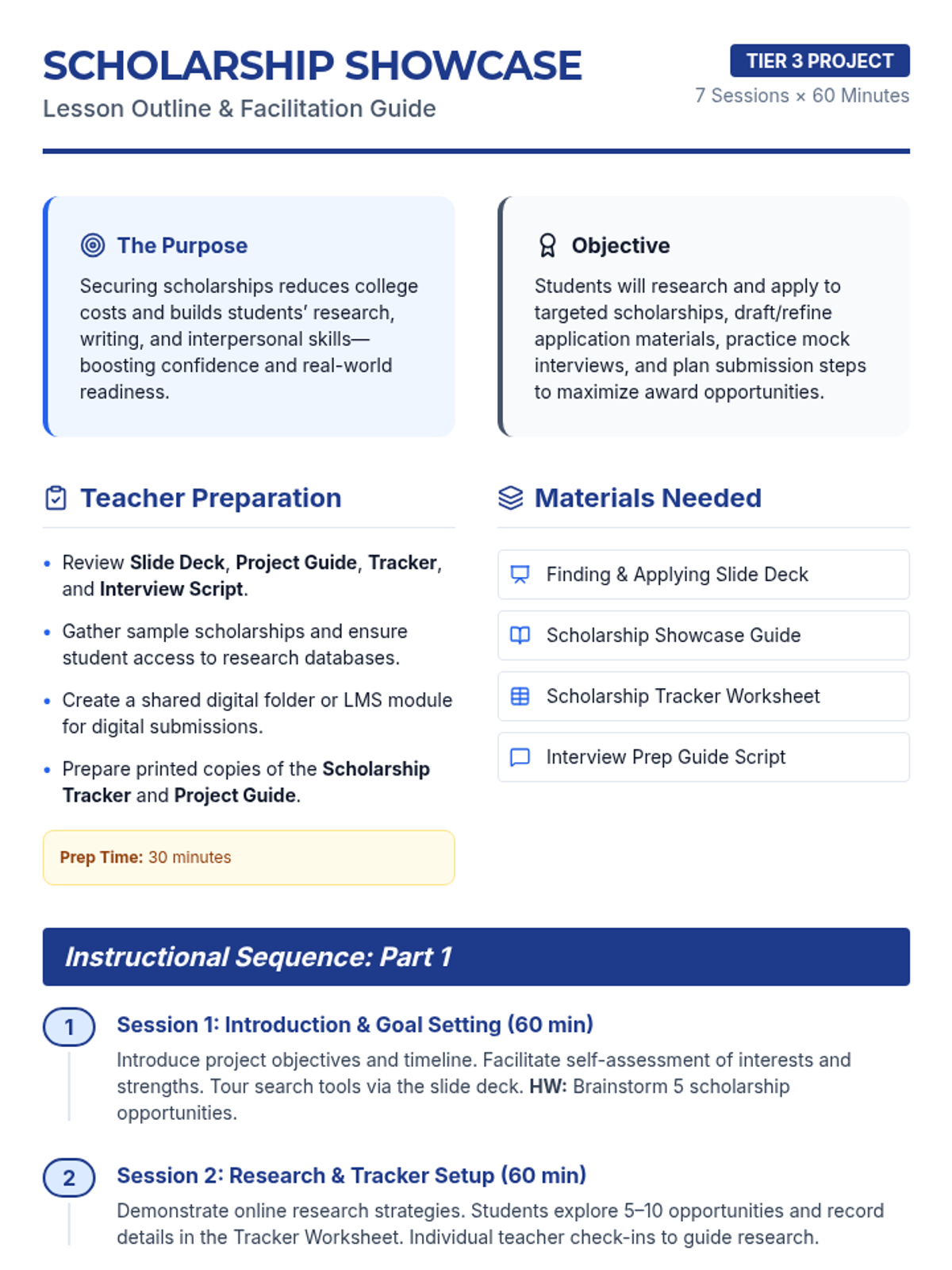
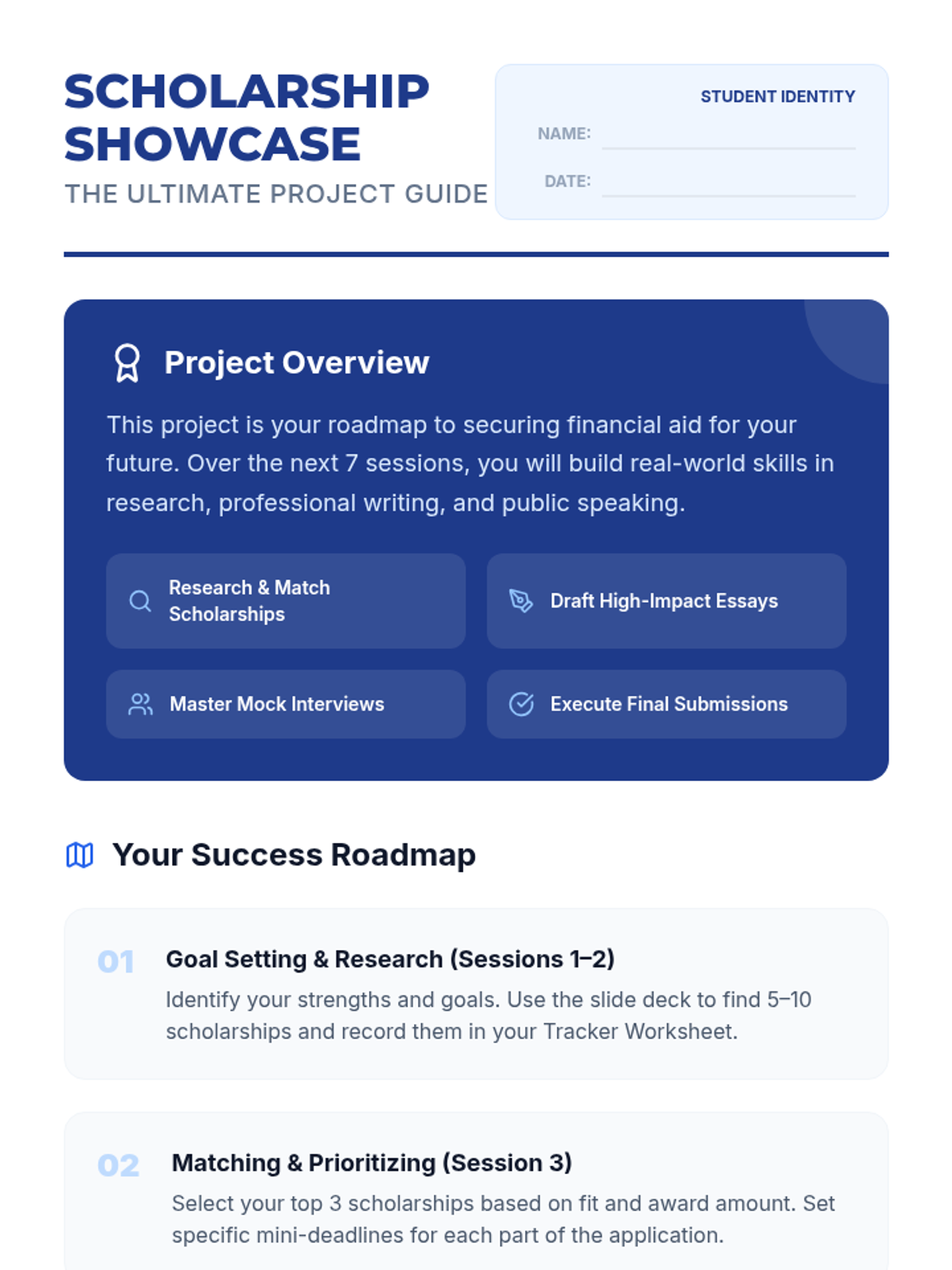
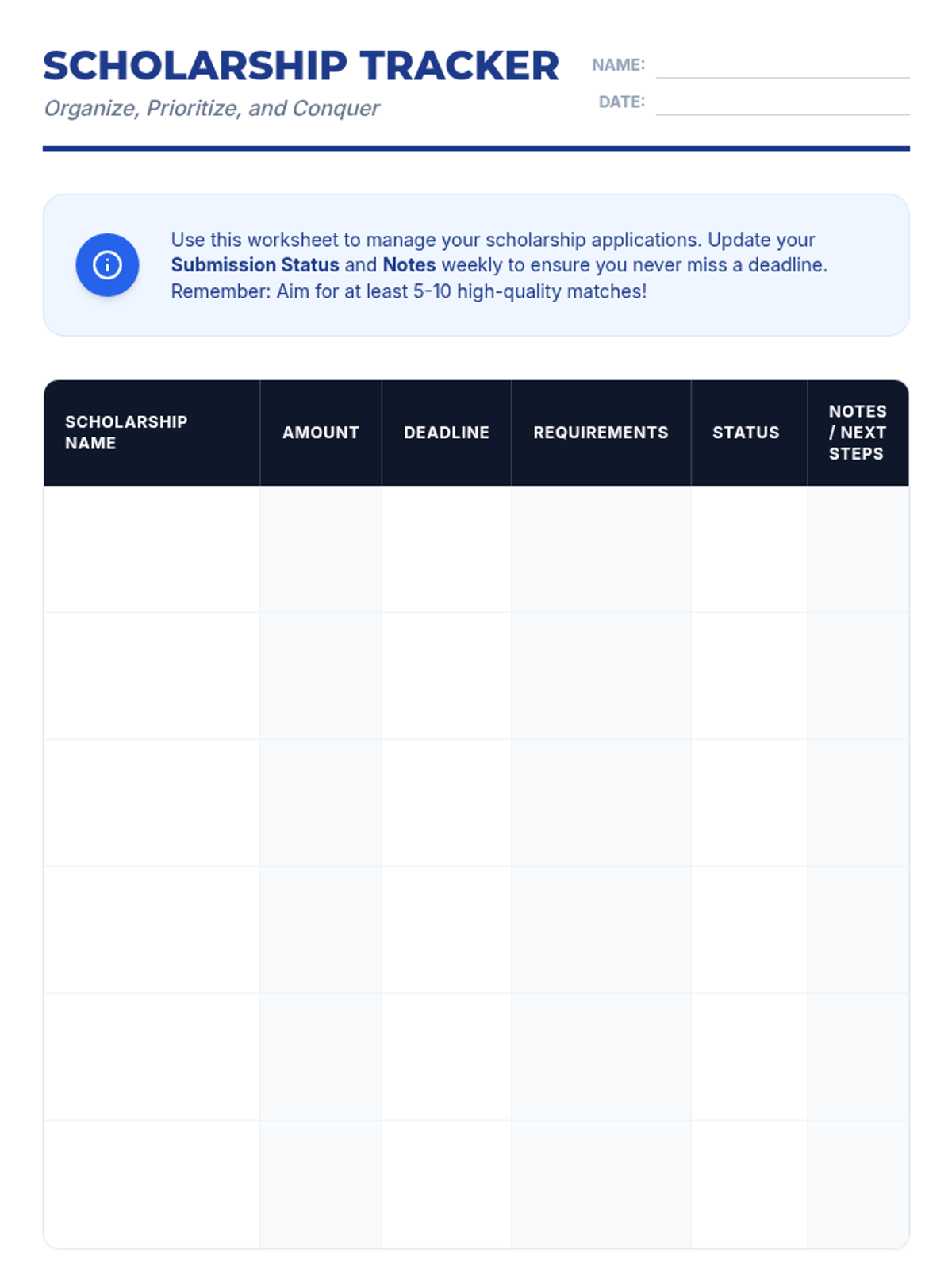
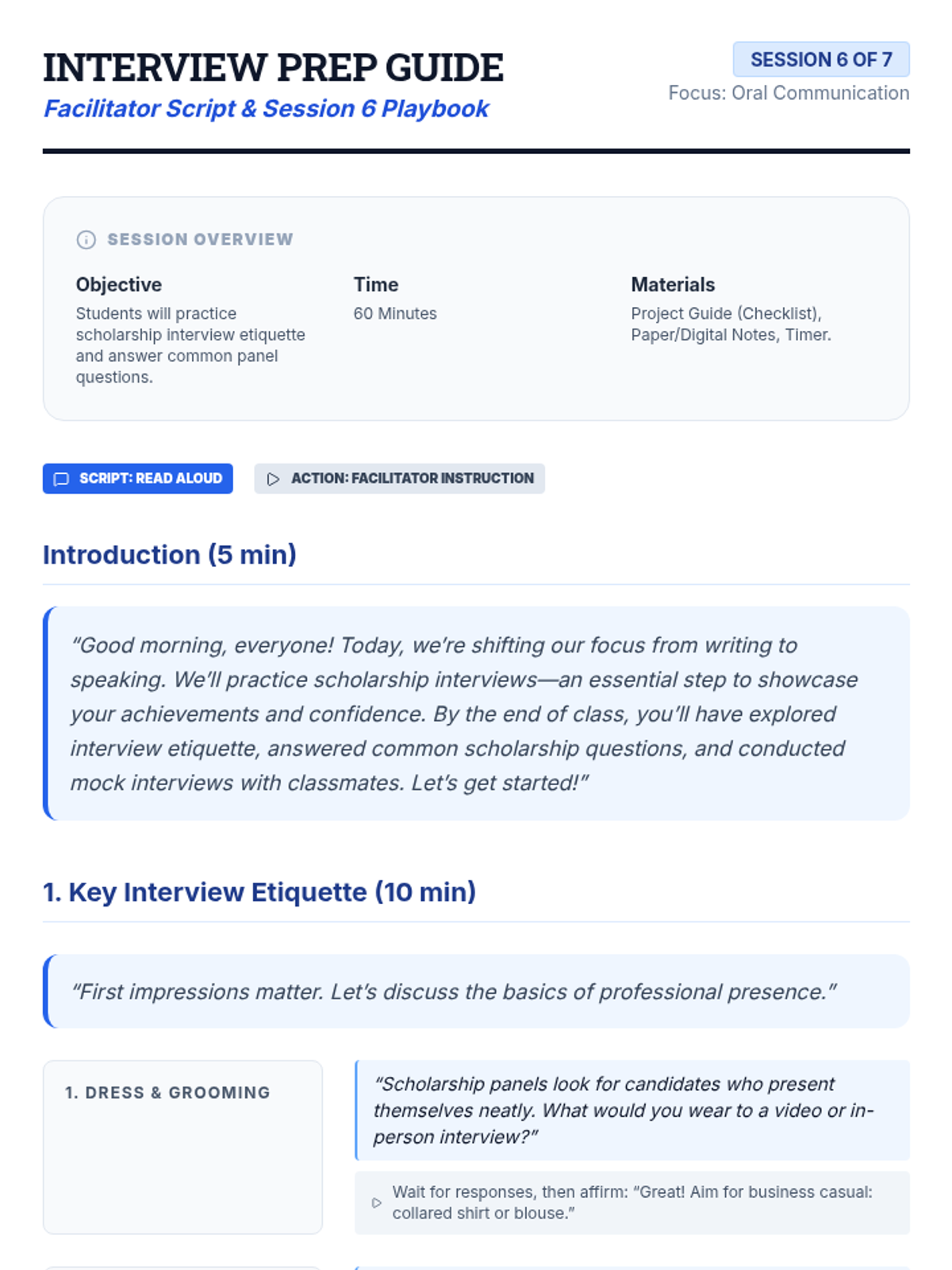
A college and career readiness sequence focused on securing financial aid through scholarship research, application drafting, and interview preparation.
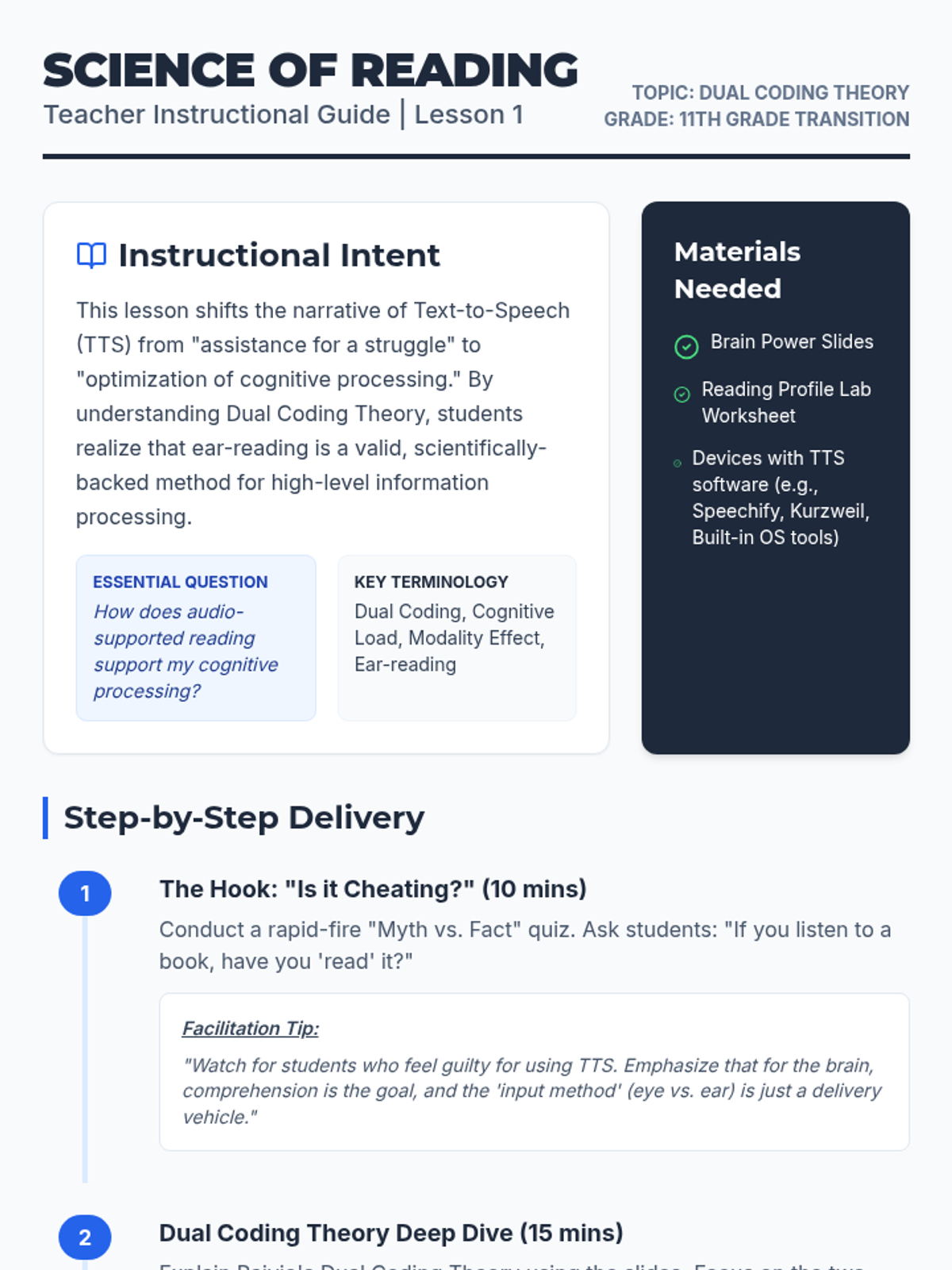
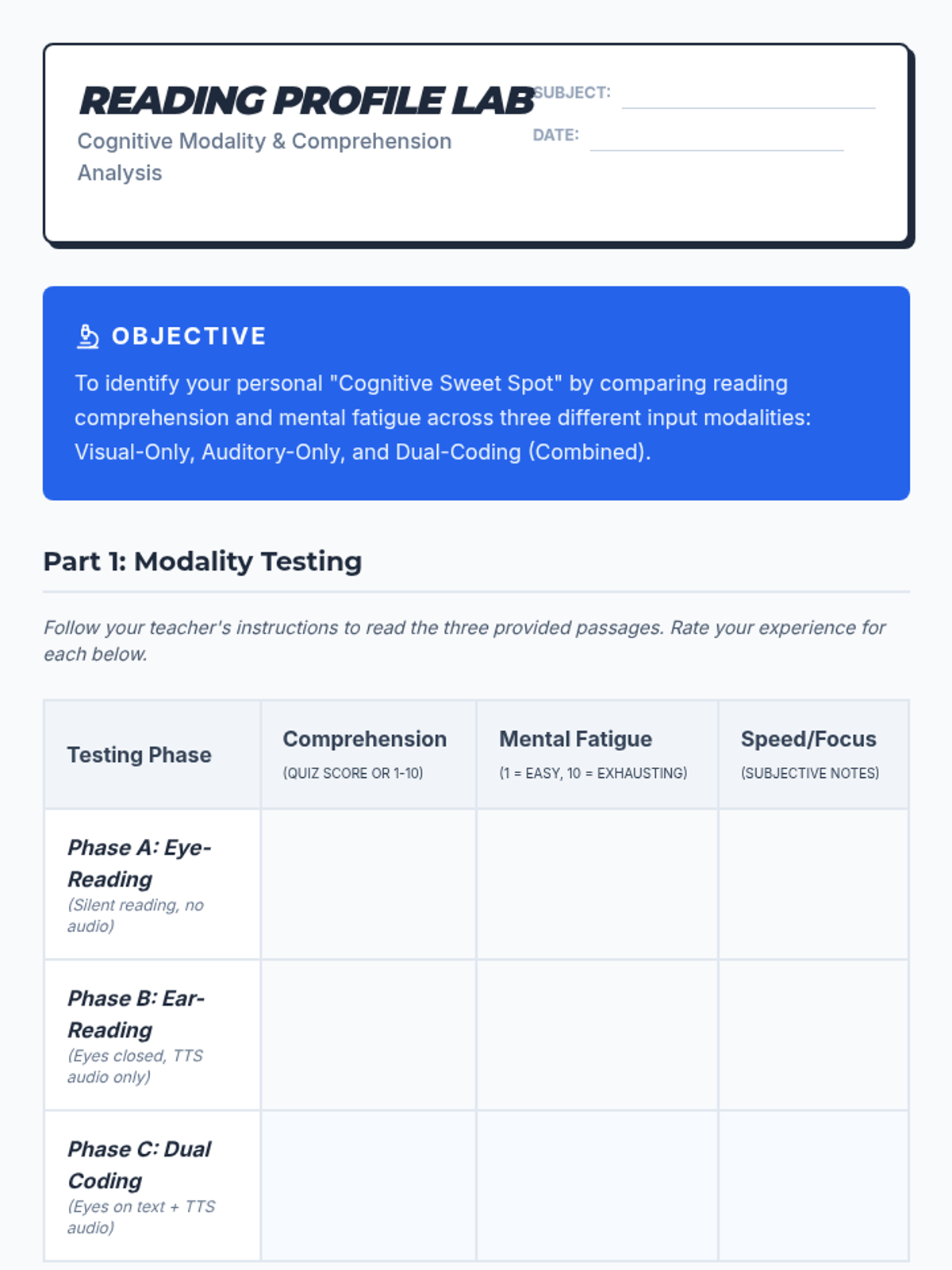
A comprehensive sequence for 11th-grade students focusing on the metacognitive and self-advocacy skills needed for using Text-to-Speech (TTS) technology in post-secondary environments. Students investigate cognitive science, legal frameworks, and practical communication strategies to ensure accessibility in college and career.
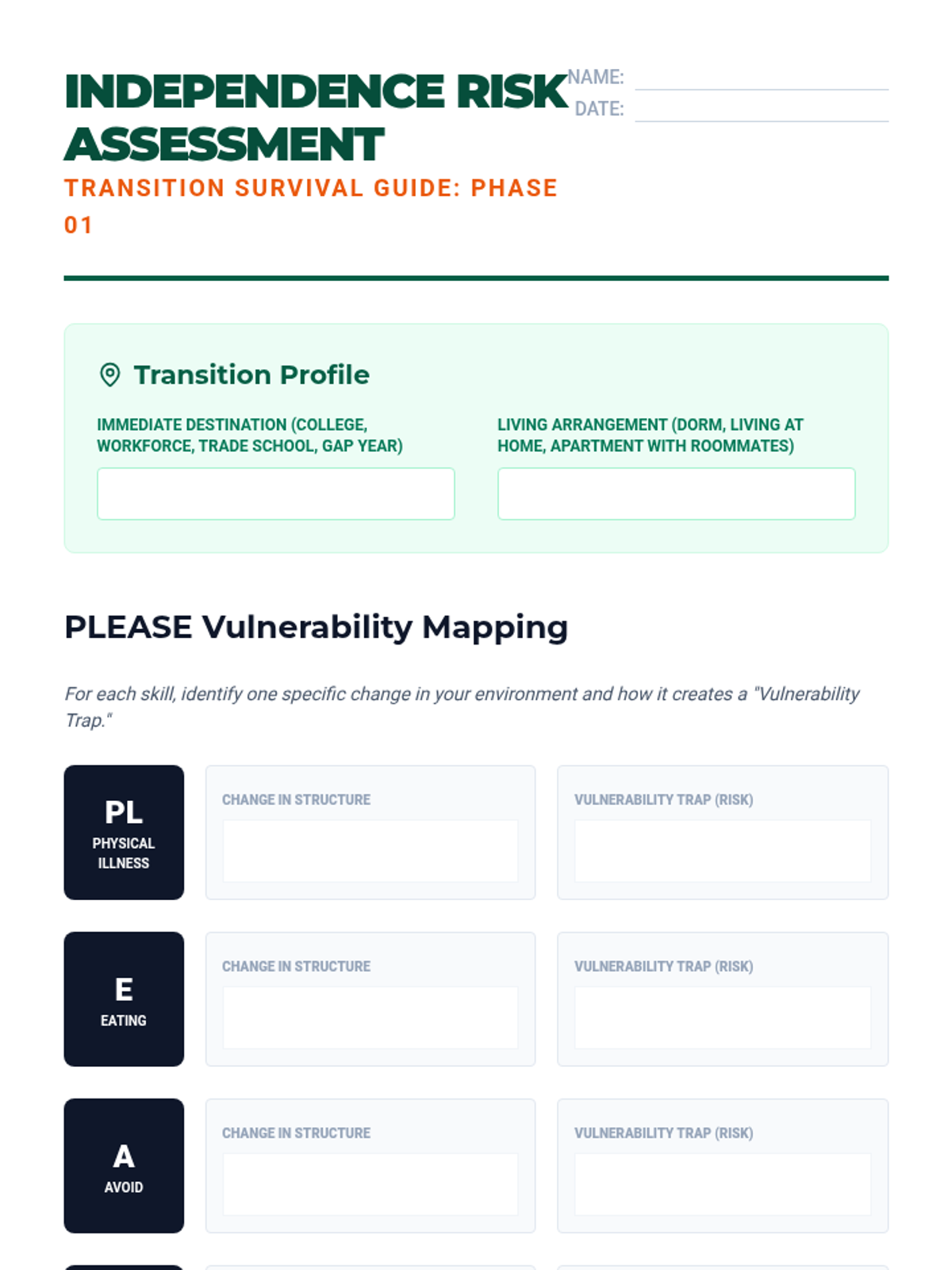
This project-based sequence prepares 12th graders for independent living by applying the PLEASE skills to future scenarios. Students identify potential disruptions to their physical and emotional health during major life transitions and develop a 'Transition Survival Guide' to maintain emotional stability.
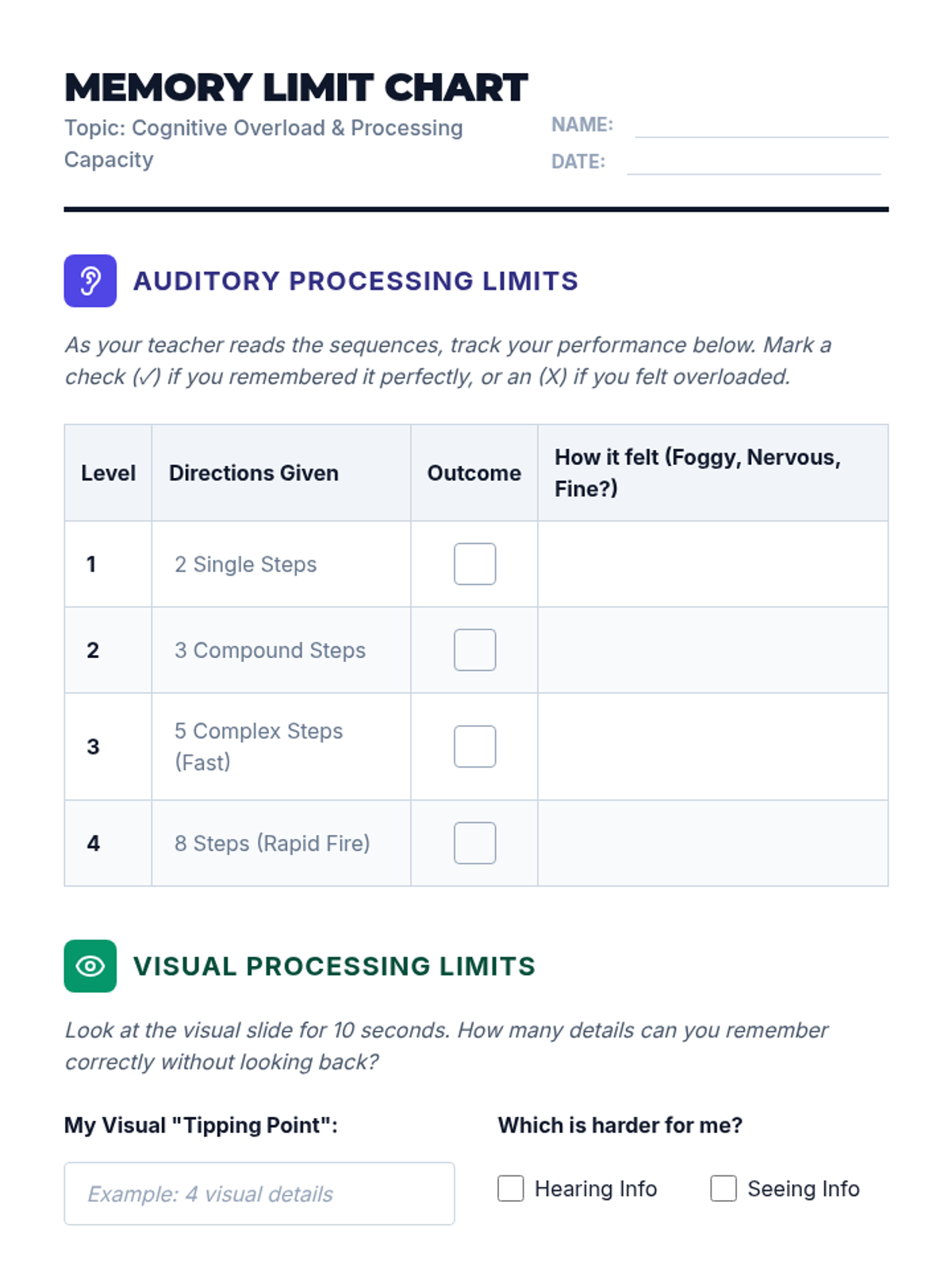
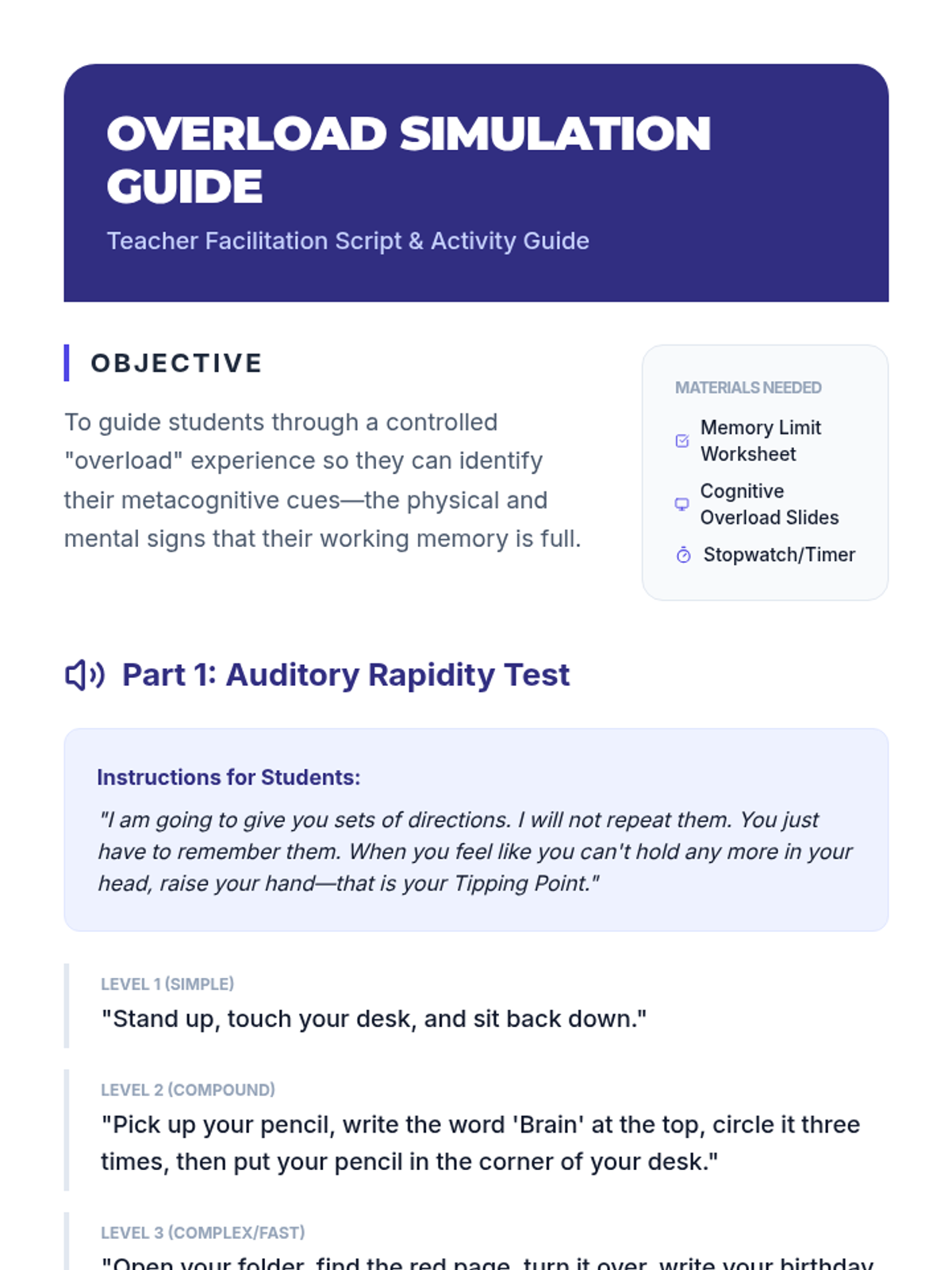
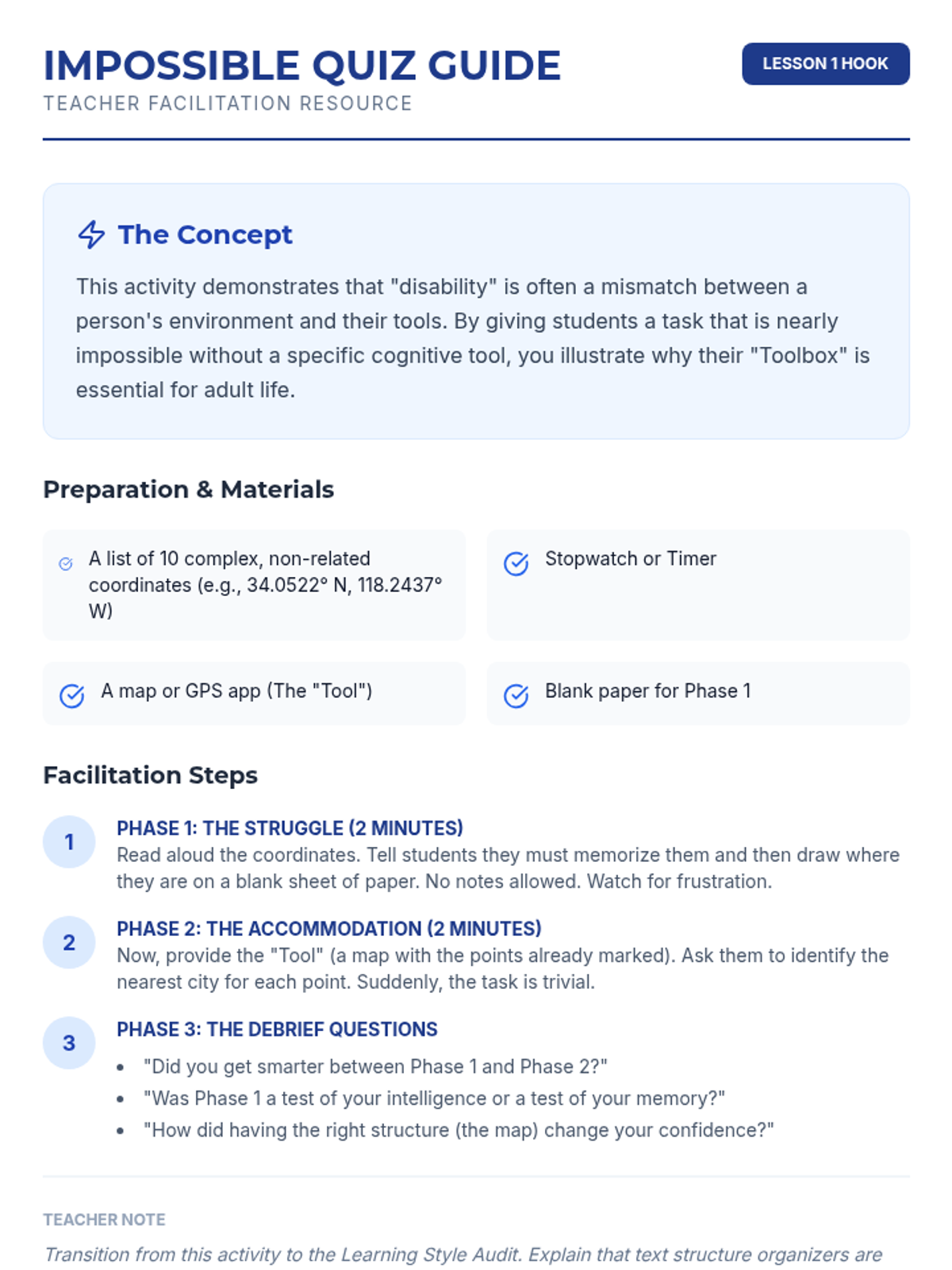
A 12th-grade sequence focused on empowering students with working memory challenges to advocate for single-step directions in professional and academic settings. Students learn to recognize their processing limits, draft professional scripts, and practice high-stakes role-play to ensure they can manage information overload effectively.
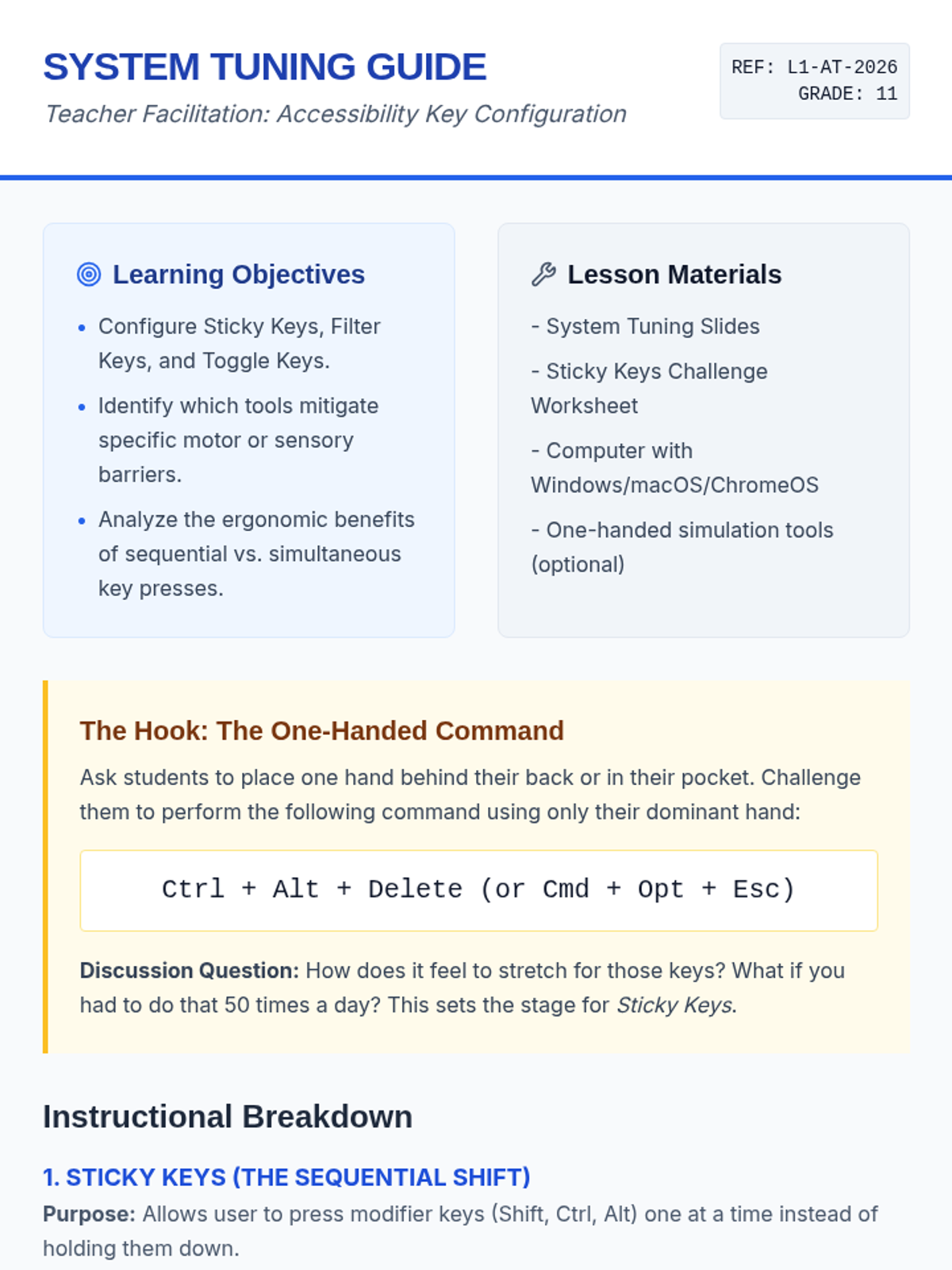
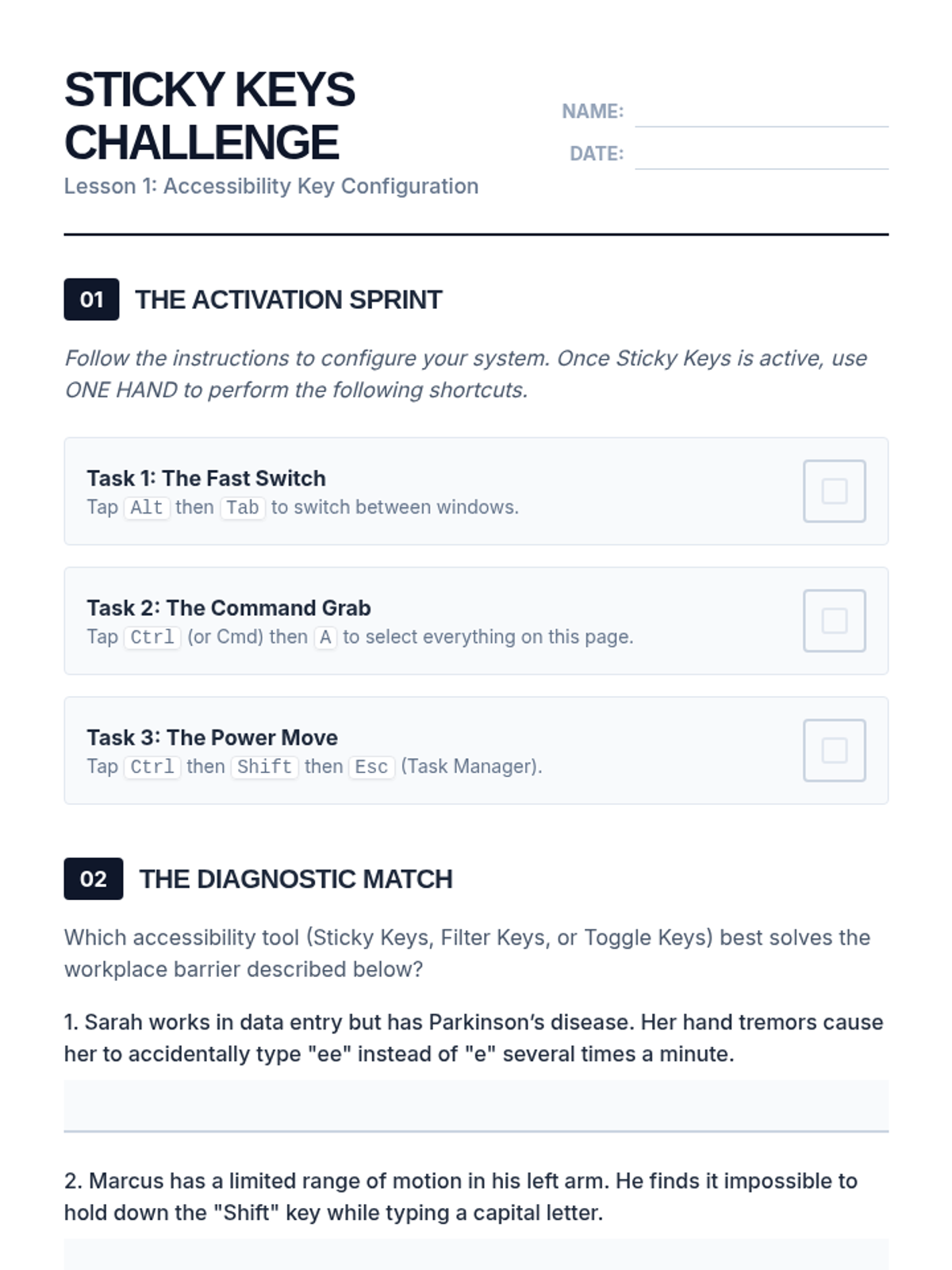
This sequence teaches 11th-grade students how to customize their computing environment using keyboard-based accessibility tools like Sticky Keys, screen reader commands, and custom macros. It focuses on workplace readiness, technical troubleshooting, and self-advocacy for digital accommodations.
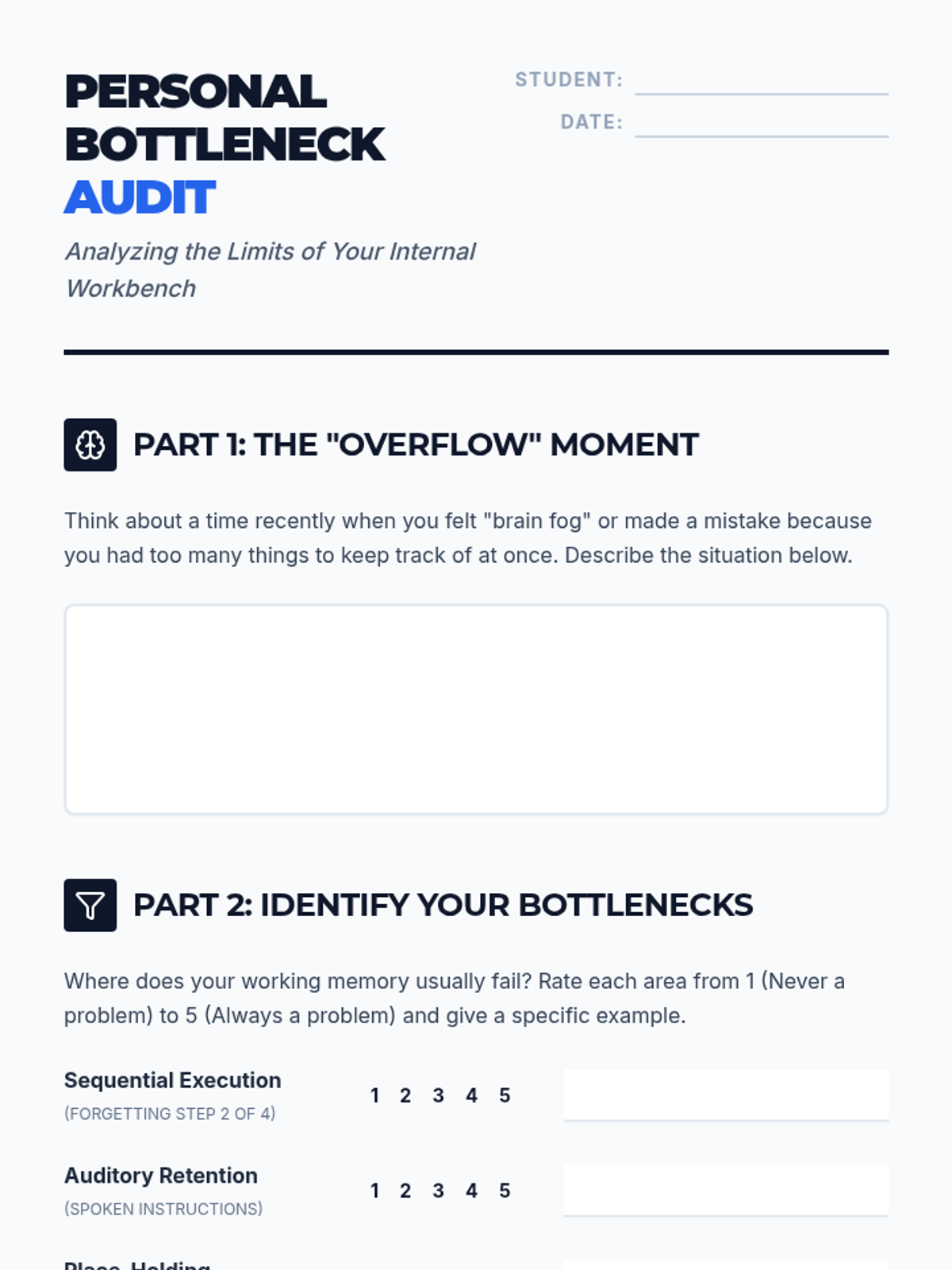
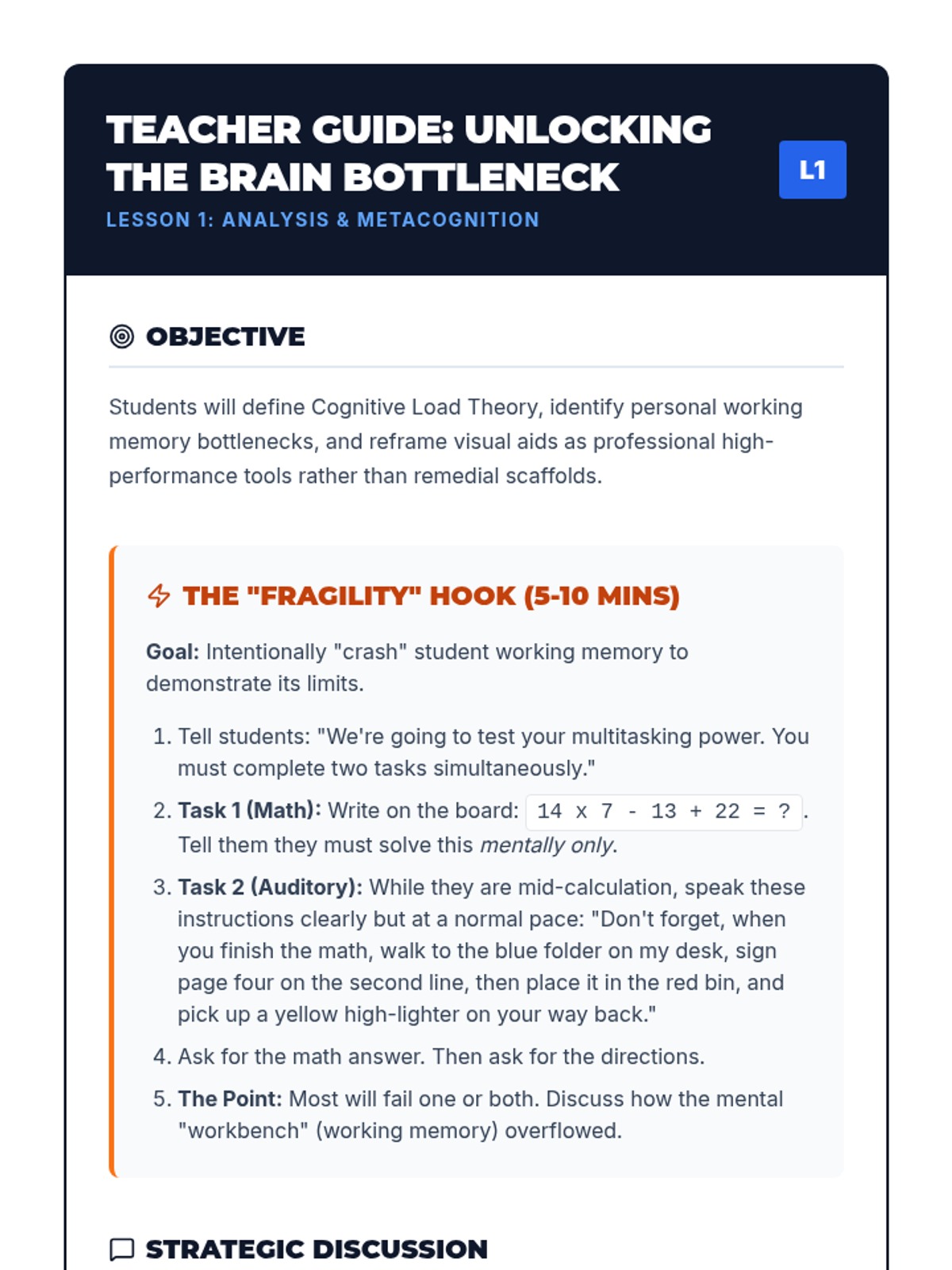
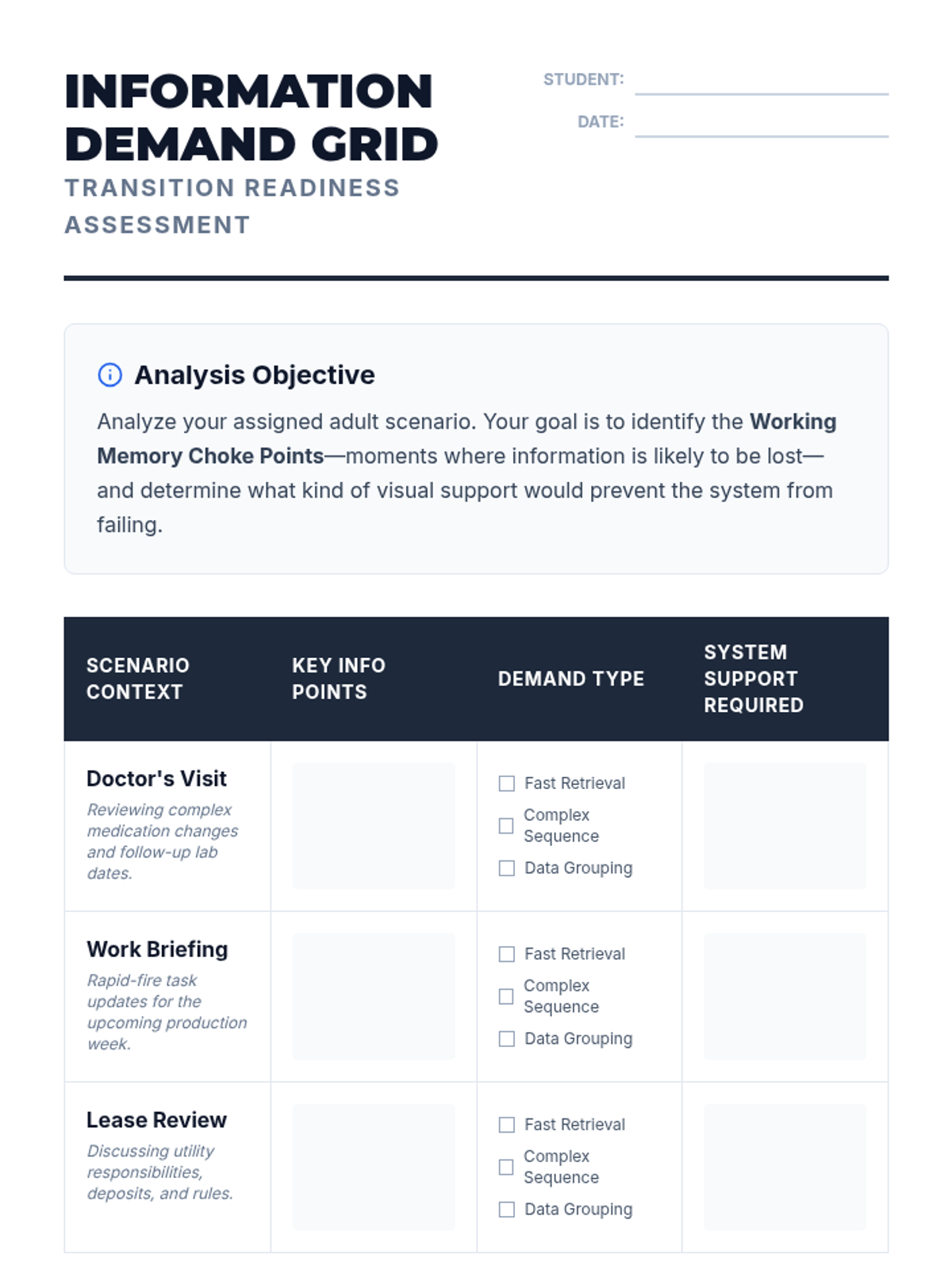
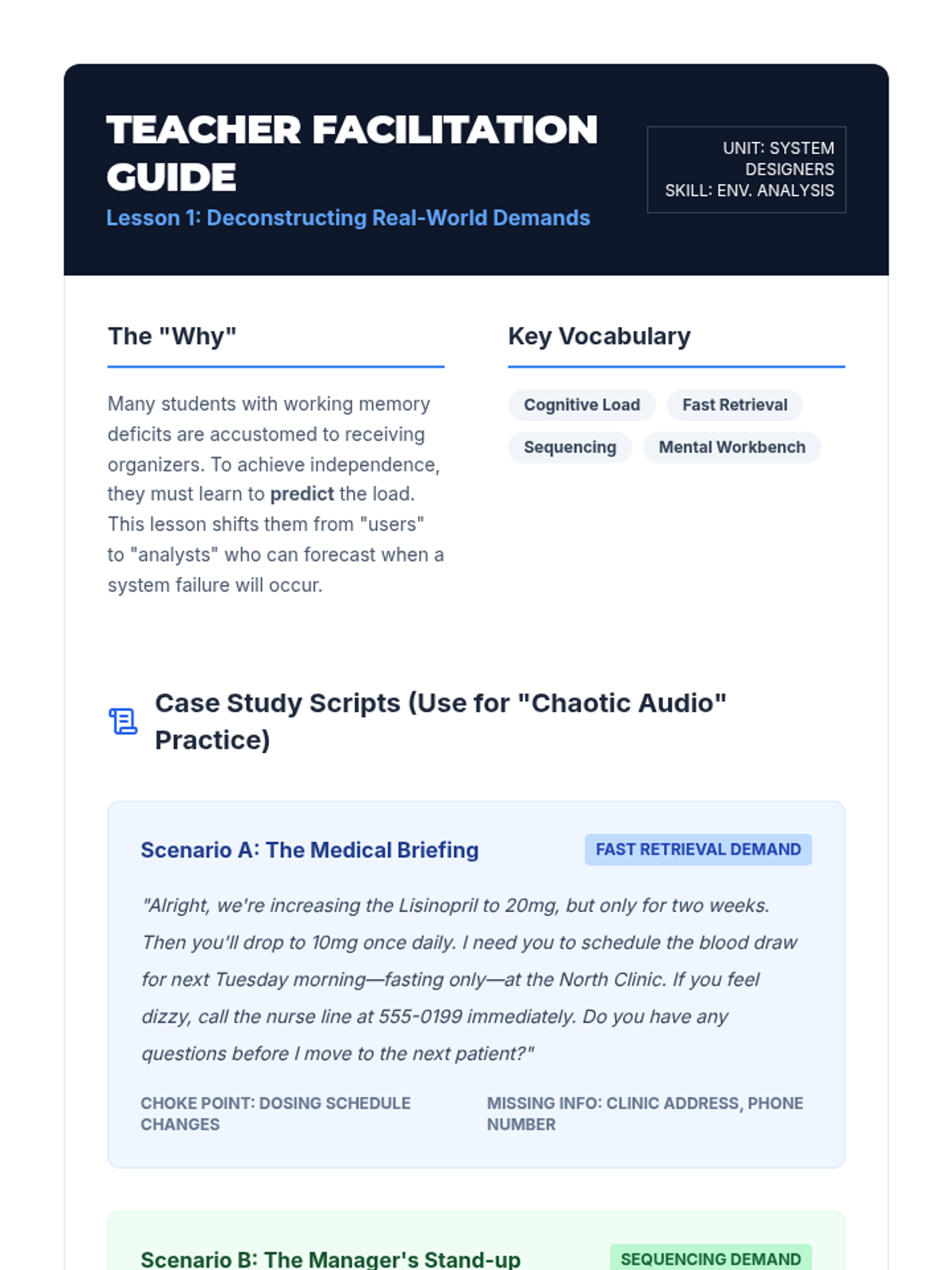
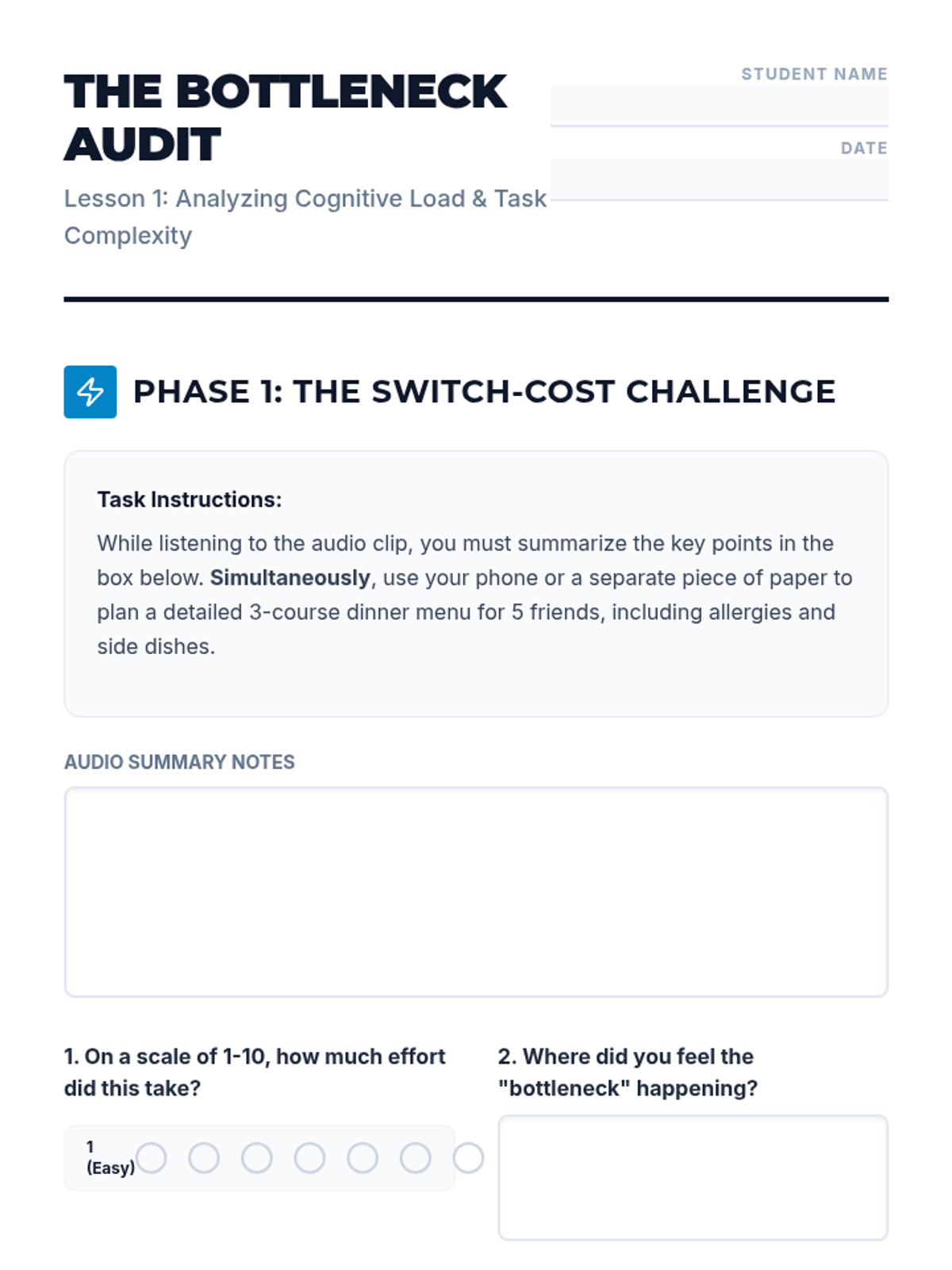
A 12th-grade sequence focused on transitioning from teacher-provided scaffolds to student-designed visual memory systems for college and career readiness. Students analyze cognitive load, design flowcharts and SOPs, and optimize their environments to support executive function.
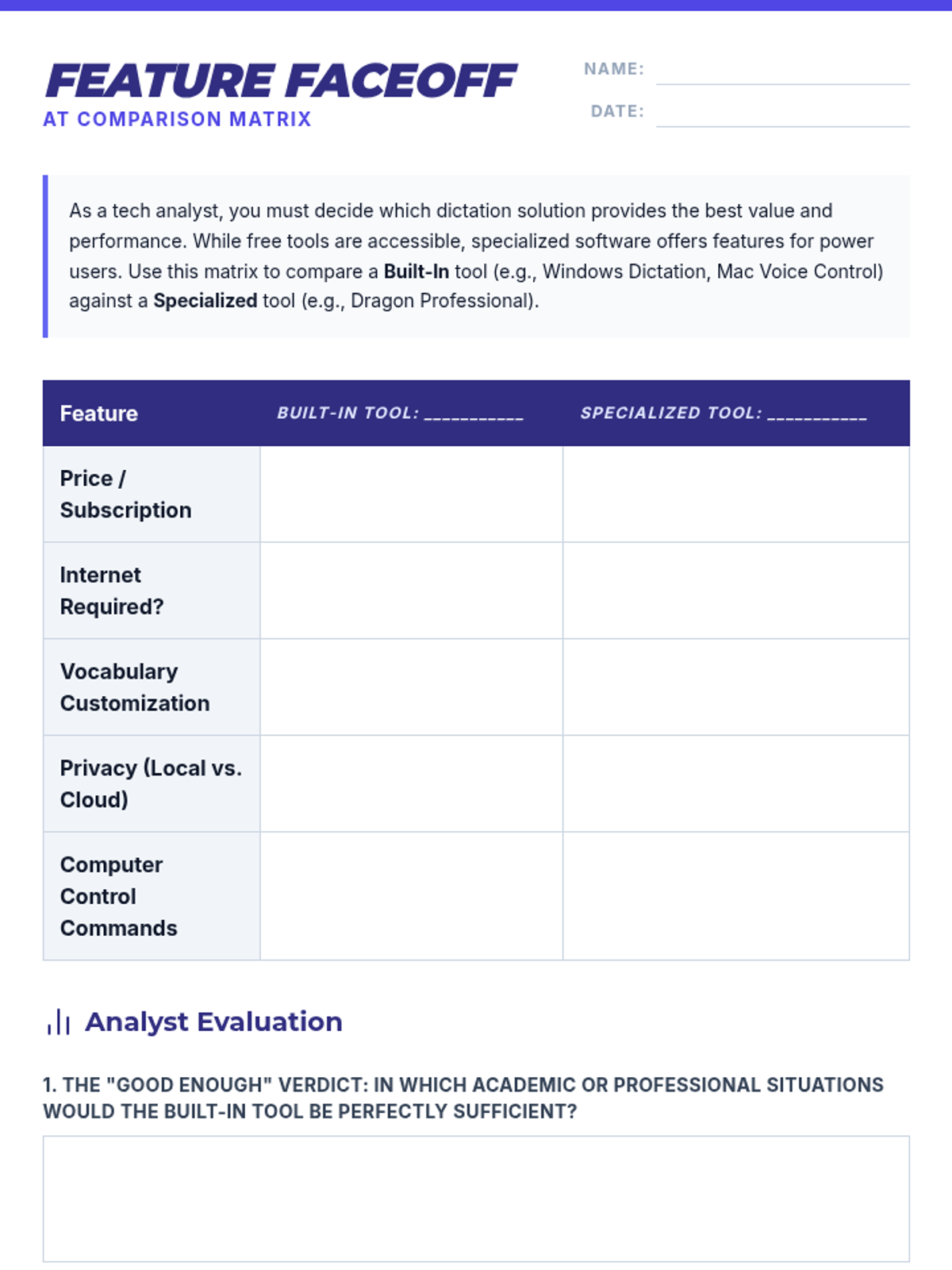
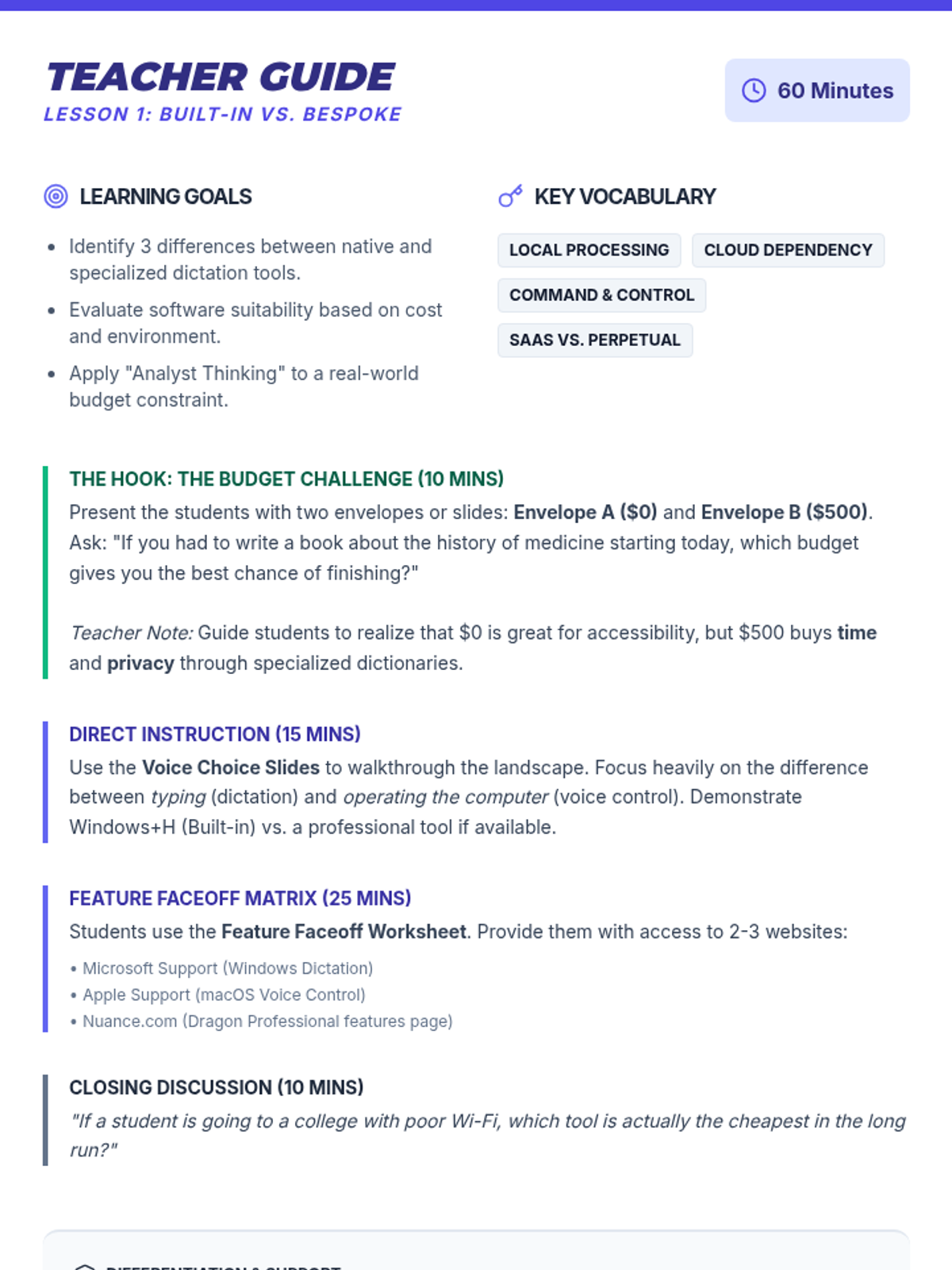
A comprehensive 12th-grade sequence focused on evaluating and selecting assistive technology, specifically speech recognition and dictation, for post-secondary transition. Students act as technology analysts to compare solutions, assess hardware, and build a personalized advocacy plan for college and the workplace.
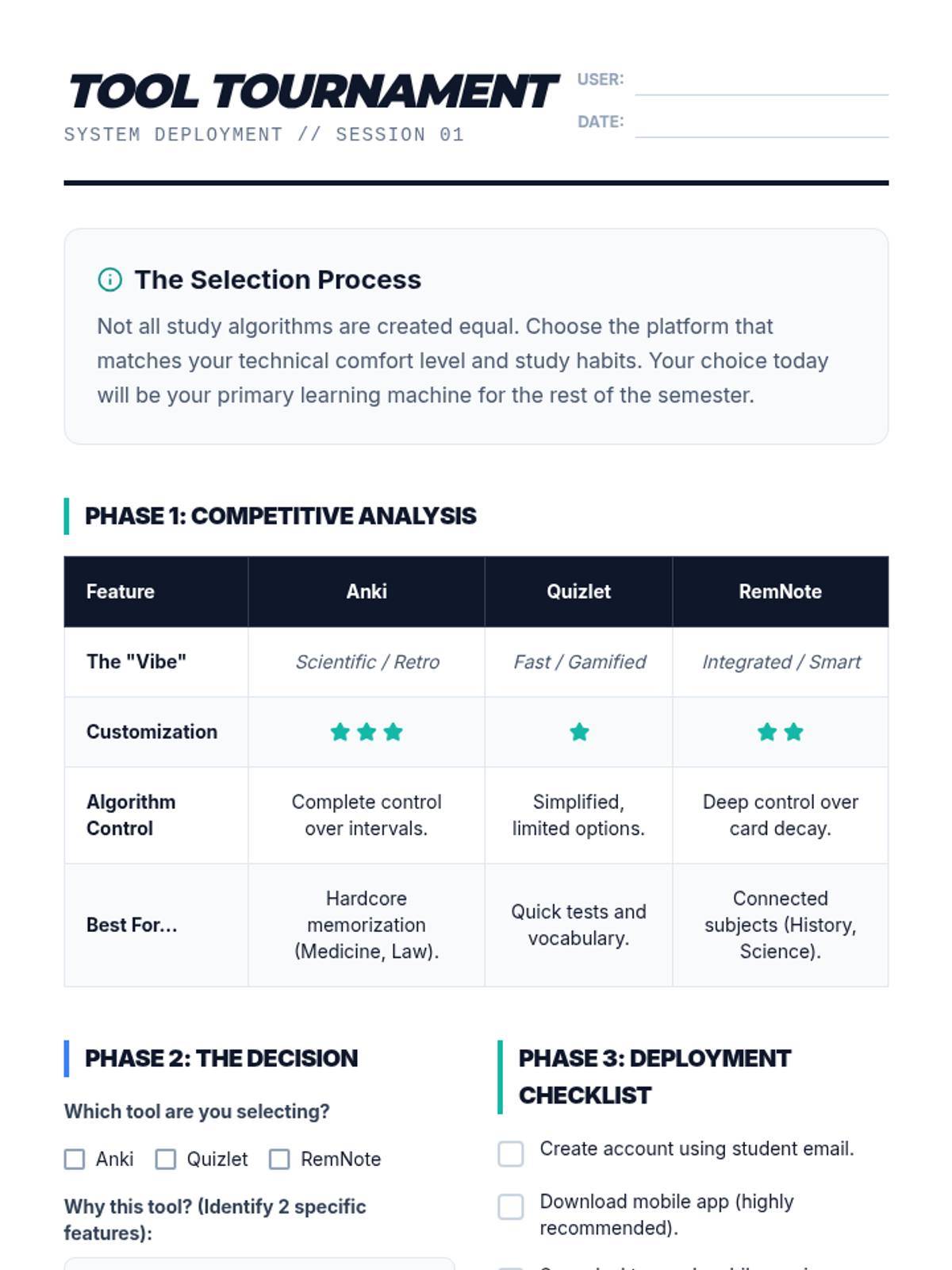
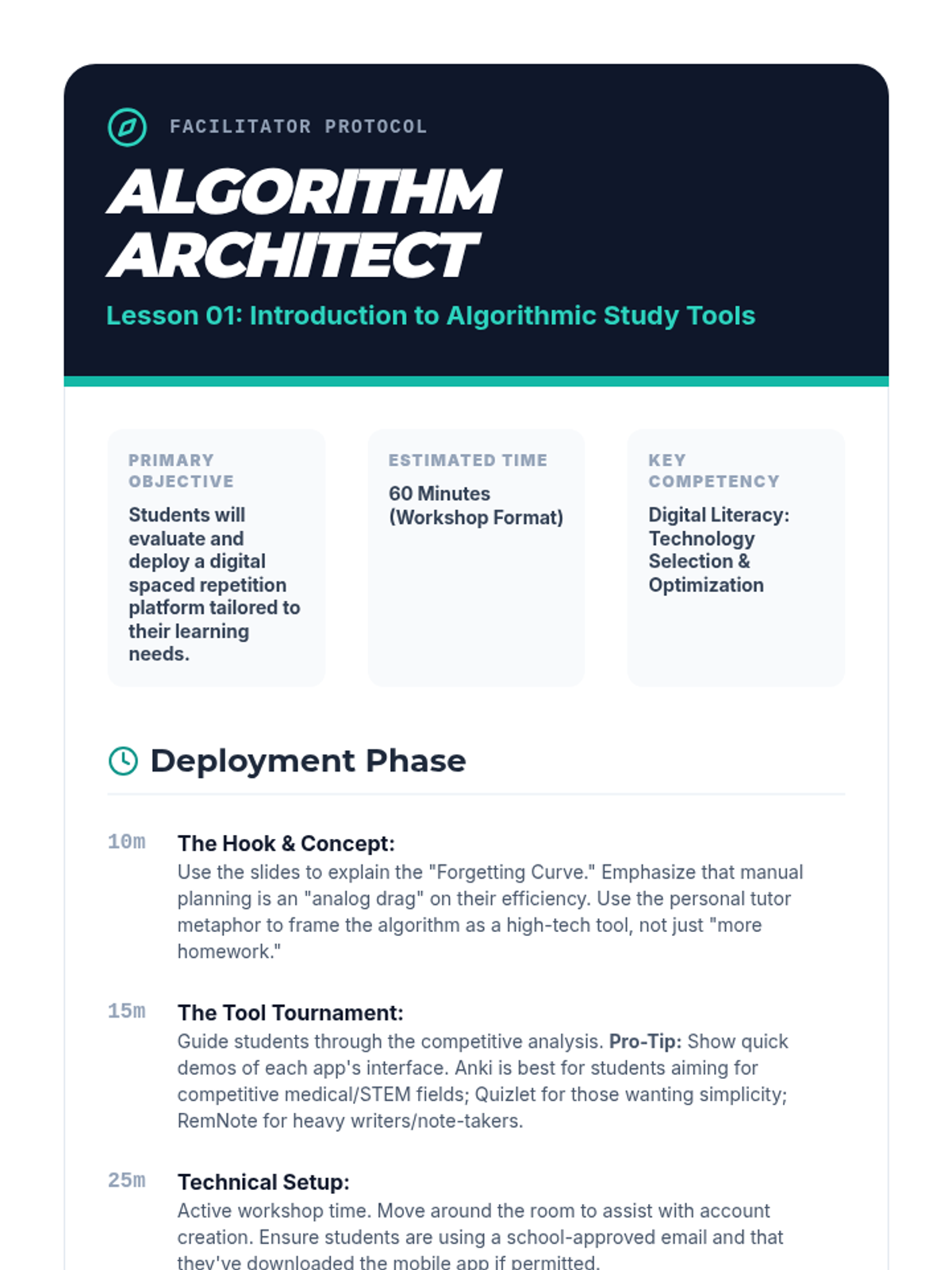
This sequence transitions 12th-grade students from manual study methods to digital spaced repetition software (SRS). Students will master advanced card-creation techniques, interpret retention data to optimize their learning, and develop long-term maintenance strategies for post-secondary success.
This sequence empowers 12th-grade students with neurodivergent profiles to design, test, and advocate for personalized note-taking systems. By analyzing real-world information demands and exploring digital and analog tools, students prepare for independent living and post-secondary success.
A comprehensive workshop series for 12th-grade students to master visual scaffolding techniques, reducing cognitive load and enhancing long-term retention during academic tasks. students transition from understanding cognitive science to real-time application of hierarchical, sequential, and comparative note-taking structures.
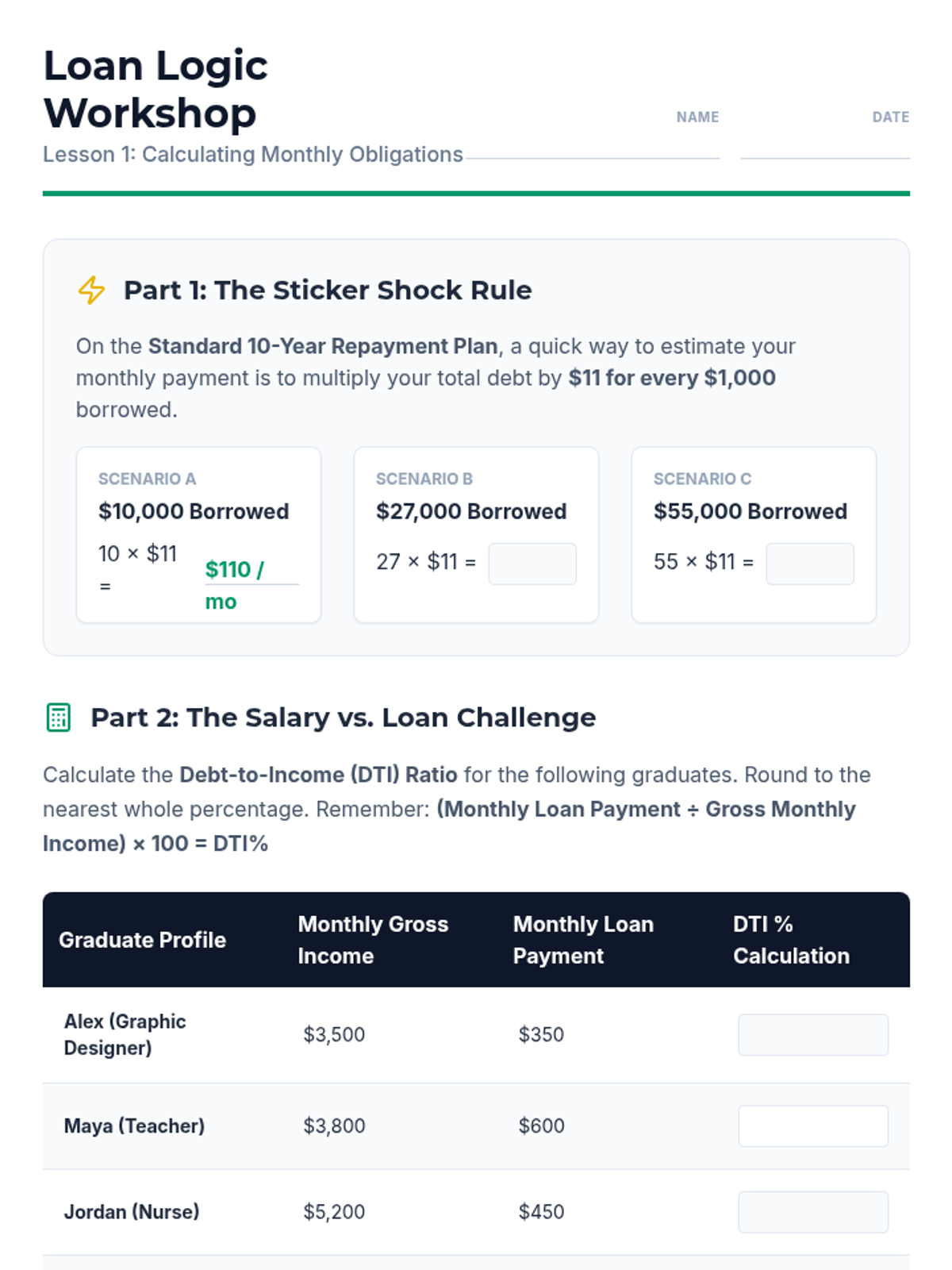
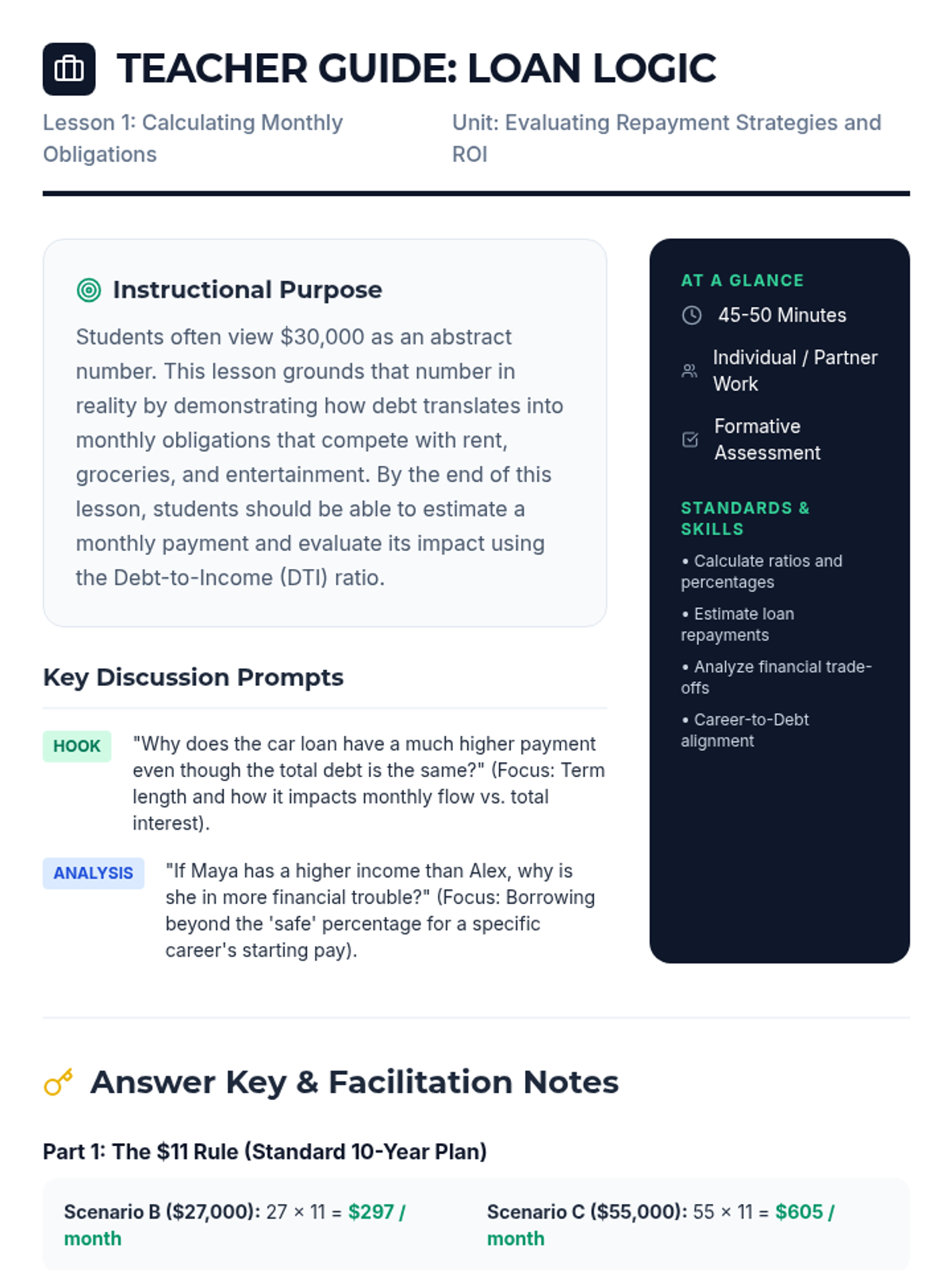
A comprehensive sequence for 10th-grade students focusing on the financial realities of student loan repayment, the impact of debt-to-income ratios, and evaluating the long-term ROI of post-secondary education choices. Students progress from basic math to strategic advisory, culminating in a complex case study analysis.
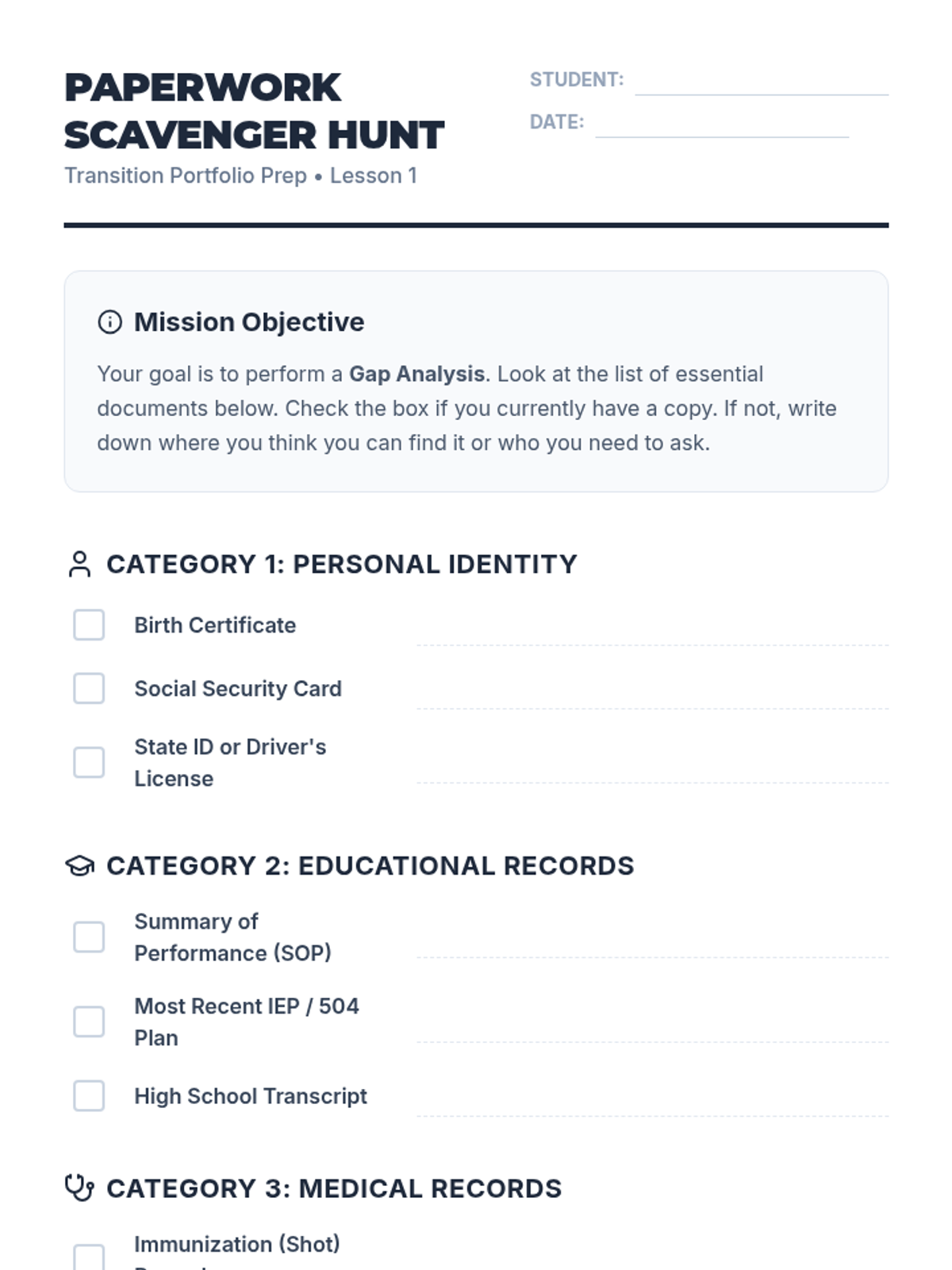
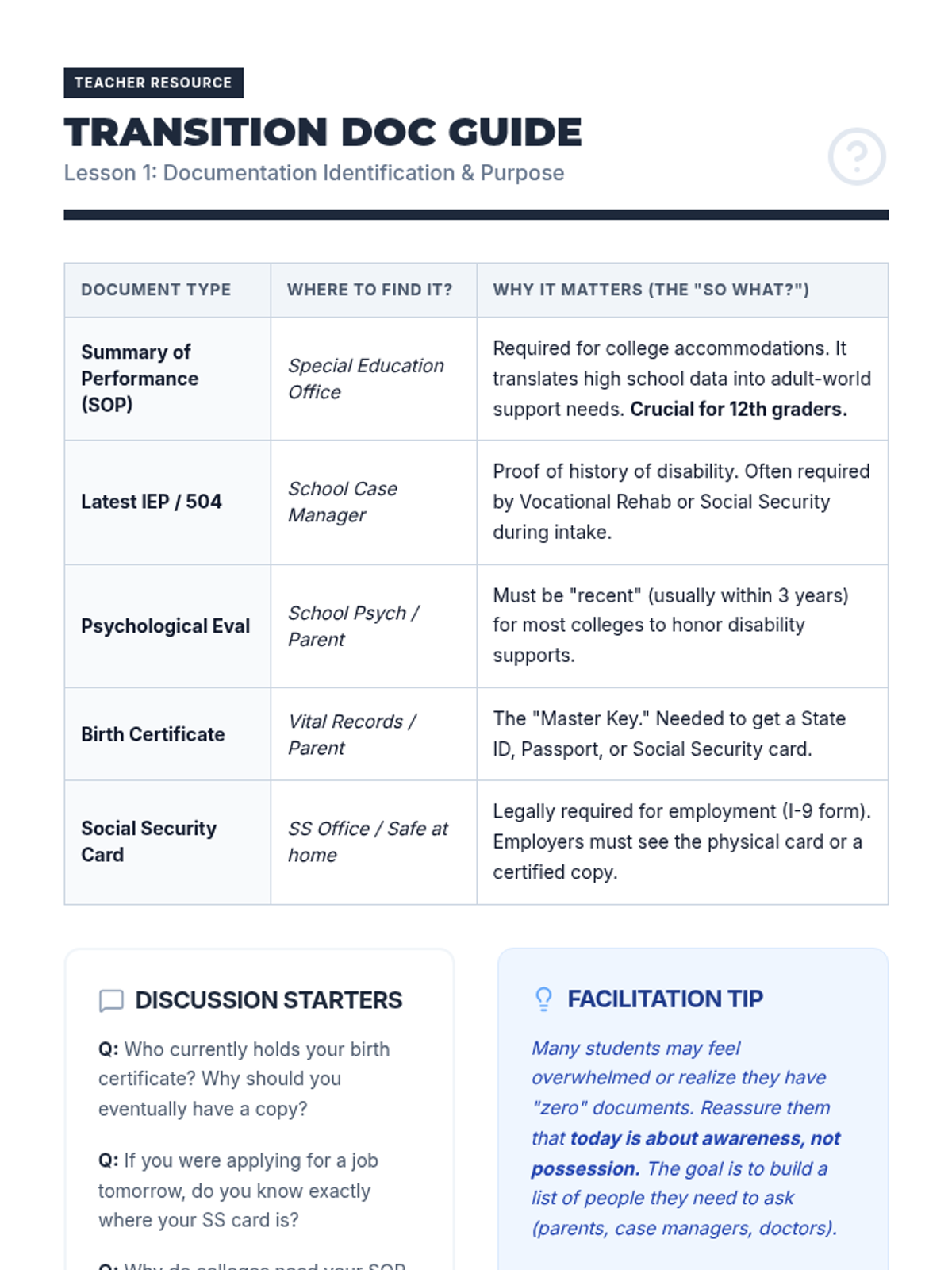
This sequence empowers 12th-grade students to take ownership of their personal, educational, and legal documentation as they transition to adulthood. Students will identify, secure, organize, and utilize essential records to foster independence and self-advocacy.
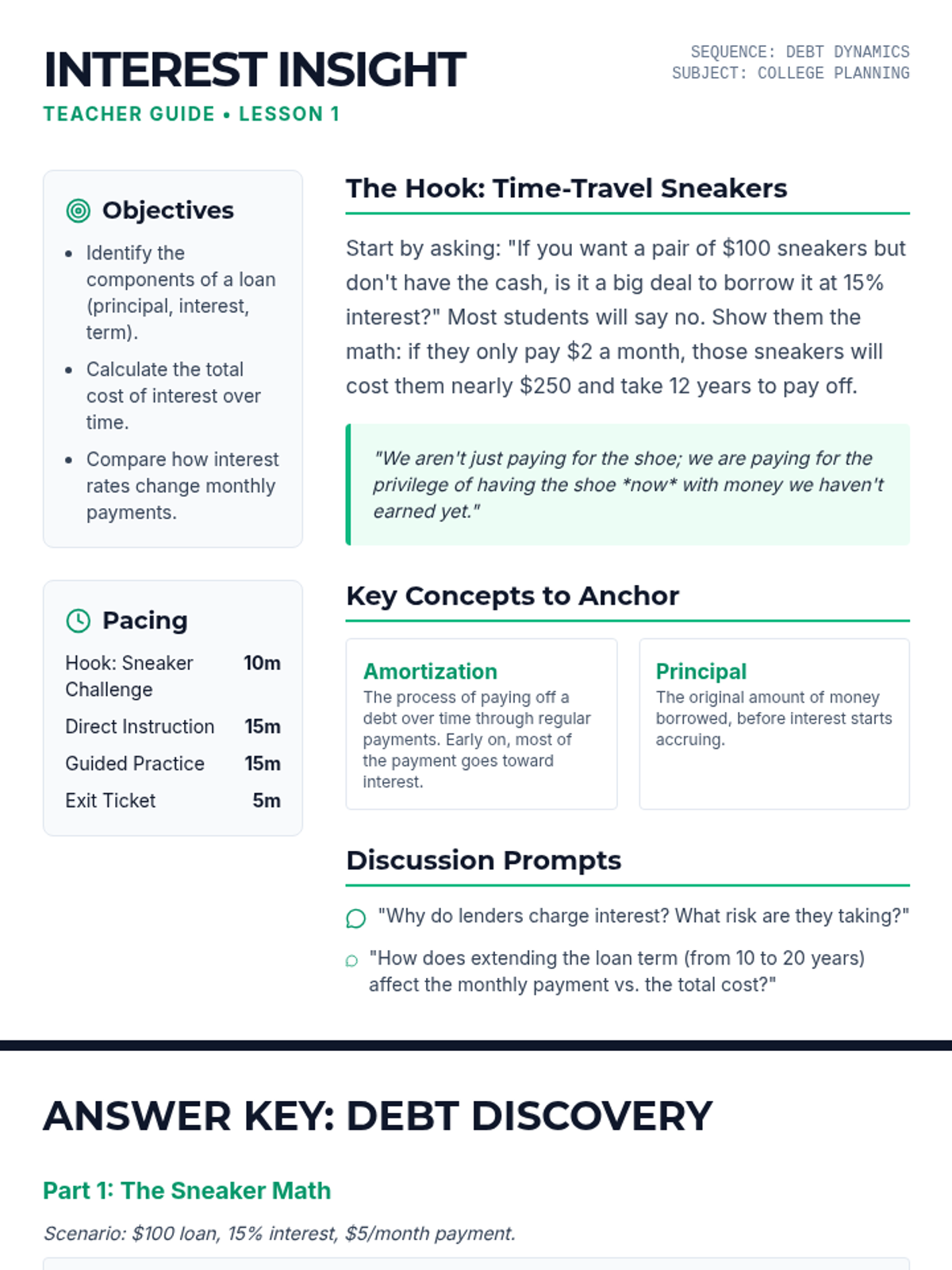
This sequence explores the long-term financial implications of student loans, focusing on repayment plans, budgeting, and return on investment (ROI). Students transition from understanding borrowing mechanics to simulating the real-world impact of debt on lifestyle and career choices.
A 12th-grade sequence focused on metacognition and self-advocacy, empowering students to build a personalized 'digital toolbox' of text structure graphic organizers for college and career readiness.
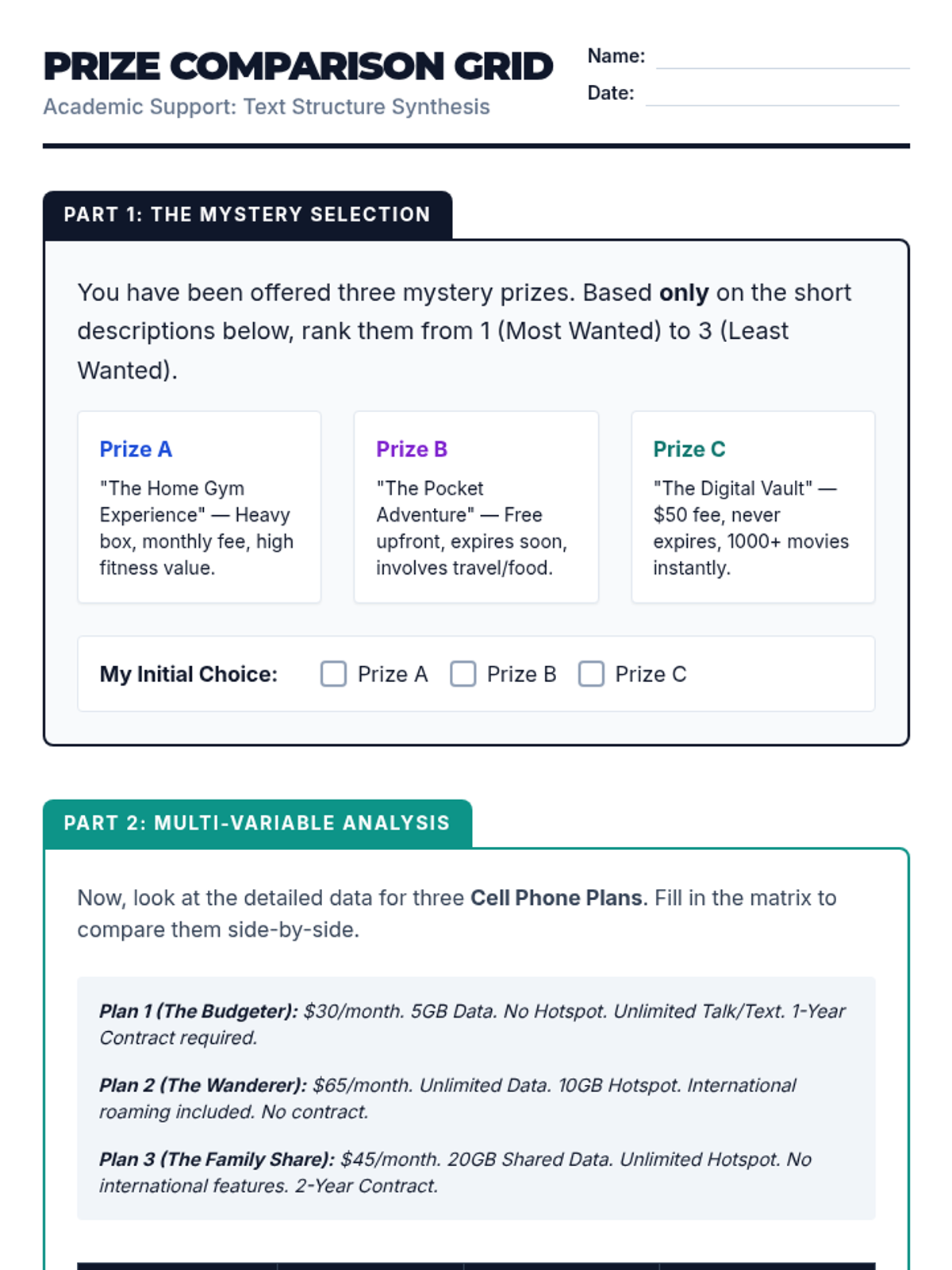
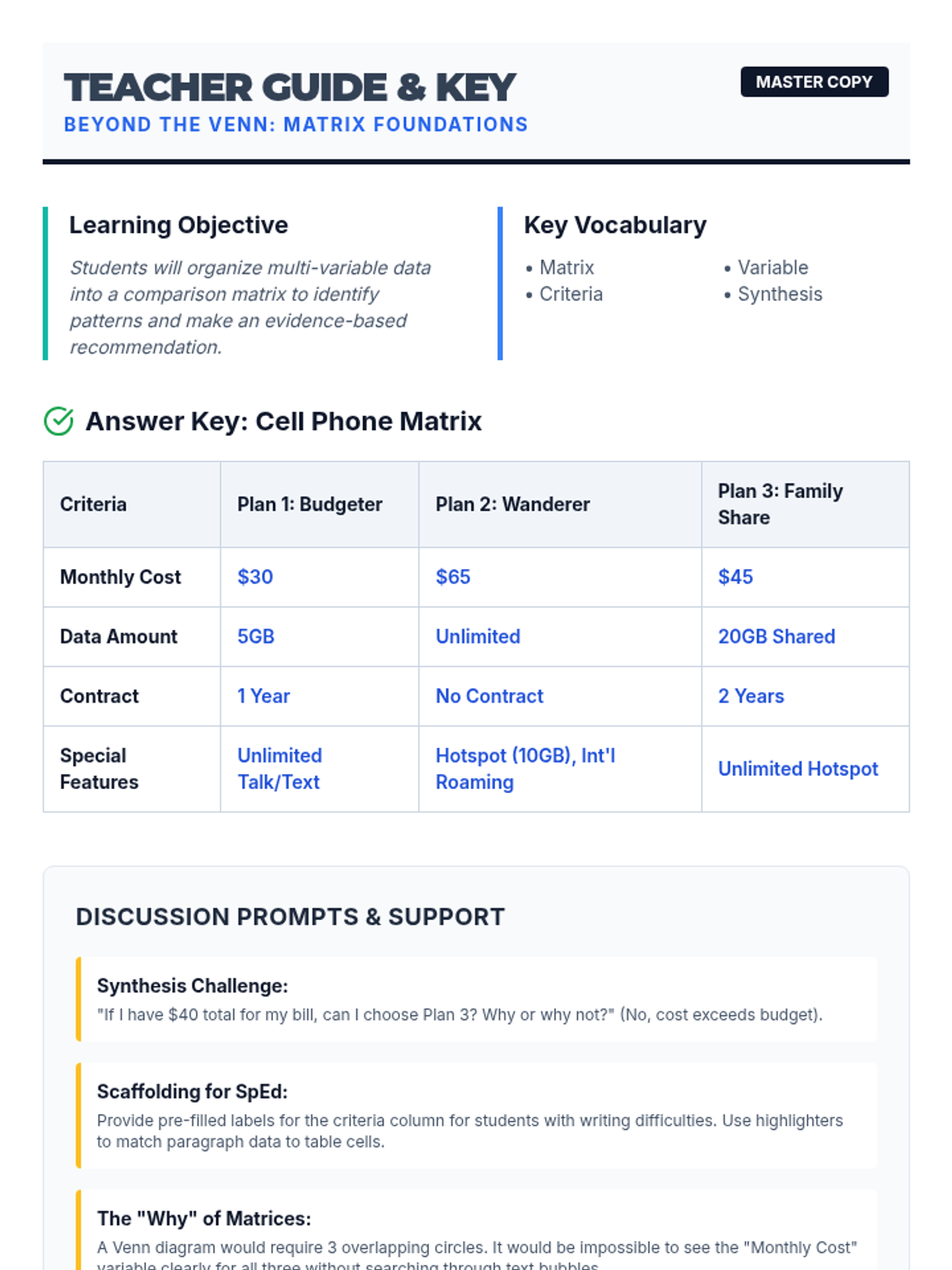
A higher-education and career-readiness sequence for 12th-grade students focused on using matrices to synthesize complex, conflicting, and multi-variable information. Students move from basic data organization to high-level comparative analysis and source evaluation.
This sequence targets the ability of 12th-grade students with working memory challenges to decode and follow complex academic guidelines. It progresses from document analysis to auditory processing and technical protocols, culminating in a strategic planning challenge for post-secondary readiness.
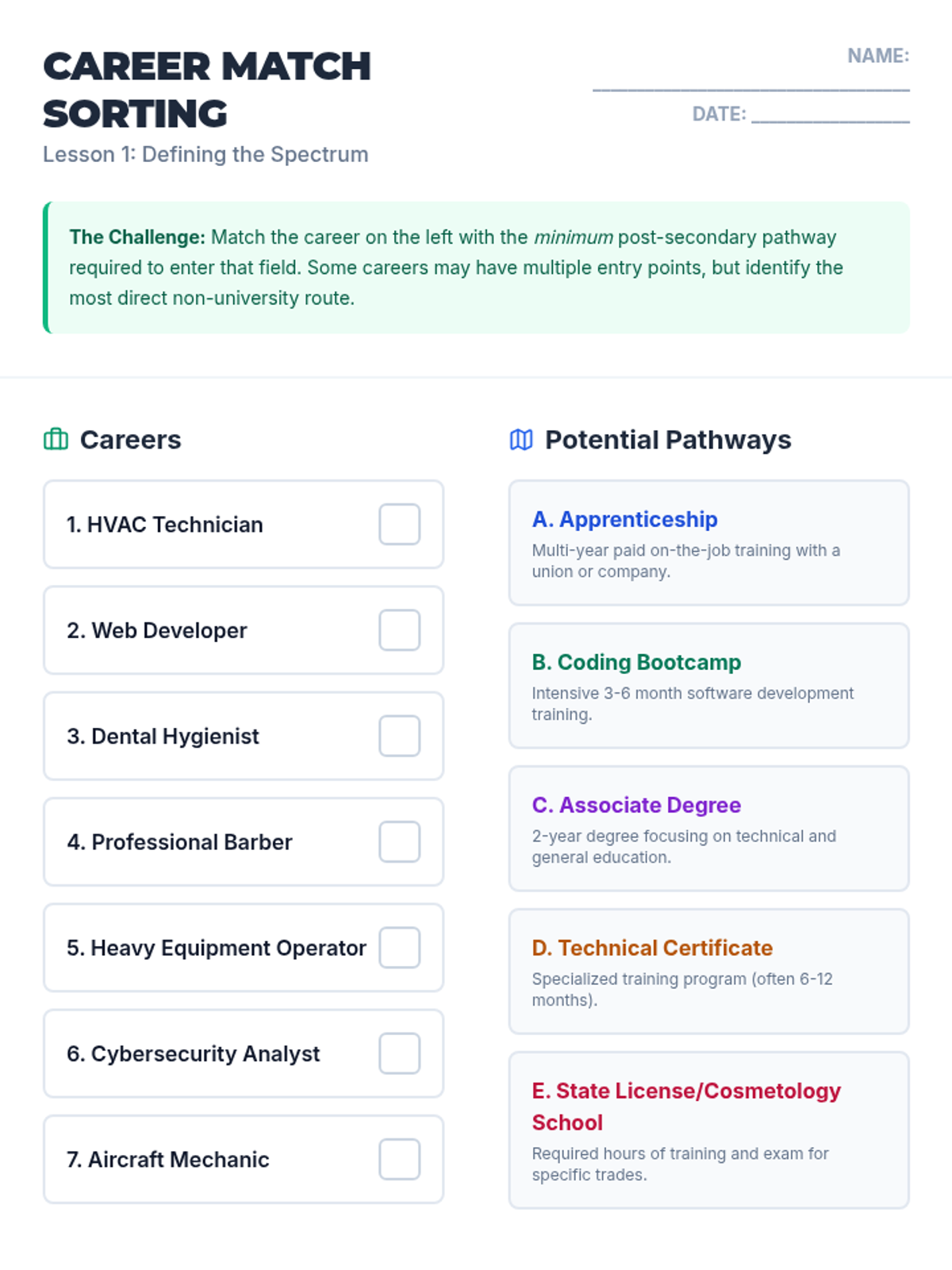
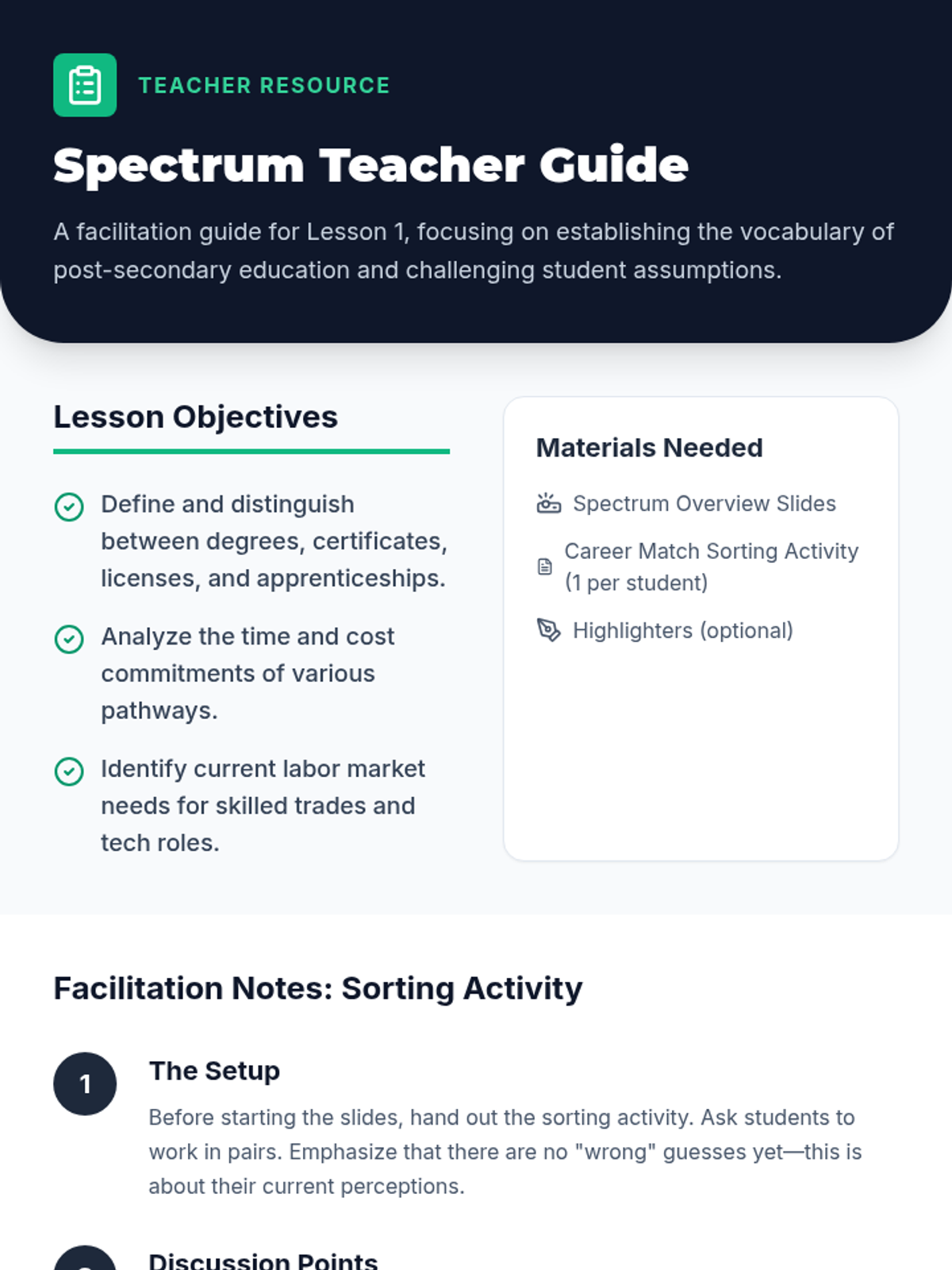
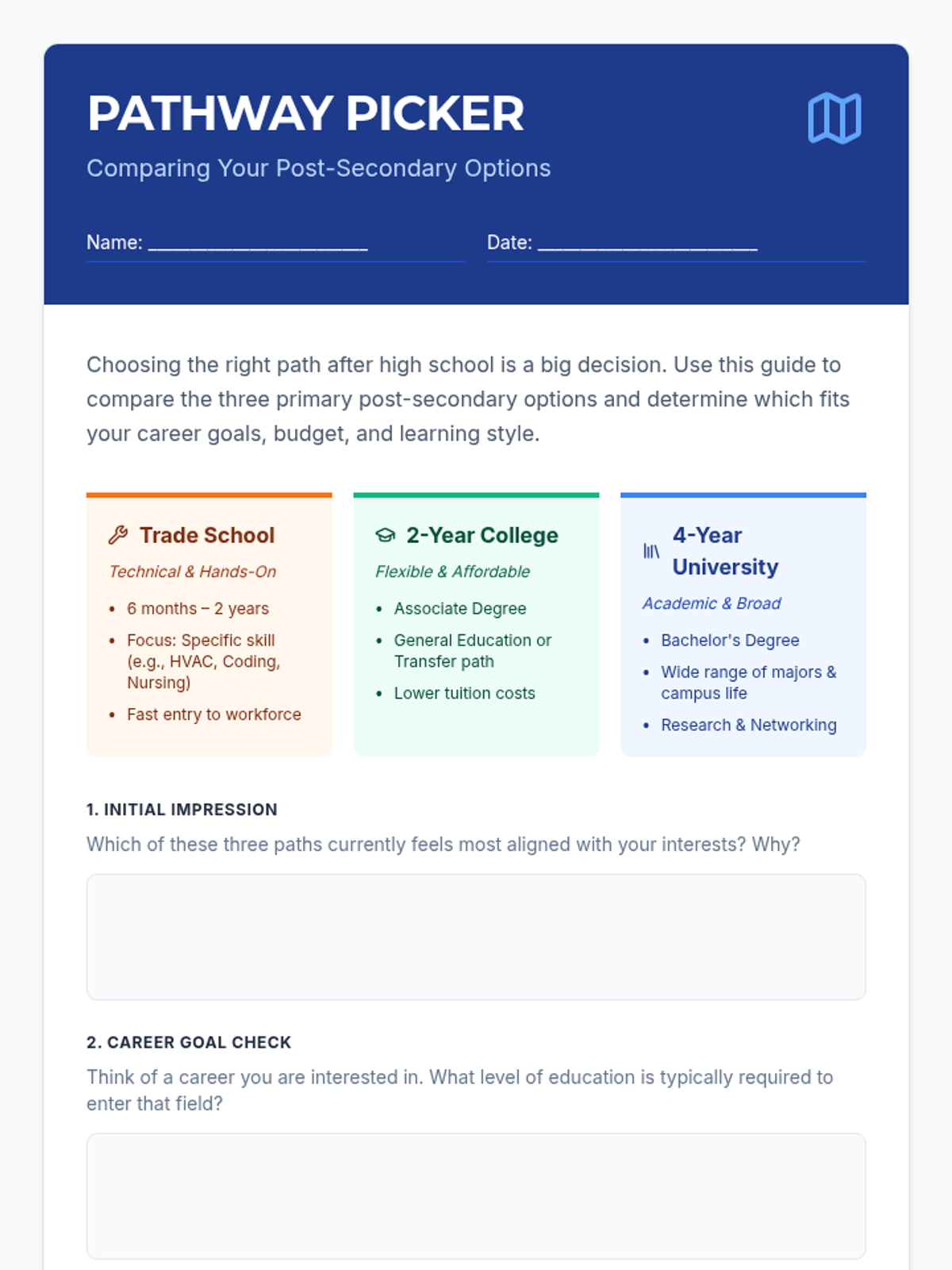
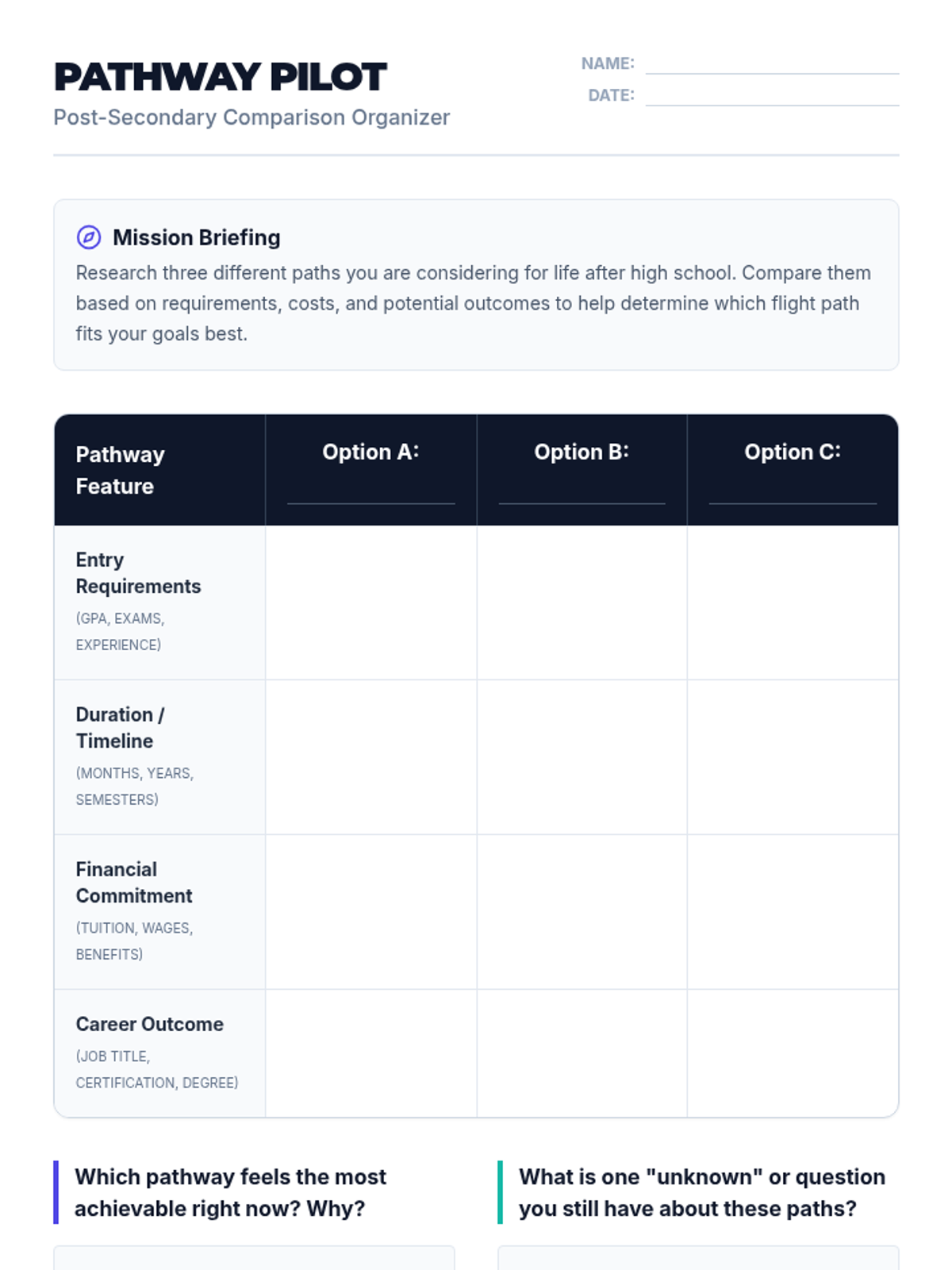
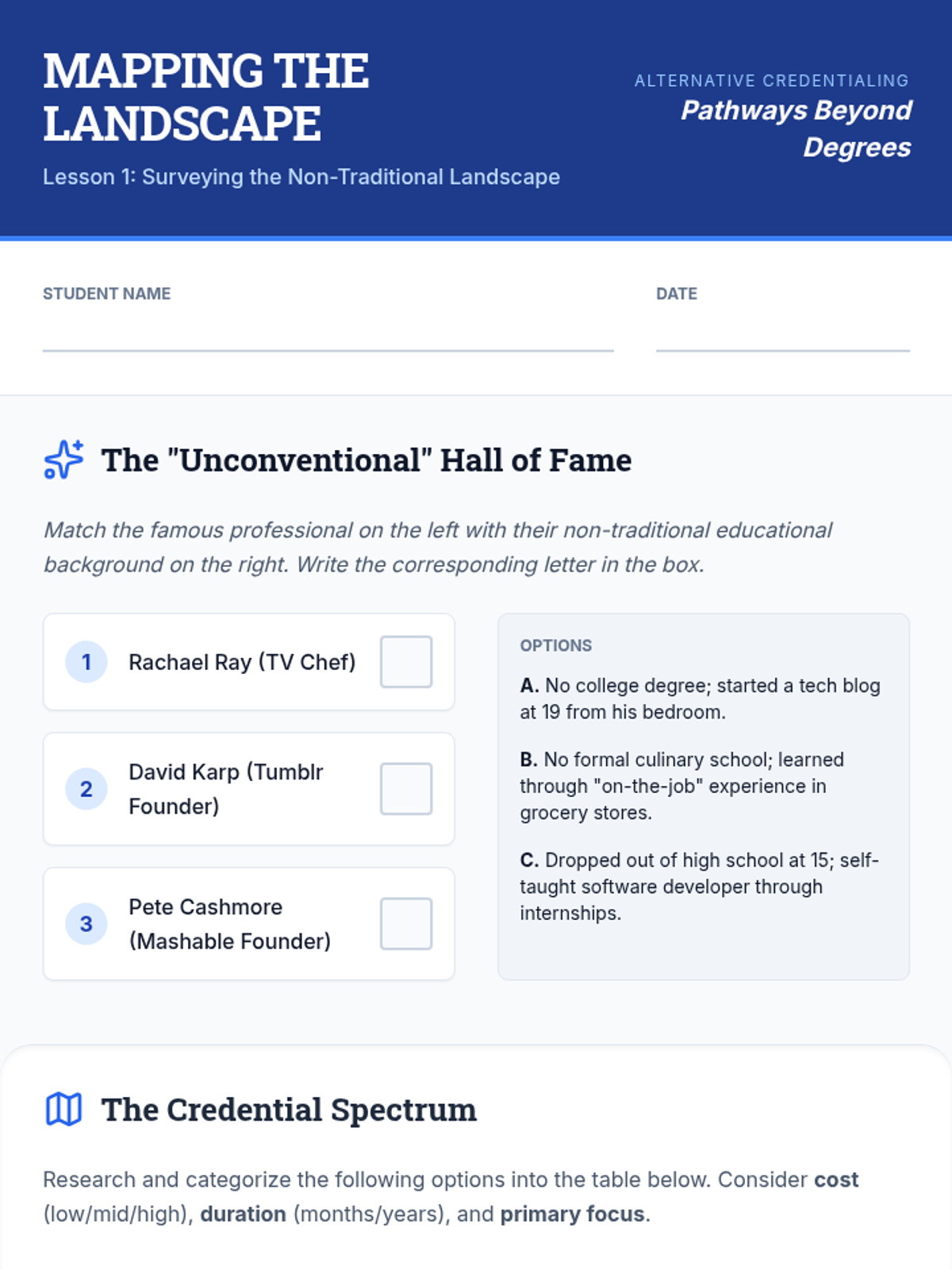
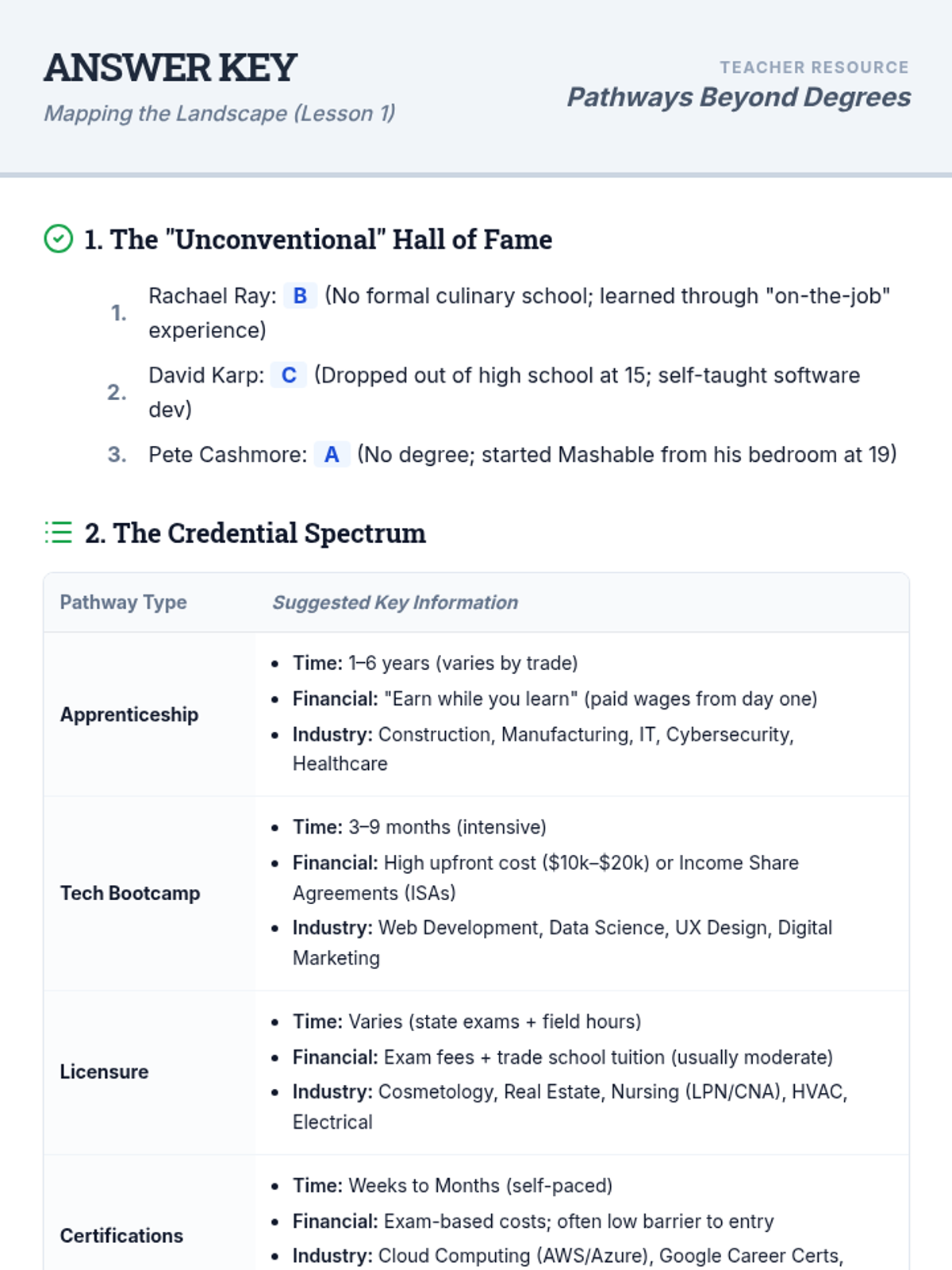
This sequence explores post-secondary education options beyond the traditional four-year degree, including trade schools, apprenticeships, coding bootcamps, and certificate programs. Students learn to evaluate the legitimacy of various programs and compare different career pathways based on cost, duration, and outcomes.
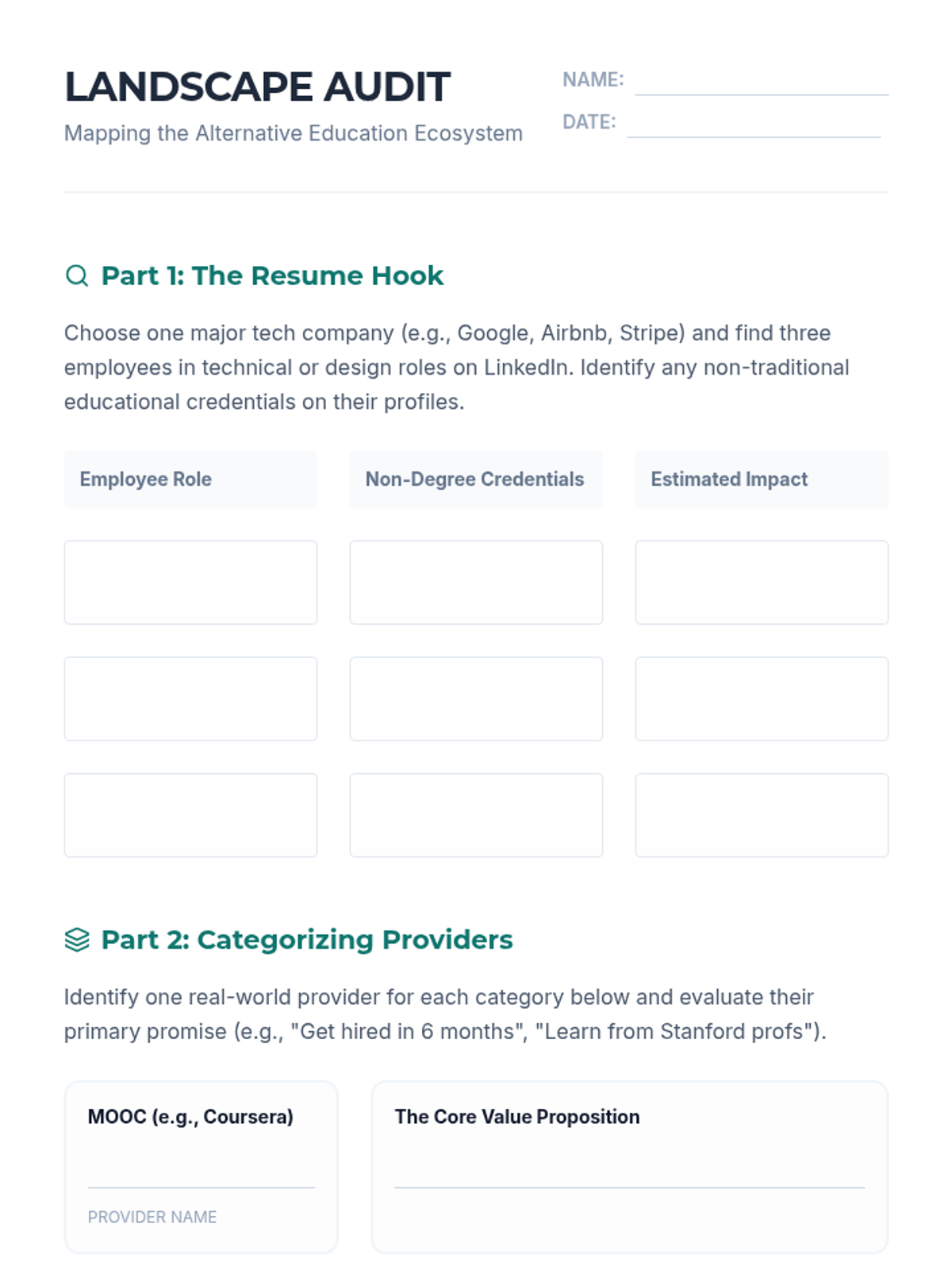
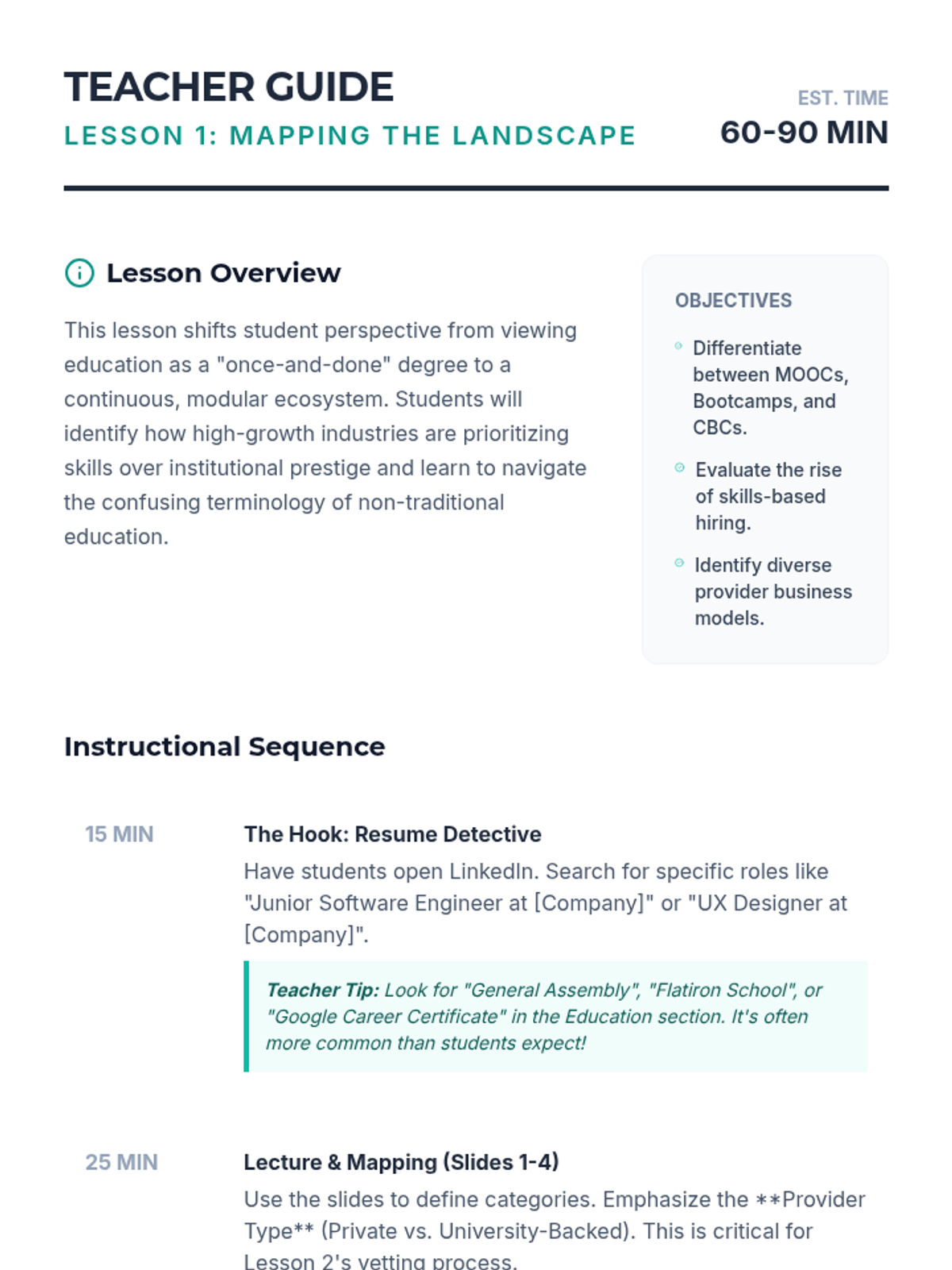
This sequence investigates the rapidly growing sector of non-traditional education, including coding bootcamps, MOOCs, and corporate training. Students learn to vet these pathways for quality, outcomes, and career alignment, moving from landscape survey to strategic decision-making.
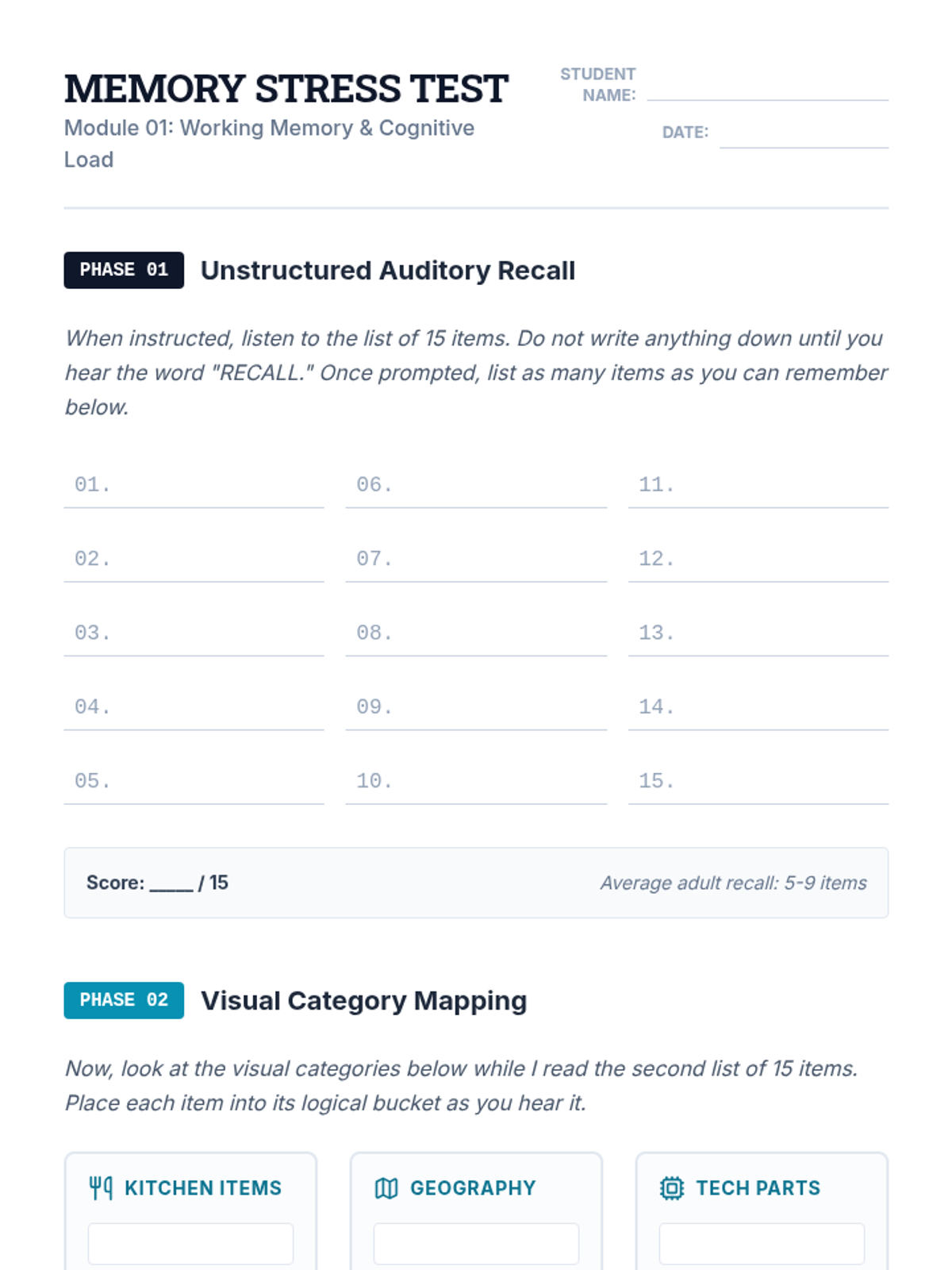
A metacognitive approach to memory support, teaching 12th-grade students to diagnose cognitive load and apply tailored mnemonic and retention strategies for college and career readiness.
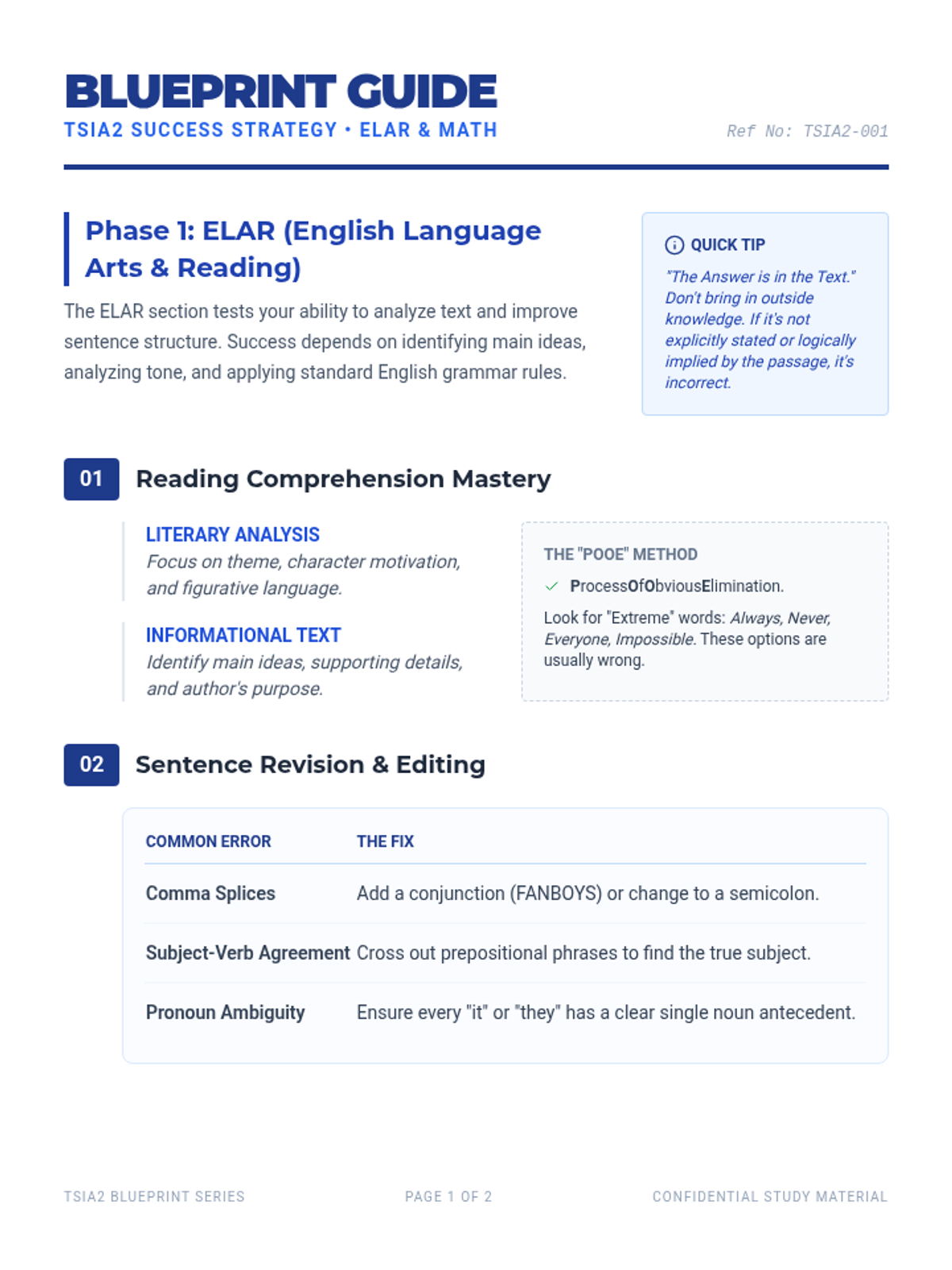
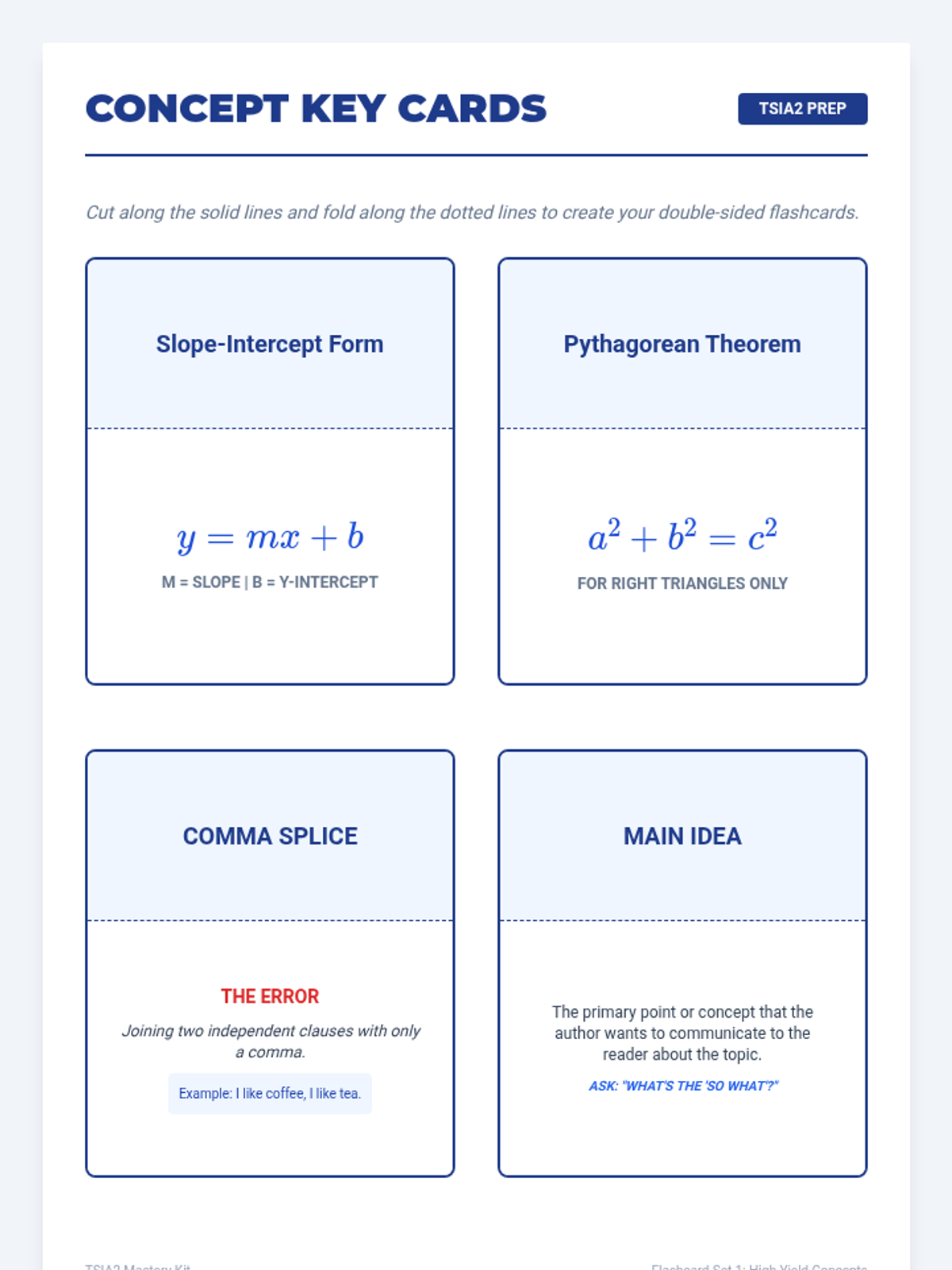
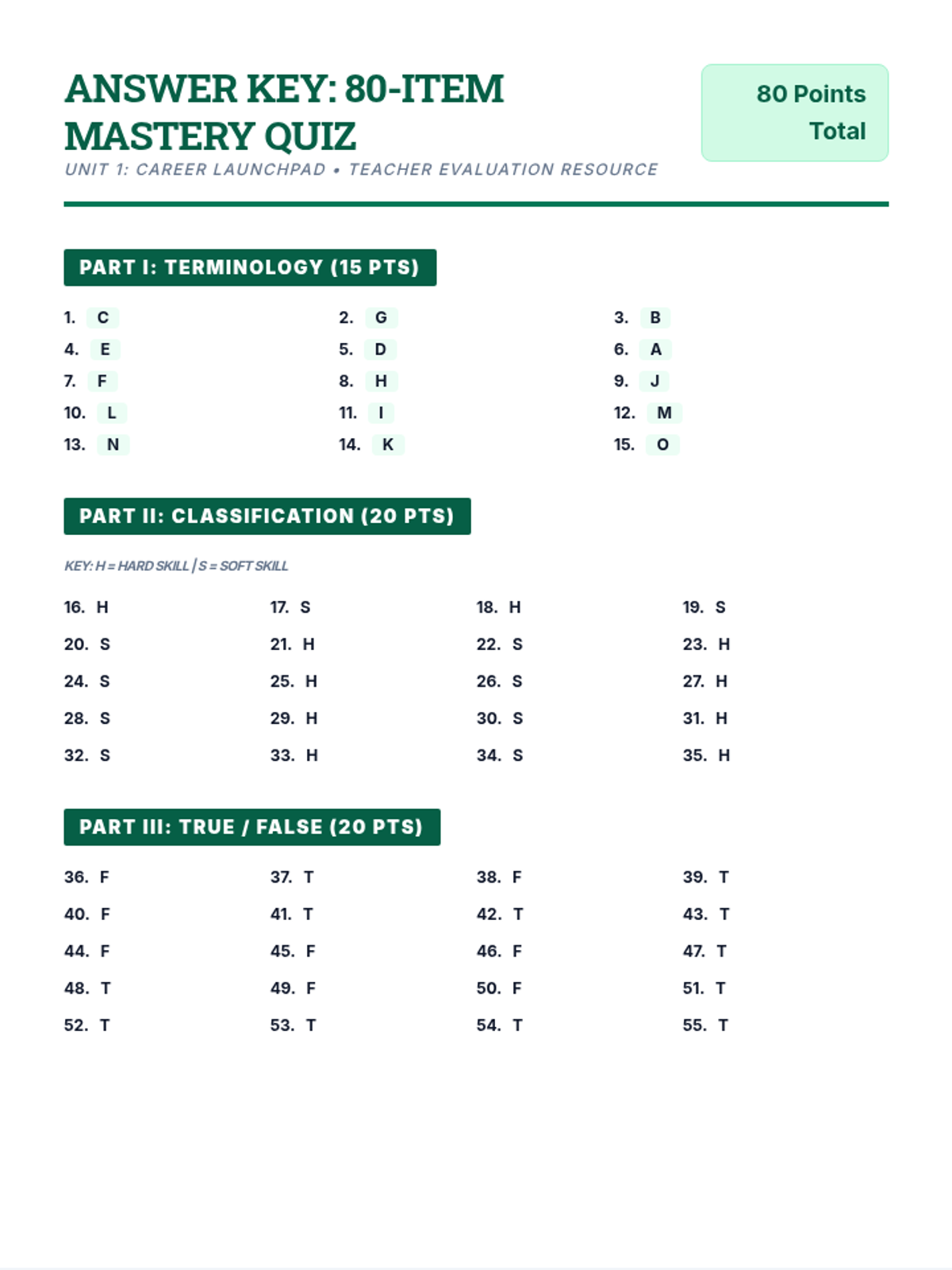
A comprehensive TSIA2 preparation course covering ELAR and Mathematics domains through strategic study guides, full-length practice, and daily warm-ups.
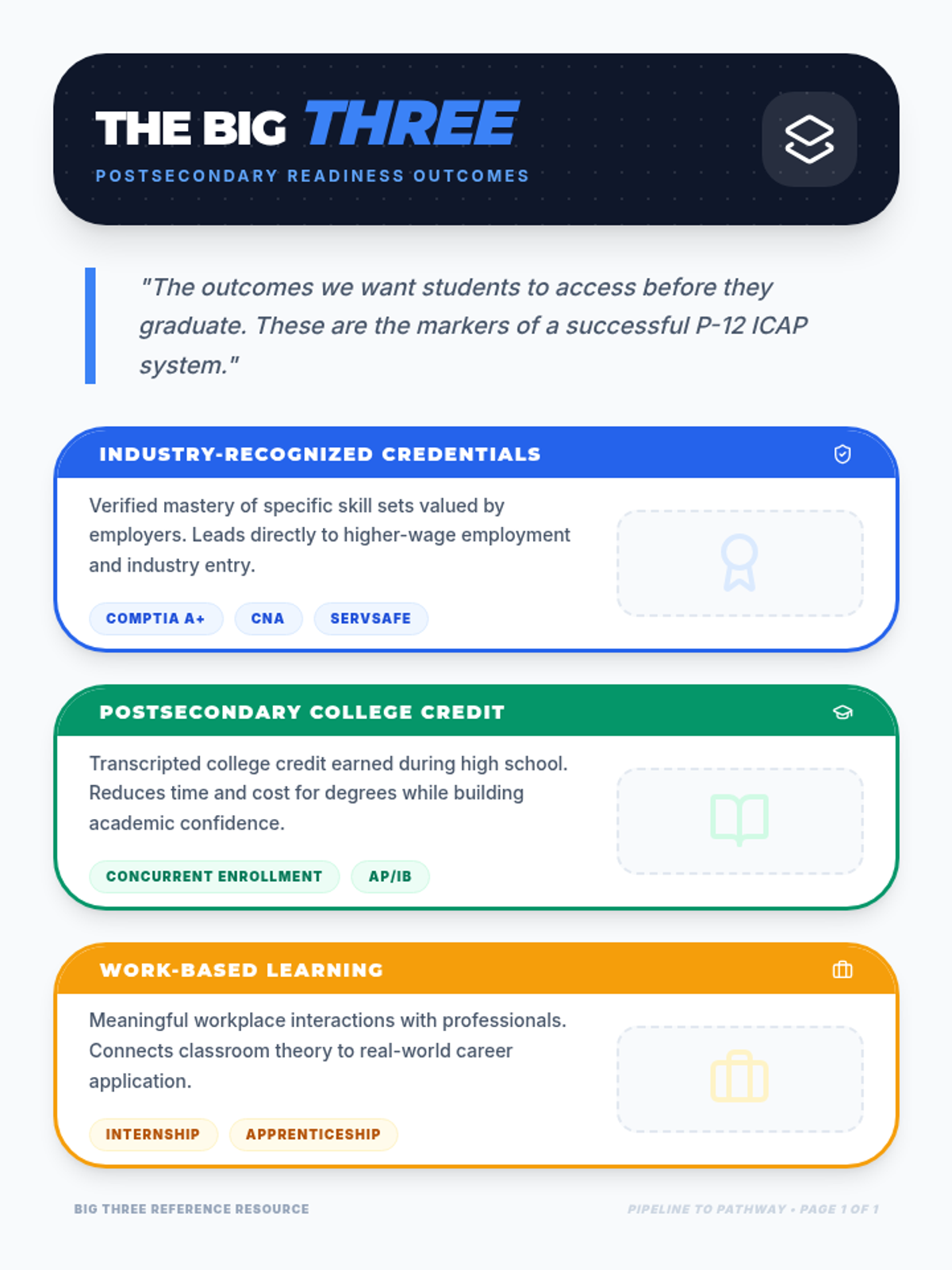
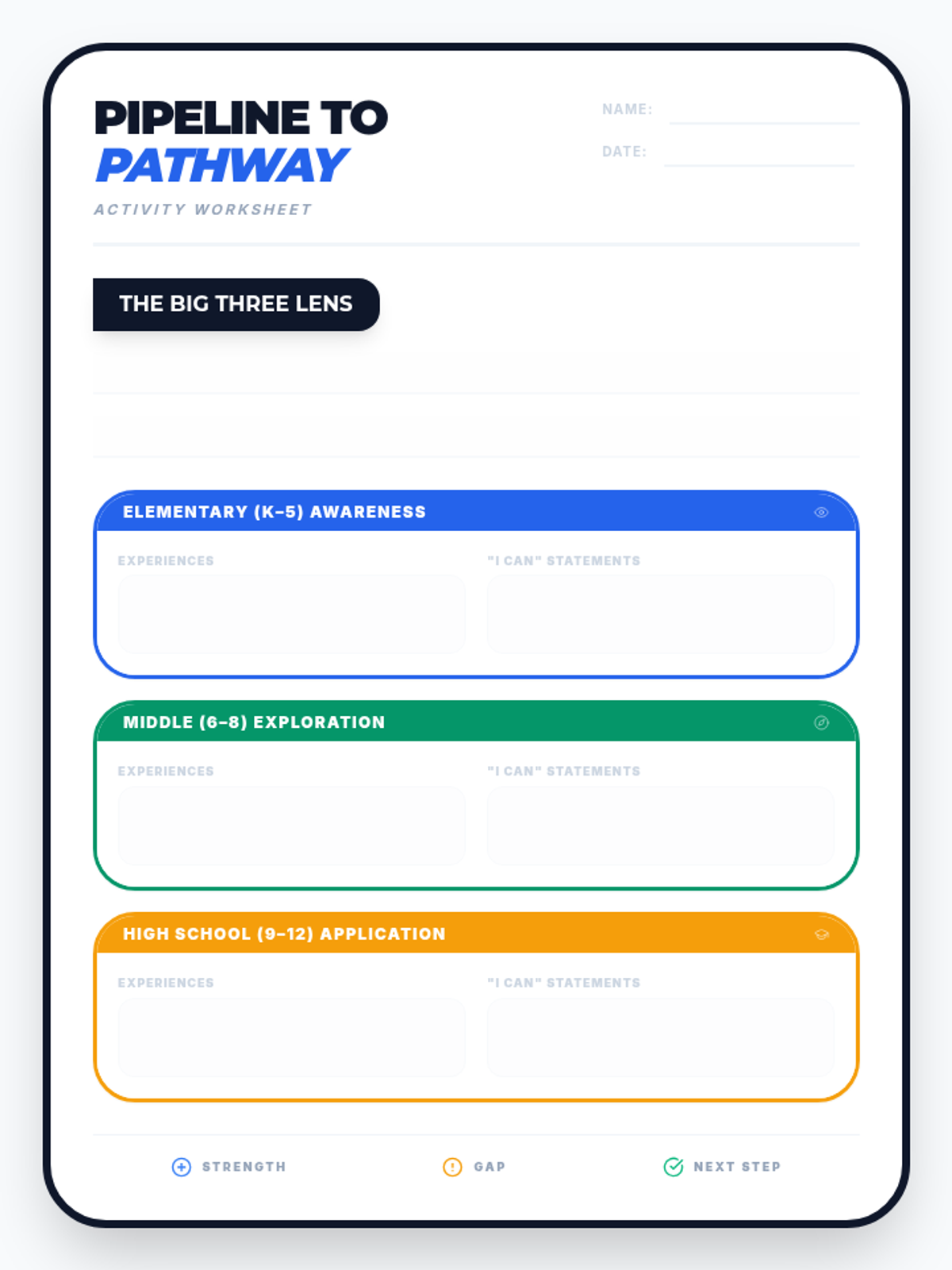
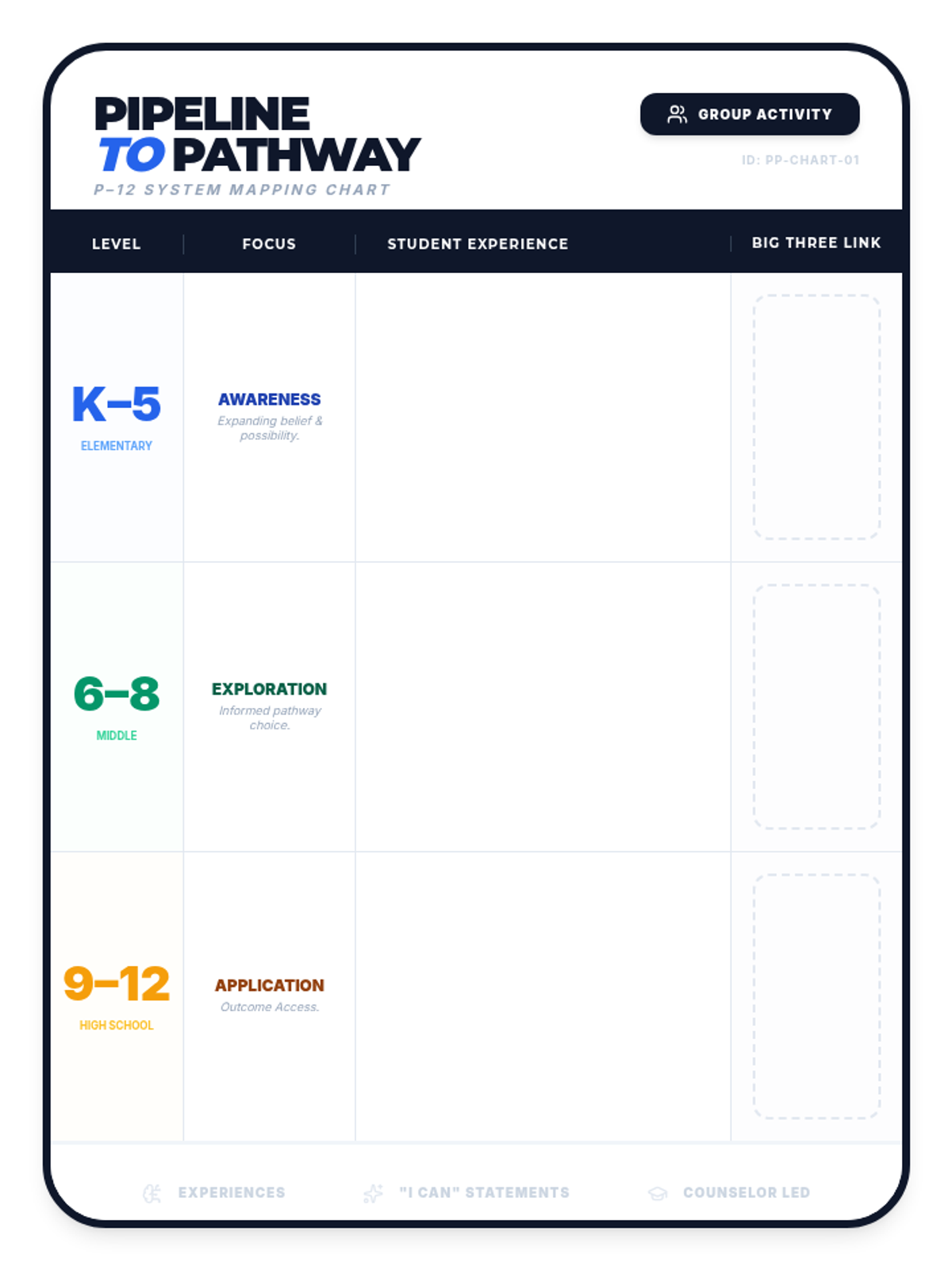
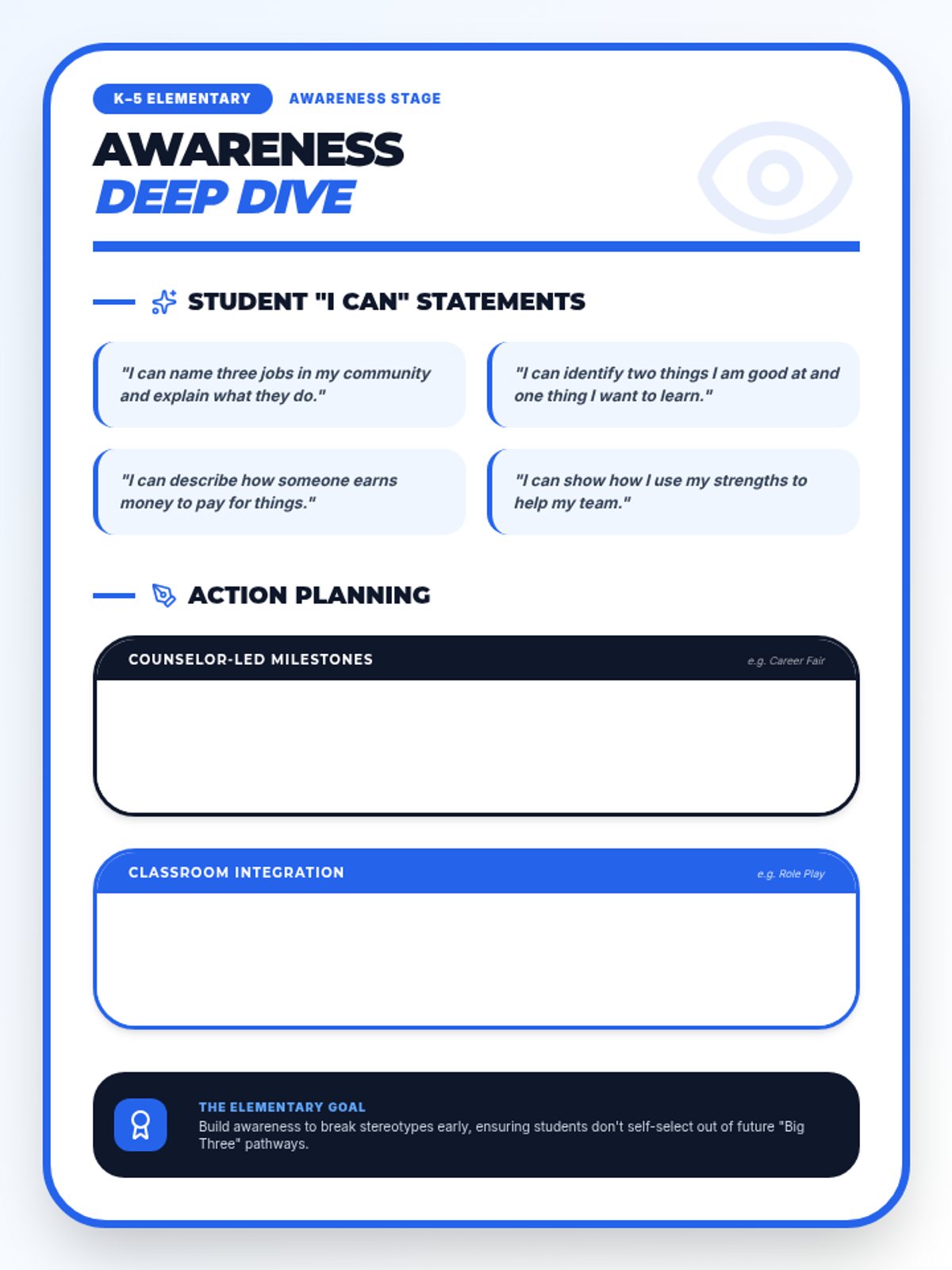
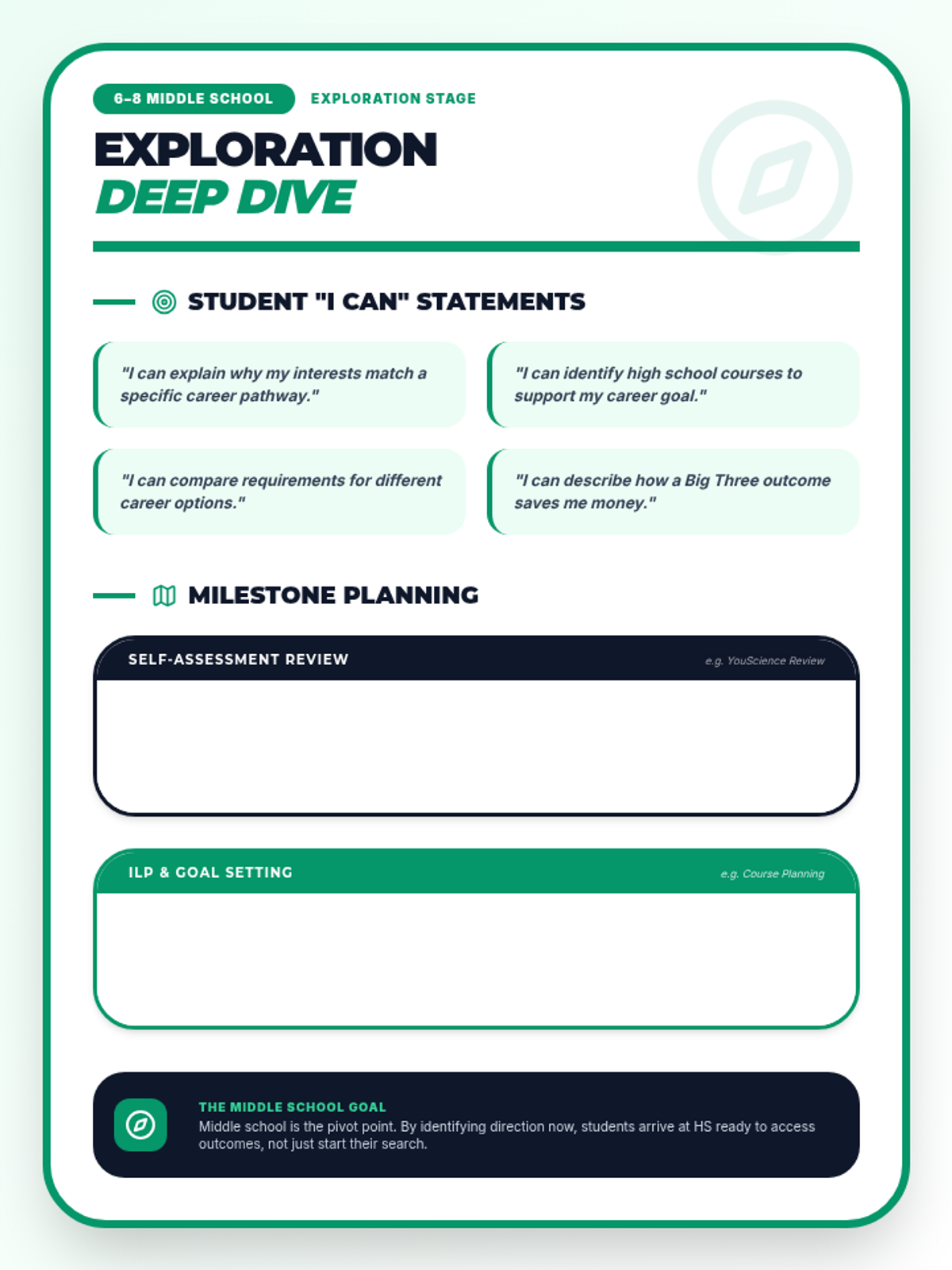
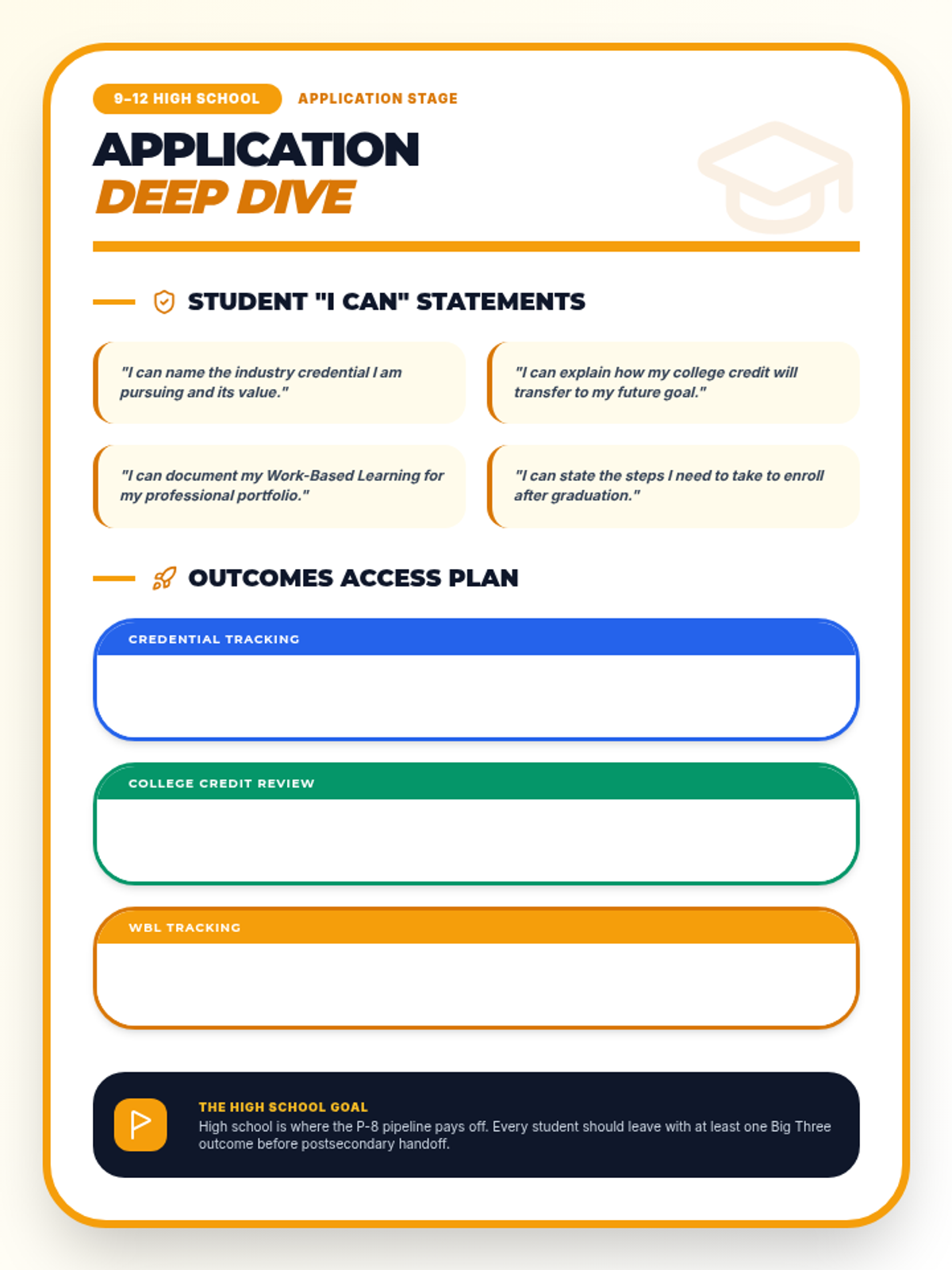
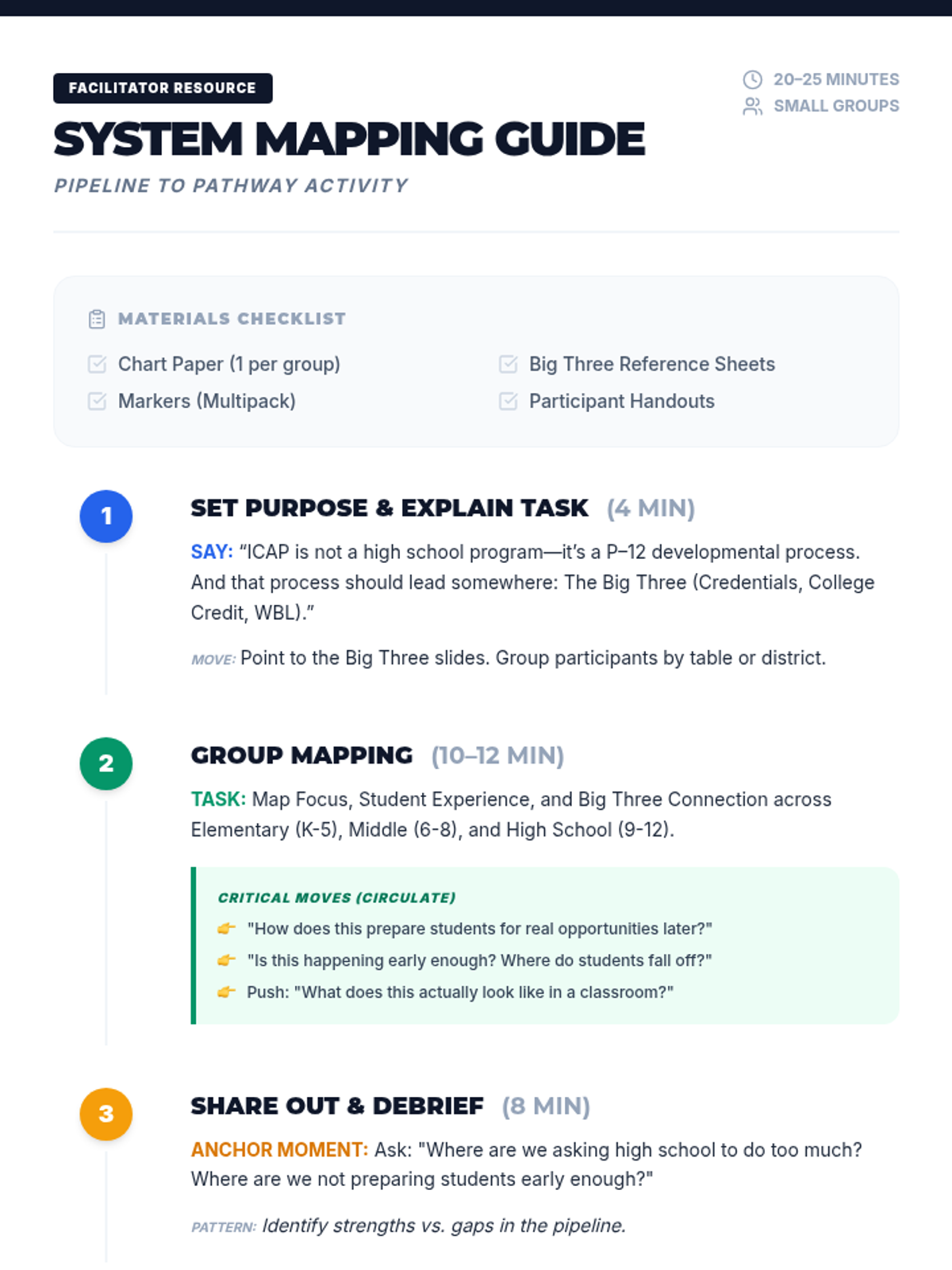
A comprehensive professional development sequence focused on building a P-12 ICAP system that leads to the Big Three outcomes: Industry Credentials, College Credit, and Work-Based Learning.
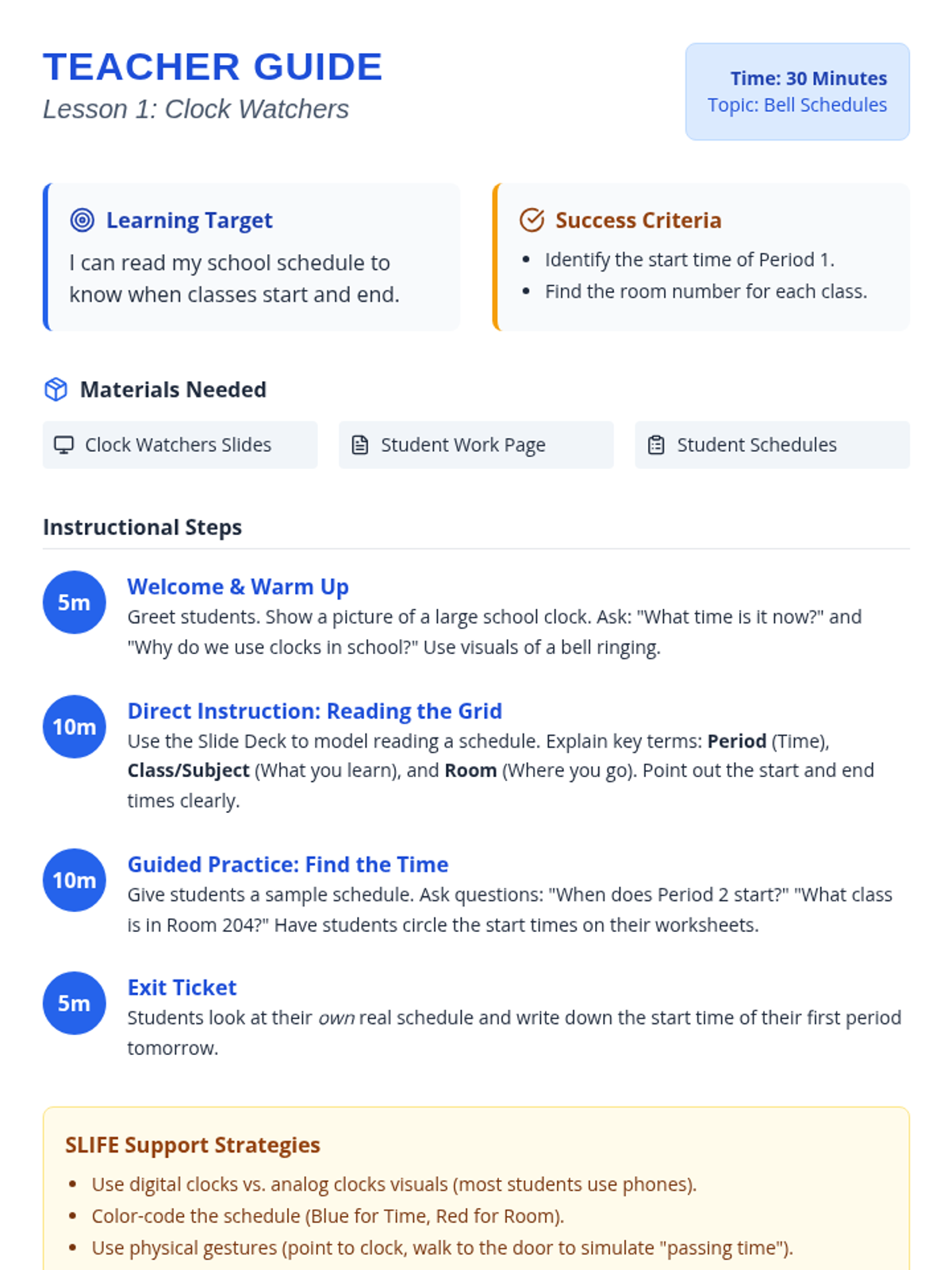
A 10-lesson transition series for SLIFE students entering high school, focusing on essential navigation, digital literacy, and graduation requirements with high visual support.
A 4-week college readiness program designed specifically for first-generation students, covering college types, financial literacy, the application process, and post-acceptance steps.
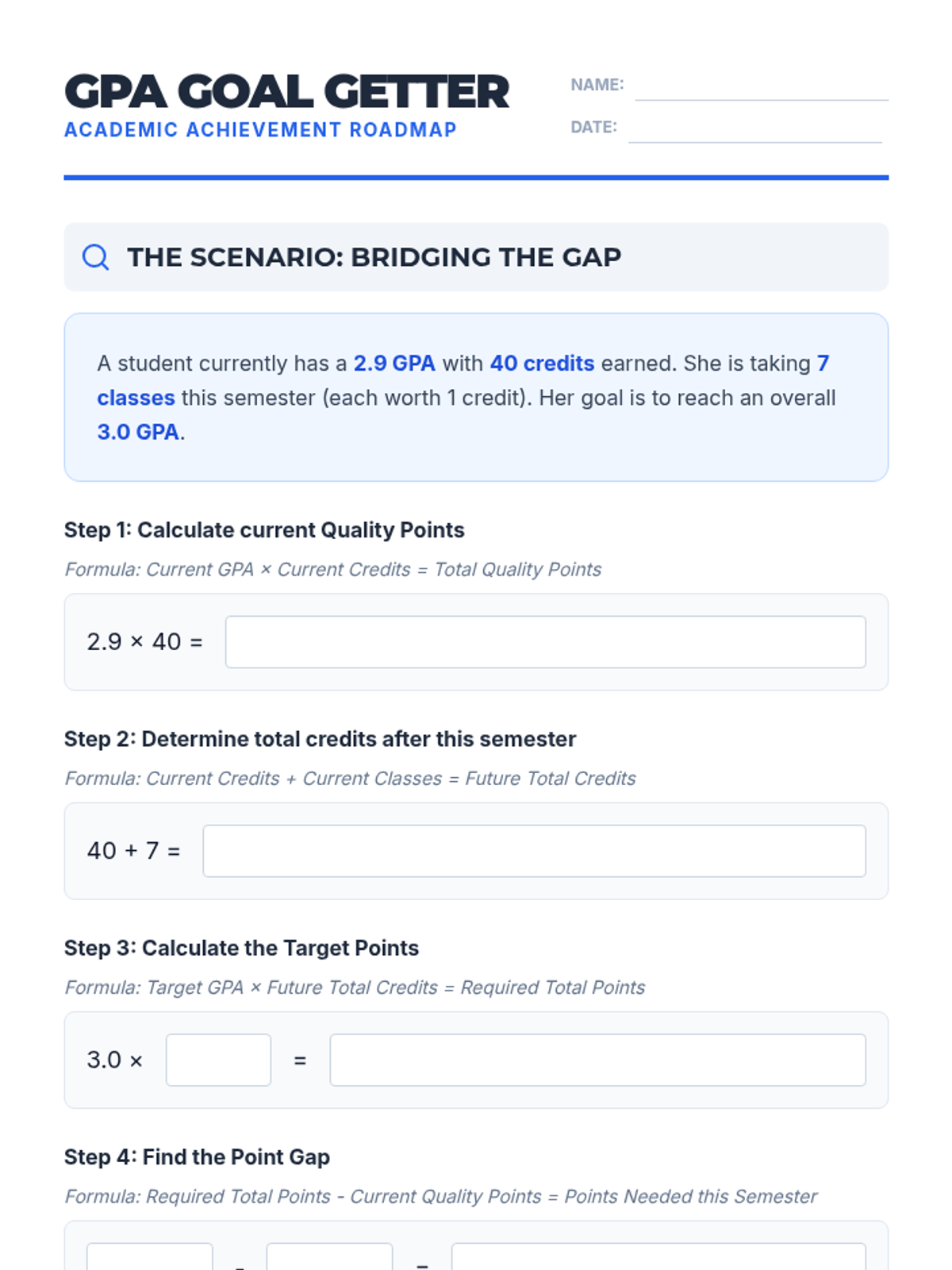
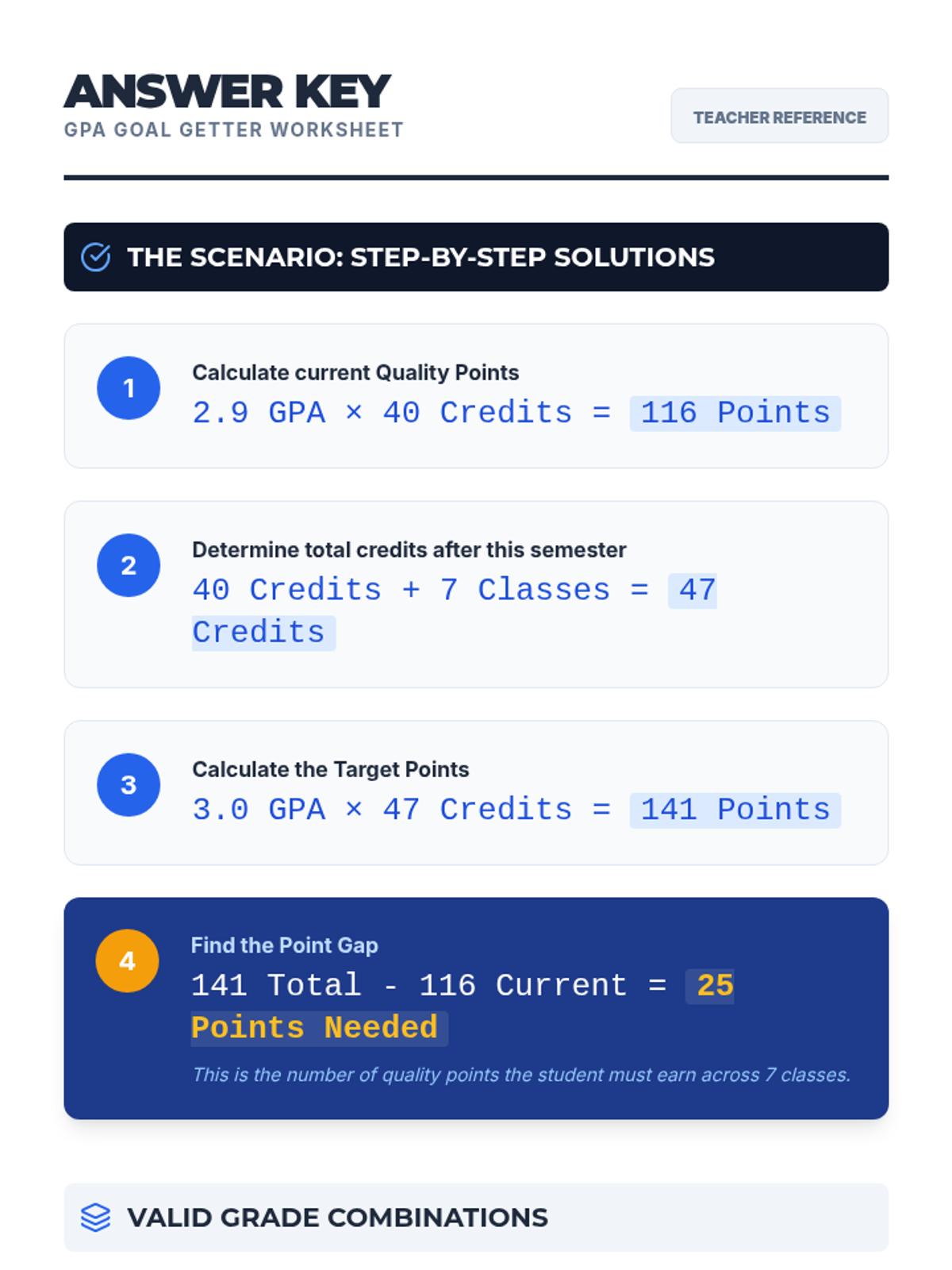
A comprehensive guide for students to understand how Grade Point Averages are calculated and how to set realistic academic goals to reach their targets.
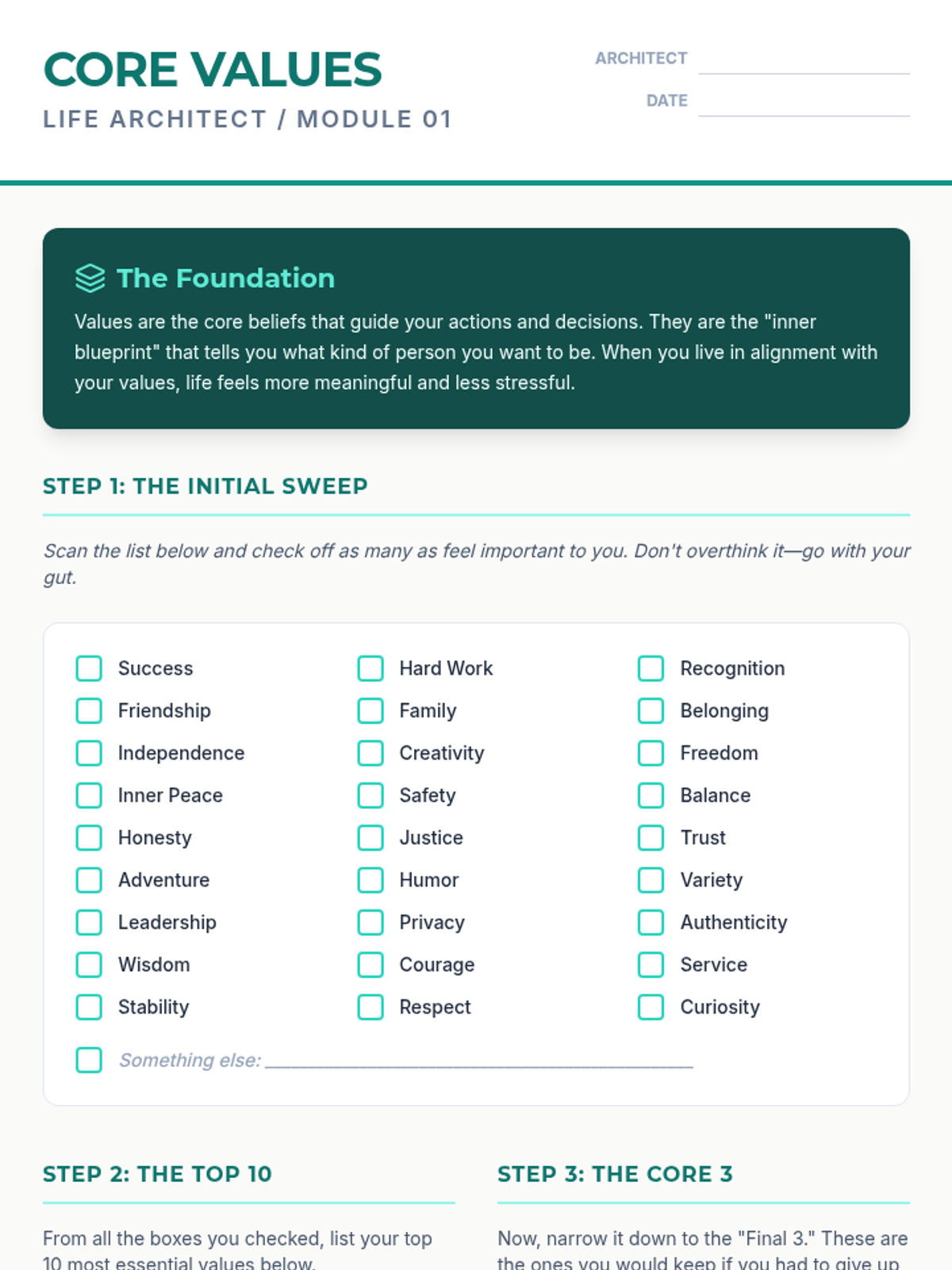
A transition-focused curriculum designed to help students re-entering school build self-advocacy, self-awareness, and independent living skills through a creative 'Life Architect' theme.
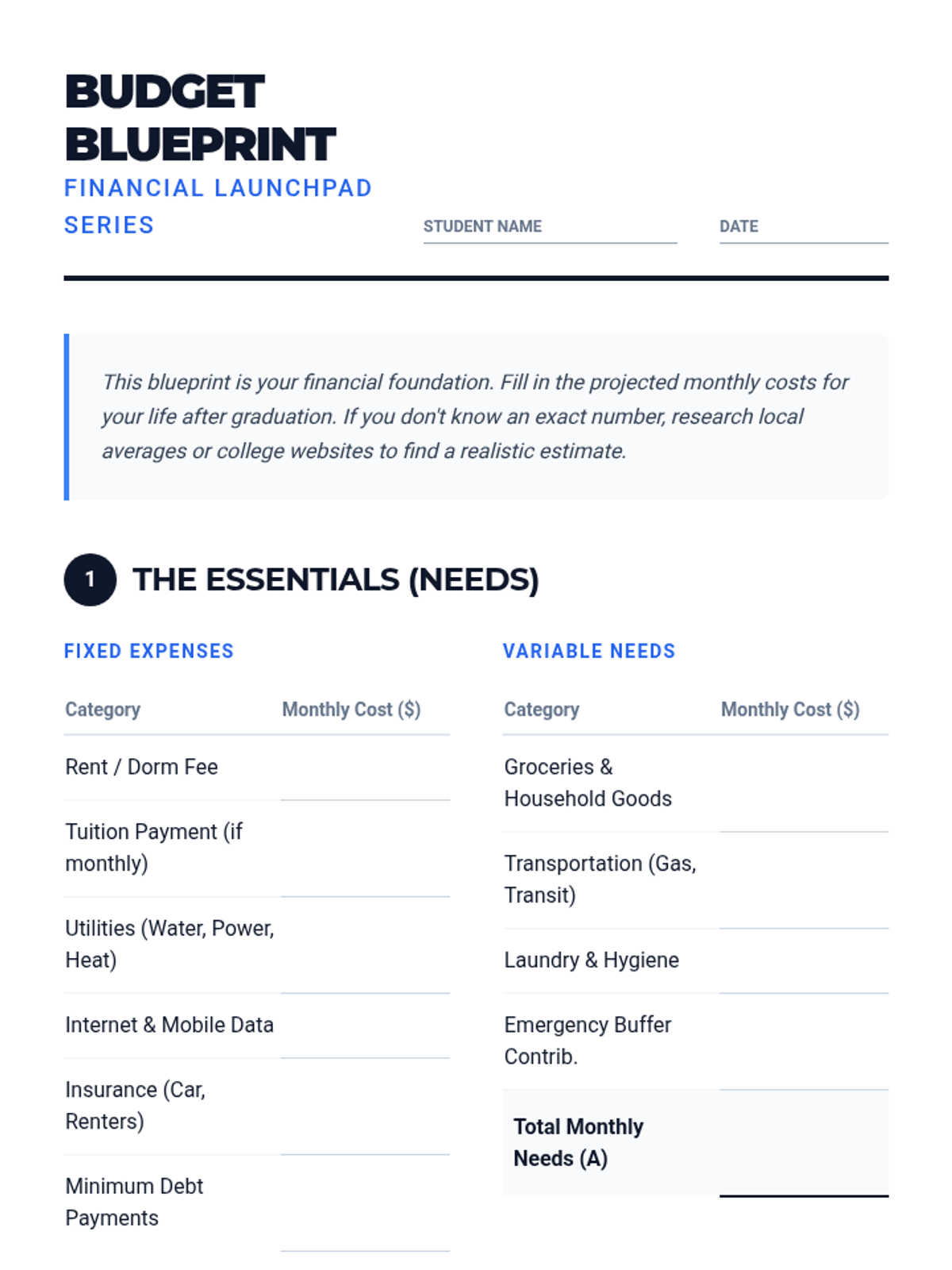
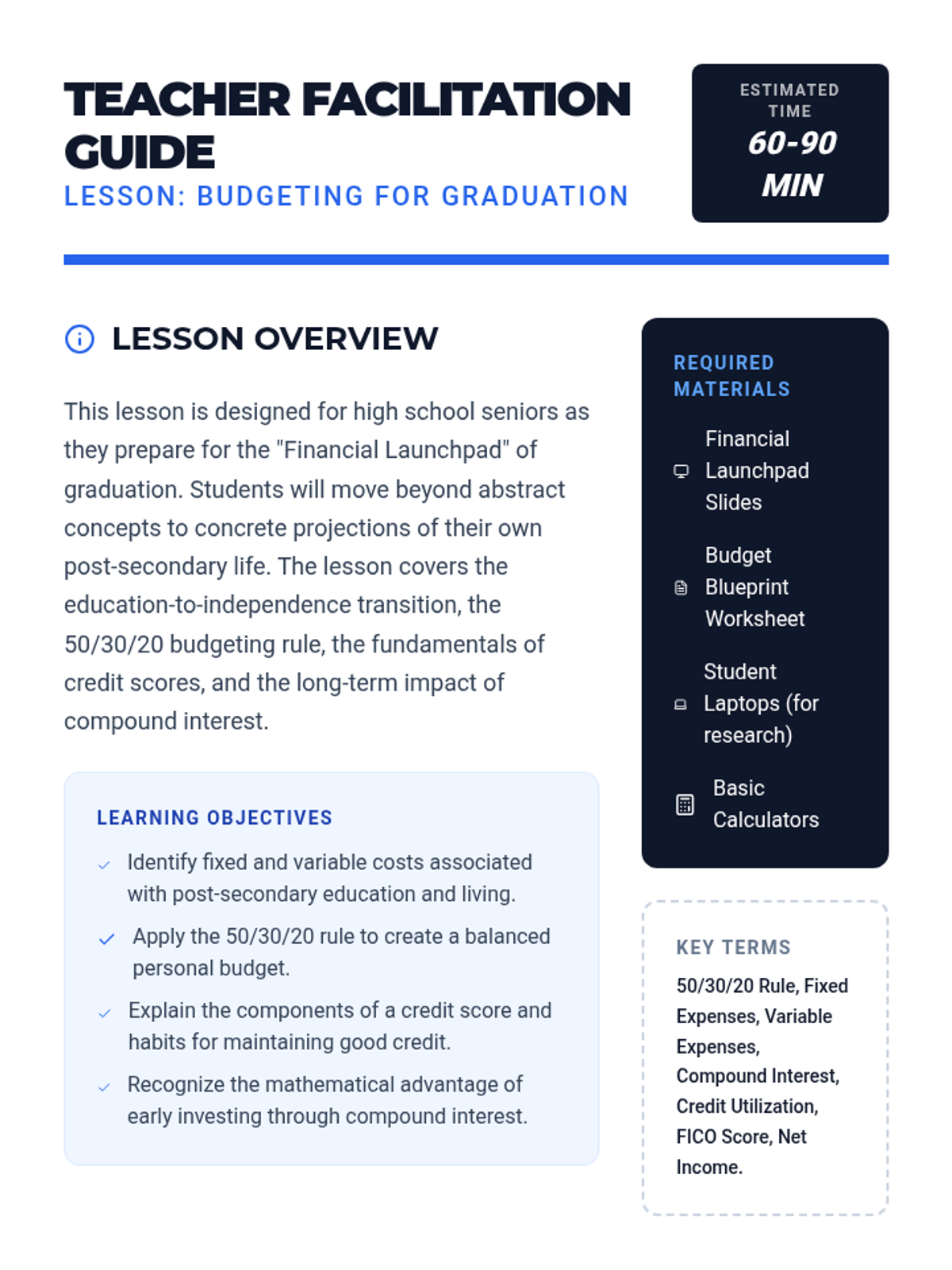
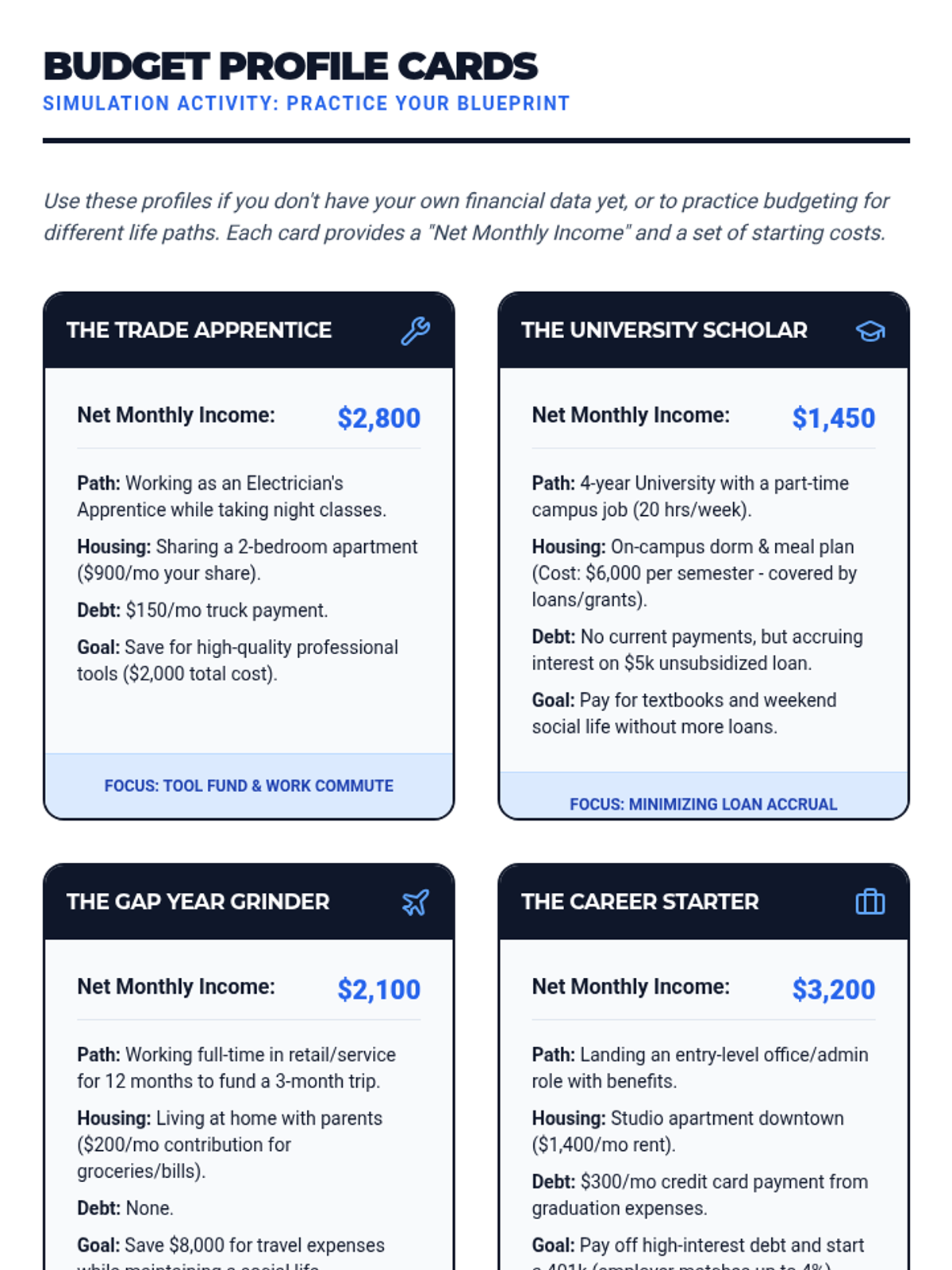
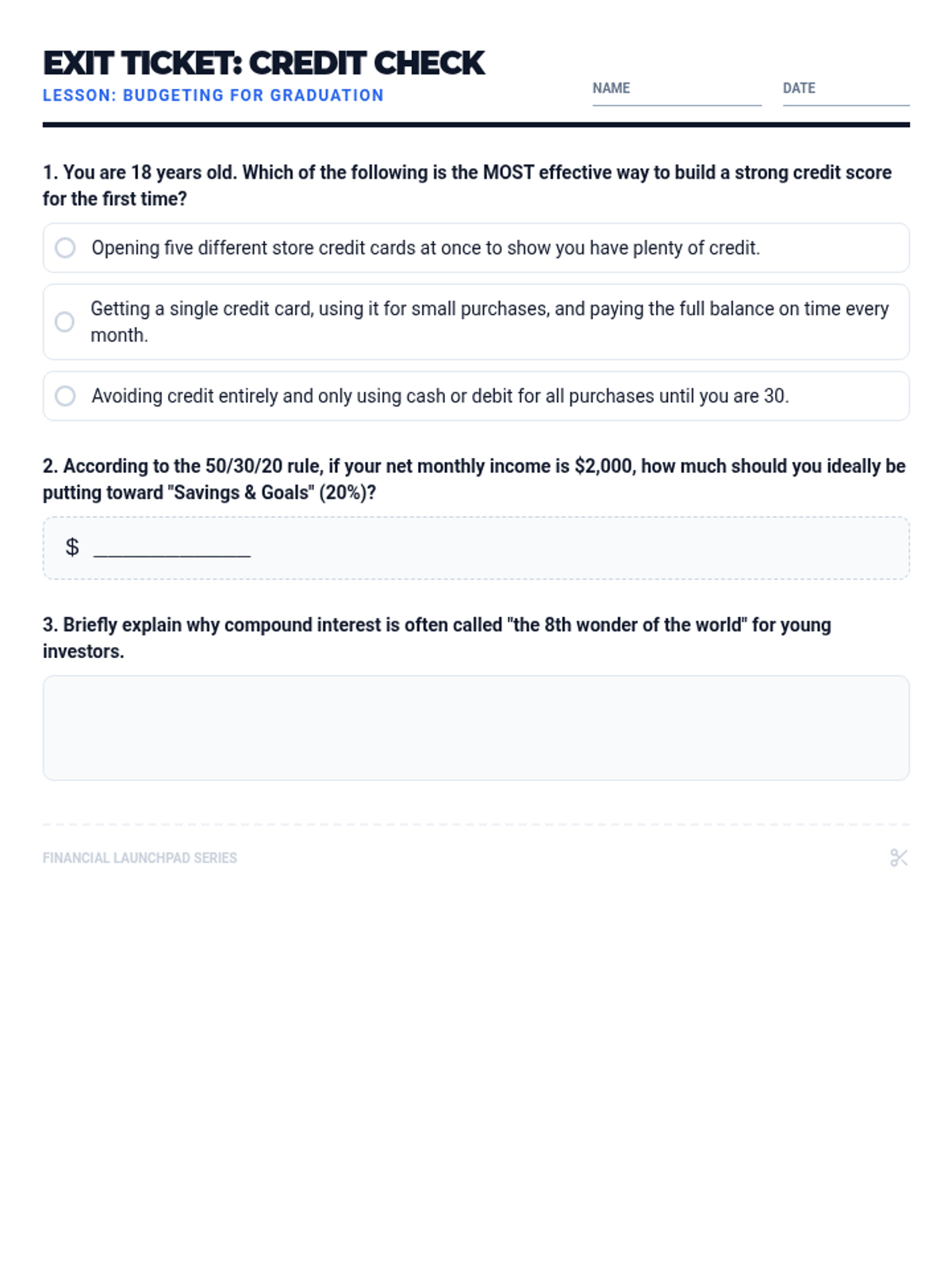
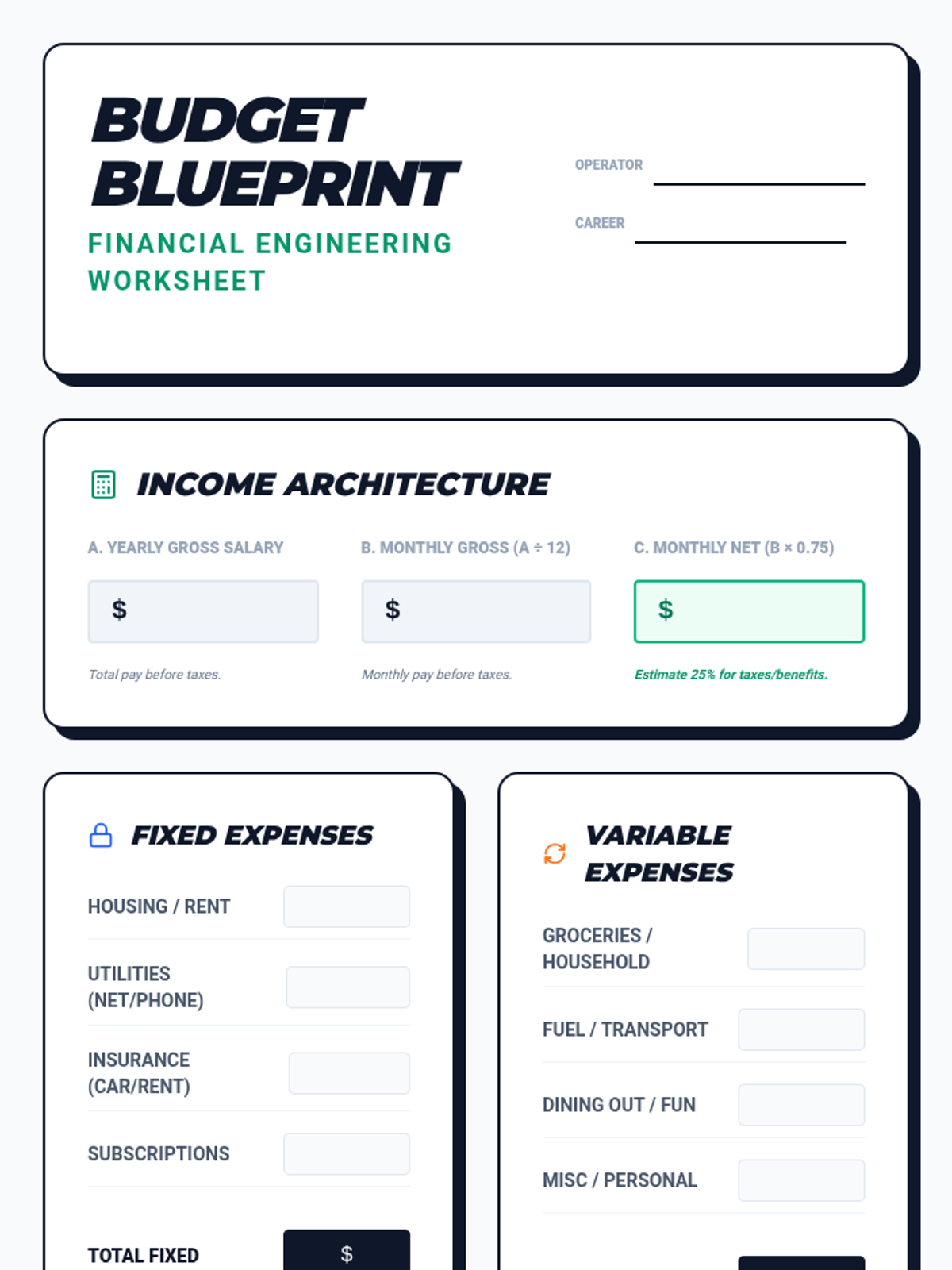
A comprehensive personal finance unit designed for high school seniors preparing for life after graduation, focusing on budgeting, post-secondary costs, credit management, and long-term saving.
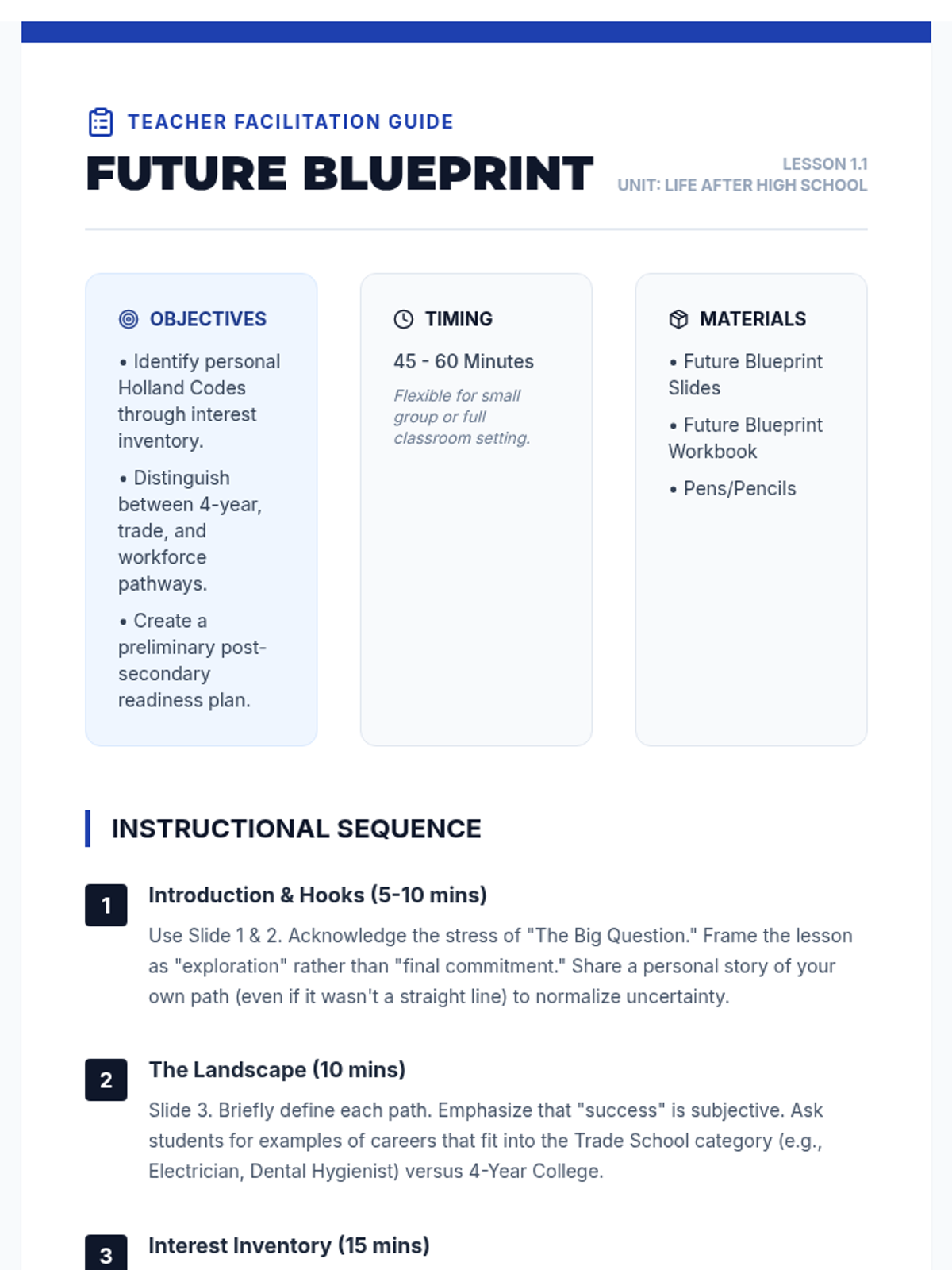
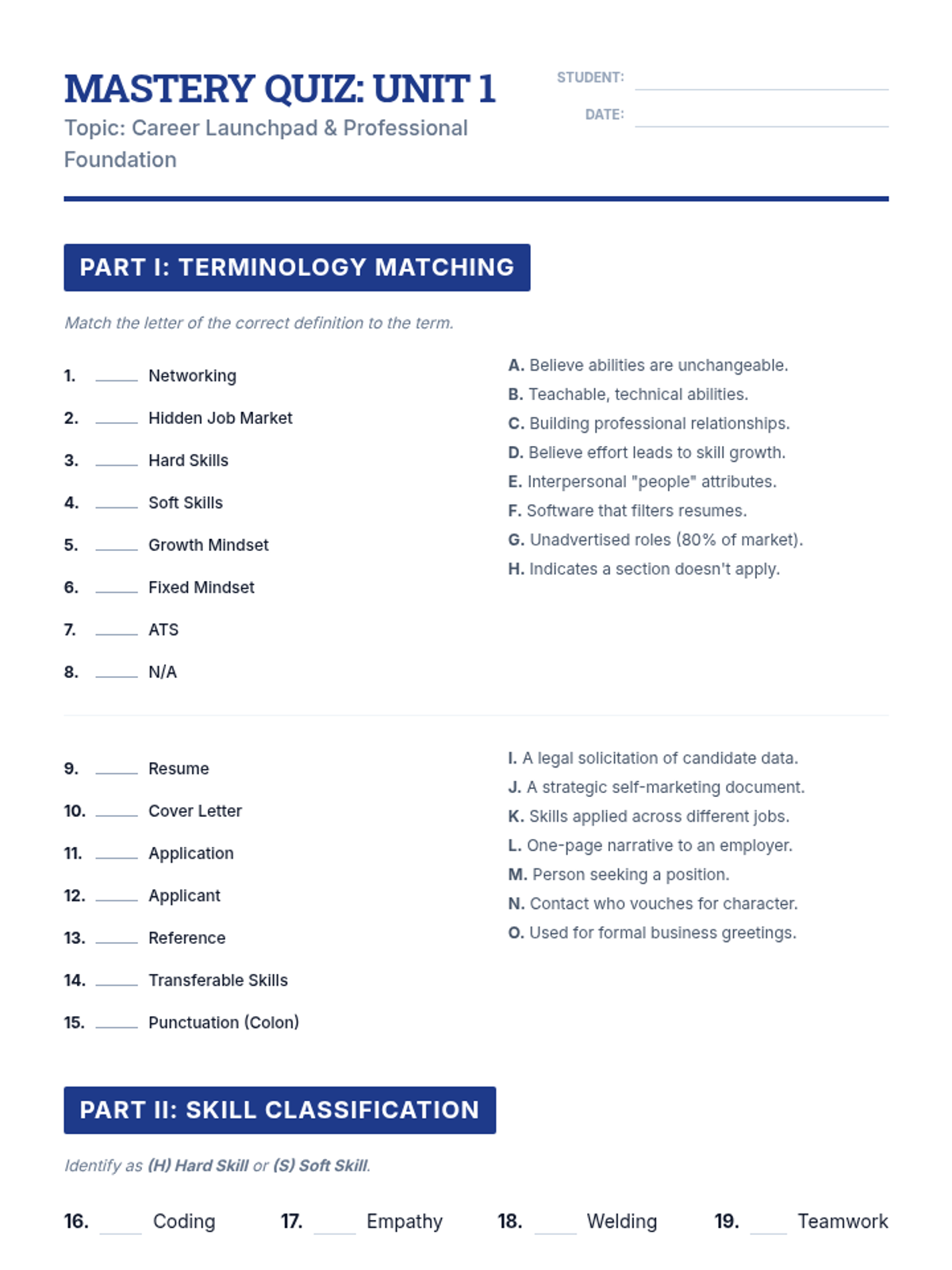
A unit focused on preparing high school students for life after graduation, covering career discovery, financial literacy, and application processes.
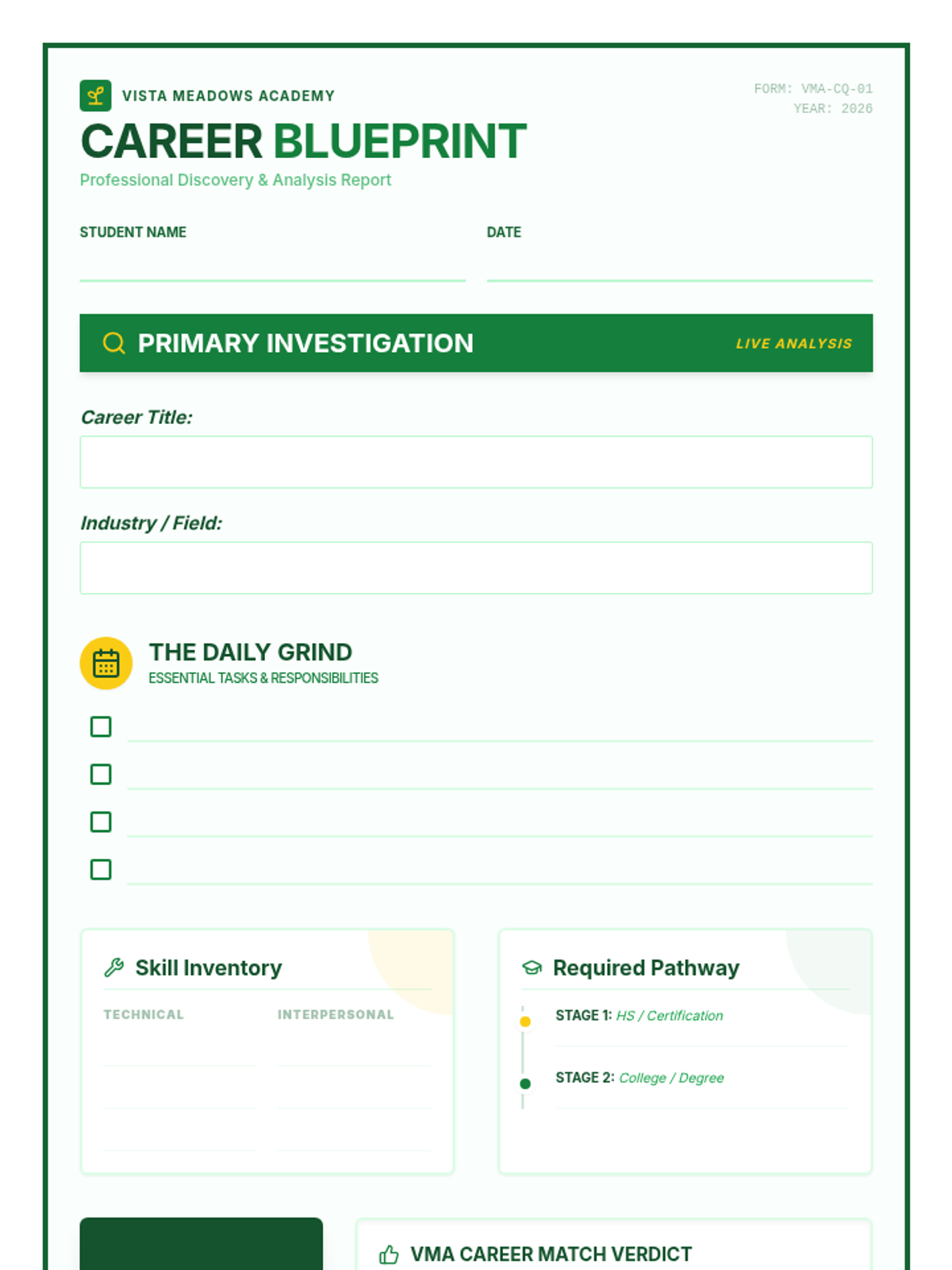
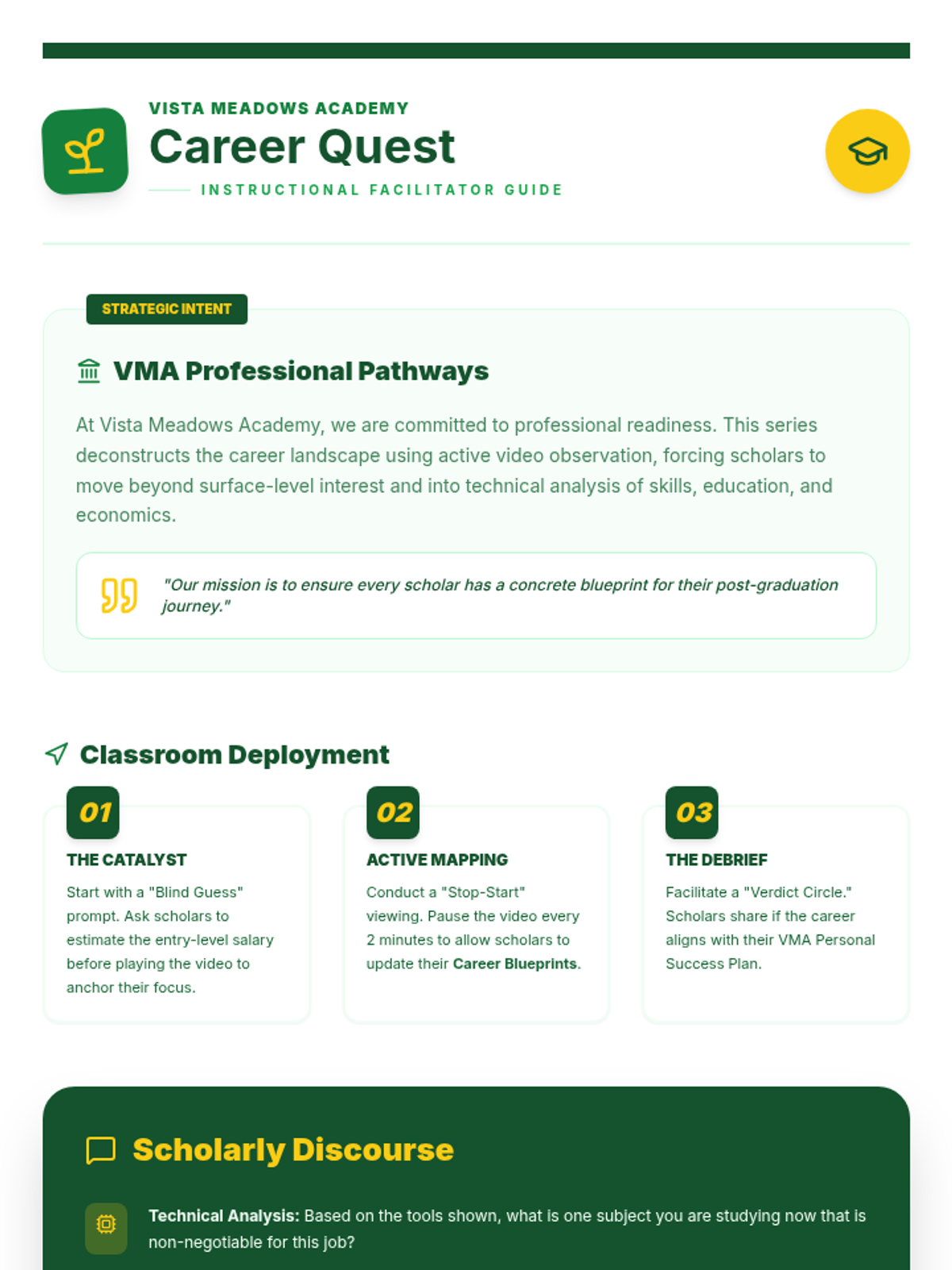
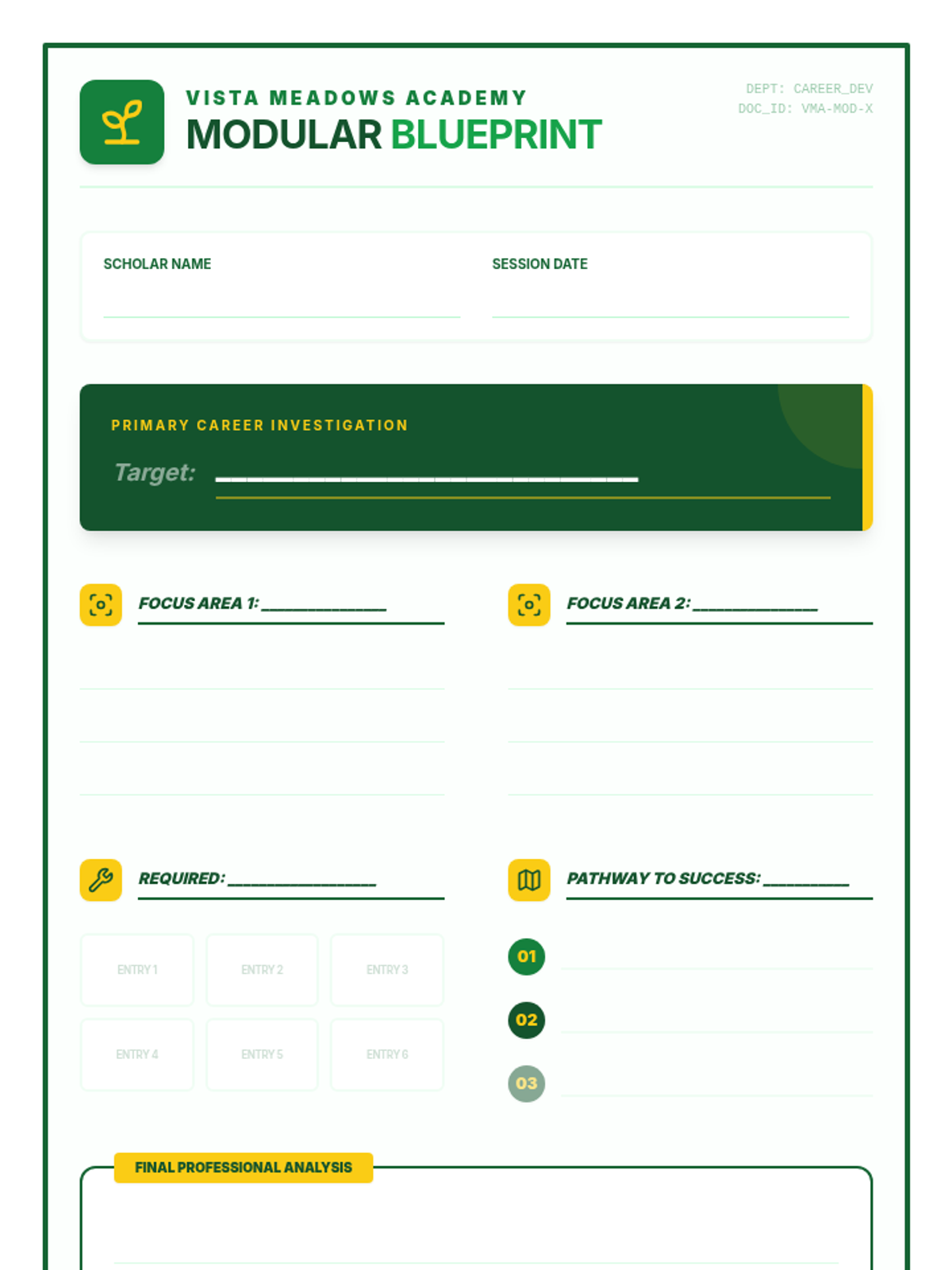
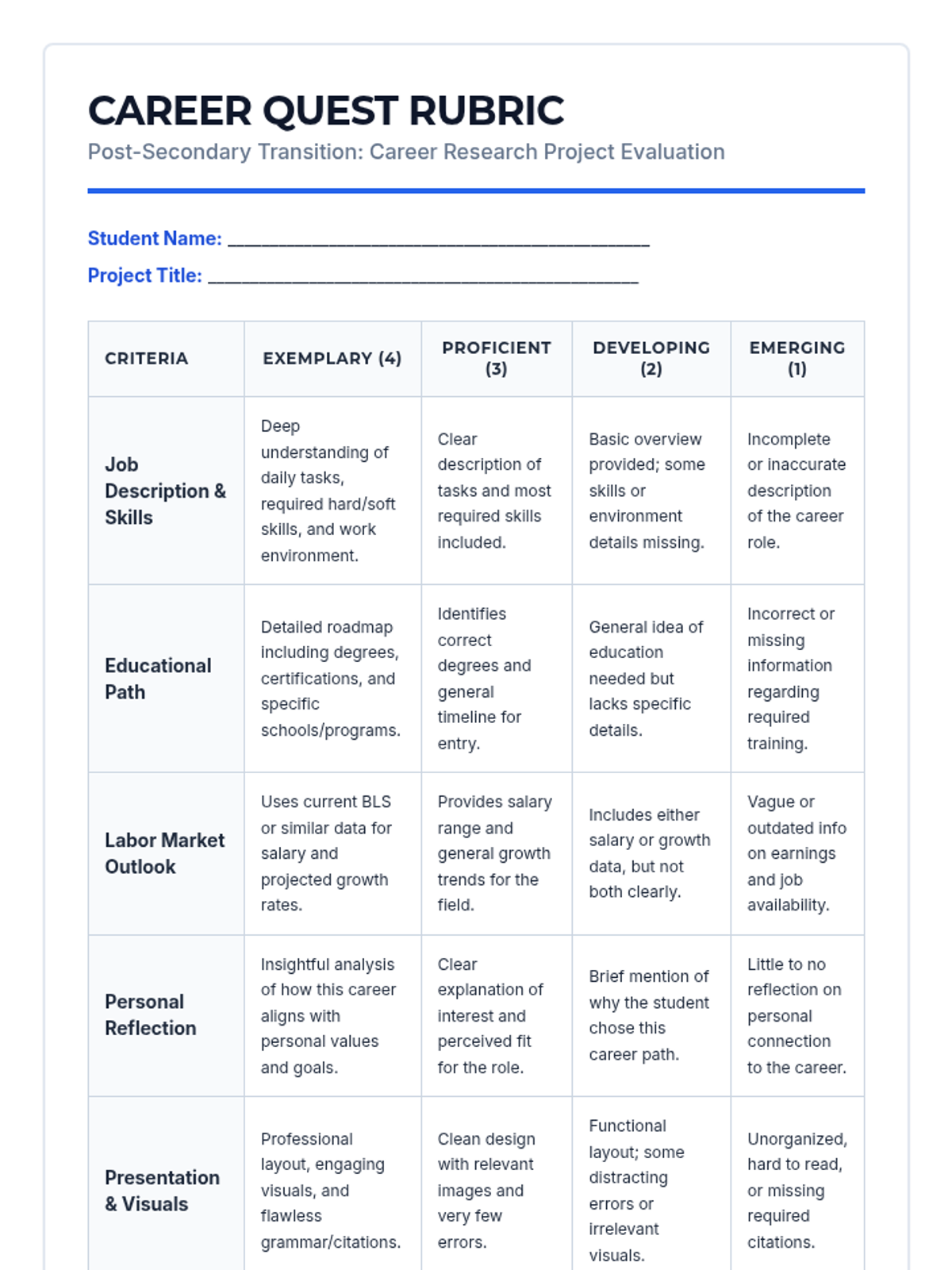
A series of lessons designed to help students explore various career paths through video observation and guided research, focusing on the skills, education, and daily realities of different professions.
A comprehensive year-long curriculum for high school seniors focusing on college readiness, career planning, financial literacy, and social-emotional well-being. This sequence guides students through the complexities of post-secondary transitions with a special focus on arts-based pathways.
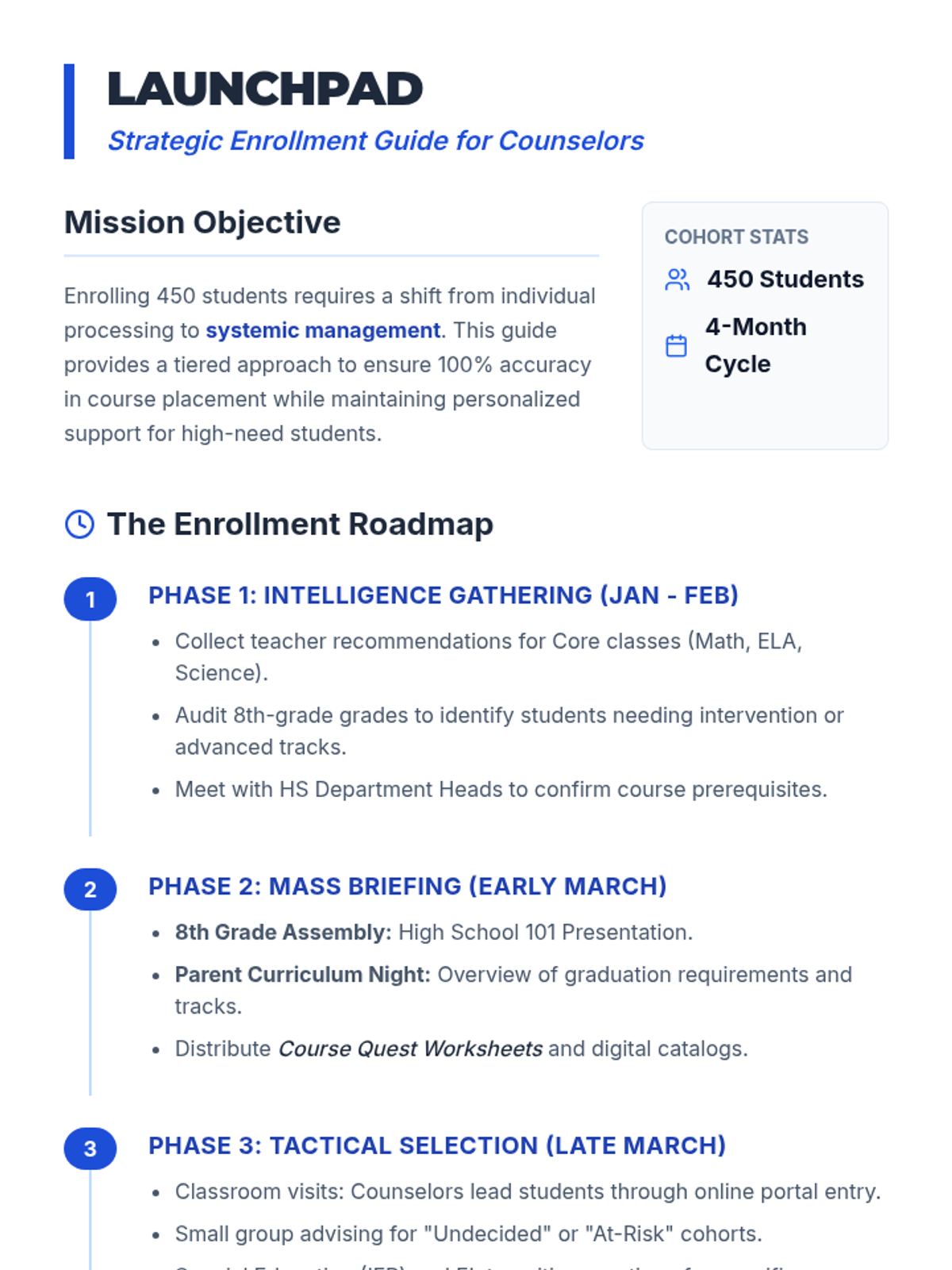
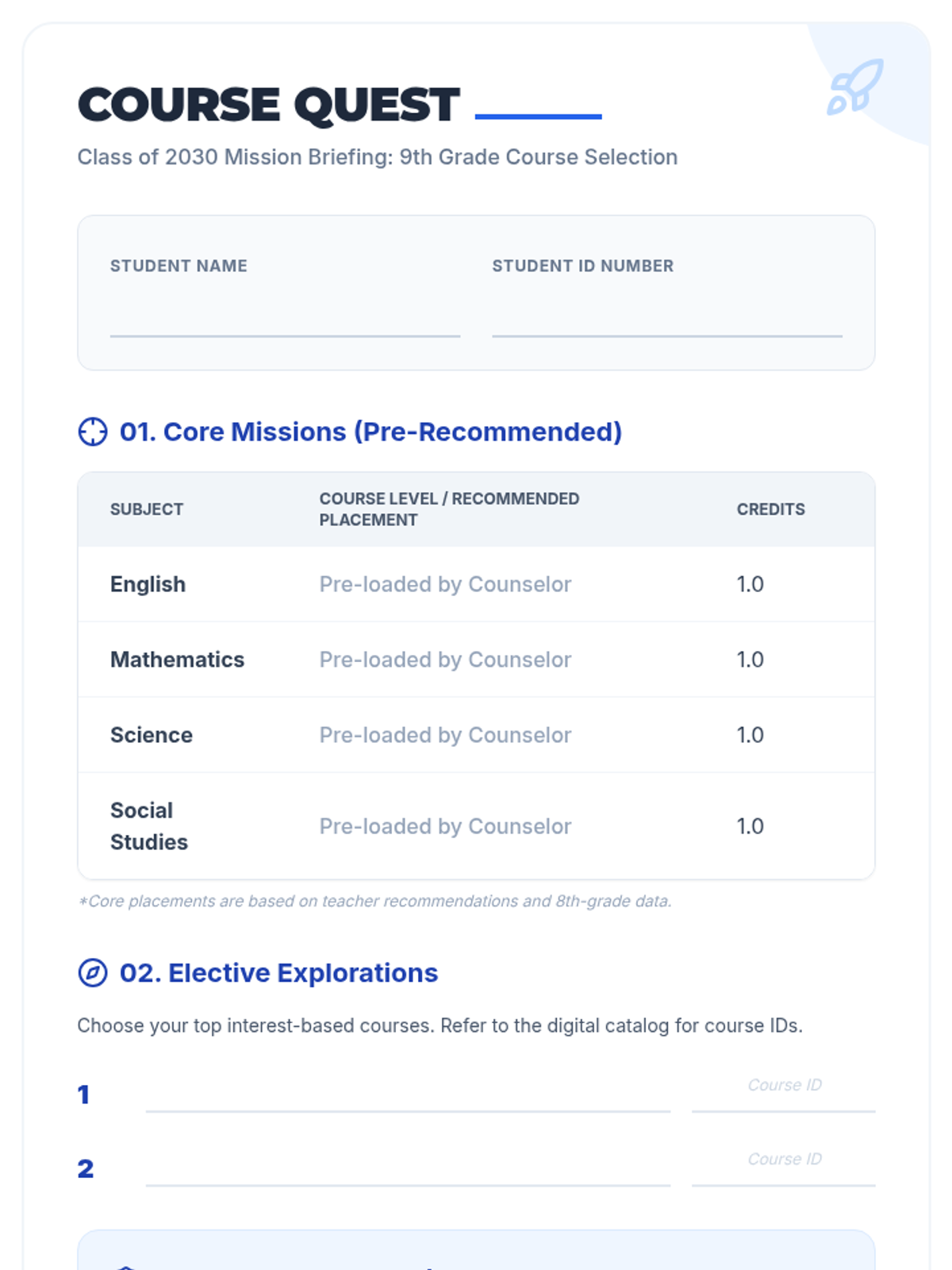
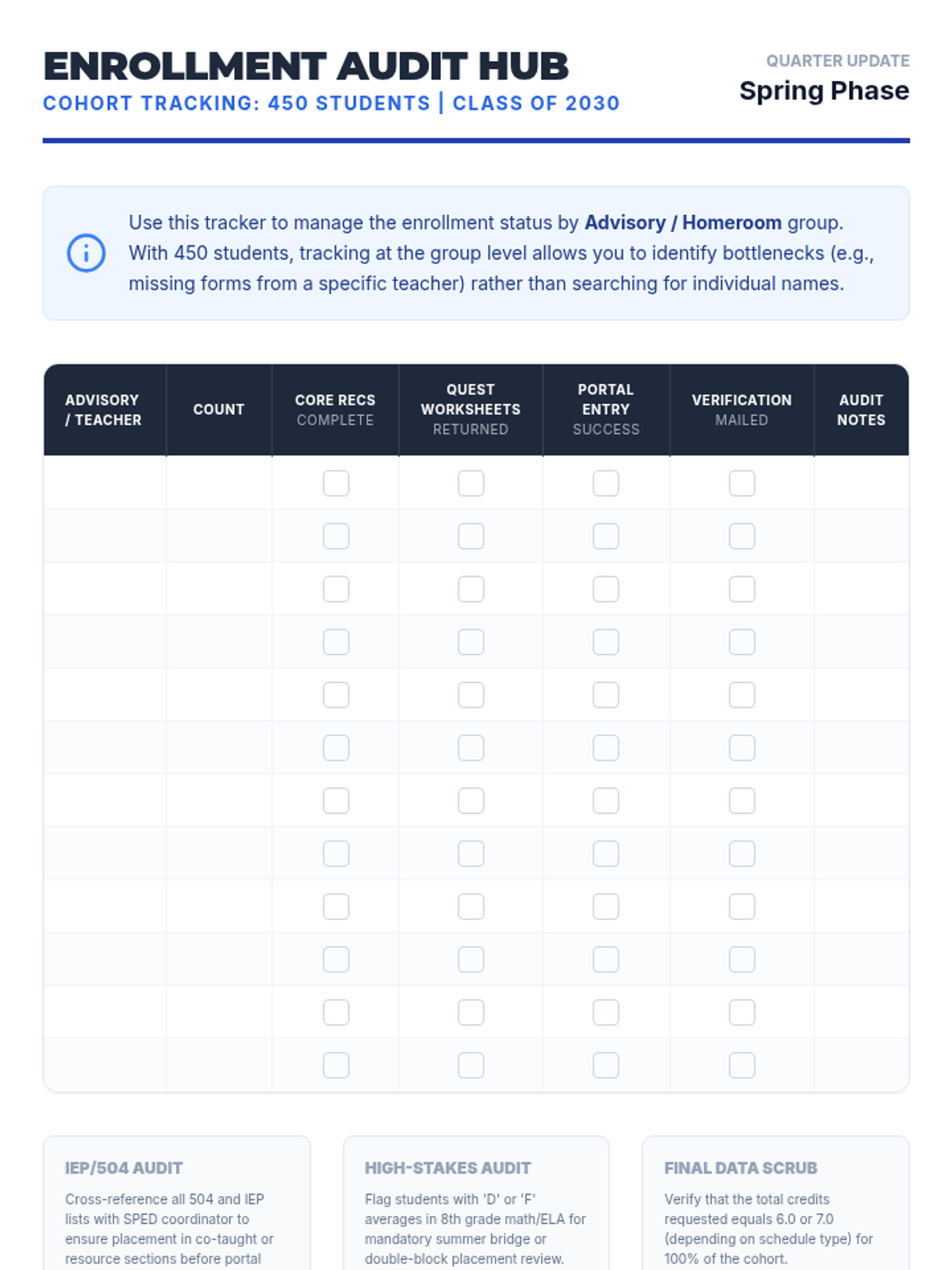
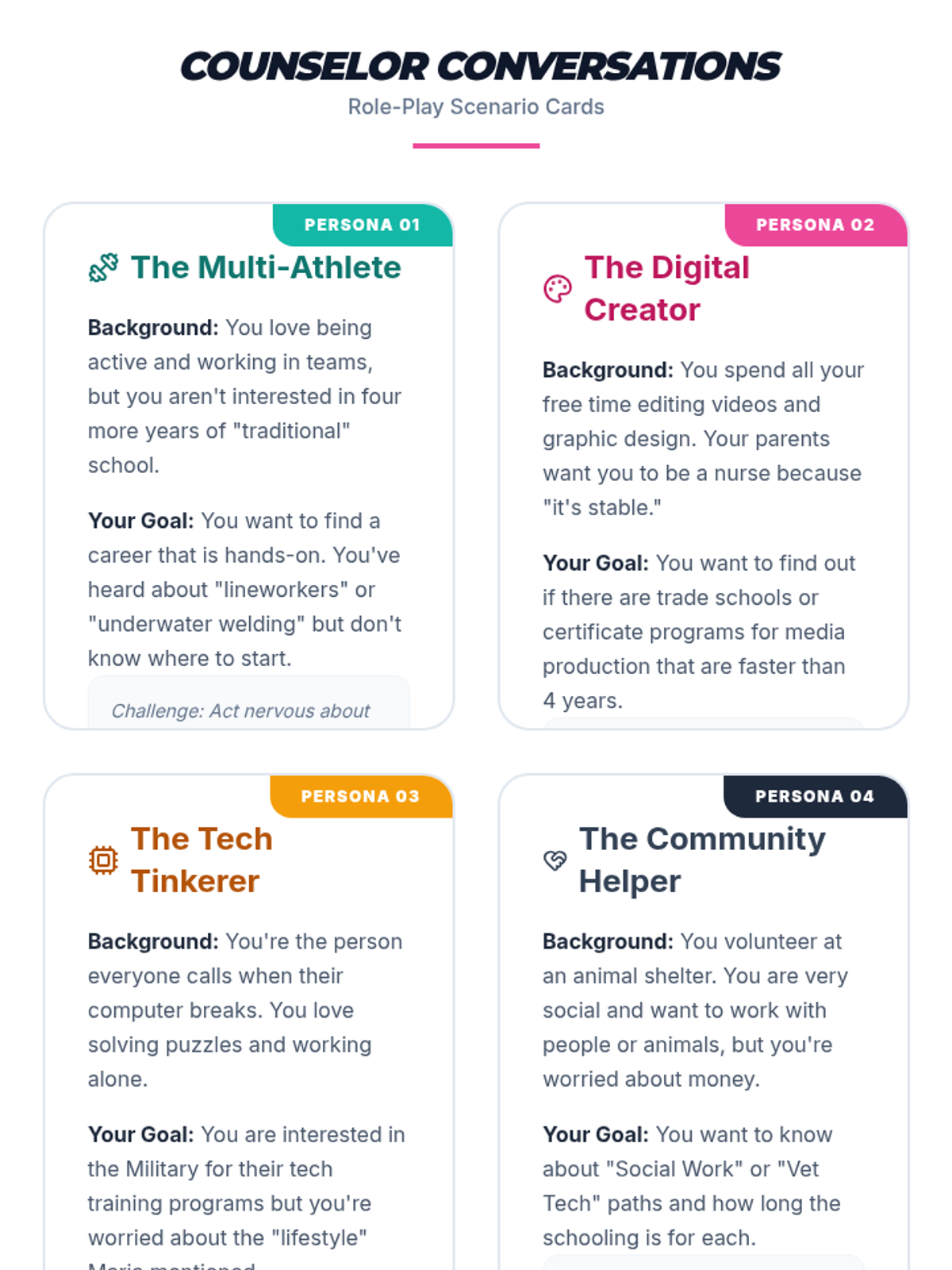
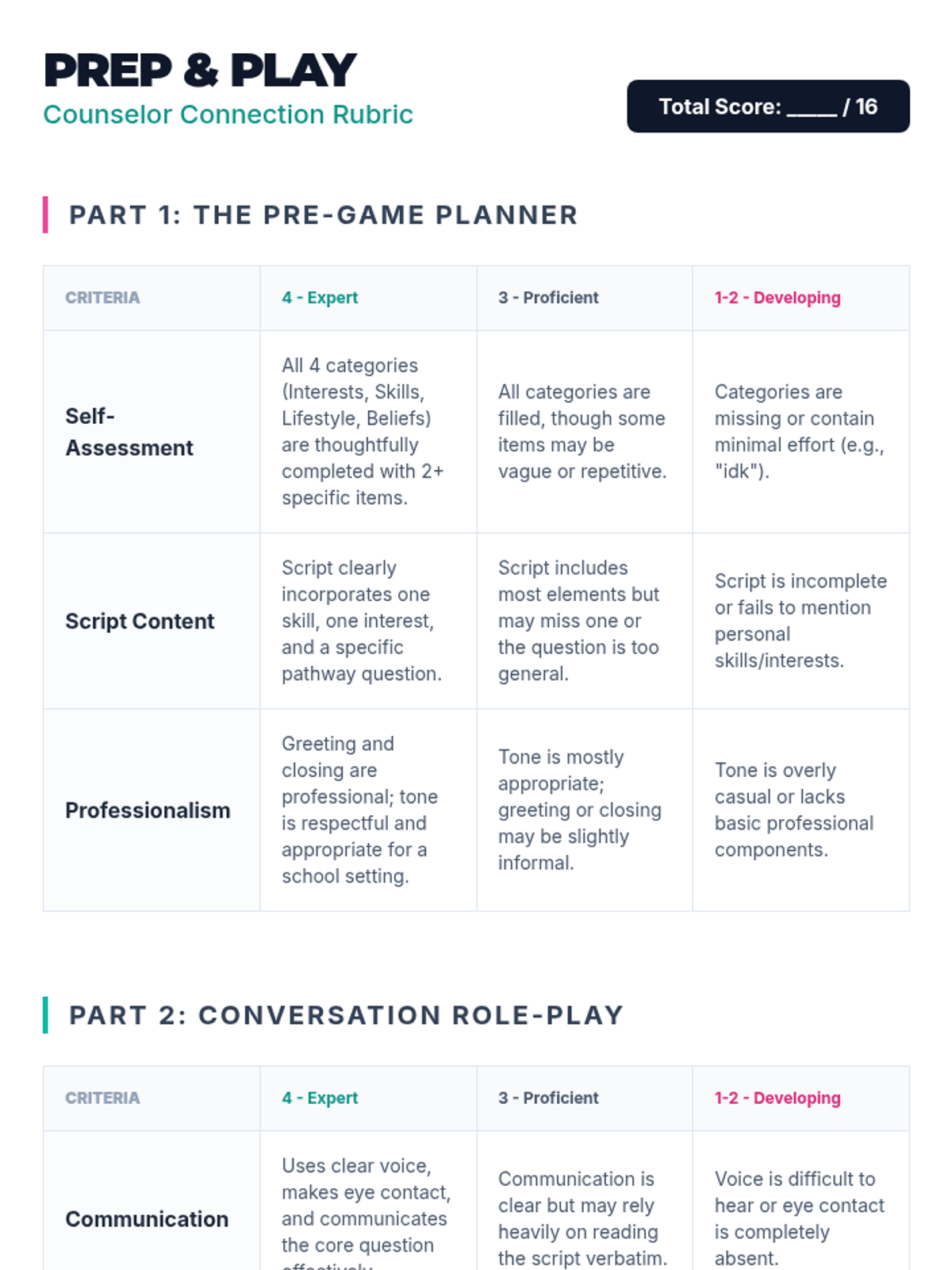
A comprehensive suite of counselor and student resources for managing the entire secondary academic journey, from 8th-grade transition through senior year planning.
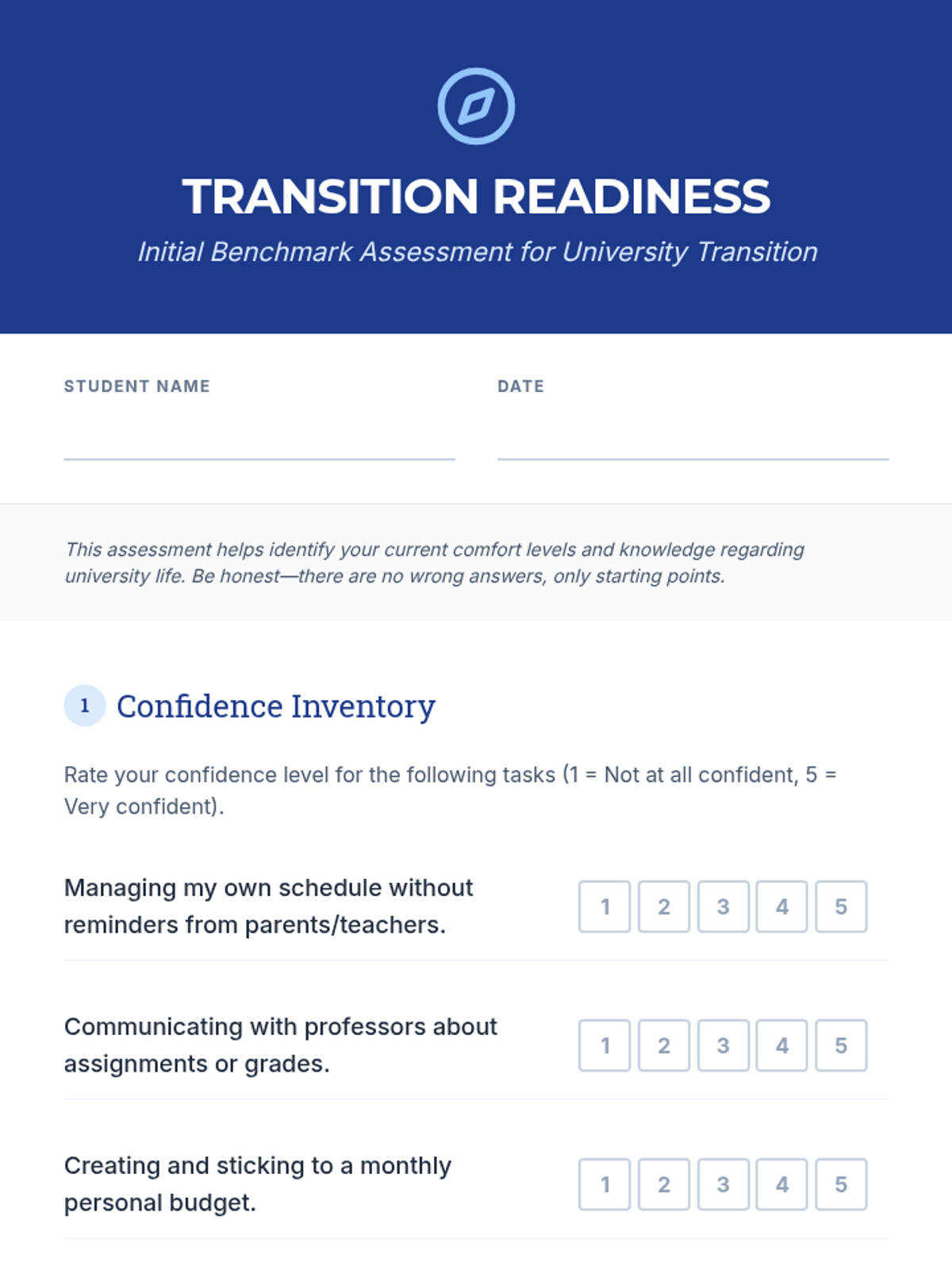
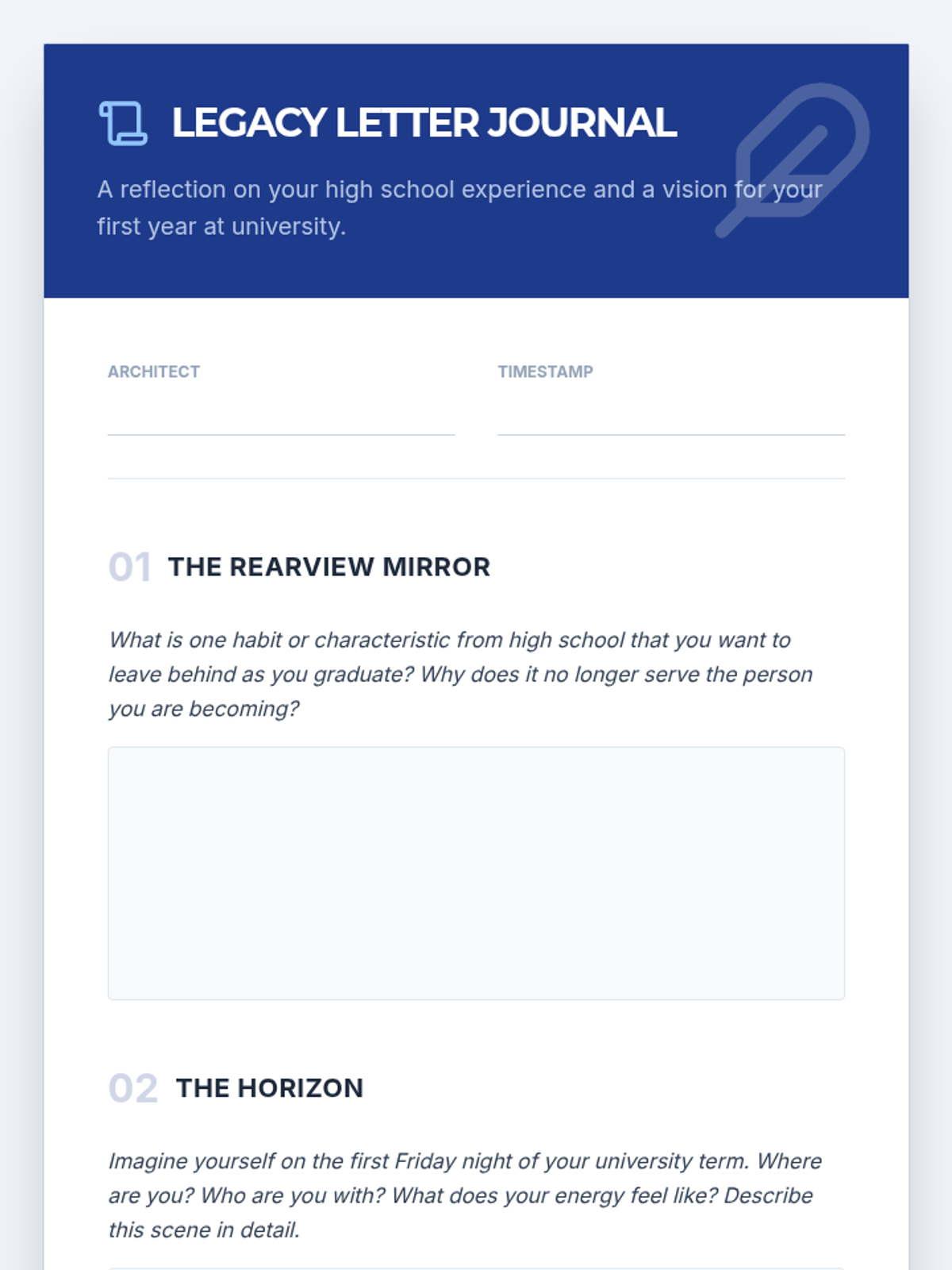
A comprehensive six-lesson program designed to prepare 12th-grade seniors for the transition to university, focusing on time management, financial literacy, academic independence, and mental health.
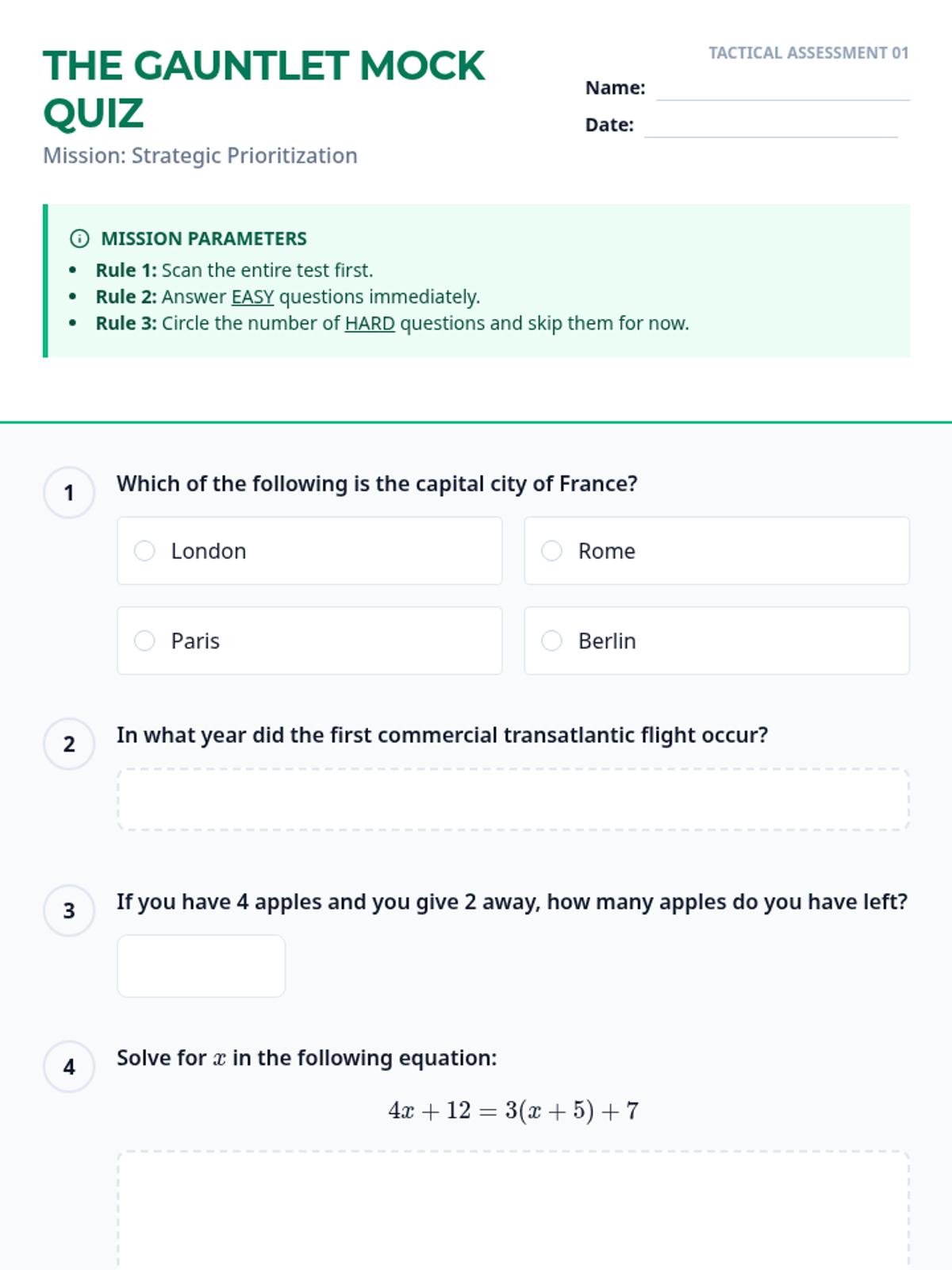
A test-taking strategy unit designed to empower students with logical tools and anxiety-reduction techniques to approach exams with confidence and precision.
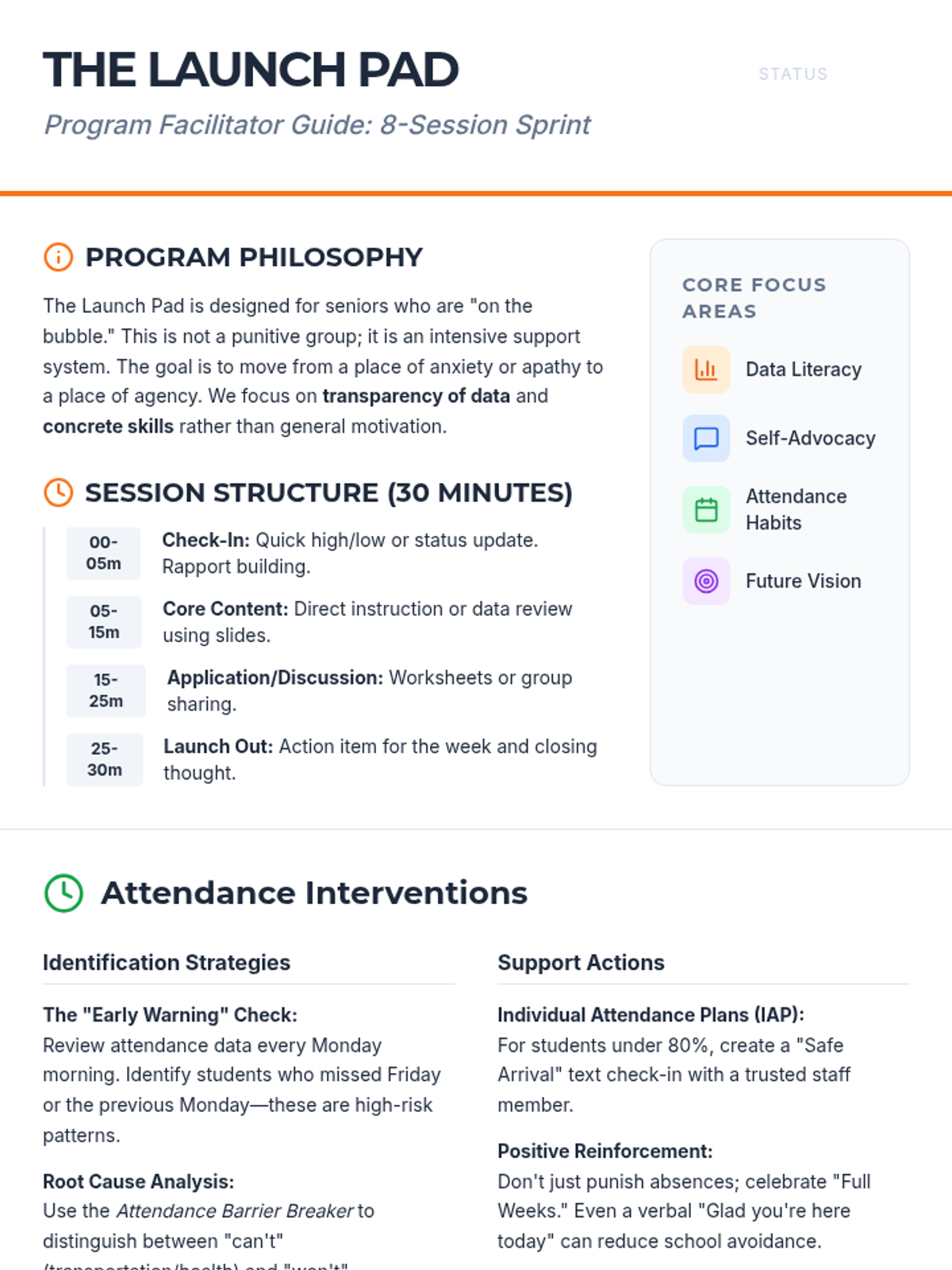
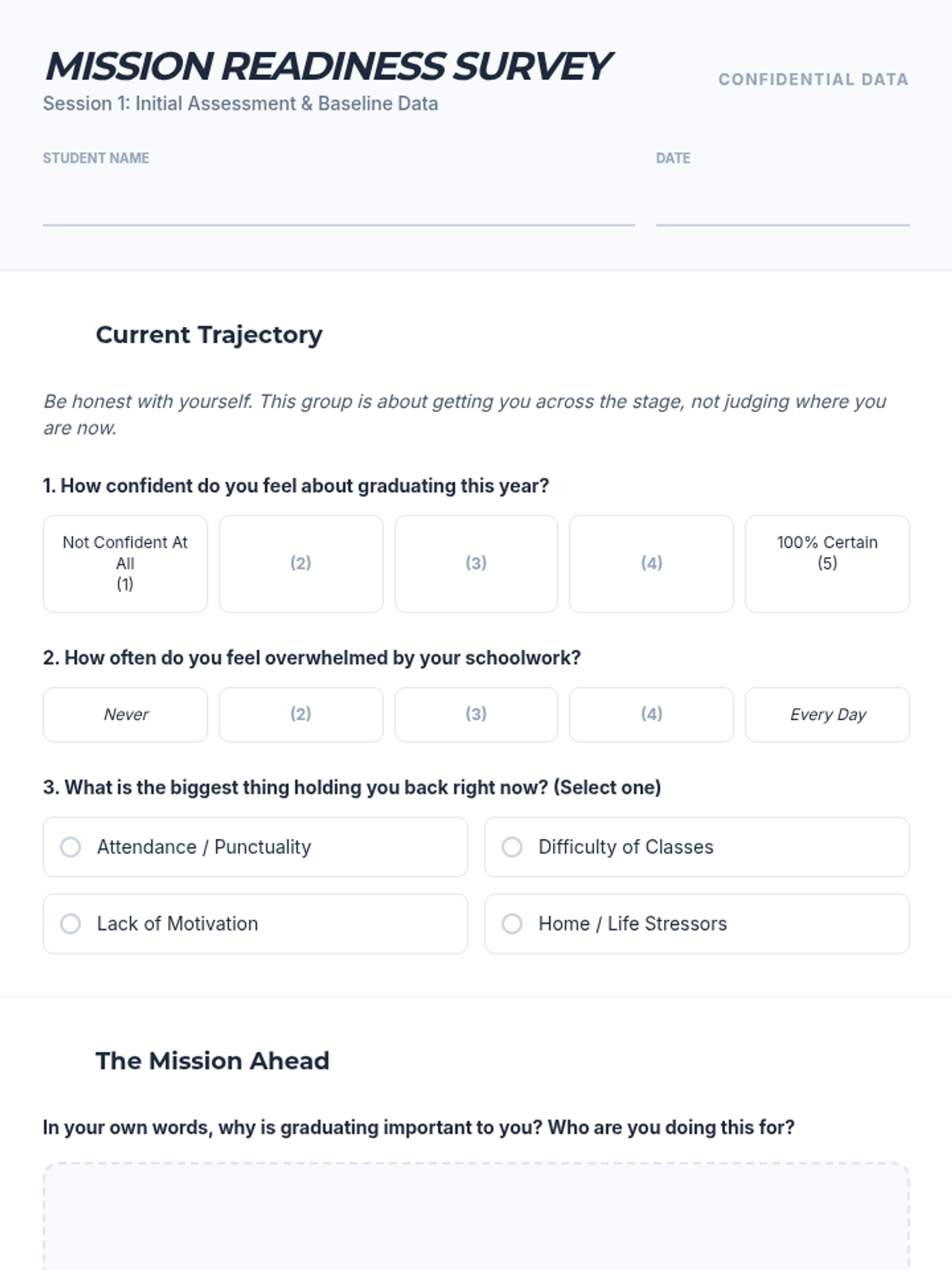
An 8-session intensive support group curriculum designed for seniors at risk of not graduating, focusing on academic accountability, self-advocacy, and post-secondary planning.
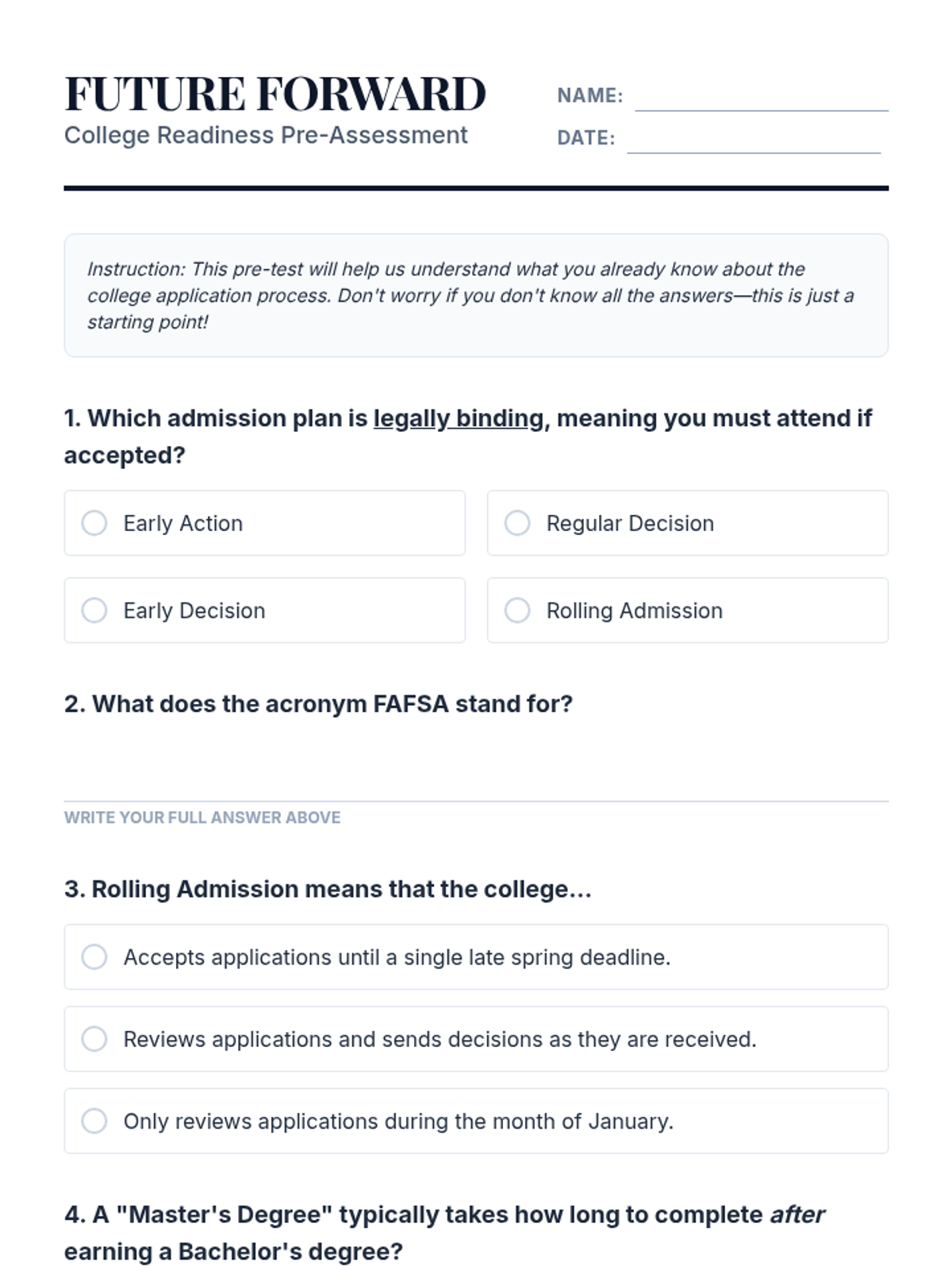
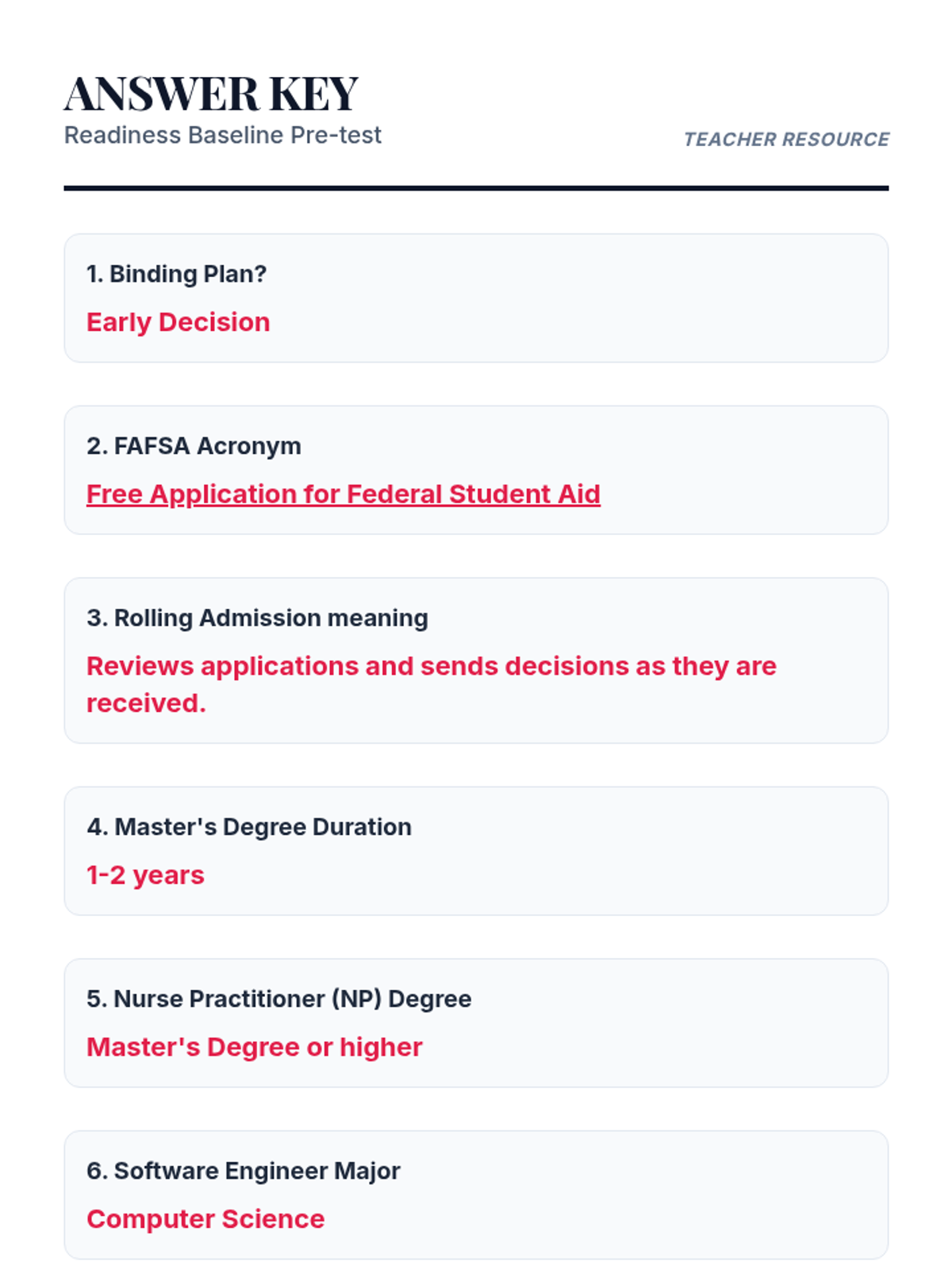
A comprehensive 7-week curriculum designed to prepare high school students for the college transition, covering admission strategies, financial aid, and major-to-career pathways.
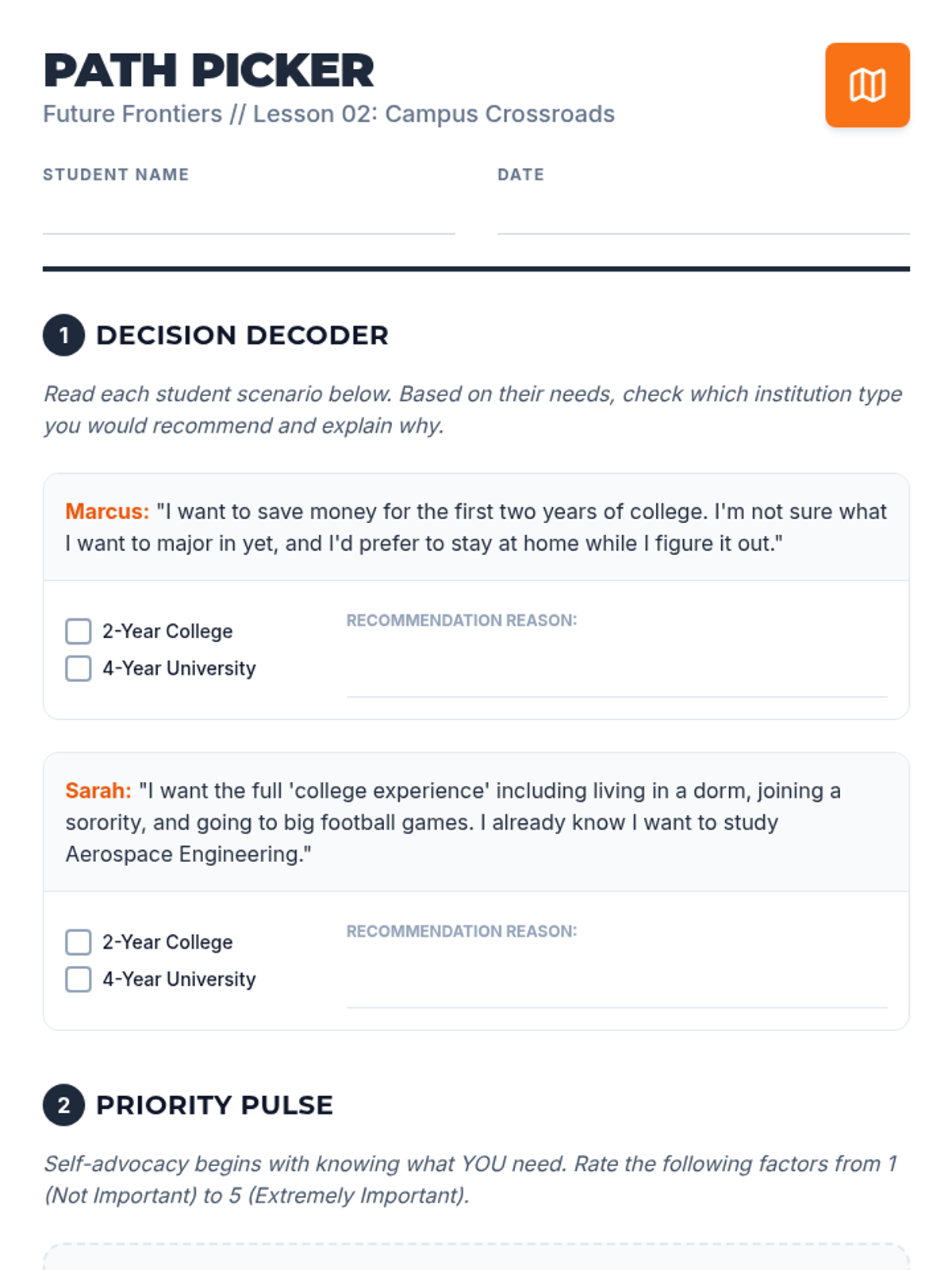
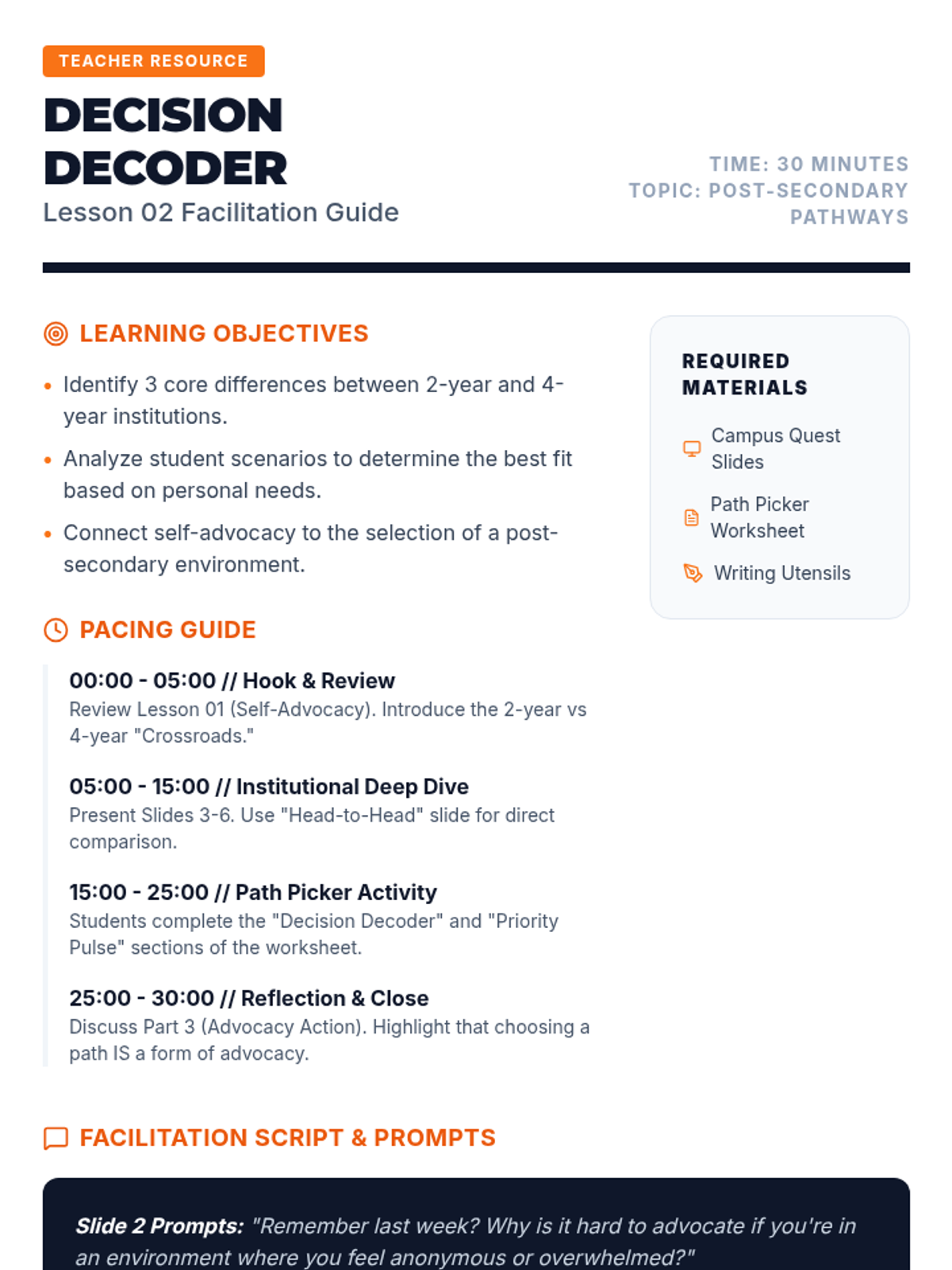
A four-part series designed to empower high school students with self-advocacy skills and knowledge of post-secondary pathways. This sequence focuses on identifying personal needs, exploring institutional options, and navigating support systems.
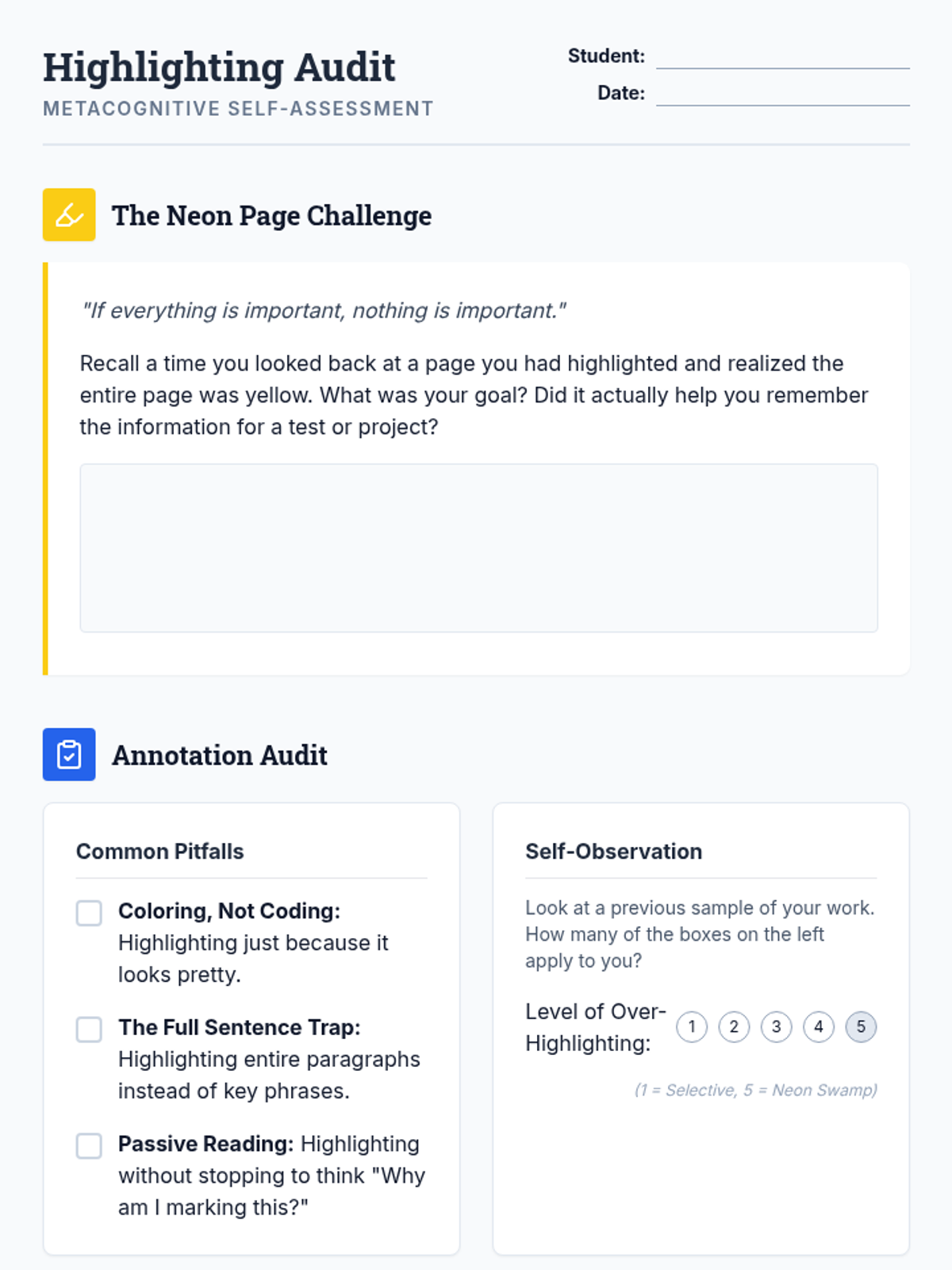
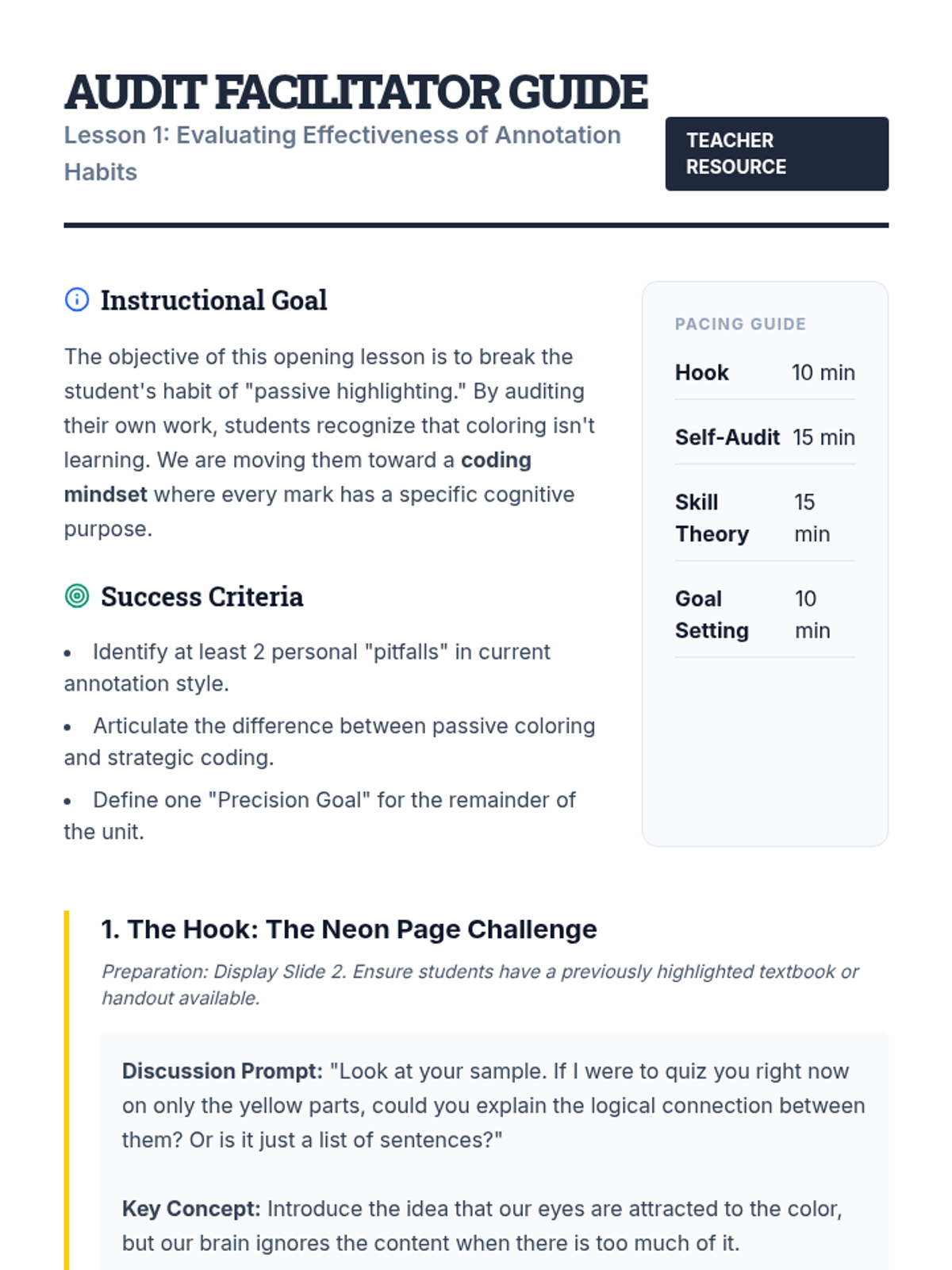
This sequence transforms highlighting from a passive activity into a rigorous, systematic method for information processing. Students evaluate current habits, establish hierarchical color systems, develop marginal shorthand, and apply these strategies to complex texts to create effective study tools.
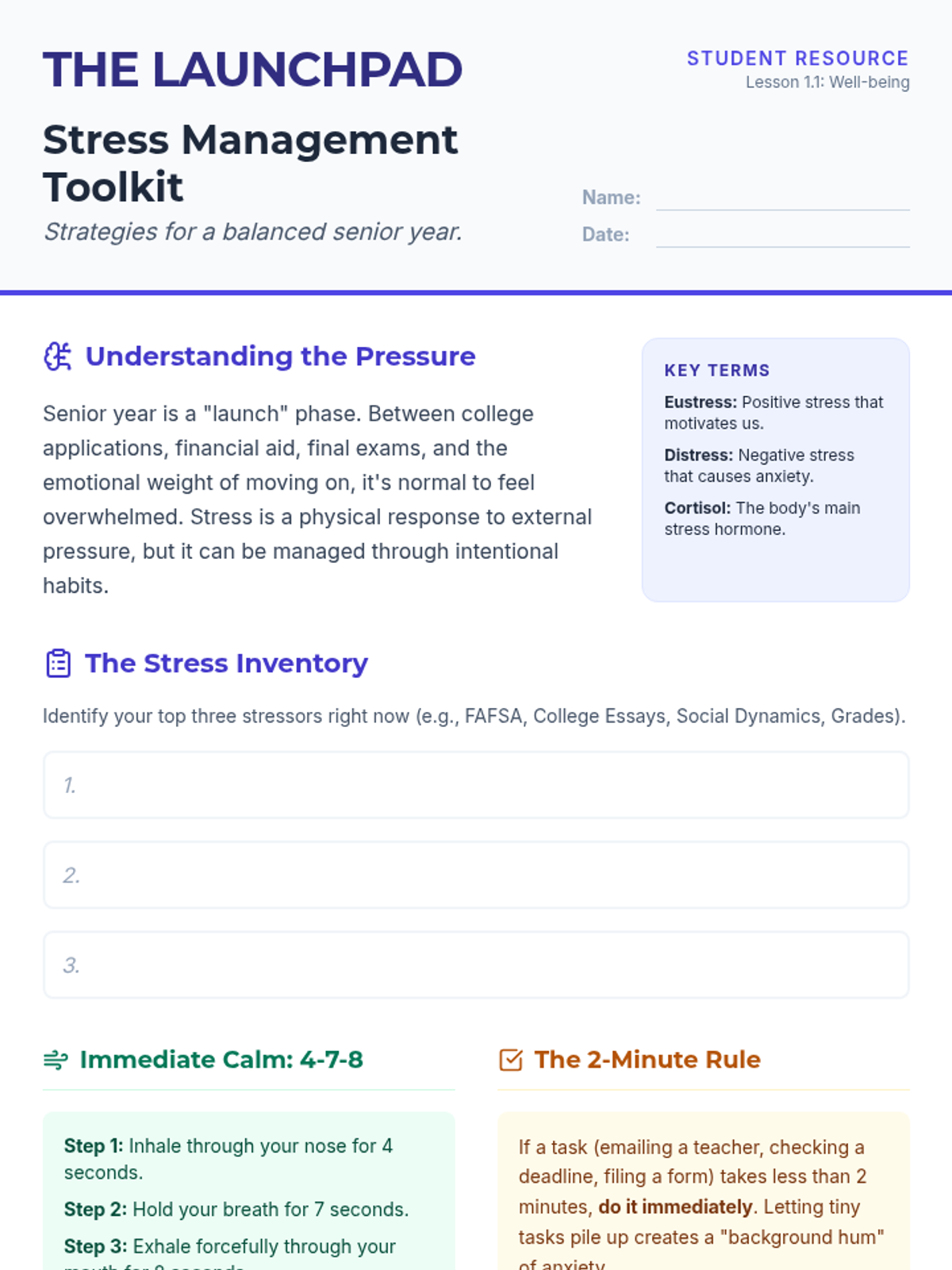
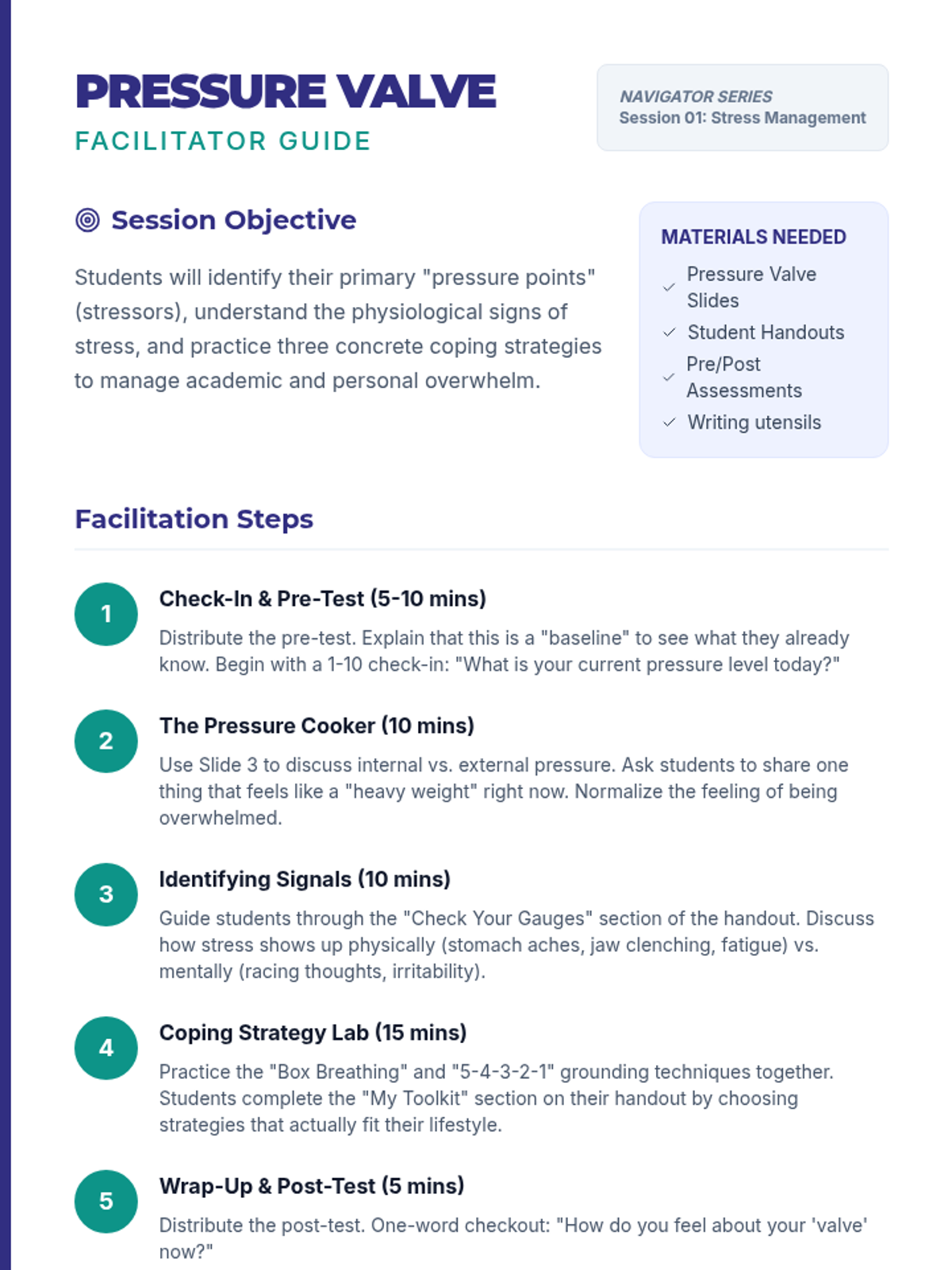
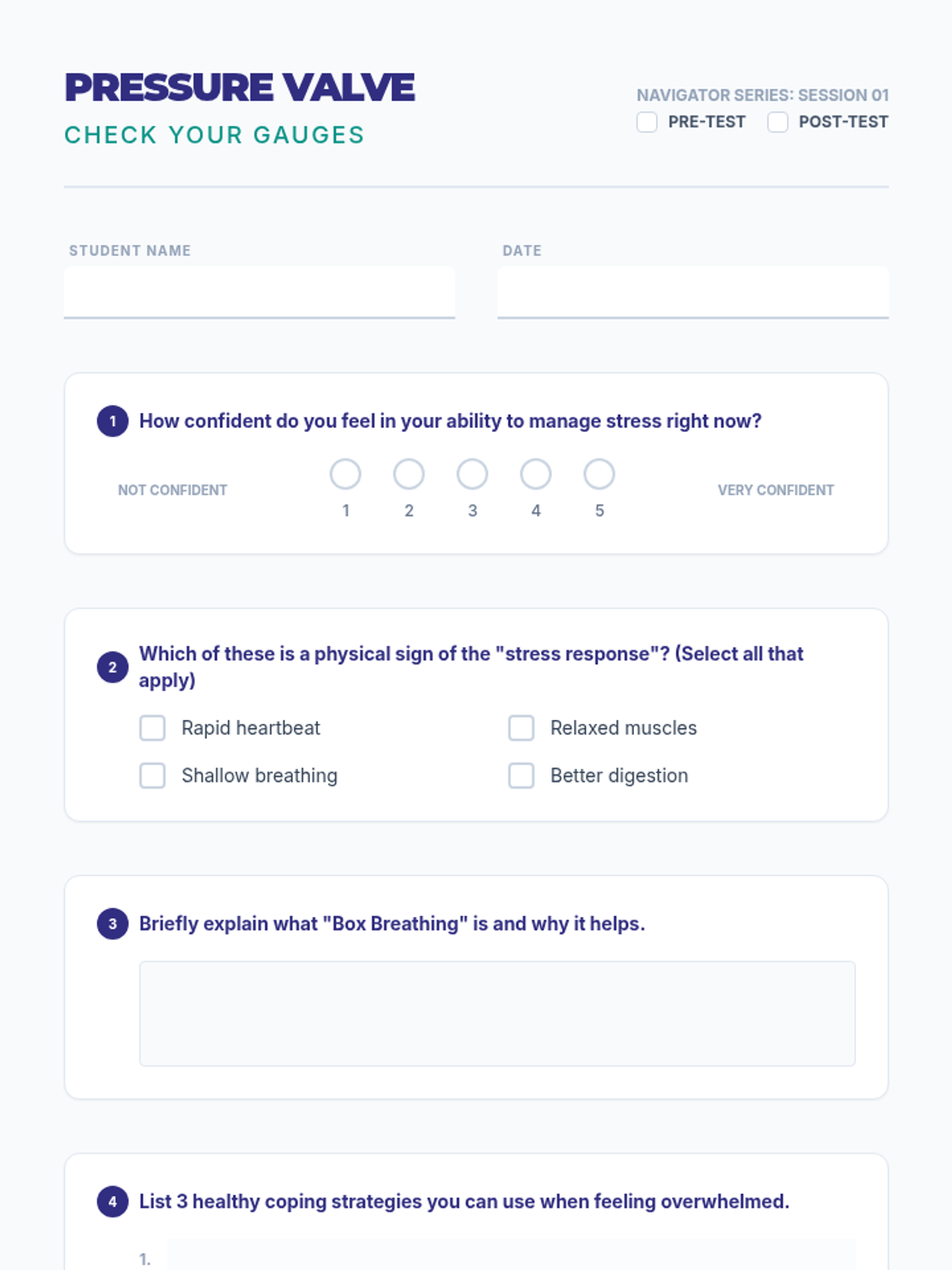
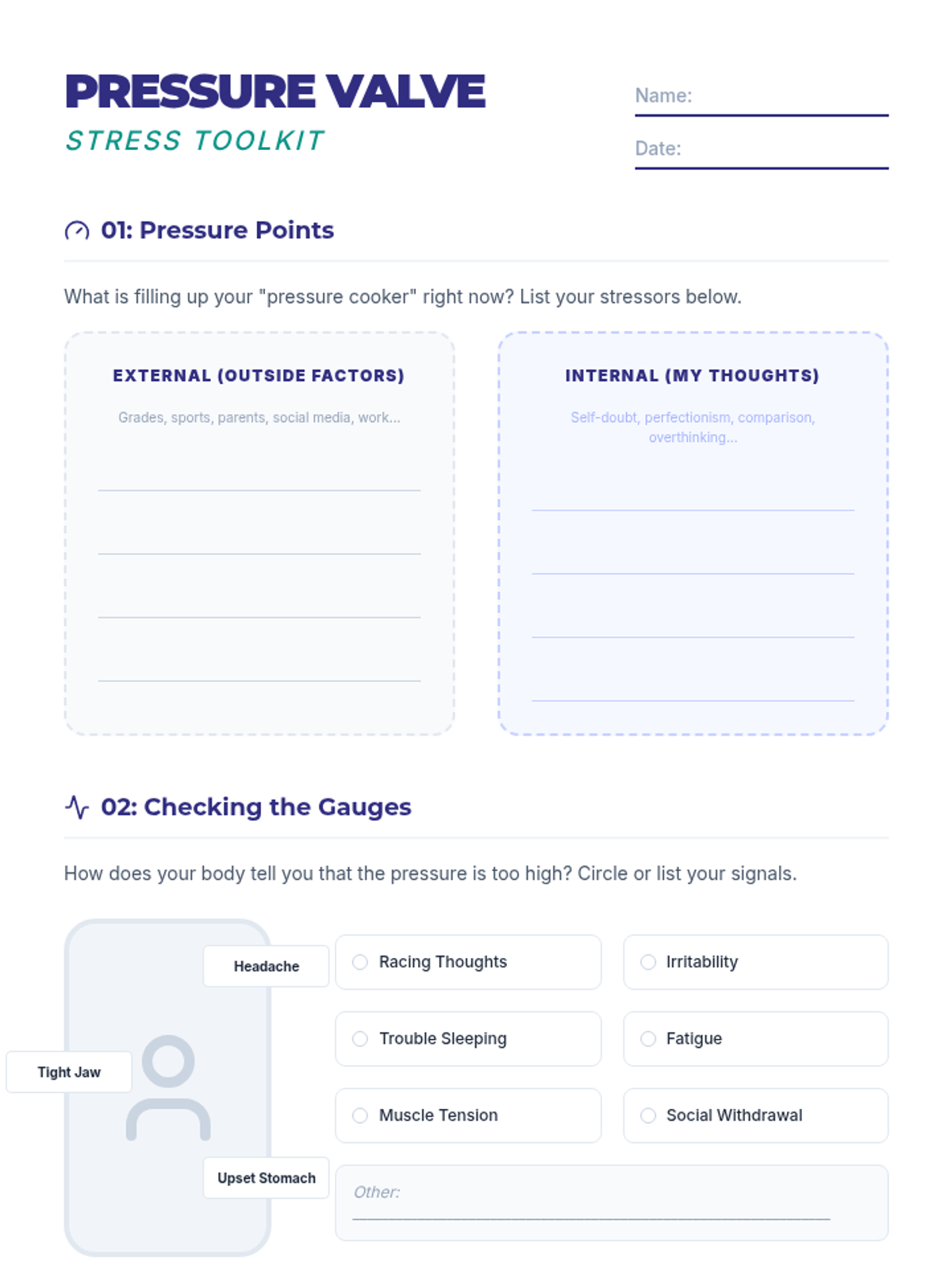
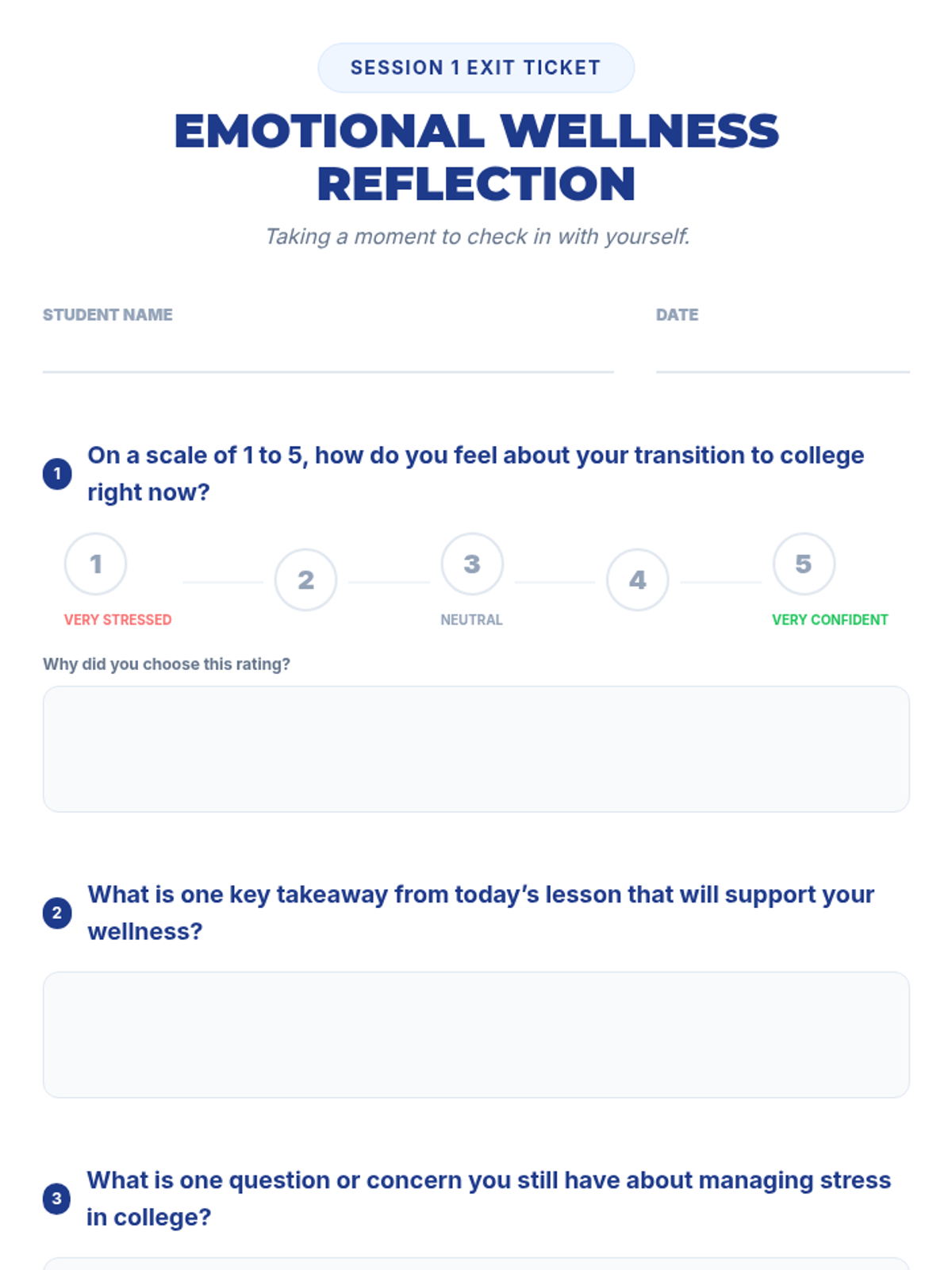
A comprehensive small group counseling series for high school students focusing on essential socio-emotional and life skills including stress management, future planning, healthy relationships, self-advocacy, and digital well-being.
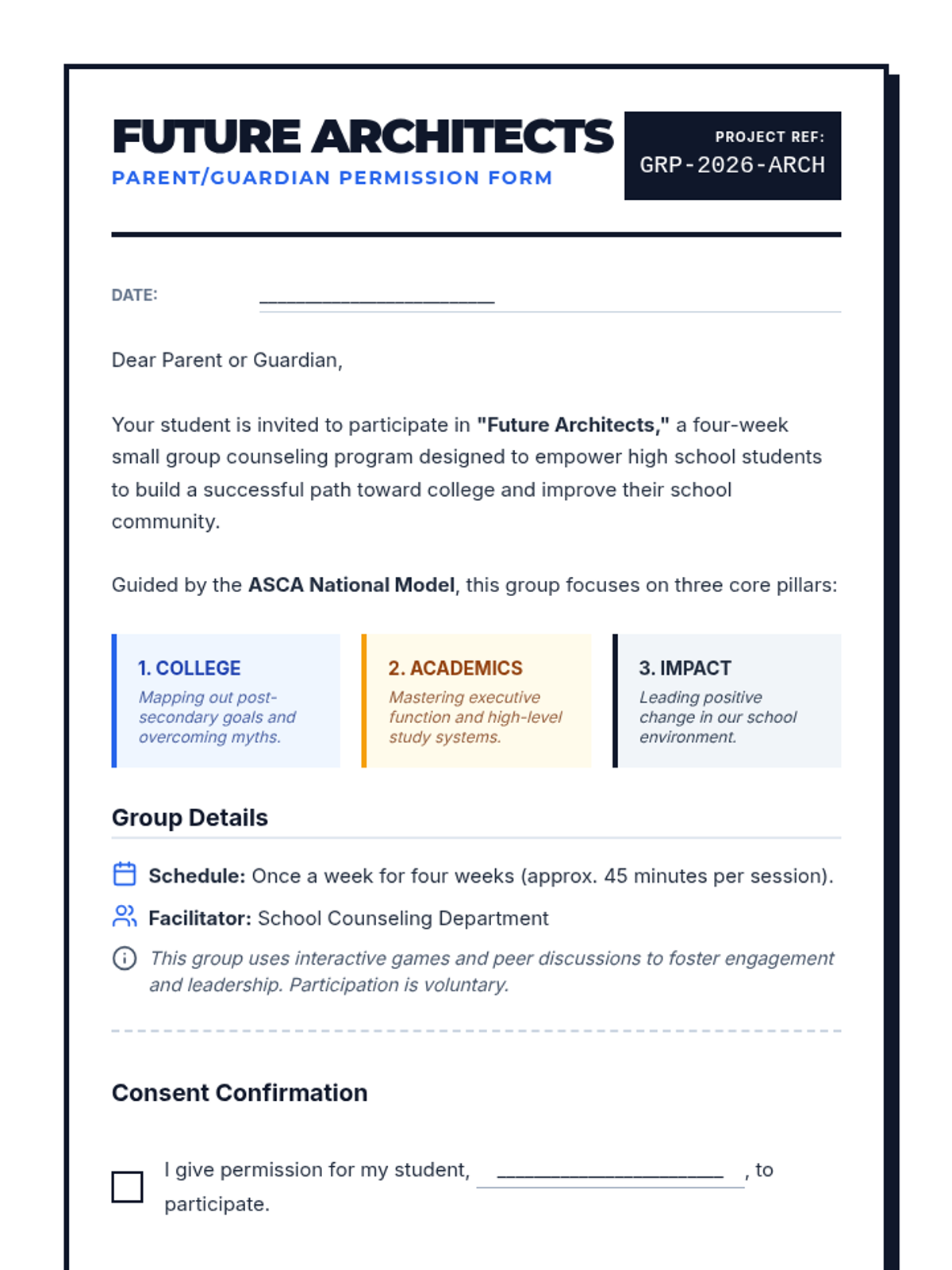
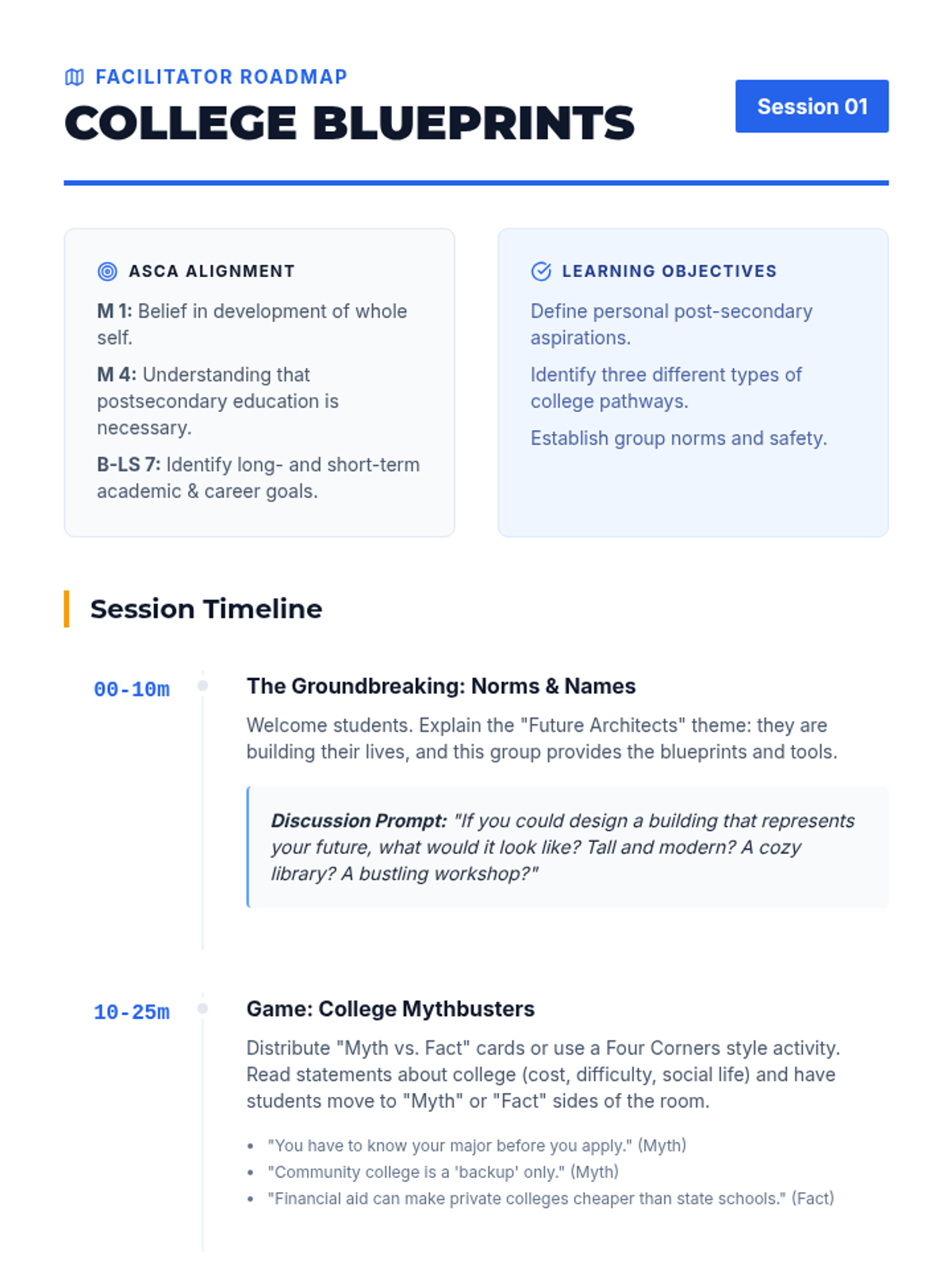
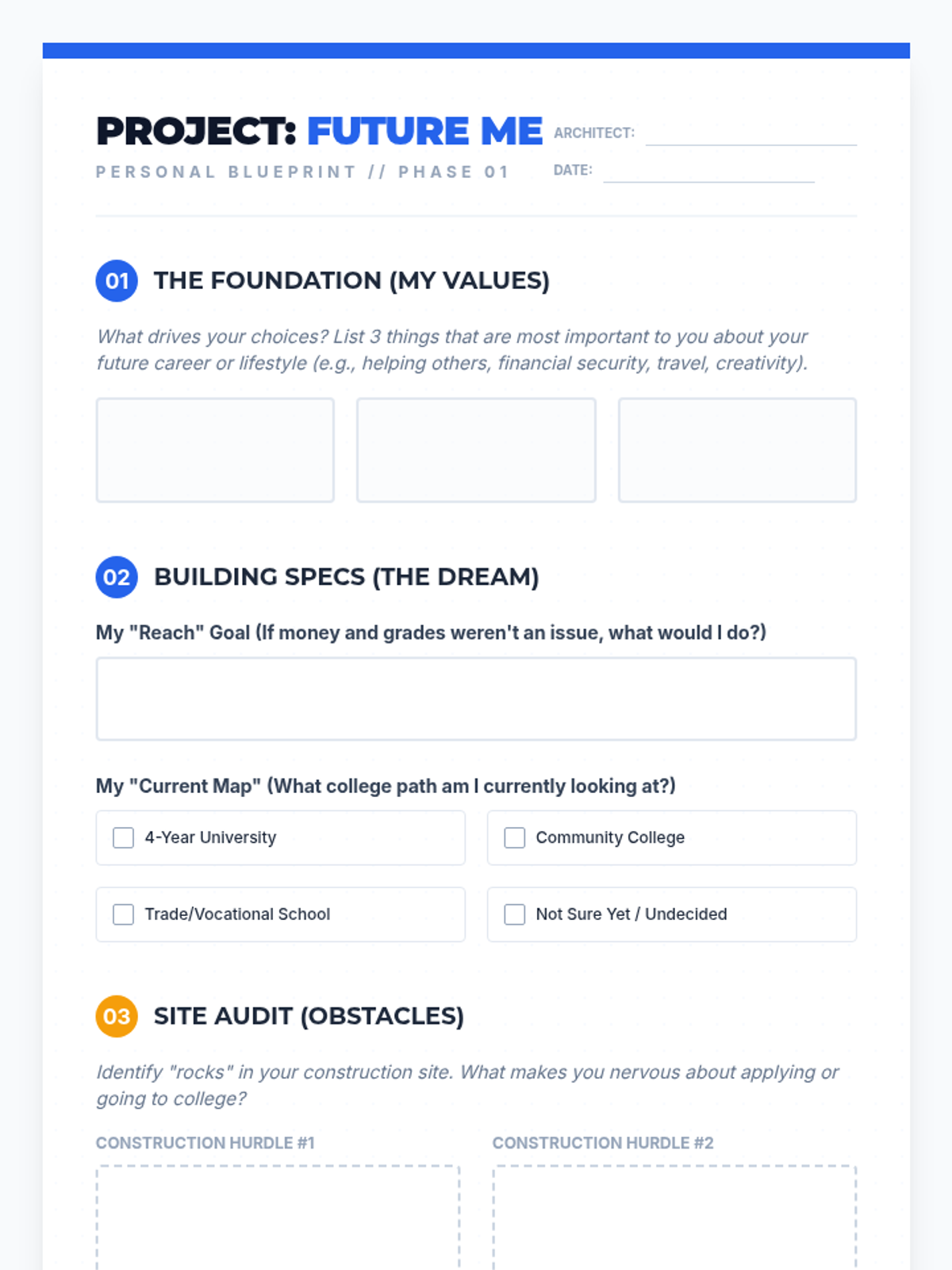
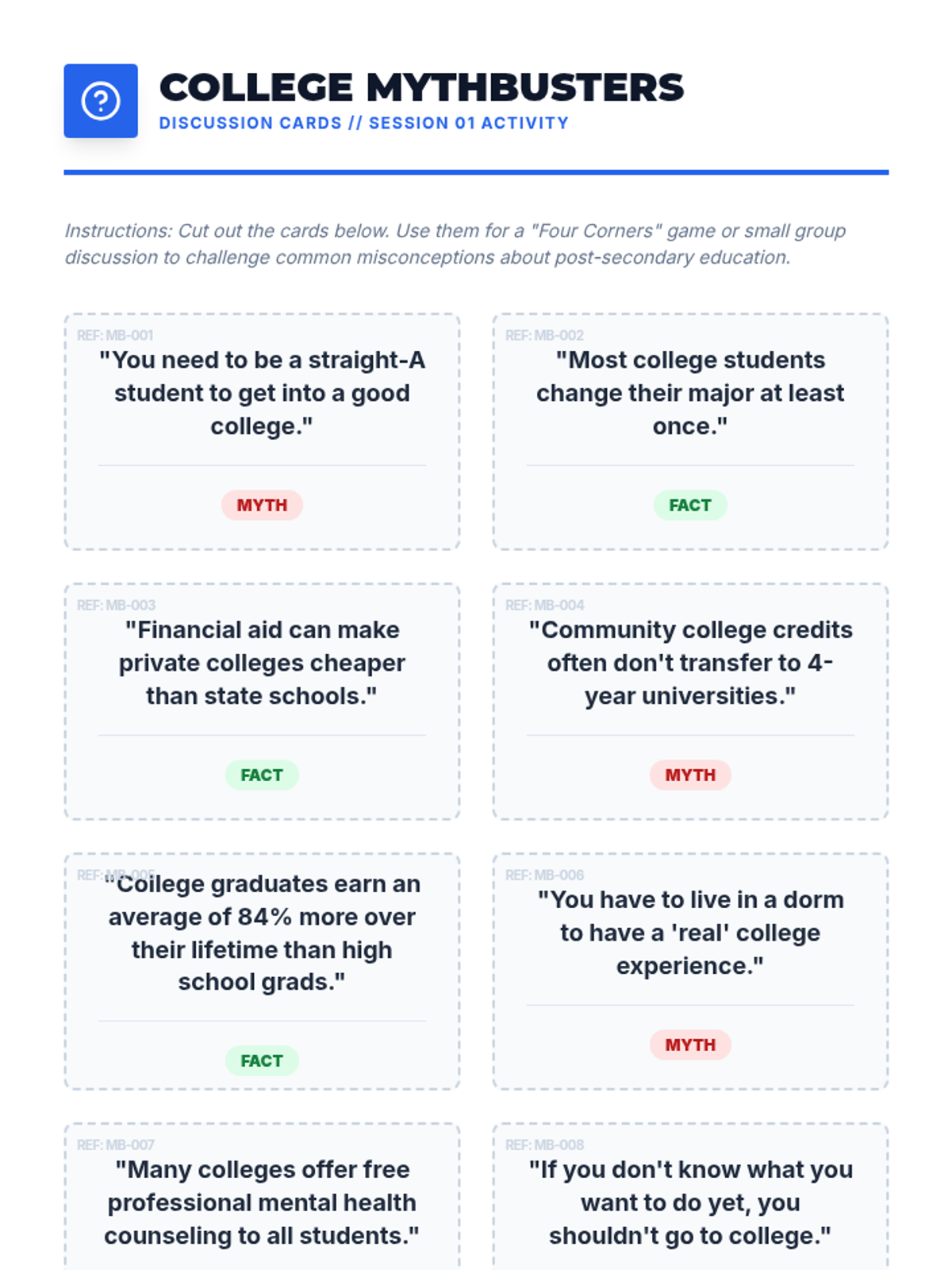
A four-week group counseling sequence for high school students focused on college readiness, academic success, and student-led campus improvement, aligned with the ASCA National Model.
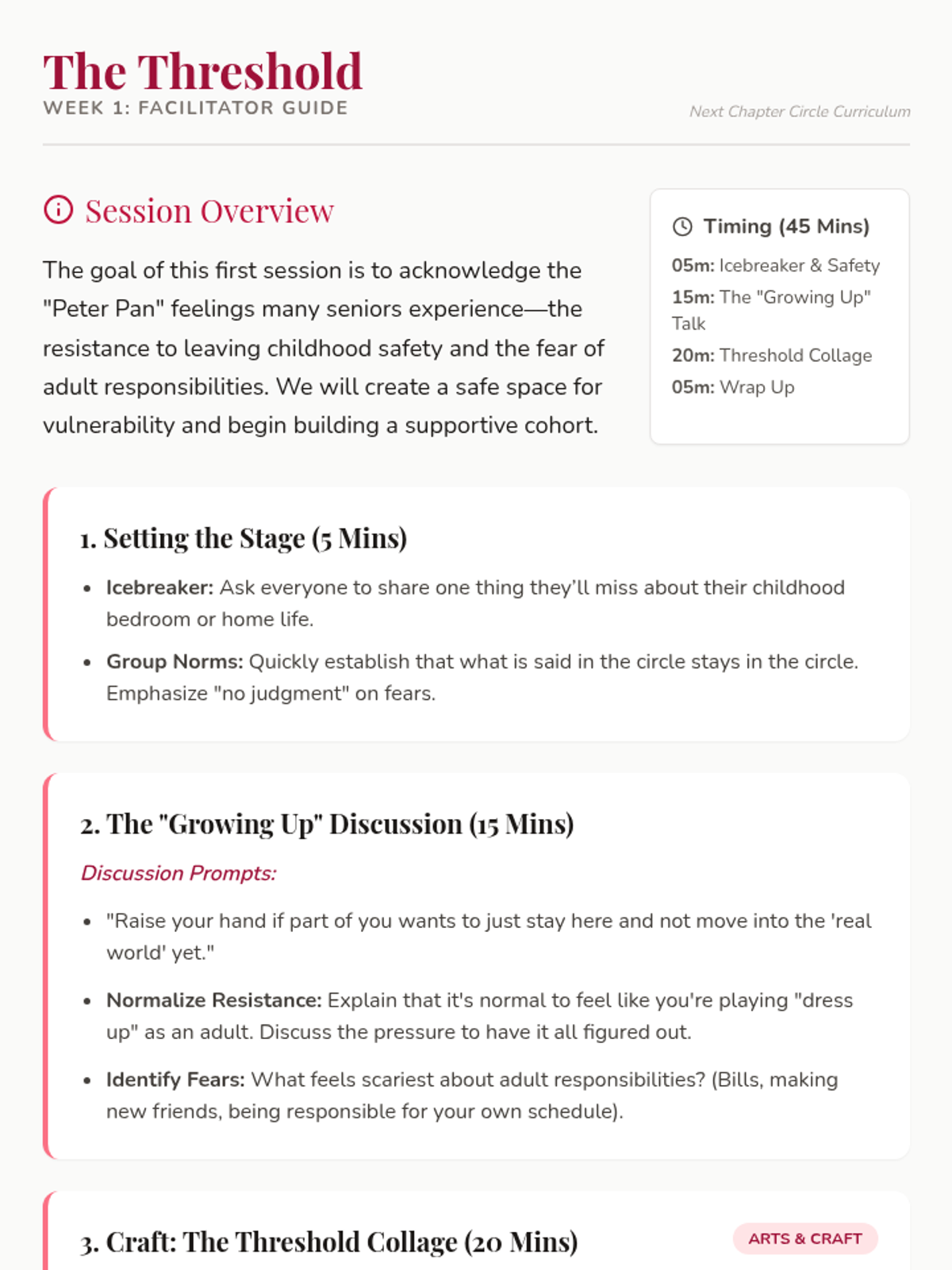
A comprehensive 8-week curriculum for high school senior girls transitioning to college. The program combines group counseling techniques with hands-on arts and crafts to address stress management, resource-seeking, and the emotional complexity of adulthood.
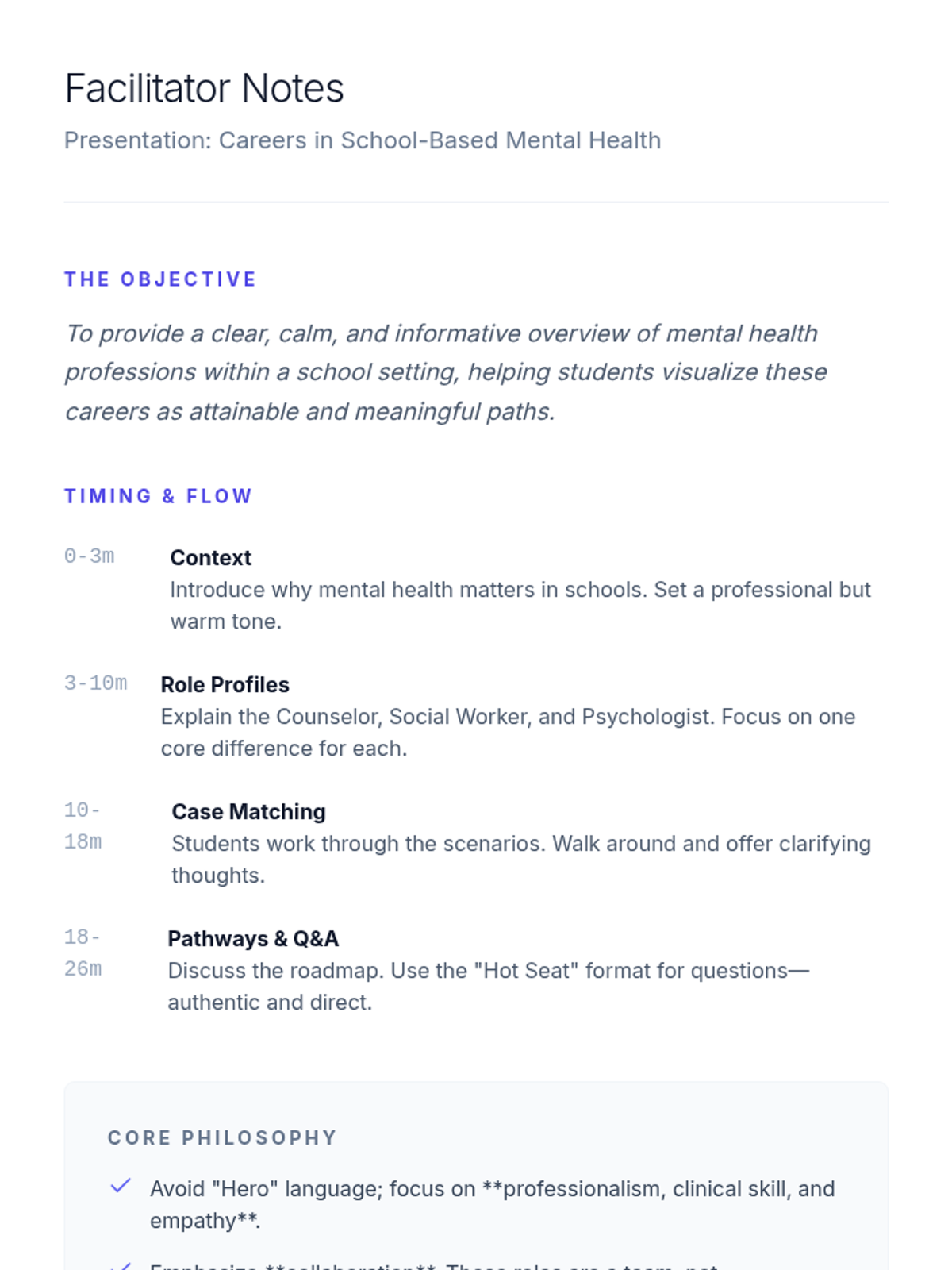
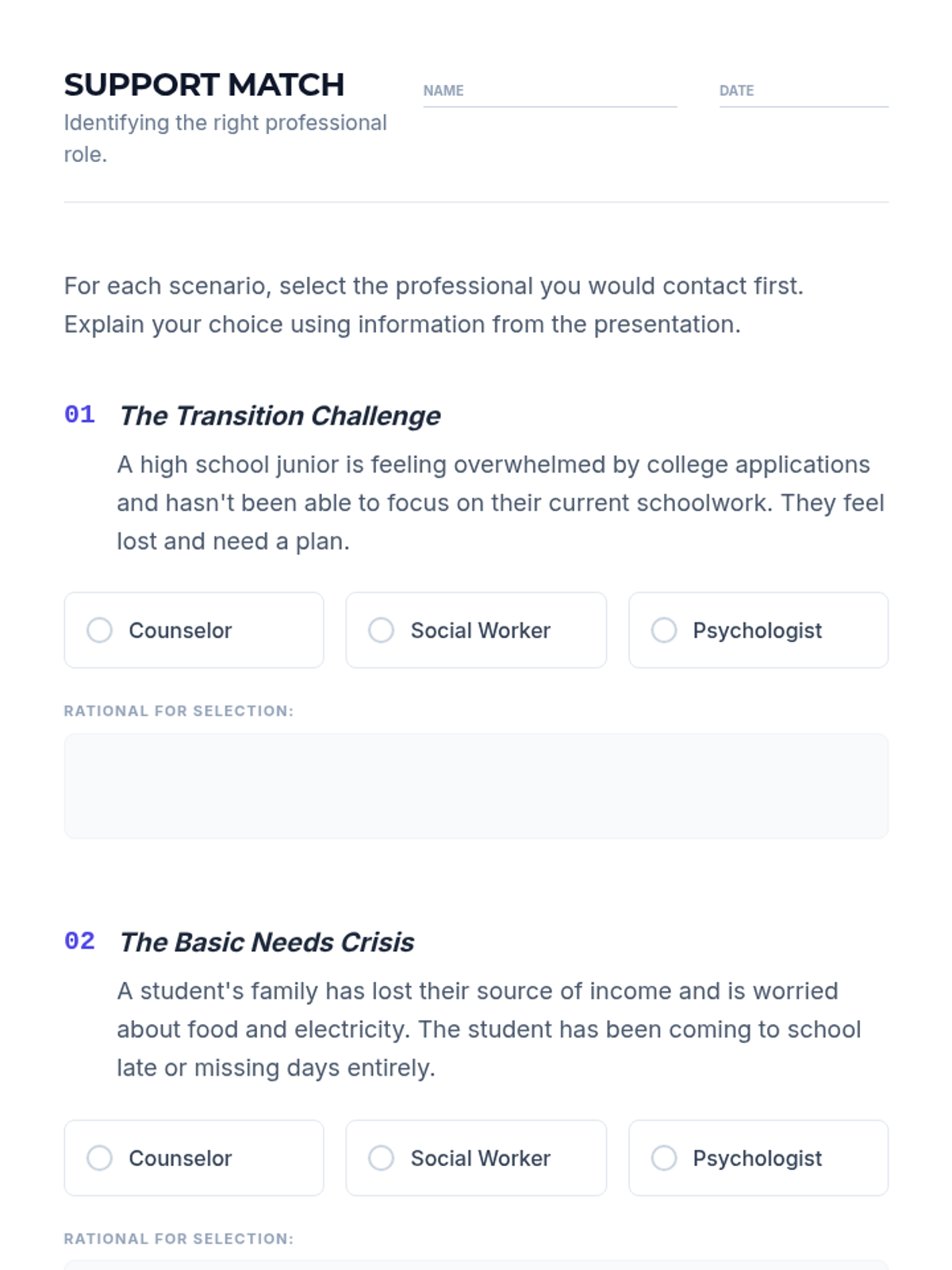
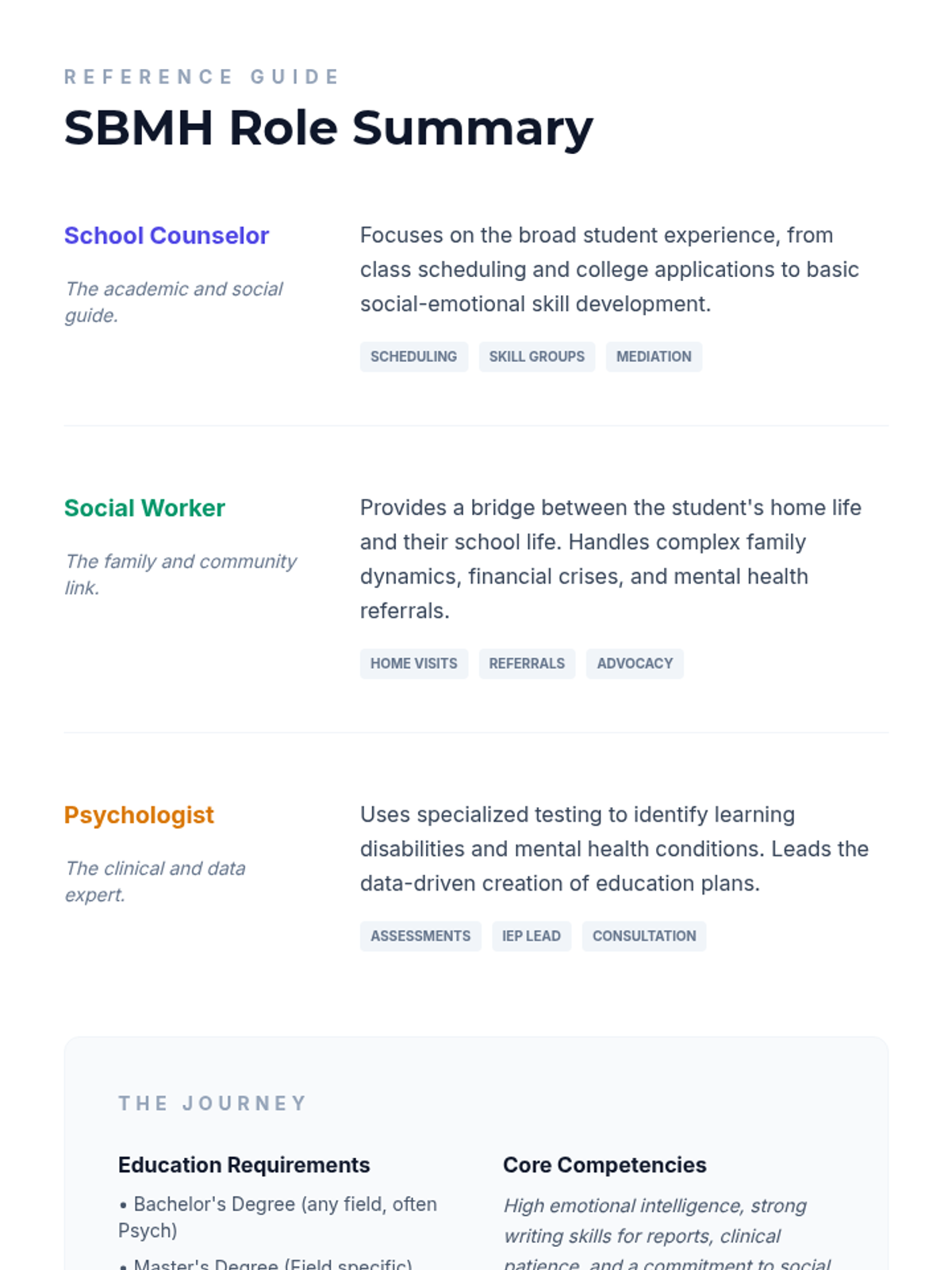
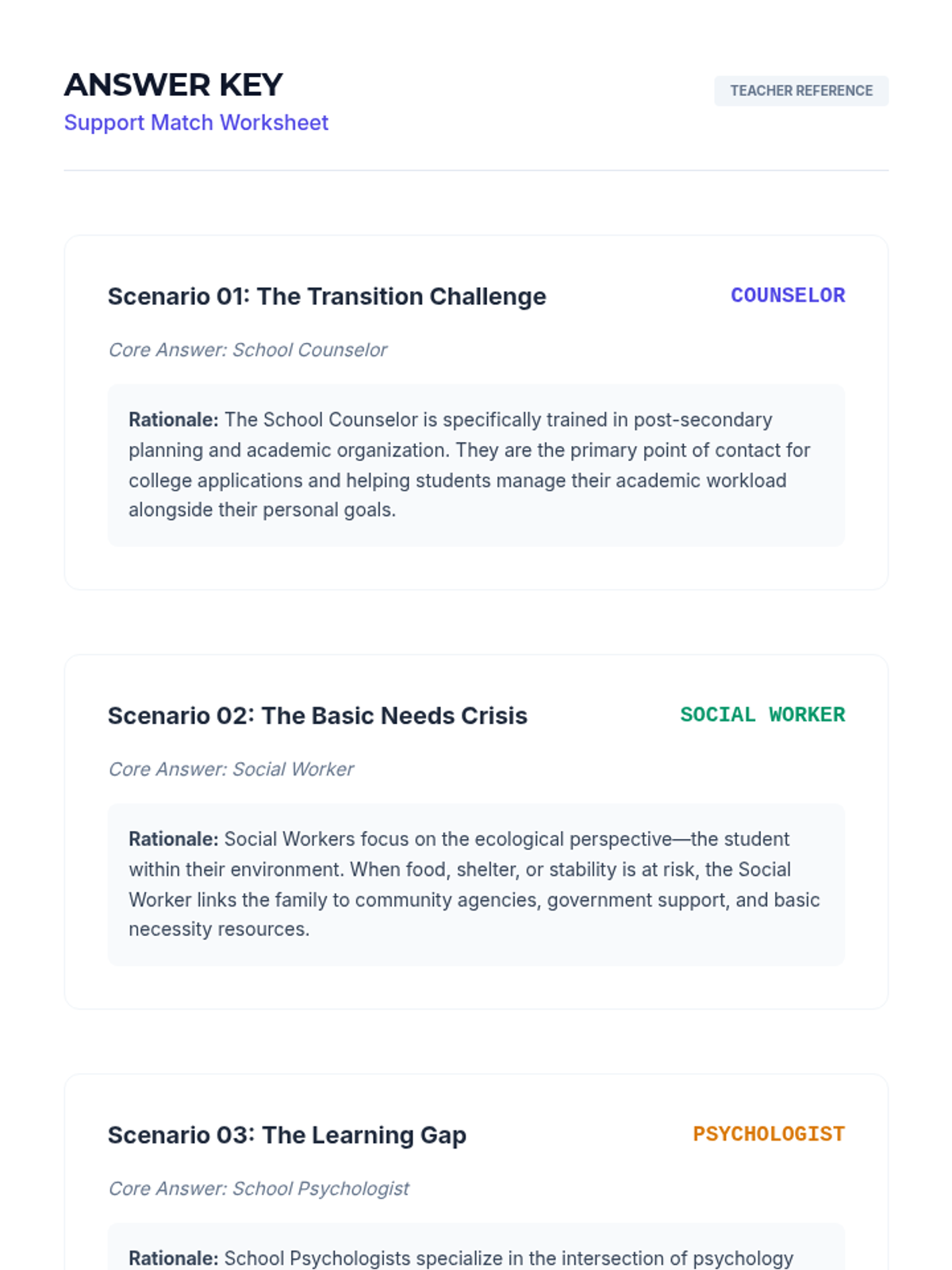
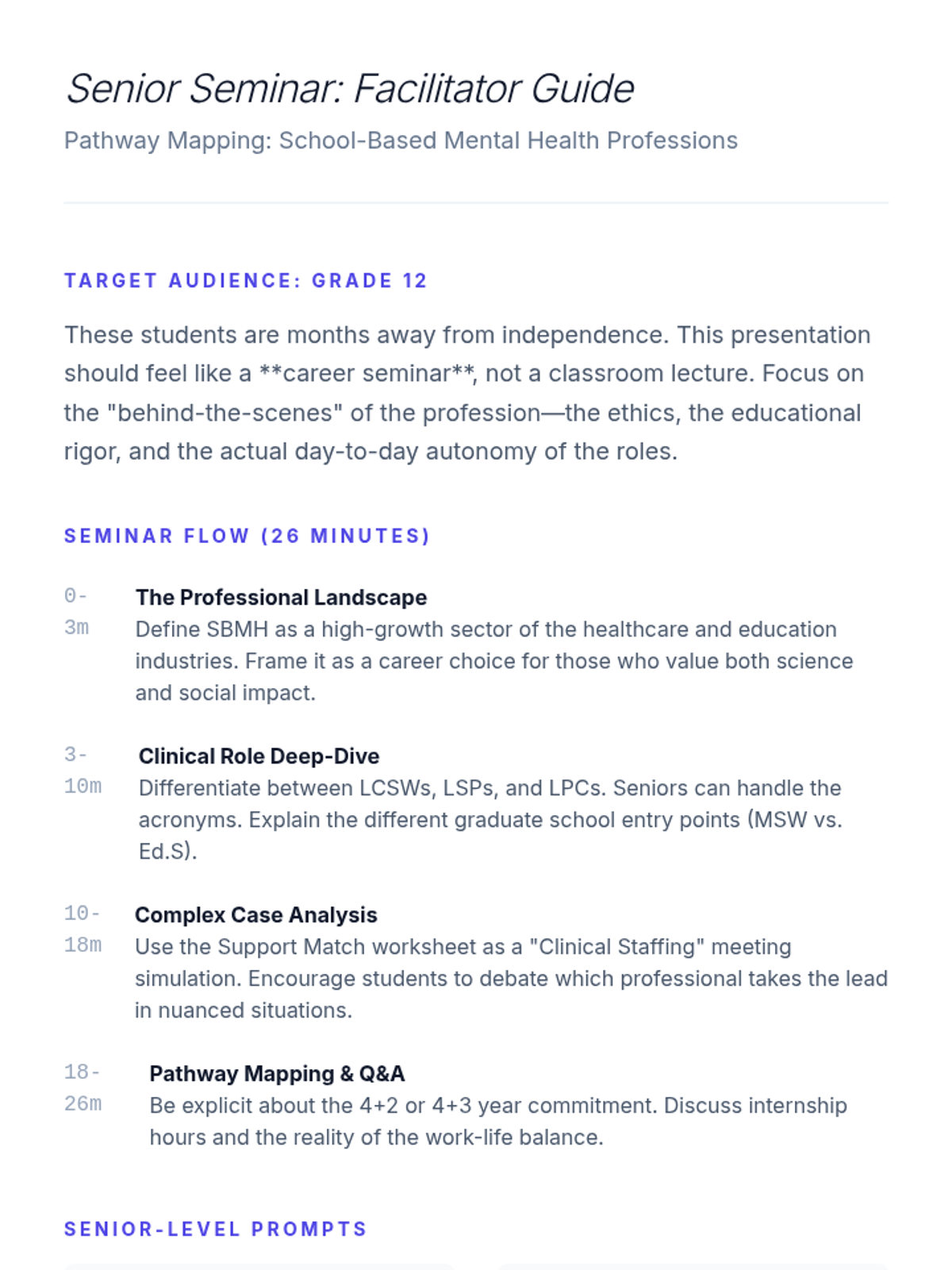
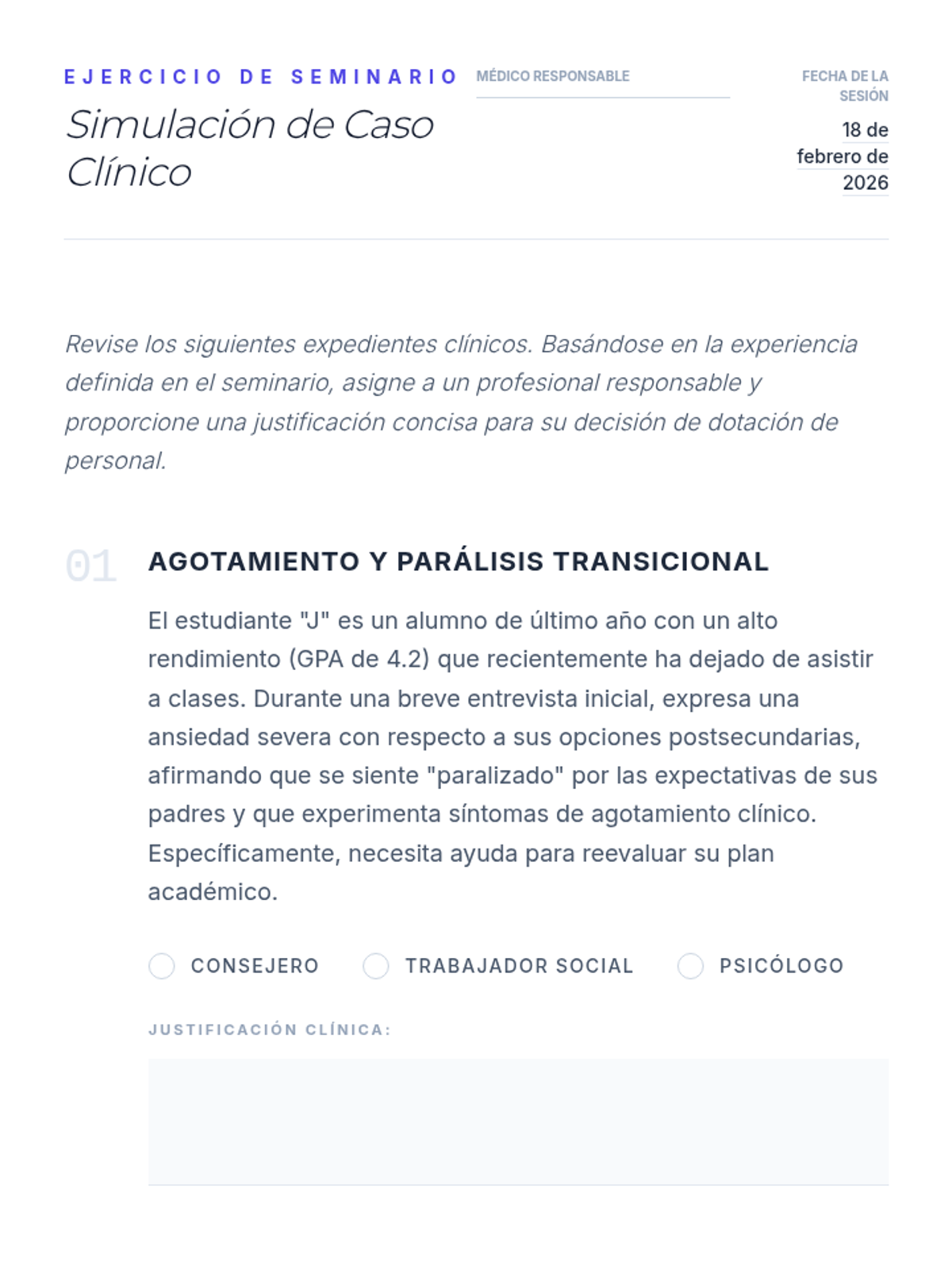
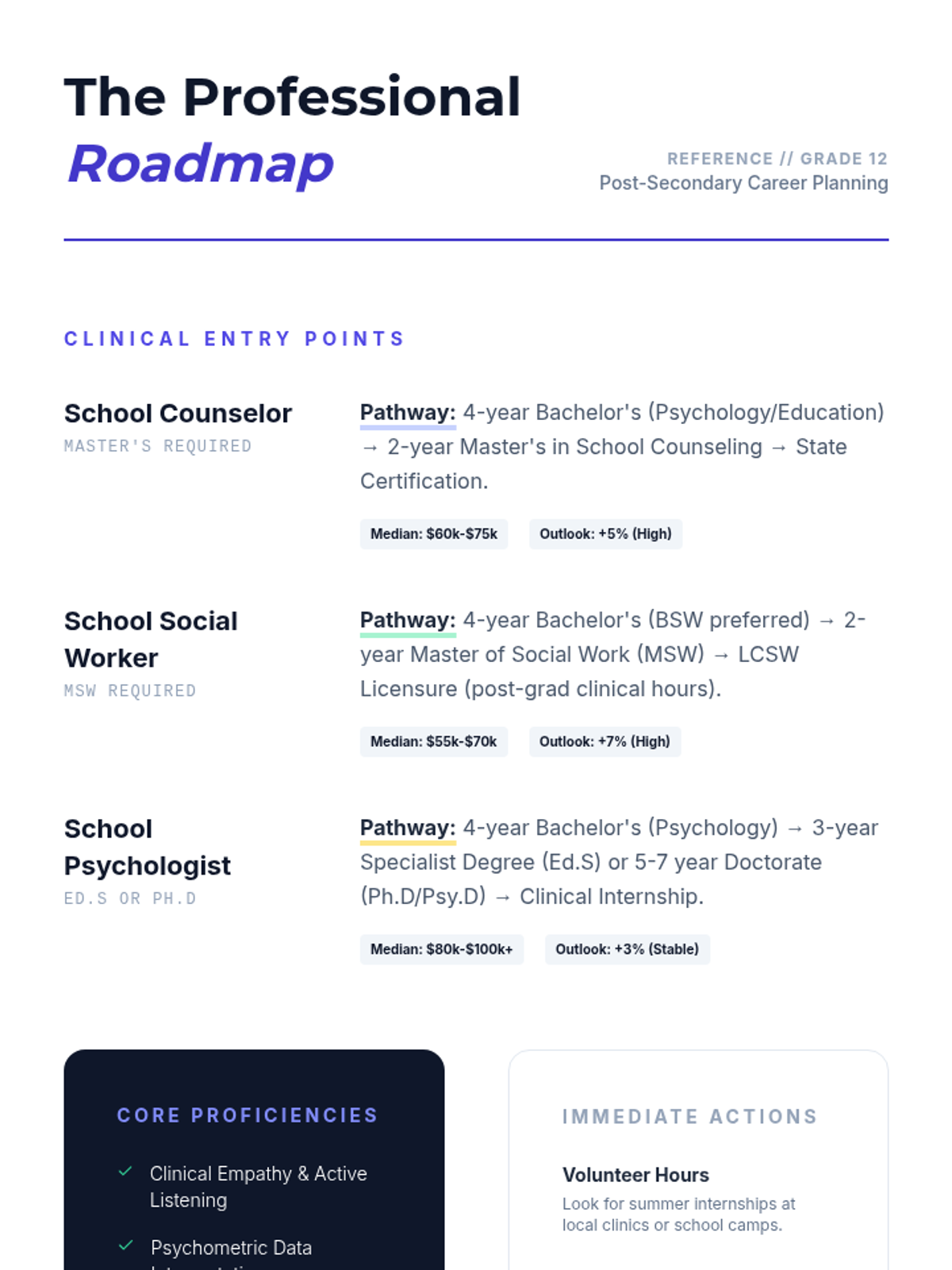
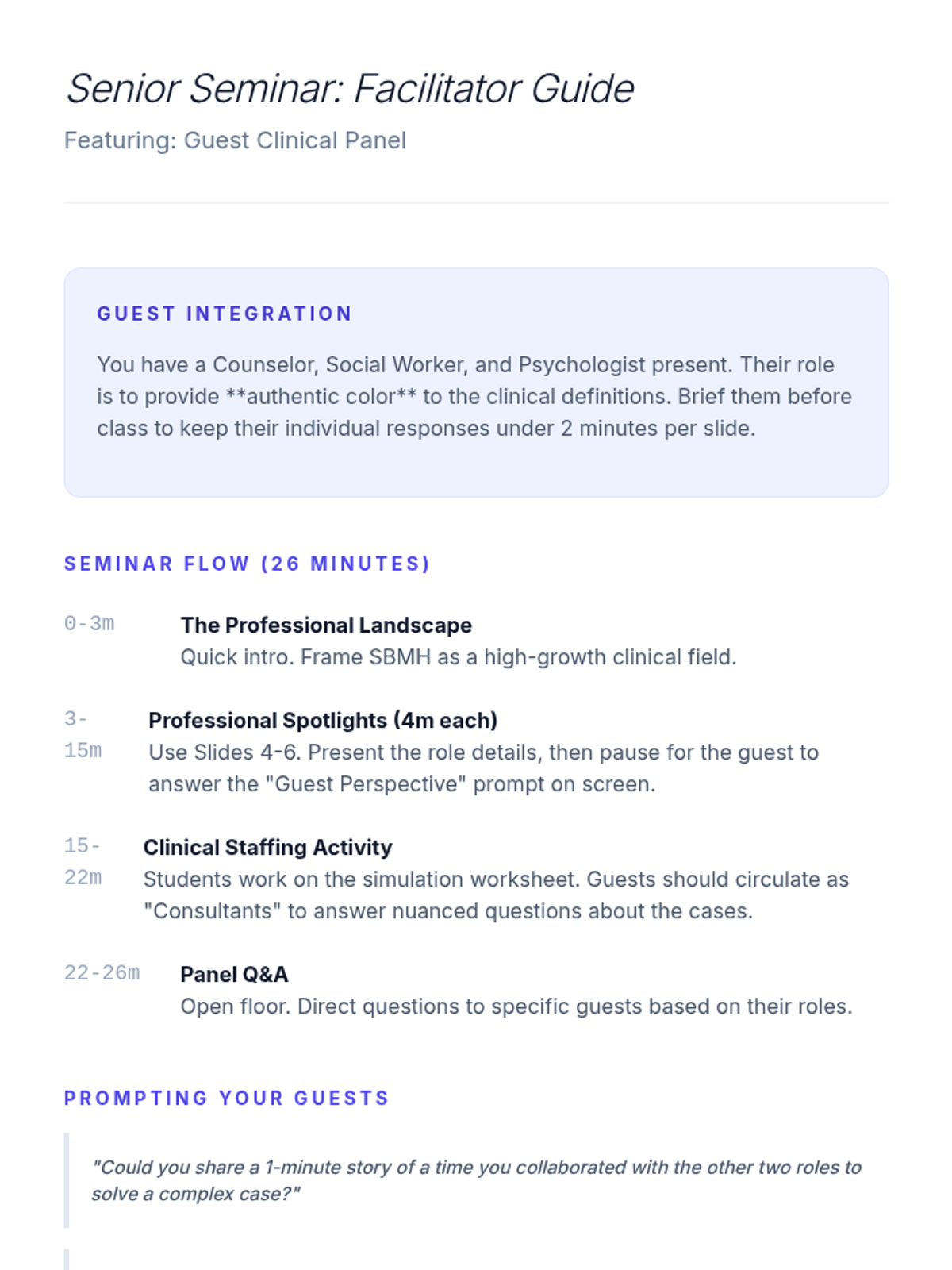
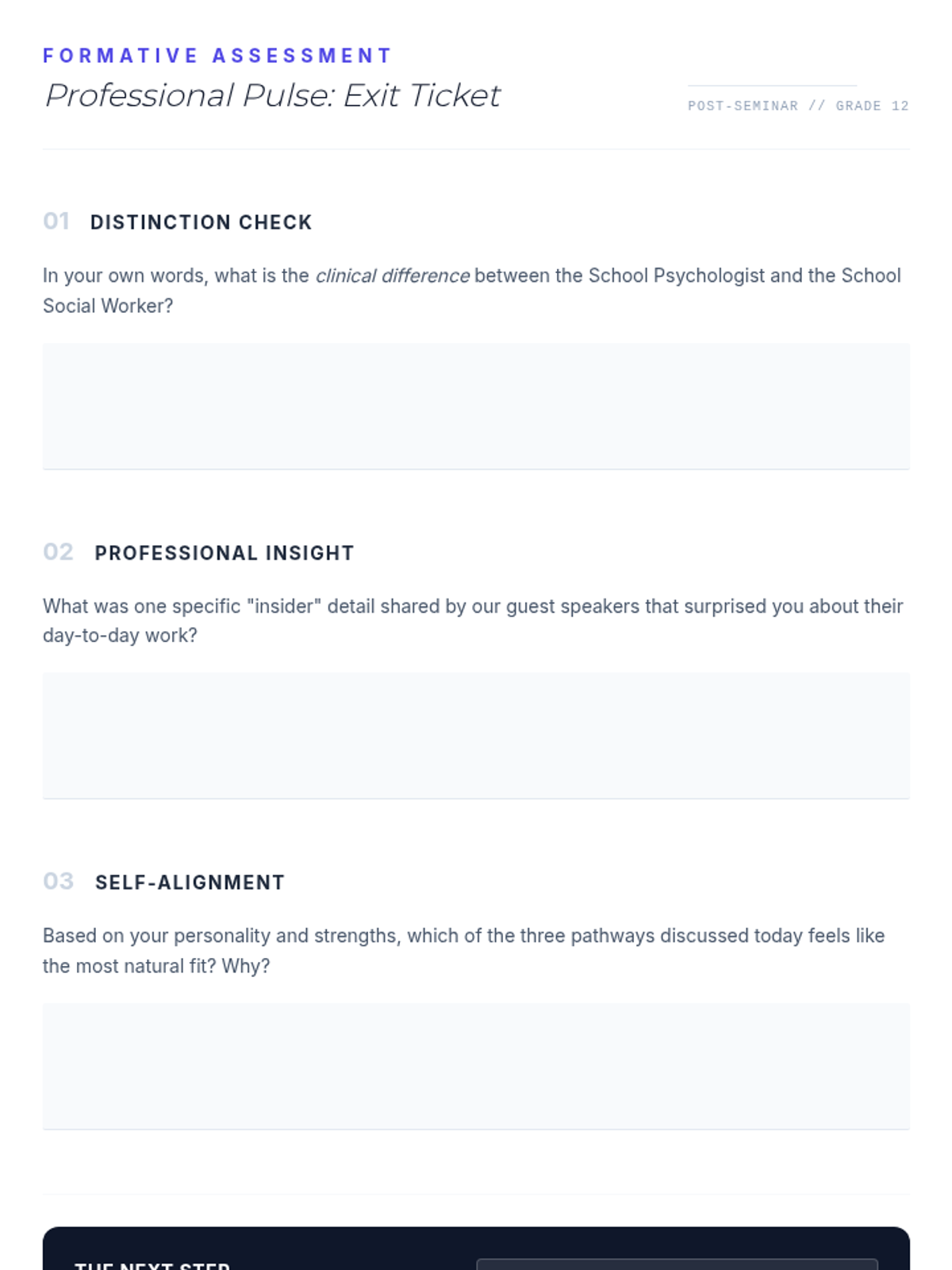
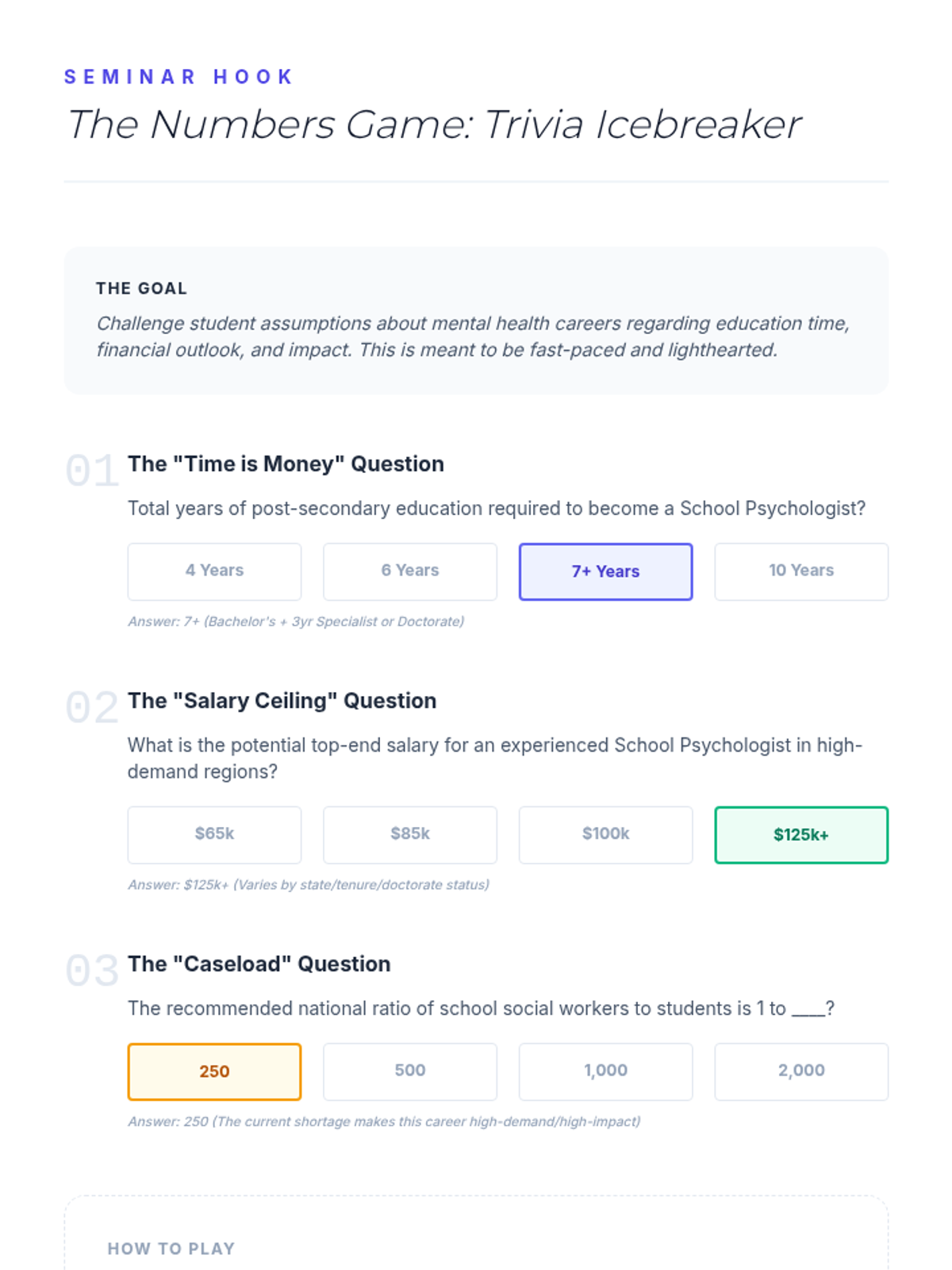
A professional and understated exploration of careers in school-based mental health, focusing on clear definitions, educational journeys, and practical support roles.
A career and college readiness series designed to help high school students navigate the transition from school to the workforce, military, or higher education.
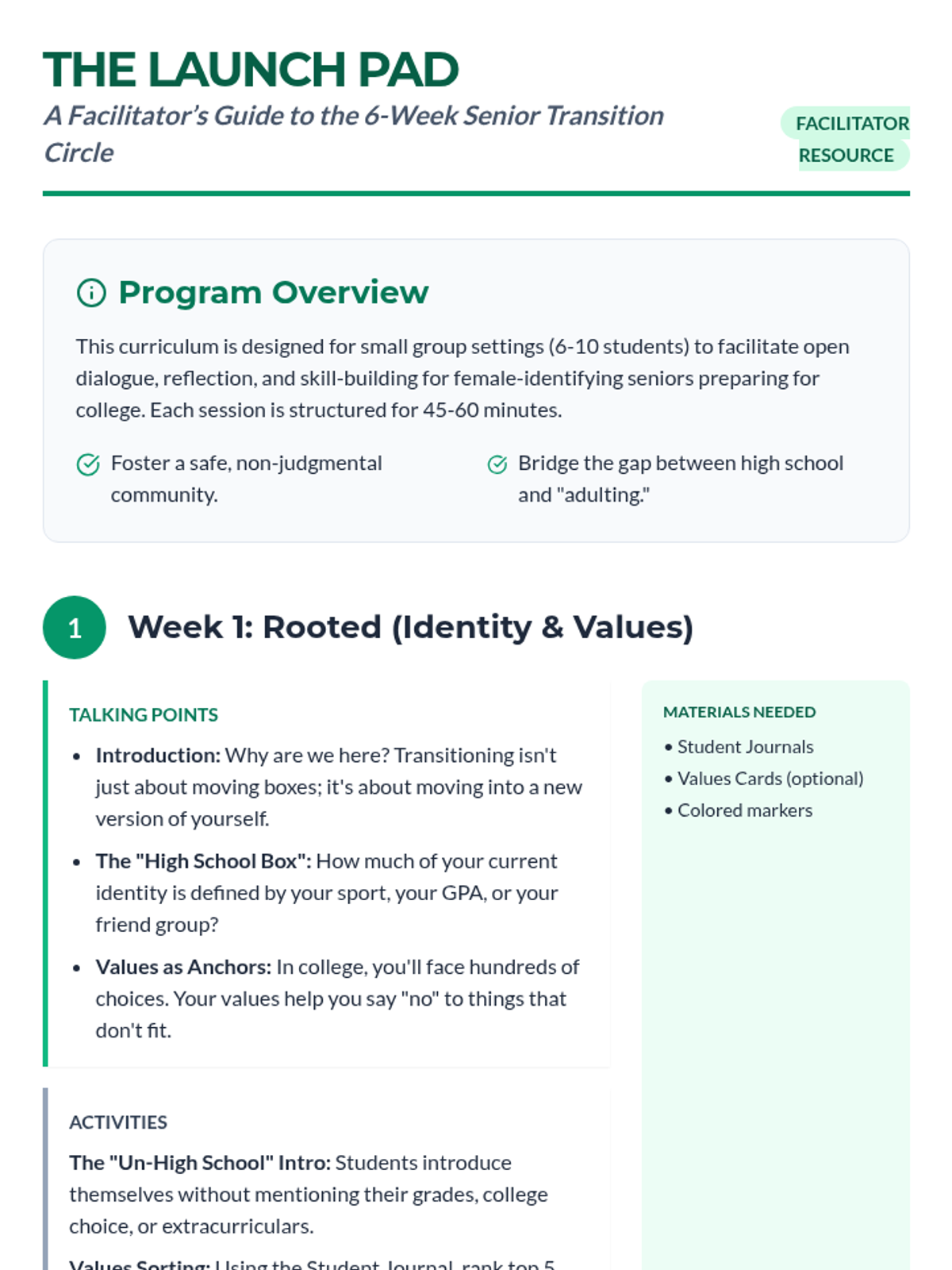
A comprehensive 6-week small group curriculum designed for female-identifying high school seniors. The program focuses on identity, boundaries, practical life skills, wellness, safety, and goal-setting to ensure a confident transition to college life.
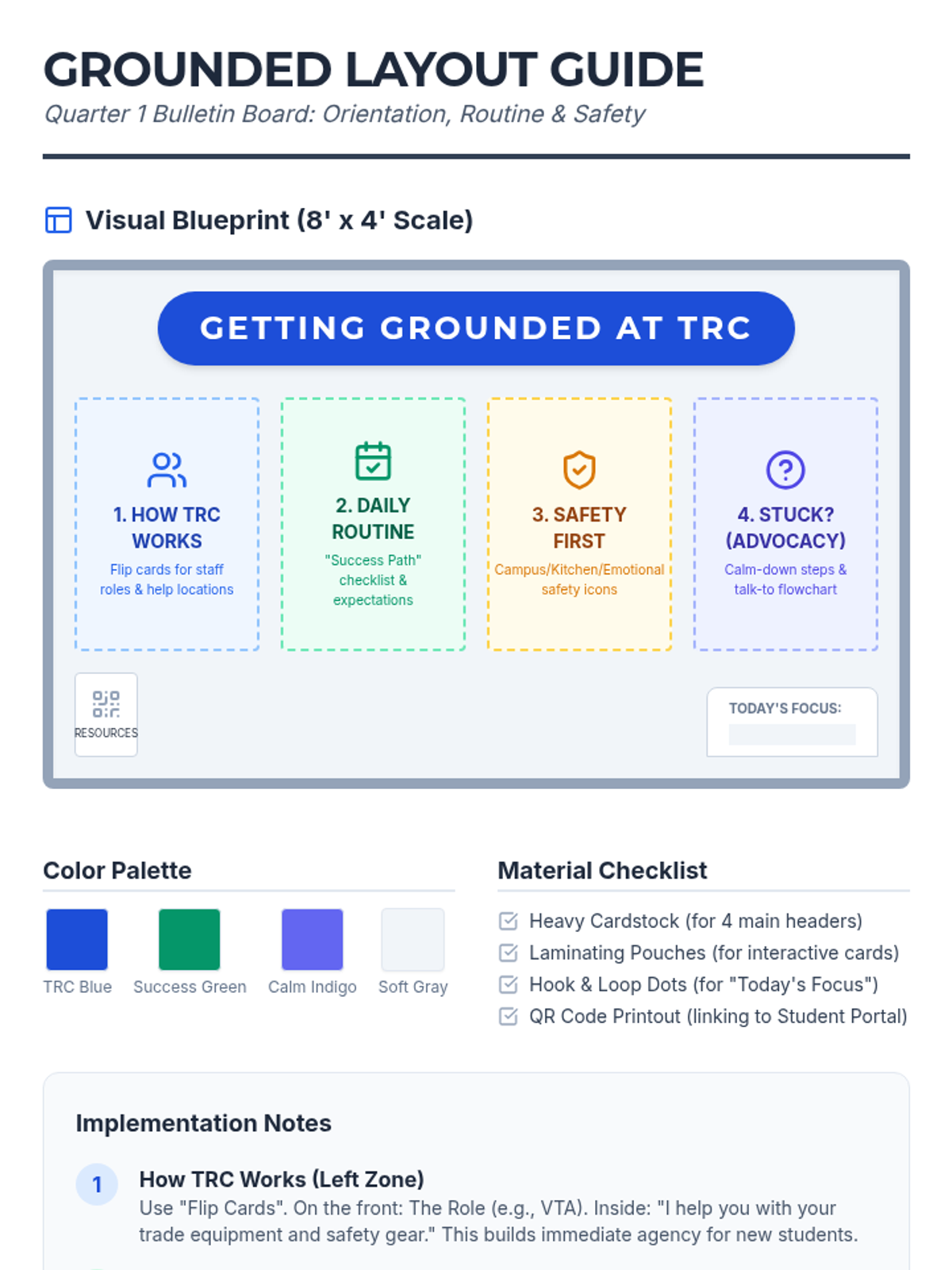
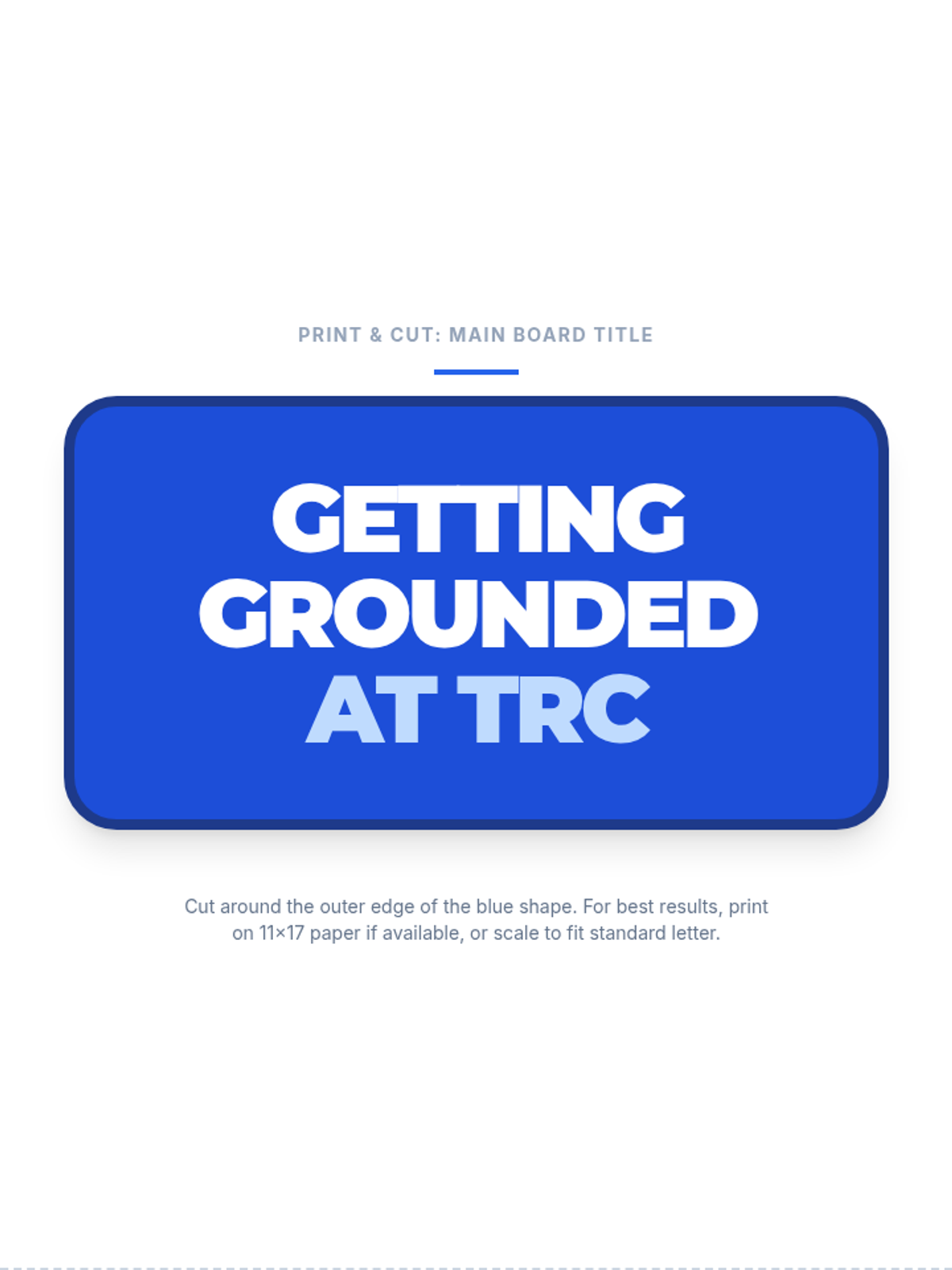
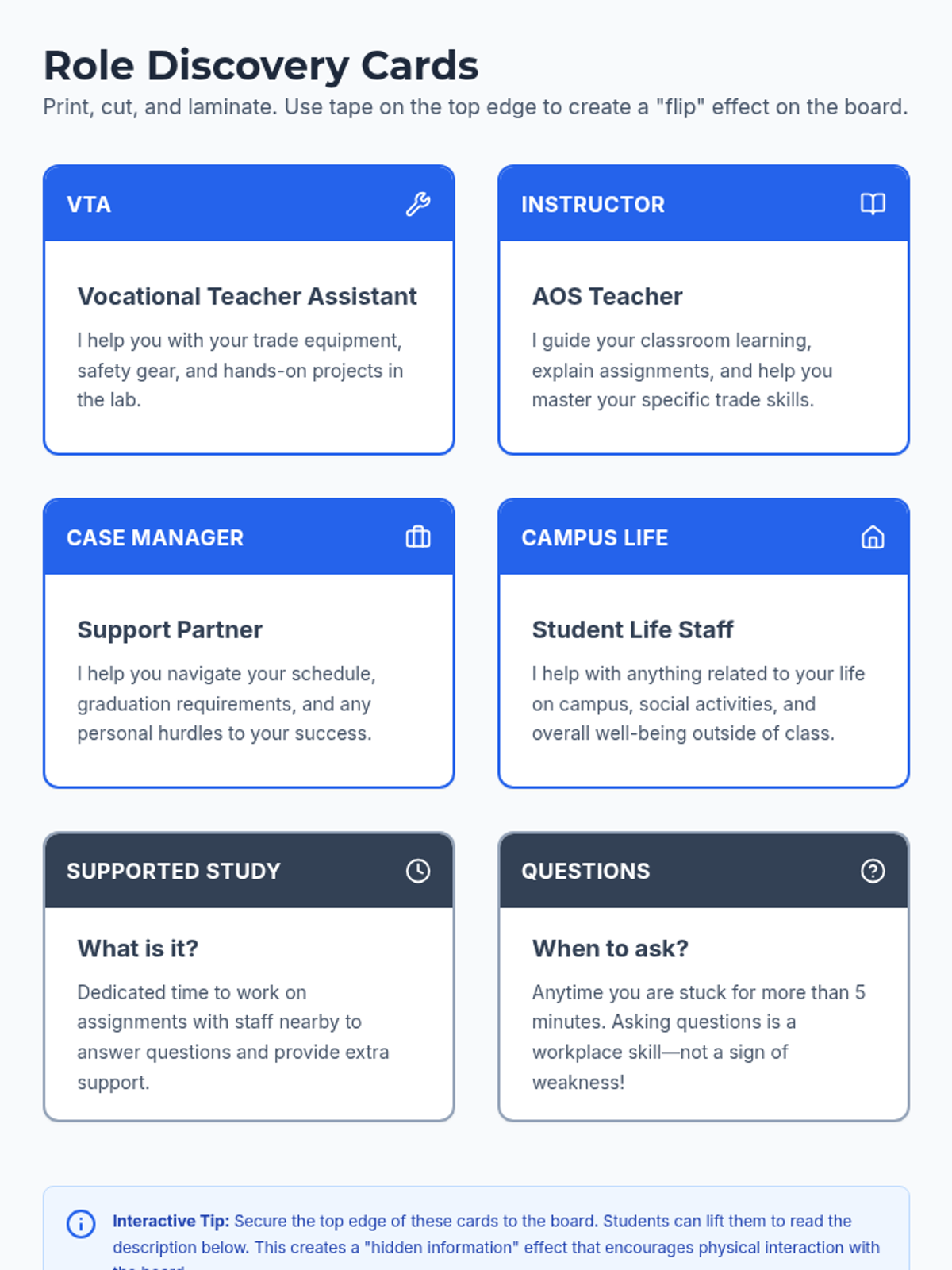
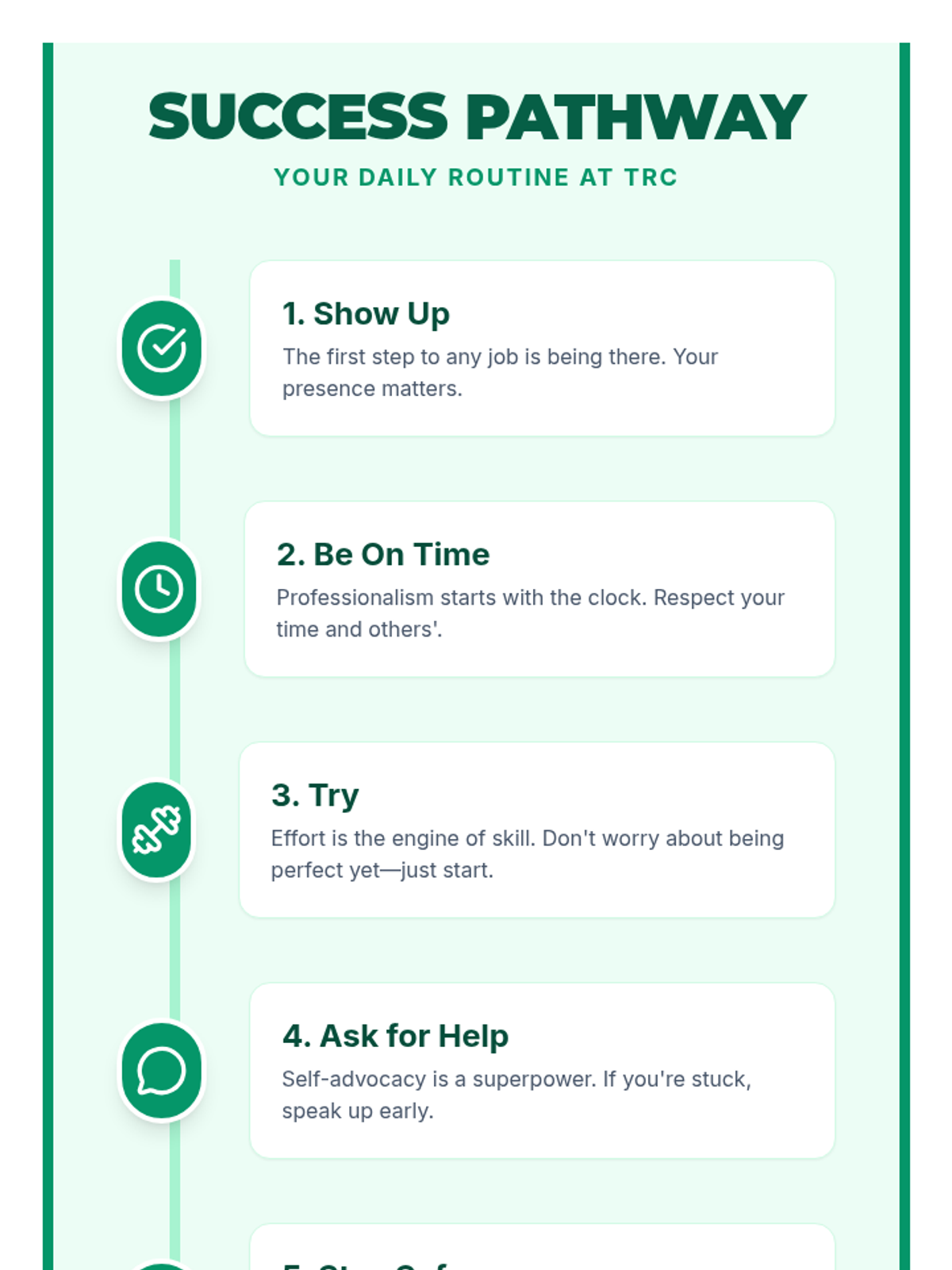
A collection of quarterly bulletin board designs for TRC, providing visual blueprints and printable components to help students navigate orientation, skill-building, and transition planning.
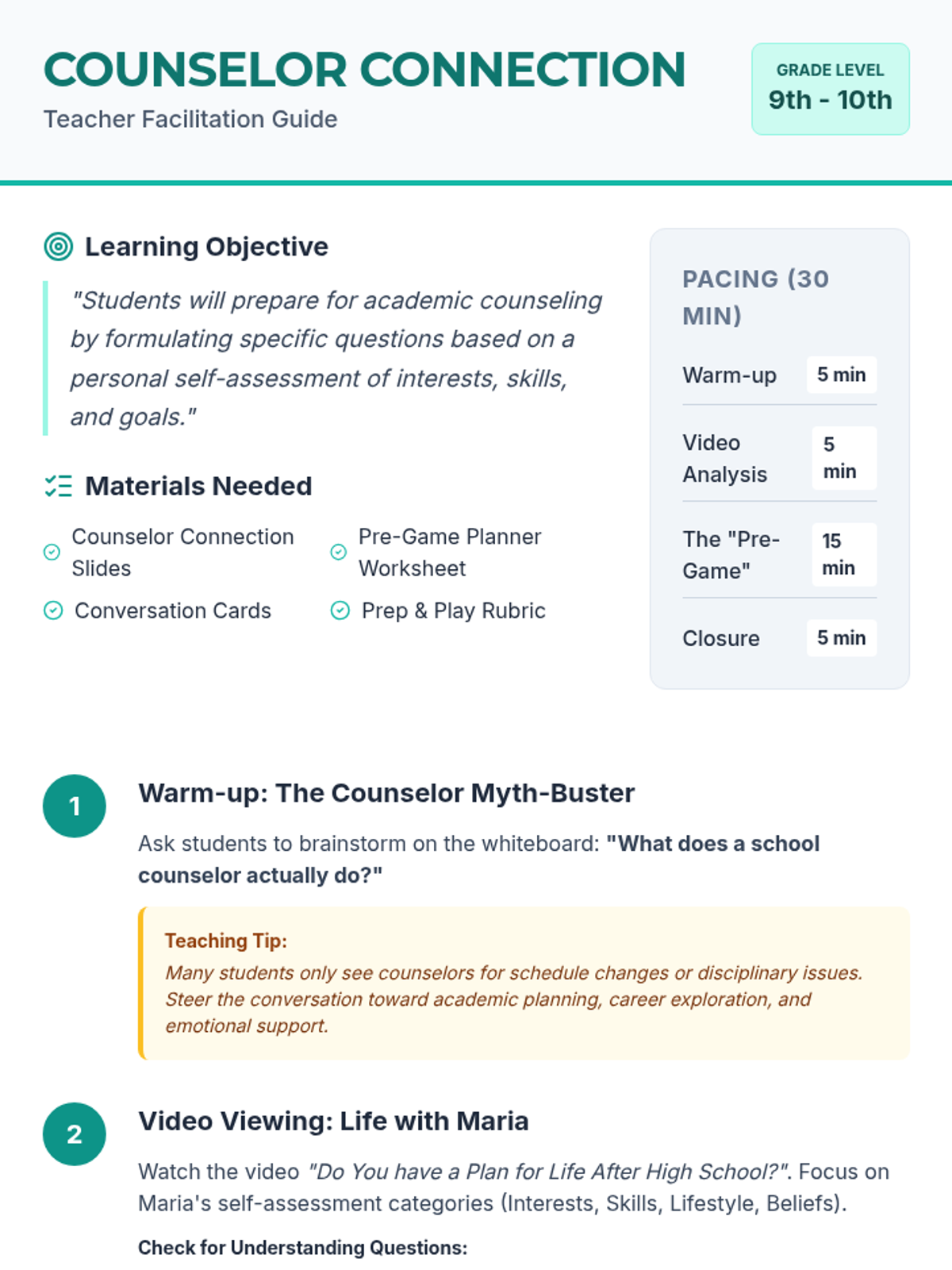
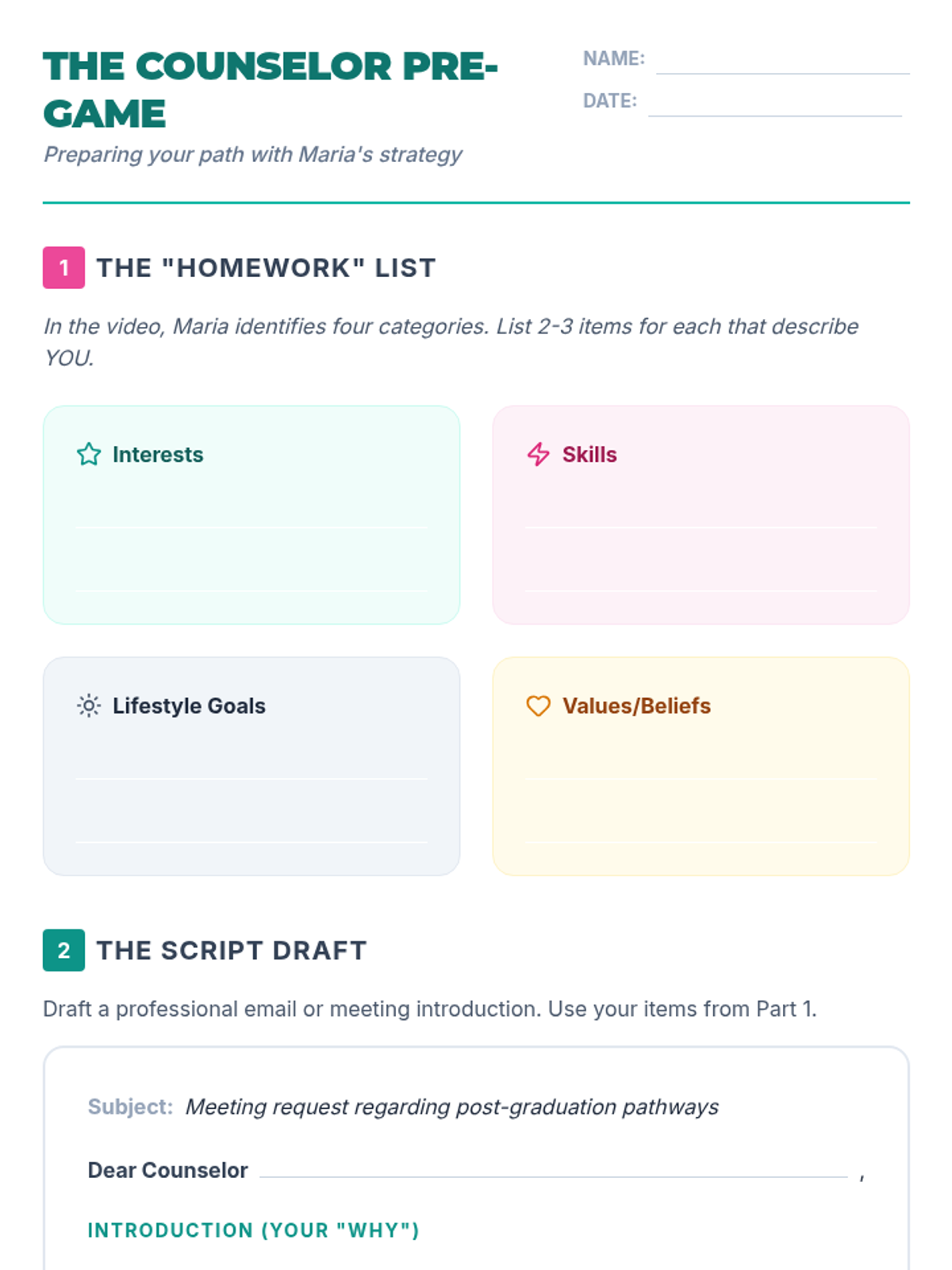
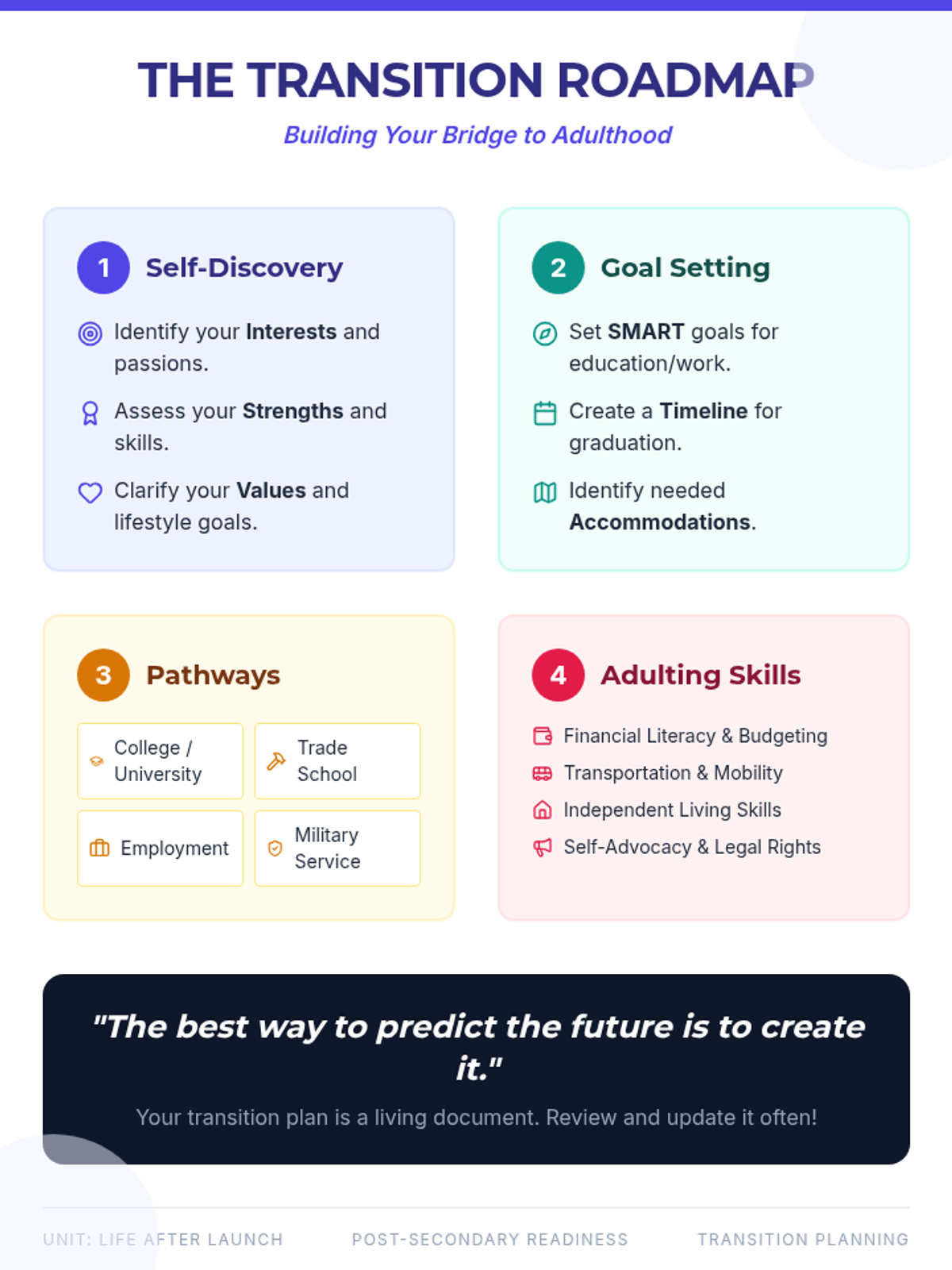
A comprehensive guide to help students navigate the transition from high school to post-secondary life, covering career exploration, college applications, financial aid, and essential life skills.
A comprehensive unit designed to prepare students for the transition from high school to adulthood, focusing on post-secondary pathways, resume building, and professional interview skills.
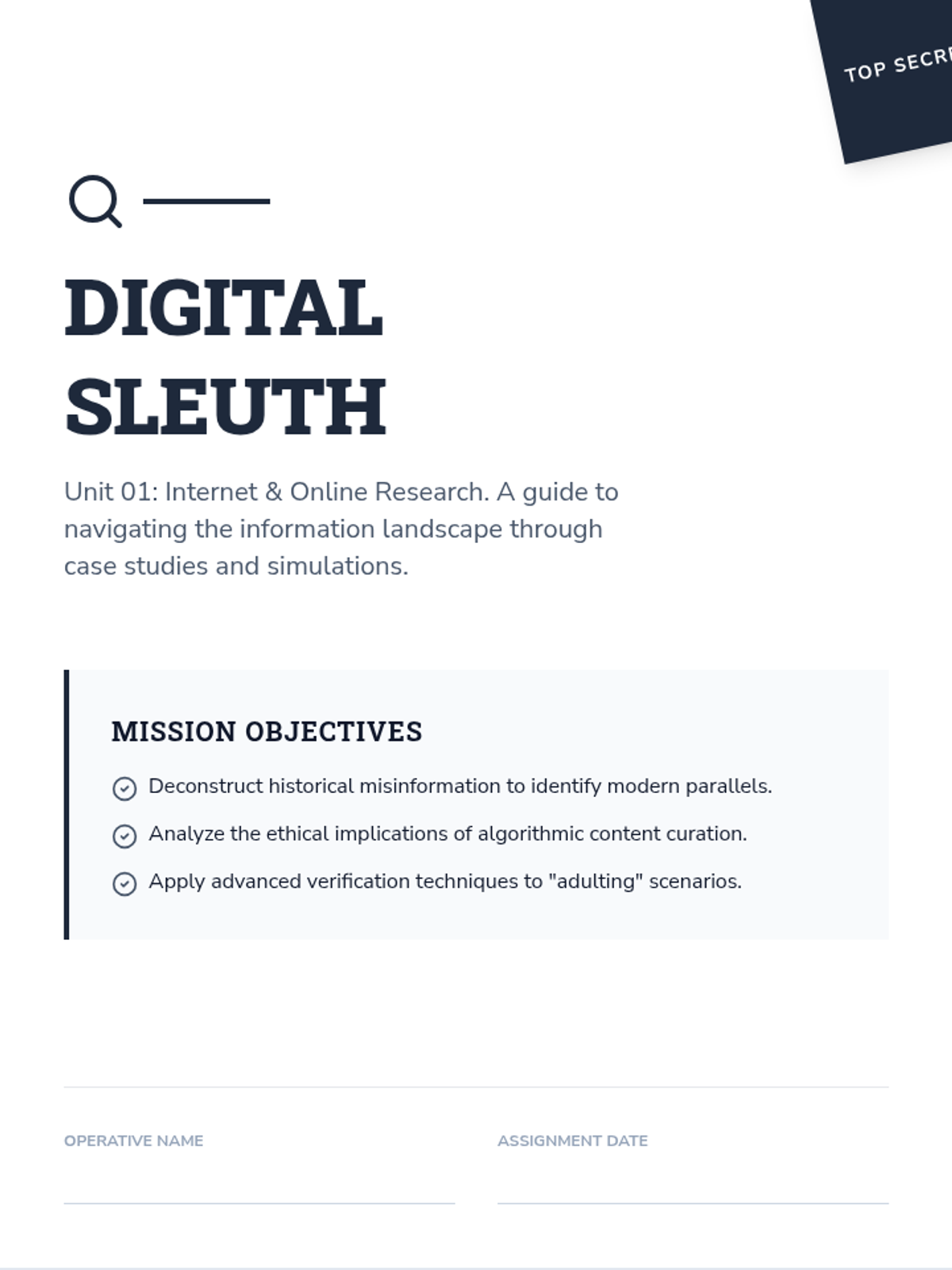
A comprehensive curriculum covering financial literacy, economic principles, and civic systems through historical case studies, ethical dilemmas, and real-world simulations.
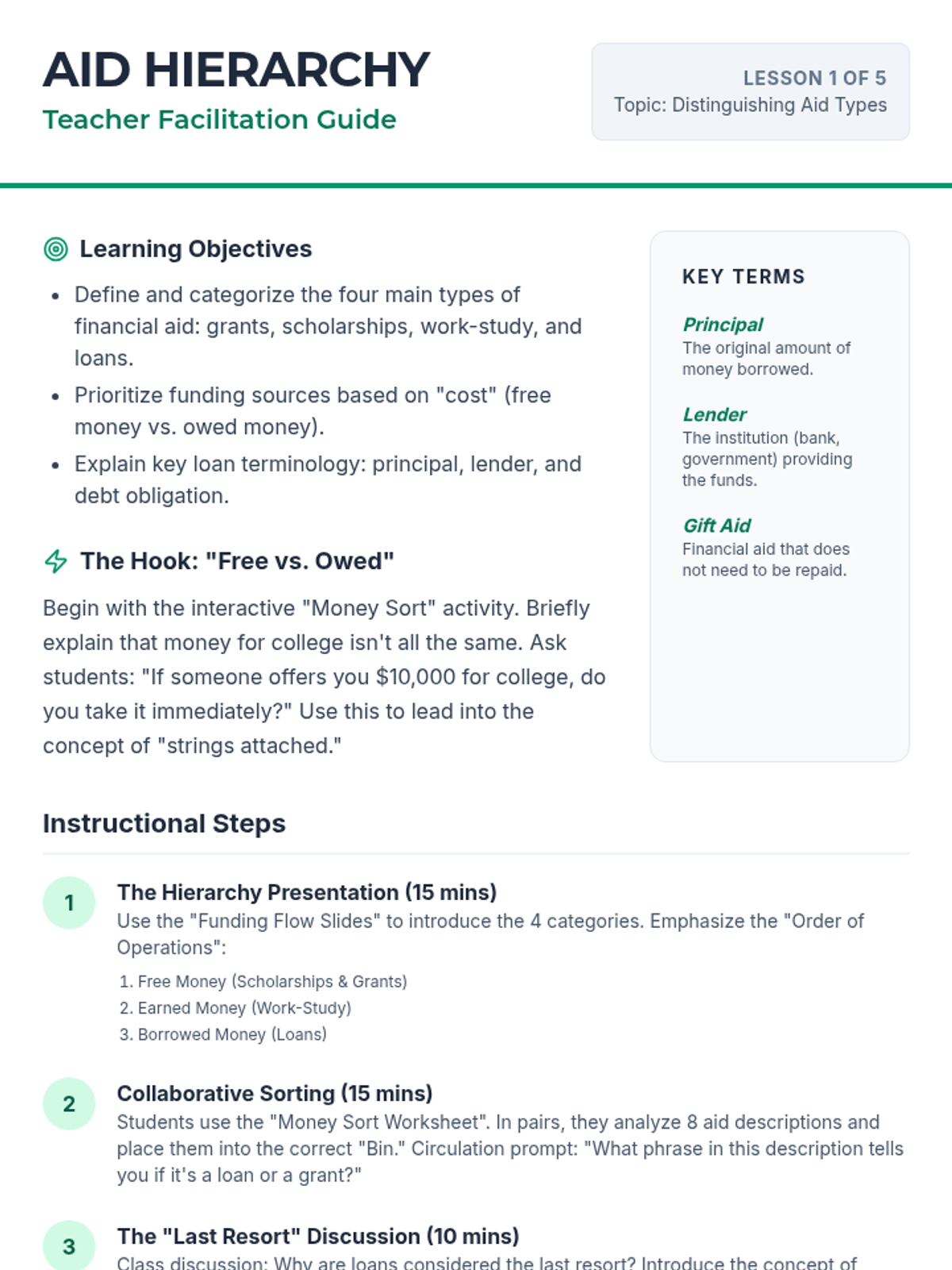
A comprehensive guide for high school seniors navigating the college financial aid process, from initial applications to understanding award letters.
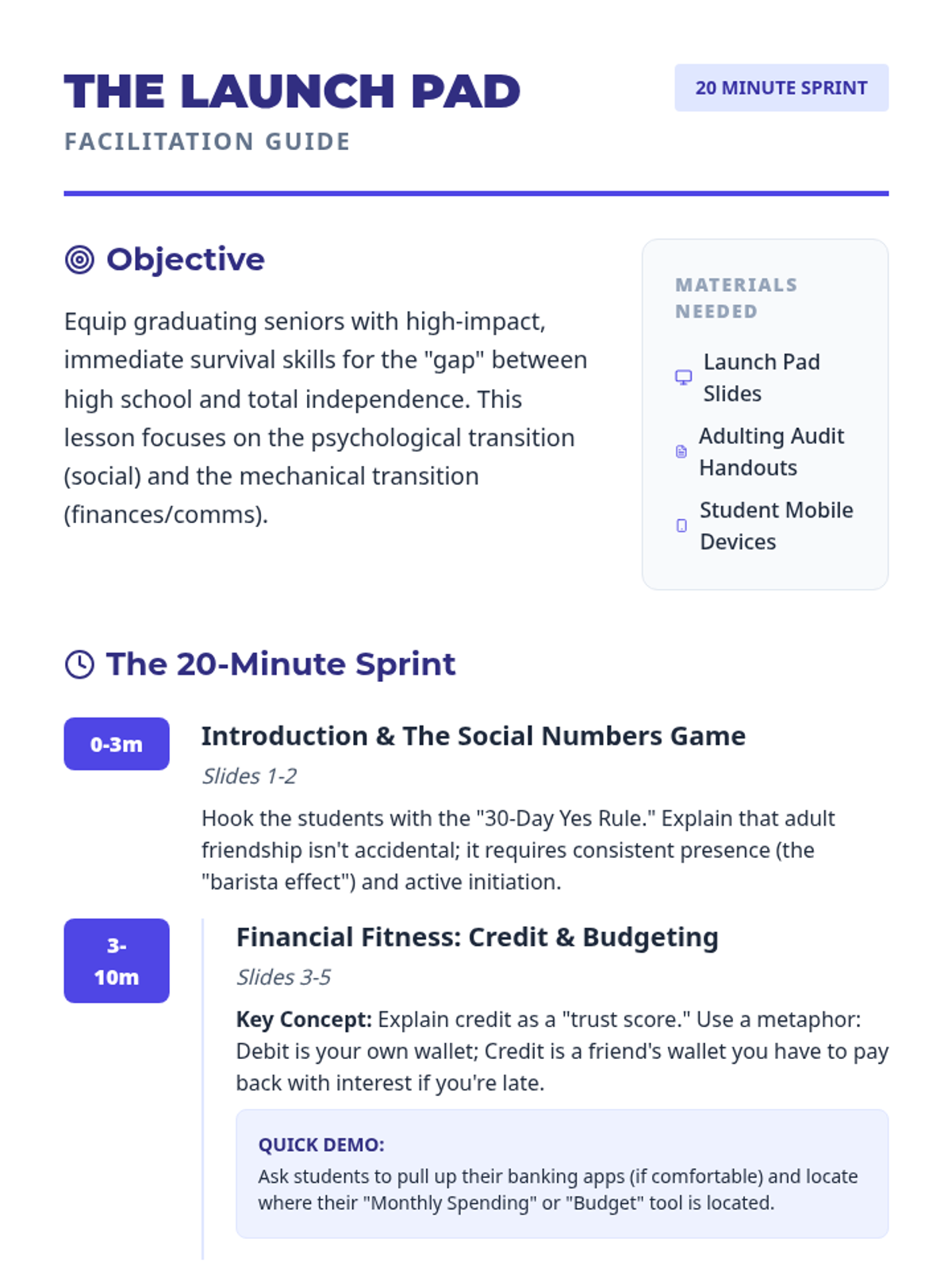
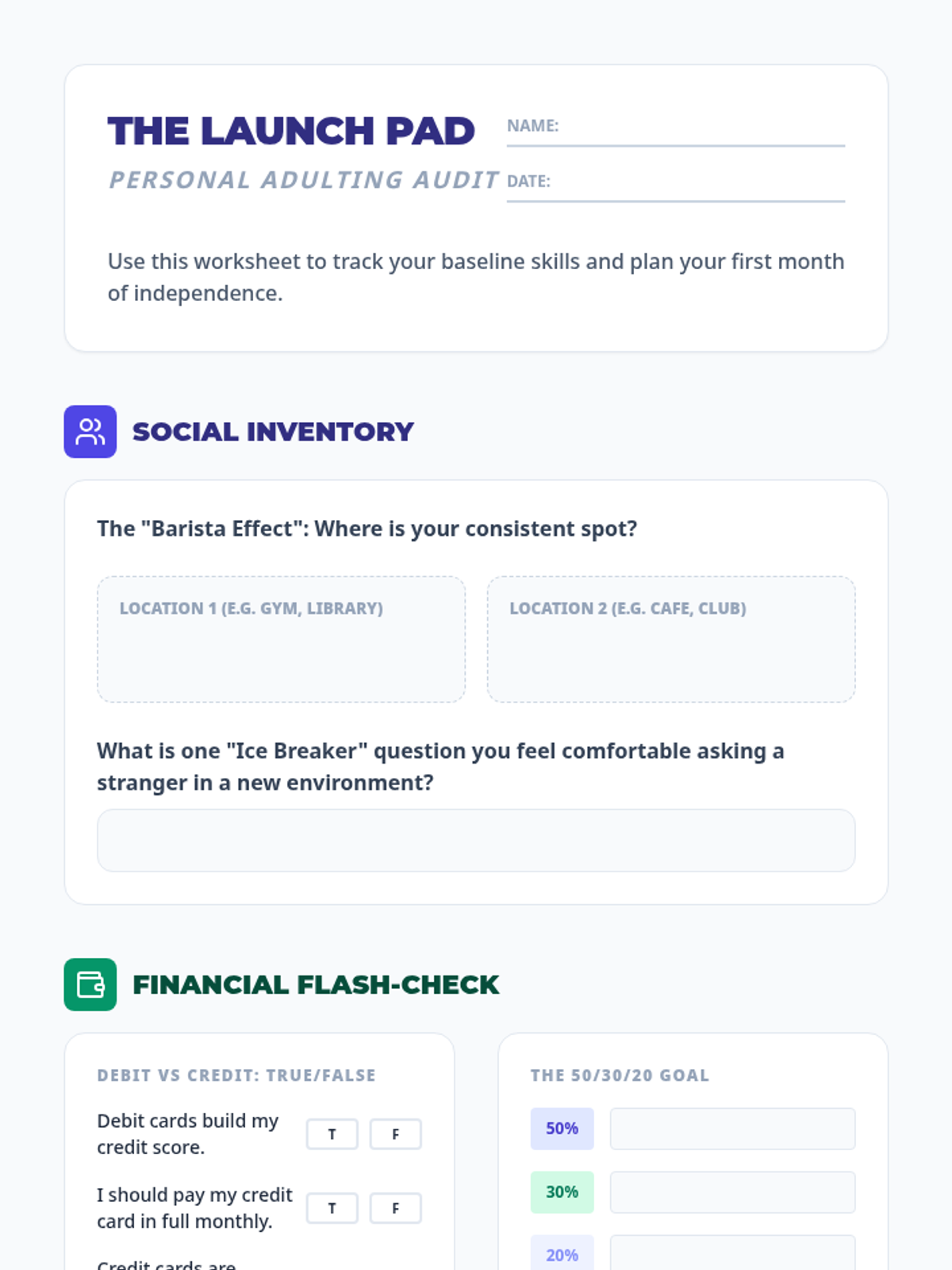
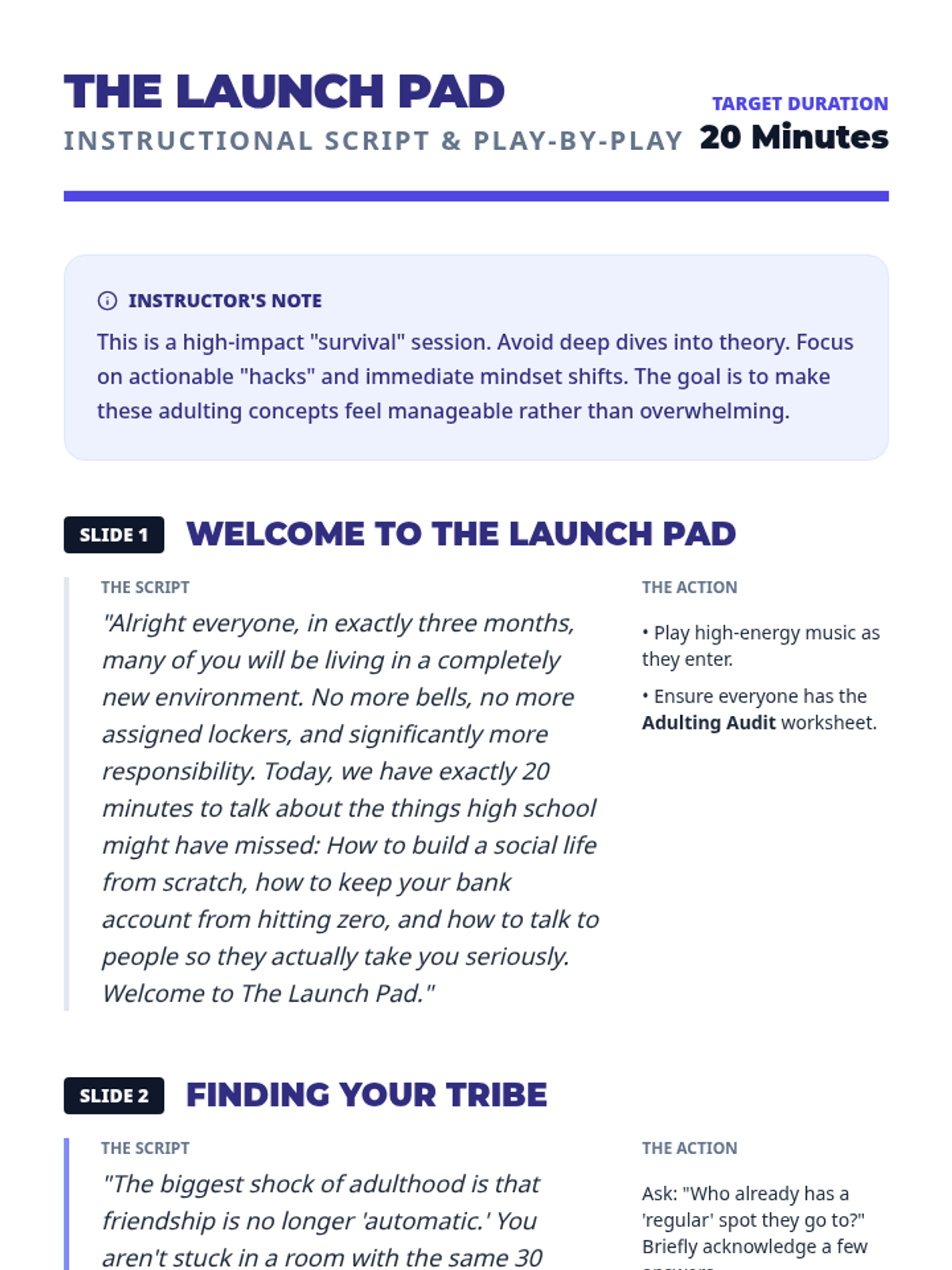
A comprehensive series designed to prepare high school seniors for the transition to independent life, focusing on financial literacy, social navigation, and professional readiness.
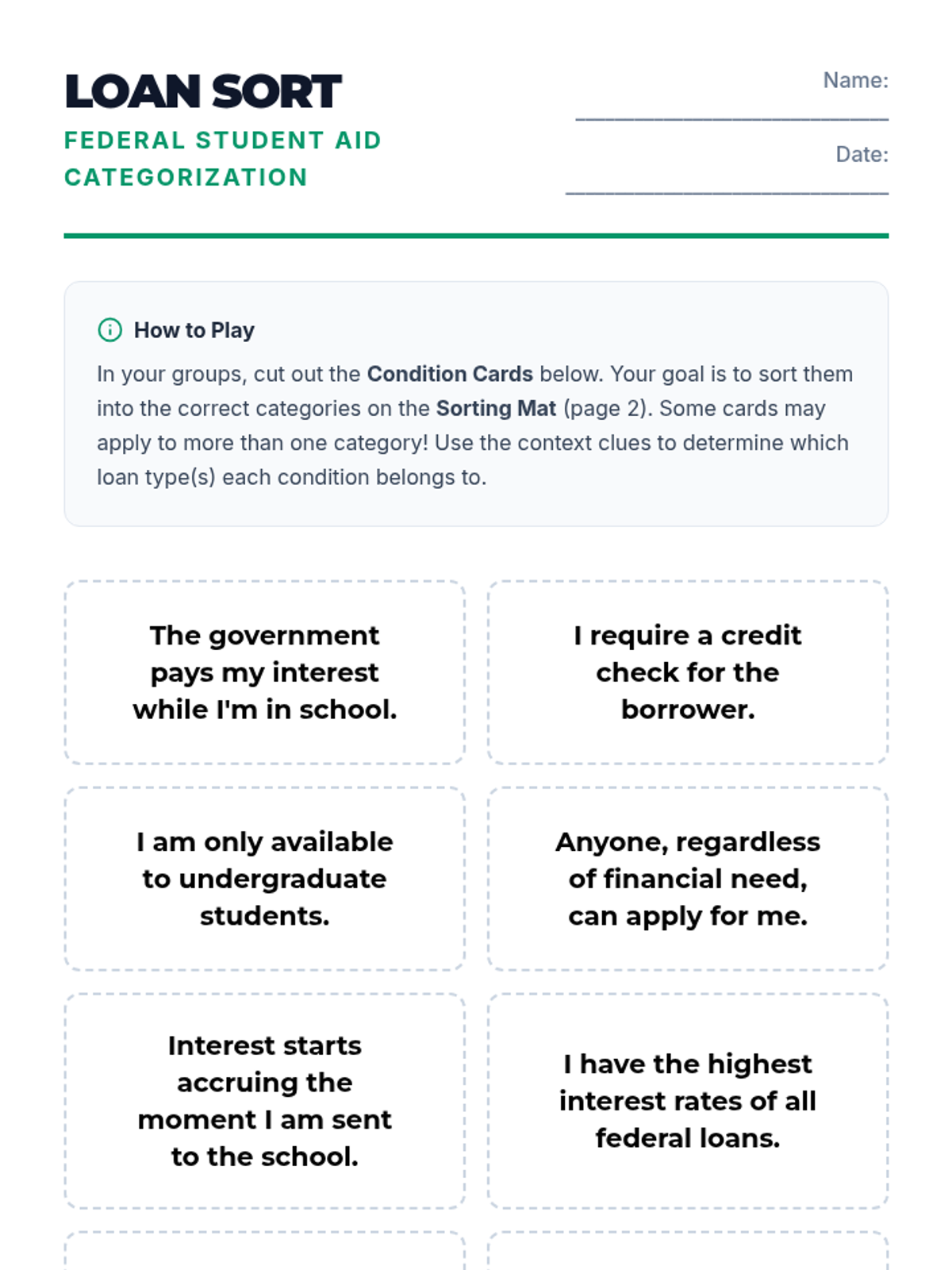
This sequence immerses students in the mechanics of borrowing money, focusing specifically on the distinctions between federal and private lending. Students begin by understanding the fundamental concepts of principal, interest, and capitalization before diving into the specific terms of Subsidized and Unsubsidized Direct Loans.
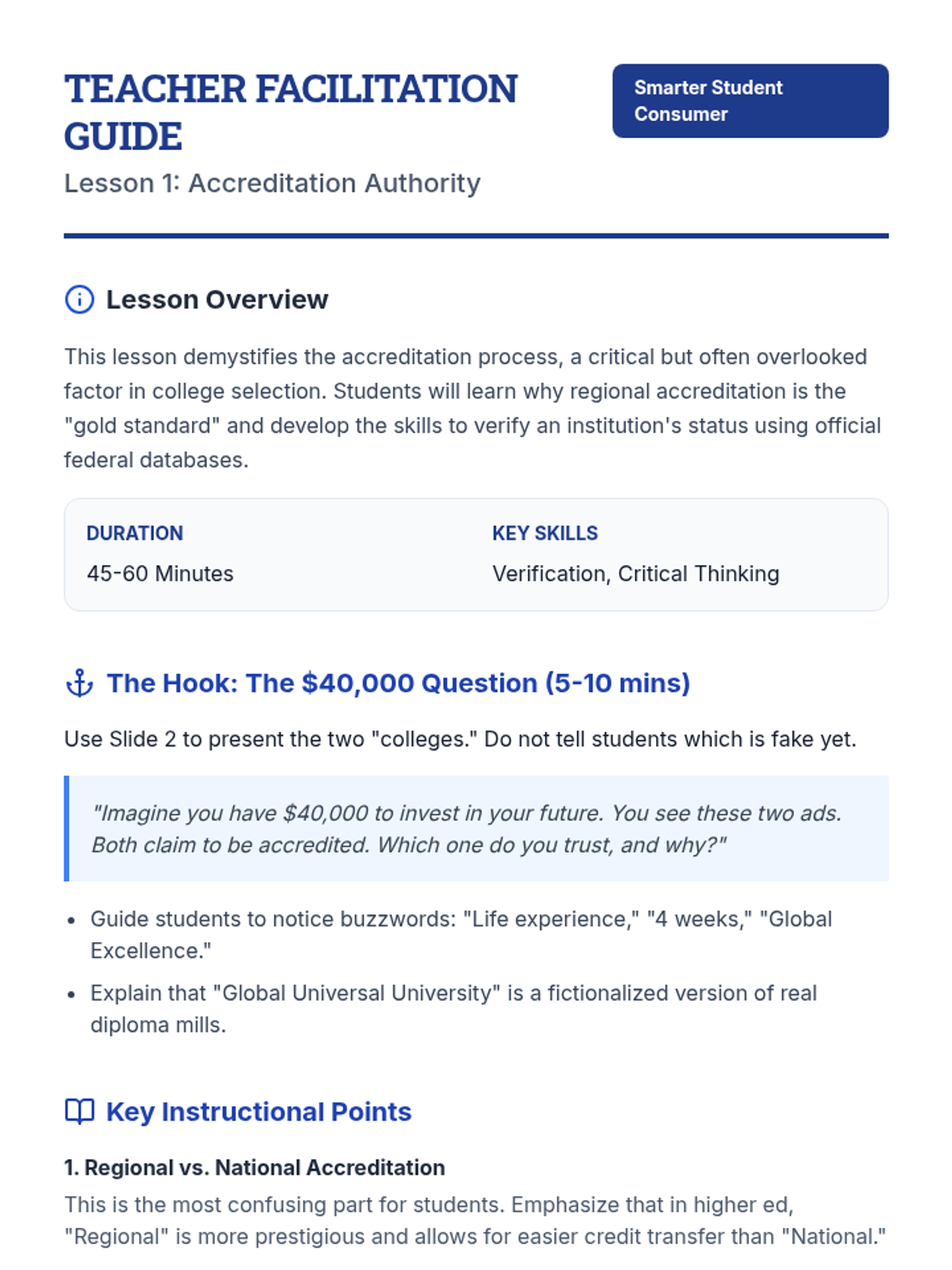
This sequence empowers 12th-grade students to evaluate post-secondary program quality. Students explore accreditation systems, analyze outcome data, compare non-profit vs. for-profit models, and identify predatory marketing to make informed educational investments.
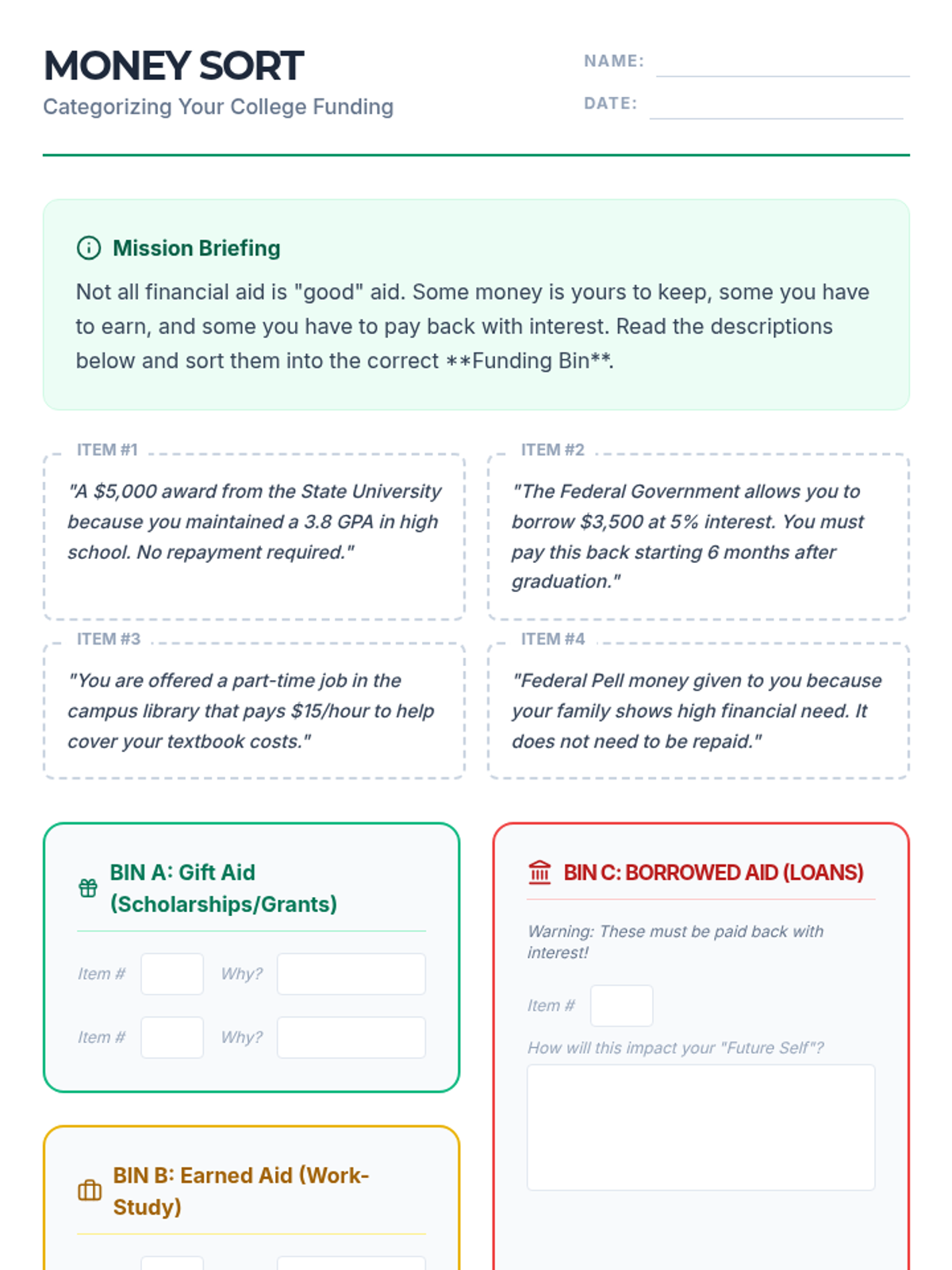
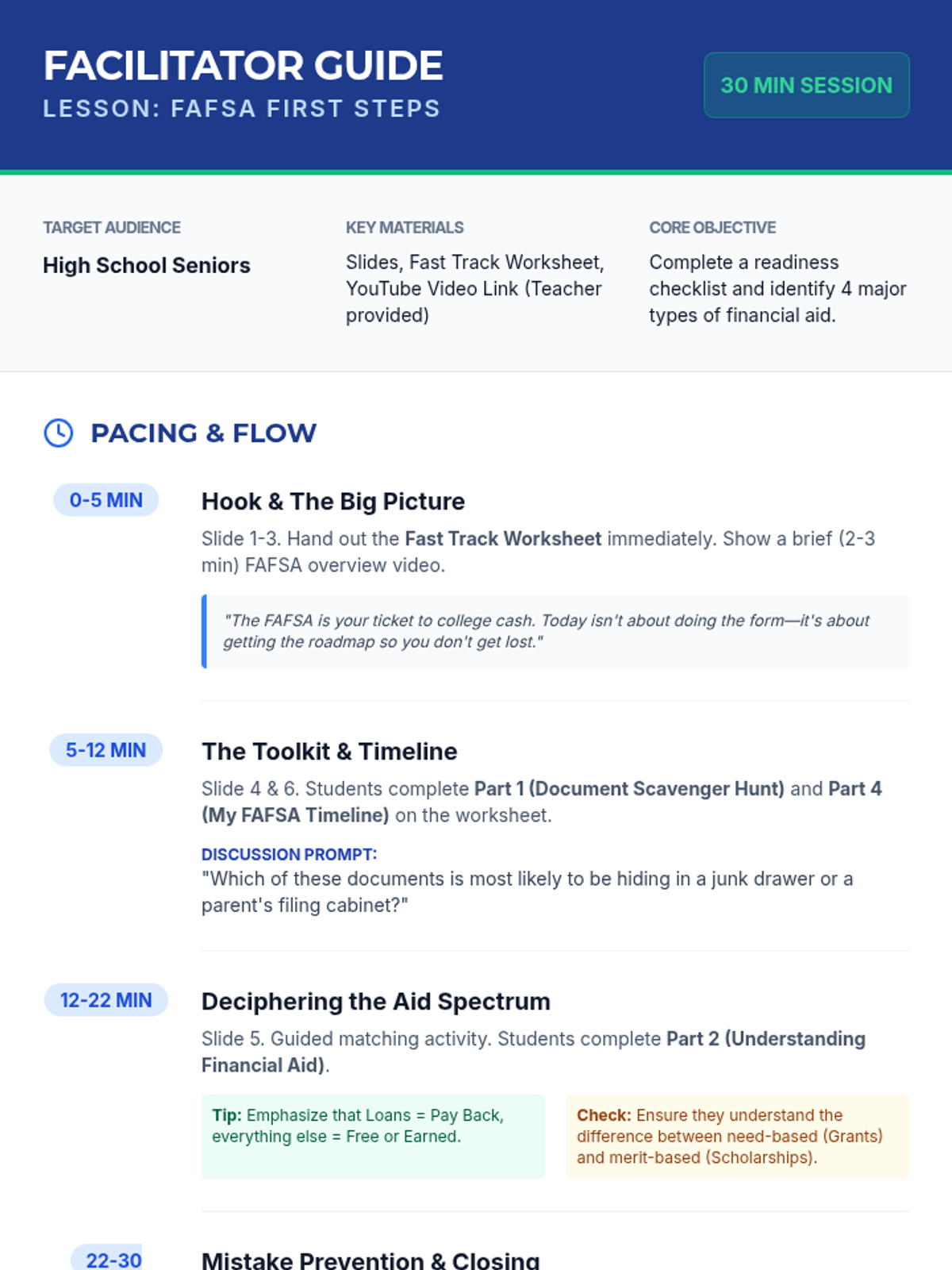
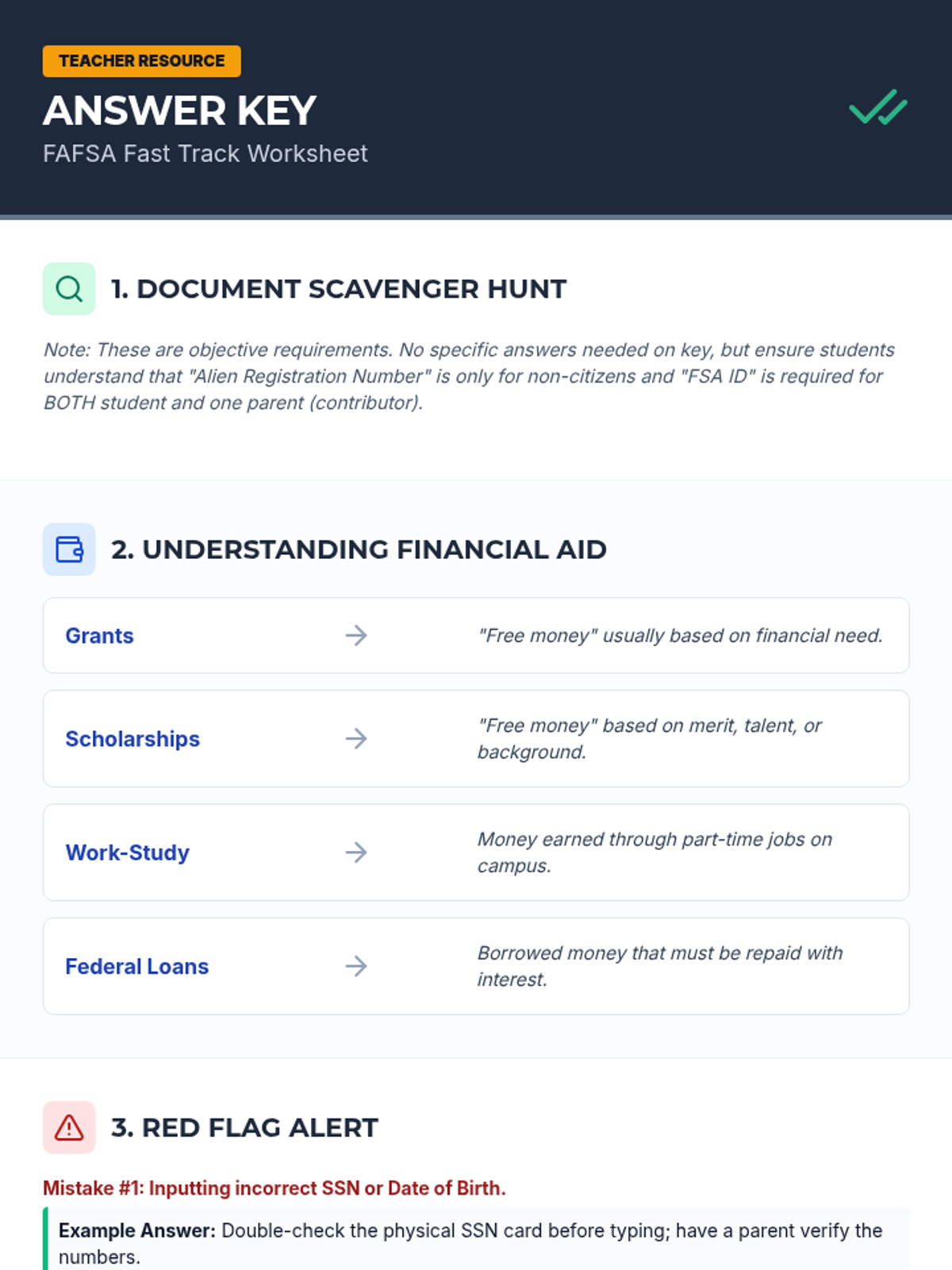
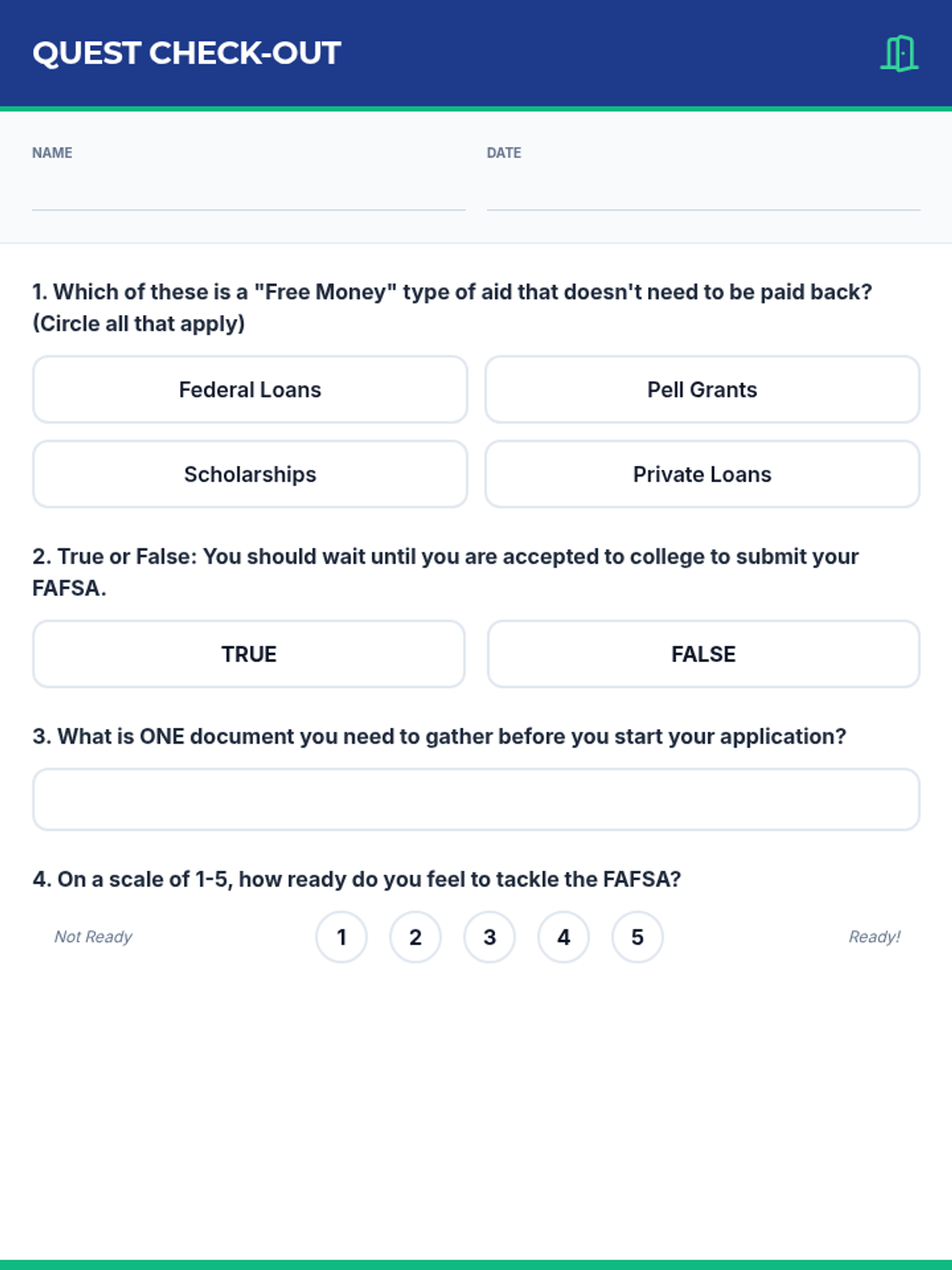
A comprehensive sequence for 11th-grade students to demystify financial aid and prepare for the FAFSA application process. Students will explore aid types, establish digital identities, navigate dependency rules, interpret tax documents, and build a strategic timeline for senior year.
A comprehensive literacy sequence for 12th-grade students focusing on federal student aid, interest mechanics, legal obligations of the MPN, and strategic repayment planning to ensure responsible borrowing.
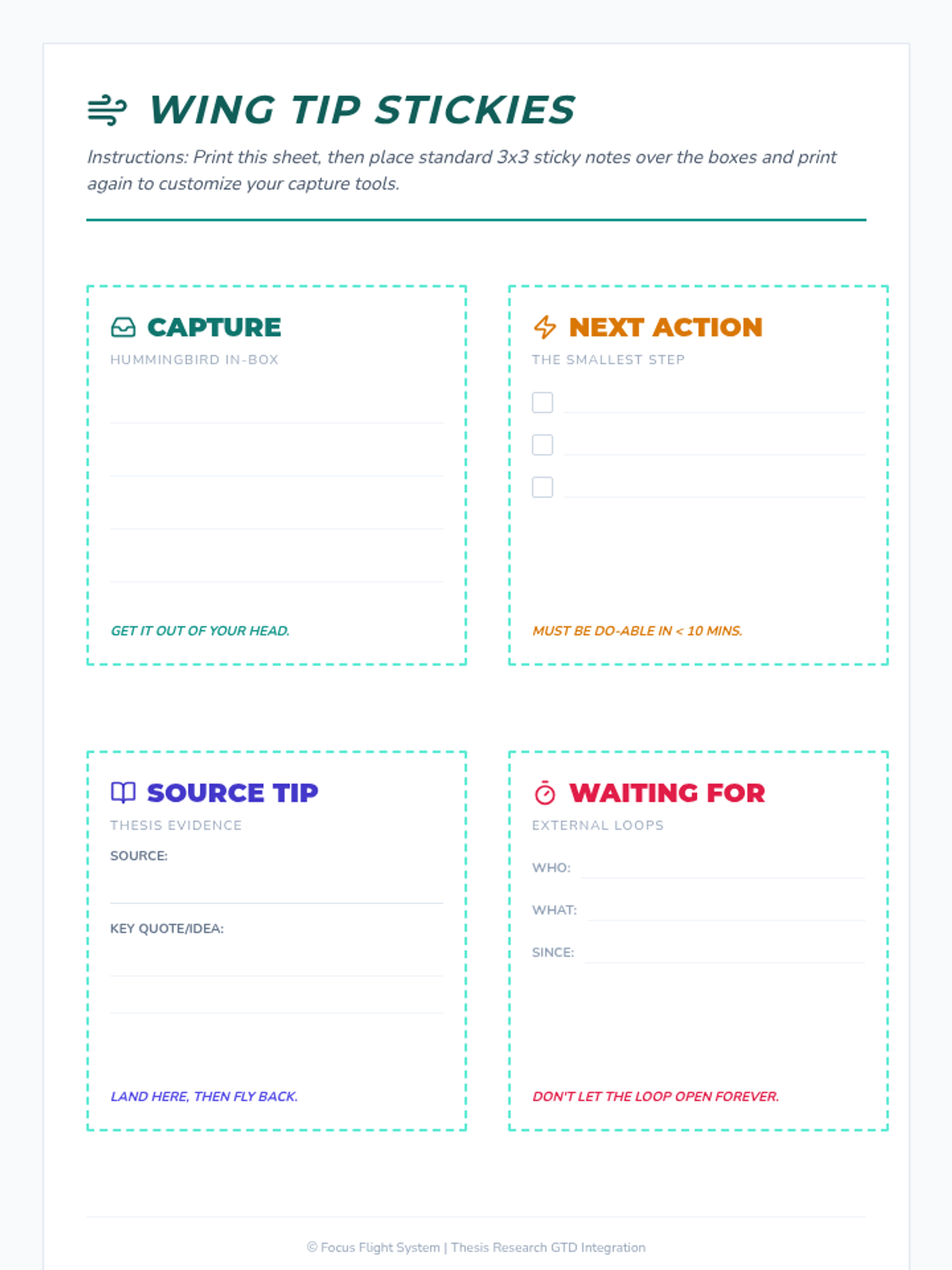
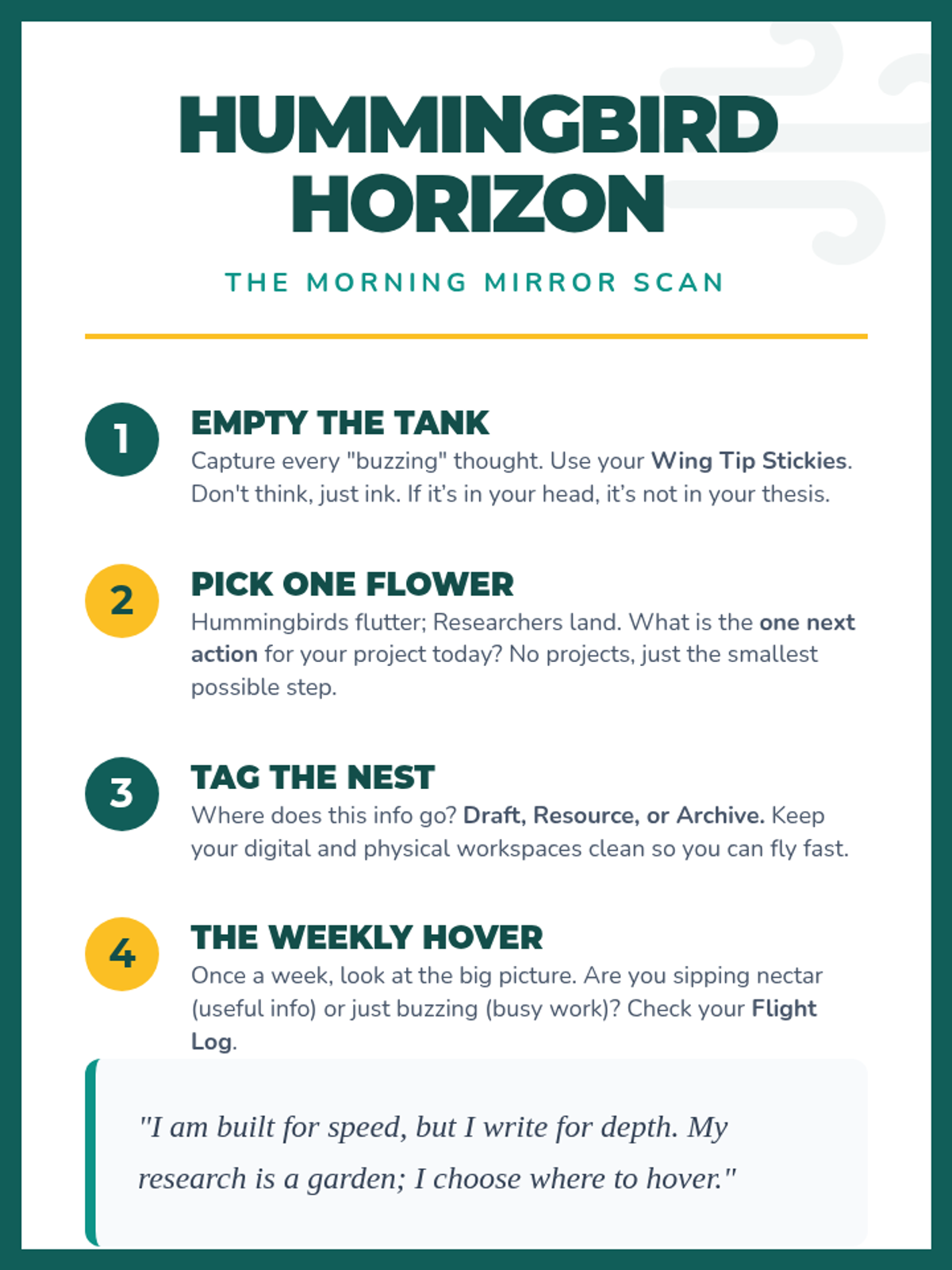
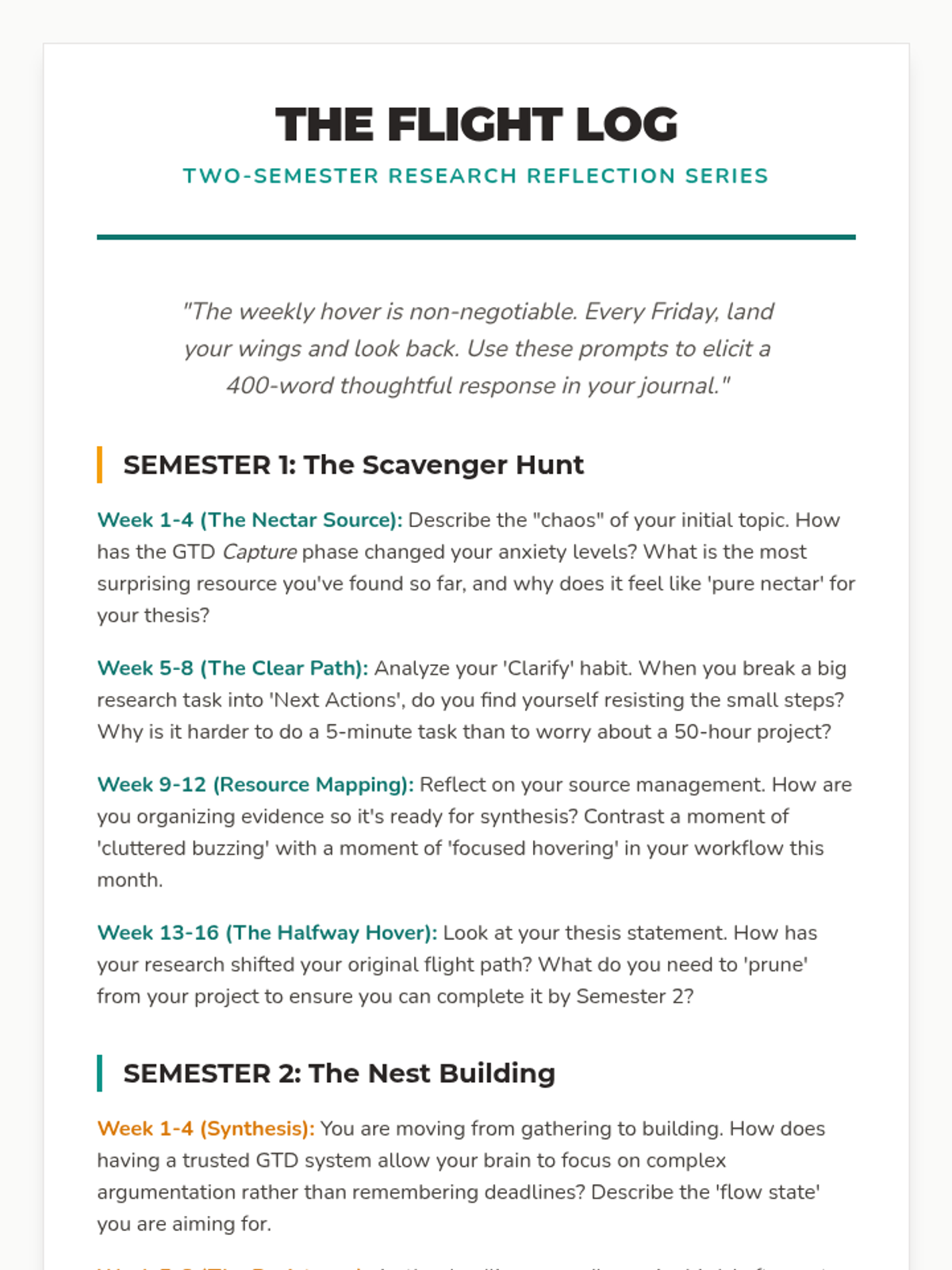
A comprehensive system for young adult researchers to manage long-term projects using GTD principles adapted for high-energy 'hummingbird' chronotypes. Focuses on capturing ideas quickly, maintaining visual momentum, and deep weekly reflection.
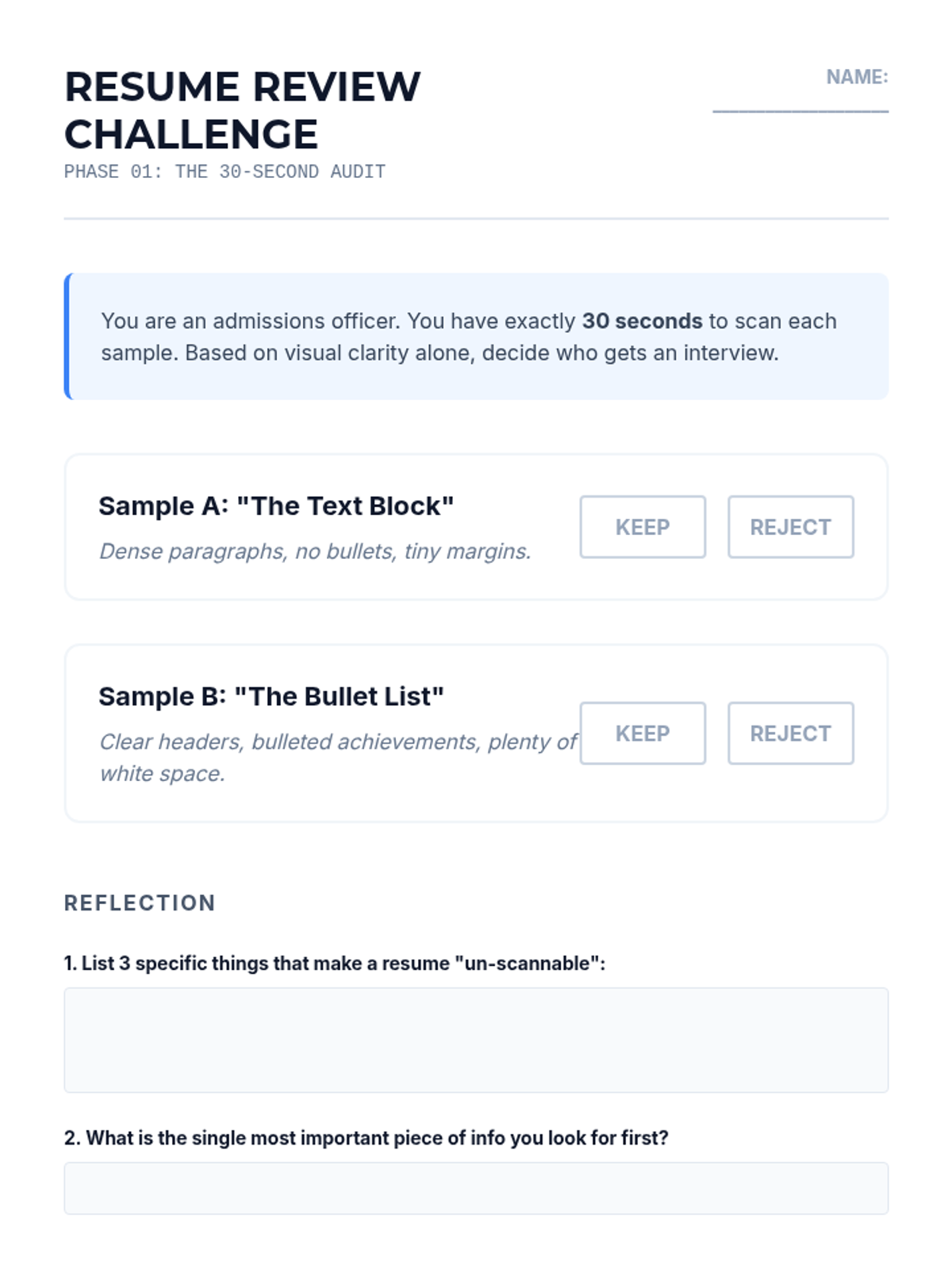
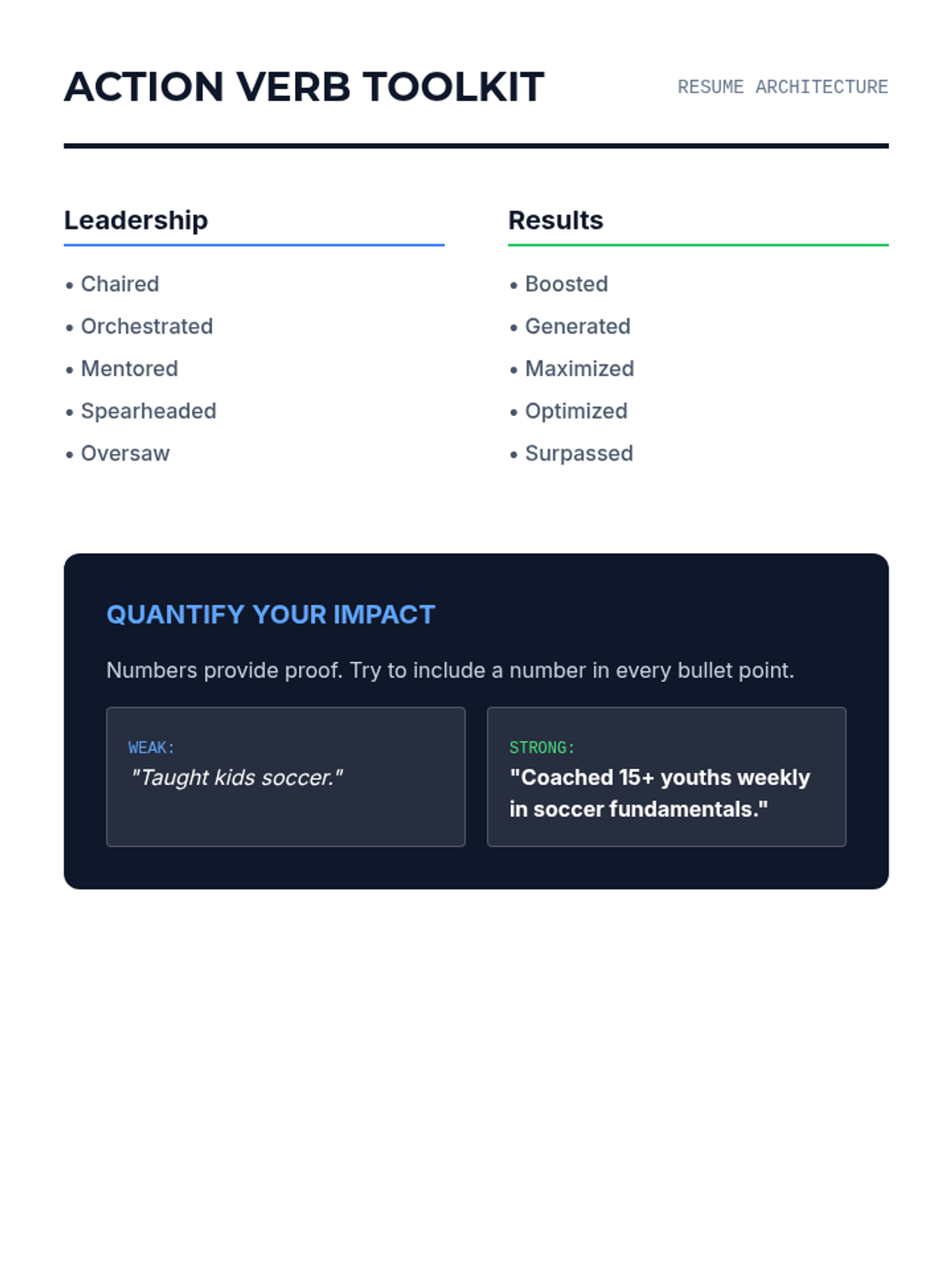
A workshop-style sequence for 12th graders to master the professional application process, covering resumes, personal statements, digital portfolios, networking, and interviewing.
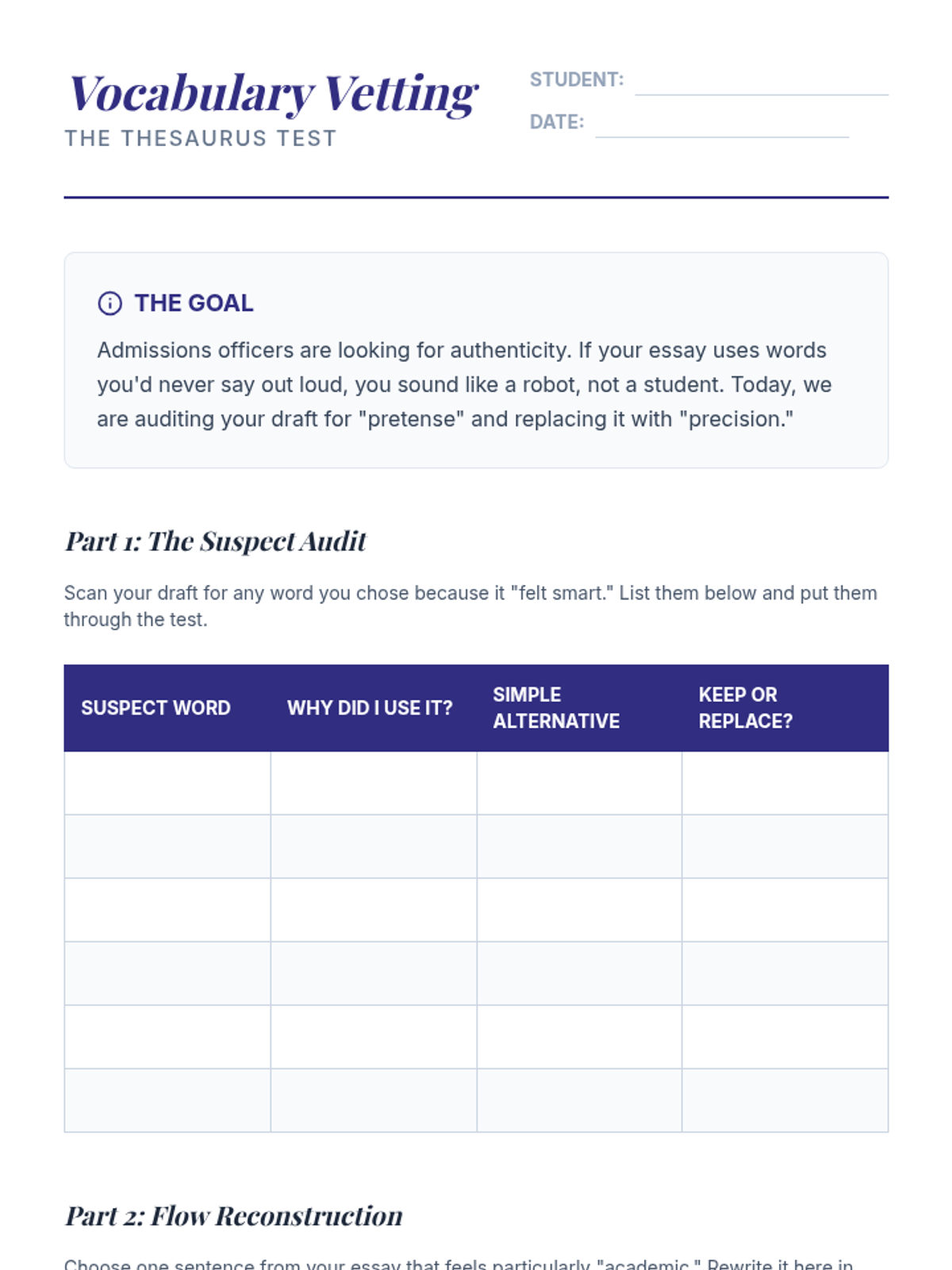
A comprehensive sequence for 11th-grade students focused on refining the personal statement. This unit emphasizes authenticity, auditory revision, emotional tone auditing, and technical finalization to ensure a student's written voice remains genuine and impactful.
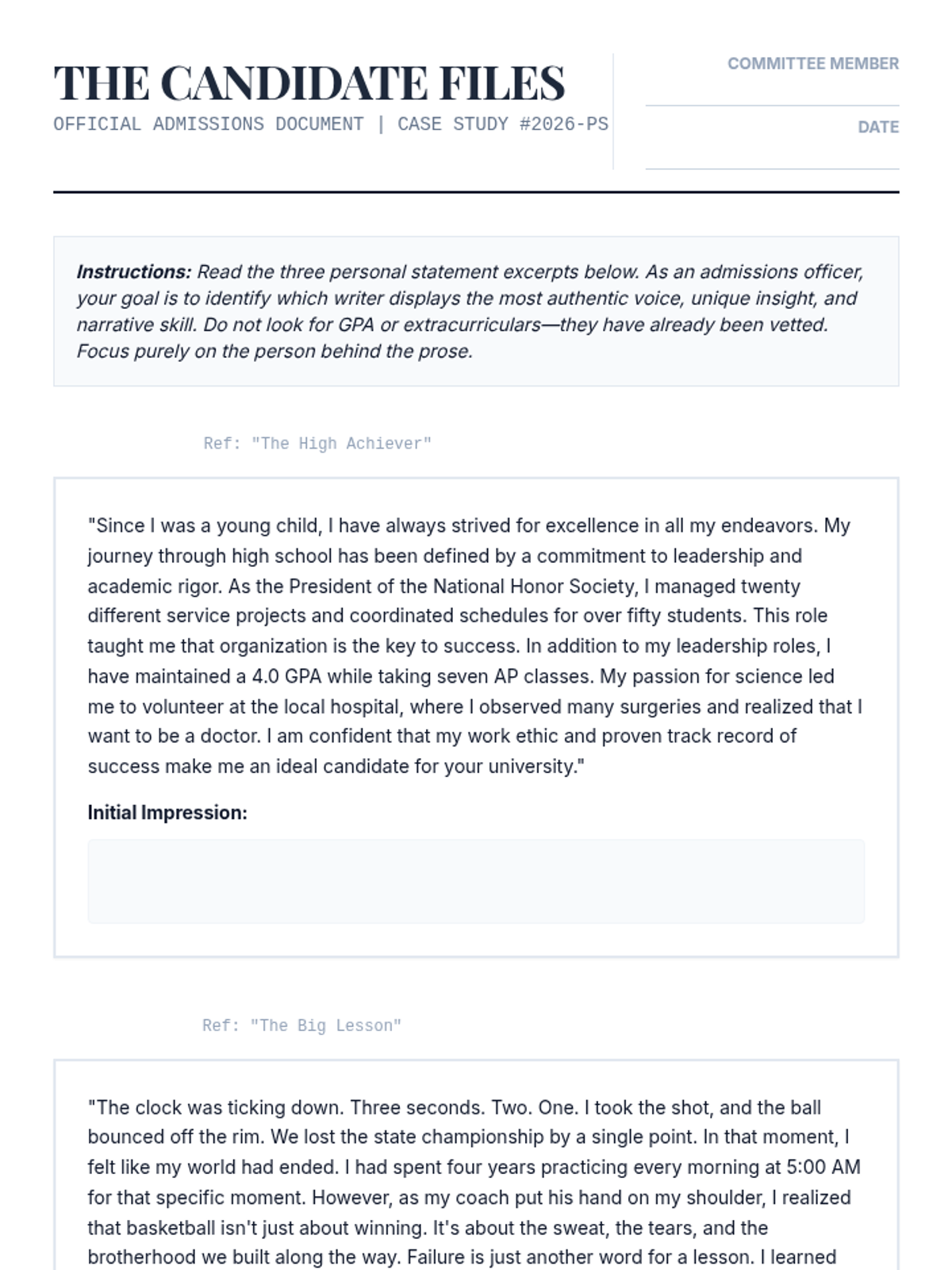
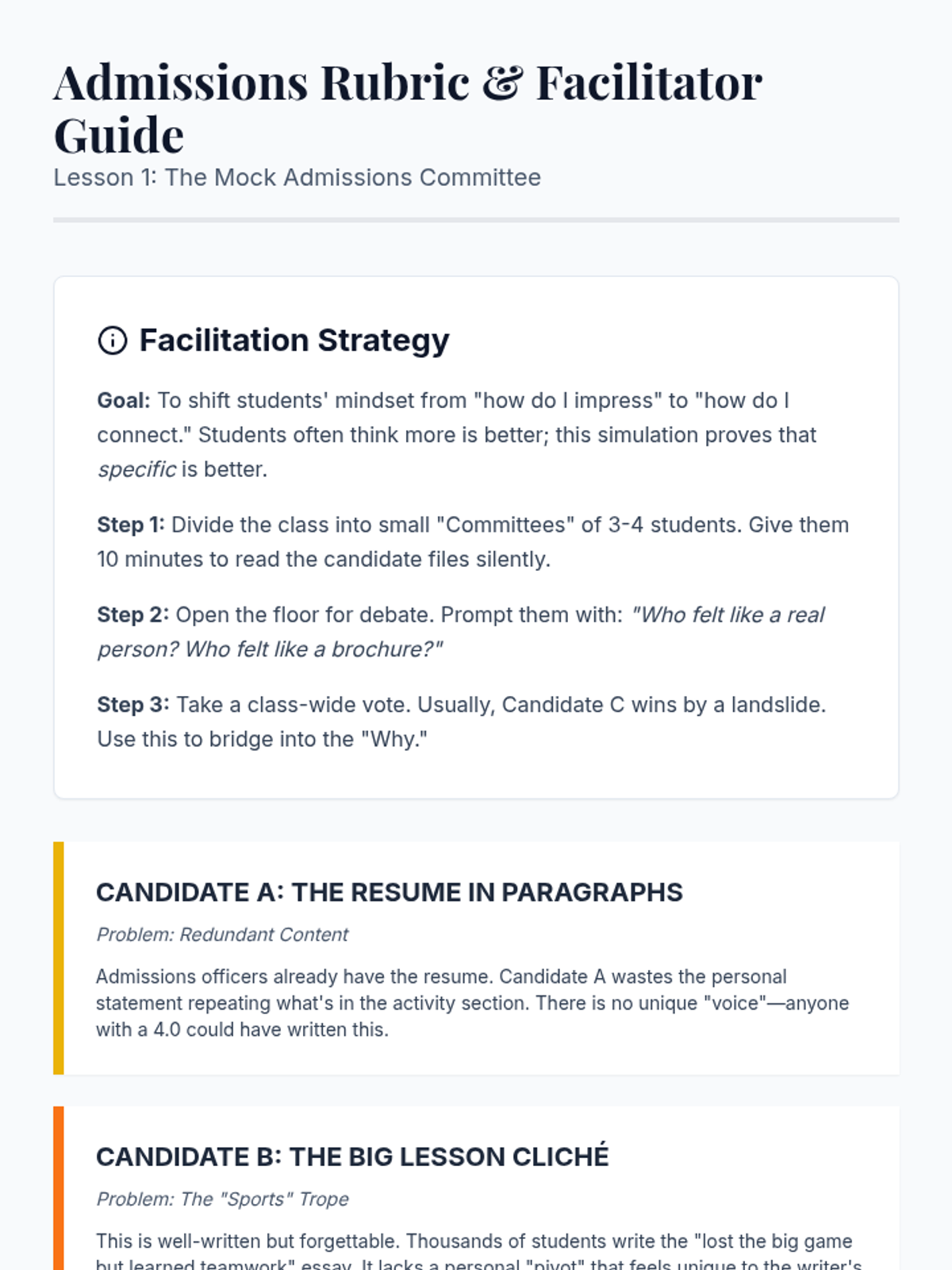
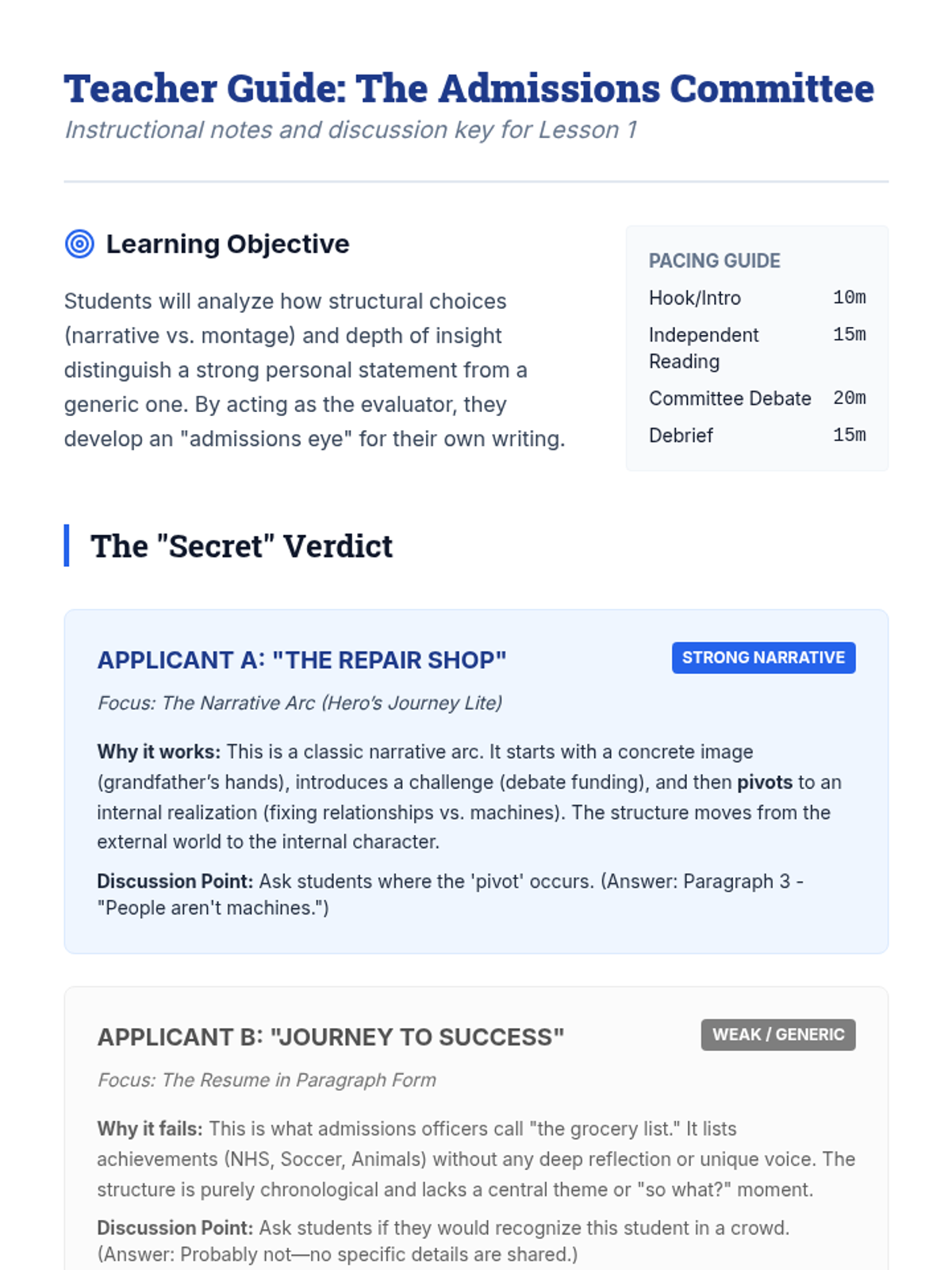
A comprehensive sequence designed to help 11th-grade students master the art of the college personal statement by deconstructing successful examples, identifying structural models, and avoiding common pitfalls. Students transition from being 'admissions officers' to becoming strategic narrative writers.
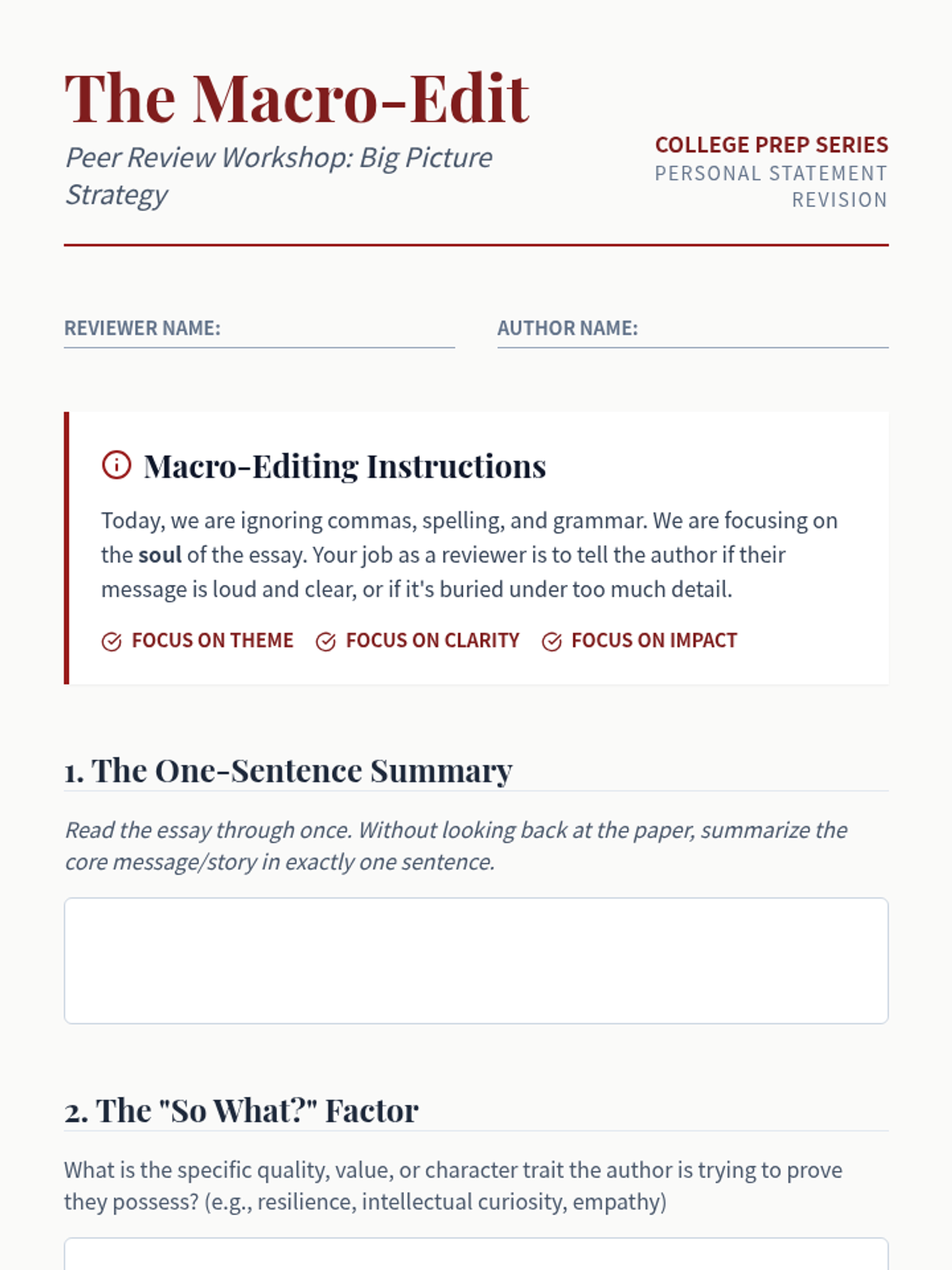
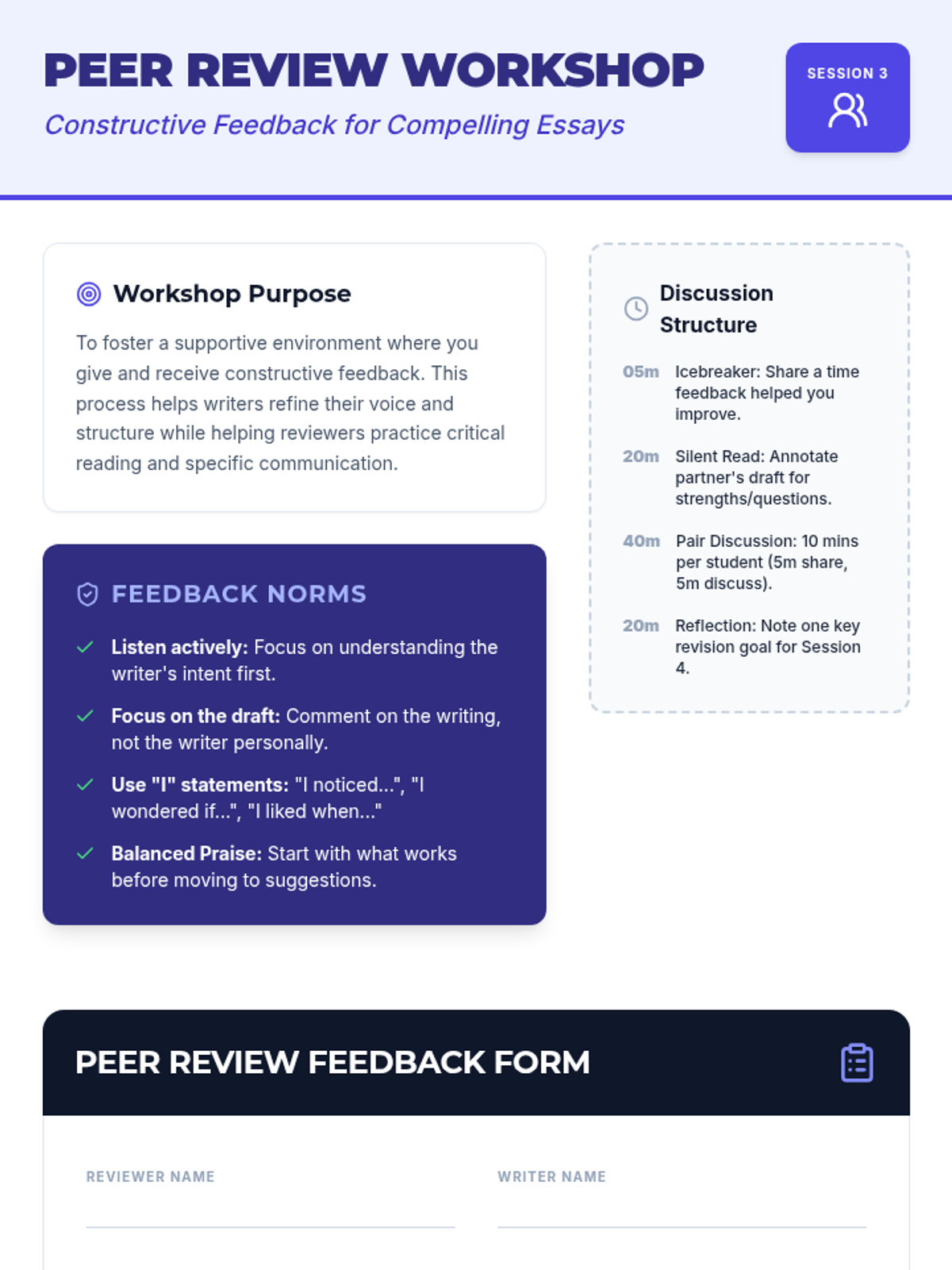
A comprehensive 12th-grade sequence focused on the final stages of personal statement writing. Students move from rough drafts to polished submissions through structured peer review, ruthless editing for word economy, audience awareness simulations, and meticulous mechanical proofreading.
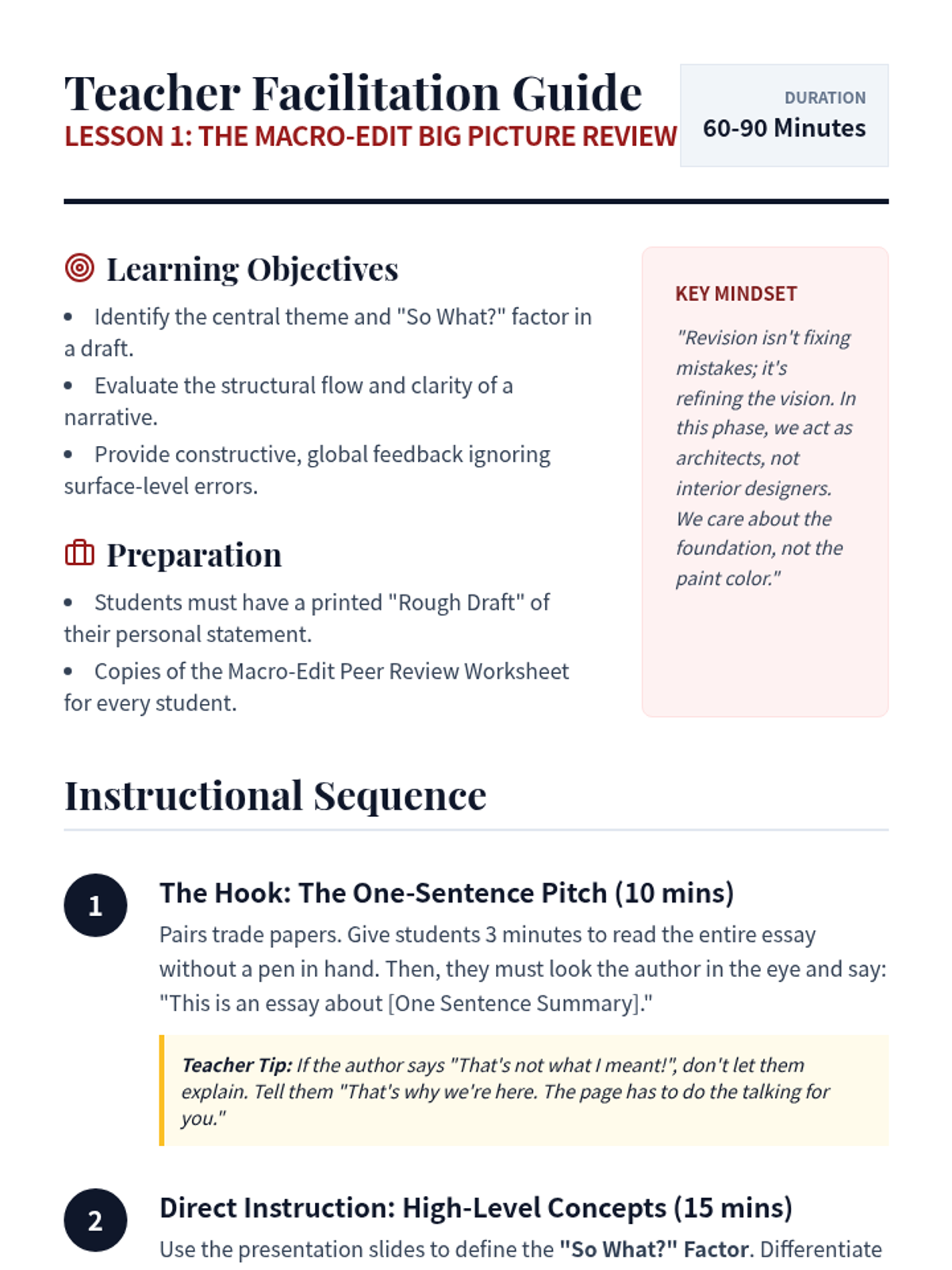
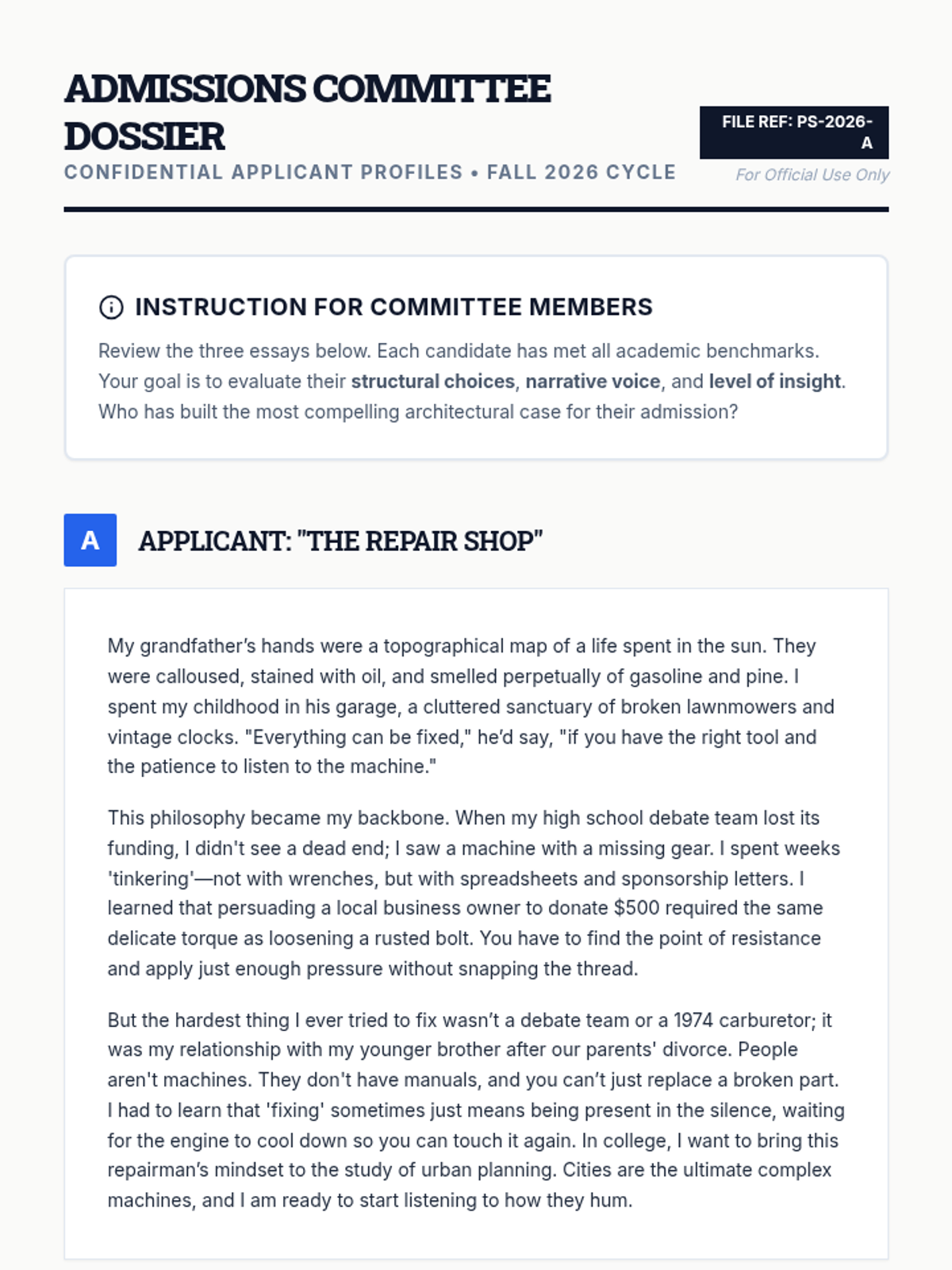
A comprehensive unit for high school seniors focused on the structural engineering of a personal statement. Students move from analytical evaluation of sample essays to drafting their own hooks, outlines, and conclusions using narrative and montage frameworks.
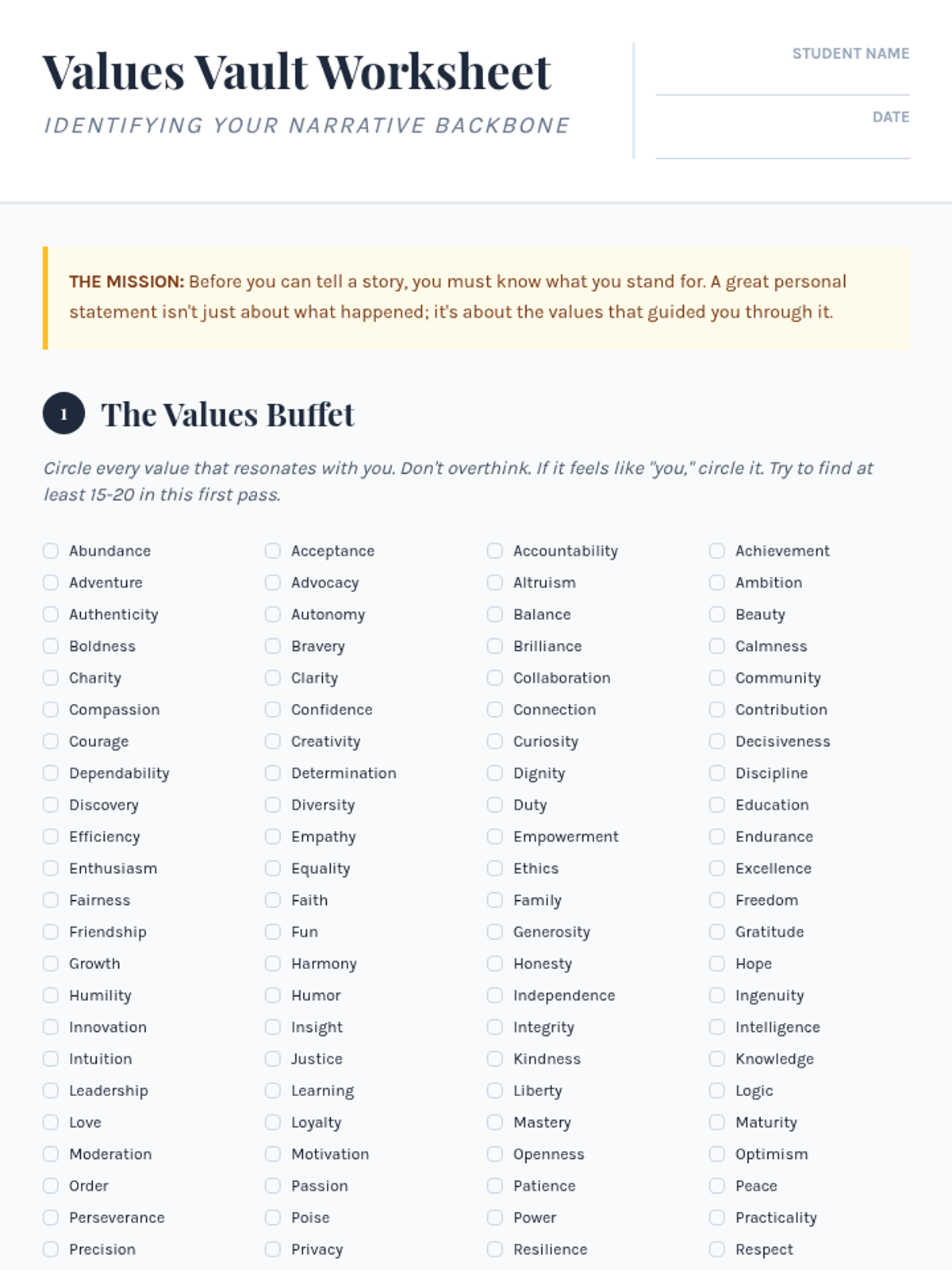
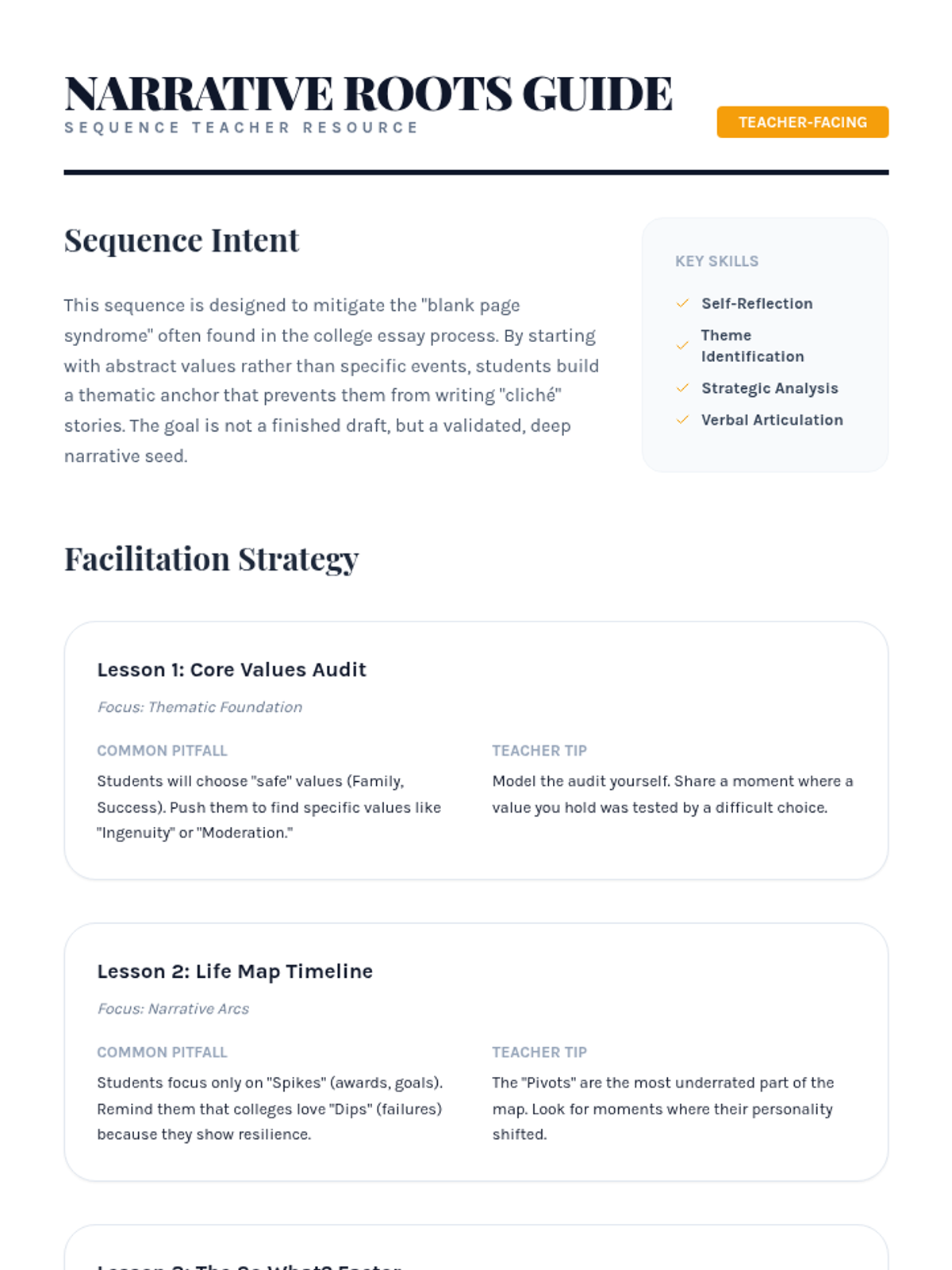
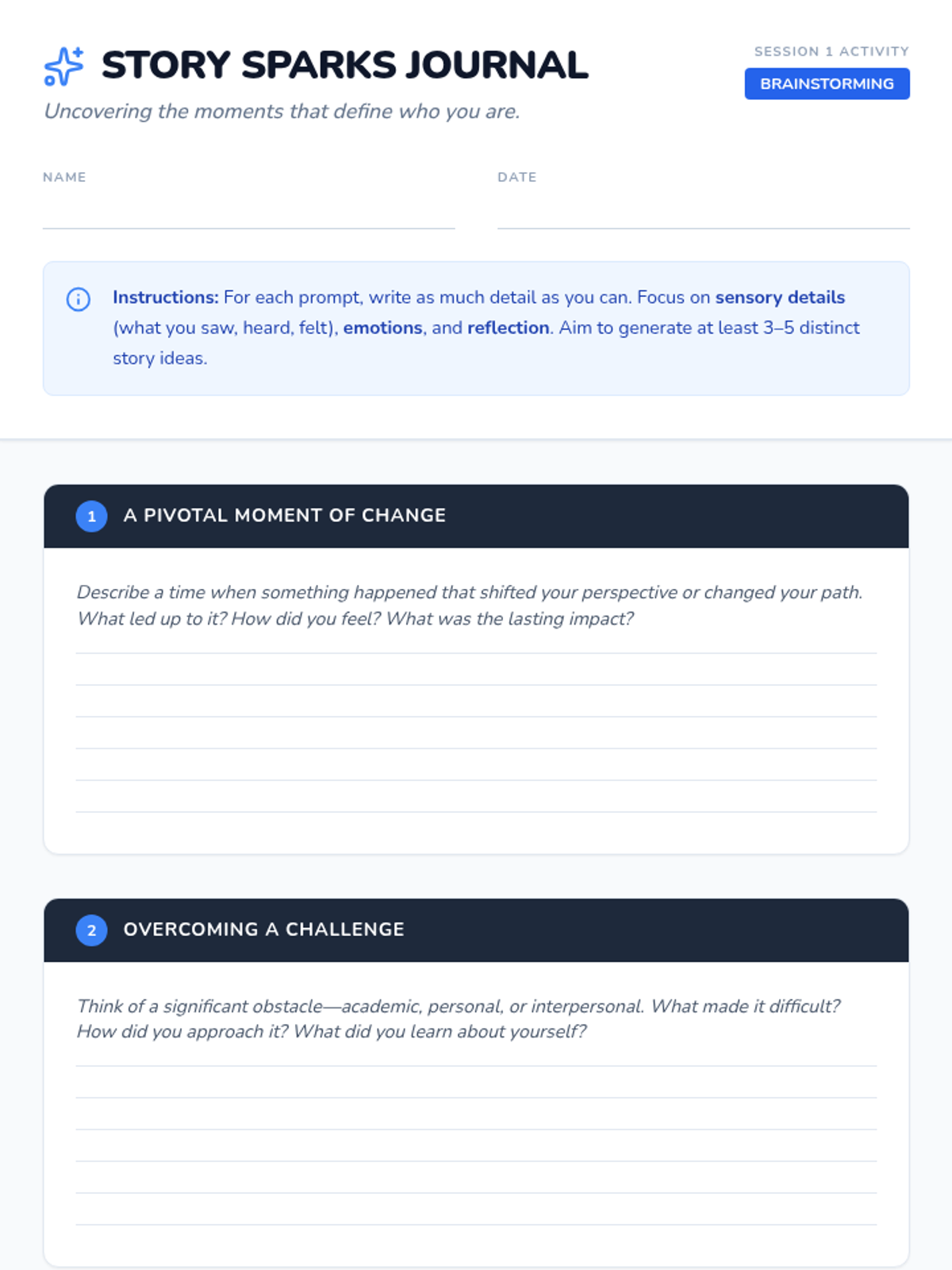
A comprehensive sequence for 12th-grade students to brainstorm and select a compelling topic for their college personal statement. The sequence moves from abstract values to concrete narrative pitches.
A comprehensive 12th-grade group series designed to guide students through self-discovery, college and career research, and the application process, culminating in a personalized post-graduation roadmap.
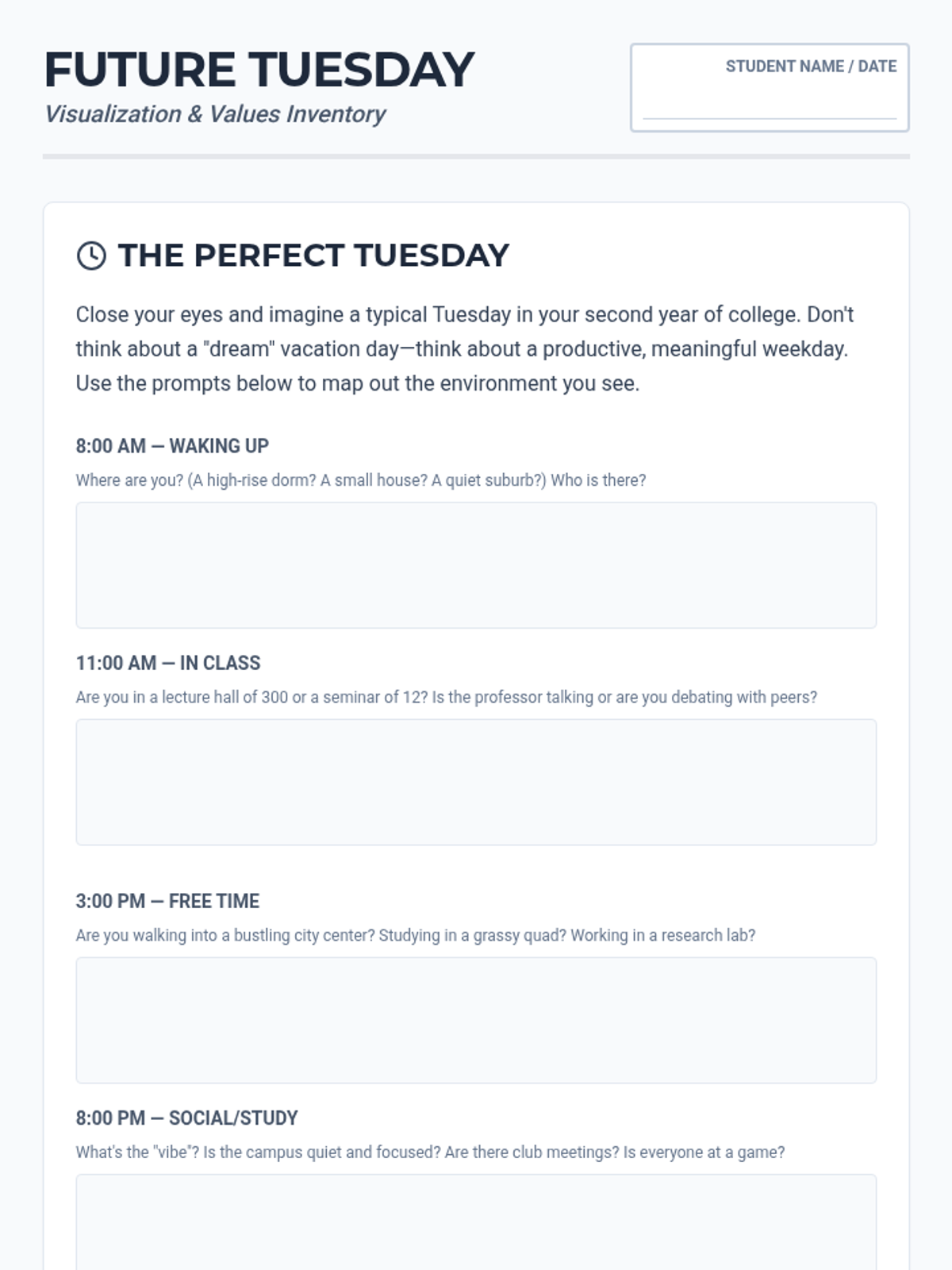
A comprehensive 12th-grade unit focused on the qualitative aspects of college selection. Students move from self-reflection to deep research into campus demographics, academic culture, and support systems, culminating in a personalized 'Fit Profile' for their 'Why Us' college essays.
A 6-session Tier 2 group series designed to help 12th-grade students navigate post-secondary planning through self-assessment, research, and application skill development.
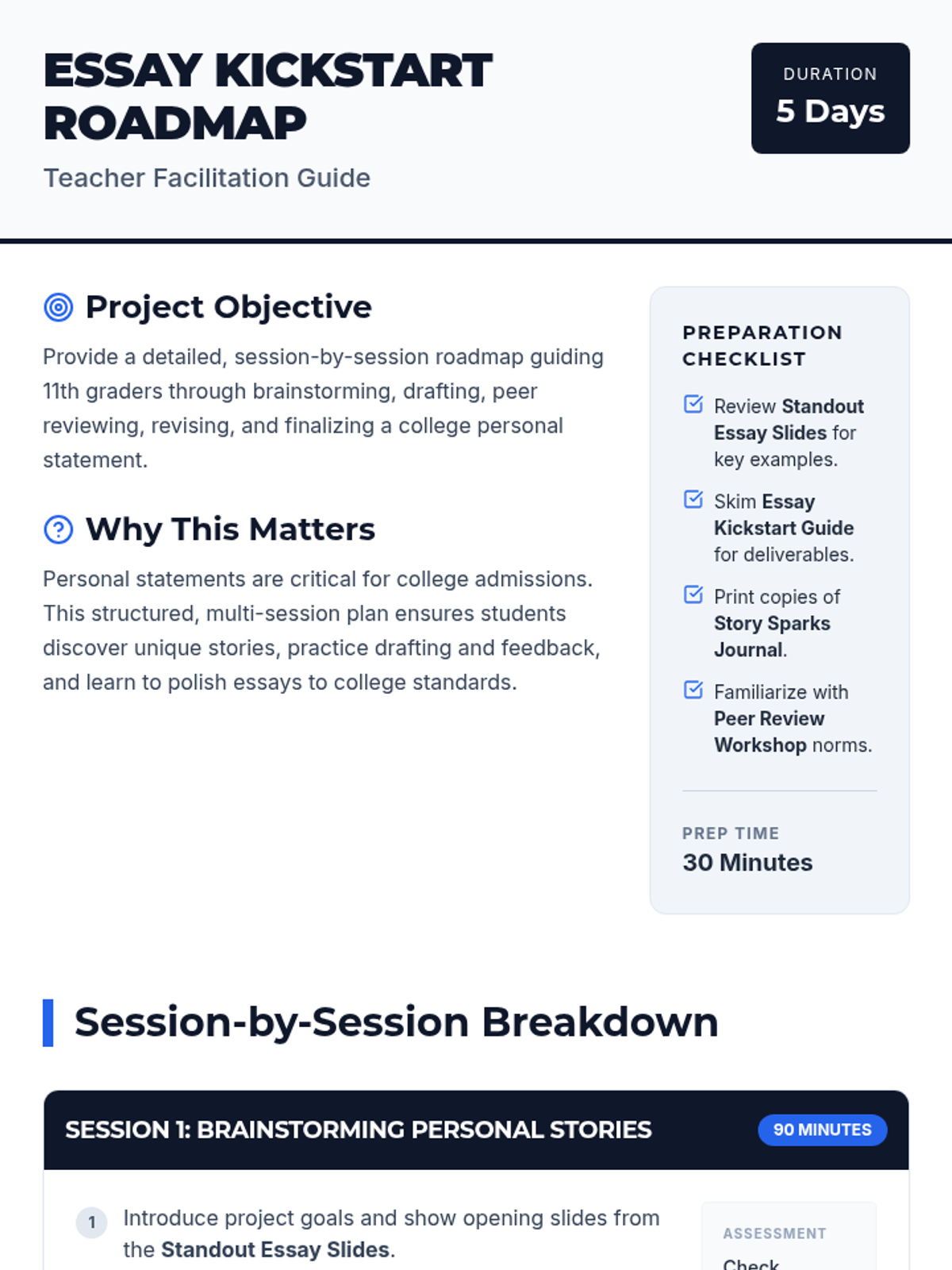
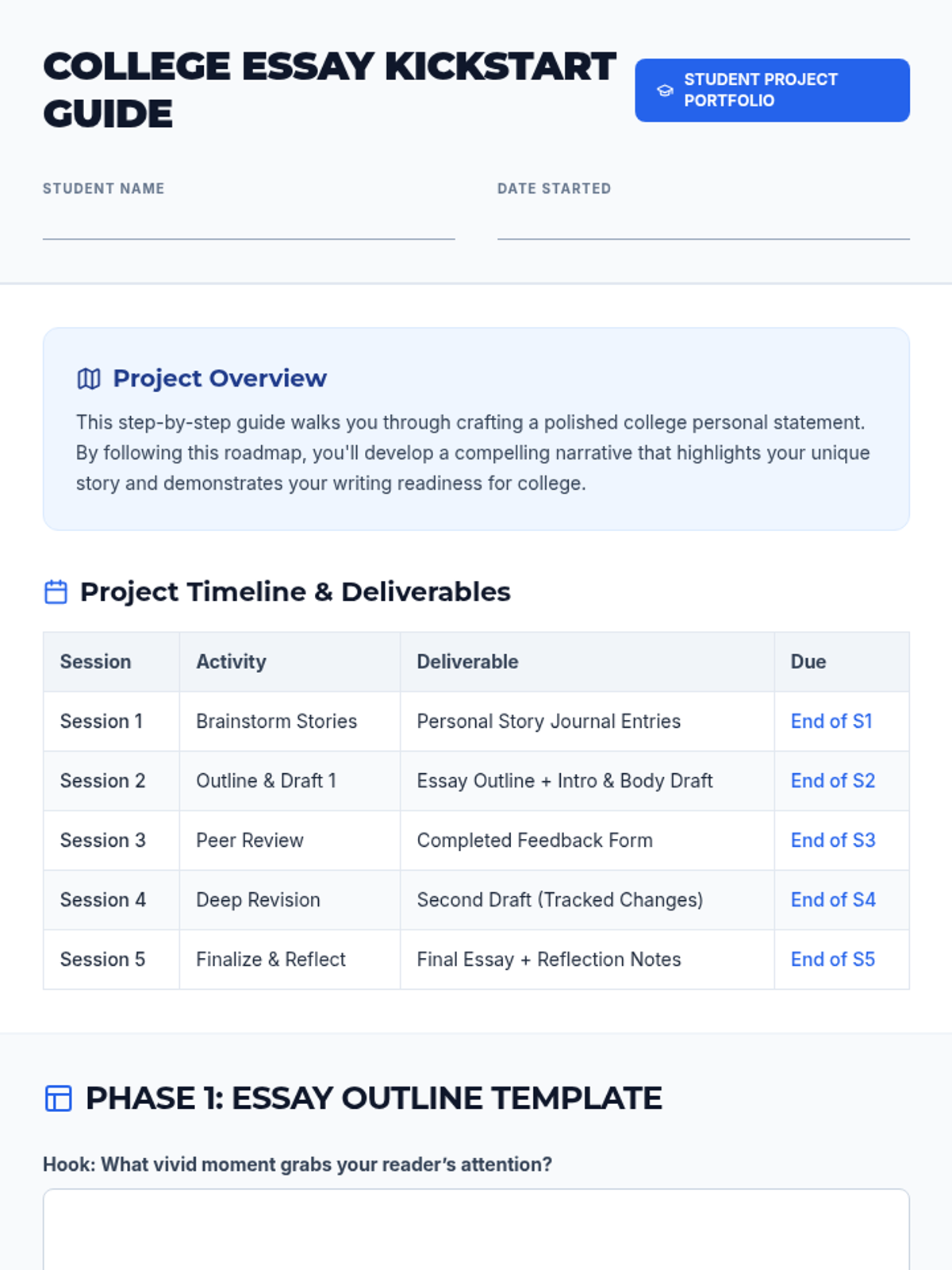
A 5-session Tier 1 project designed to help 11th graders navigate the college personal statement process from initial brainstorming to final revisions. This sequence emphasizes storytelling techniques, audience awareness, and the iterative writing process.
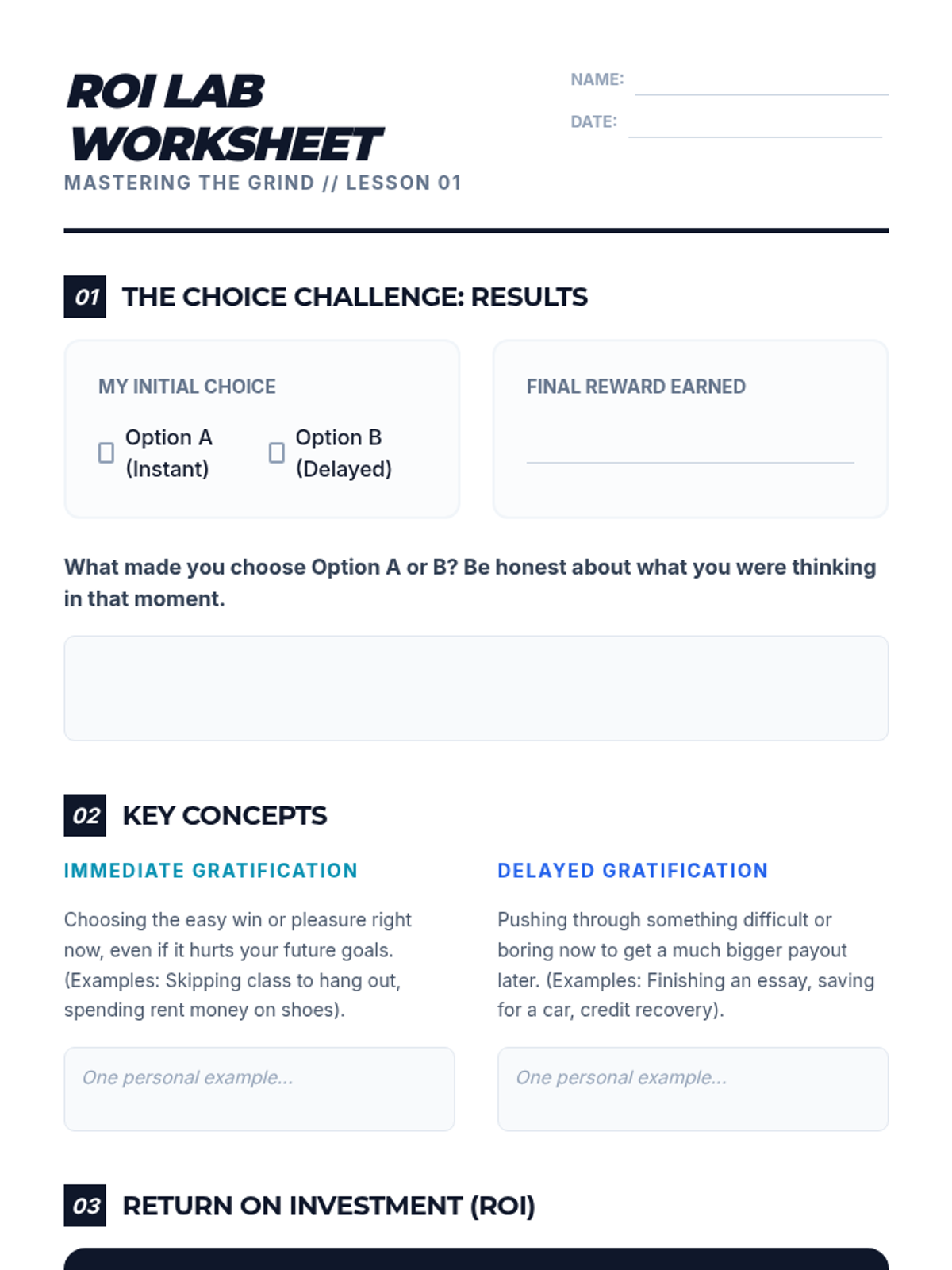
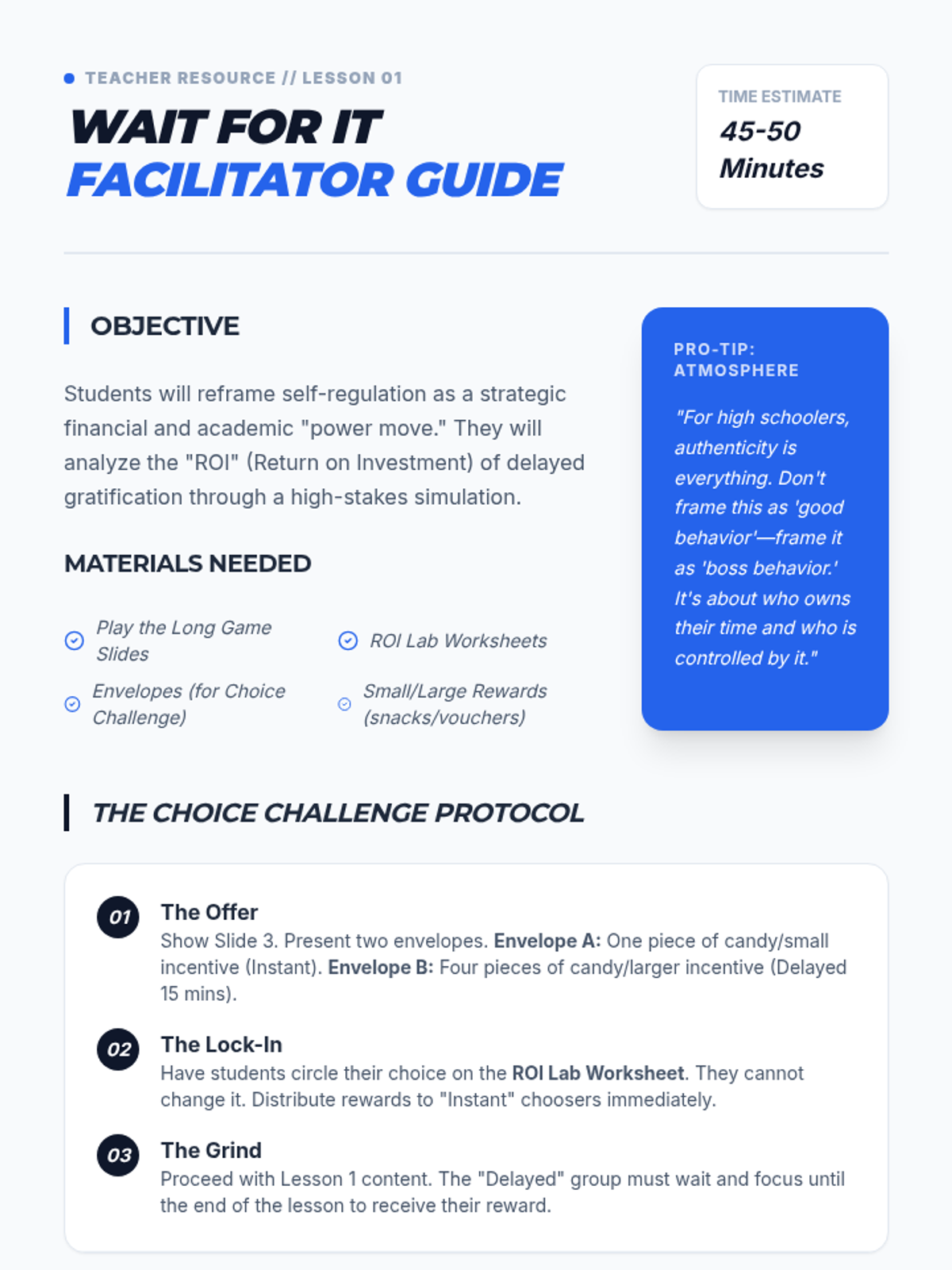
A high-impact 5-lesson sequence designed for credit-deficient high school sophomores to reclaim their academic path. The curriculum reframes impulse control as a strategic 'power move' for achieving independence, career success, and graduation through cognitive discipline and environmental awareness.
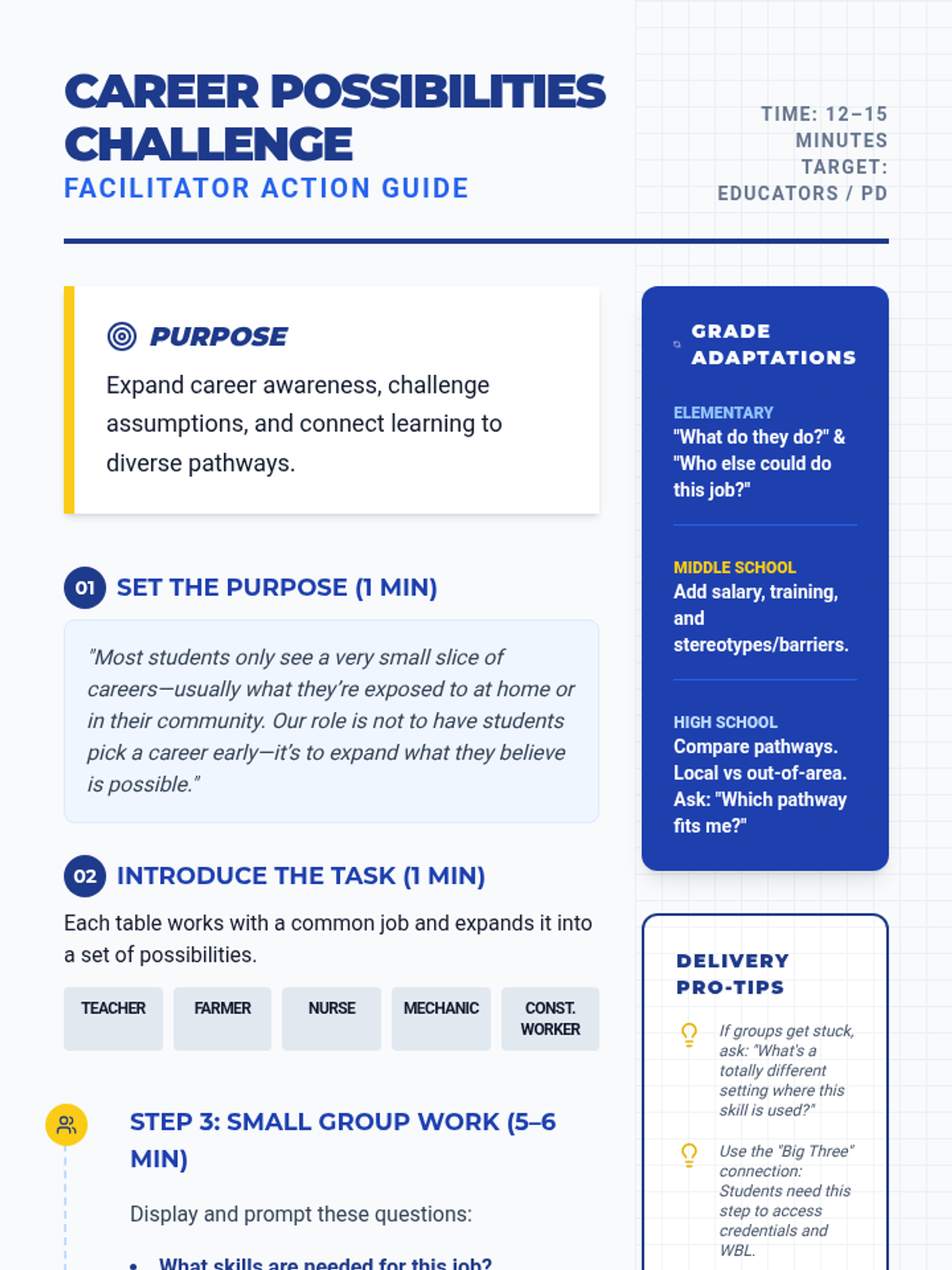
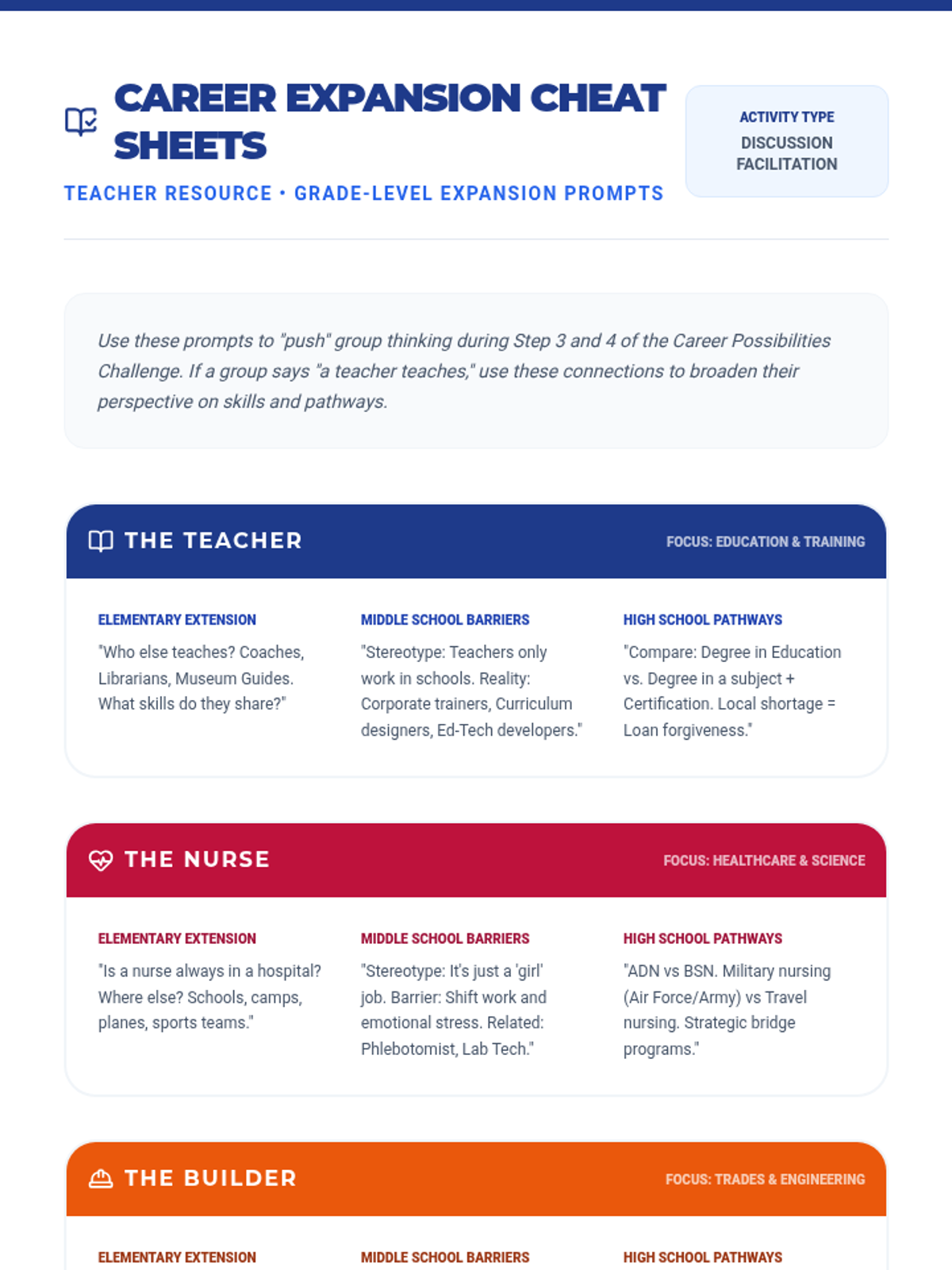
A comprehensive professional development and classroom activity suite designed to expand career awareness across K-12. Educators learn to facilitate the 'Career Possibilities Challenge,' while students engage in grade-appropriate tasks to map skills, pathways, and overcome stereotypes.
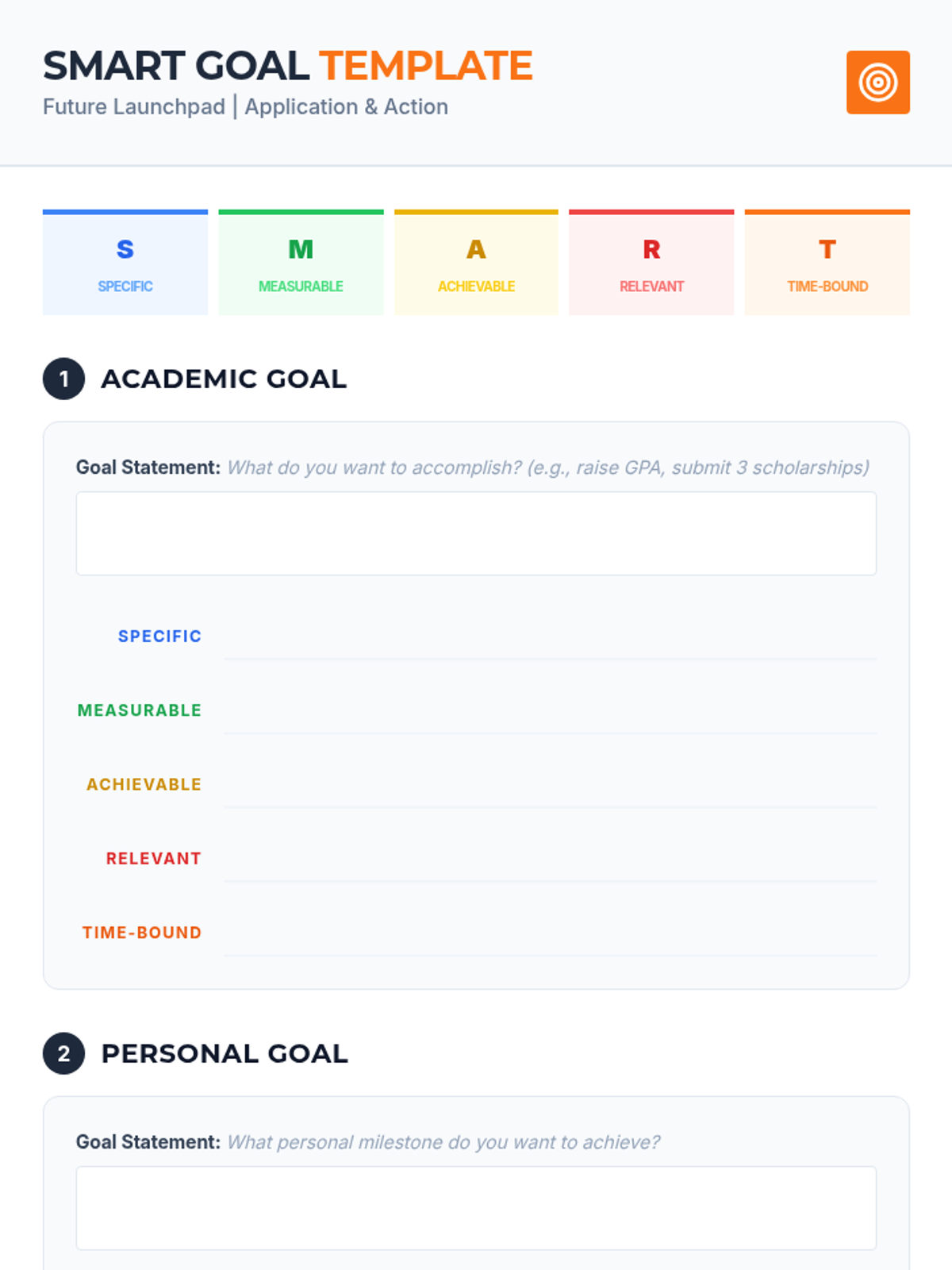
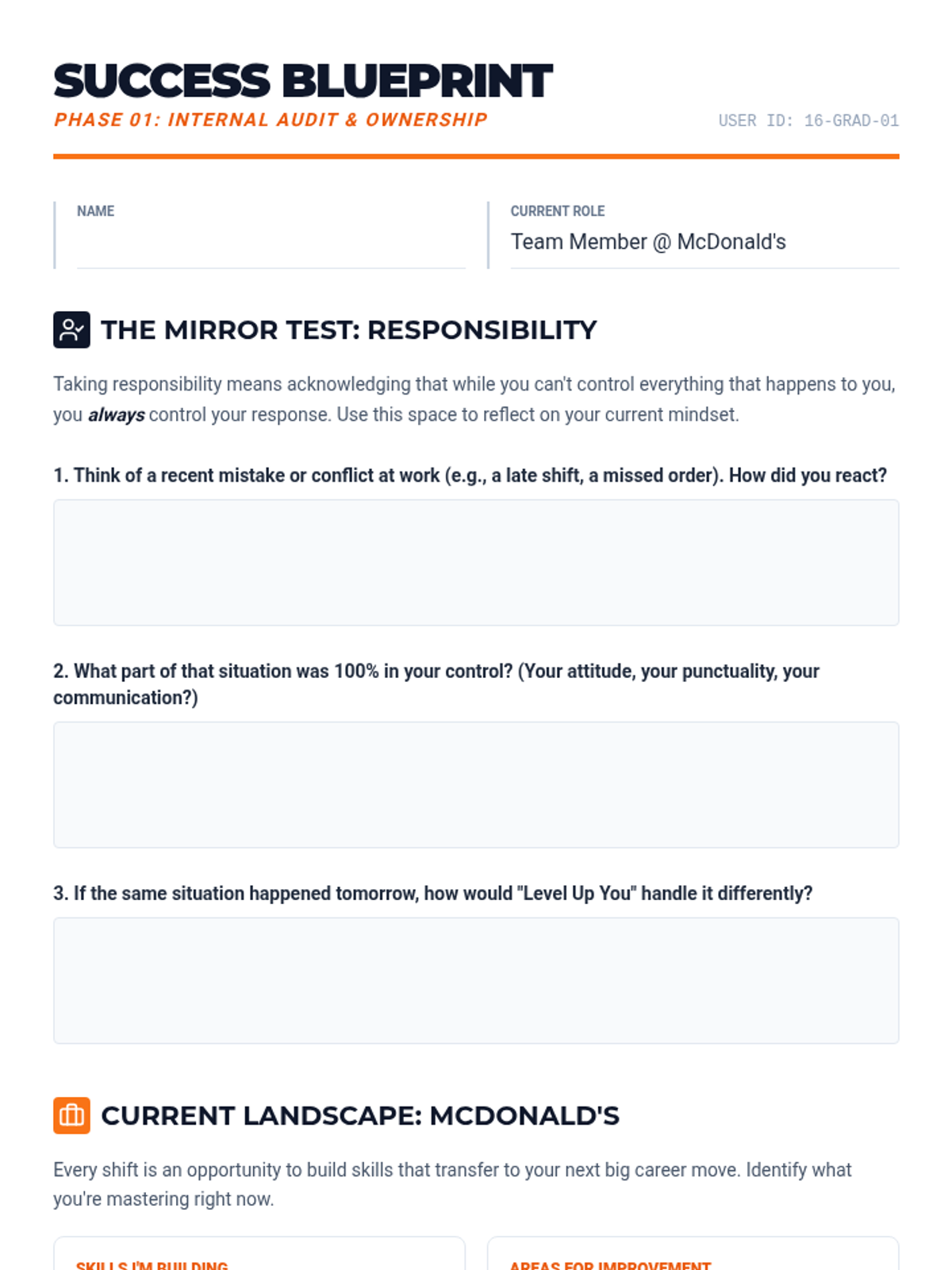
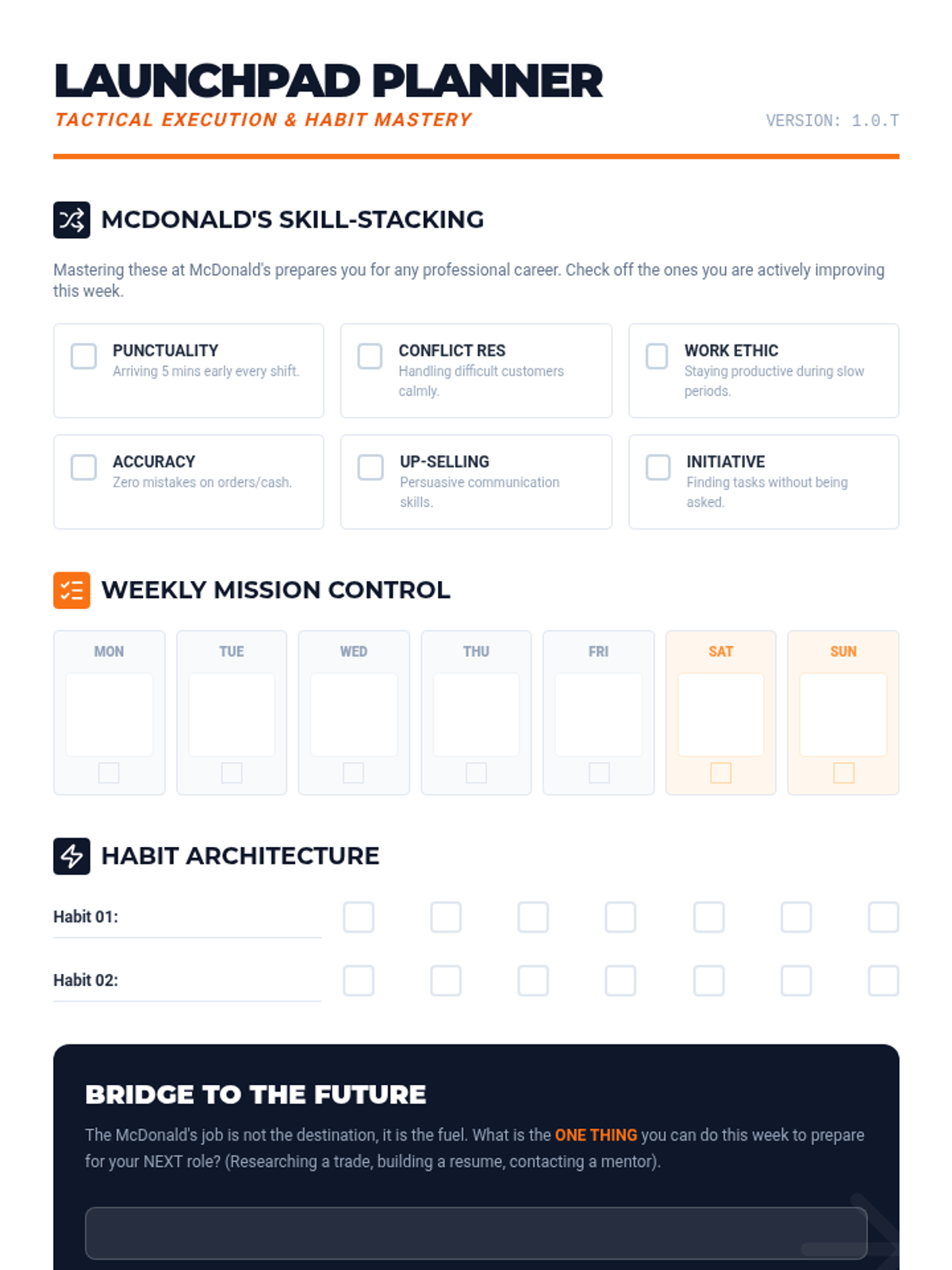
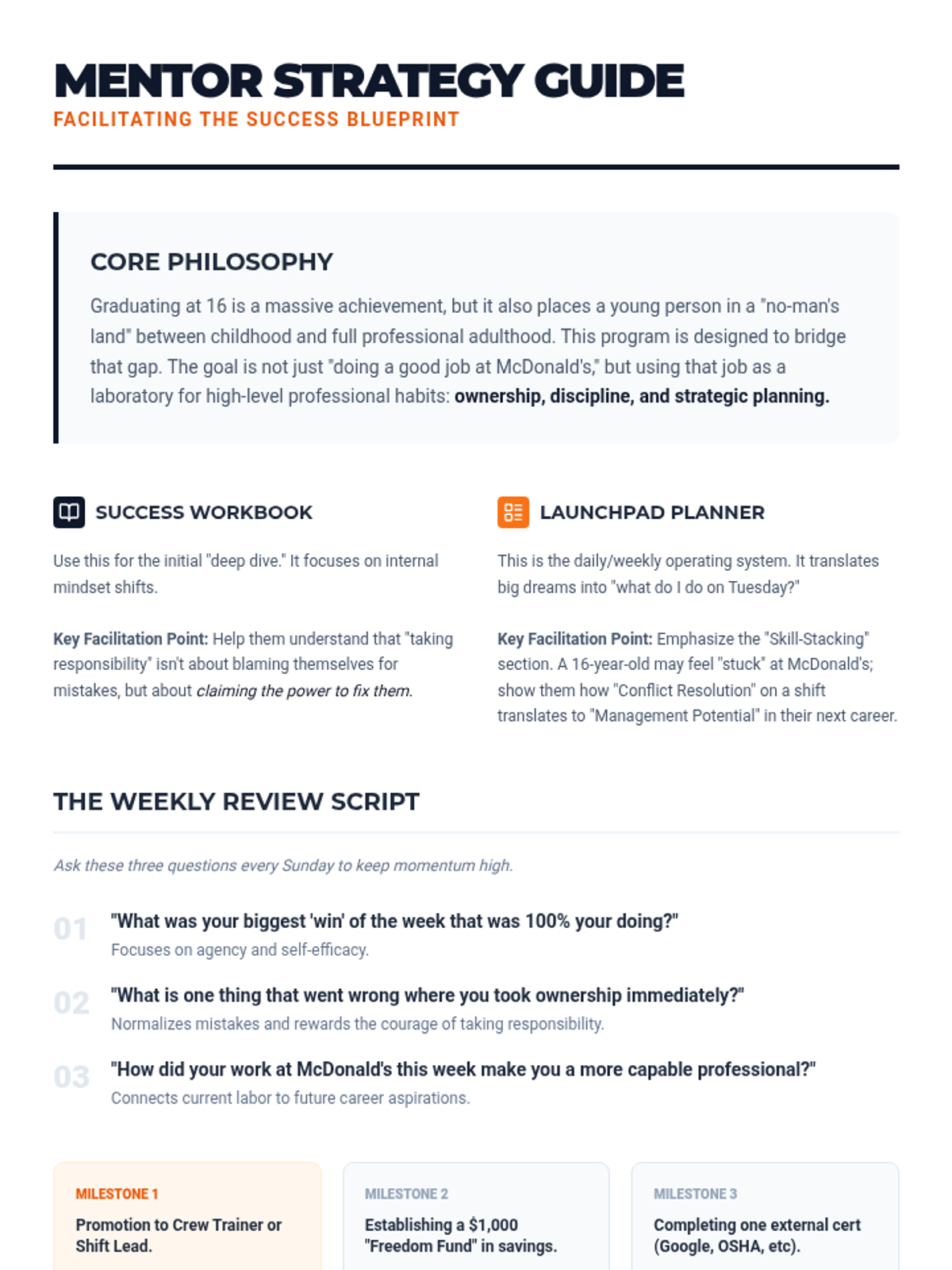
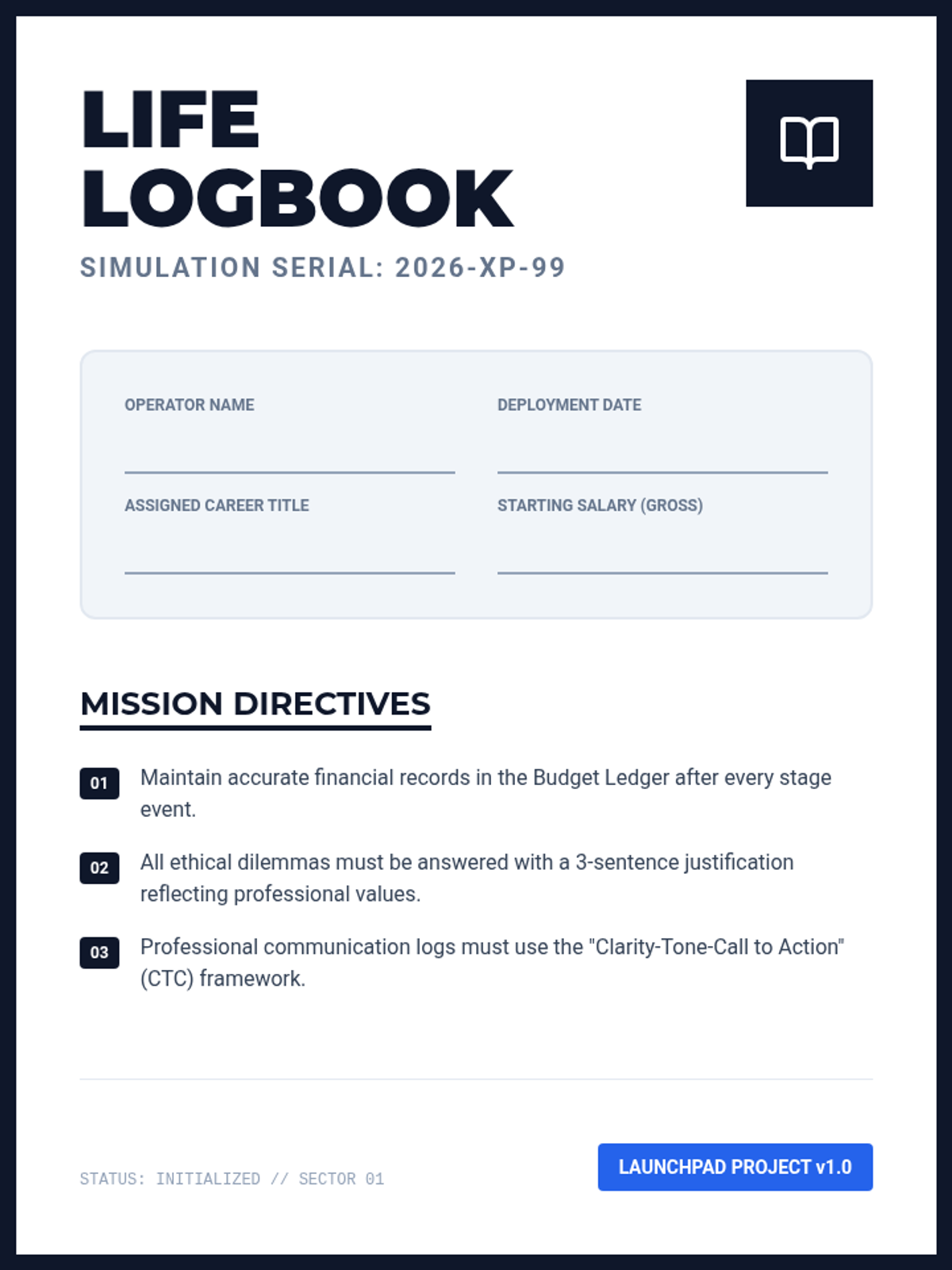
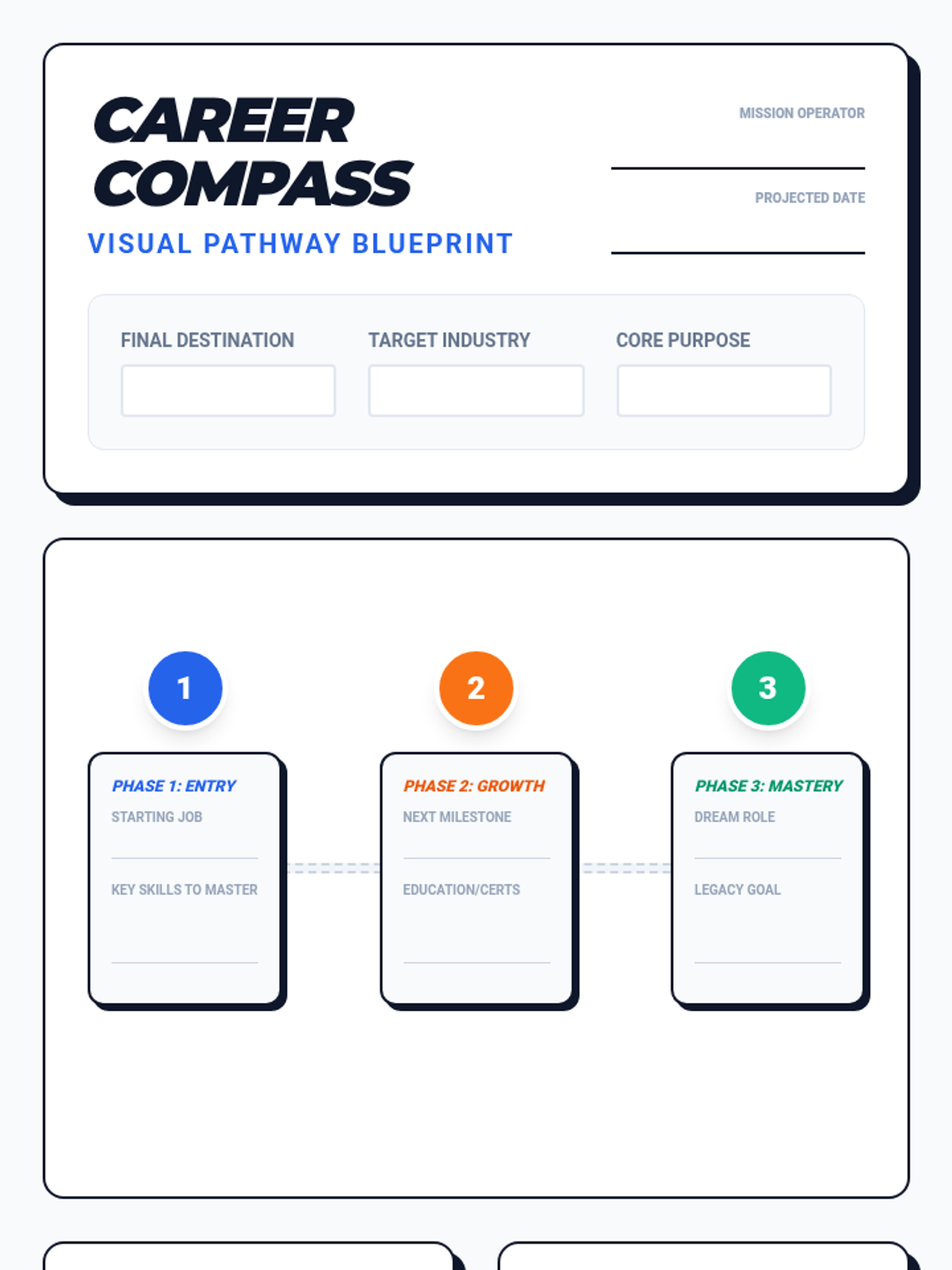
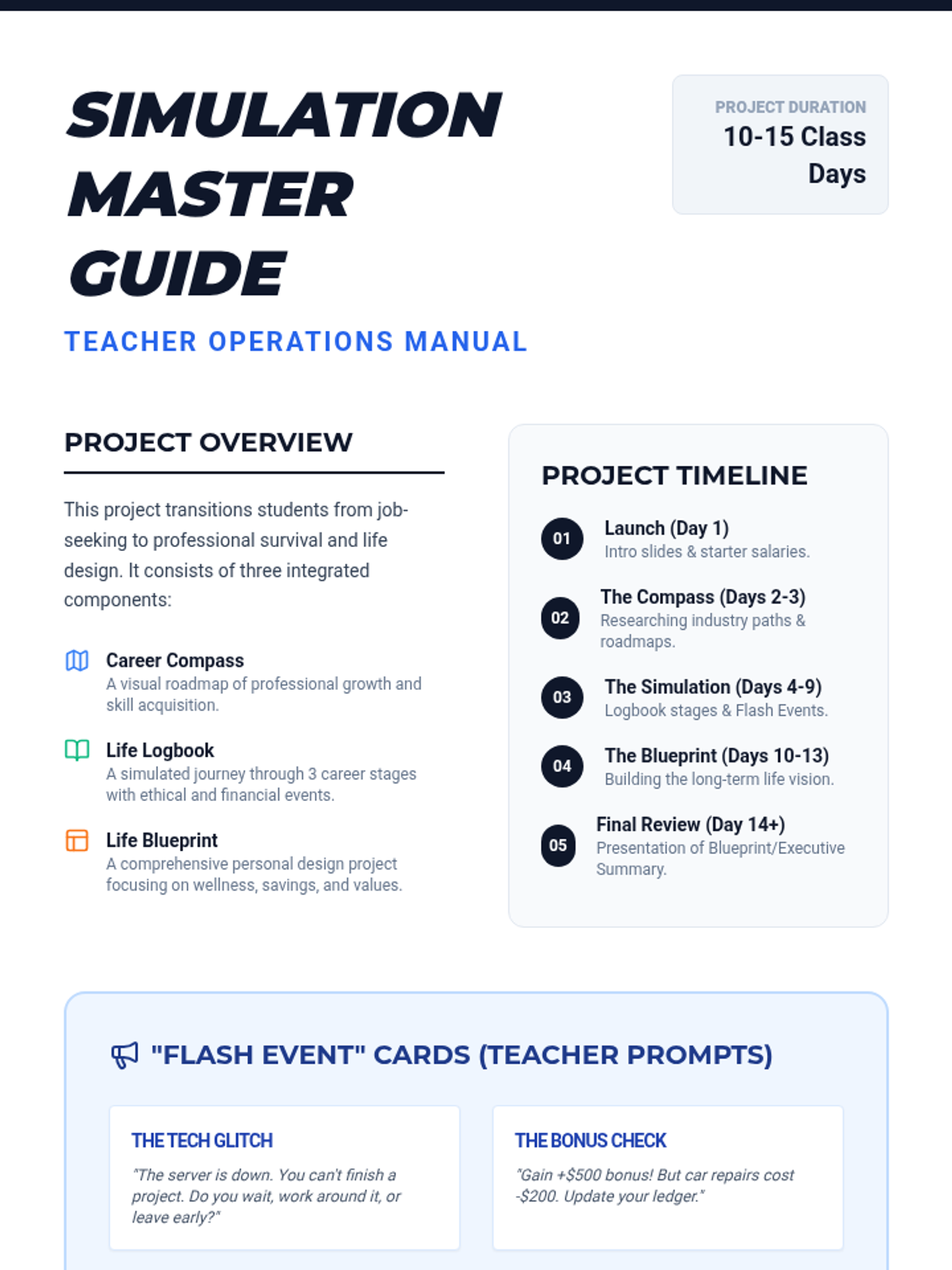
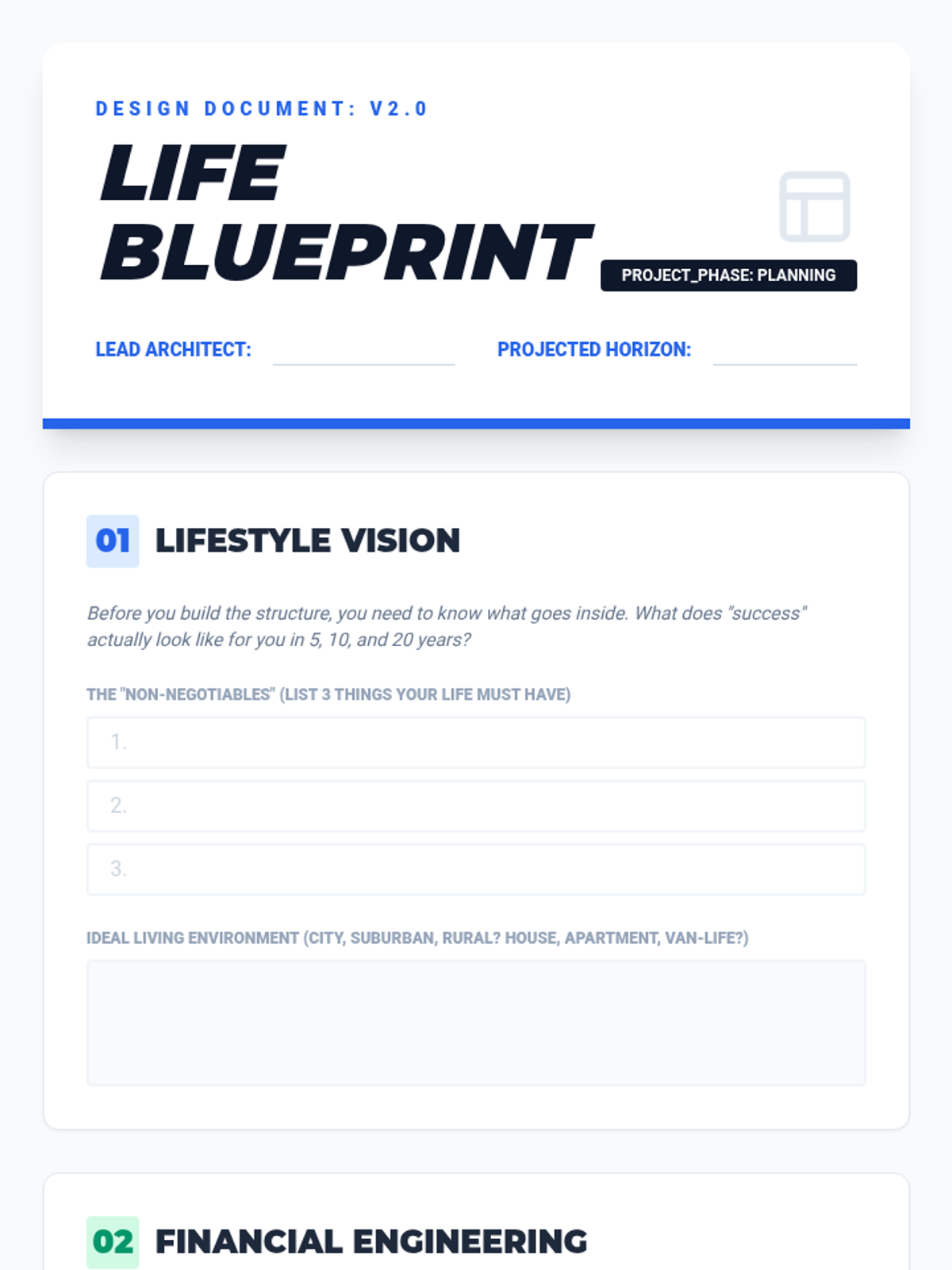
A comprehensive personal development guide for a young graduate to take ownership of their life, master their current role, and bridge the gap to their future career through structured goal-setting and reflection.
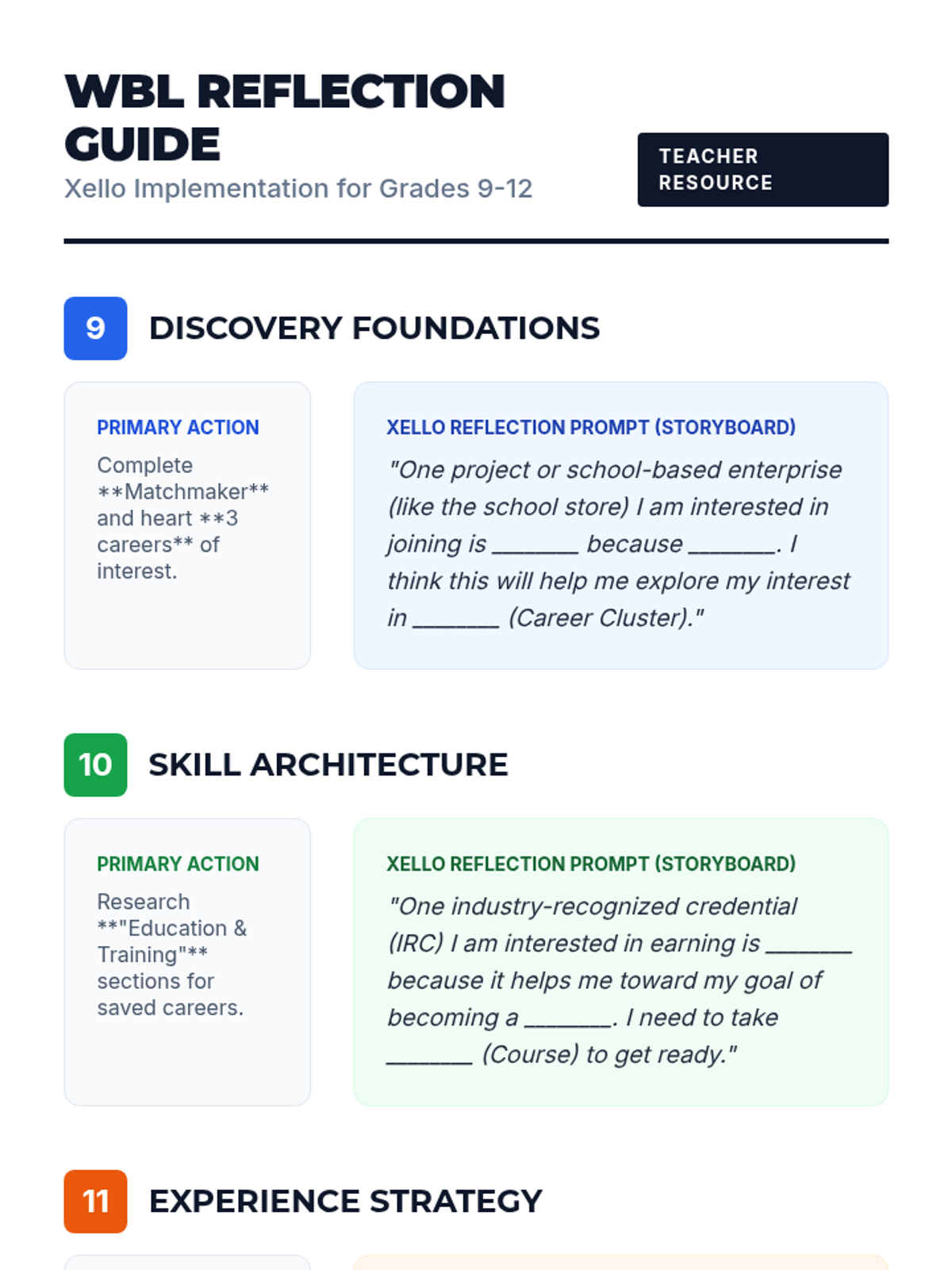
A four-part advisory sequence for grades 9-12 focused on scaffolding Work-Based Learning (WBL) concepts from basic awareness to post-secondary execution. Topics include project-based learning, internships, apprenticeships, and industry credentials.
A series of lessons and projects designed to transition students from job-seeking skills to workplace success and independent living, focusing on professional ethics, communication, and long-term planning.
A comprehensive program designed to guide students through the essentials of career exploration, professional document preparation, and the job application process.
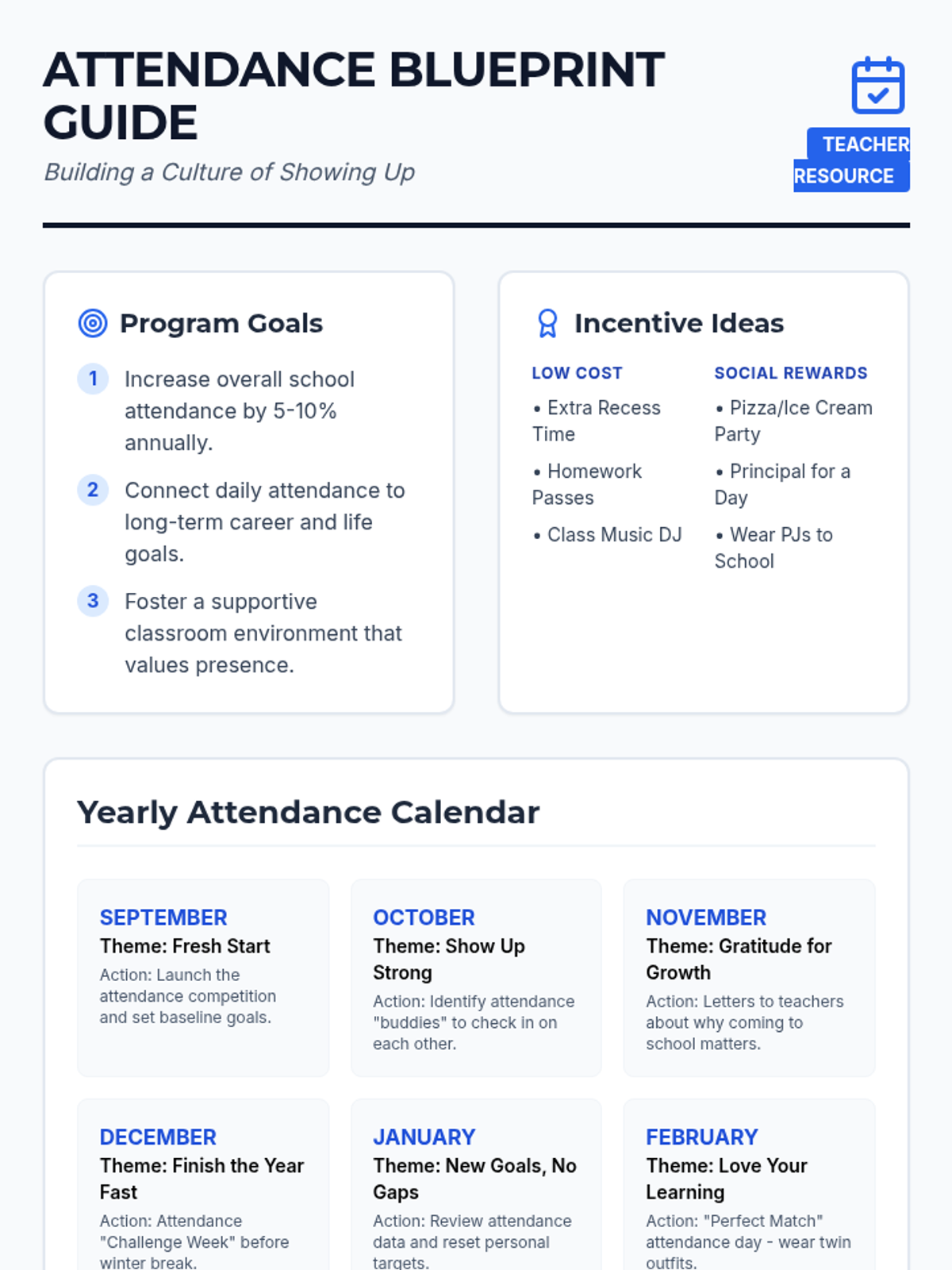
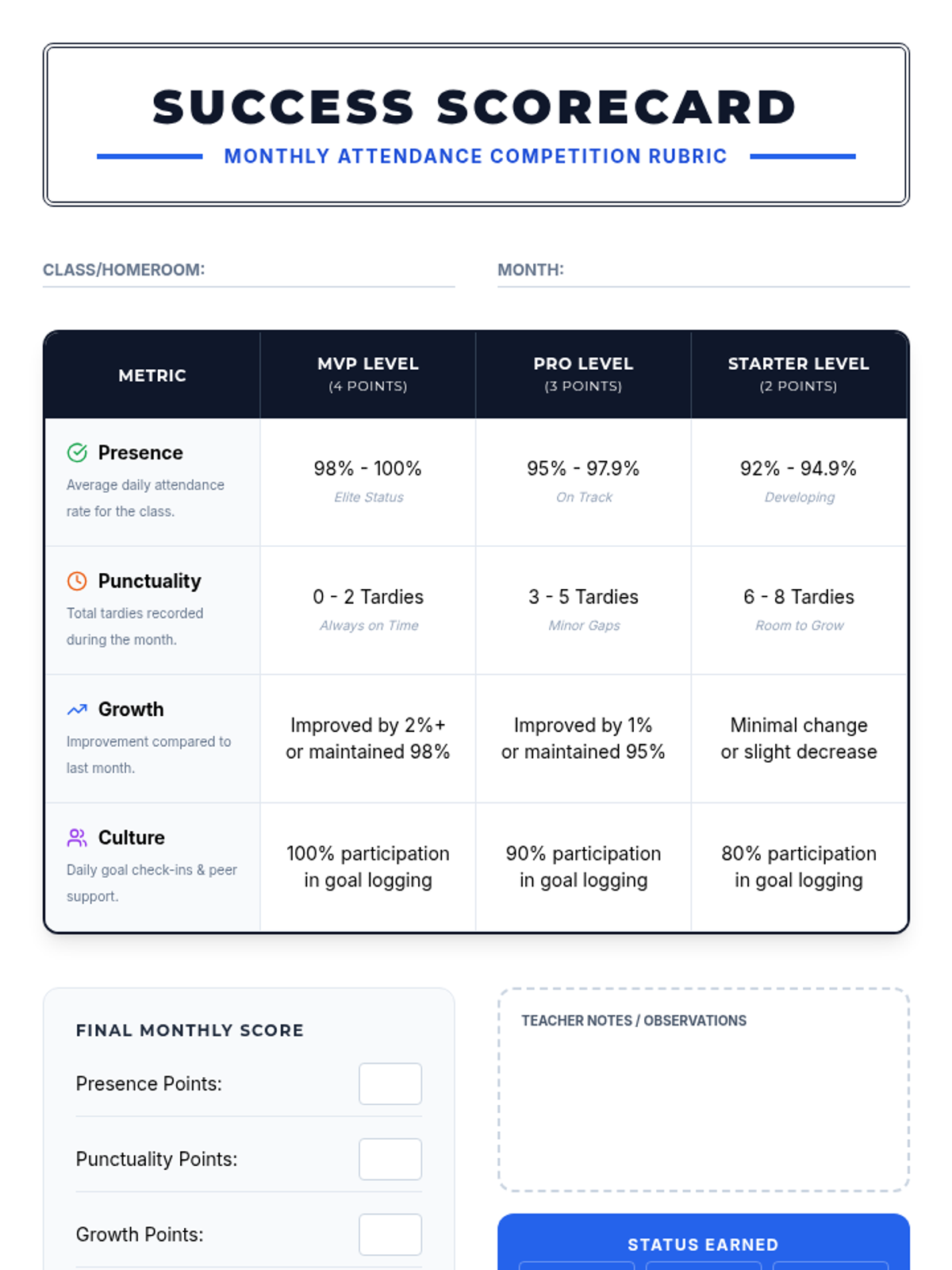
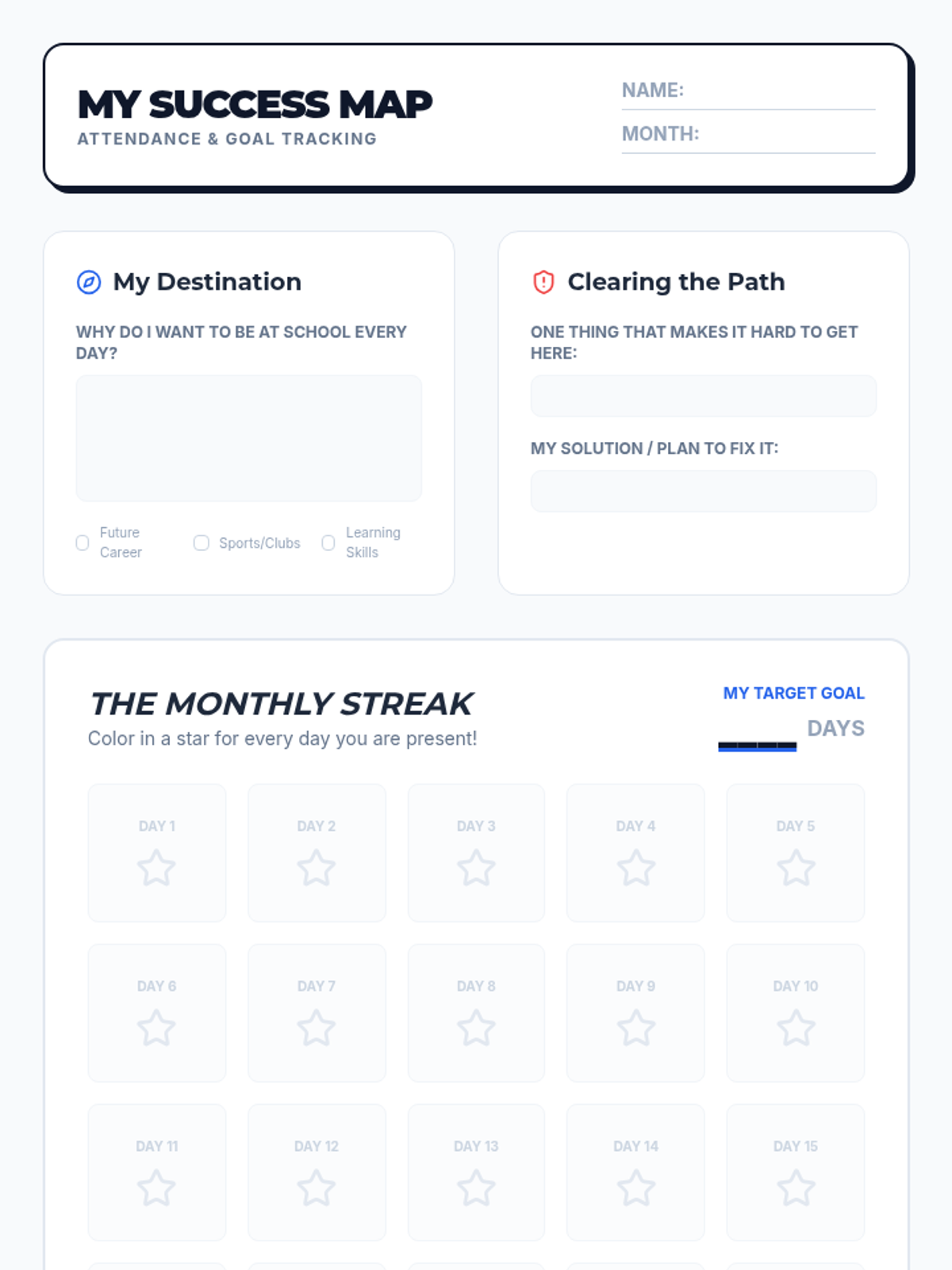
A school-wide initiative focused on improving attendance through structured monthly challenges, student goal-setting, and understanding the direct link between attendance and academic achievement.
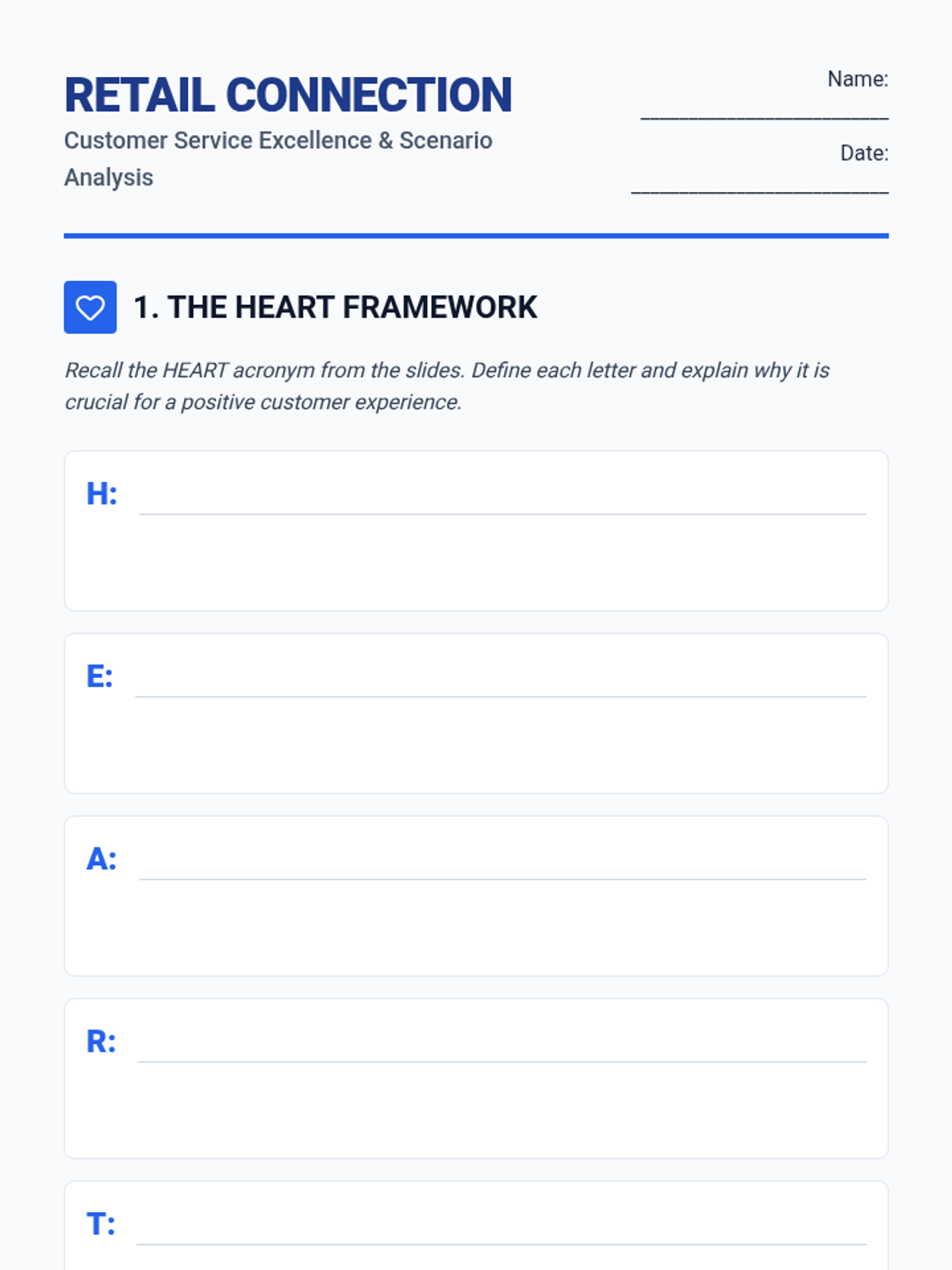
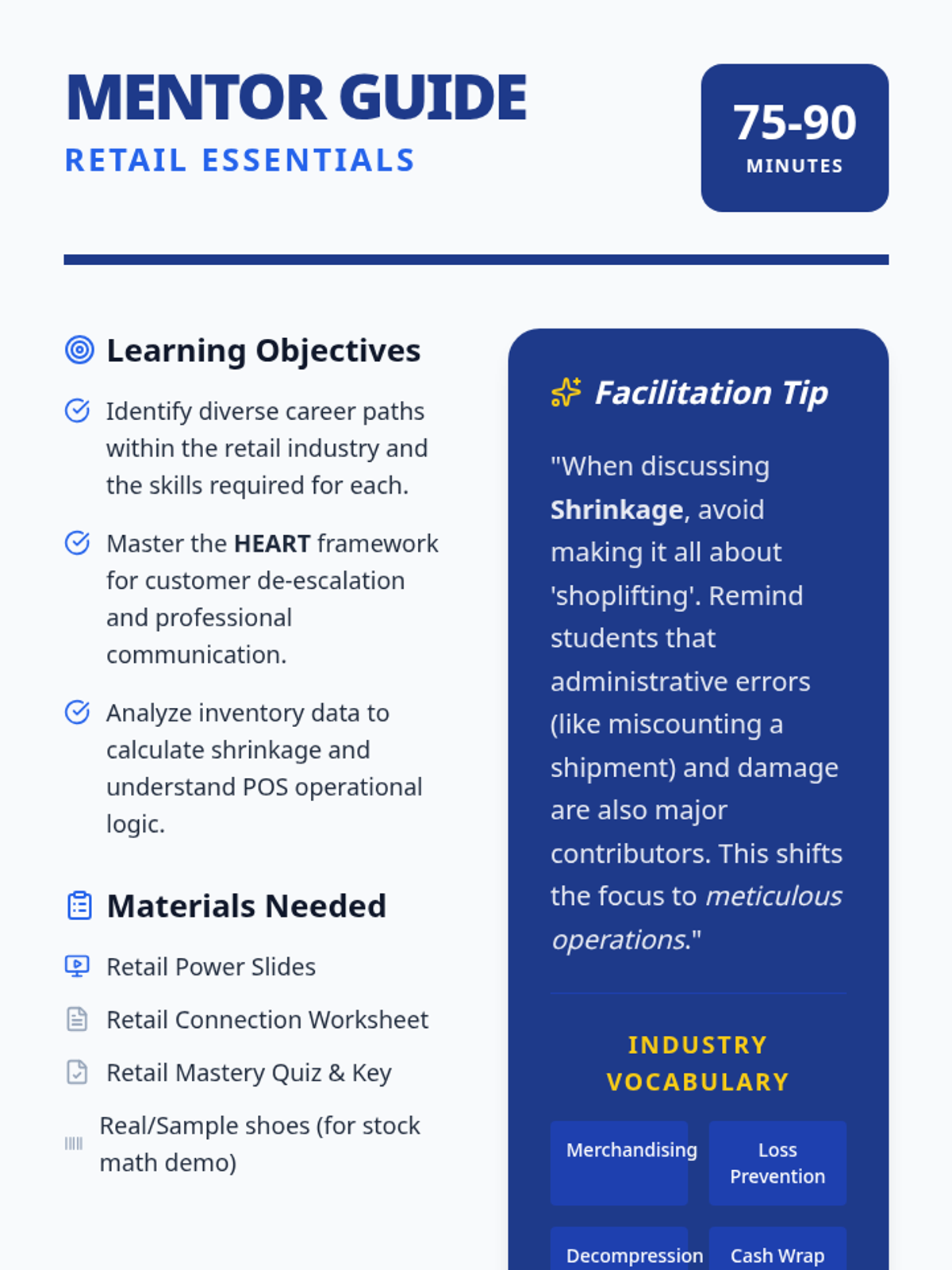
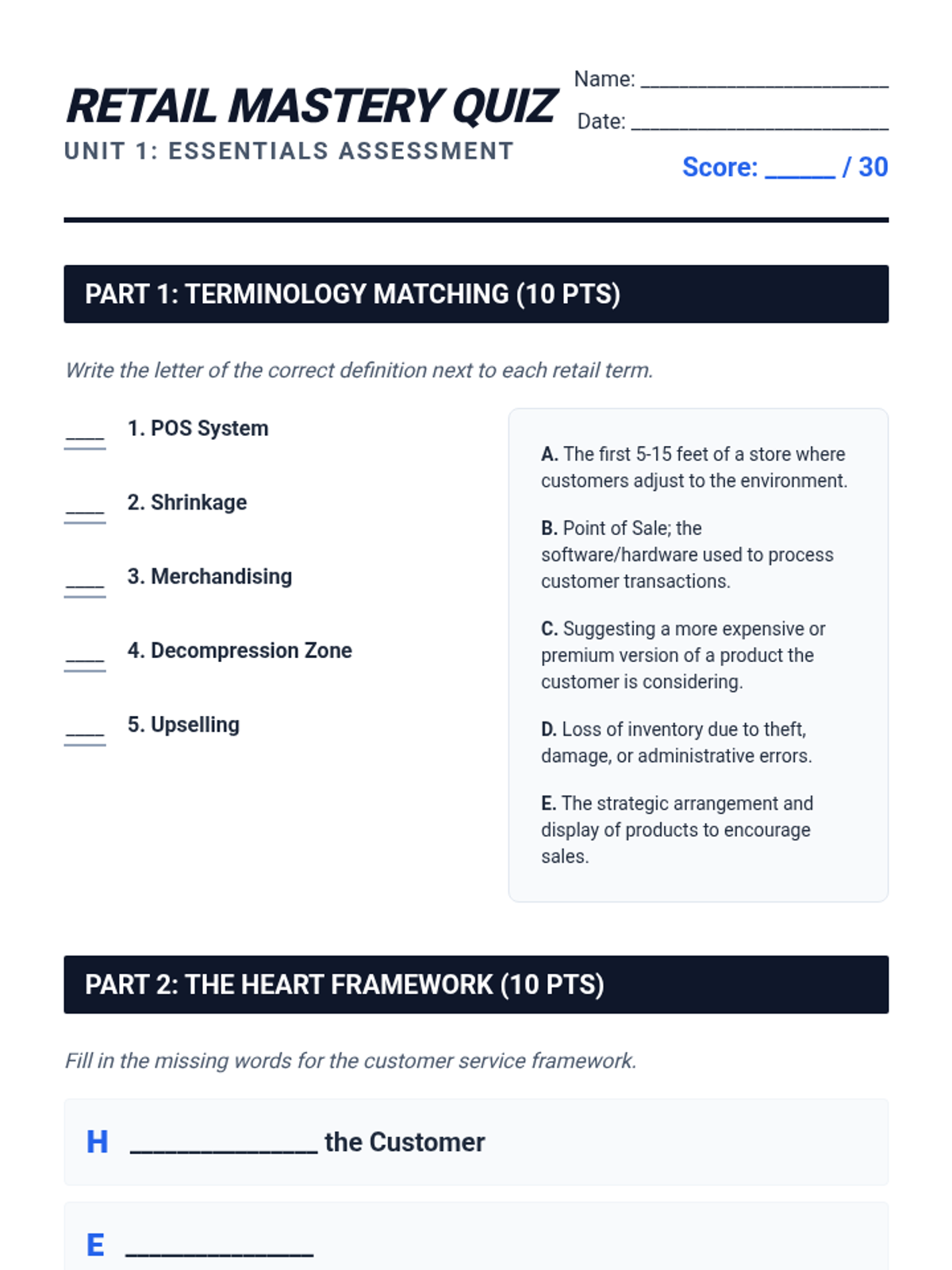
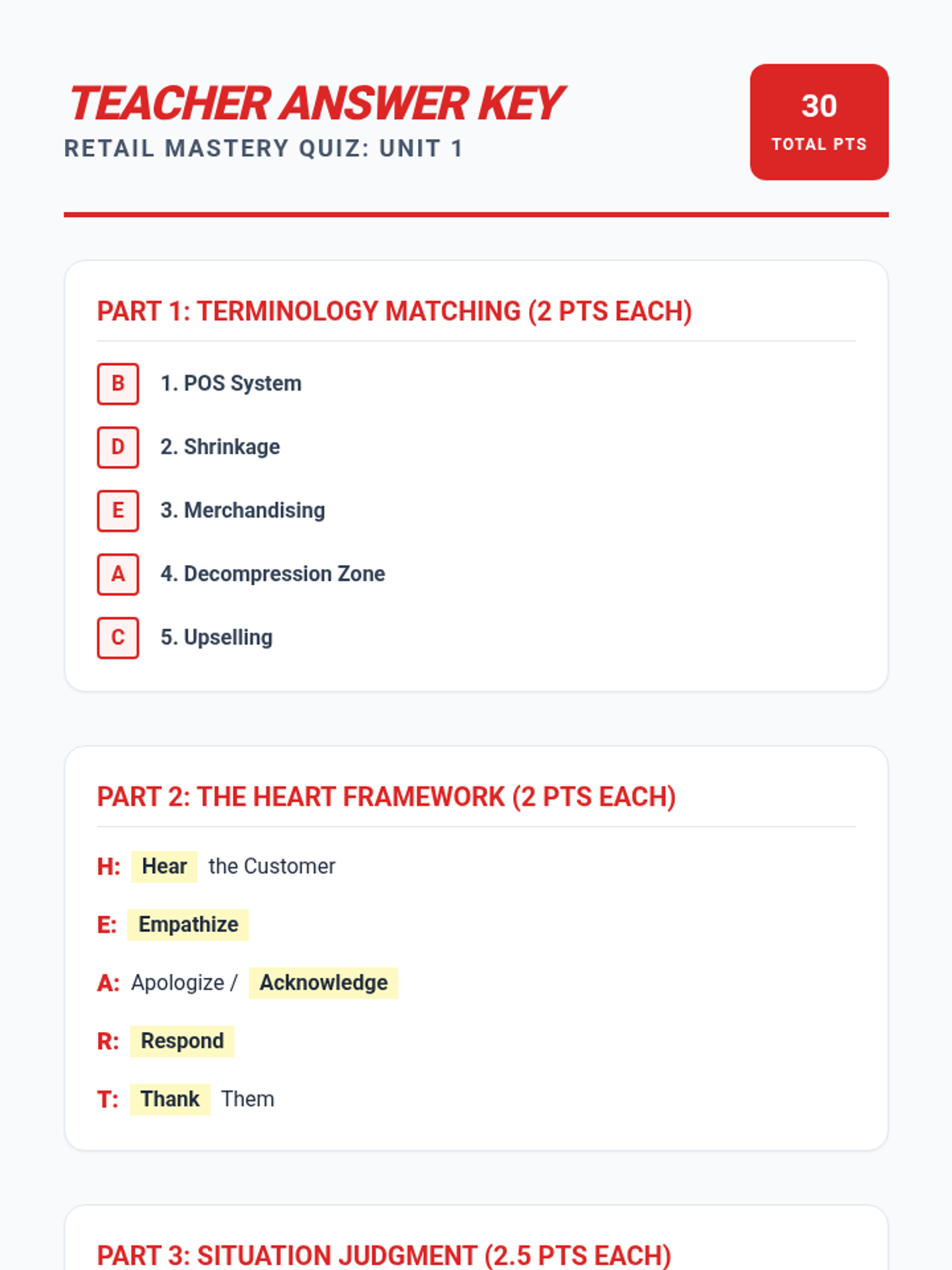
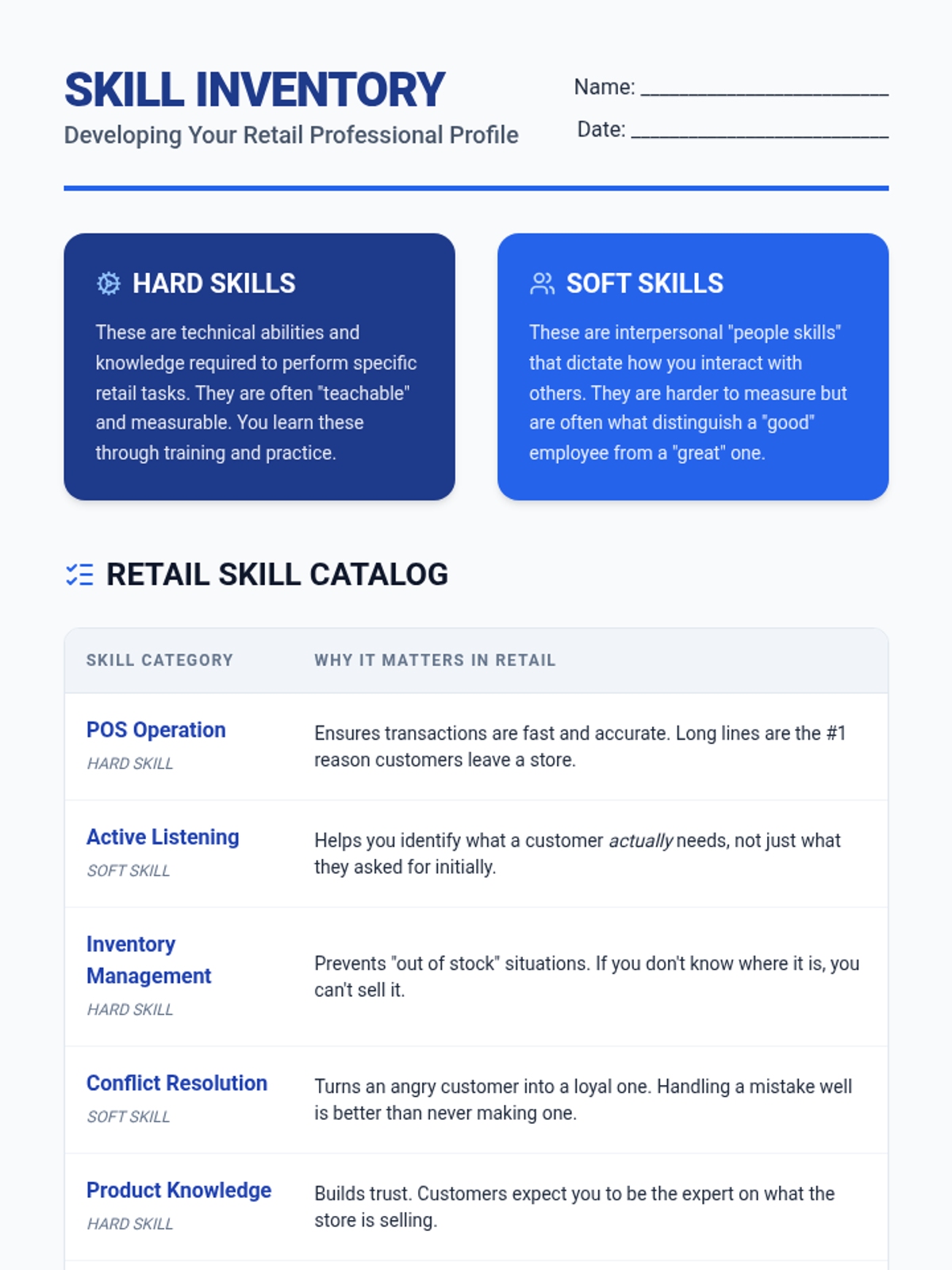
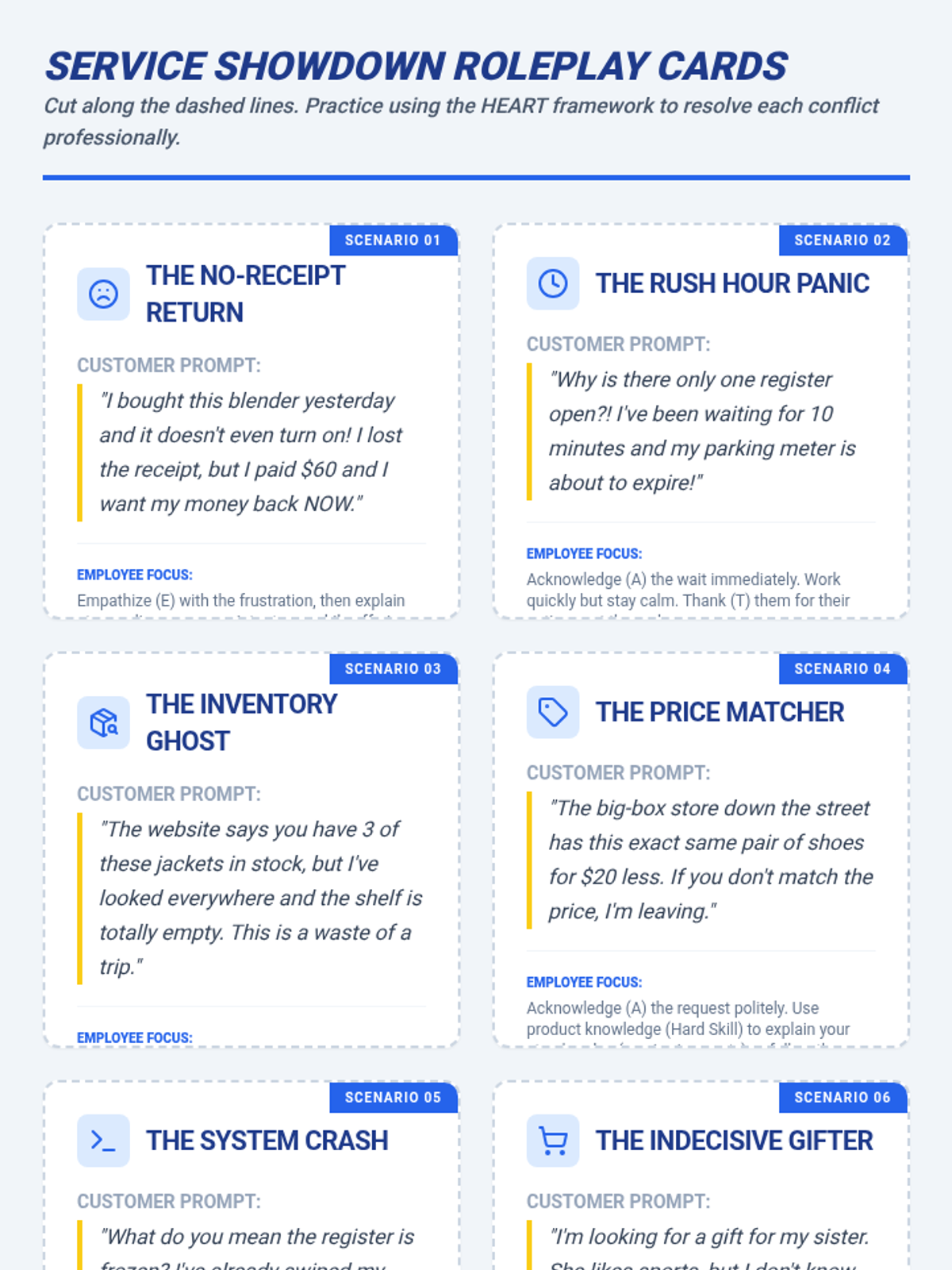
A hands-on career exploration unit focusing on the dynamic world of retail. Students will master customer service excellence, learn retail operations like inventory and POS systems, and design their own retail floor plan and brand strategy.
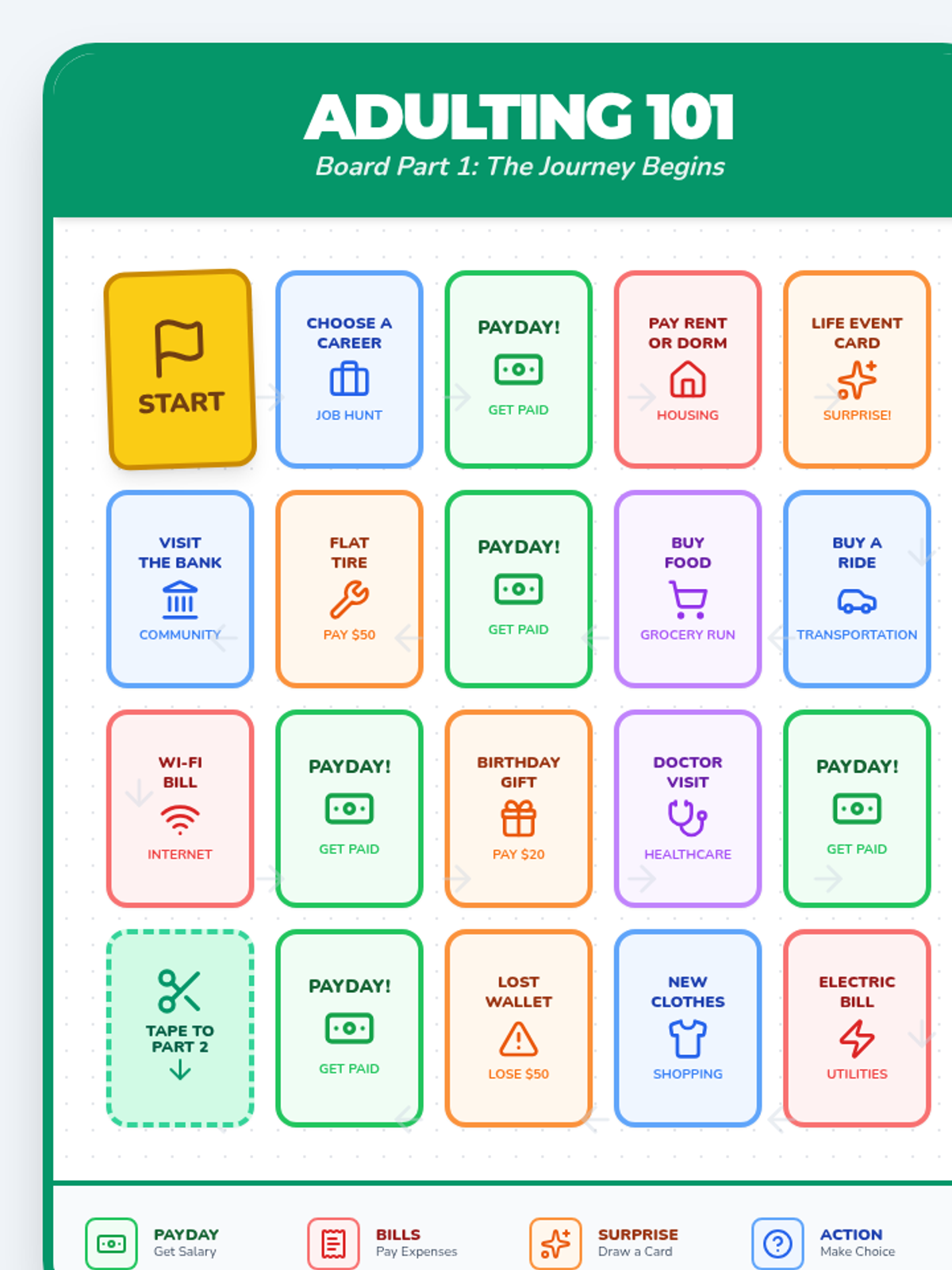
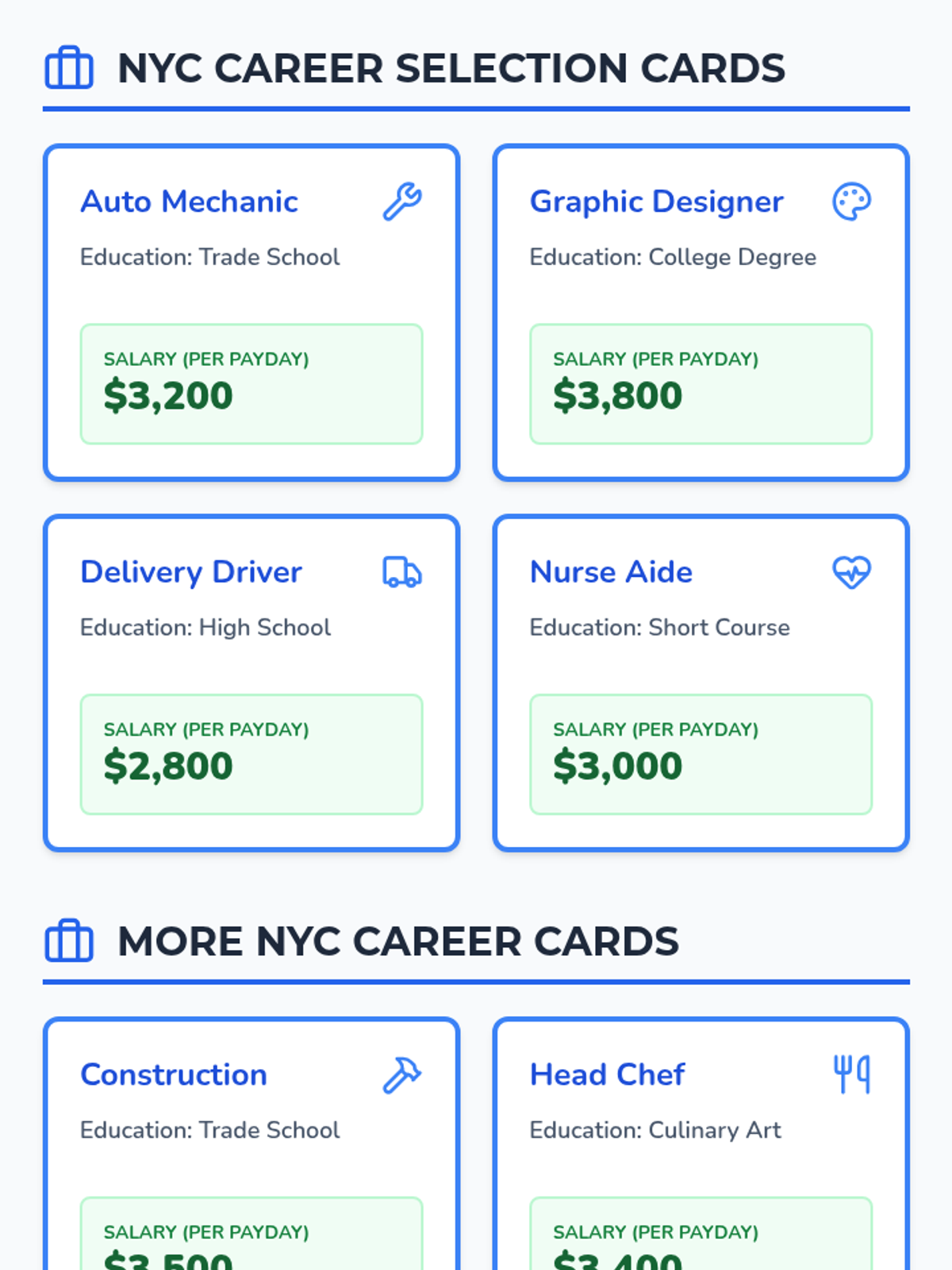
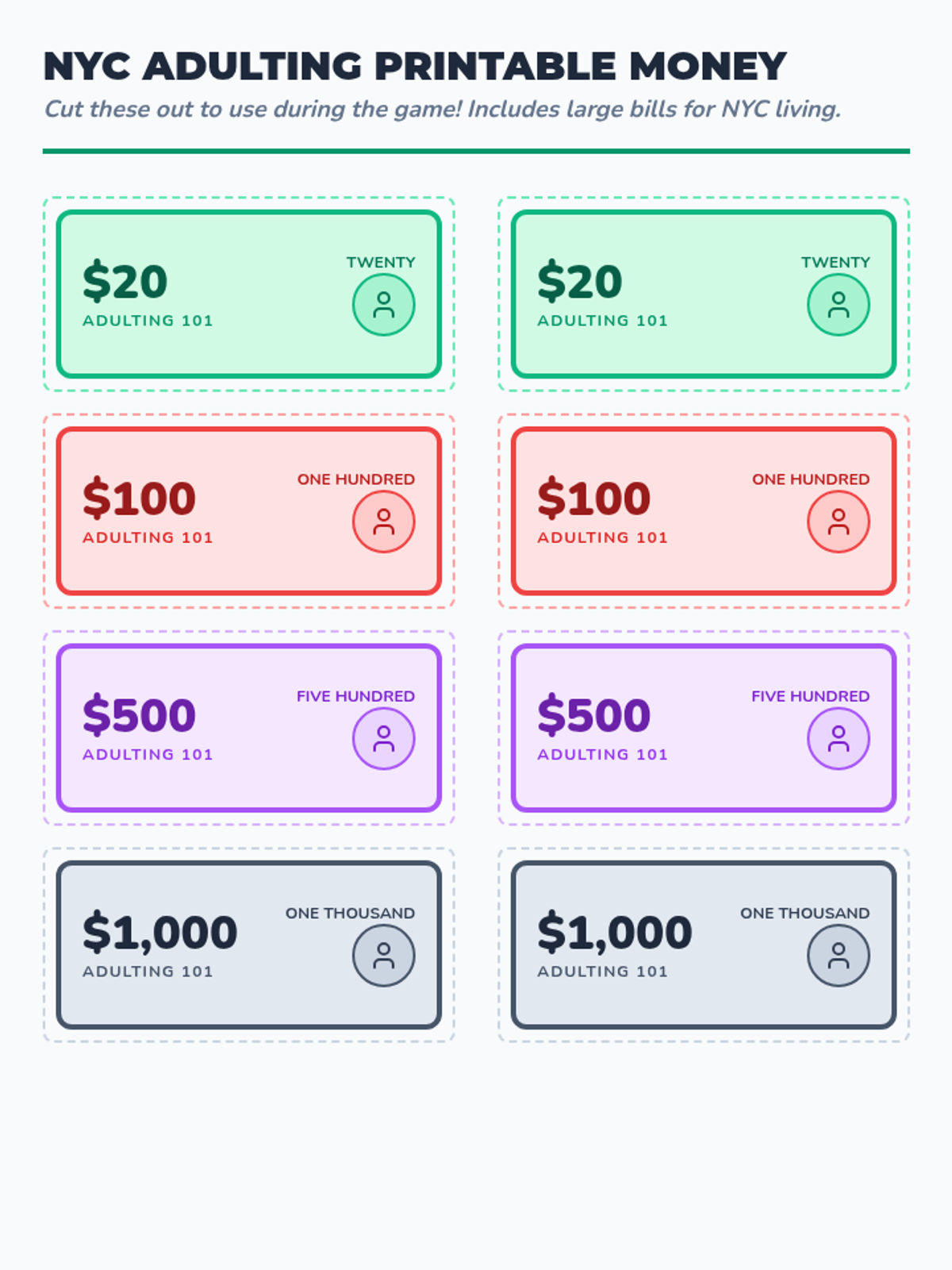
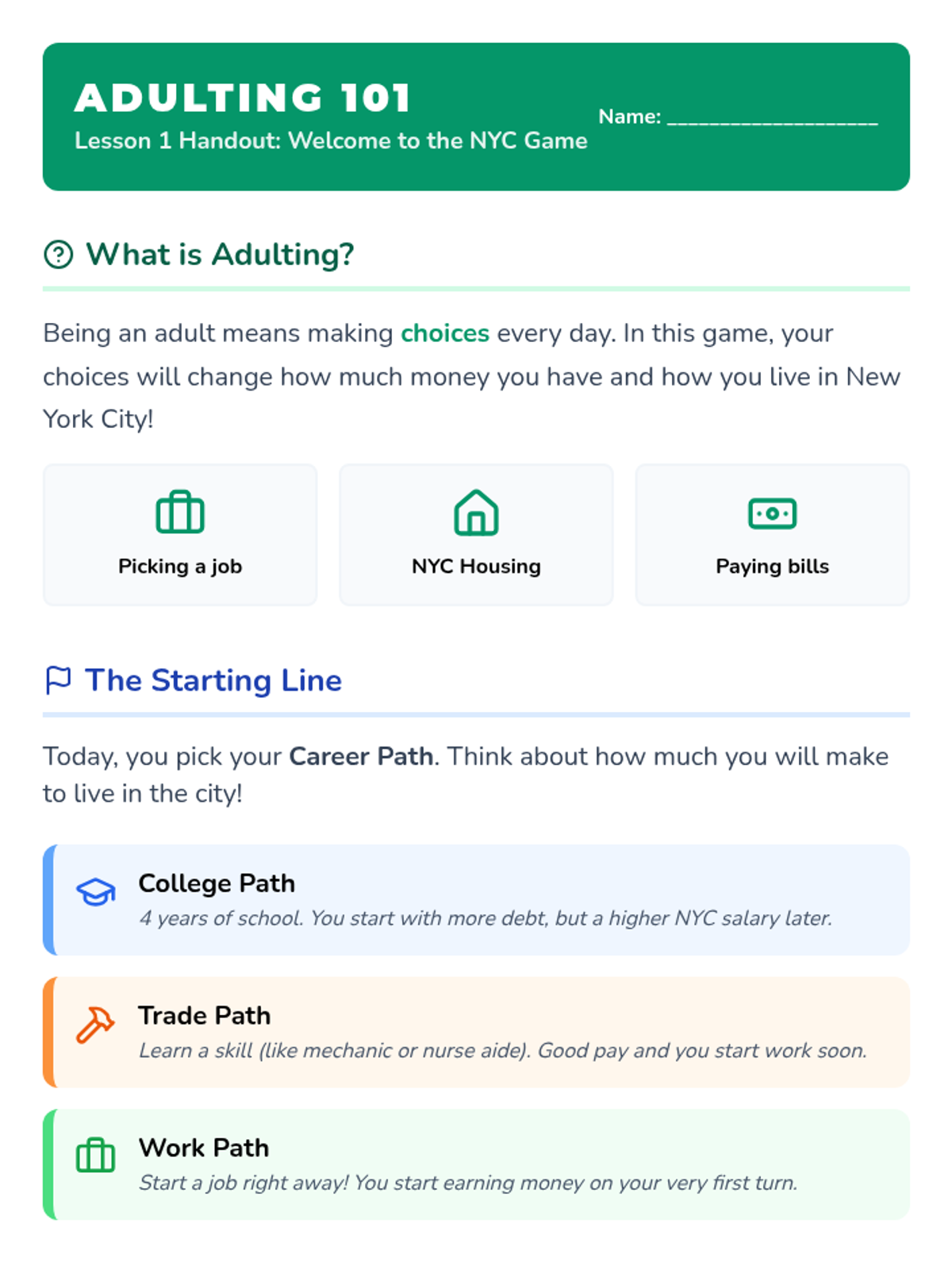
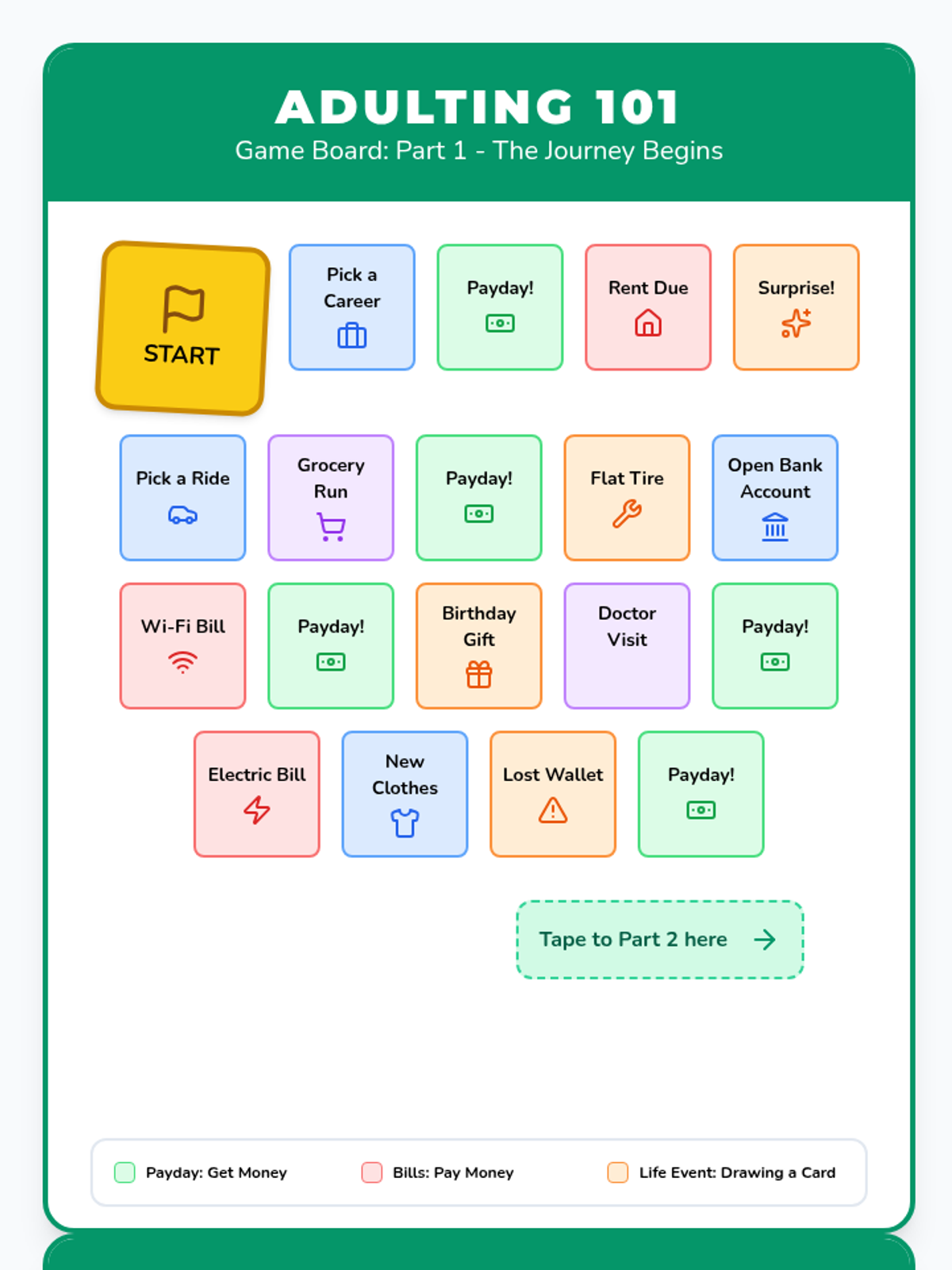
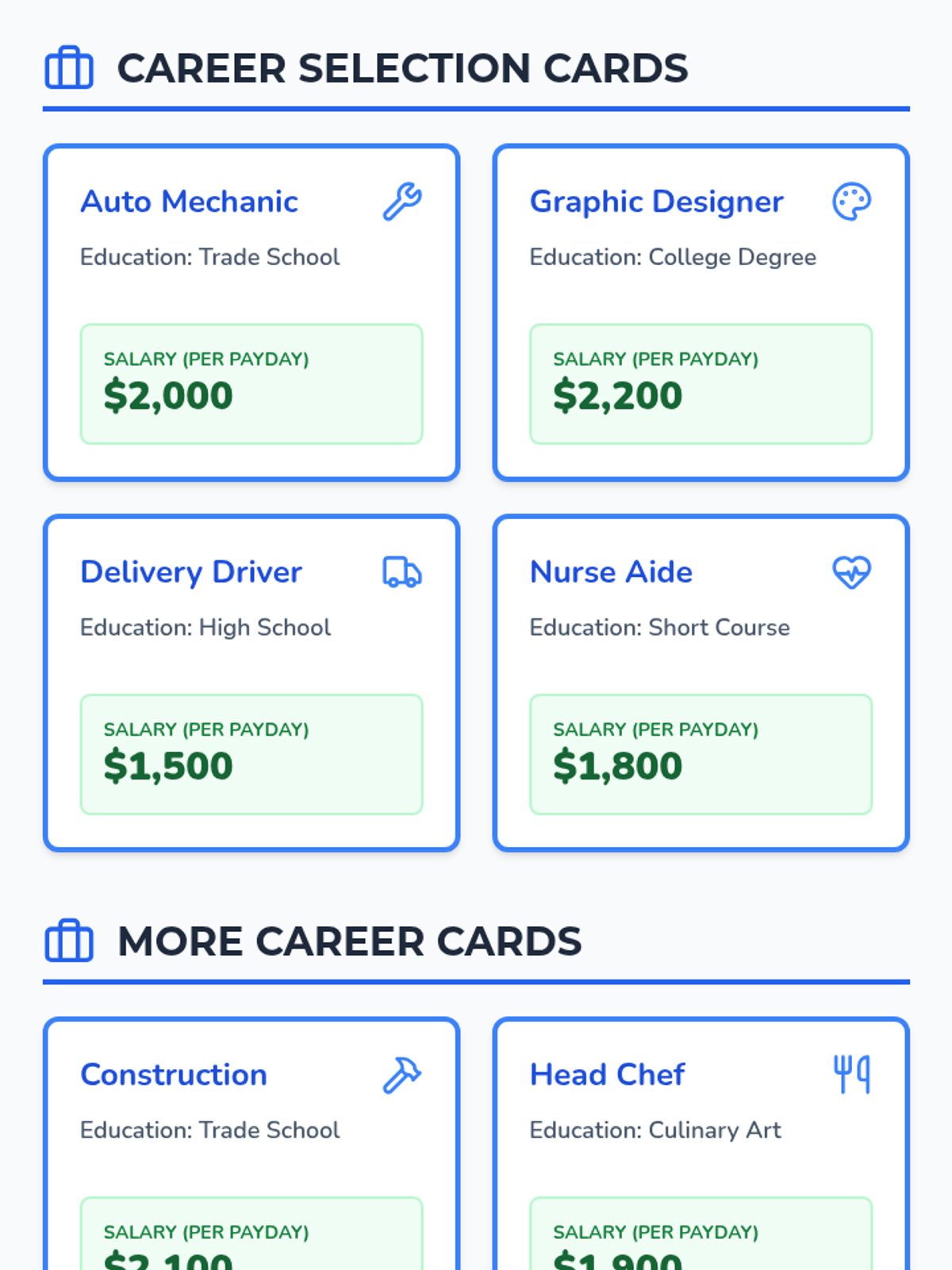
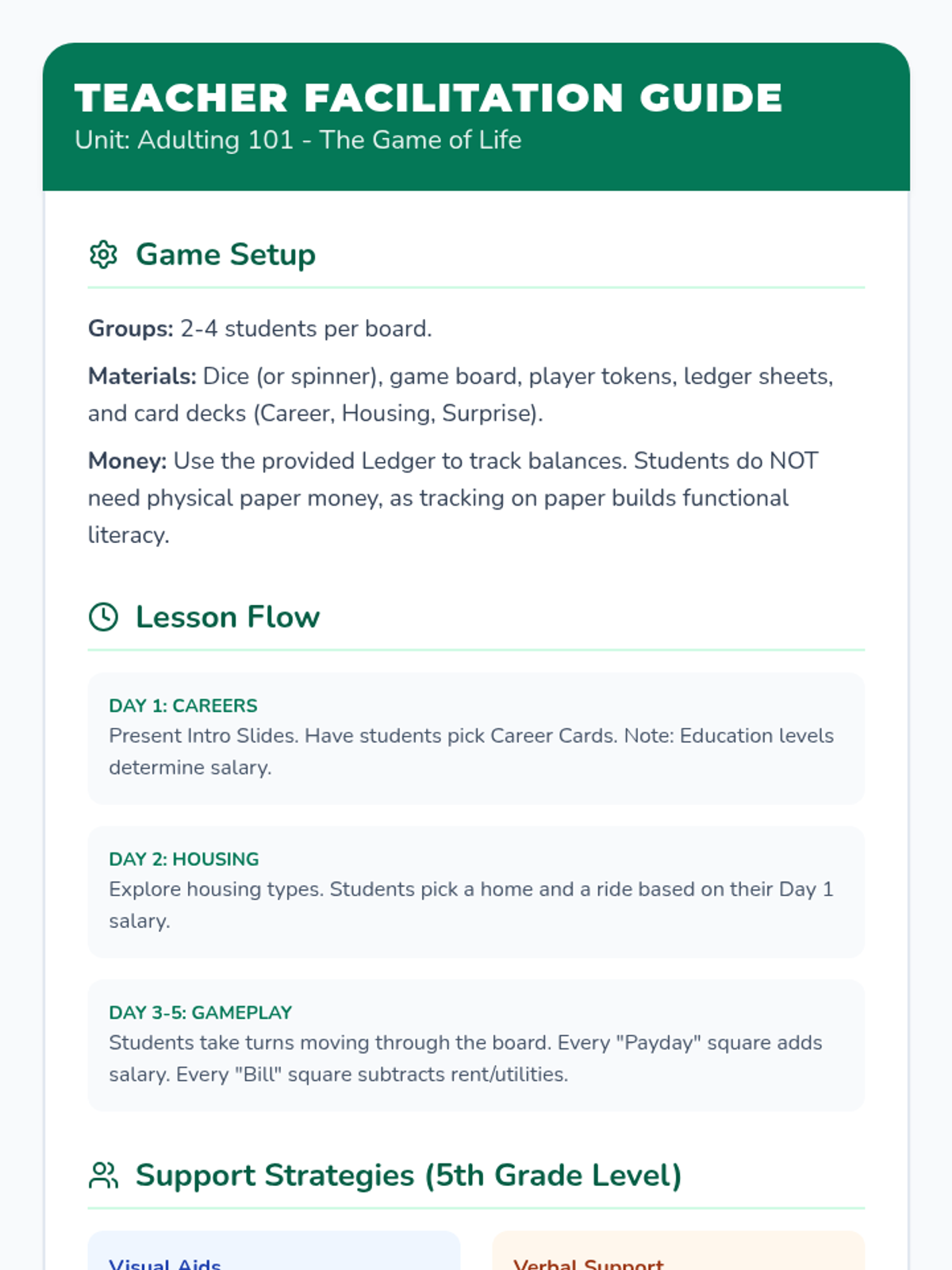
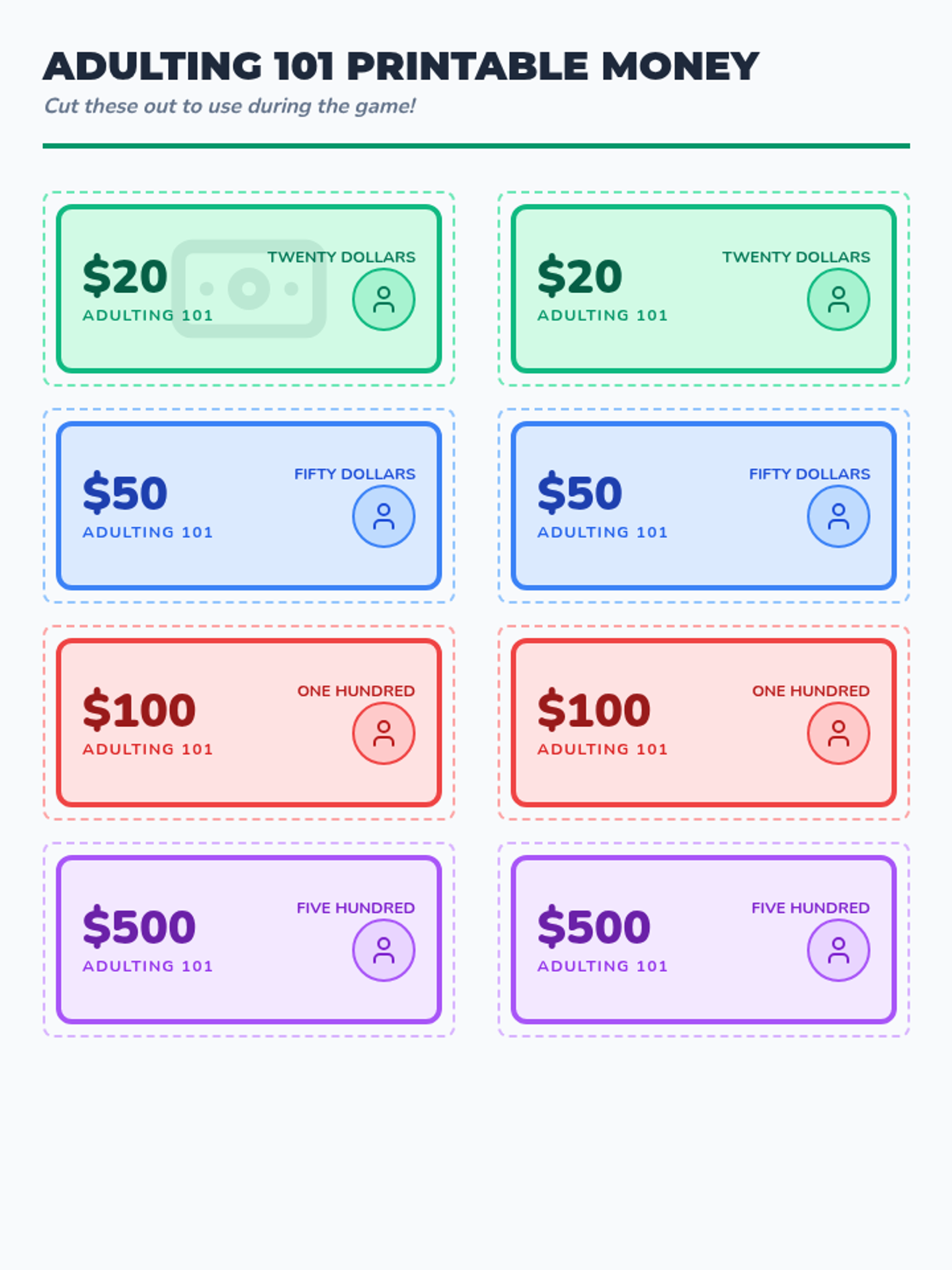
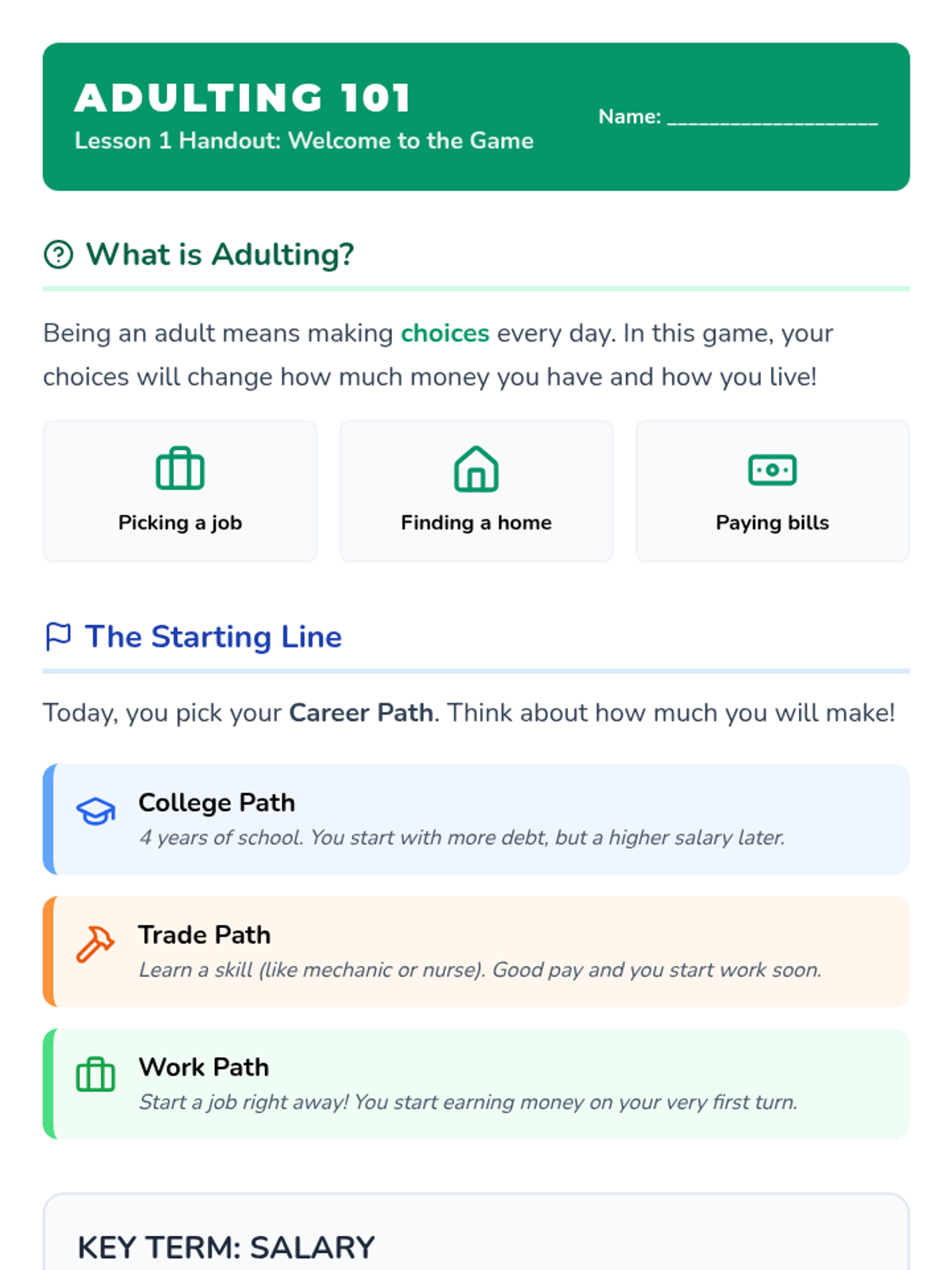
A comprehensive 'Game of Life' style curriculum designed for high school students with 5th-grade reading levels. It focuses on financial literacy, housing, transportation, and navigating daily life through an engaging board game format.
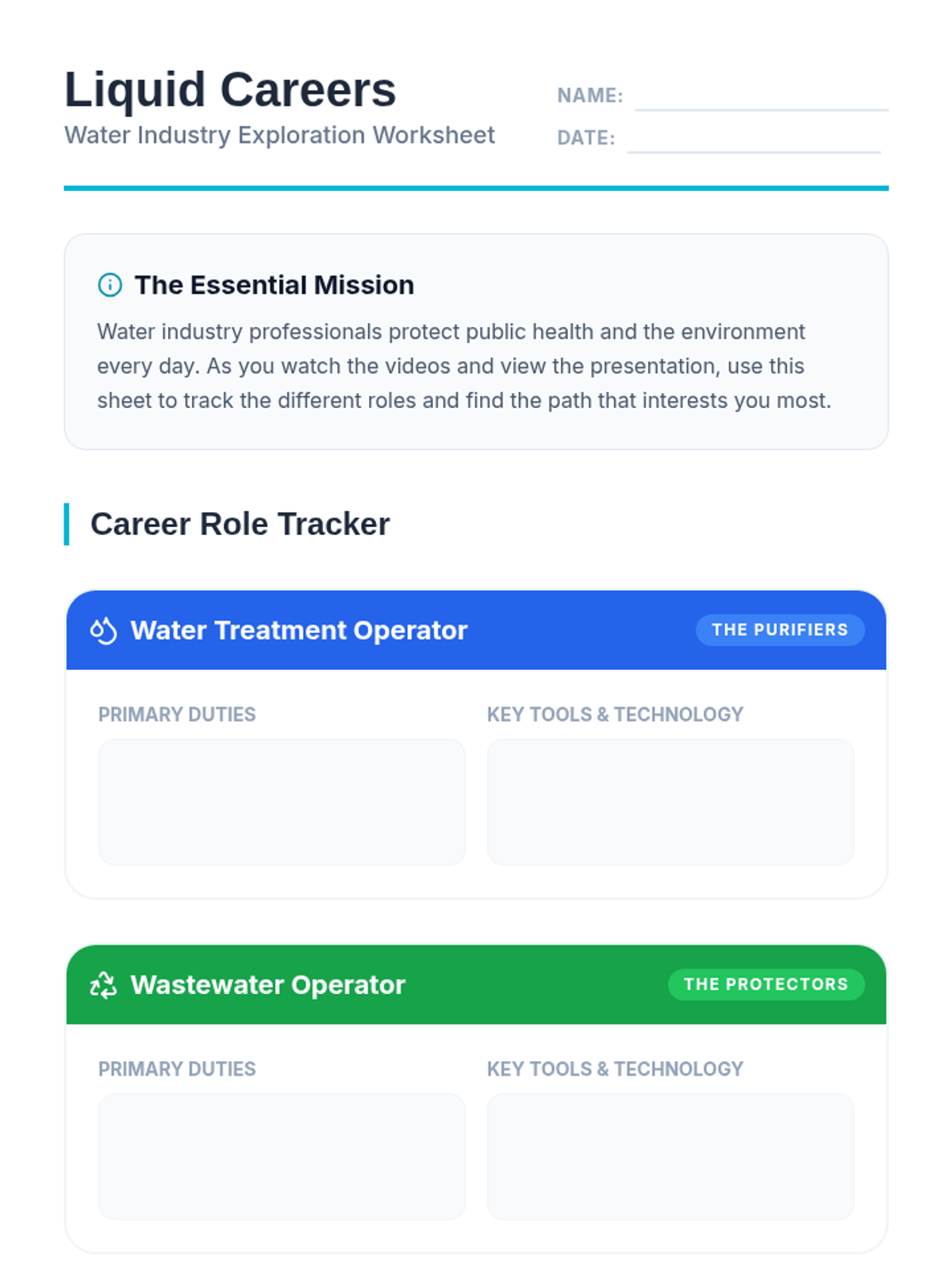
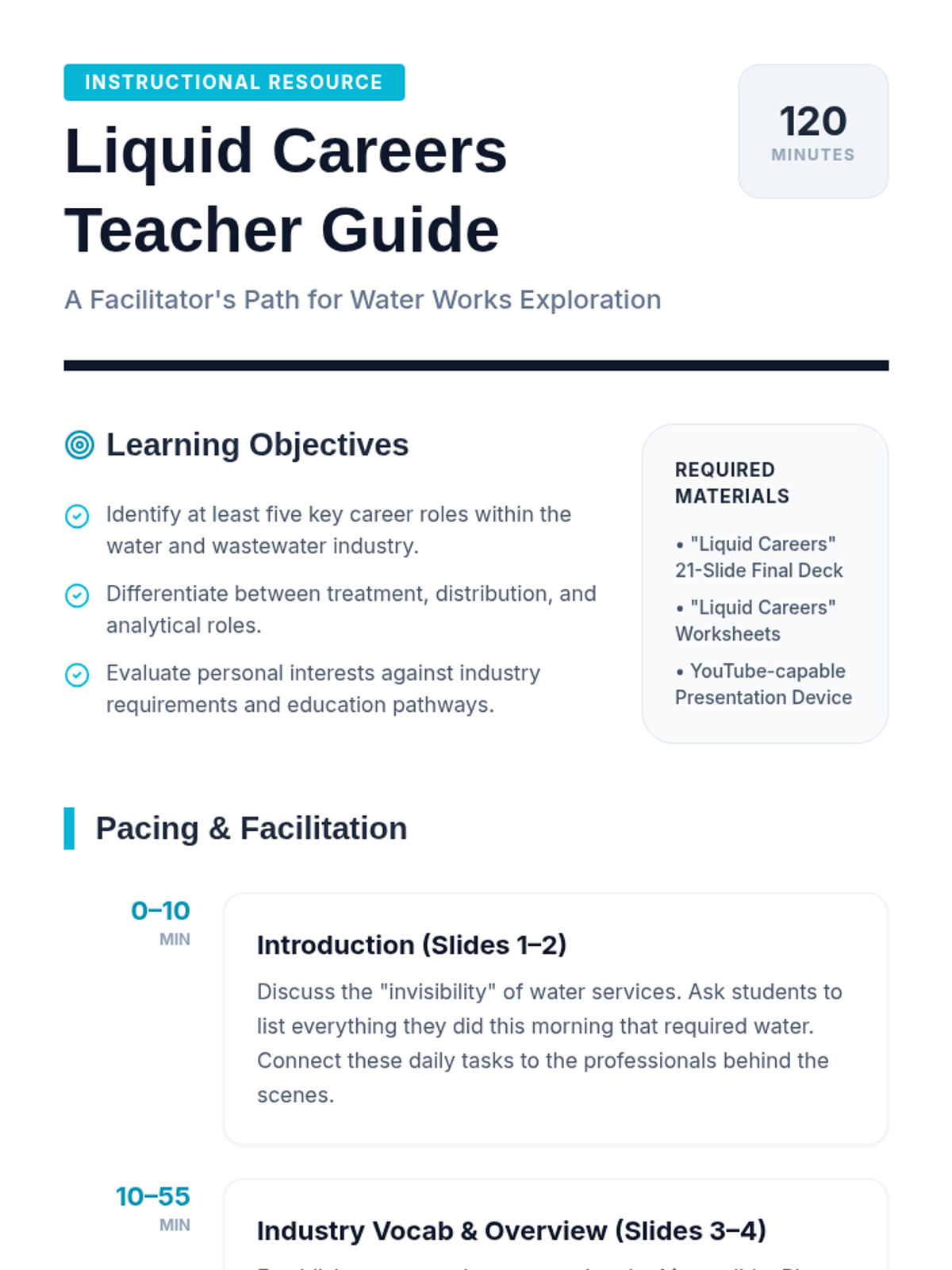
A comprehensive look into the water industry, covering the vital roles, infrastructure, and technology that ensure clean water delivery and safe wastewater management. Students learn about the science, engineering, and fieldwork involved in modern water systems.
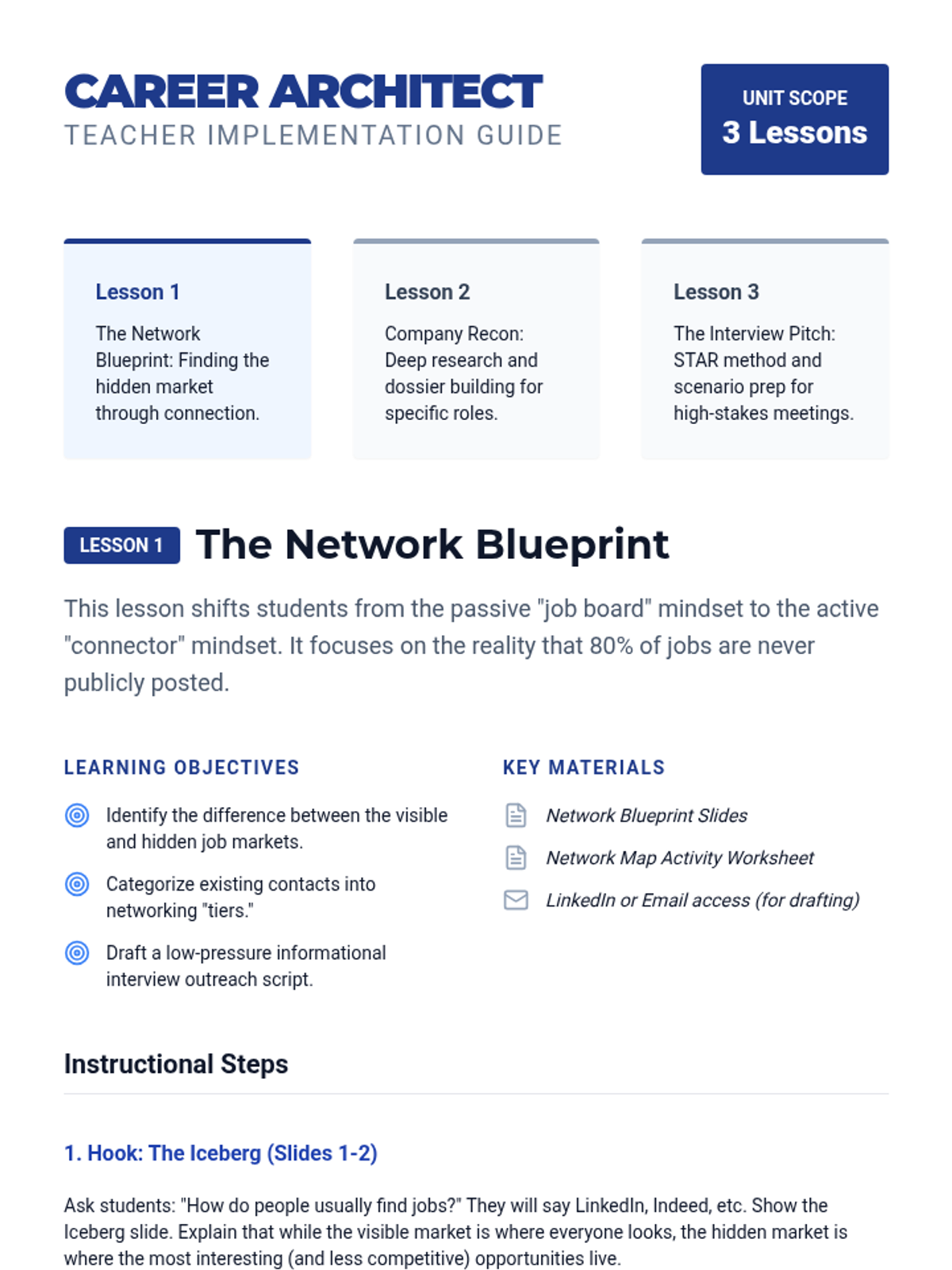
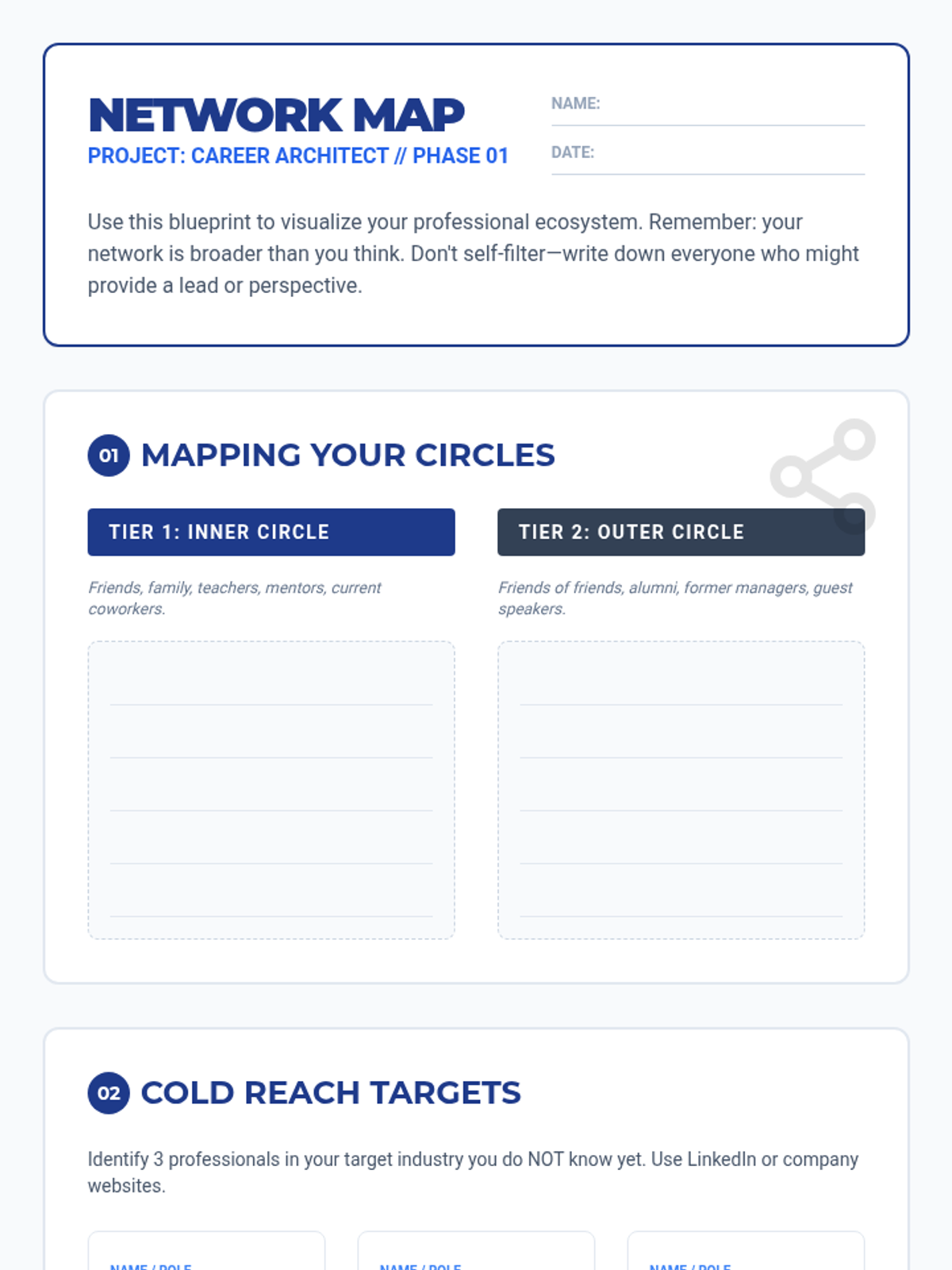
A comprehensive unit designed to guide students through the modern job application process, focusing on strategic networking, deep company research, and high-stakes interview preparation. Students will learn to build professional connections and tailor their approach to specific company cultures and scenarios.
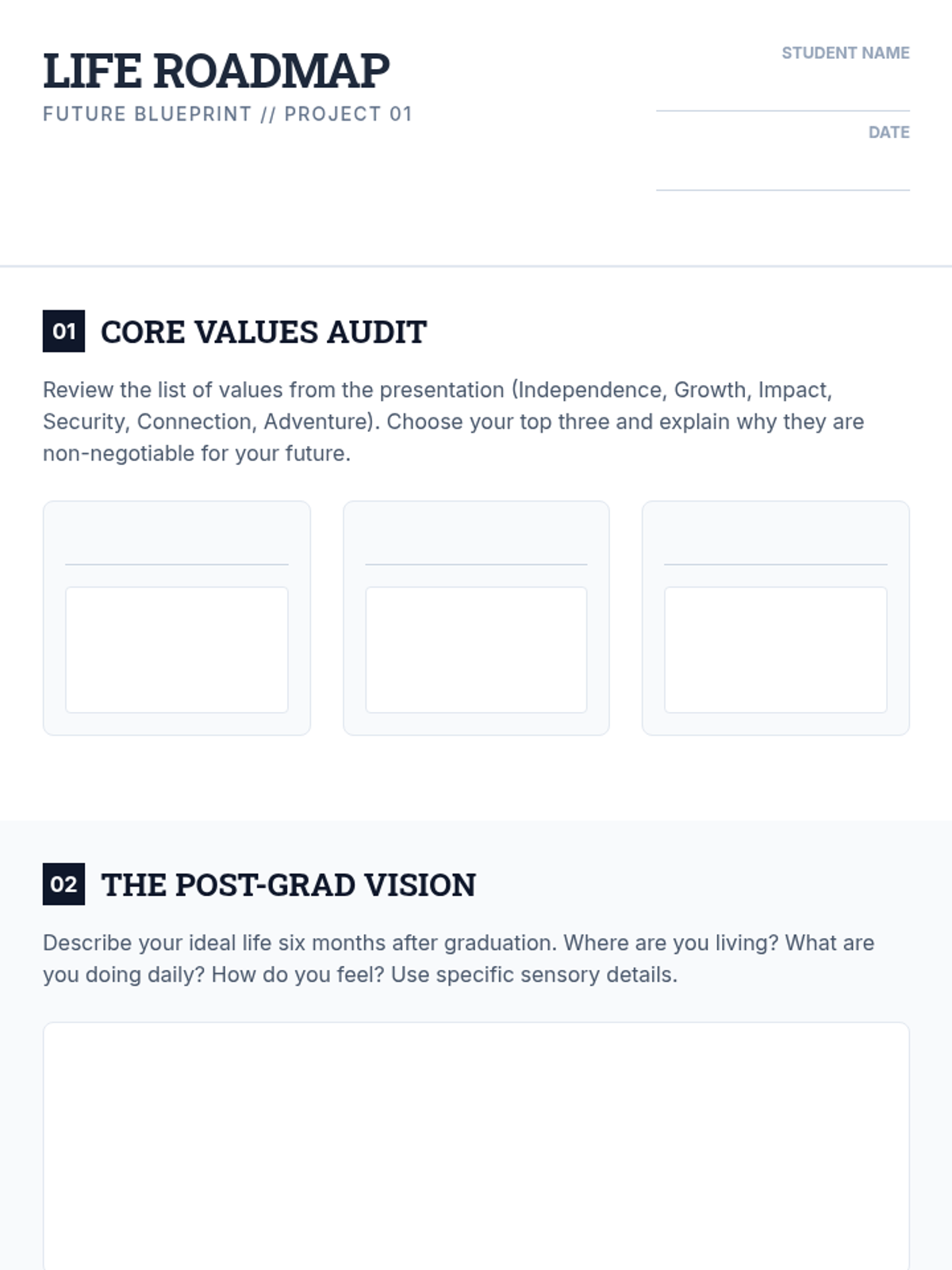
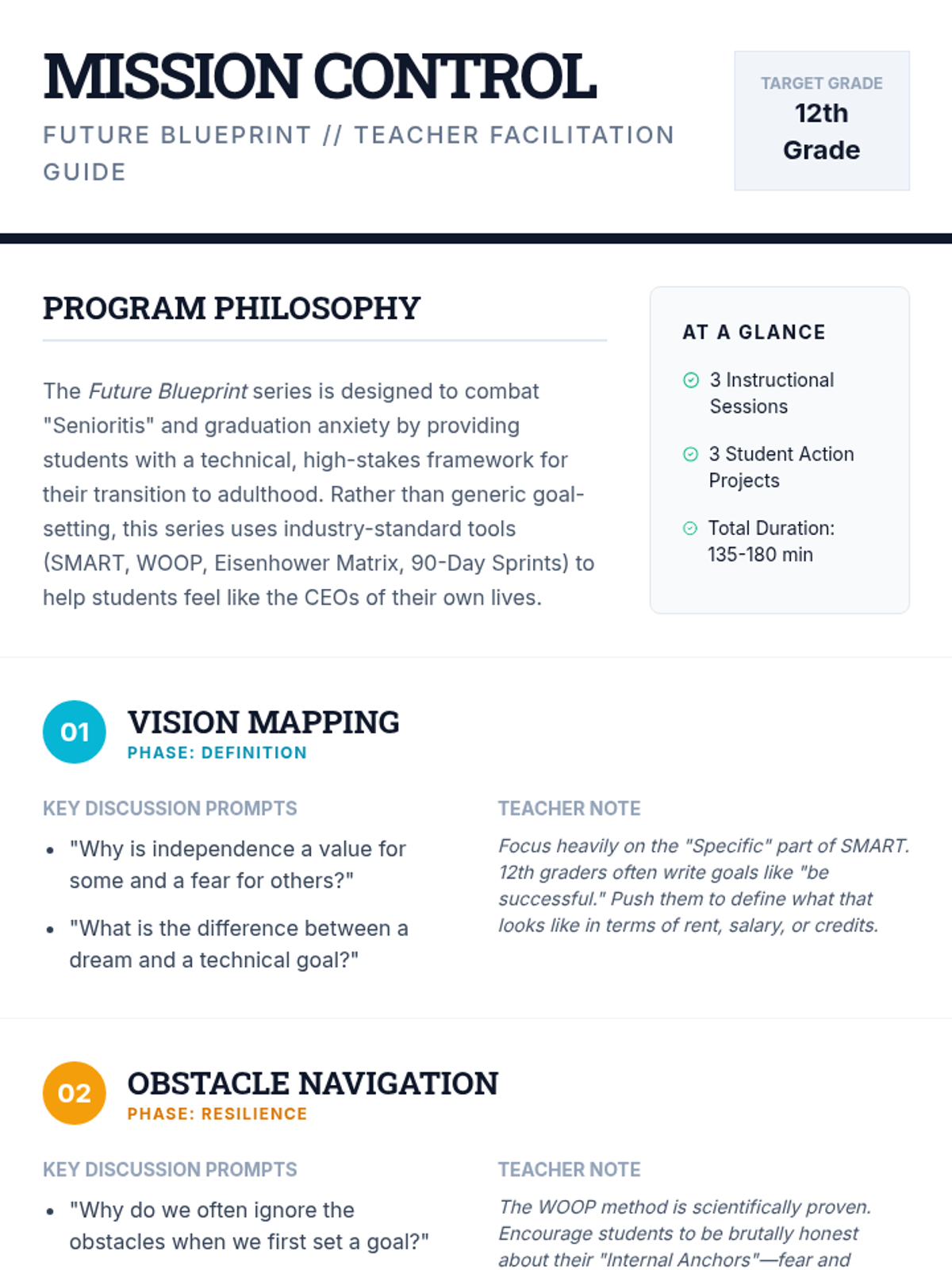
A 3-lesson series designed to help 12th graders transition from high school to adulthood by defining their values, overcoming potential obstacles, and creating actionable 90-day plans.
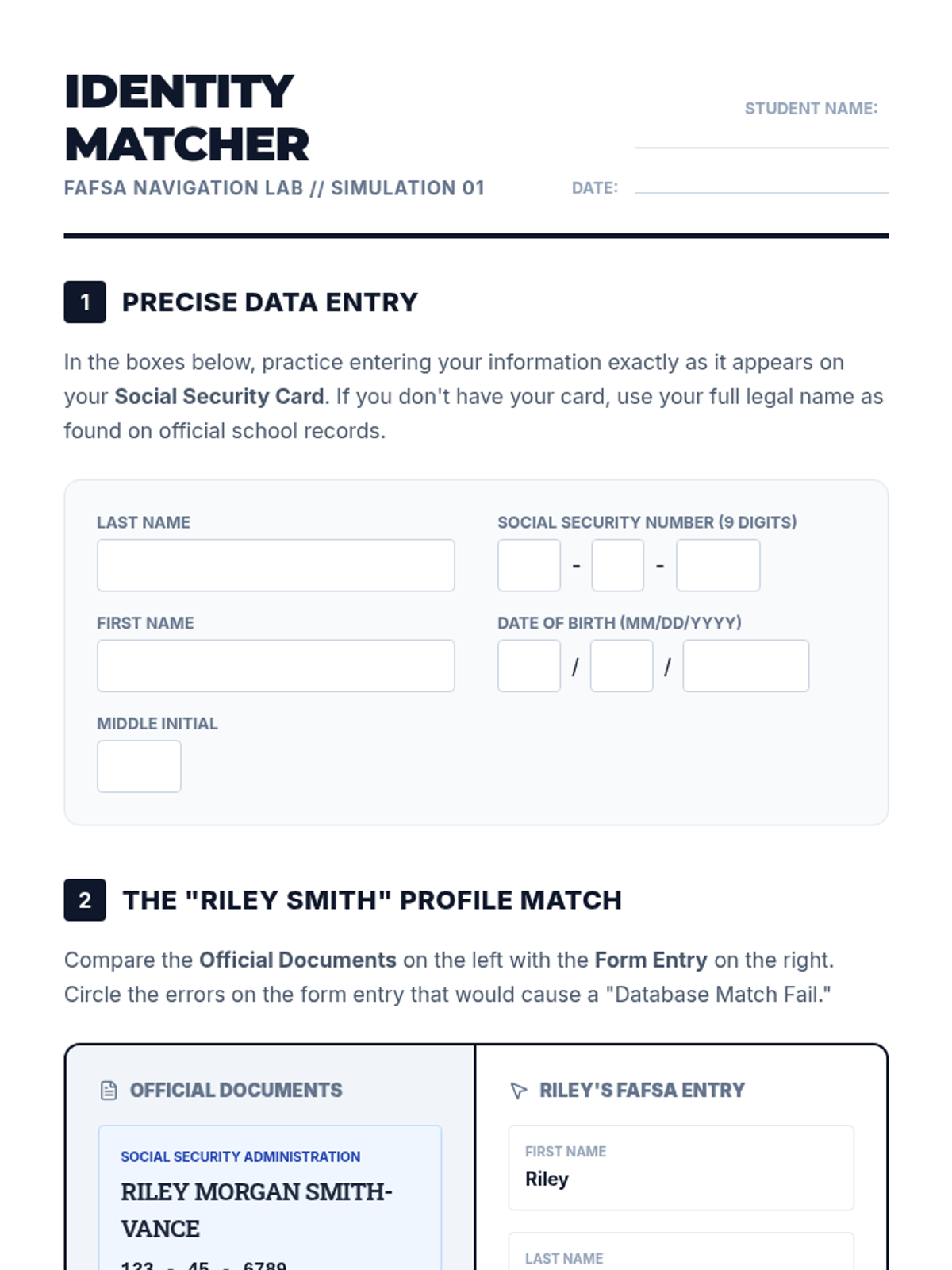
A simulation-based unit where 11th-grade students practice navigating the FAFSA form sections, focusing on data accuracy, school selection strategy, and financial document analysis to prepare for their senior year applications.
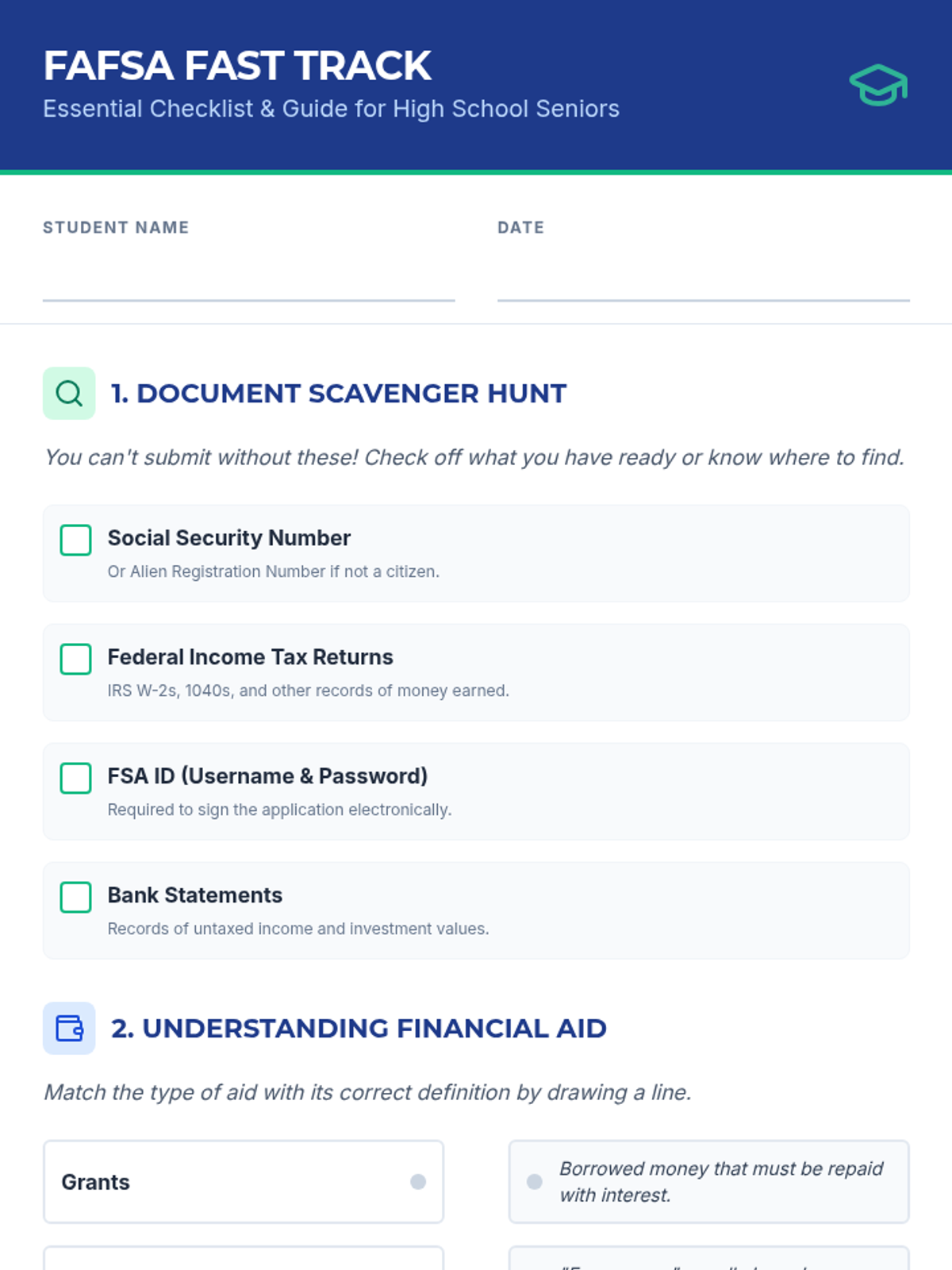
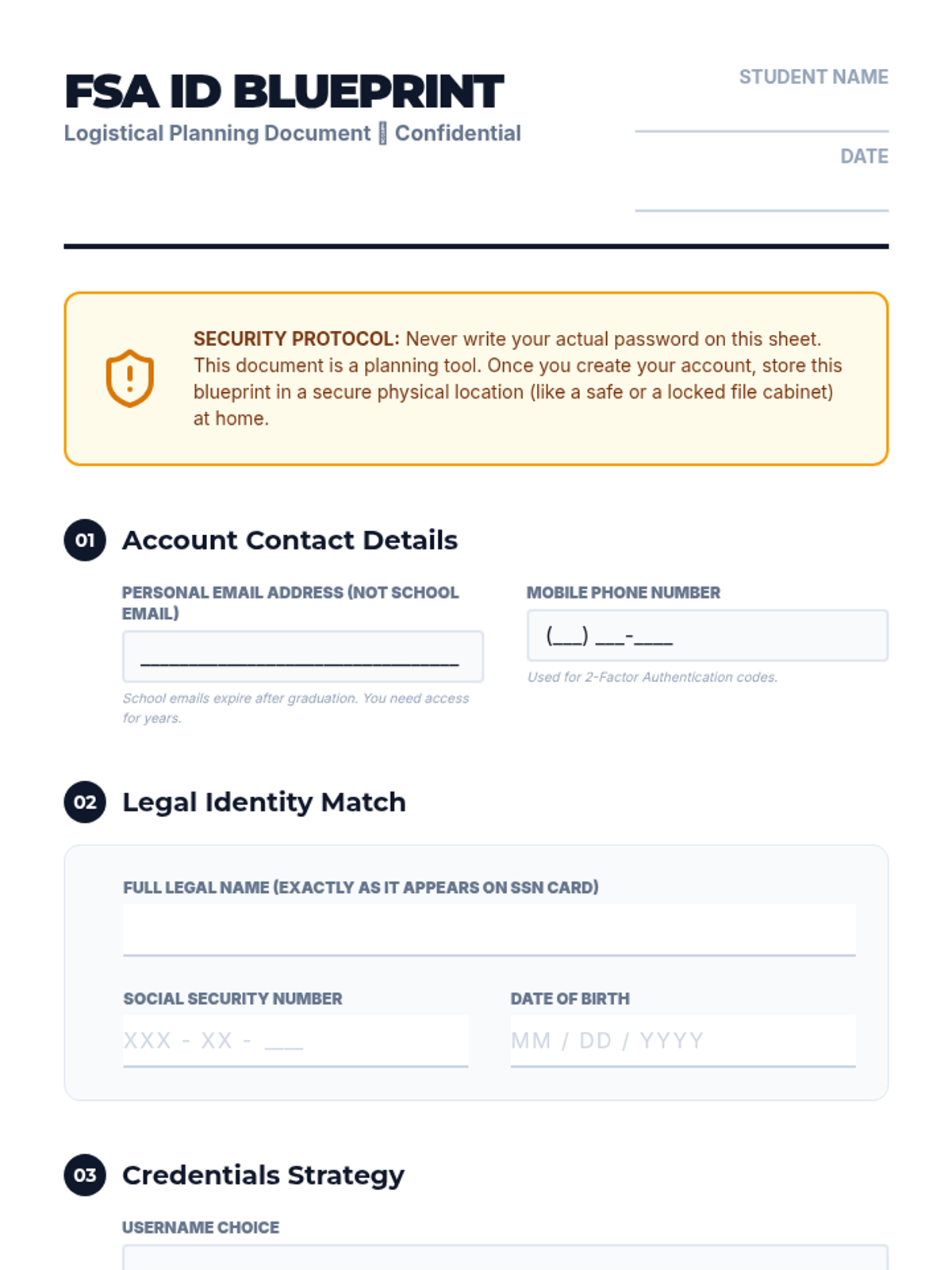
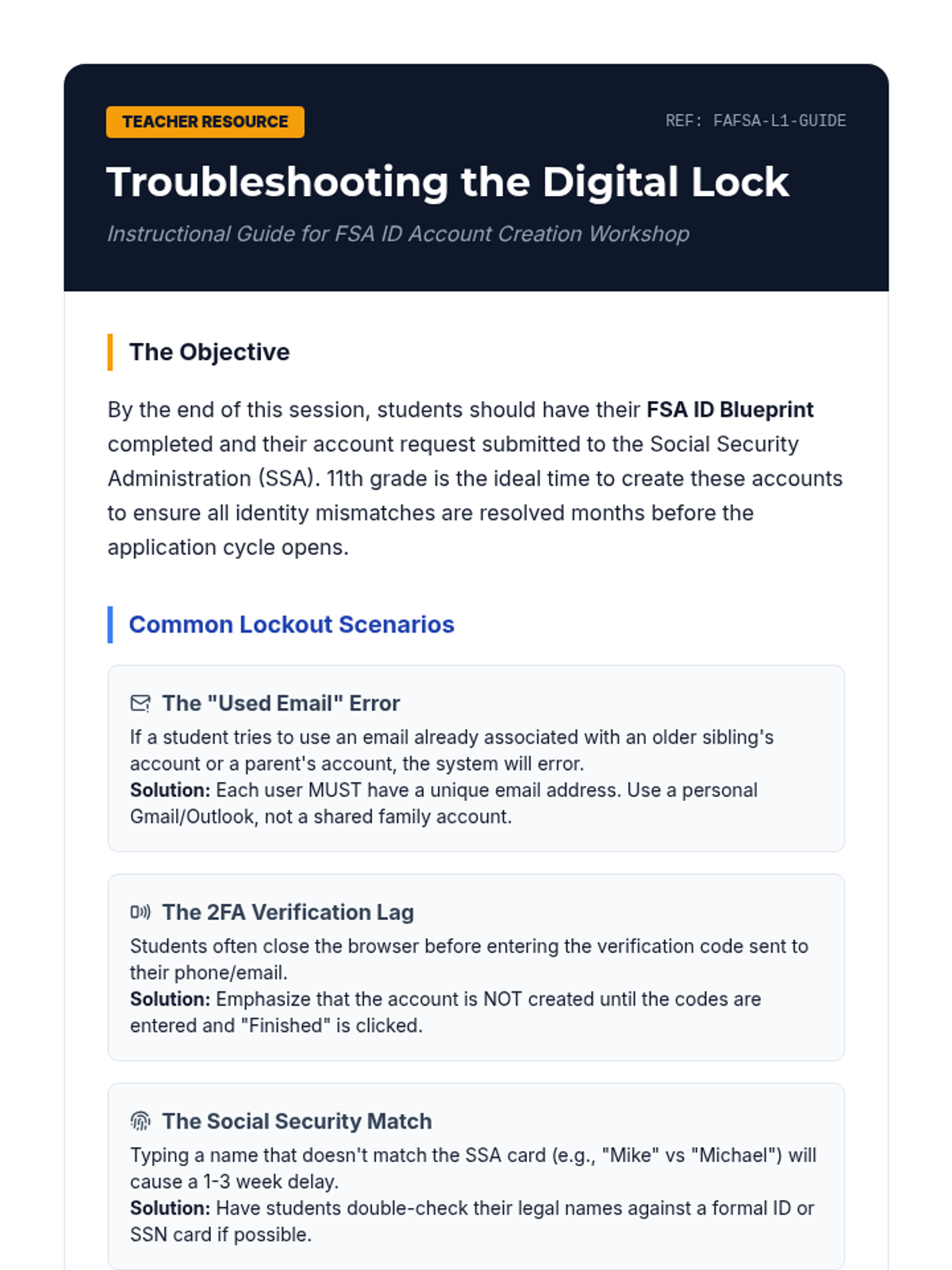
This workshop-style sequence focuses on the logistical preparation required before opening the FAFSA application. Students guide their families through the process of gathering necessary tax documents and successfully creating an FSA ID, emphasizing digital security and communication.
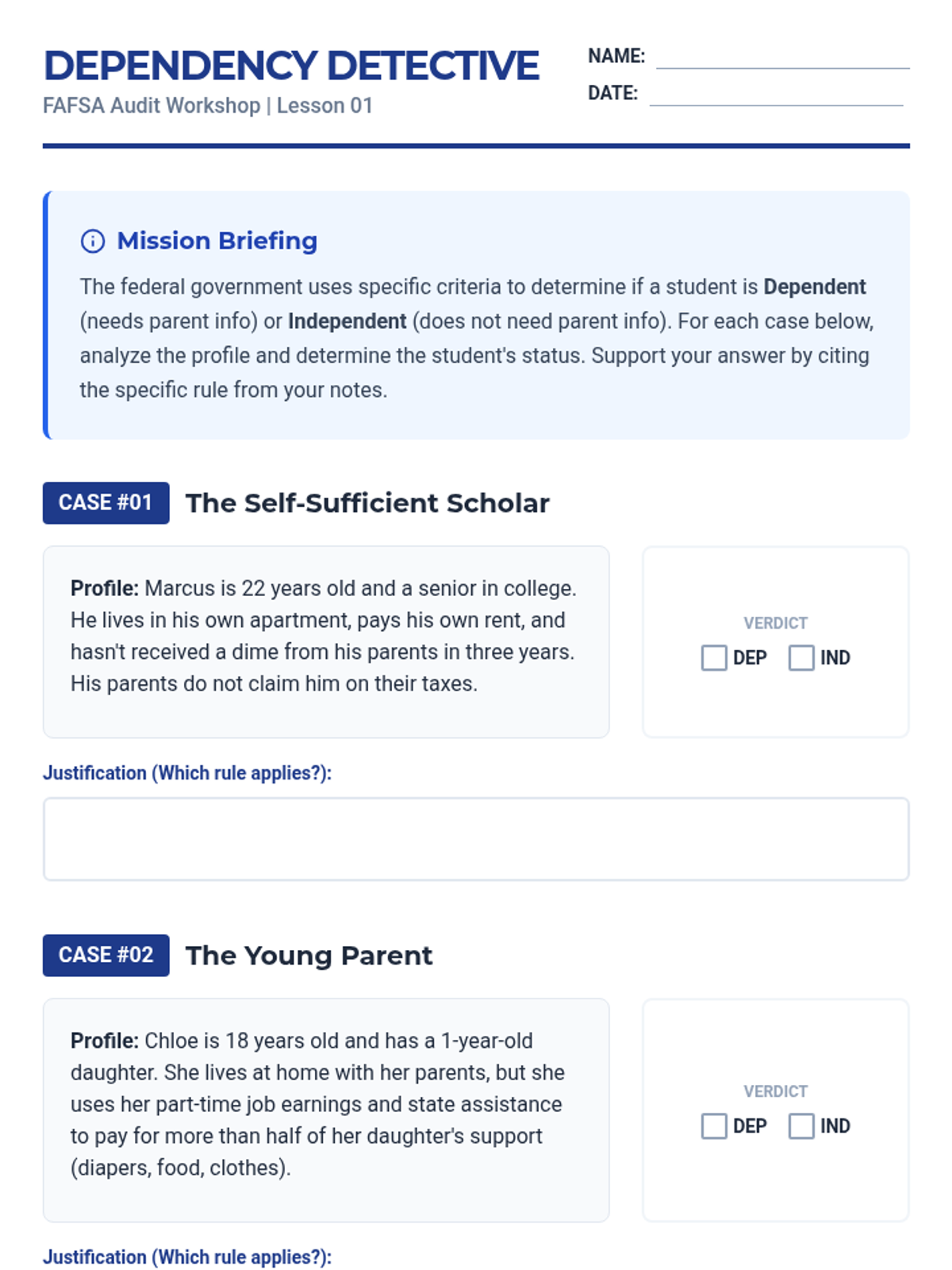
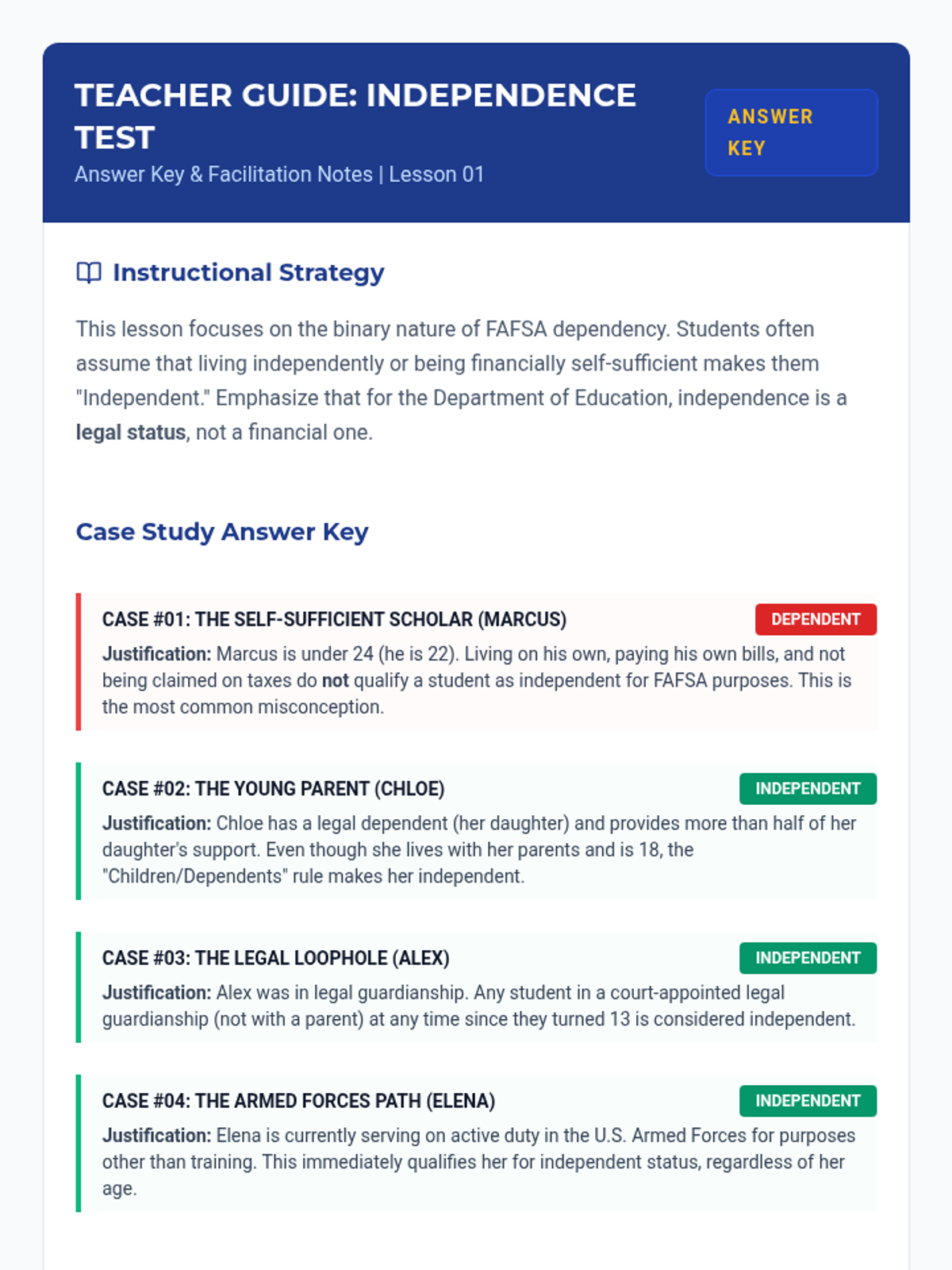
This 11th-grade sequence guides students through the complexities of the FAFSA, focusing on dependency status, household composition, and asset reporting. Students will use case studies to navigate diverse family structures and financial scenarios to ensure accurate aid calculations.
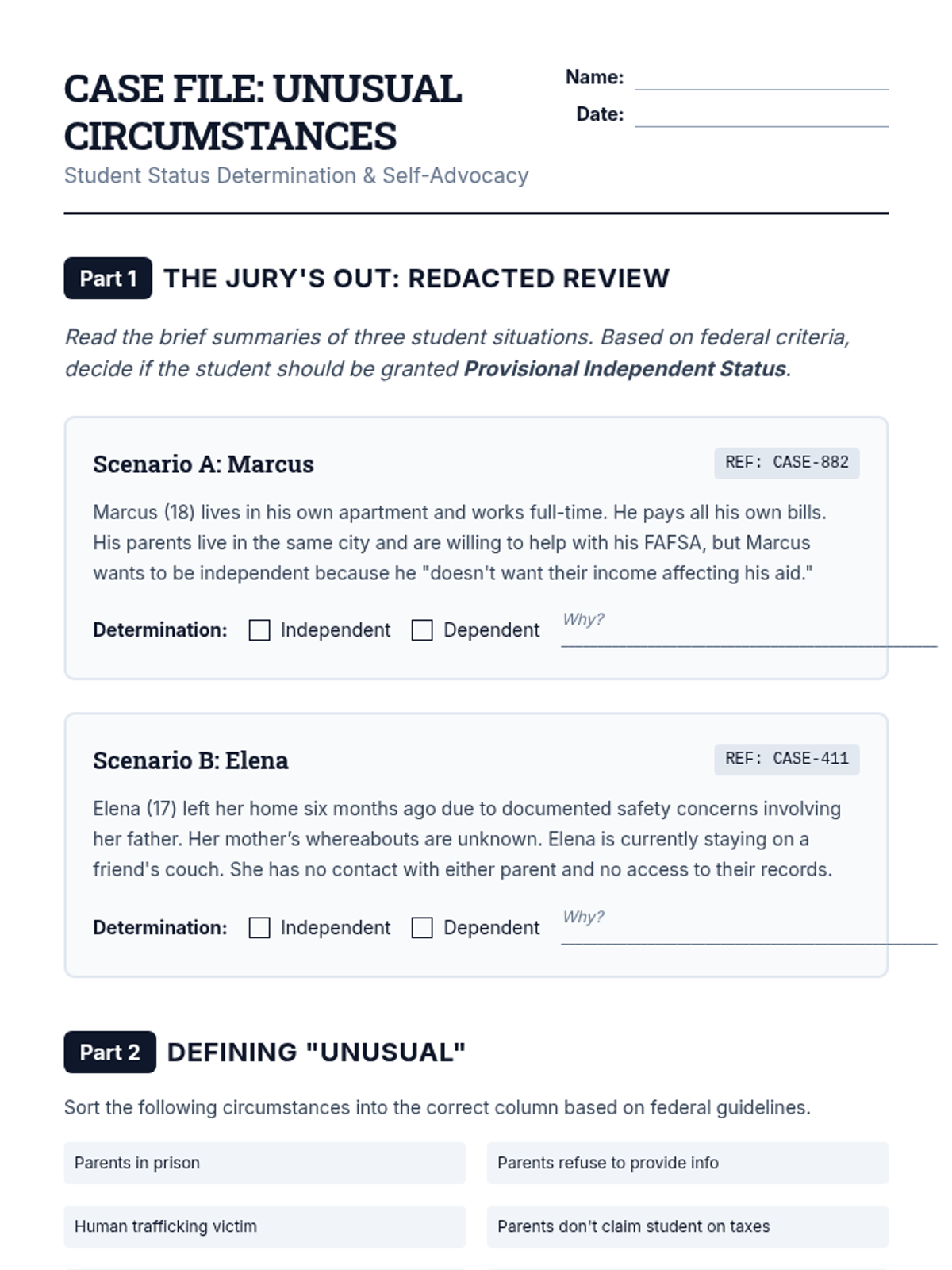
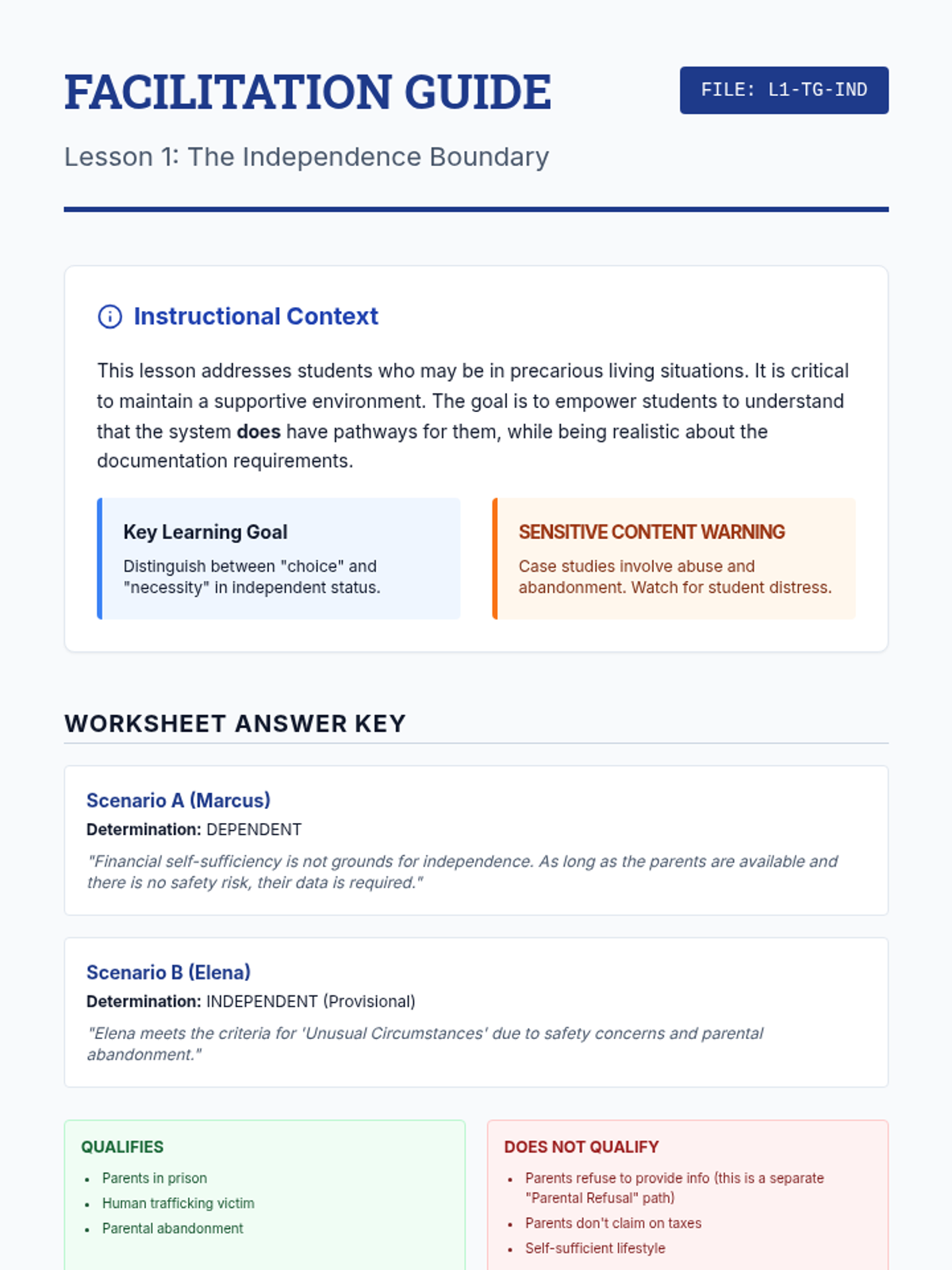
This sequence uses a case study methodology to help 12th-grade students navigate complex FAFSA scenarios, including unusual circumstances, homelessness, parental refusal, and professional judgment appeals. Students develop self-advocacy and technical navigation skills to ensure equitable financial aid assessment.
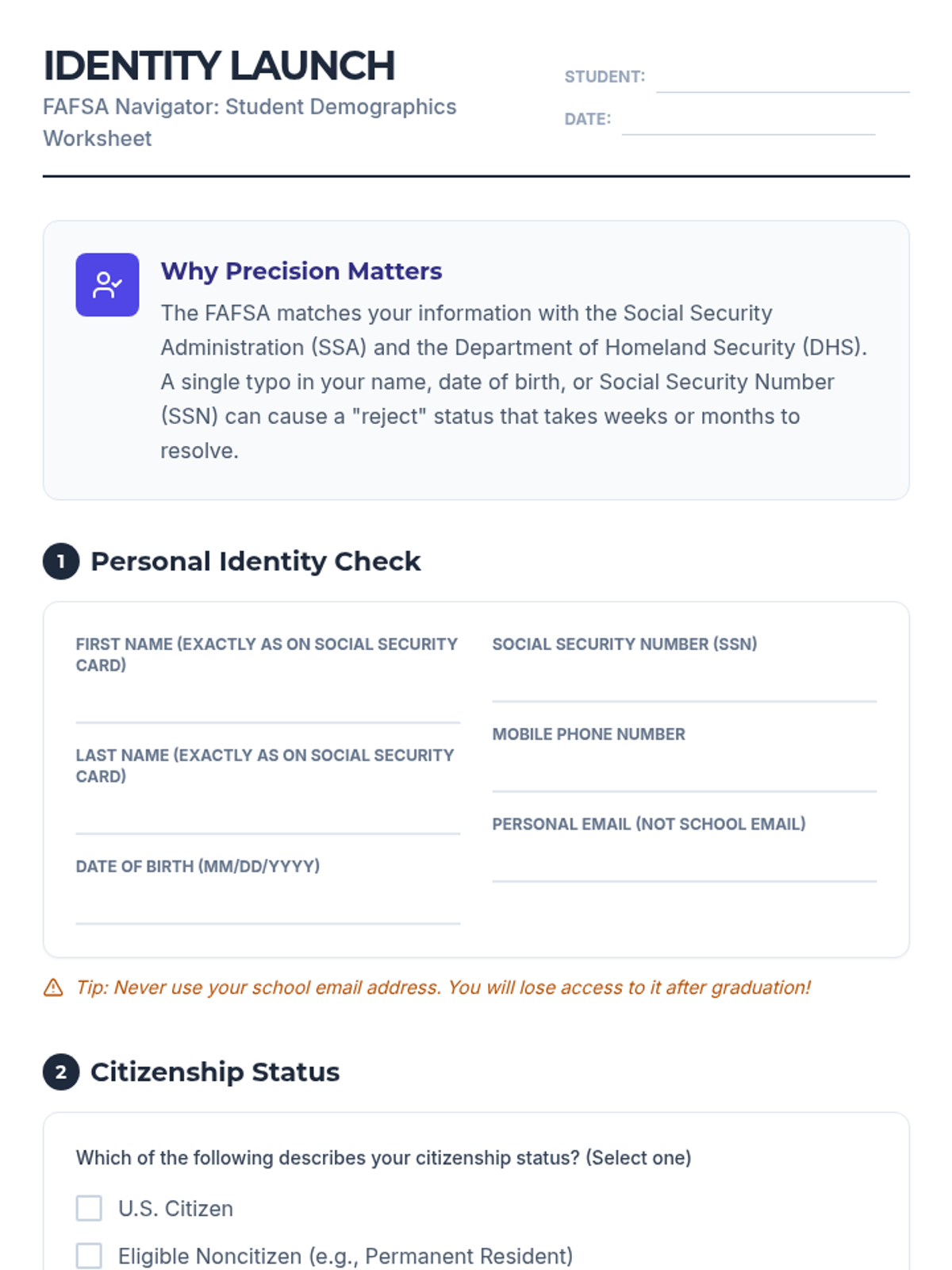
A comprehensive workshop series that guides 12th-grade students through the FAFSA application process using a "Navigator" theme, ensuring accurate data entry and financial literacy.
A comprehensive workshop sequence guiding 12th-grade students through the FAFSA preparation process, from understanding aid types and dependency status to creating FSA IDs and organizing financial documents.
A comprehensive 6-session sequence designed for 12th graders to navigate the complex transition from high school to college. The course covers college applications, financial literacy, campus social life, academic resources, and holistic wellness, culminating in a personalized transition plan for every student.
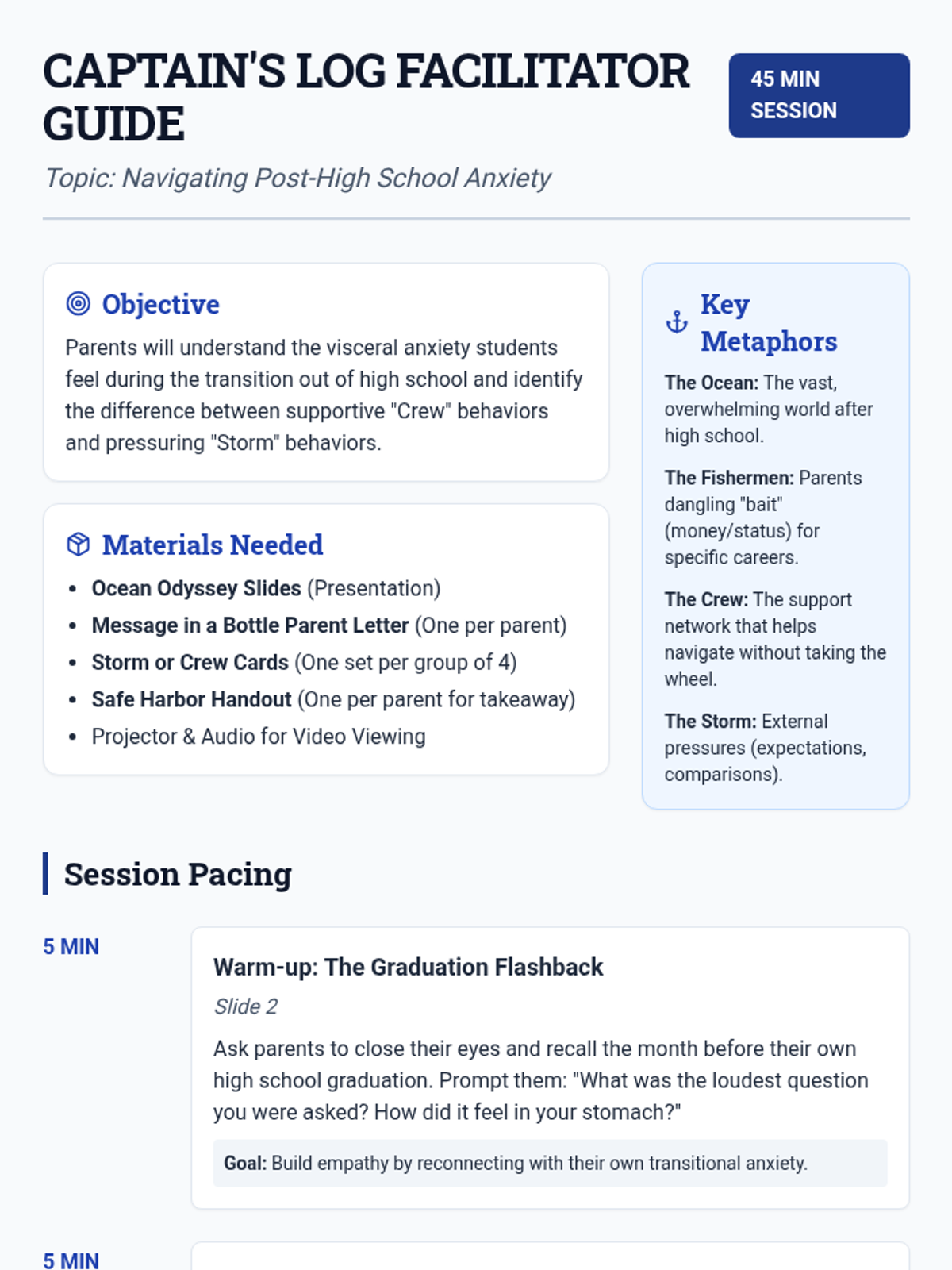
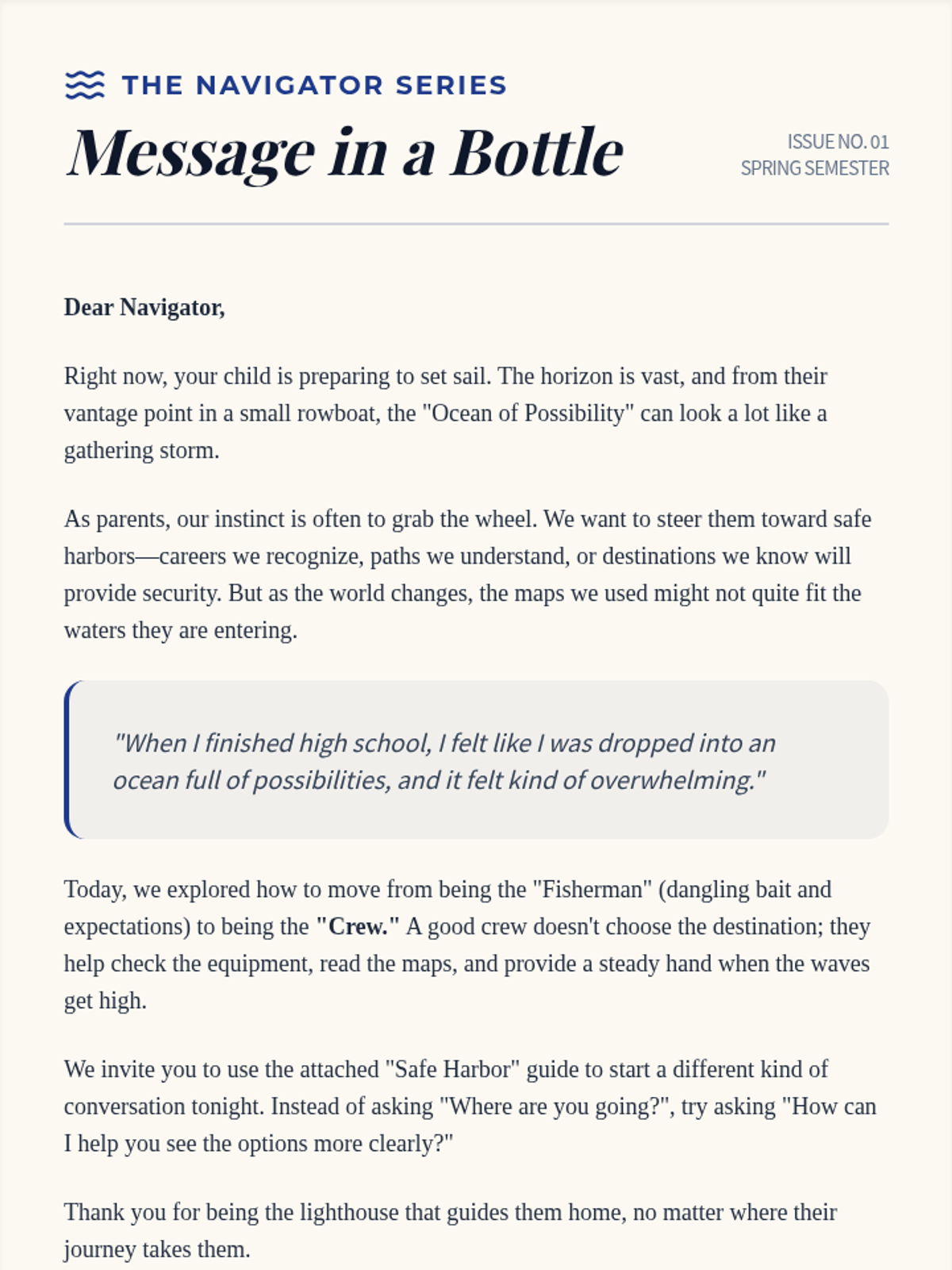
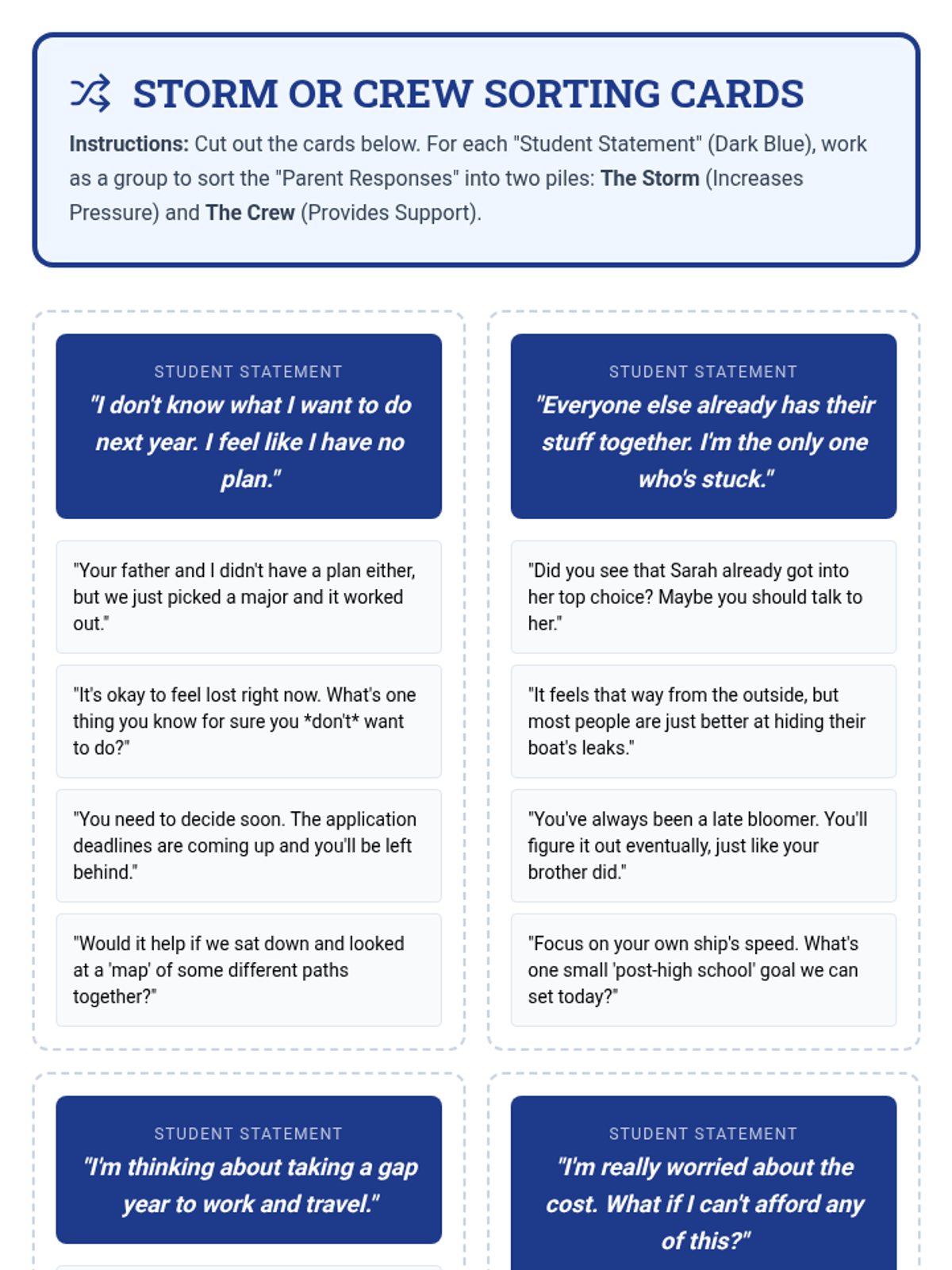
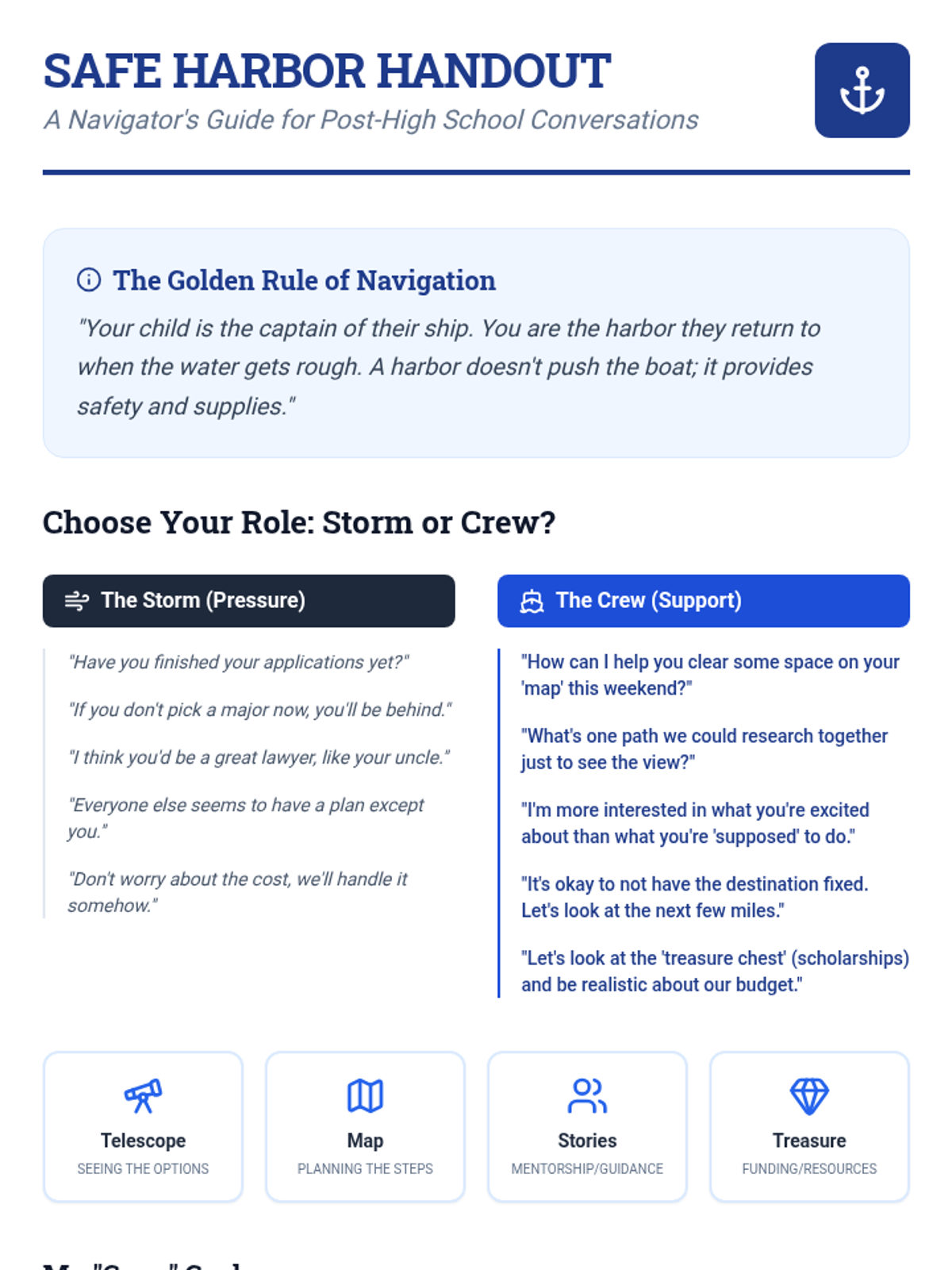
A specialized workshop sequence designed for high school parents to help them navigate the emotional complexities of their children's post-secondary transitions. The sequence focuses on moving from a 'pressure-based' approach to a 'support-based' framework using nautical metaphors.
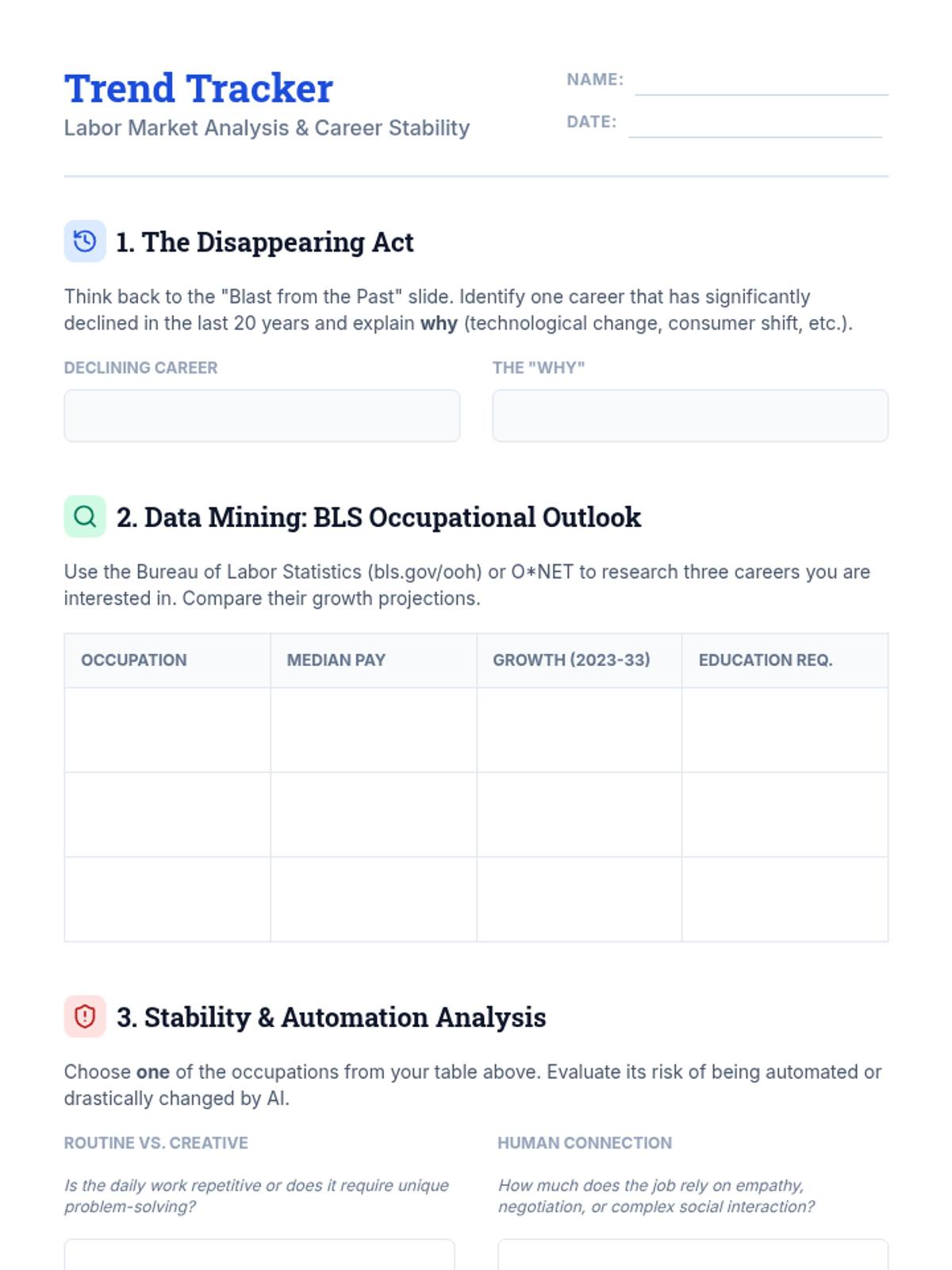
A comprehensive sequence designed to prepare 12th-grade students for a dynamic professional landscape through labor market analysis, career mapping, and strategic 10-year planning. Students will learn to navigate technological shifts and develop a mindset of professional agility.
A comprehensive 12th-grade unit exploring post-secondary success through non-degree pathways, including apprenticeships, technical bootcamps, and stackable credentials. Students analyze program rigor, industry demand, and cost-benefit ratios to build viable alternatives to traditional 4-year degrees.