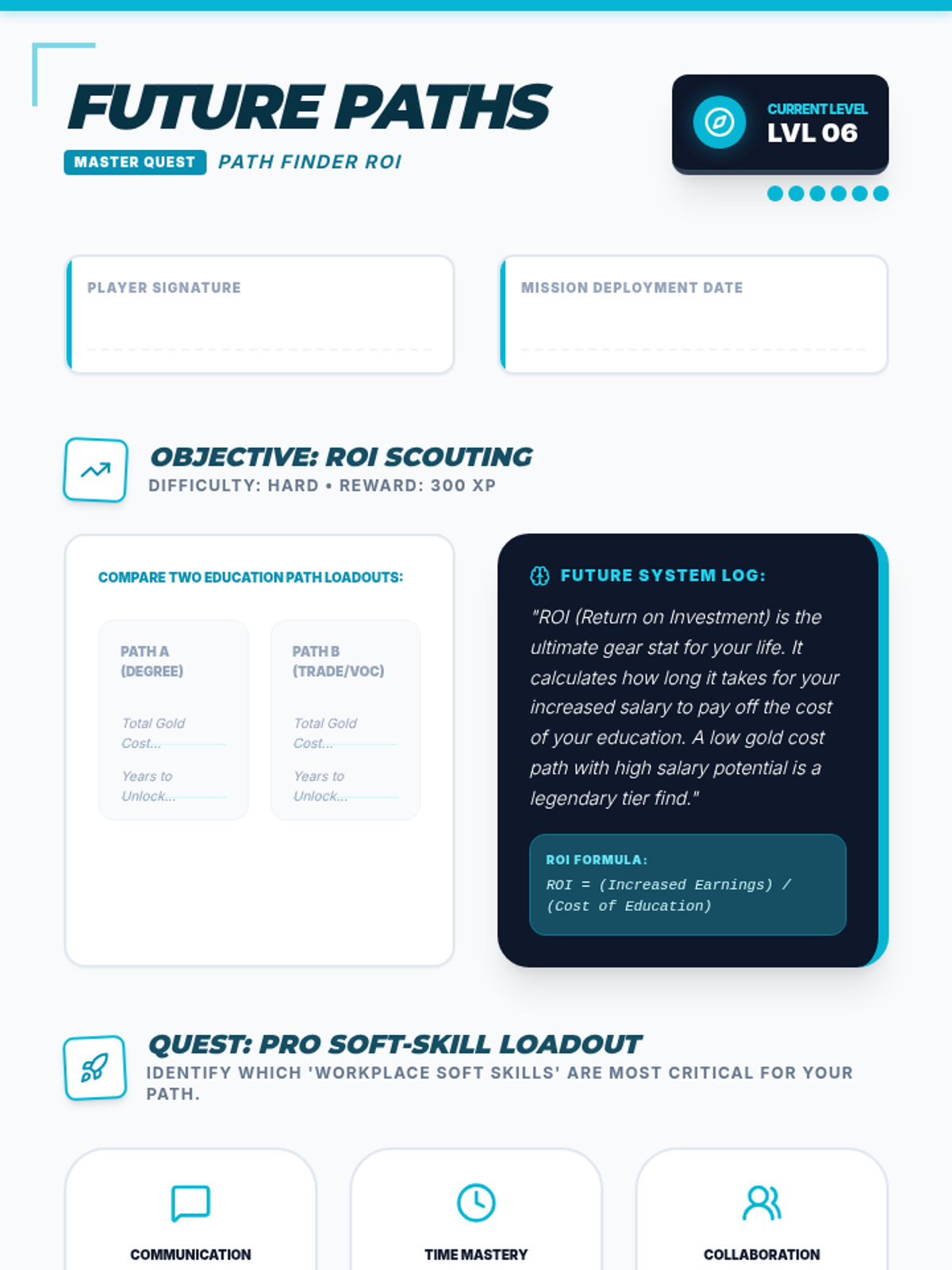
College selection, application workflows, and financial aid navigation including FAFSA and scholarship acquisition. Builds skills in personal statement writing and career exploration to align post-secondary choices with long-term professional goals.
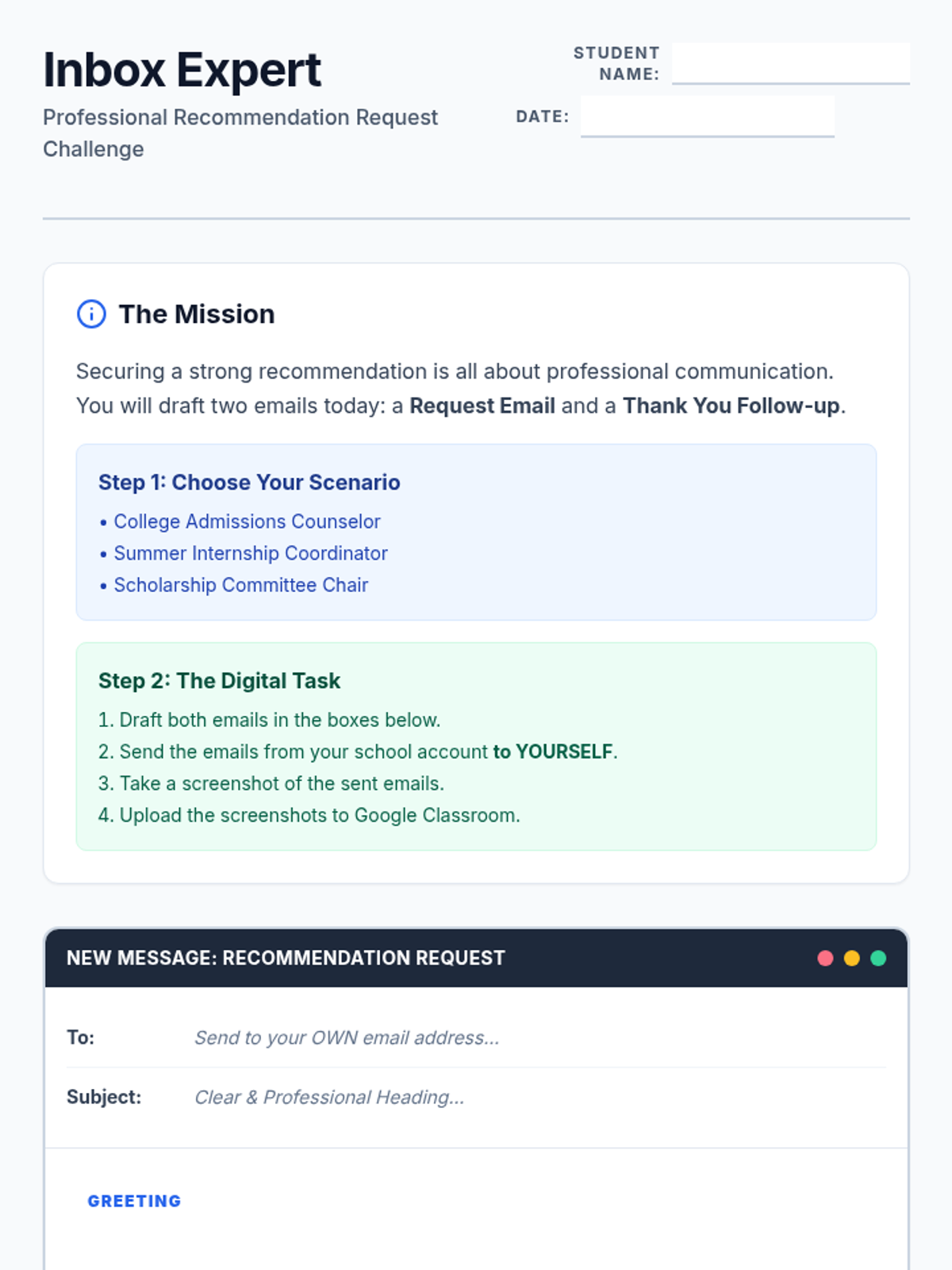
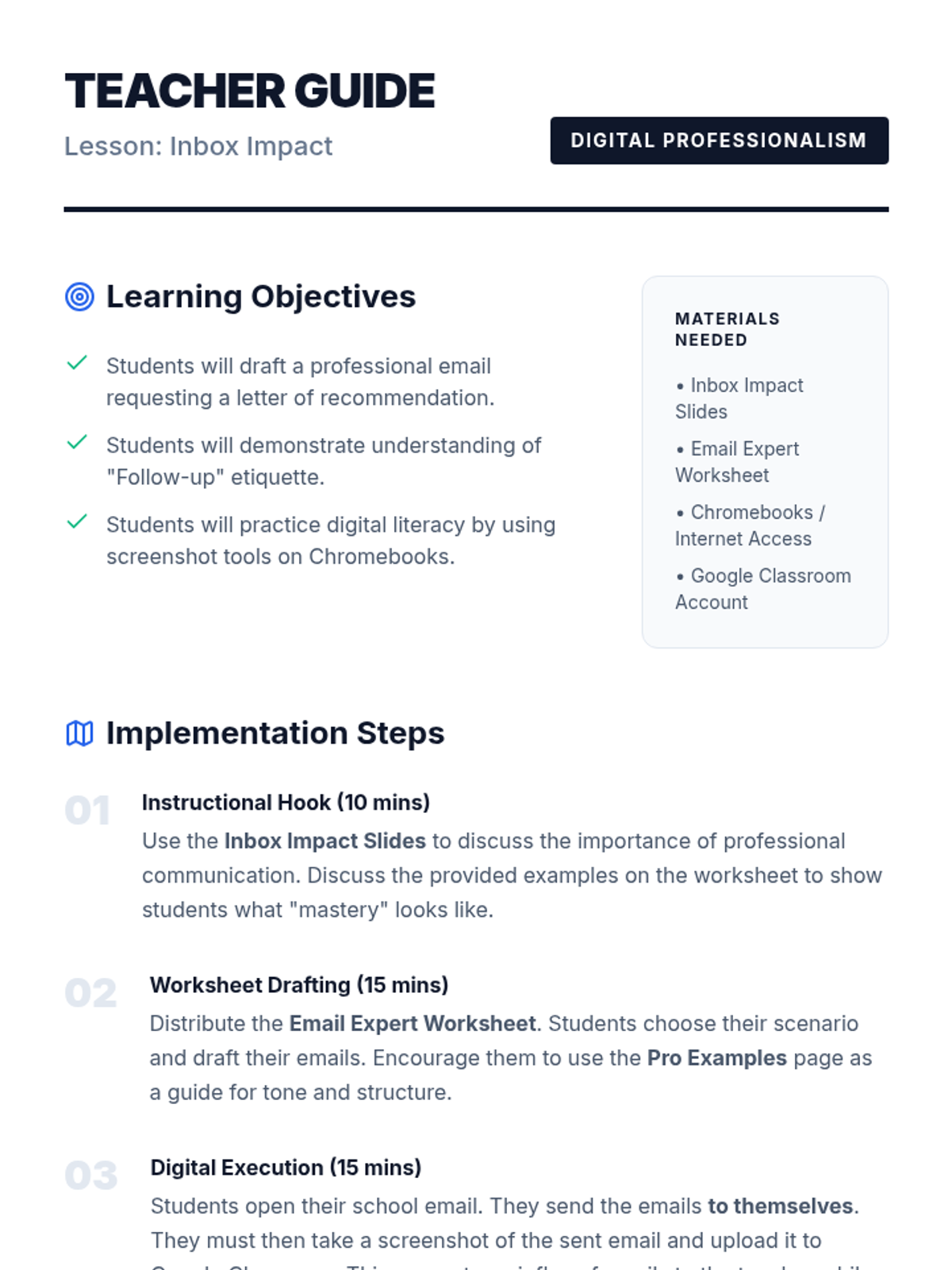
A lesson on drafting and sending professional emails to request letters of recommendation for college, internships, or scholarships. Students learn proper email etiquette, structure, and follow-up procedures.
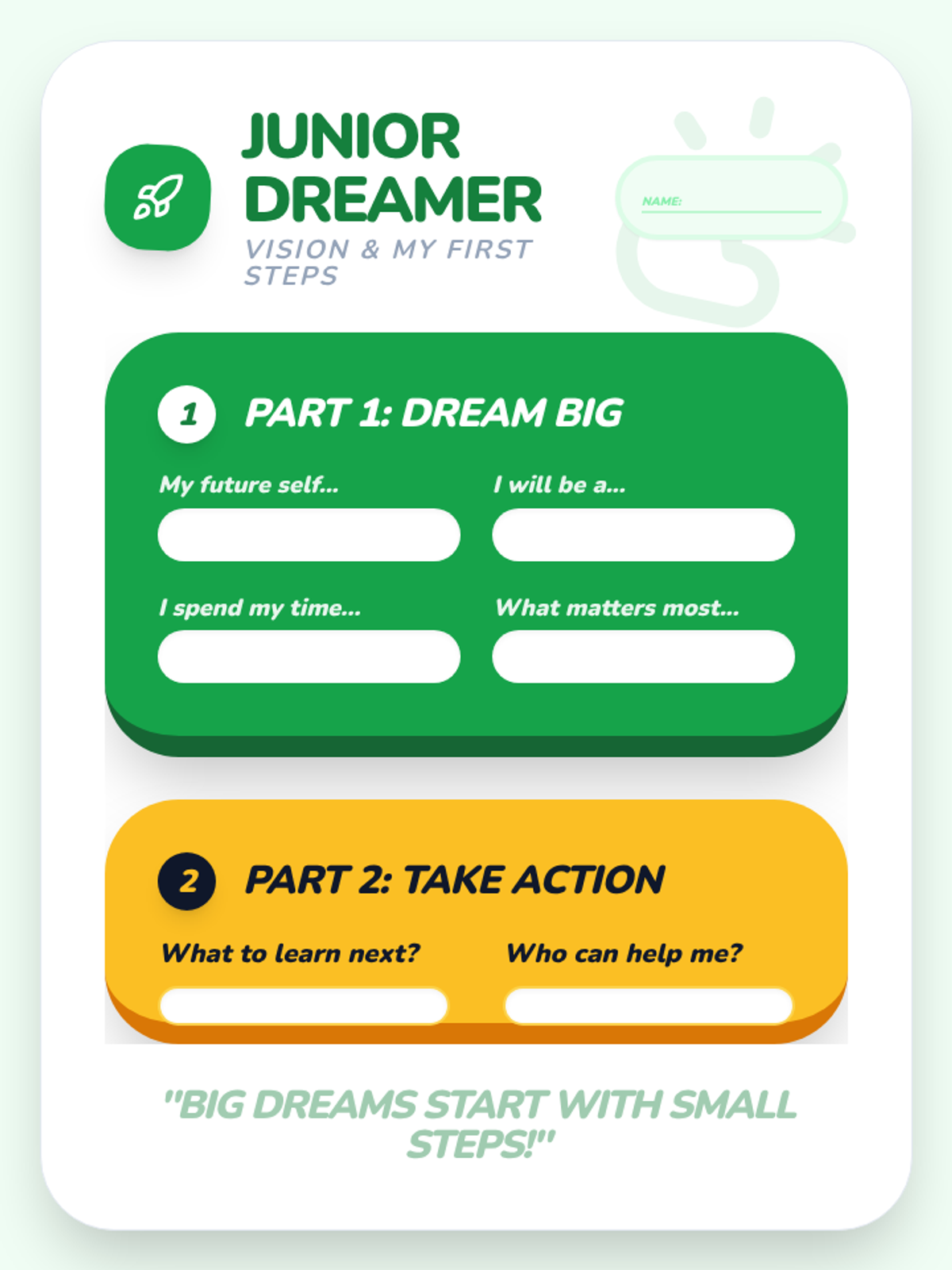
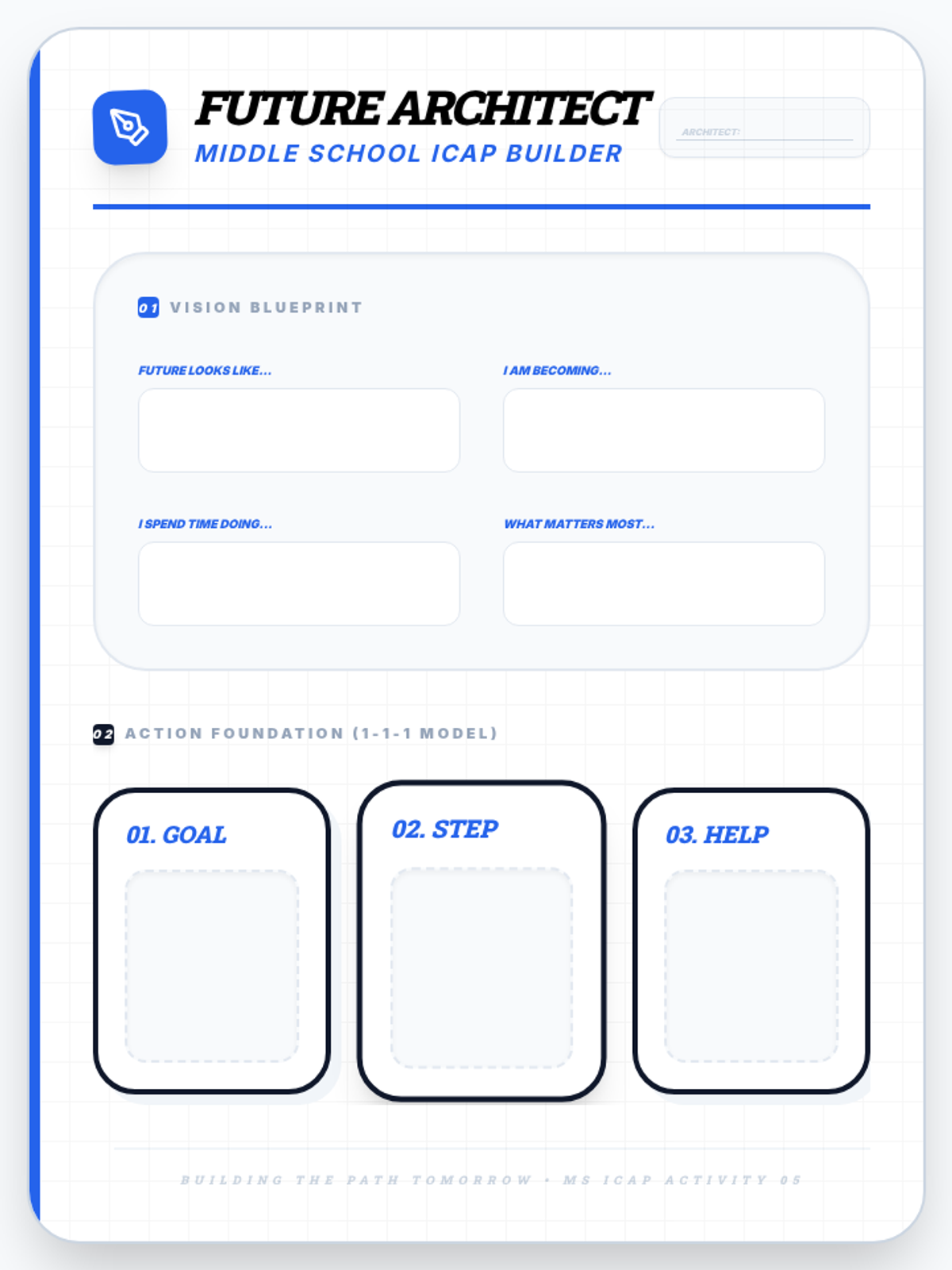
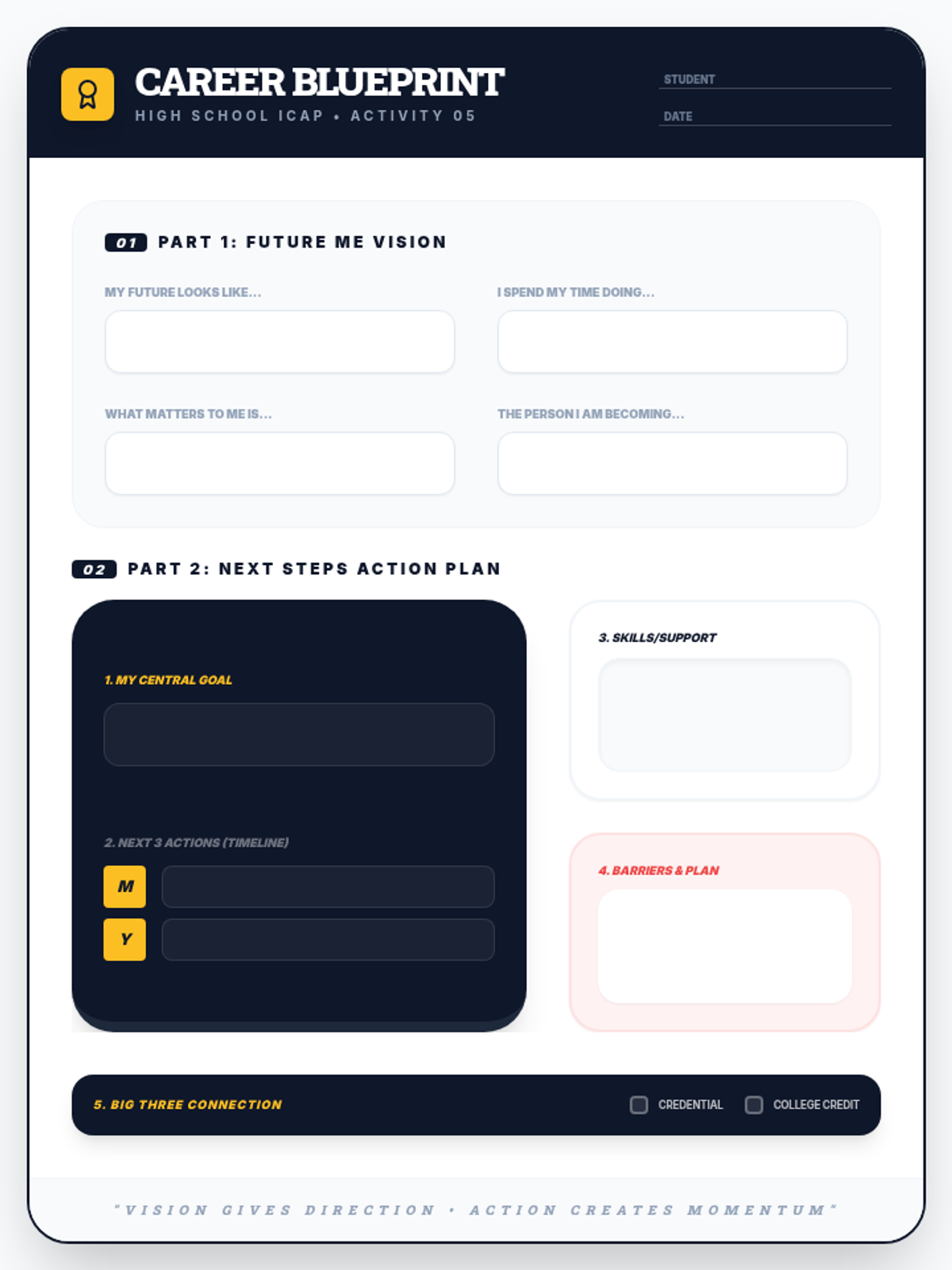
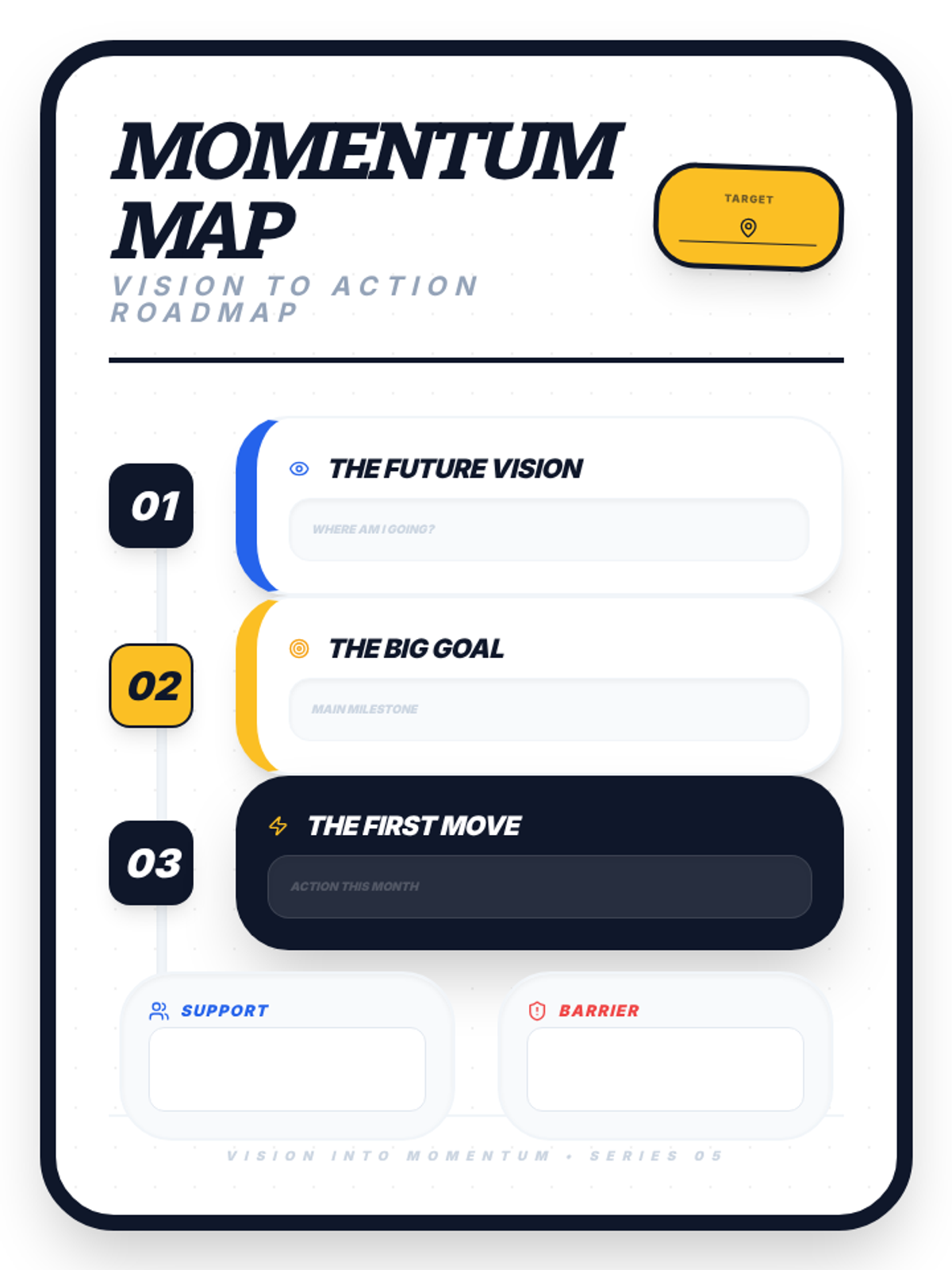
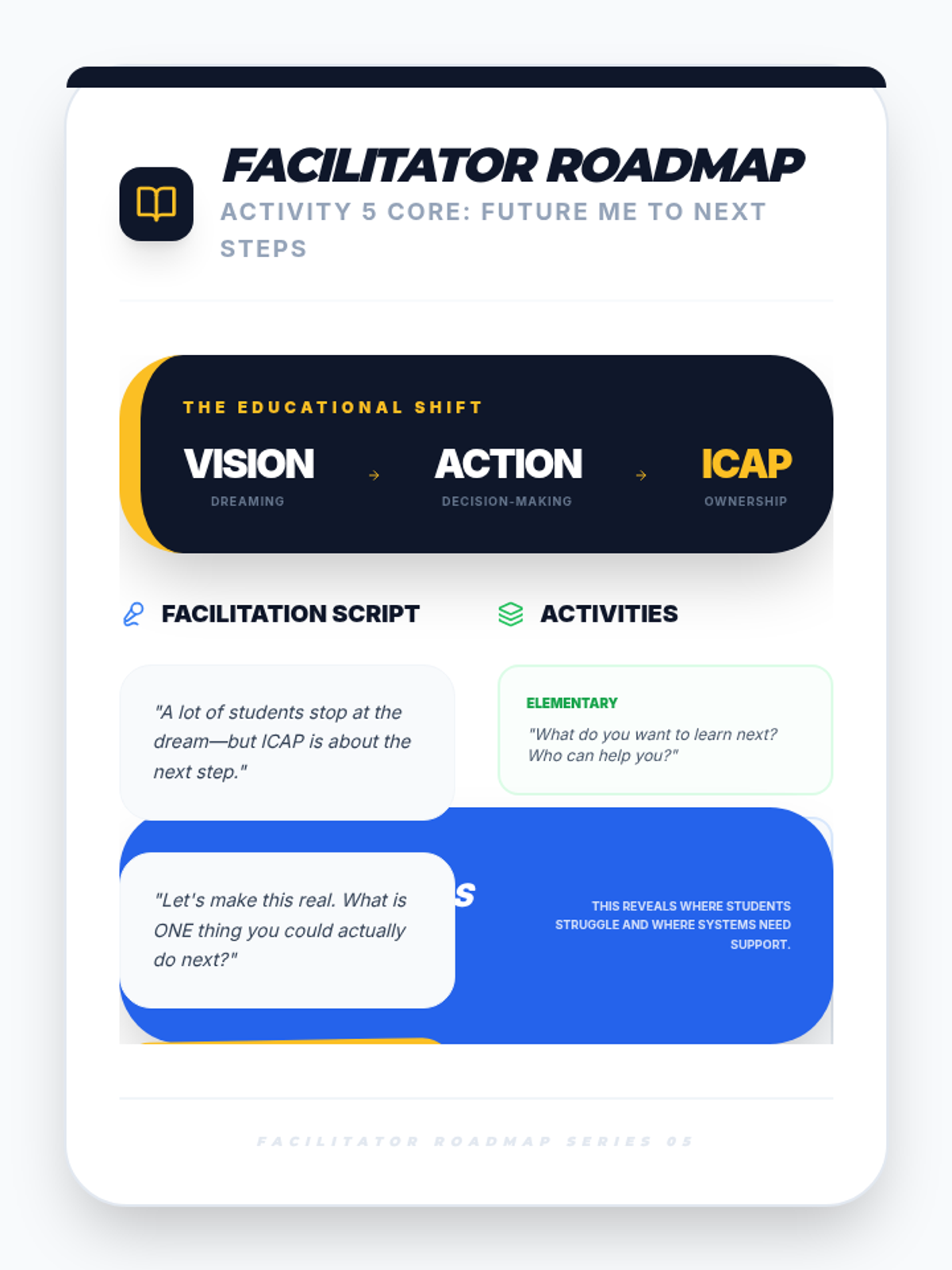
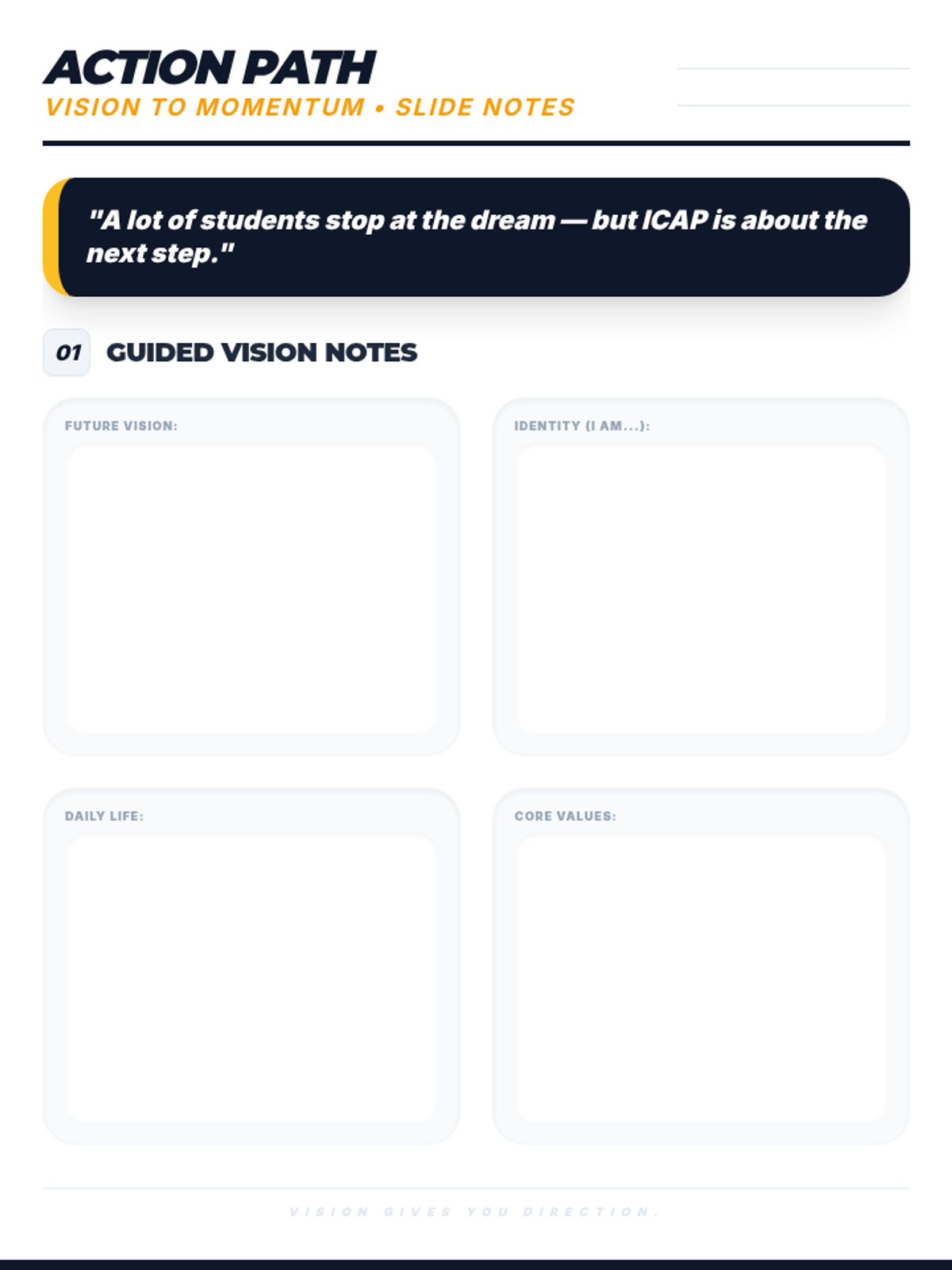
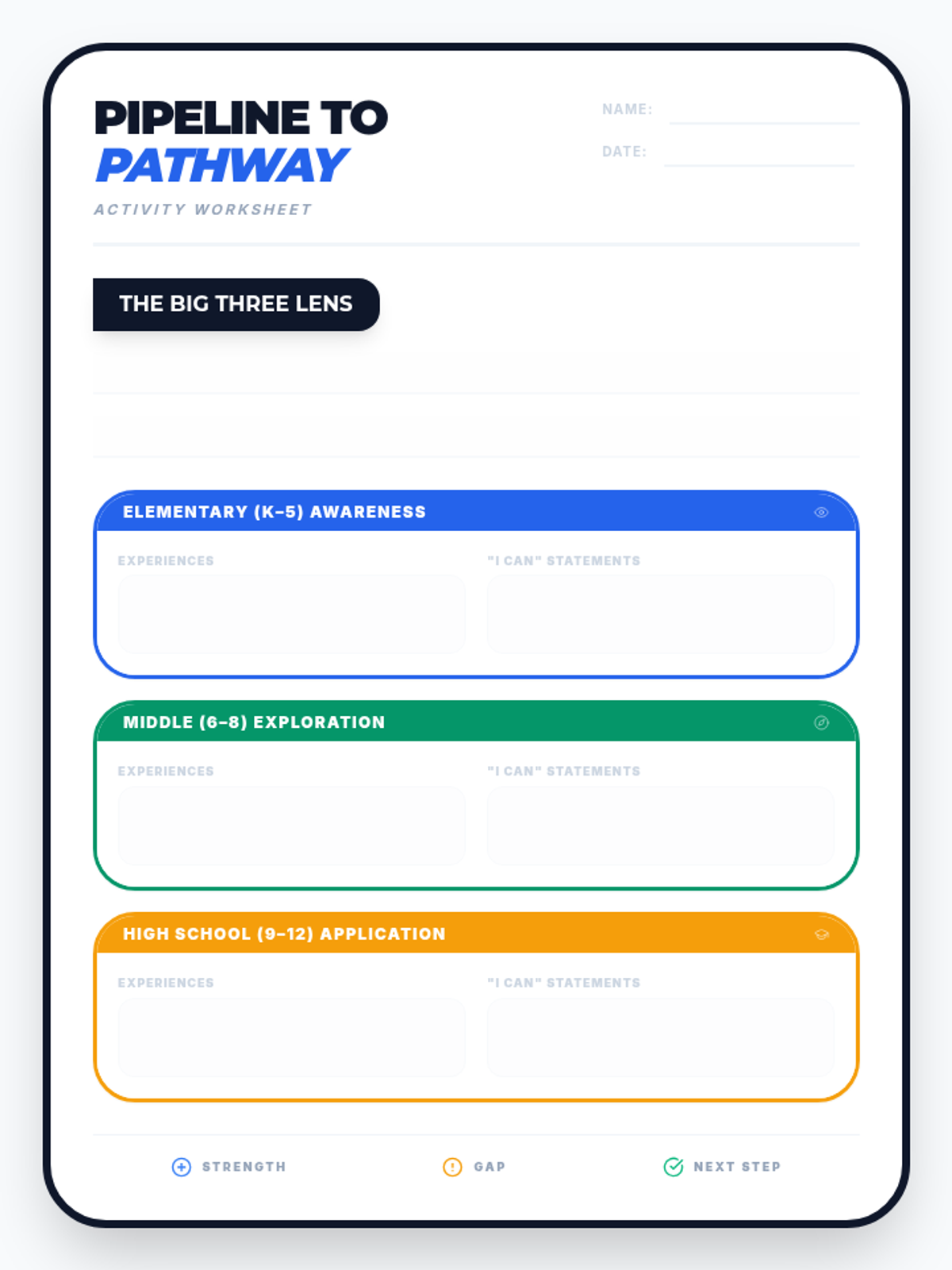
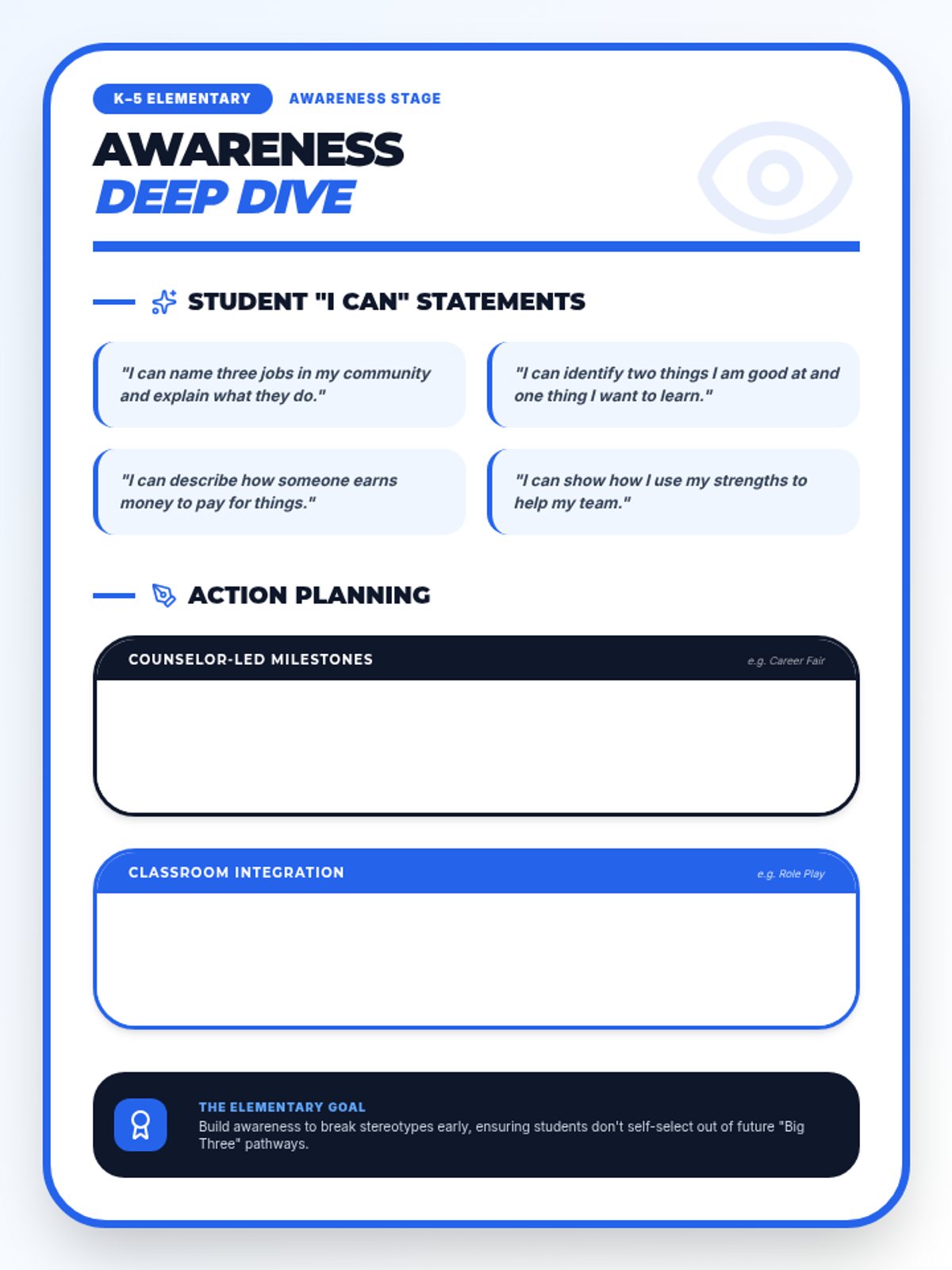
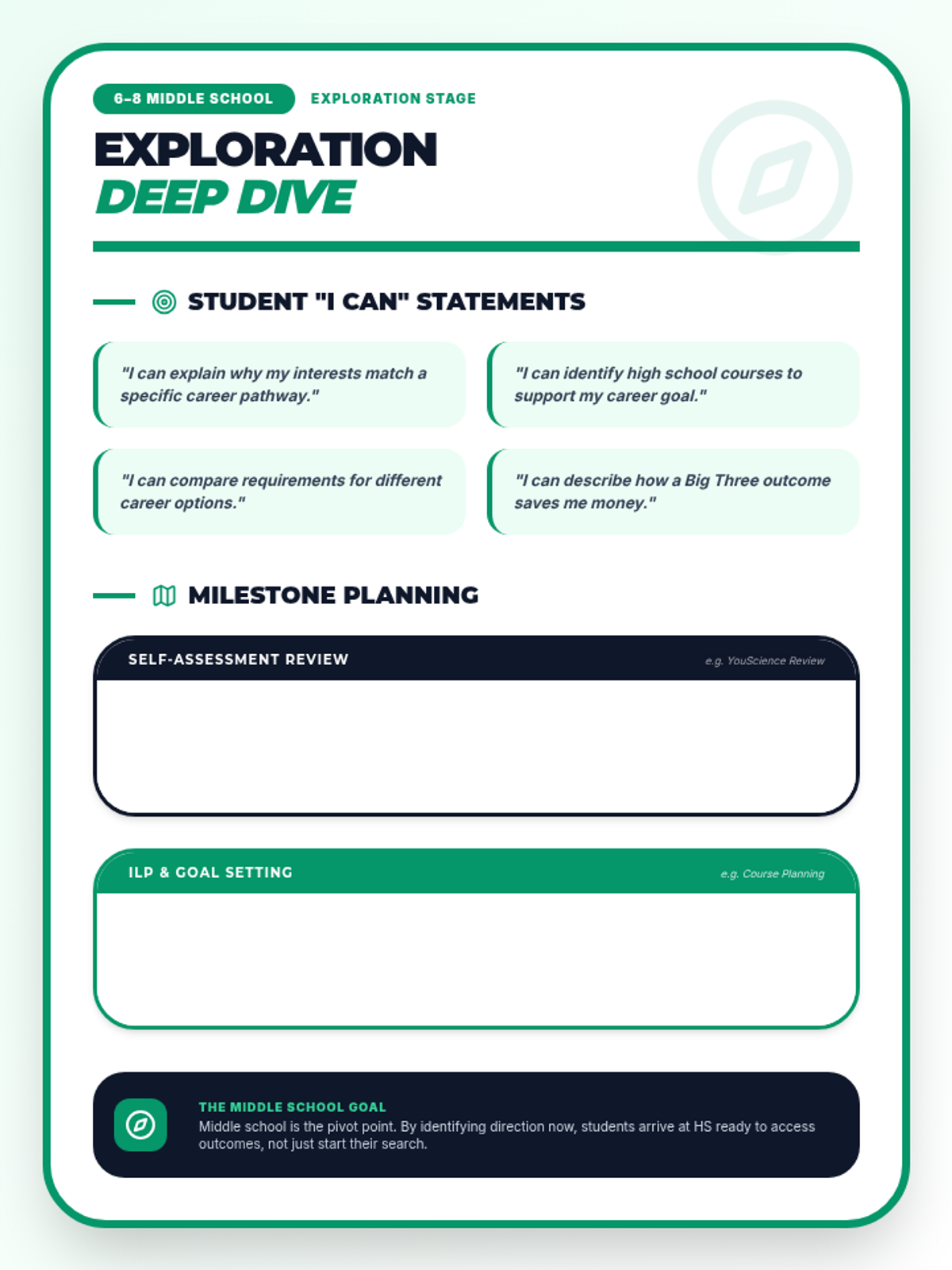
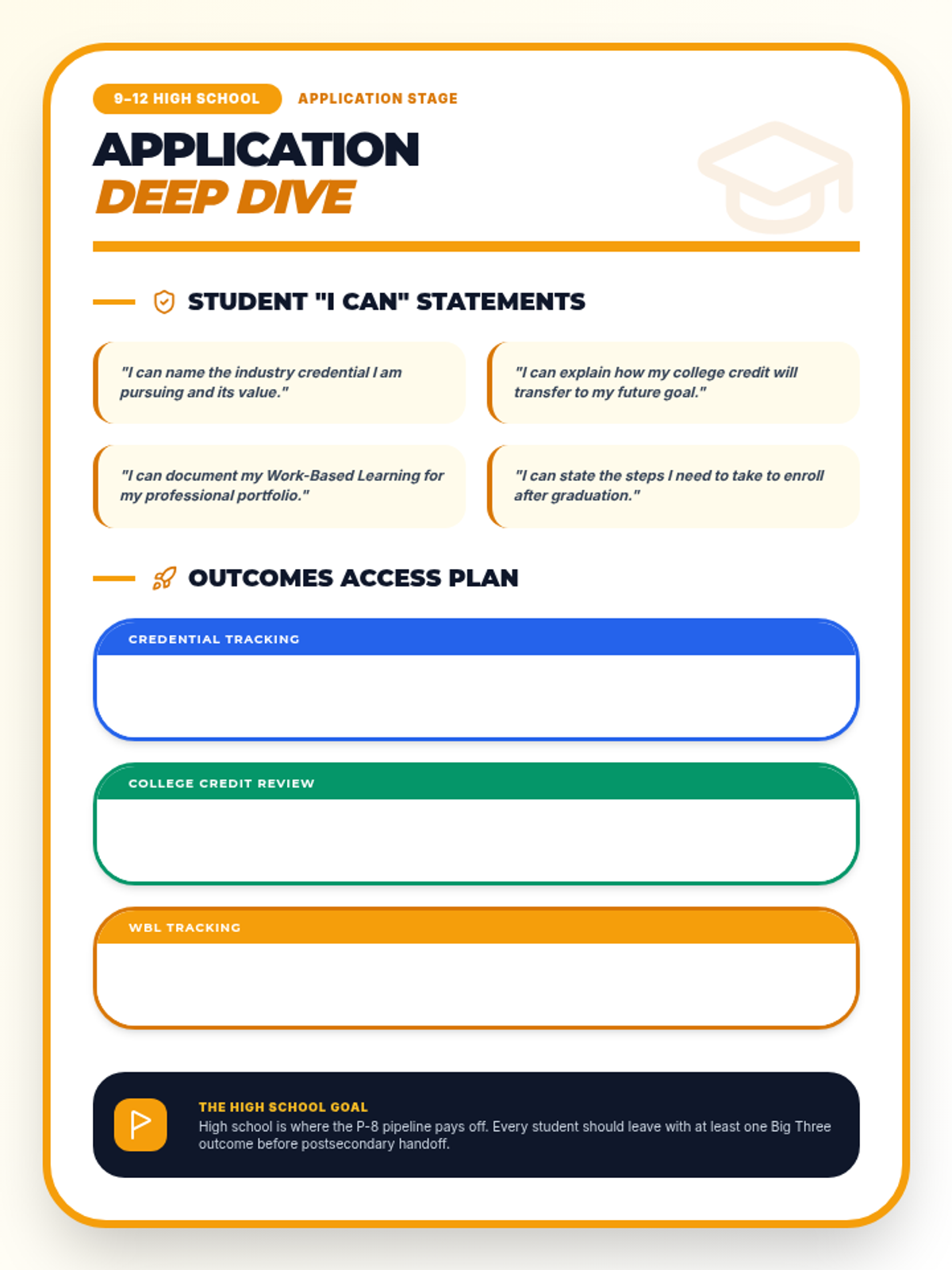
A transition-focused lesson that moves students from personal vision to concrete action steps through the ICAP framework, tailored for Elementary, Middle, and High School levels.
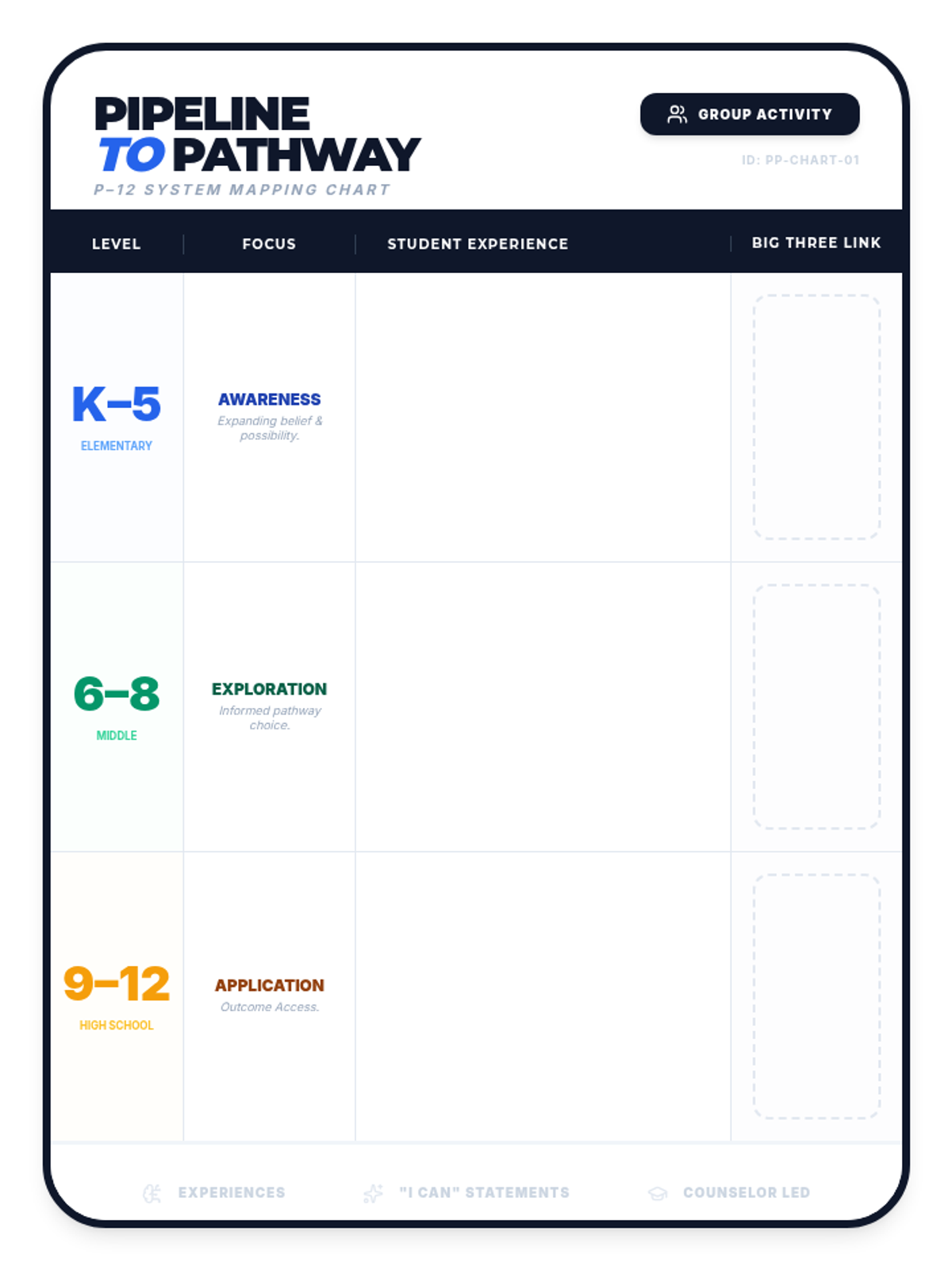
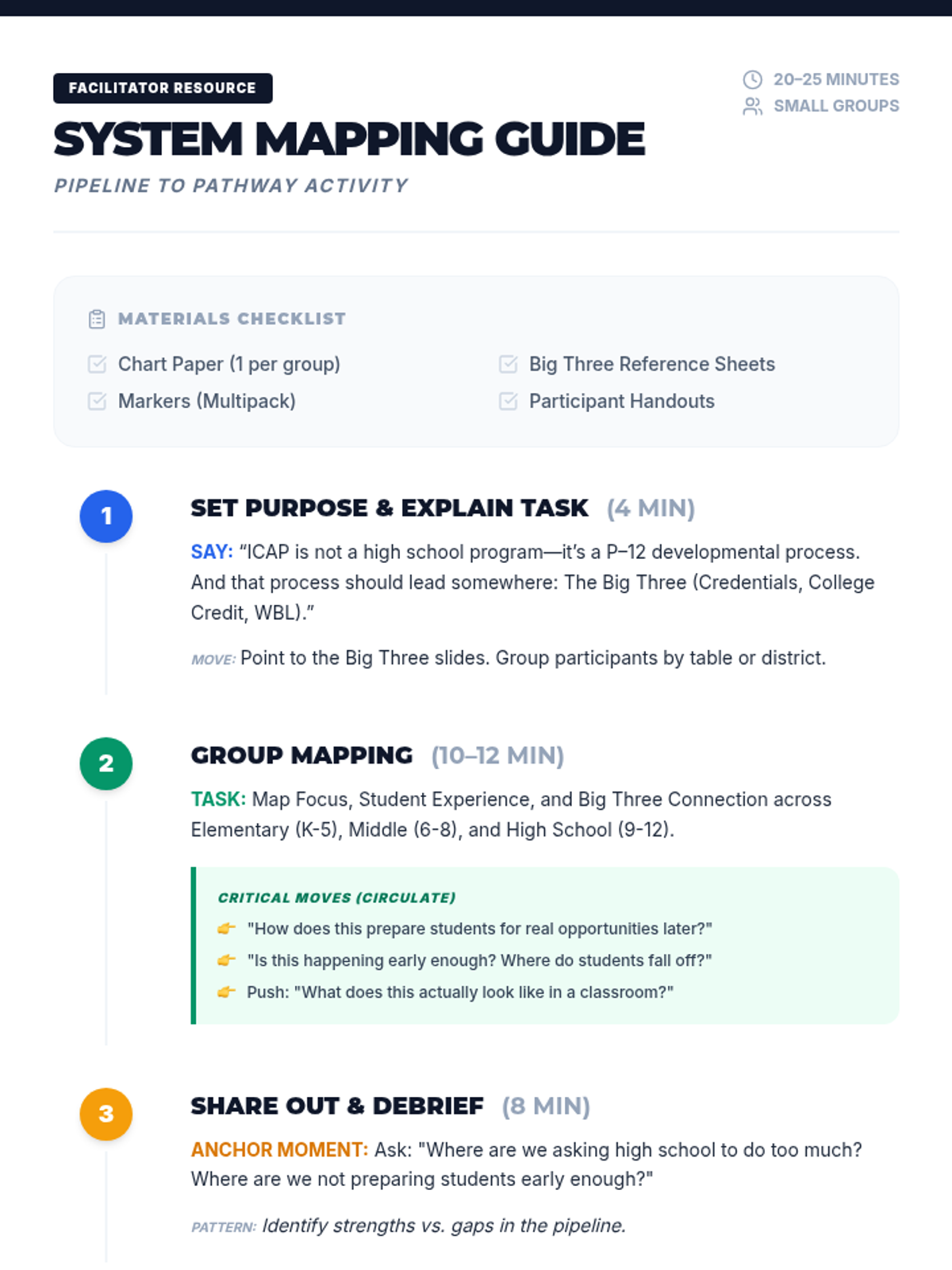
A collaborative workshop session where educators map out the developmental stages of a student's journey from elementary awareness to high school application and outcome access.
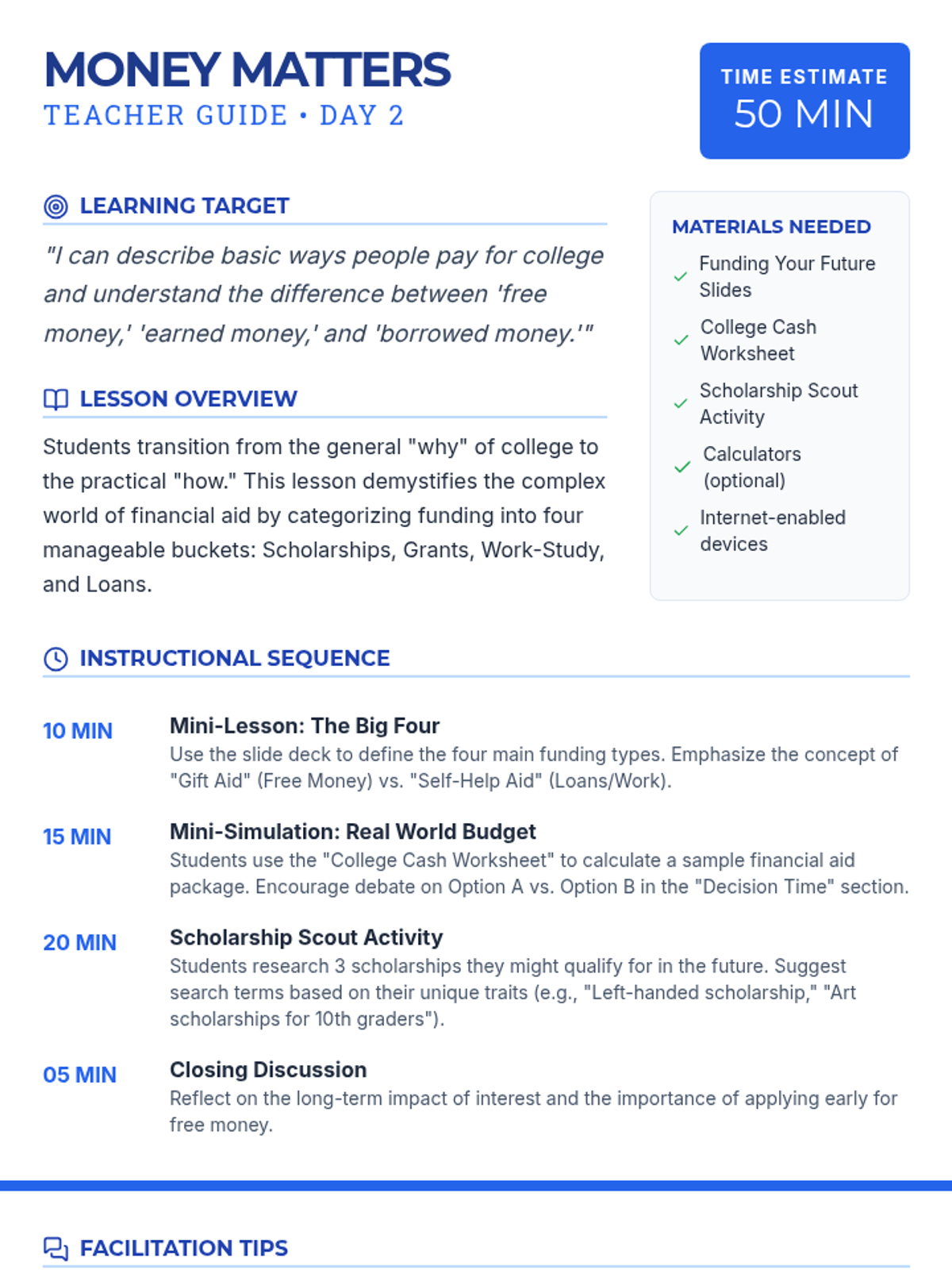
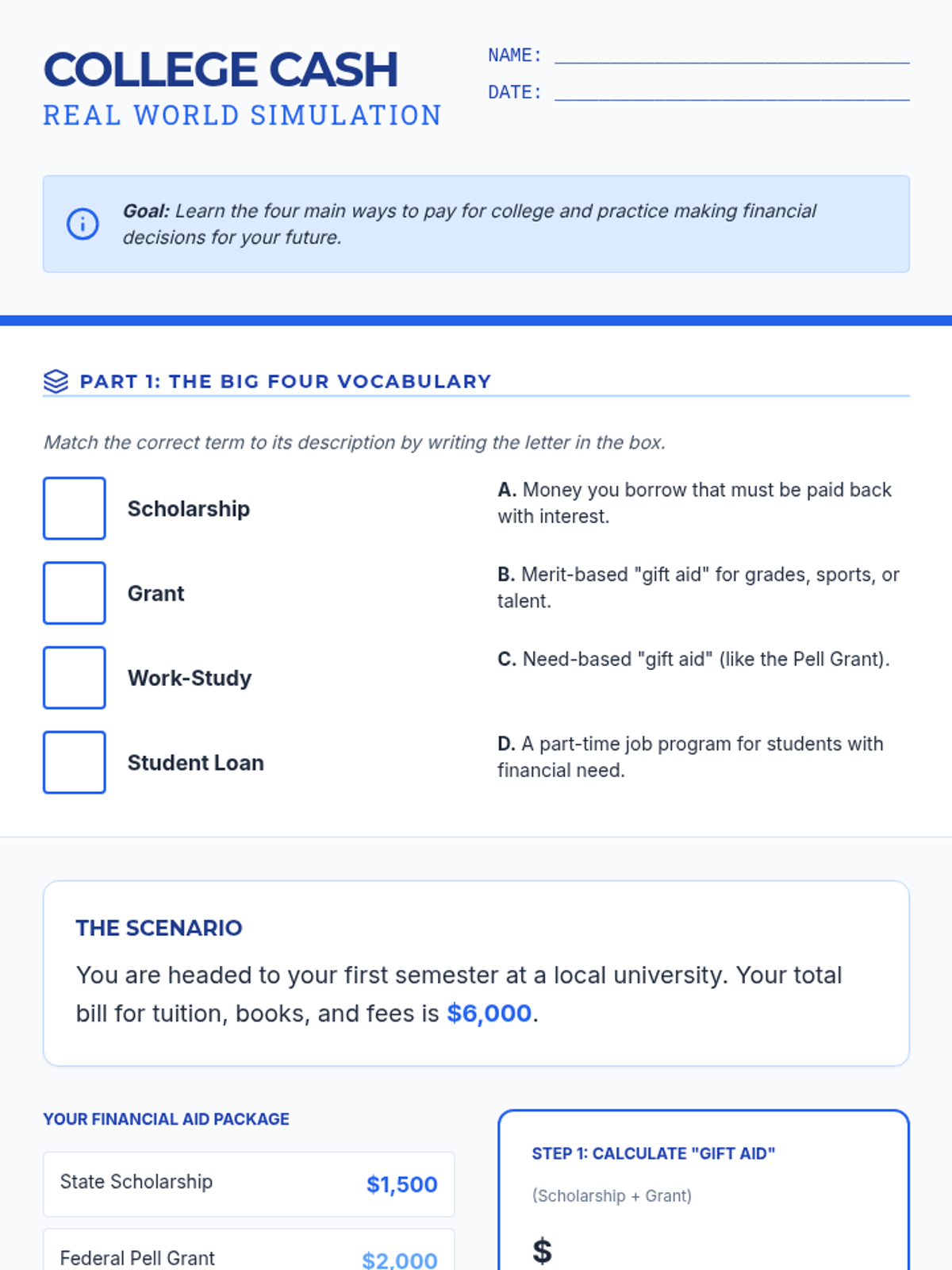
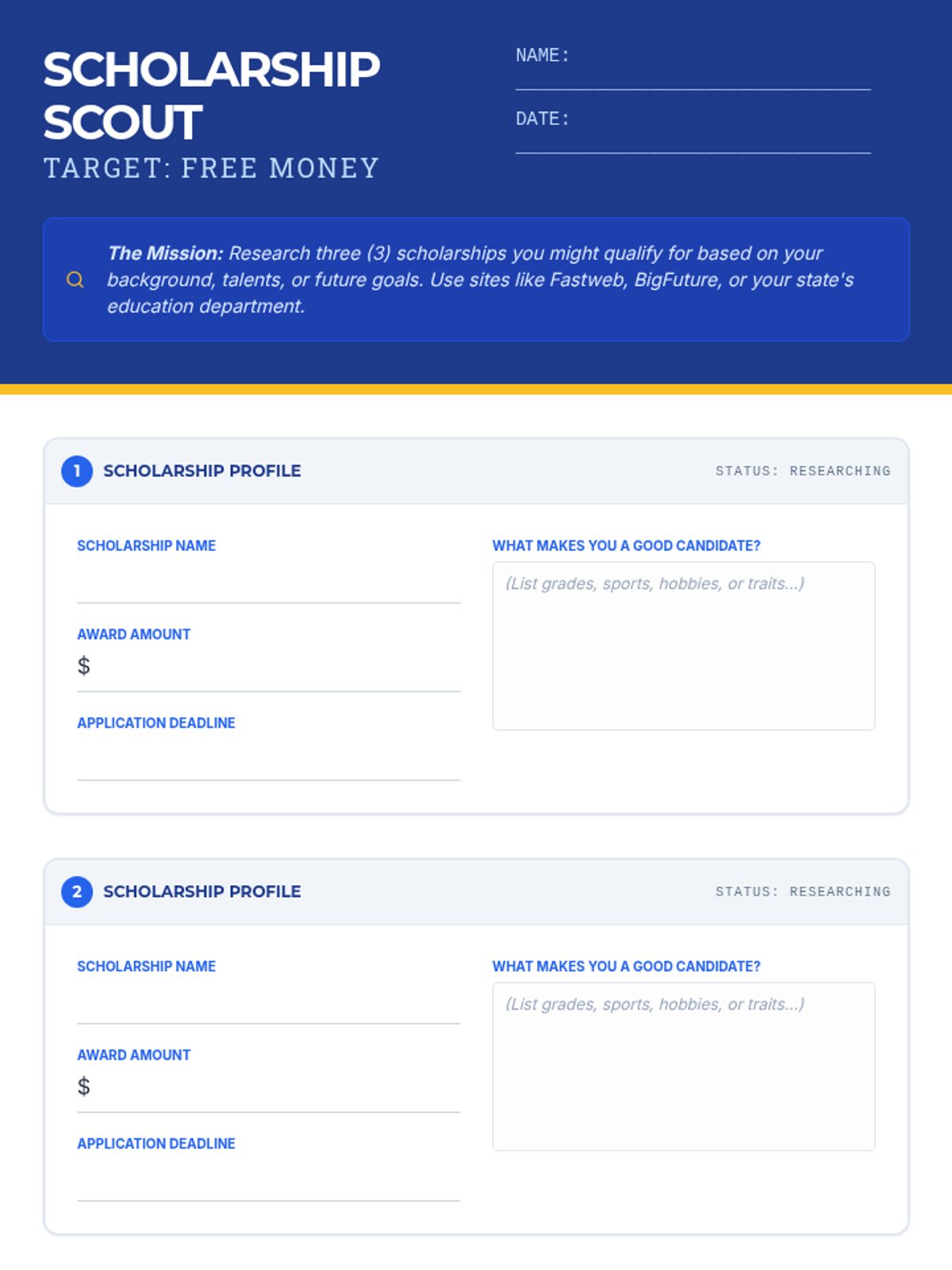
A lesson covering the four main ways to pay for college: scholarships, grants, work-study, and loans, featuring a budget simulation and a scholarship research activity.
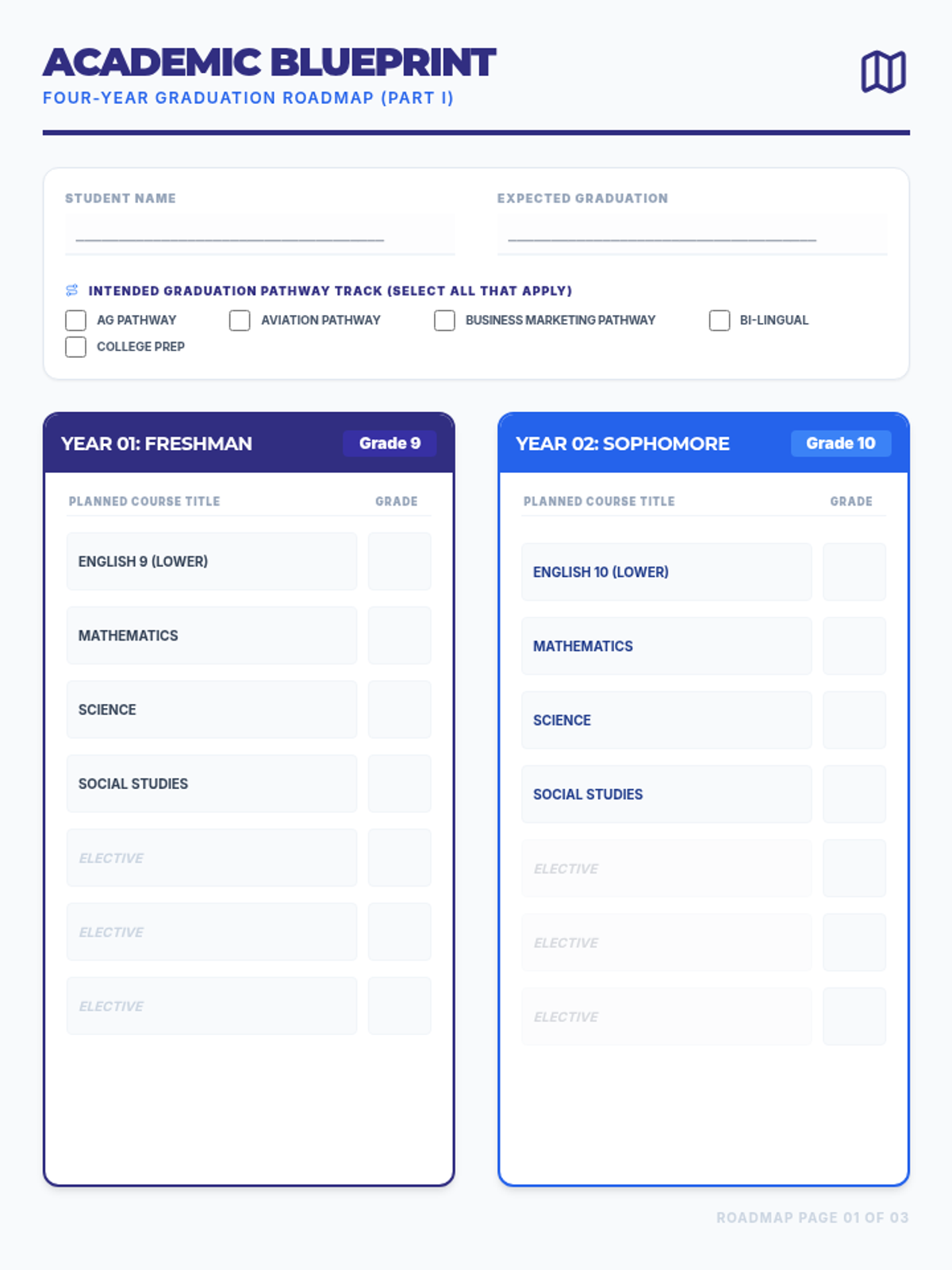
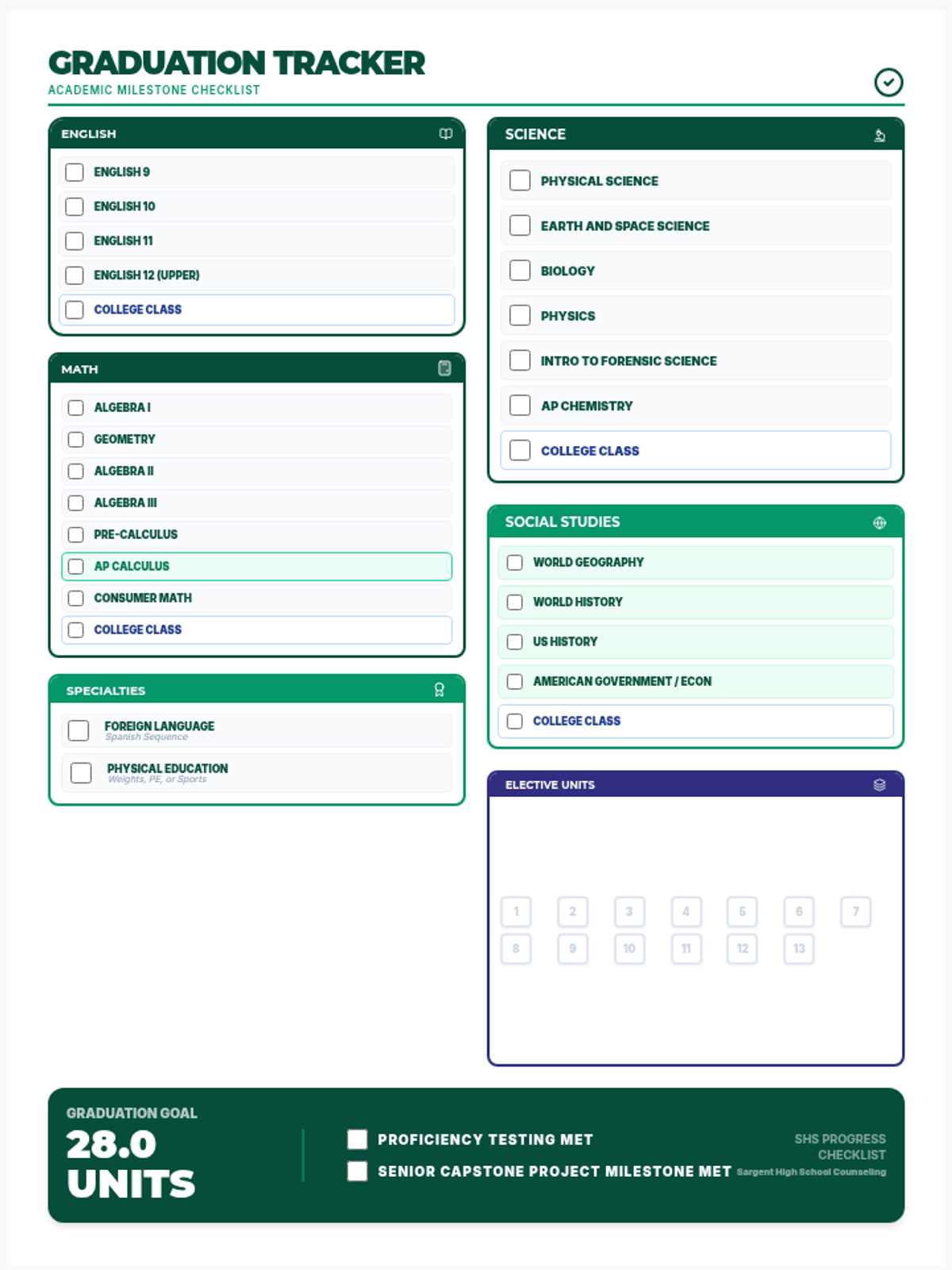
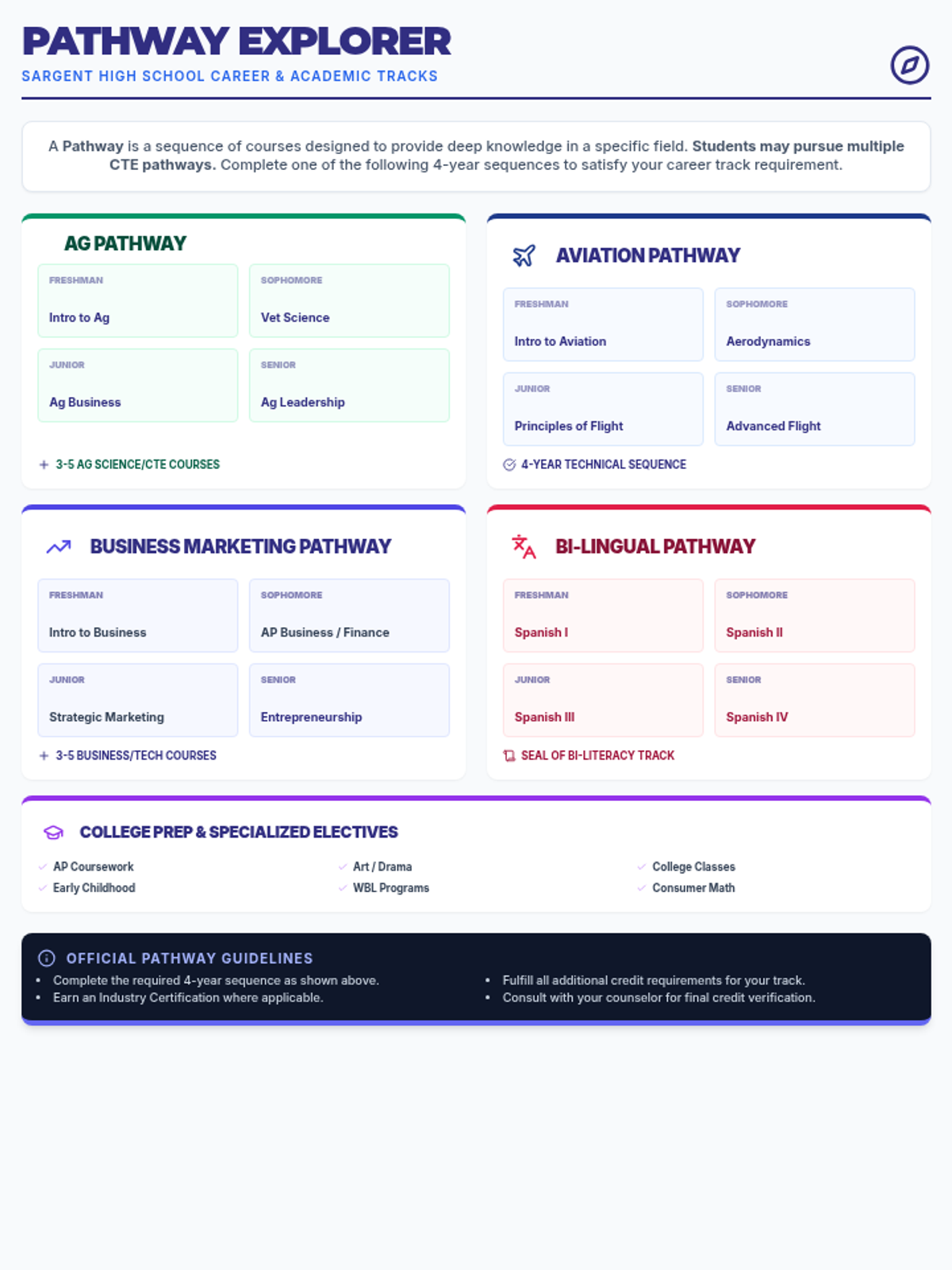
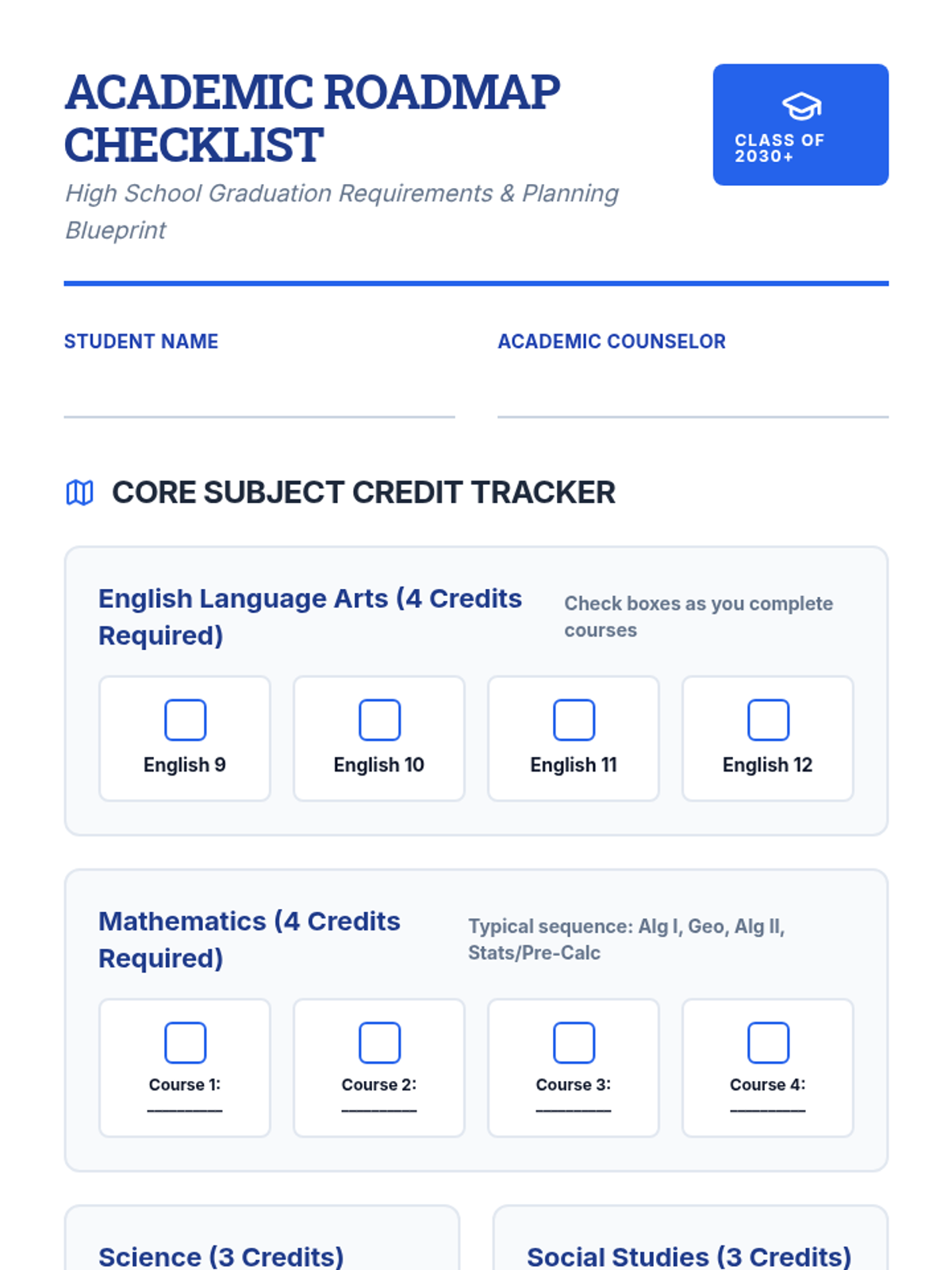
A comprehensive suite of academic planning tools designed for high school students to map out their graduation requirements and future career paths with their school counselor.
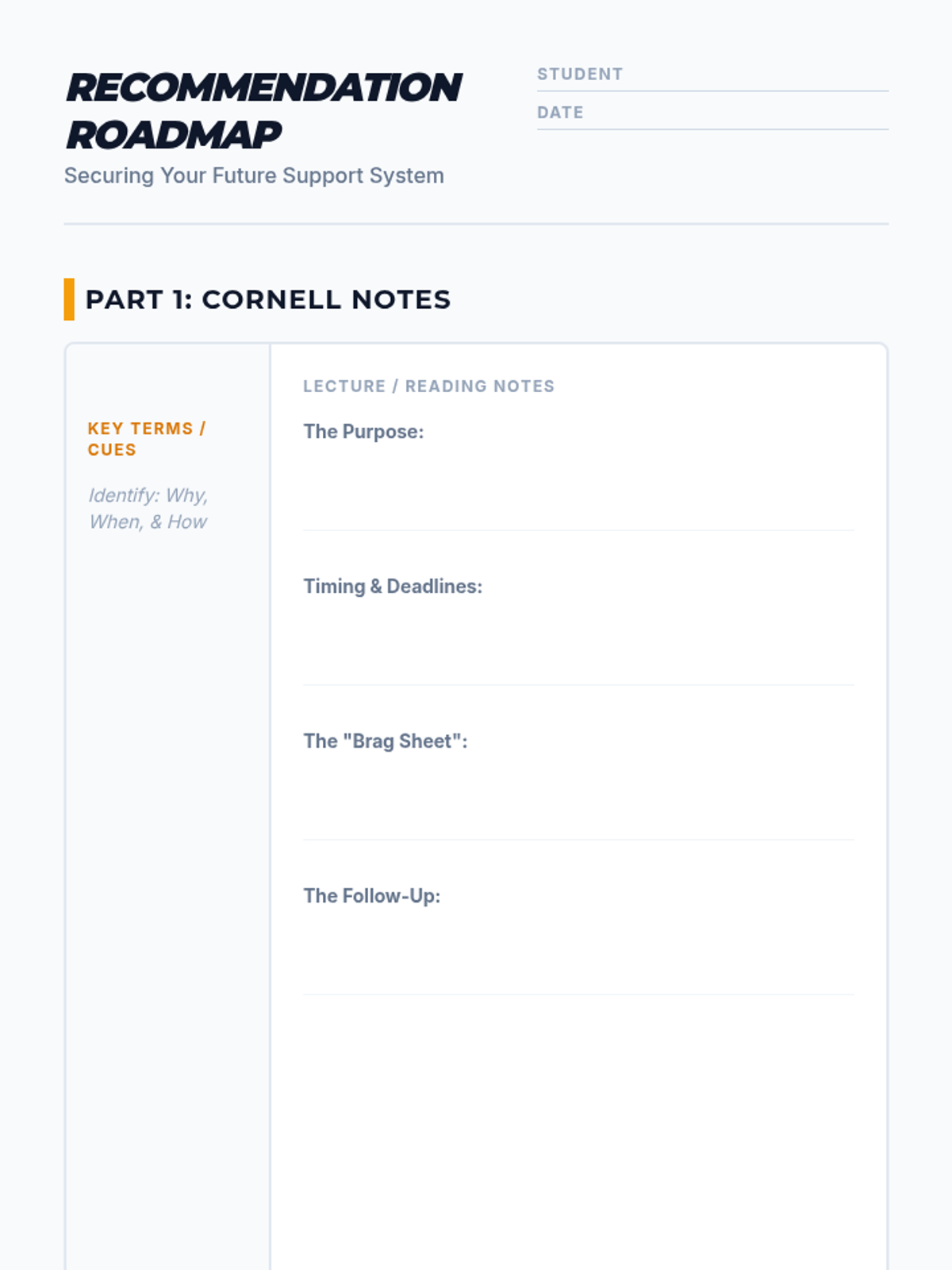
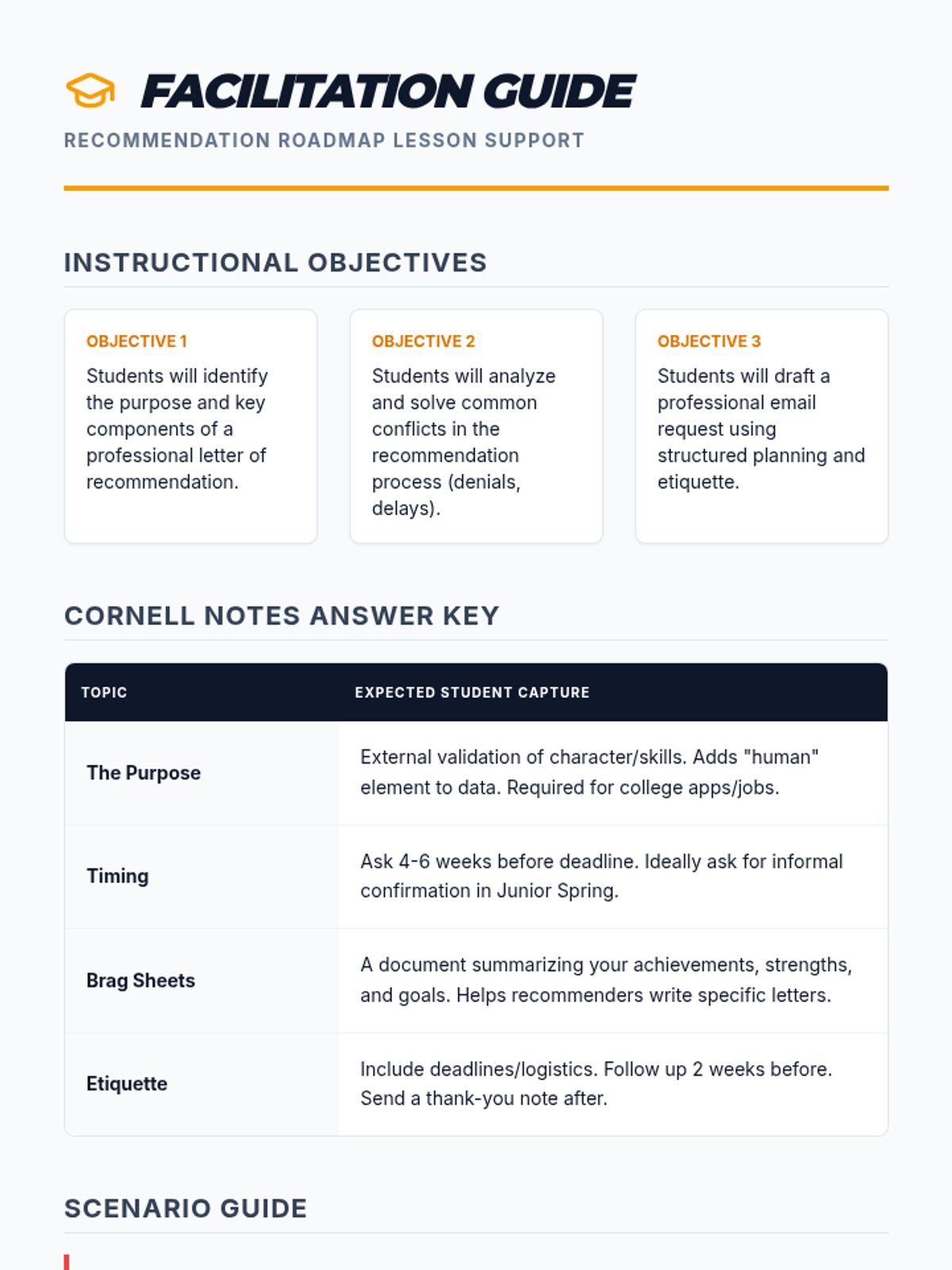
A comprehensive lesson teaching students how to strategically plan, request, and manage letters of recommendation for college and career applications.
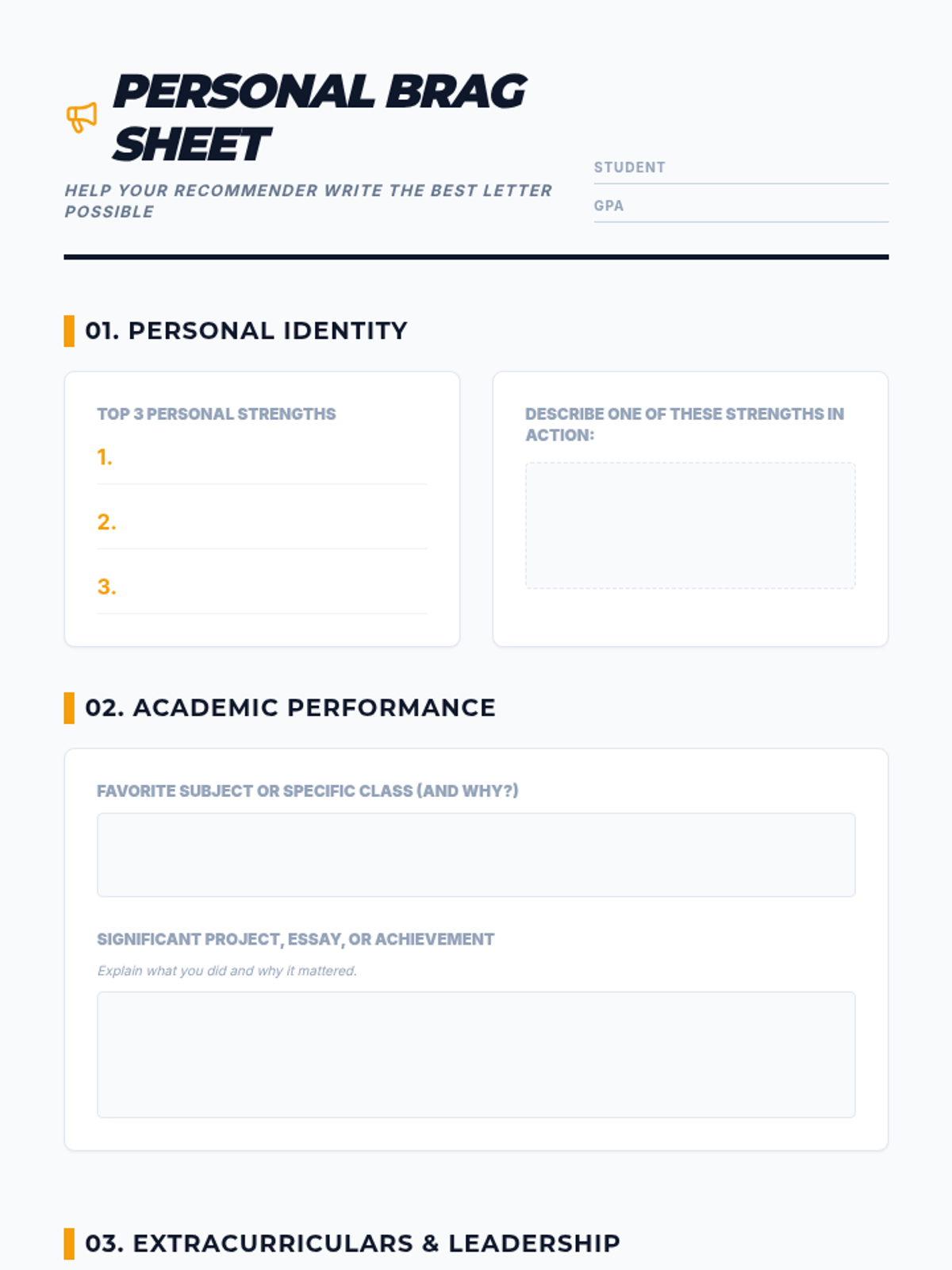
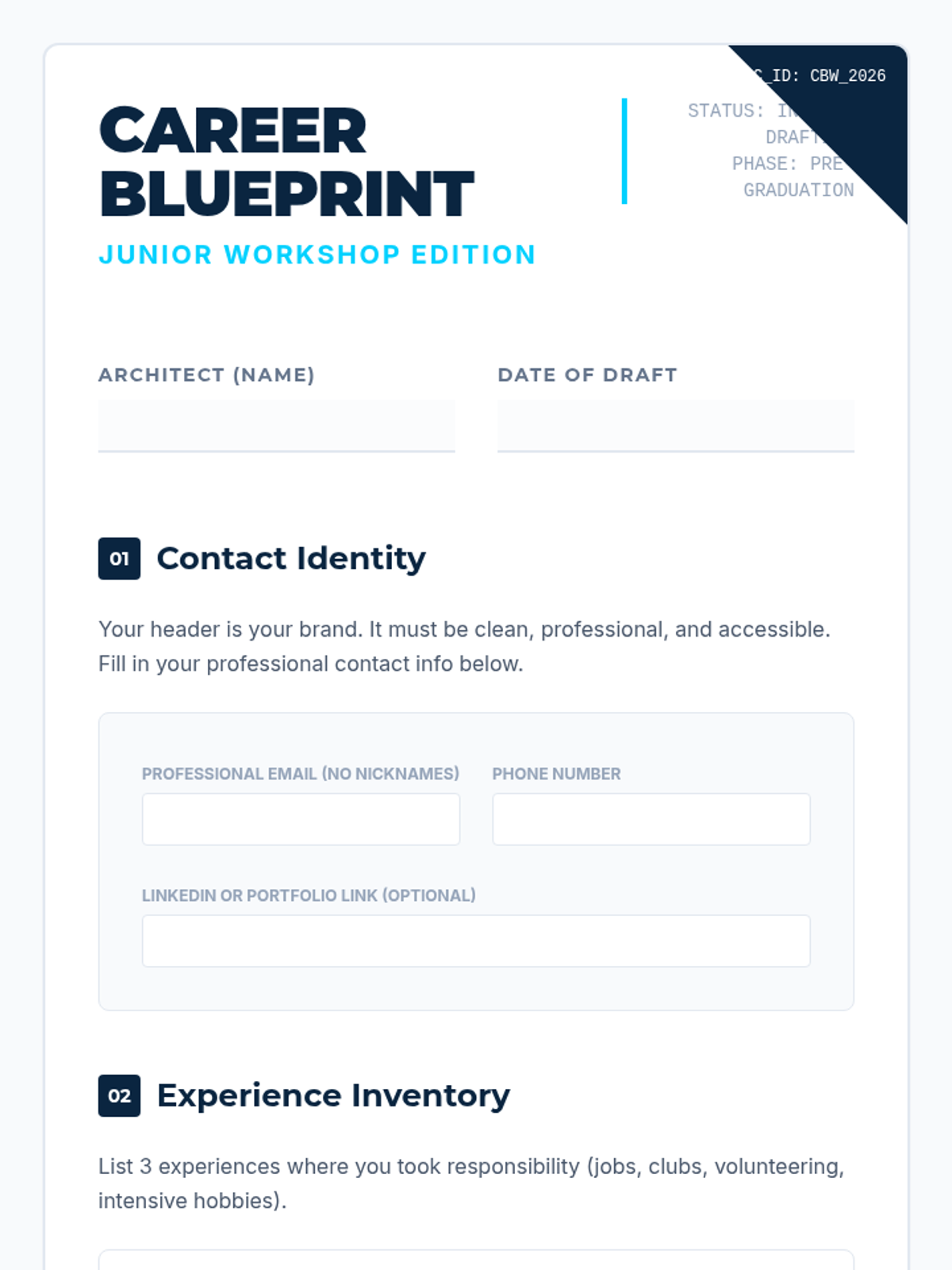
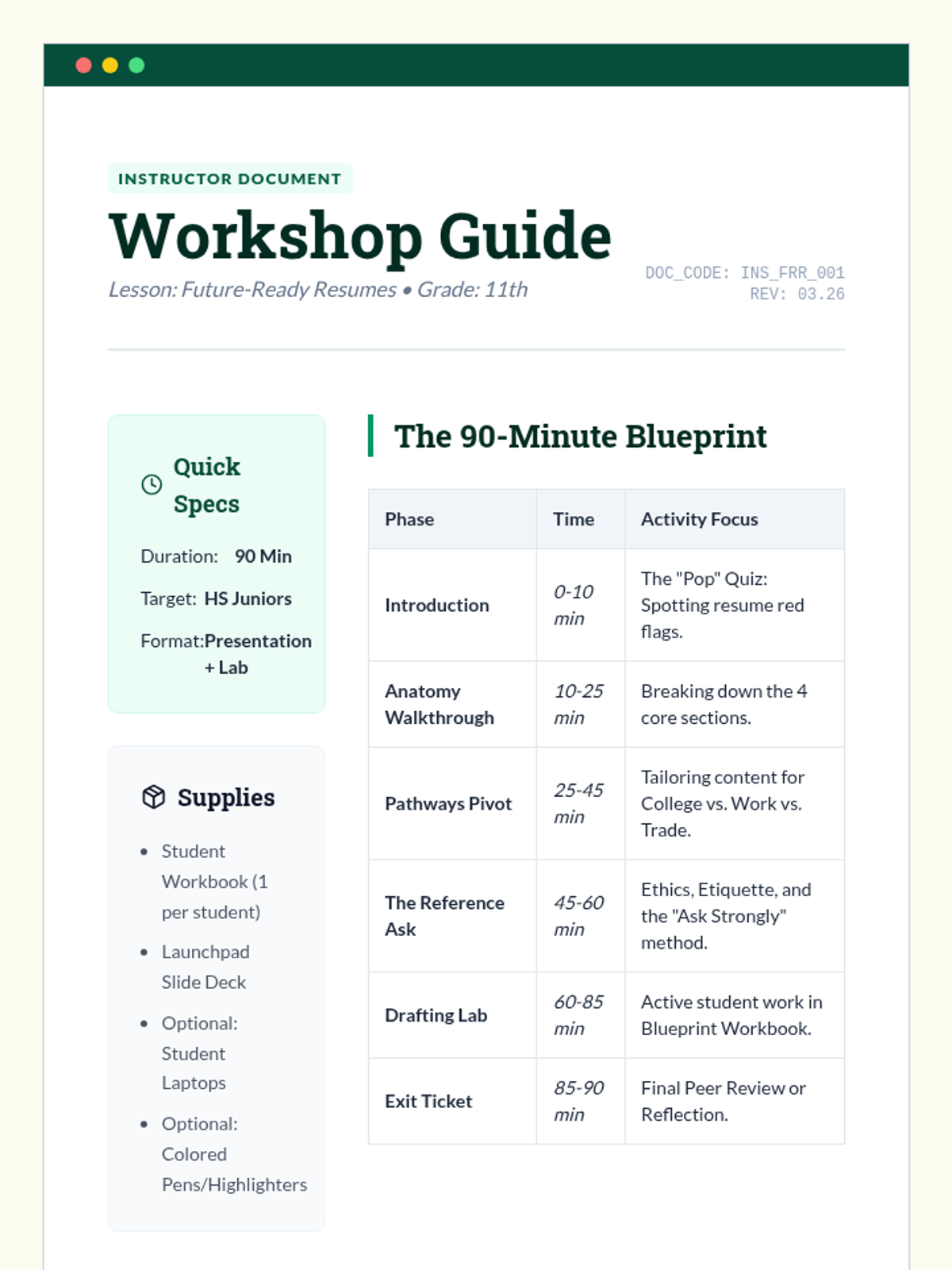
A 90-minute workshop designed for high school juniors to master the art of resume building for college, work, and vocational paths, while learning the professional etiquette of securing strong reference letters.
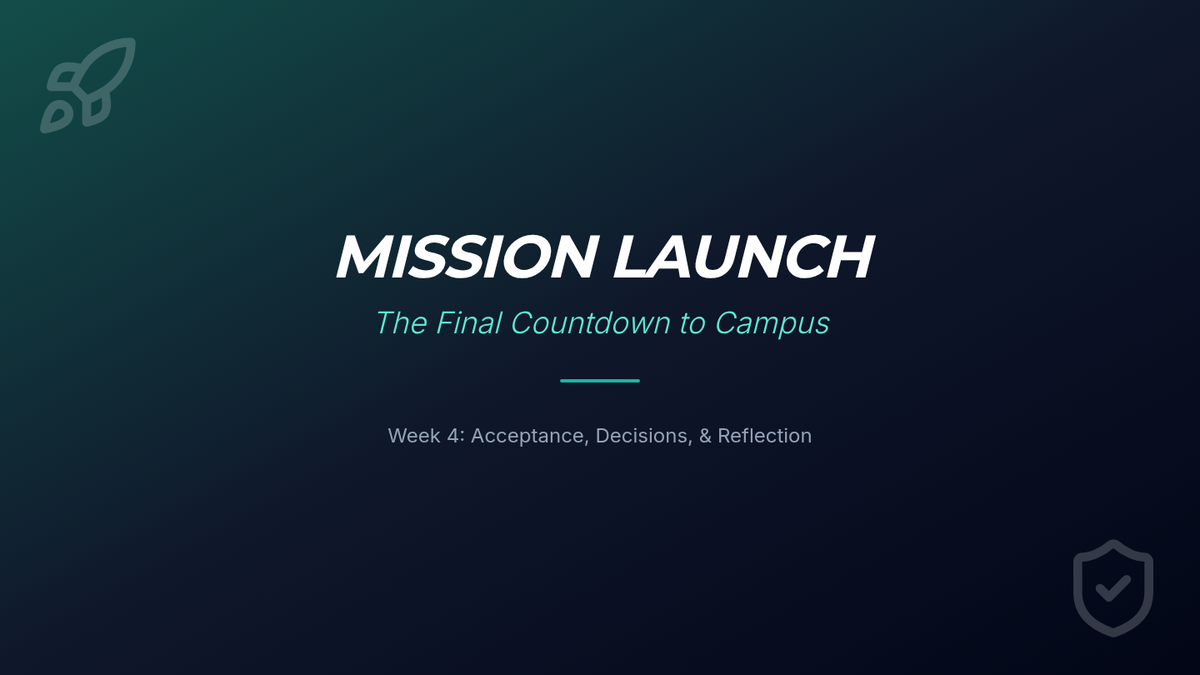
Outlines the steps to take after receiving acceptance letters, including deposits, orientation, and housing, concluding with a reflection journal.
Guides students through the application timeline, components of a college application, and the admissions review process.
Focuses on financial literacy, including FAFSA/ORSAA, scholarship hunting, and decoding financial aid award letters.
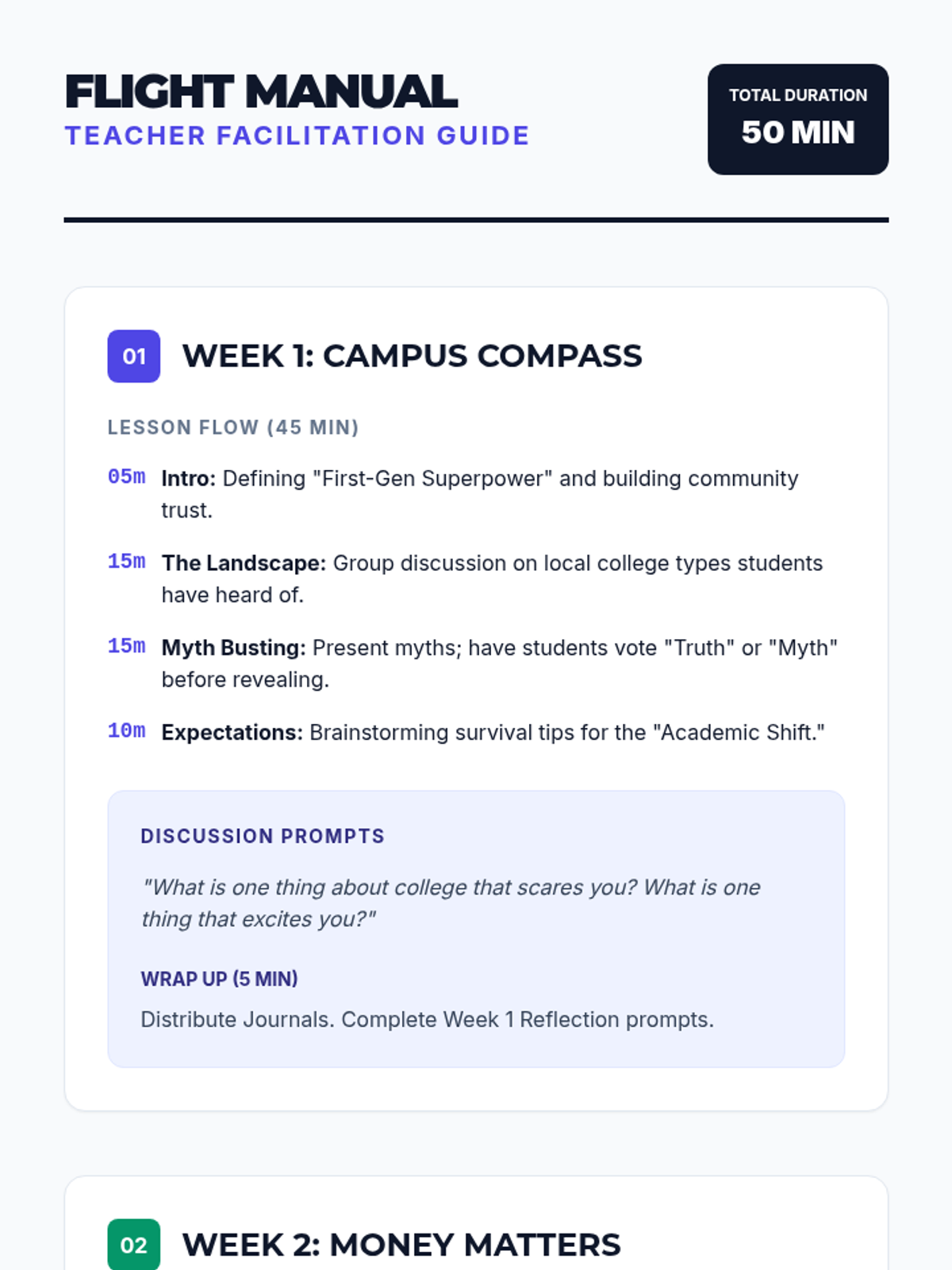
Covers the different types of colleges (2-year vs. 4-year, public vs. private), debunks common academic myths, and sets expectations for the college experience.
Master the transition from student to professional. This lesson covers workplace etiquette and the application process through engaging puzzles and reflective self-assessments.
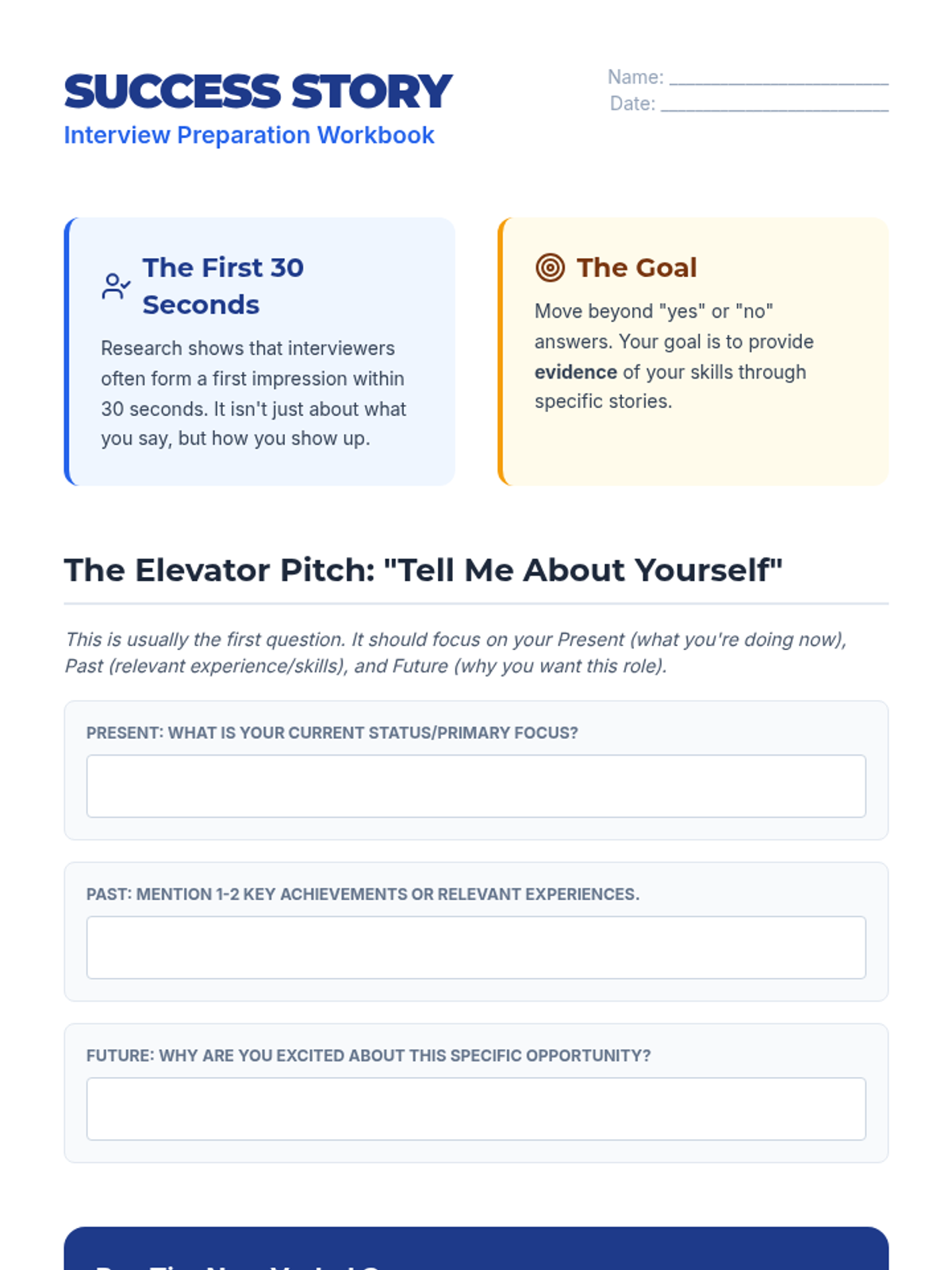
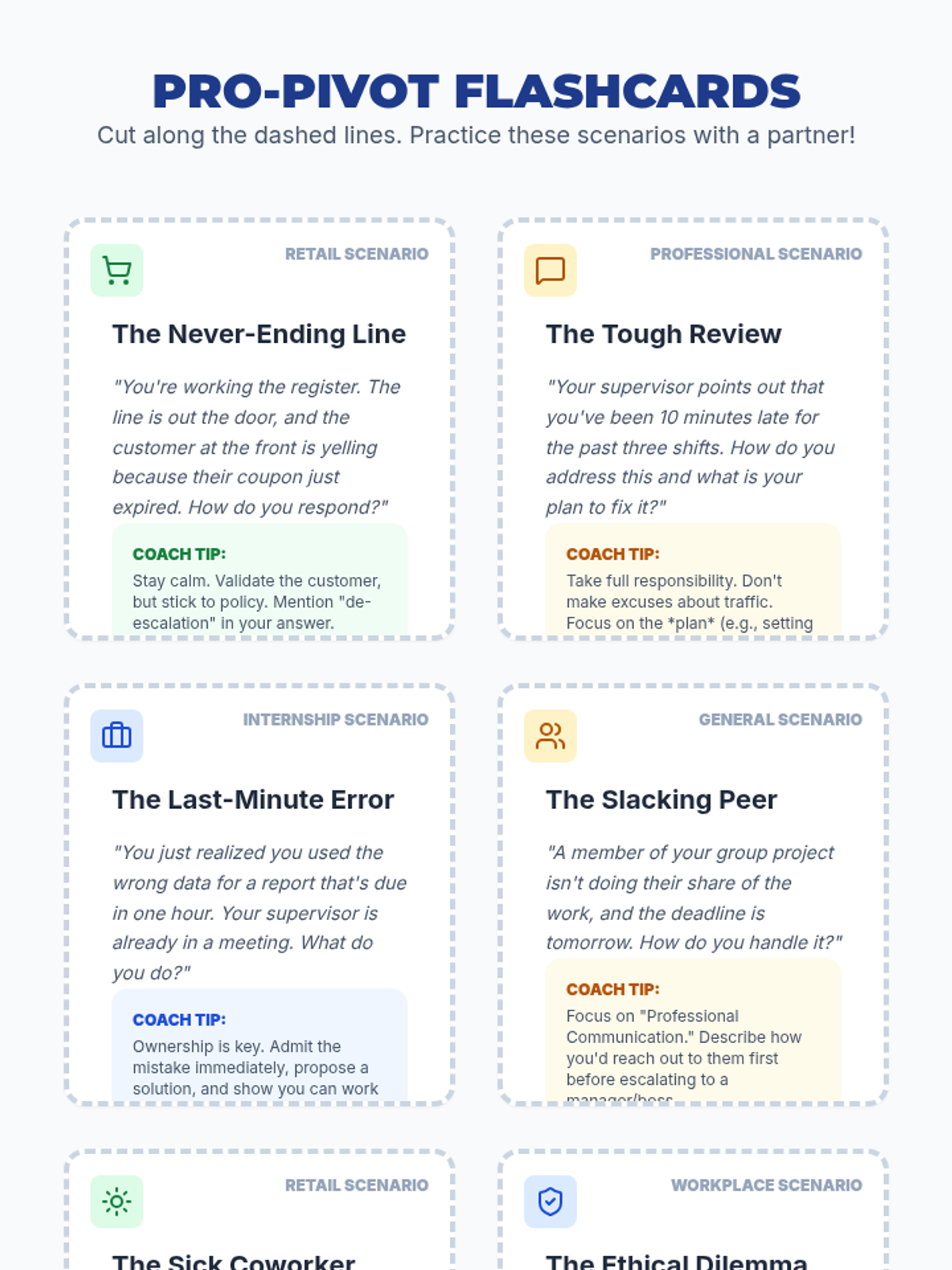
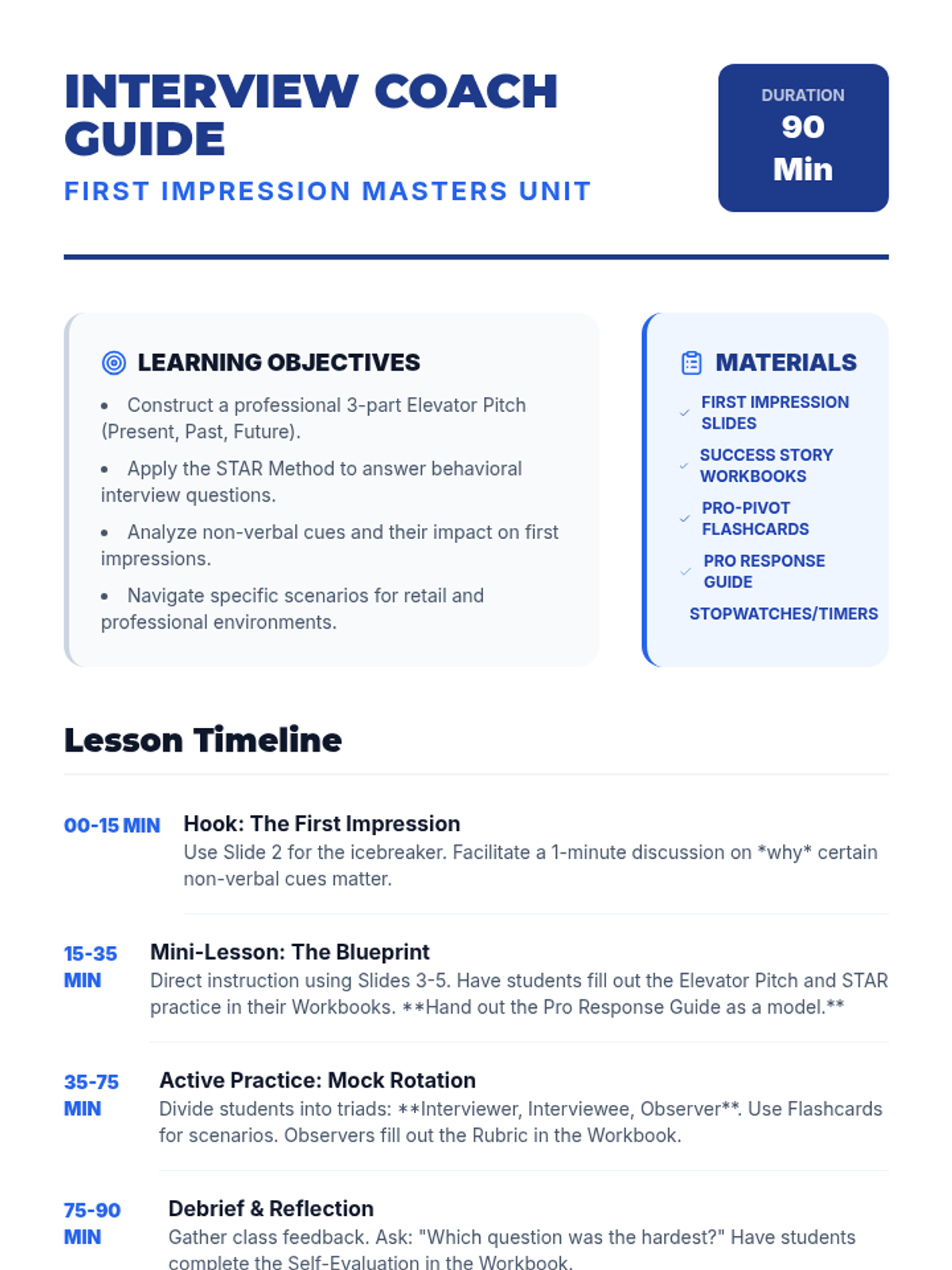
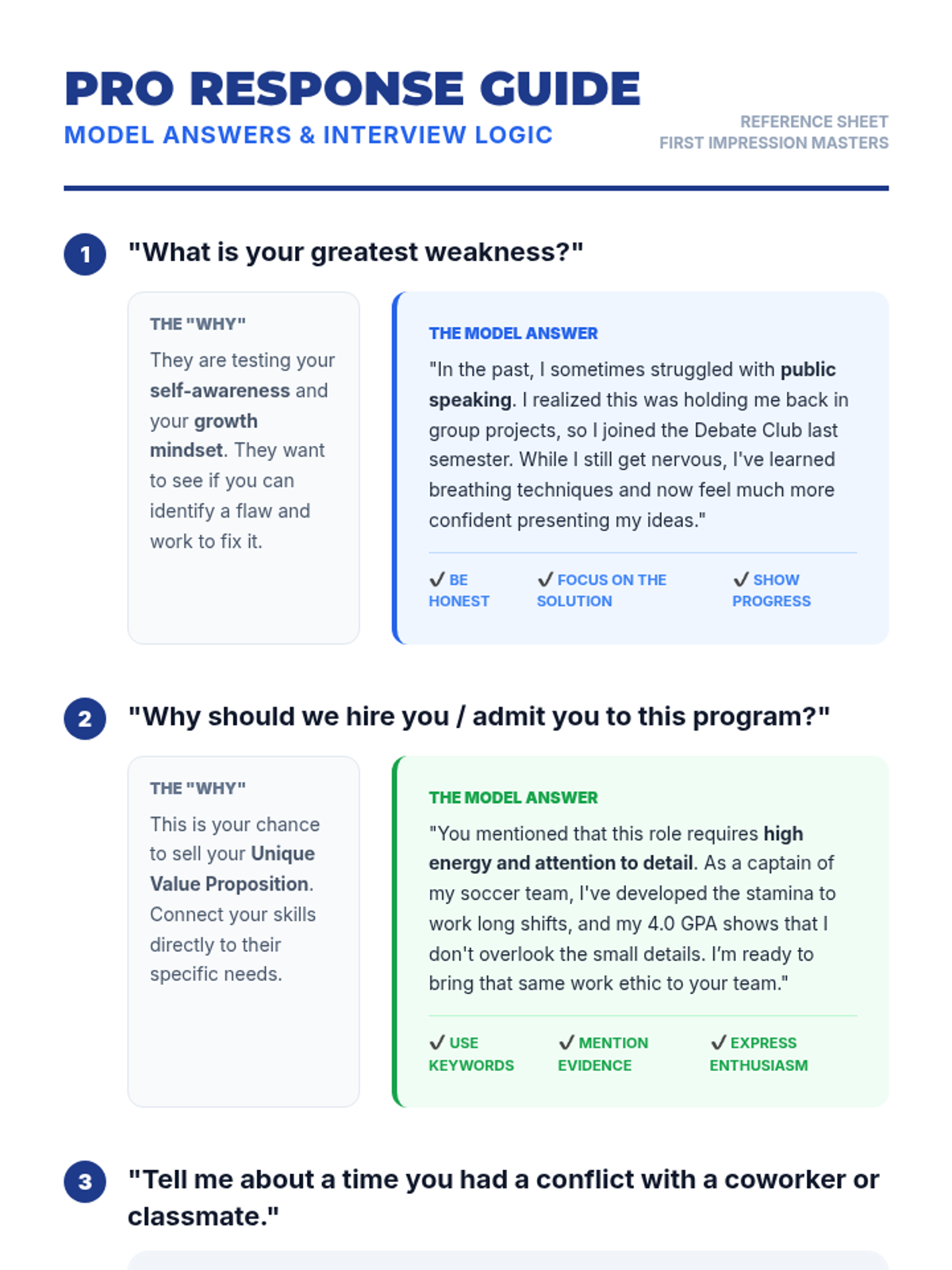
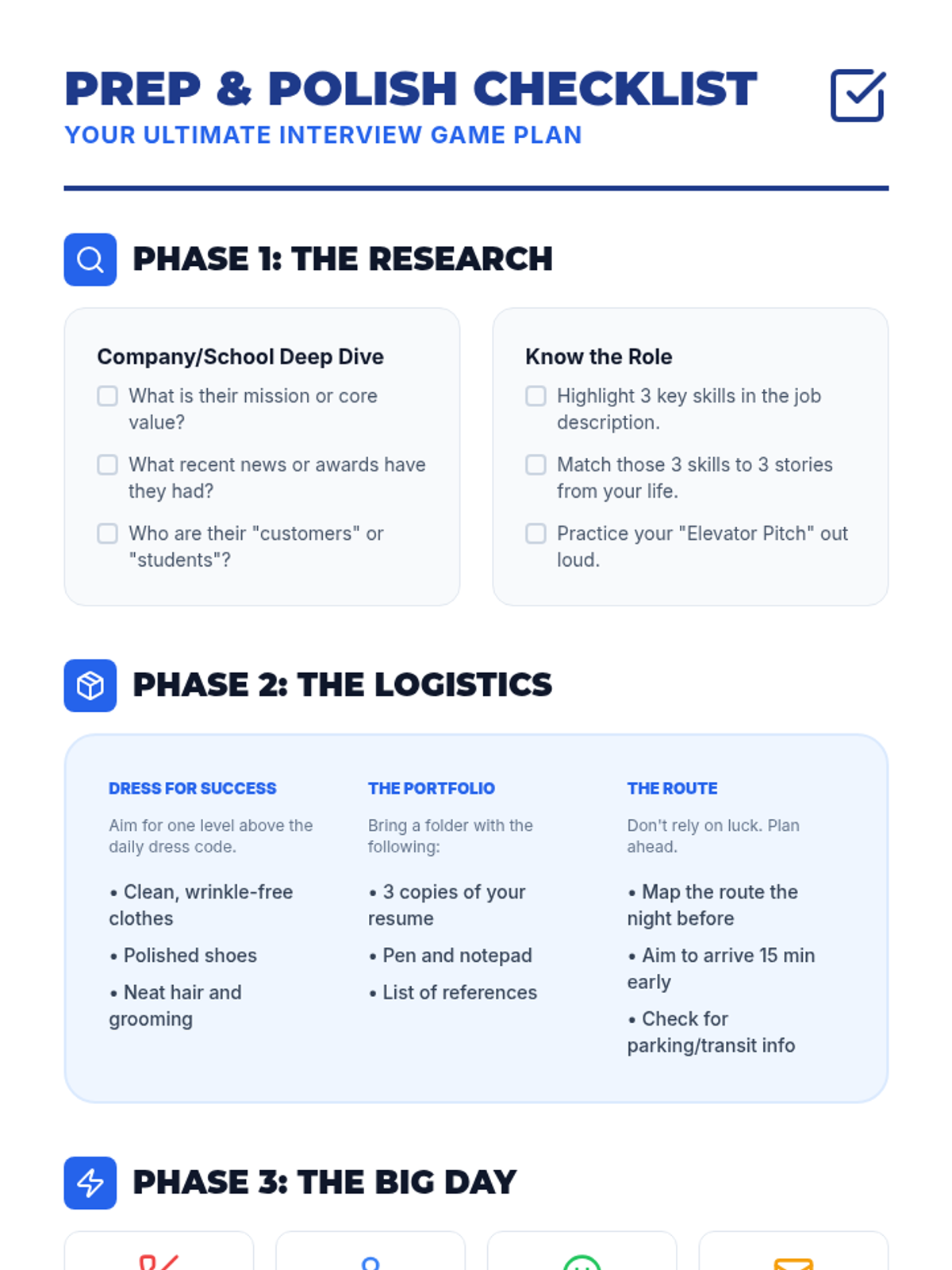
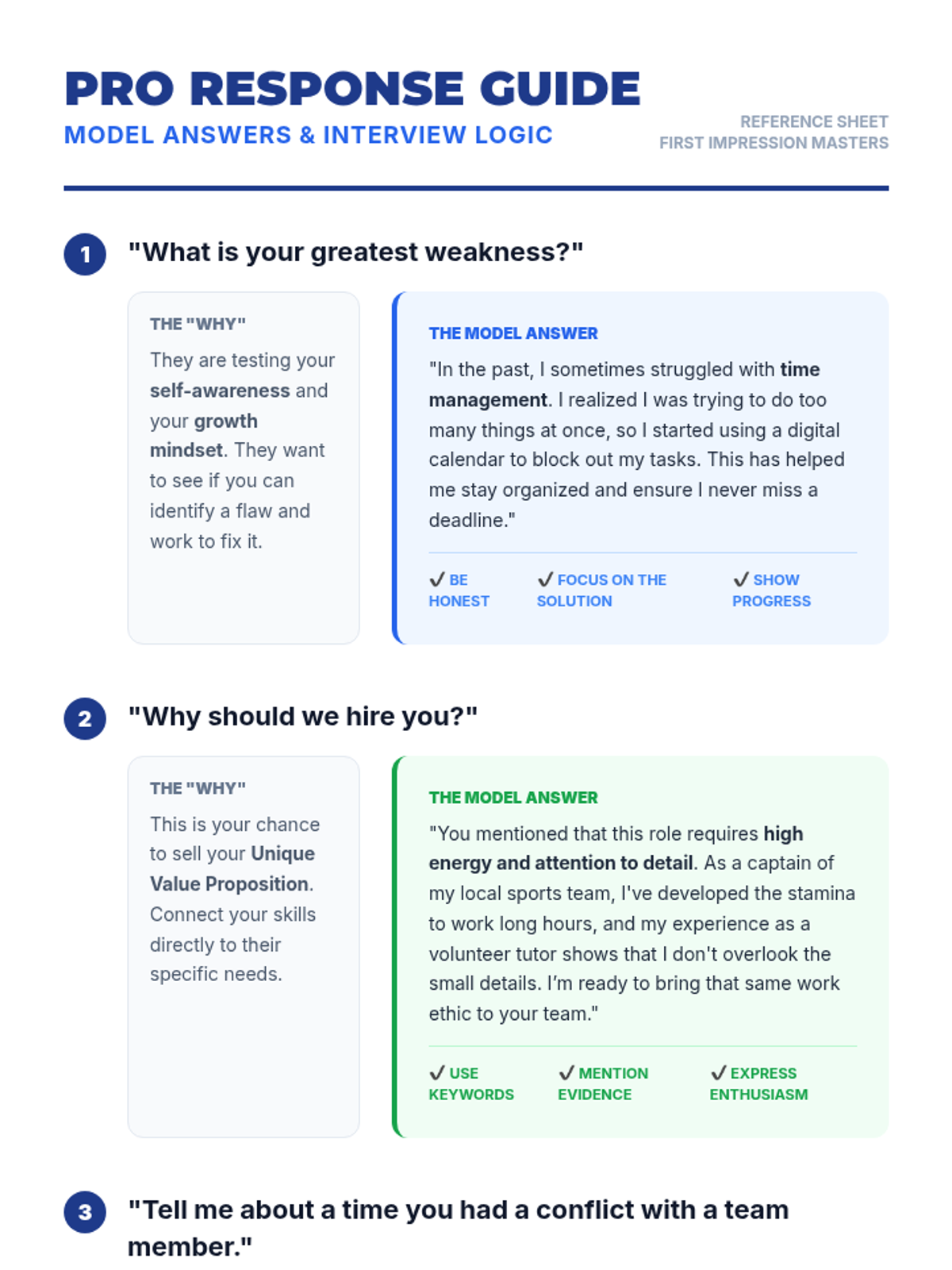
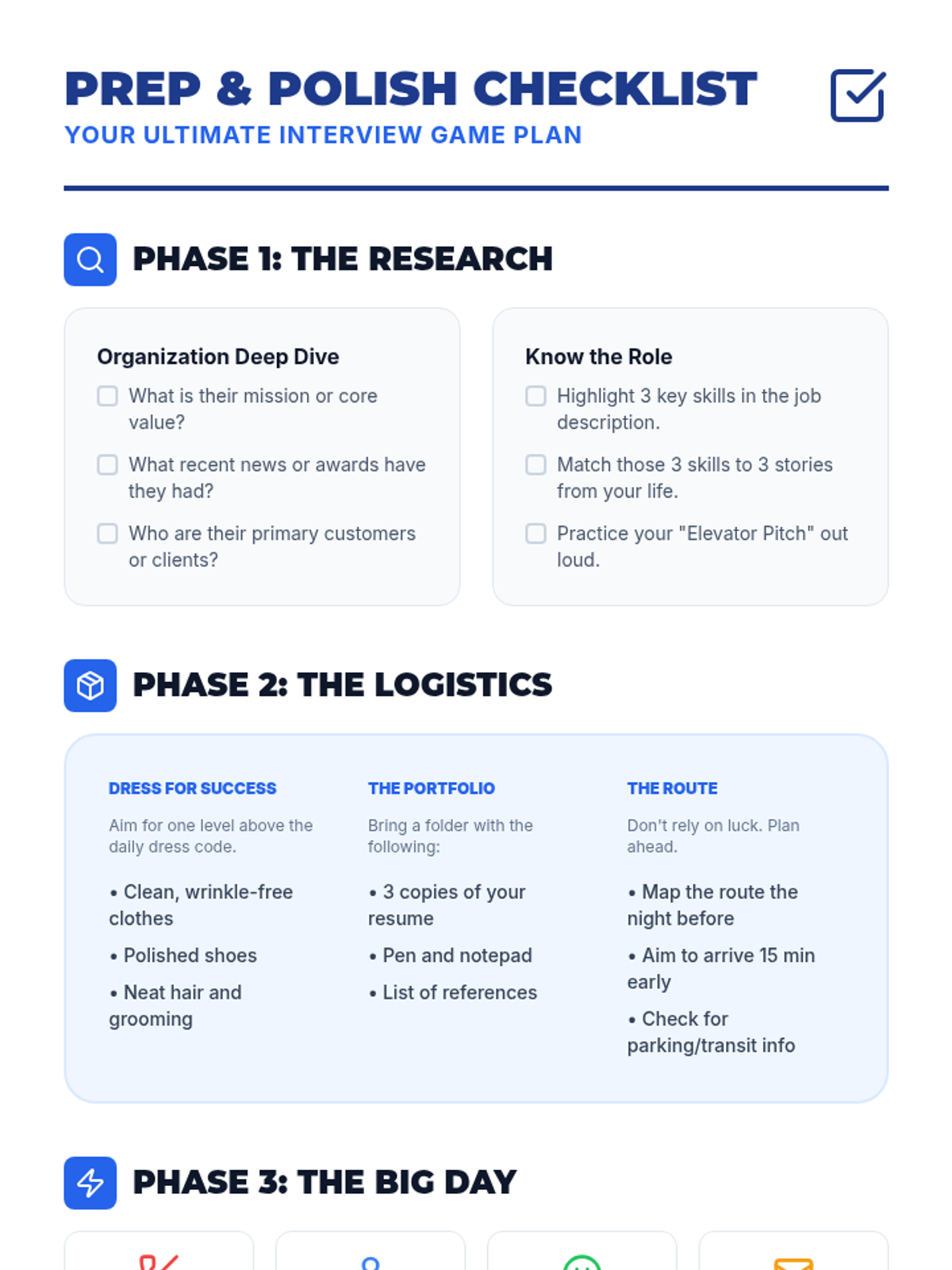
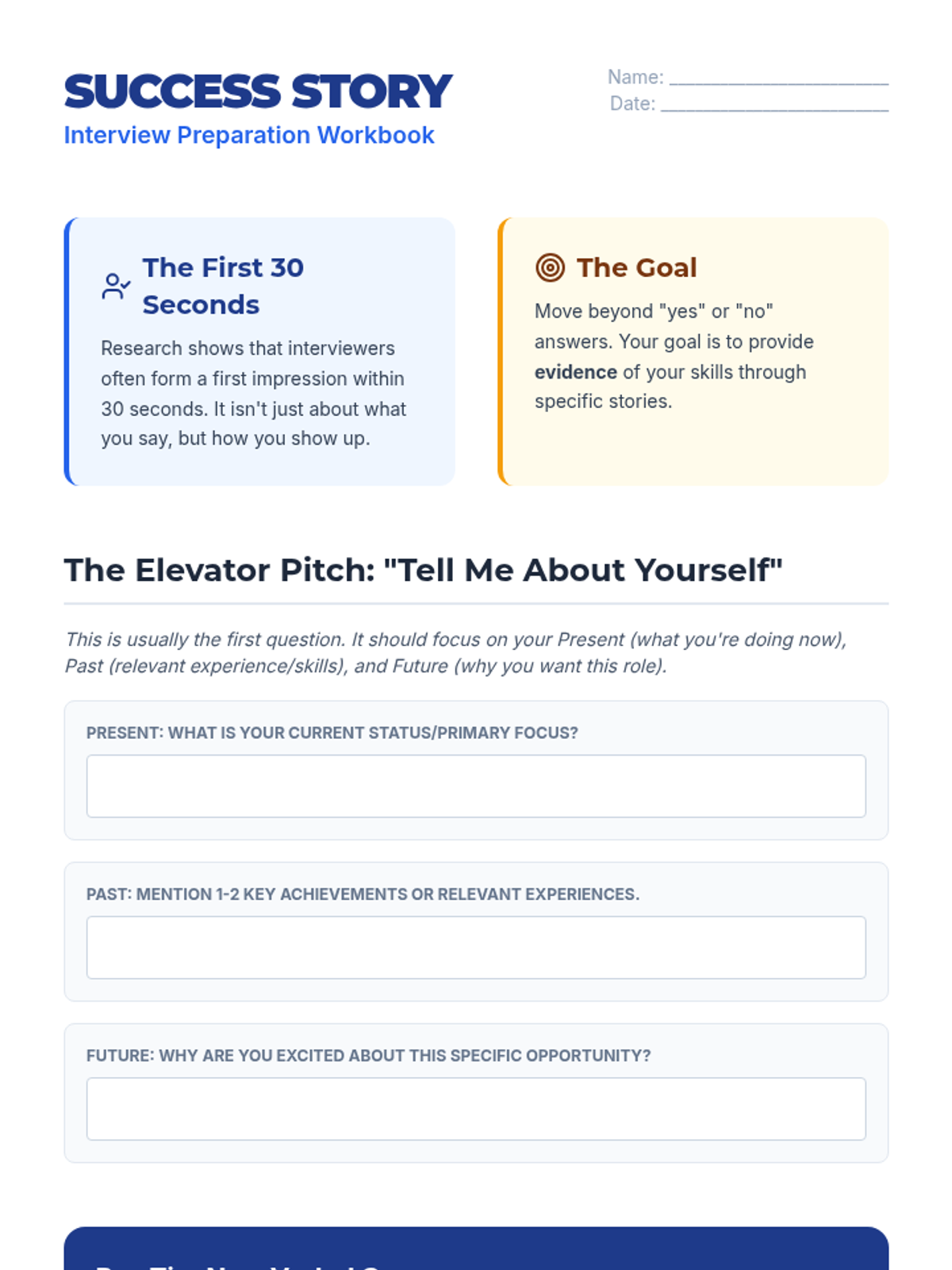
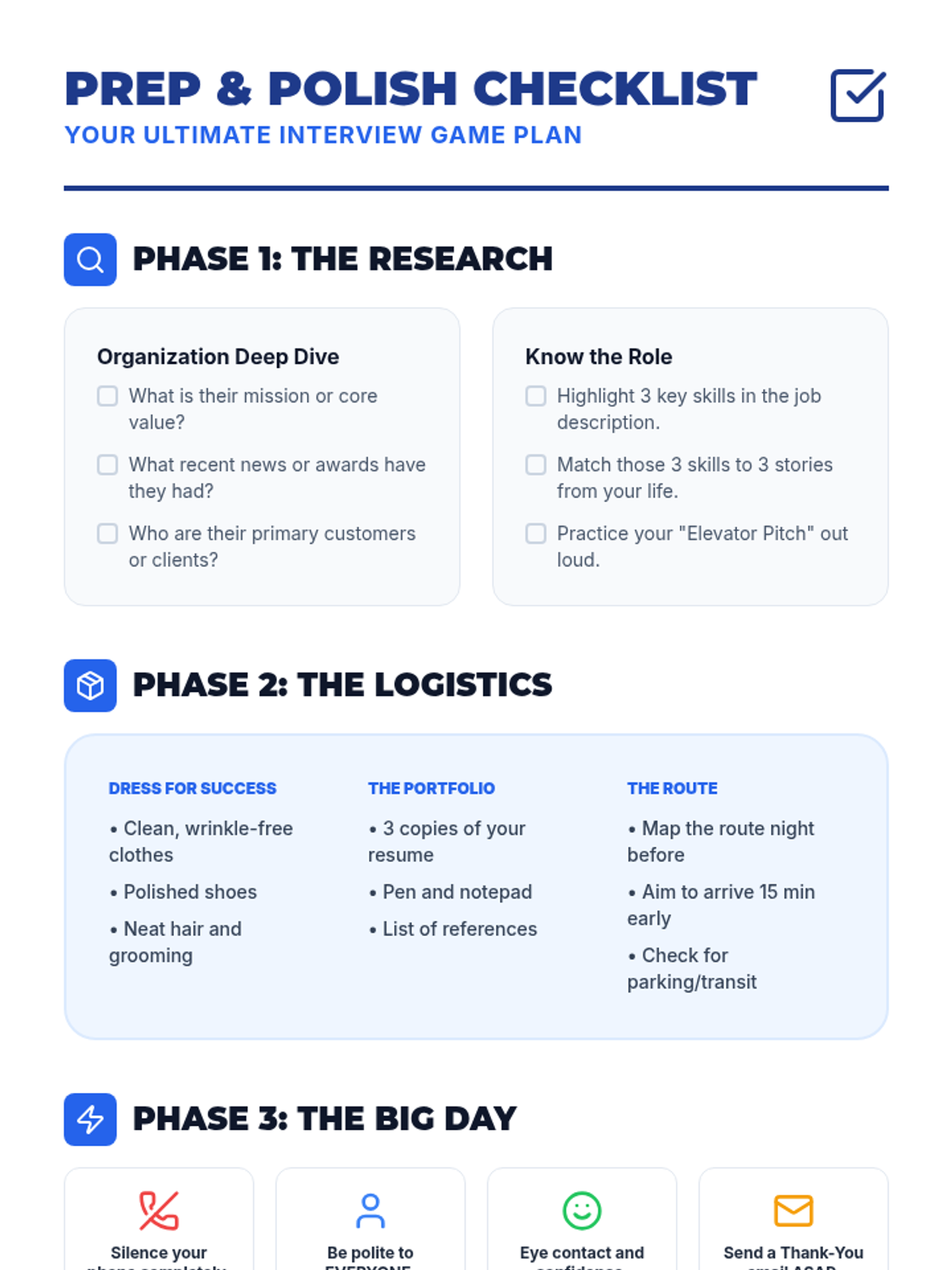
A comprehensive guide to mastering entry-level and academic interviews through the STAR method, practical scenarios, and self-reflection. Students will build a portfolio of stories to demonstrate their skills to future employers and admissions officers.
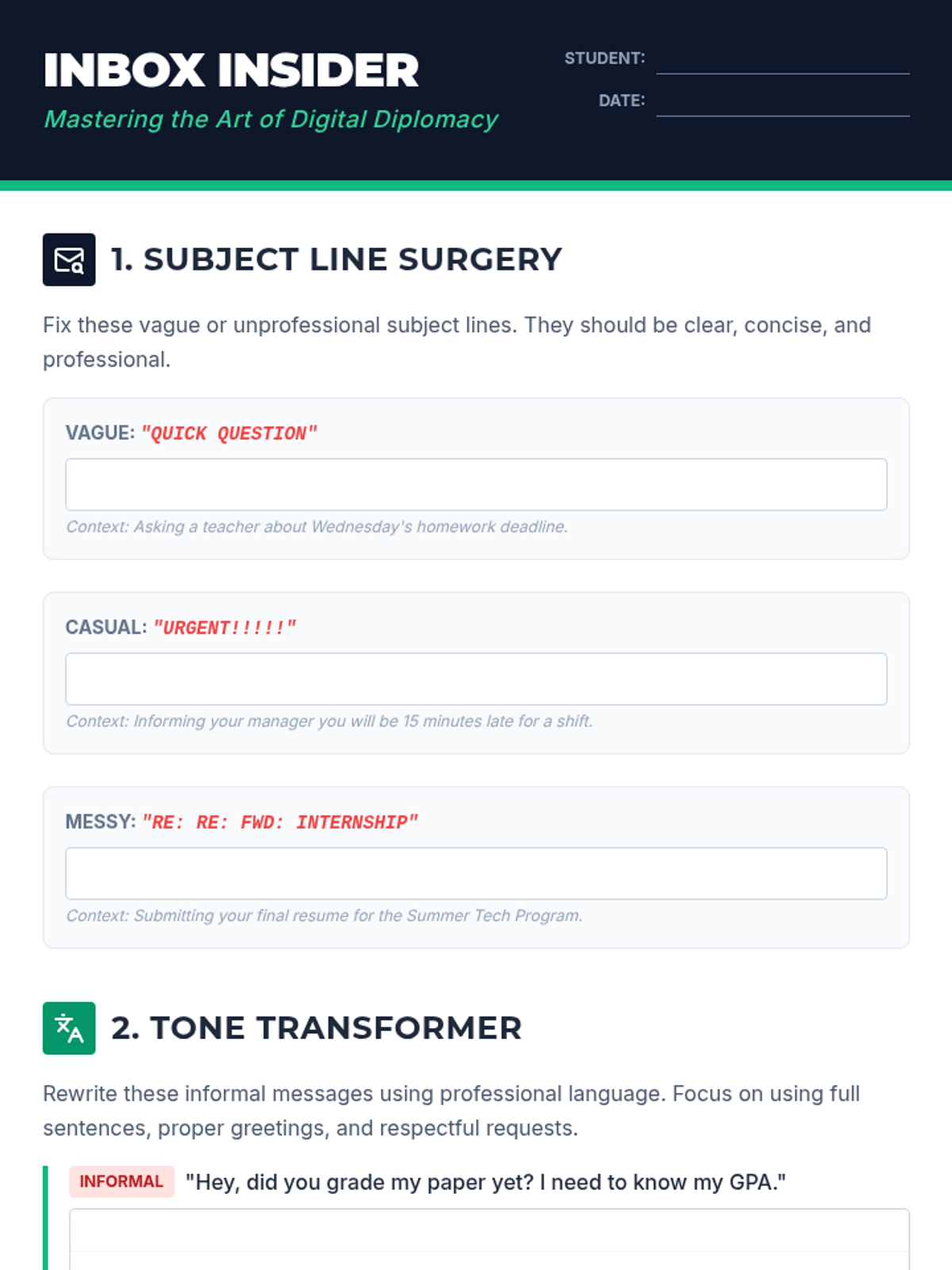
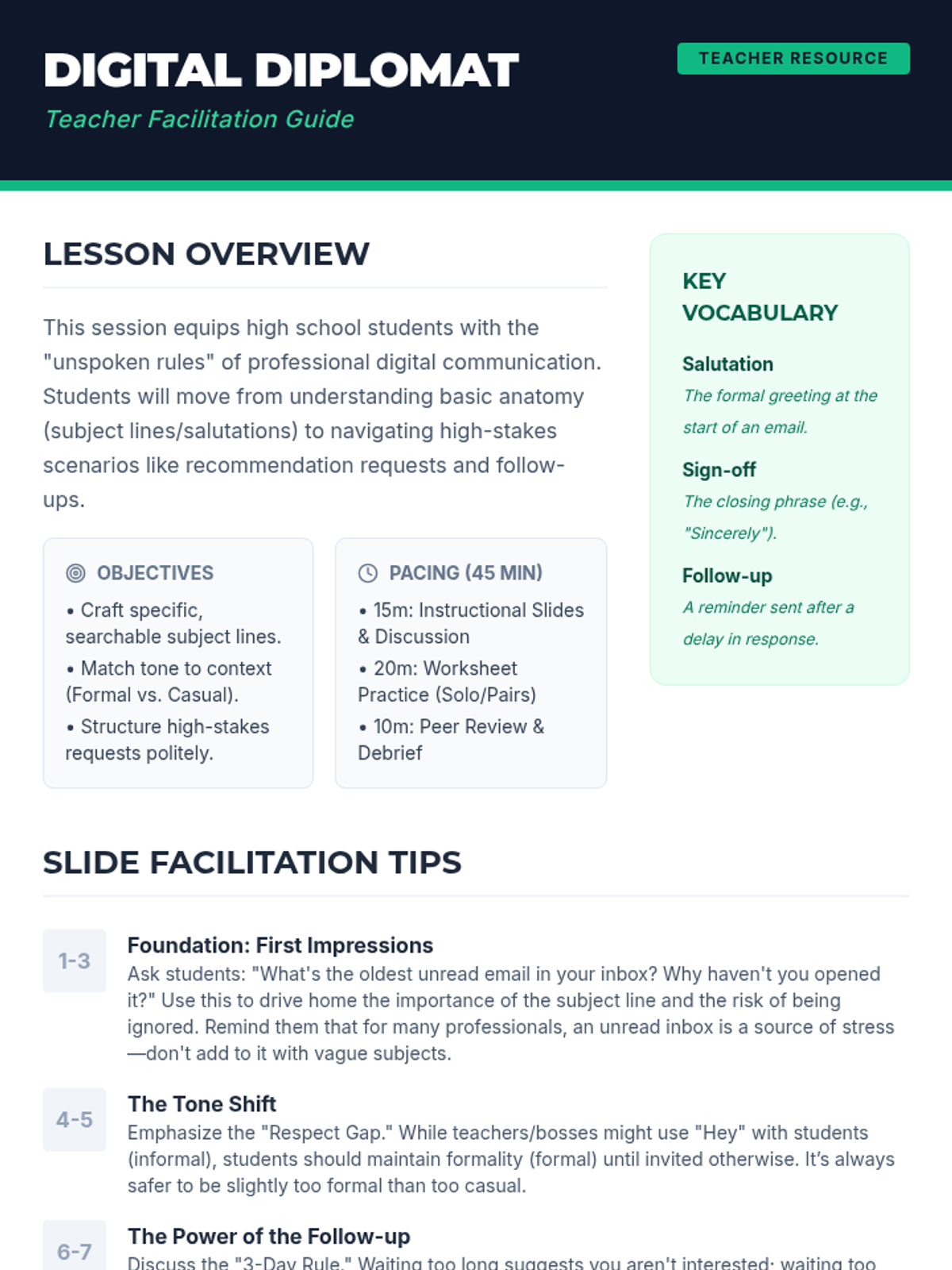
High school students master the art of professional digital communication through scenario-based practice, focusing on tone, structure, and high-stakes requests.
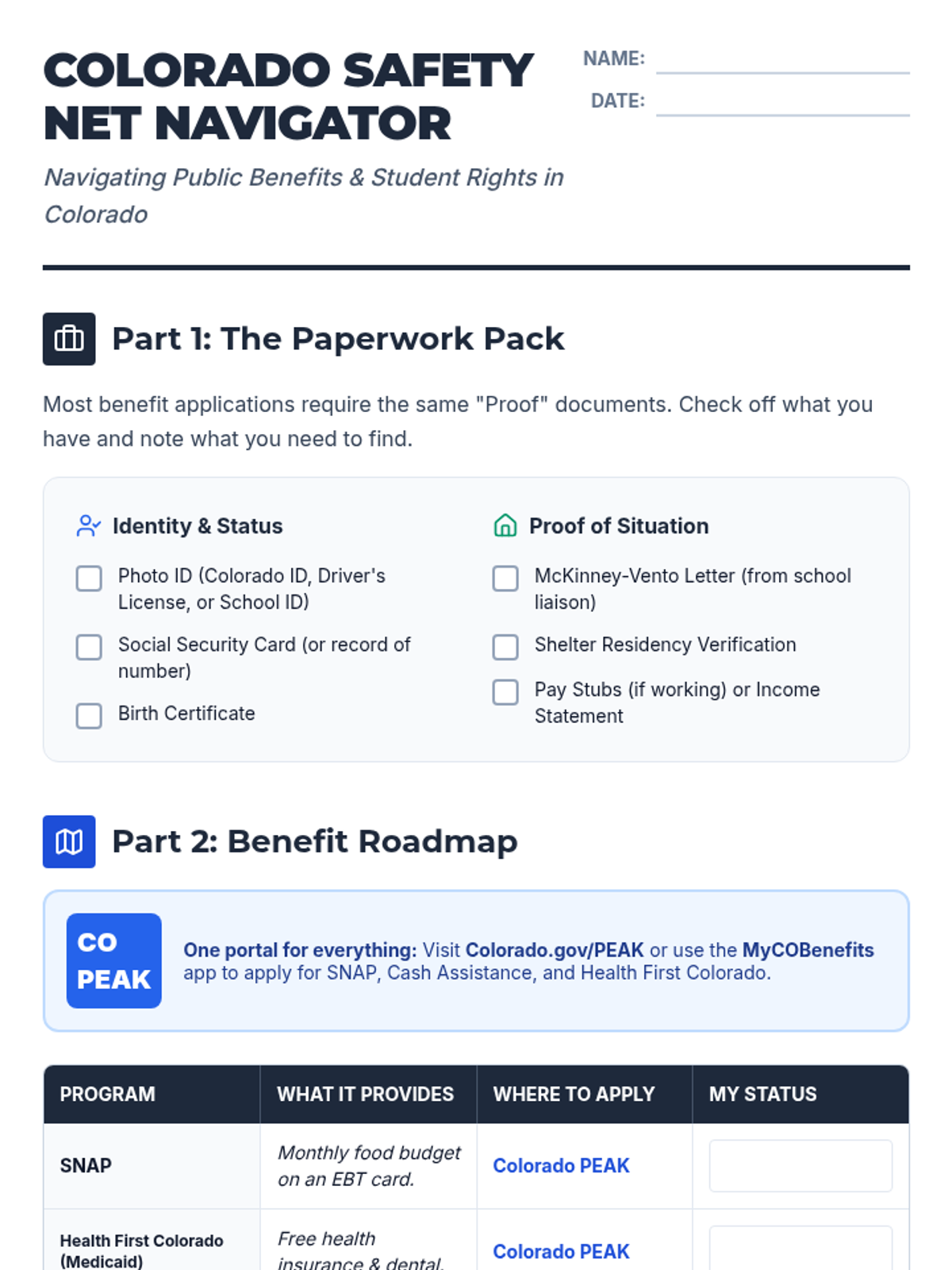
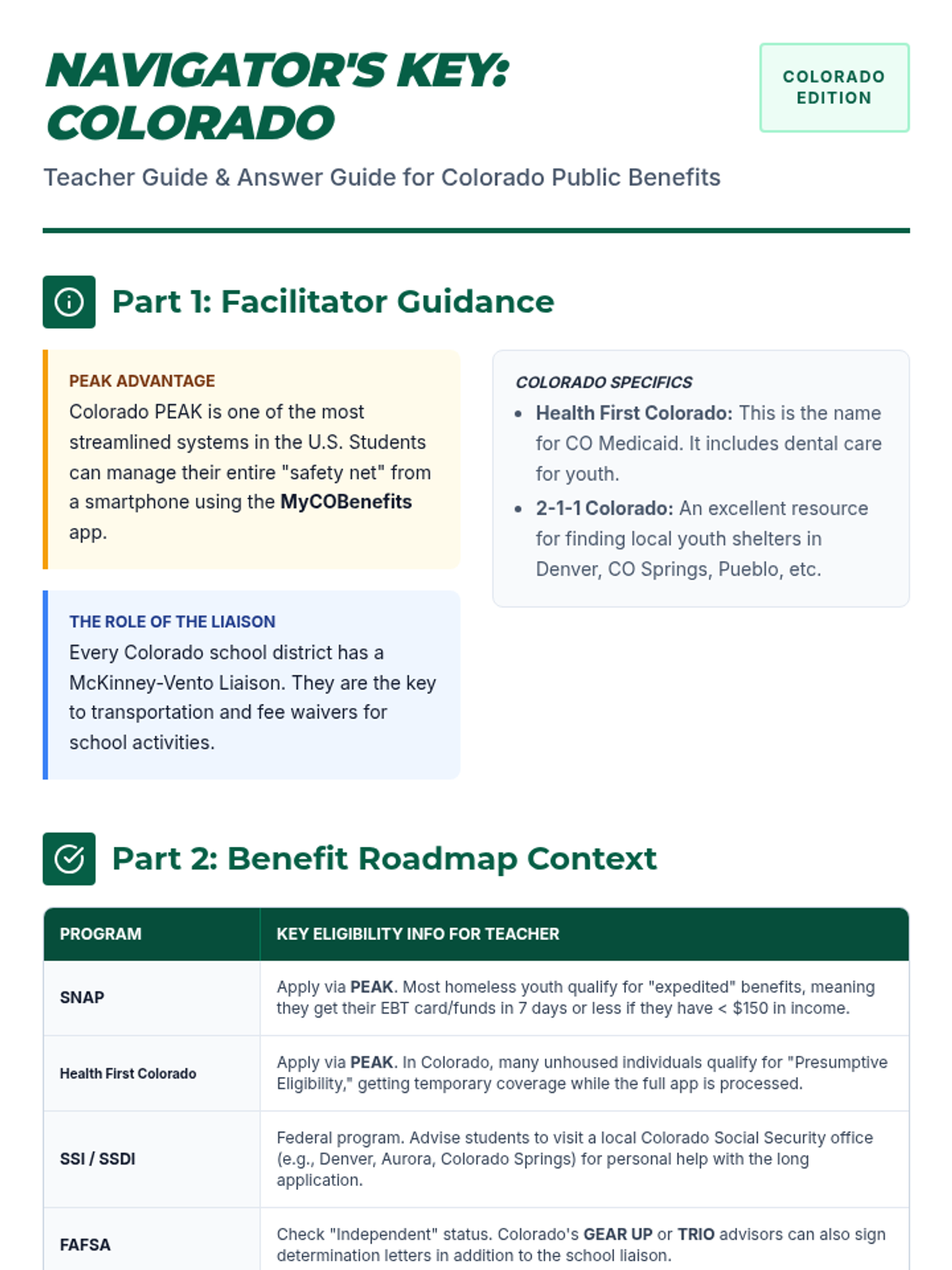
A comprehensive lesson designed to help homeless high school students navigate complex public benefit systems, understand their rights under McKinney-Vento, and manage the documentation required for stability and post-secondary success.
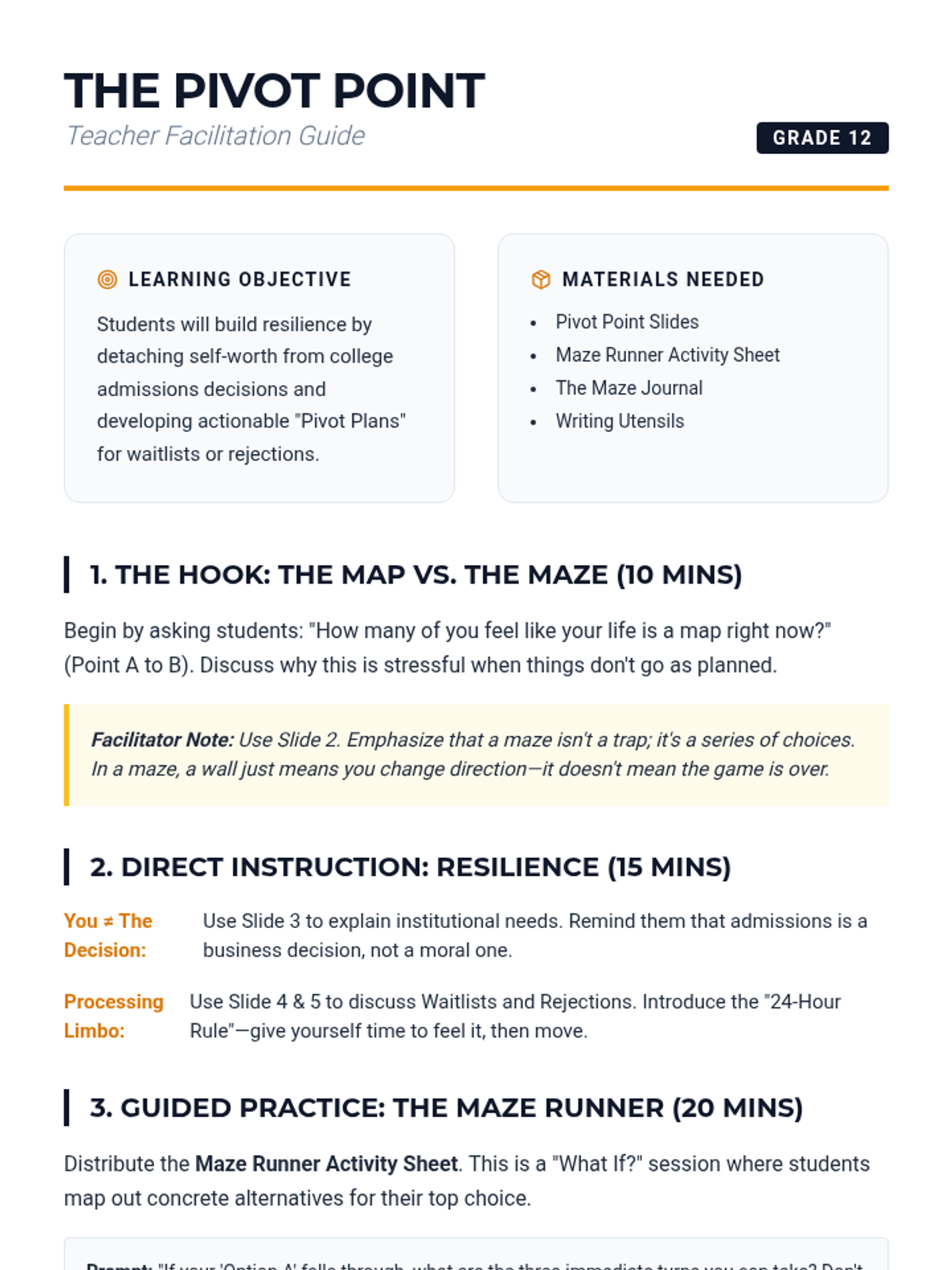
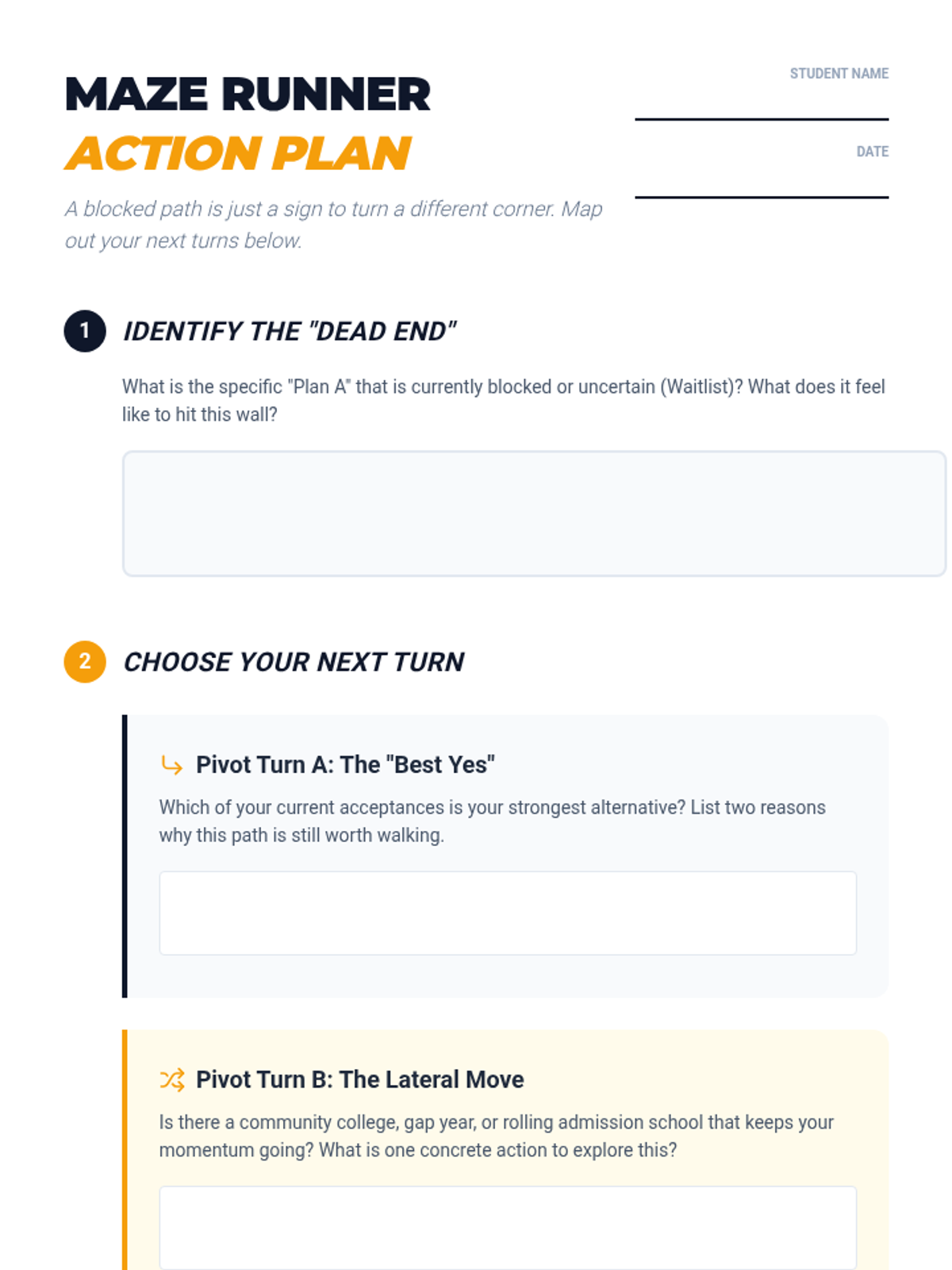
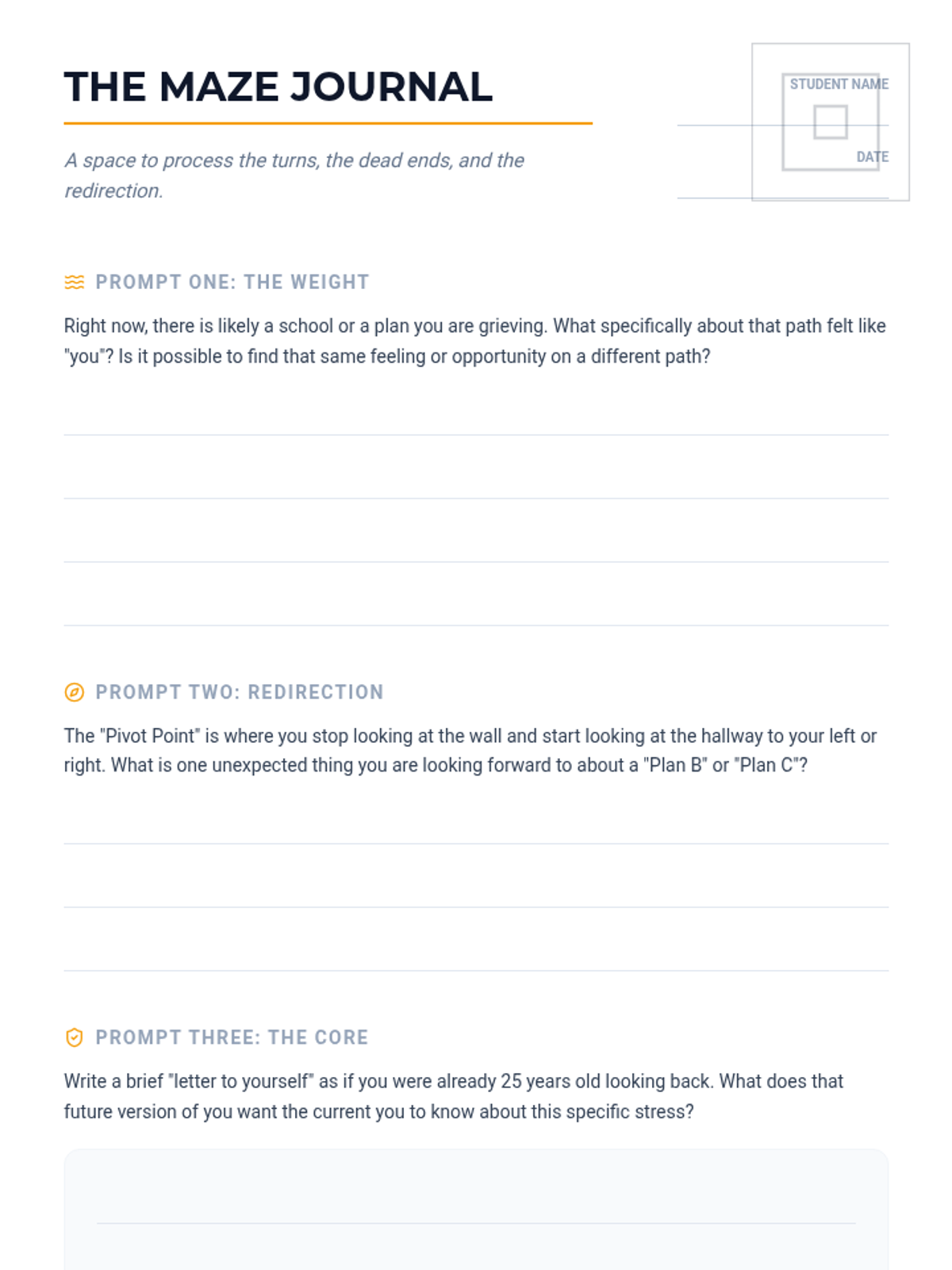
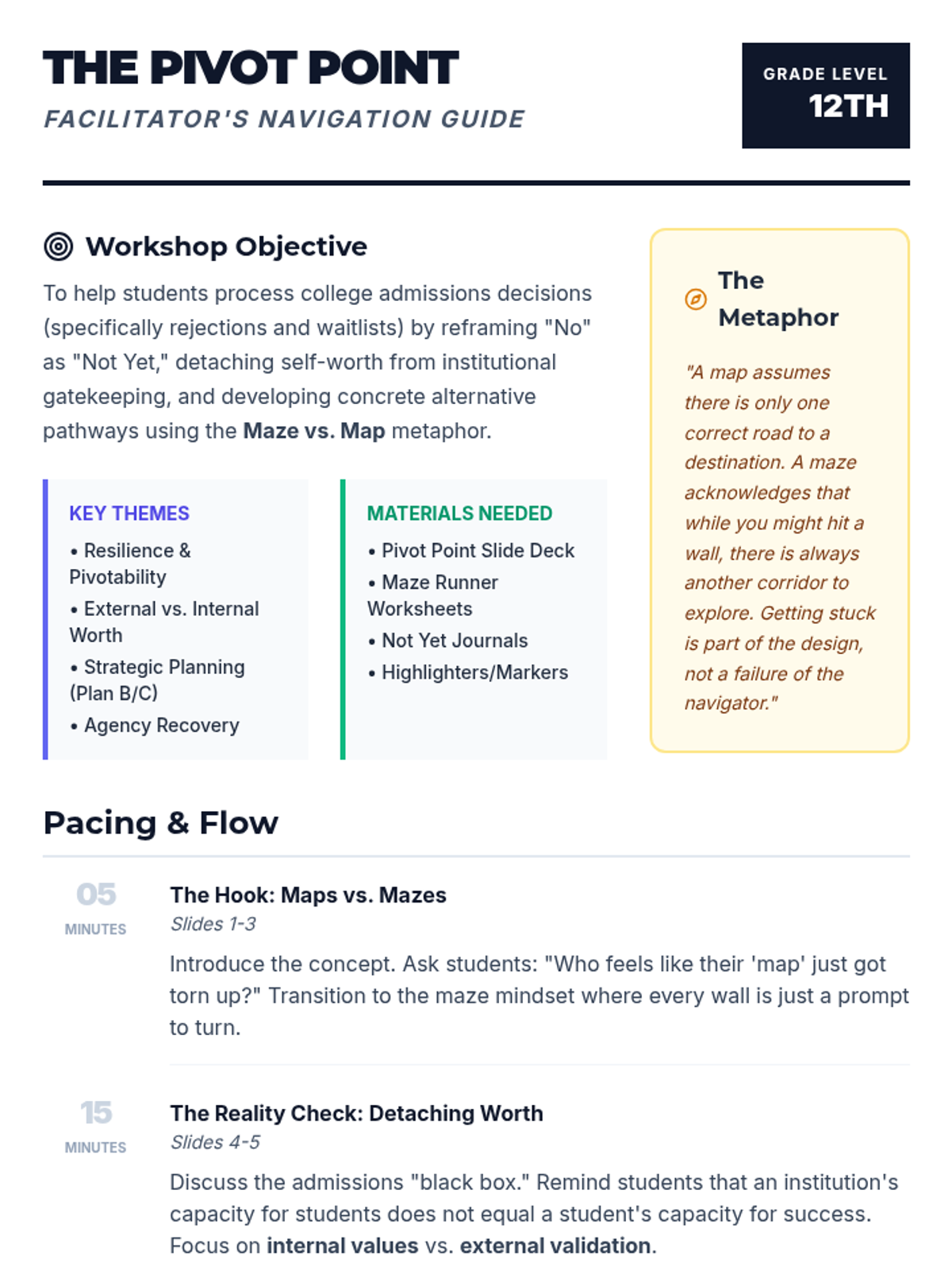
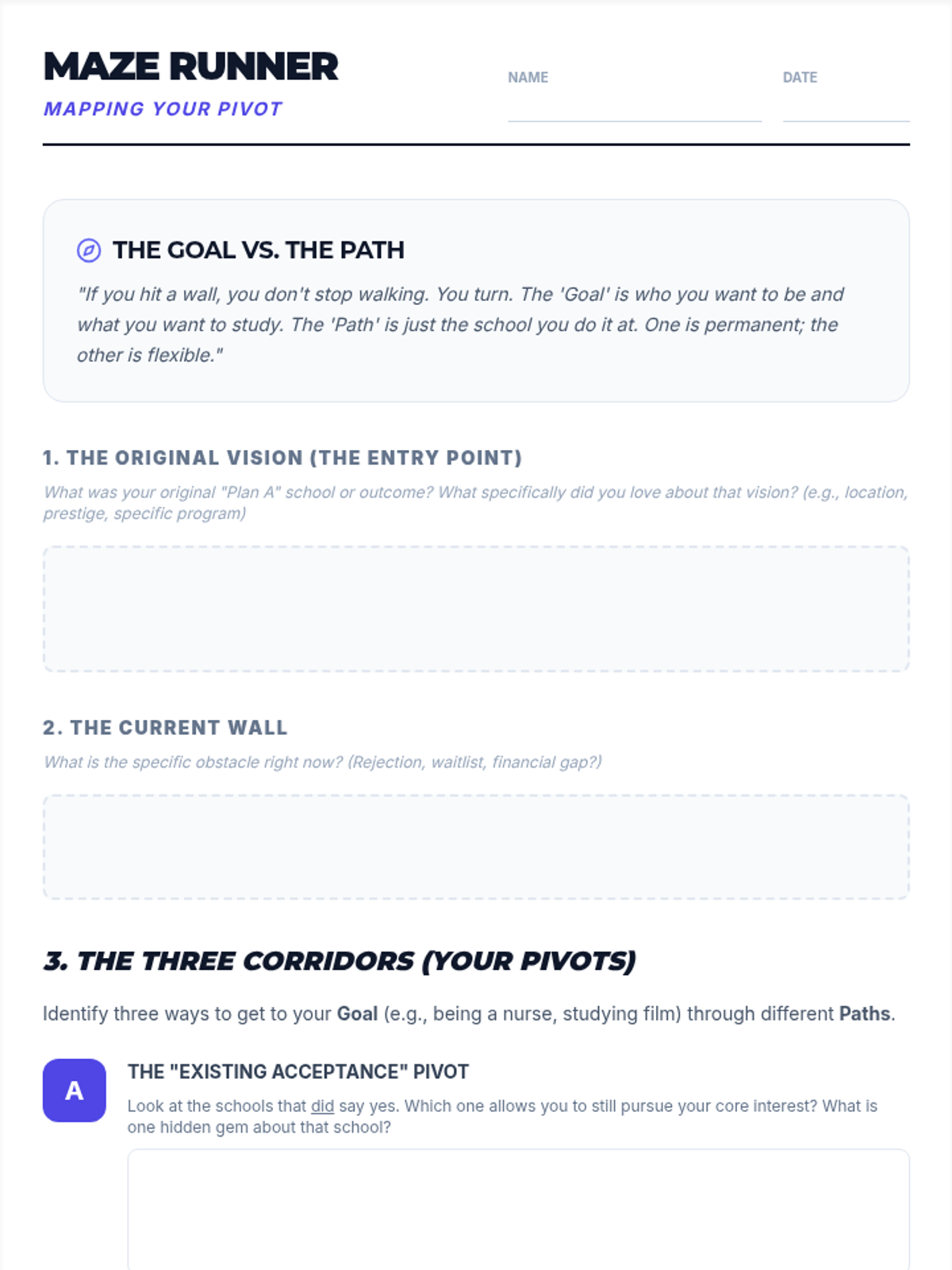
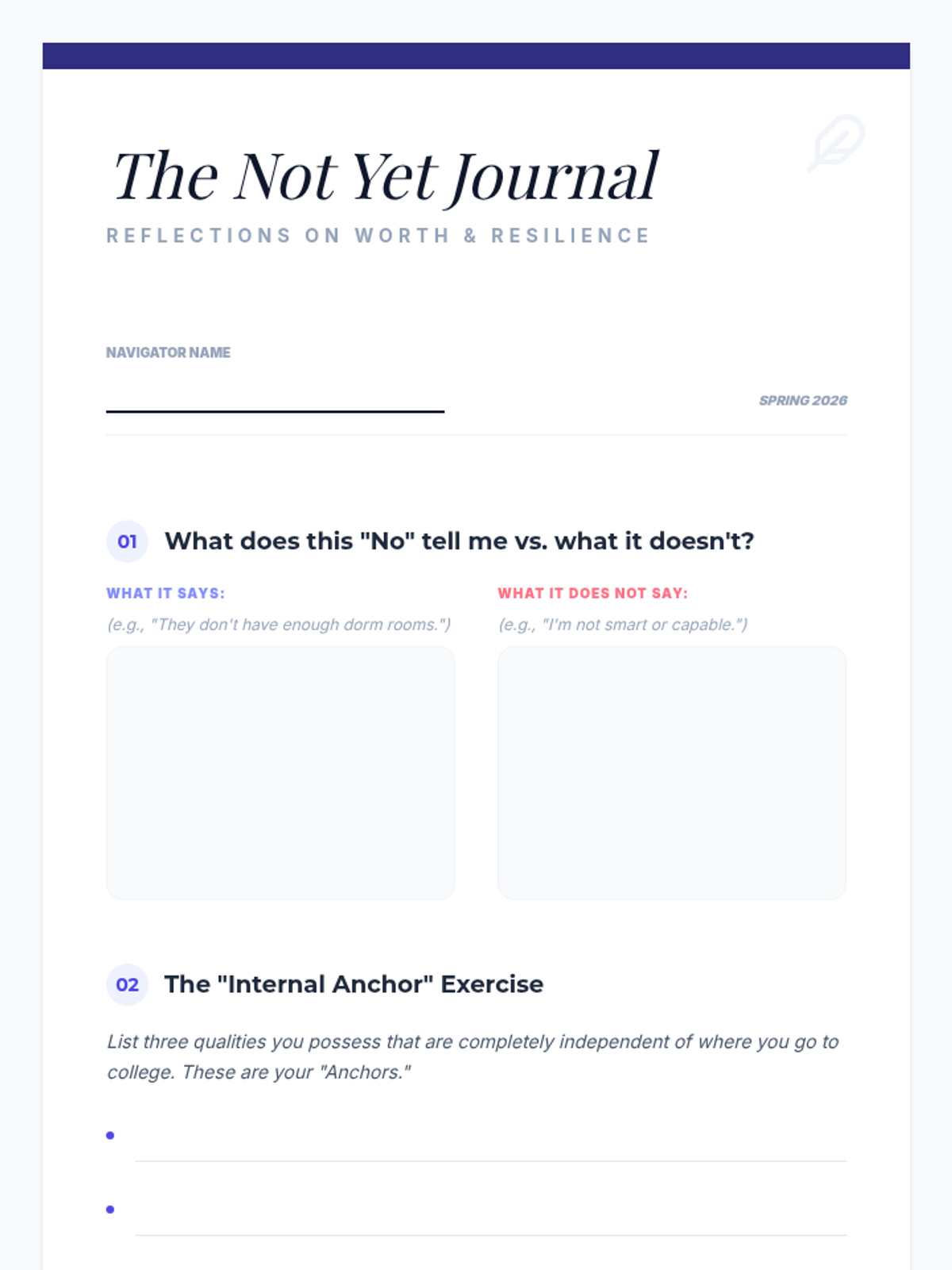
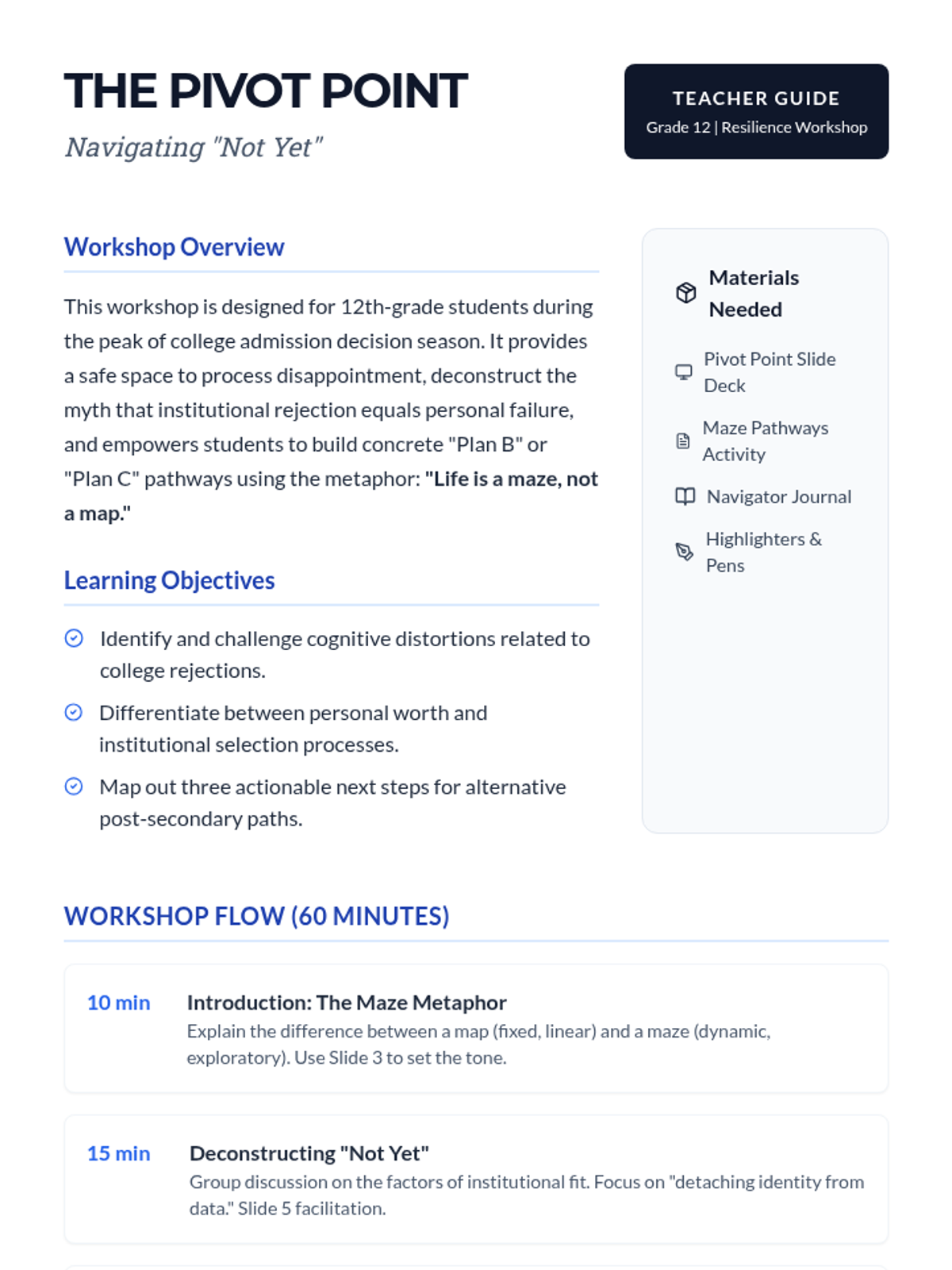
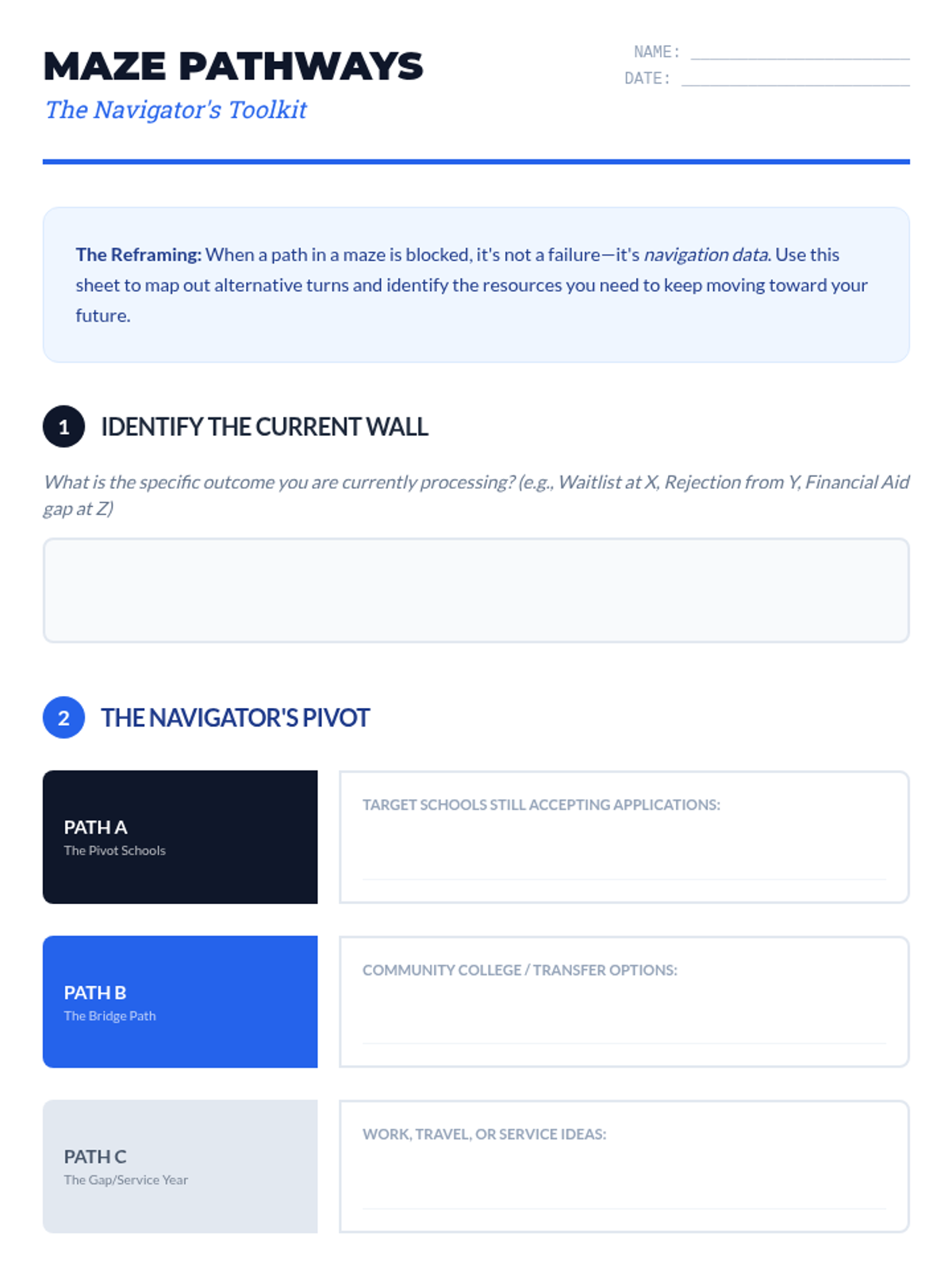
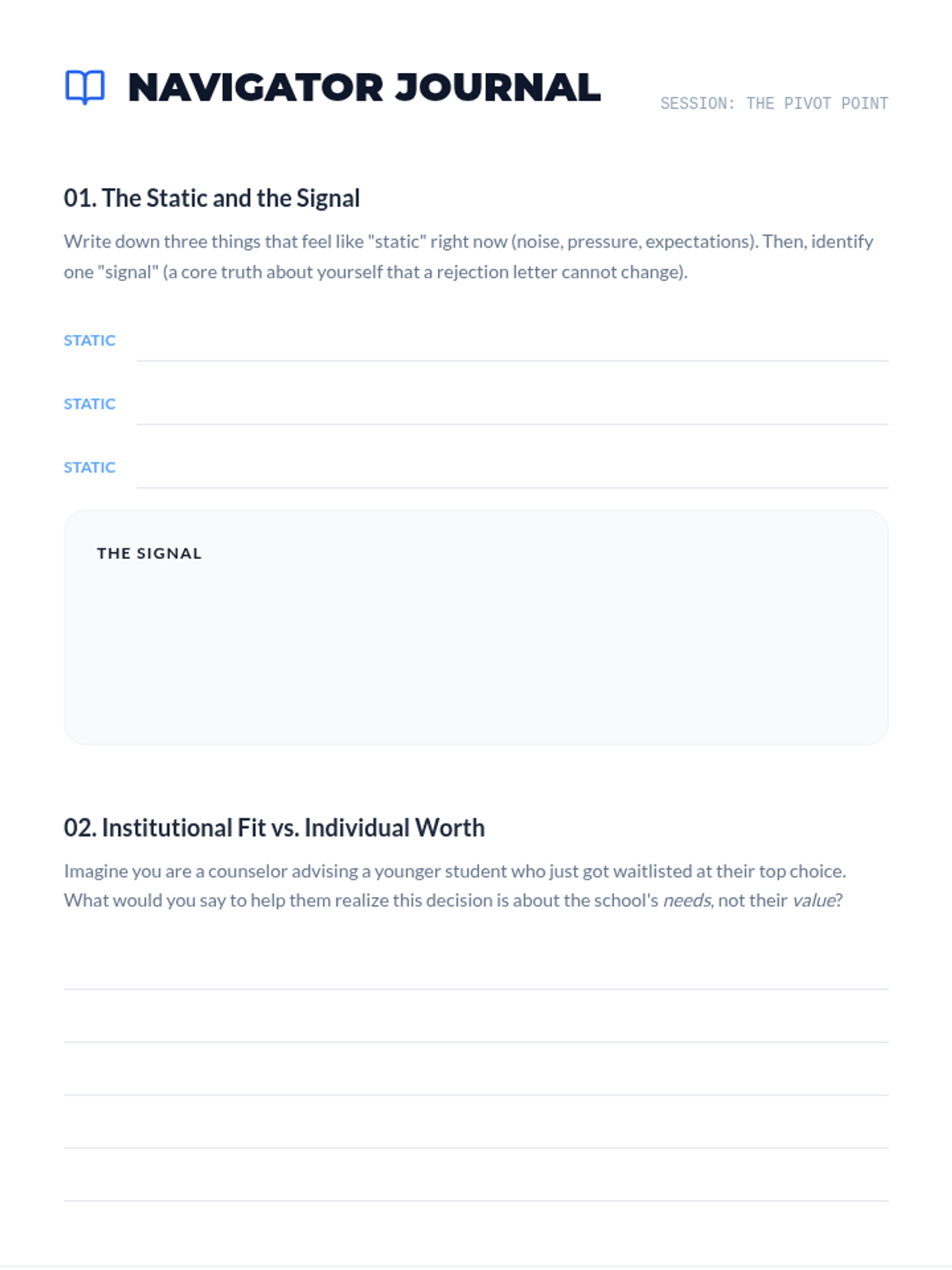
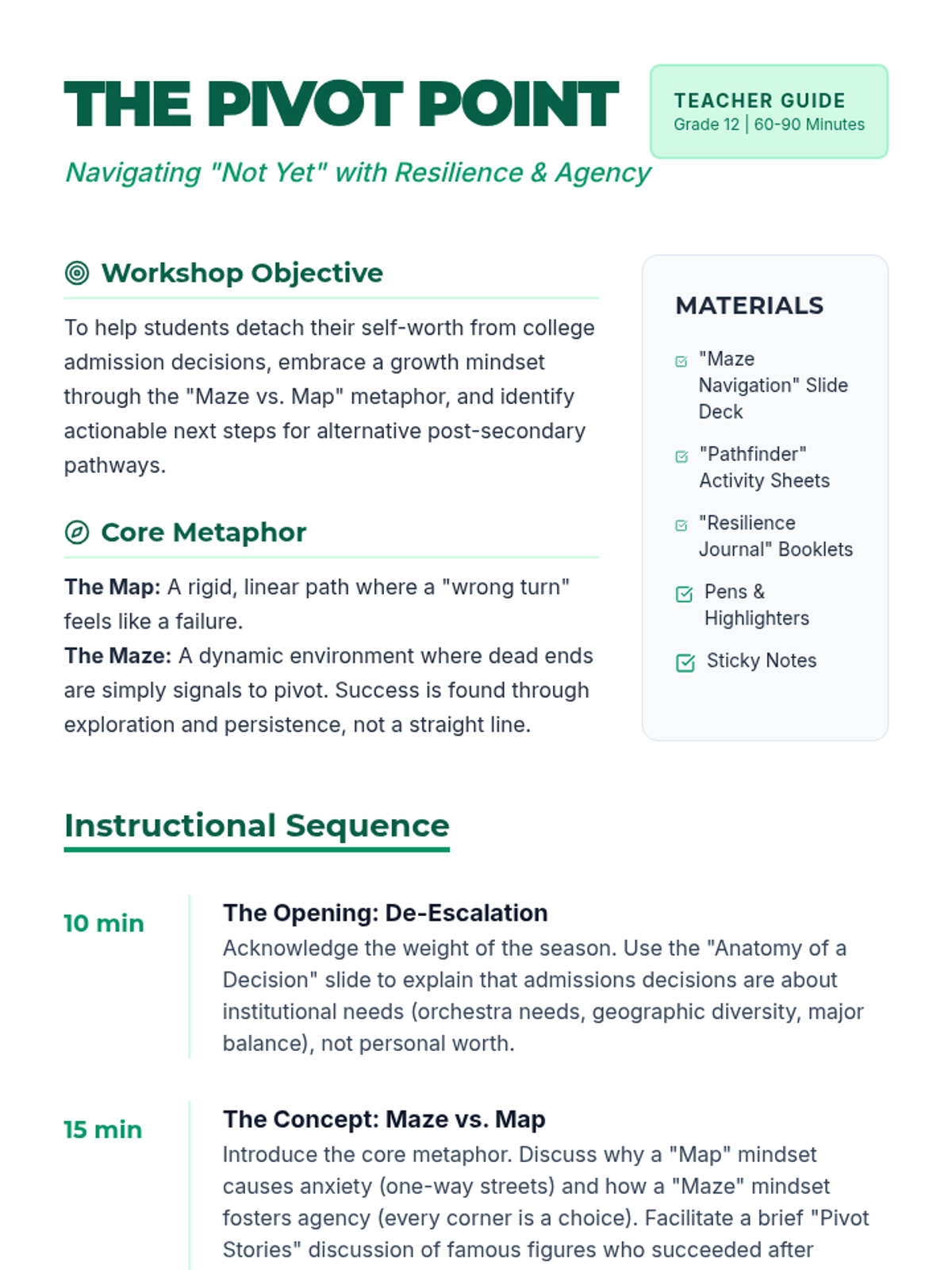
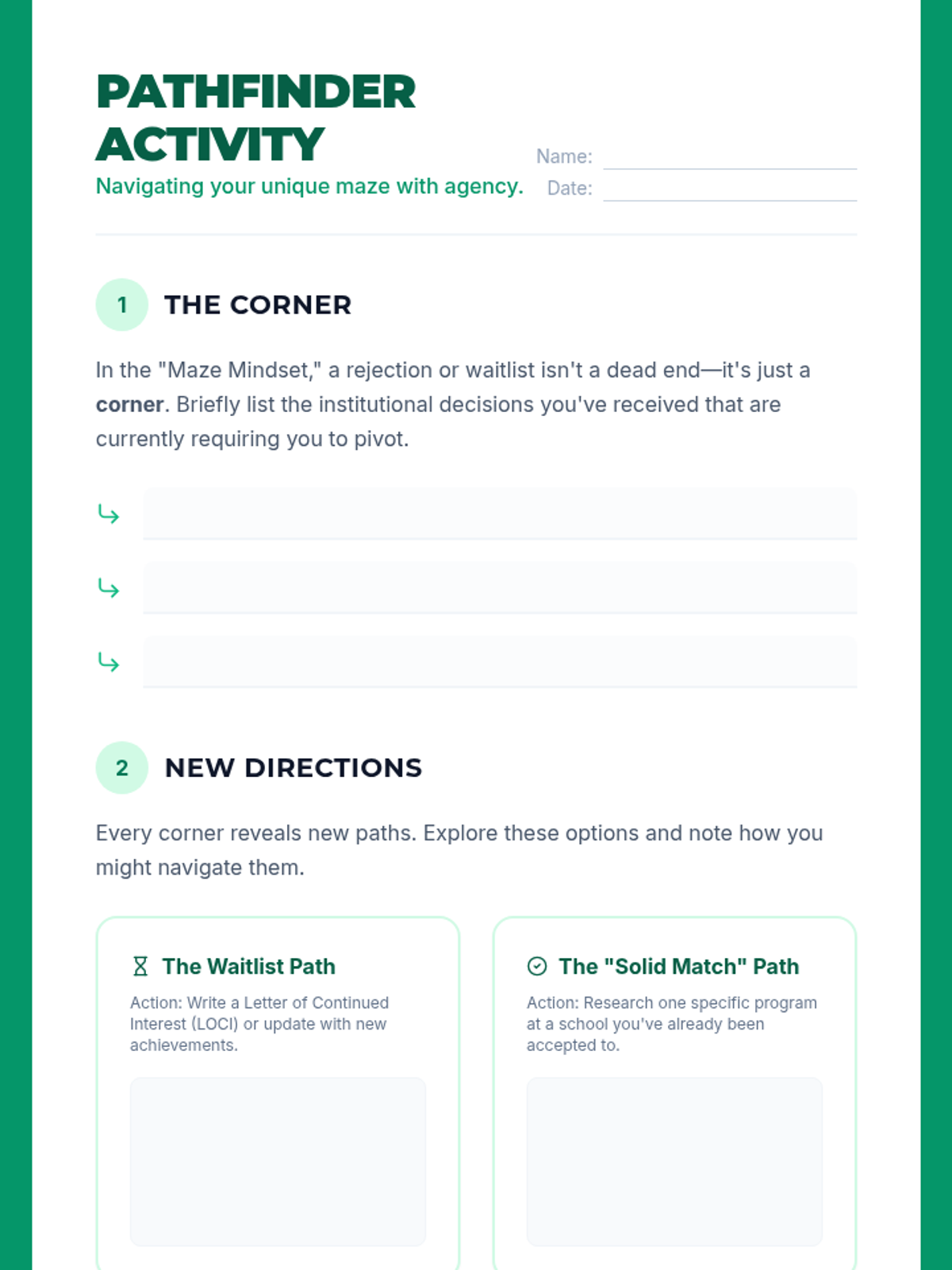
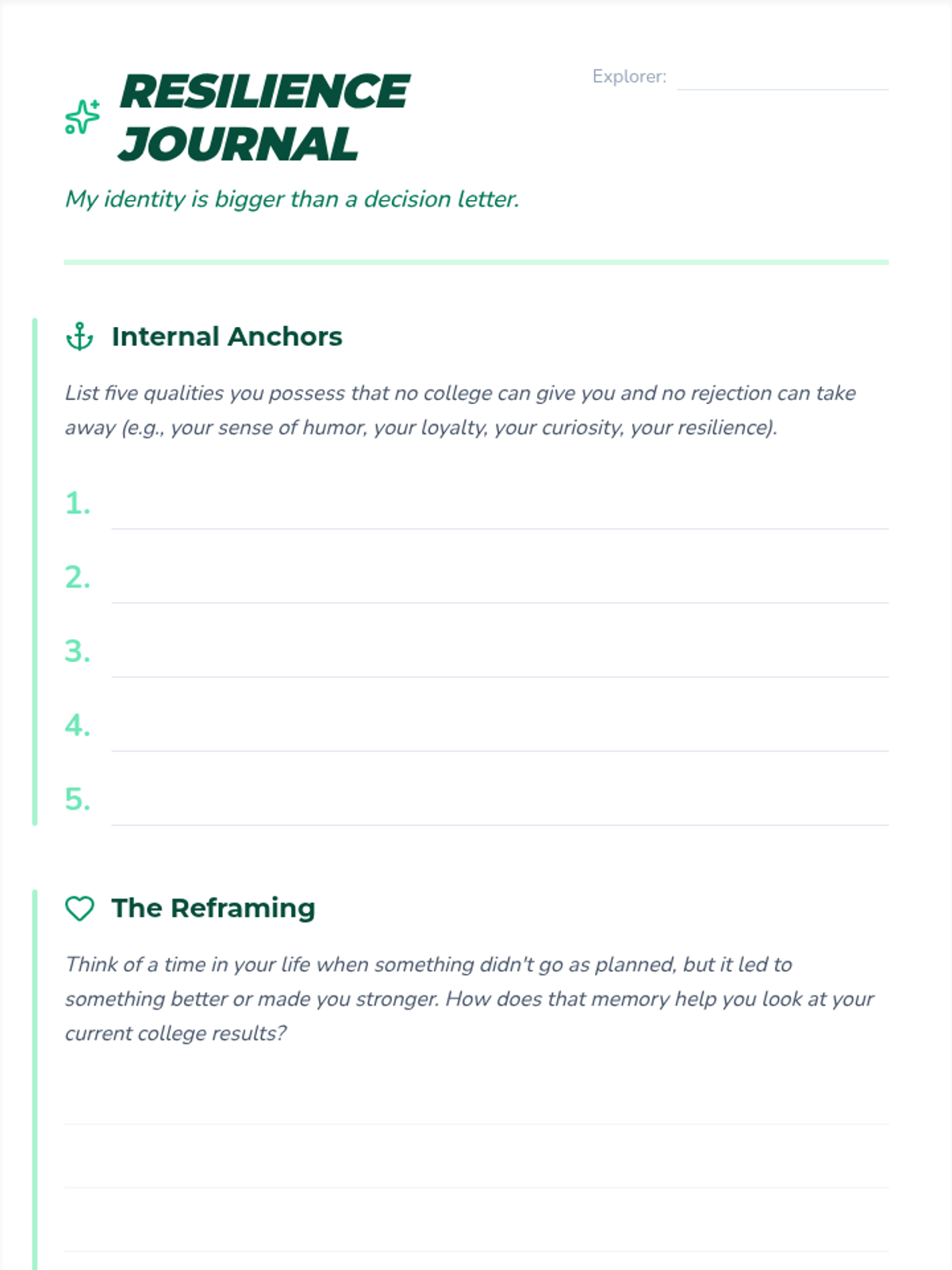
A workshop for 12th-grade students to process college decisions, build resilience, and develop actionable alternative plans using the 'Life is a Maze' metaphor.
A high-impact workshop for 12th graders to navigate college admissions outcomes, focusing on resilience, detaching self-worth from institutional decisions, and practical 'Plan B' mapping using the 'Life is a Maze' metaphor.
A resilience-building workshop for high school seniors processing college admissions outcomes, focusing on alternative planning and emotional agency through the 'Life is a Maze' metaphor.
A resilience-focused workshop for high school seniors navigating college admission decisions. Students explore the 'Life is a Maze, Not a Map' metaphor to detach self-worth from institutional outcomes and build concrete alternative plans.
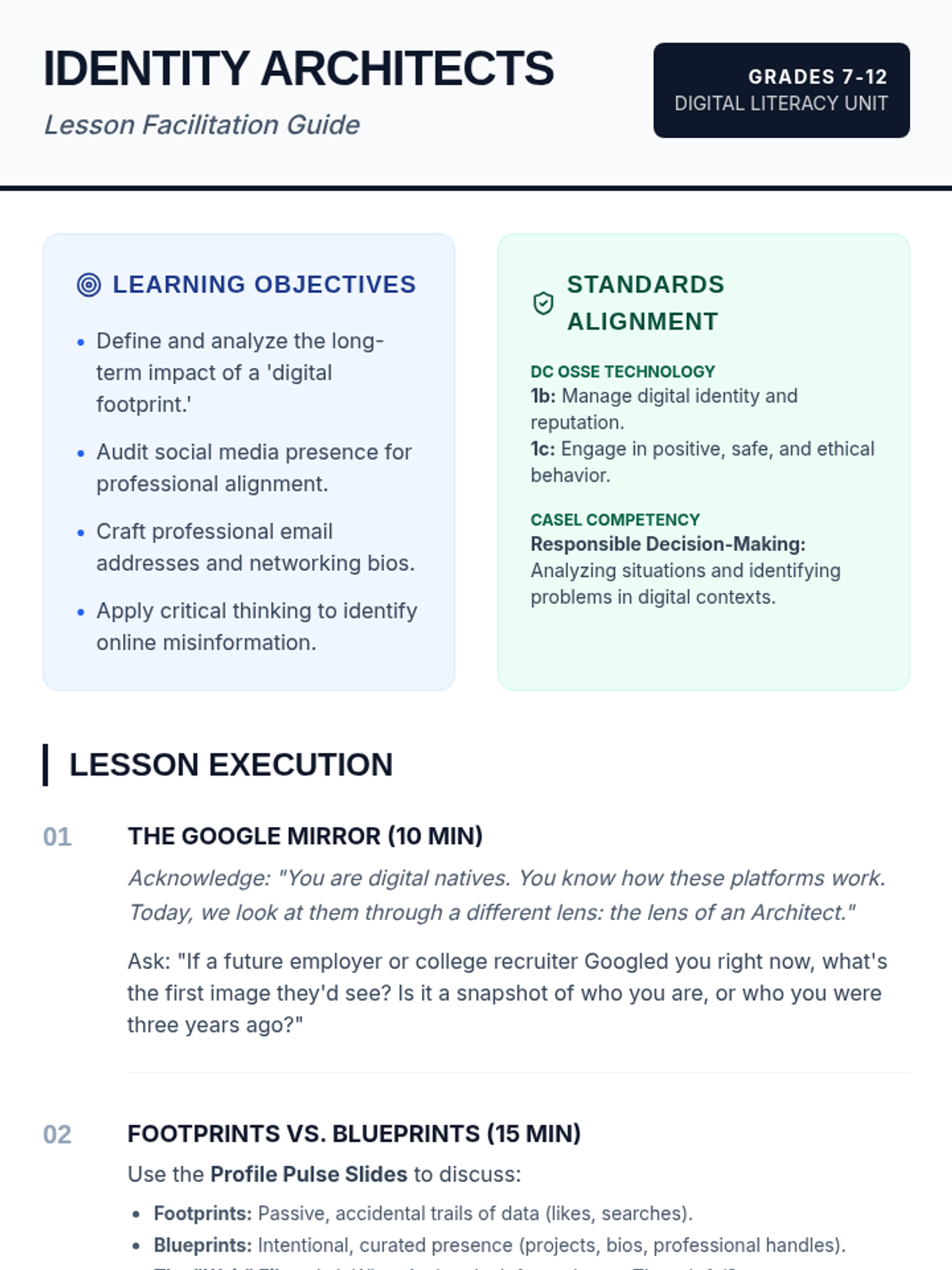
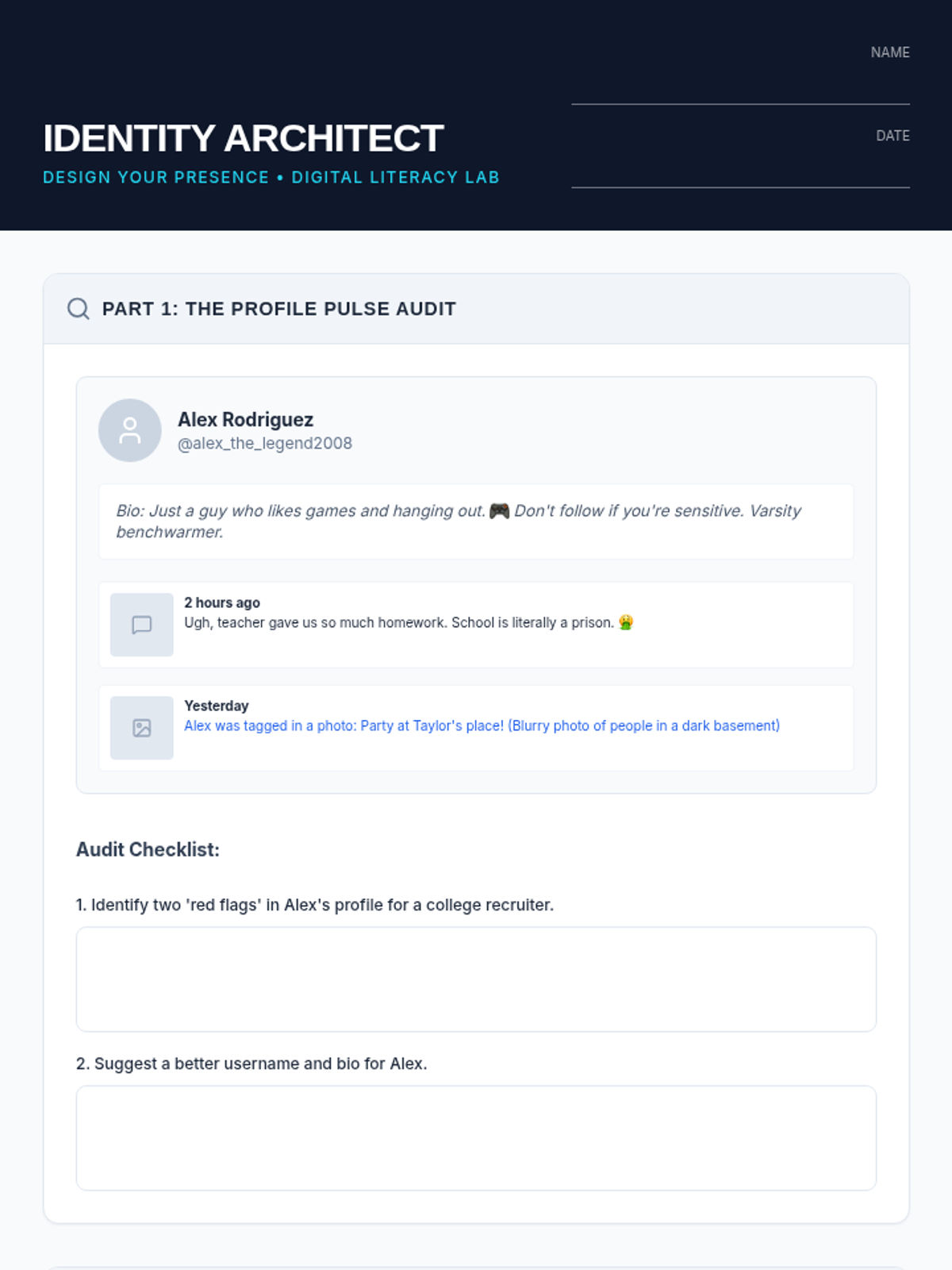
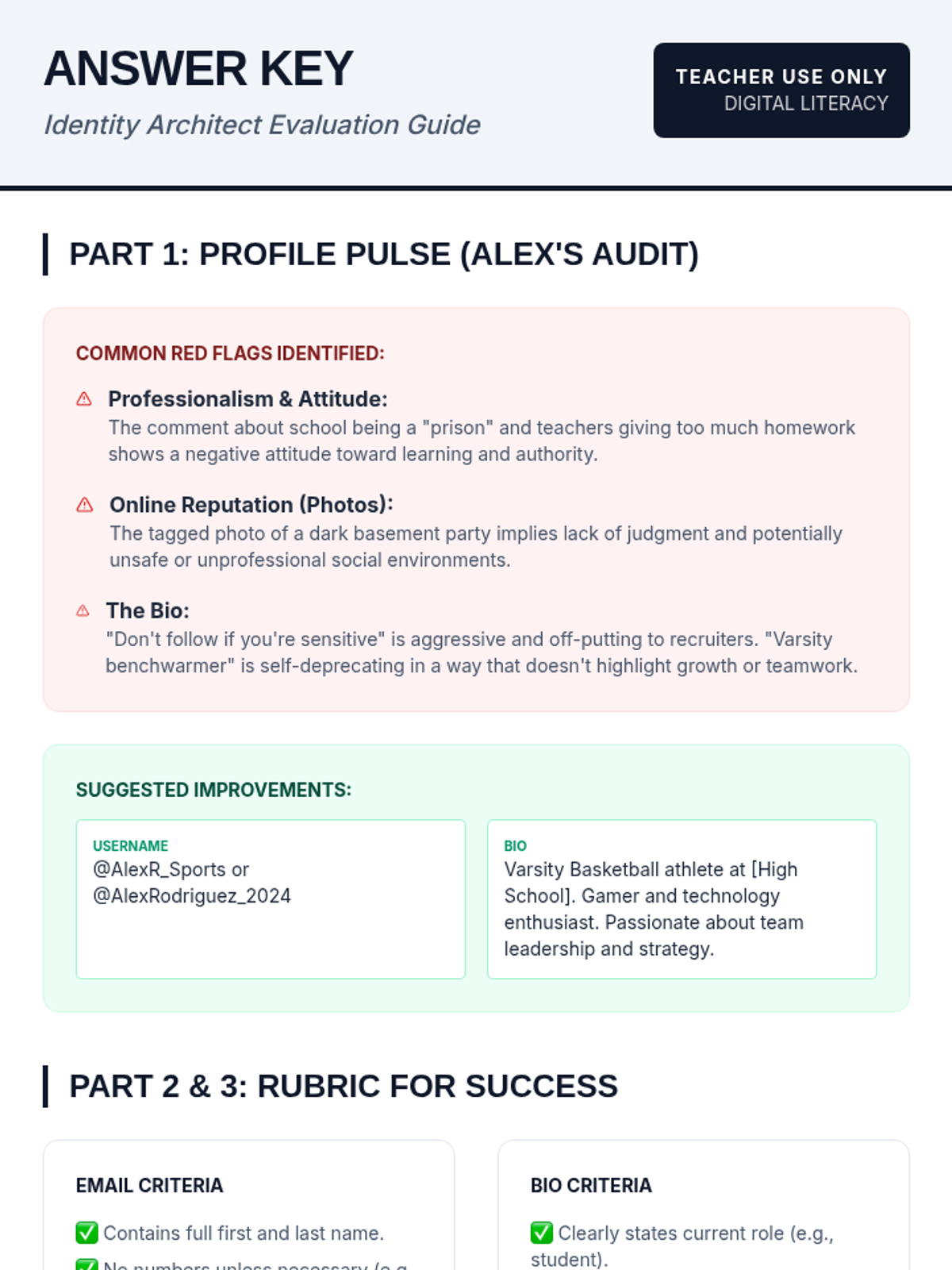
This lesson empowers students to take control of their digital footprints by transforming them into intentional 'digital blueprints.' Students analyze mock social media profiles, practice professional communication, and draft networking bios while navigating online safety and misinformation.
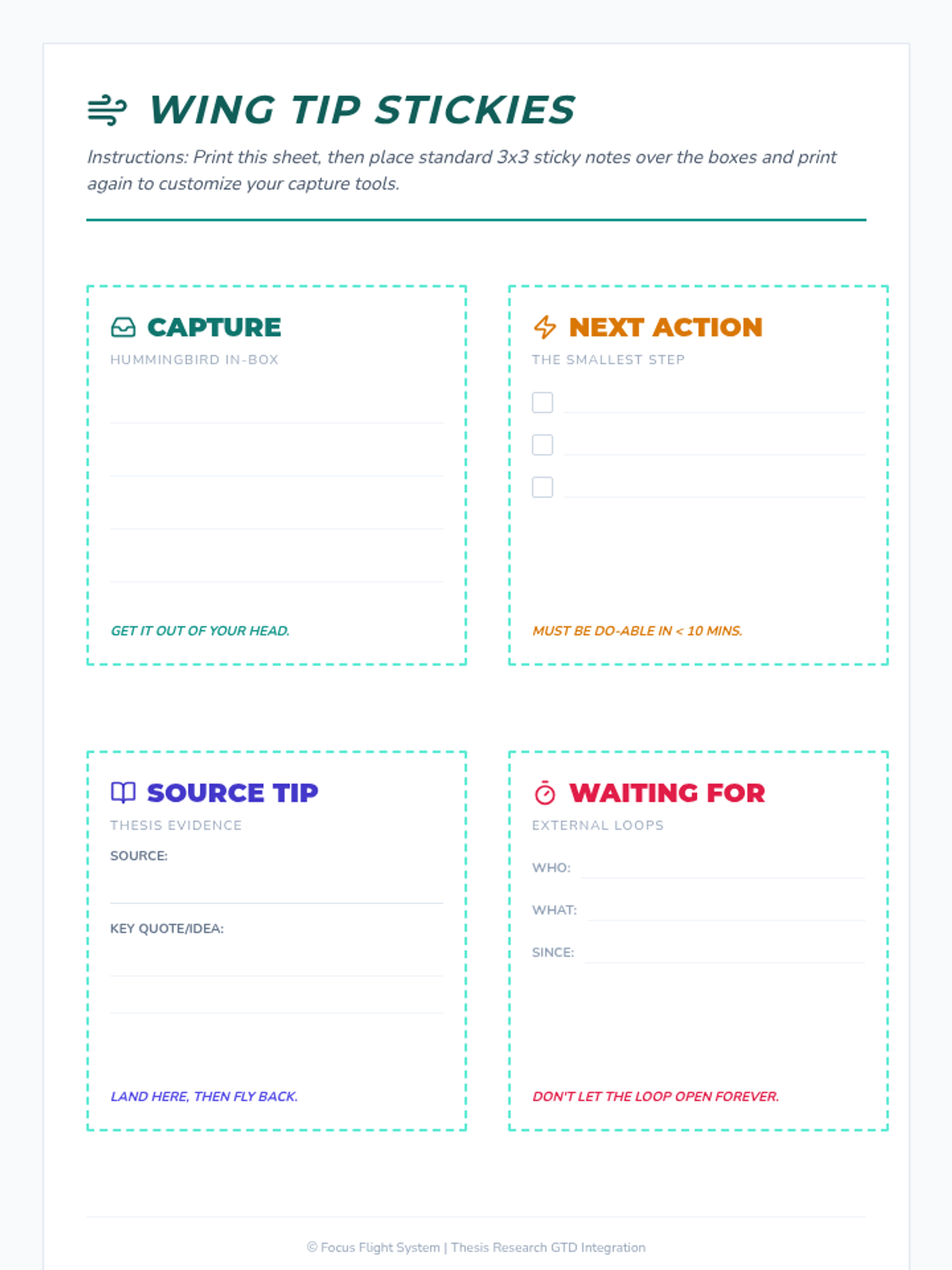
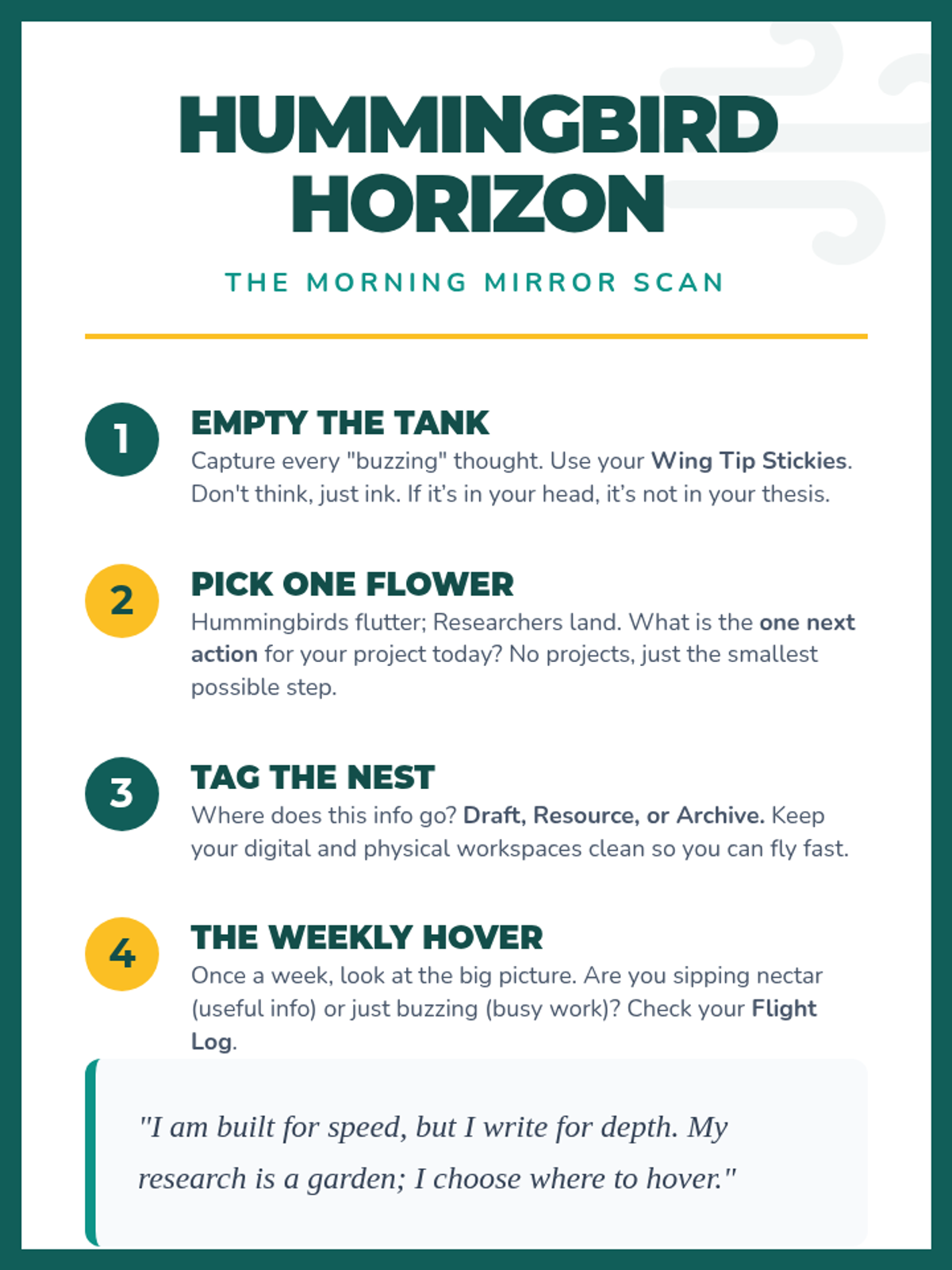
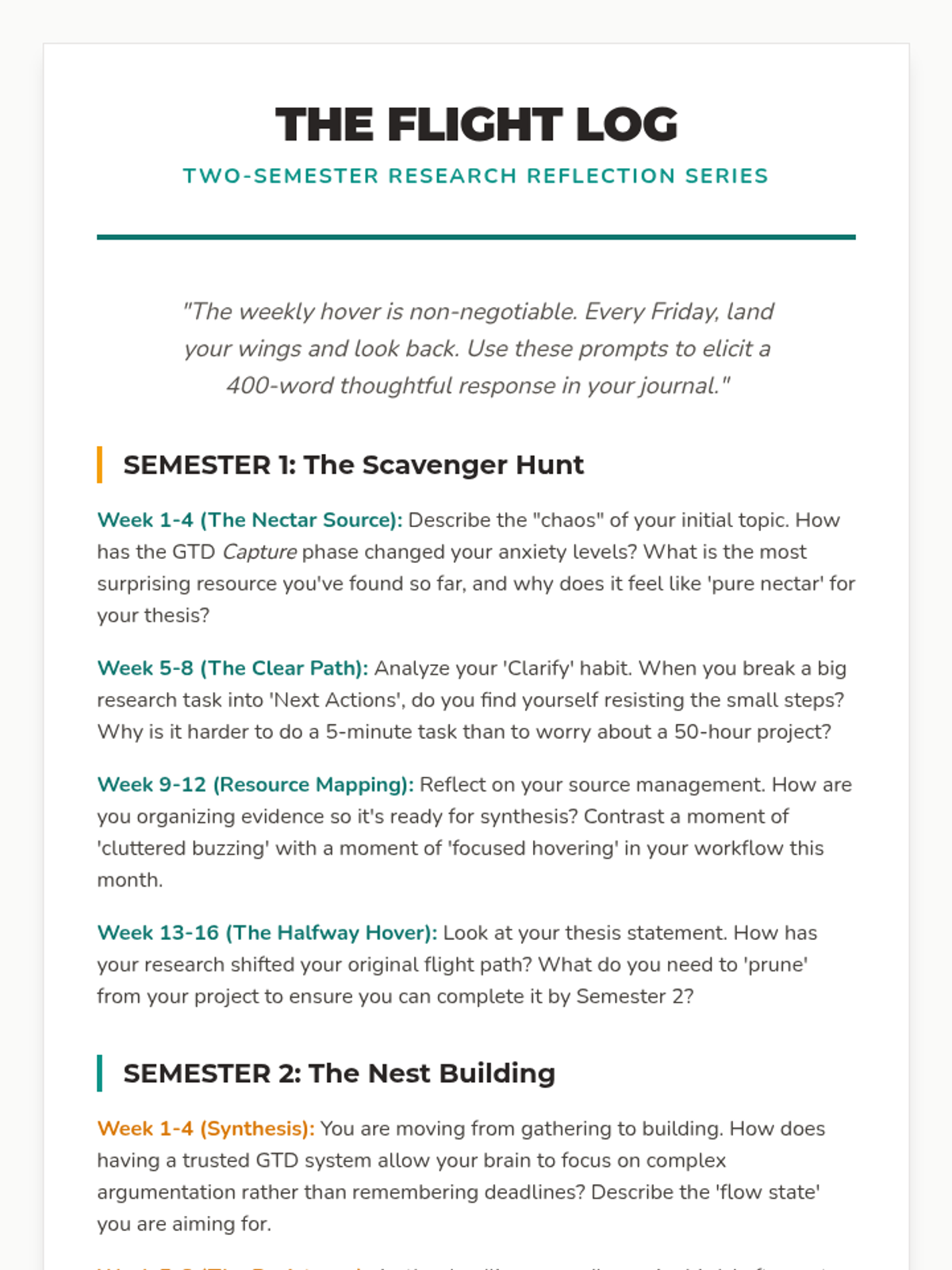
This lesson provides the foundational tools for the Focus Flight system: quick-capture sticky notes, a visual mindset poster, and structured reflection prompts to support a two-semester research thesis.
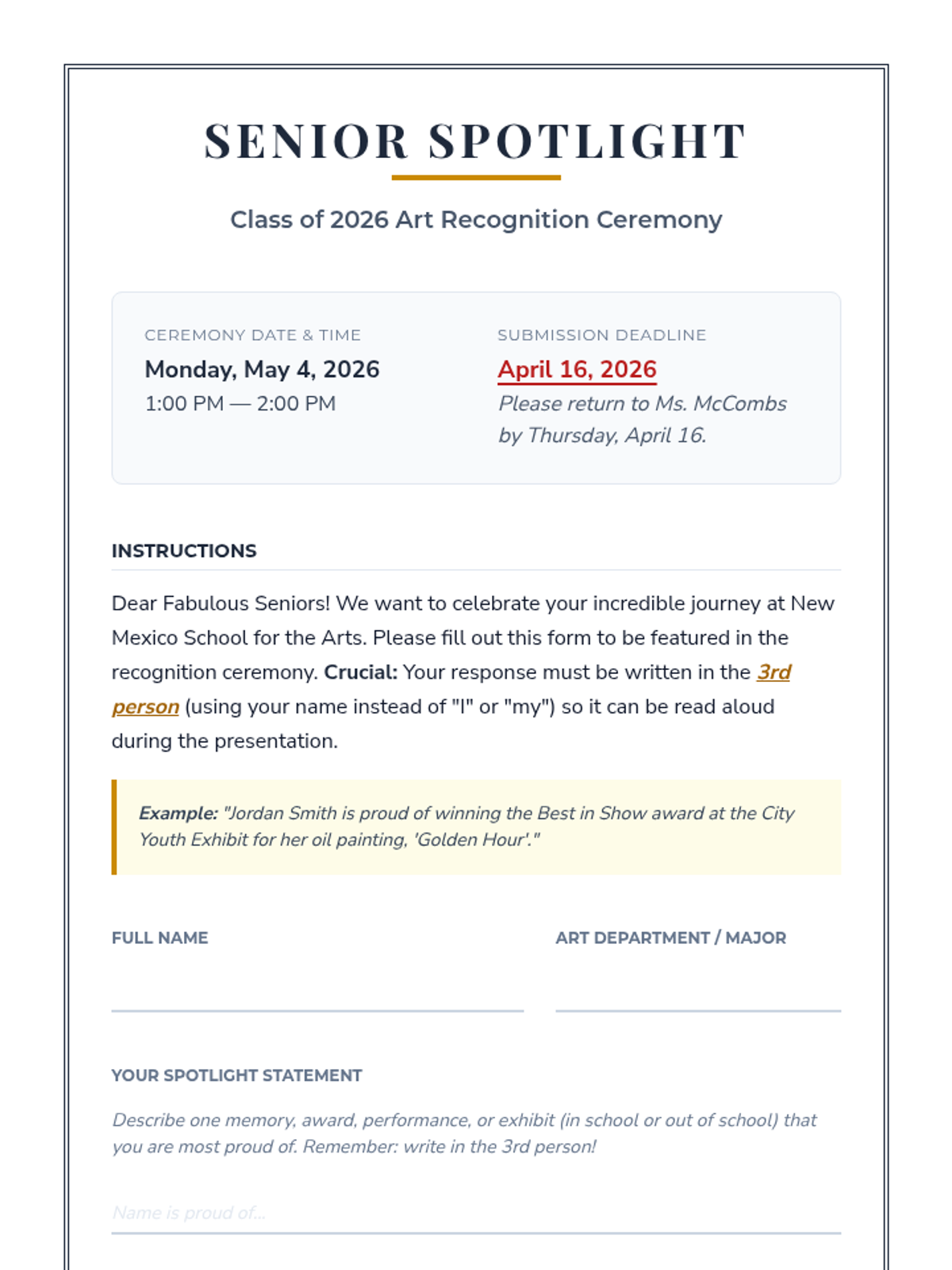
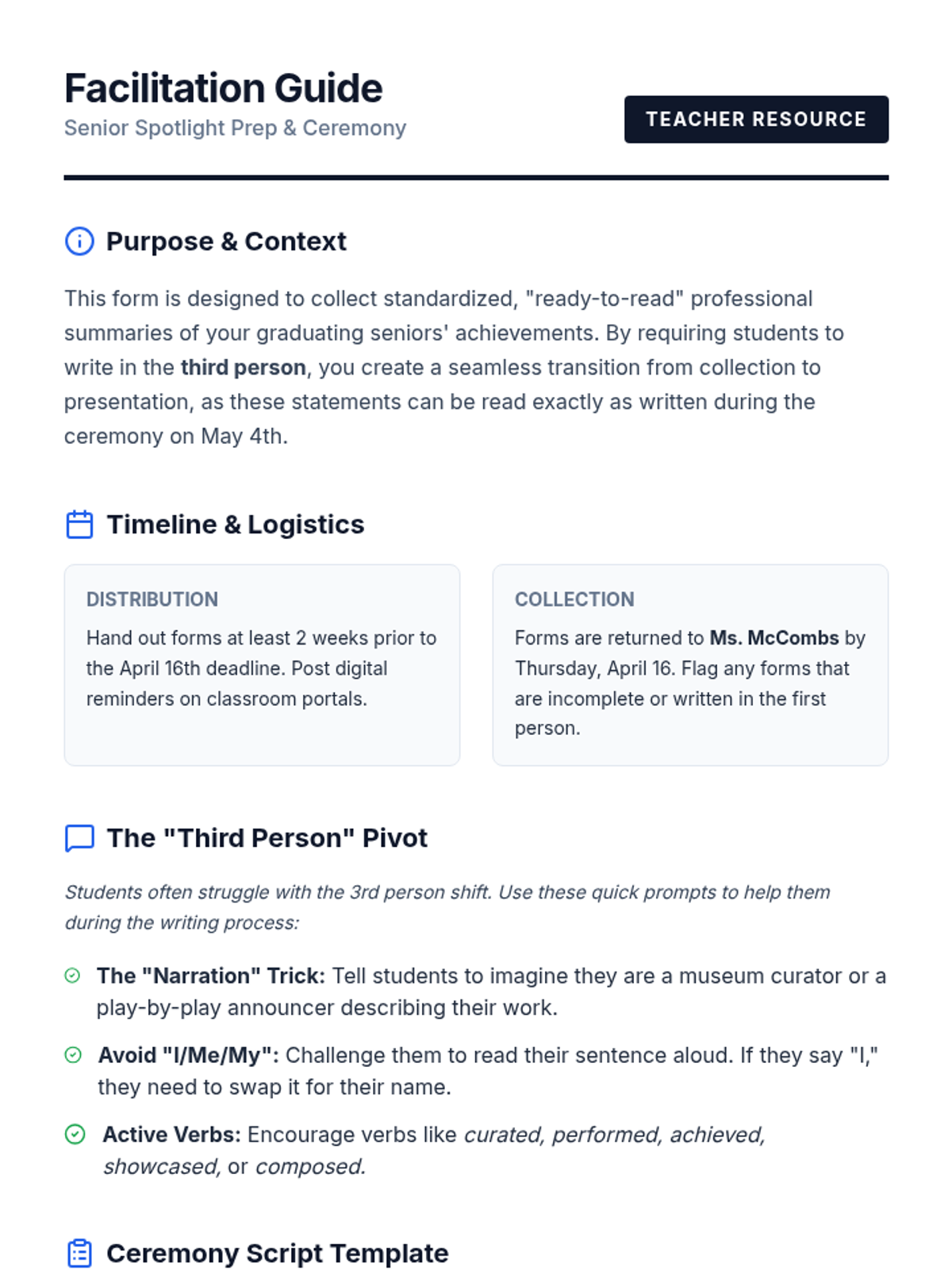
A collection of materials to help graduating seniors prepare for their recognition ceremony, focusing on summarizing their artistic achievements and memories in a professional, third-person format.
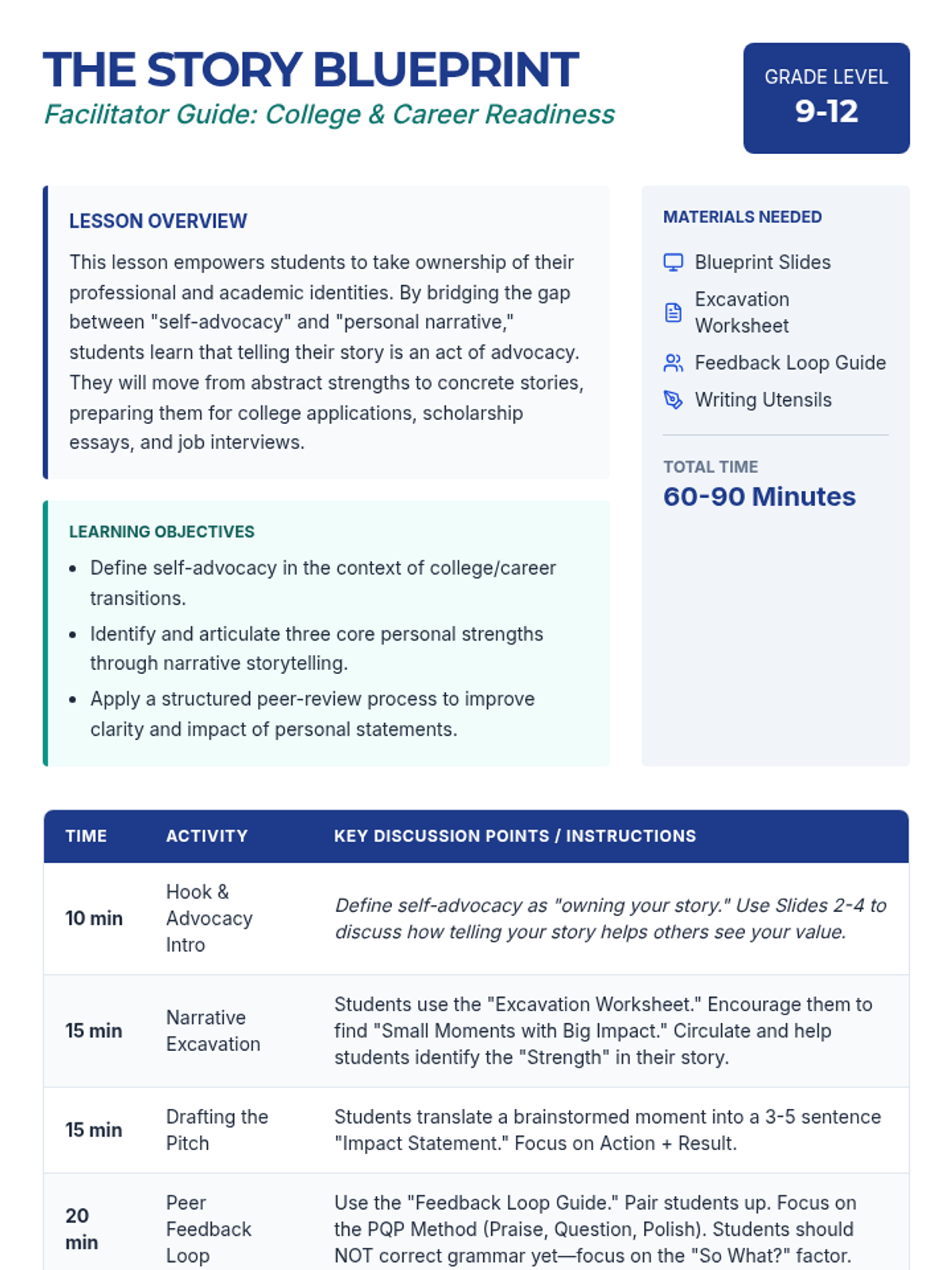
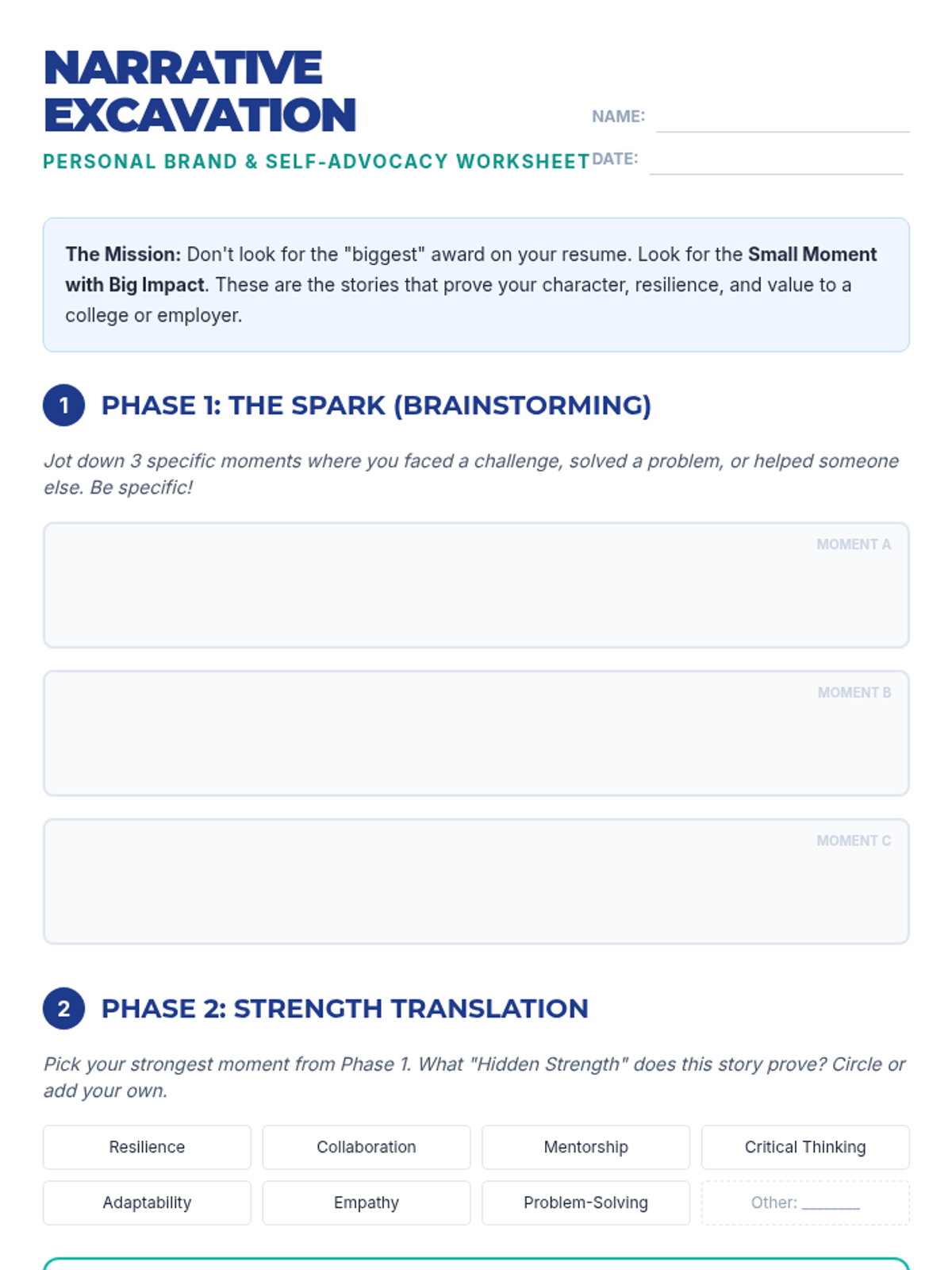
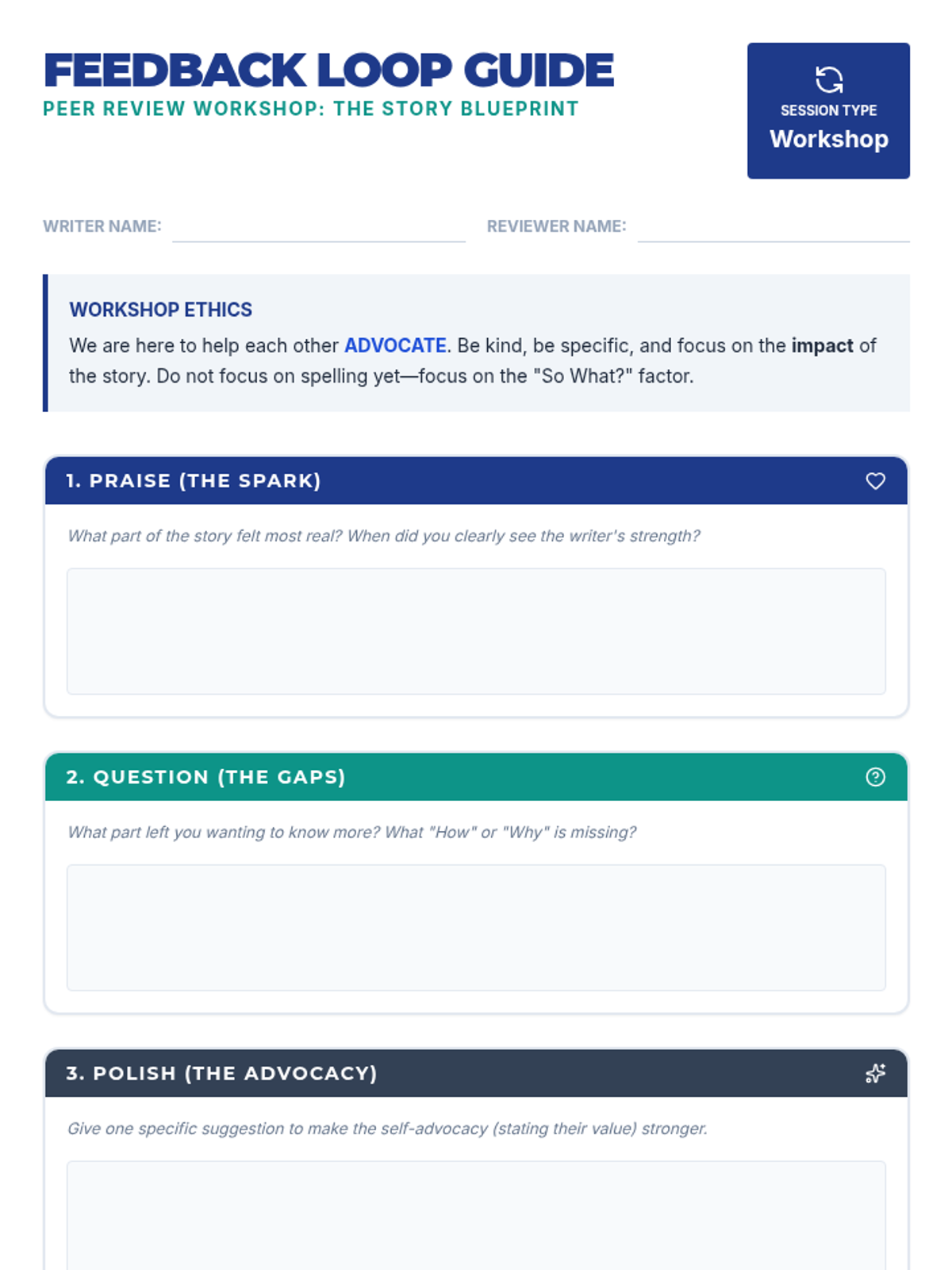
A high school counseling lesson focused on developing a personal brand through self-advocacy and narrative writing. Students learn to articulate their strengths and provide constructive feedback to peers.
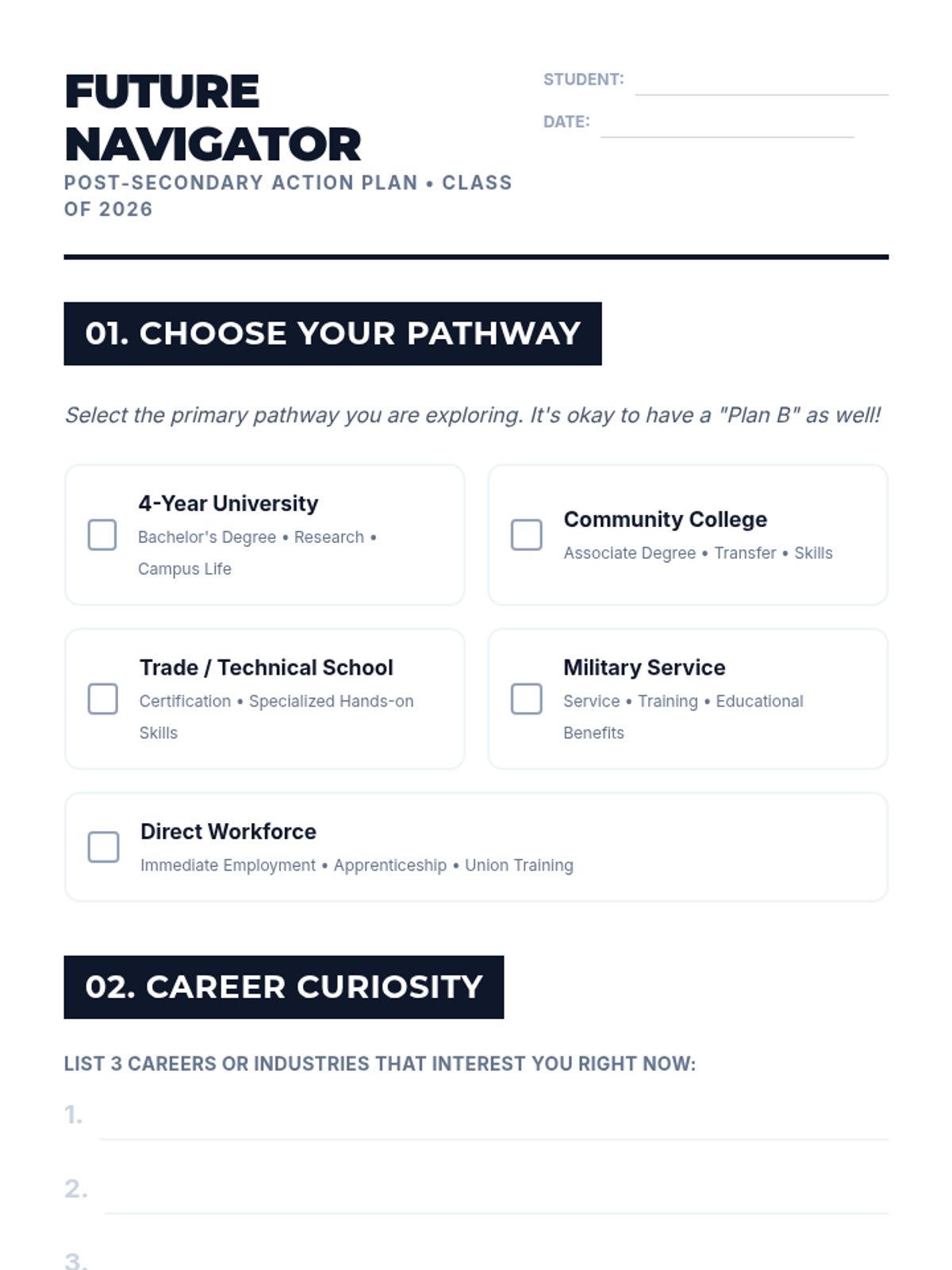
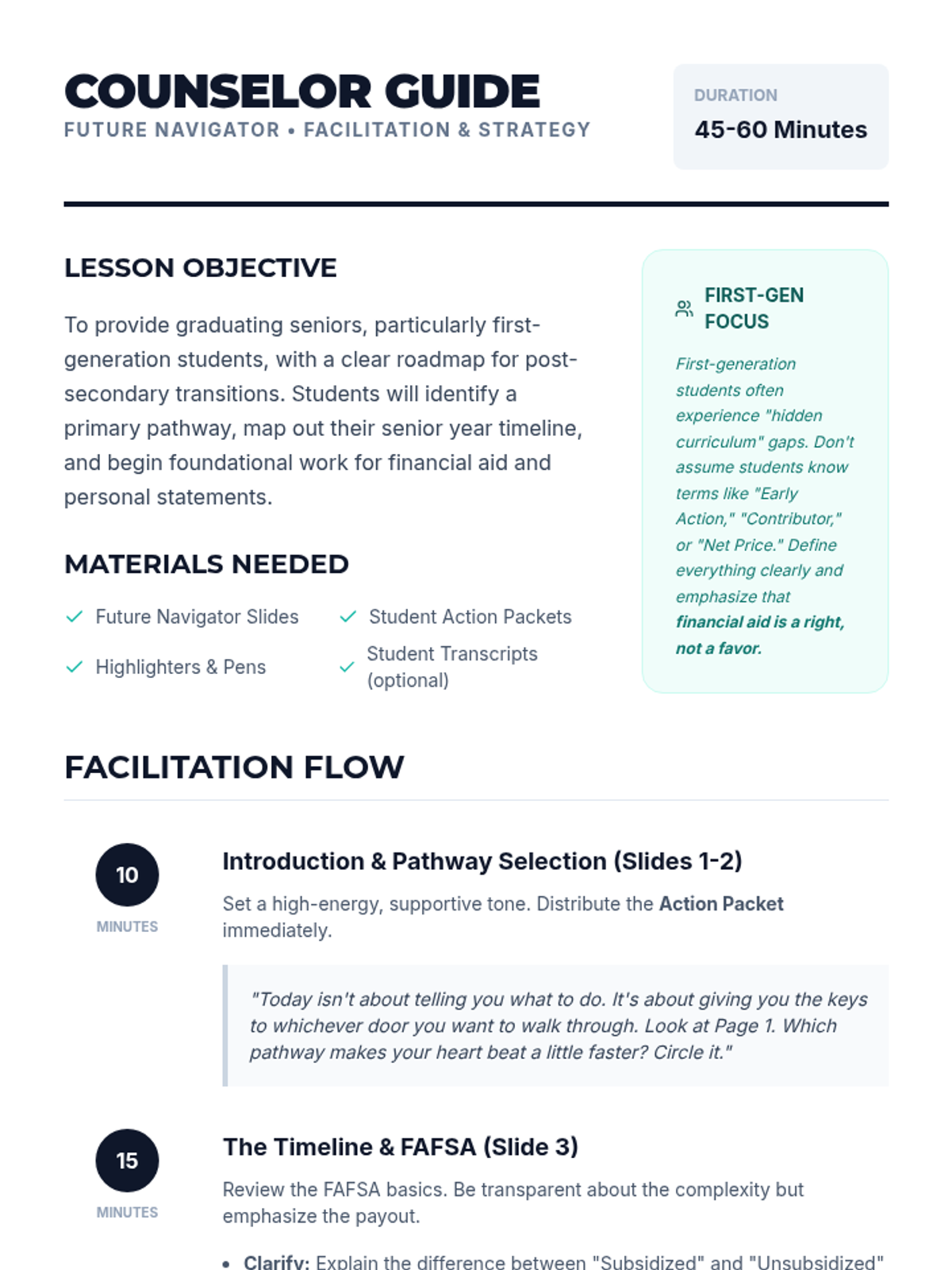
A comprehensive college and career readiness lesson designed for high school seniors, specifically tailored for first-generation students. It covers FAFSA, application timelines, personal statements, and diverse career pathways.
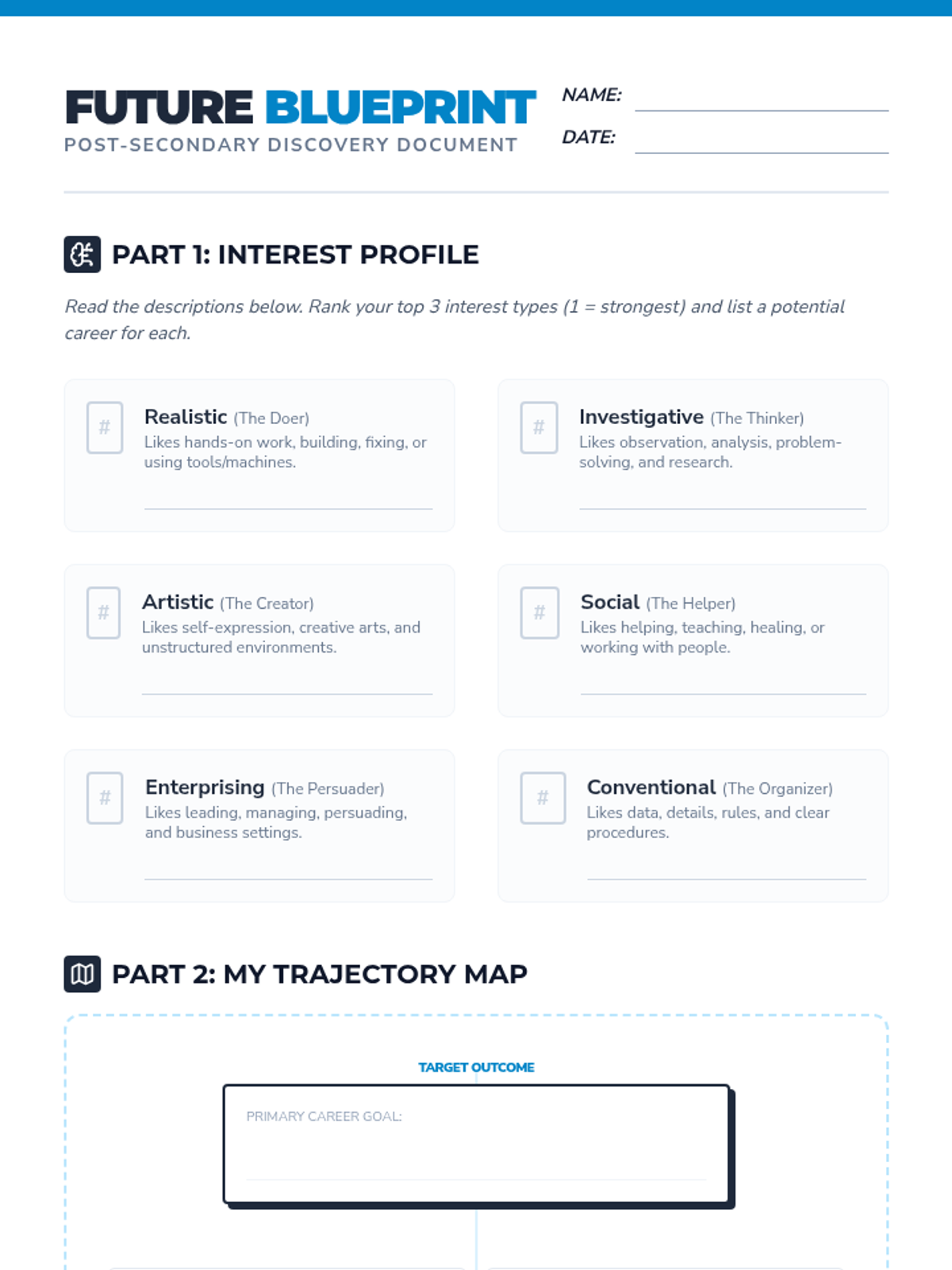
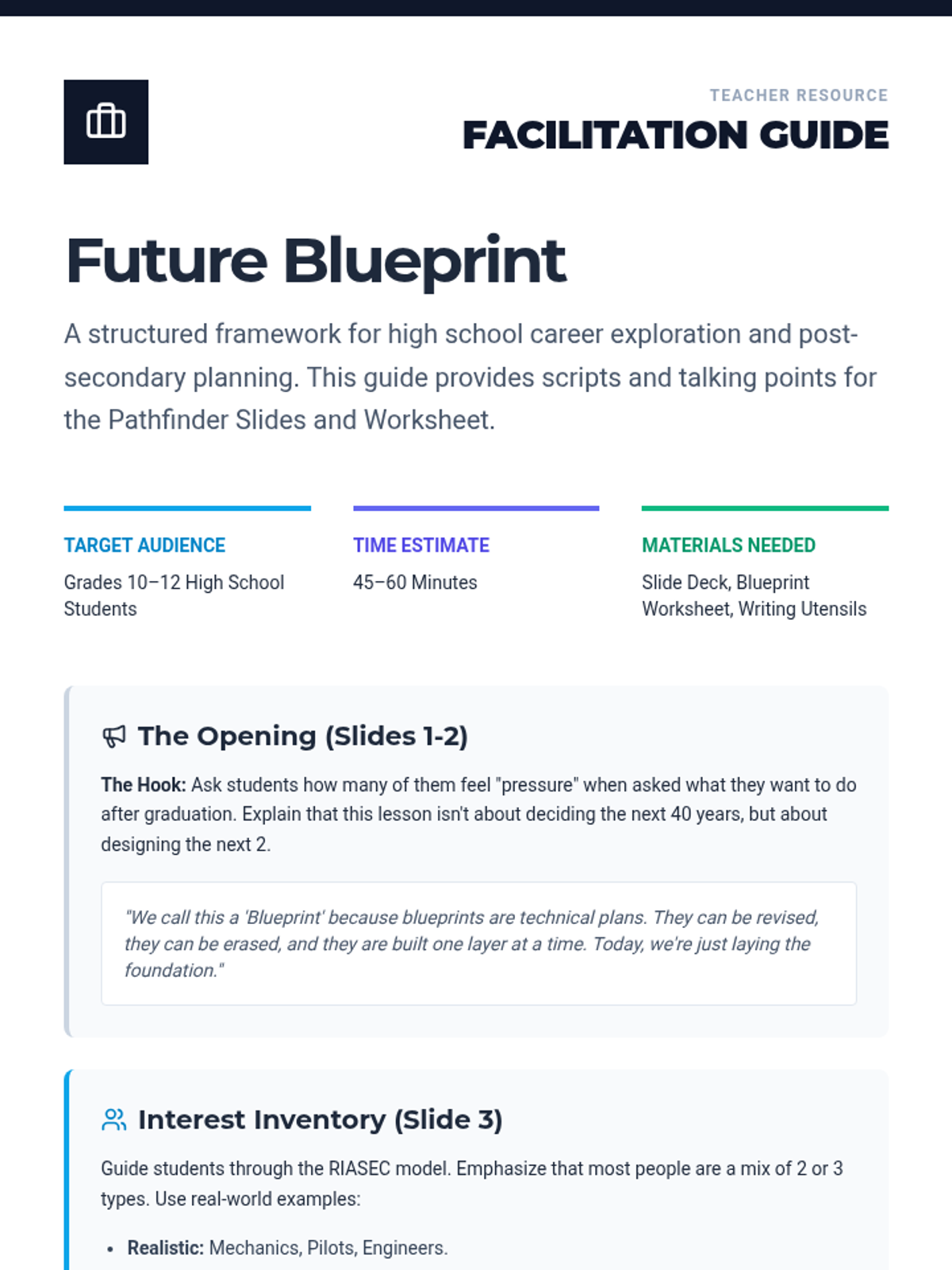
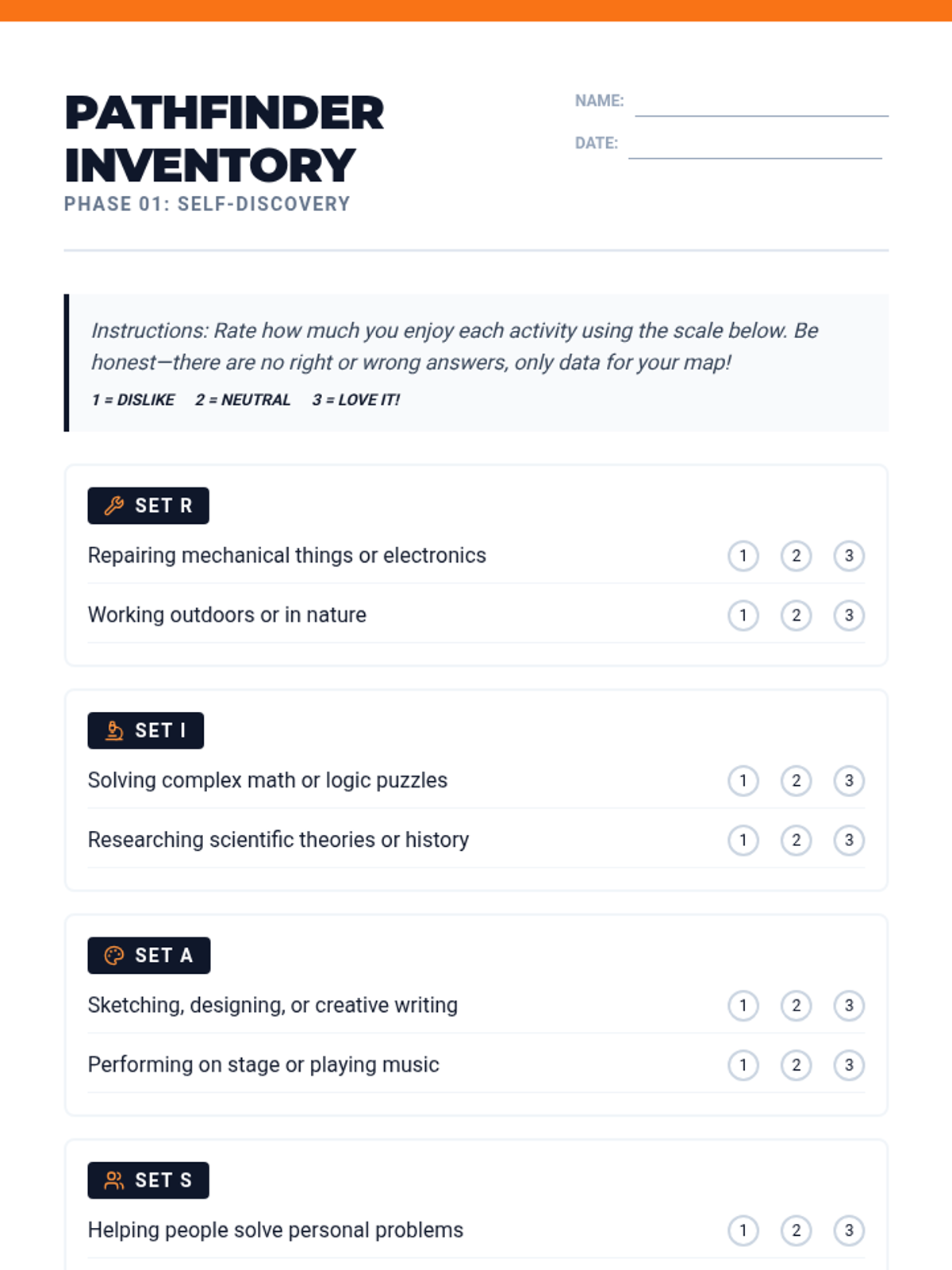
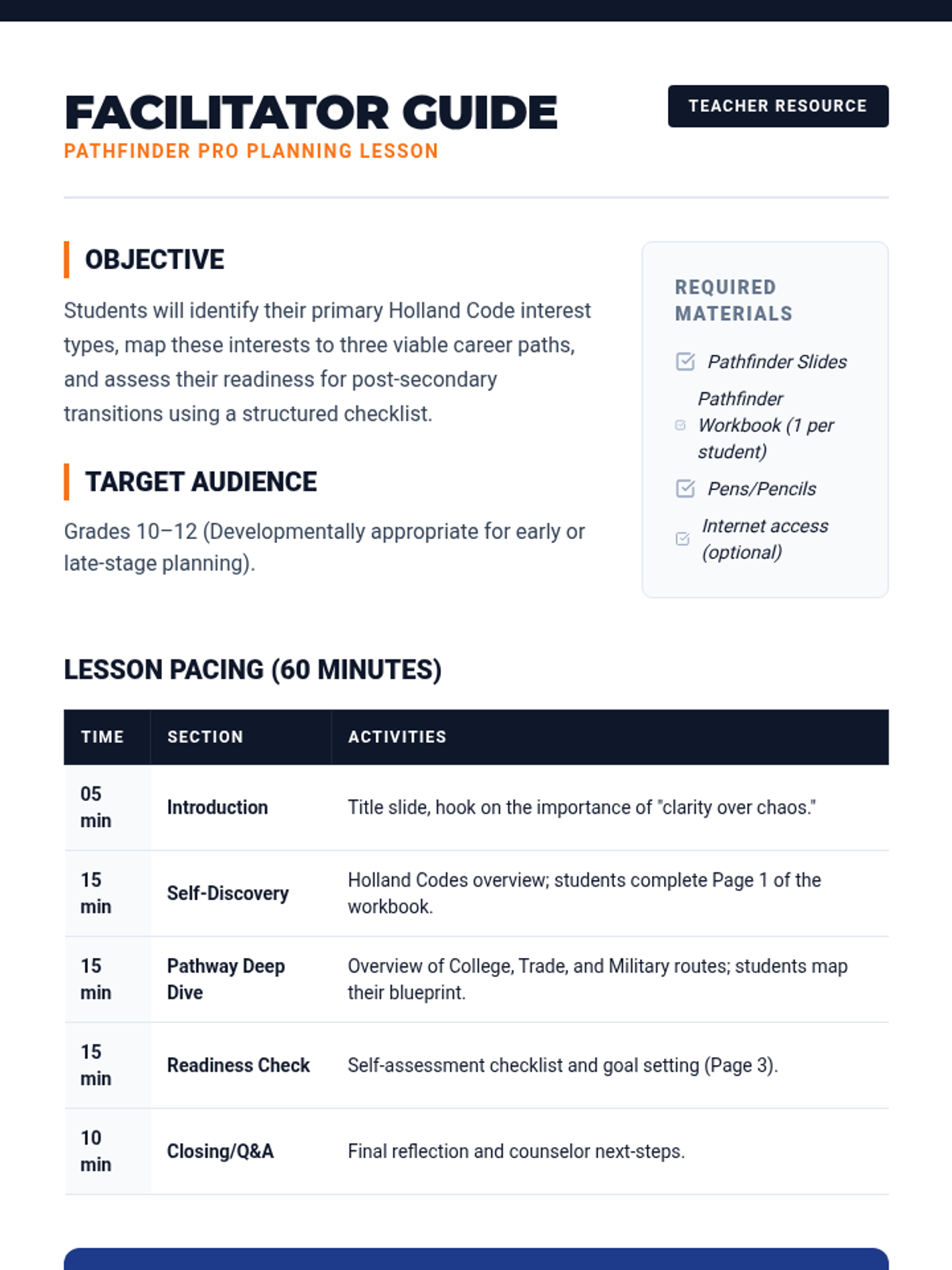
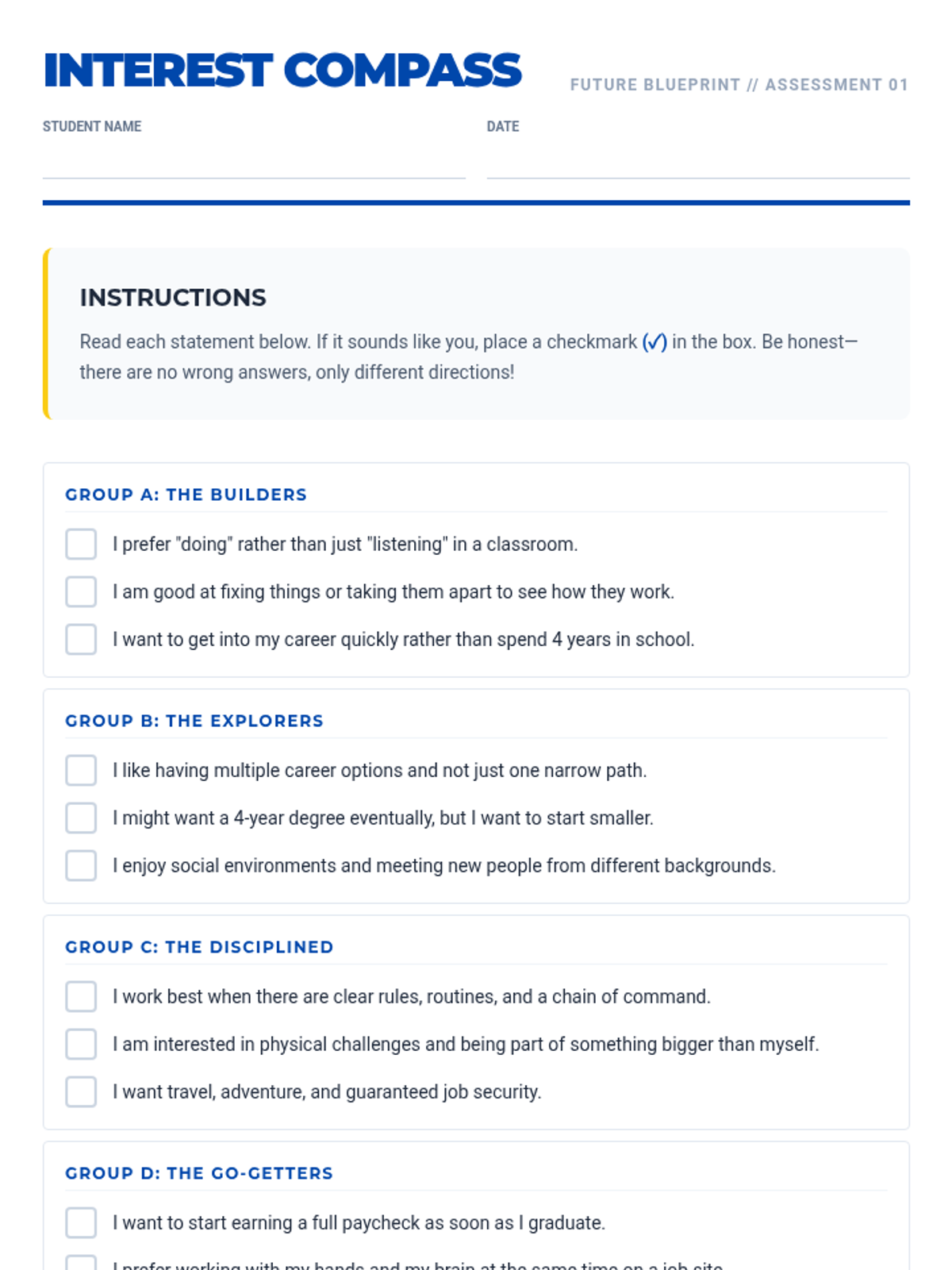
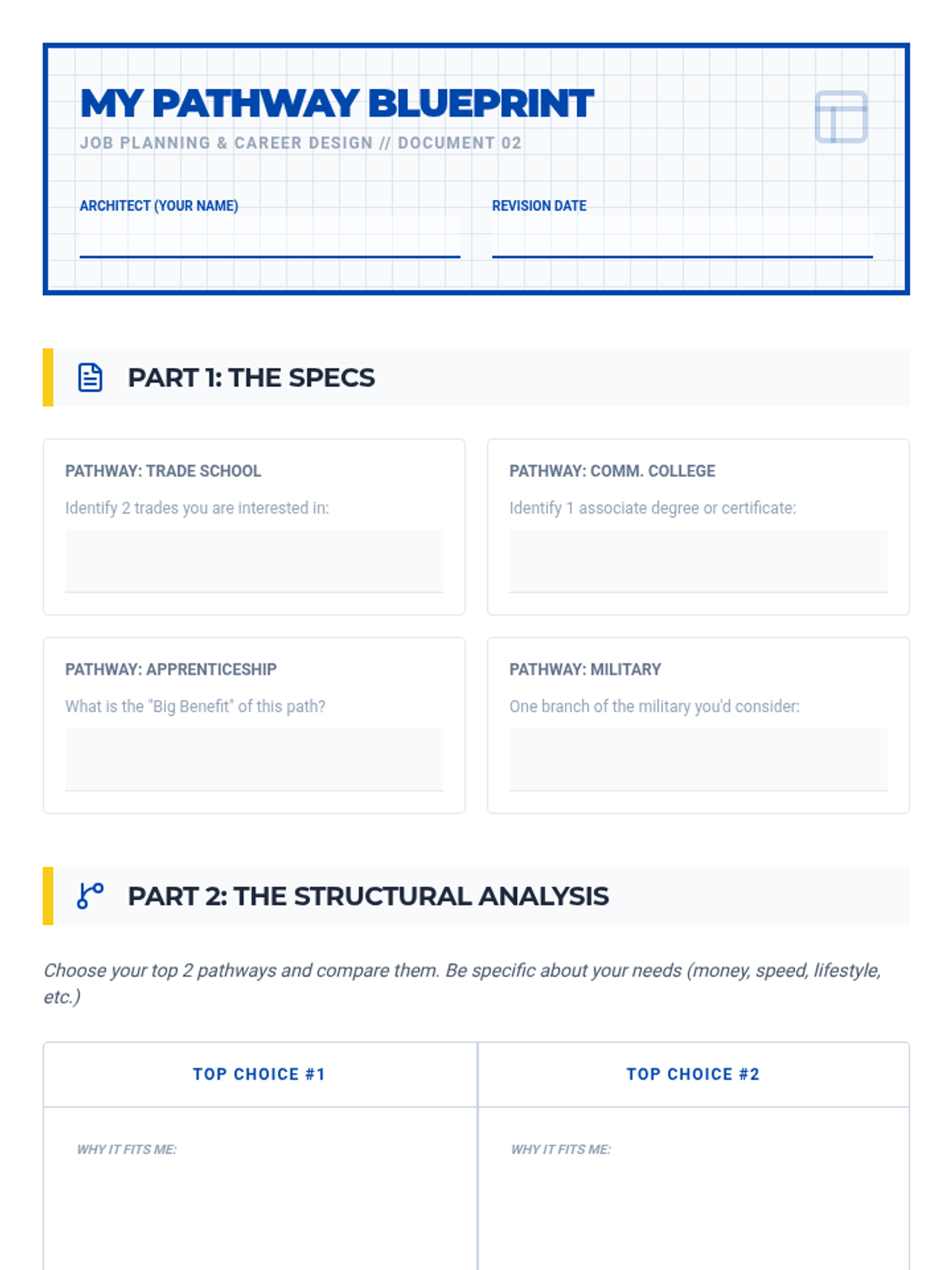
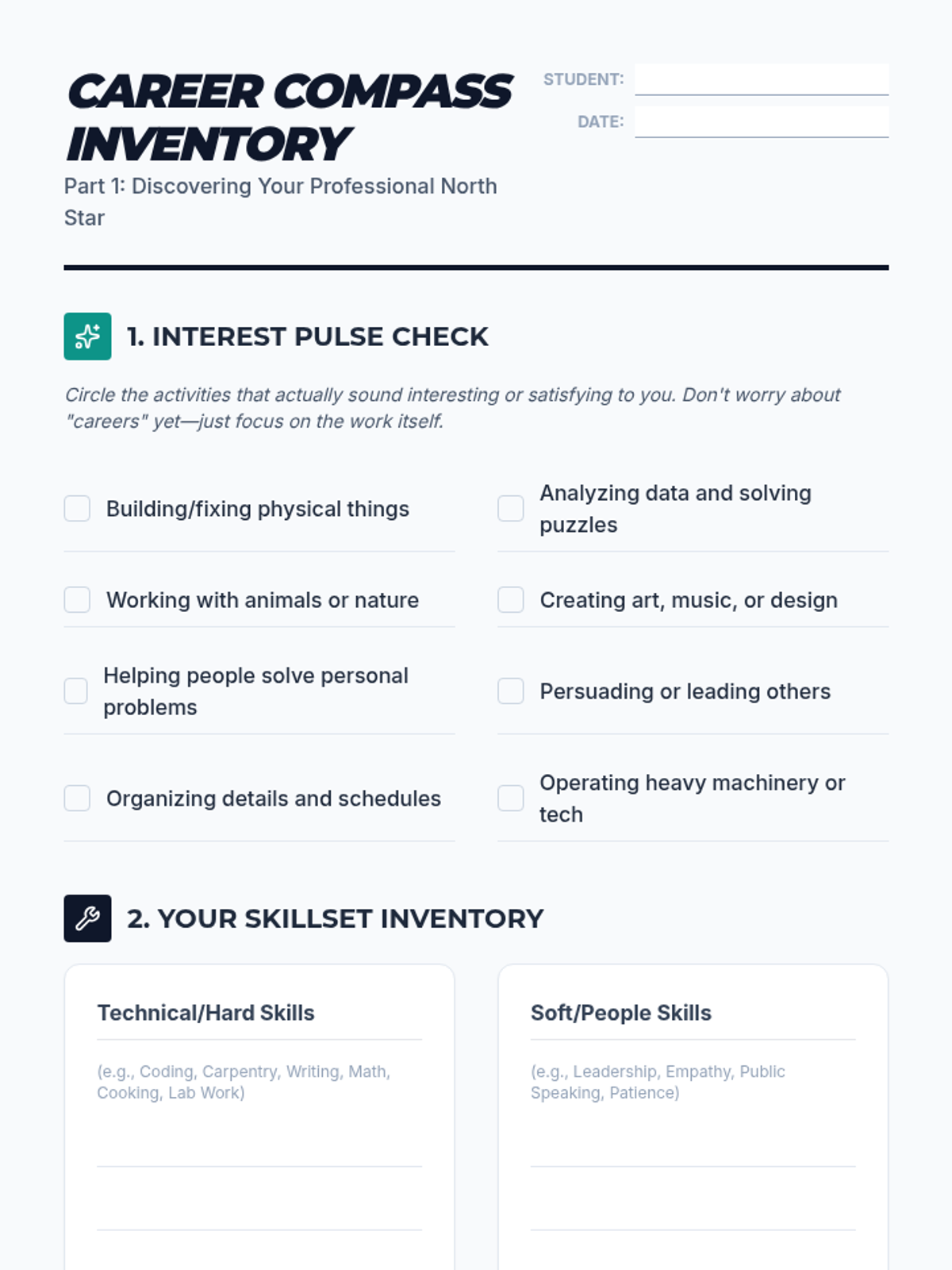
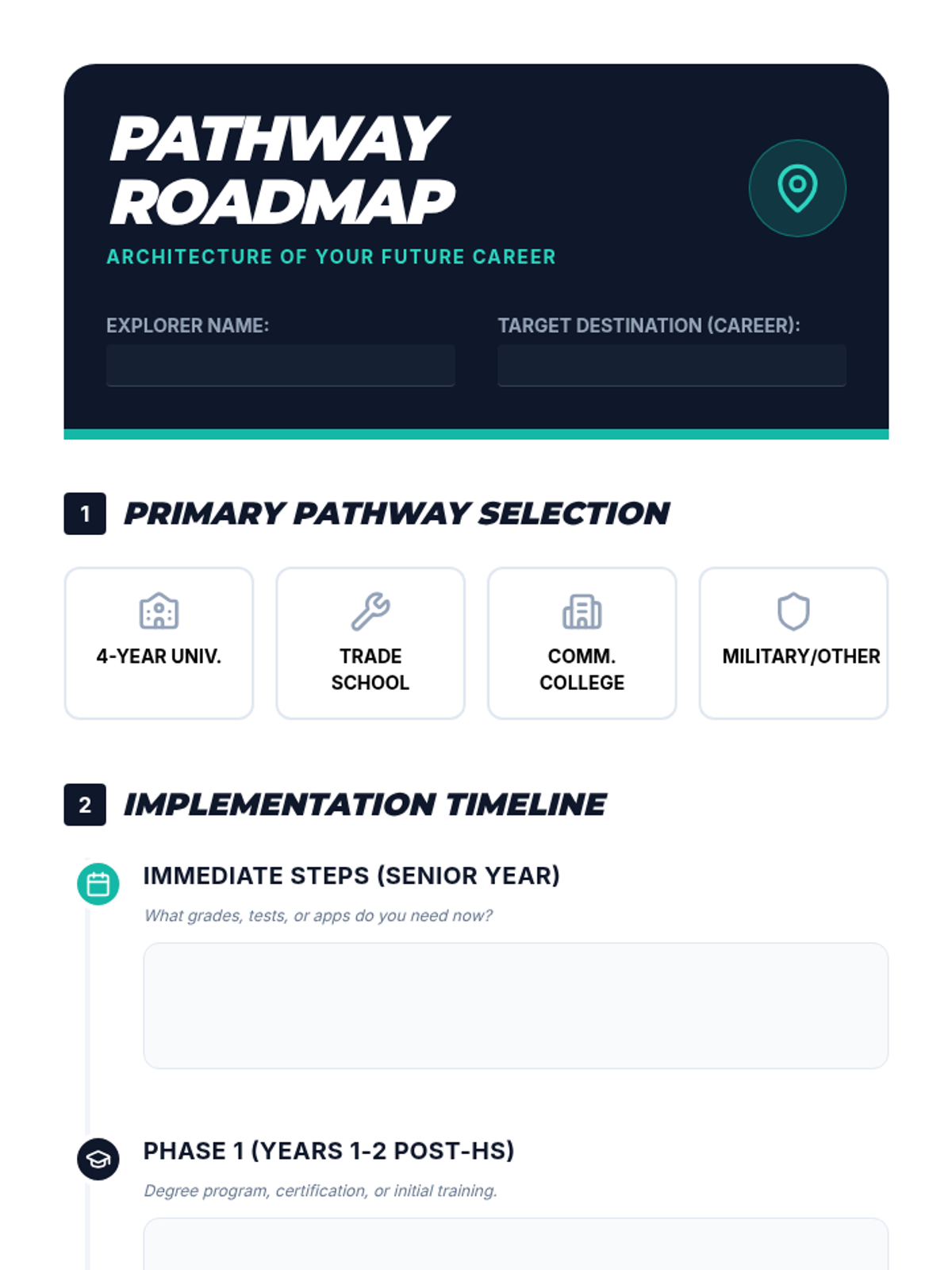
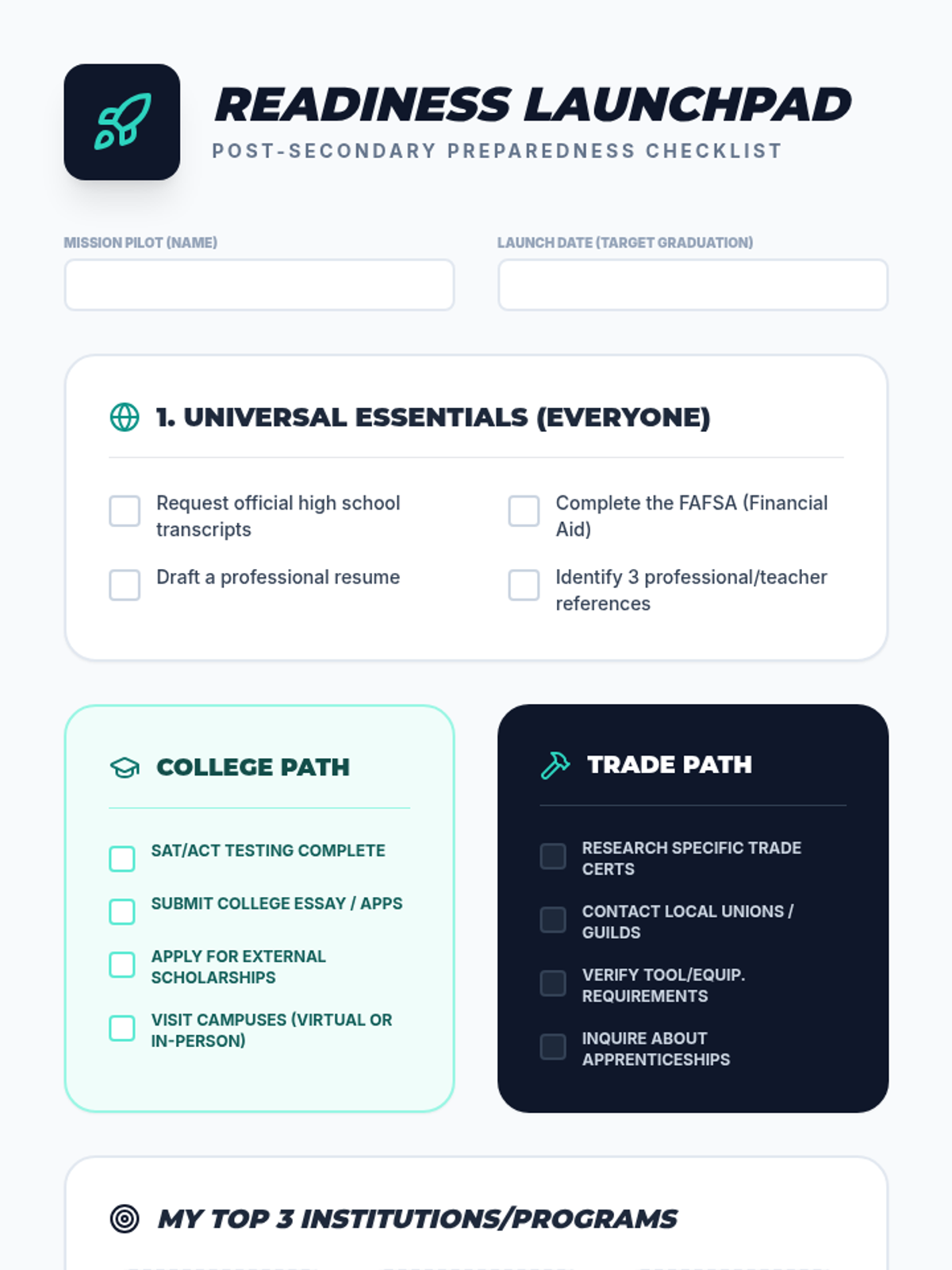
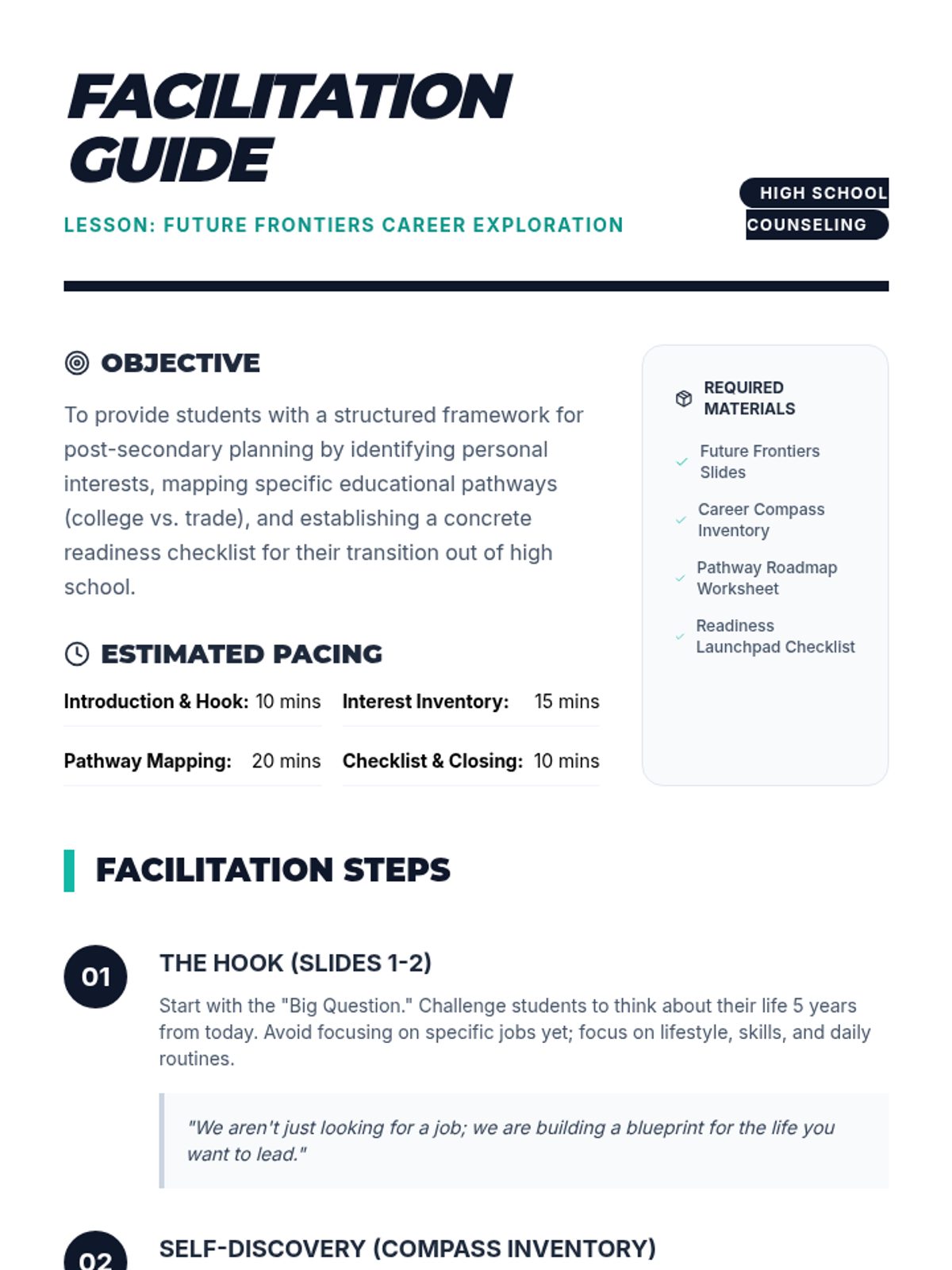
A comprehensive career exploration and post-secondary planning lesson for high school students, featuring interest assessments, pathway mapping, and readiness checklists.
A comprehensive career exploration lesson designed to help high school students identify their interests, map potential career pathways, and track their readiness for post-secondary education or vocational training.
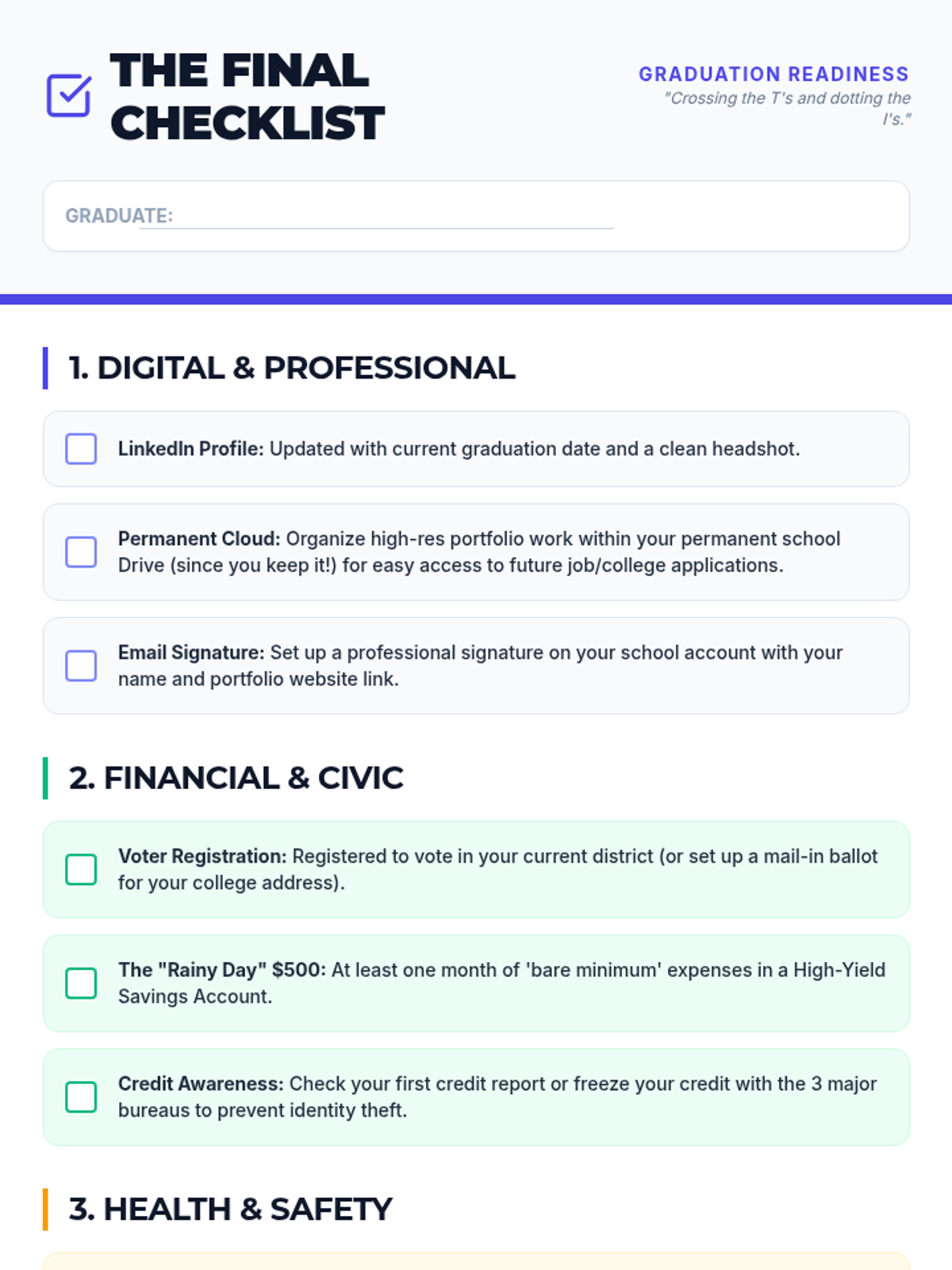
A comprehensive final review and logistics checklist for high school seniors, covering voter registration, insurance cards, professional email signatures, and emergency contact updates.
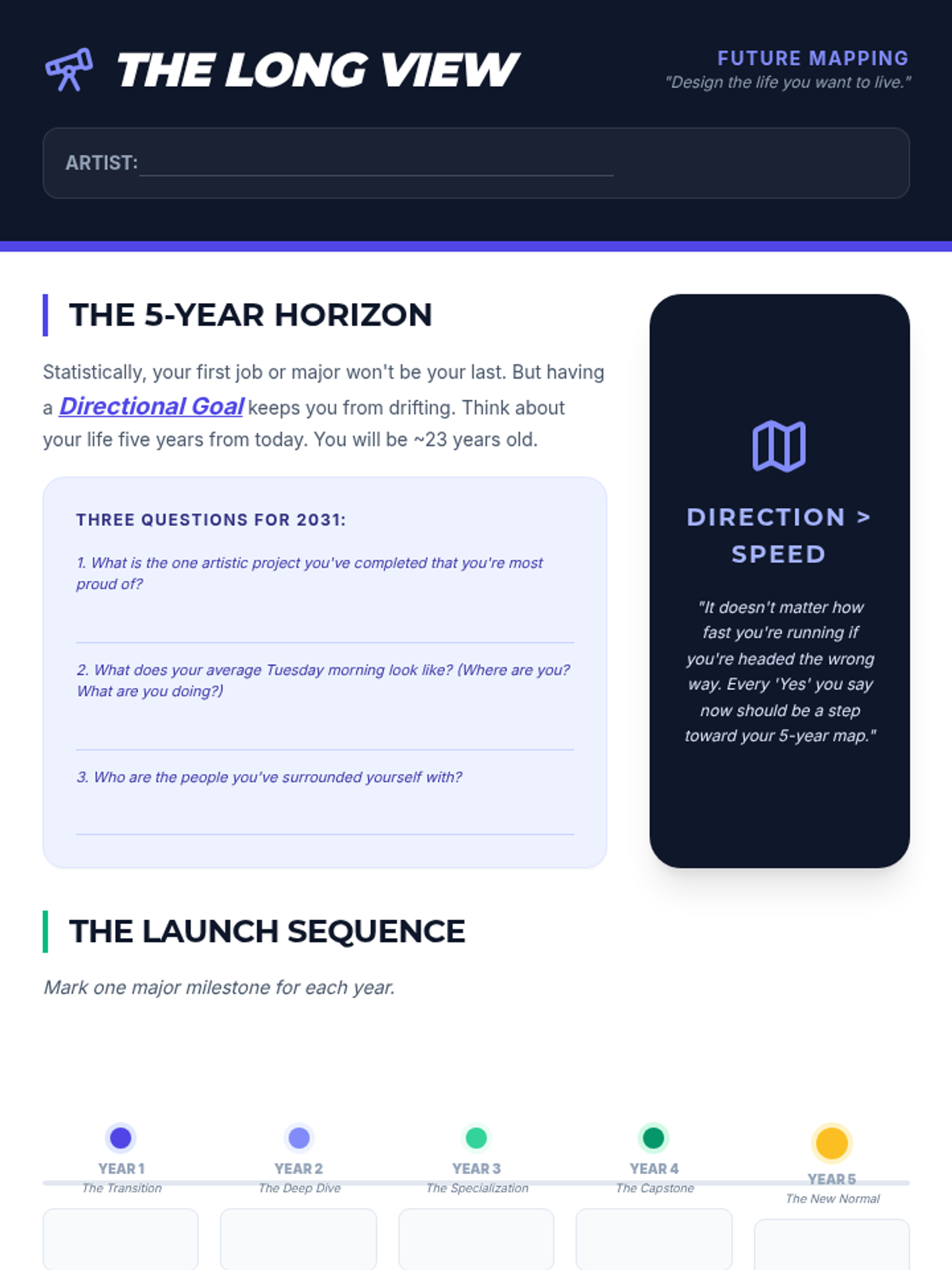
Guides students through a long-term goal-setting exercise, helping them map out professional and personal milestones for their first five years after high school using a visual timeline approach.
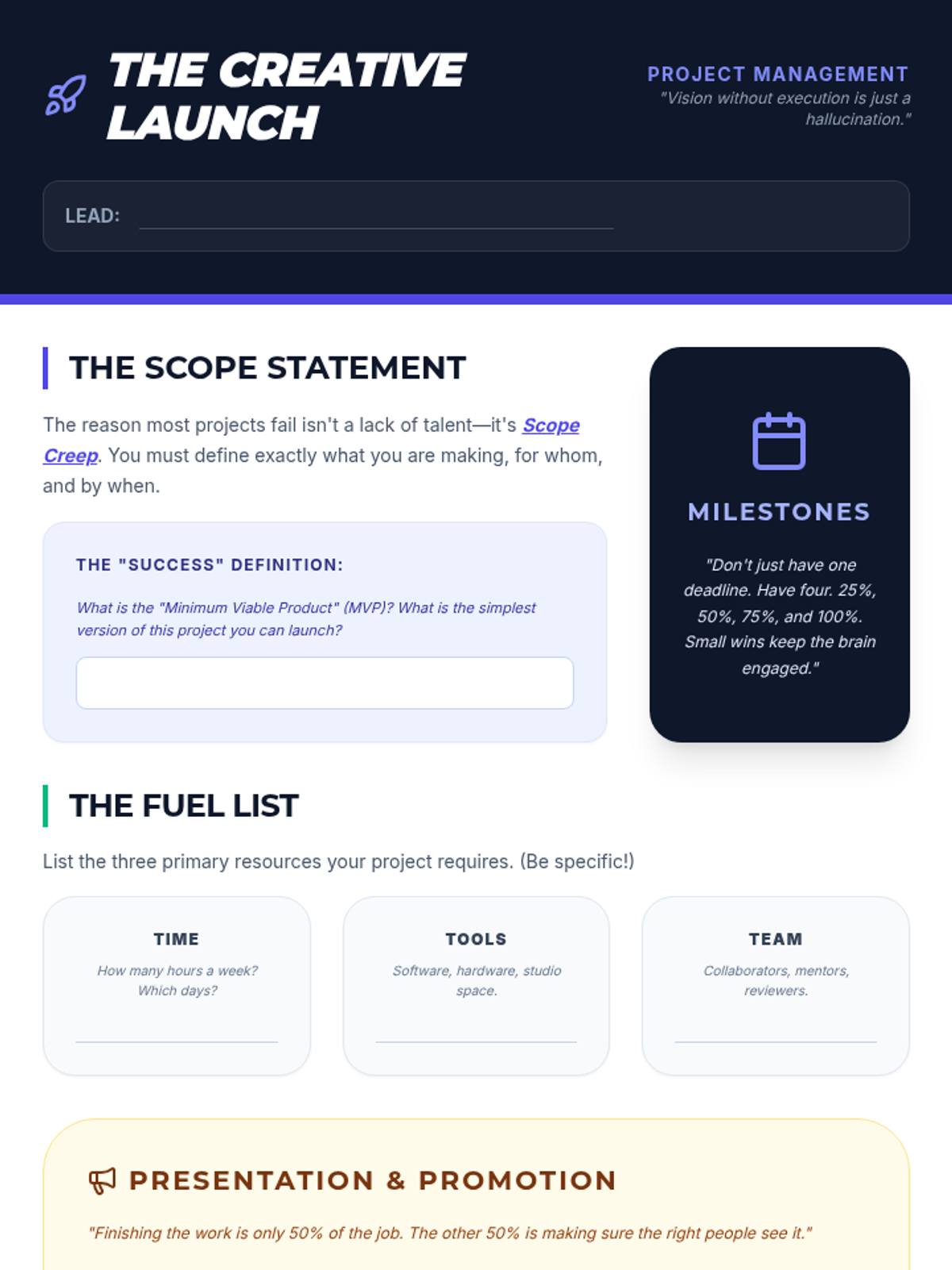
Teaches students how to plan, execute, and document a significant creative project, focusing on milestones, resource management, and the art of the 'Launch.'
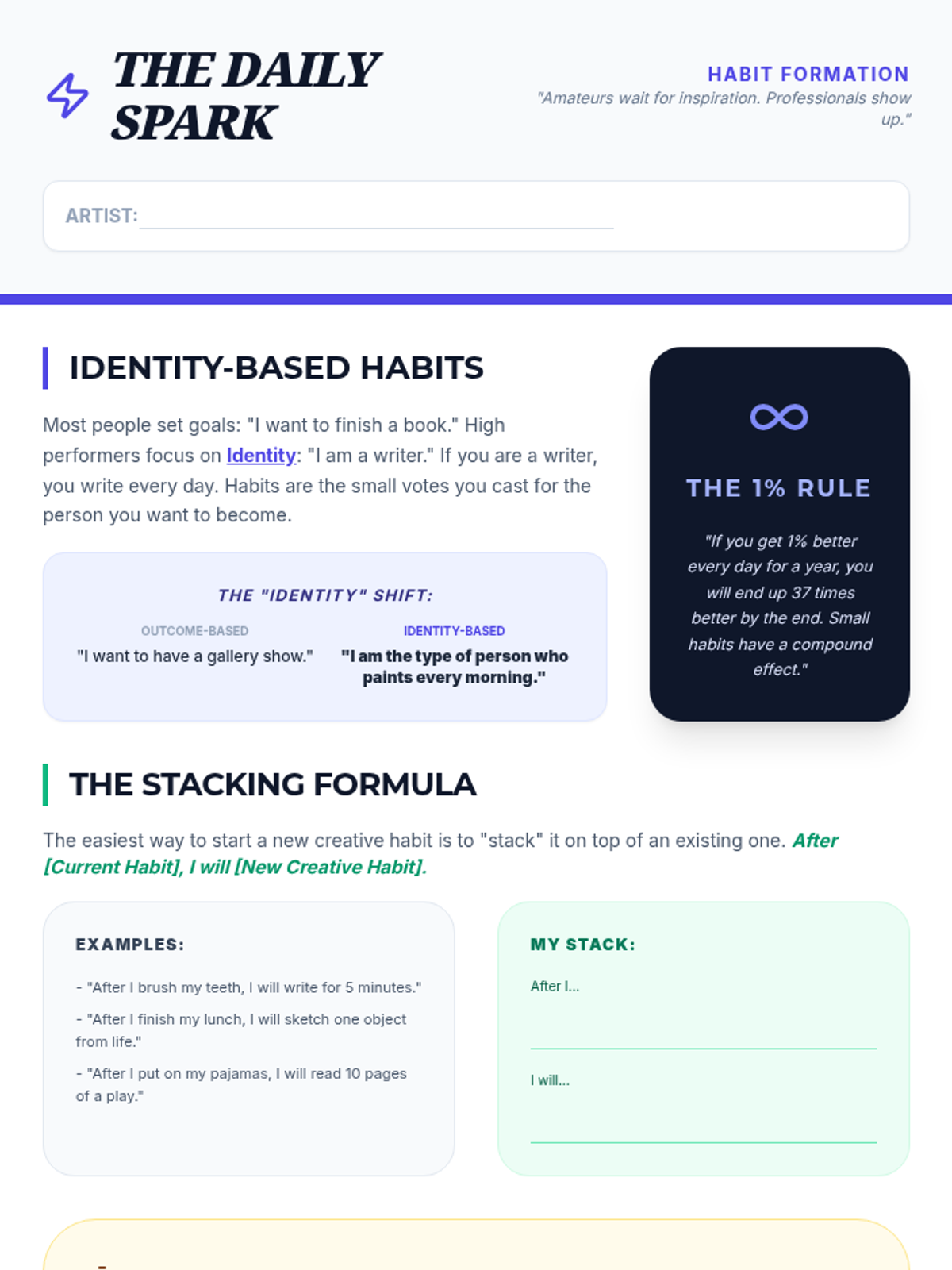
Teaches students how to build and maintain a sustainable artistic practice through small, consistent habits, focusing on the 'Atomic Habits' method for creative output.
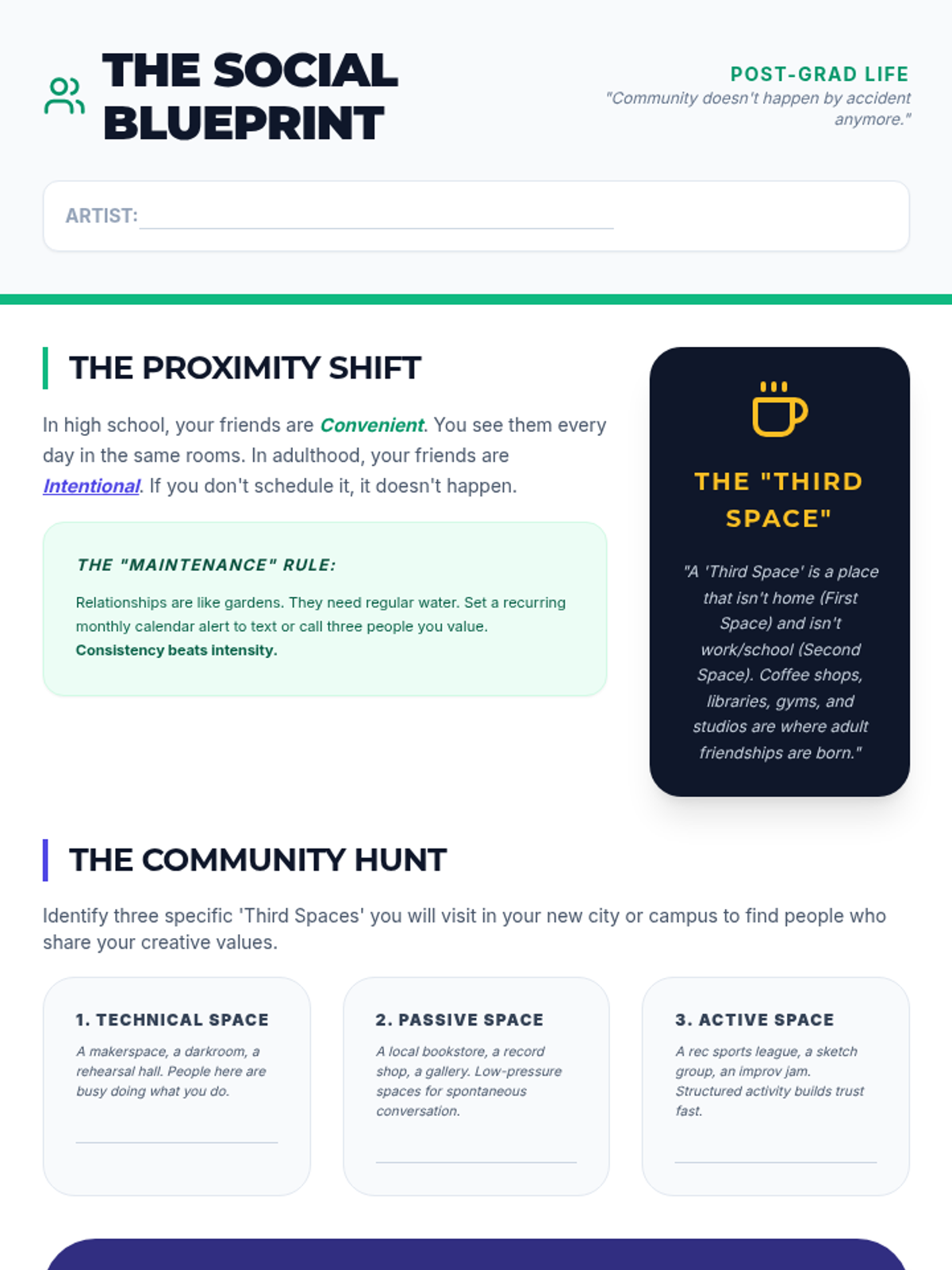
Explores the intentional effort required to build and maintain community as an adult, teaching students how to find 'third spaces' and manage the transition of high school friendships.
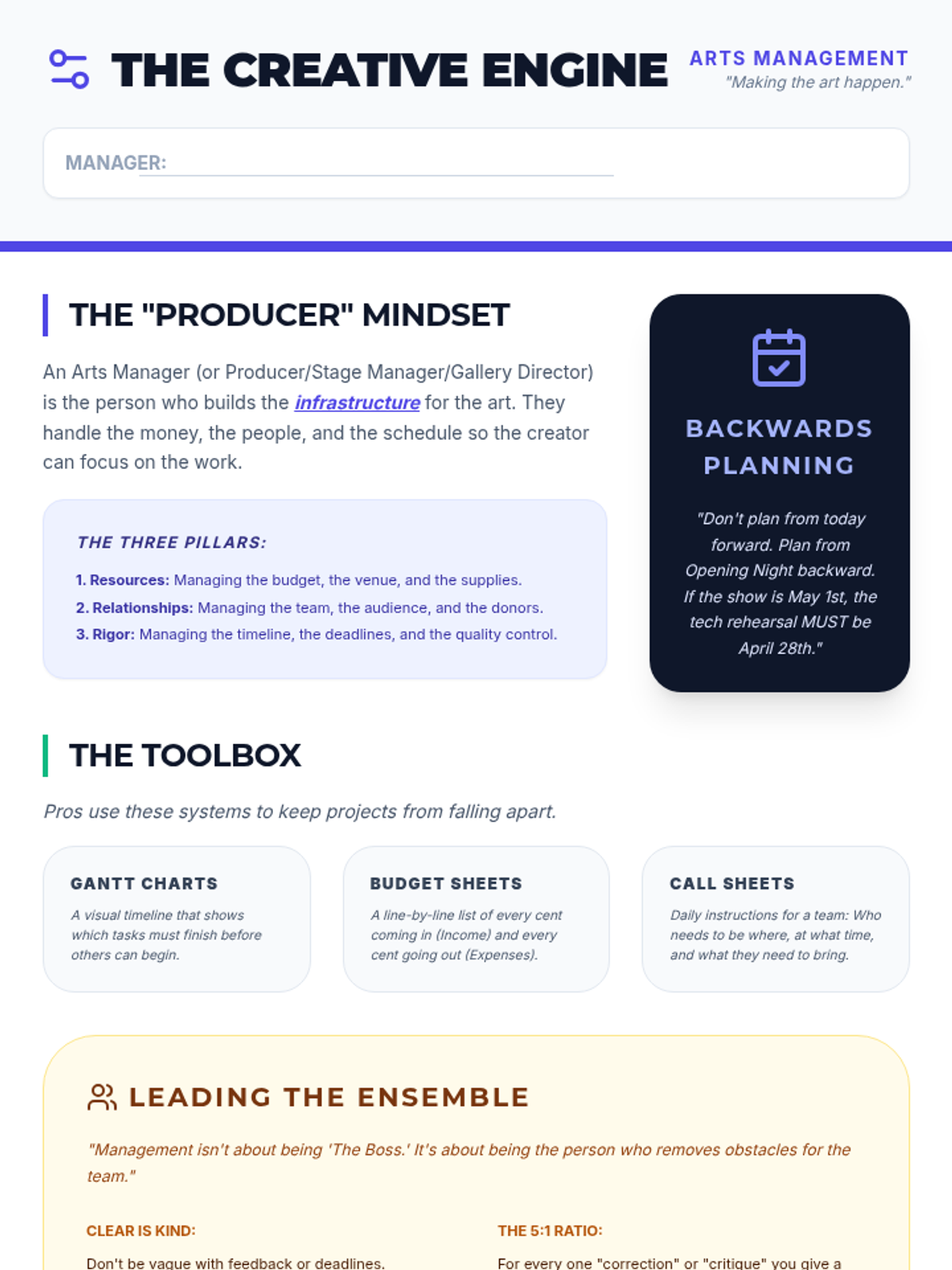
Introduces students to the fundamental skills of arts management, including production scheduling, team leadership, and basic project budgeting for creative endeavors.
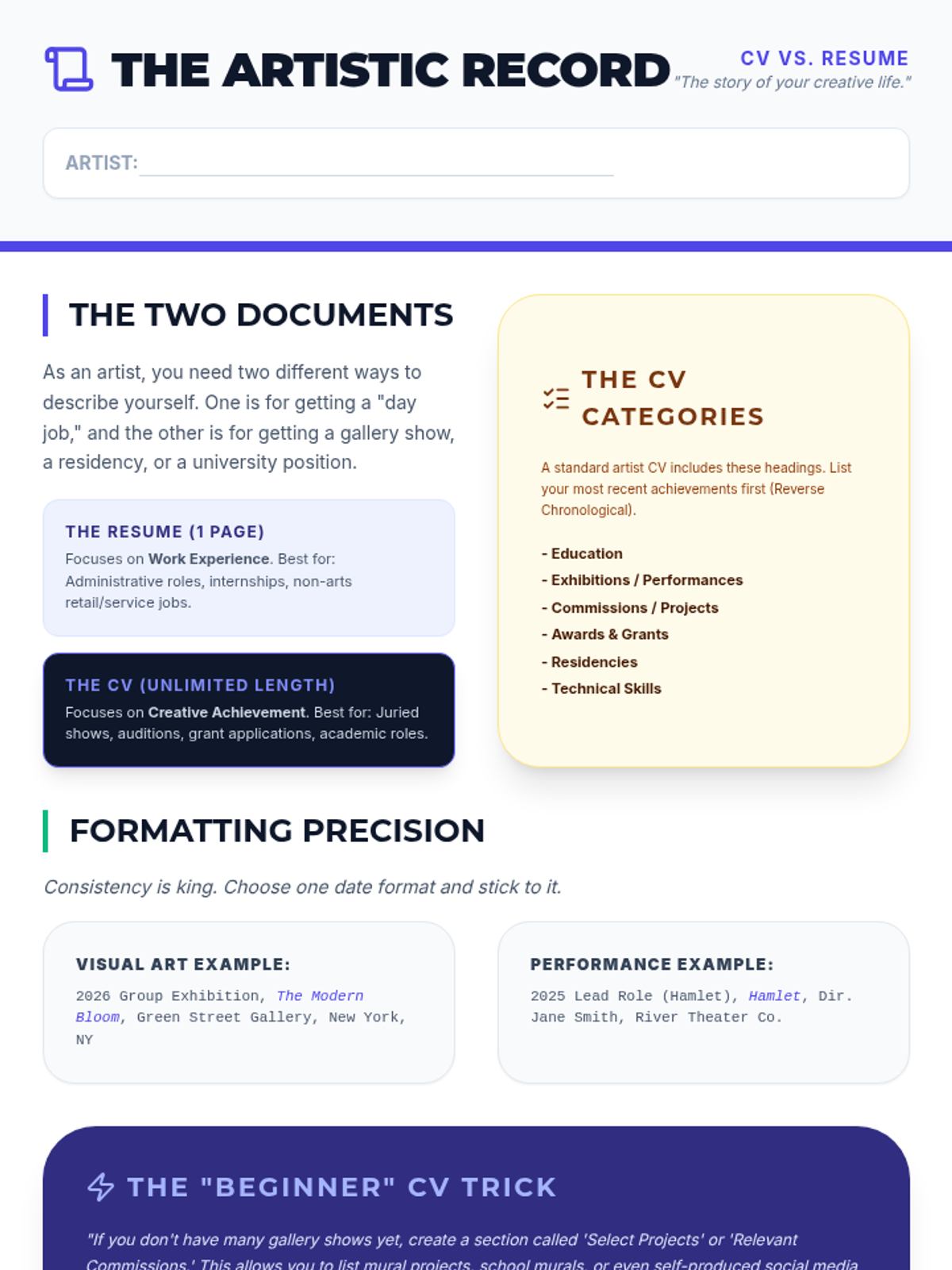
Differentiates between a standard job resume and a creative Curriculum Vitae (CV), teaching students how to list exhibitions, performances, awards, and technical commissions.
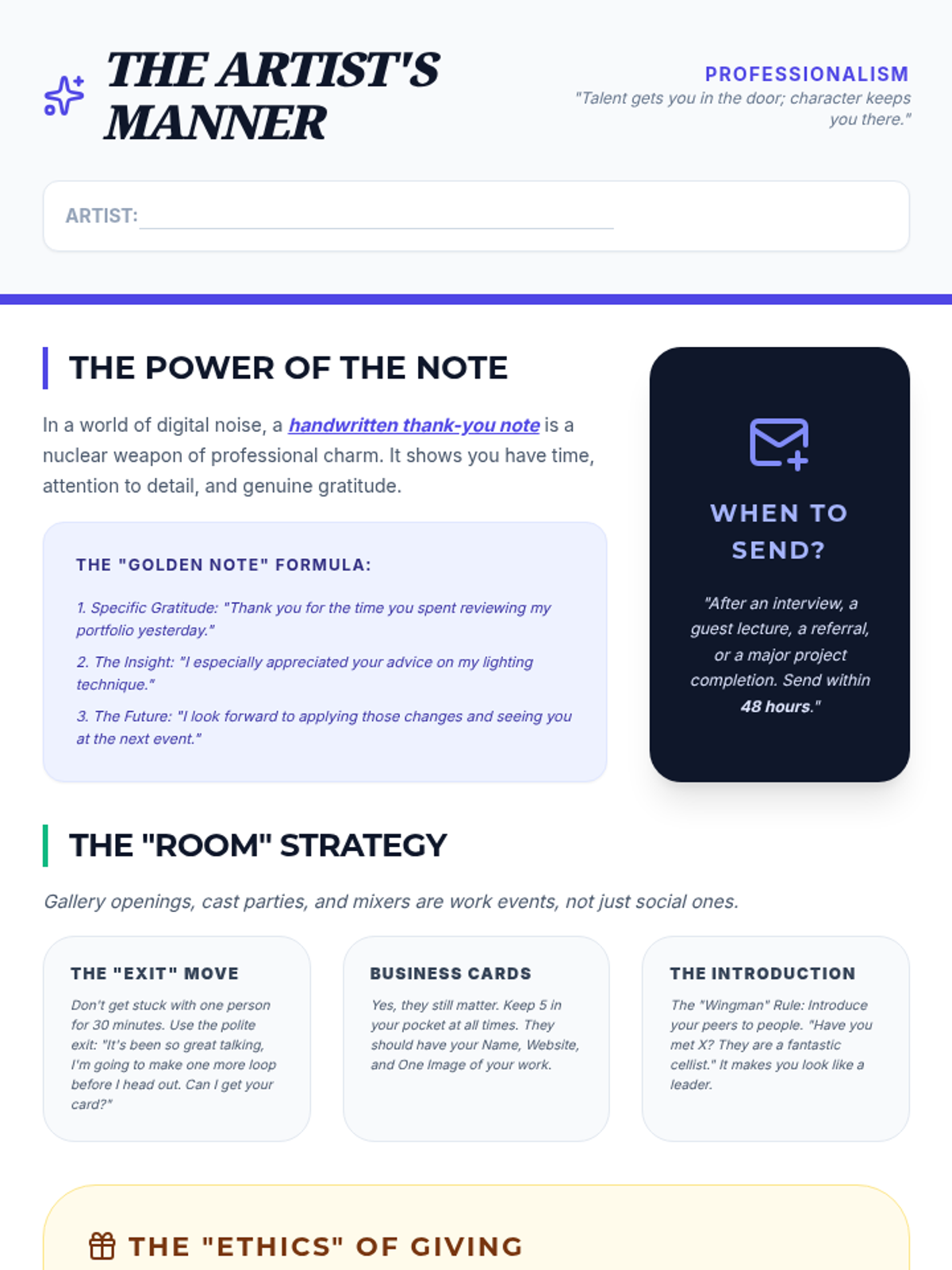
Teaches students the behavioral standards of the creative industries, including the art of the thank-you note, networking event protocols, and professional gift-giving ethics.
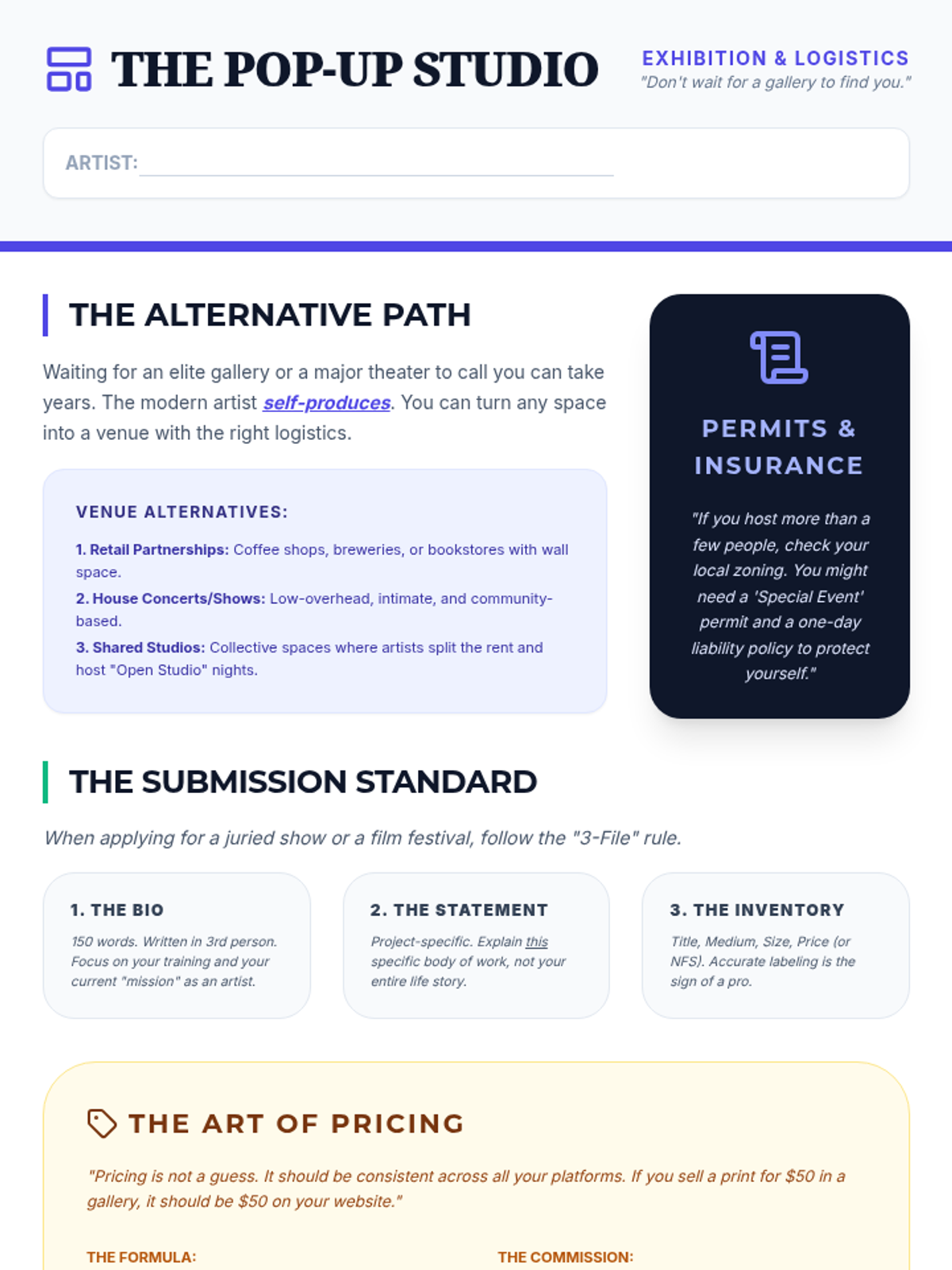
Teaches students the logistics of self-producing exhibitions and performances, covering DIY spaces, permit basics, and how to create a professional 'call for entry' submission.
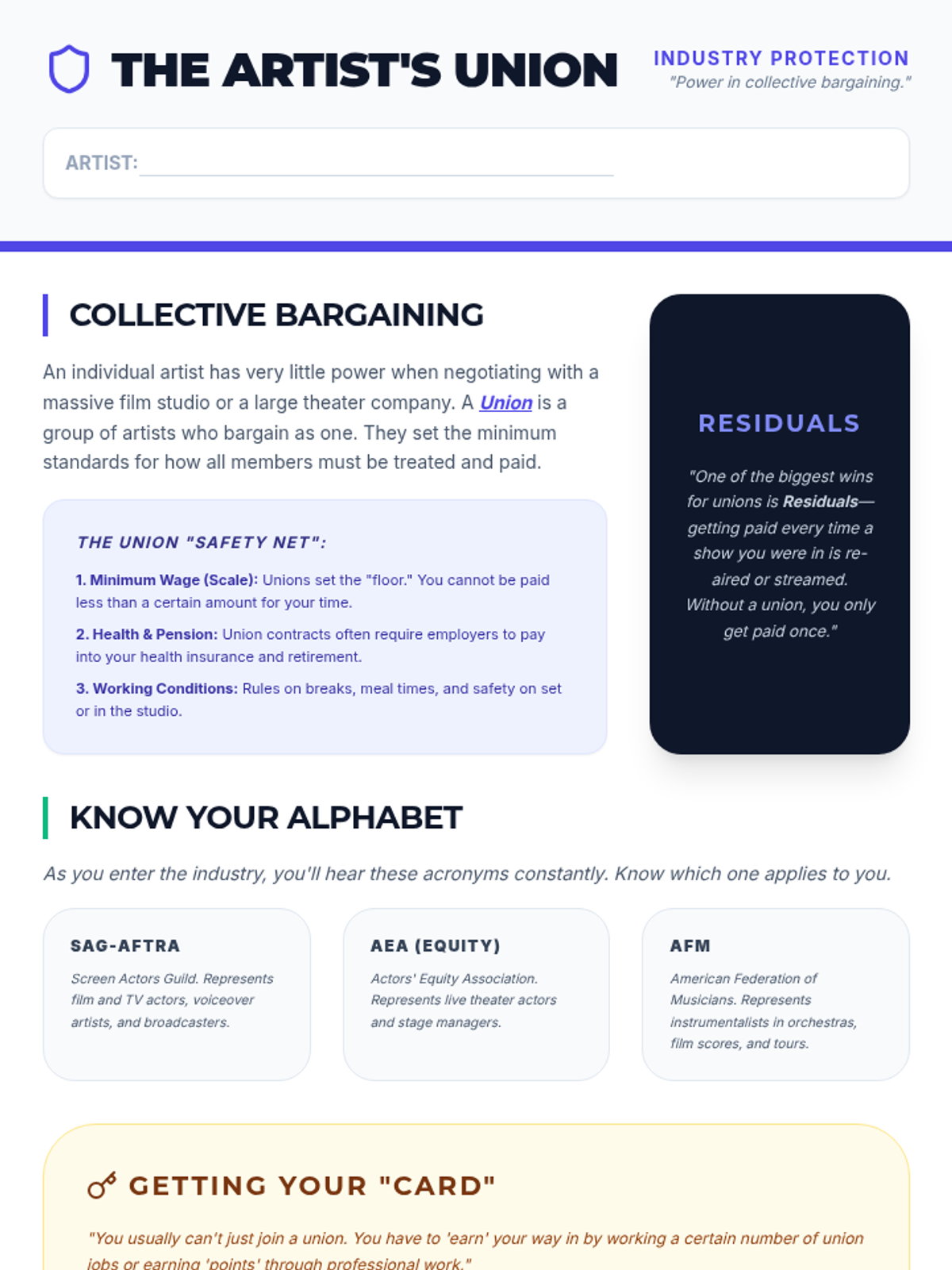
Introduces the history and function of creative unions (like SAG-AFTRA, AEA, and the AFM), explaining how they protect wages, provide benefits, and establish safe working conditions for artists.
Explore the foundational pillars of economics through the history of the Dust Bowl, the ethics of organ markets, and simulations of scarcity and marginal utility.
Master the mechanics of life's largest financial commitments through the history of the 30-year mortgage, the ethics of urban gentrification, and complex simulations of home ownership.
Uncover the mechanisms of risk management through the history of the Great Fire of London, the ethics of pre-existing conditions, and complex simulations of health and auto insurance.
Master the battlefield of the modern marketplace through the history of consumer protection, the ethics of planned obsolescence, and simulations of contract negotiation.
Uncover the mechanics of modern banking through historical currency crises, the ethics of fee structures, and simulations of liquidity management.
Analyze the mechanics of financial choice through historical market crashes, the ethics of credit, and complex simulations of high-stakes adult purchases.
Master the art of information gathering and source verification in the digital age through historical misinformation cases and modern research simulations.
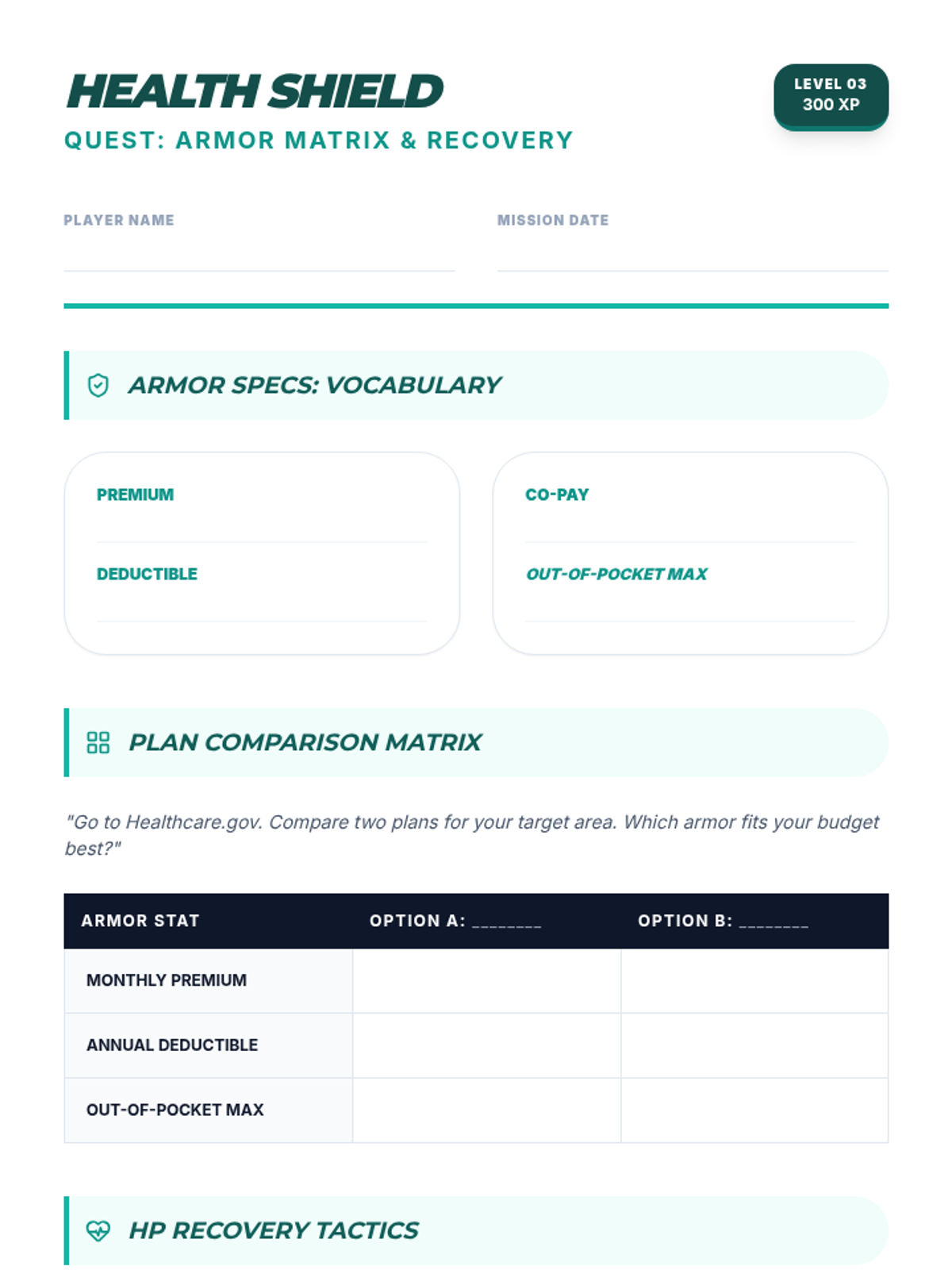
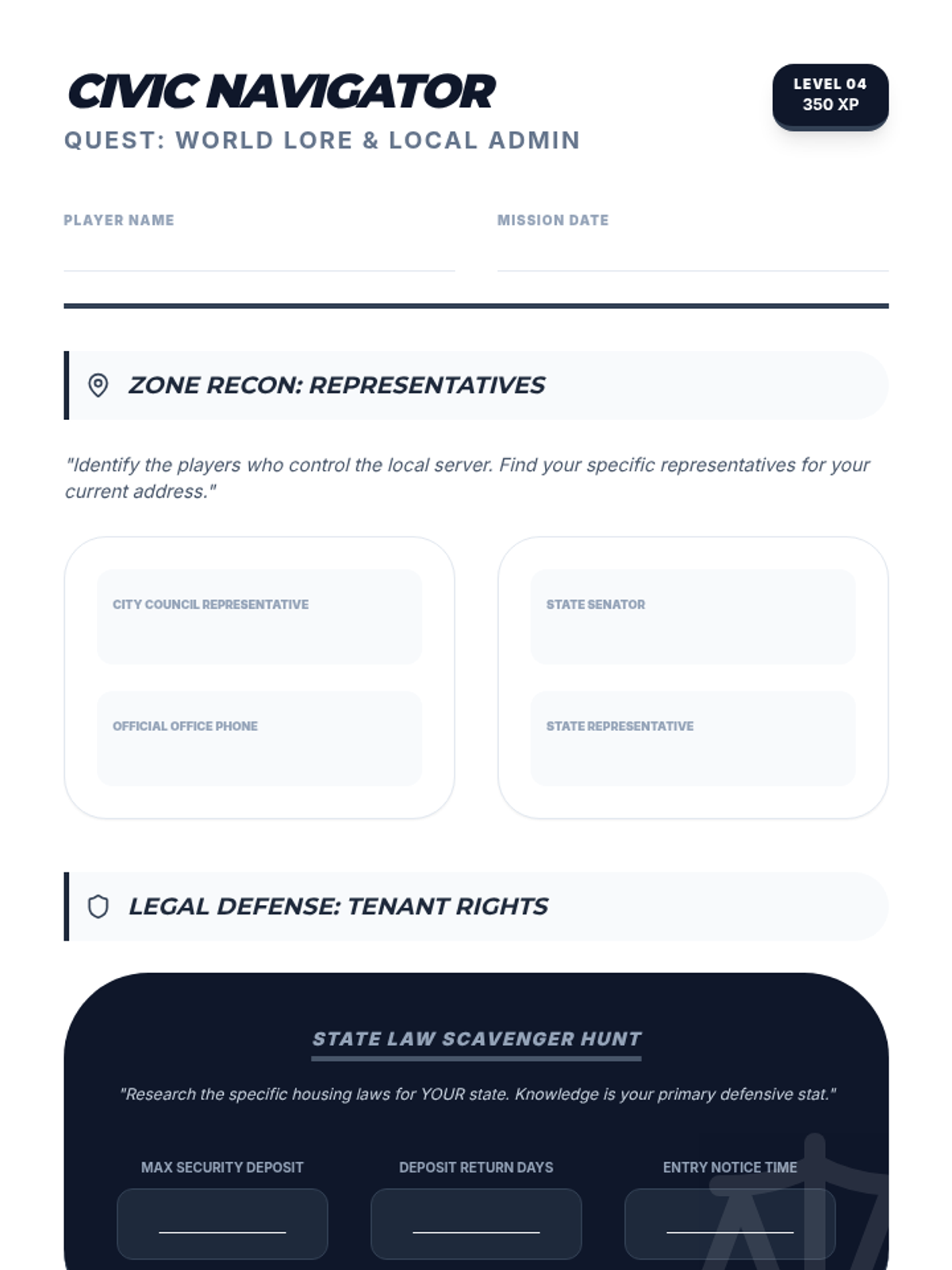
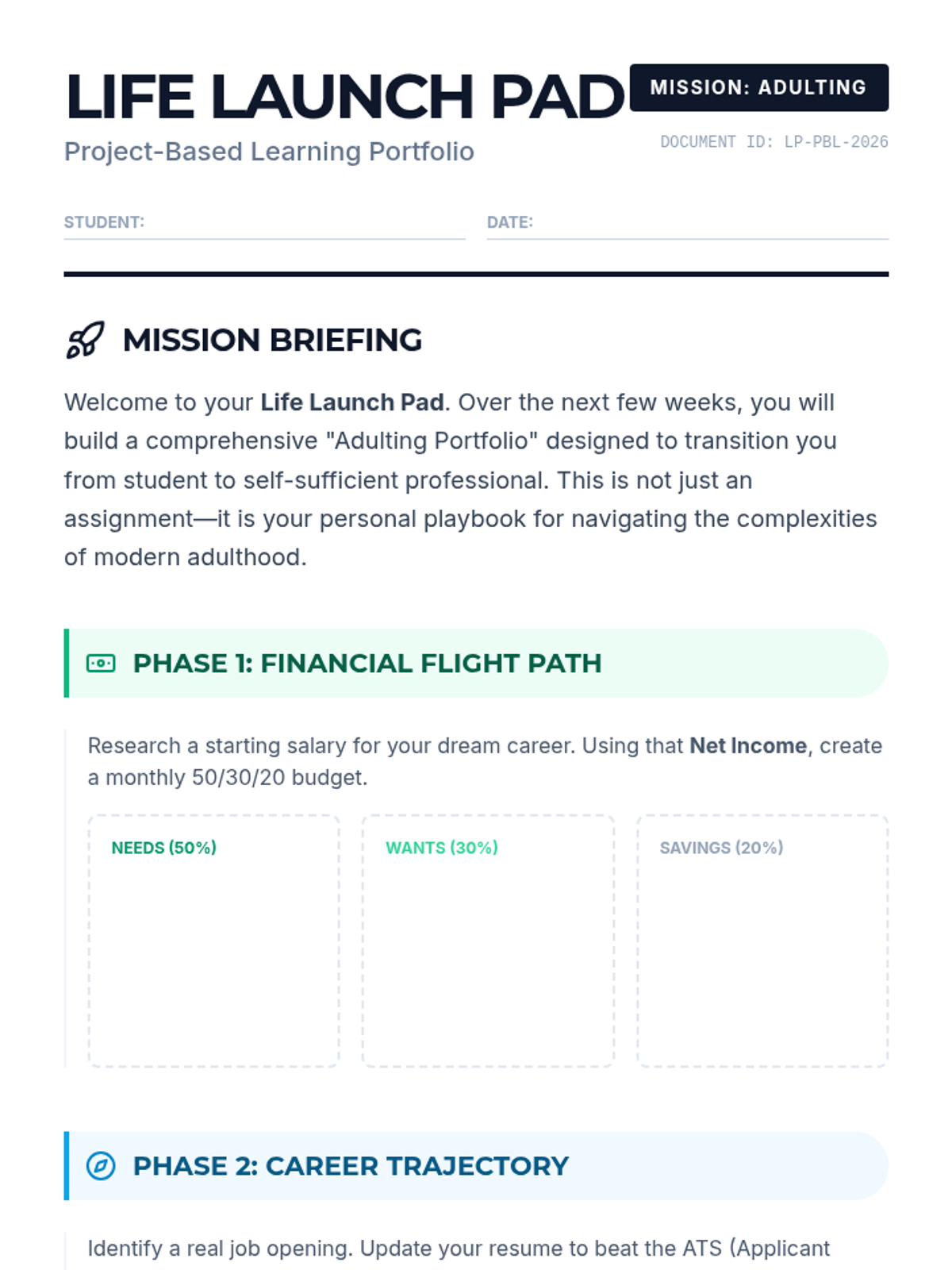
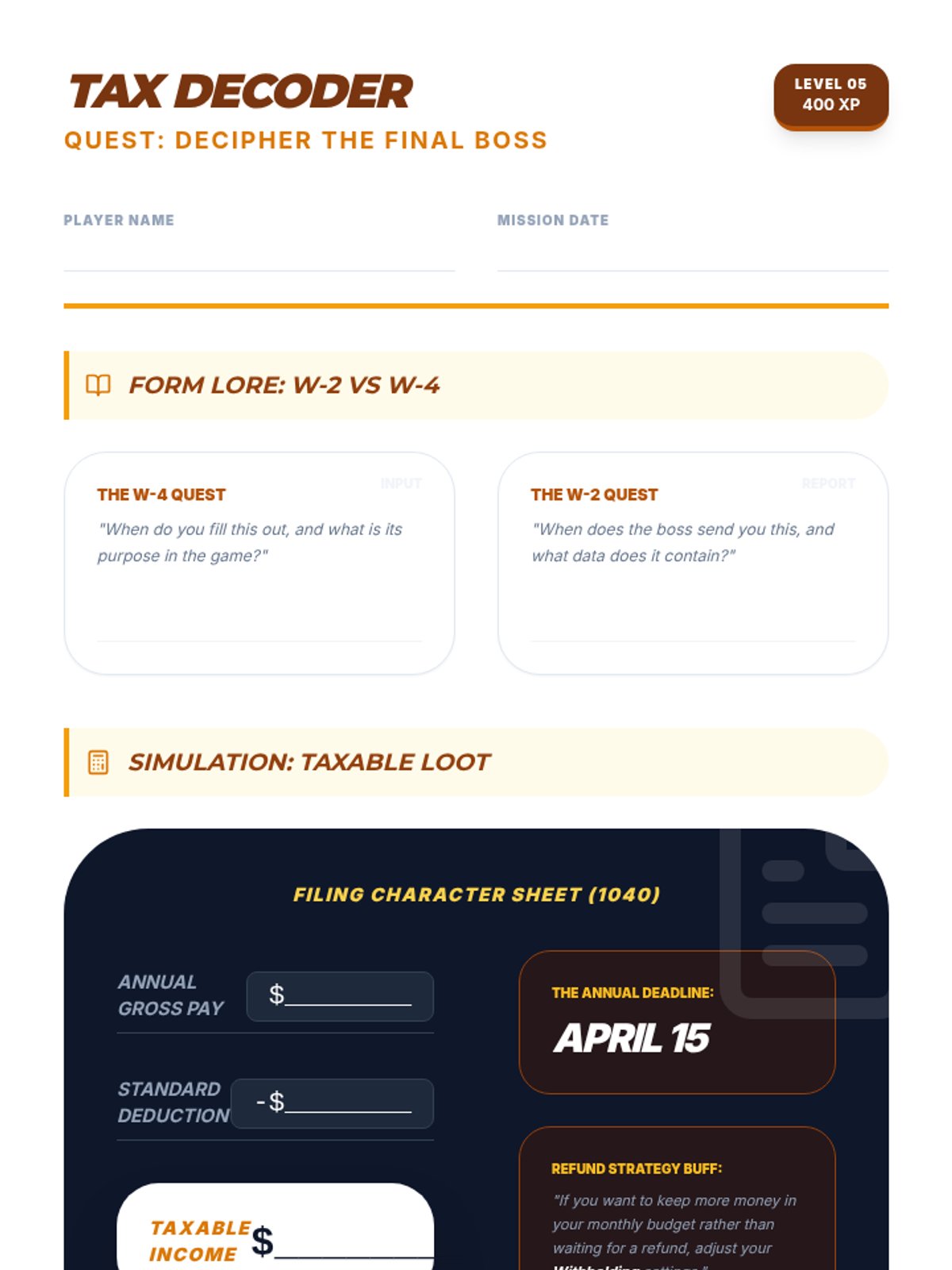
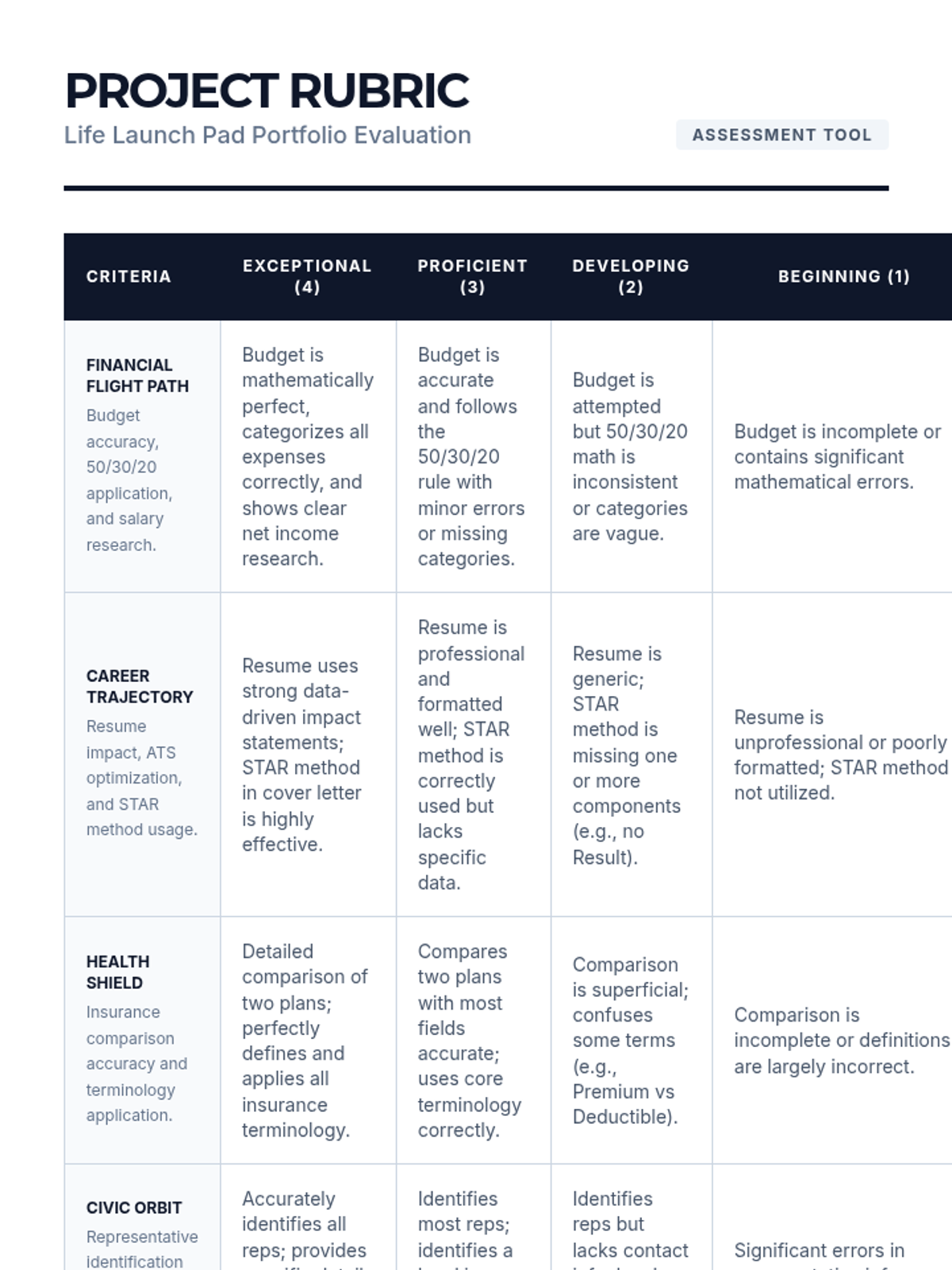
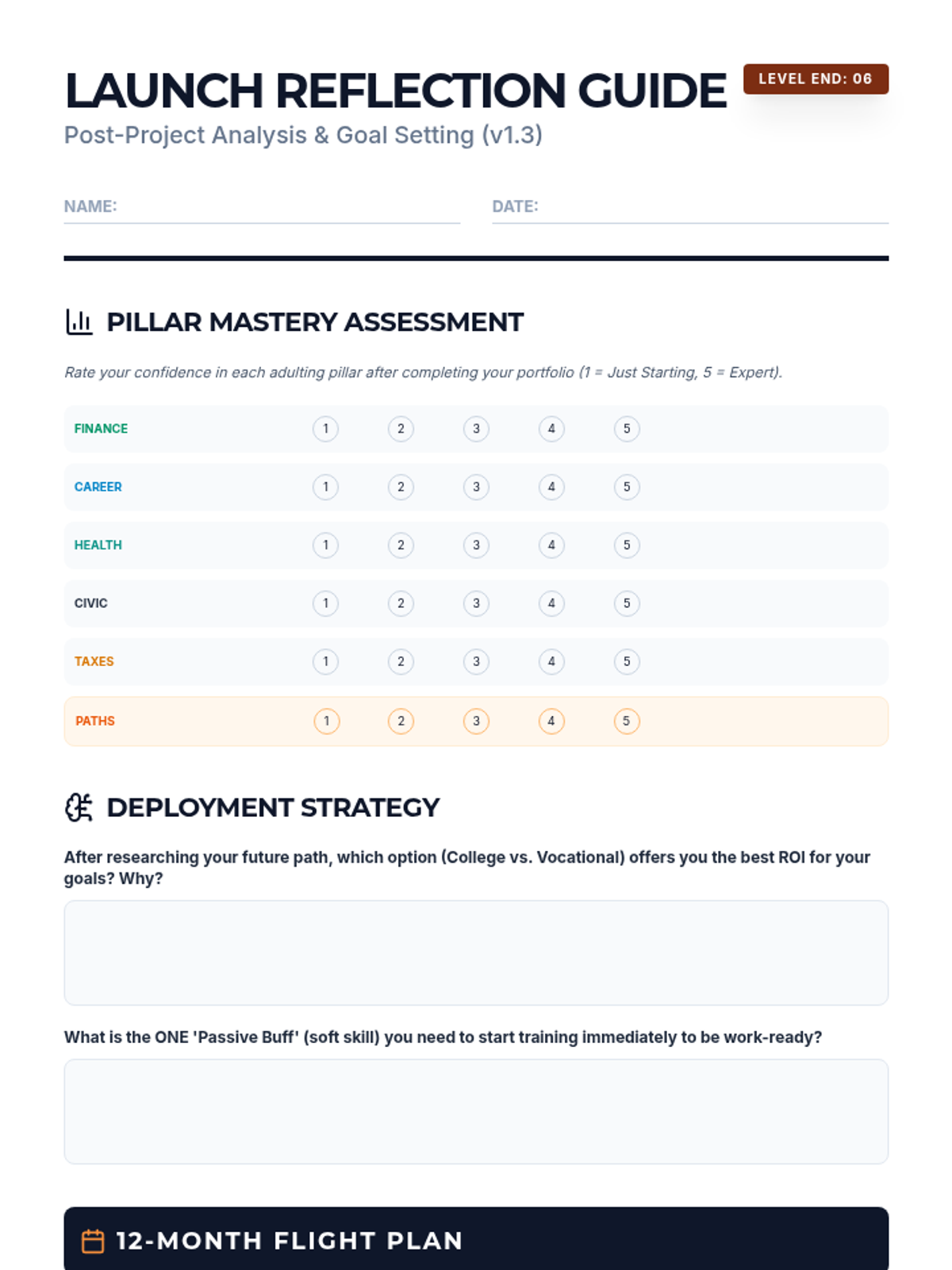
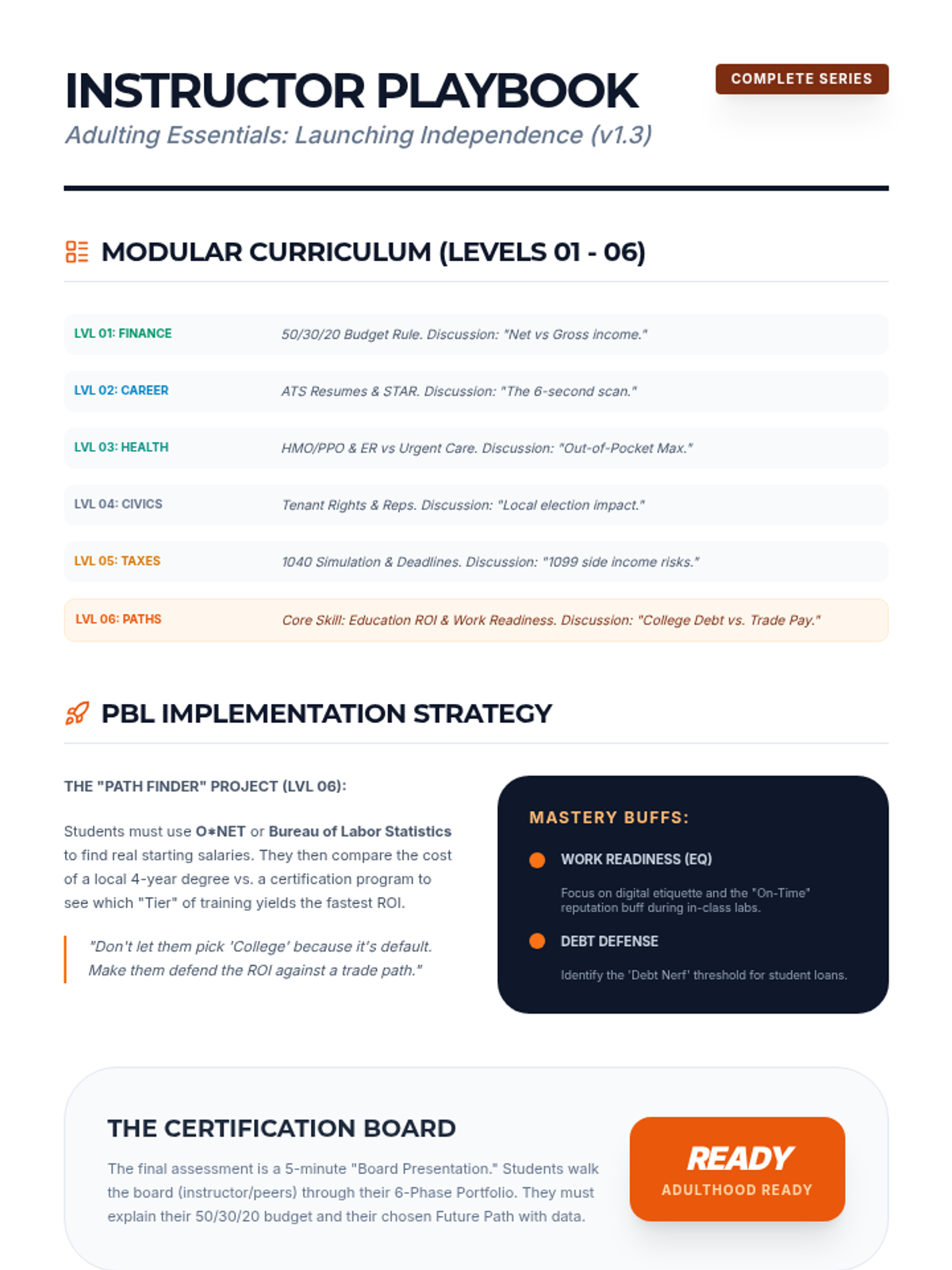
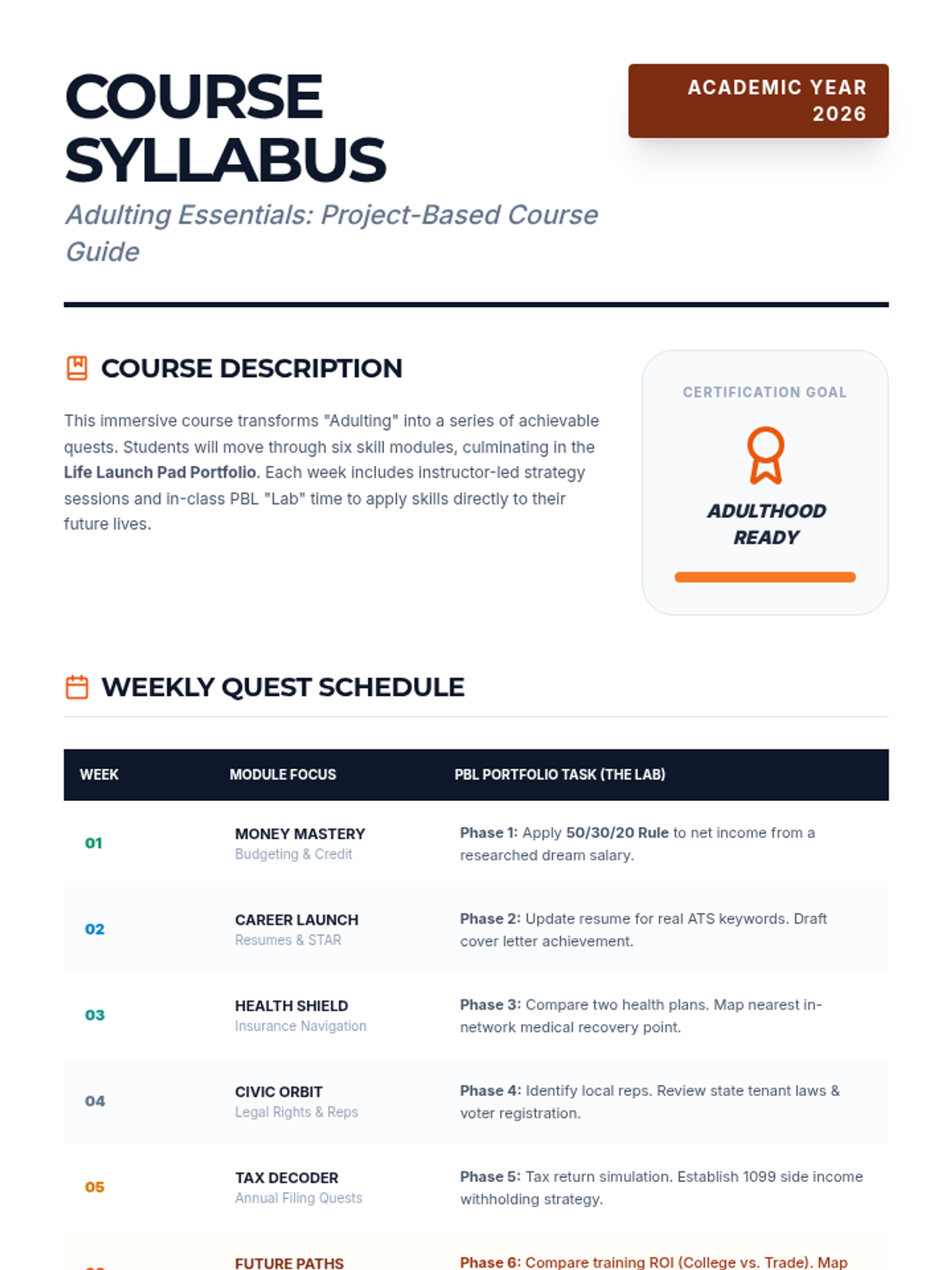
A comprehensive guide to essential adulting skills covering financial literacy, career development, health navigation, and civic responsibilities.
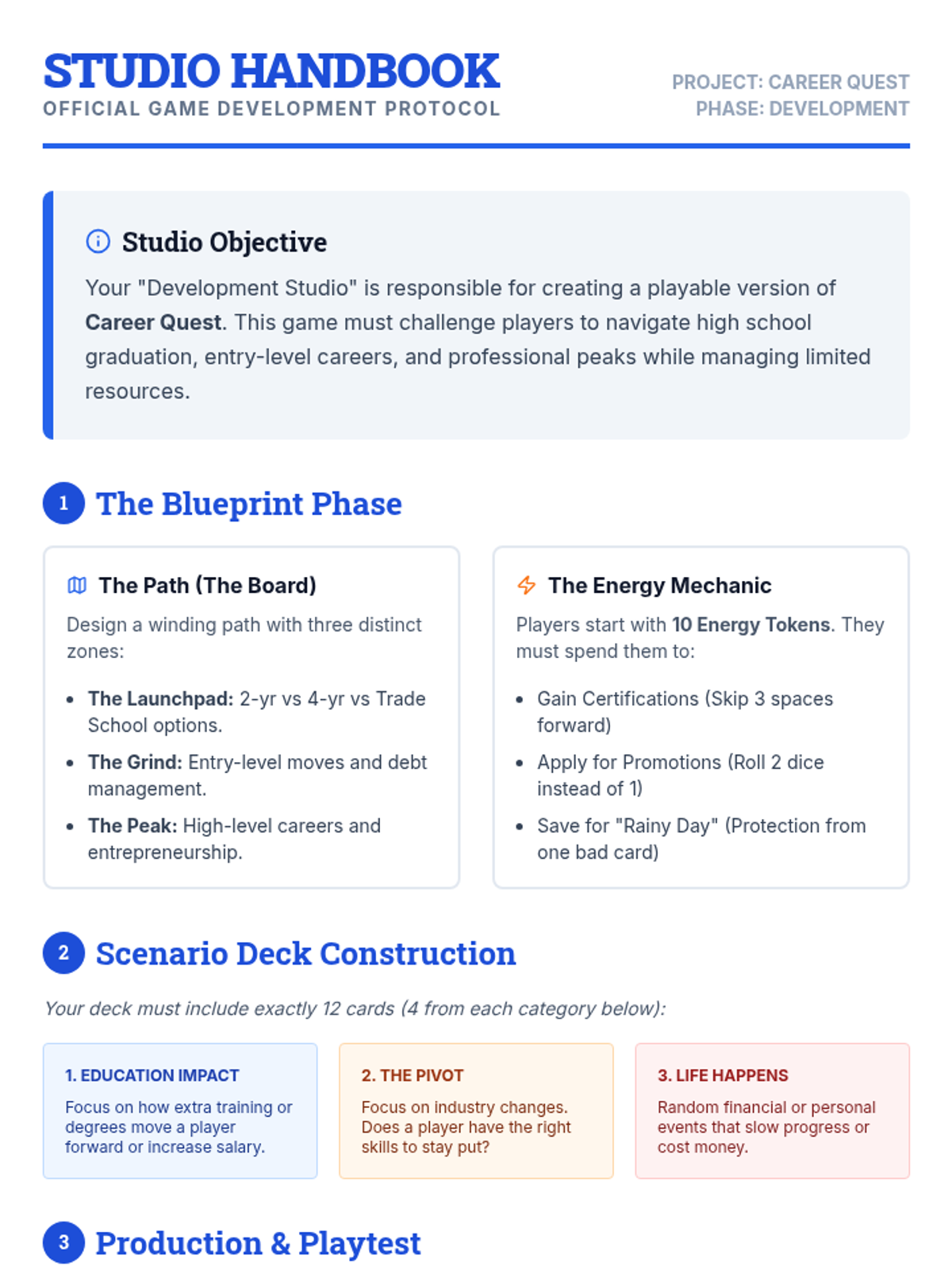
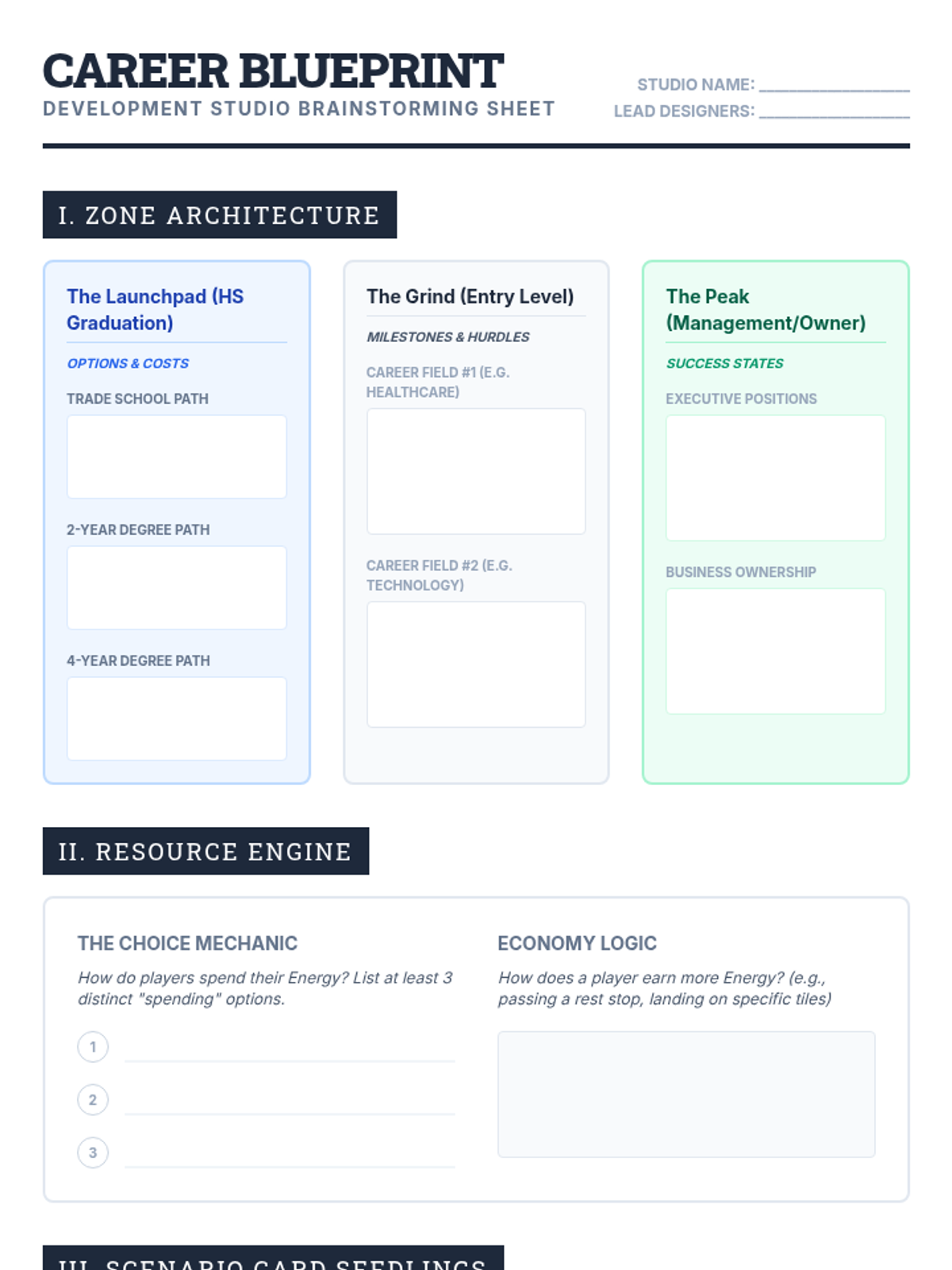
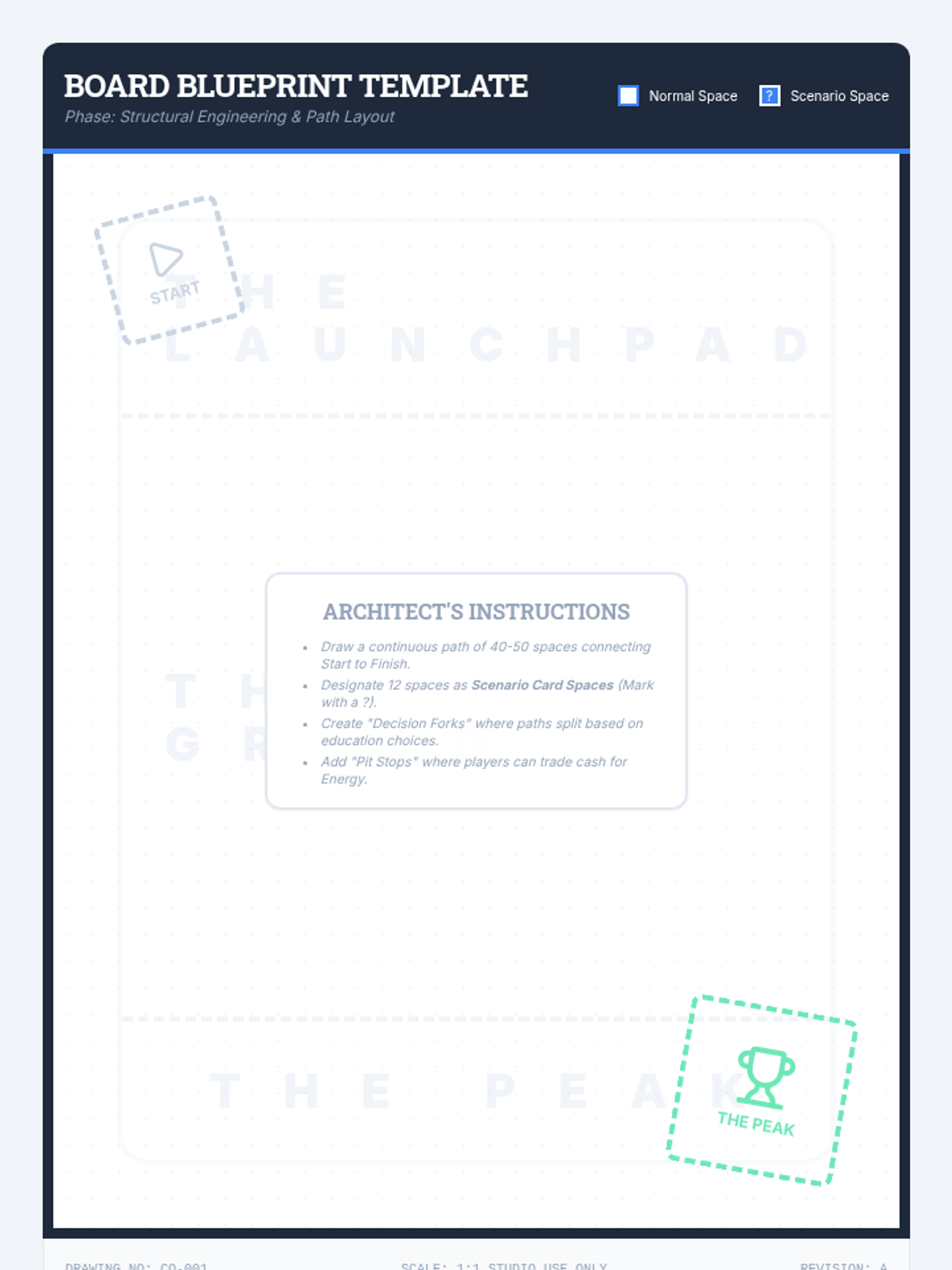
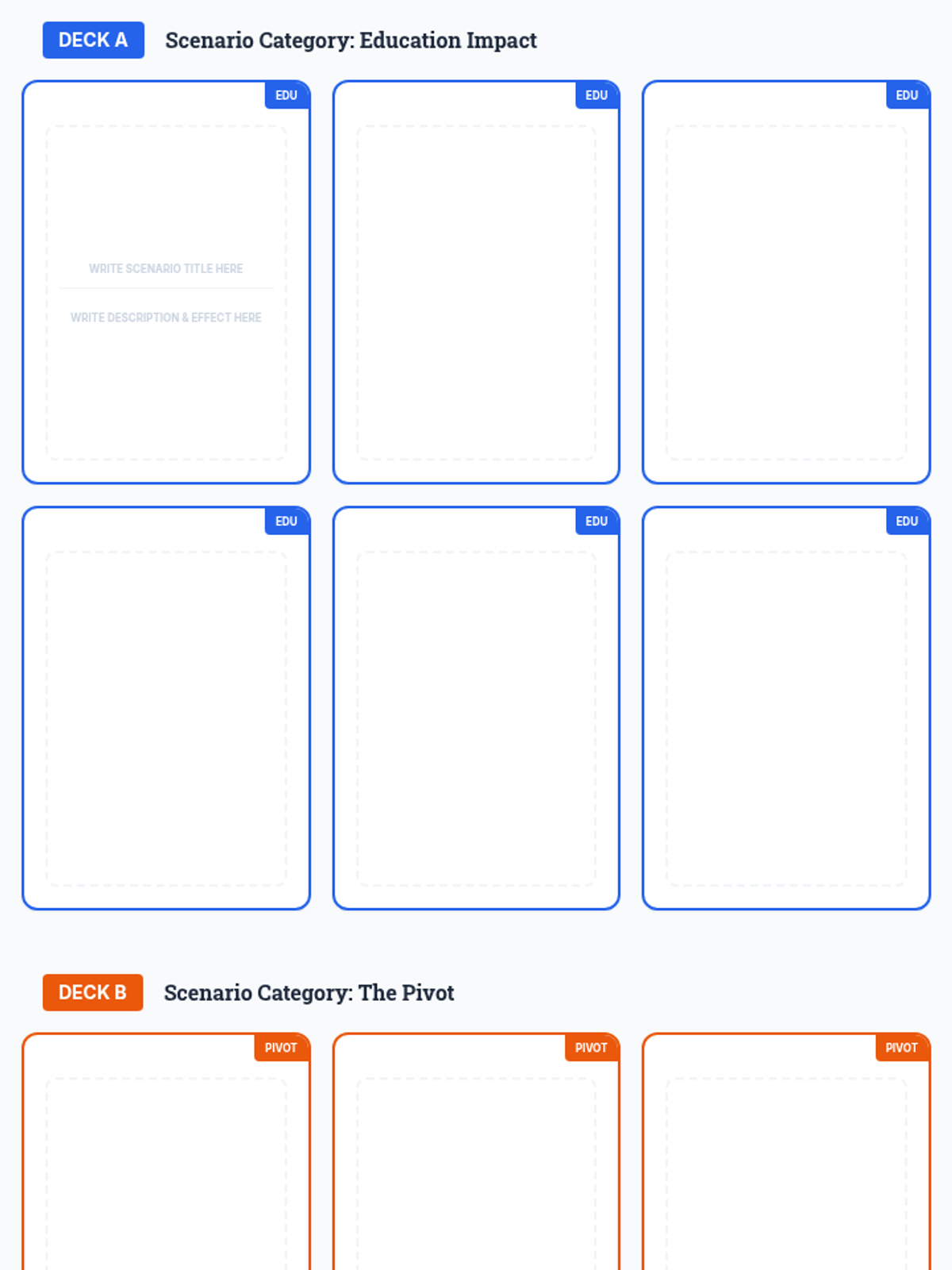
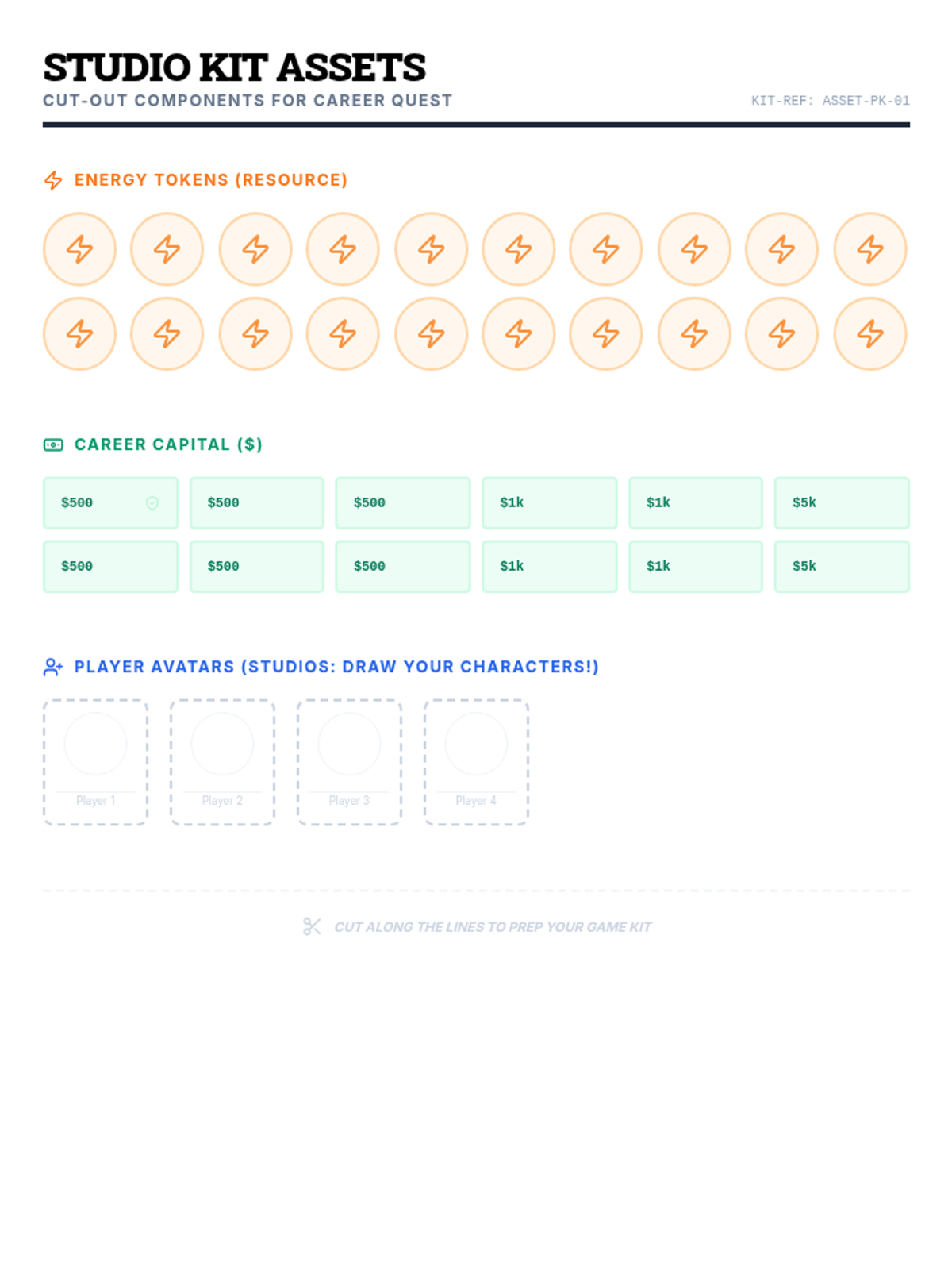
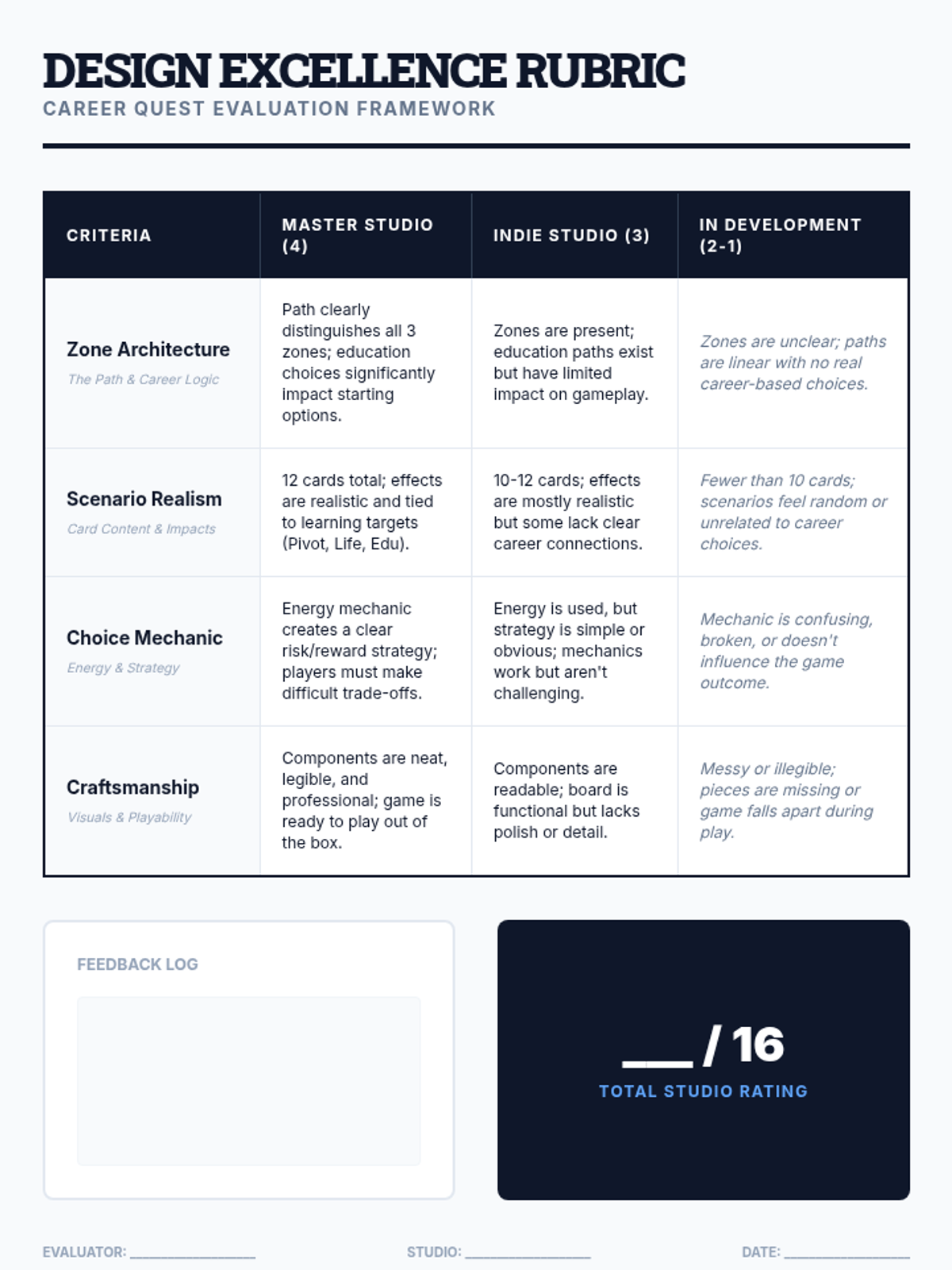
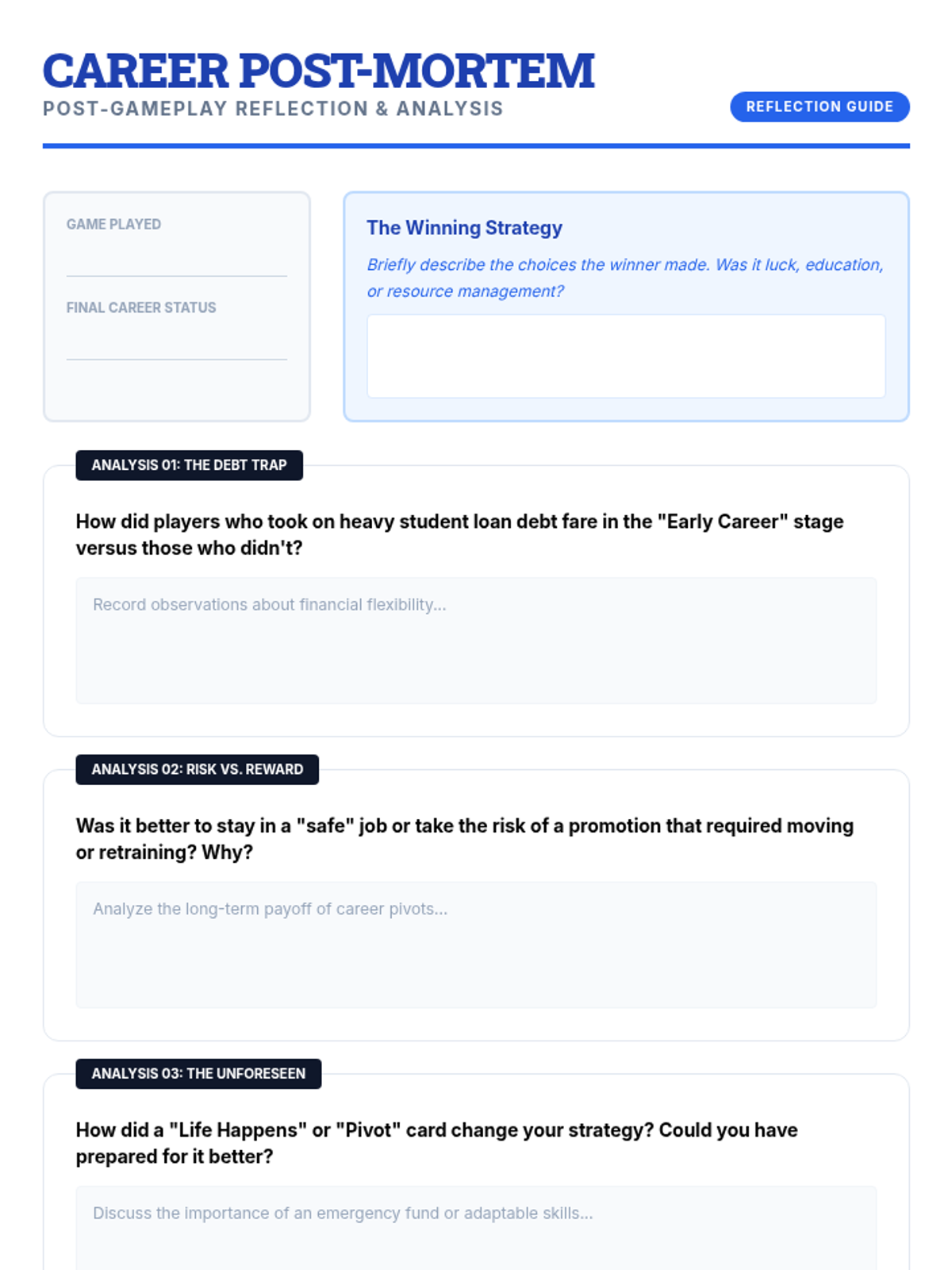
A multi-day project where students act as 'Development Studios' to design, build, and playtest their own career-themed board games, focusing on the impact of education and life choices on long-term outcomes.
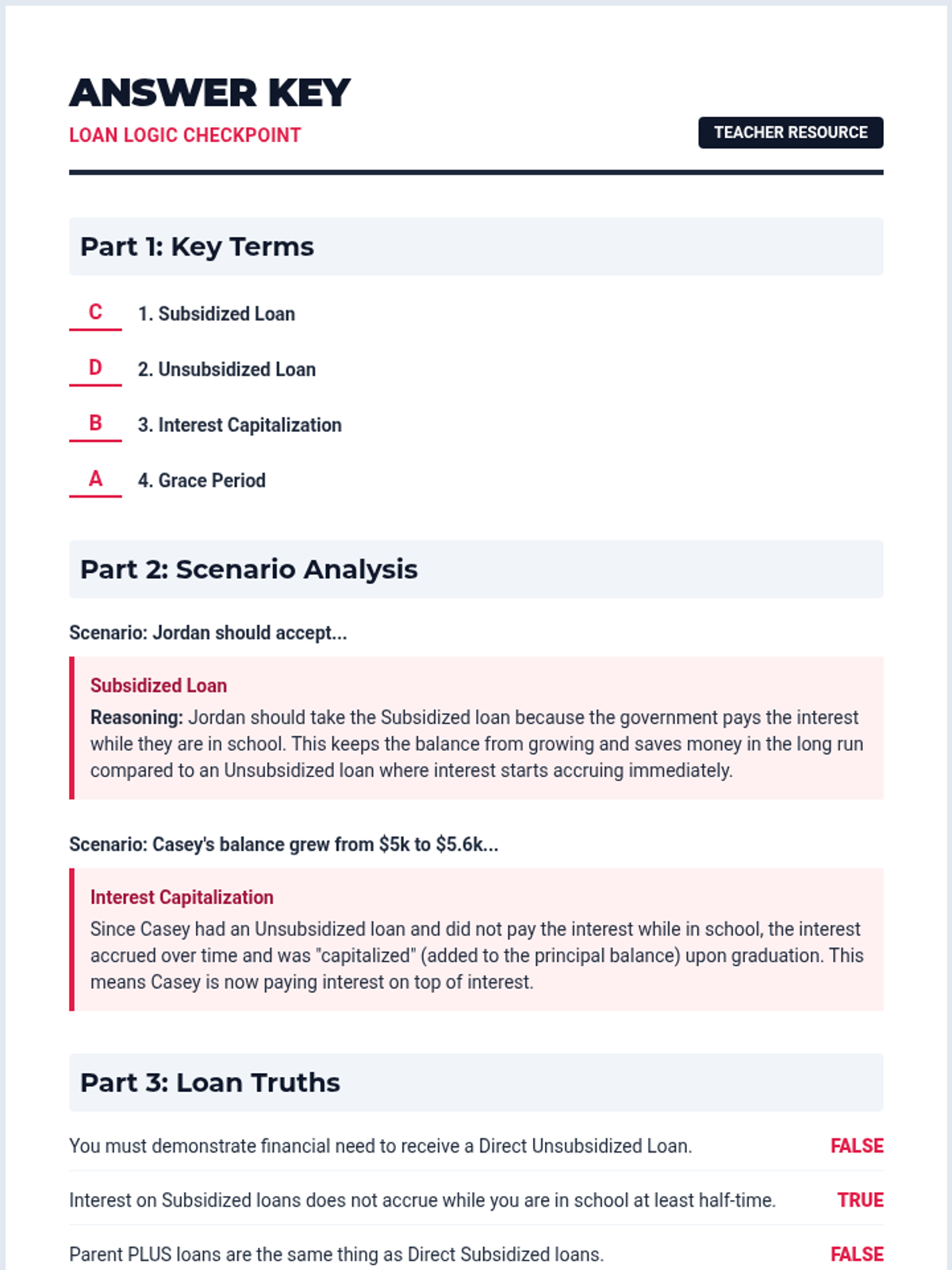
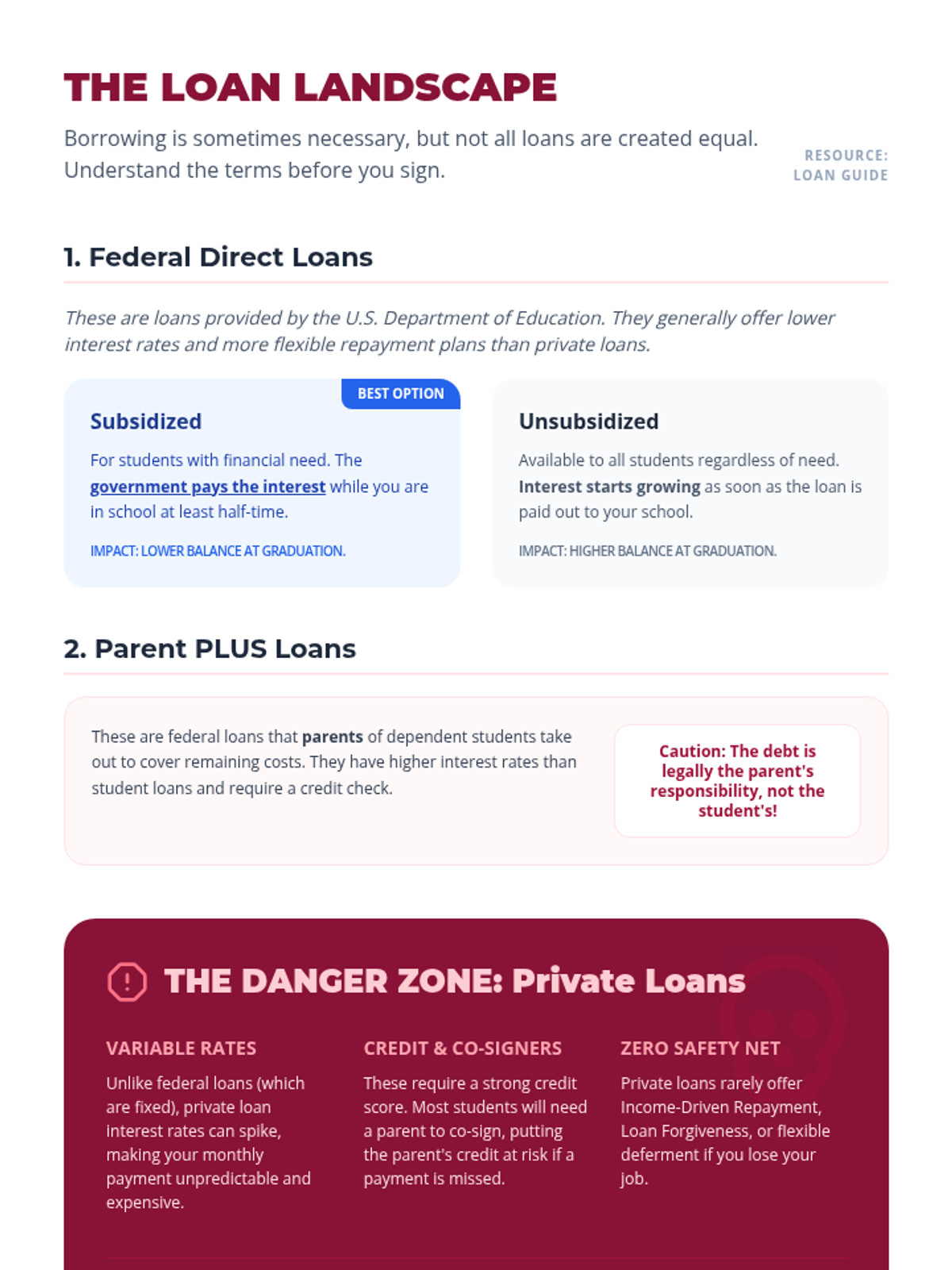
This lesson covers the essential components of college financial aid, focusing on the differences between gift aid, work-study, and loans, with a deep dive into federal loan structures.
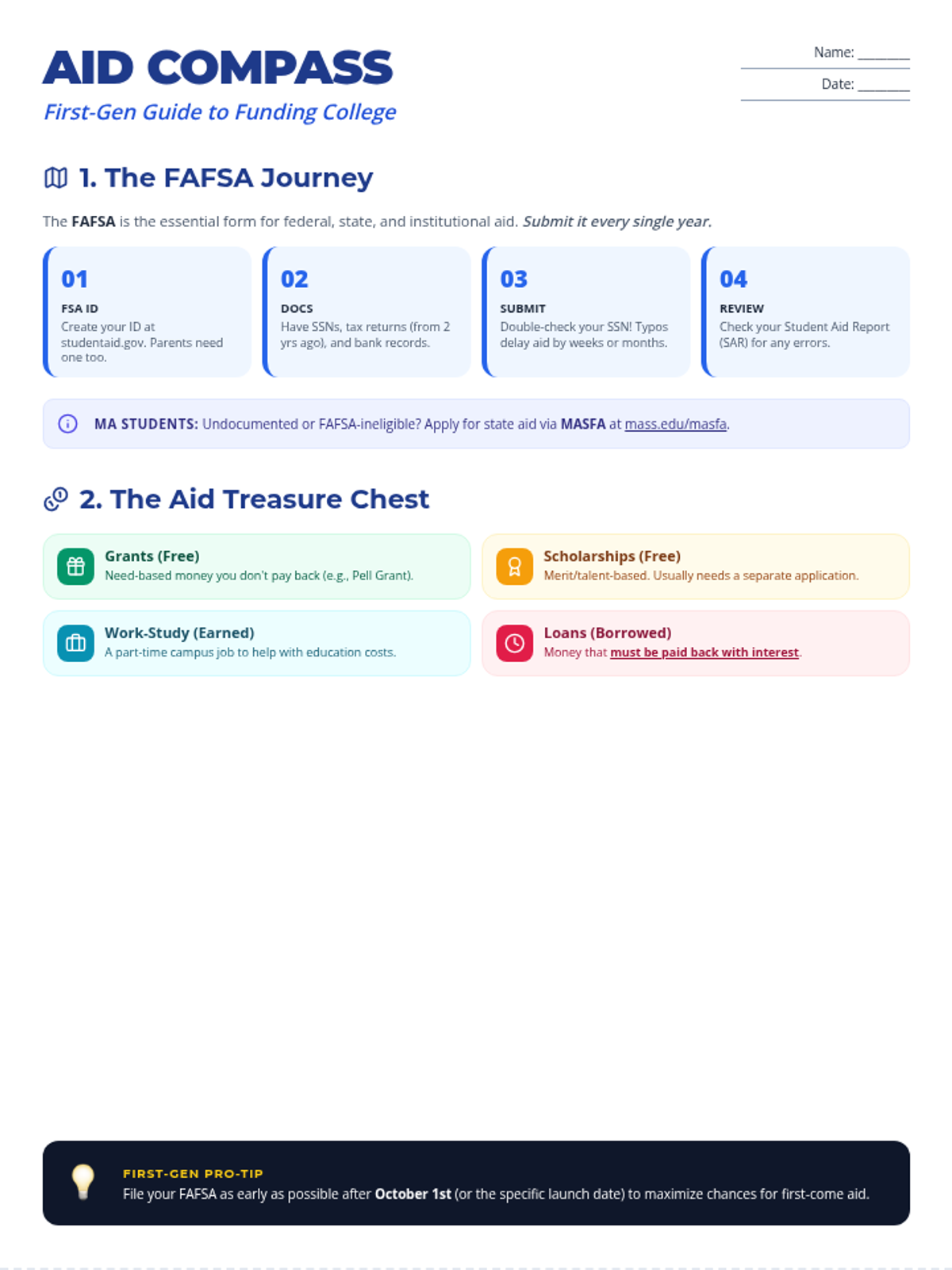
A comprehensive lesson for first-generation students on navigating financial aid, including the FAFSA process, understanding aid types, and decoding award letters.
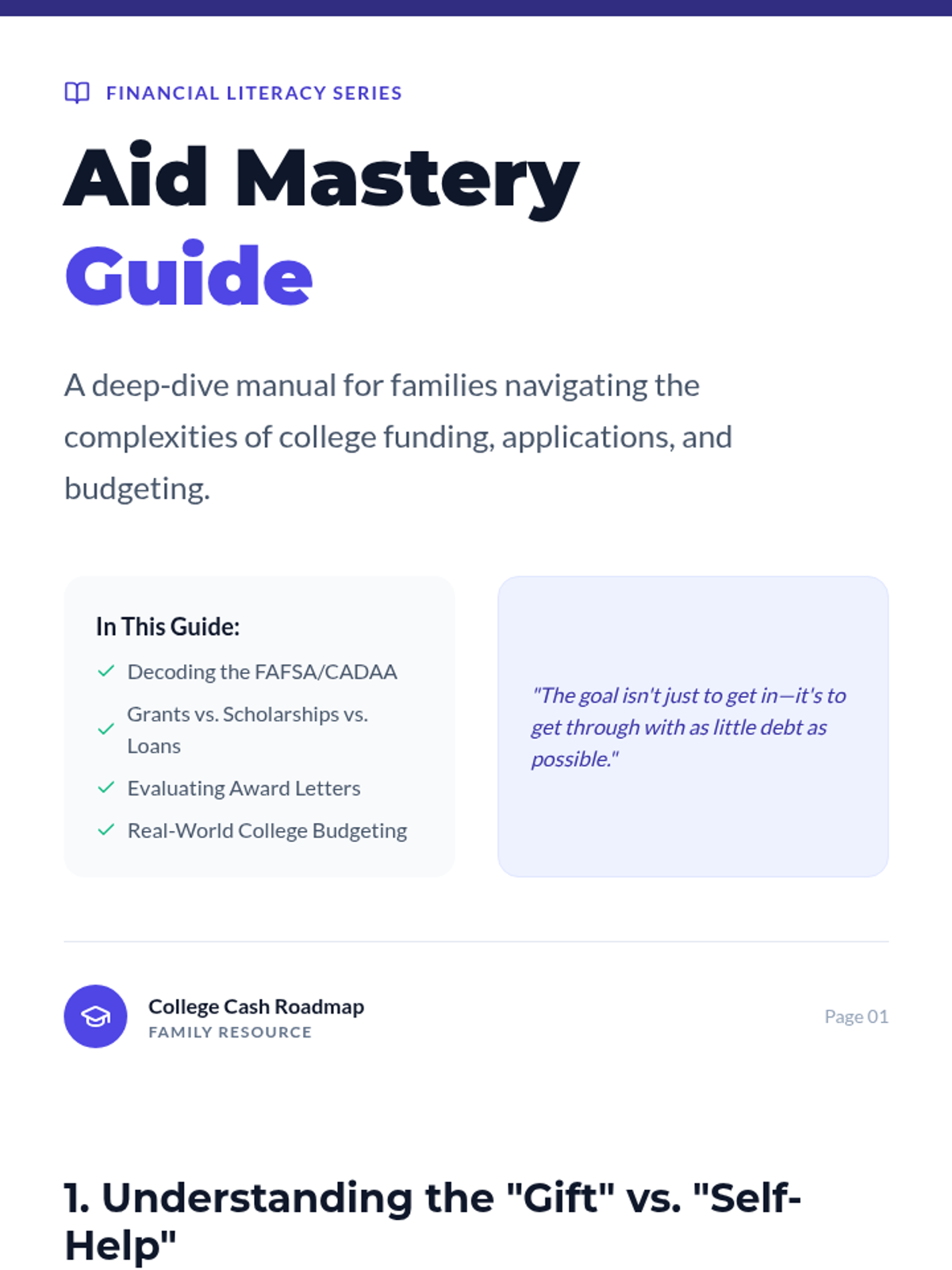
A comprehensive guide and checklist designed to help families navigate the financial aid process, from FAFSA completion to evaluating award letters and budgeting for college costs.
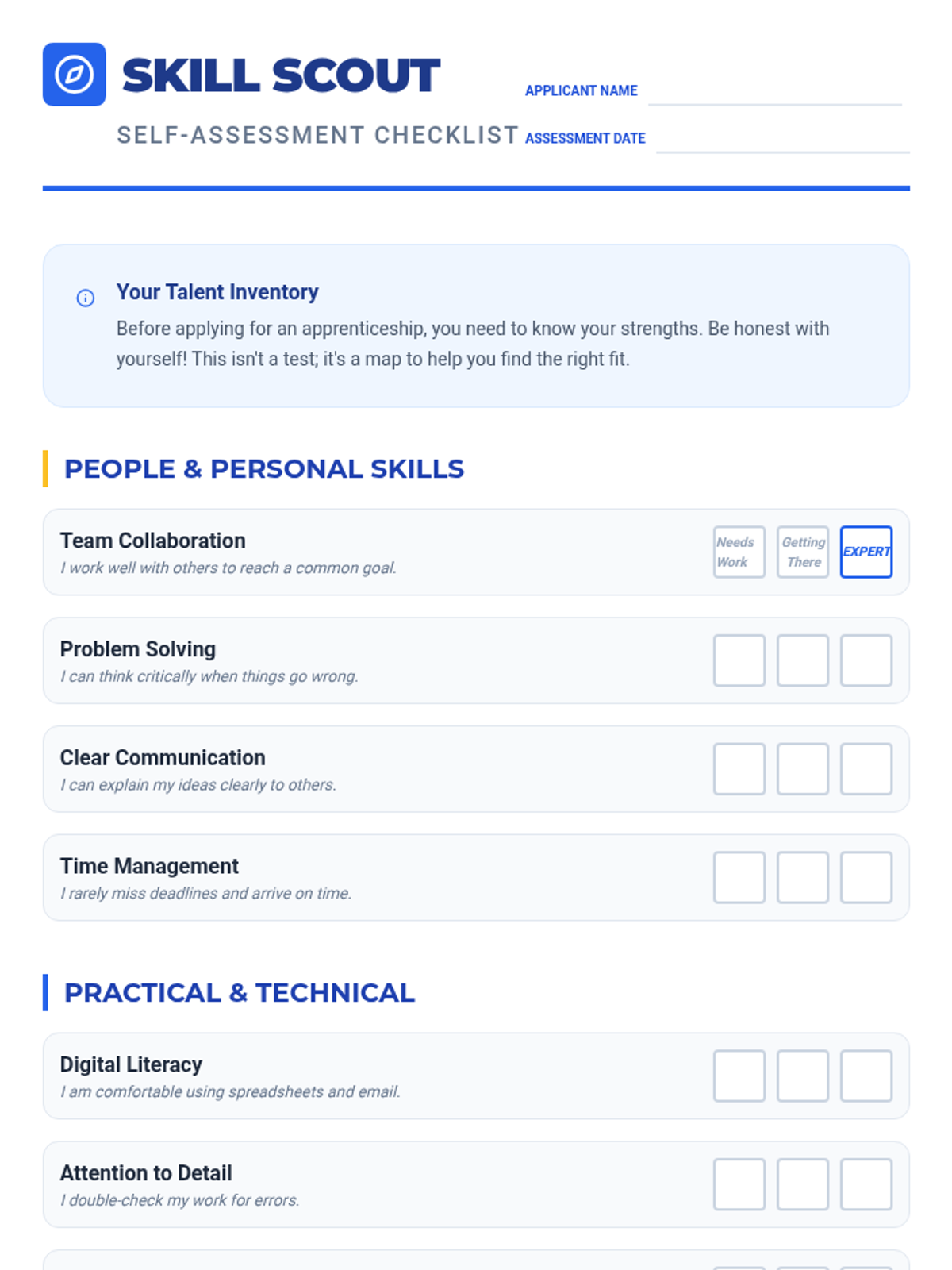
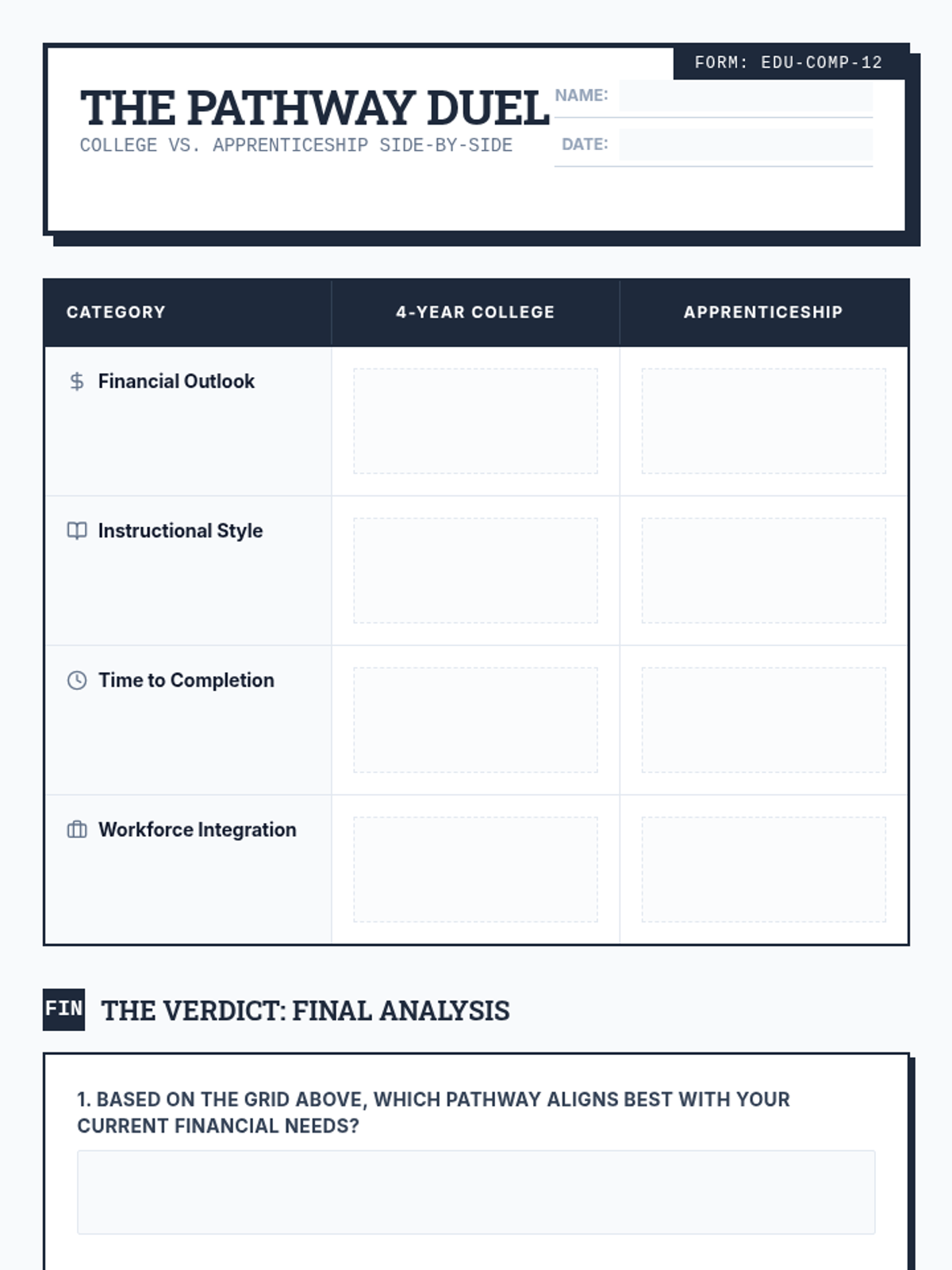
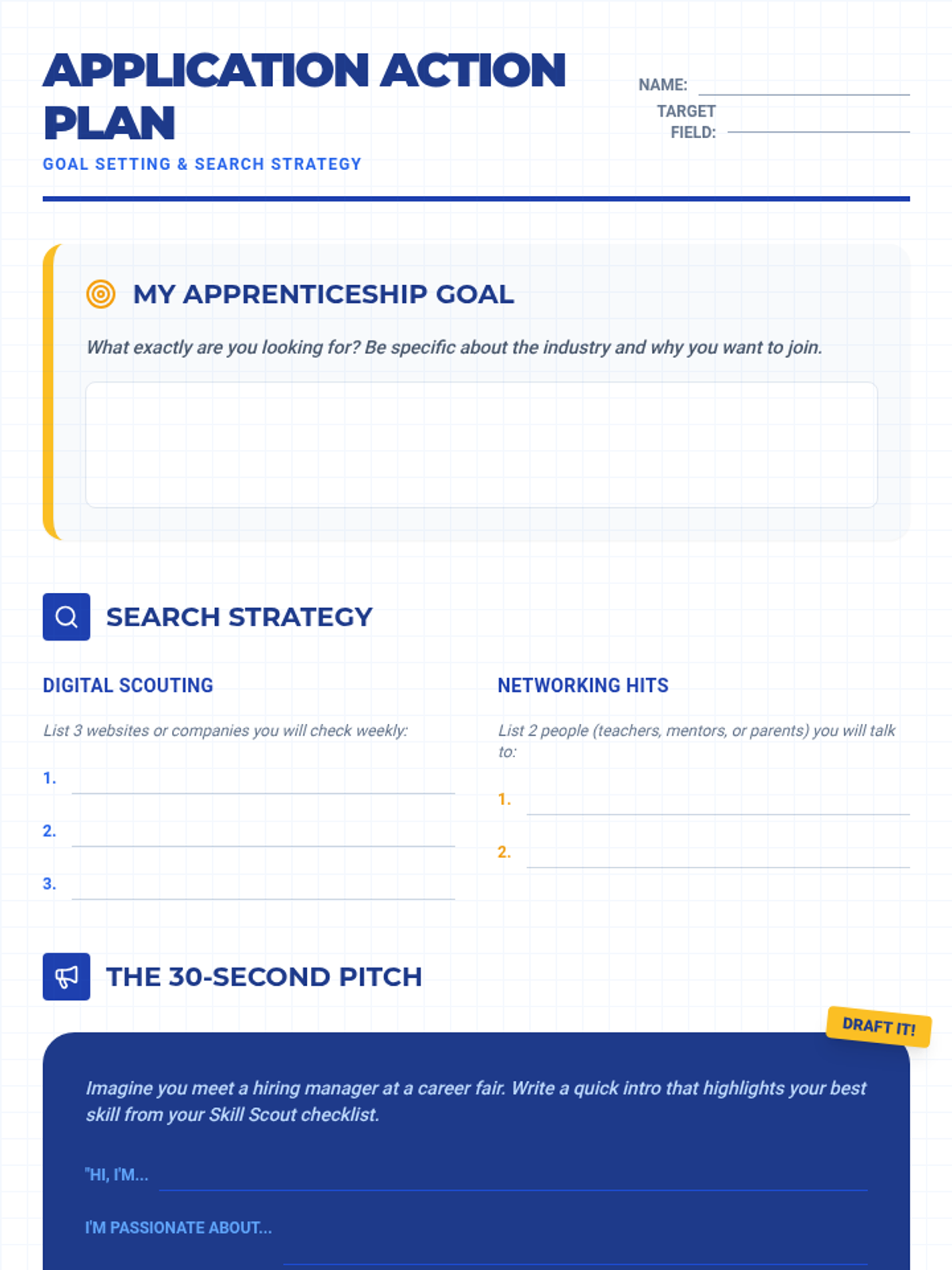
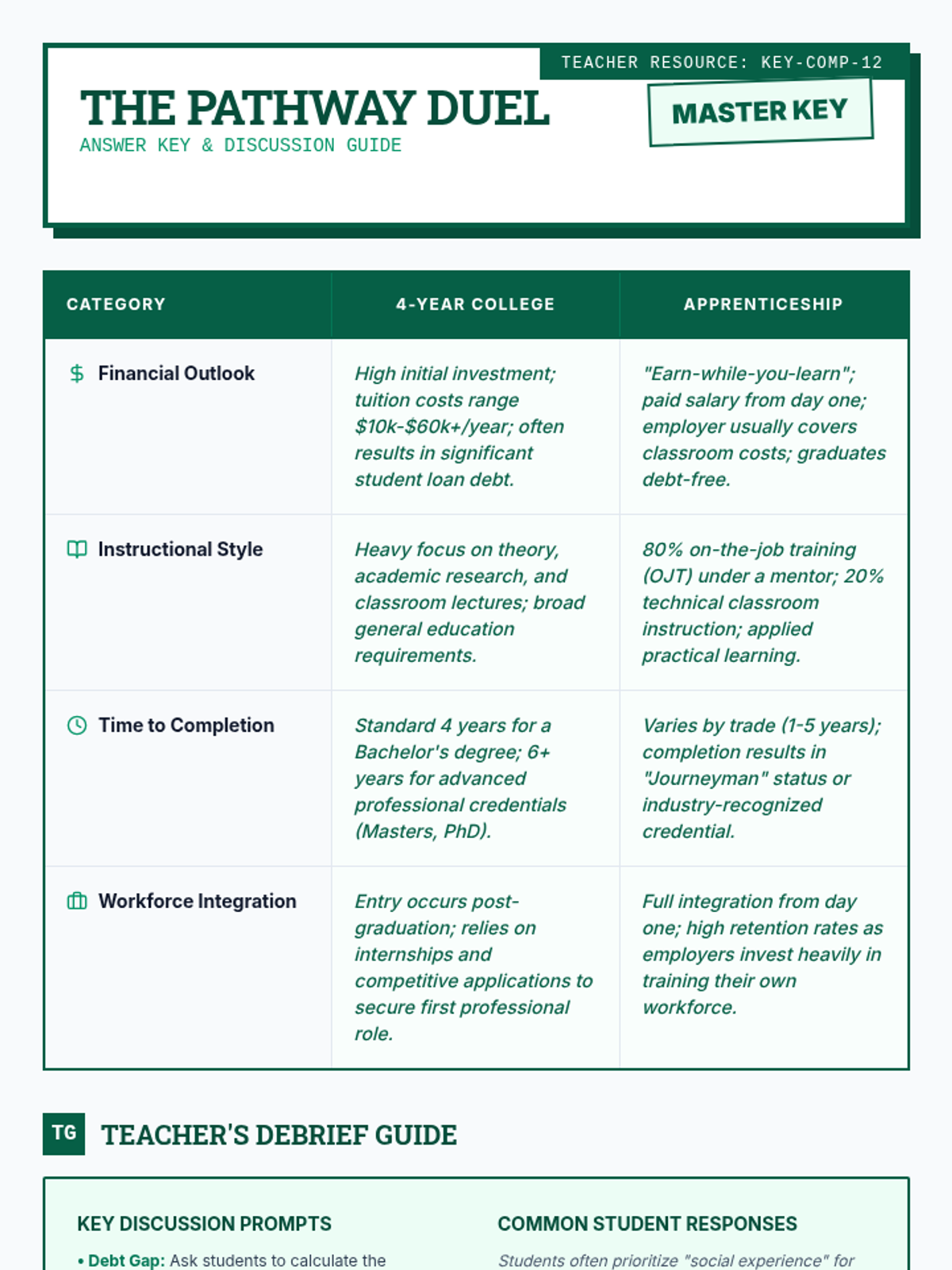
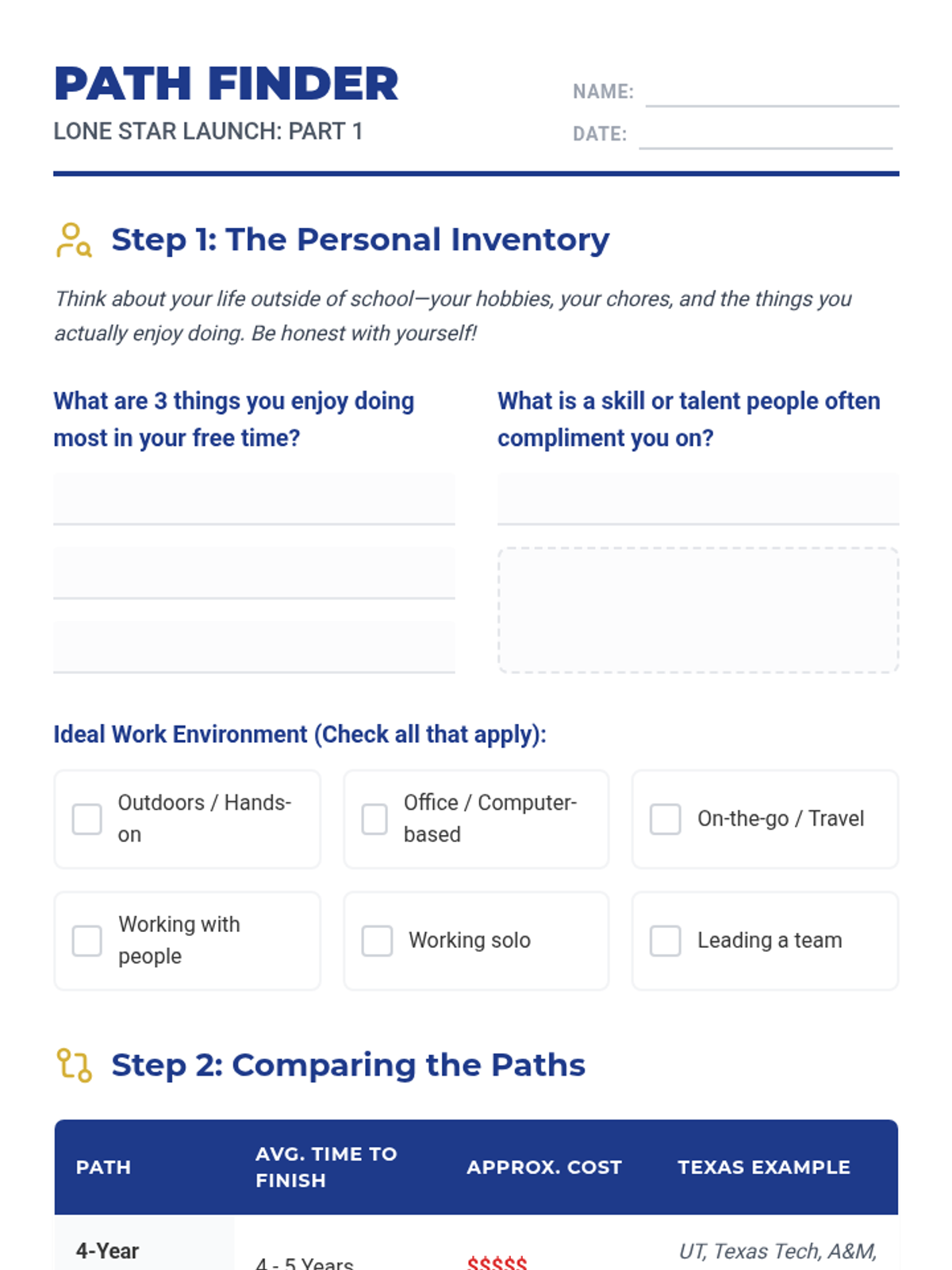
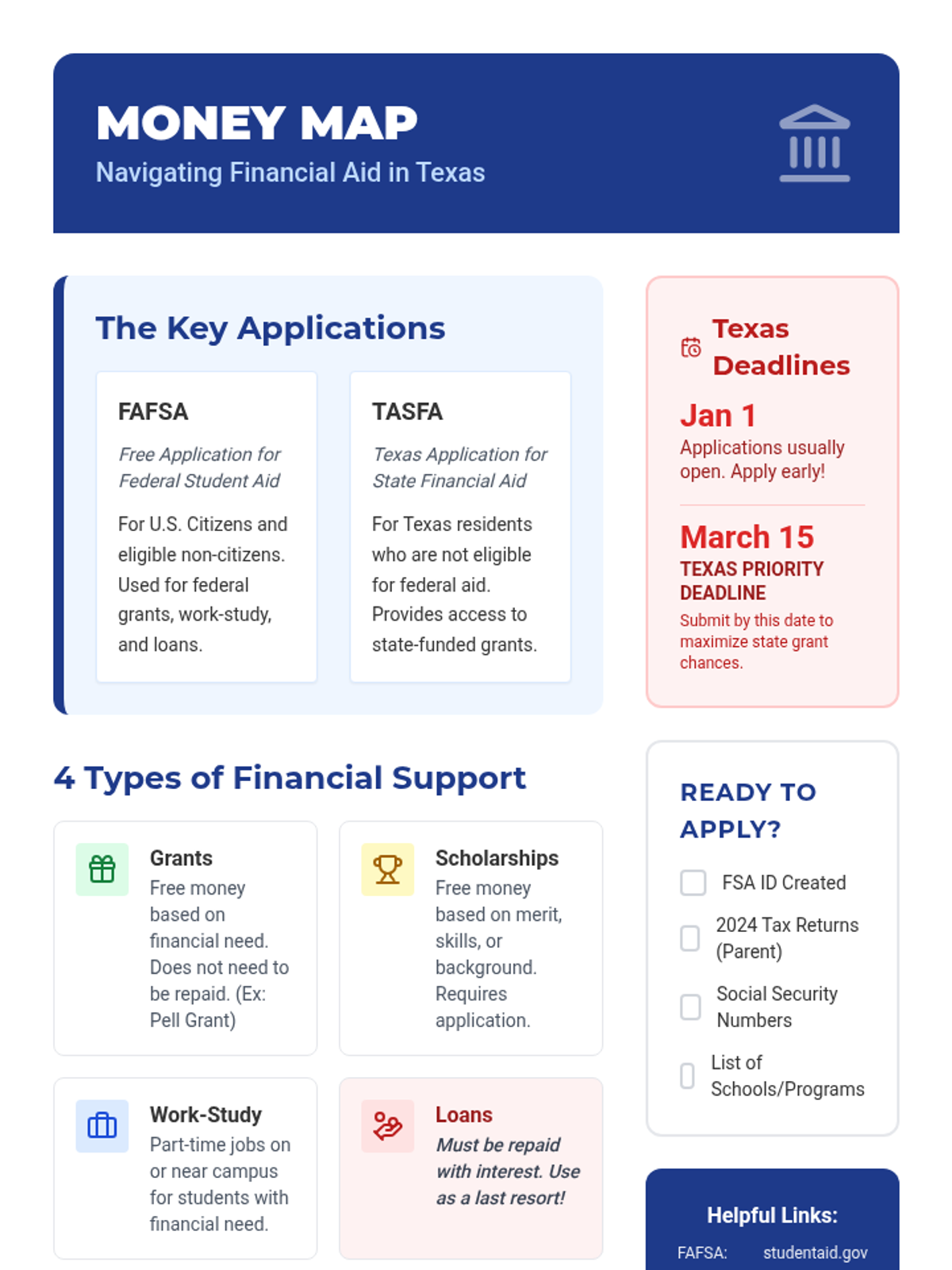
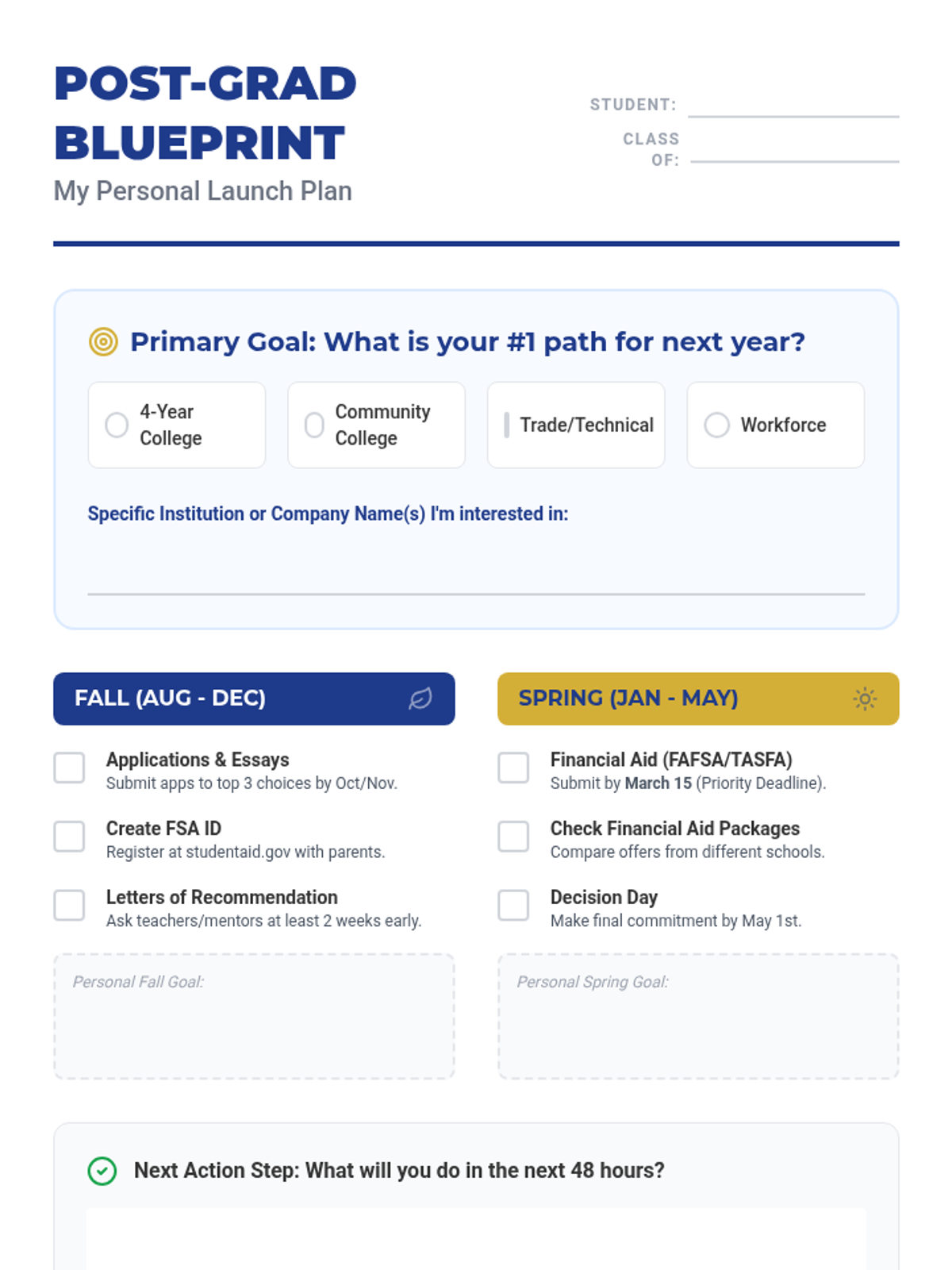
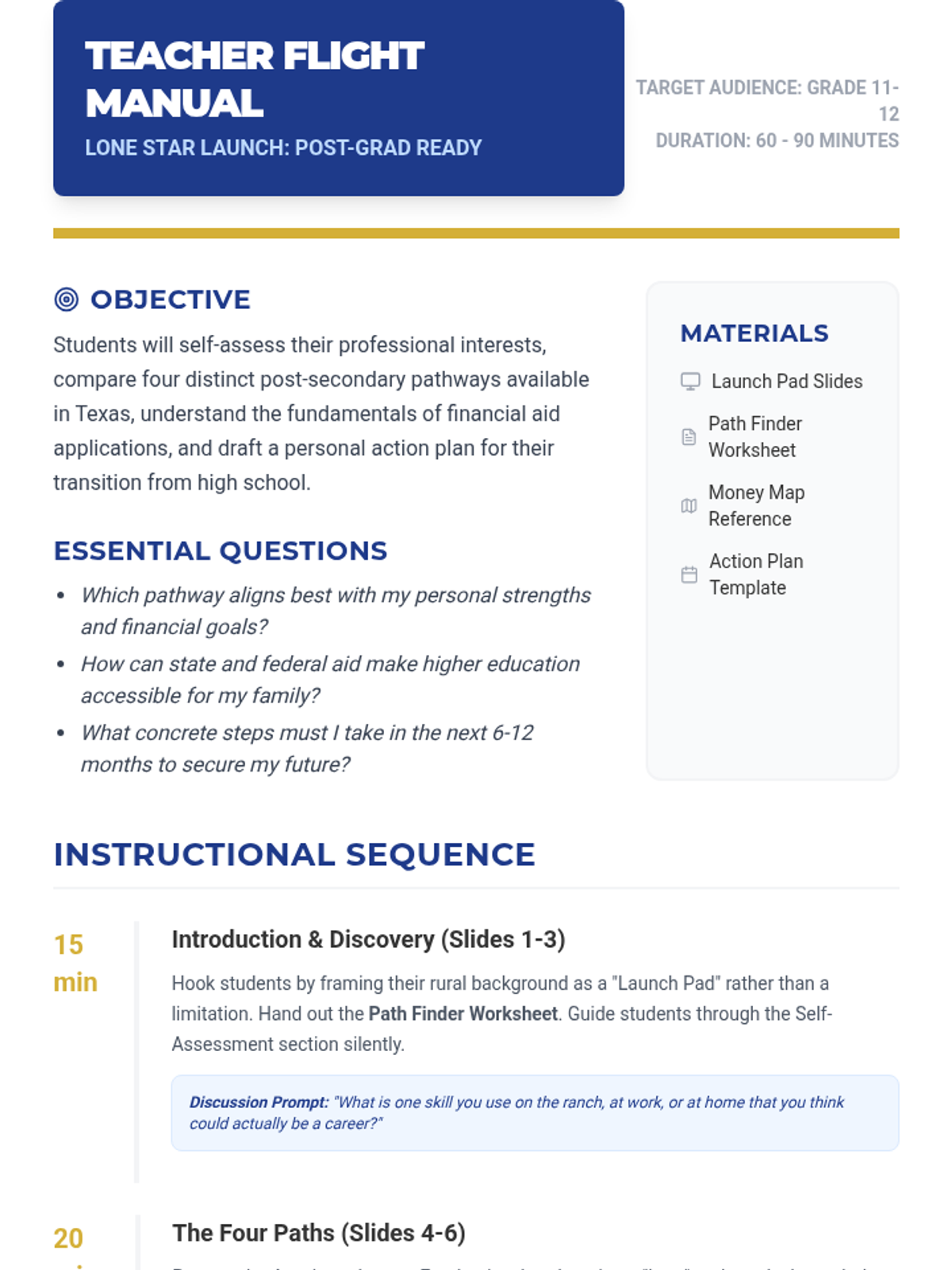
A comprehensive college and career readiness lesson designed for rural Texas high school students. It covers self-assessment, path comparison, financial aid, and actionable planning to ensure every student has a clear route after graduation.
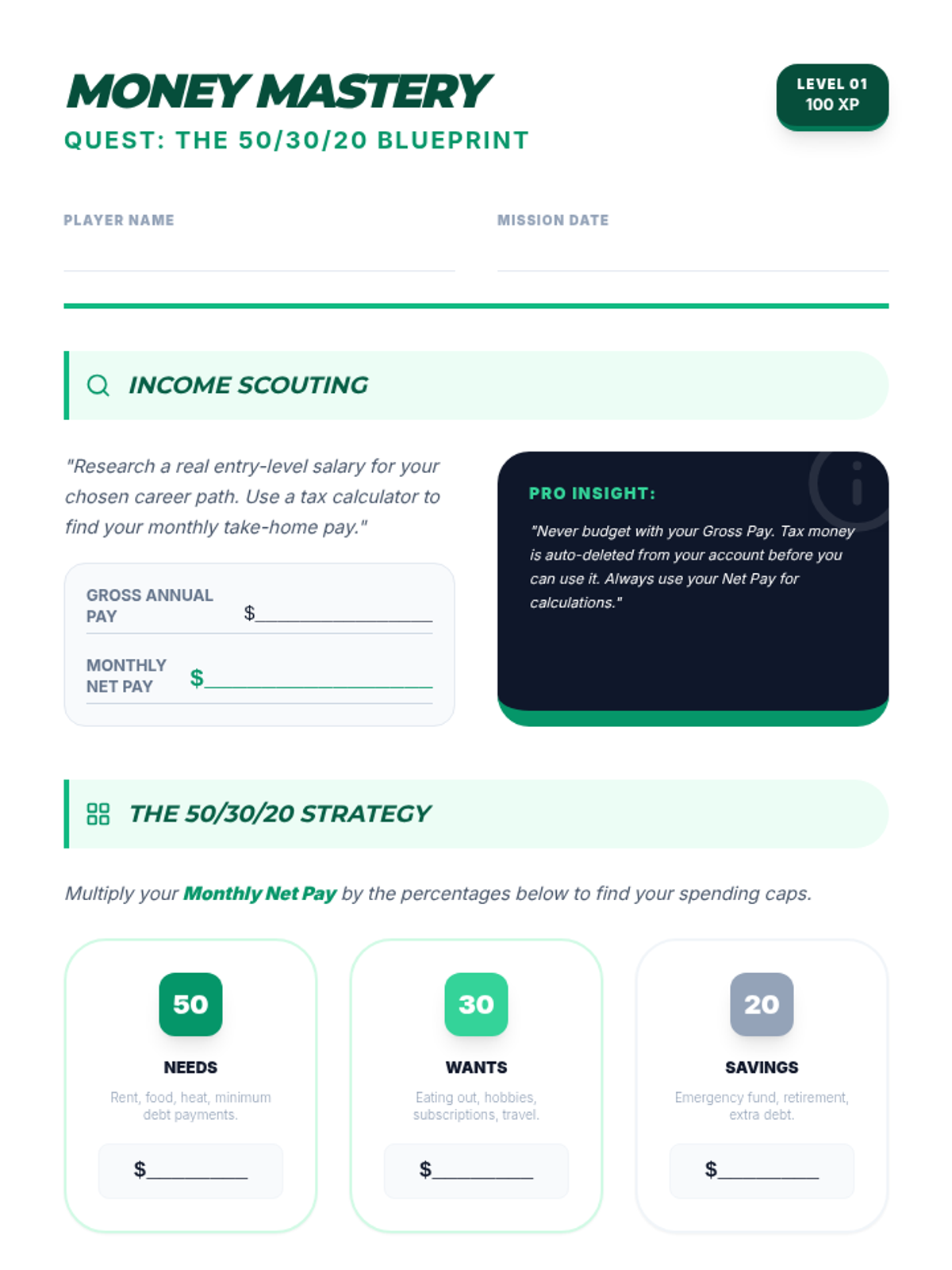
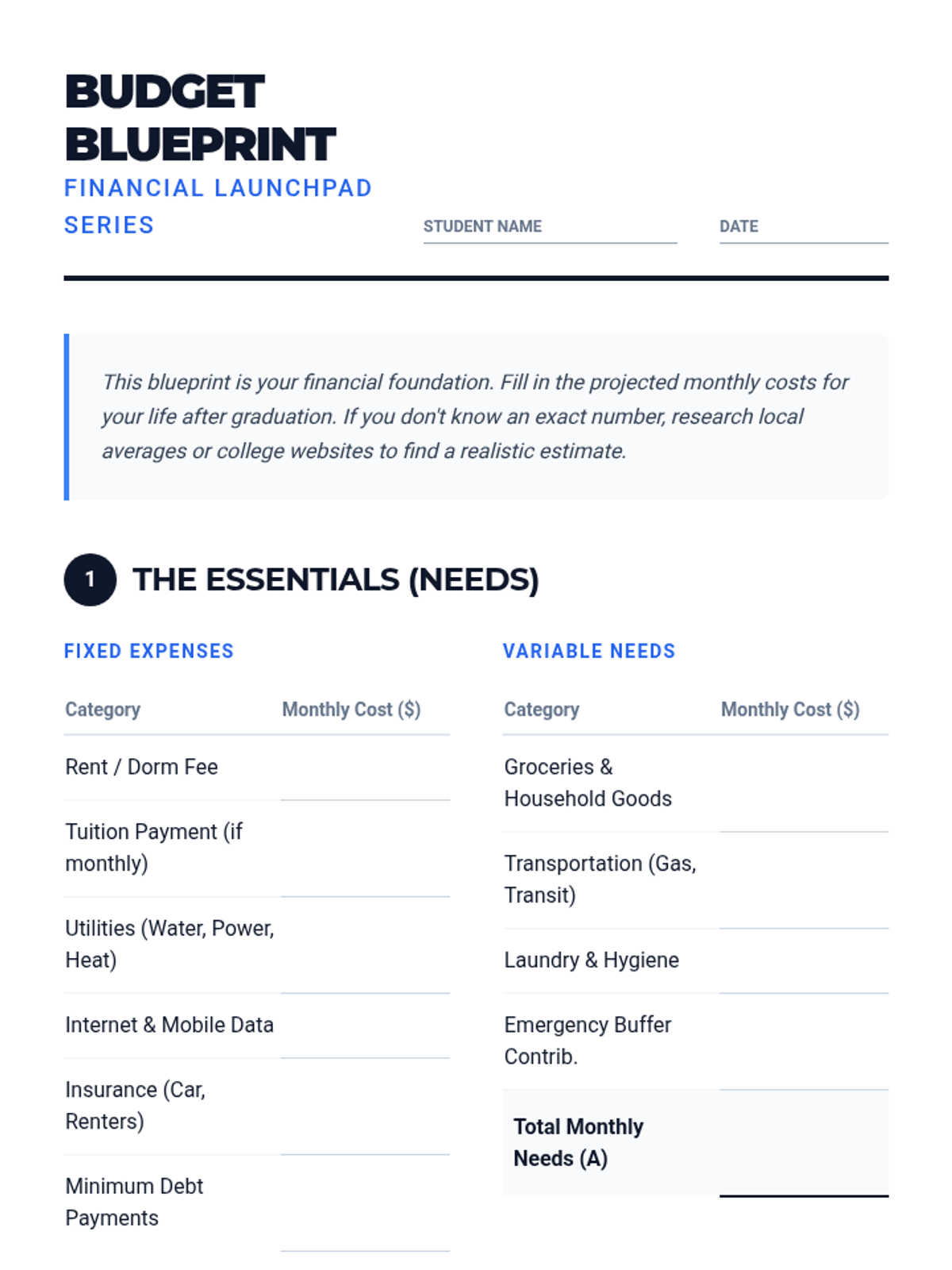
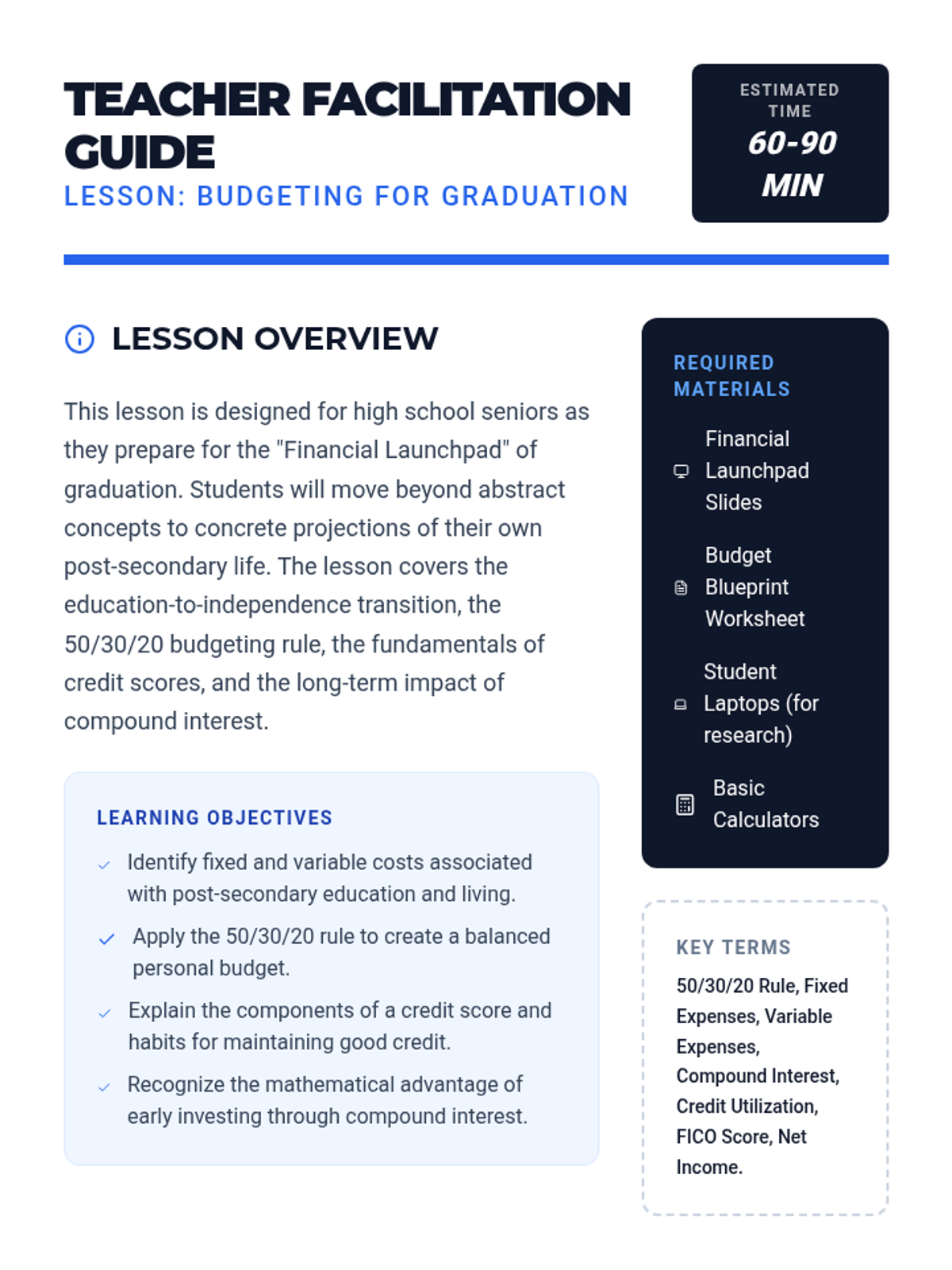
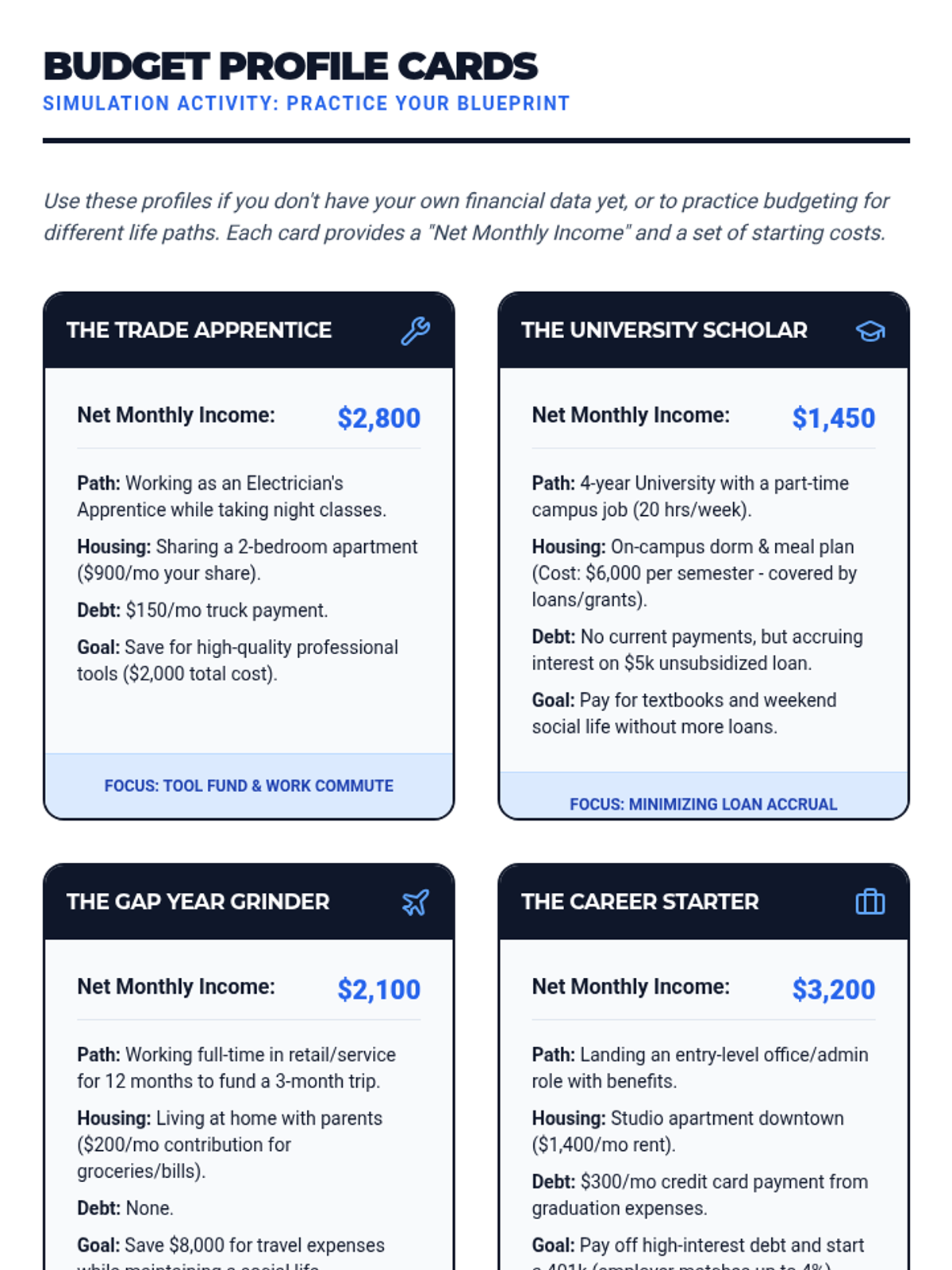
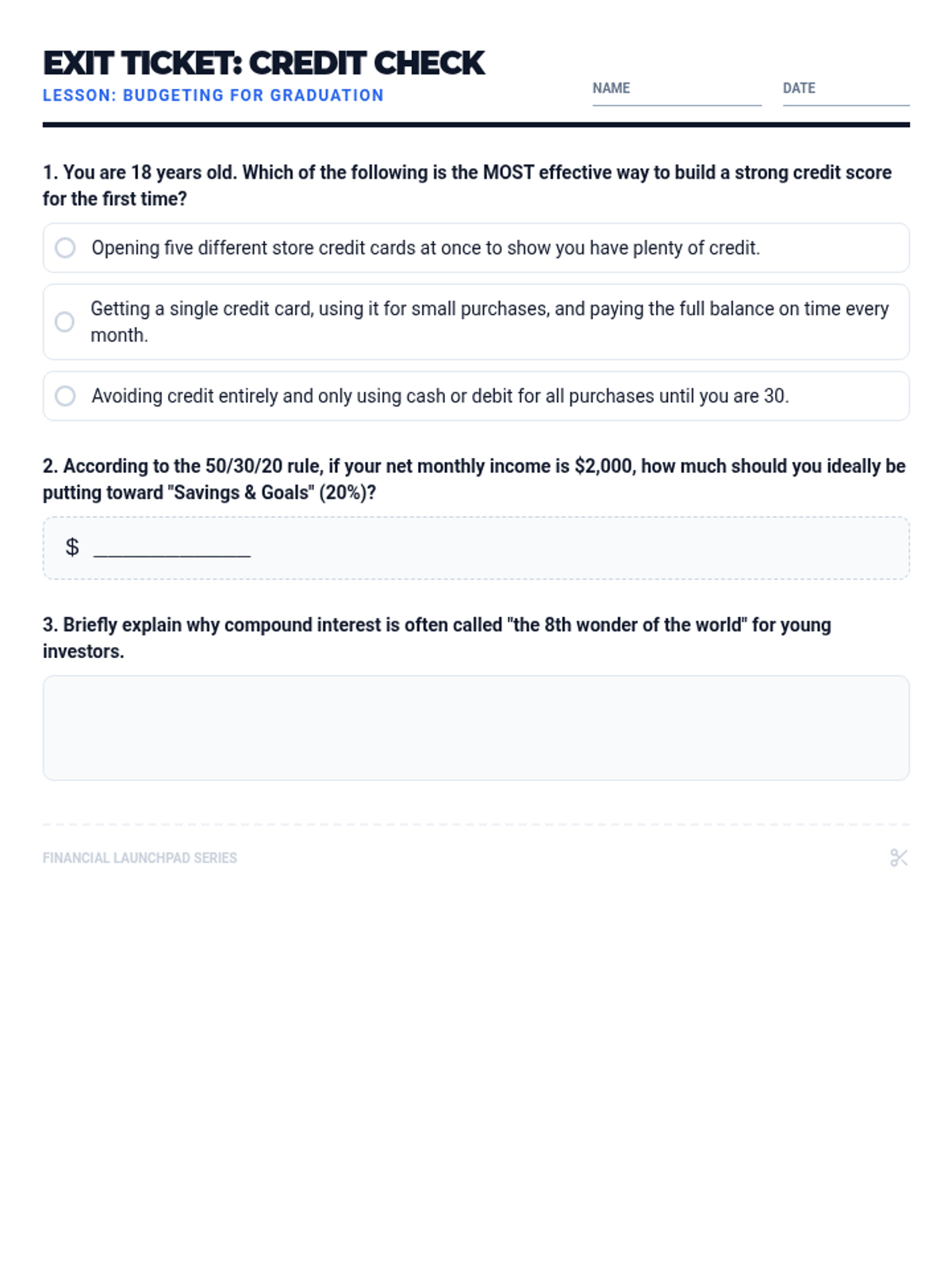
A foundational lesson on creating and managing a budget for life after high school, covering education costs, living expenses, and credit basics.
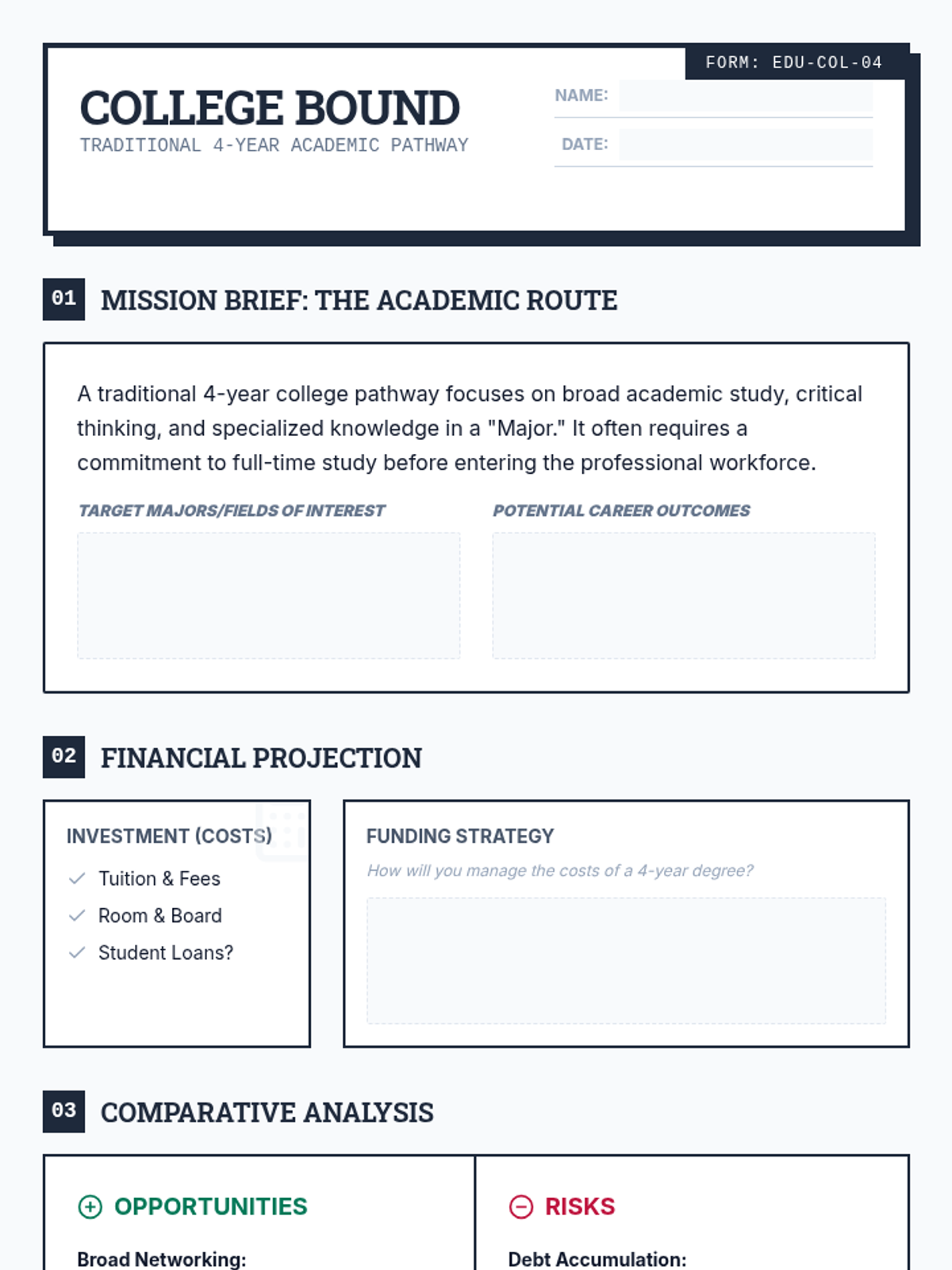
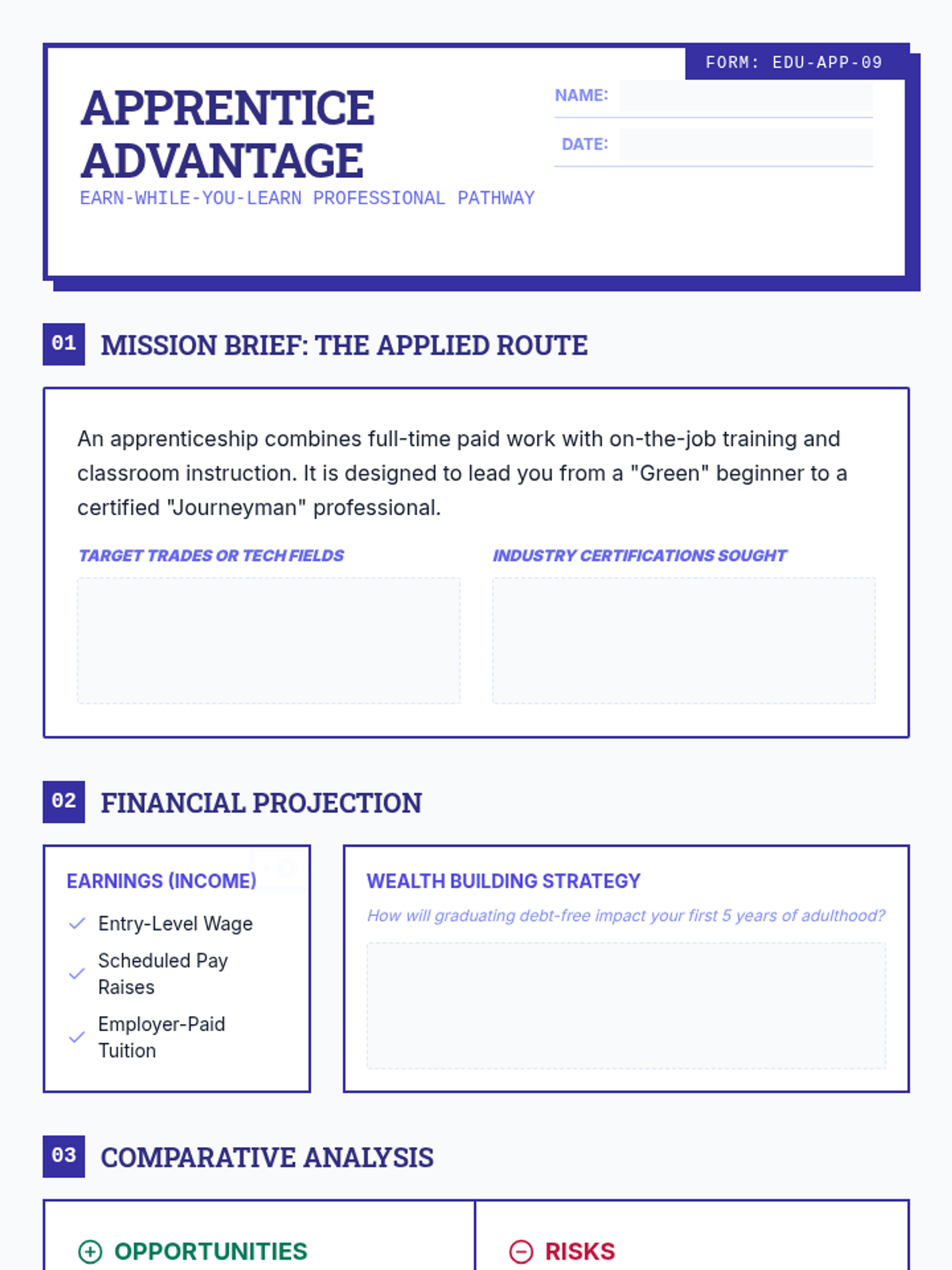
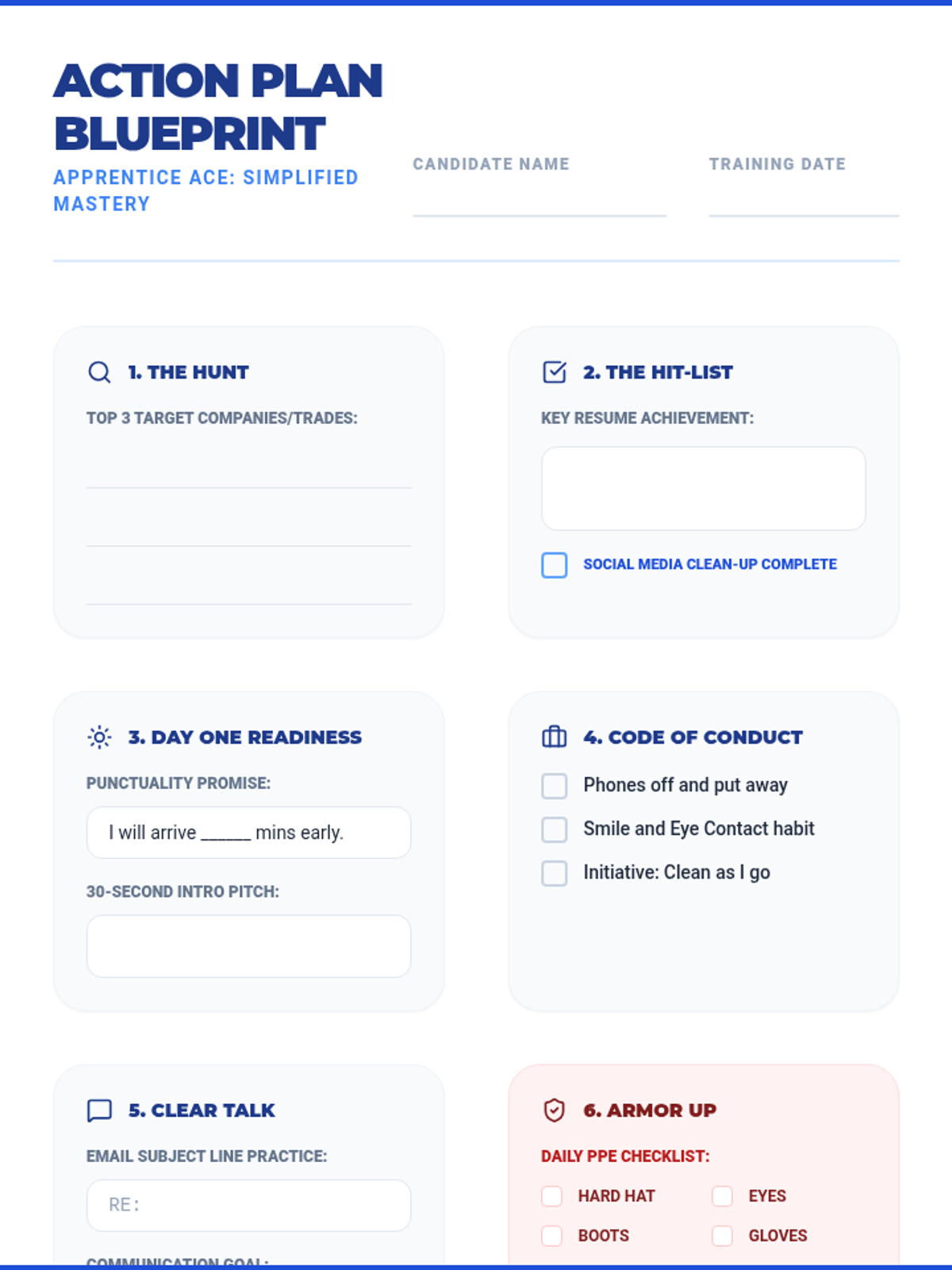
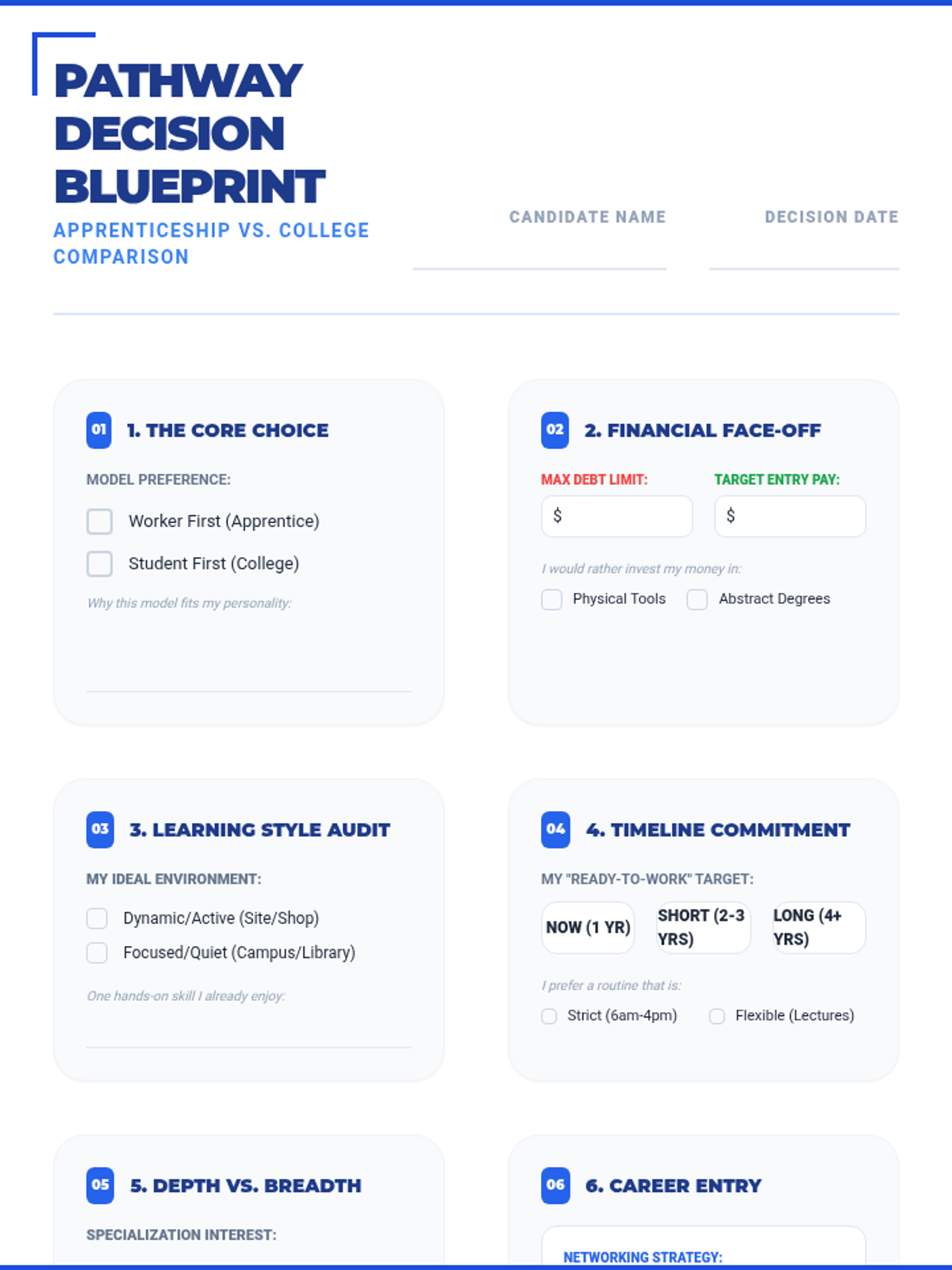
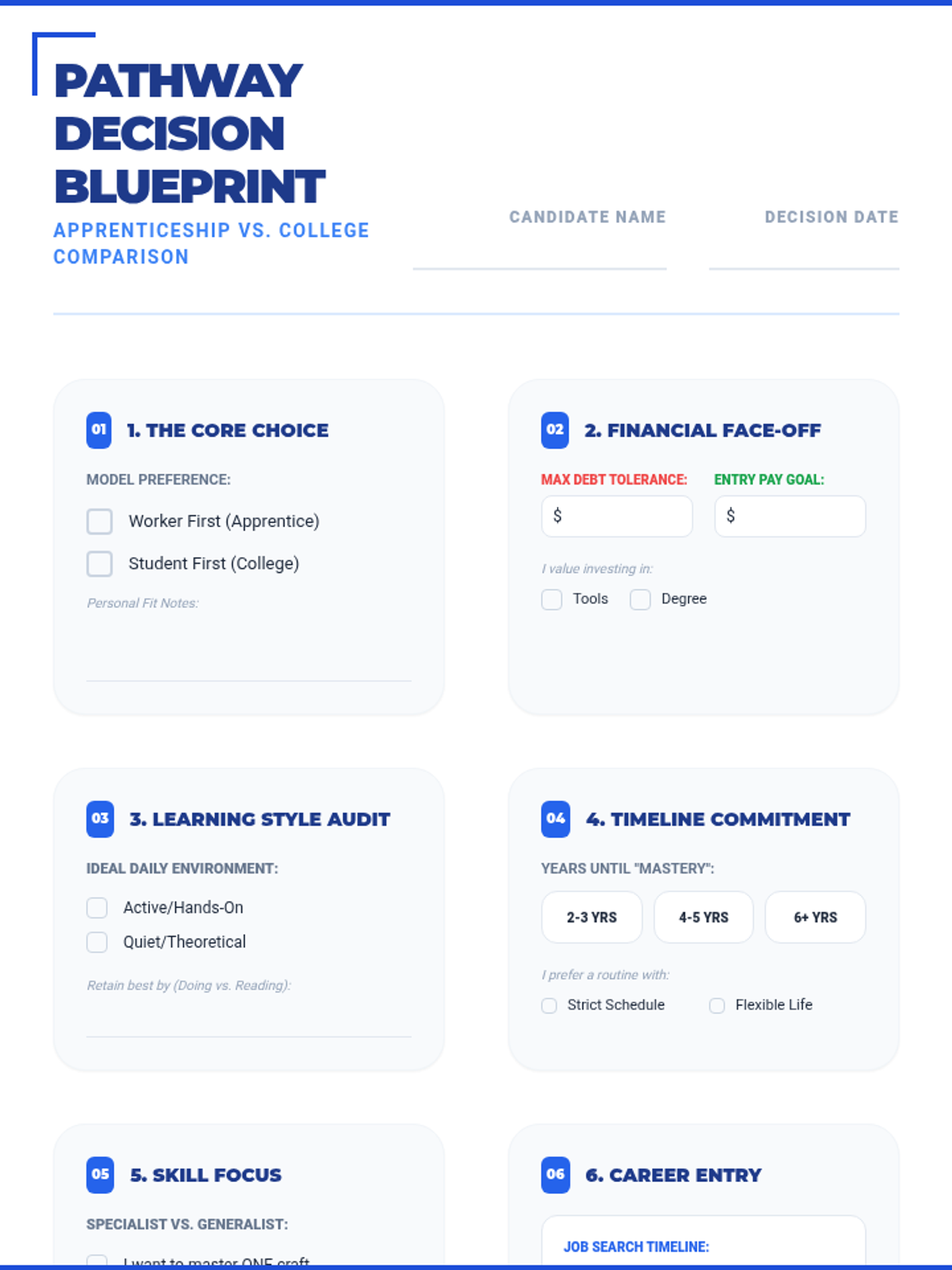
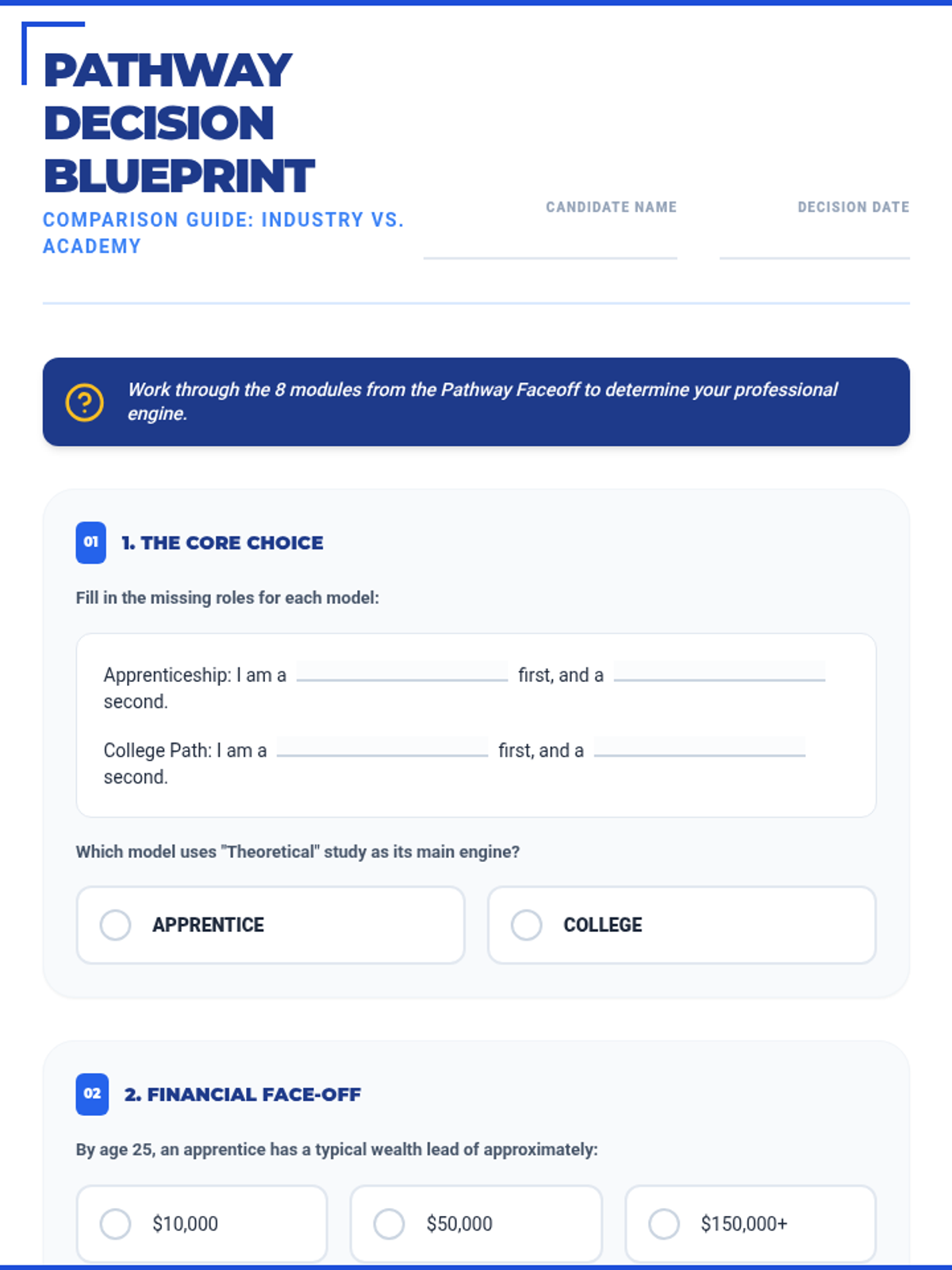
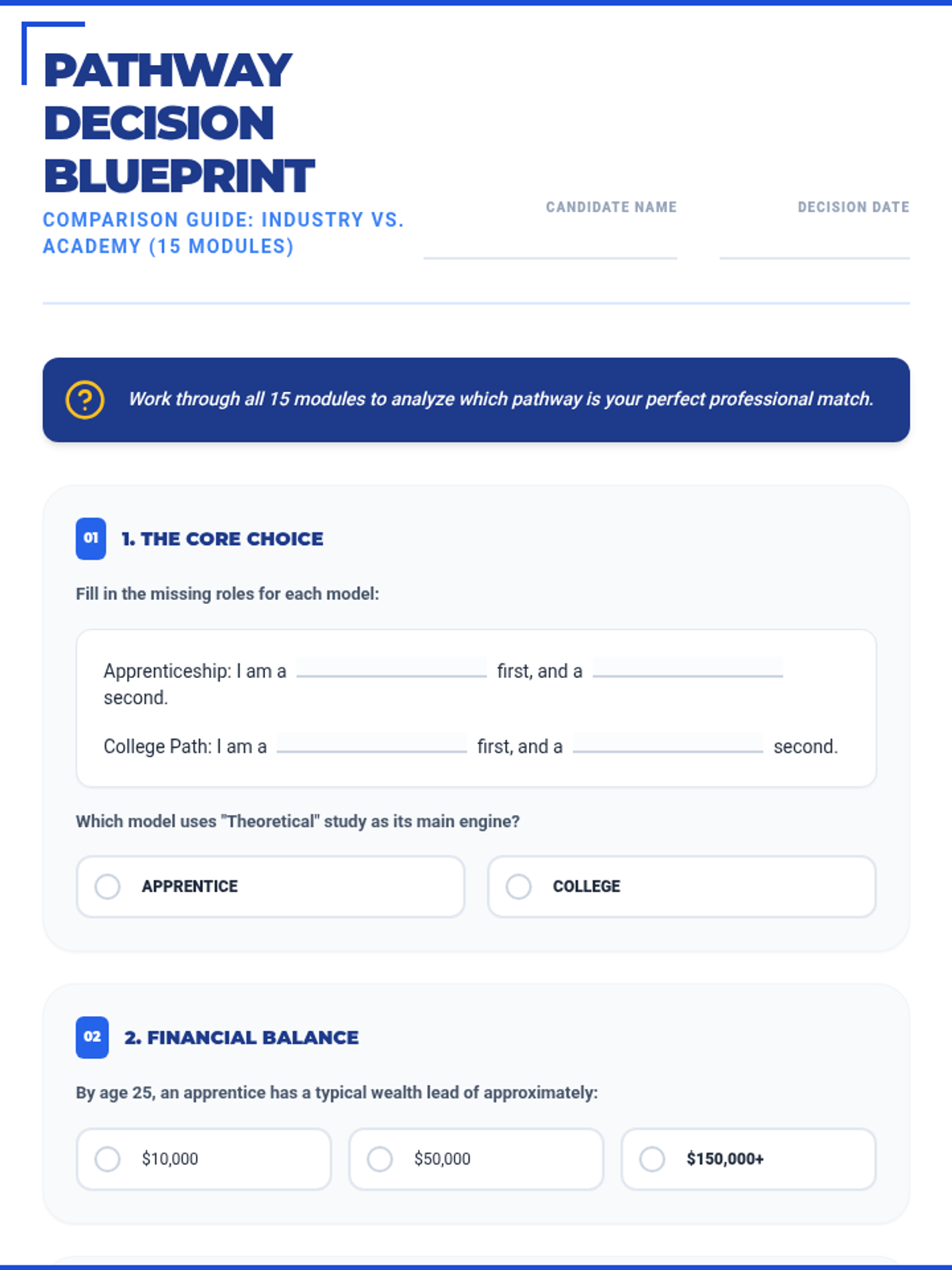
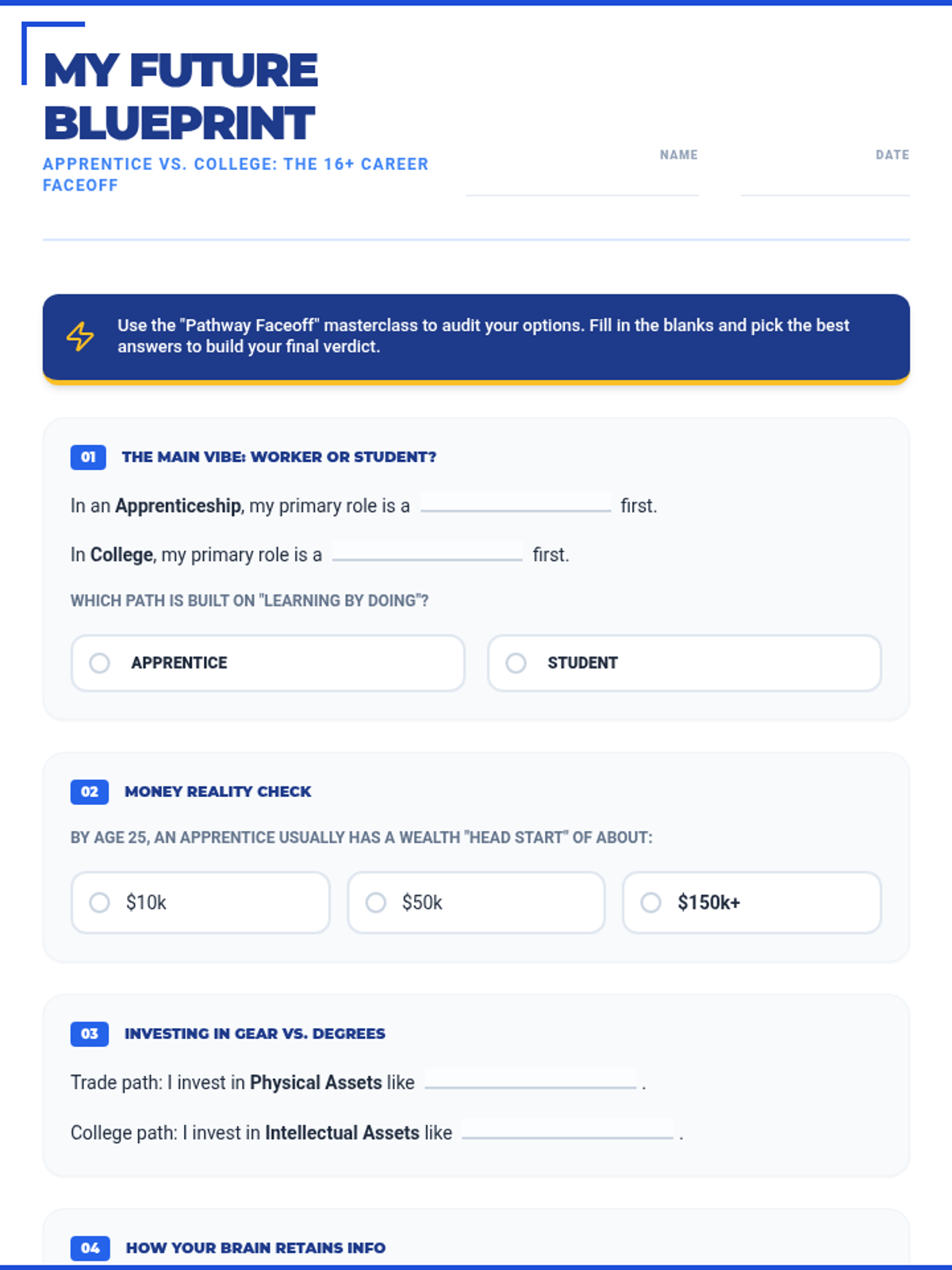
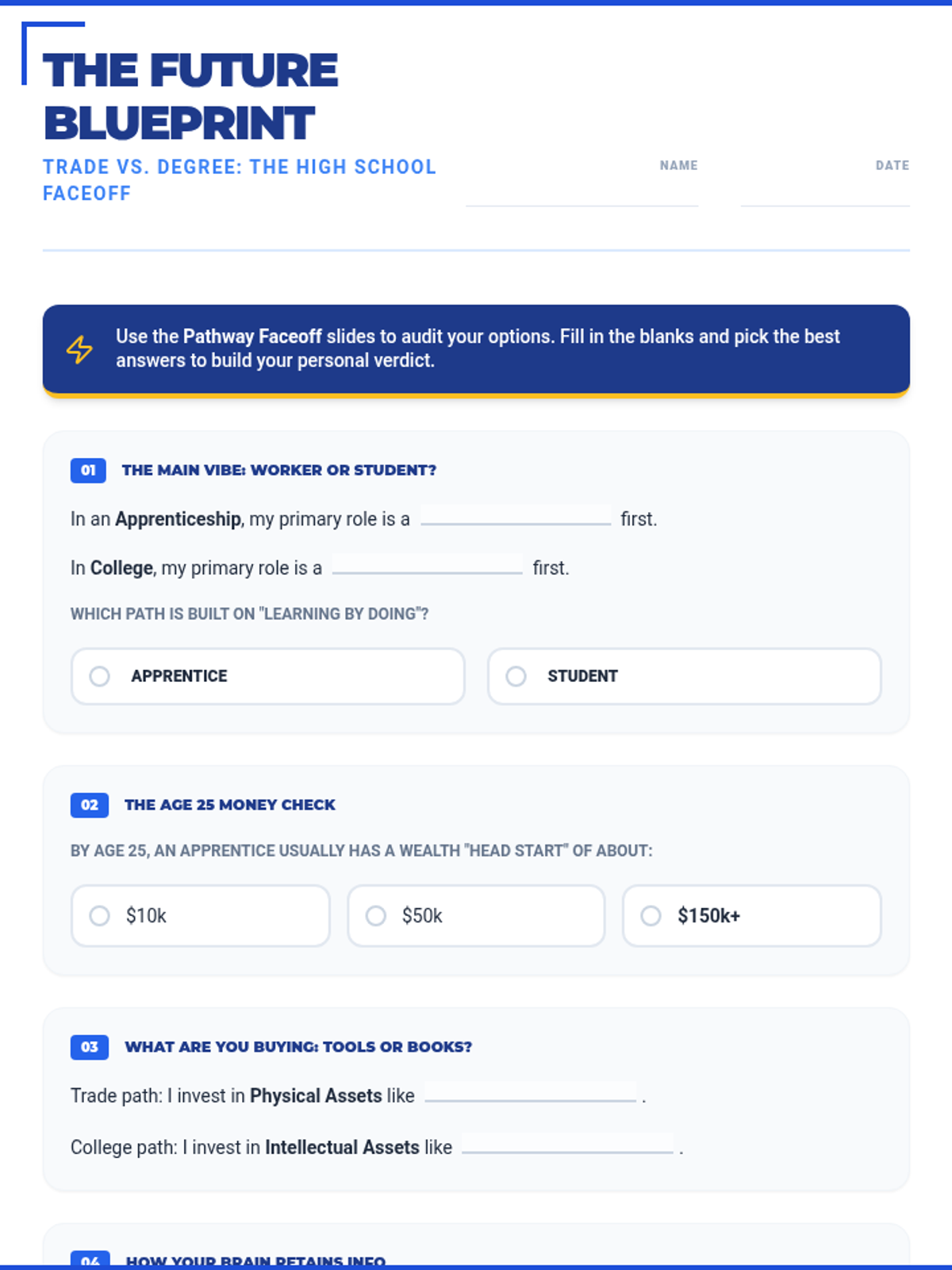
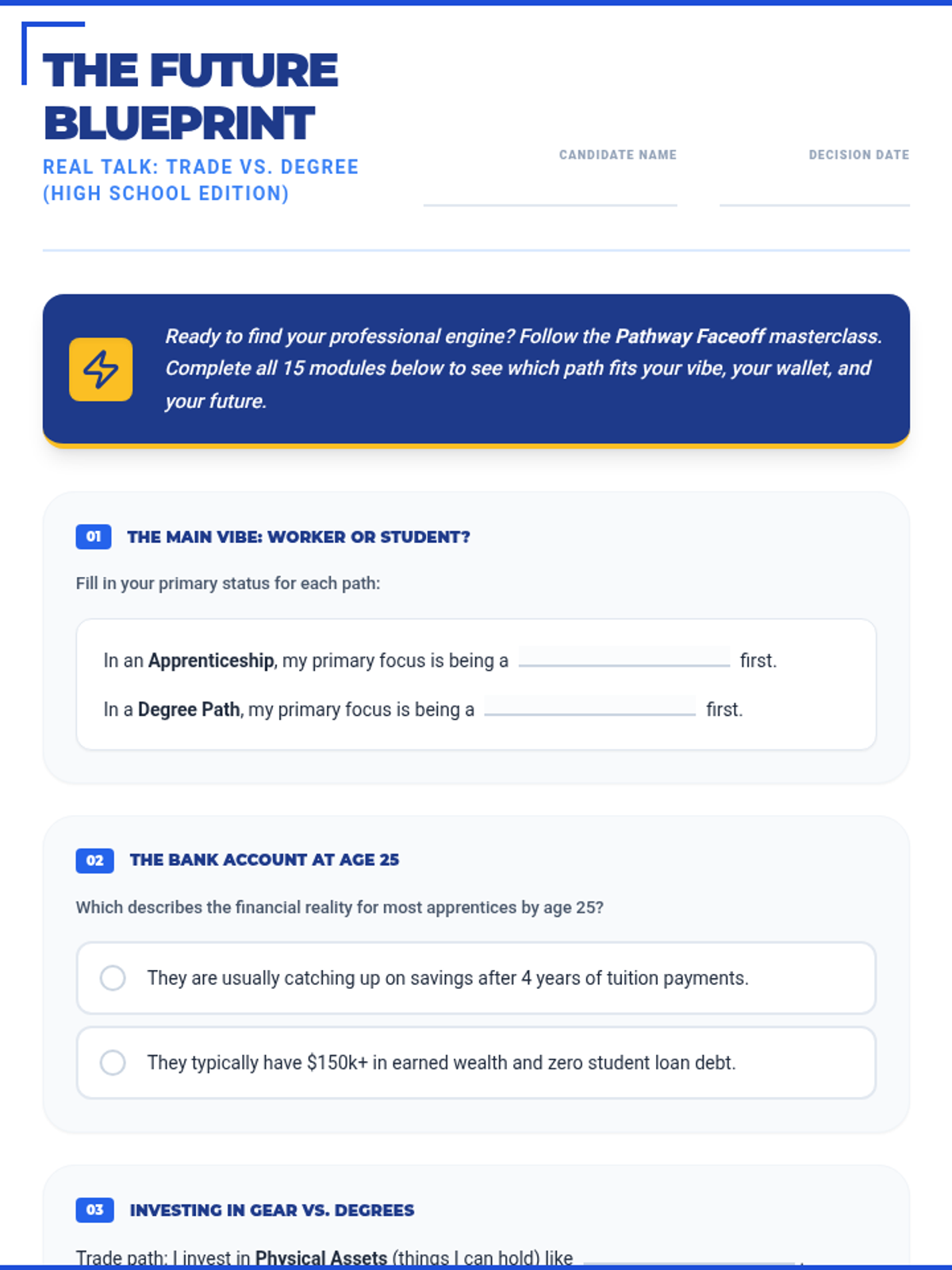
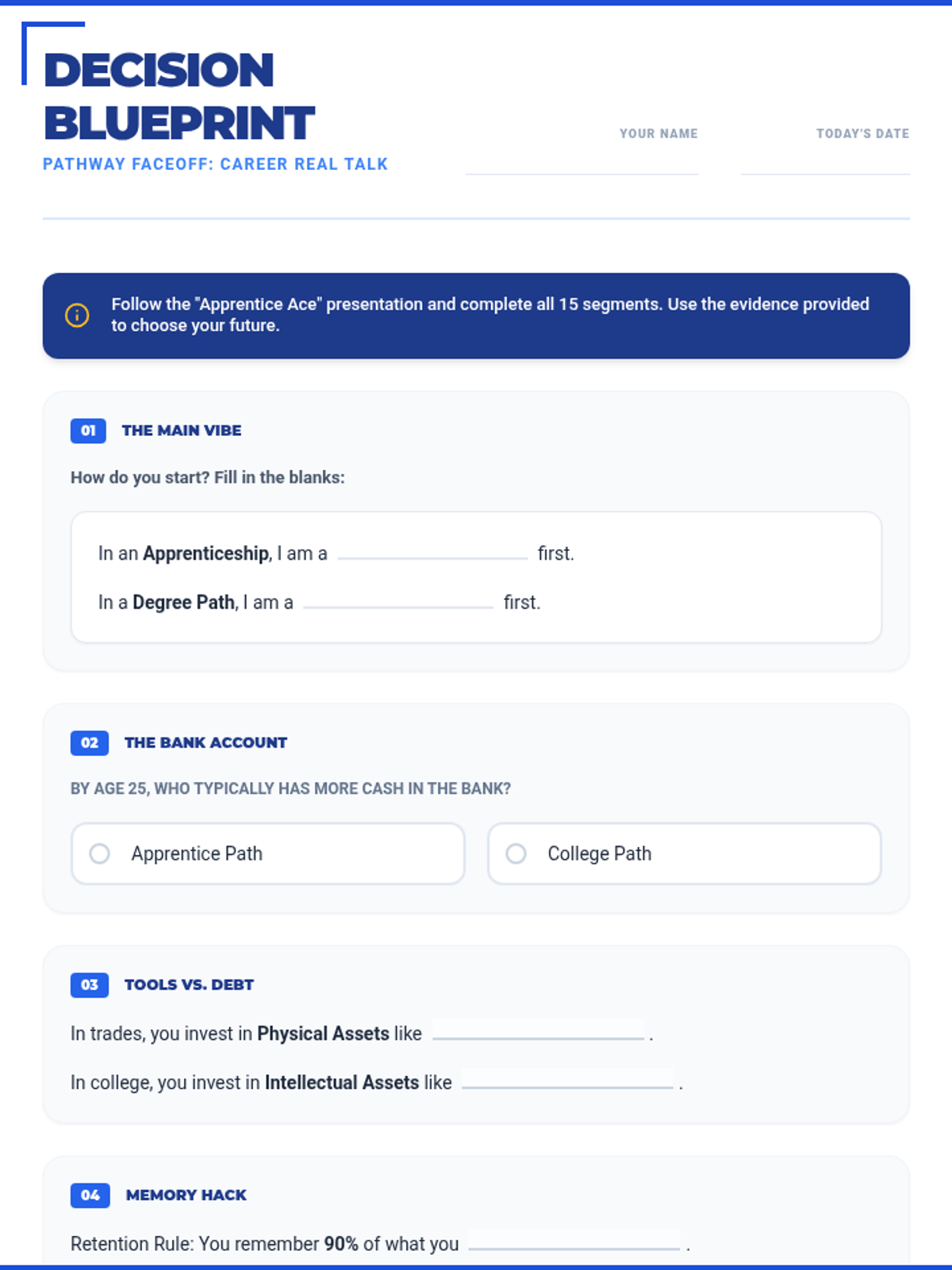
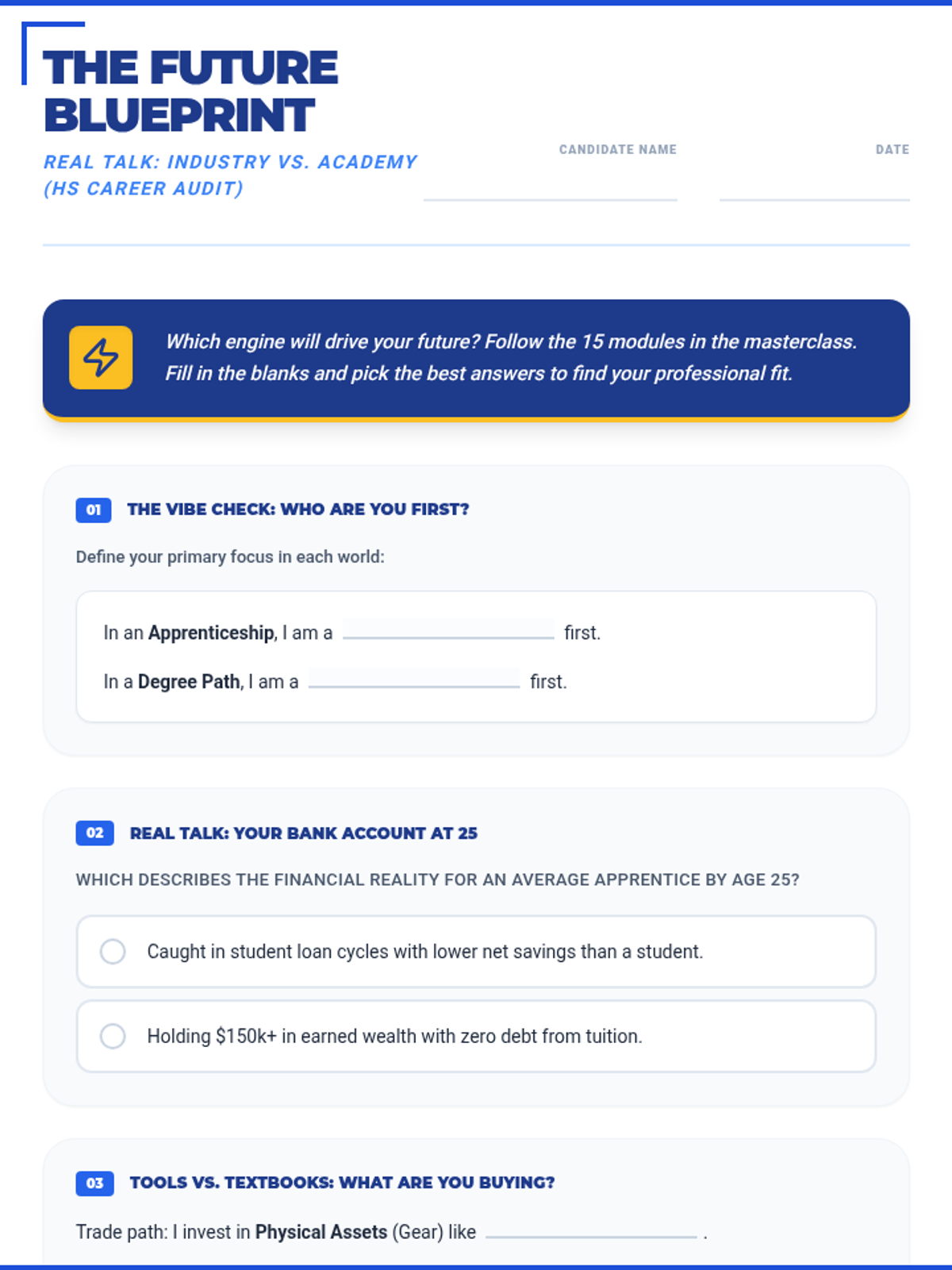
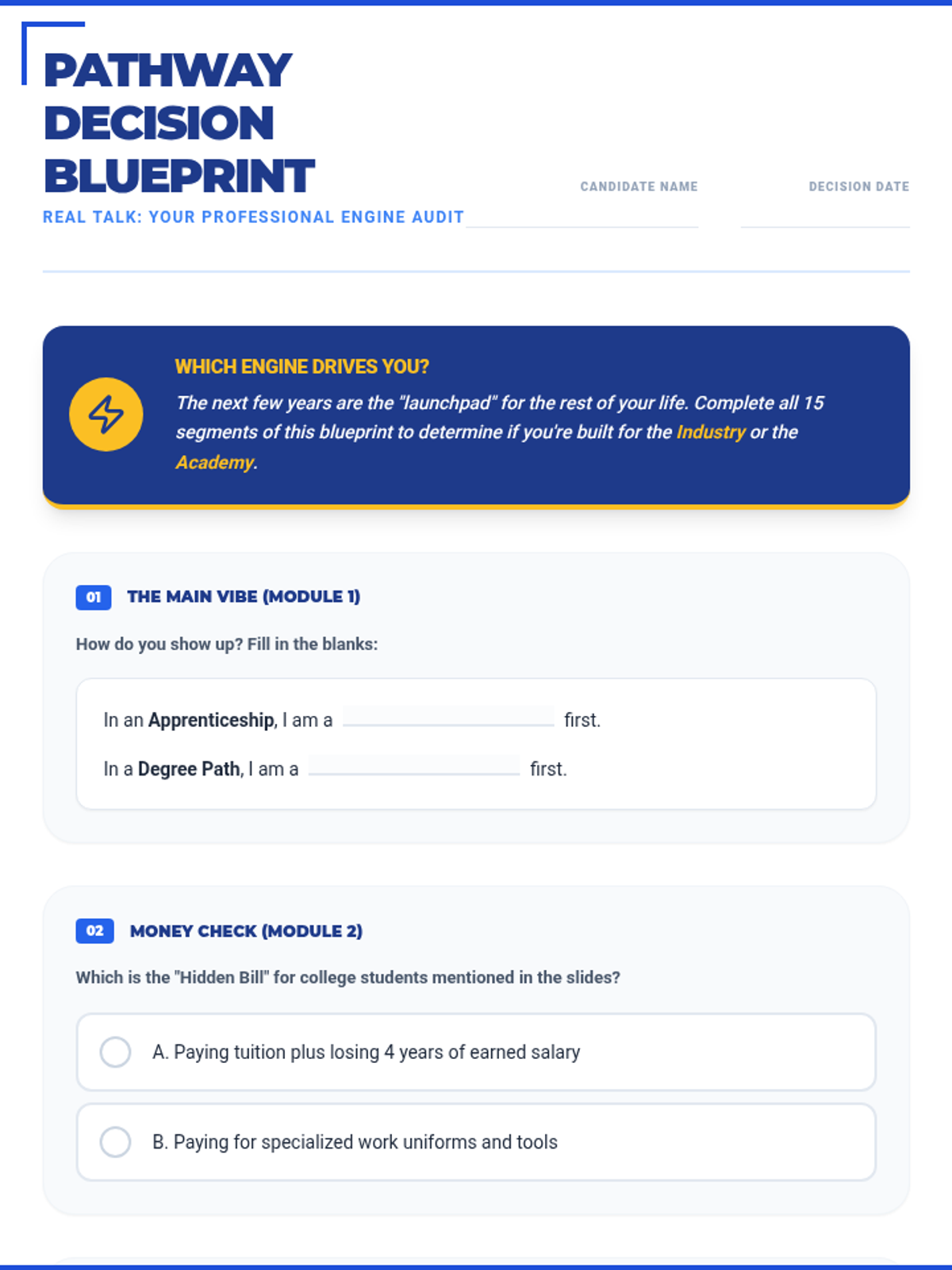
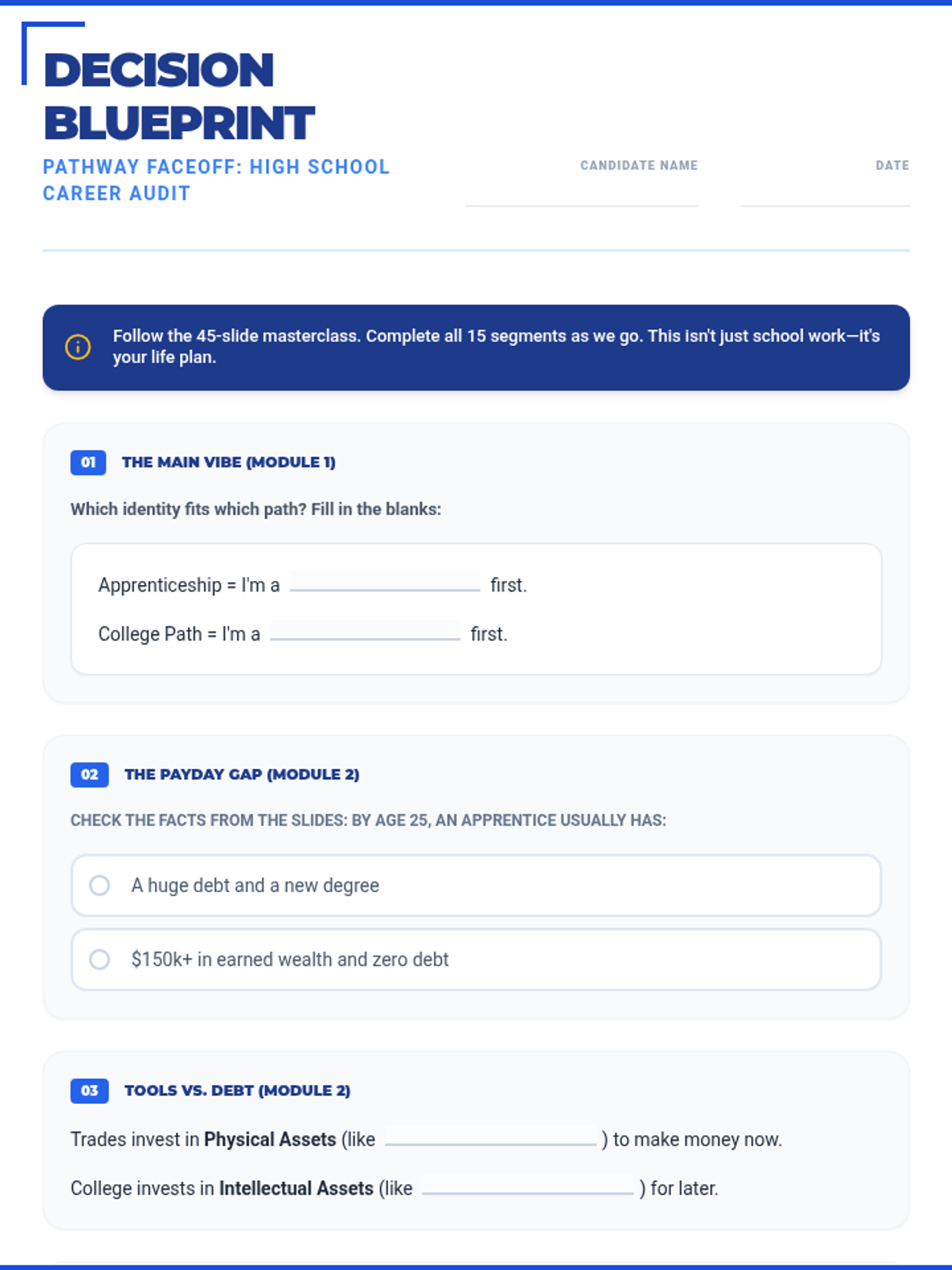
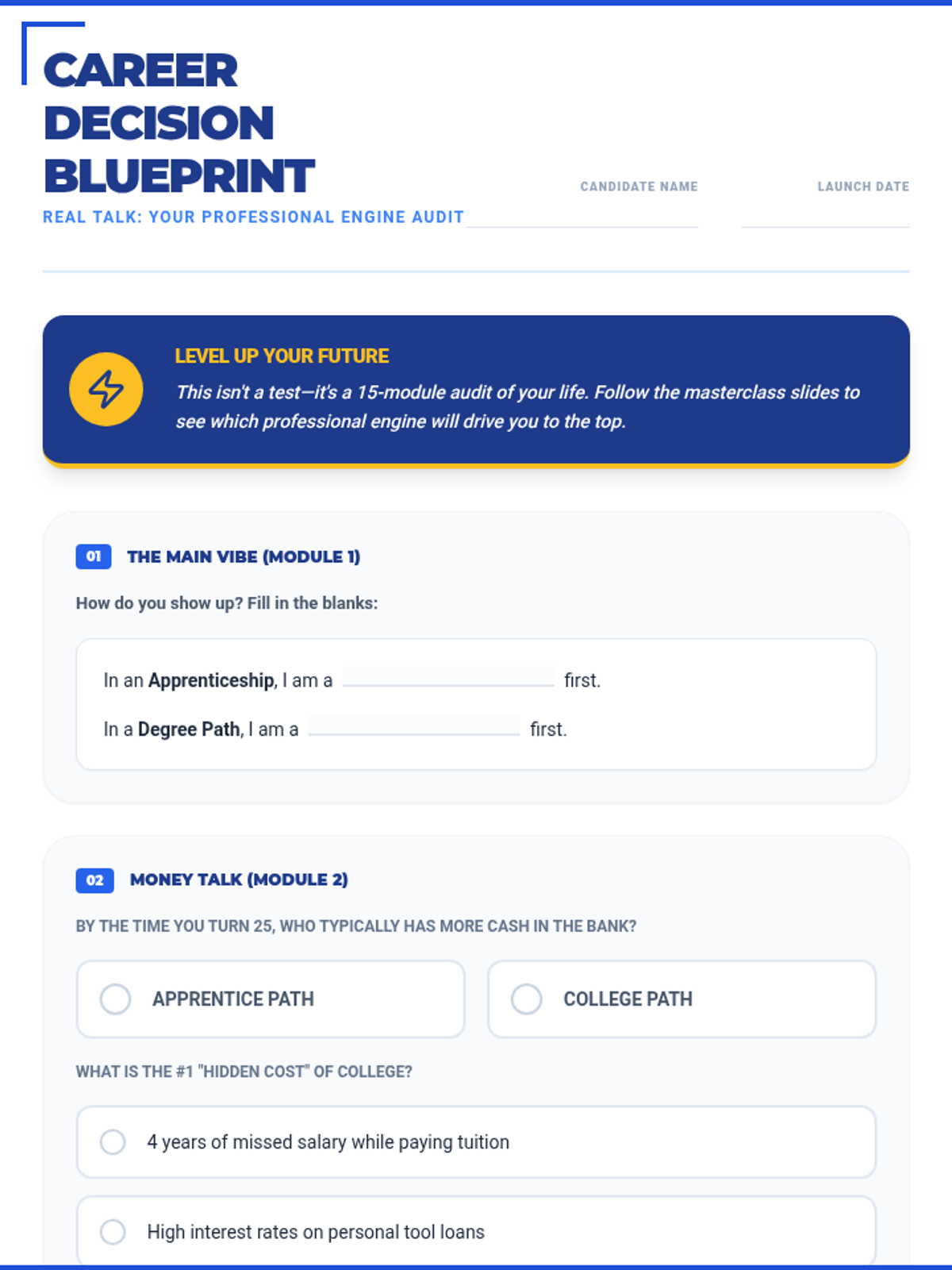
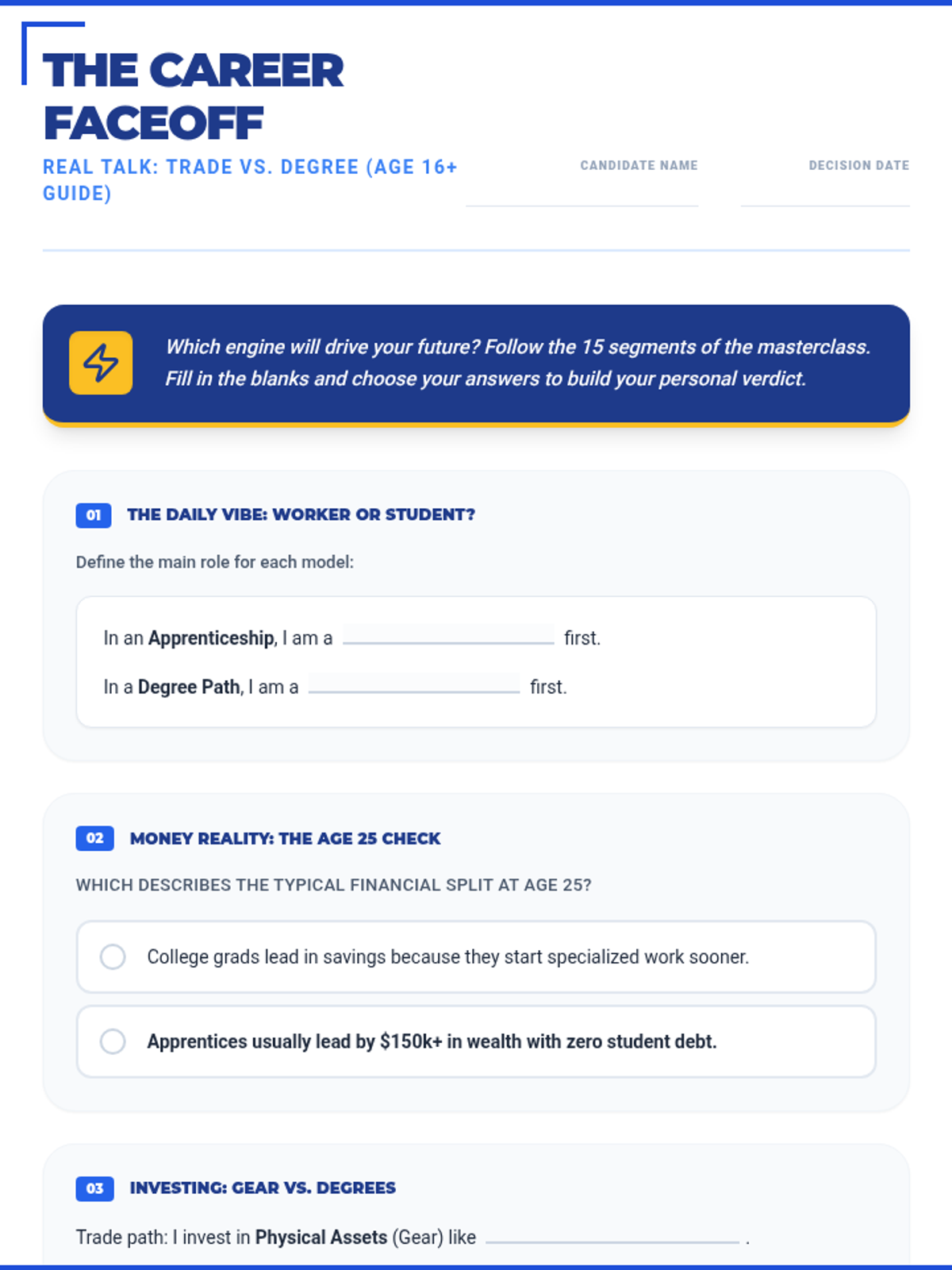
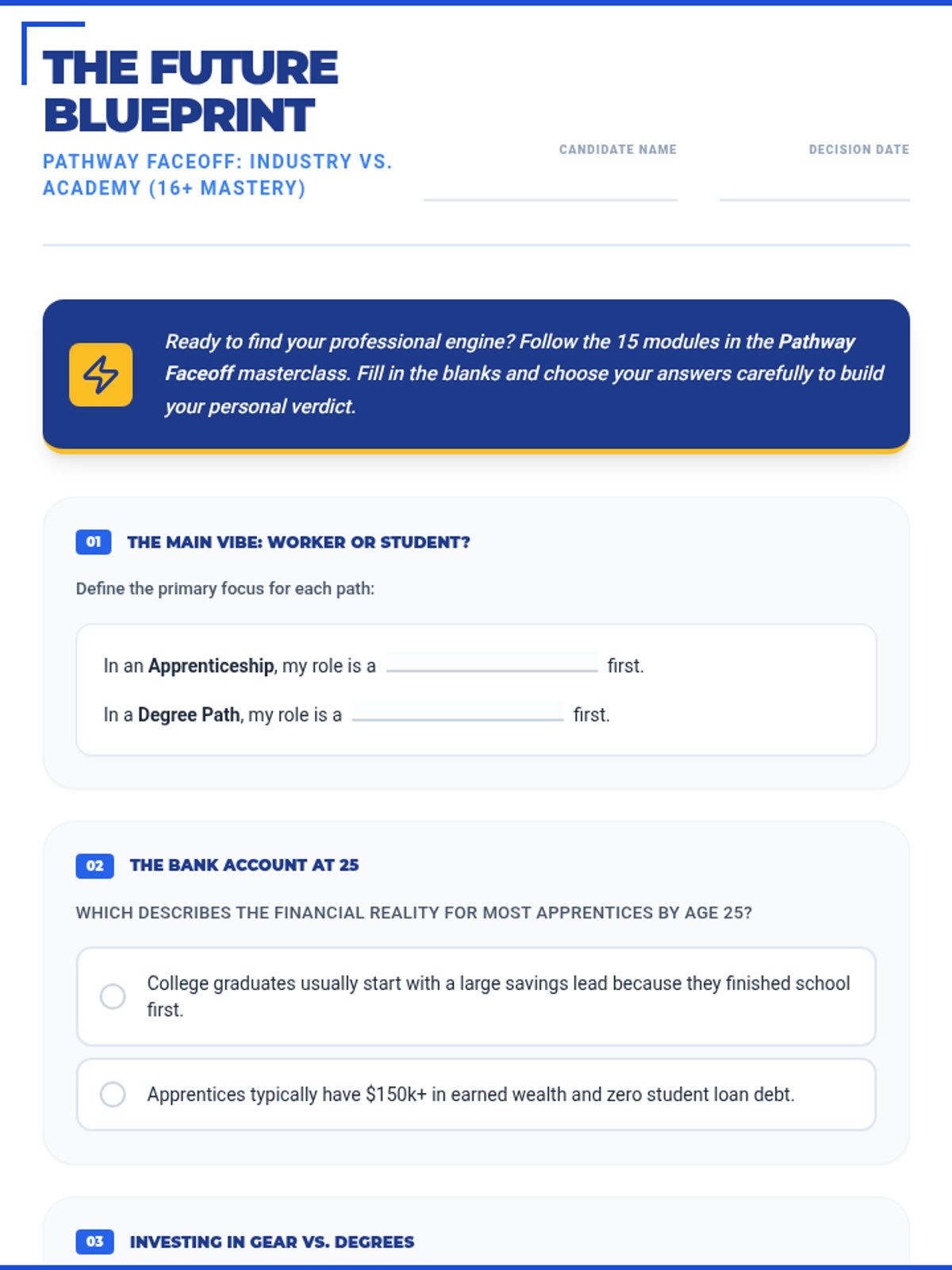
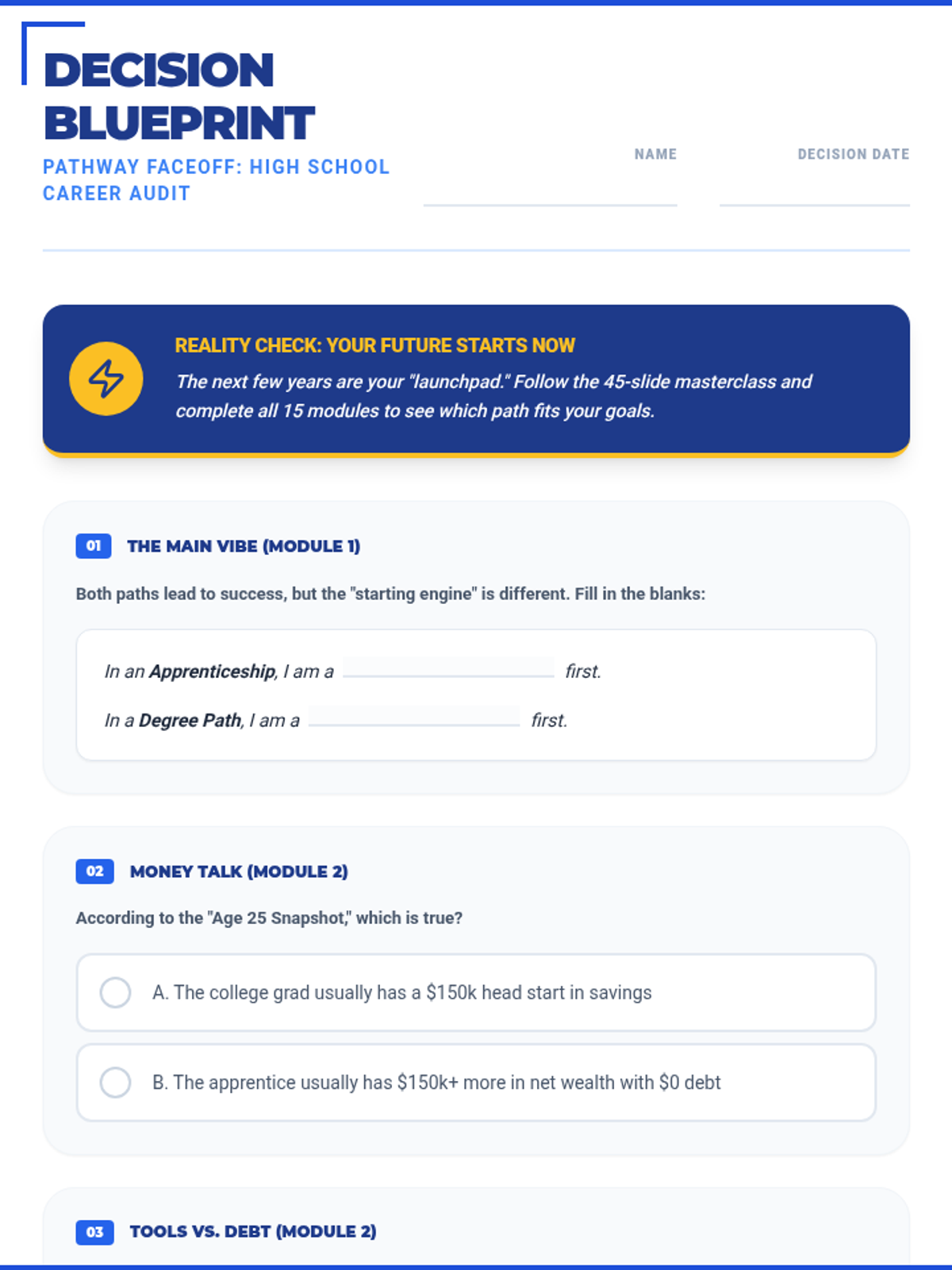
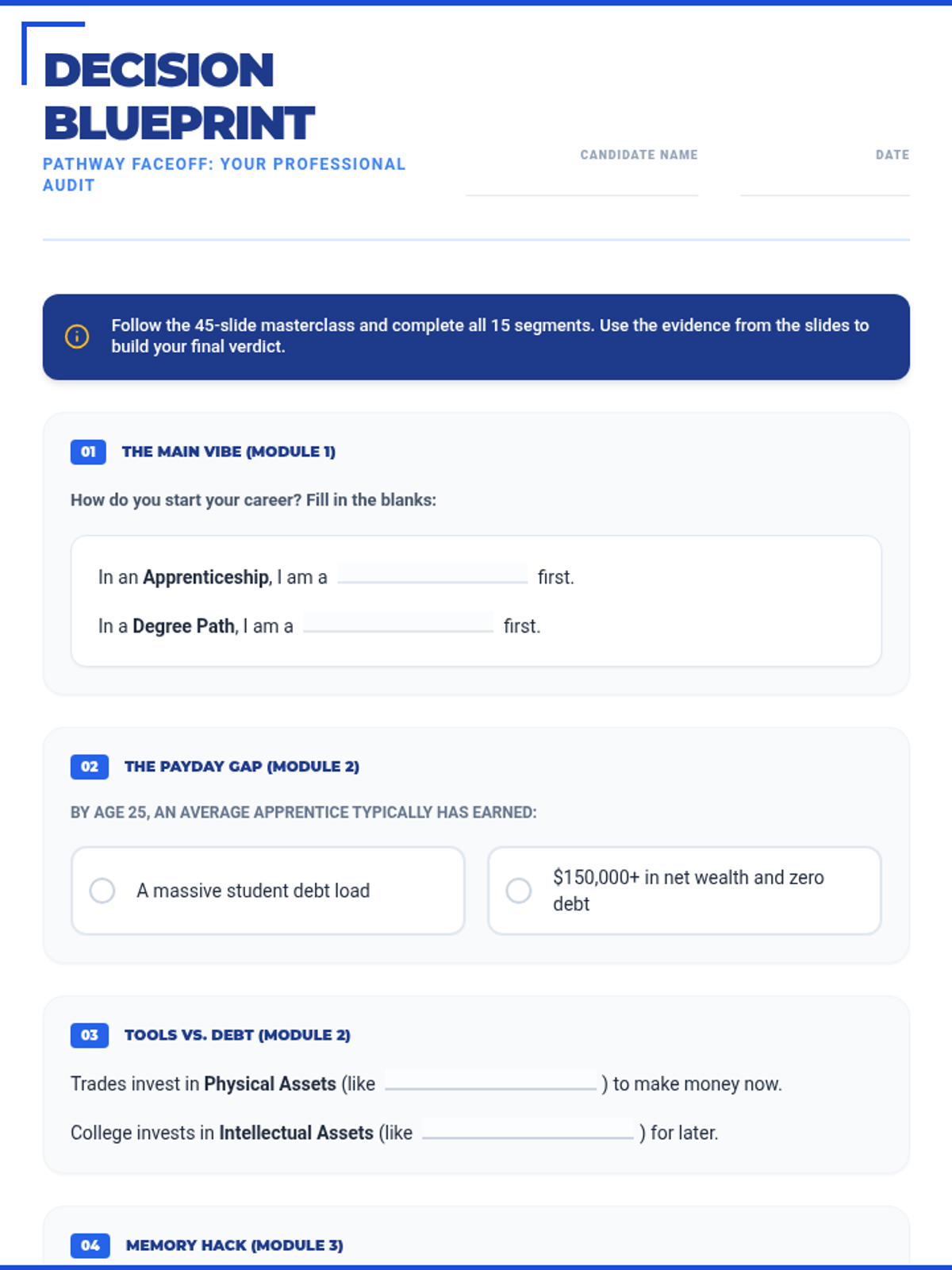
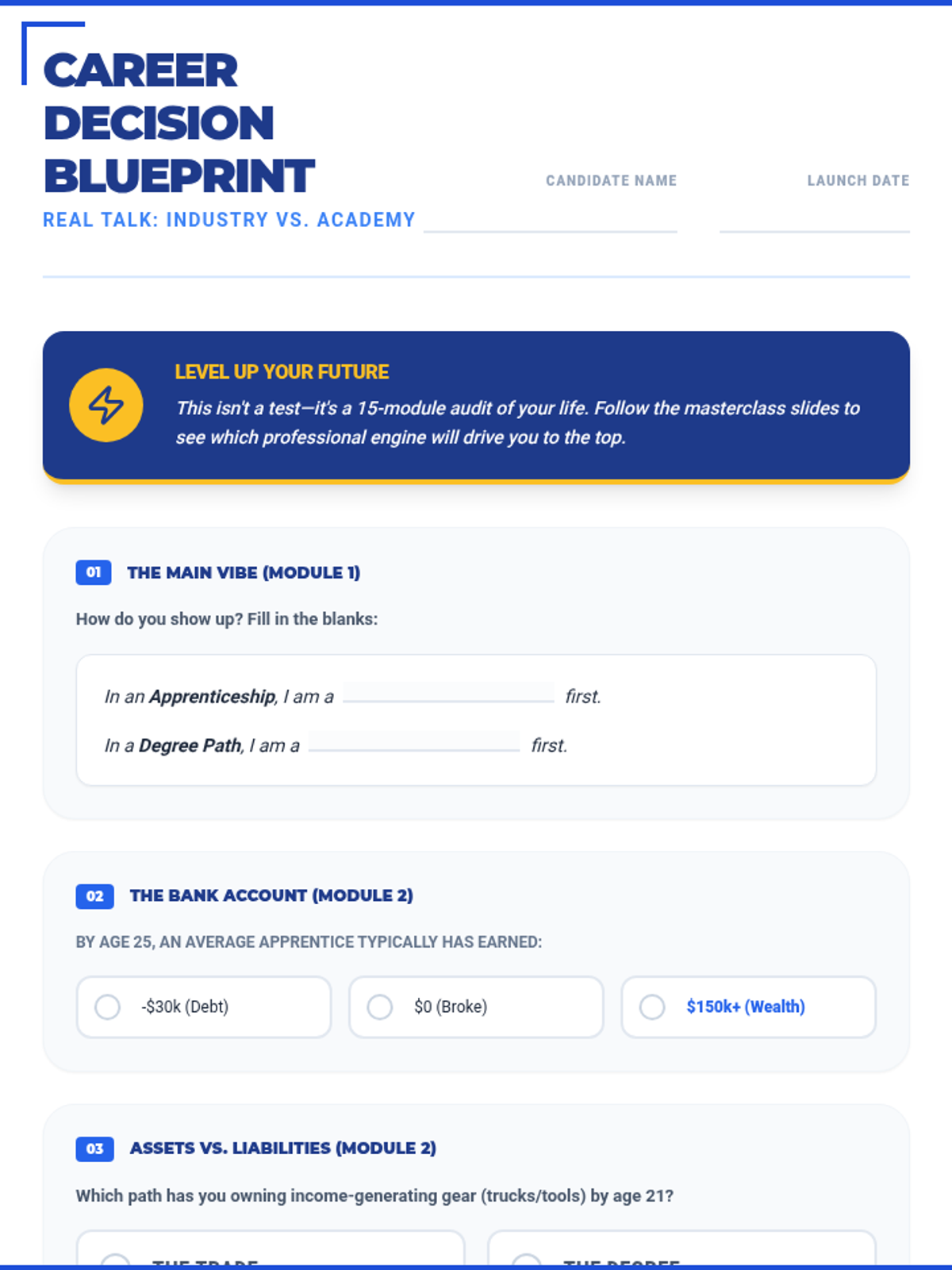
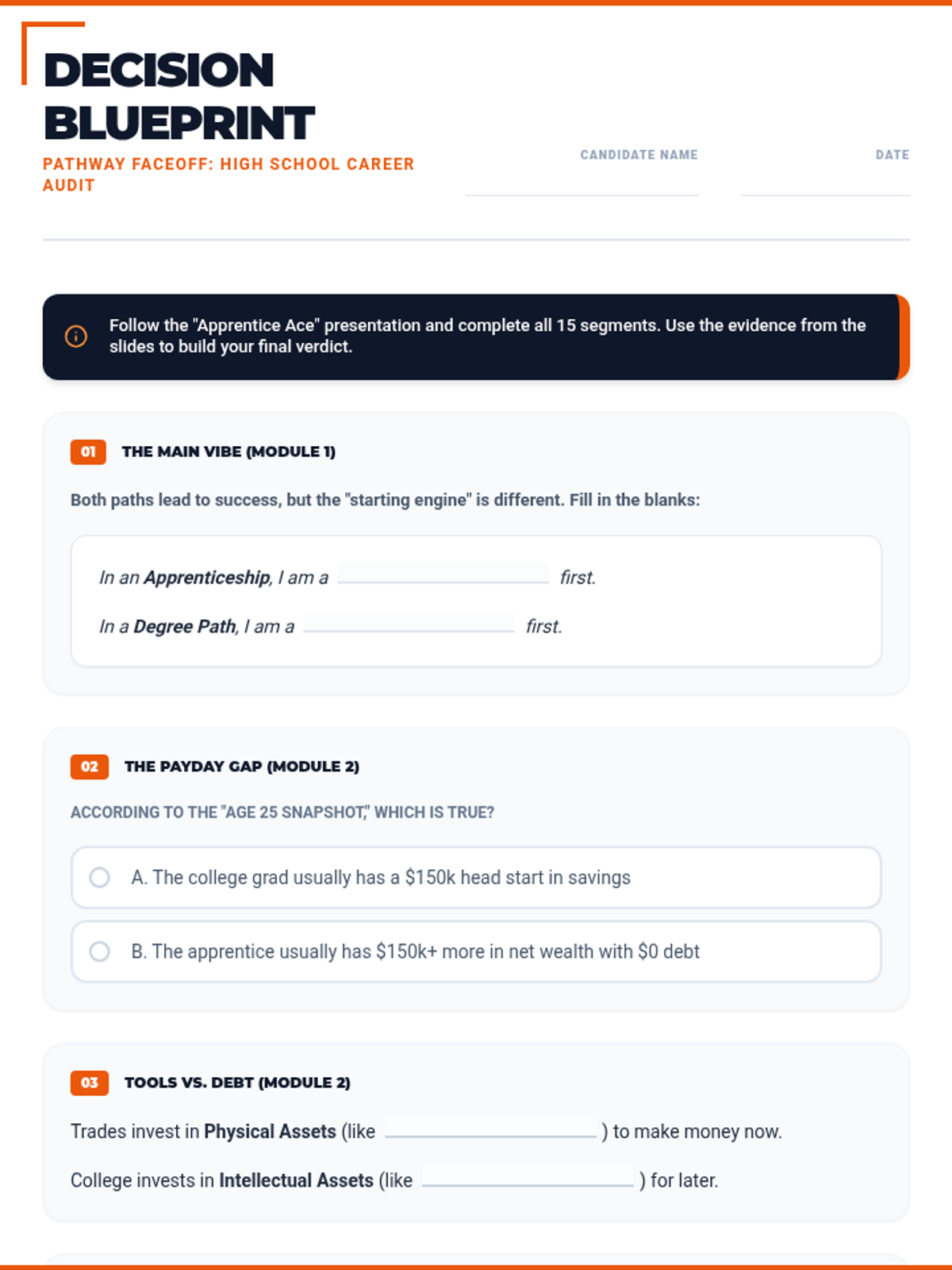
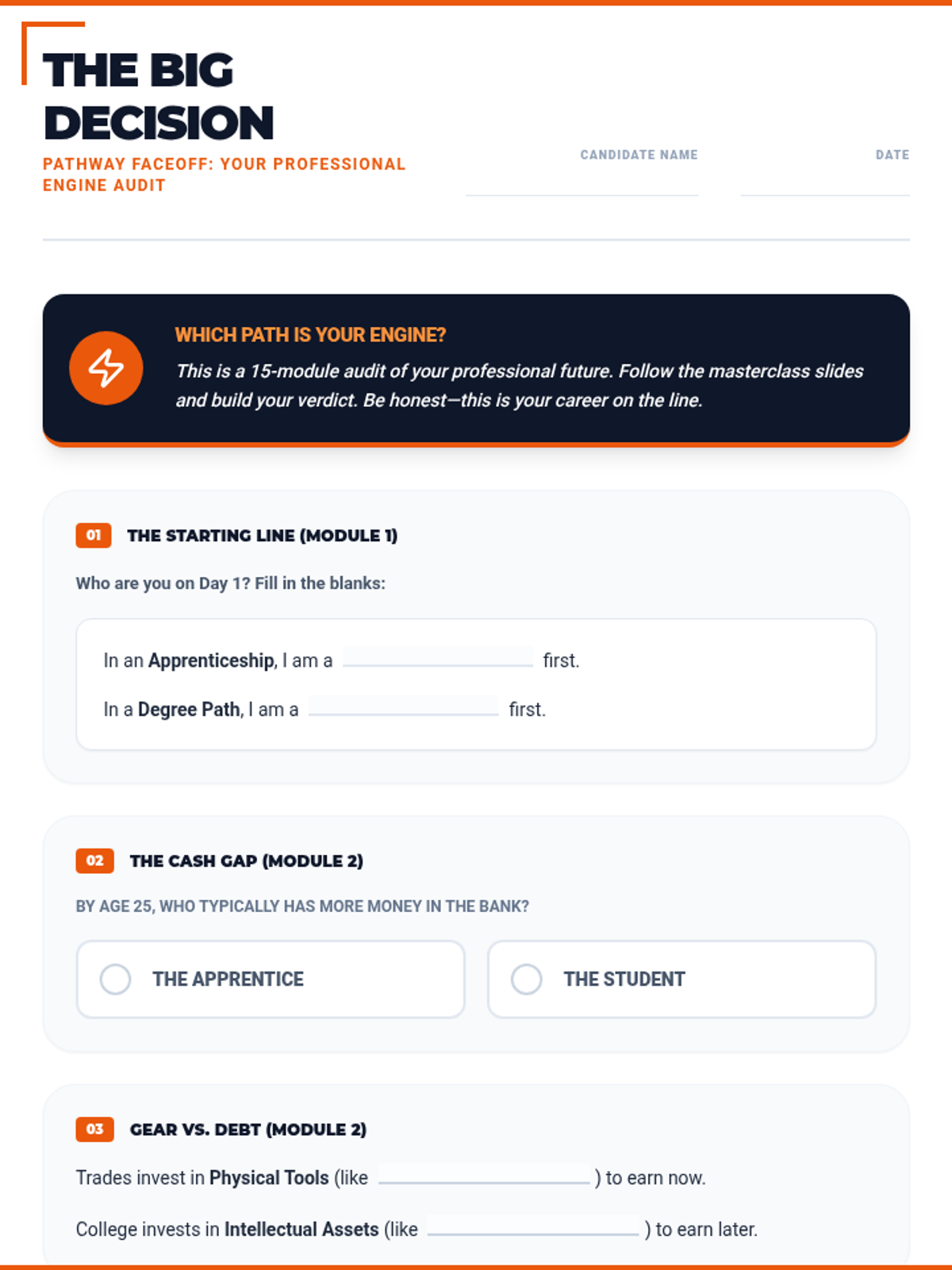
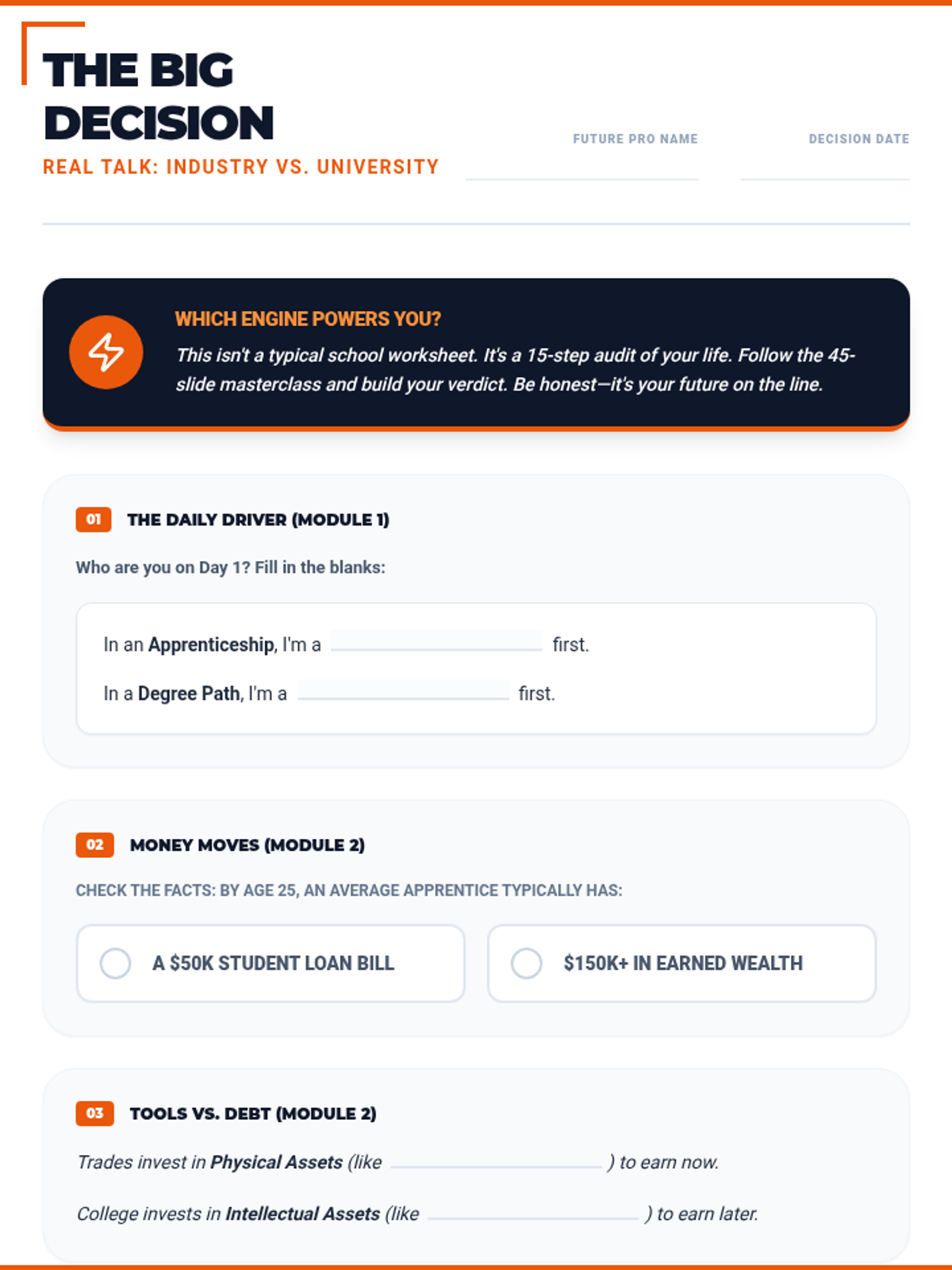
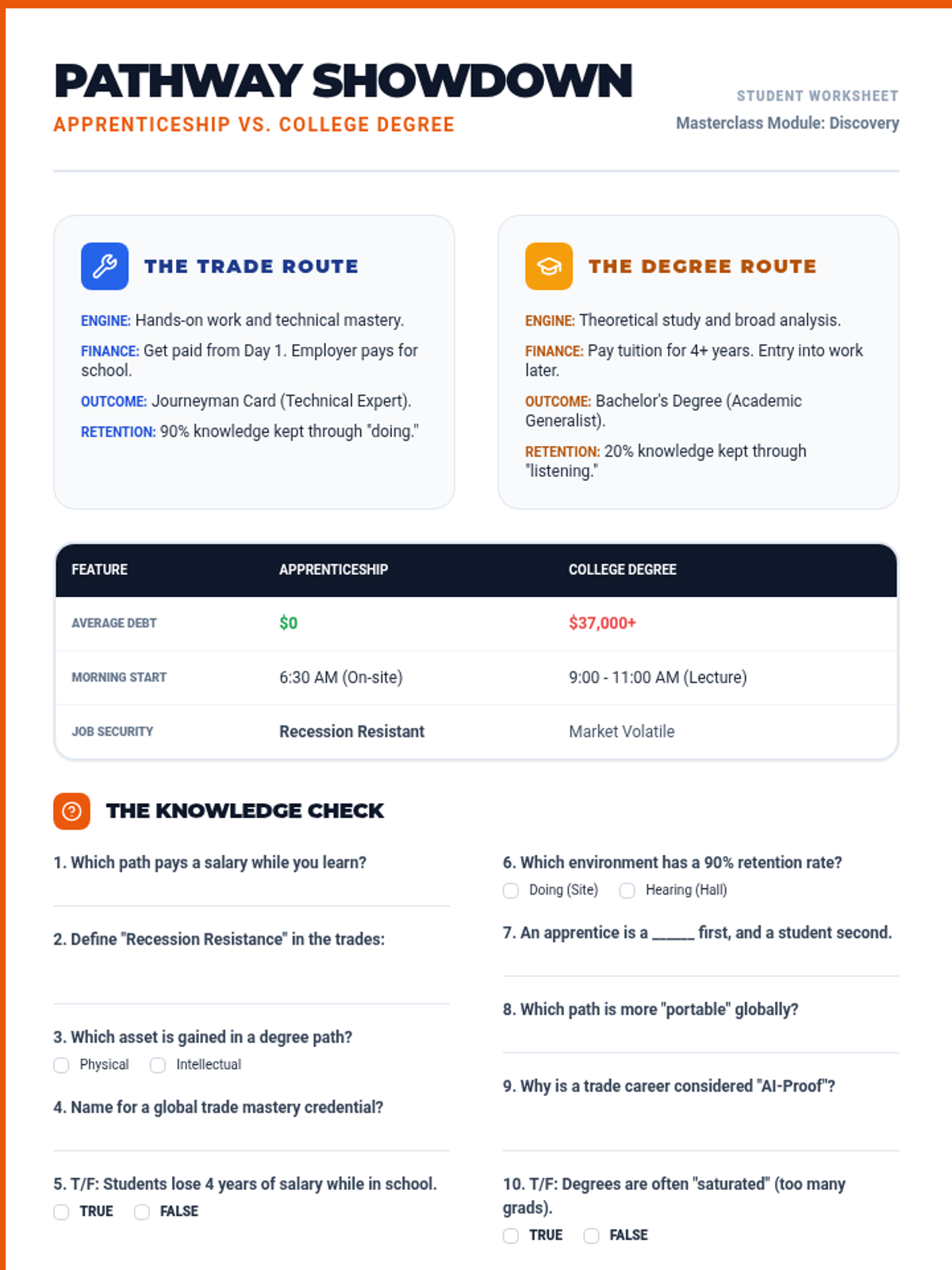
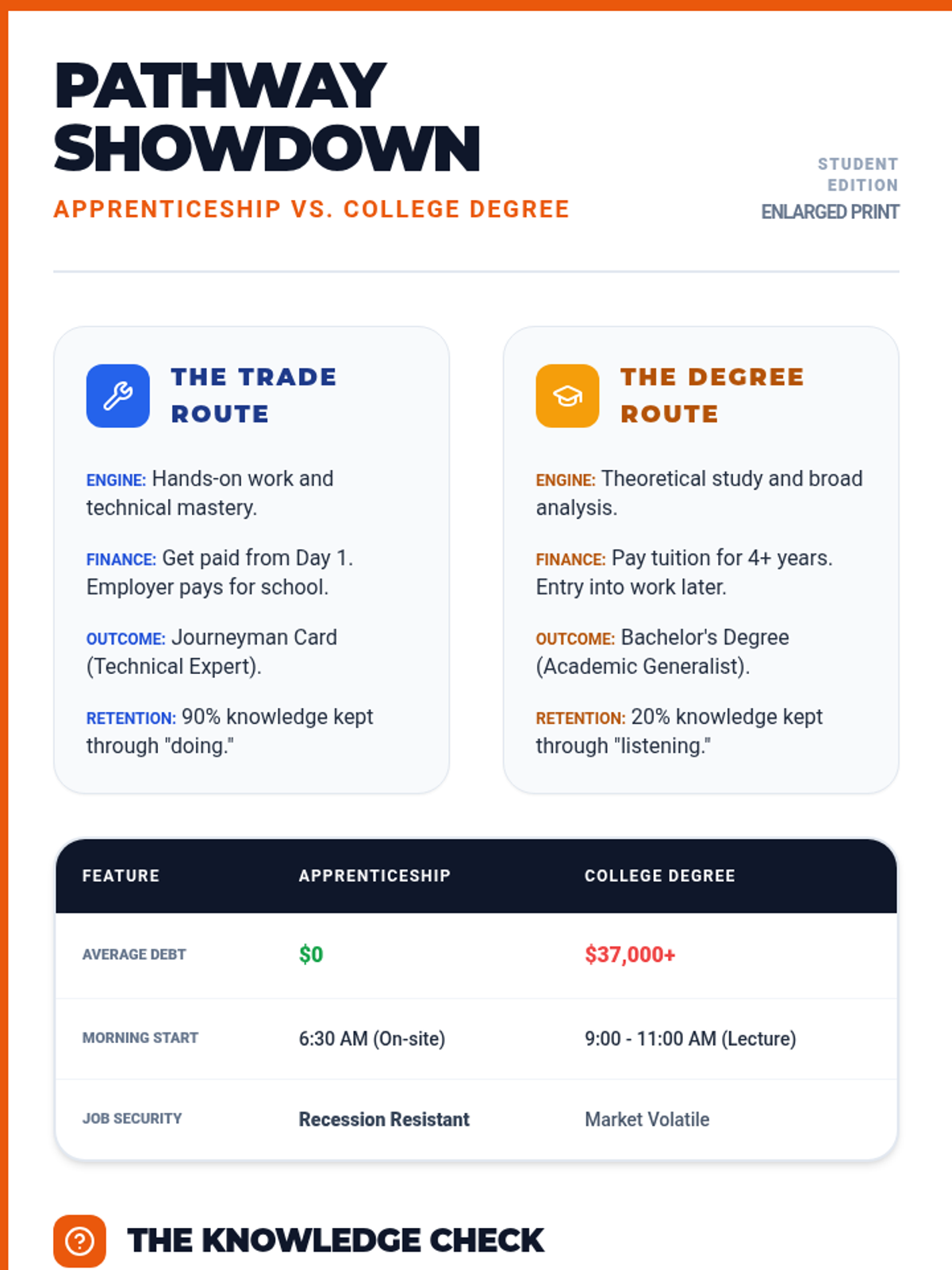
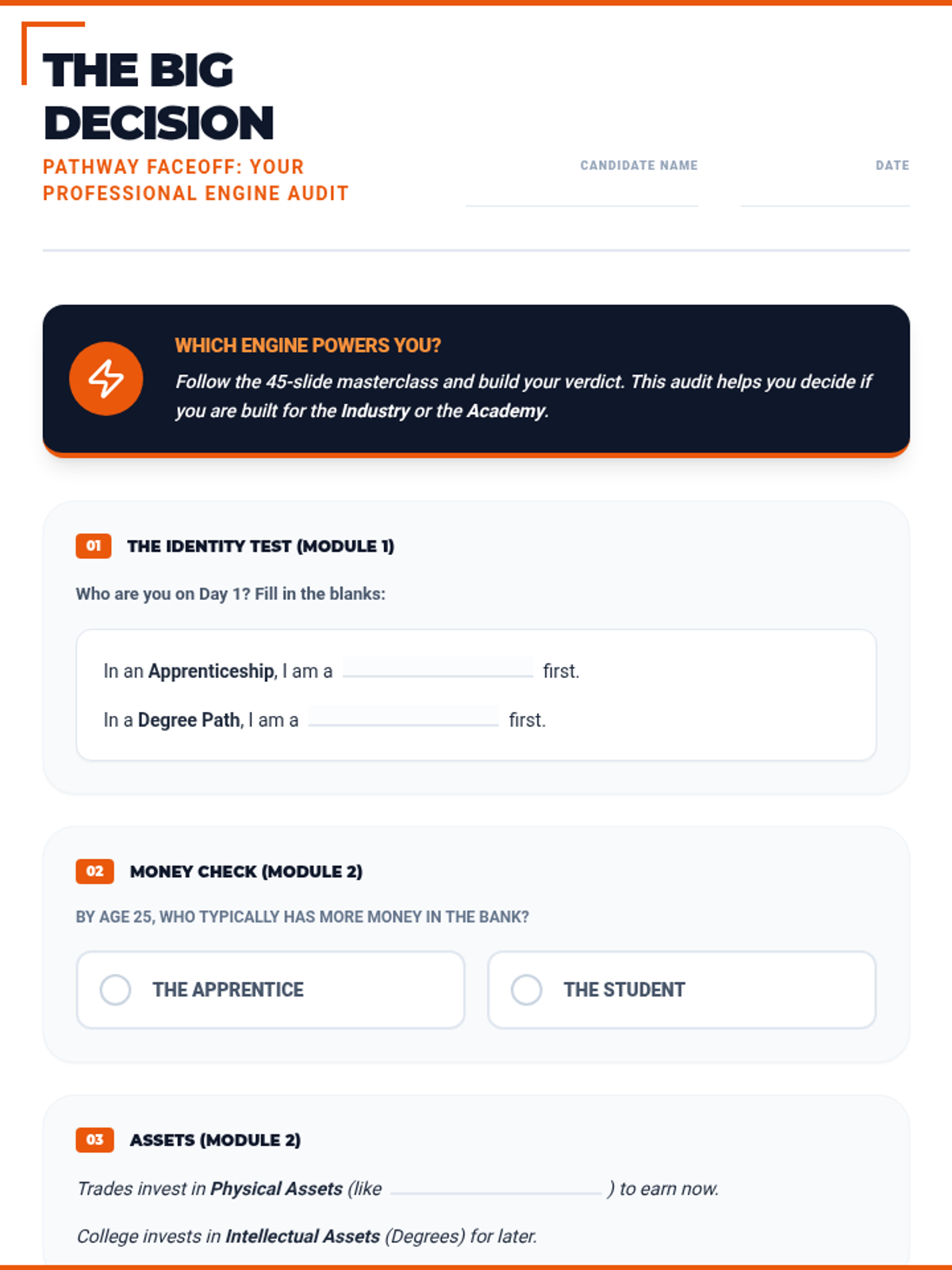
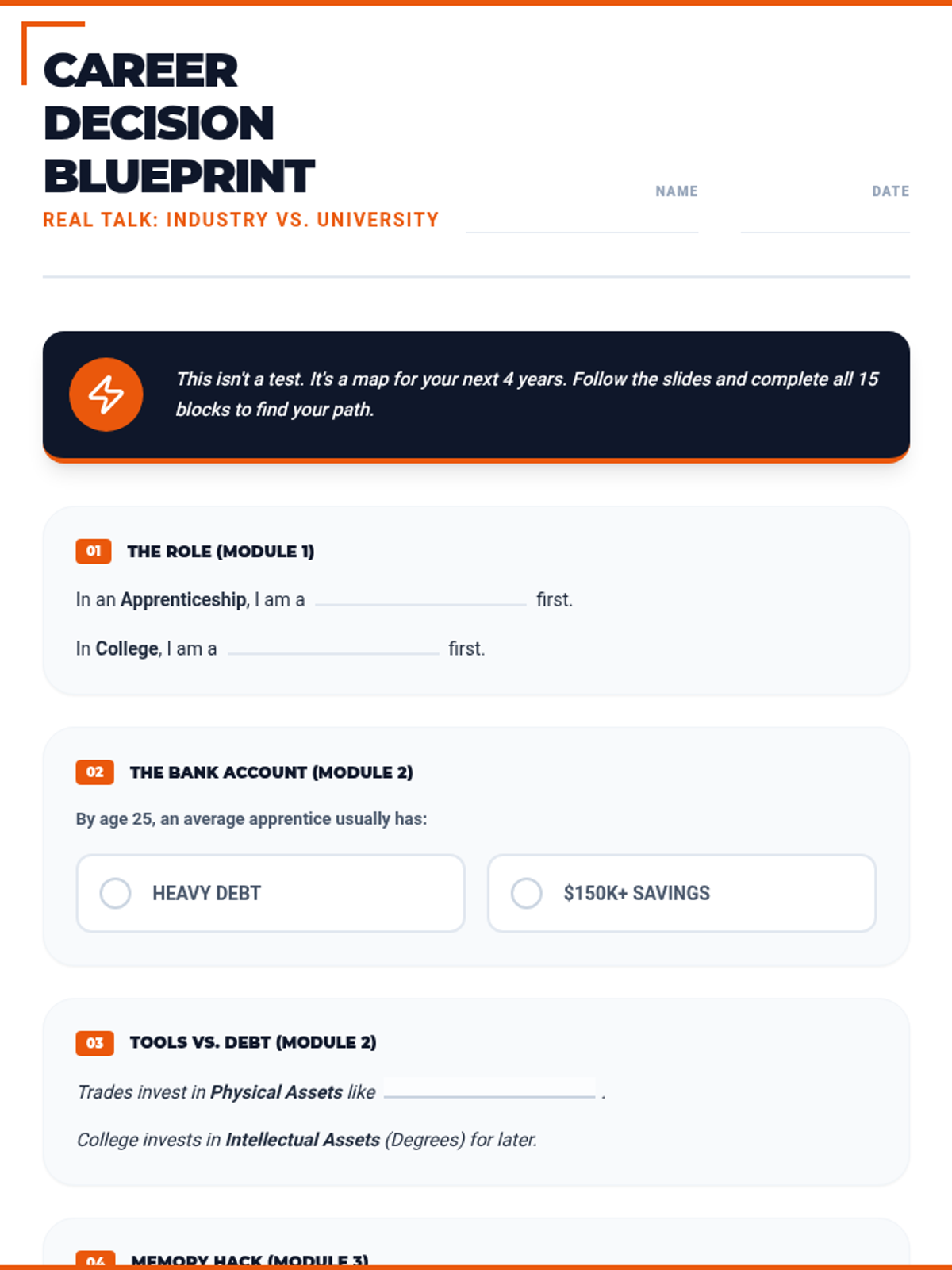
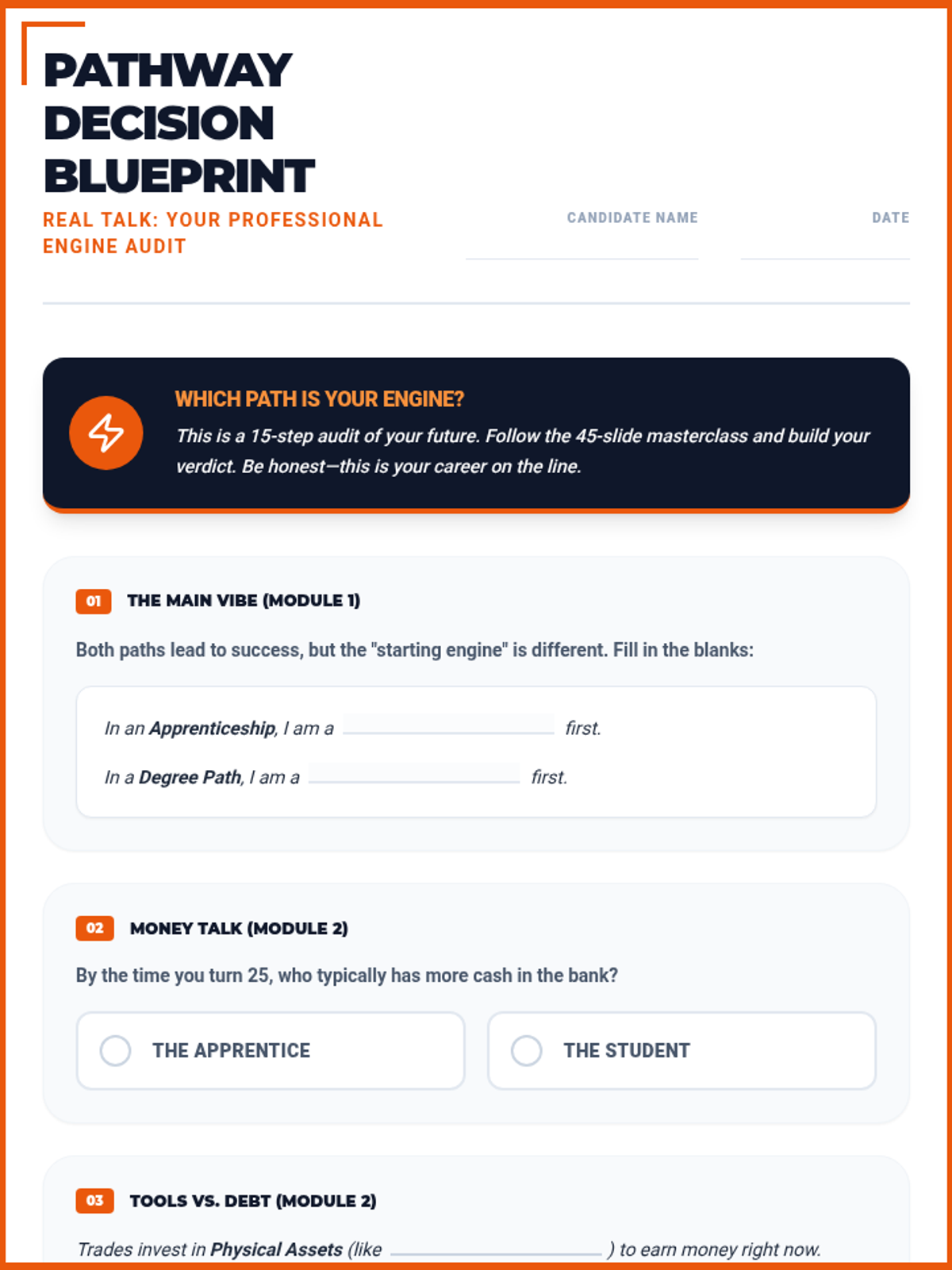
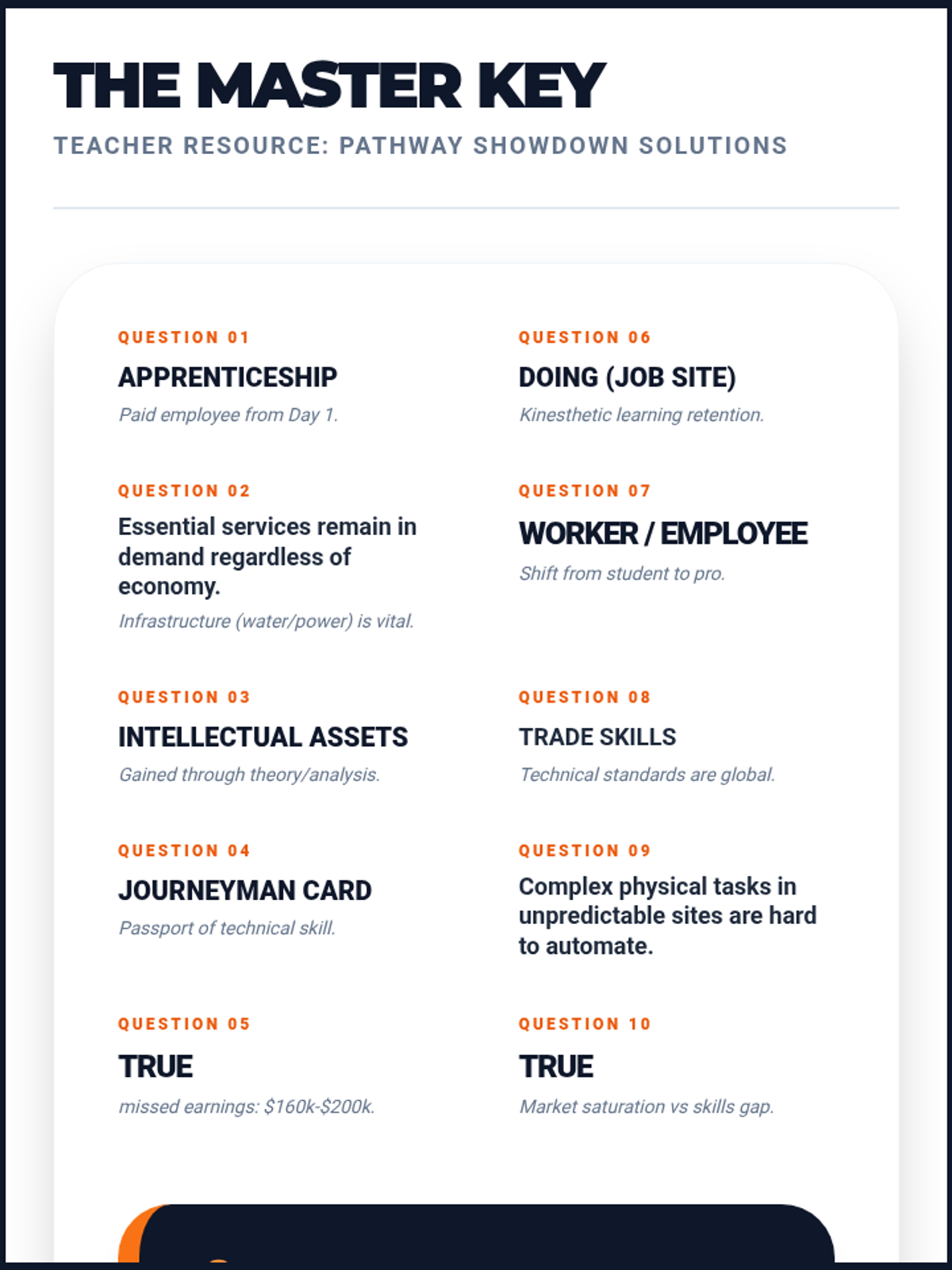
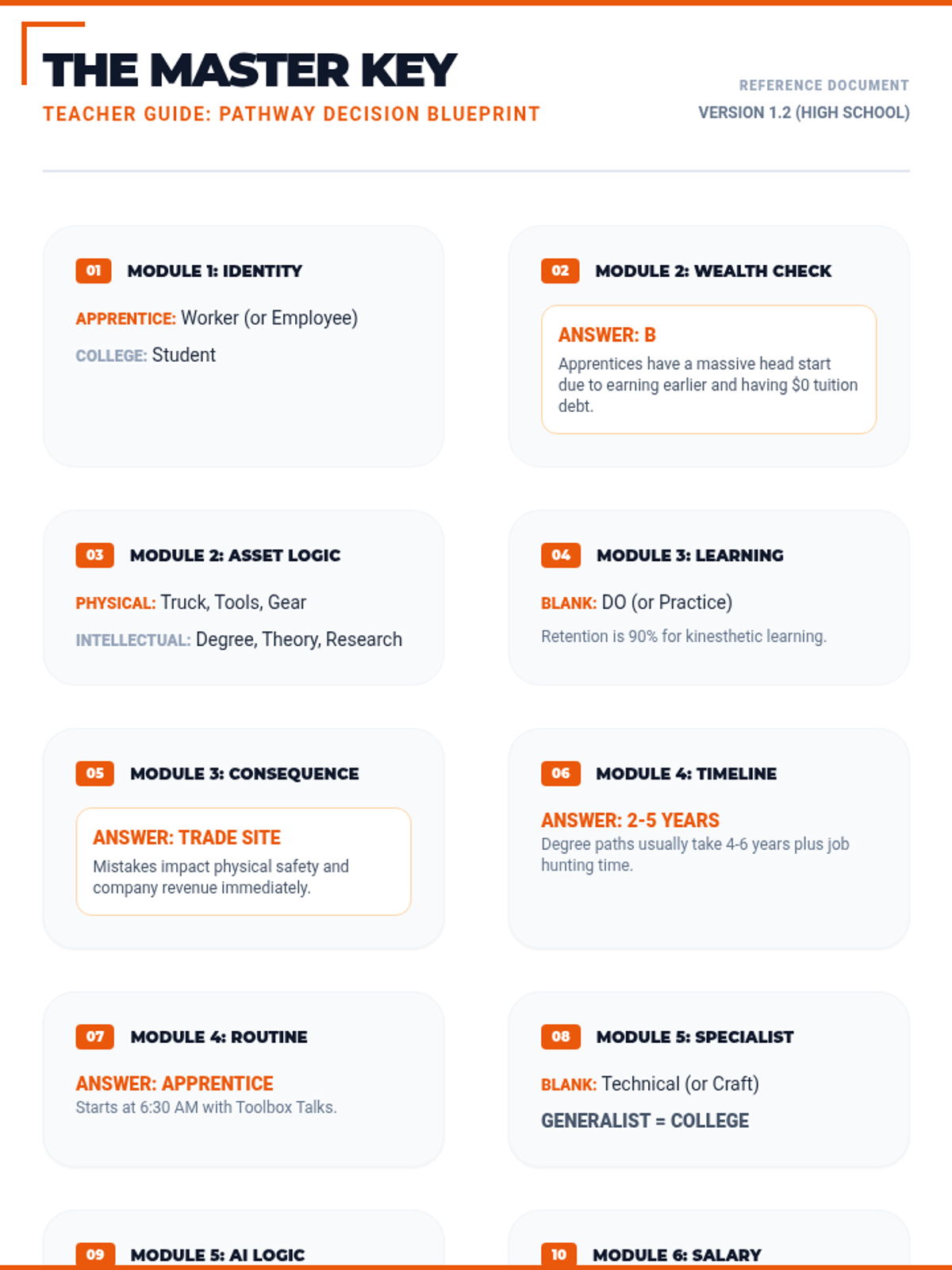
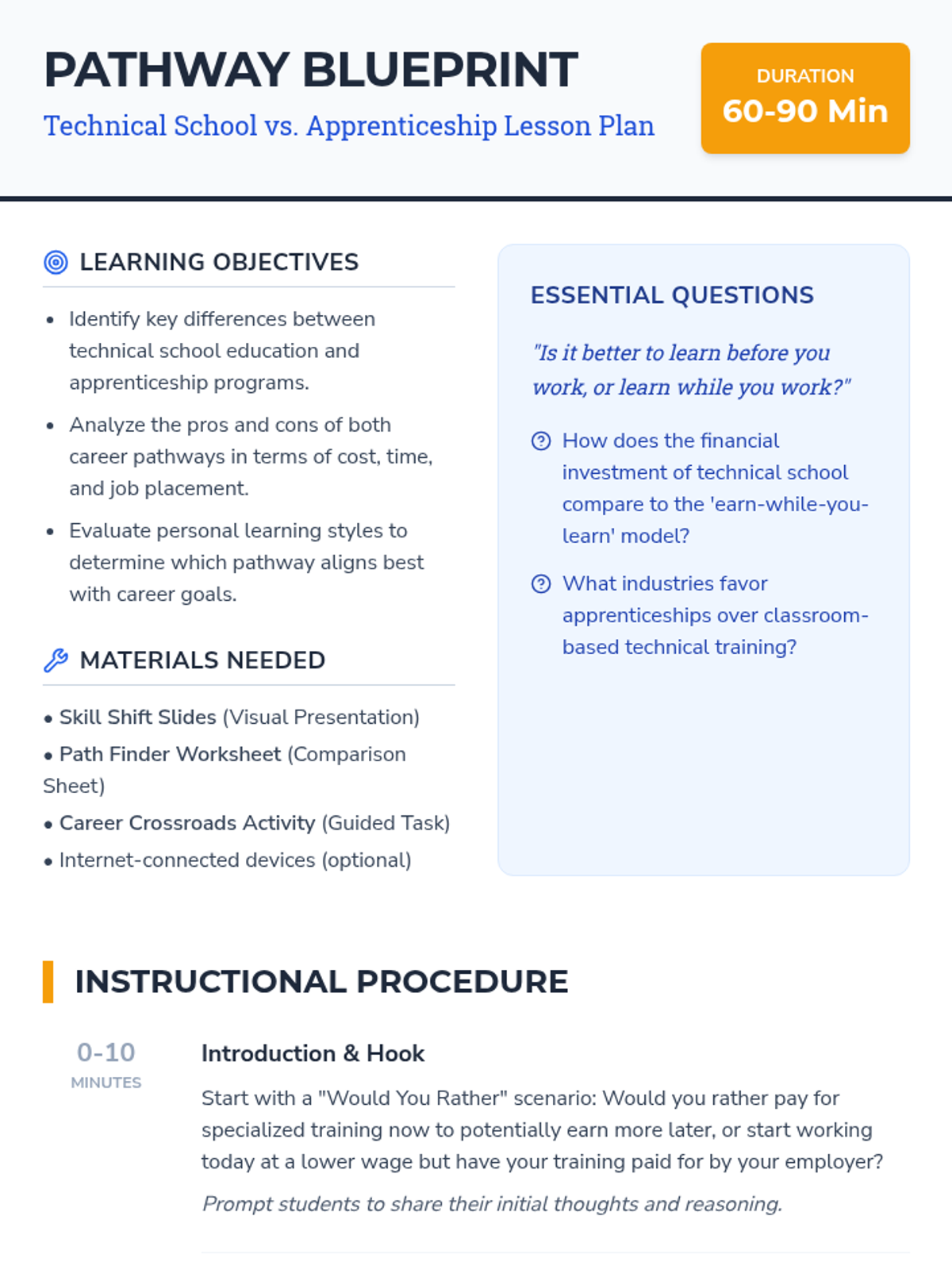
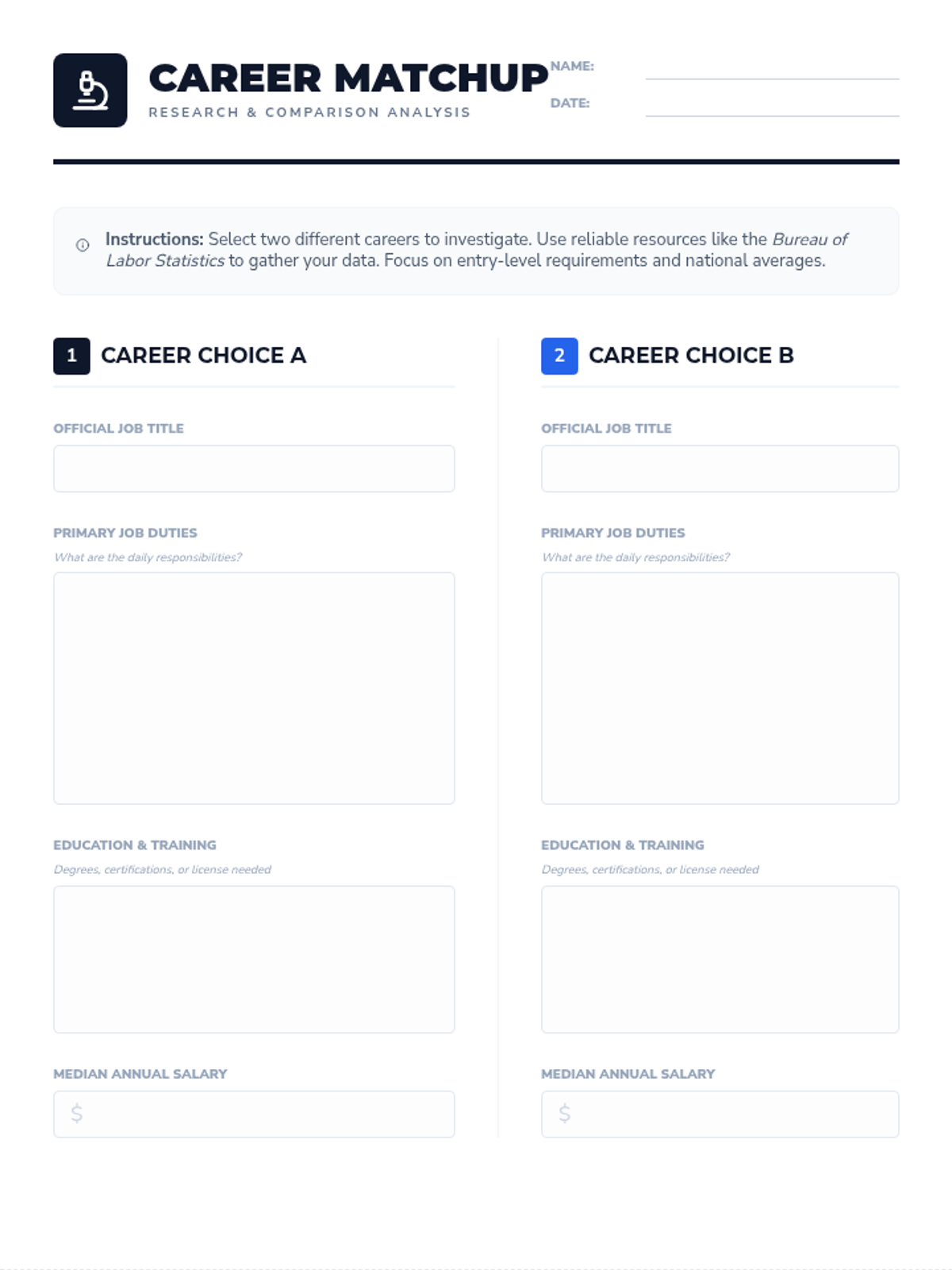
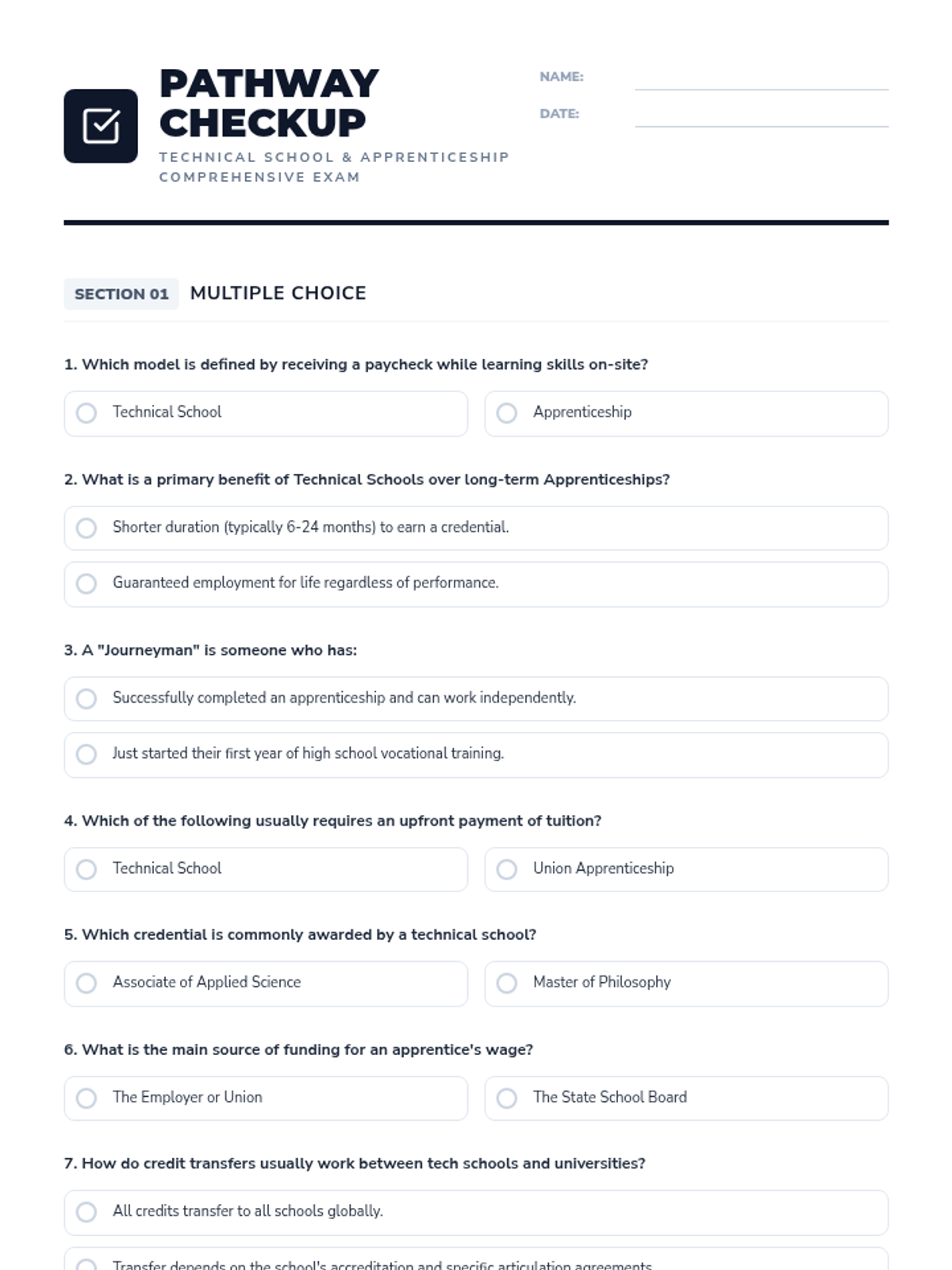
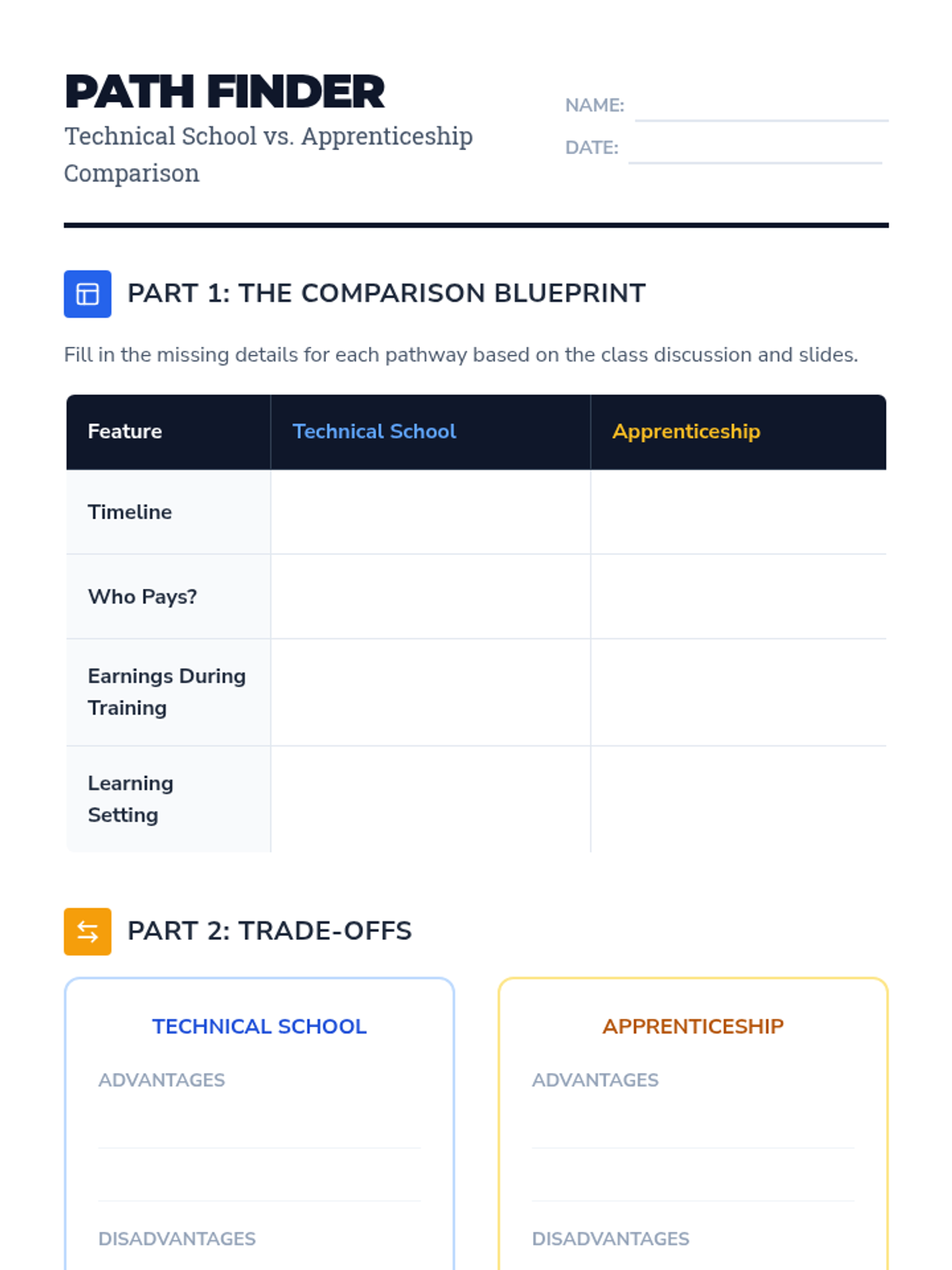
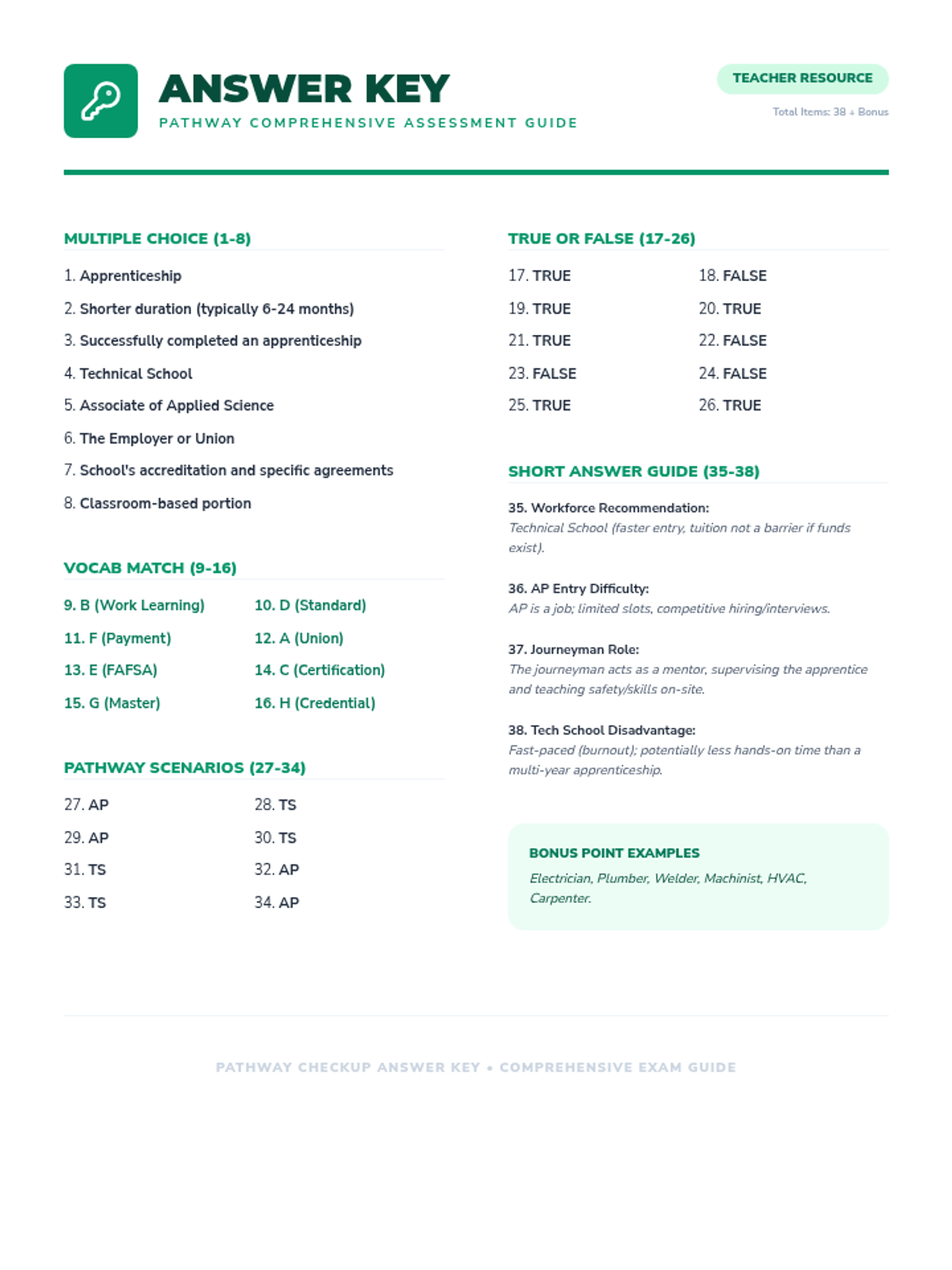
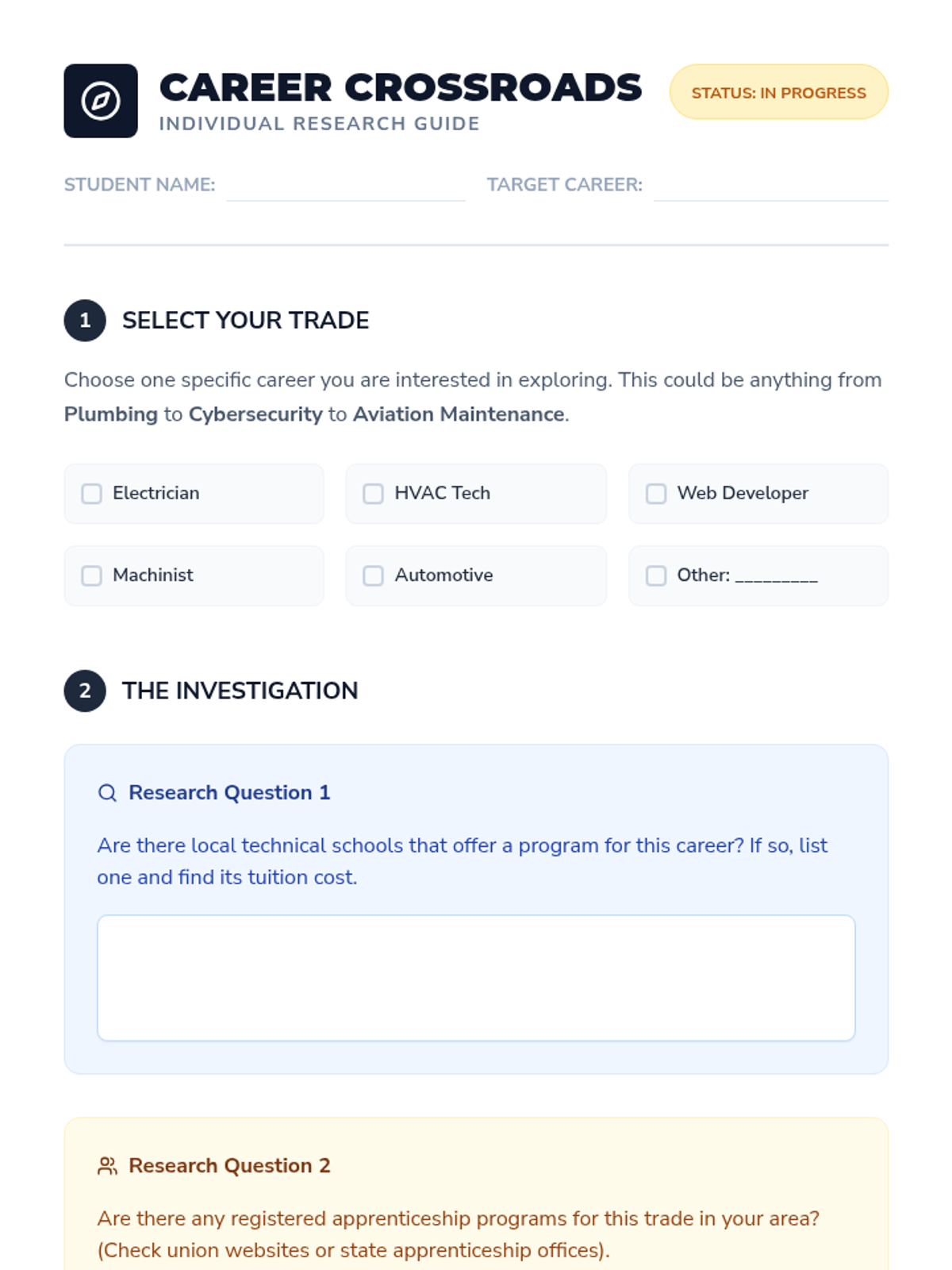
A comprehensive lesson exploring the differences, benefits, and drawbacks of technical schools and apprenticeships to help students navigate post-secondary options.
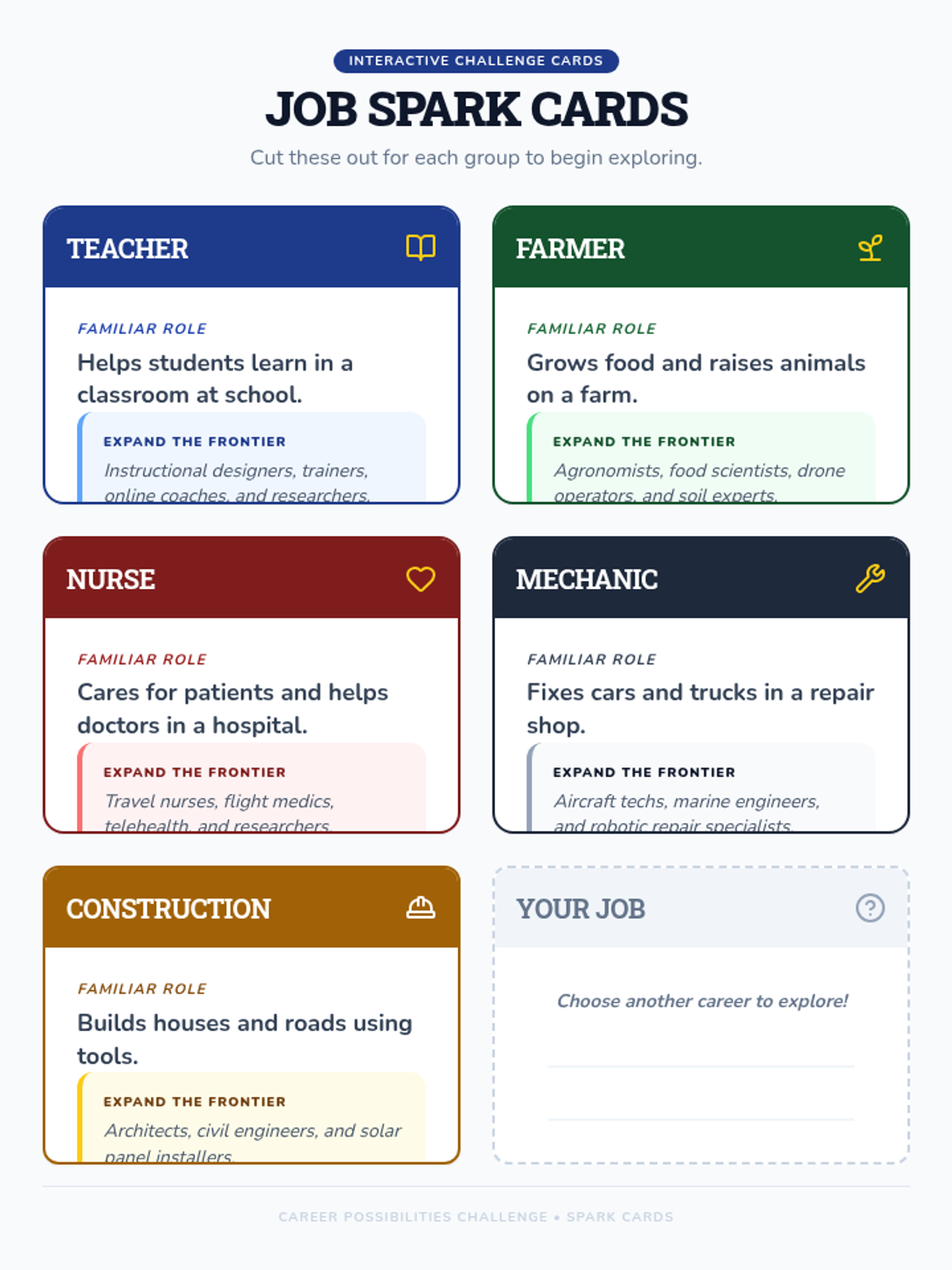
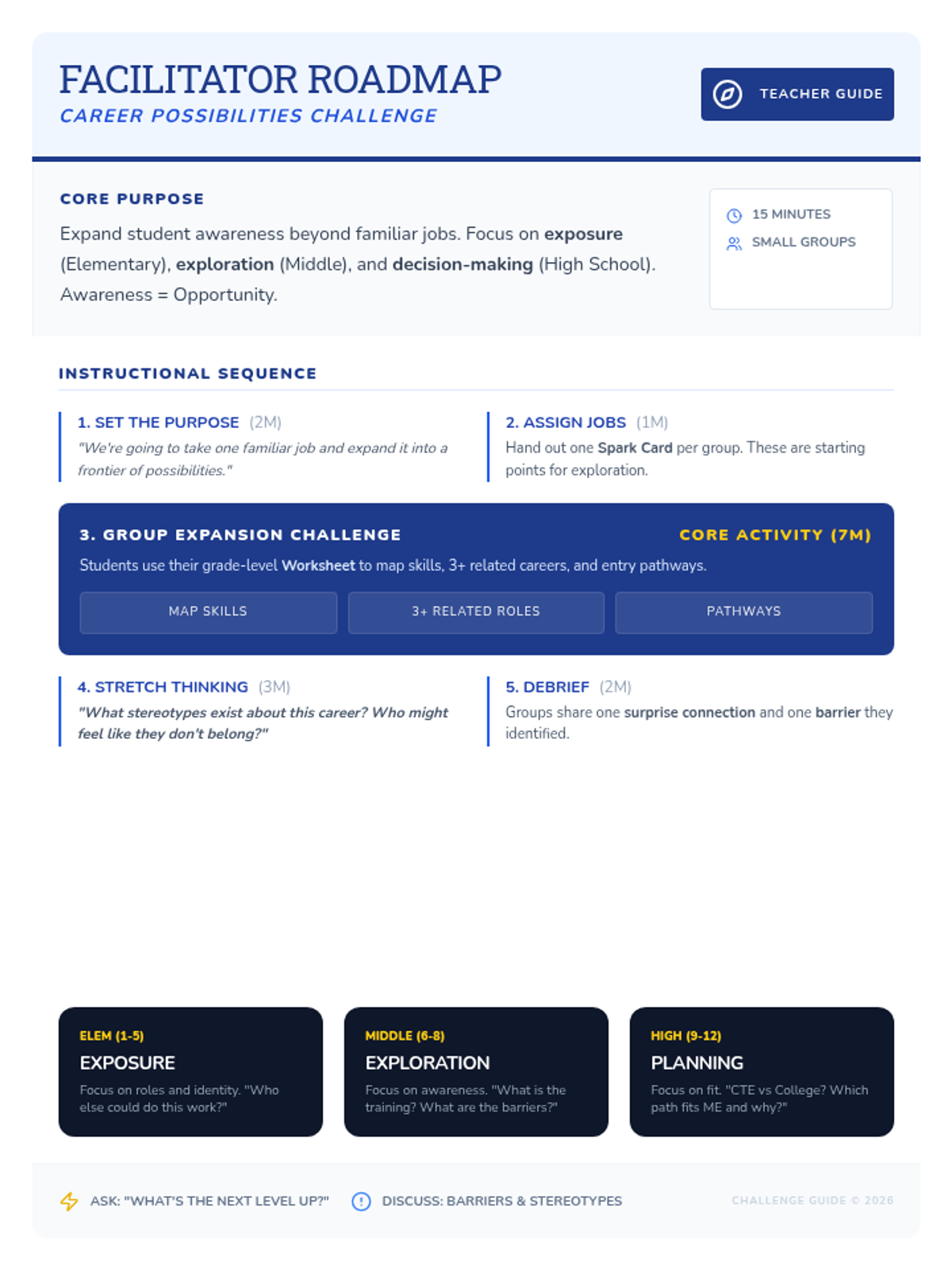
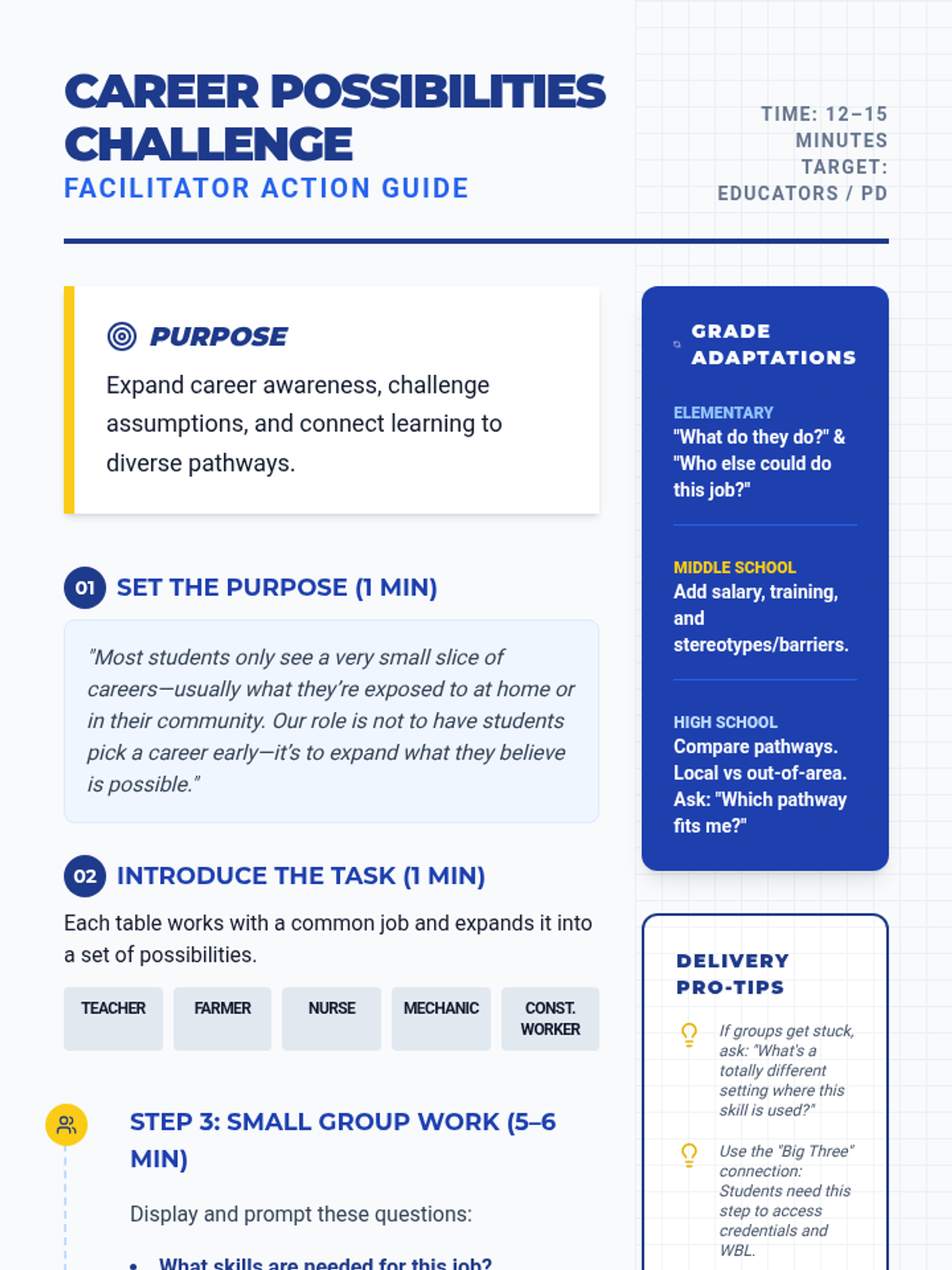
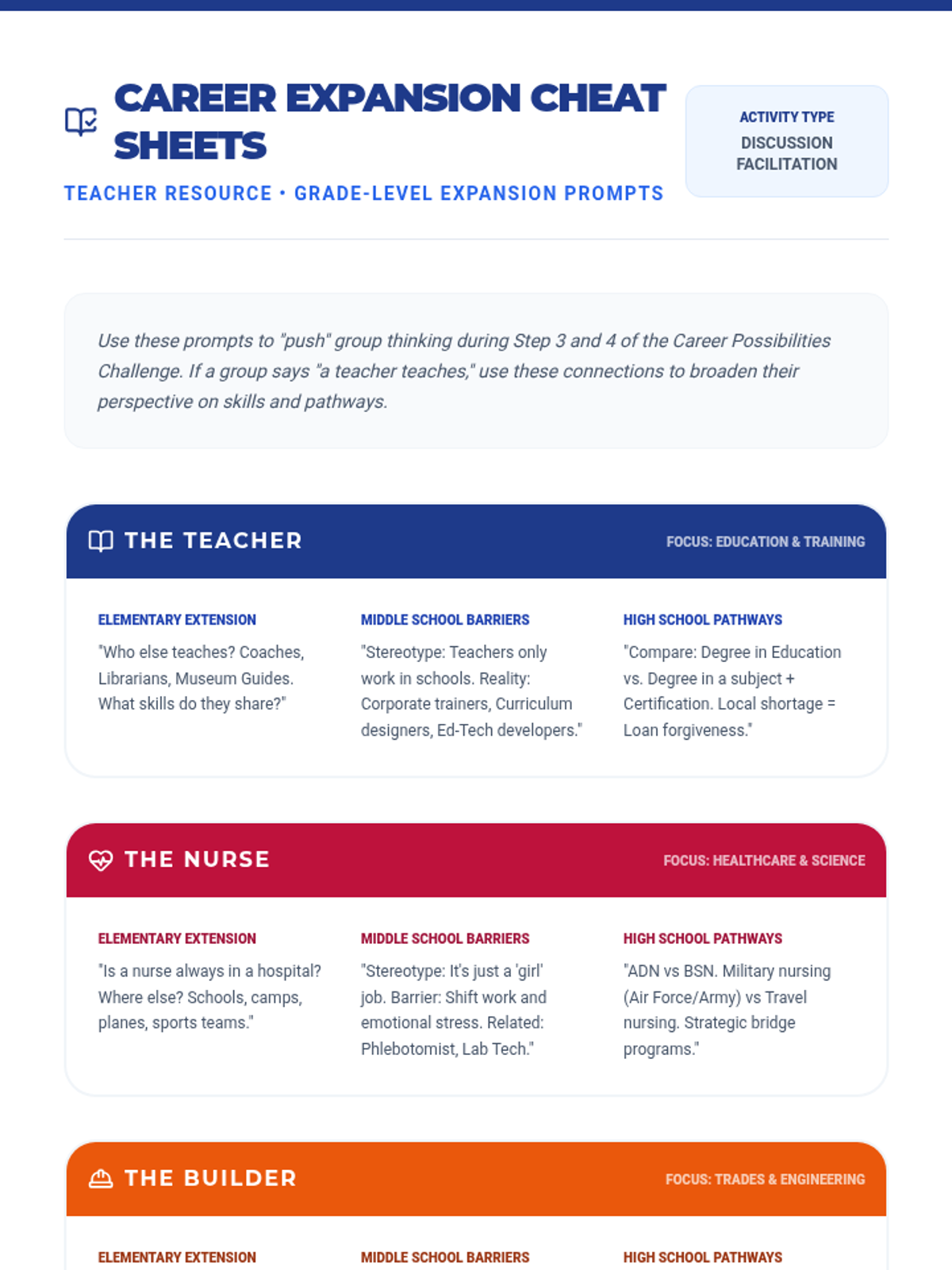
A fast-paced, interactive activity where students expand their understanding of familiar careers into broader industry pathways and explore the skills and steps needed to reach them.
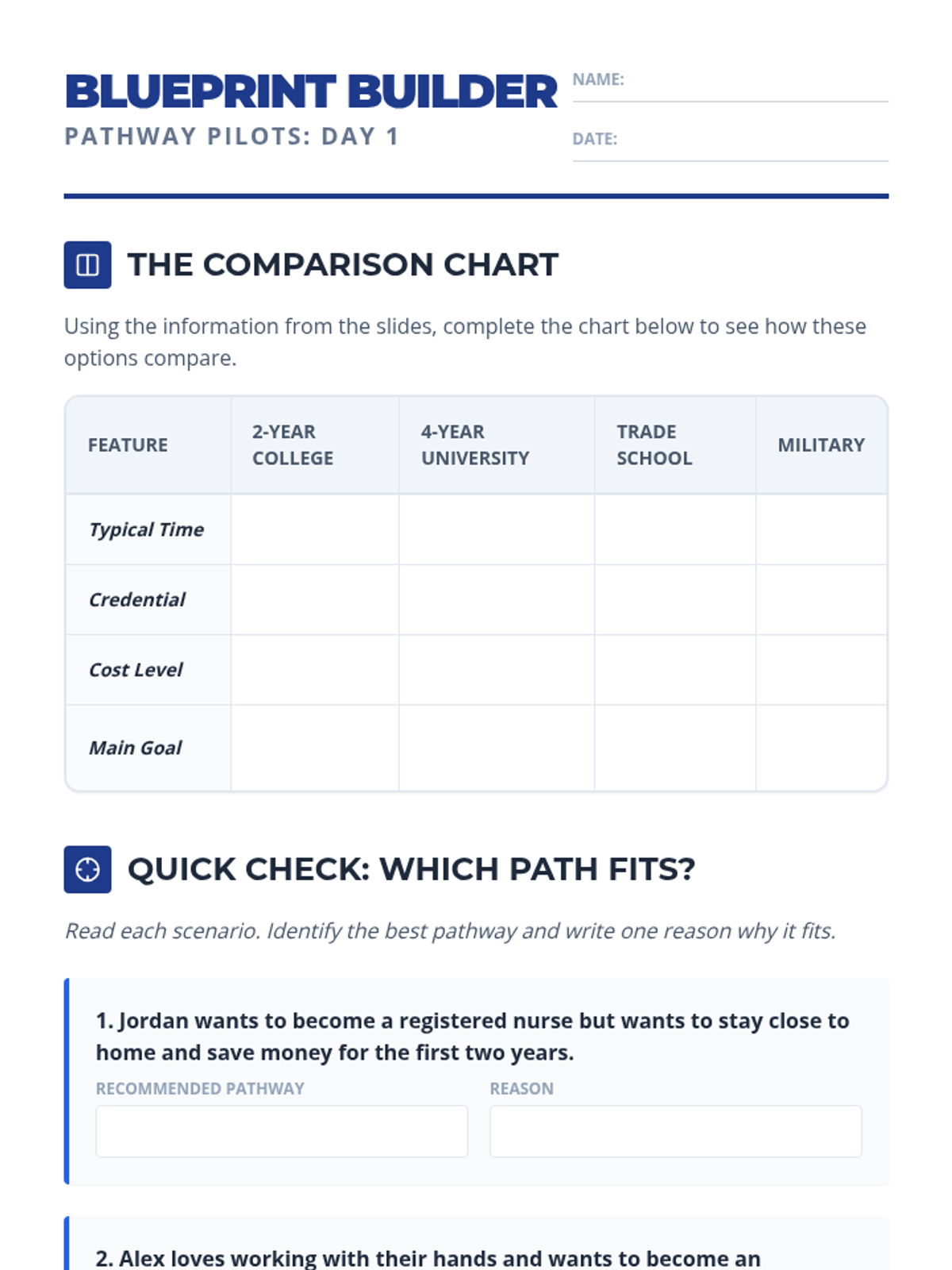
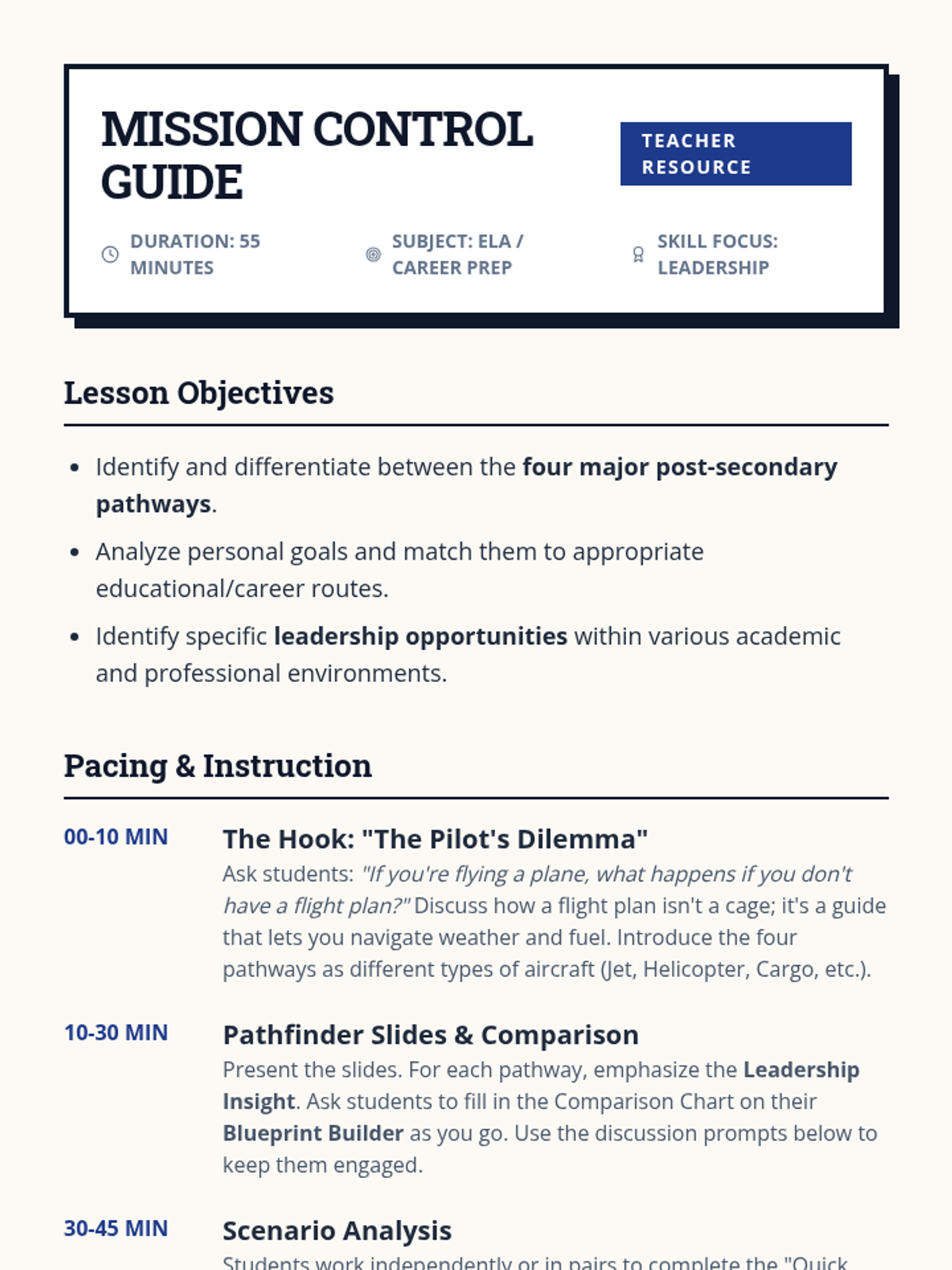
An introductory lesson exploring four major post-secondary pathways (2-year, 4-year, trade, and military) through the lens of leadership and personal goals. Students will compare options and analyze scenarios to find their best fit.
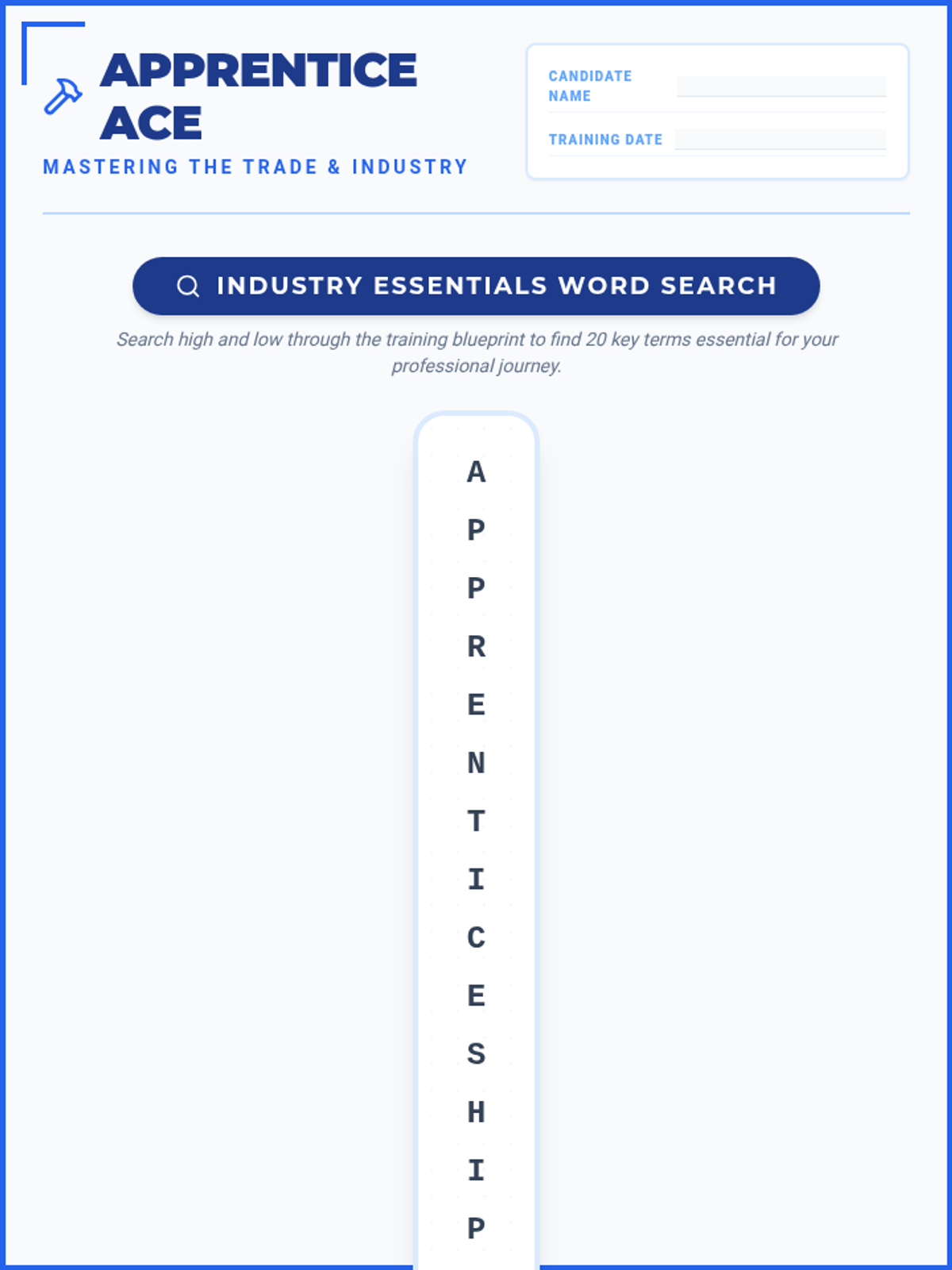
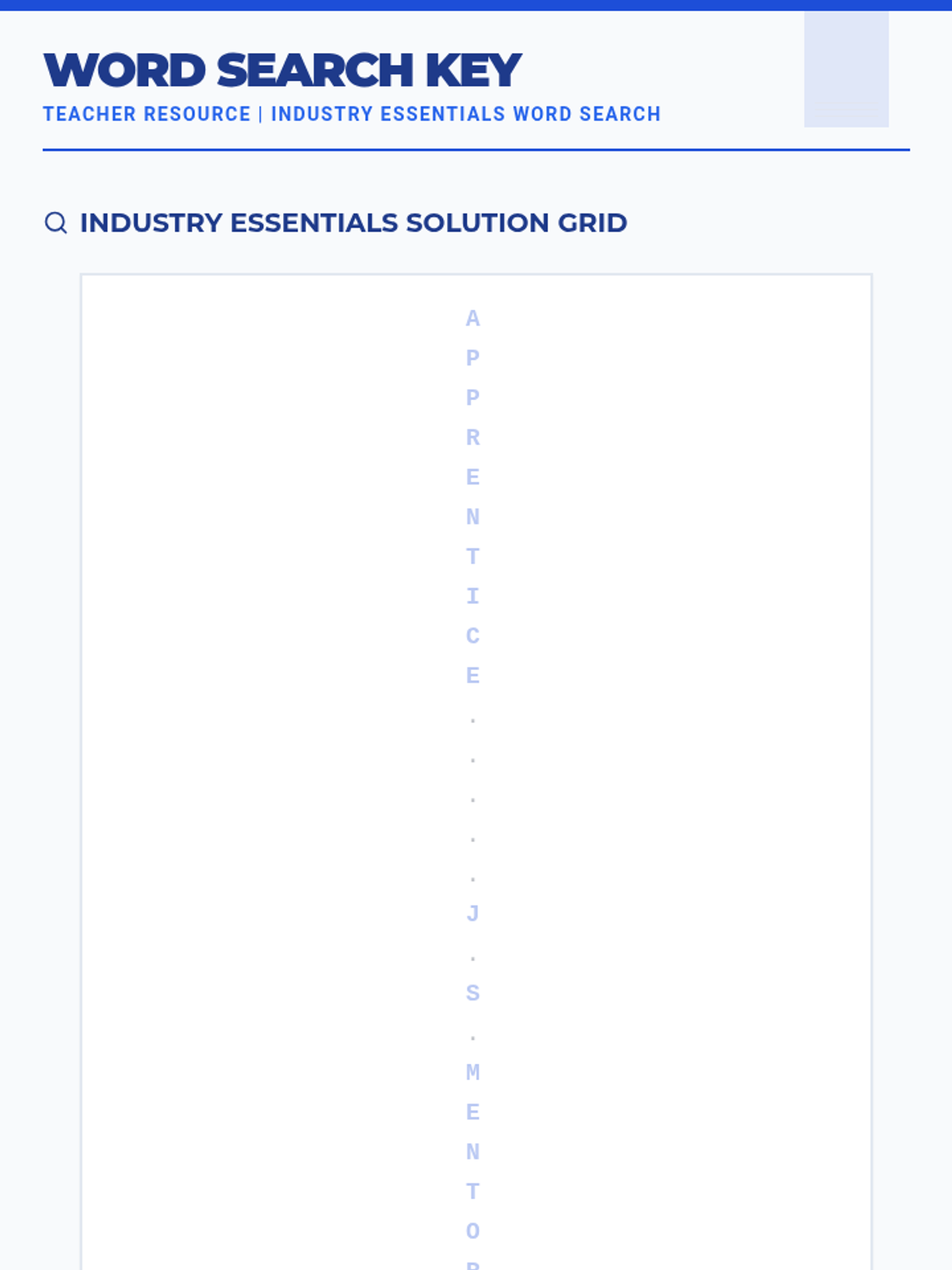
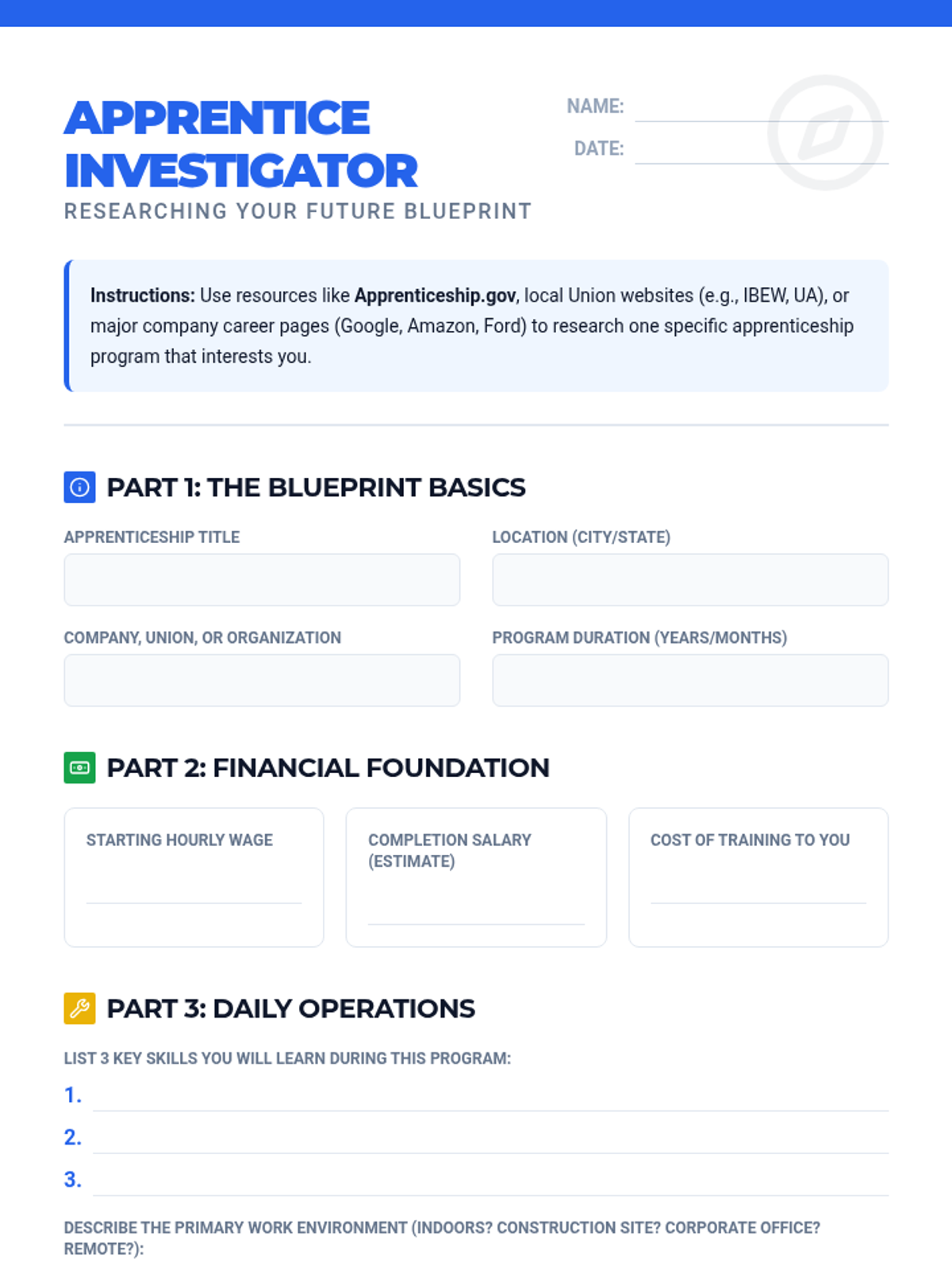
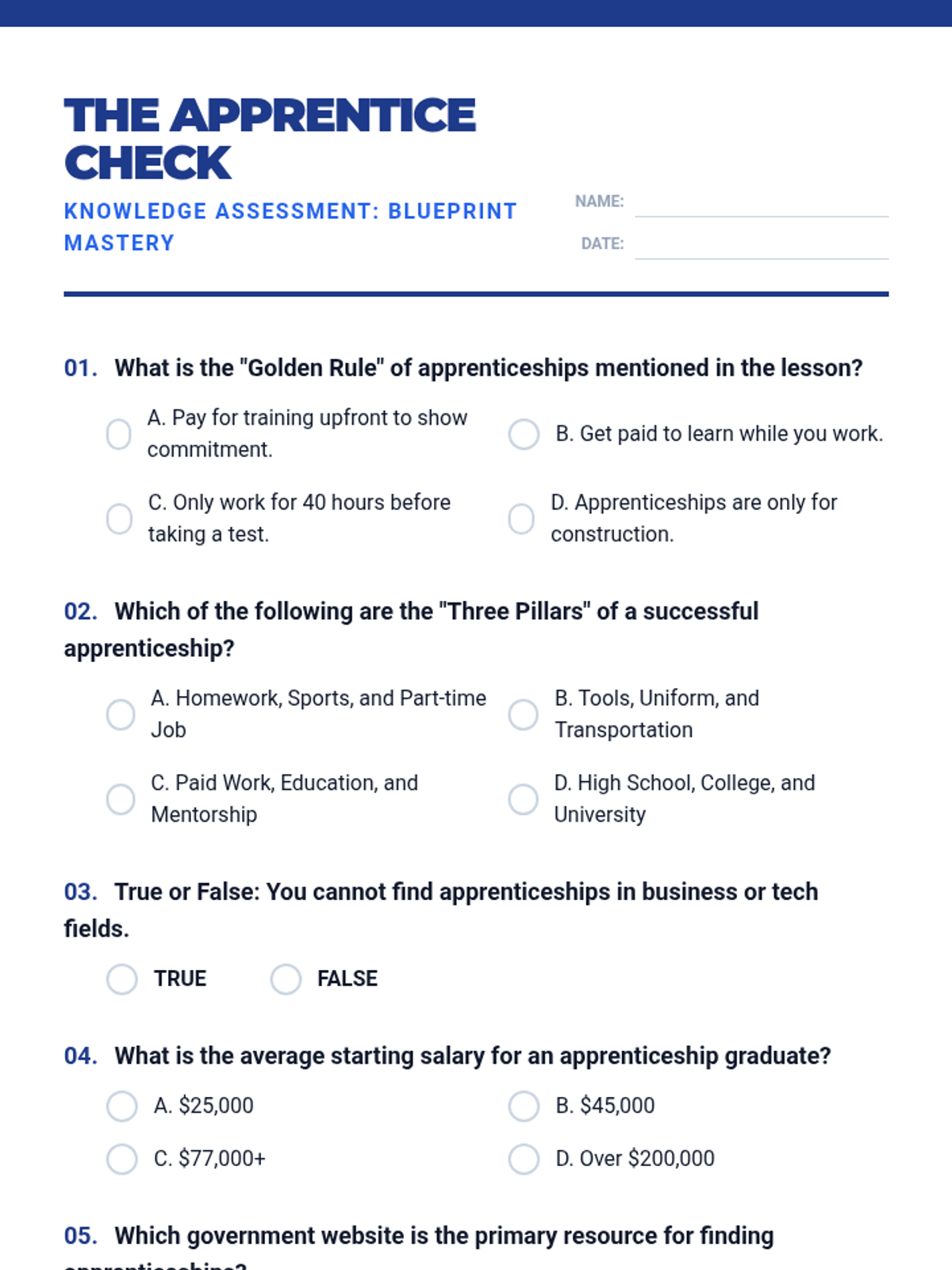
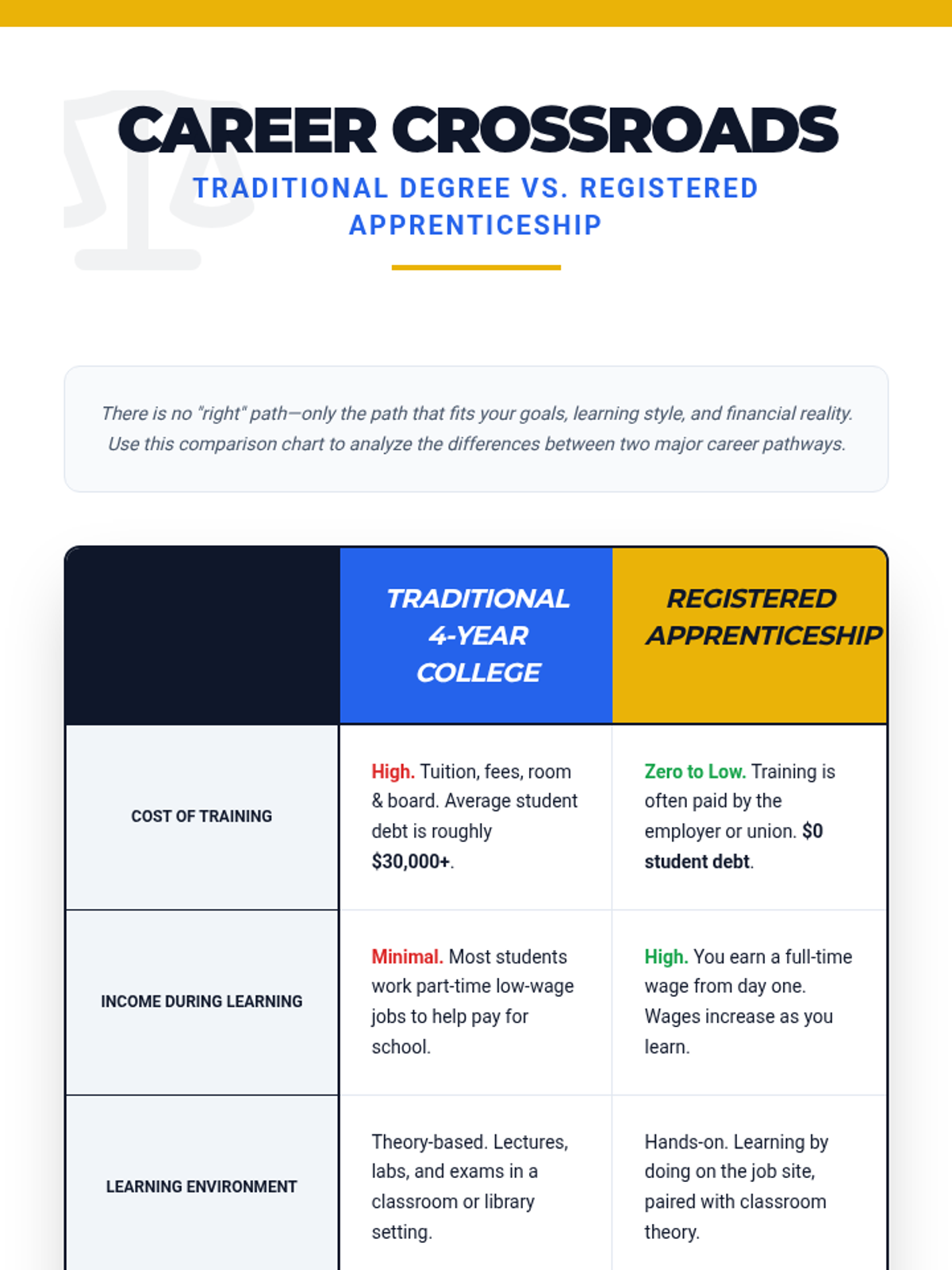
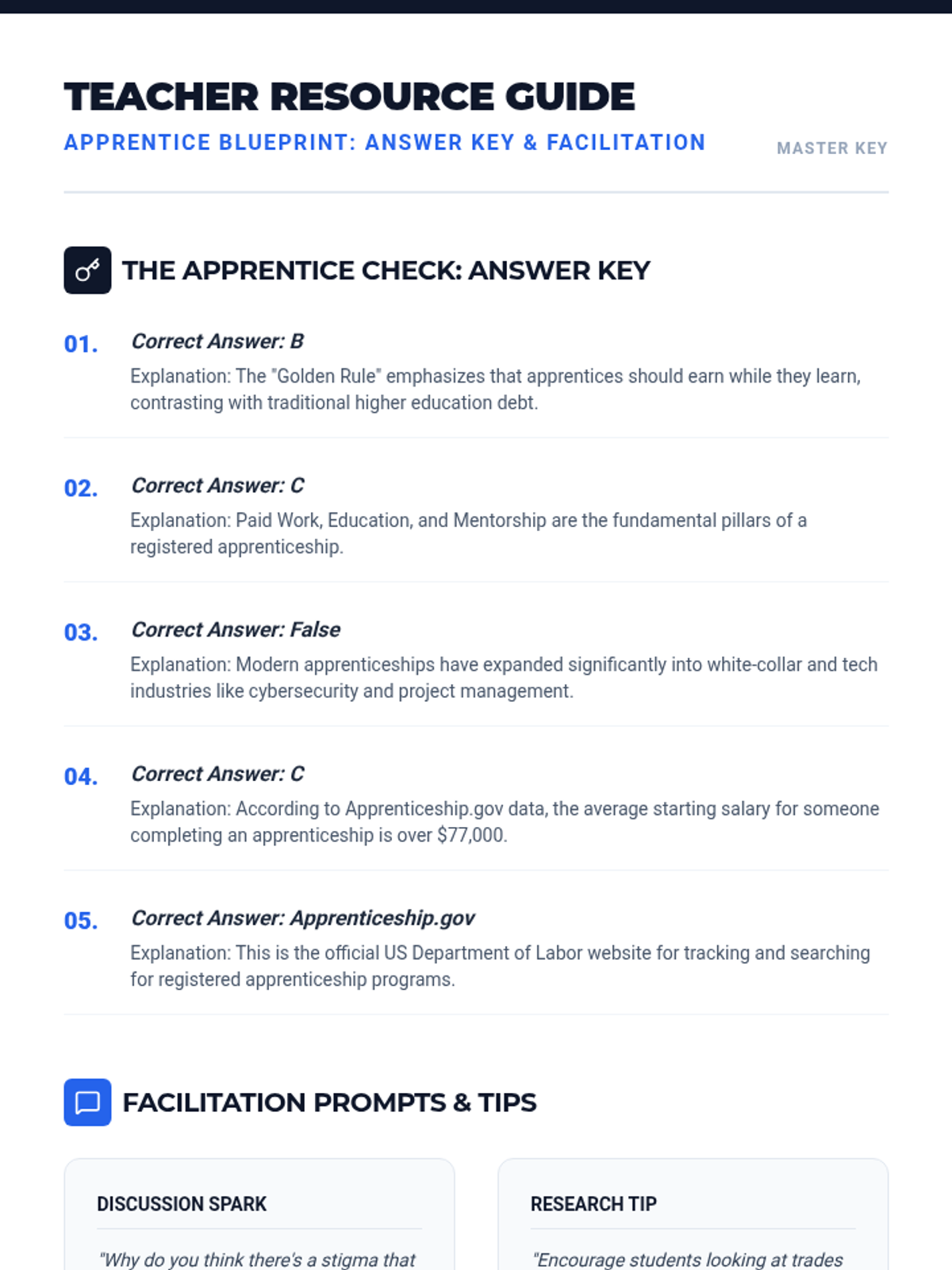
A comprehensive guide to understanding, finding, and securing apprenticeships in trades, business, and high-growth industries. This lesson covers the definition, benefits, and practical steps to starting a career through an apprenticeship.
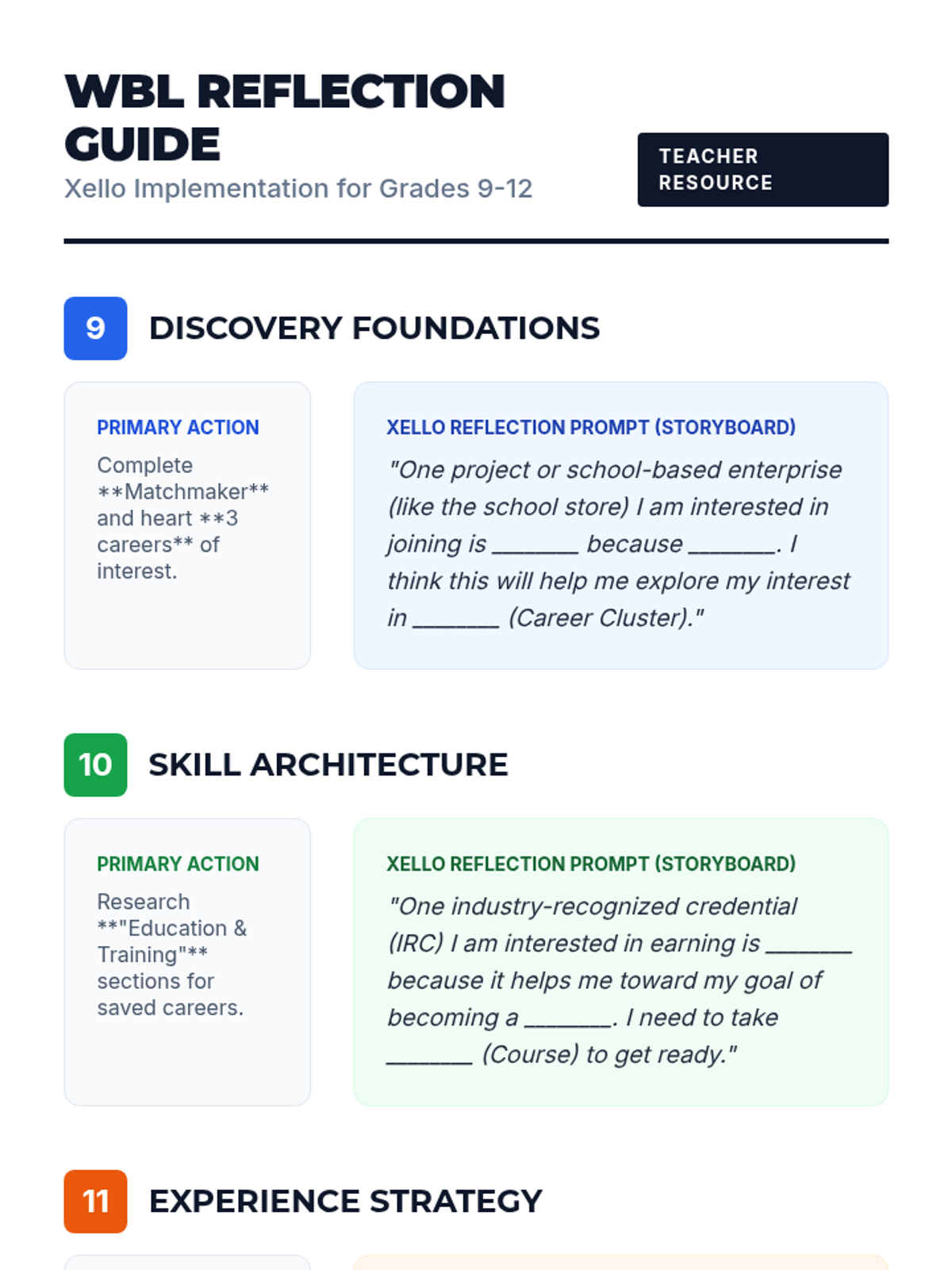
Prepares 12th graders for the transition to professional life, focusing on finalizing credentials and bridging Work-Based Learning into post-secondary success.
Guides 11th graders through the practicalities of Internships and Apprenticeships, focusing on preparation and the application process.
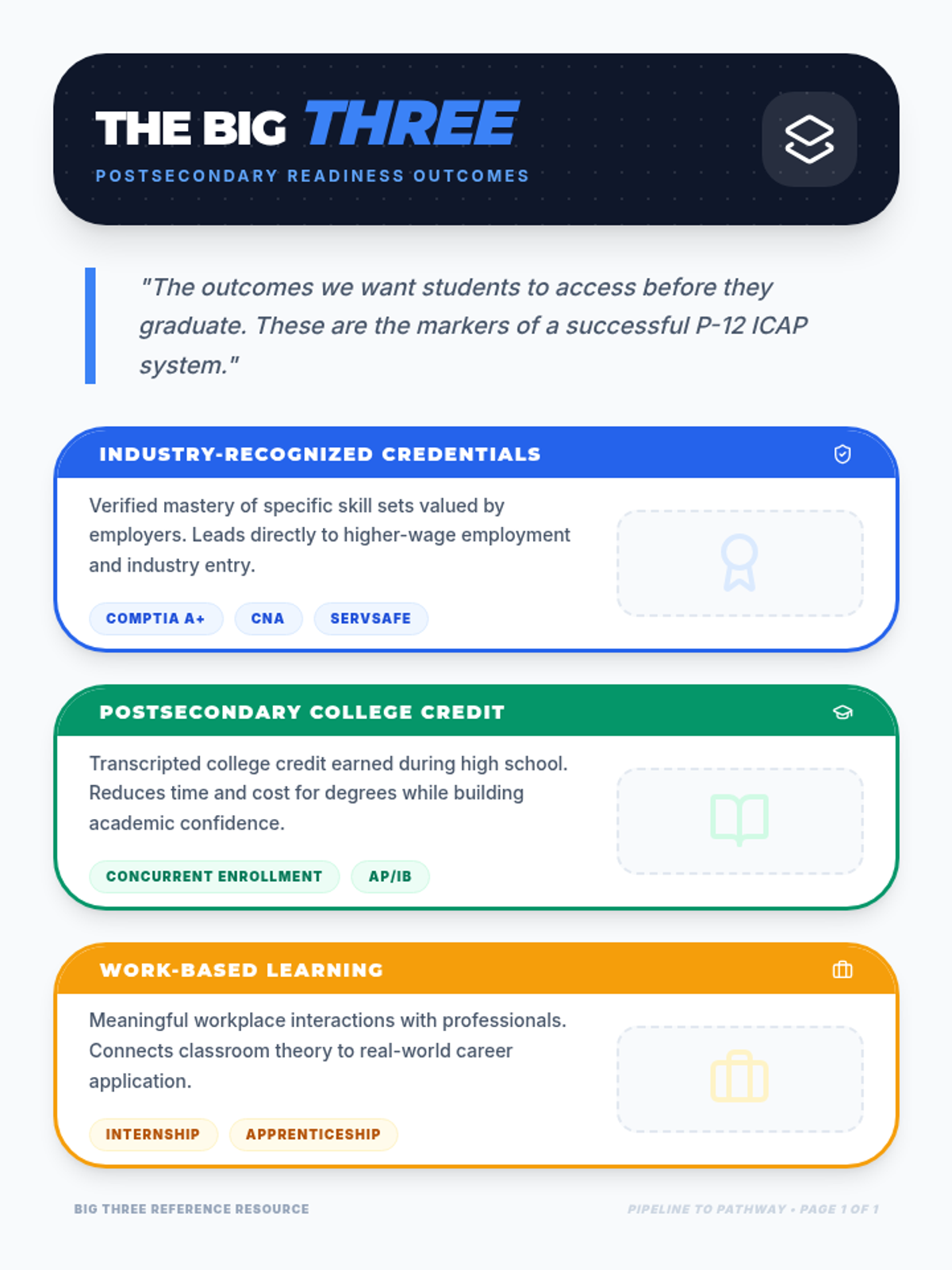
Engages 10th graders in exploring Industry-Recognized Credentials (IRCs) and Pre-Apprenticeships as steps toward specialized career pathways.
Introduces 9th graders to the core concepts of Work-Based Learning, focusing on Project-Based Learning and School-Based Enterprises to build initial interest and awareness.
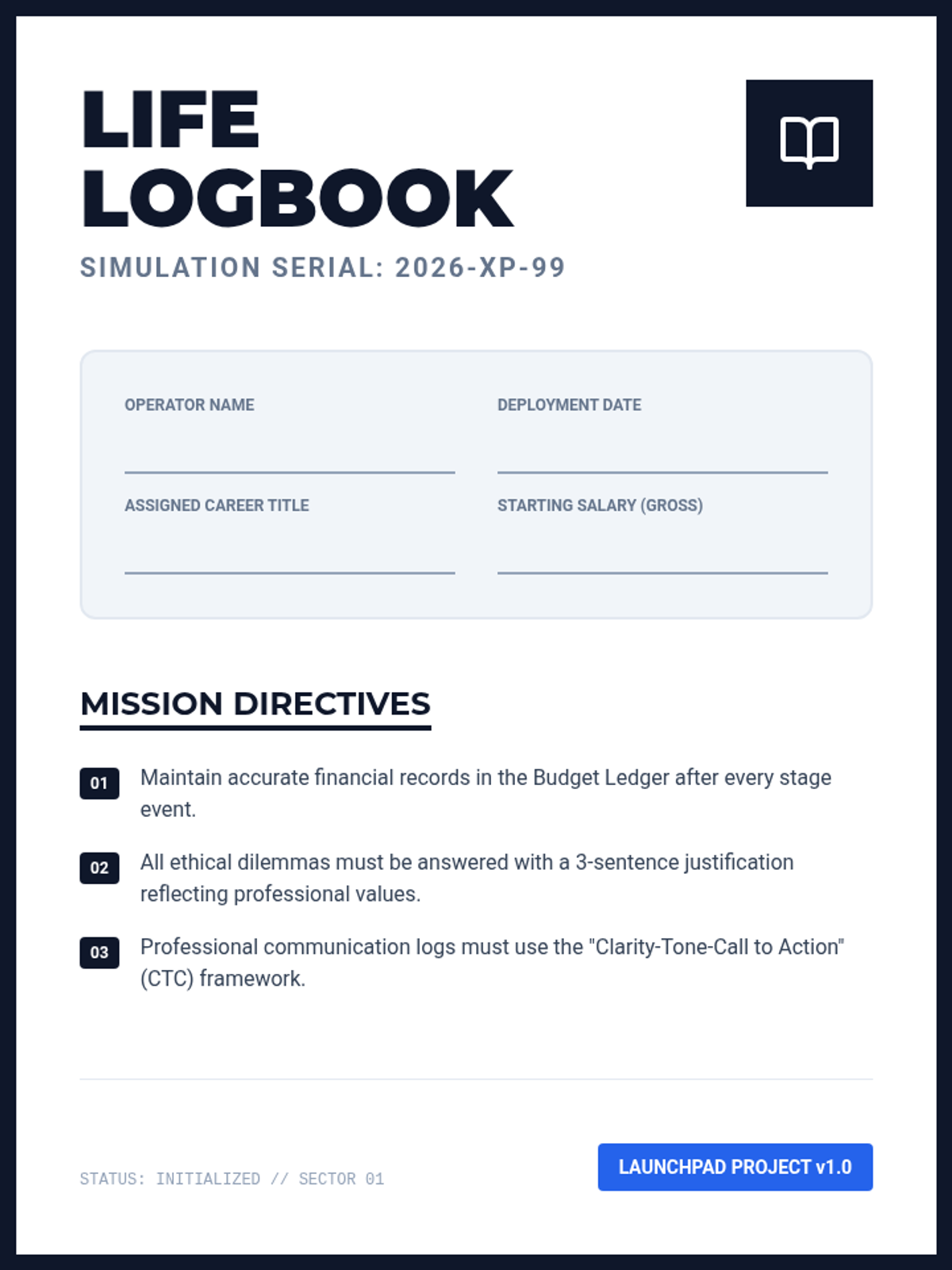
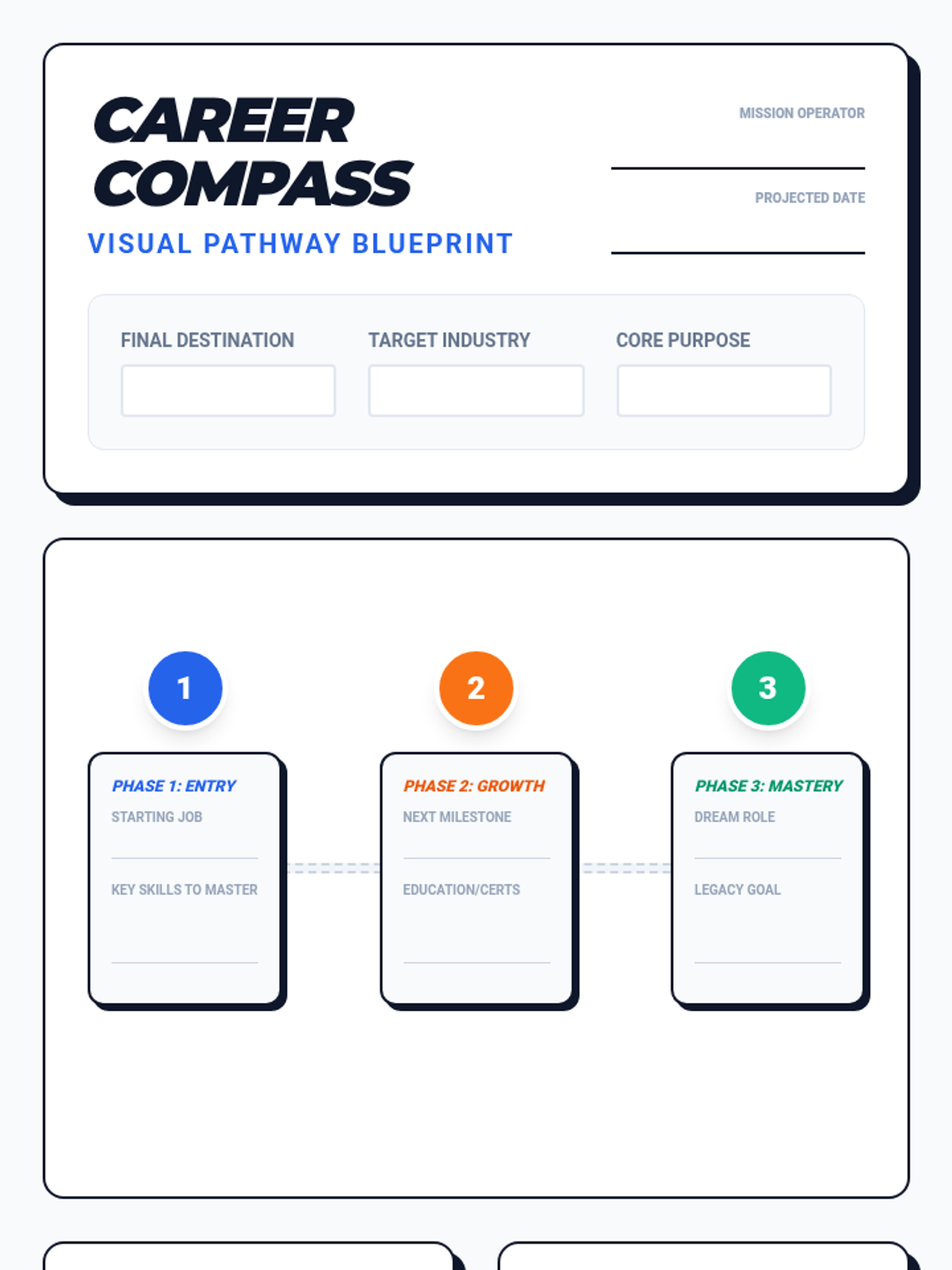
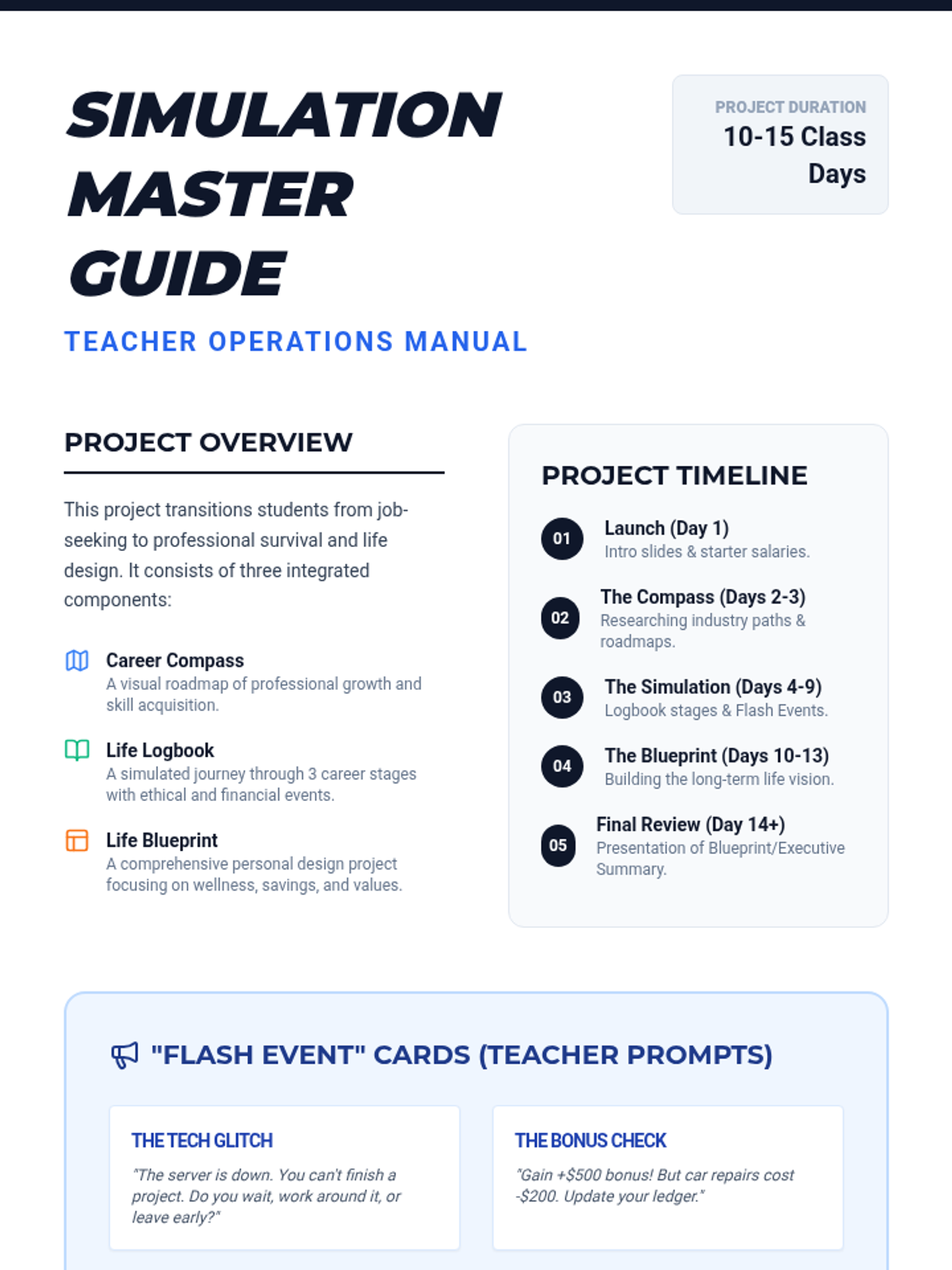
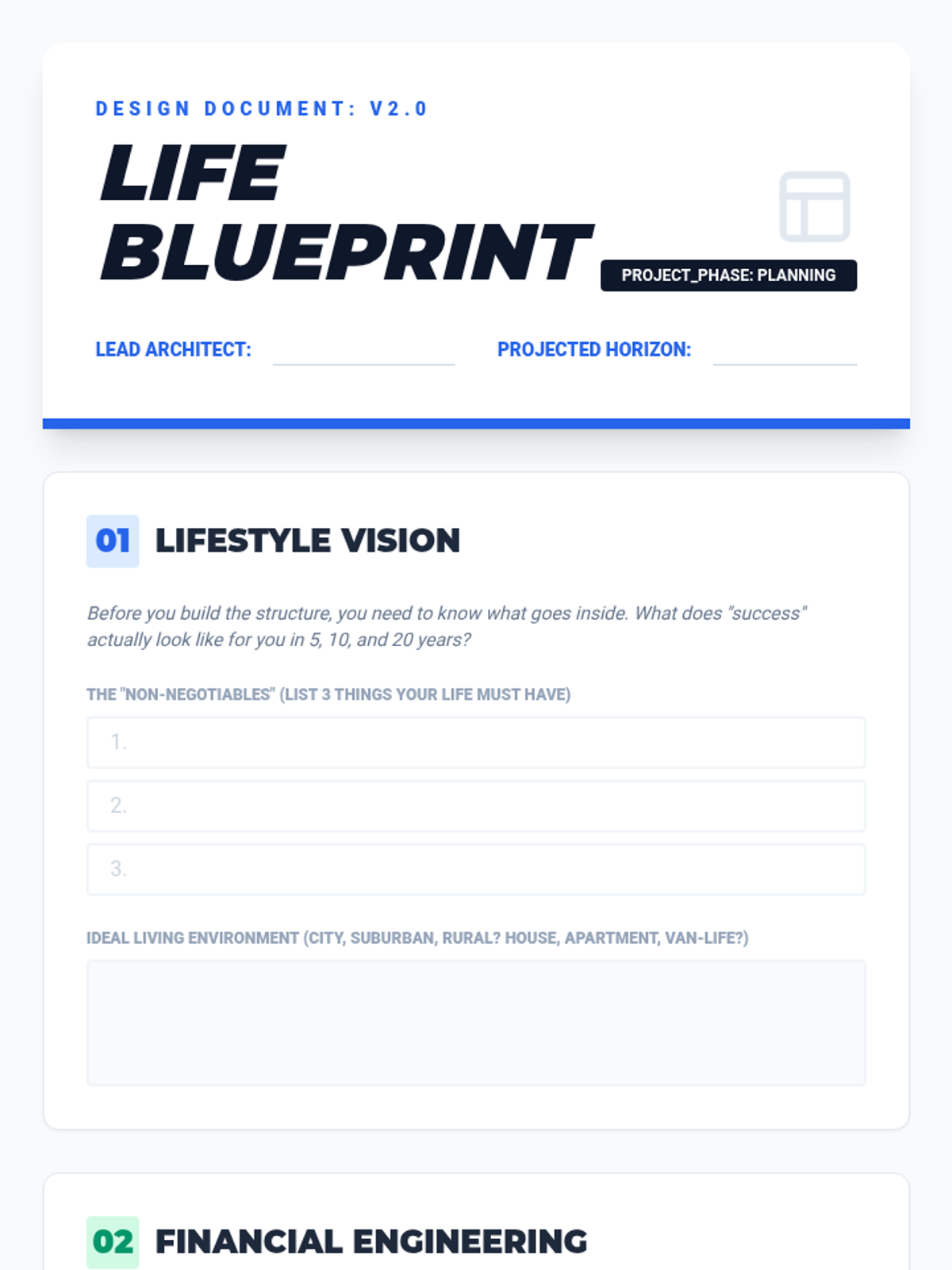
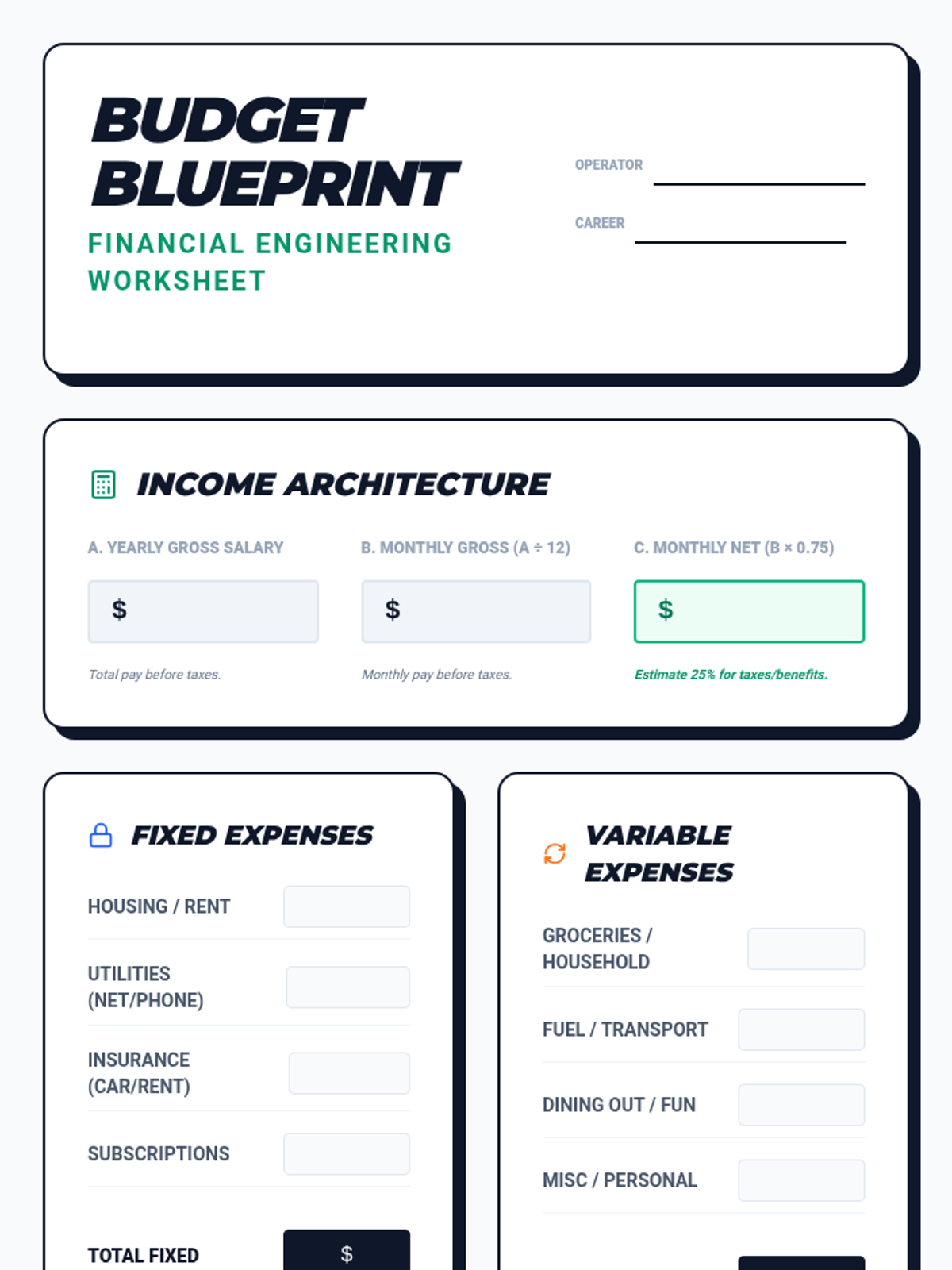
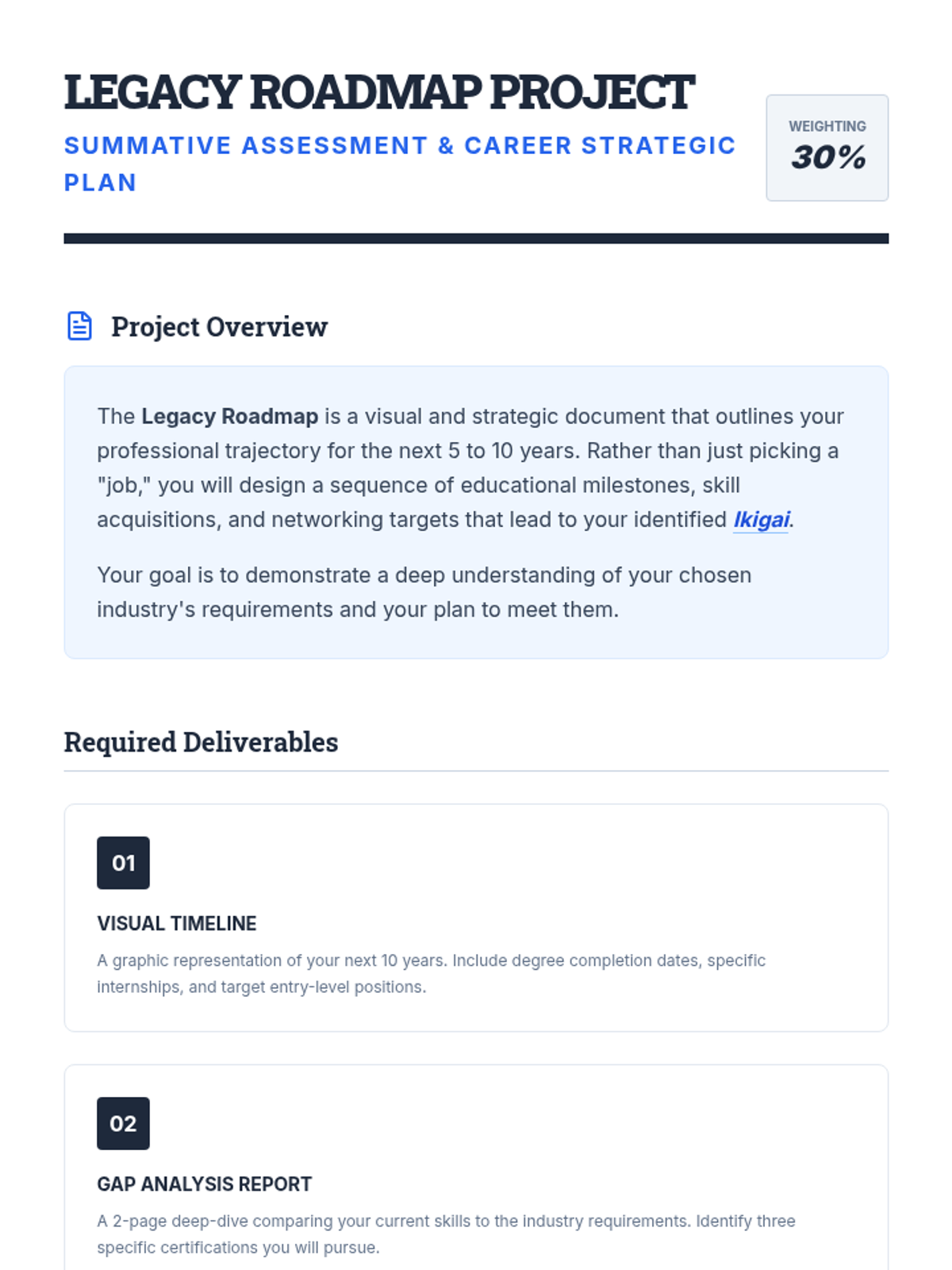
A project-based simulation where students create a long-term career roadmap and manage a multi-stage life logbook, practicing workplace ethics and professional communication in real-world scenarios.
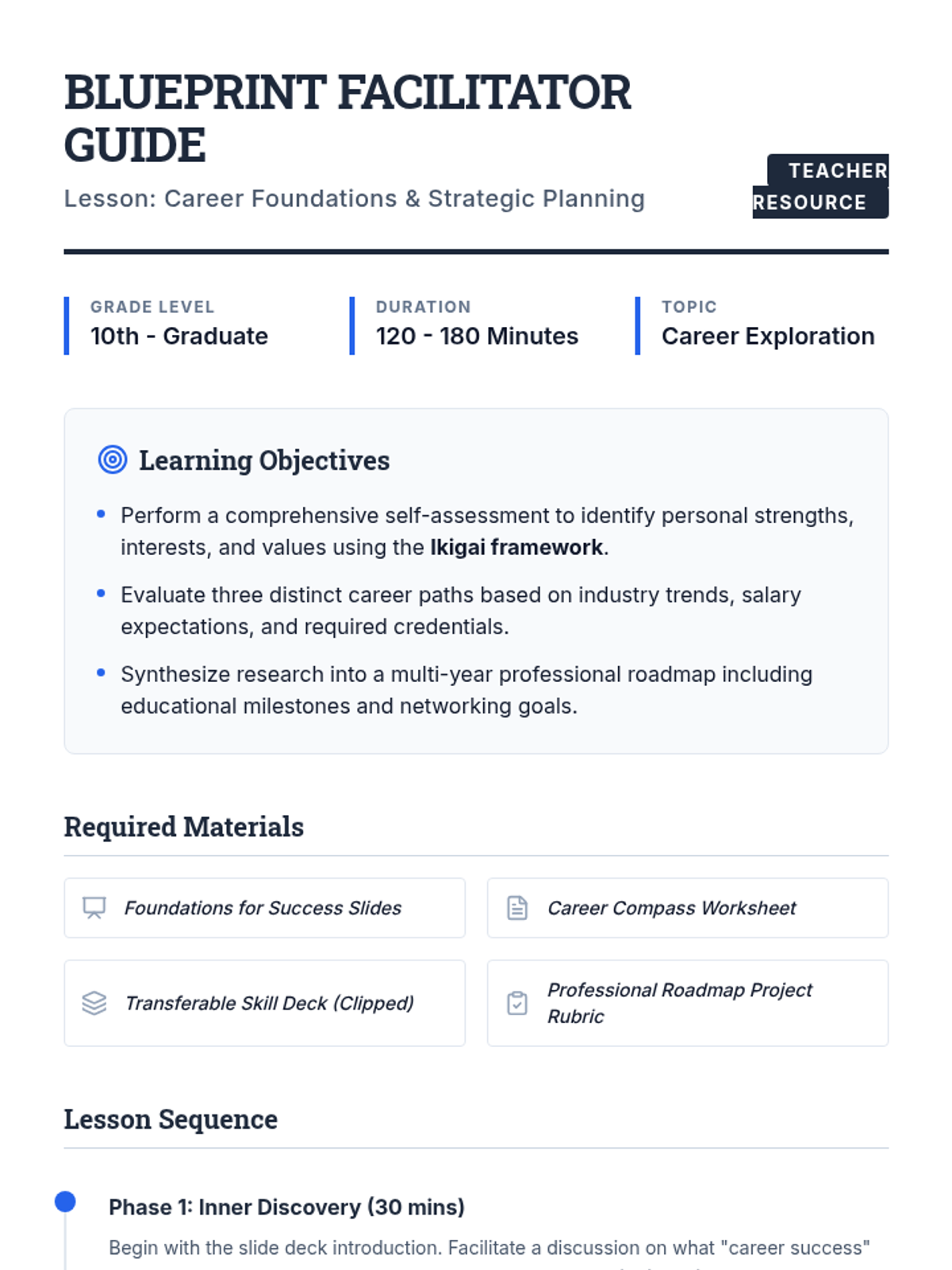
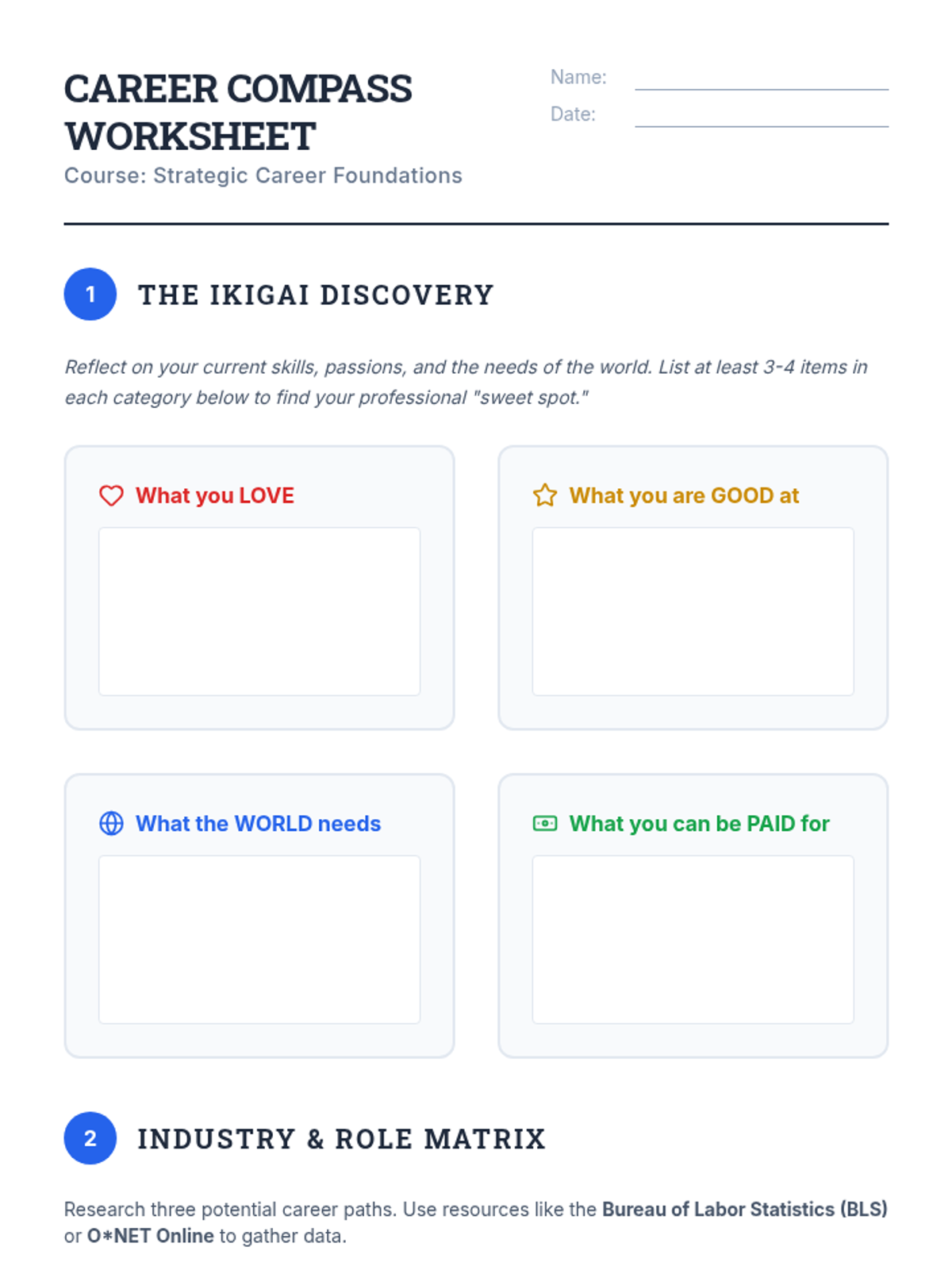
A comprehensive guide for students to bridge the gap between their current skills and future professional goals through self-assessment and strategic research. Students will identify their 'Ikigai', research industries, and map out educational requirements for their chosen path.
A comprehensive exploration of post-secondary options tailored for alternative education students, focusing on practical career pathways like trade schools, apprenticeships, and direct workforce entry.
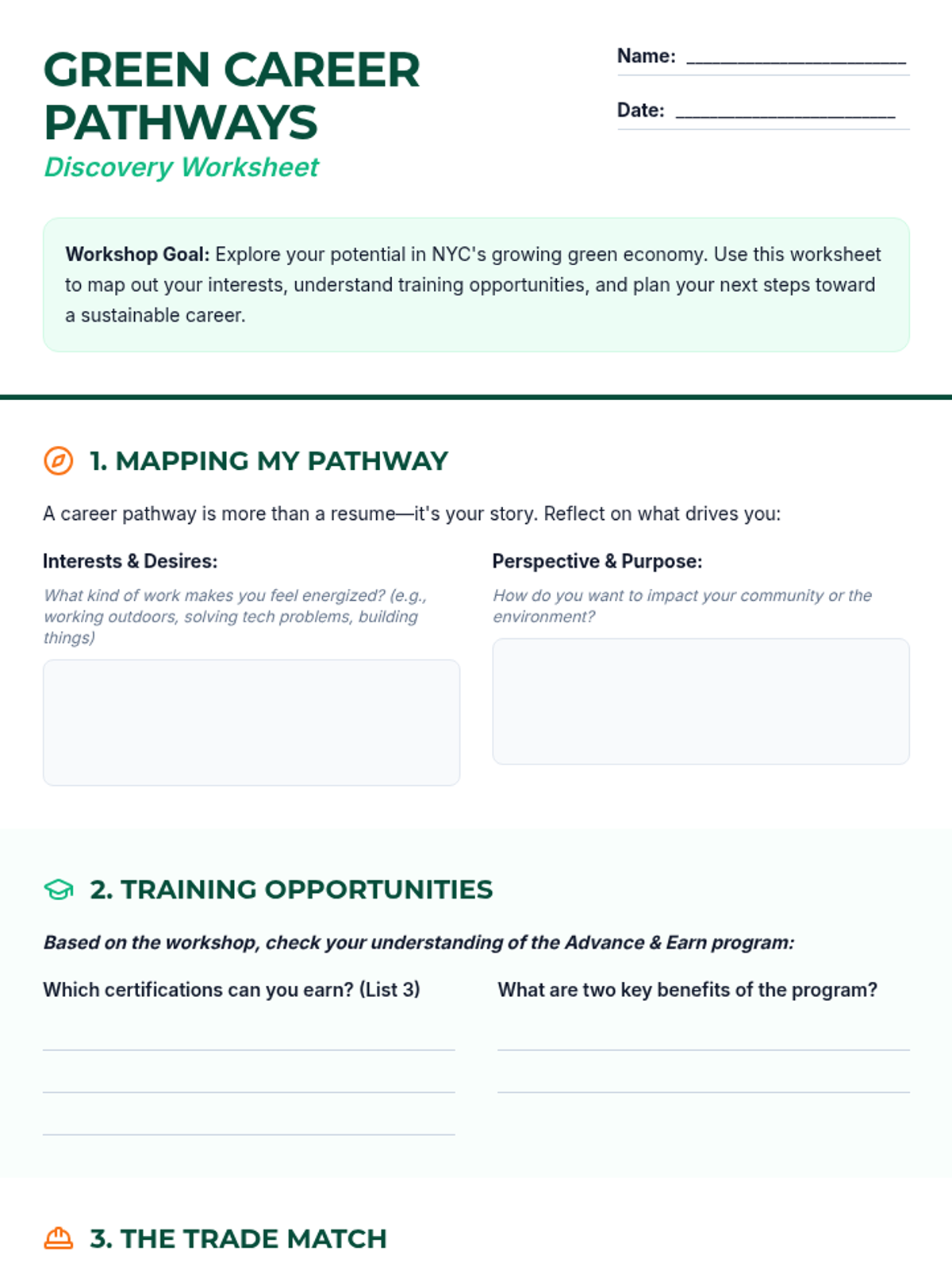
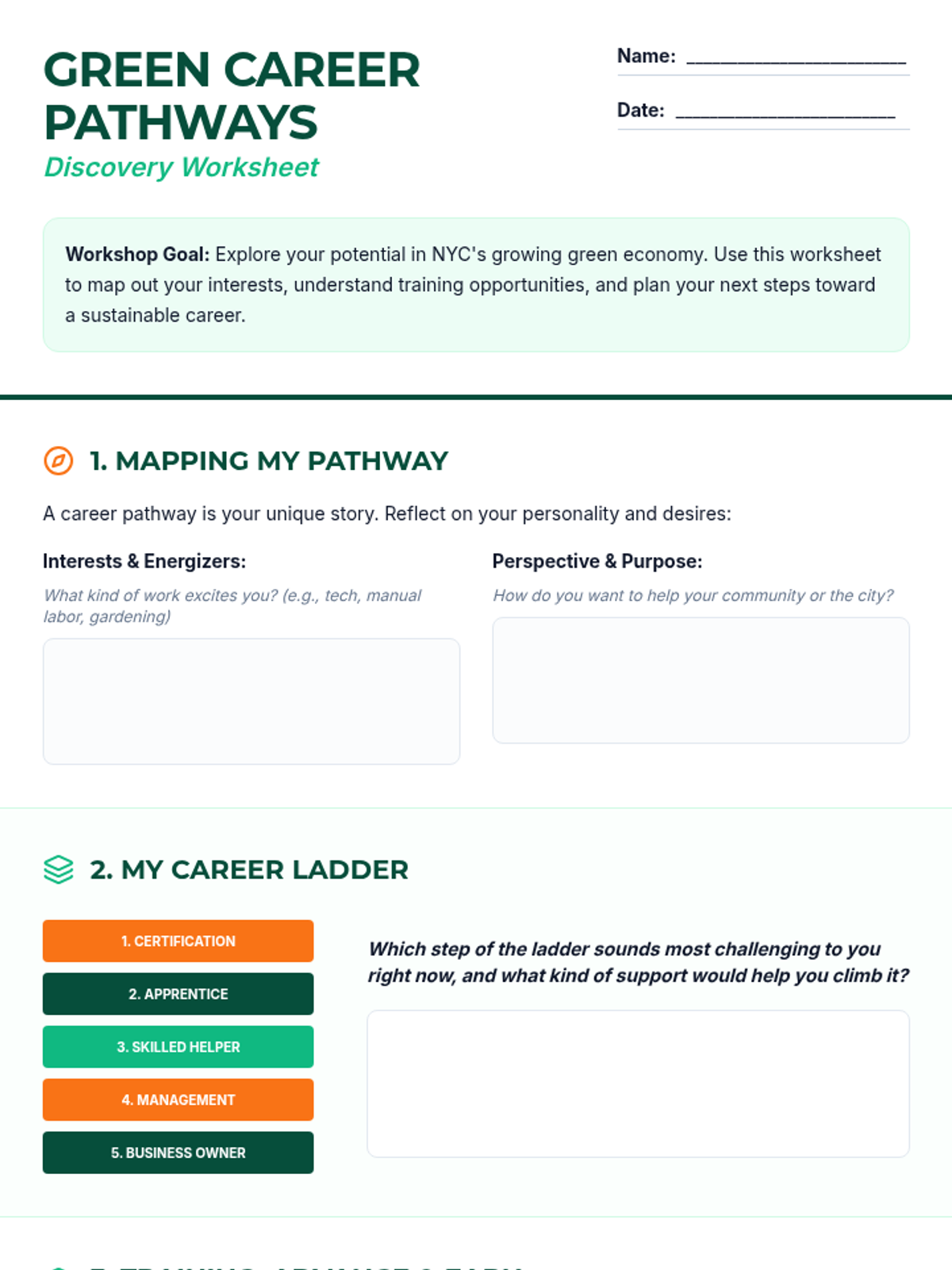
A presentation exploring non-traditional career pathways in green construction and the trades, focusing on NYC's climate initiatives and training opportunities.
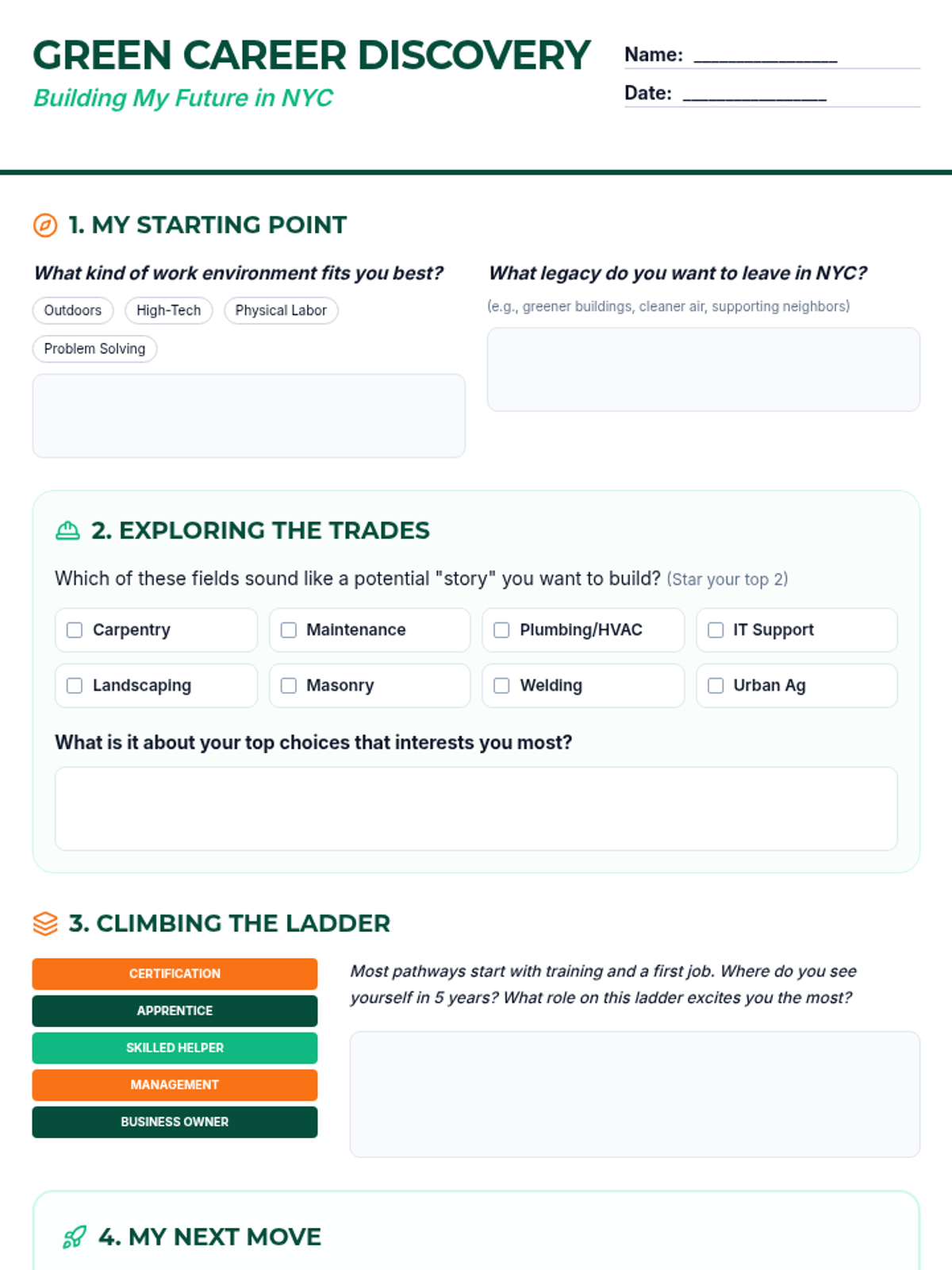
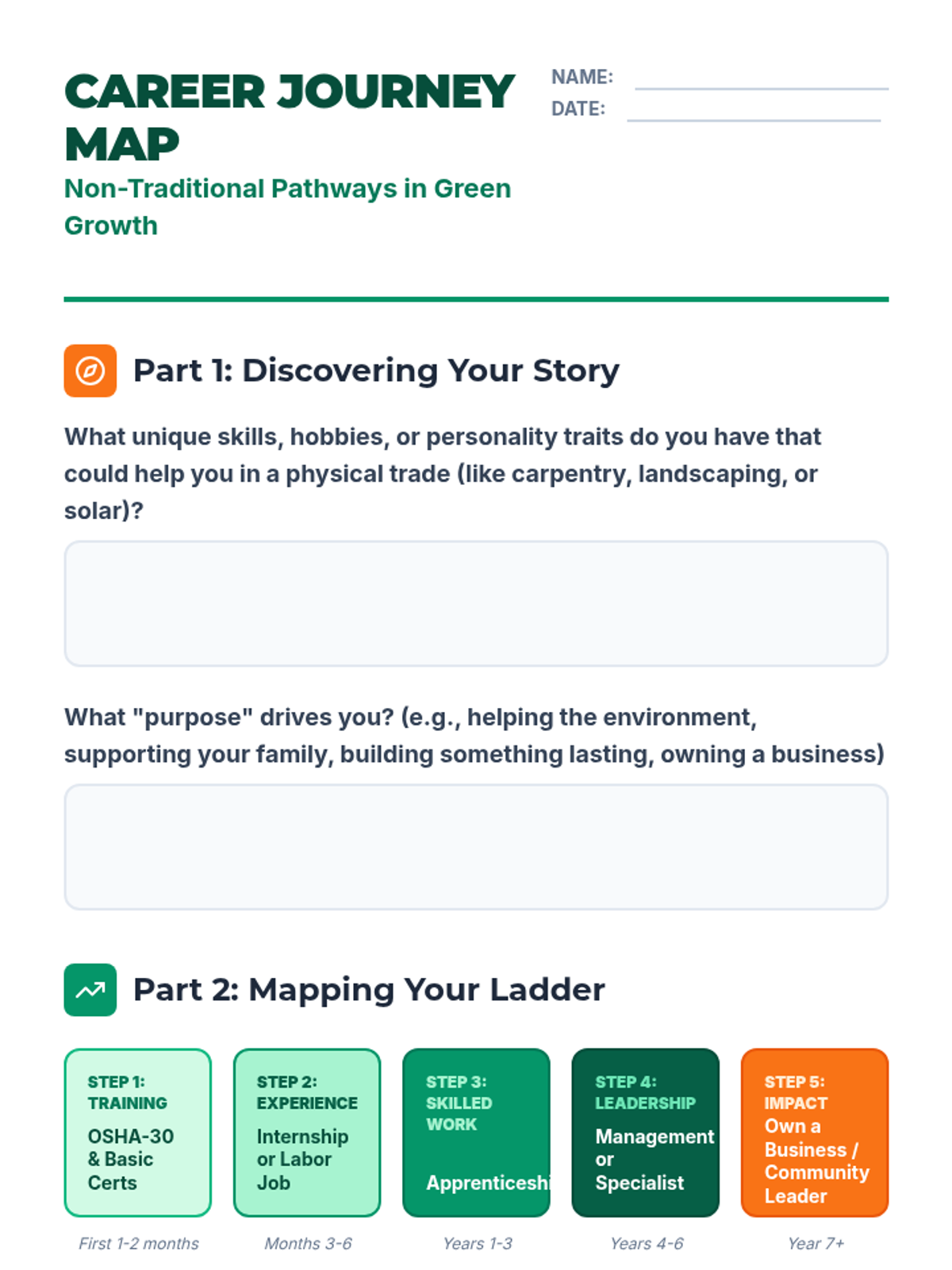
A workshop for young adults and teenagers exploring non-traditional career pathways in green construction and sustainable agriculture, focusing on NYC climate initiatives and local training programs.
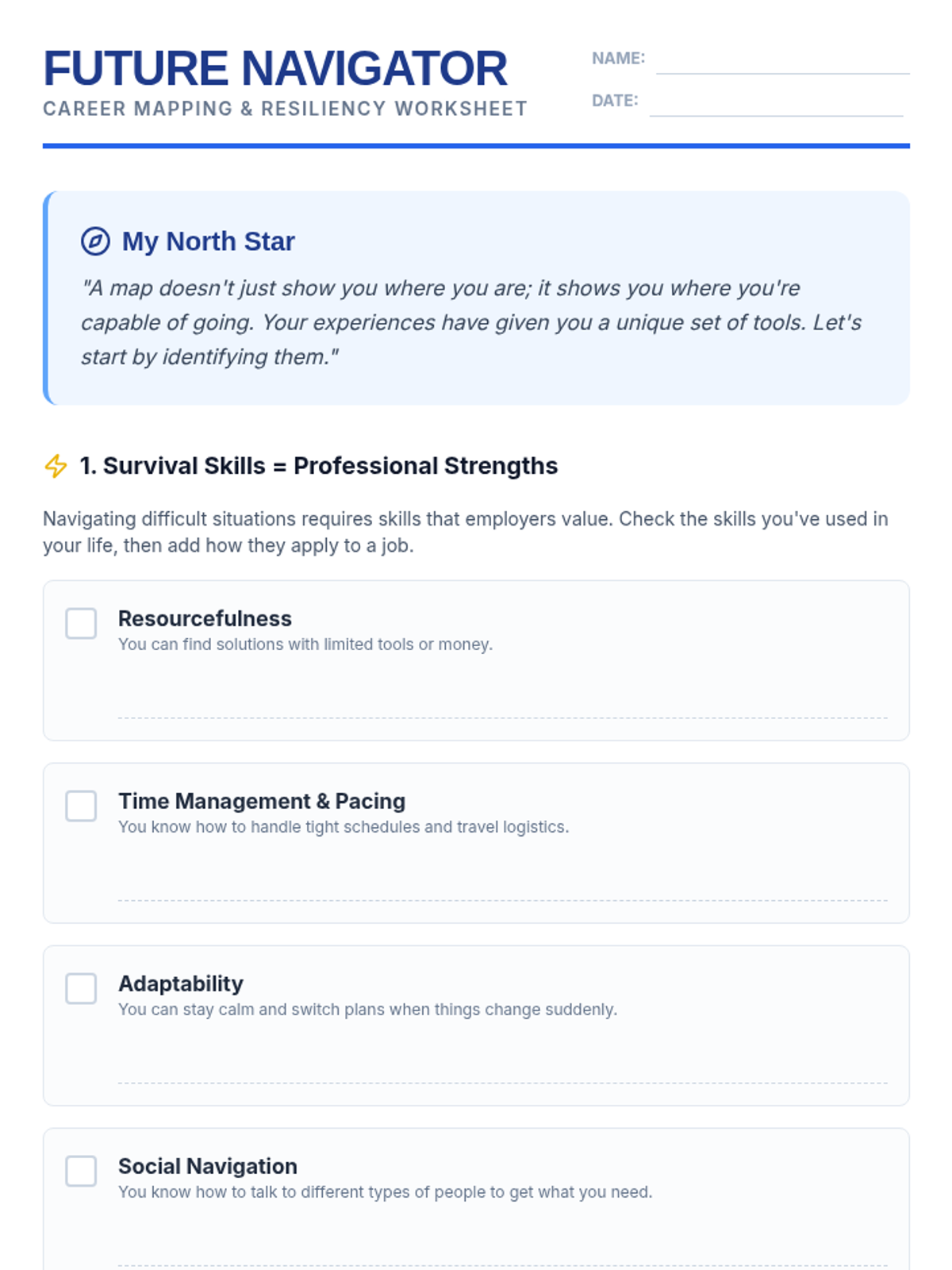
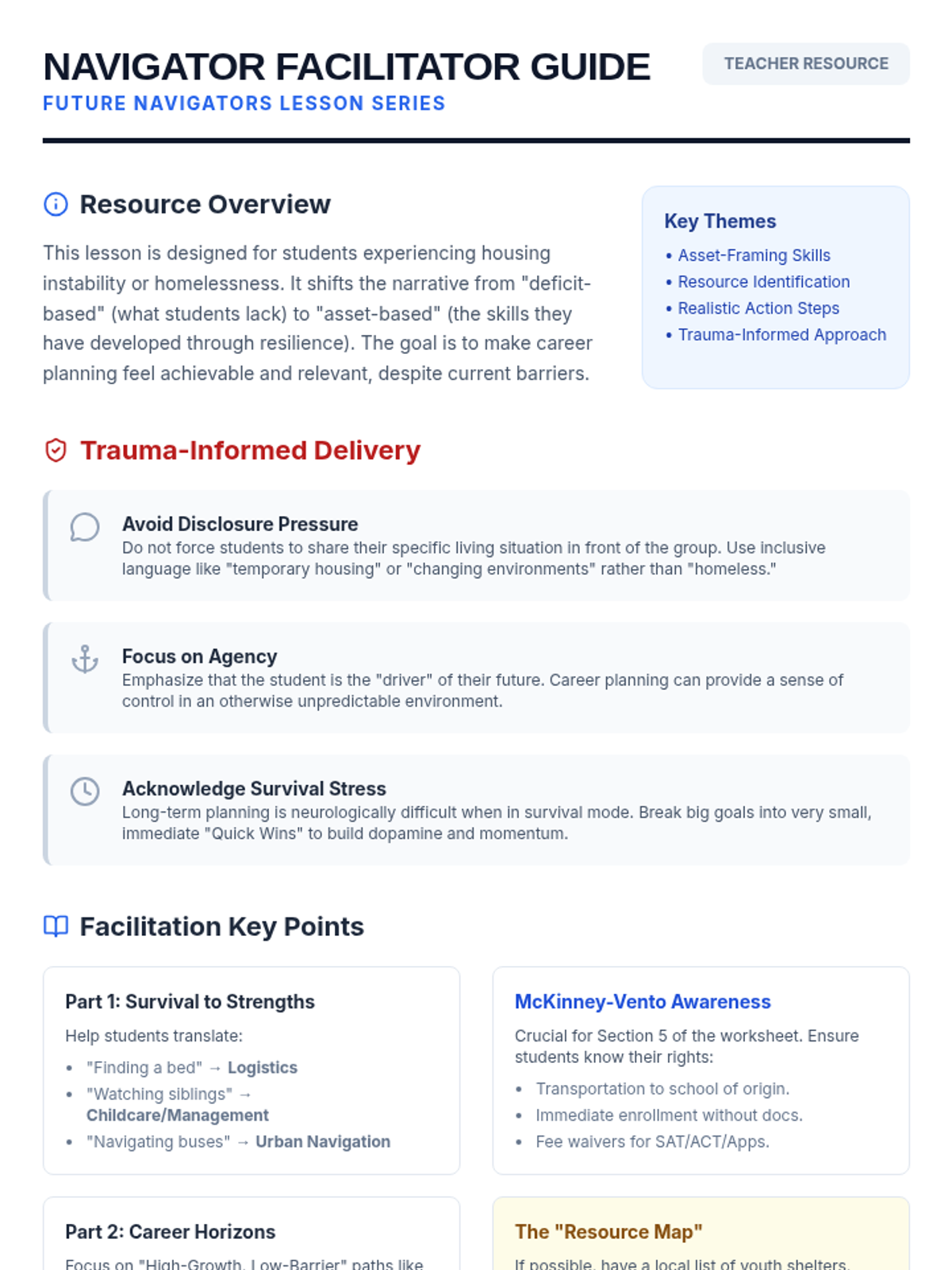
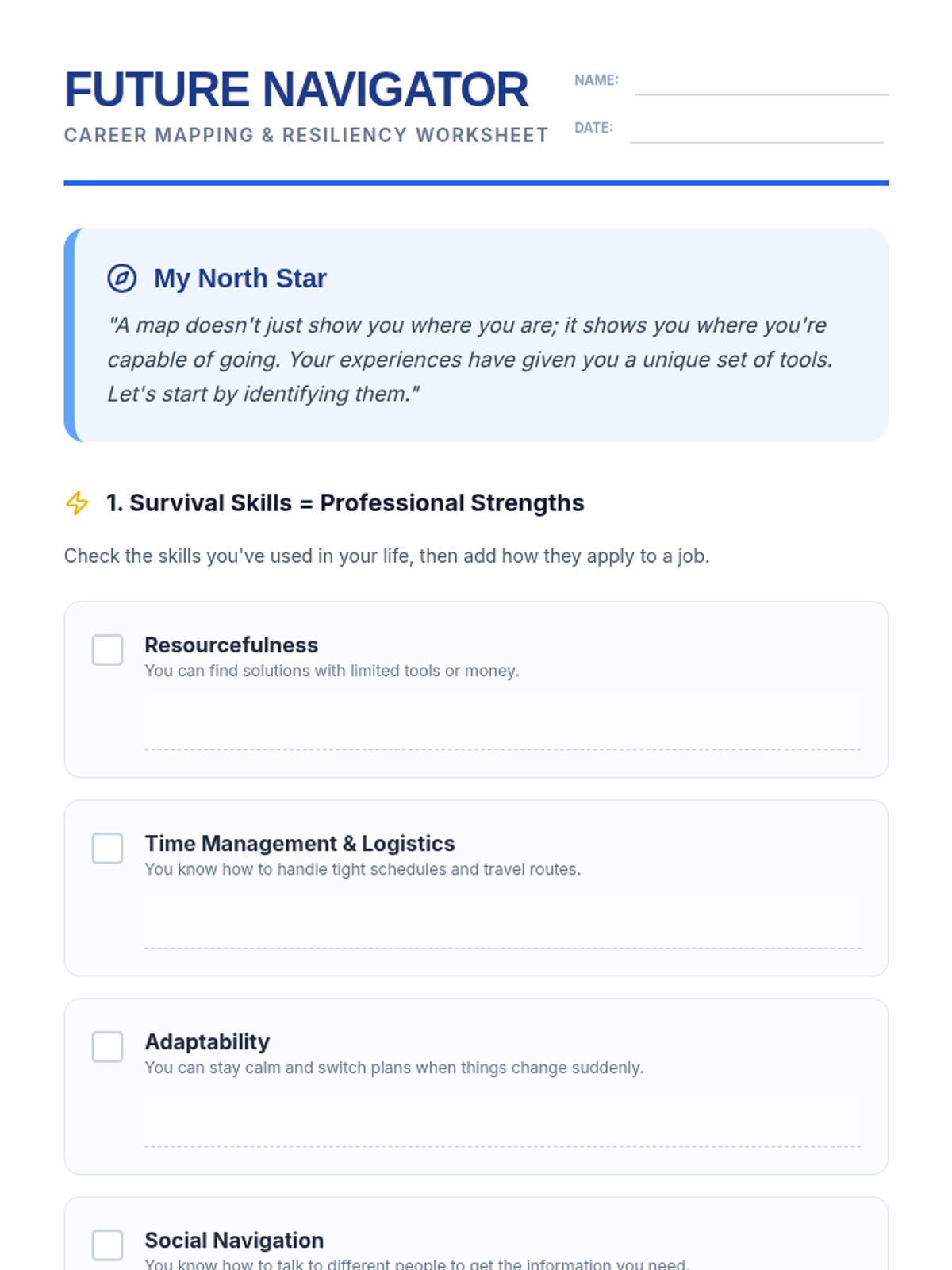
A comprehensive career planning resource designed for high school students experiencing housing instability, focusing on identifying transferable skills, setting achievable goals, and navigating community resources.
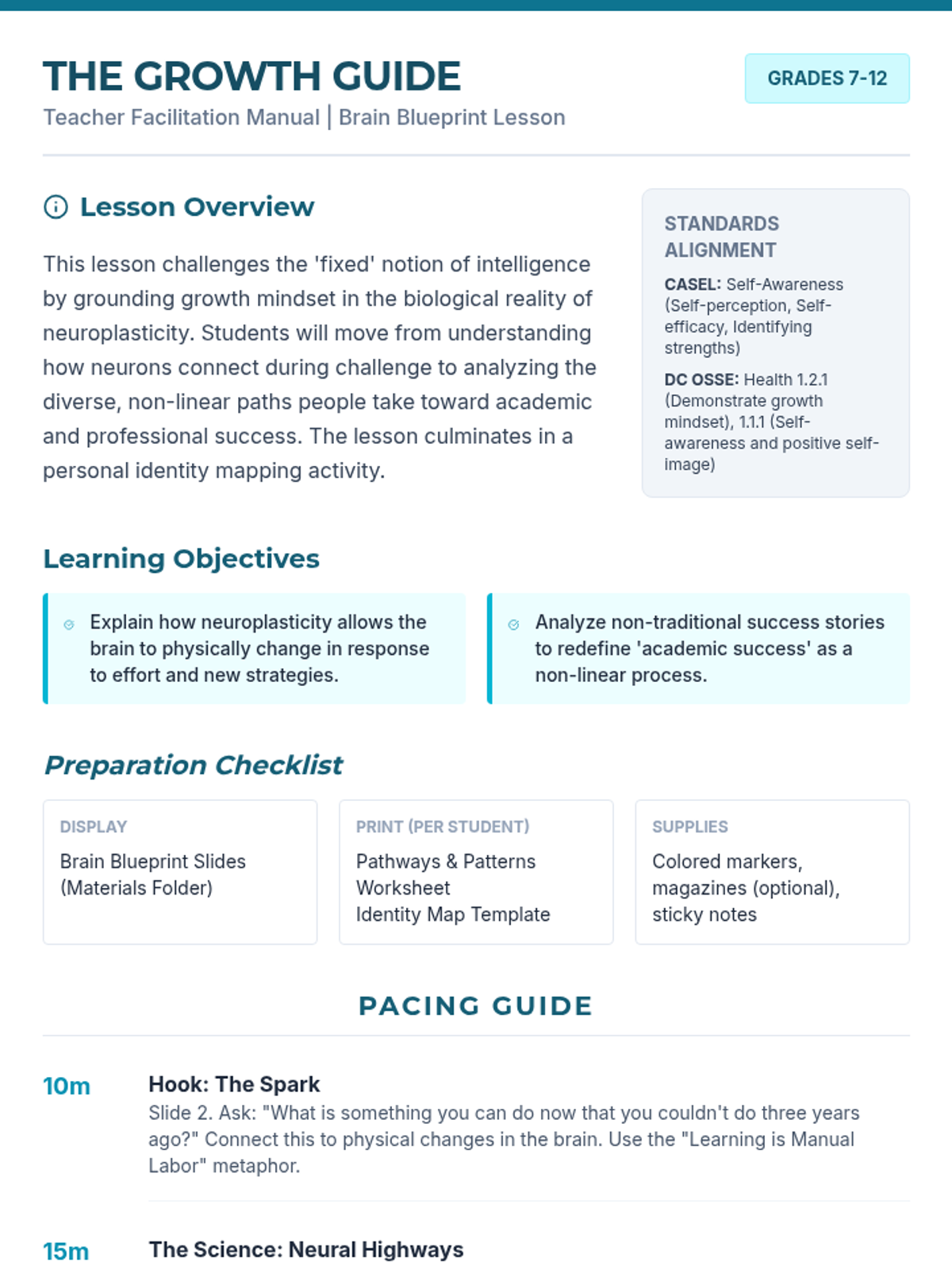
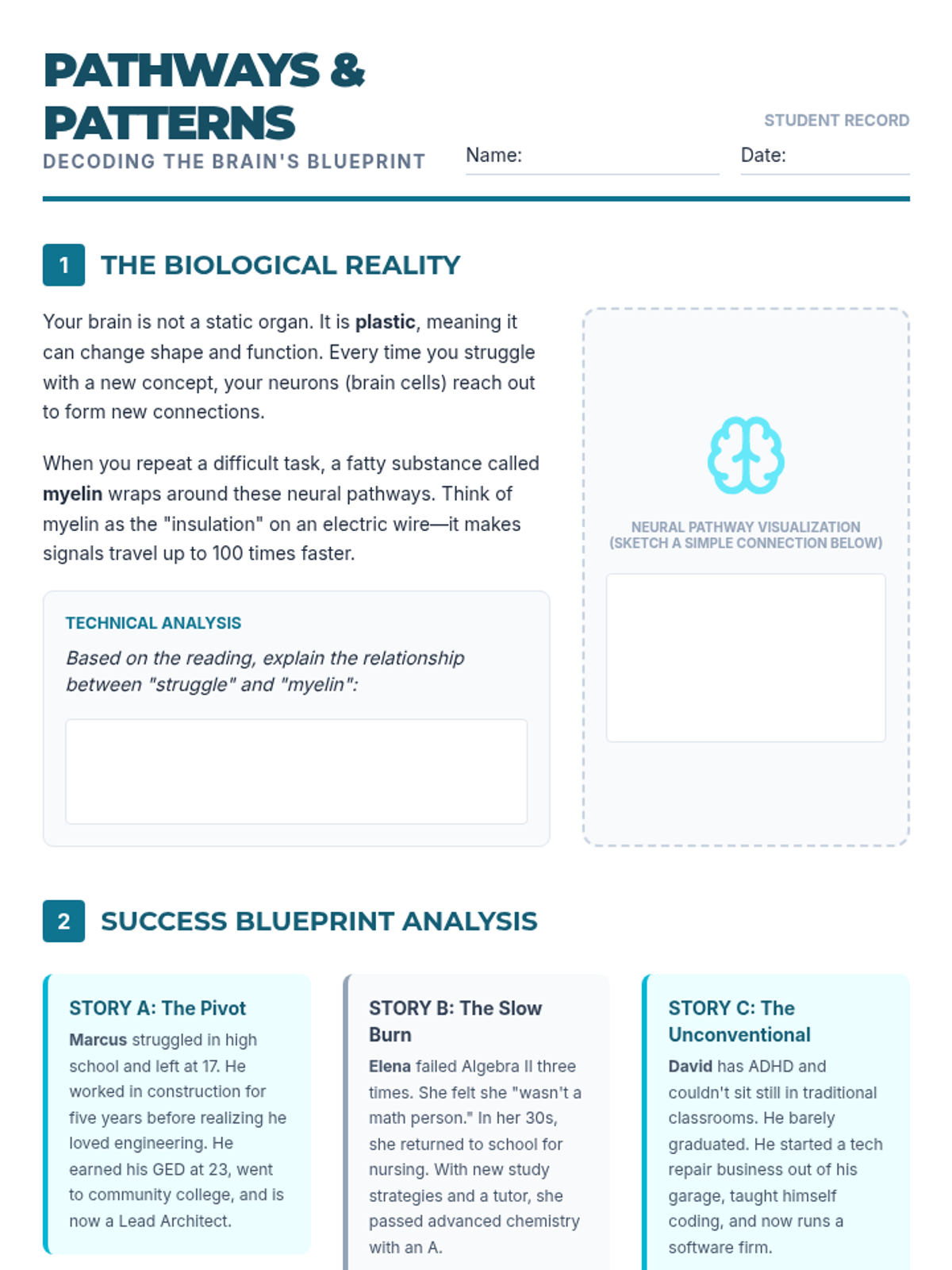
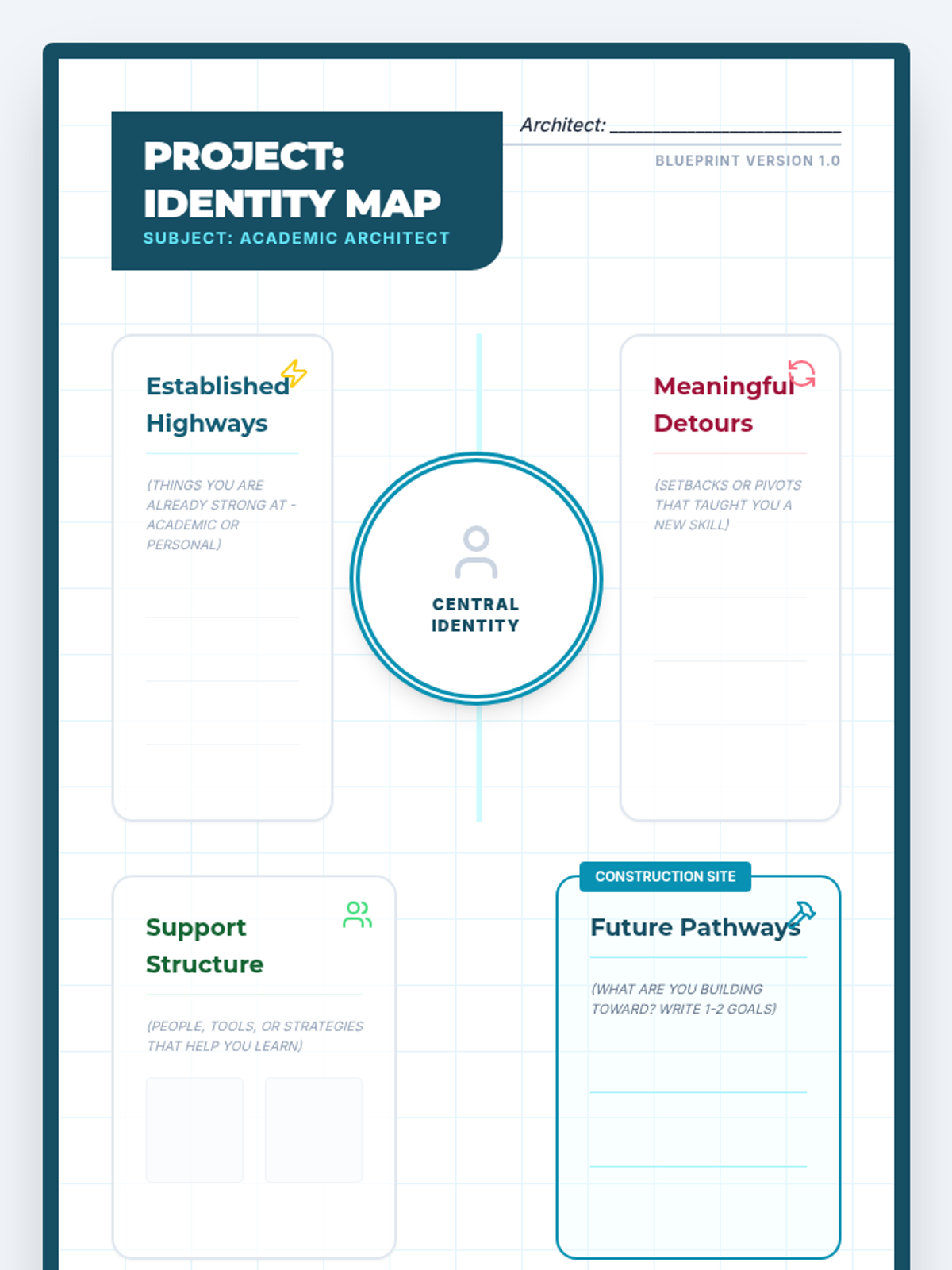
A high school lesson exploring the science of neuroplasticity and diverse academic journeys to build a robust, growth-oriented identity. Students move from the biological 'how' of learning to personal reflection on their own strengths and non-traditional paths to success.
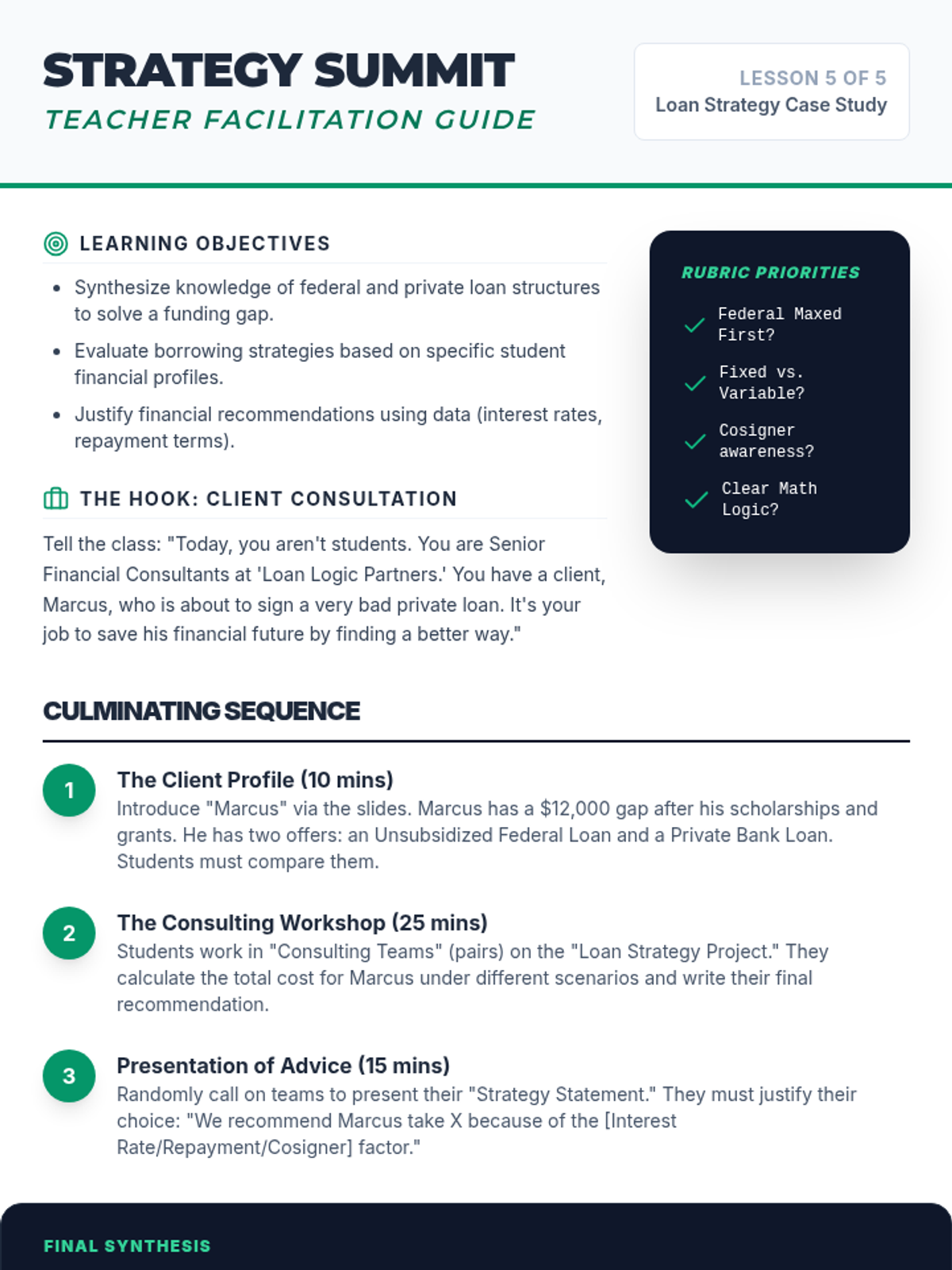
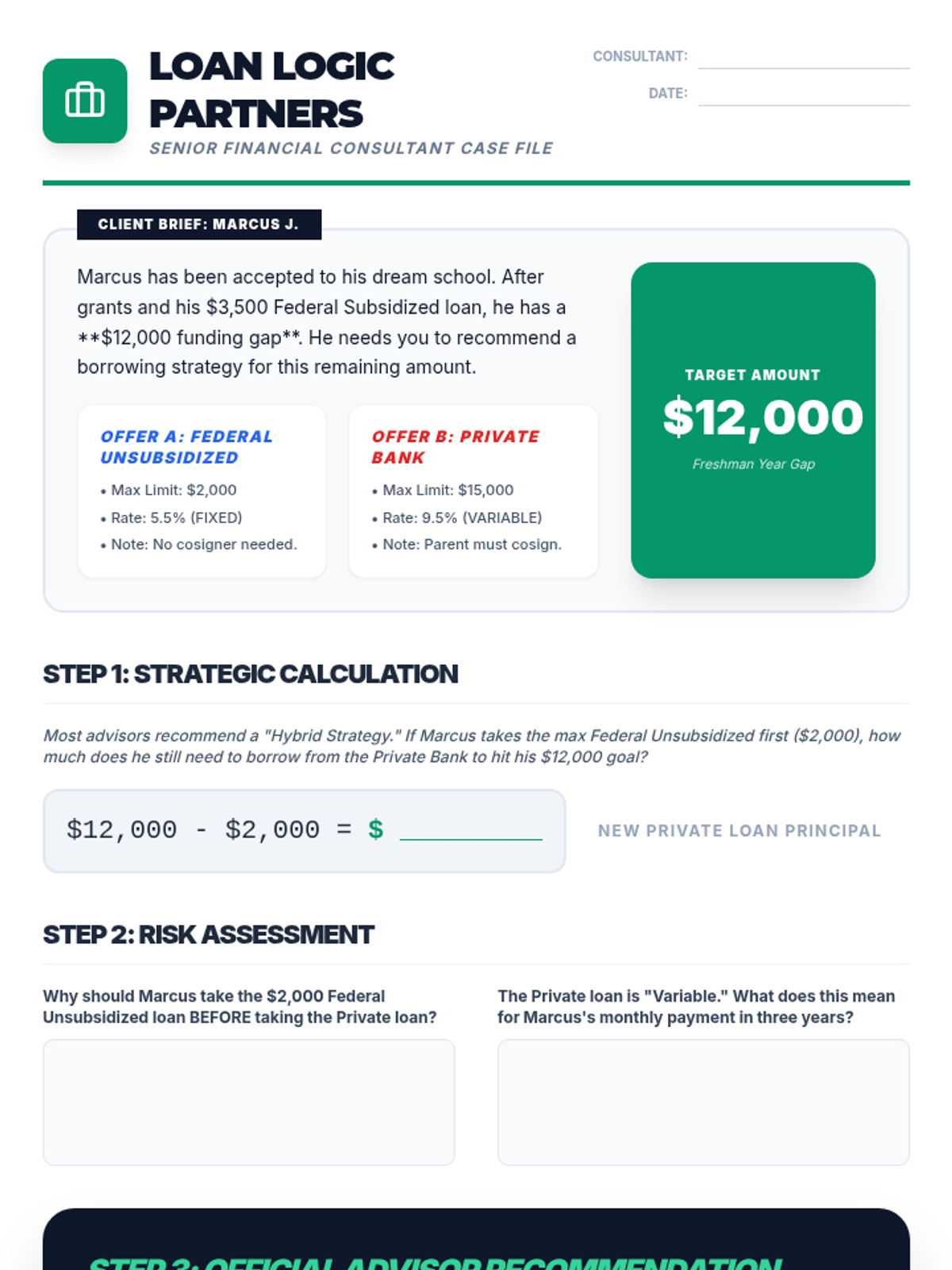
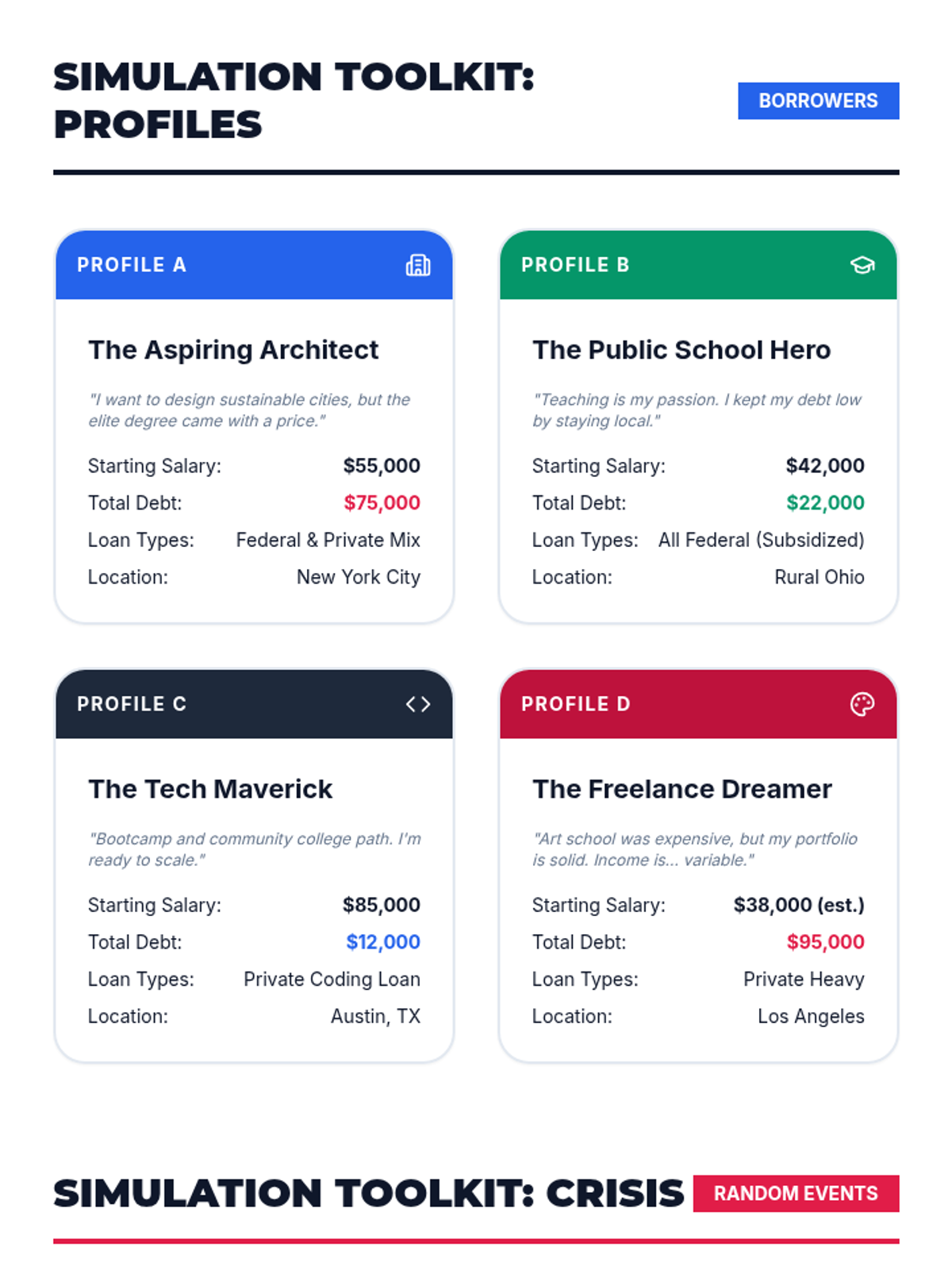
Students act as financial advisors for fictional high school seniors, recommending a mix of federal and private loans based on specific profiles.
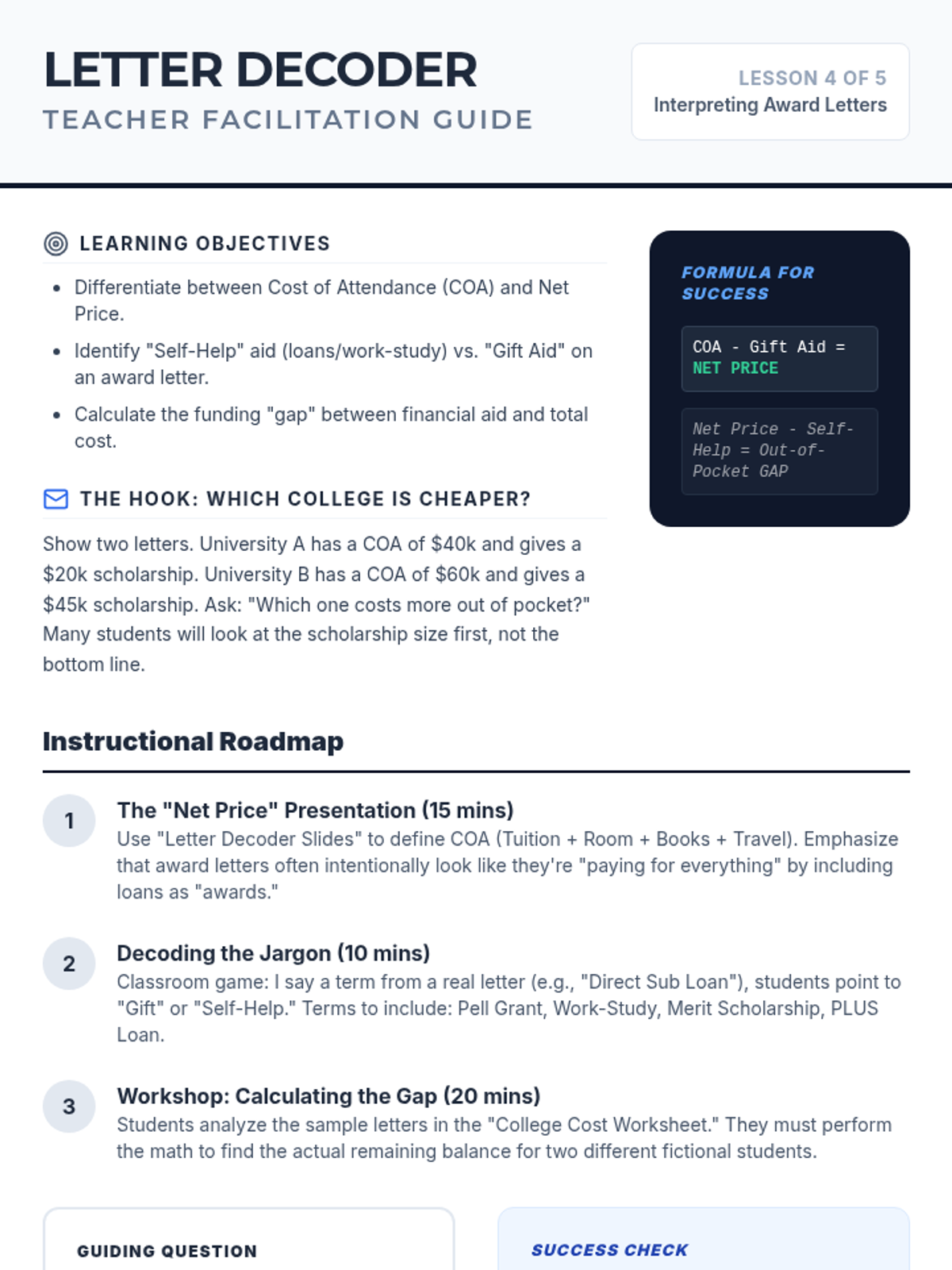
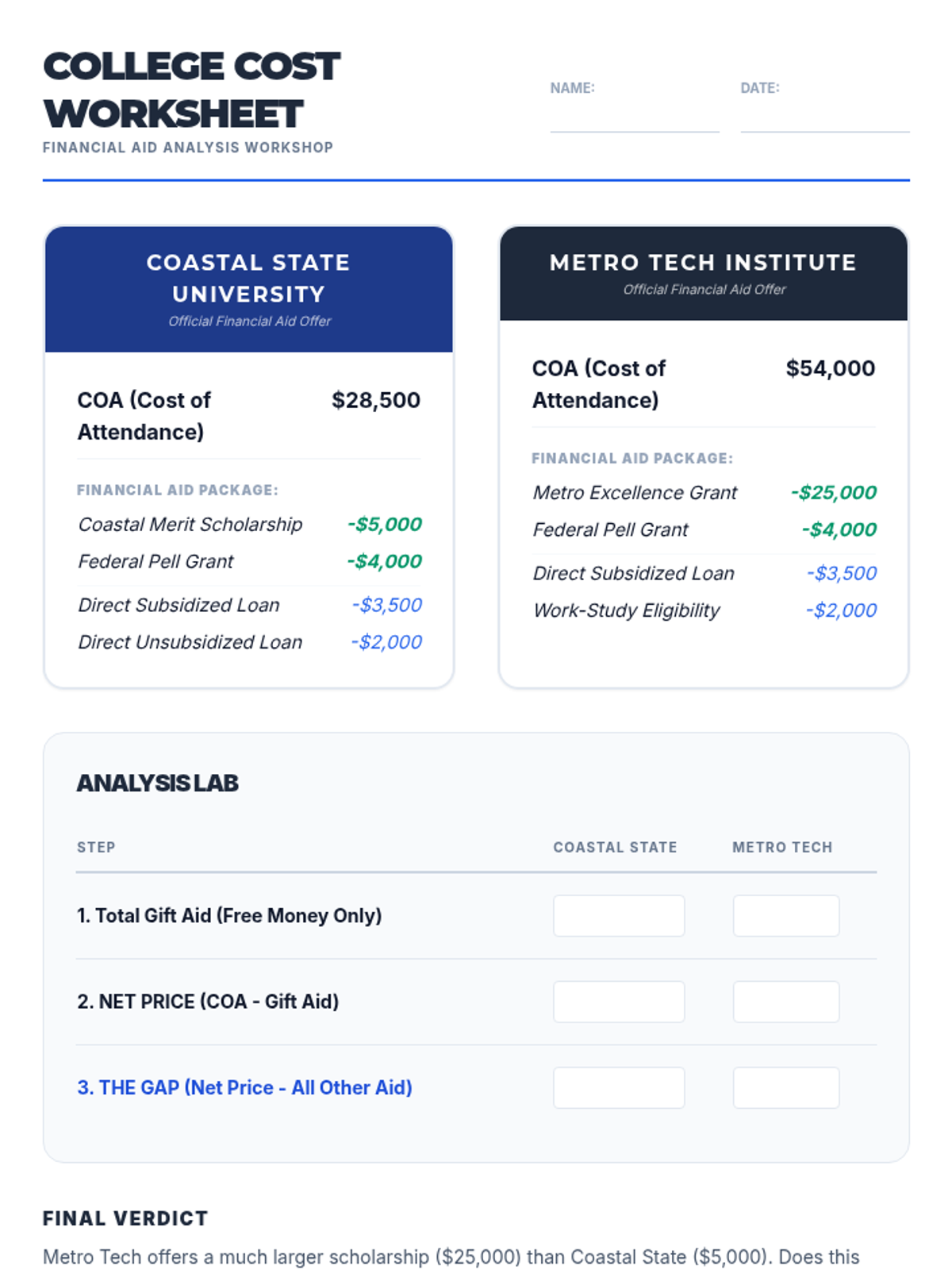
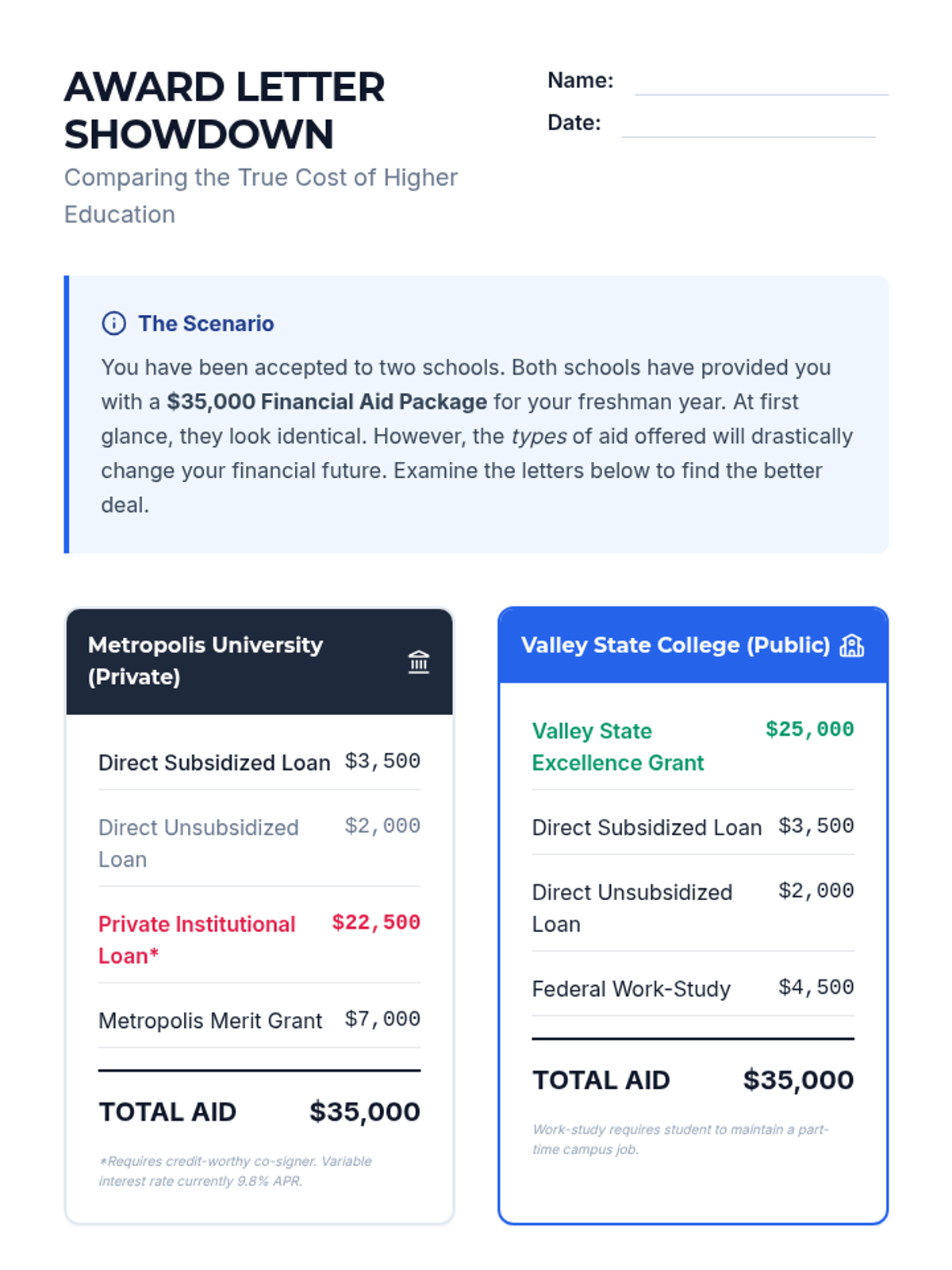
Using sample award letters, students practice identifying the 'net price' and separating loans from grants to determine the true cost of attendance.
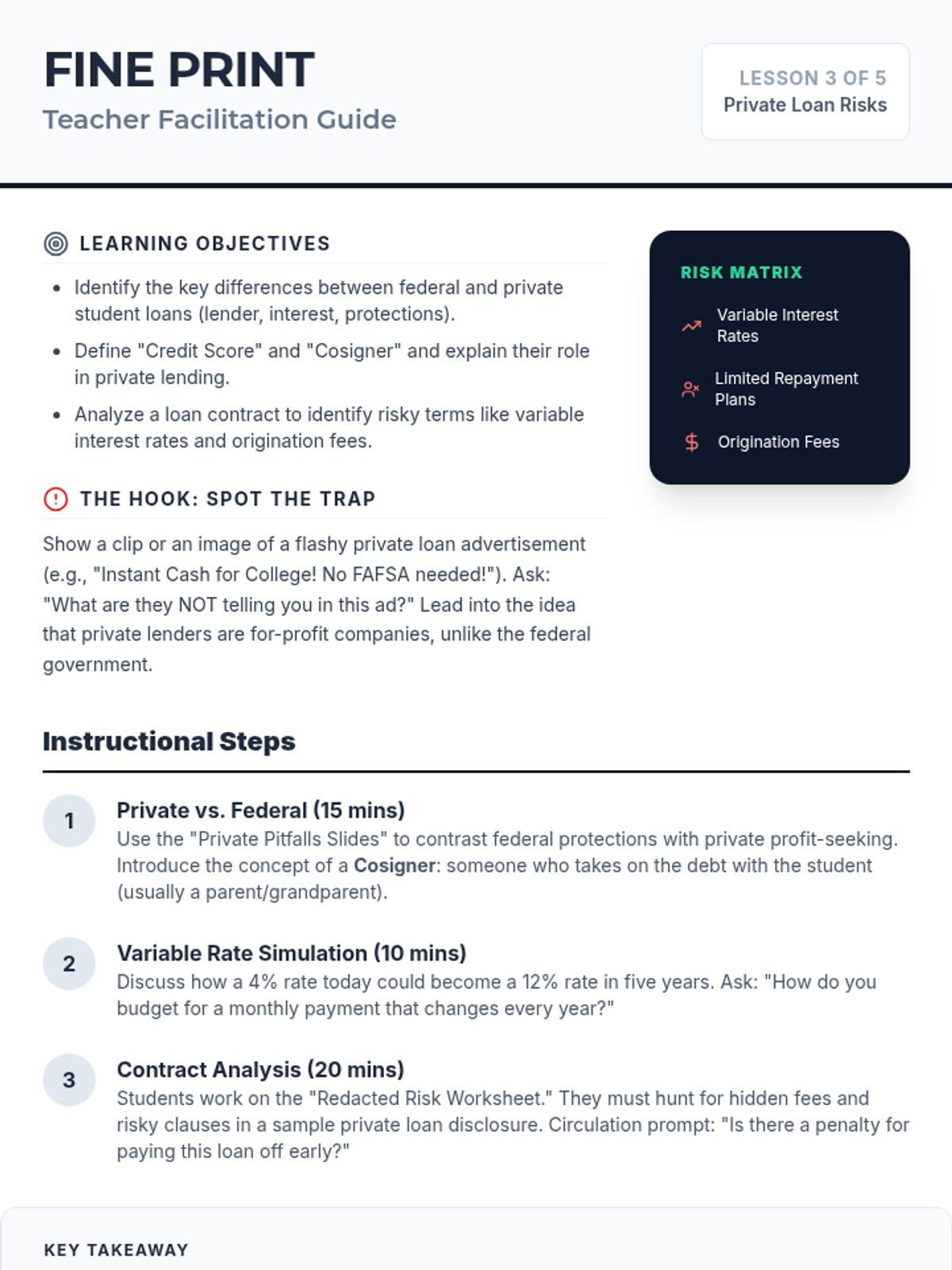
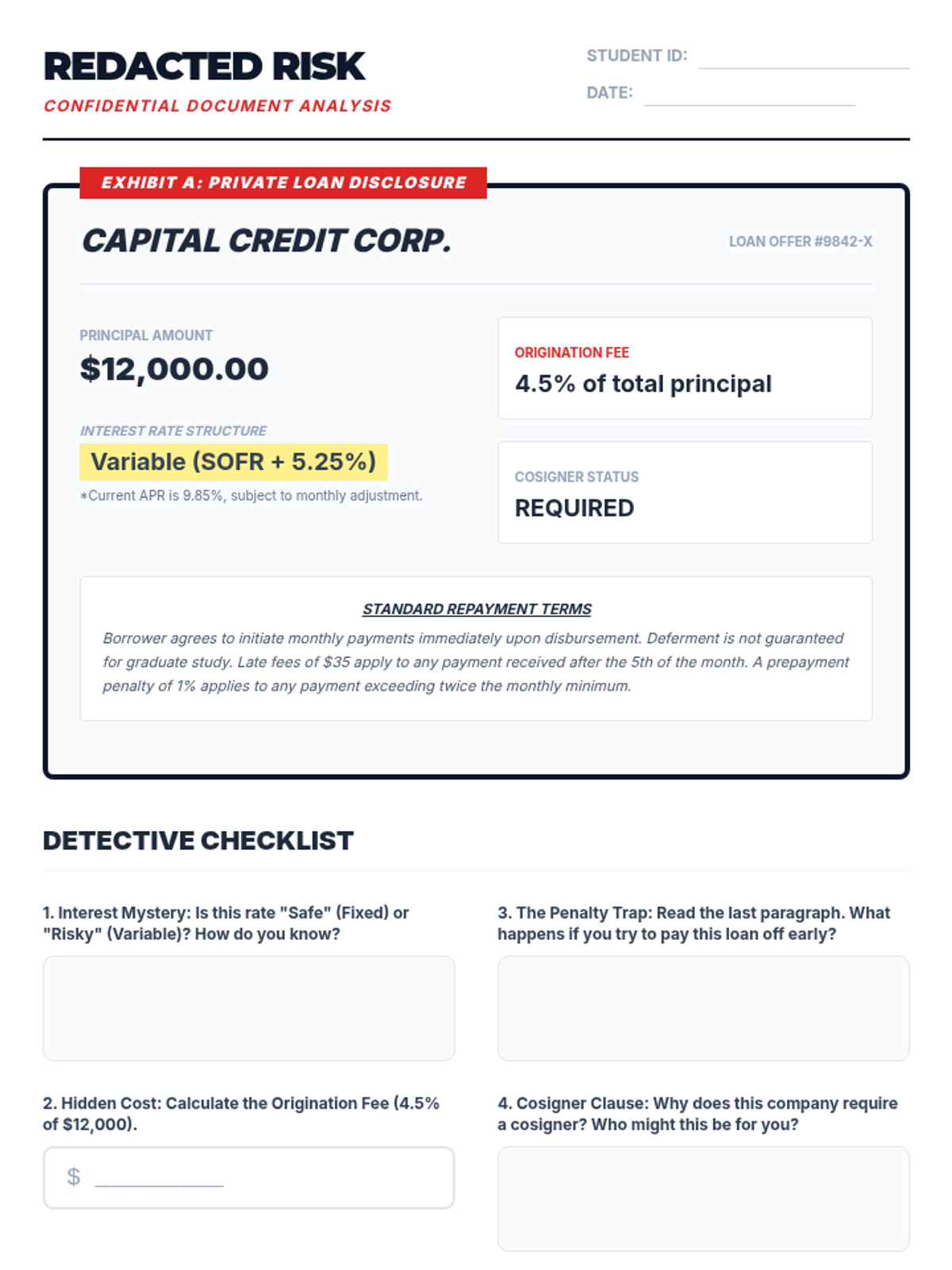
Students investigate the landscape of private student loans, examining the role of credit scores, cosigners, and variable versus fixed interest rates.
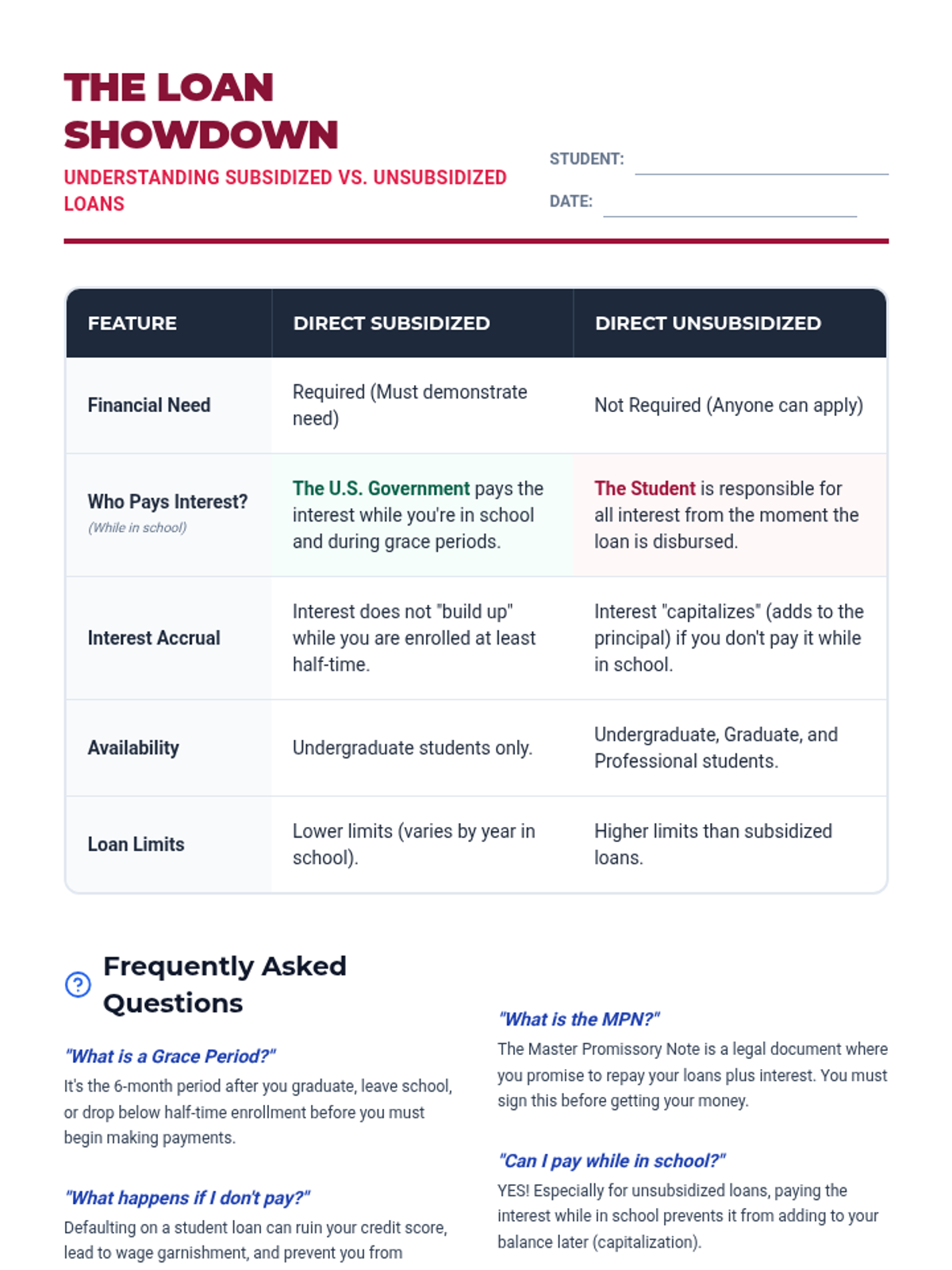
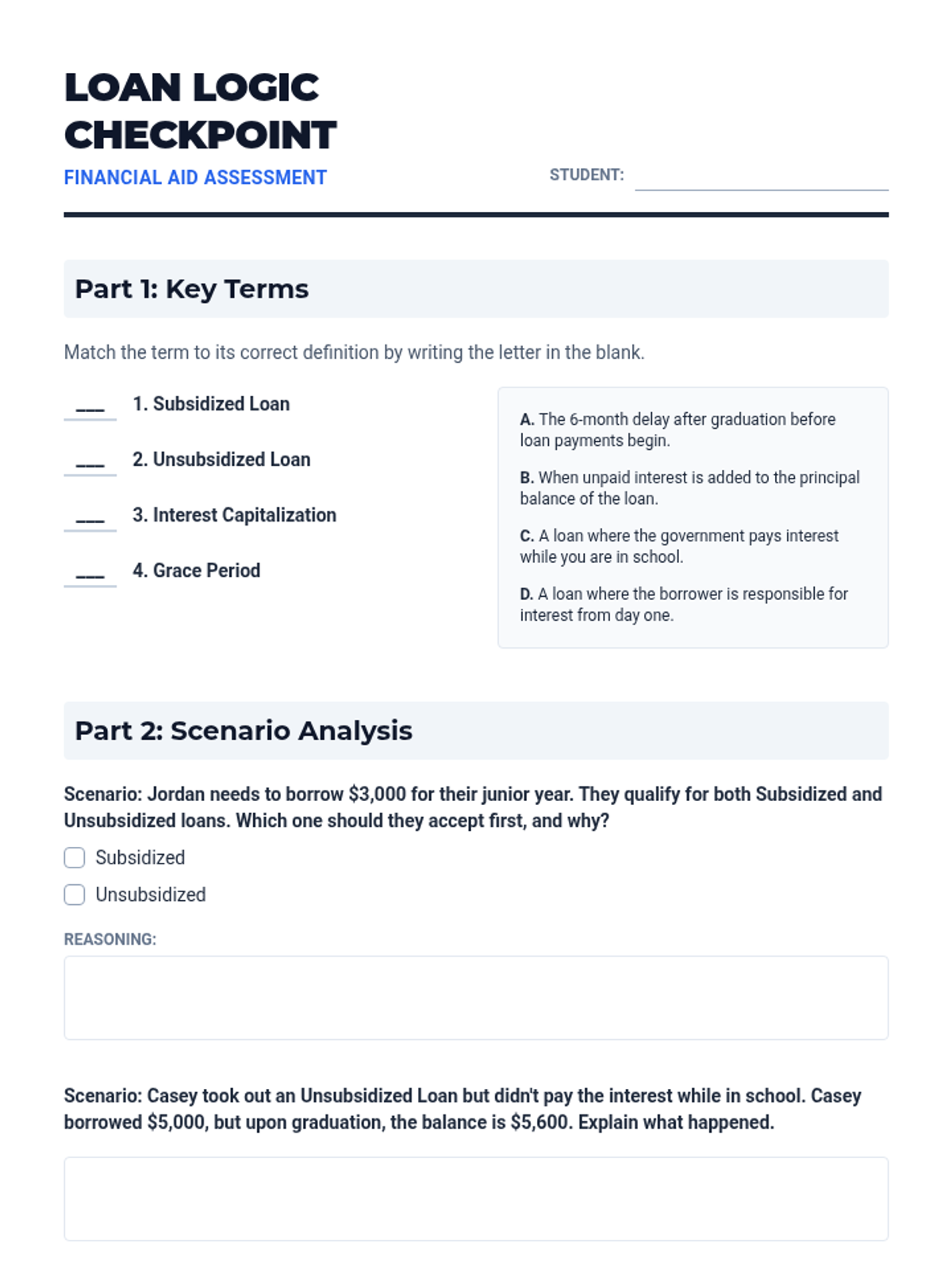
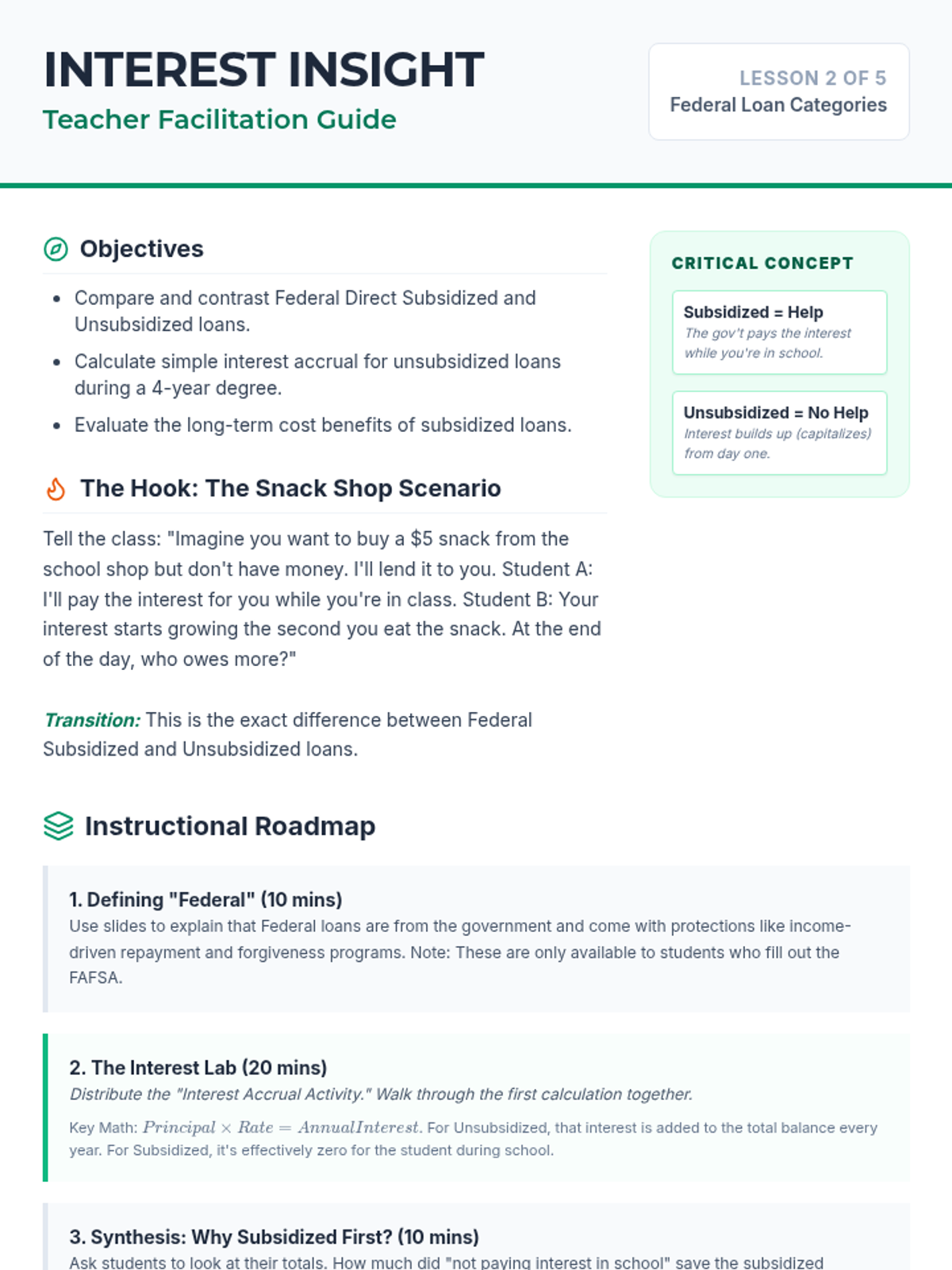
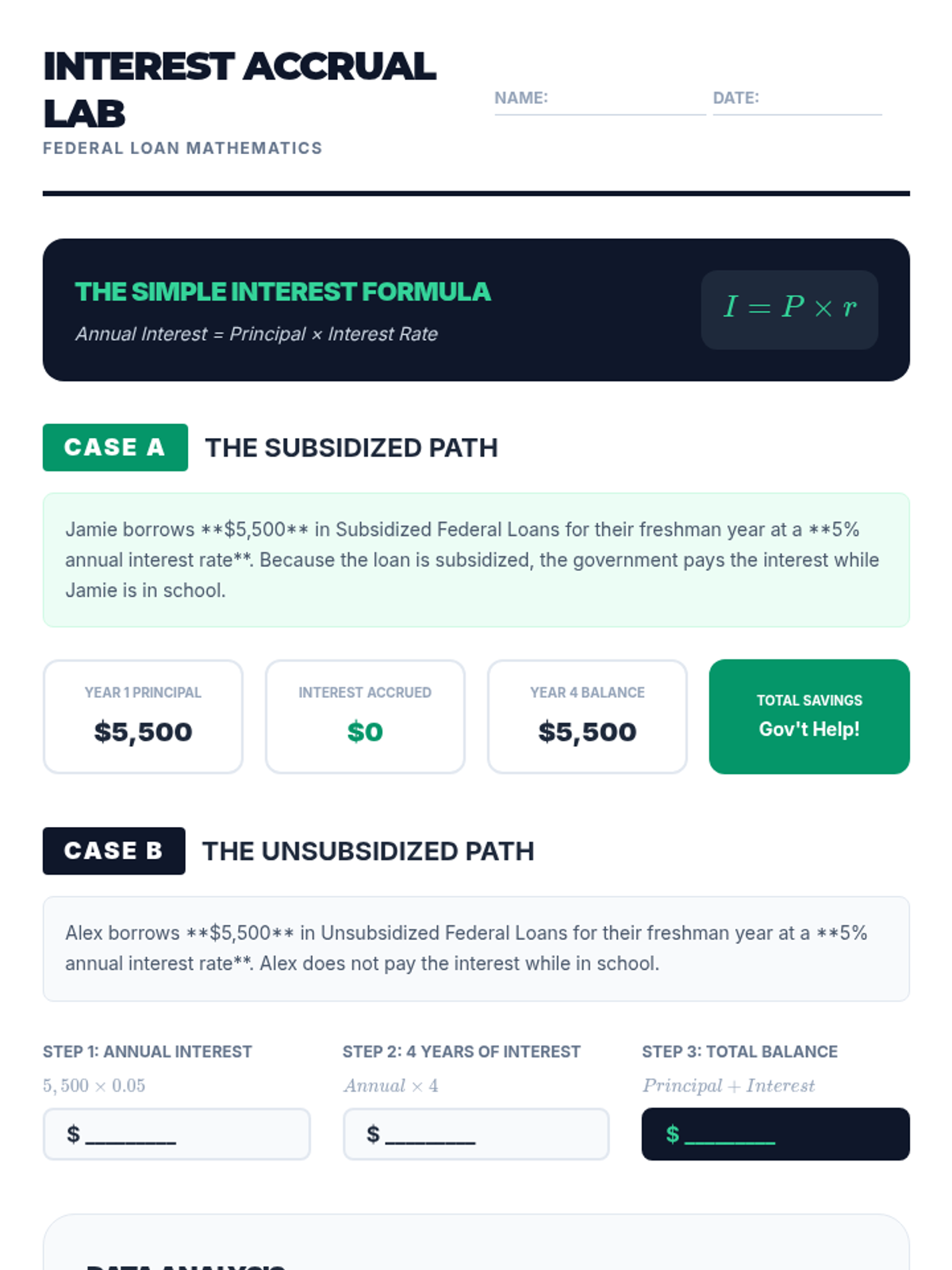
This lesson focuses on the Federal Direct Loan program, clarifying the difference between Subsidized and Unsubsidized loans and calculating interest accrual.
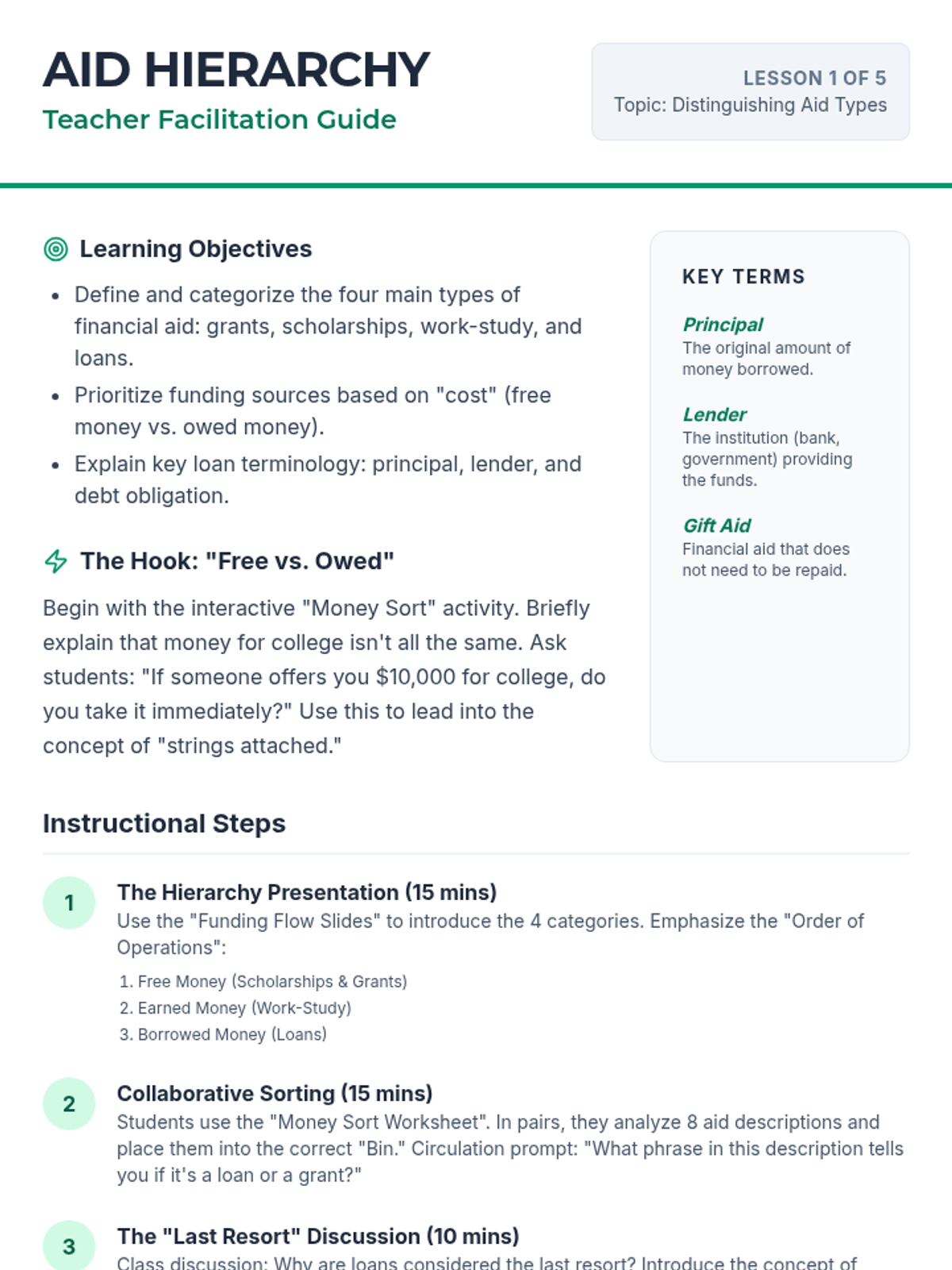
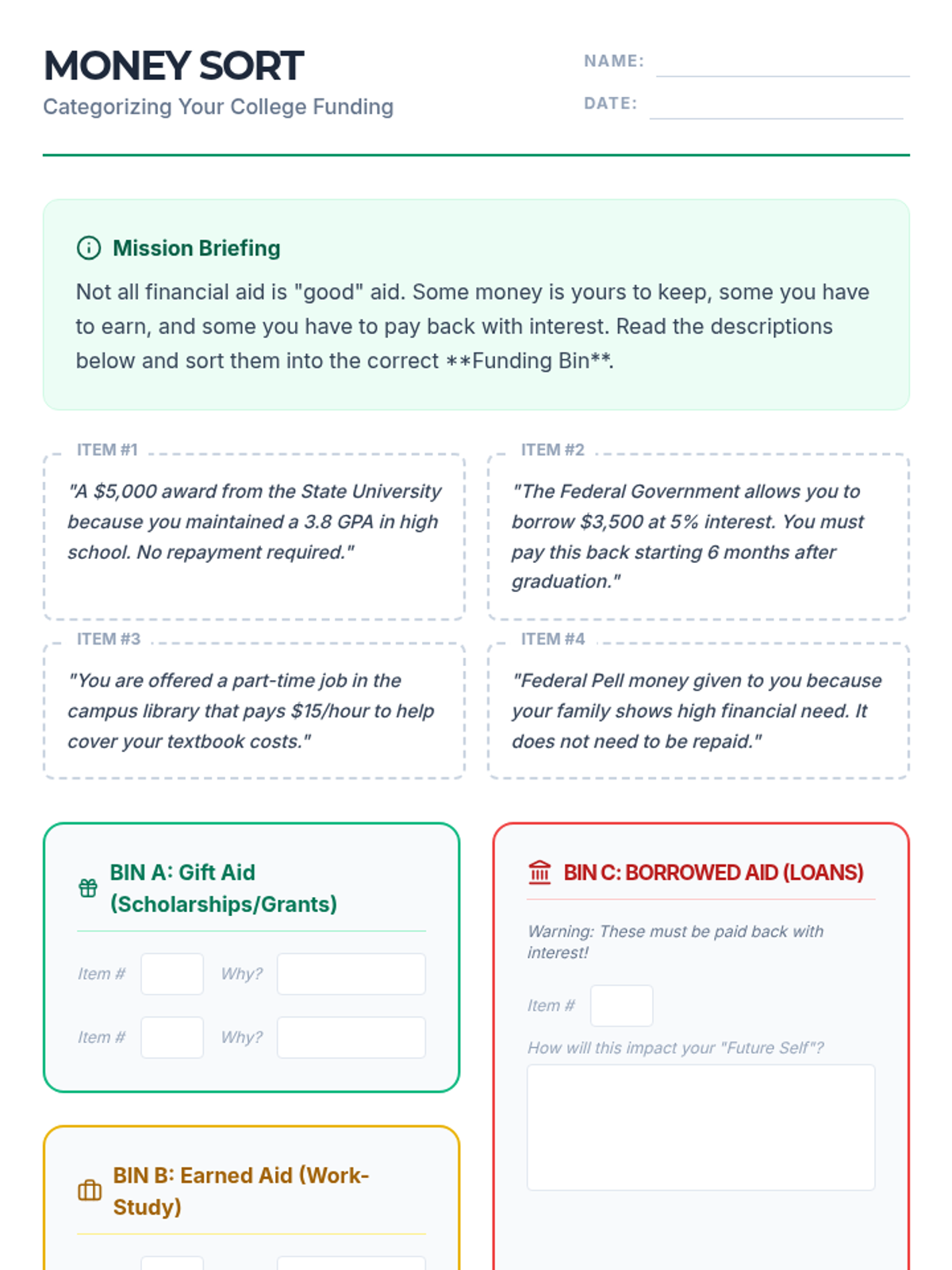
Students explore the hierarchy of funding higher education, categorizing grants, scholarships, work-study, and loans. They analyze why loans should be the last resort and define key terminology.
Students synthesize their knowledge in a complex simulation, managing loan strategies through life events and crisis scenarios.
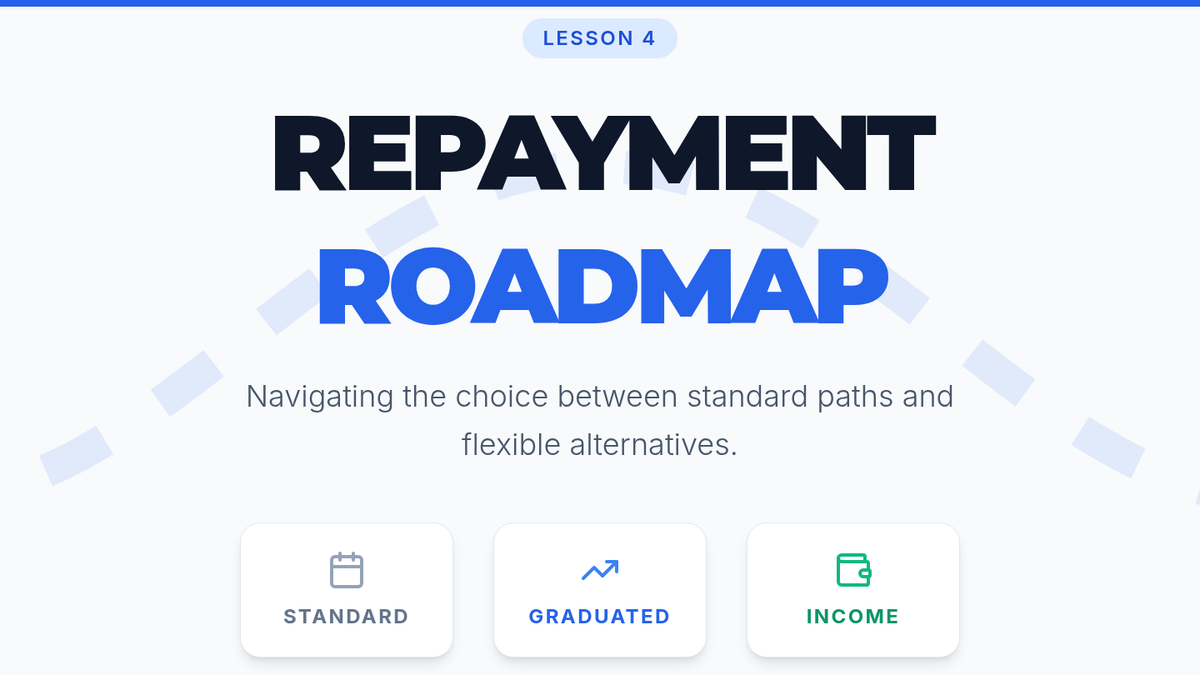
Students analyze various federal repayment plans and amortization schedules to understand how different choices affect monthly payments and total interest.
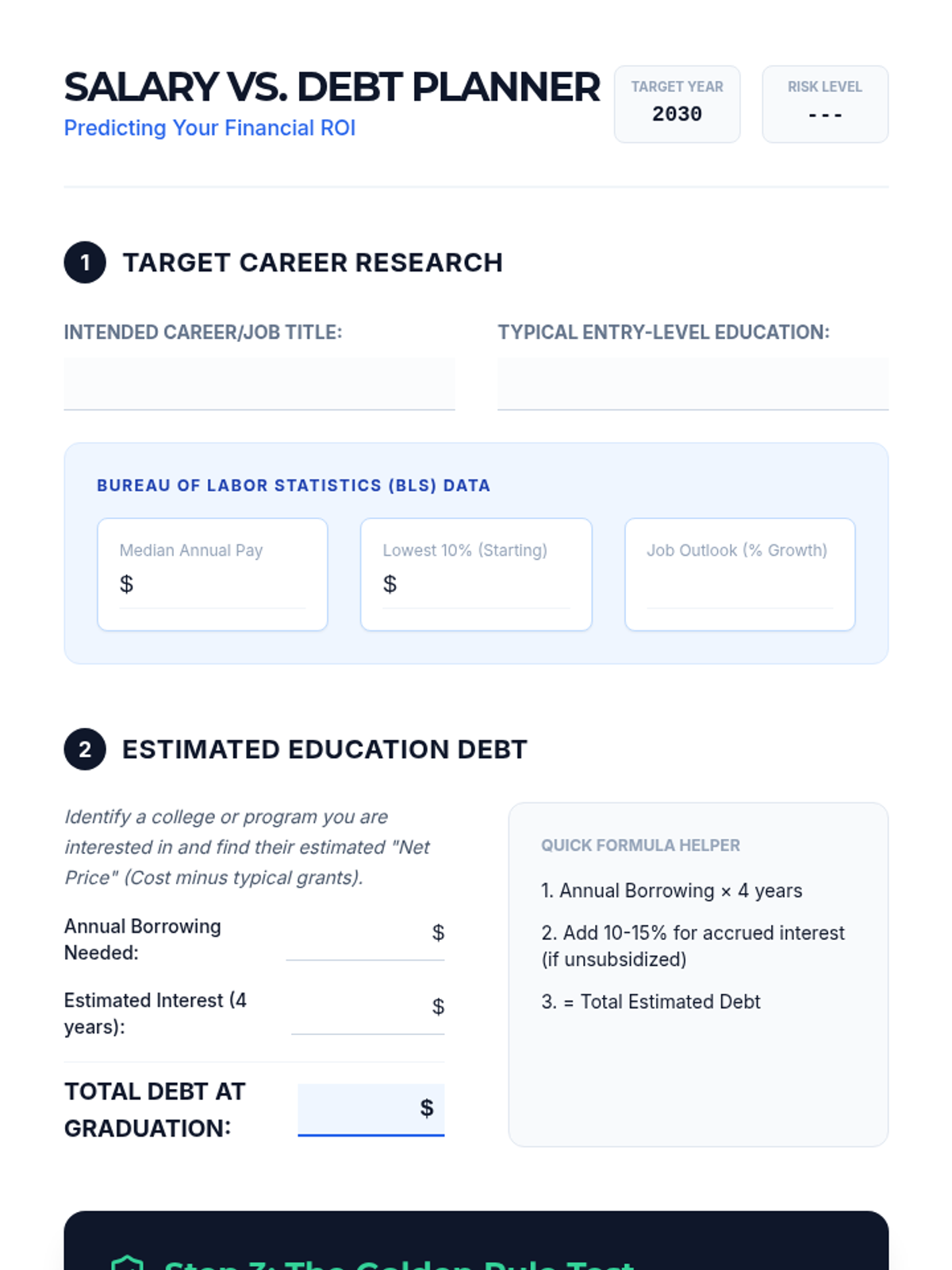
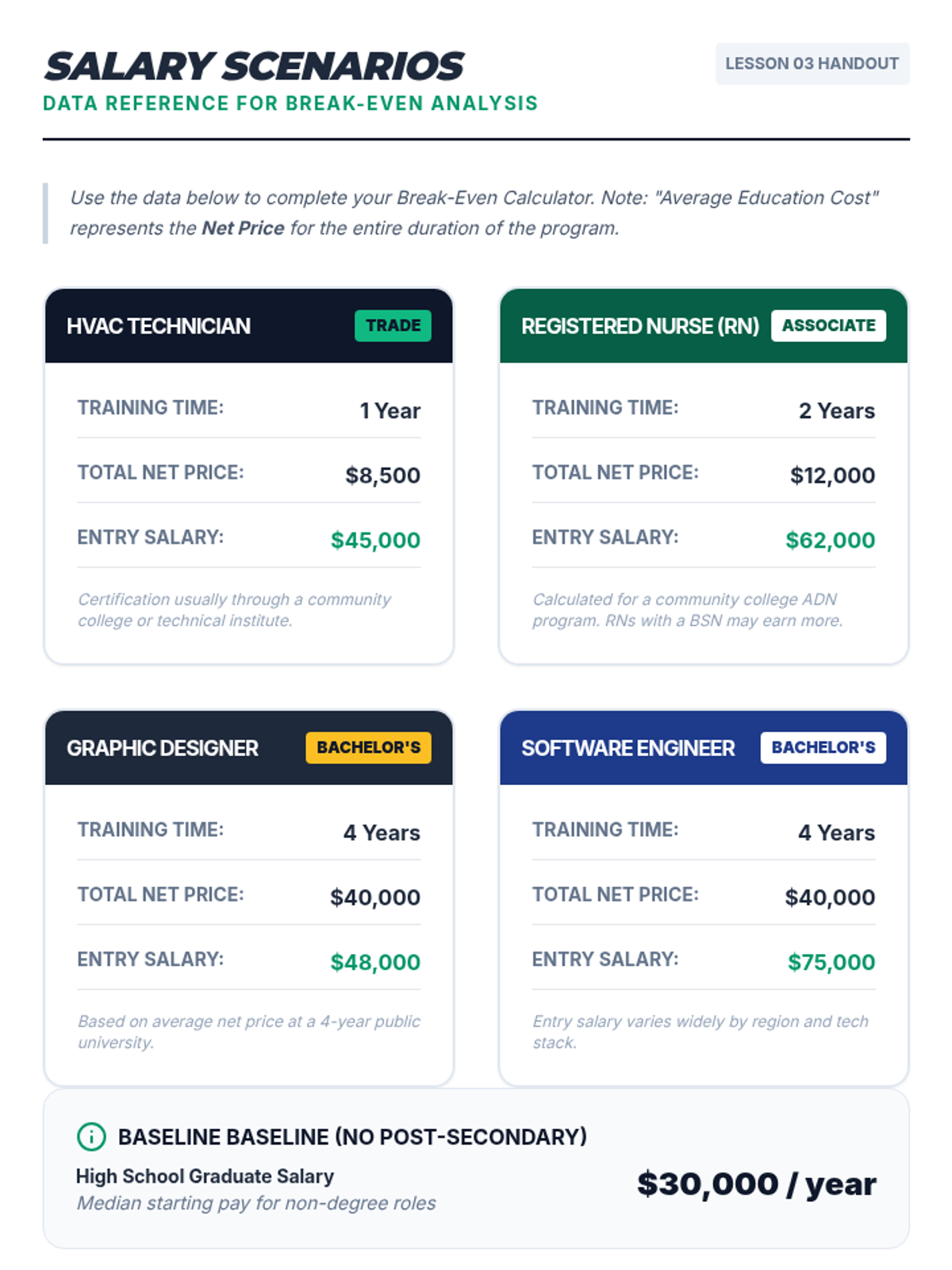
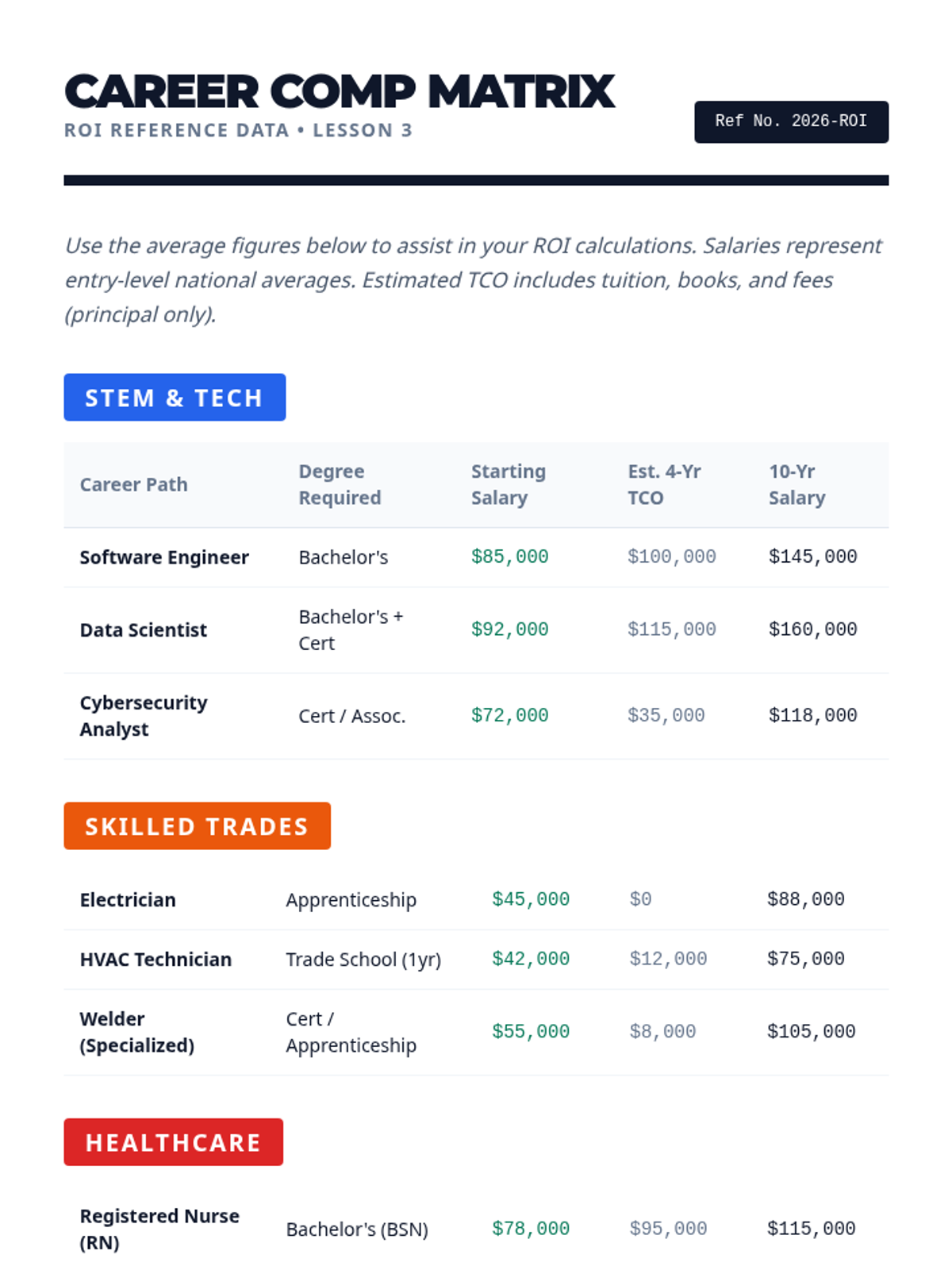
Students research career salaries and apply debt-to-income rules of thumb to evaluate the return on investment for their post-secondary choices.
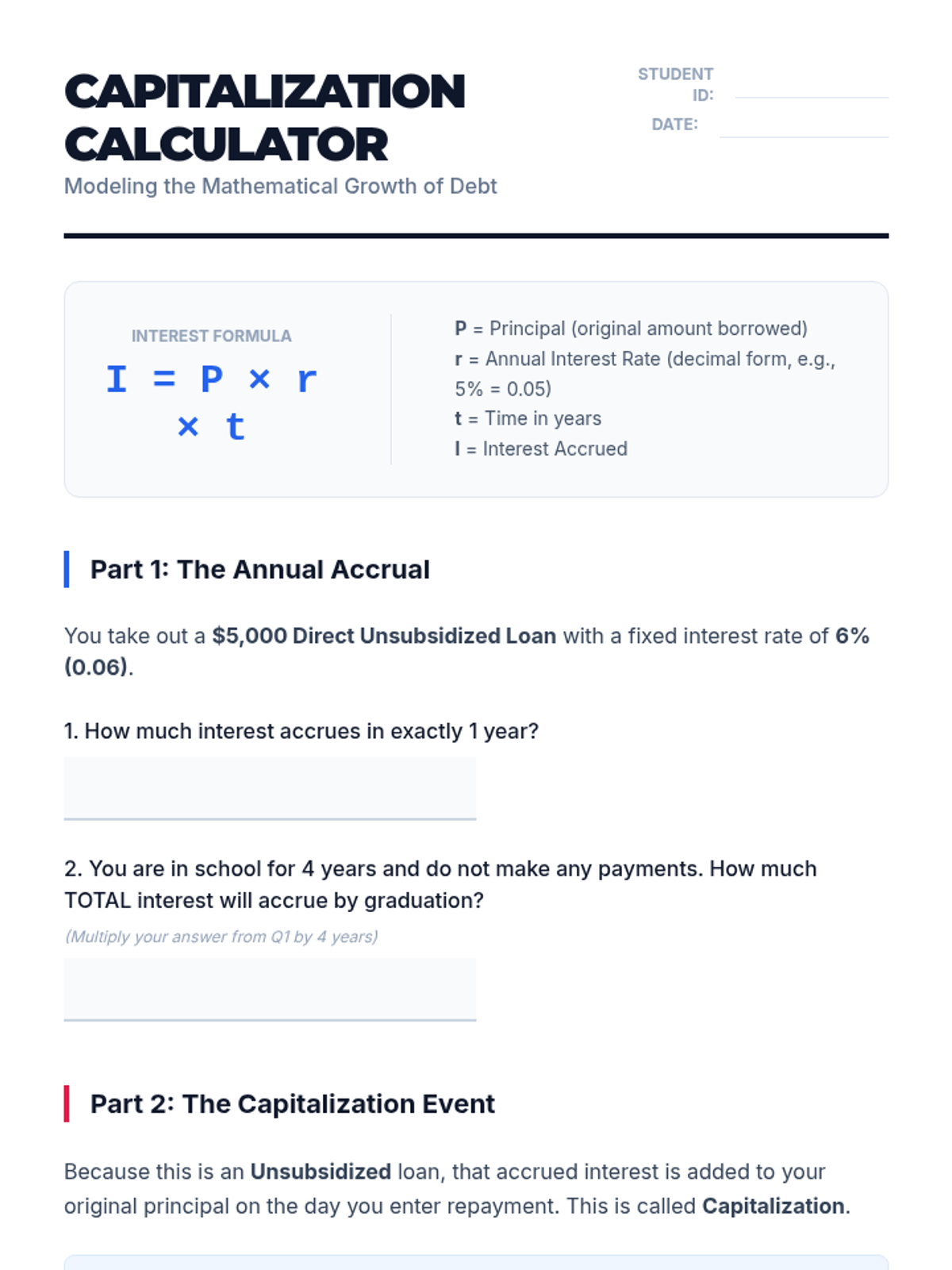
Students master the math behind interest rates, capitalization, and the total cost of borrowing, visualizing how deferment impacts their final balance.
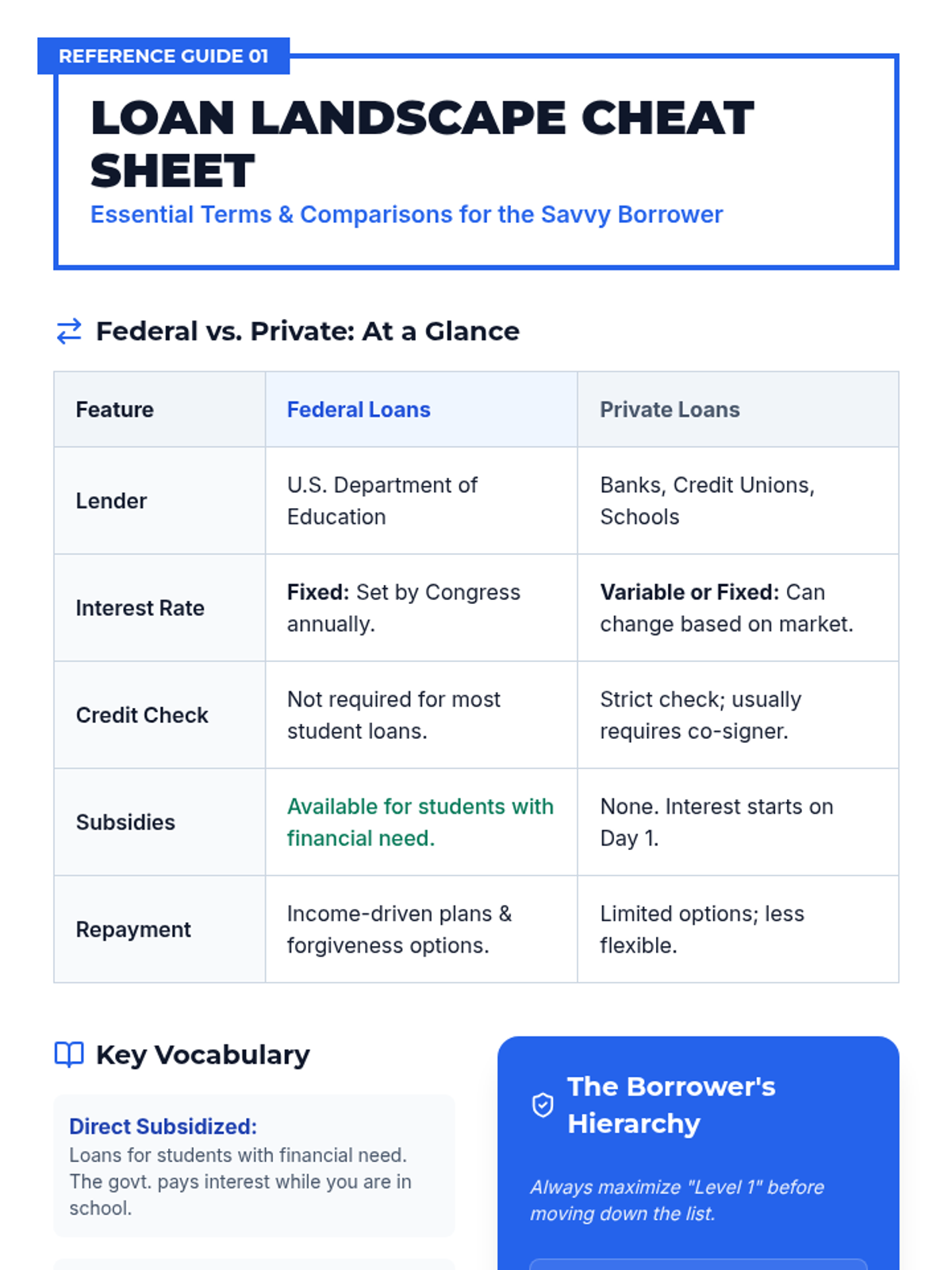
Students compare federal and private student loans, identify different loan types in financial aid award letters, and analyze the benefits and risks of various funding sources.
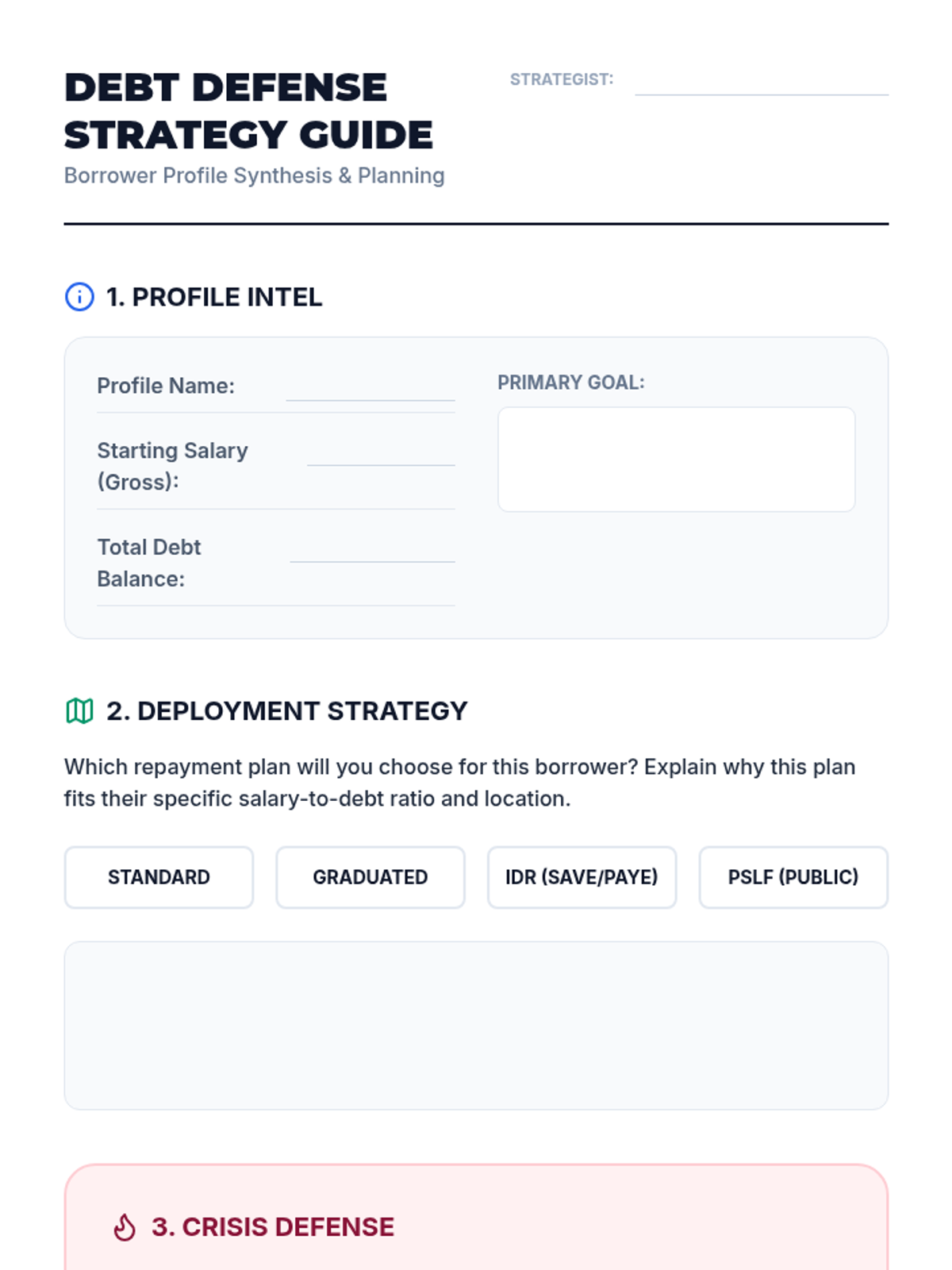
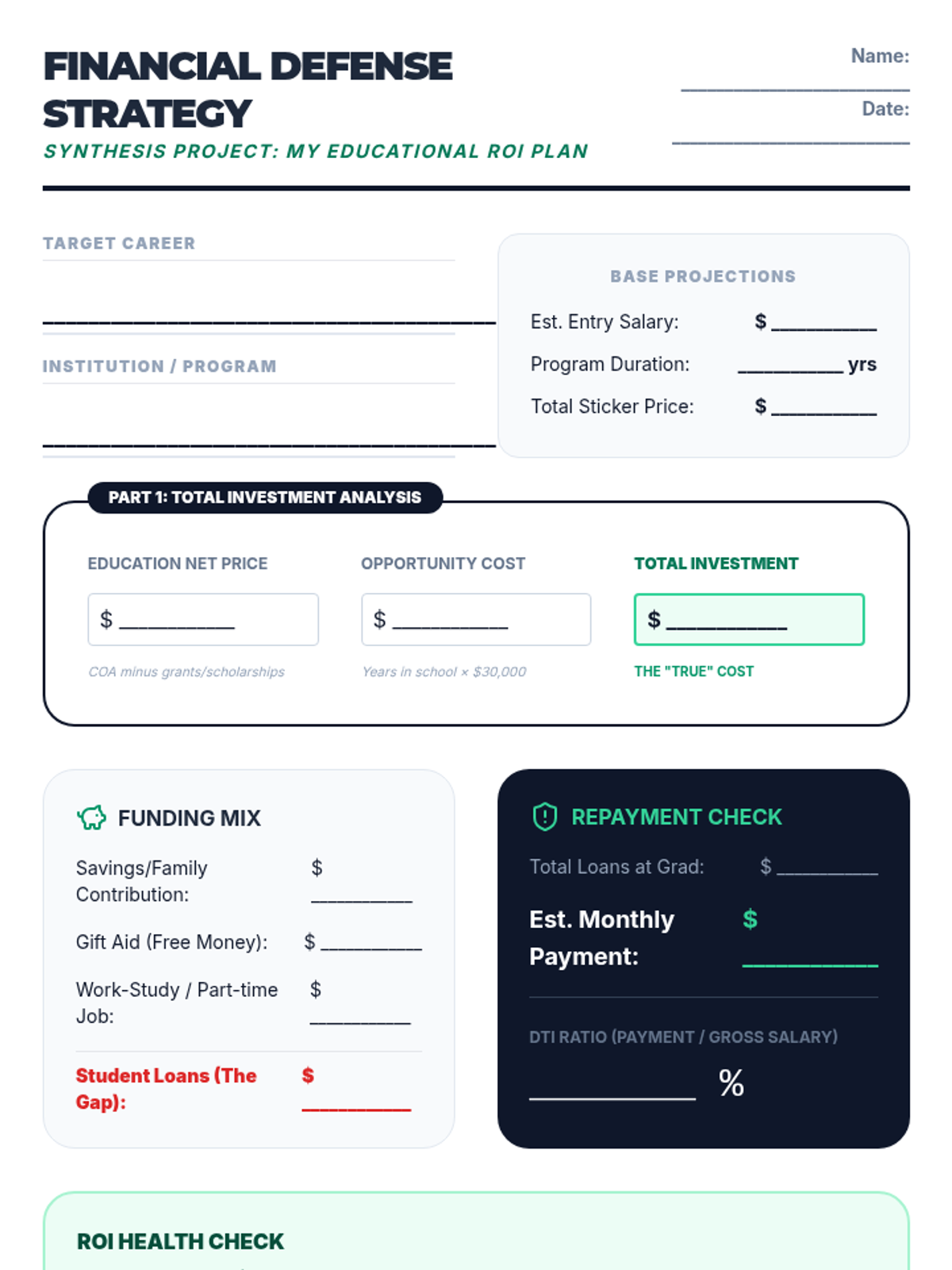
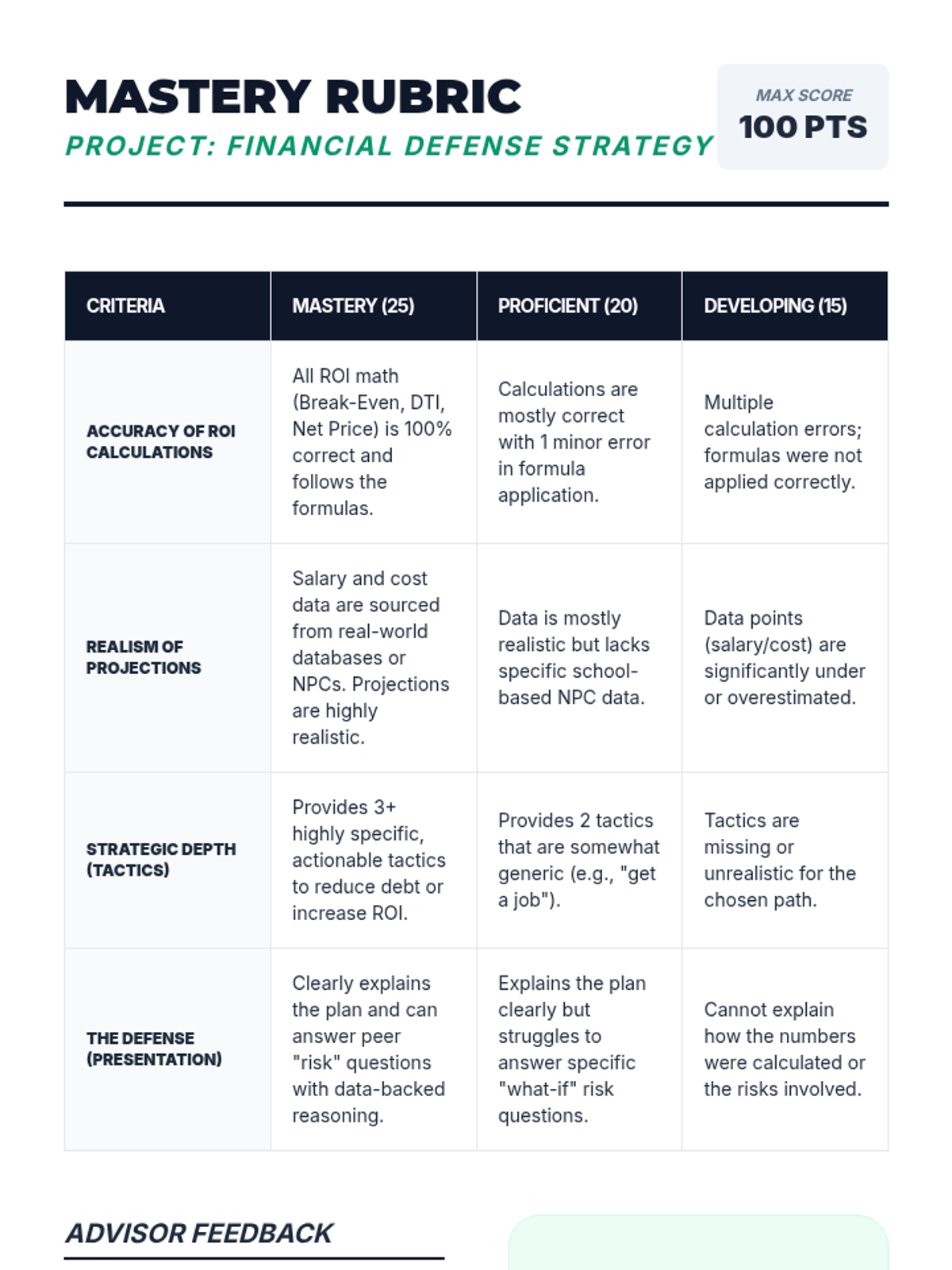
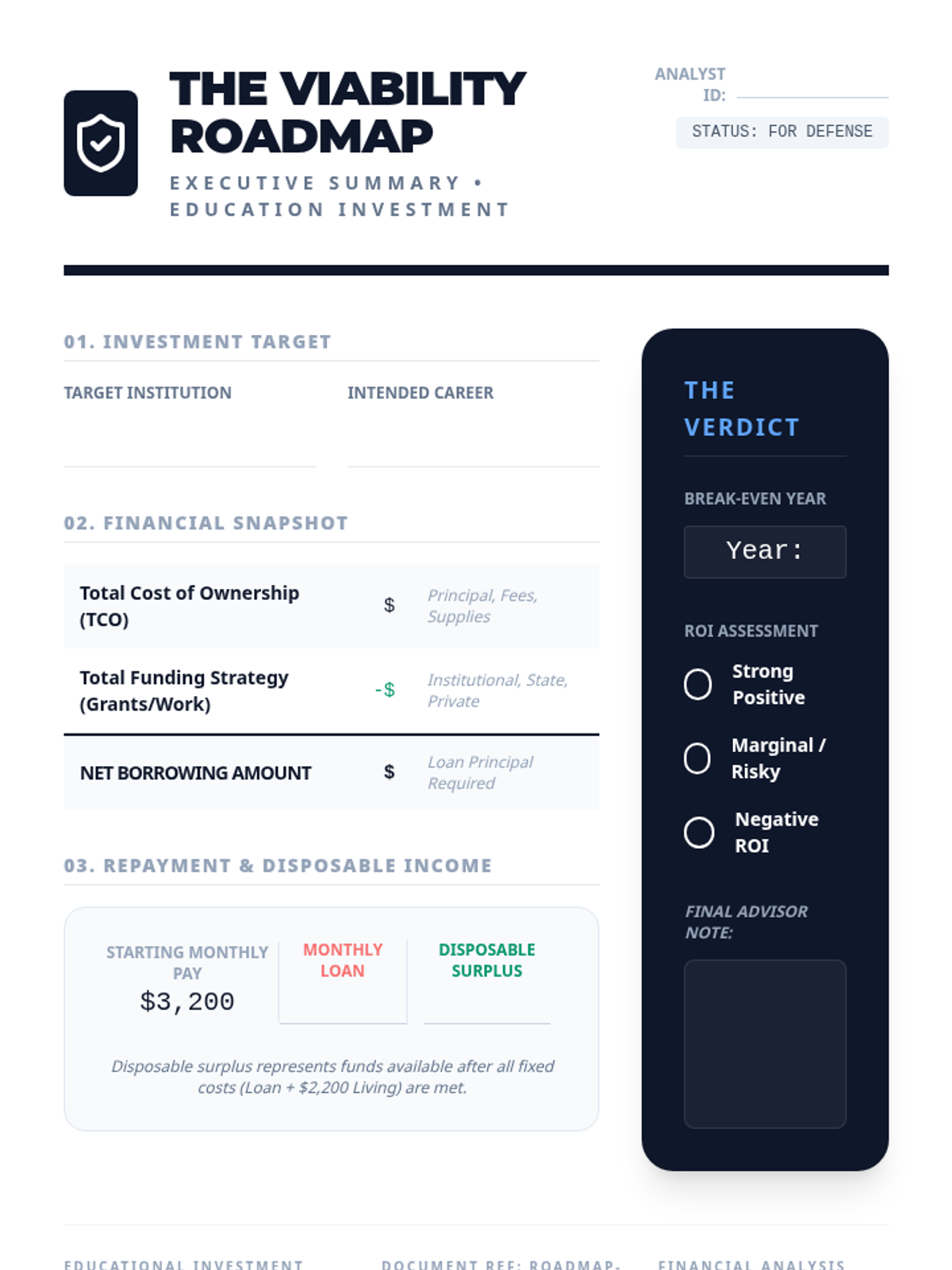
Students synthesize their learning into a final "Financial Defense" plan that outlines costs, aid, debt projections, and repayment strategies for a specific career path.
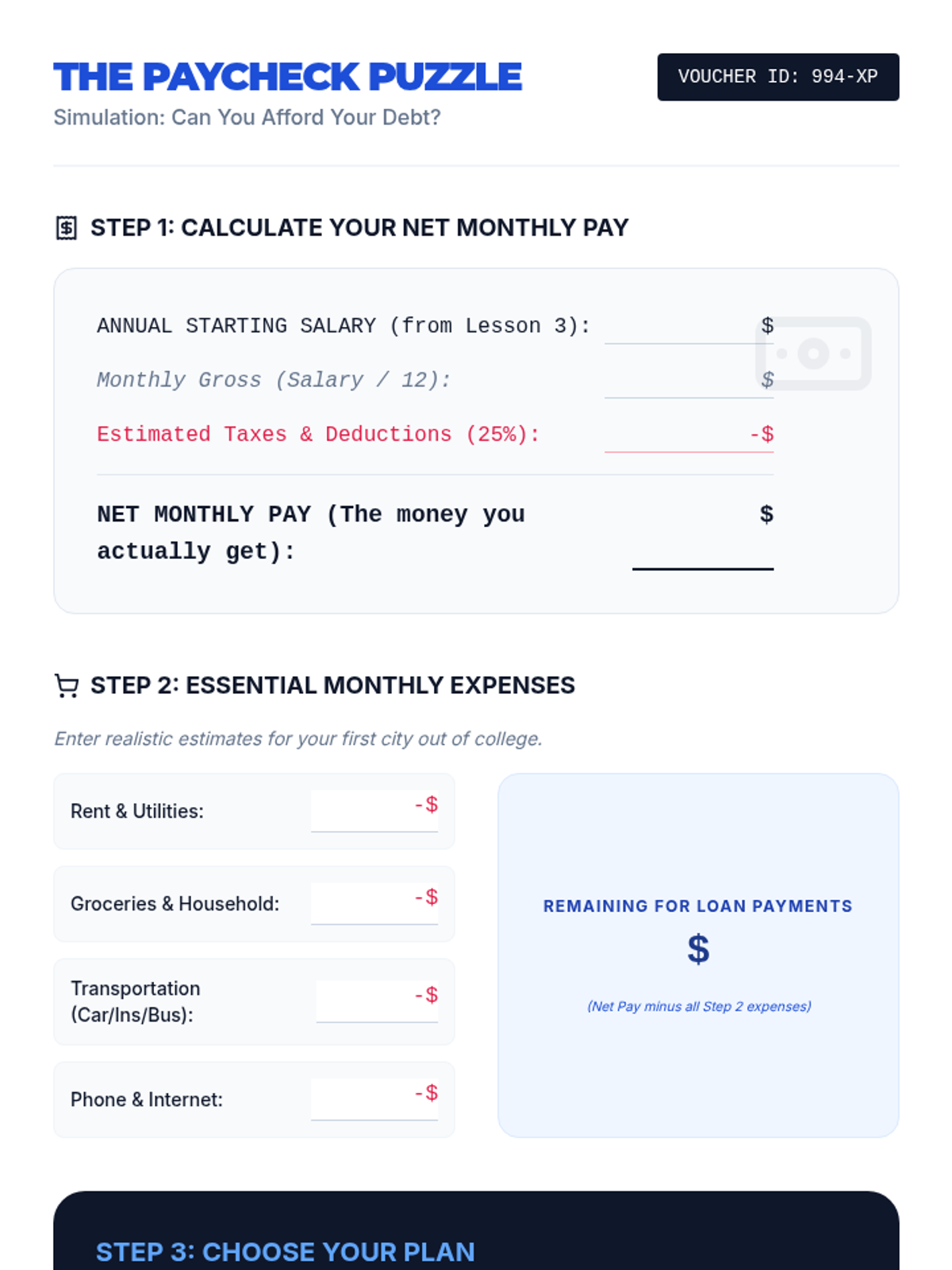
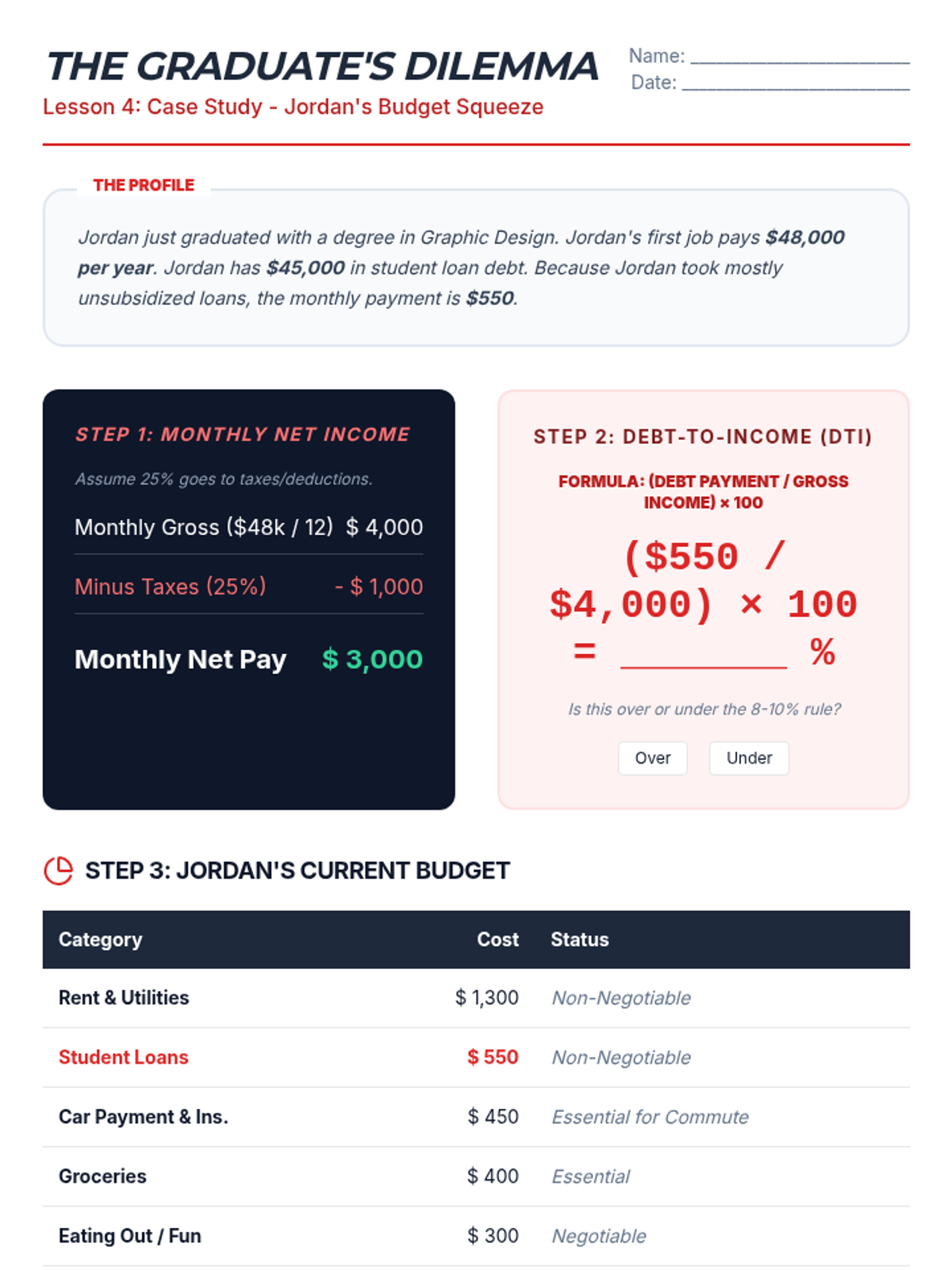
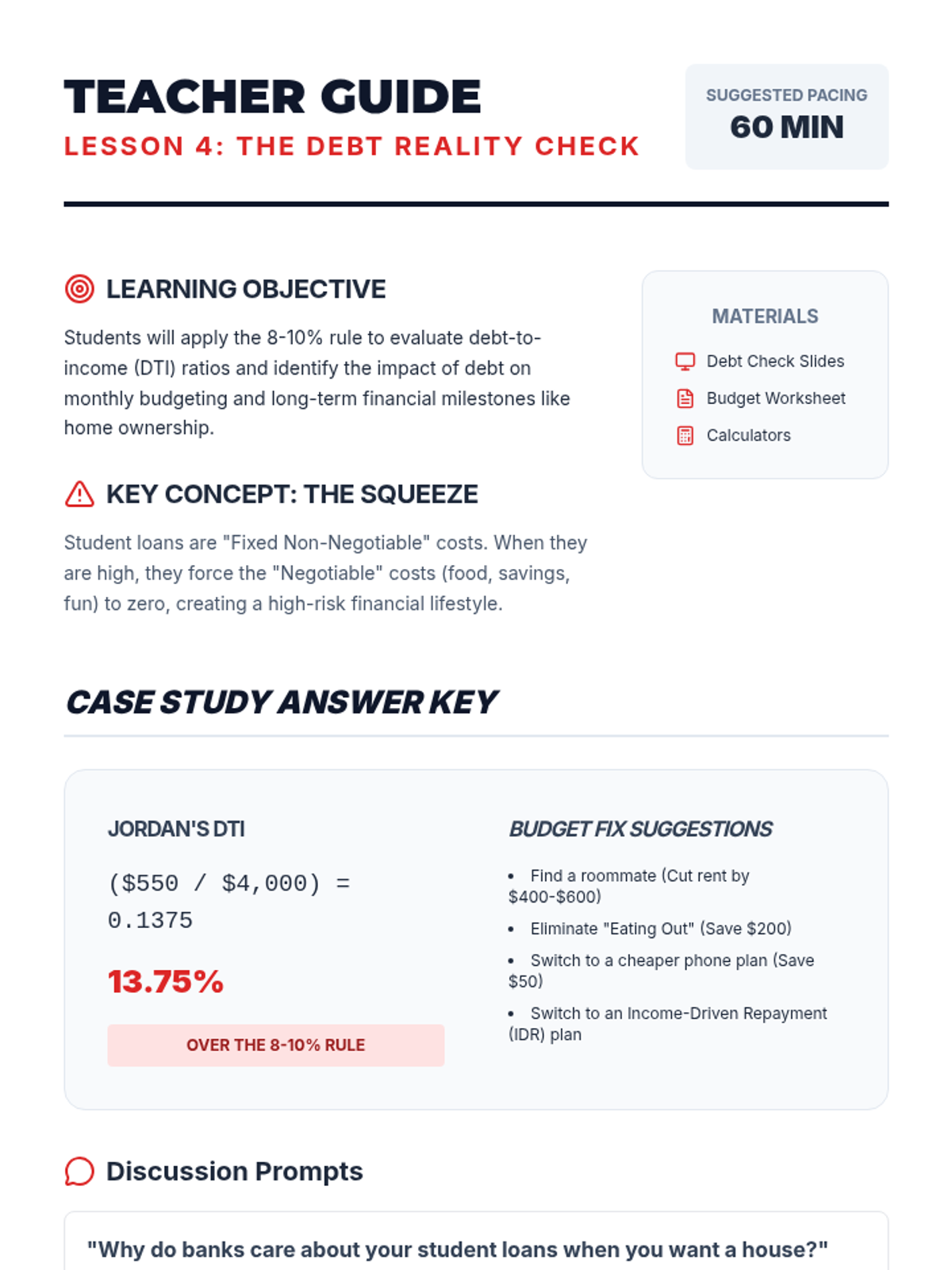
Students apply the 8-10% rule to analyze debt-to-income ratios and explore how student loan debt impacts future financial decisions like housing and lifestyle.
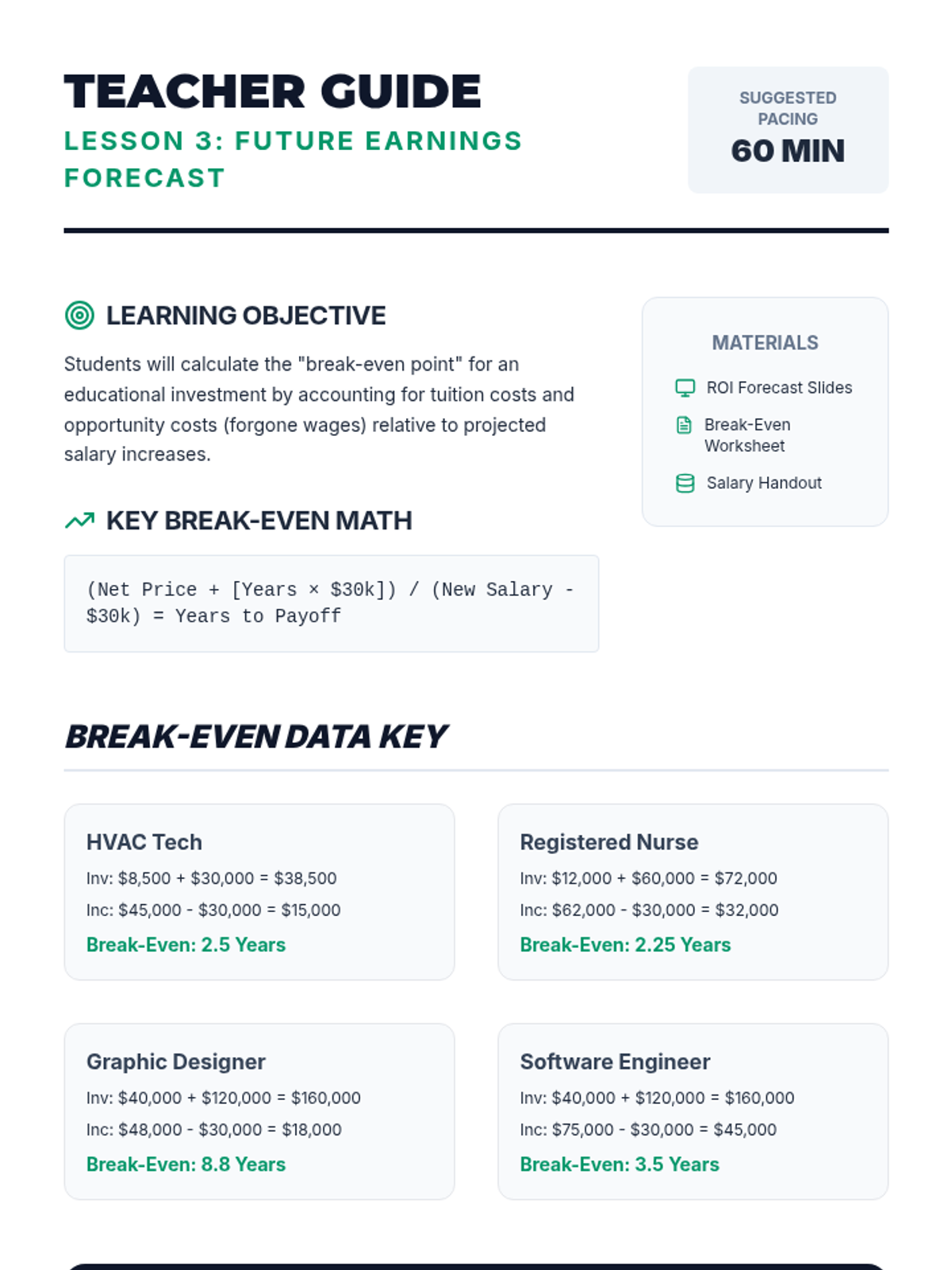
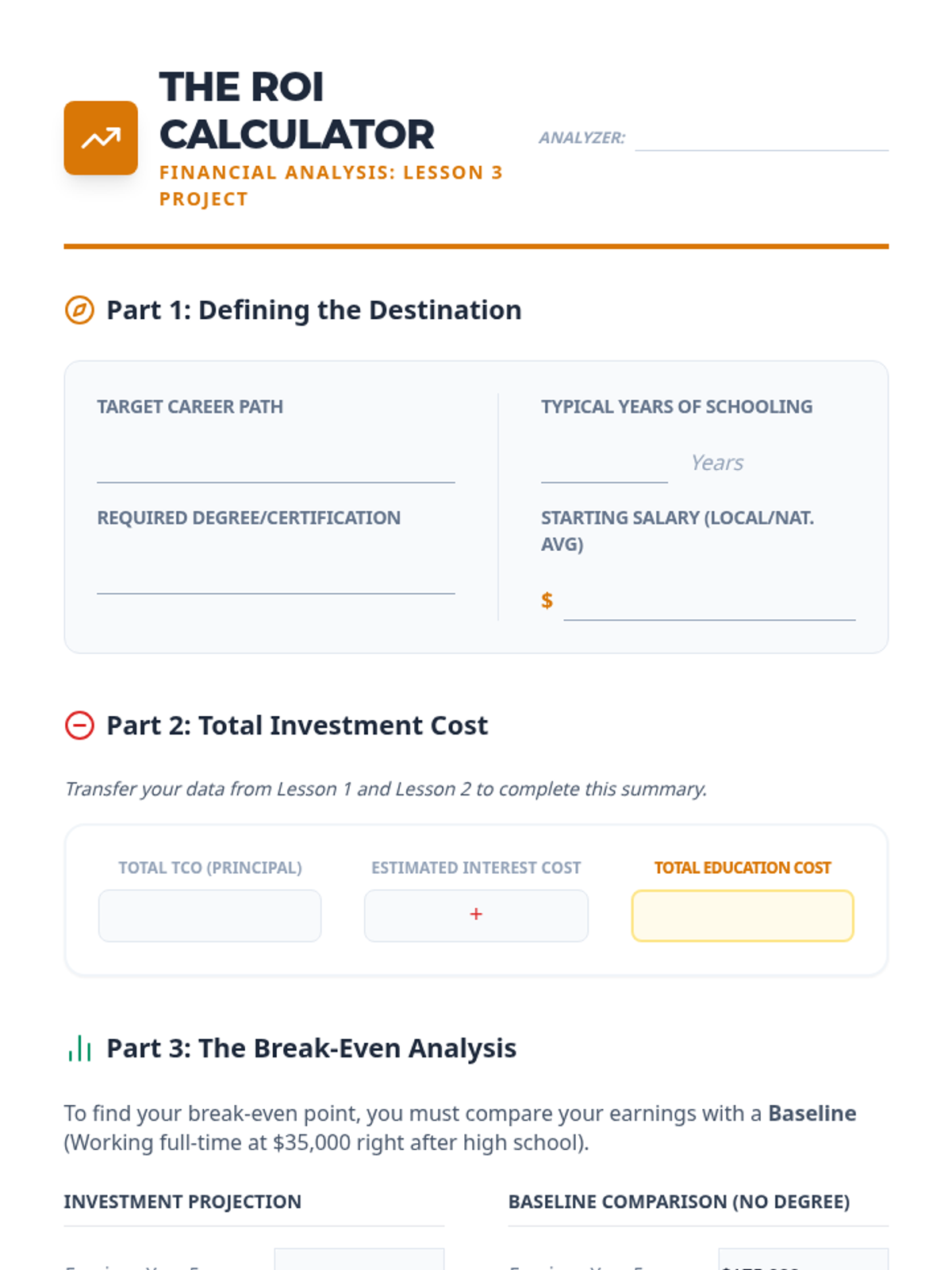
Learners research entry-level salaries and calculate opportunity costs to determine the break-even point for their educational investment.
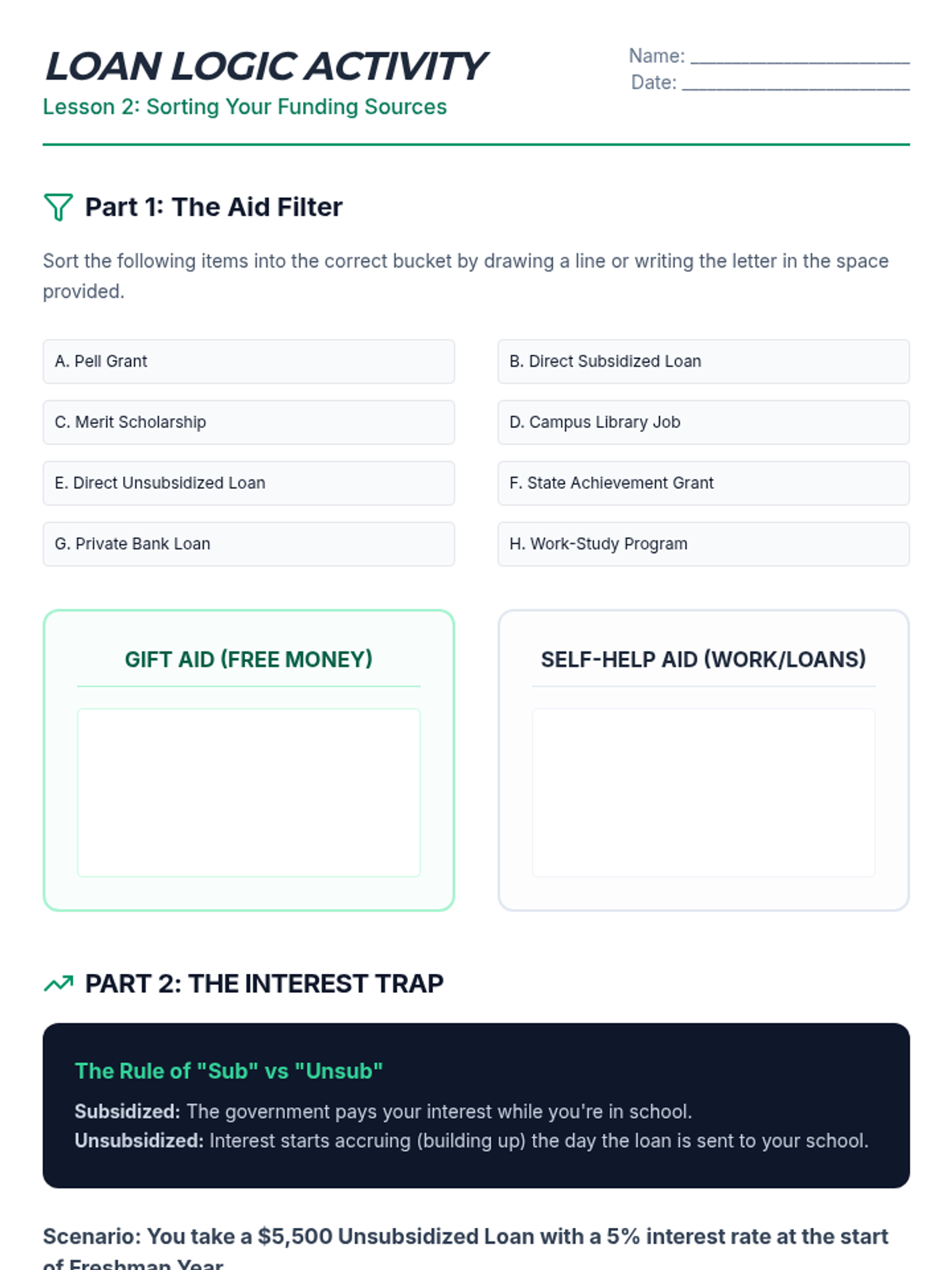
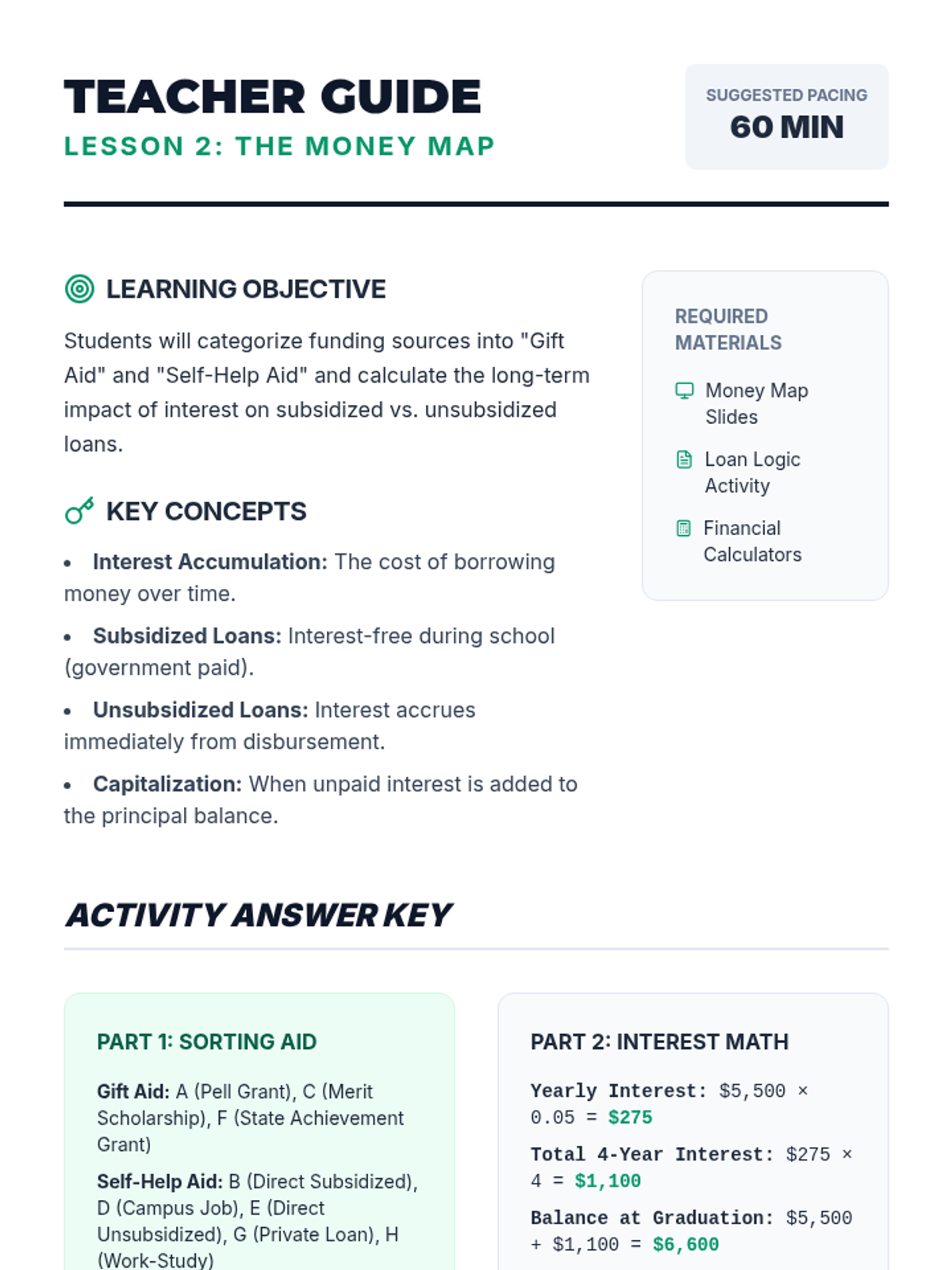
Students differentiate between various funding sources like grants, scholarships, and loans, while simulating financial aid applications and calculating interest accumulation.
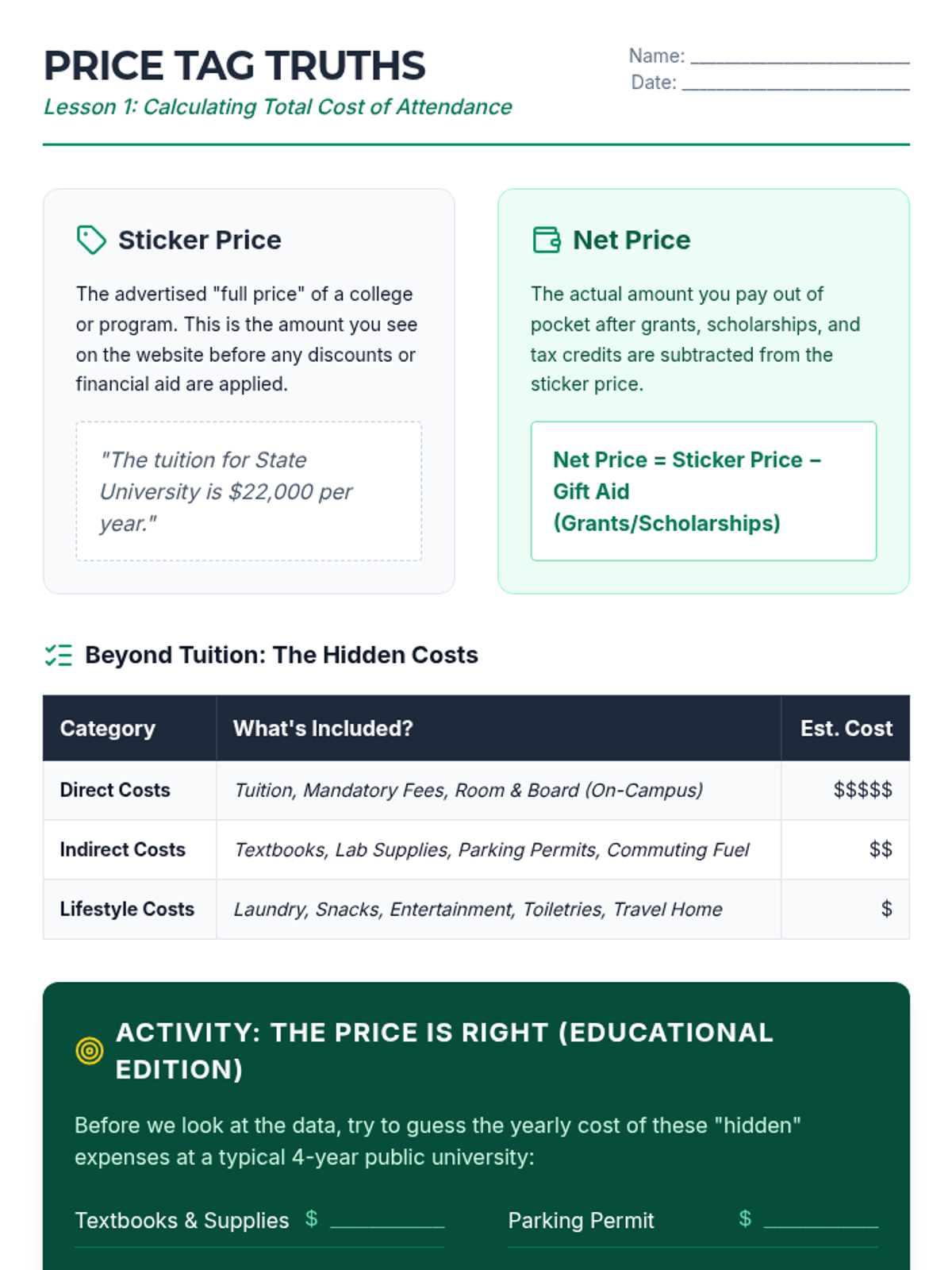
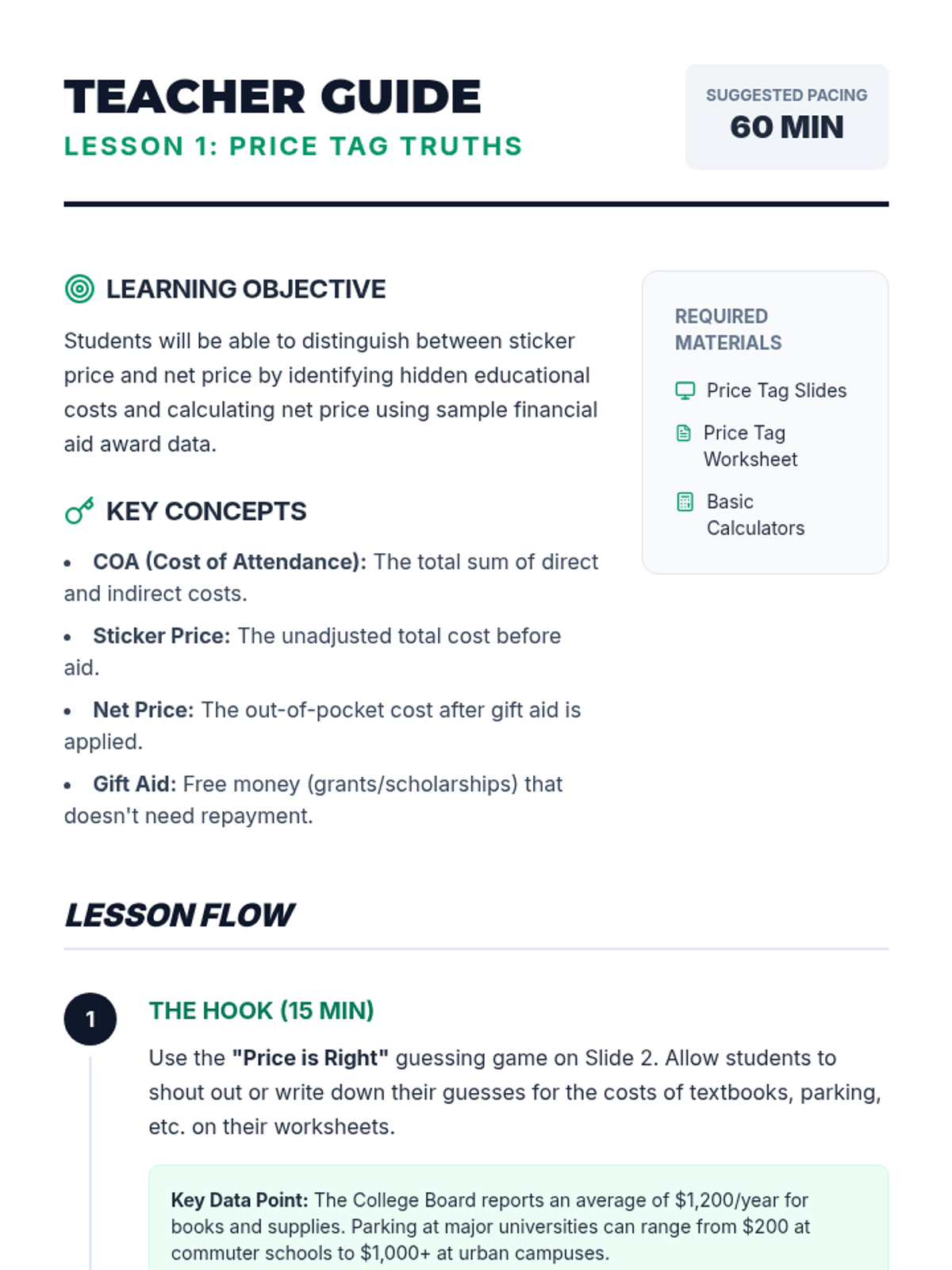
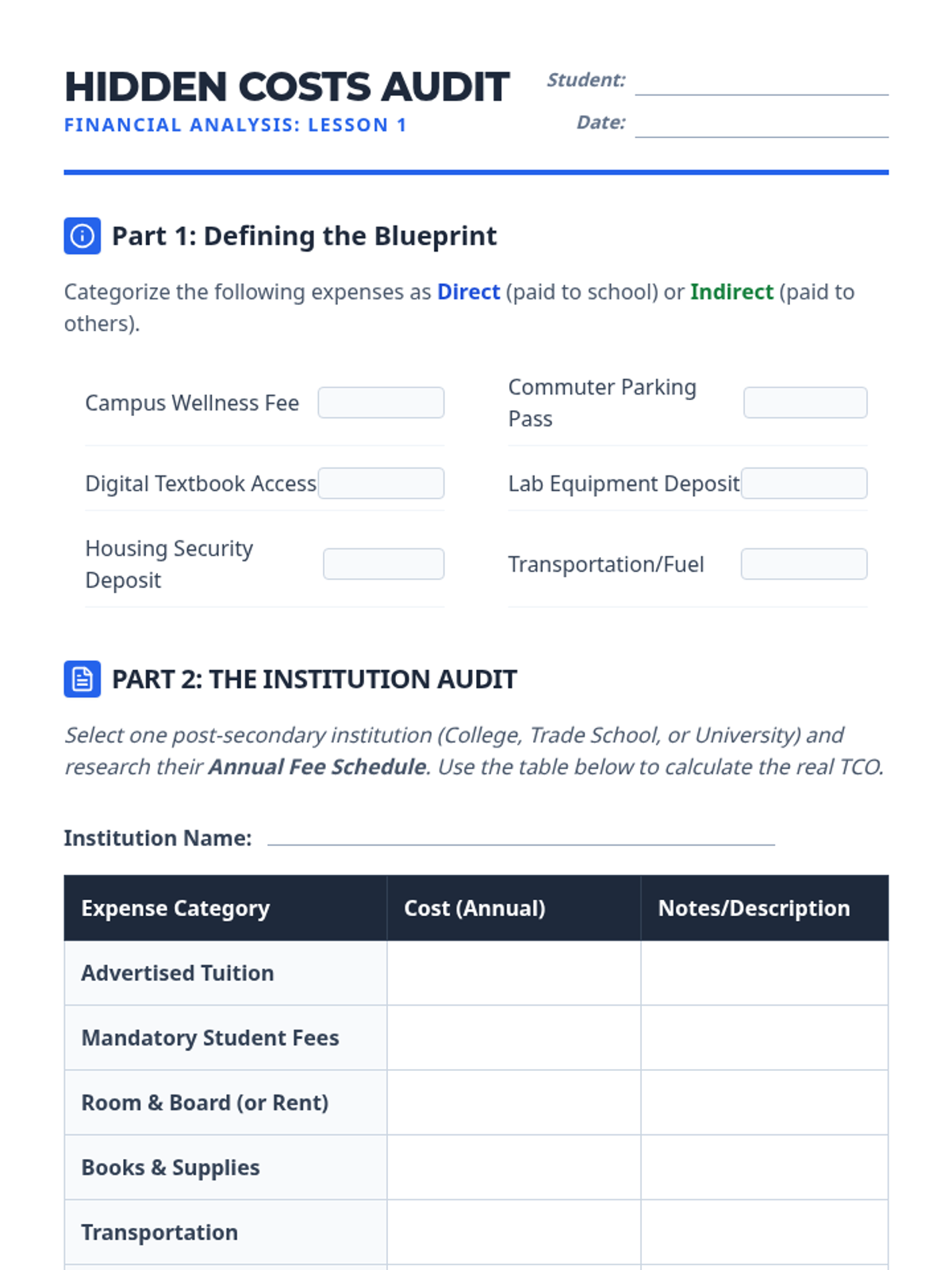
Students identify hidden costs of education beyond tuition to understand the difference between sticker price and net price. they use sample award letters and fee schedules to construct a realistic total cost of attendance.
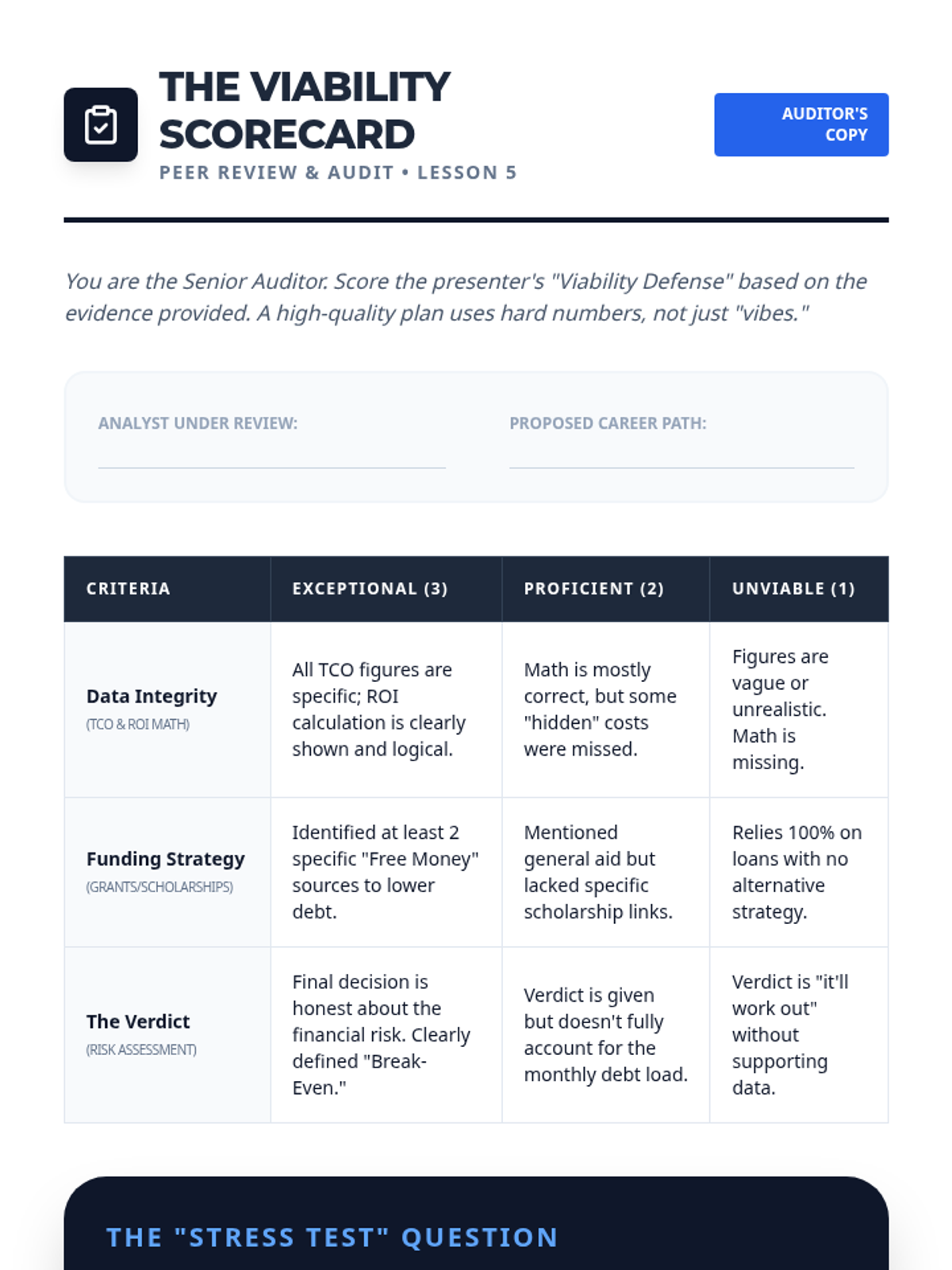
As a culminating activity, students synthesize their research to build and defend a personalized financial roadmap. They present their plan's viability to peers acting as financial advisors.
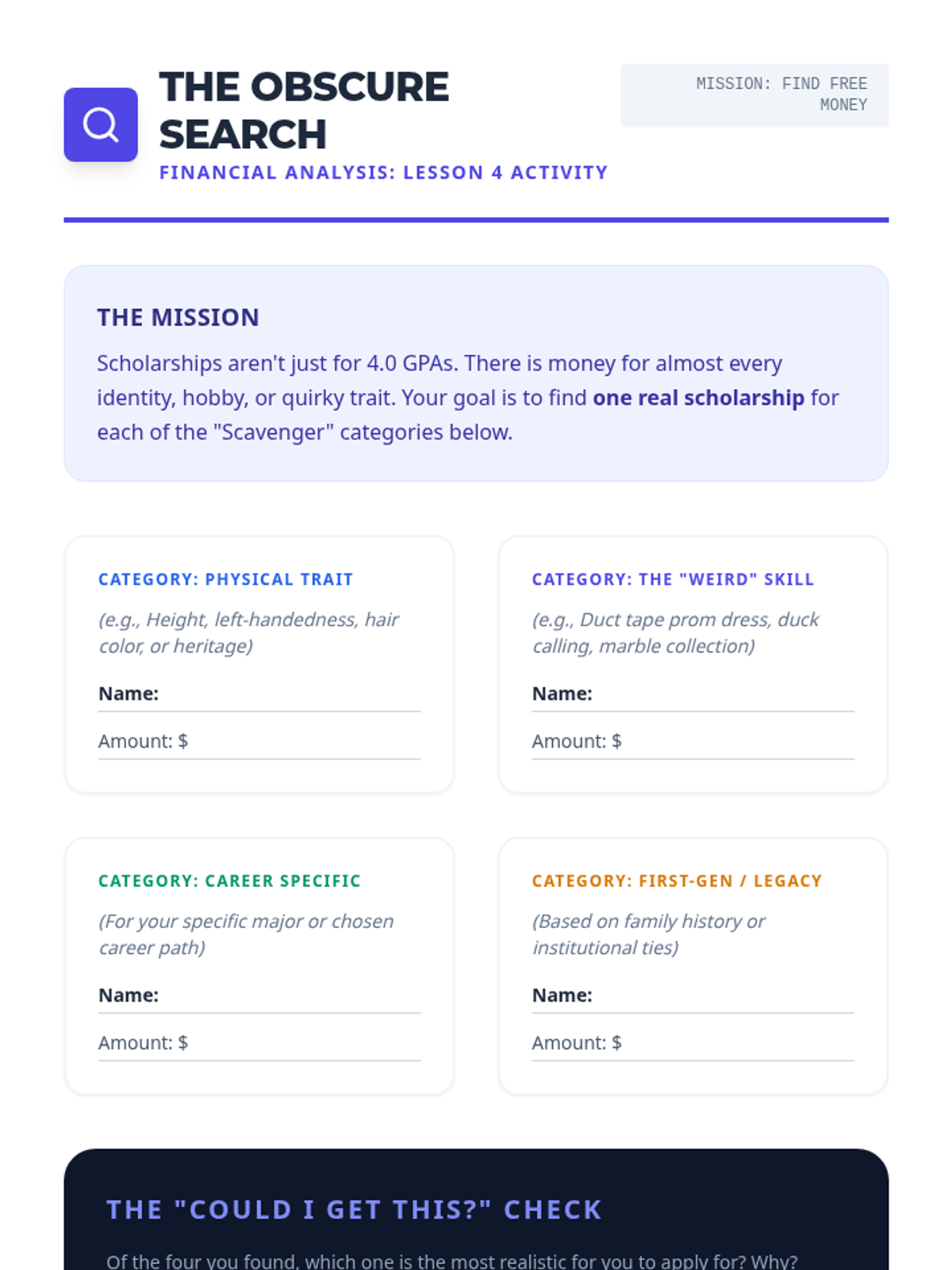
This lesson focuses on maximizing non-loan funding such as grants, scholarships, and employer assistance. Students search for specific opportunities and draft a strategy for 'free money' resources.
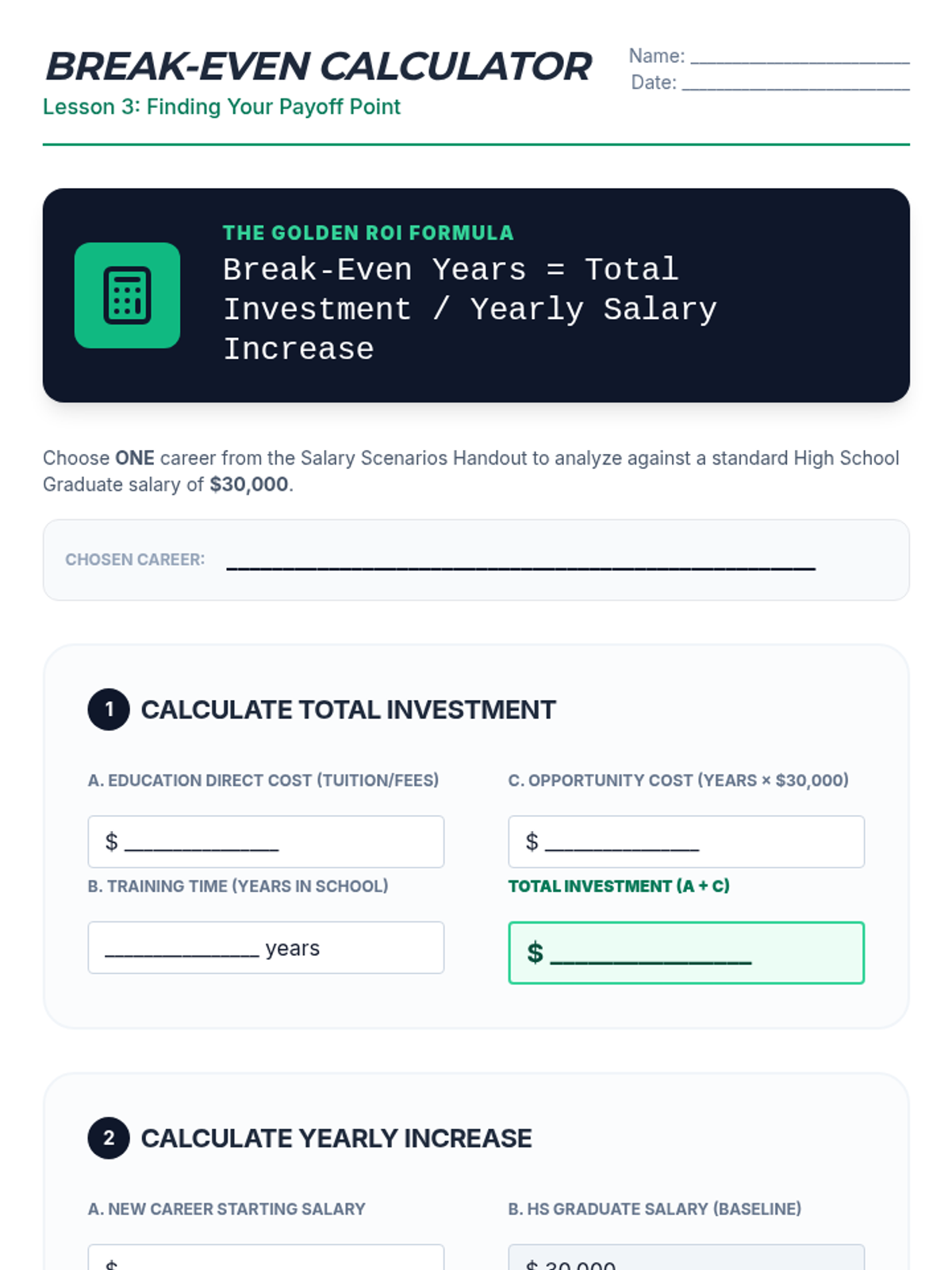
Students calculate the 'break-even' point for various career paths by comparing entry-level salaries with education costs. This project-based lesson helps students evaluate the long-term financial payoff of different degrees.
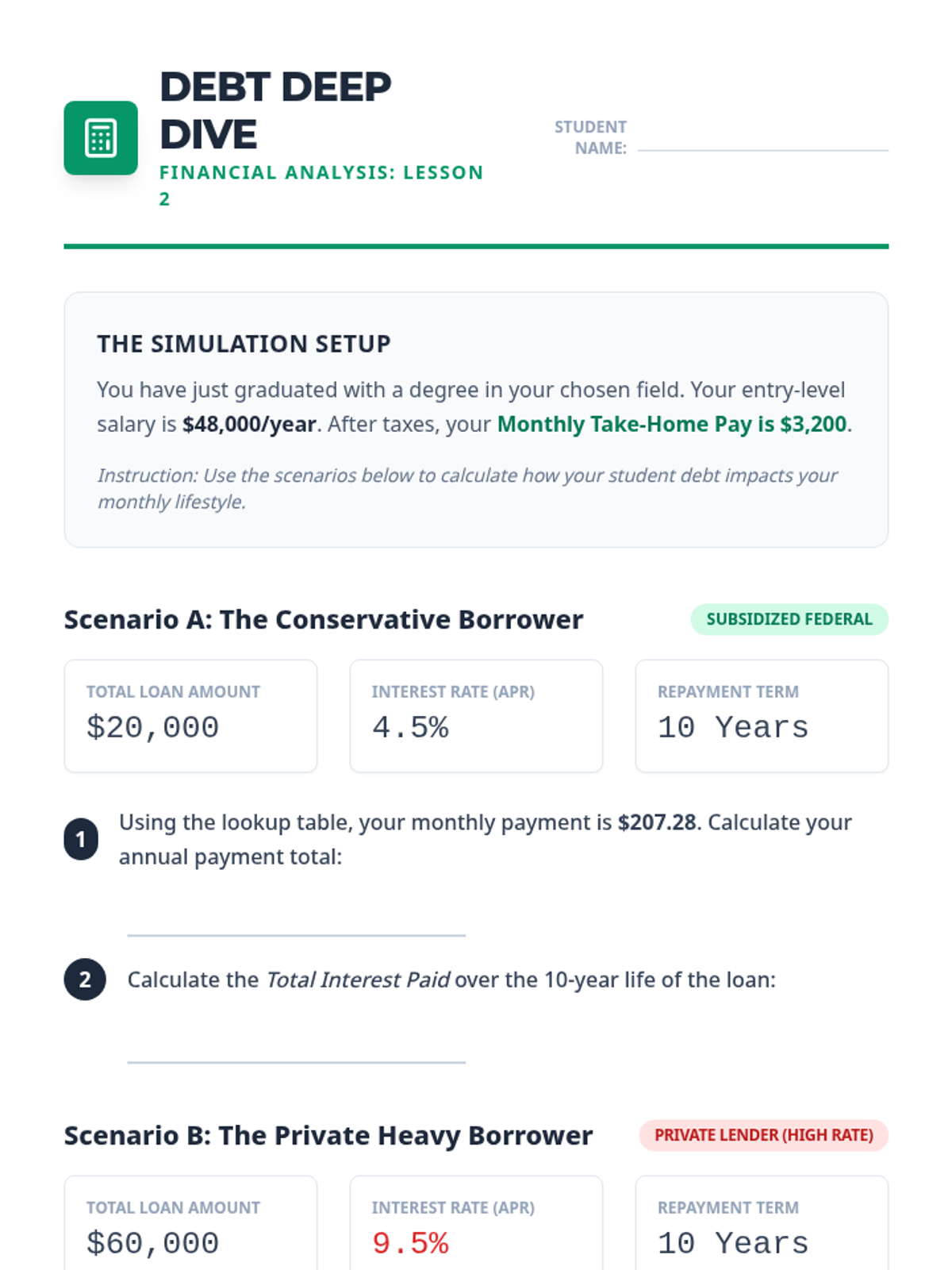
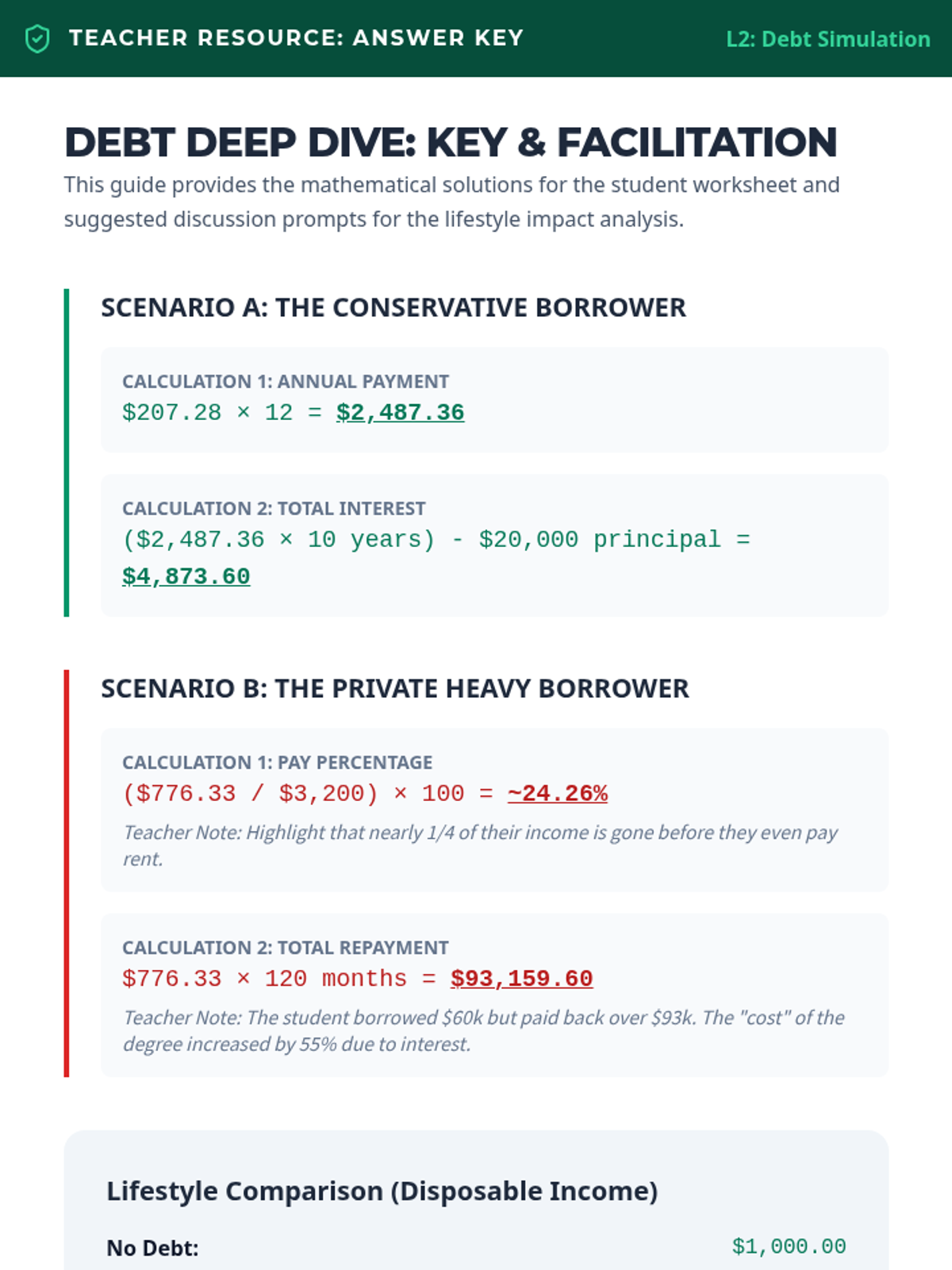
Participants simulate borrowing scenarios to visualize the long-term impact of student loans. This lesson covers the mechanics of interest, repayment structures, and the differences between federal and private lending.
Students identify hidden costs in education, distinguishing between tuition and the true total cost of ownership (TCO). They analyze real-world tuition schedules to create accurate budget projections for their chosen institutions.
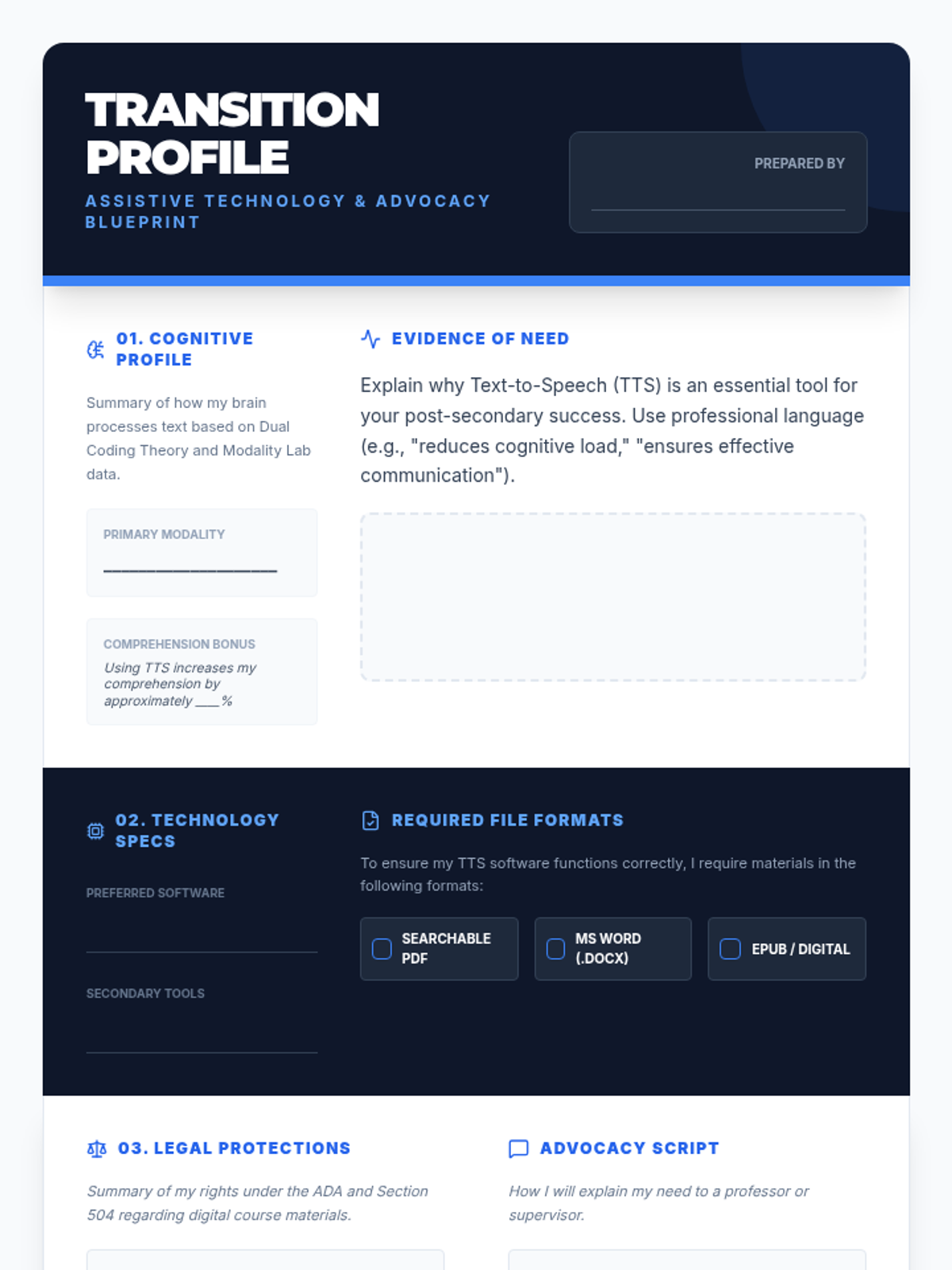
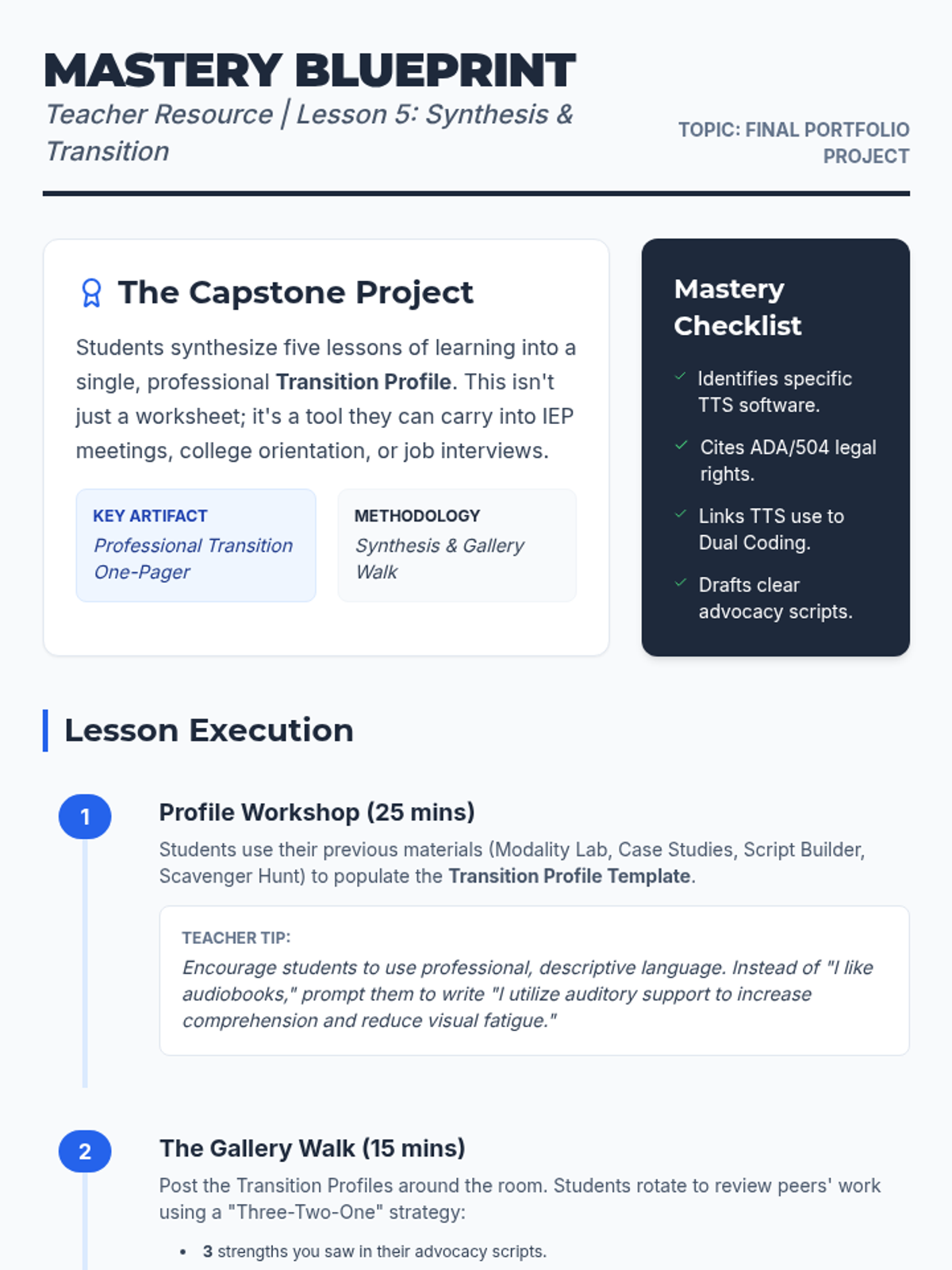
Students synthesize their learning into a professional transition one-pager that summarizes their specific assistive technology needs and legal rights.
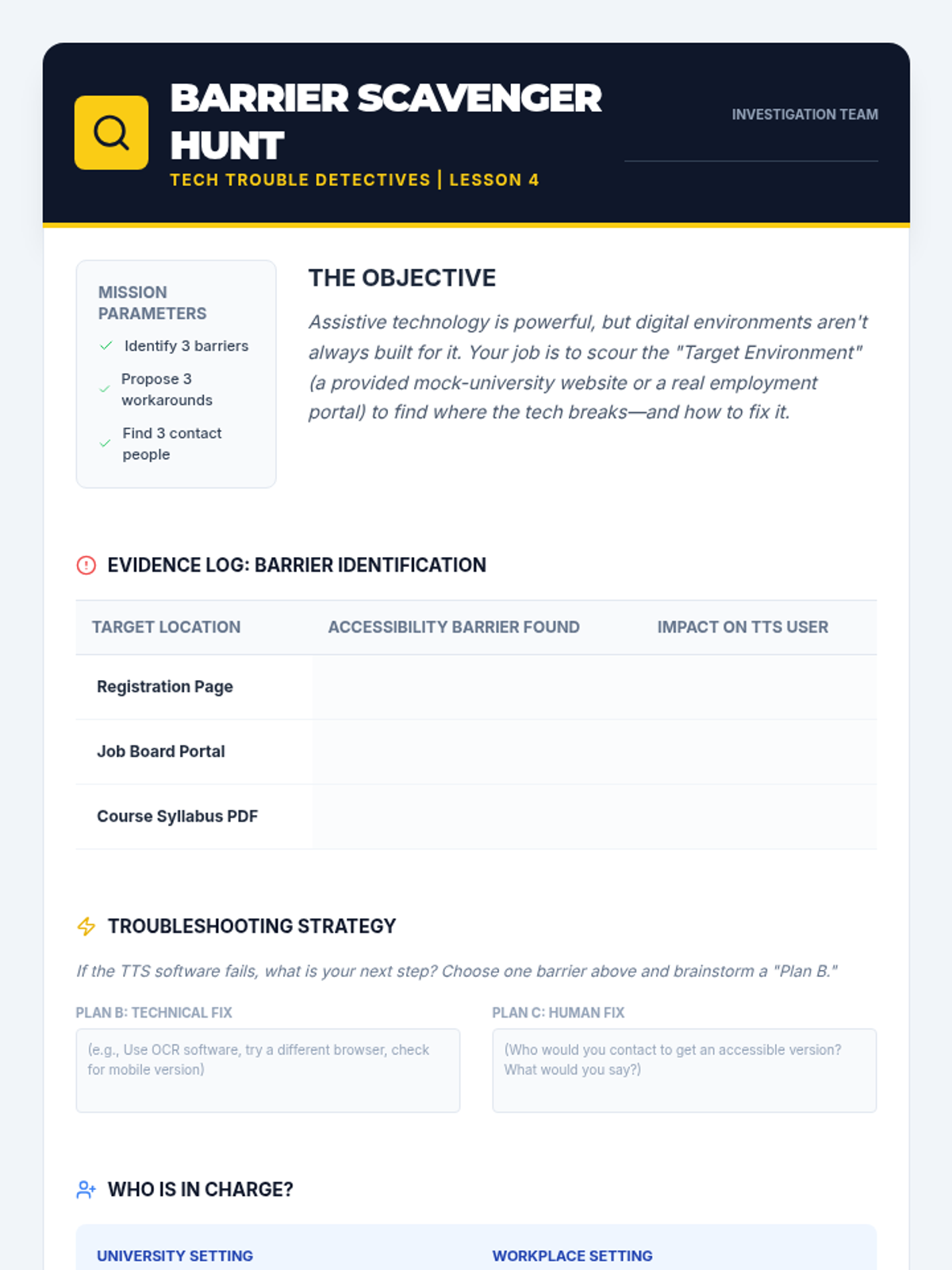
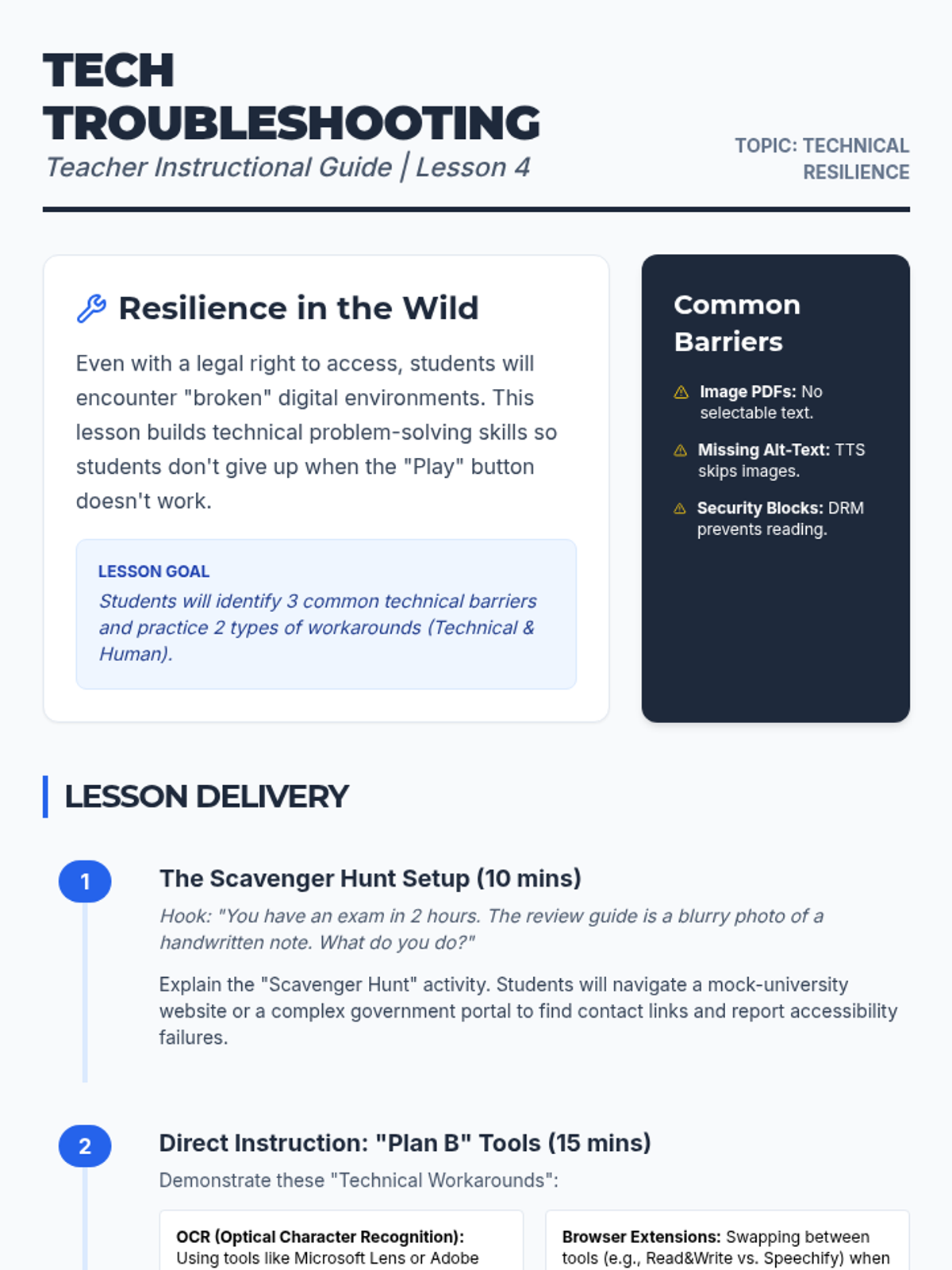
Practical troubleshooting for digital barriers, including identifying inaccessible files and finding technical workarounds or contact persons.
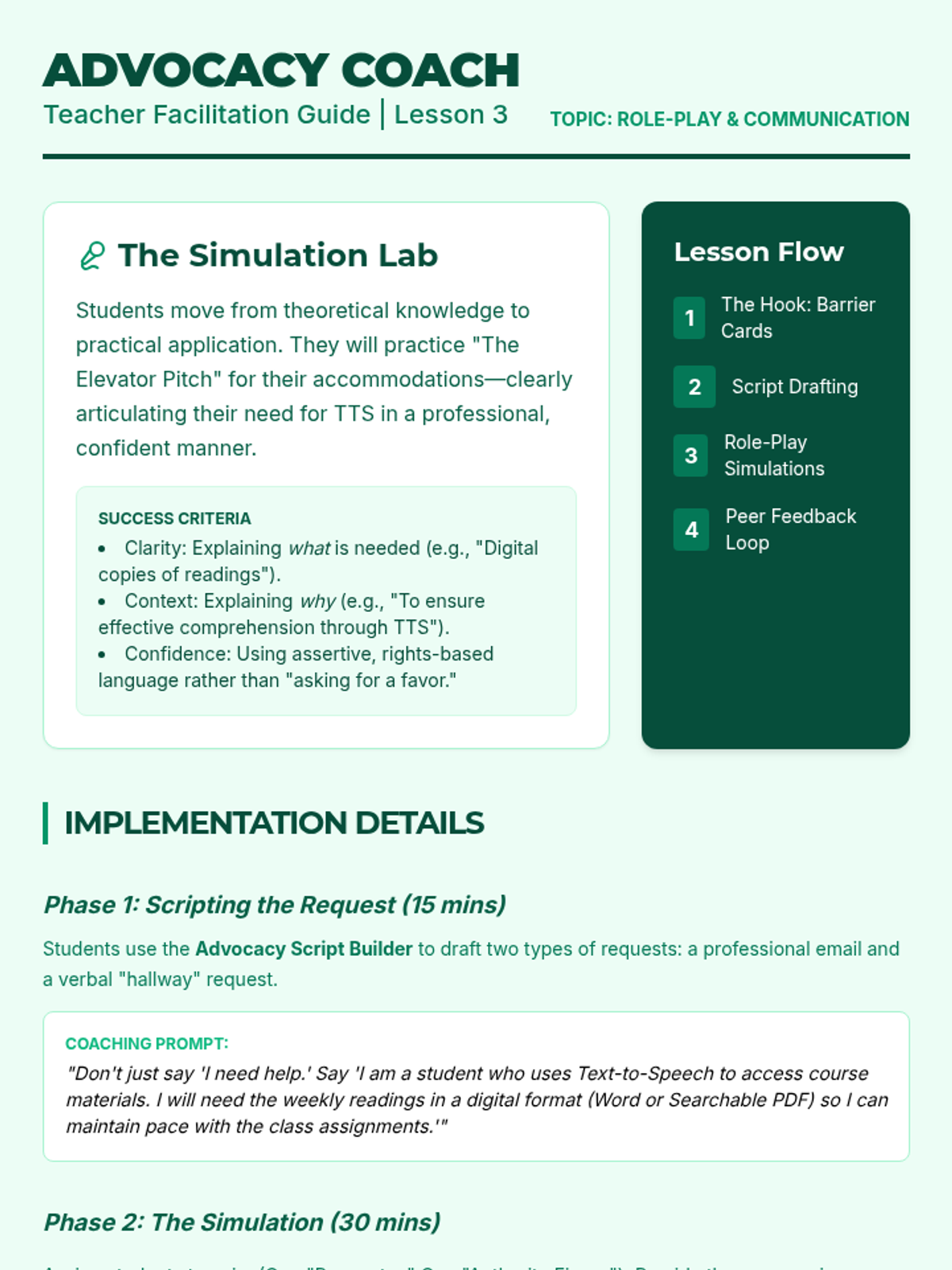
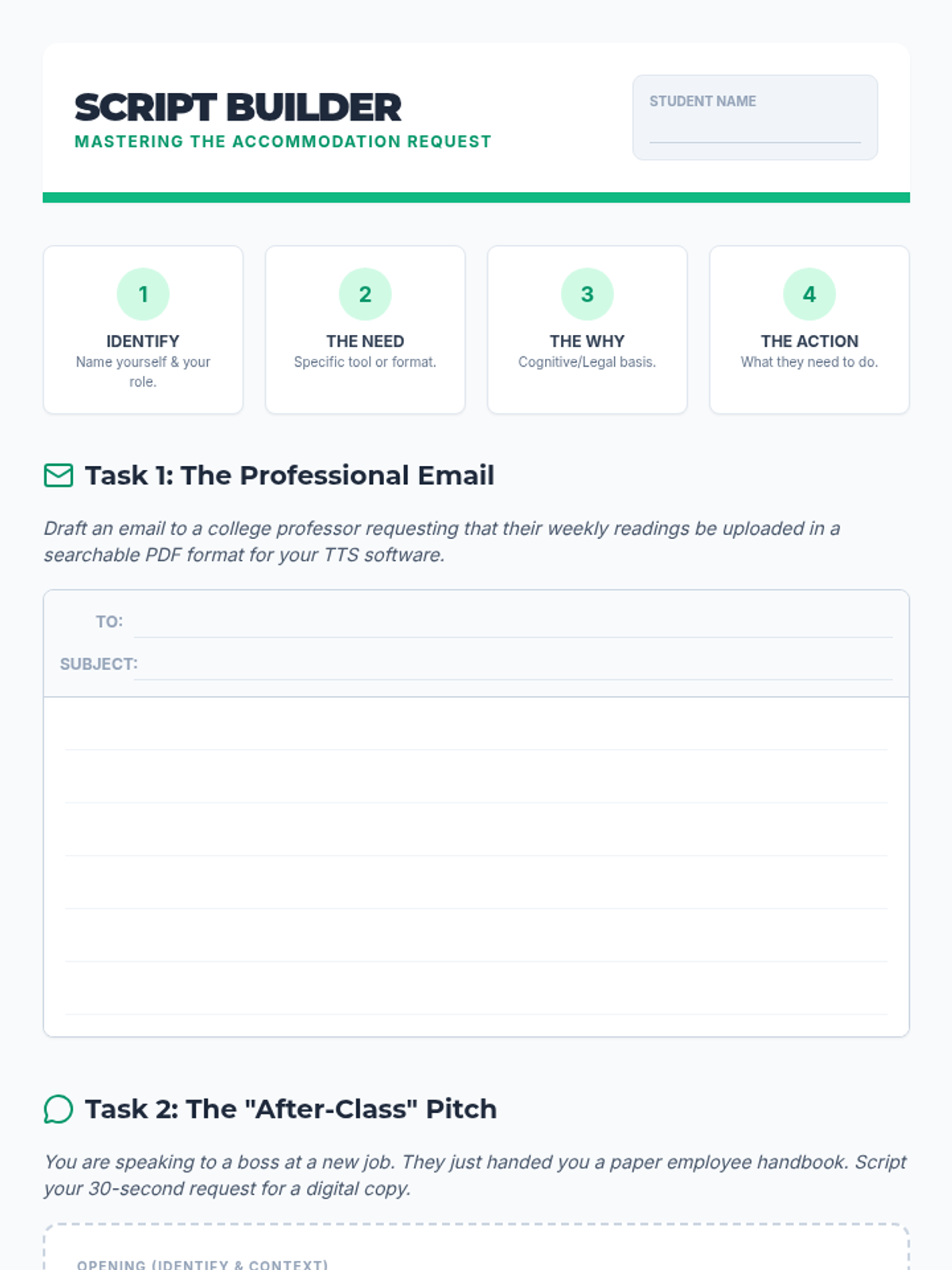
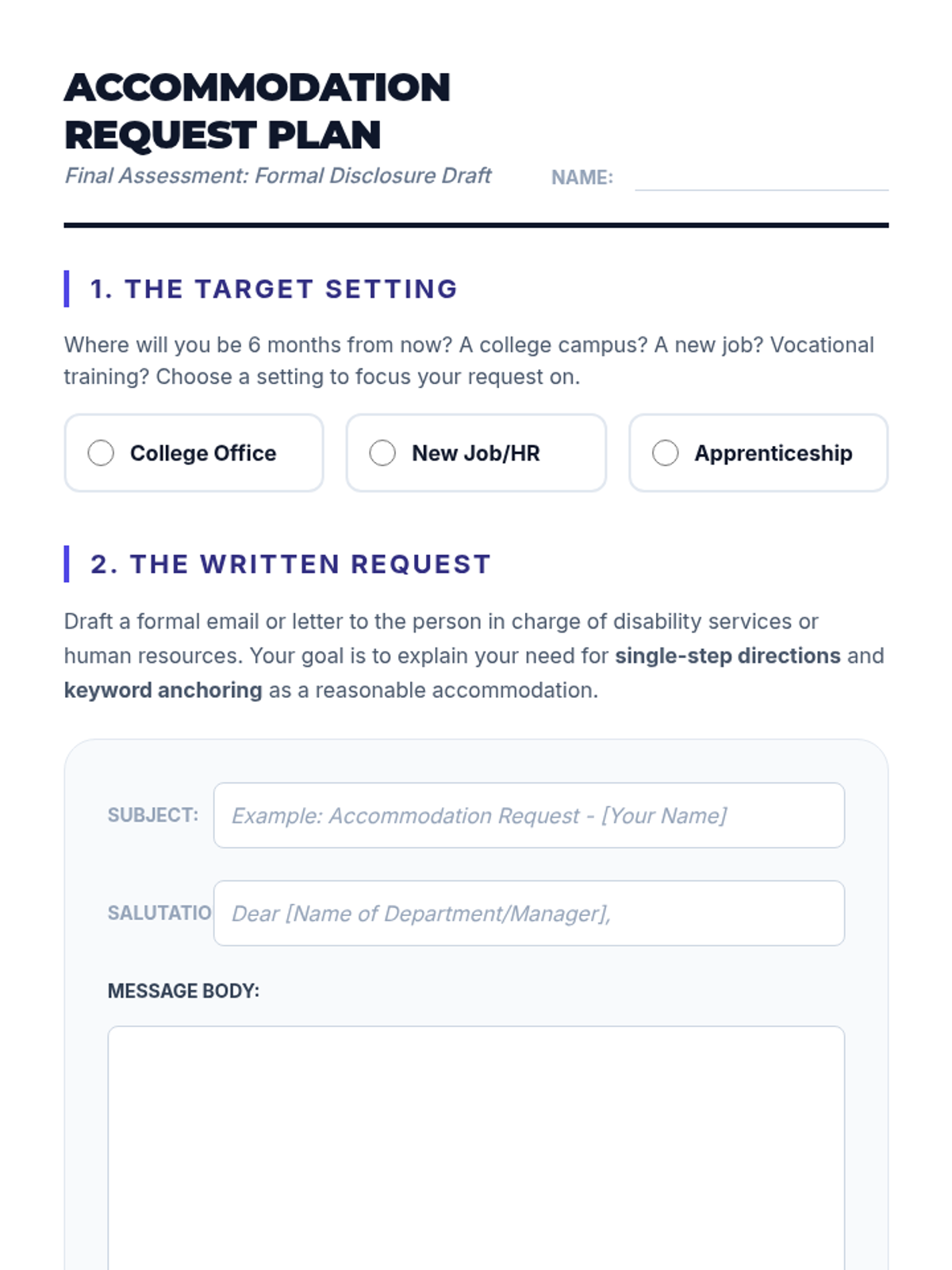
Students practice professional communication and self-advocacy by simulating requests for accommodations in college and workplace settings.
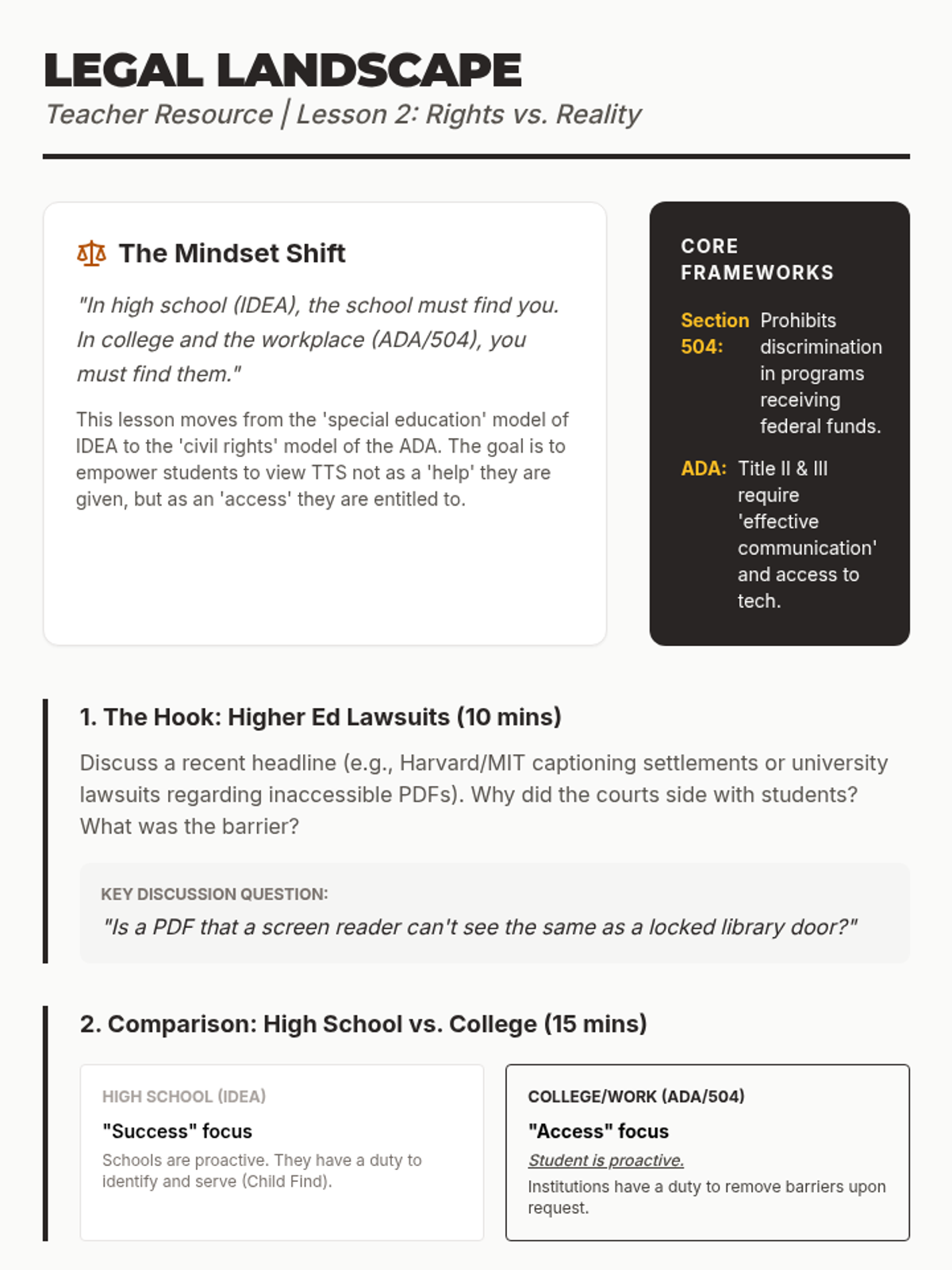
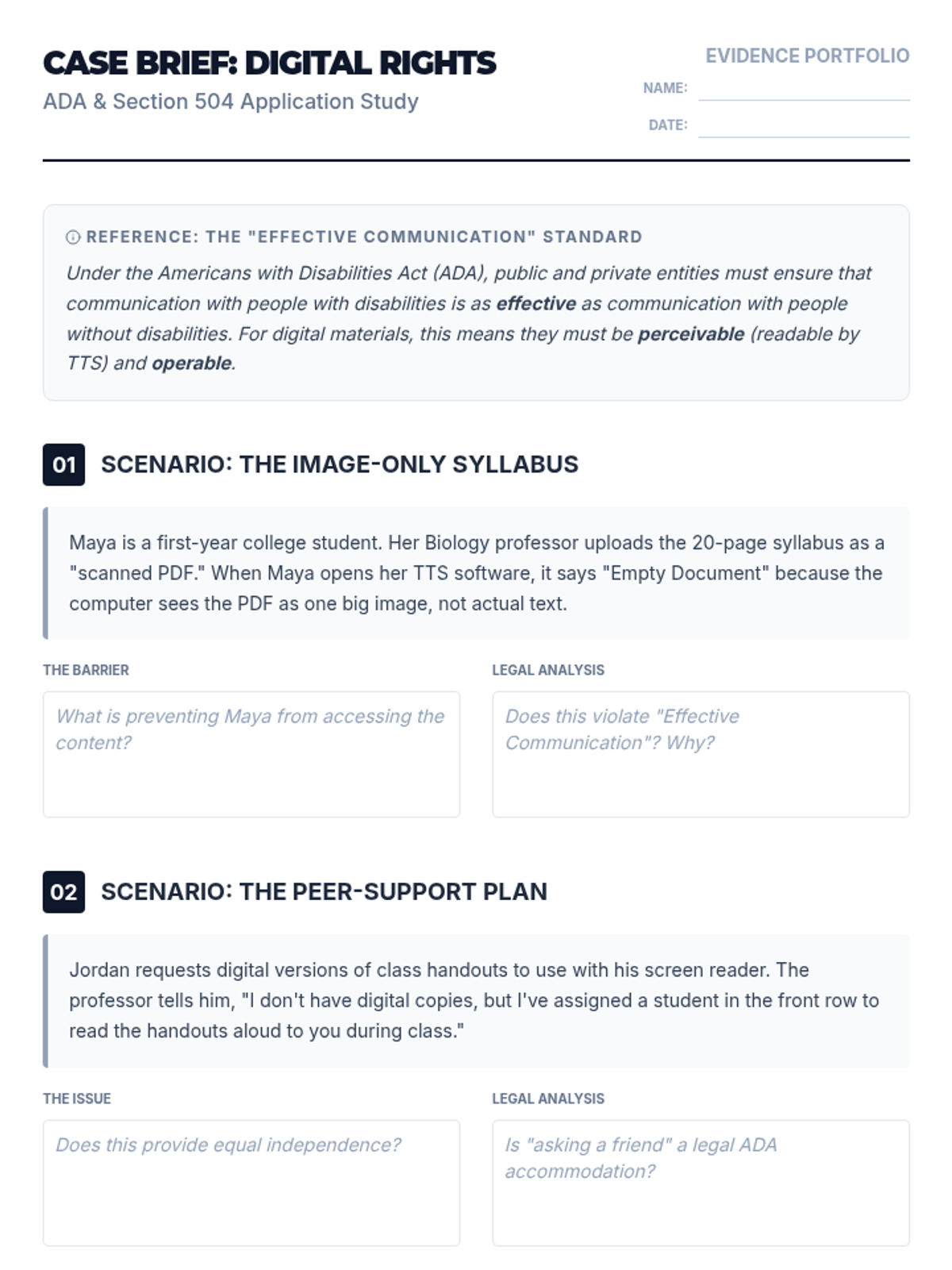
A deep dive into the legal frameworks of the ADA and Section 504 as they apply to digital accessibility in higher education and the workplace.
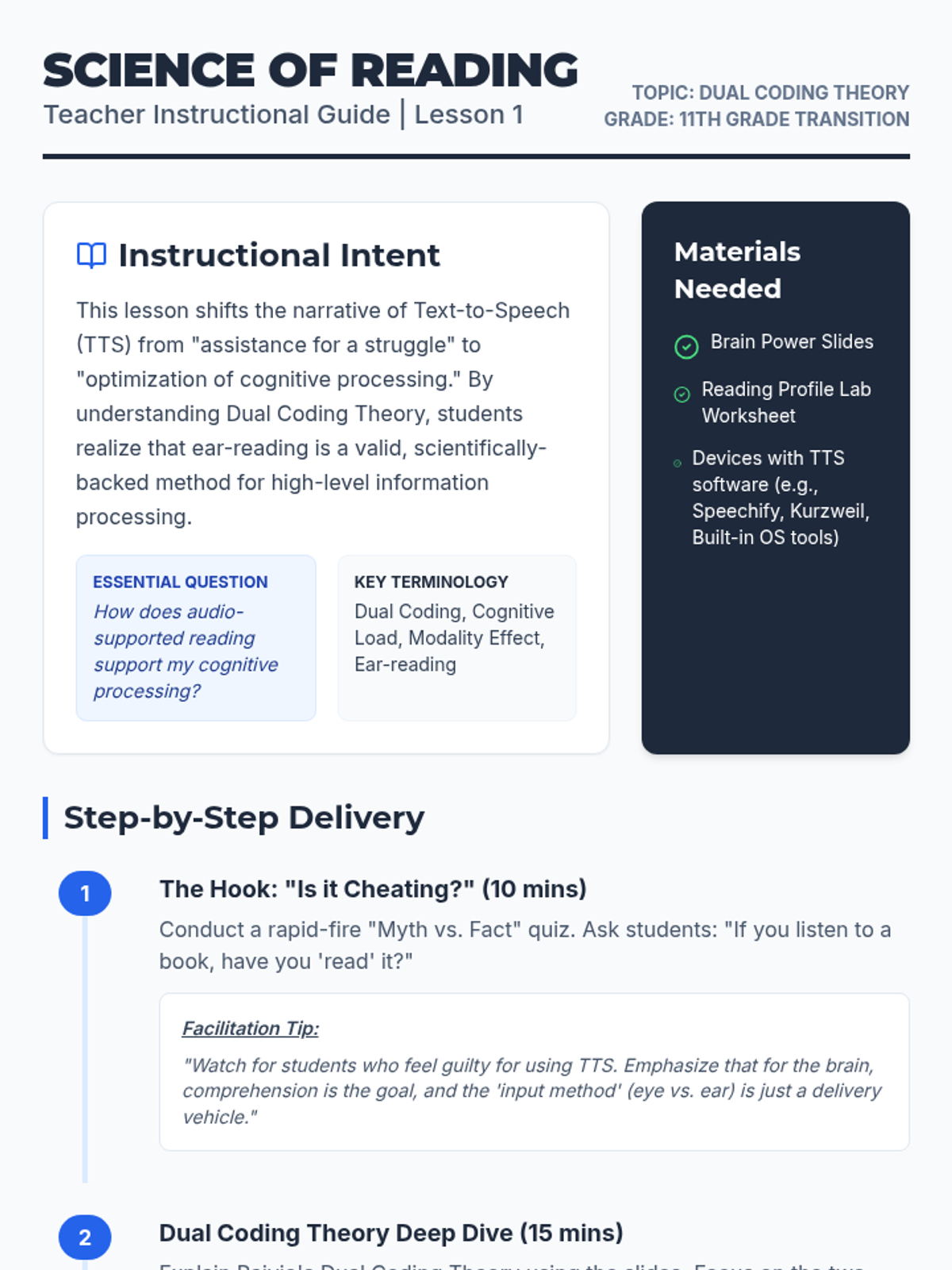
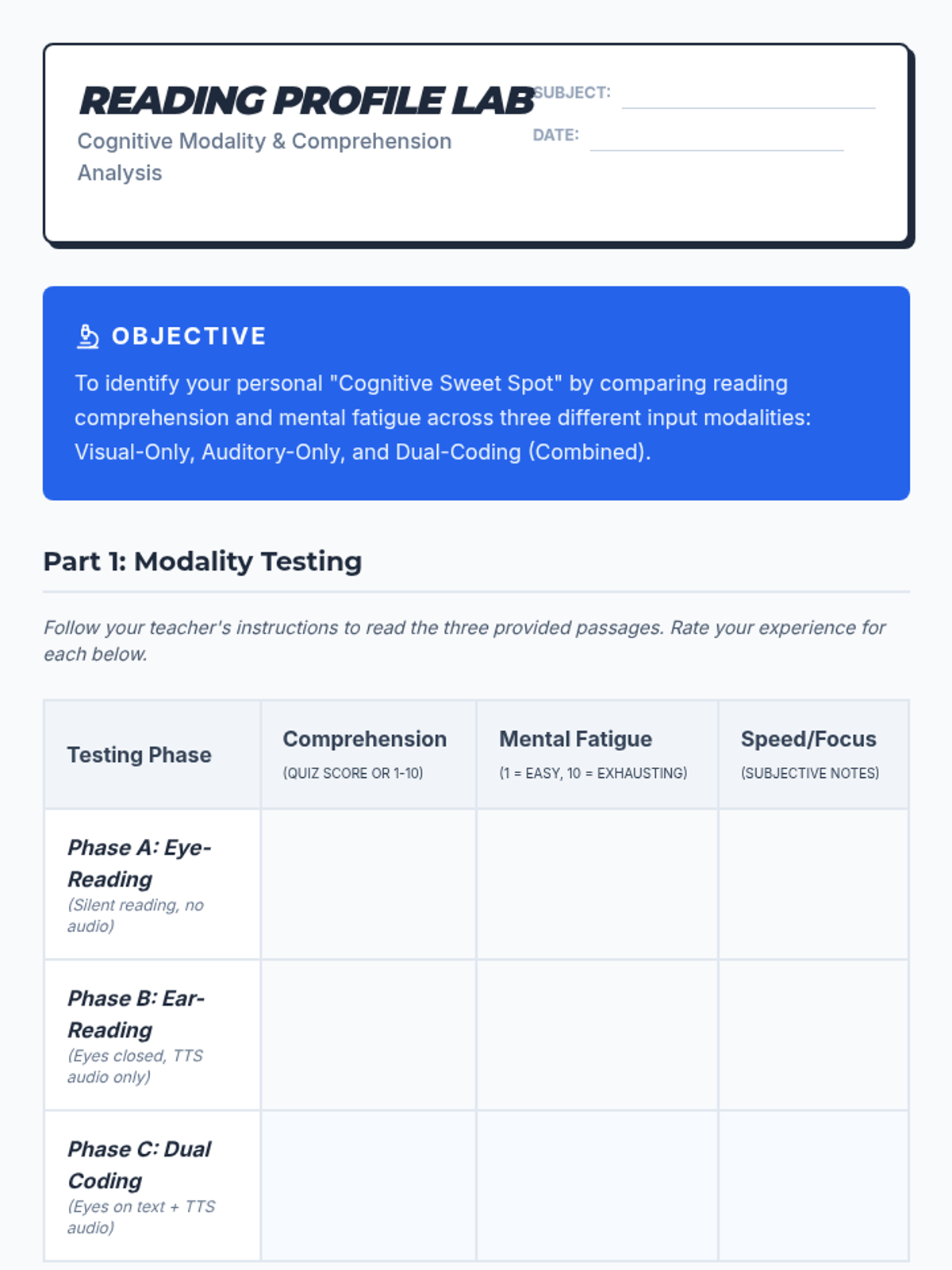
Students explore Dual Coding Theory and analyze their personal reading data to understand how eye-reading and ear-reading interact to improve comprehension and reduce fatigue.
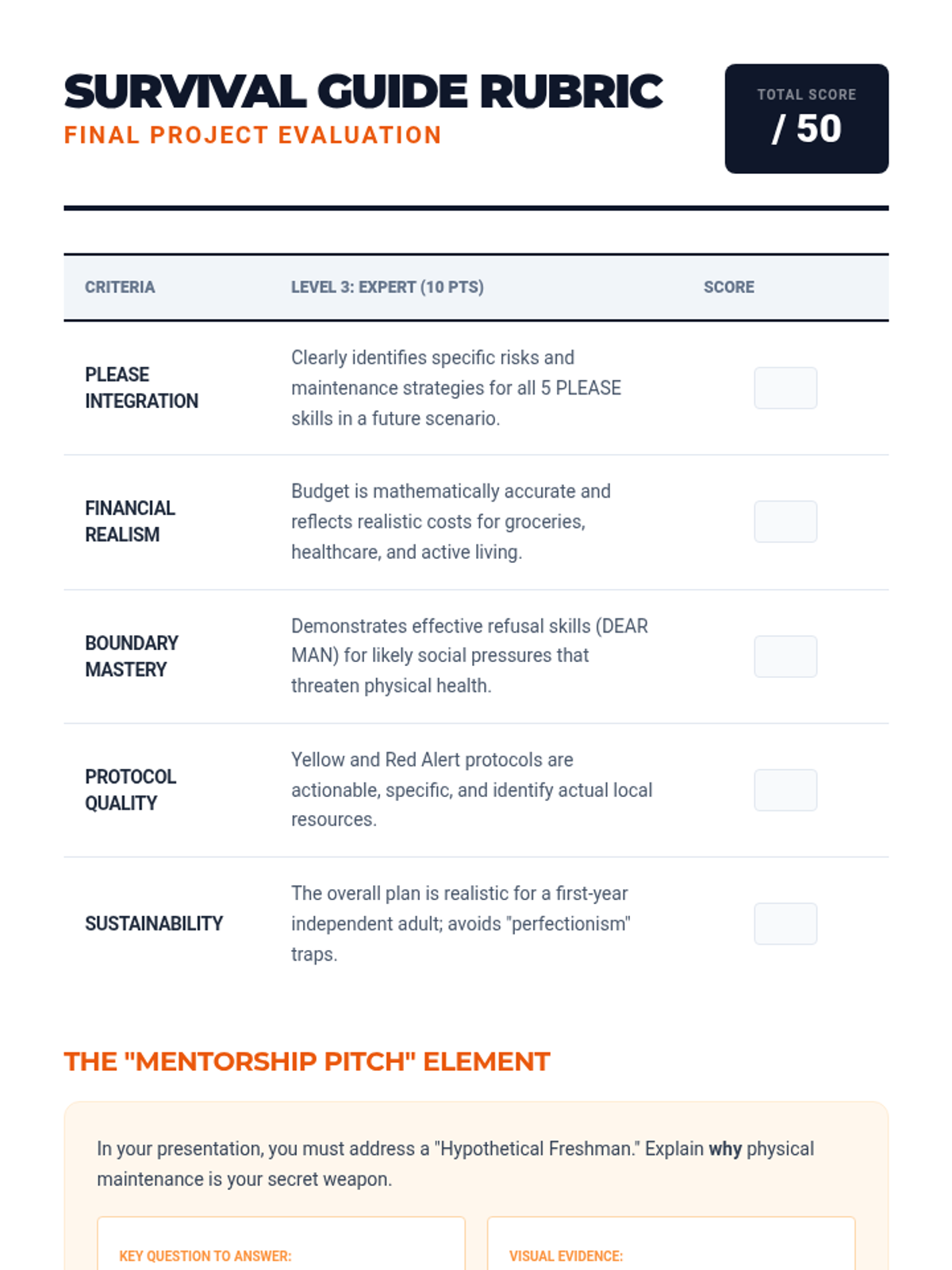
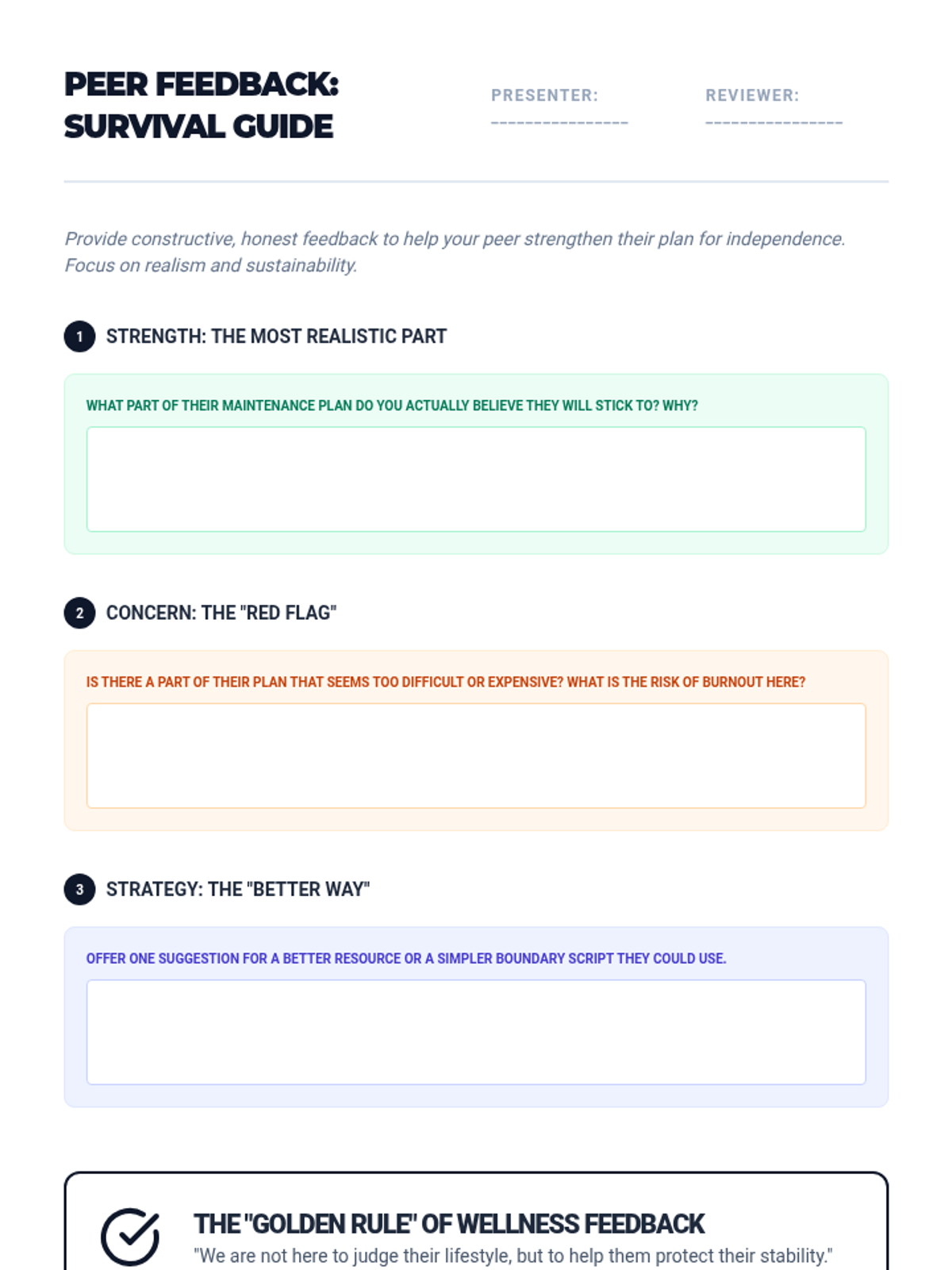
Students finalize and present their 'Survival Guides,' explaining their strategies for maintaining low emotional vulnerability through physical health.
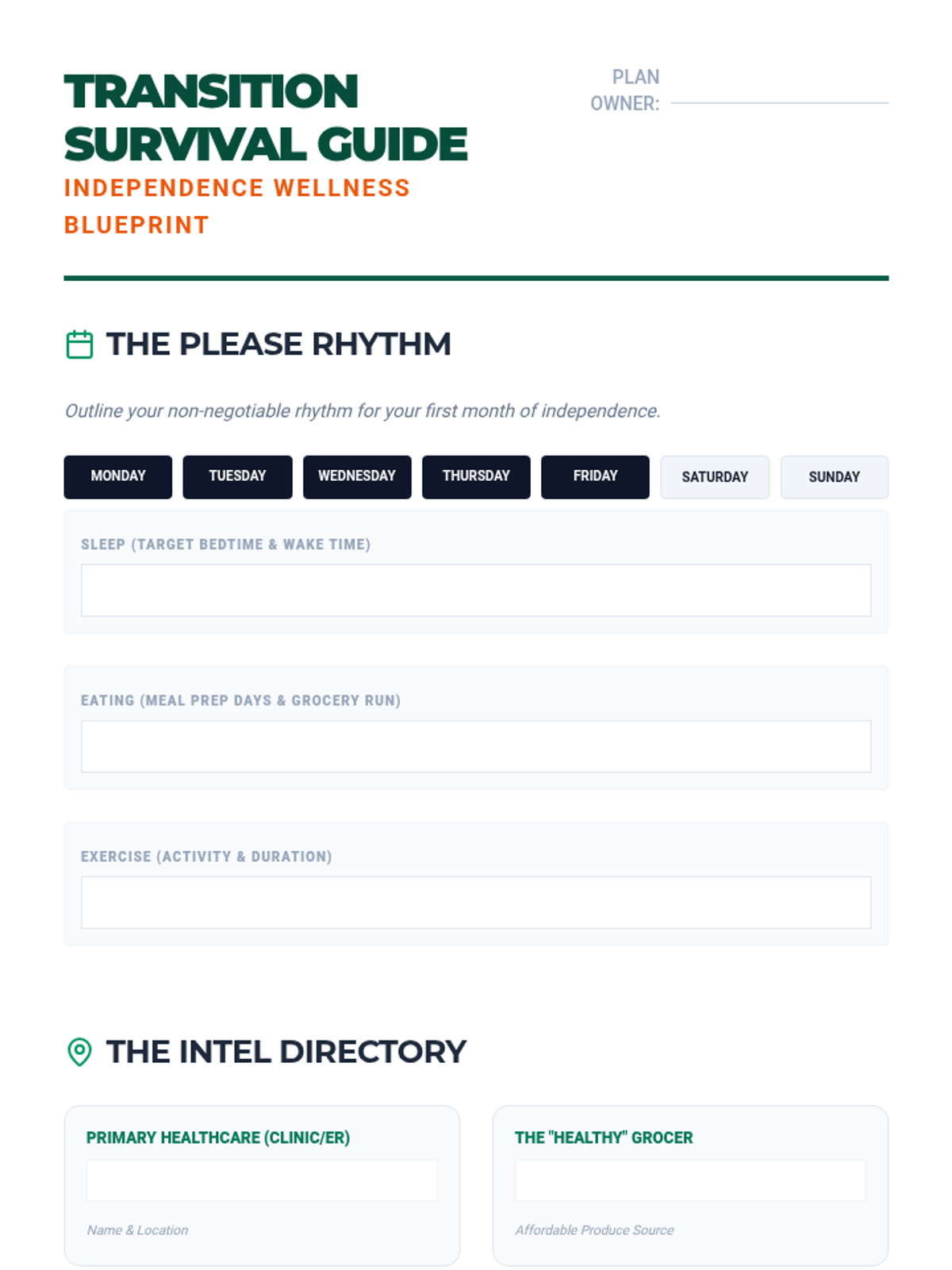
Students draft a comprehensive wellness plan for their first month away from home, identifying local resources and setting non-negotiable standards for sleep and illness management.
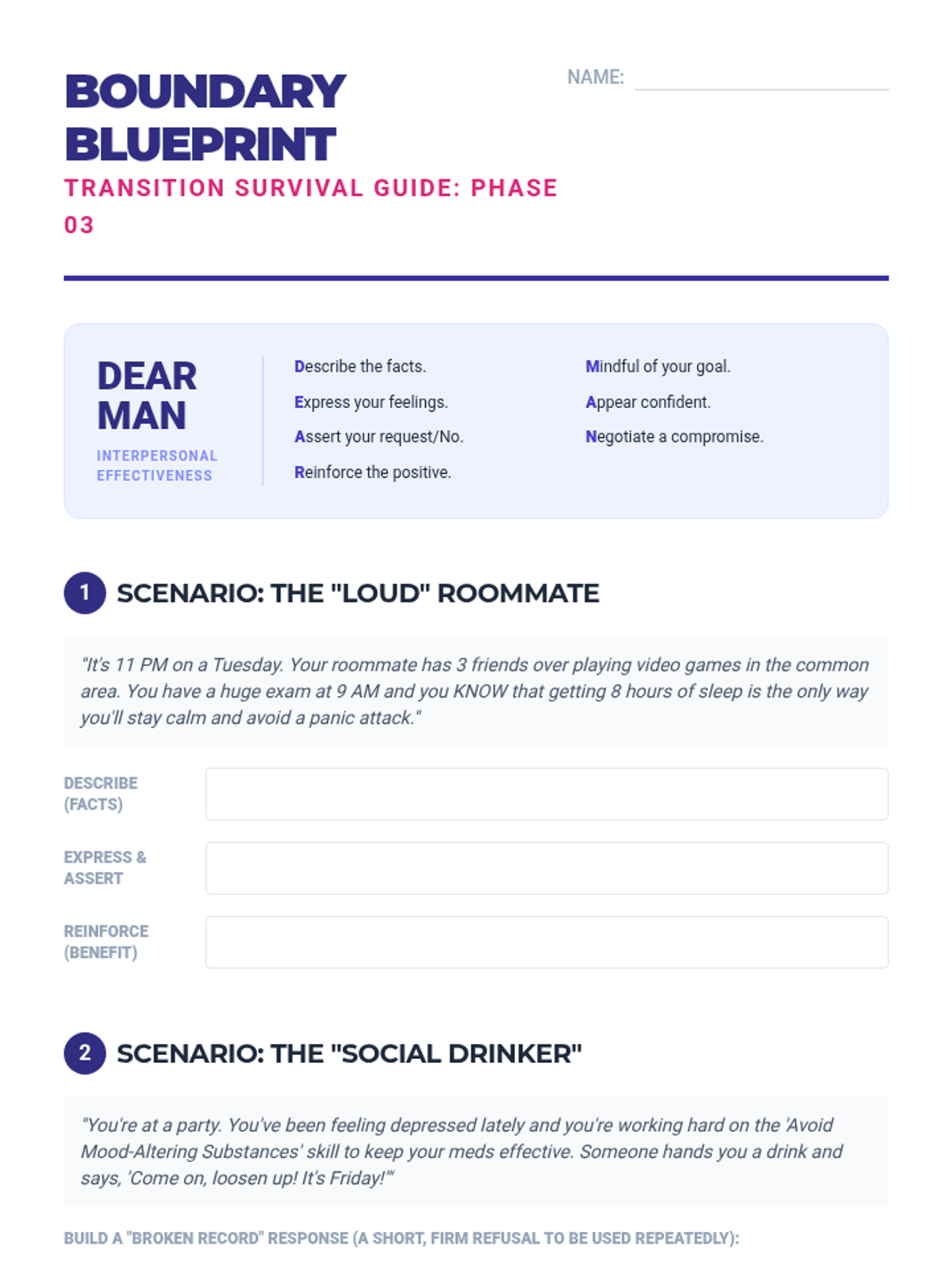
Students role-play scenarios involving social pressures that conflict with physical maintenance. They develop refusal skills and compromise strategies that protect their biological baseline.
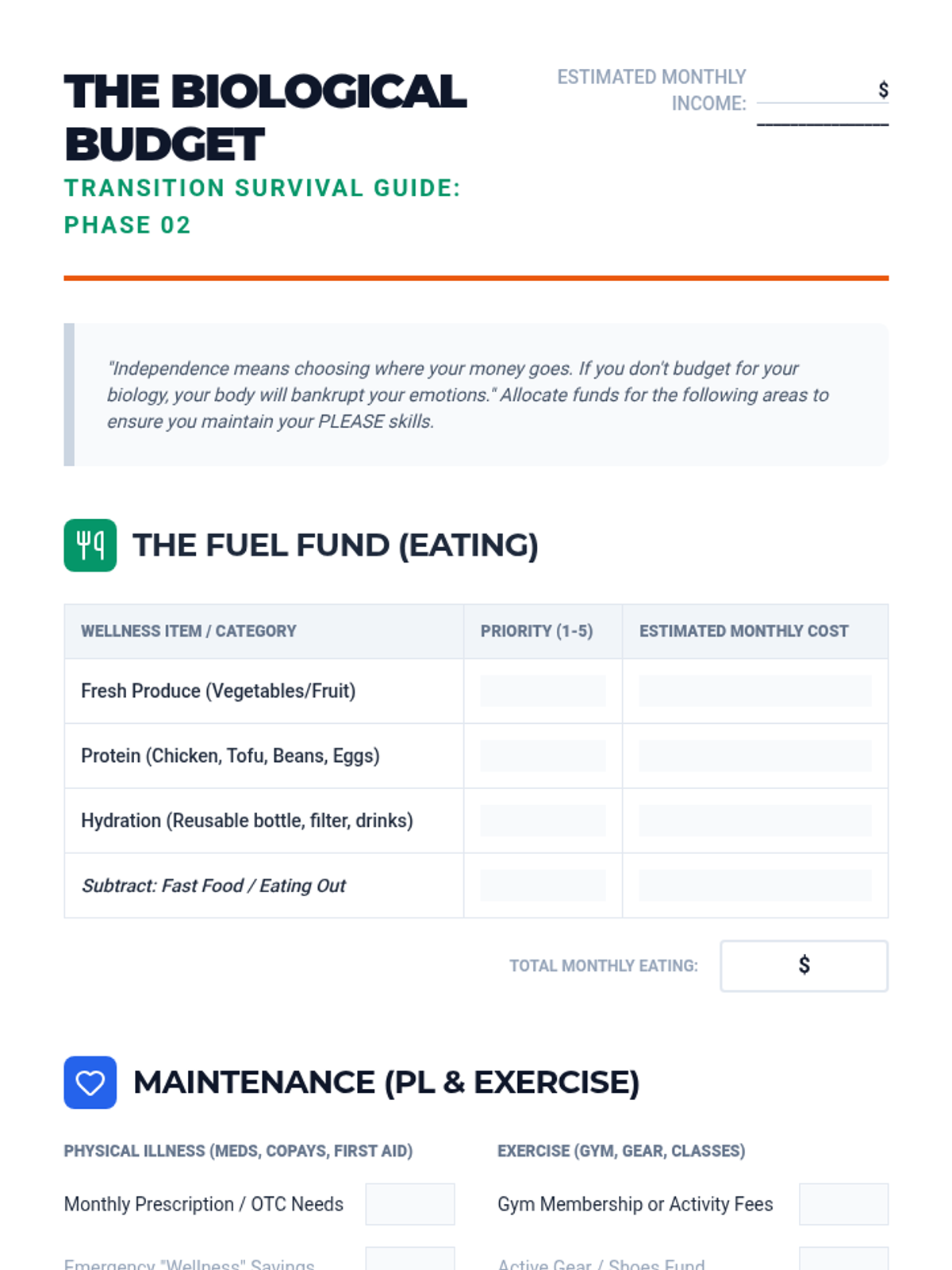
Students create a budget that prioritizes the resources needed for the PLEASE skills, such as healthy food and medication, recognizing that cutting costs here leads to emotional costs later.
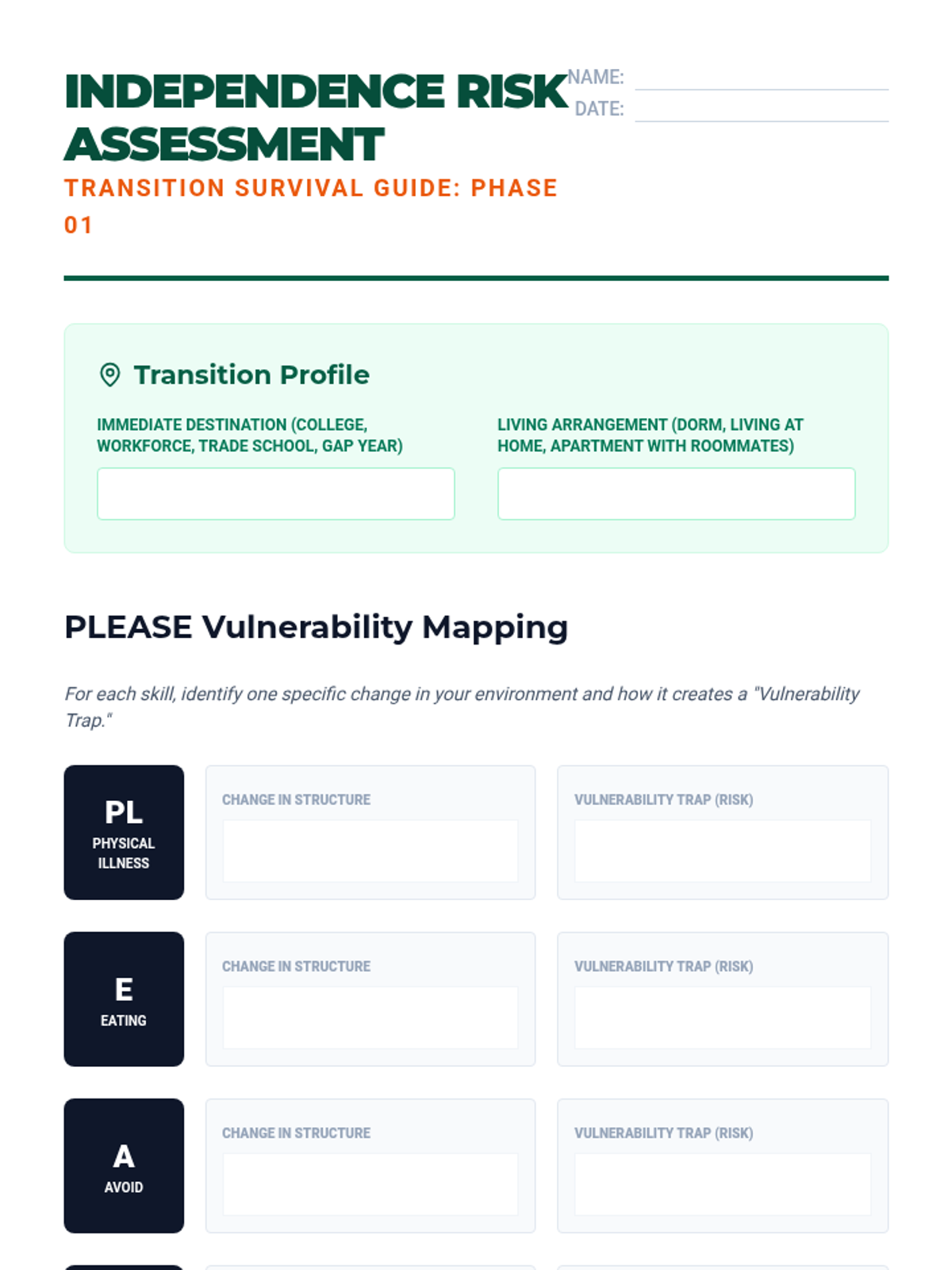
Students brainstorm the changes in structure they will face post-graduation and map how these changes threaten the PLEASE skills. They create a risk assessment for their first year of independence.
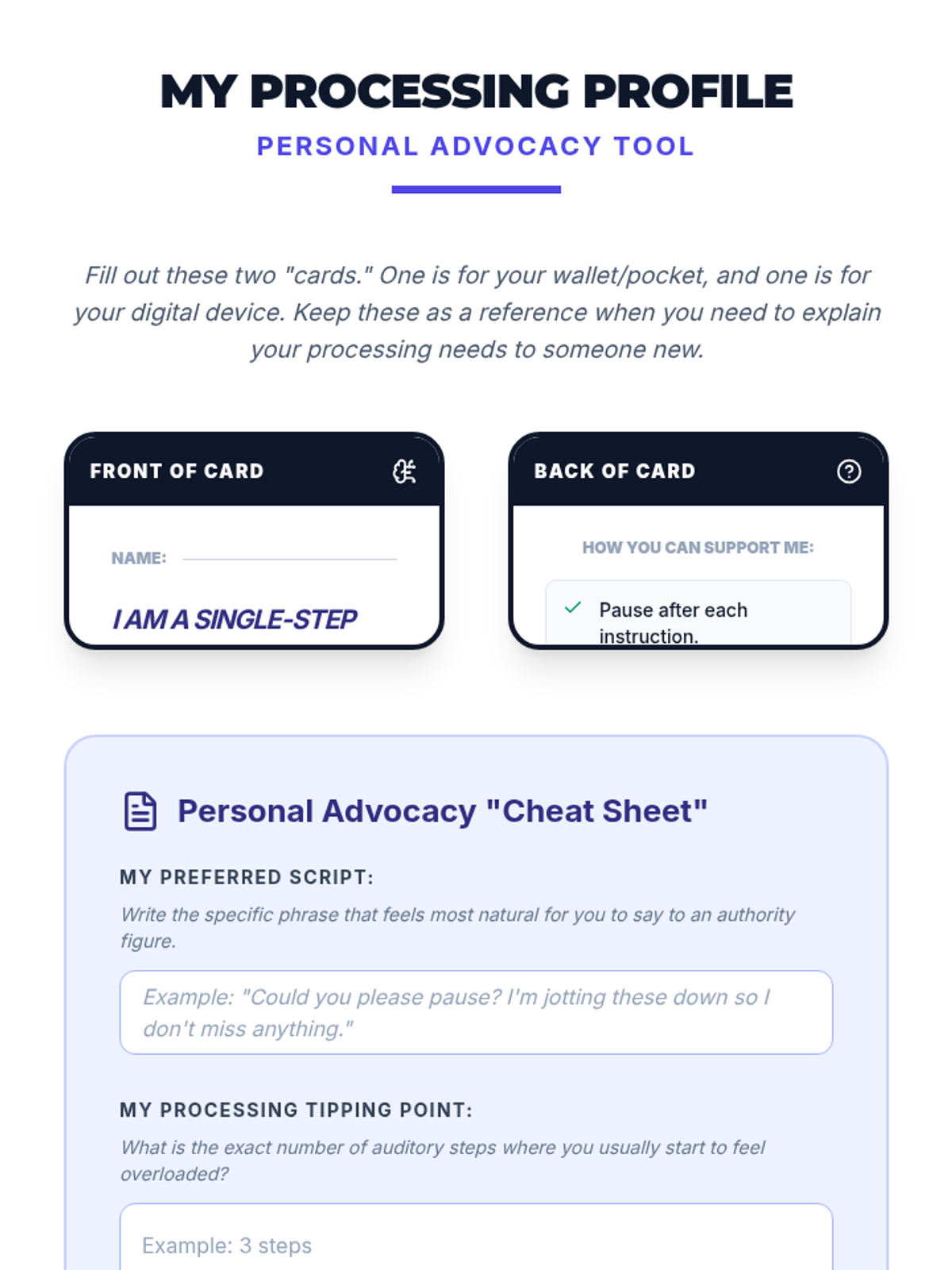
Students synthesize their learning by creating a personal Advocacy Card or Profile. They practice formal disclosure of their processing needs for college or workplace environments.
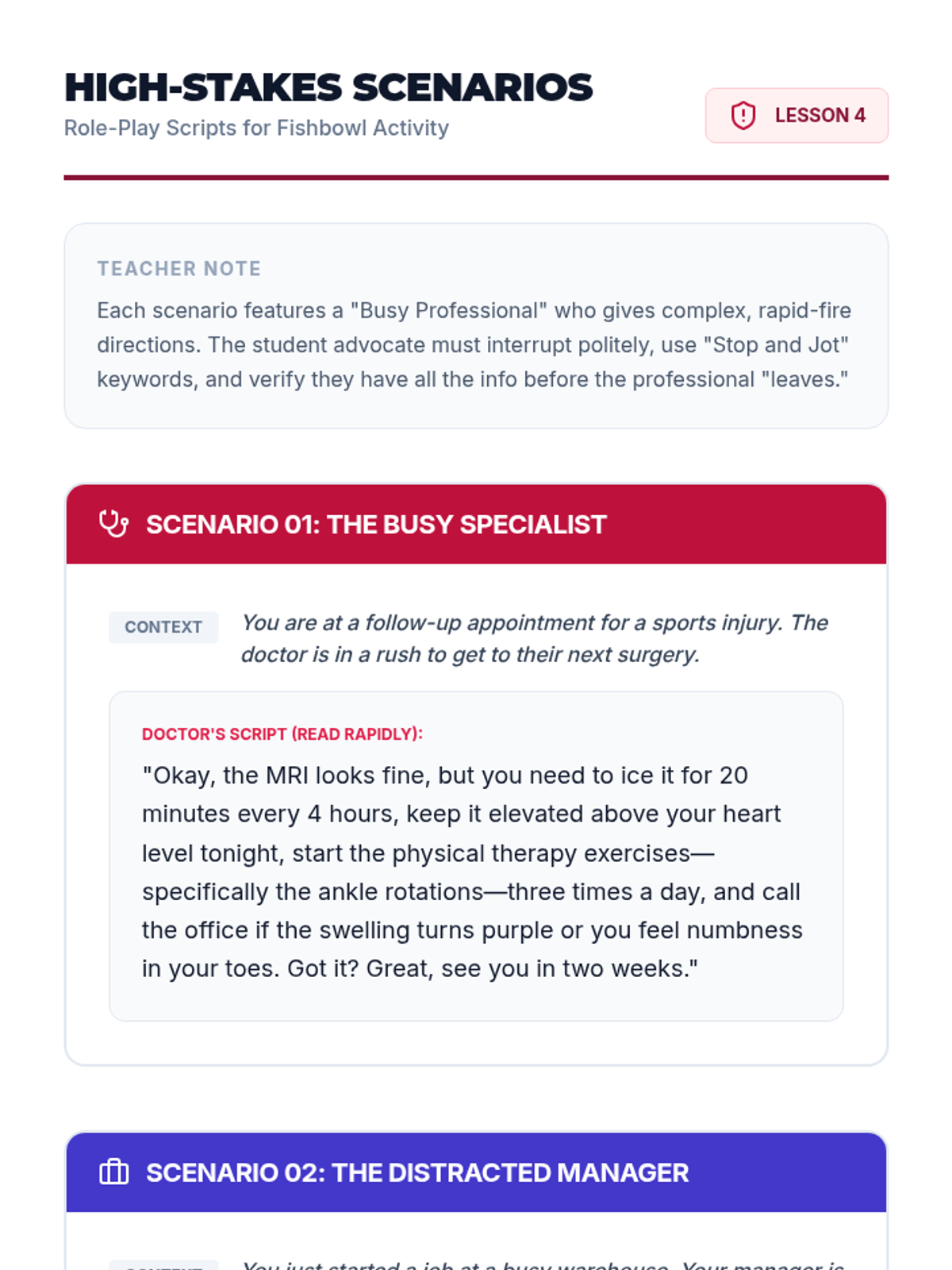
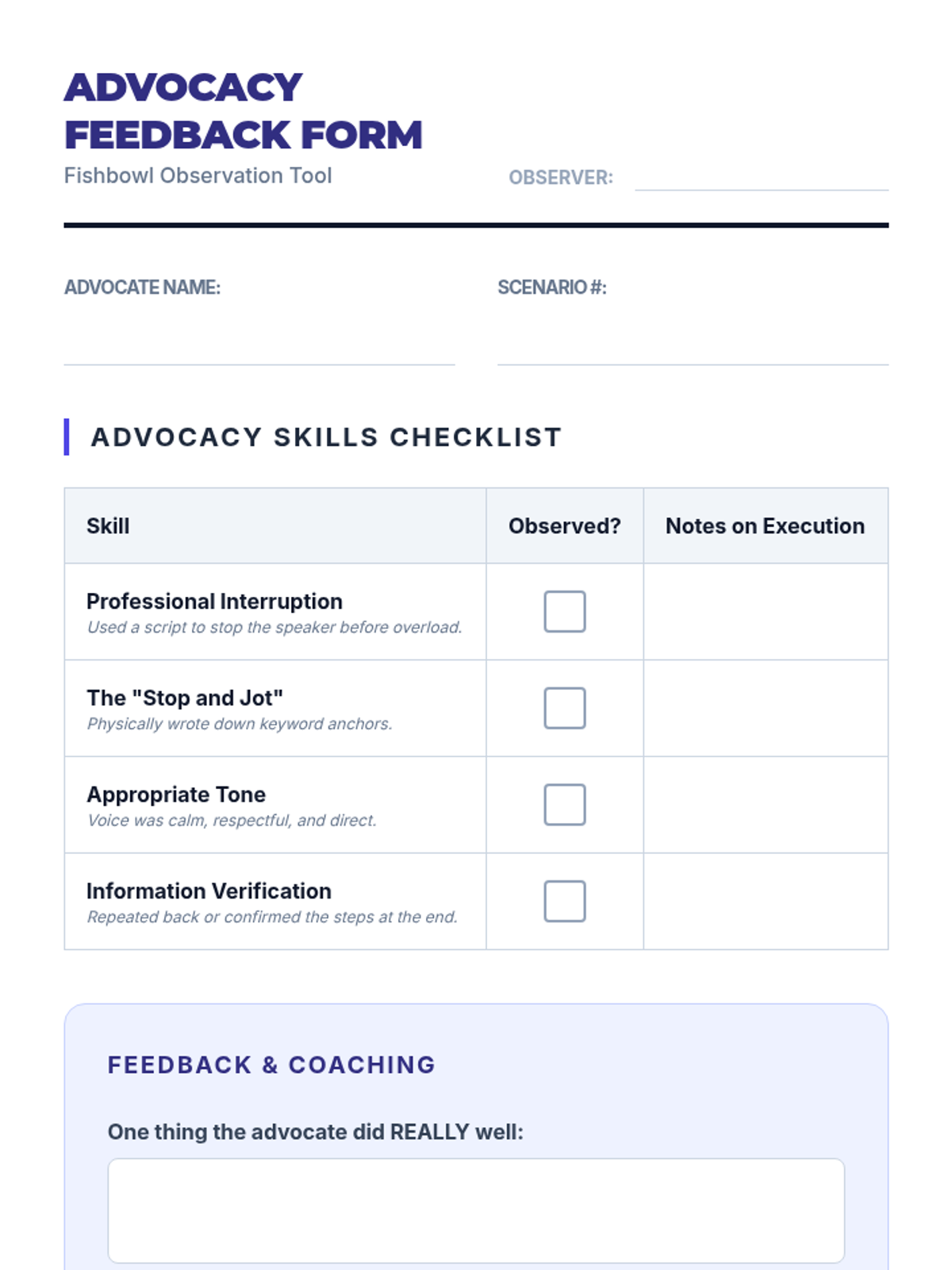
Learners apply their advocacy skills in high-stakes scenarios with authority figures like bosses, doctors, or police. They use a fishbowl technique to observe and refine their approach to difficult conversations.
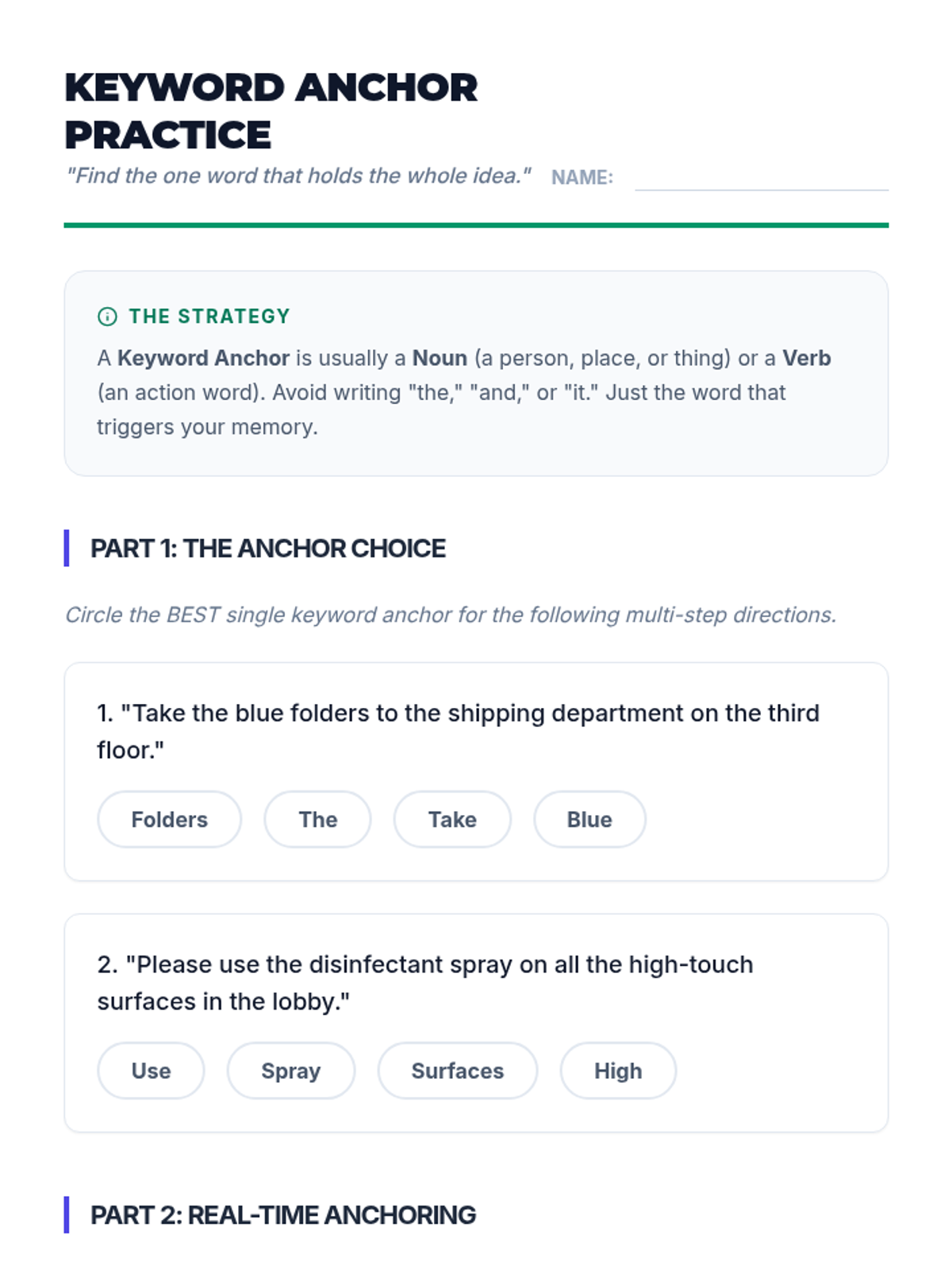
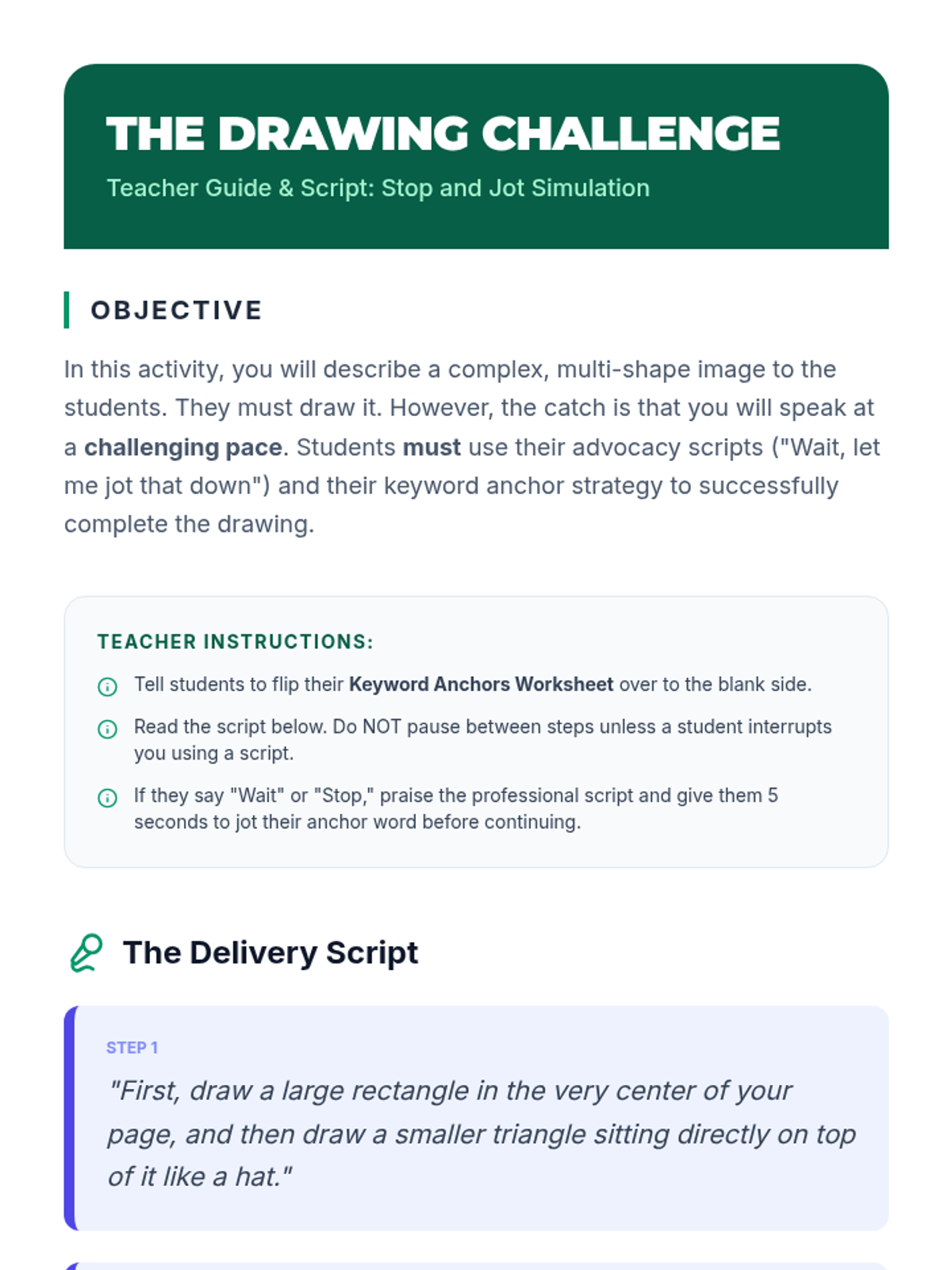
Students learn the 'Stop and Jot' strategy to create external memory anchors. They practice using single keywords to hold their place in a sequence of instructions.
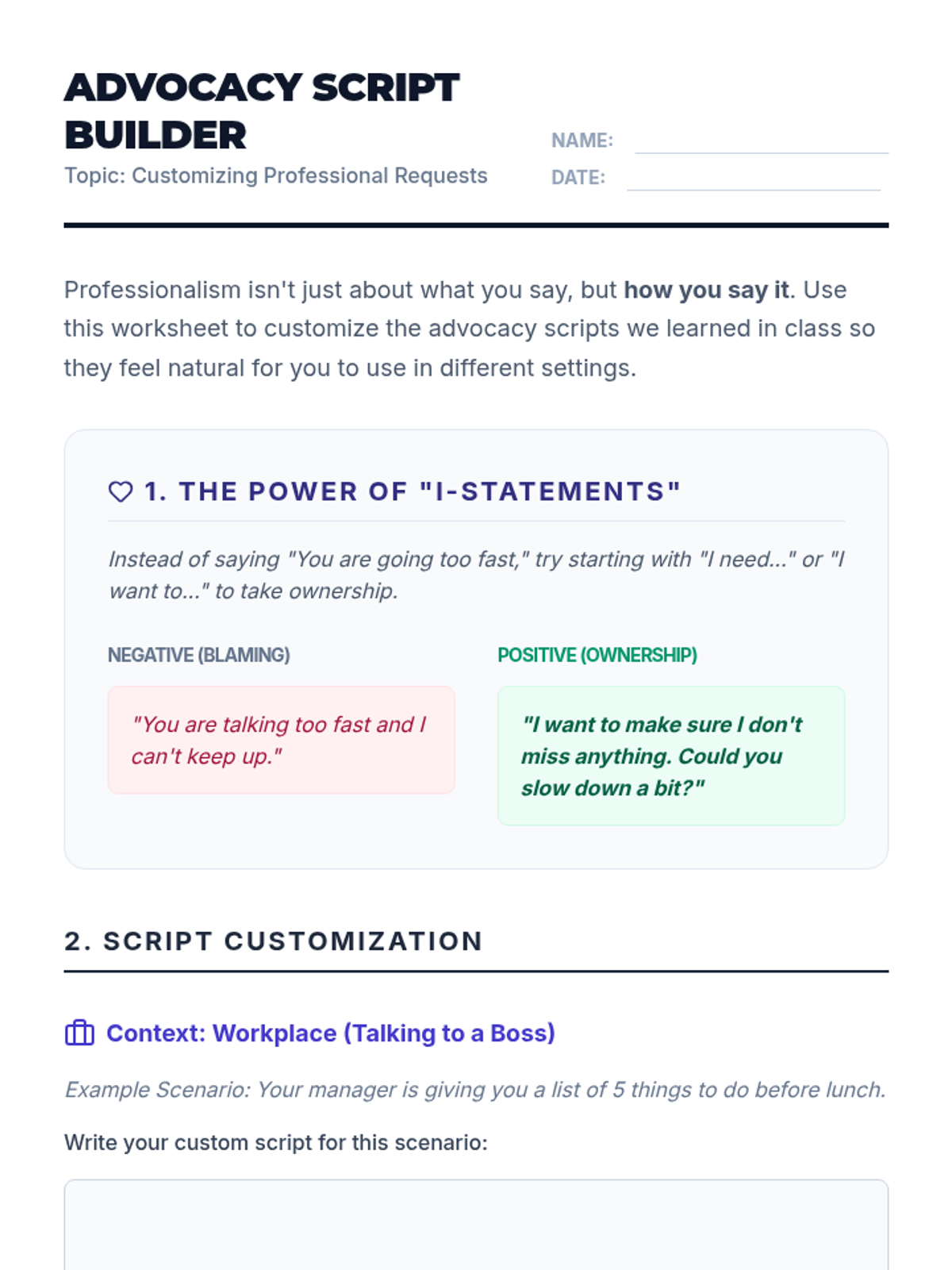
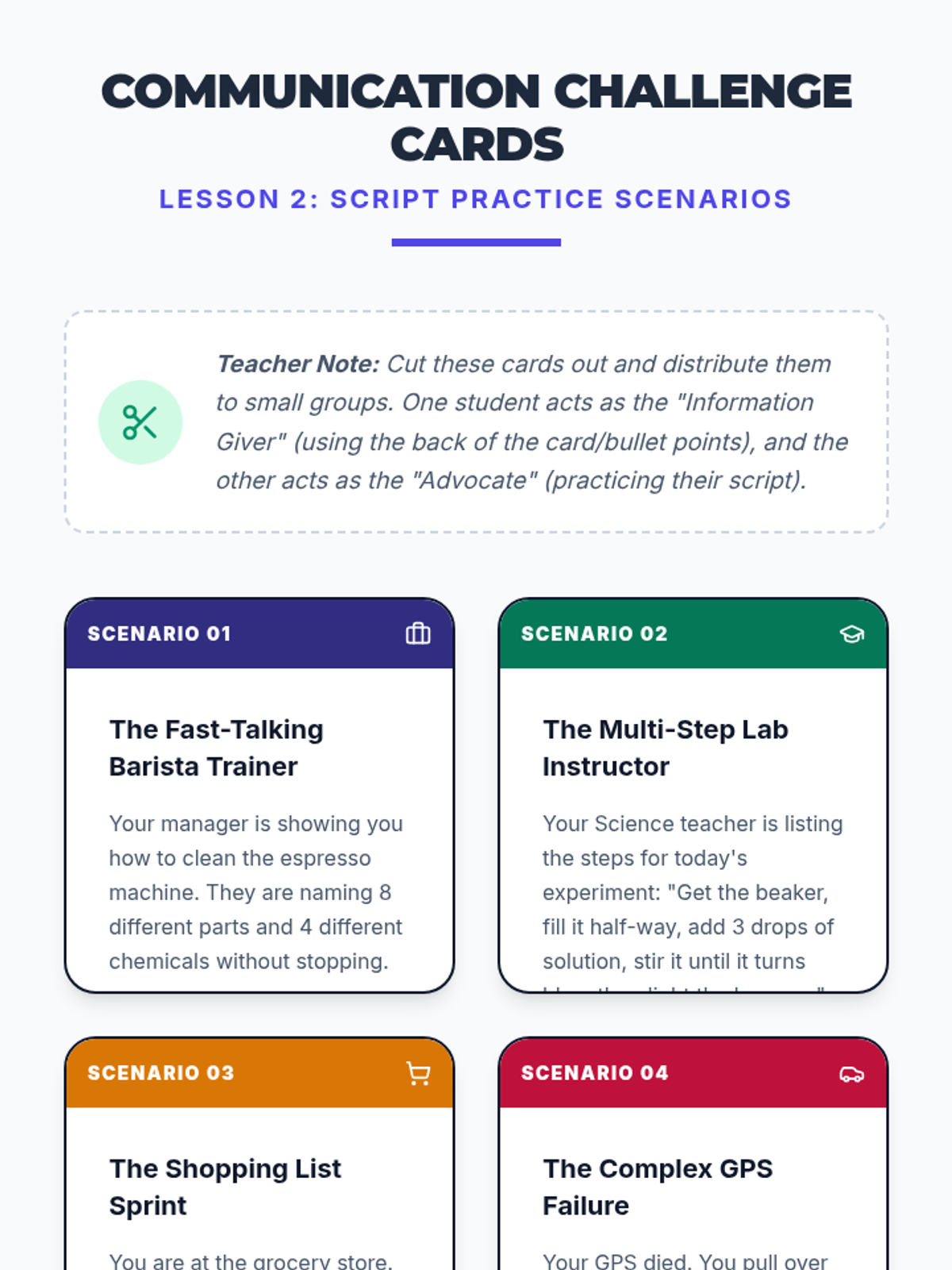
Learners develop and practice professional scripts for interrupting and requesting information be broken down. The focus is on tone, timing, and professional communication in workplace and academic environments.
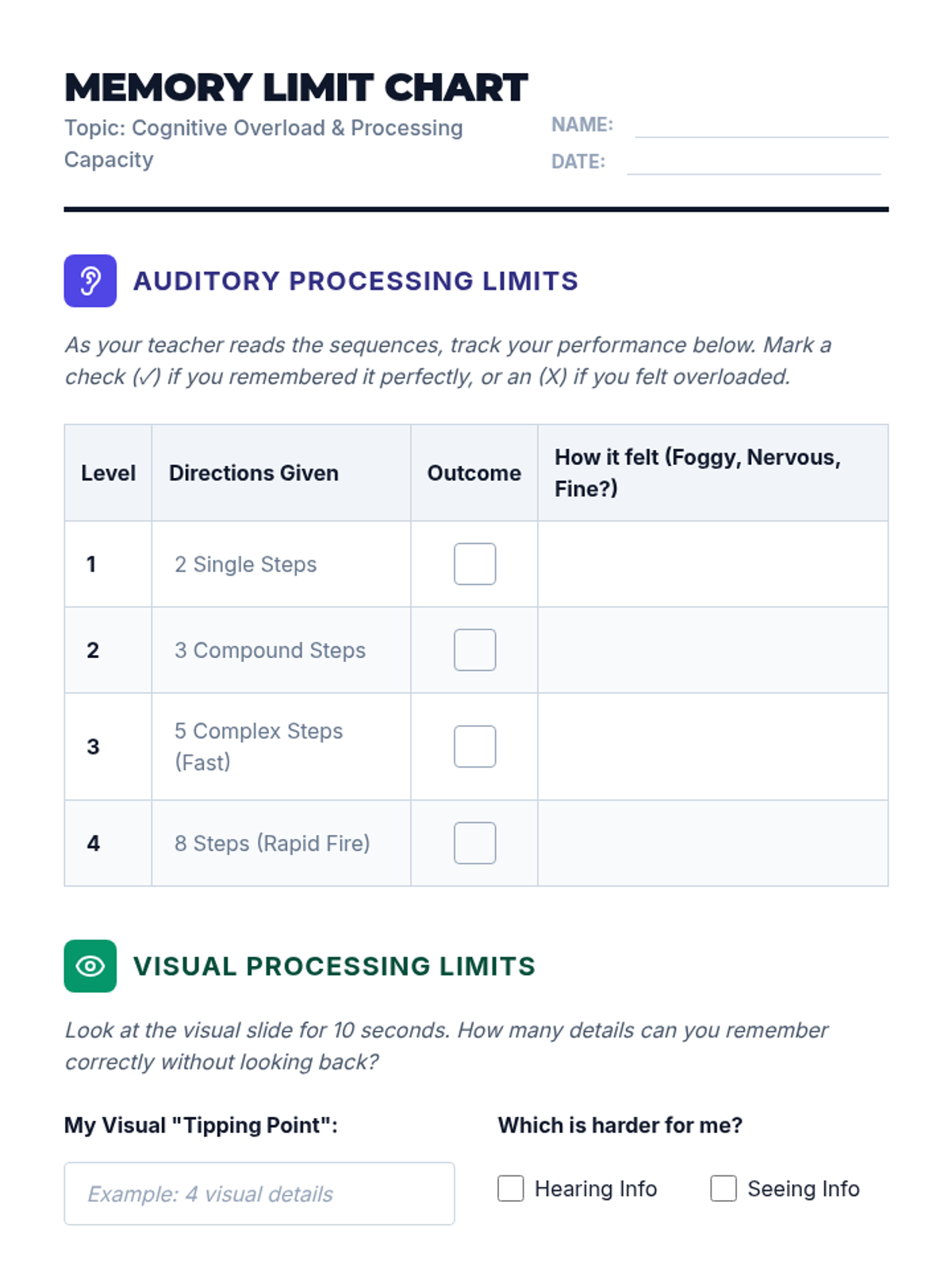
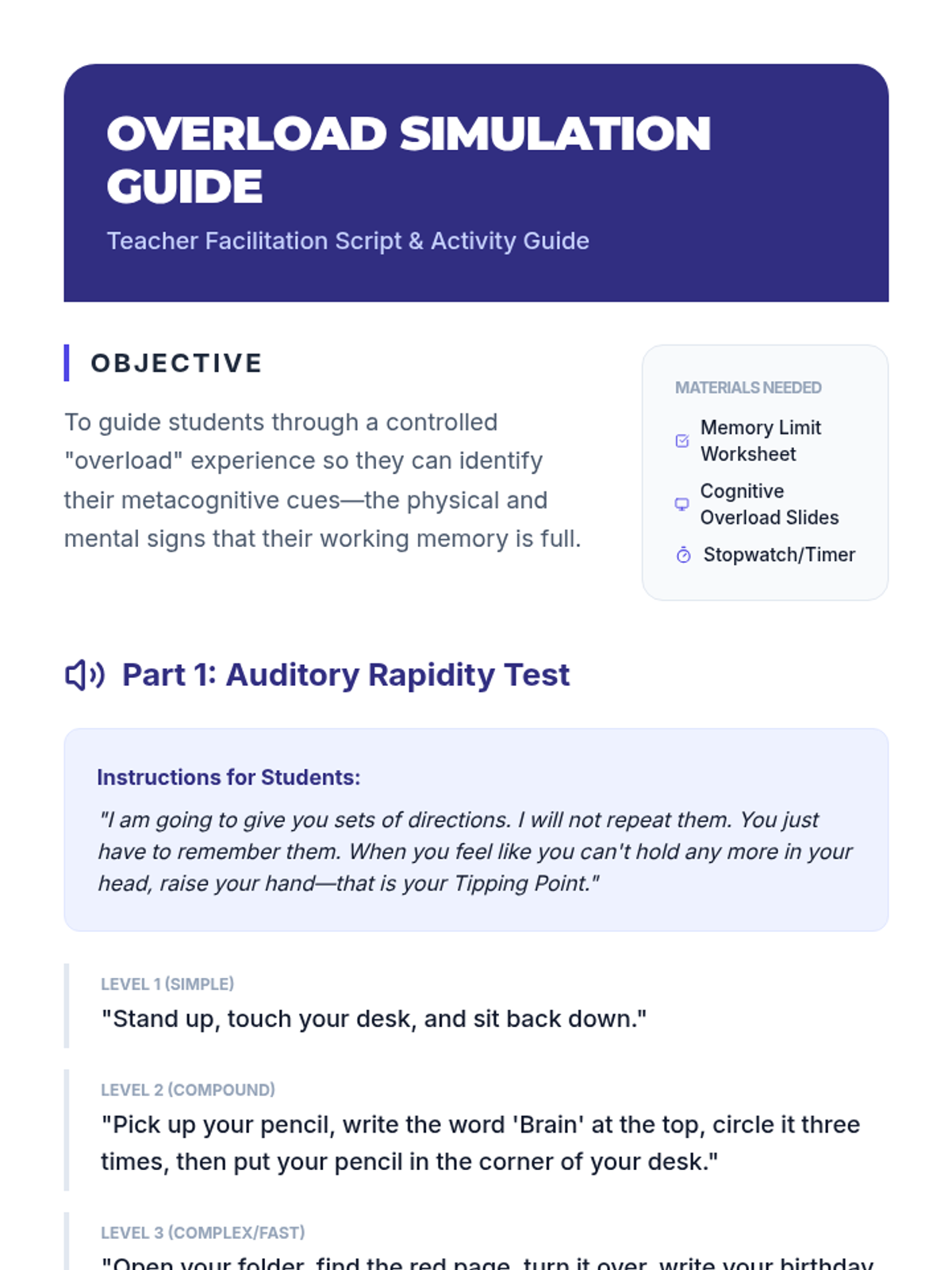
Students identify their personal 'tipping point' for auditory and visual information through memory games and limit tests. They explore the concept of cognitive overload and how it impacts their ability to follow complex instructions.
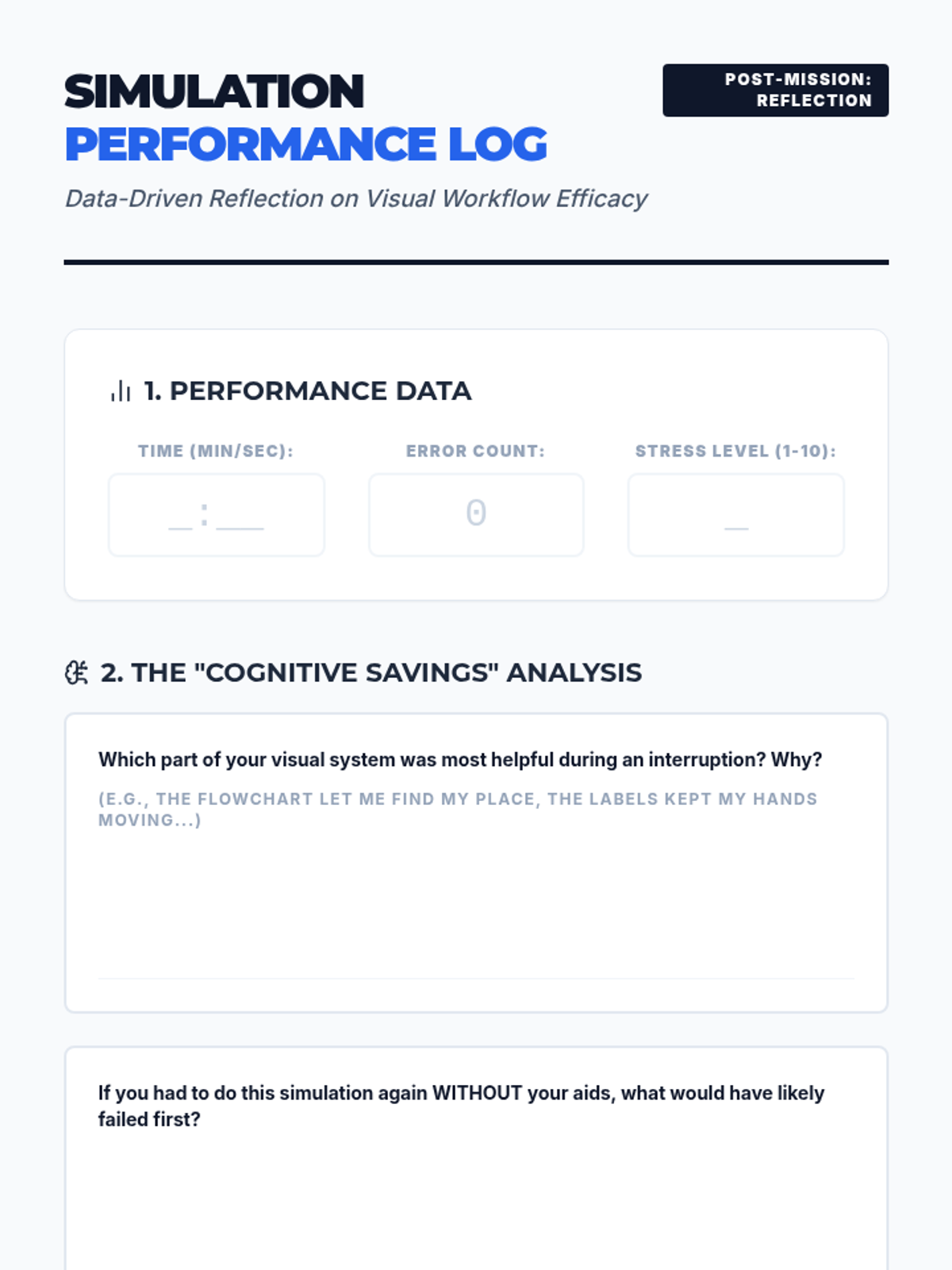
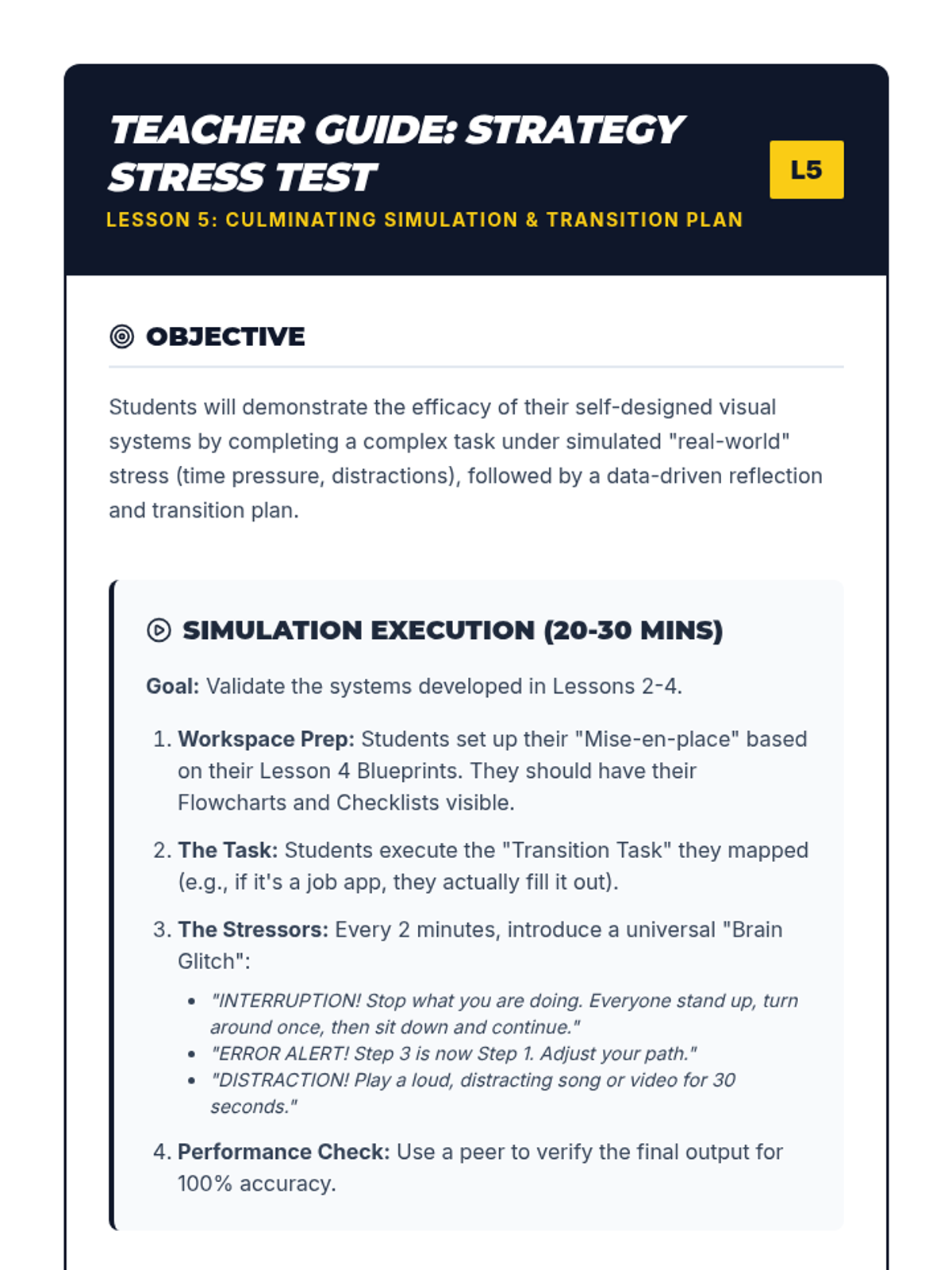
In this culminating lesson, students utilize the visual aids they designed (flowcharts, checklists, or workspace setups) to complete a simulated complex task under time pressure. They gather data on their performance and self-reflect on how the external supports reduced cognitive load.
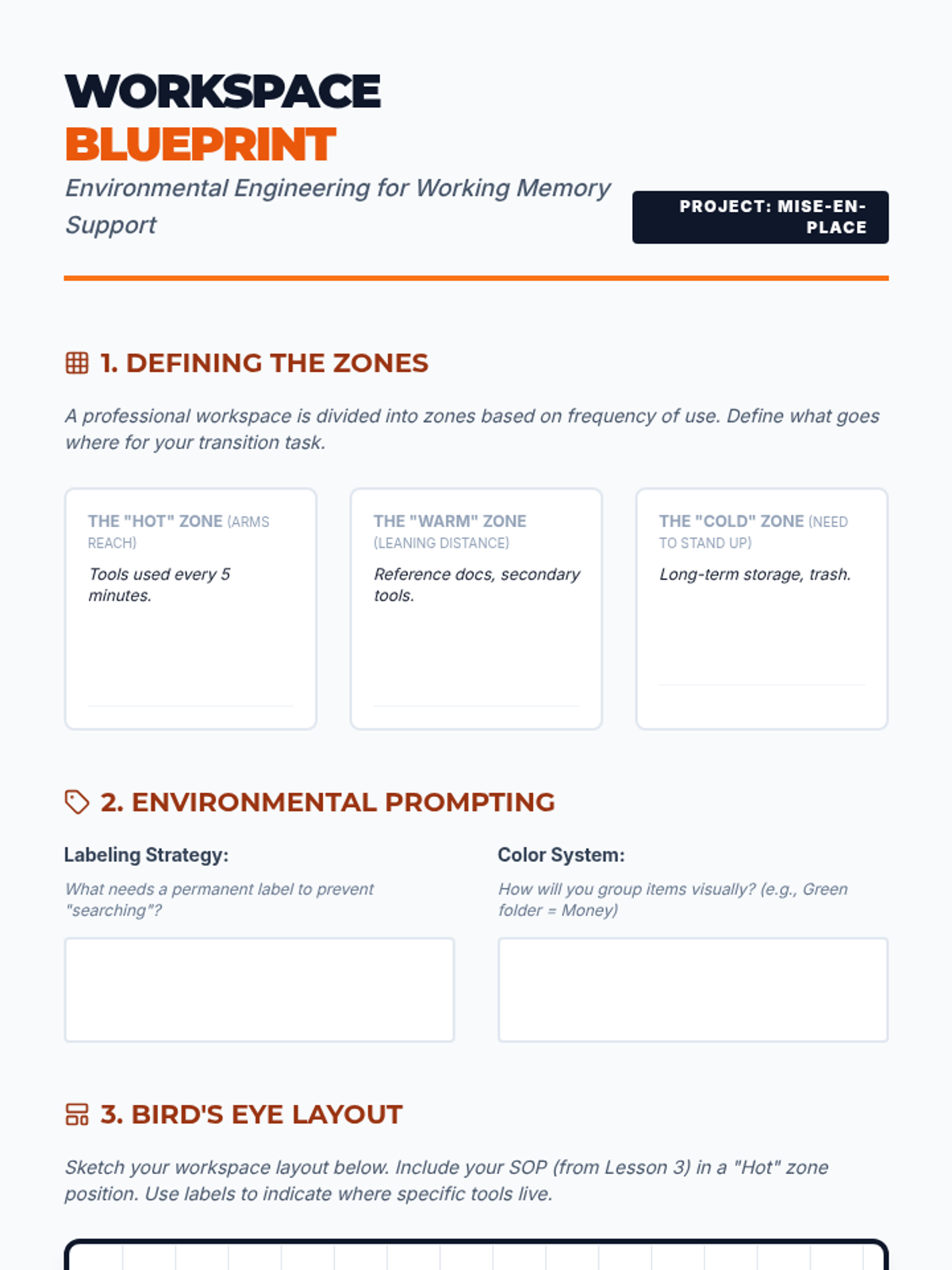
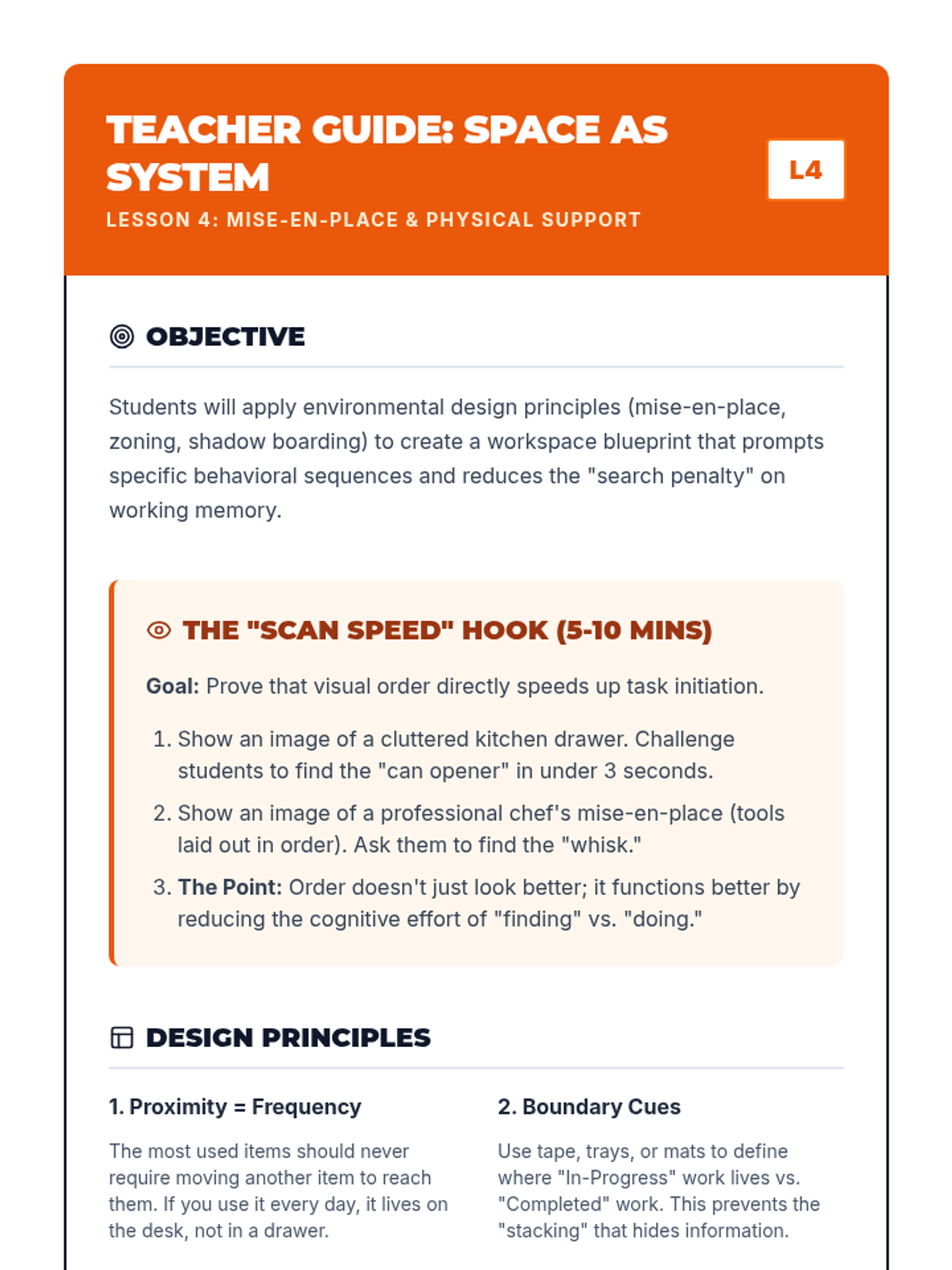
Students explore how physical space can serve as a memory aid by creating environmental cues (labels, color-coding, layout arrangements) that prompt specific behaviors. They apply 'mise-en-place' principles to a workspace design project.
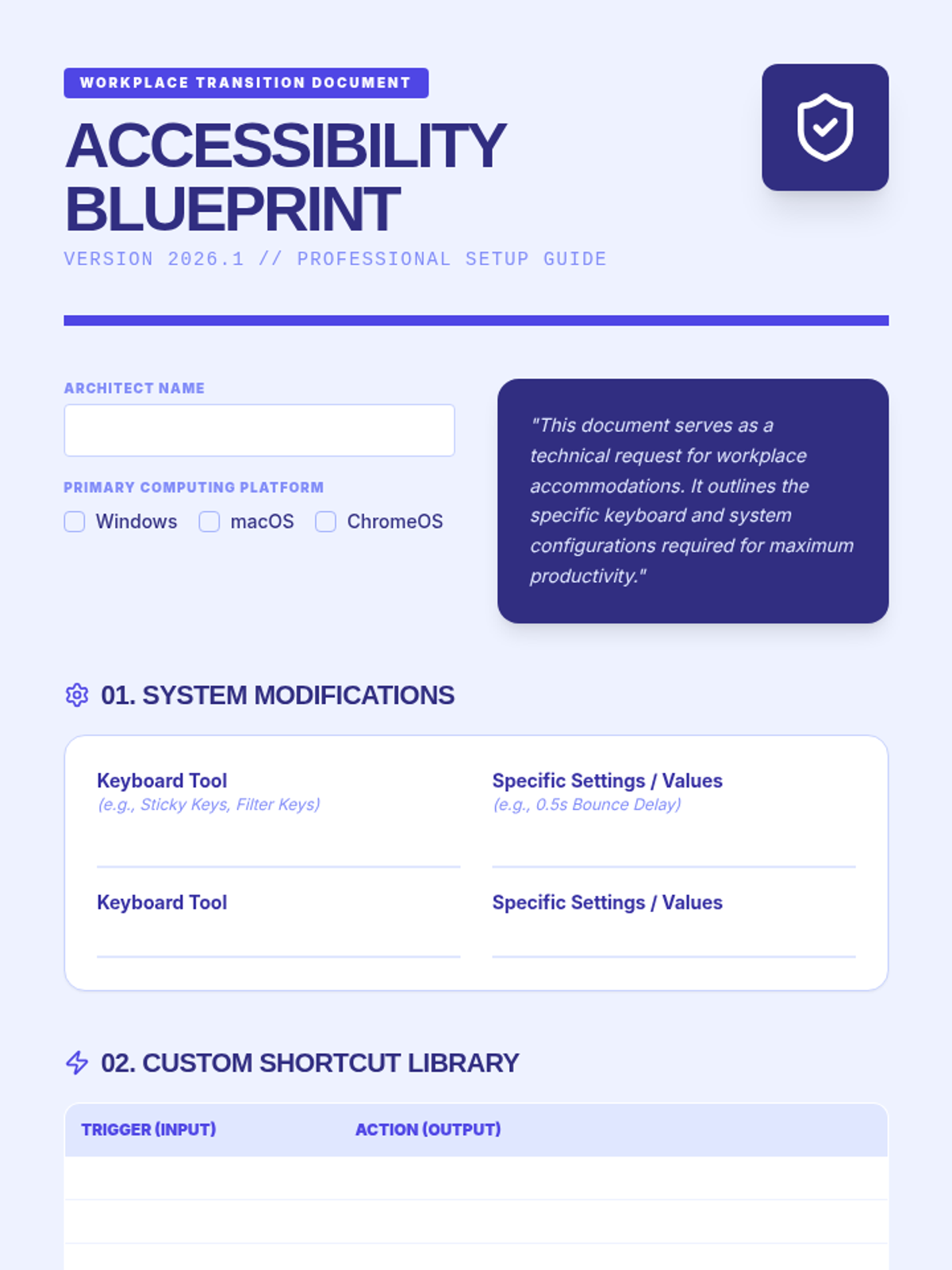
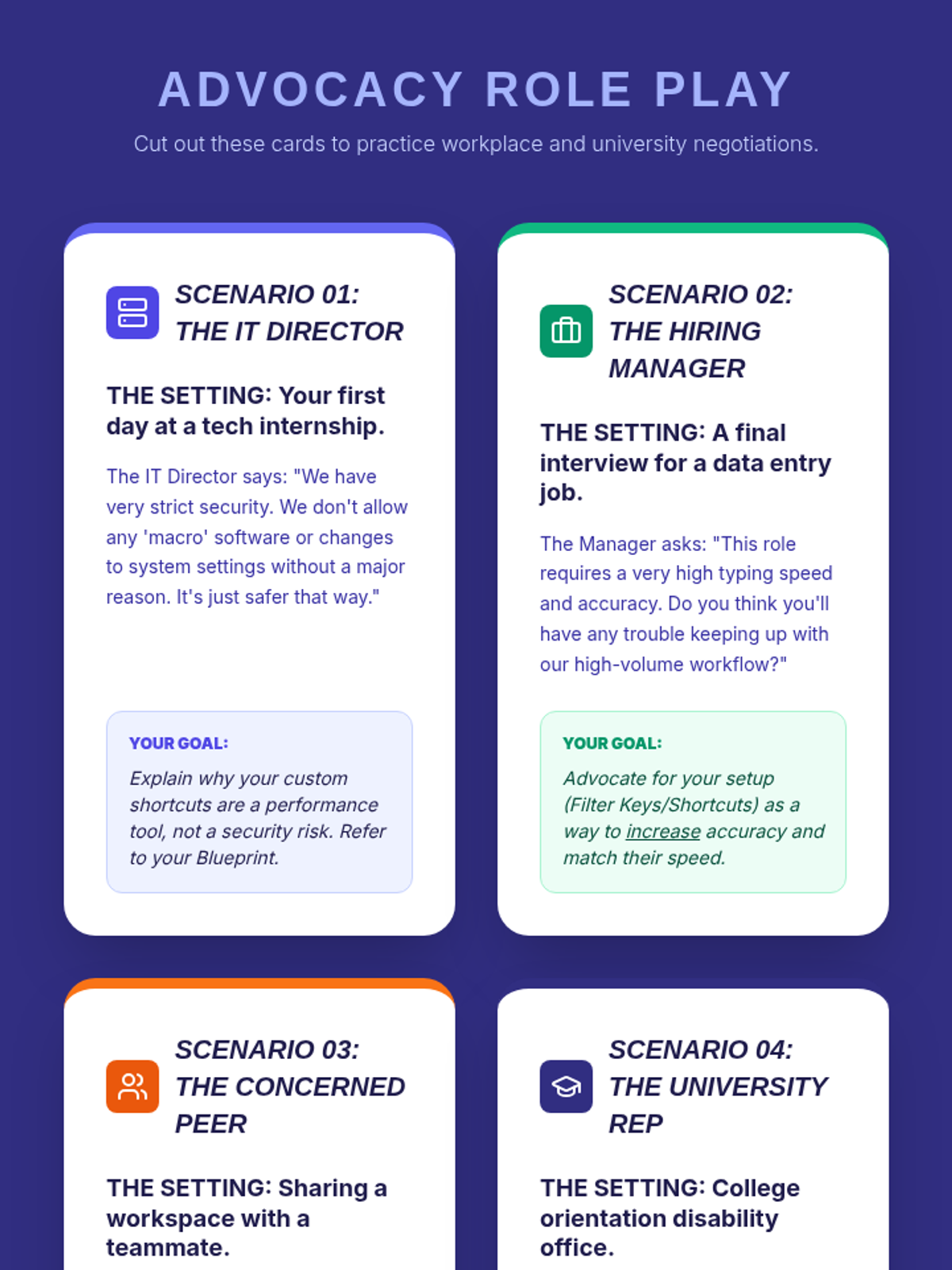
The capstone lesson where students create a personalized 'Accessibility Blueprint' and practice advocating for their specific technical setup in a workplace or university environment.
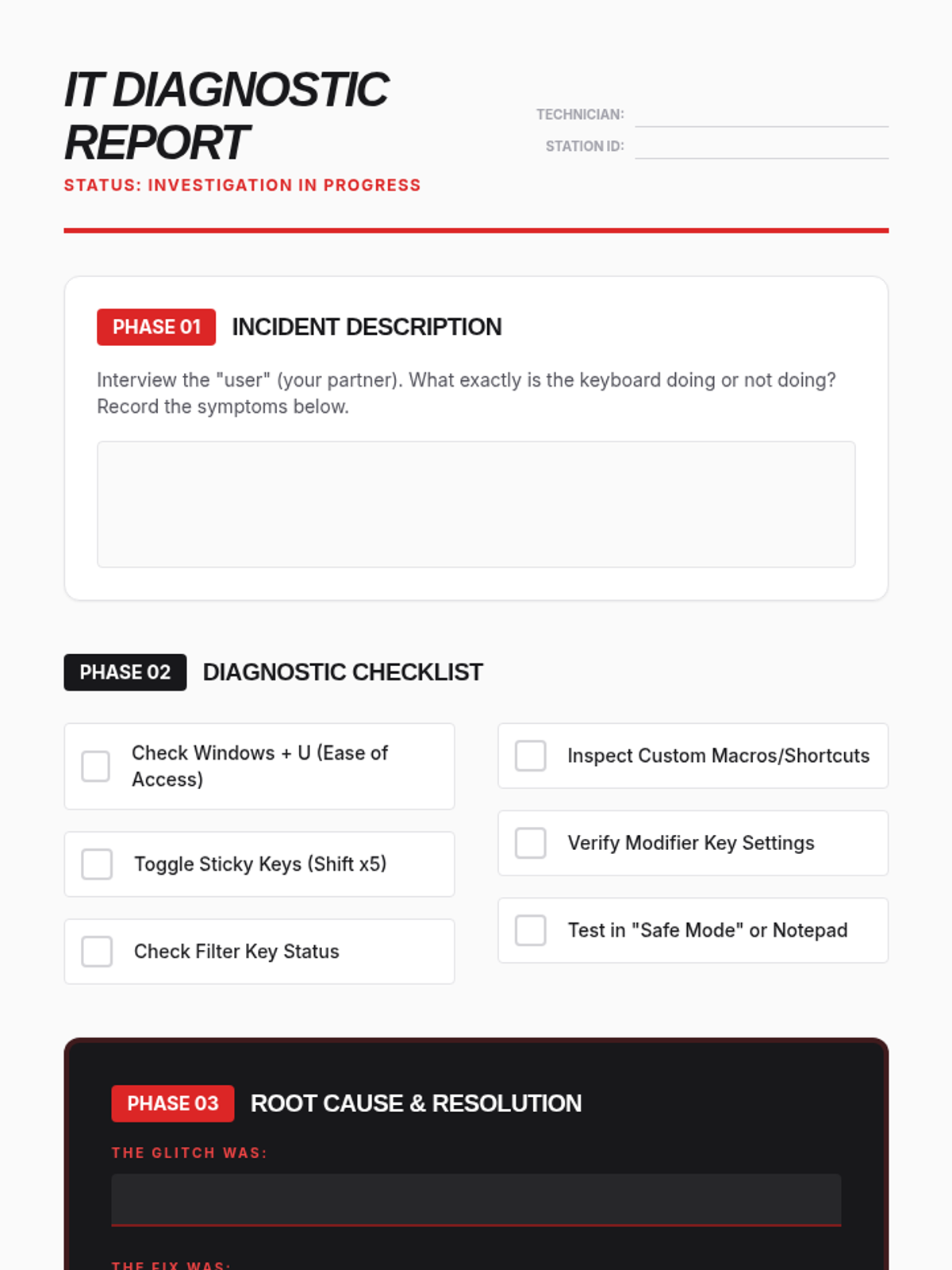
A technical problem-solving lesson where students diagnose and resolve shortcut conflicts or system errors, using help menus and resetting accessibility settings.
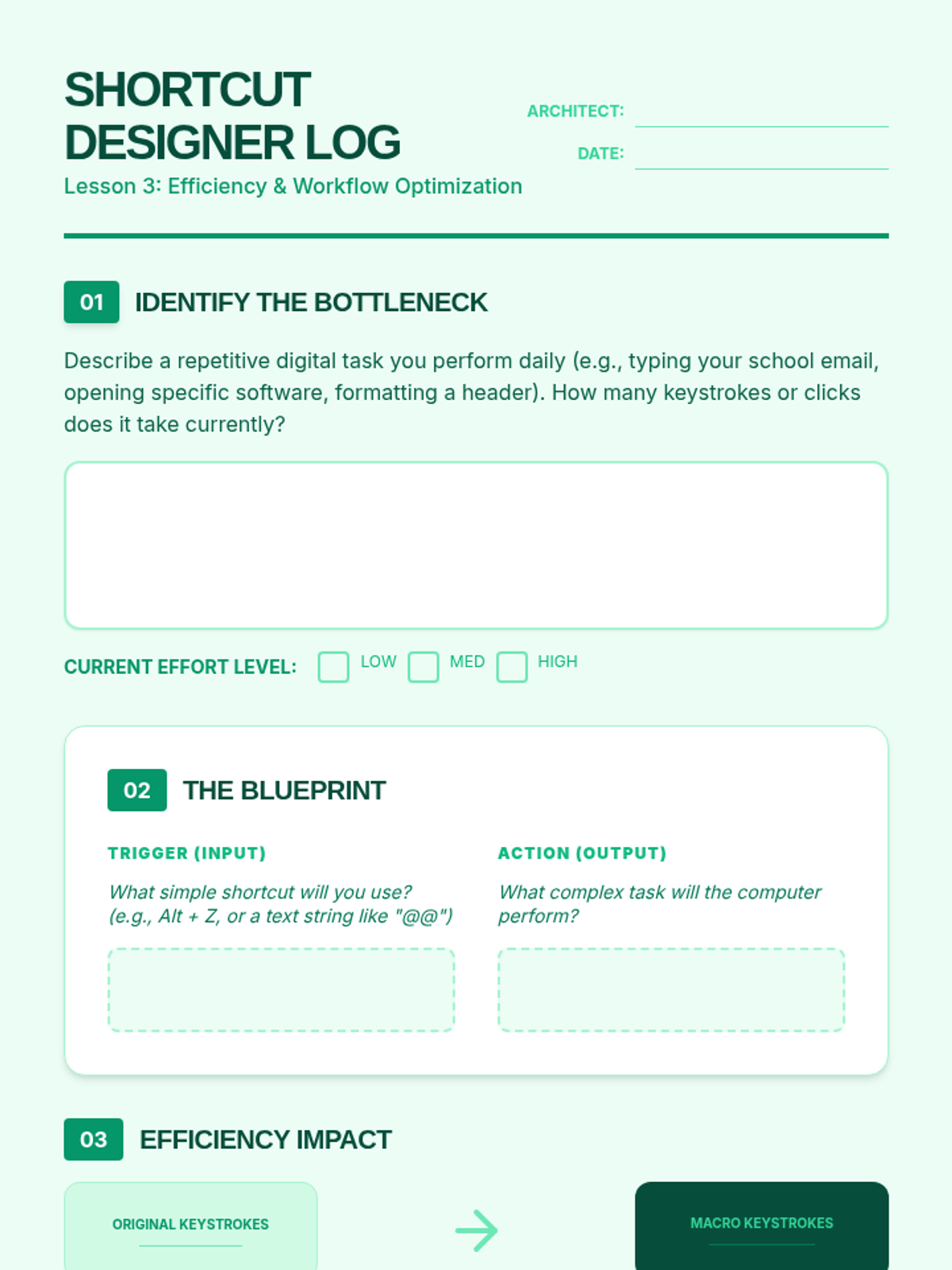
Students learn to create and implement custom keyboard shortcuts and macros for frequently used tasks, focusing on workflow optimization and reducing repetitive strain in a professional context.
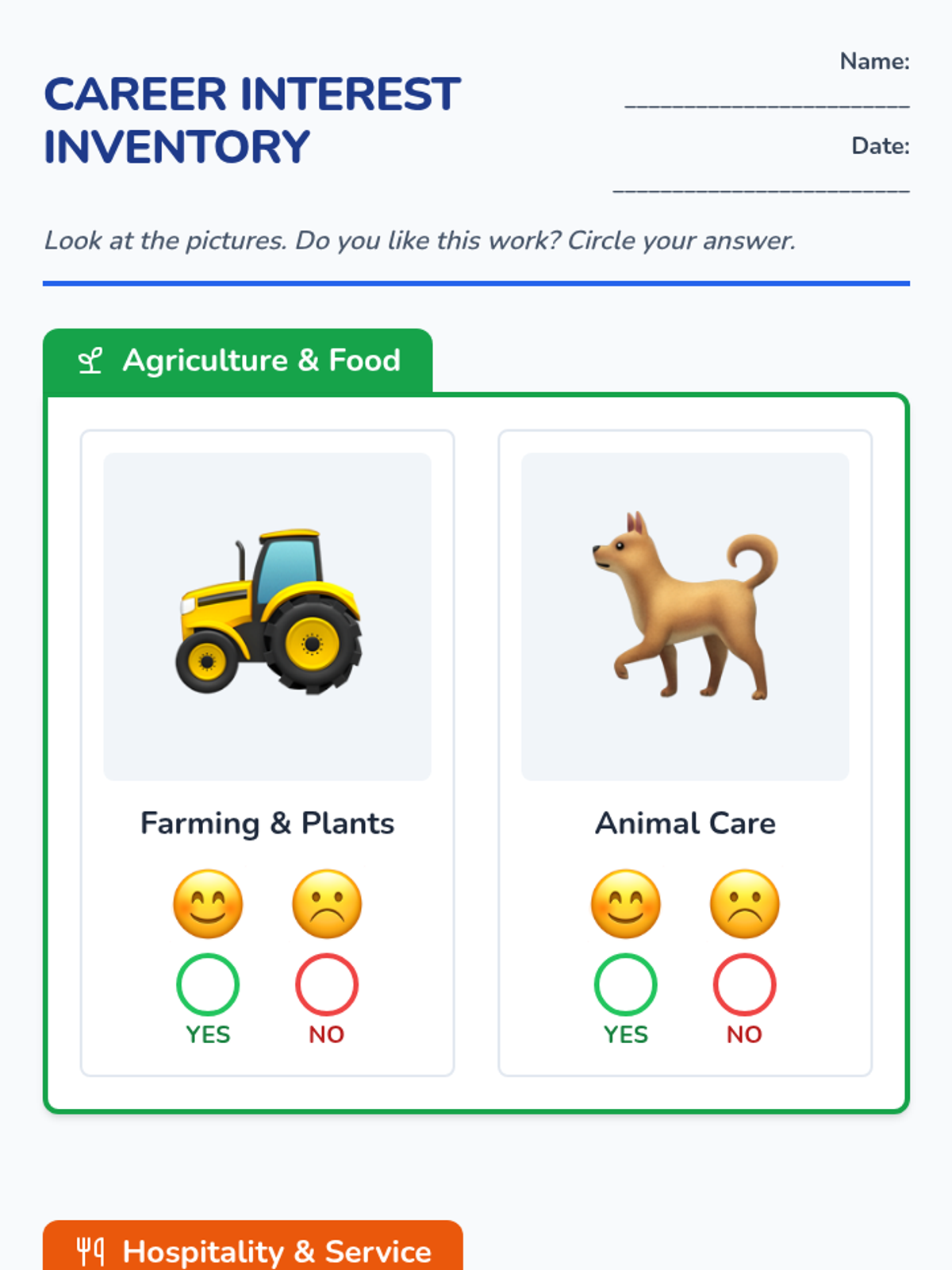
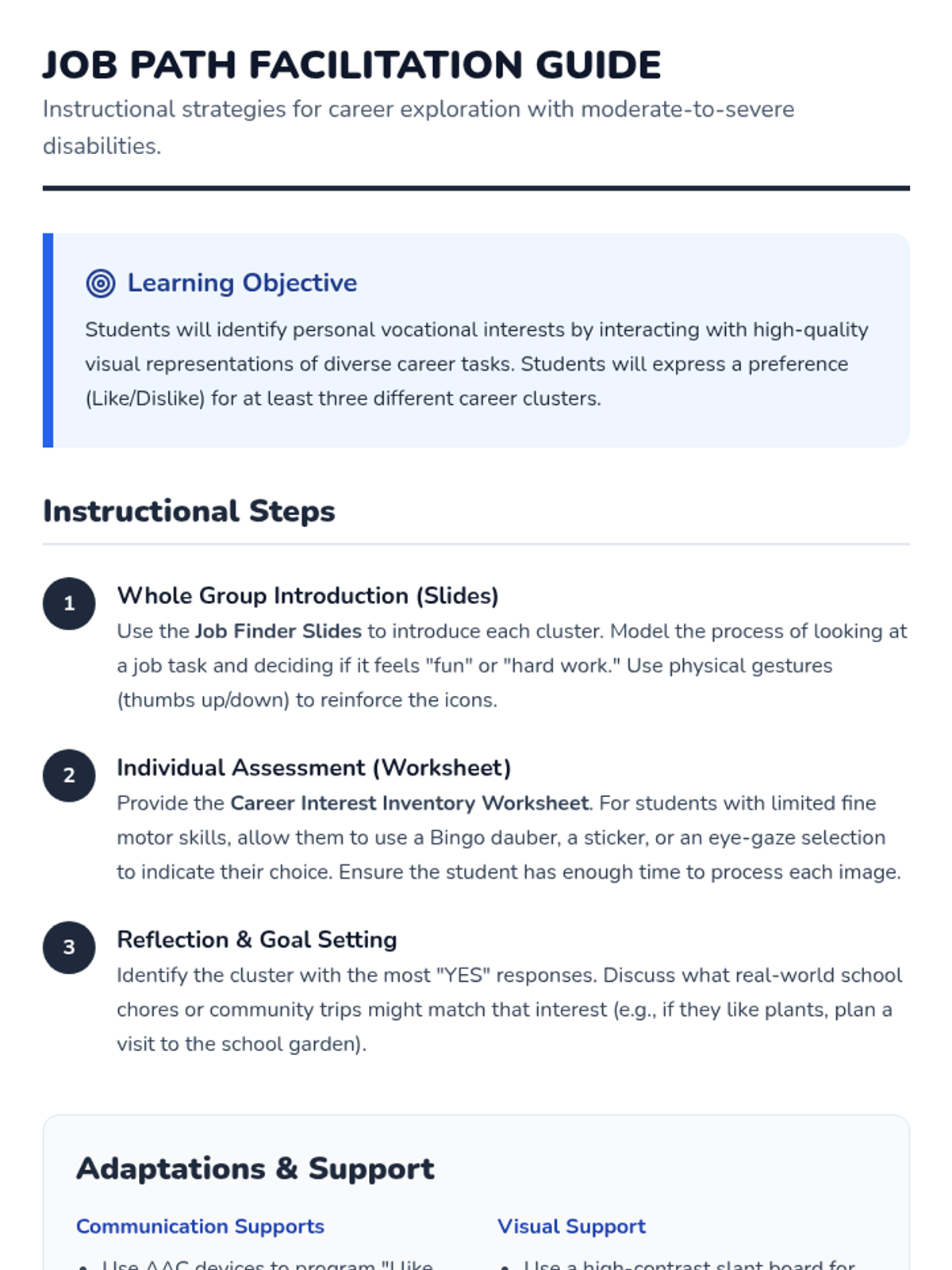
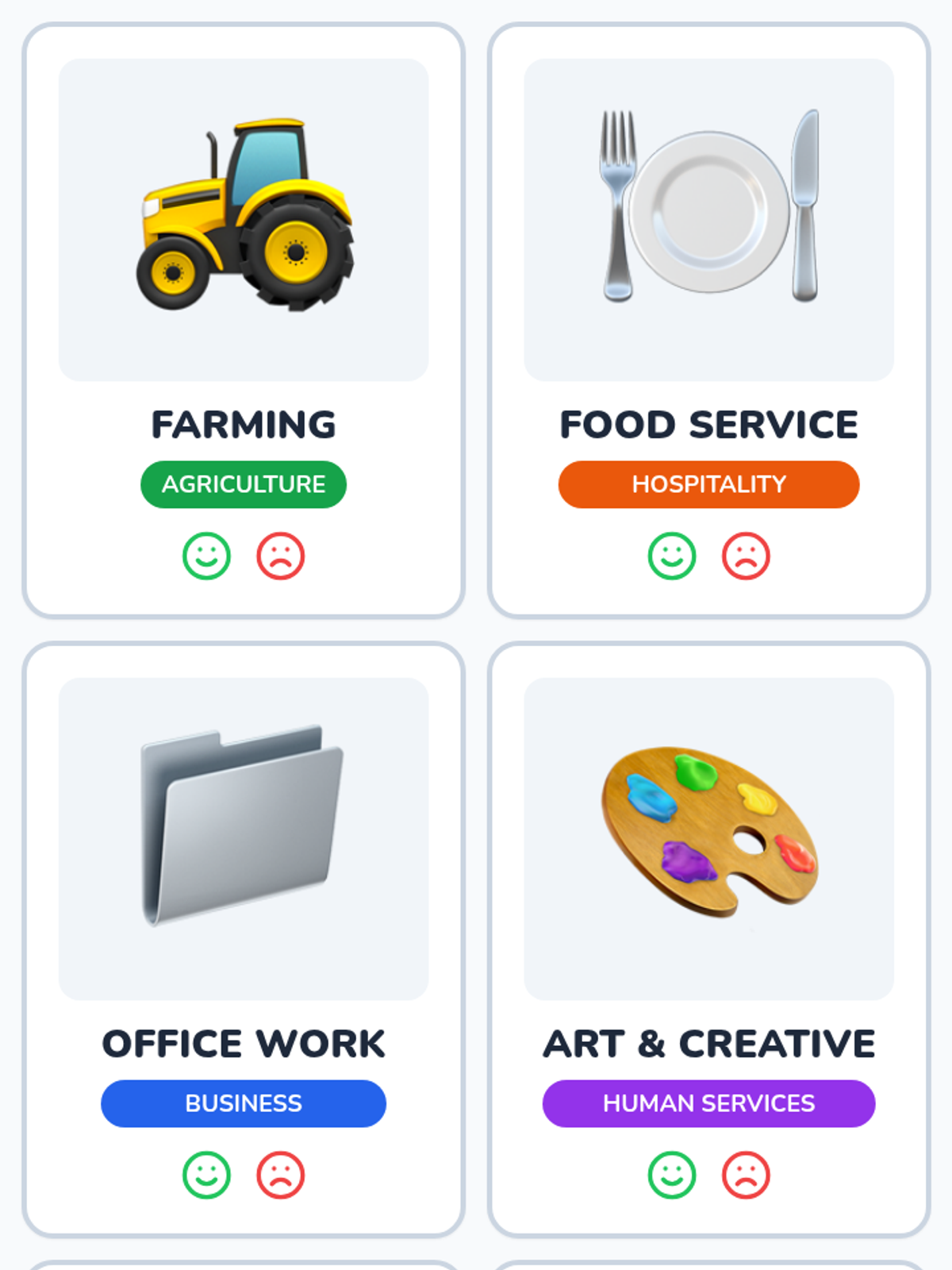
A visual career exploration lesson designed for students with moderate to severe disabilities, using real photos to identify interests across various career clusters.
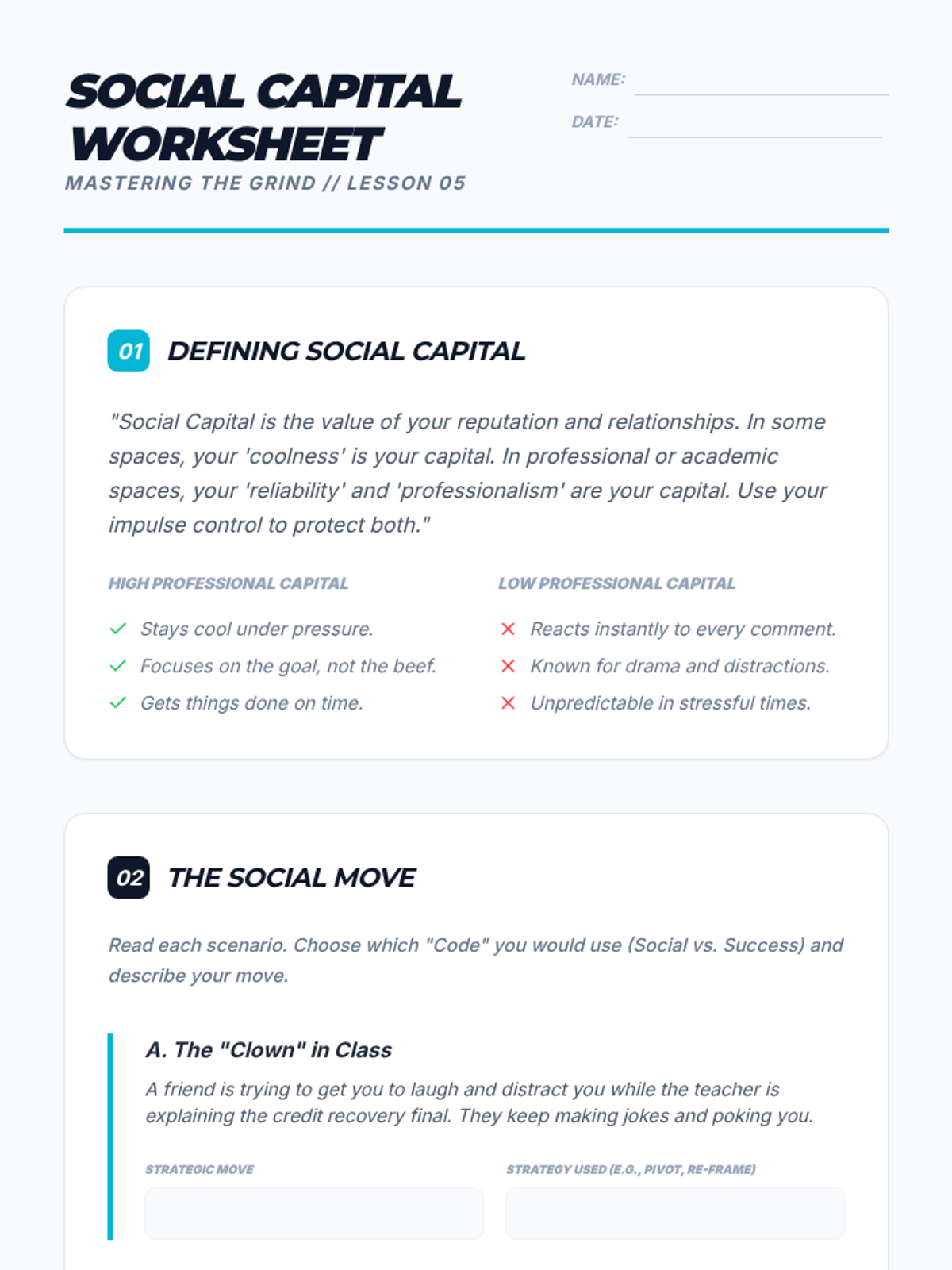
Focuses on social intelligence and 'code-switching' as tools for success. Students practice navigating conflict with peers and authority figures to protect their progress and 'own the room' professionally.
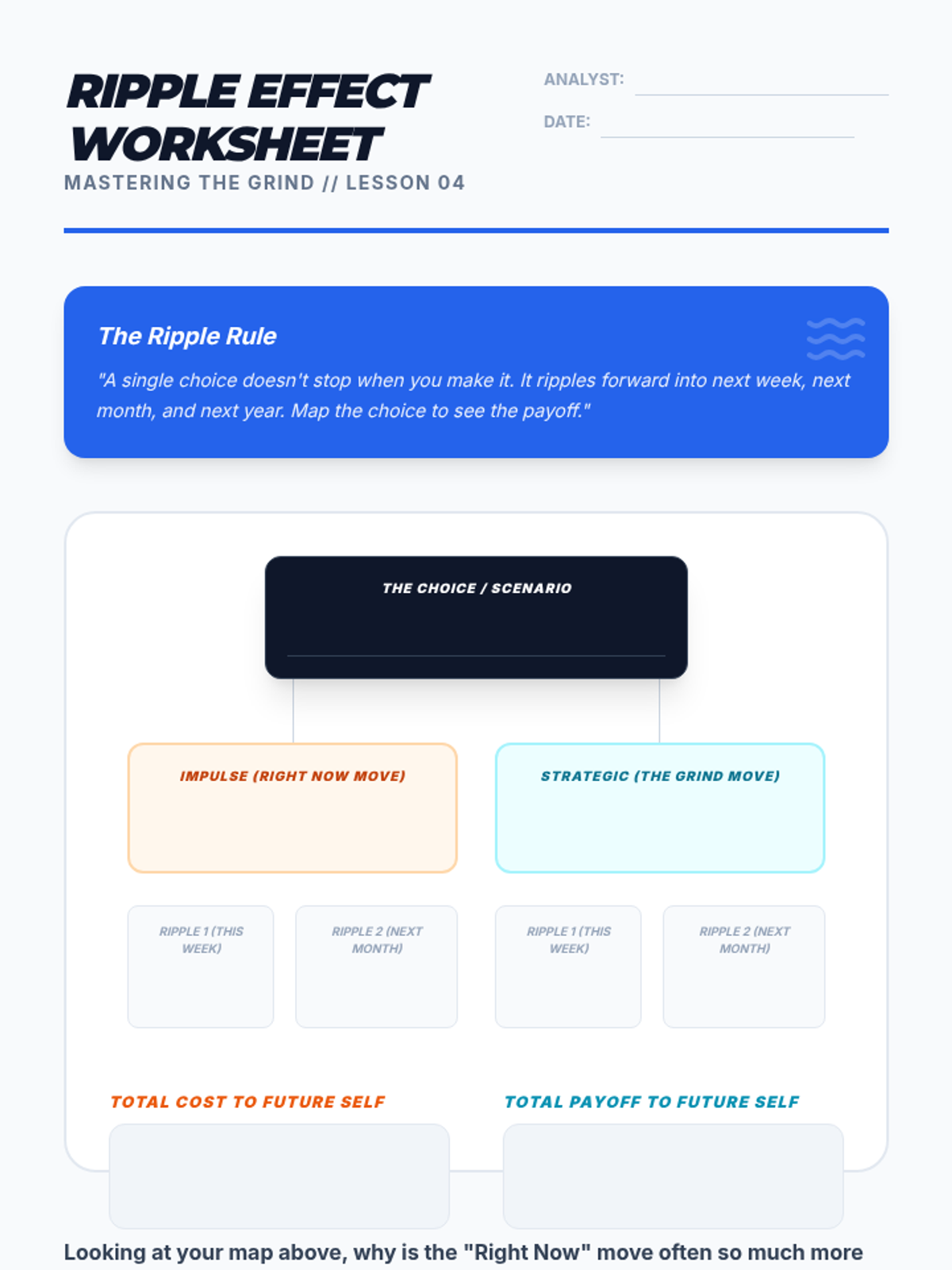
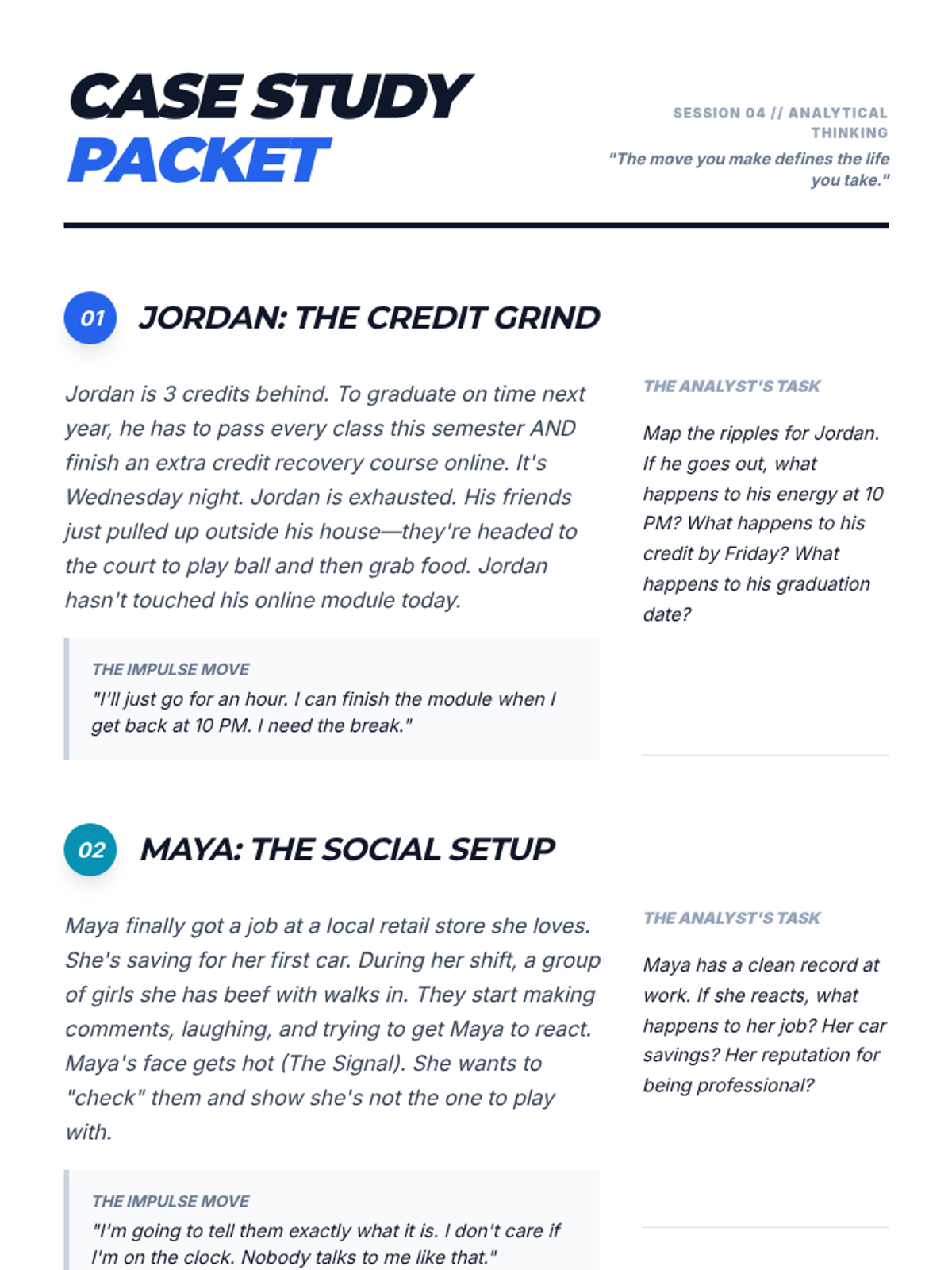
Visualizes the 'Ripple Effect' of choices on graduation timelines and future earnings. Students analyze case studies of peers navigating high-stakes decisions to understand the compounding nature of consistency.
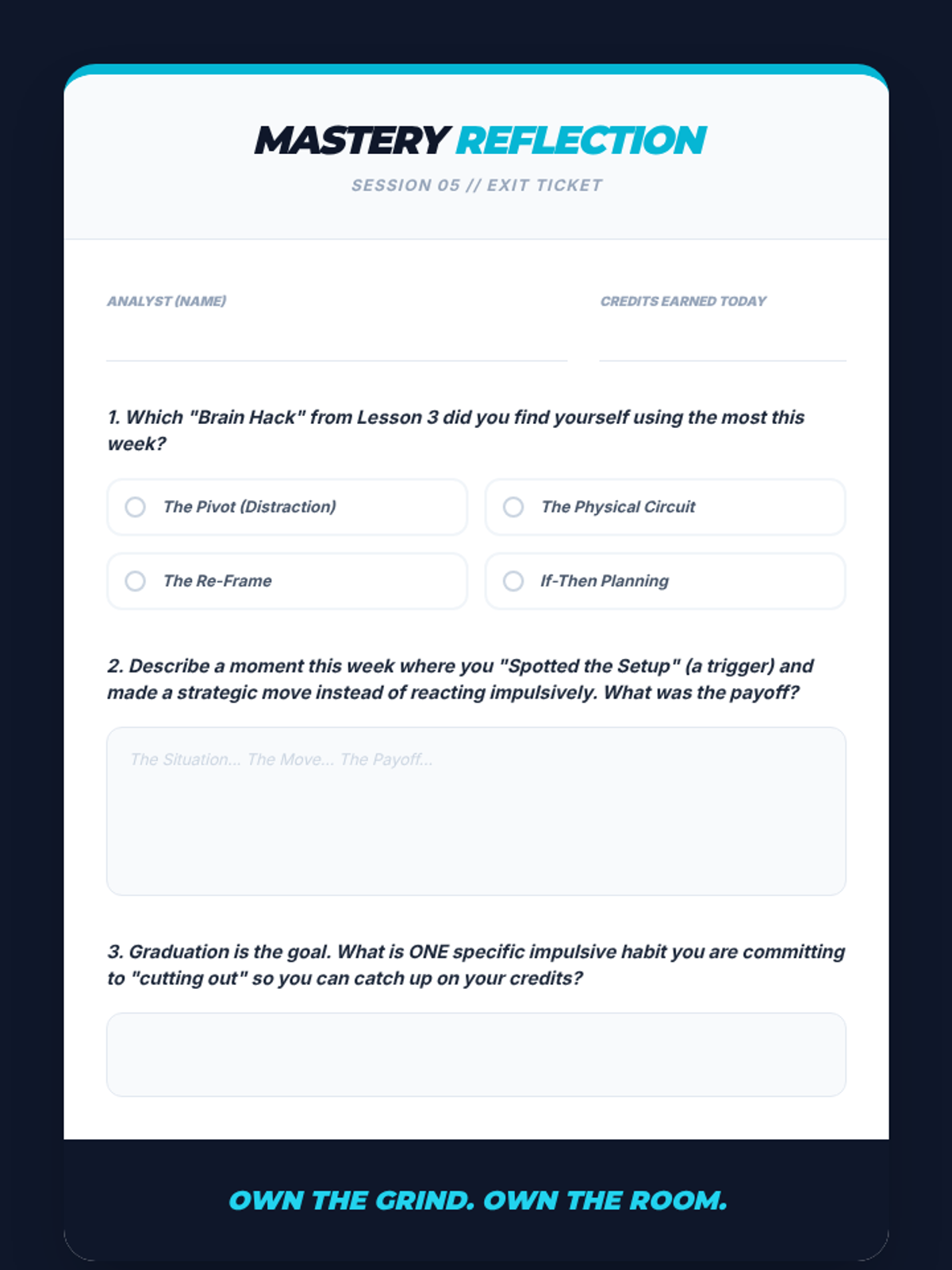
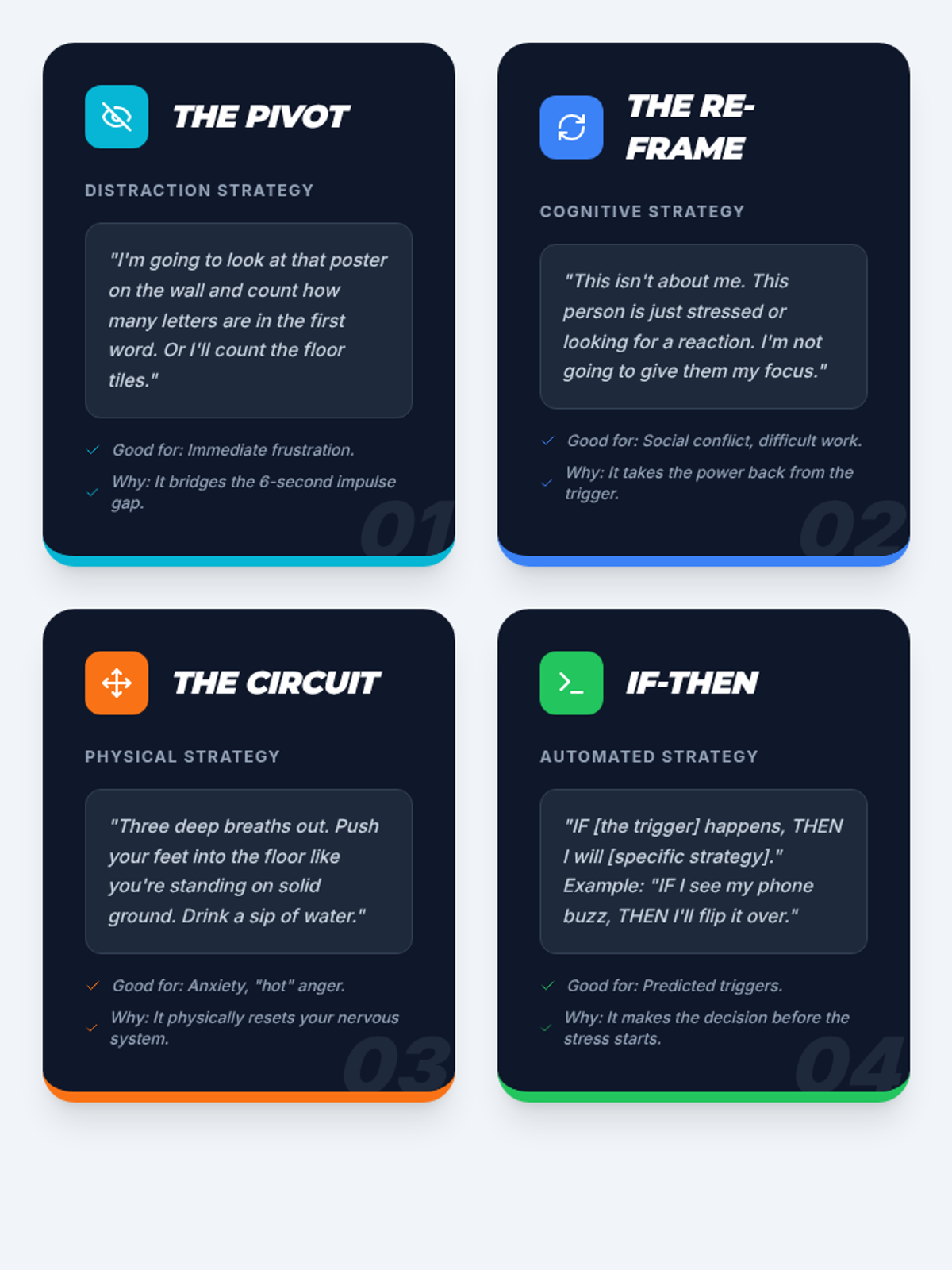
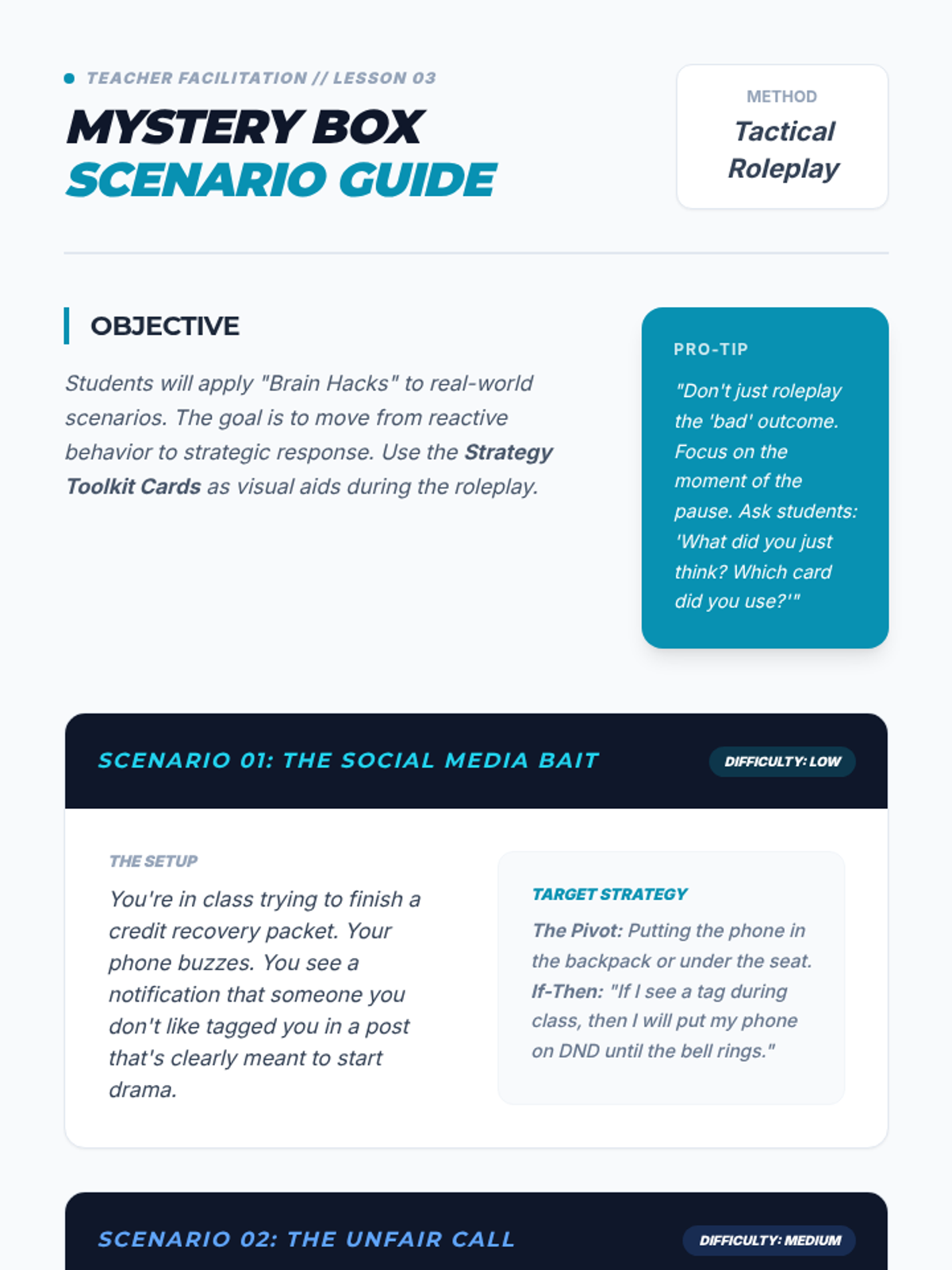
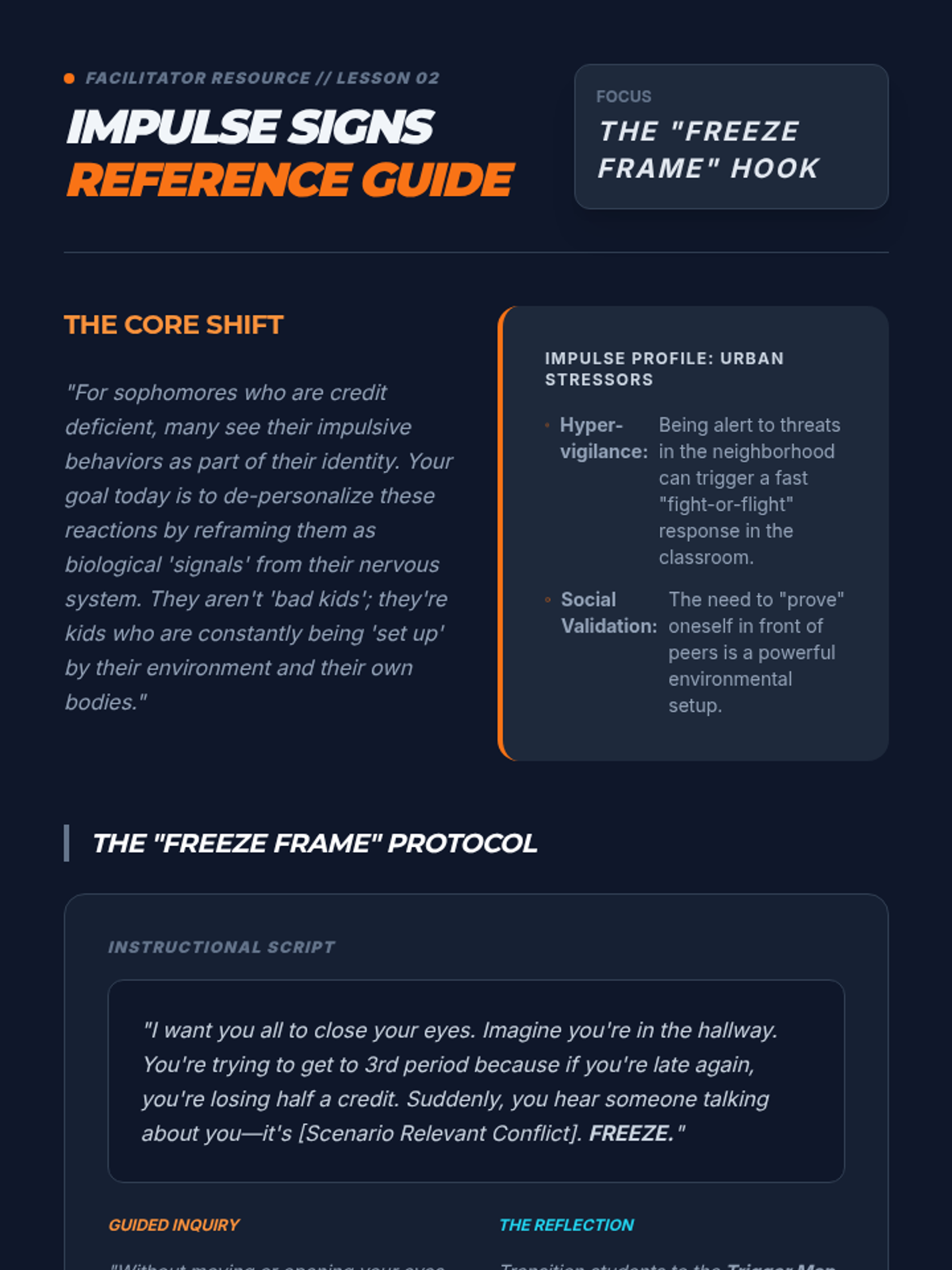
Equips students with high-level cognitive strategies to override impulsive reactions. Focuses on 'reframing' stressful situations and using 'if-then' planning to maintain composure under pressure.
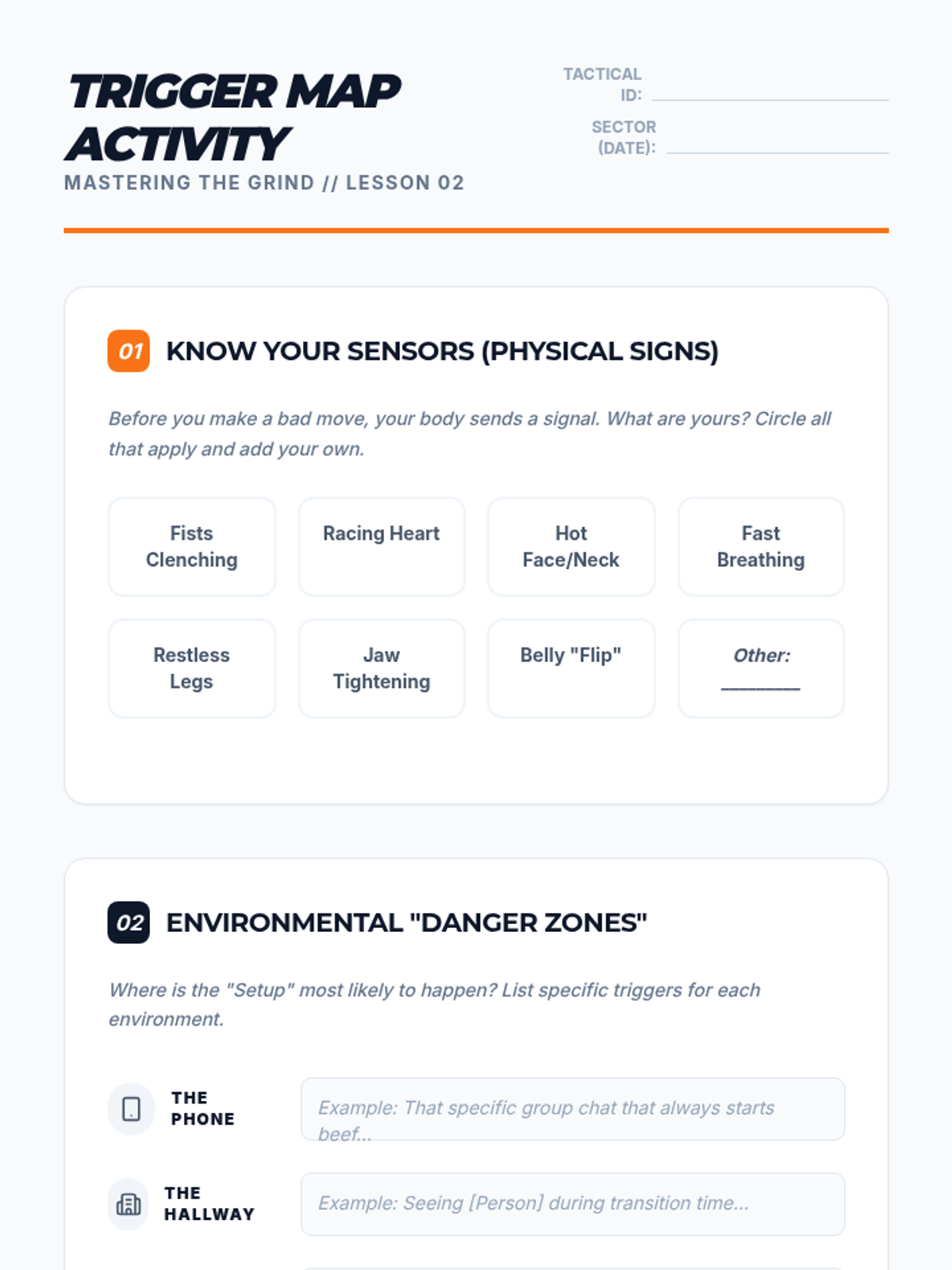
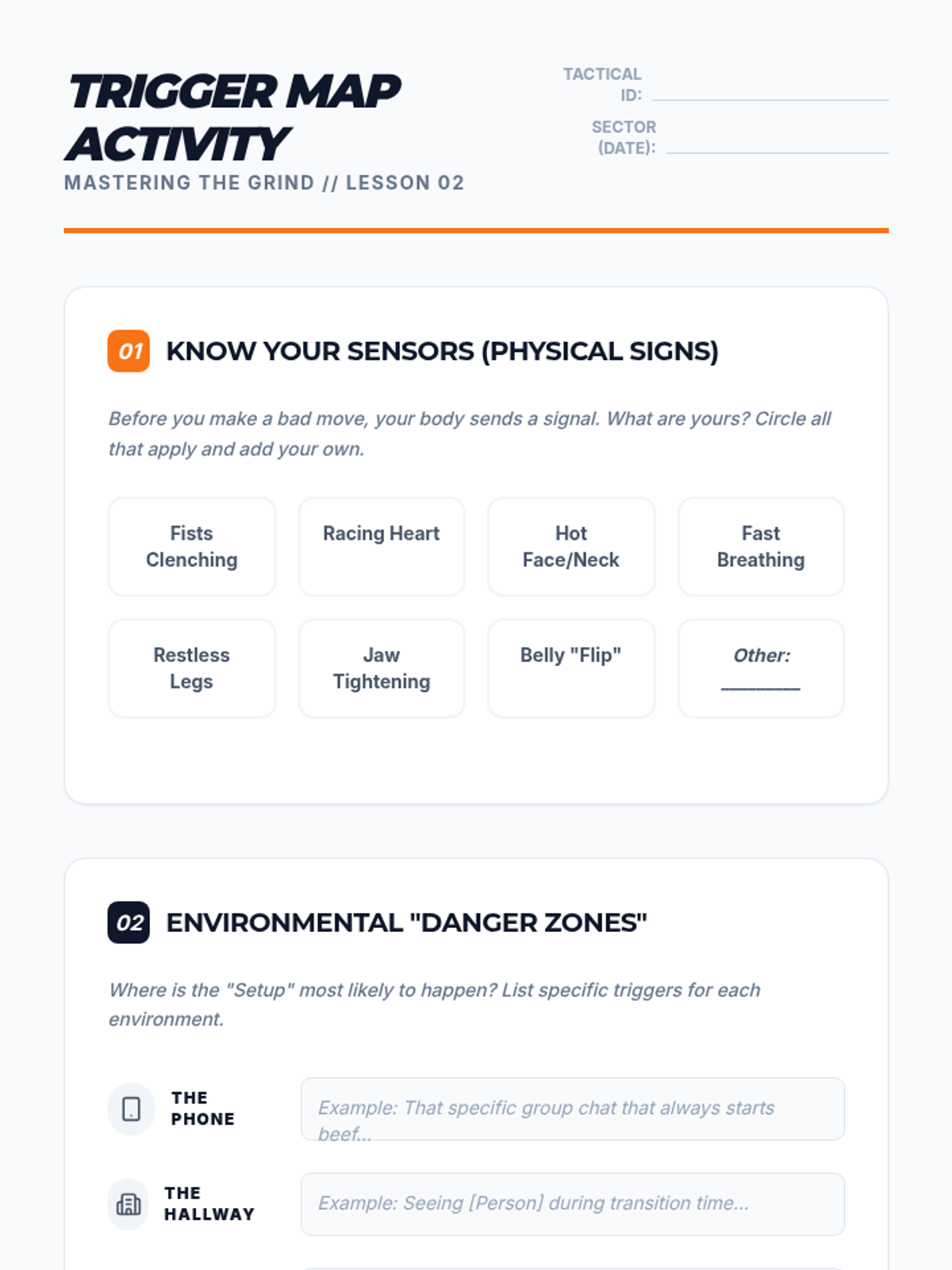
Students identify internal and environmental 'setups'—triggers that lead to self-sabotage. They create tactical maps of their daily routines to anticipate and bypass distractions in an urban school environment.
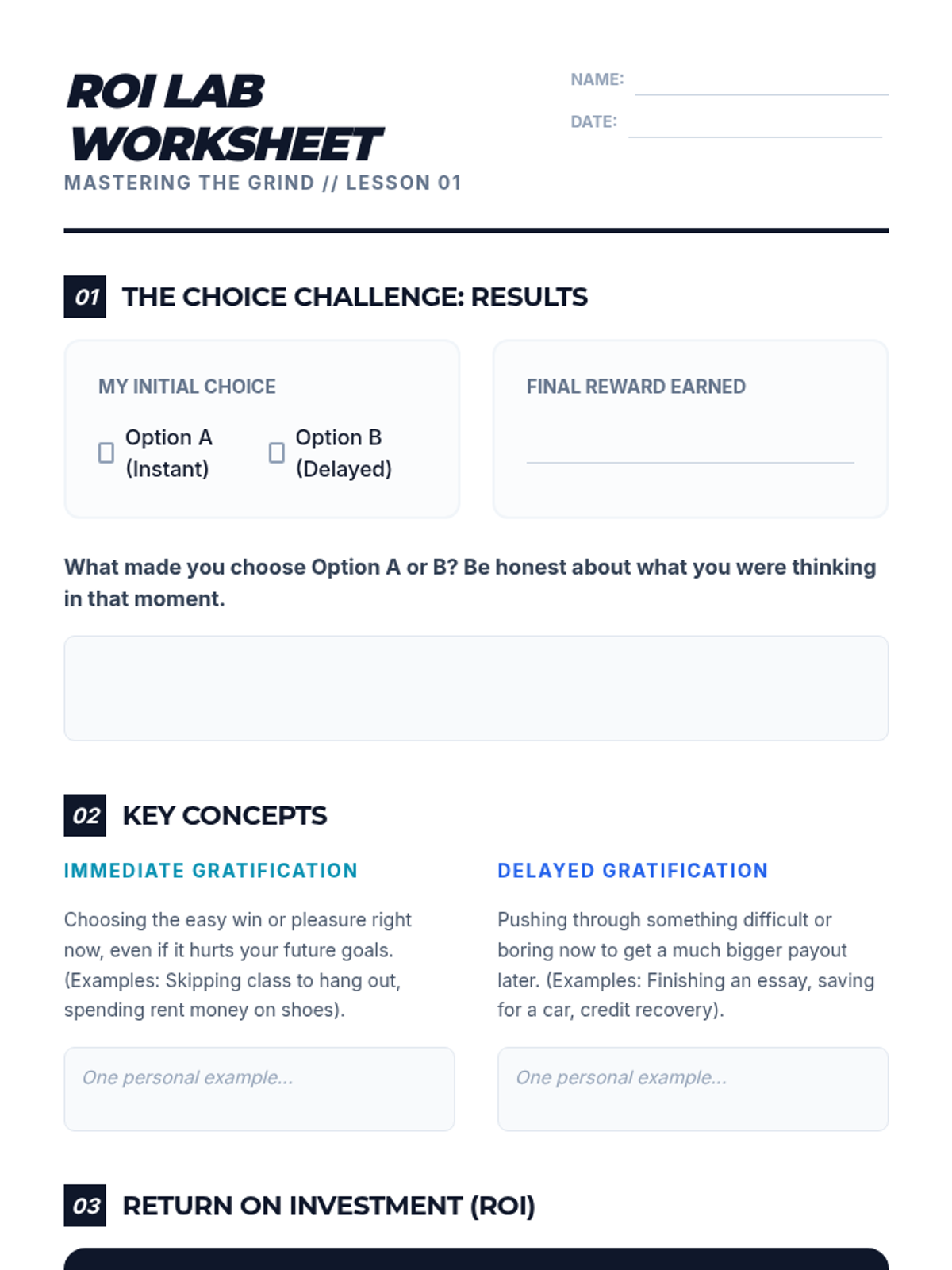
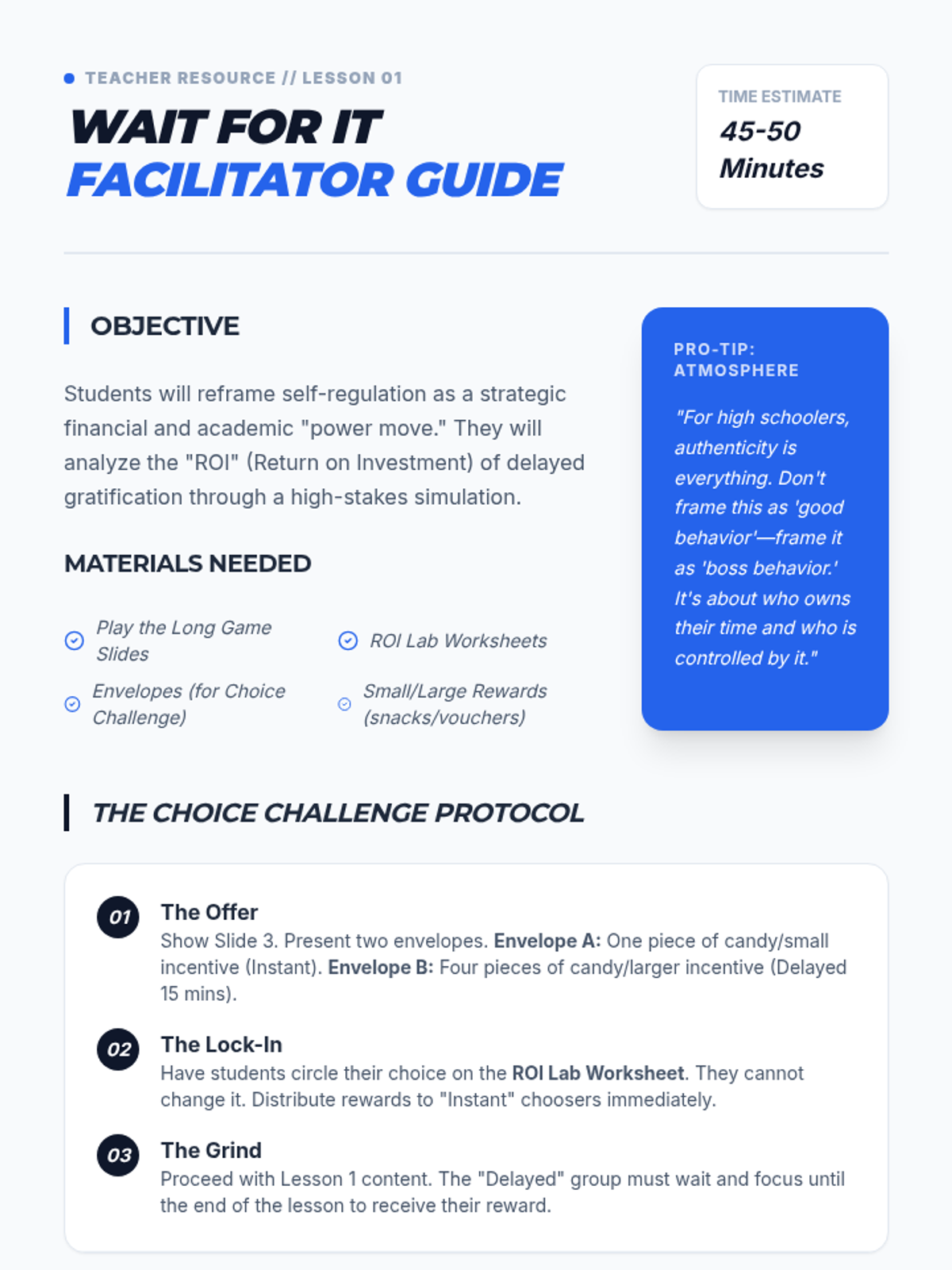
Reframes delayed gratification as a strategic investment. Students analyze the 'ROI' of their time and credits, participating in a simulation that mirrors real-world economic and academic trade-offs.
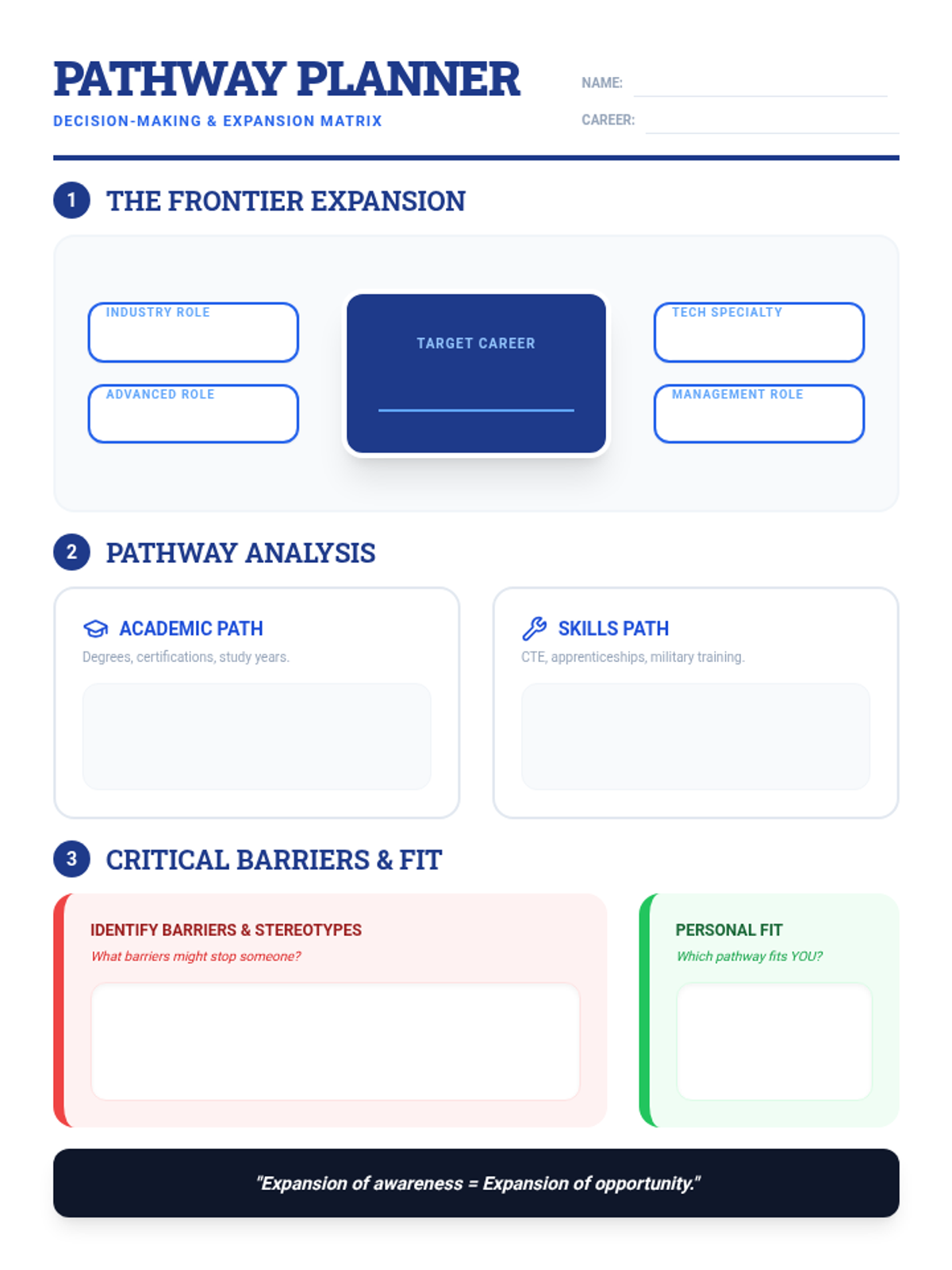
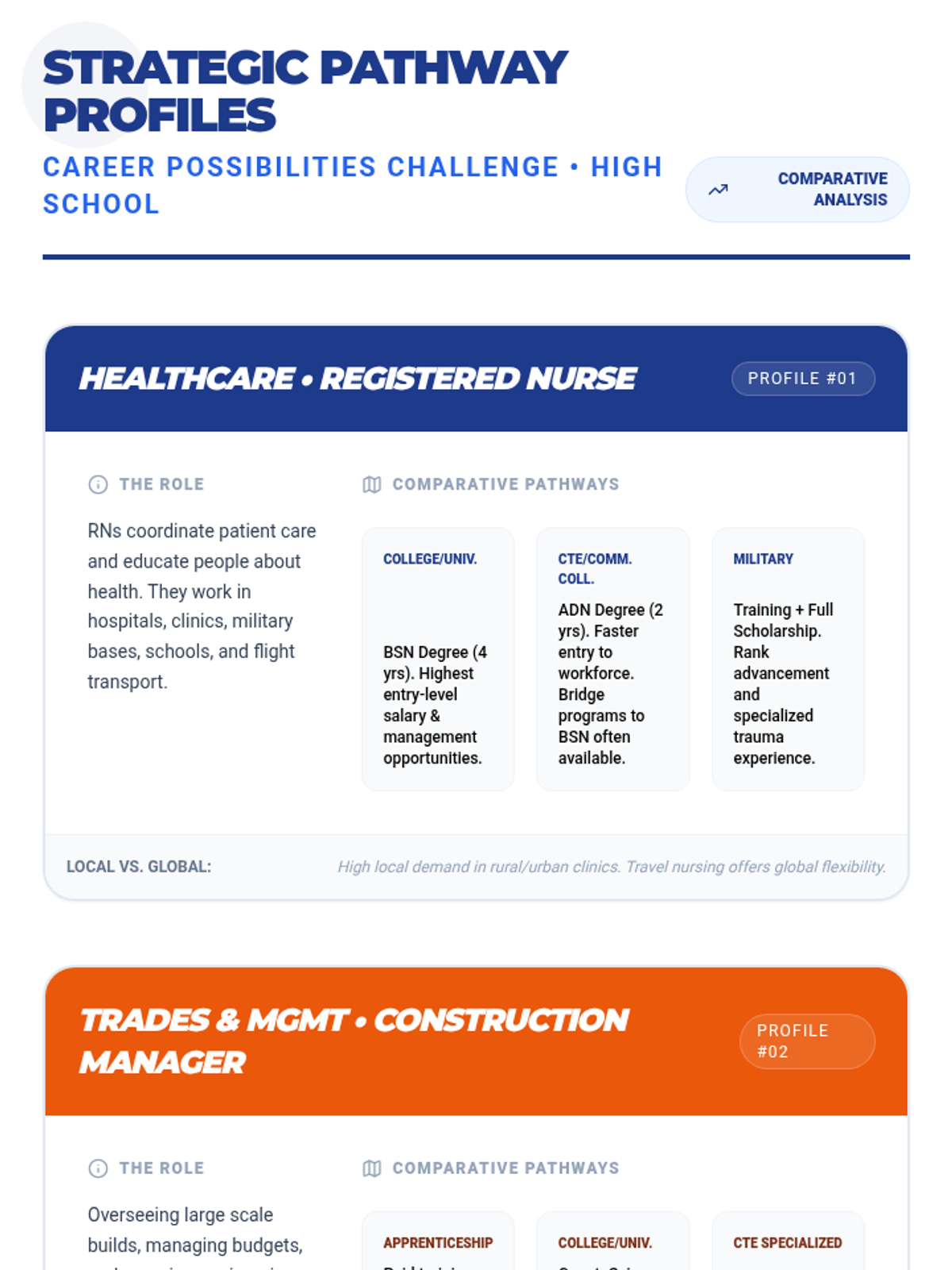
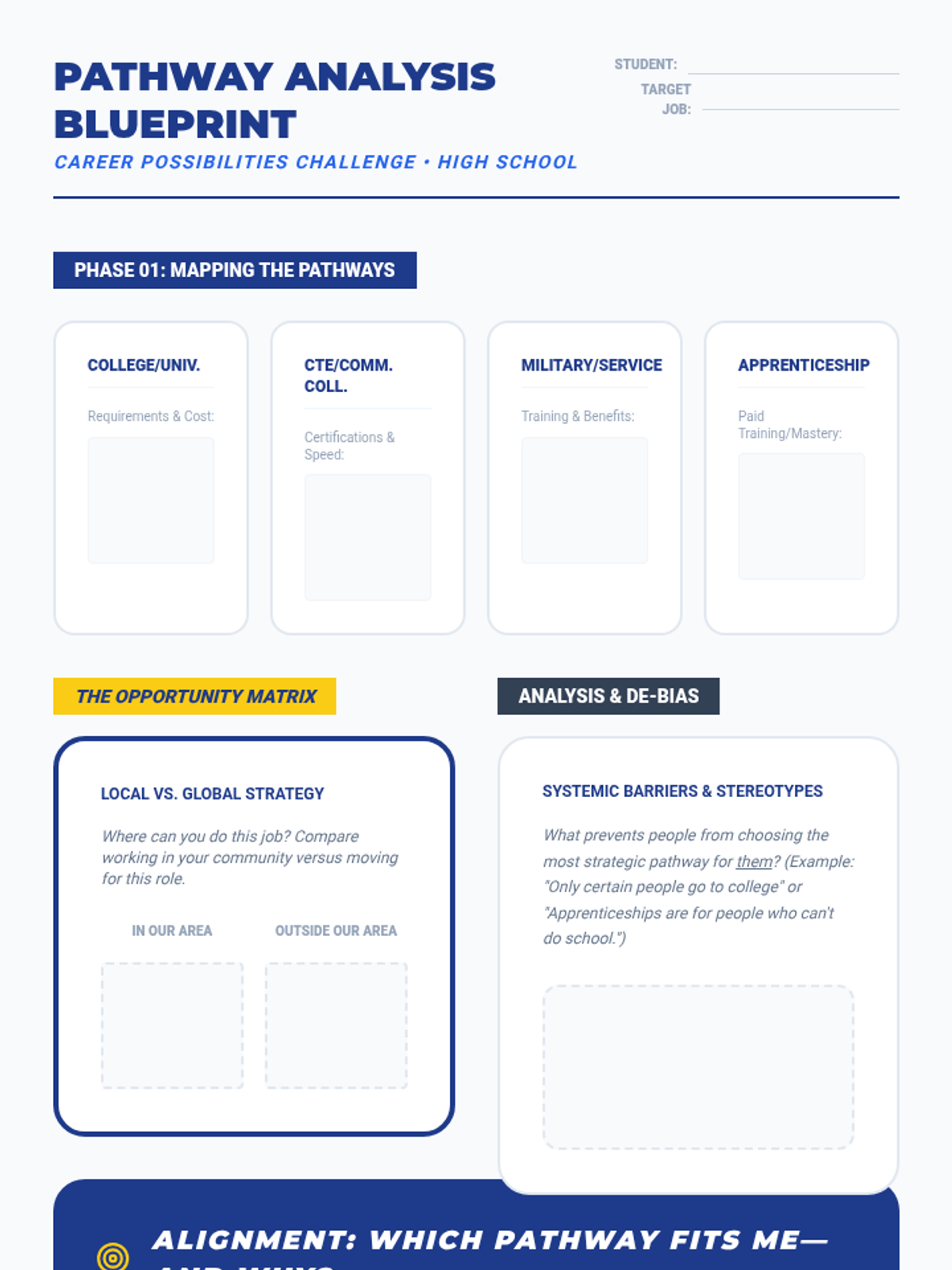
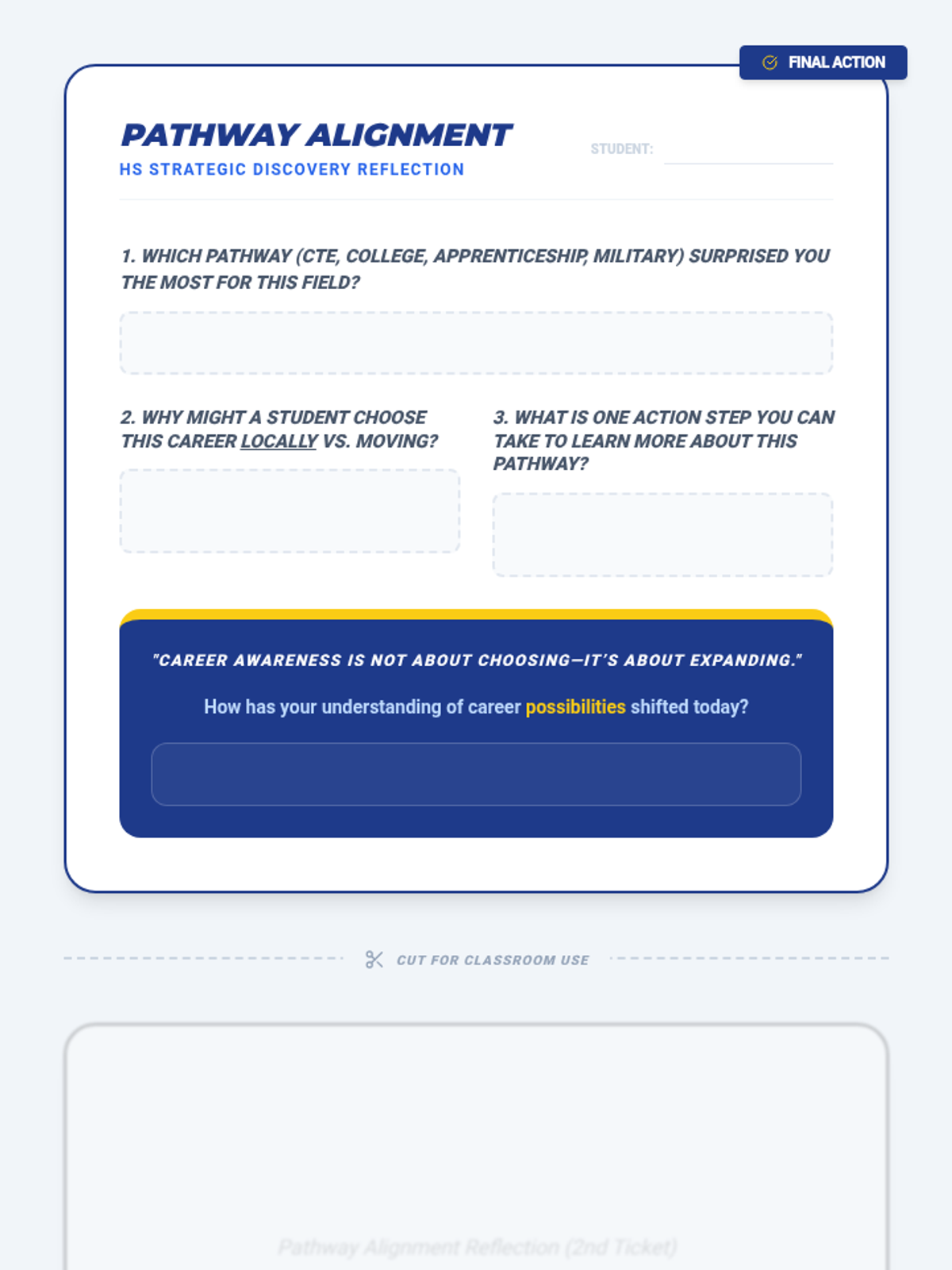
A strategic career planning lesson for high schoolers focusing on comparing specific pathways (CTE, college, military) and evaluating local versus out-of-area opportunities.
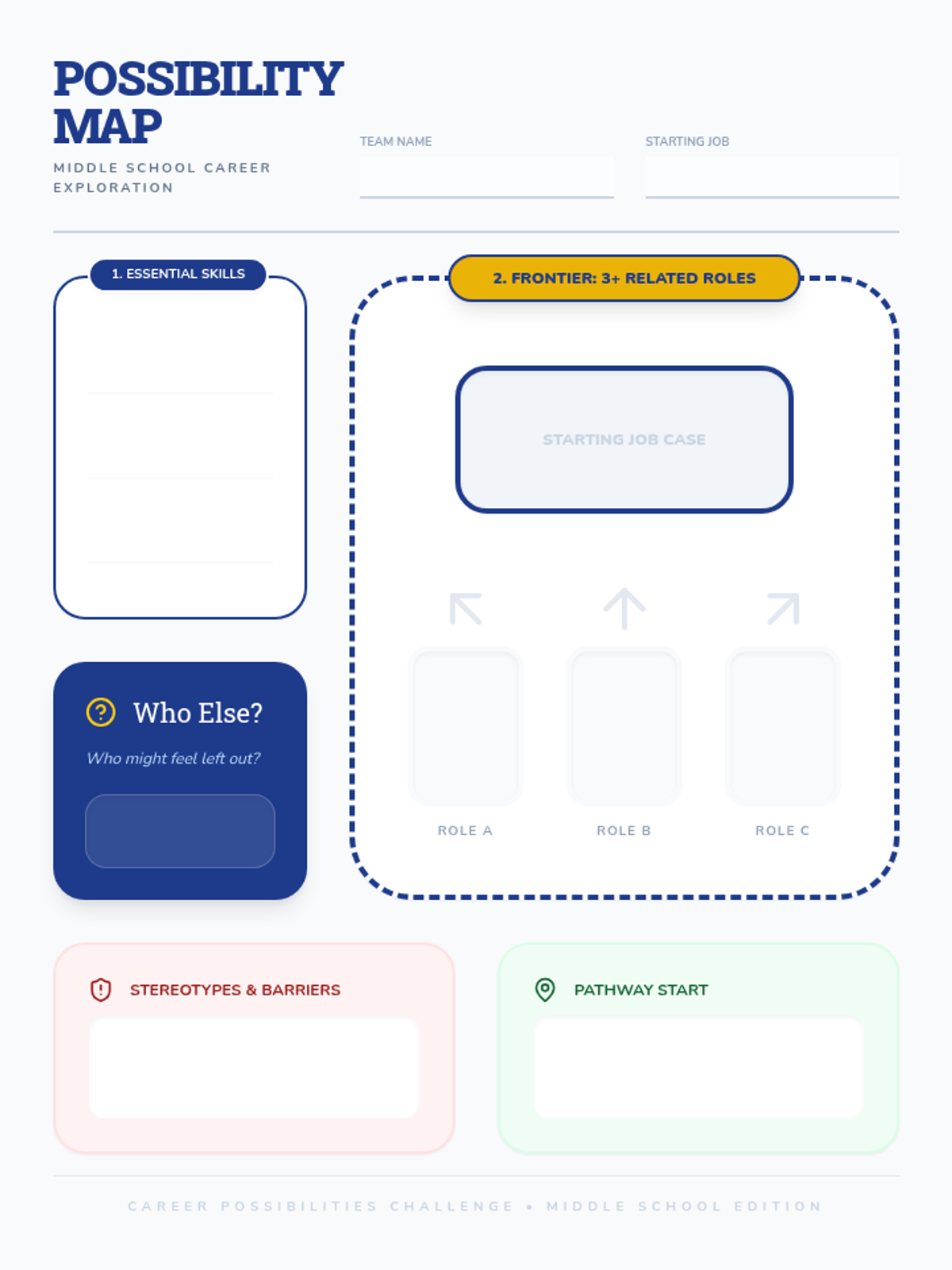
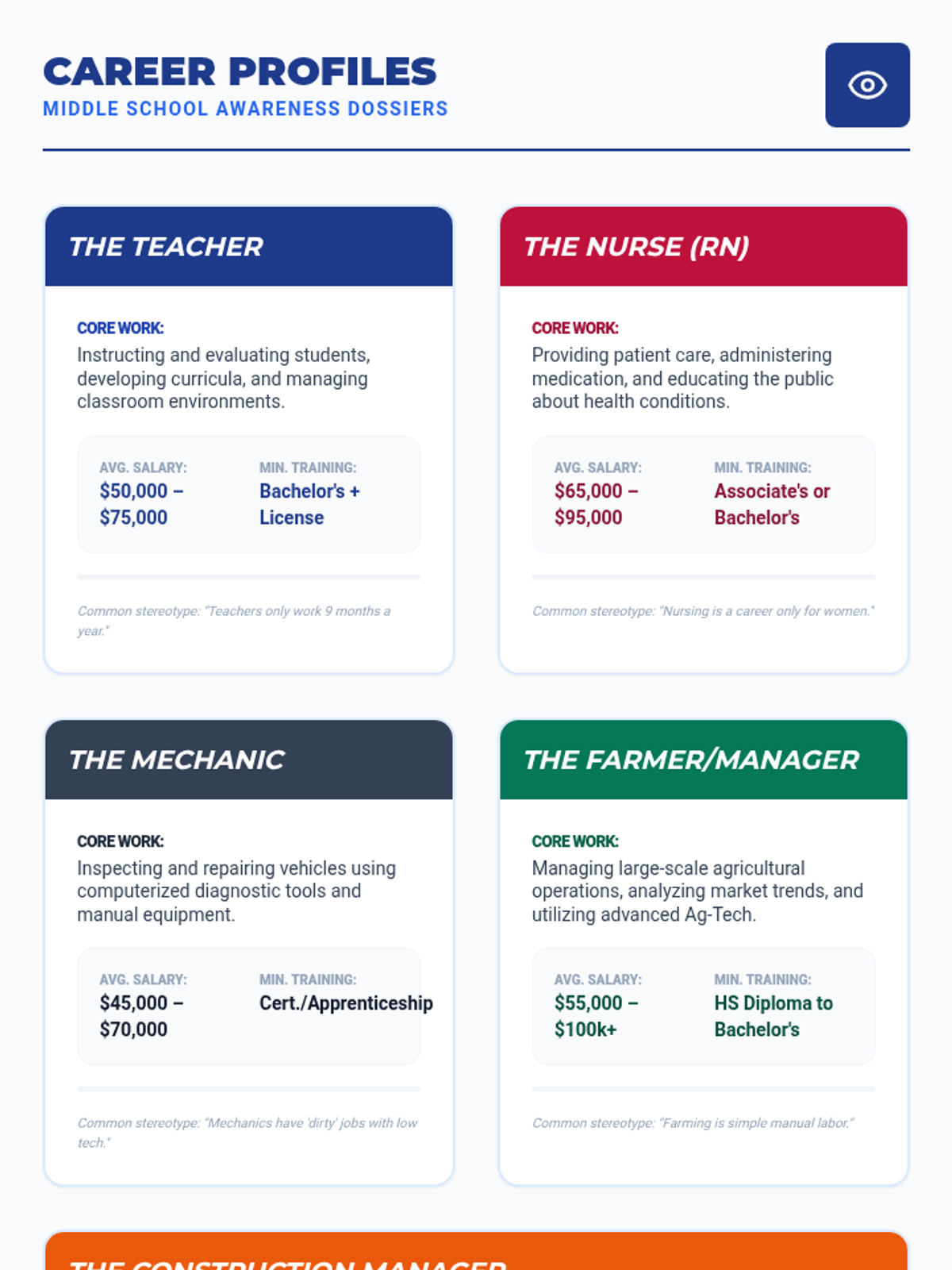
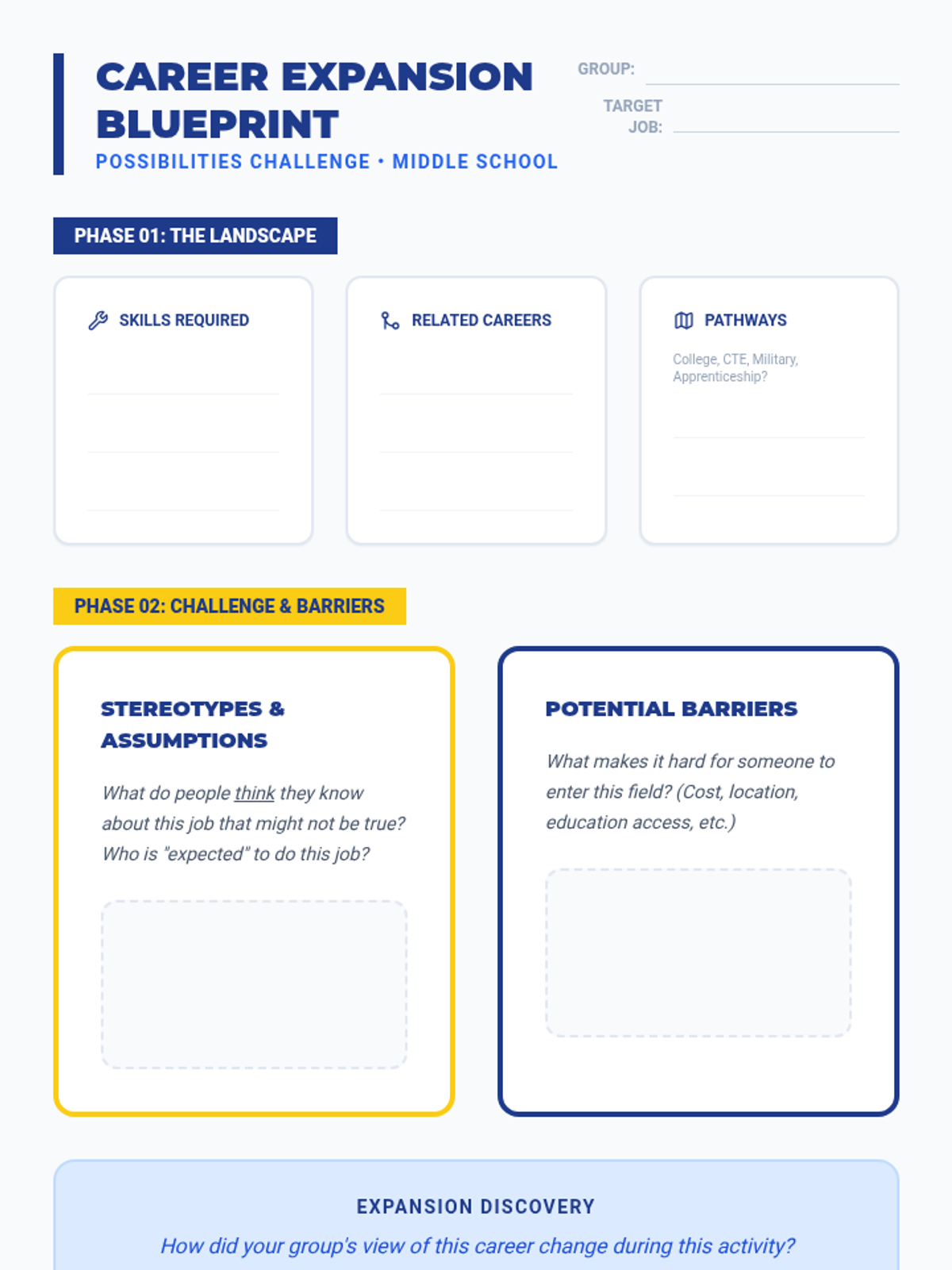
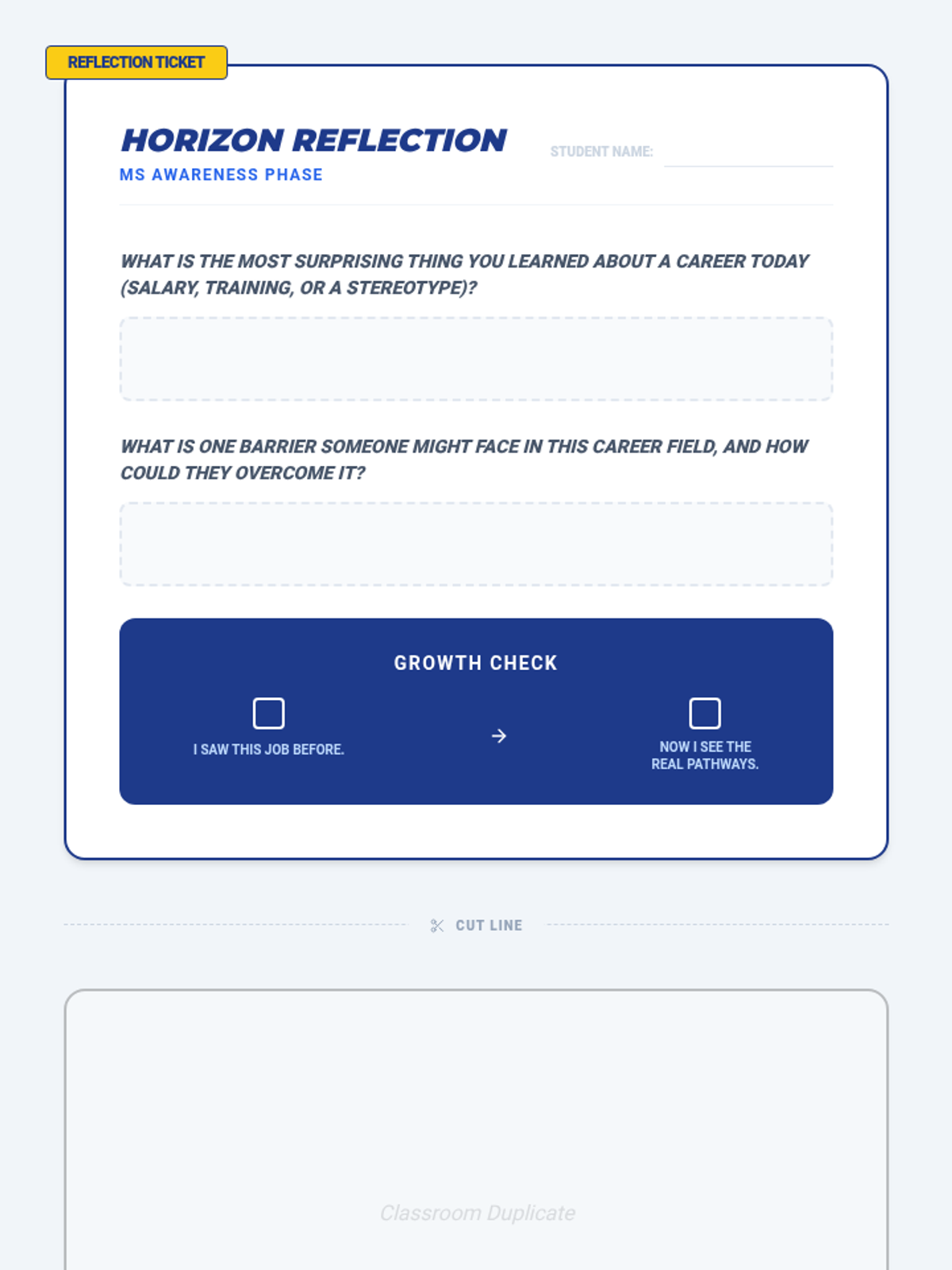
A career exploration lesson for middle schoolers that dives into salary, education requirements, and identifying stereotypes or barriers within specific career fields.
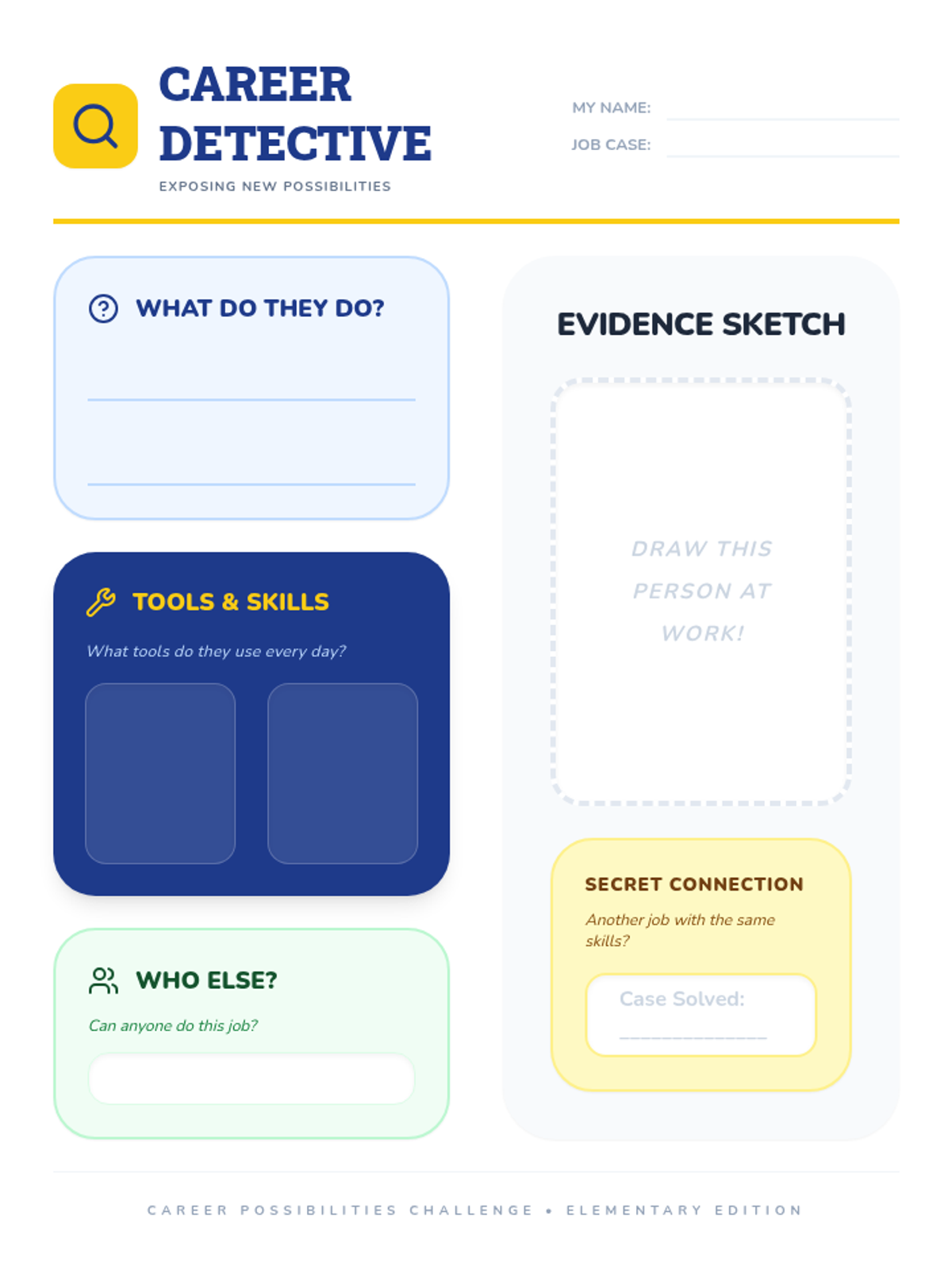
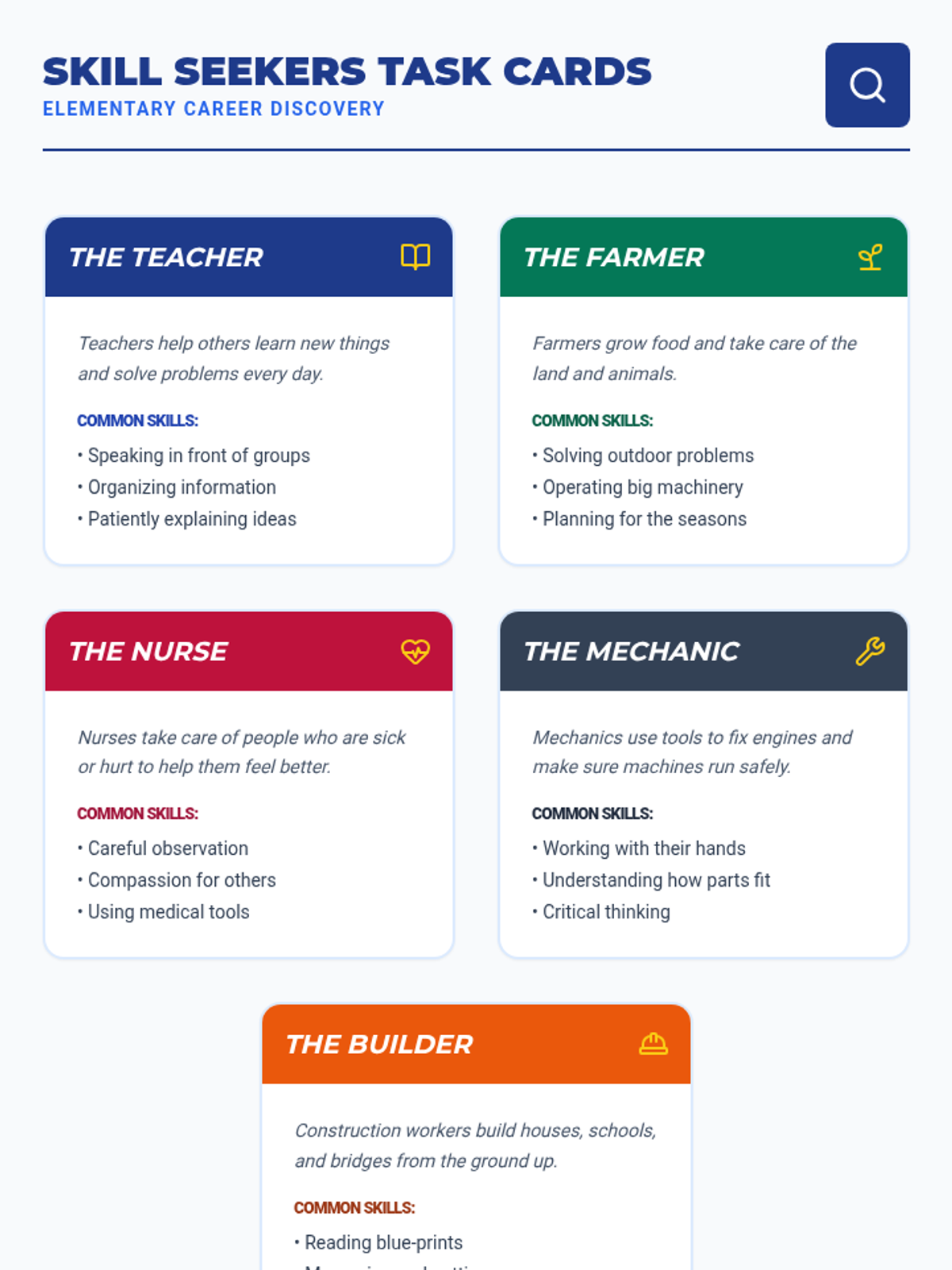
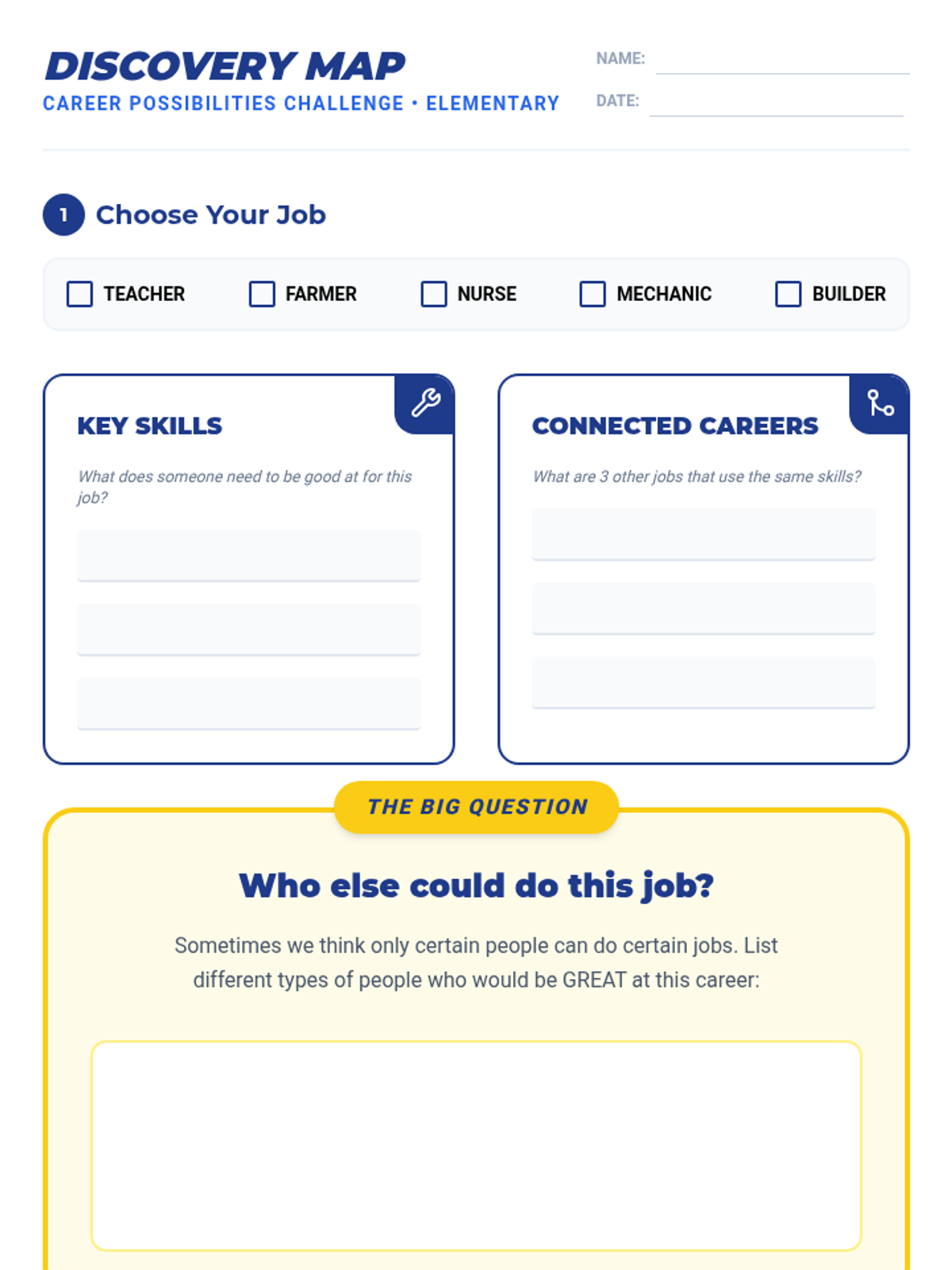
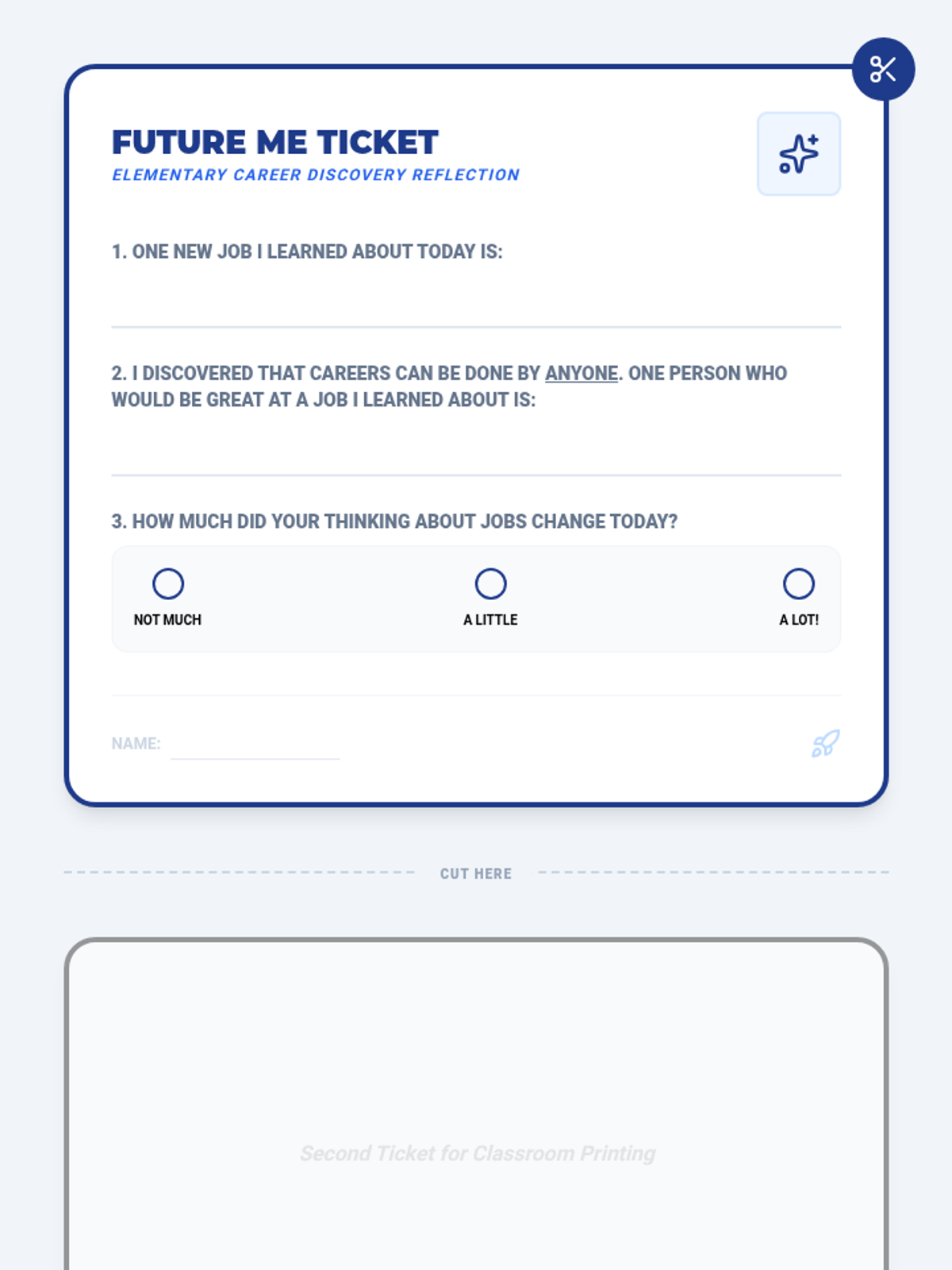
An introductory career awareness lesson for elementary students focusing on identifying job skills and exploring 'who else' can do a job. Students use a graphic organizer to expand their understanding of common professions.
A professional development session for educators to learn how to facilitate career expansion activities that challenge student assumptions and connect learning to diverse pathways.
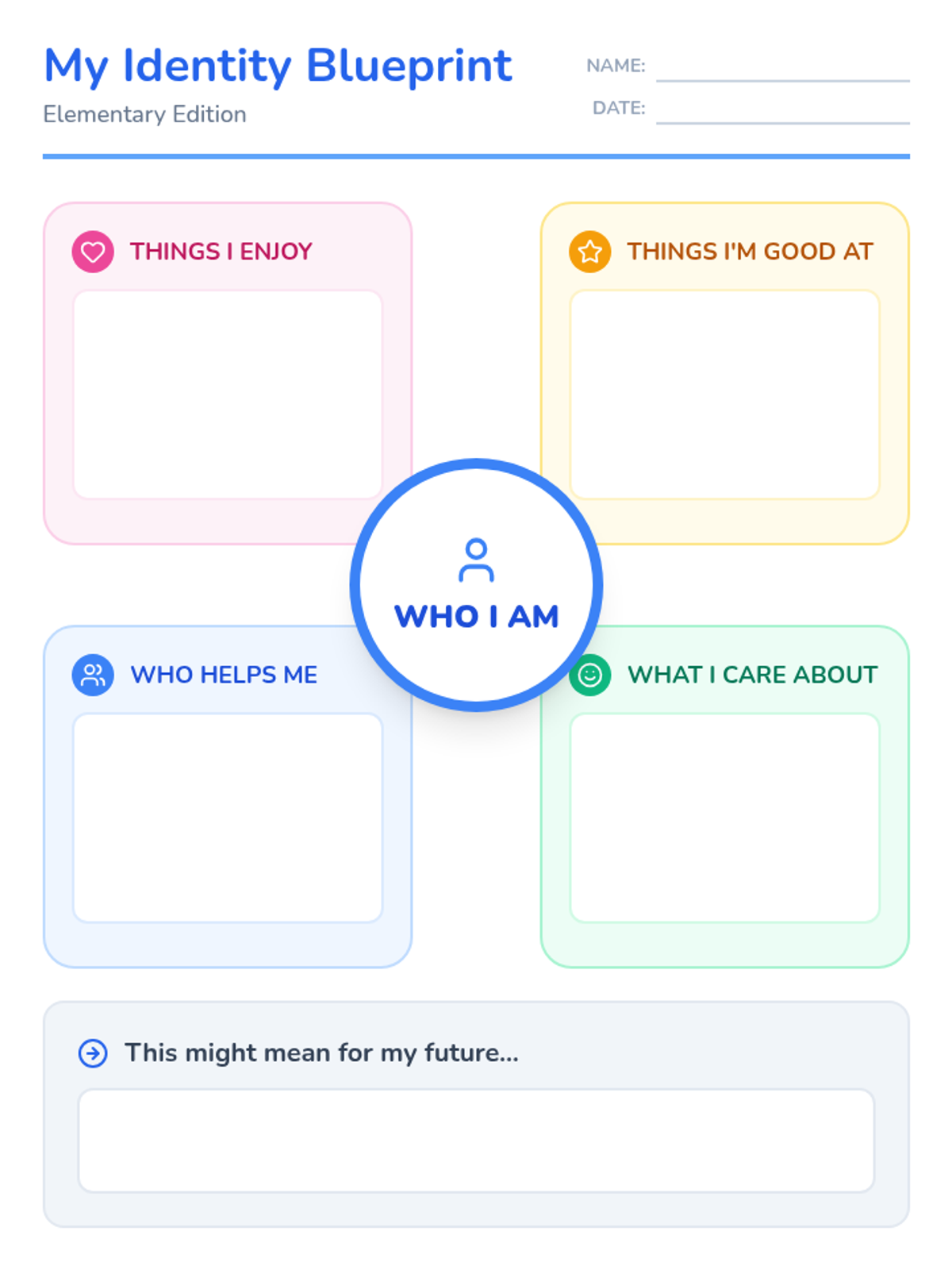
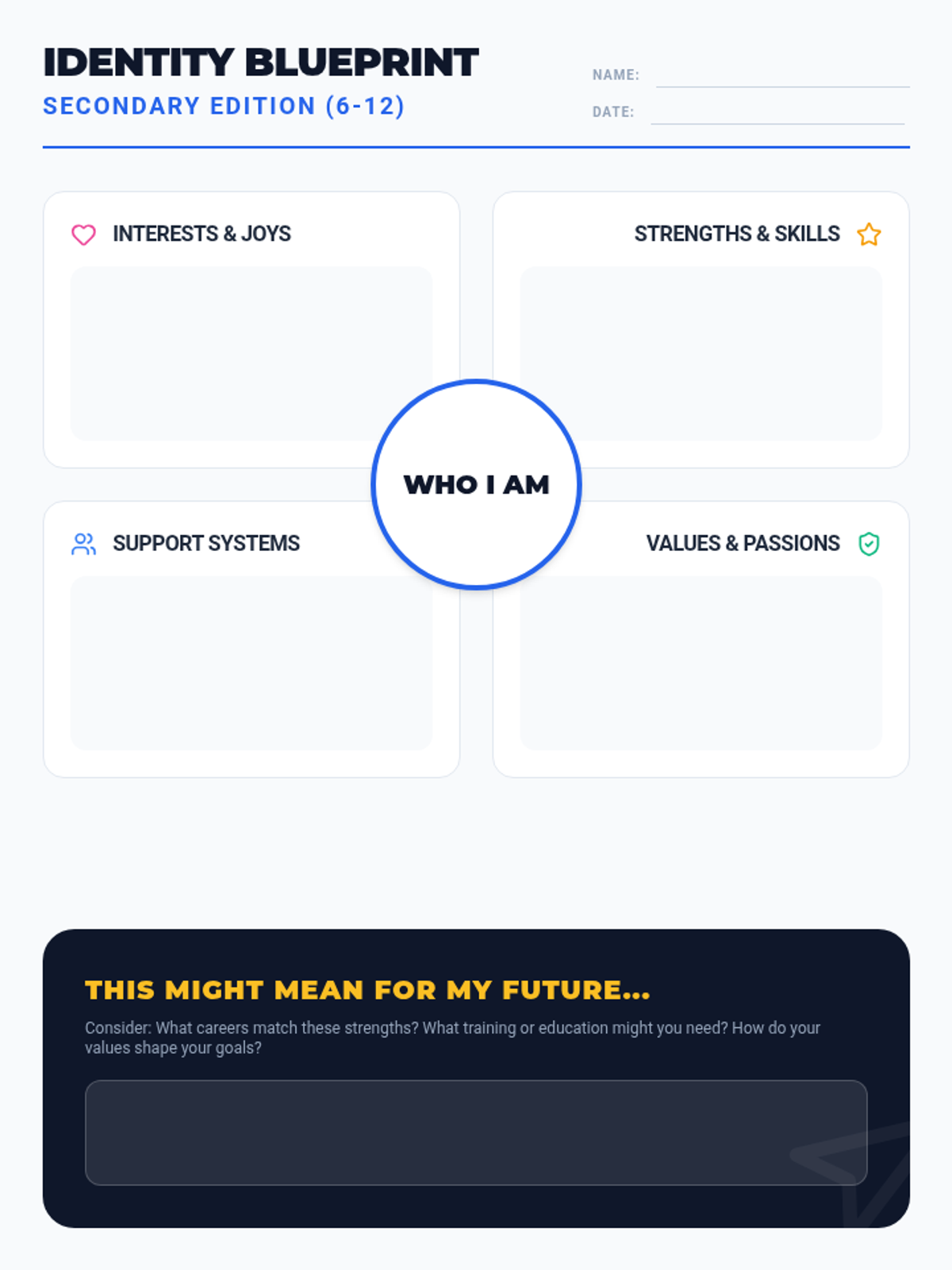
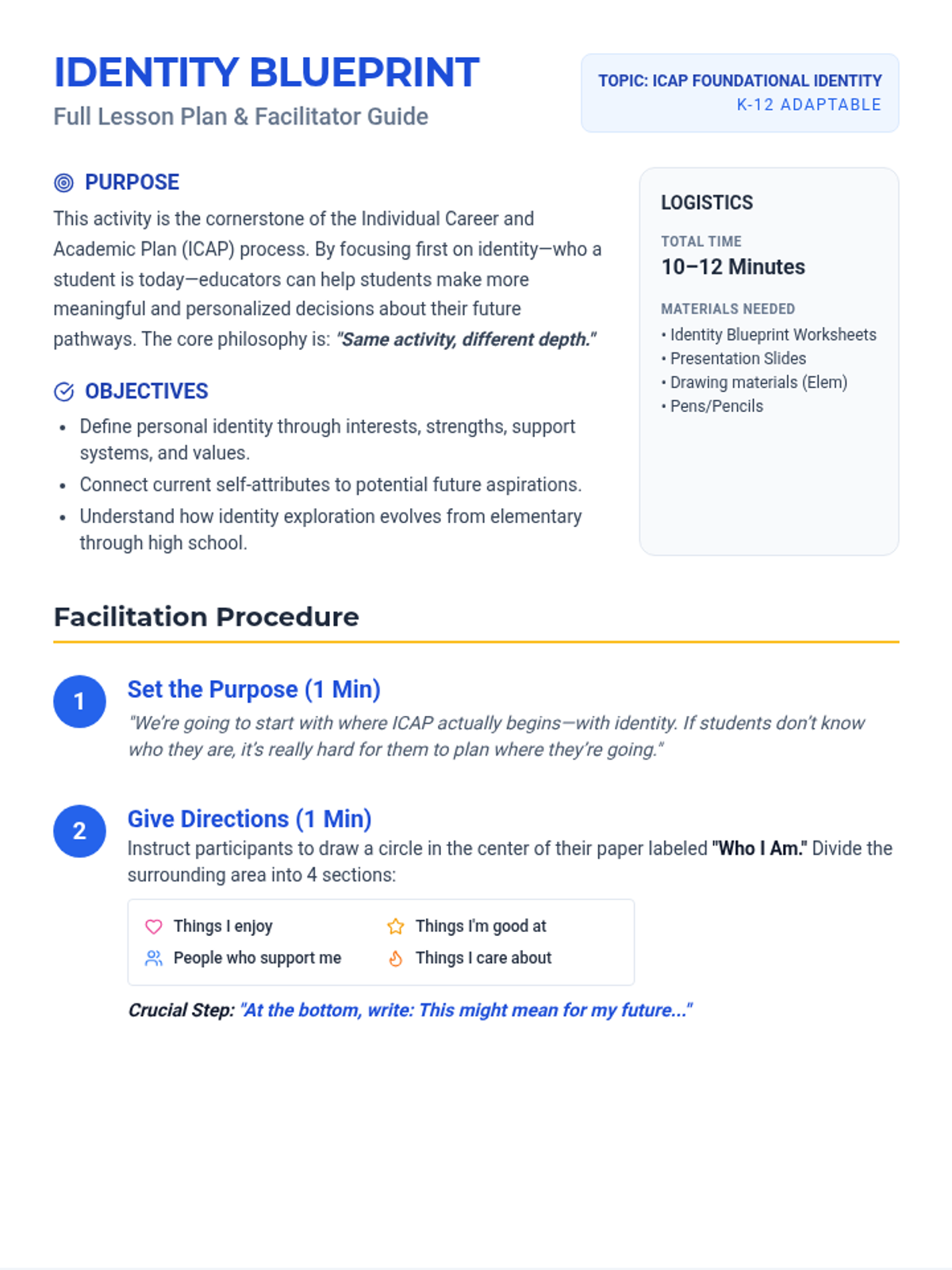
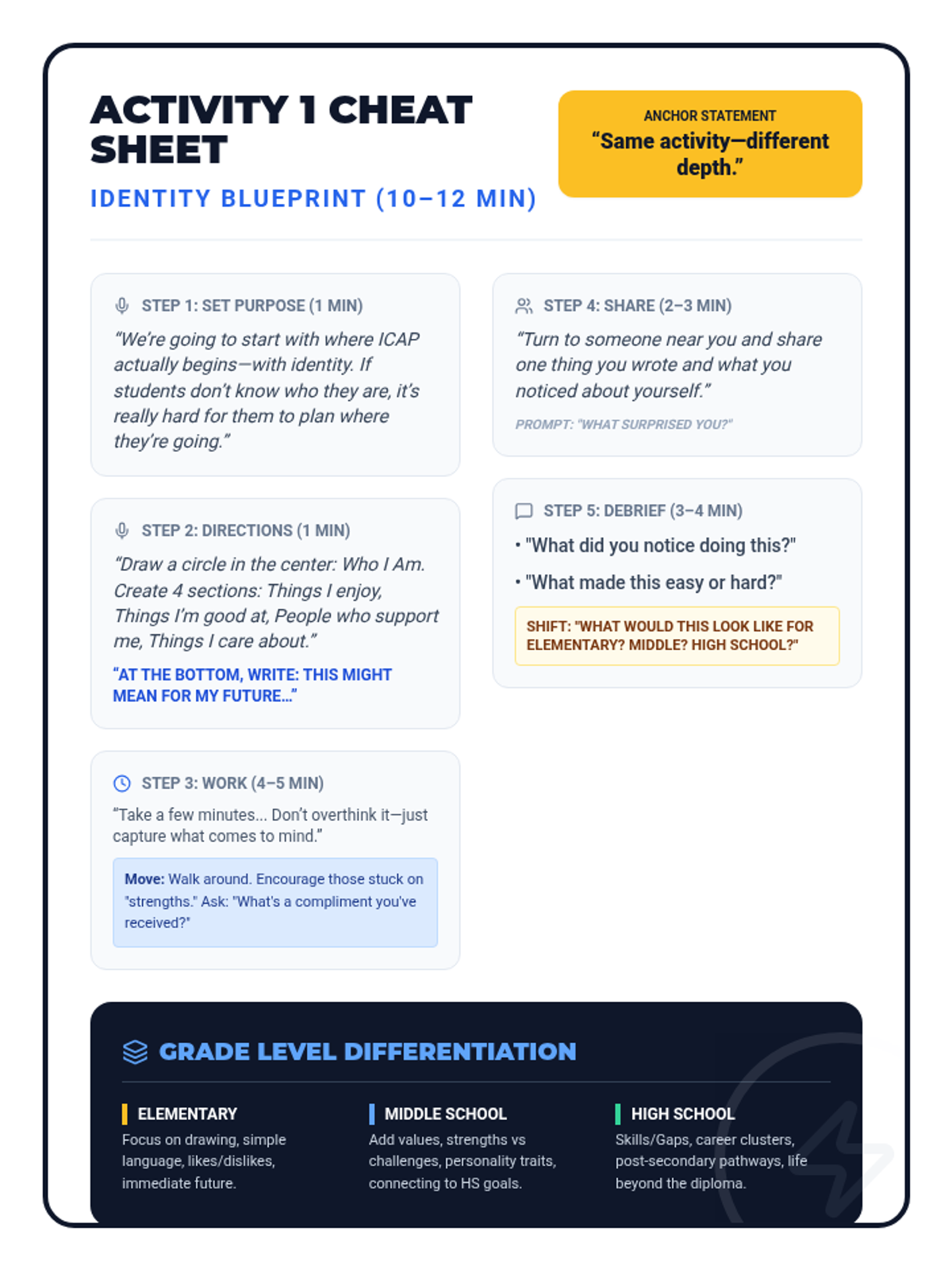
A comprehensive lesson package for the 'Who I Am -> Who I'm Becoming' activity, designed to build self-awareness and connect student identity to future career and academic pathways across K-12.
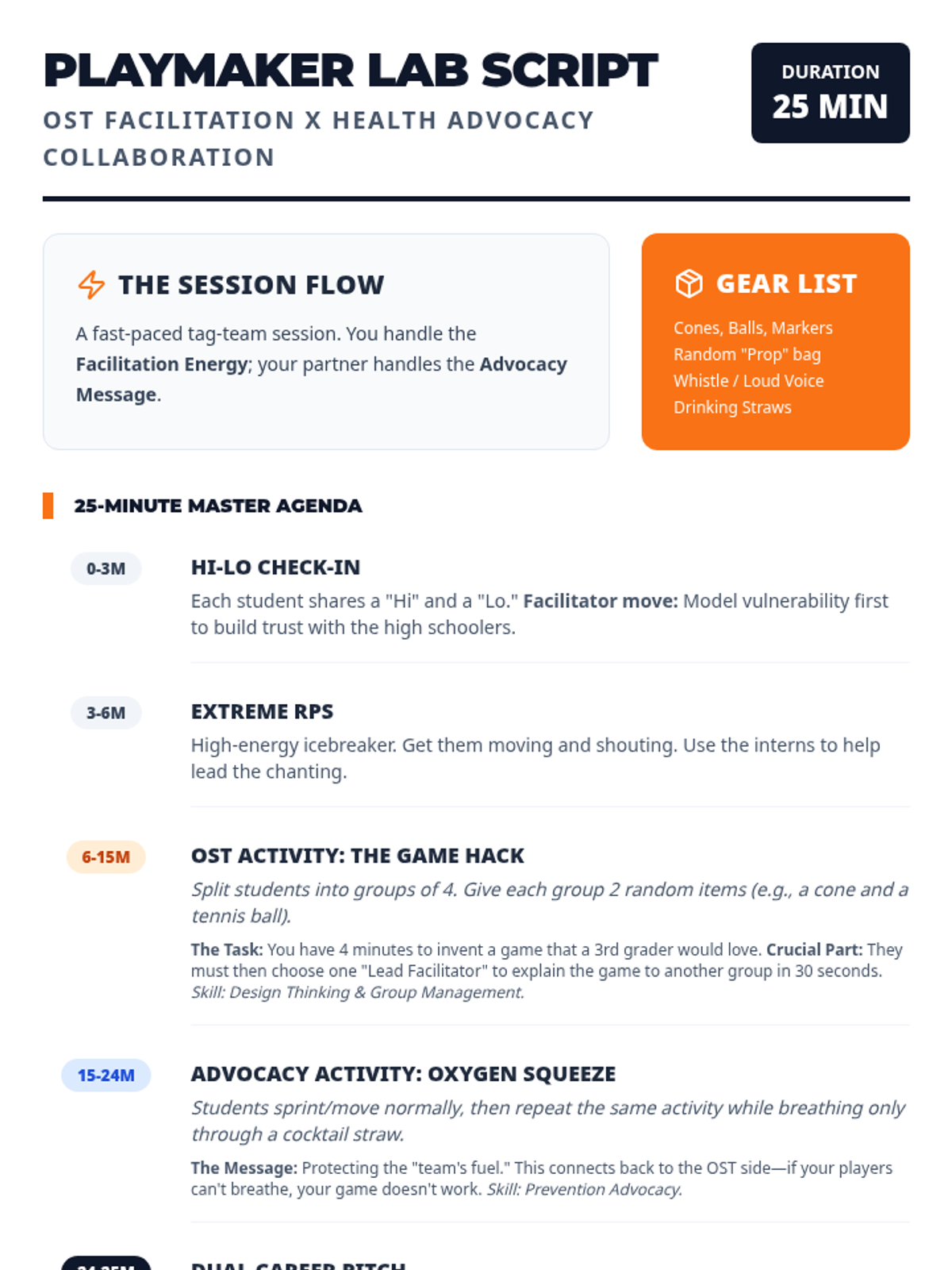
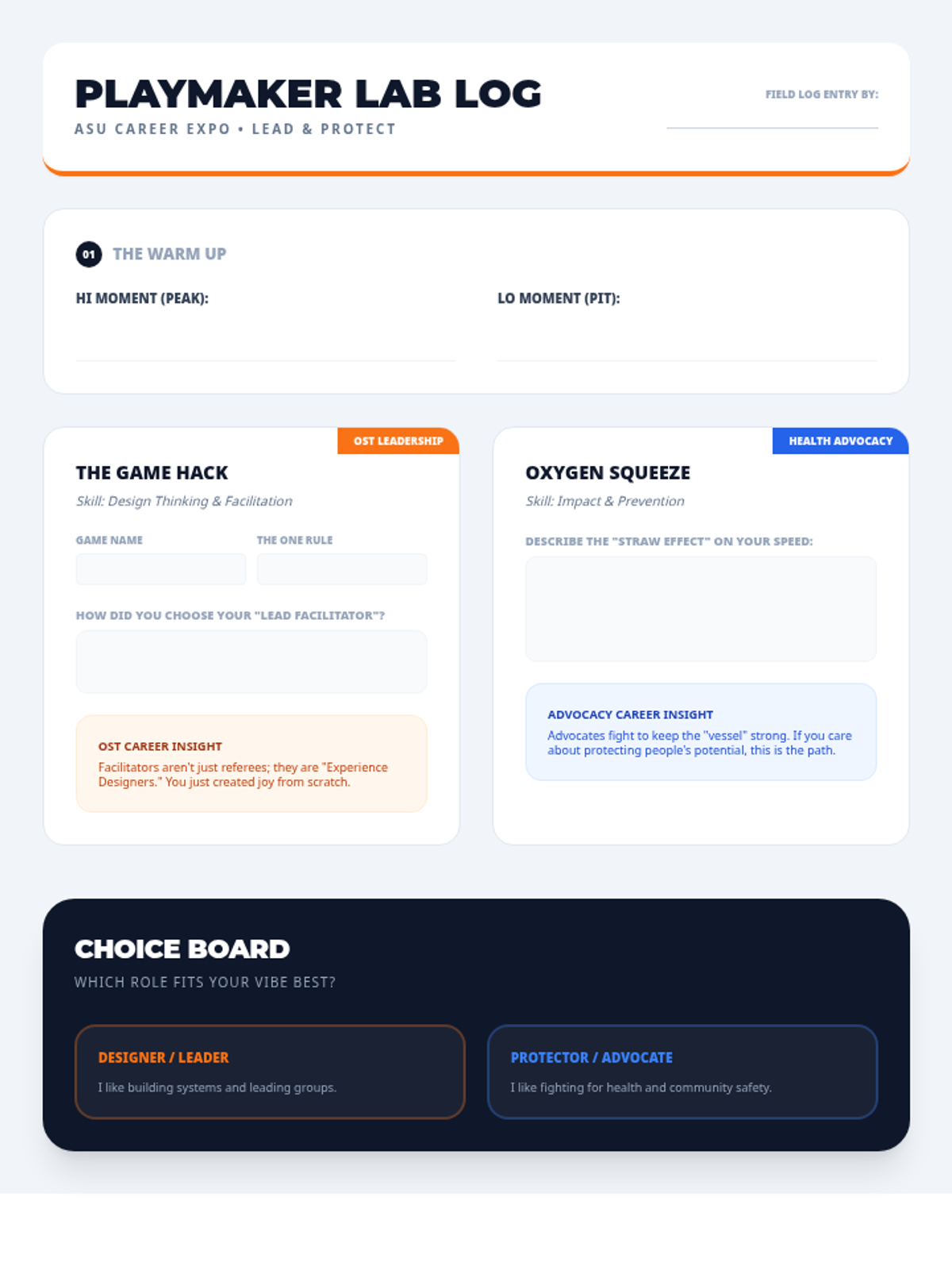
A fast-paced, 25-minute experiential session where students explore careers in out-of-school-time (OST) and health advocacy. In collaboration with an anti-vaping professional, students learn how to use play and game design to promote healthy choices and lead community-wide change.
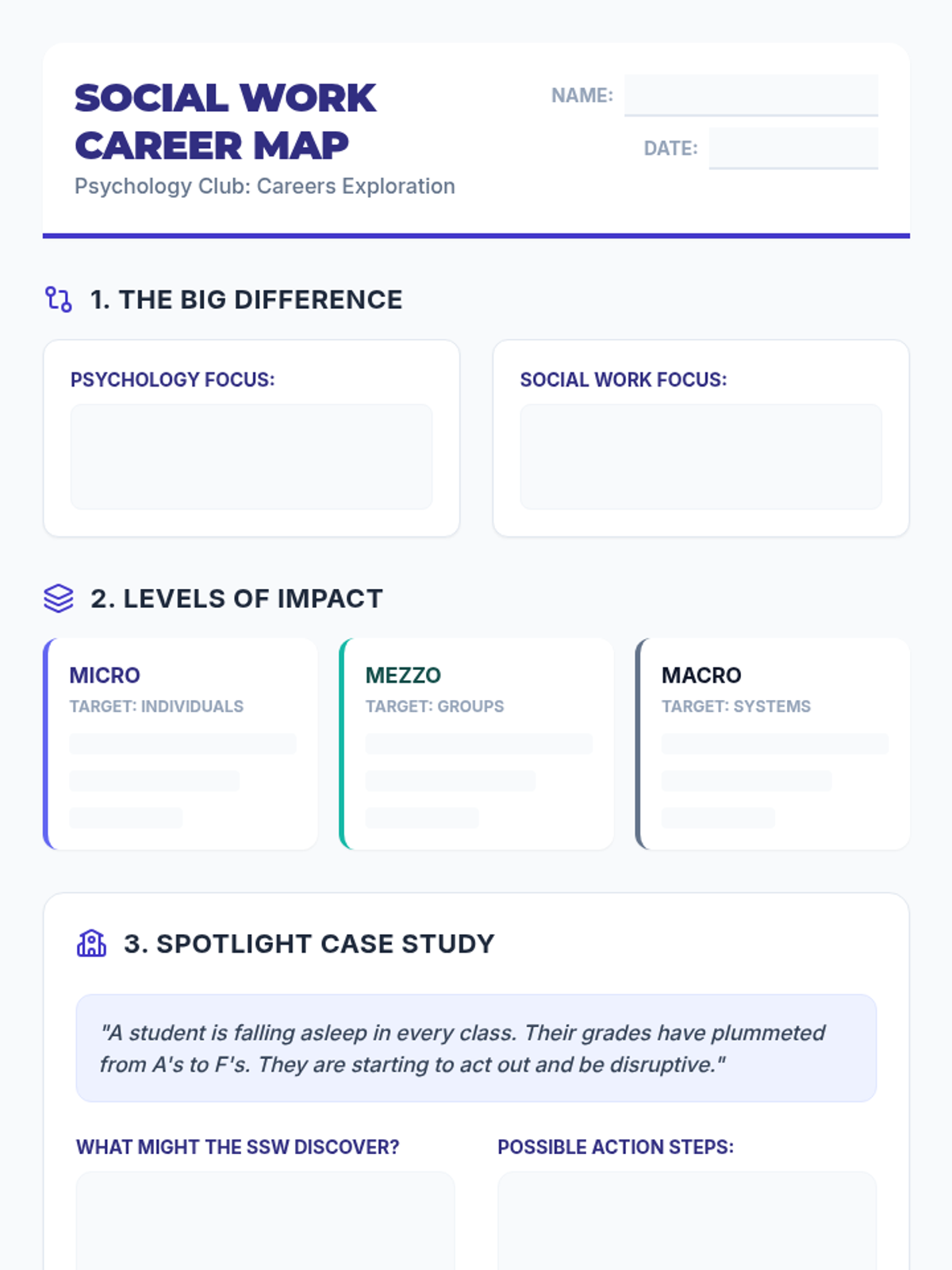
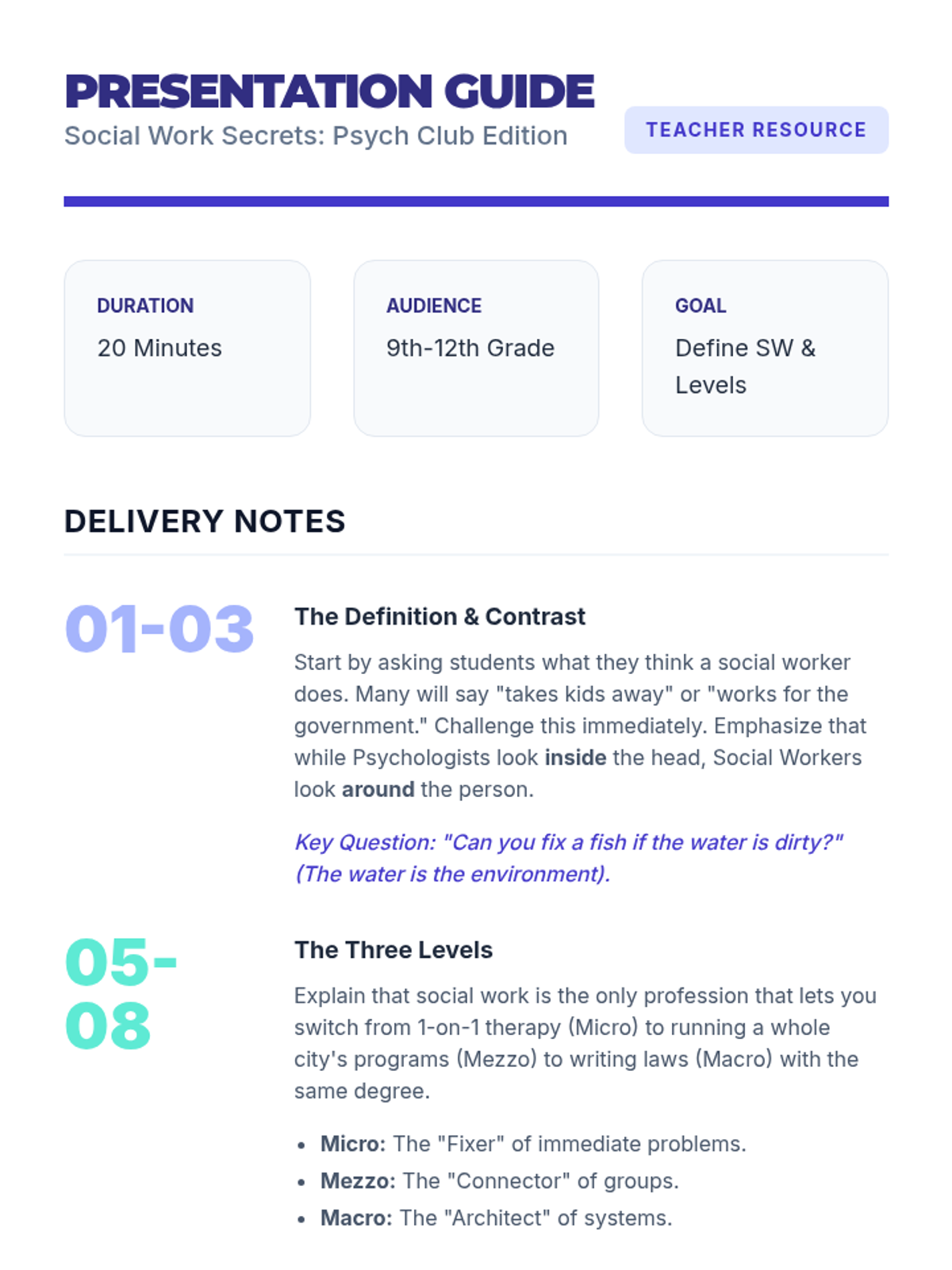
An introductory exploration of social work careers for high school students, focusing on the levels of practice, career opportunities, and the distinct role of school social workers compared to psychologists.
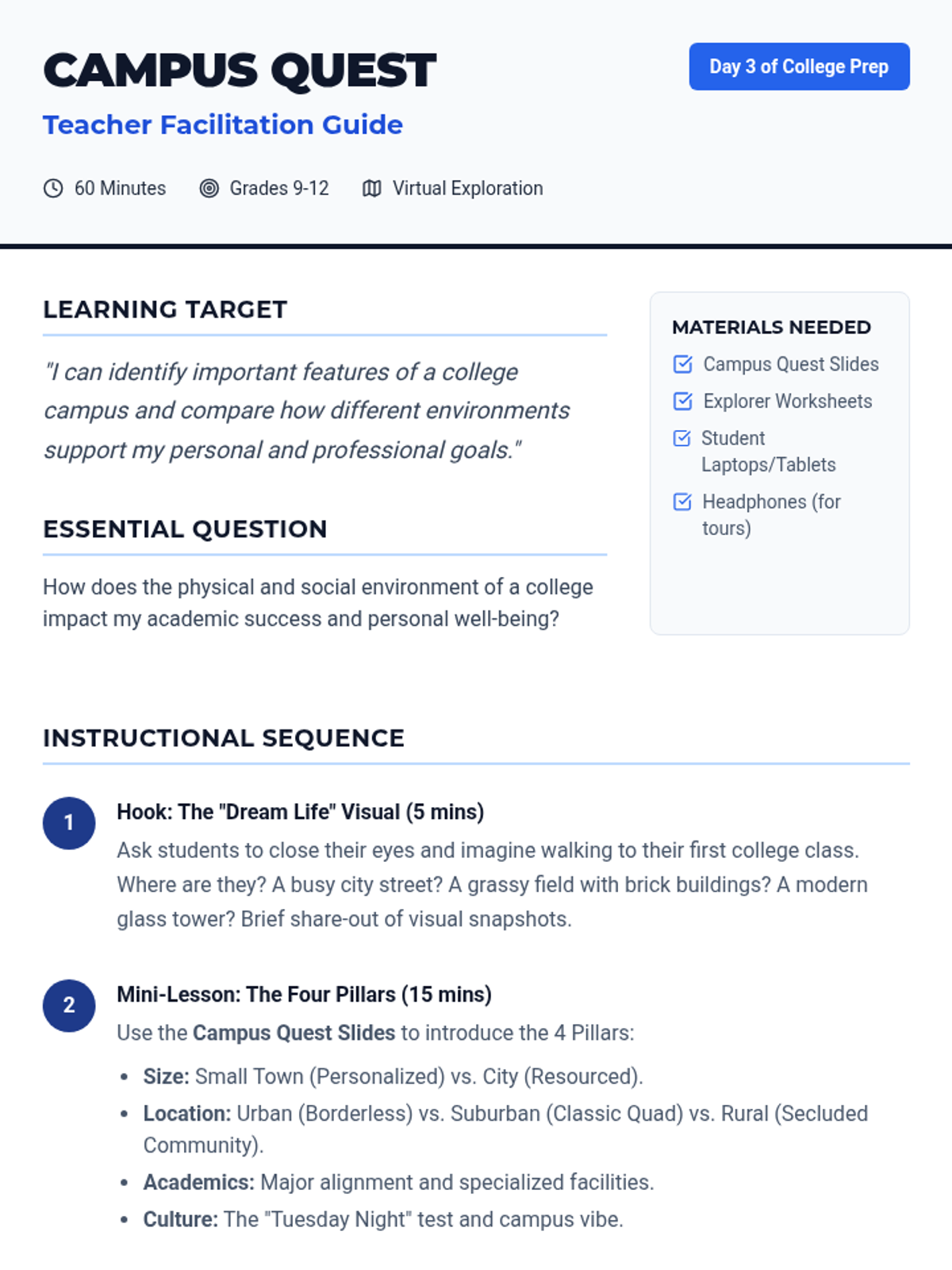
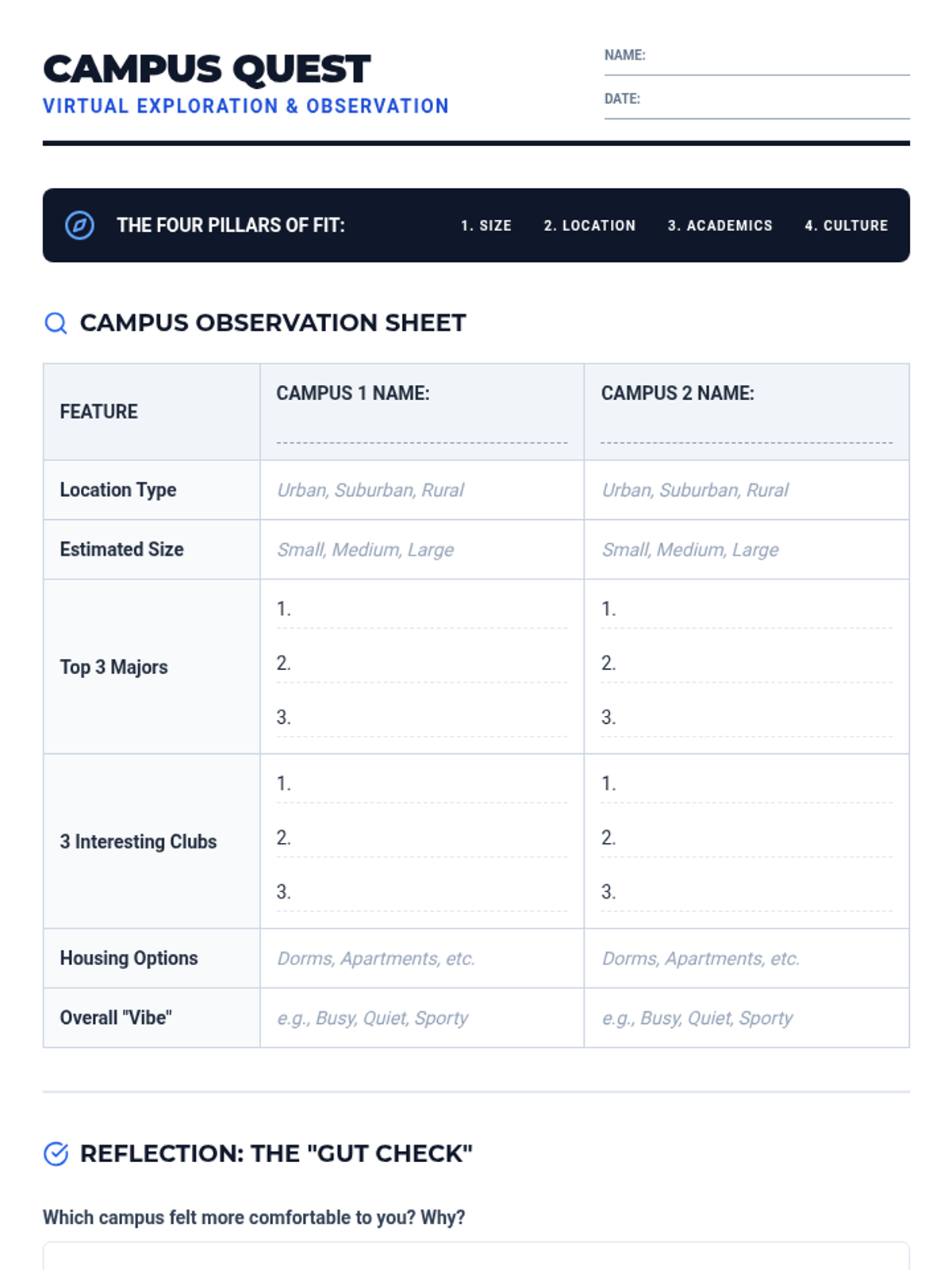
A lesson focused on exploring college campuses virtually to identify key features such as size, location, and culture to find the right fit for personal and professional goals.
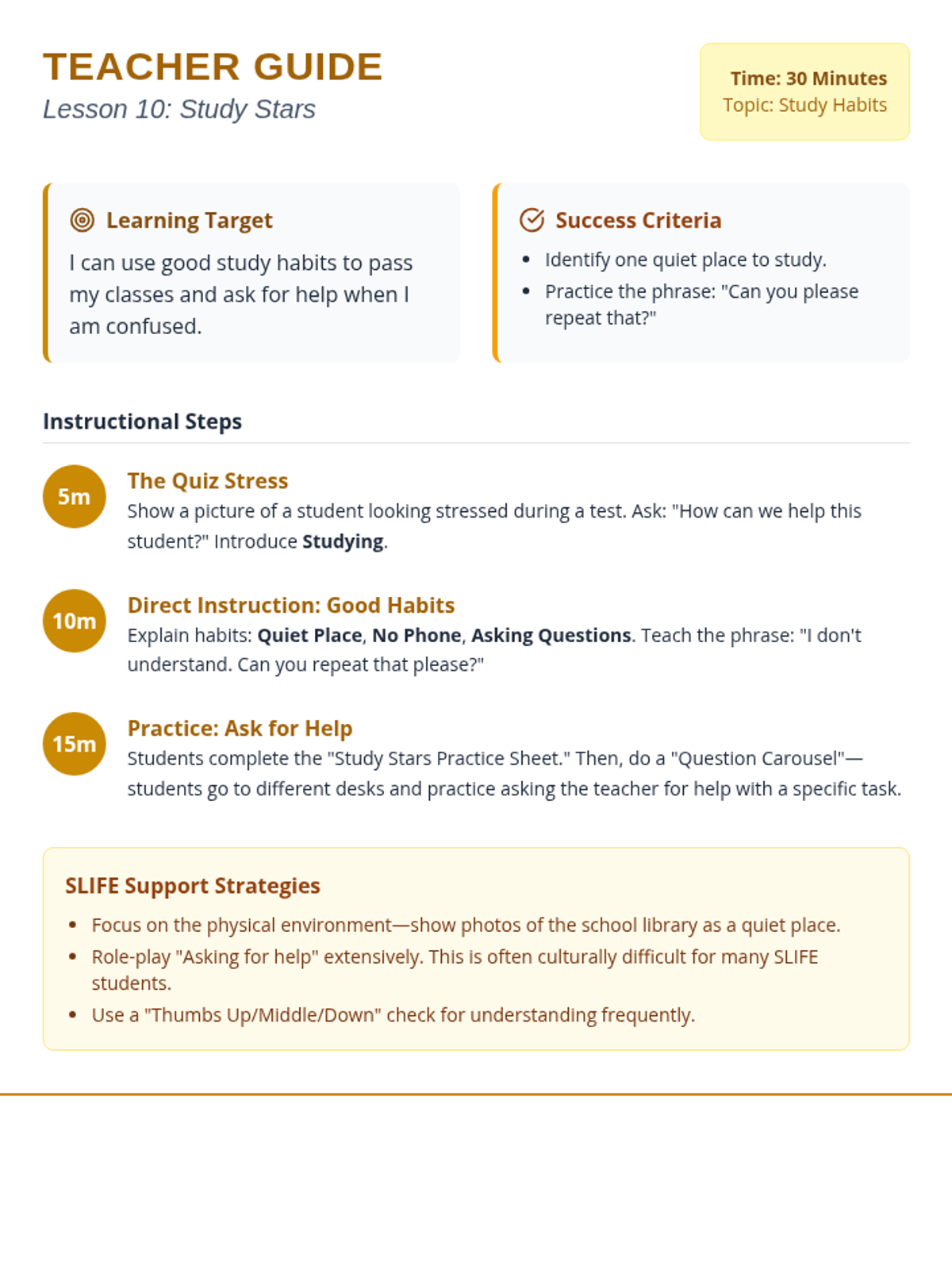
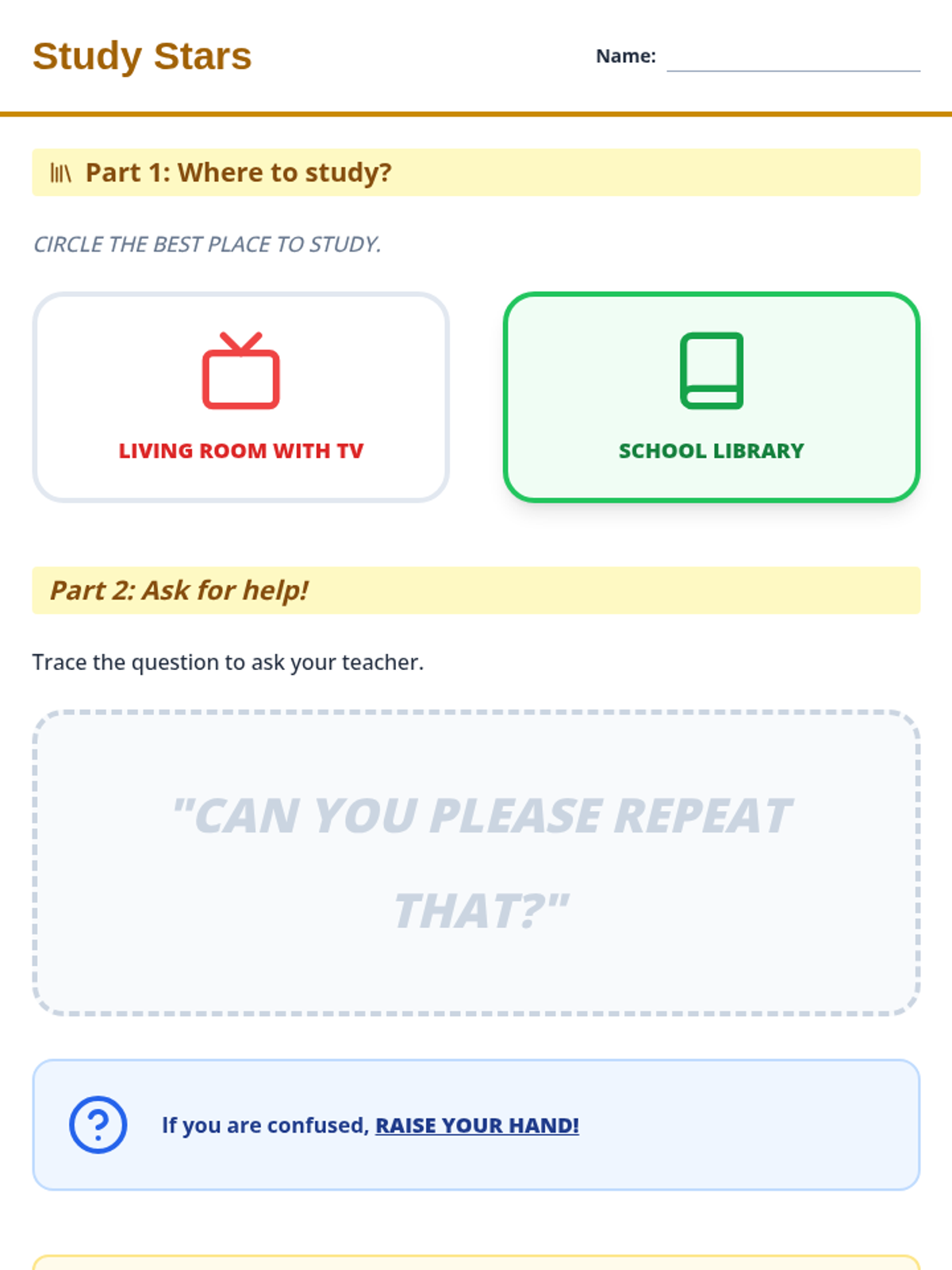
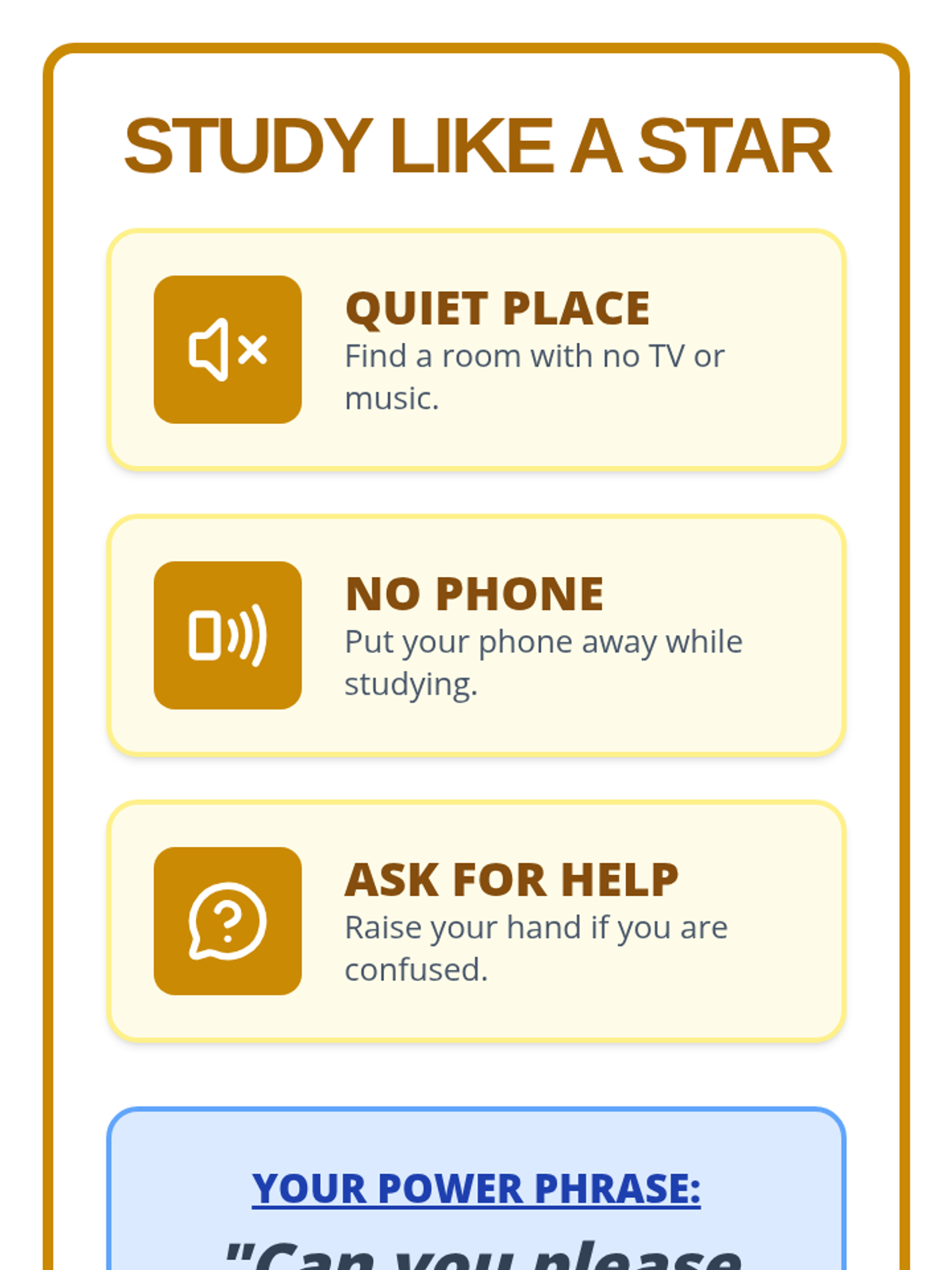
Essential study habits, organizational skills, and phrases for asking for clarification.
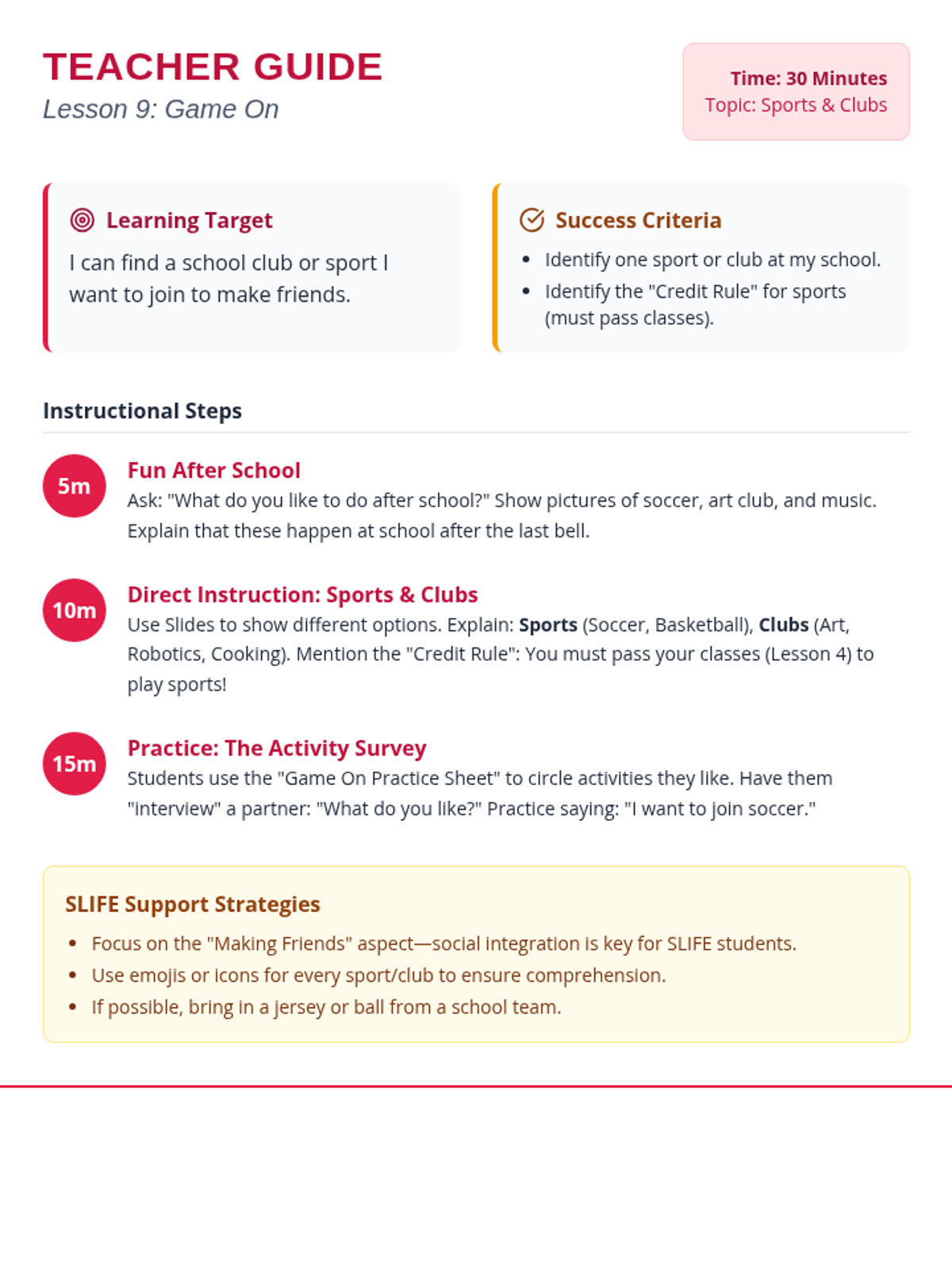
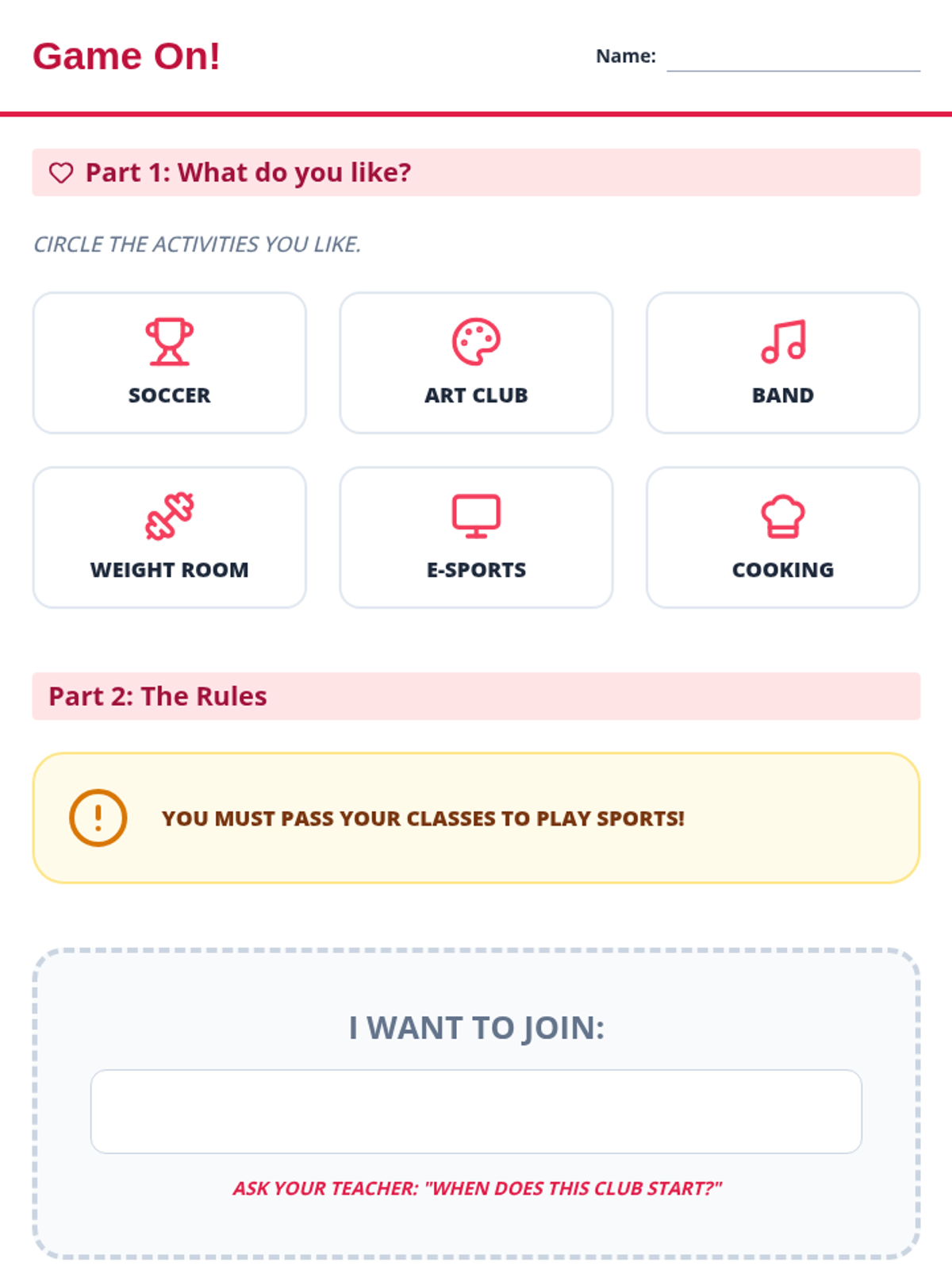
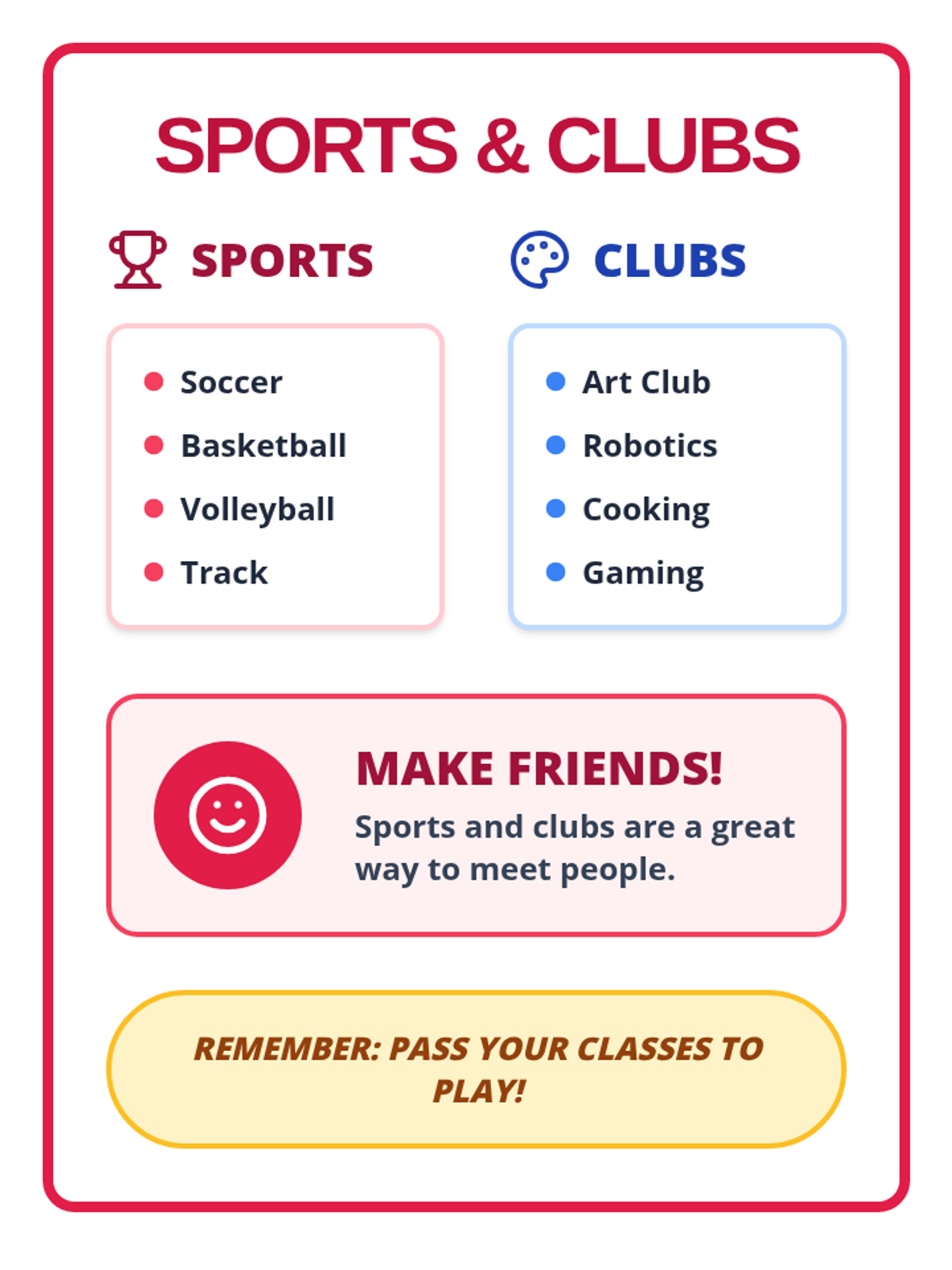
Exploring sports, clubs, and extracurricular activities to build community.
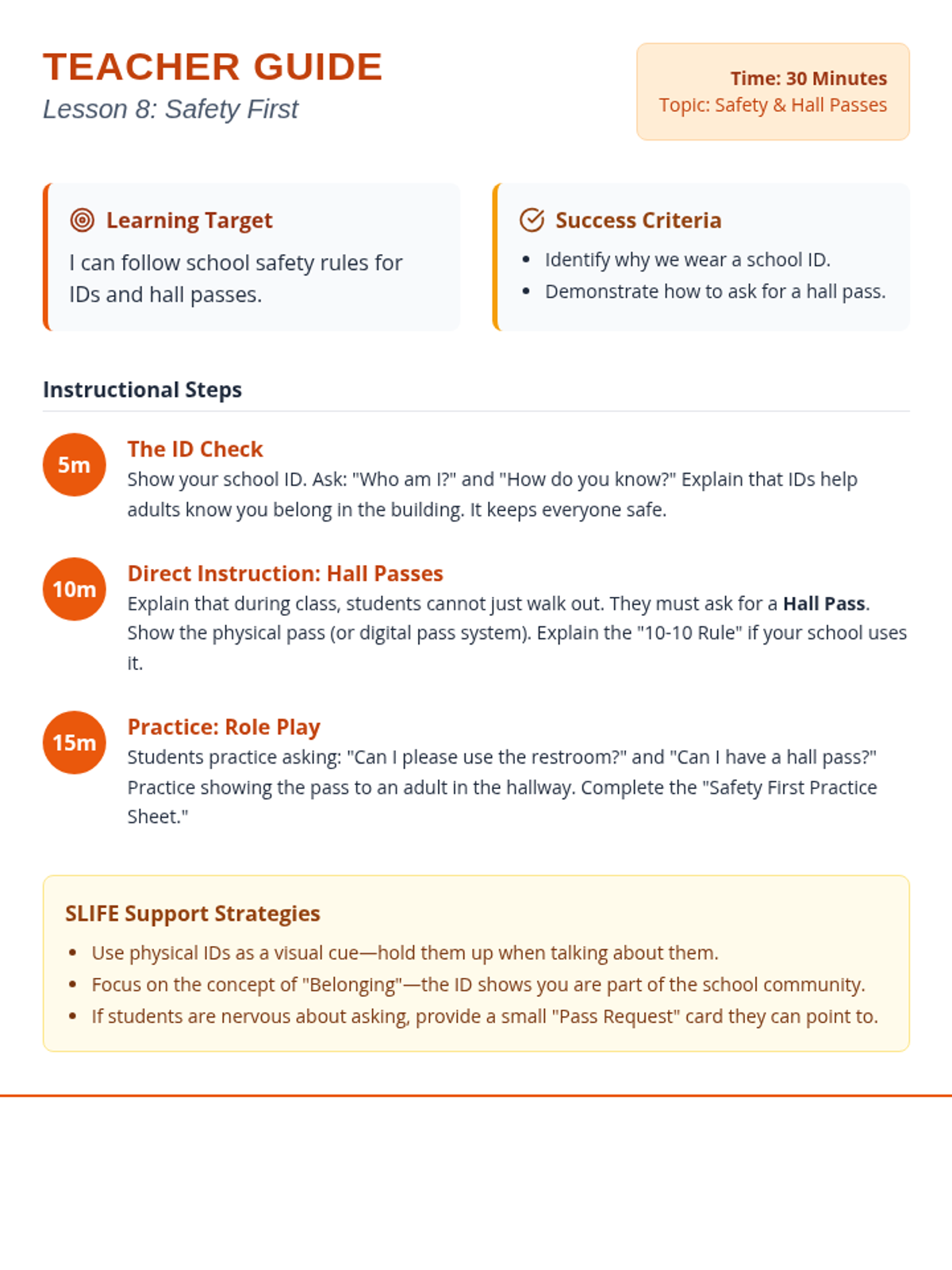
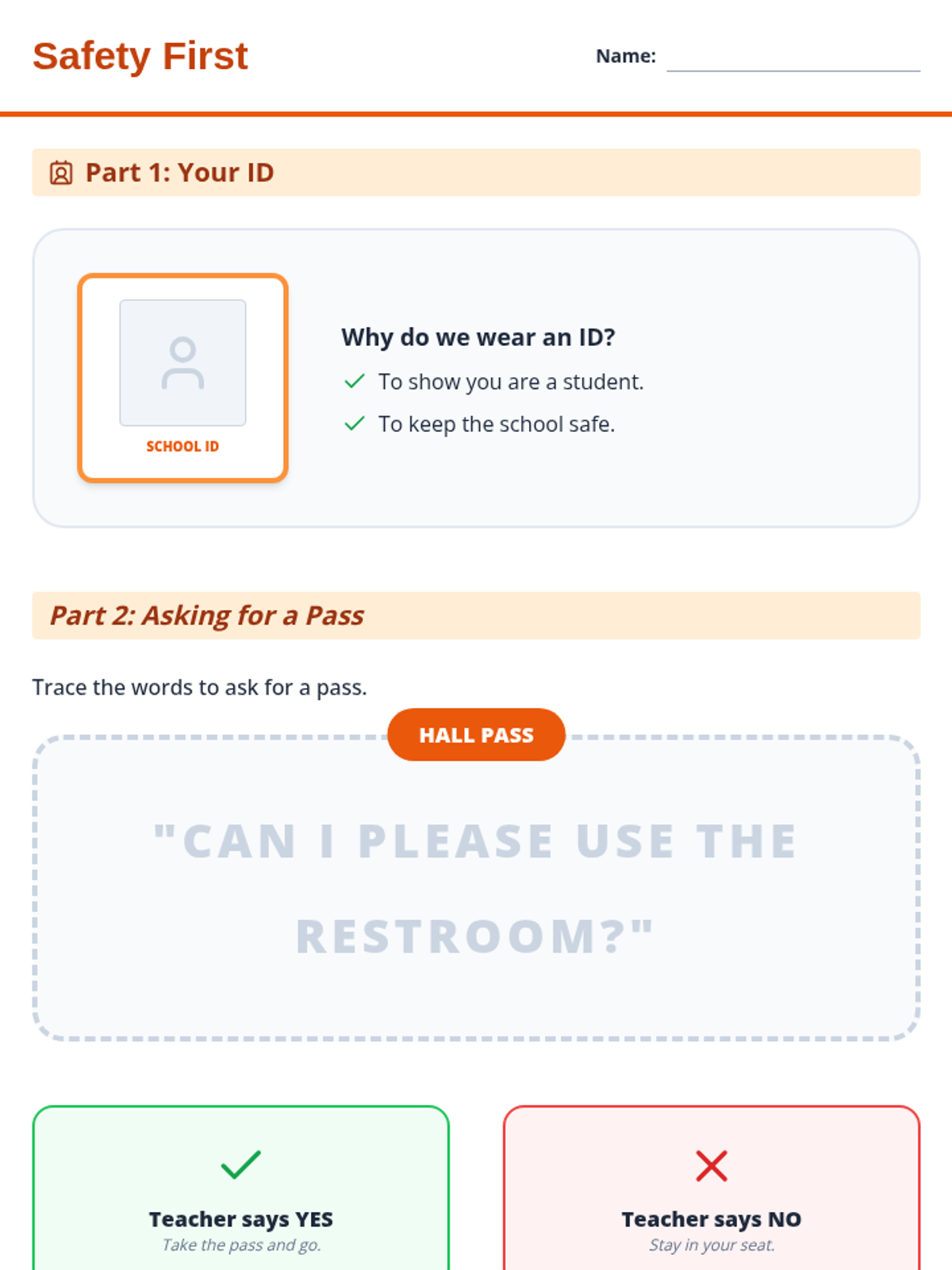
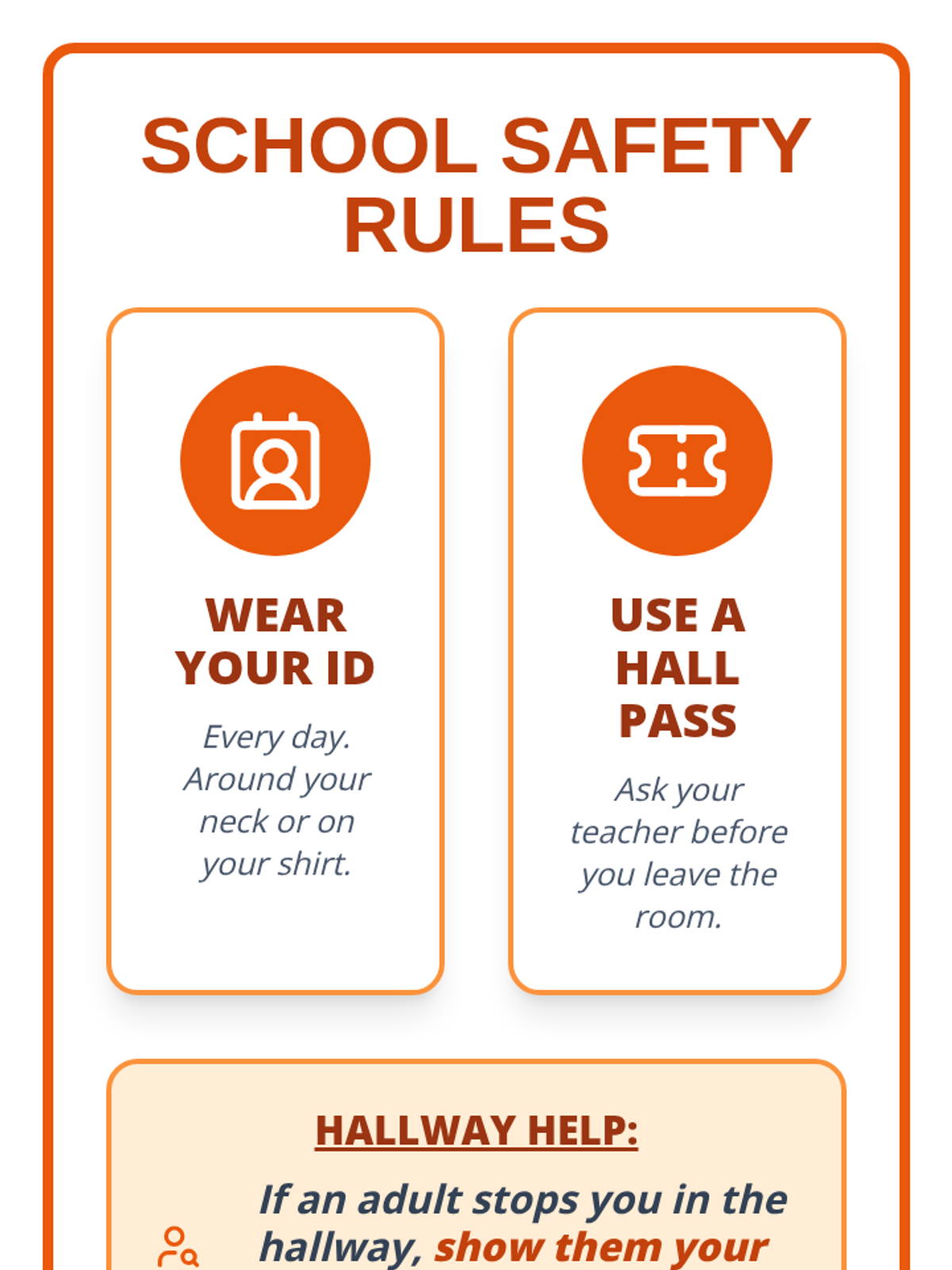
Understanding school safety protocols, ID requirements, and hall pass procedures.
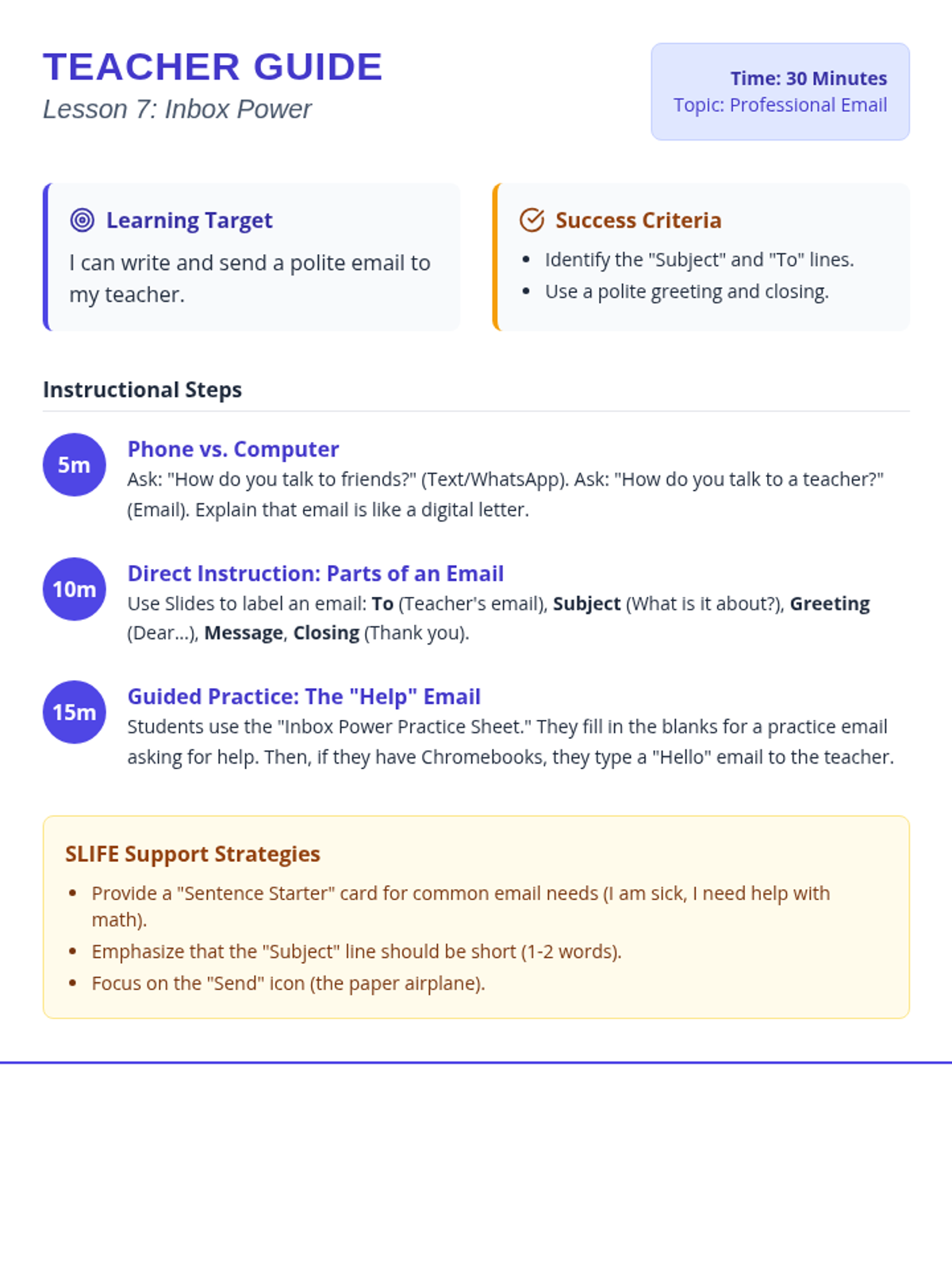
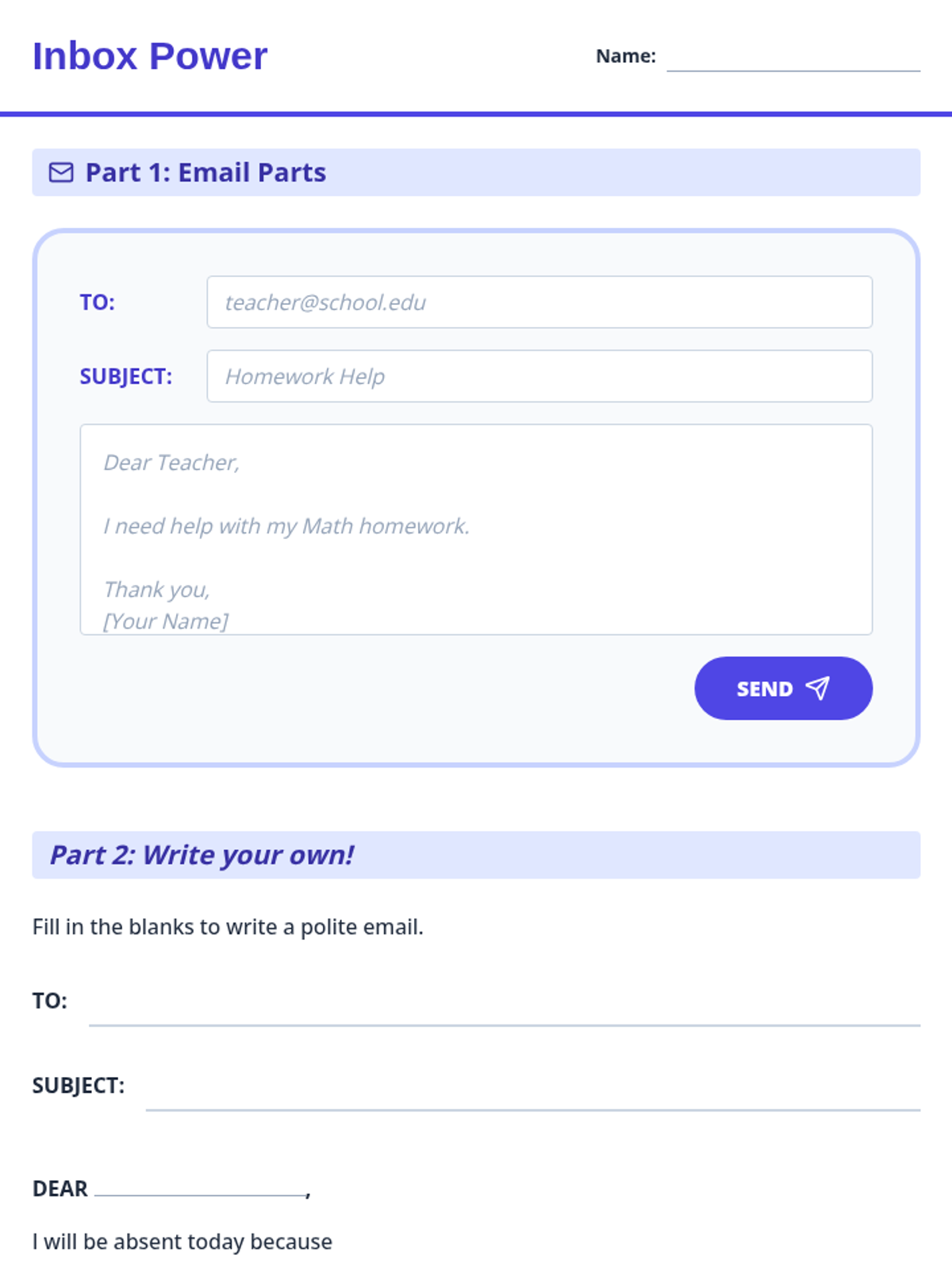
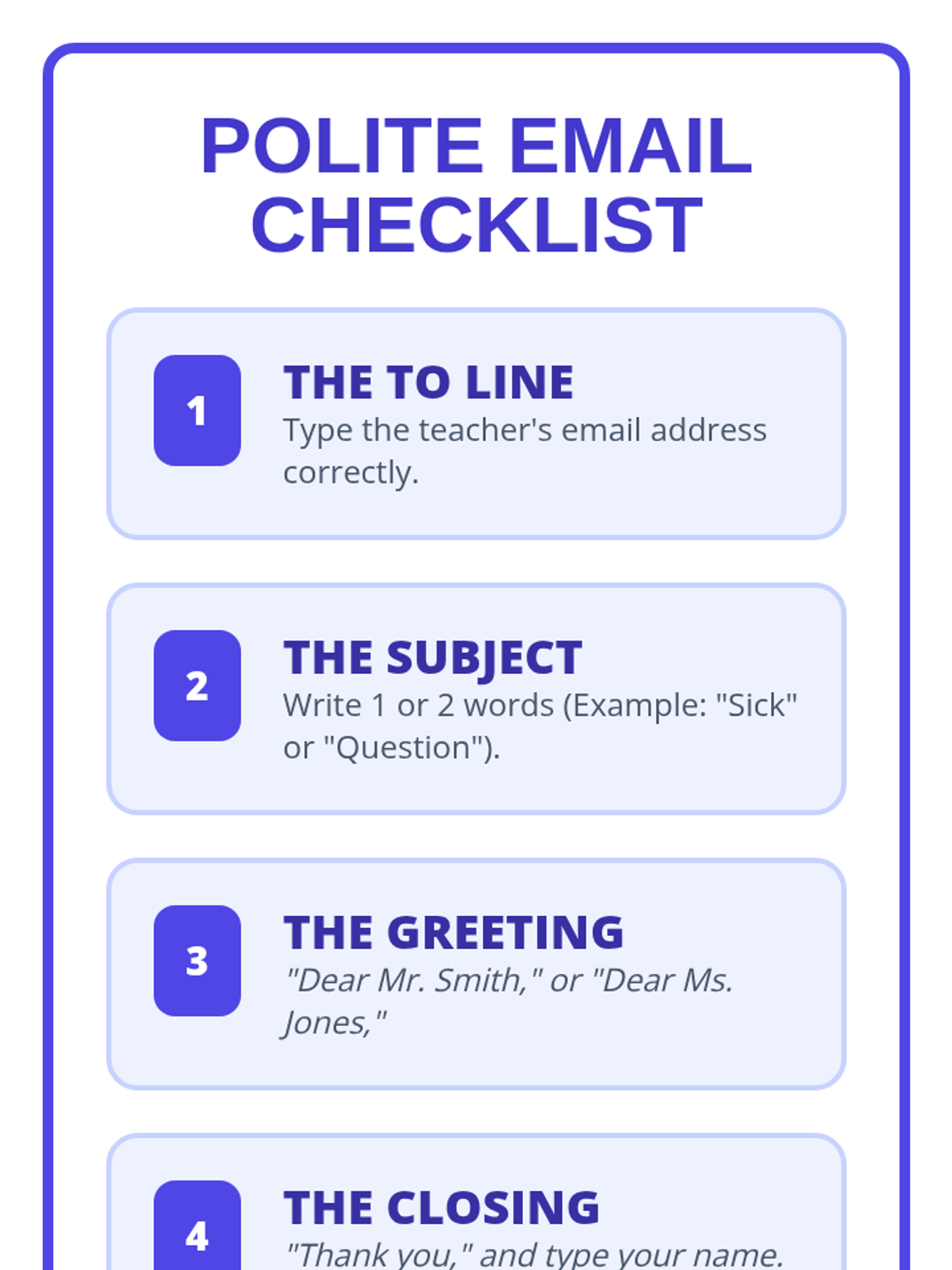
Step-by-step guidance on writing and sending a professional email to a teacher.
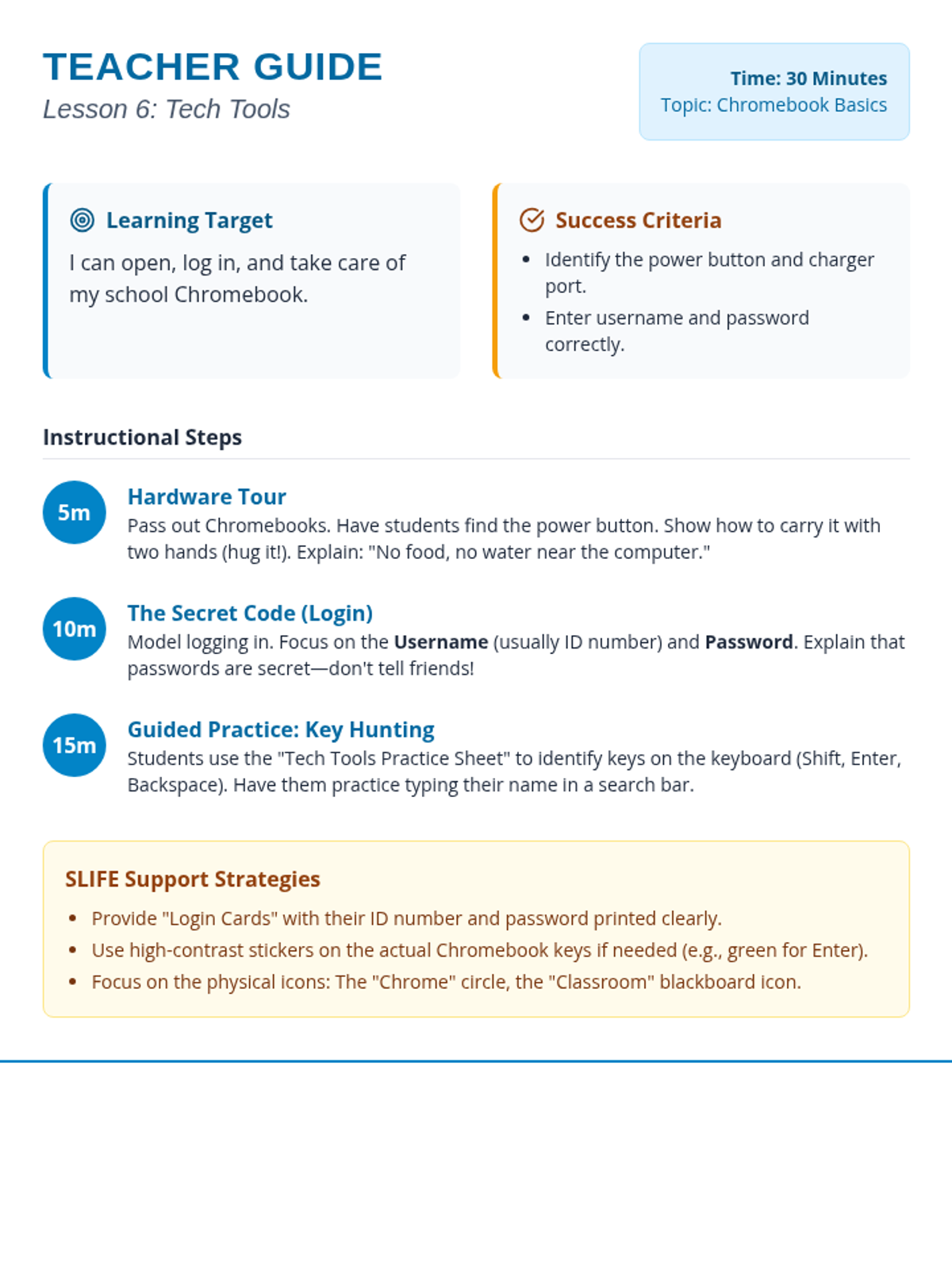
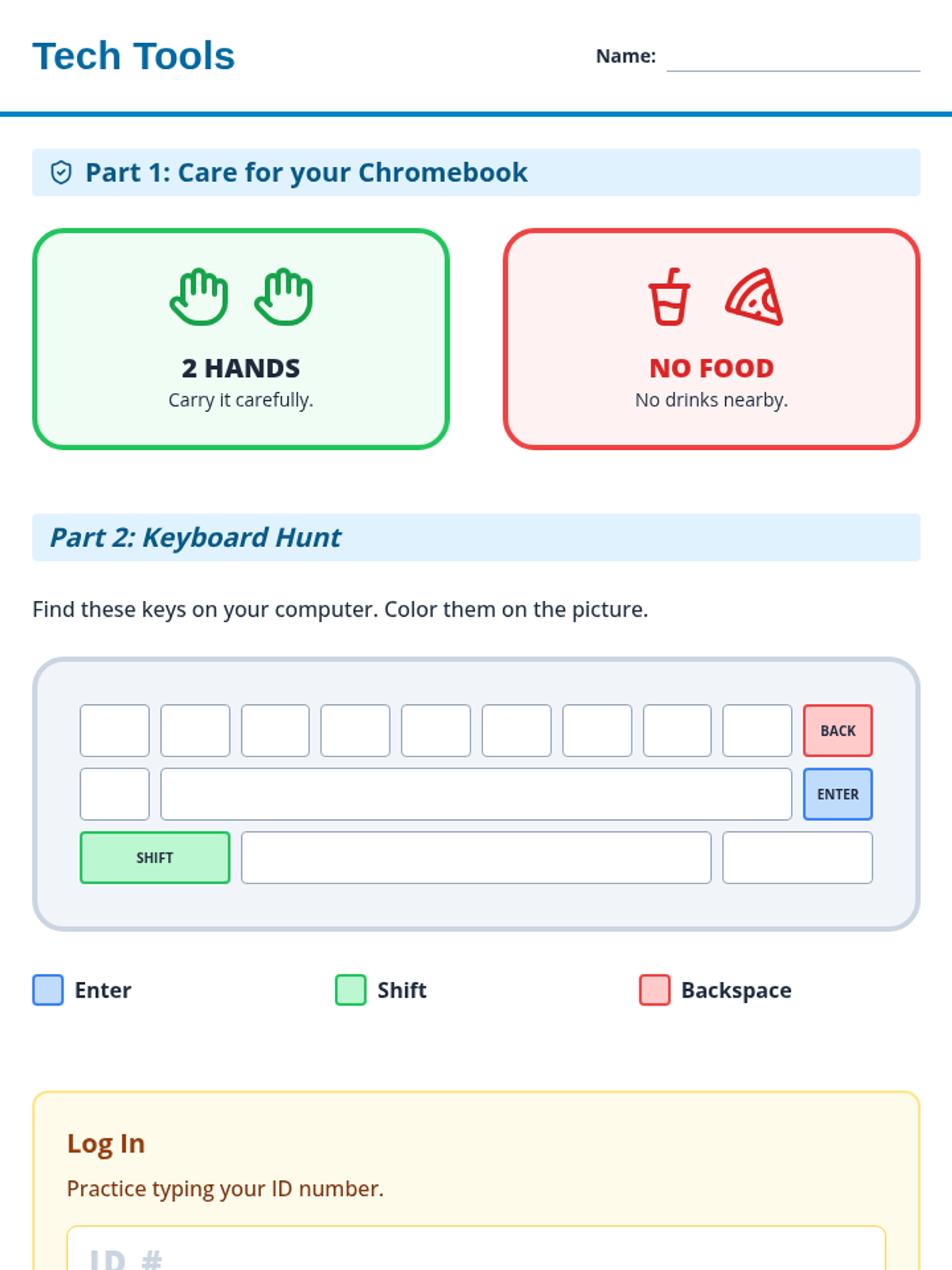
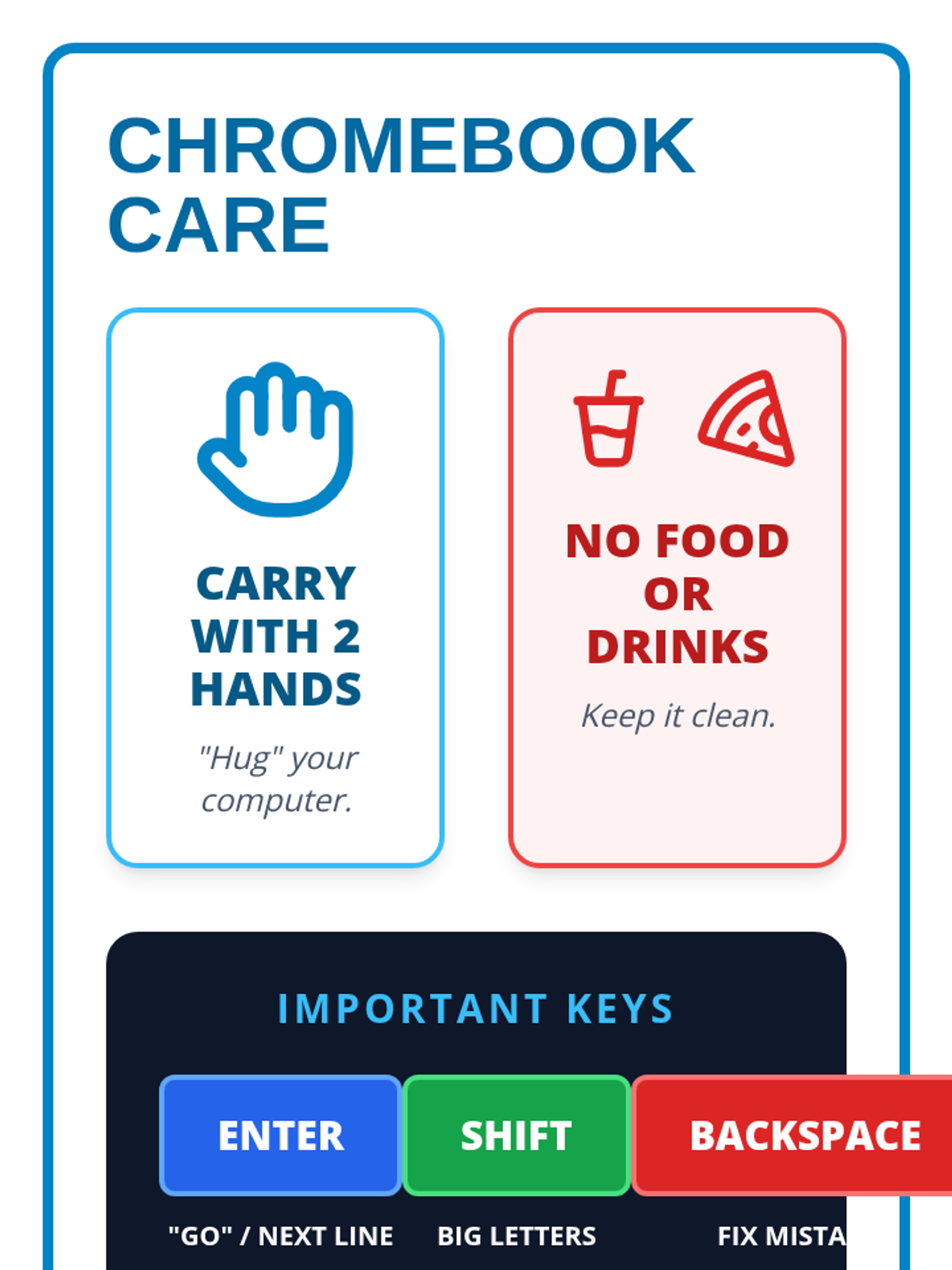
Basic Chromebook operation, including logging in, hardware care, and keyboard basics.
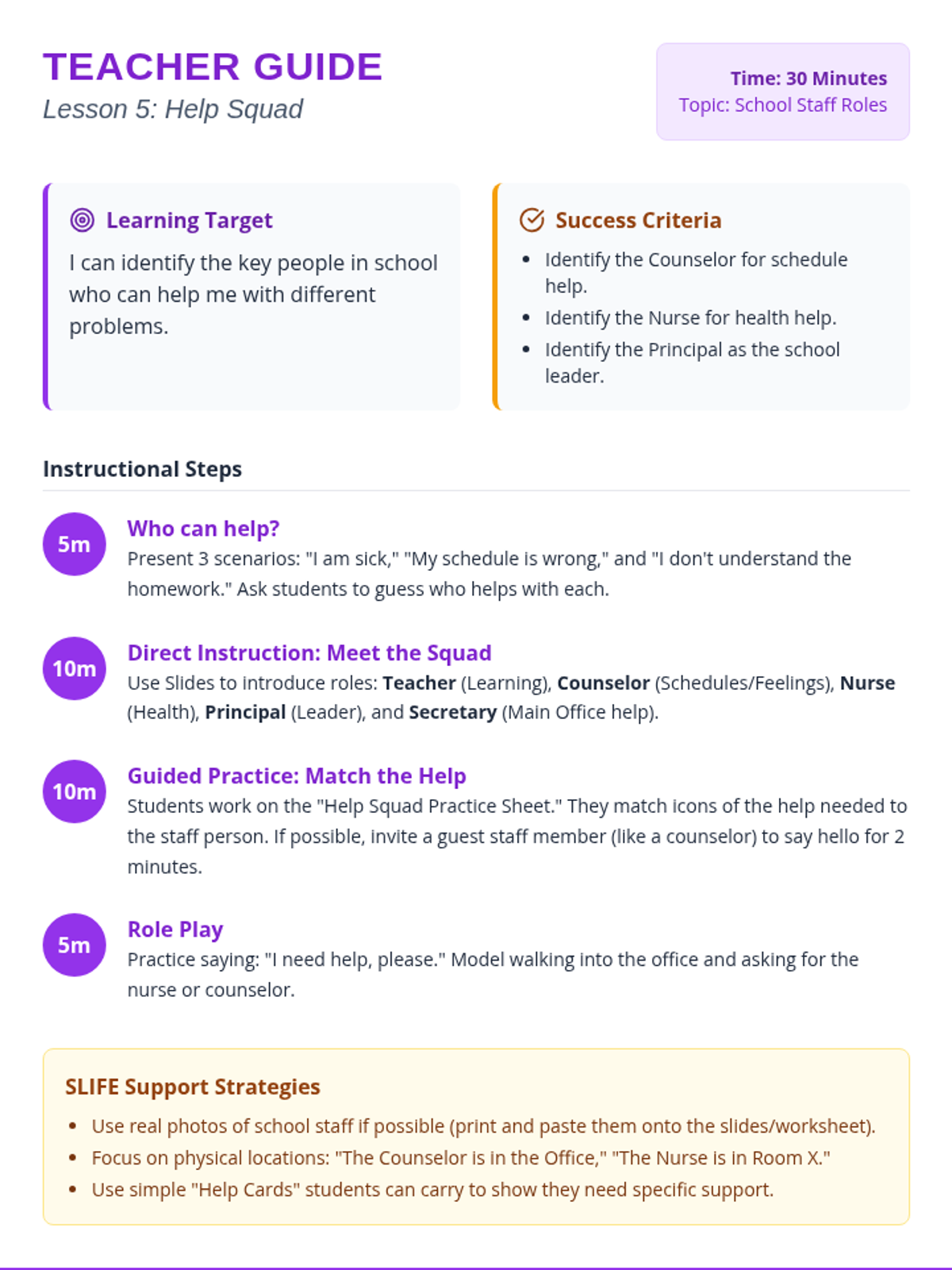
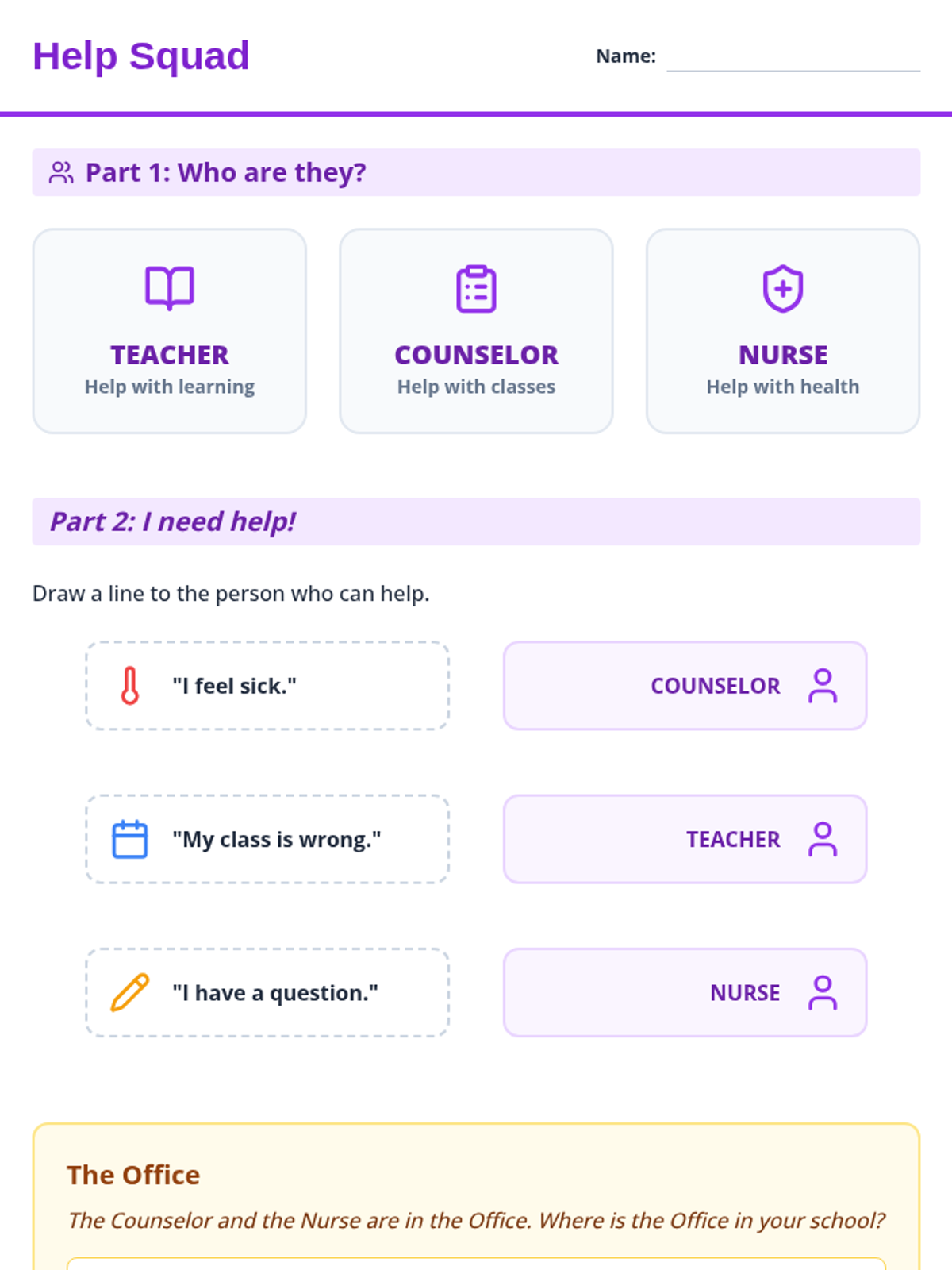
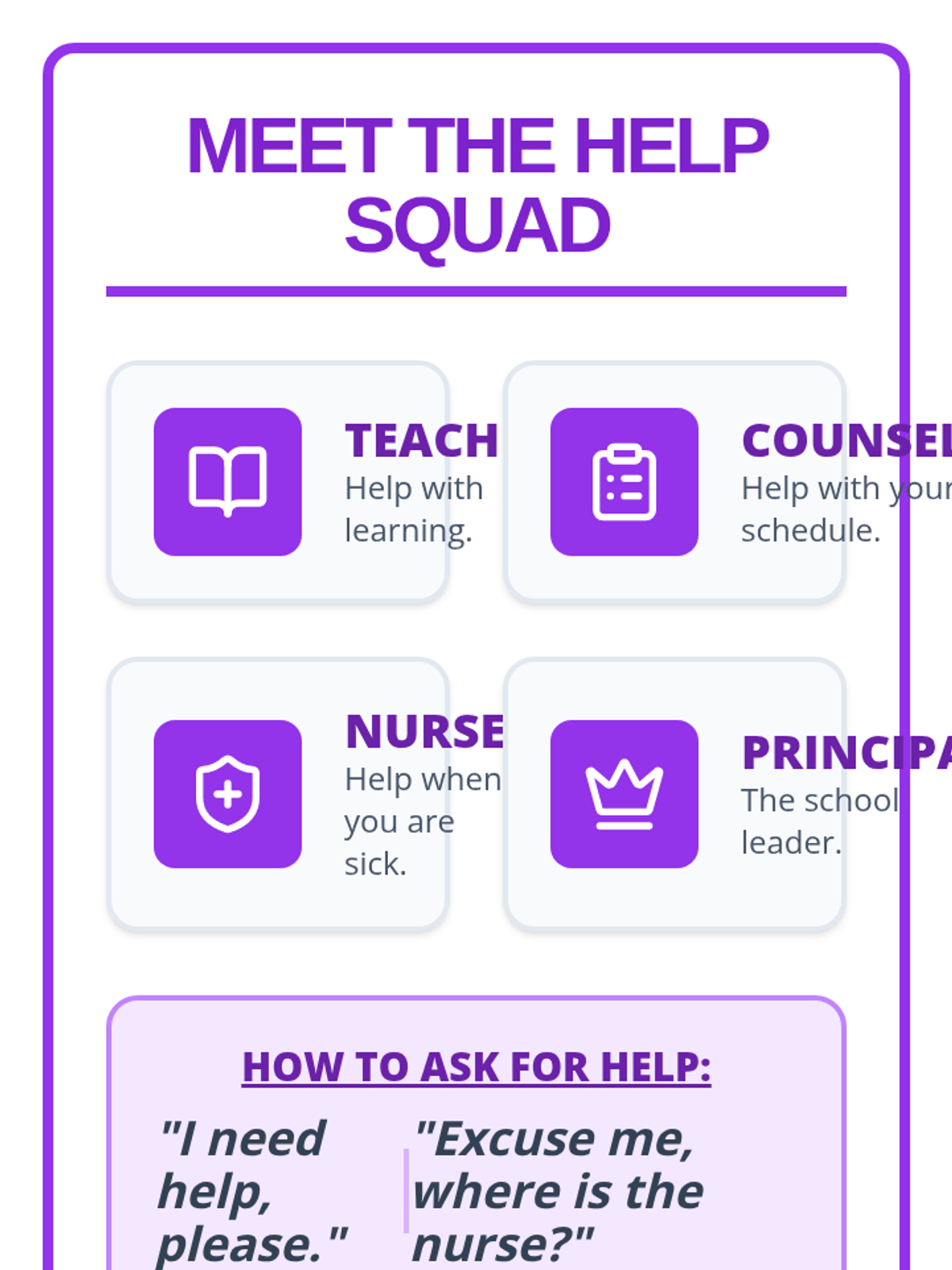
Identifying key school staff members and understanding their roles in supporting students.
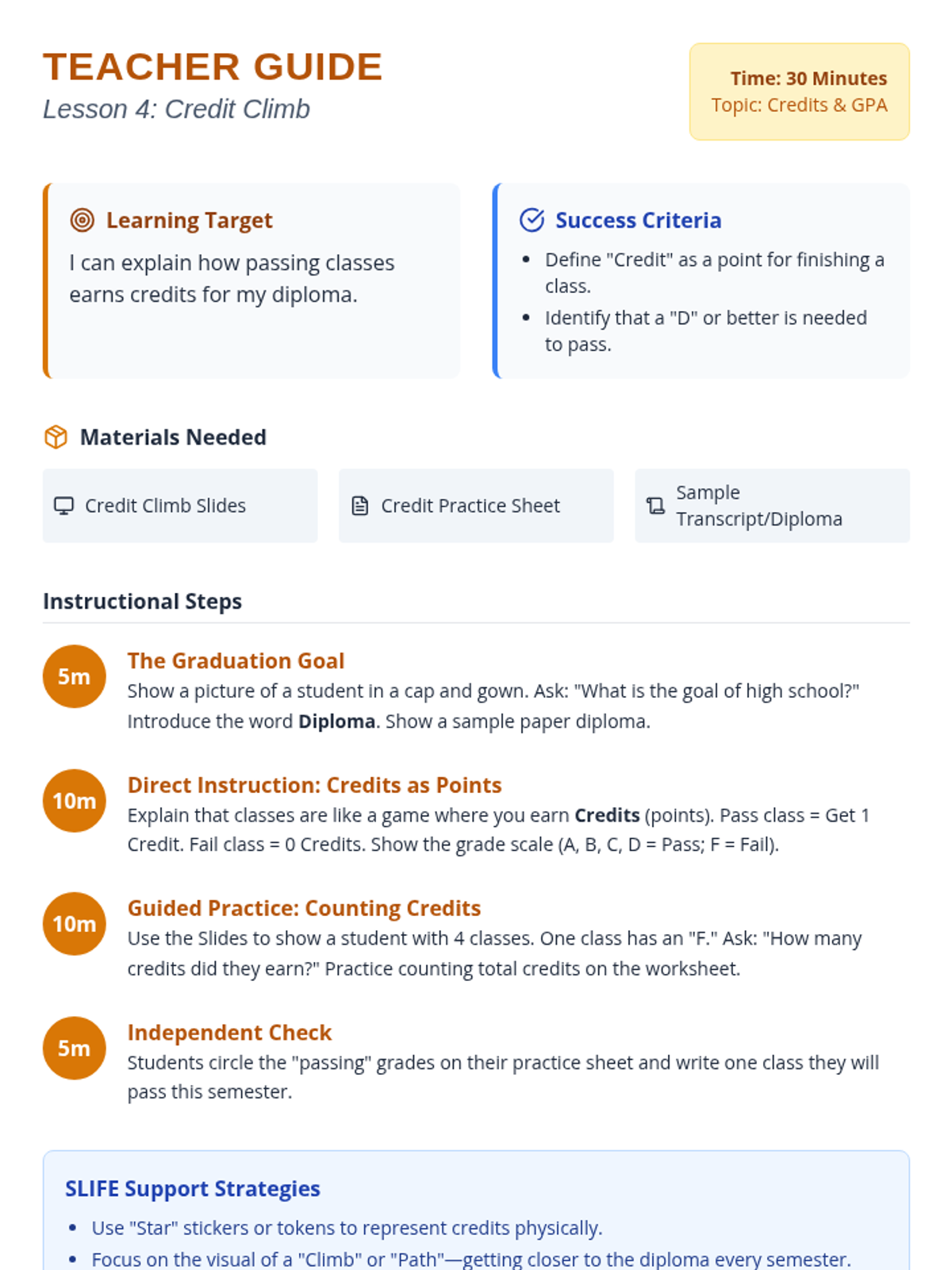
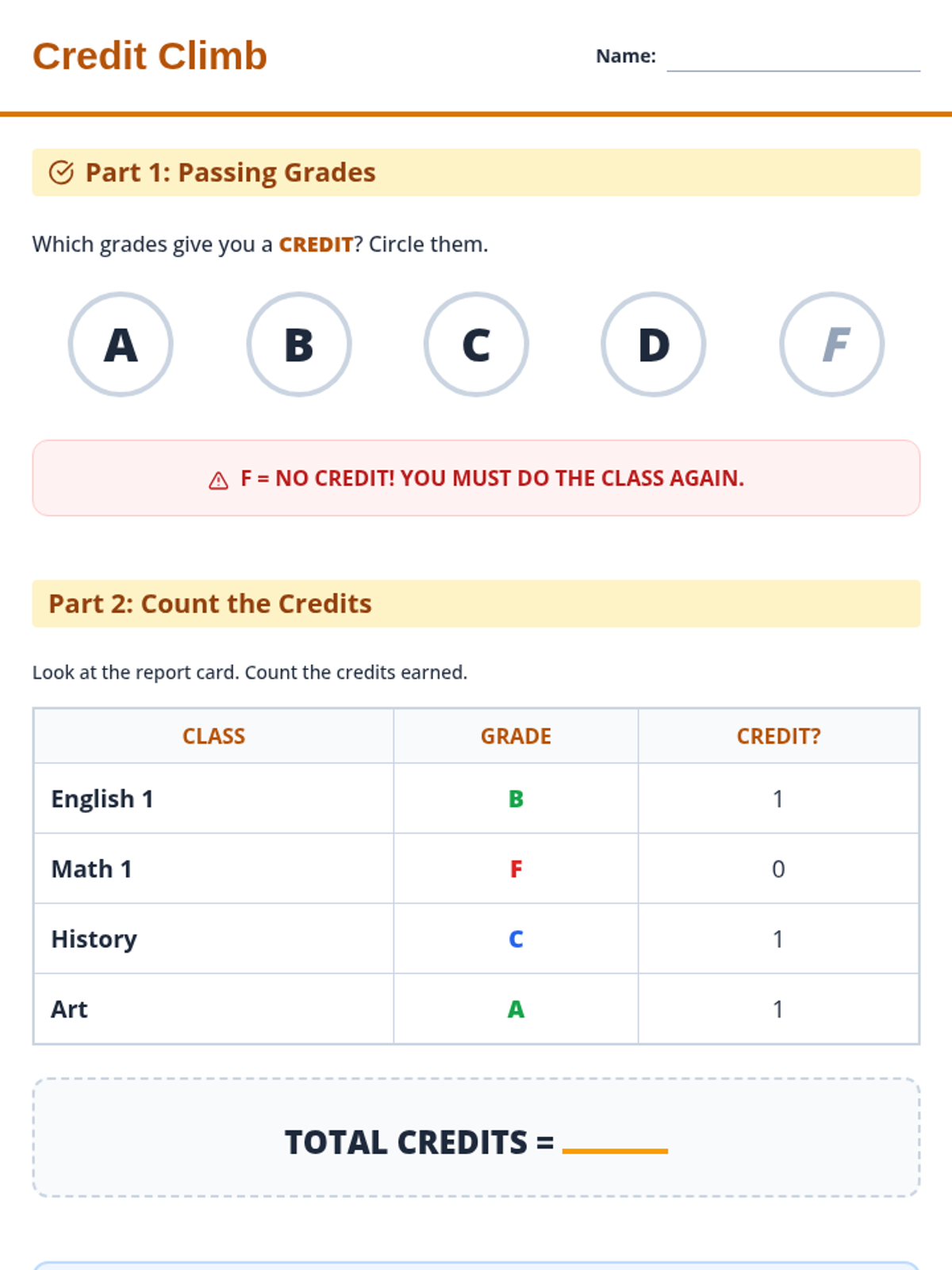
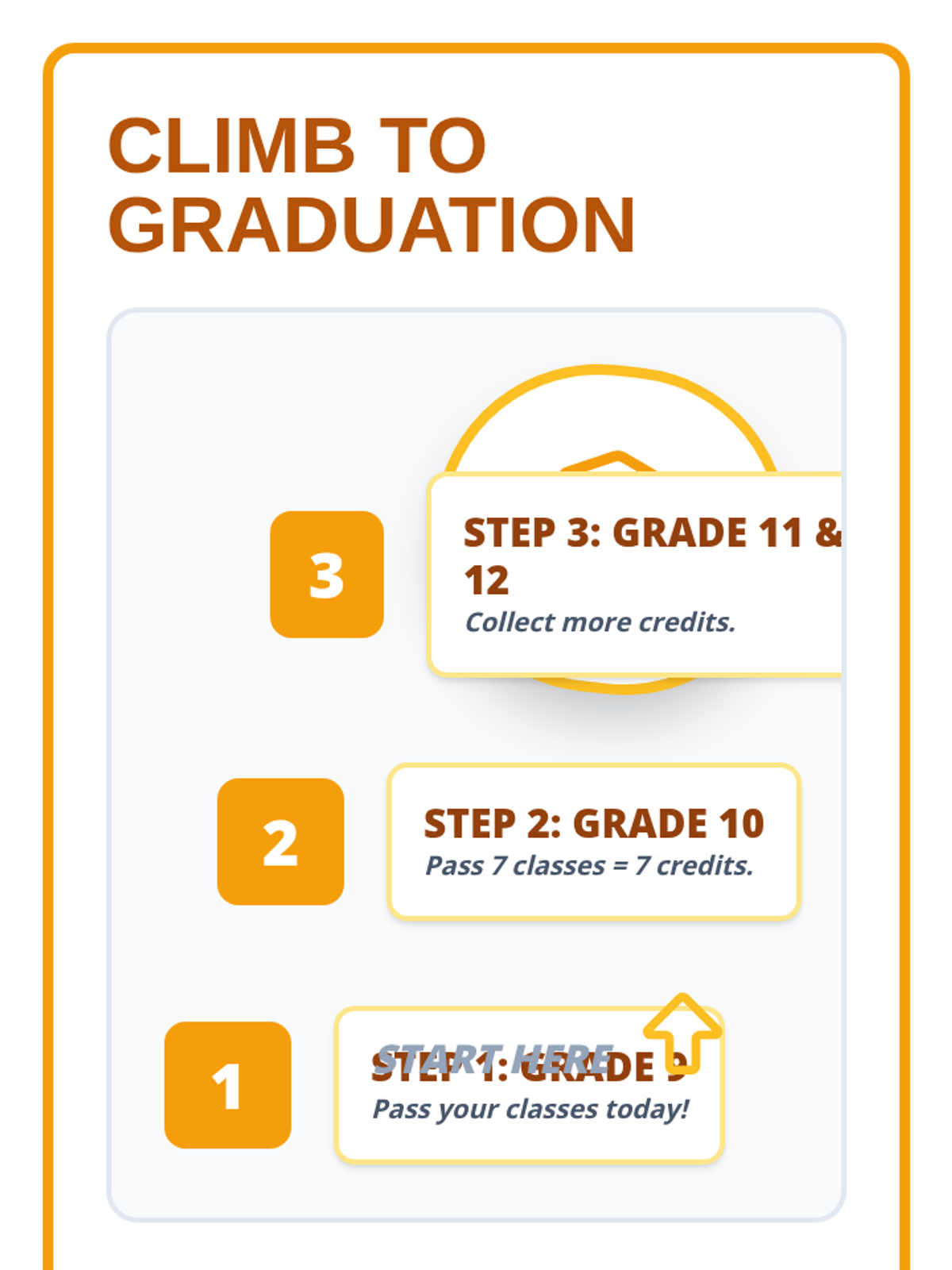
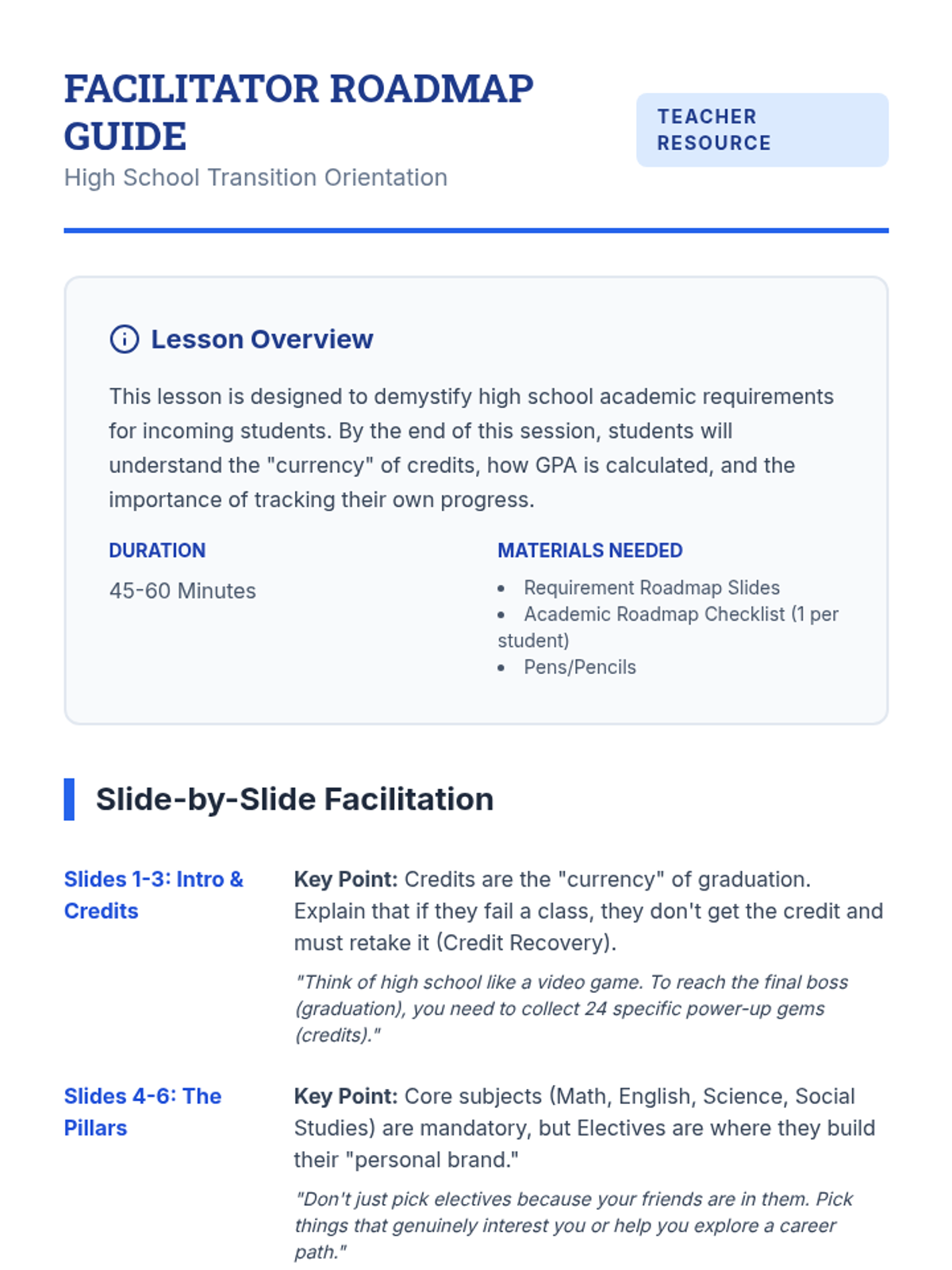
An introduction to earning credits, GPA basics, and the path to a high school diploma.
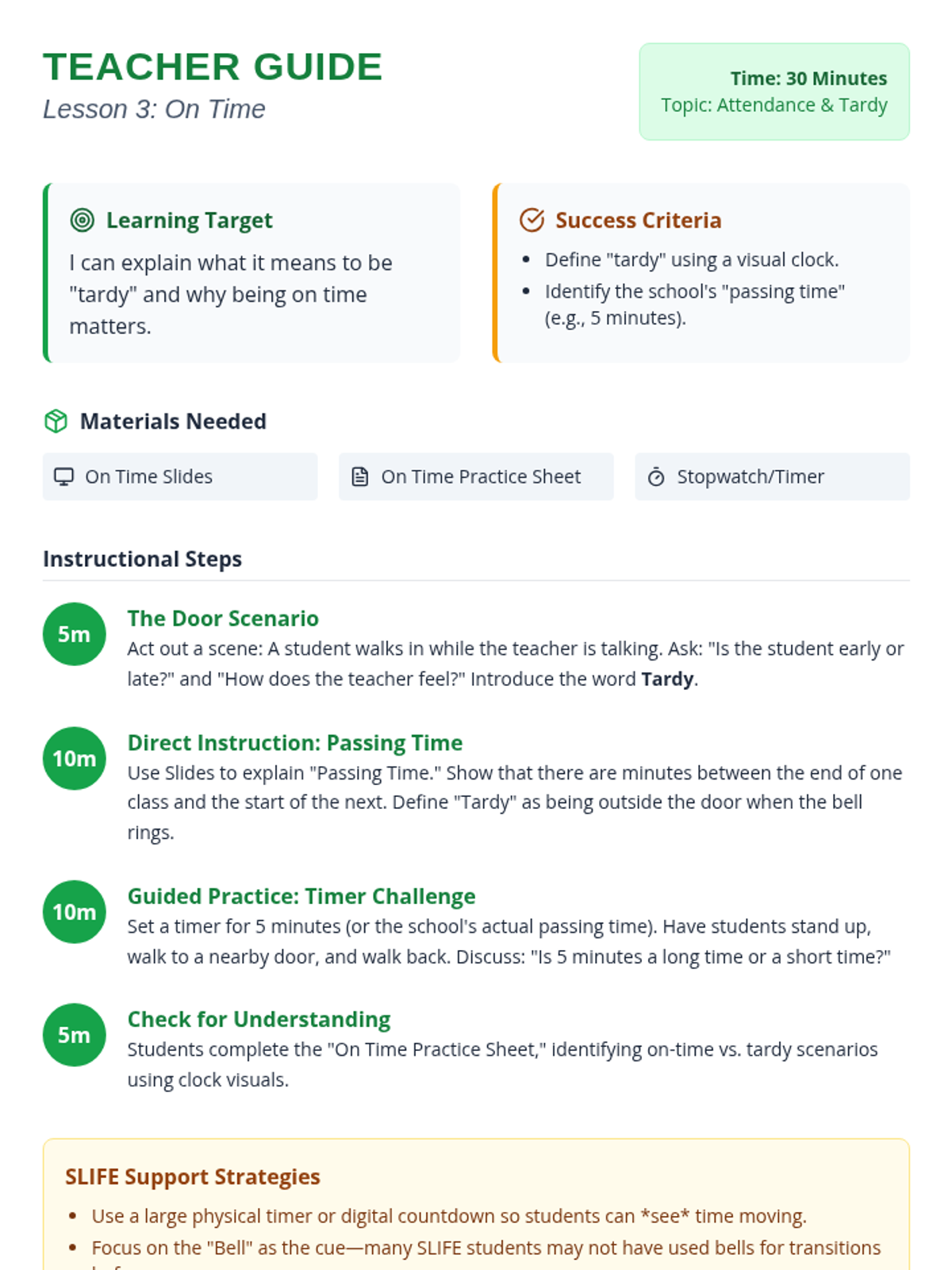
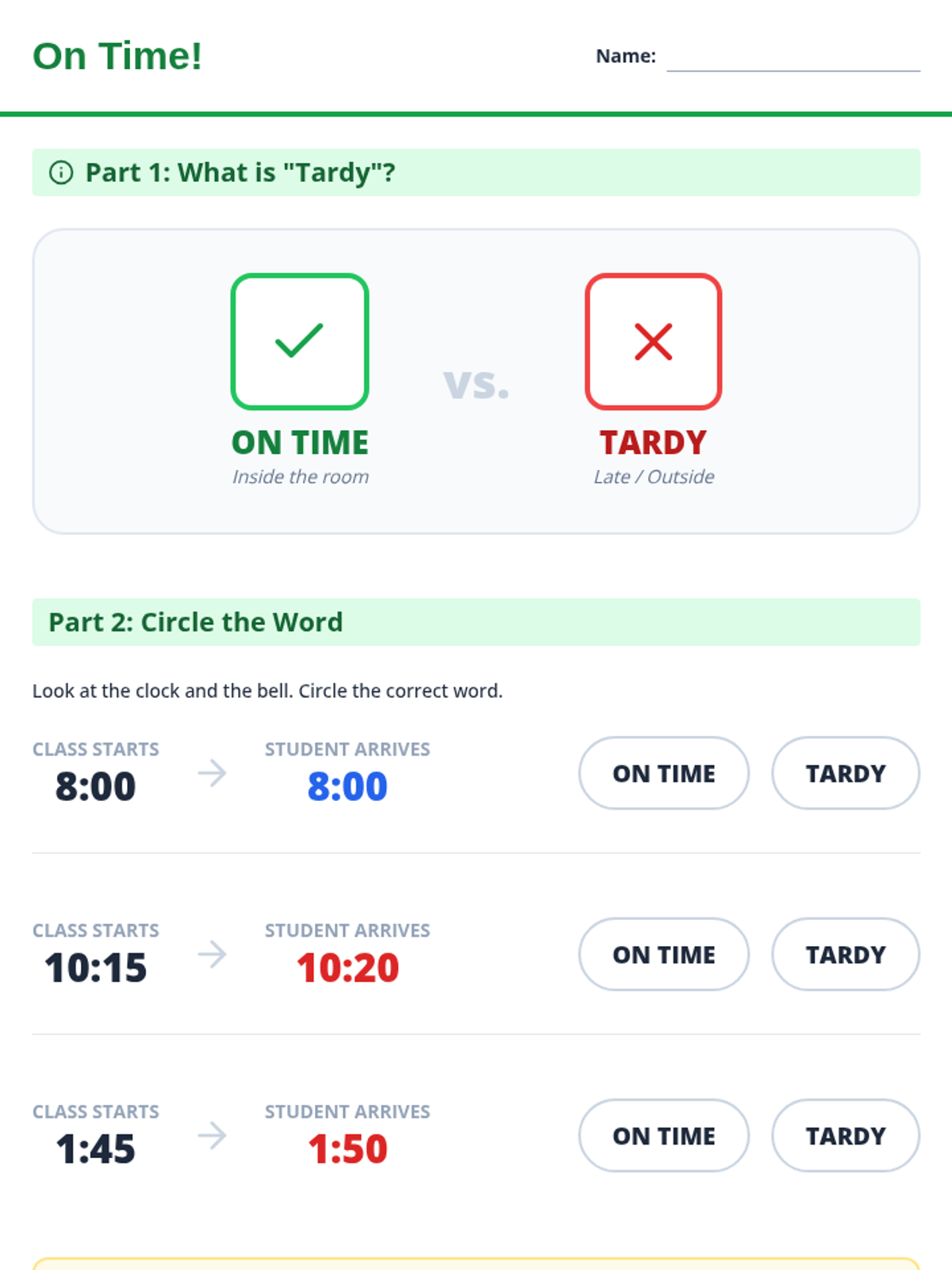
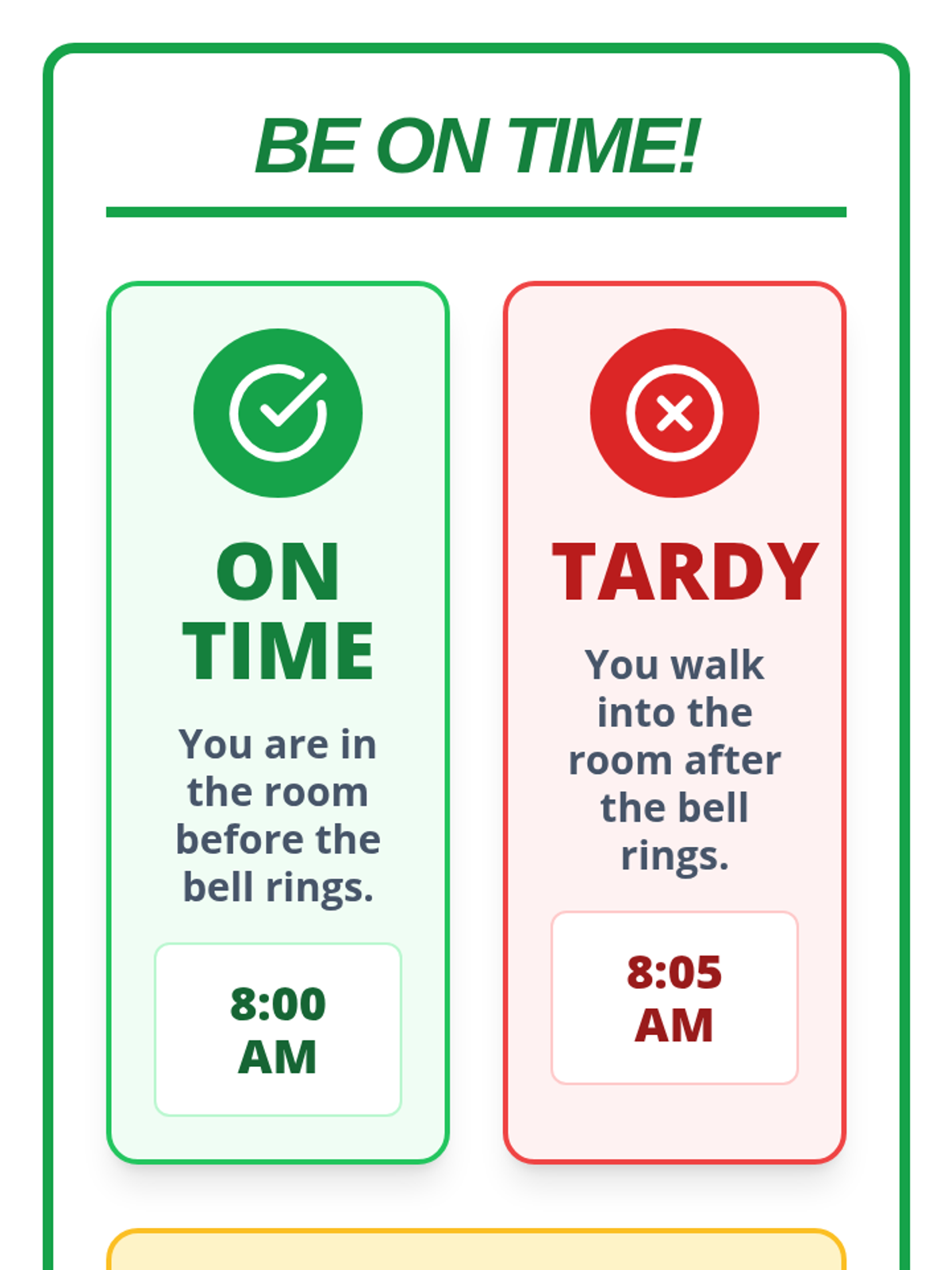
Students explore the importance of attendance and the definition of being tardy.
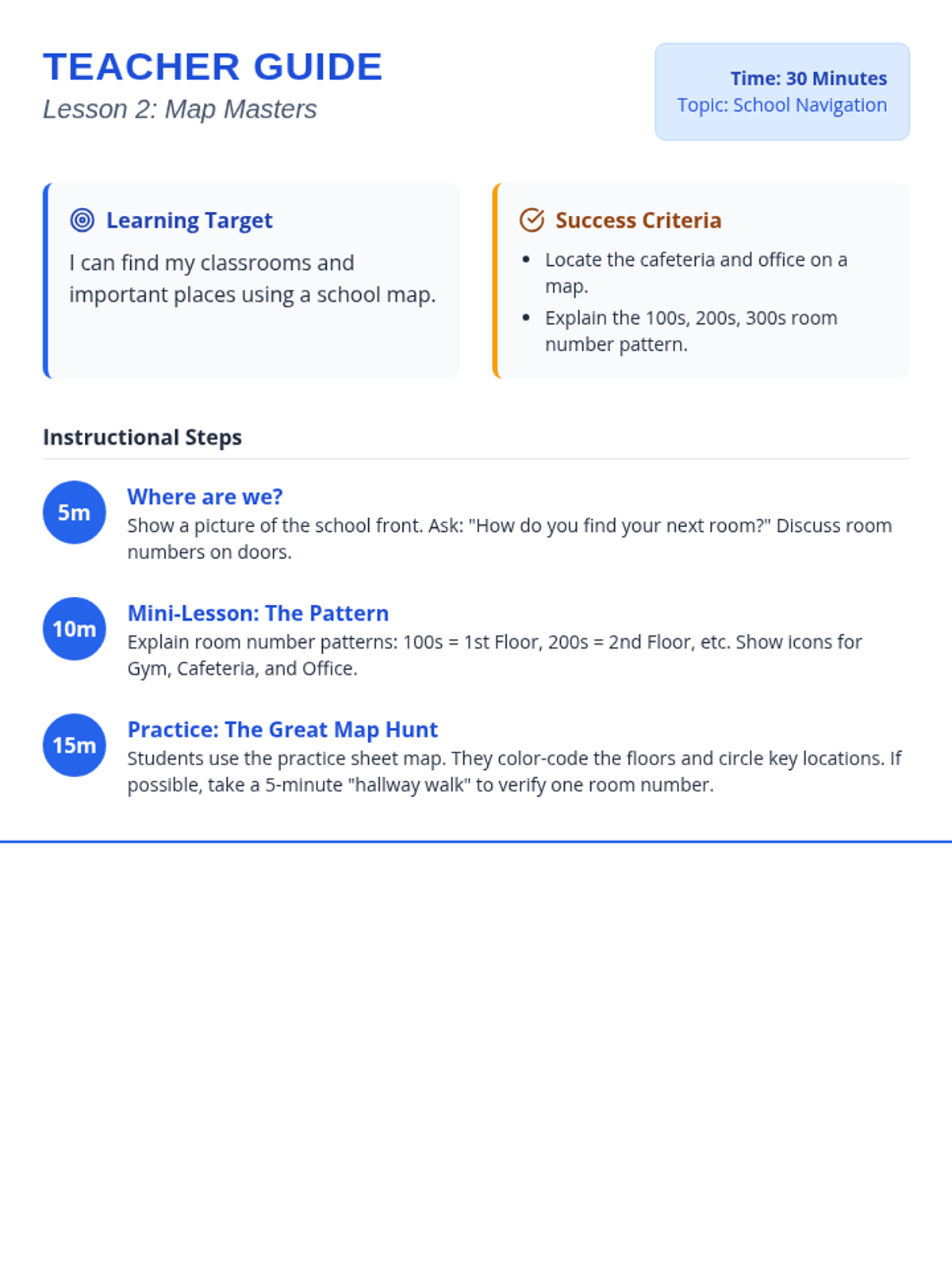
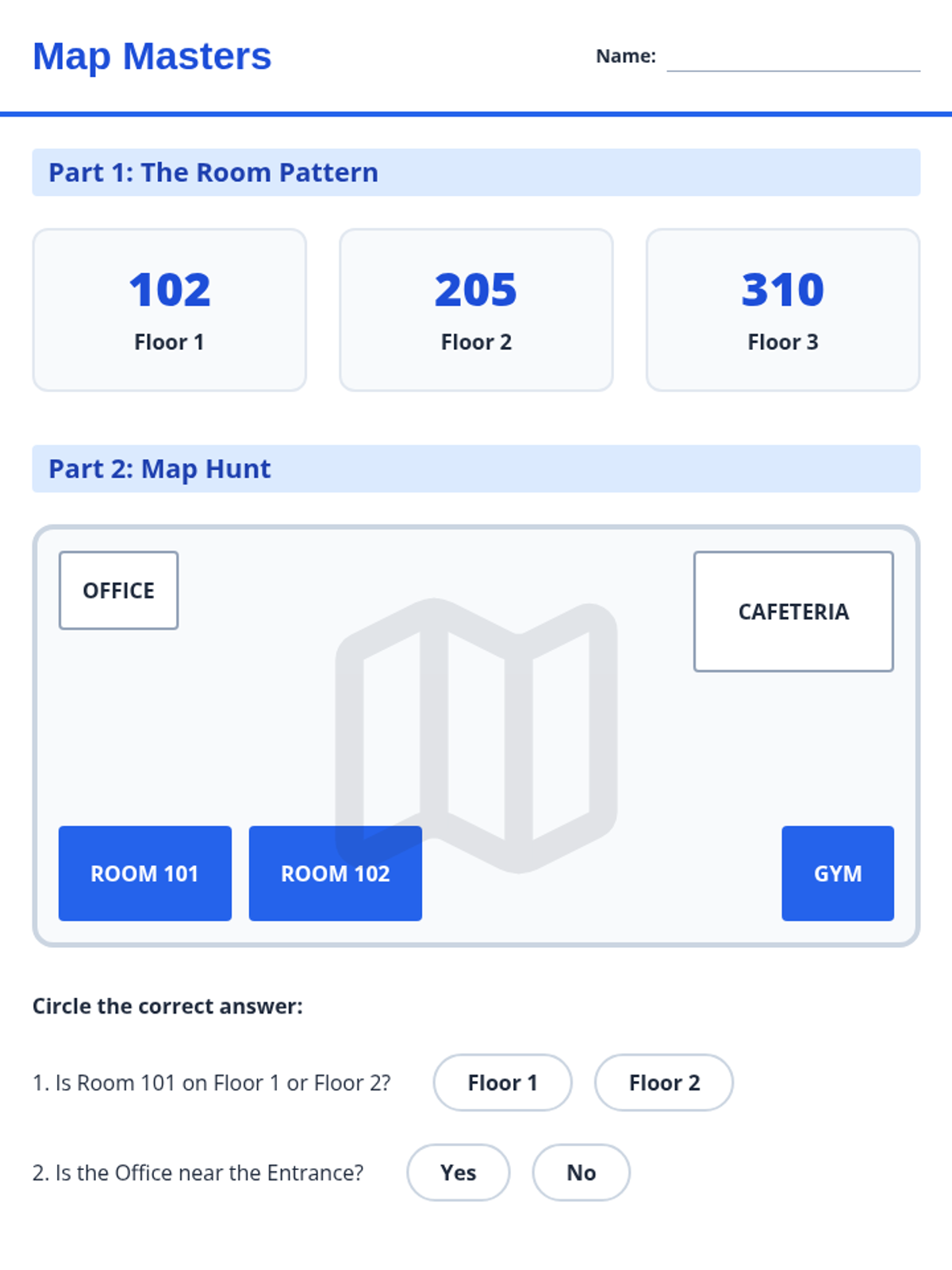
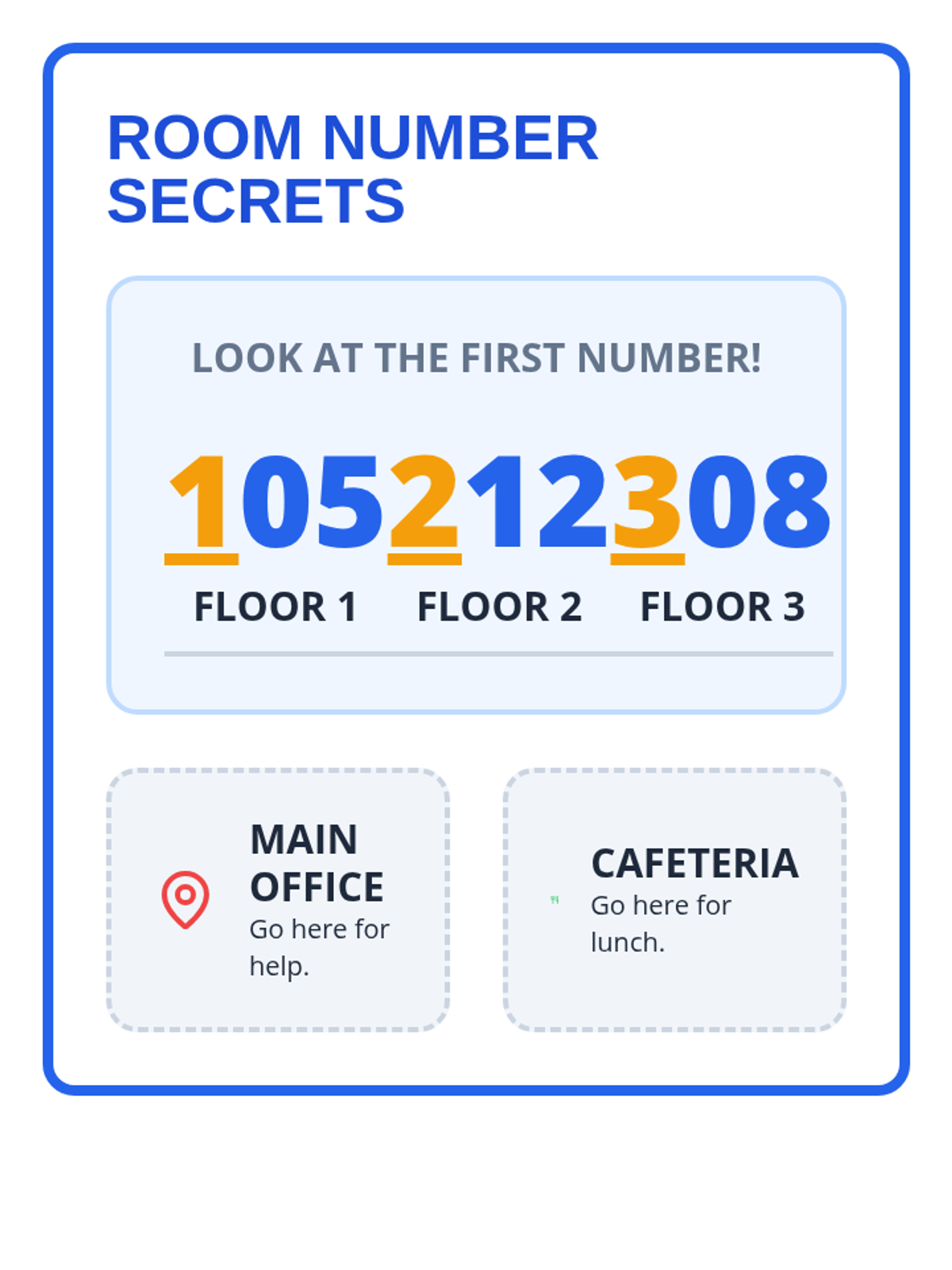
Students learn to navigate the school building using maps and room number patterns.
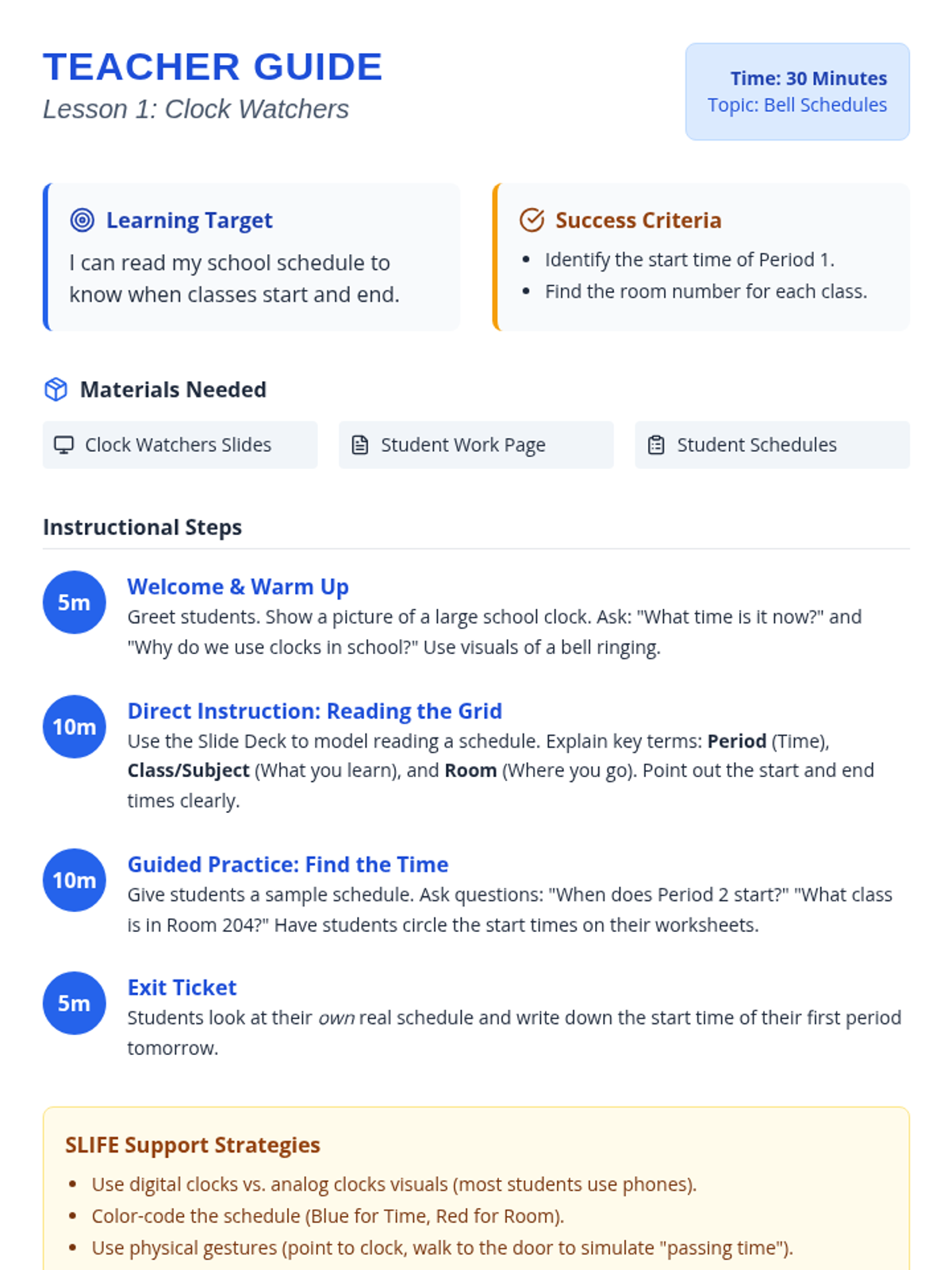
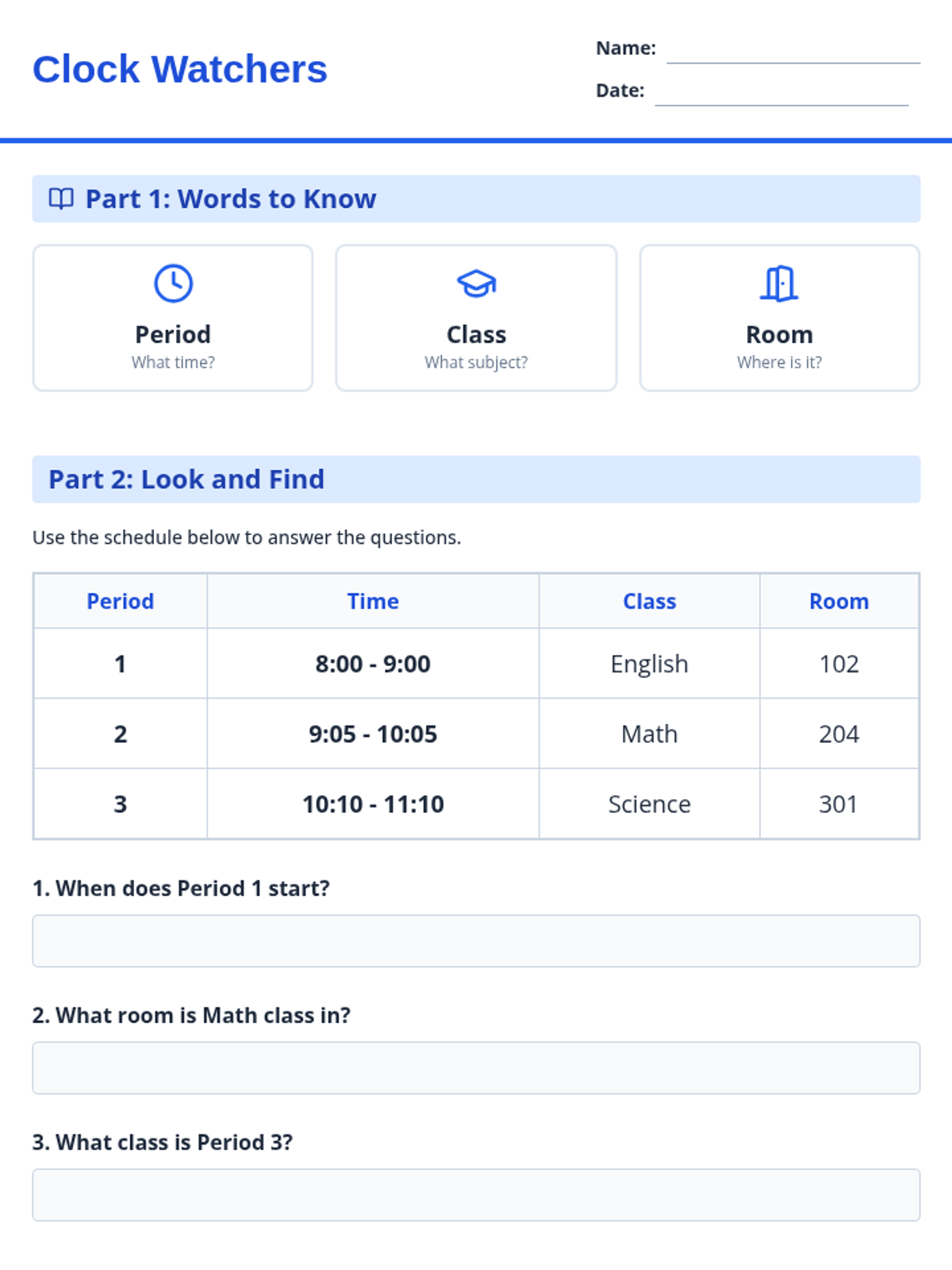
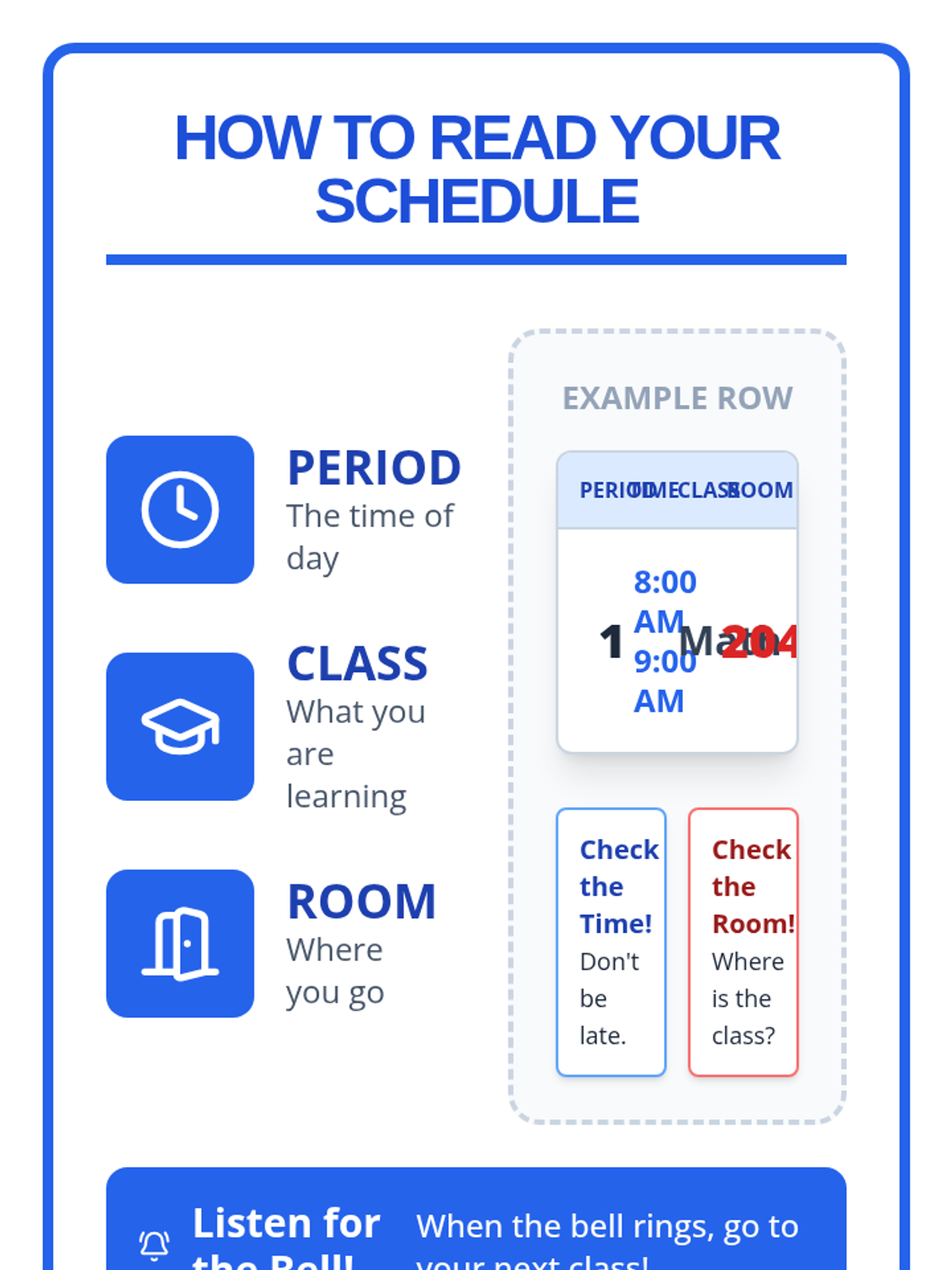
Students learn to read a high school bell schedule, understand period transitions, and identify their own class times.
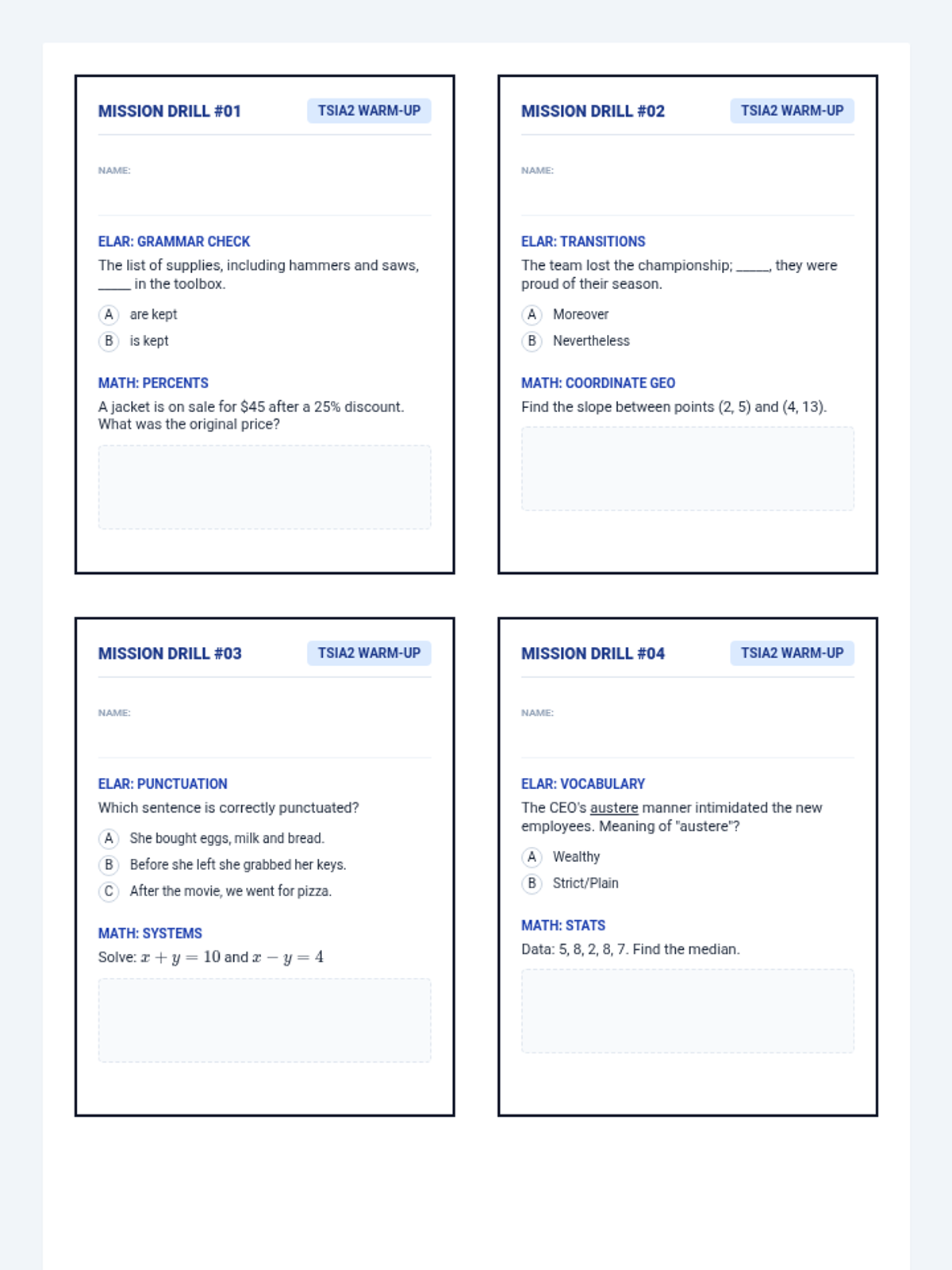
Short, focused practice sessions to reinforce concepts and track progress.
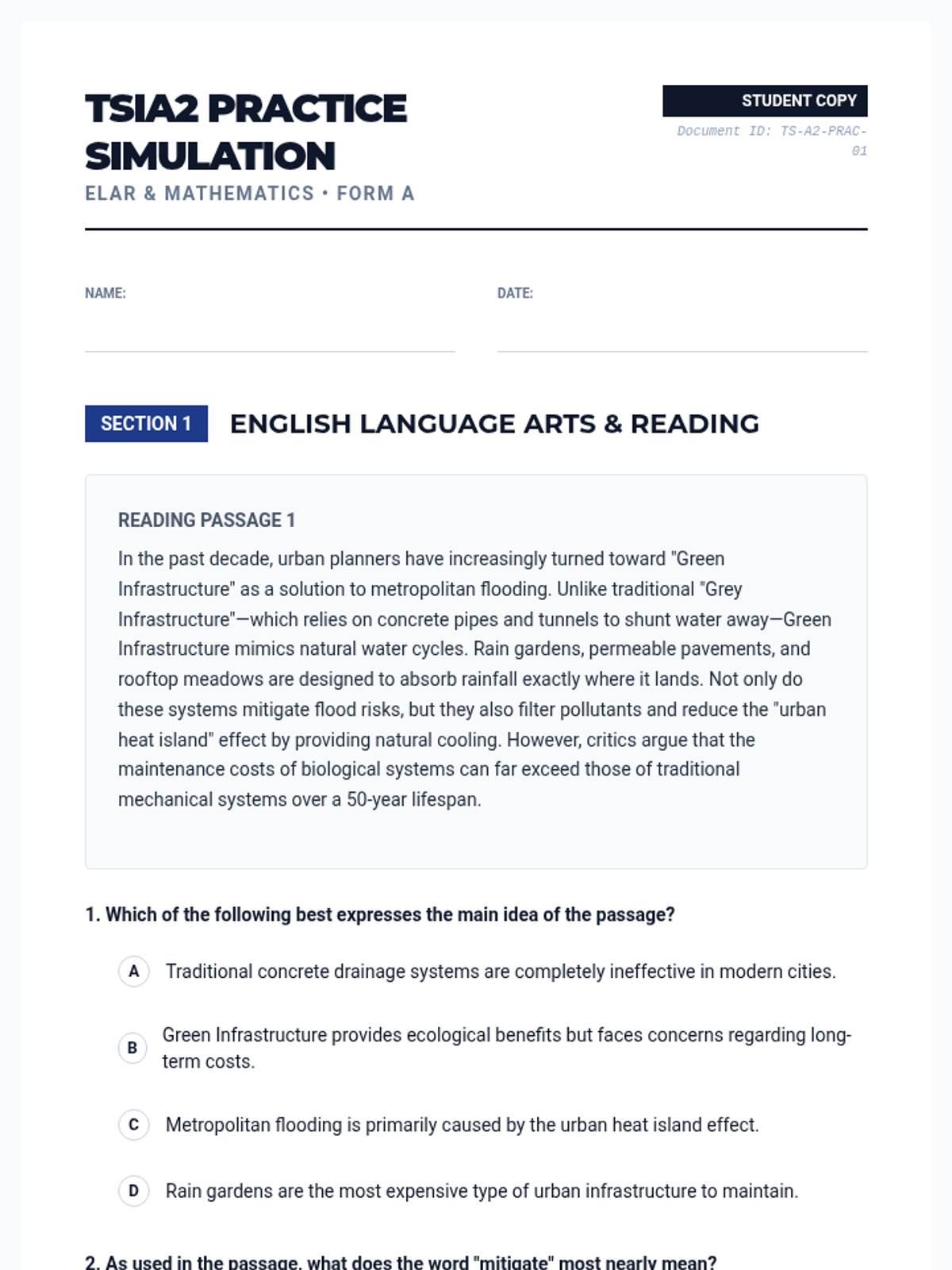
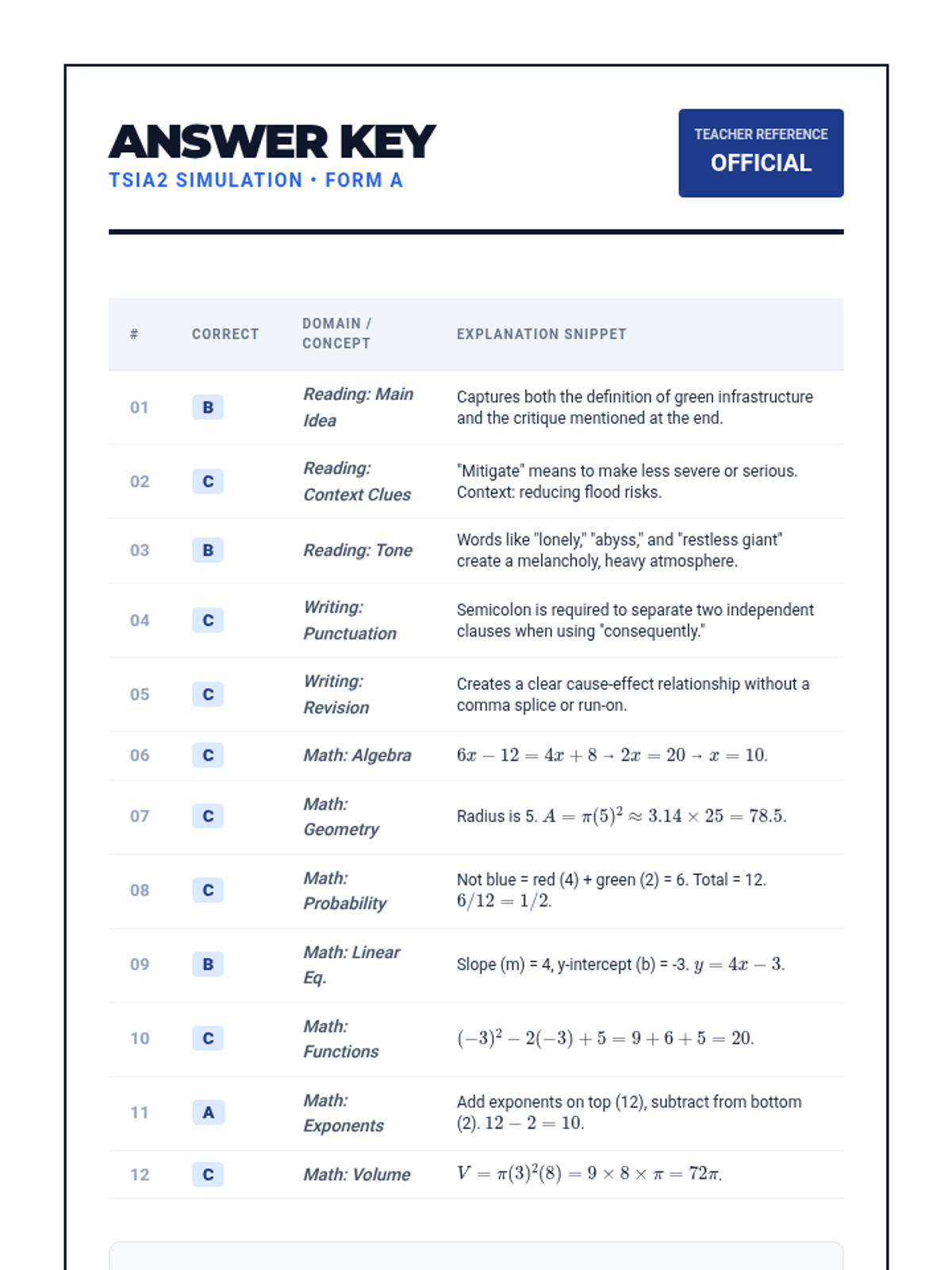
A full-length simulated testing experience to build stamina and assess readiness.
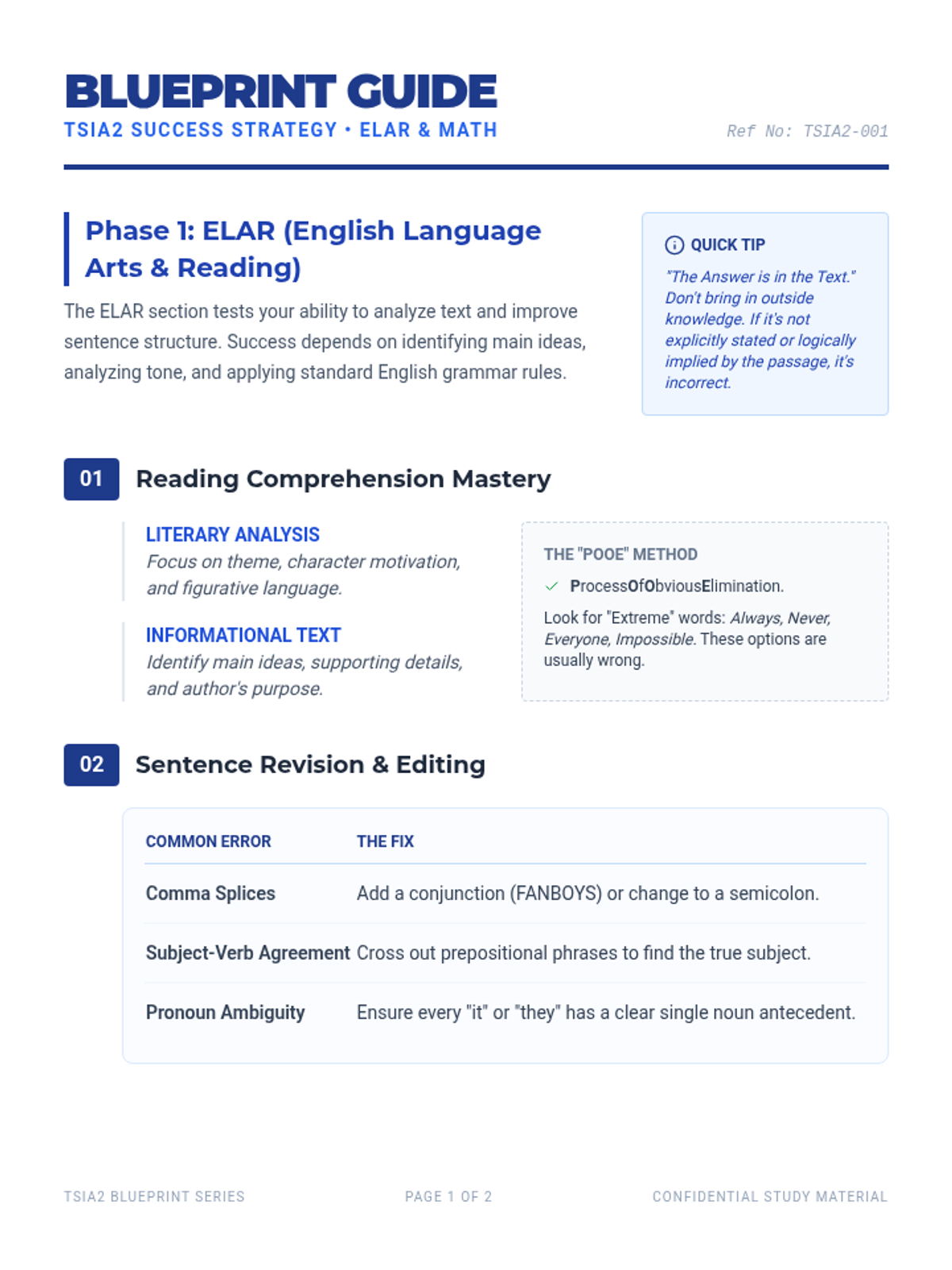
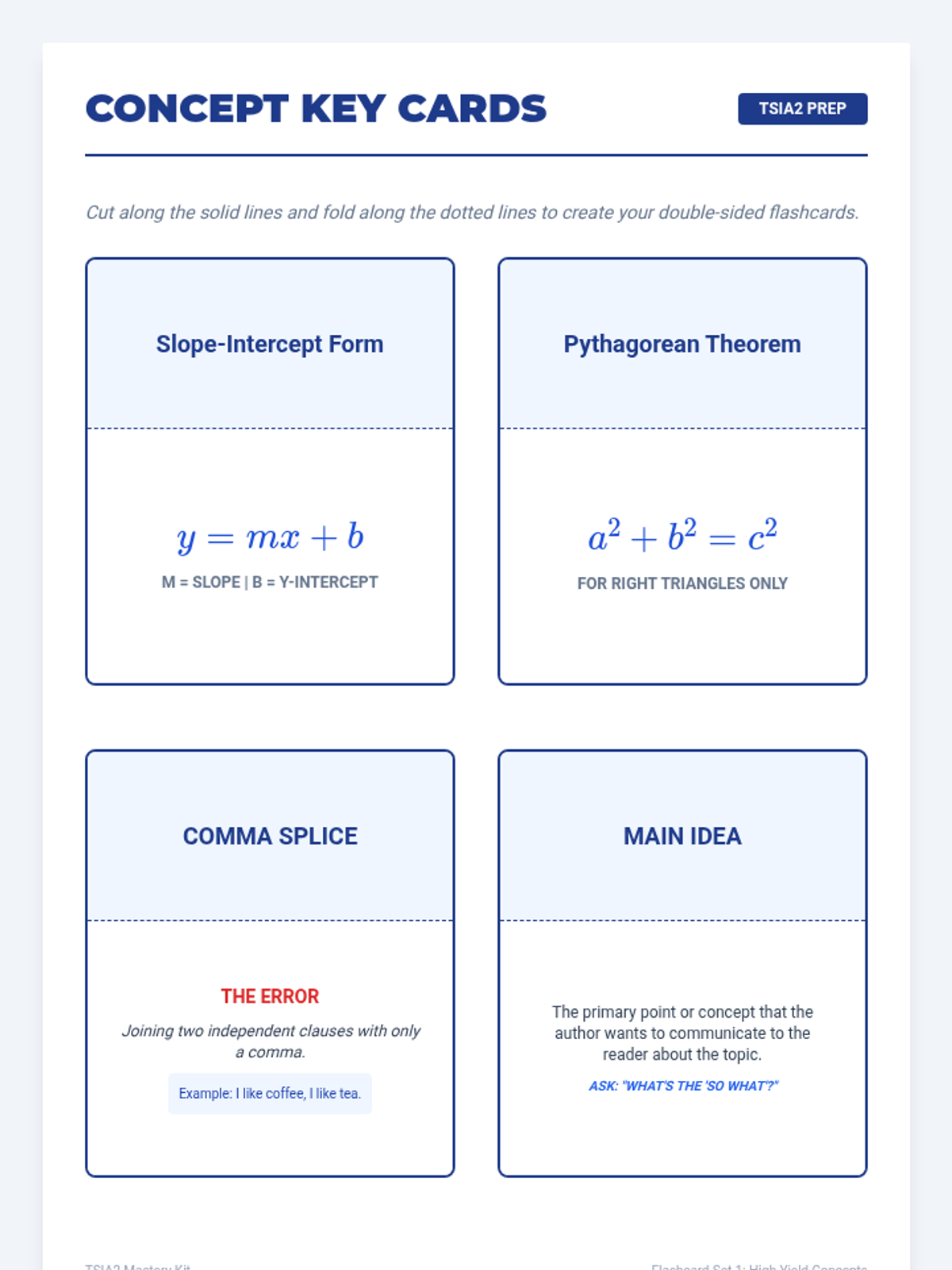
Foundational strategies and key concepts for both ELAR and Math sections of the TSIA2.
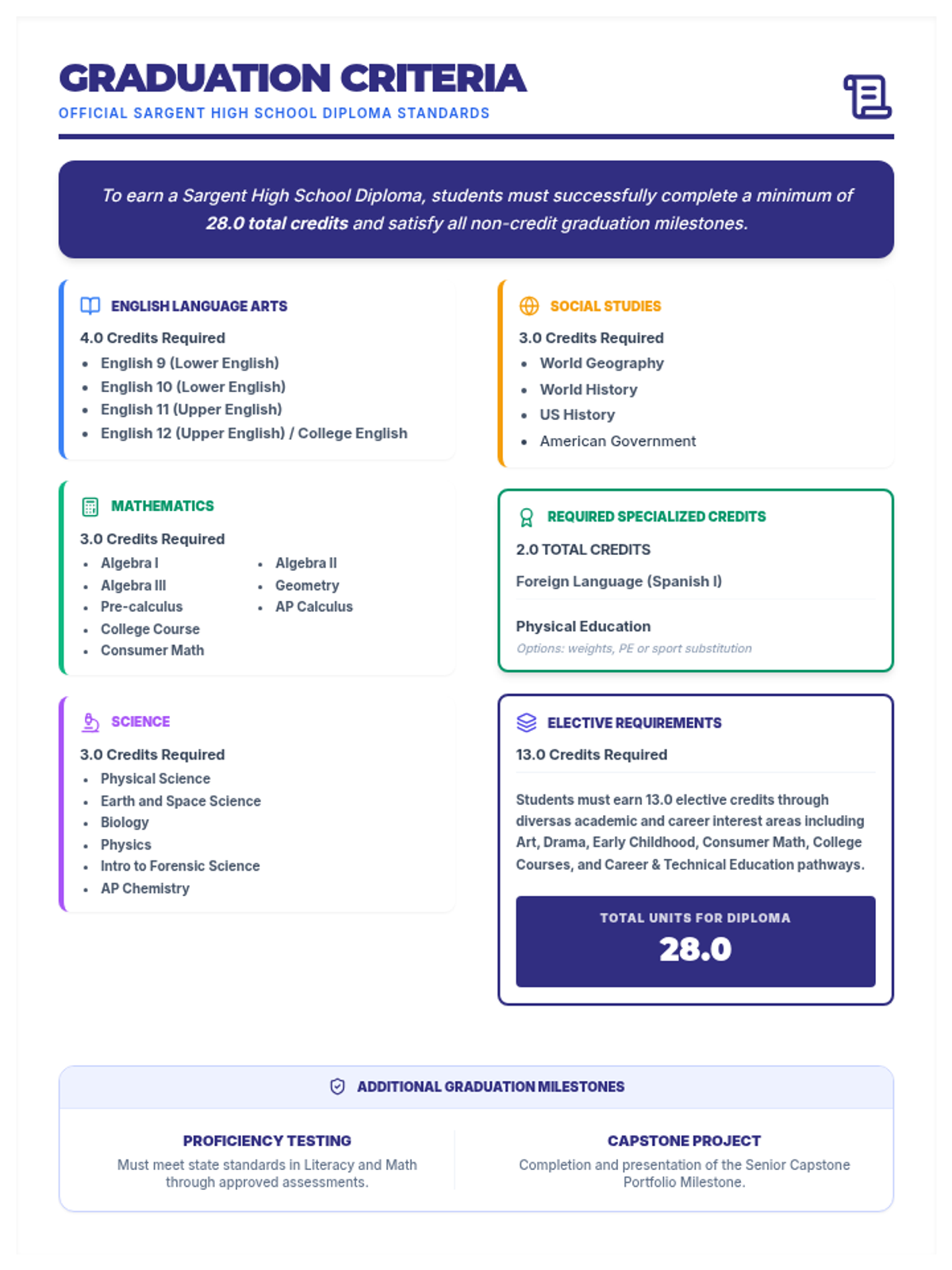
A comprehensive guide to high school graduation requirements and academic planning for transitioning students. Includes a visual presentation and a printable tracking checklist.
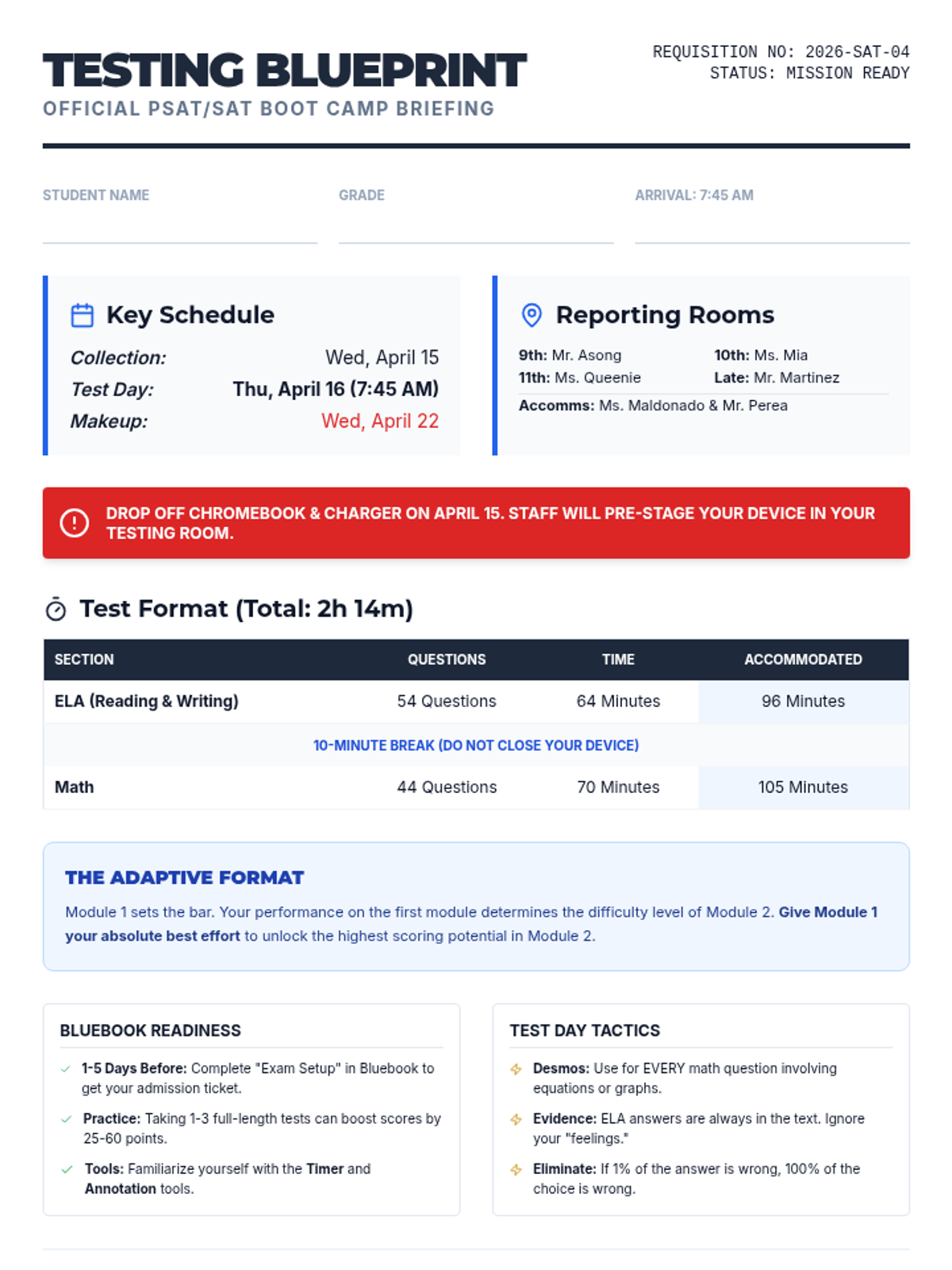
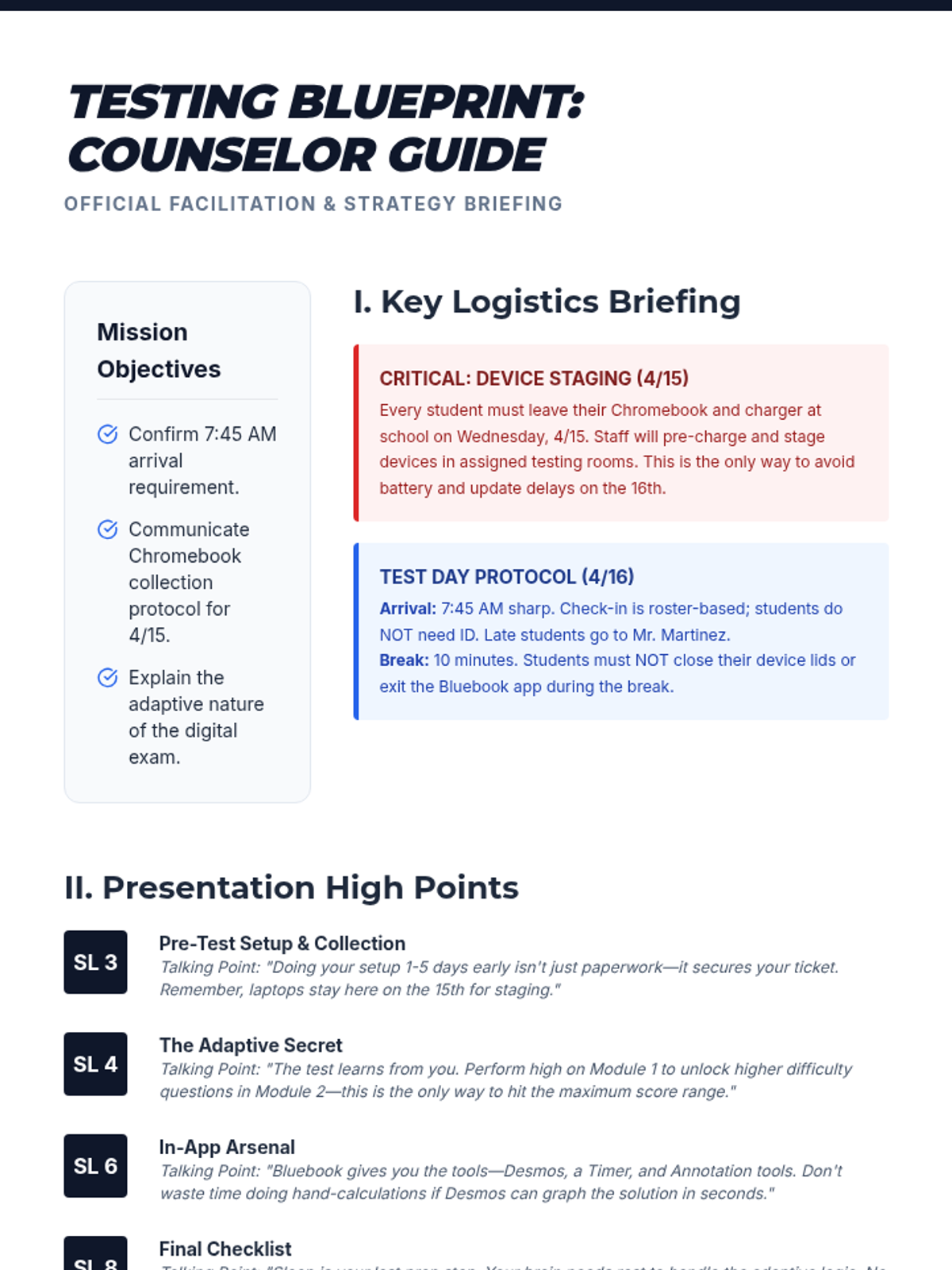
A comprehensive SAT/PSAT preparation session covering critical logistics, timing for standard and accommodated testing, and high-impact strategies for both the ELA and Math sections.
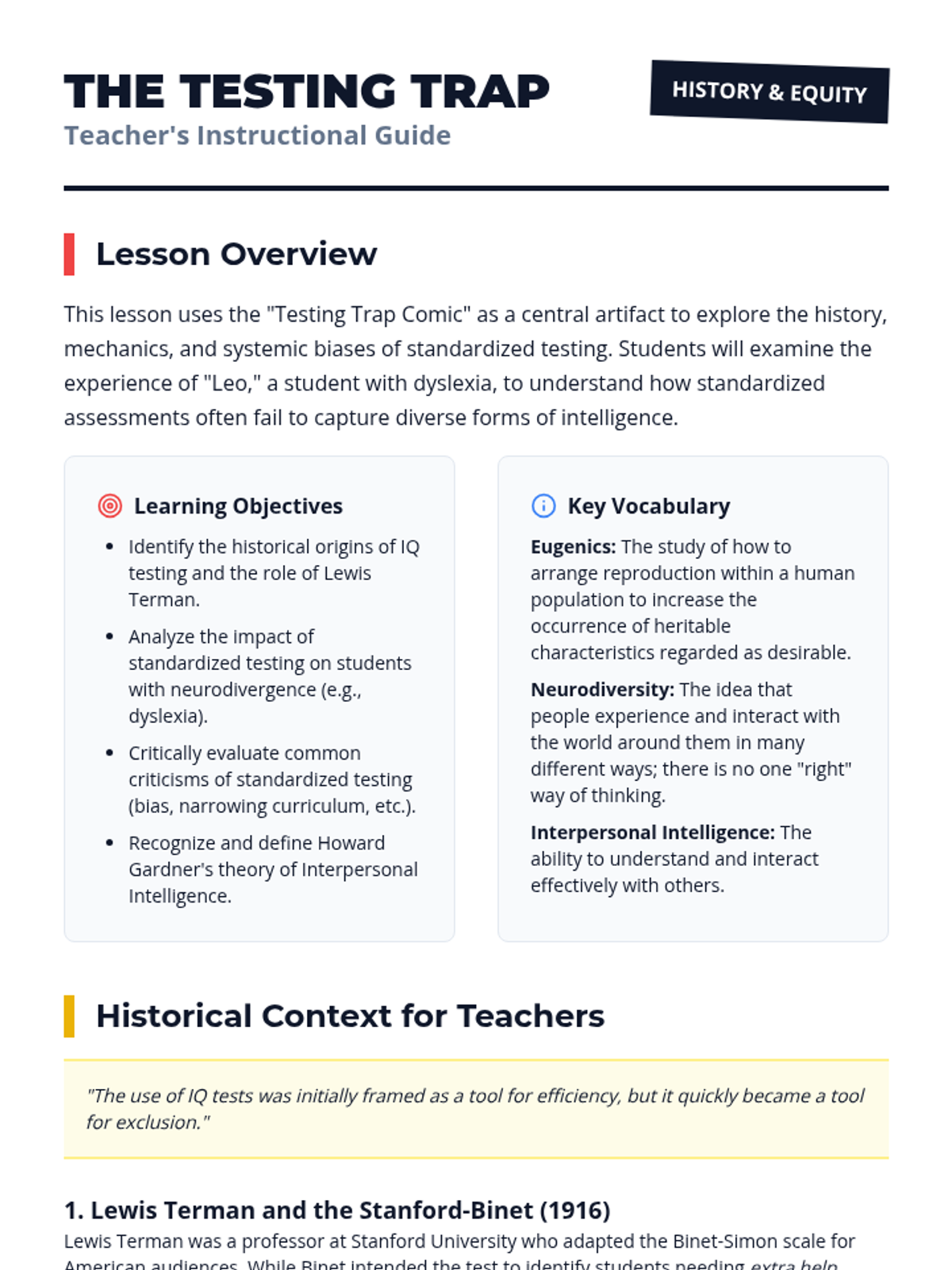
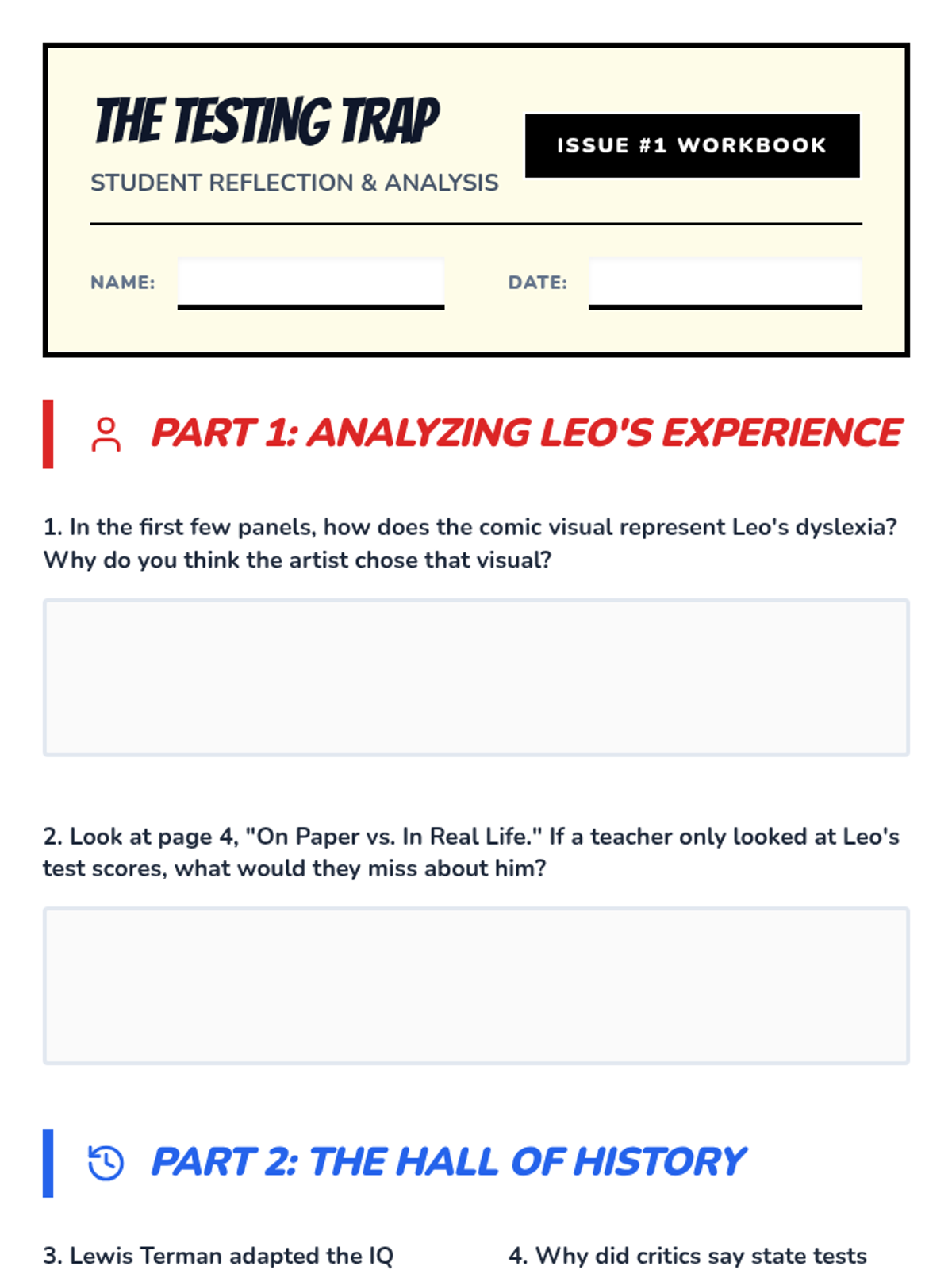
An exploration of the history, mechanics, and fairness of standardized testing through the lens of a neurodivergent student's experience. This lesson uses a retro-style comic to illustrate the disconnect between traditional testing and real-world intelligence.
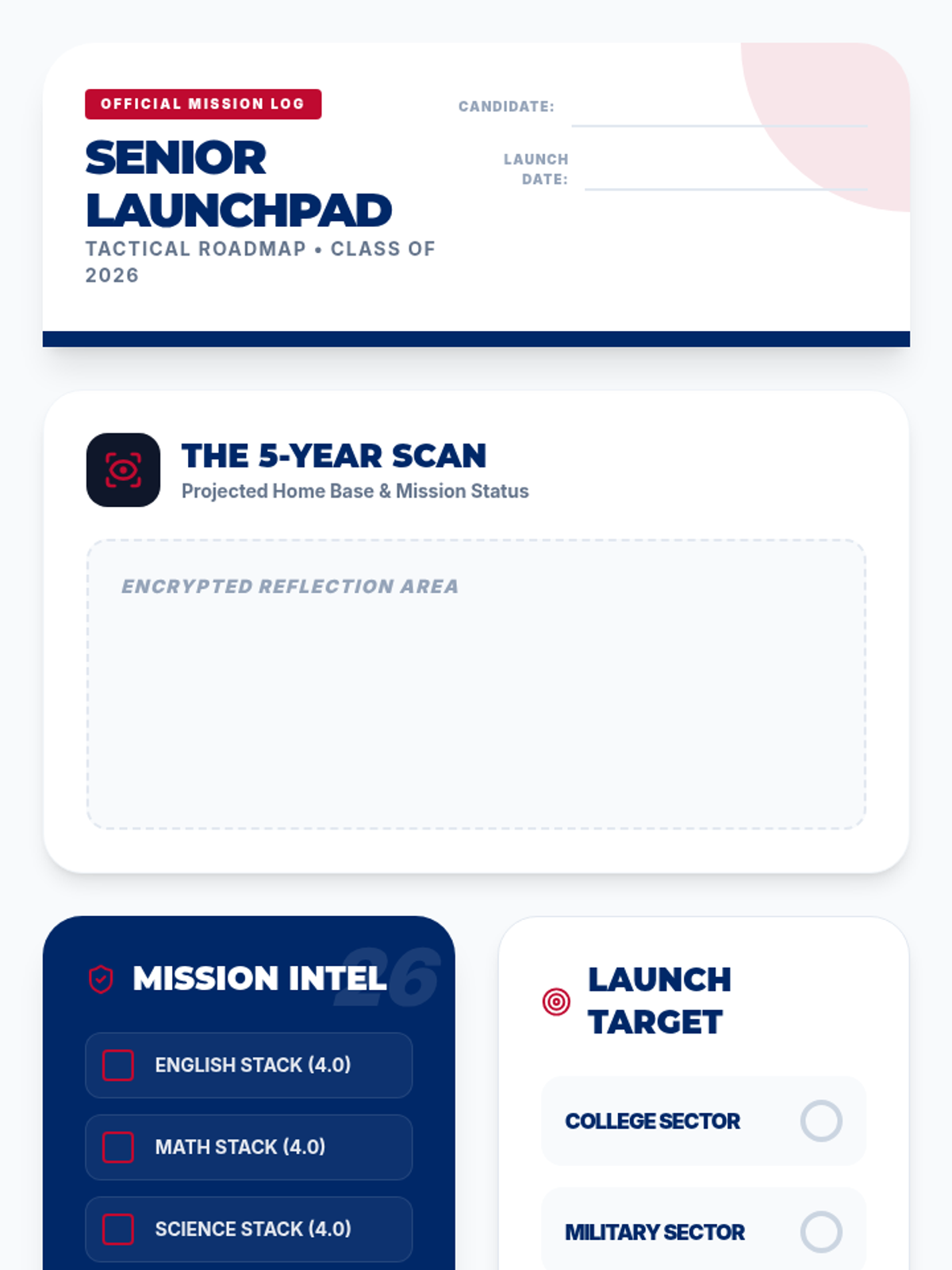
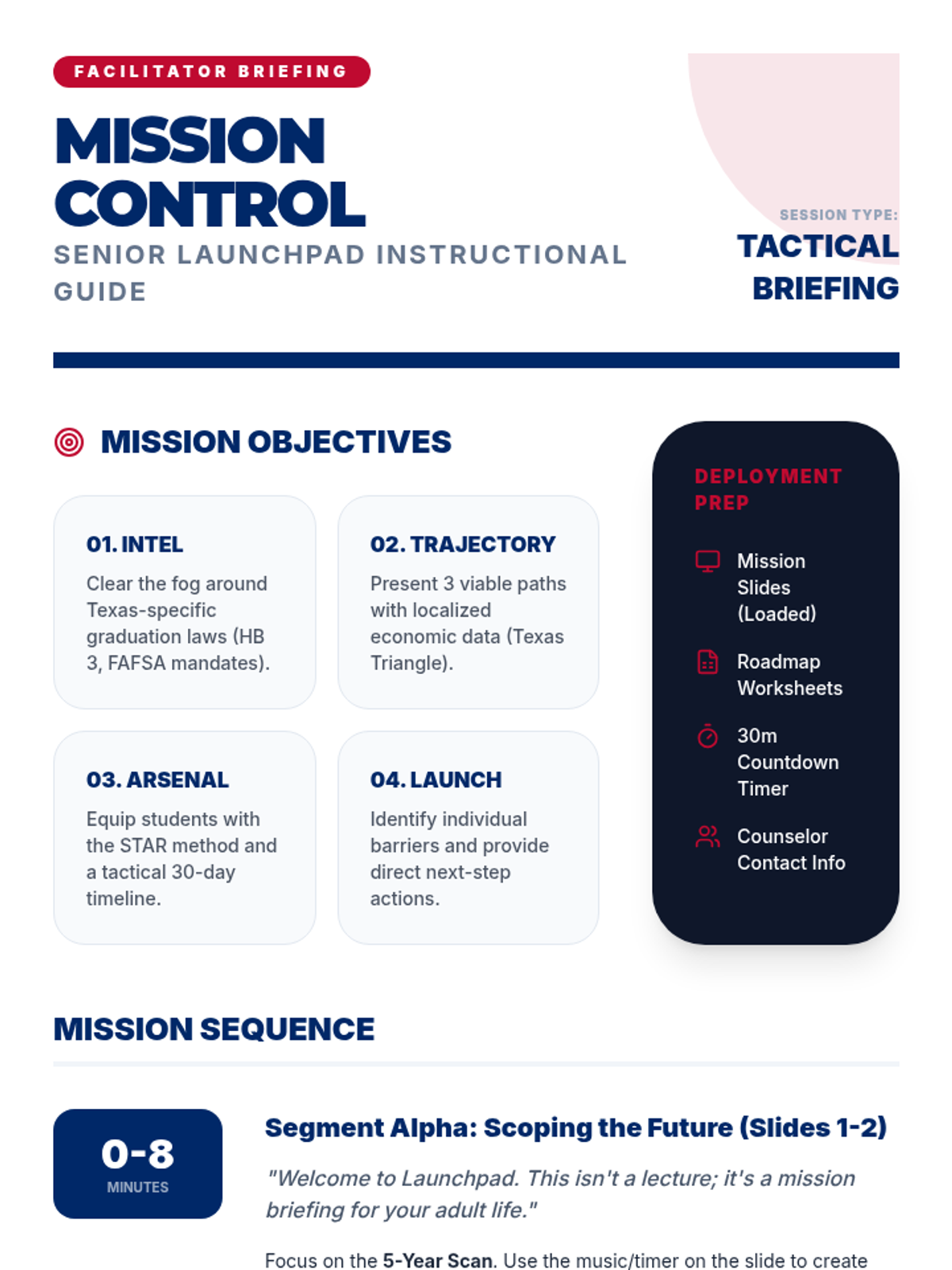
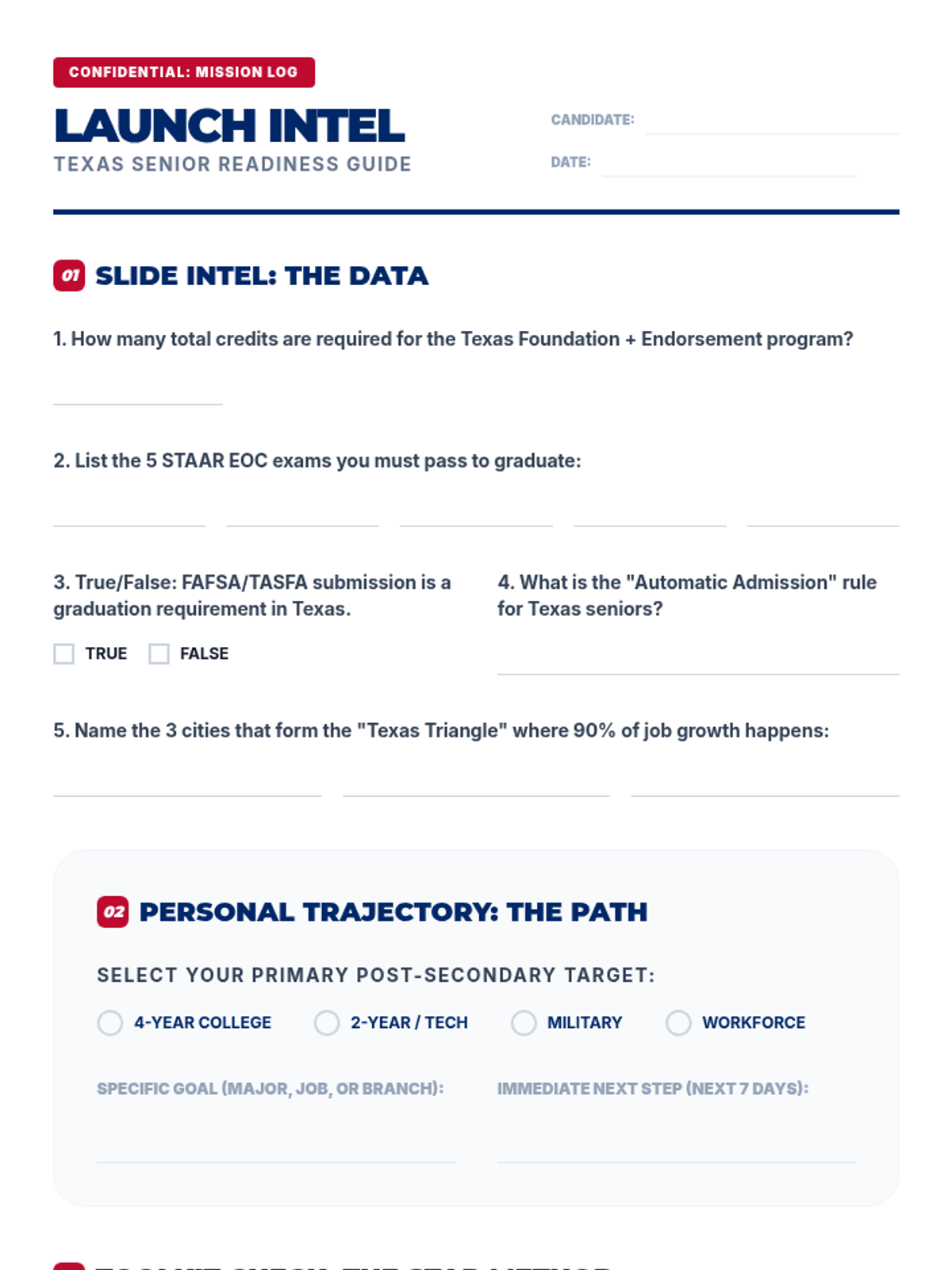
A comprehensive guide for Texas high school seniors to navigate graduation requirements, college applications, military enlistment, and workforce entry.
A comprehensive career exploration lesson for high schoolers, focusing on identifying interests, mapping career pathways, and preparing for post-secondary transitions through college or trade schools.
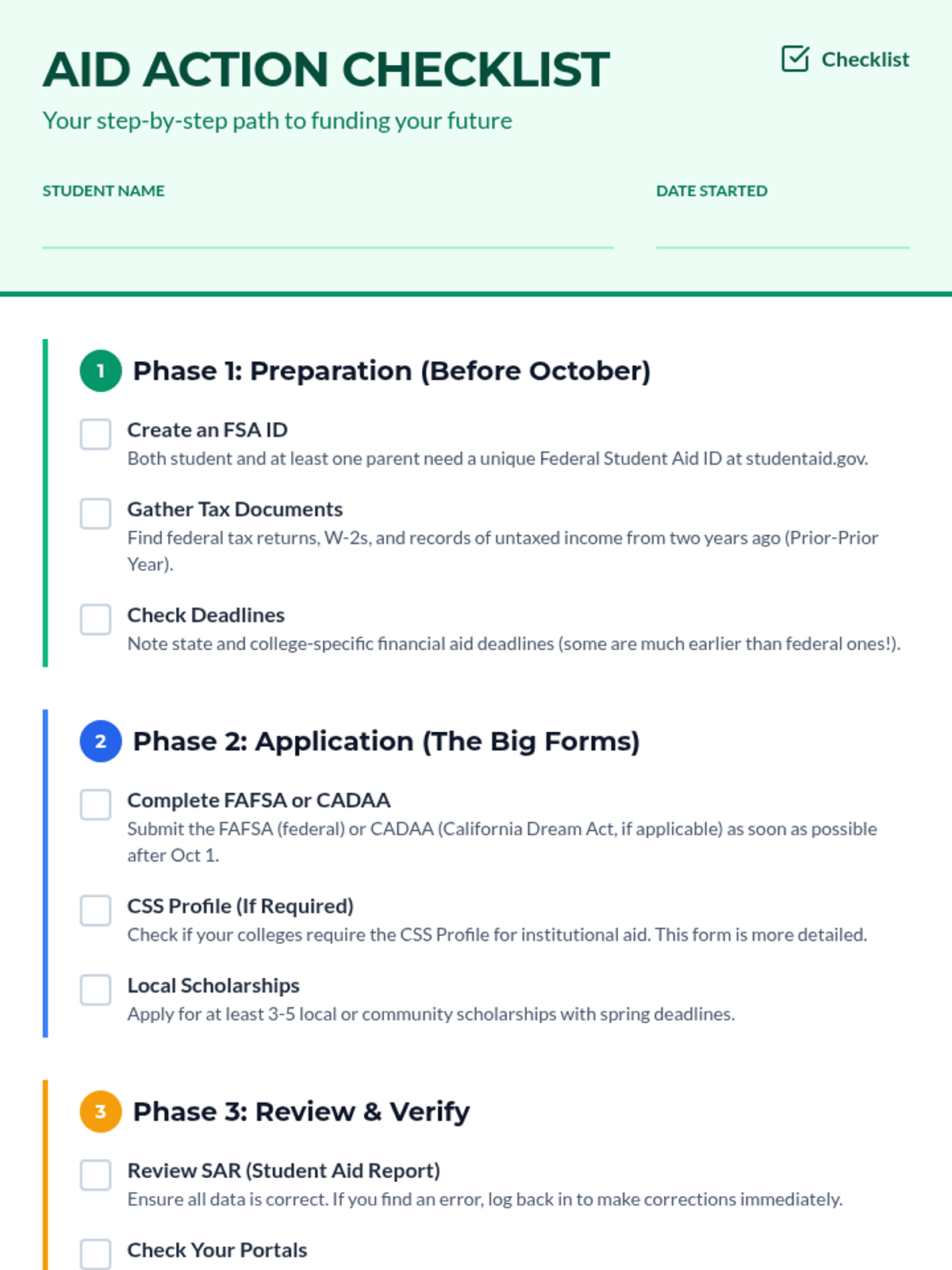
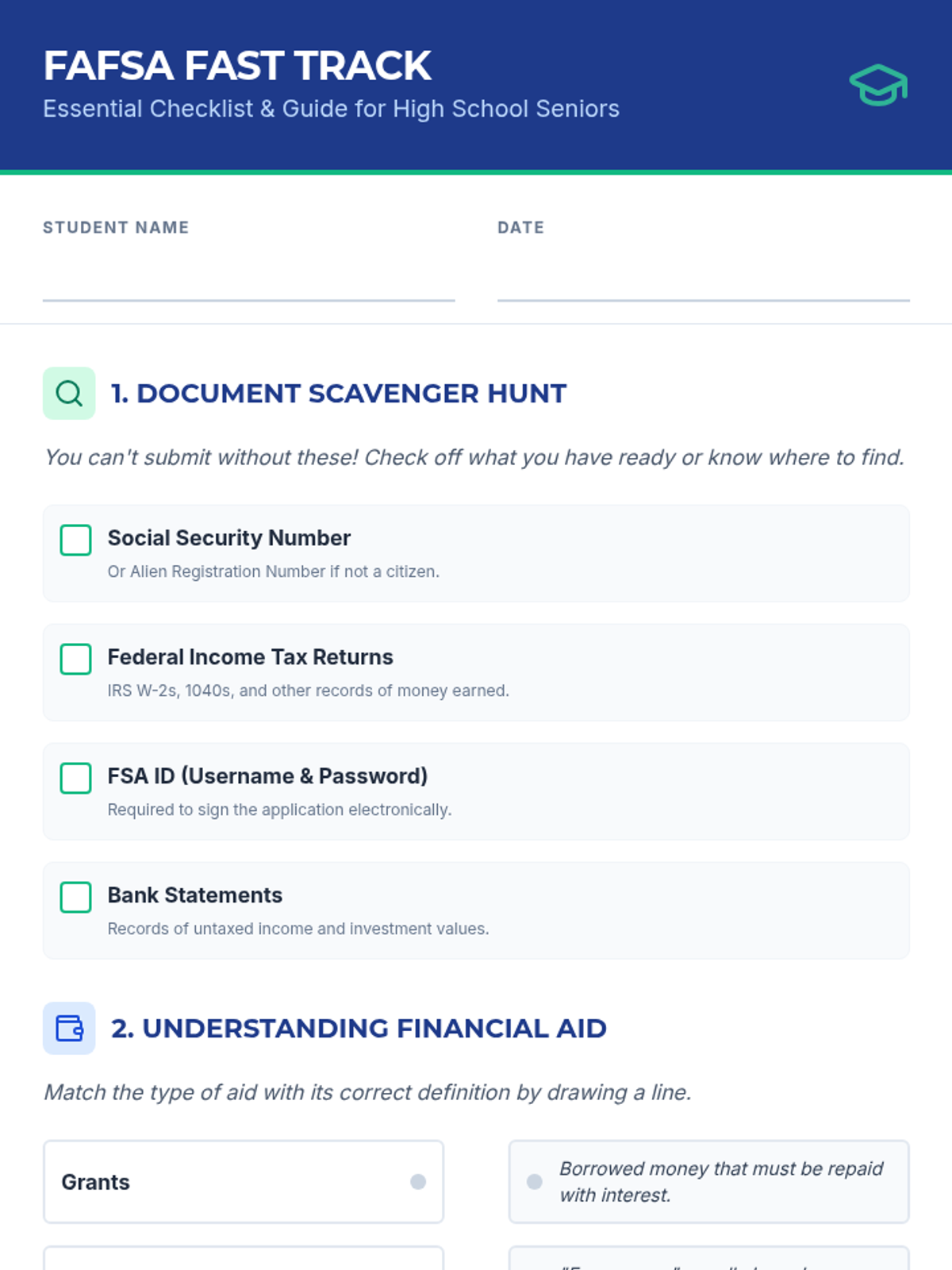
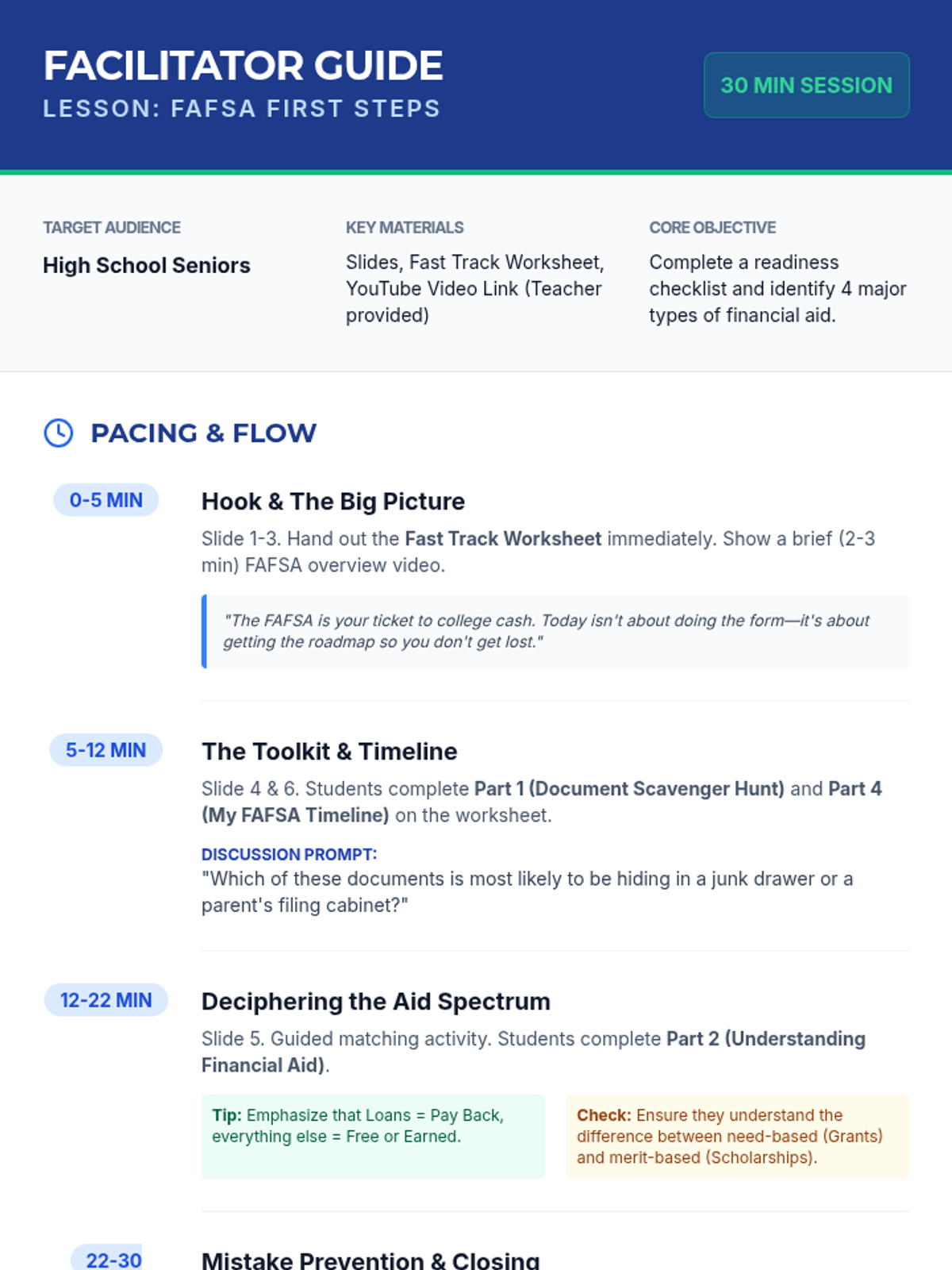
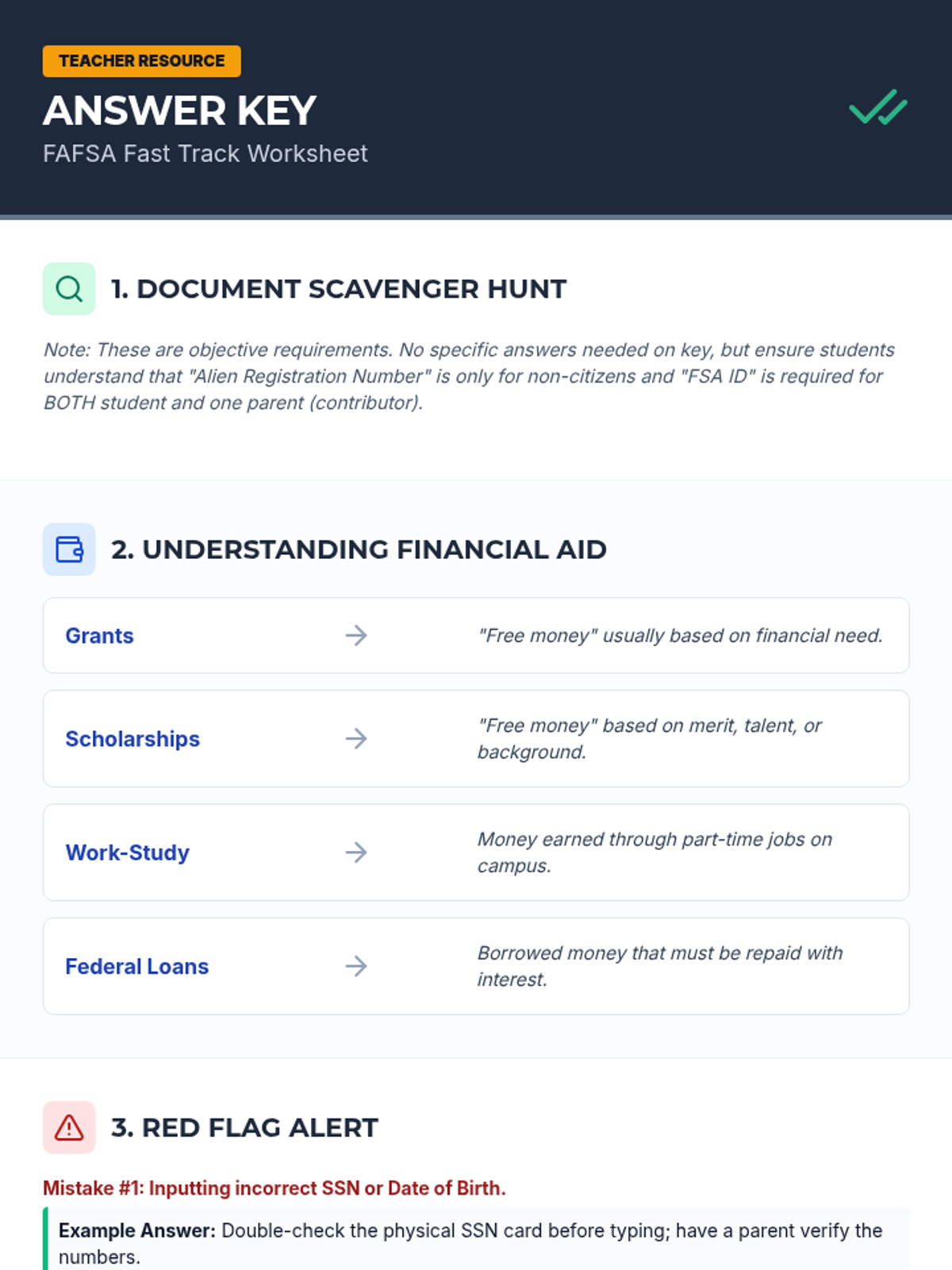
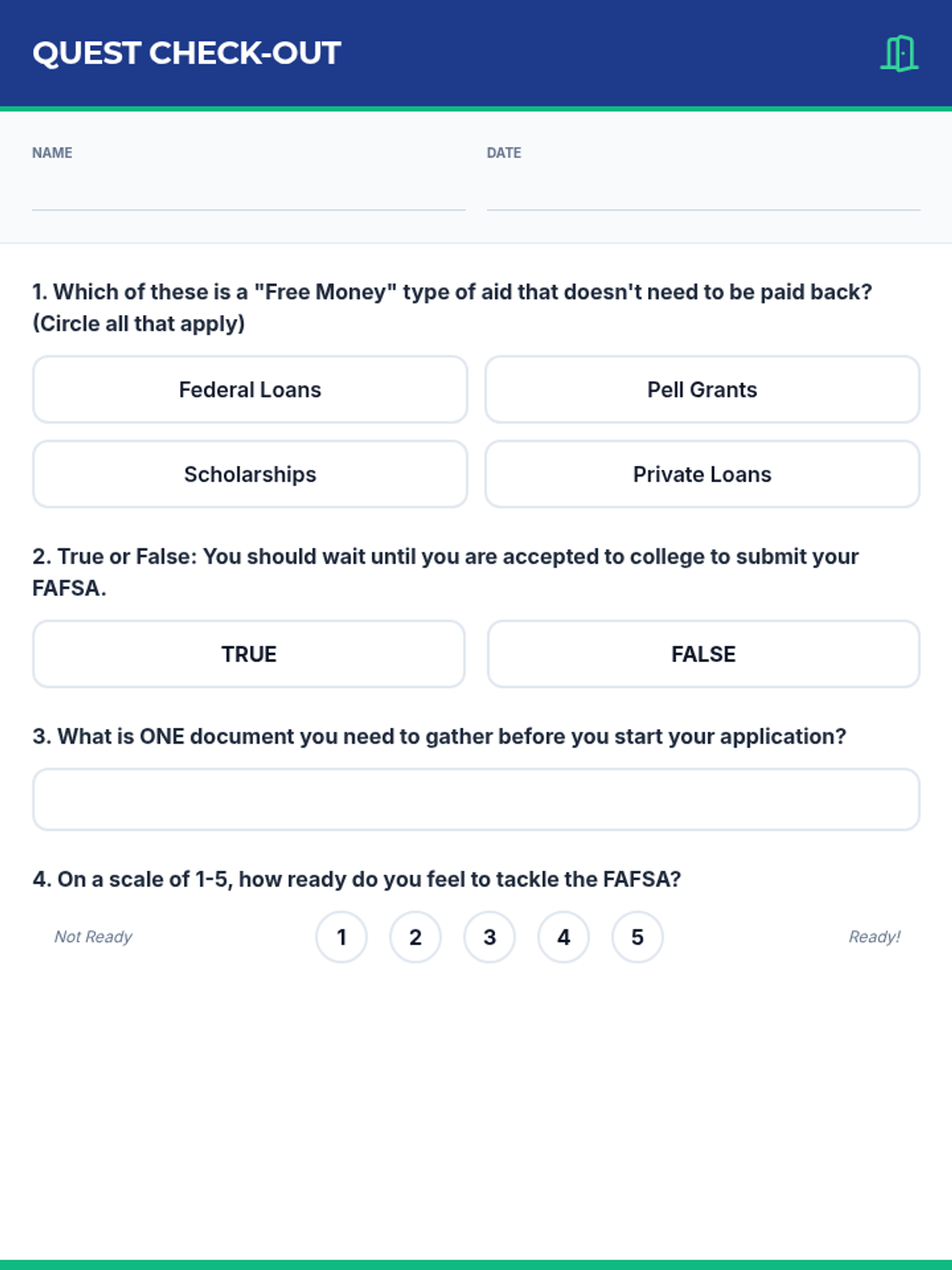
A 30-minute interactive lesson for high school seniors focused on the fundamentals of the FAFSA, including required documents, deadlines, types of financial aid, and avoiding common mistakes.