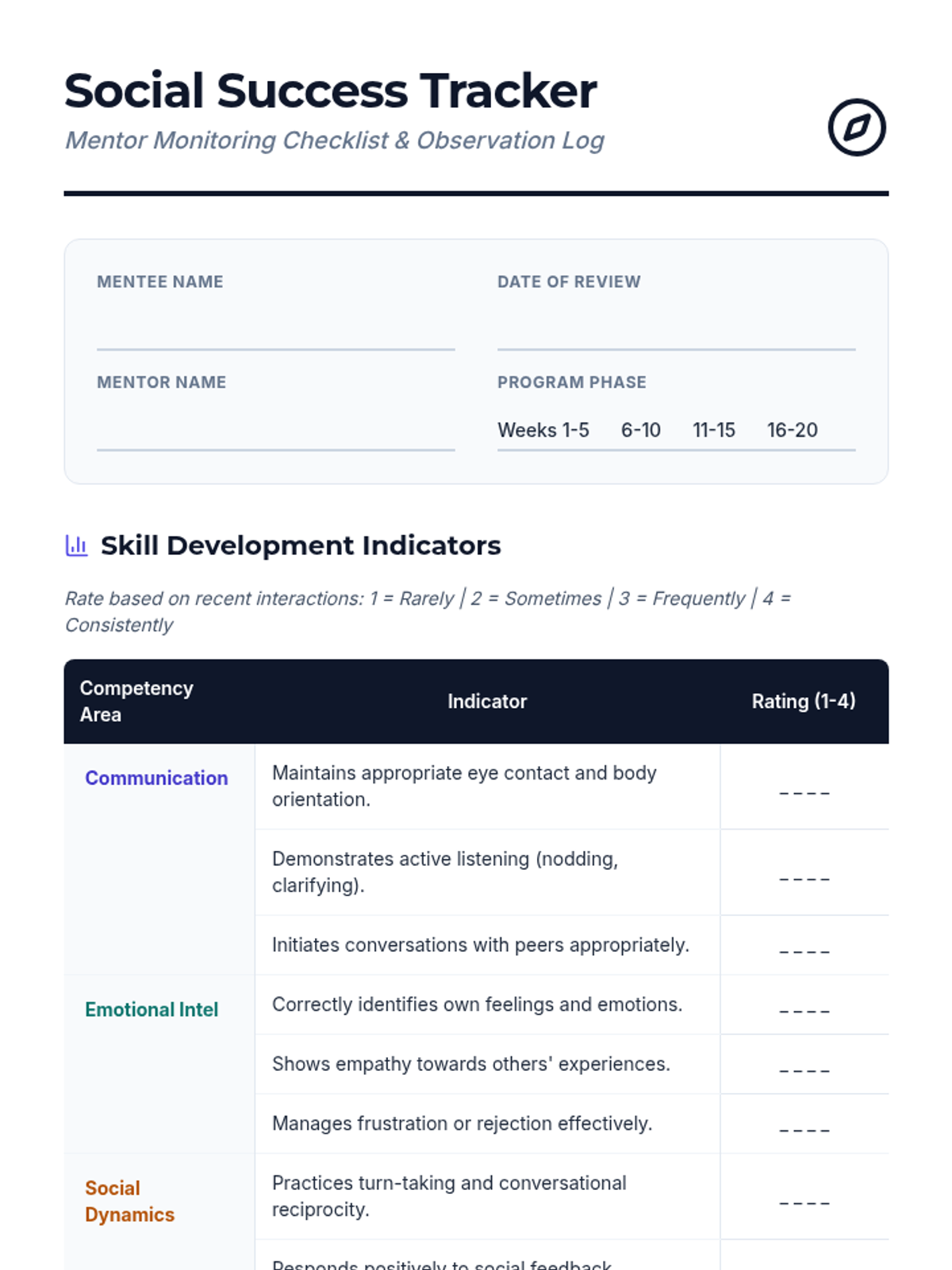
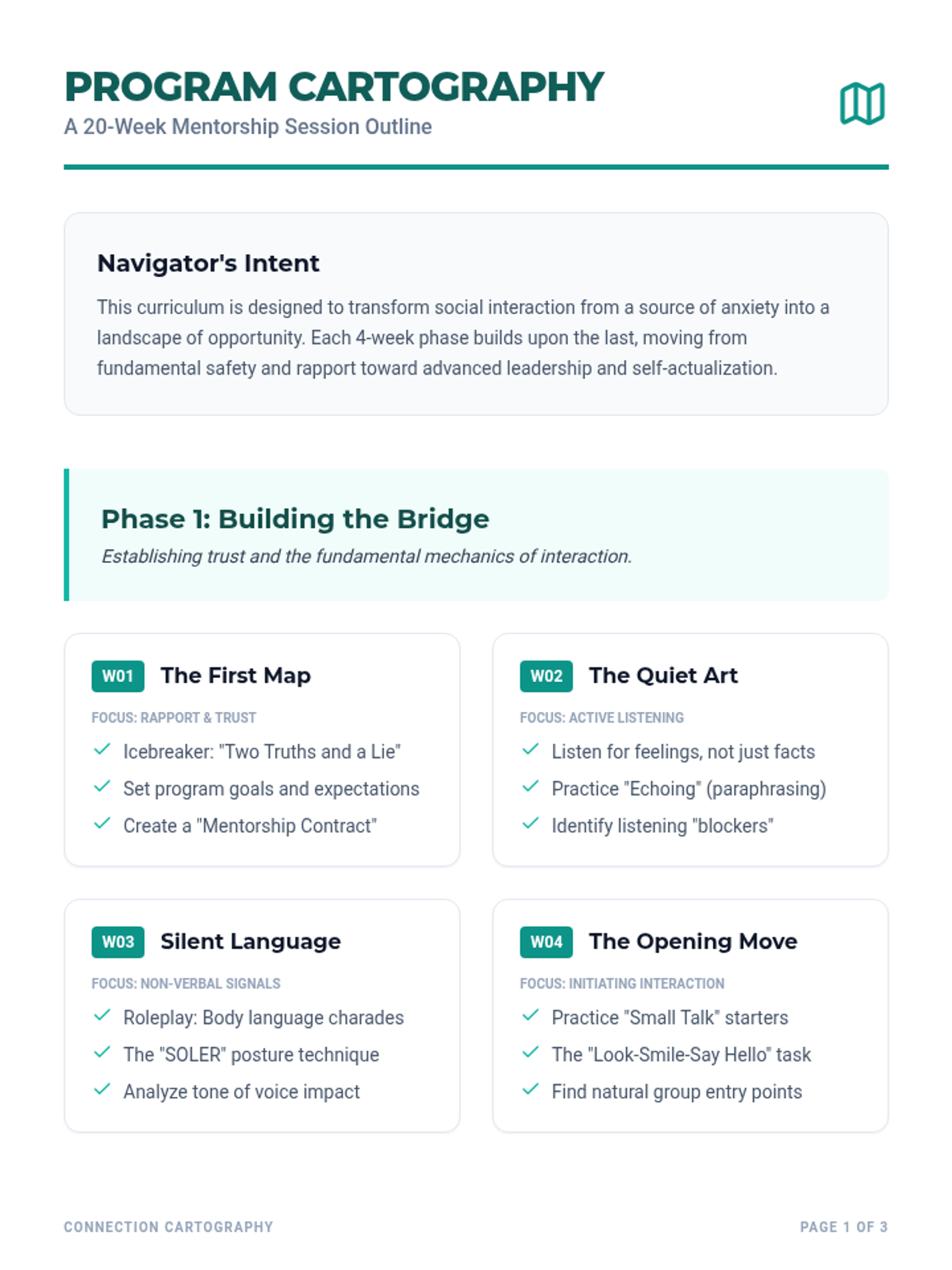
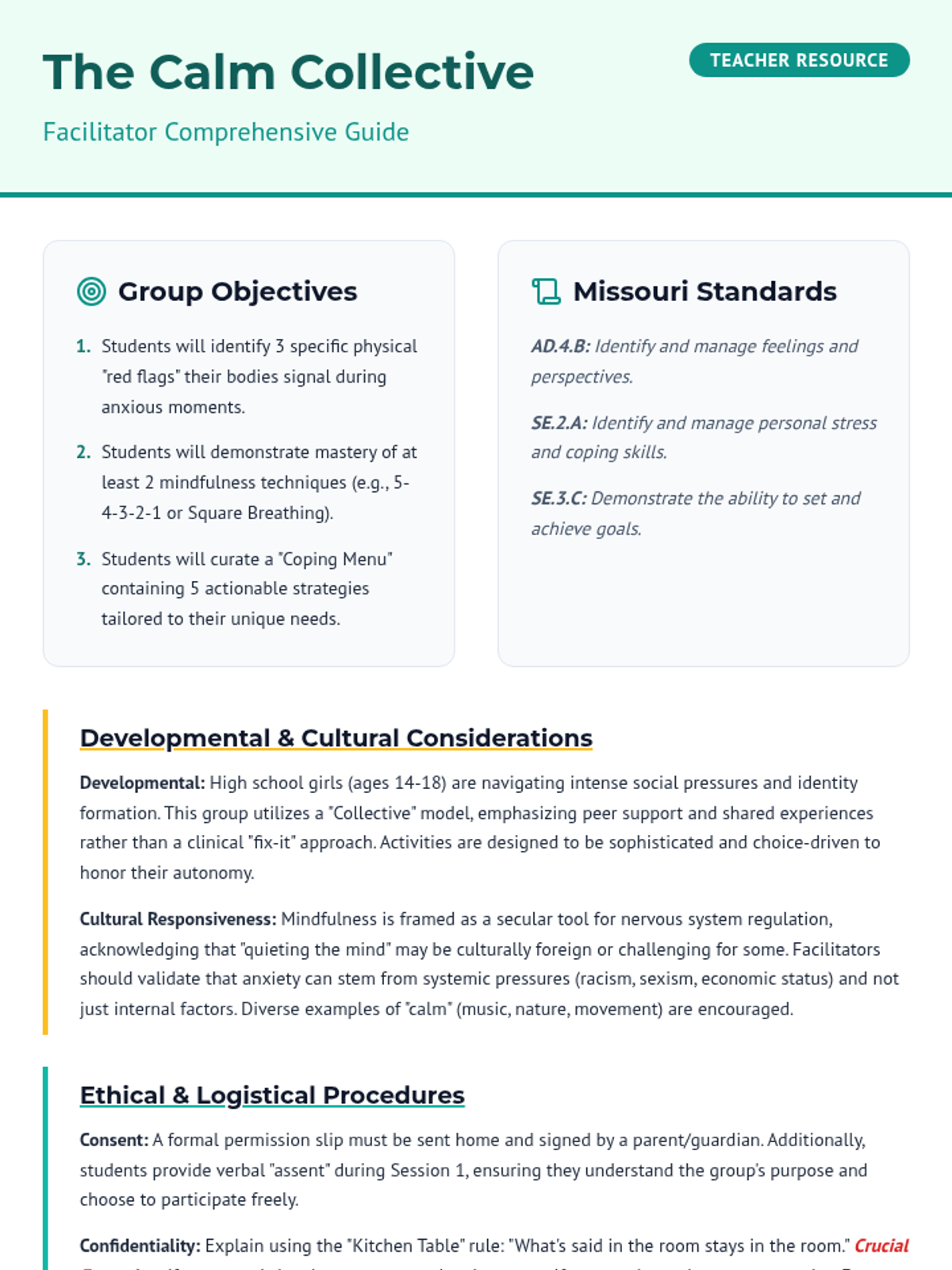
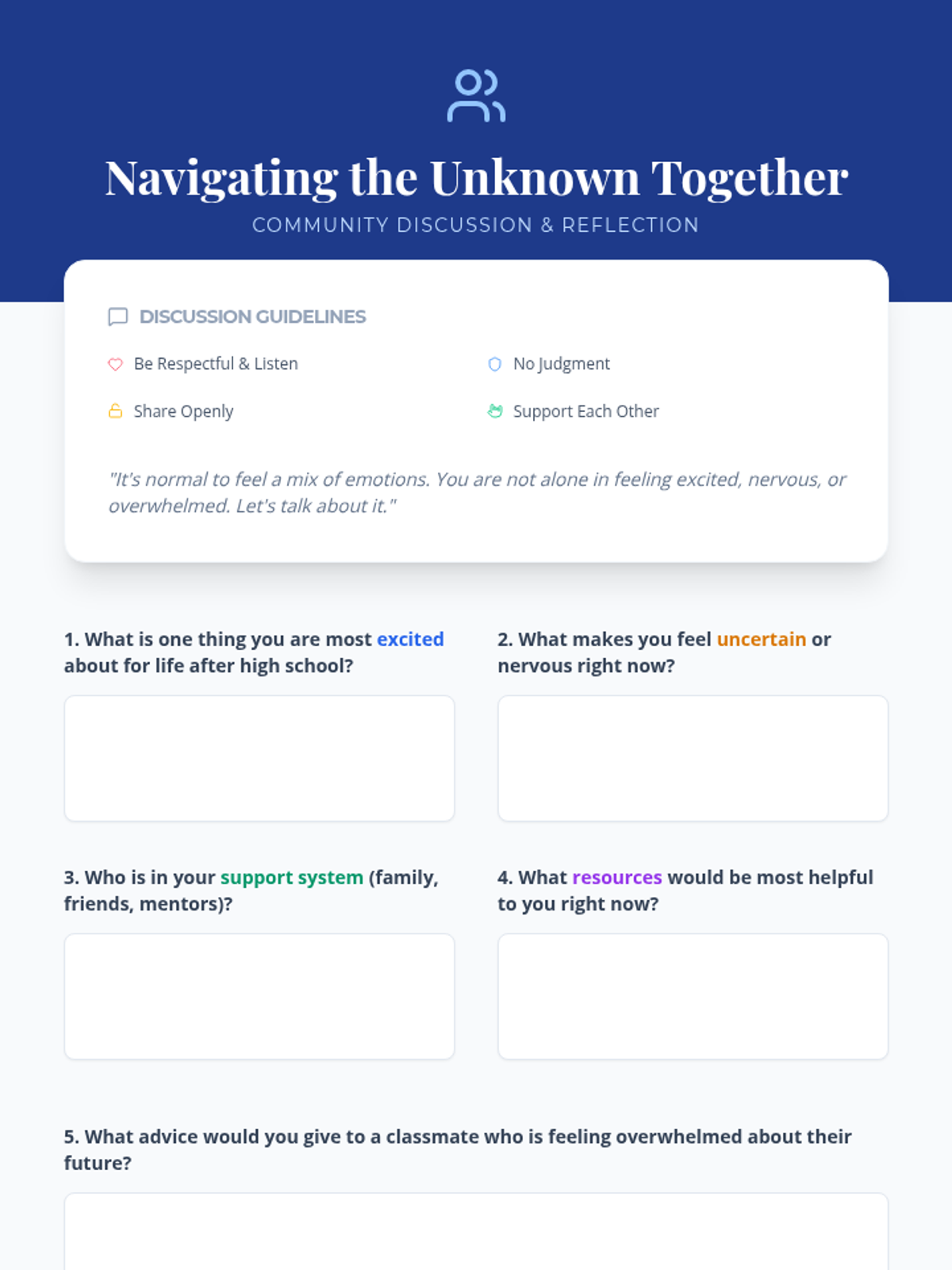
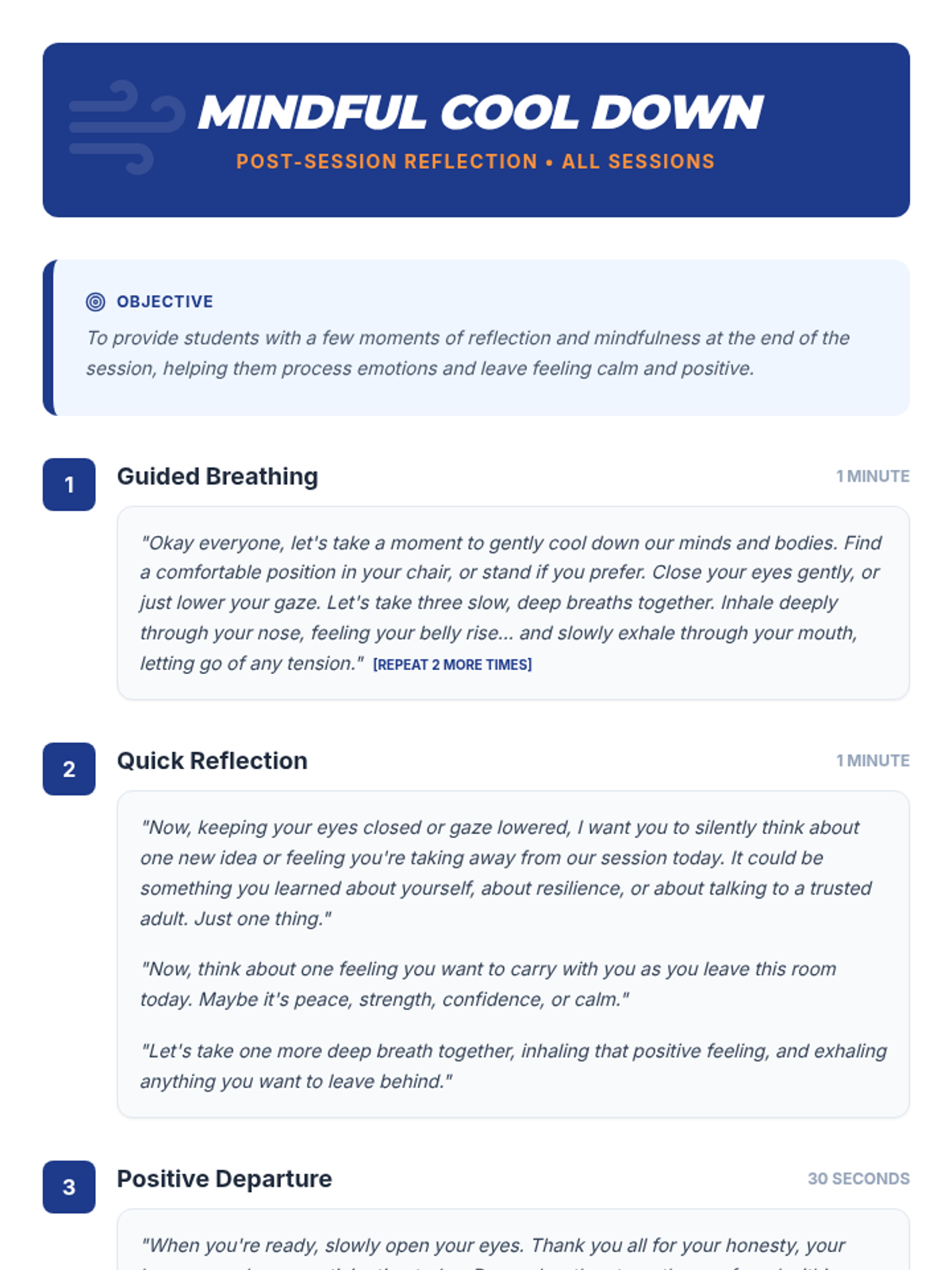
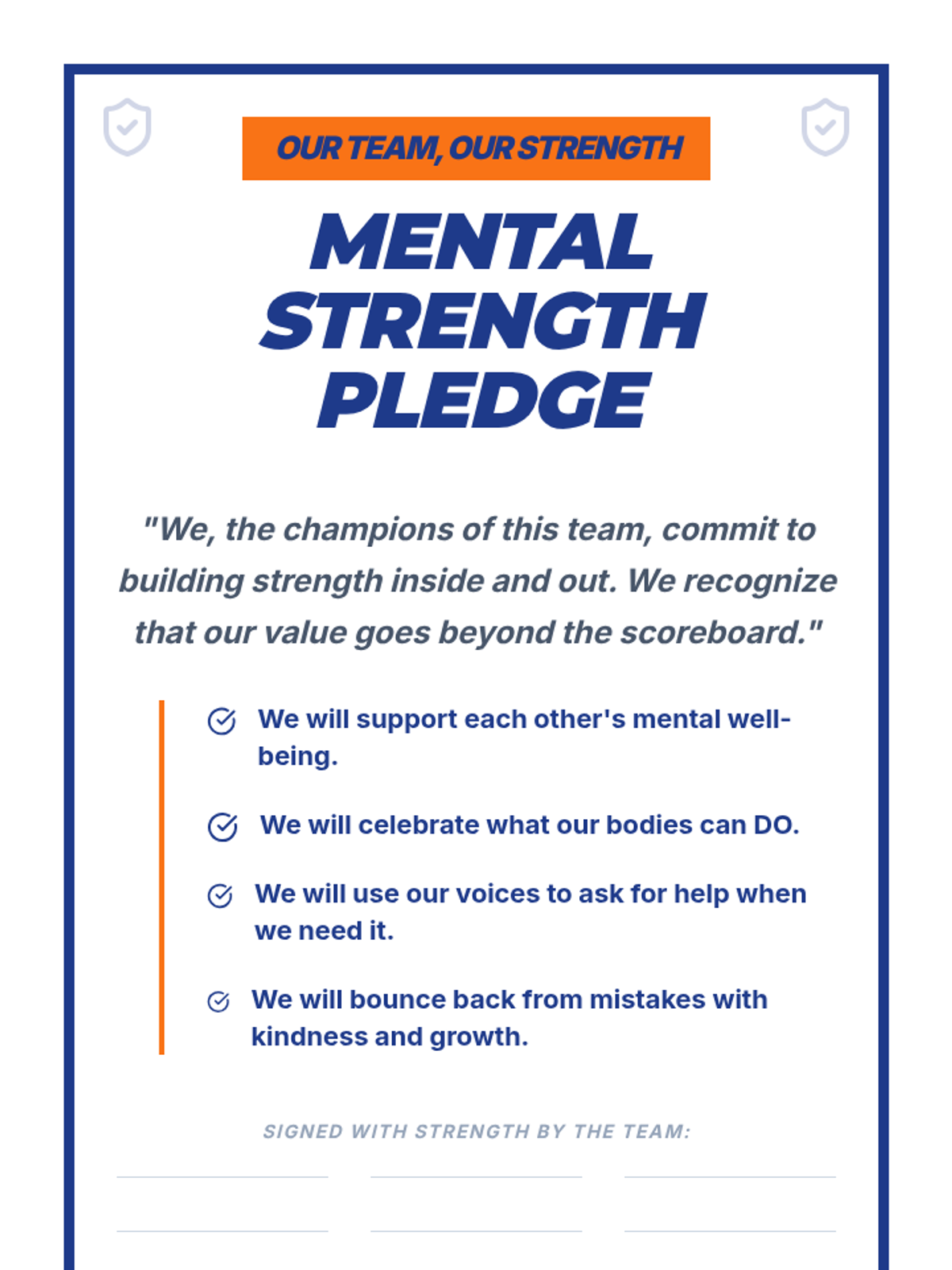
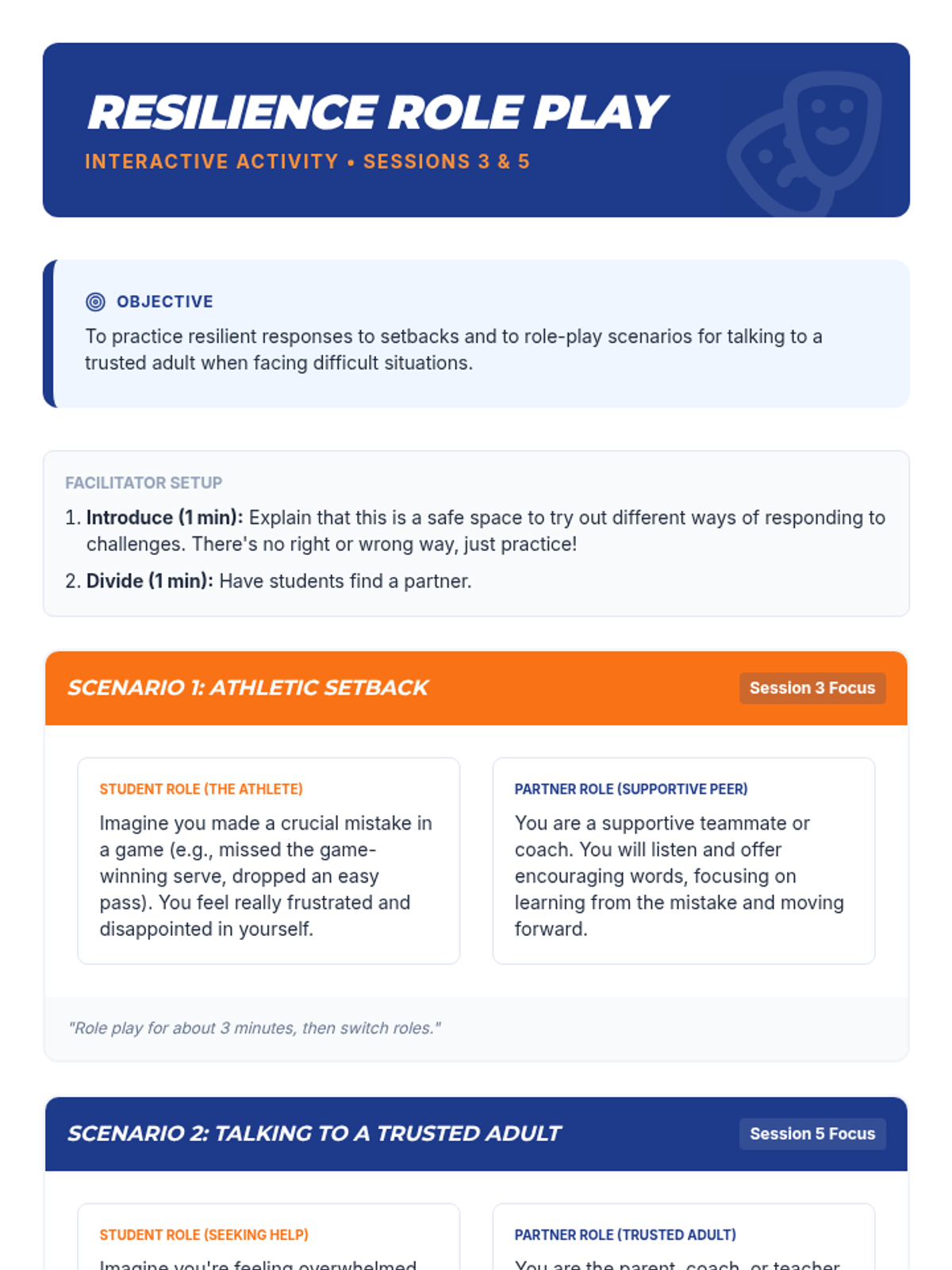
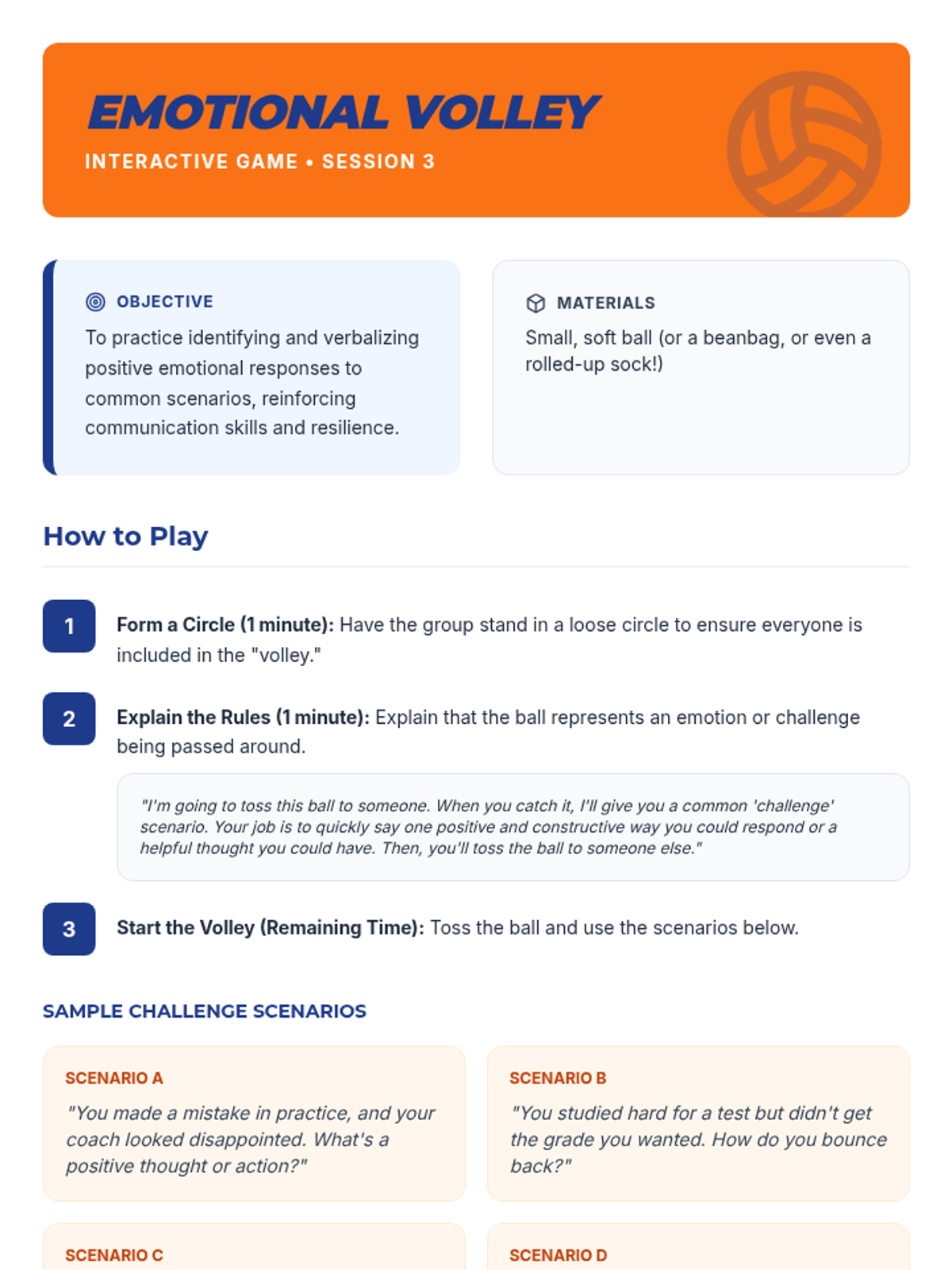
Peer relationship navigation, conversational turn-taking, and stress management strategies within supportive group settings. Develops communal belonging through shared mental health education and collaborative skill practice.
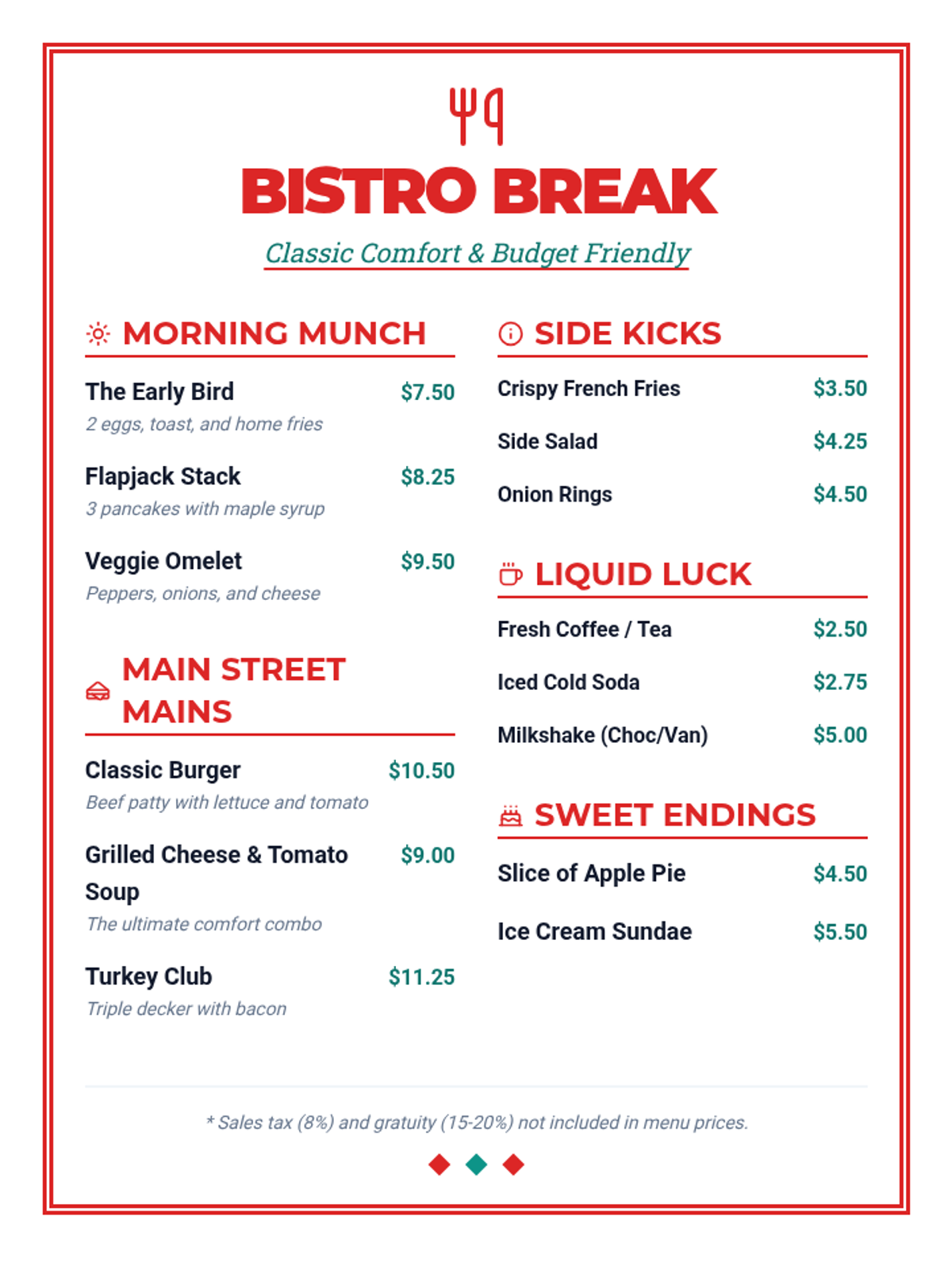
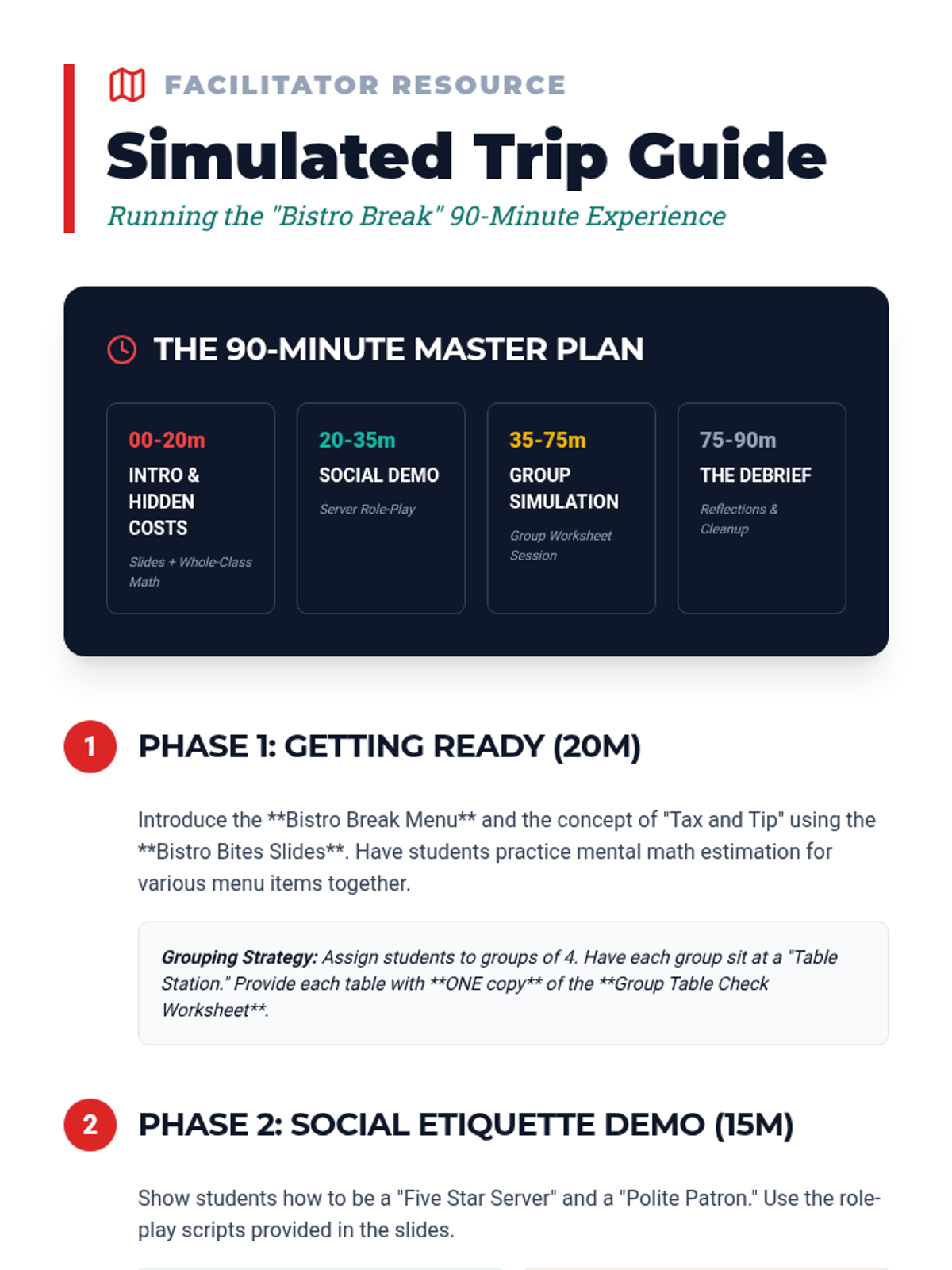
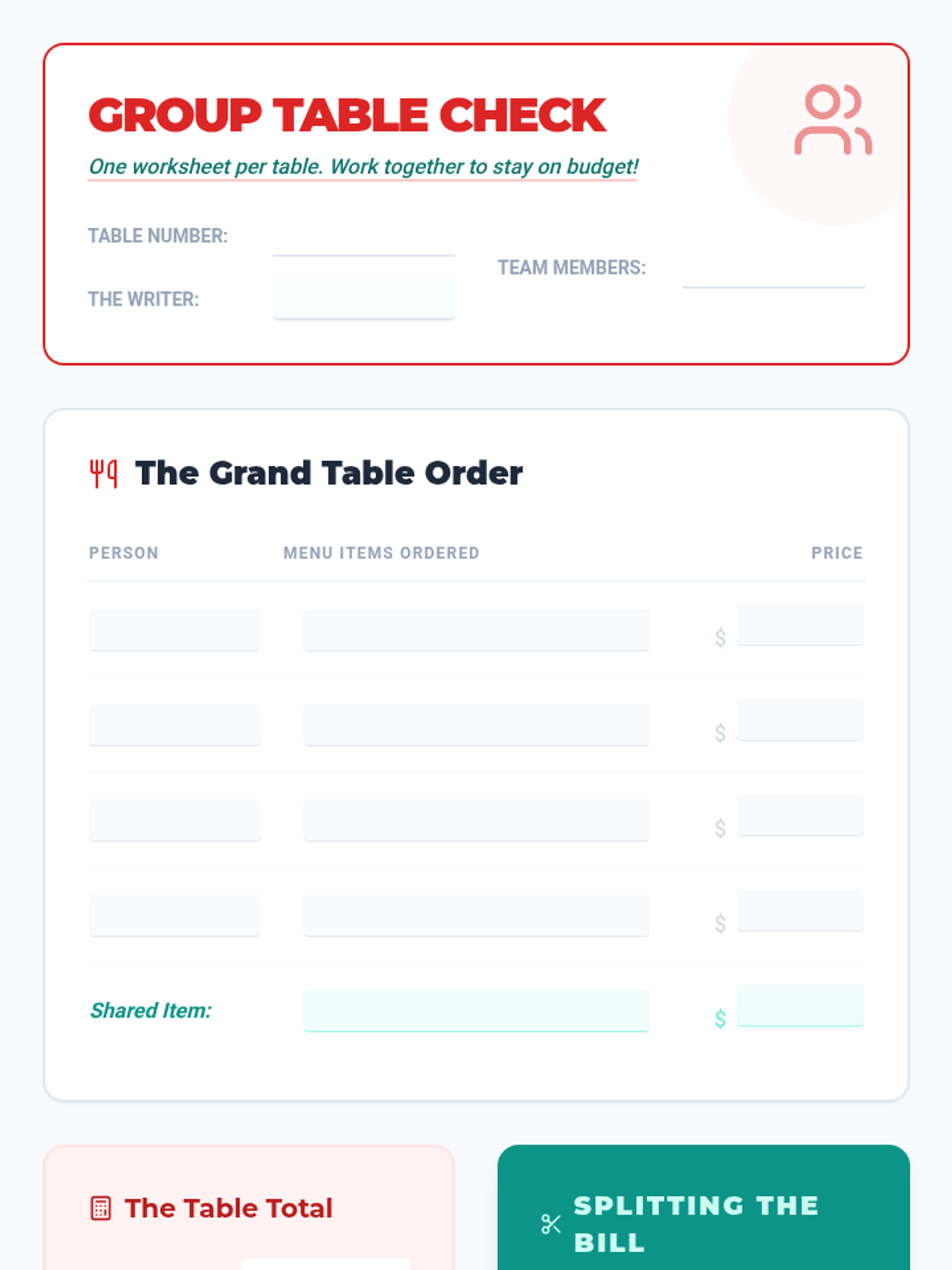
A functional skills lesson focused on navigating a restaurant experience on a budget, covering menu reading, budget planning, social etiquette, and group check splitting.
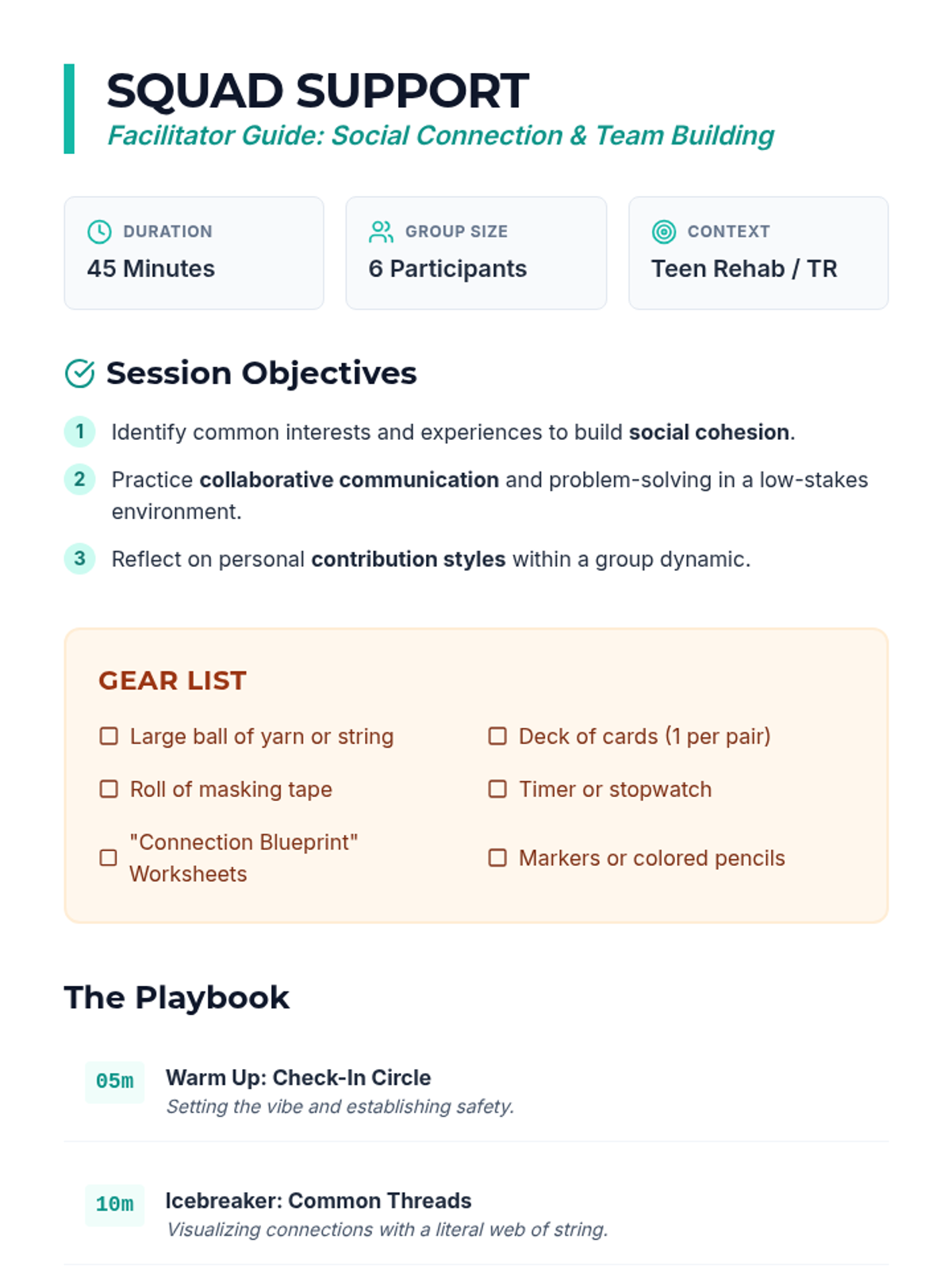
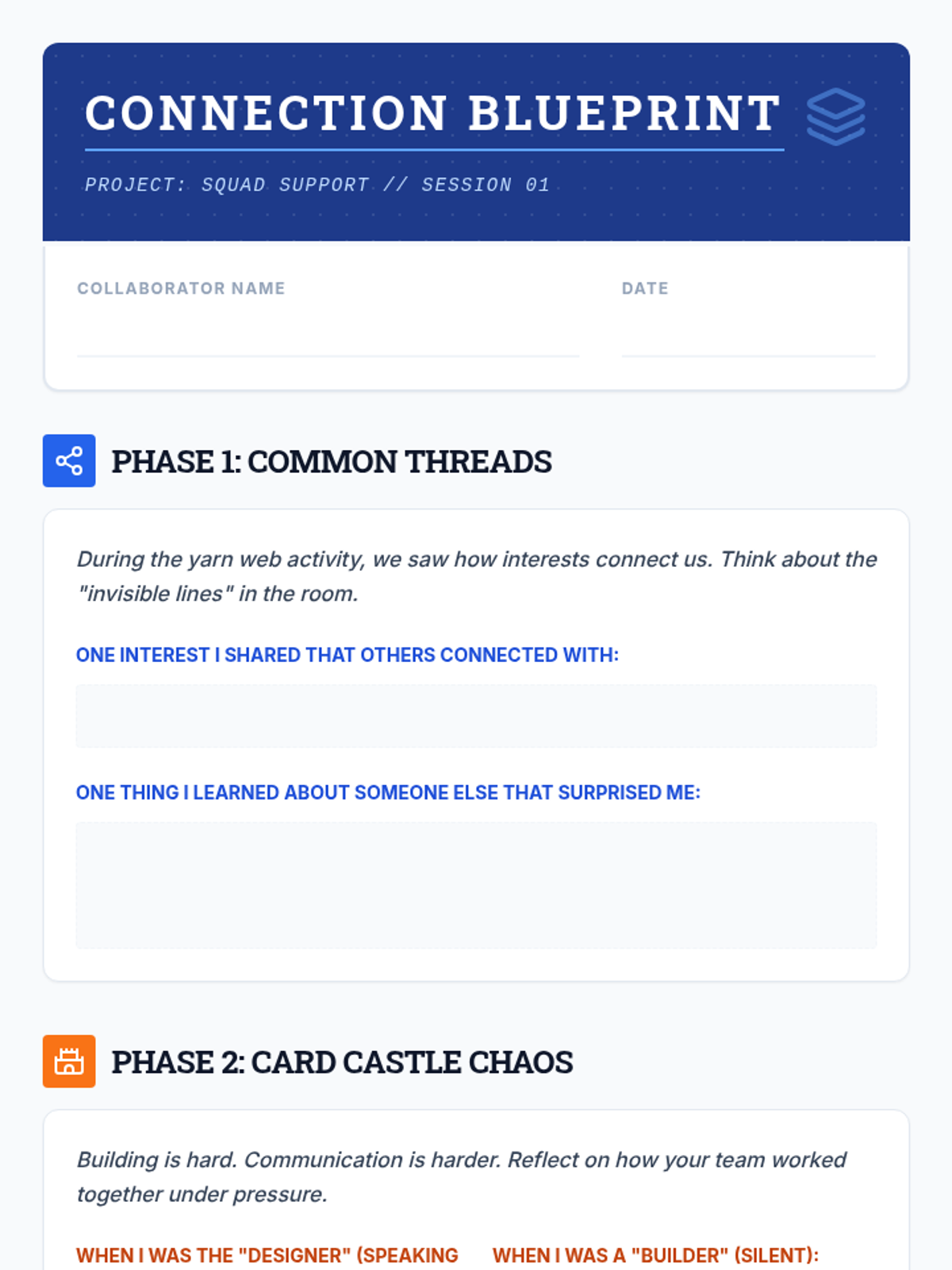
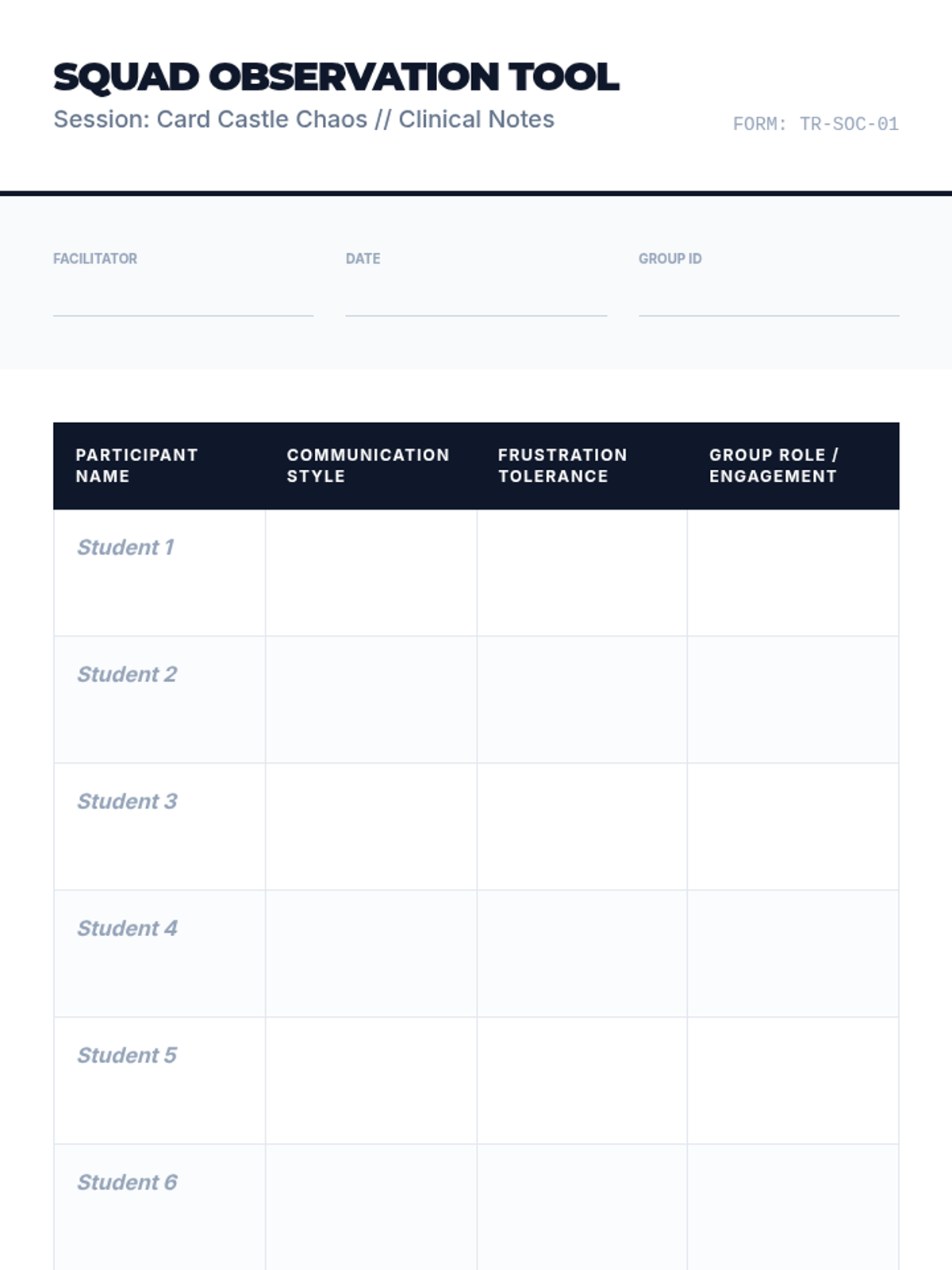
A 45-minute therapeutic leisure session for teens focused on building social connections and team dynamics through collaborative activities and reflection.
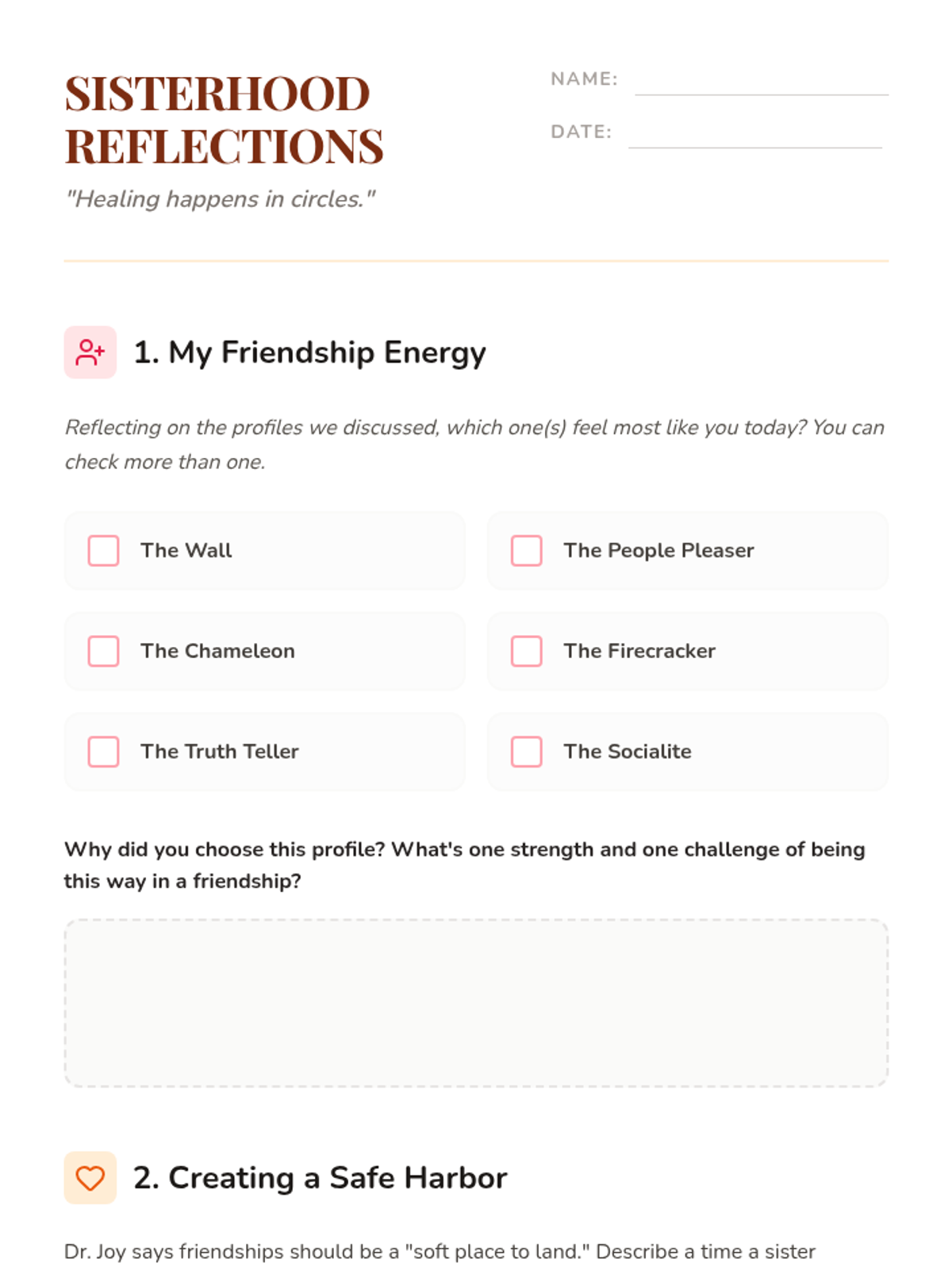
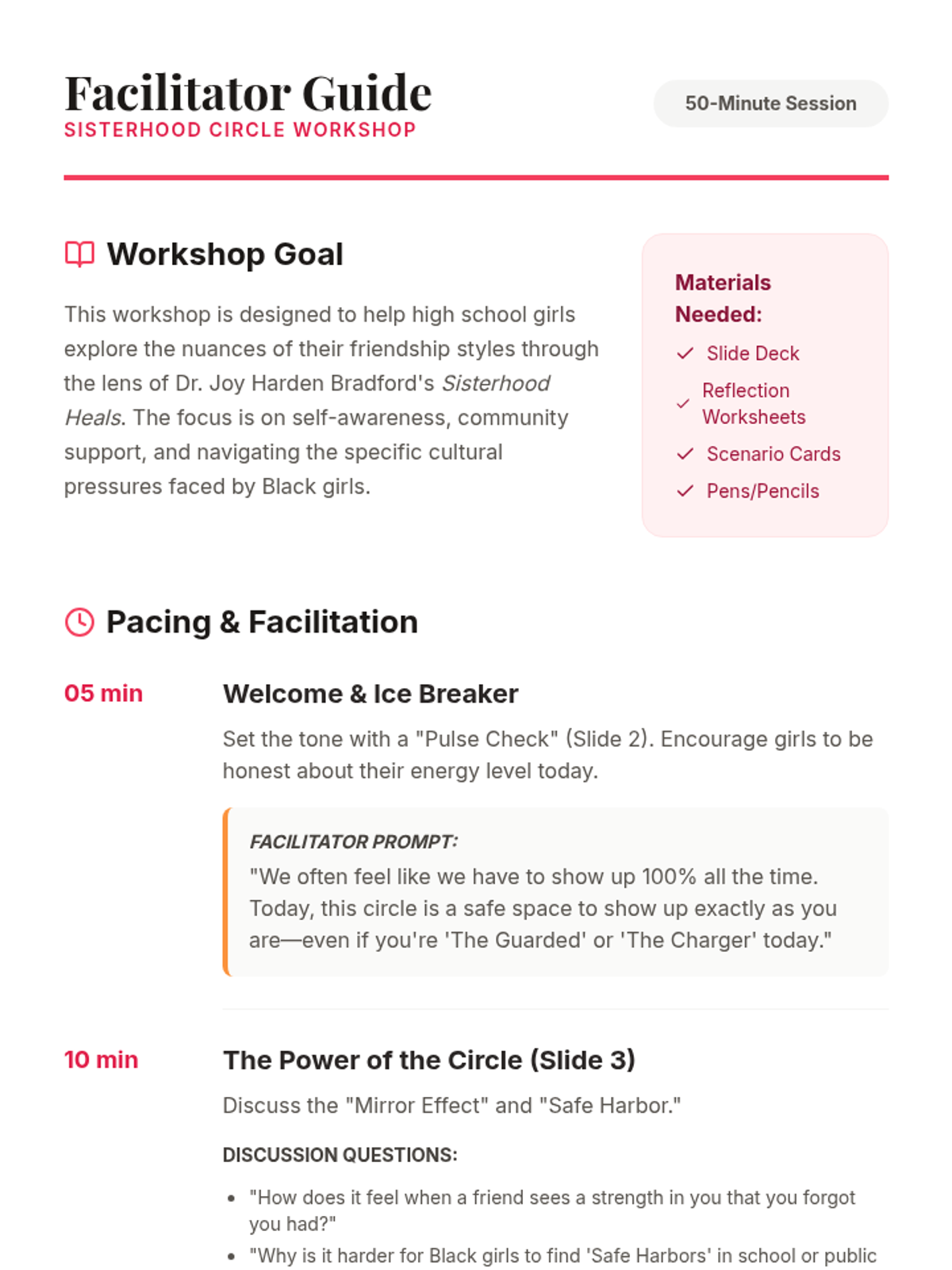
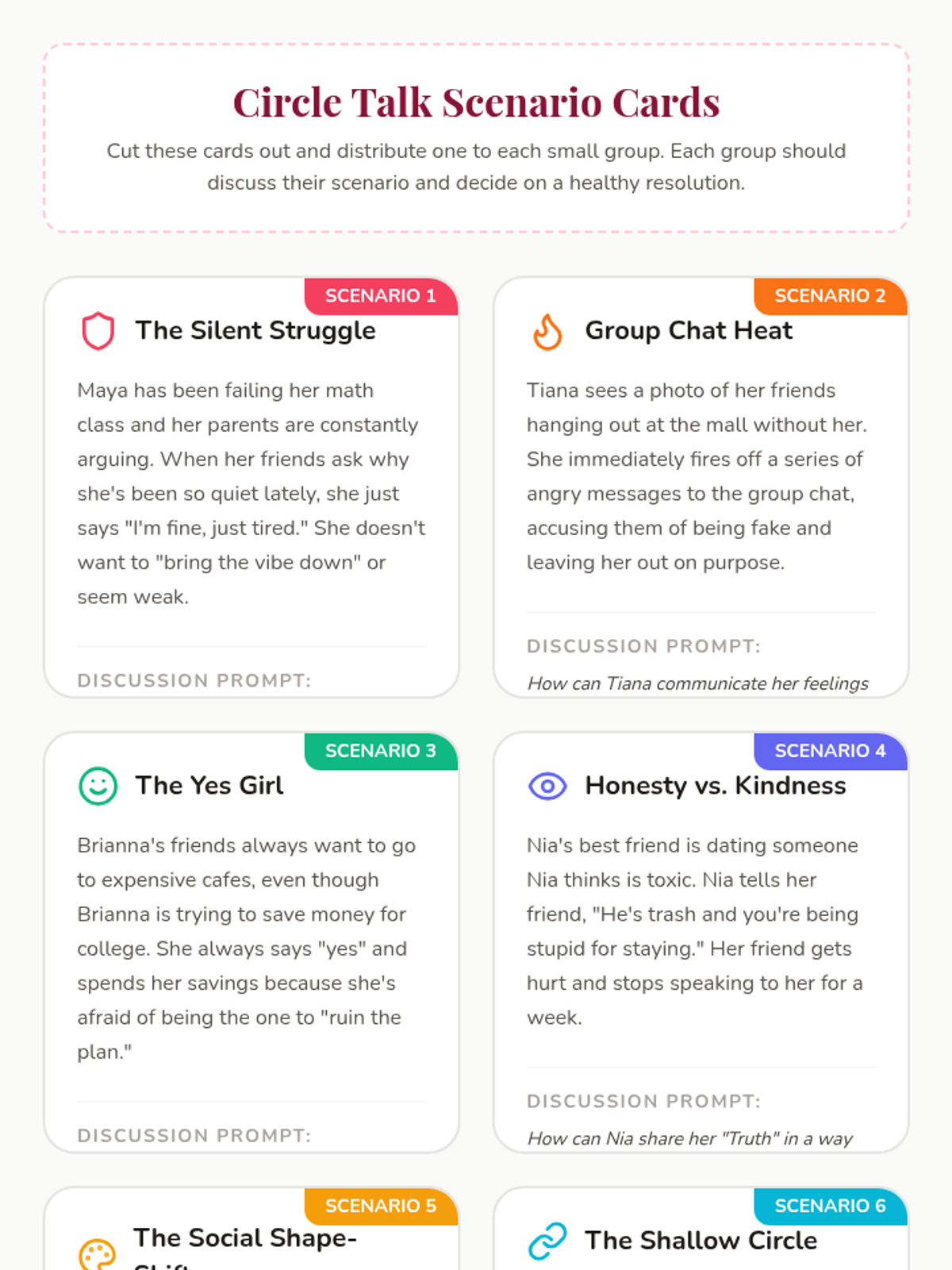
A 50-minute interactive workshop for high school girls focused on the power of sisterhood, navigating the nuances of Black girlhood, and understanding personal friendship styles inspired by Dr. Joy Harden Bradford's 'Sisterhood Heals'.
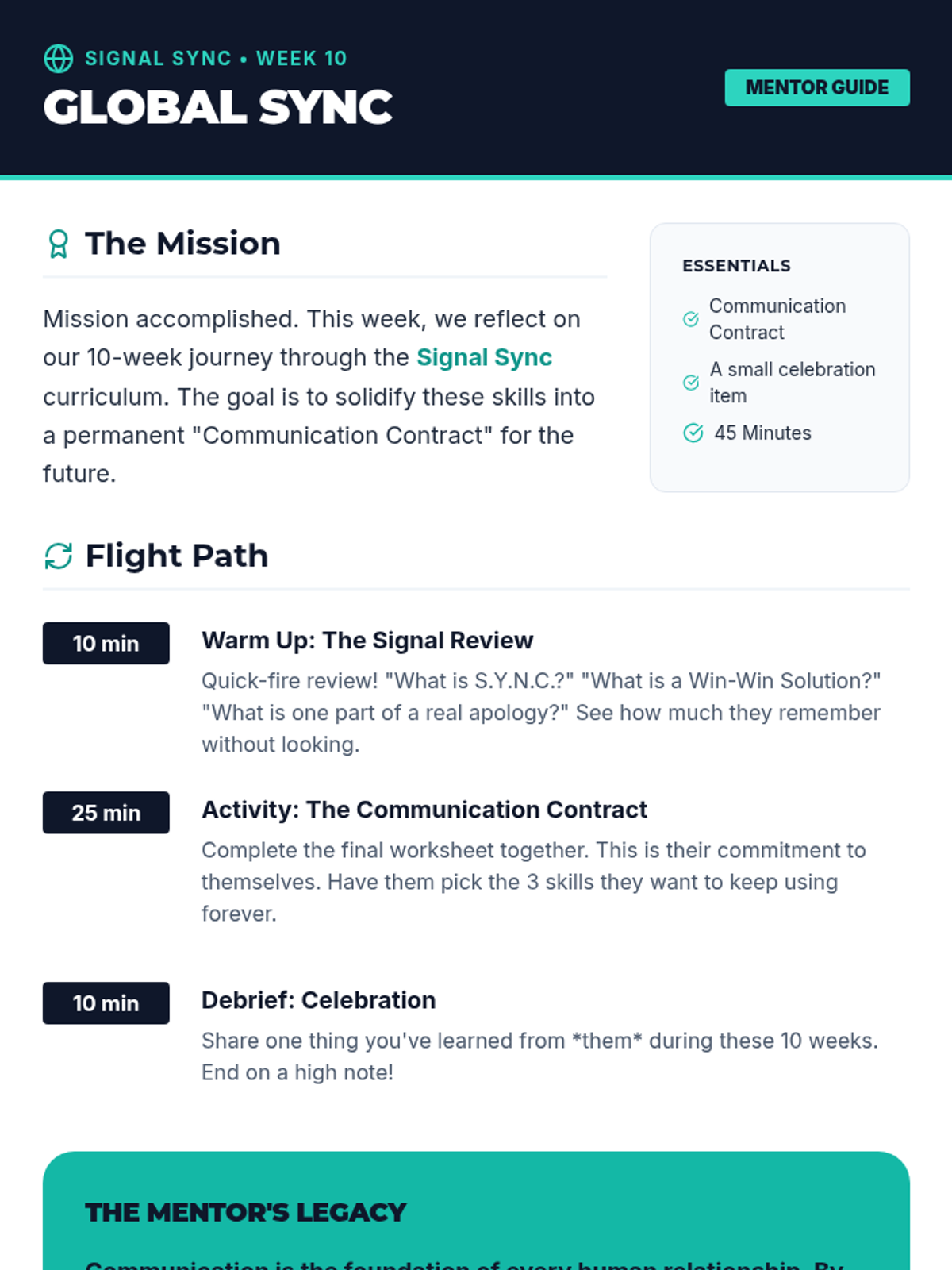
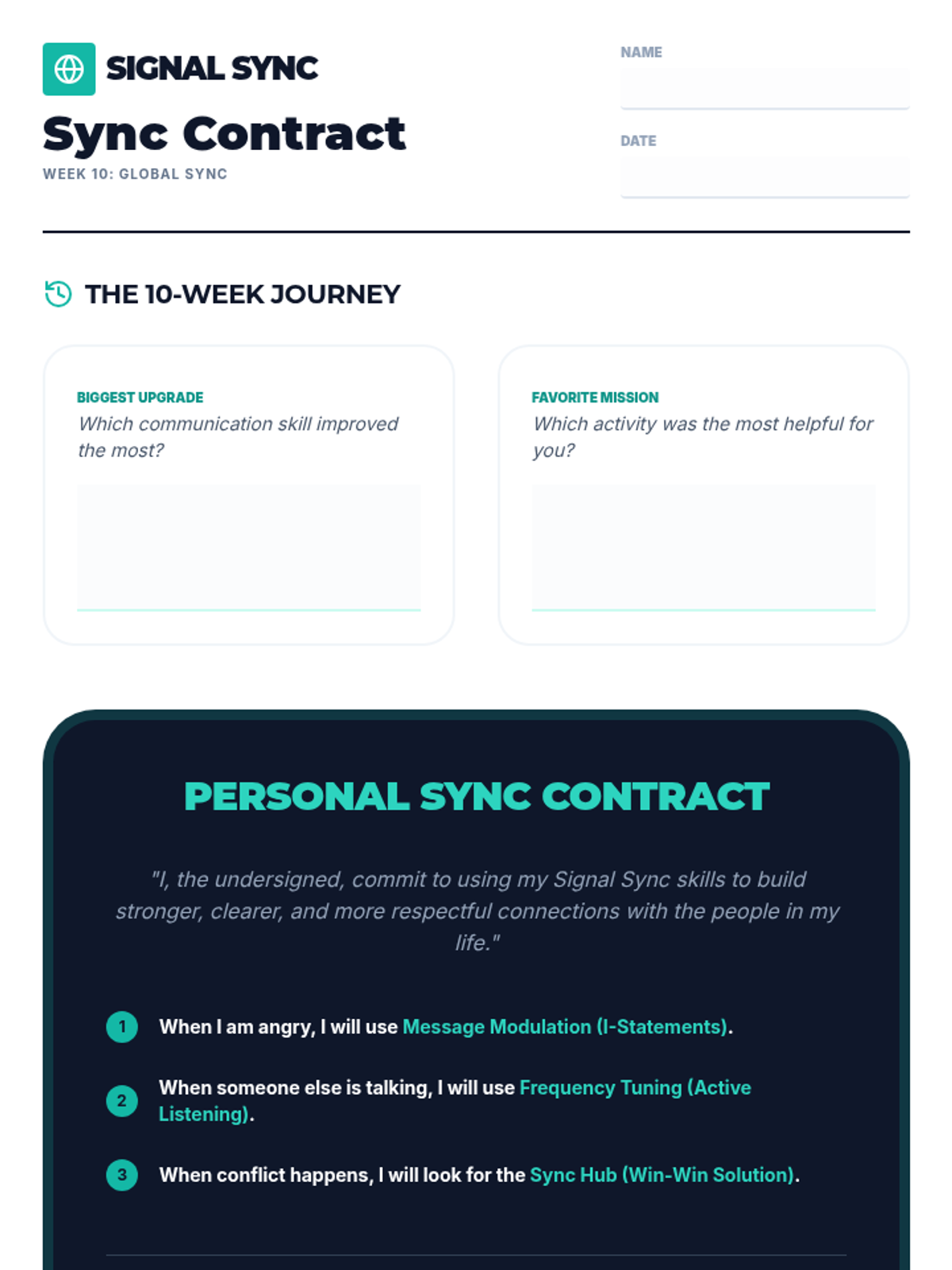
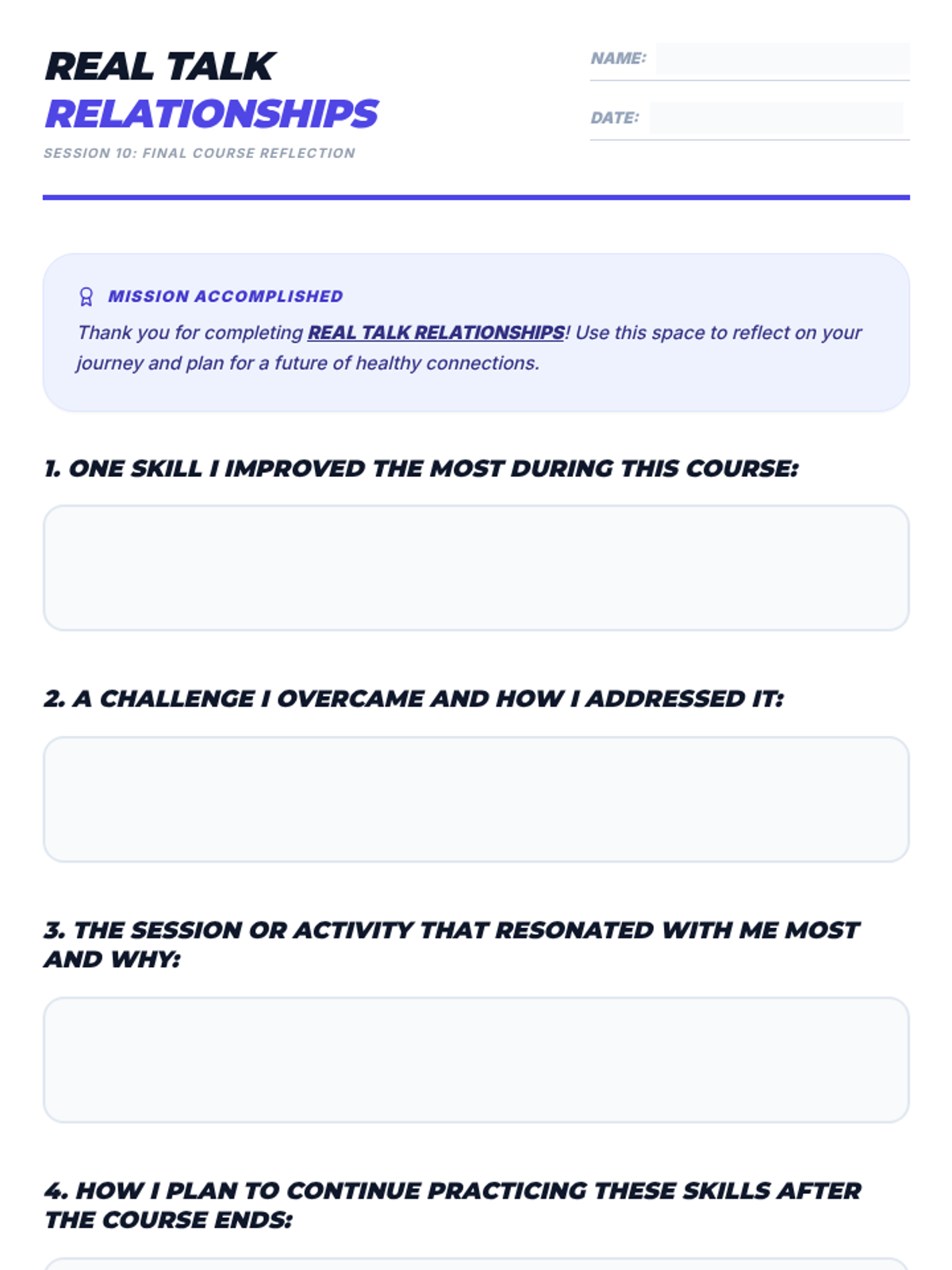
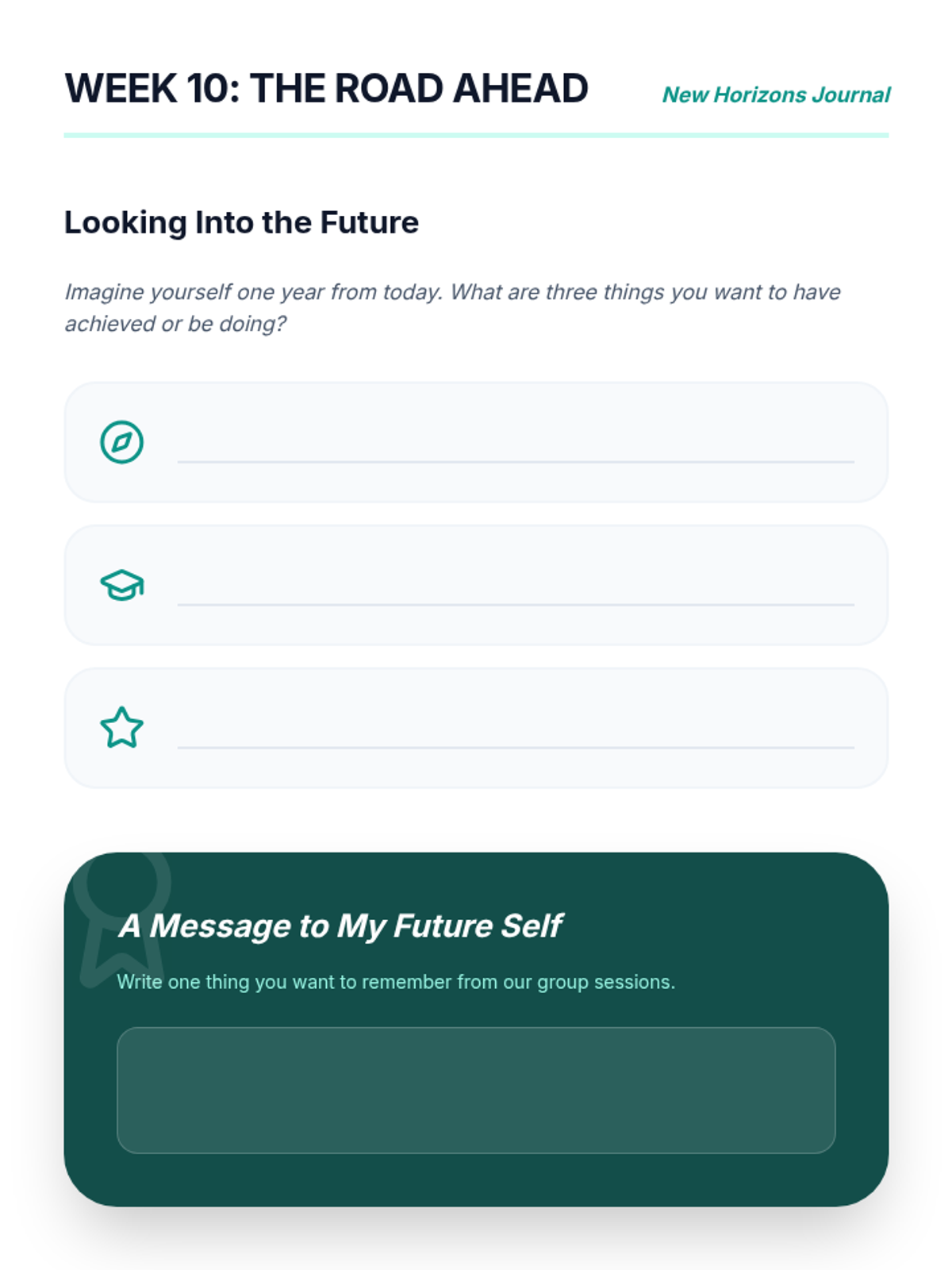
Reflecting on the 10-week journey and creating a personal communication contract for the future.
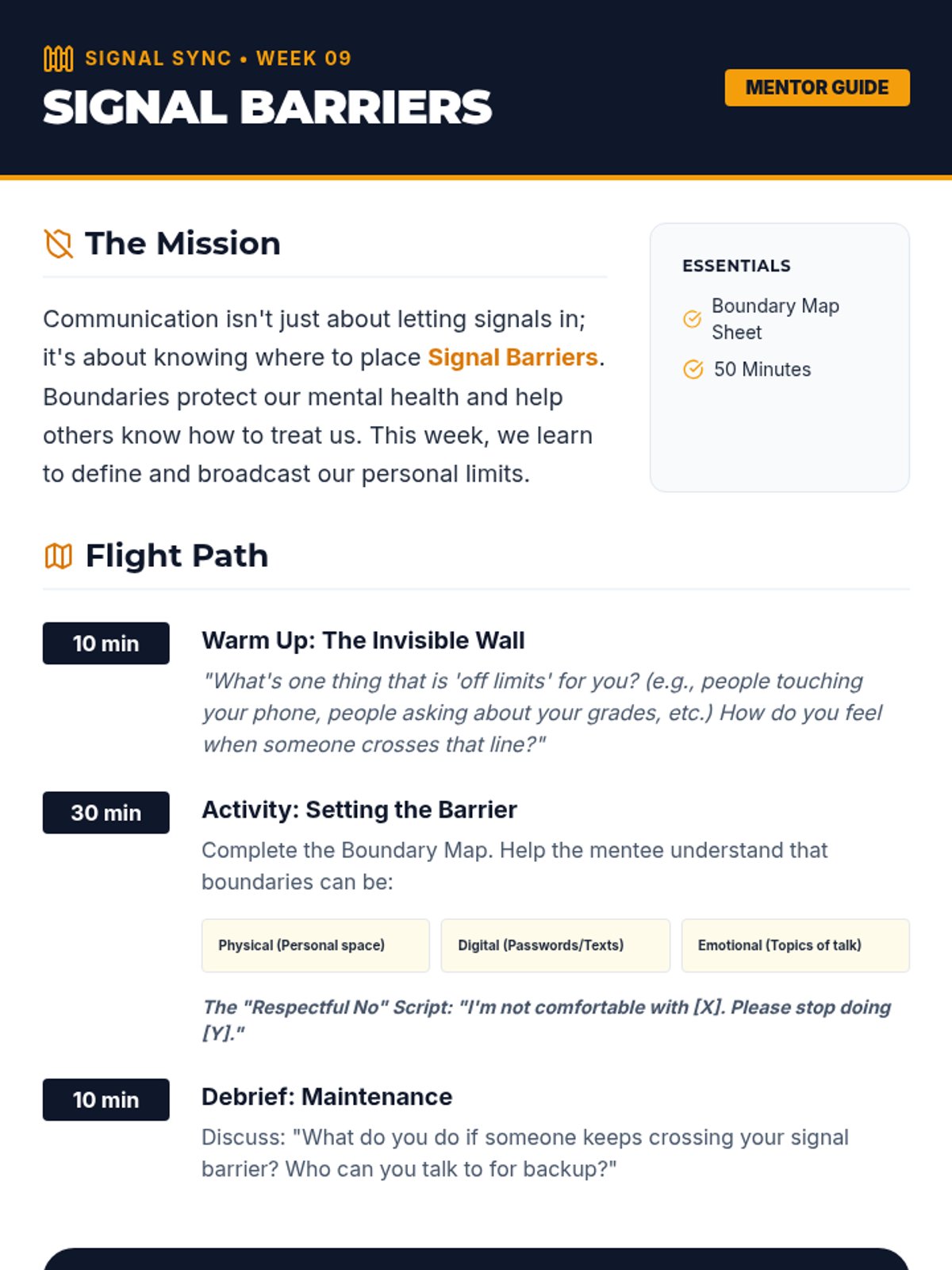
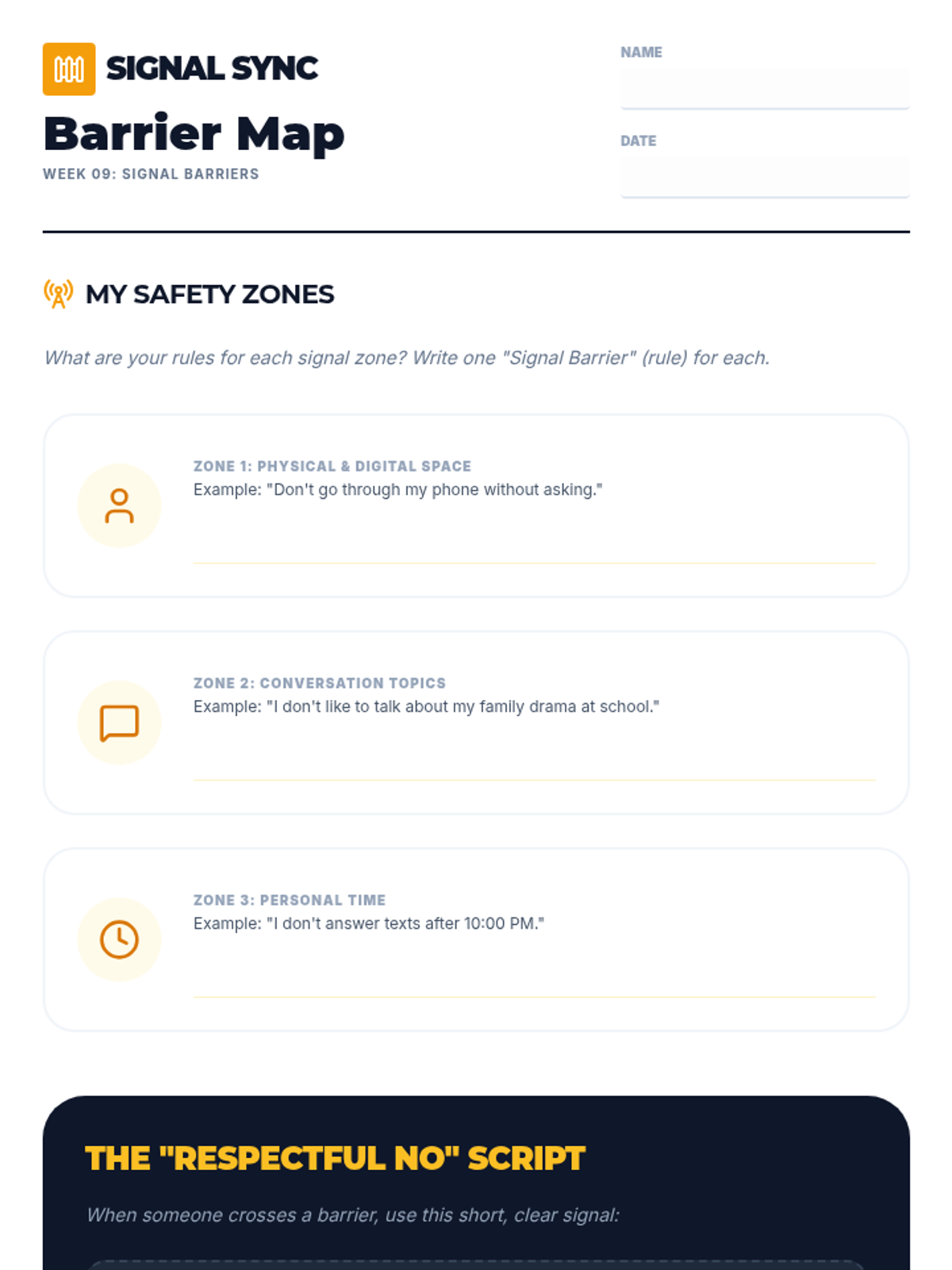
How to define, communicate, and maintain personal boundaries in a healthy way.
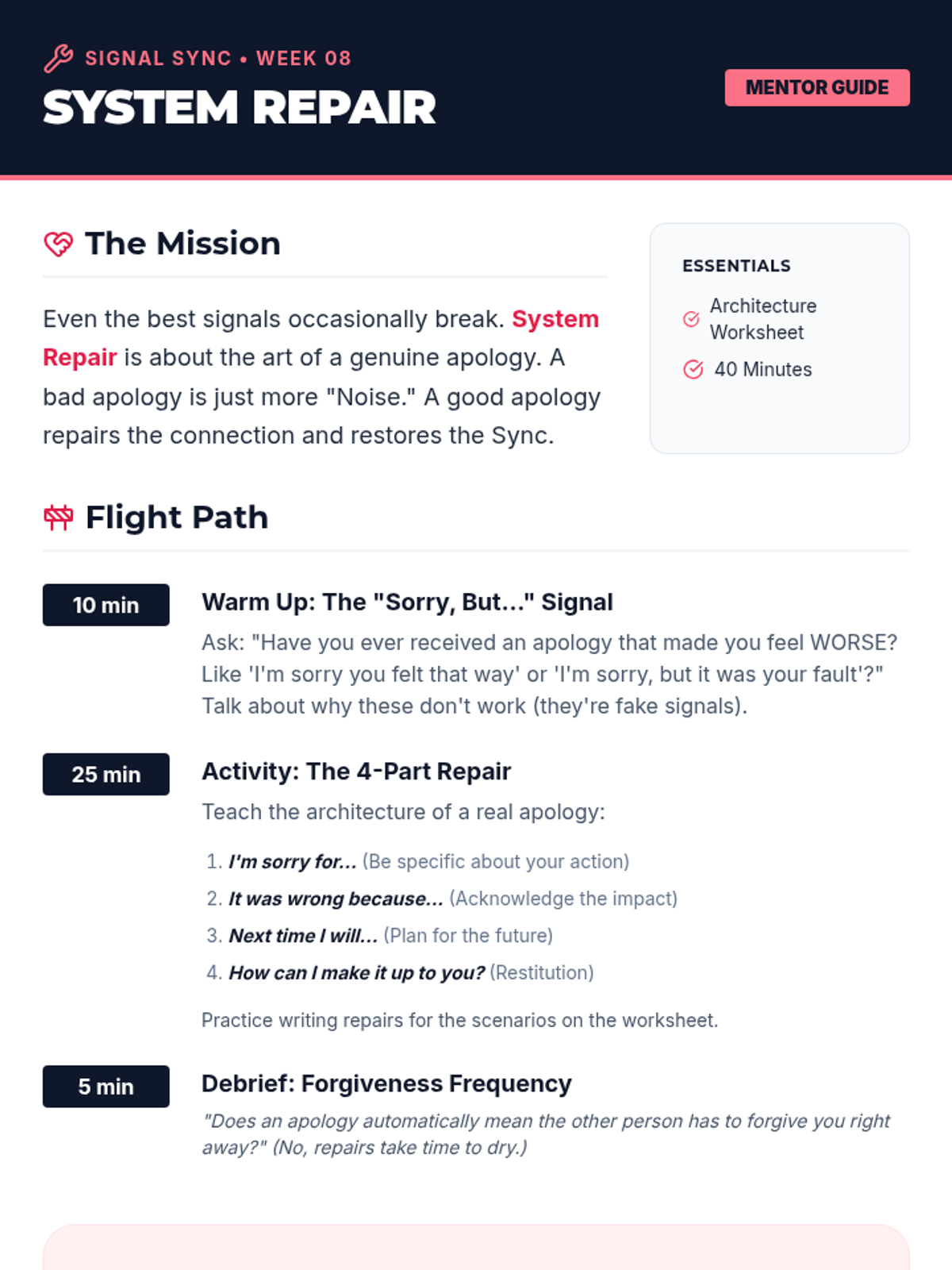
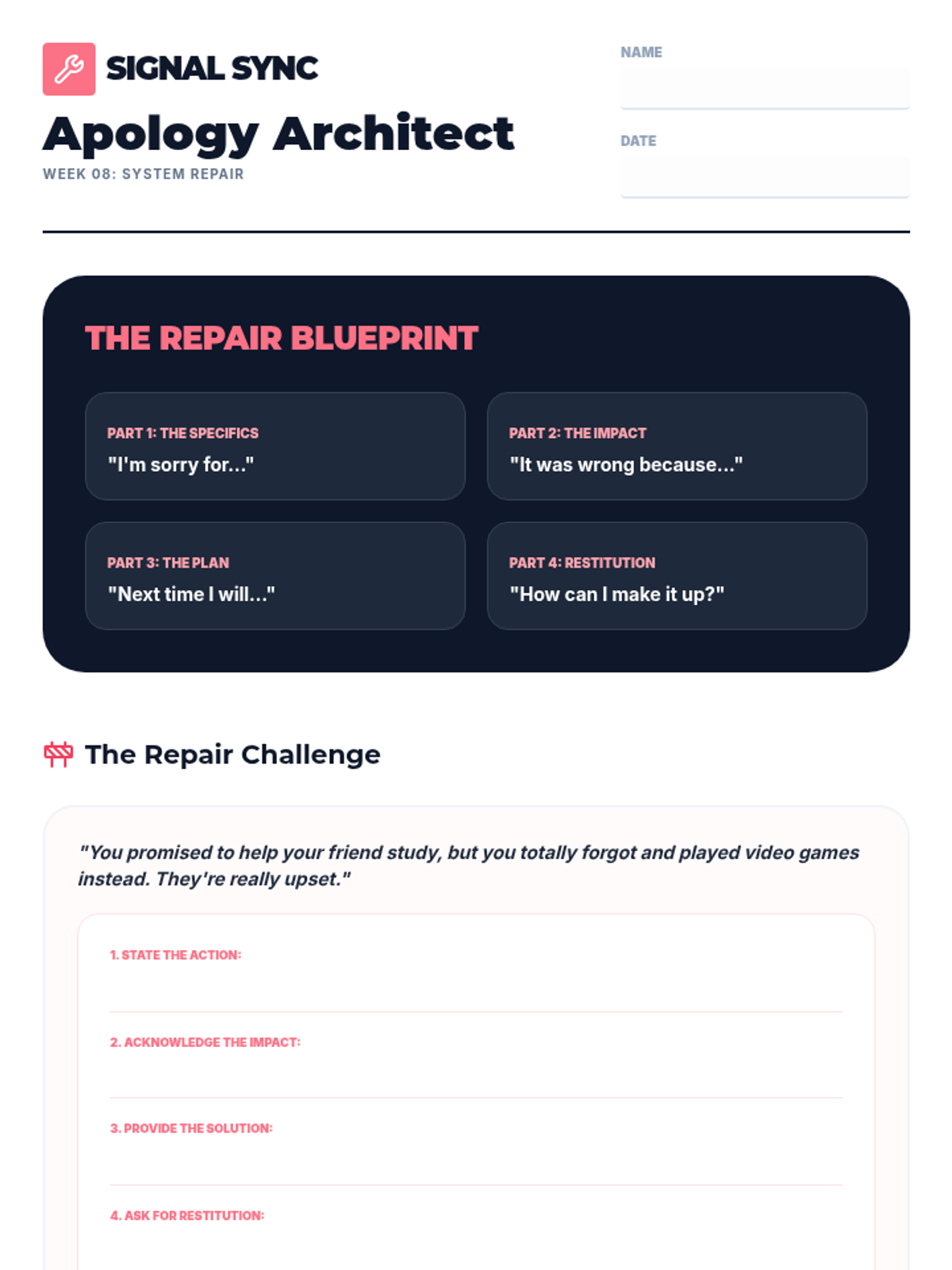
The framework for offering and accepting genuine apologies to repair damaged relationships.
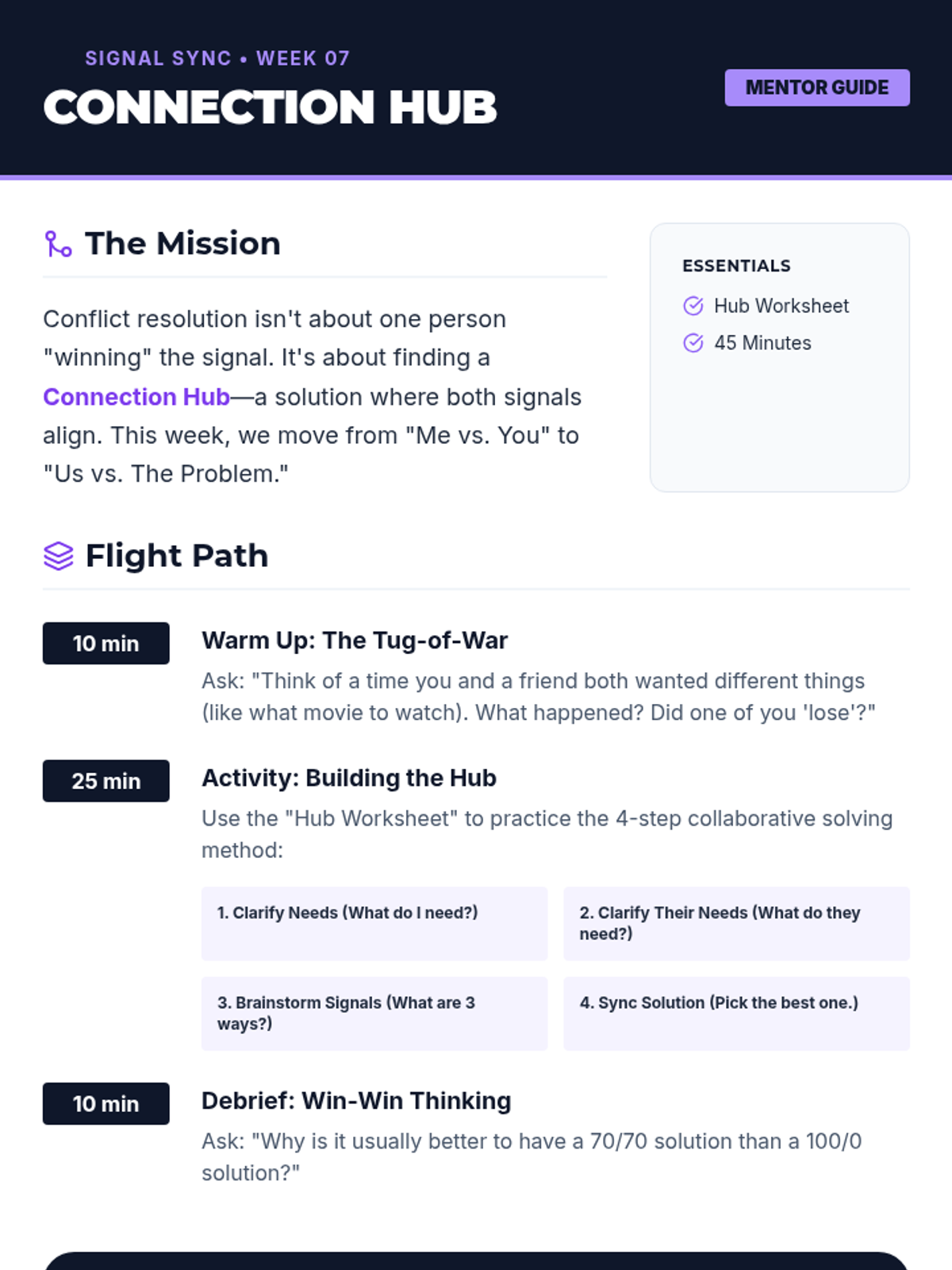
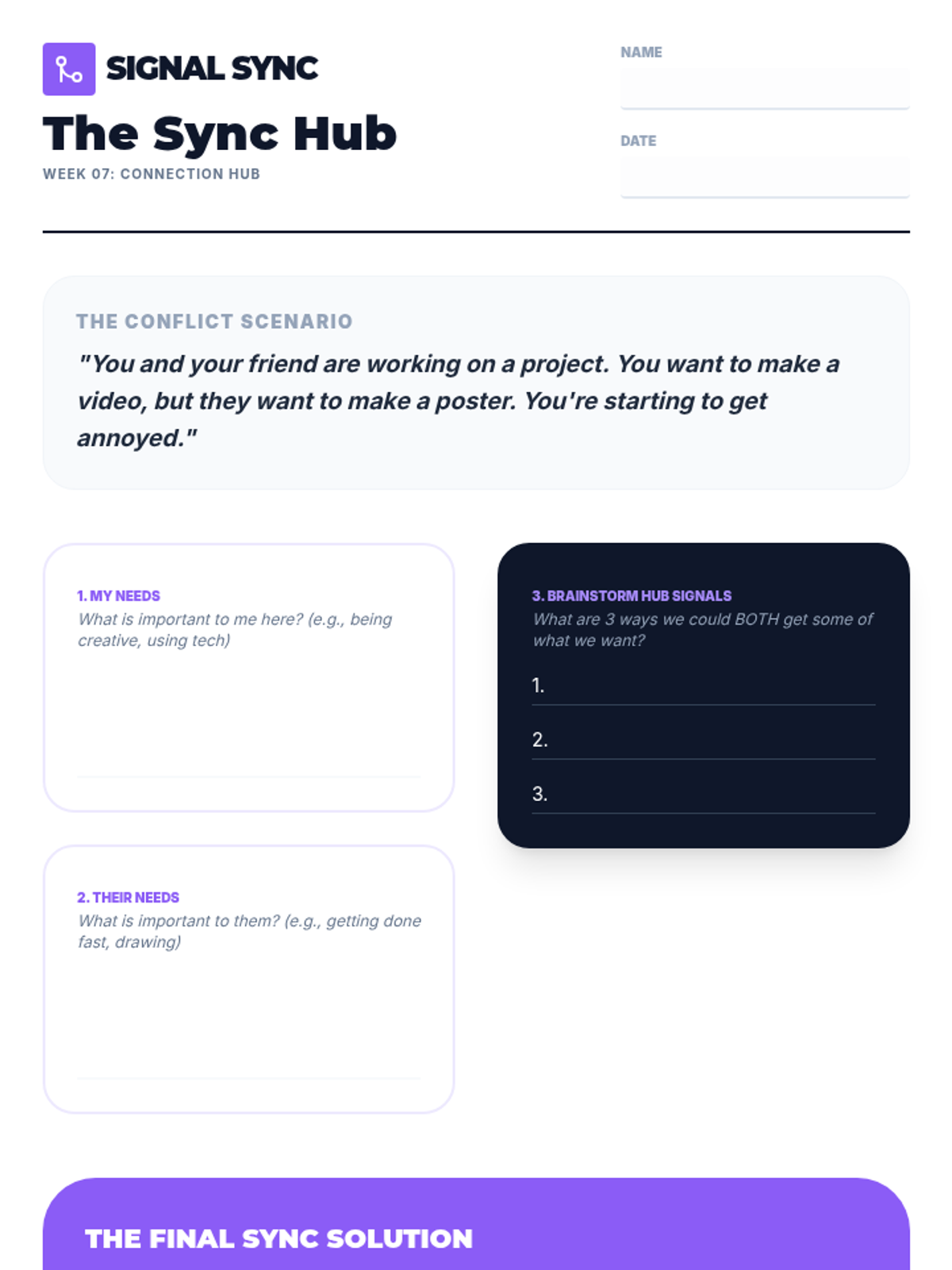
A collaborative approach to problem-solving that seeks 'win-win' outcomes for all involved.
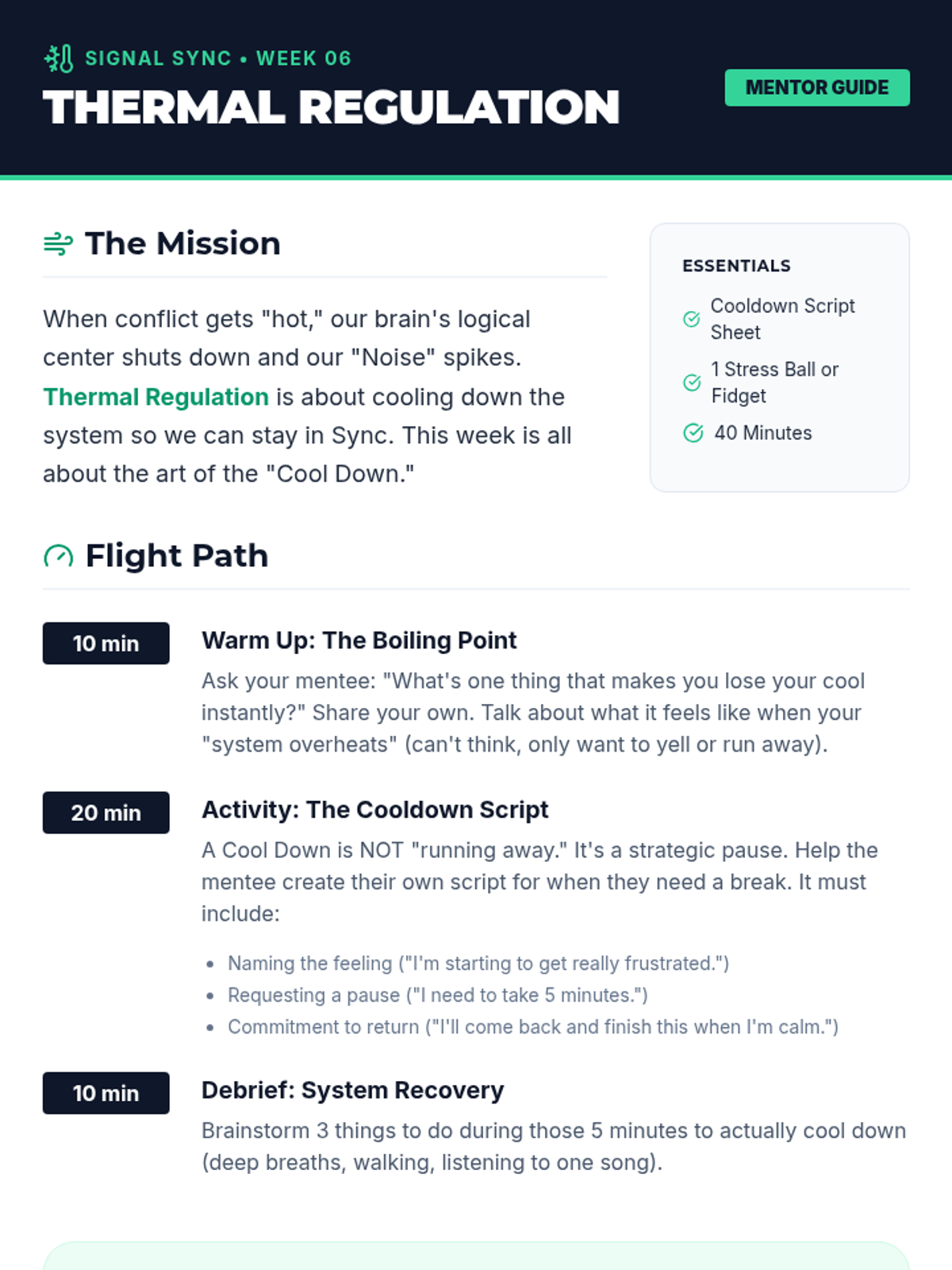
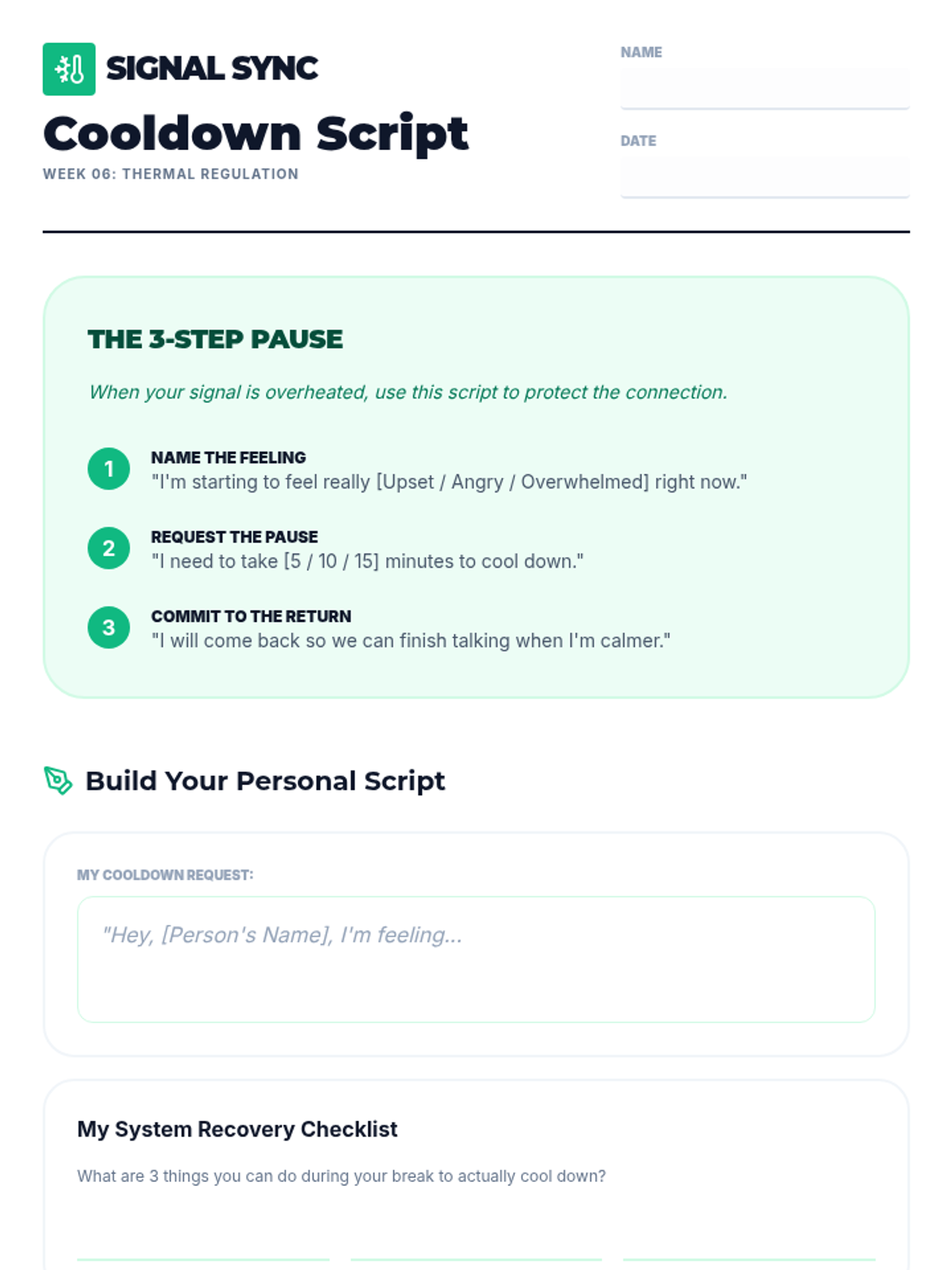
Techniques for emotional regulation and de-escalation when a conversation starts to get 'hot'.
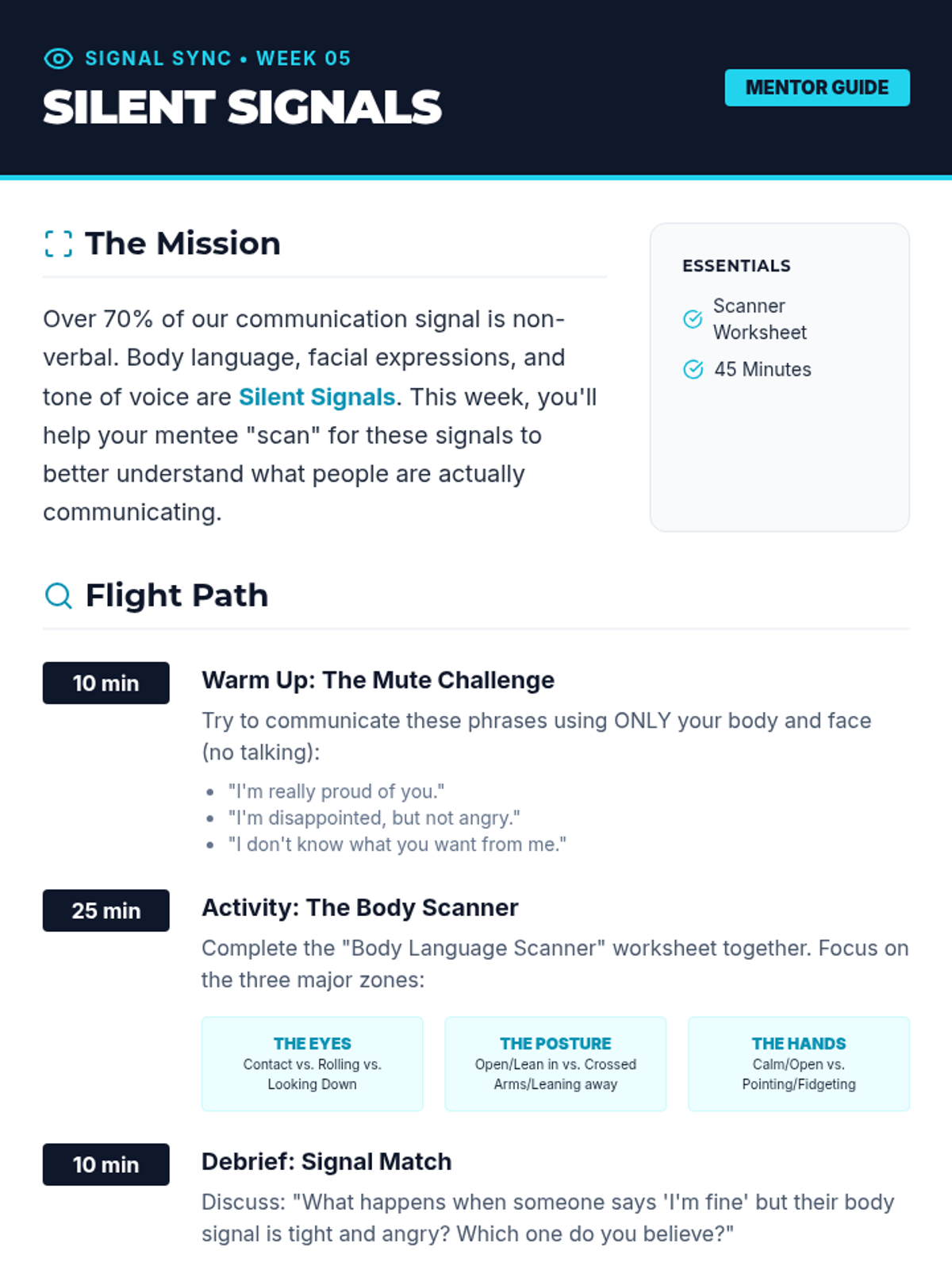
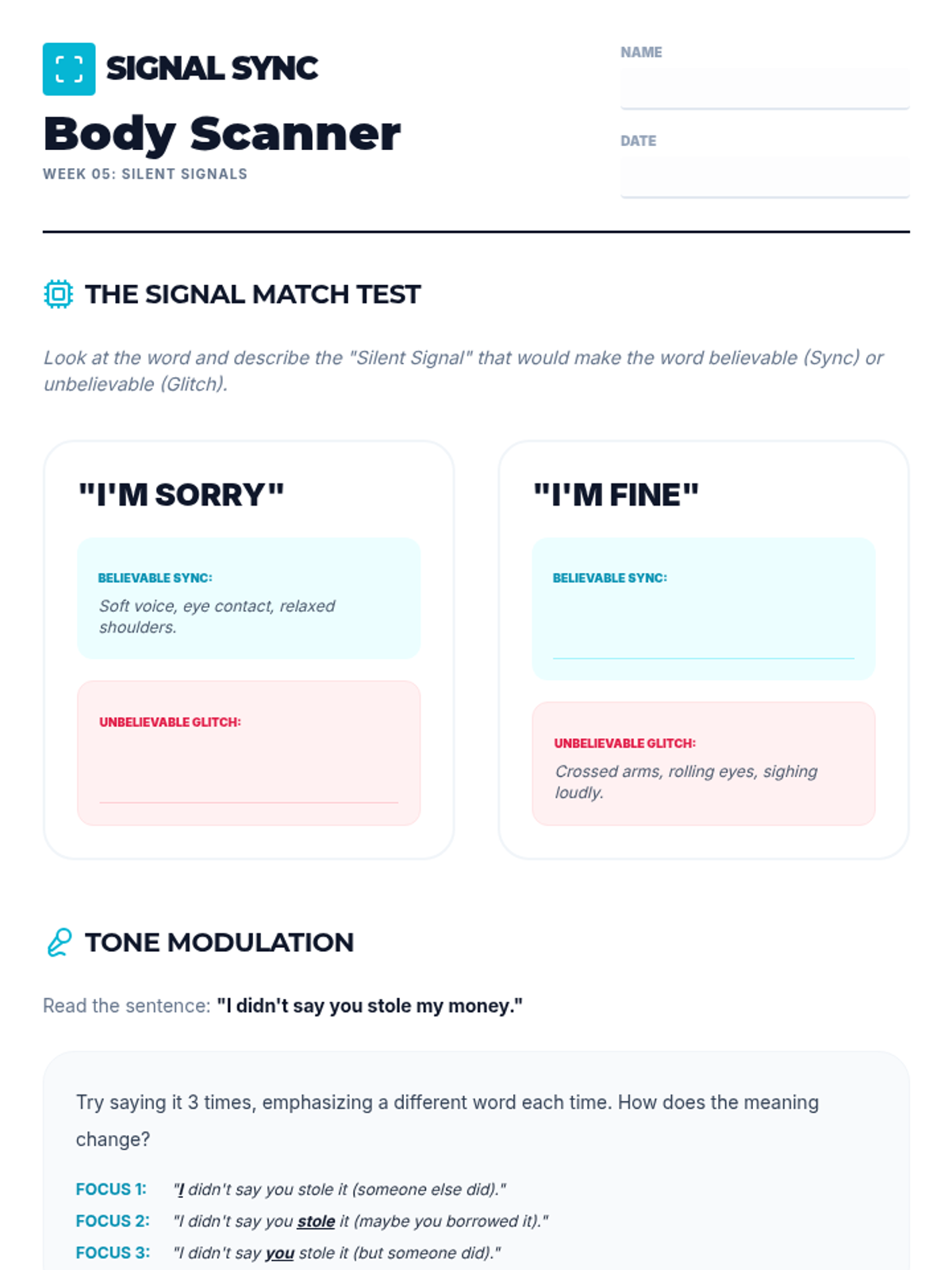
Exploring non-verbal communication, including body language, facial expressions, and tone of voice.
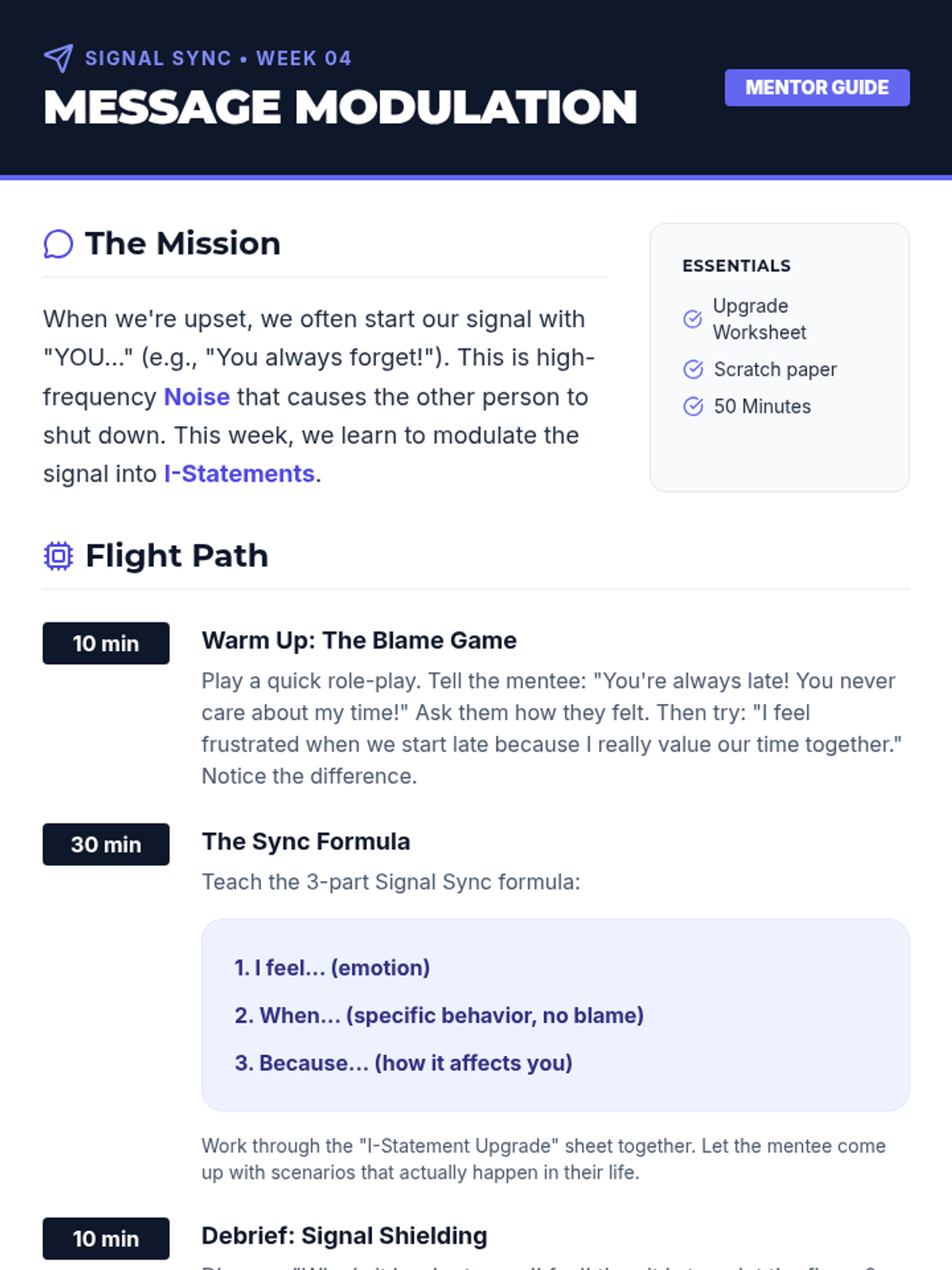
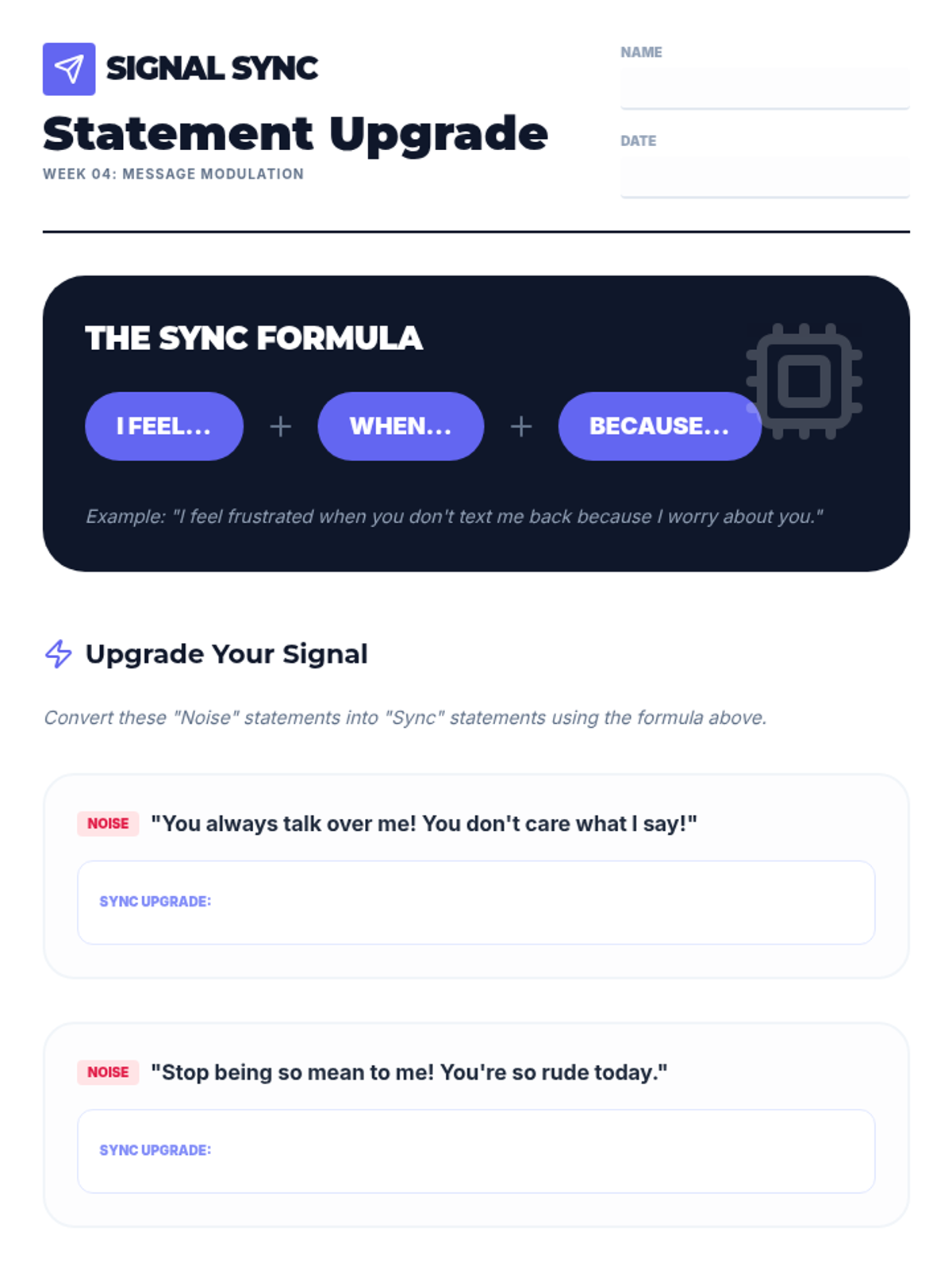
Learning to use 'I' statements to express feelings and needs without triggering defensiveness in others.
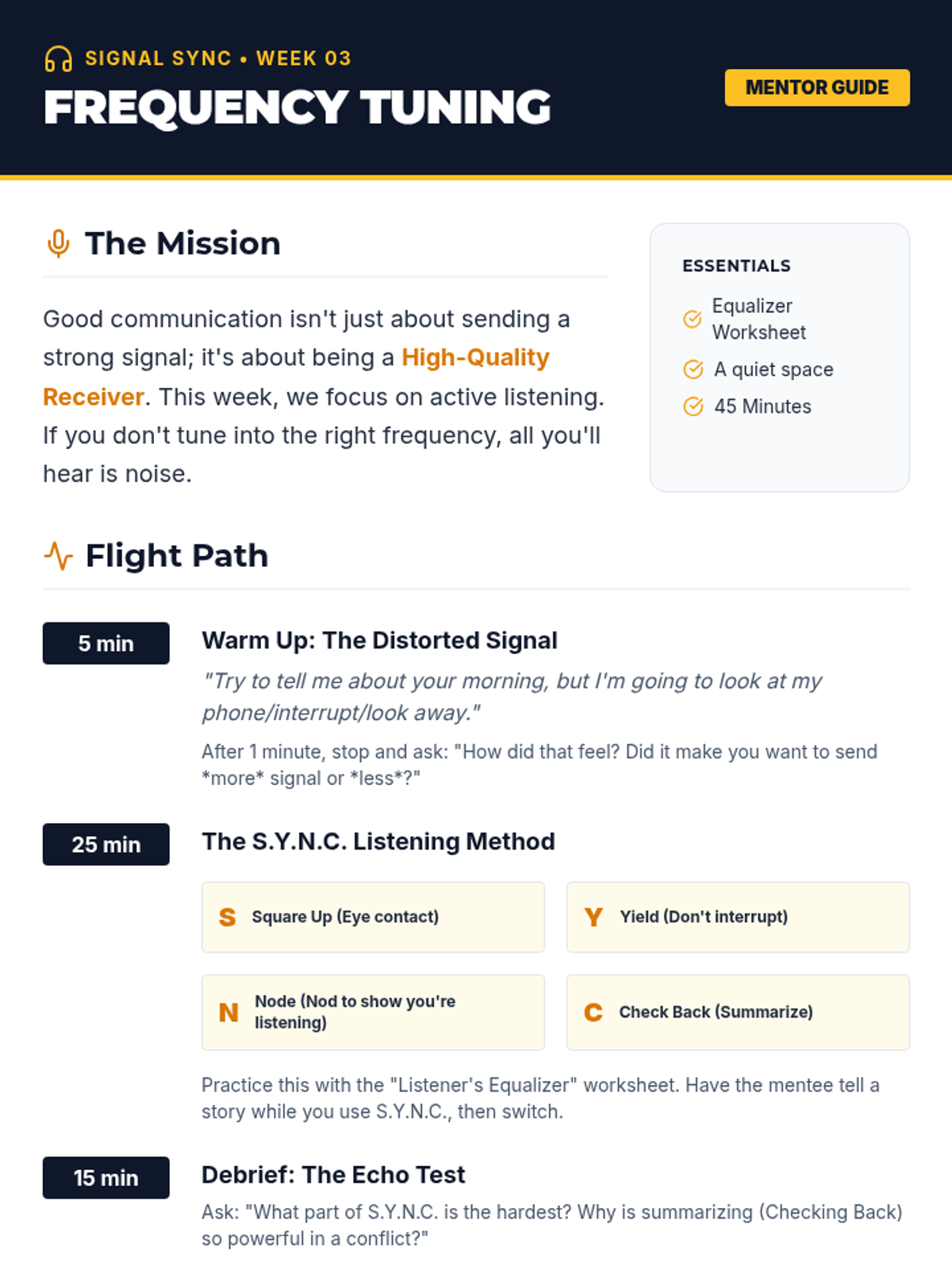
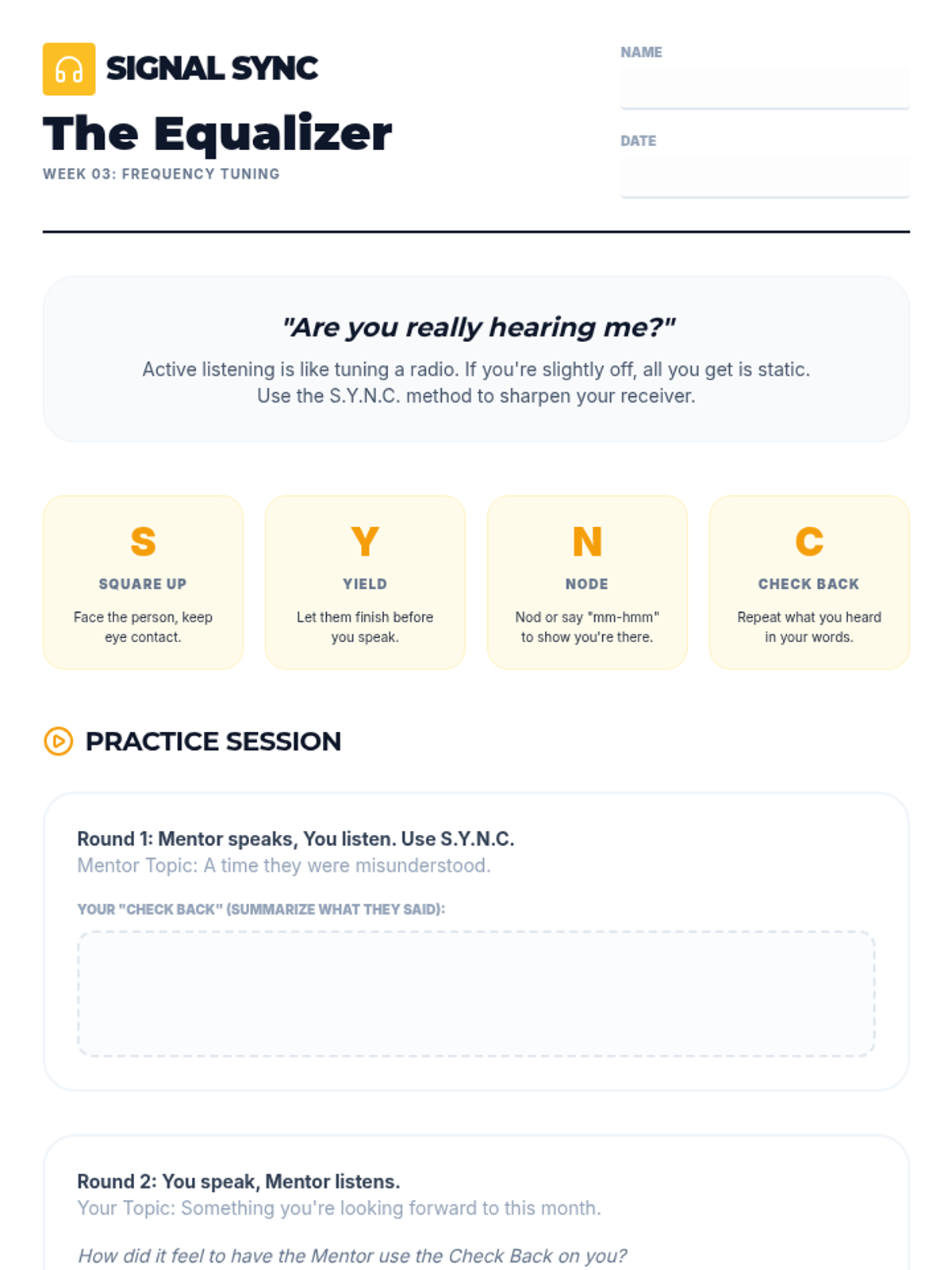
Mastering active listening techniques to ensure the receiver is fully tuned into the sender's message.
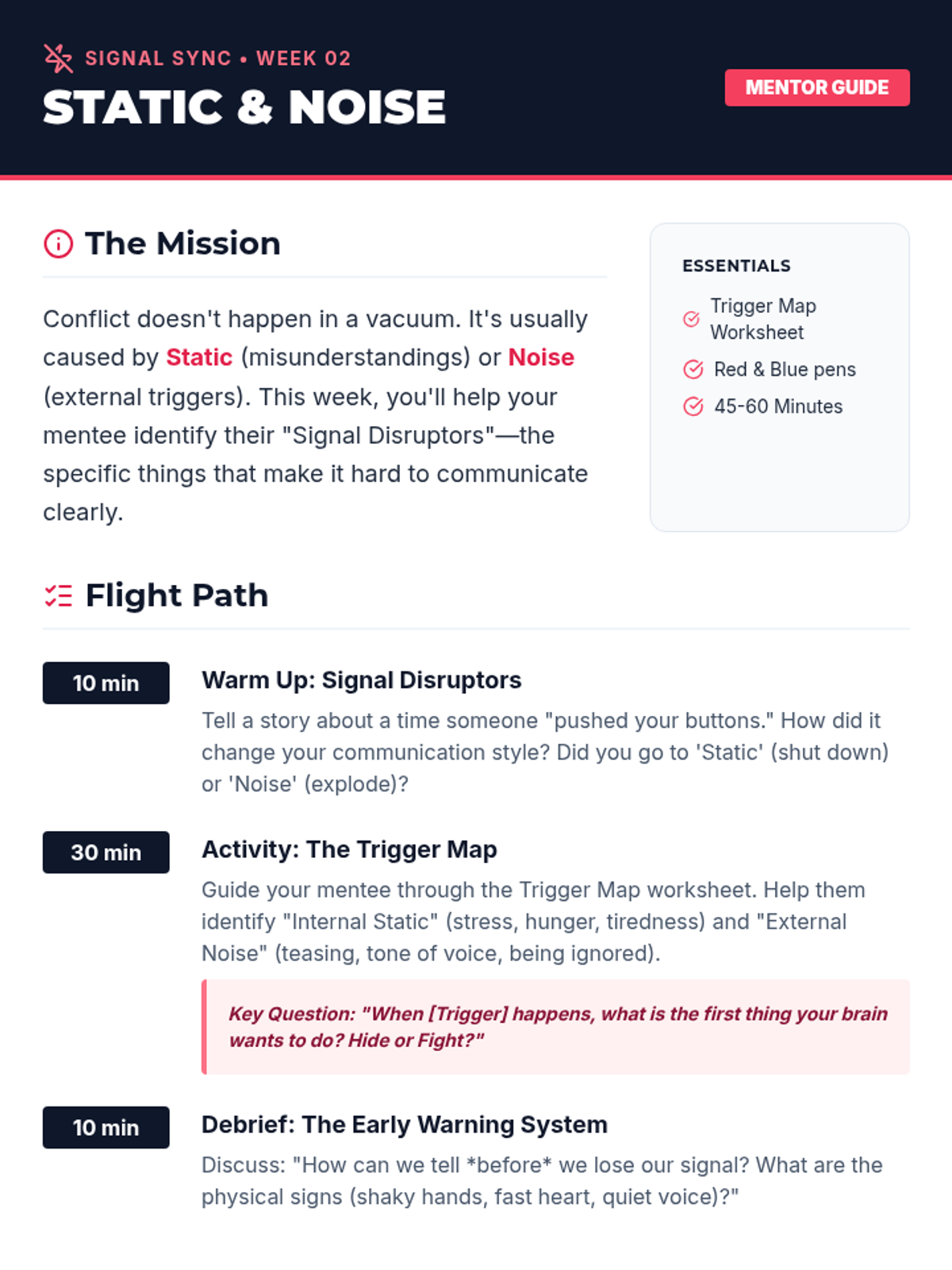
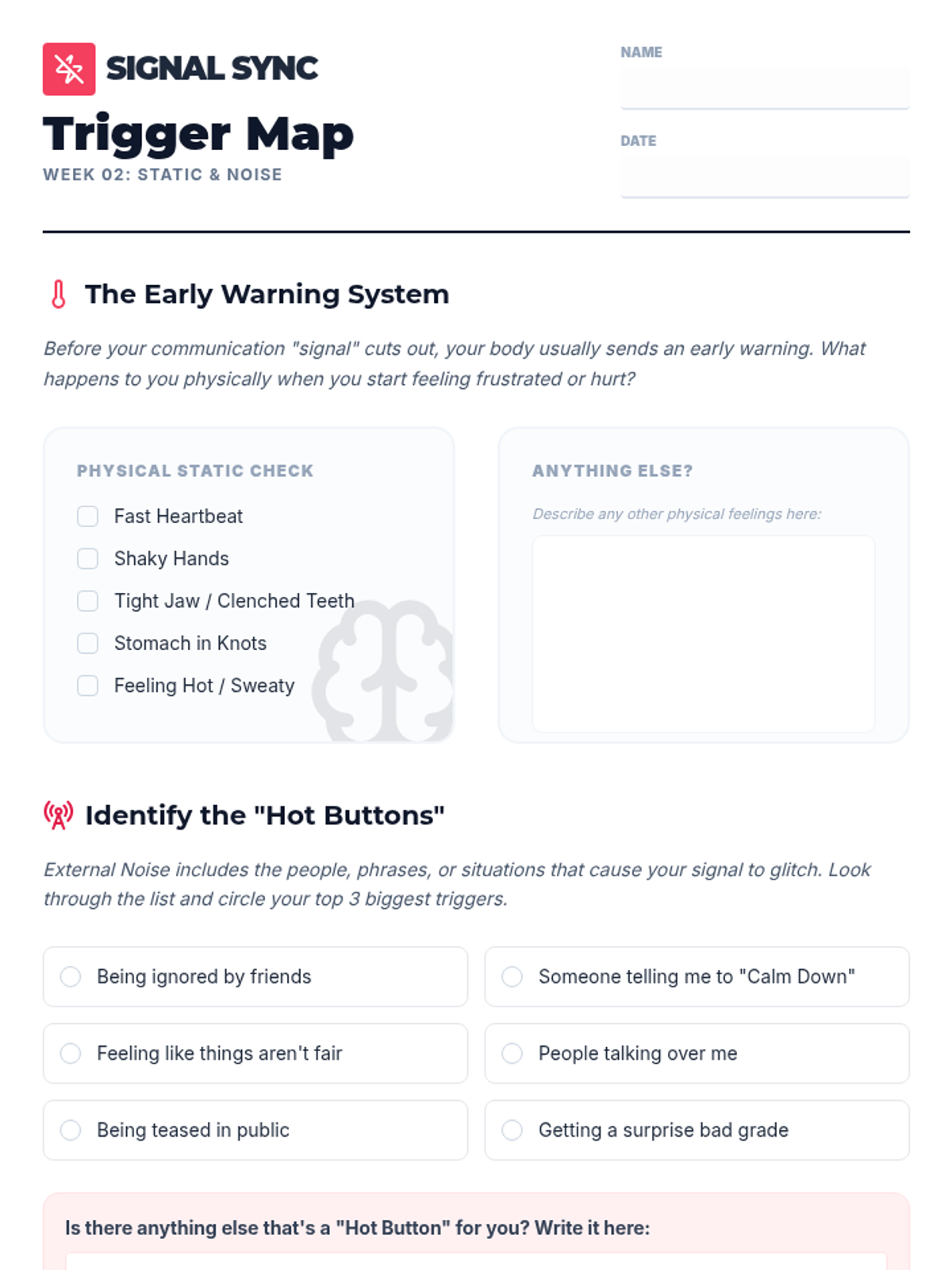
Identifying the 'static' or triggers that lead to conflict and understanding the root causes of misunderstandings.
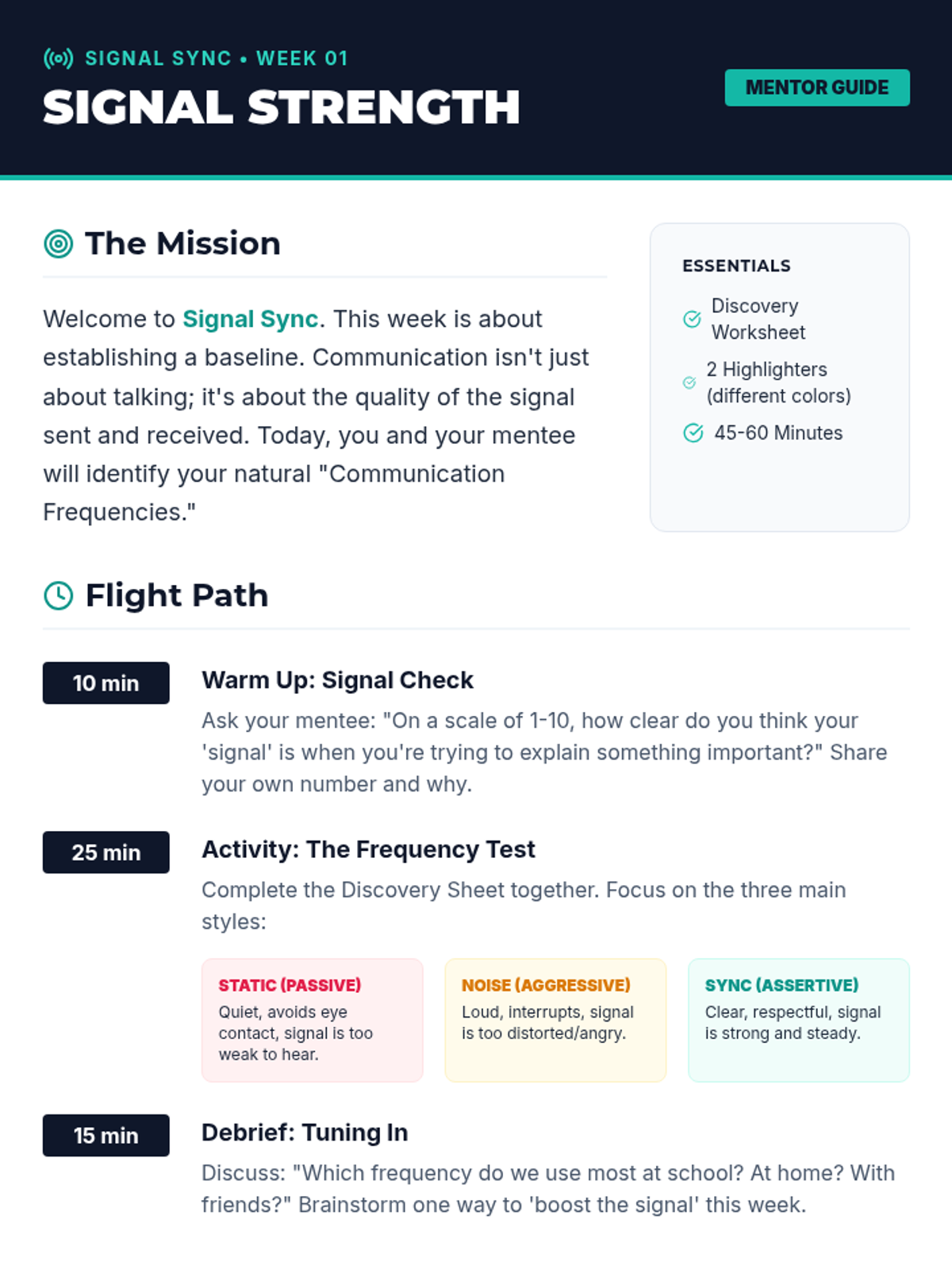
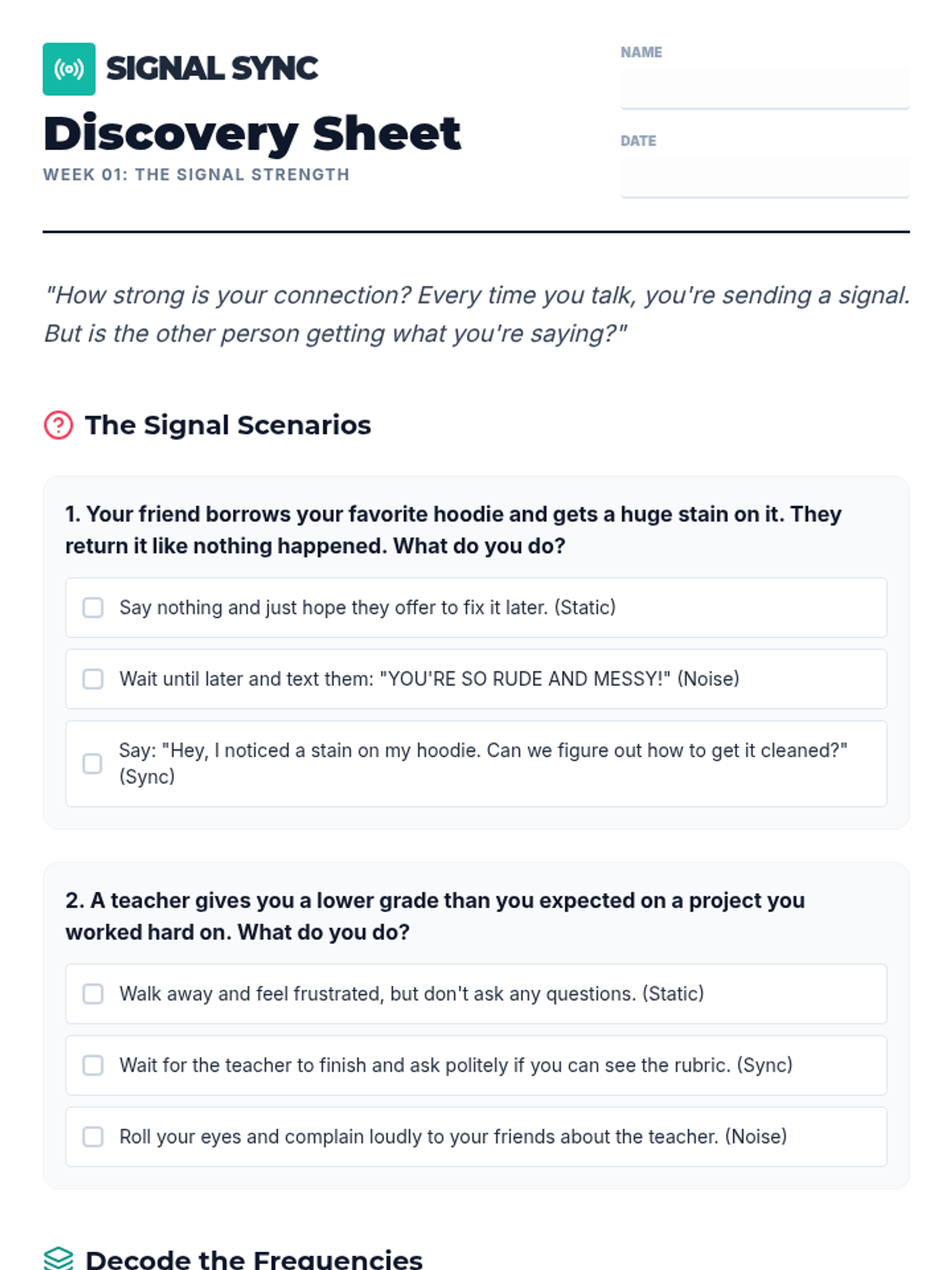
Introduction to communication styles and building a baseline understanding of how we send and receive information.
The core foundational resources for mentors to guide their mentees through the 20-session journey.
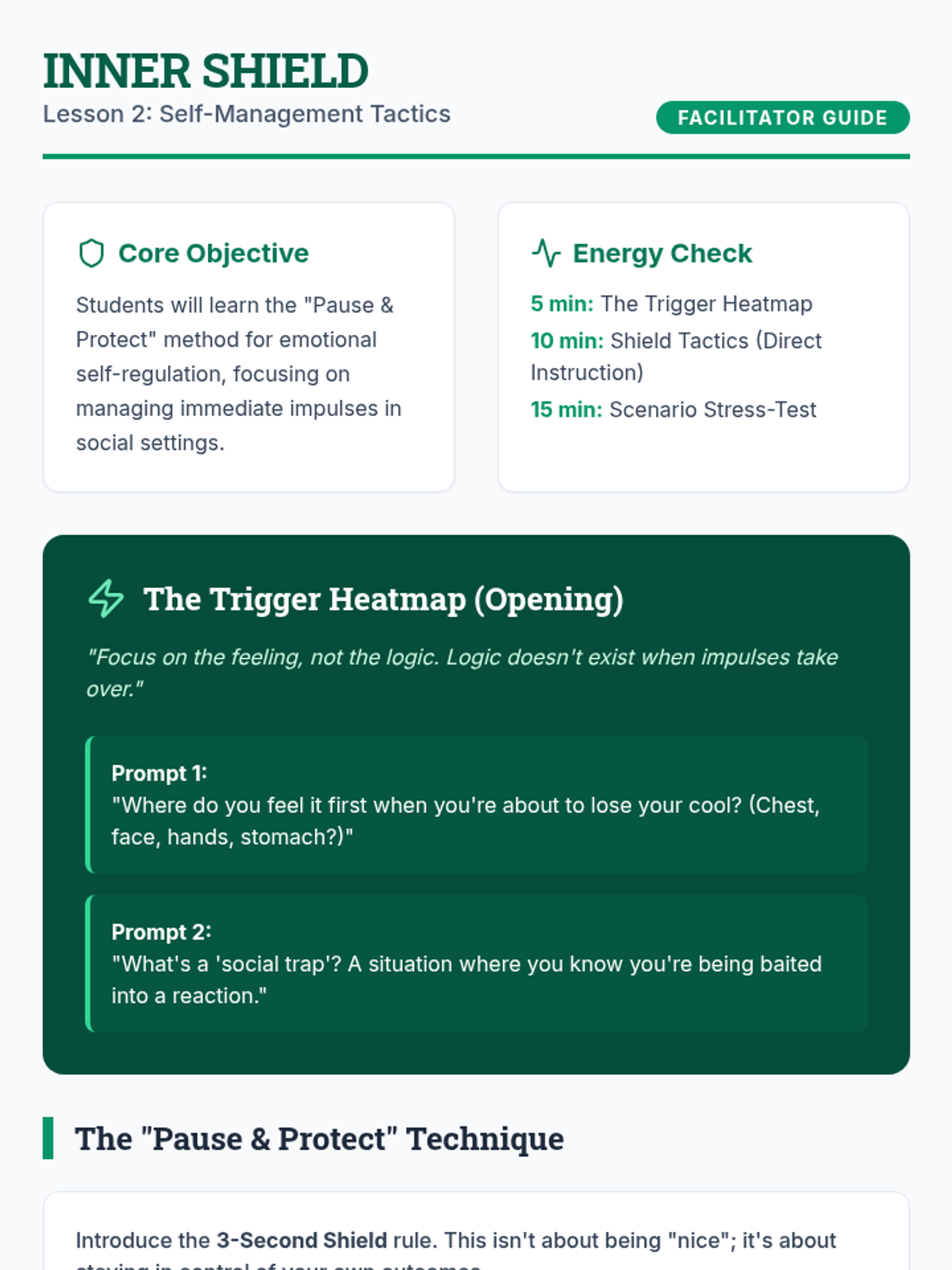
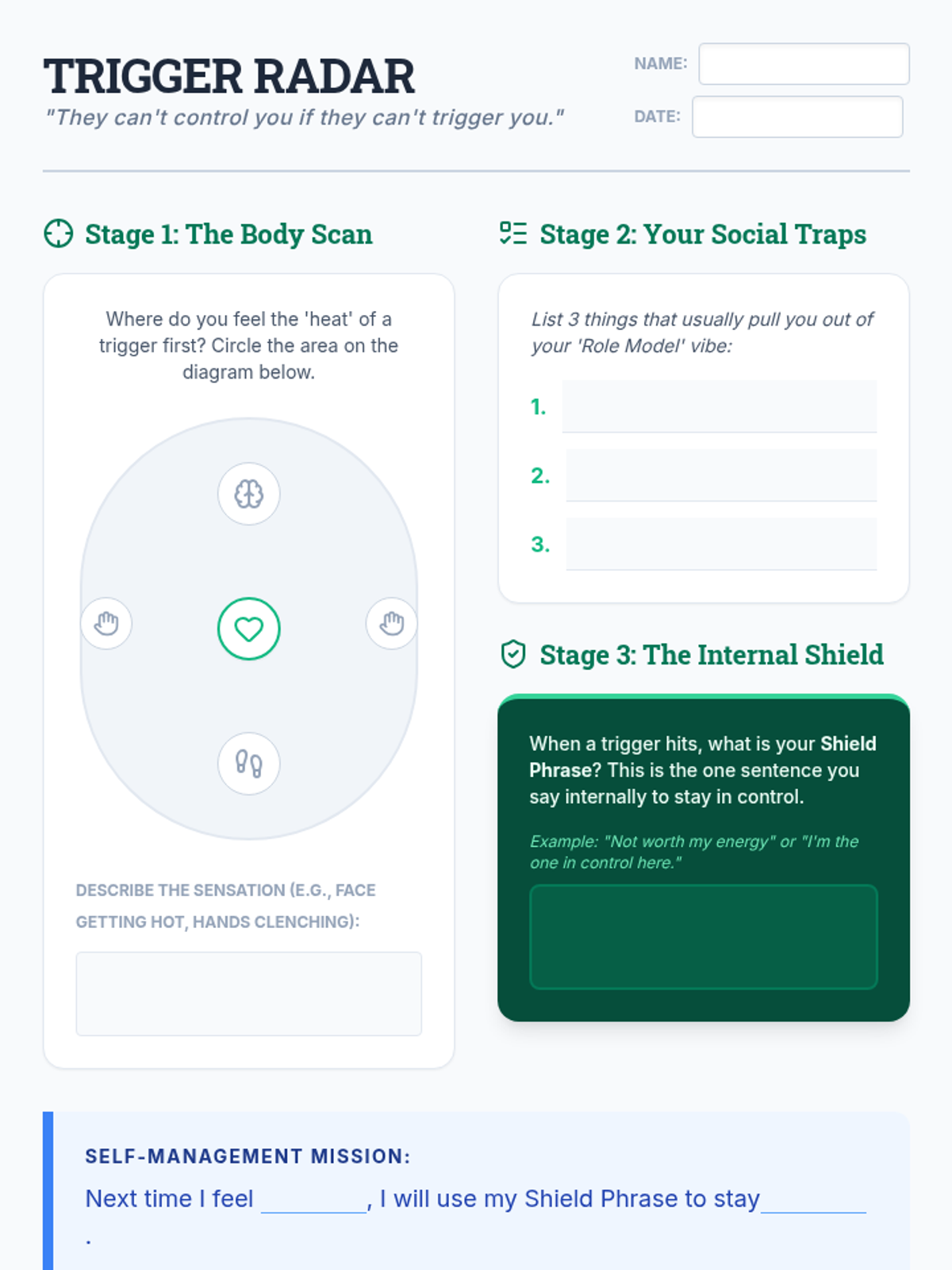
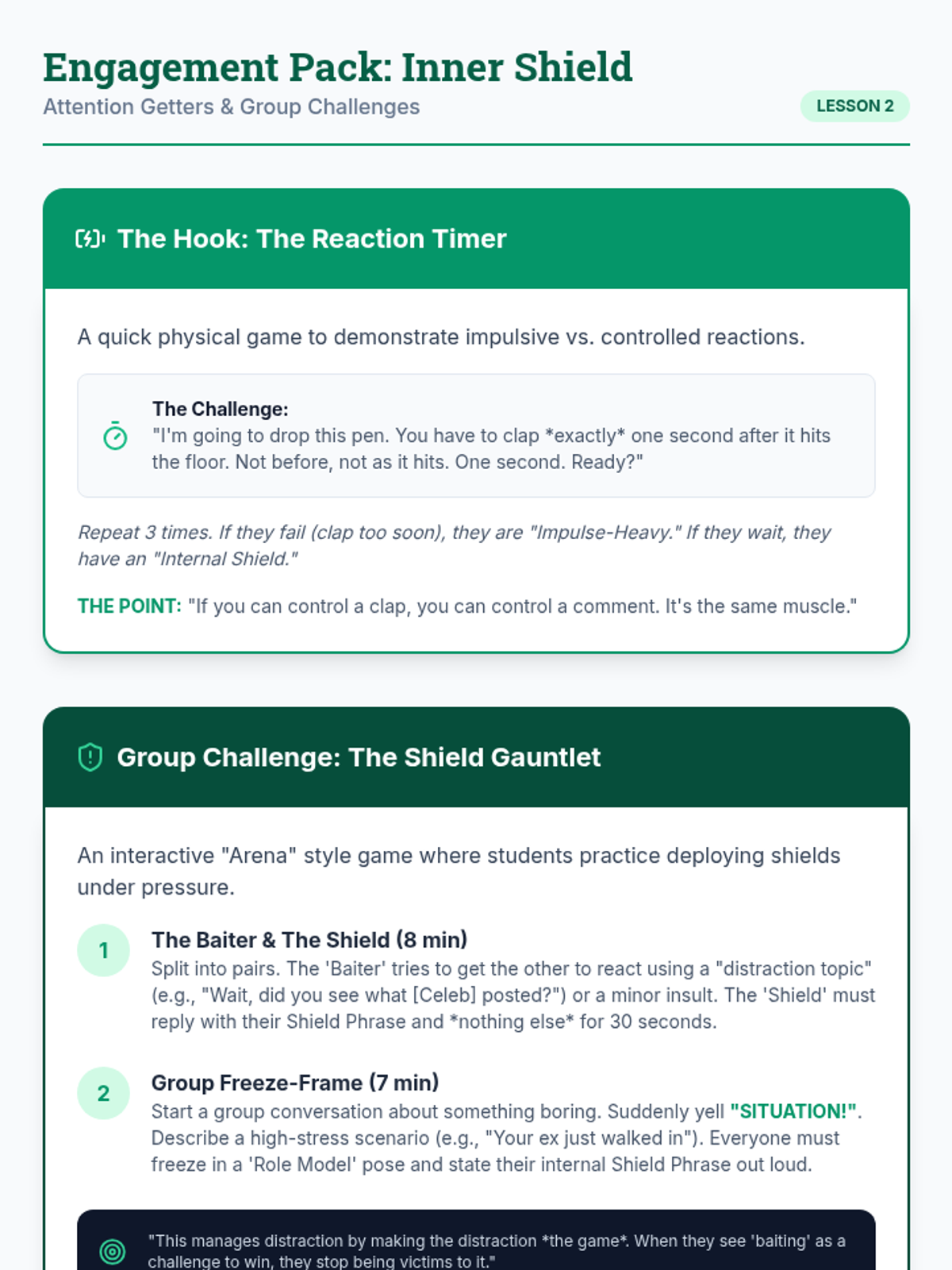
Focuses on self-management techniques, impulse control, and emotional regulation strategies tailored for high-stakes social situations.
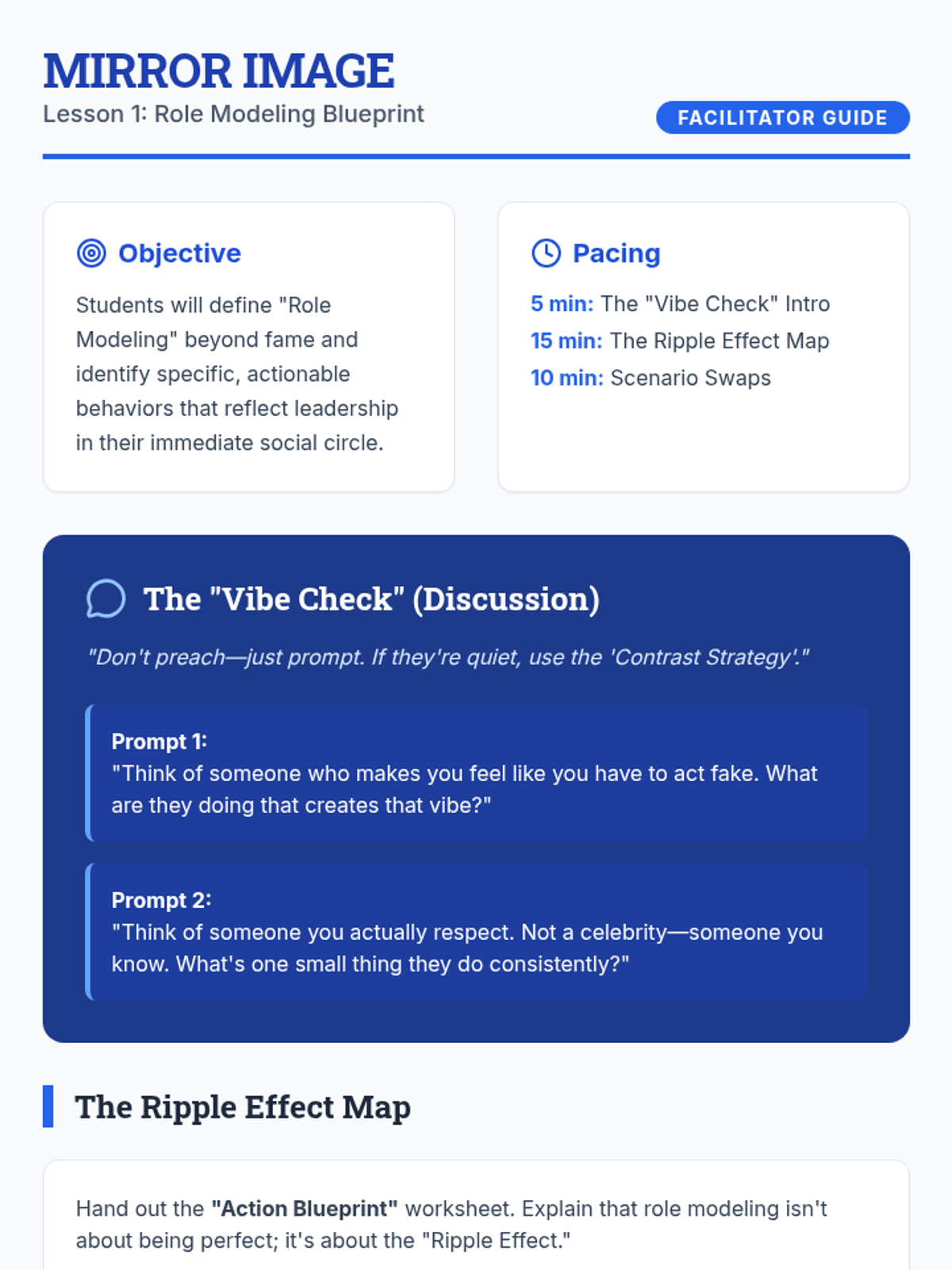
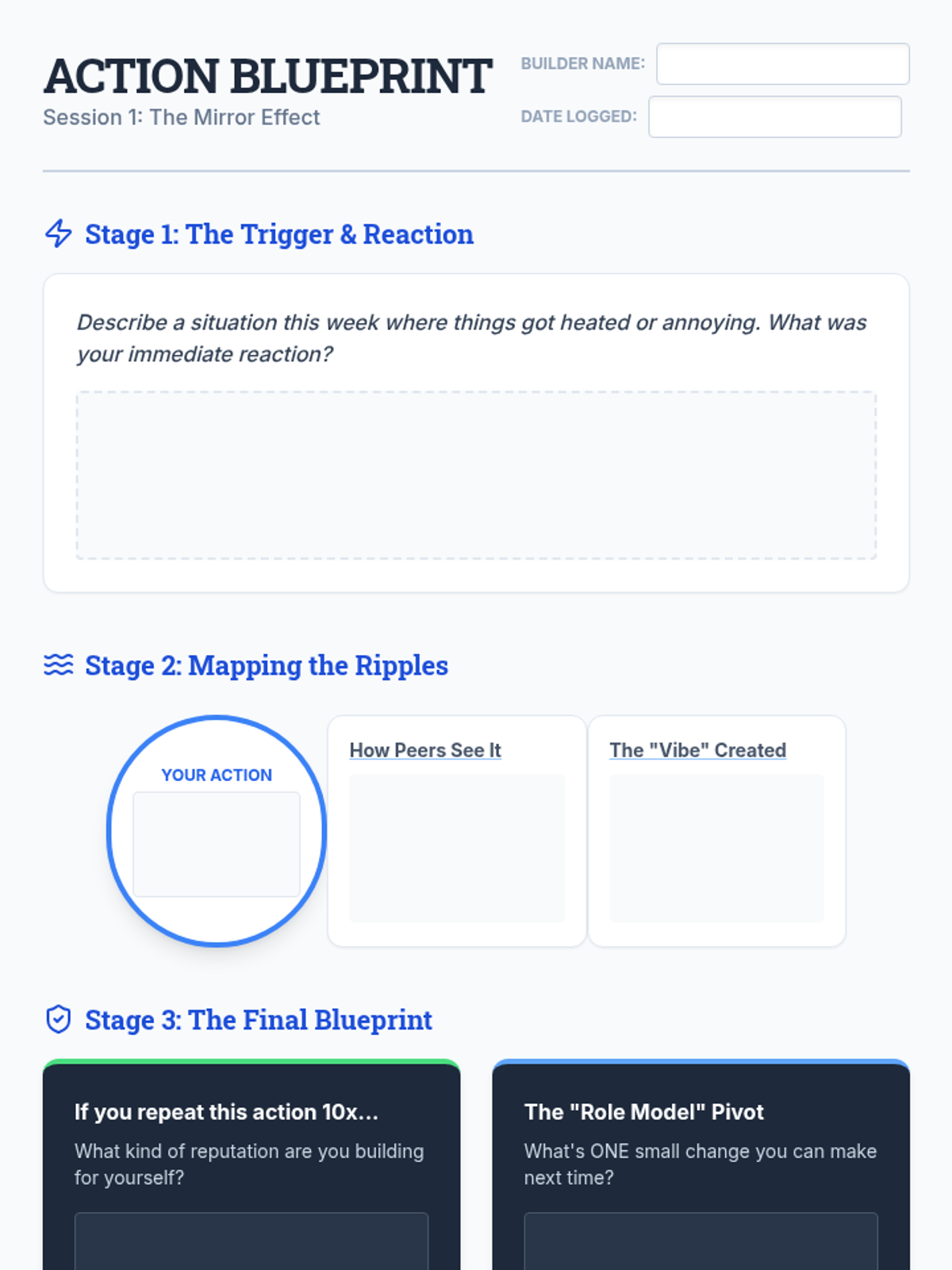
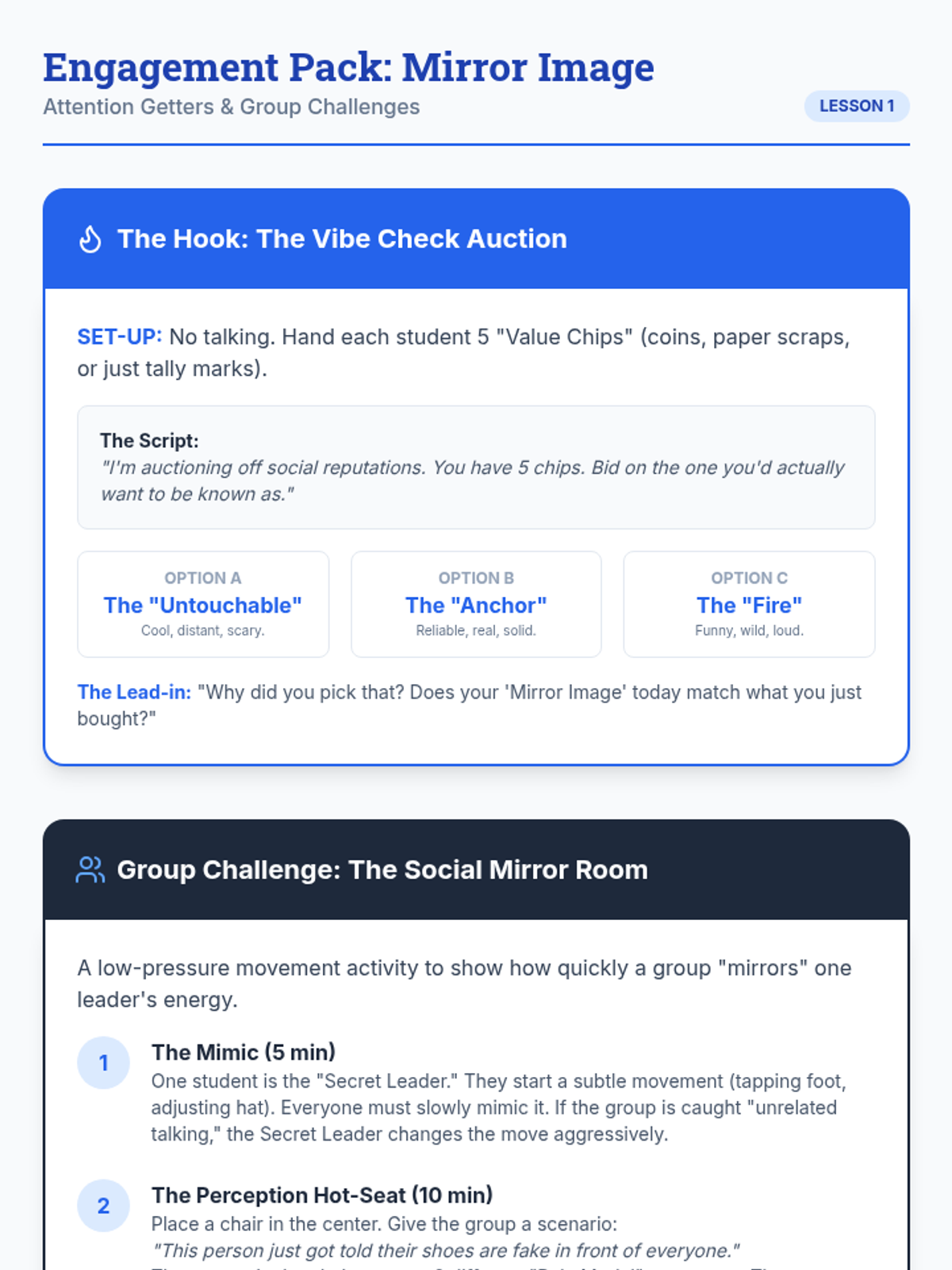
Focuses on the concept of role modeling by identifying personal values and how outward actions influence group dynamics and peer perception.
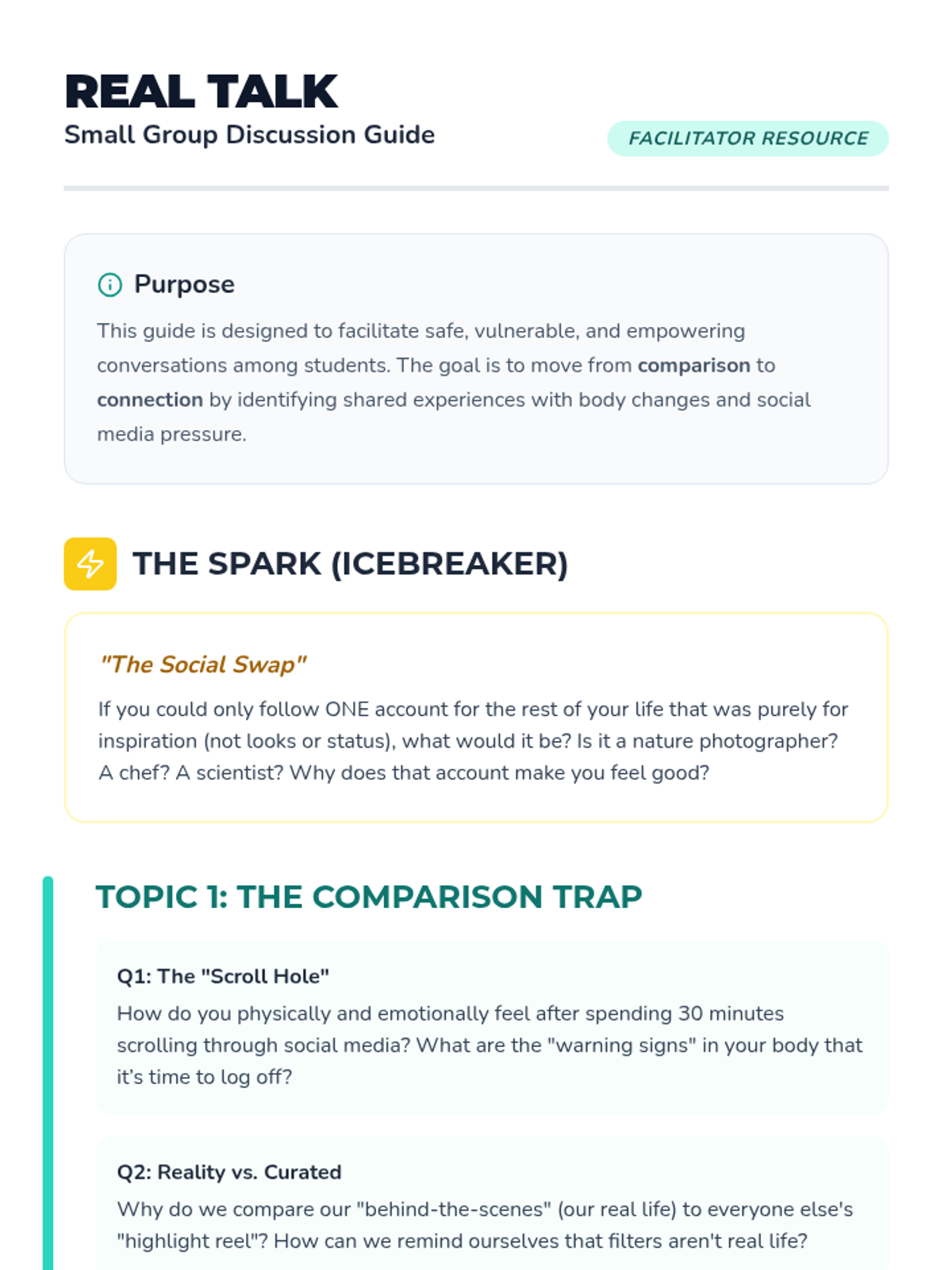
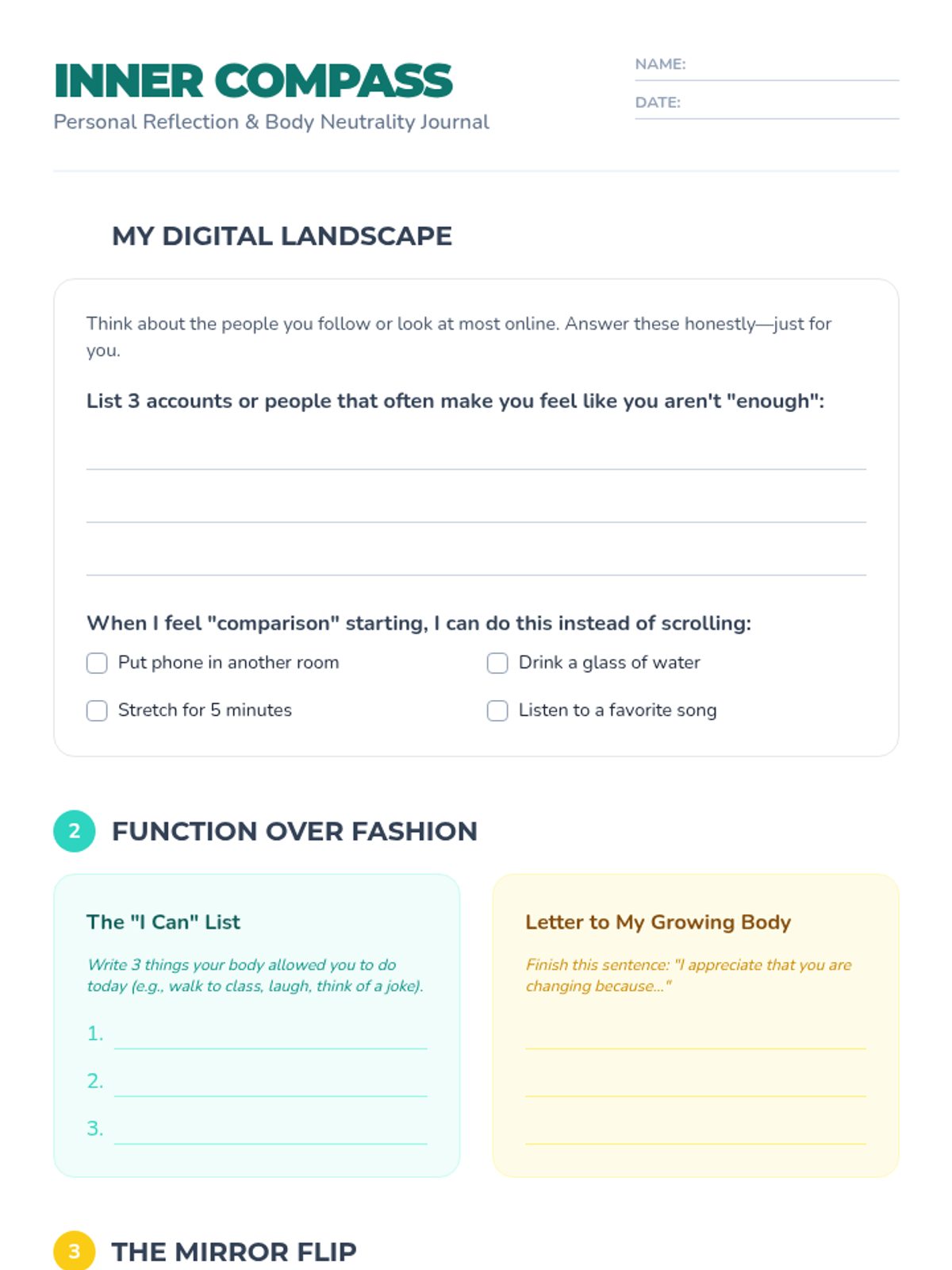
This lesson explores the impact of social comparison and changing bodies on self-esteem, providing students with tools to foster body neutrality and a healthy self-image.
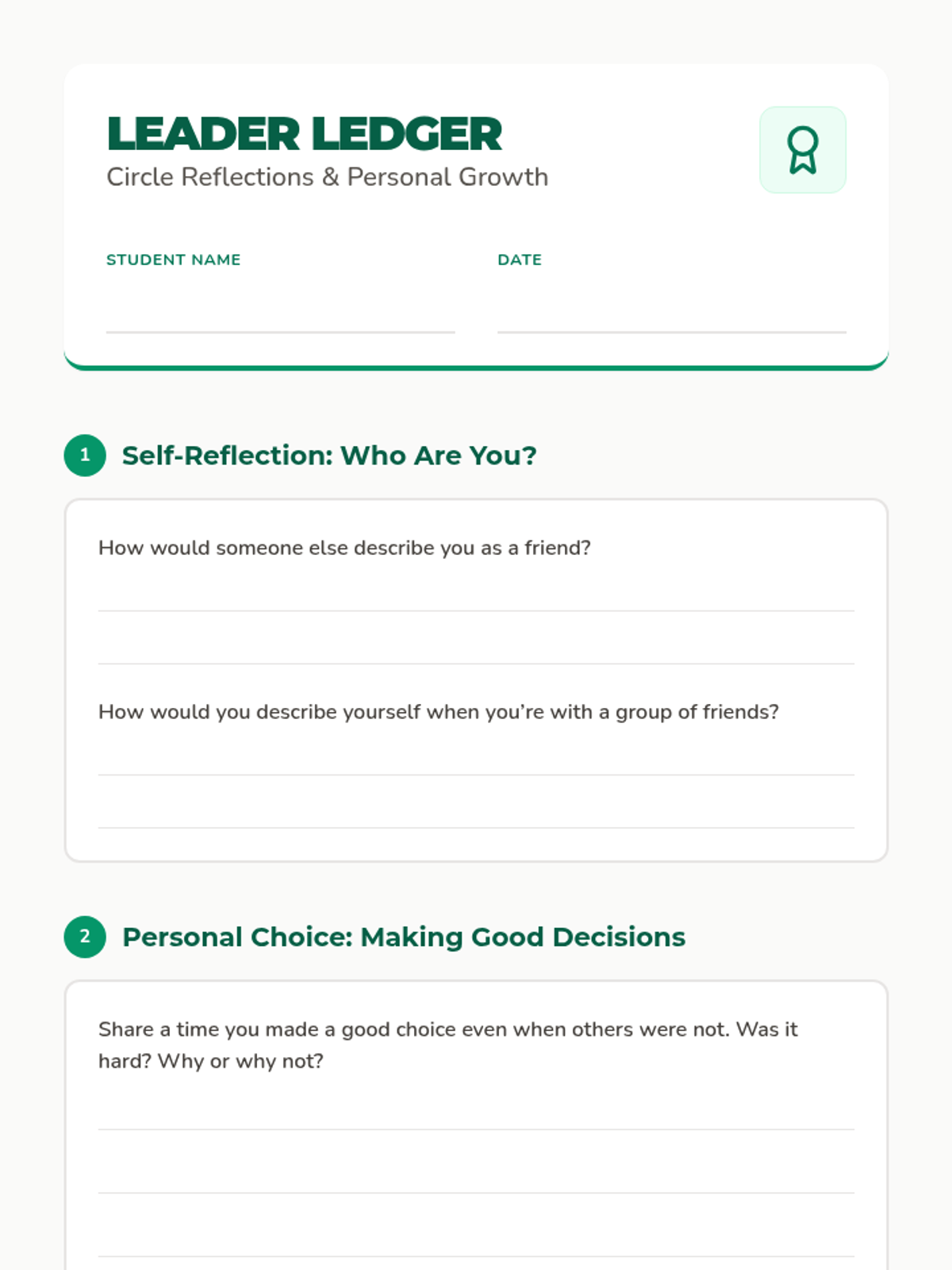
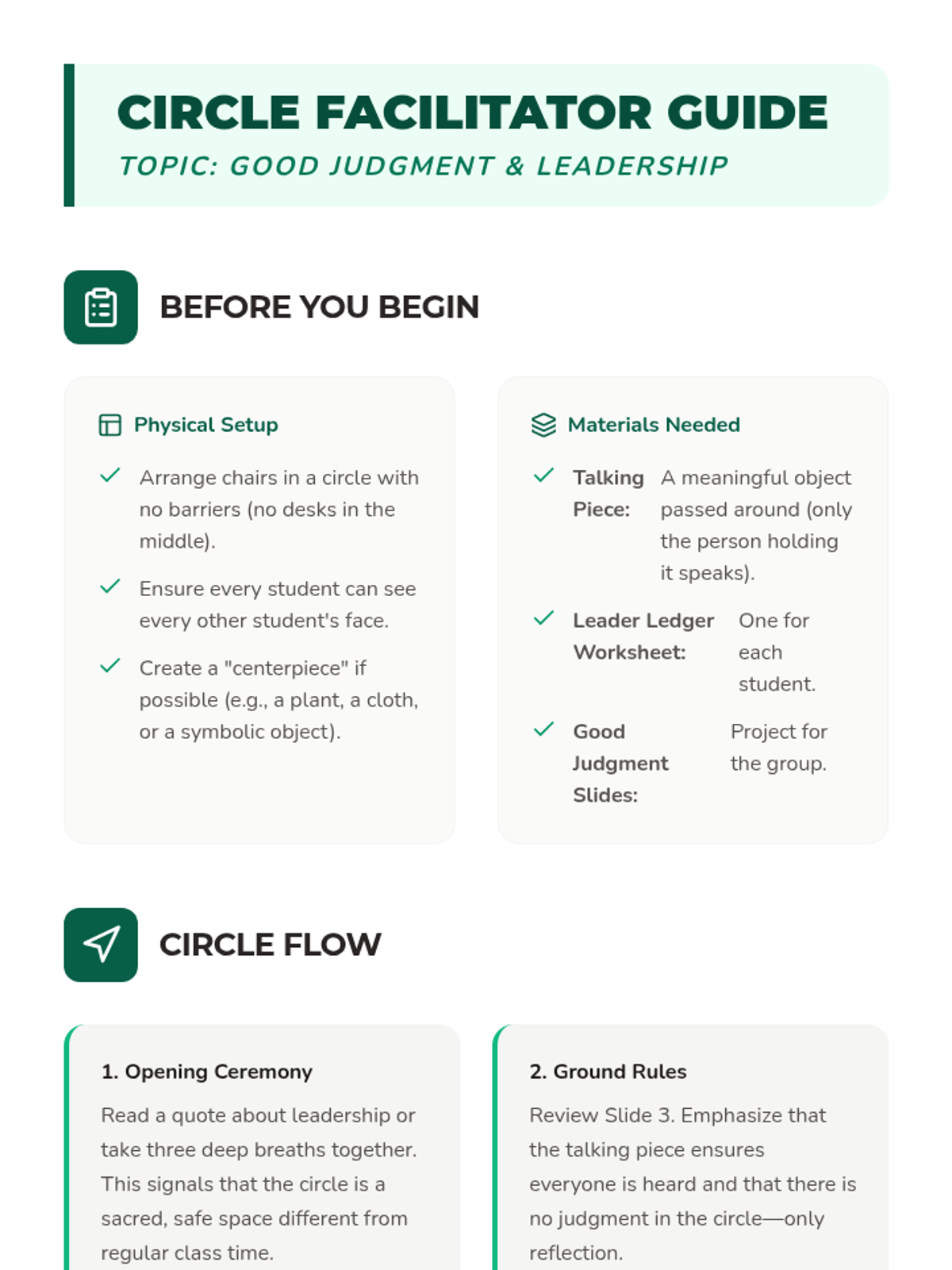
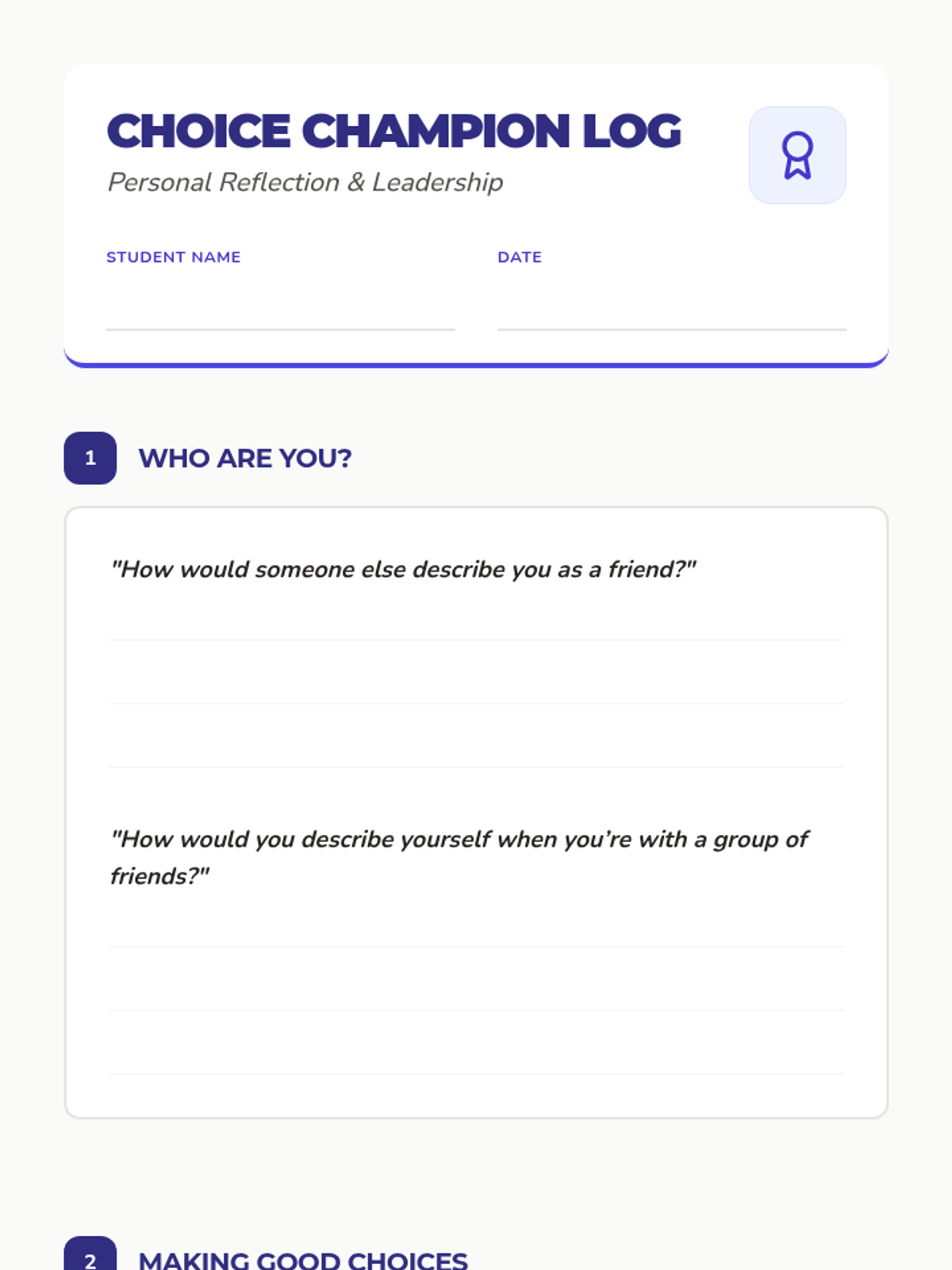
A restorative circle lesson designed to help students reflect on their personal choices, the impact of their behavior on others, and how to lead by example within their school community.
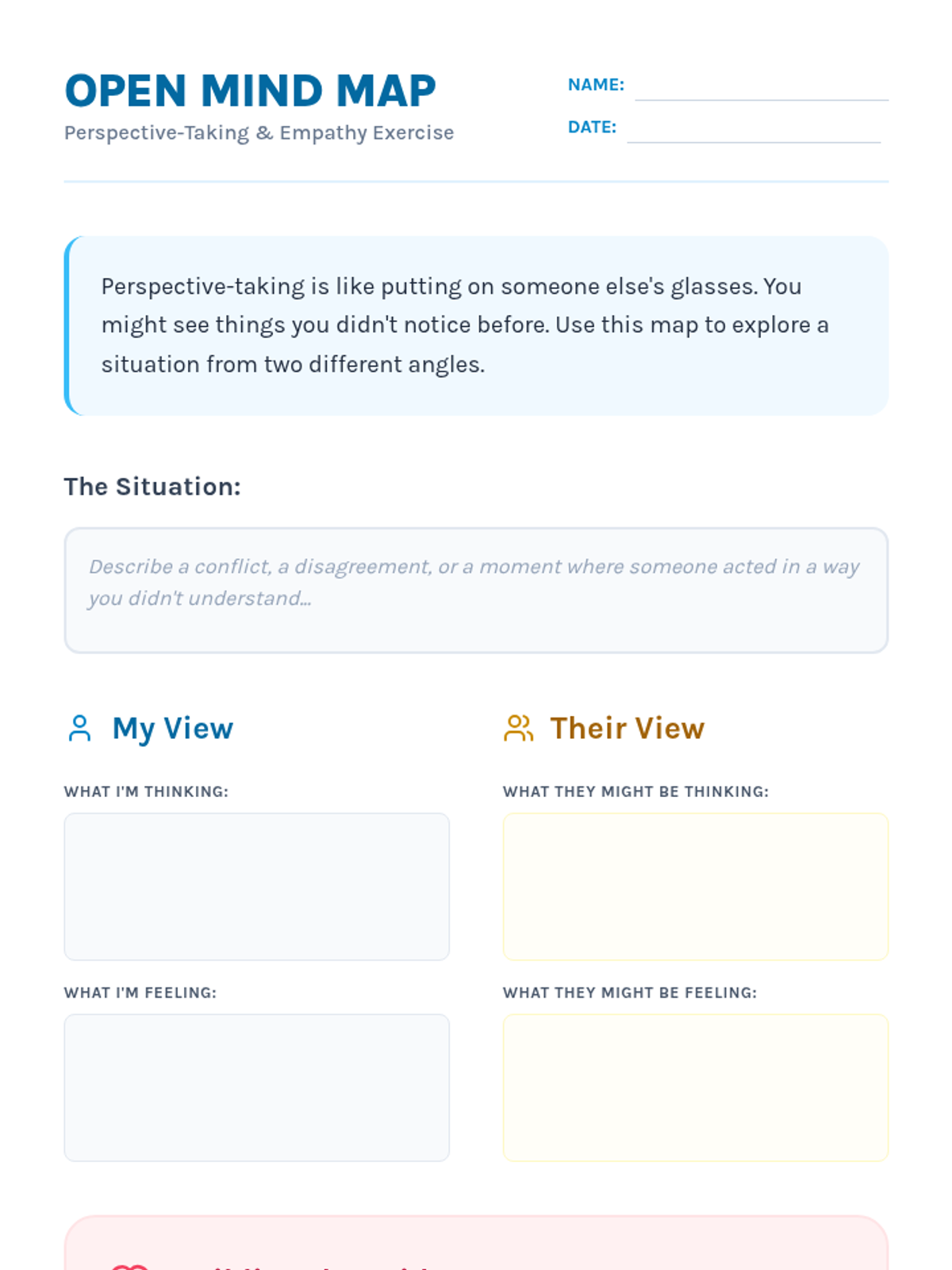
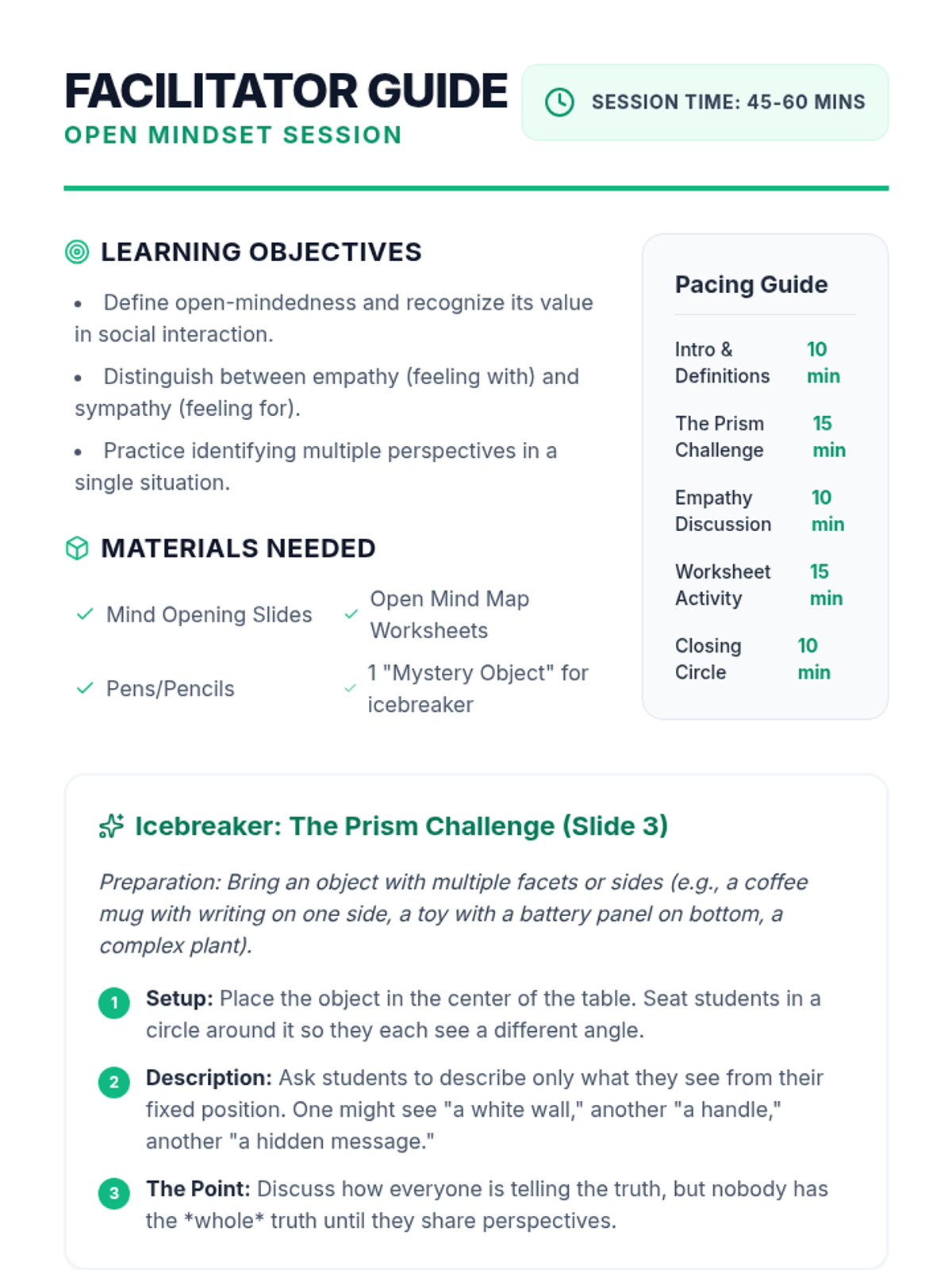
A group counseling session focused on developing empathy and perspective-taking through interactive discussion and creative reflection. Students will explore how different backgrounds and experiences shape how we see the world.
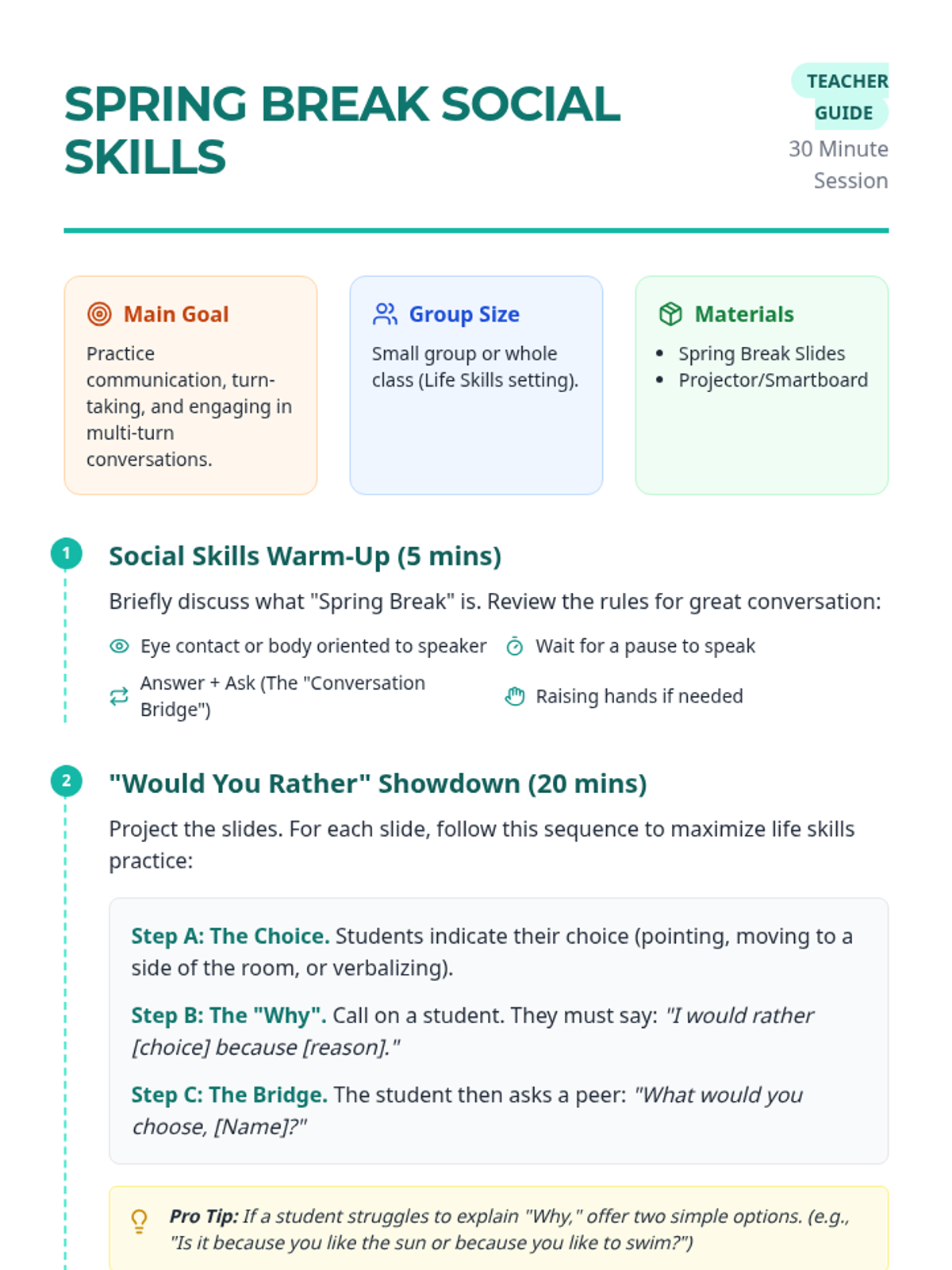
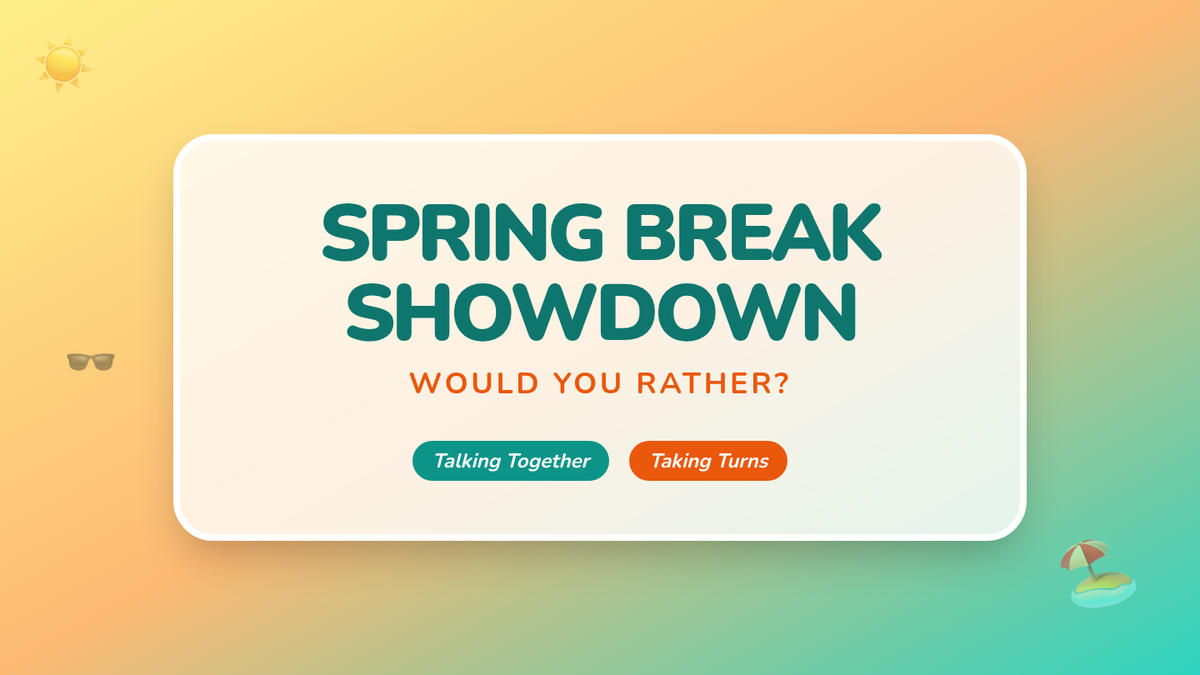
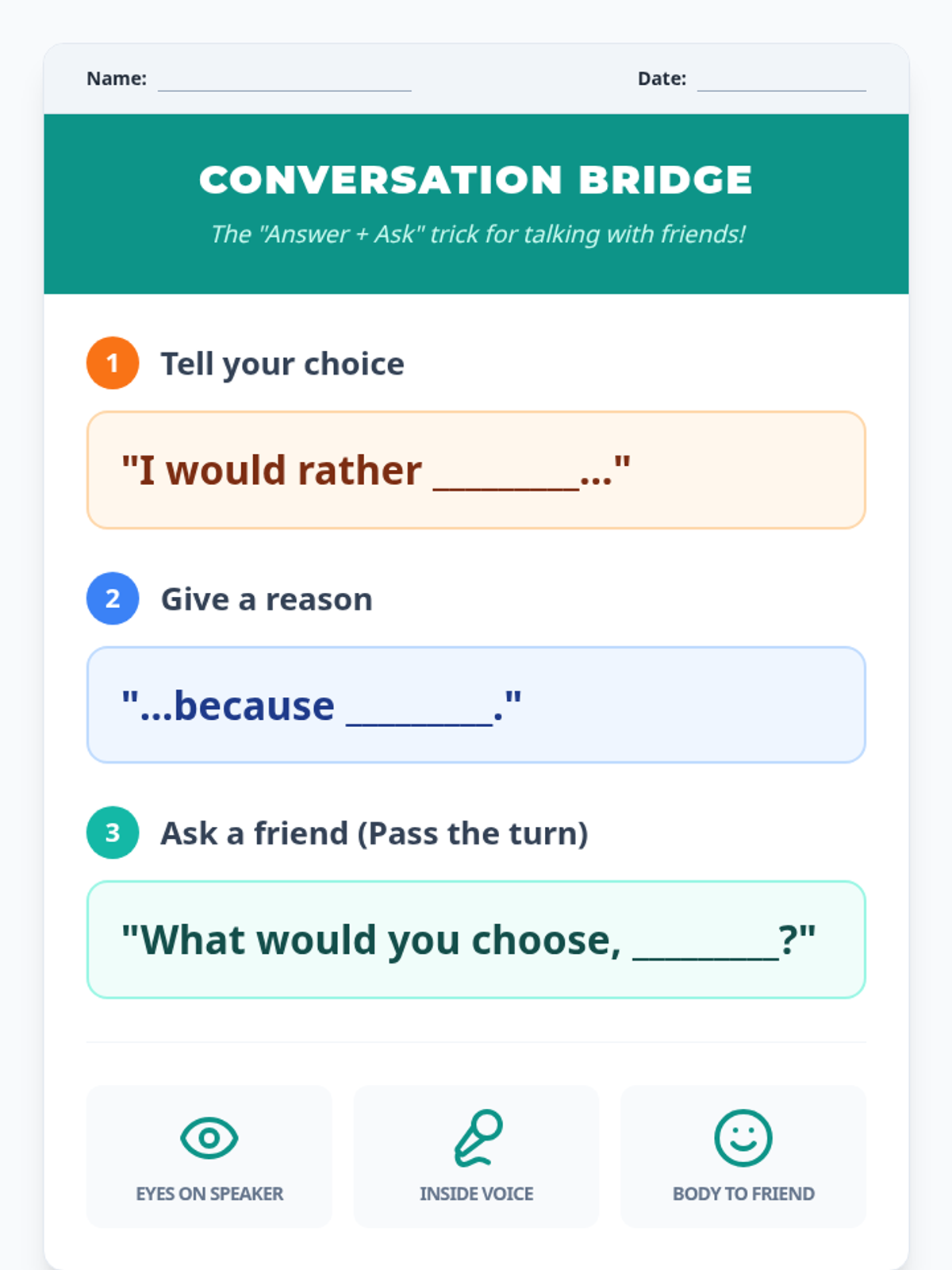
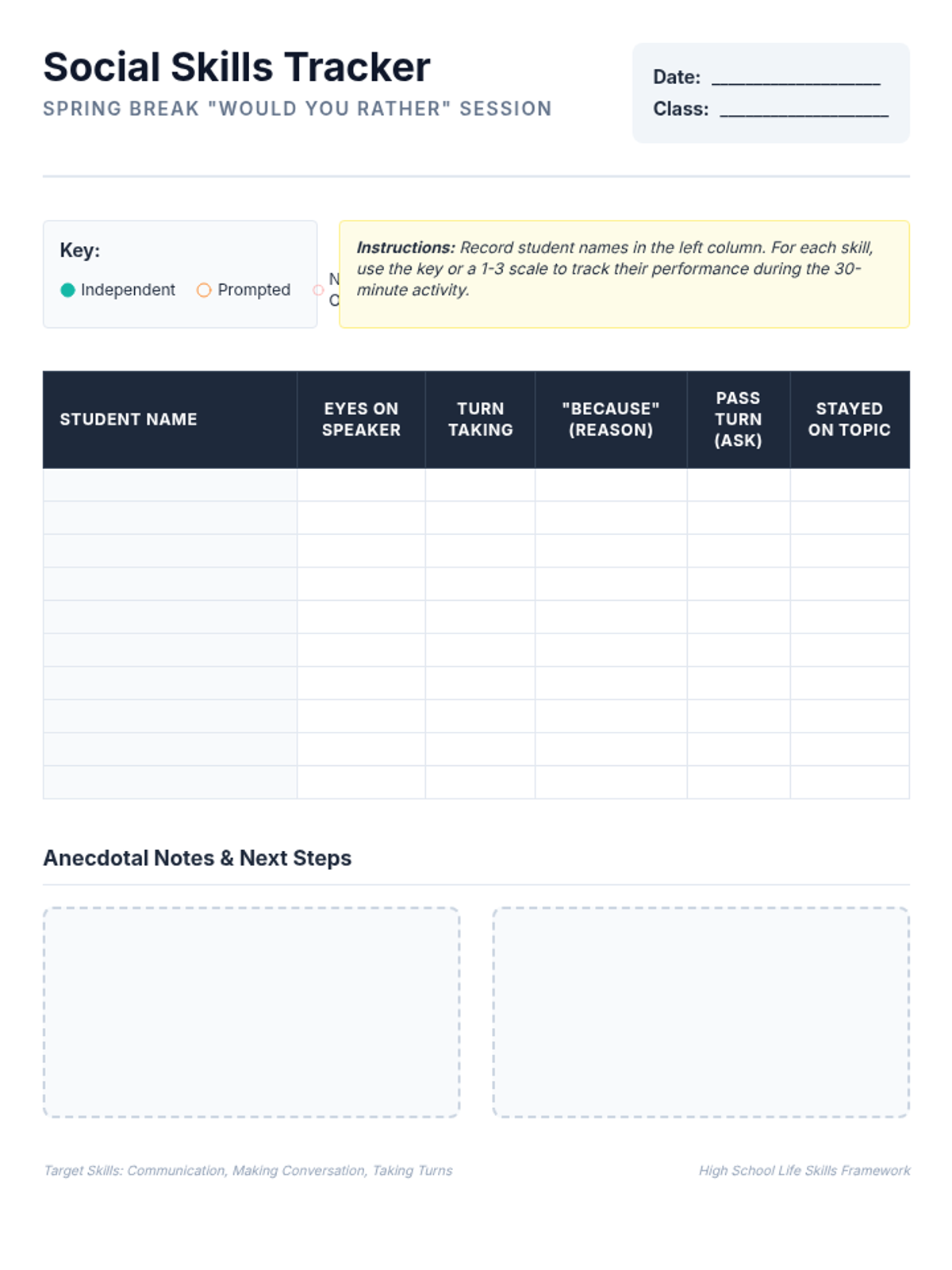
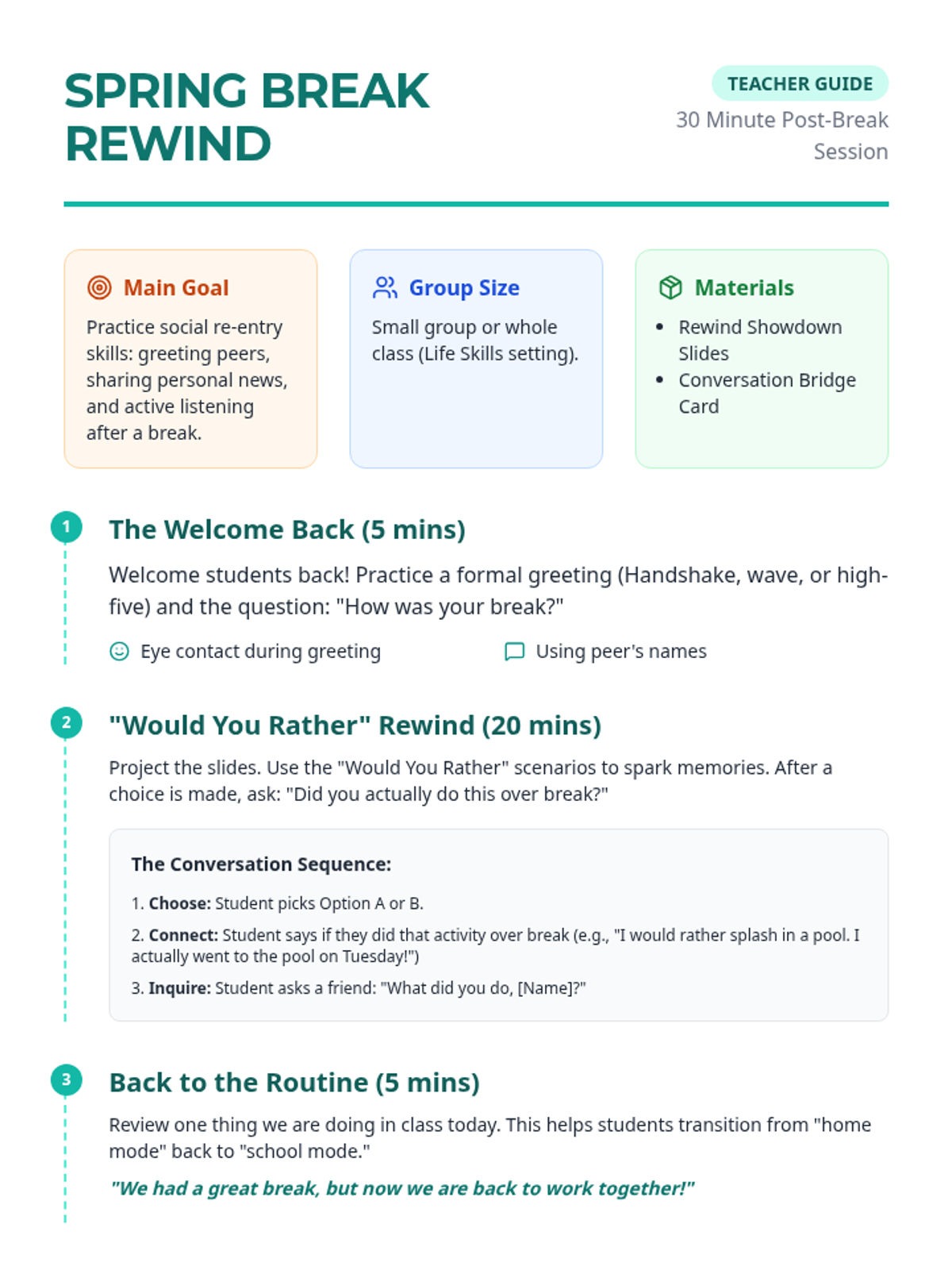
A 30-minute life skills lesson focused on communication, turn-taking, and conversation skills through a fun Spring Break themed 'Would You Rather' activity.
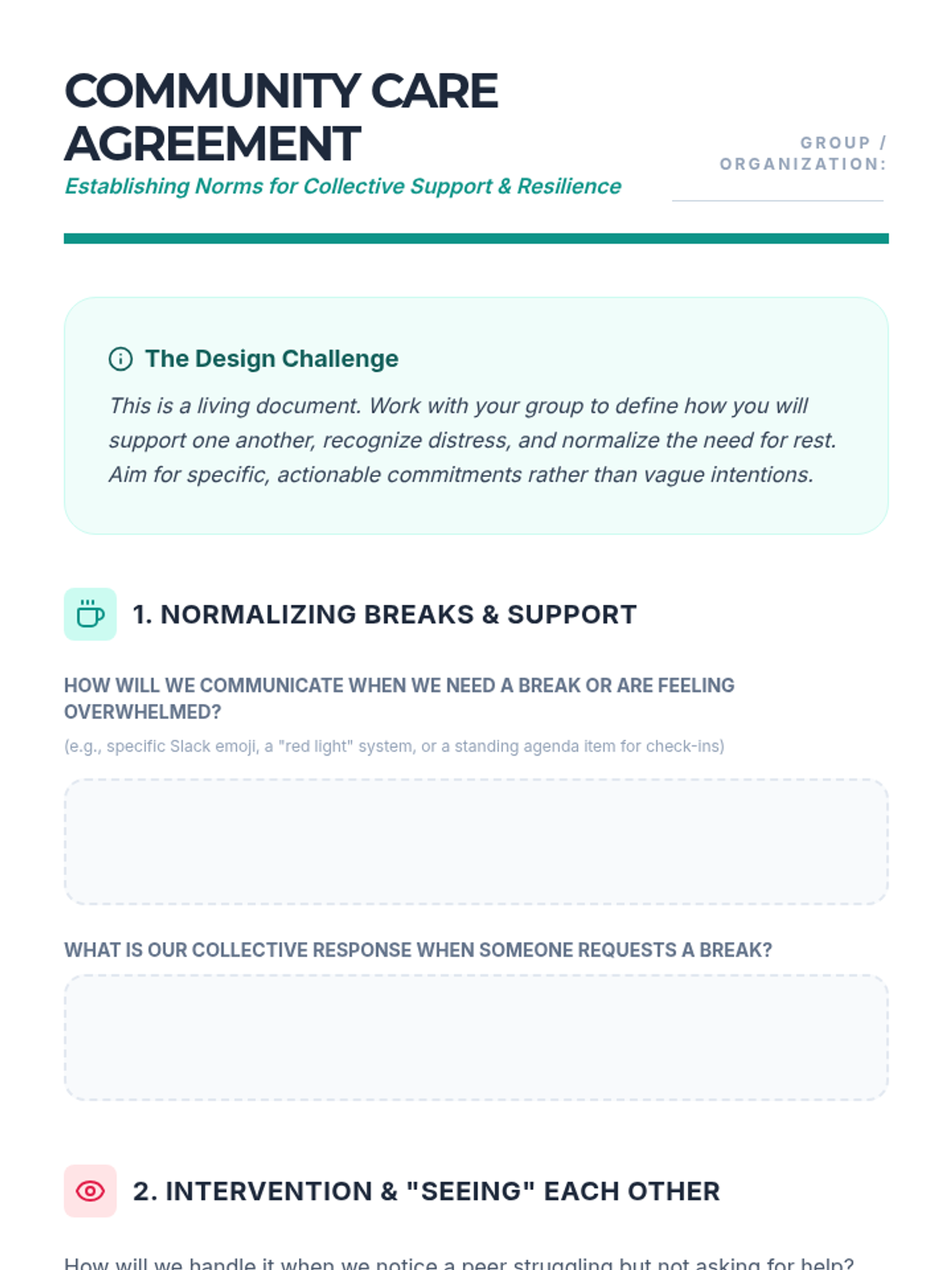
The sequence concludes with students designing a 'Community Care Agreement' to establish norms for mutual support and collective rest in their own communities.
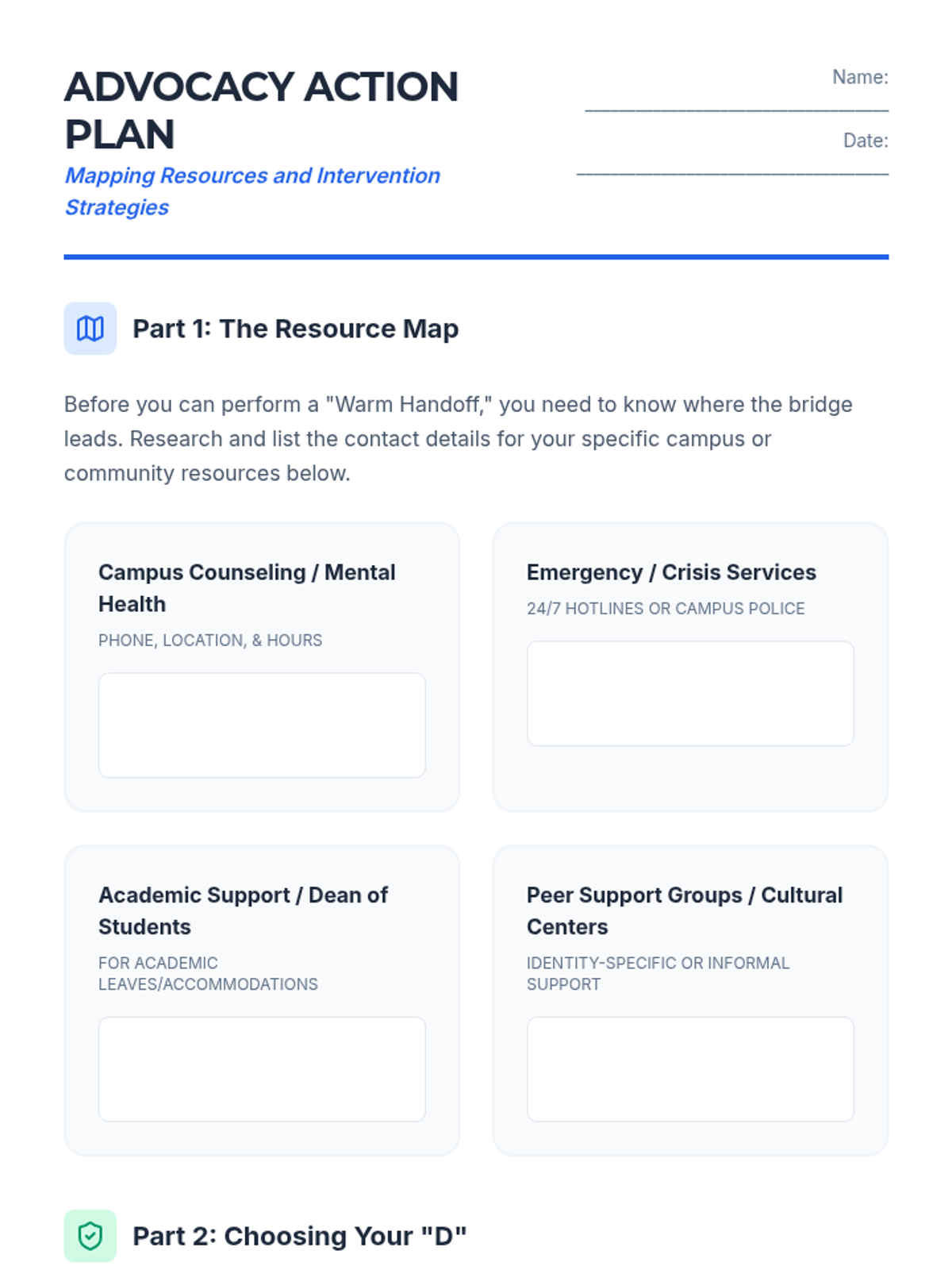
This lesson teaches specific bystander intervention strategies to bridge the gap between noticing distress and connecting a peer to resources.
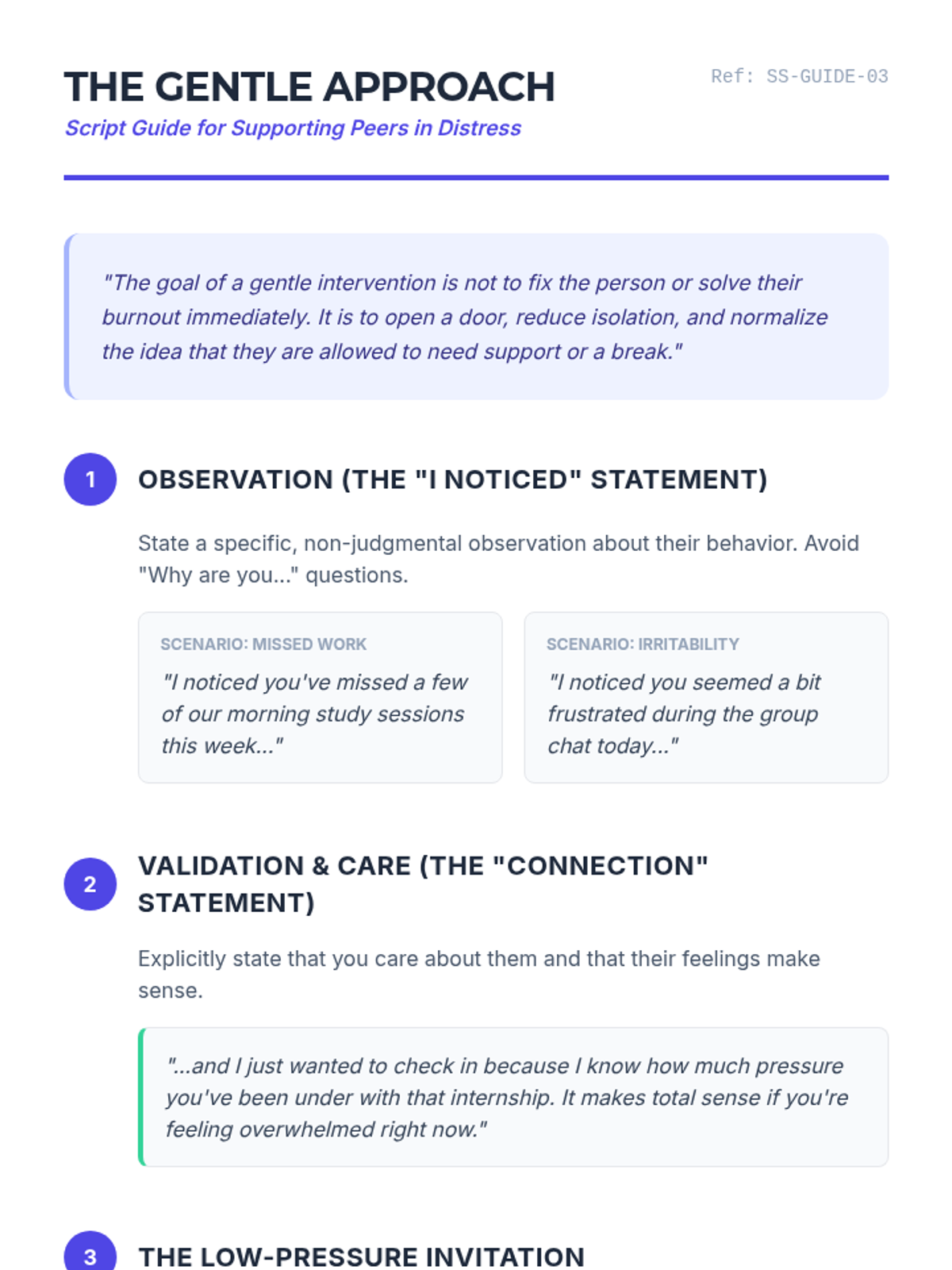
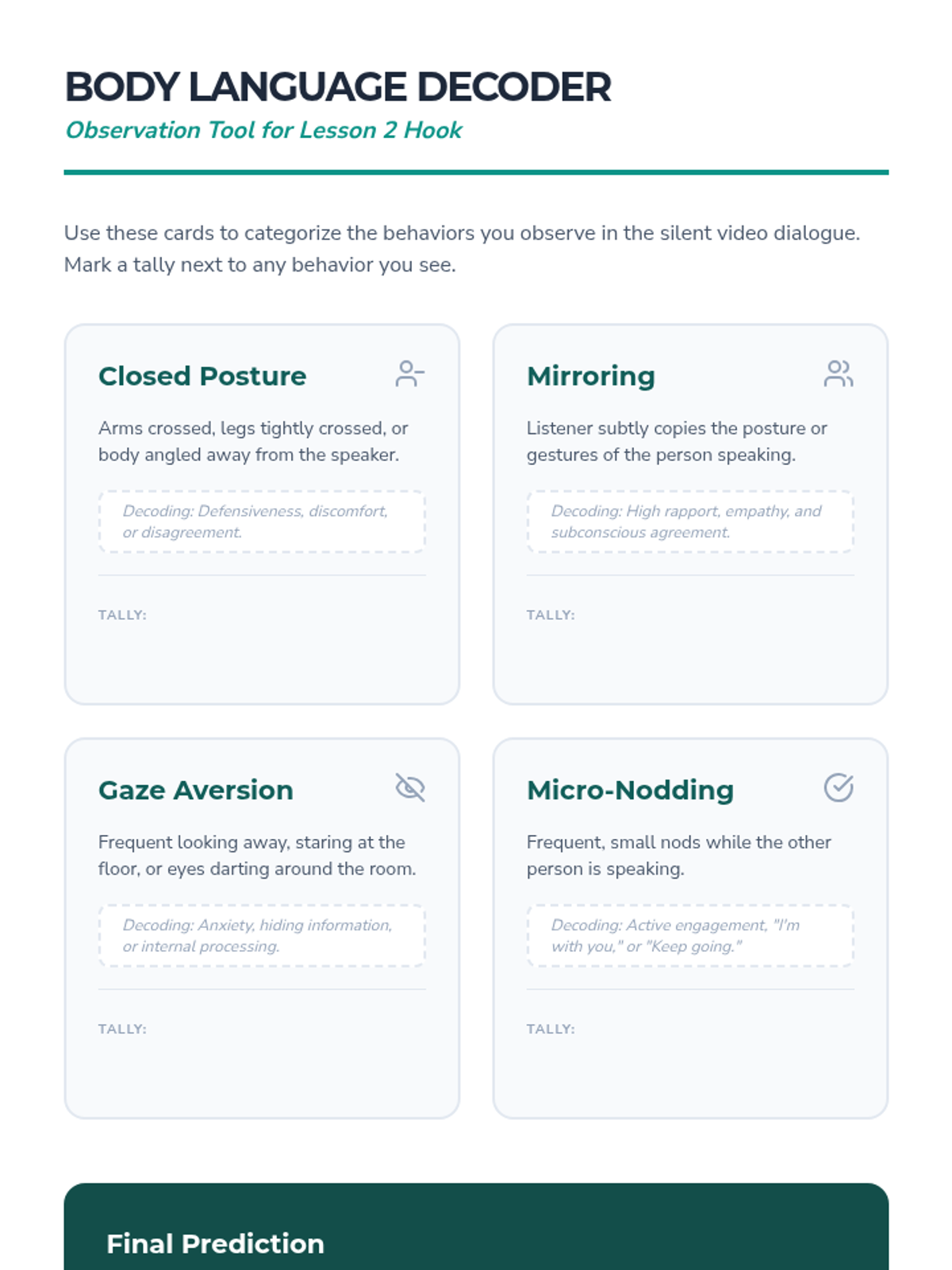
Students learn to identify subtle behavioral and non-verbal signs of distress in their peers and practice gentle intervention strategies.
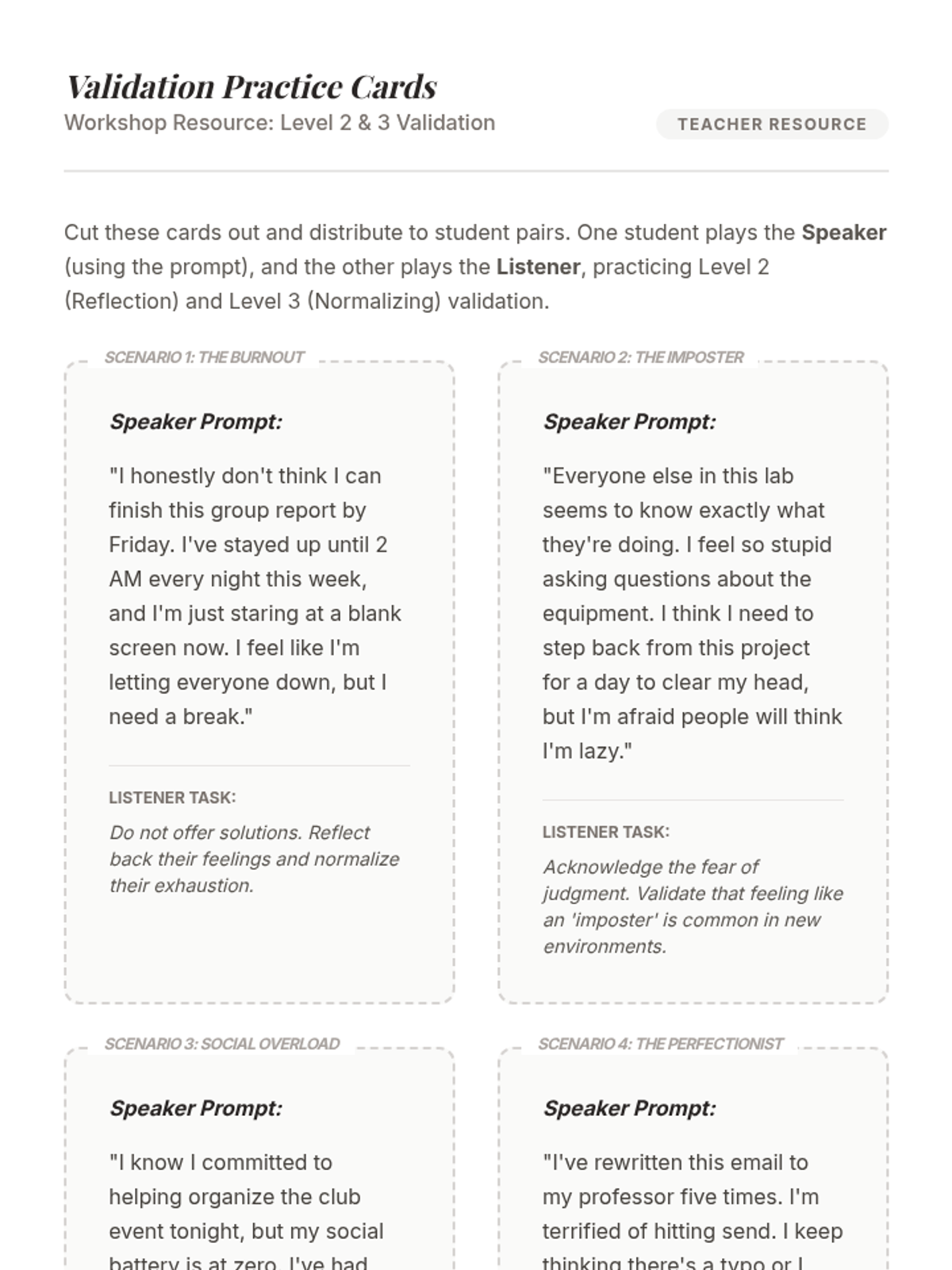
A workshop focusing on the listening skills required to support peers, emphasizing validation over immediate problem-solving.
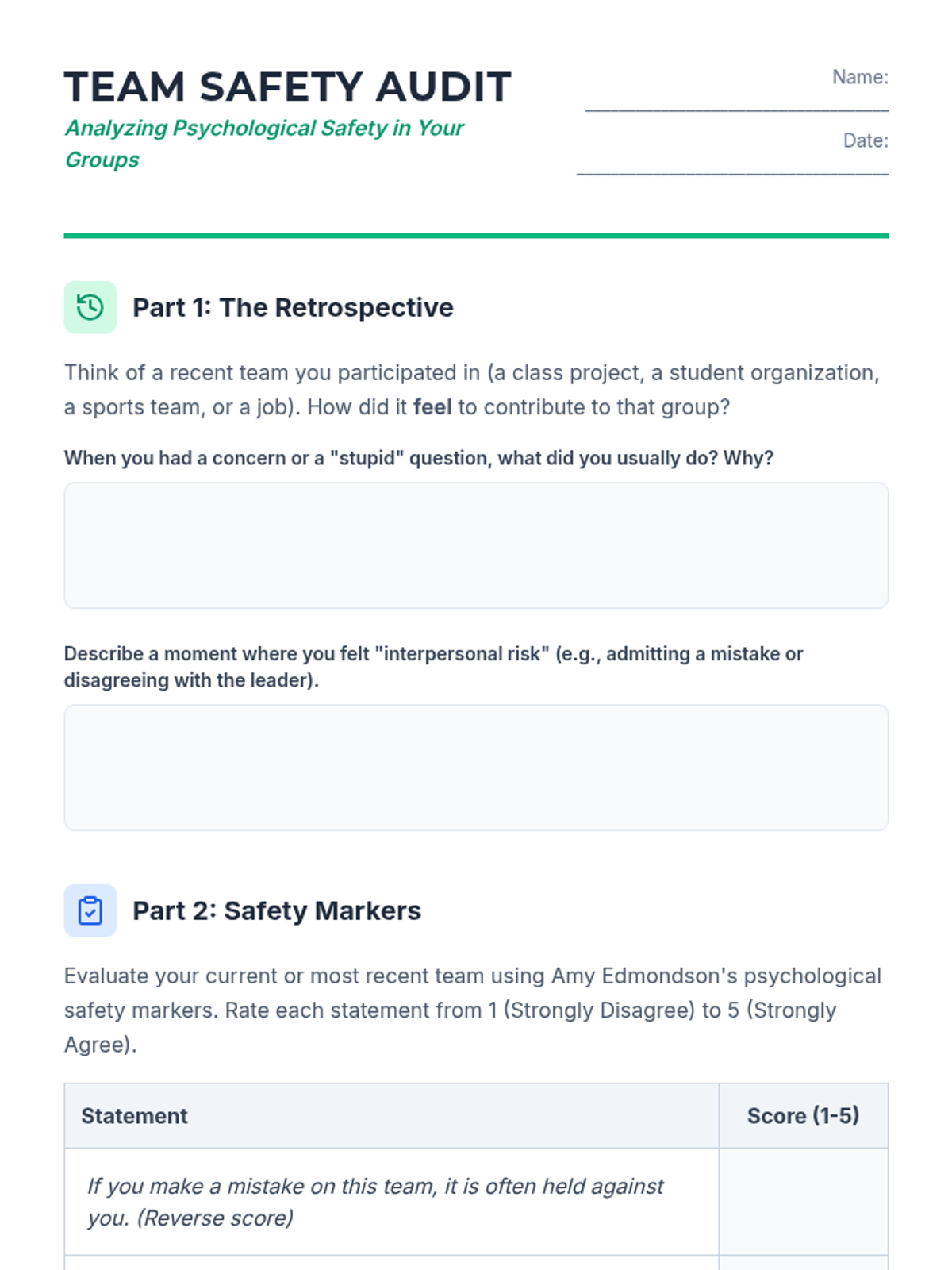
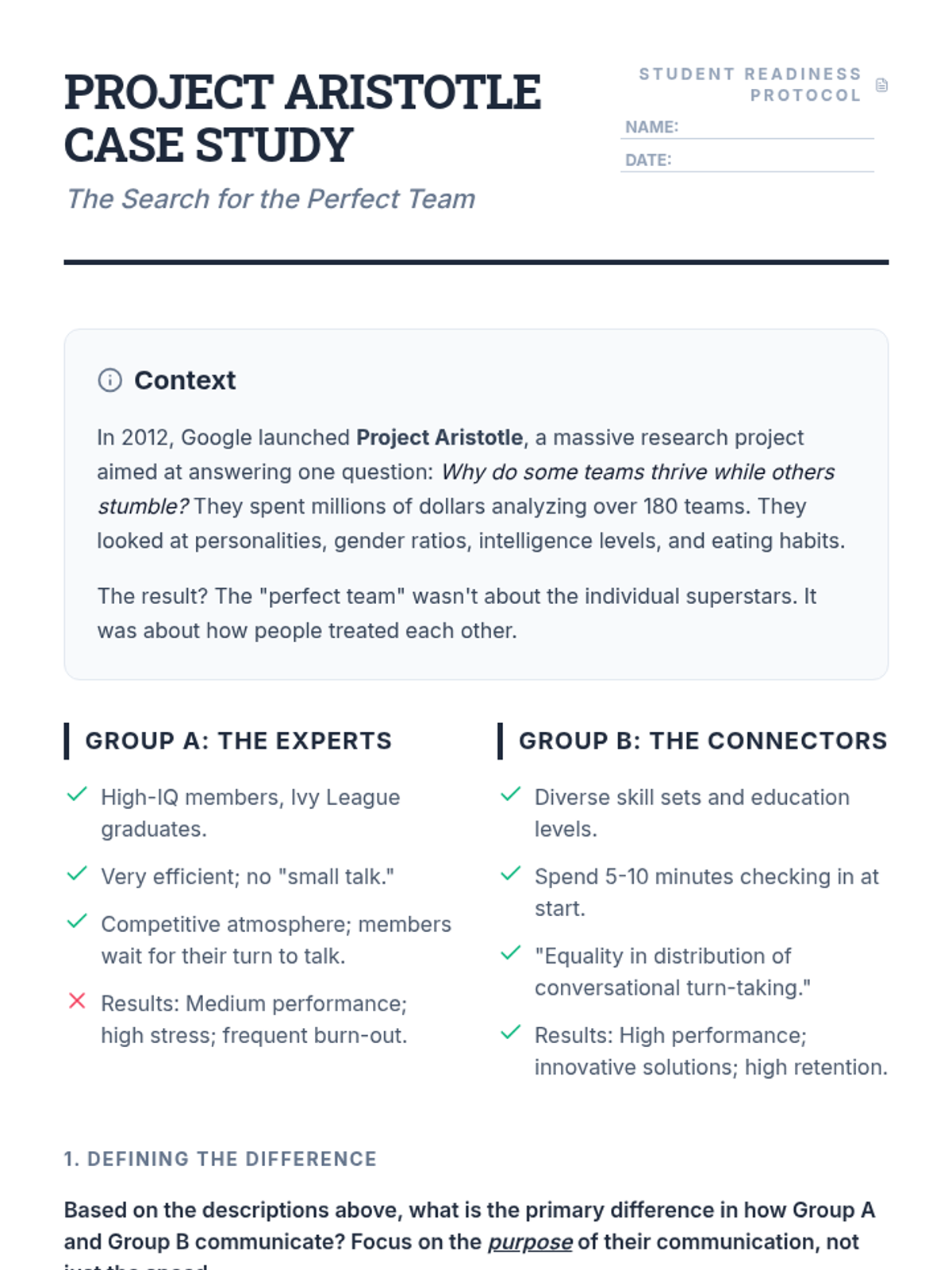
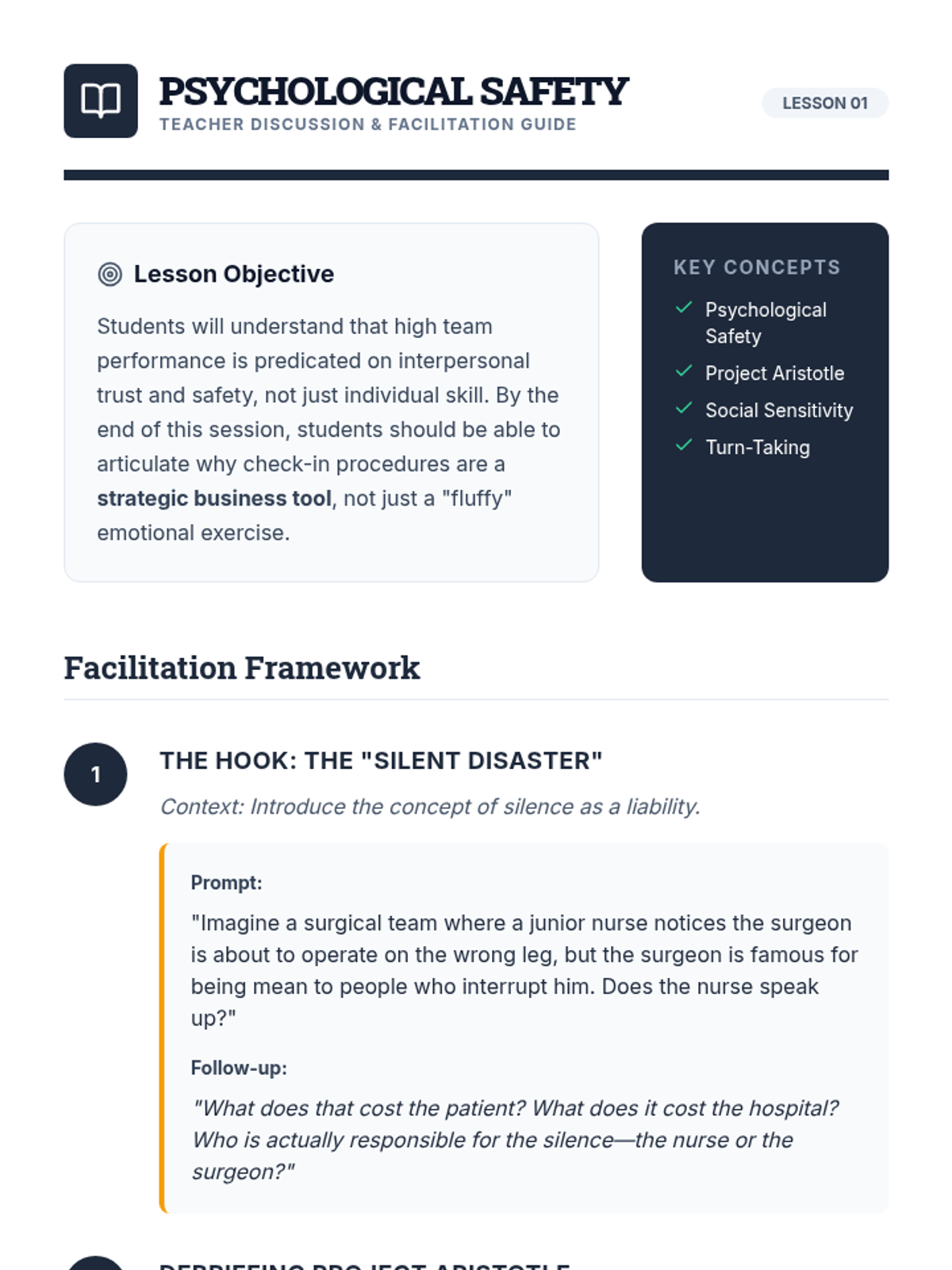
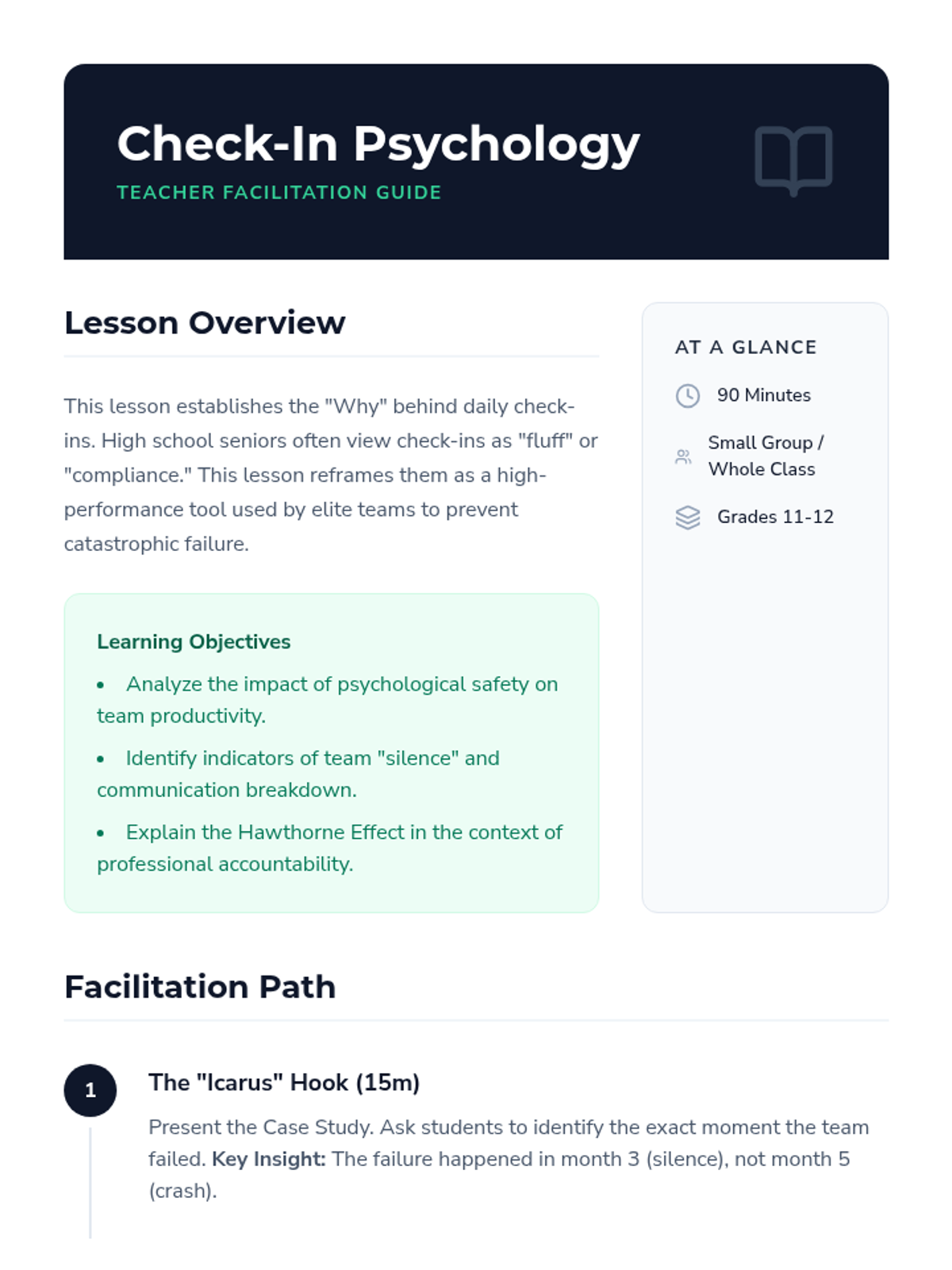
Students define psychological safety and analyze its impact on team performance, using Google's 'Project Aristotle' as a primary case study.
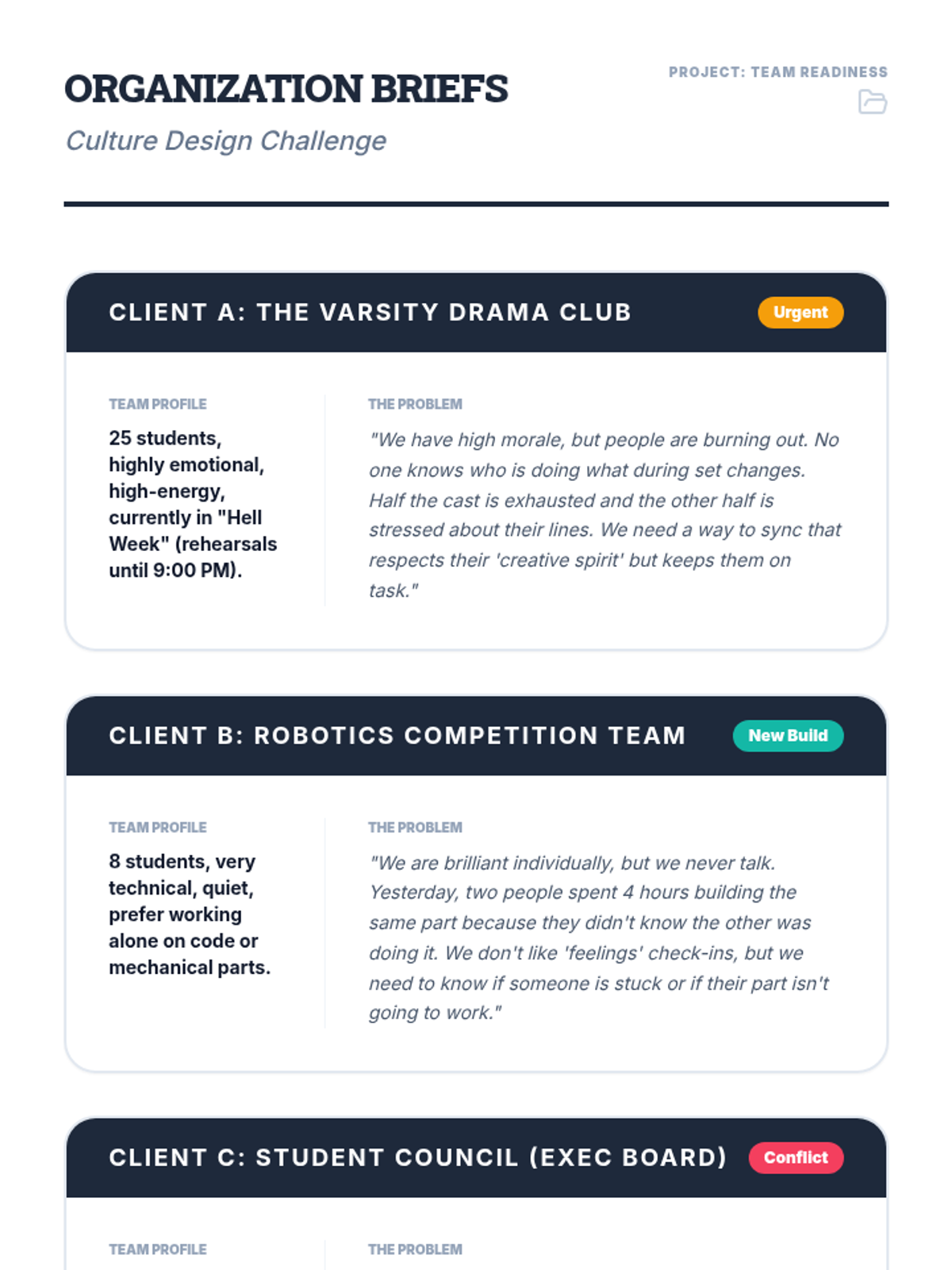
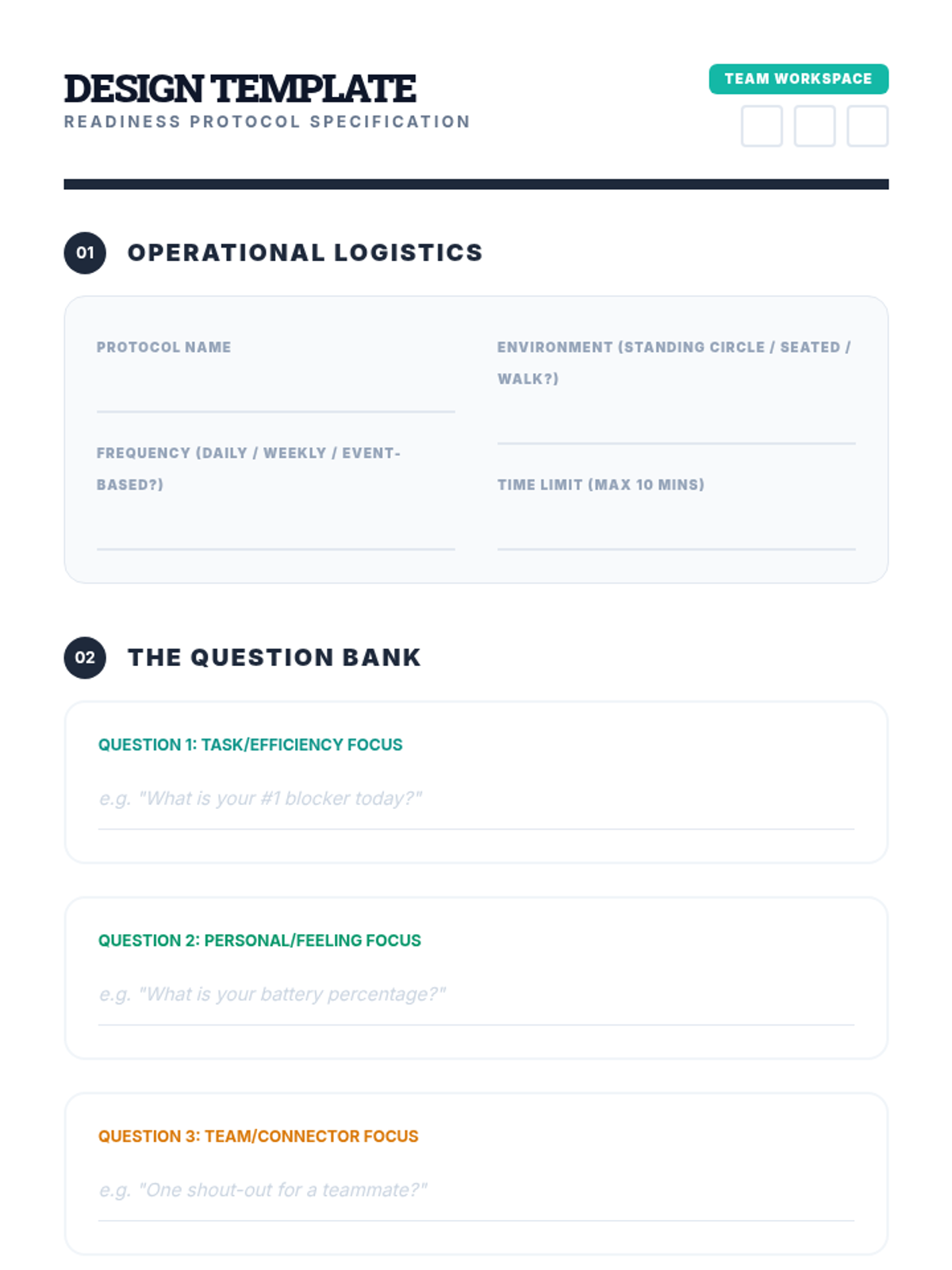
In this culminating project, students work in small groups to design a comprehensive check-in system for a specific student organization (e.g., Student Council, Football Team, Drama Club). They pitch their protocol, explaining how it fits the specific culture and needs of that group while ensuring emotional support.
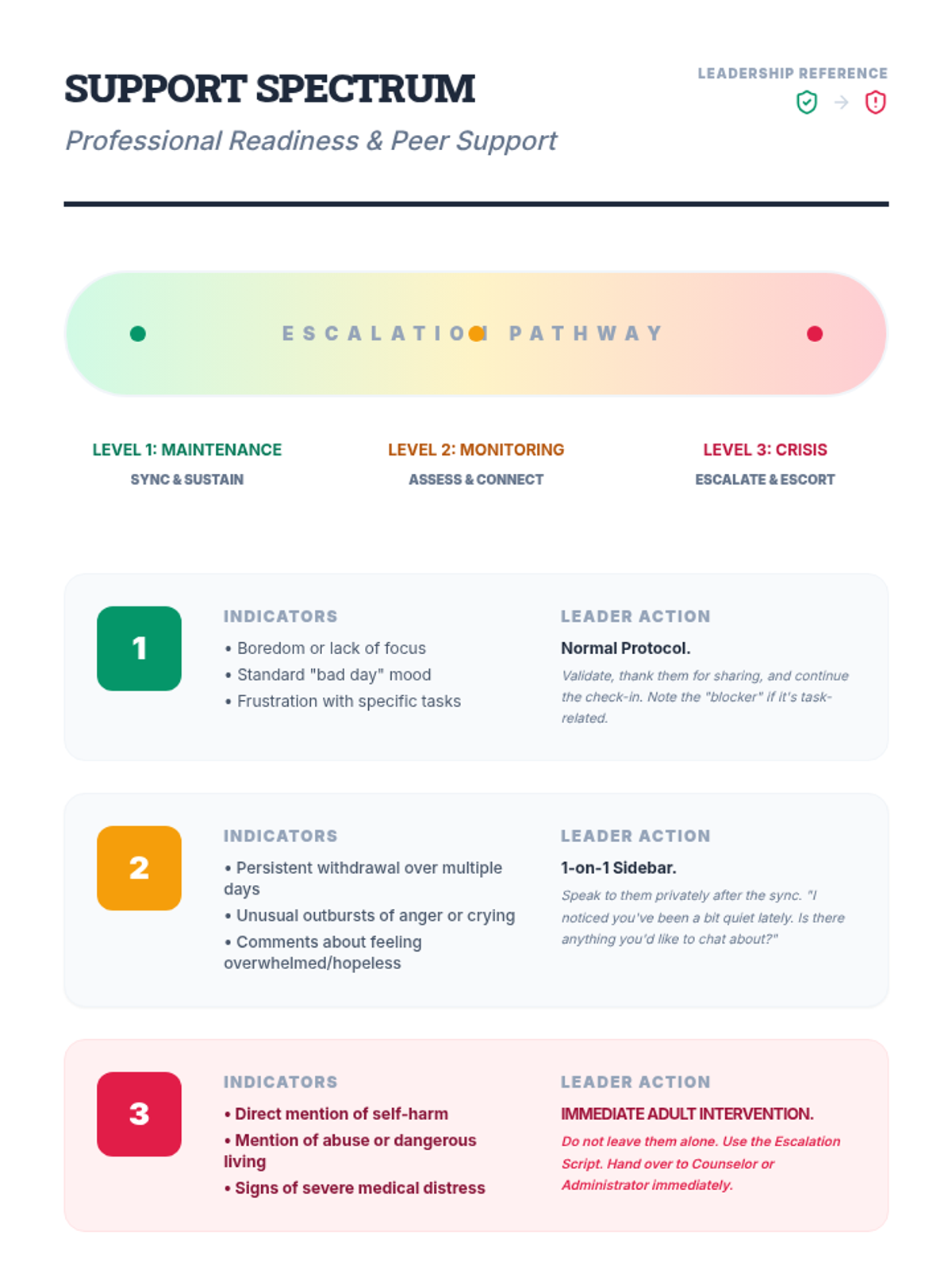
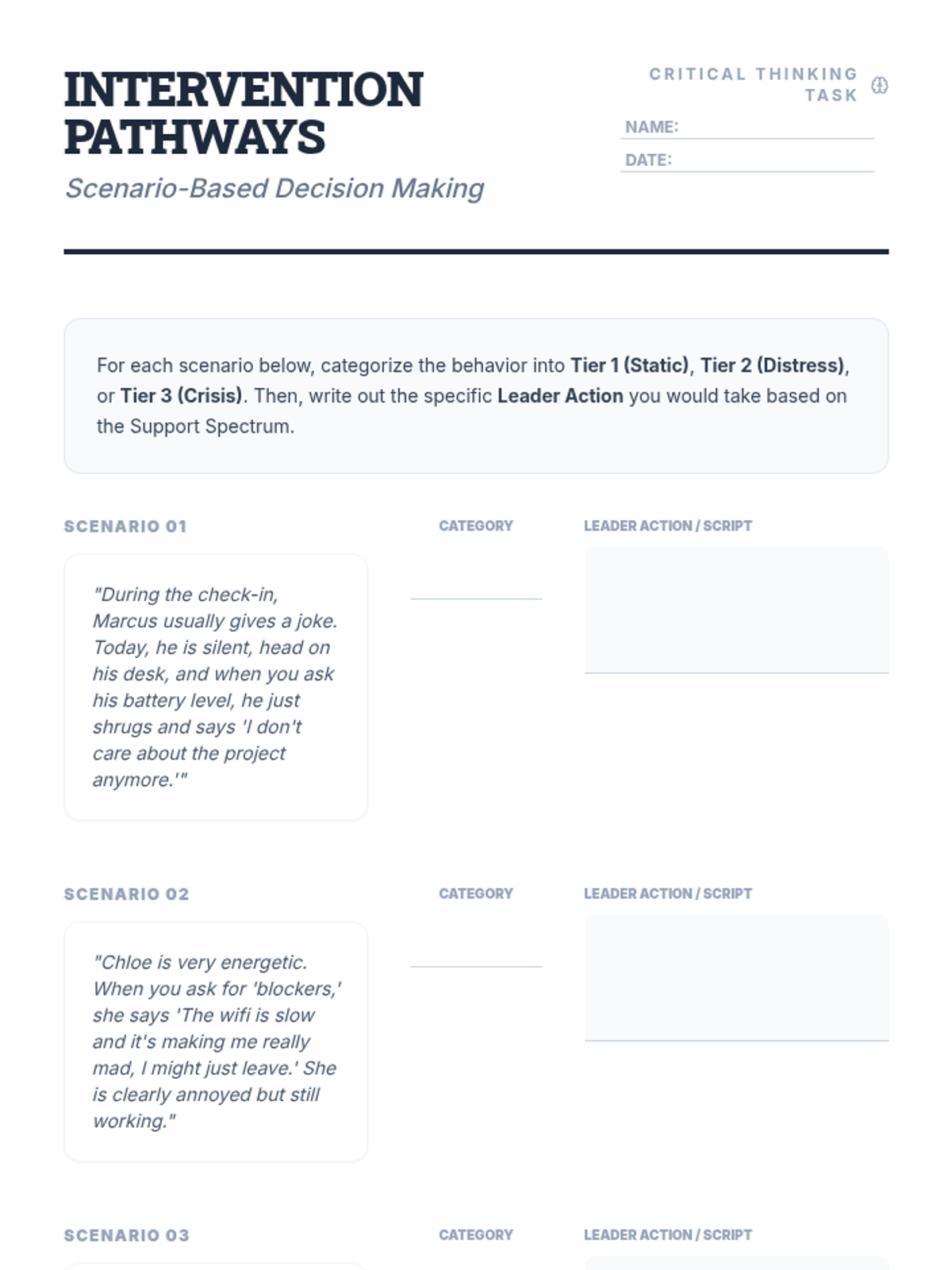
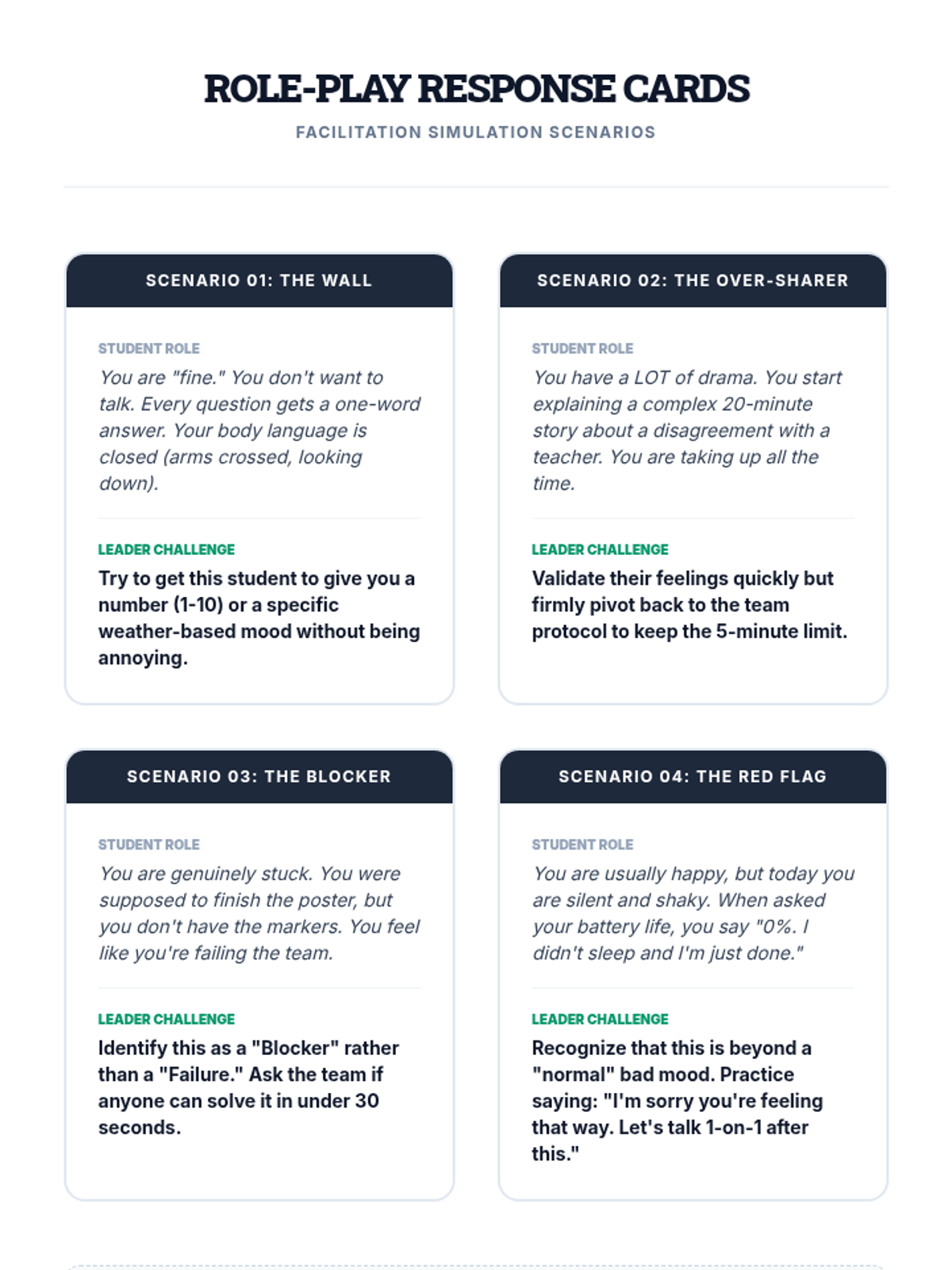
Students learn how to recognize behavioral indicators that require escalation or support beyond a simple check-in. They study the difference between a bad mood and a crisis, learning professional boundaries and the appropriate pathways for referring a peer to a counselor or administrator.
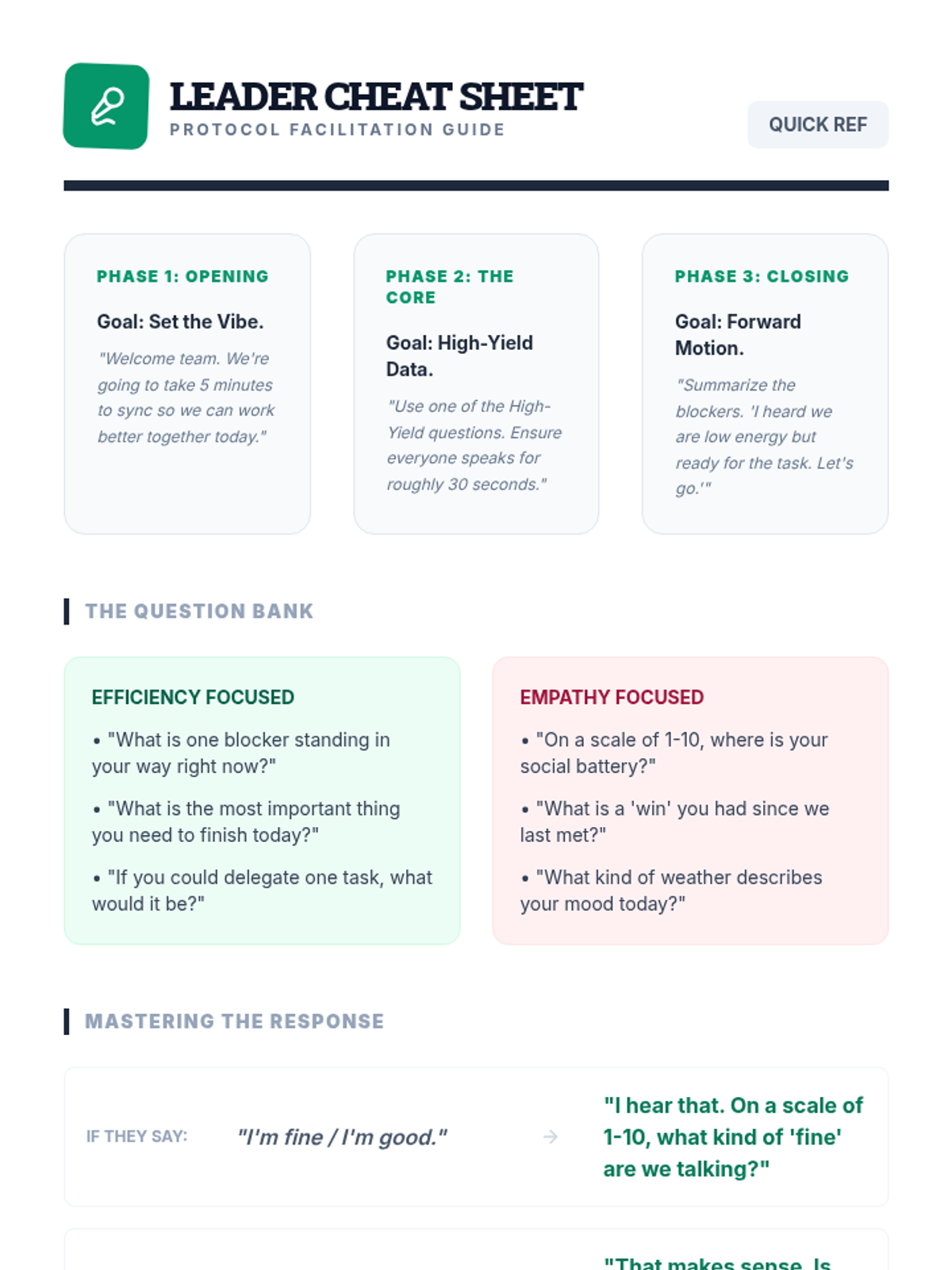
Focusing on leadership, this lesson teaches students how to lead a check-in routine. They learn specific questioning techniques that encourage honesty without overstepping boundaries, and practice active listening skills to validate peers' feelings without necessarily trying to 'fix' them immediately.
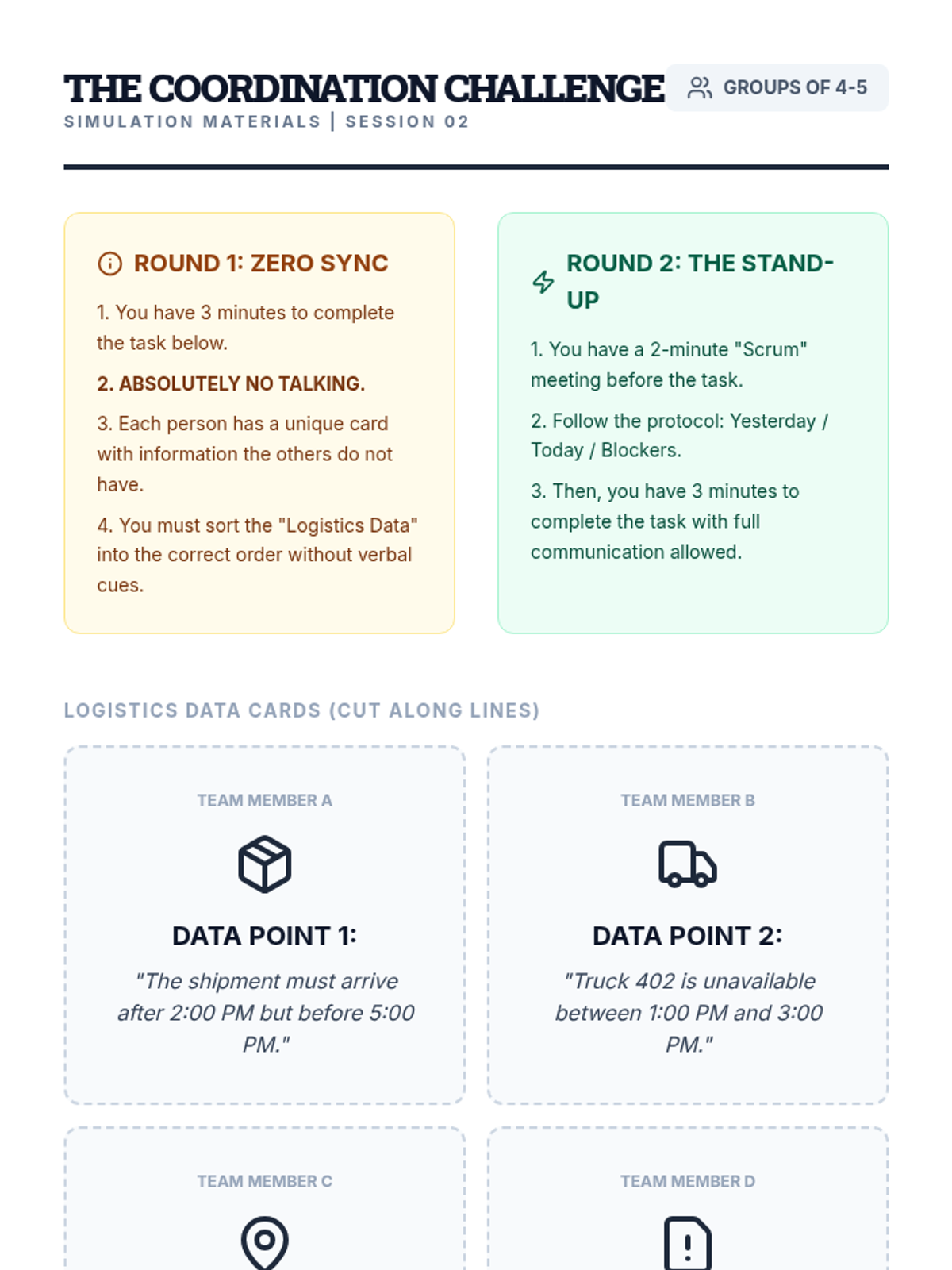
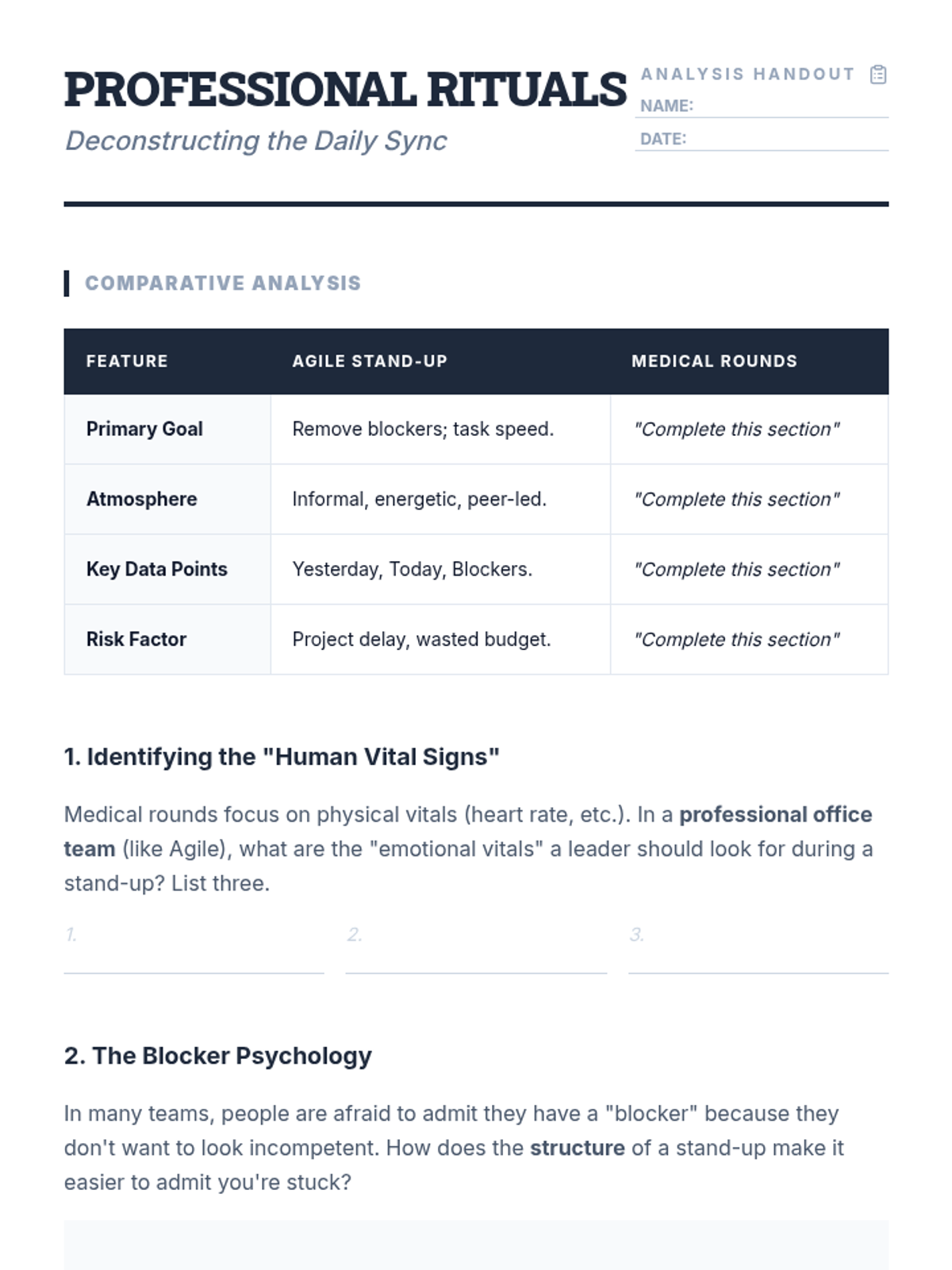
Students examine real-world check-in models, specifically the 'Scrum' or 'Agile' stand-up meeting and medical rounds. They deconstruct these rituals to understand how they balance efficiency (time limits) with human connection (emotional state assessment) and obstacle identification.
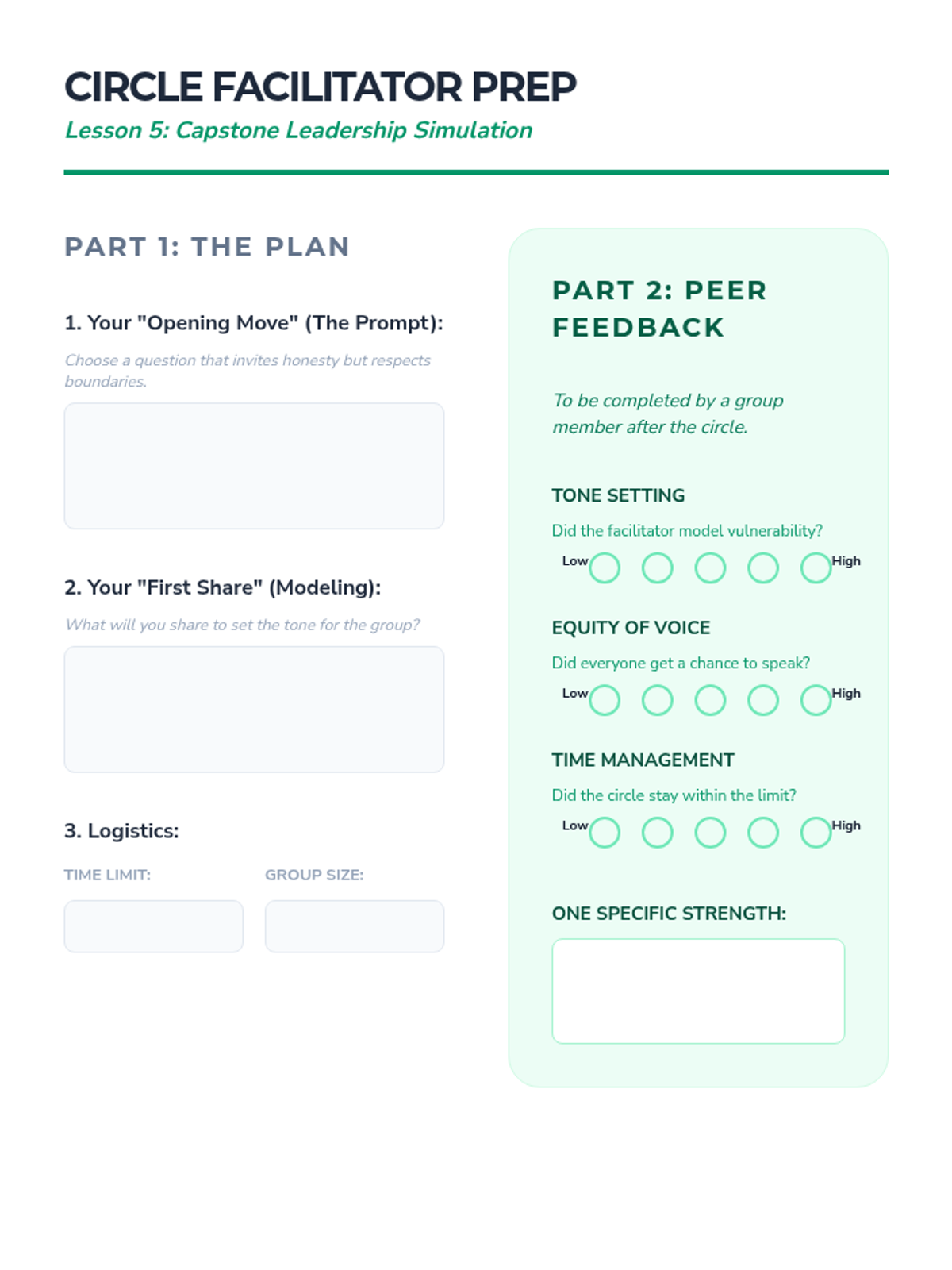
Students take turns leading a structured group check-in, applying all learned skills to manage time, ensure equity of voice, and set the tone. Afterwards, the class debriefs the effectiveness of the facilitation. This final step solidifies their role as leaders capable of maintaining group behavioral health.
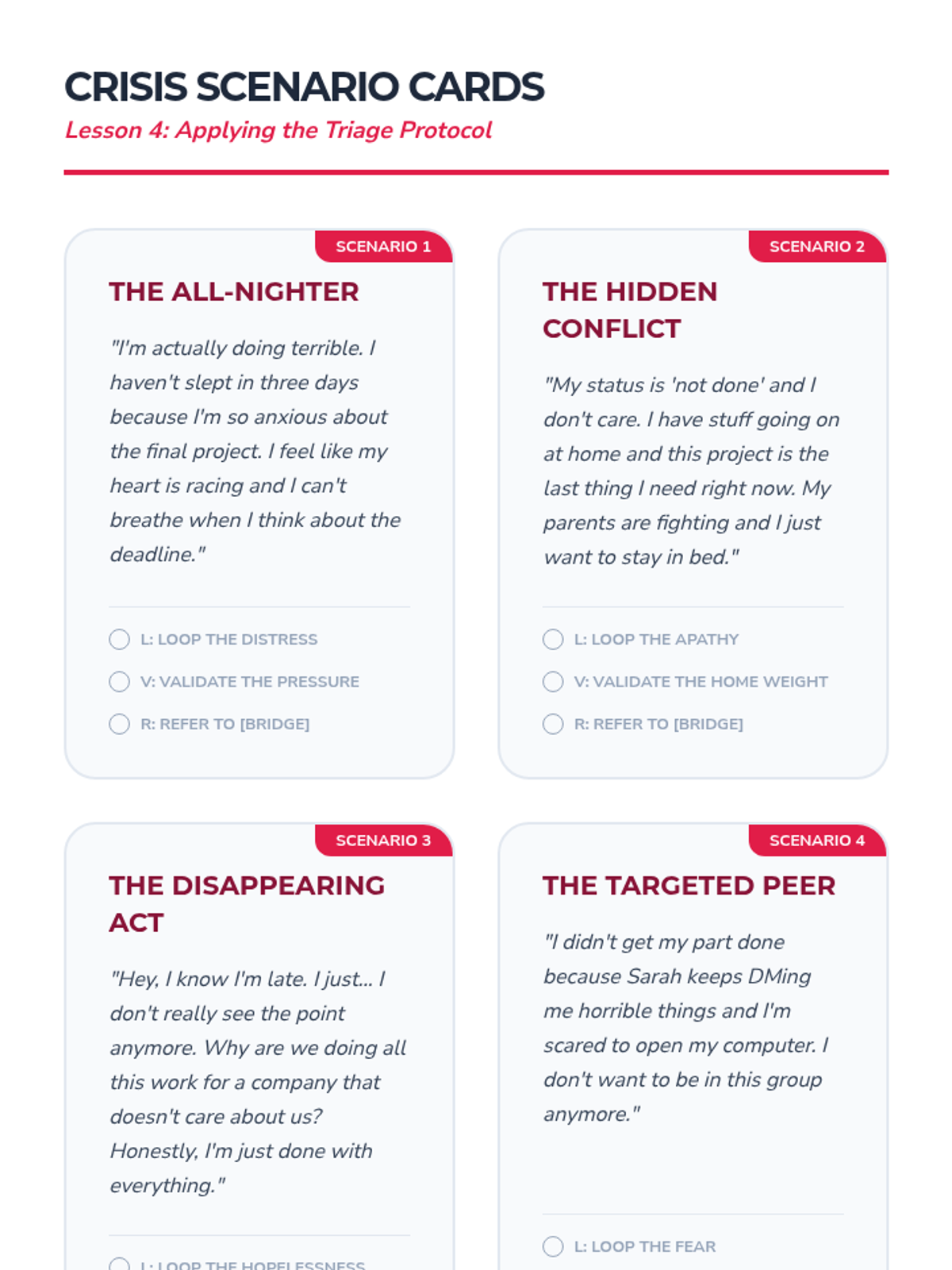
This lesson addresses what to do when a peer's check-in reveals a serious issue or barrier. Students learn the 'Triage Protocol': listen, validate, and refer. They practice scenarios involving distressed peers, focusing on the boundary between being a supportive colleague and an untrained counselor.
Students investigate the concept of psychological safety and its role in team success, analyzing case studies from Google's Project Aristotle. They discuss how daily check-ins serve as a mechanism for establishing the trust required for risk-taking and error reporting in a group setting.
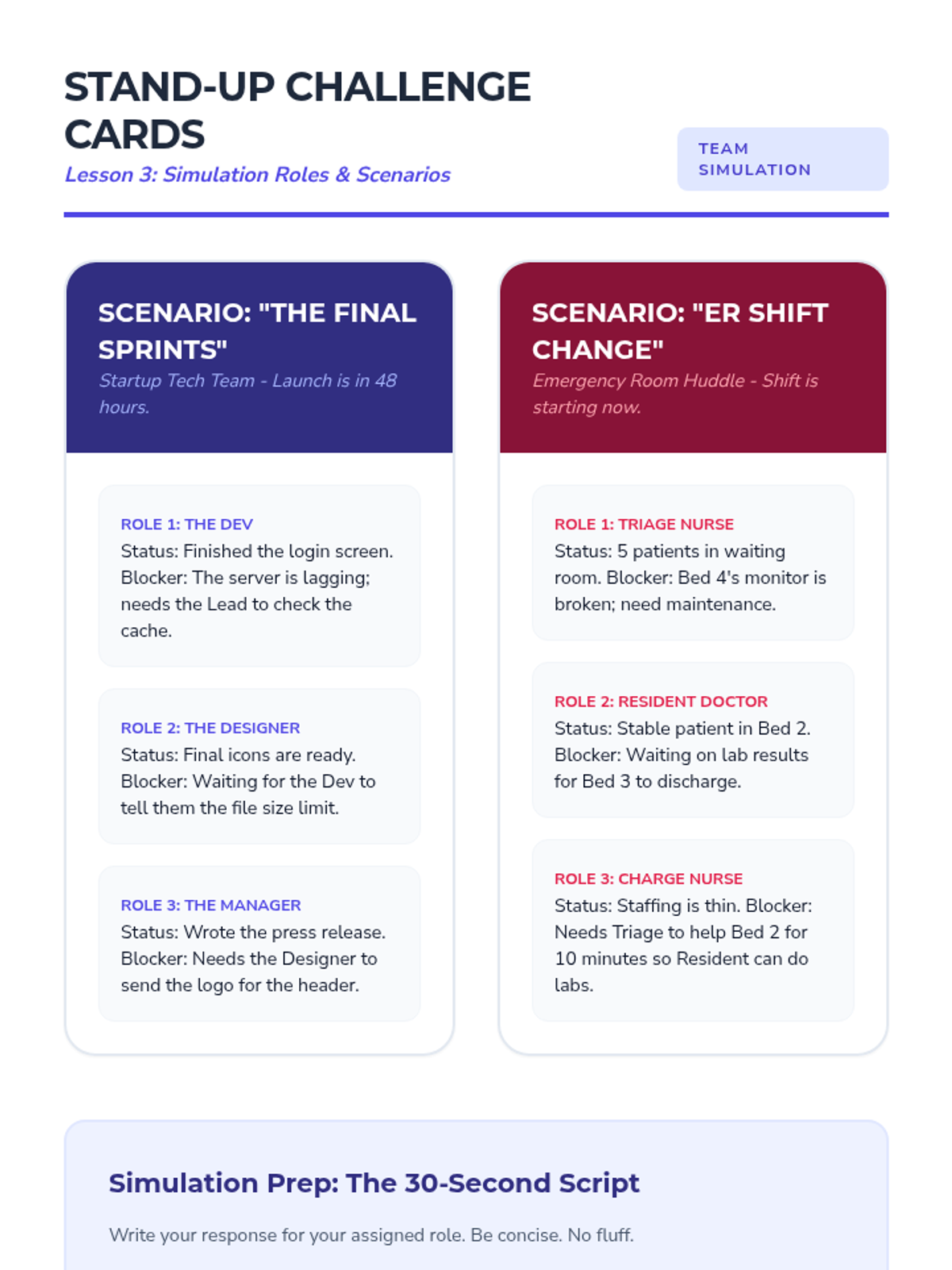
Students examine specific professional frameworks like the Agile 'Stand-Up' or medical 'Rounds' to understand efficiency in check-ins. They simulate these brief, high-stakes meetings to practice delivering concise updates on status and blockers.
Focusing on the role of the listener during a check-in, this lesson trains students to identify subtext and non-verbal cues indicating distress or disengagement. Students practice 'looping' (reflecting back what was heard) and asking open-ended follow-up questions.
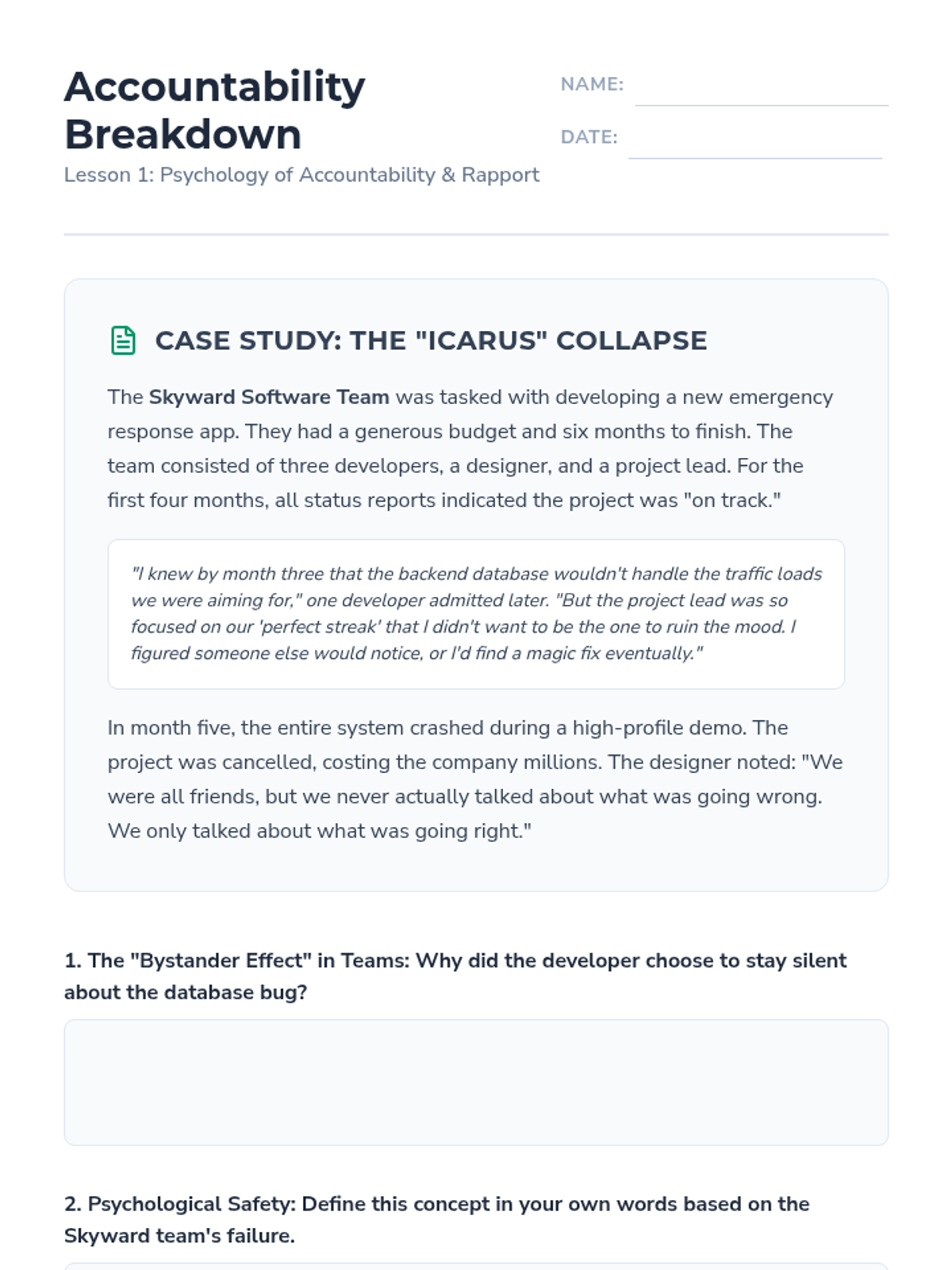
Students analyze the psychology of accountability and how rapport functions as a lubricant for team productivity. They examine case studies of team failures to identify where check-in routines could have intervened.
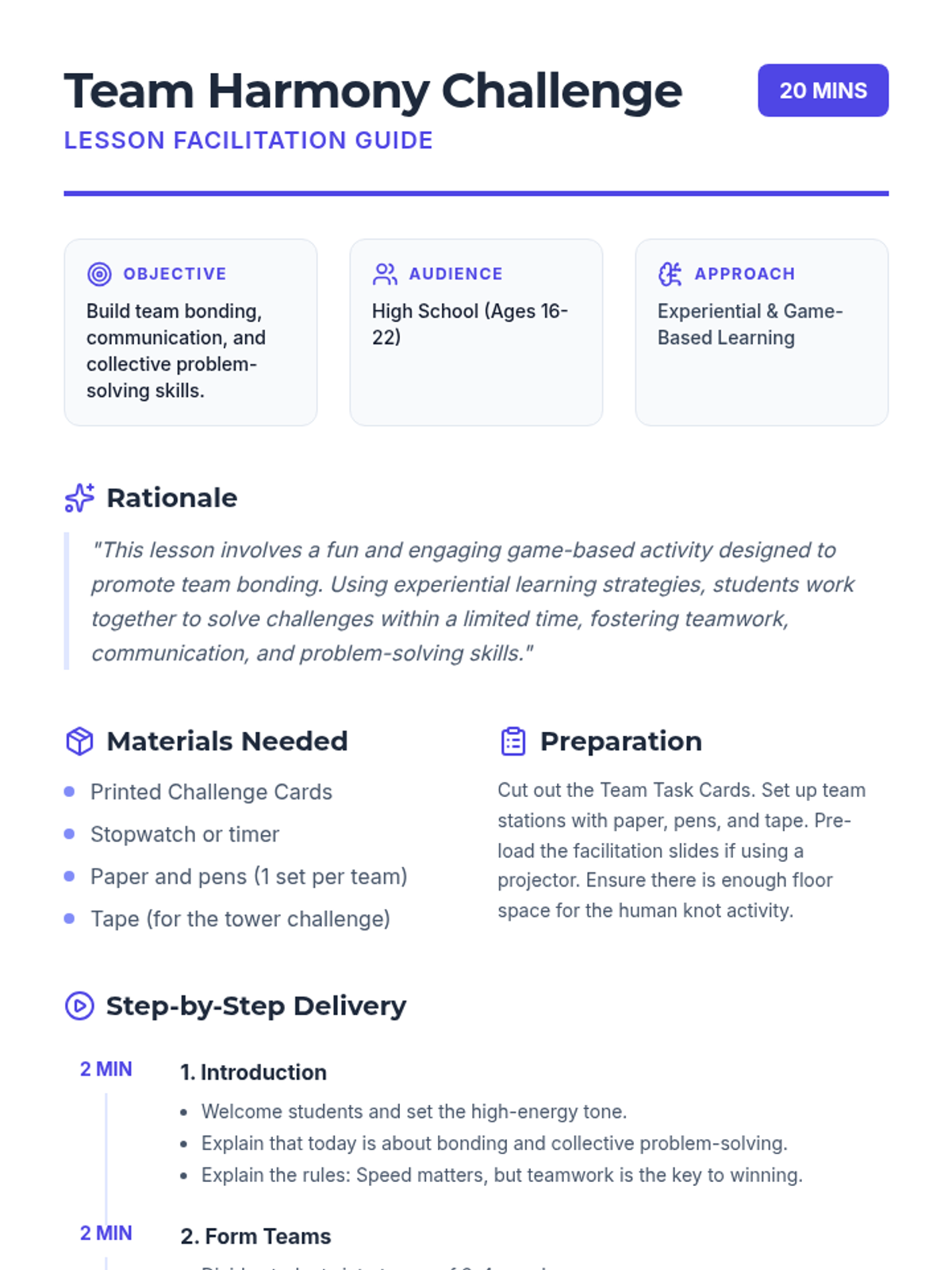
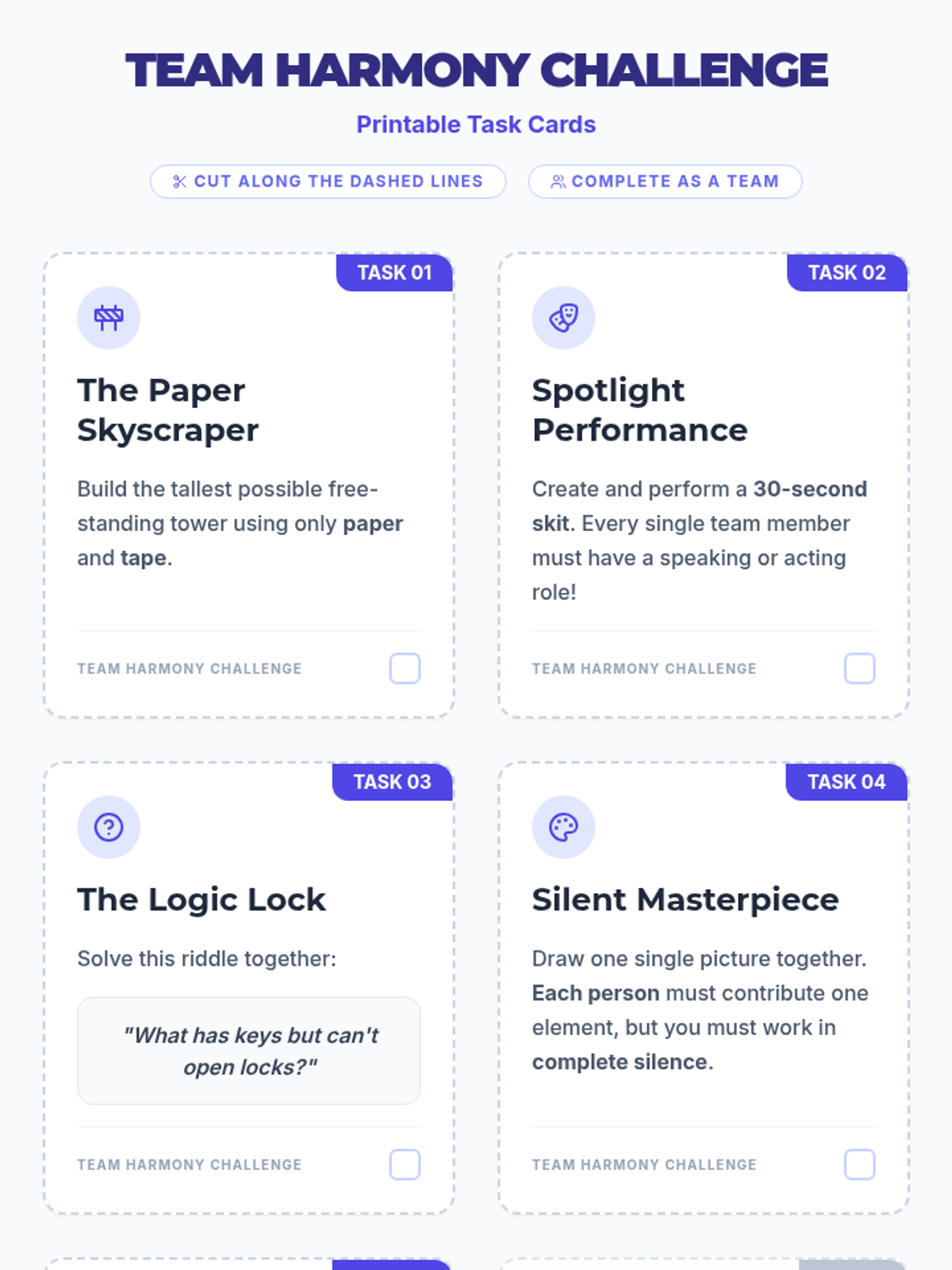
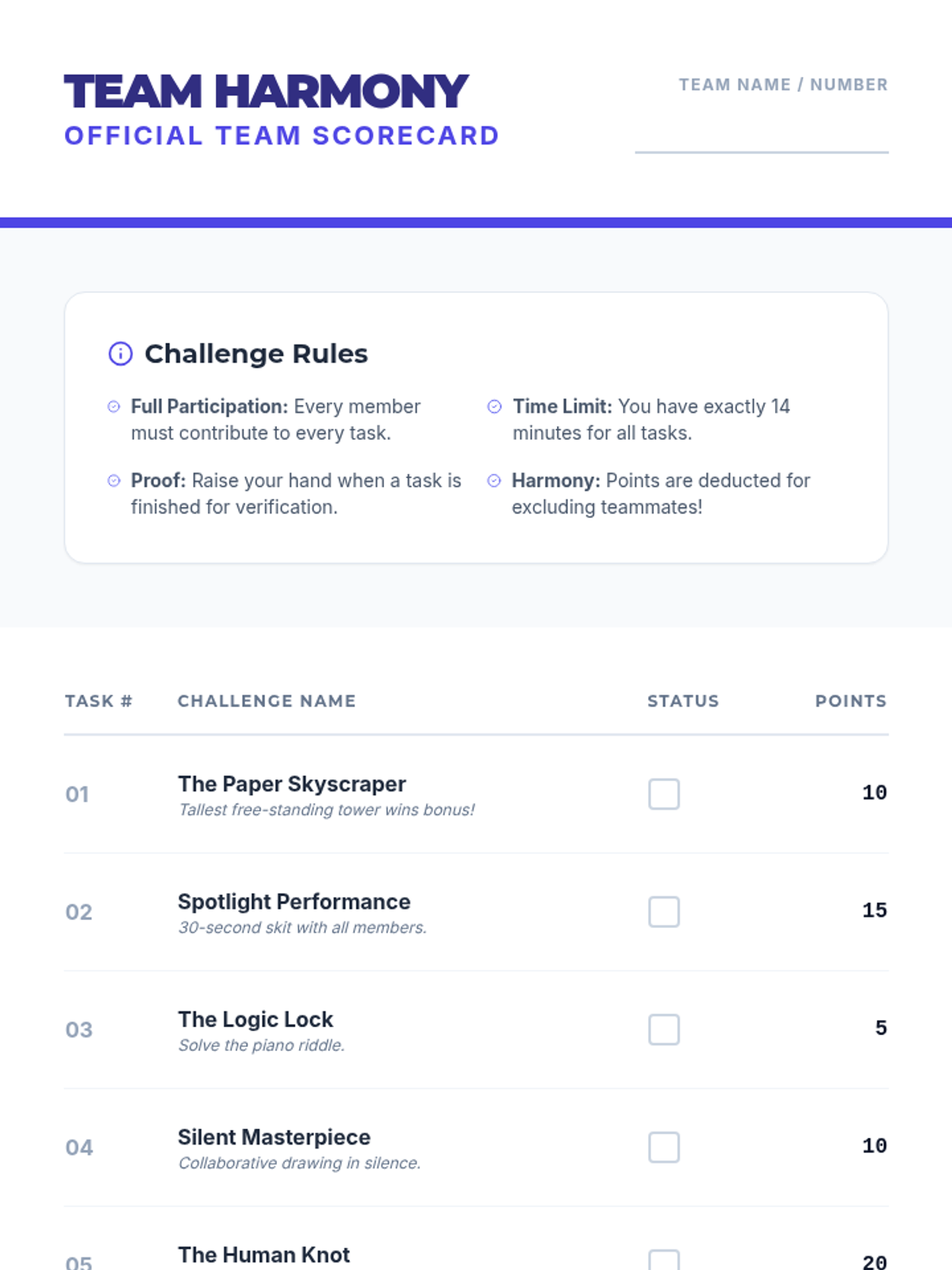
A fast-paced, game-based lesson designed to foster teamwork, communication, and problem-solving through a series of collaborative challenges.
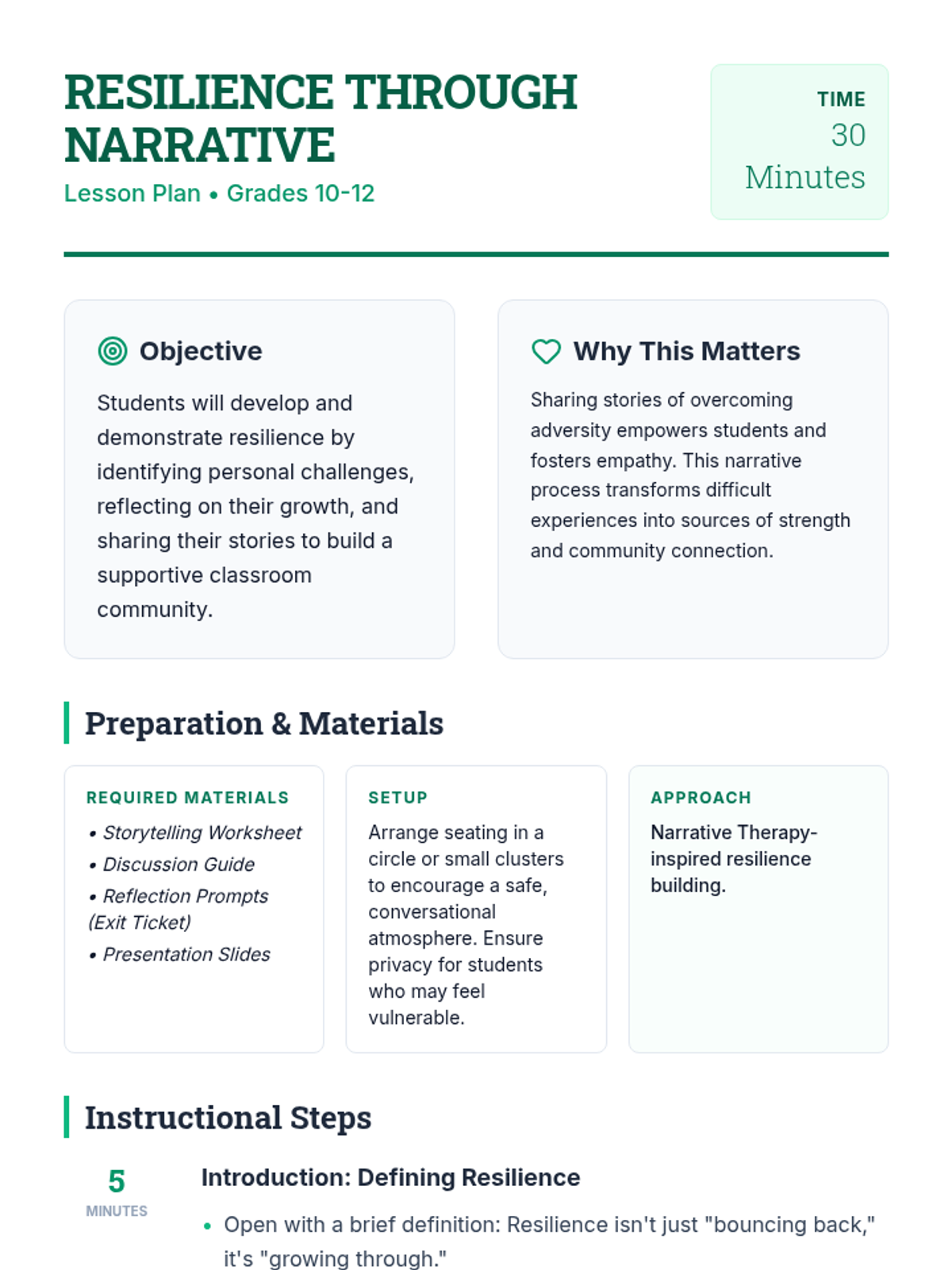
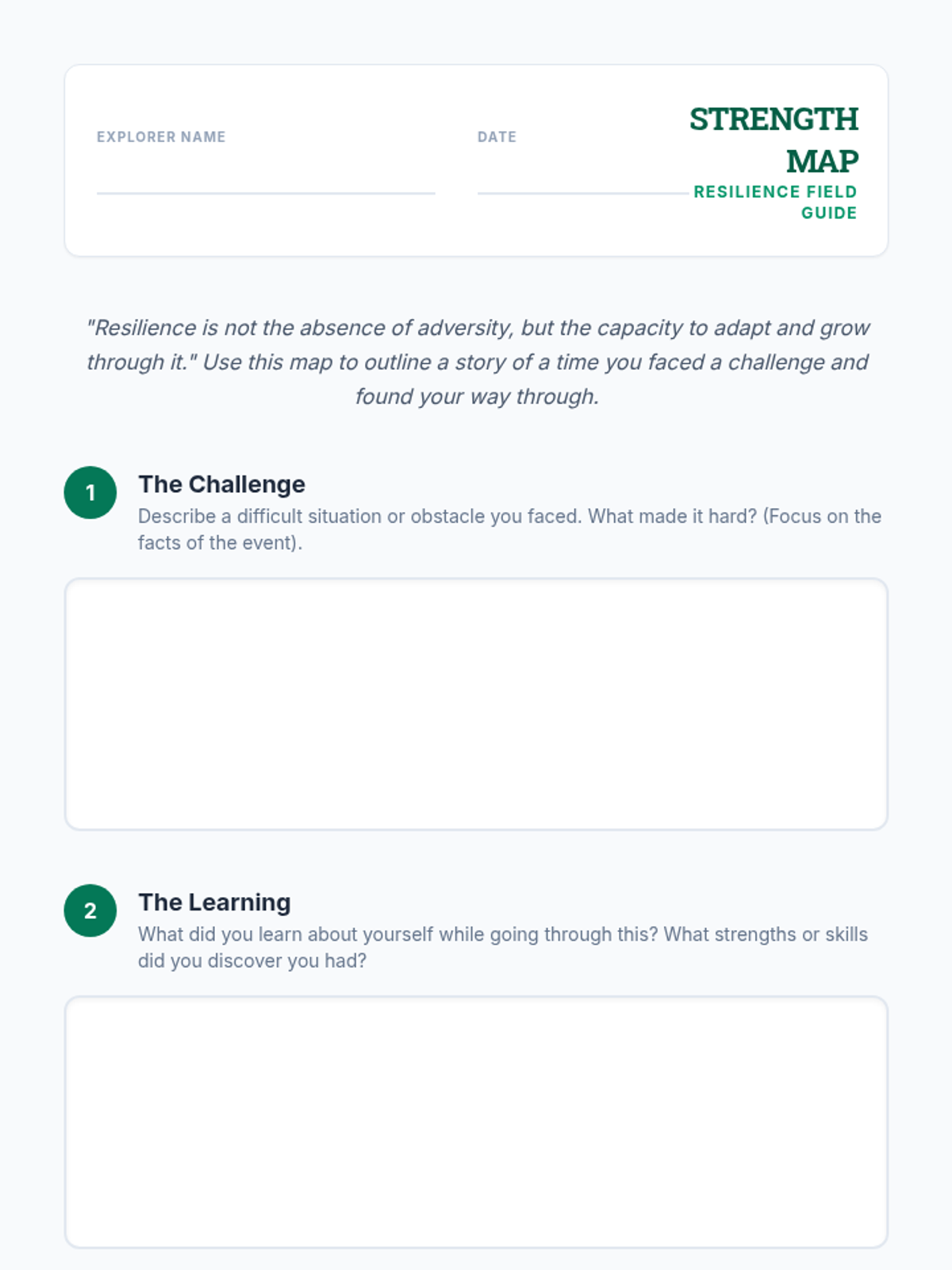
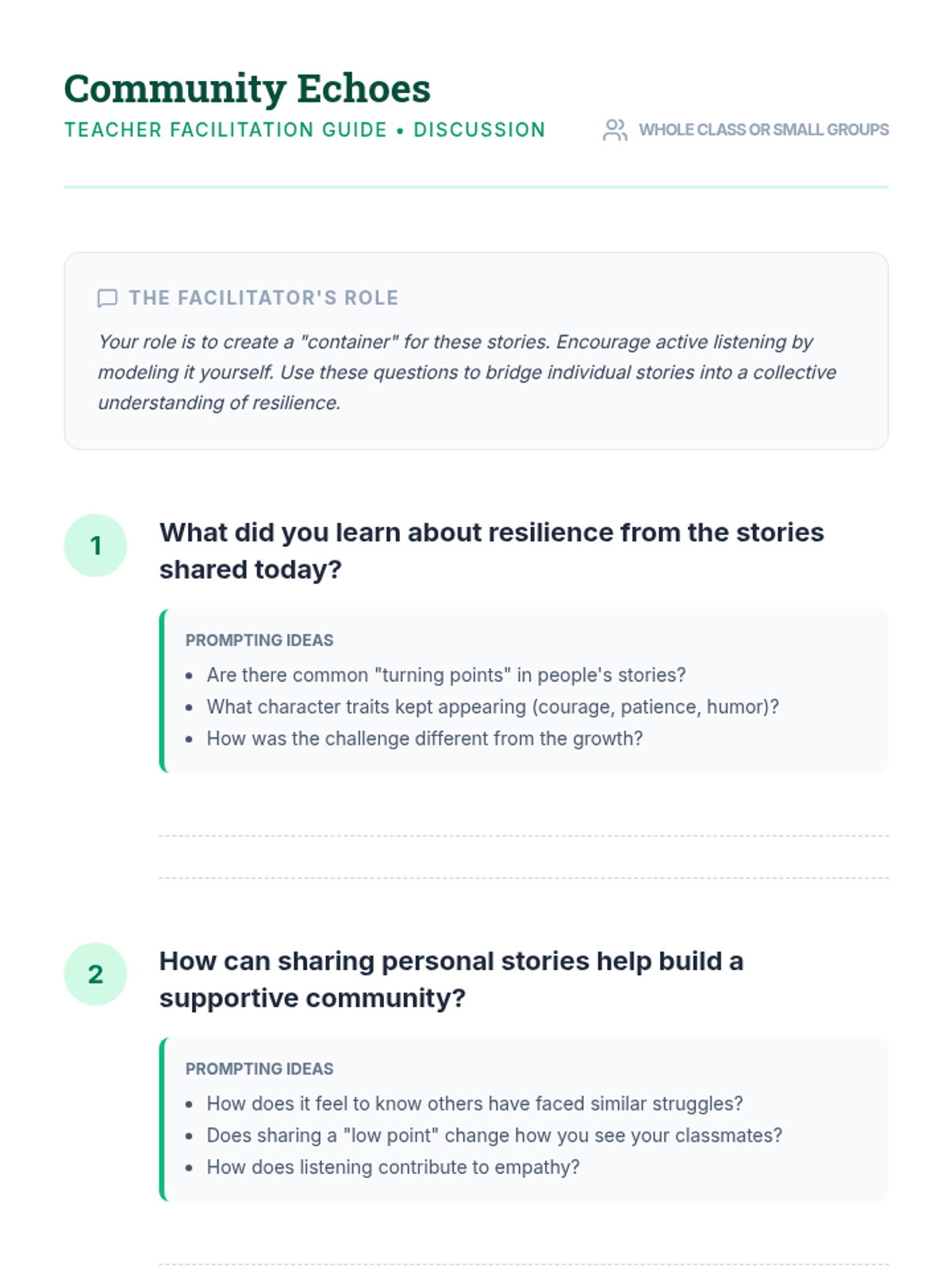
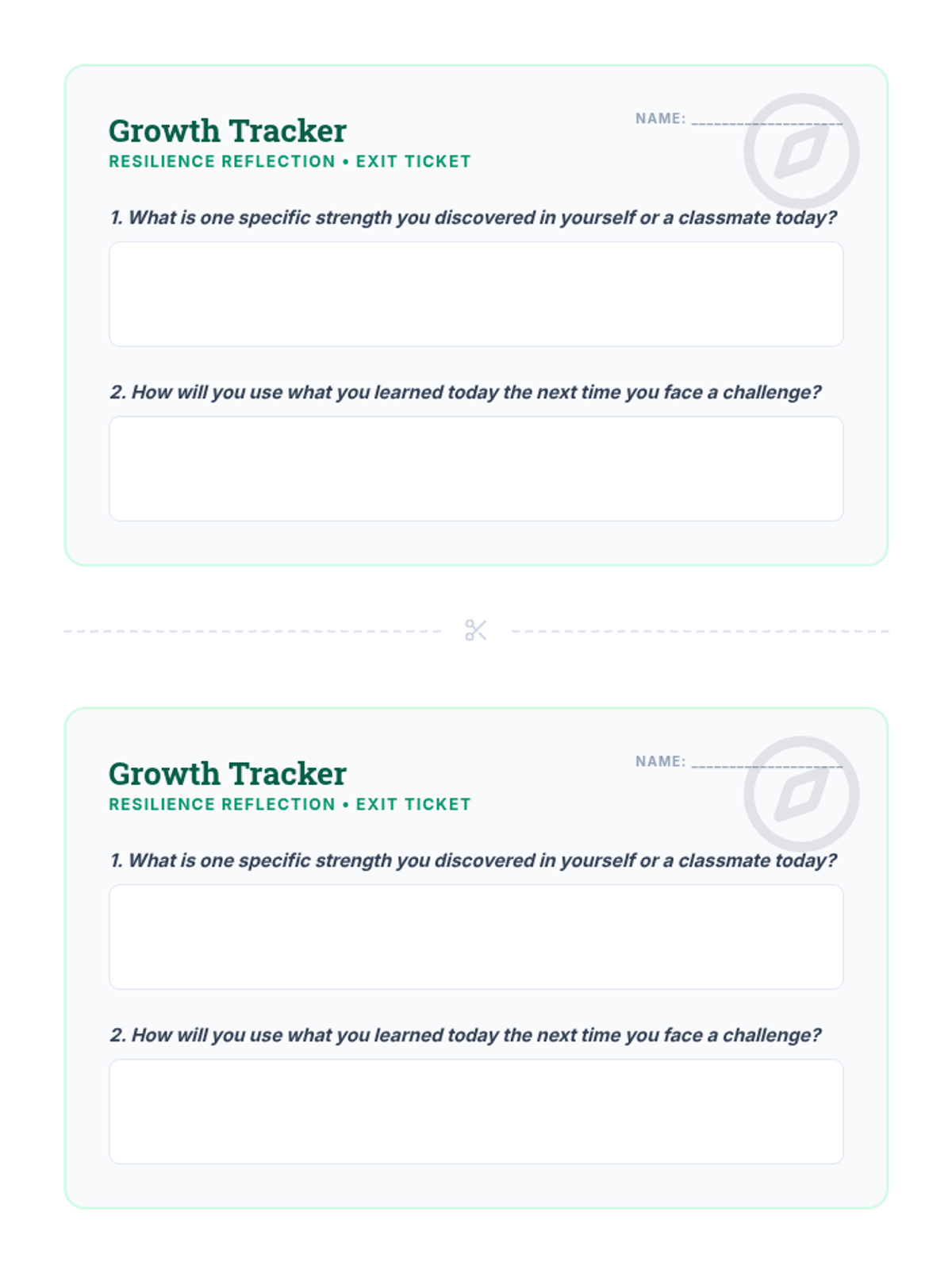
A high school lesson focused on building resilience through the power of personal narrative. Students reflect on past challenges, share their growth with peers, and foster a supportive classroom community.
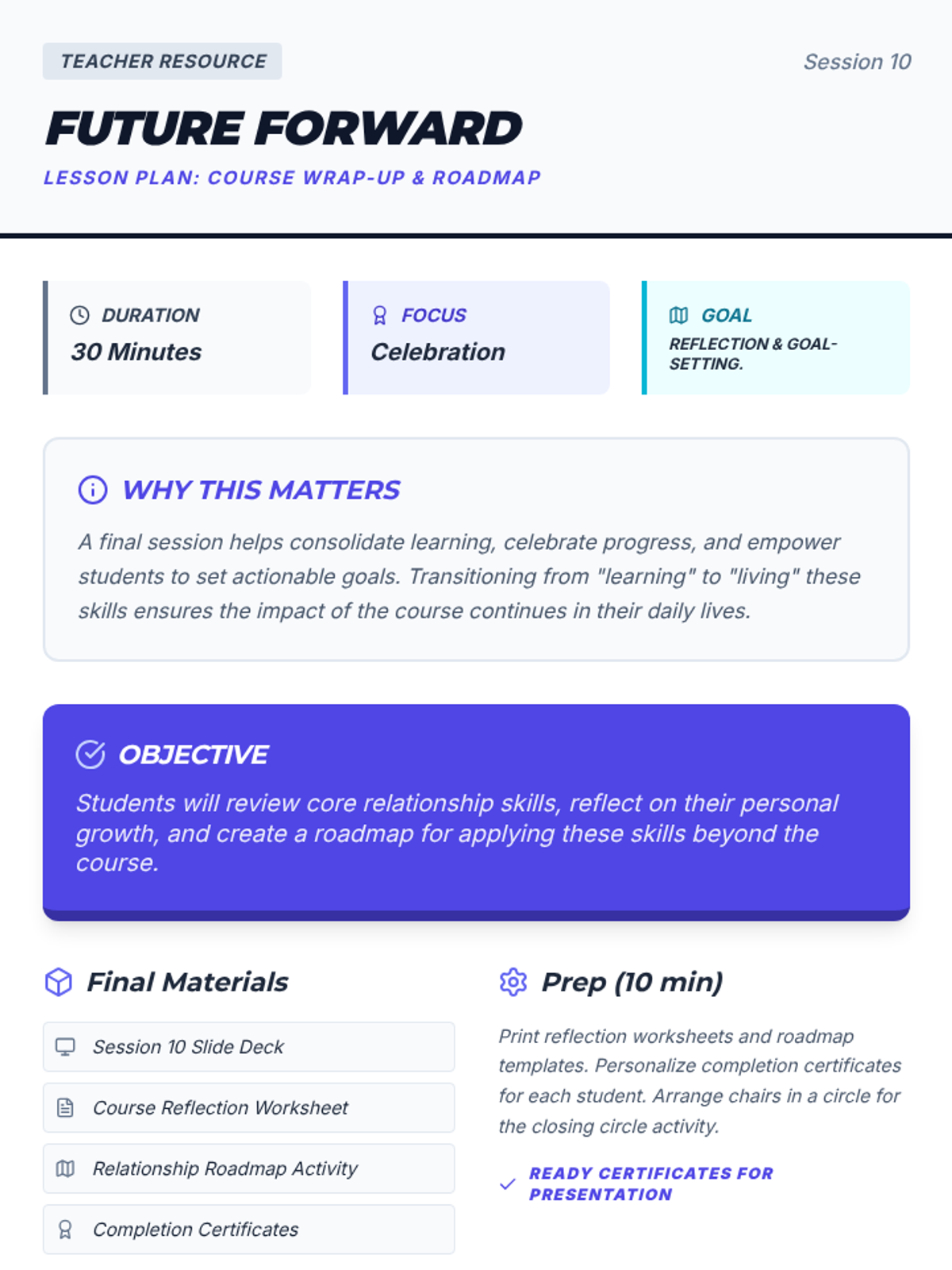
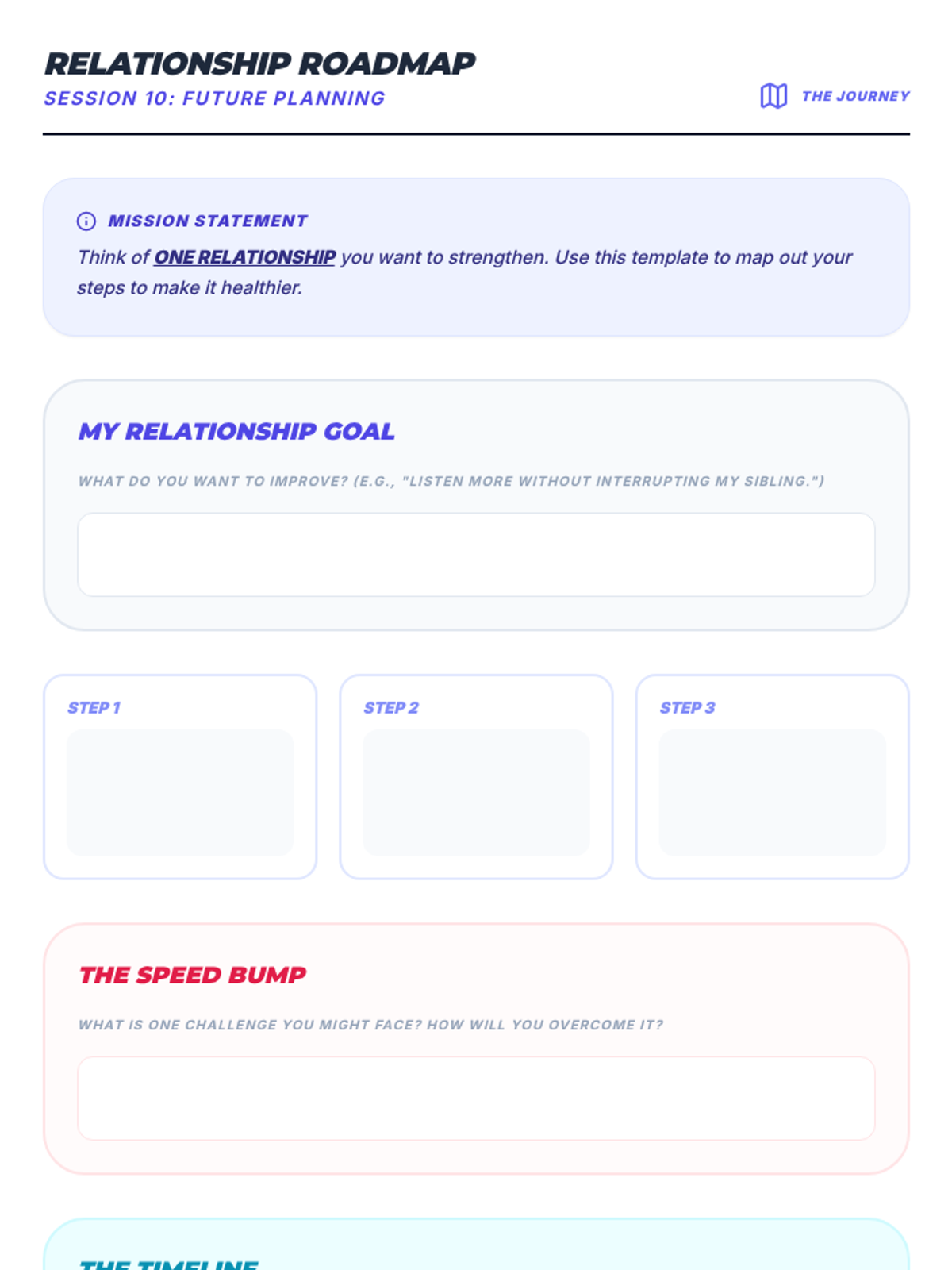
Final review of core skills, personal growth reflection, and creation of a relationship roadmap for the future.
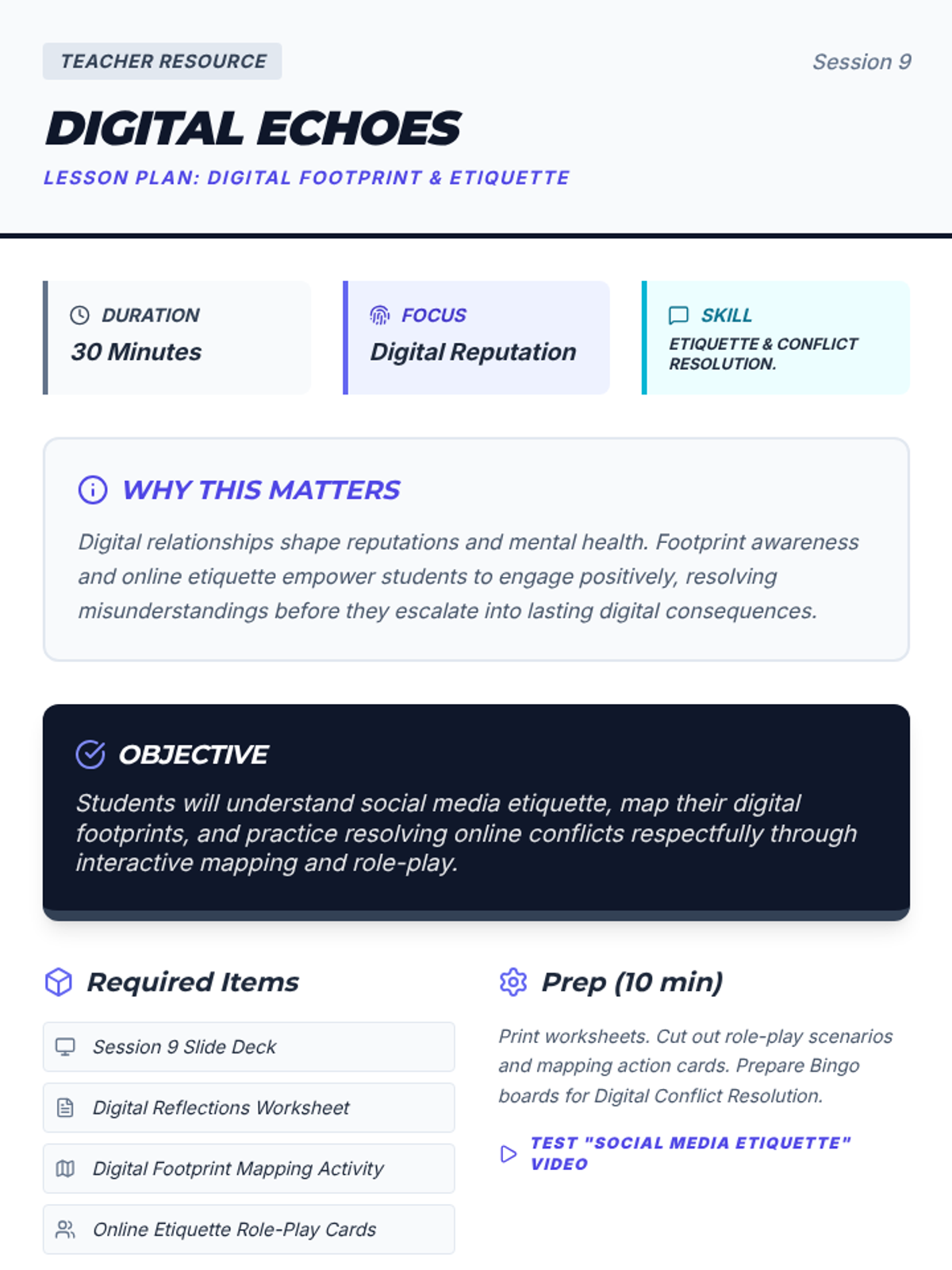
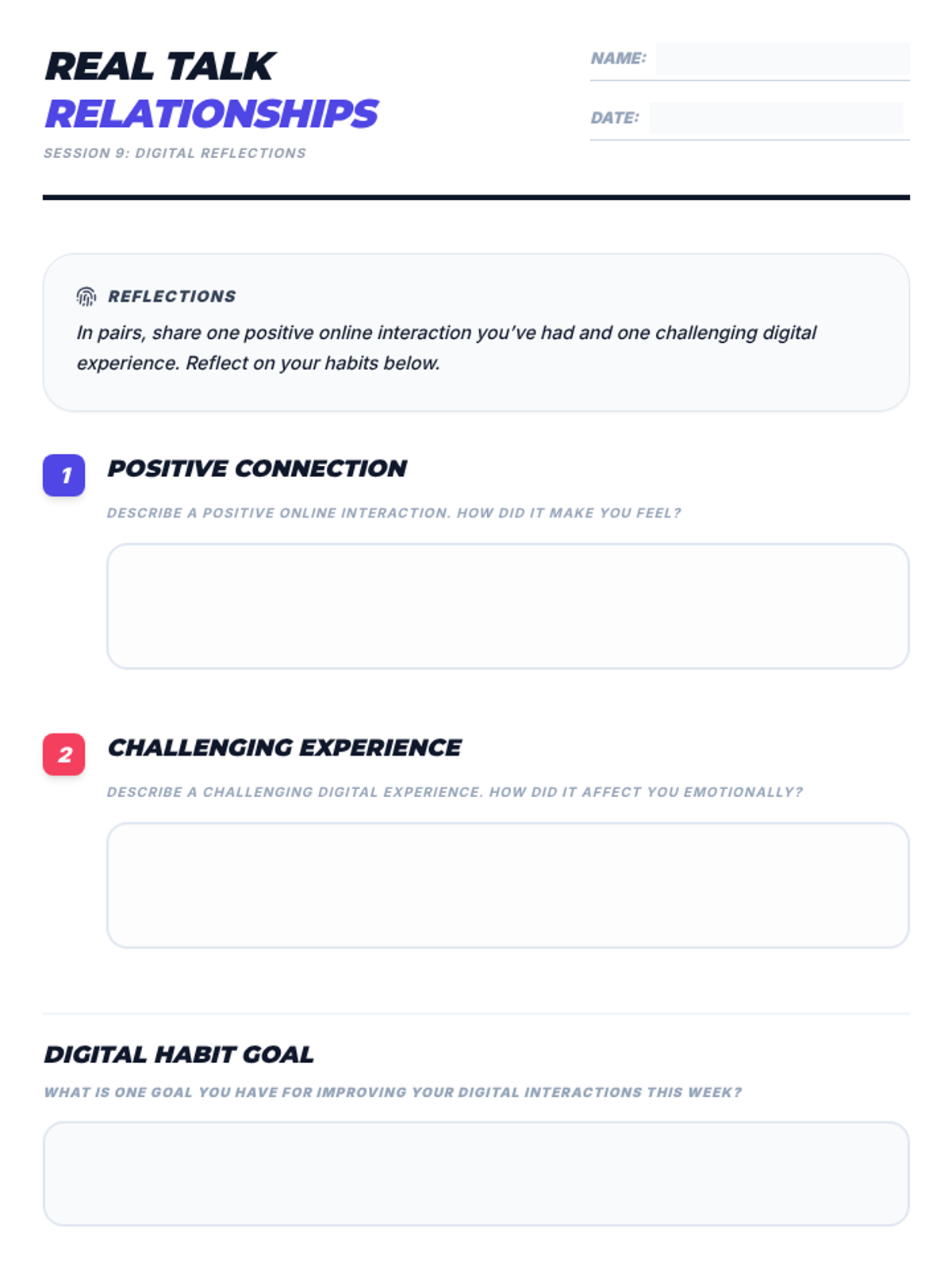
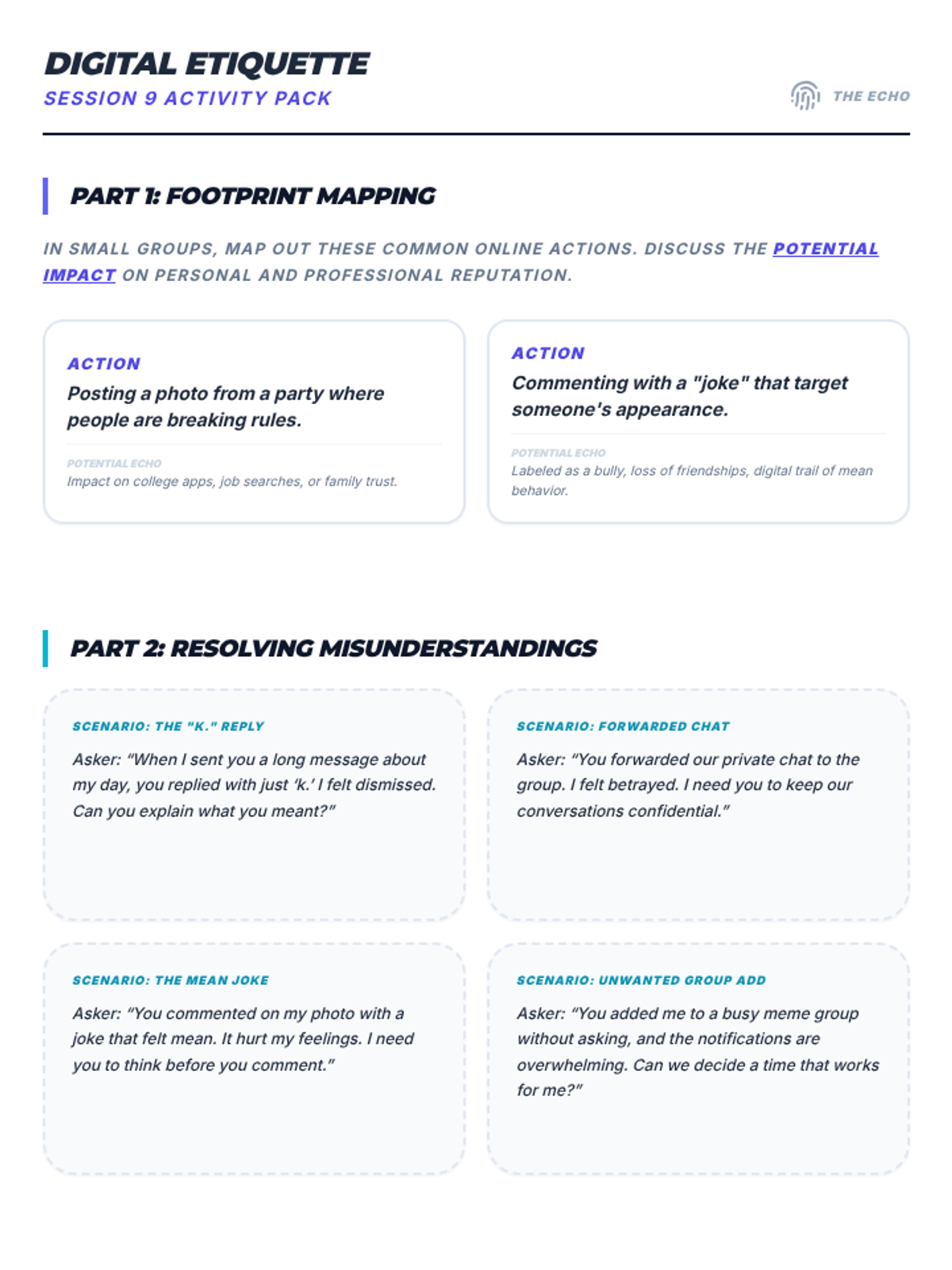
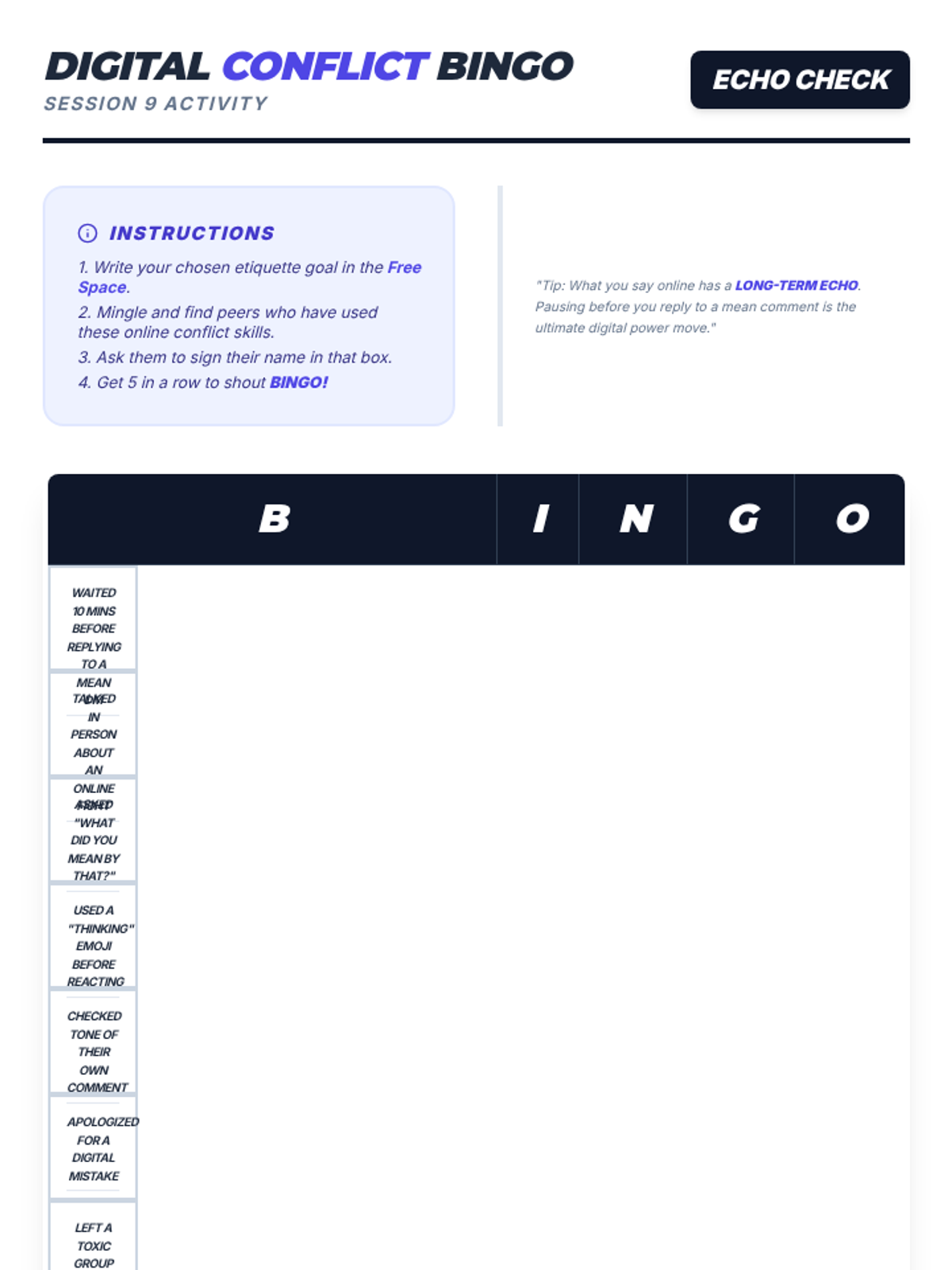
Examines the long-term impact of digital actions and explores social media etiquette.
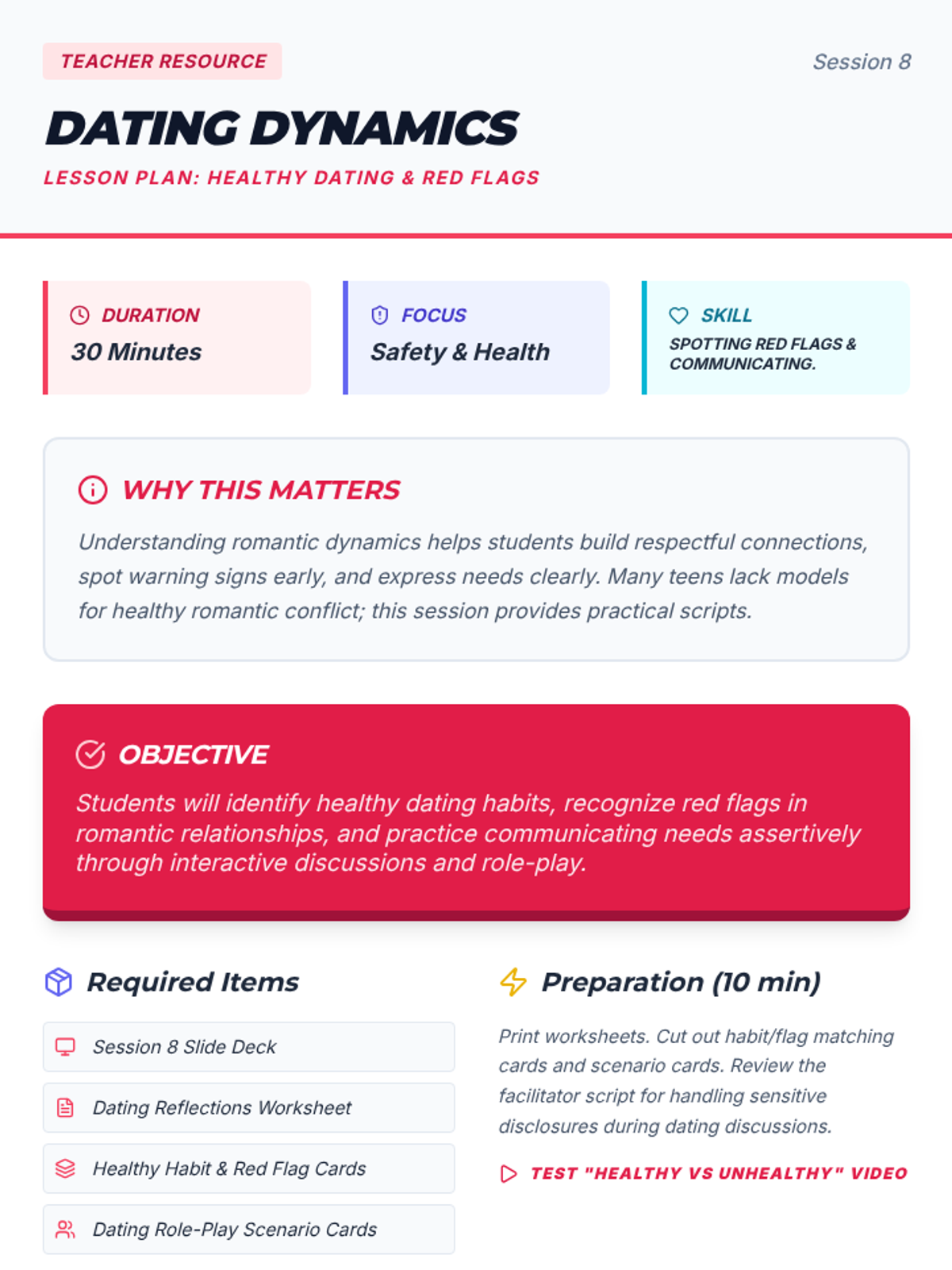
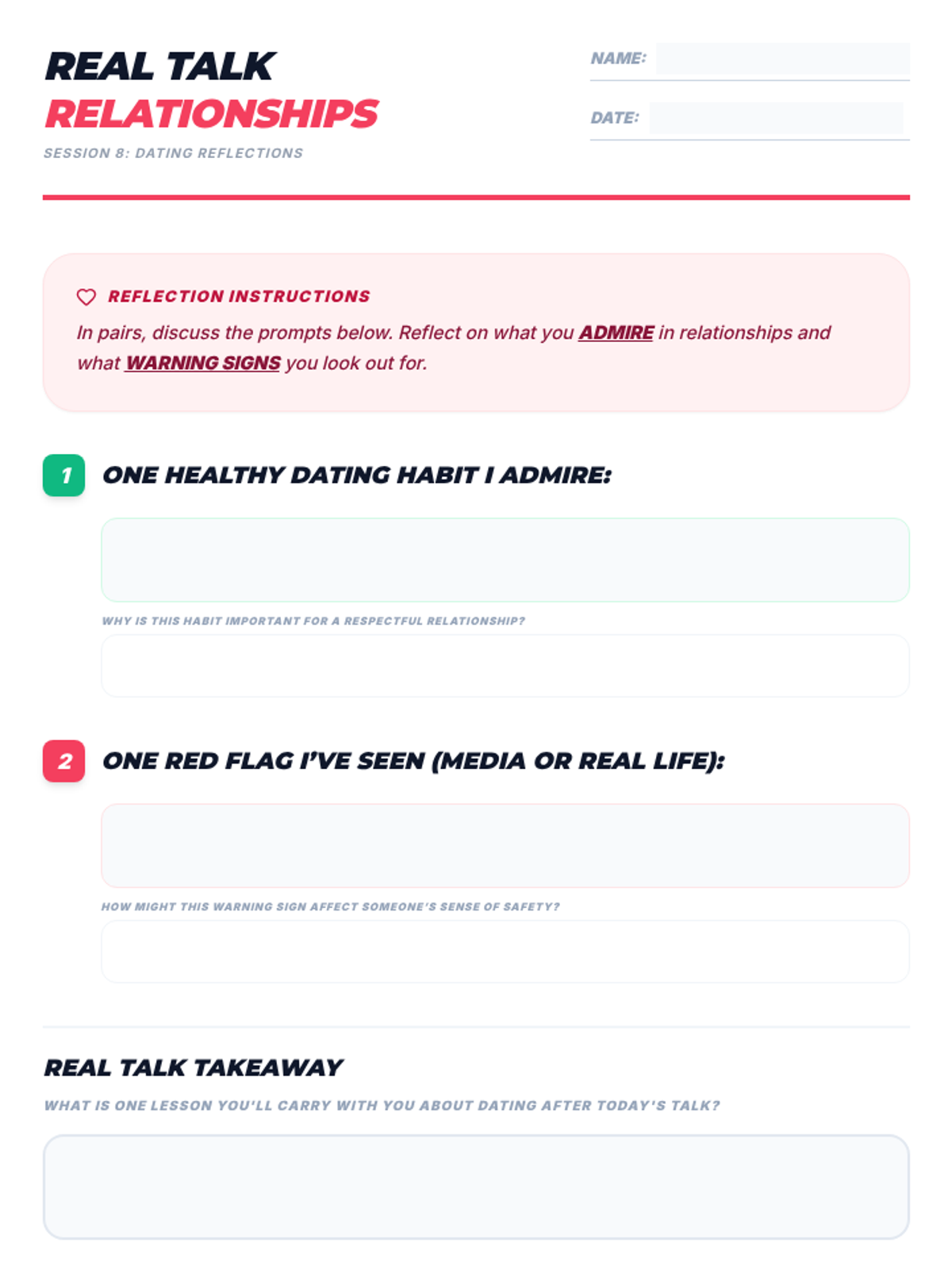
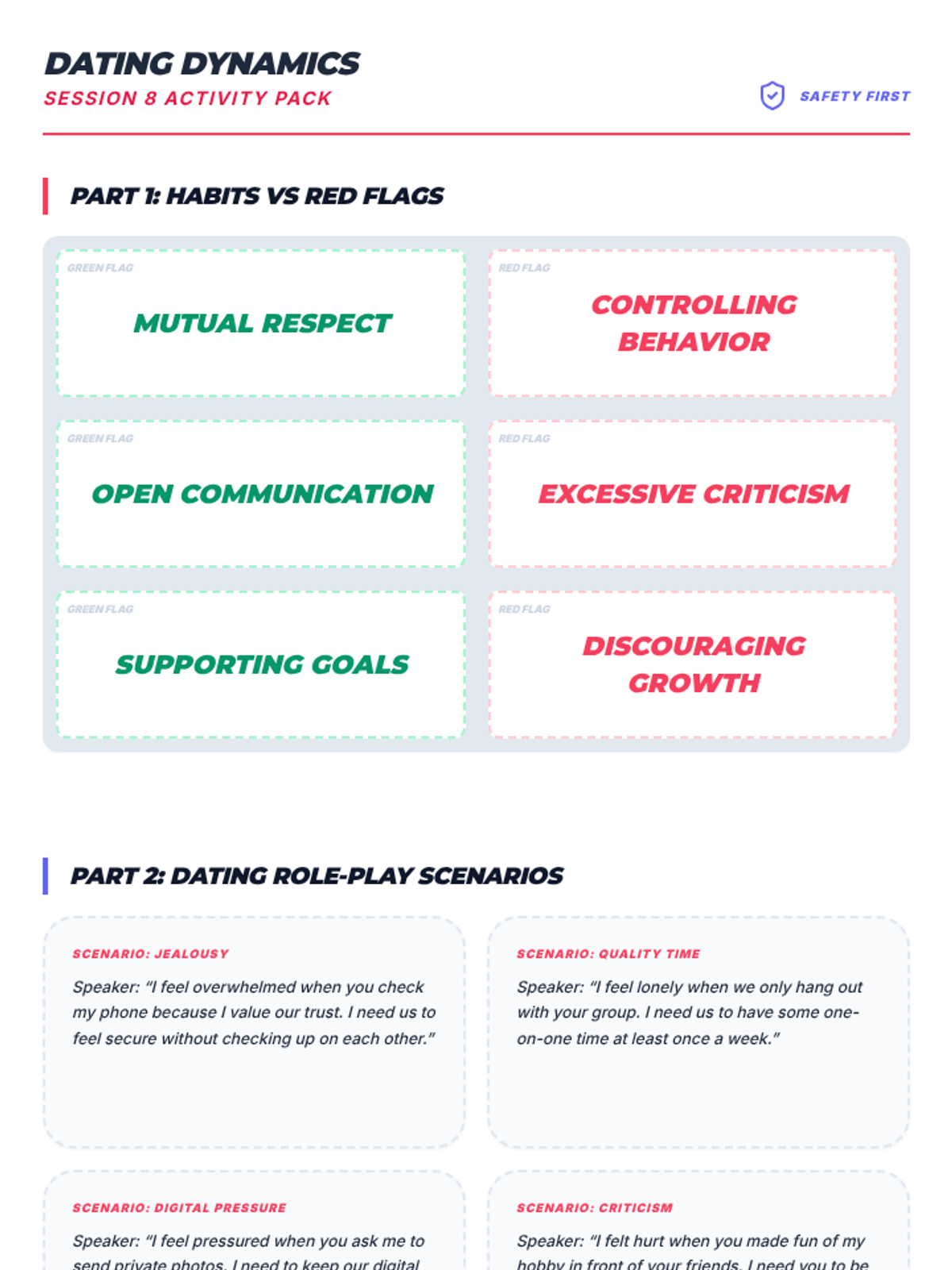
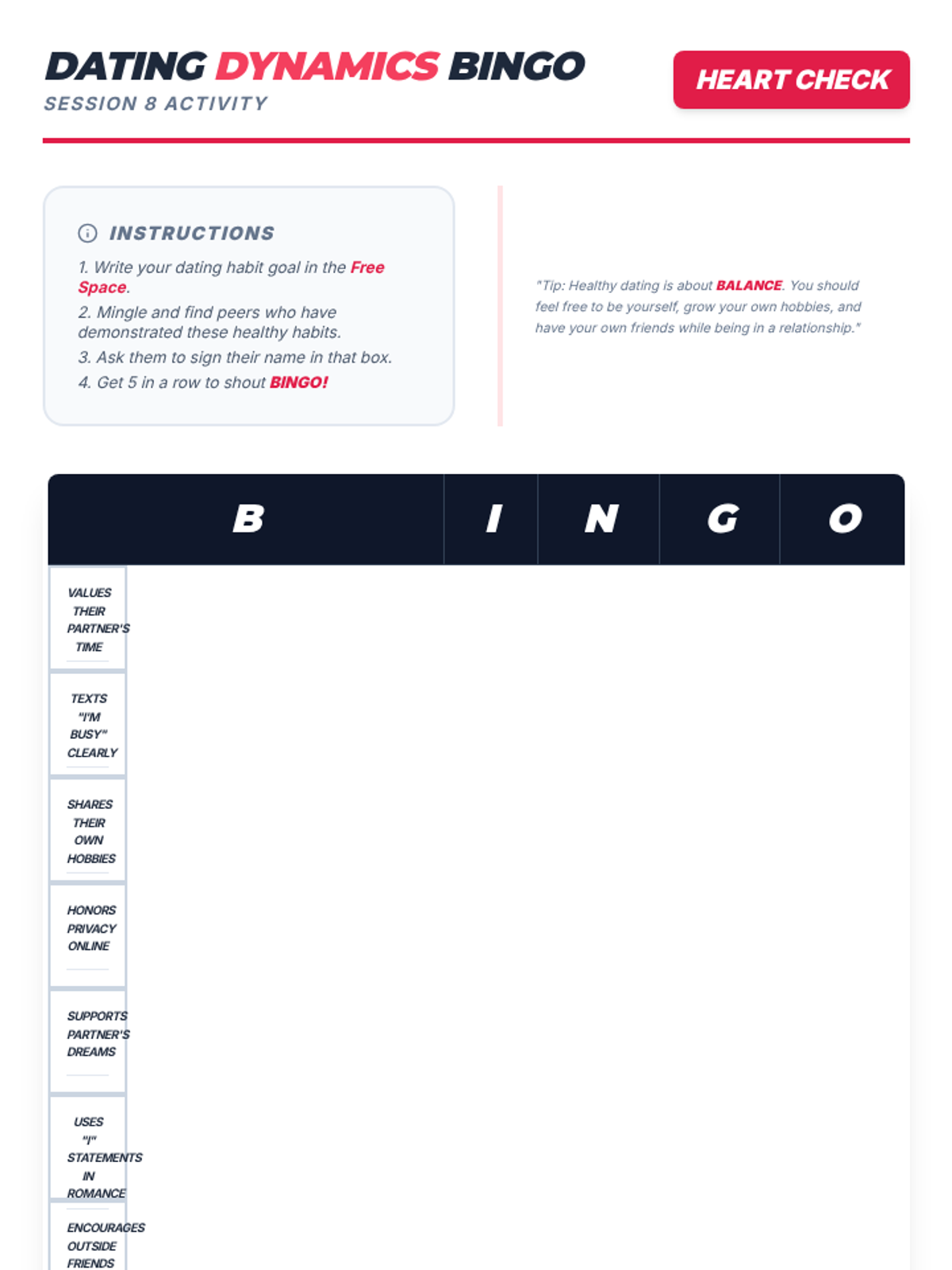
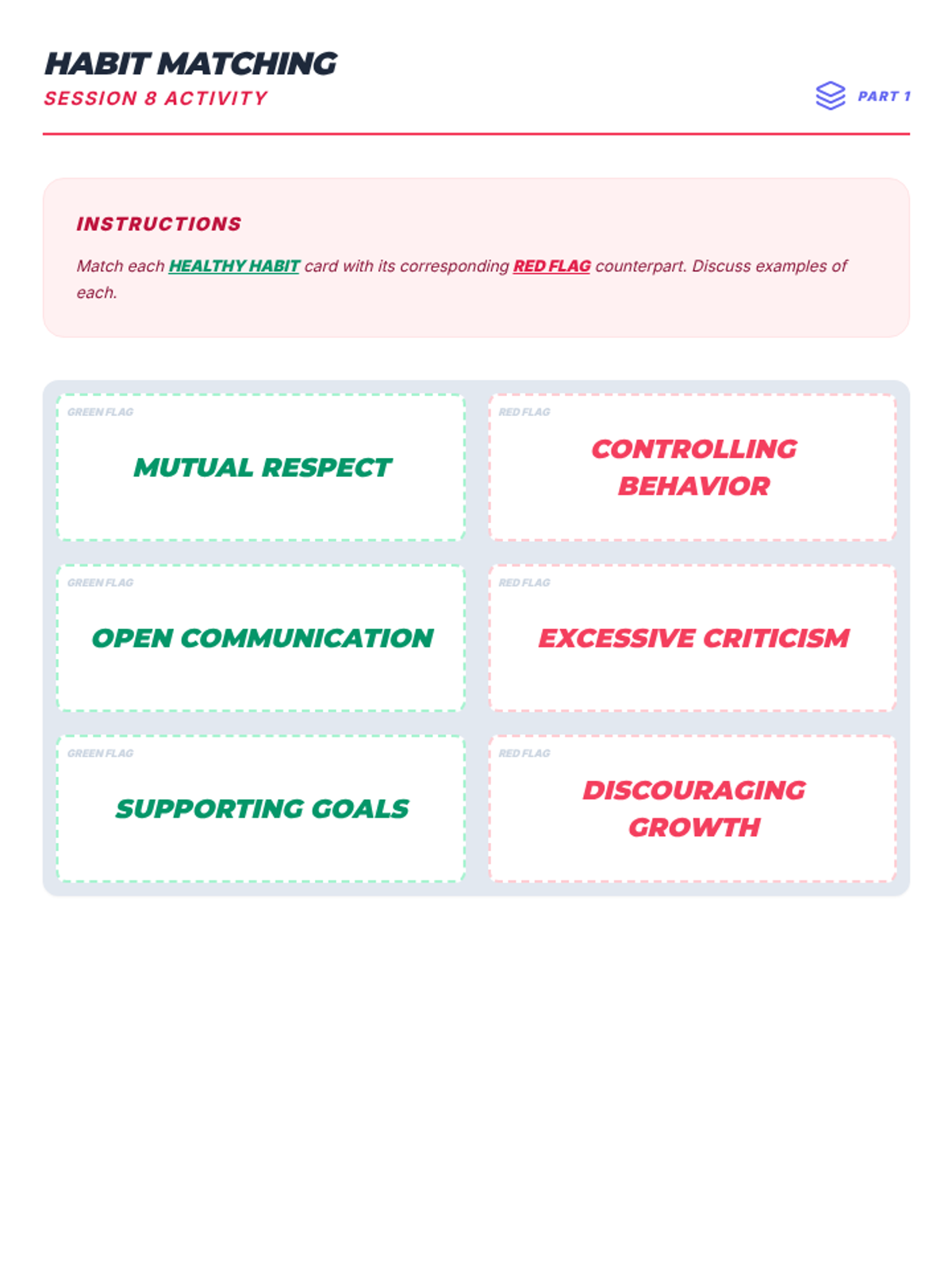
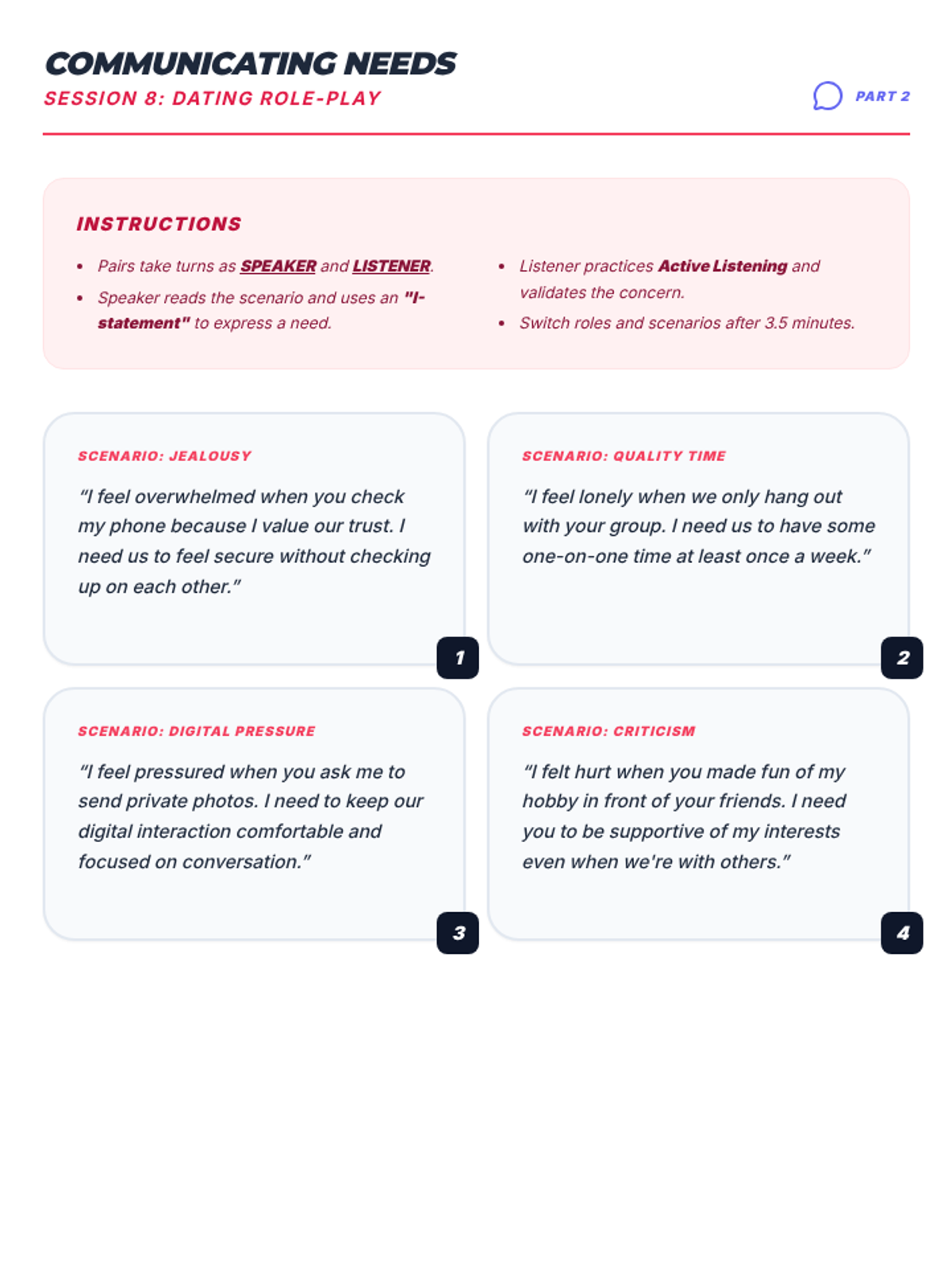
Discusses healthy romantic dynamics and how to identify "red flags" and "green flags" in dating.
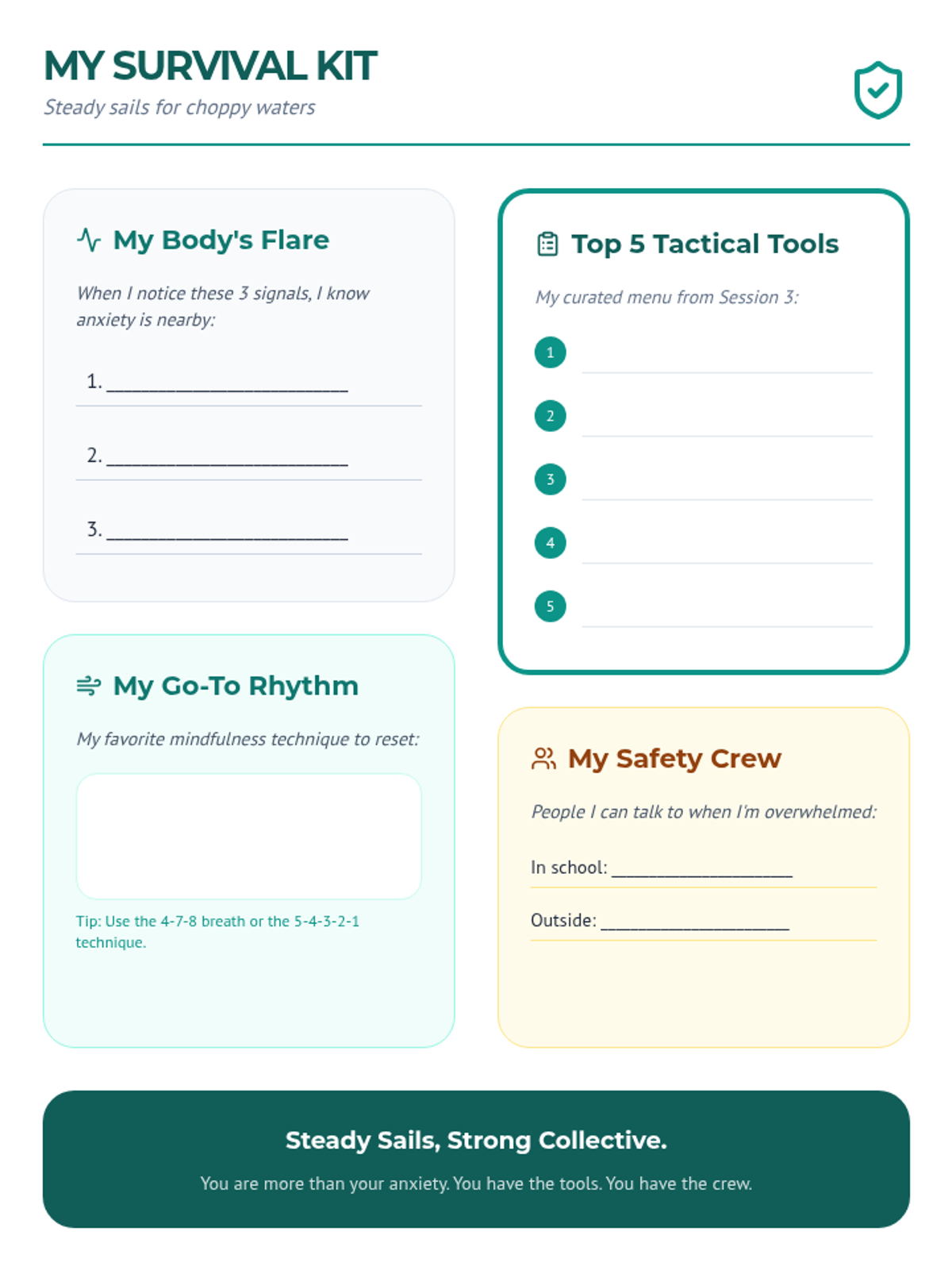
The final session focuses on long-term maintenance and 'relapse prevention.' Students will create a take-home survival kit and celebrate their growth within the collective.
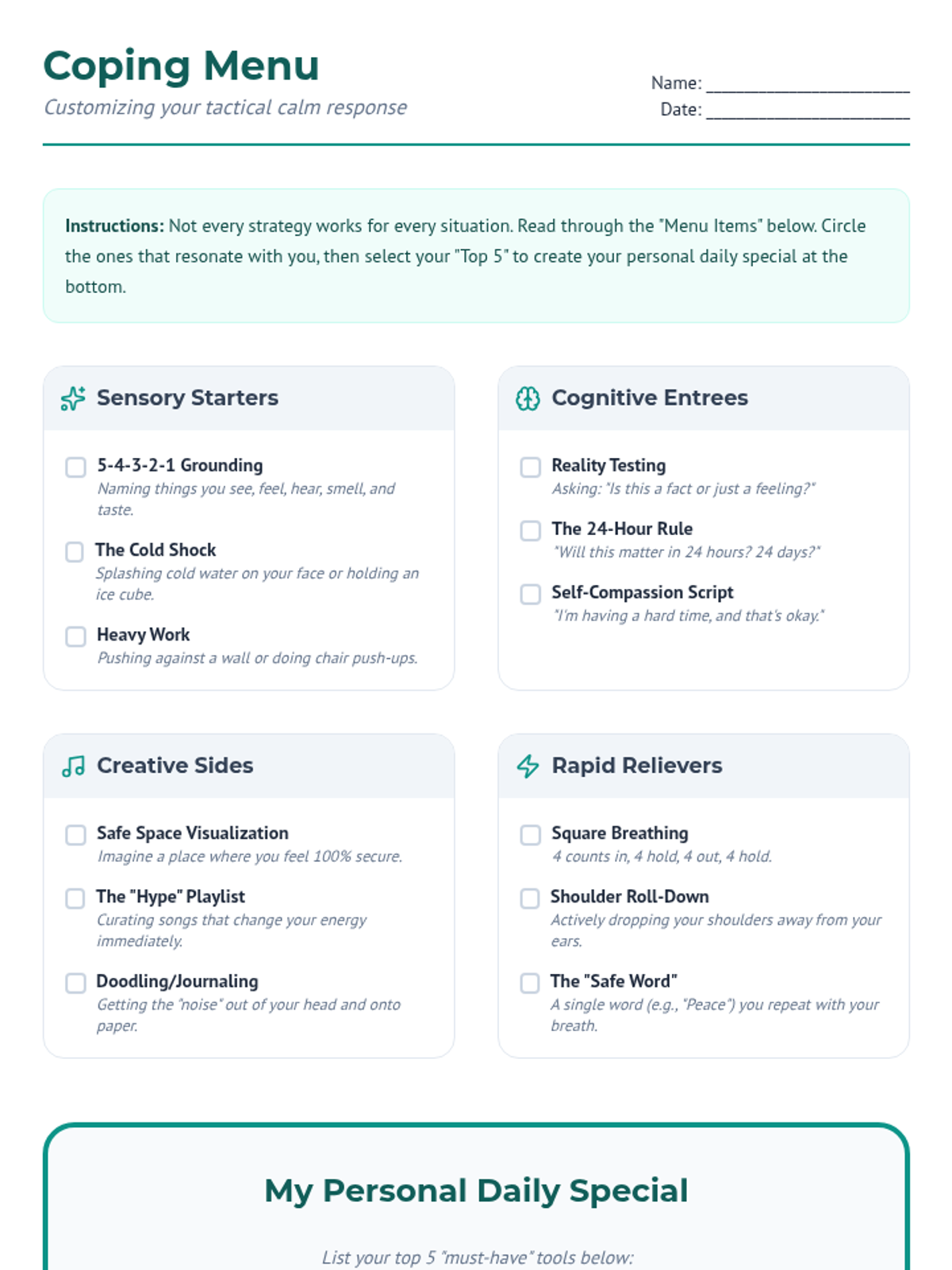
Students will explore a variety of sensory and cognitive coping strategies. They will evaluate which techniques work best for them and begin building their personal 'Coping Menu'.
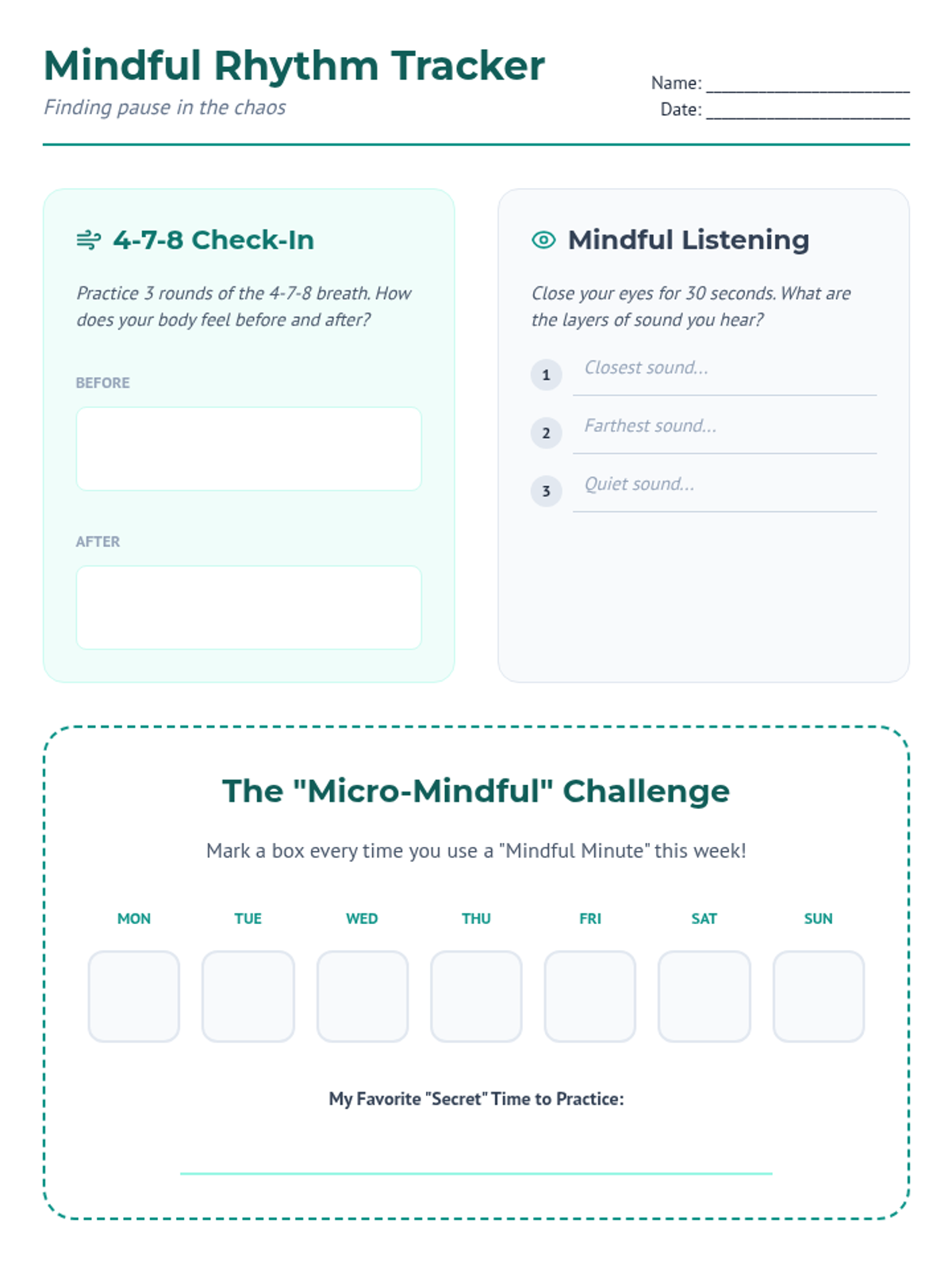
This session introduces mindfulness as a tool for presence. Students will practice breathwork and a body scan, discussing how to integrate these small moments into a busy high school schedule.
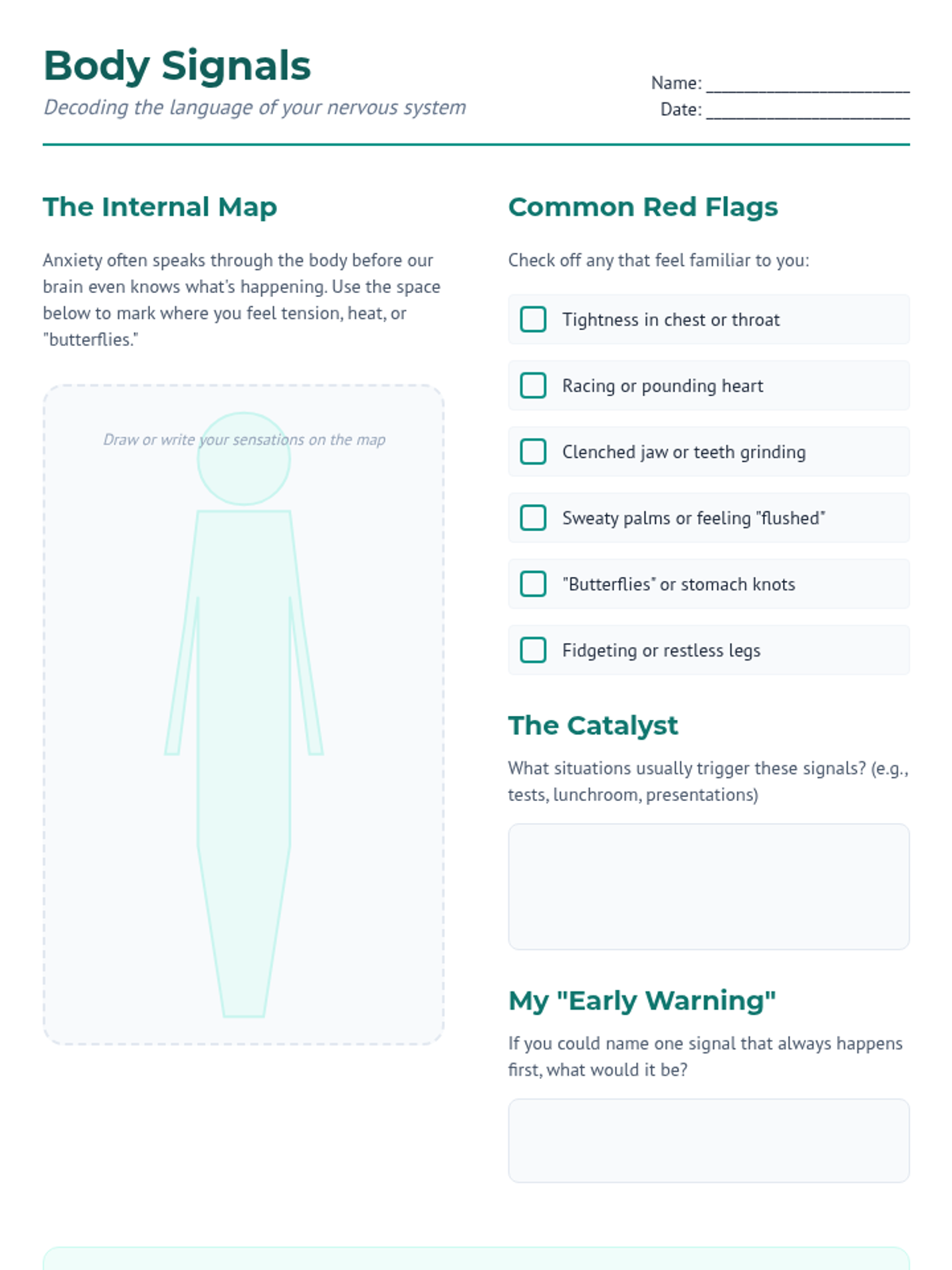
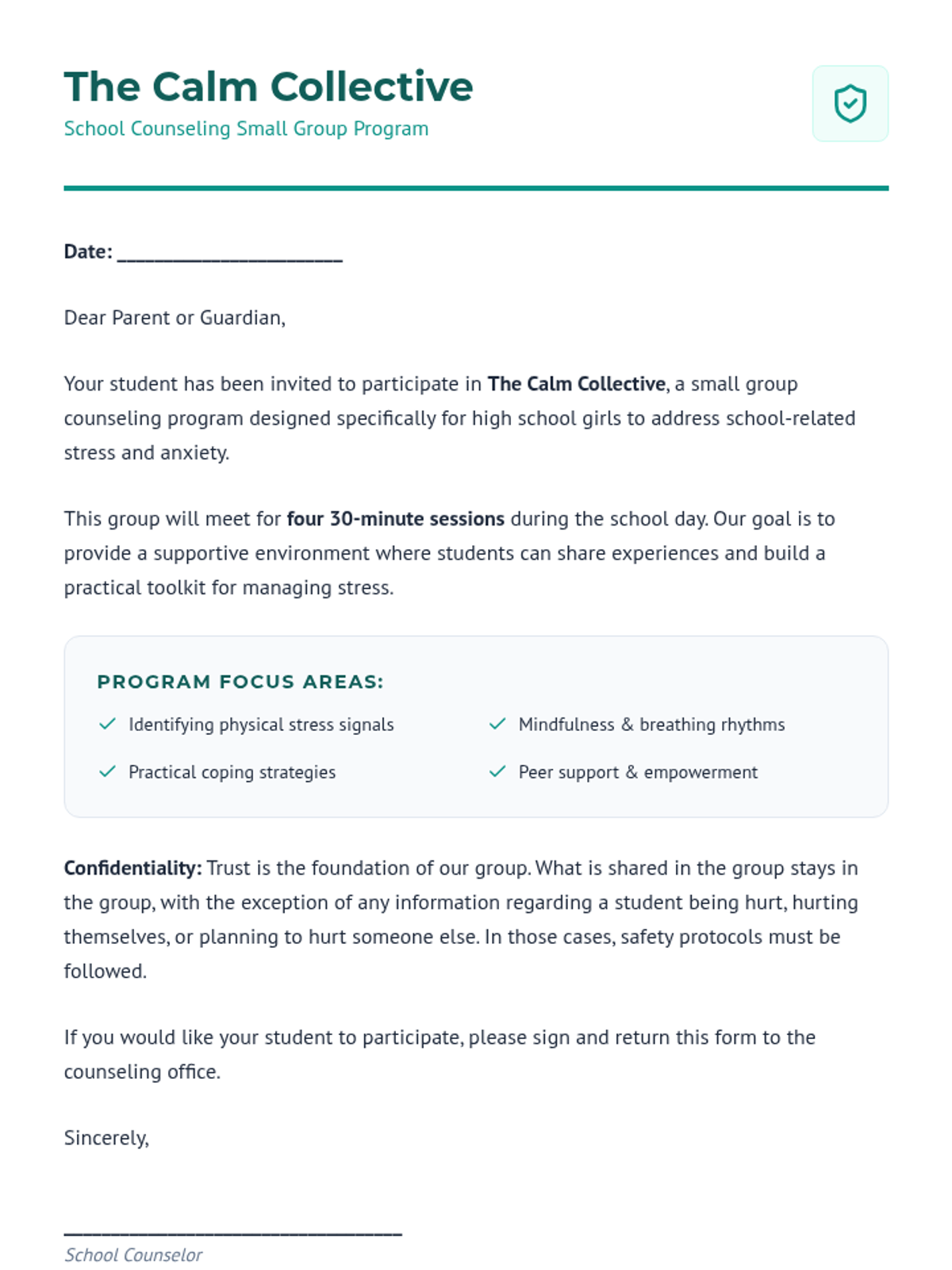
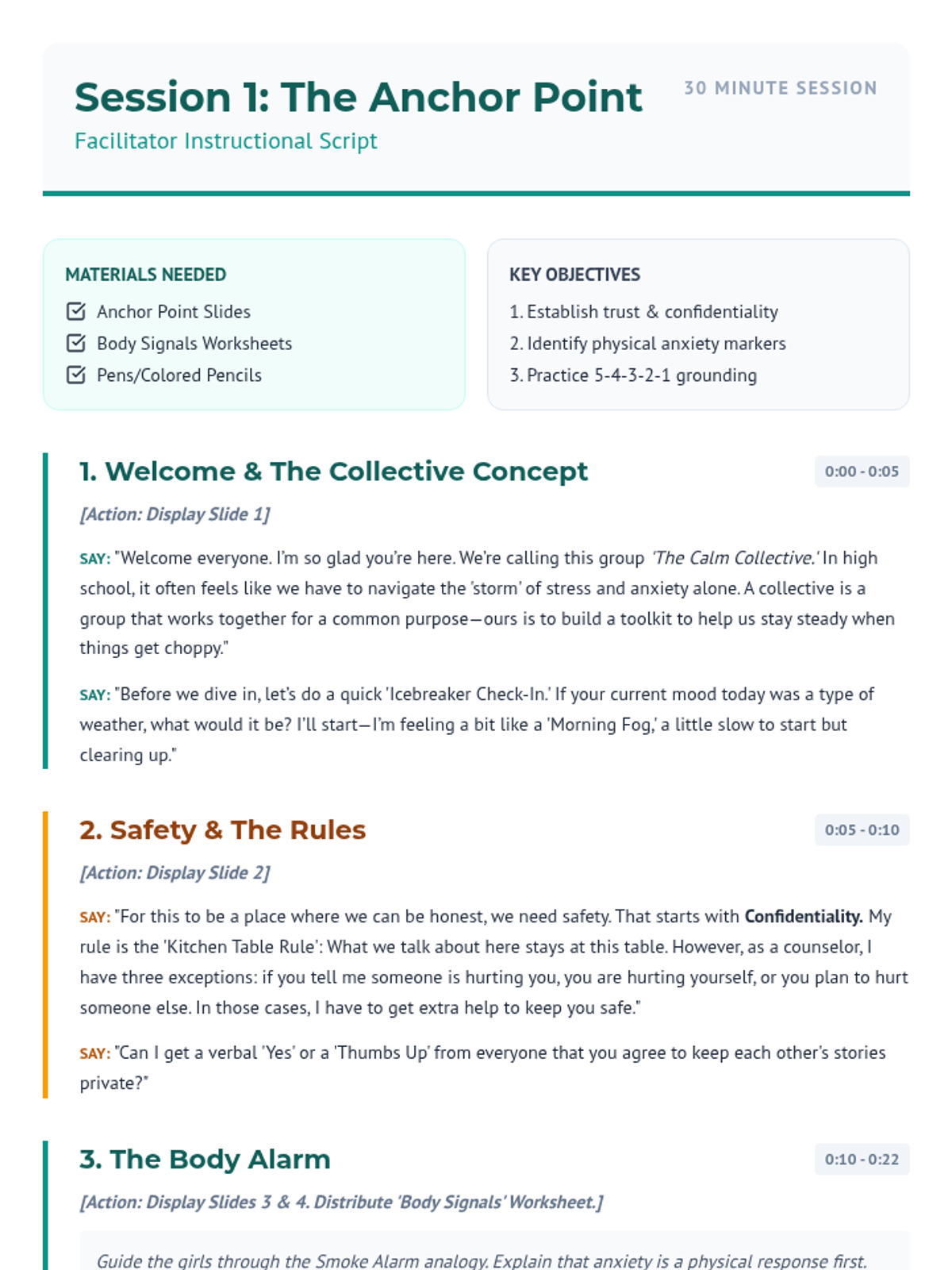
The first session focuses on establishing the group's foundation, including ethical guidelines, confidentiality, and the basic 'Anchor' grounding technique. Students will identify how anxiety physically manifests in their bodies.
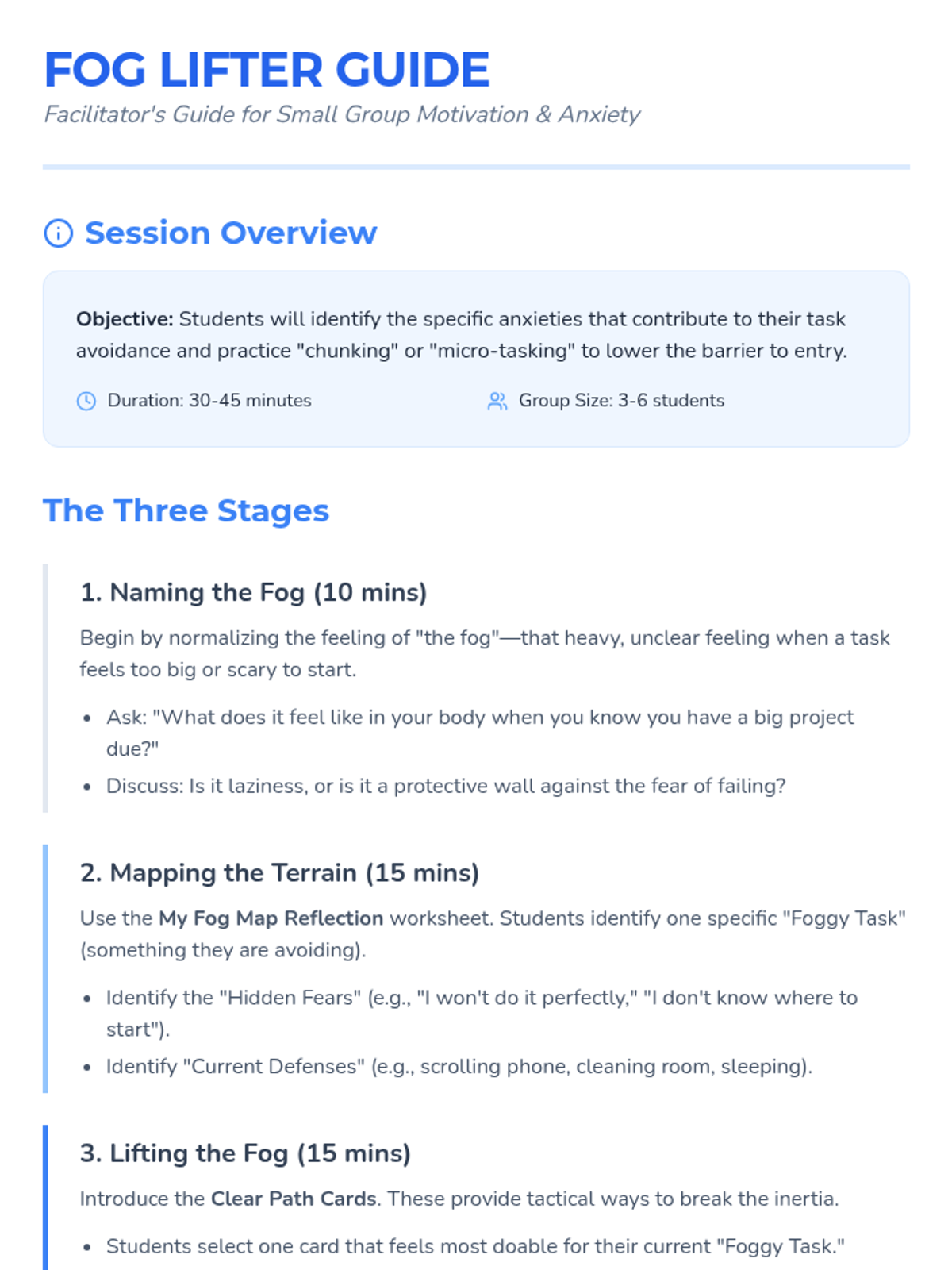
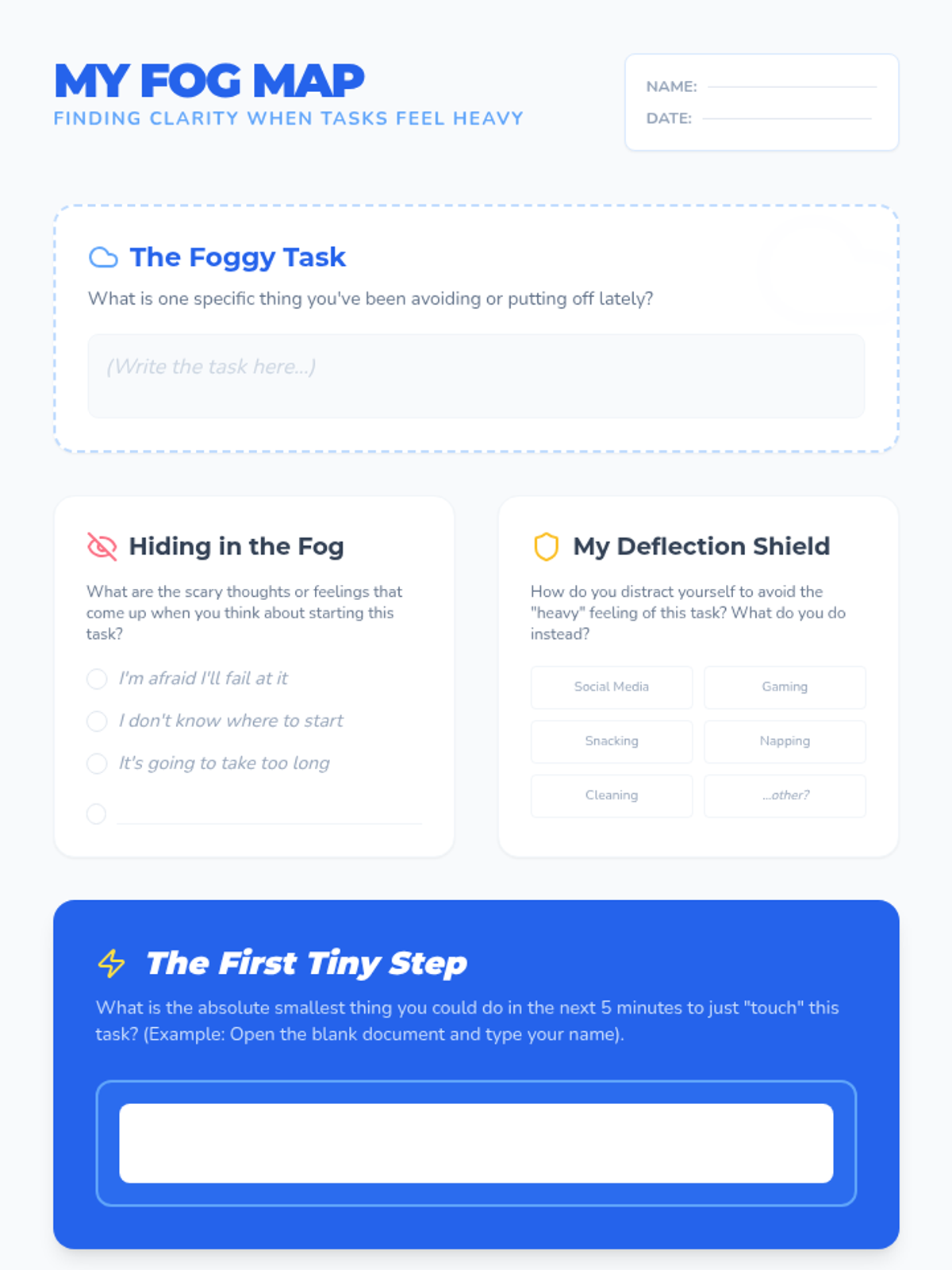
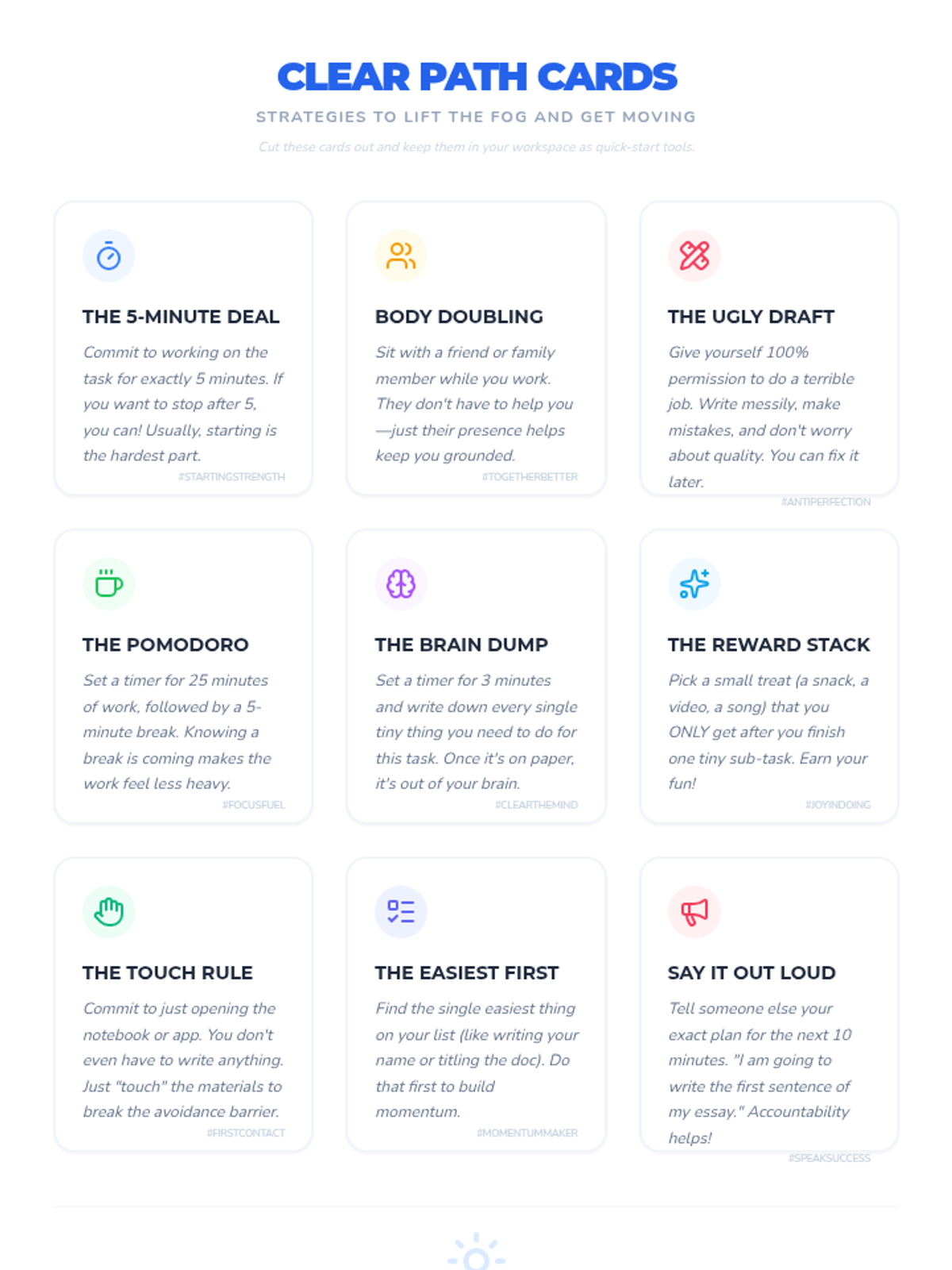
A small group session focused on identifying the anxieties that lead to task avoidance and developing practical strategies to overcome the 'fog' of low motivation.
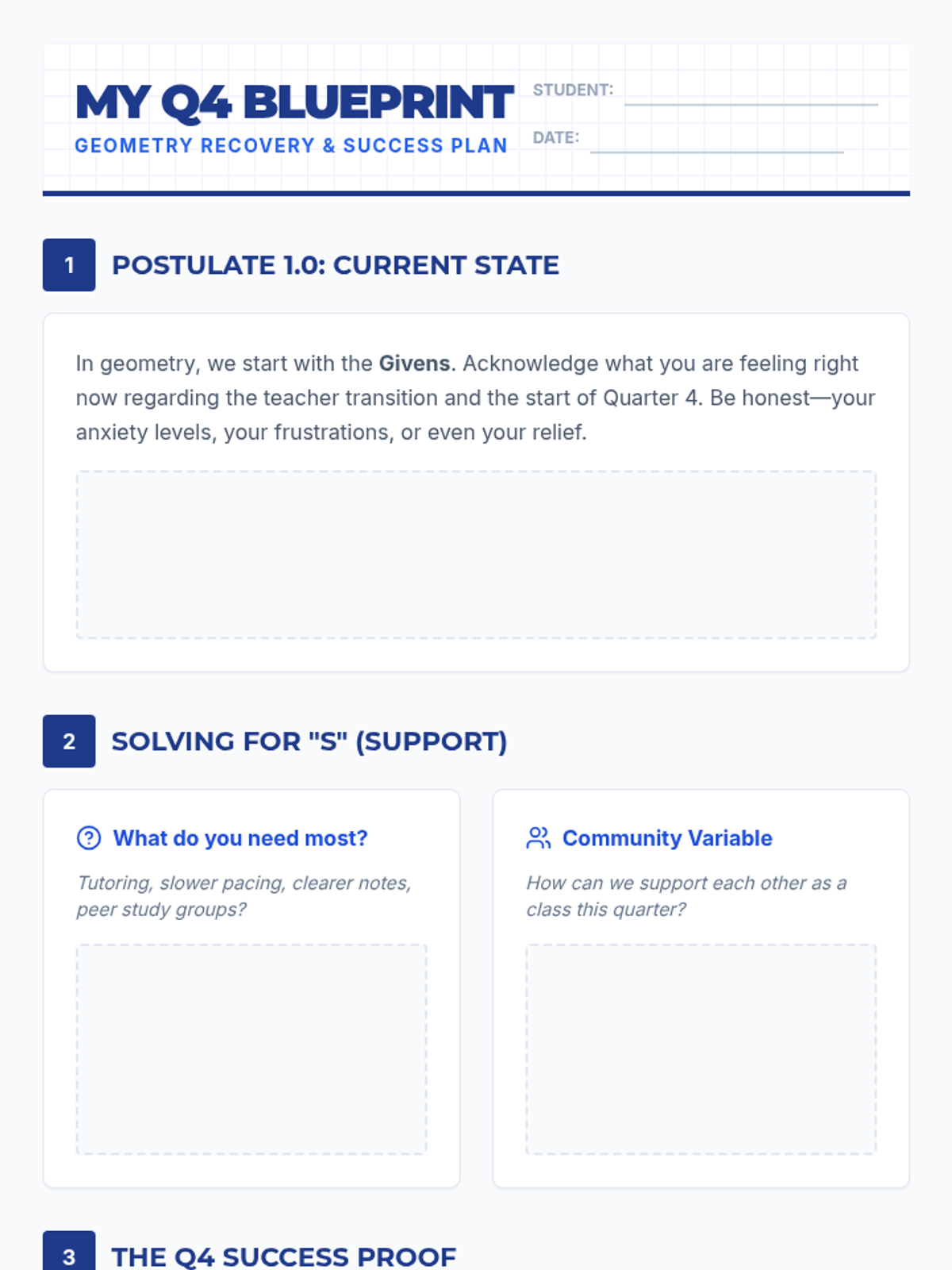
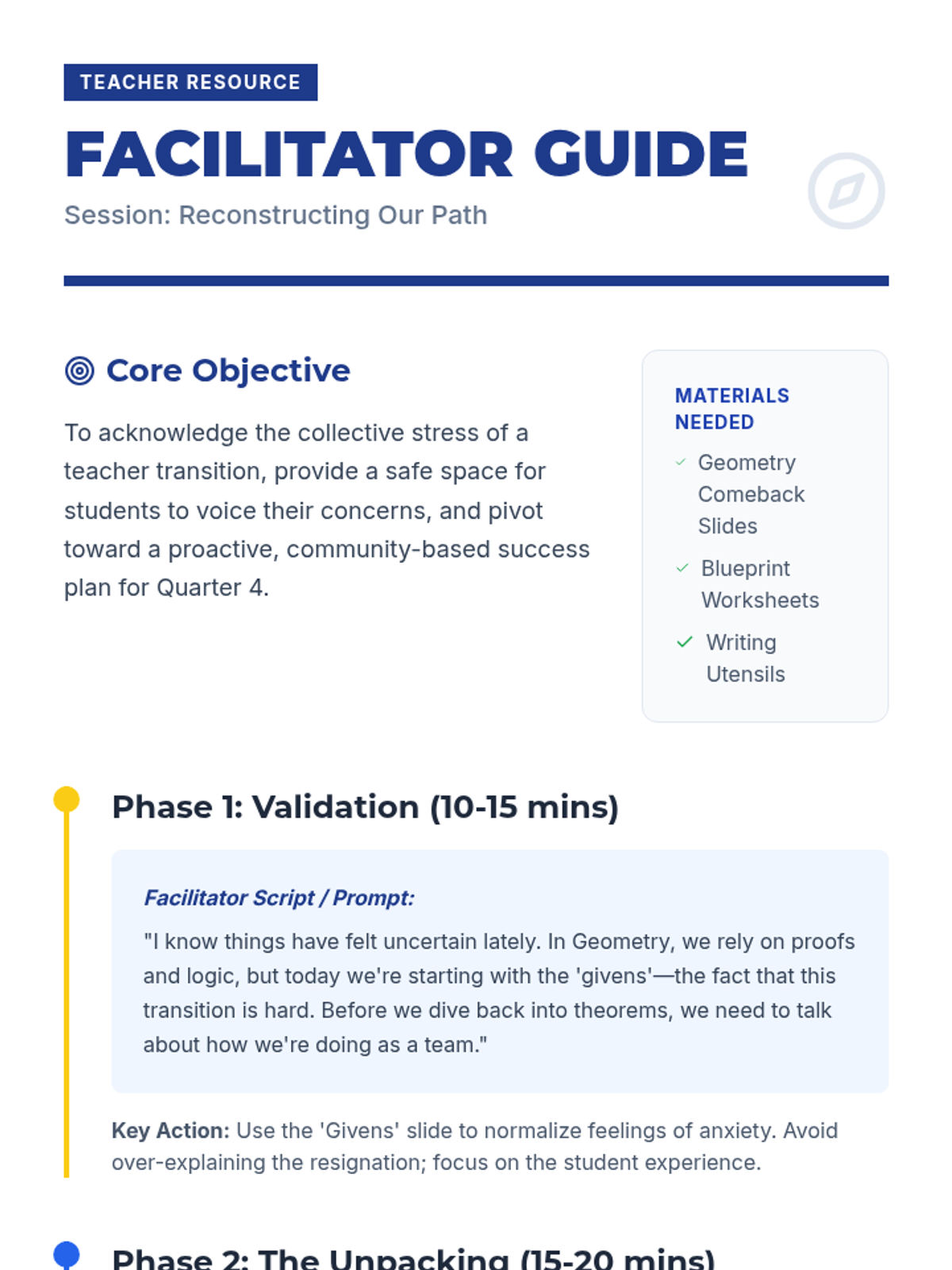
A single, powerful session focused on acknowledging the teacher transition and establishing a collaborative path forward for the final quarter.
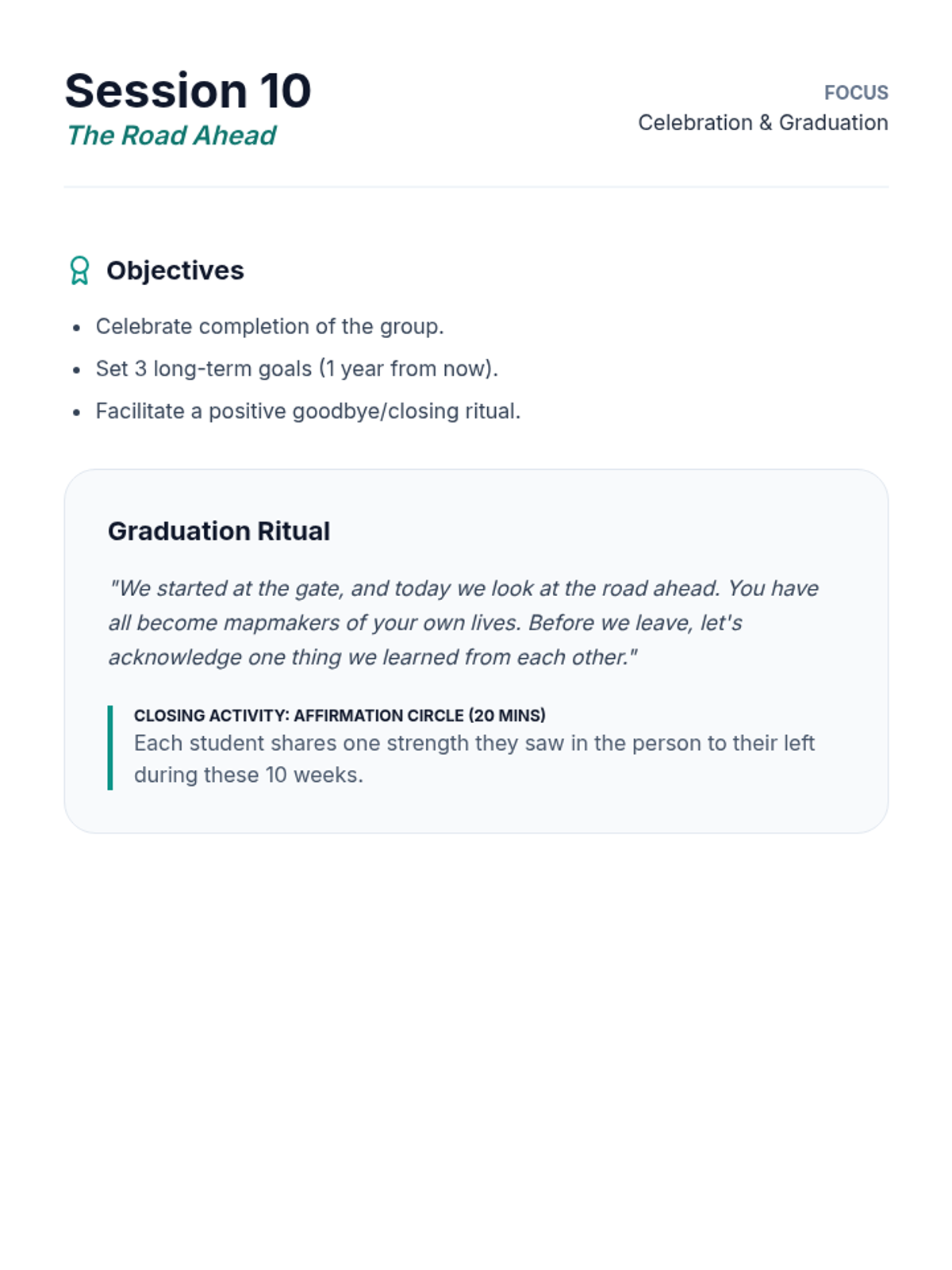
Celebrating progress, setting future goals, and closing the group.
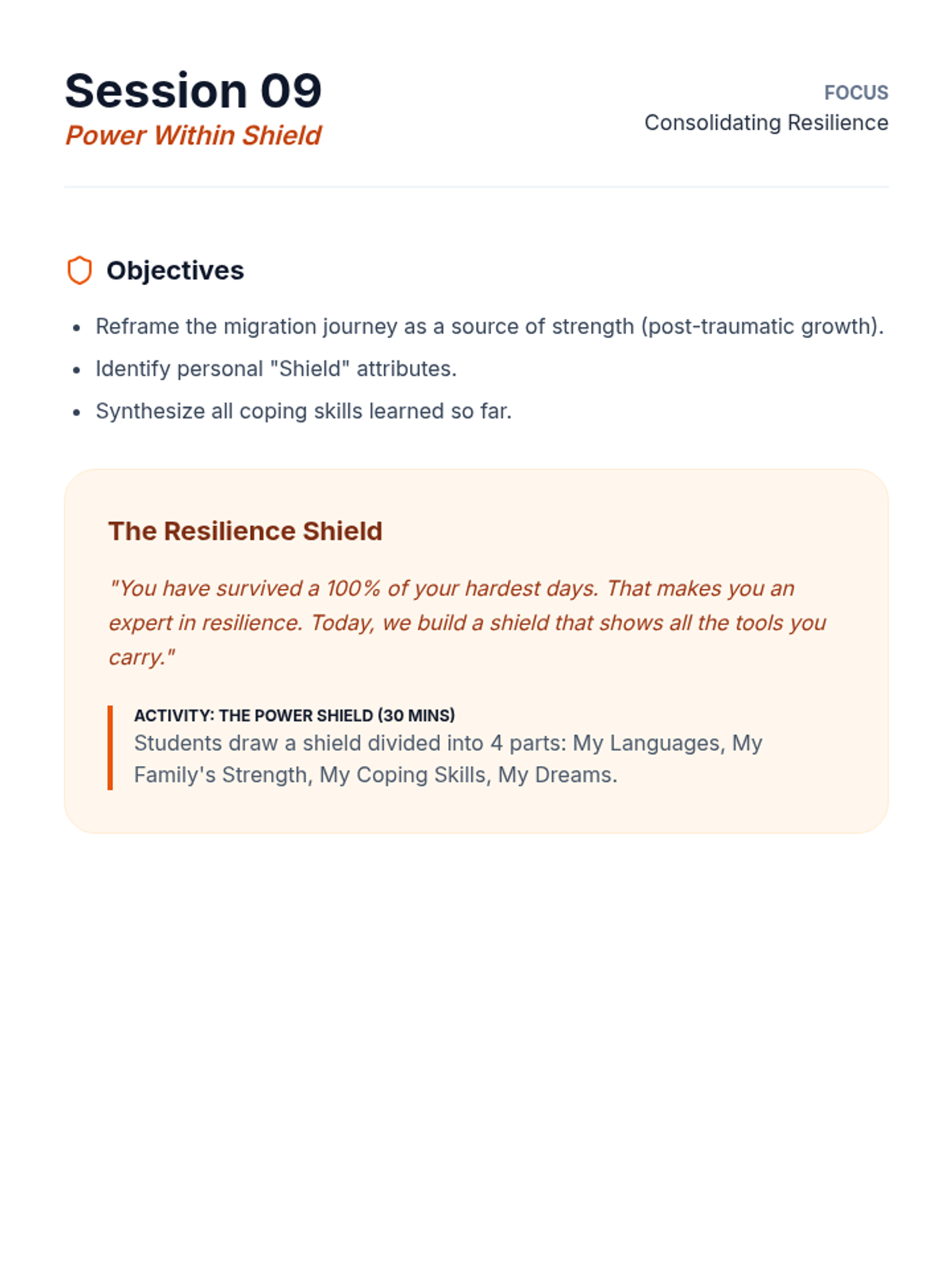
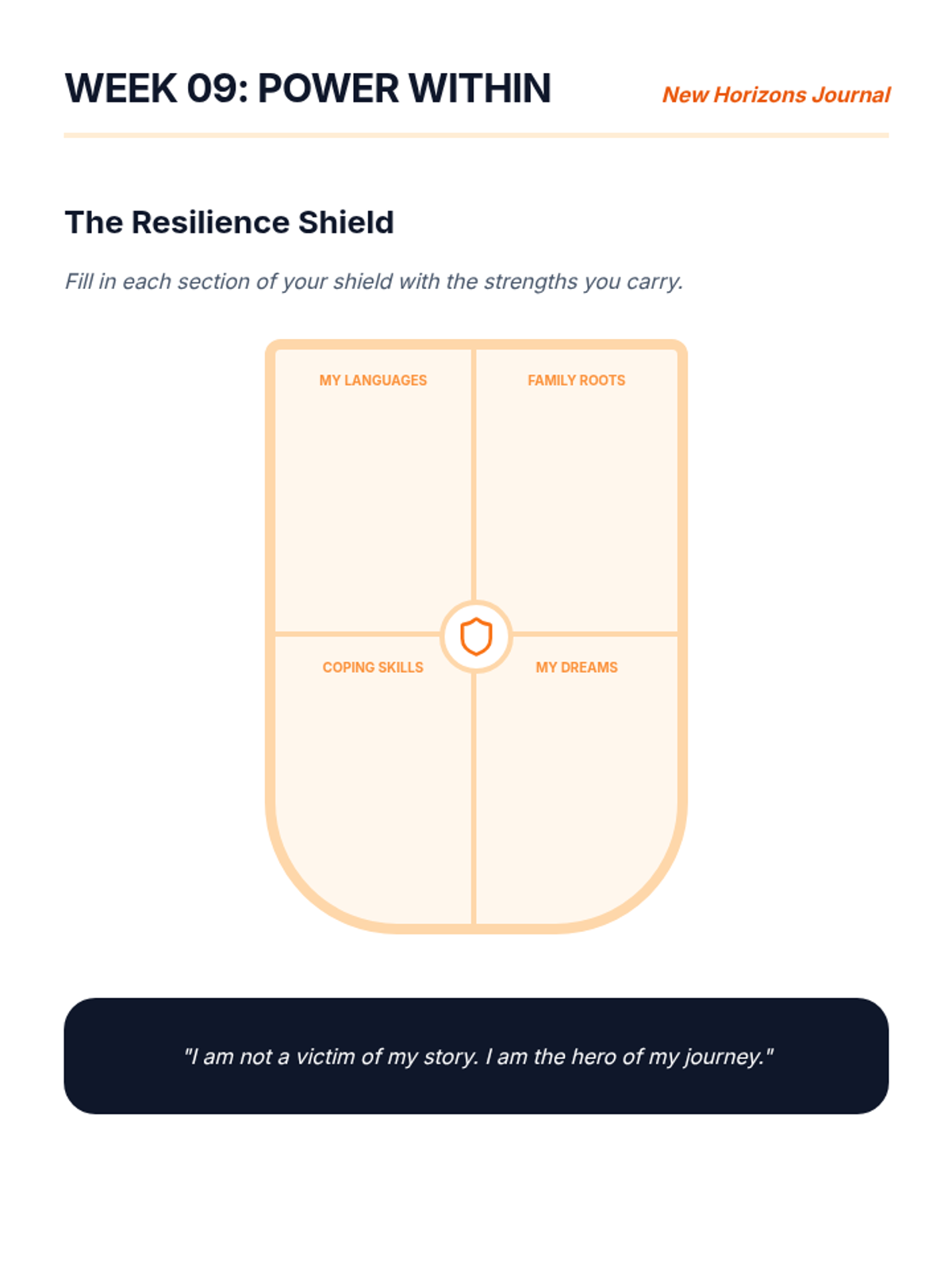
Consolidating coping skills and reframing the newcomer journey as a source of power.
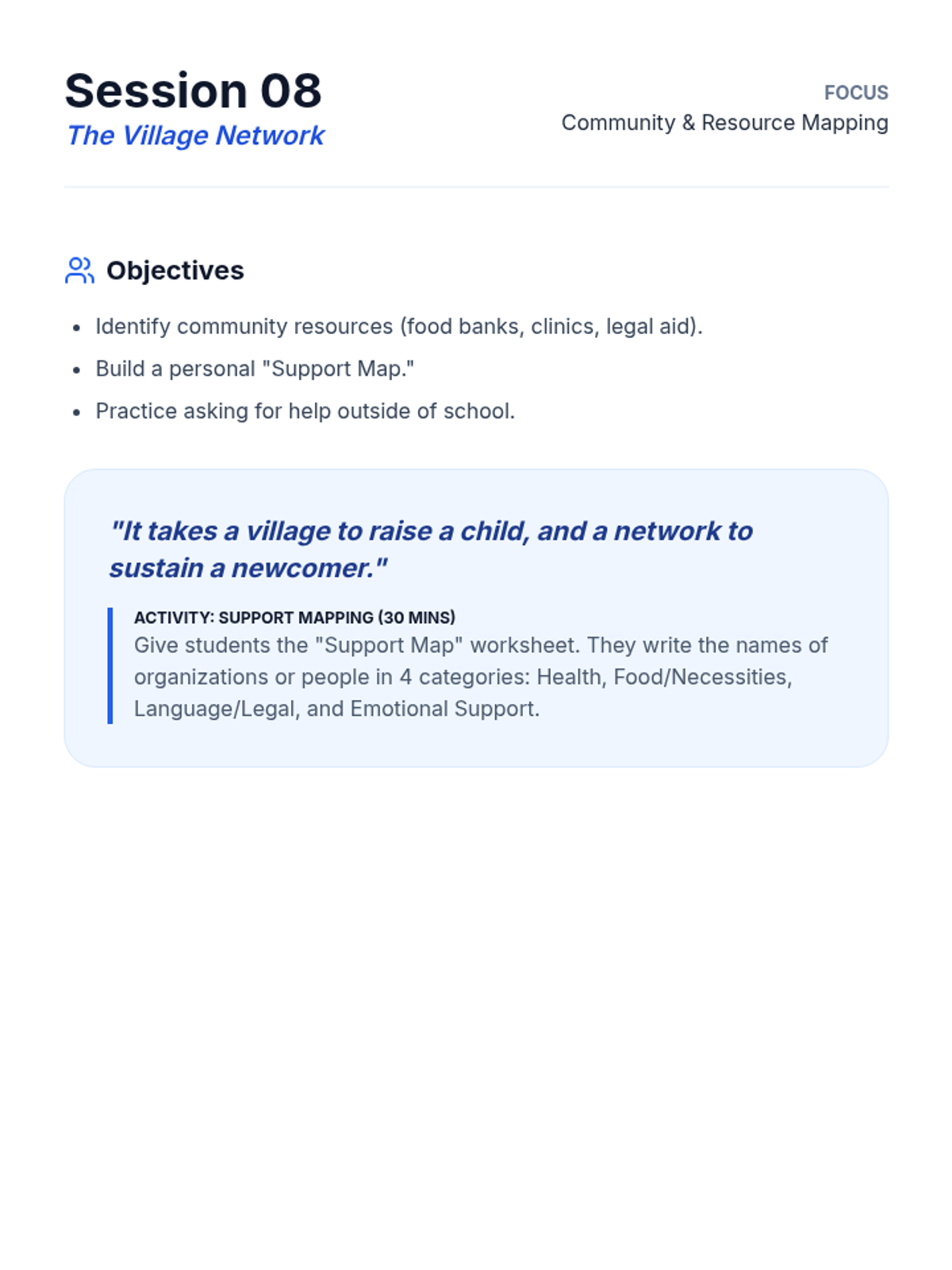
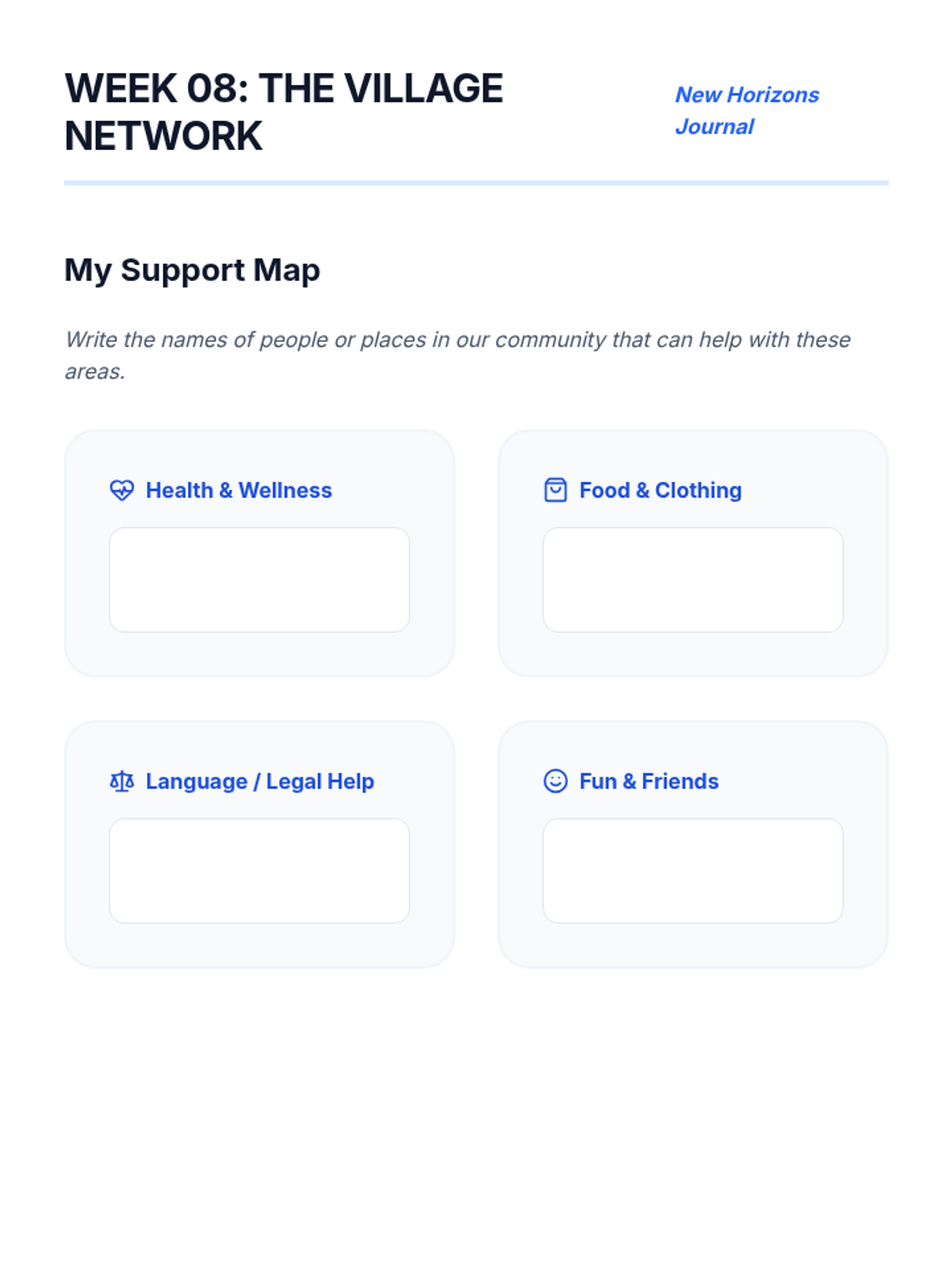
Identifying and accessing school and community support networks.
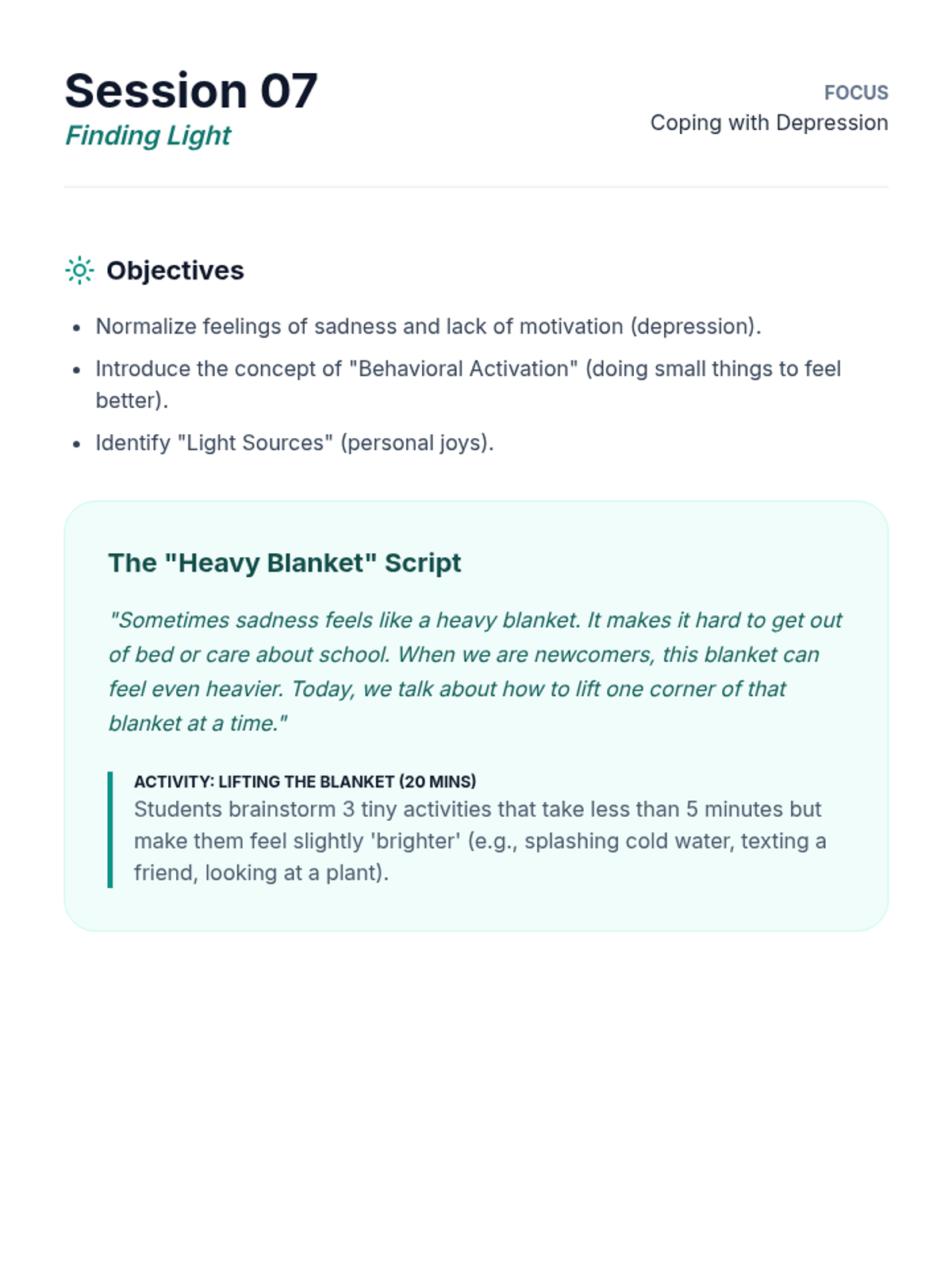
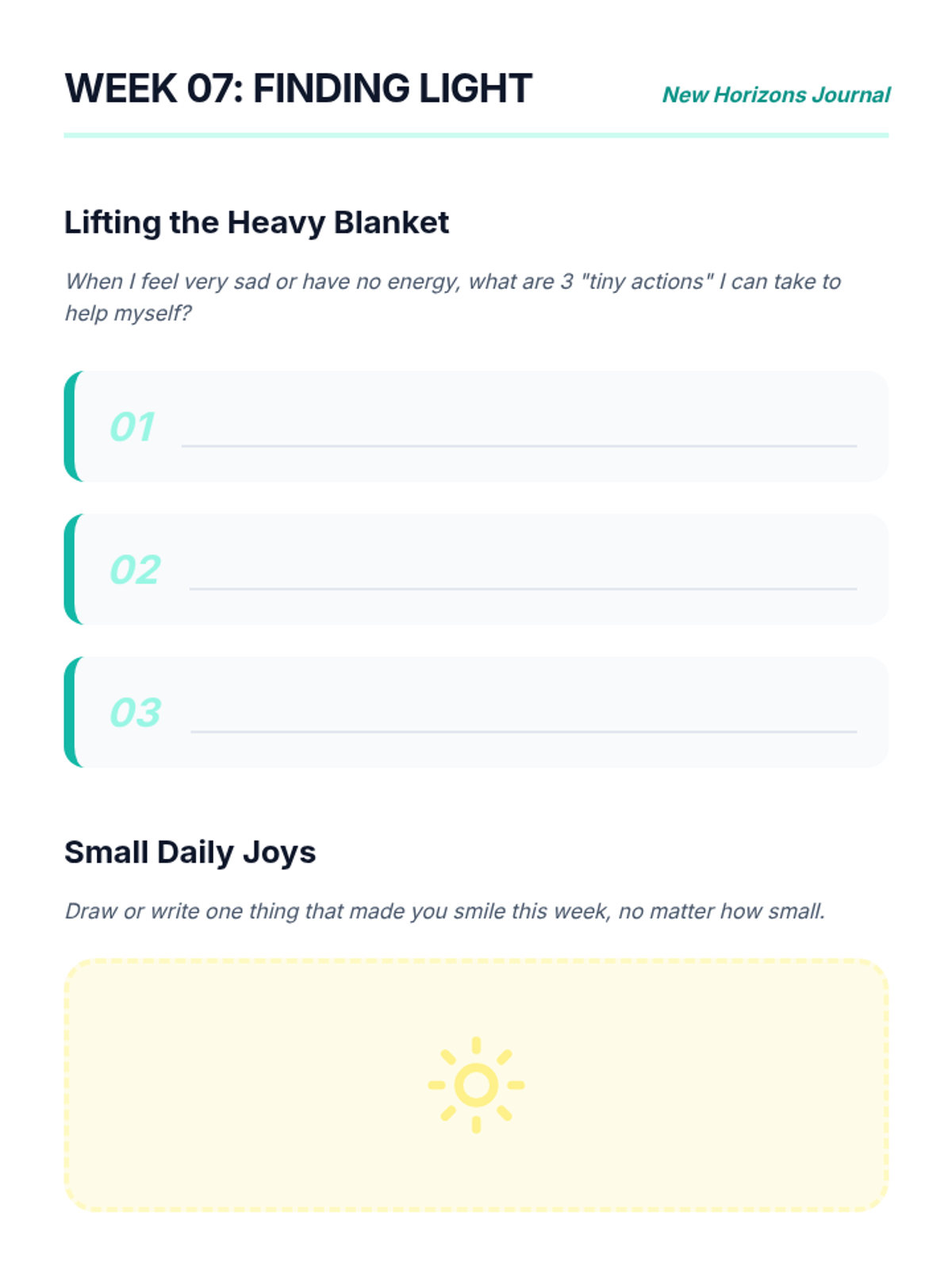
Identifying symptoms of depression and finding daily sources of hope.
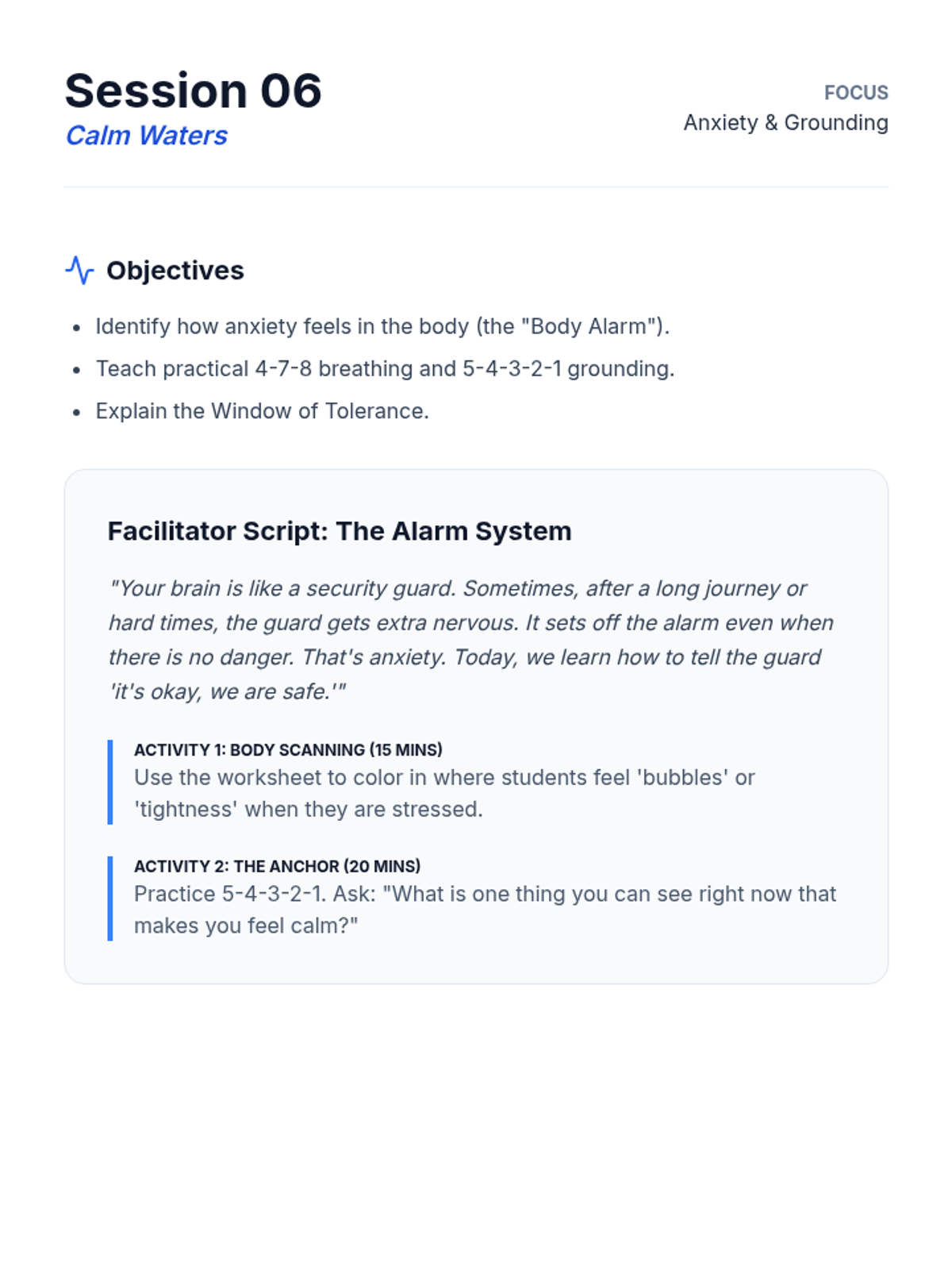
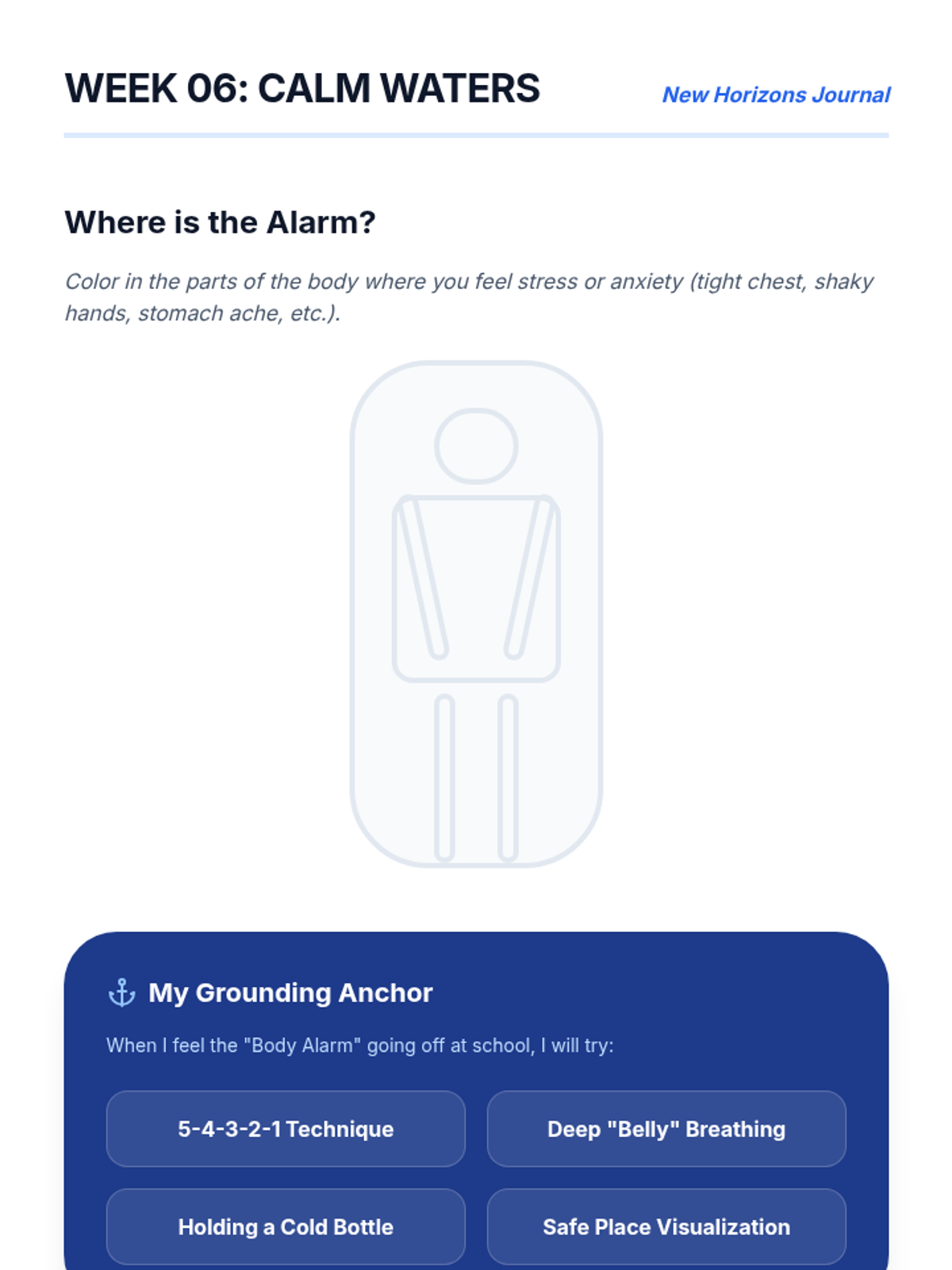
Understanding anxiety and the nervous system with practical grounding tools.
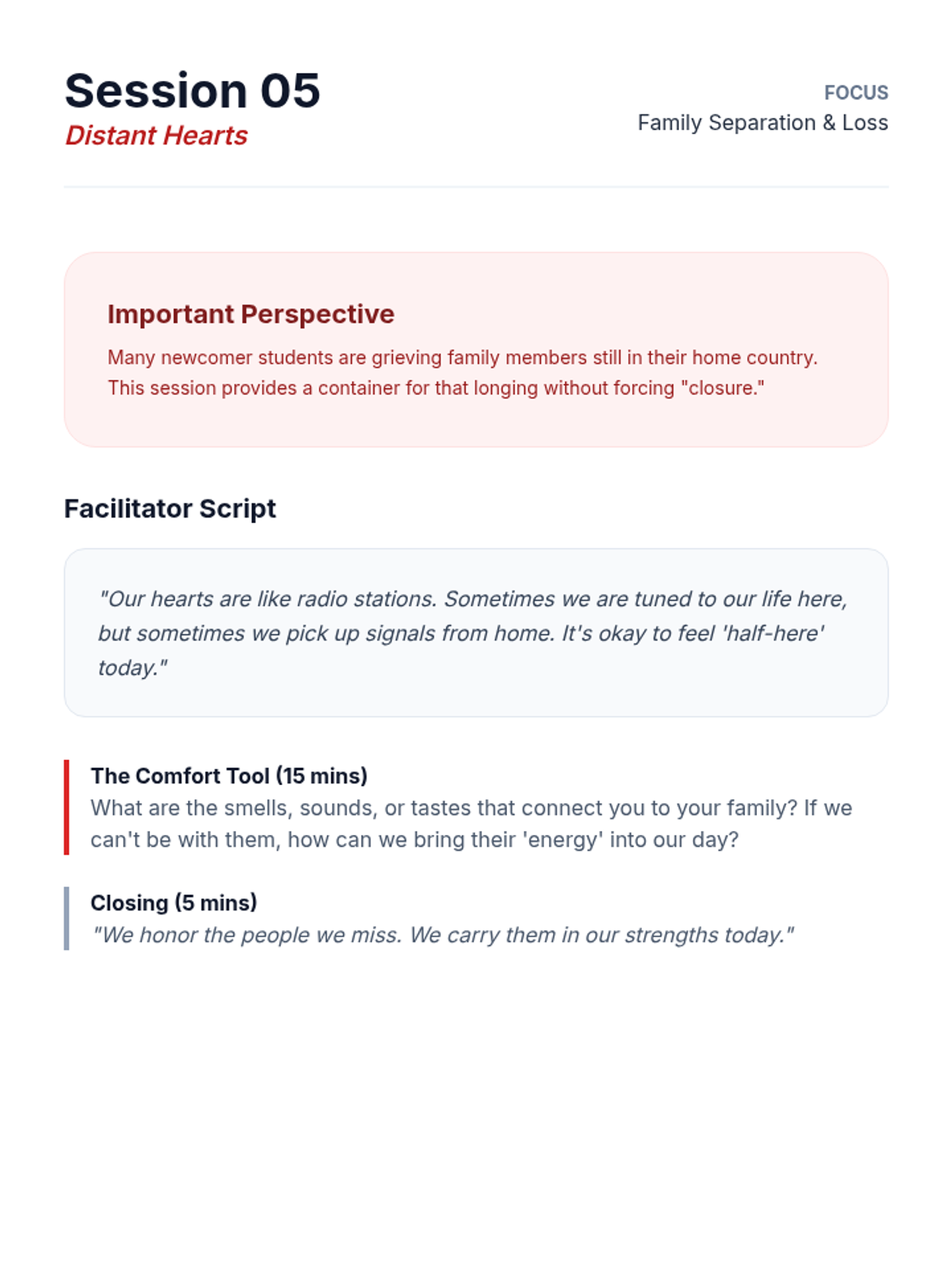
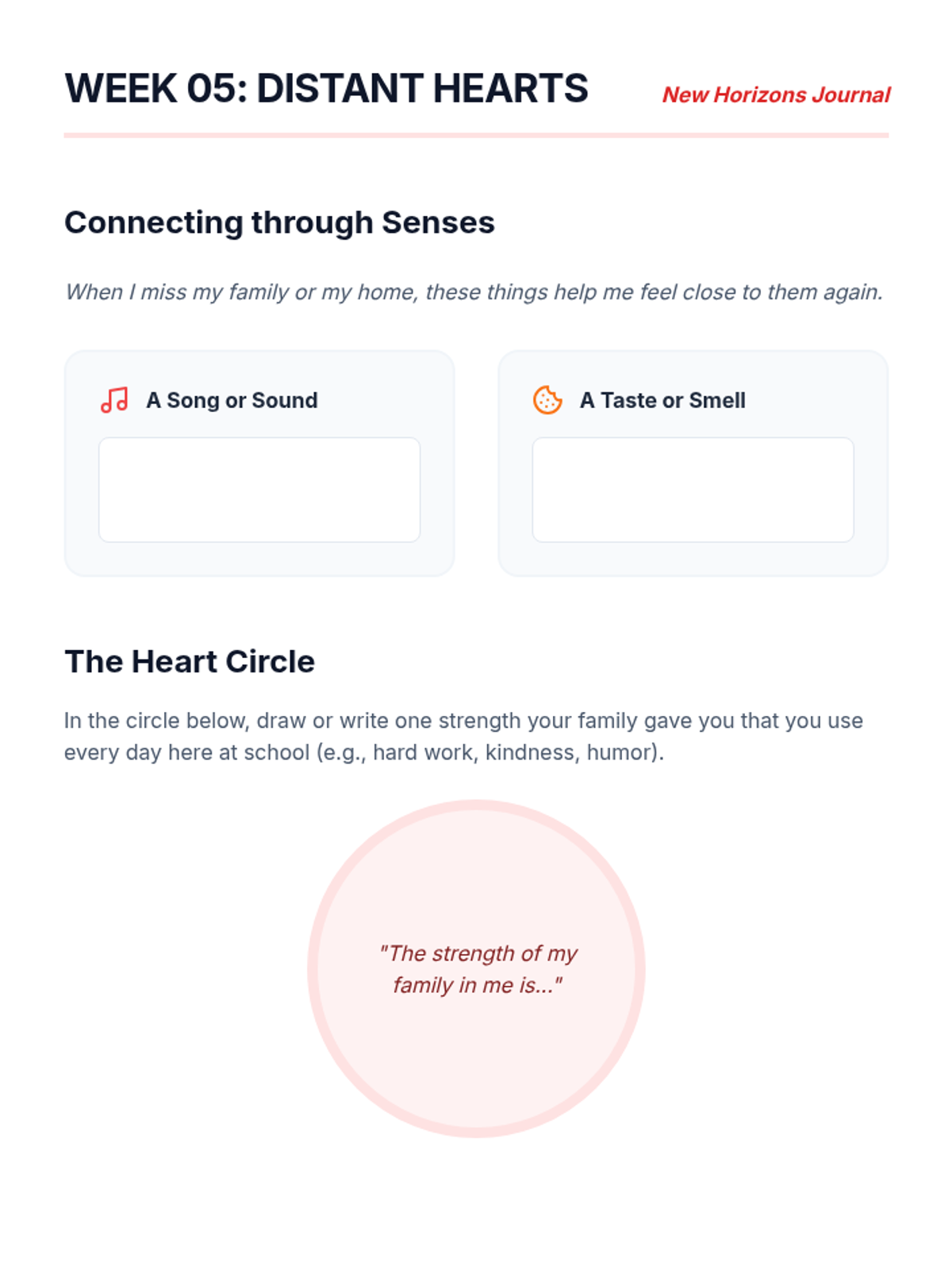
Addressing the emotional impact of family separation and ambiguous loss.
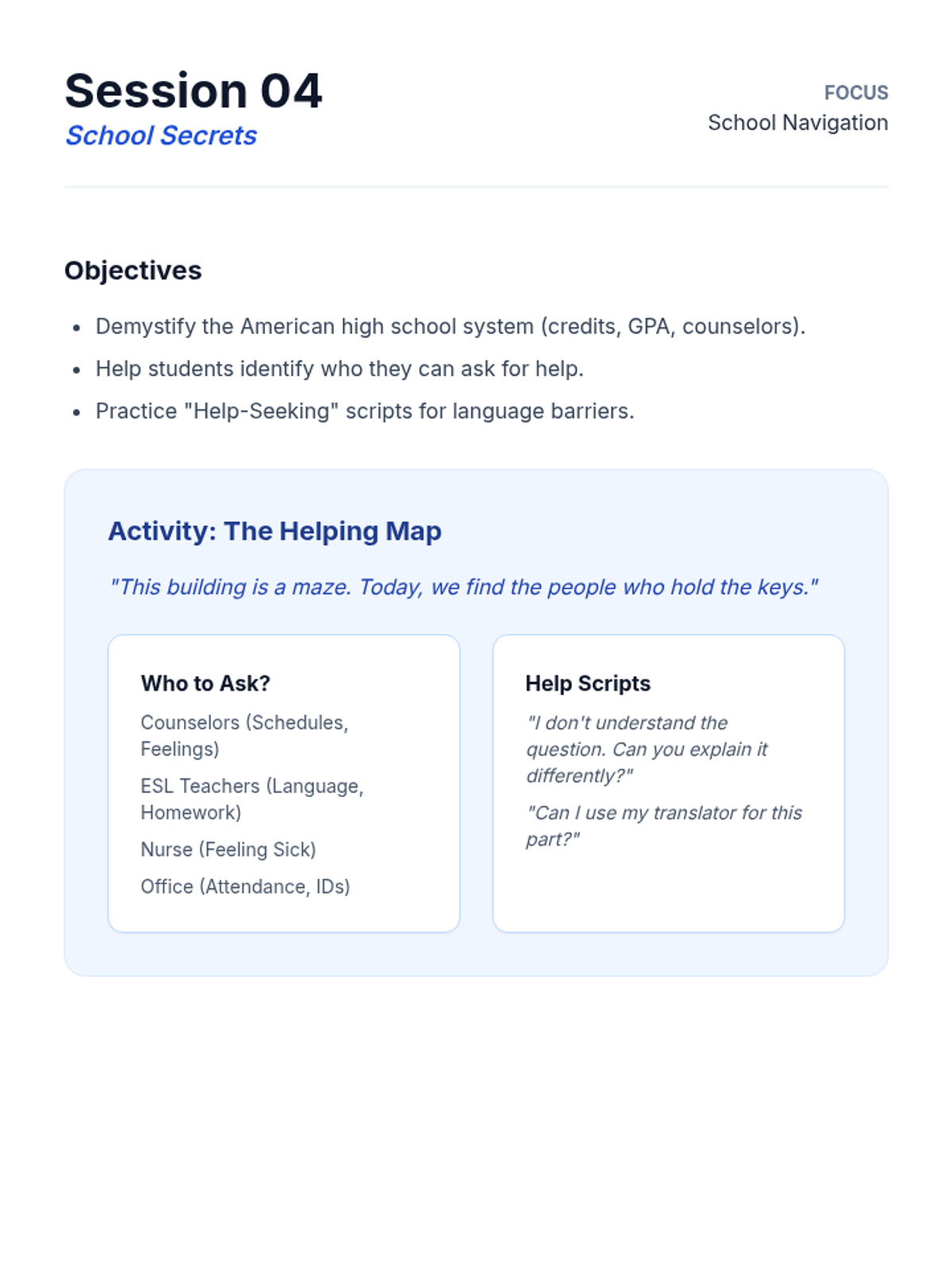
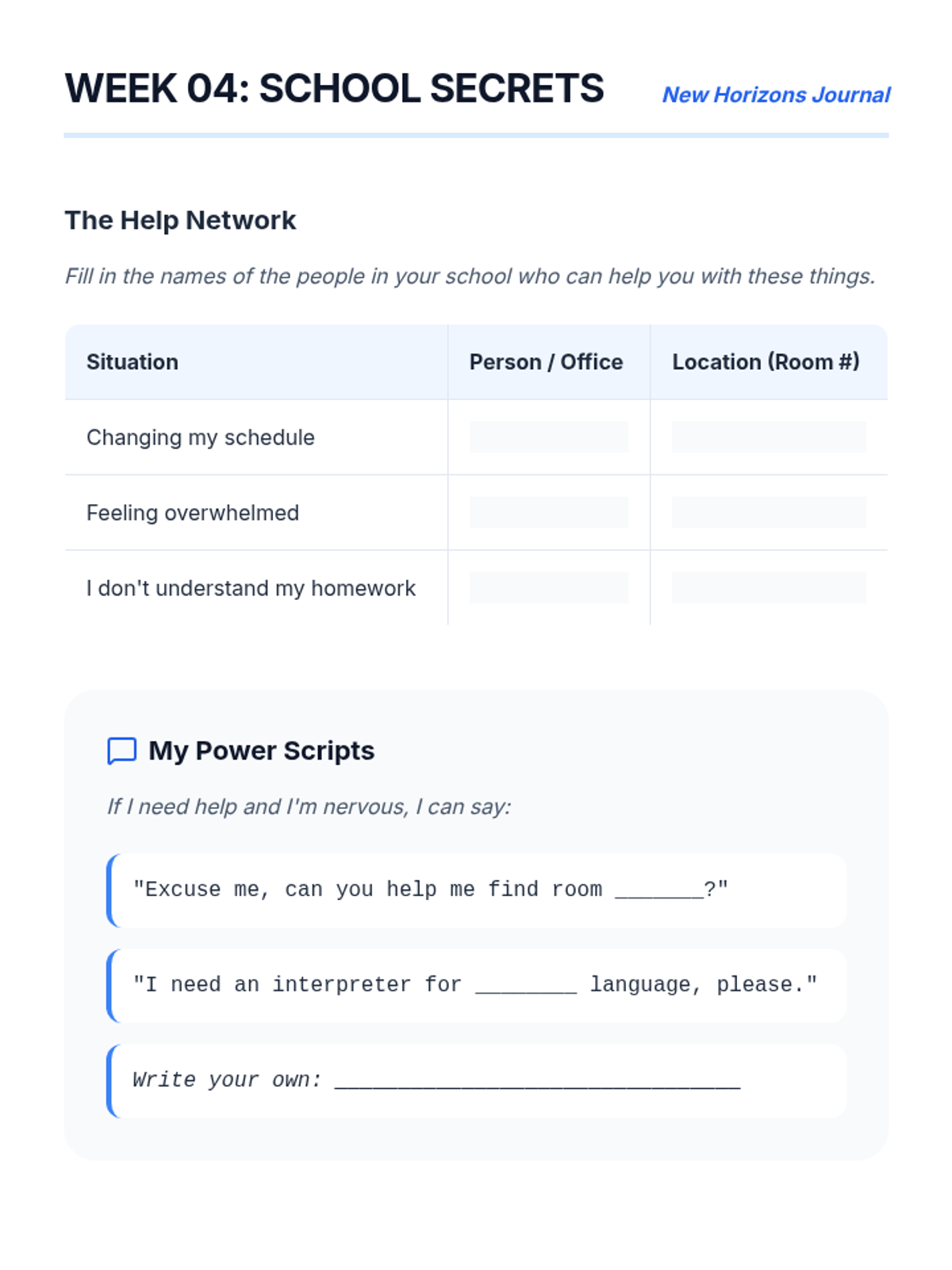
Strategies for navigating the school system and overcoming language barriers.
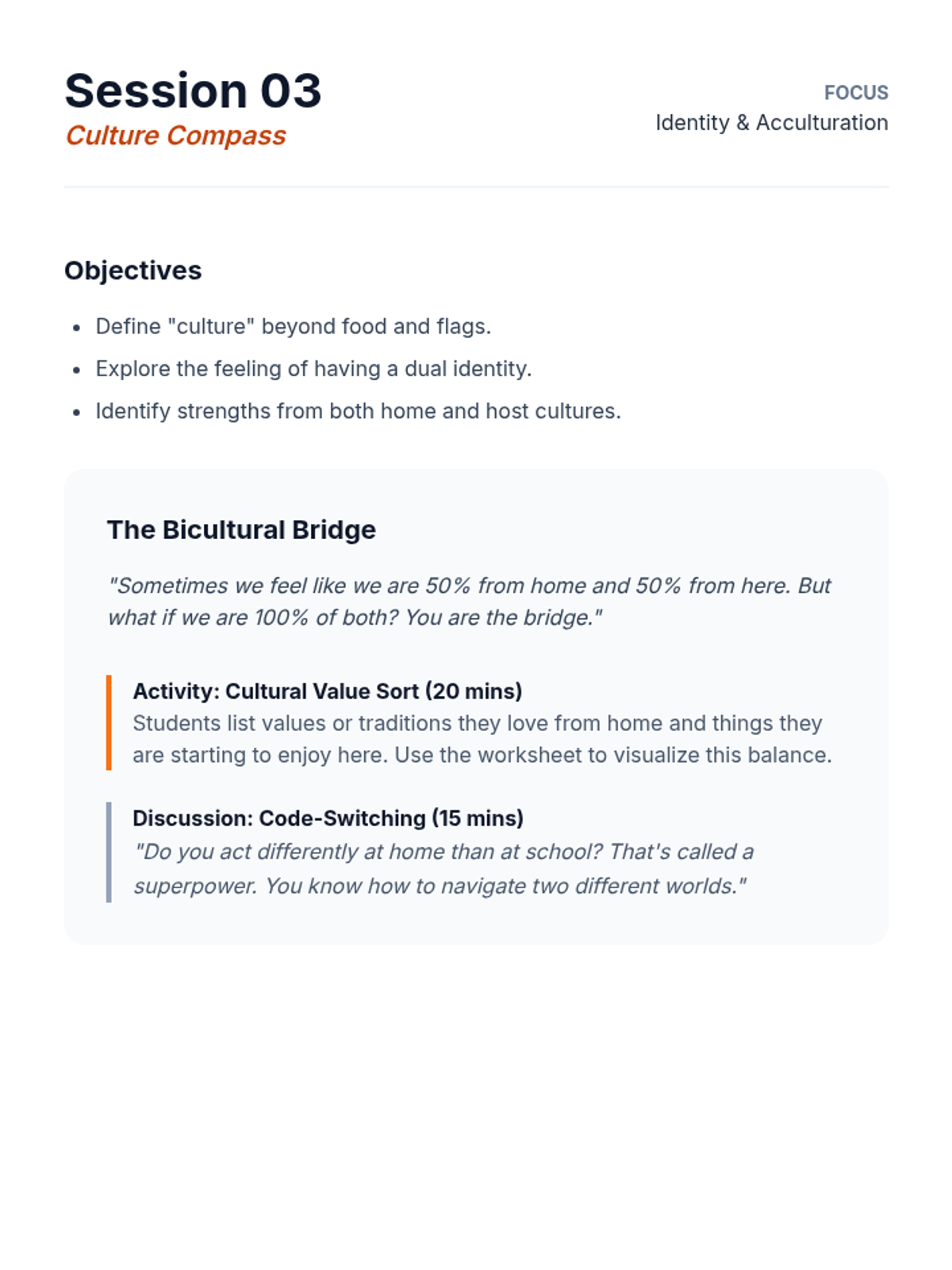
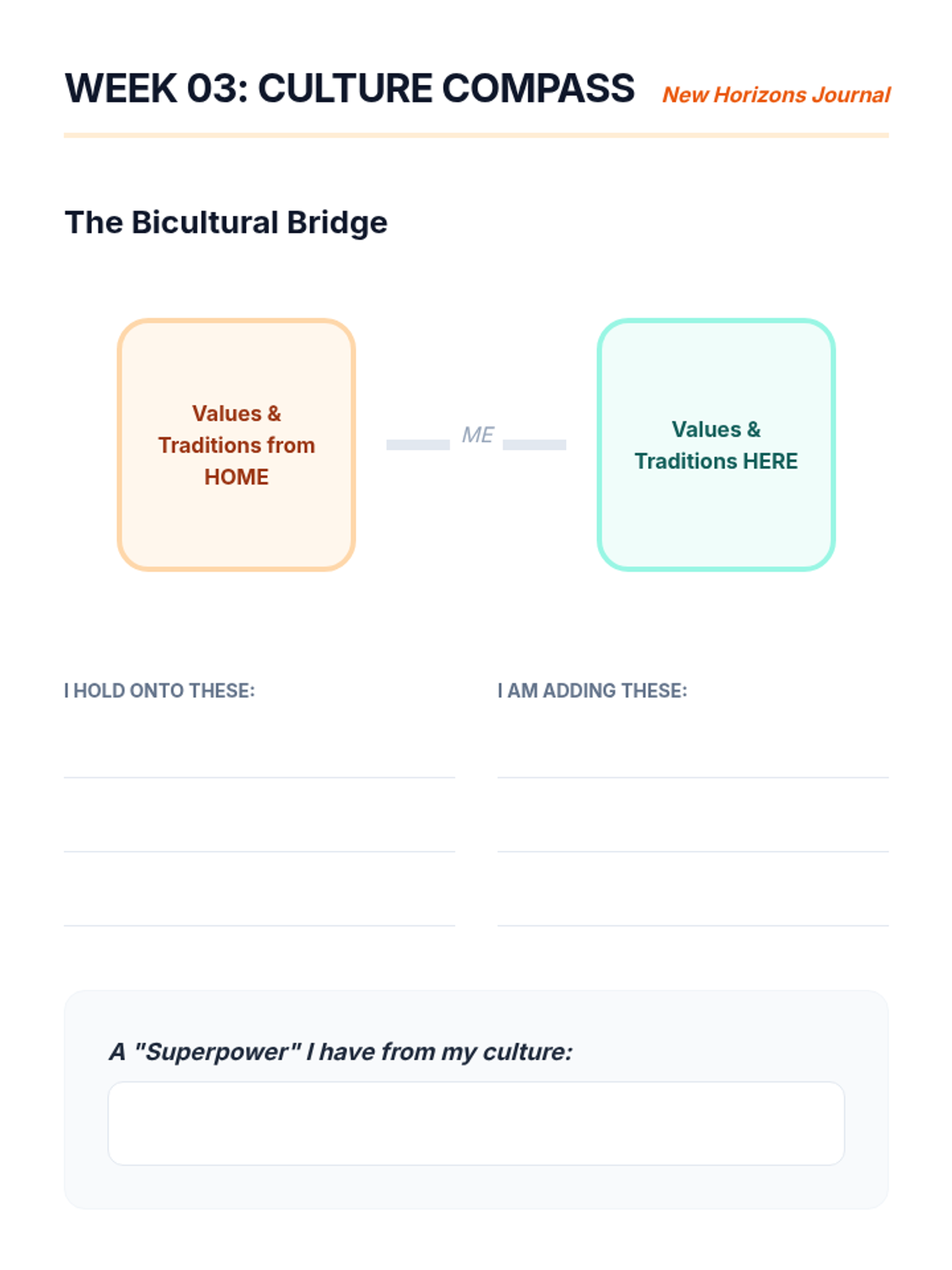
Exploring dual identities and navigating the bridge between home and host cultures.
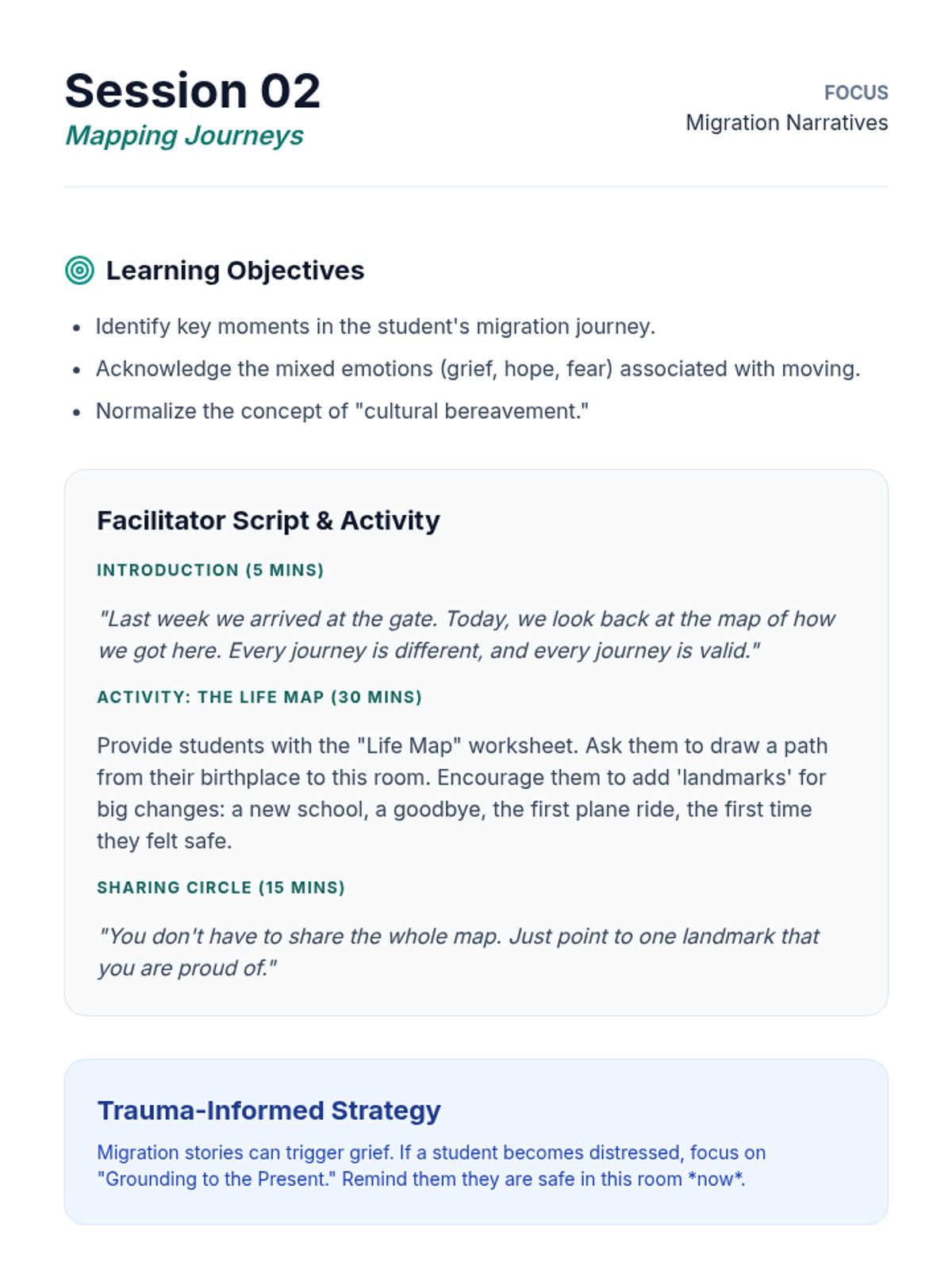
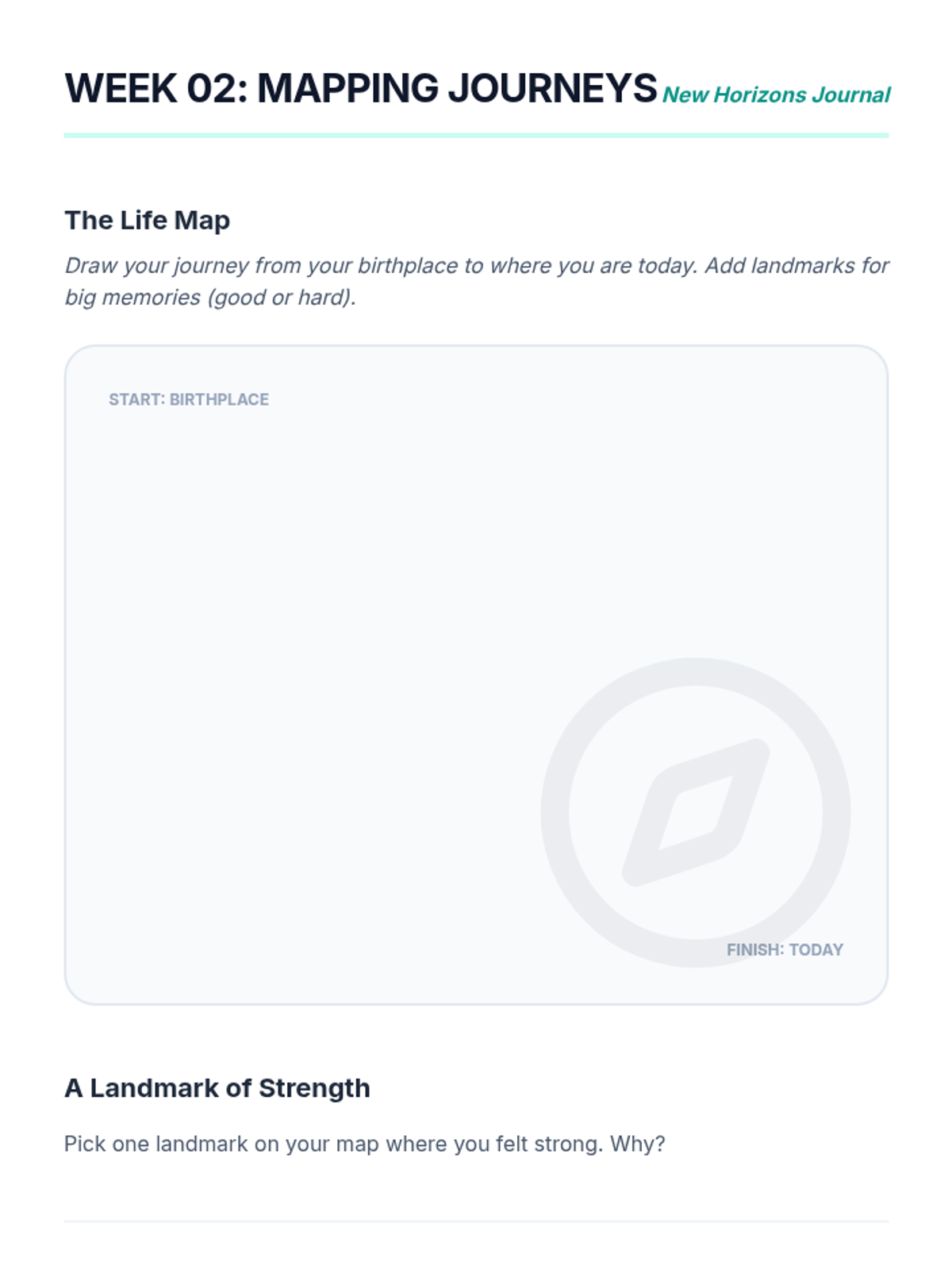
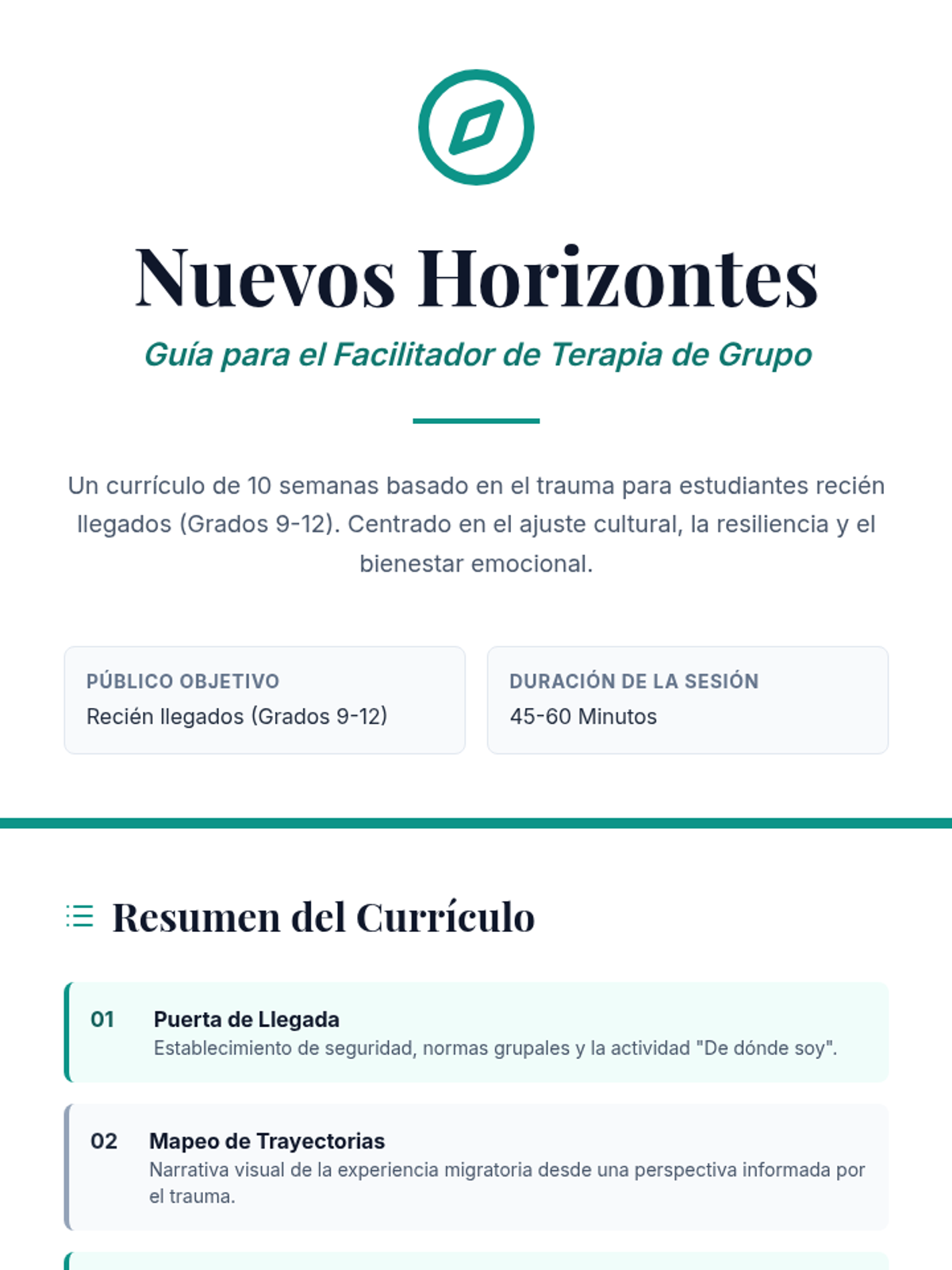
A trauma-informed session for students to share their migration narratives through visual mapping.
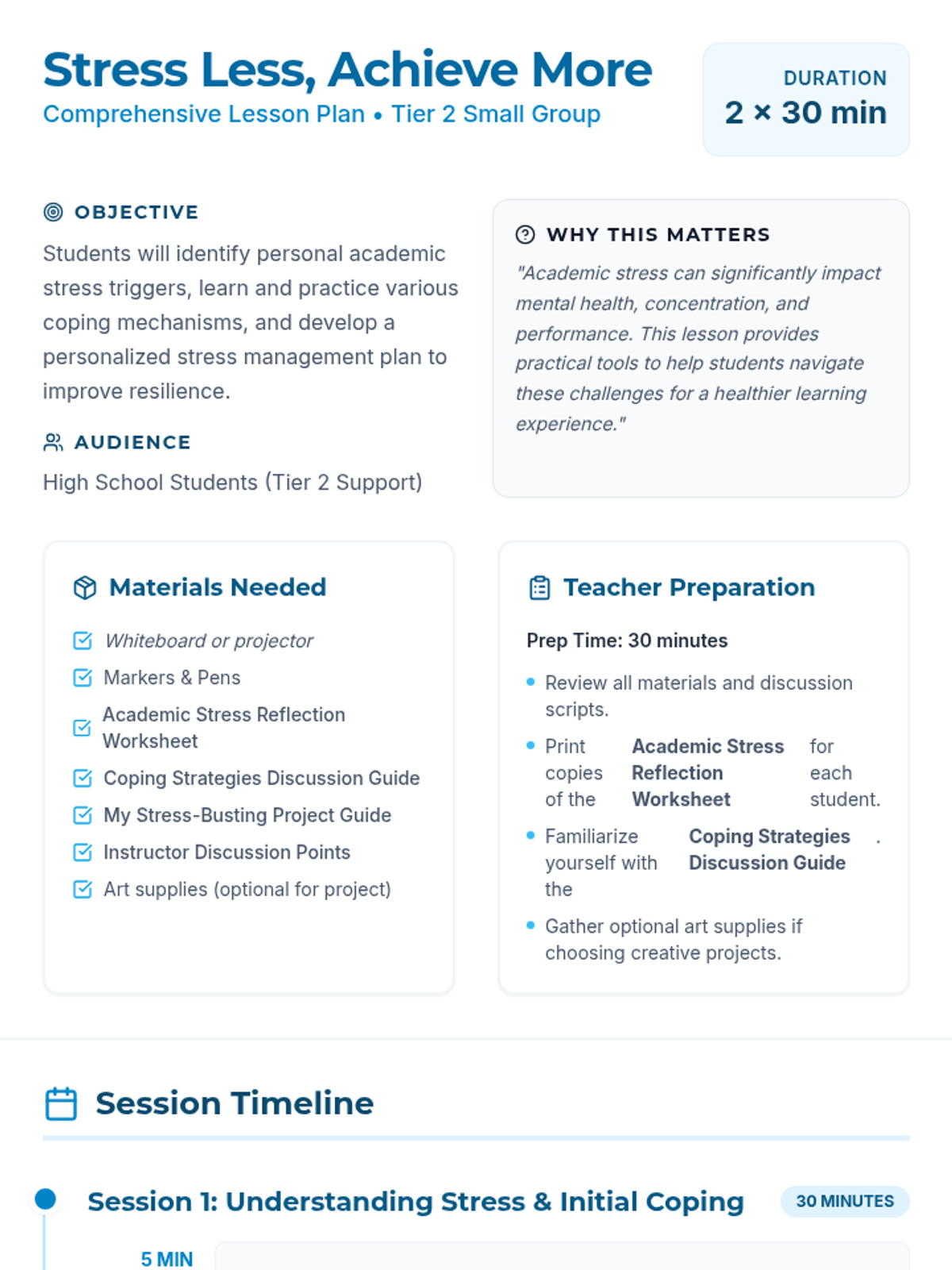
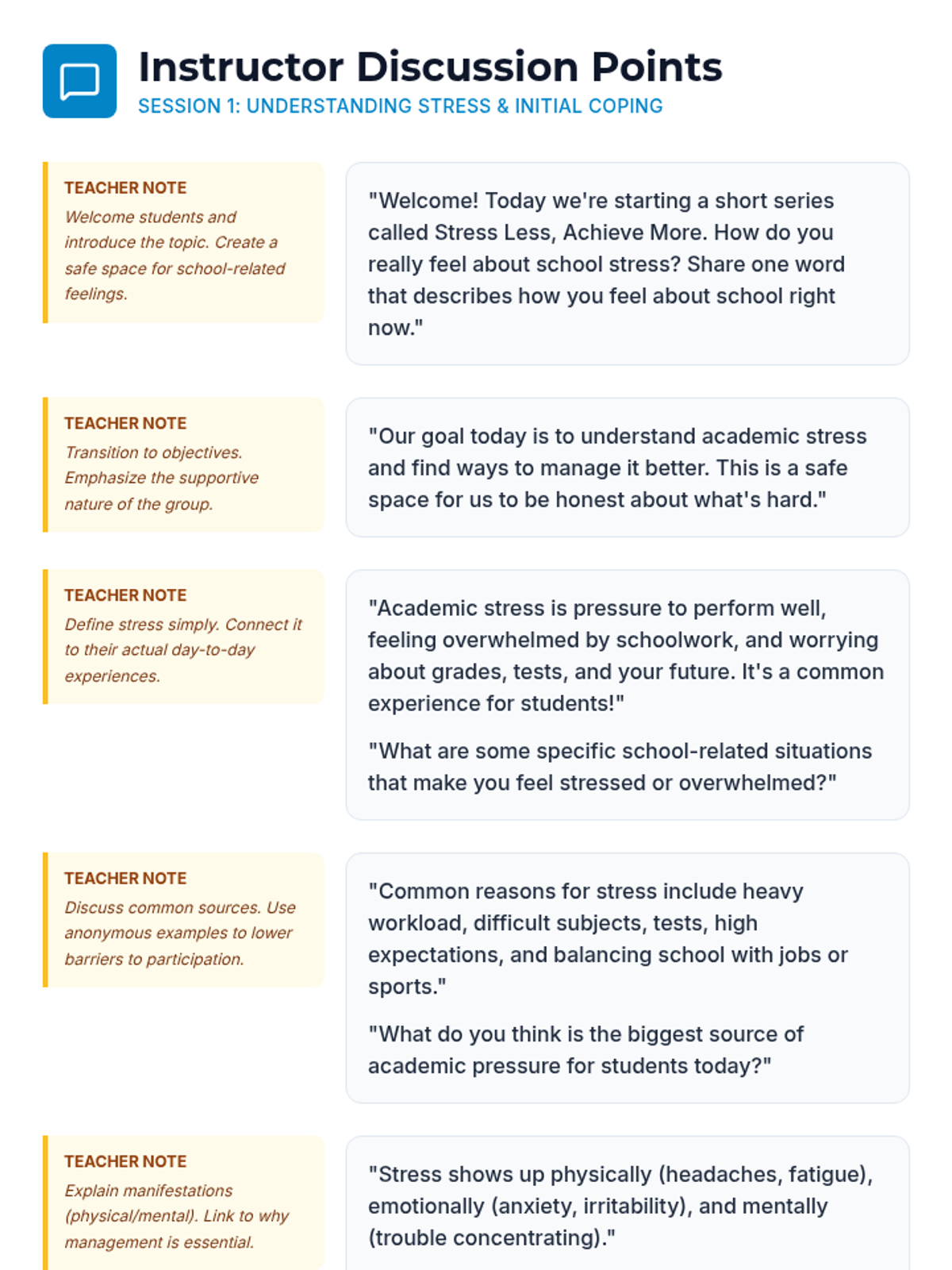
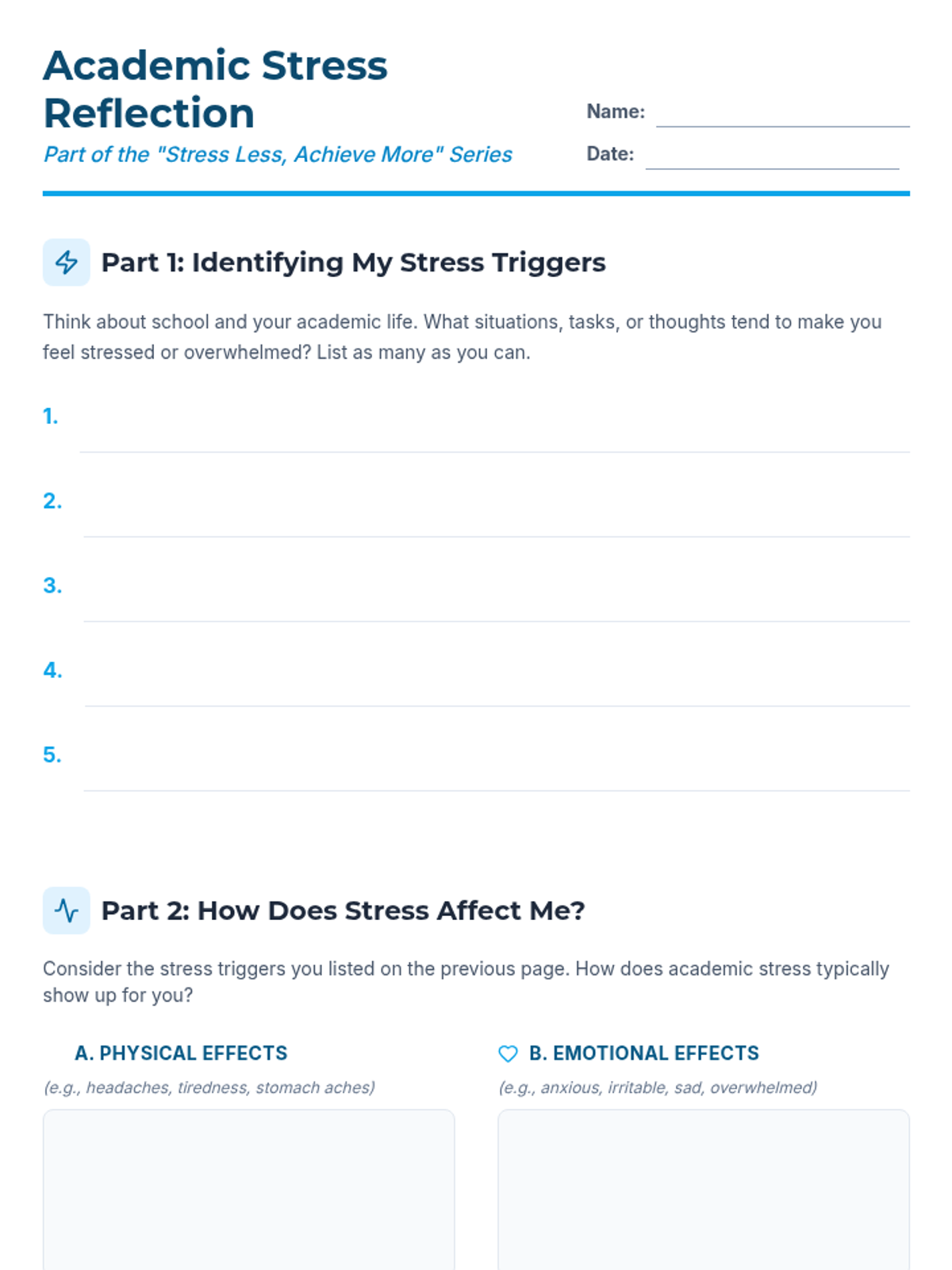
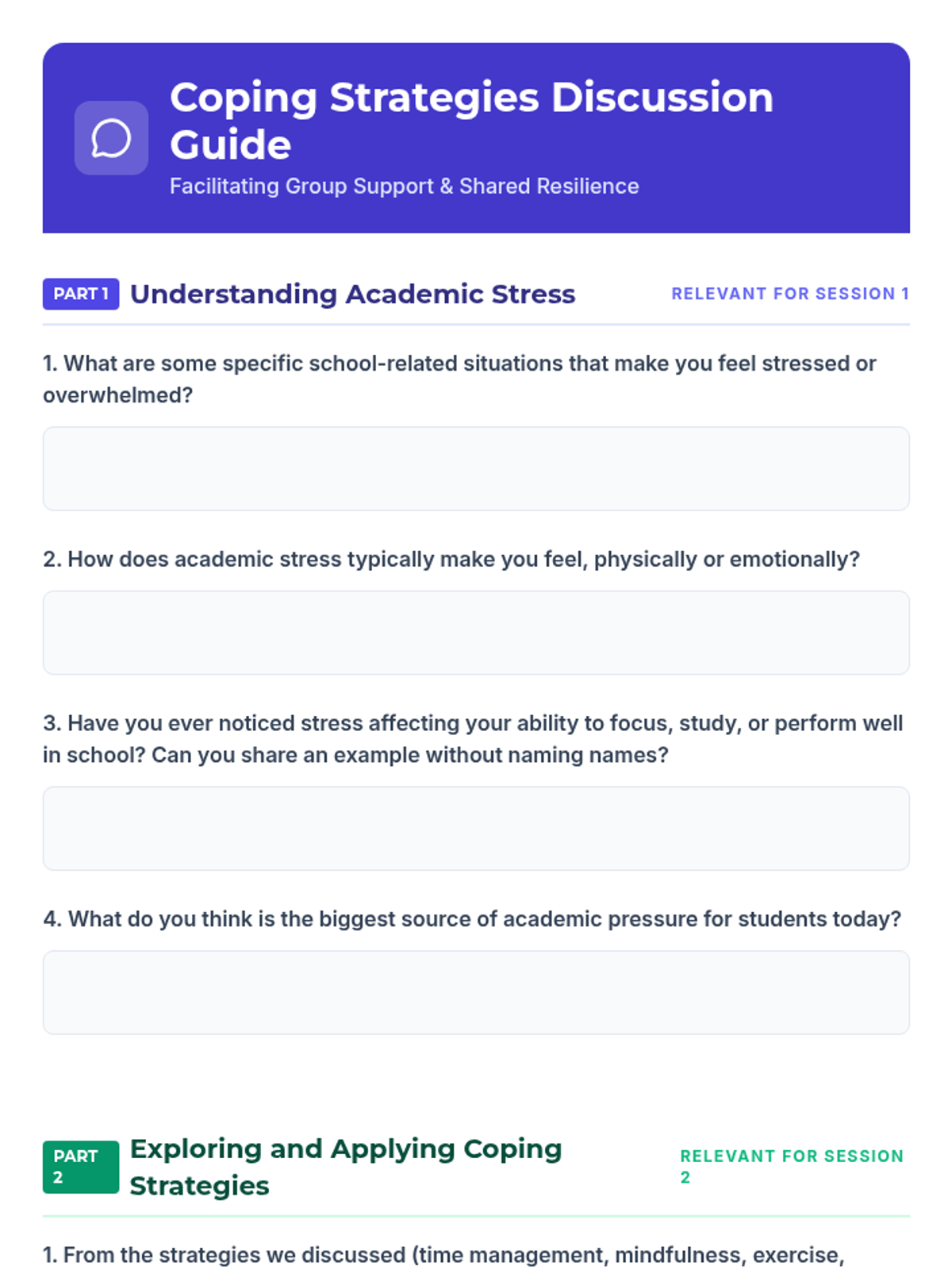
A two-session Tier 2 group lesson series for high school students to identify academic stress triggers and develop personalized coping strategies.
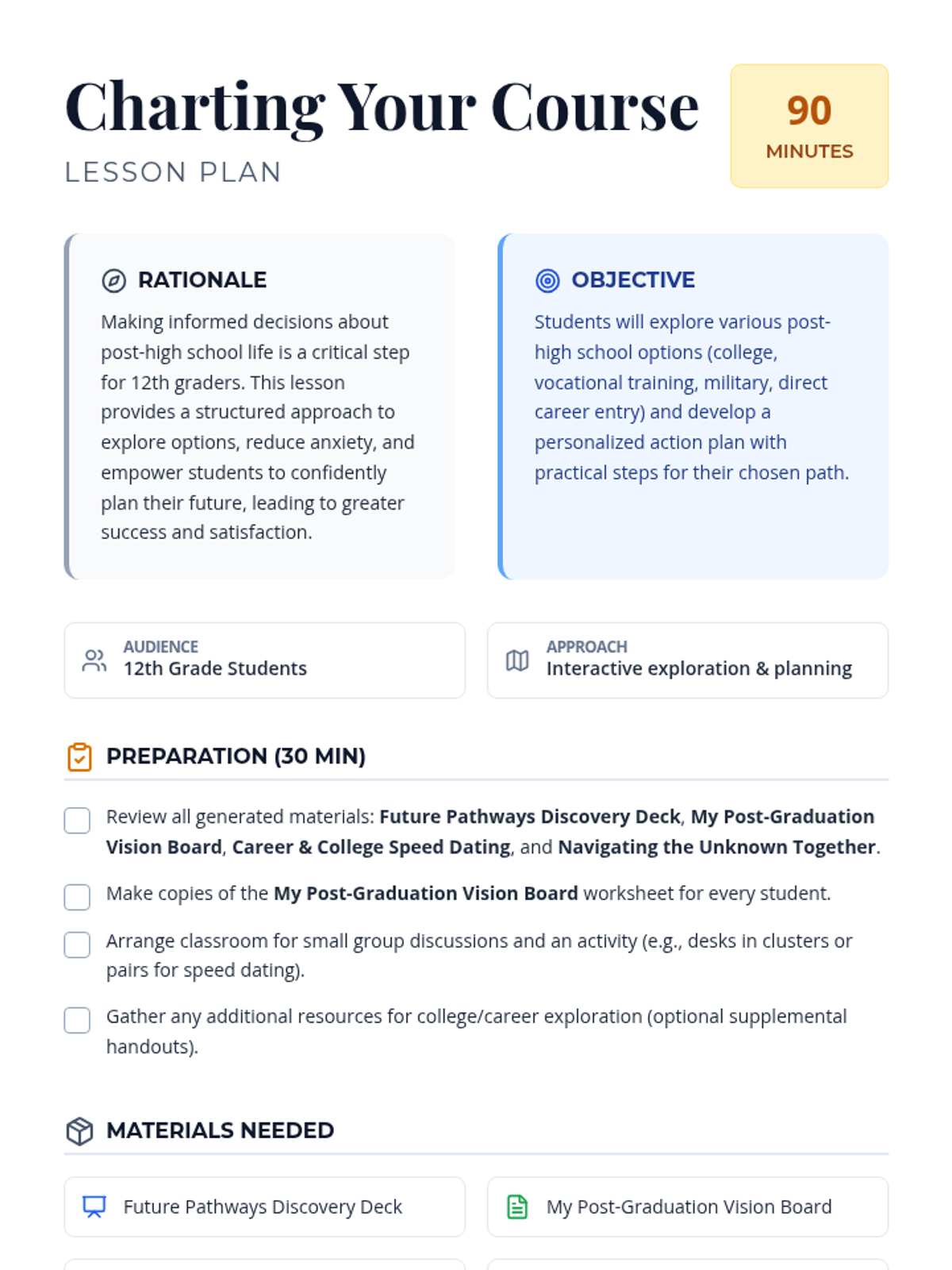
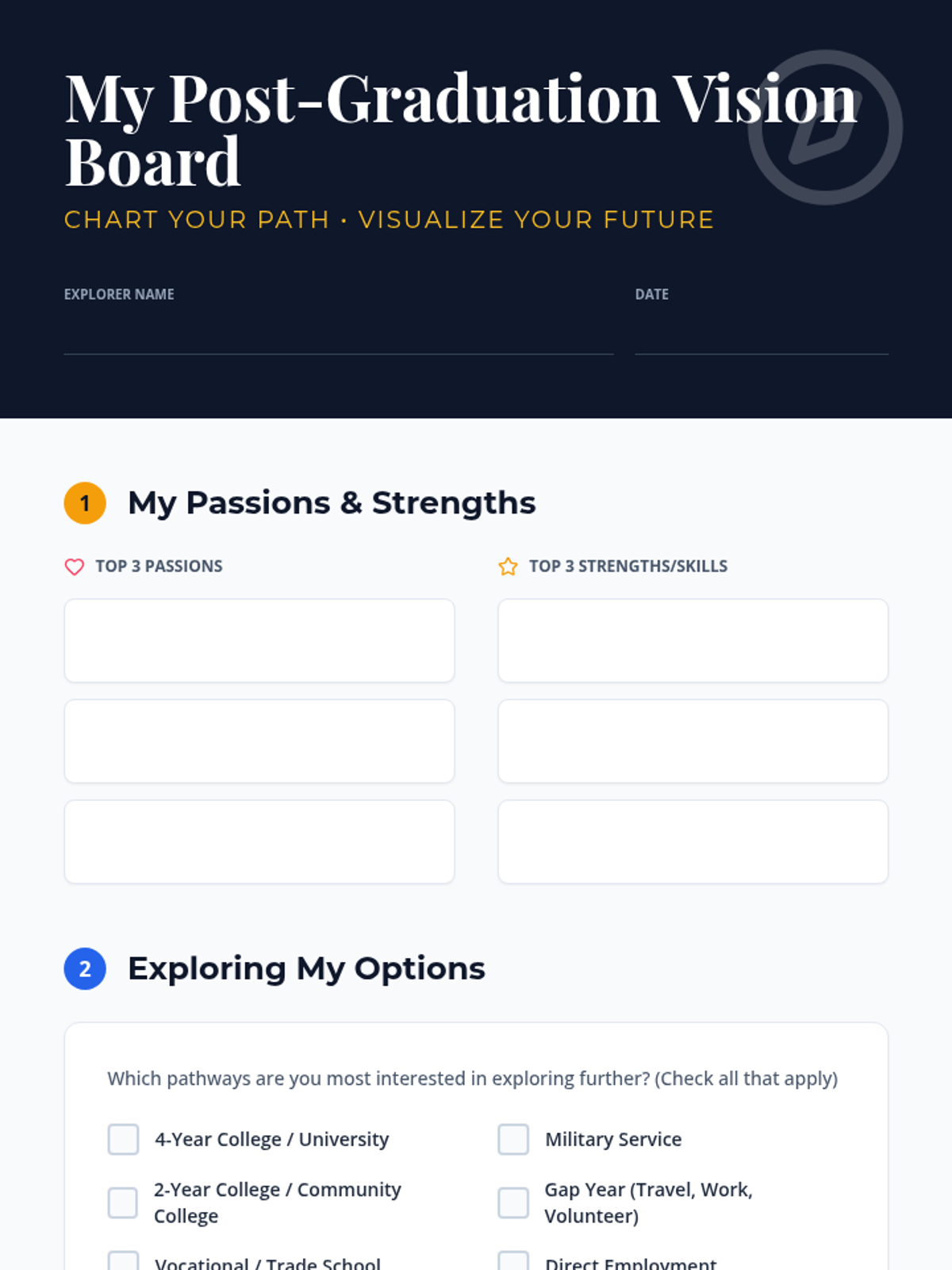
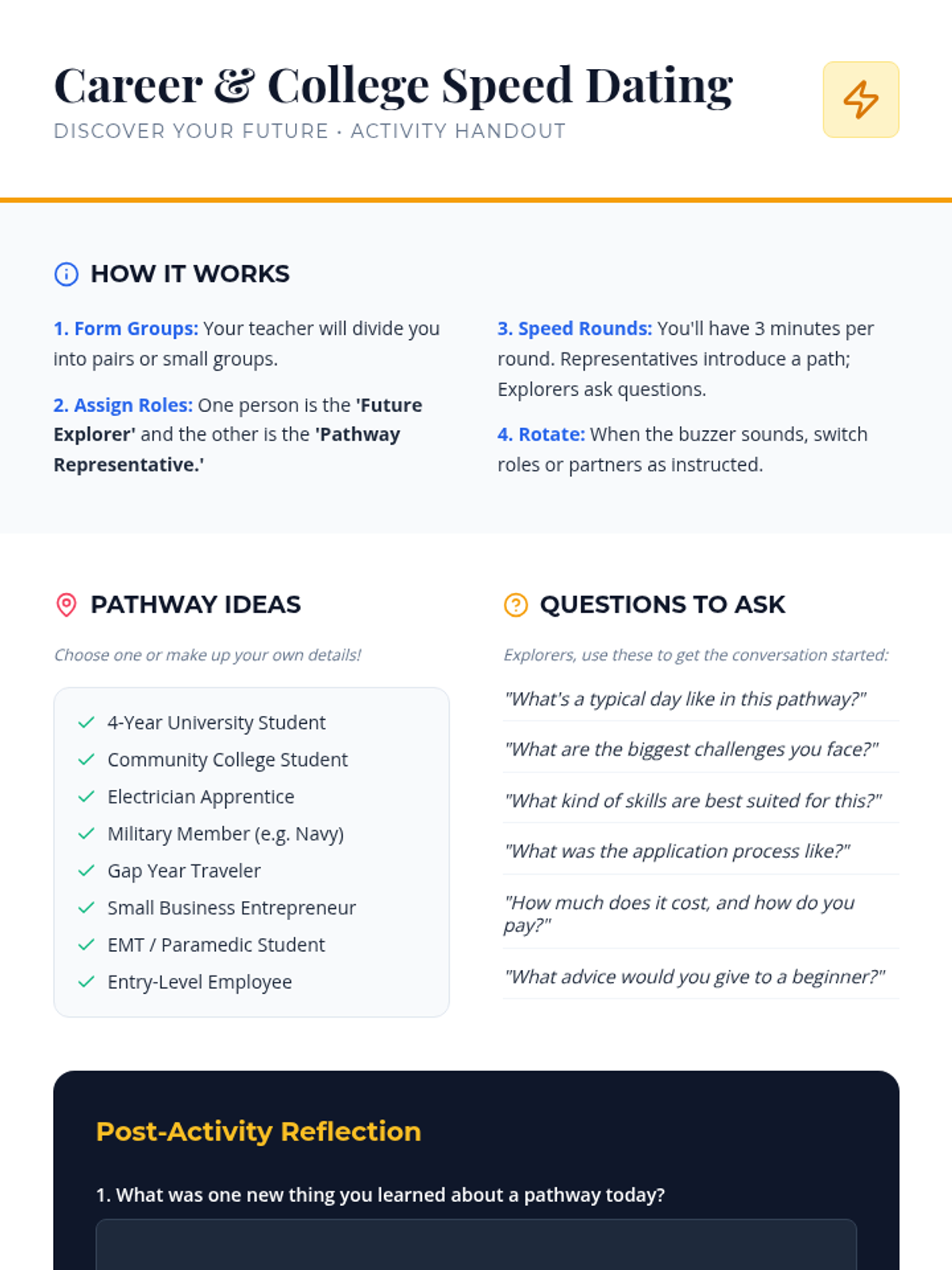
A comprehensive 90-minute workshop for 12th graders to explore post-secondary options, including college, trades, military, and gap years, through interactive activities and personal visioning.
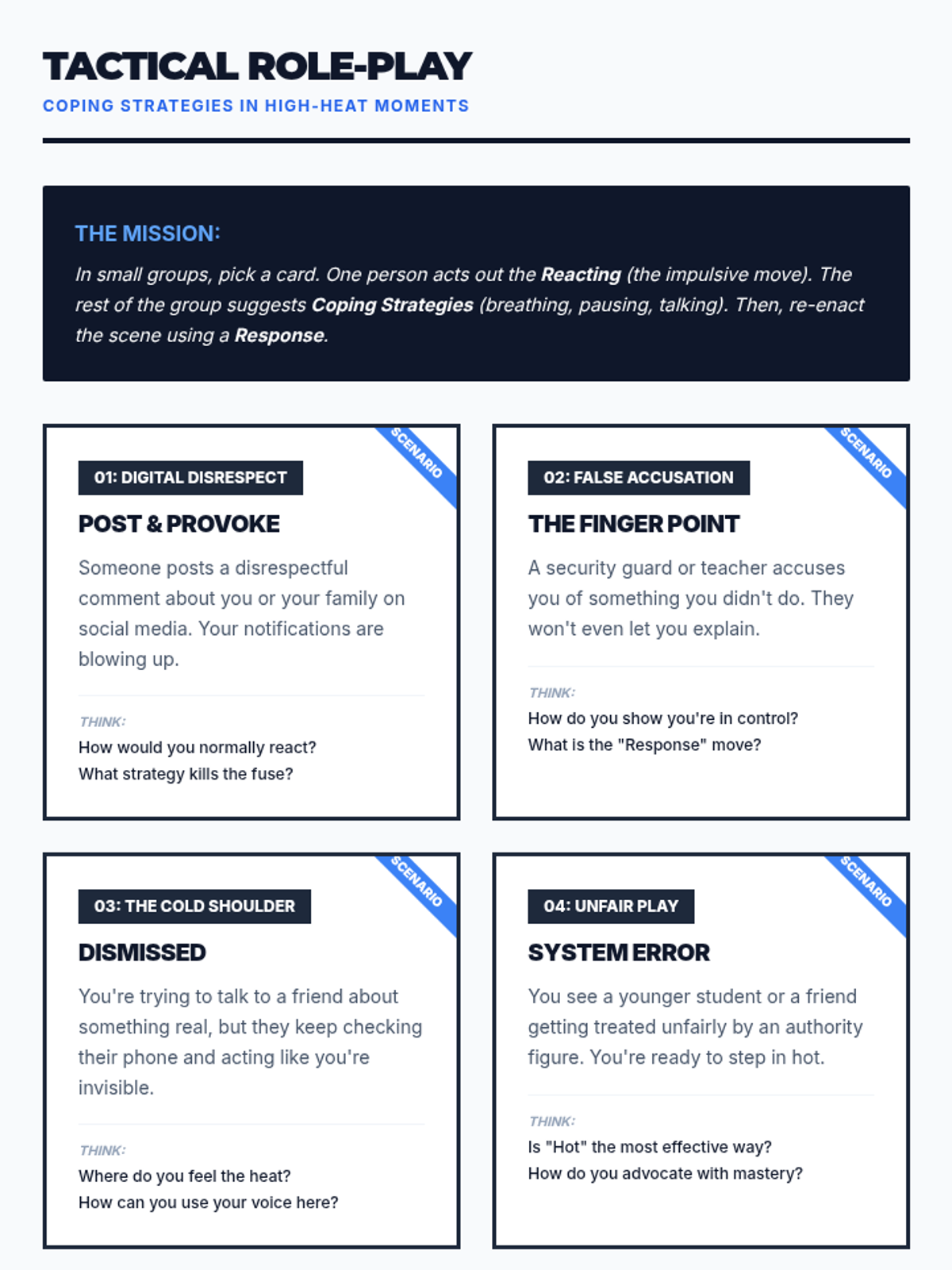
Practicing healthy coping mechanisms like deep breathing and physical grounding. Students use role-play to test strategies in high-pressure scenarios.
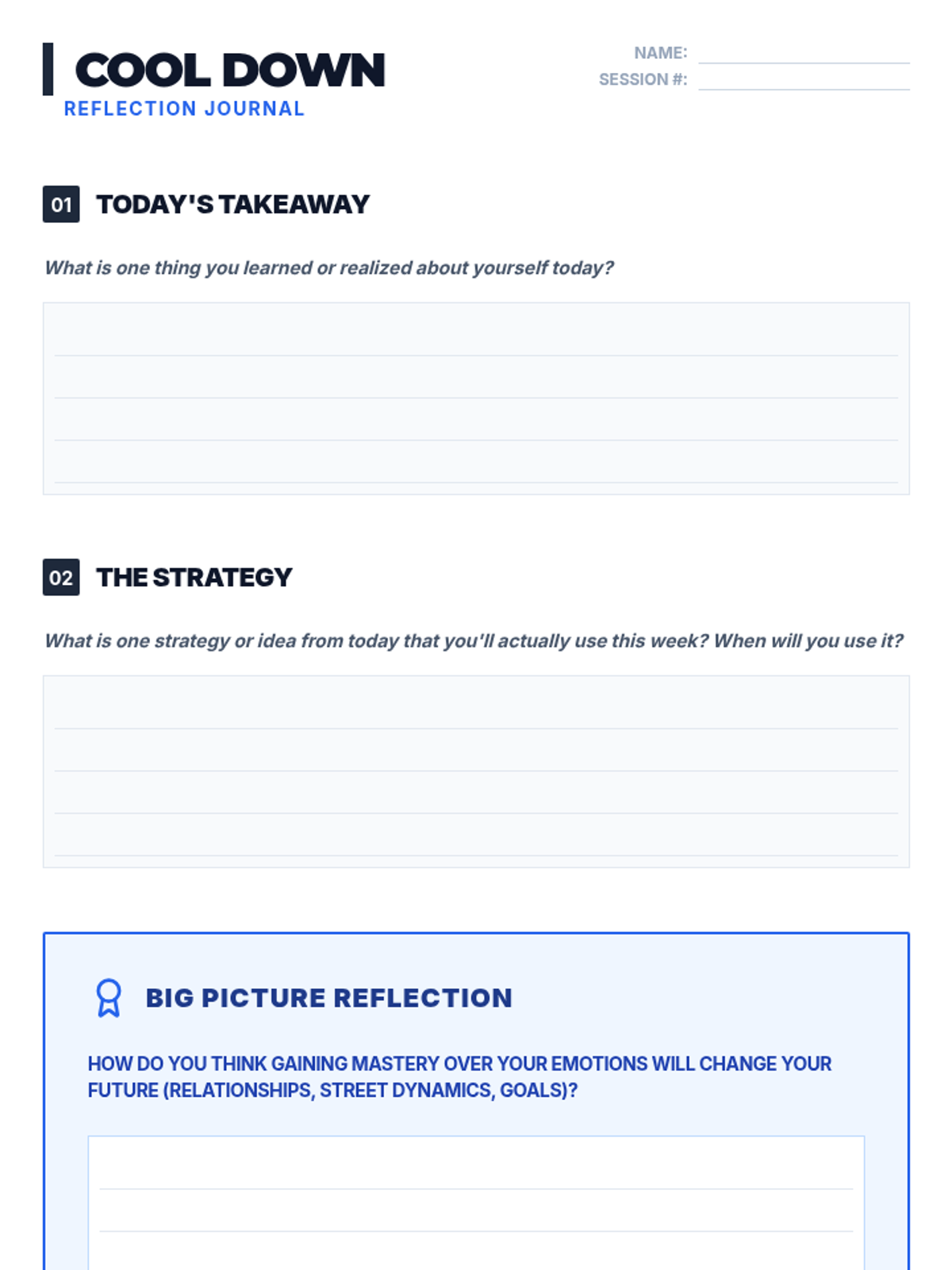
Reviewing and integrating all skills into a personal 'Emotional Mastery Toolkit' for long-term success.
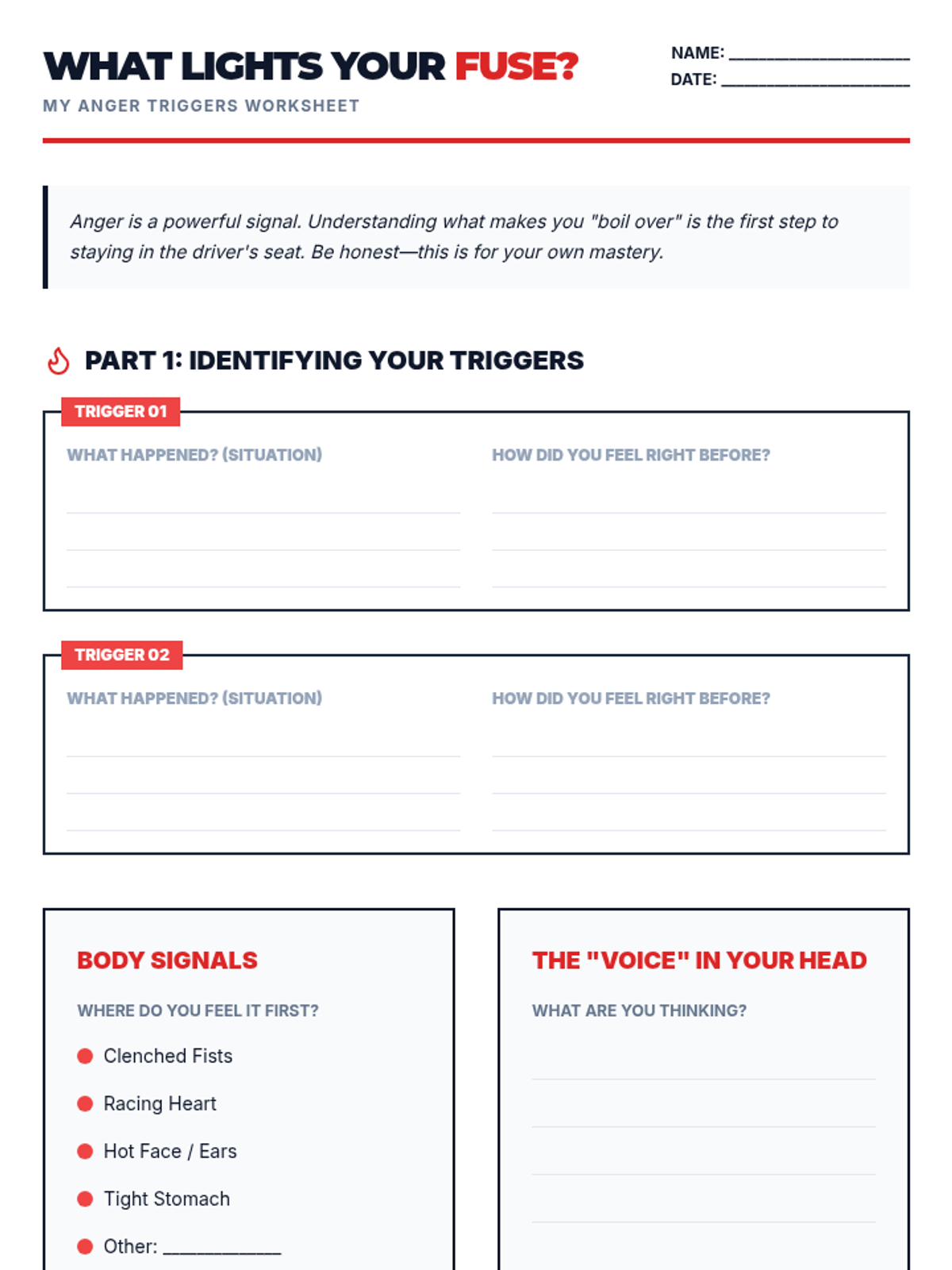
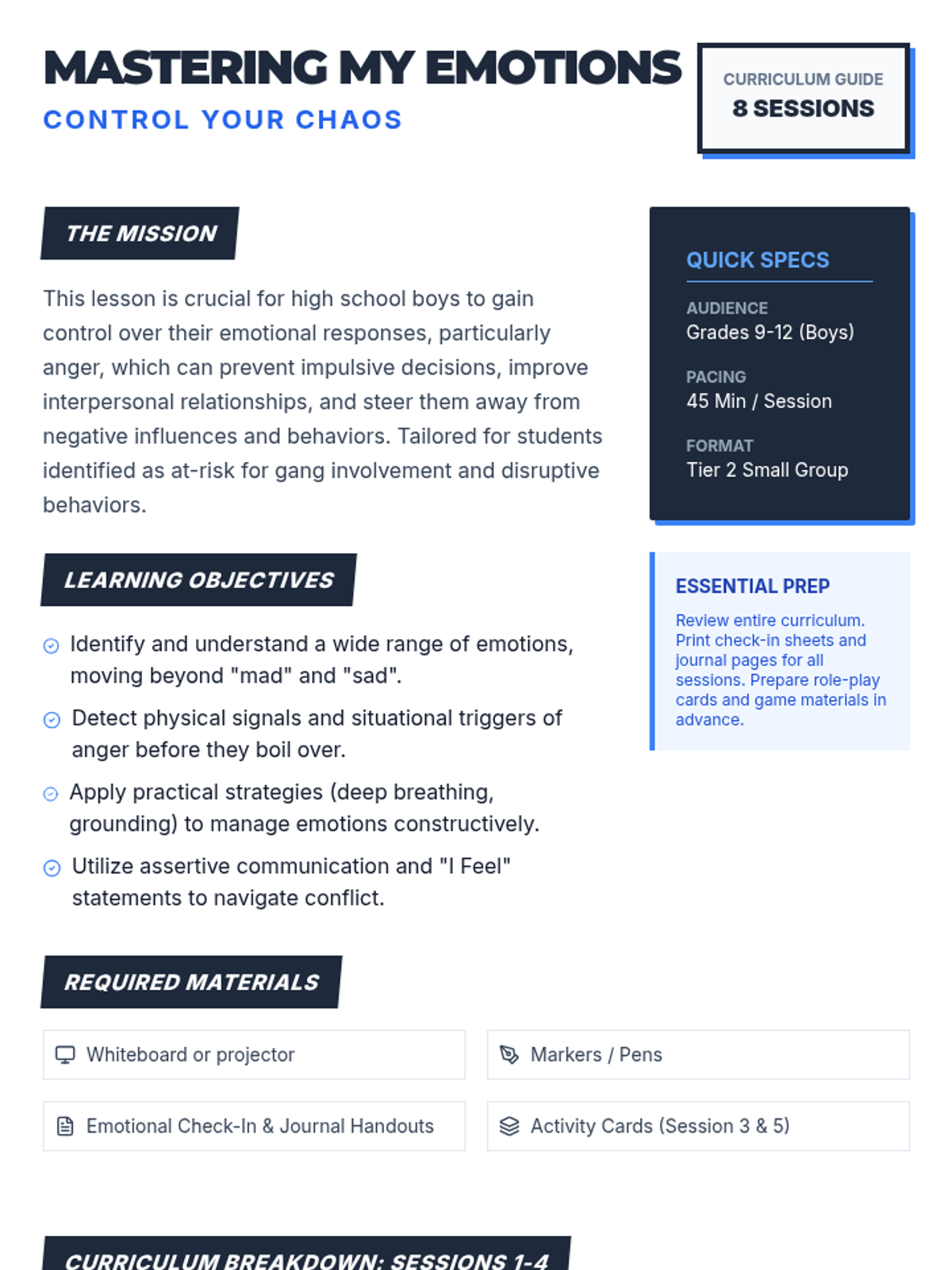
Exploring the physical signs and situational triggers of anger. Students identify personal 'fuses' to better anticipate and manage emotional outbursts.
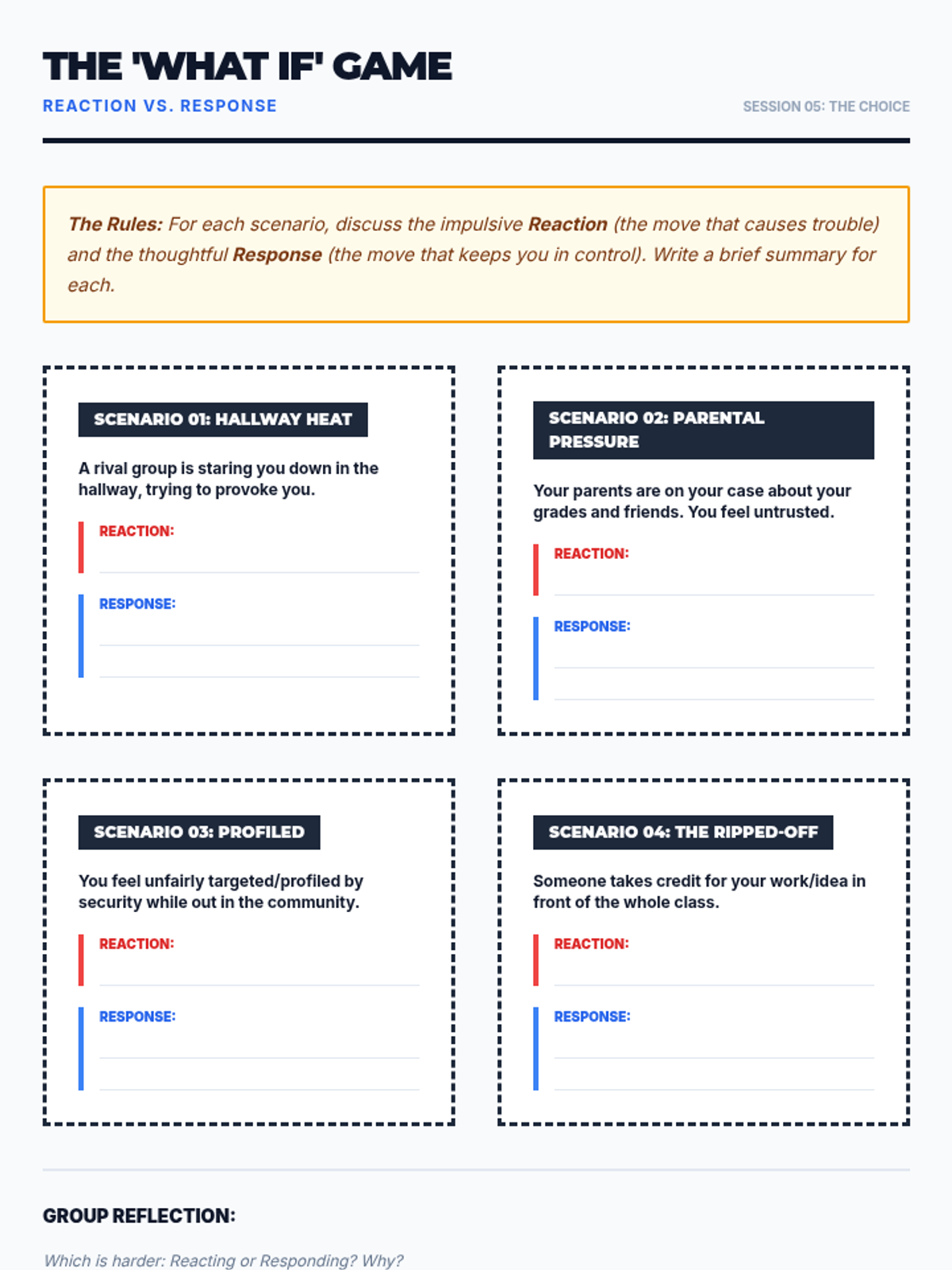
Developing the ability to pause and choose a thoughtful response over an impulsive reaction. Students play a scenario-based game to practice decision-making.
Introduction to the concept of emotional mastery, identifying basic emotions, and setting group expectations. Students explore why understanding feelings is a strength, not a weakness.
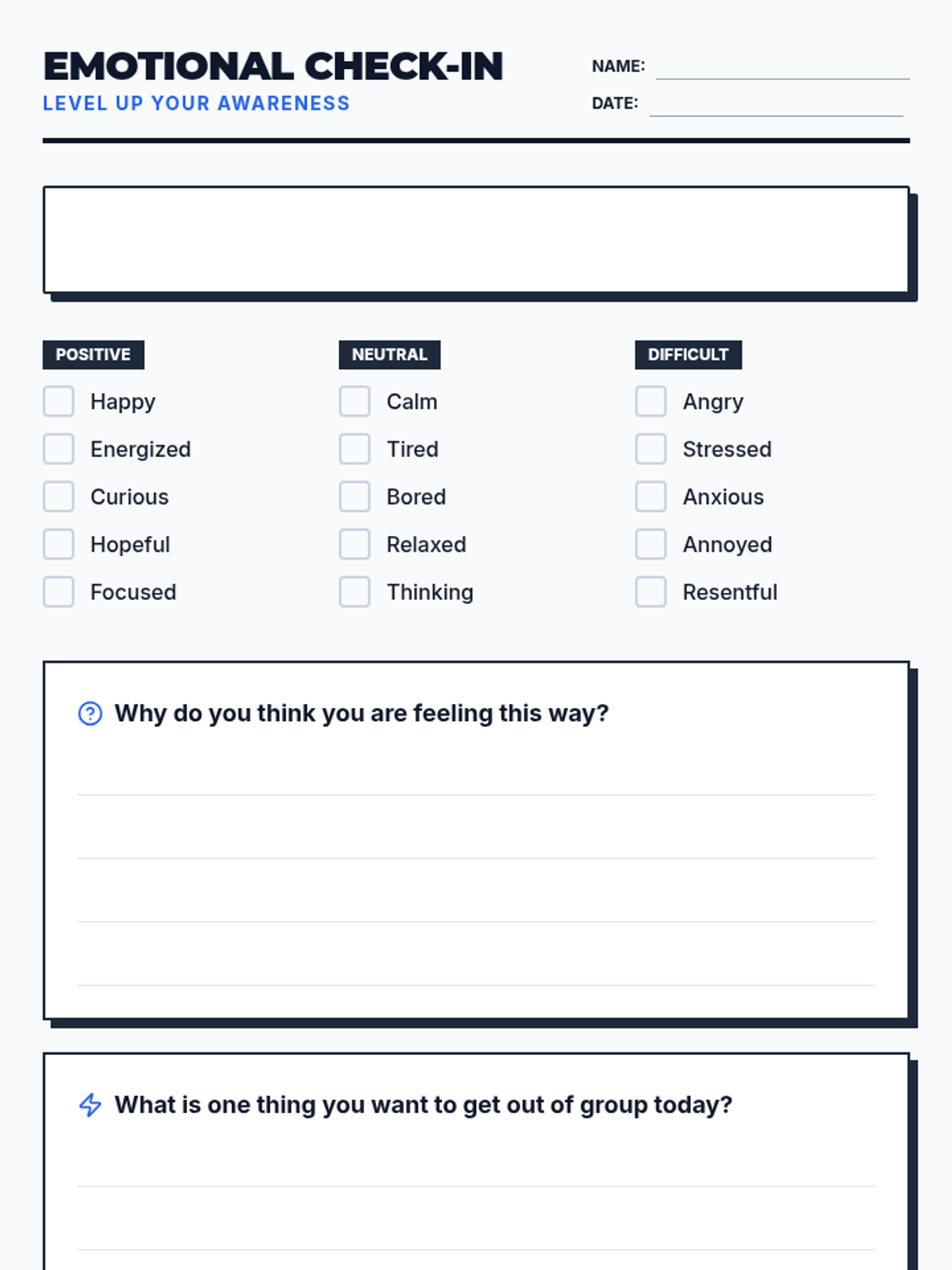
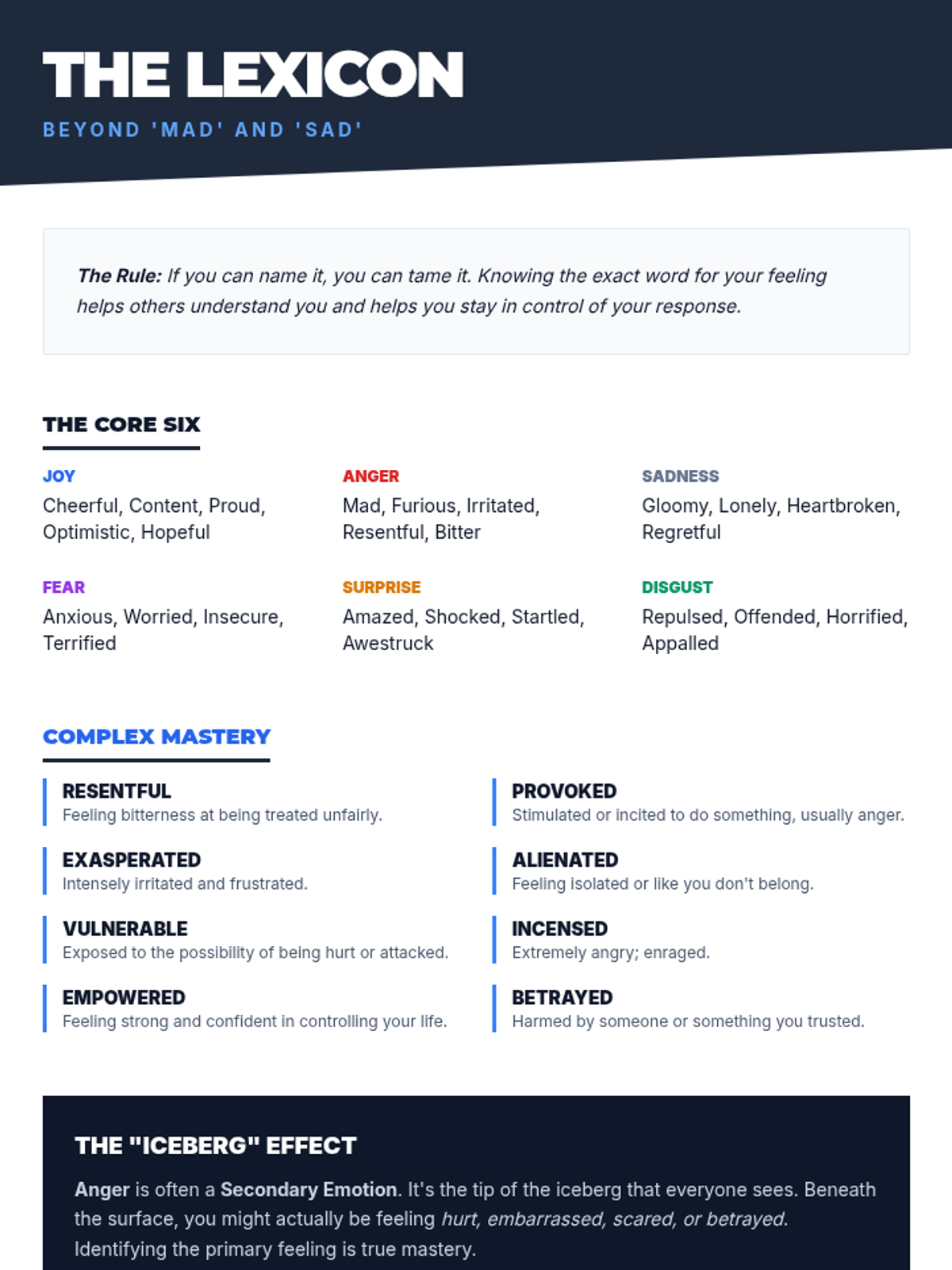
Building a robust emotional vocabulary to move beyond 'mad' and 'sad'. Students learn the difference between primary and secondary emotions.
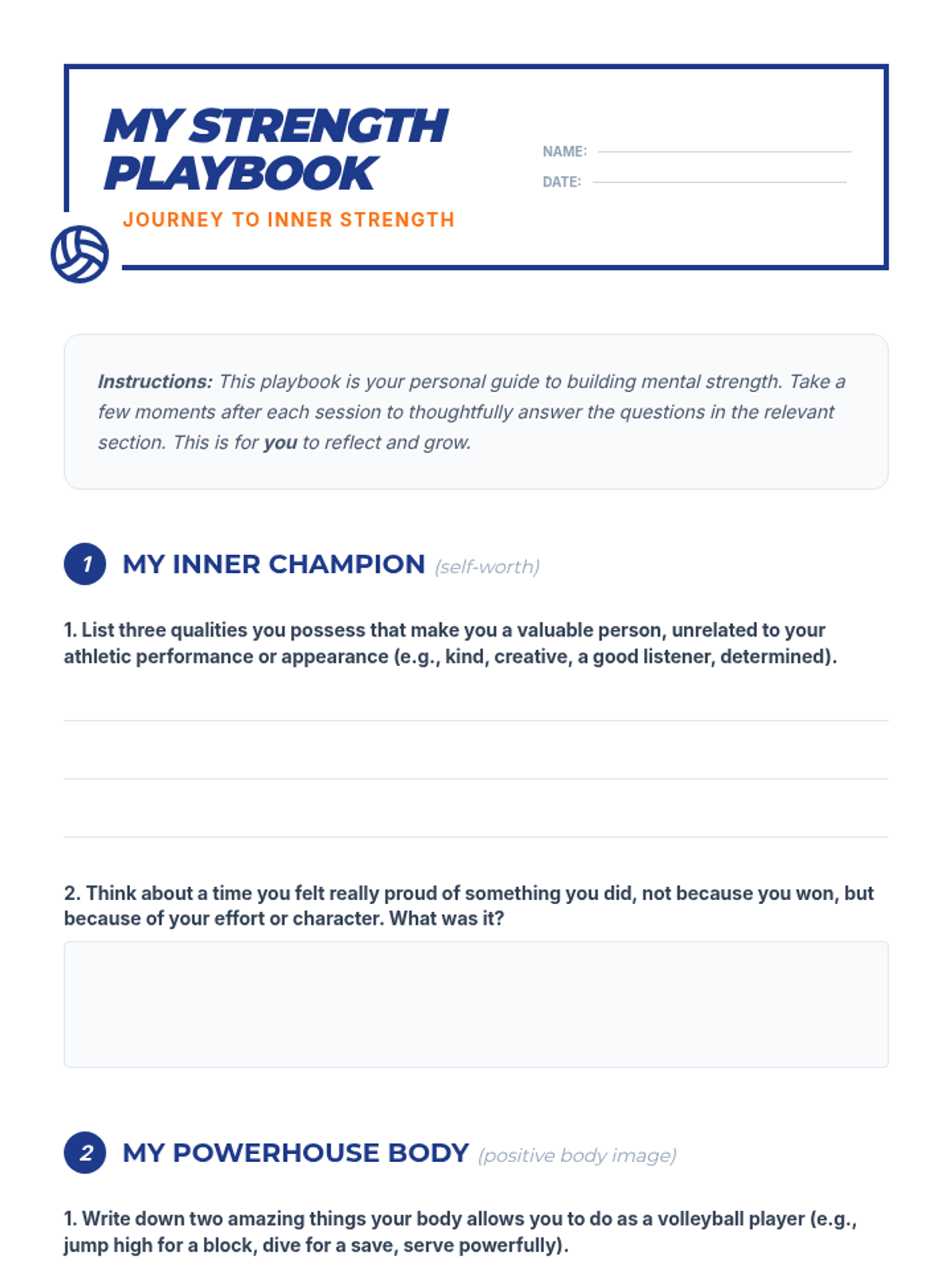
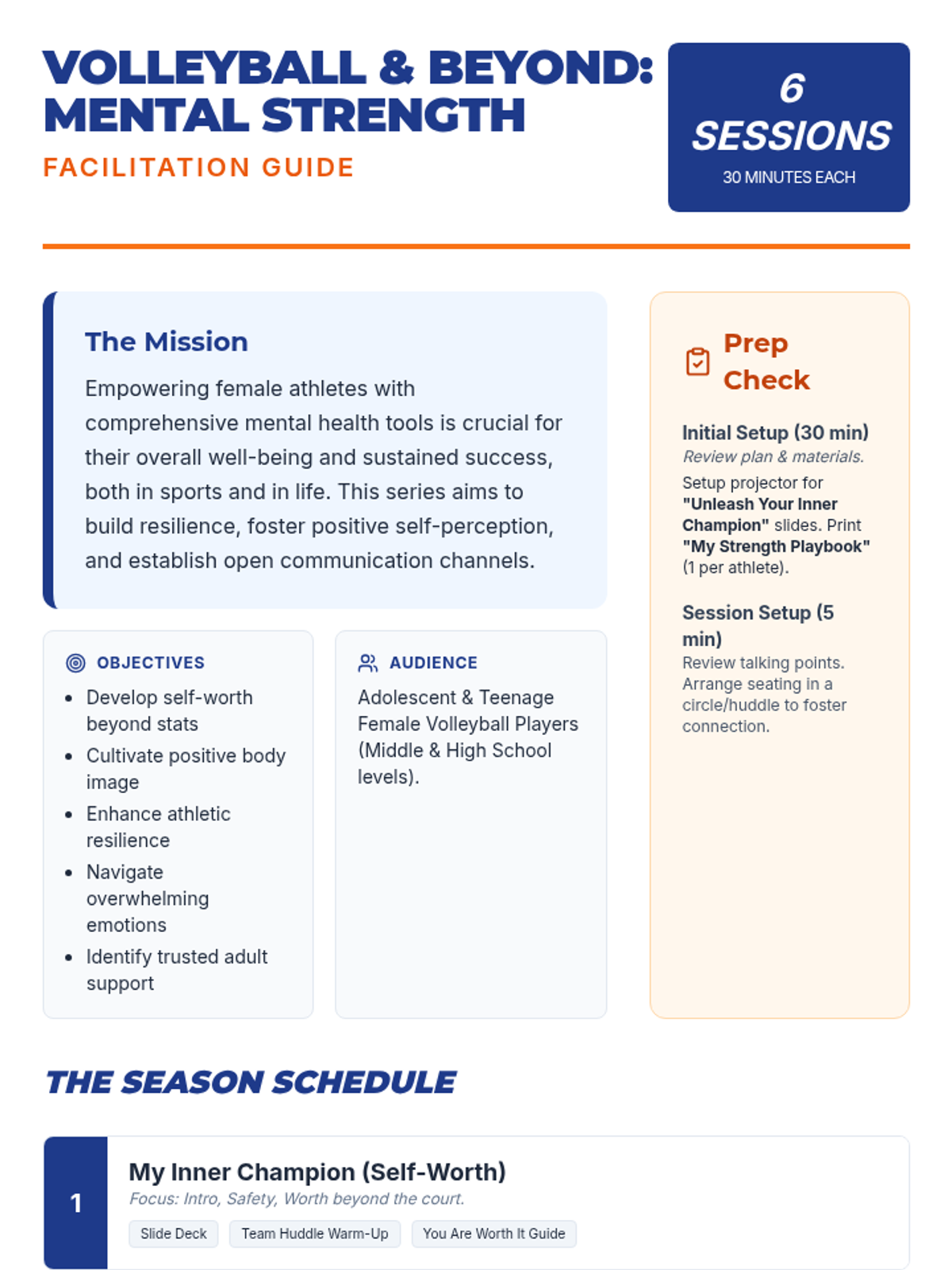
Exploring positive body image and celebrating what bodies can do.
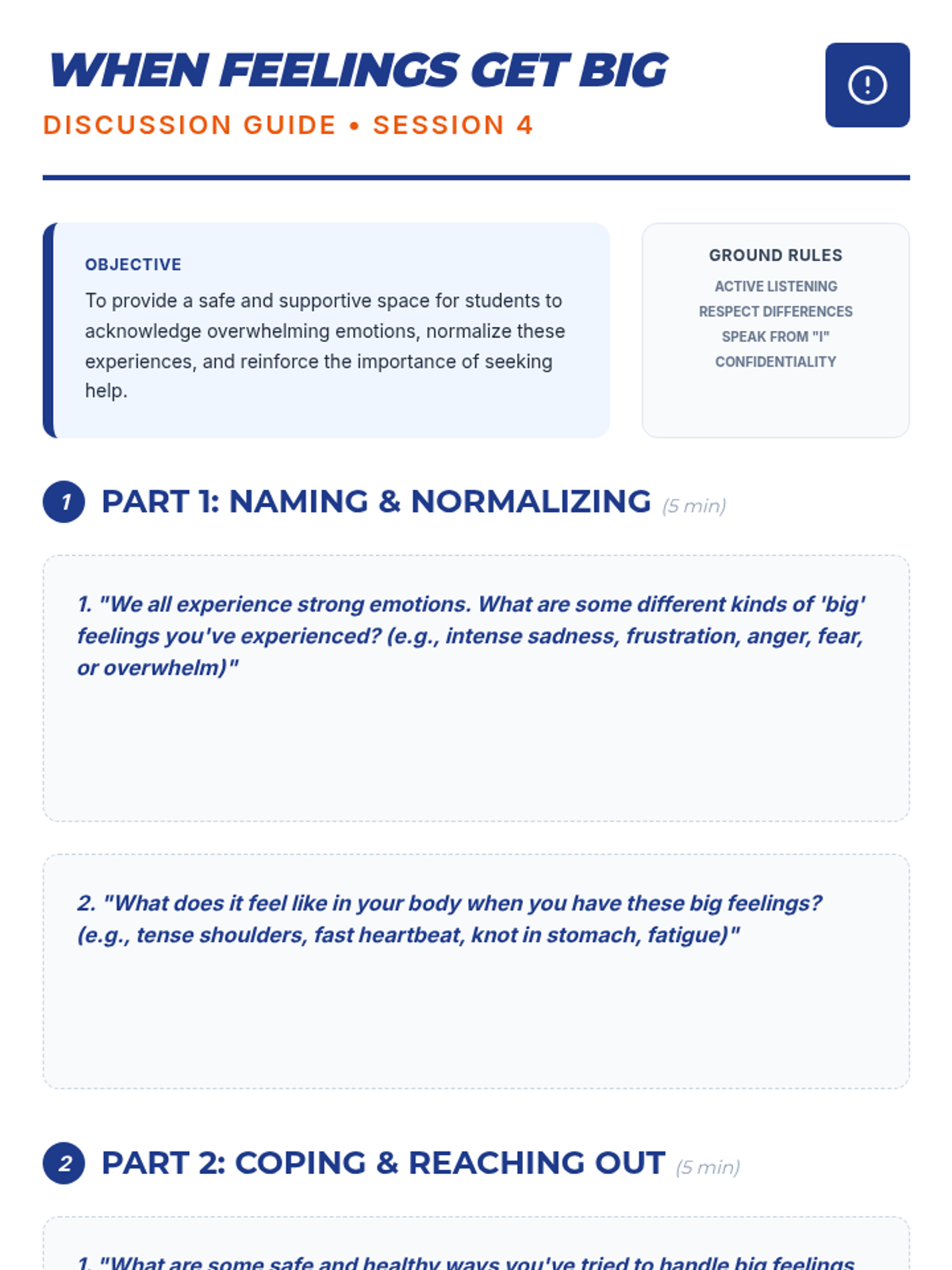
Identifying and understanding overwhelming emotions.
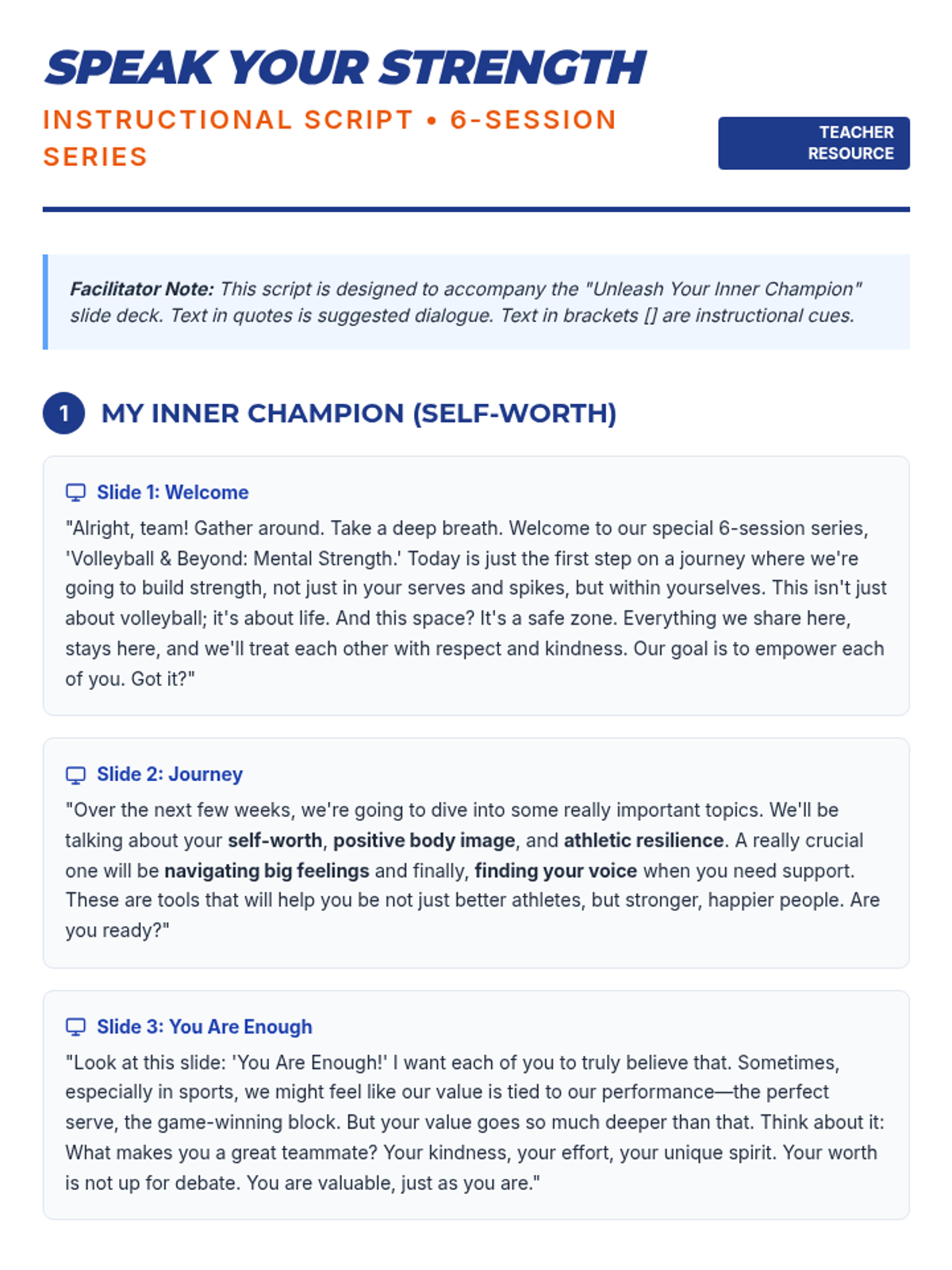
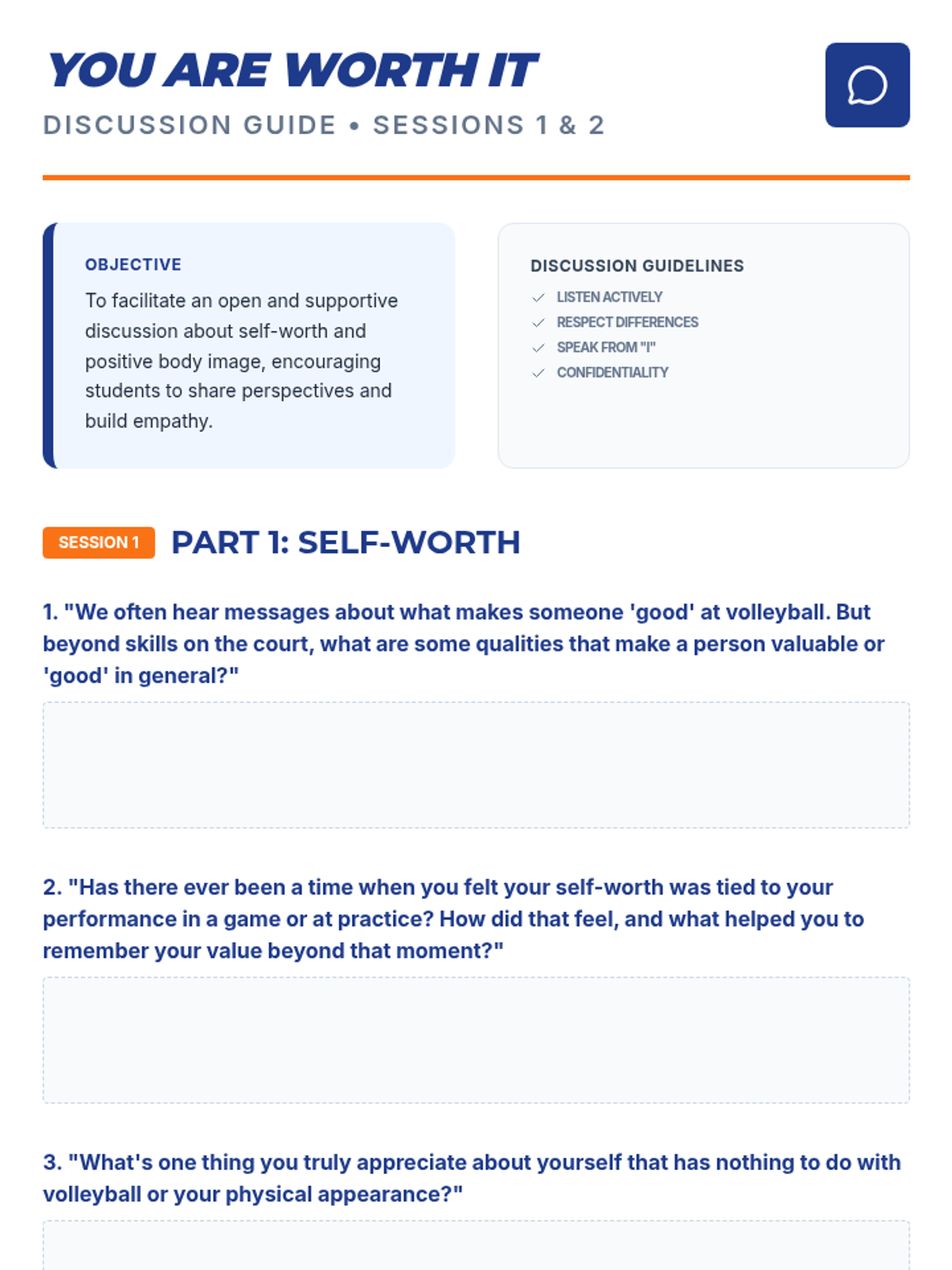
Focusing on self-worth beyond performance and athletic identity.
Reviewing key concepts and building a team-wide culture of support.
Building resilience through learning from mistakes on and off the court.
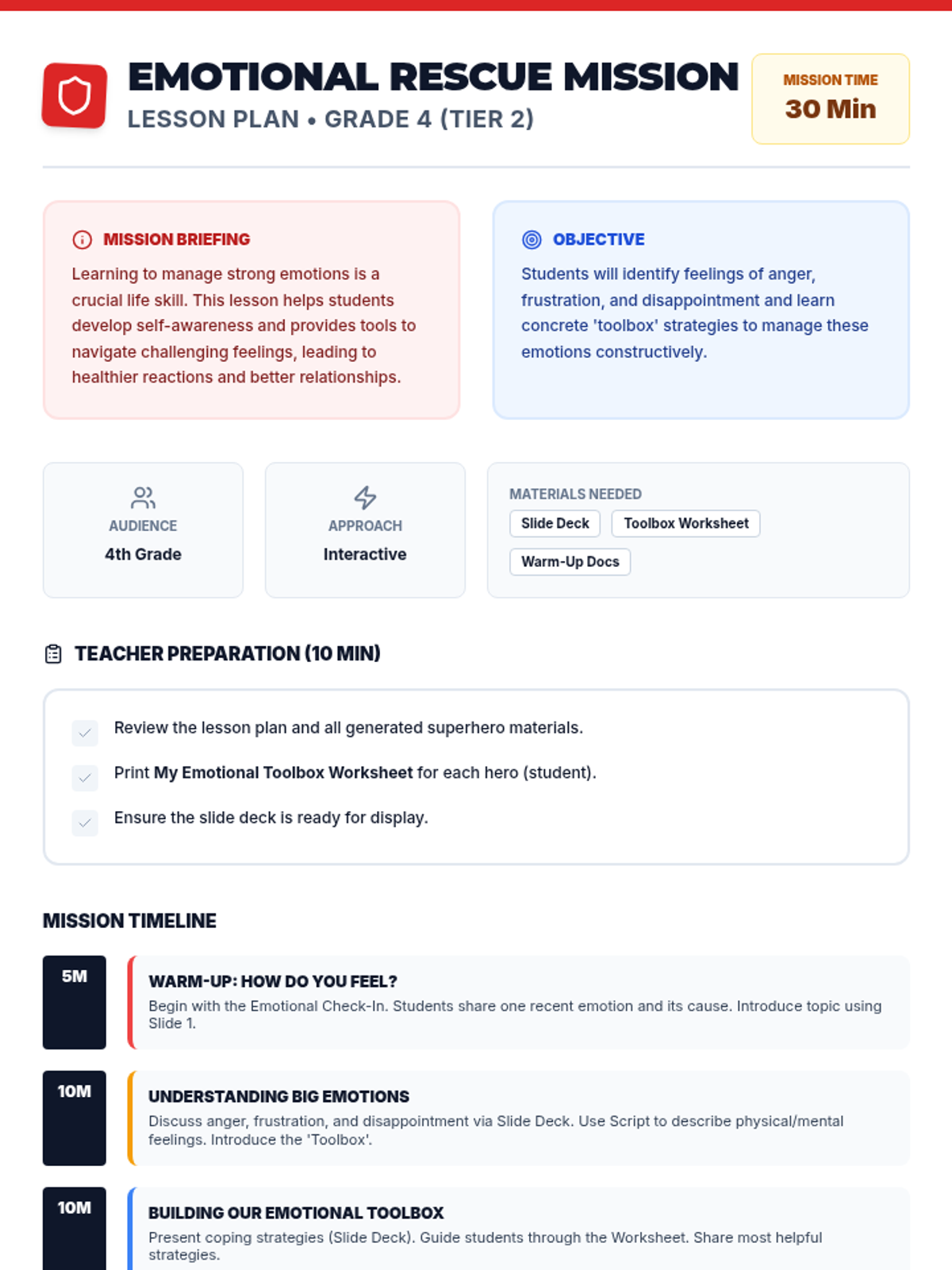
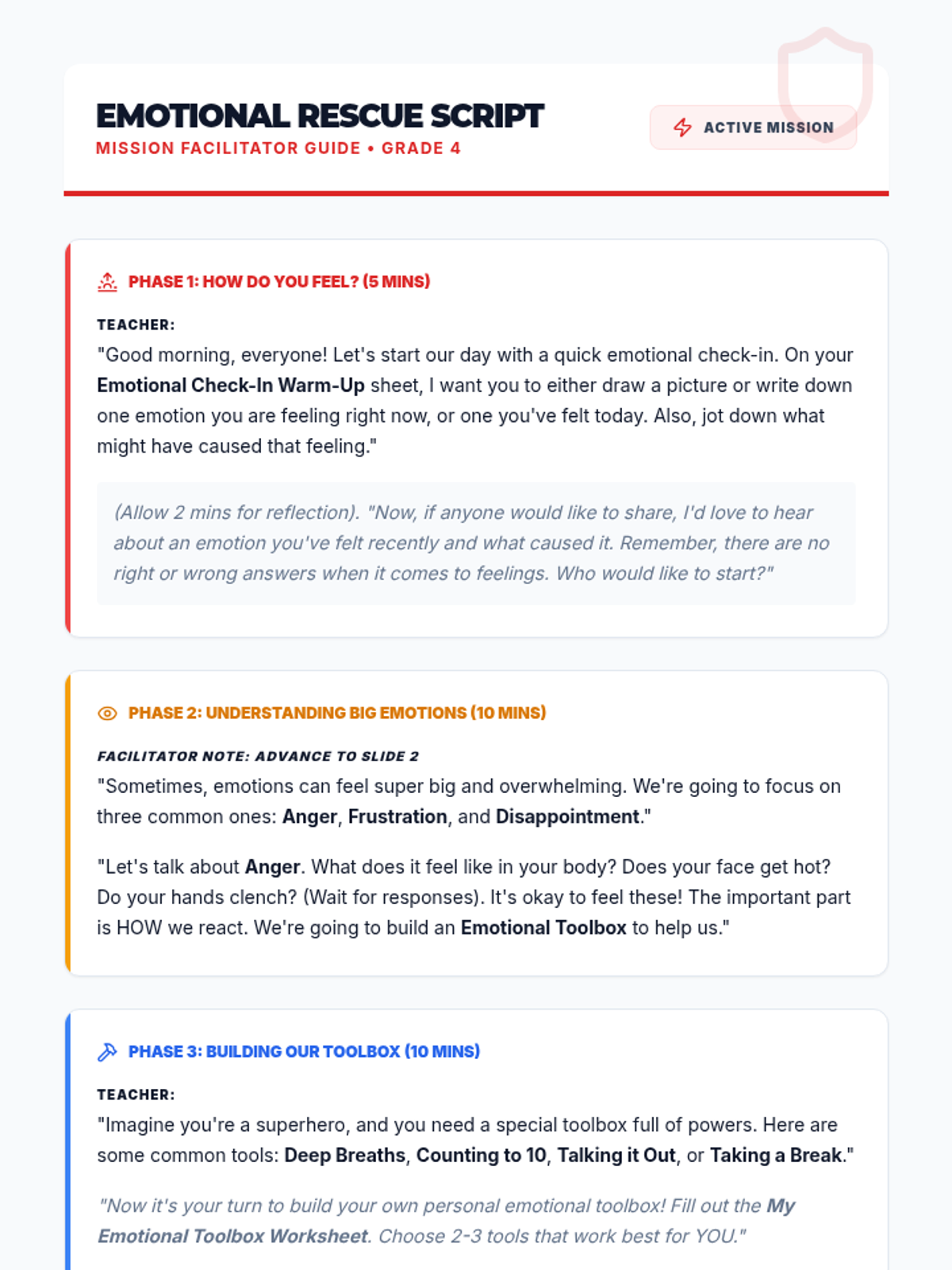
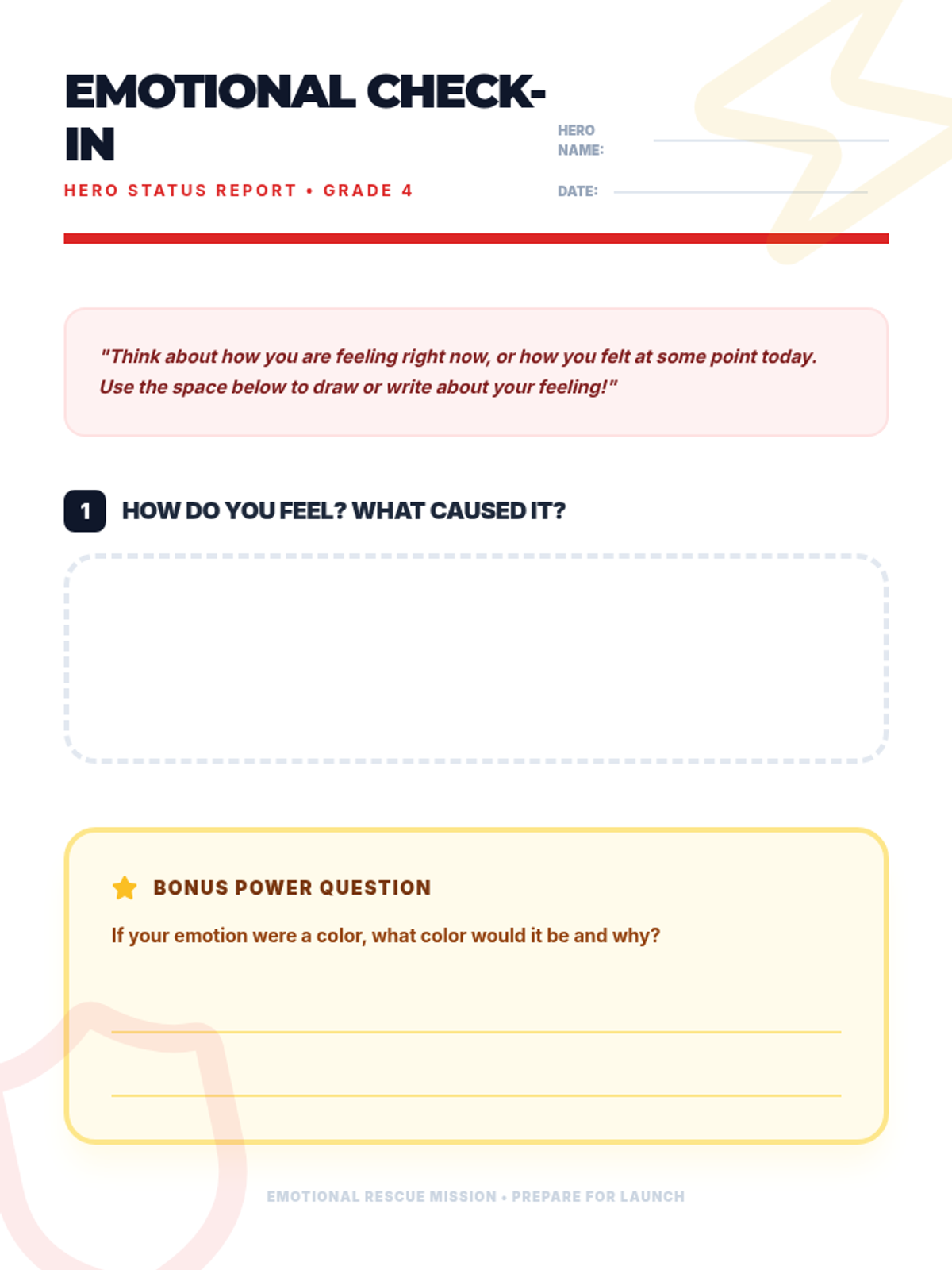
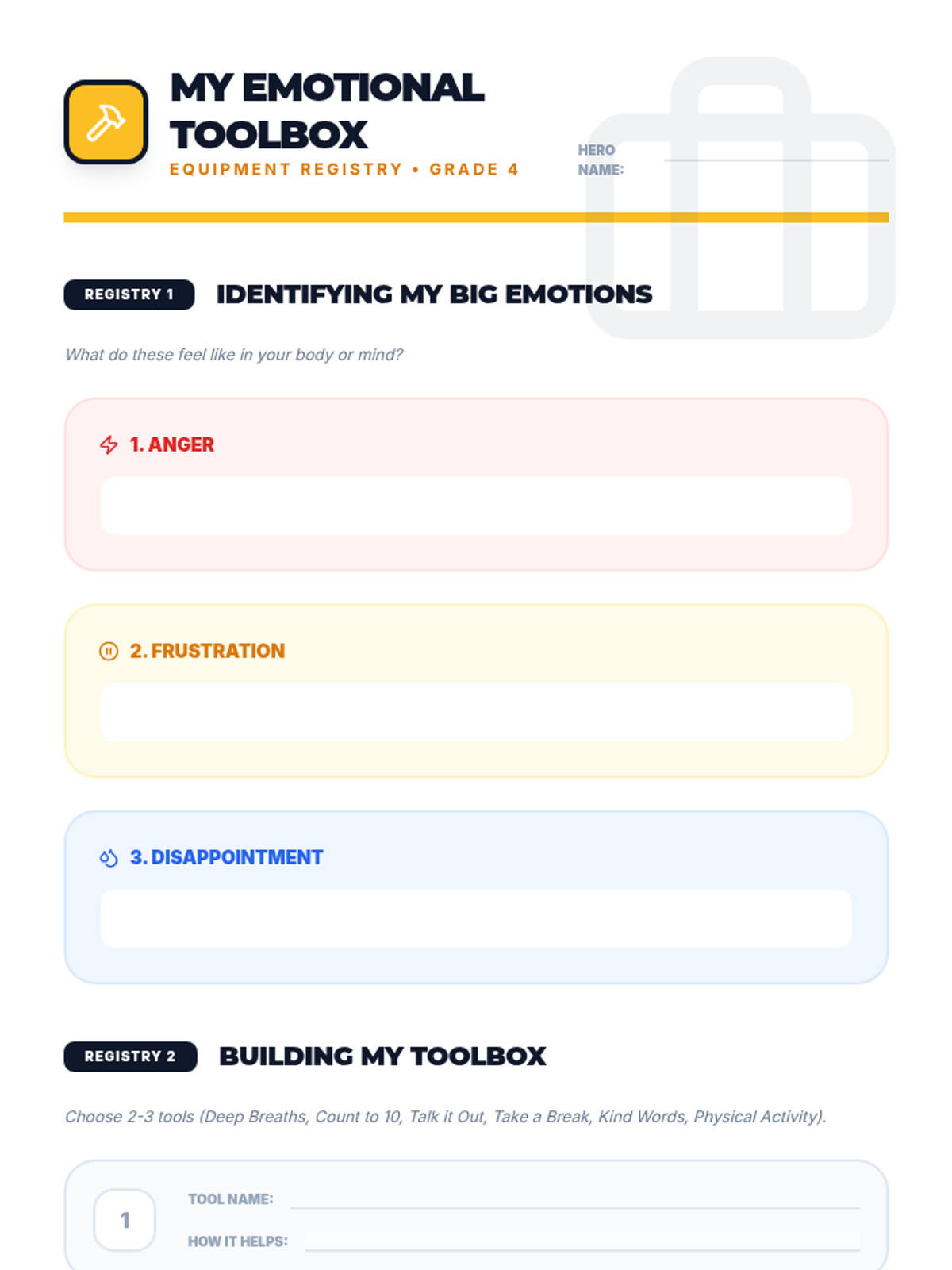
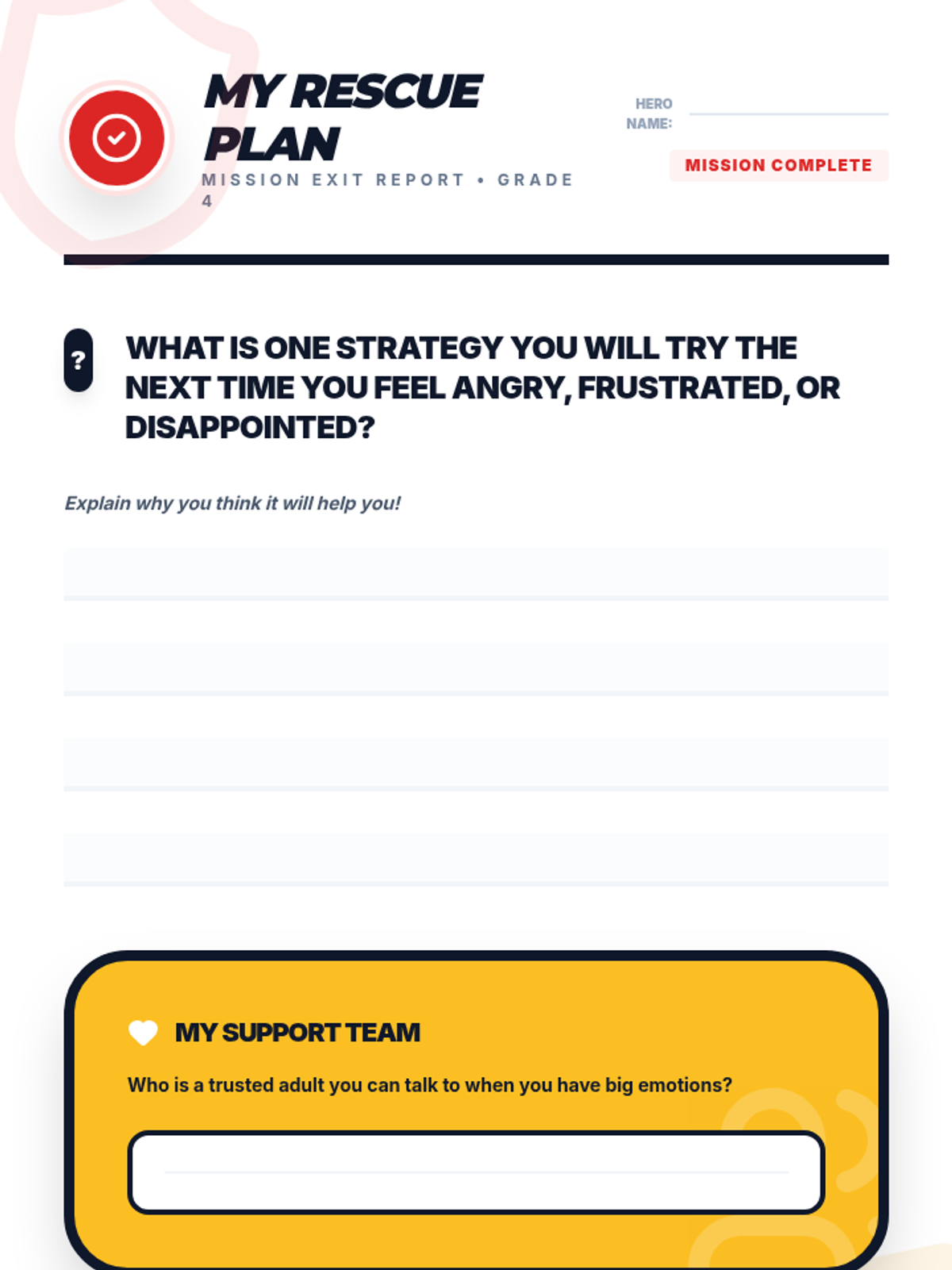
This interactive lesson teaches 4th-grade students to identify and manage big emotions like anger, frustration, and disappointment. Students build a personal 'emotional toolbox' of strategies to handle challenging feelings constructively.
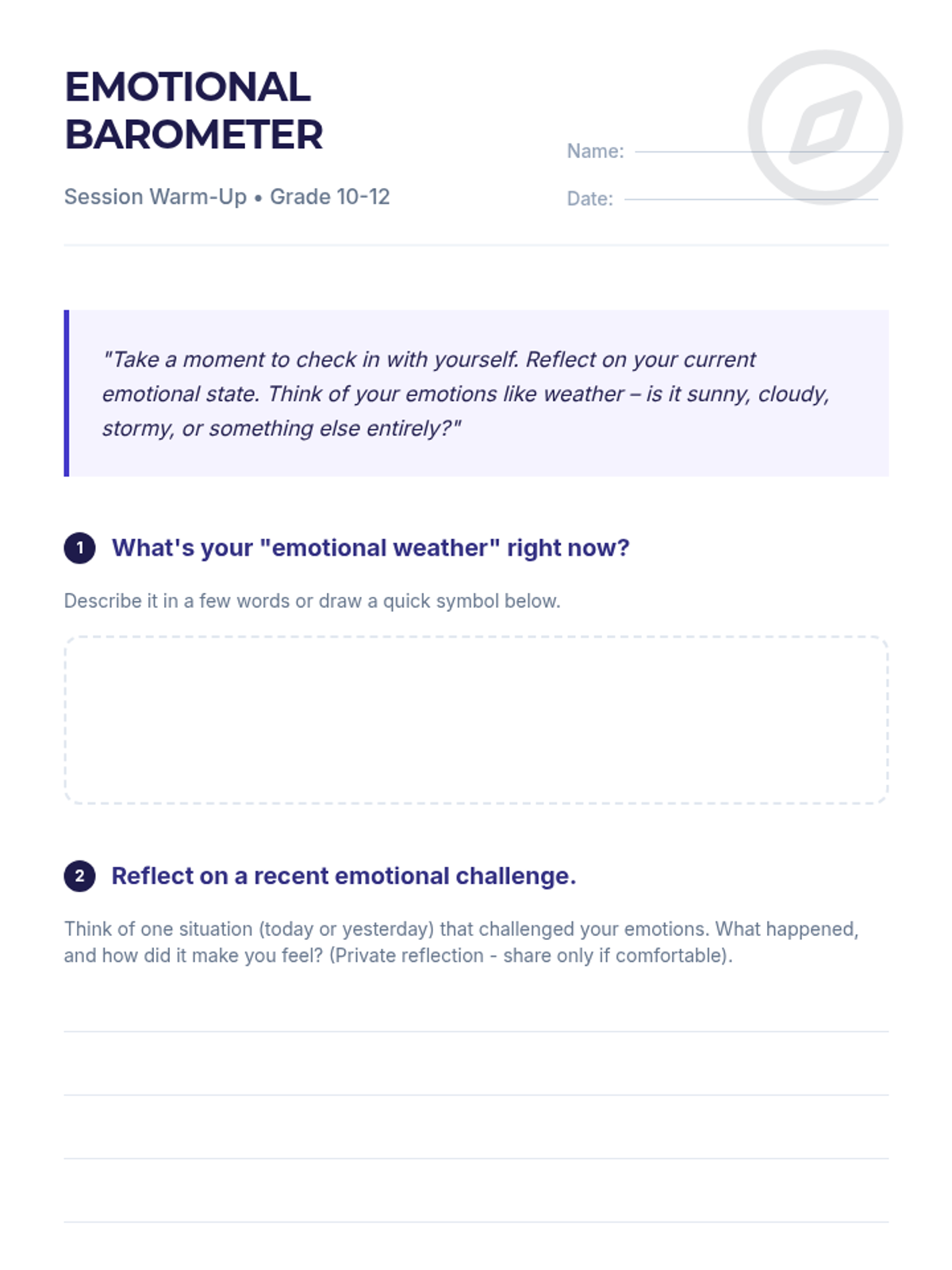
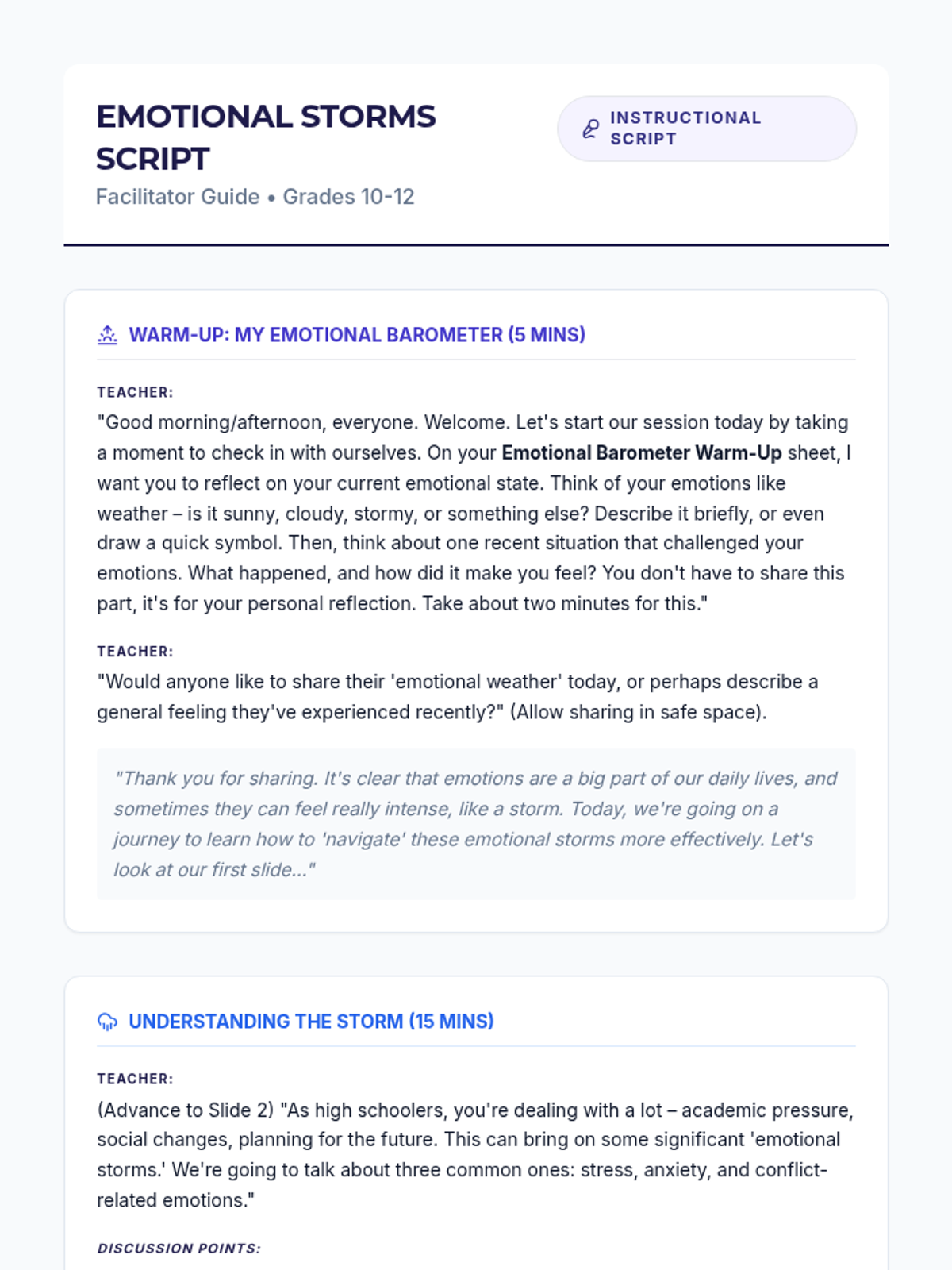
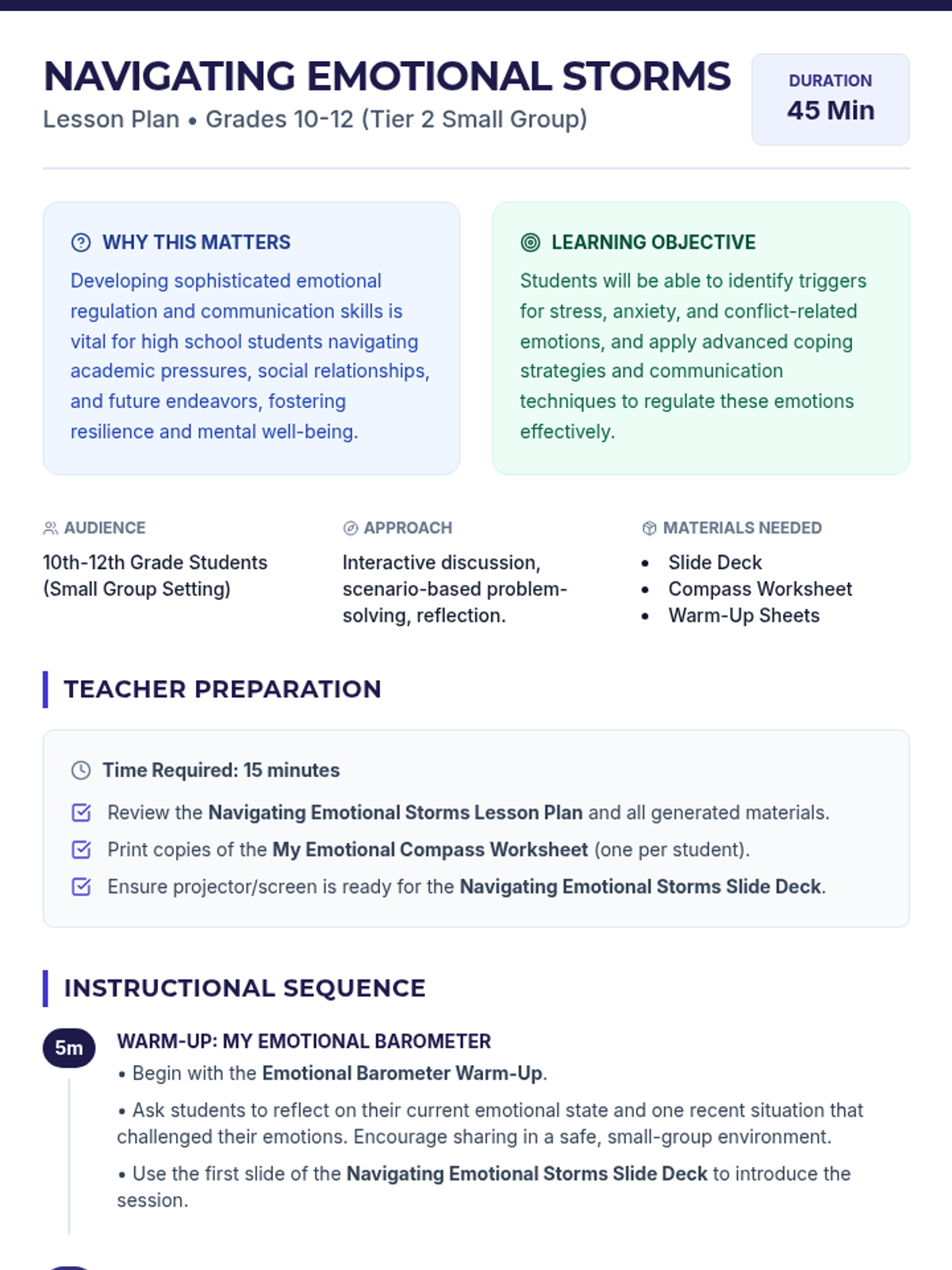
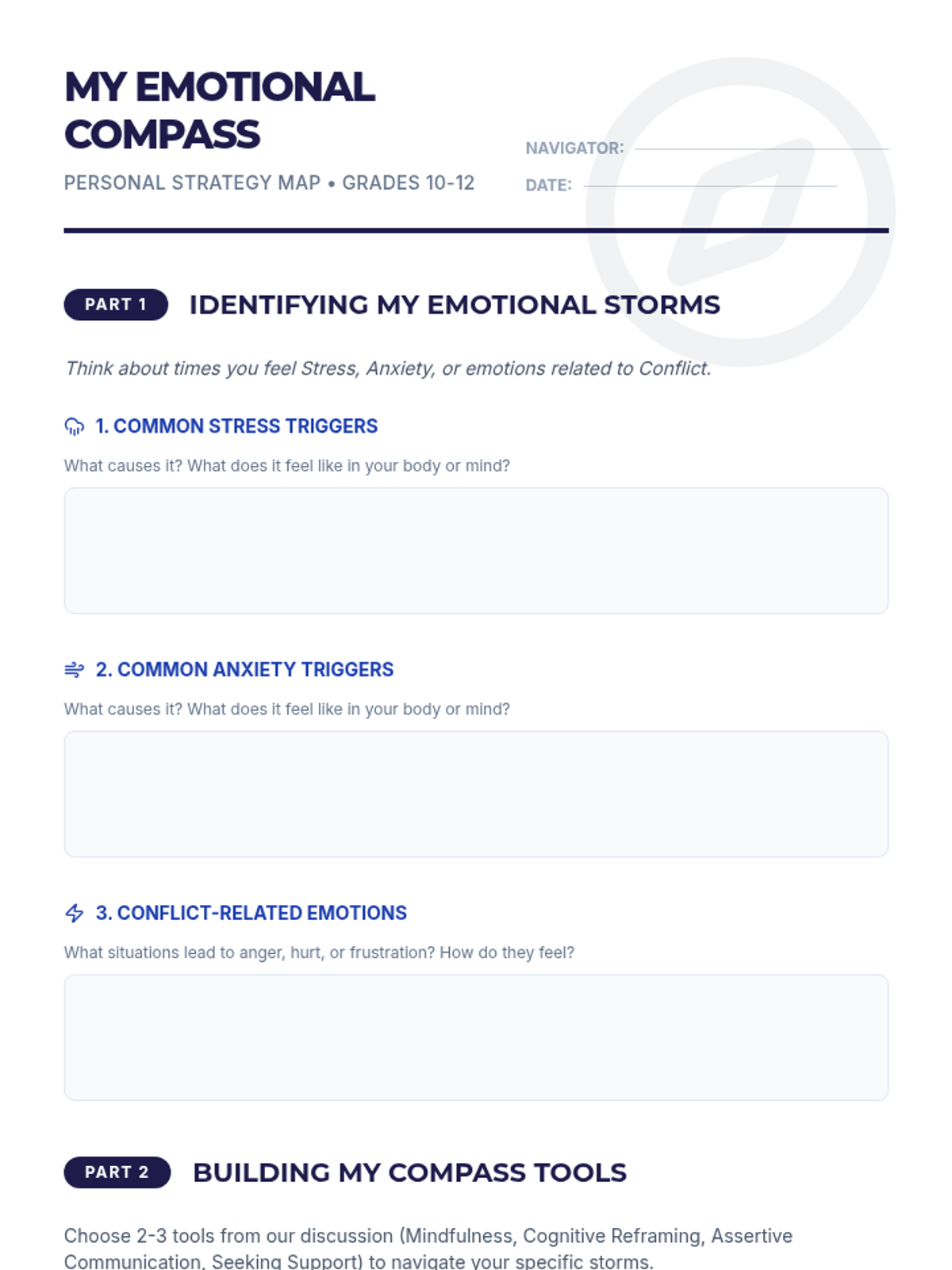
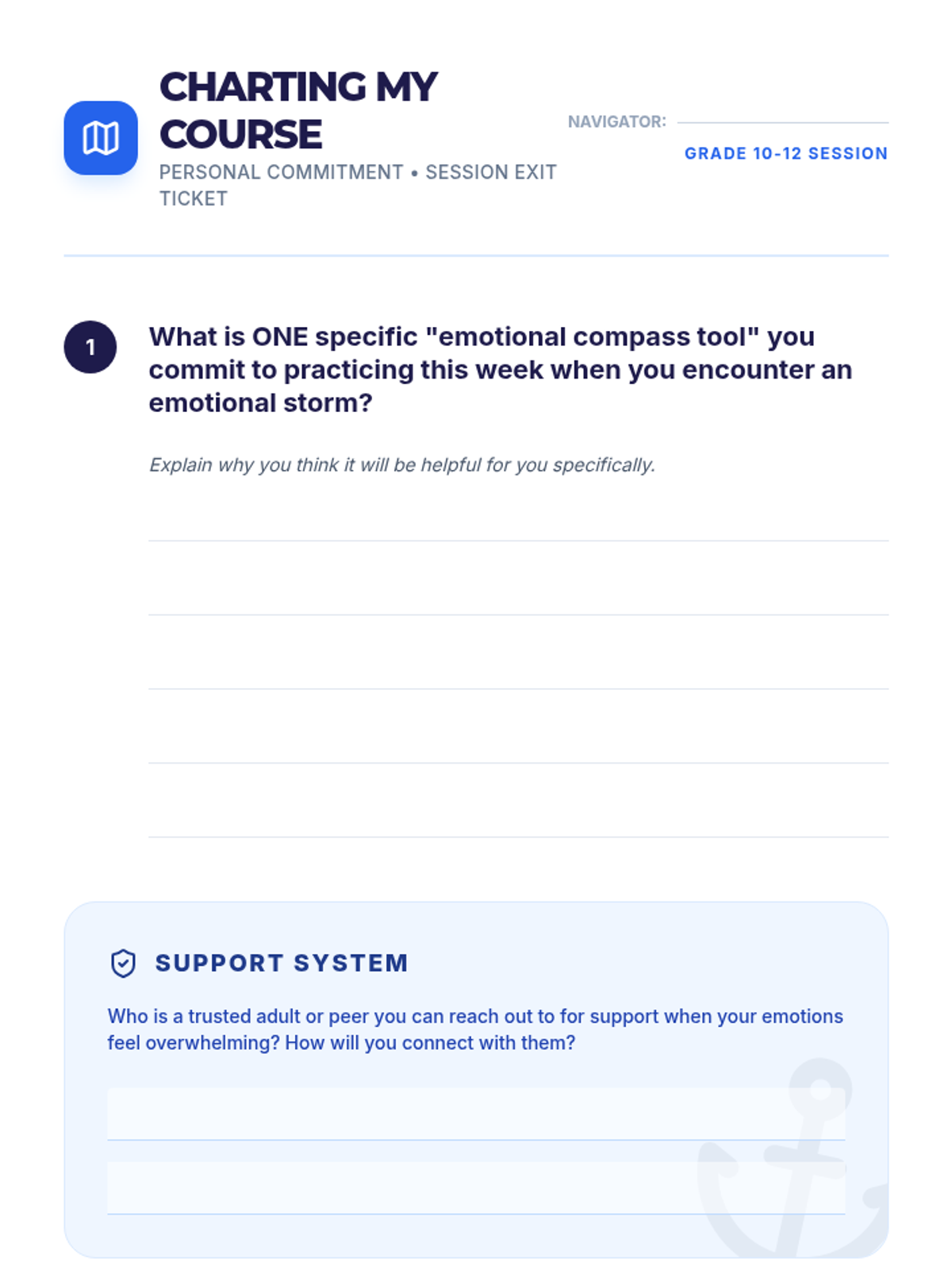
This lesson helps 10th-12th grade students develop advanced emotional regulation skills to manage stress, anxiety, and conflict. Students explore personalized coping mechanisms and communication strategies within a small group setting.
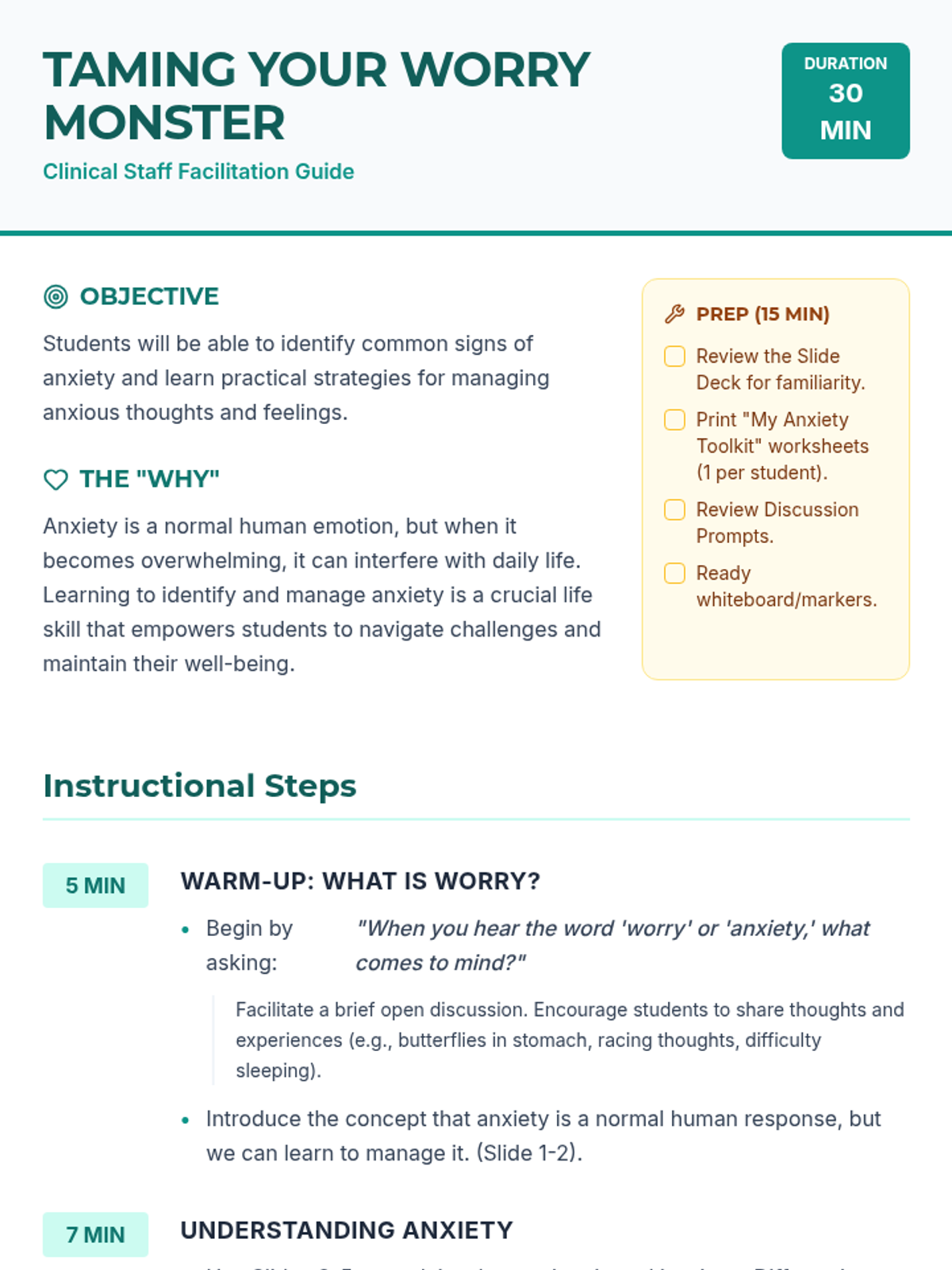
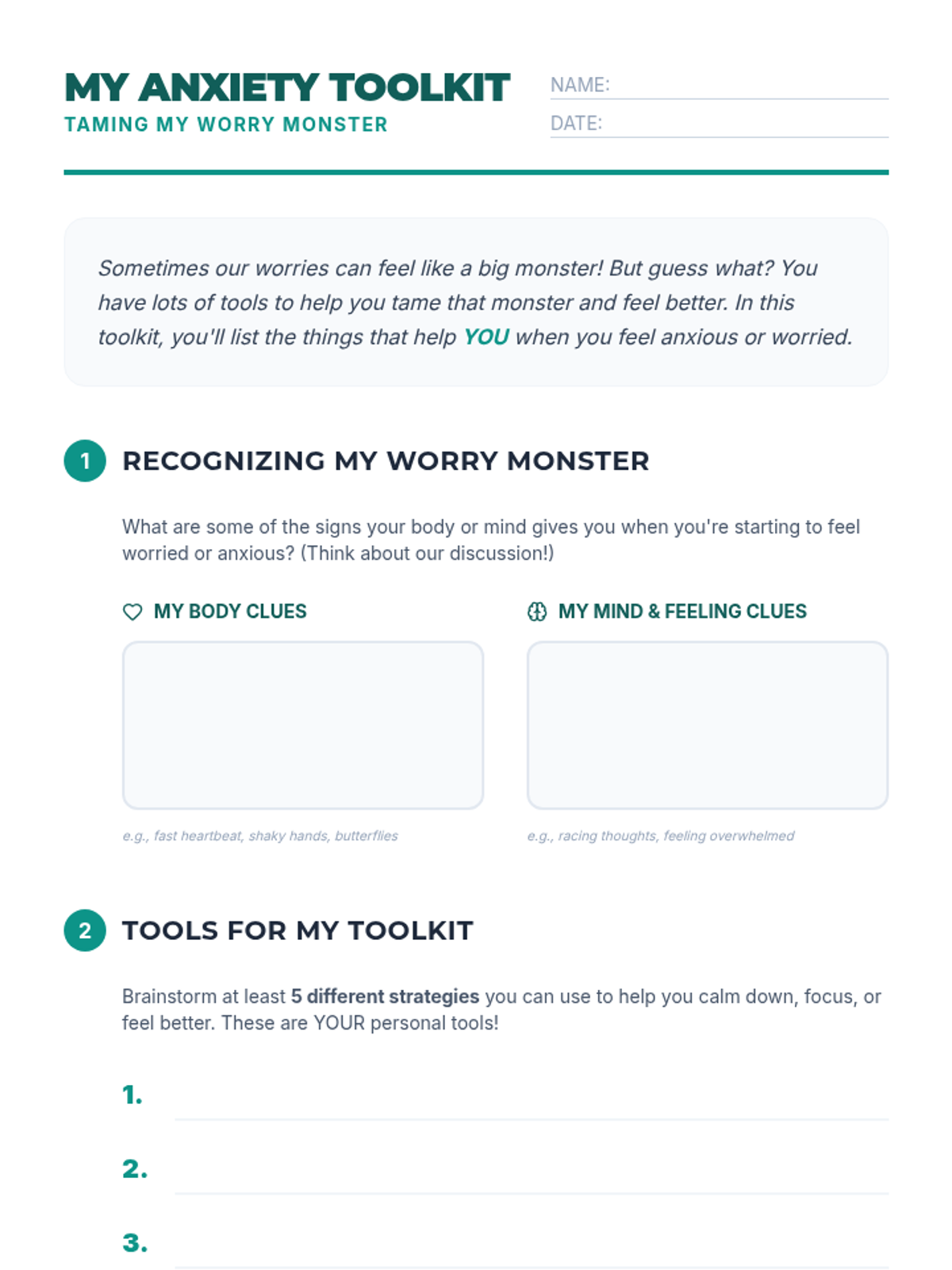
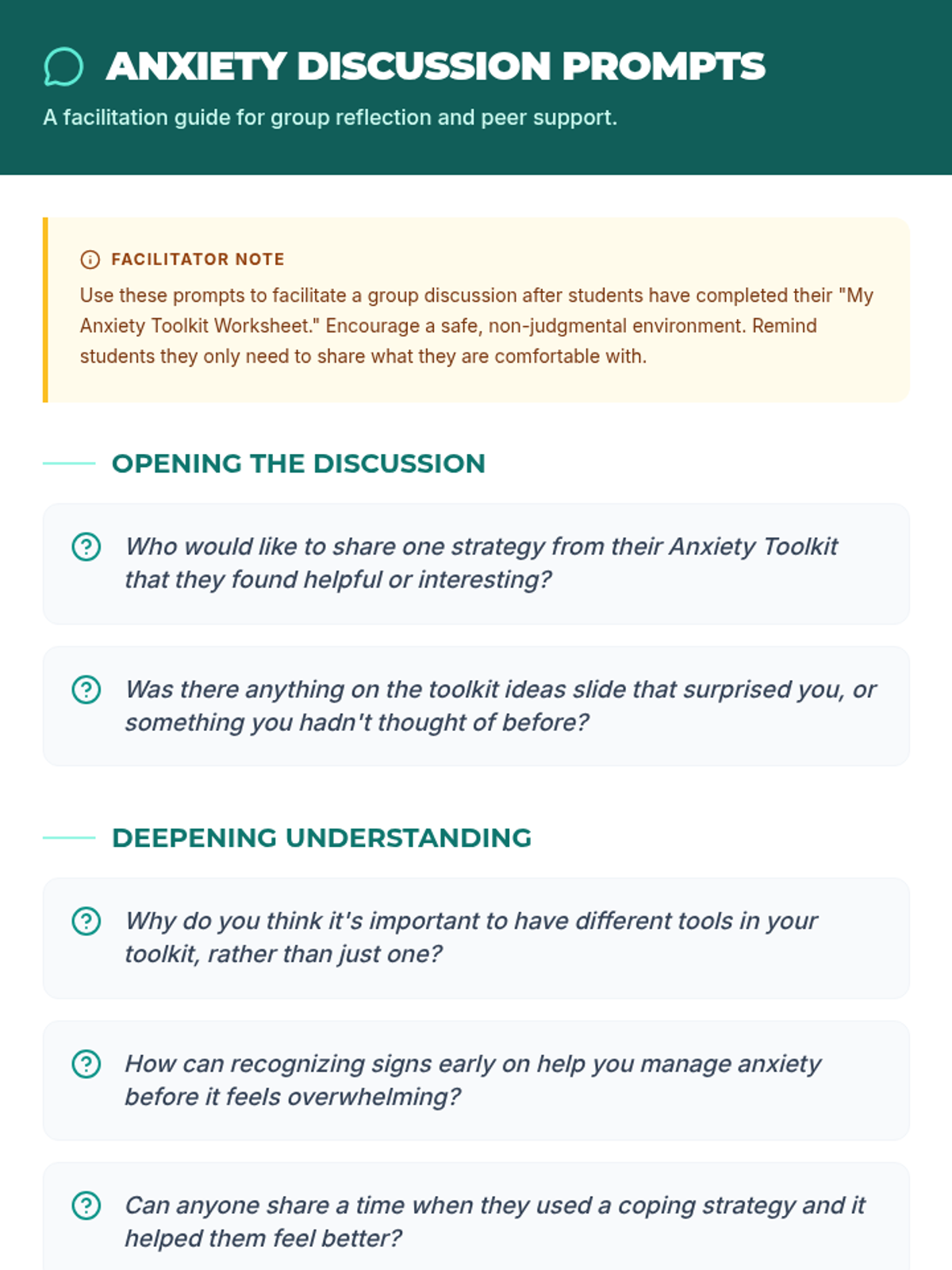
A 30-minute mental health lesson for high school students focused on identifying anxiety triggers and building a personalized toolkit of coping strategies.
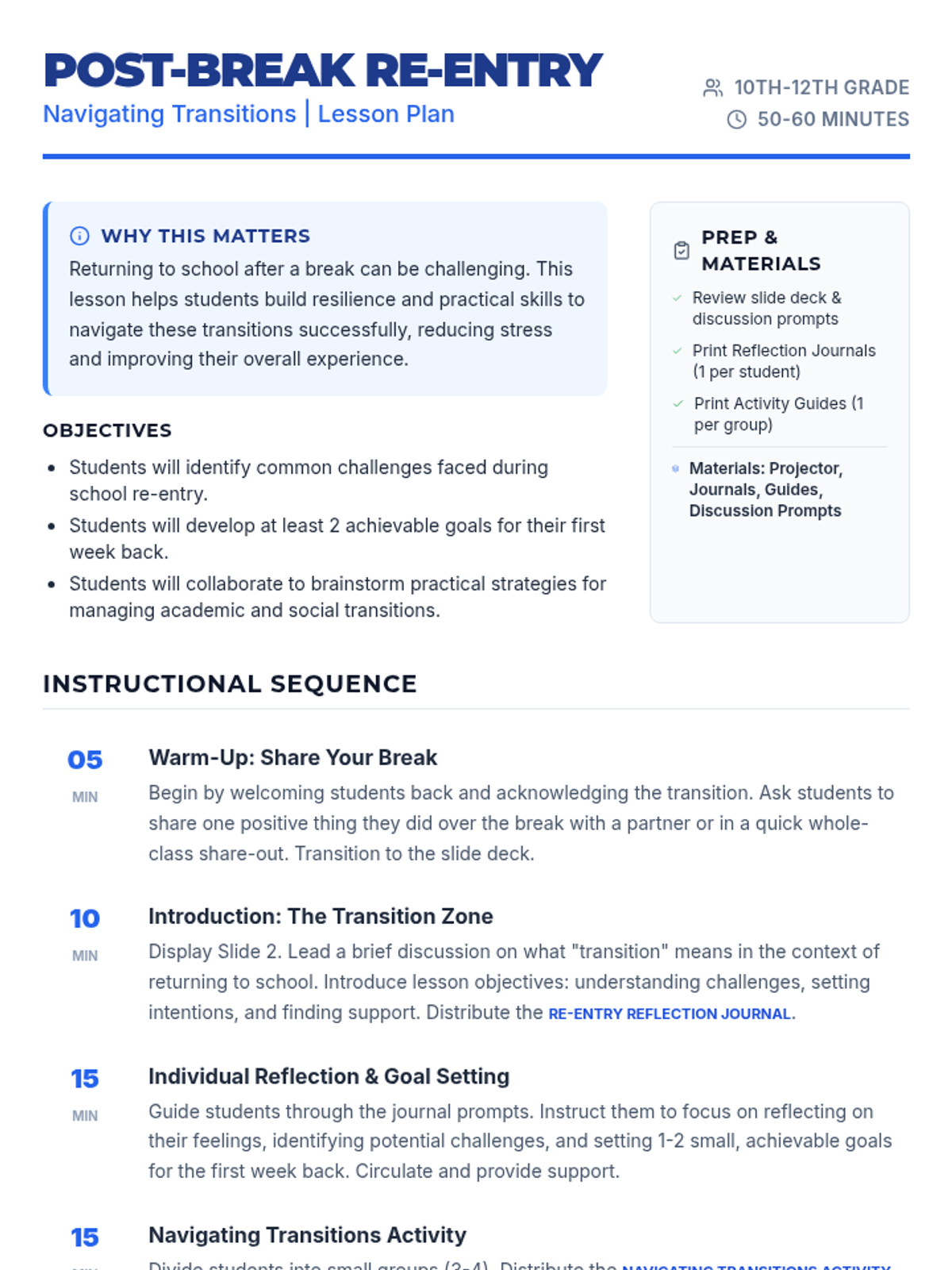
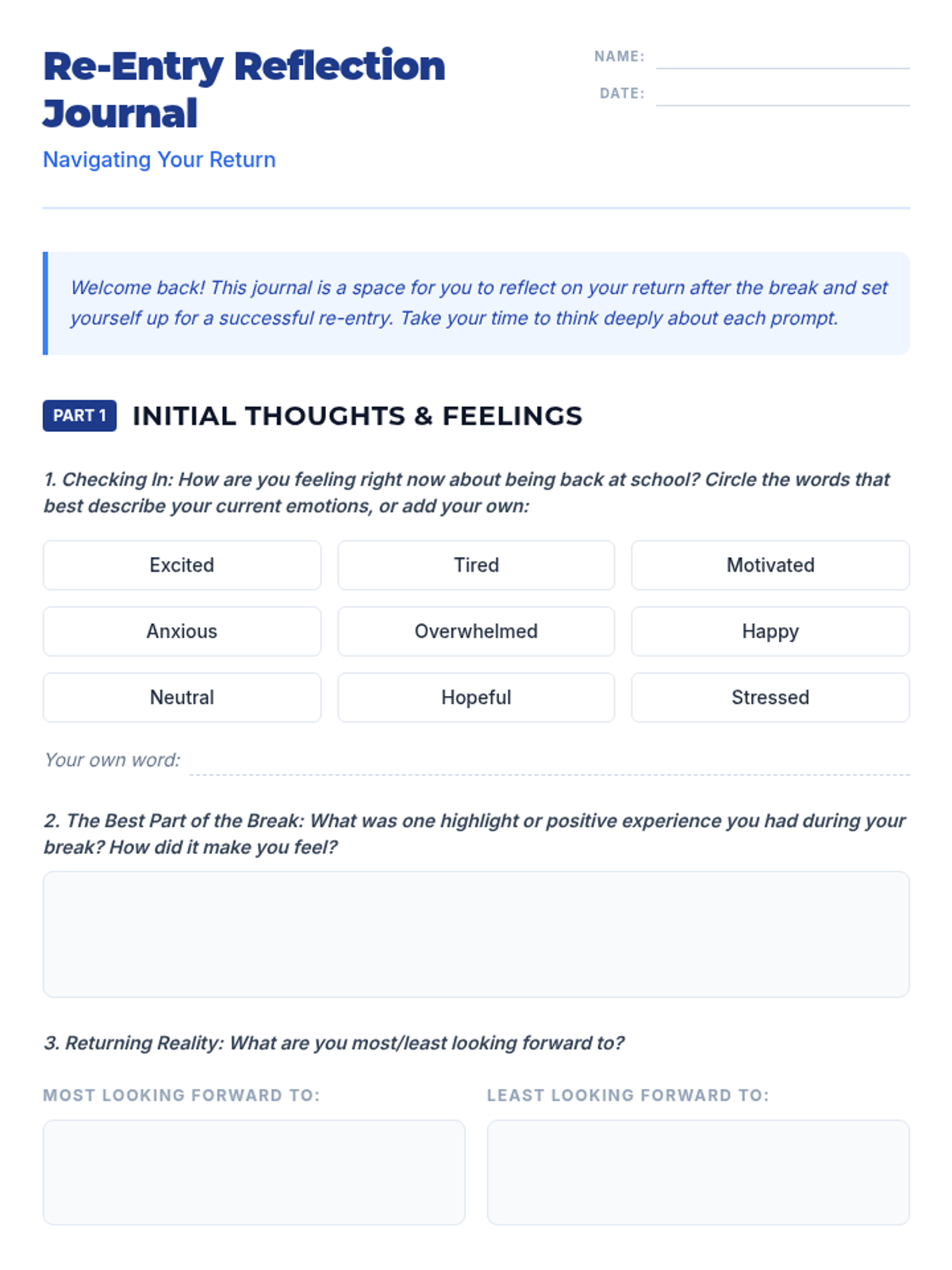
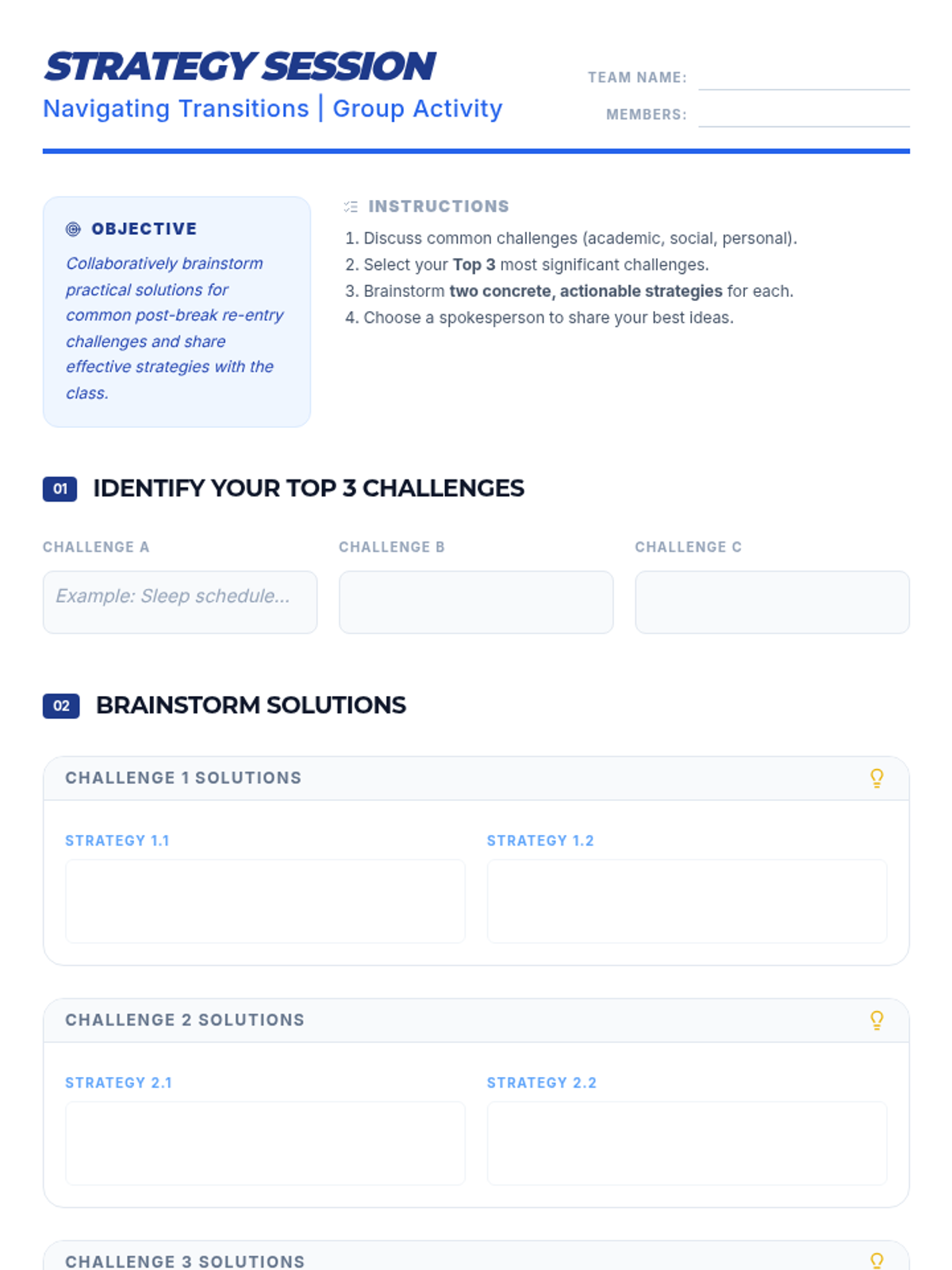
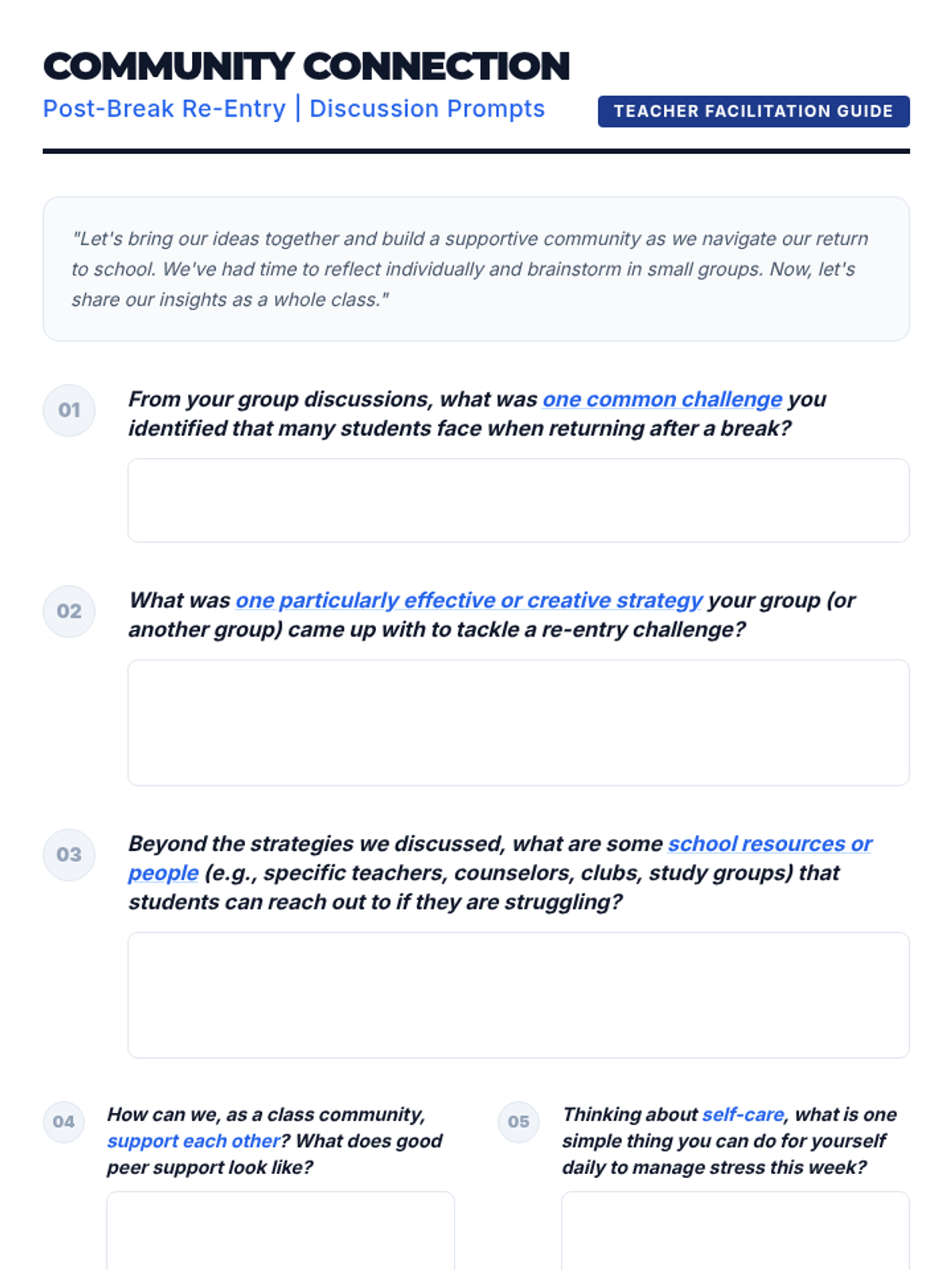
A lesson designed to help 10th-12th grade students navigate the transition back to school after a break through reflection, goal-setting, and peer support.
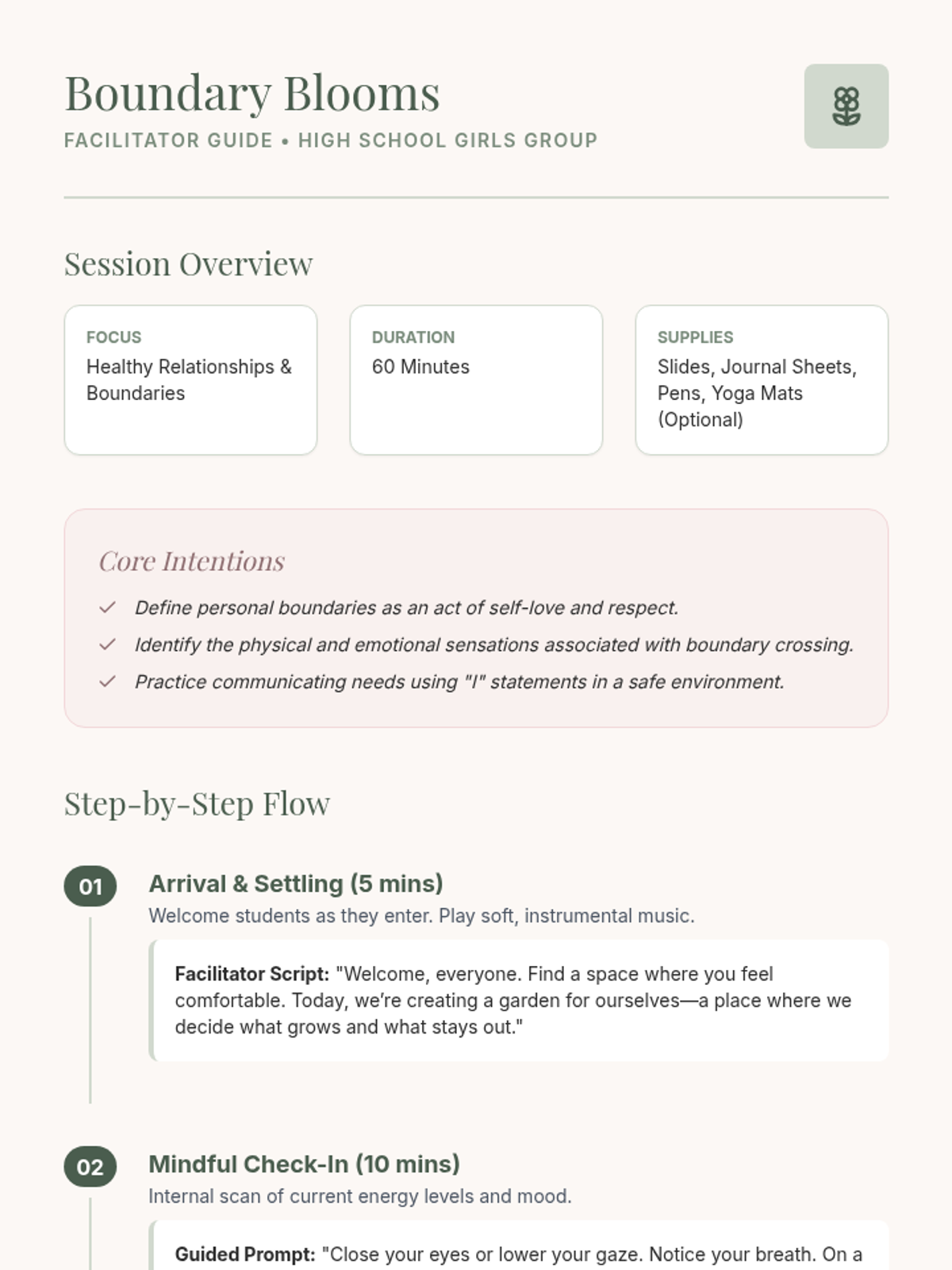
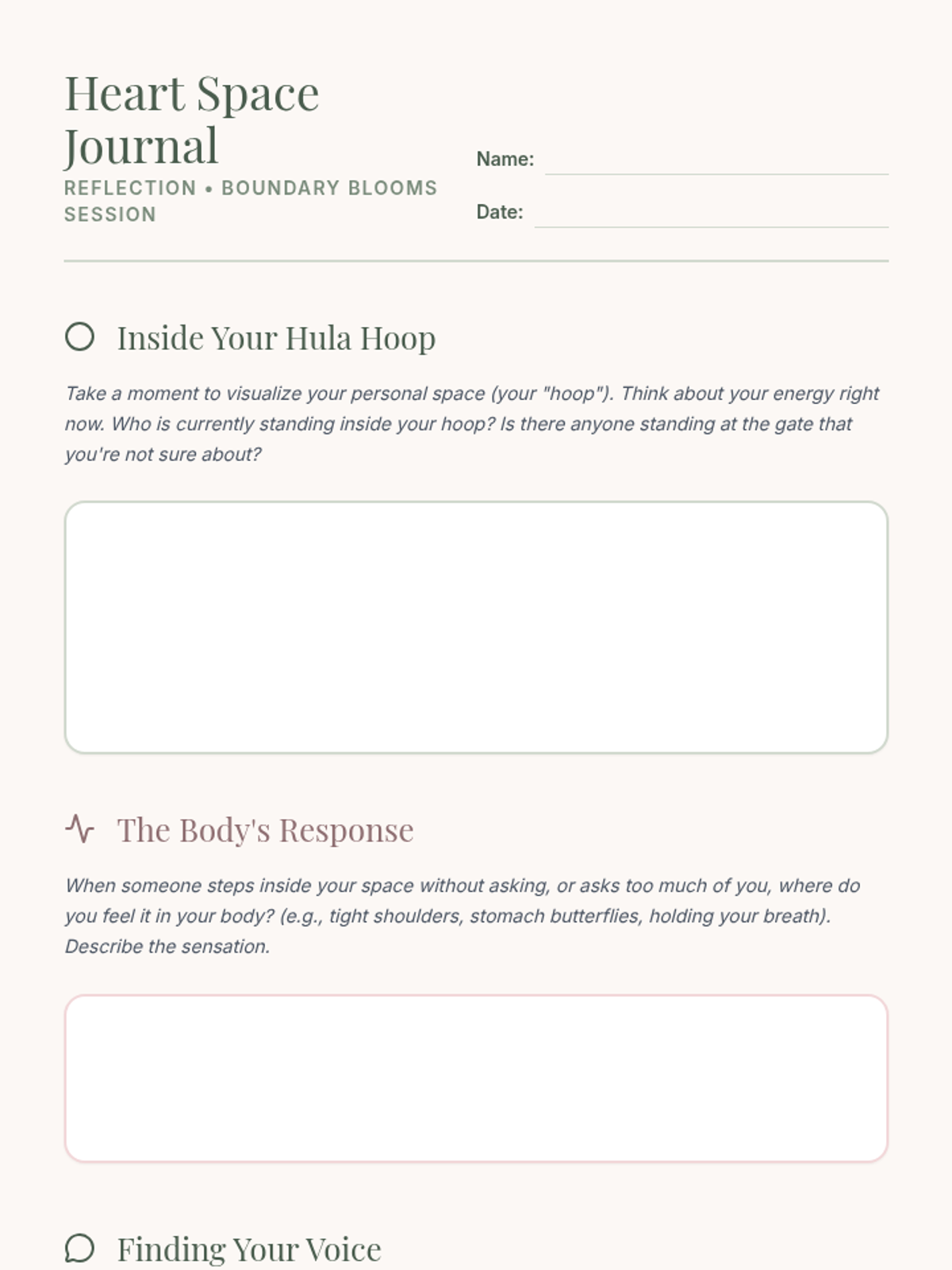
A mindfulness group therapy session for high school girls focused on identifying, communicating, and maintaining healthy boundaries in relationships. Includes a facilitator guide, visual aids, and journaling prompts.
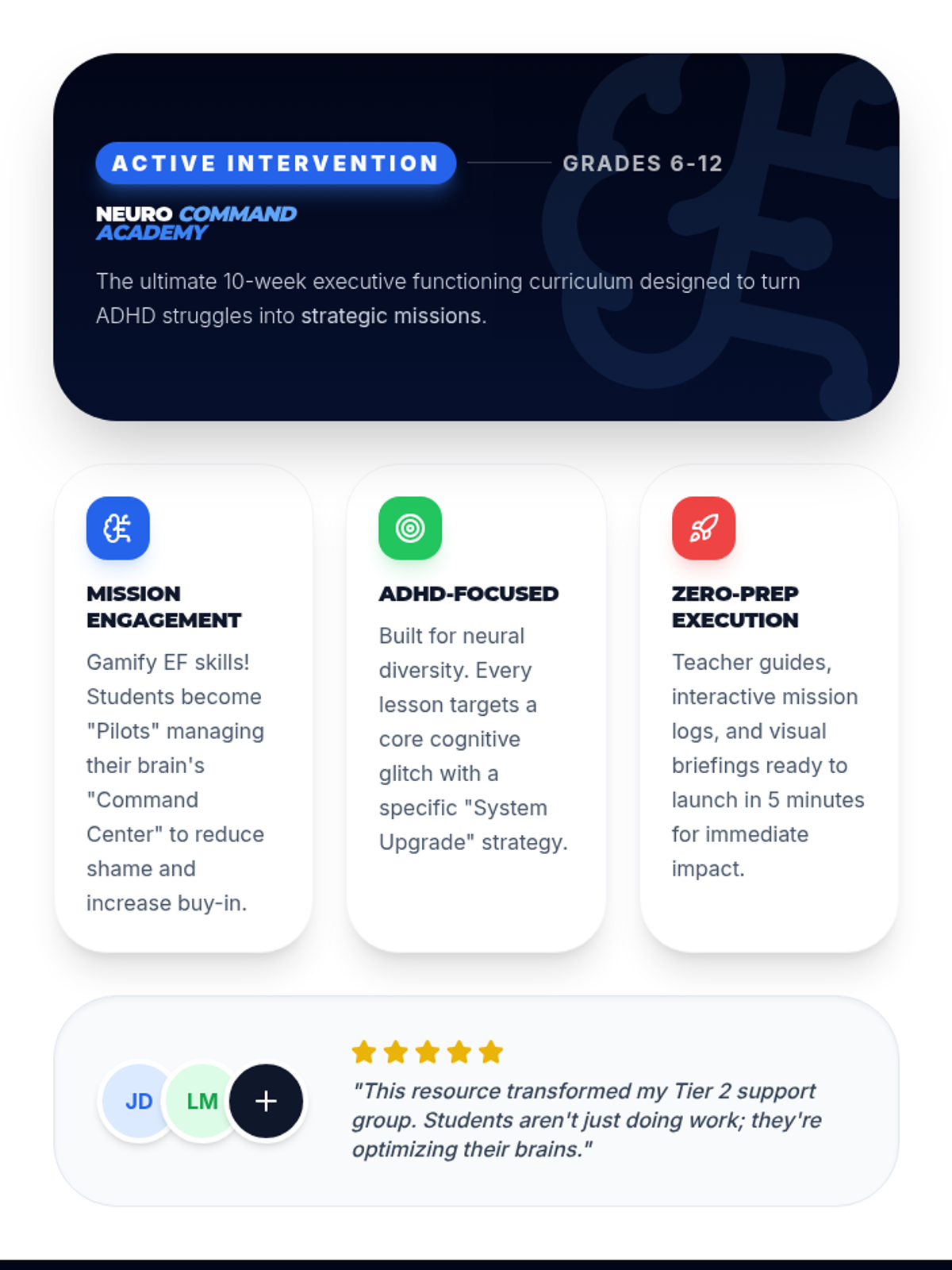
A comprehensive resource kit for the 'Neuro Command Academy' 10-week curriculum, including high-impact TPT product pages and standards-aligned guides.
An introductory session focused on building safety, group norms, and initial sharing.
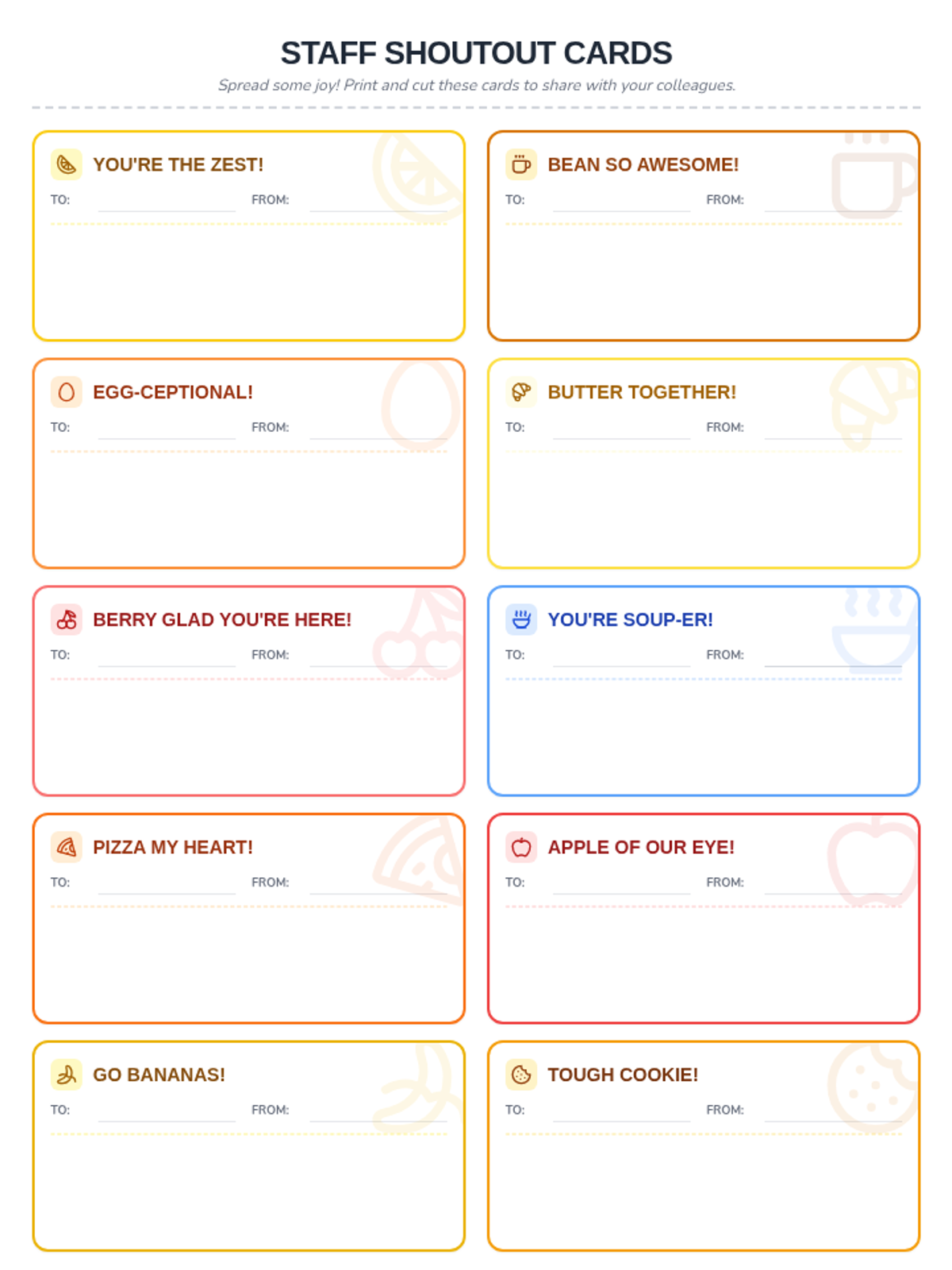
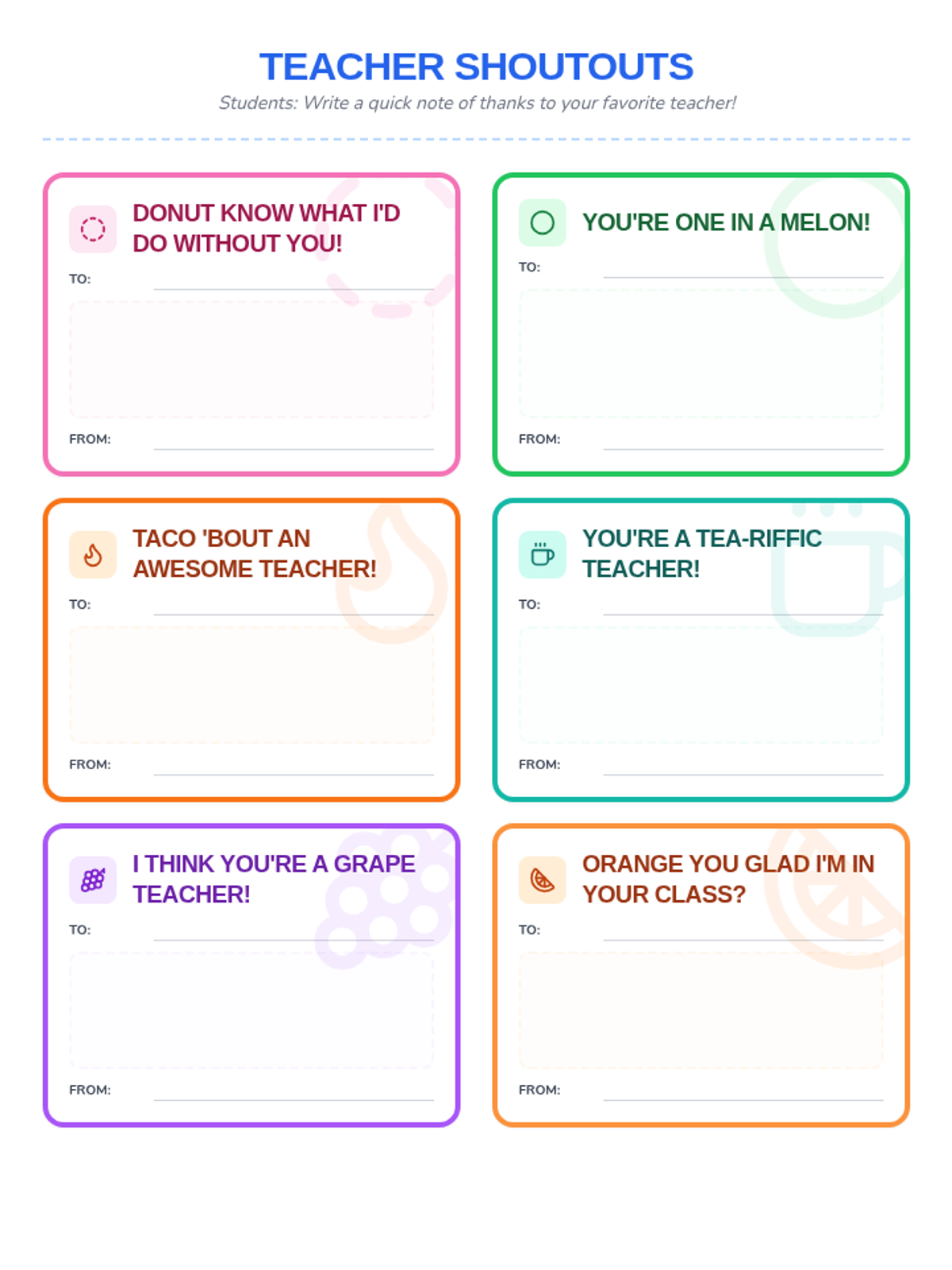
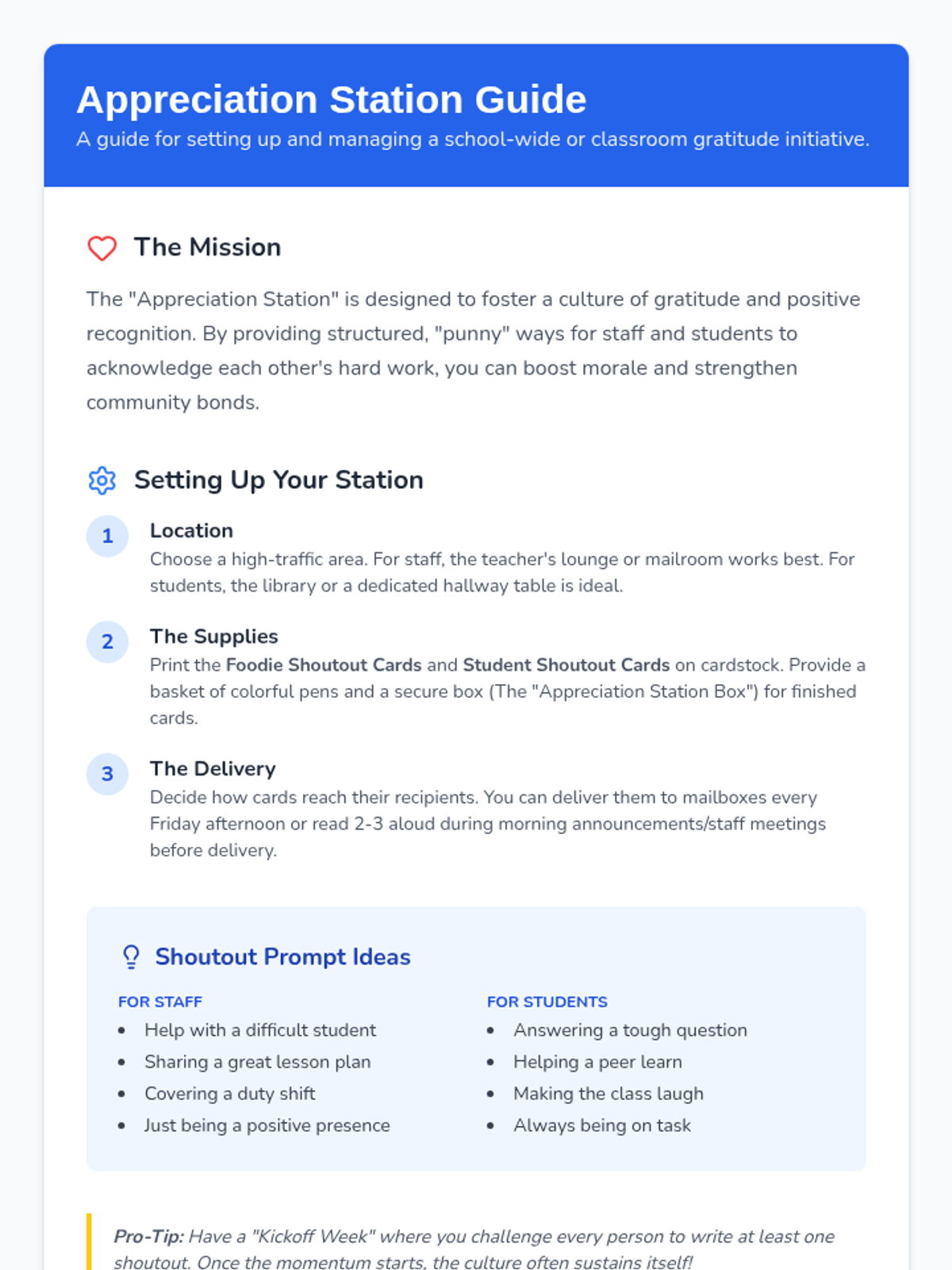
A collection of appreciation-themed resources for school staff and students to express gratitude through creative, pun-based shoutout cards.