Emotion recognition ranging from basic feelings to complex nuances and mixed states. Strengthens accurate self-assessment through identity exploration, strength identification, and values-based decision making.
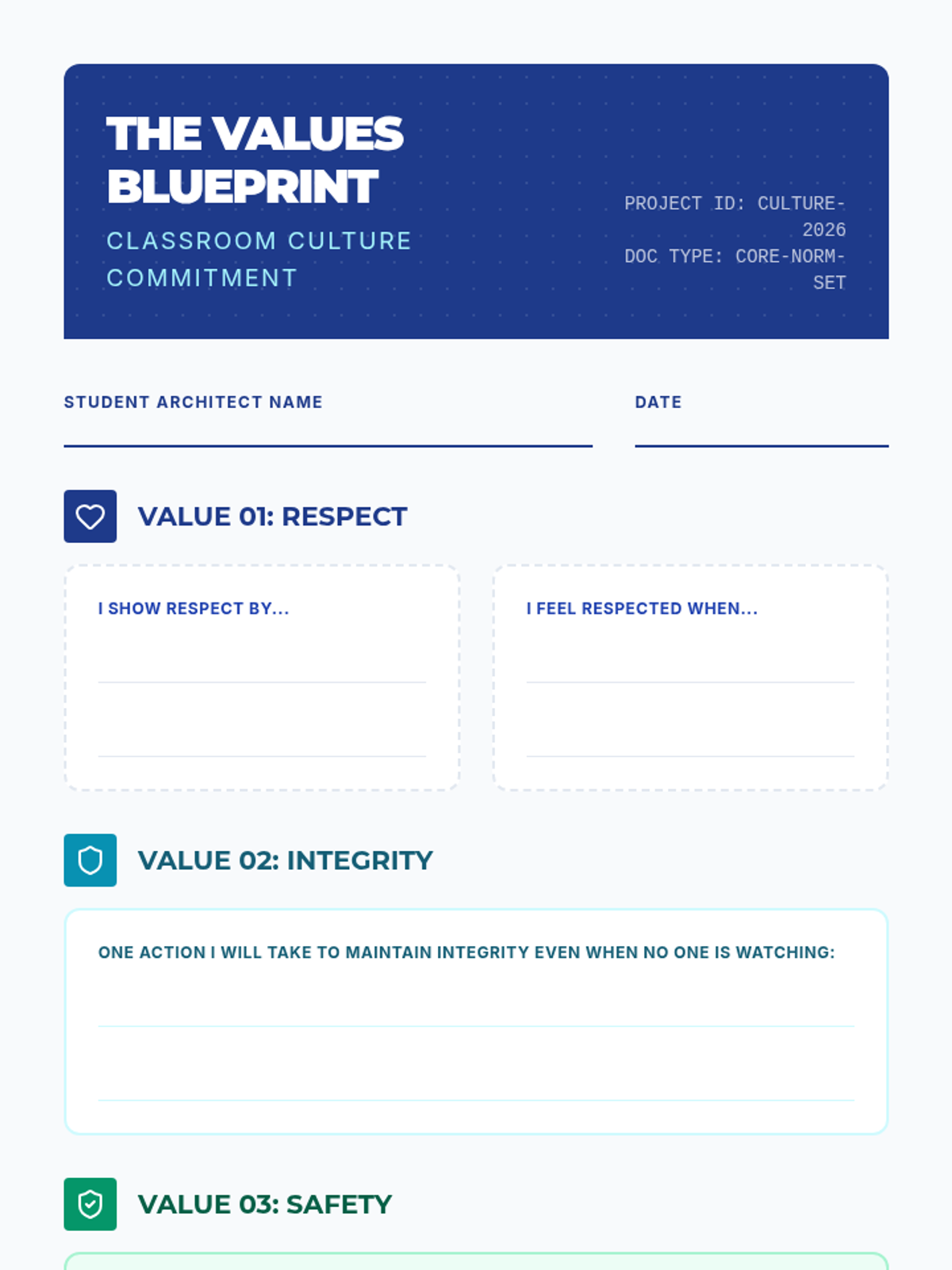
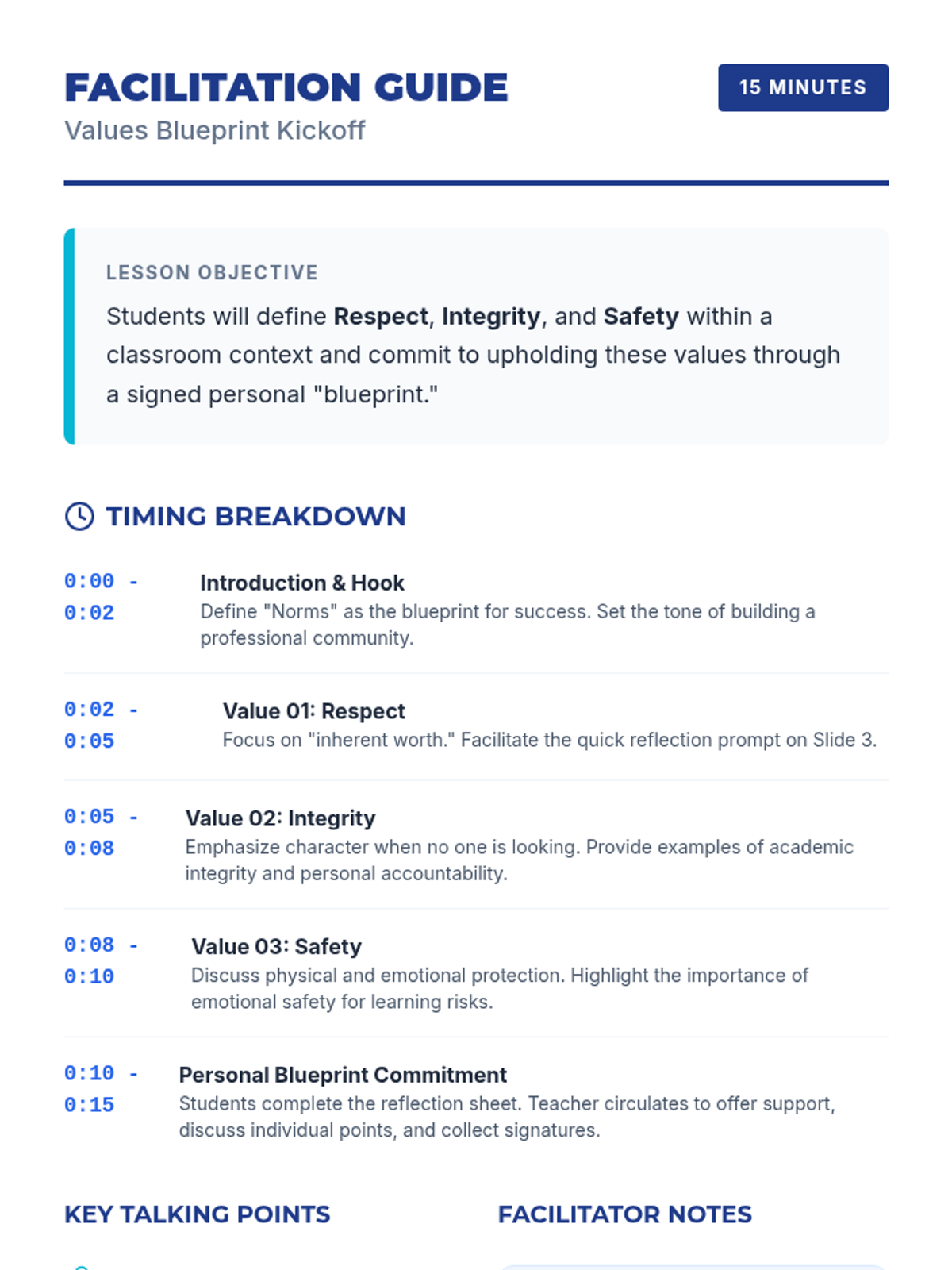
A concise 15-minute introduction to classroom norms centered on the core values of Respect, Integrity, and Safety. Students will define these values and commit to a shared culture of success.
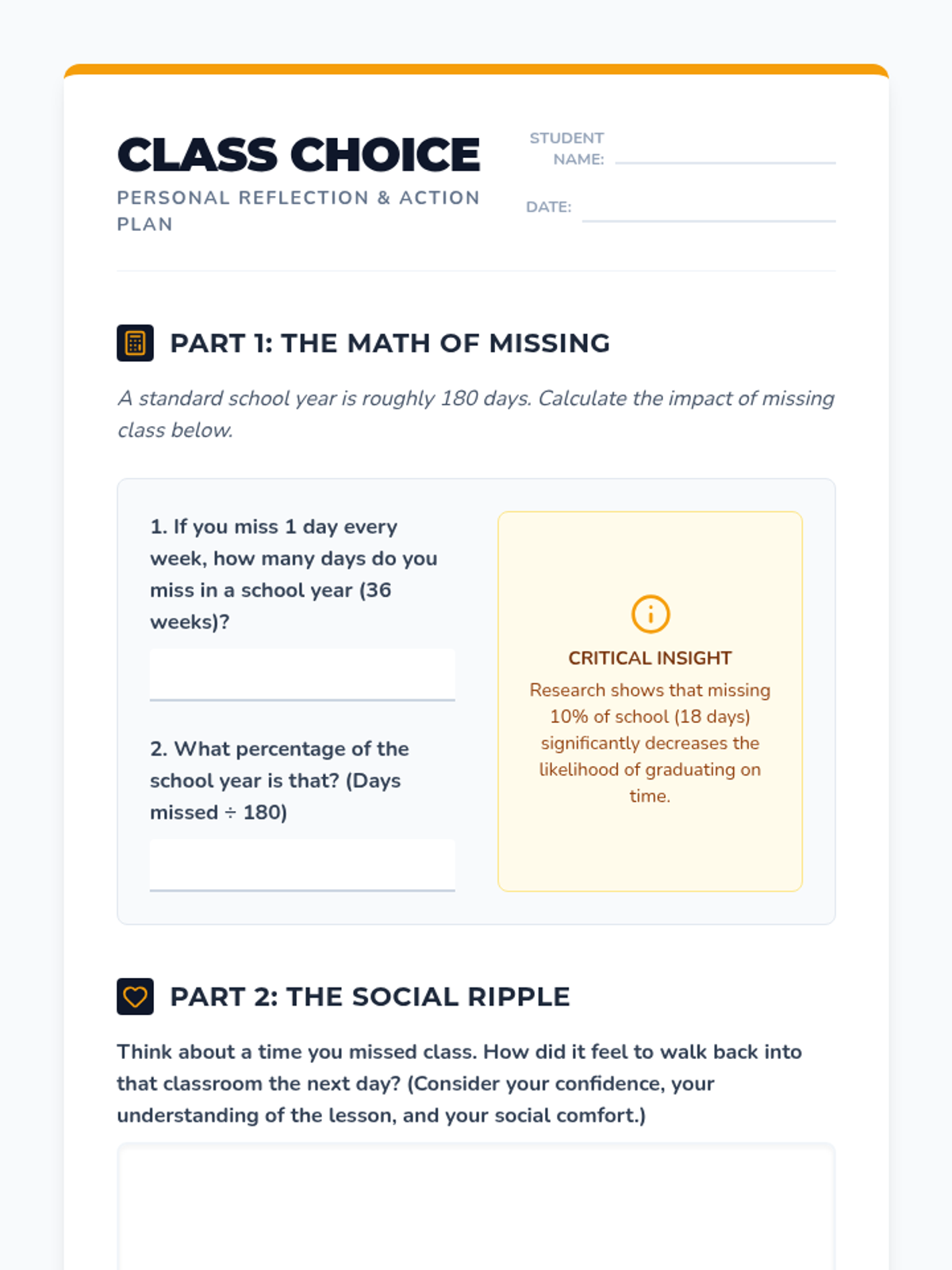
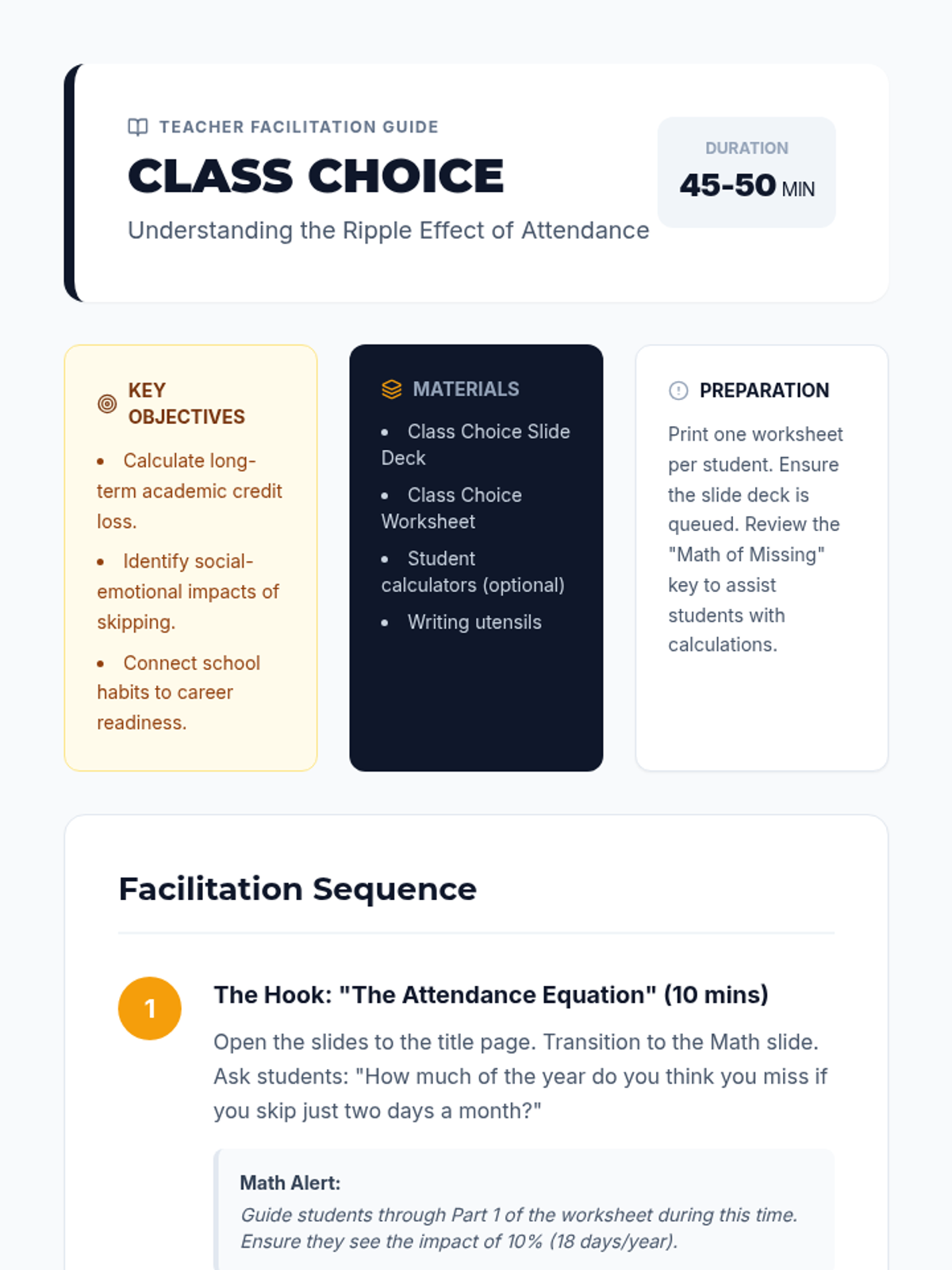
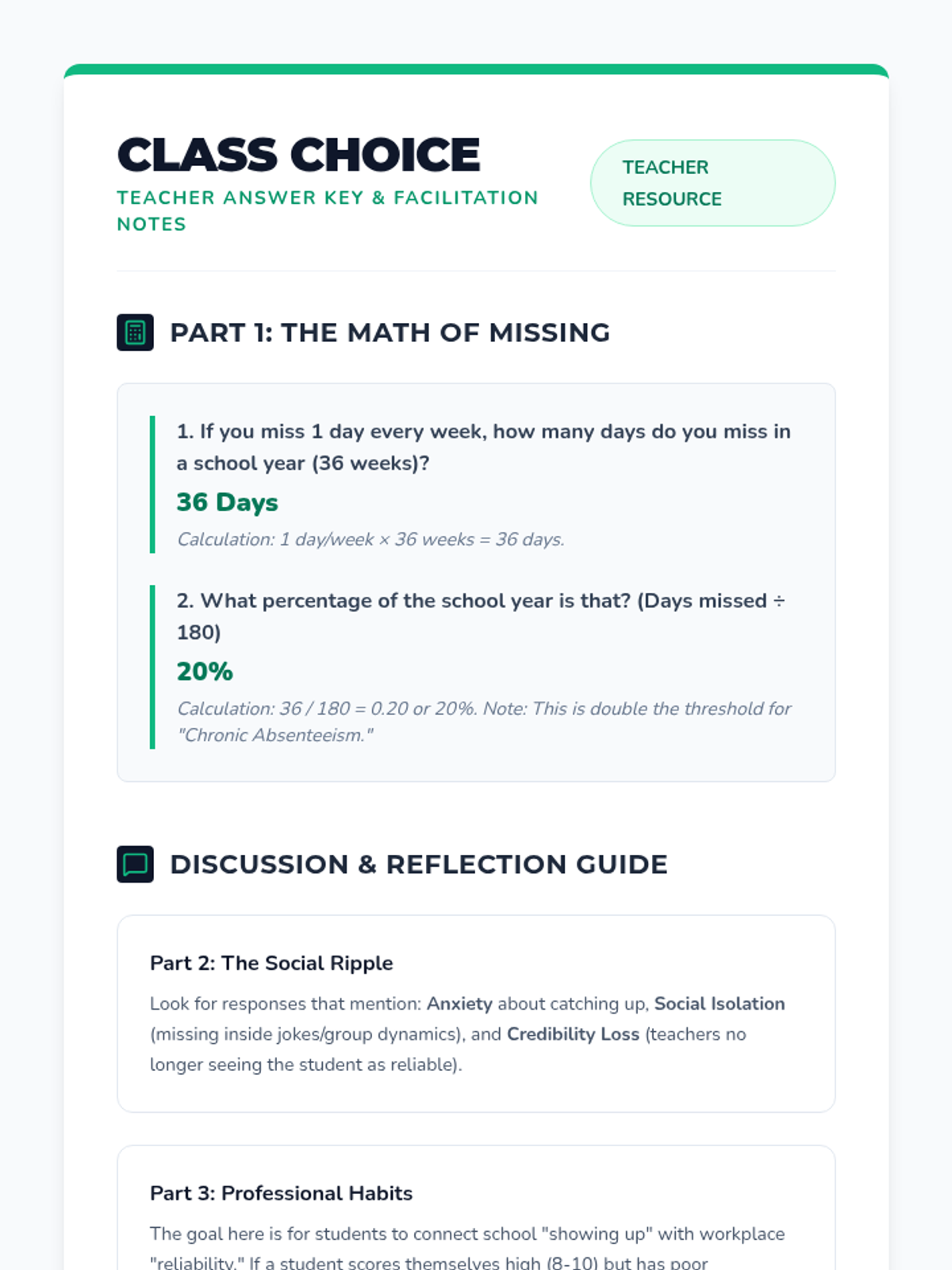
This lesson explores the multi-faceted consequences of skipping class, including academic setbacks, social-emotional impacts, and long-term career implications. Students will reflect on their choices and the weight of their decisions through interactive slides and personal reflection.
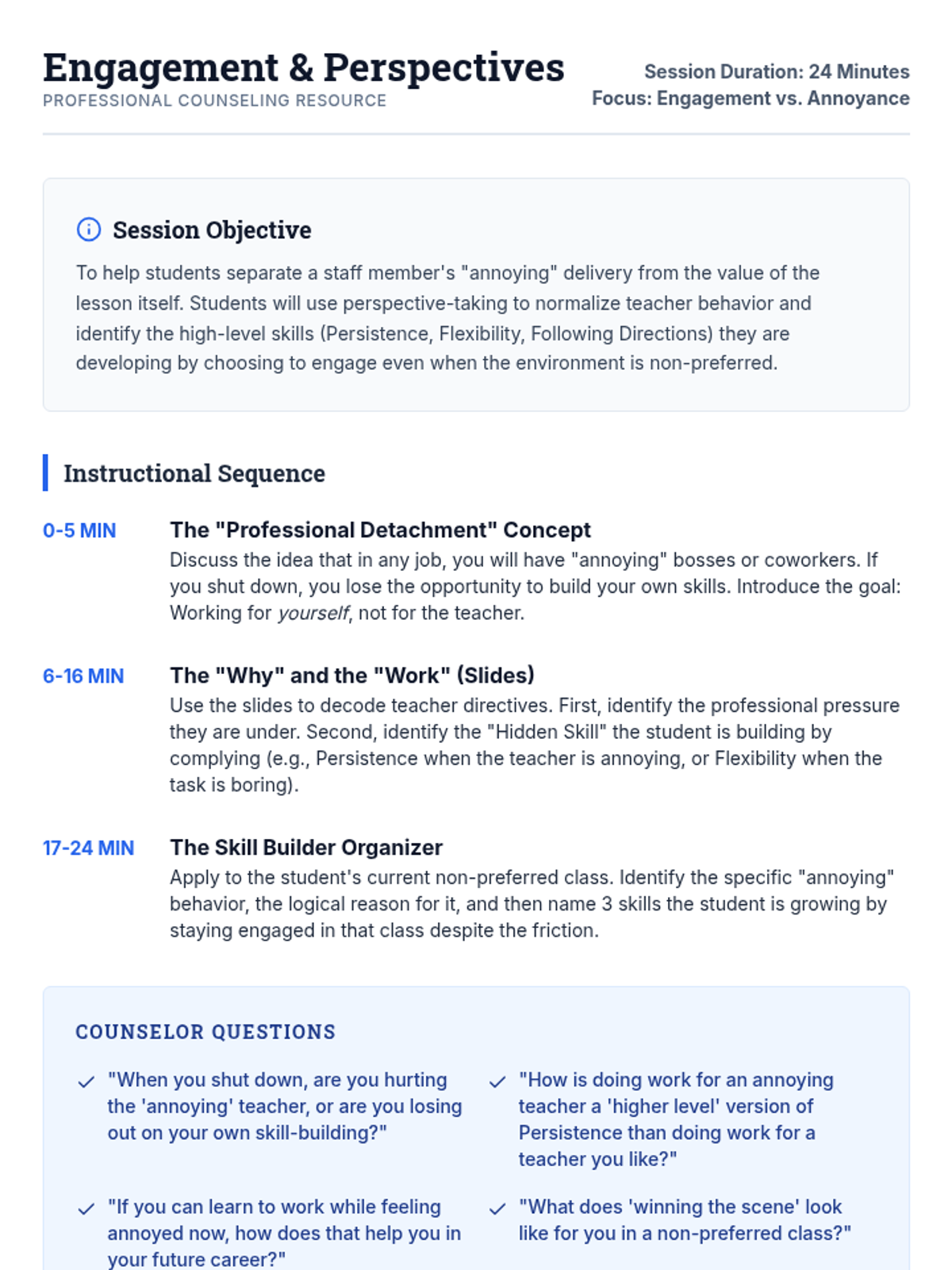
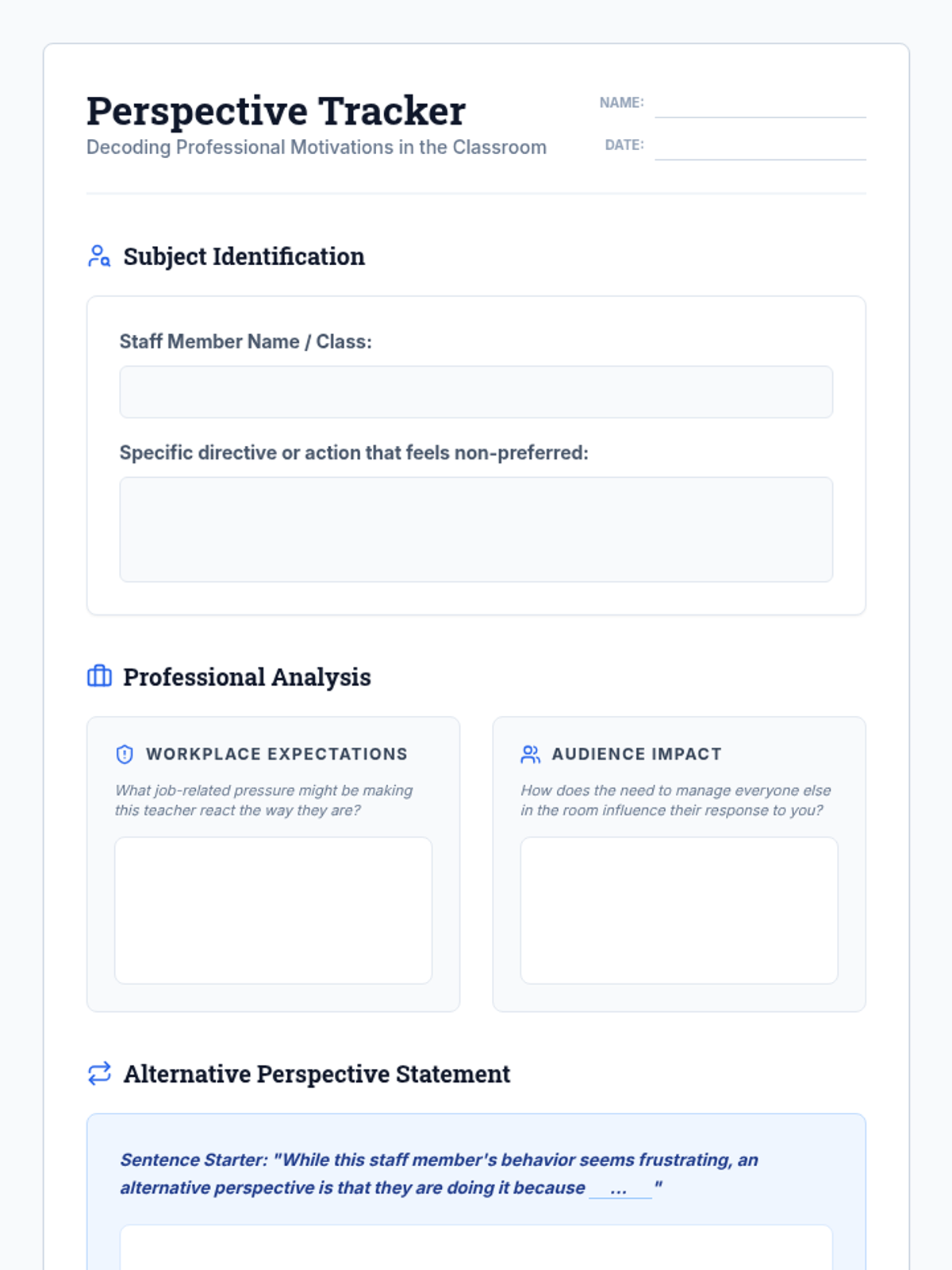
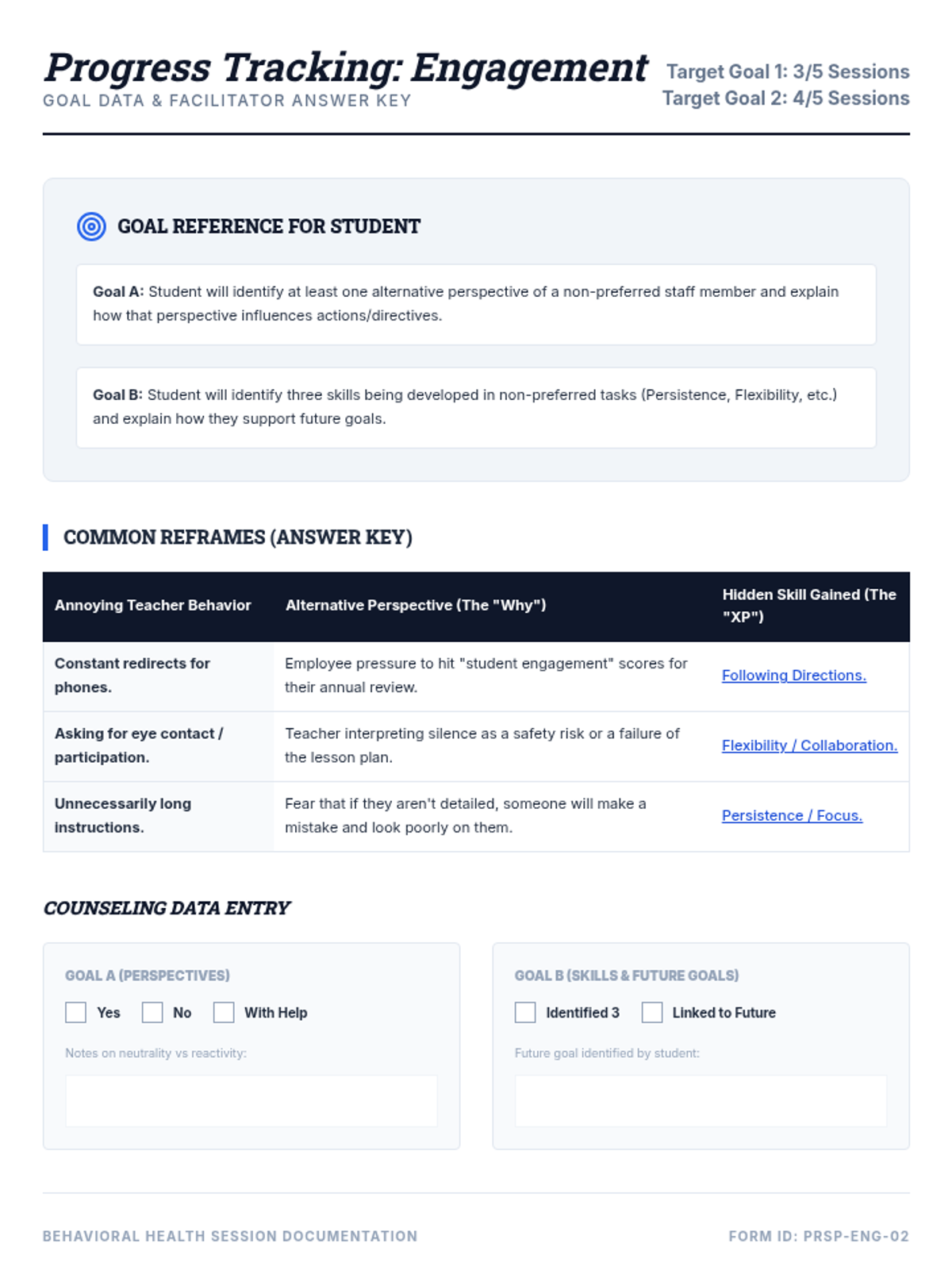
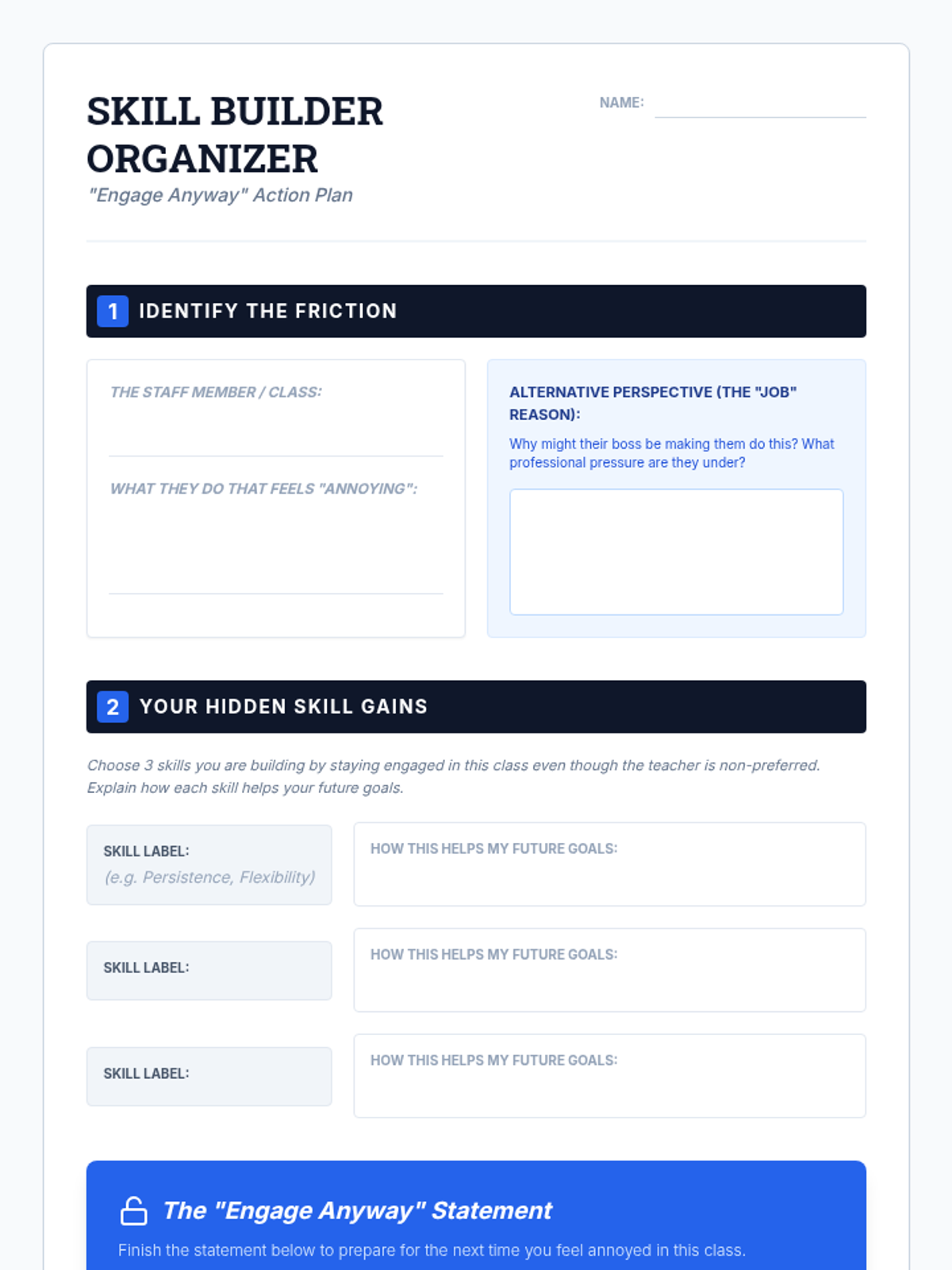
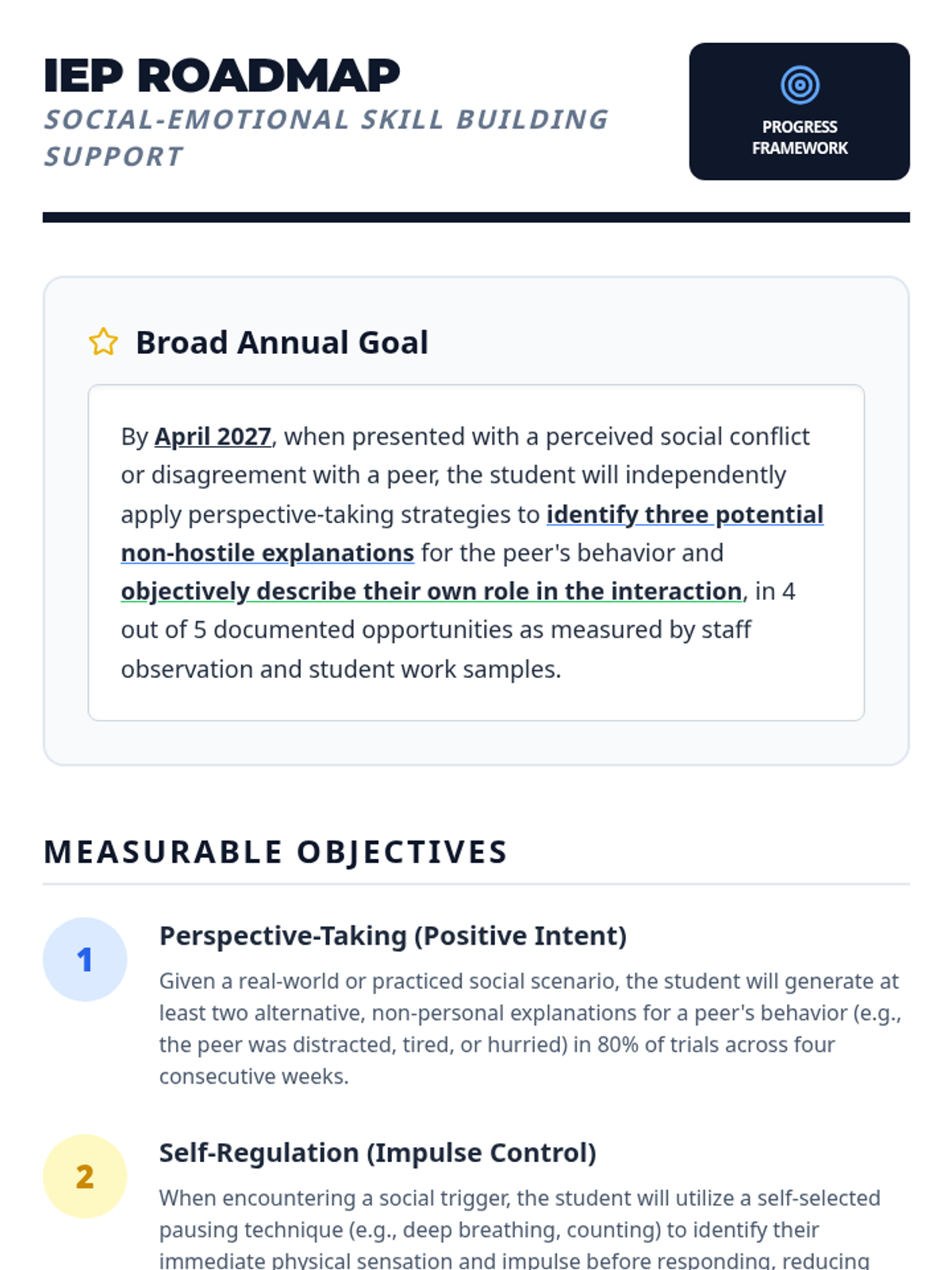
A 24-minute counseling session focused on social perspective-taking, specifically helping students identify the underlying motivations and professional pressures that influence staff member actions and directives.
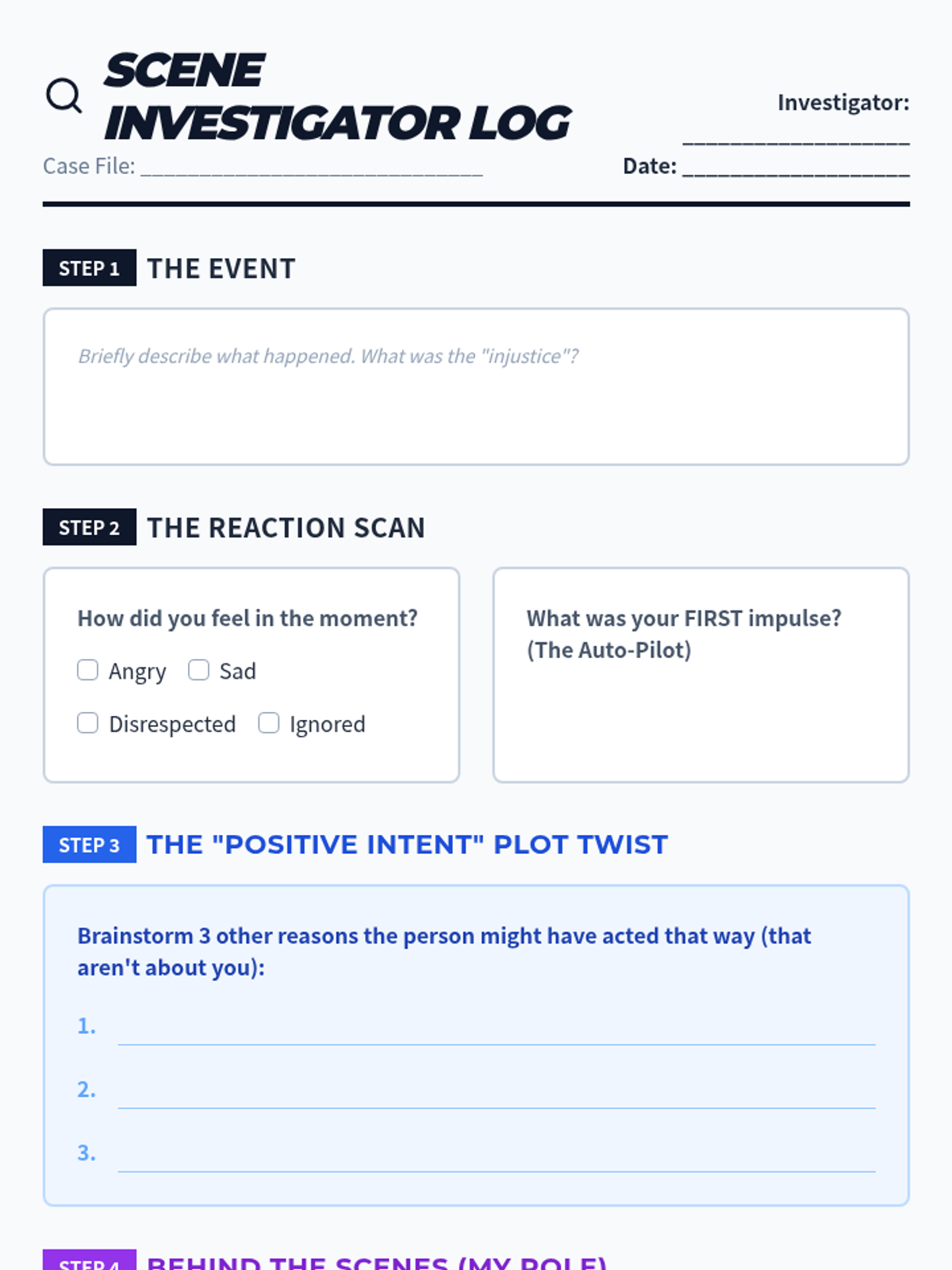
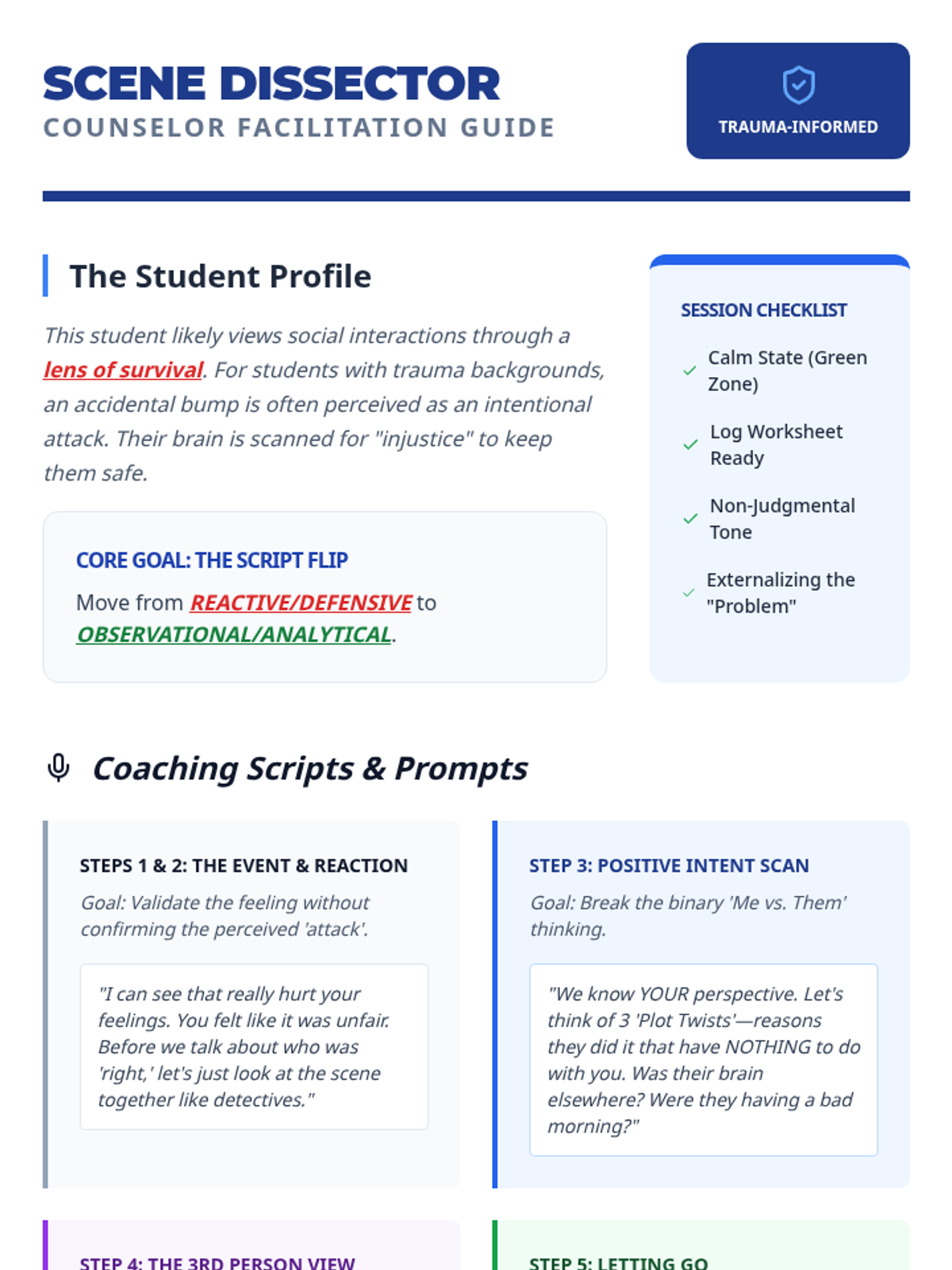
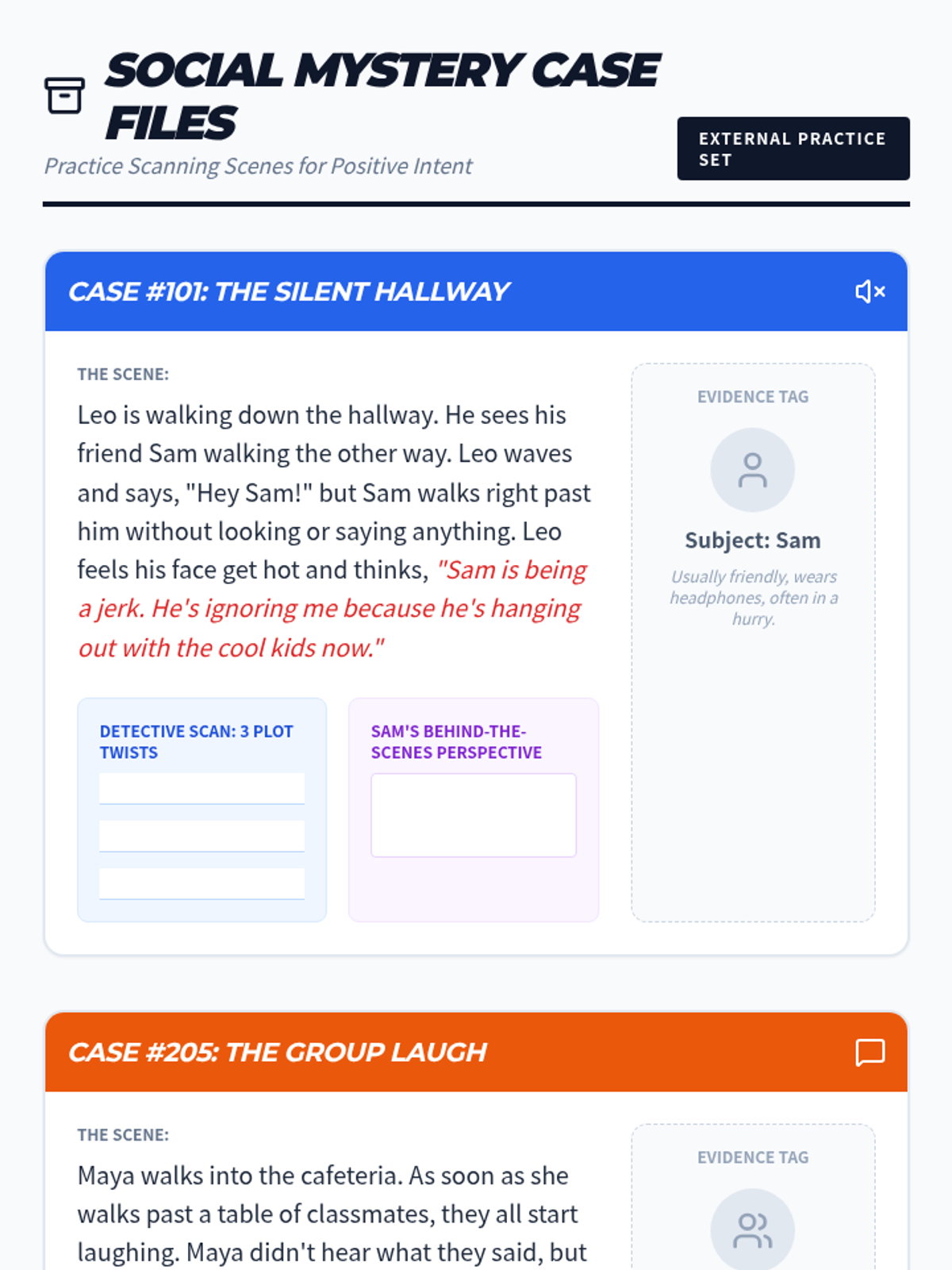
A social-emotional learning lesson designed for students with trauma backgrounds and impulse control challenges. It focuses on 'Scene Scanning'—assuming positive intent and dissecting social interactions through a detective-style lens to improve perspective-taking and reduce reactivity.
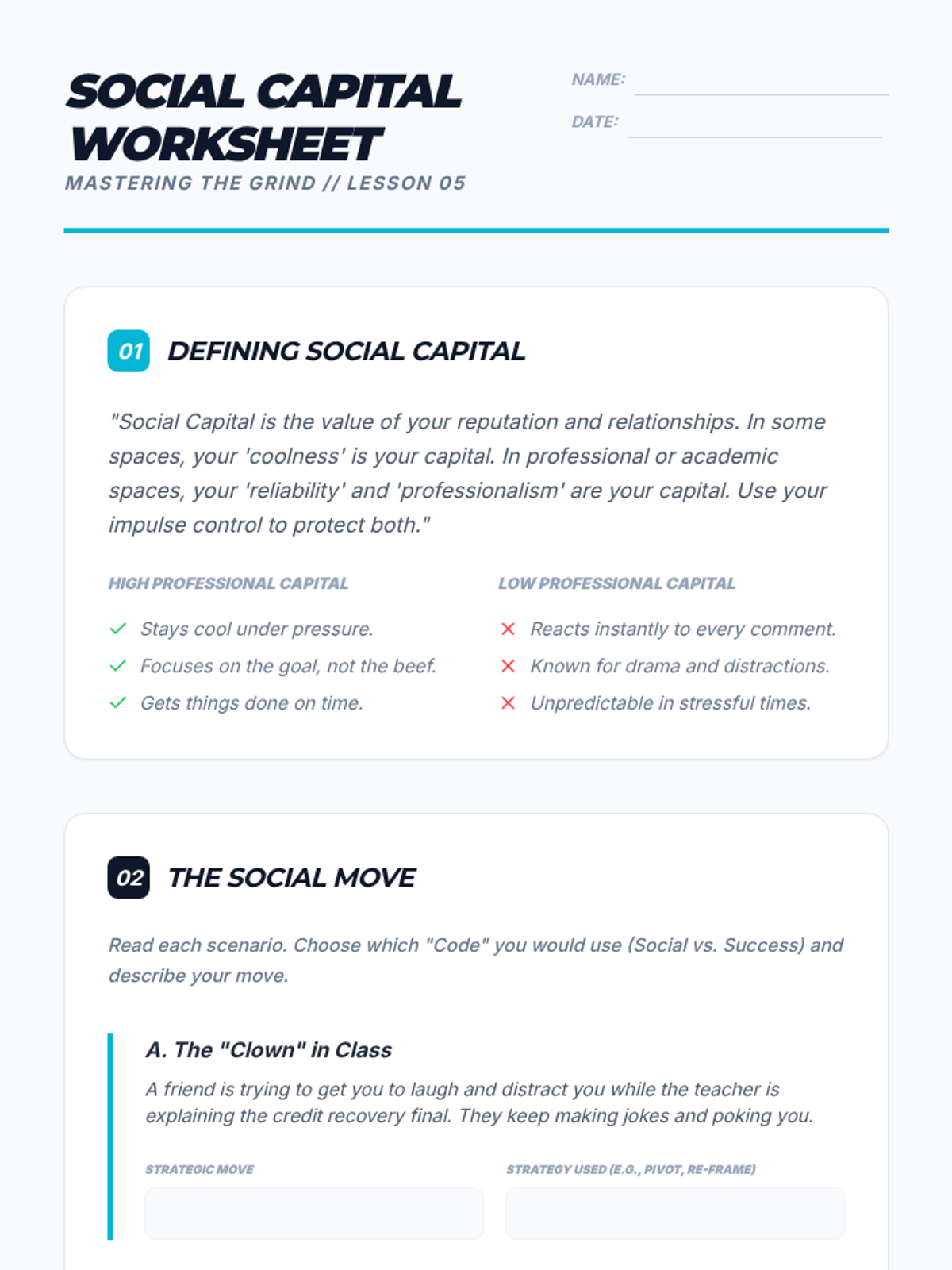
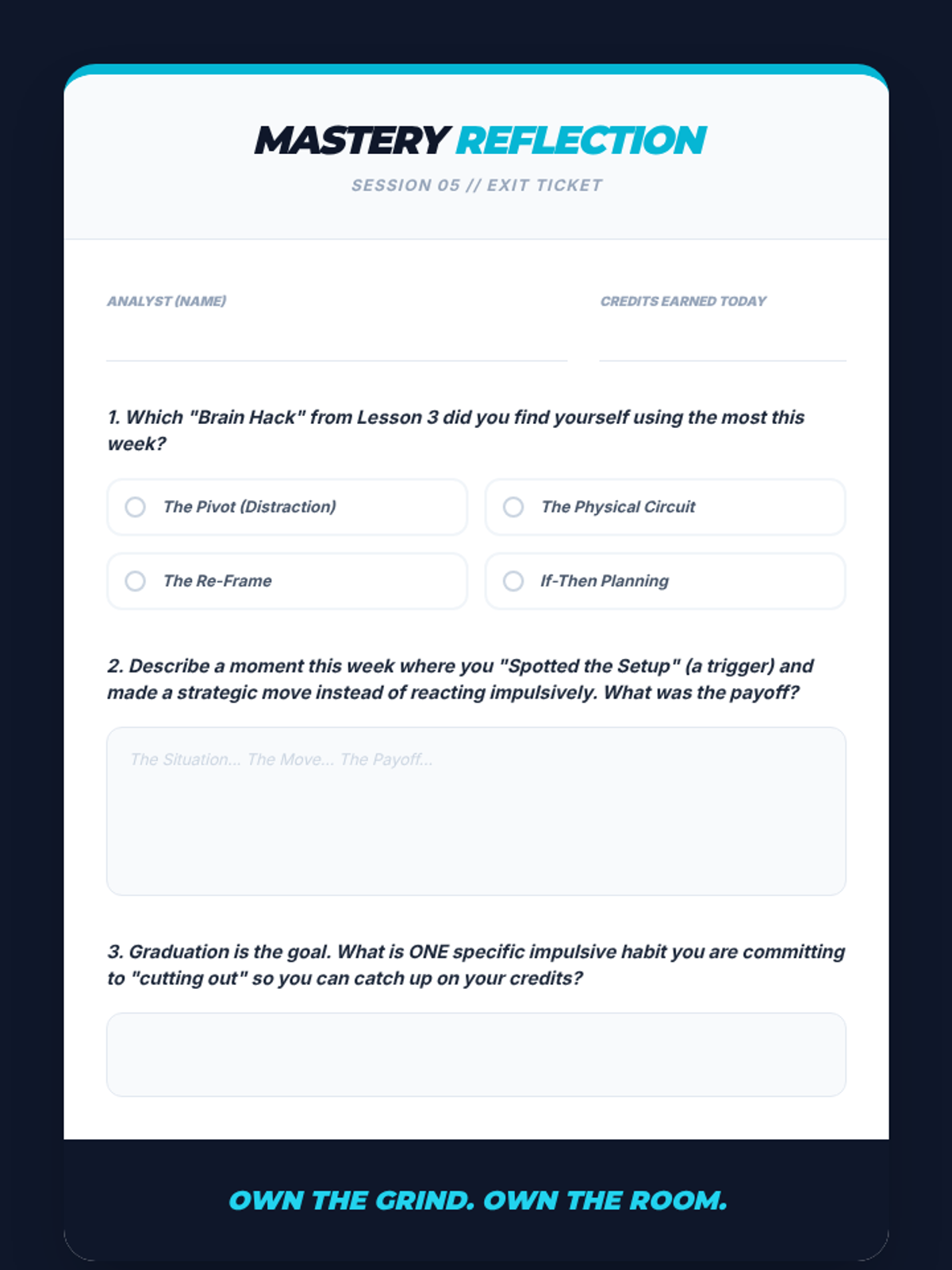
Focuses on social intelligence and 'code-switching' as tools for success. Students practice navigating conflict with peers and authority figures to protect their progress and 'own the room' professionally.
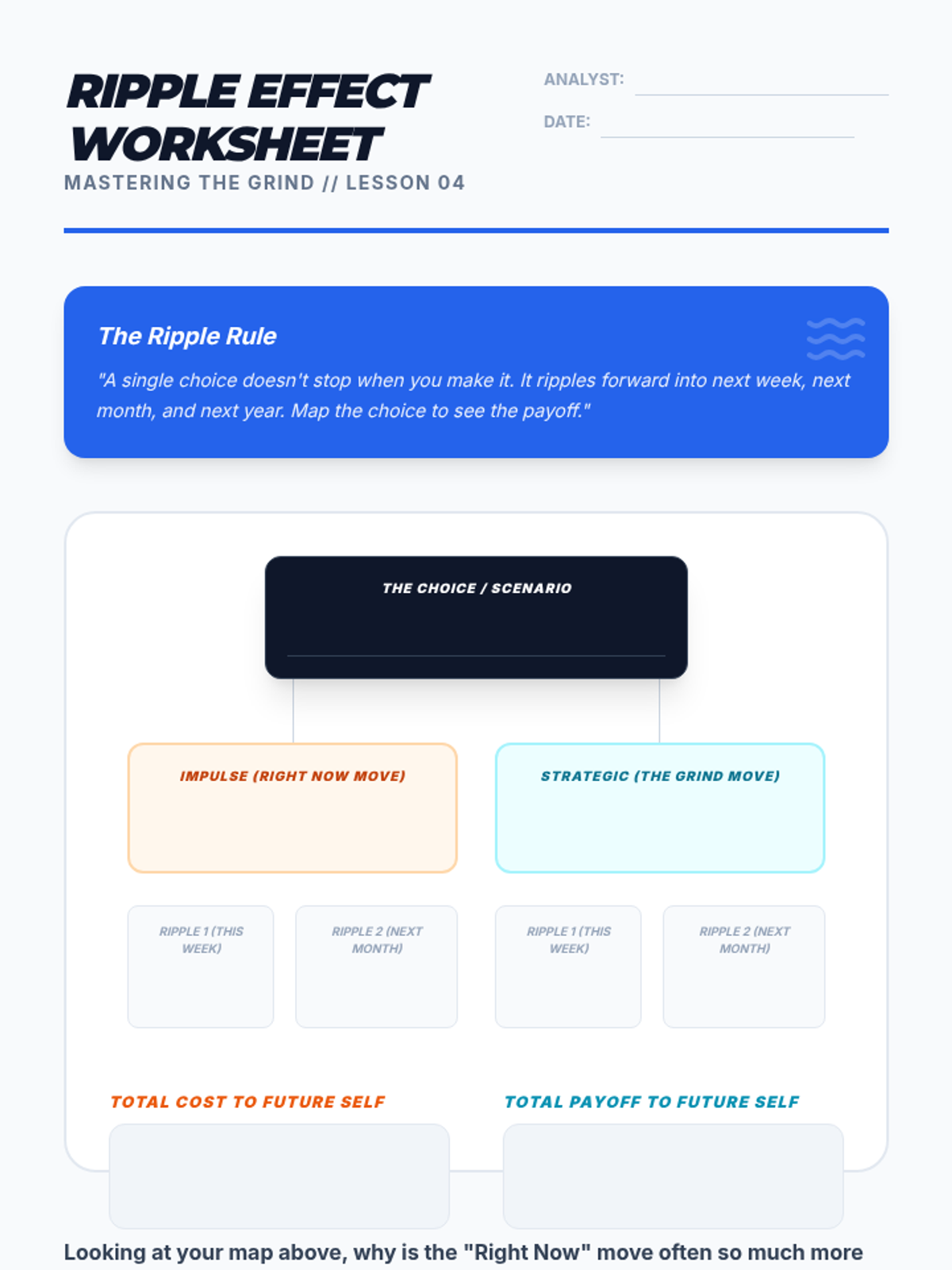
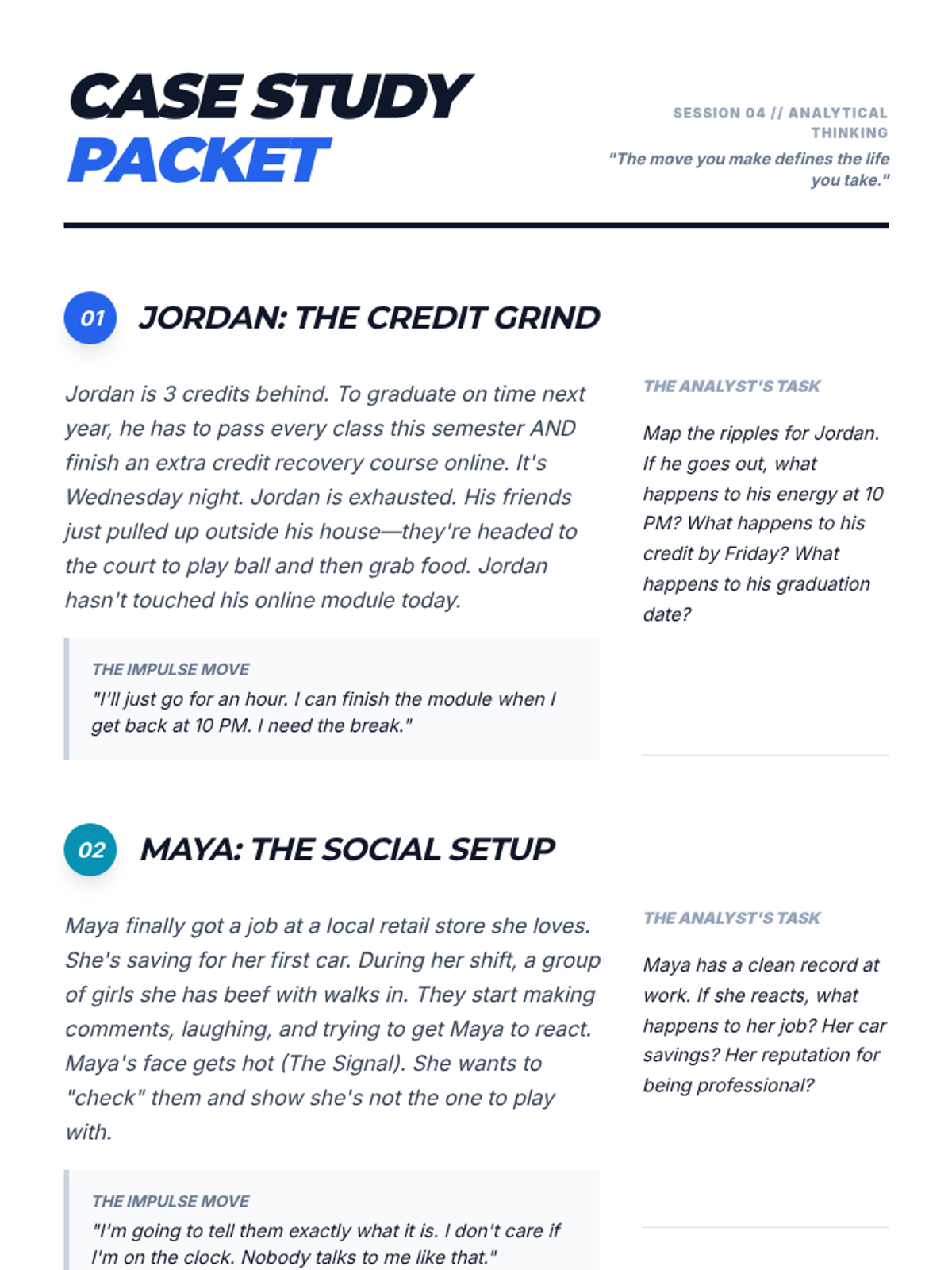
Visualizes the 'Ripple Effect' of choices on graduation timelines and future earnings. Students analyze case studies of peers navigating high-stakes decisions to understand the compounding nature of consistency.
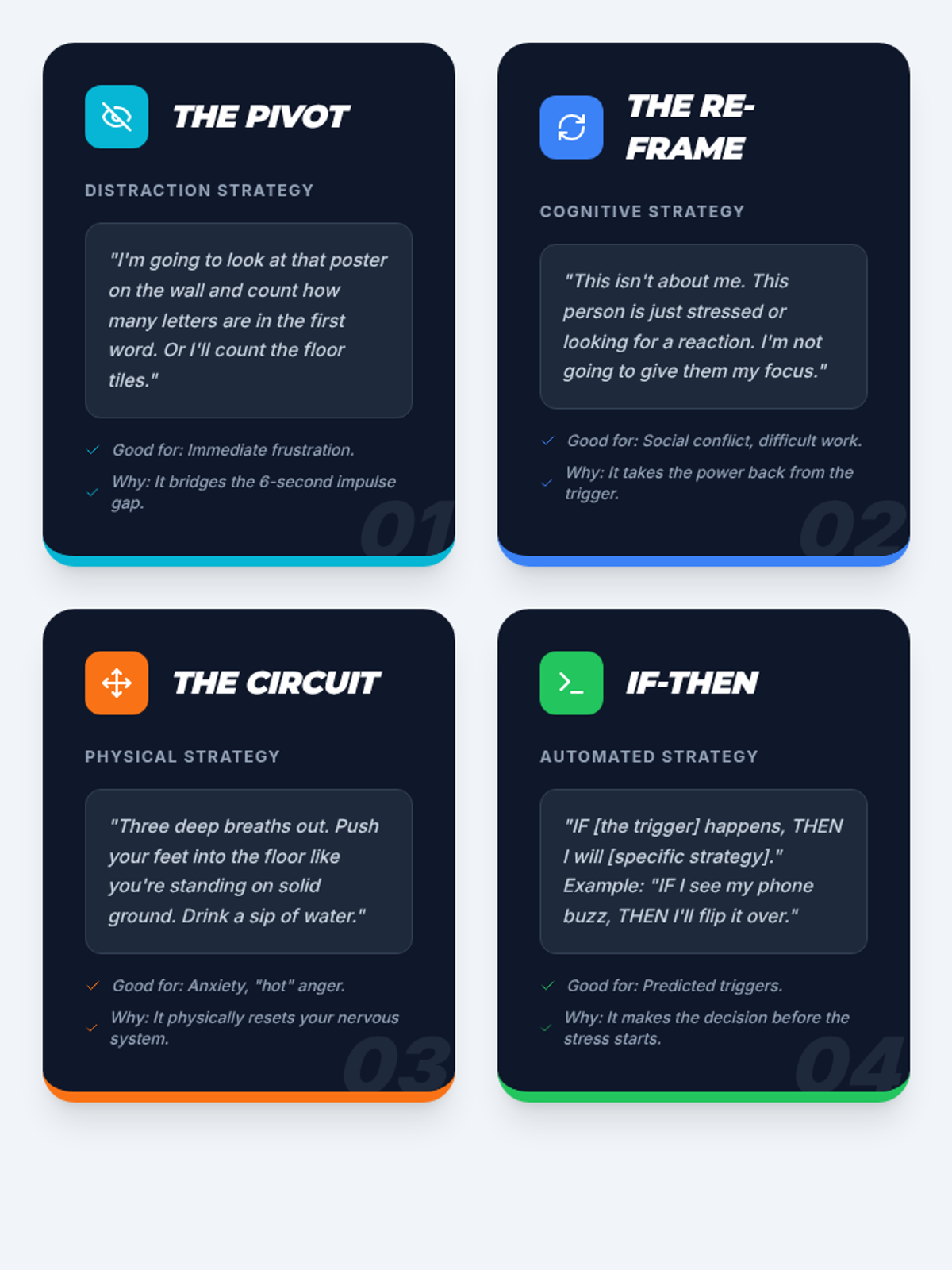
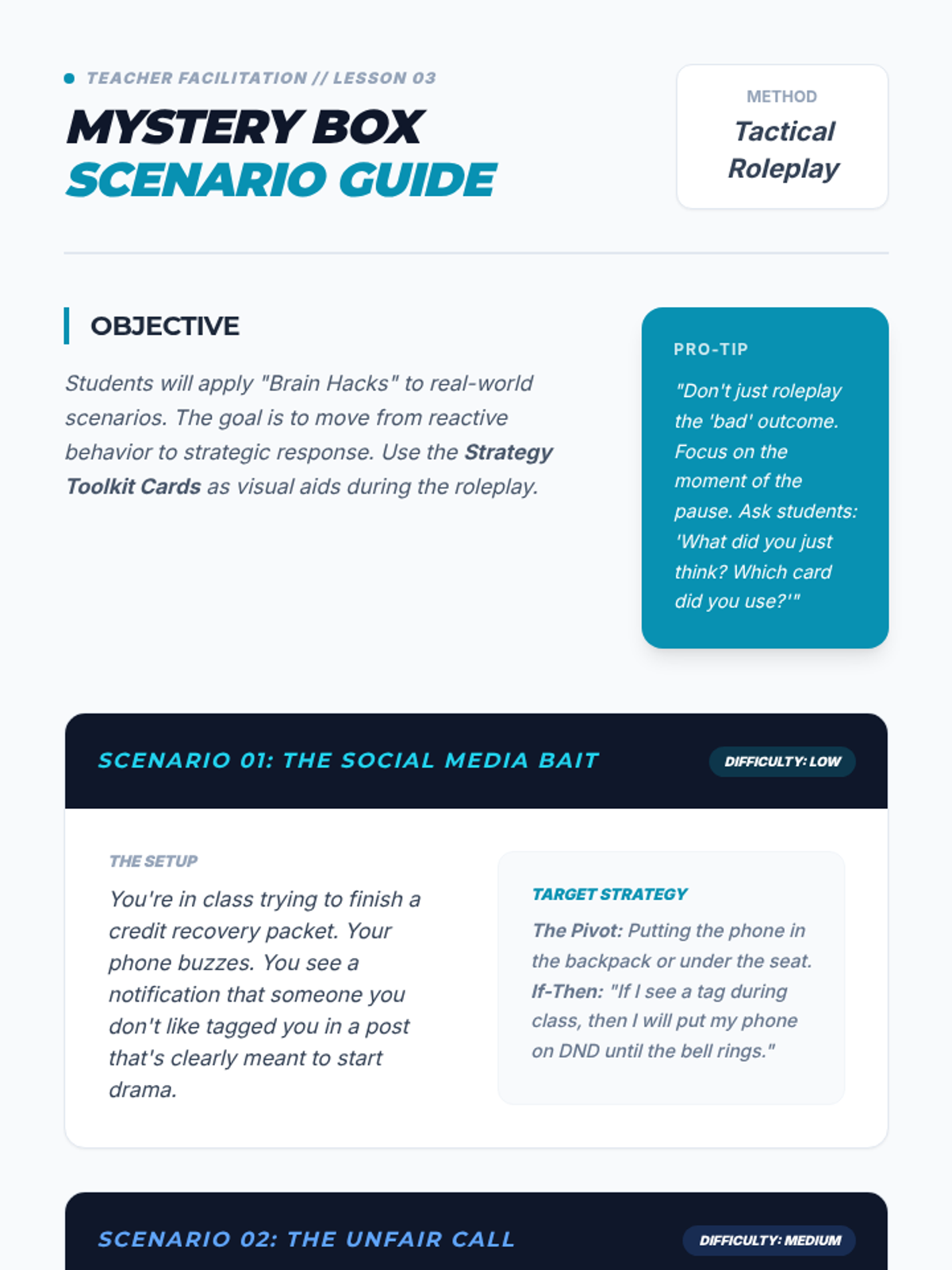
Equips students with high-level cognitive strategies to override impulsive reactions. Focuses on 'reframing' stressful situations and using 'if-then' planning to maintain composure under pressure.
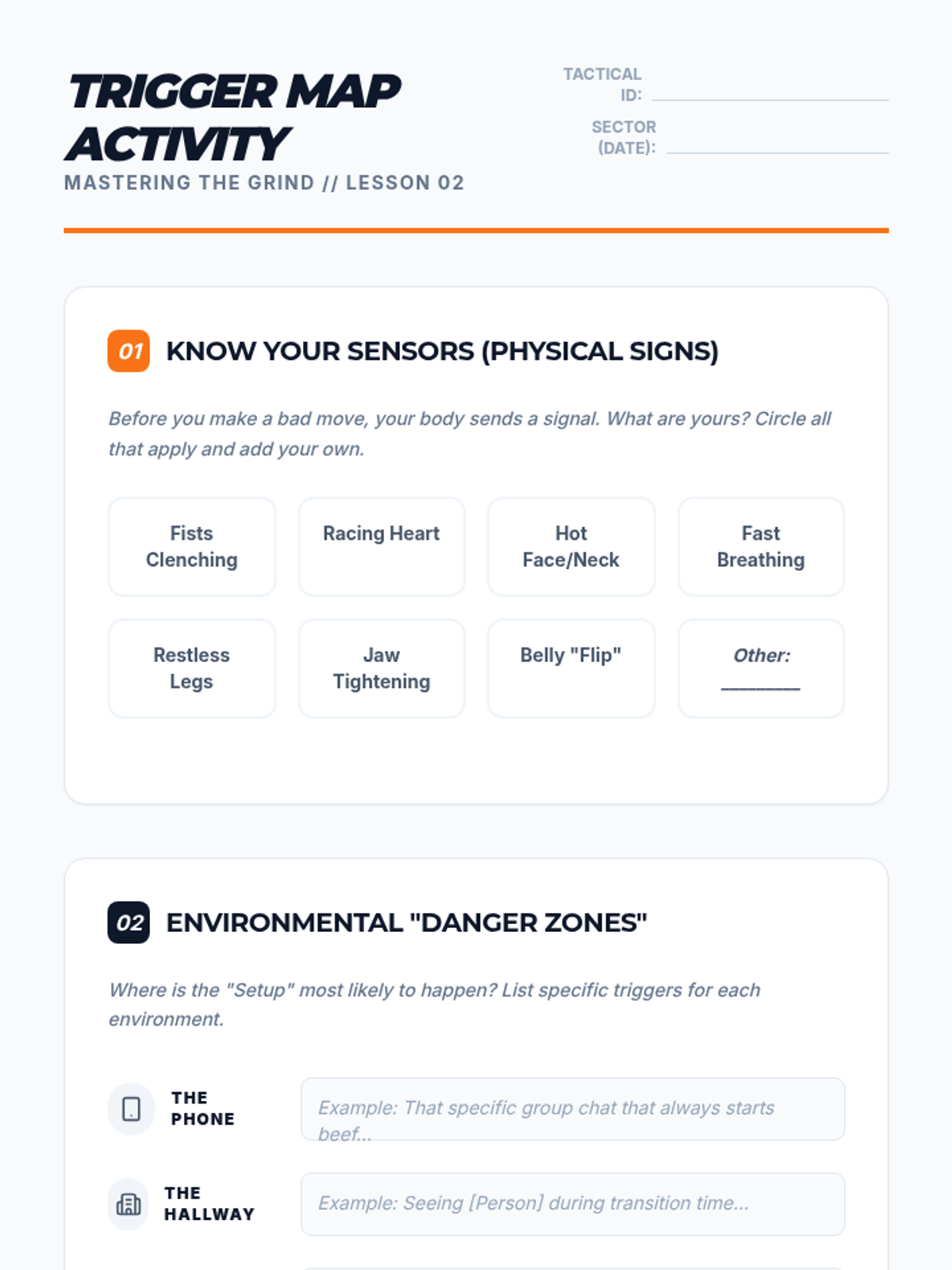
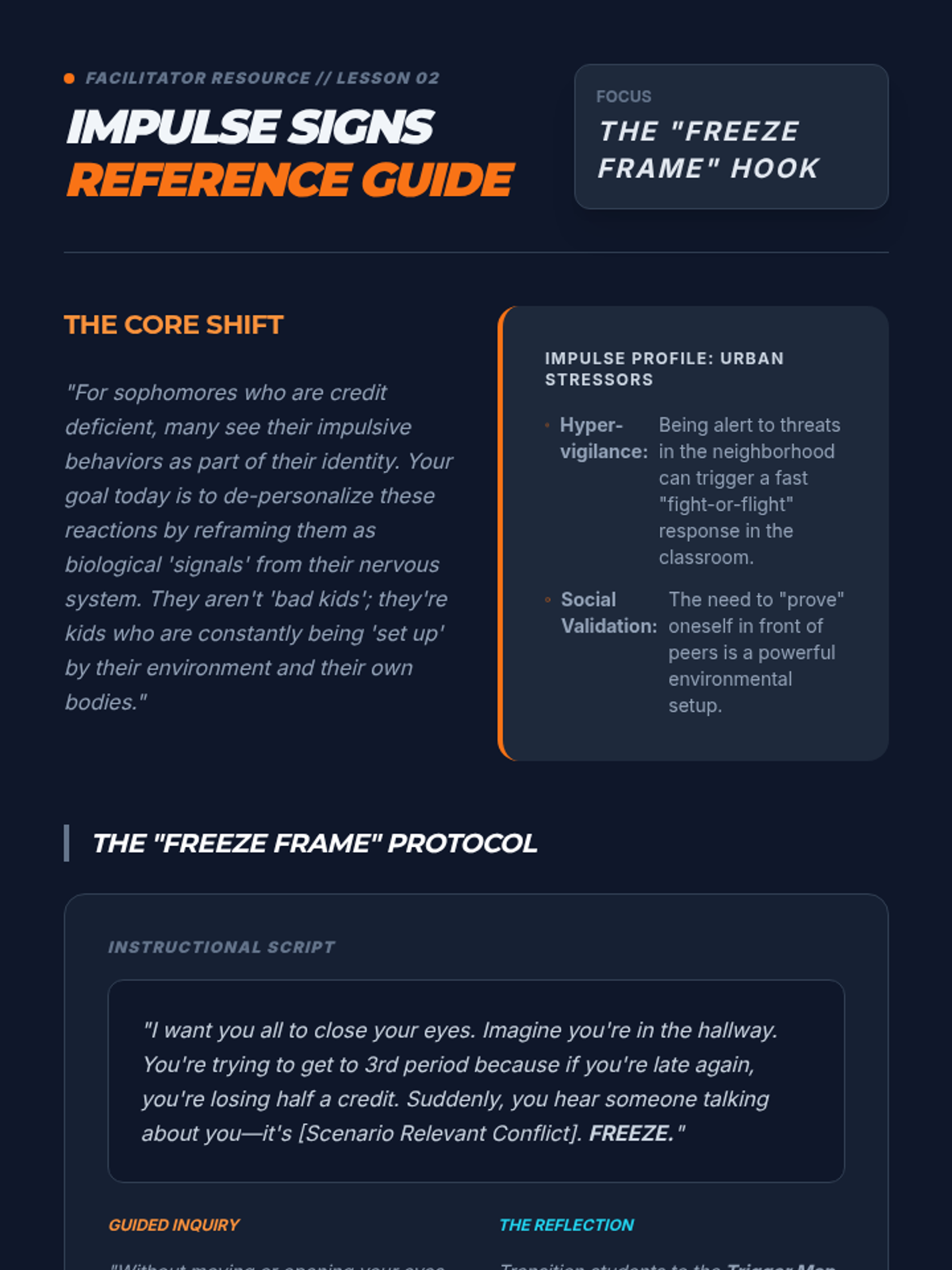
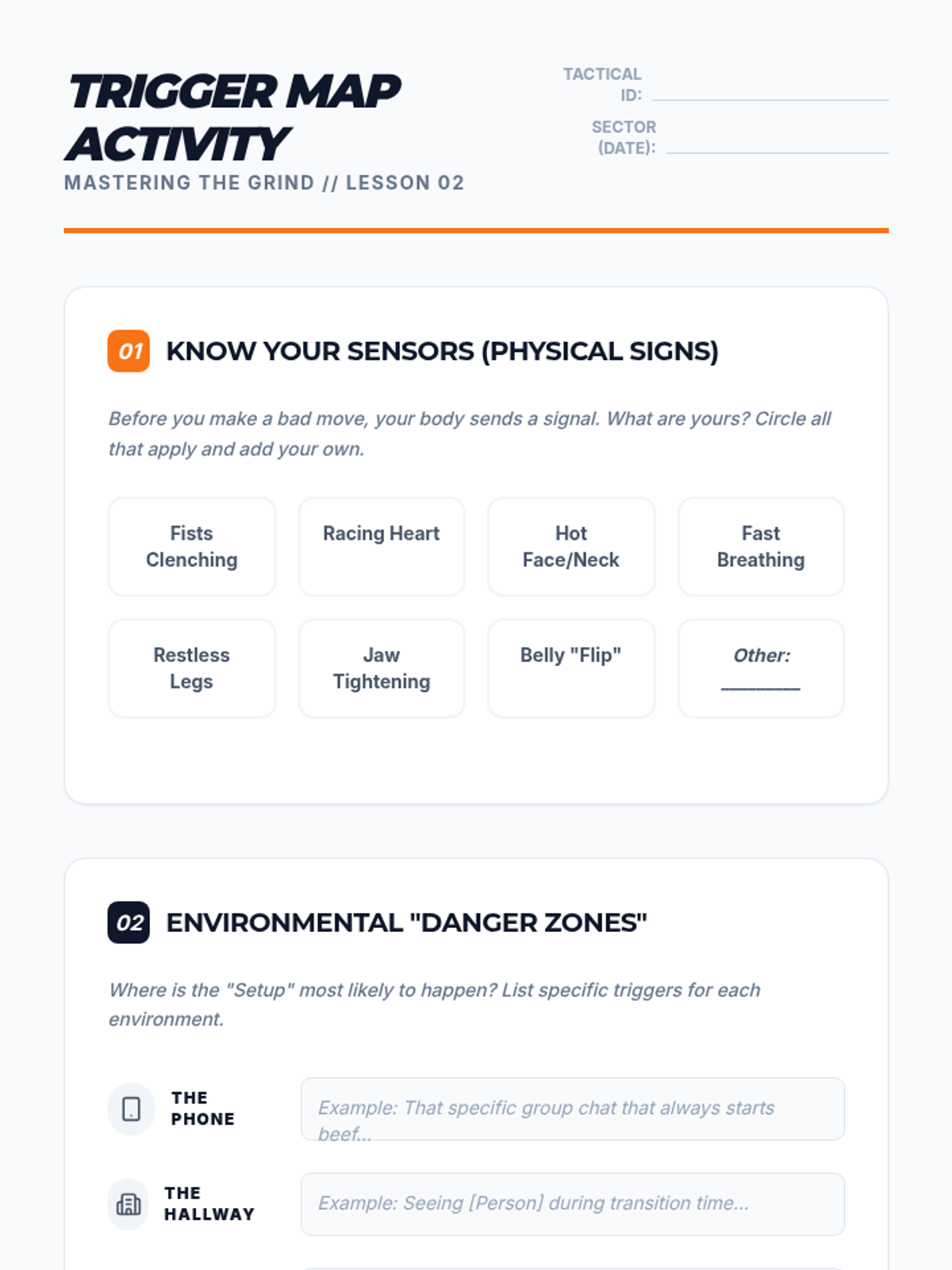
Students identify internal and environmental 'setups'—triggers that lead to self-sabotage. They create tactical maps of their daily routines to anticipate and bypass distractions in an urban school environment.
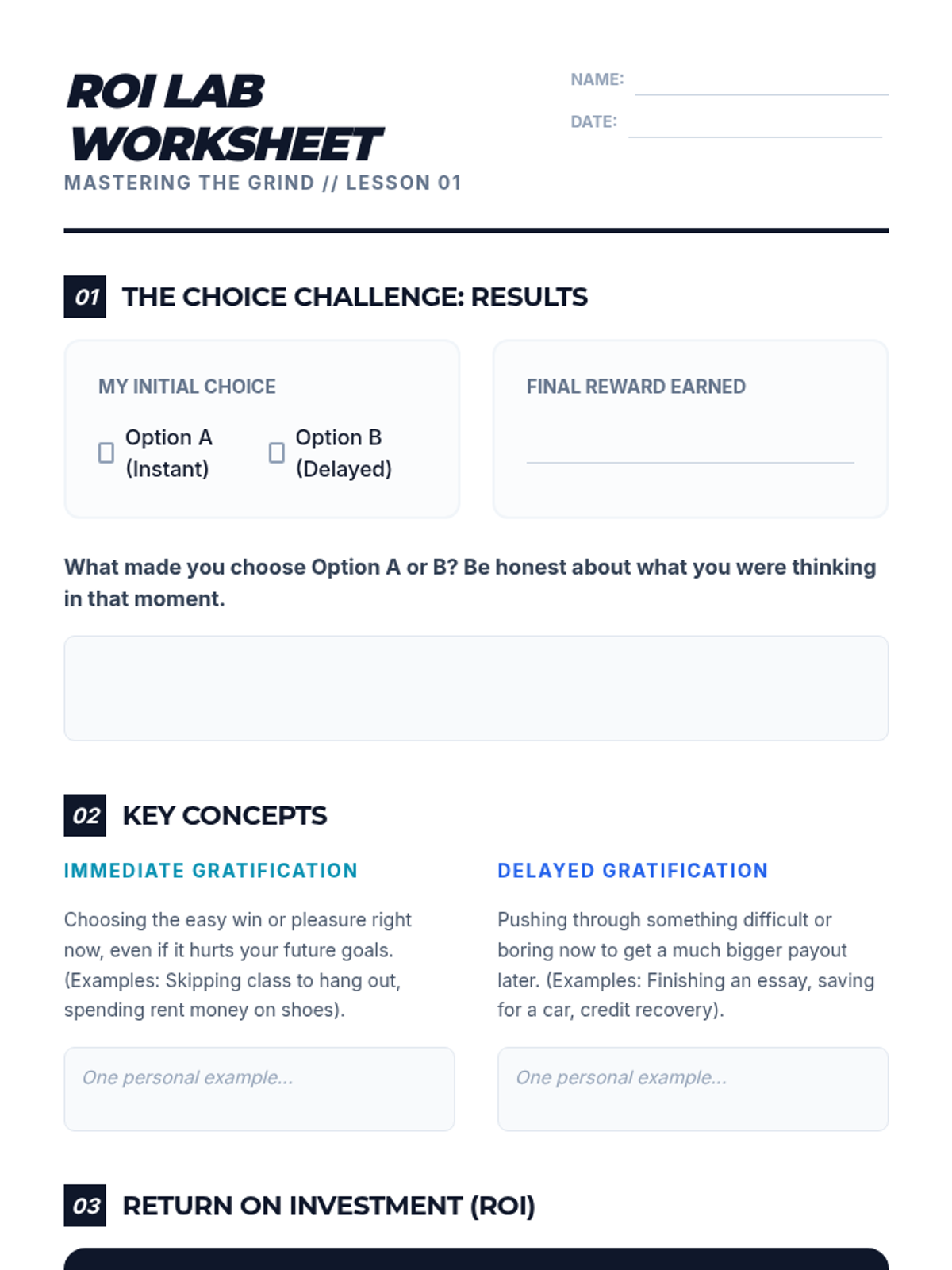
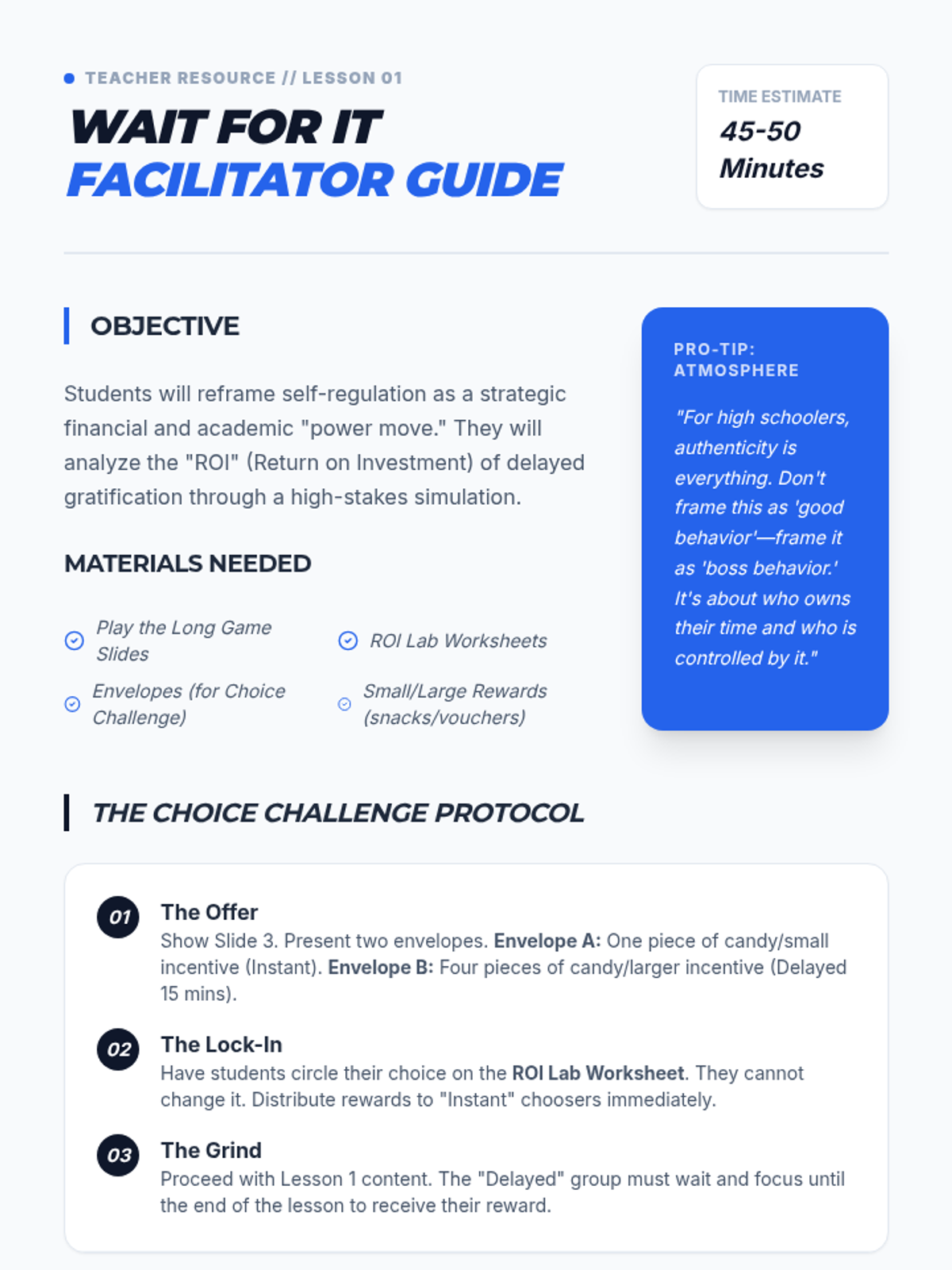
Reframes delayed gratification as a strategic investment. Students analyze the 'ROI' of their time and credits, participating in a simulation that mirrors real-world economic and academic trade-offs.
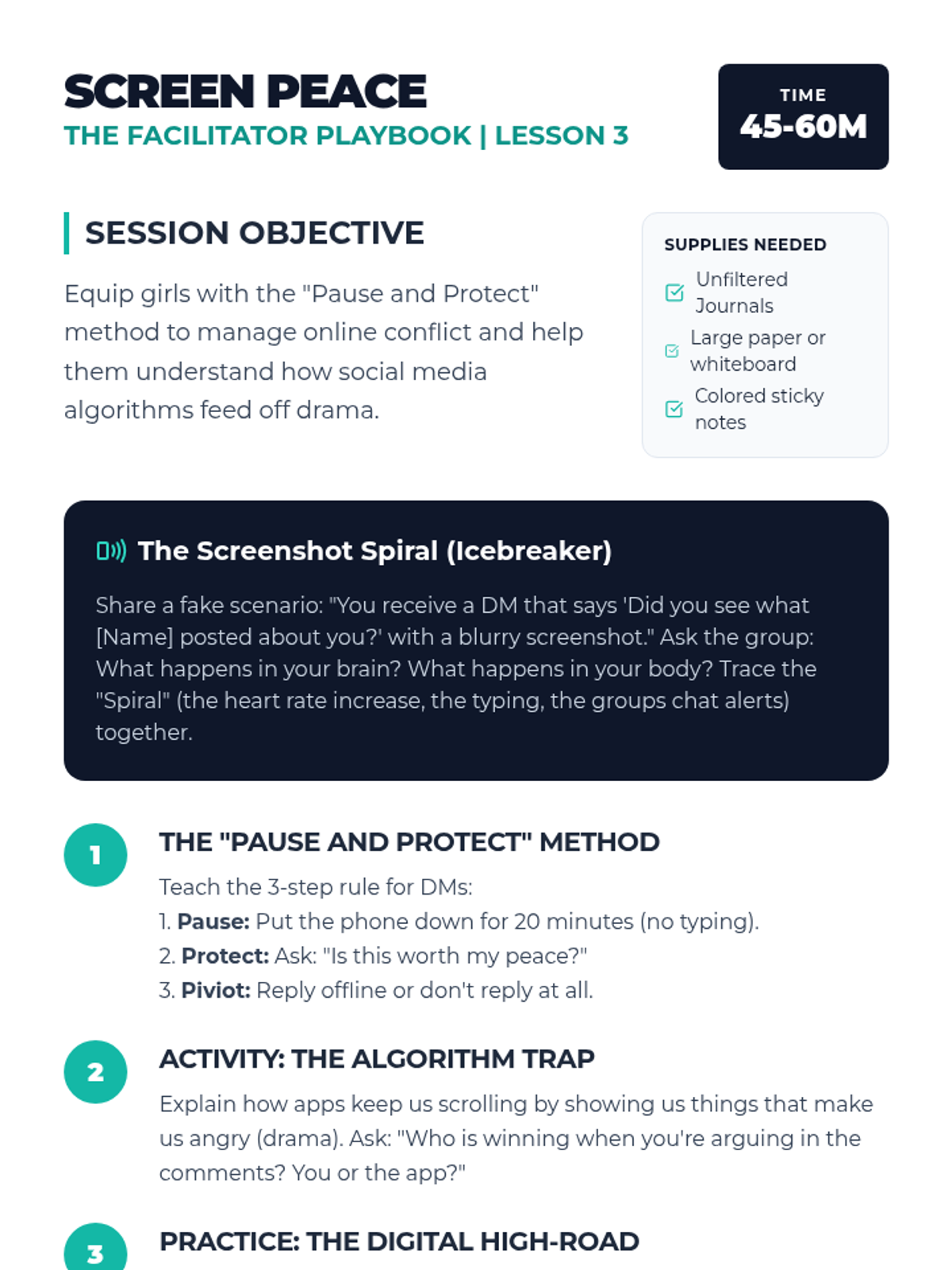
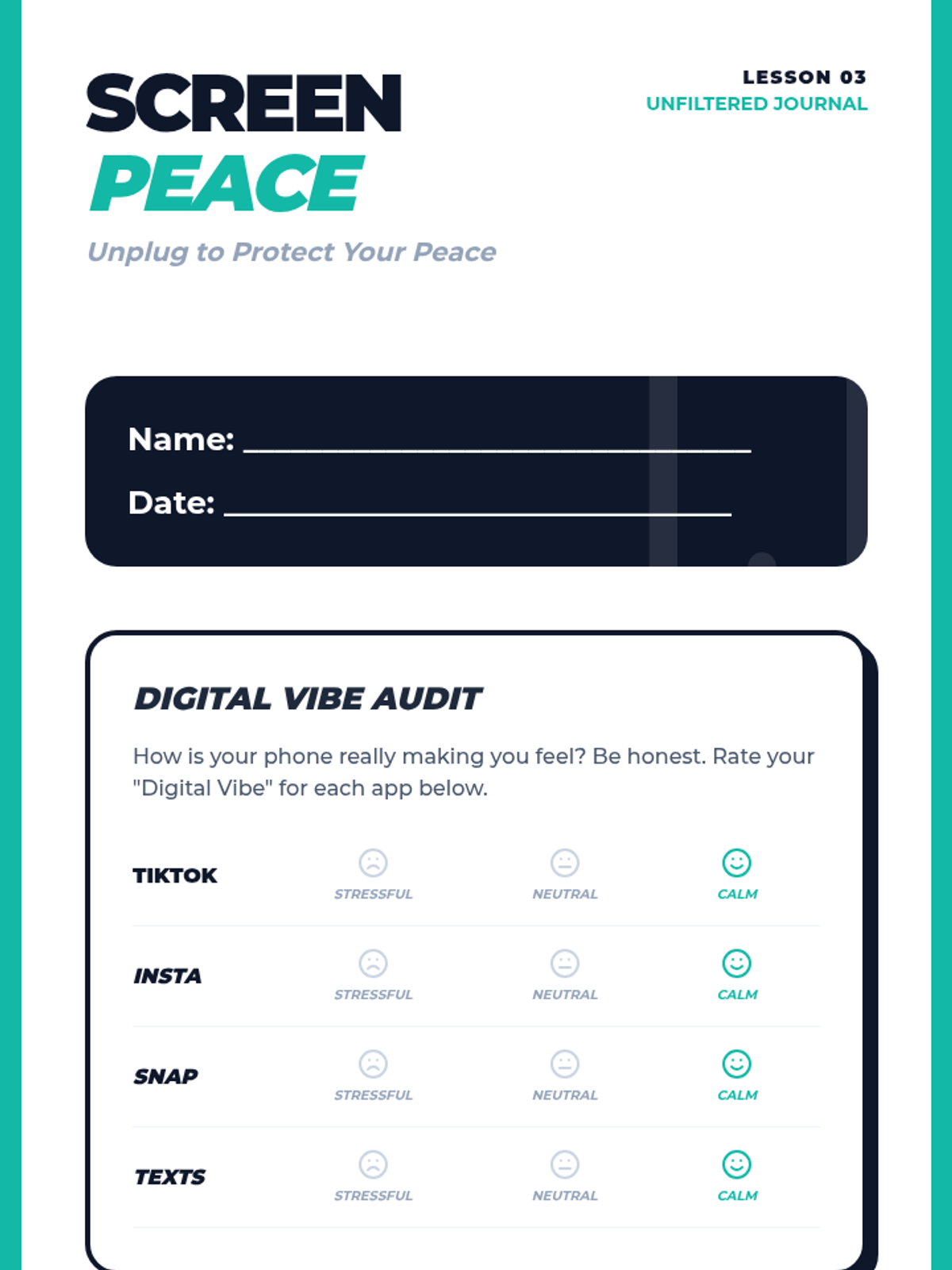
Students will analyze how digital interactions fuel drama and develop a 'Pause and Protect' strategy for managing online conflict and social media stress.
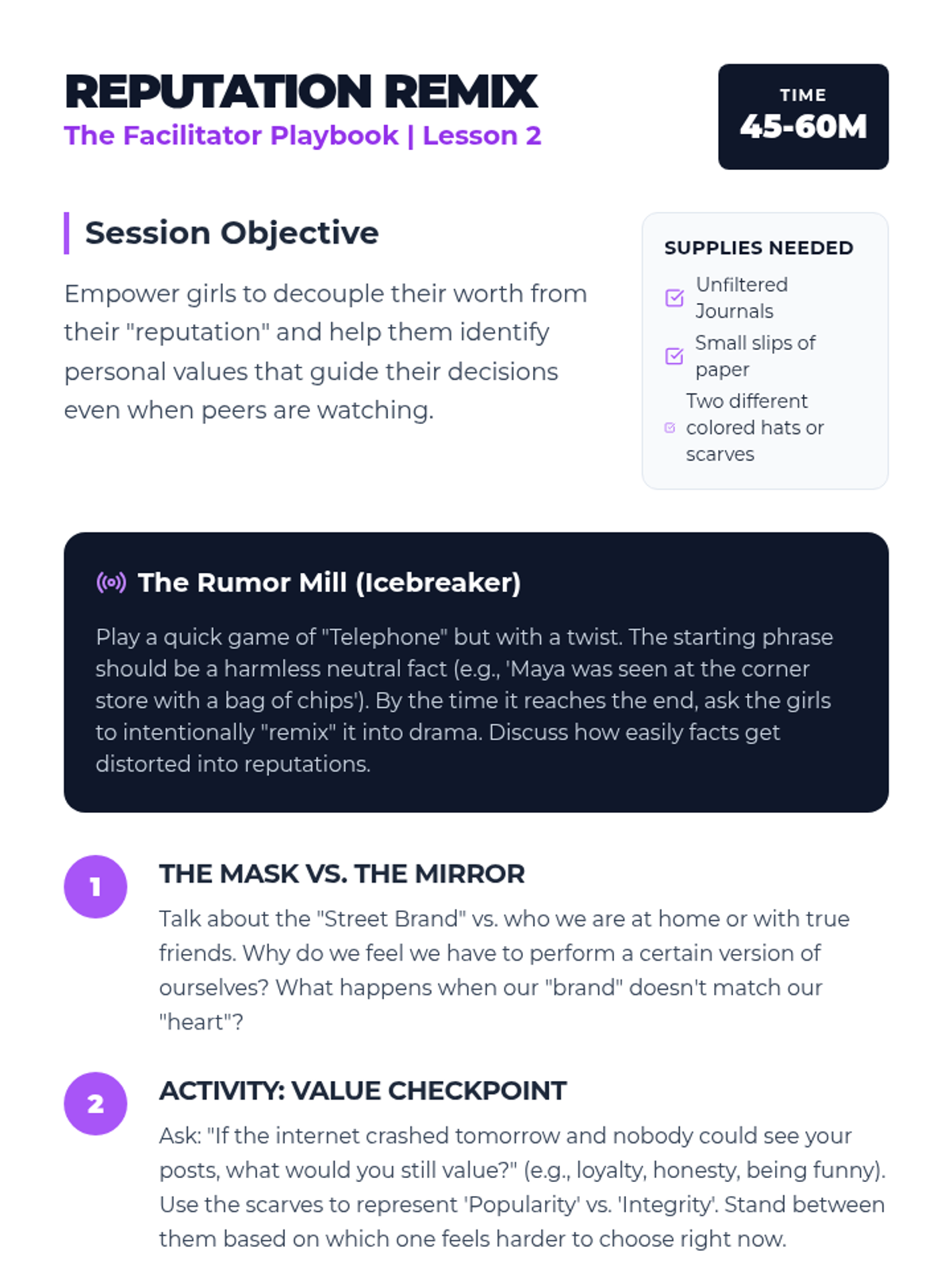
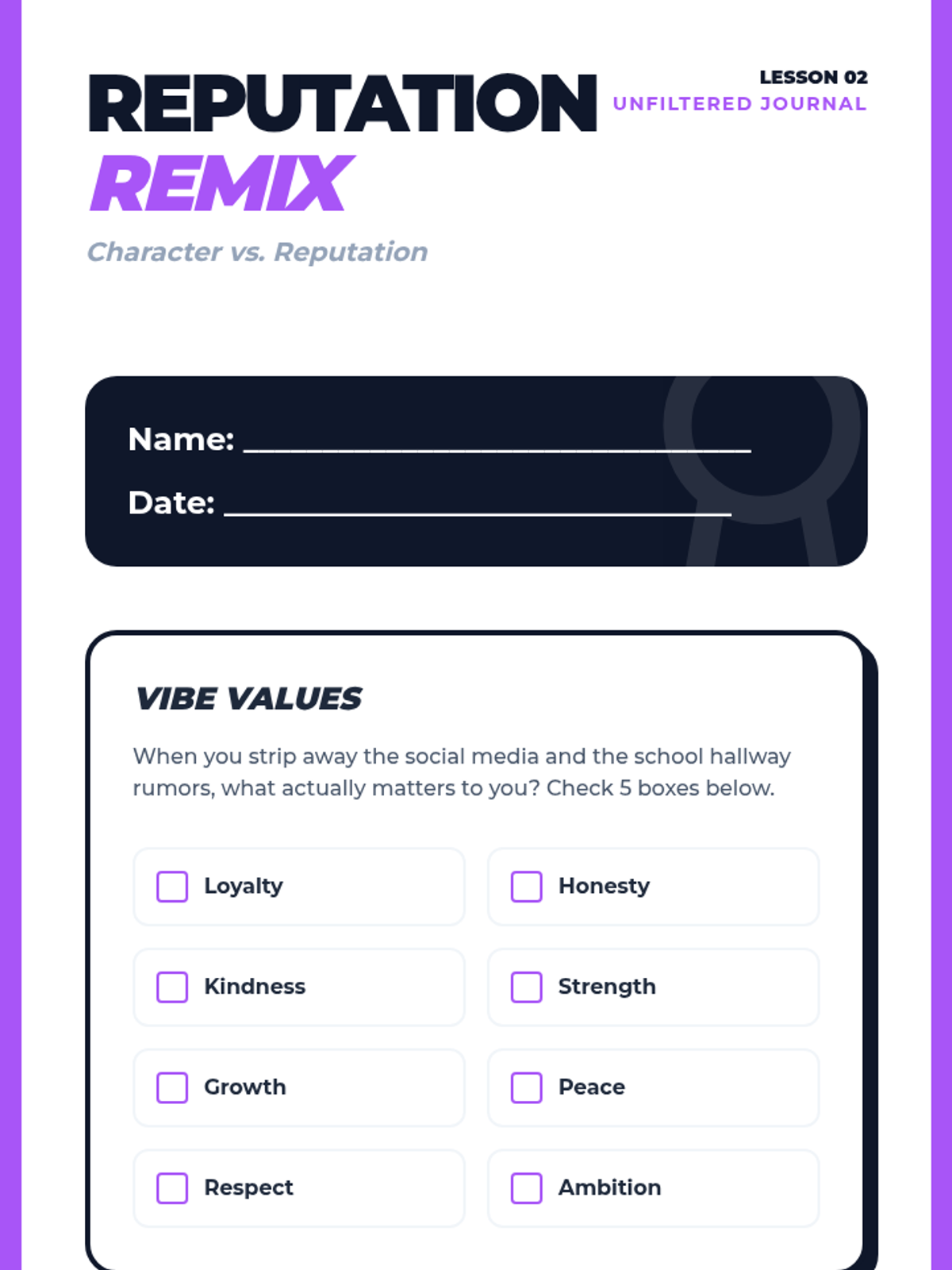
This lesson explores the pressure of maintaining a 'reputation' and provides strategies for staying true to personal values when faced with peer influence.
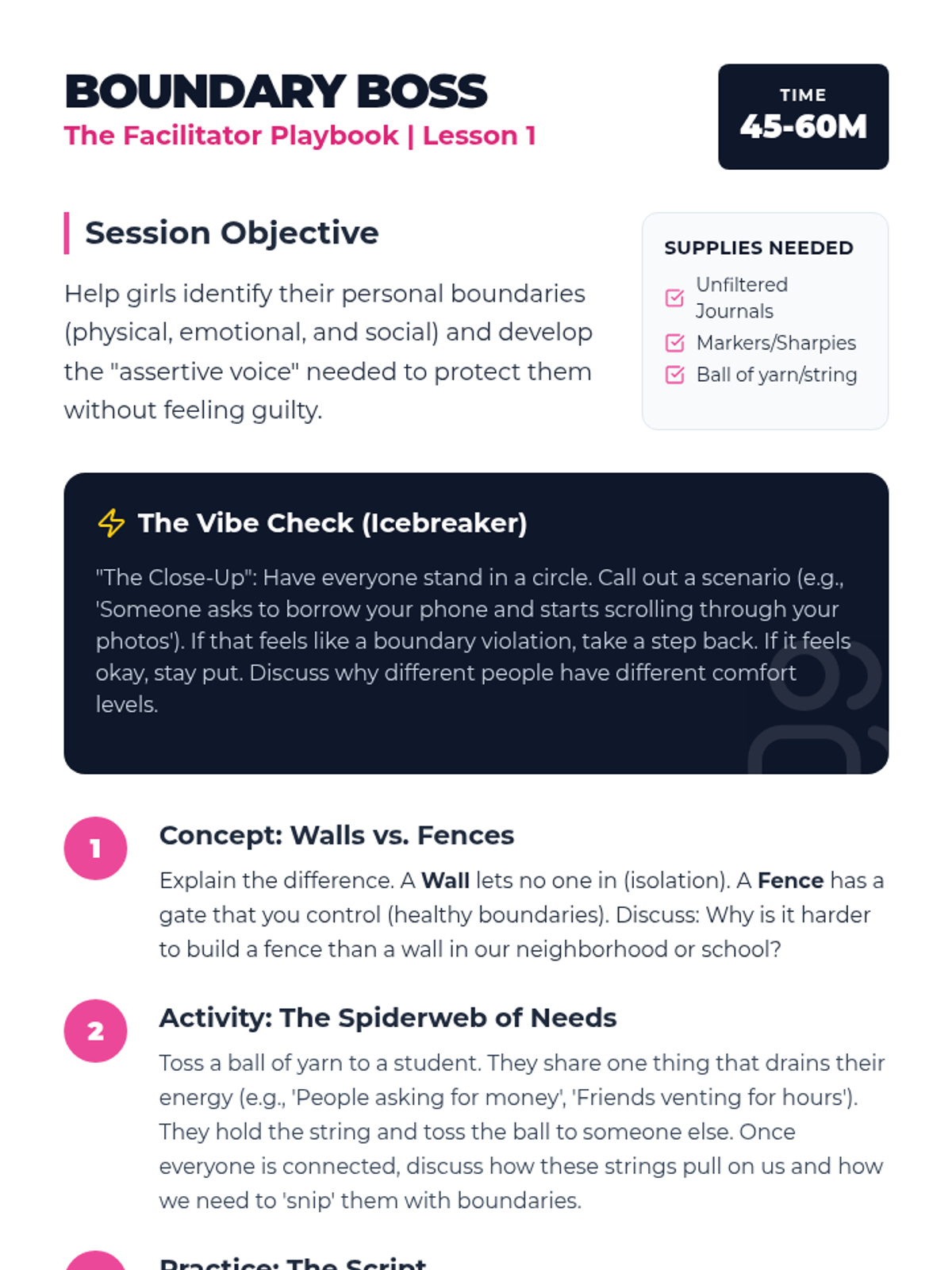
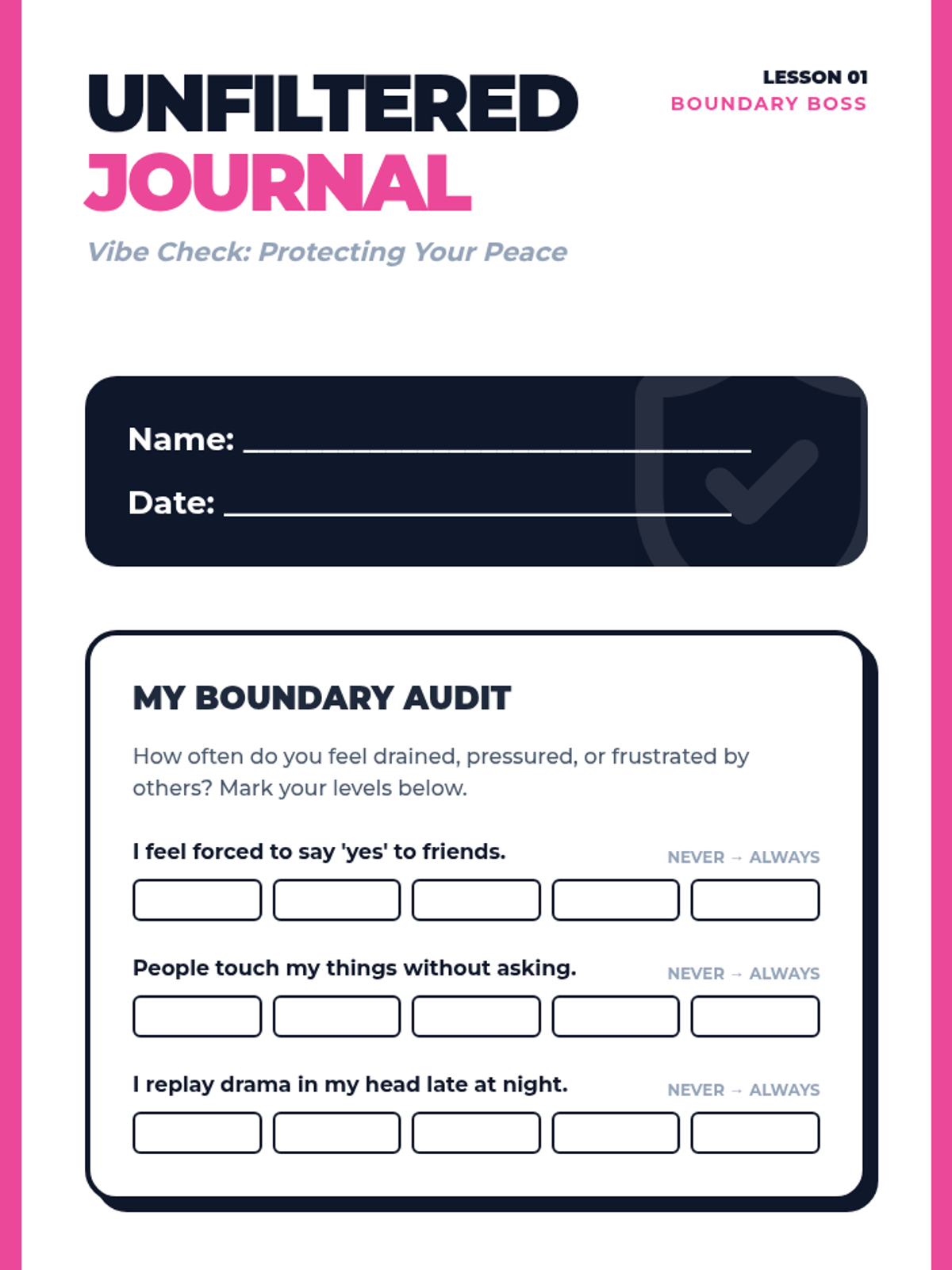
Students will learn to distinguish between healthy and unhealthy boundaries, practice assertive communication, and identify their personal 'safe space' limits.
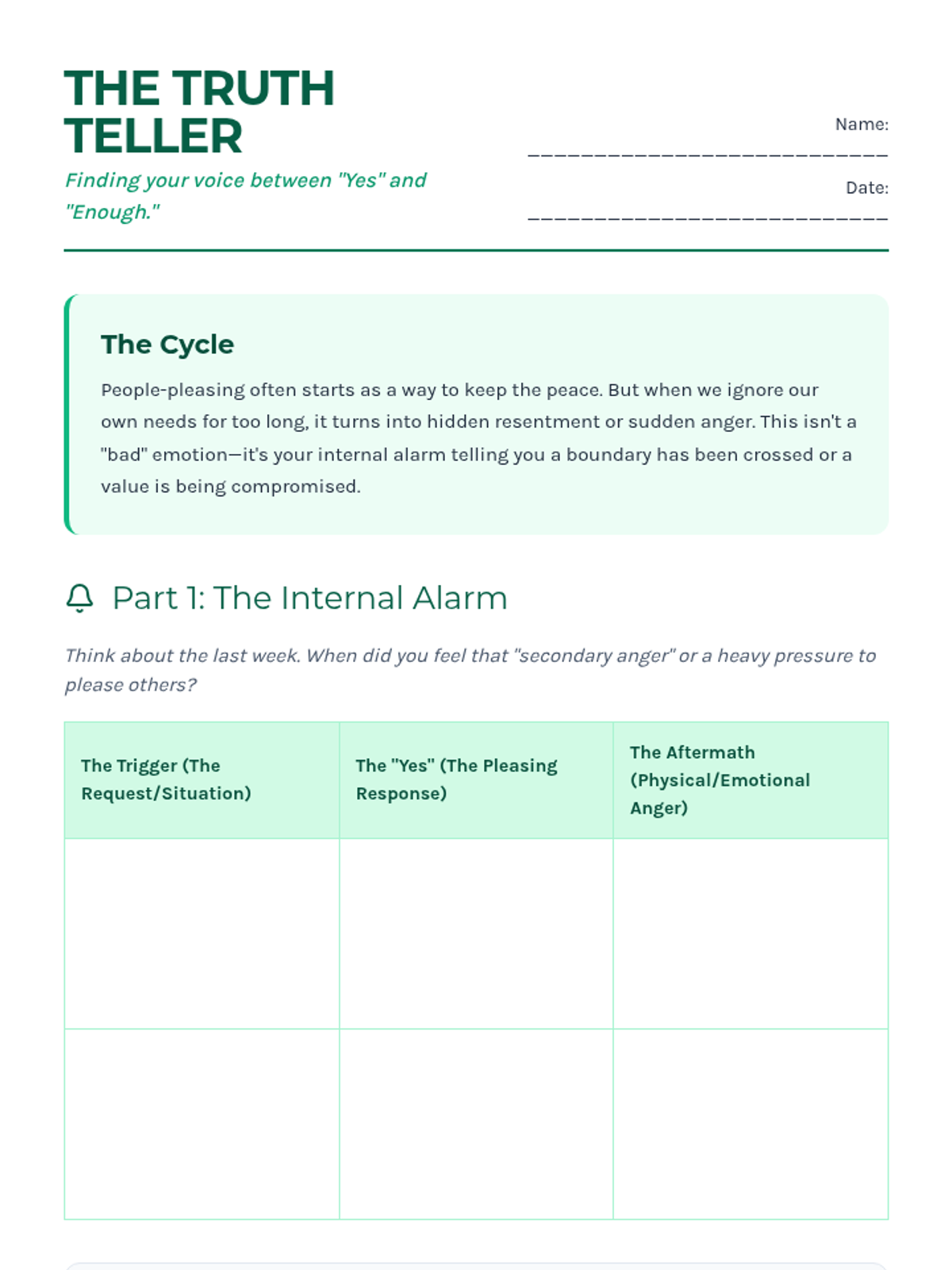
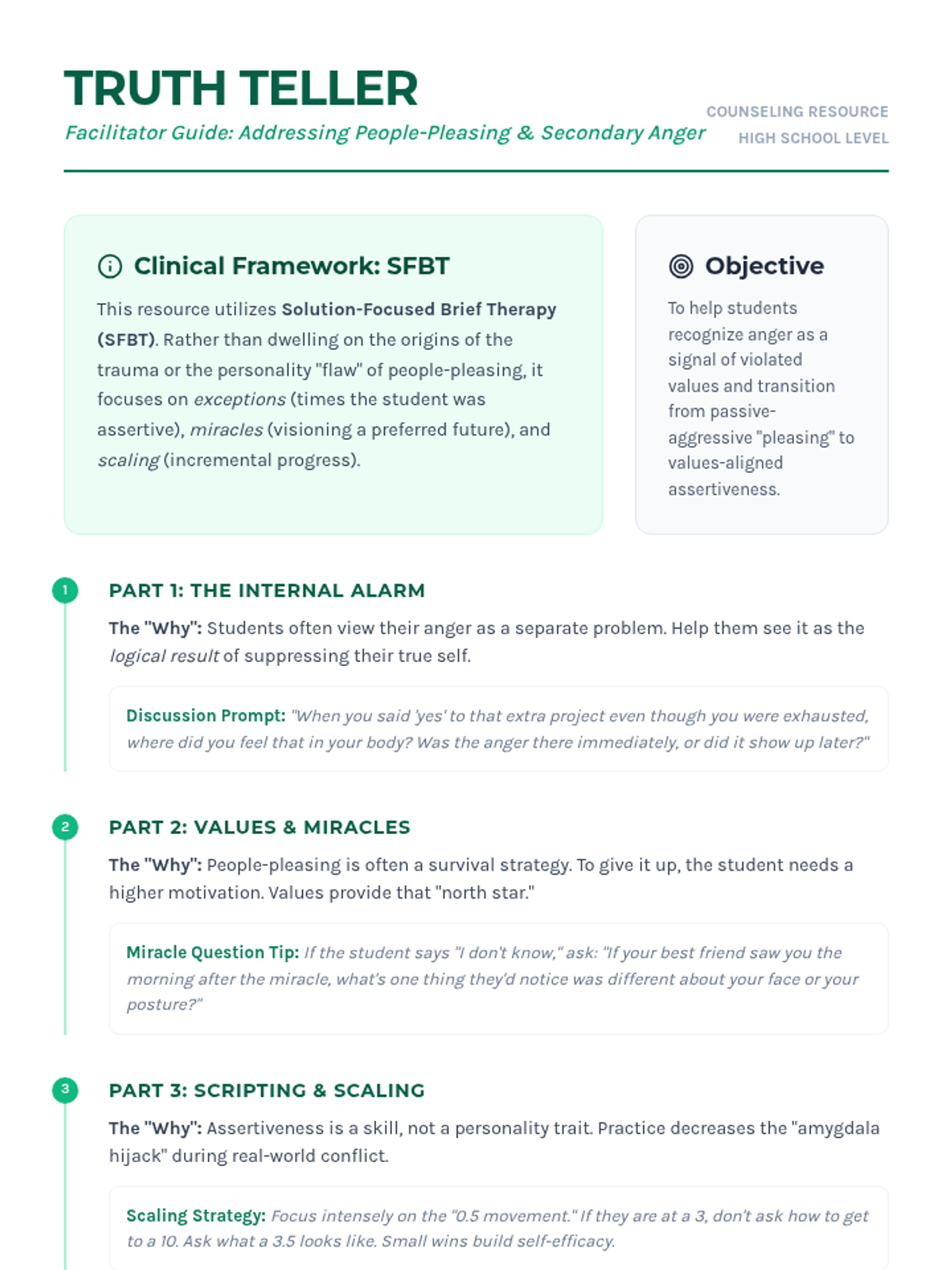
A comprehensive counseling lesson for high school students focused on recognizing people-pleasing behaviors and transforming secondary anger into values-aligned assertiveness using a Solution-Focused framework.
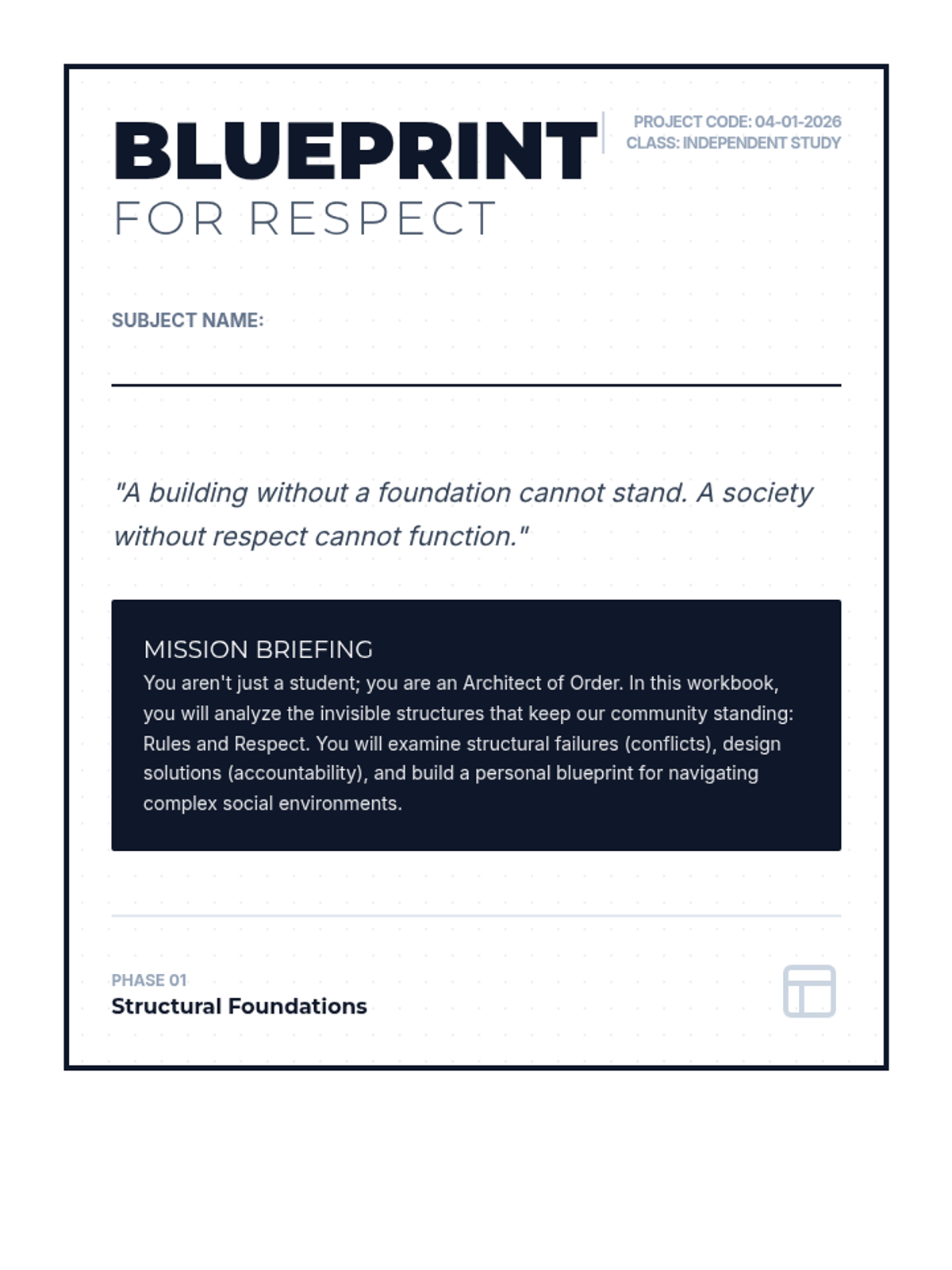
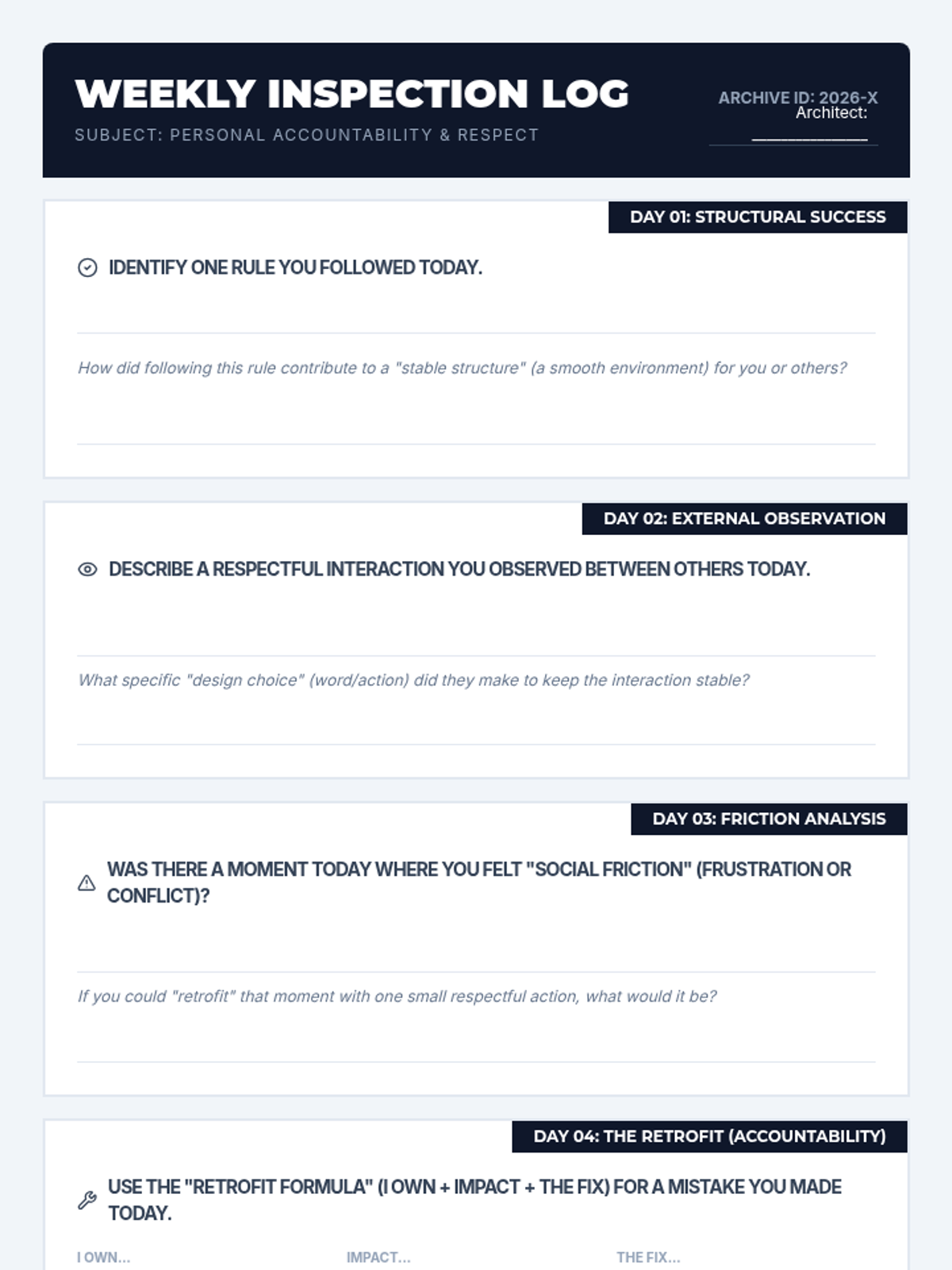
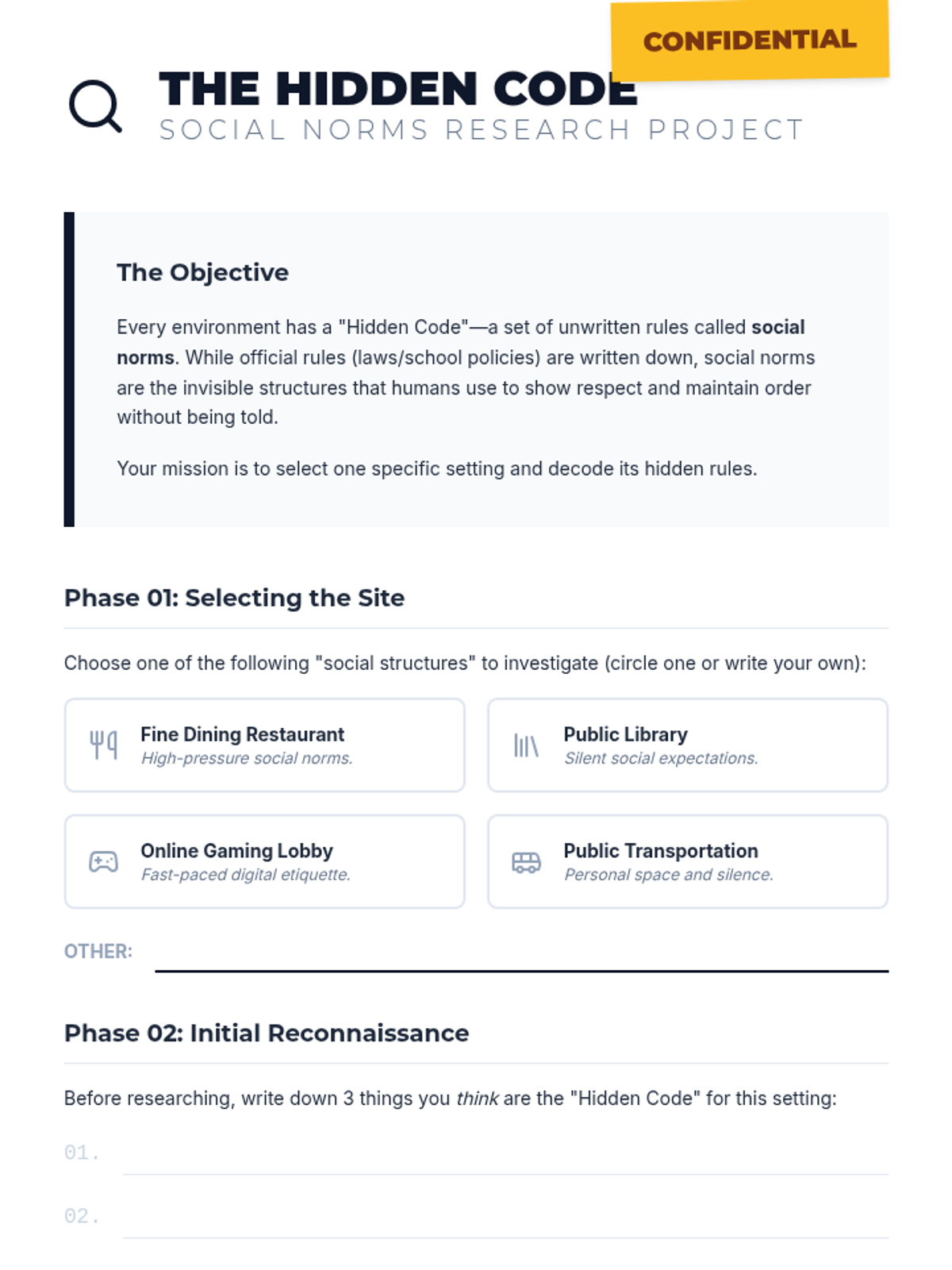
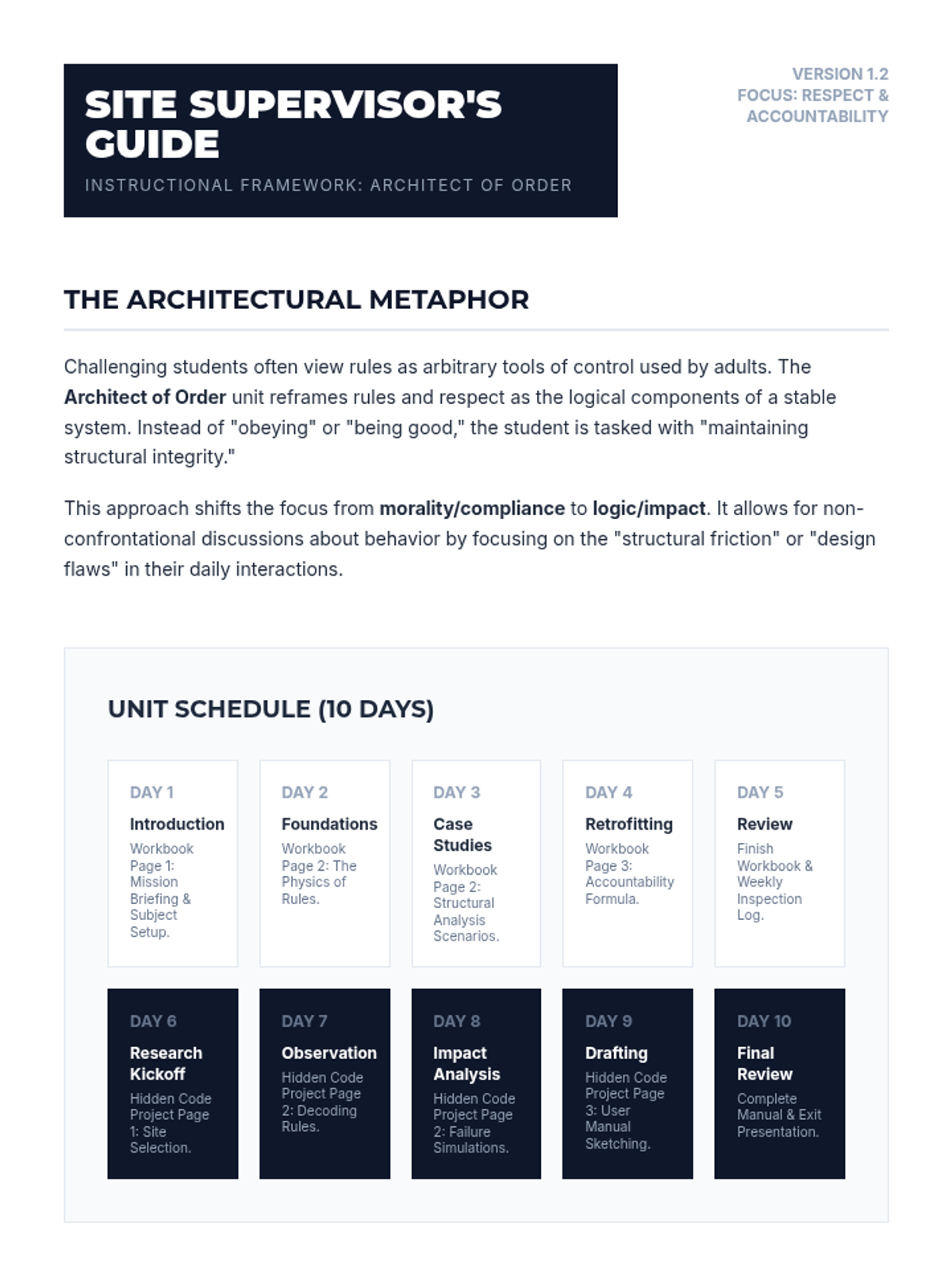
A comprehensive independent study unit for students to explore the logical foundations of respect, rules, and personal accountability through an architectural lens.
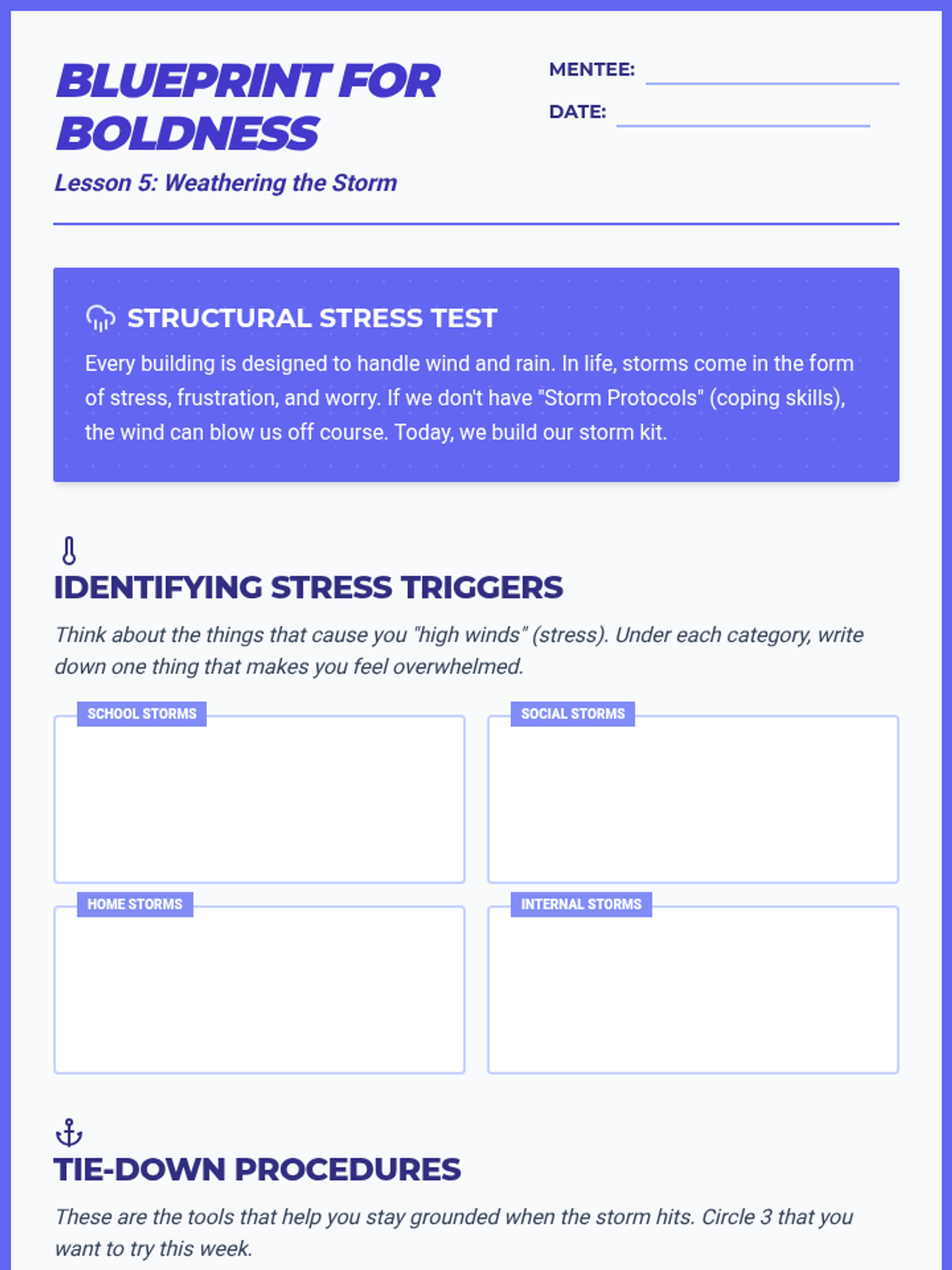
Equip the mentee with tools to manage stress and frustration during high-pressure situations.
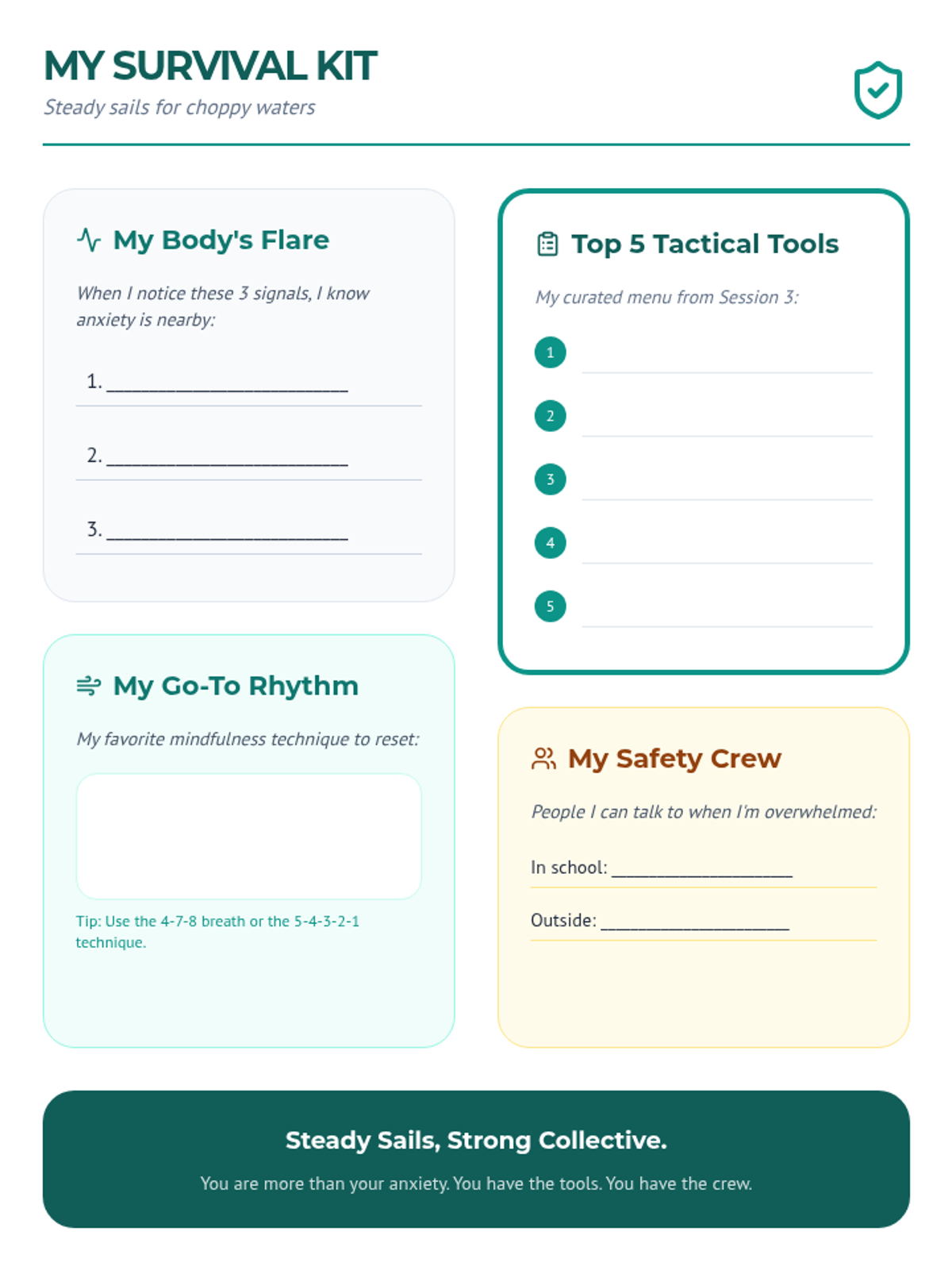
The final session focuses on long-term maintenance and 'relapse prevention.' Students will create a take-home survival kit and celebrate their growth within the collective.
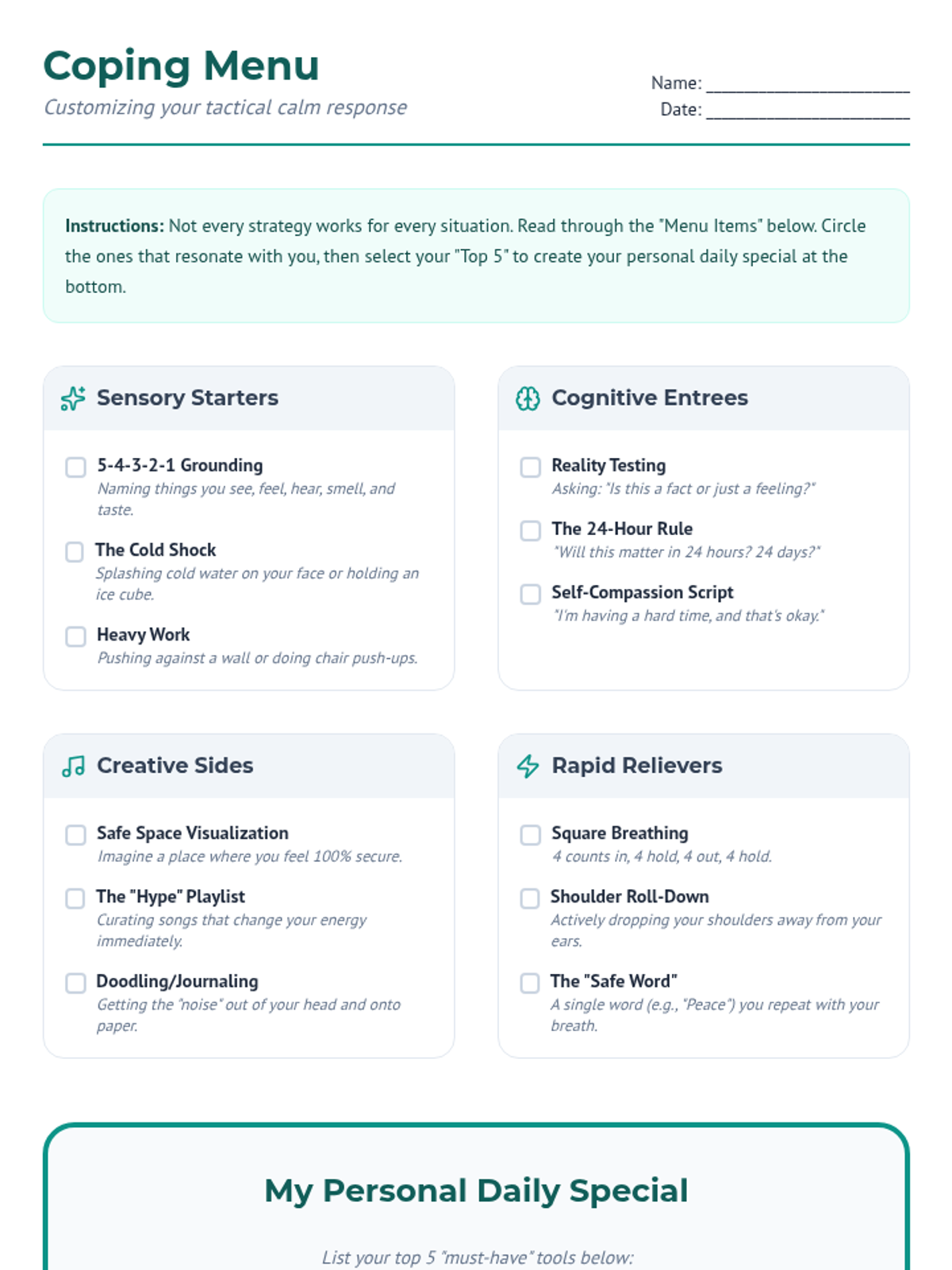
Students will explore a variety of sensory and cognitive coping strategies. They will evaluate which techniques work best for them and begin building their personal 'Coping Menu'.
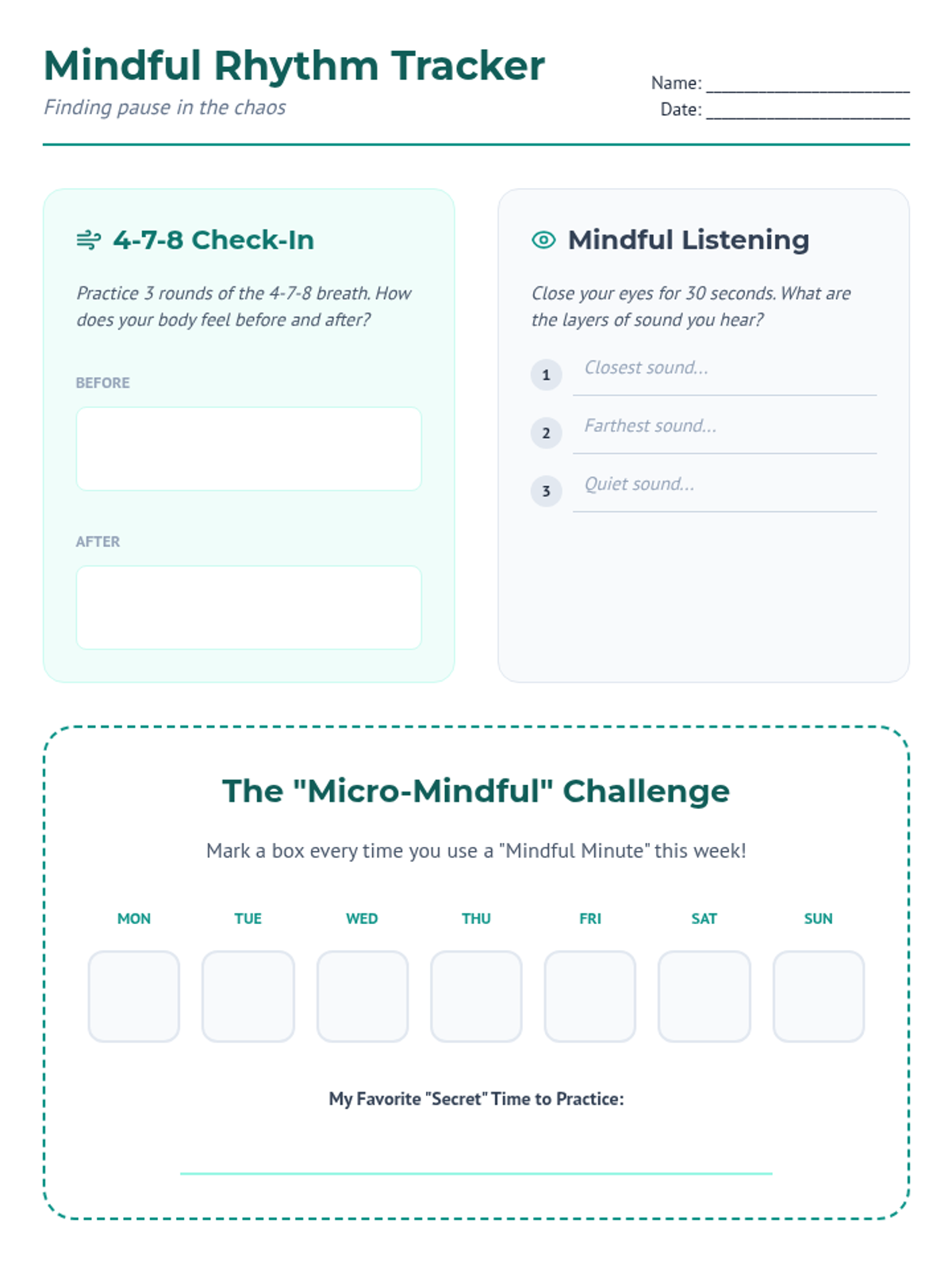
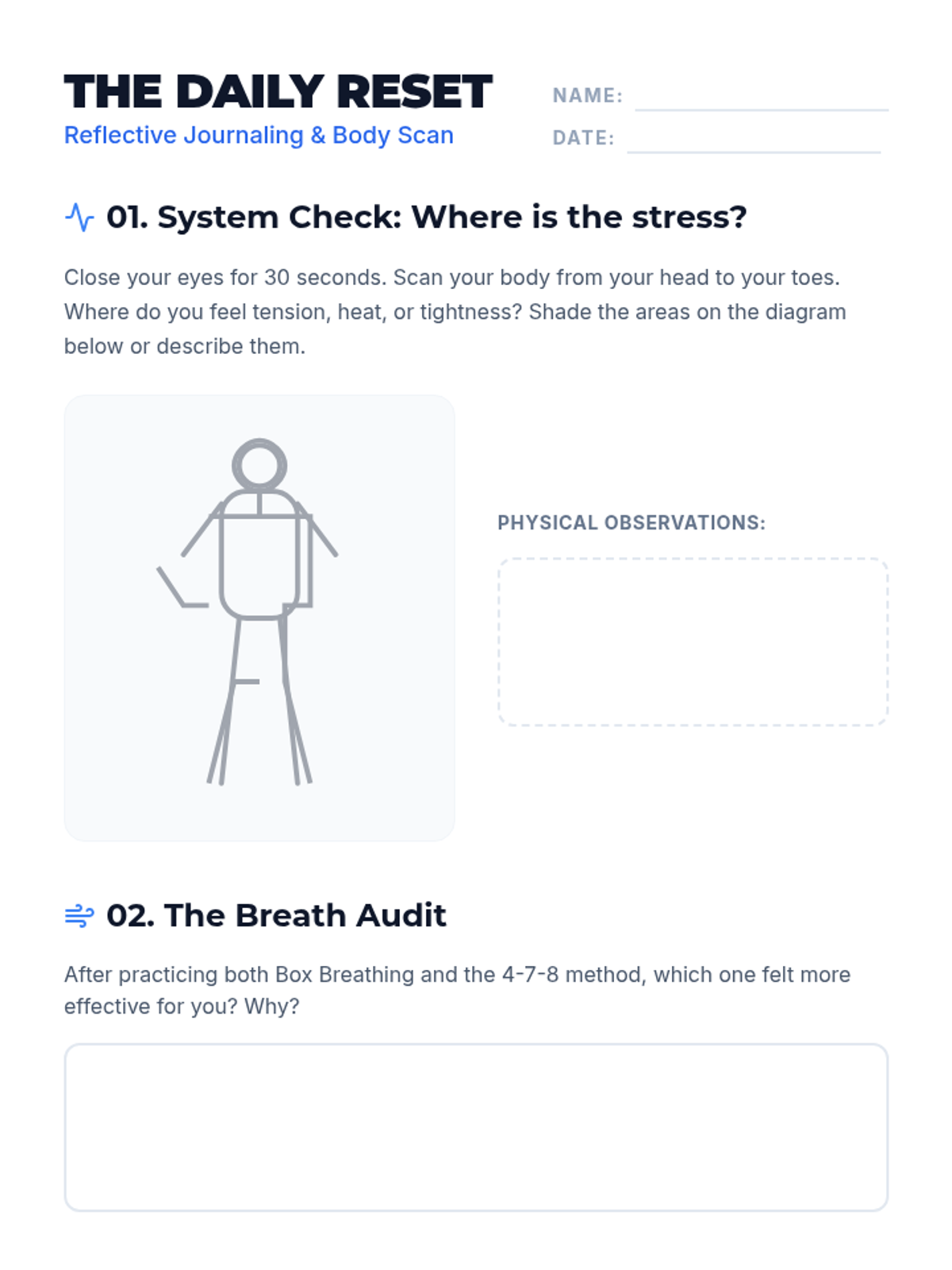
This session introduces mindfulness as a tool for presence. Students will practice breathwork and a body scan, discussing how to integrate these small moments into a busy high school schedule.
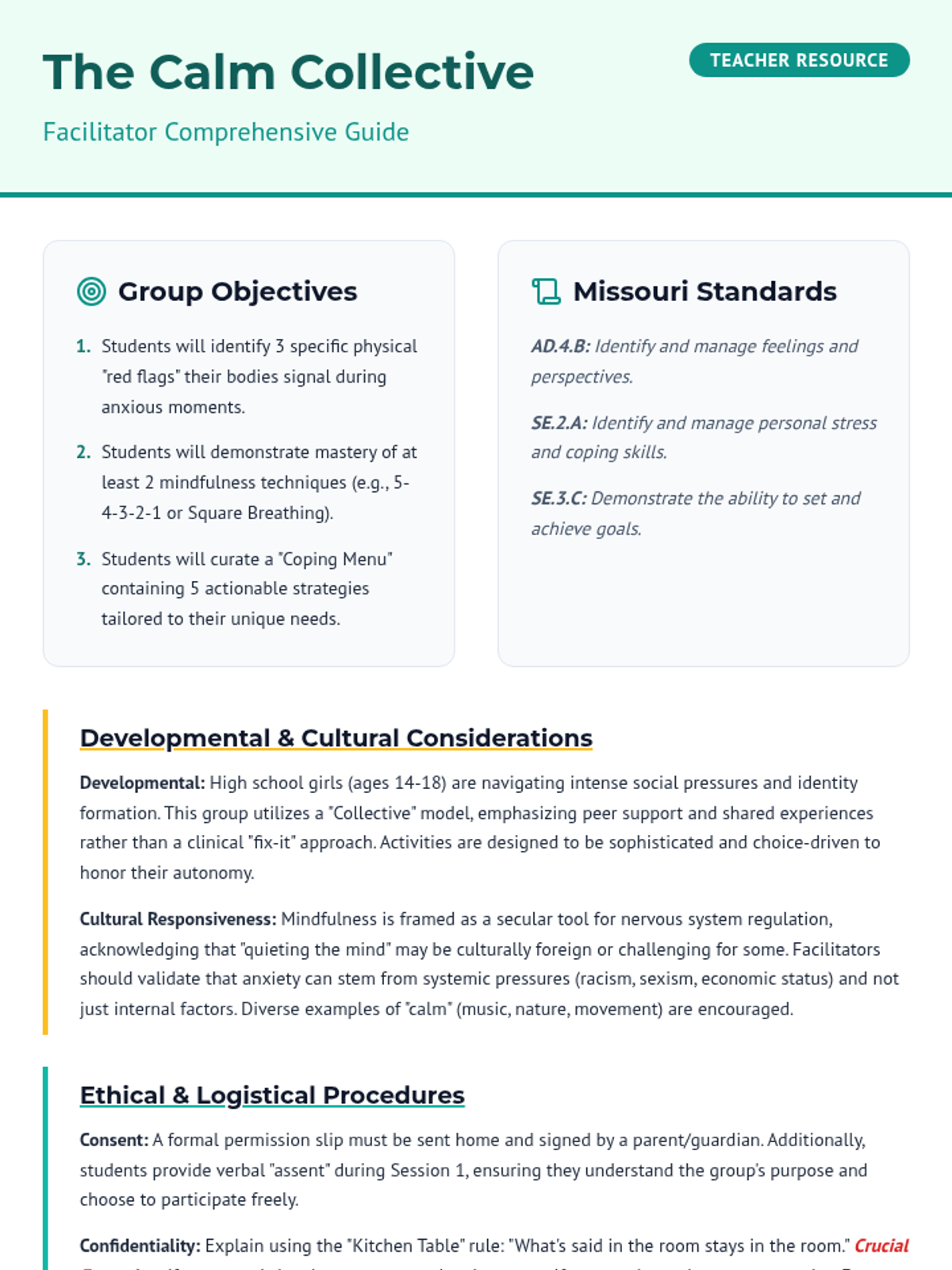
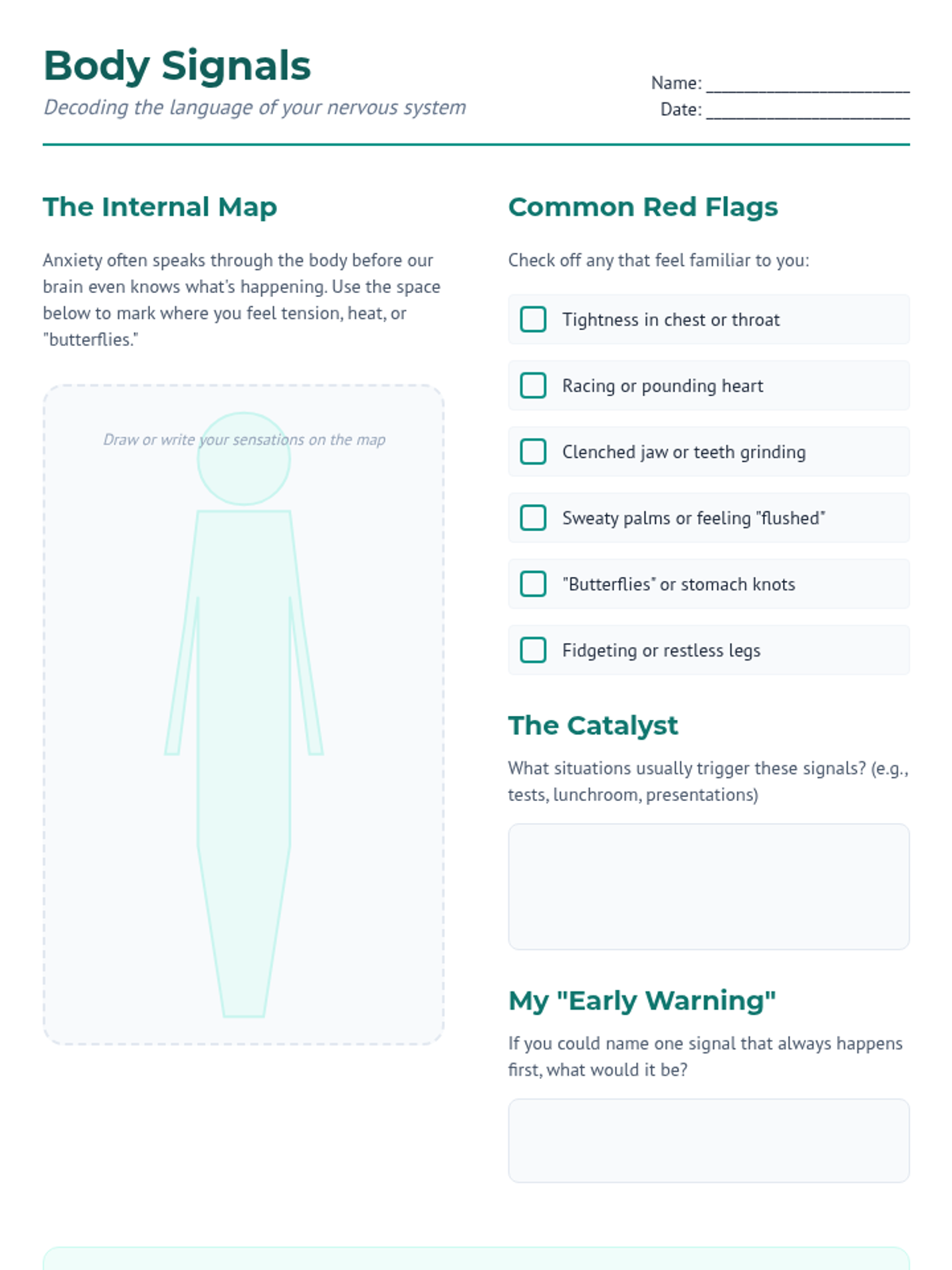
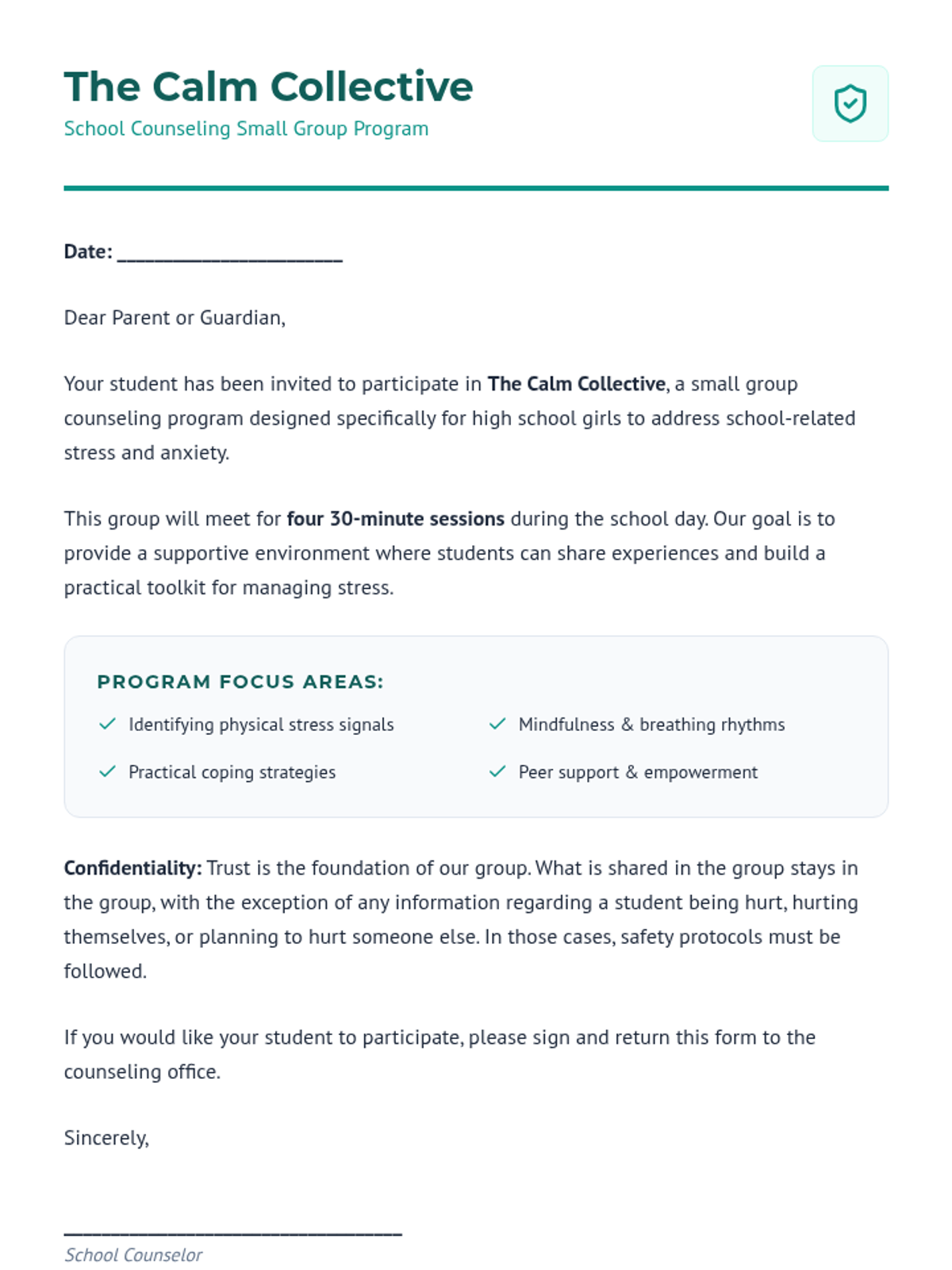
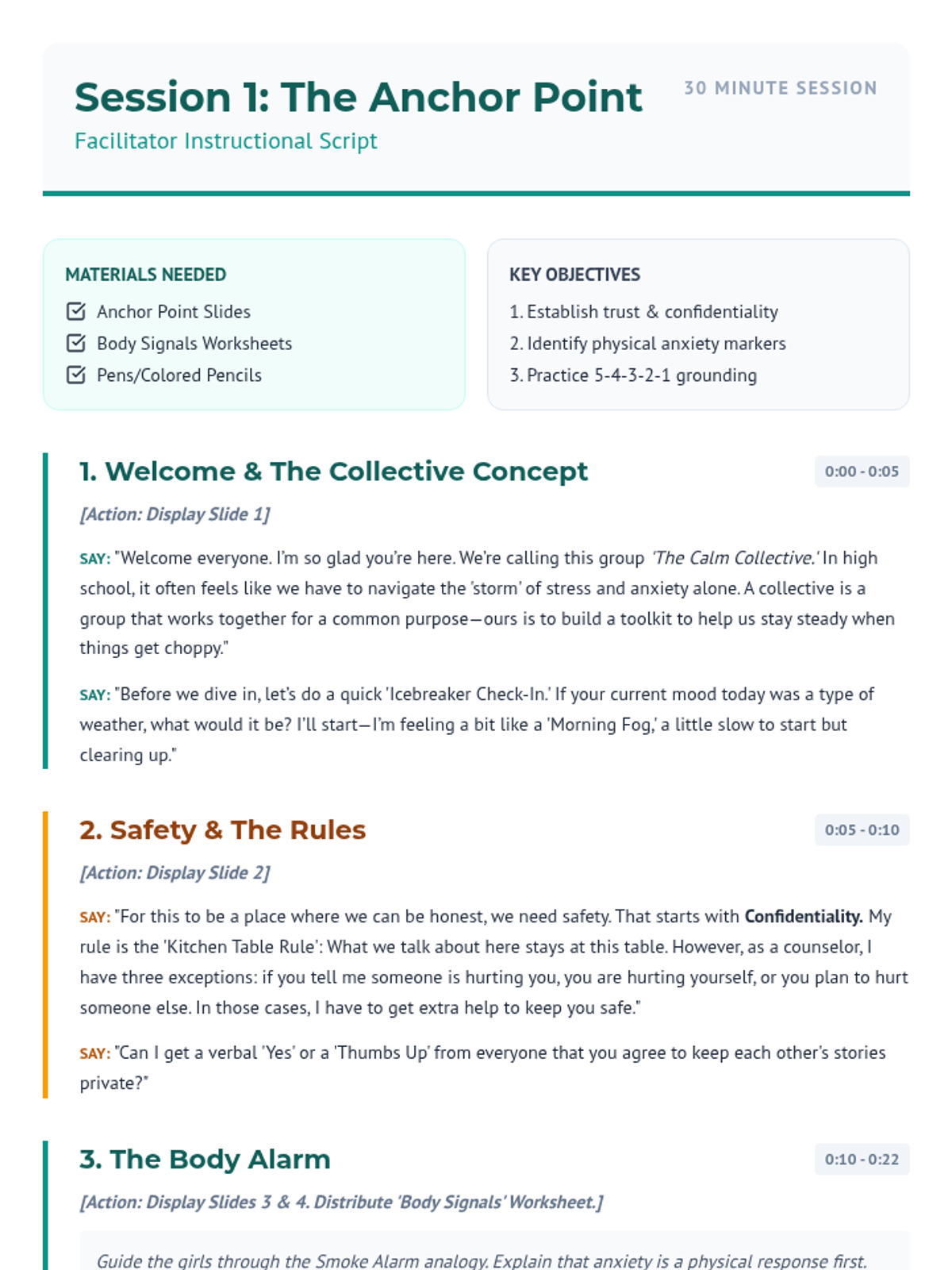
The first session focuses on establishing the group's foundation, including ethical guidelines, confidentiality, and the basic 'Anchor' grounding technique. Students will identify how anxiety physically manifests in their bodies.
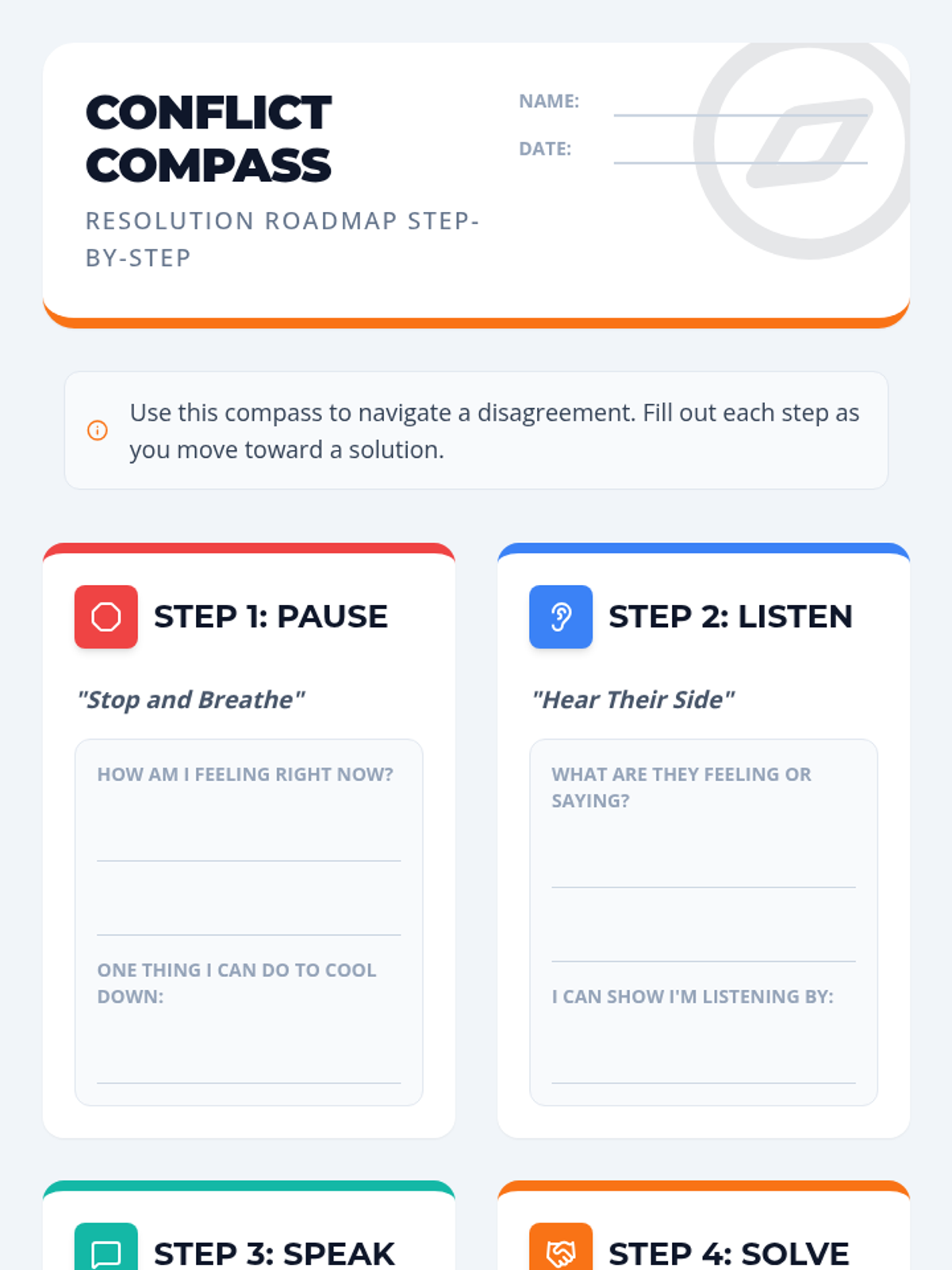
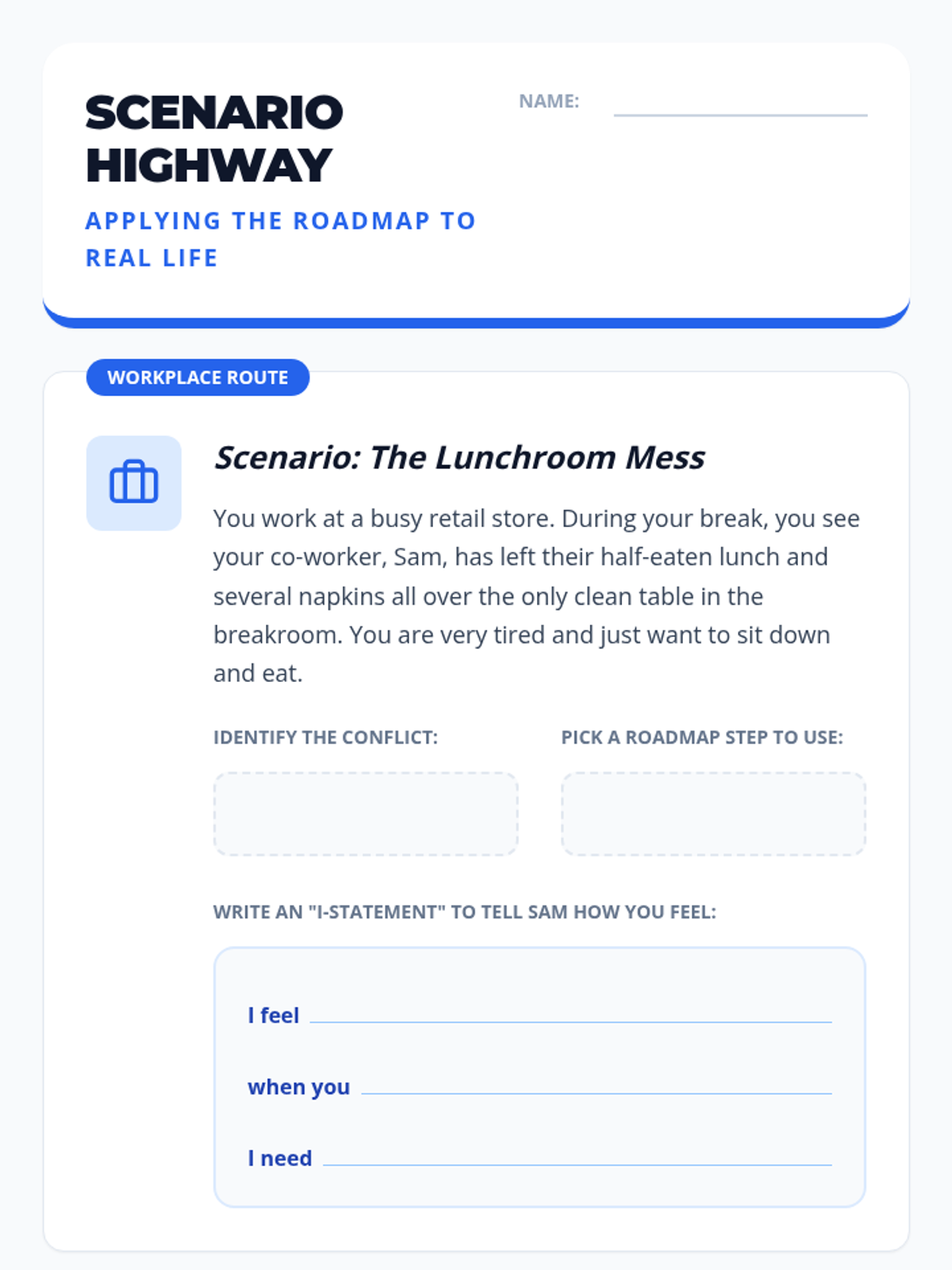
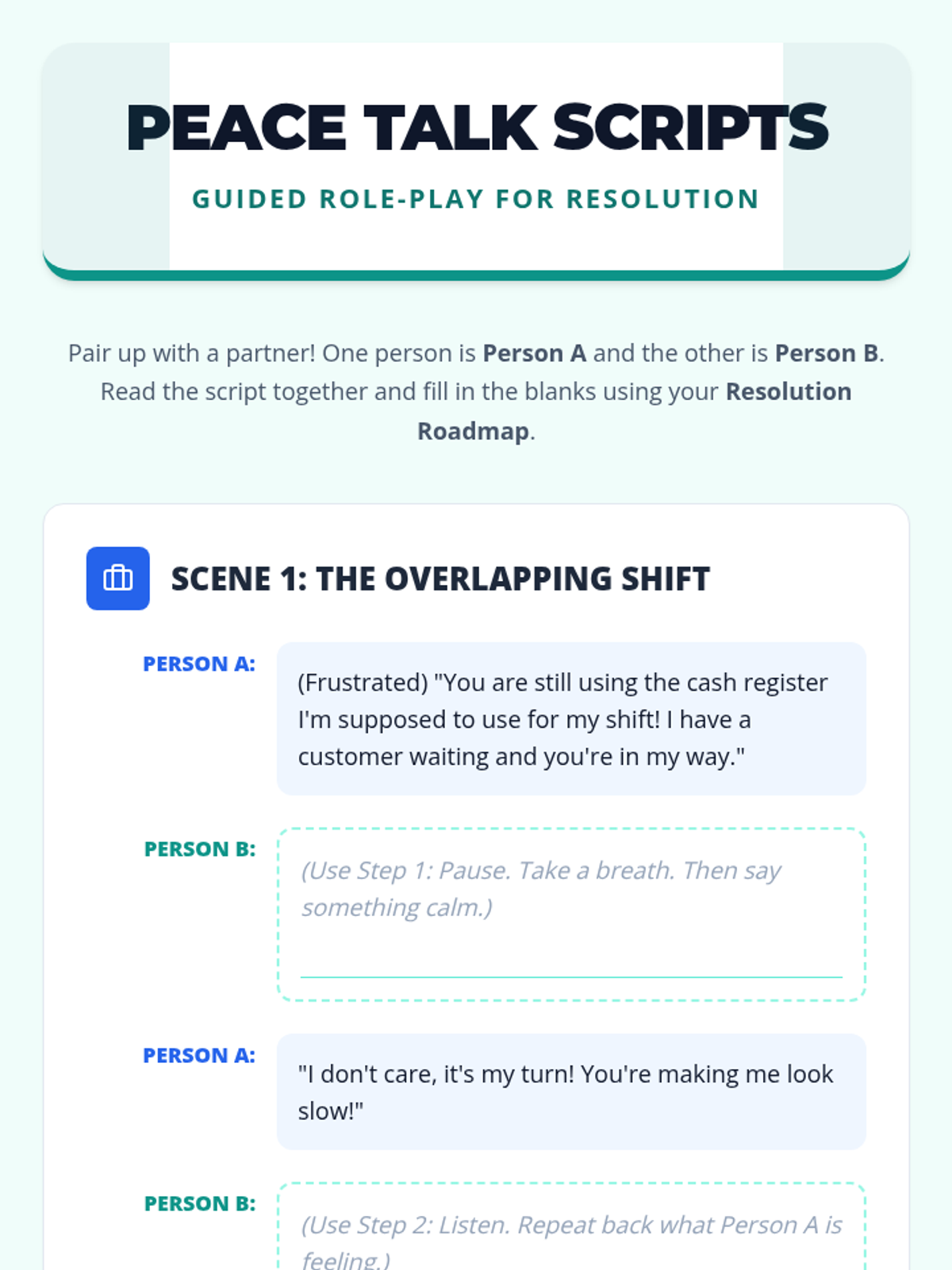
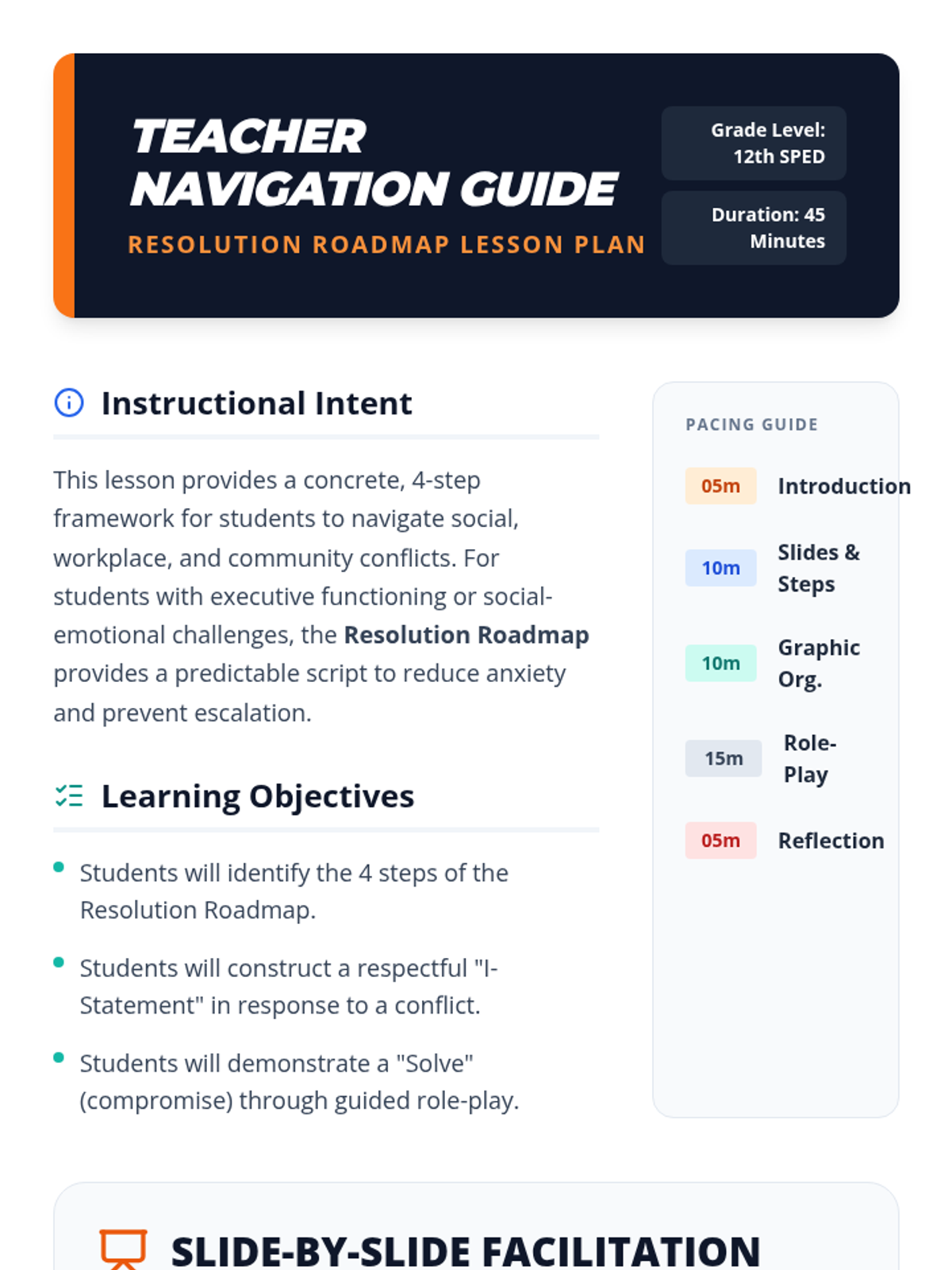
A comprehensive lesson designed for 12th-grade special education students to master conflict resolution across workplace, school, and community settings using a structured 'Resolution Roadmap' framework.
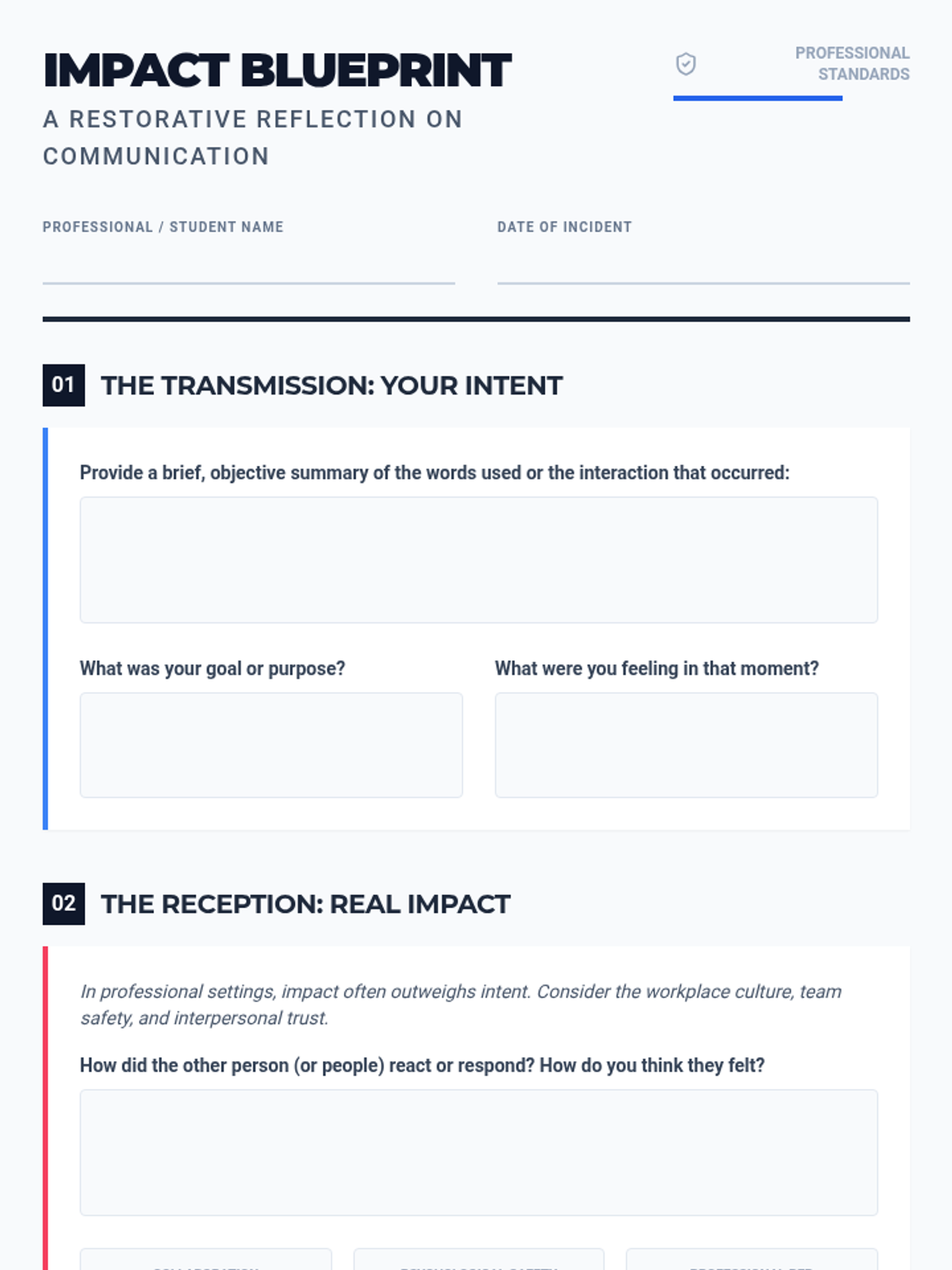
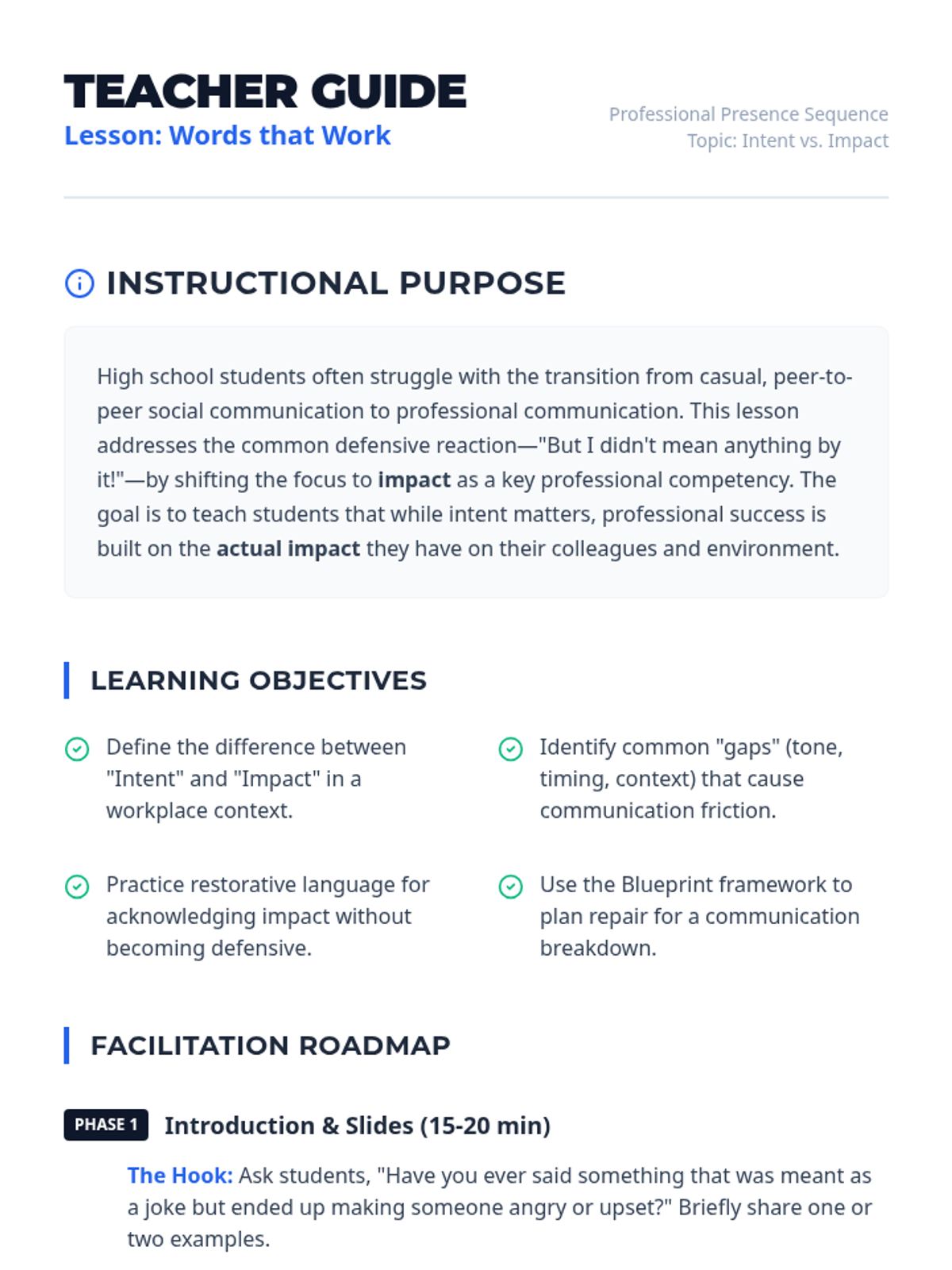
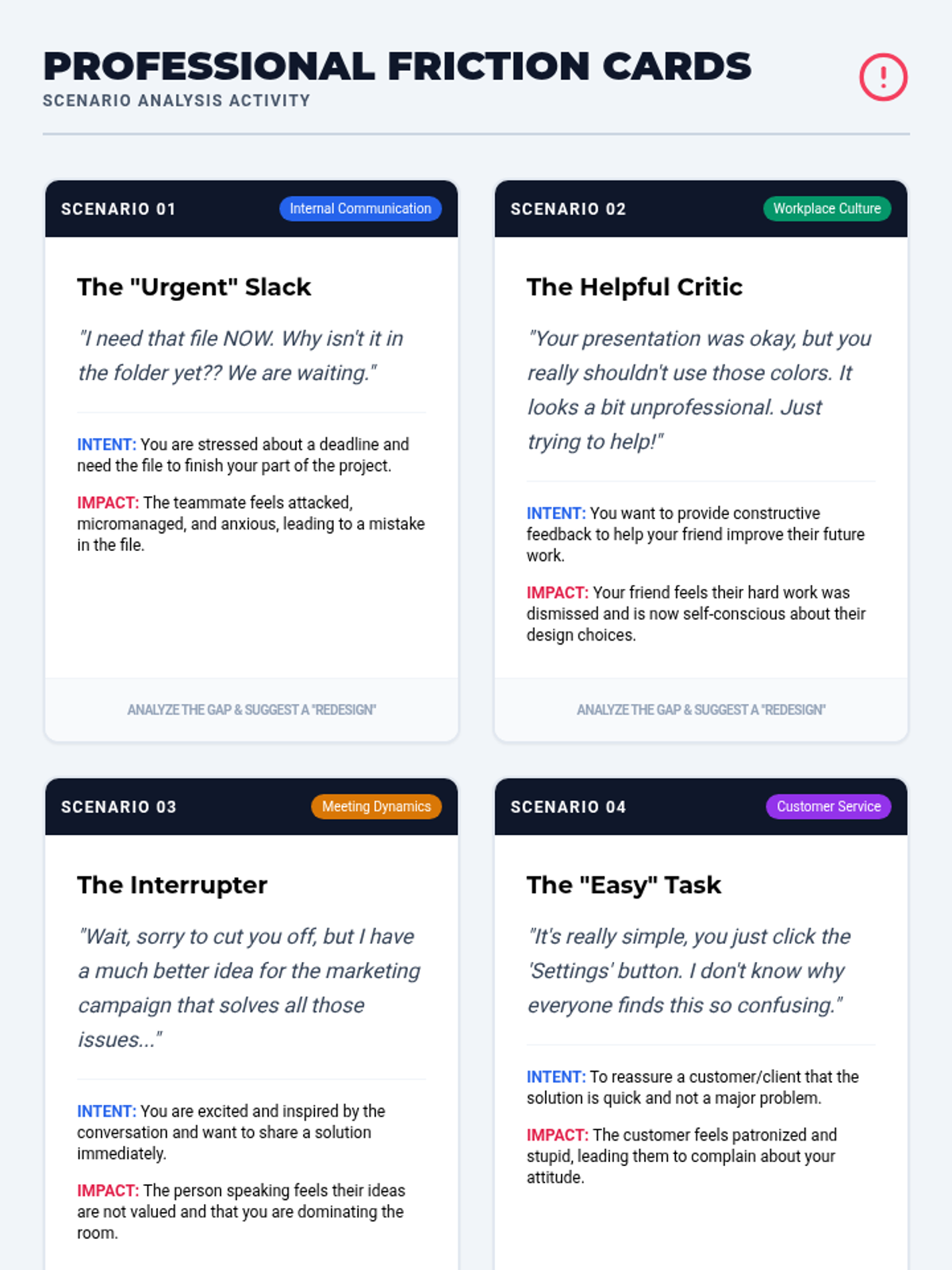
This lesson explores the "intent vs. impact" framework in professional settings, helping students understand how their words affect workplace culture and how to use restorative reflection to repair professional relationships.
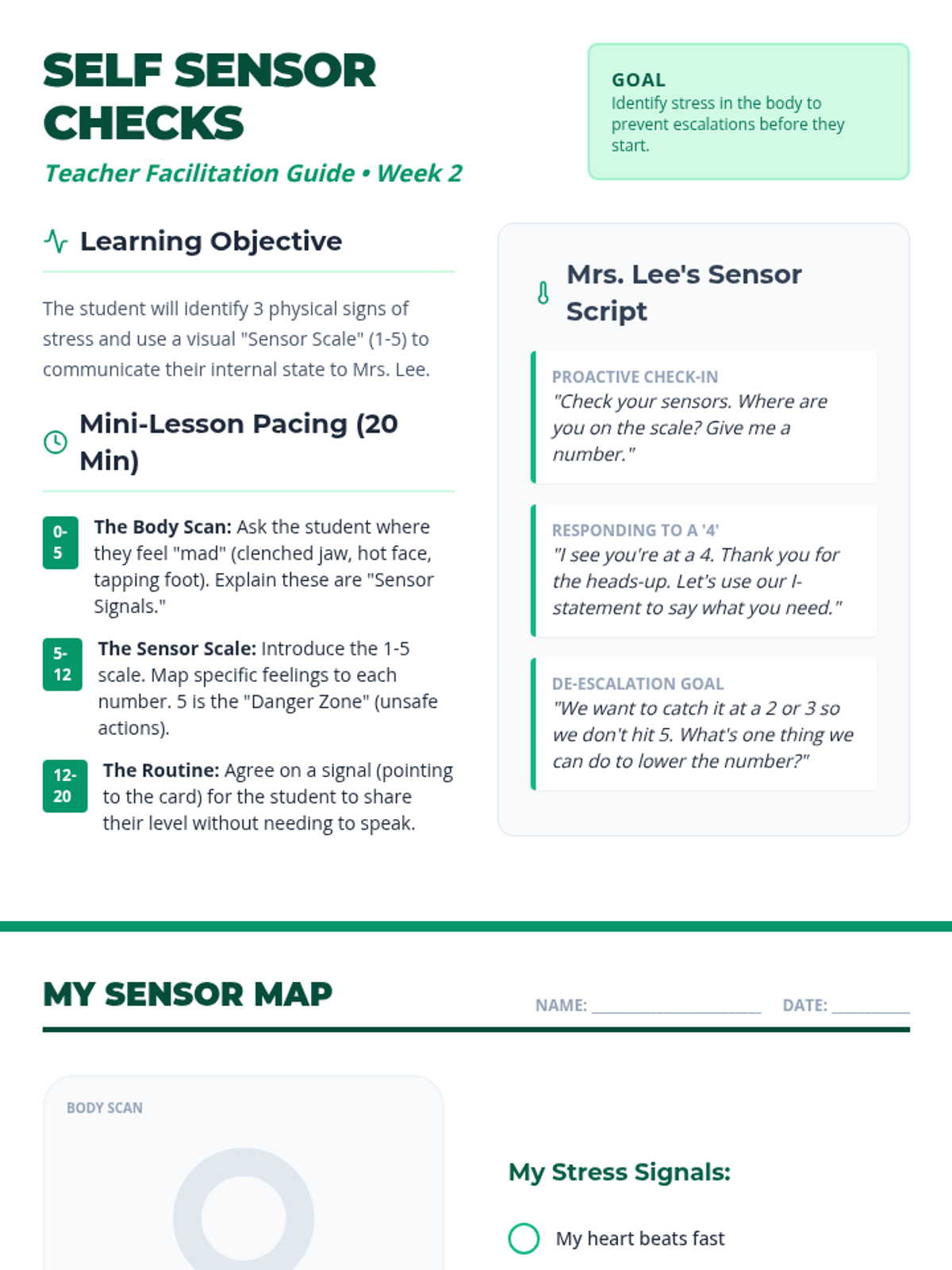
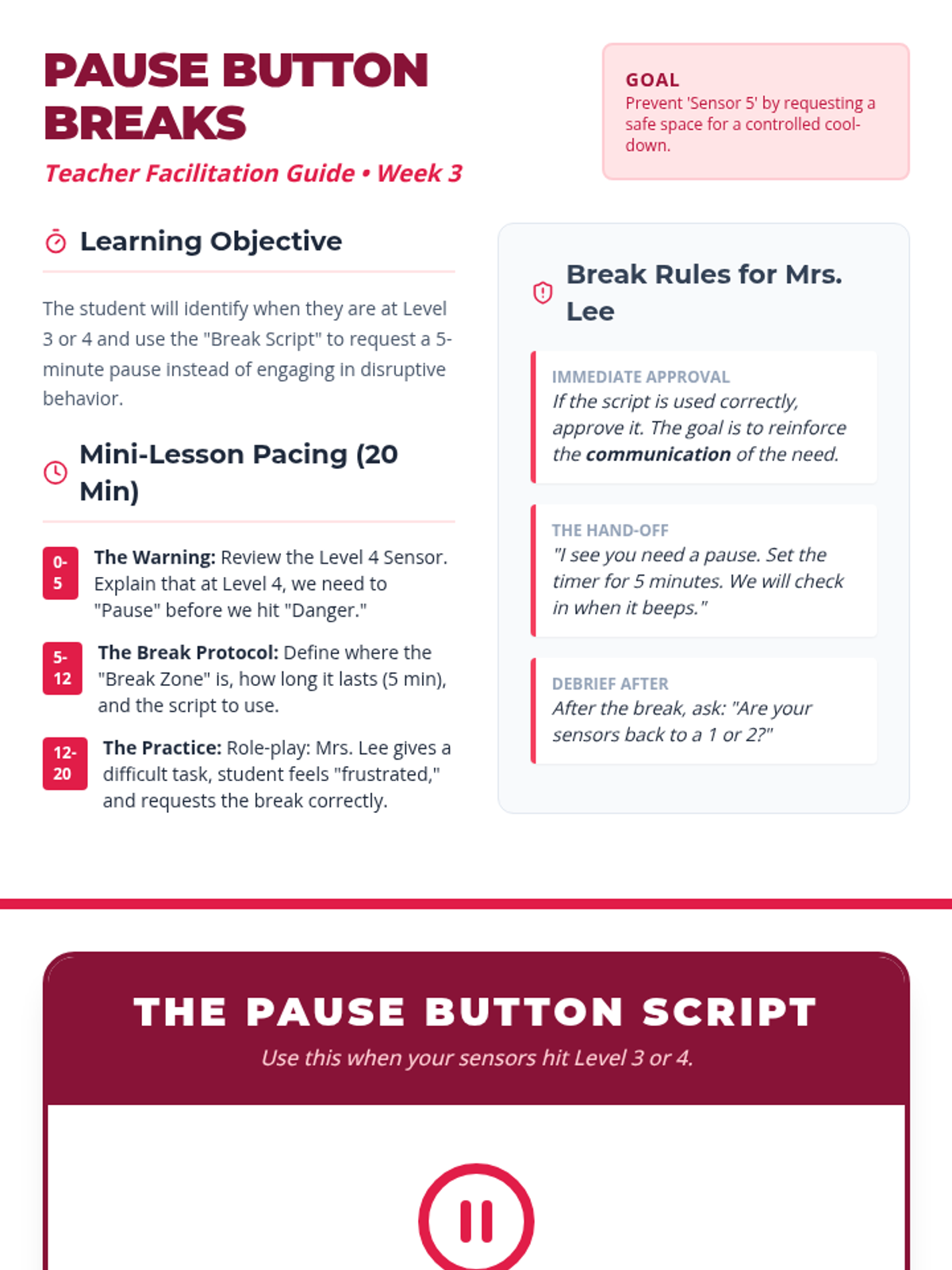
This lesson focuses on identifying internal emotional states and using visual check-ins to monitor stress levels before they lead to disruptions.
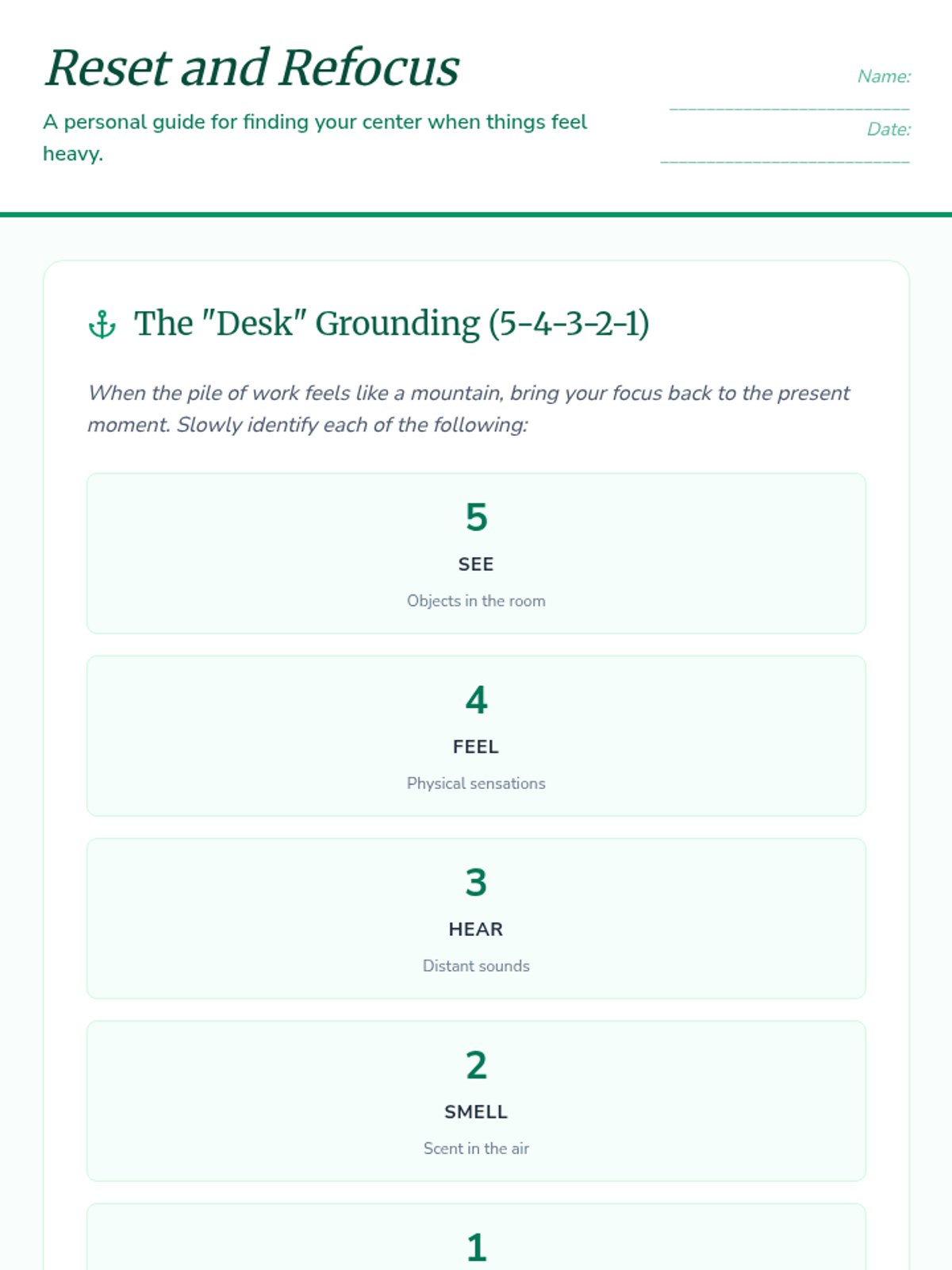
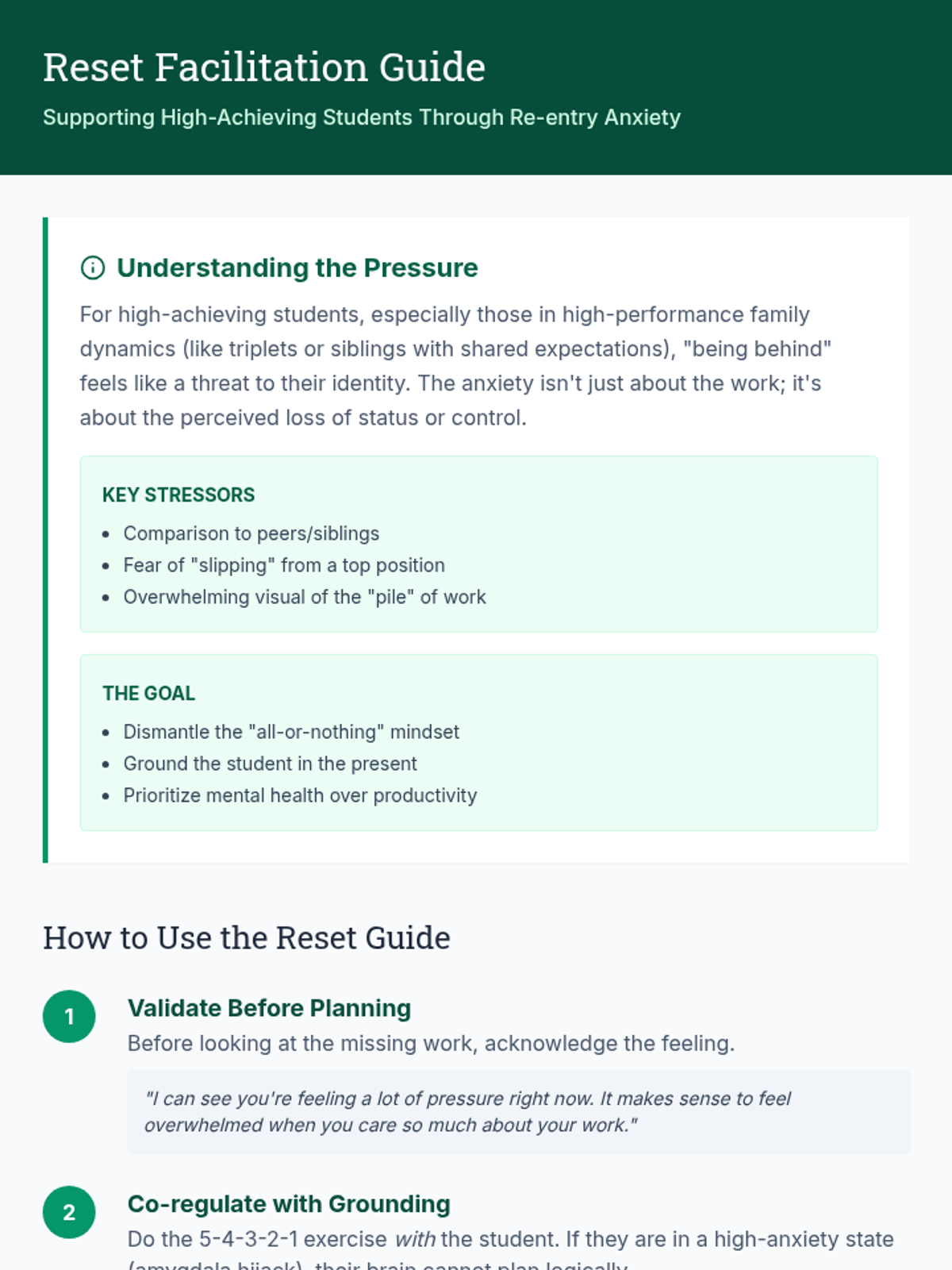
A collection of resources designed to help high-achieving students manage academic anxiety and re-entry stress through mindfulness and grounding.
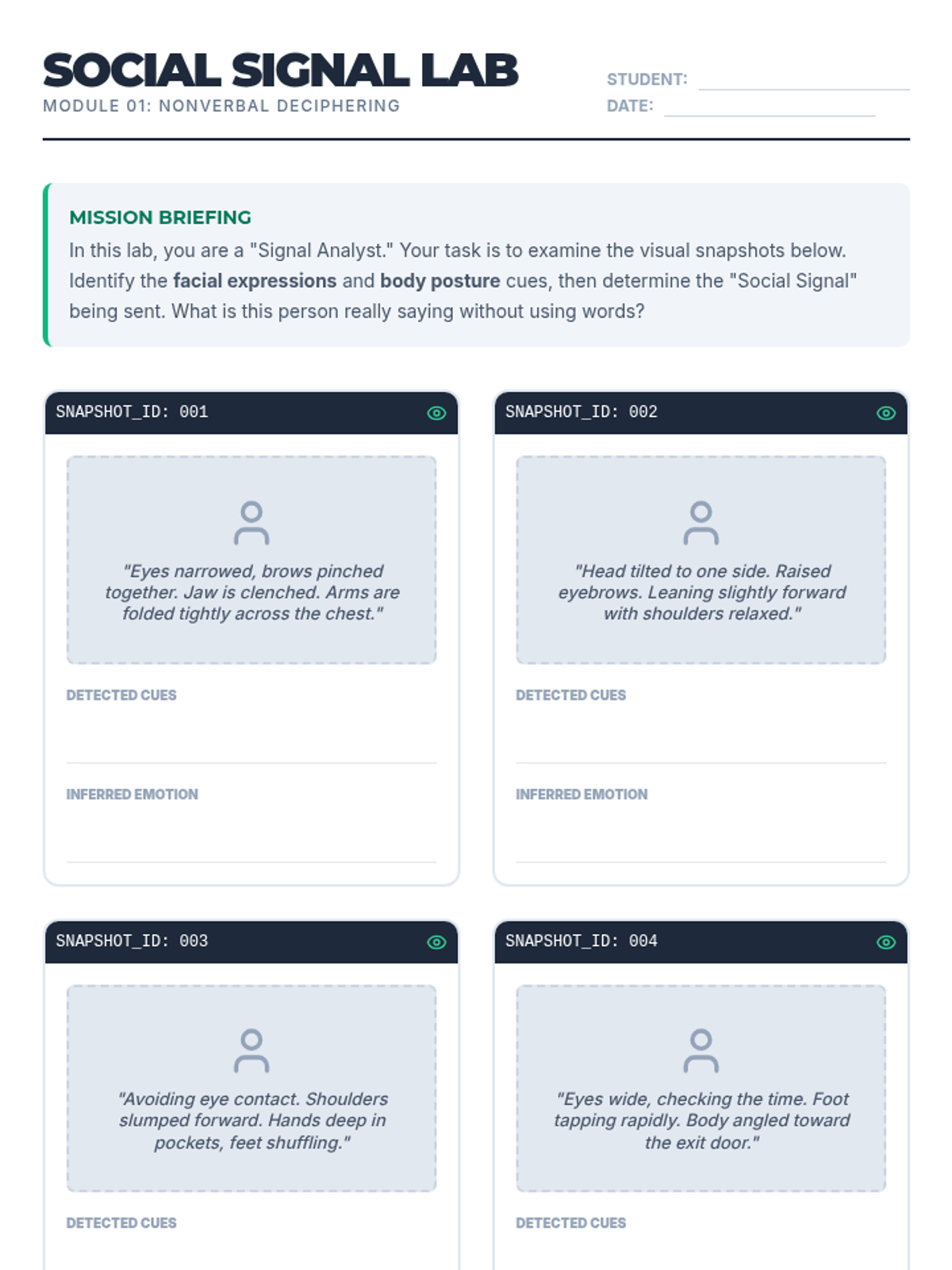
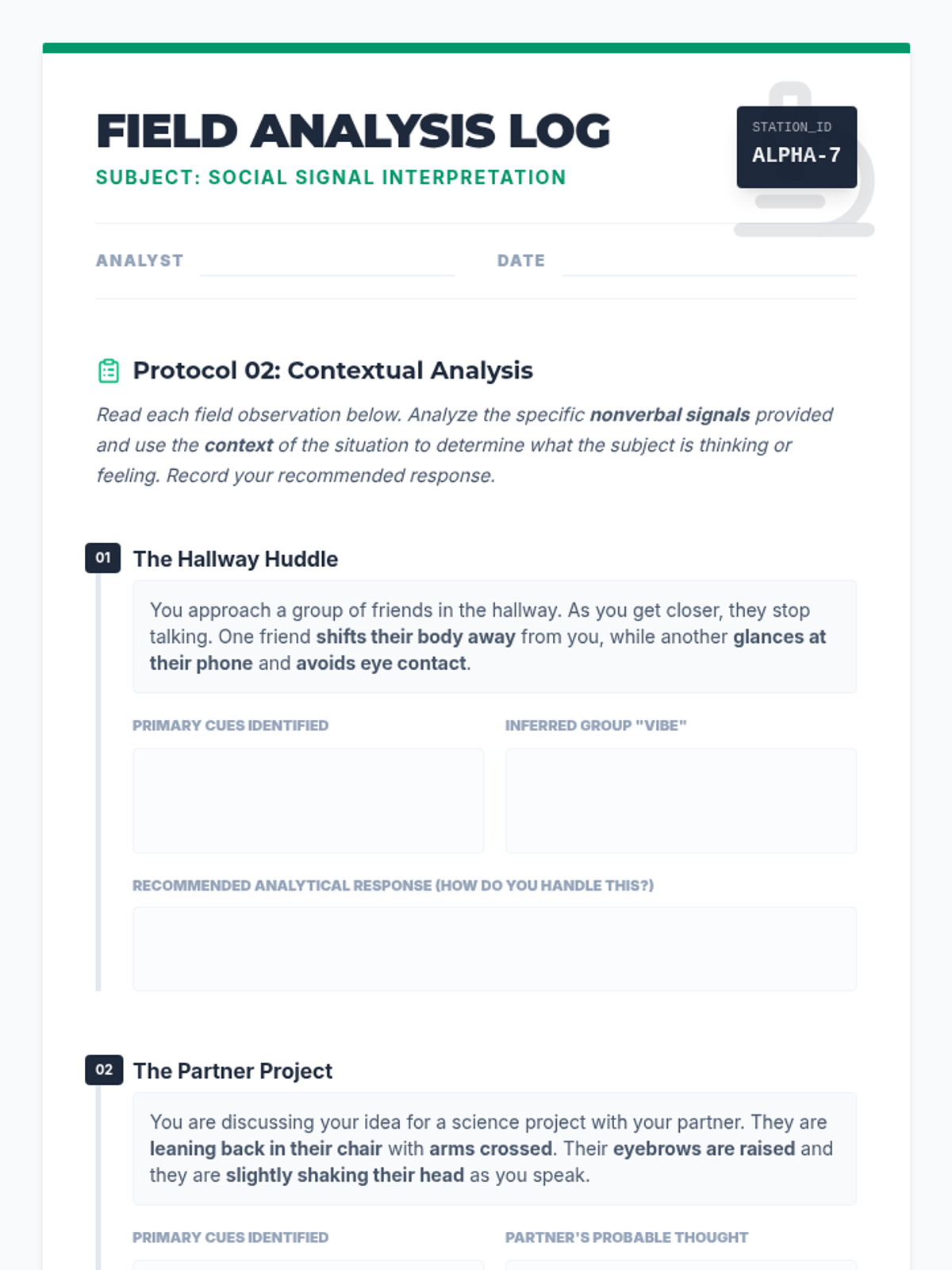
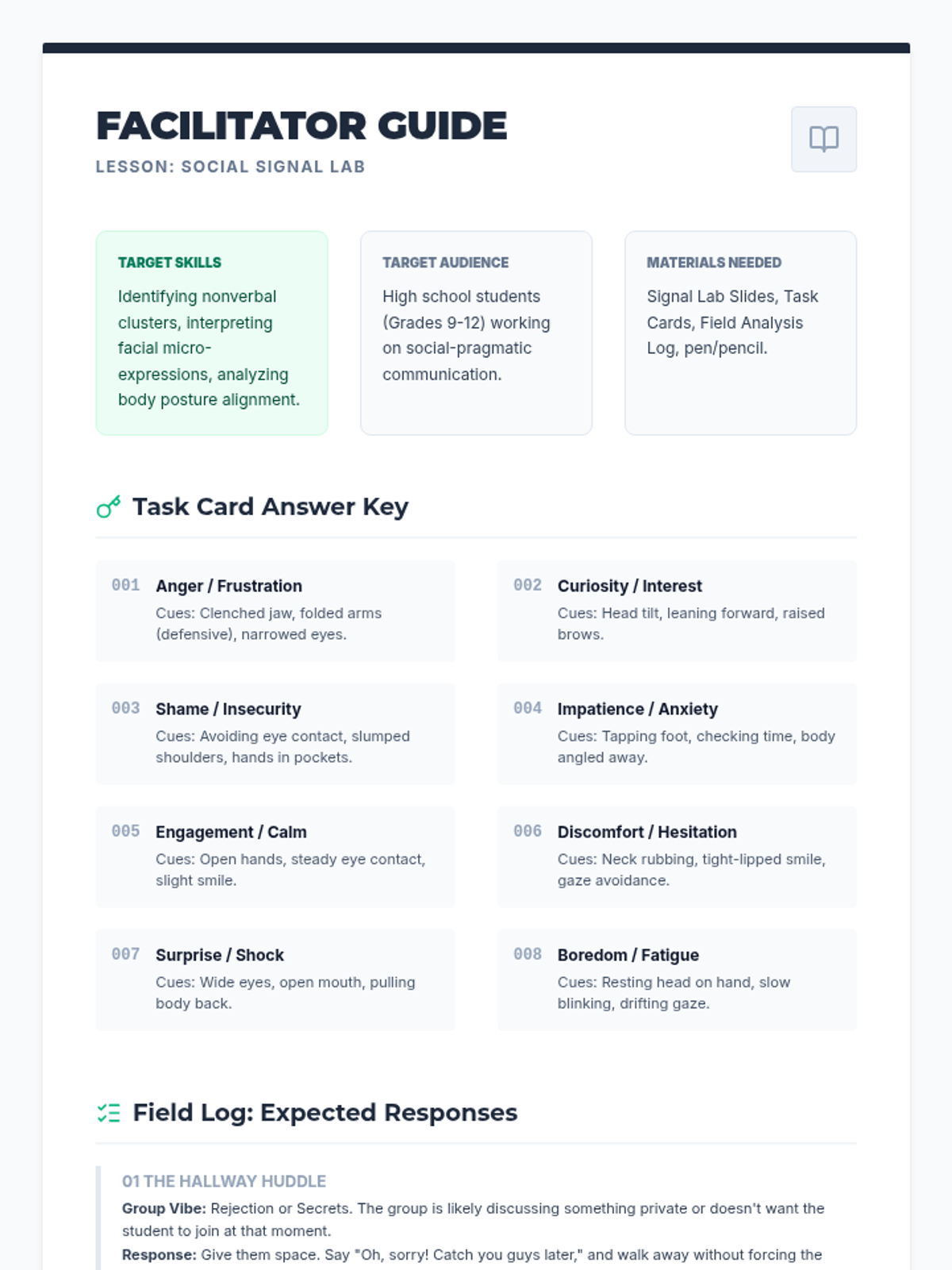
A social communication lesson for high schoolers focused on identifying and interpreting facial expressions and body posture in various social contexts.
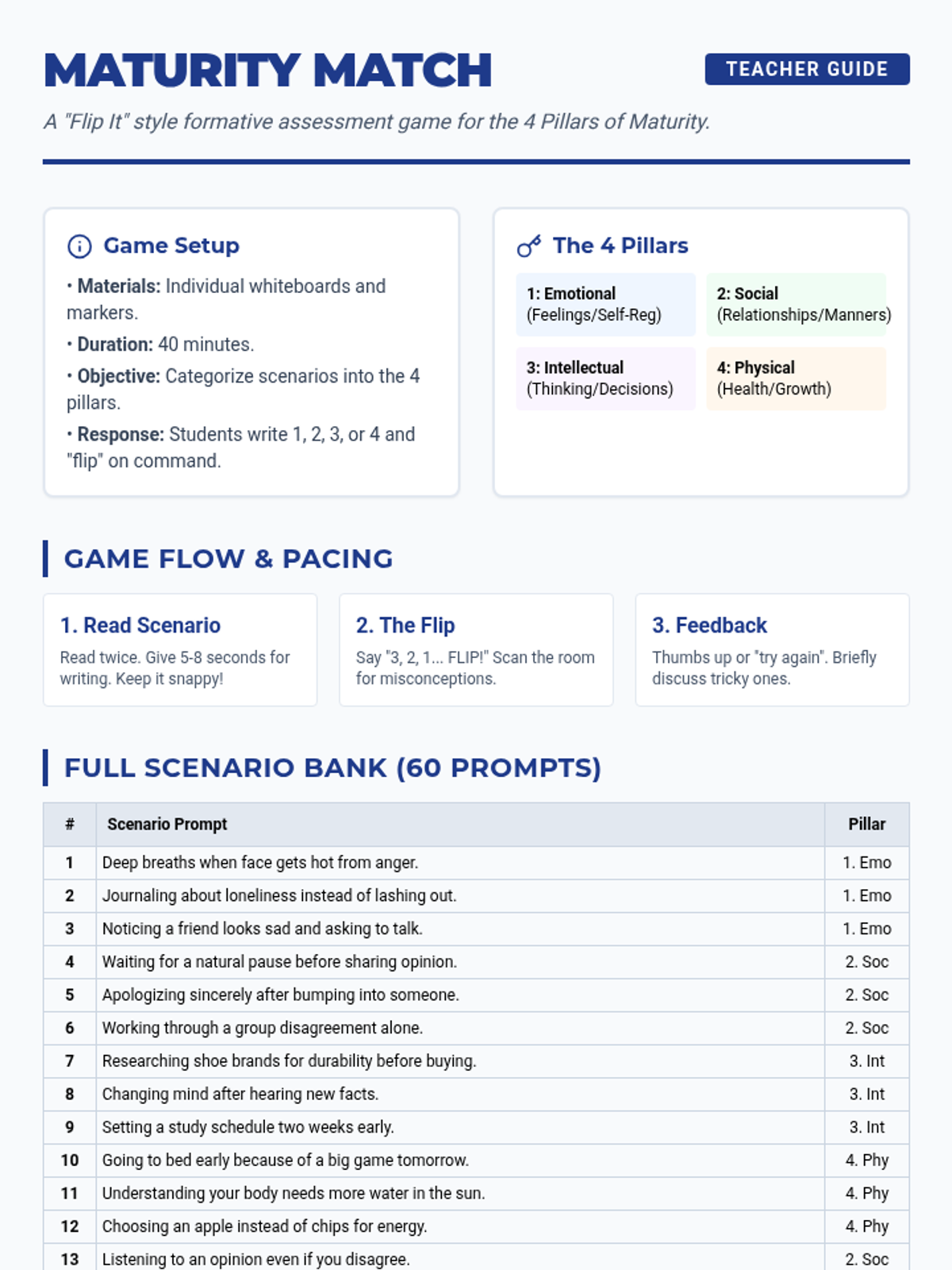
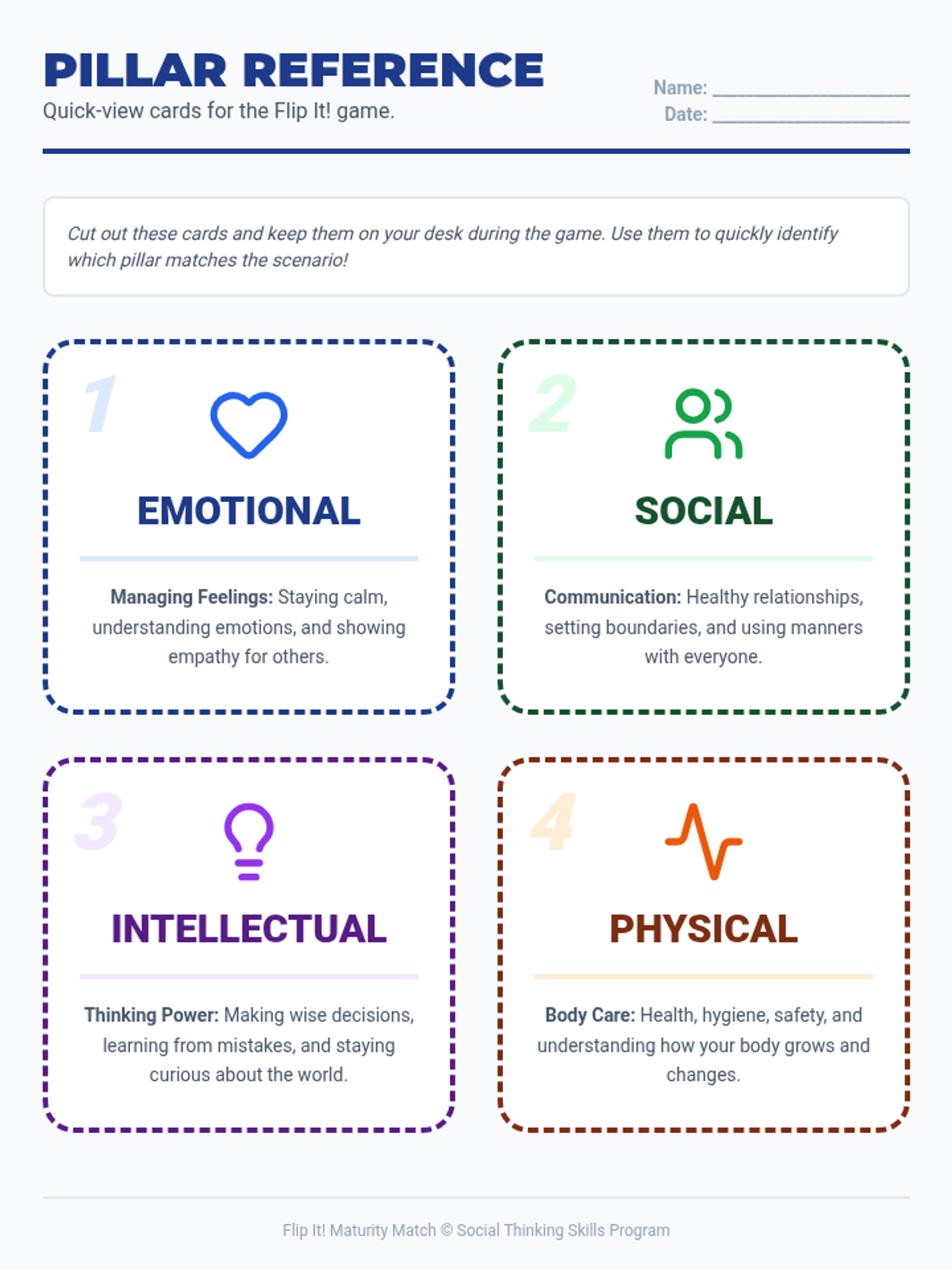
A fast-paced formative assessment game where students identify the four pillars of maturity through real-world scenarios. Includes a visual slide deck, a bank of 60 scenarios for the teacher, and reference cards for students.
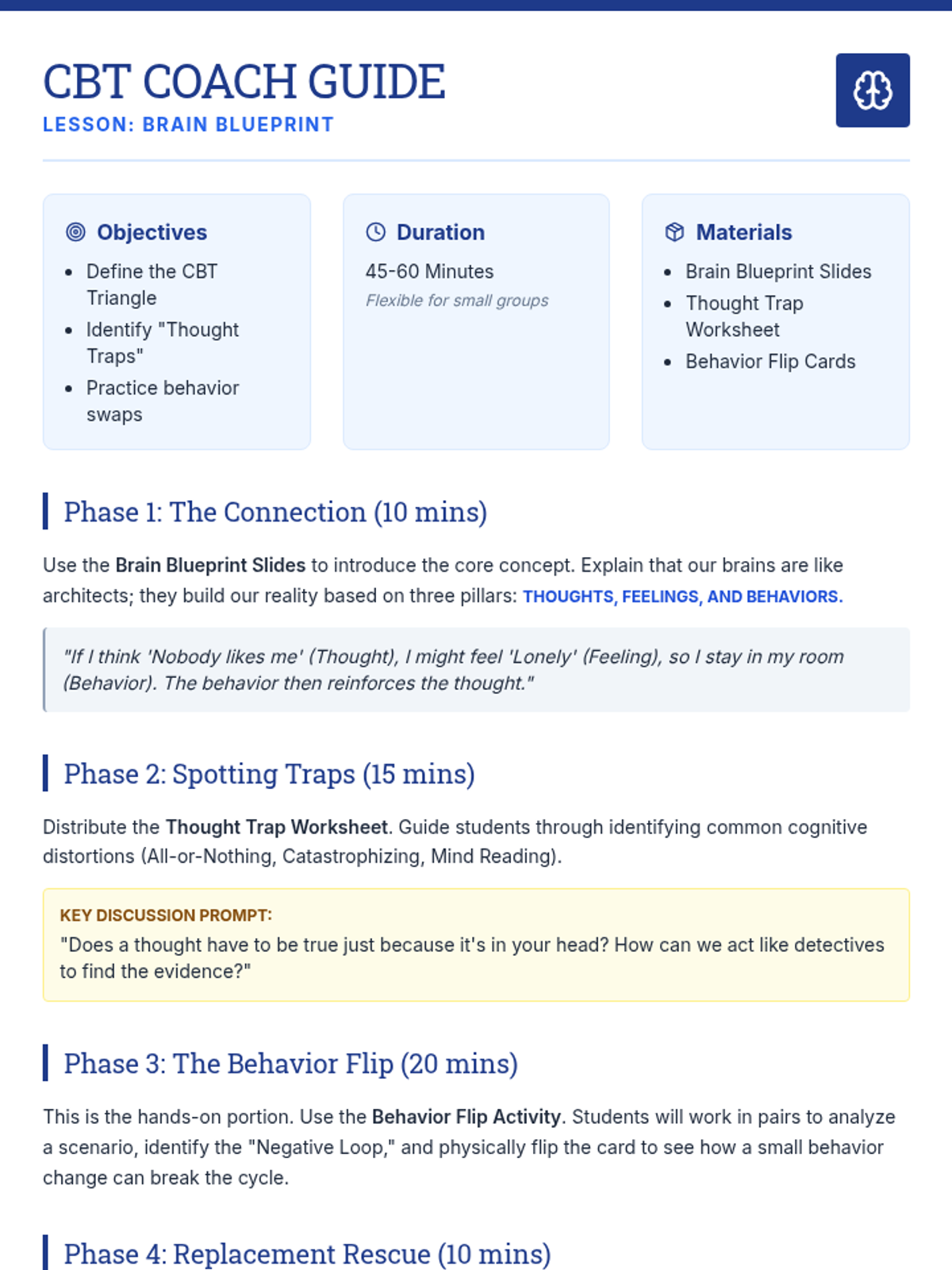
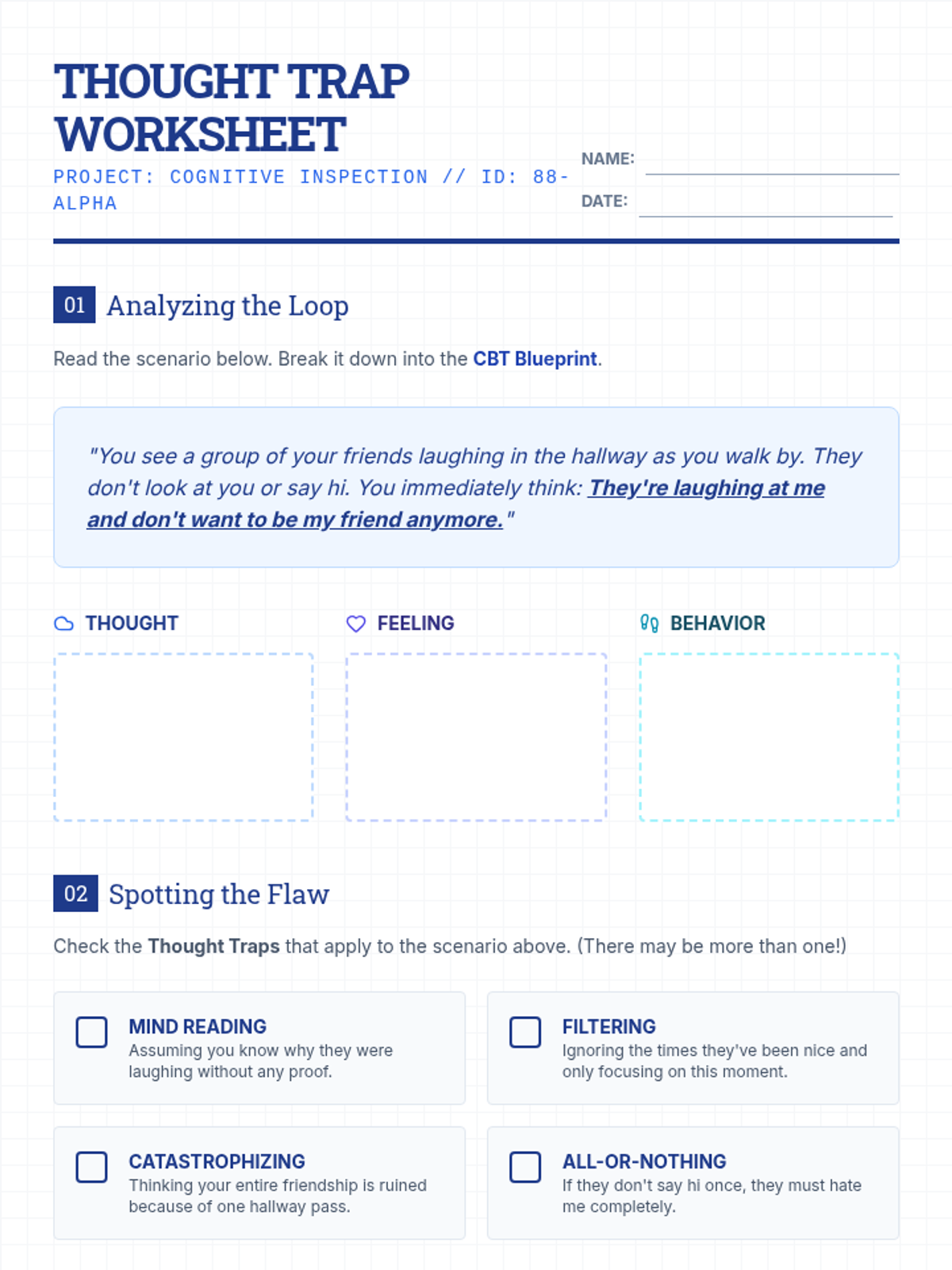
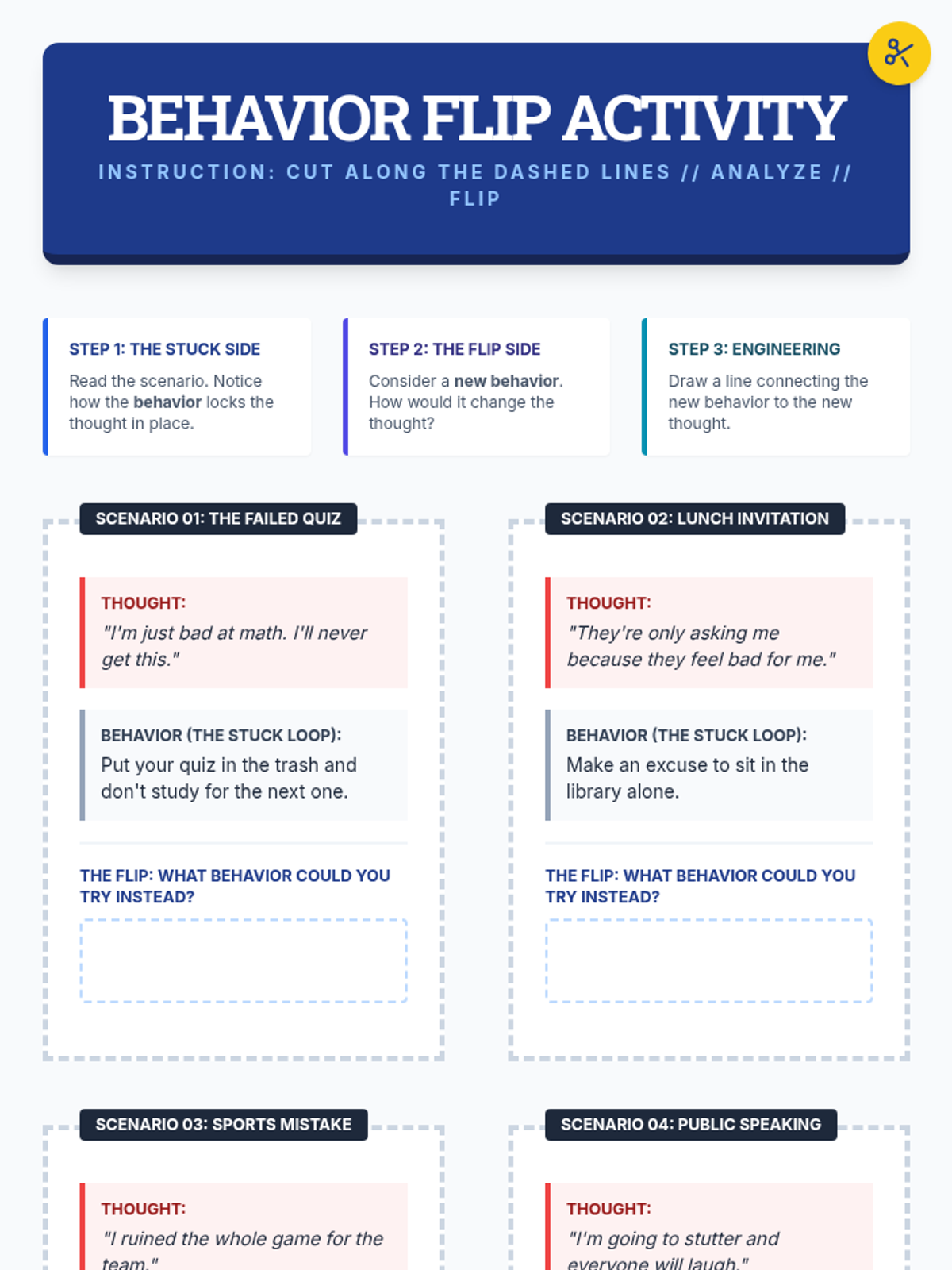
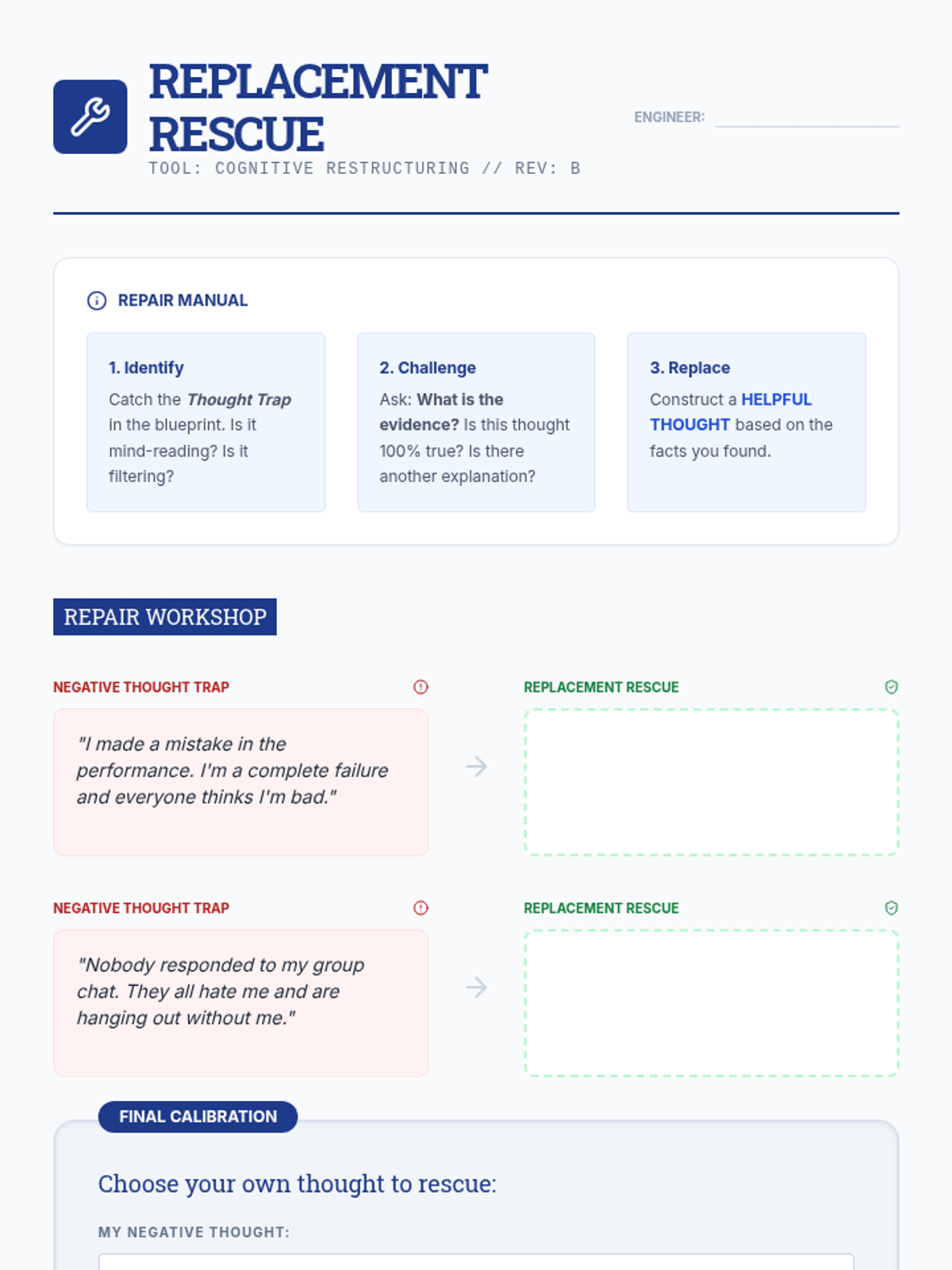
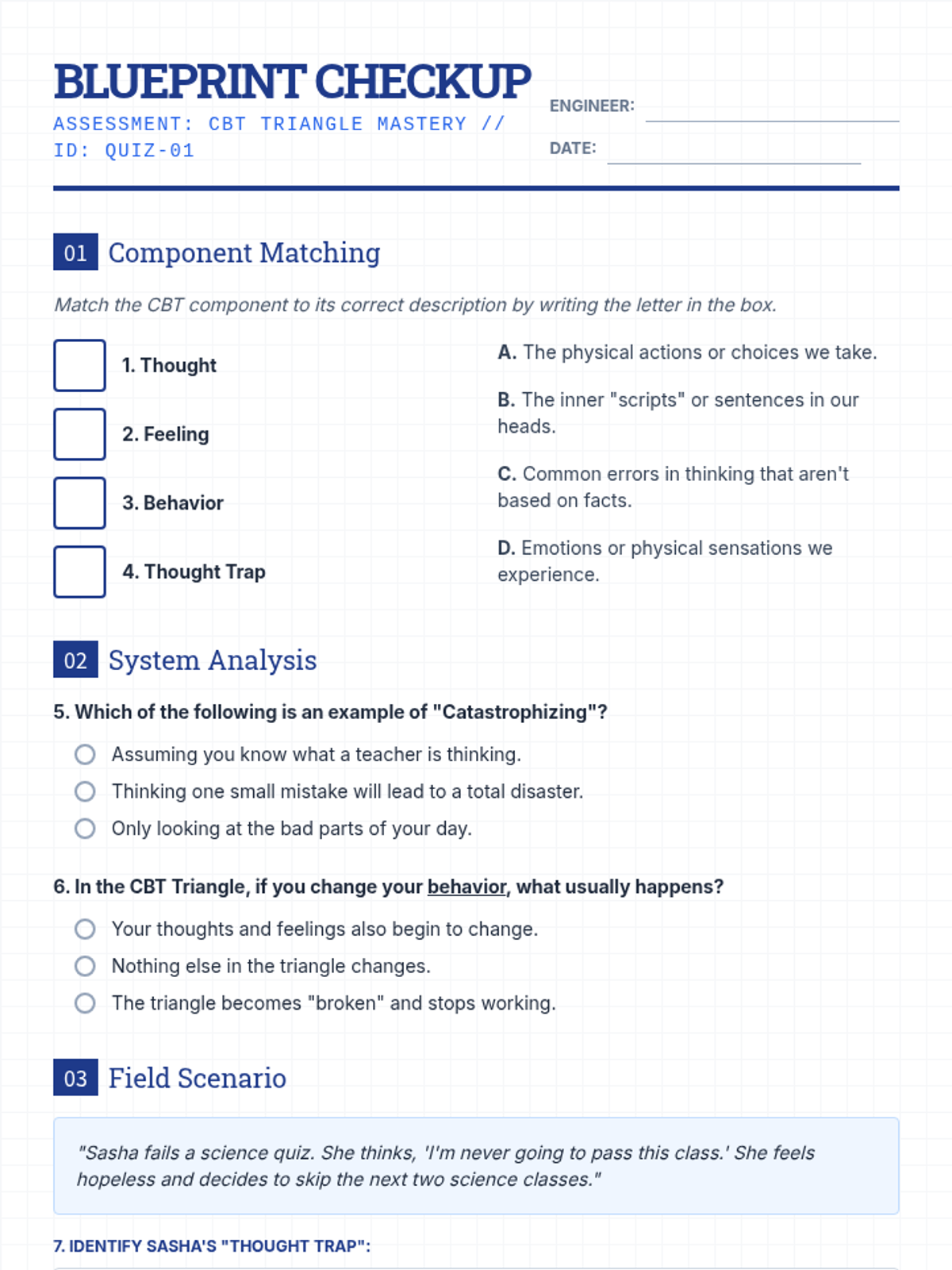
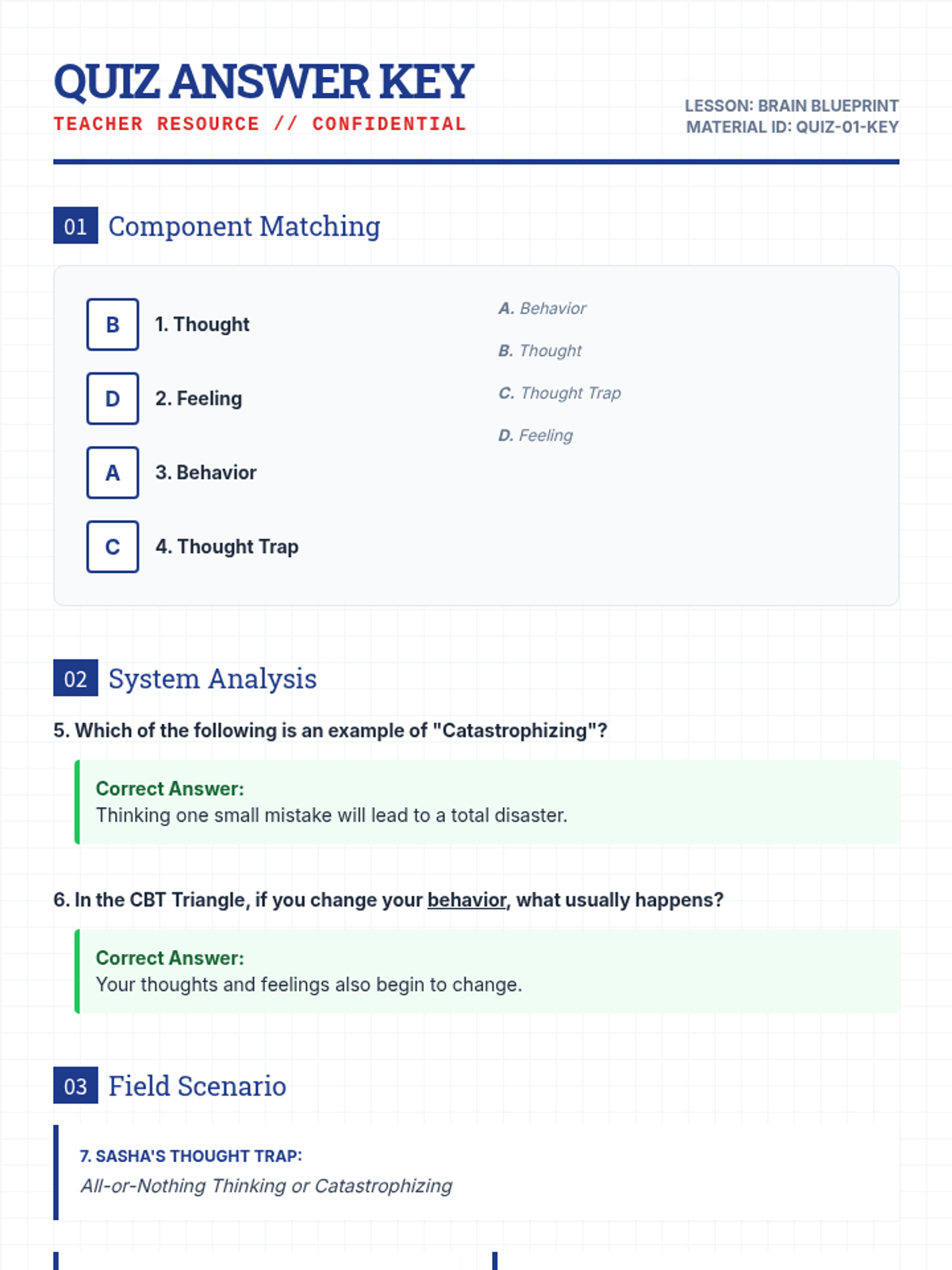
A comprehensive introduction to the CBT Triangle, focusing on identifying negative thought patterns, understanding the connection between thoughts, feelings, and behaviors, and practicing cognitive restructuring.
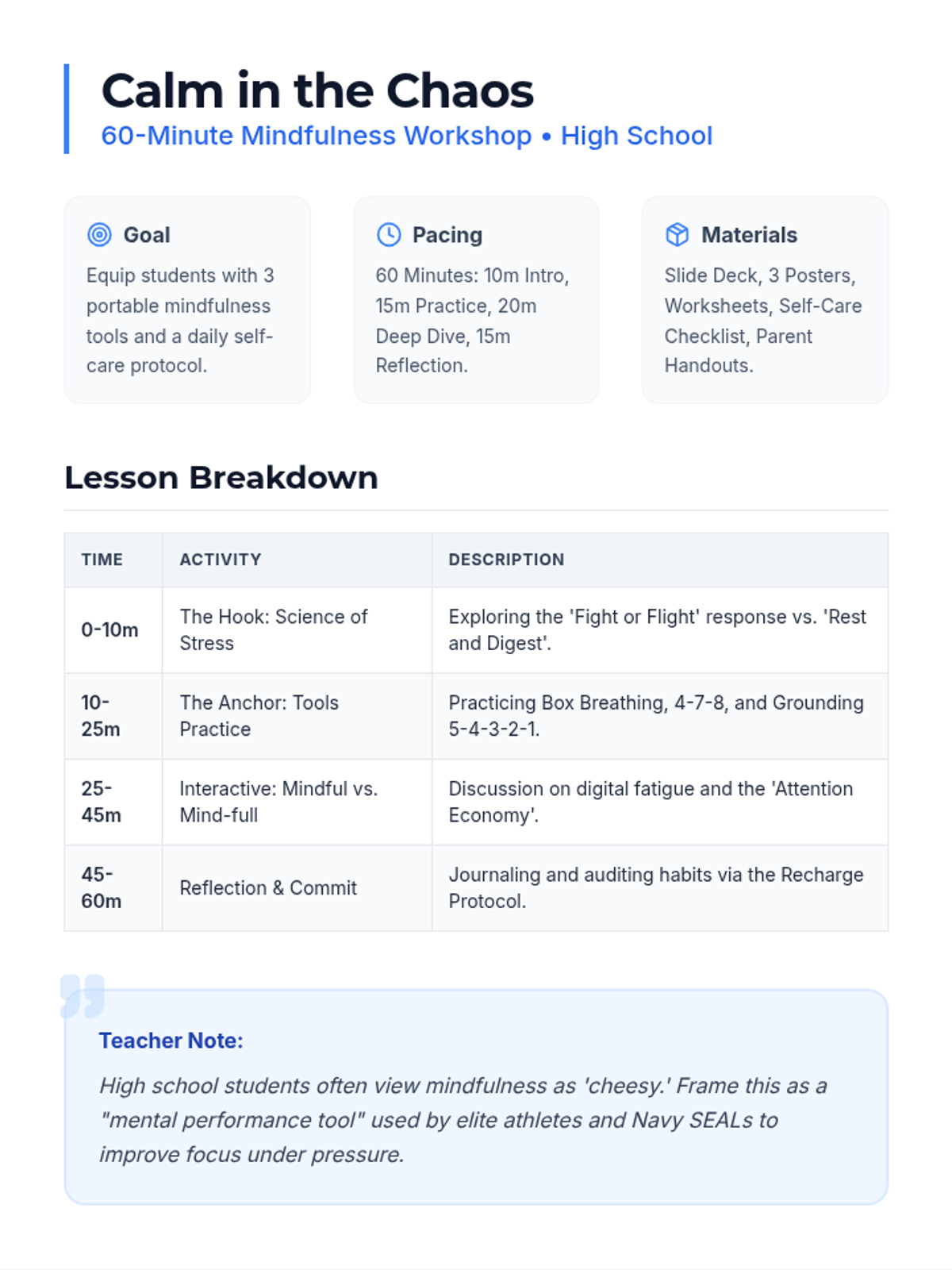
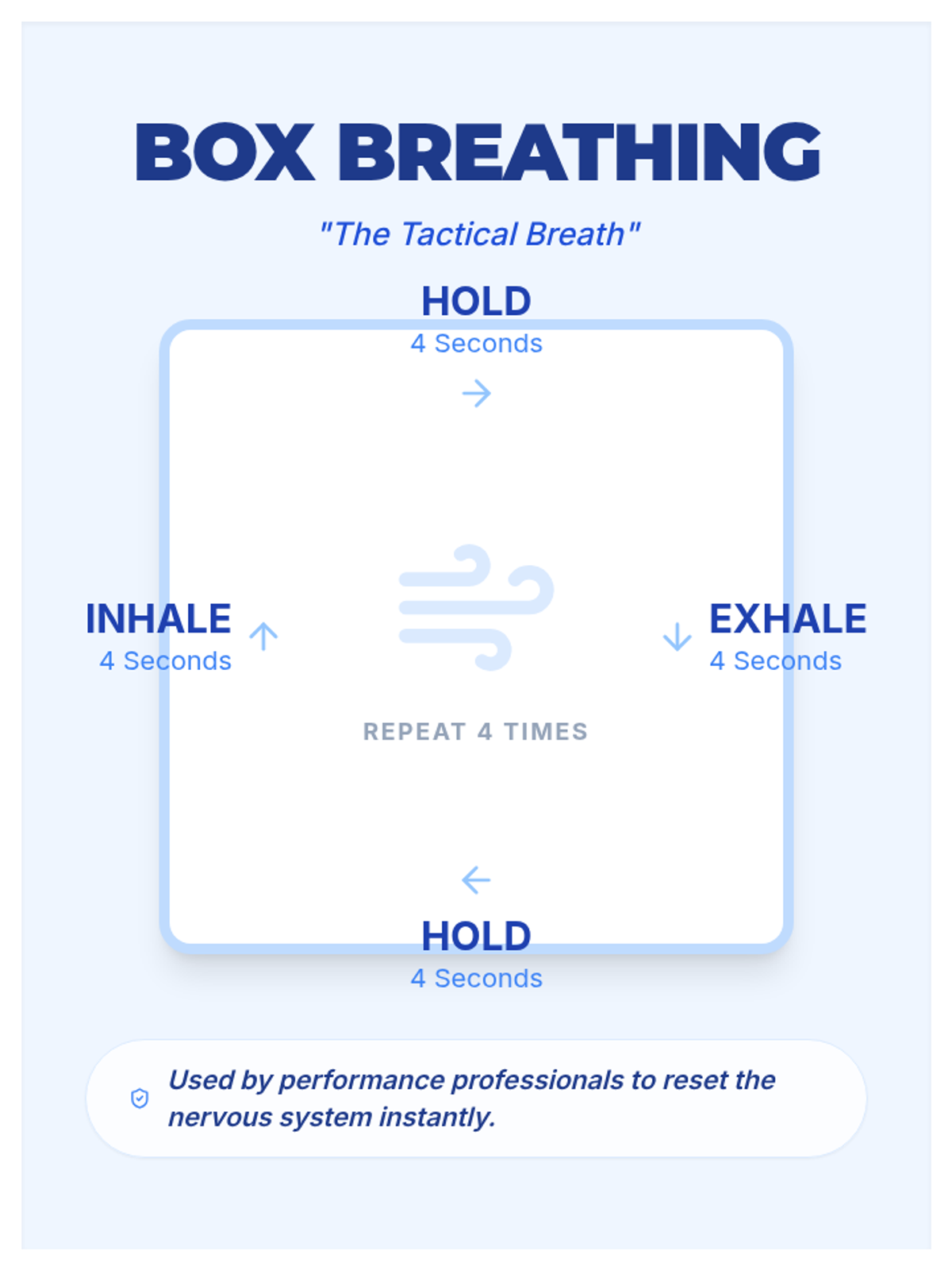
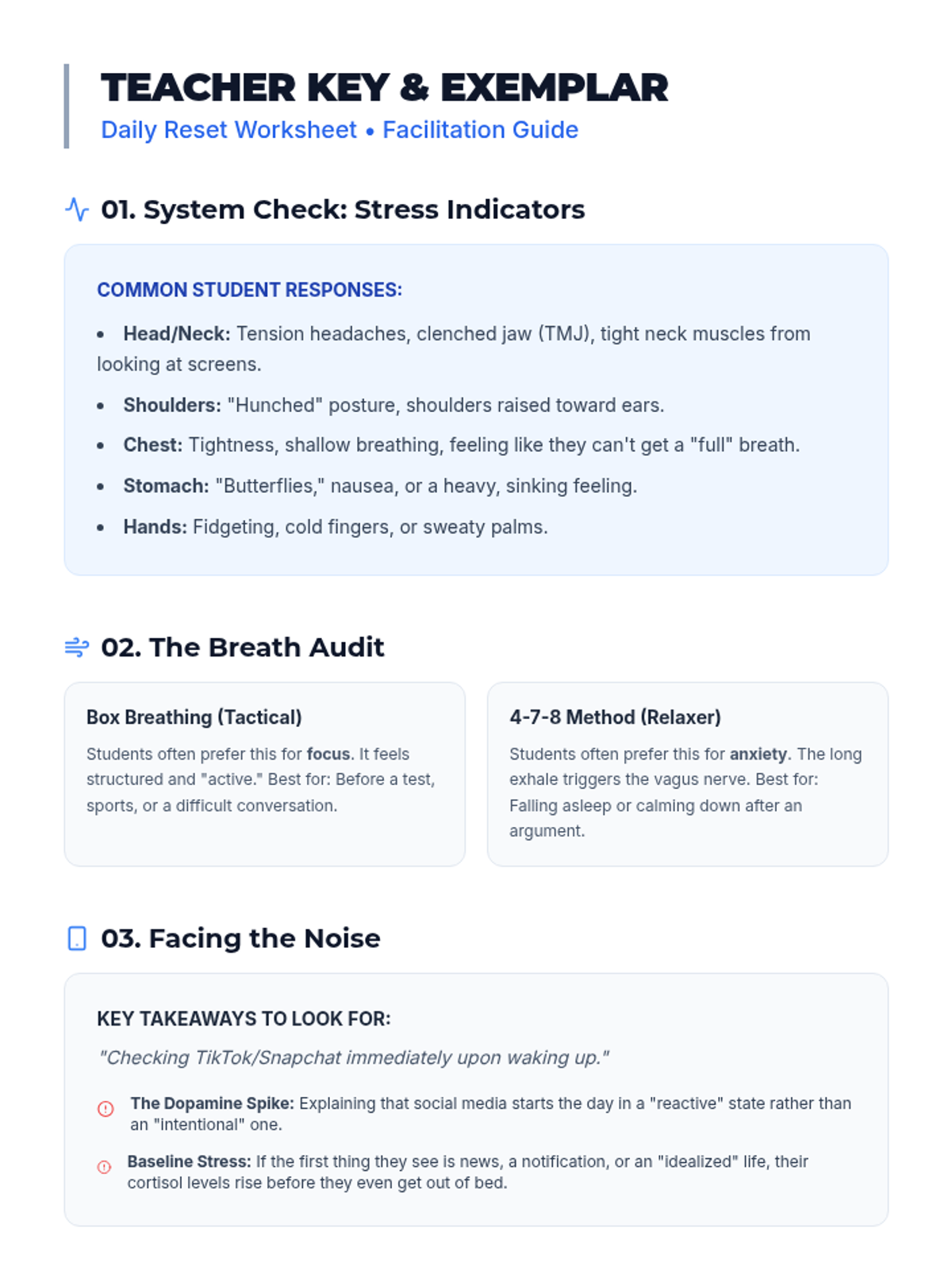
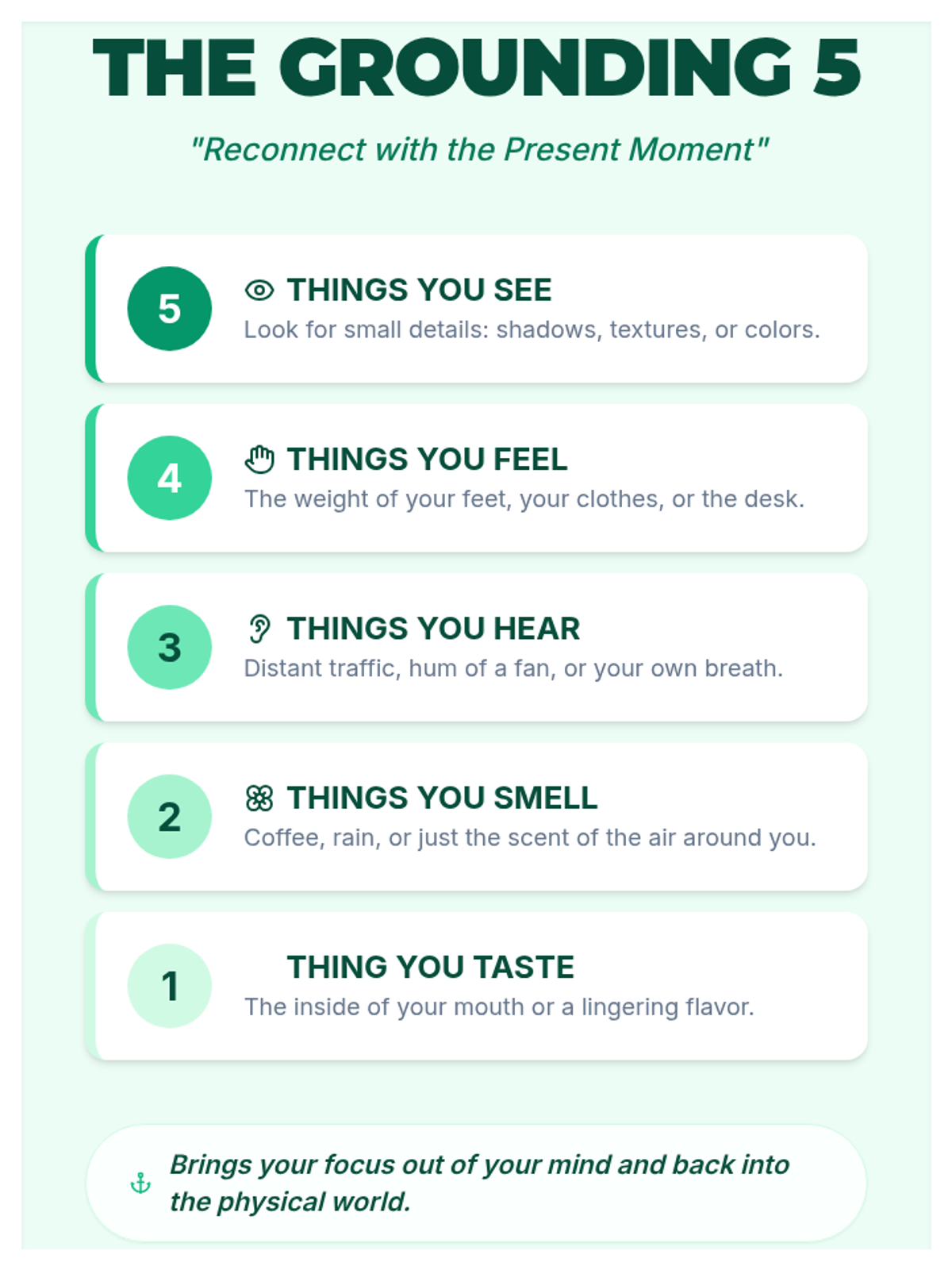
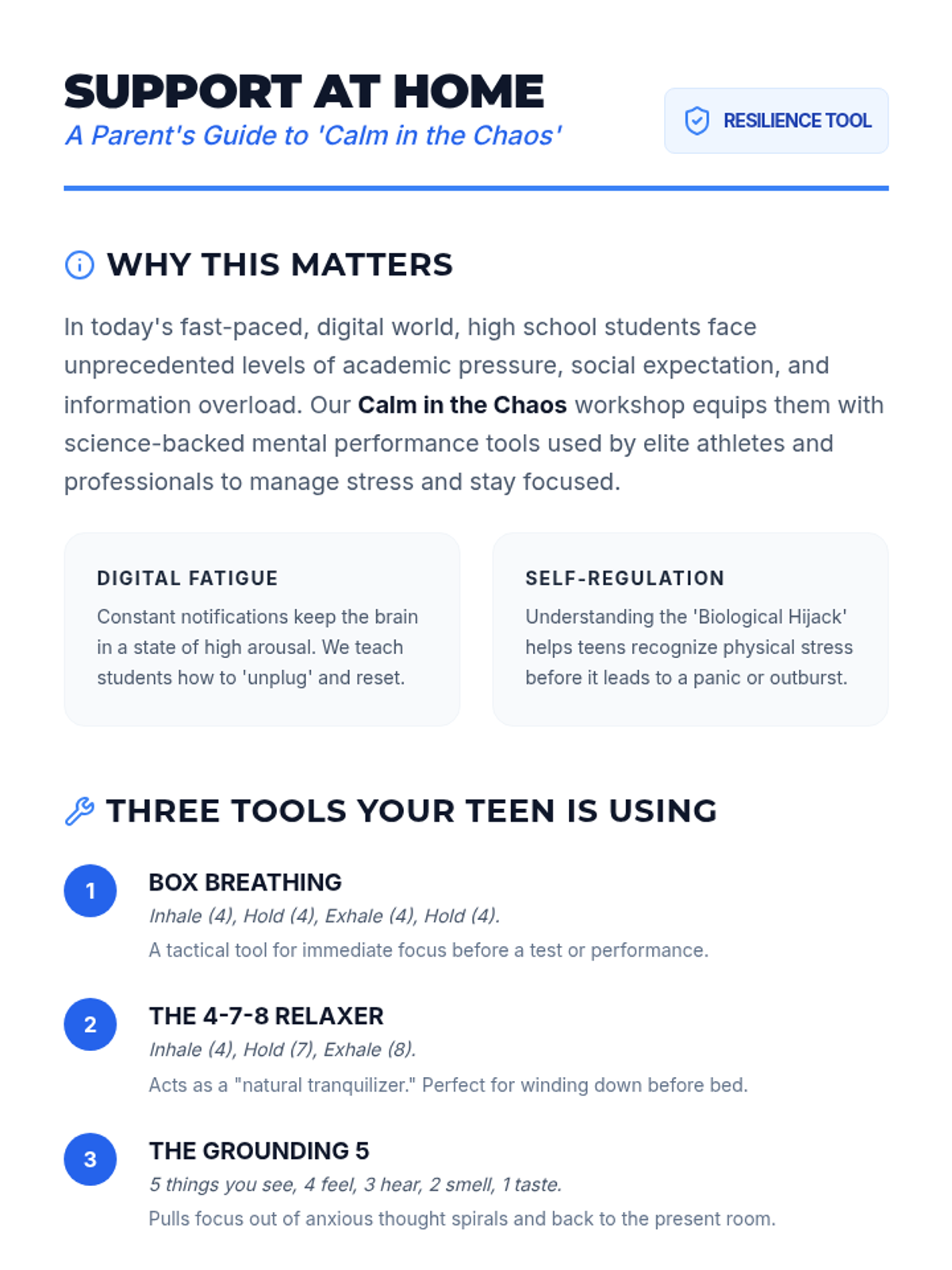
A comprehensive 60-minute lesson designed for high schoolers to understand the science of stress and practice immediate mindfulness techniques for emotional regulation.
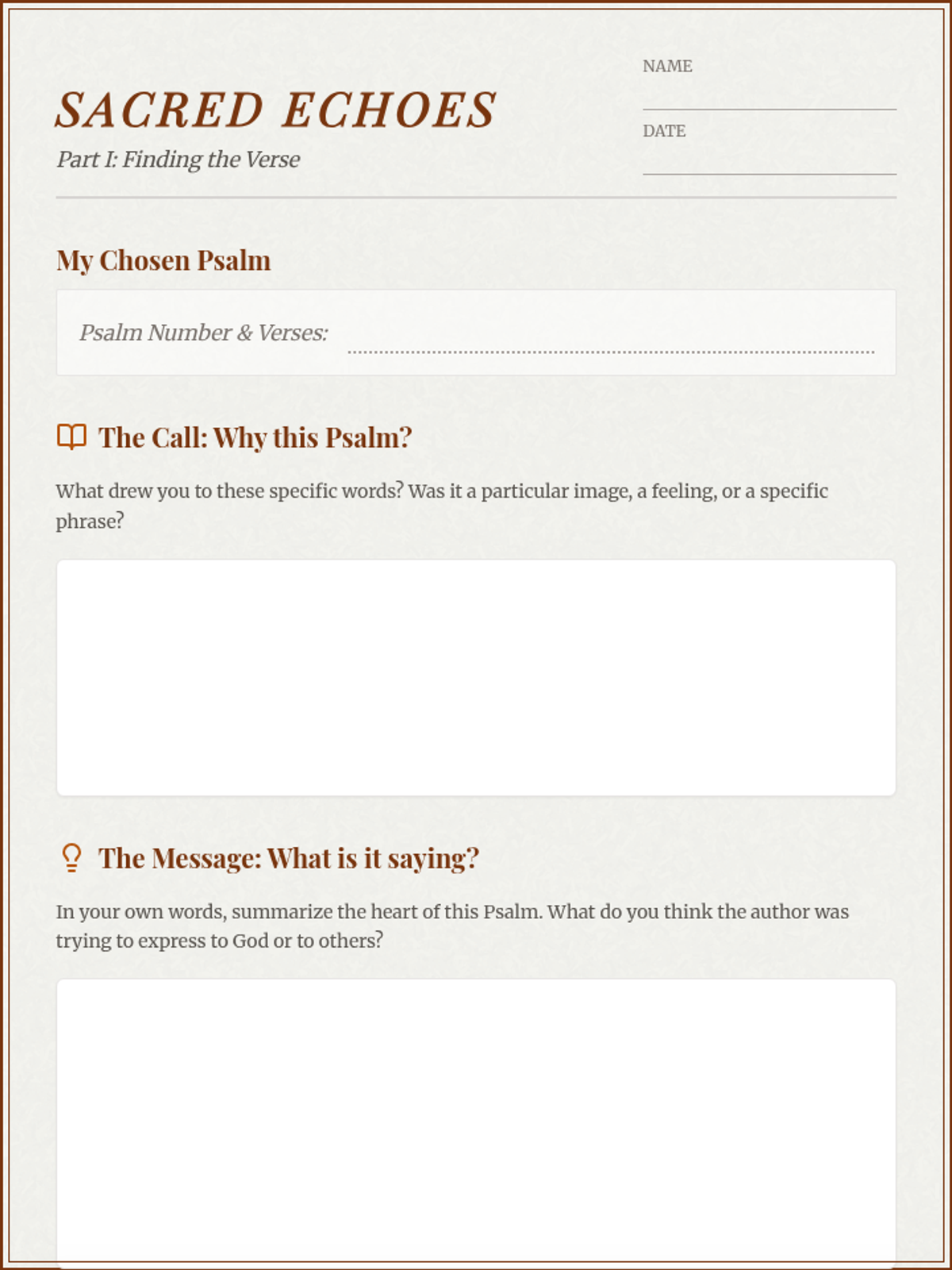
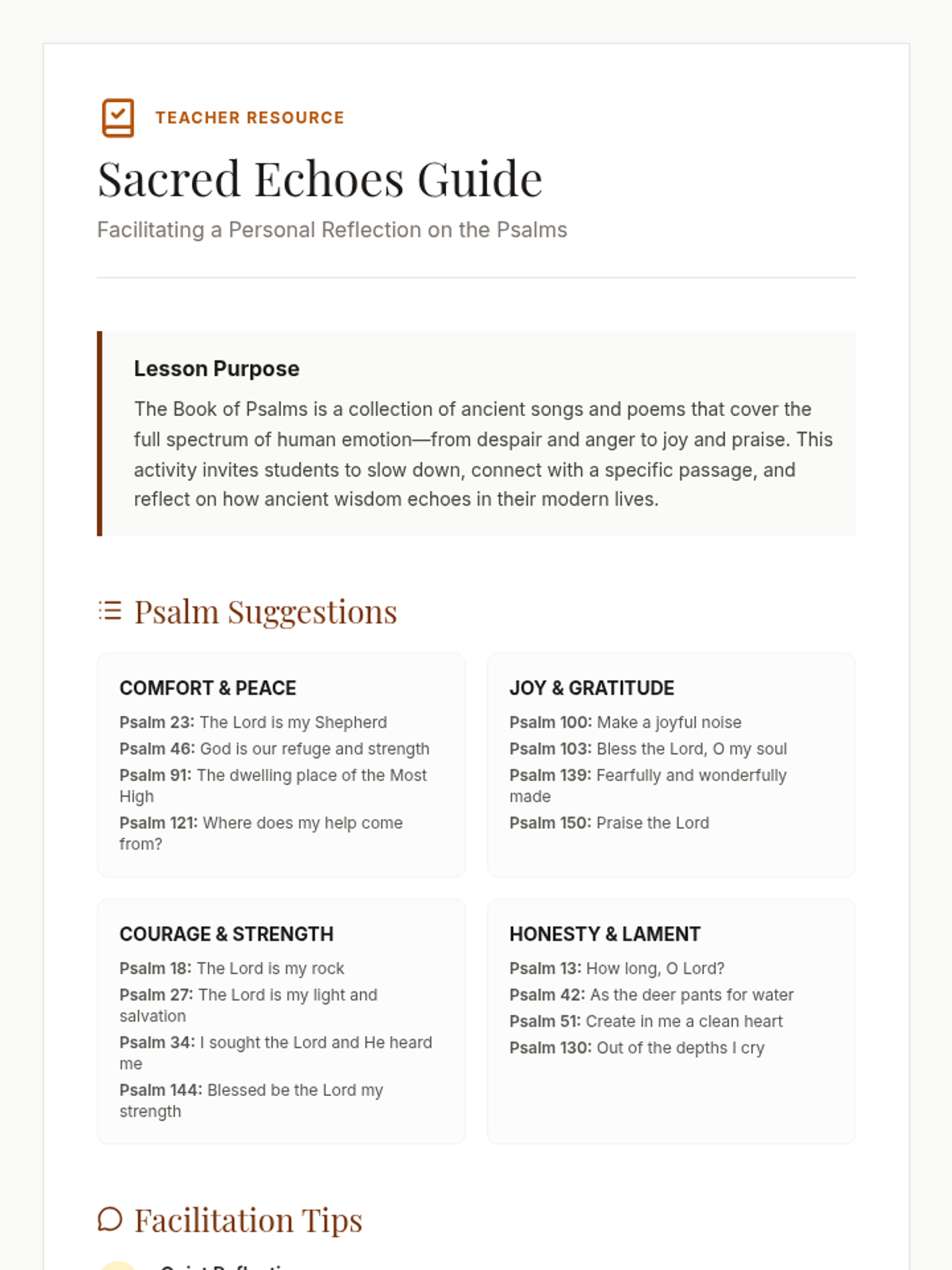
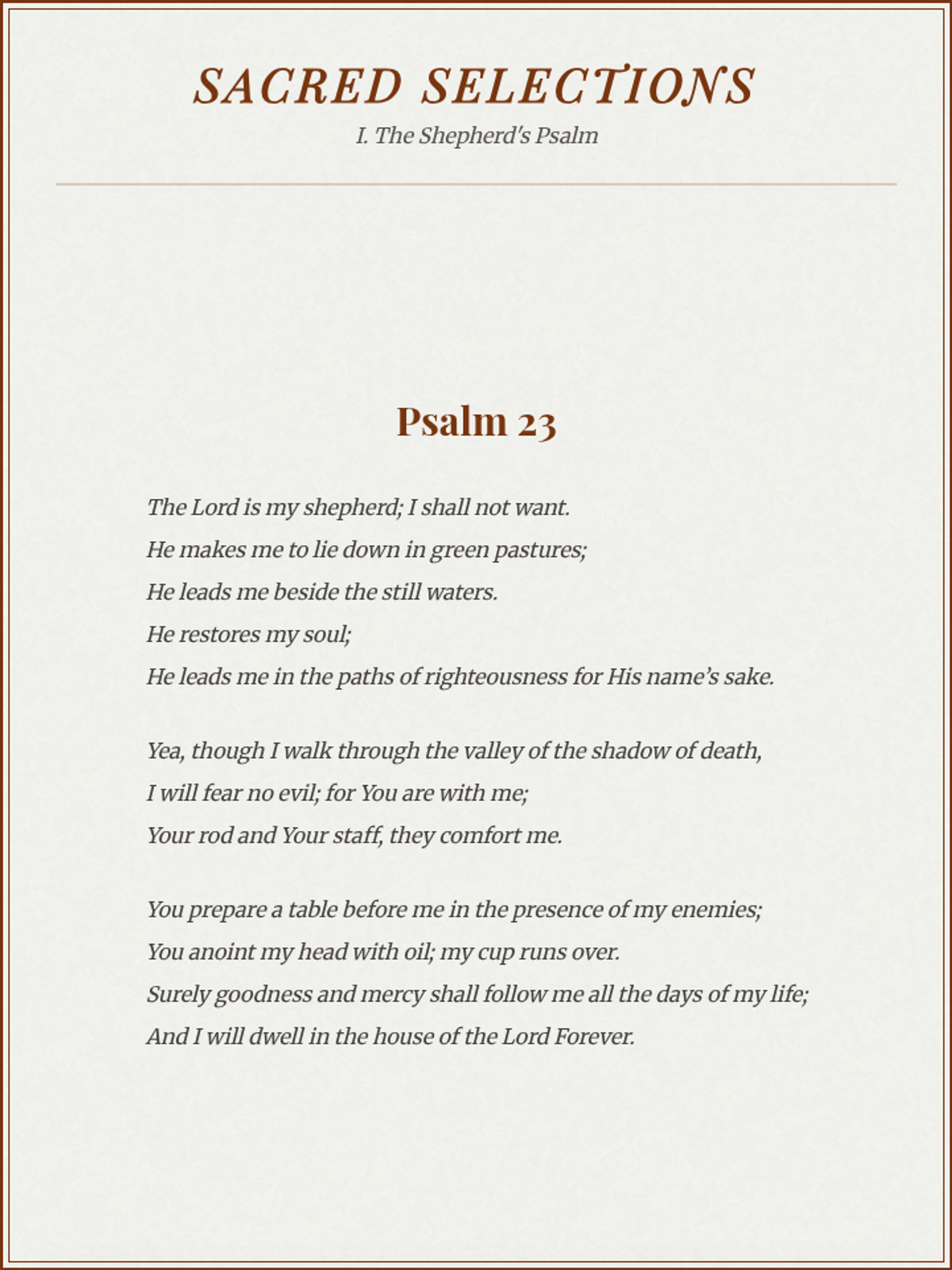
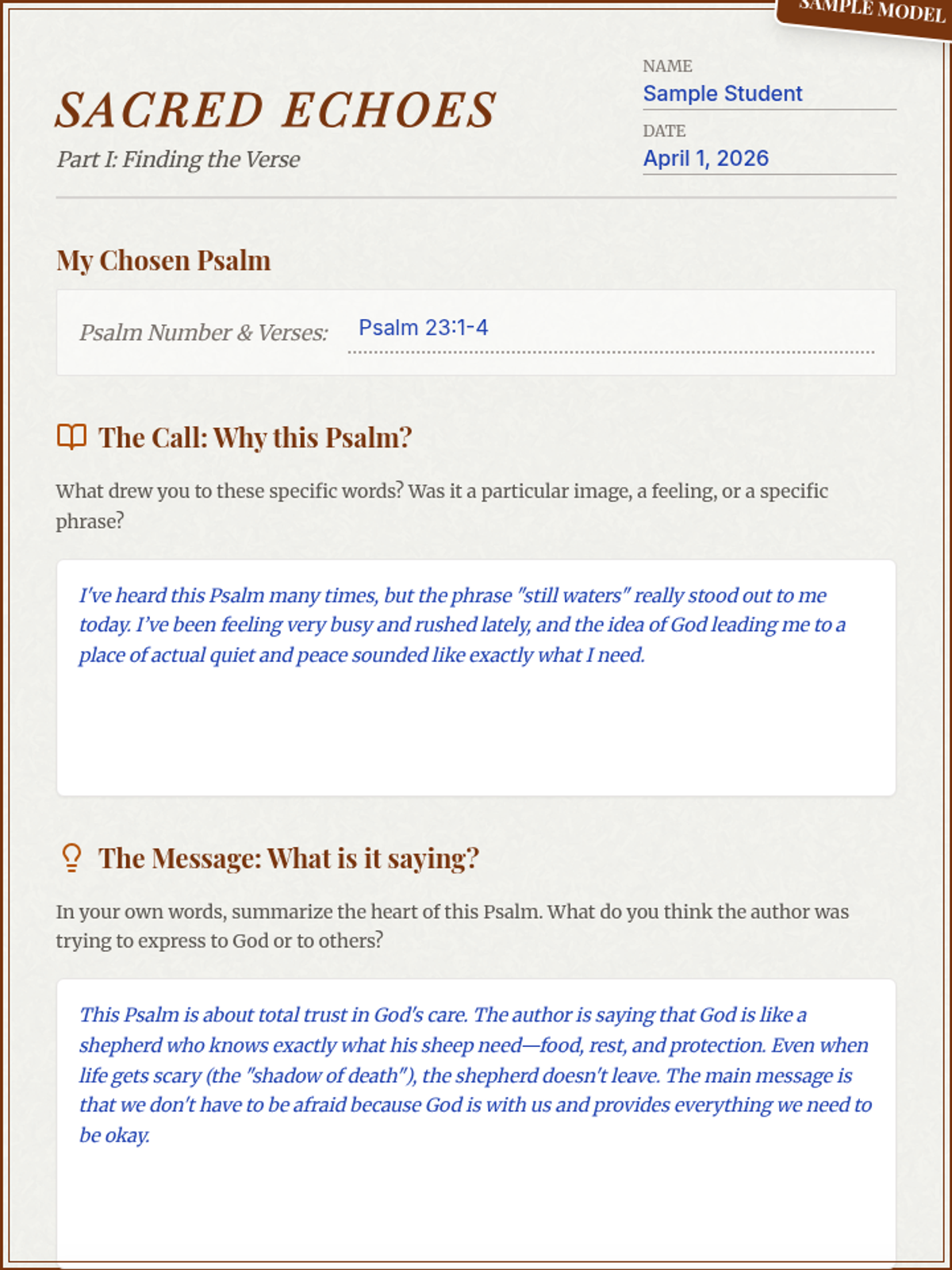
A reflective lesson where students explore the poetic beauty and personal significance of the Psalms, choosing a specific passage to analyze and connect with their own lives.
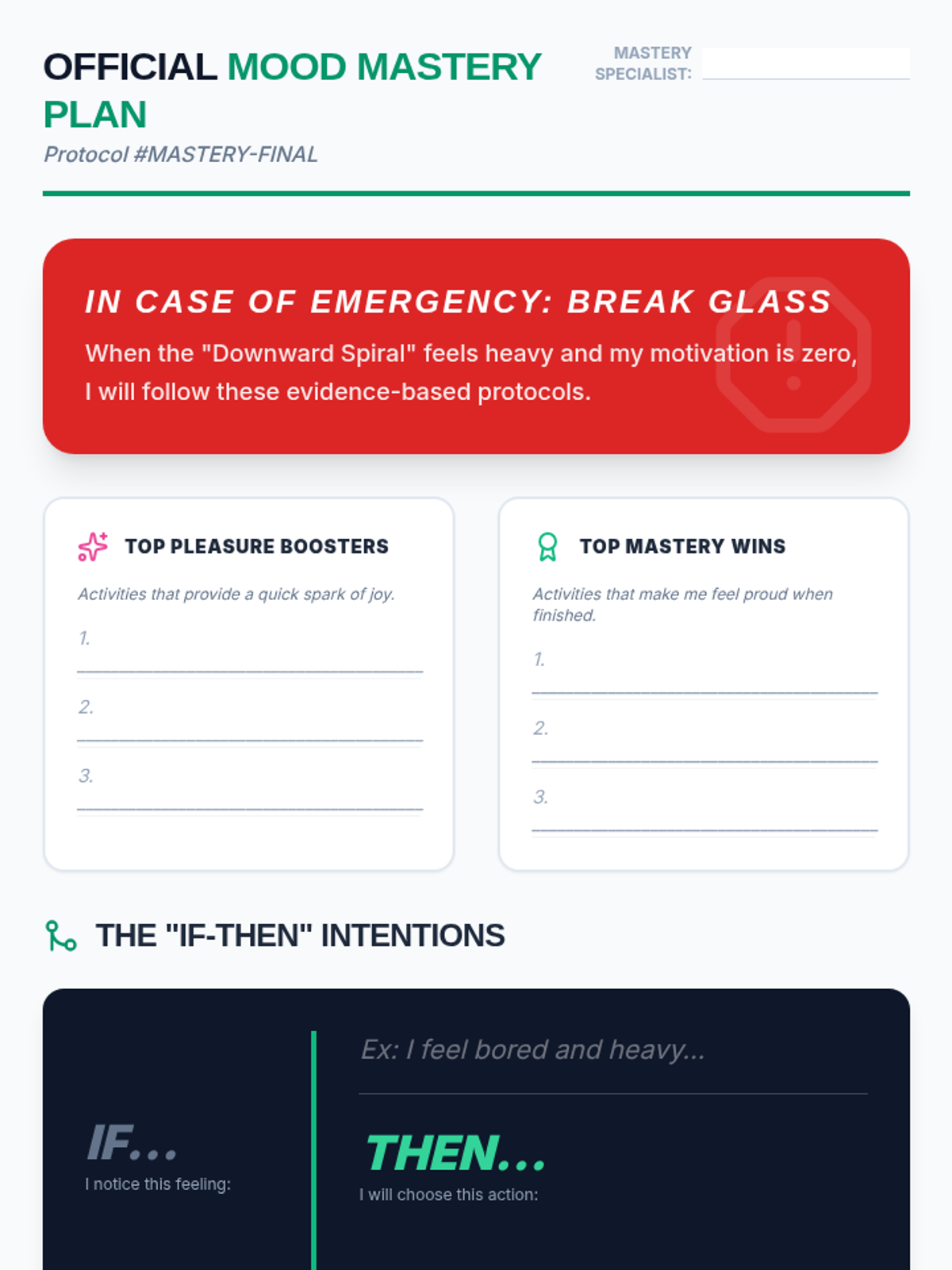
Synthesizing their learning, students create a 'Break the Glass' emergency plan for days when they feel low or anxious. They select their most effective pleasure and mastery activities and write specific implementation intentions (If I feel X, then I will do Y).
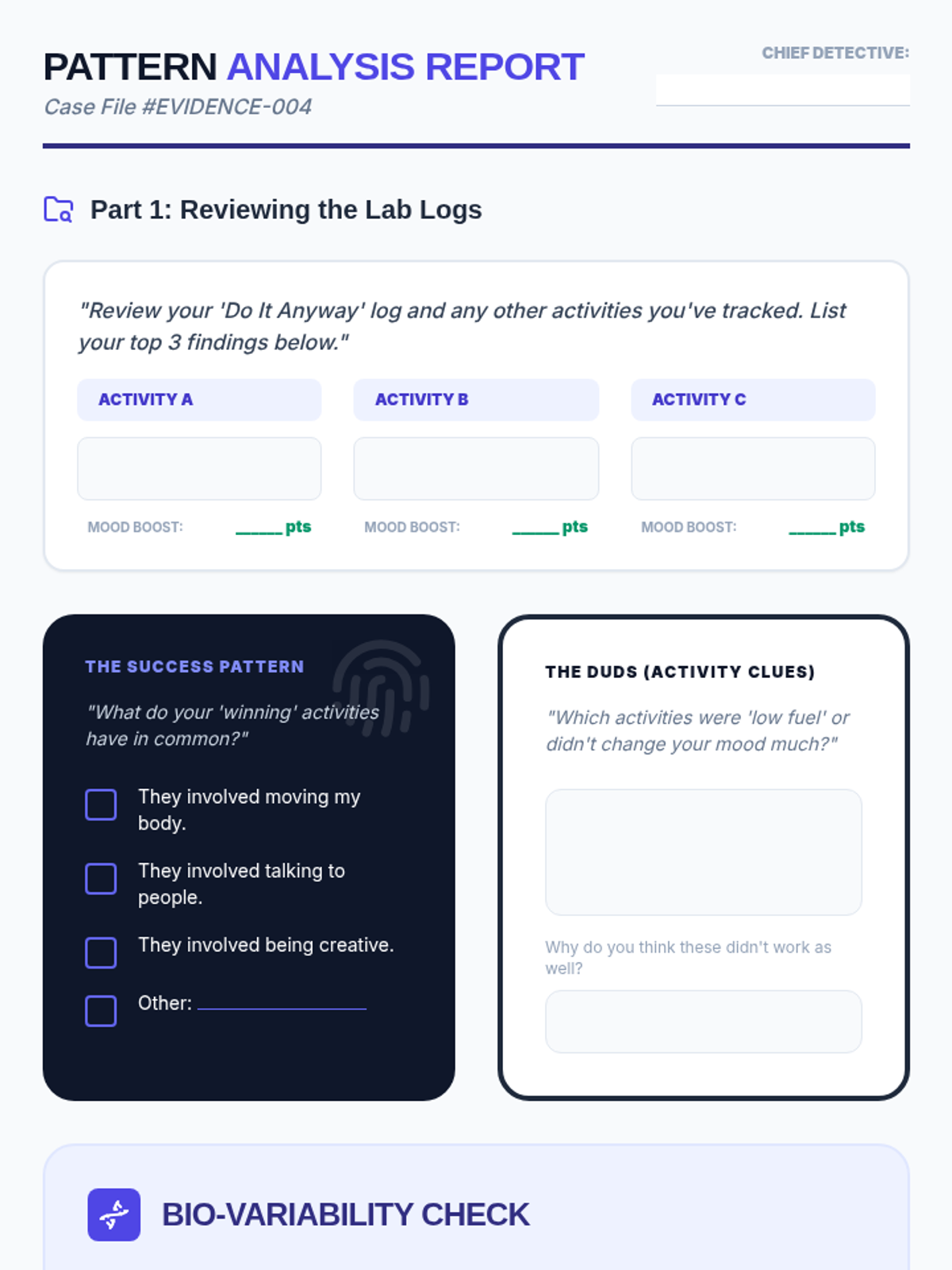
Students review the results of their personal experiments or case study data to identify patterns in how specific activities impact mood. They discuss the variability of results (what works for one person may not work for another) and begin curating their personal 'top hits' for mood improvement.
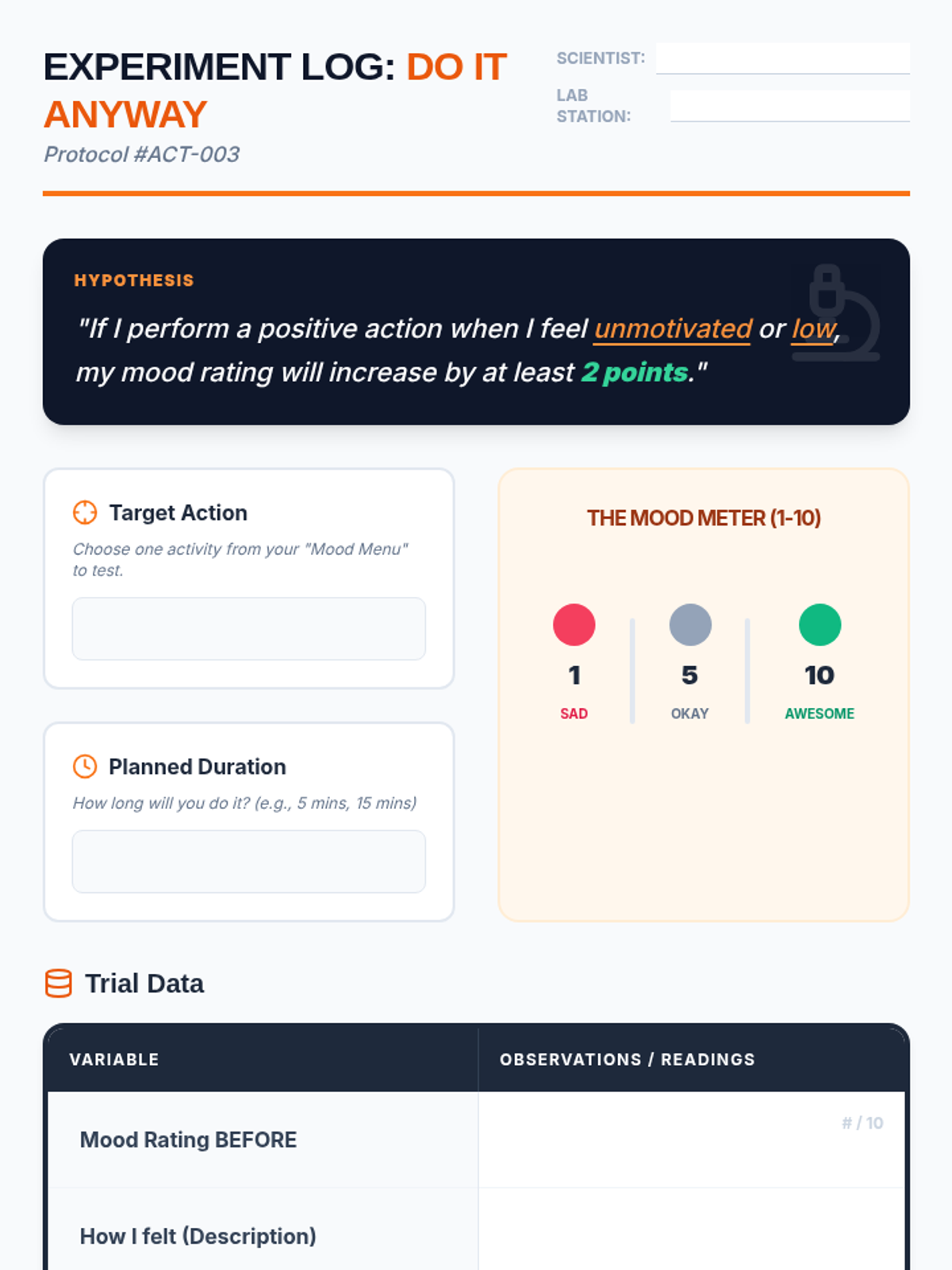
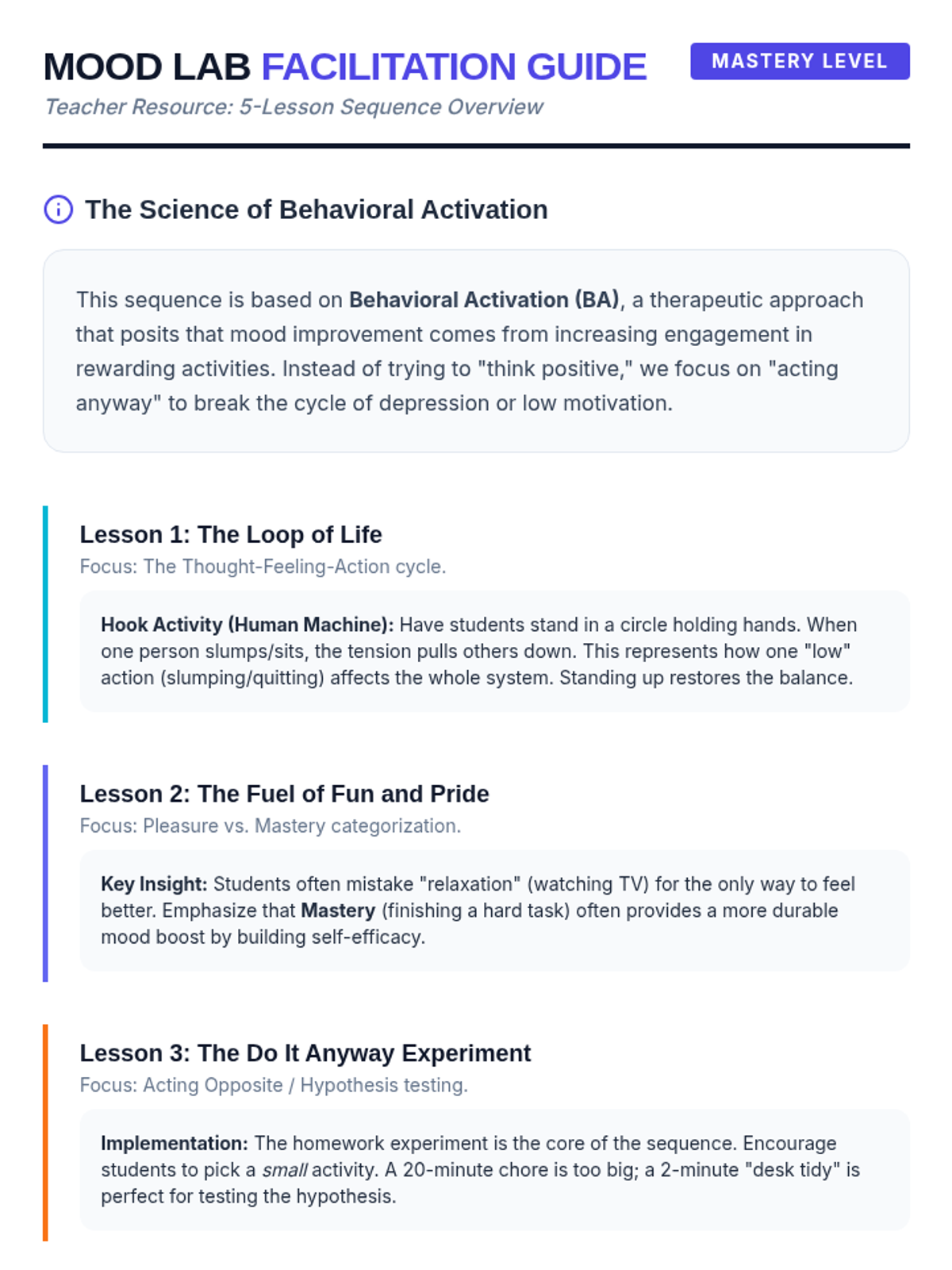
This lesson introduces the concept of 'acting opposite' to an emotion. Students design a short experiment to test the hypothesis that engaging in a positive activity—even when they don't feel like it—can improve their mood rating on a 1-10 scale. They prepare a data collection sheet for a homework experiment.
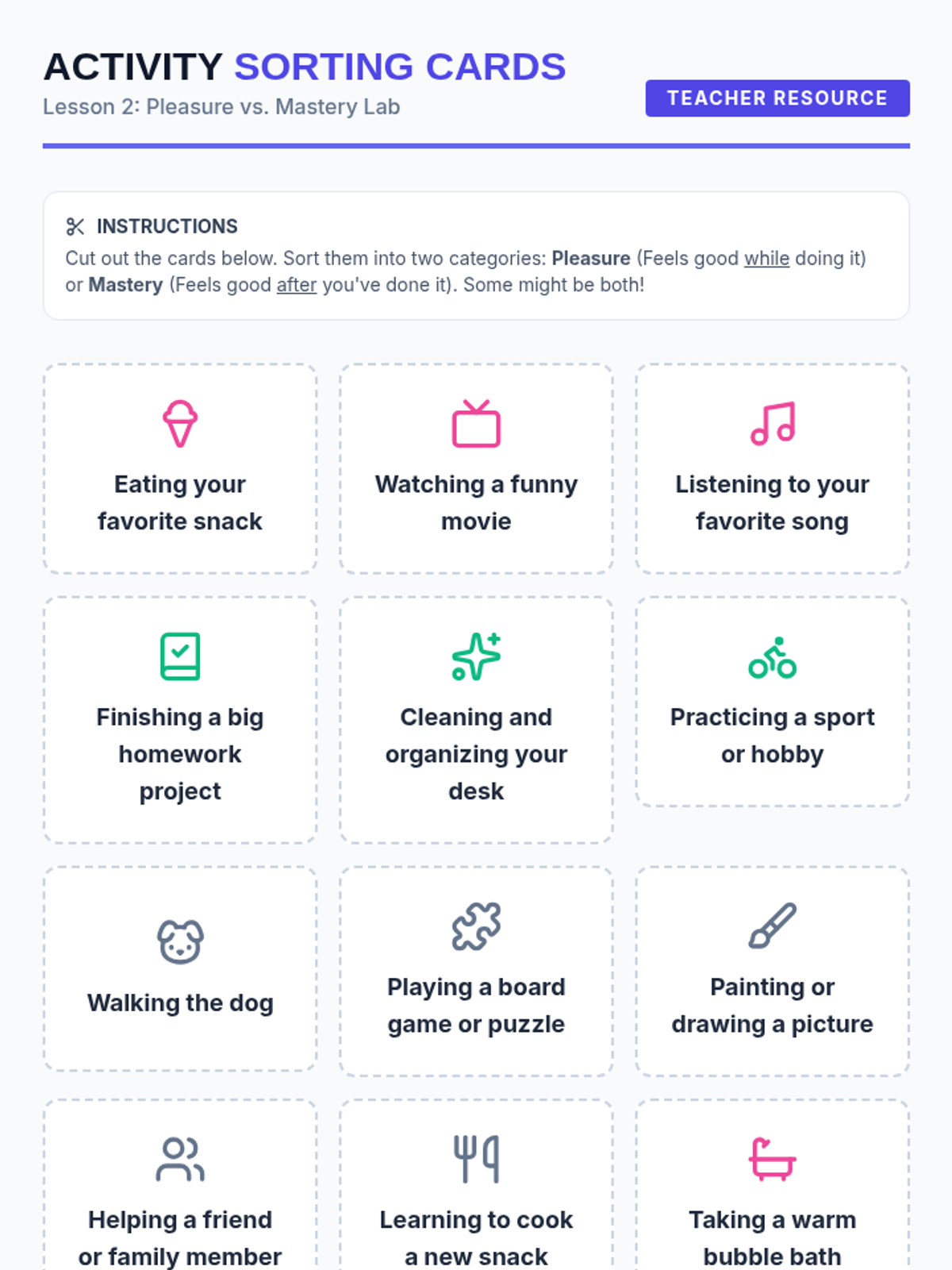
Students distinguish between activities that feel good in the moment (Pleasure) and those that make us feel accomplished (Mastery). Through a sorting workshop, they brainstorm examples for both categories, understanding that a balanced diet of experiences includes both fun and achievement.
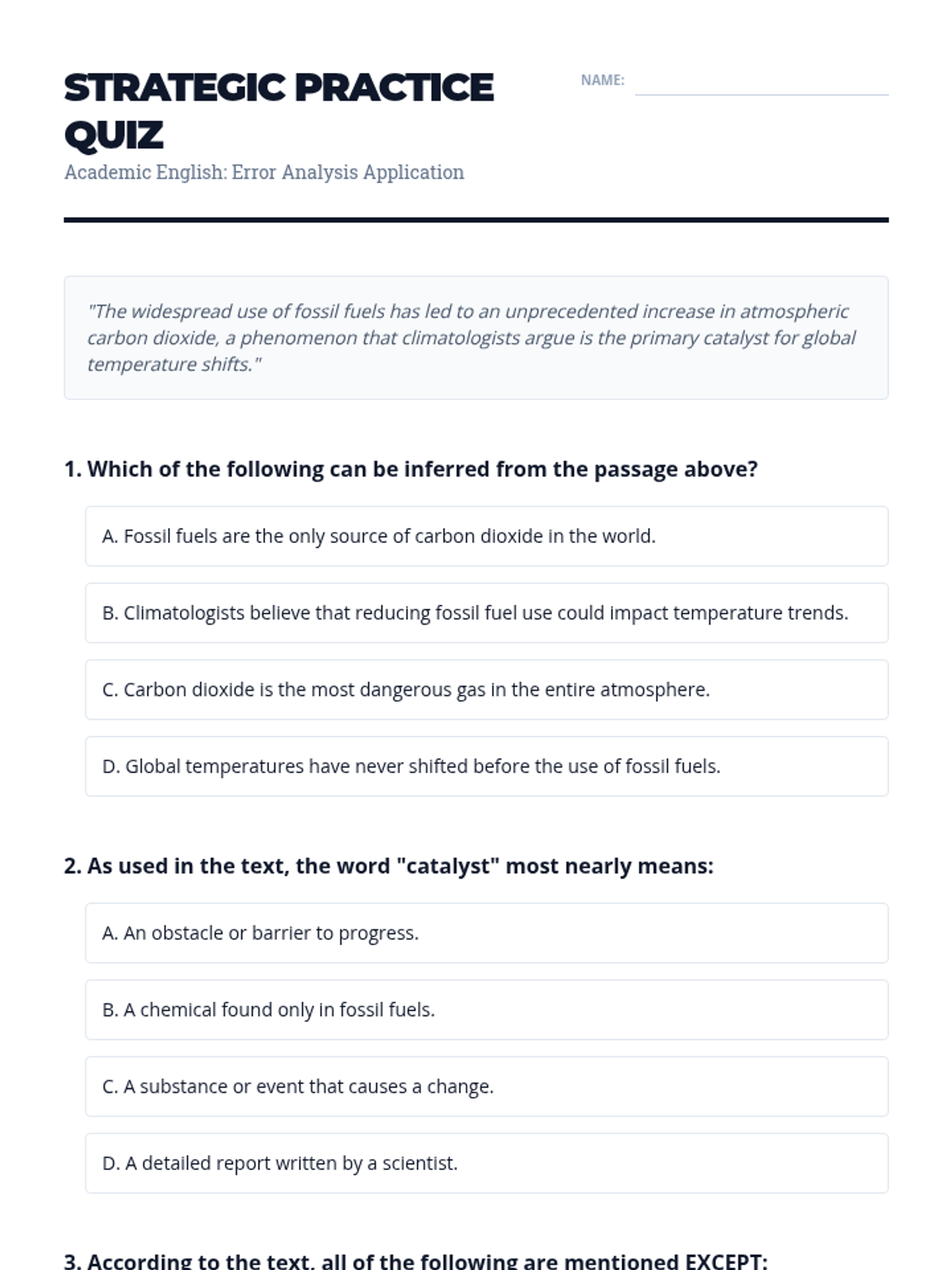
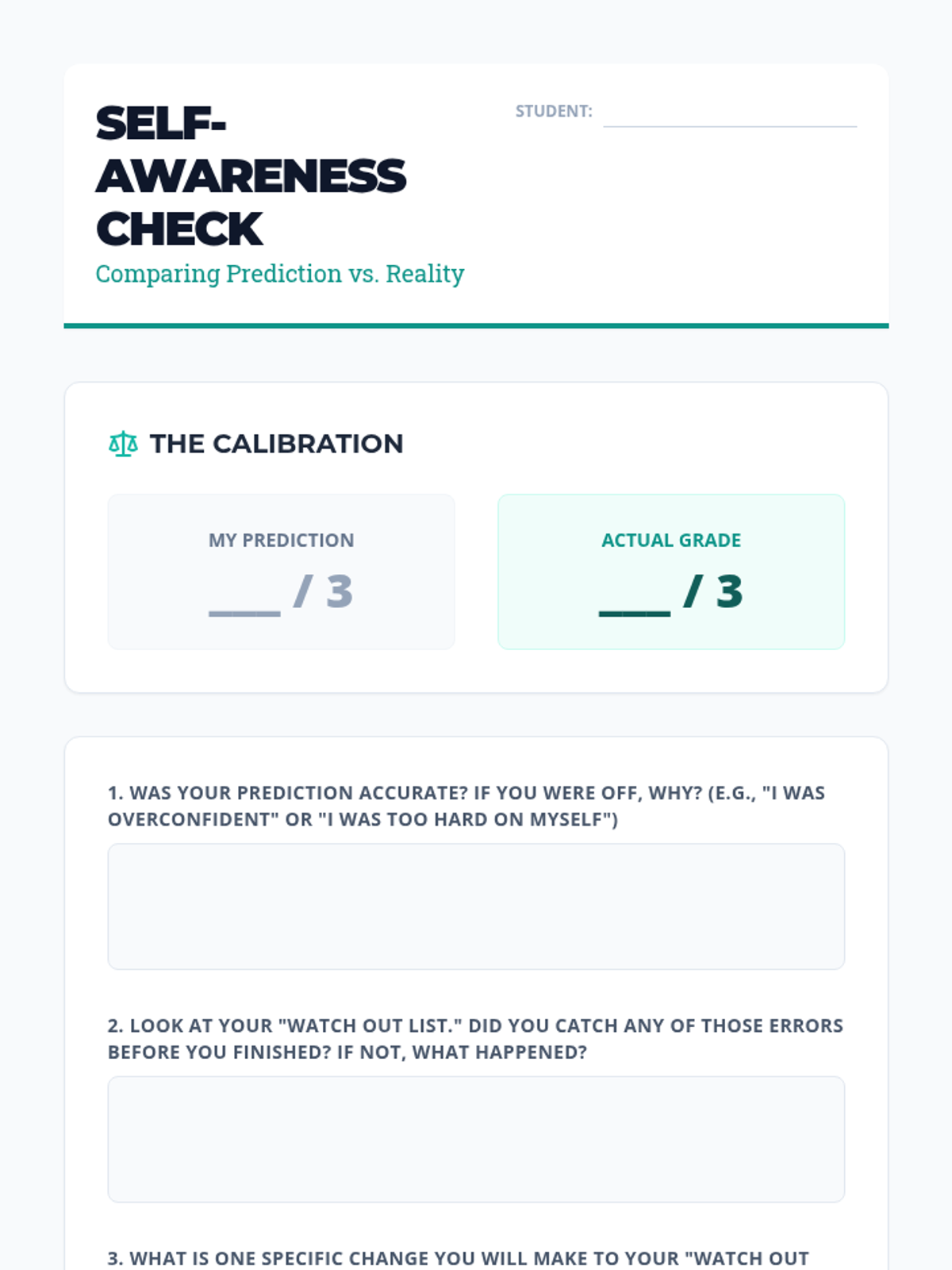
Students take a short assessment and immediately apply their error analysis protocol. They verify if their 'Watch Out' list helped them avoid previous habitual mistakes.
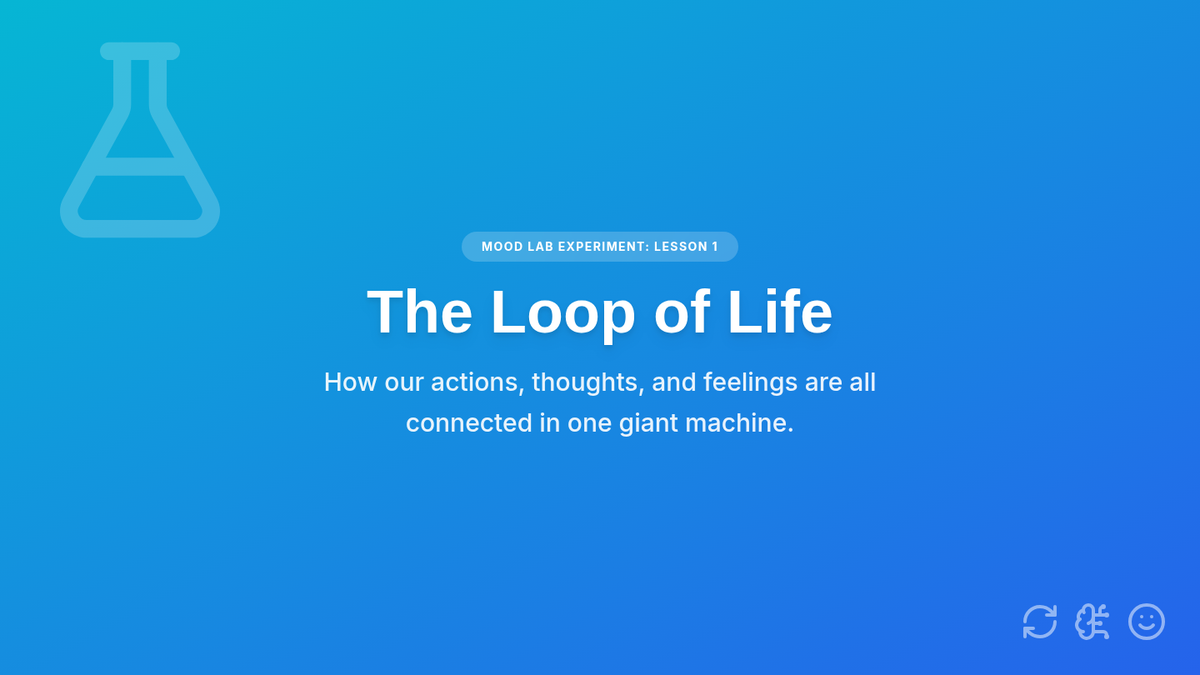
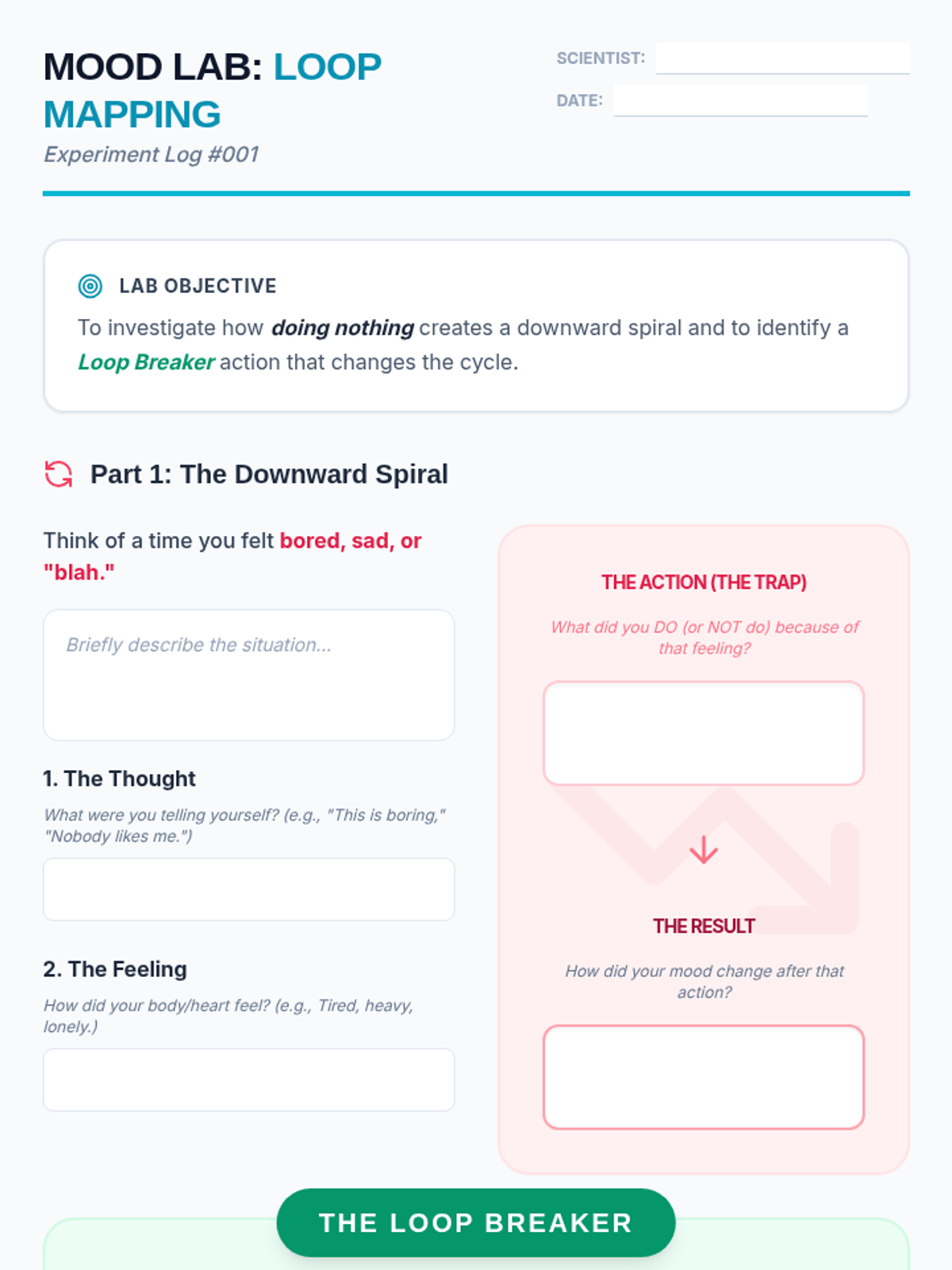
Students participate in a discussion and mapping activity to visualize the cycle between thoughts, feelings, and behaviors. They identify how doing nothing often leads to feeling worse (the downward spiral) and how small actions can reverse this.
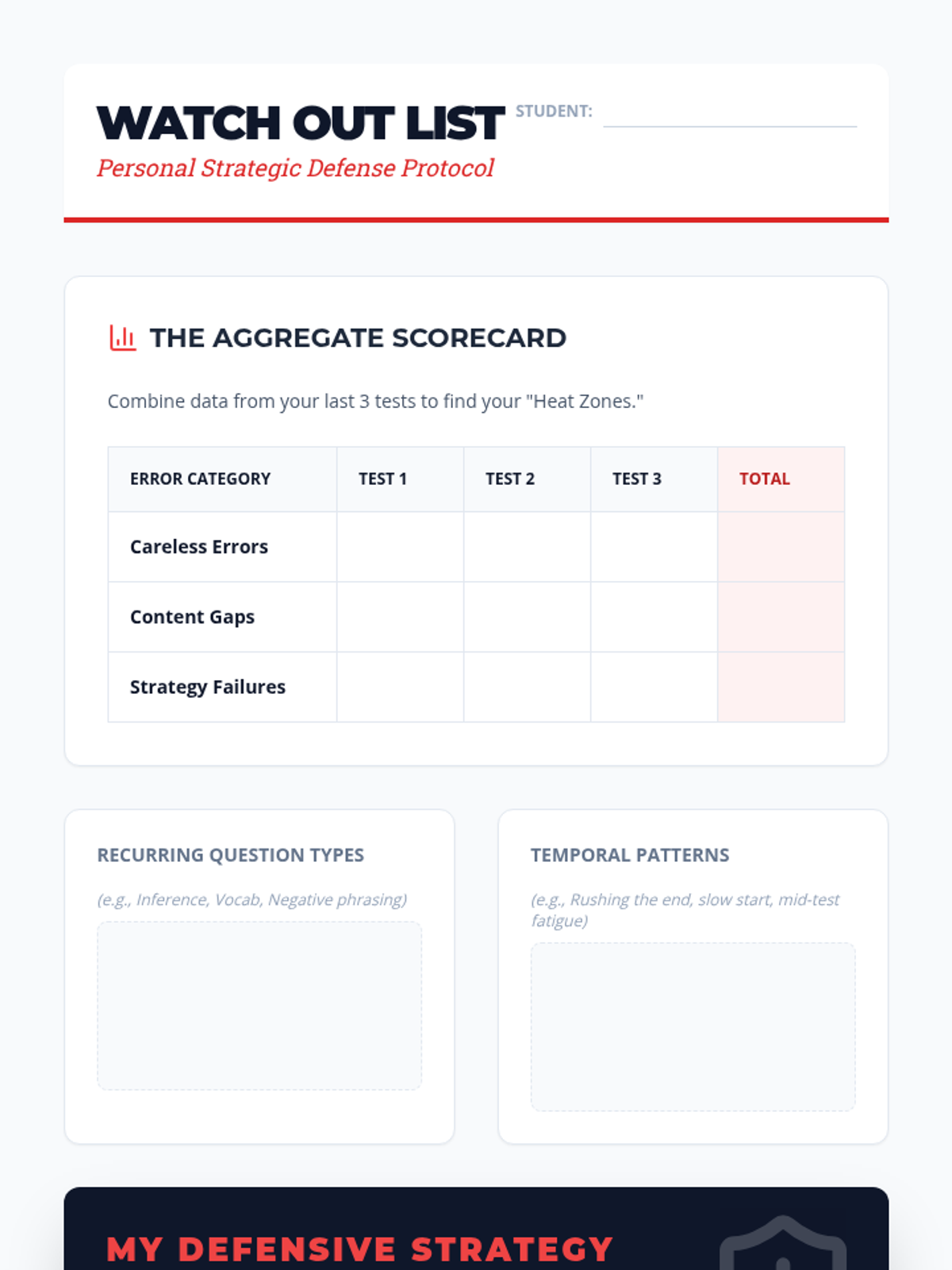
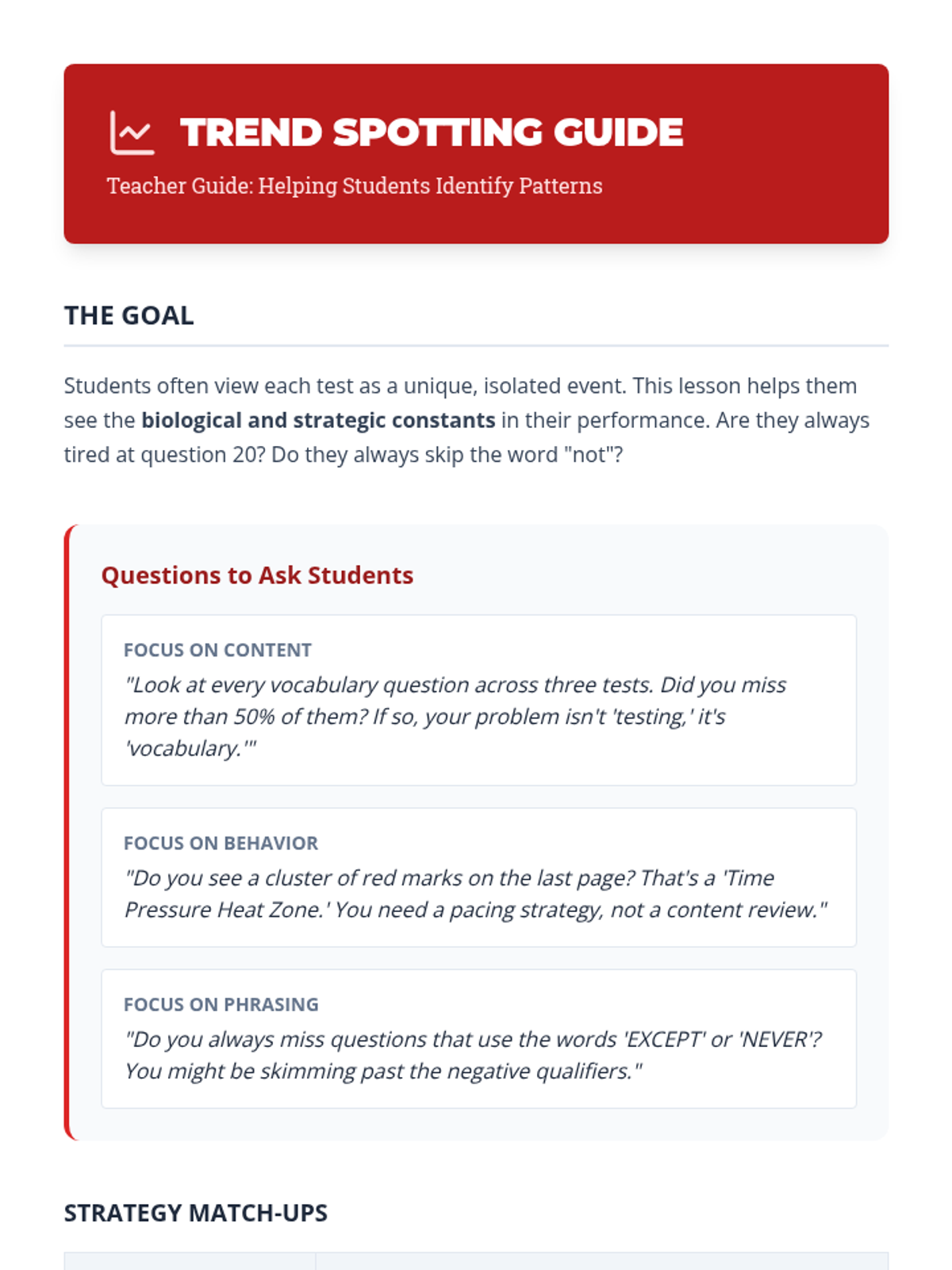
Students aggregate their error data to find personal patterns (e.g., 'I always miss inference questions' or 'I rush the last 5 minutes'). They create a personal 'Watch Out' list for future exams.
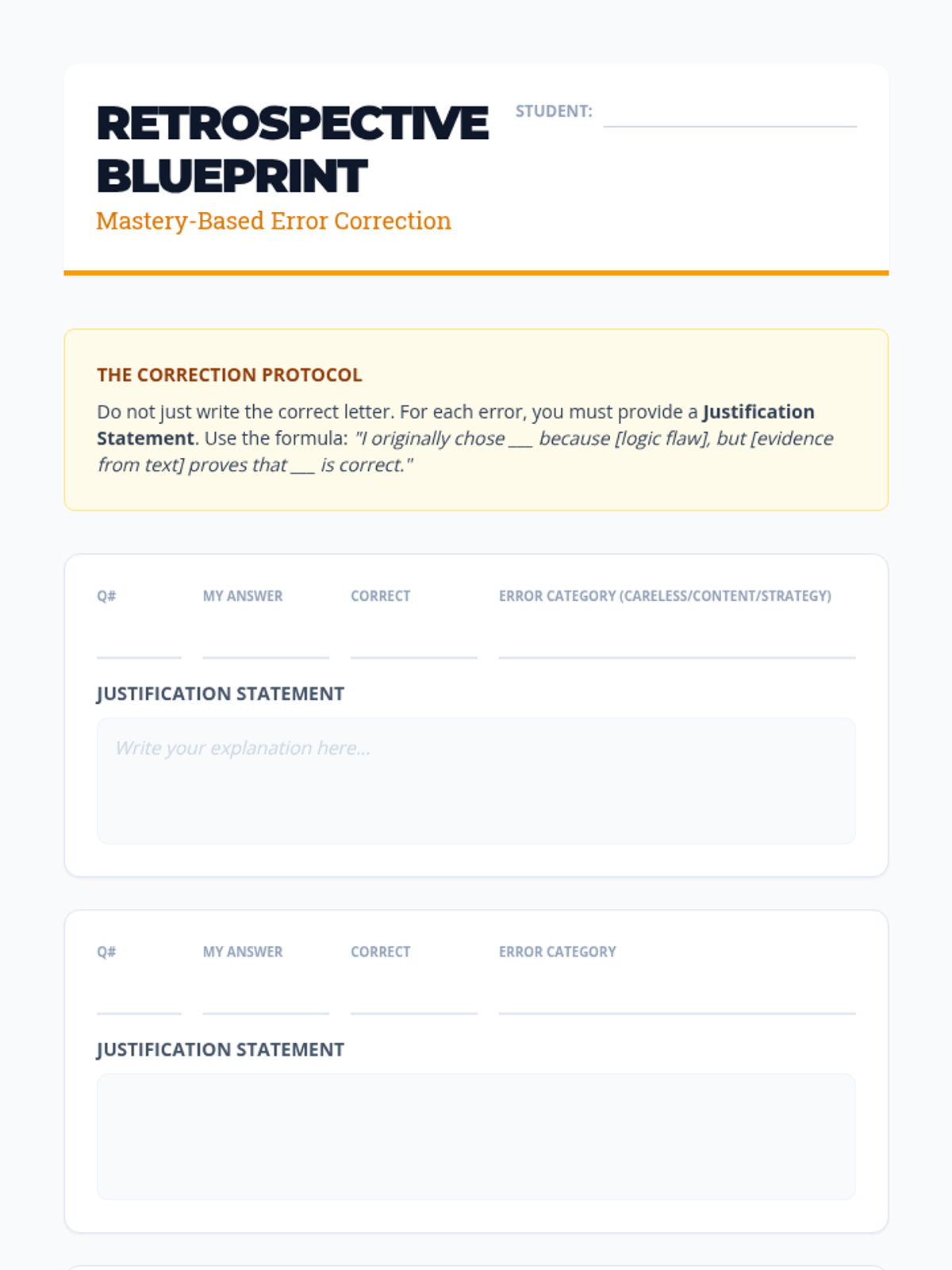
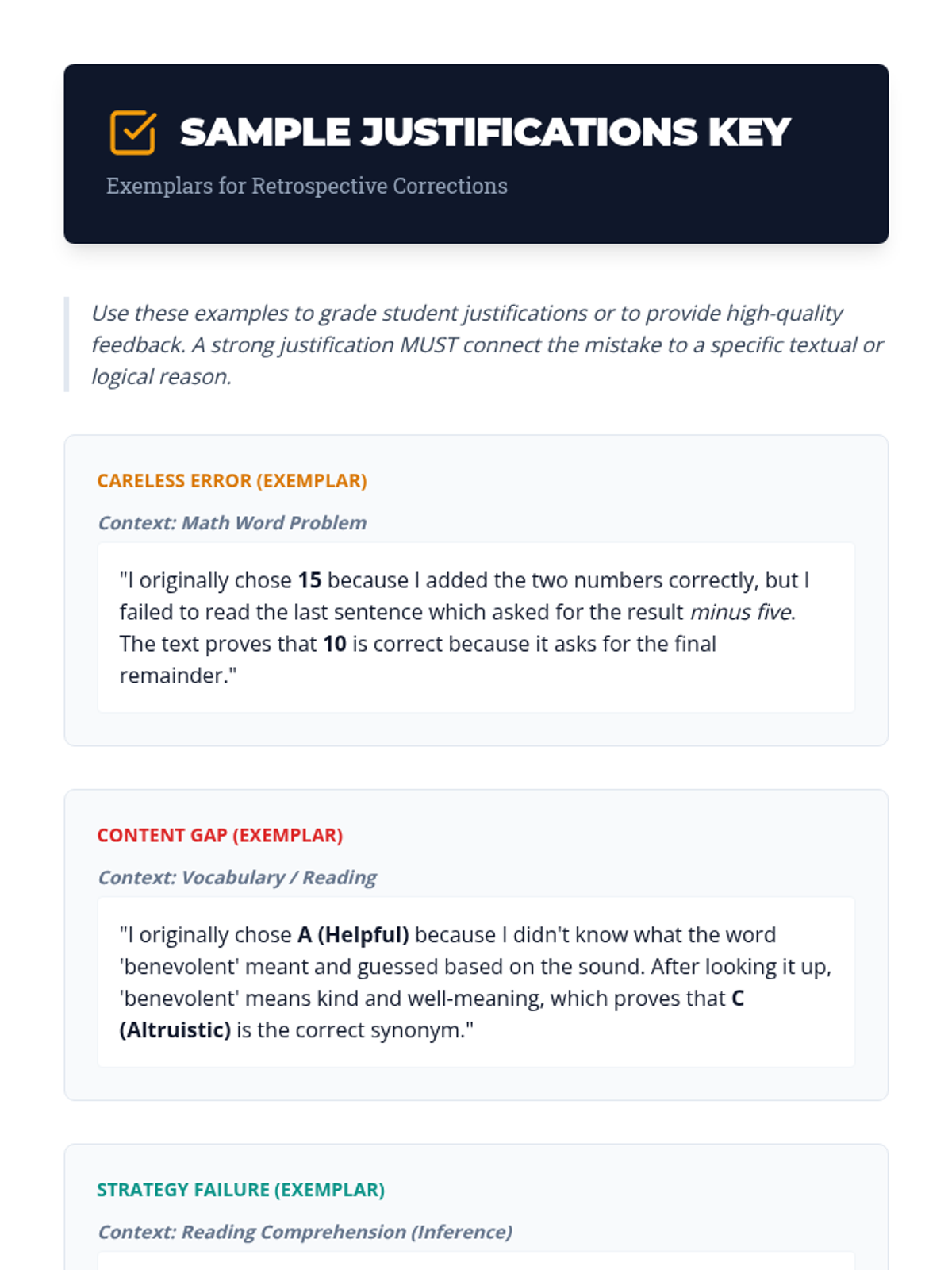
Instead of just marking correct answers, students must write a sentence explaining *why* their original answer was wrong and *why* the new answer is right. This ensures deep processing of the error.
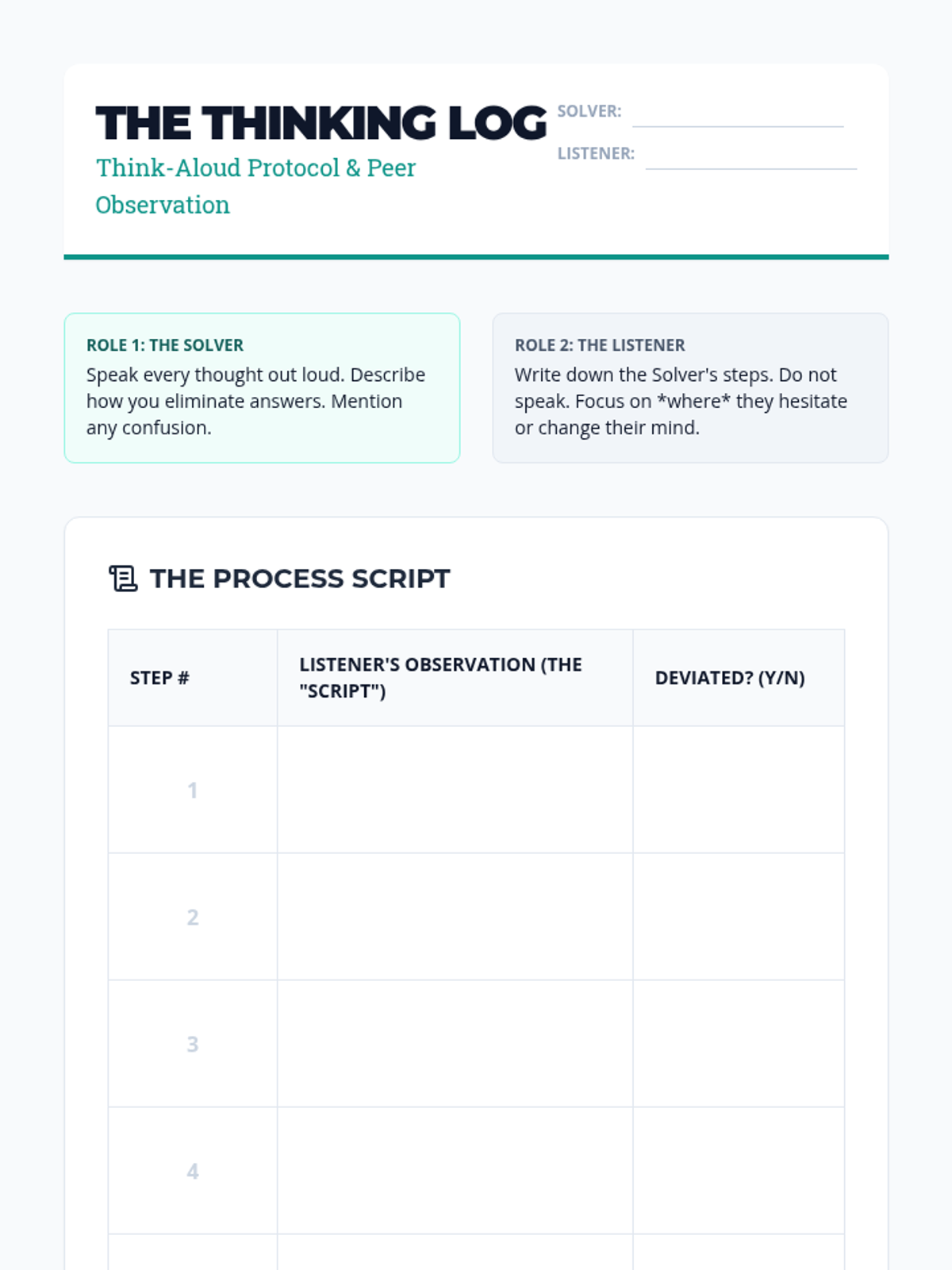
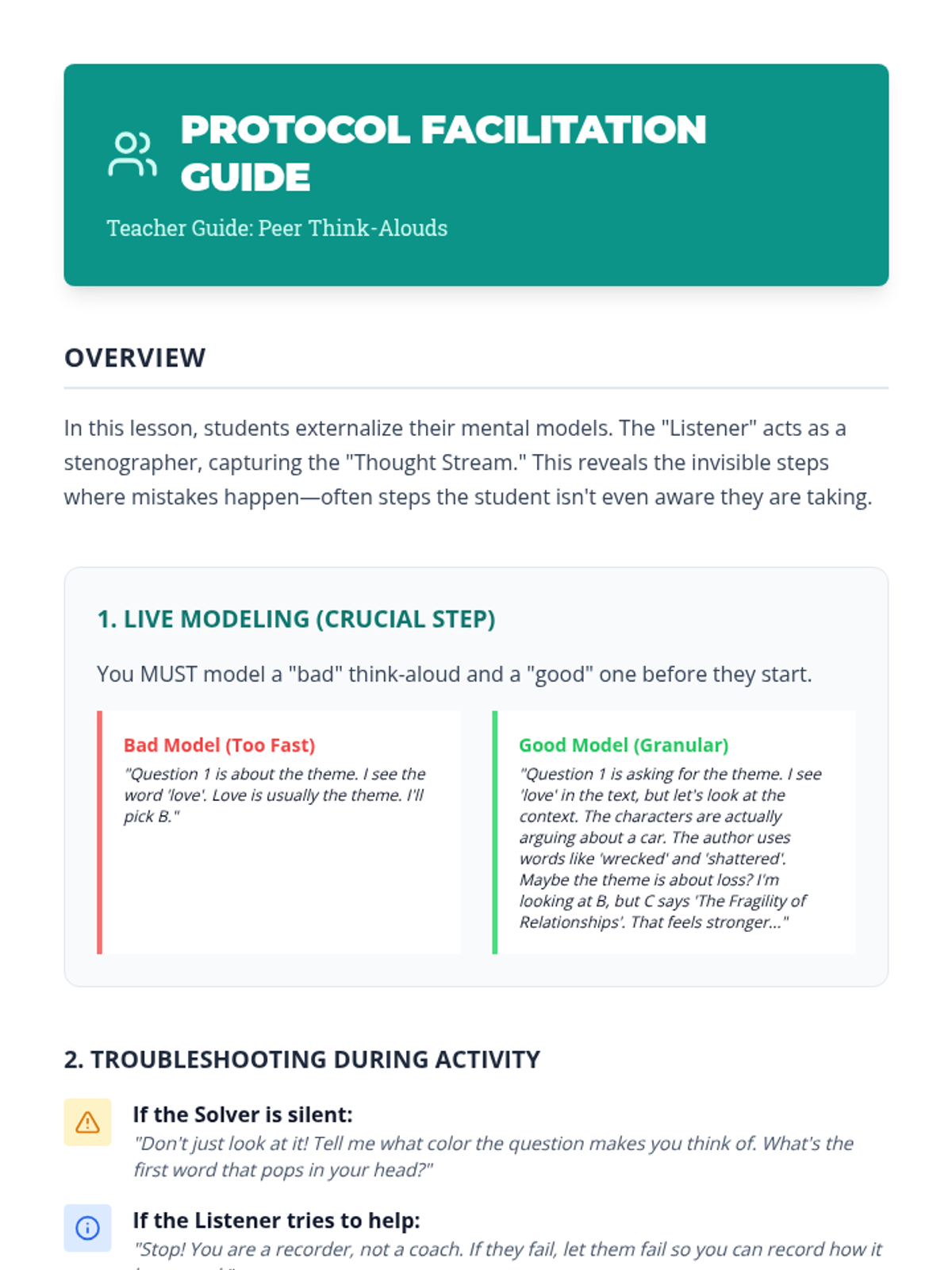
Working in pairs, students vocalize their thinking process while solving a problem while a partner records their steps. They analyze these recordings to identify where their logic deviated from the correct path.
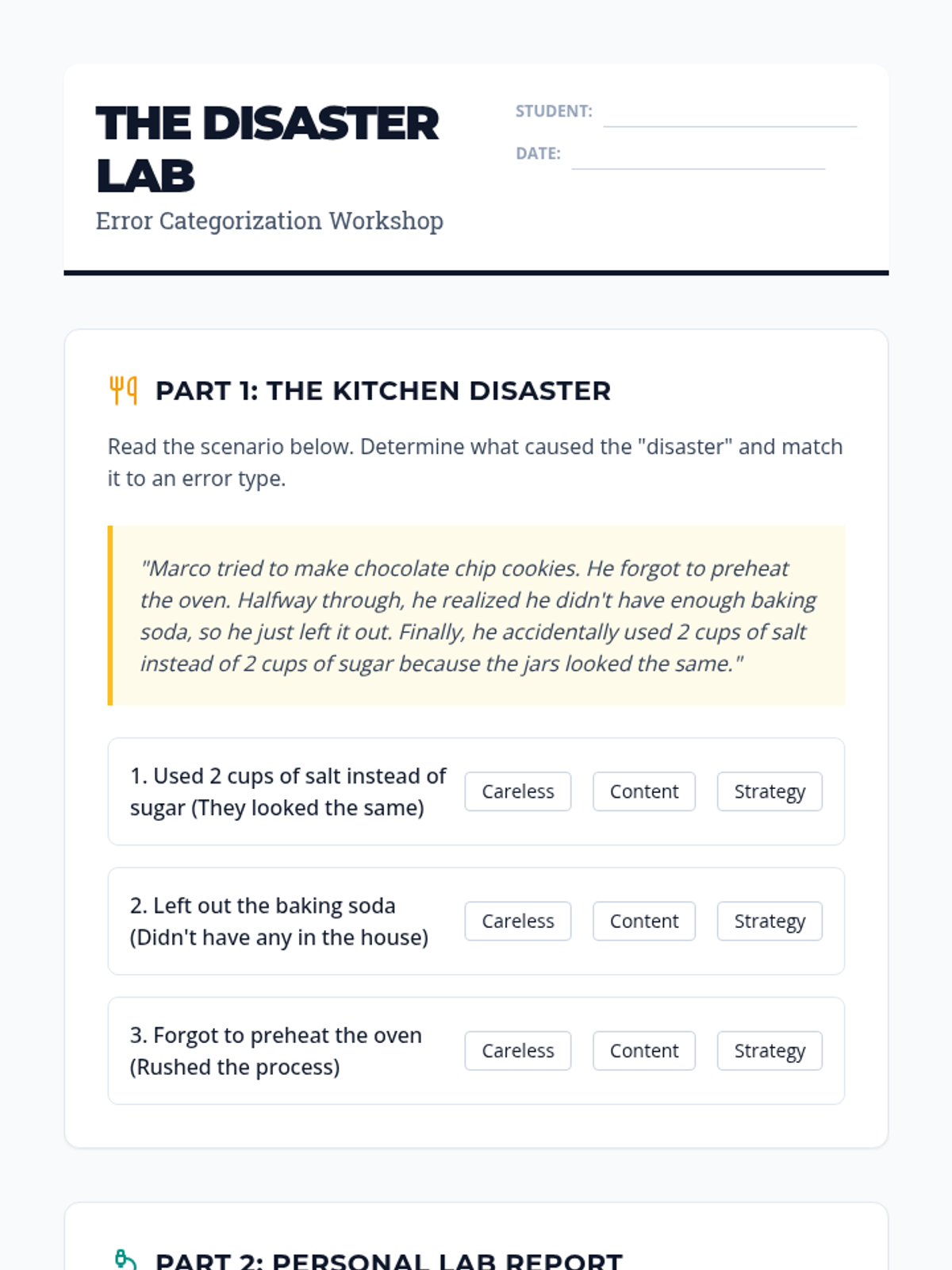
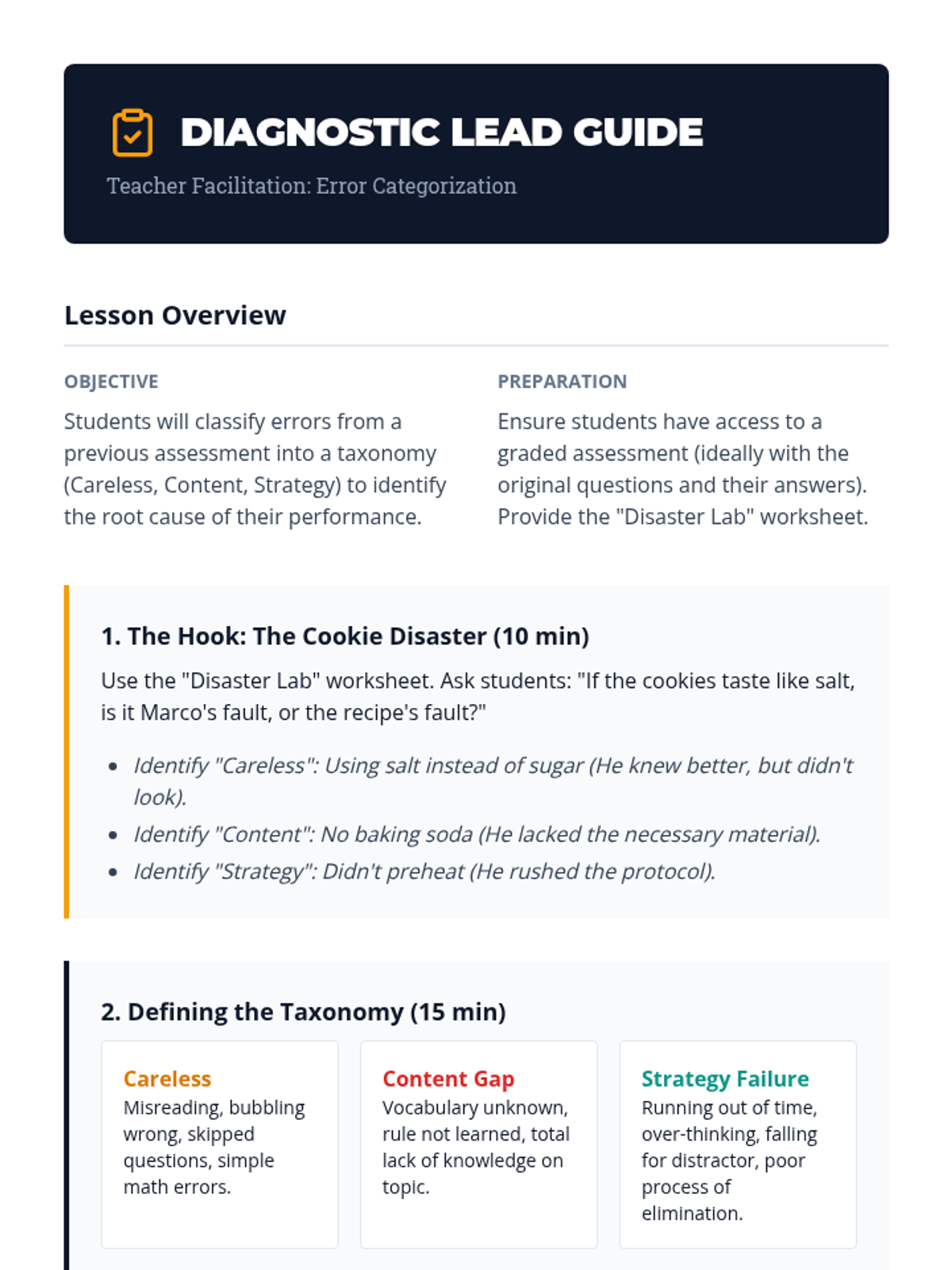
Students review a past assessment and categorize every incorrect answer as a 'Careless Error,' 'Content Gap,' or 'Strategy Failure.' This taxonomy helps them understand that not all mistakes are created equal.
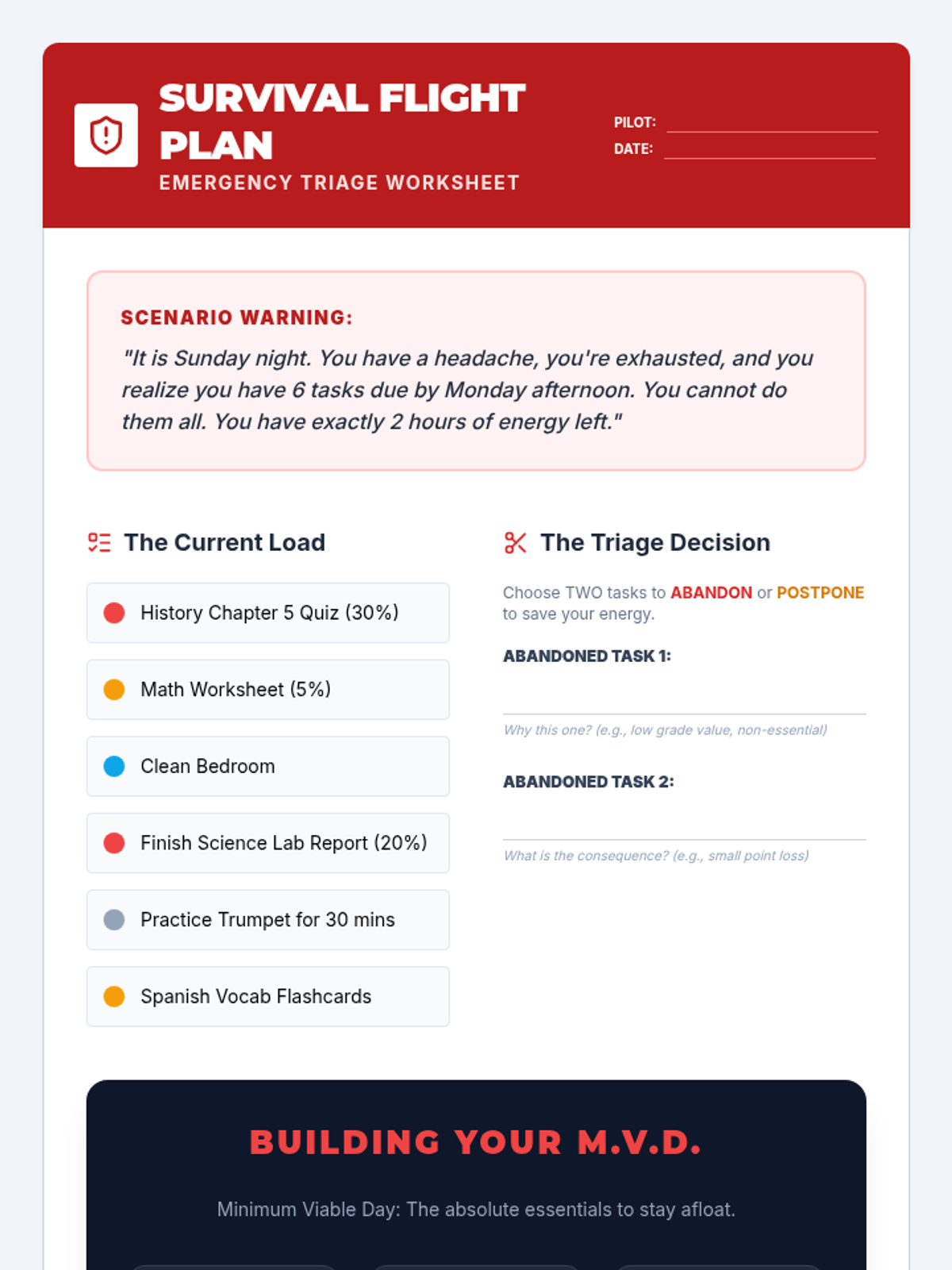
Students develop emergency 'triage' strategies and create a 'Minimum Viable Day' plan for maintaining performance during periods of high stress or illness.
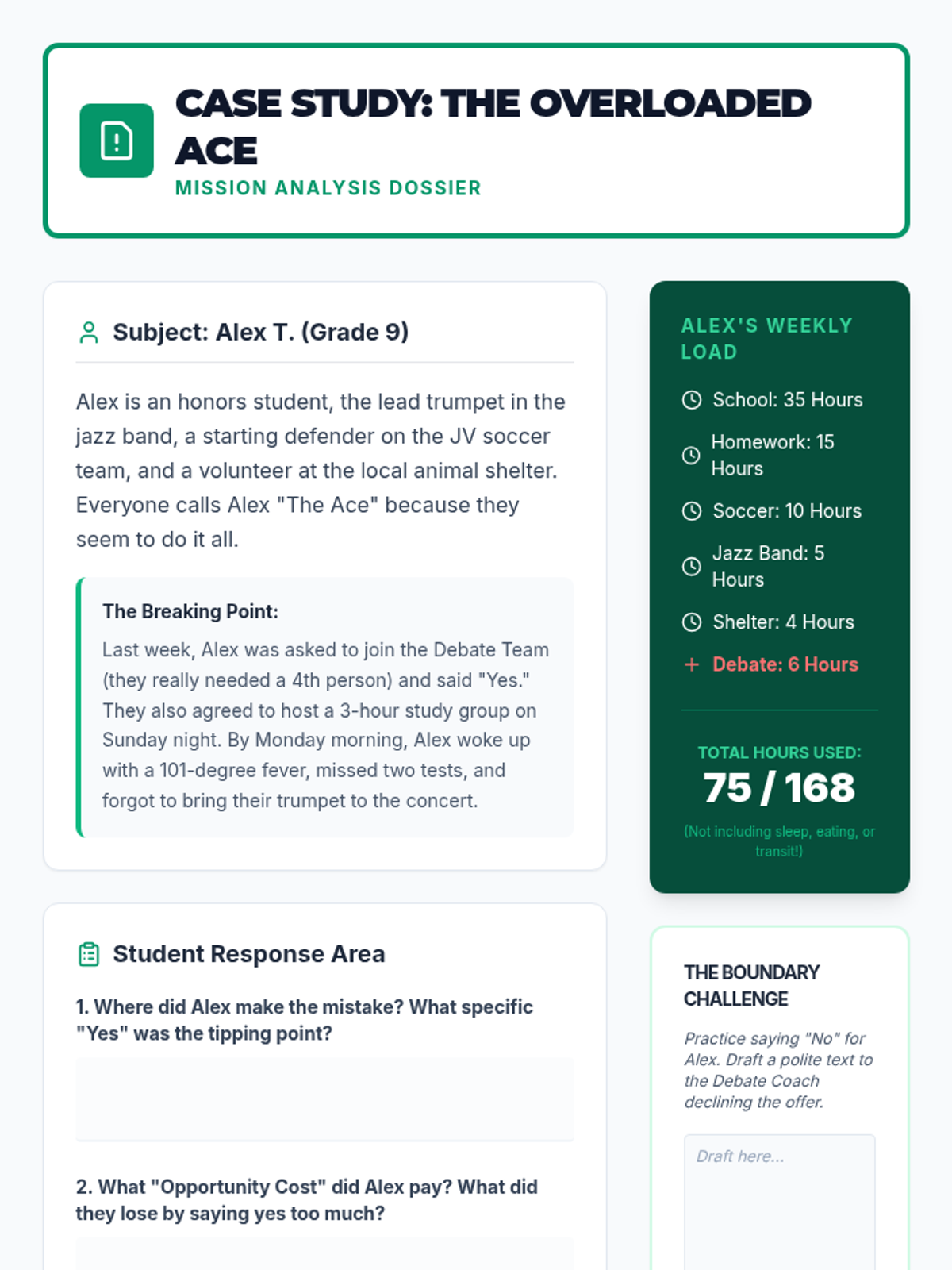
Students explore the concept of opportunity cost and practice strategies for politely but firmly declining optional commitments.
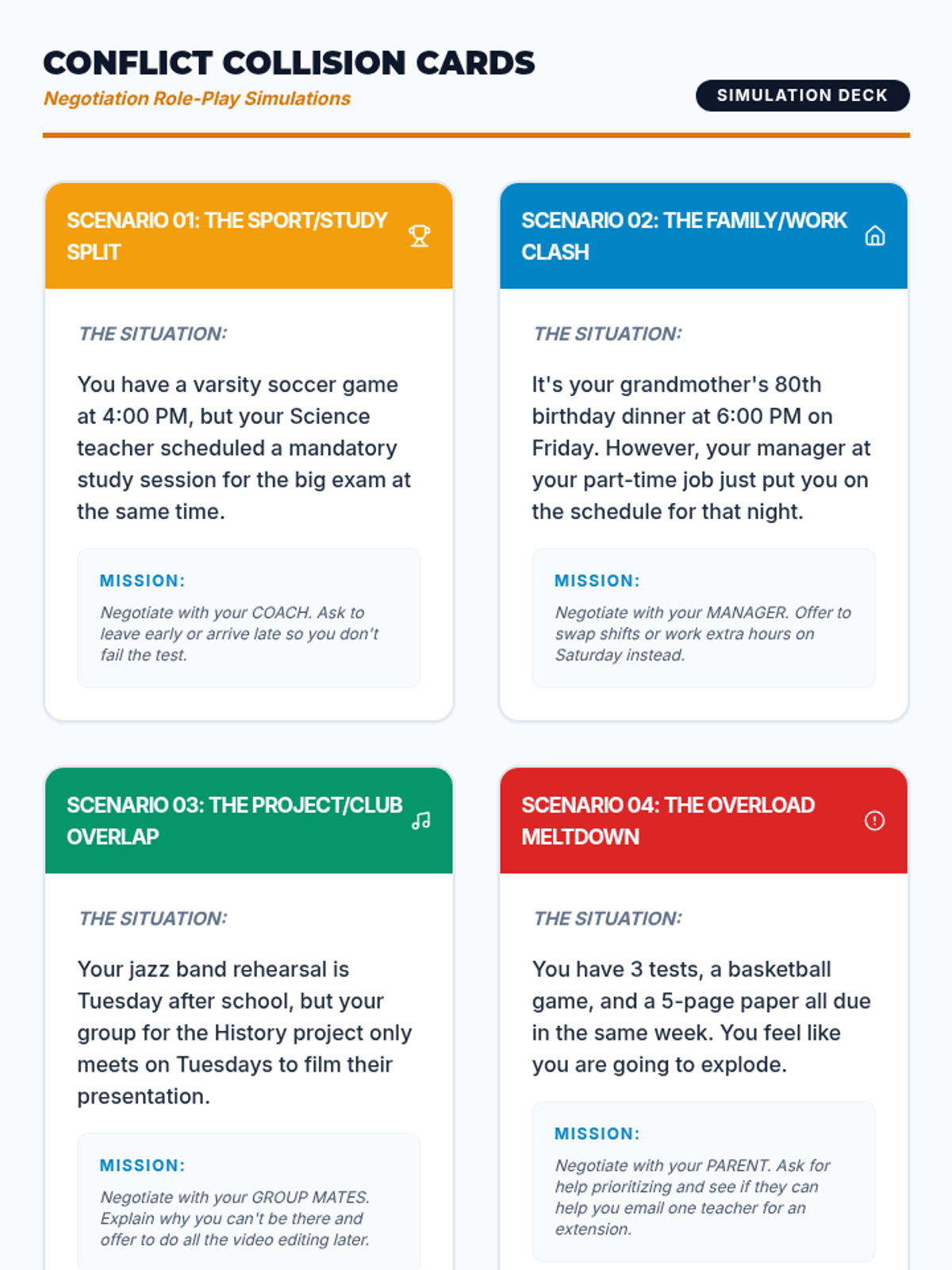
Through role-play and simulation, students practice face-to-face negotiations to resolve scheduling conflicts between multiple commitments.
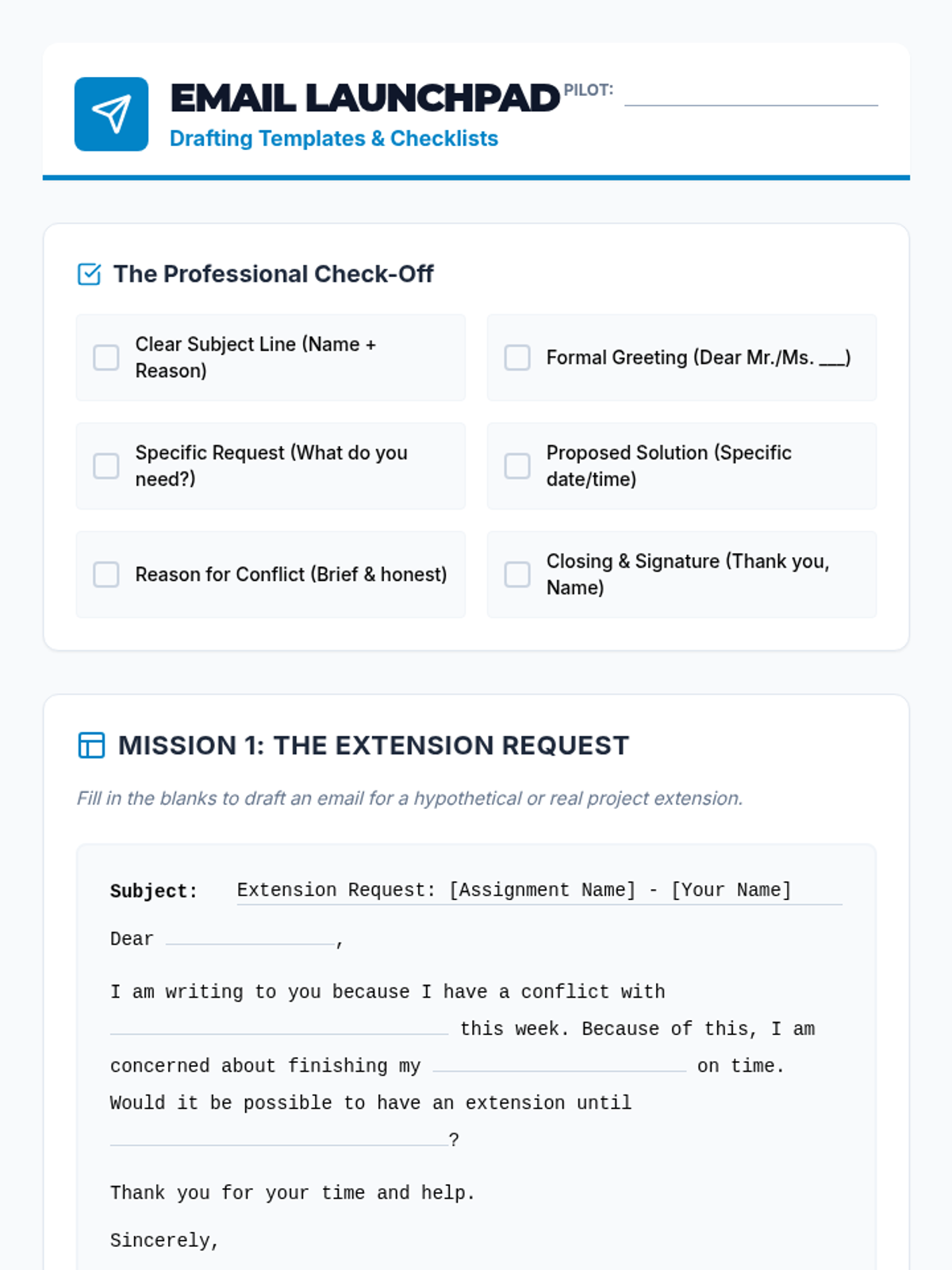
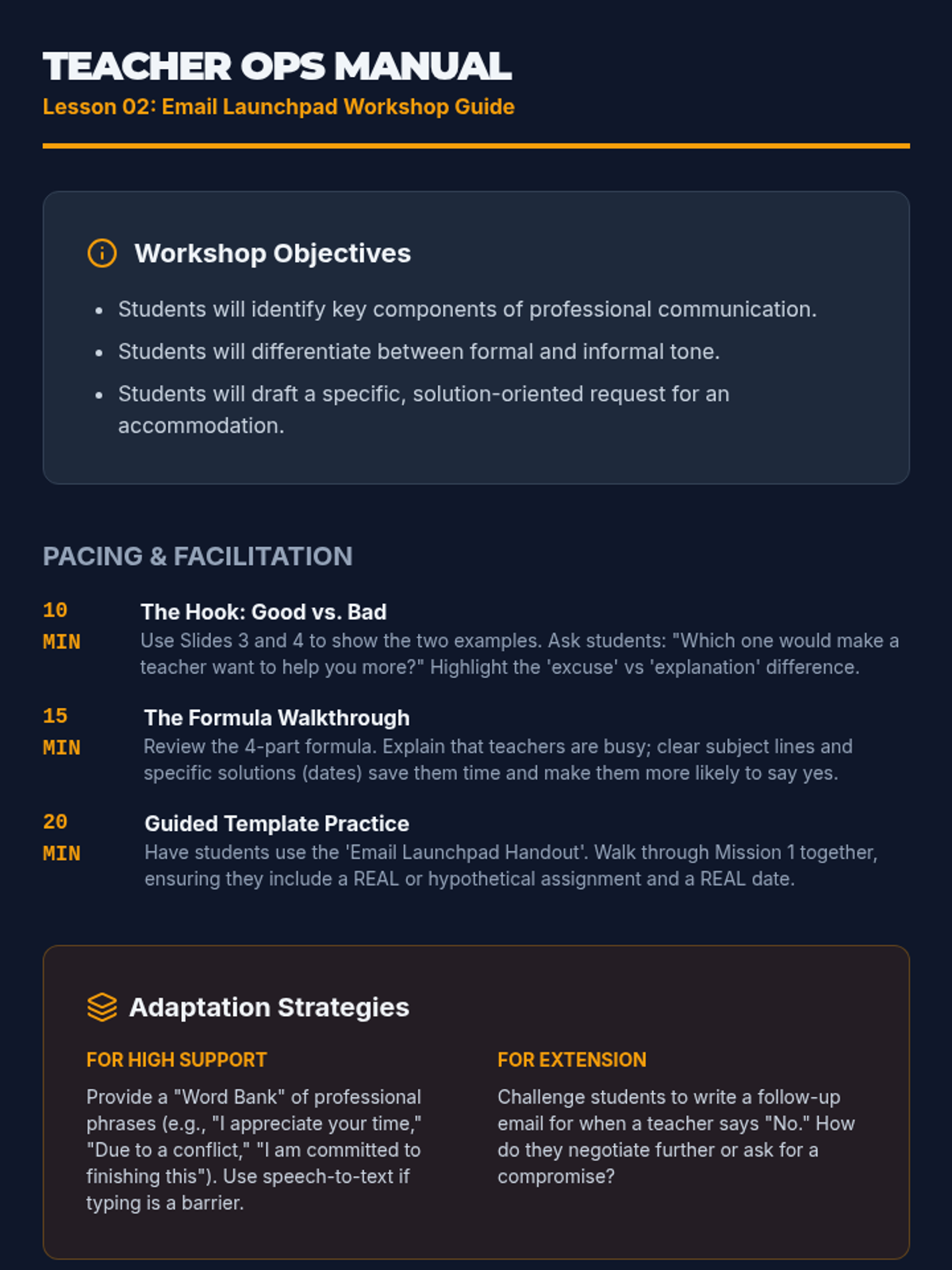
Students master the art of professional email communication, learning to draft responsible and clear requests for extensions or accommodations.
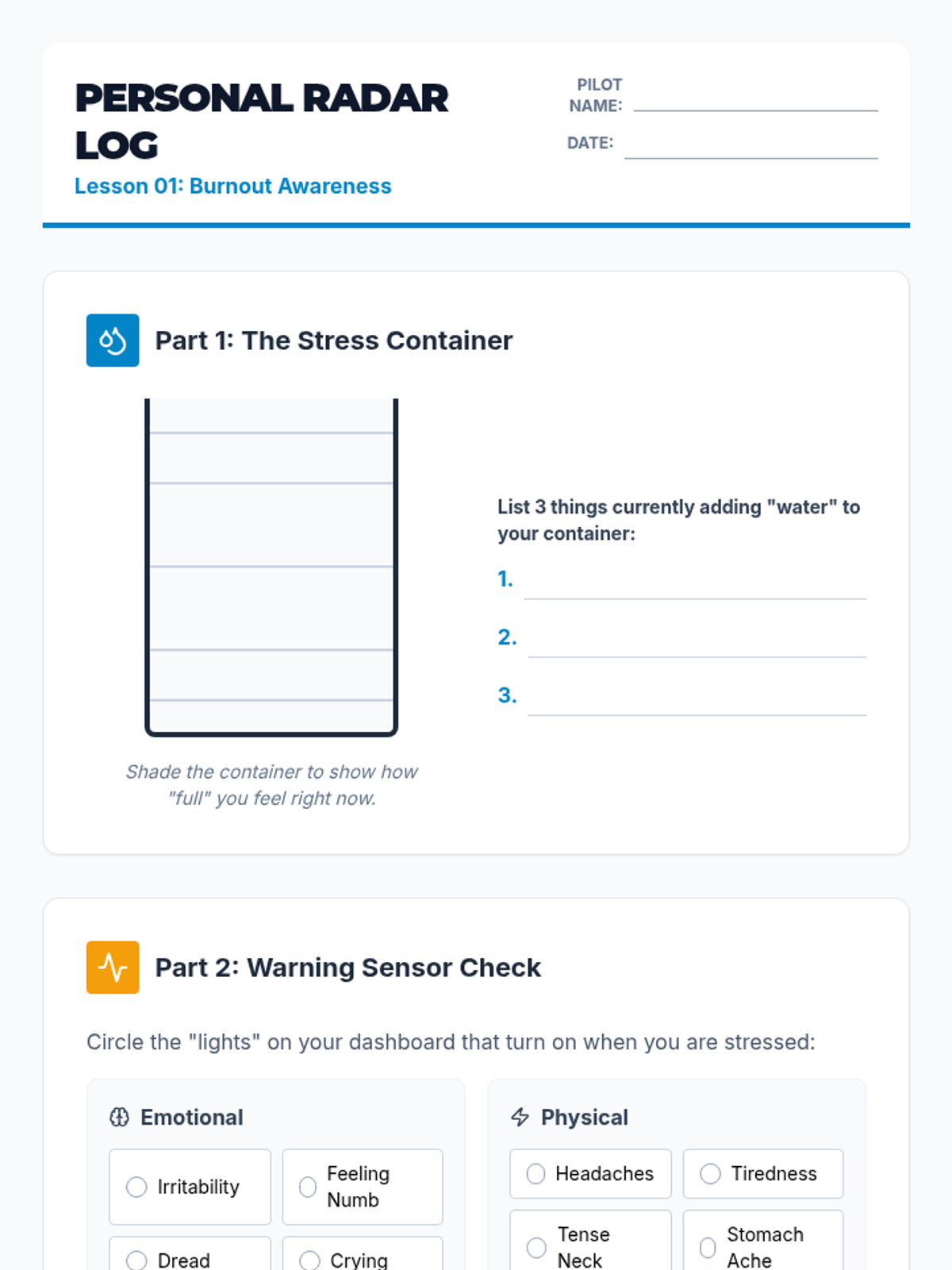
Students identify physical and emotional signs of burnout and use the 'Stress Container' visualization to understand their personal capacity and tipping points.
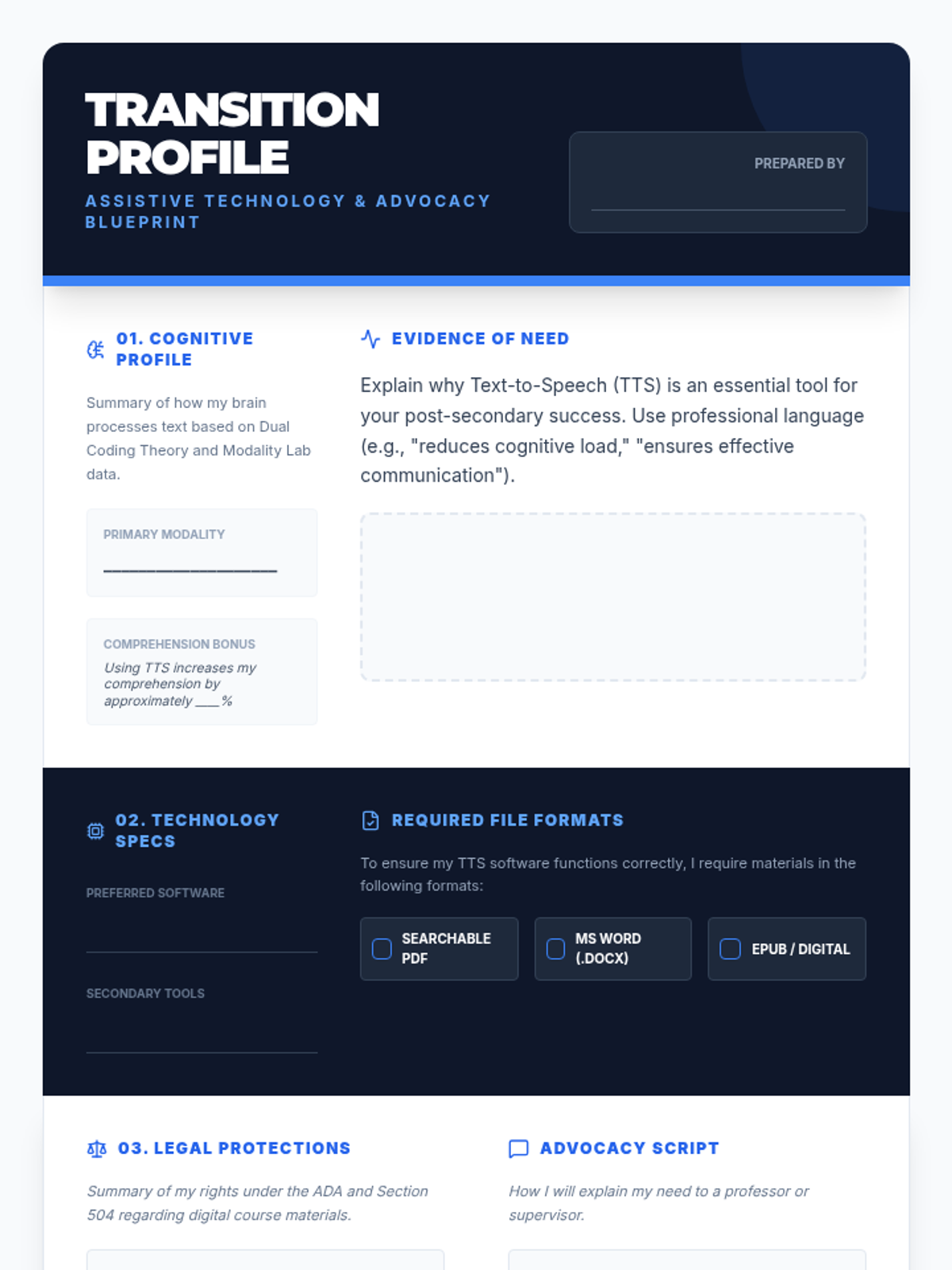
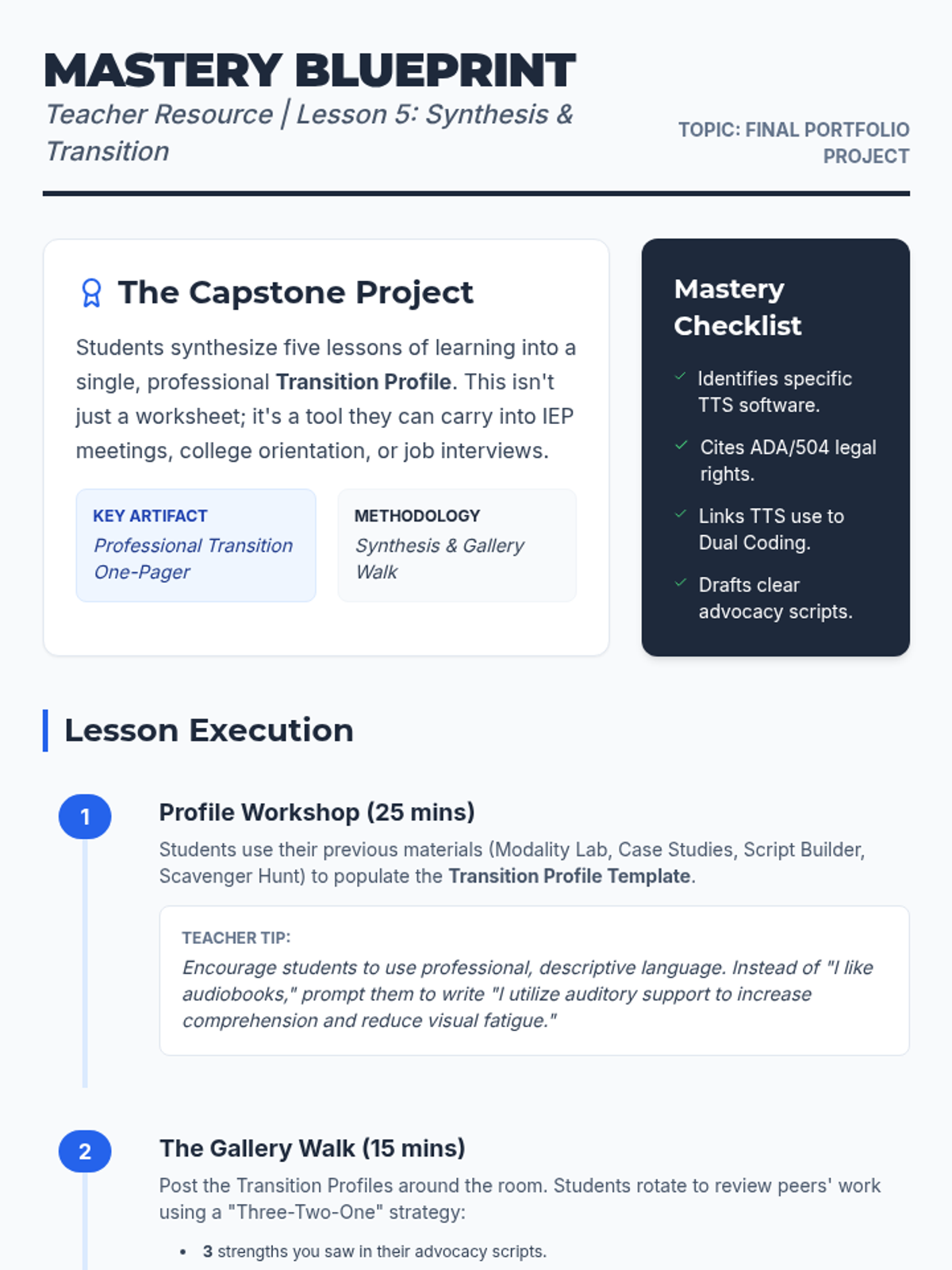
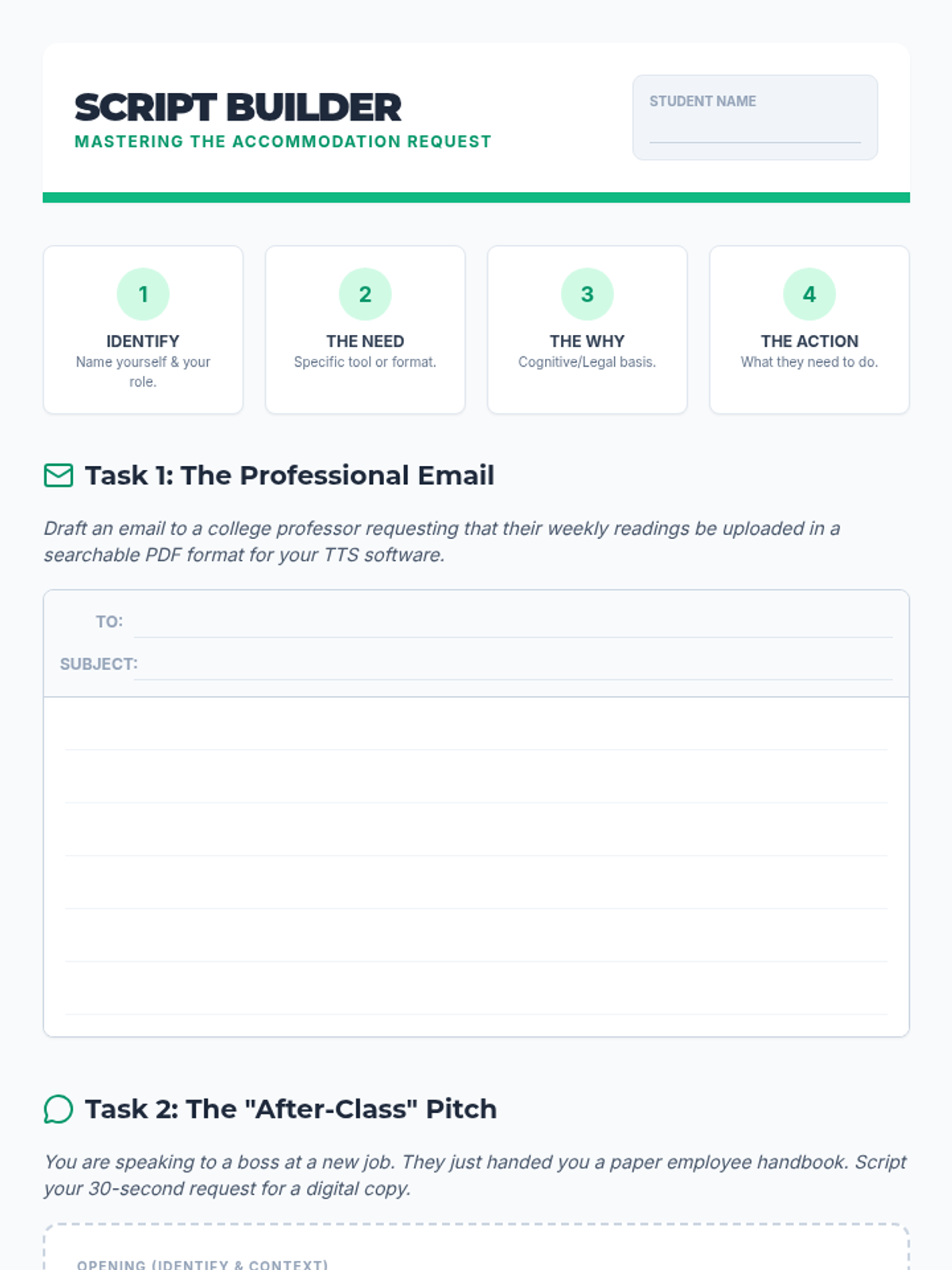
Students synthesize their learning into a professional transition one-pager that summarizes their specific assistive technology needs and legal rights.
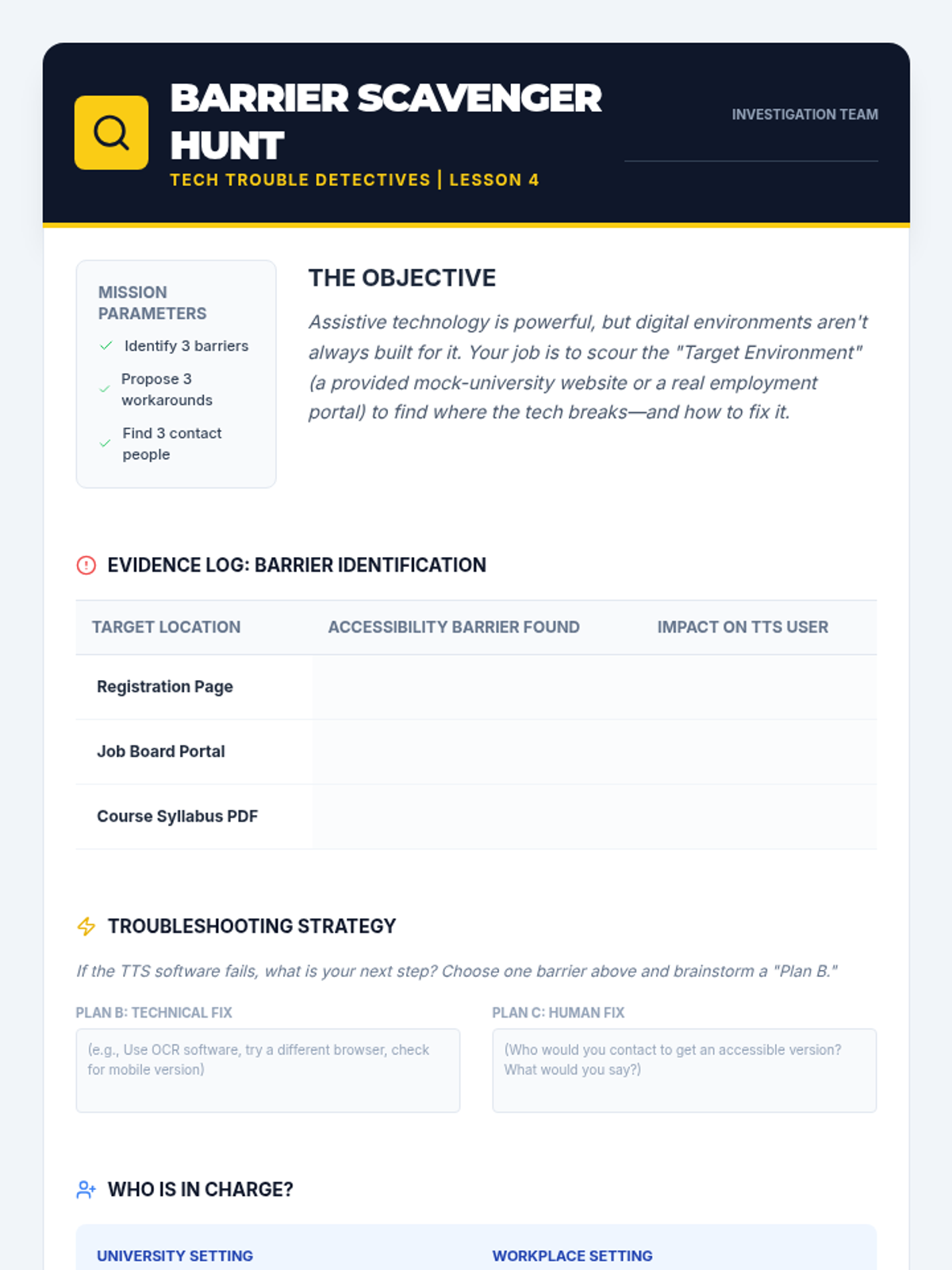
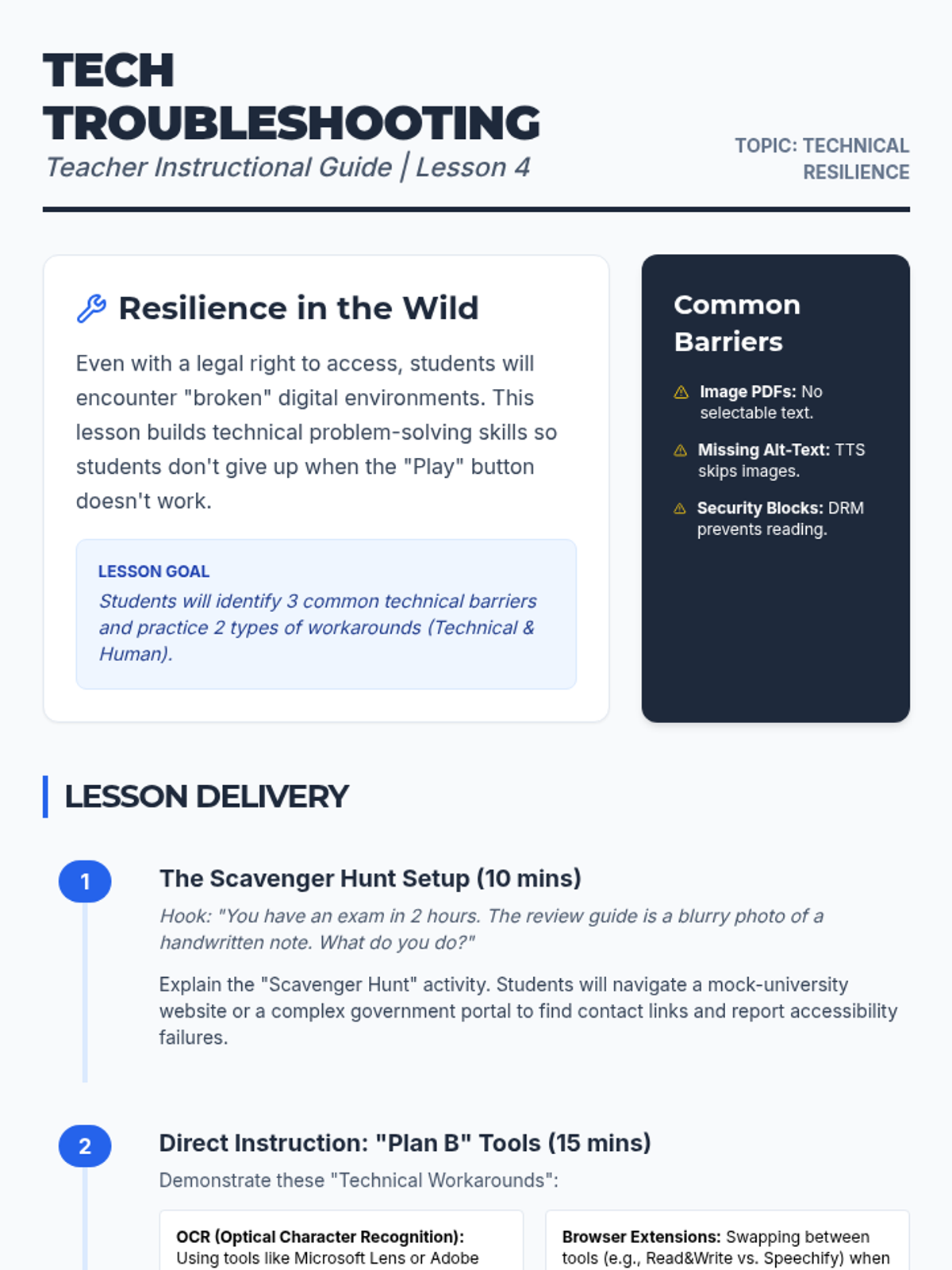
Practical troubleshooting for digital barriers, including identifying inaccessible files and finding technical workarounds or contact persons.
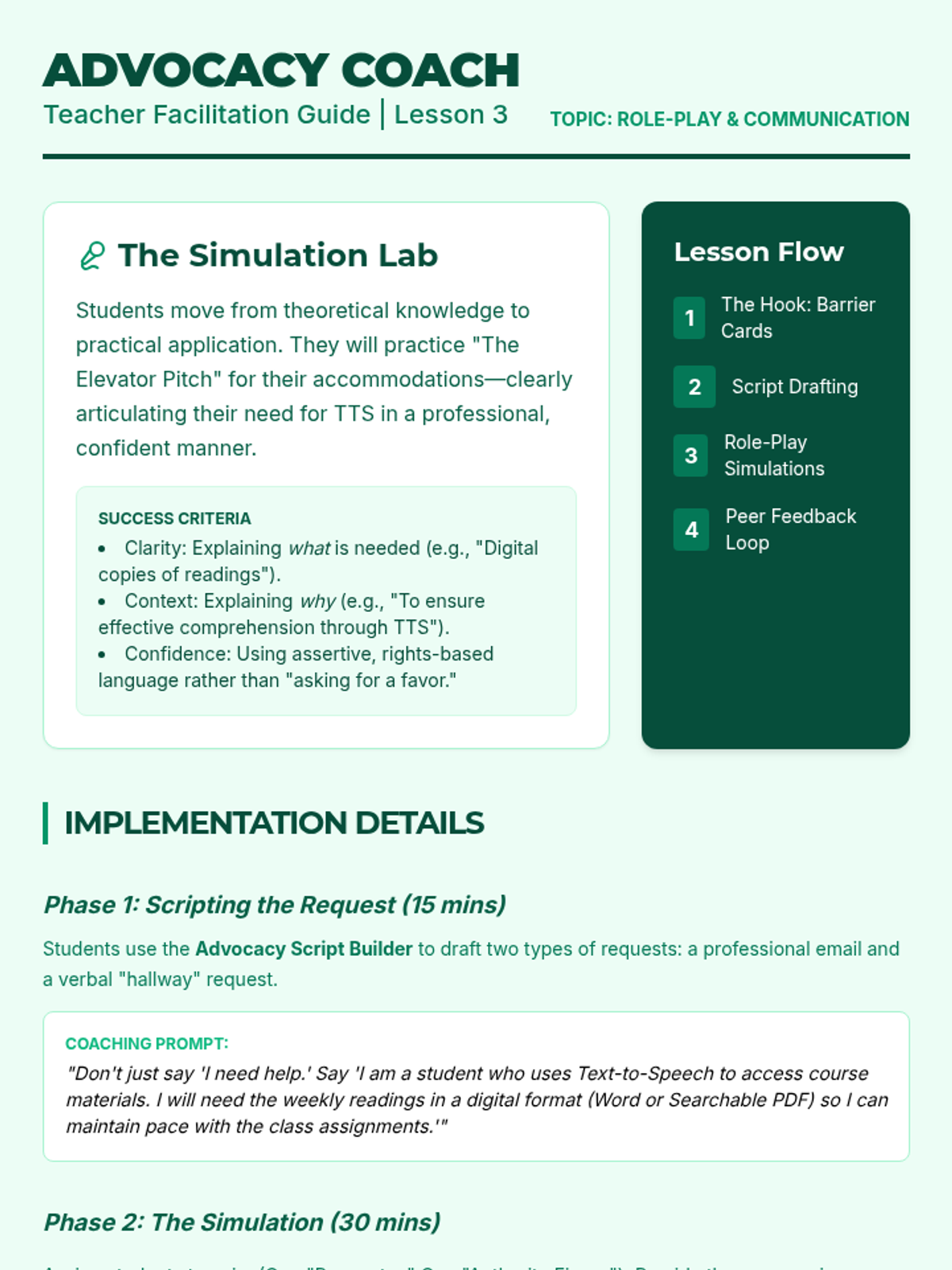
Students practice professional communication and self-advocacy by simulating requests for accommodations in college and workplace settings.
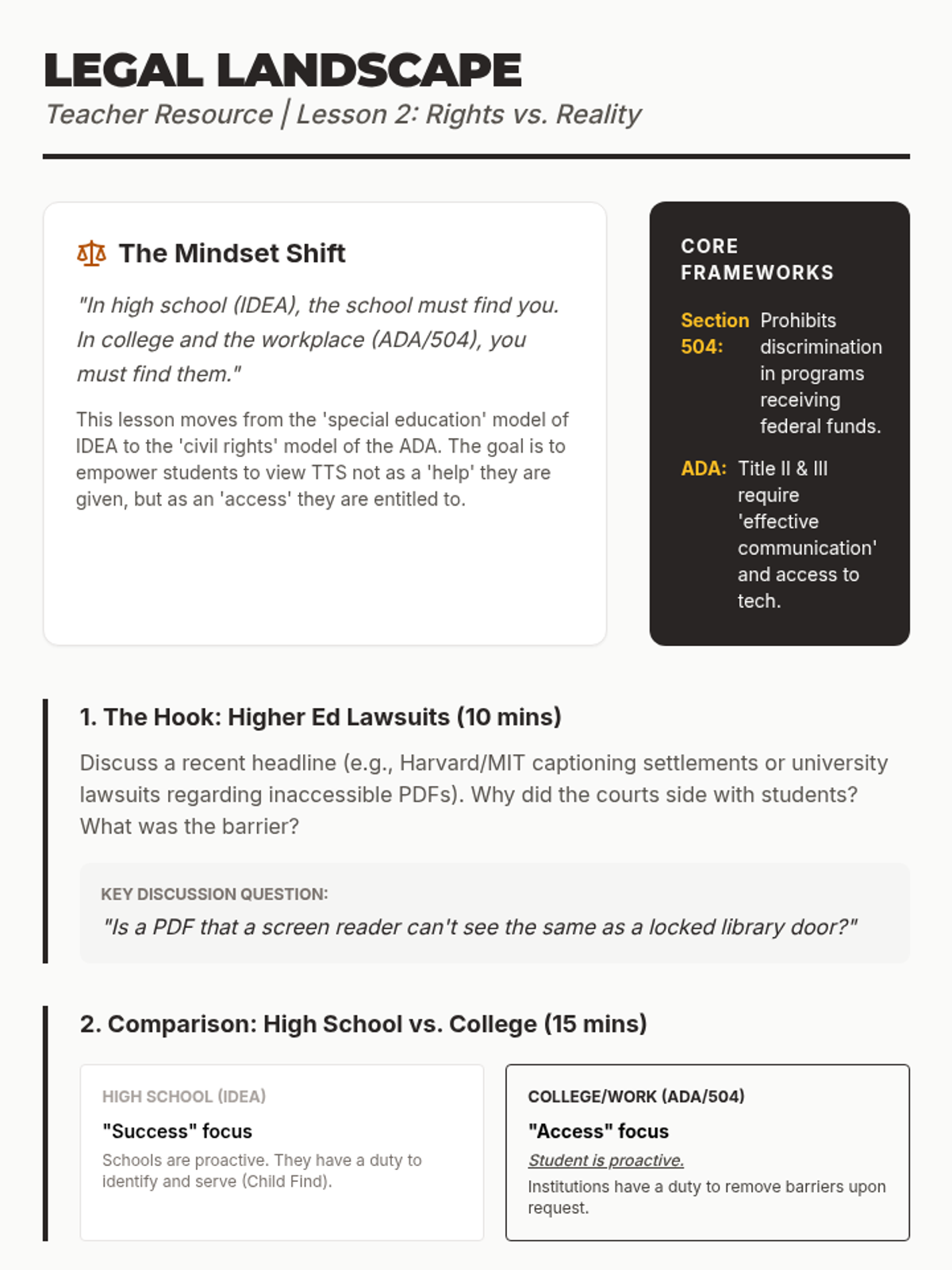
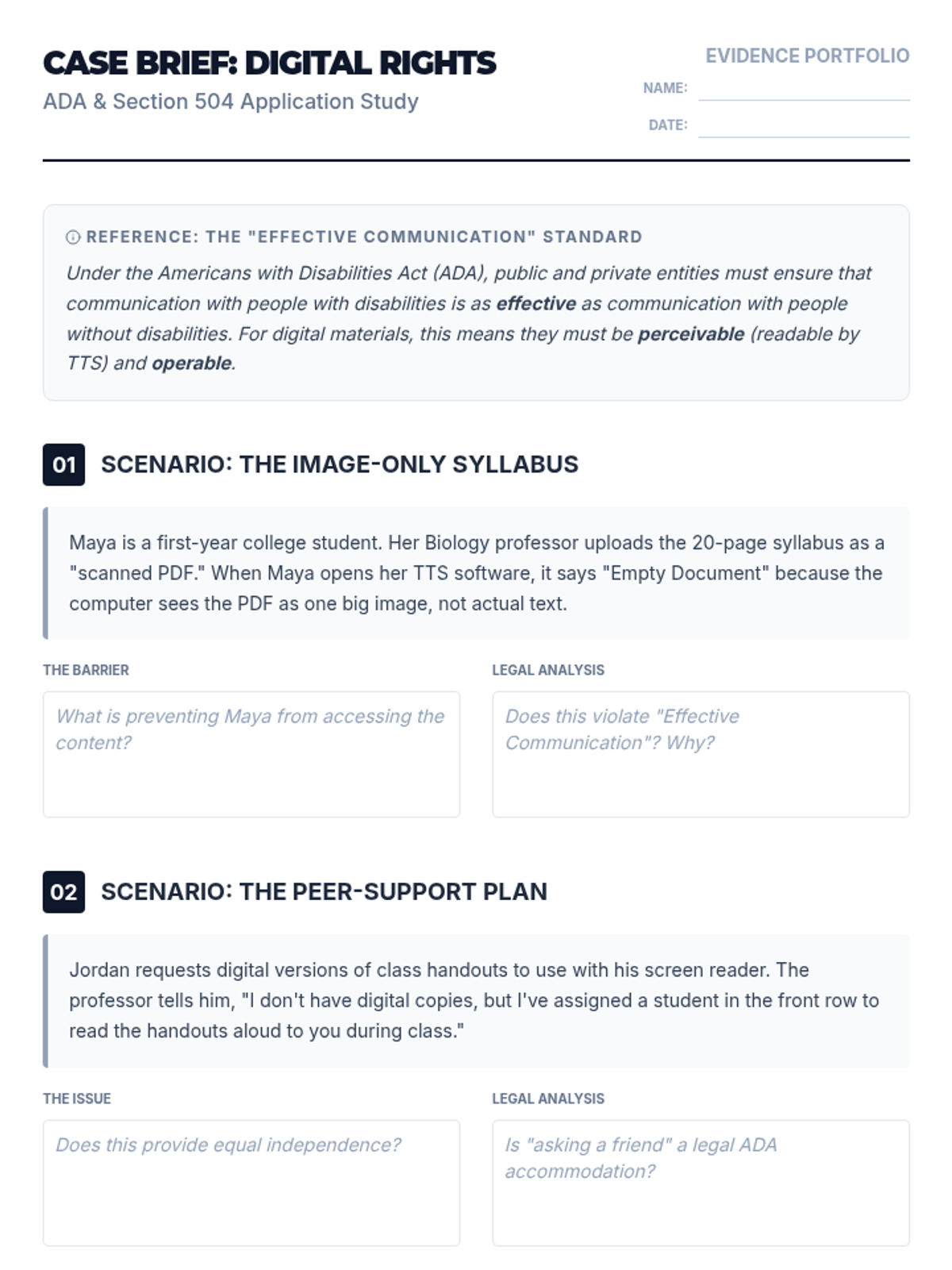
A deep dive into the legal frameworks of the ADA and Section 504 as they apply to digital accessibility in higher education and the workplace.
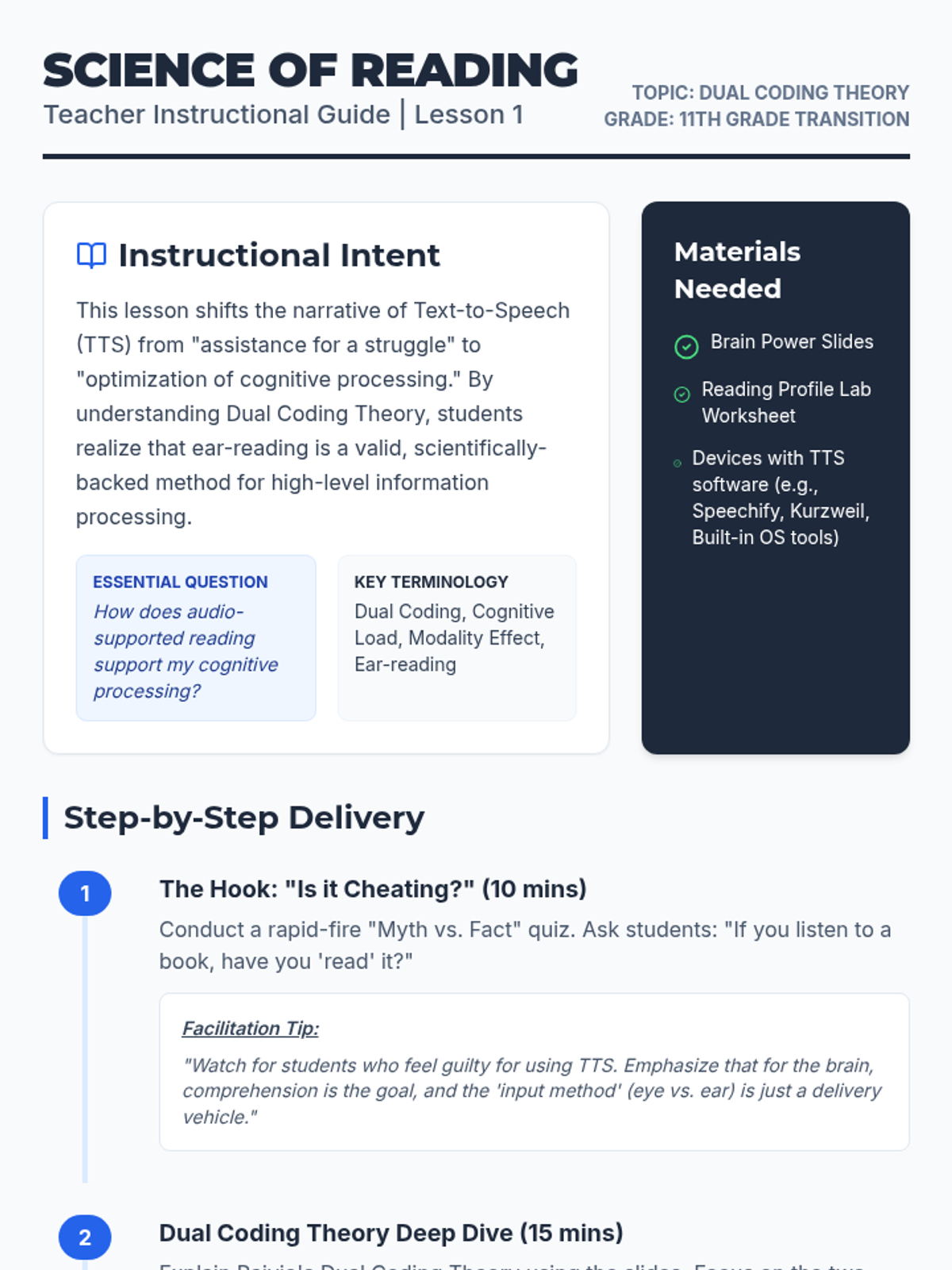
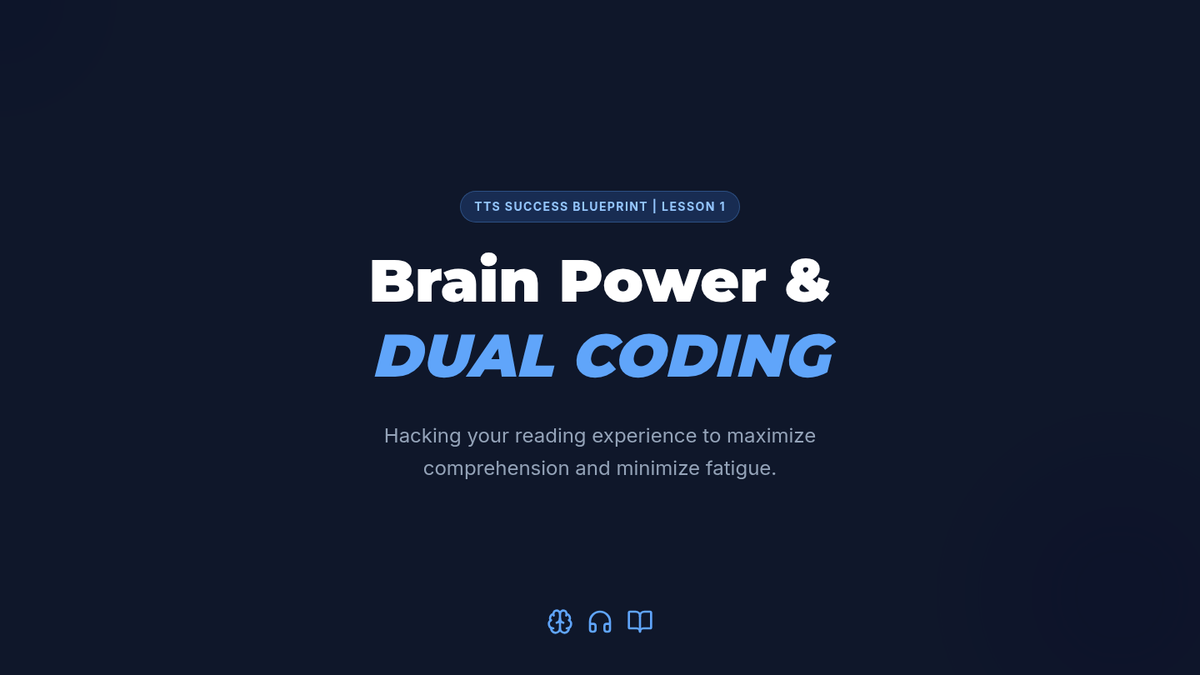
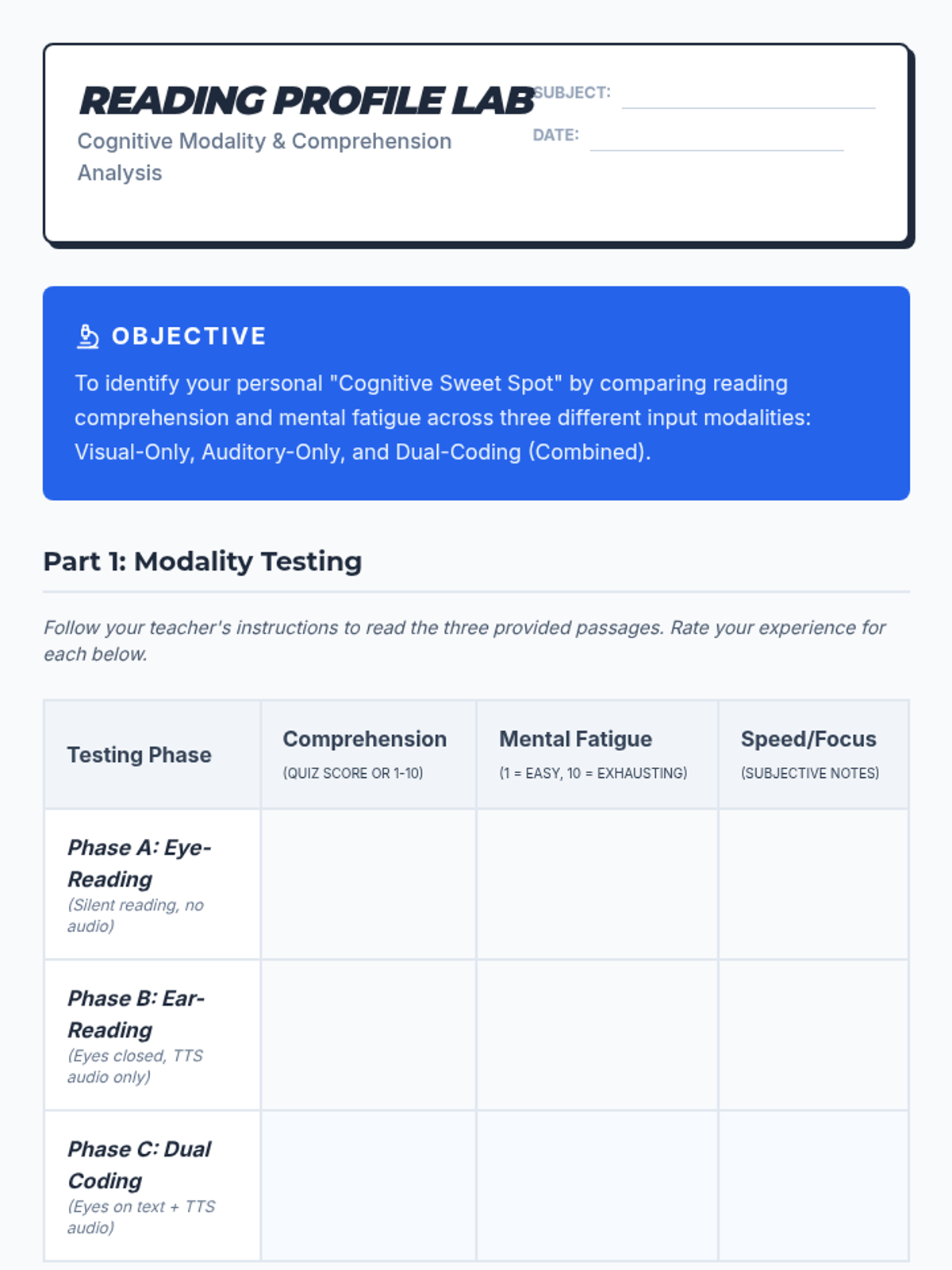
Students explore Dual Coding Theory and analyze their personal reading data to understand how eye-reading and ear-reading interact to improve comprehension and reduce fatigue.
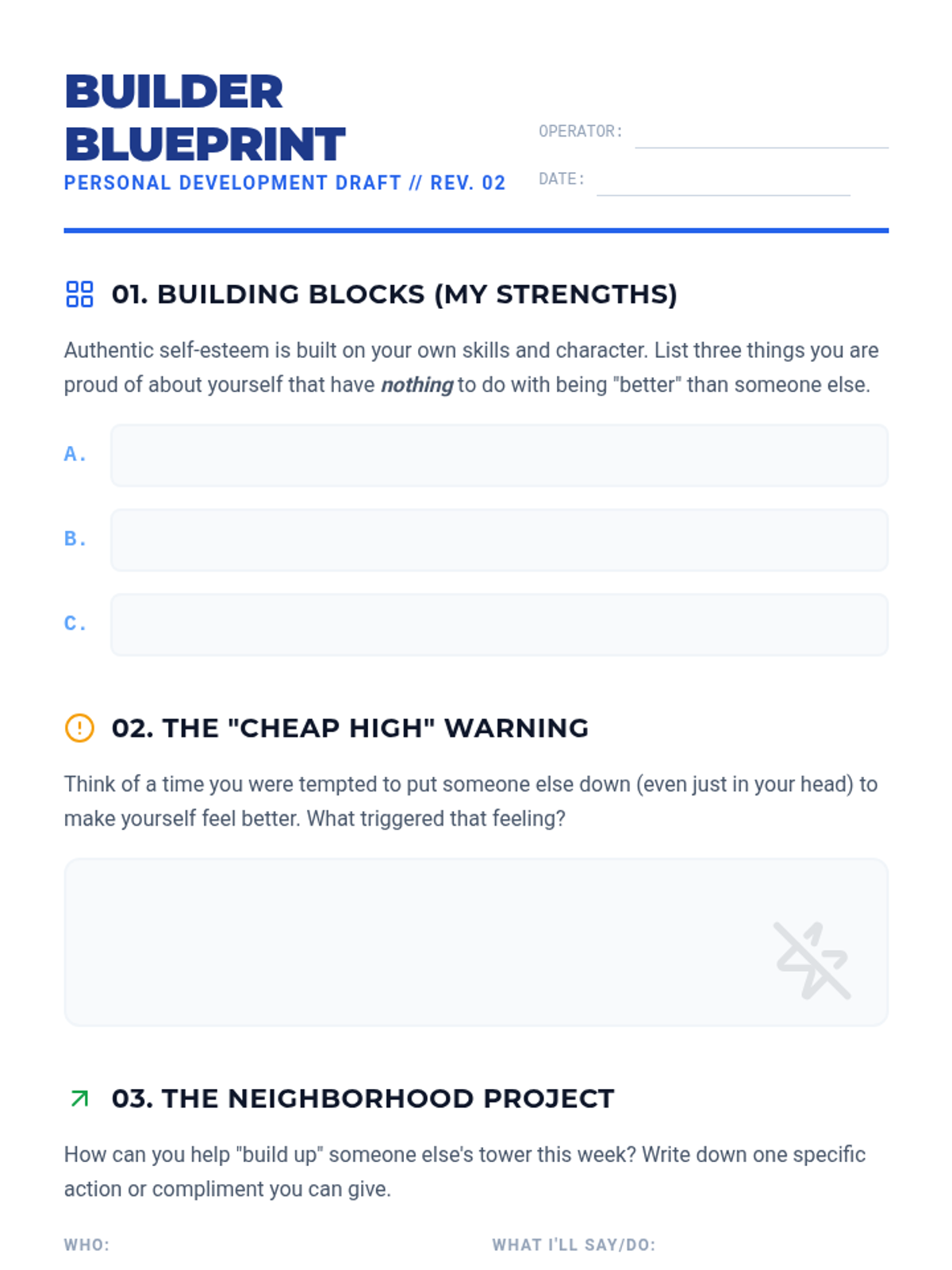
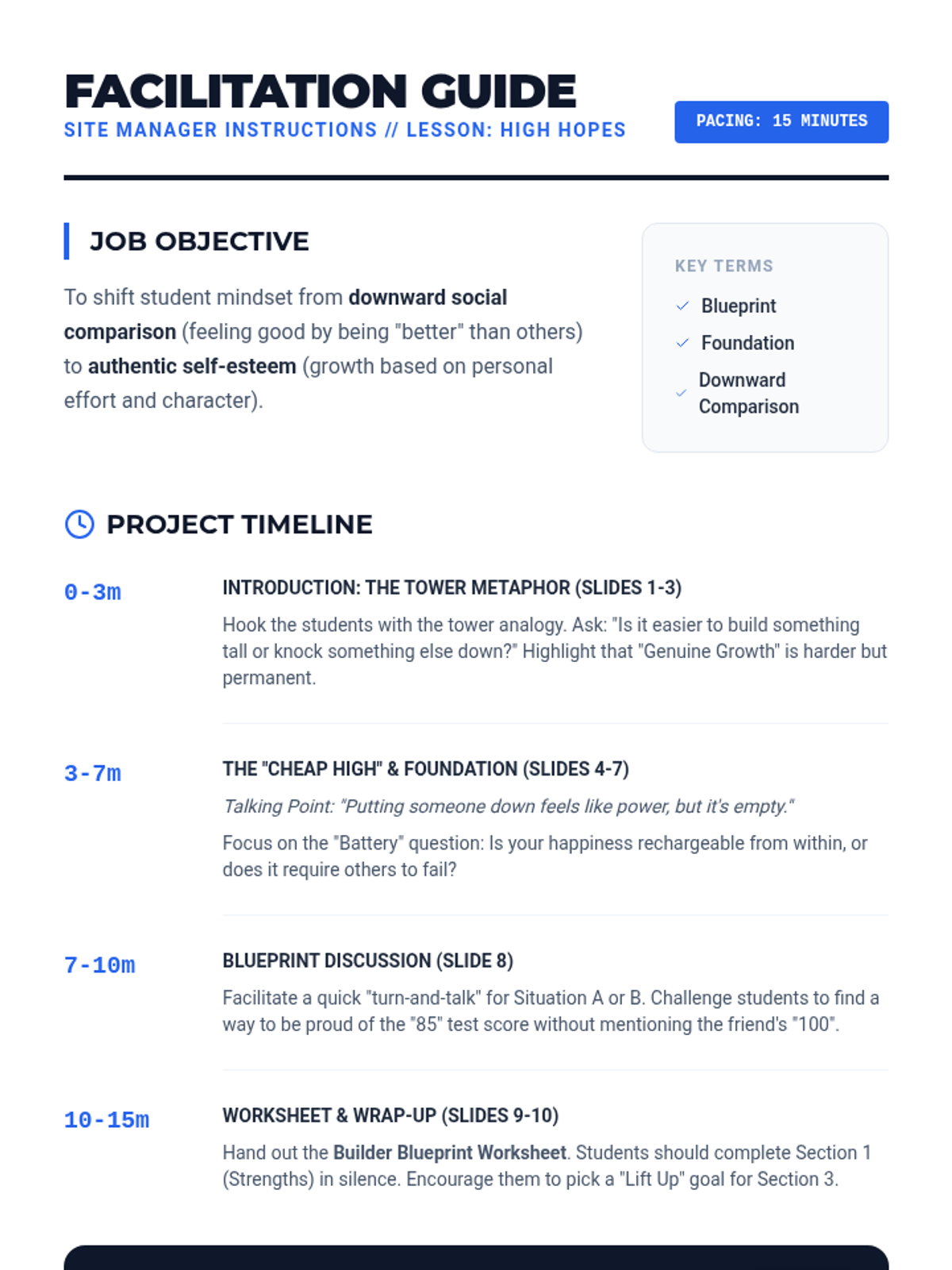
A 15-minute lesson exploring the pitfalls of 'downward social comparison' and how to build authentic self-esteem without diminishing others. Students will learn that true confidence comes from personal growth rather than putting others down.
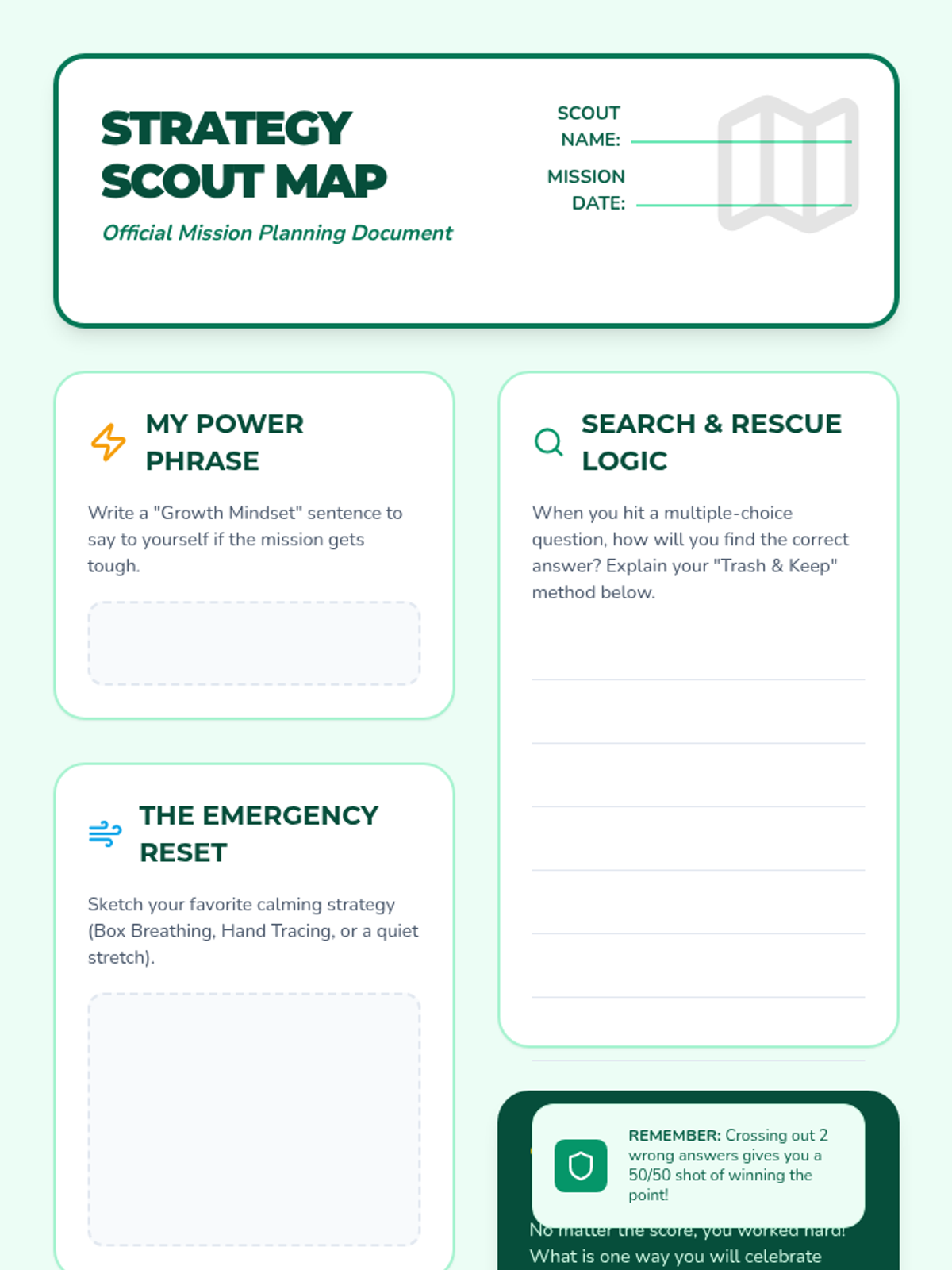
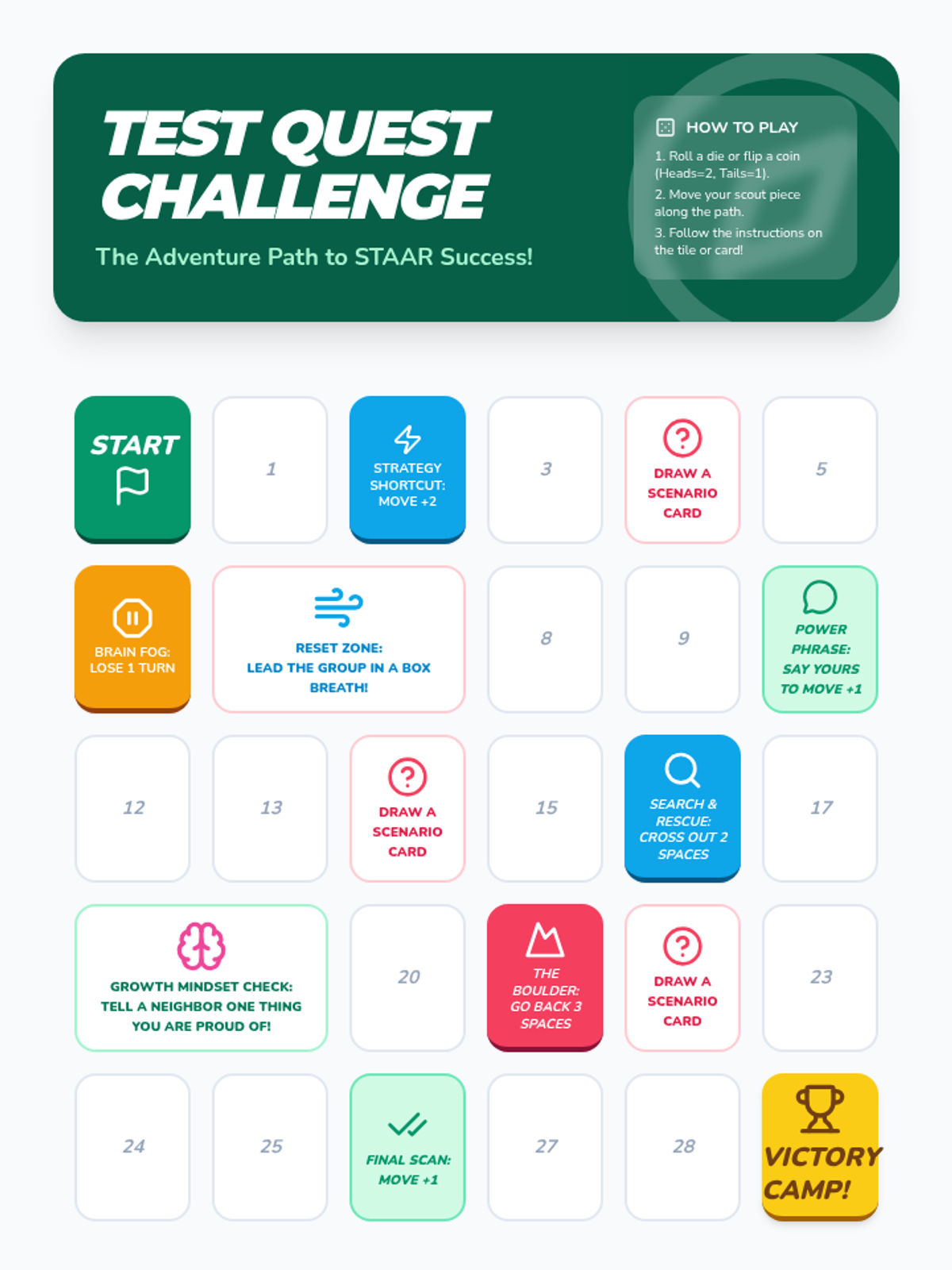
A comprehensive lesson designed to equip students with social-emotional strategies and practical techniques for tackling the STAAR test with confidence and focus.
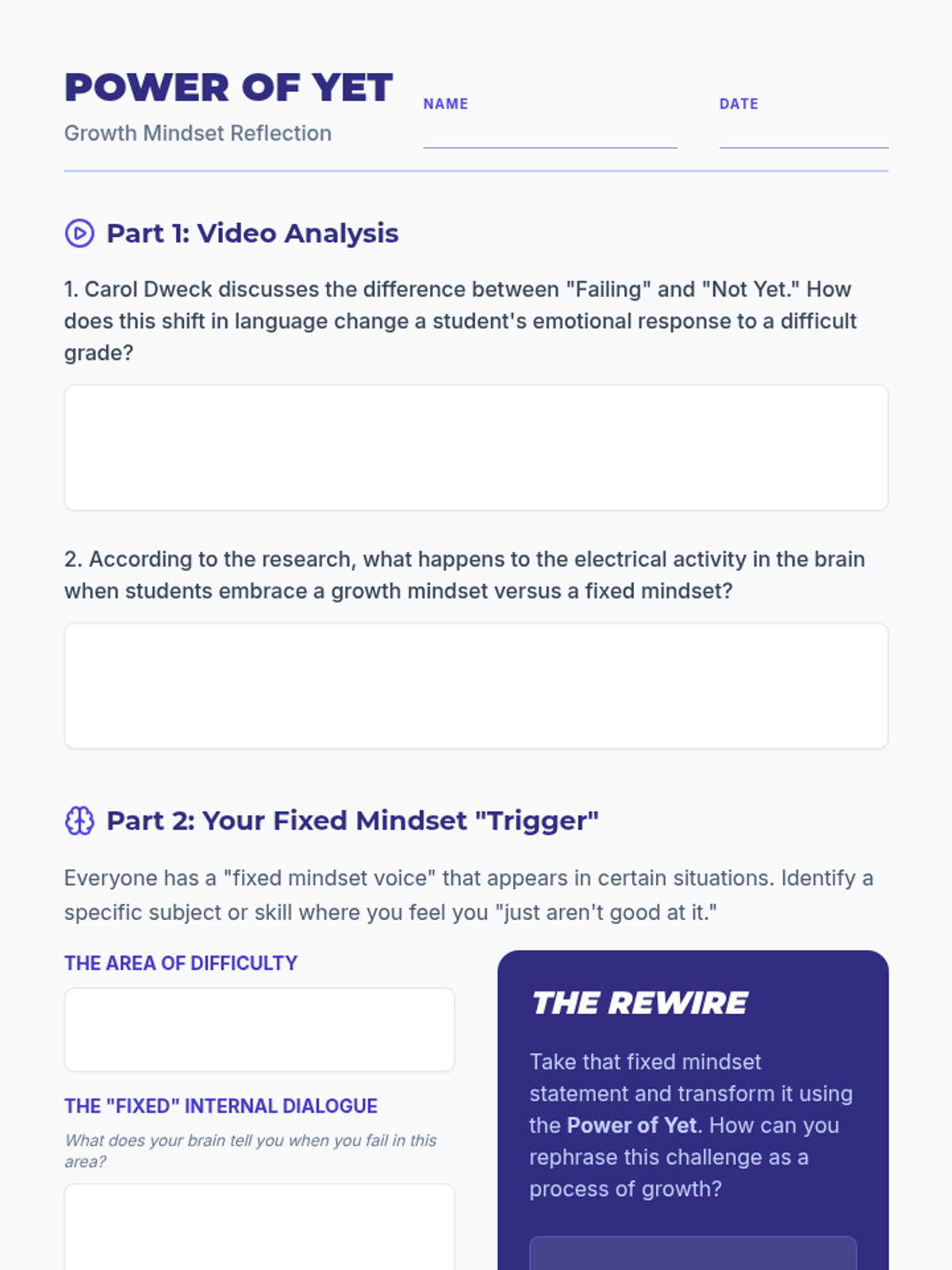
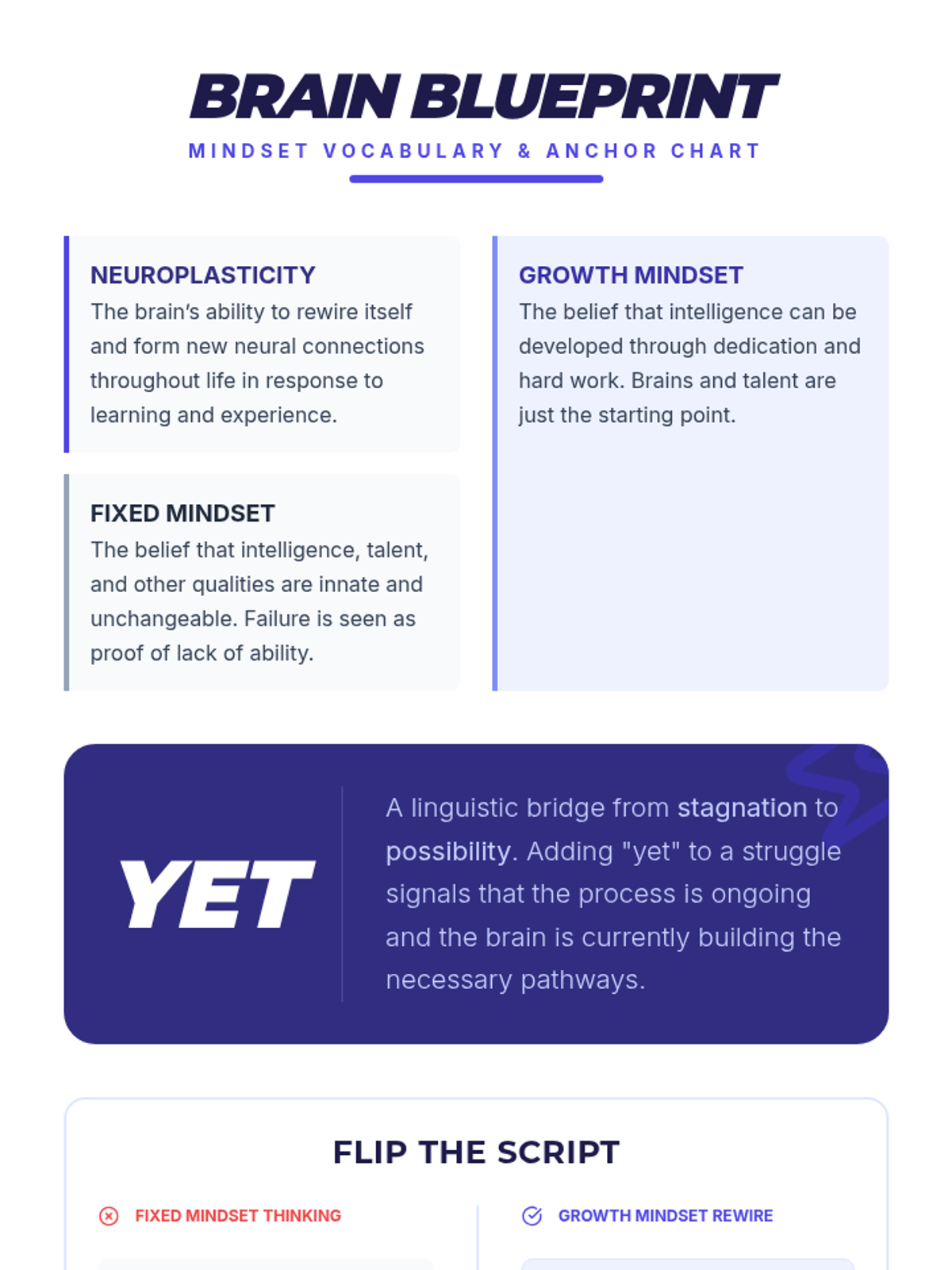
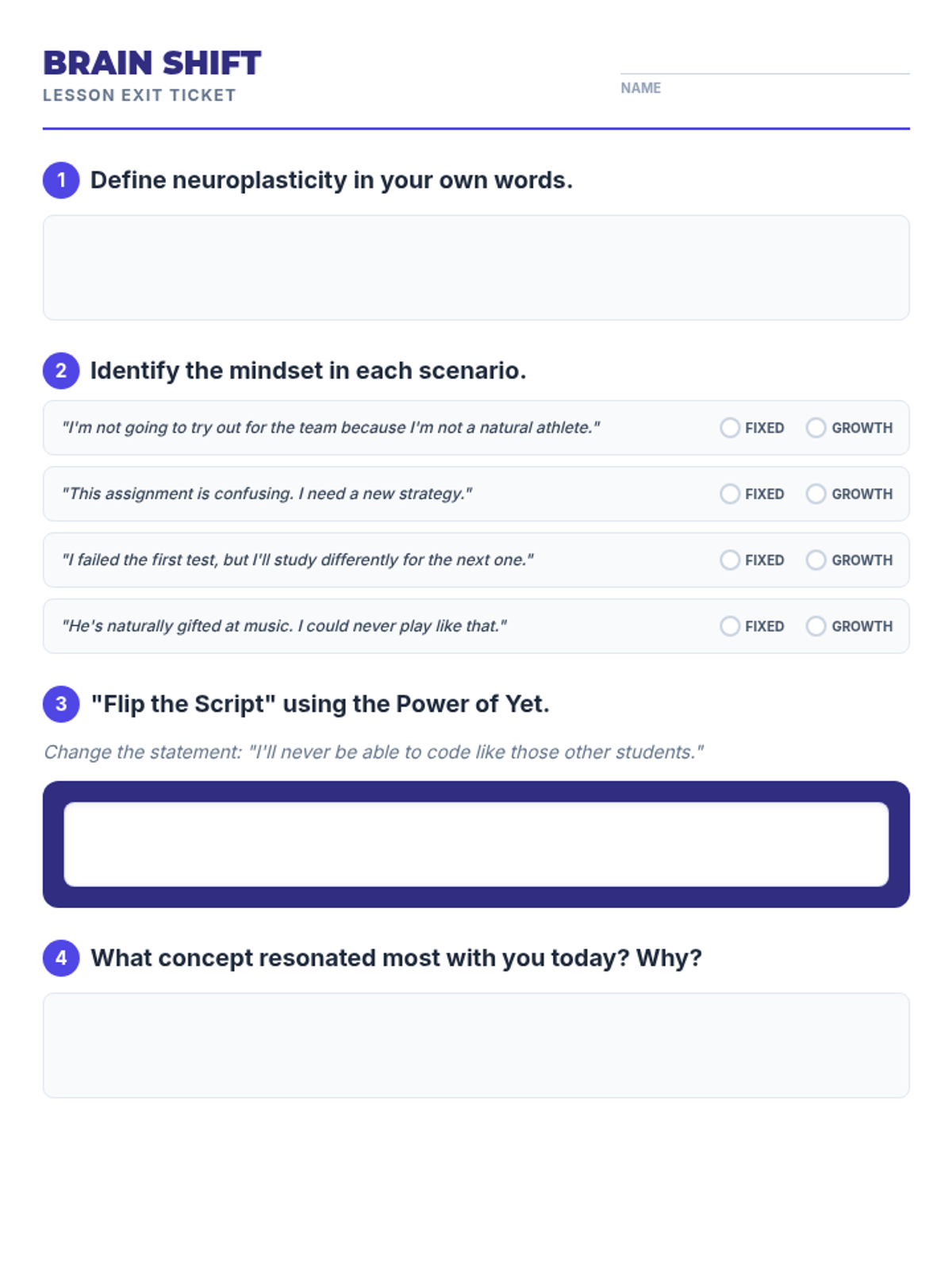
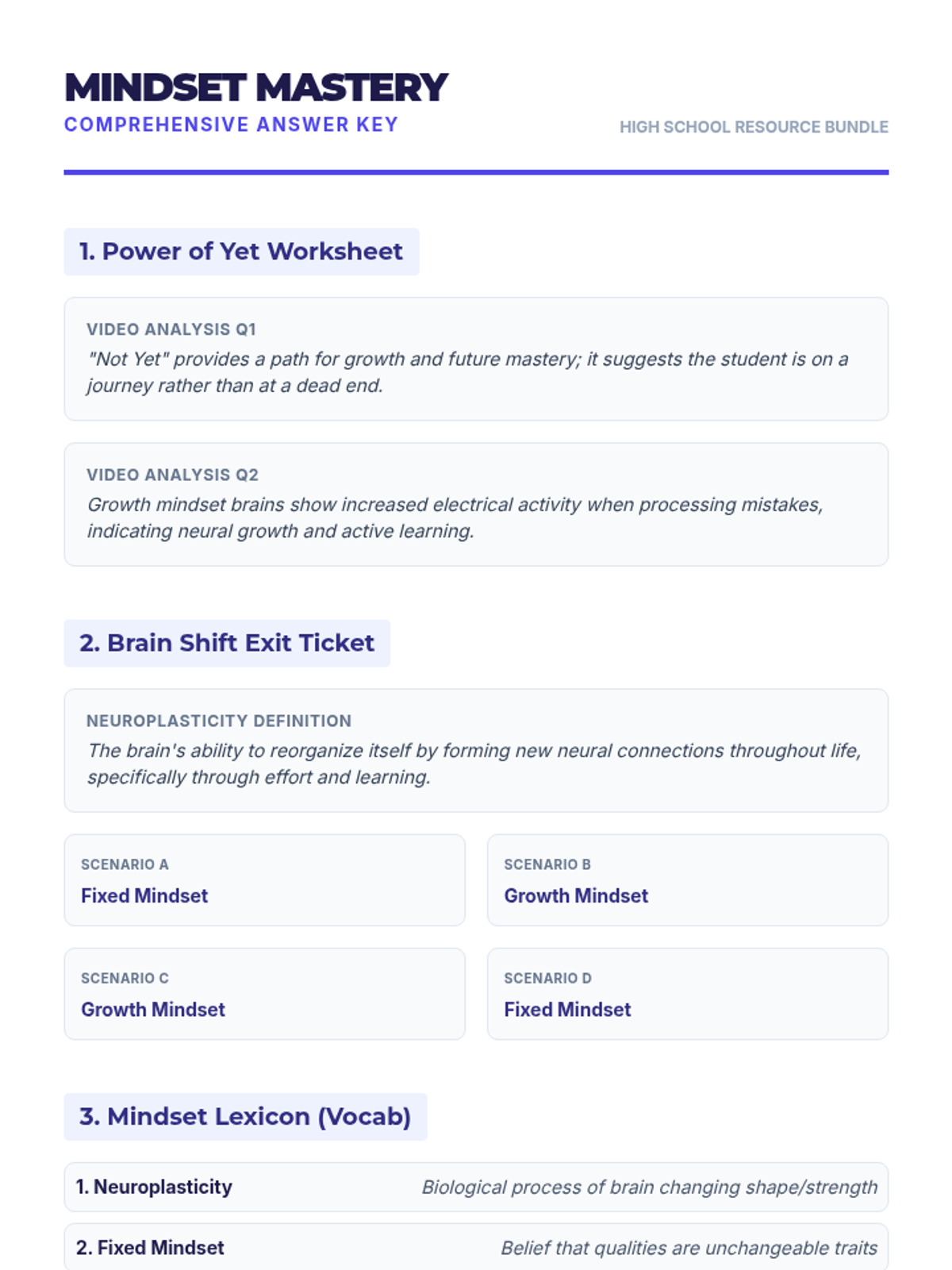
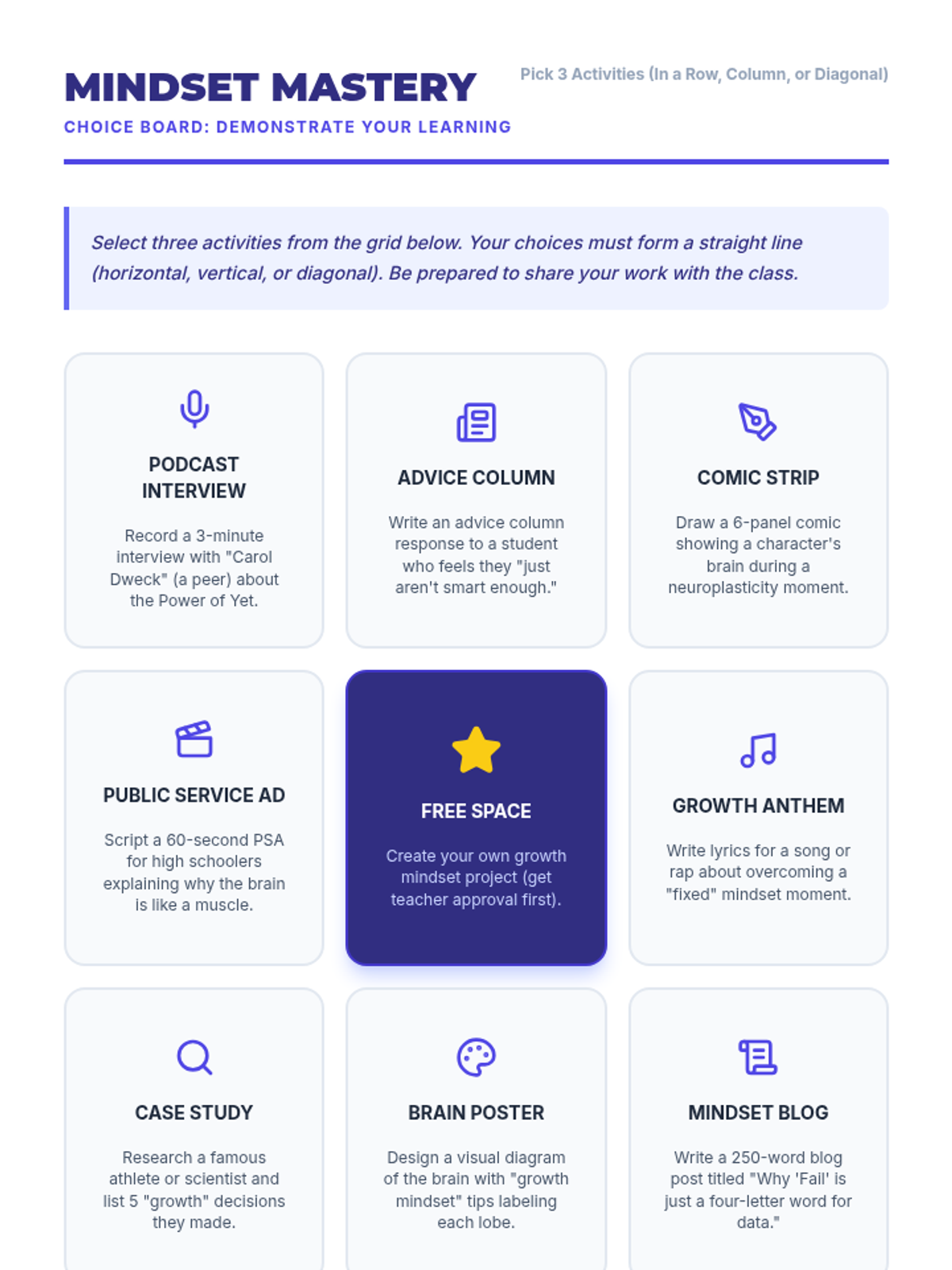
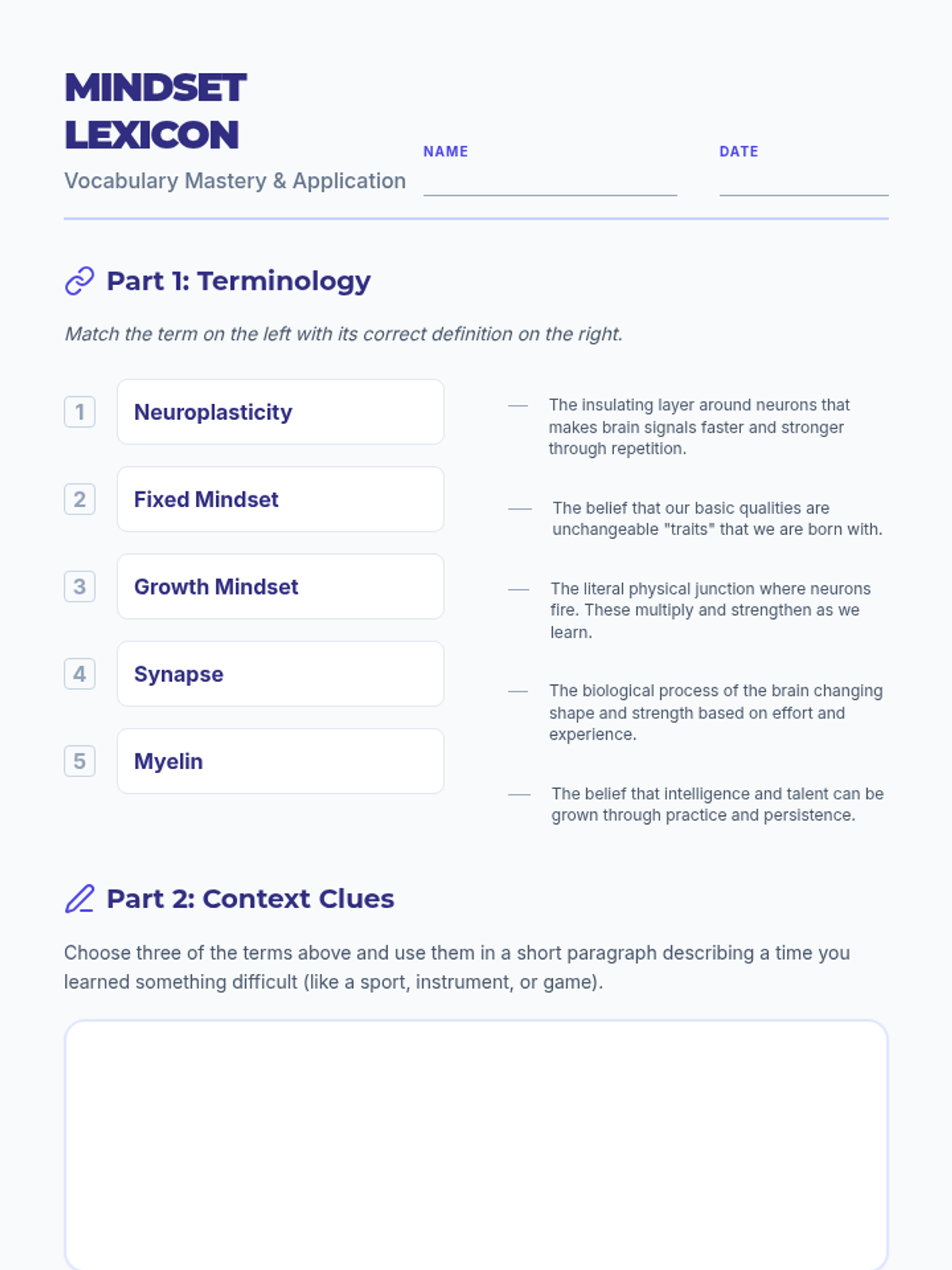
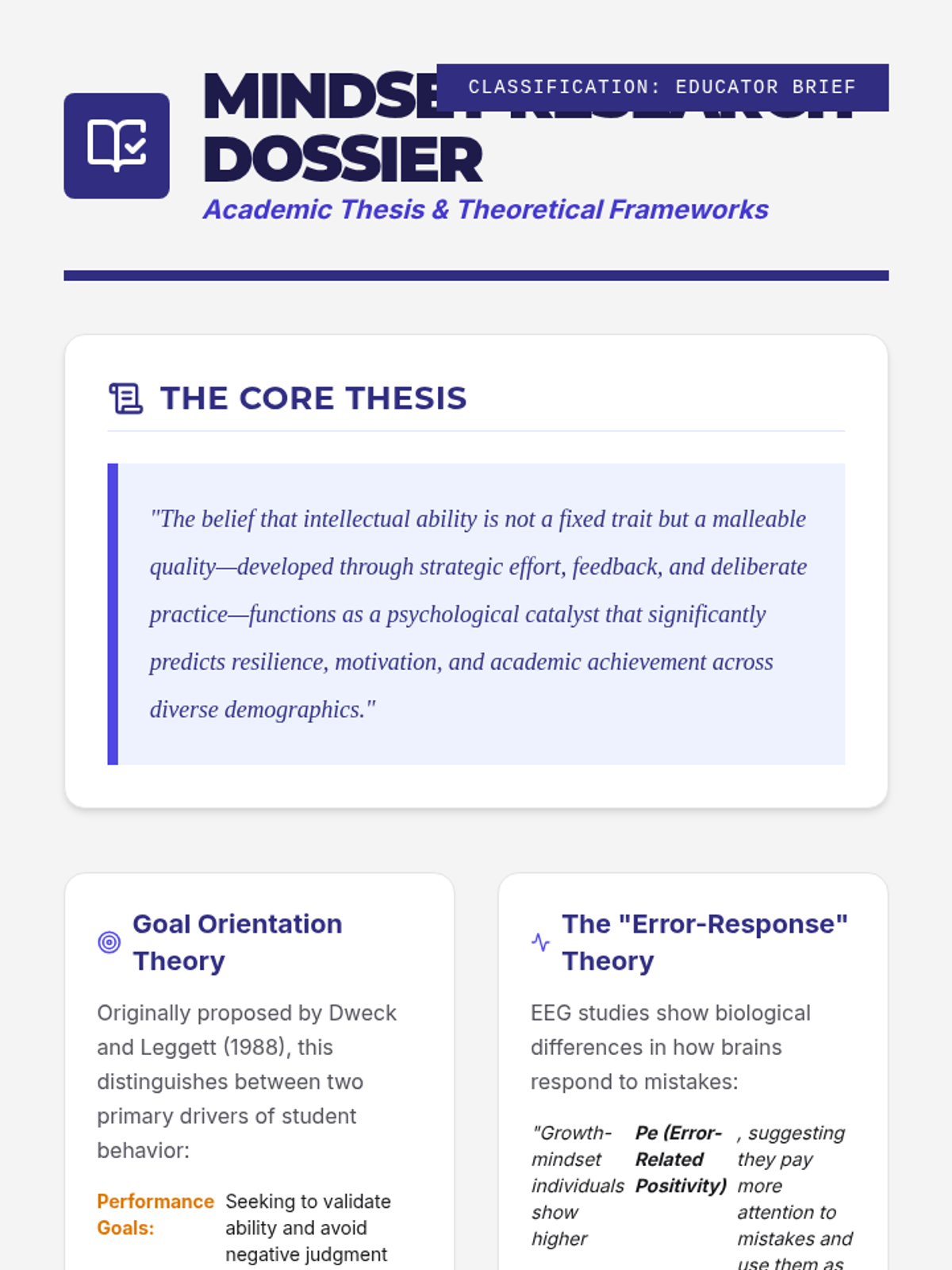
A comprehensive lesson for high school students exploring the science of neuroplasticity and the psychological impact of a growth mindset versus a fixed mindset. Includes video analysis of Carol Dweck's research and practical reflection exercises.
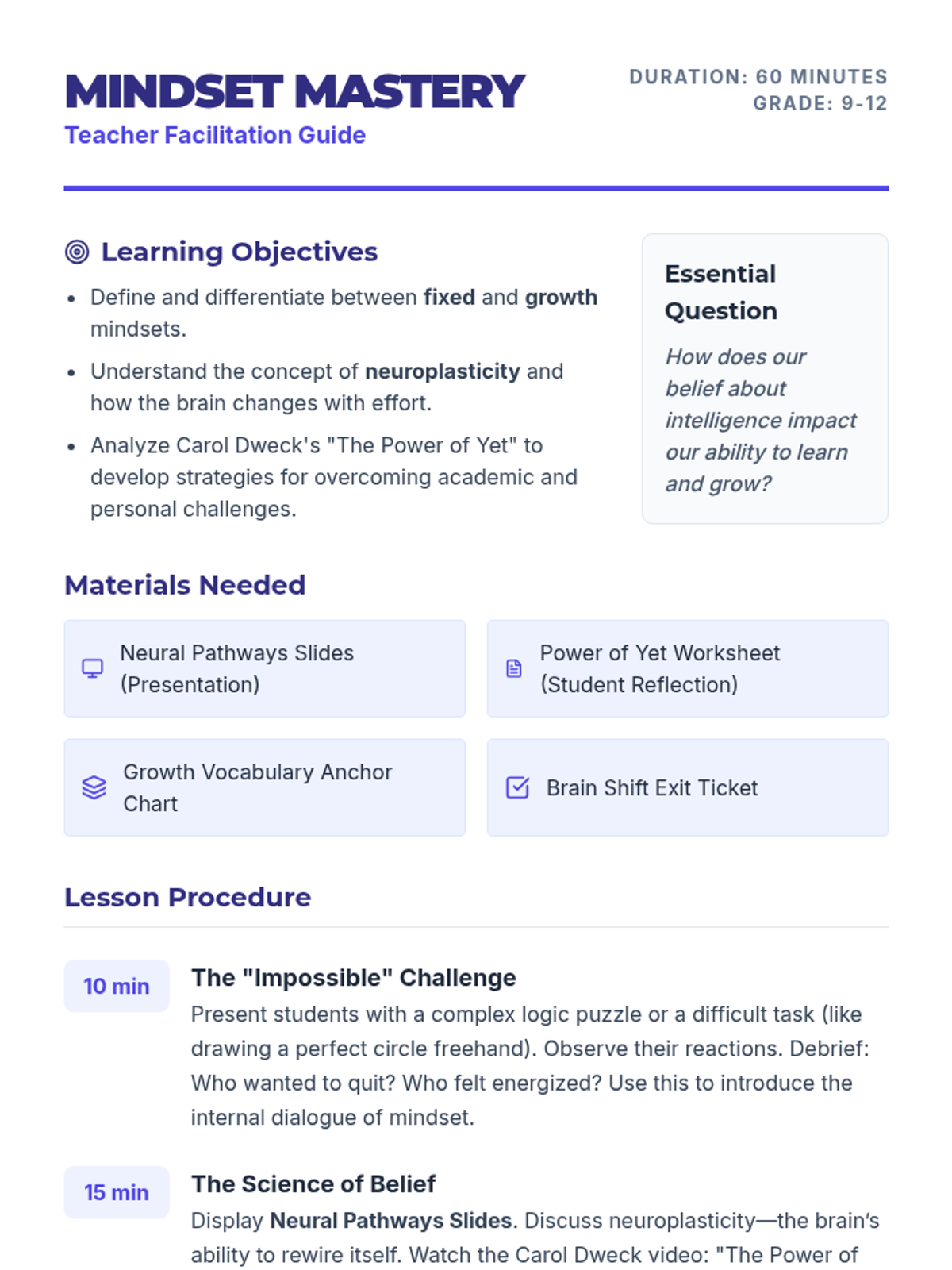
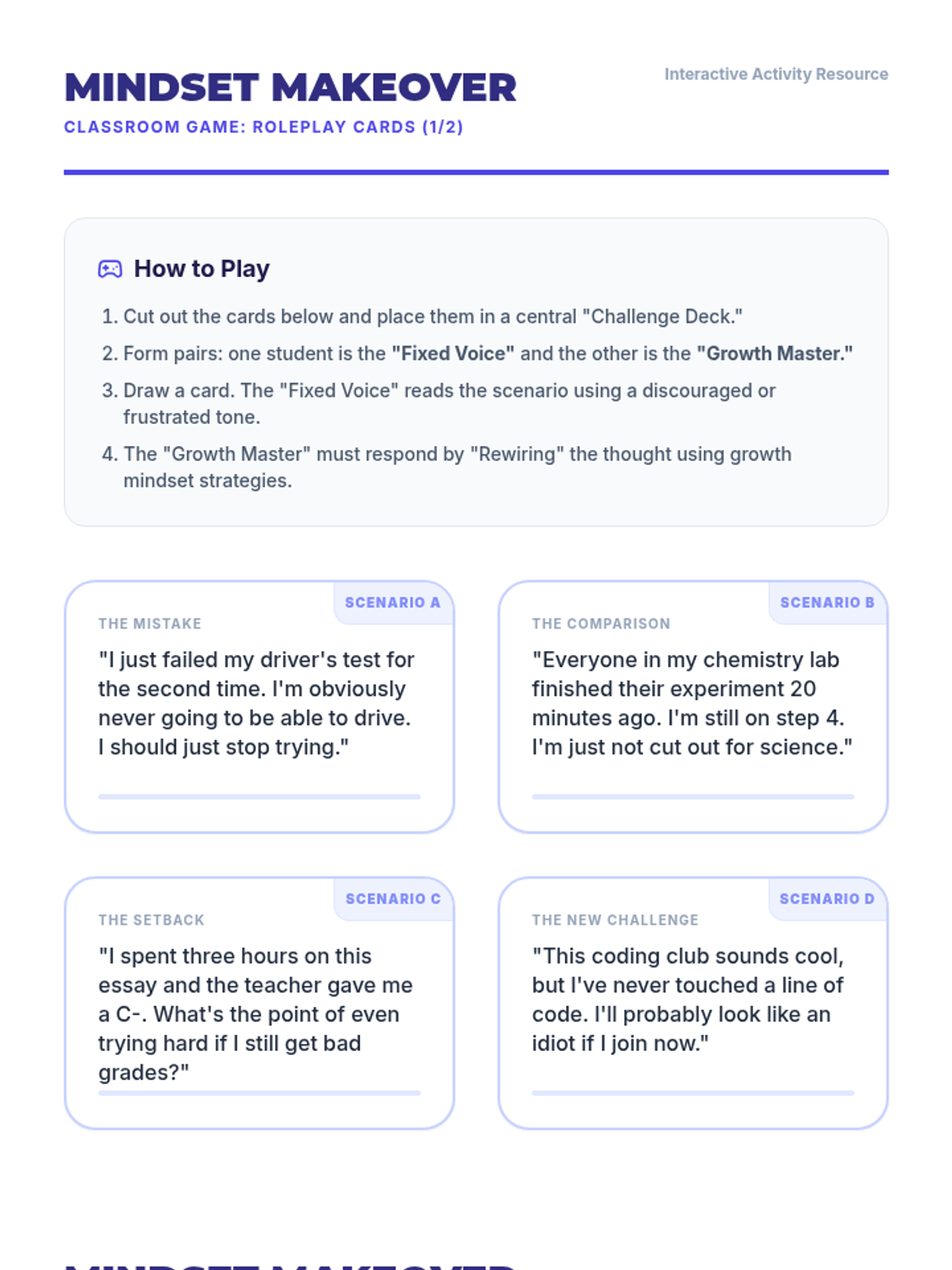
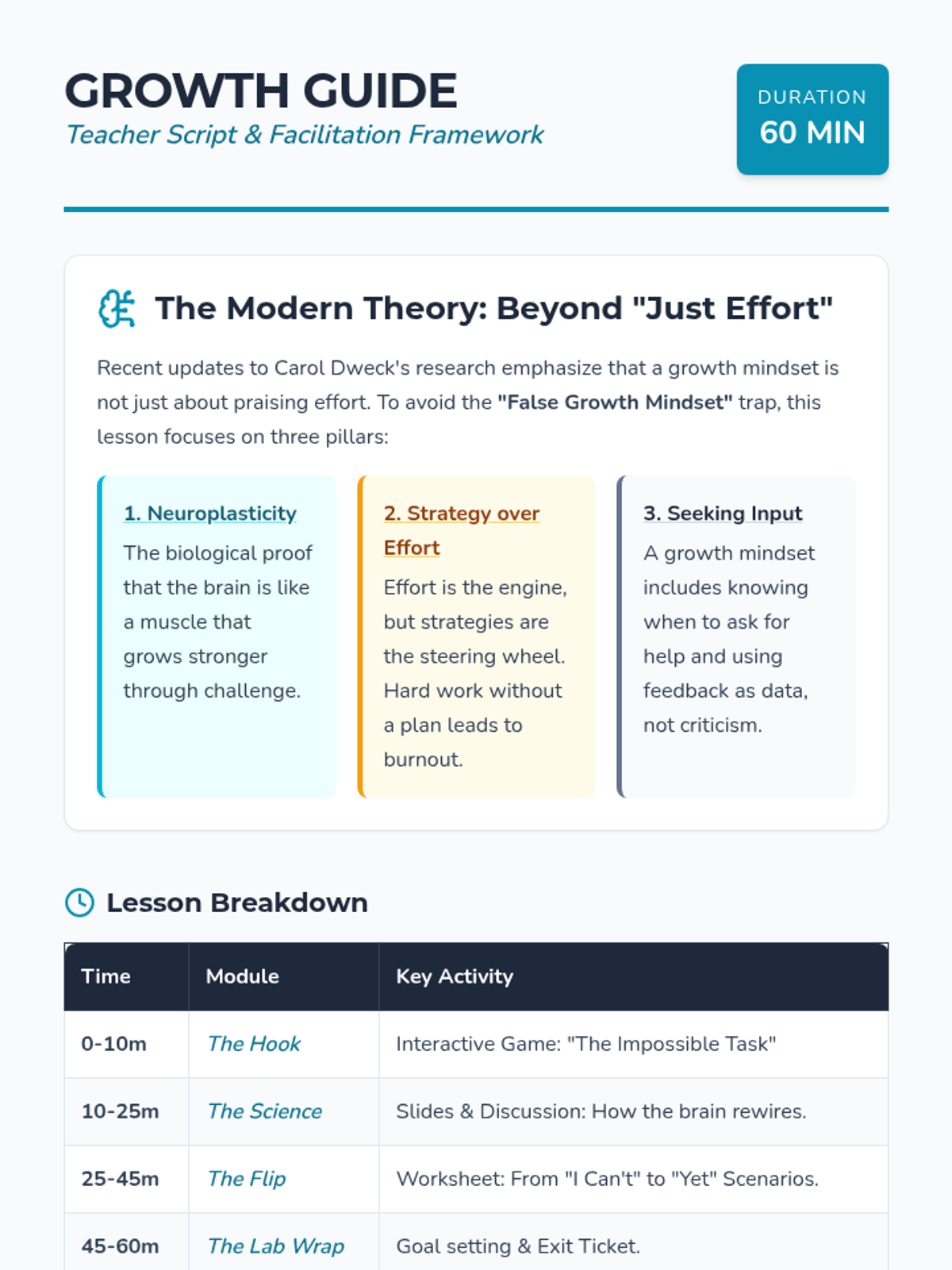
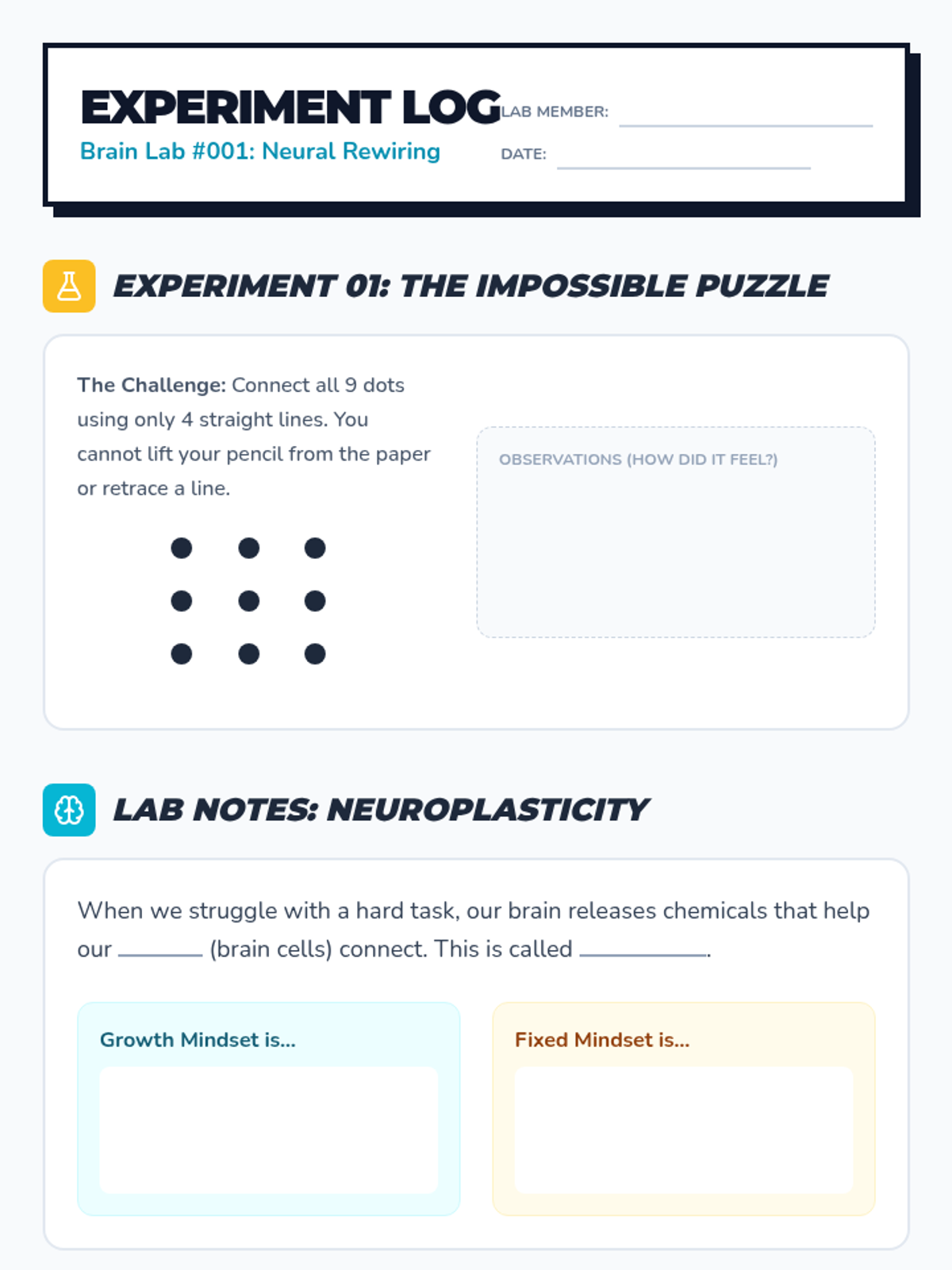
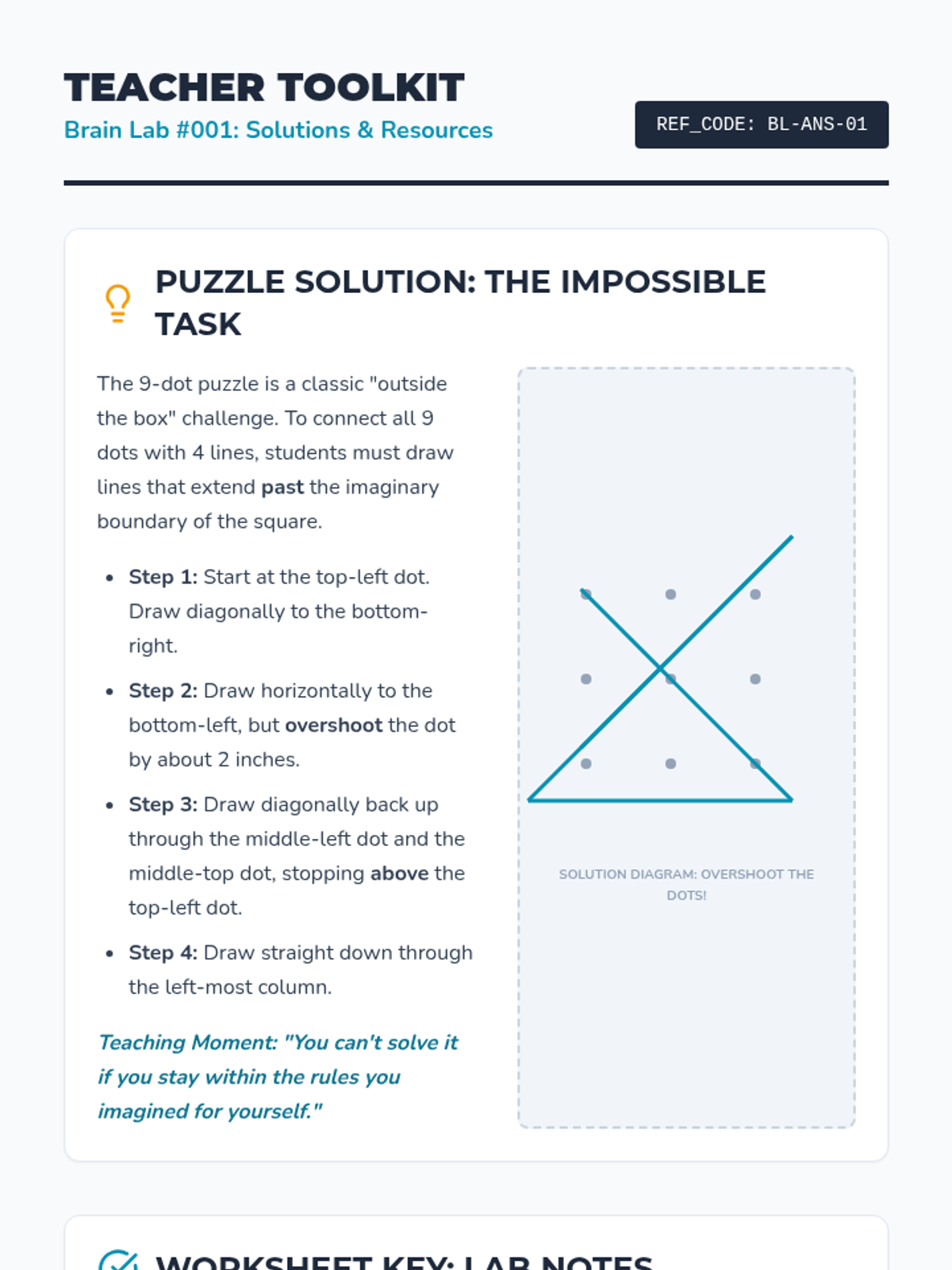
A comprehensive 60-minute session designed to introduce students to the science of neuroplasticity and the practical application of a growth mindset through interactive games, discussion, and reflective work.
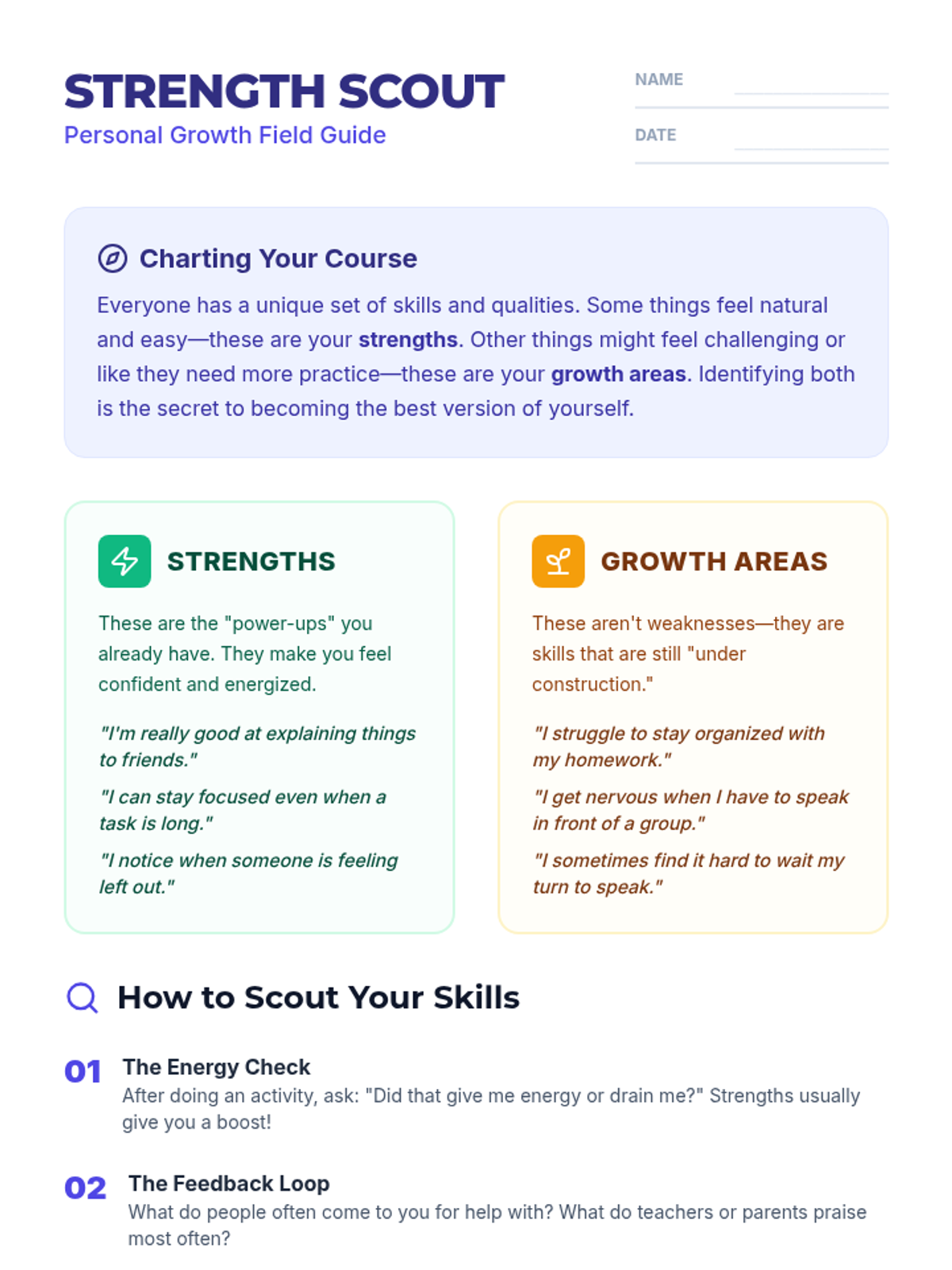
A lesson focused on helping students identify their personal strengths and areas for future development through self-reflection and scenario-based analysis.
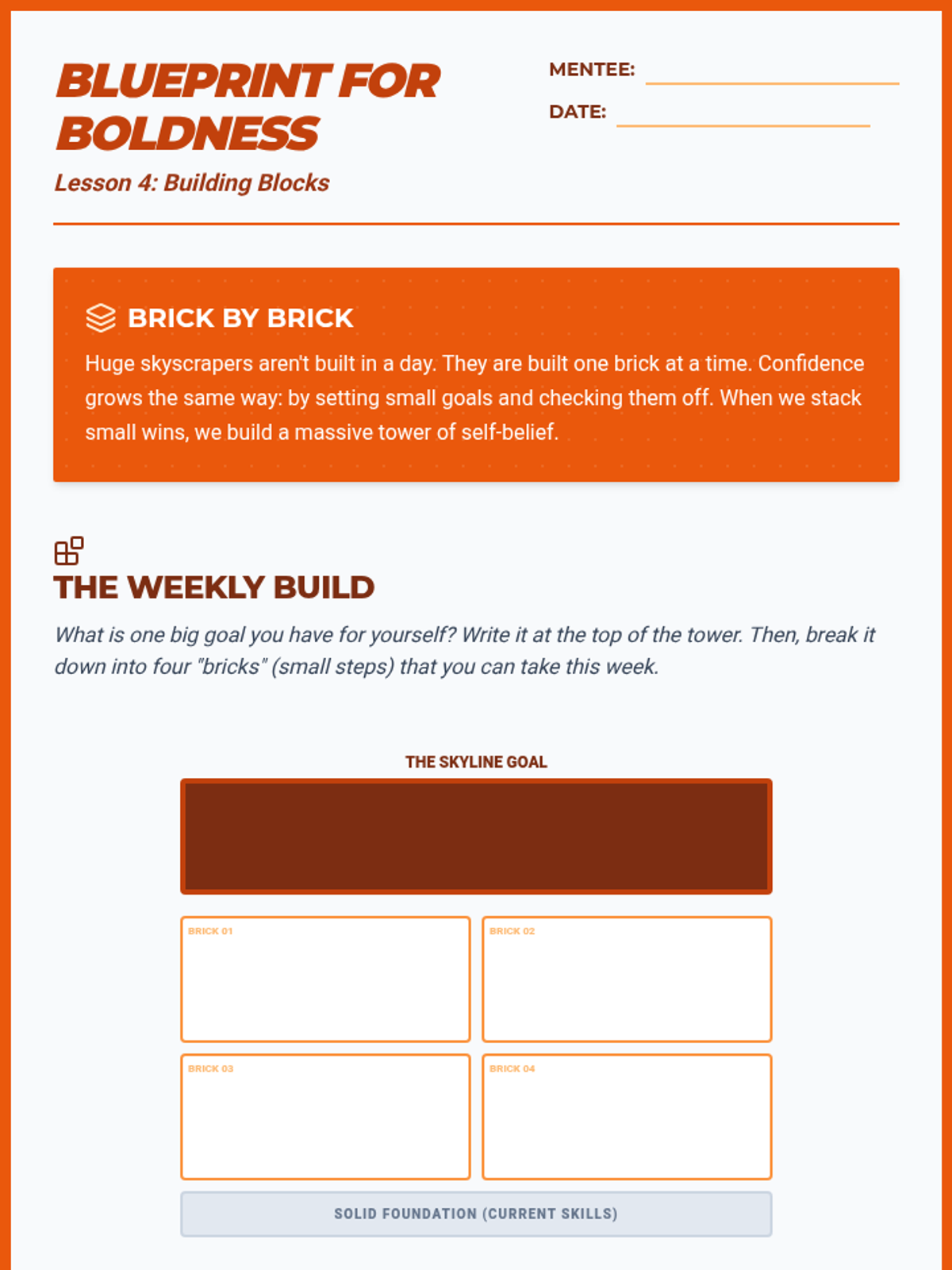
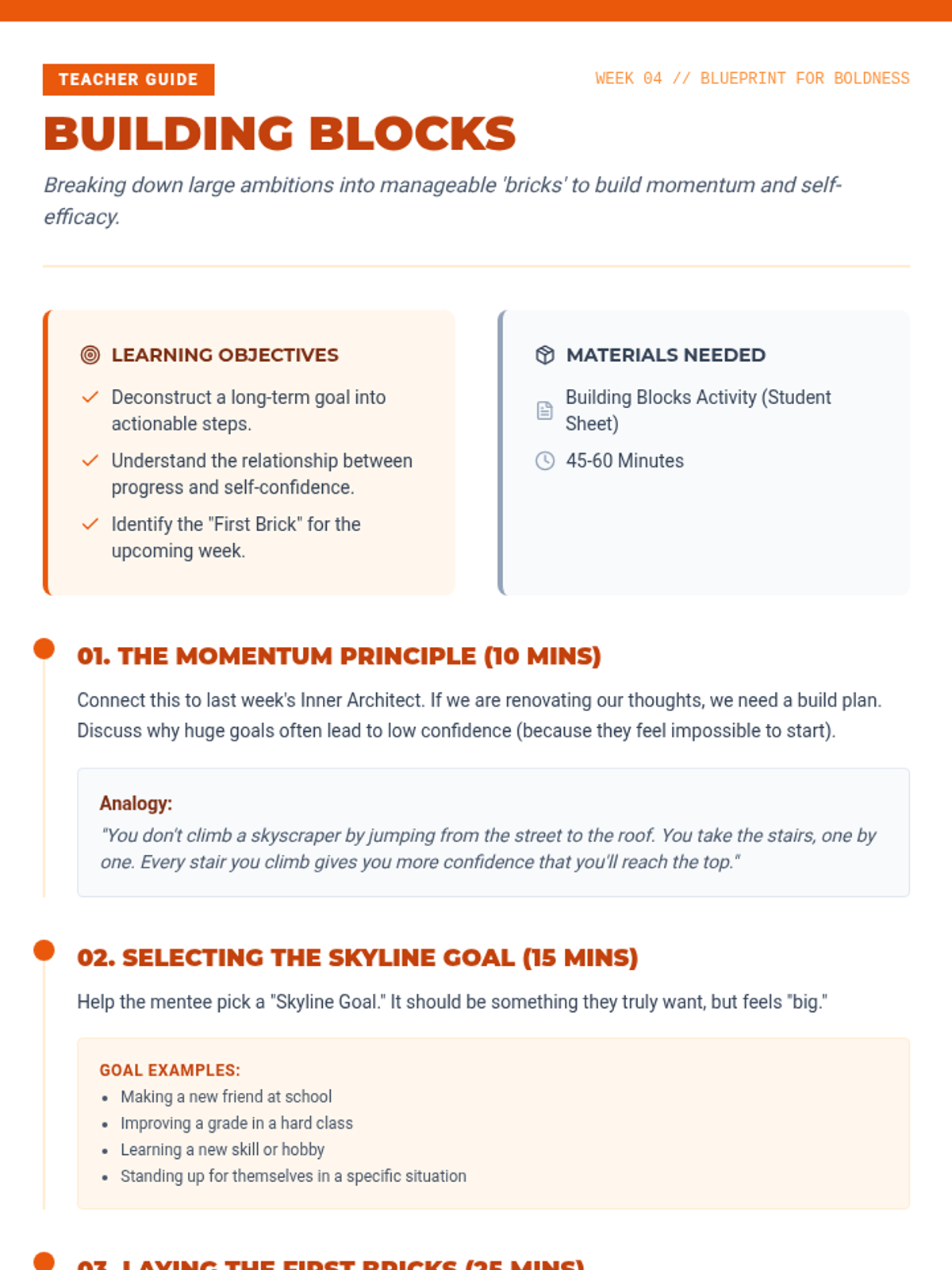
Break down large ambitions into manageable 'bricks' to build momentum and self-efficacy.
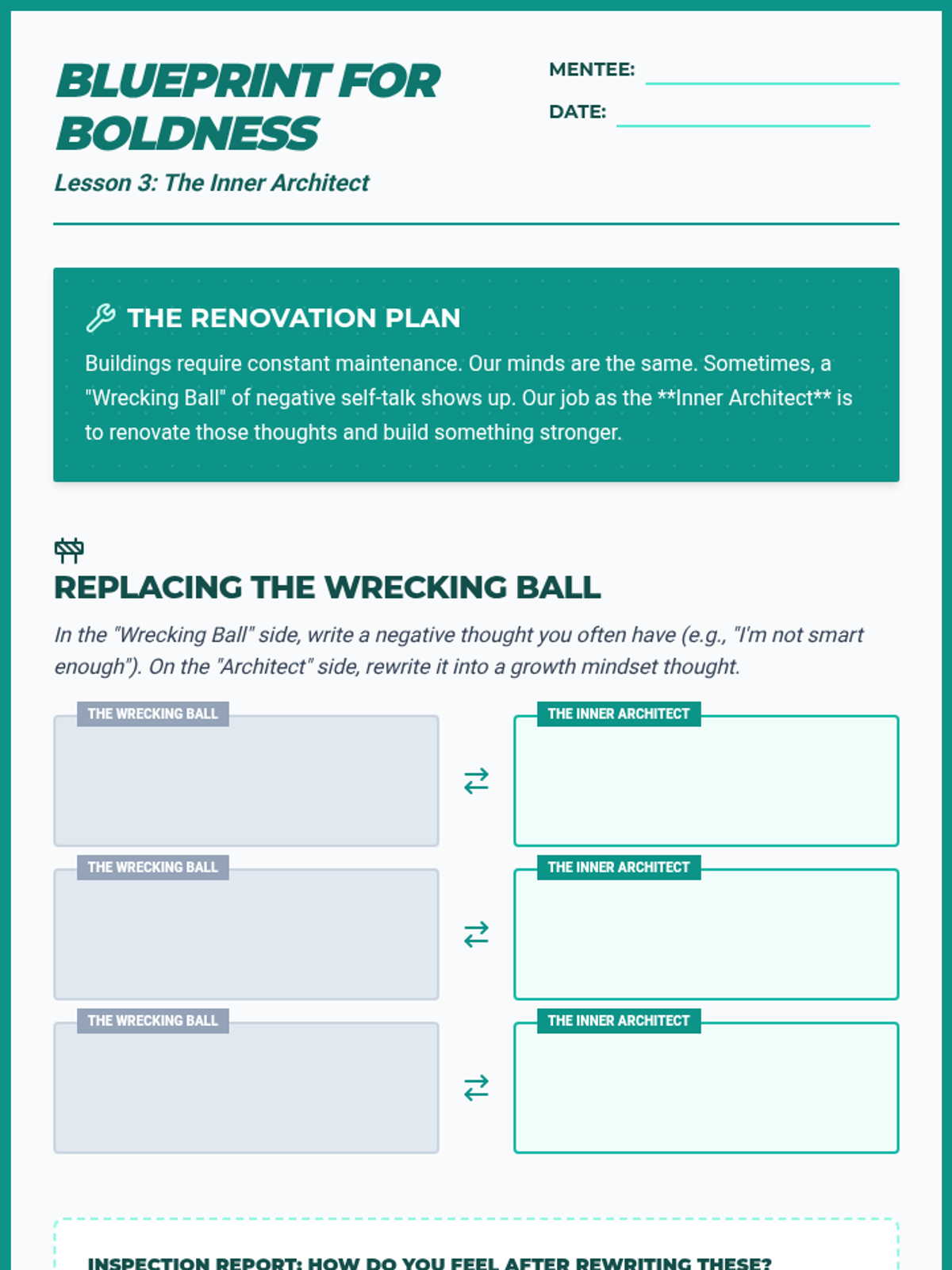
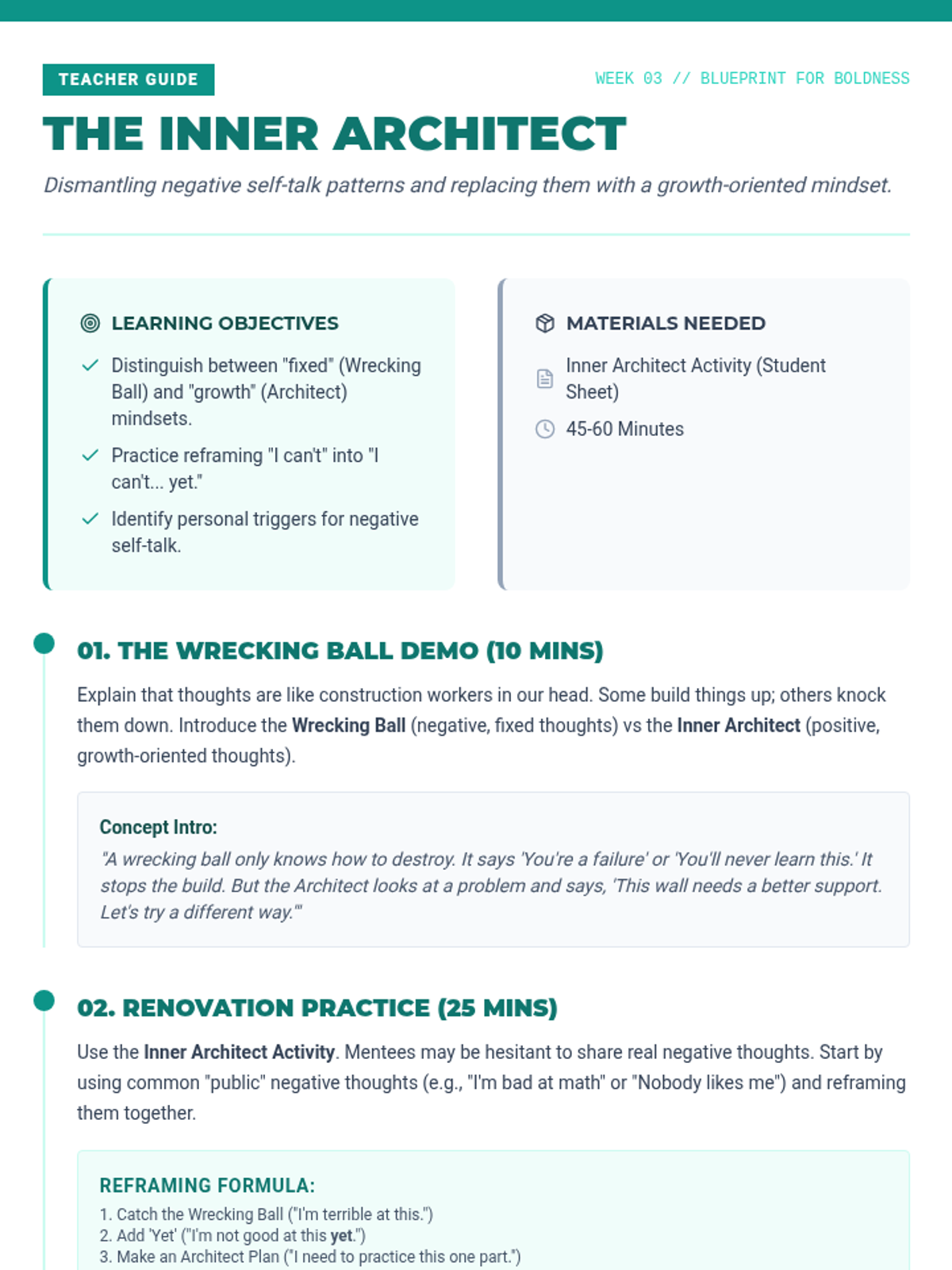
Identify and dismantle negative self-talk patterns, replacing them with a growth-oriented 'Architect' mindset.
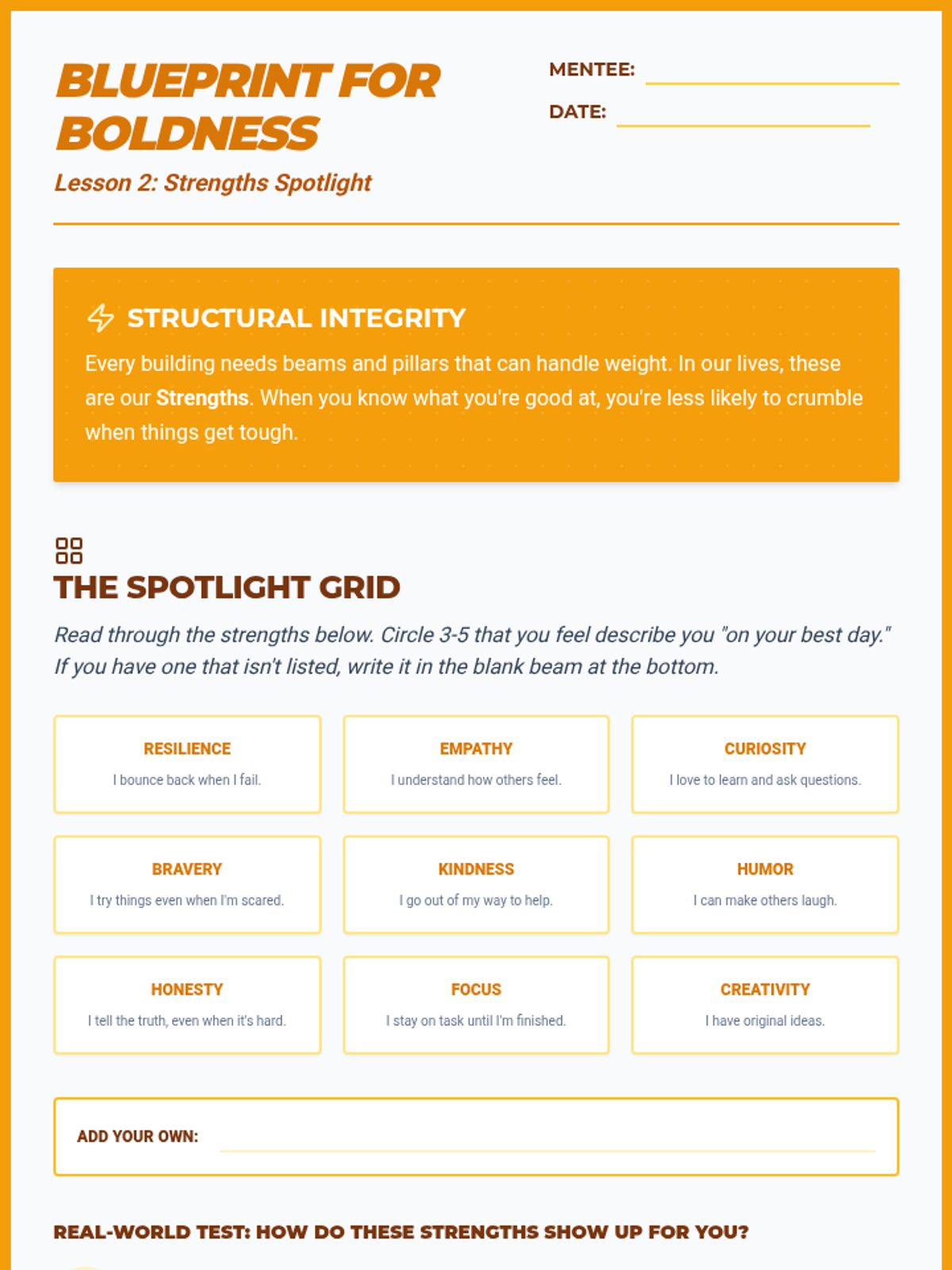
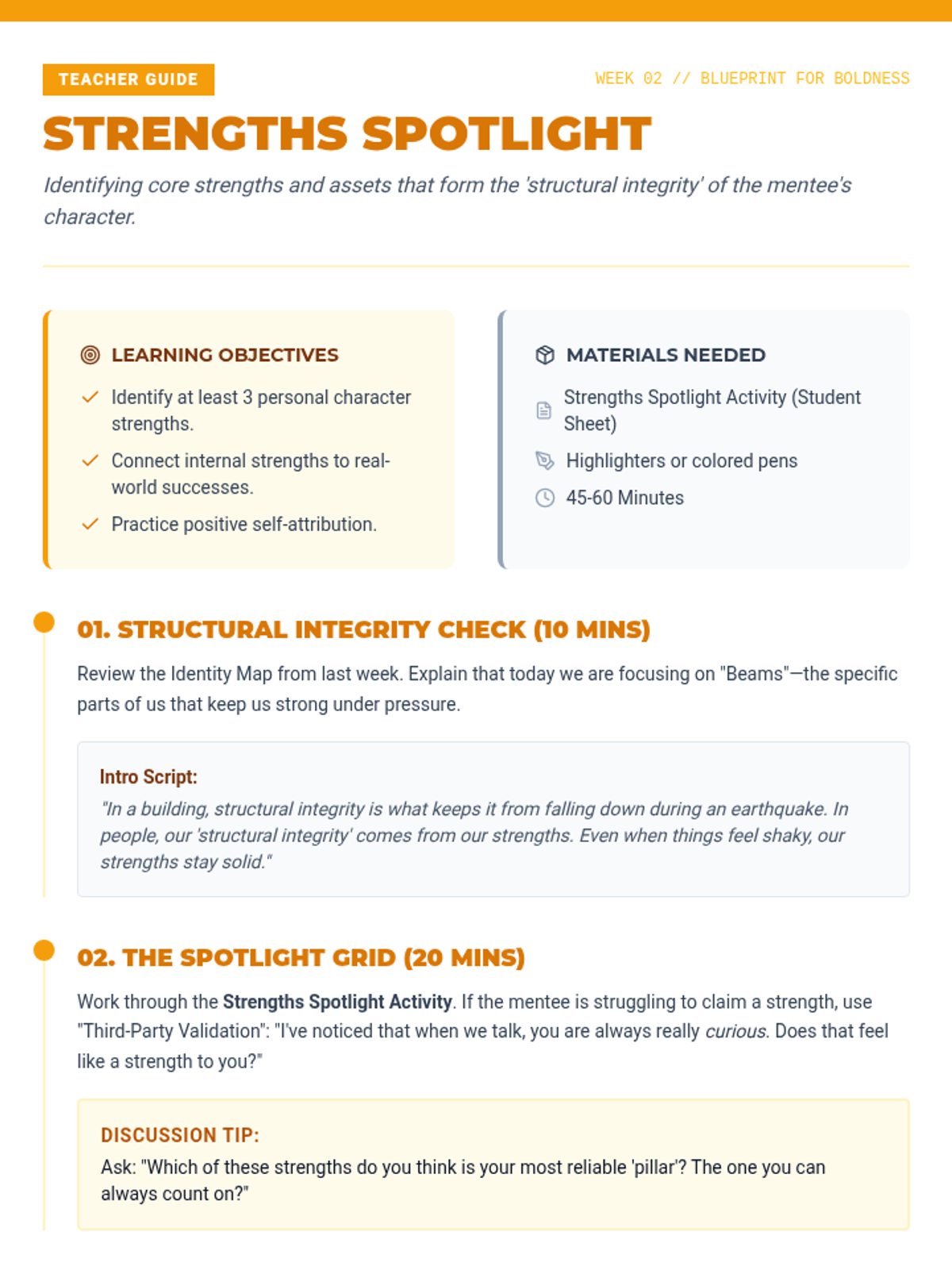
Identify core strengths and assets that form the 'structural integrity' of the mentee's character.
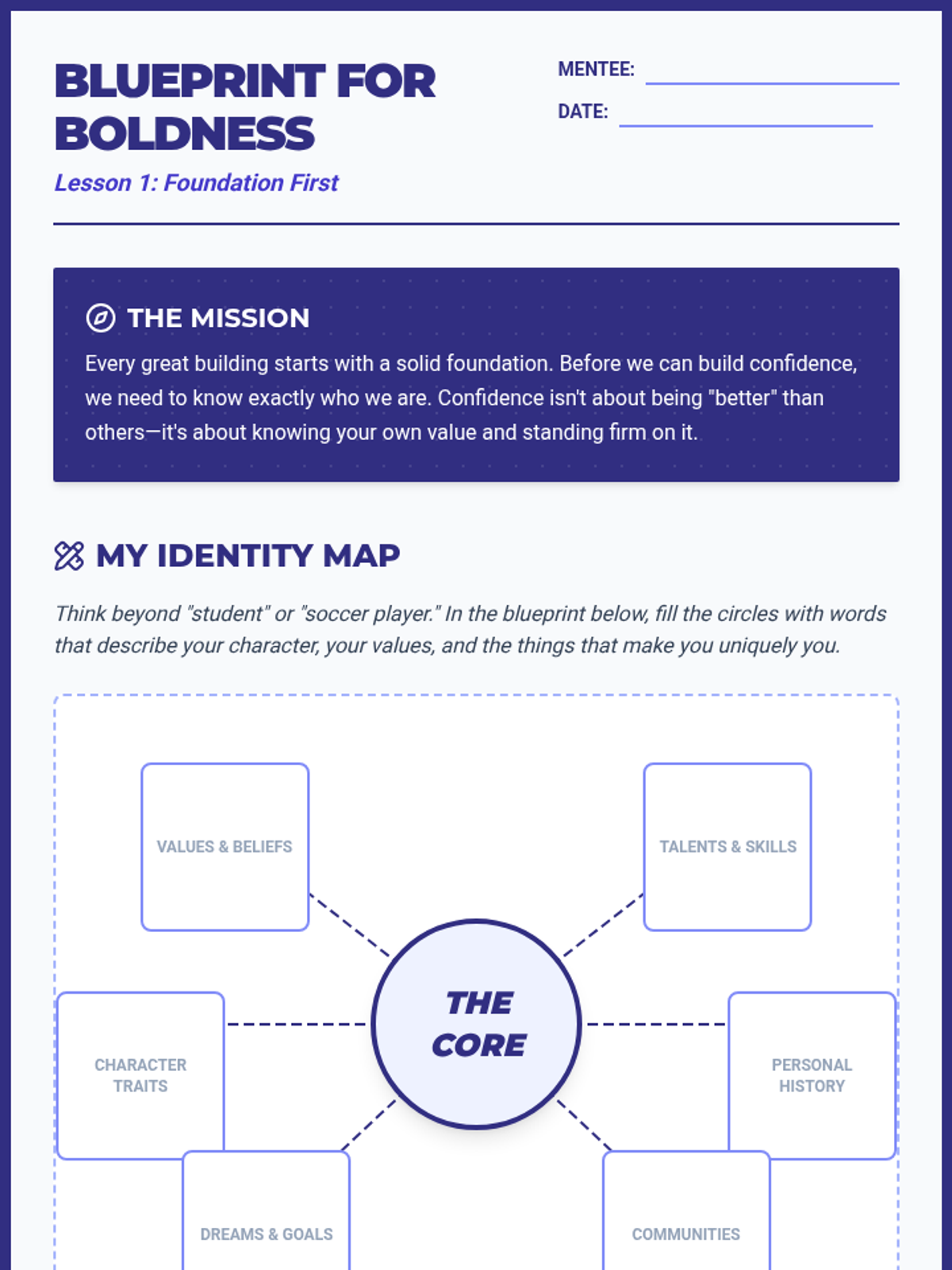
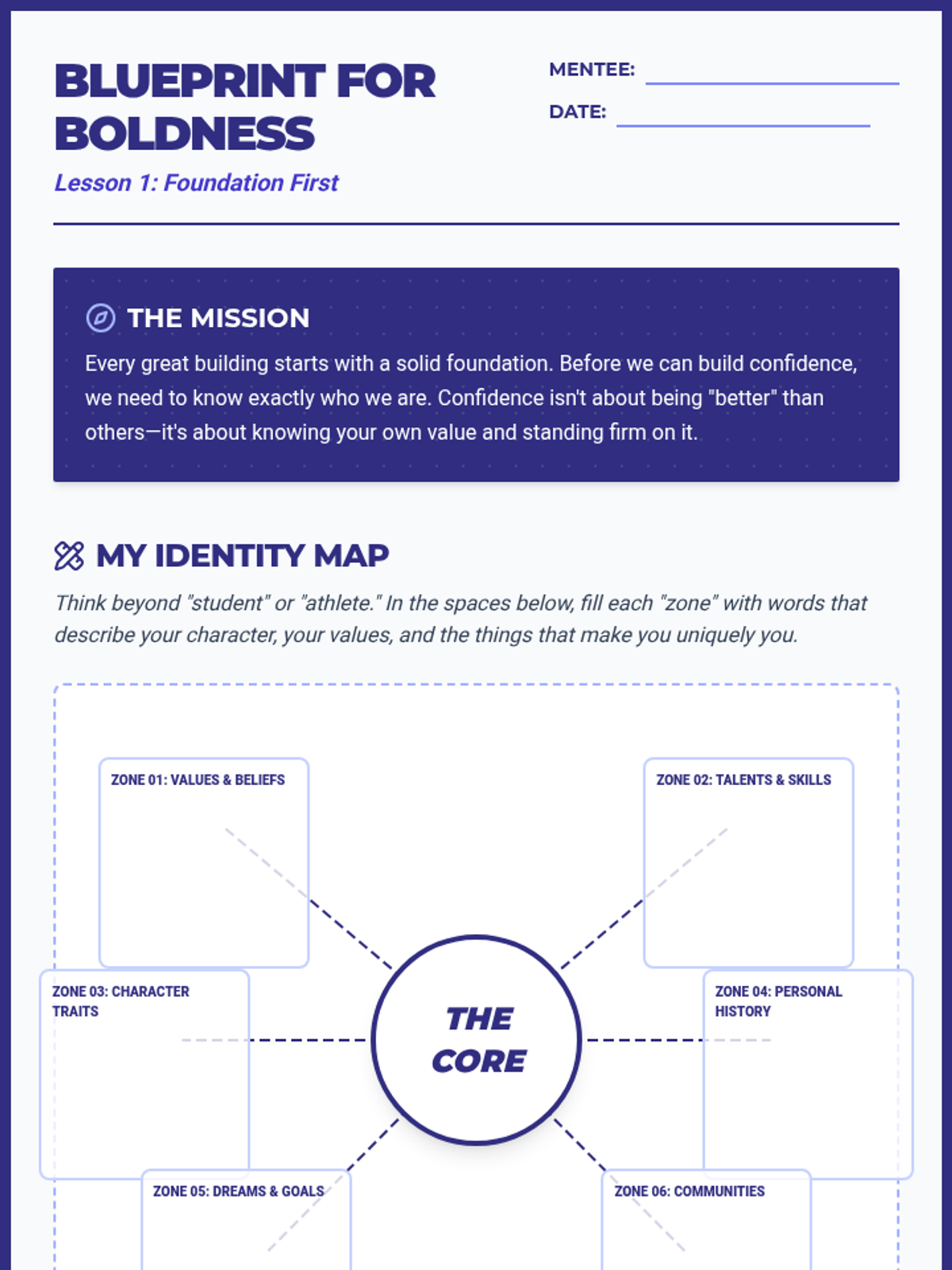
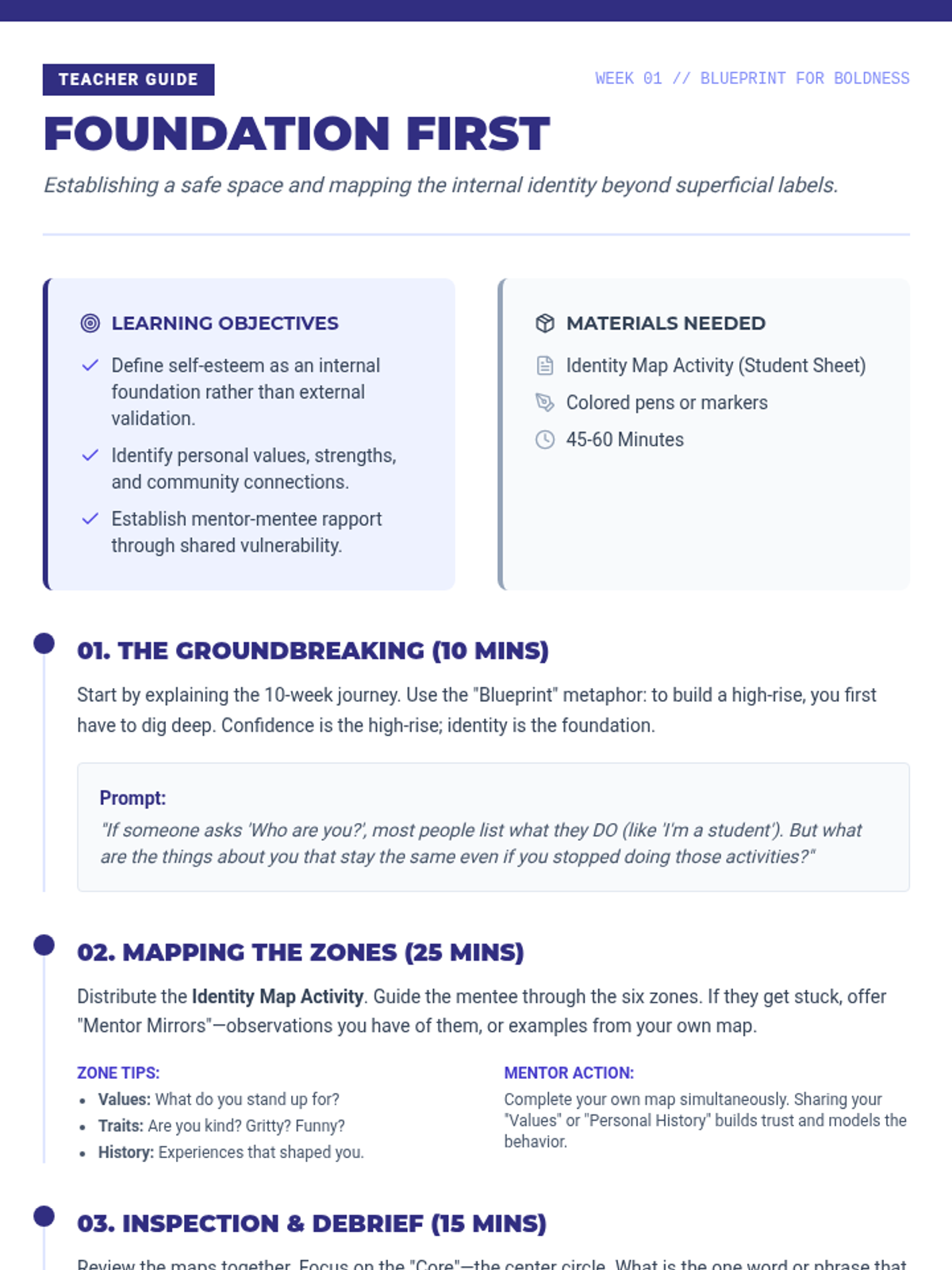
Establish a safe space and help the mentee map their internal identity beyond superficial labels.
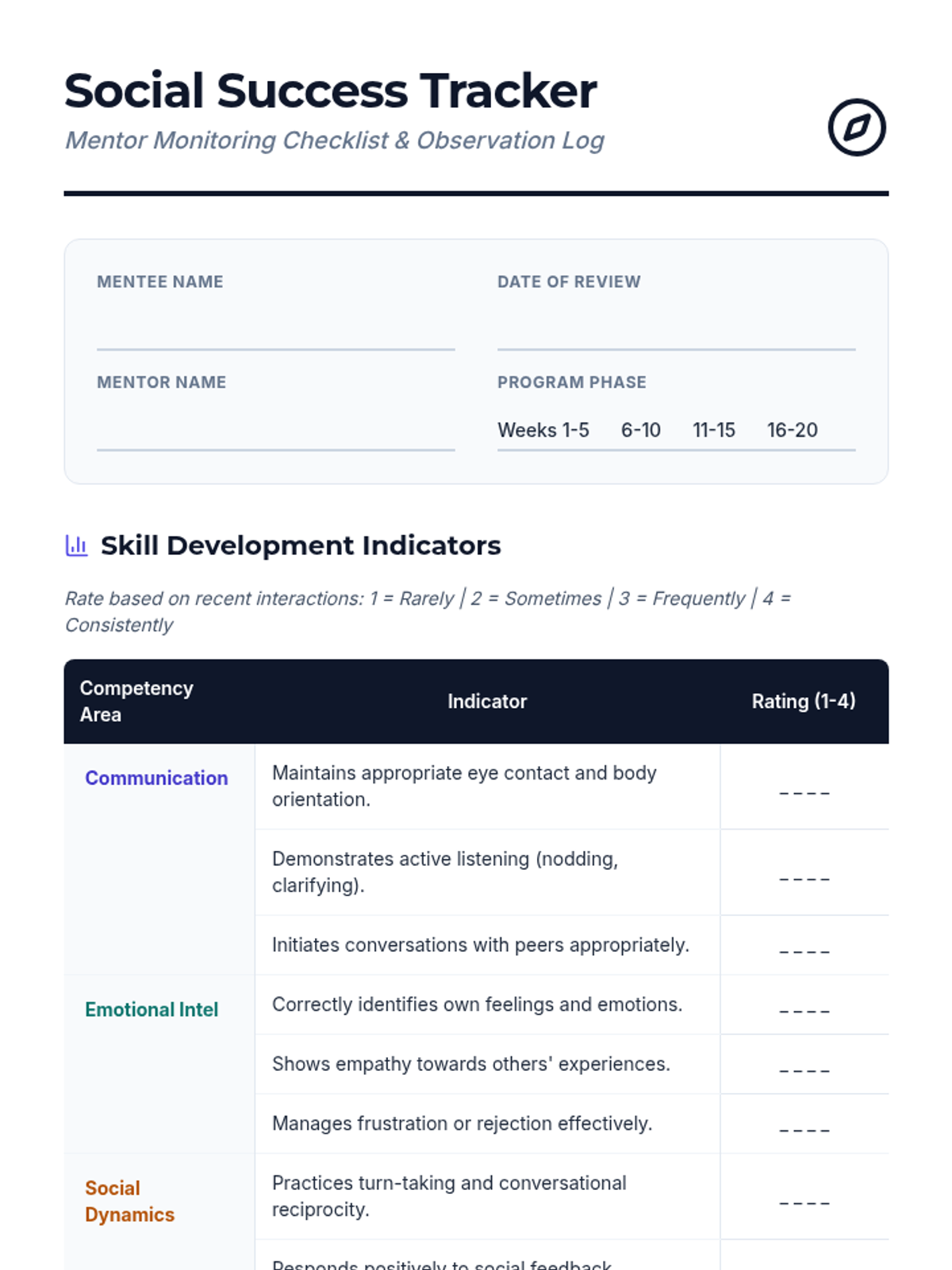
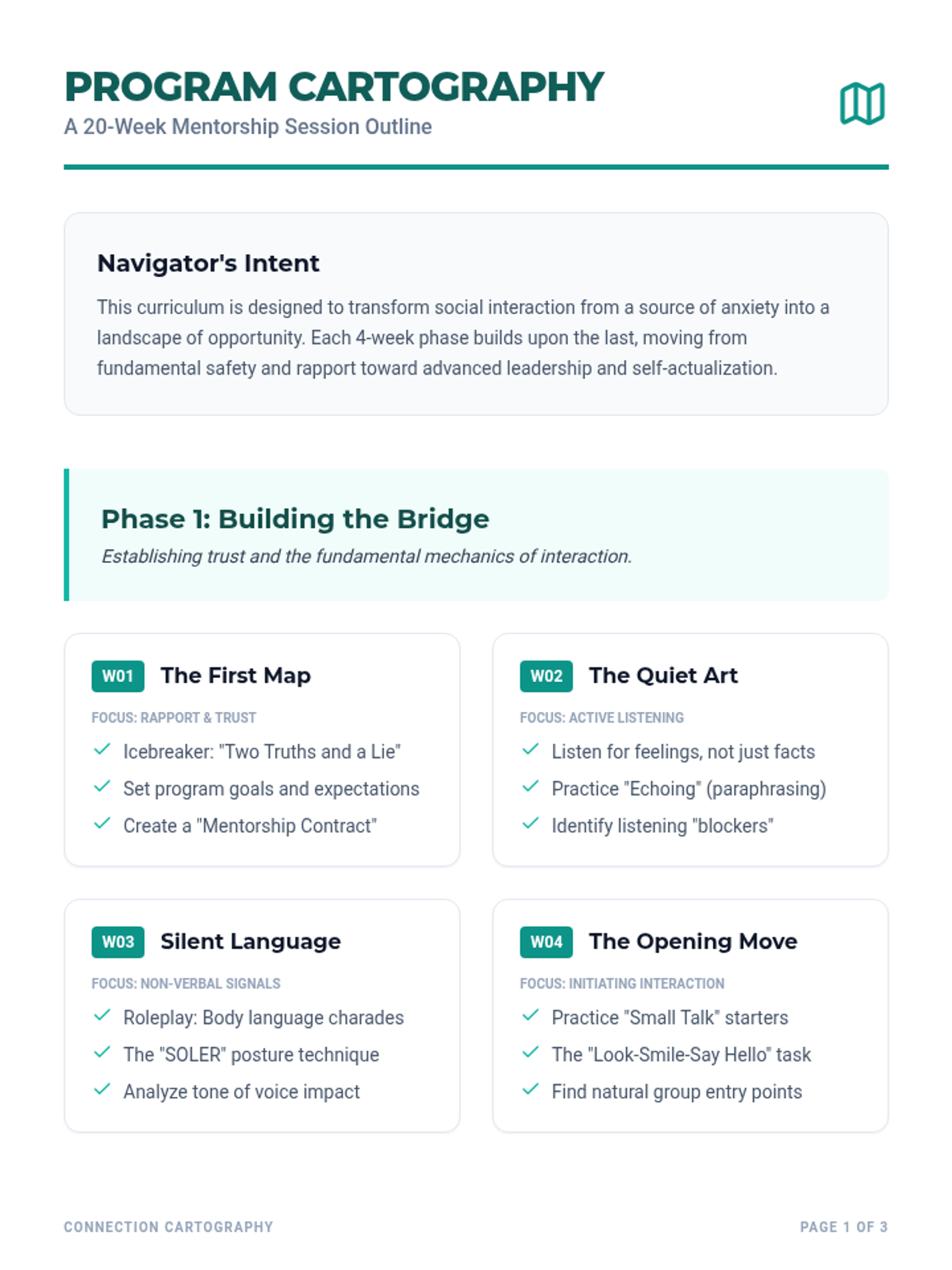
The core foundational resources for mentors to guide their mentees through the 20-session journey.
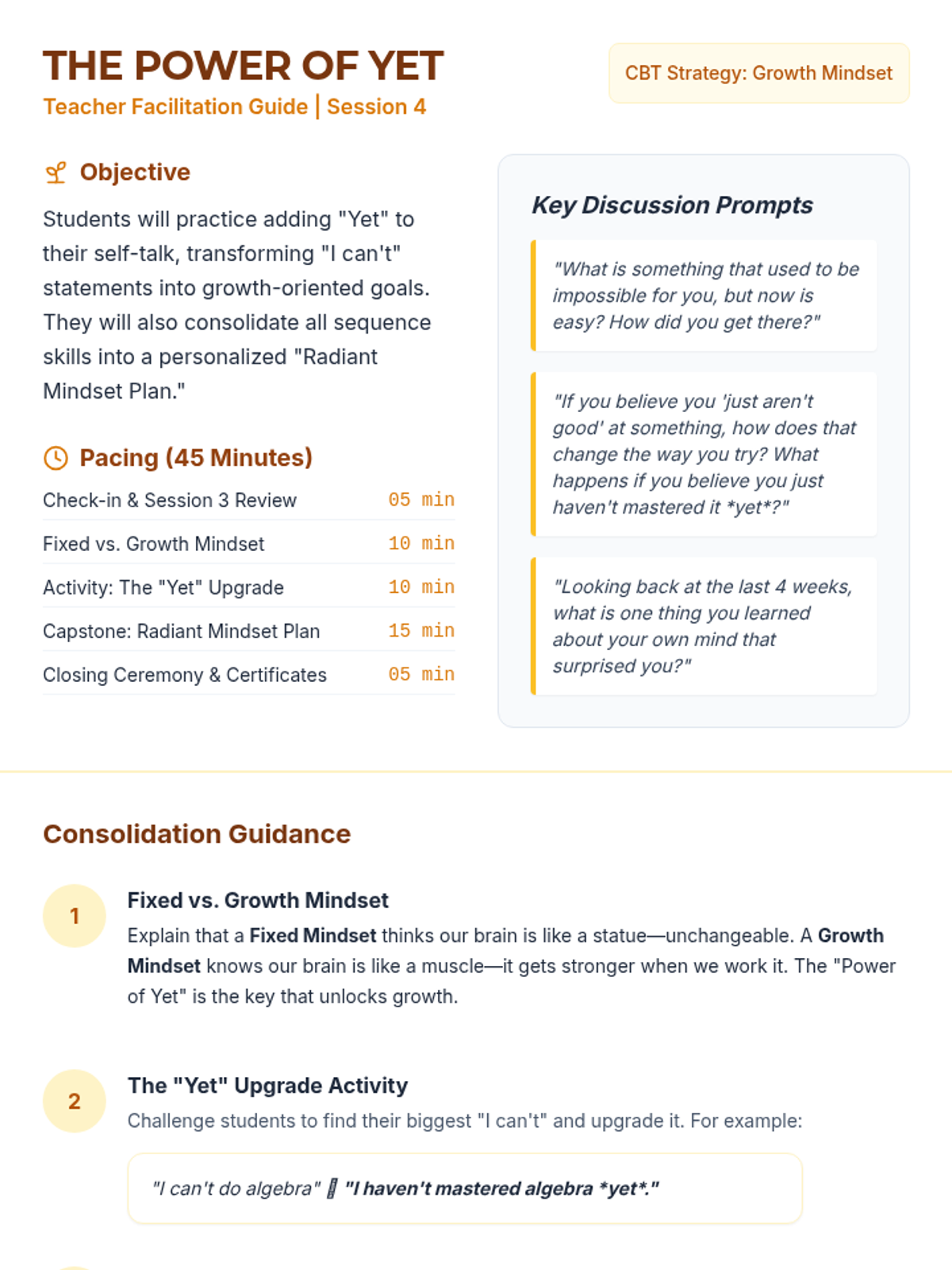
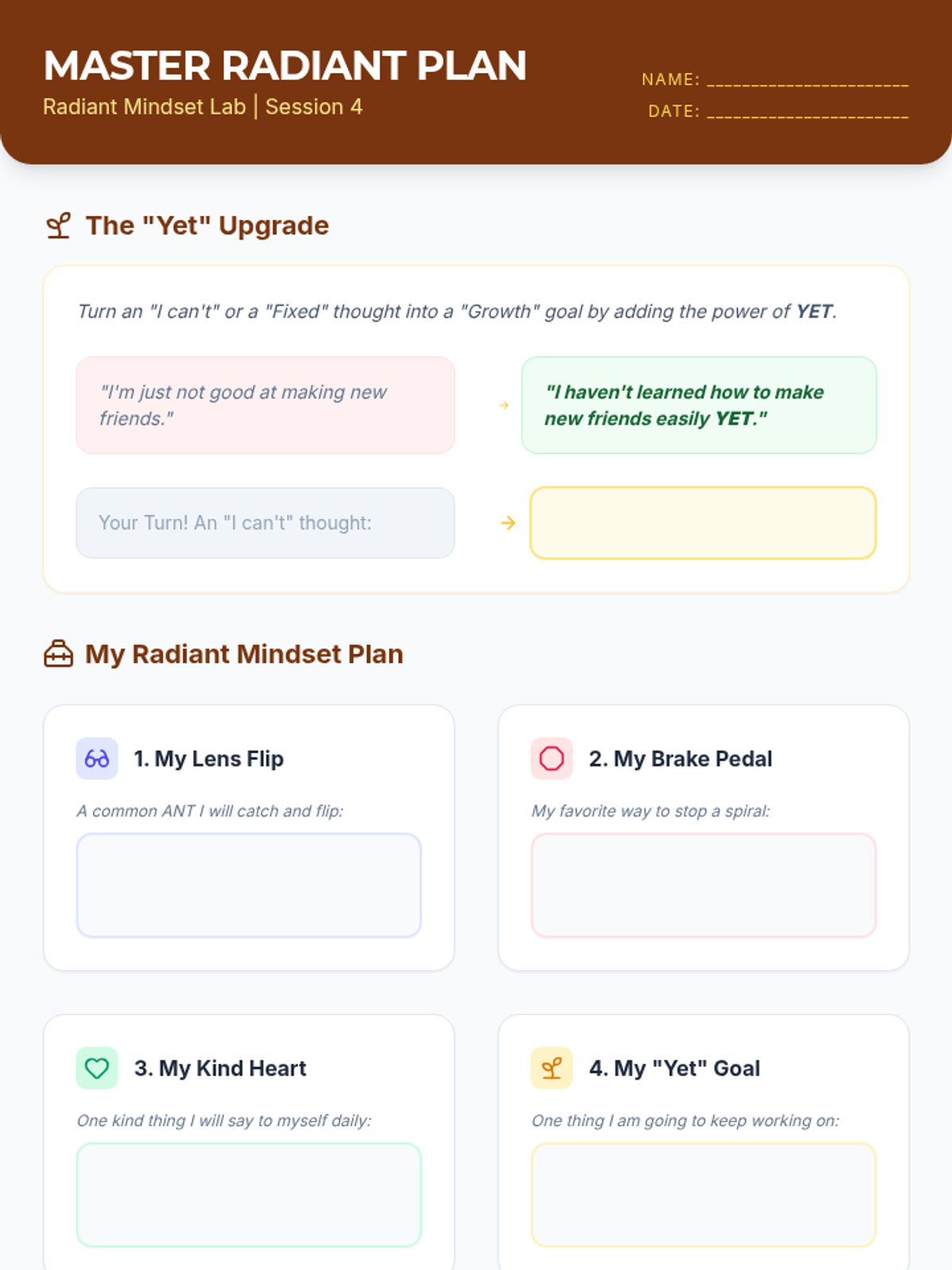
Consolidates learning by applying the 'Power of Yet' to challenges, fostering a mindset that embraces progress and potential.
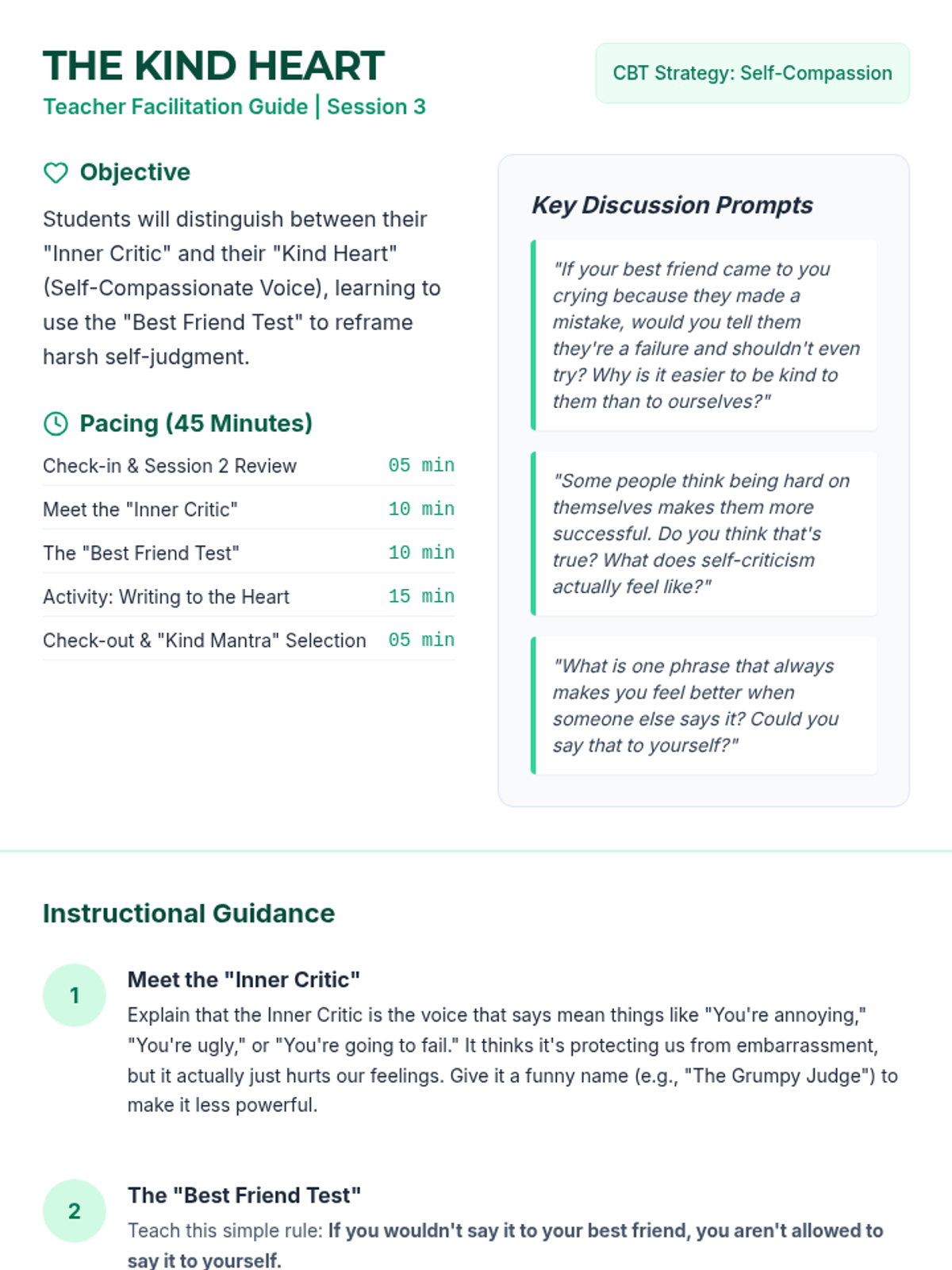
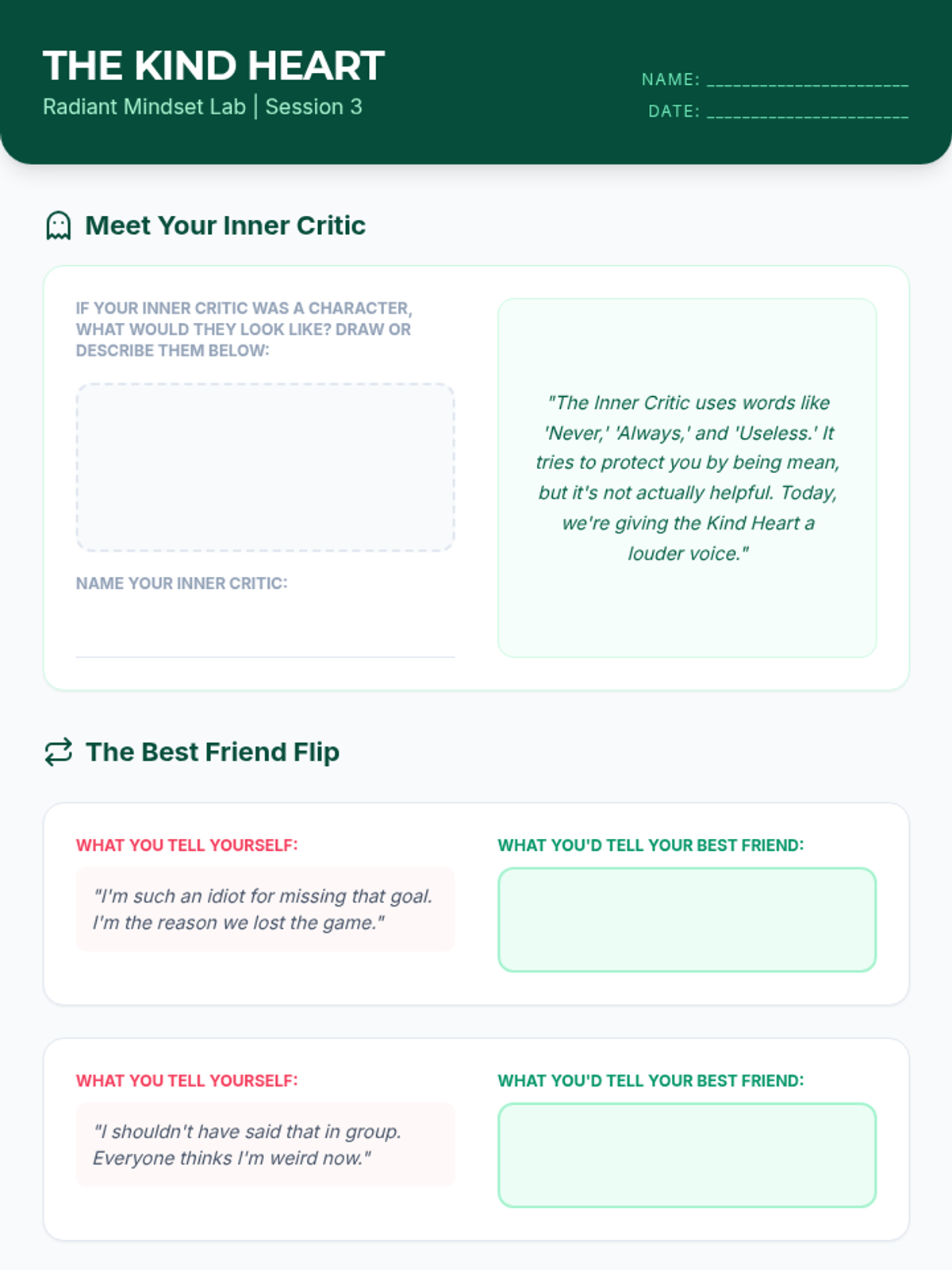
Explores the 'Kind Heart' approach to silence the inner critic and replace harsh self-judgment with self-compassionate self-talk.
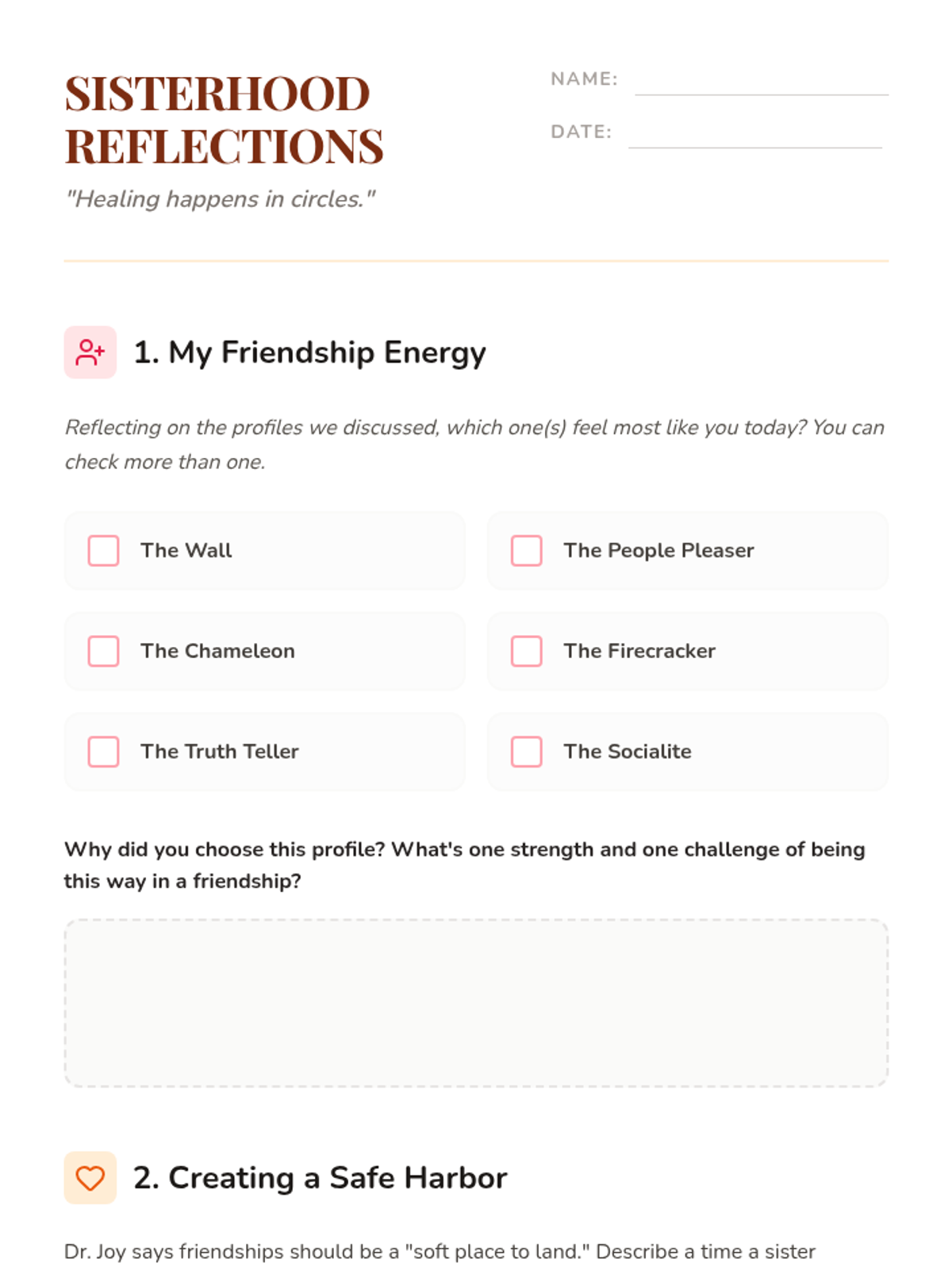
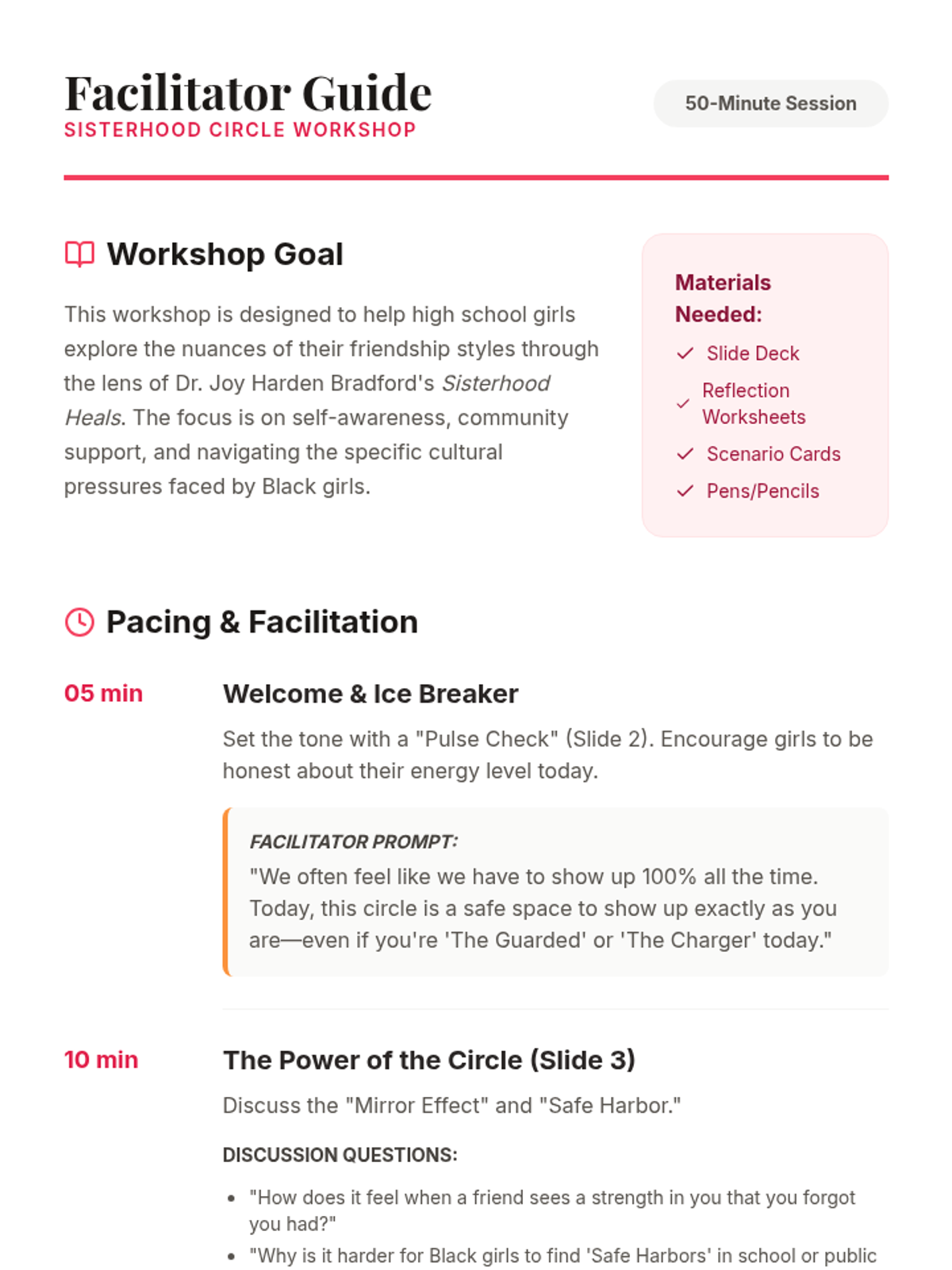
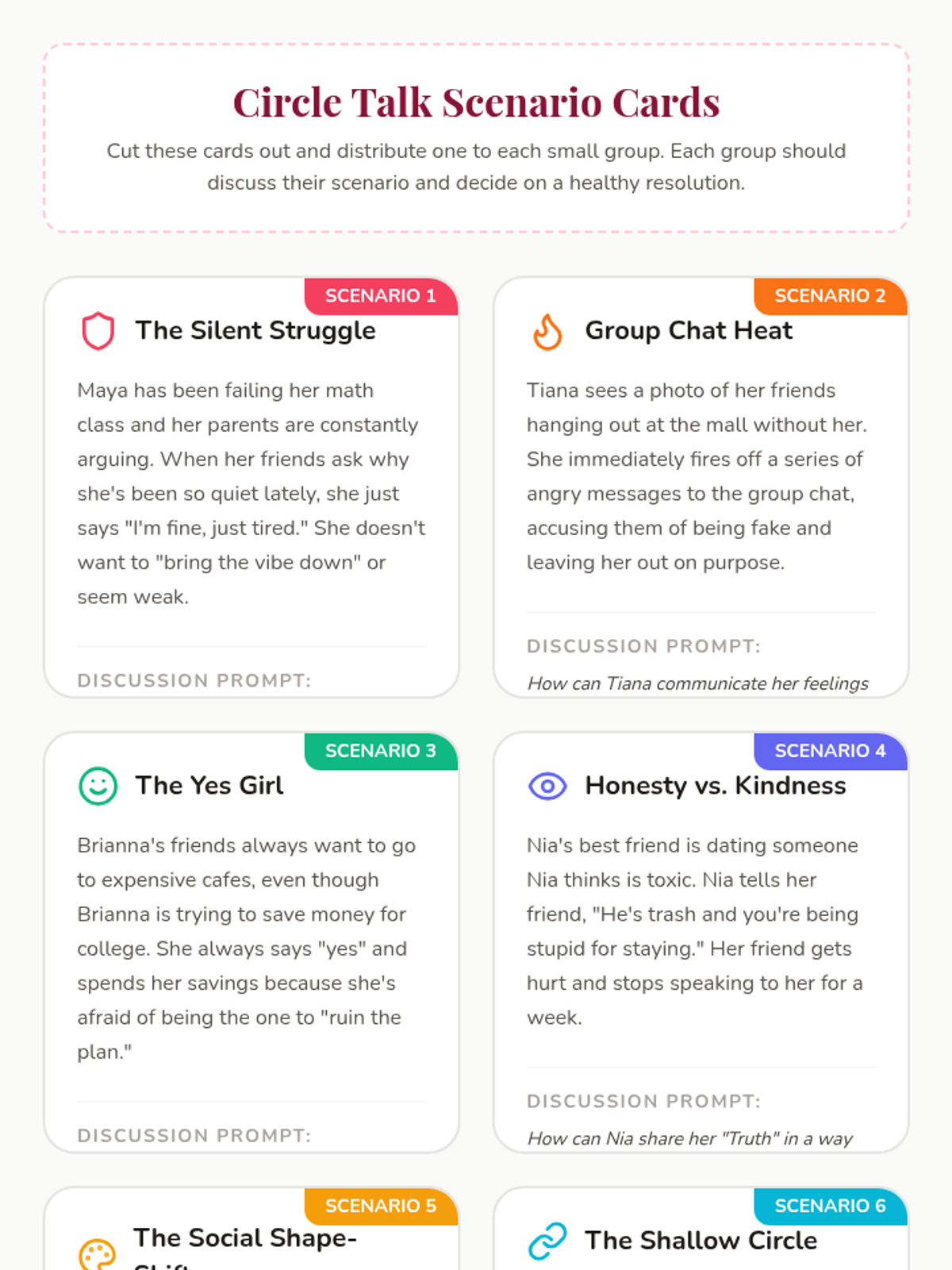
A 50-minute interactive workshop for high school girls focused on the power of sisterhood, navigating the nuances of Black girlhood, and understanding personal friendship styles inspired by Dr. Joy Harden Bradford's 'Sisterhood Heals'.
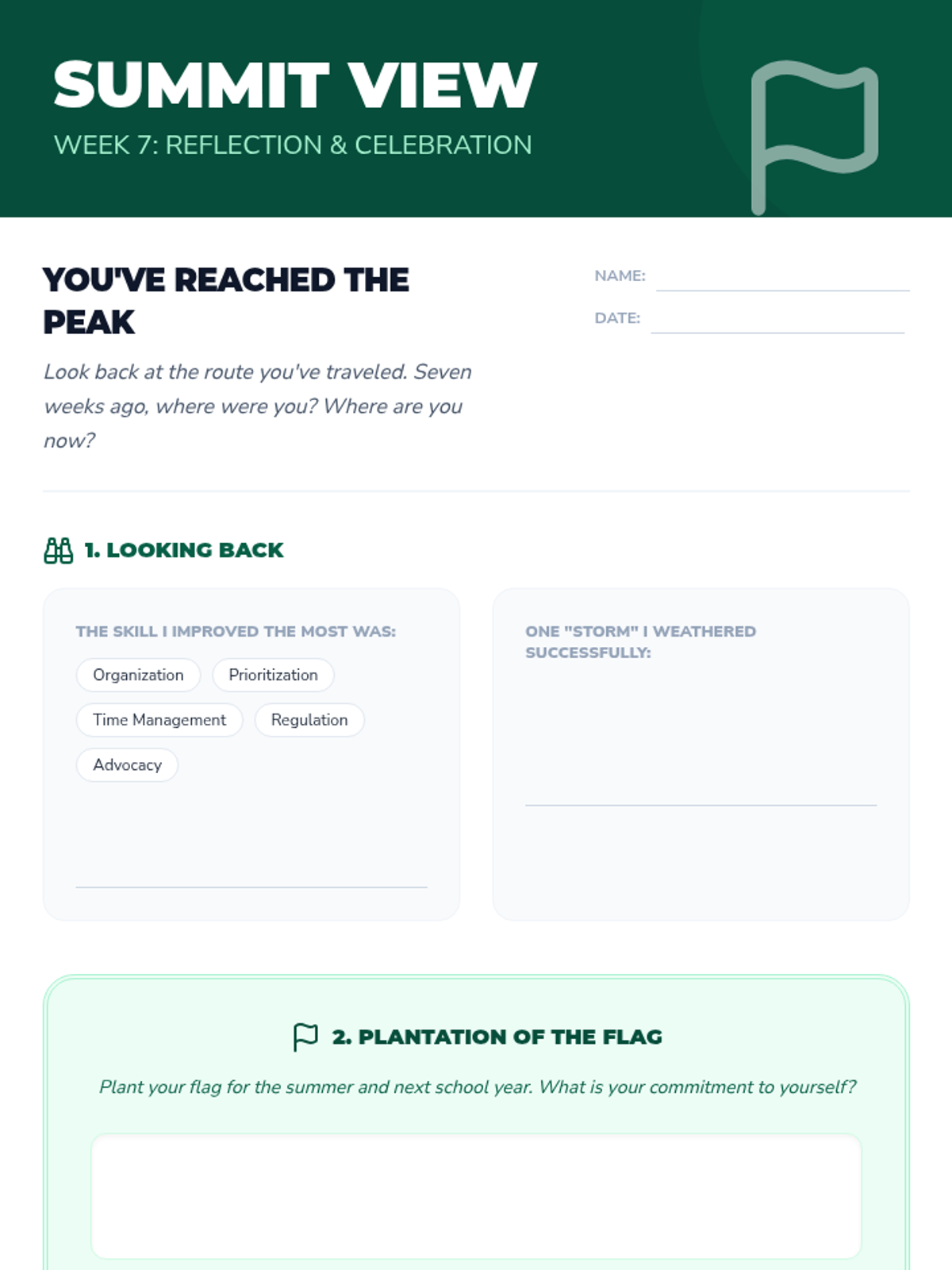
Reviewing accomplishments, celebrating growth, and planning for continued success beyond the program.
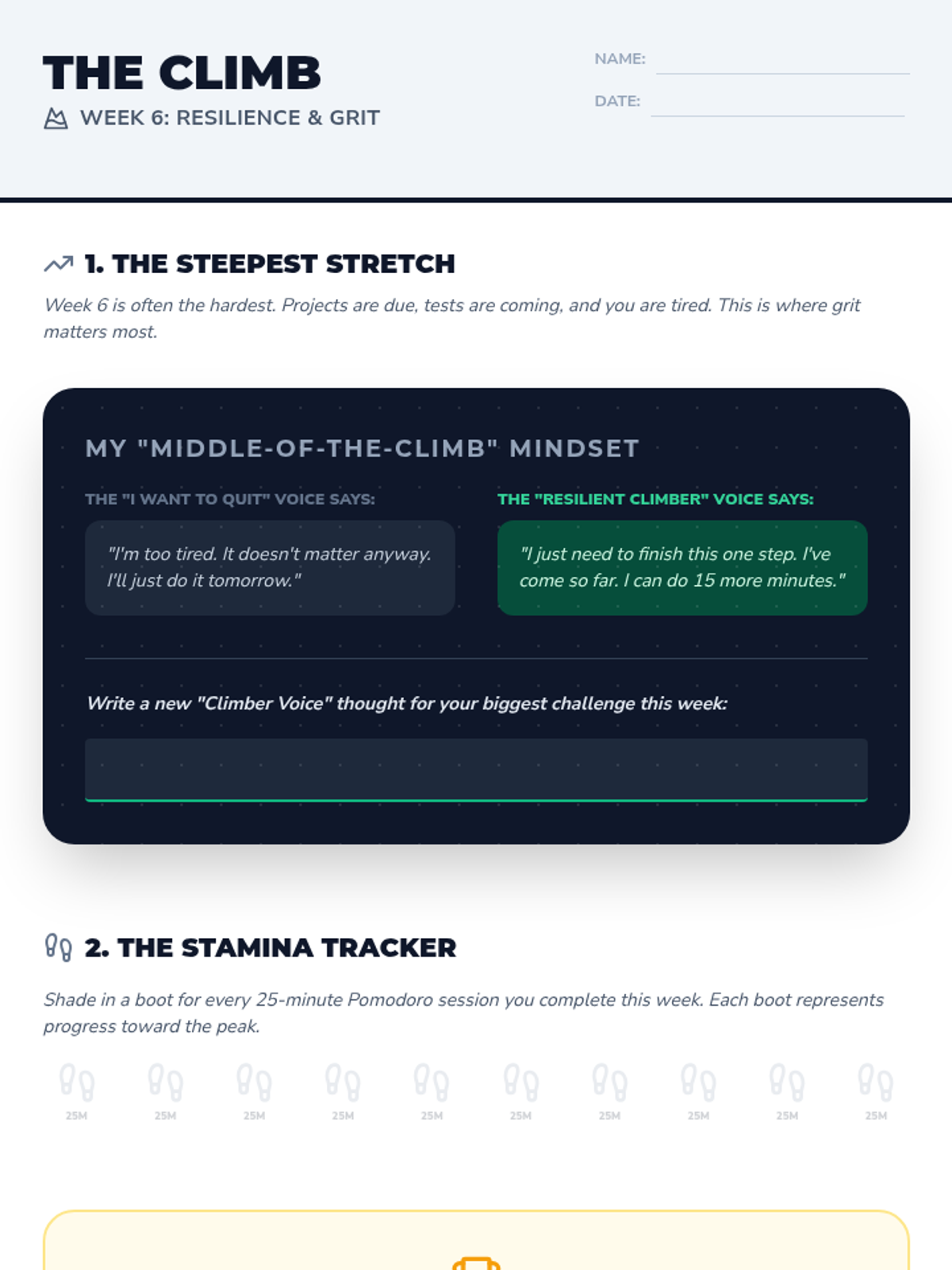
Developing mental resilience and grit to push through the most demanding academic period of the term.
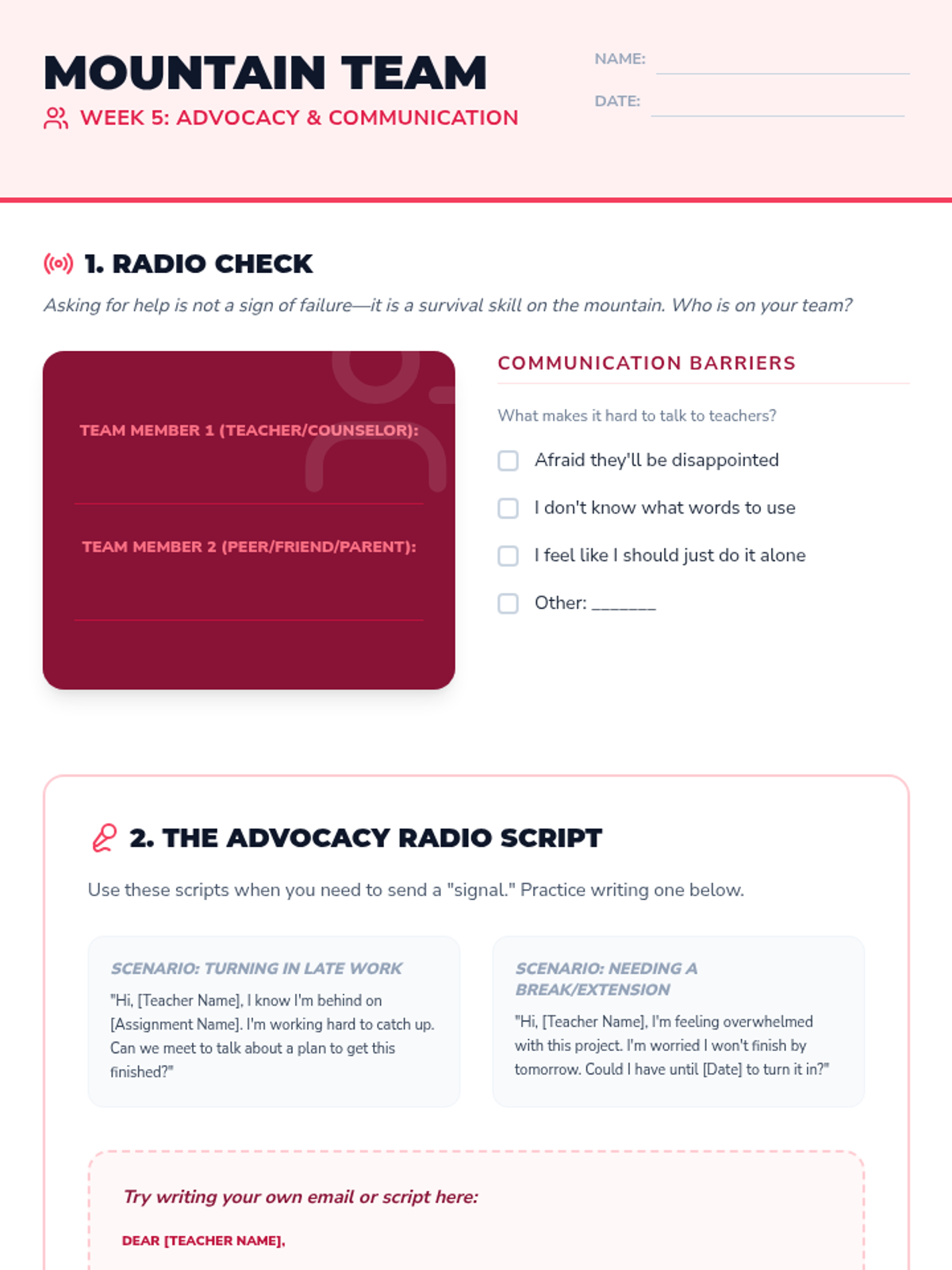
Focuses on building effective communication with teachers and peers to advocate for needs and seek support.
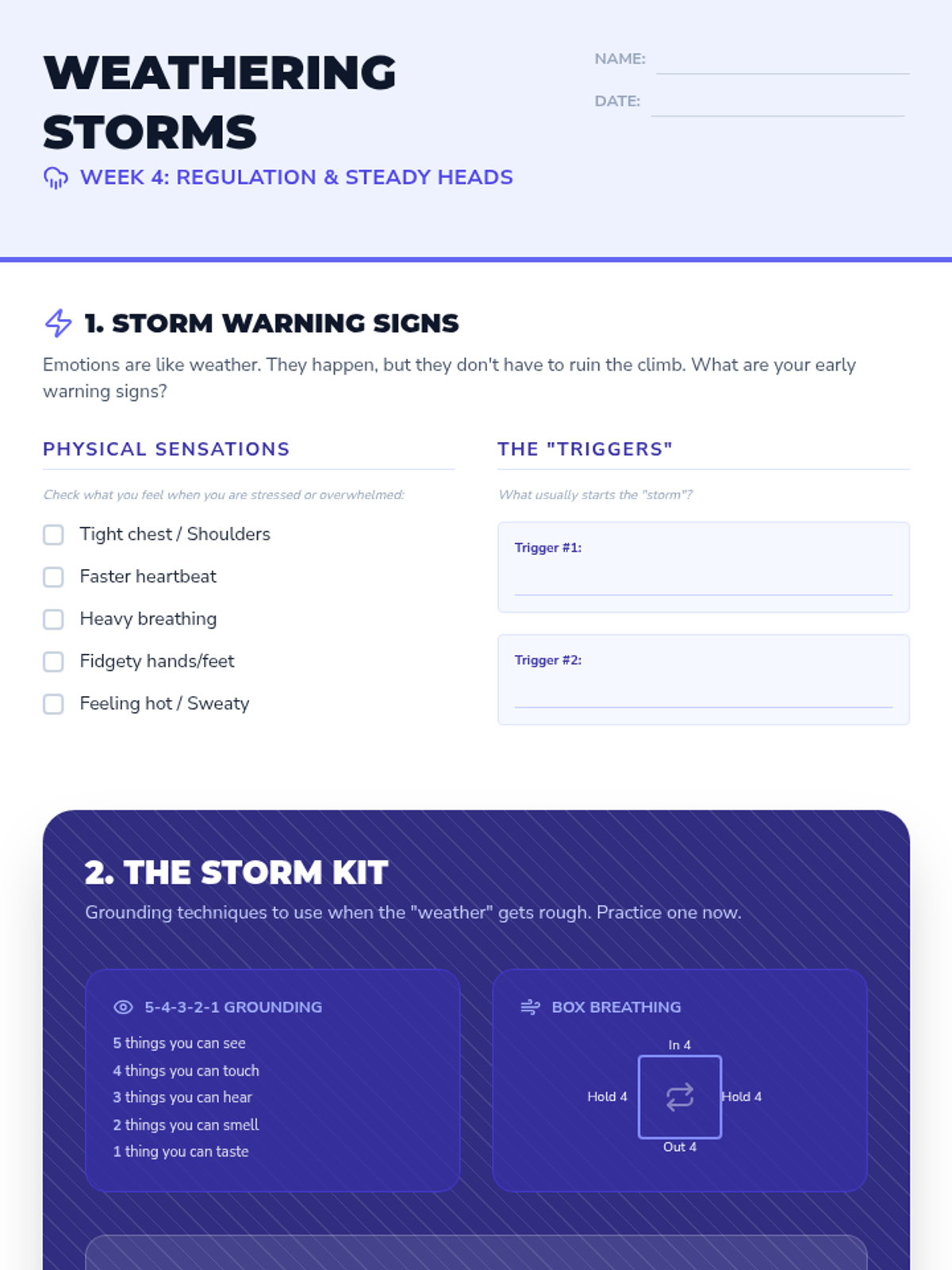
Identification of emotional triggers and the development of a 'toolbox' of regulation strategies for when things get difficult.
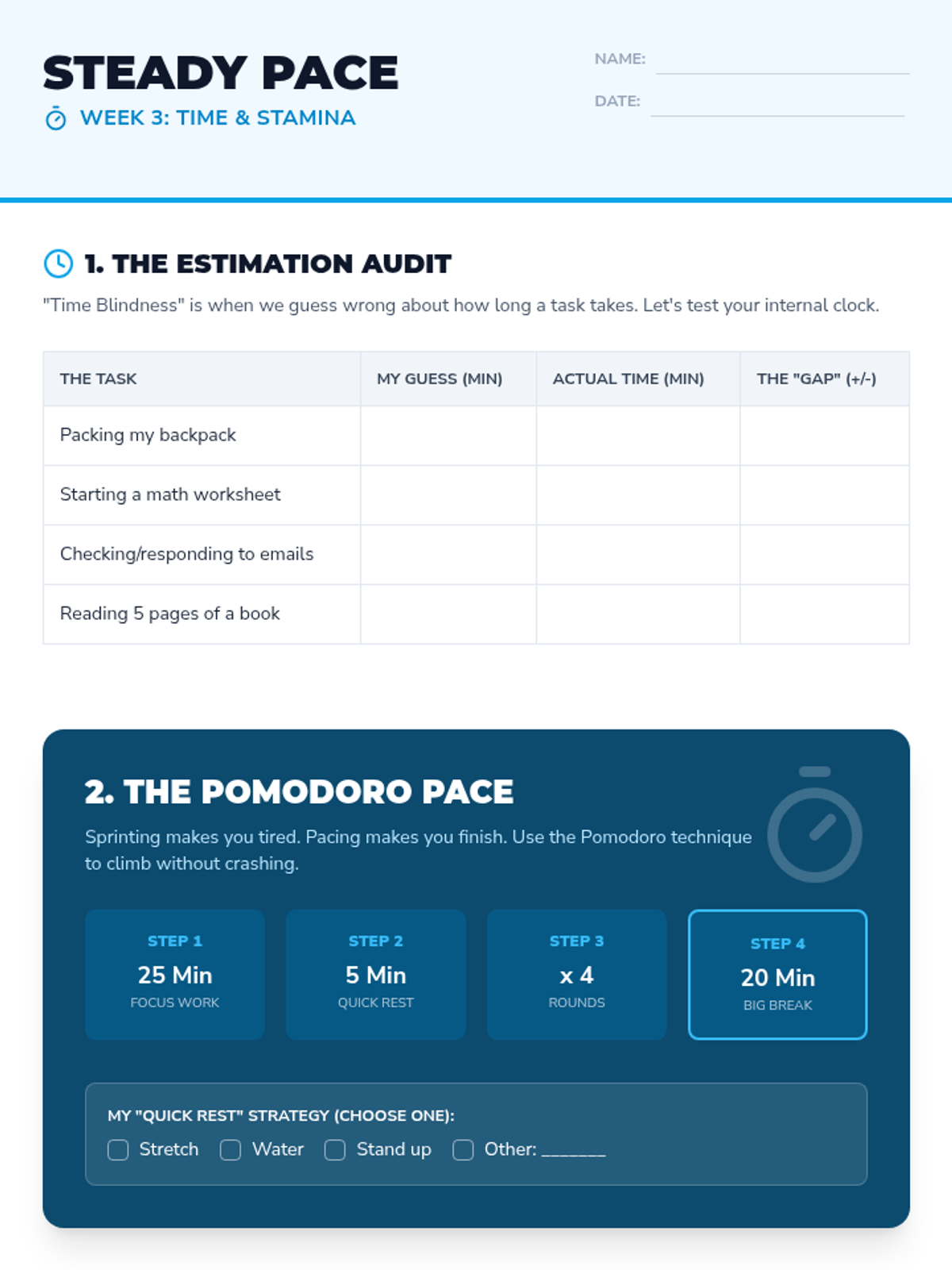
Teaching students how to estimate time for tasks and build a sustainable weekly schedule.
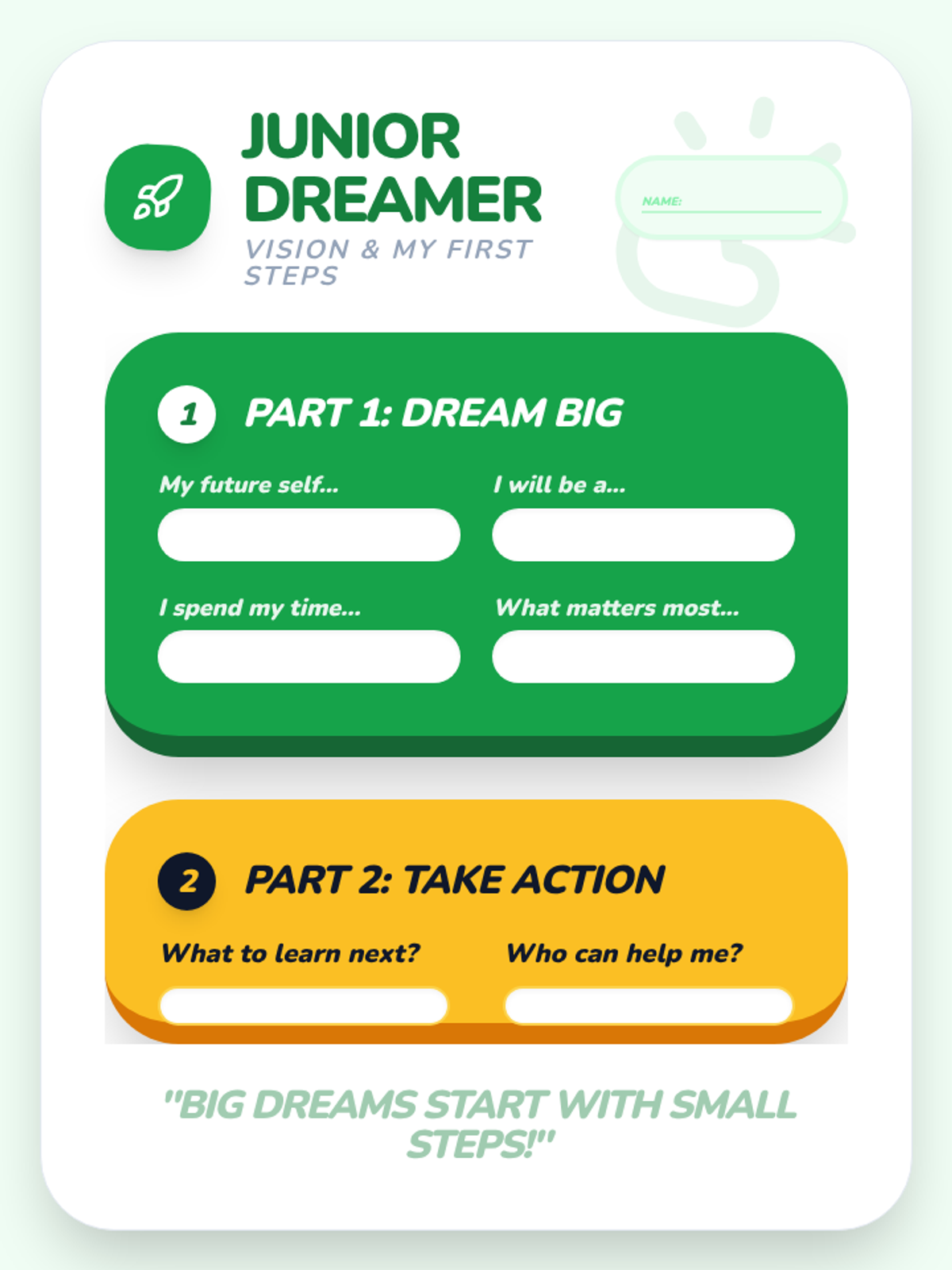
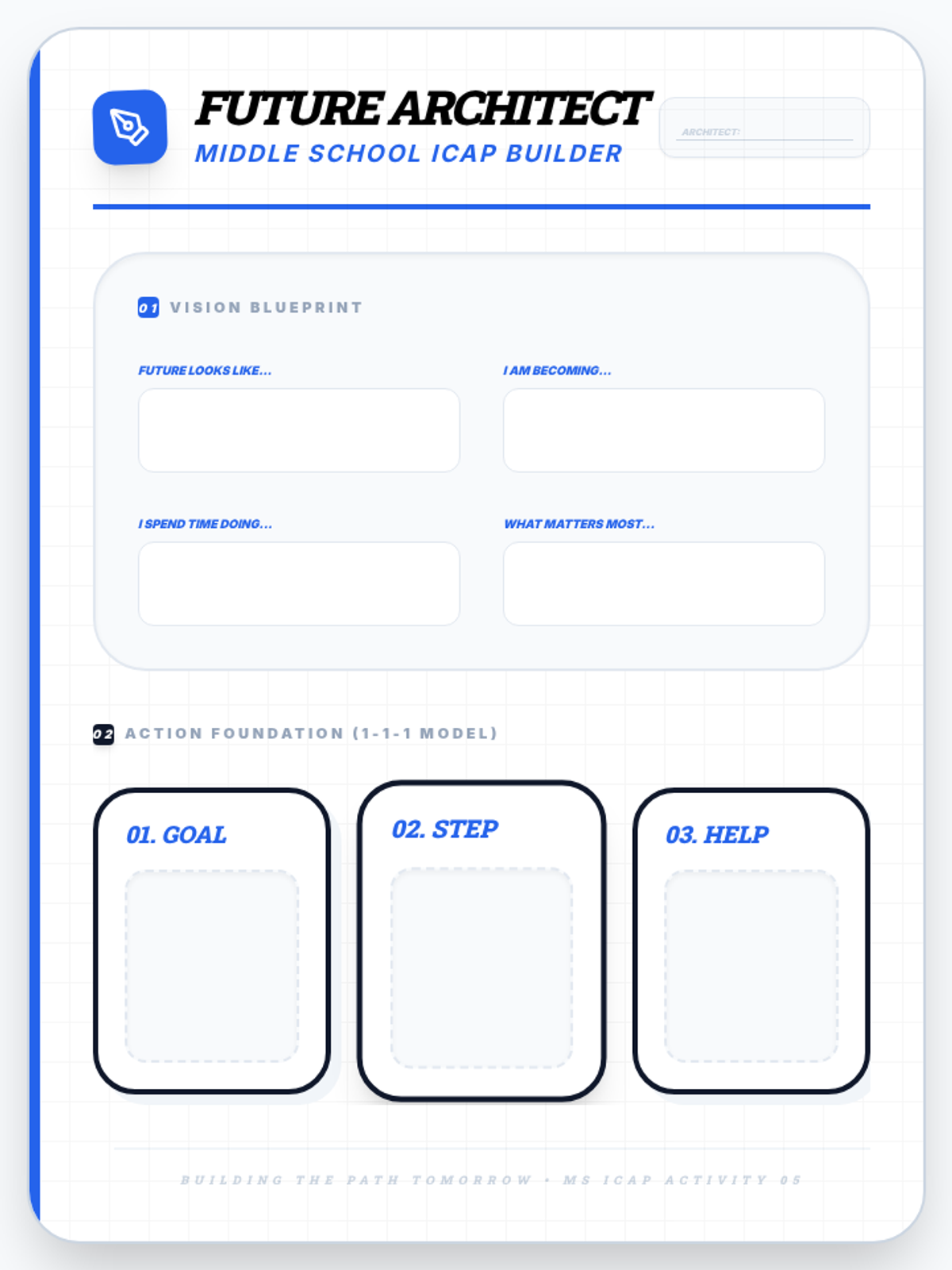
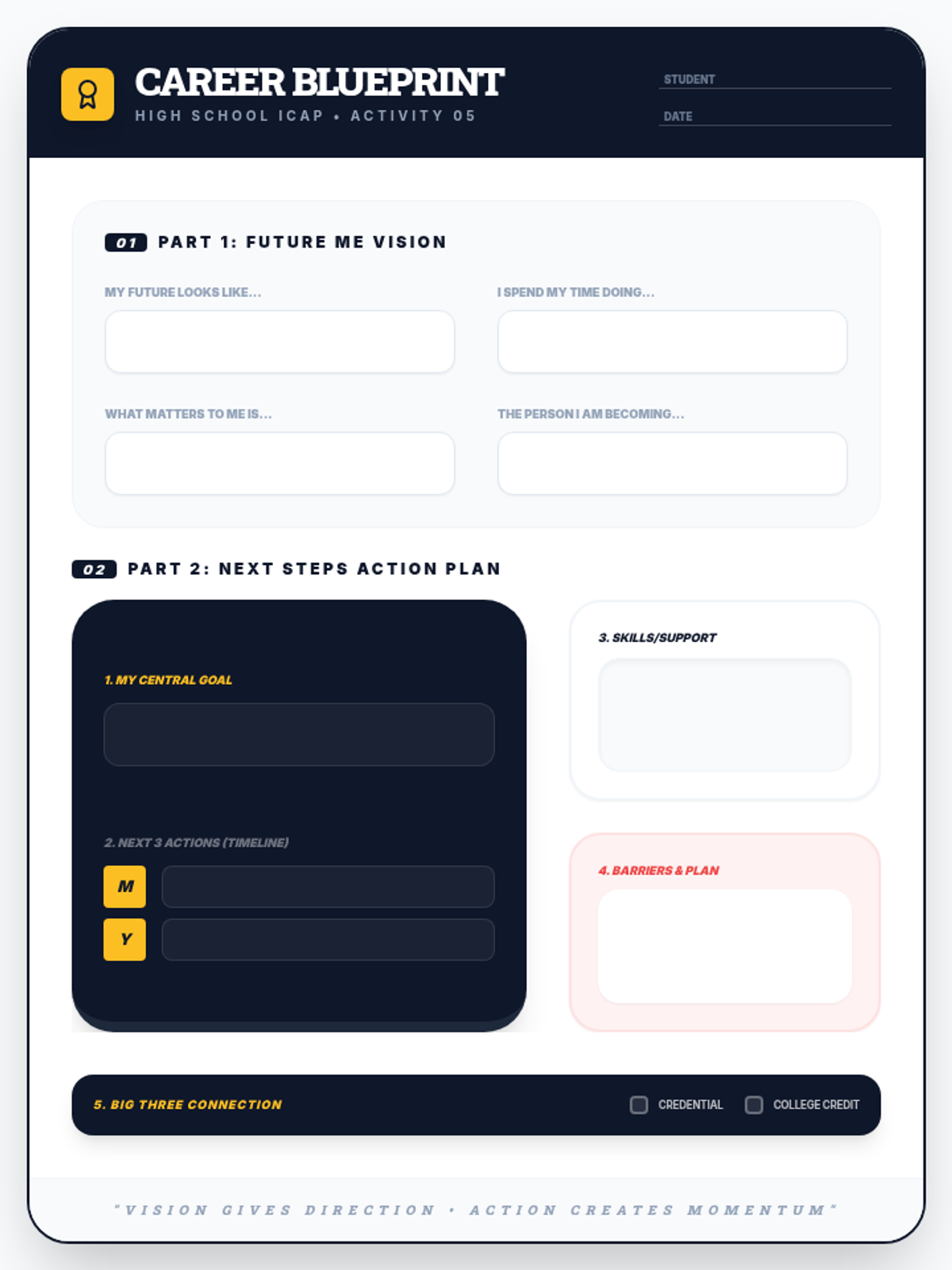
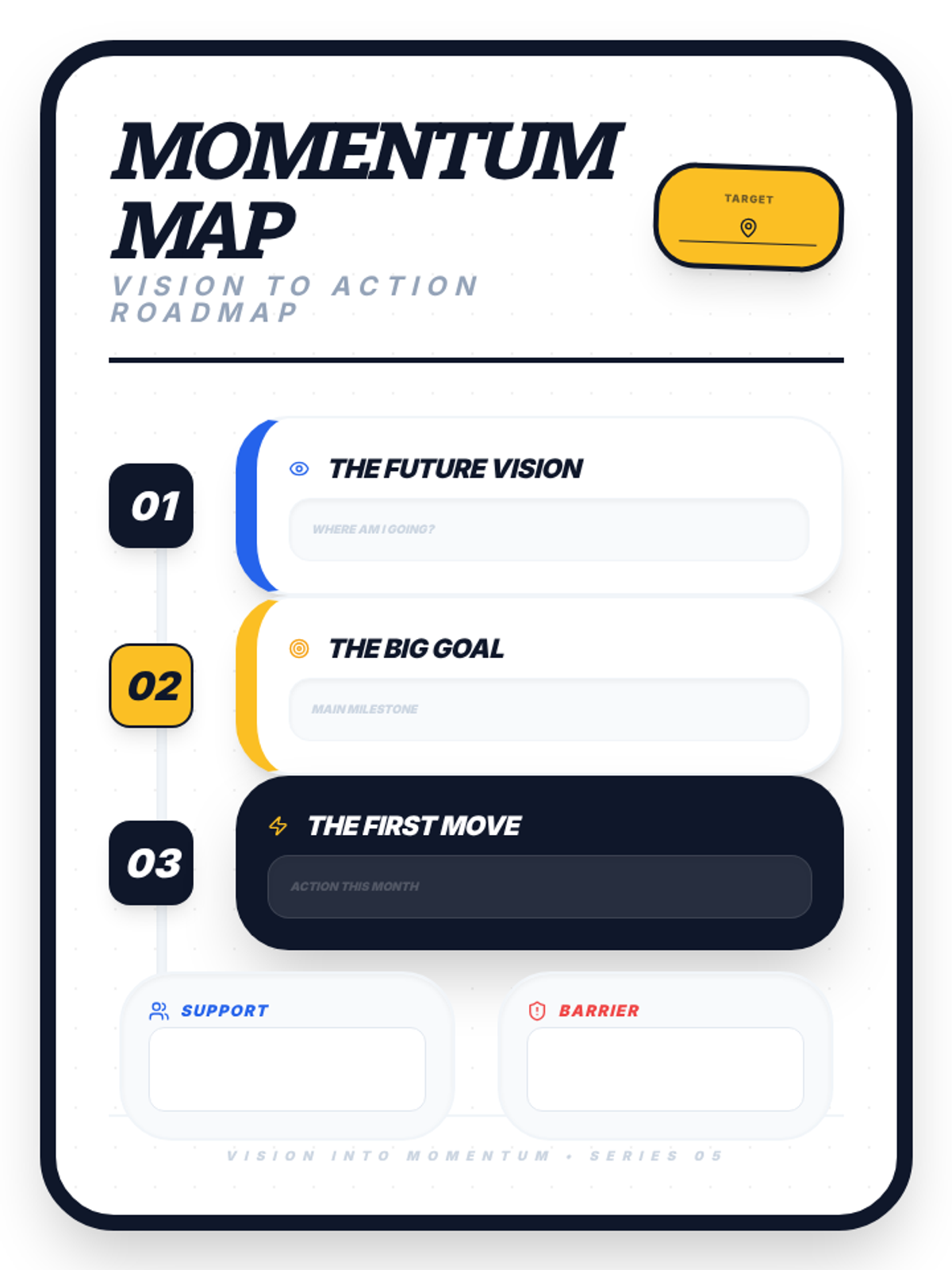
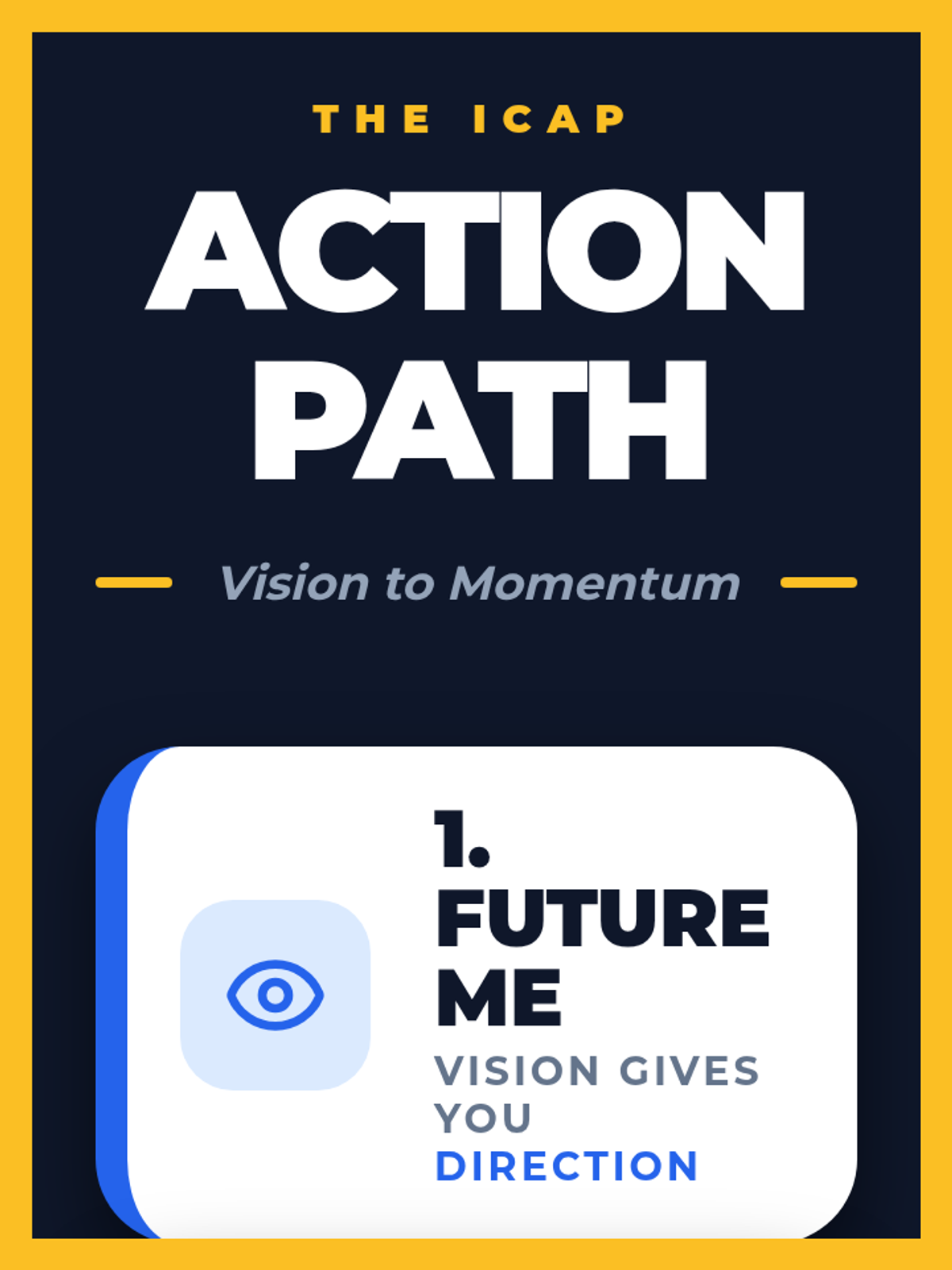
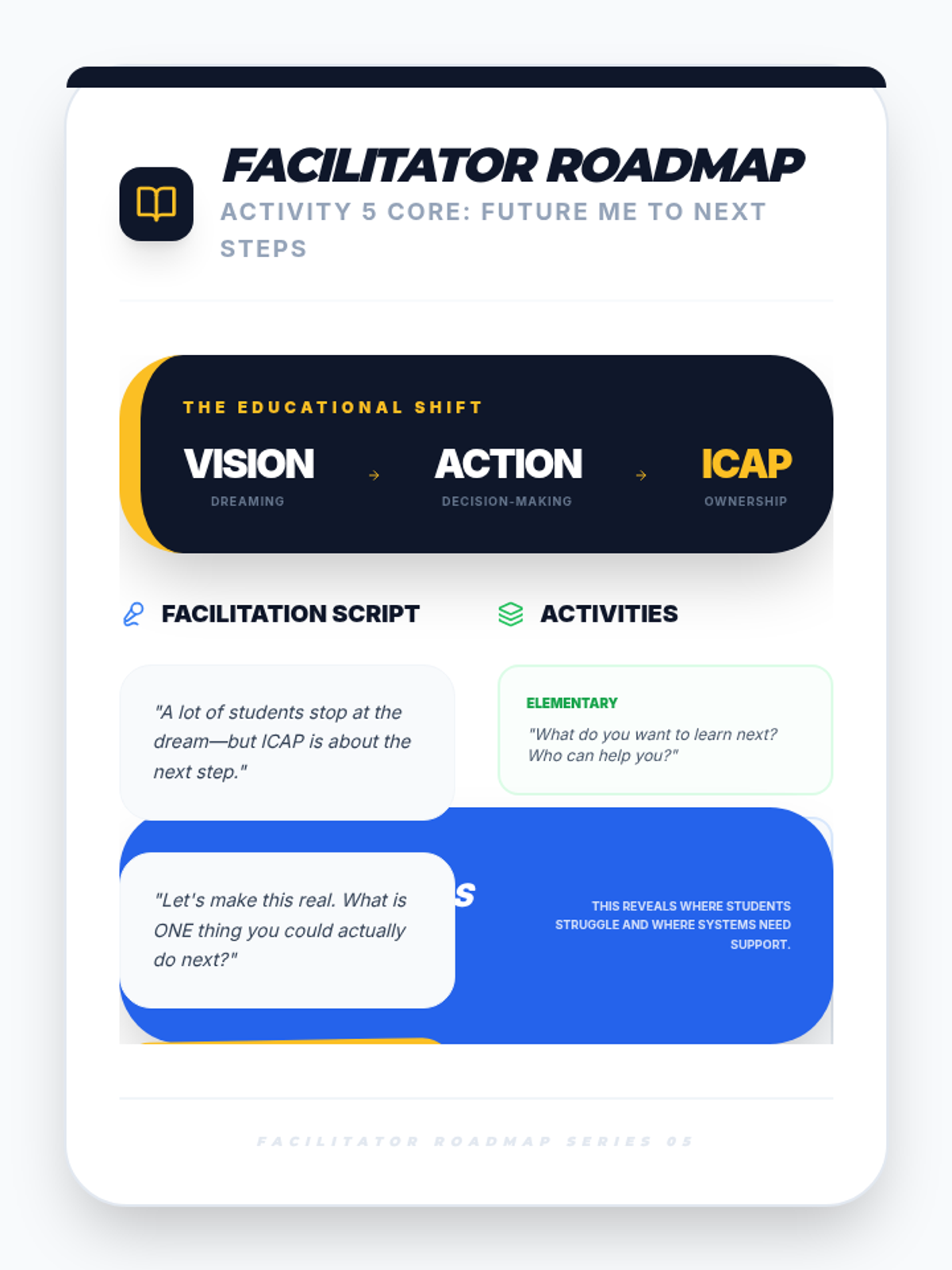
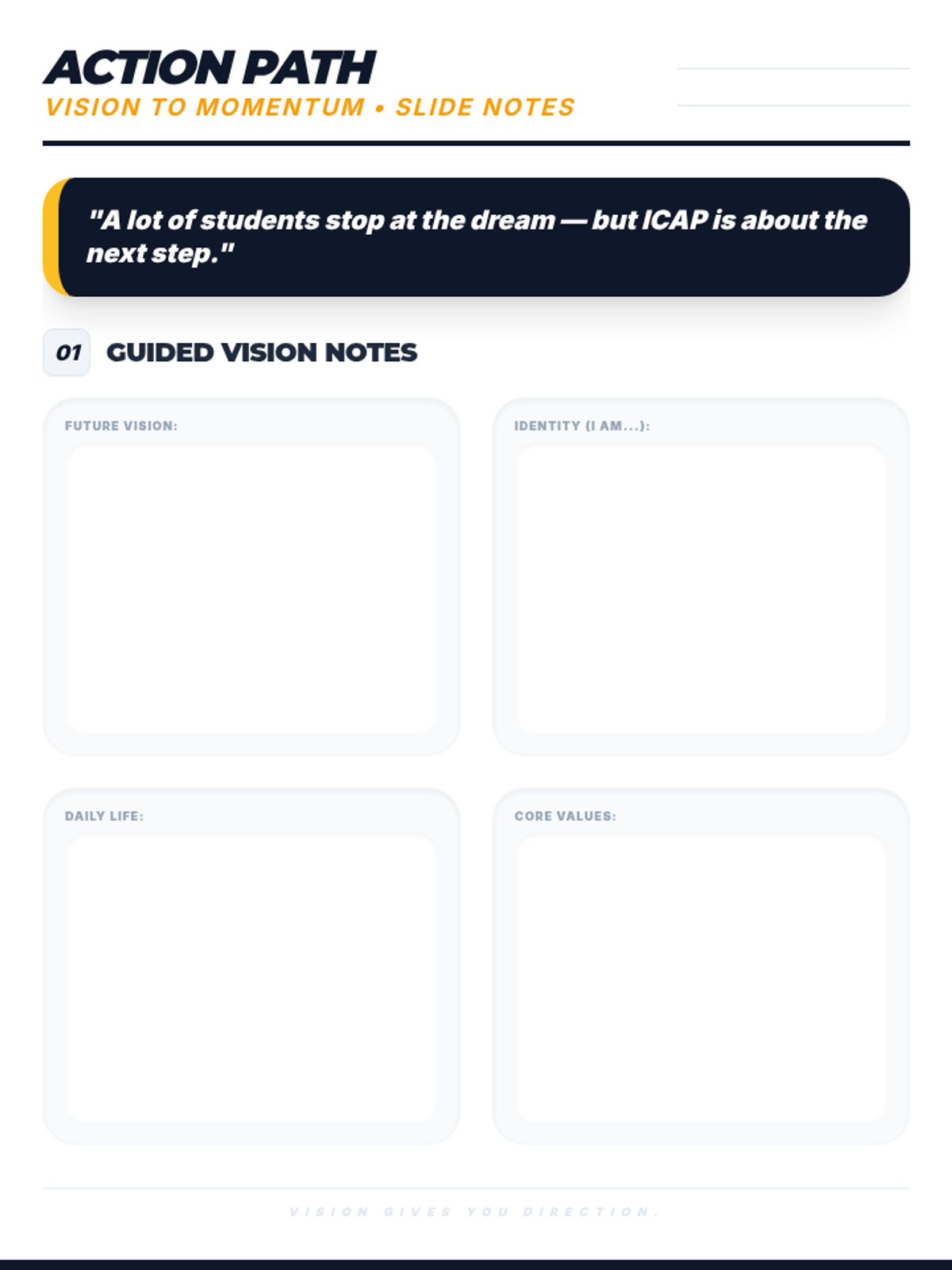
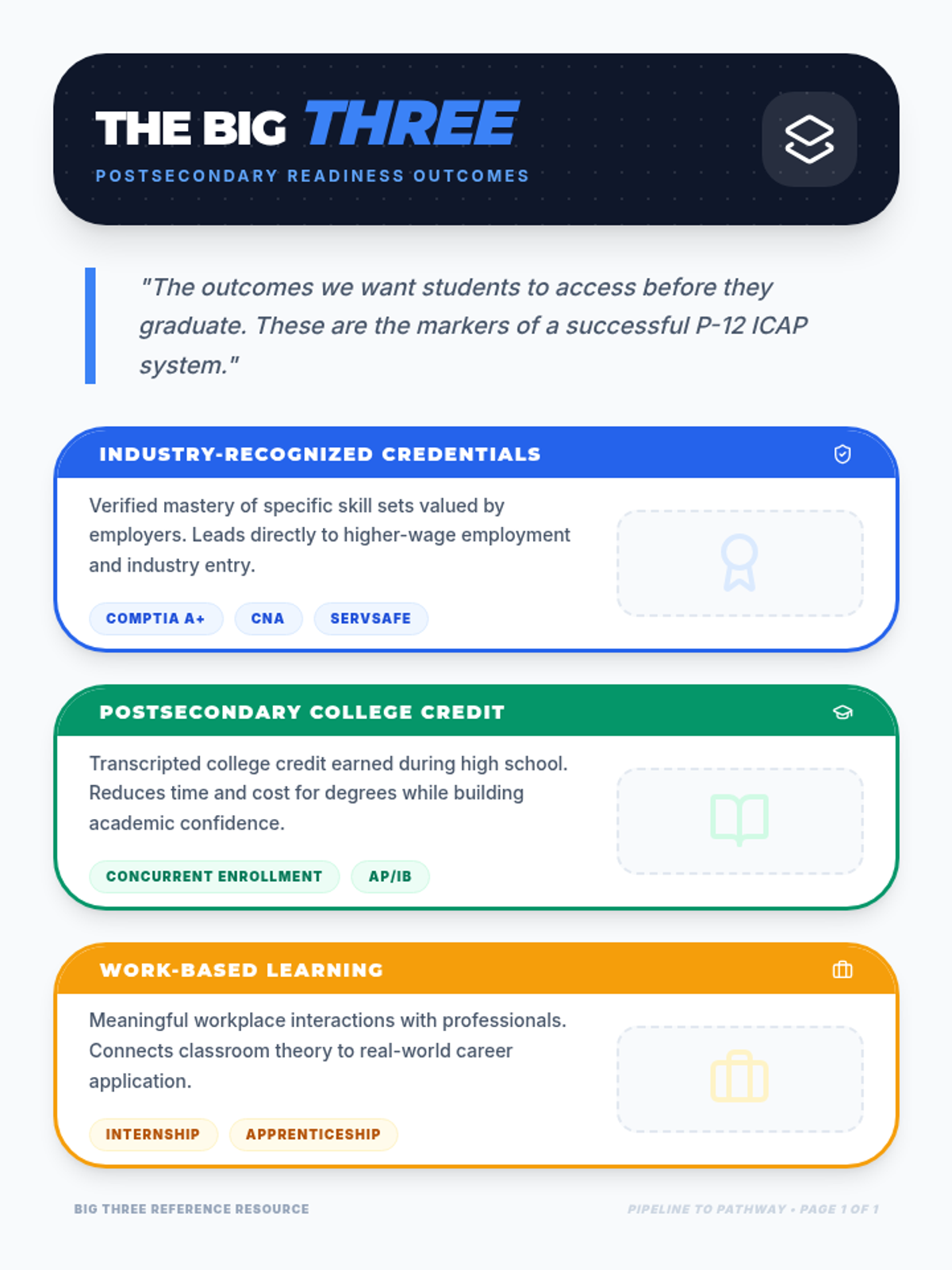
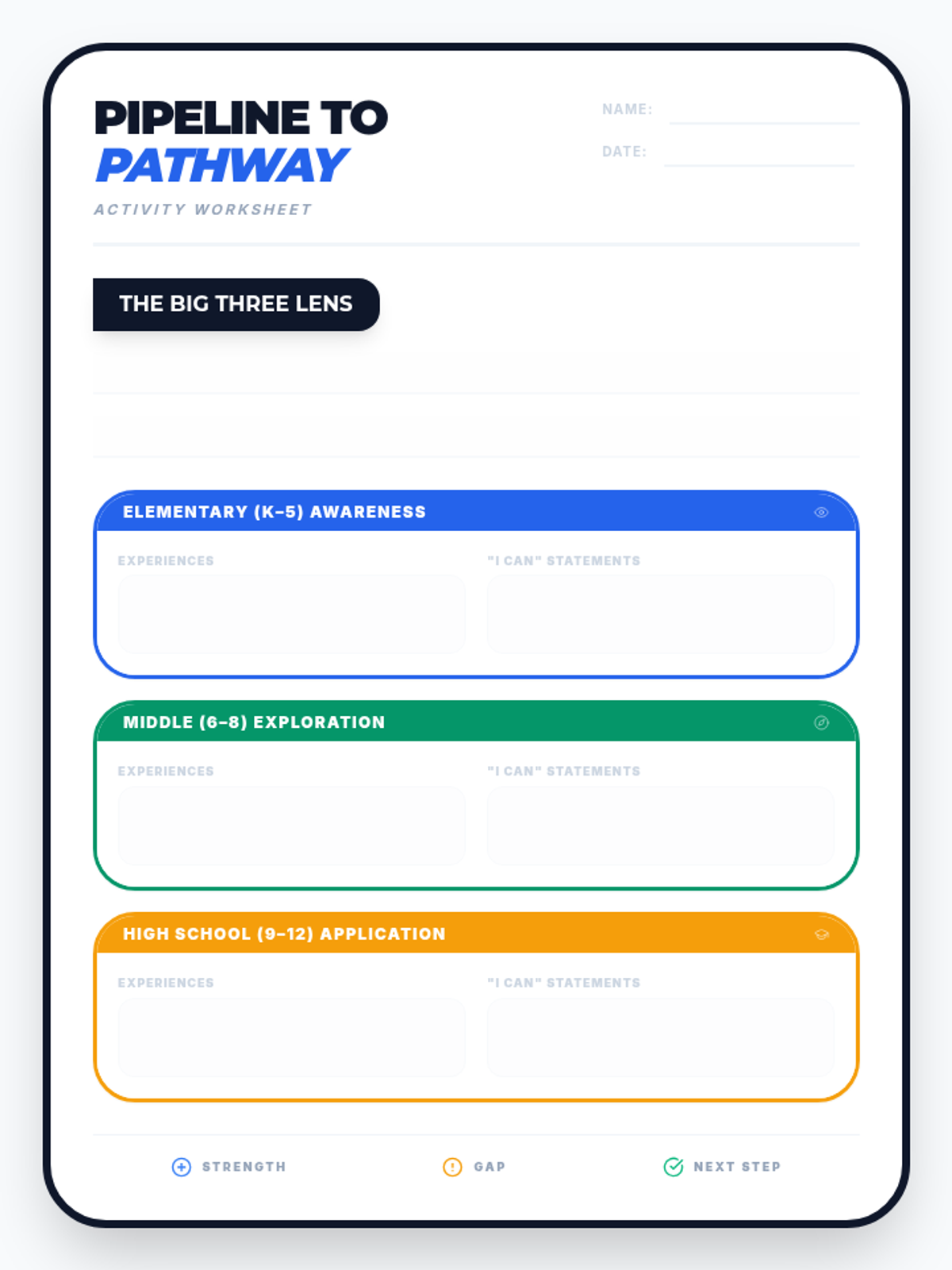
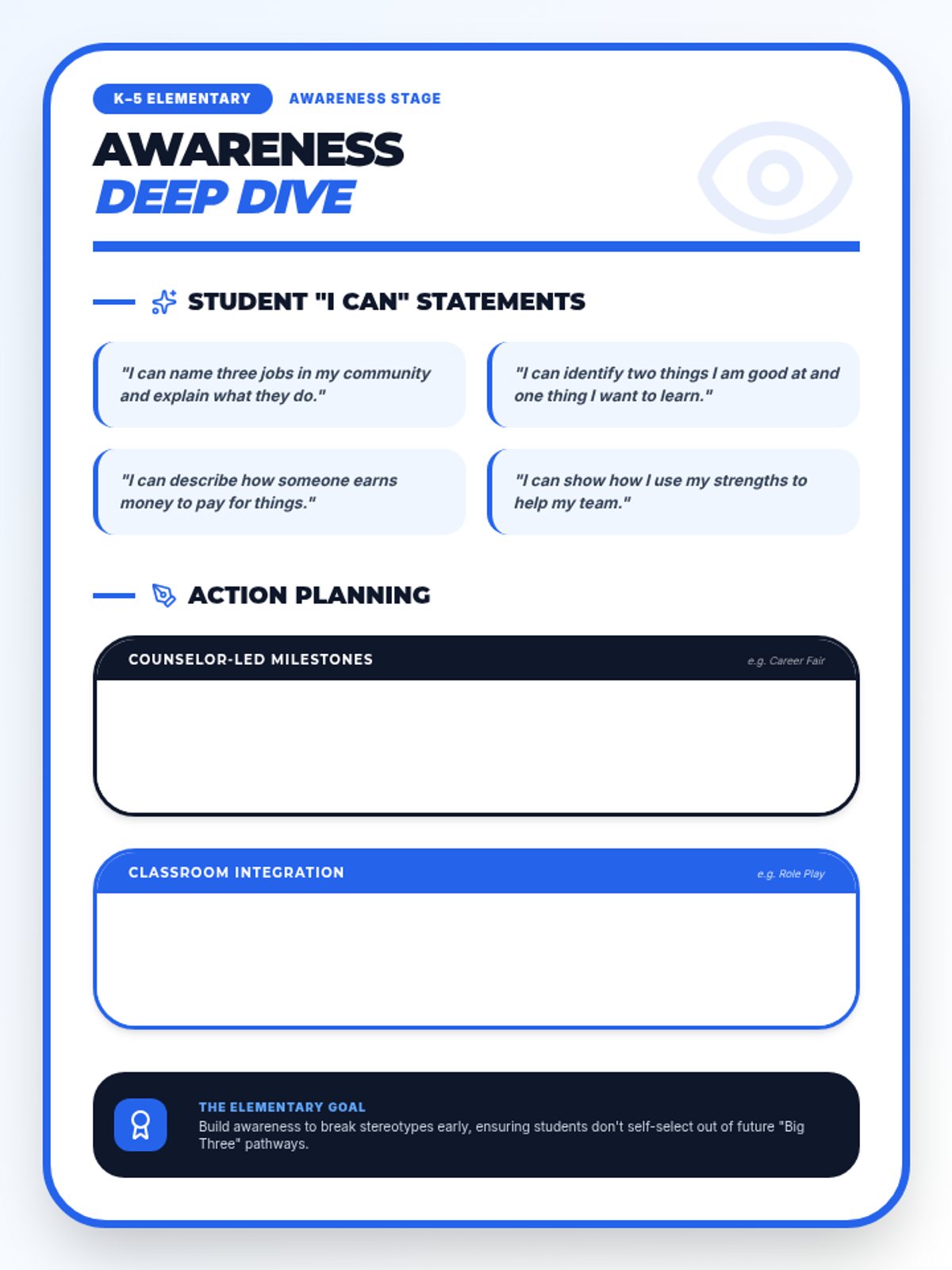
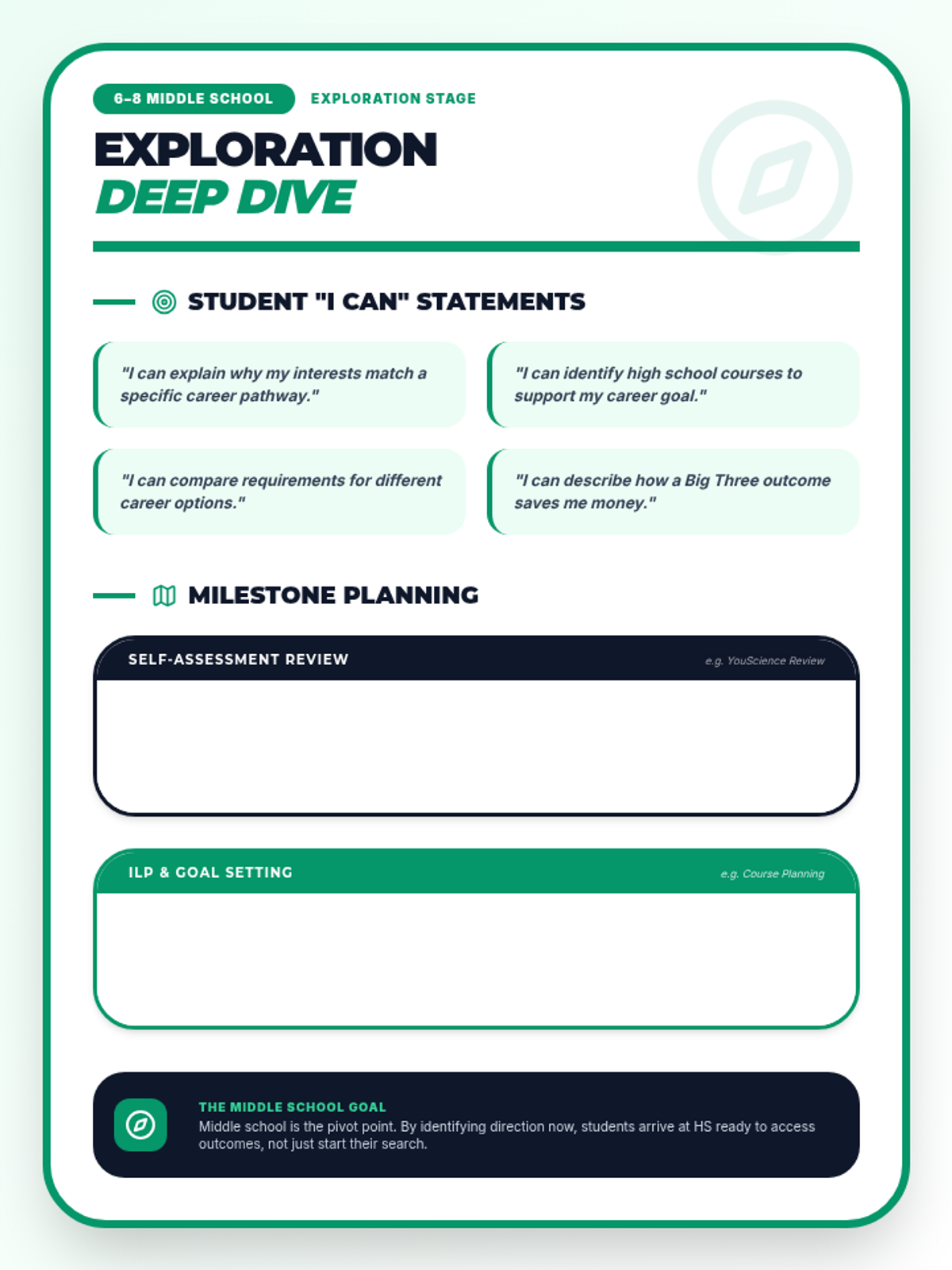
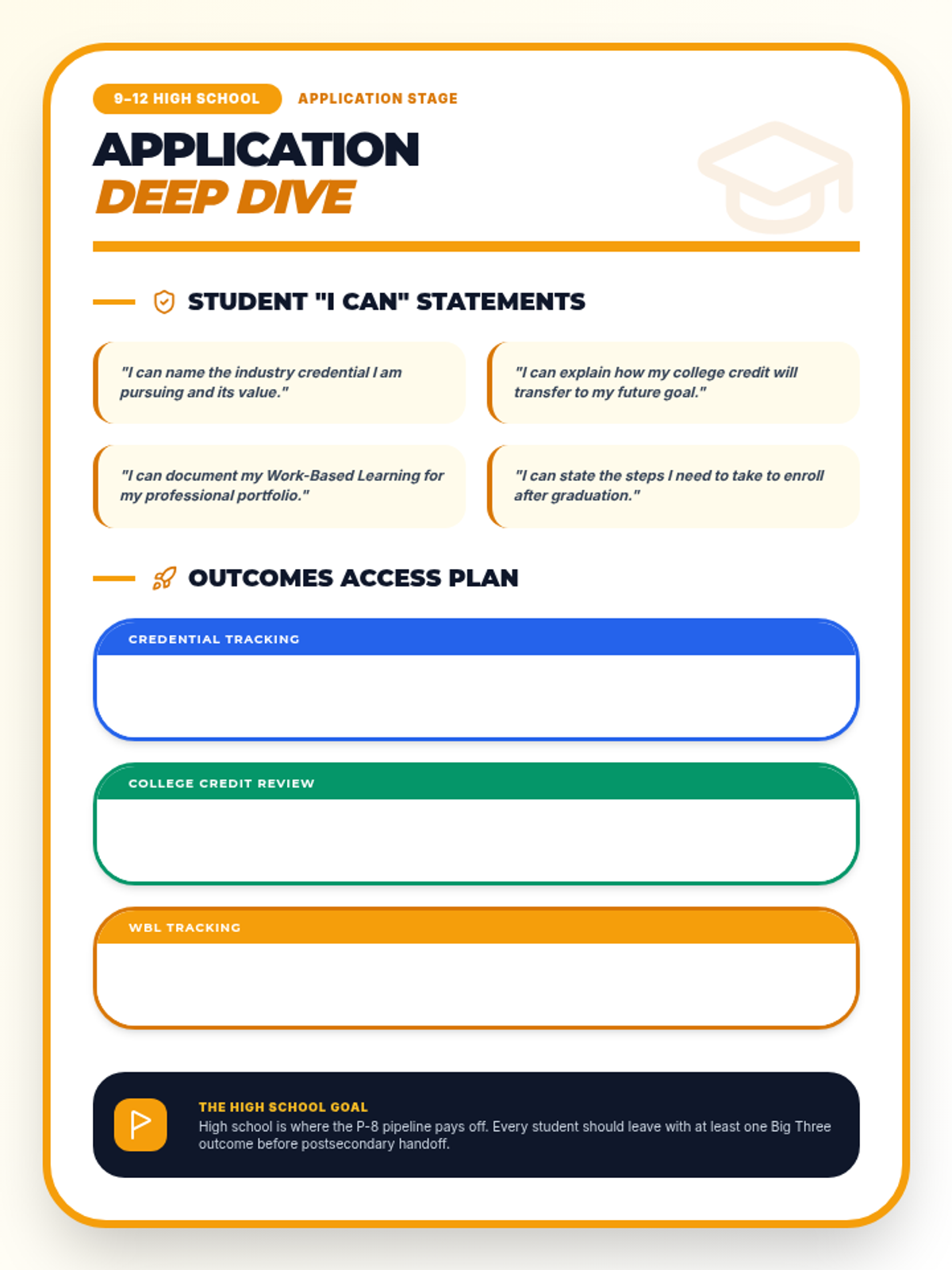
A transition-focused lesson that moves students from personal vision to concrete action steps through the ICAP framework, tailored for Elementary, Middle, and High School levels.
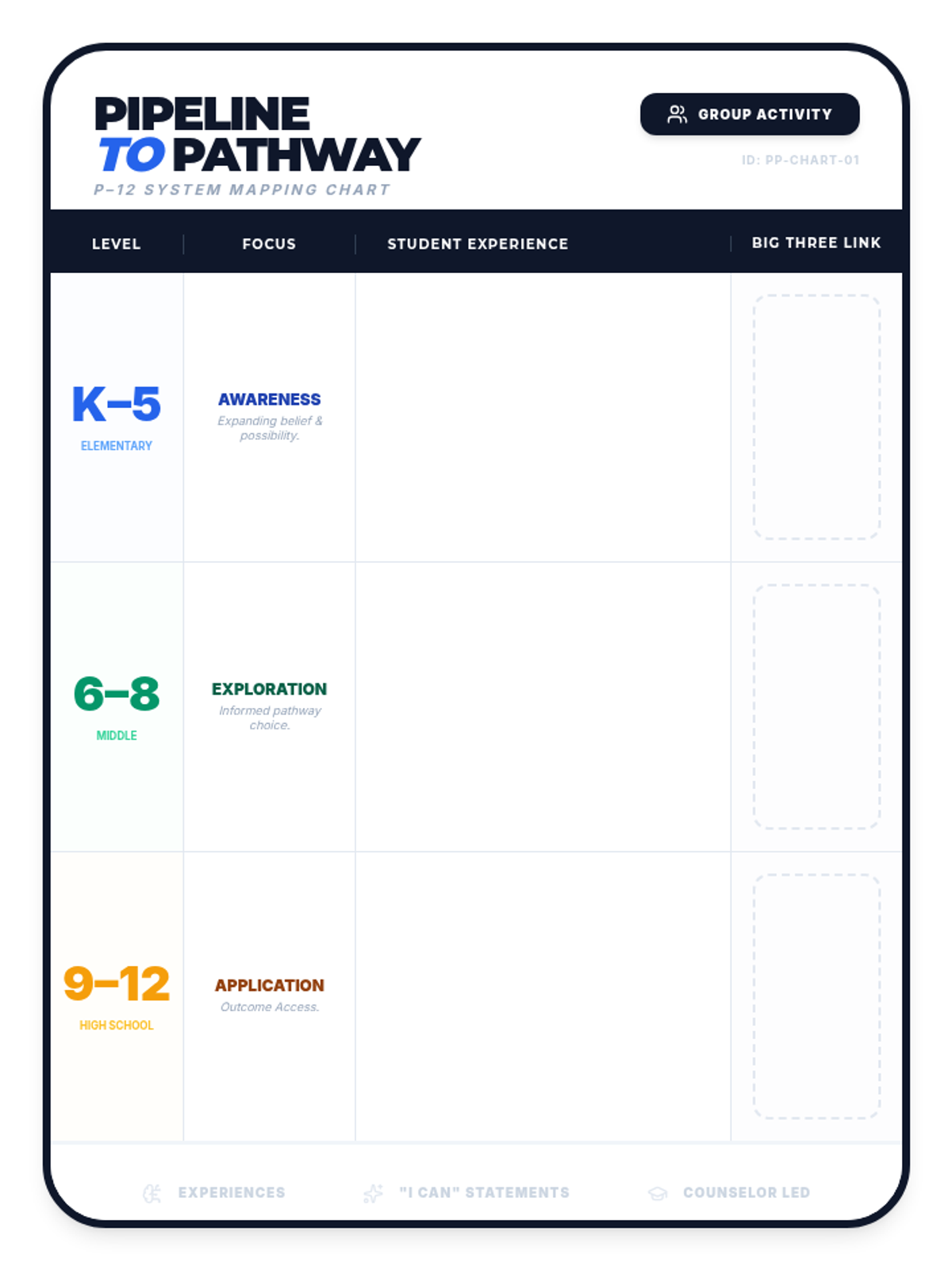
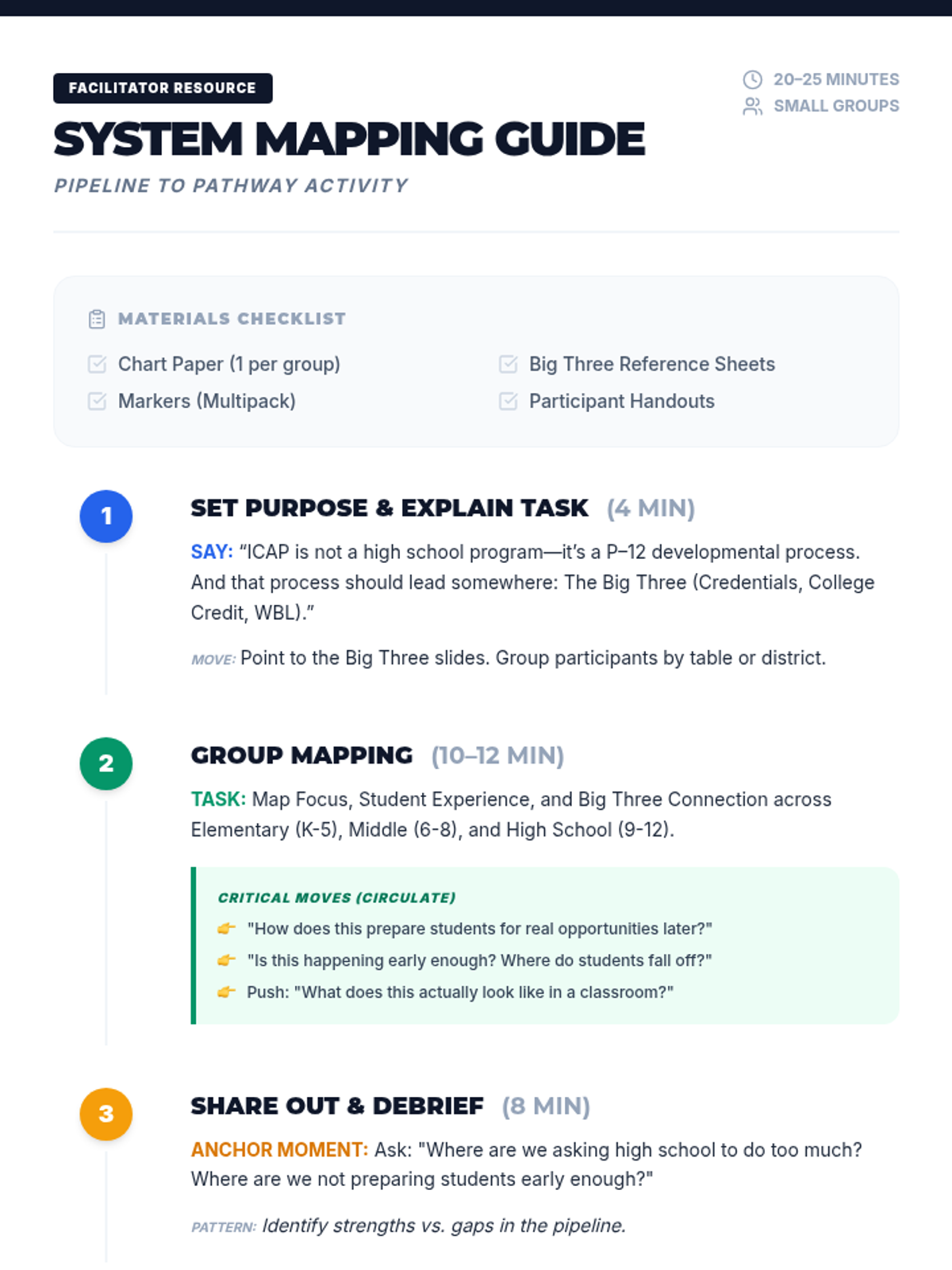
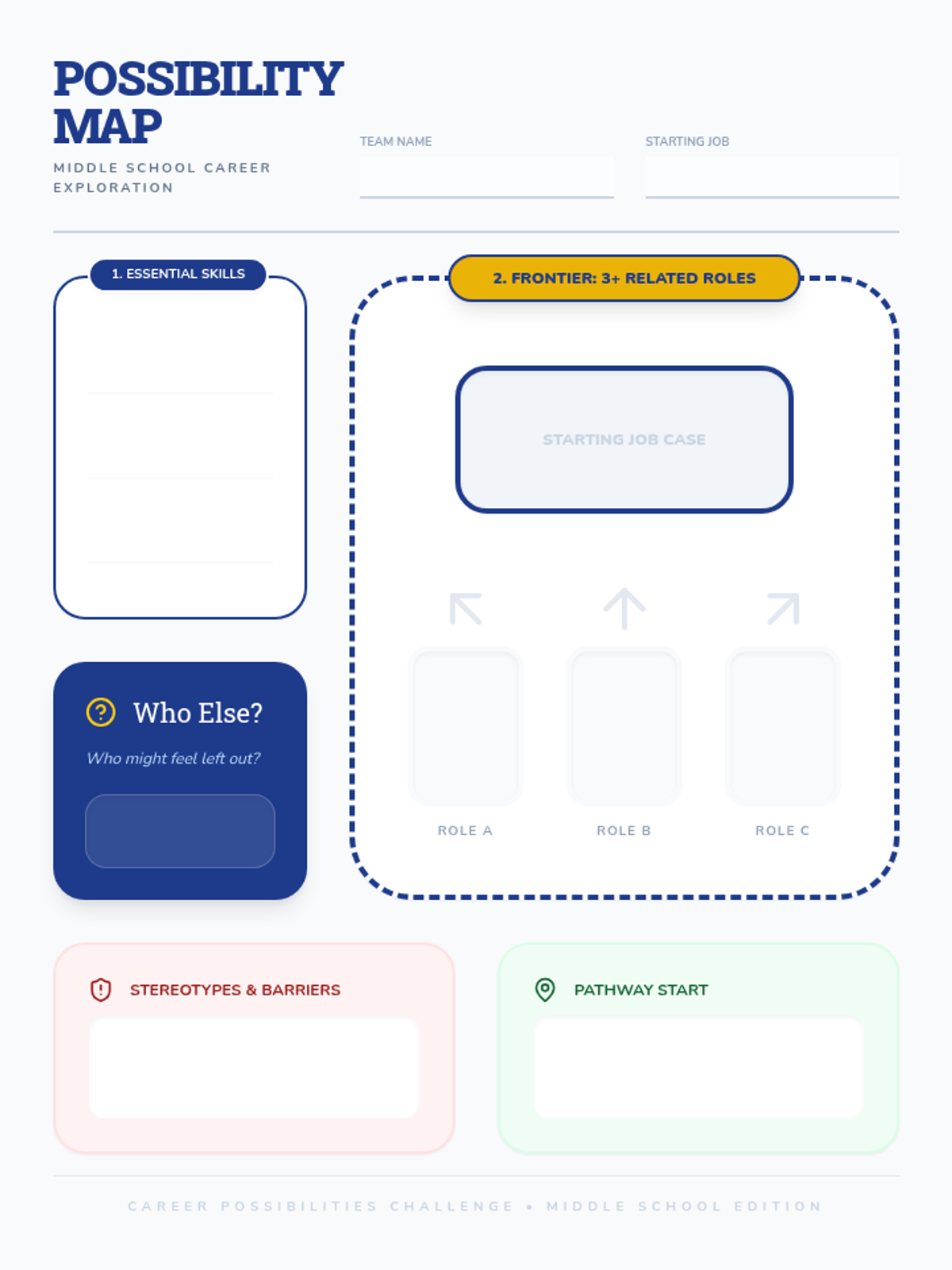
A collaborative workshop session where educators map out the developmental stages of a student's journey from elementary awareness to high school application and outcome access.
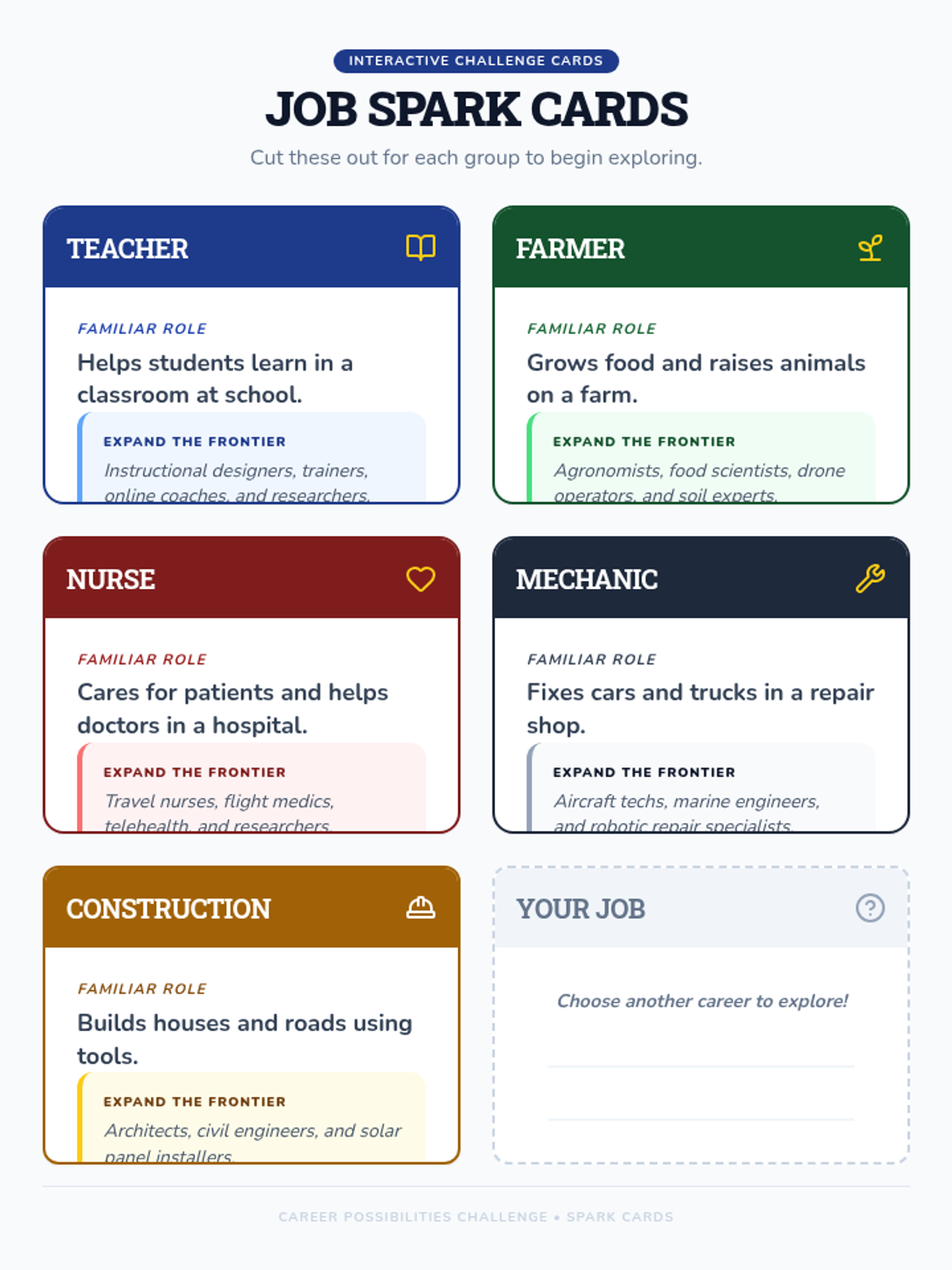
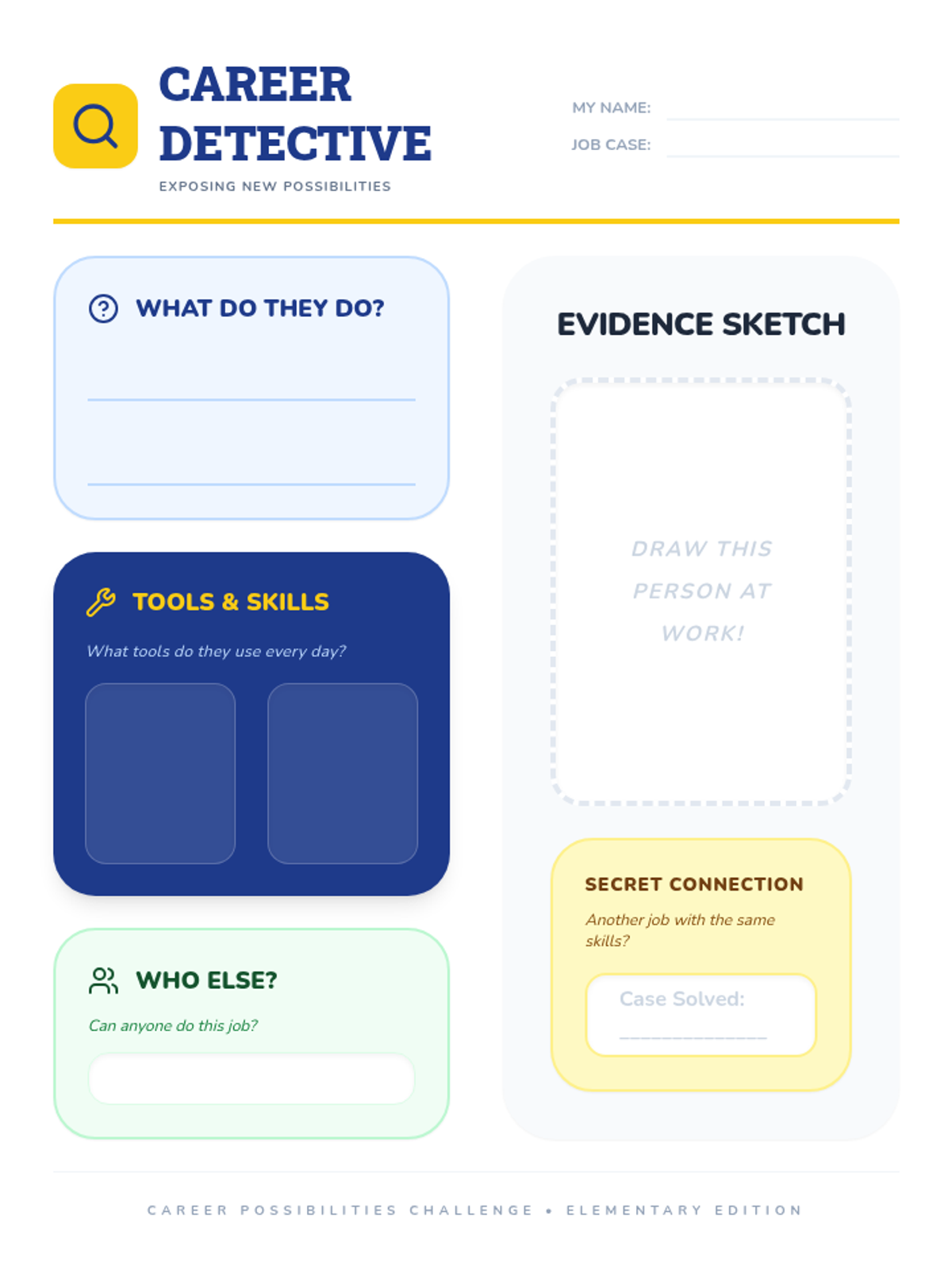
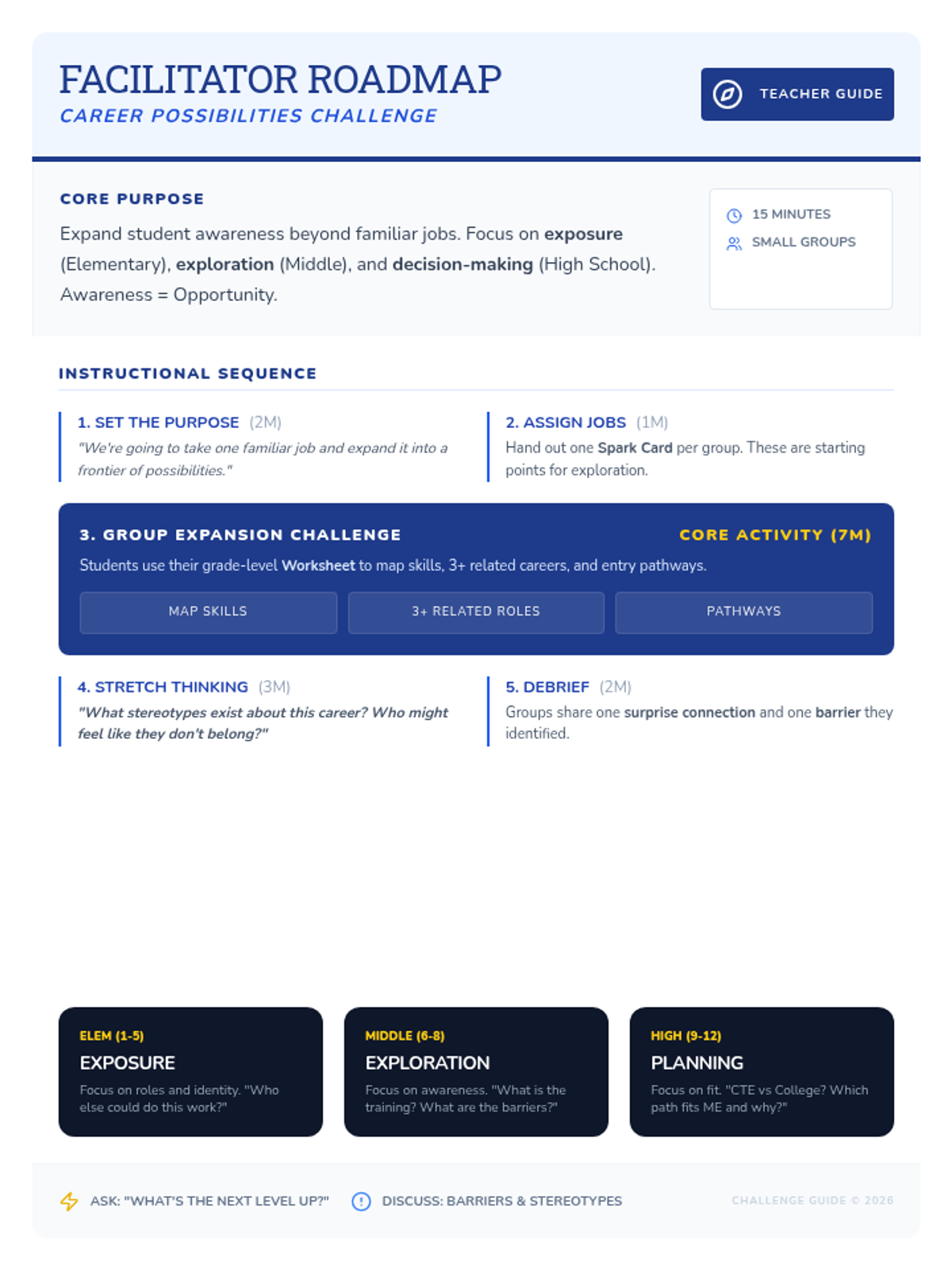
A fast-paced, interactive activity where students expand their understanding of familiar careers into broader industry pathways and explore the skills and steps needed to reach them.
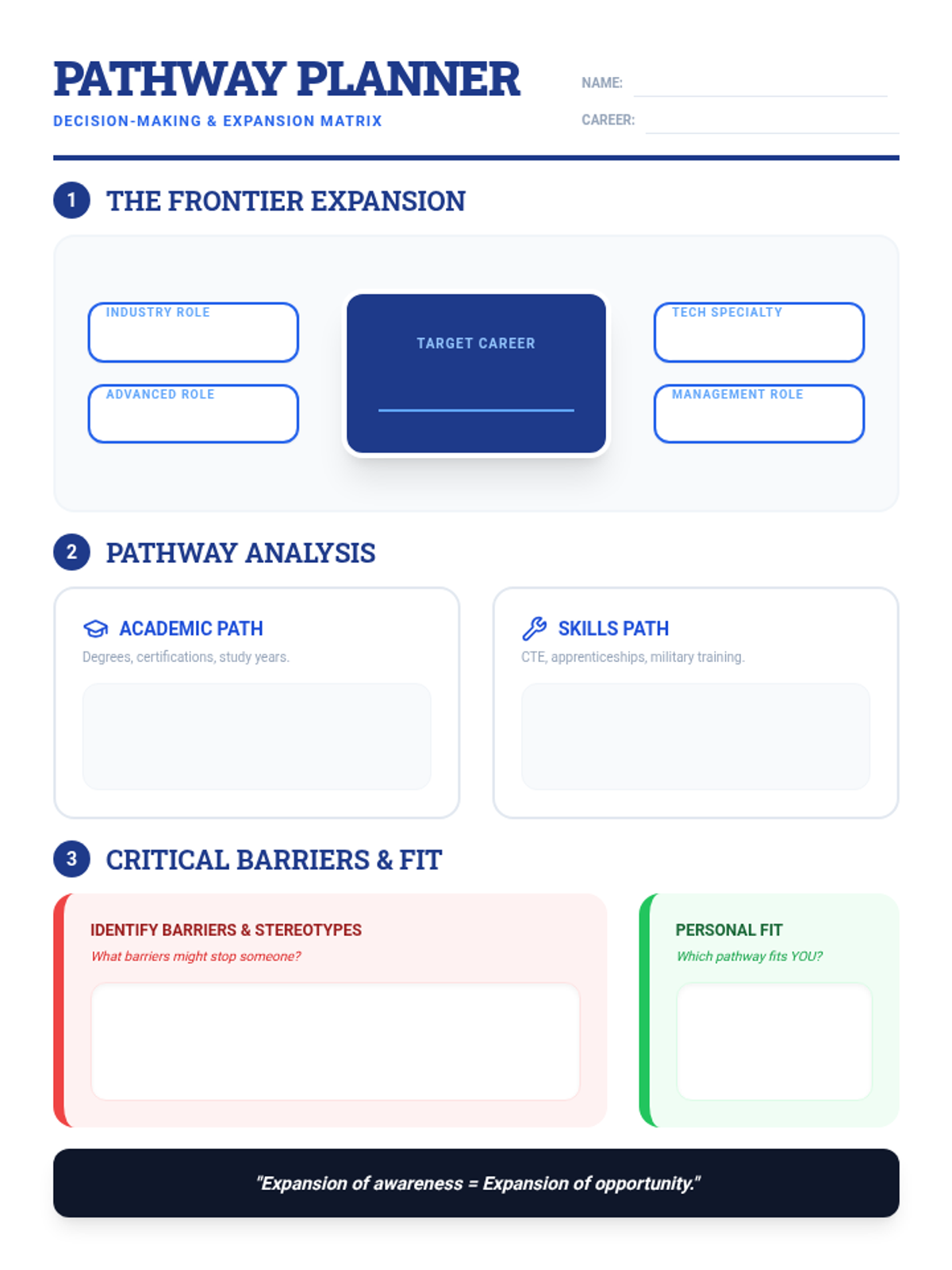
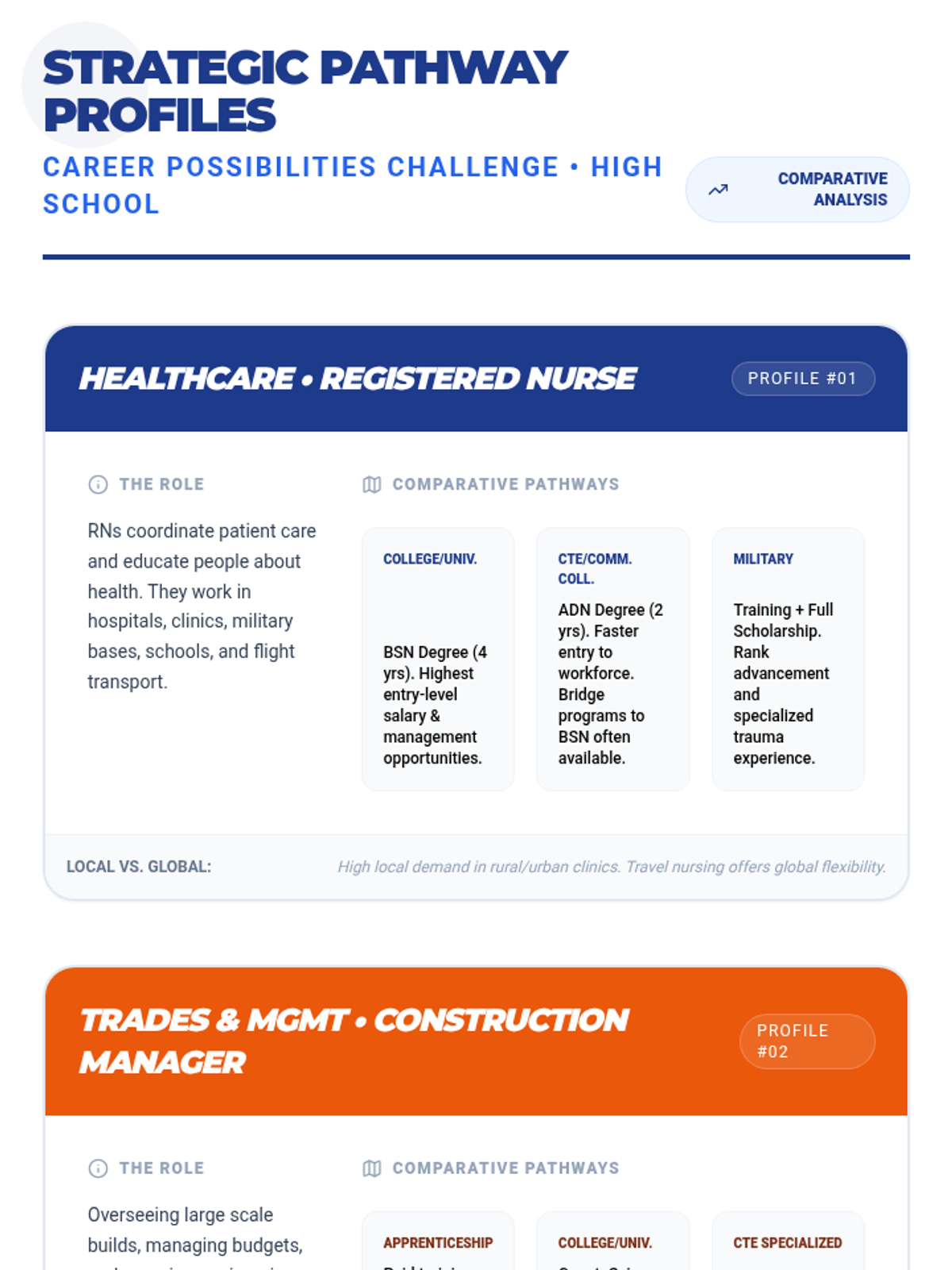
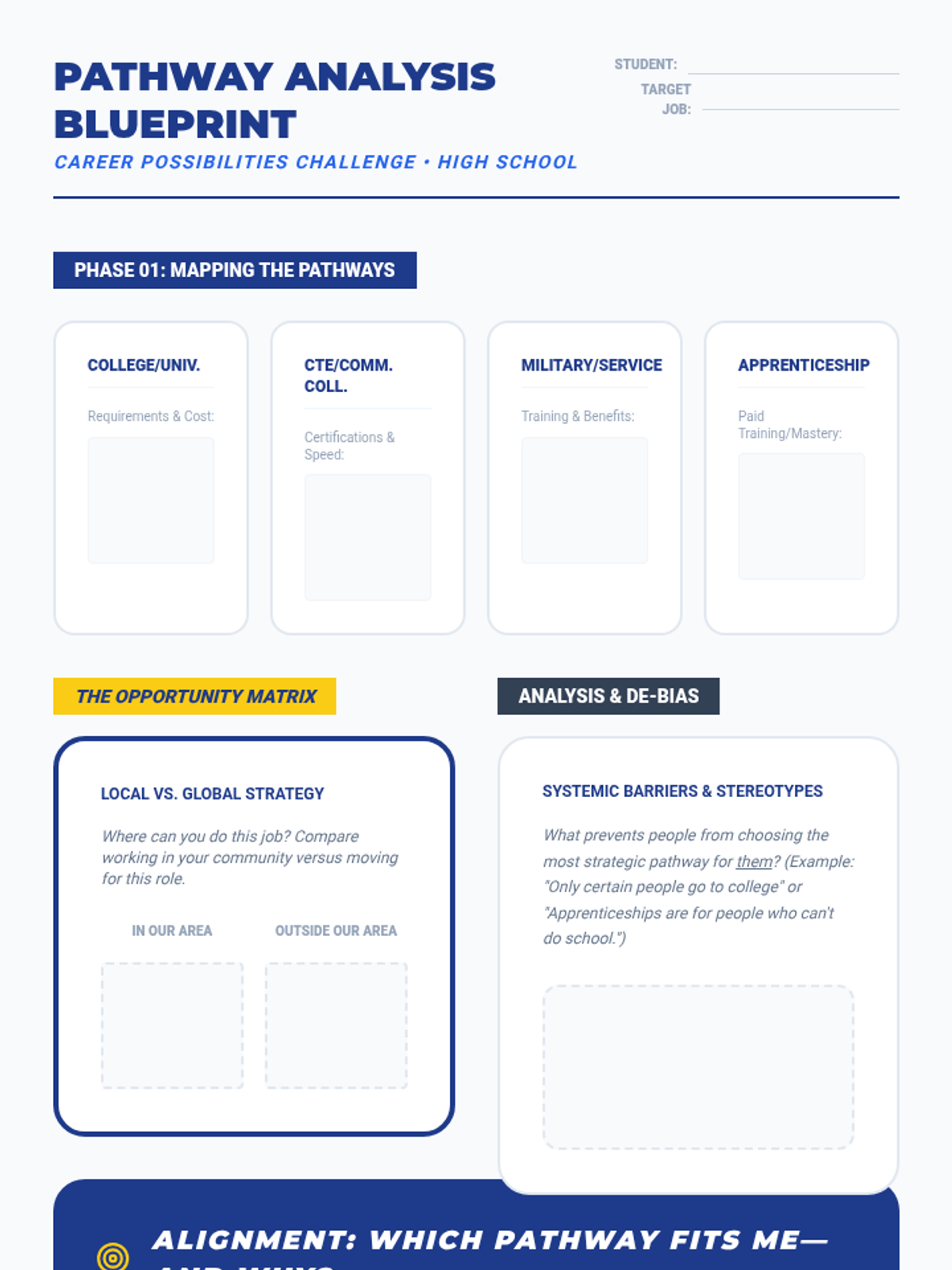
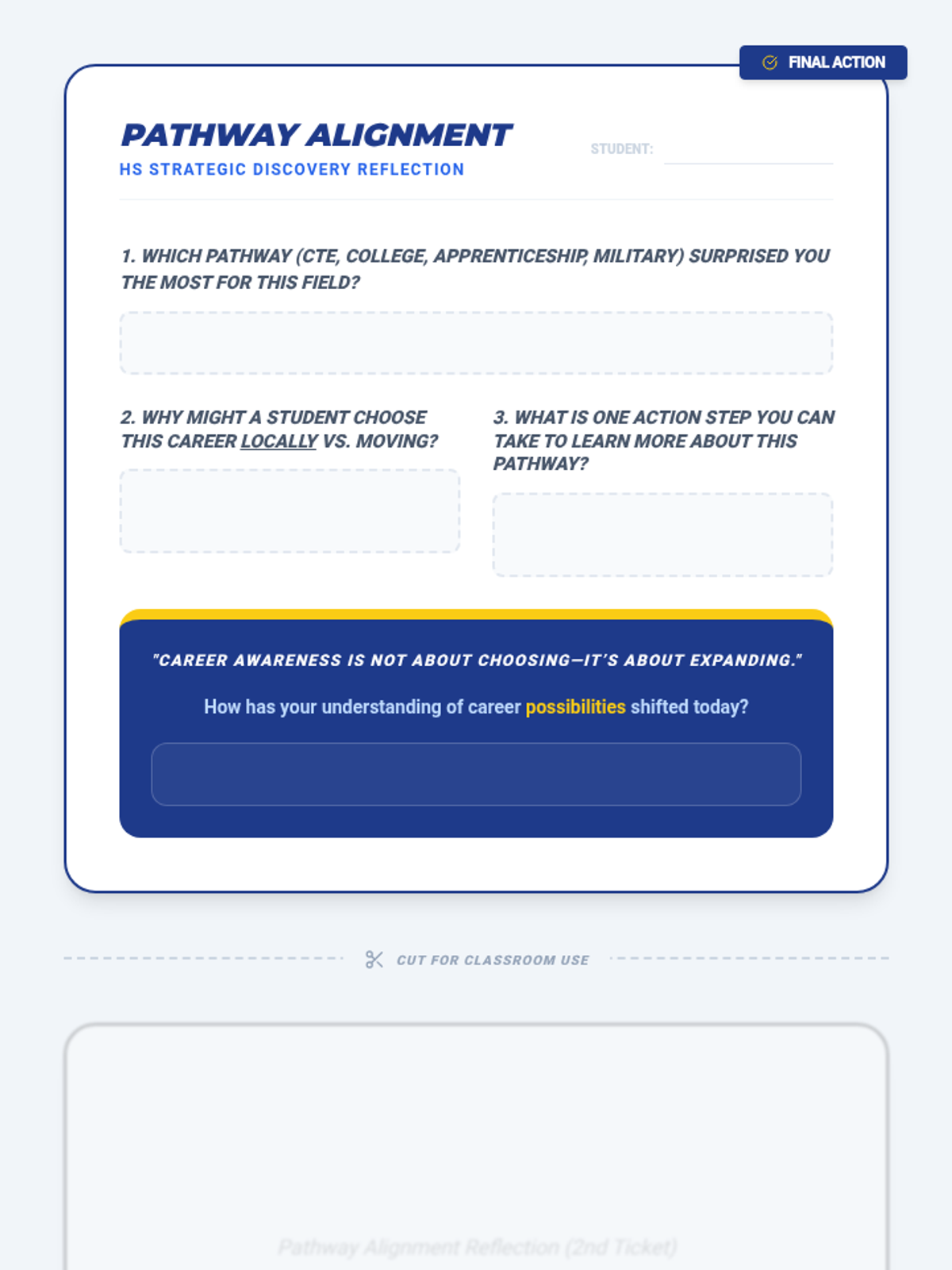
A strategic career planning lesson for high schoolers focusing on comparing specific pathways (CTE, college, military) and evaluating local versus out-of-area opportunities.
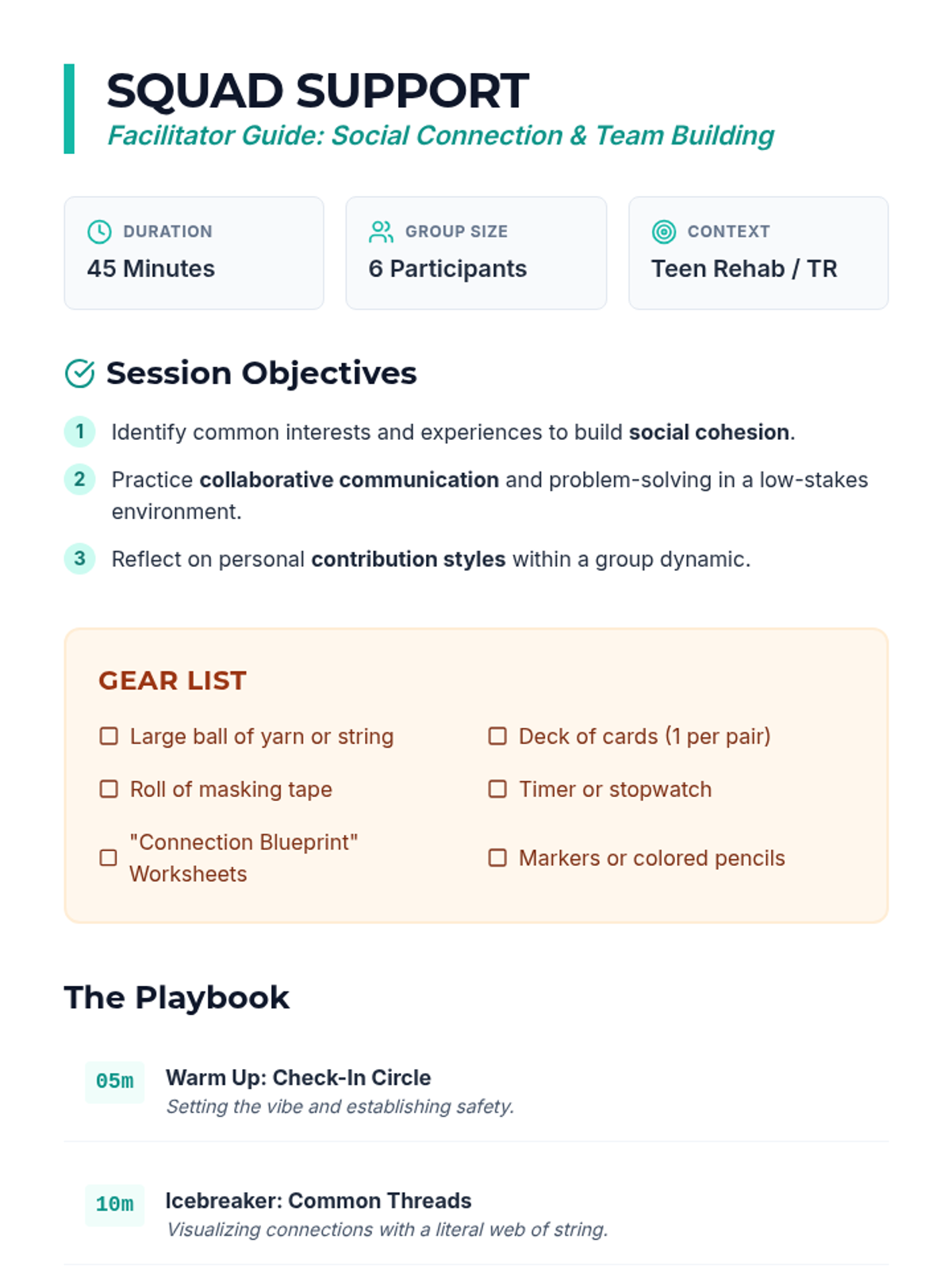
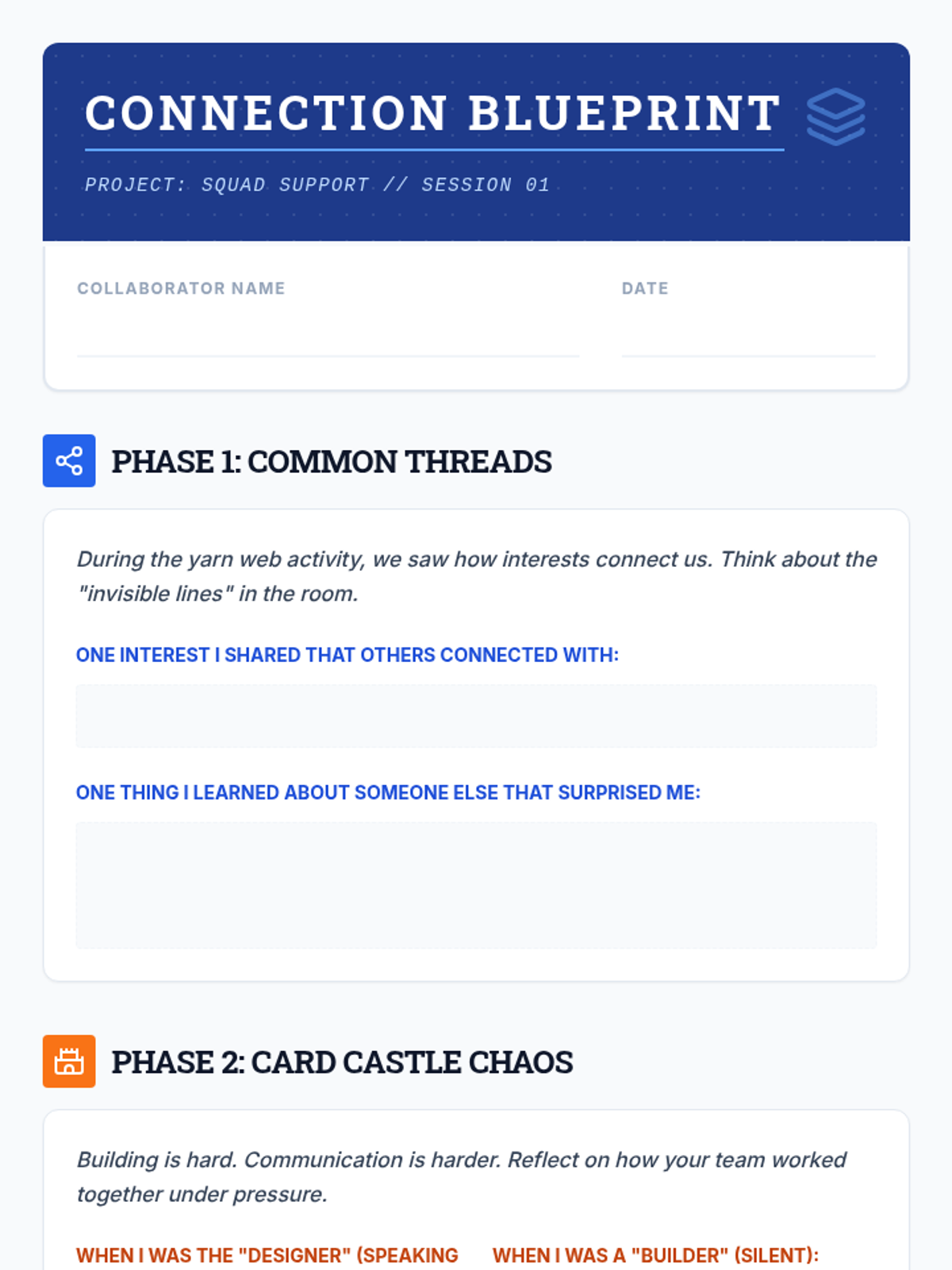
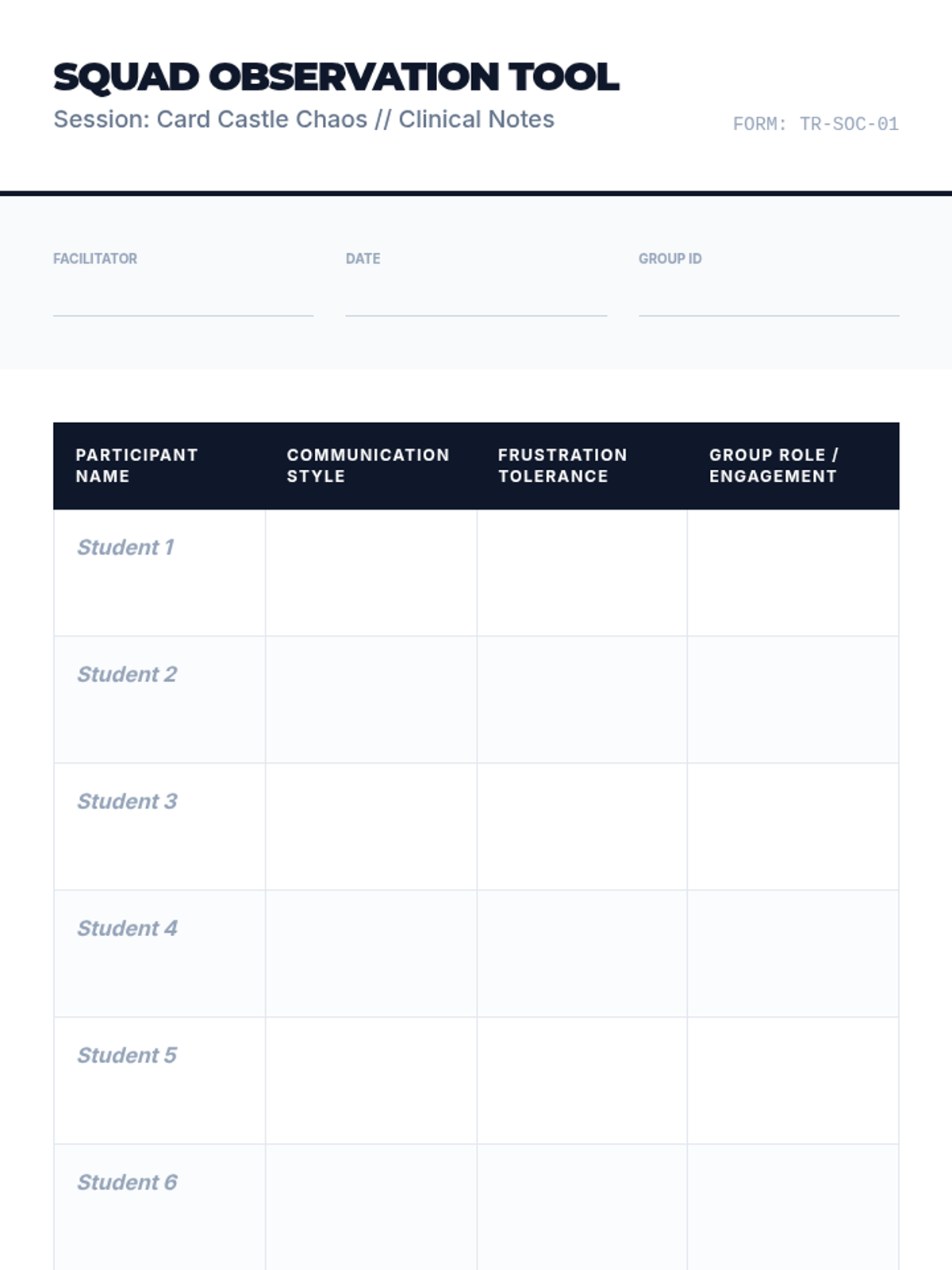
A 45-minute therapeutic leisure session for teens focused on building social connections and team dynamics through collaborative activities and reflection.
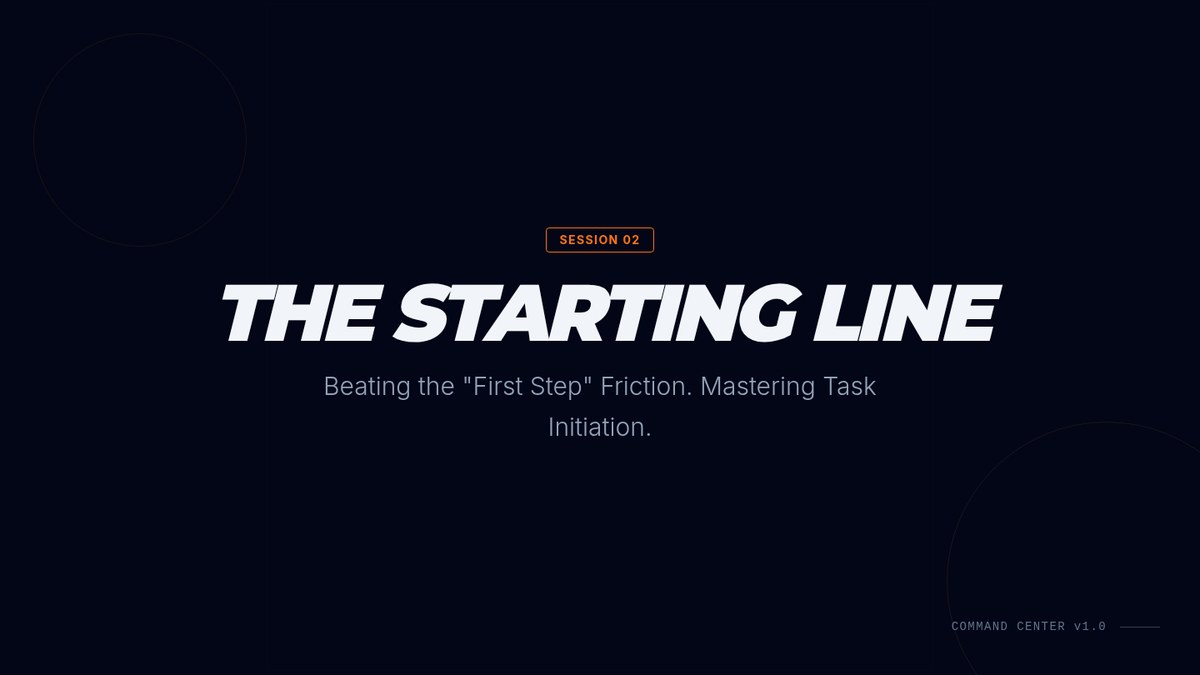
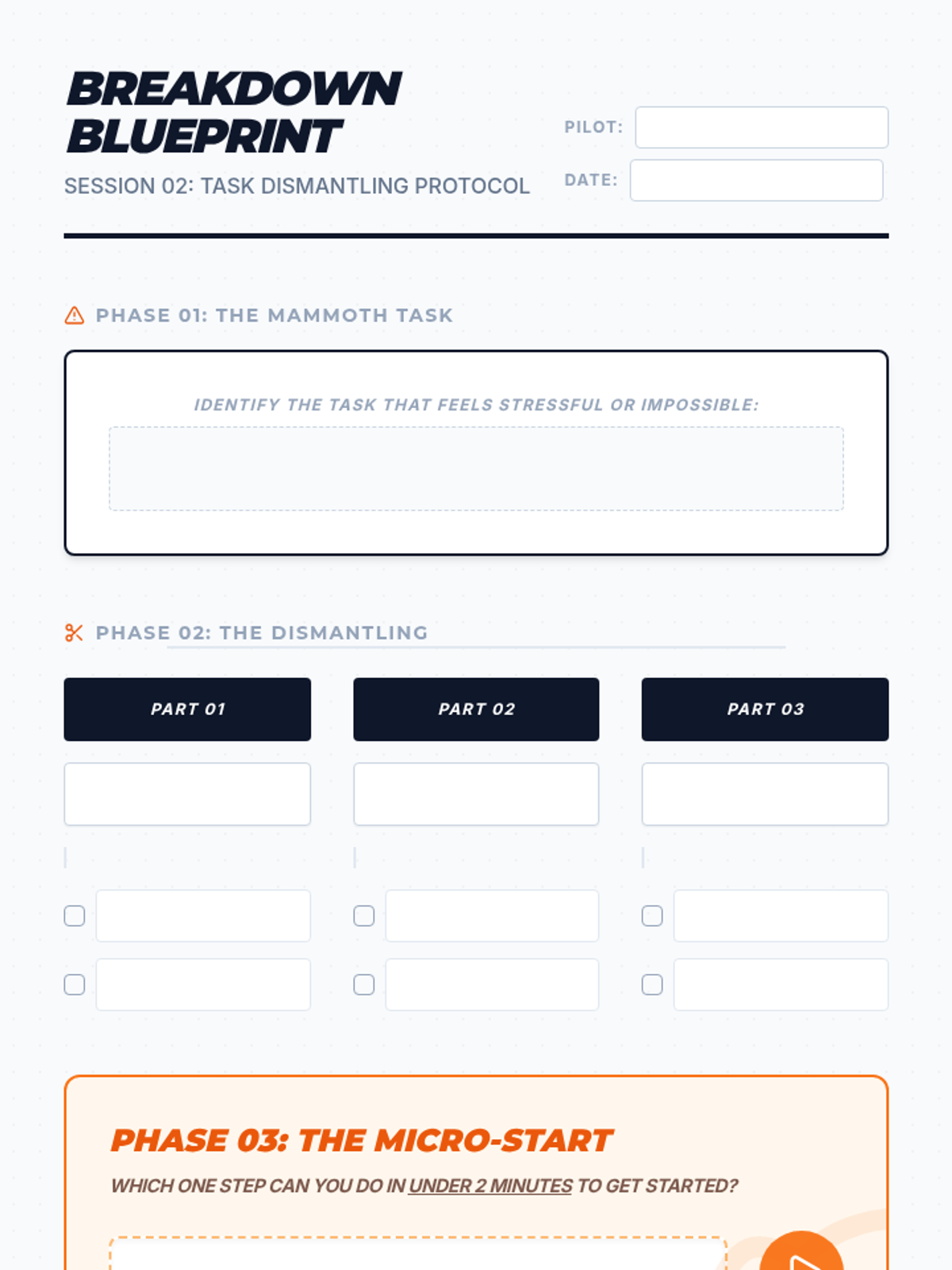
Focuses on overcoming procrastination and "stuckness" by breaking down complex tasks into manageable, non-intimidating units using the "Breakdown Blueprint."
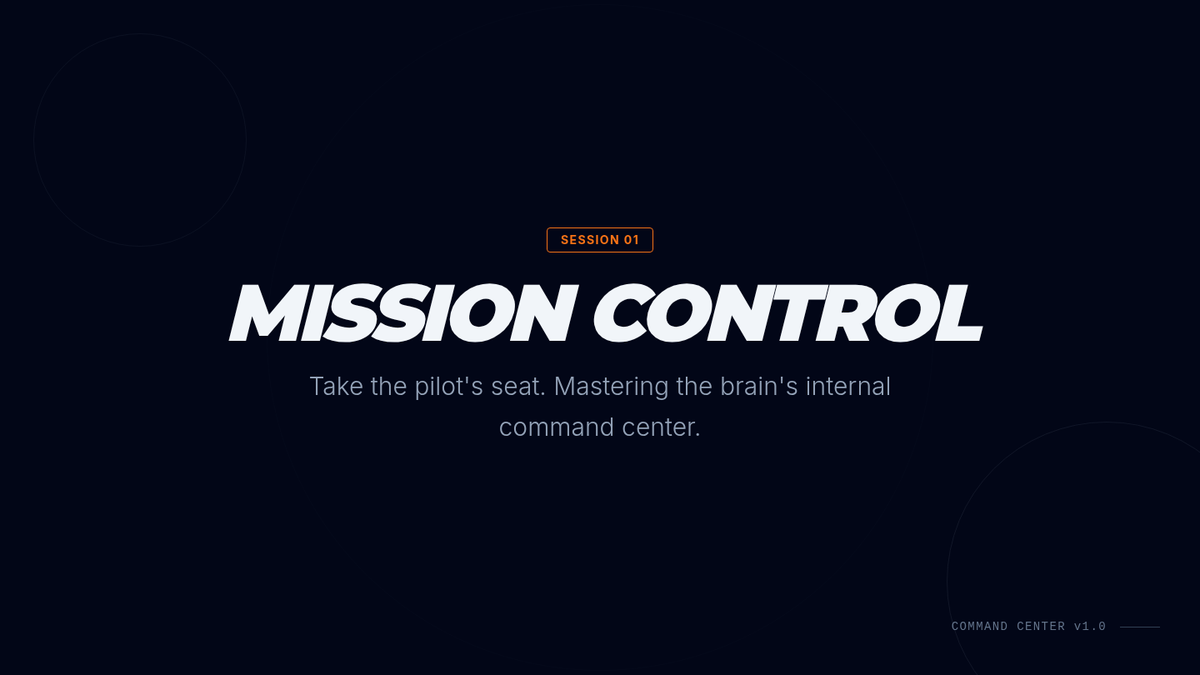
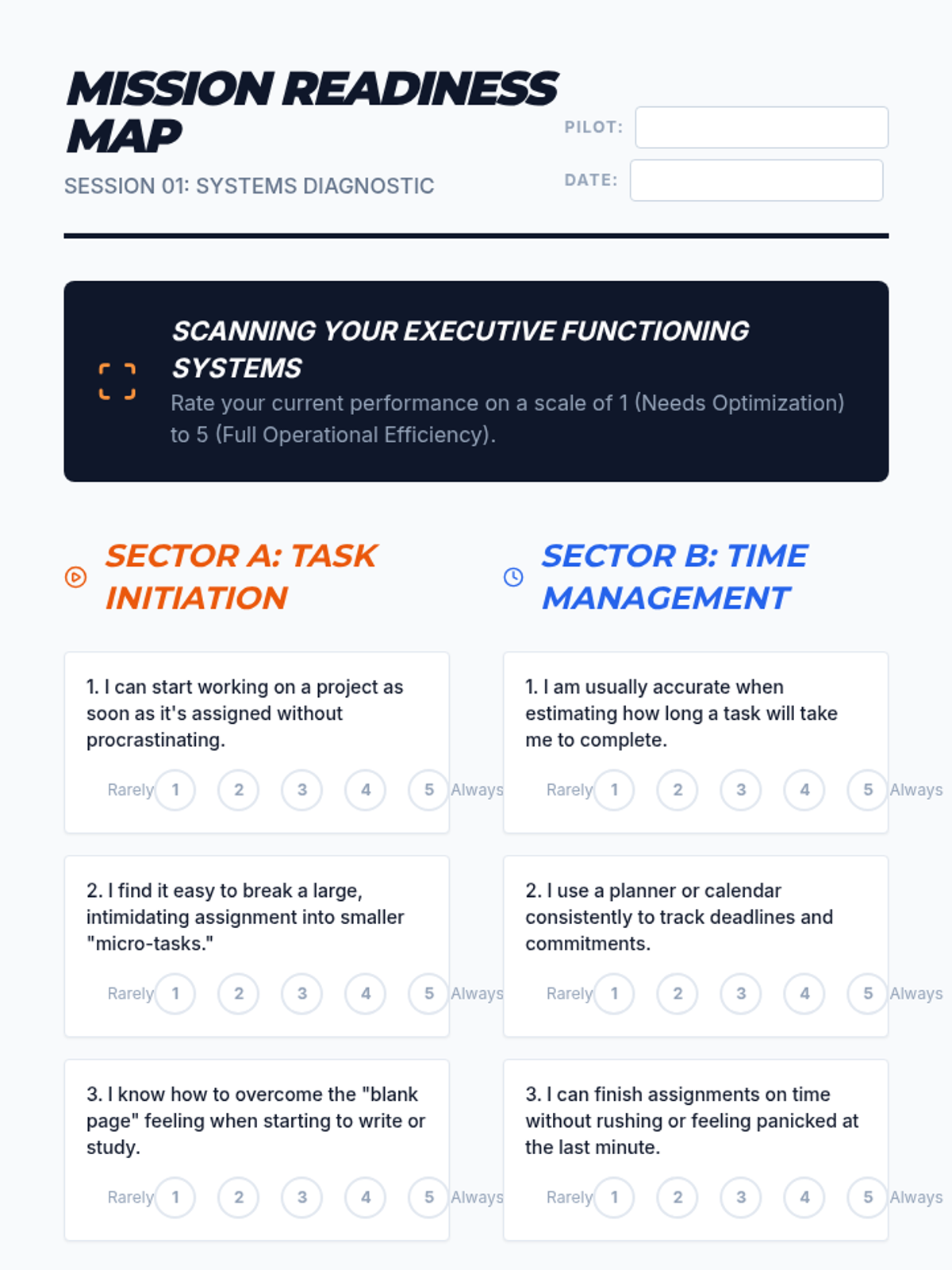
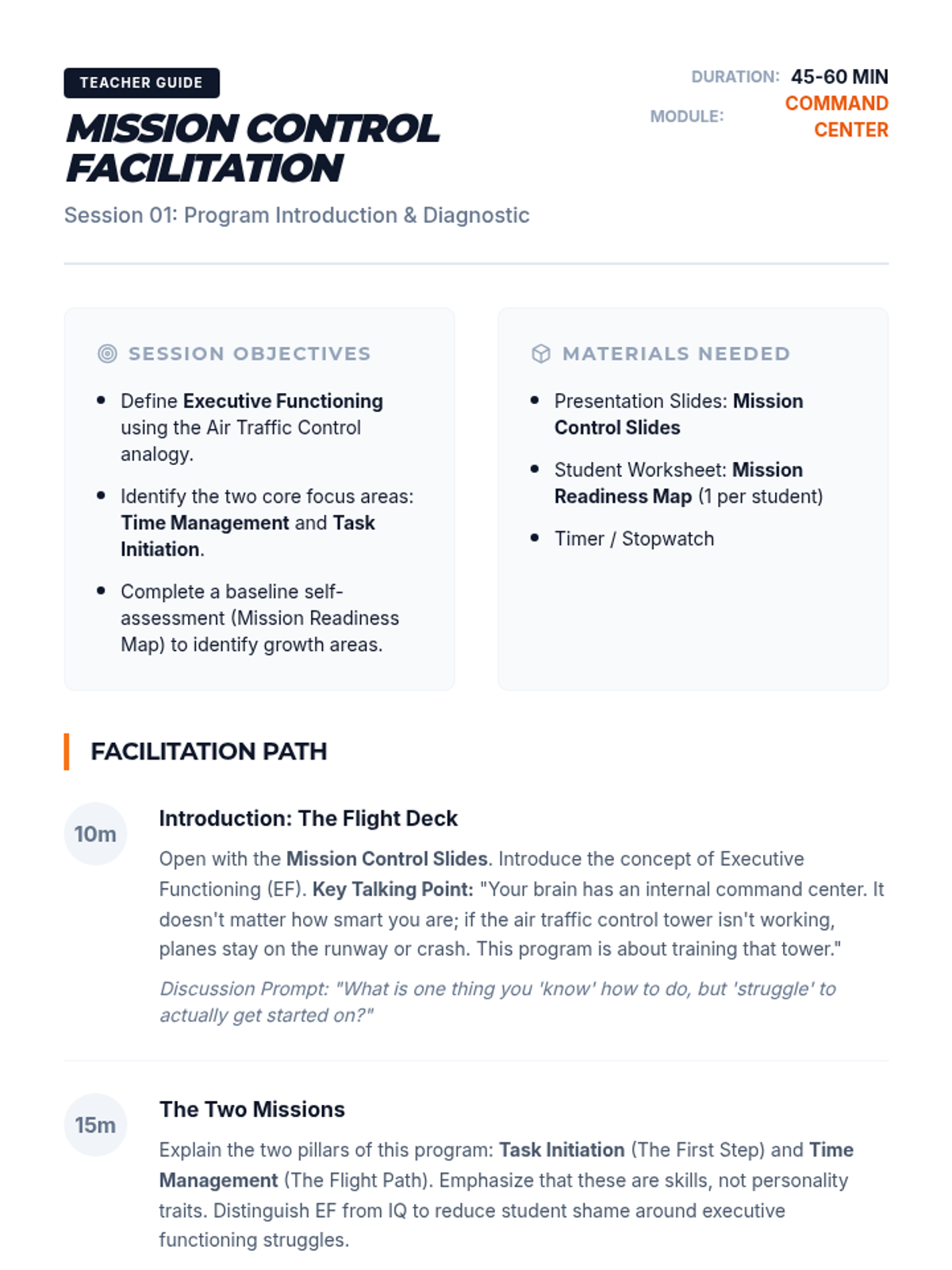
Introduction to executive functioning as the brain's "Air Traffic Control" and a self-assessment of current strengths and challenges.
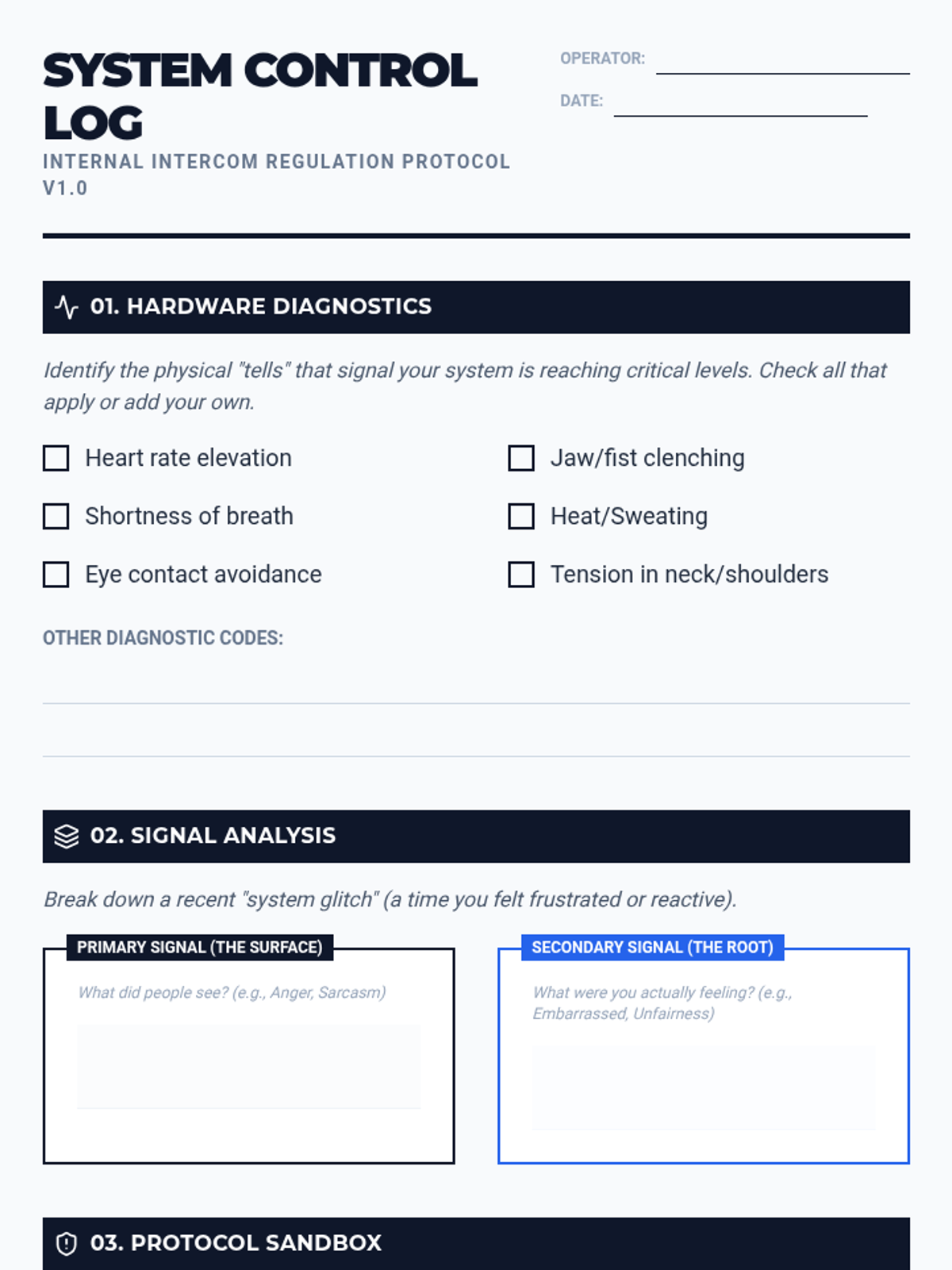
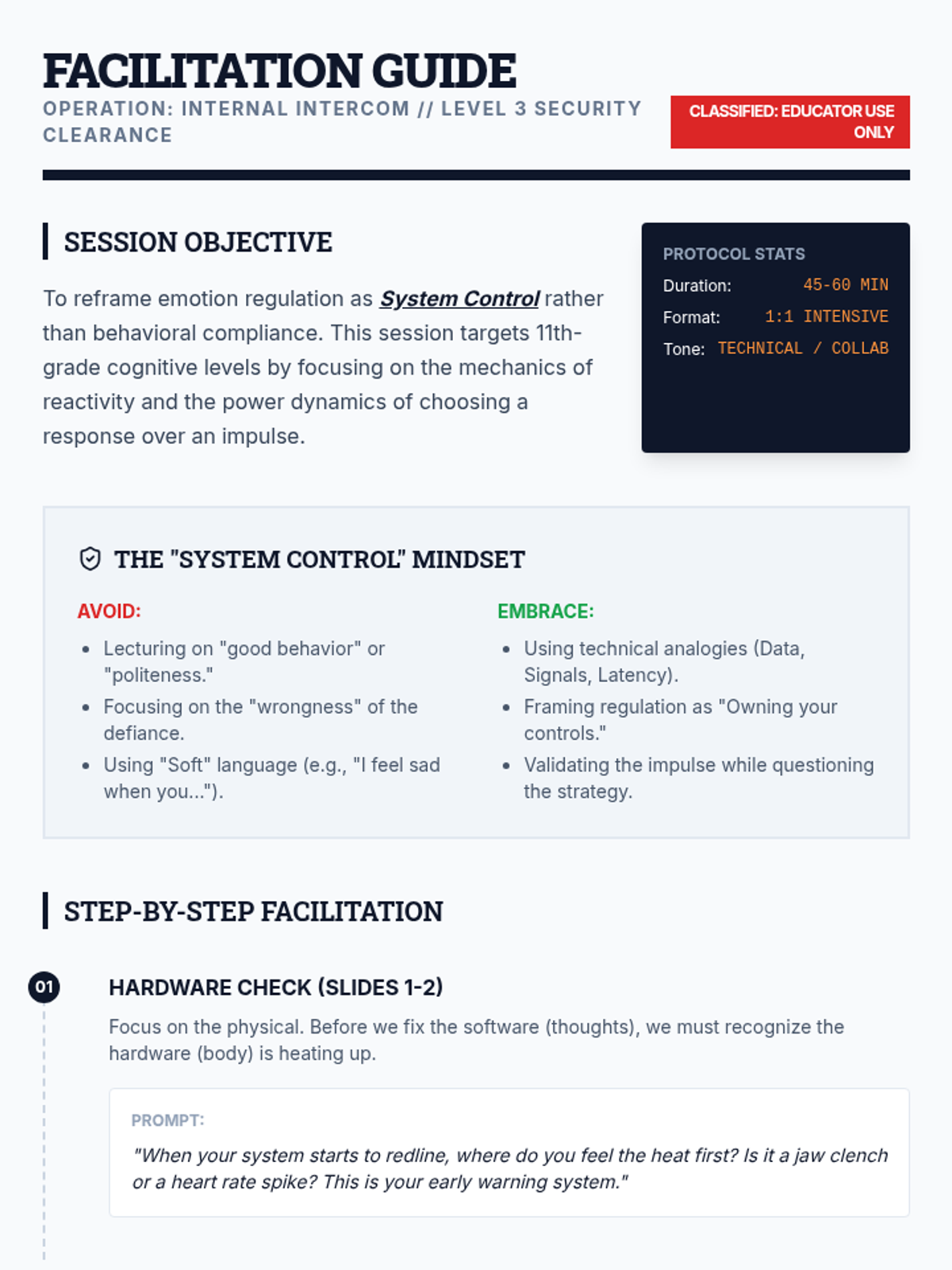
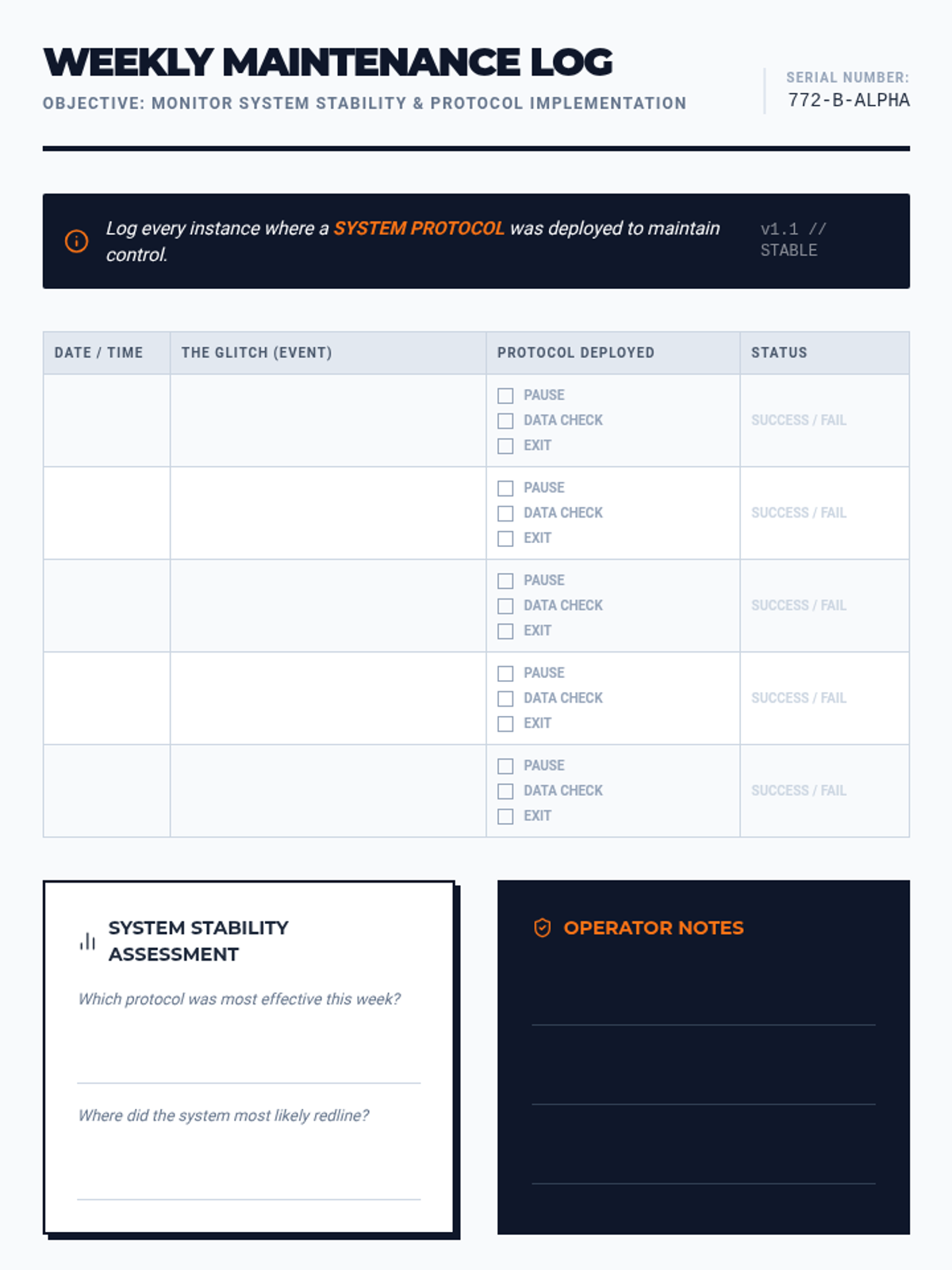
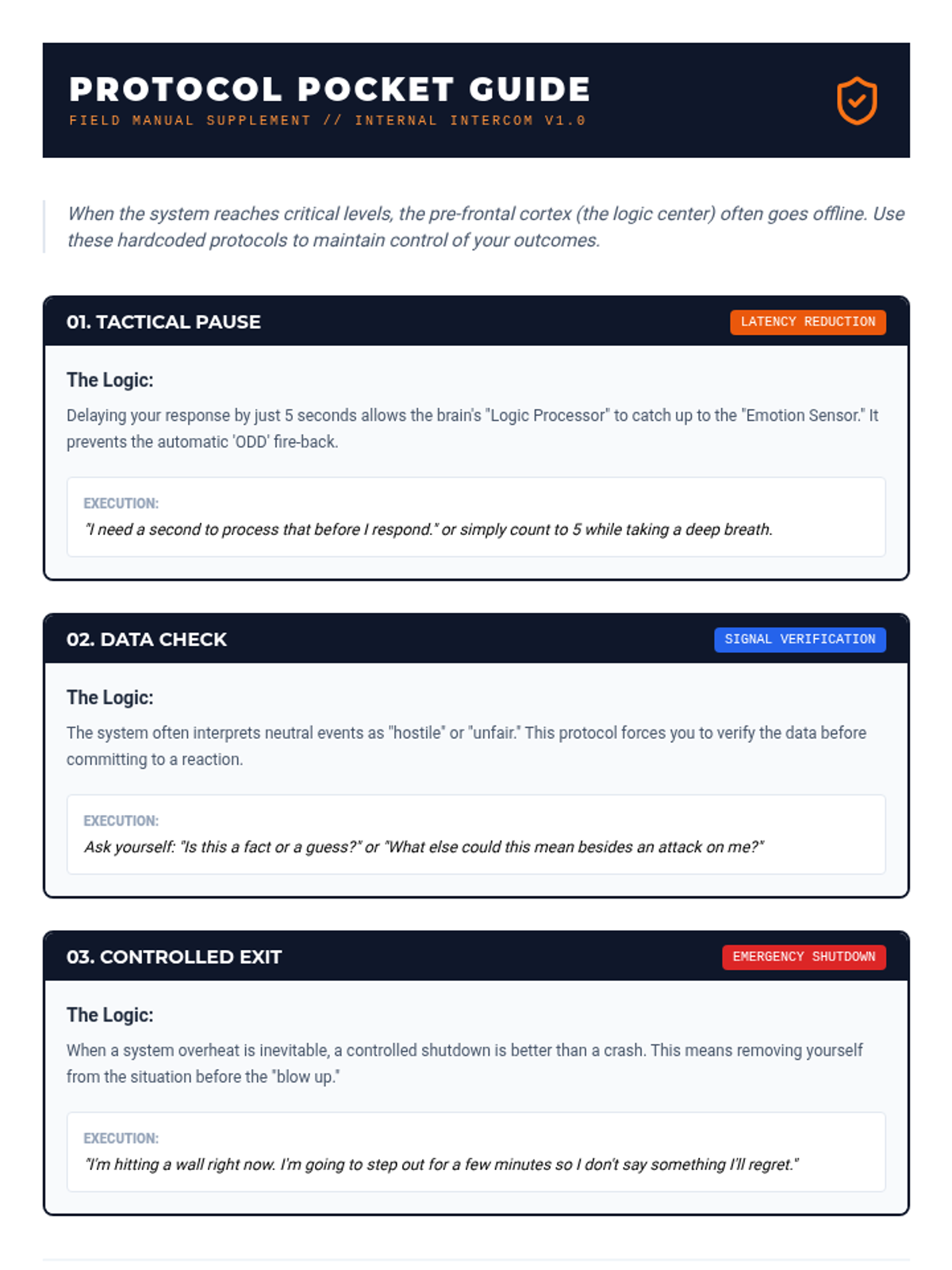
A 1:1 intensive session focused on identifying emotional triggers and applying regulation strategies through a 'system control' lens. Designed specifically for older students to navigate high-stakes social and academic scenarios without feeling patronized.
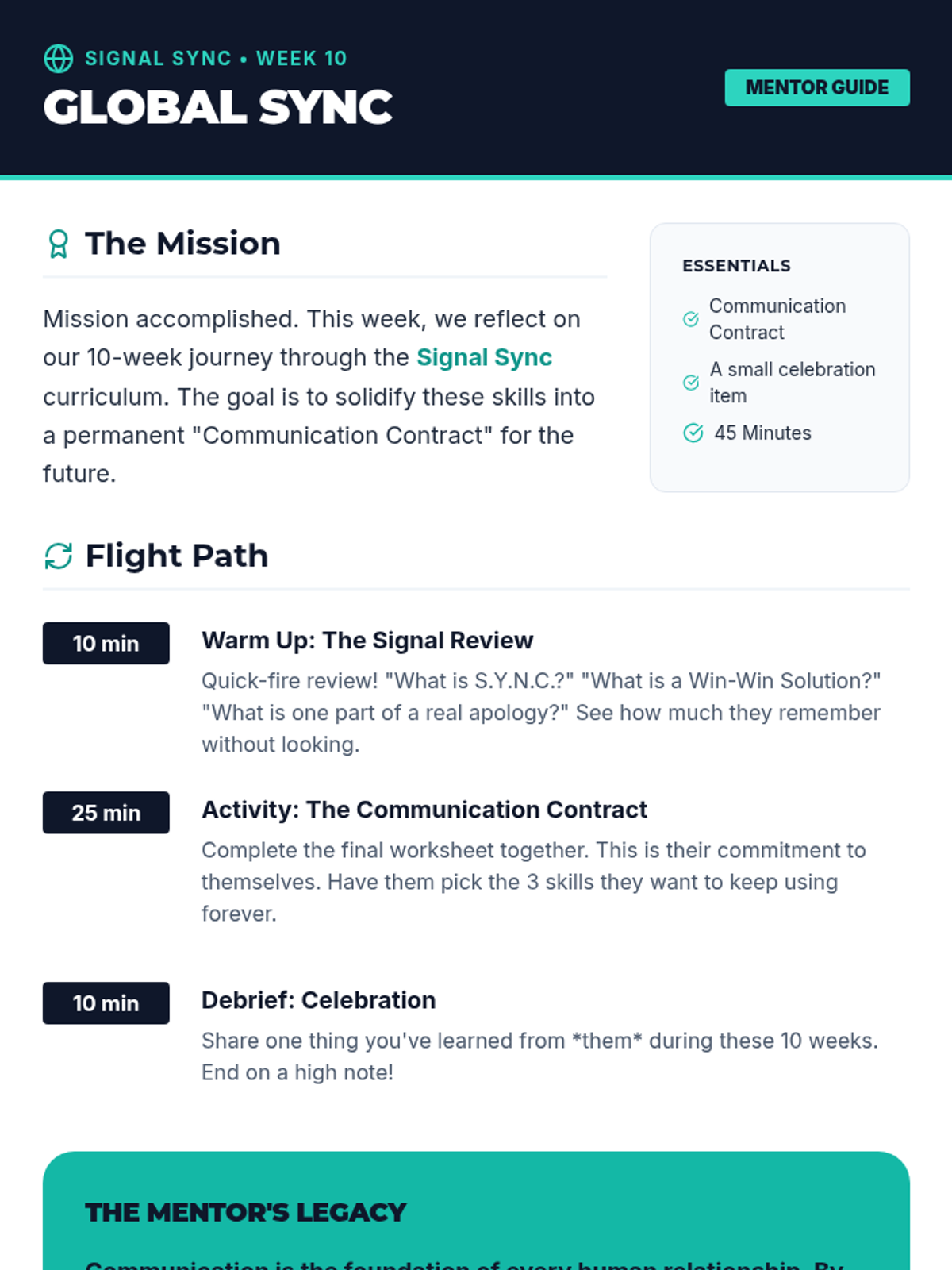
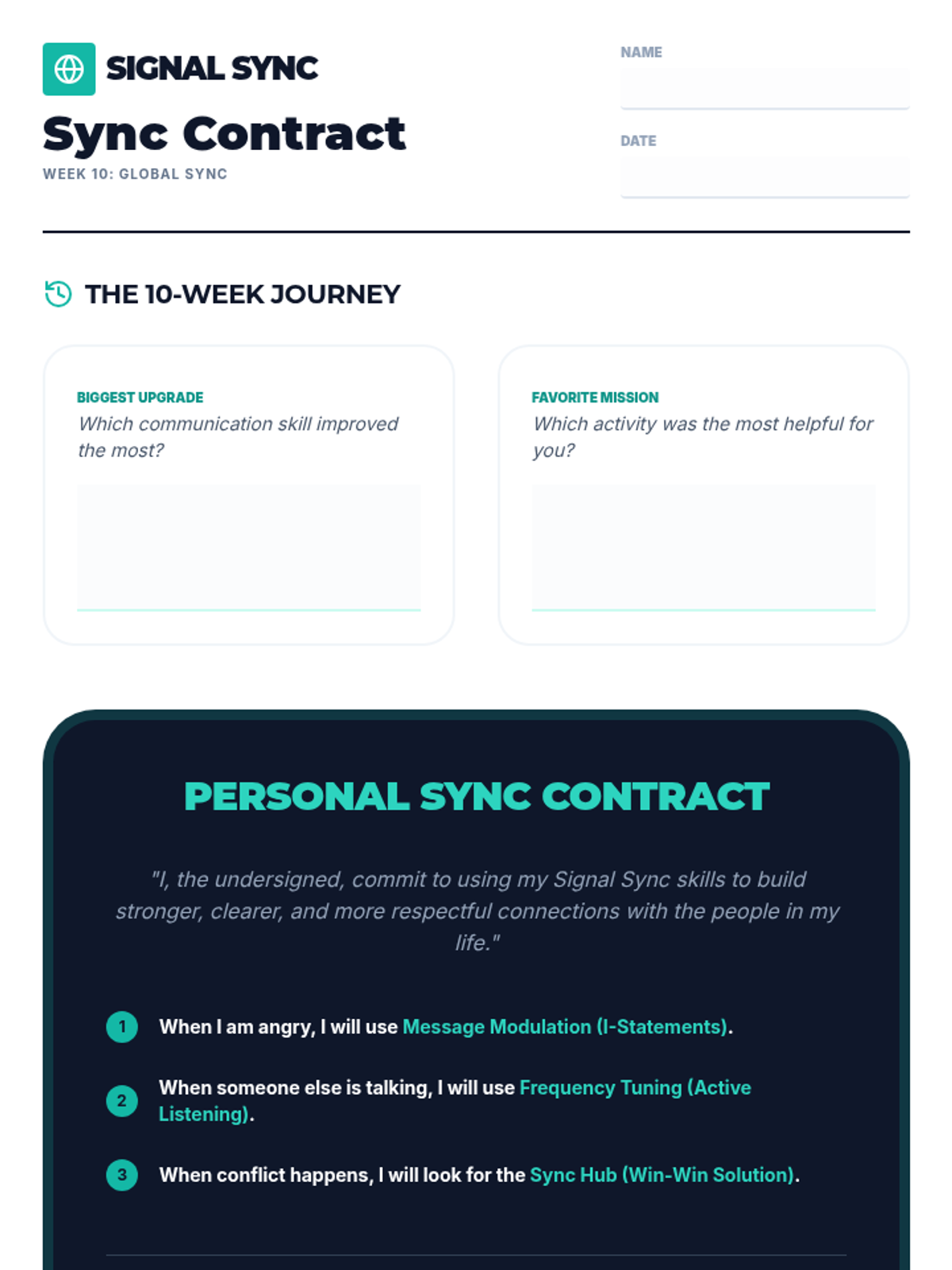
Reflecting on the 10-week journey and creating a personal communication contract for the future.
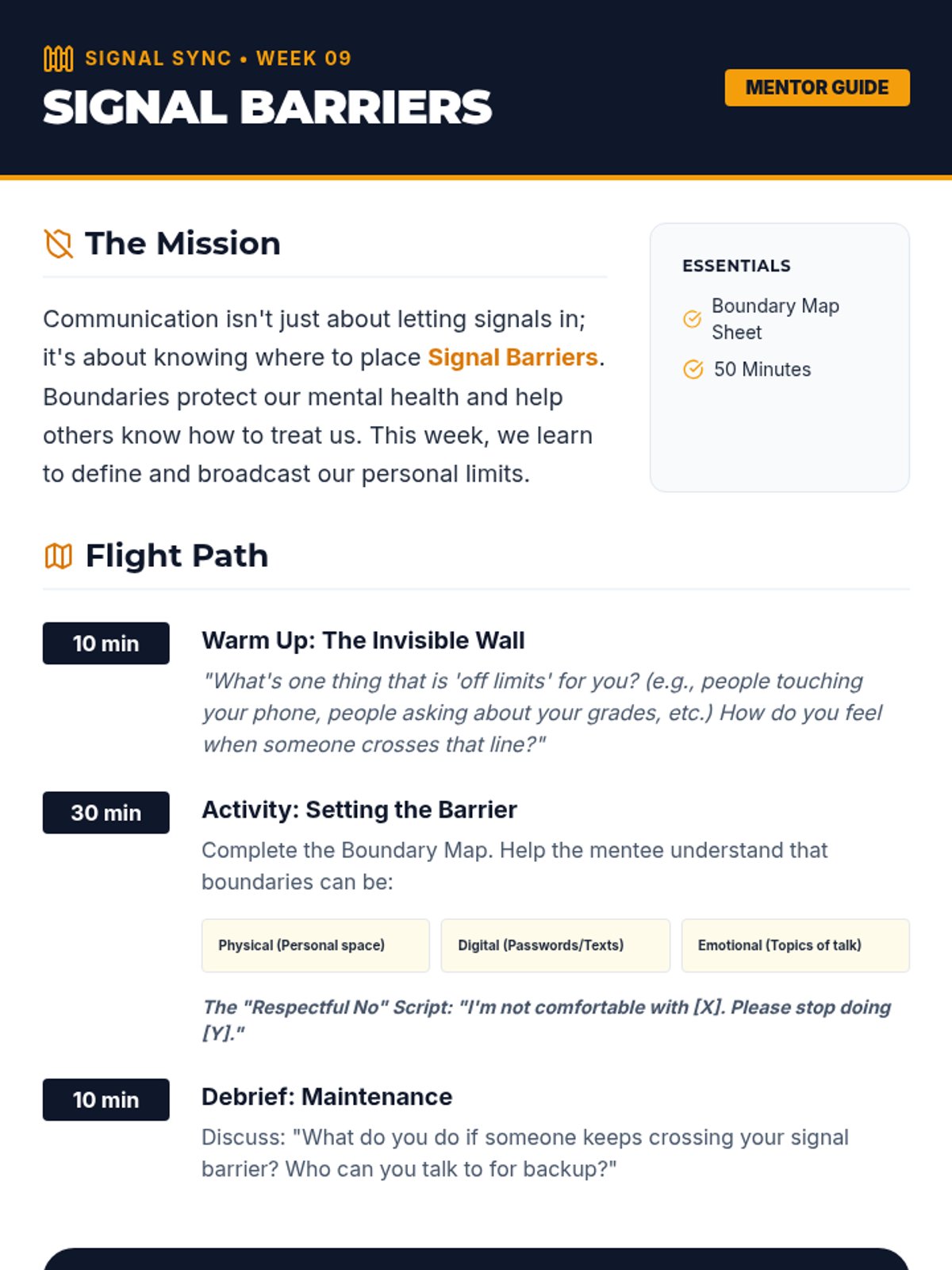
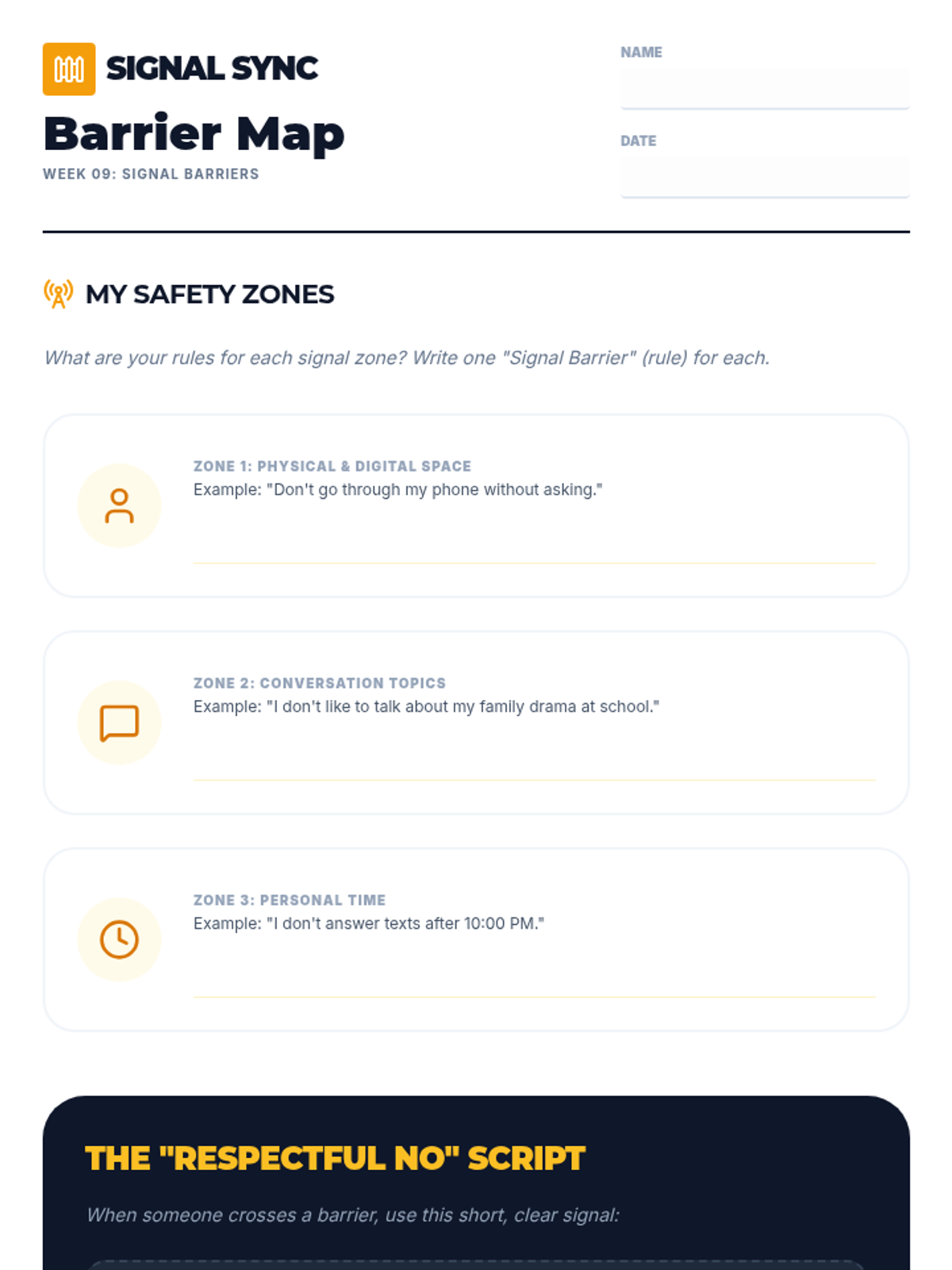
How to define, communicate, and maintain personal boundaries in a healthy way.
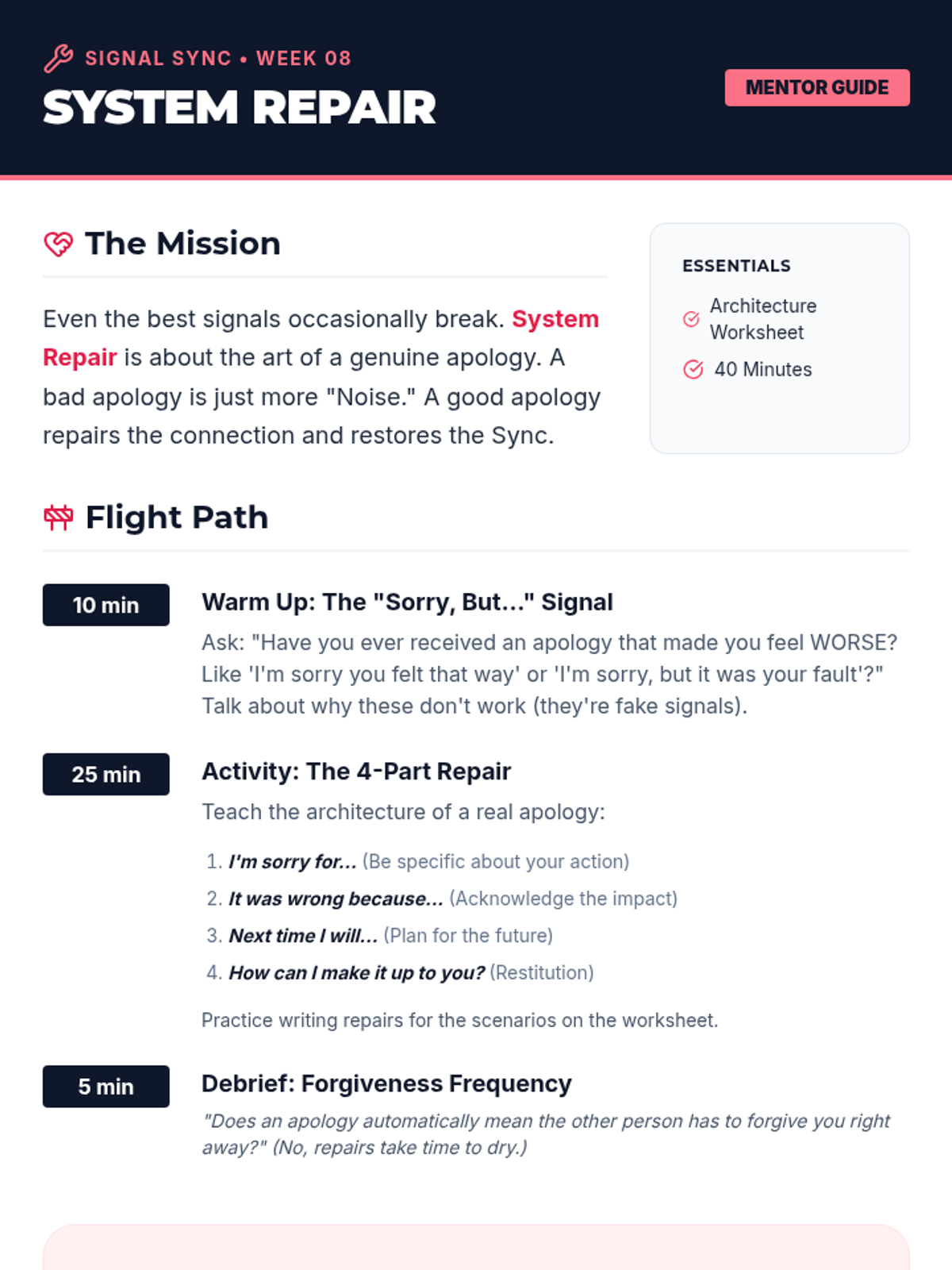
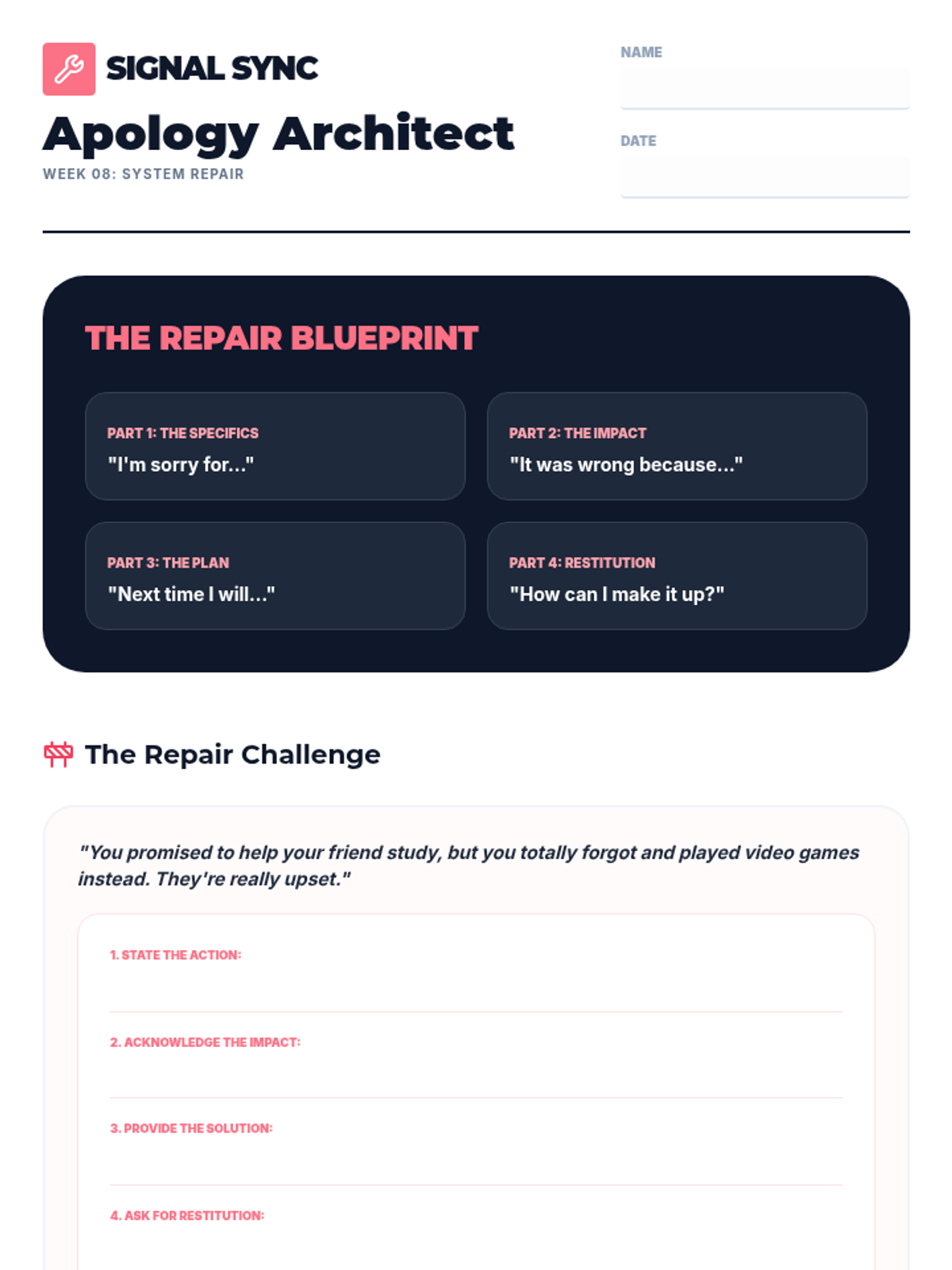
The framework for offering and accepting genuine apologies to repair damaged relationships.
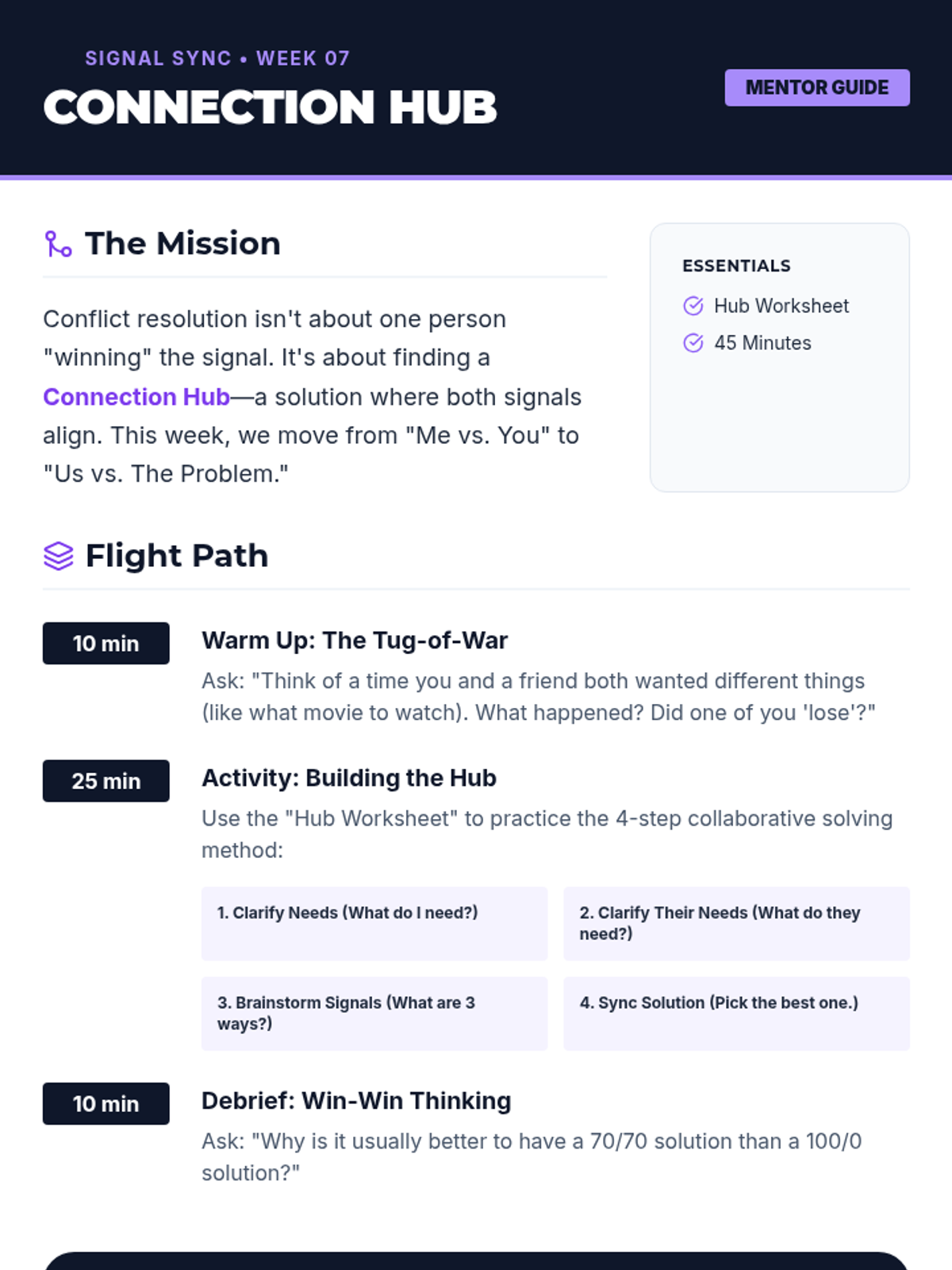
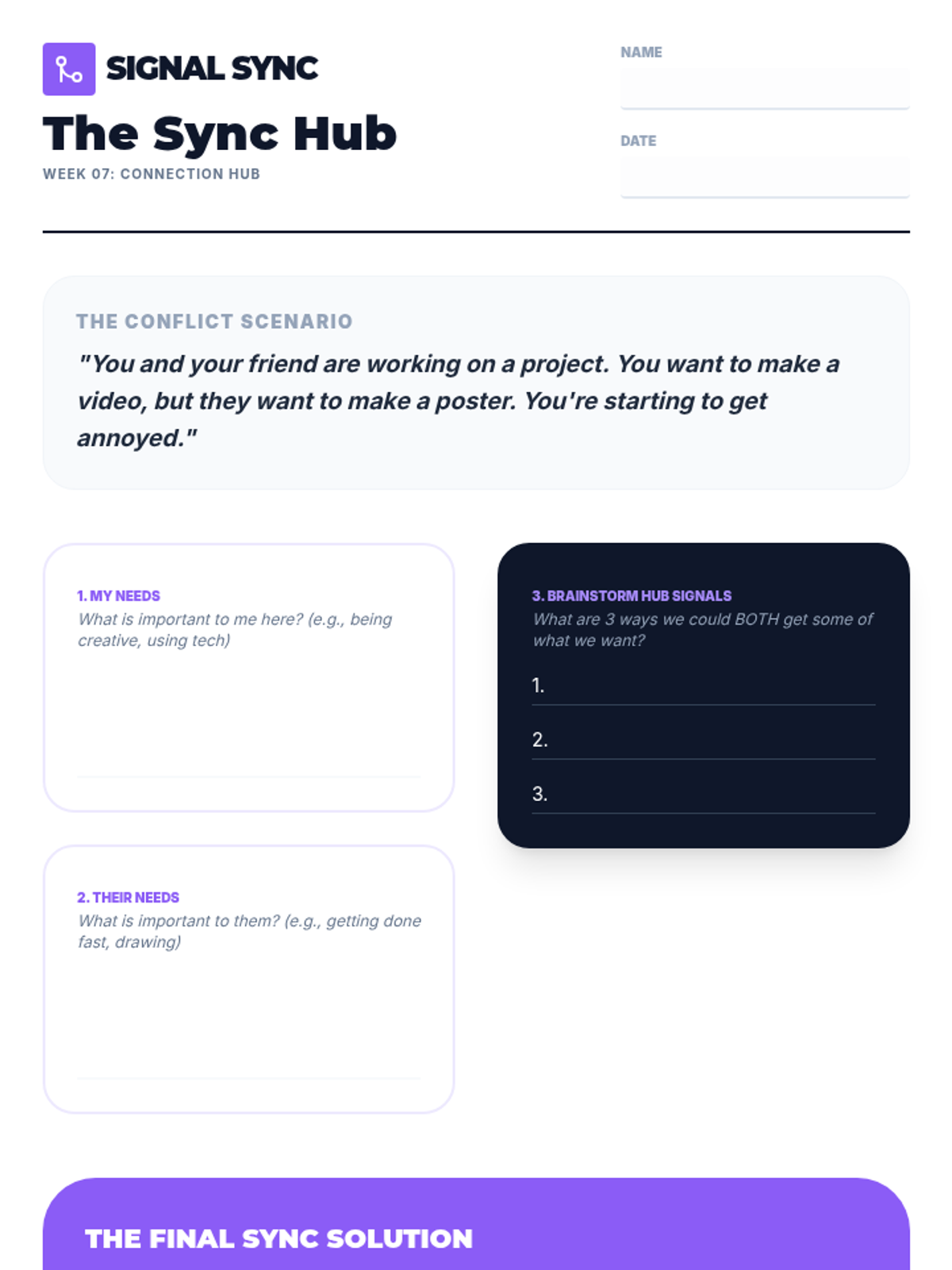
A collaborative approach to problem-solving that seeks 'win-win' outcomes for all involved.
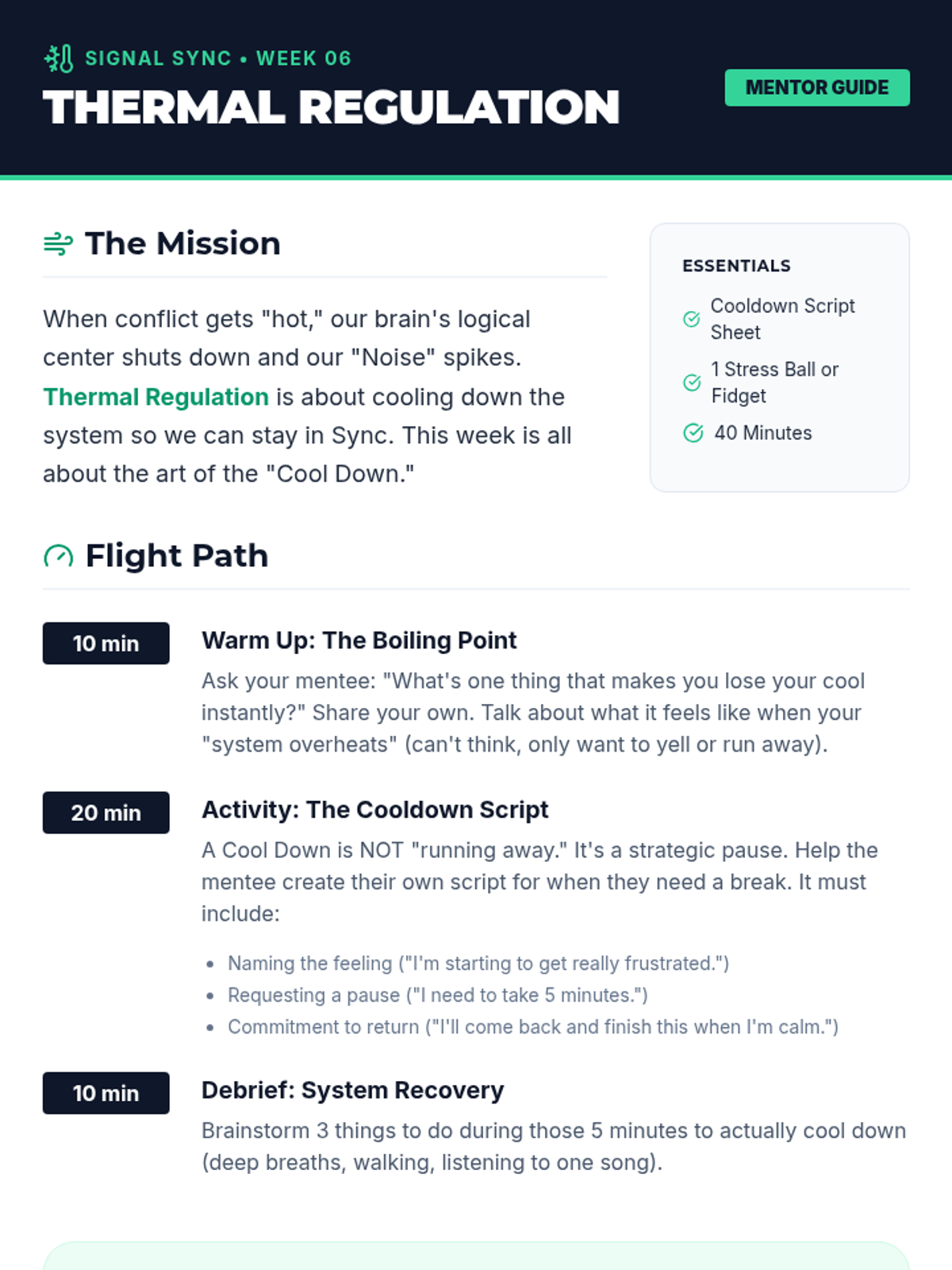
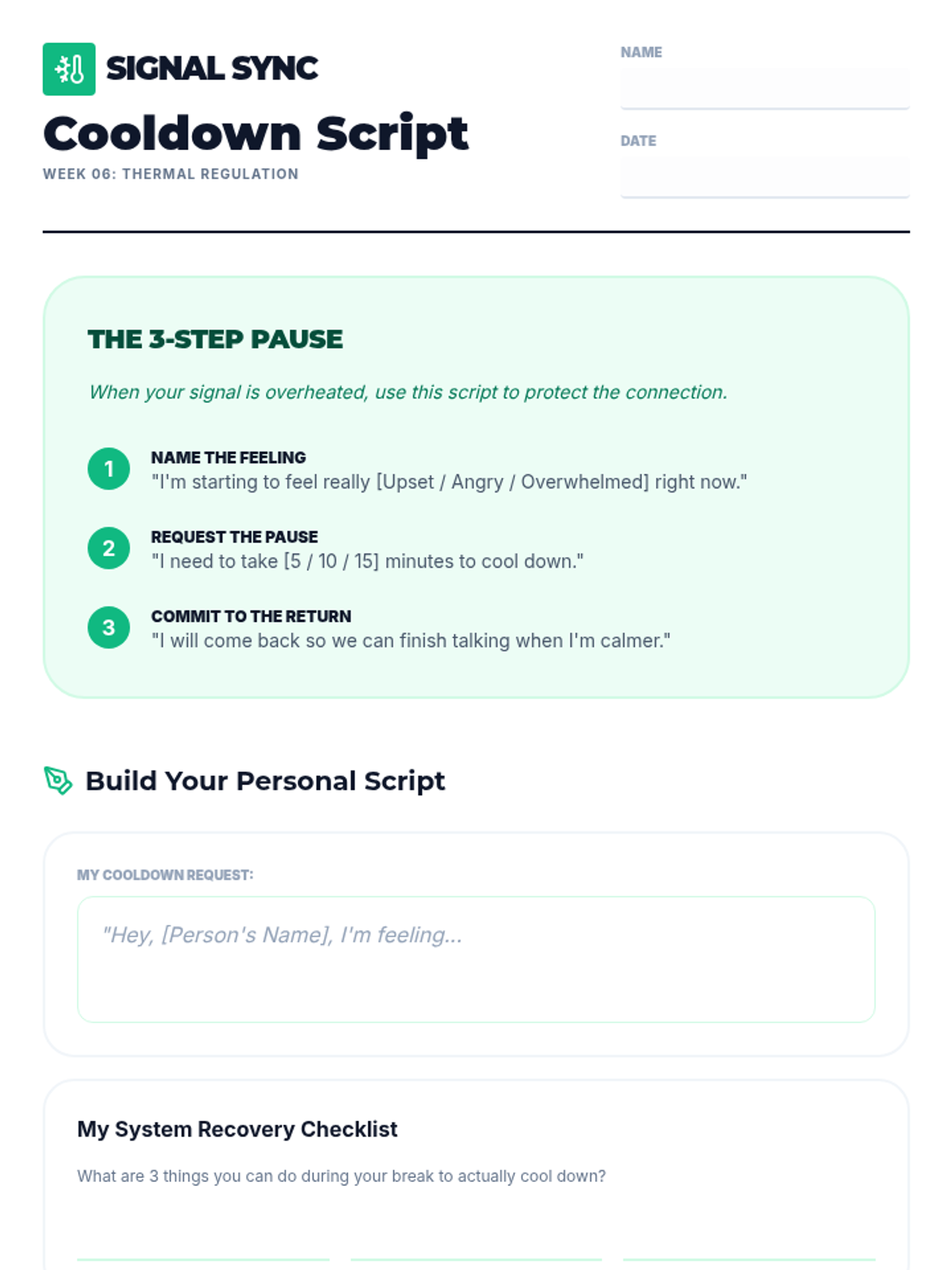
Techniques for emotional regulation and de-escalation when a conversation starts to get 'hot'.
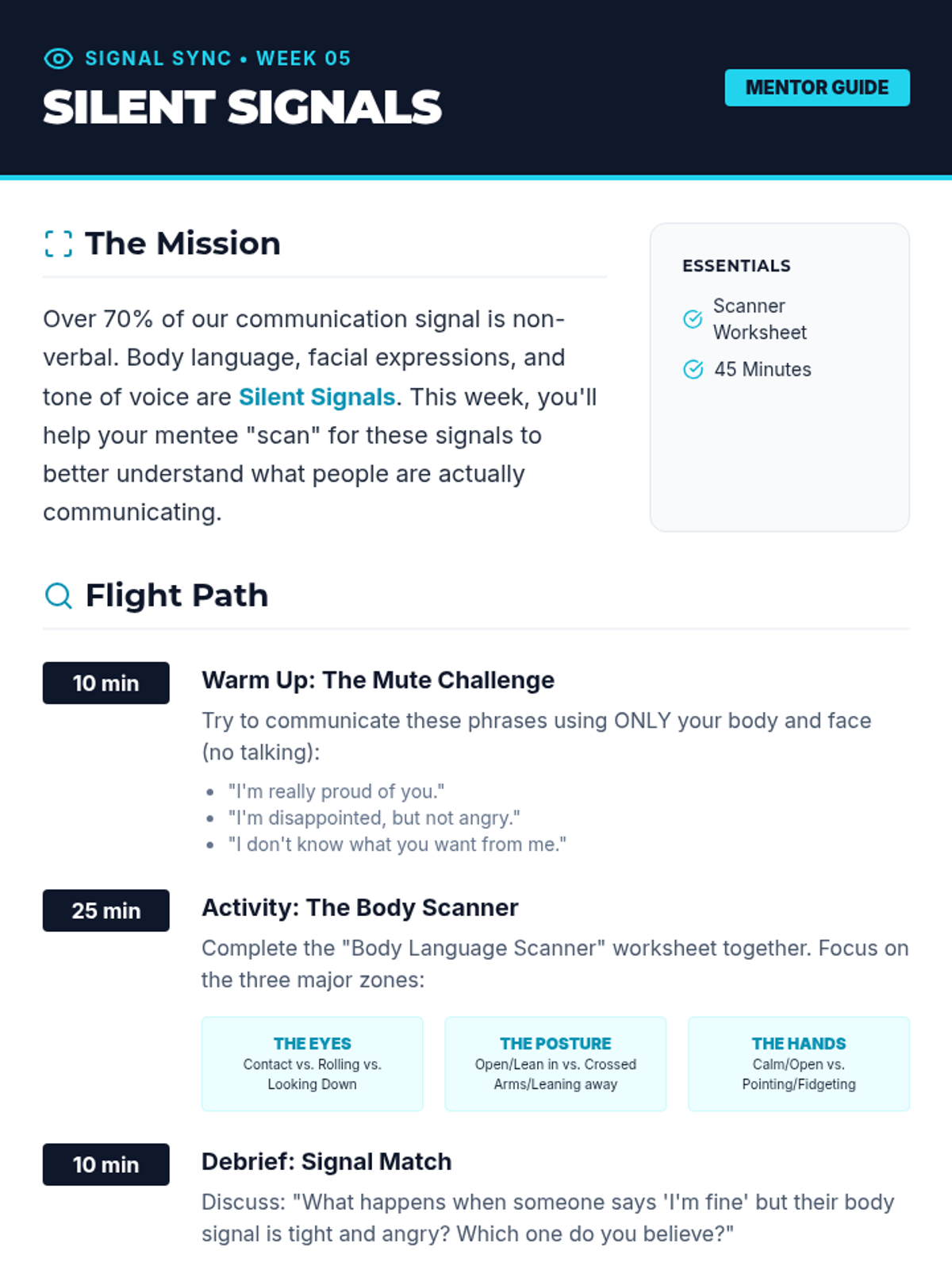
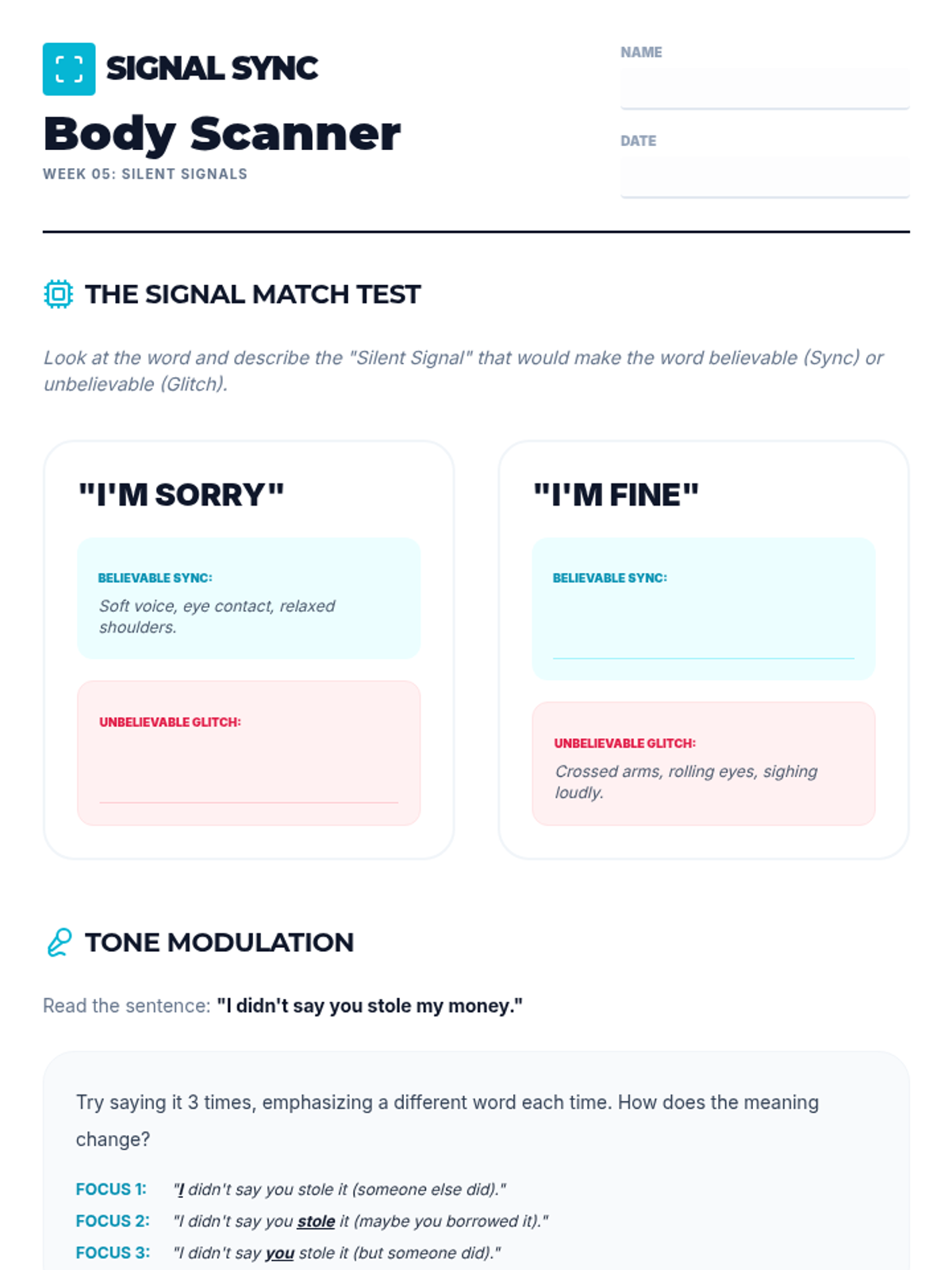
Exploring non-verbal communication, including body language, facial expressions, and tone of voice.
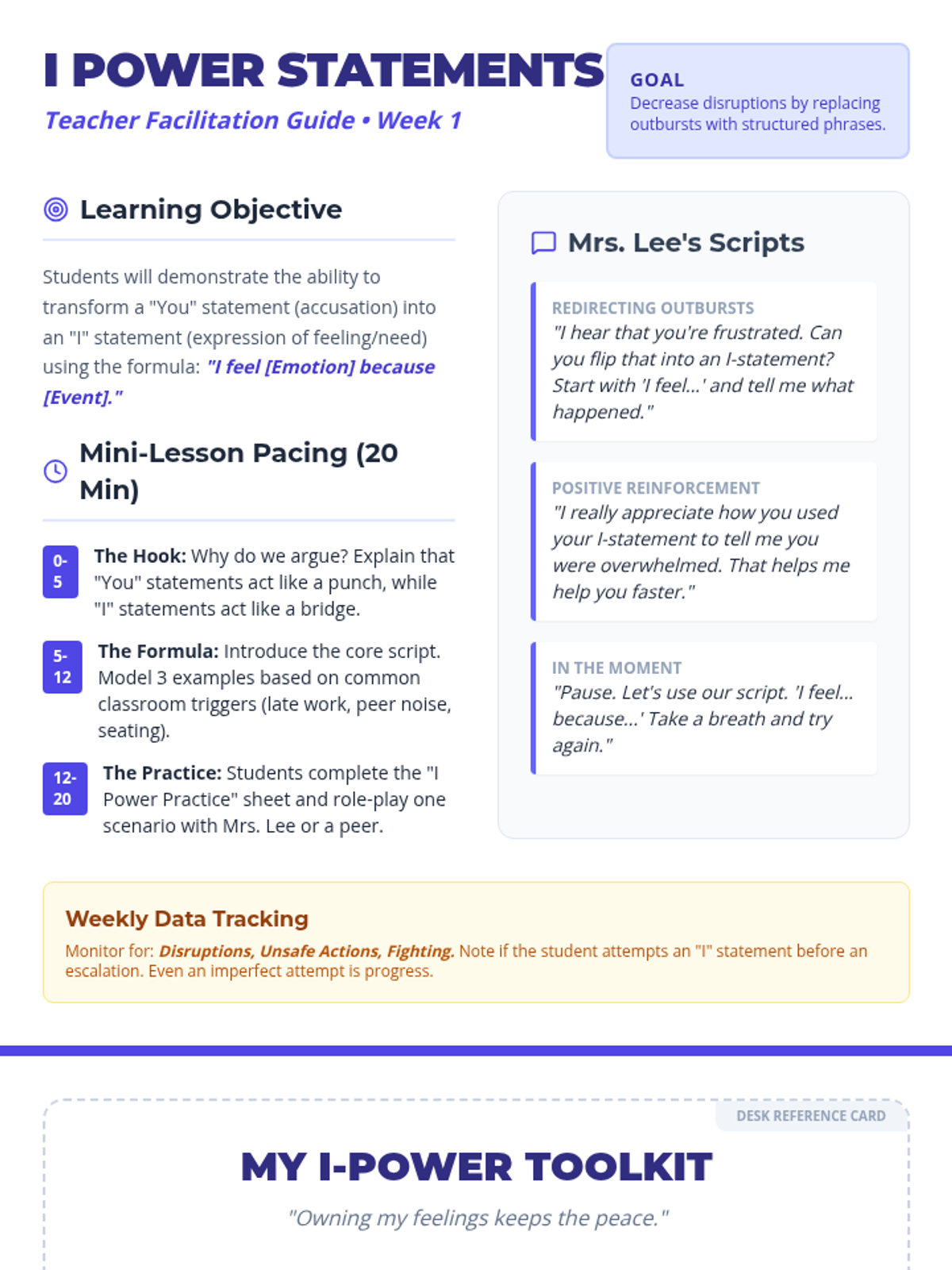
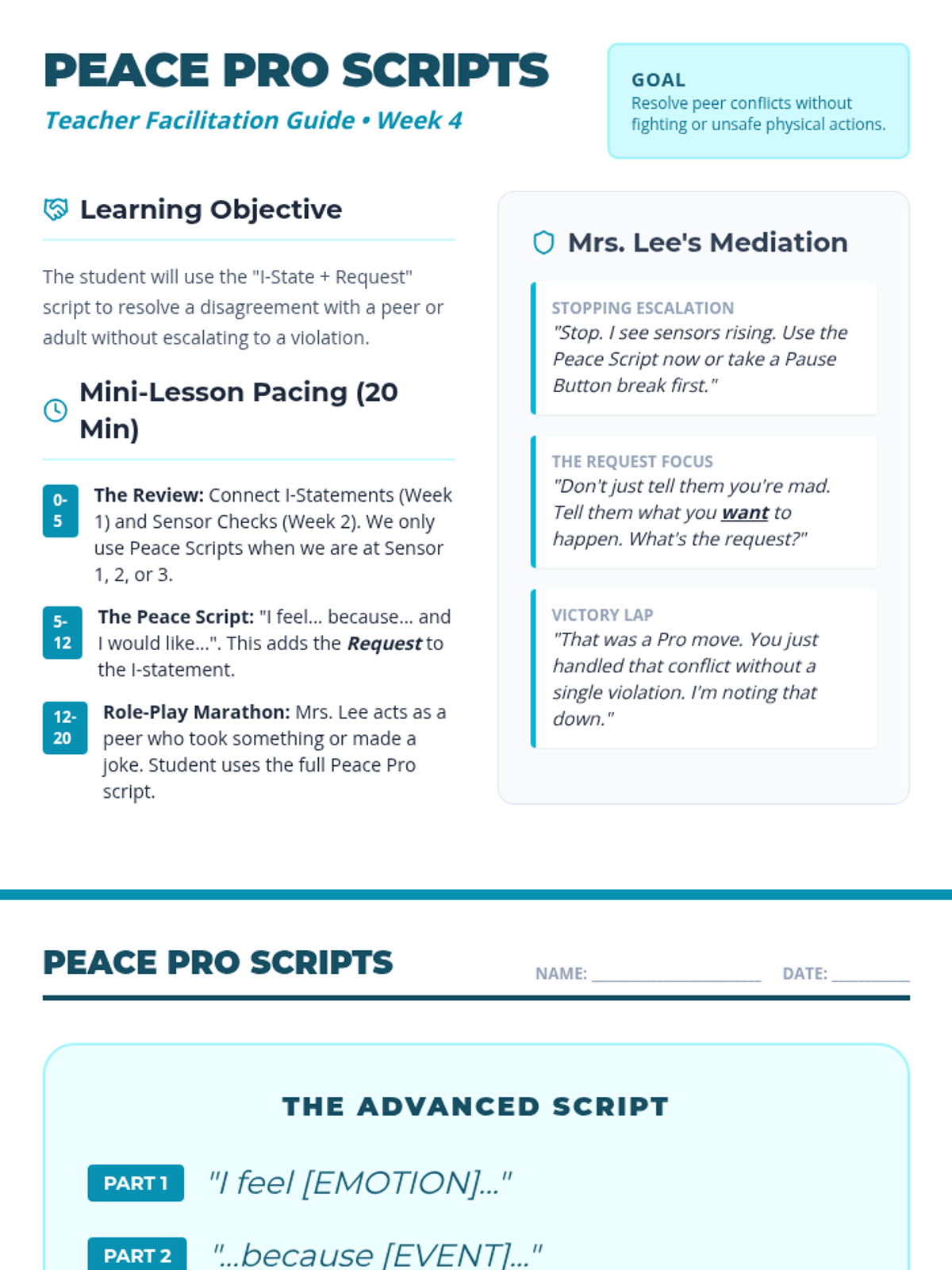
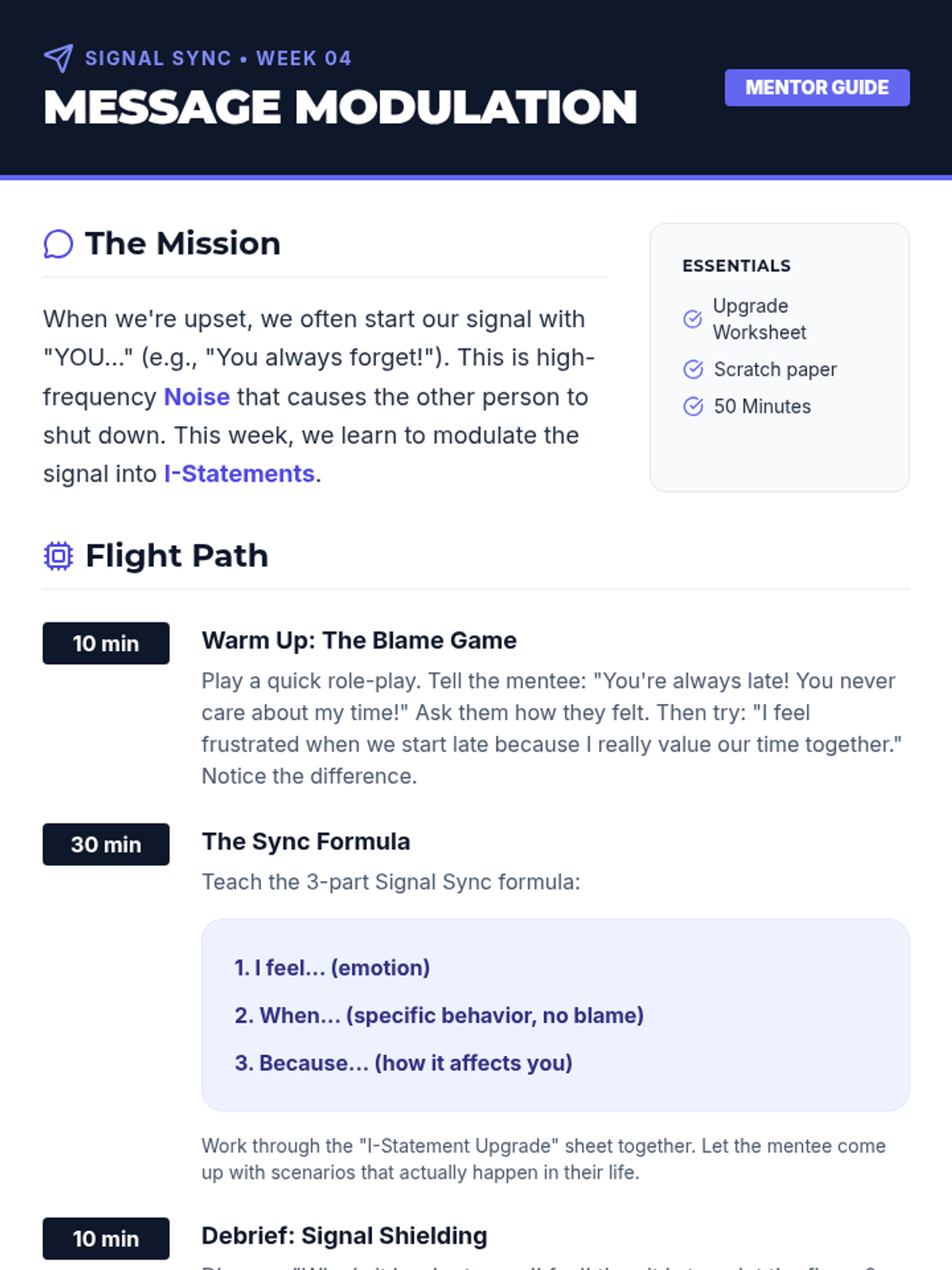
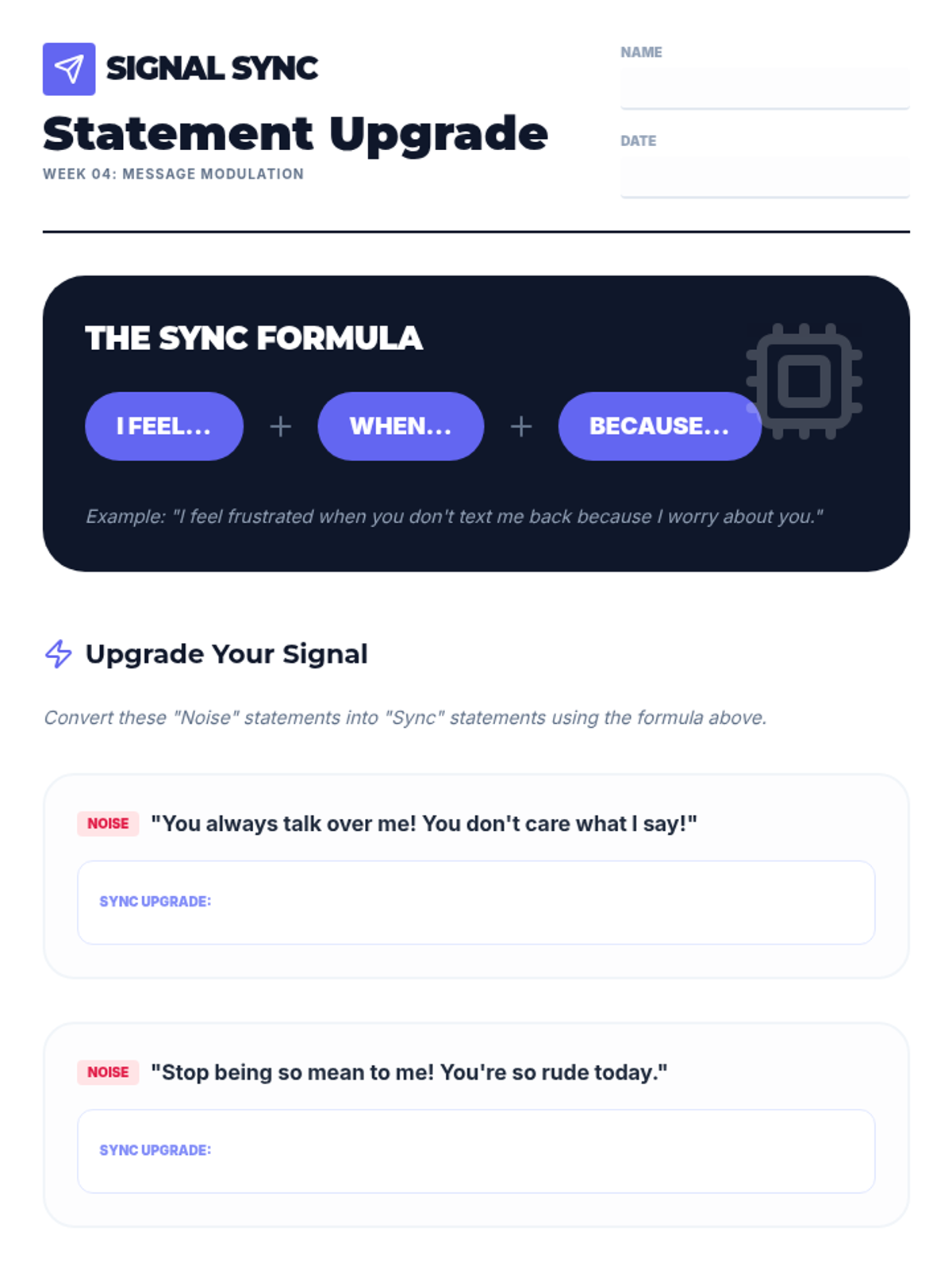
Learning to use 'I' statements to express feelings and needs without triggering defensiveness in others.
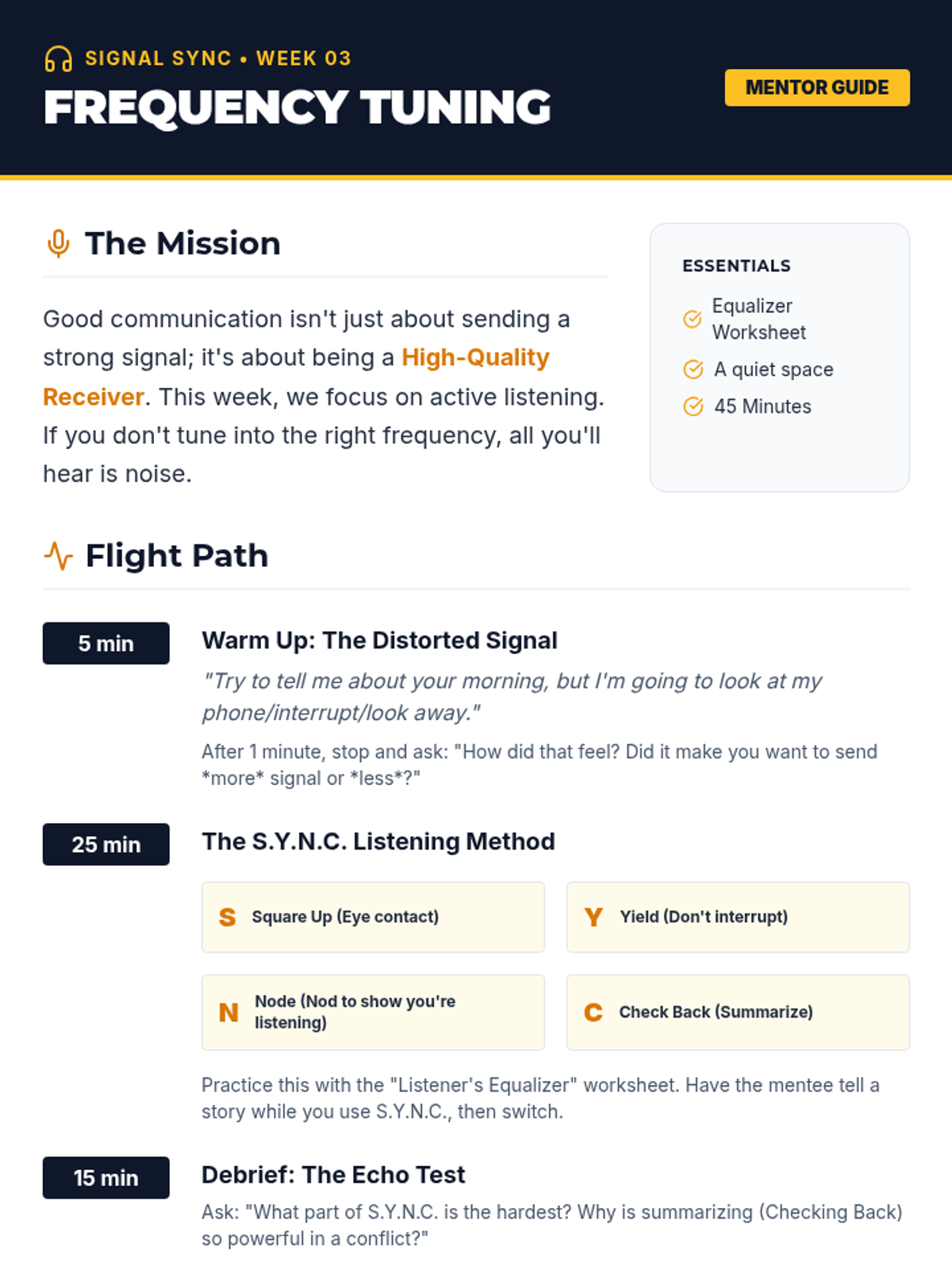
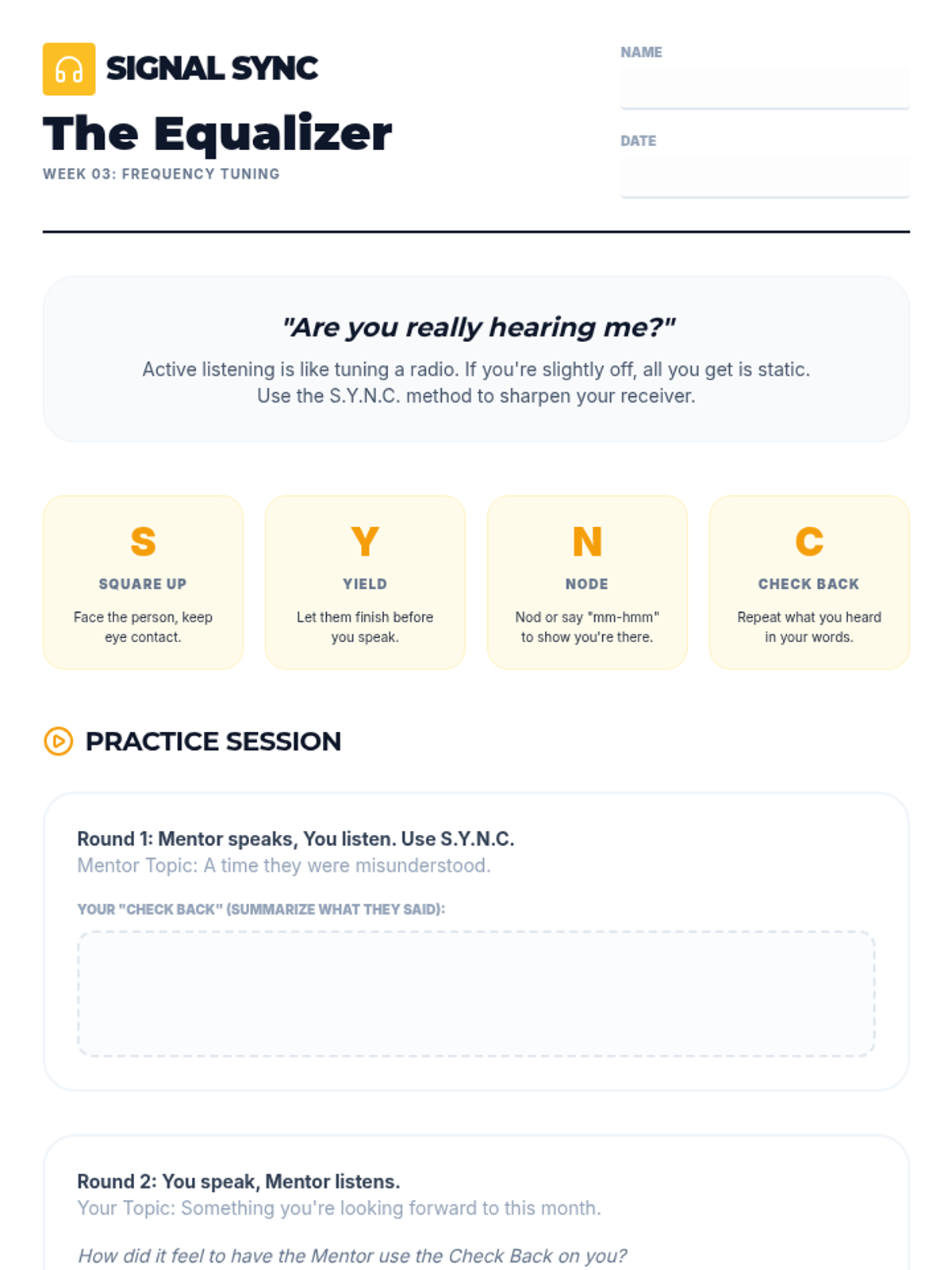
Mastering active listening techniques to ensure the receiver is fully tuned into the sender's message.
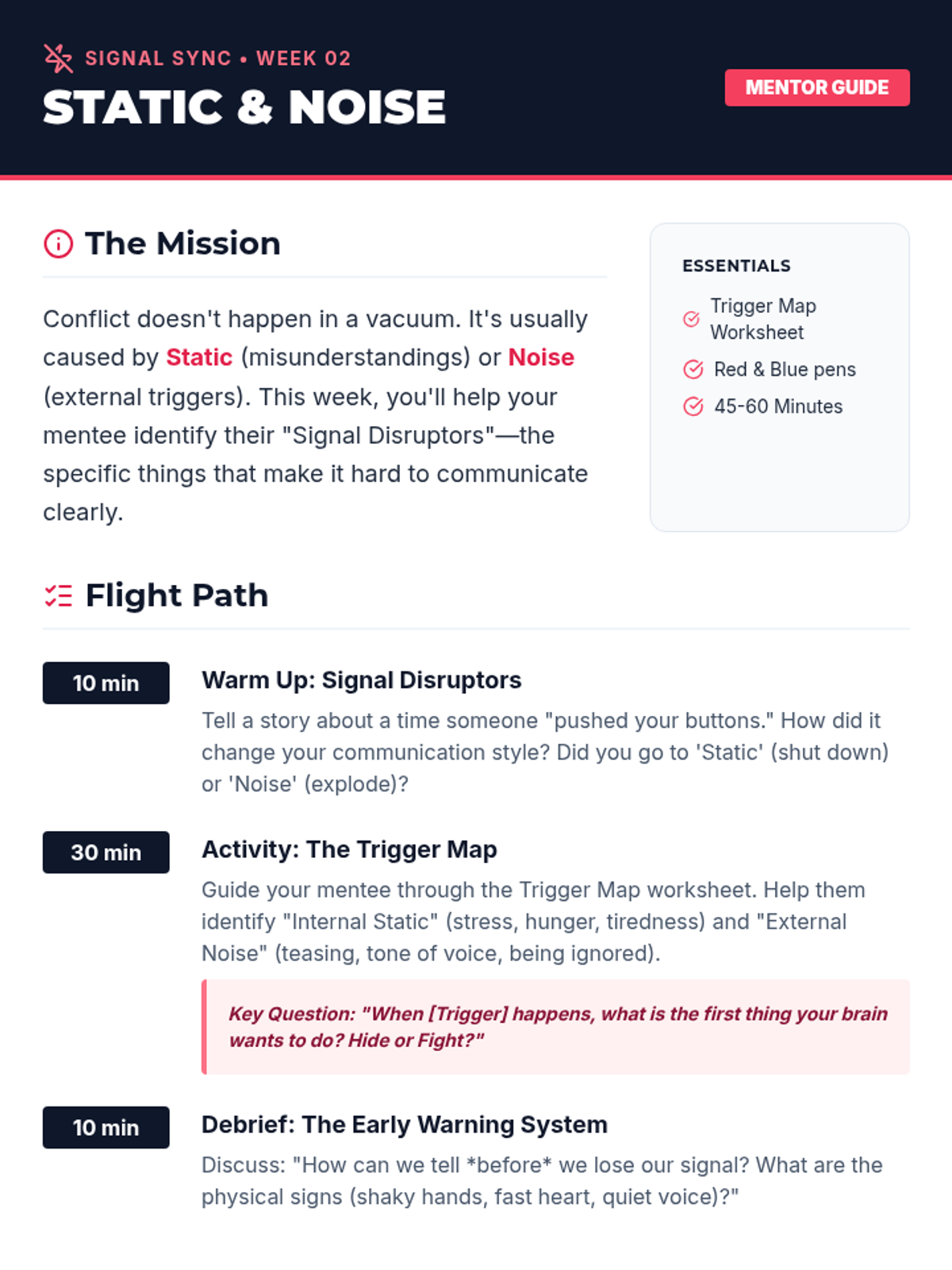
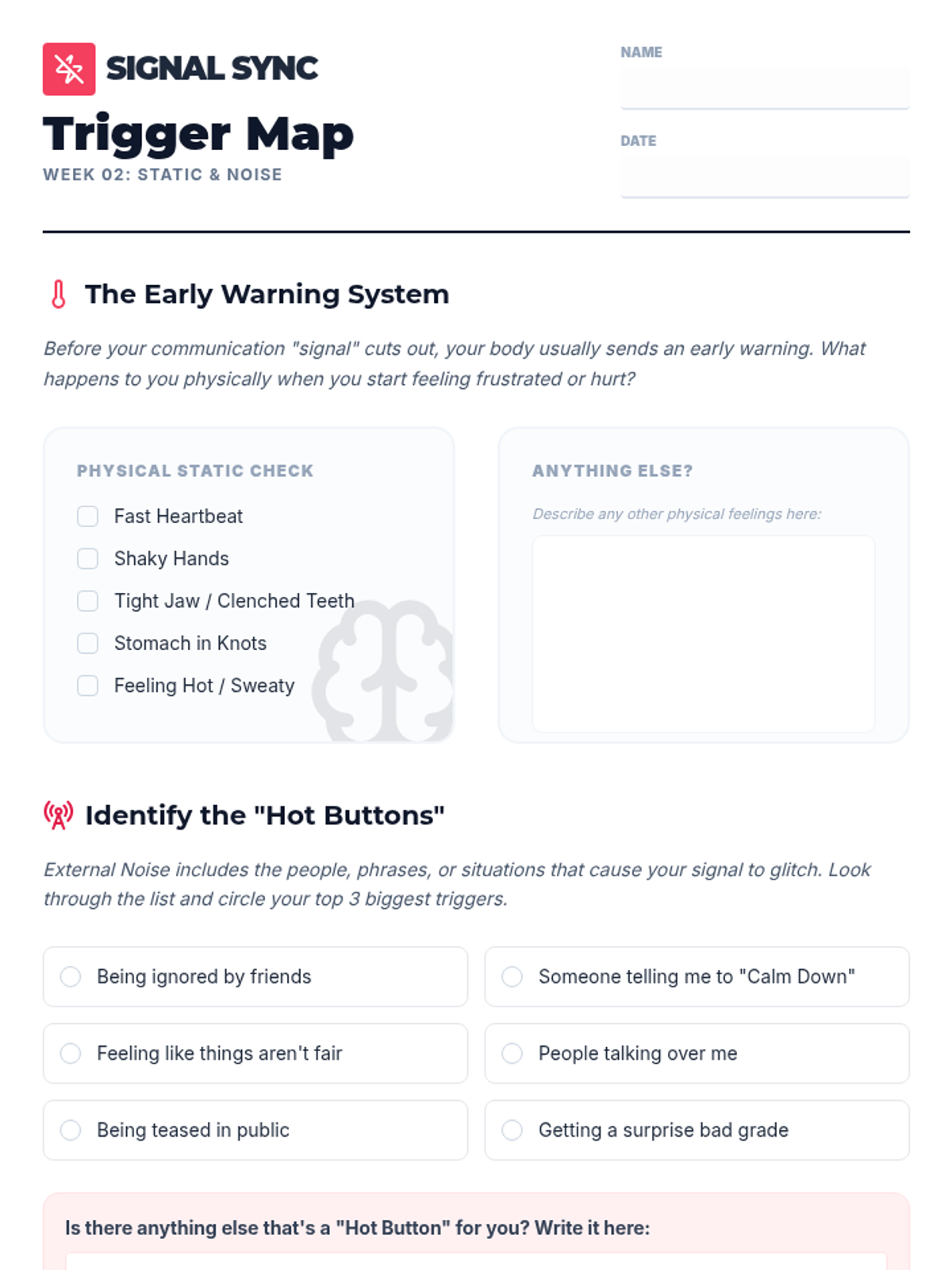
Identifying the 'static' or triggers that lead to conflict and understanding the root causes of misunderstandings.
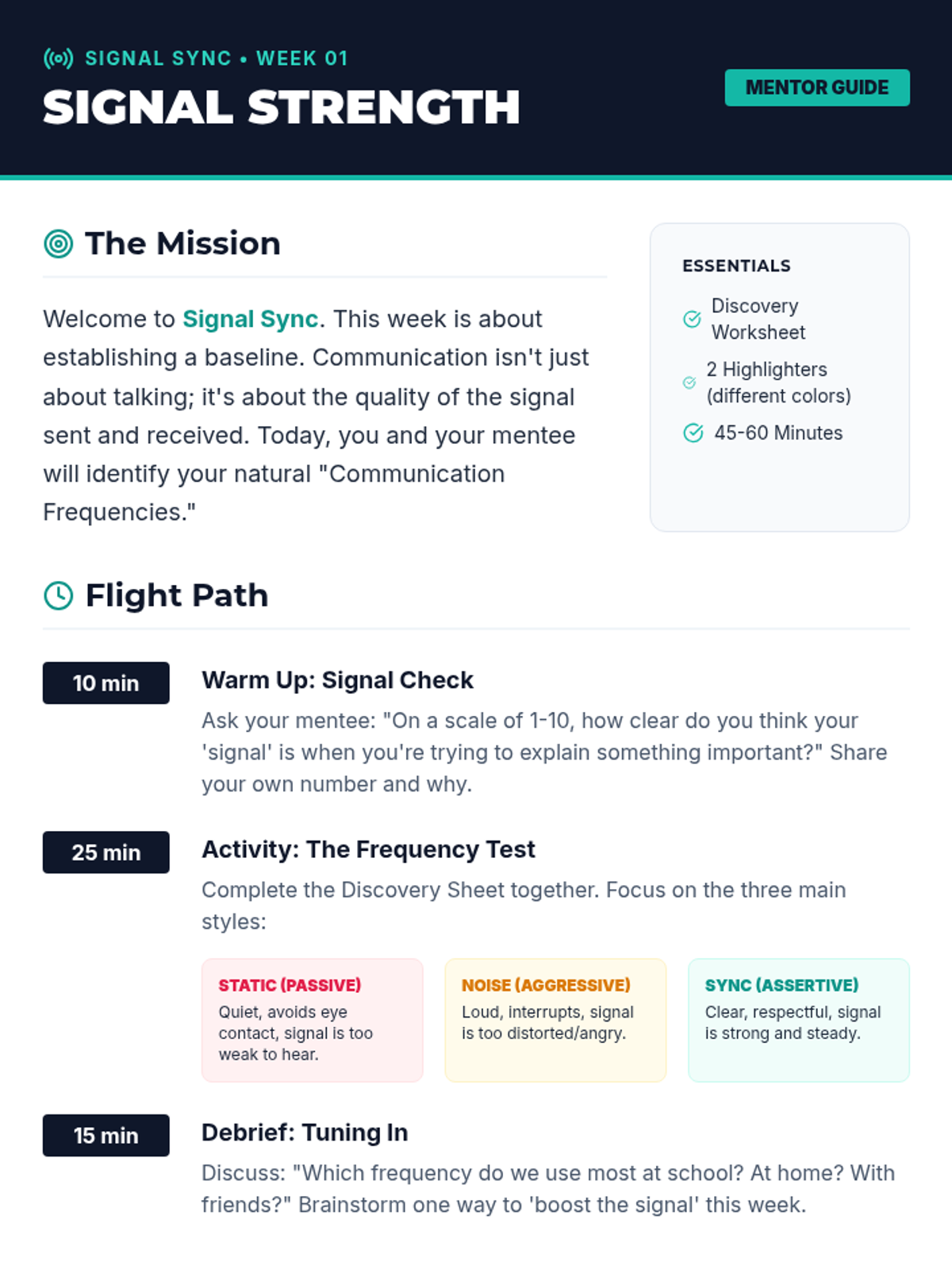
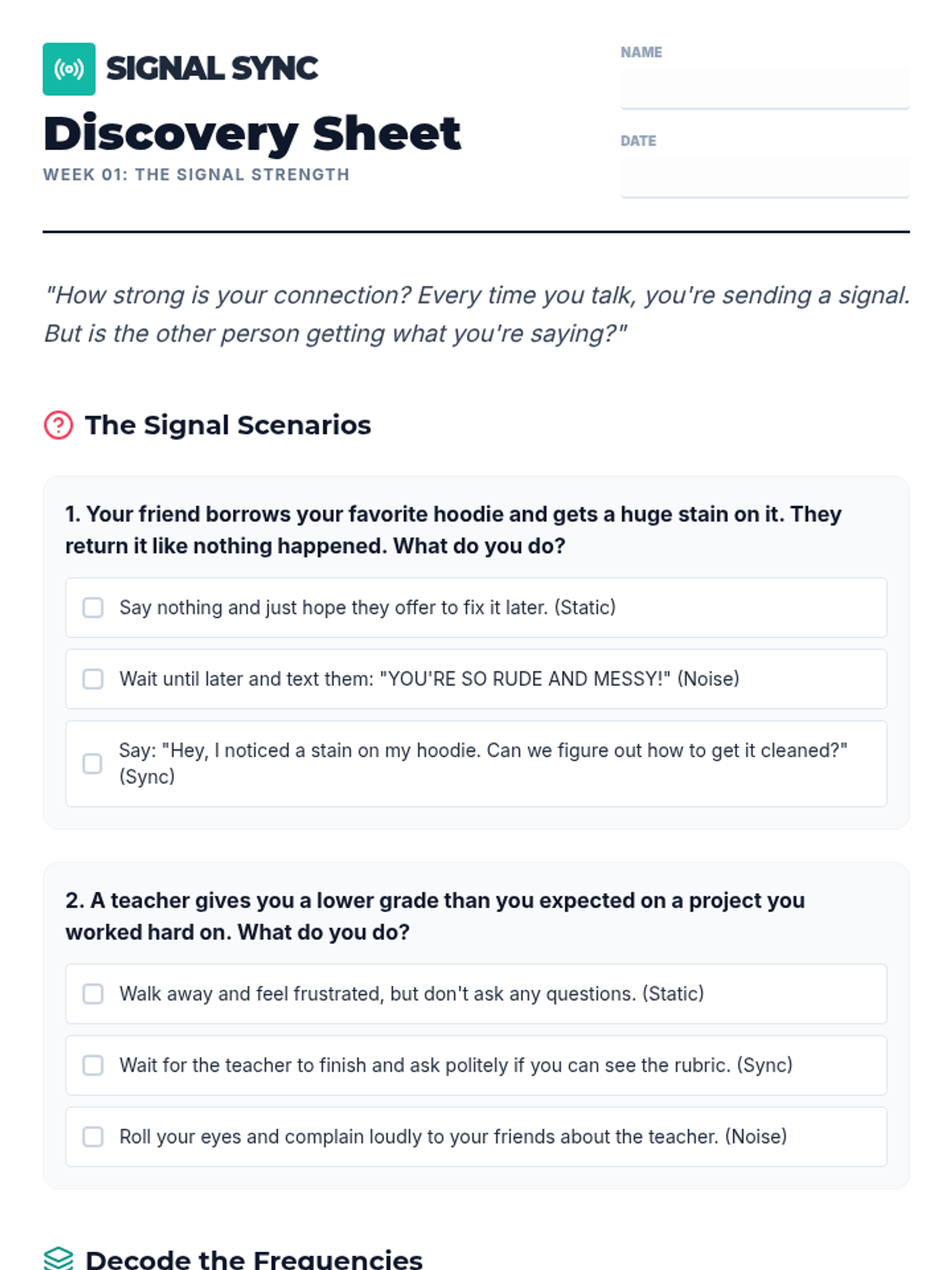
Introduction to communication styles and building a baseline understanding of how we send and receive information.
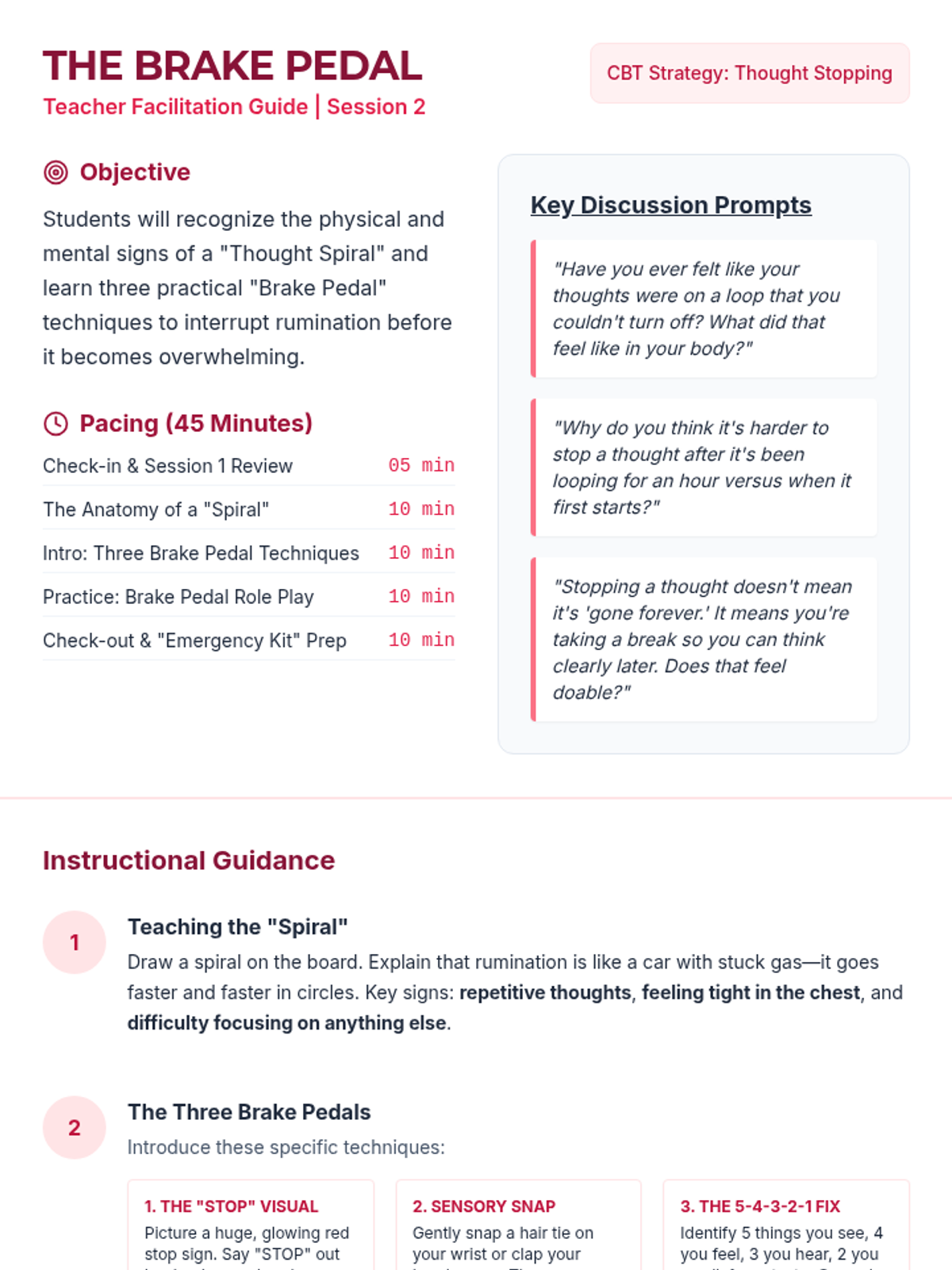
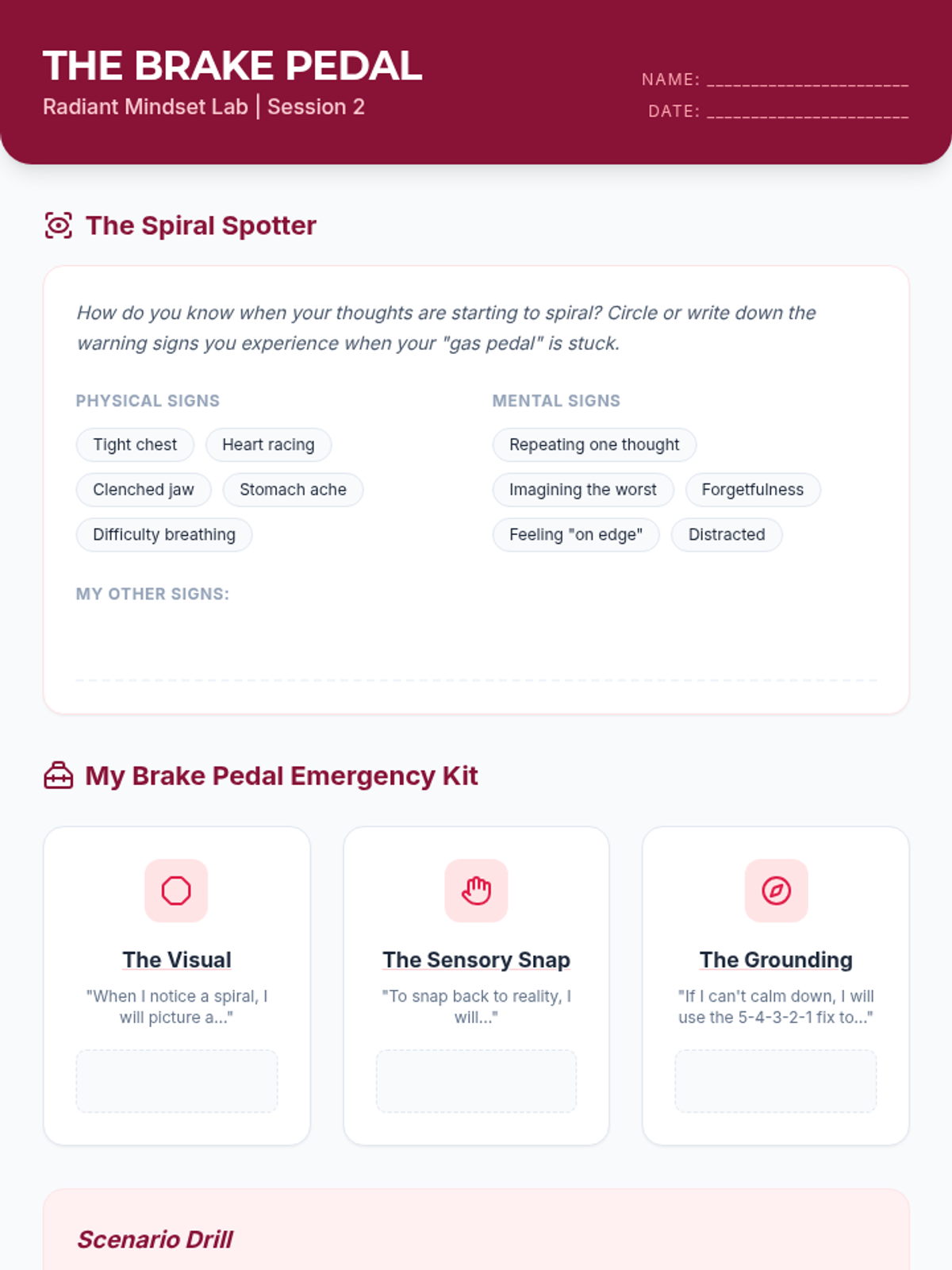
Teaches practical 'Brake Pedal' techniques to interrupt negative thought spirals and rumination before they take hold.