Active listening, assertive expression, and boundary-setting strategies for interpersonal success. Develops proficiency in conflict mediation, cooperative teamwork, and the cultivation of healthy romantic and platonic connections.
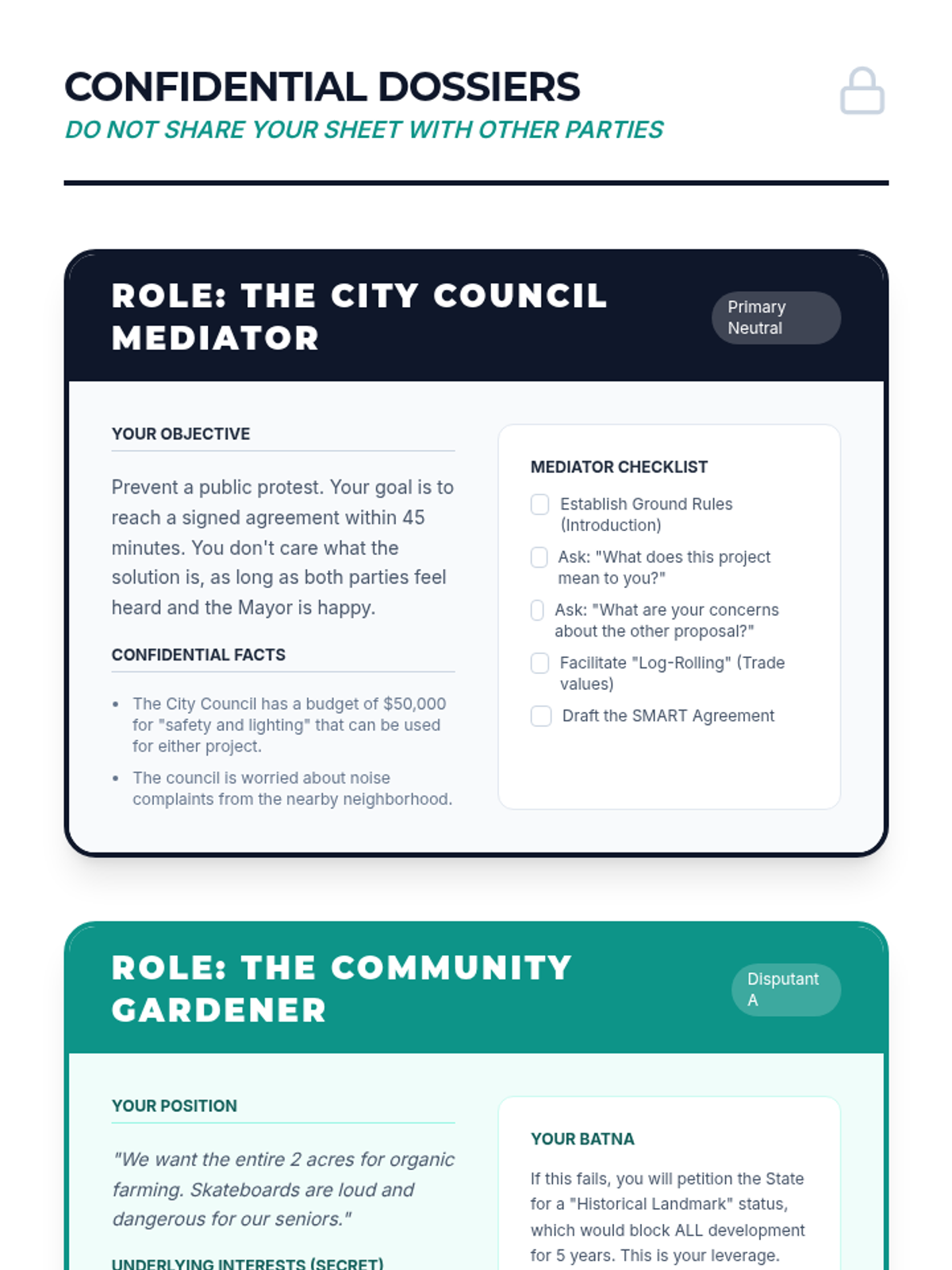
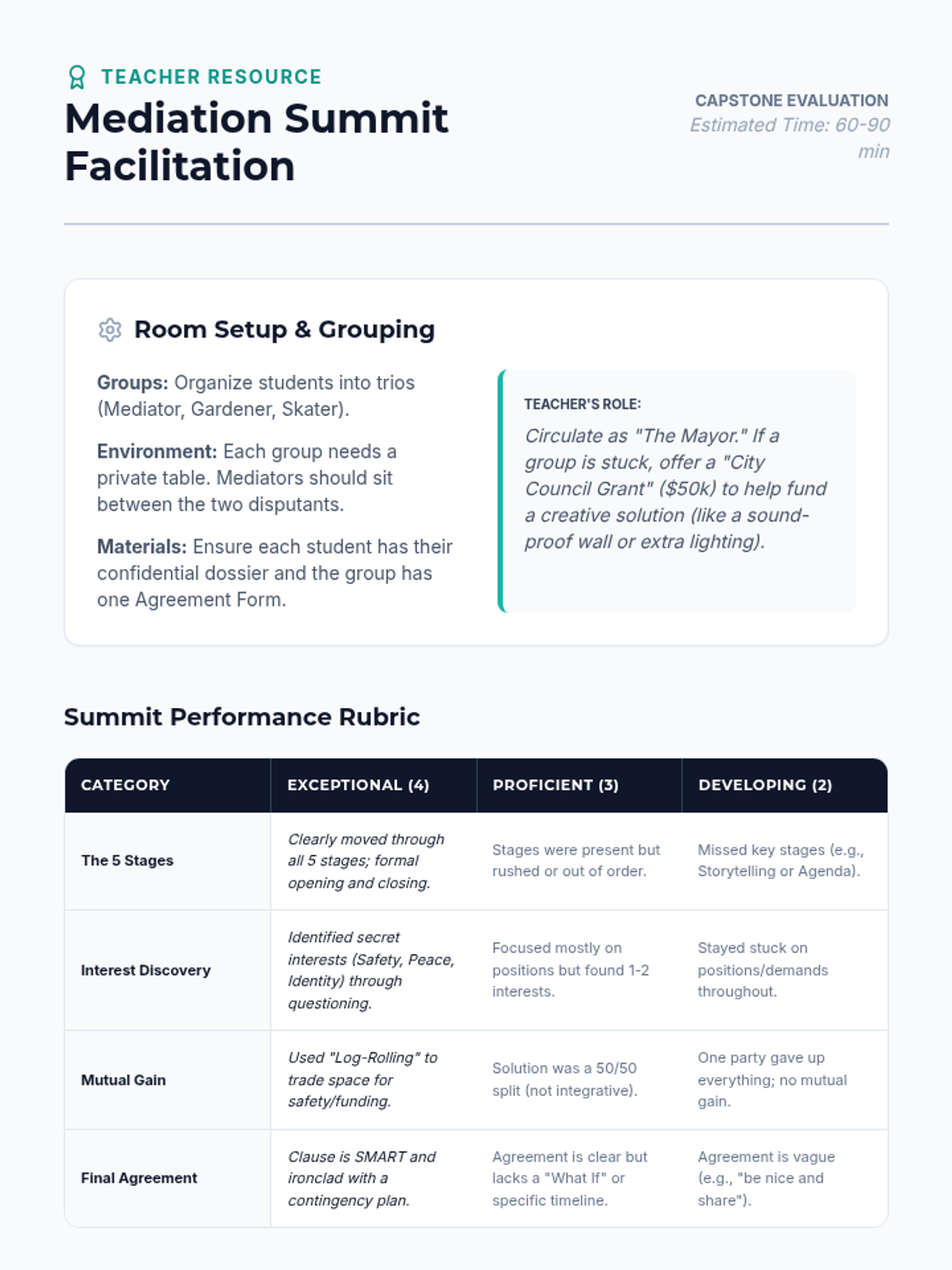
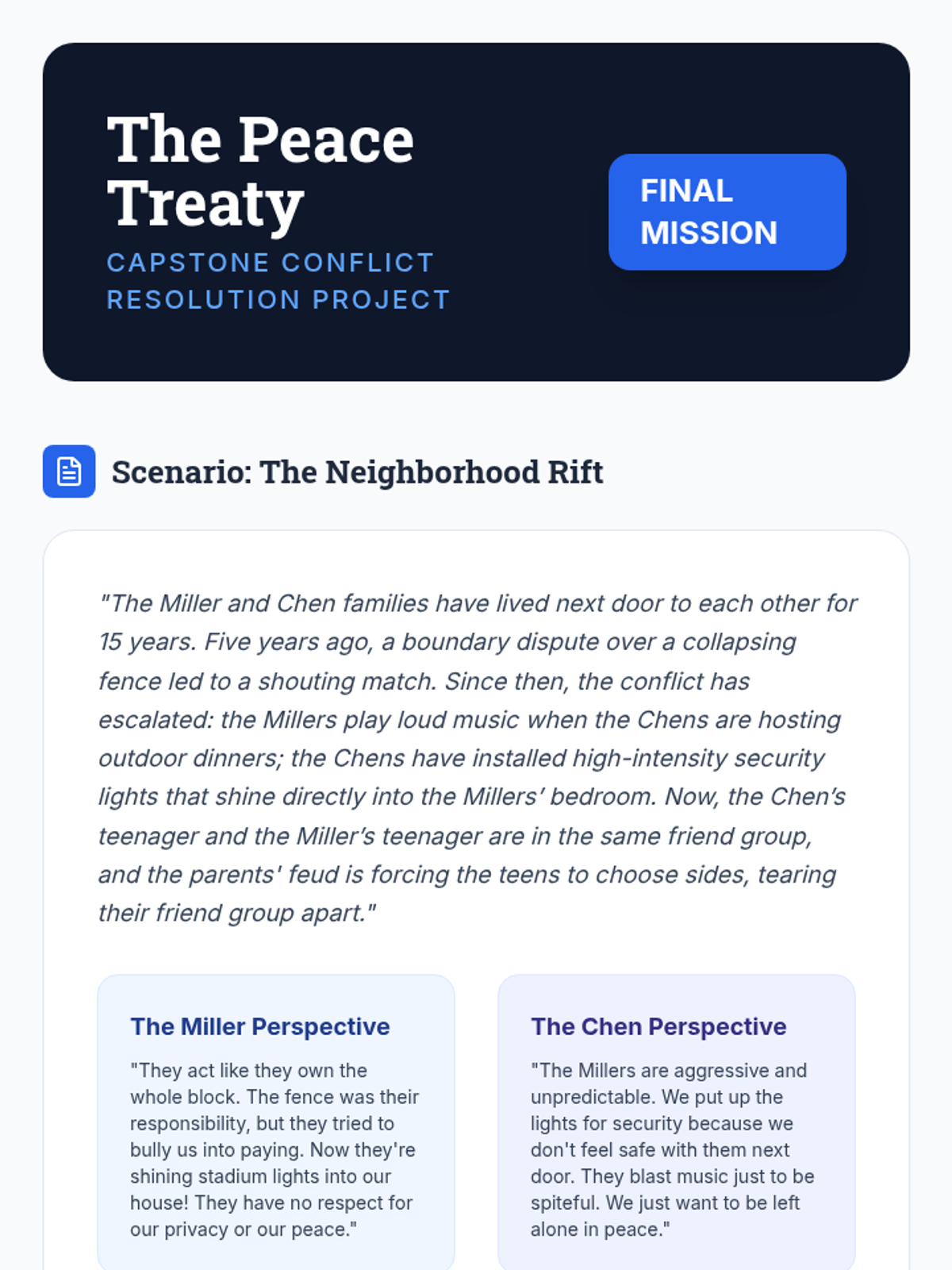
Students assume roles of mediators and disputants in a complex, multi-party dispute scenario (e.g., a land use dispute or school policy change). Mediators must facilitate the process, uncover interests, help generate options, and finalize a written agreement. The lesson focuses on synthesizing all previous frameworks into a cohesive professional performance.
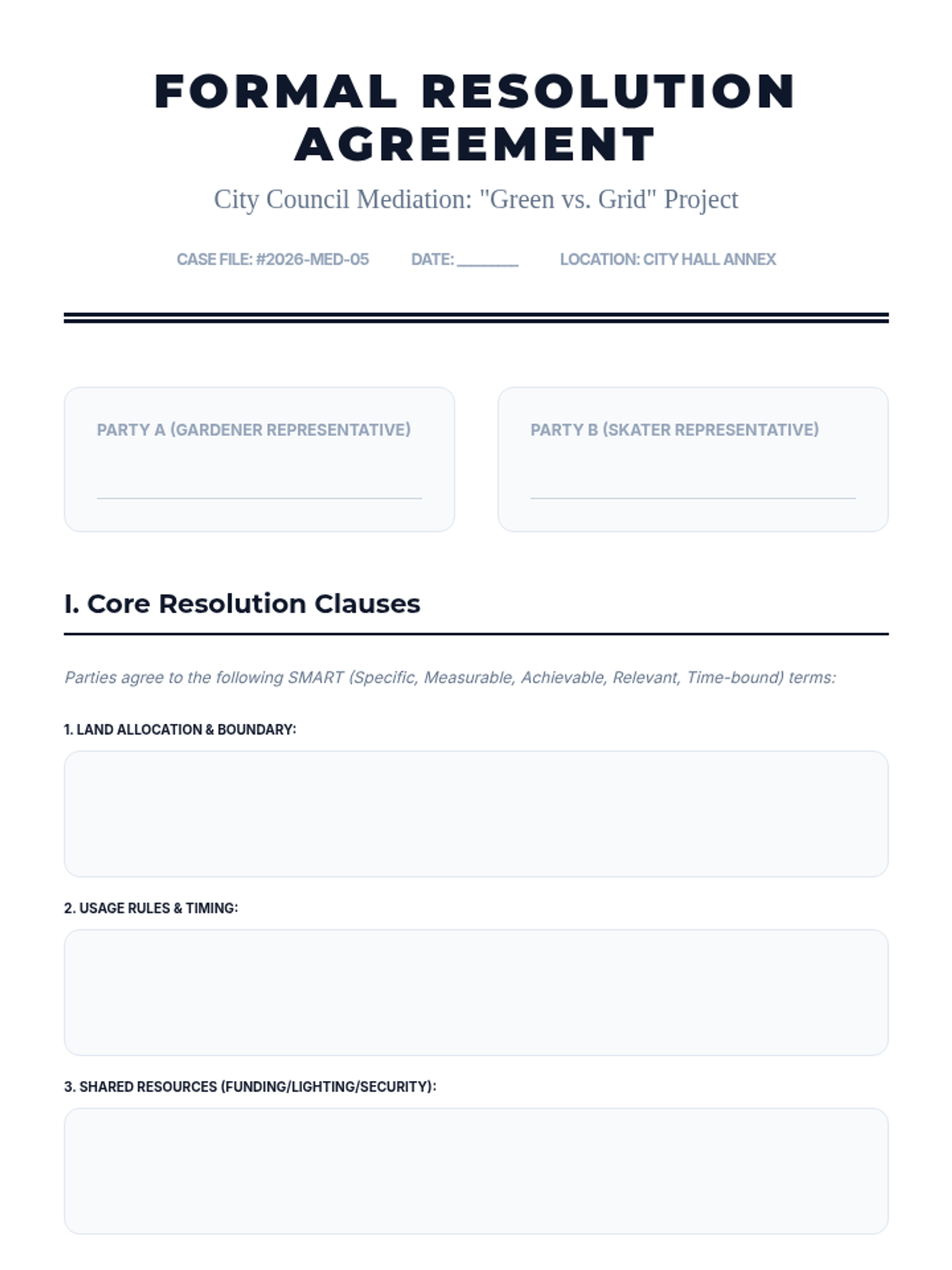
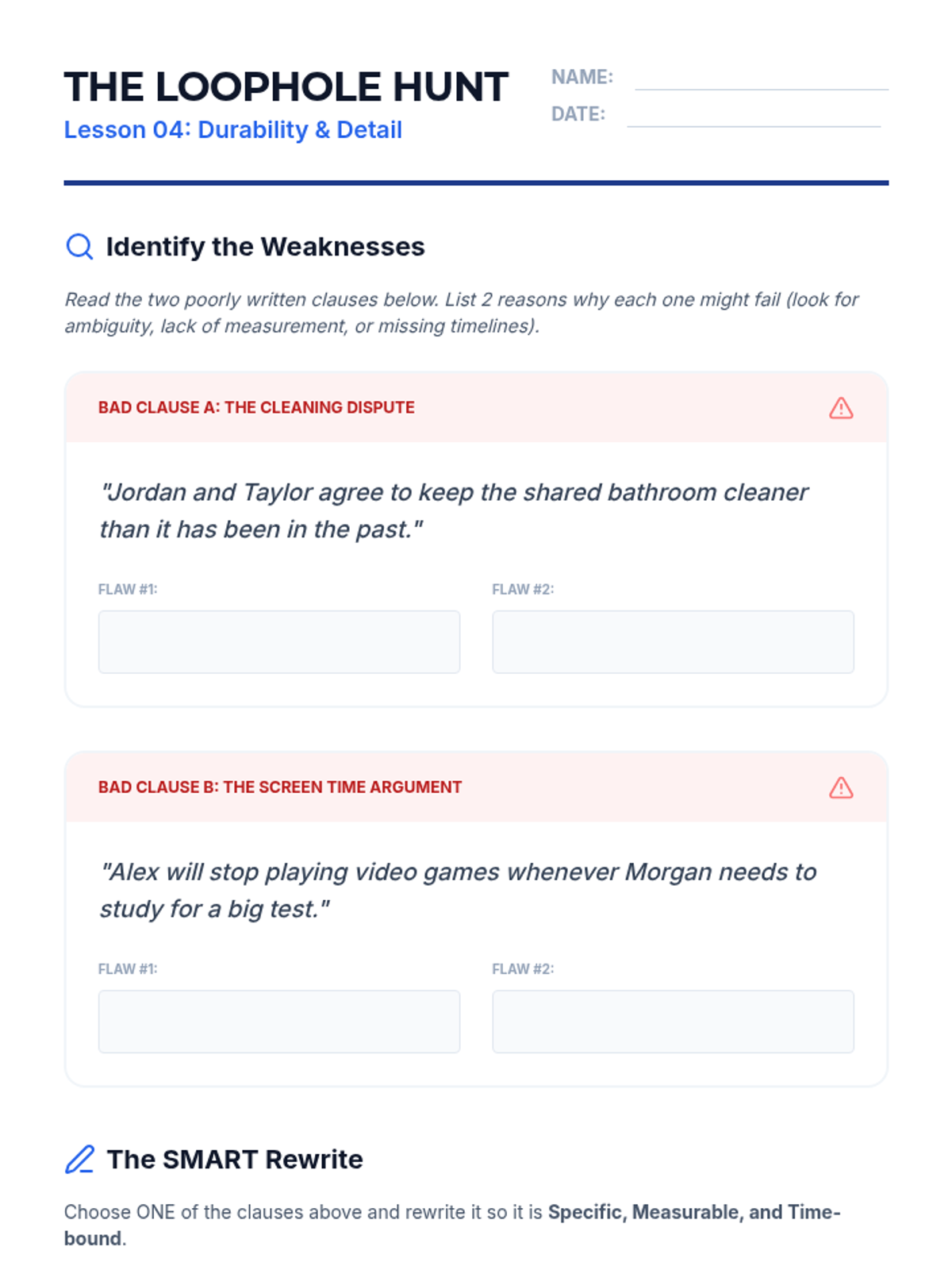
Resolving the conflict is only half the battle; writing a durable agreement is the rest. Students learn the components of a SMART agreement (Specific, Measurable, Achievable, Relevant, Time-bound) in a conflict context. They review failed contracts or treaties to identify loopholes and ambiguity, then practice drafting ironclad resolution clauses.
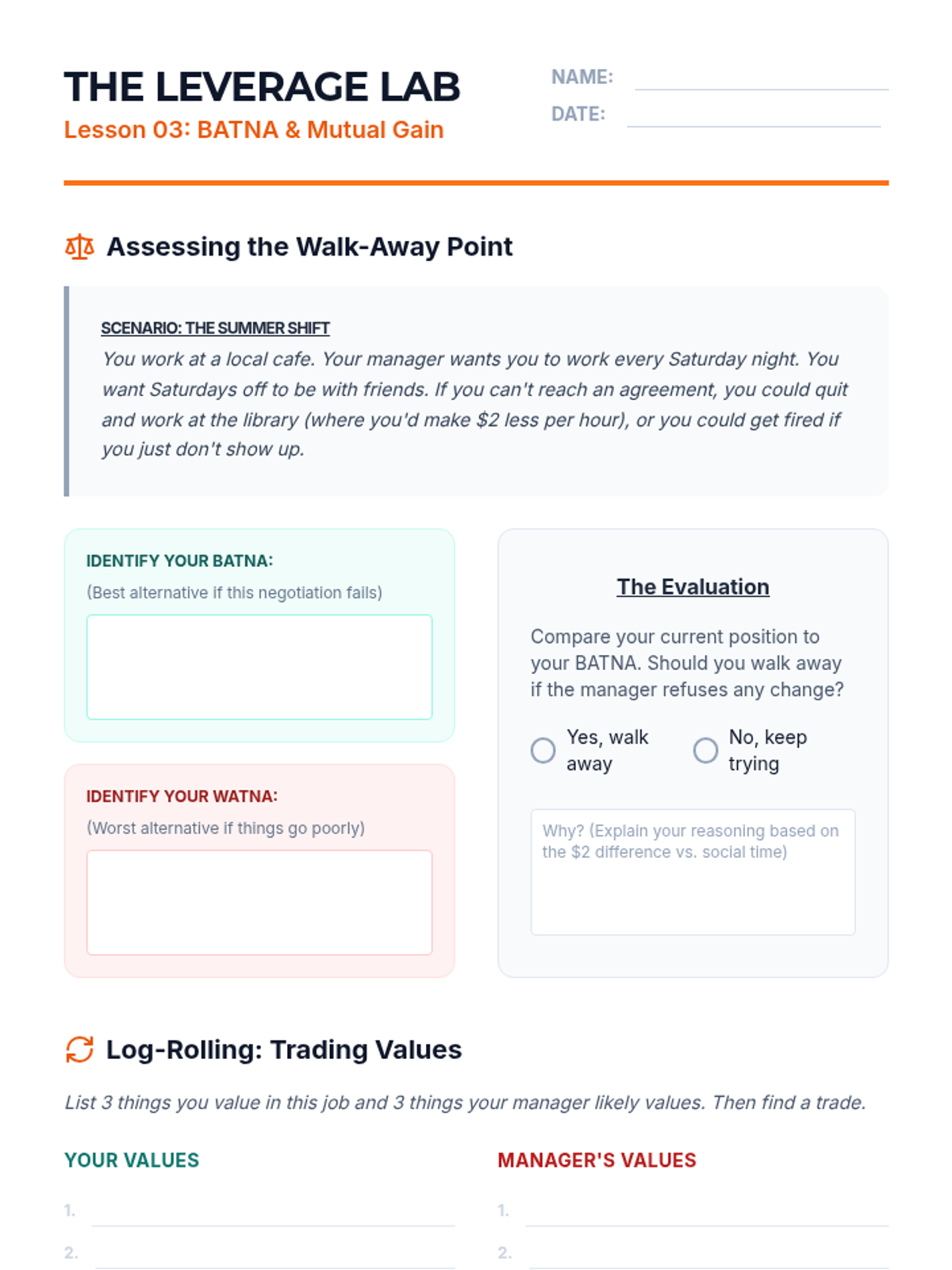
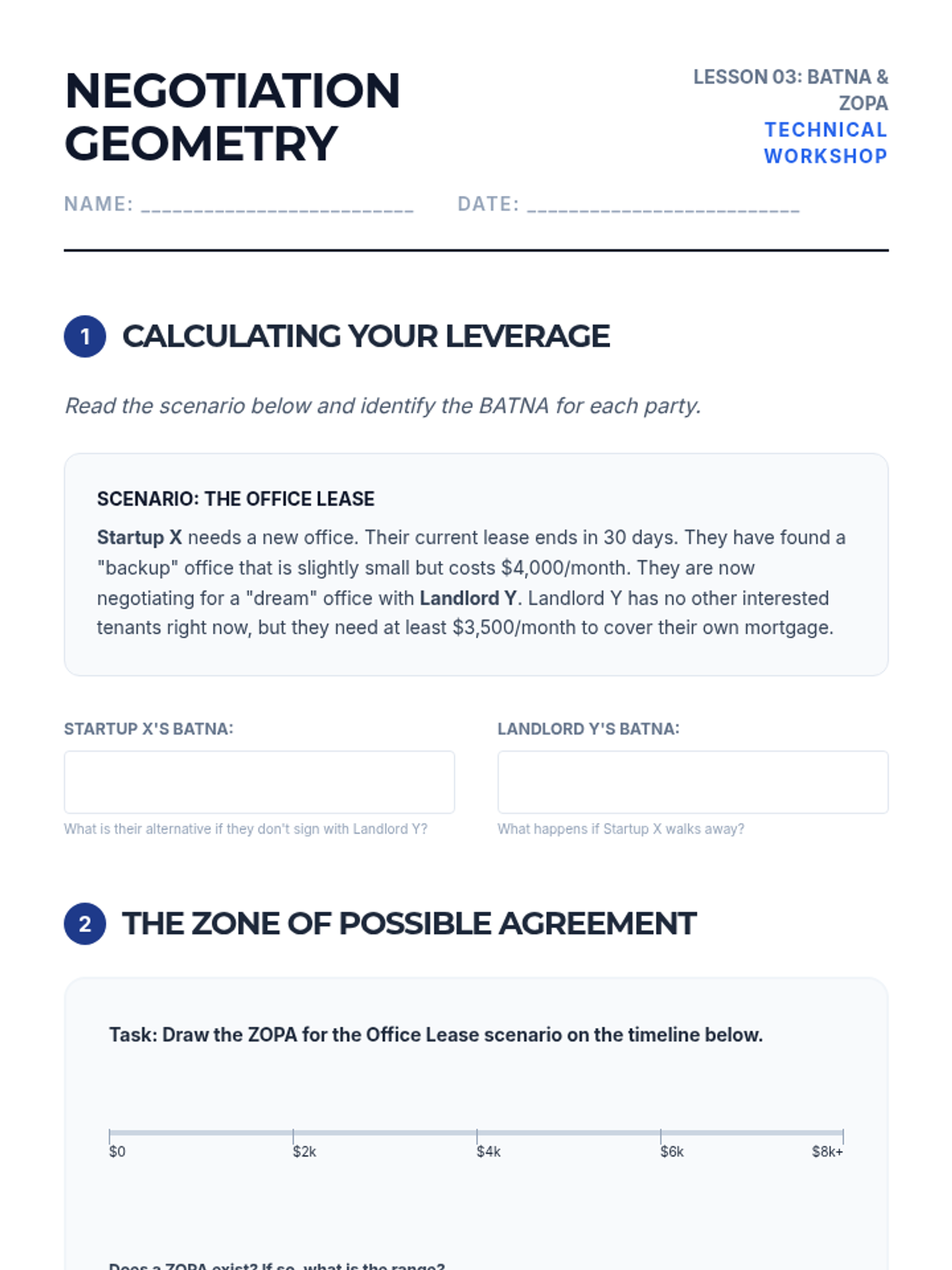
Students practice brainstorming techniques designed to break deadlocks. They learn about BATNA (Best Alternative to a Negotiated Agreement) and WATNA (Worst Alternative) to assess leverage. The class engages in exercises to expand the 'pie' rather than just dividing it, finding creative solutions that satisfy multiple interests.
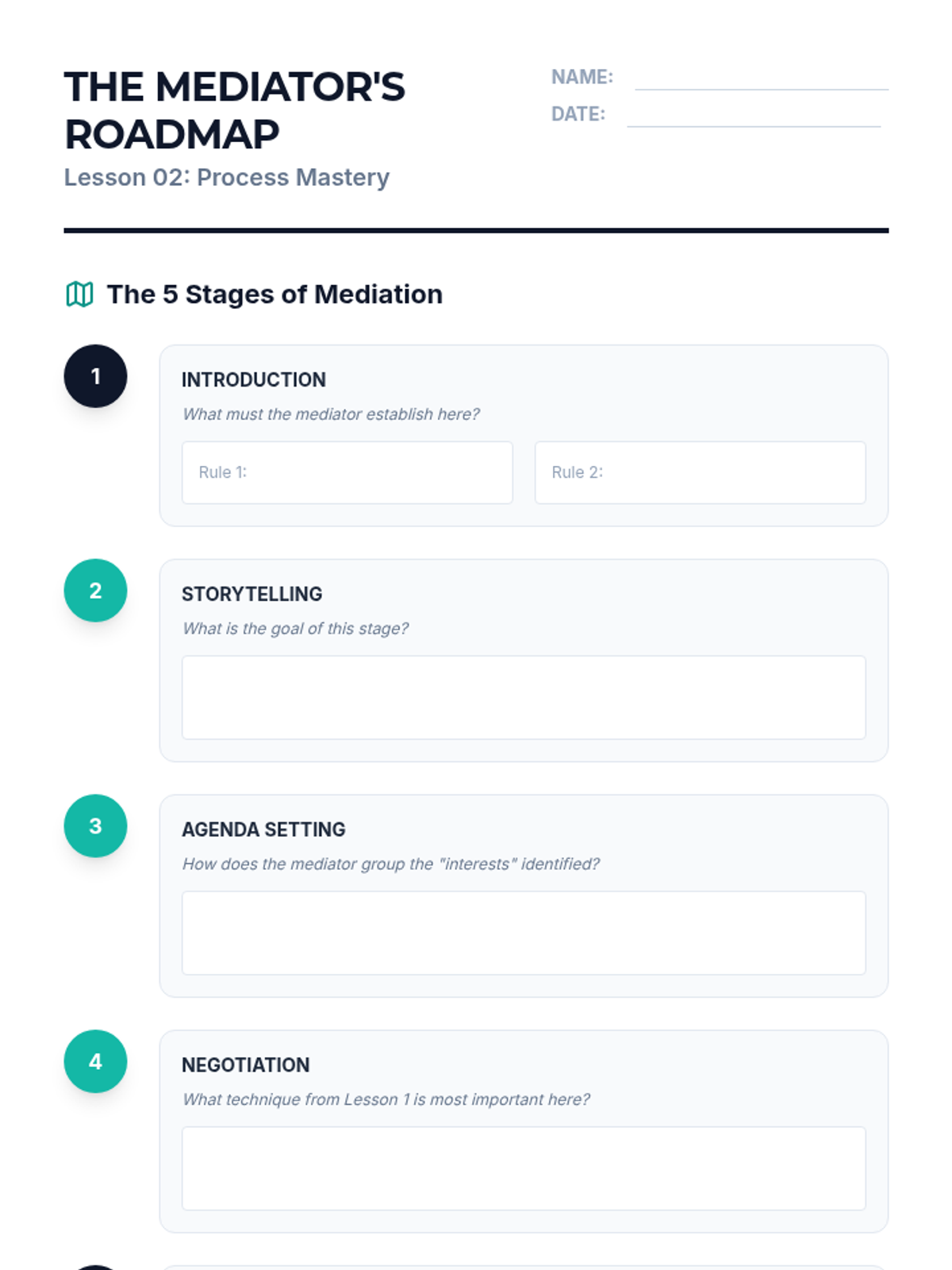
This lesson outlines the formal stages of mediation: Introduction, Storytelling, Agenda Setting, Negotiation, and Agreement. Students learn the procedural responsibilities of a mediator to maintain safety and order. They create visual flowcharts of the process to understand how to guide disputants from chaos to order.
Synthesis of all skills to design long-term, sustainable resolutions for multi-layered interpersonal and community conflicts.
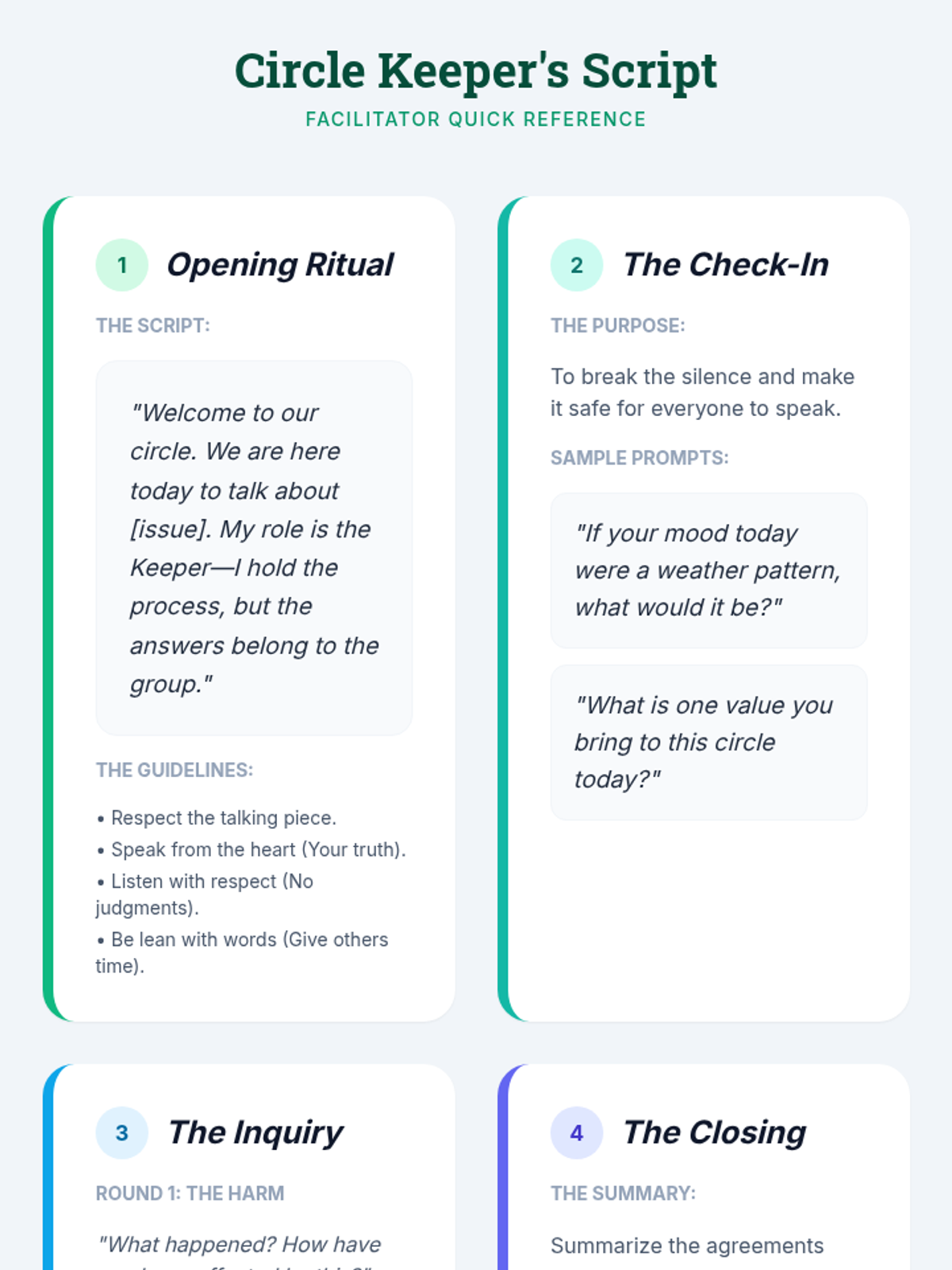
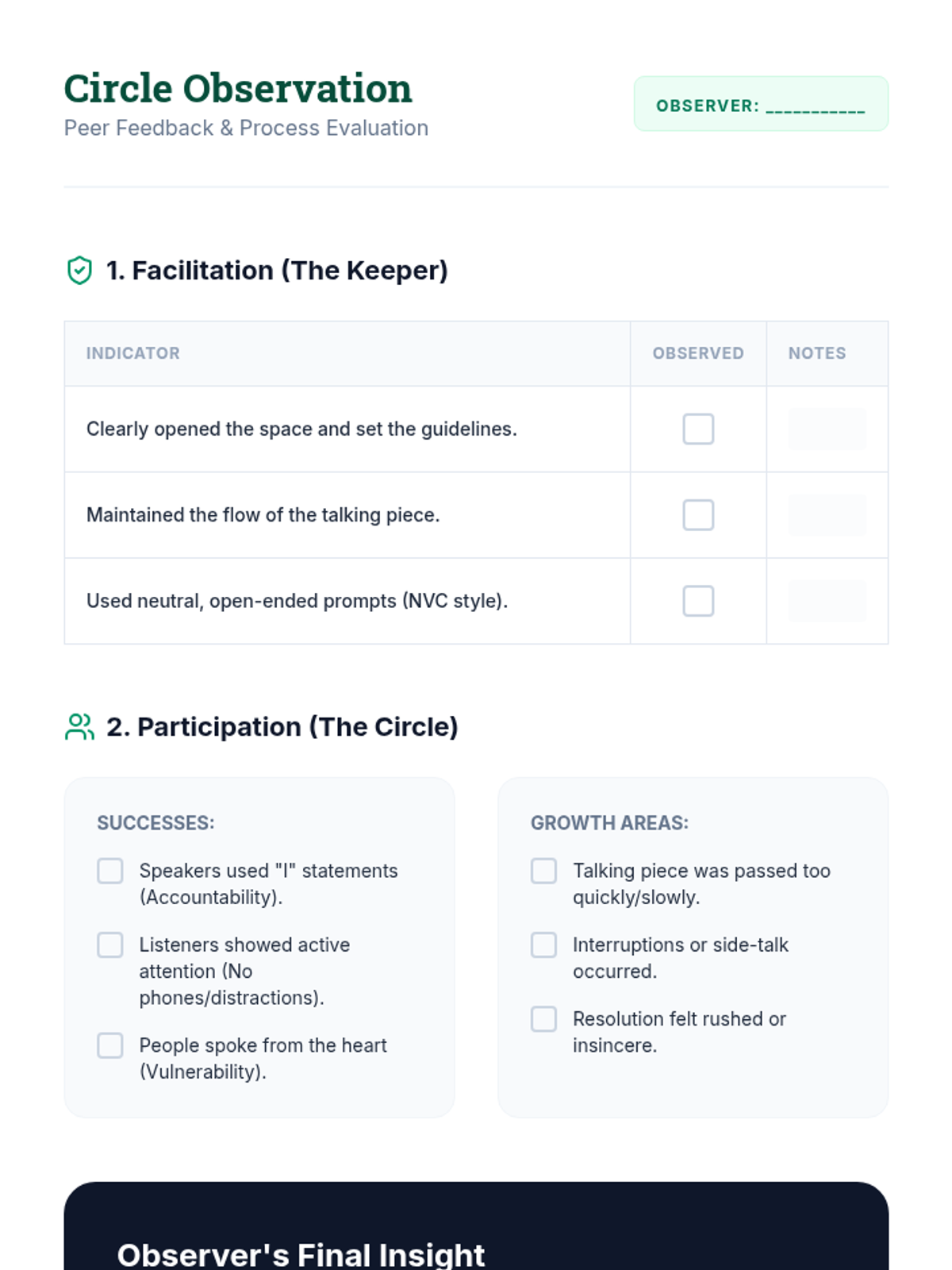
Practical training in facilitating restorative justice circles, focusing on the protocol, flow, and mindset of a mediator.
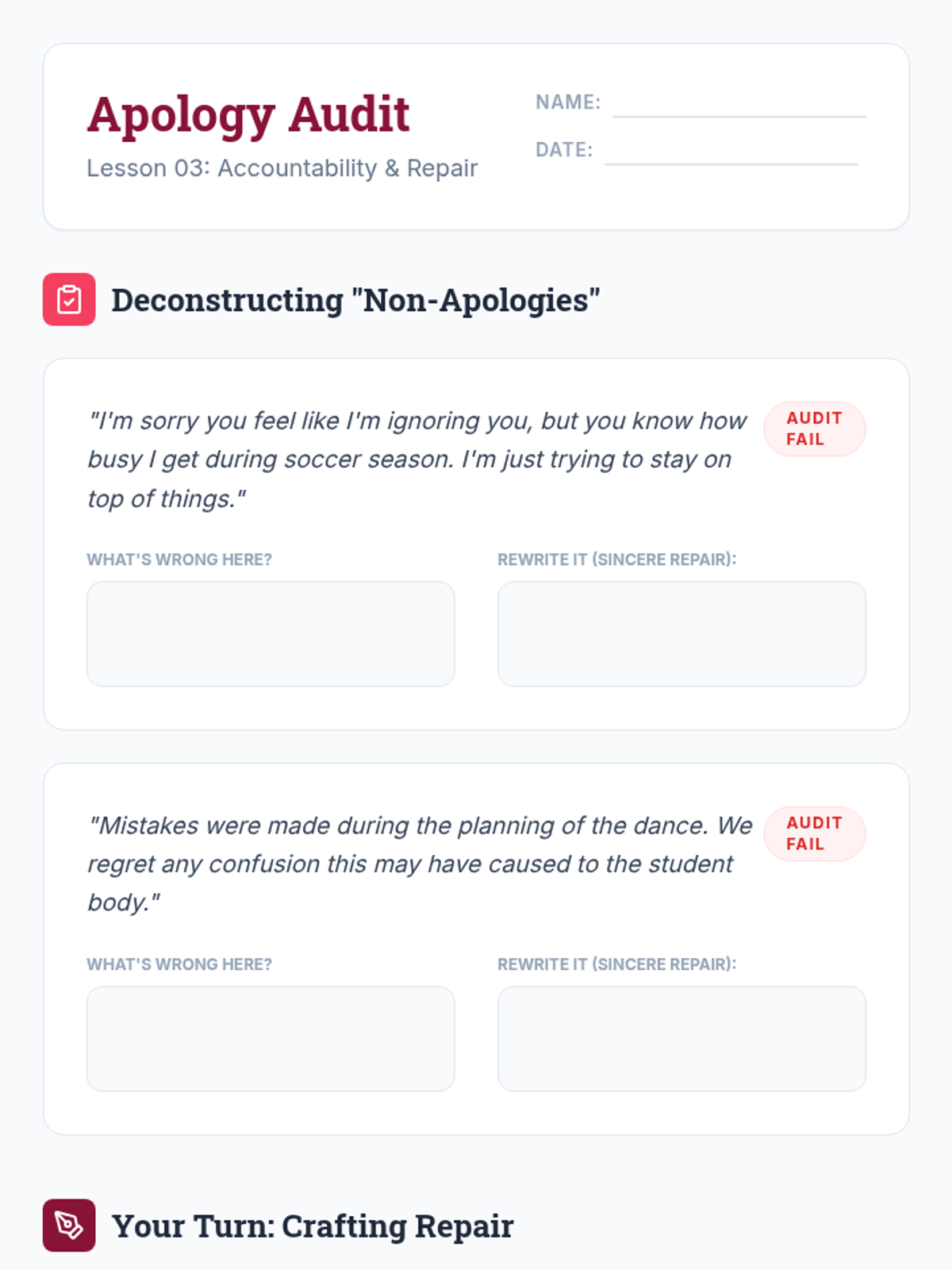
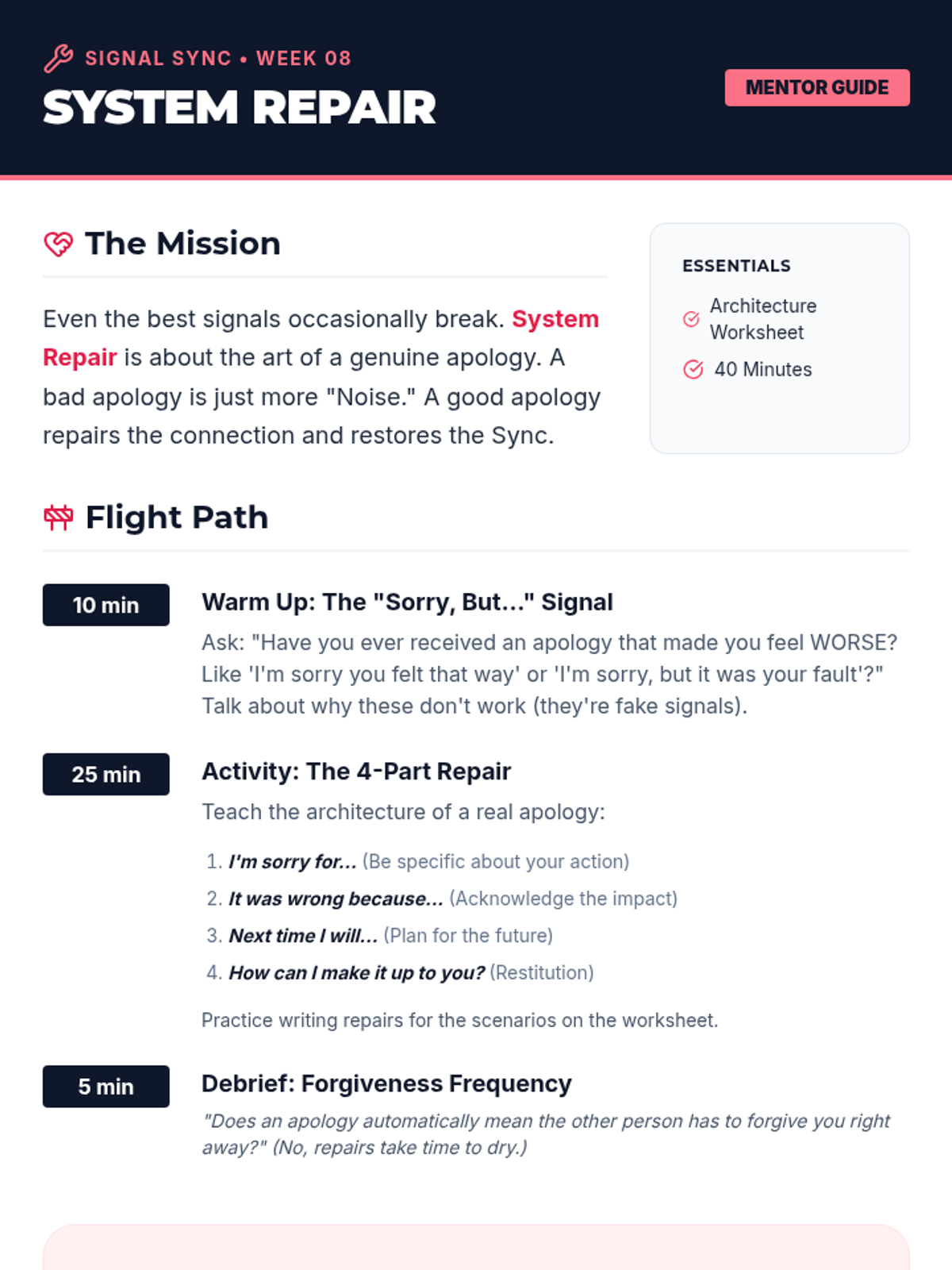
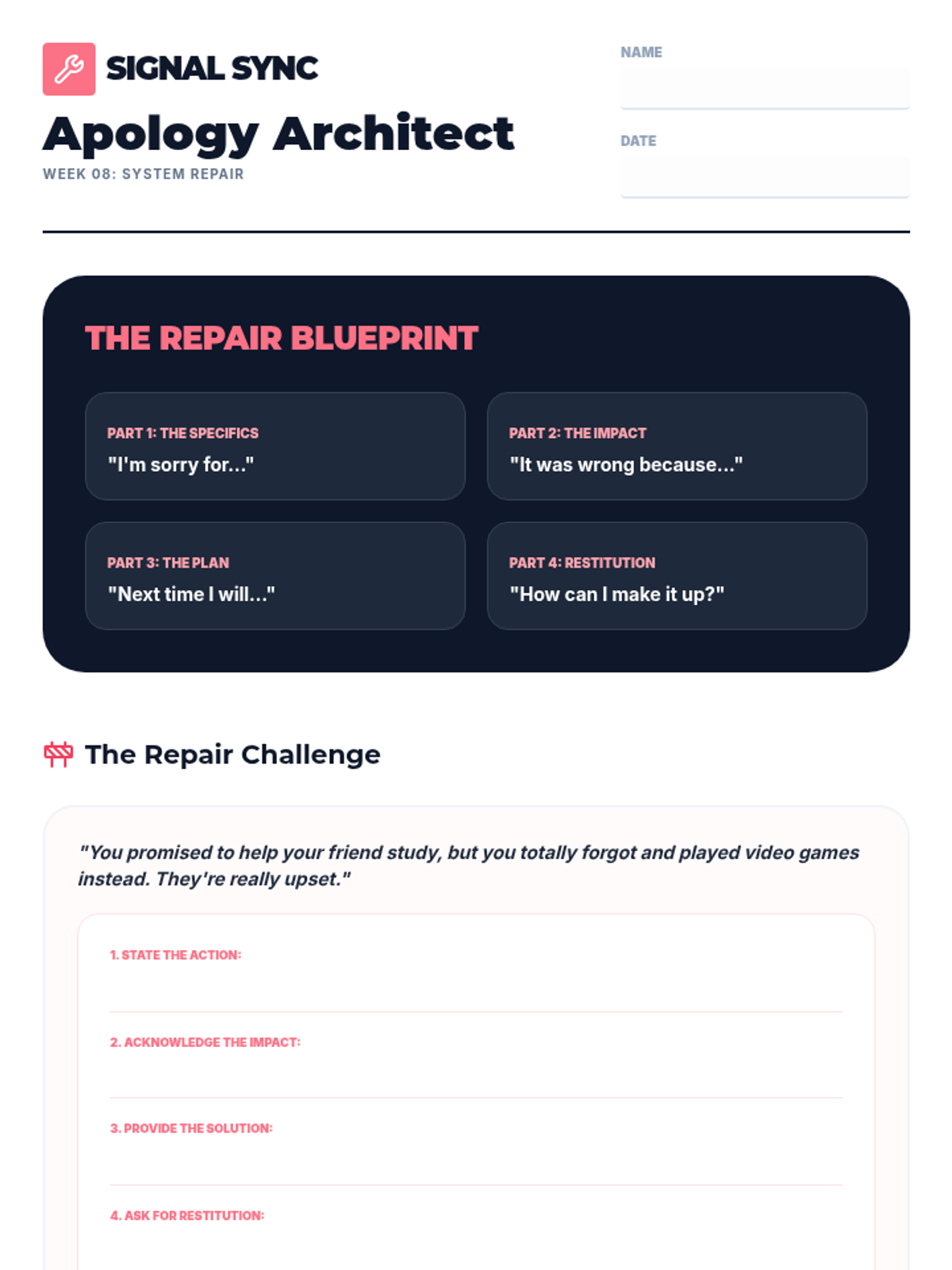
Students deconstruct the elements of a genuine apology and learn to distinguish between defensive 'non-apologies' and restorative accountability.
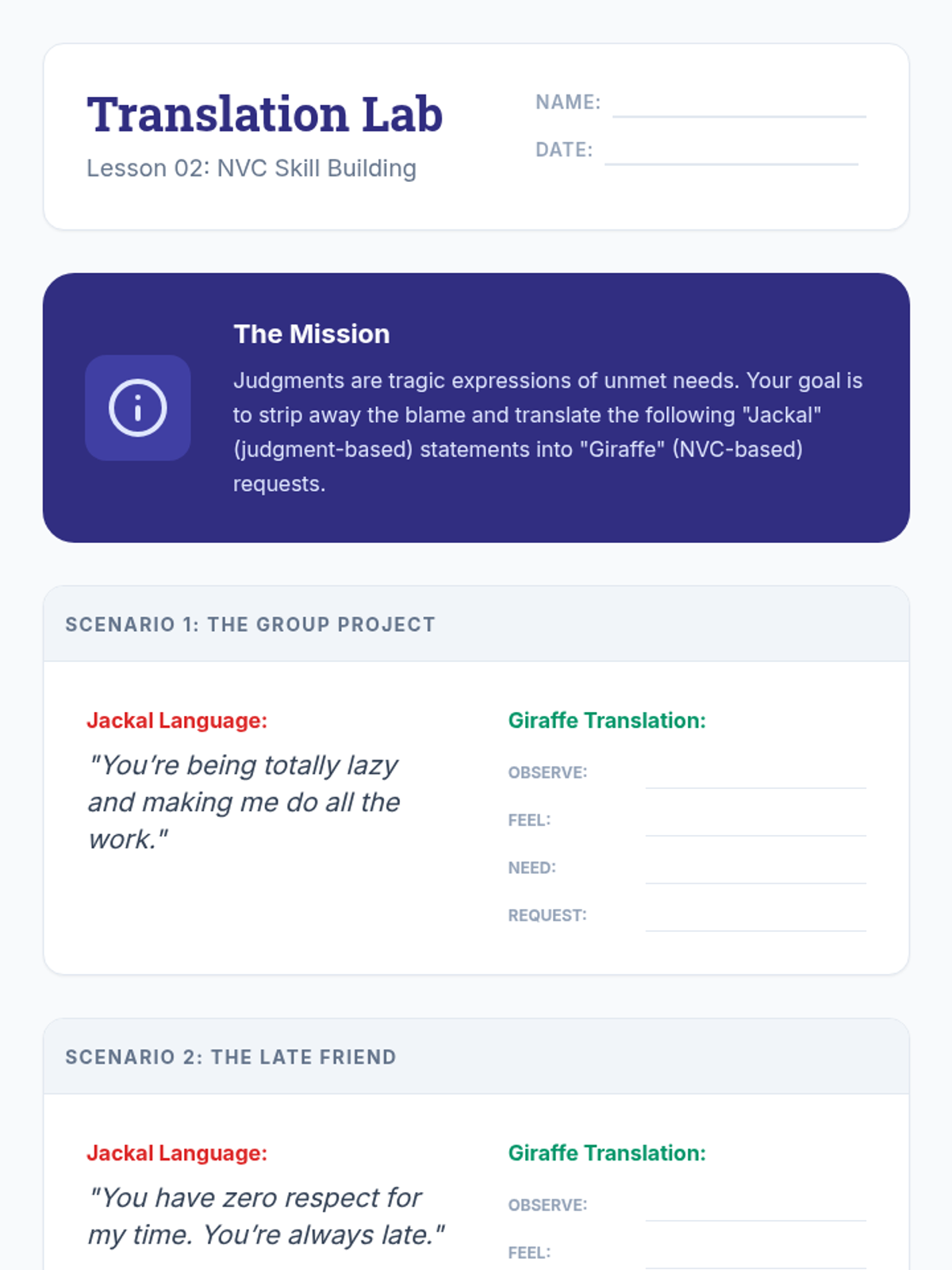
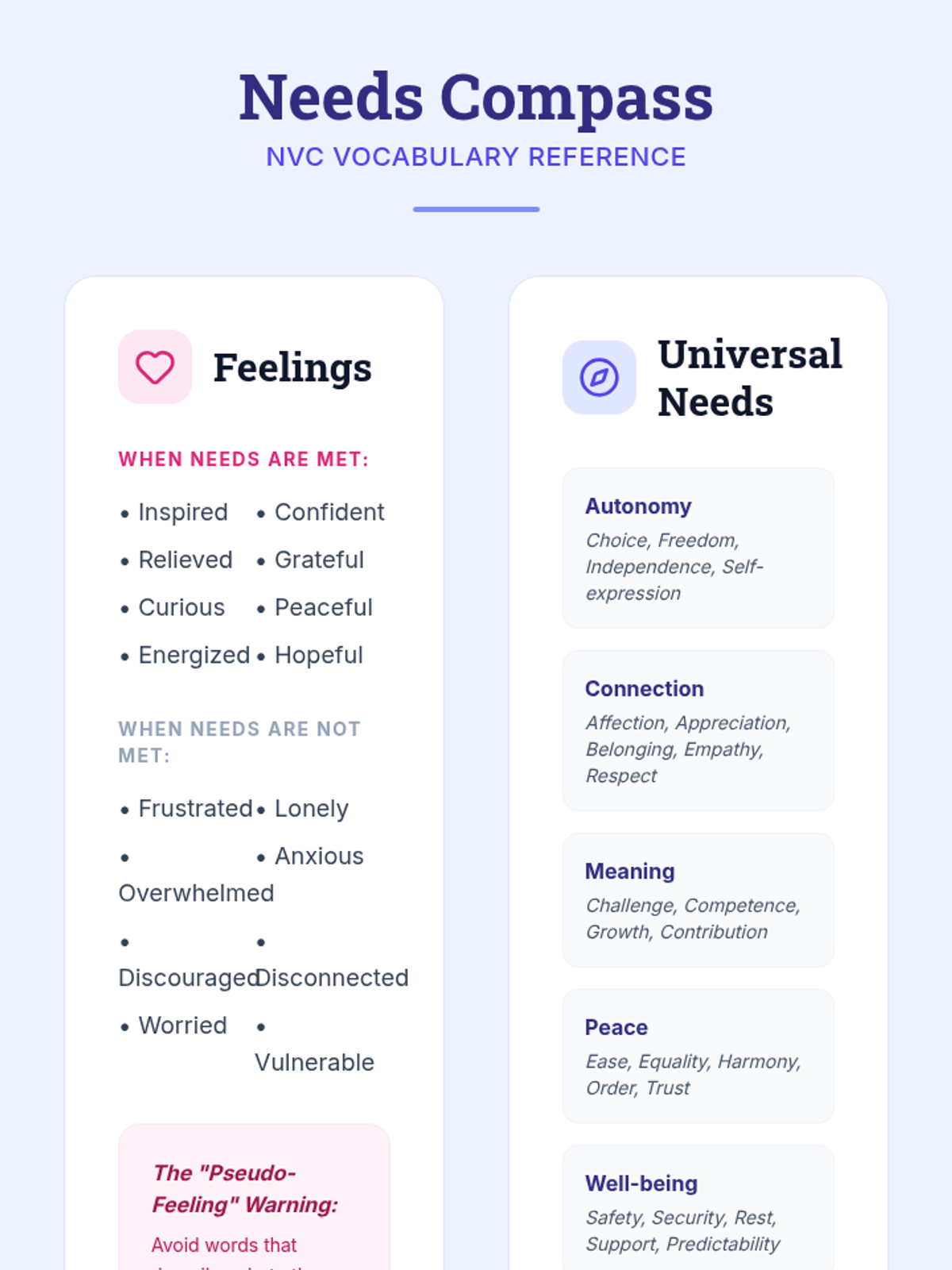
Introduction to Marshall Rosenberg's Nonviolent Communication (NVC) framework, focusing on transforming judgments into observations, feelings, needs, and requests.
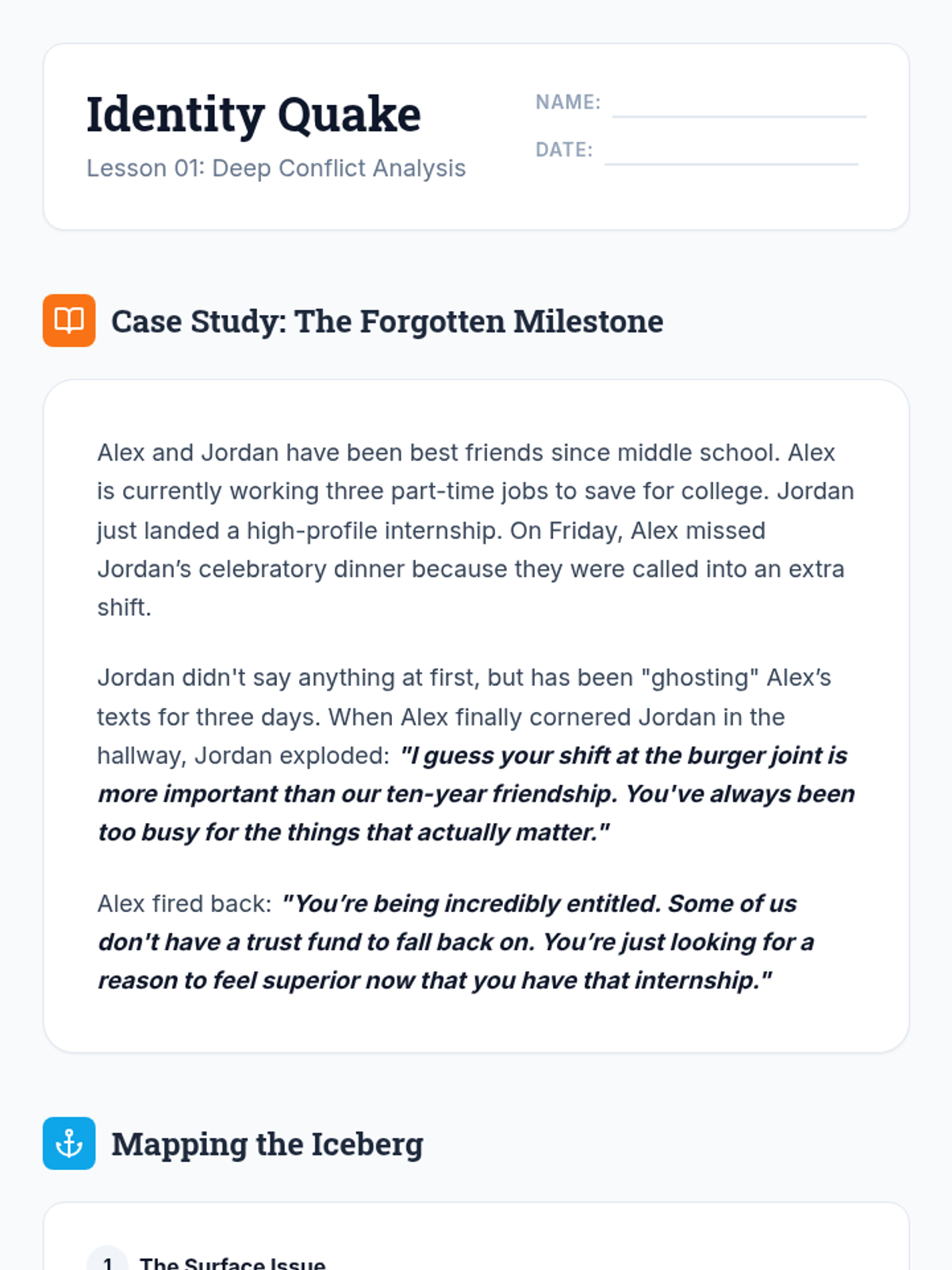
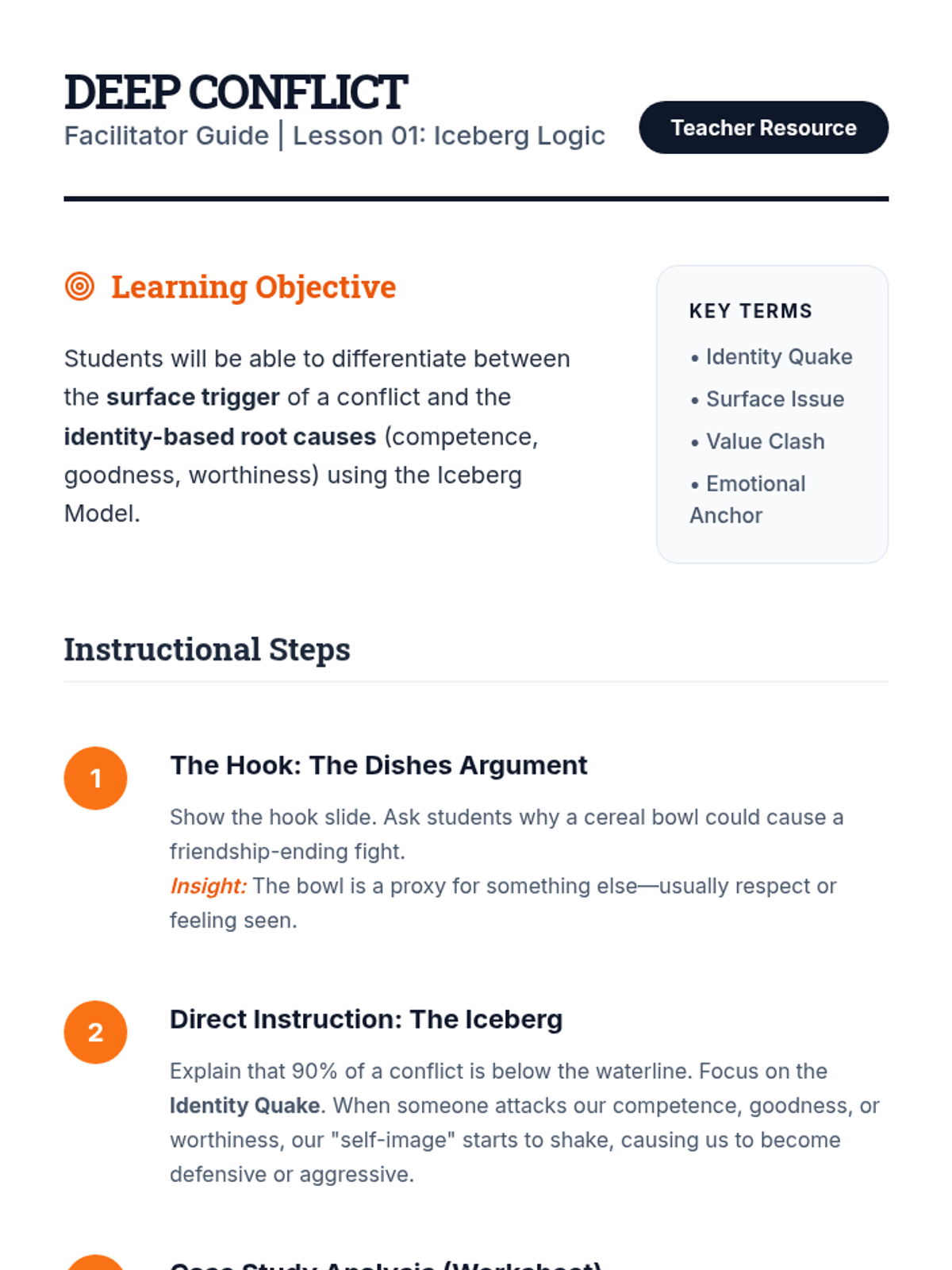
Students explore the 'Identity Quake' model to understand how deep-seated conflicts often stem from threats to our sense of self, competence, or goodness.
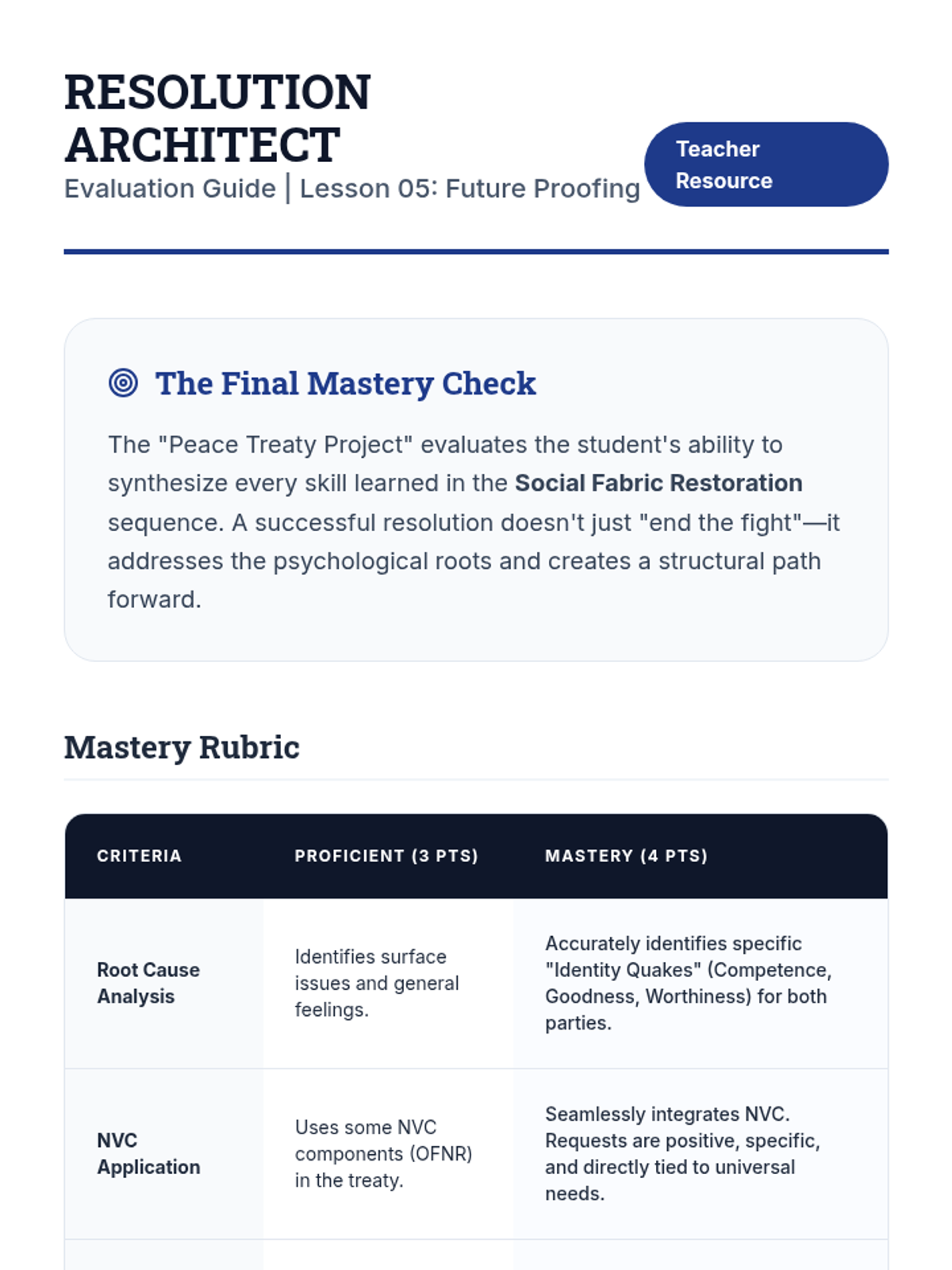
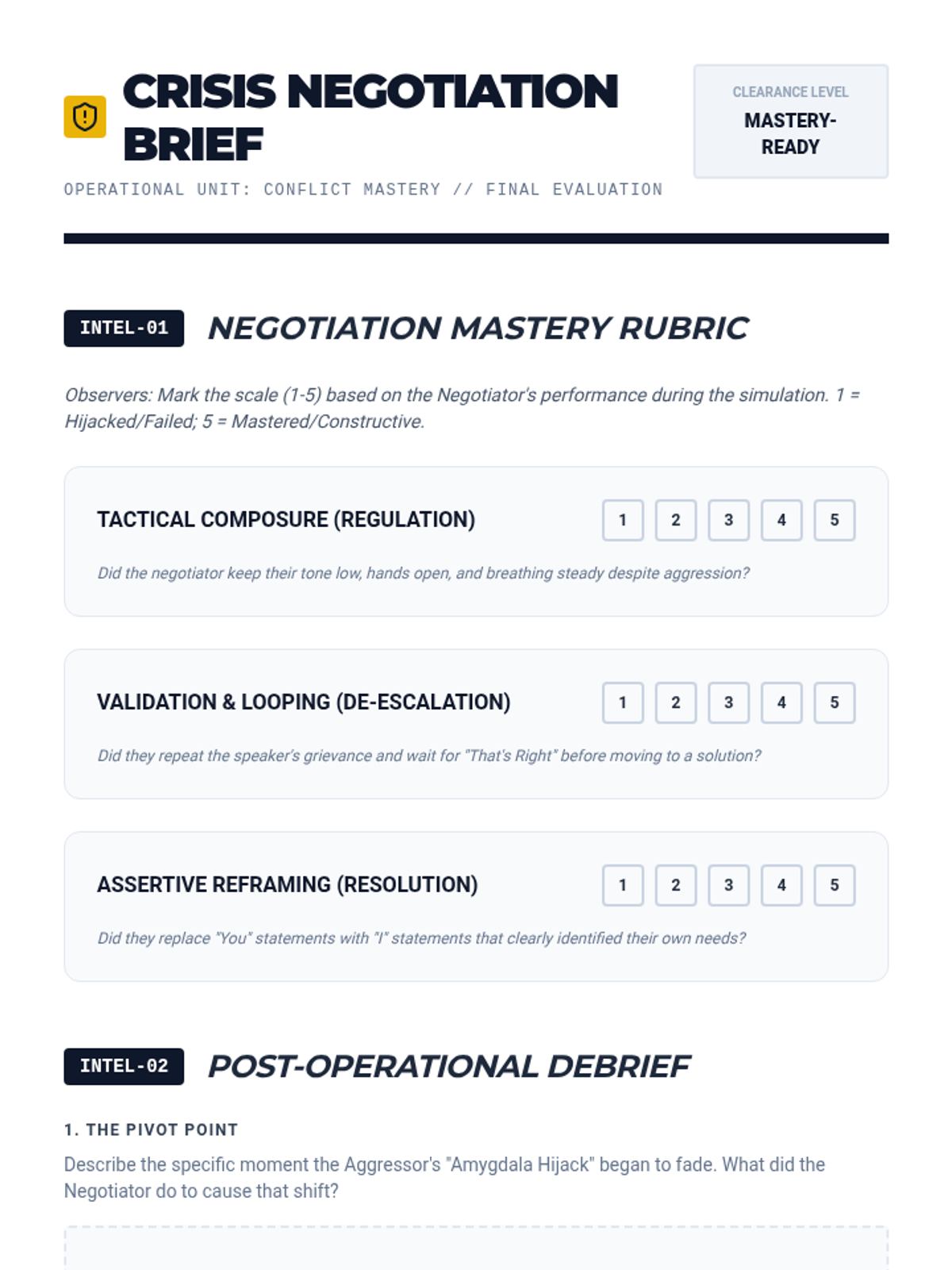
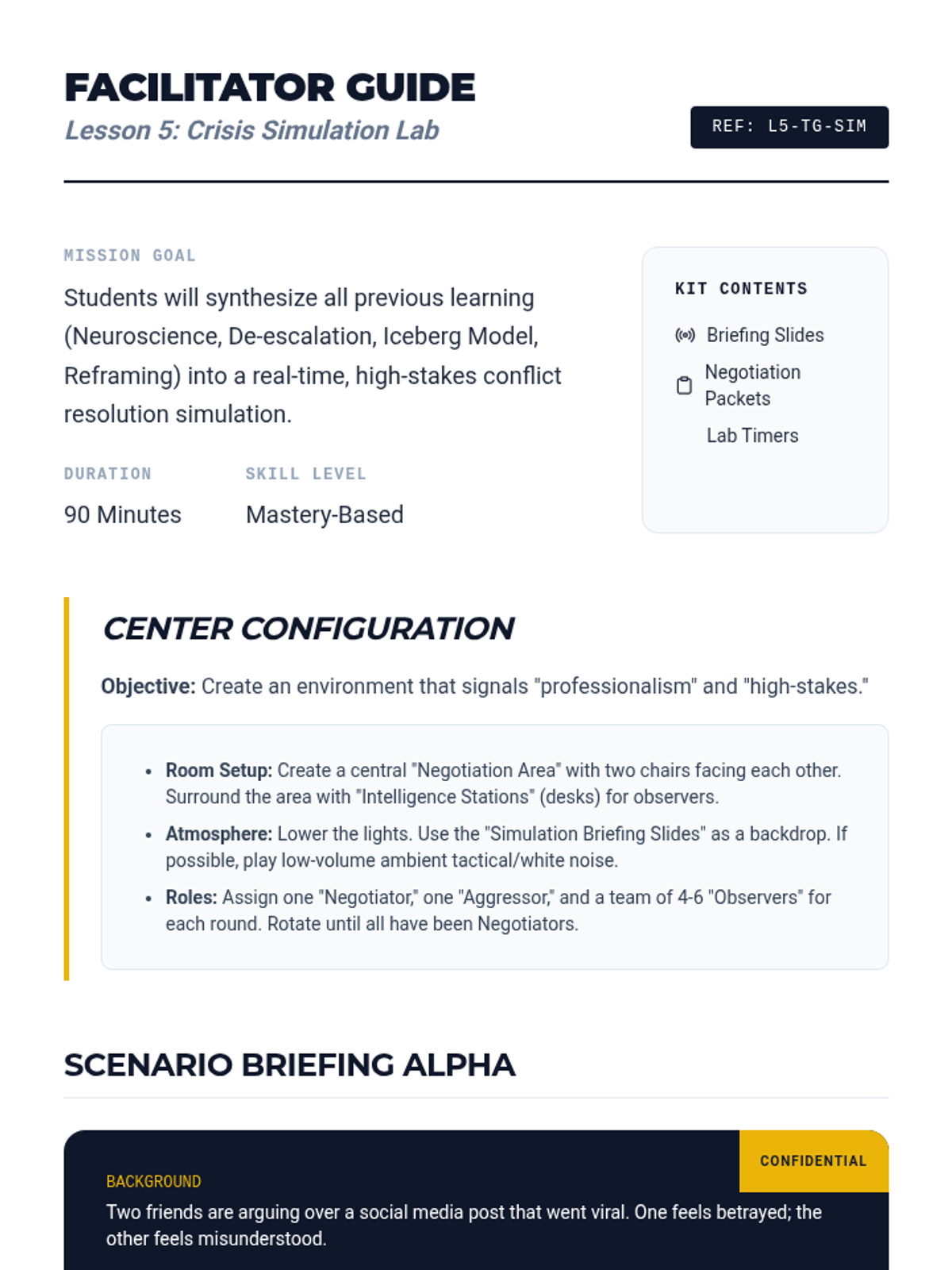
A culminating simulation lab where students apply all learned skills to resolve a high-stakes interpersonal dispute.
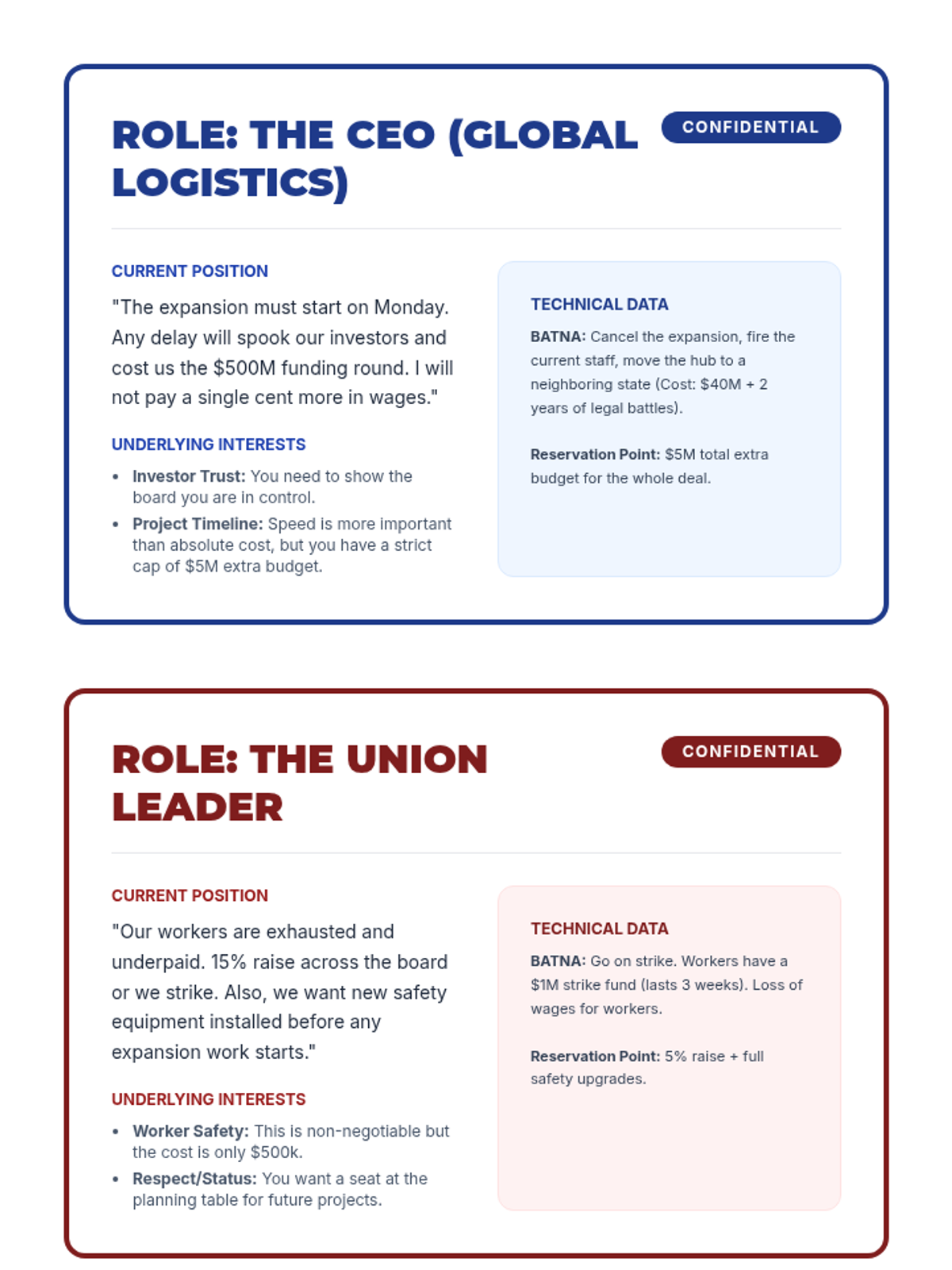
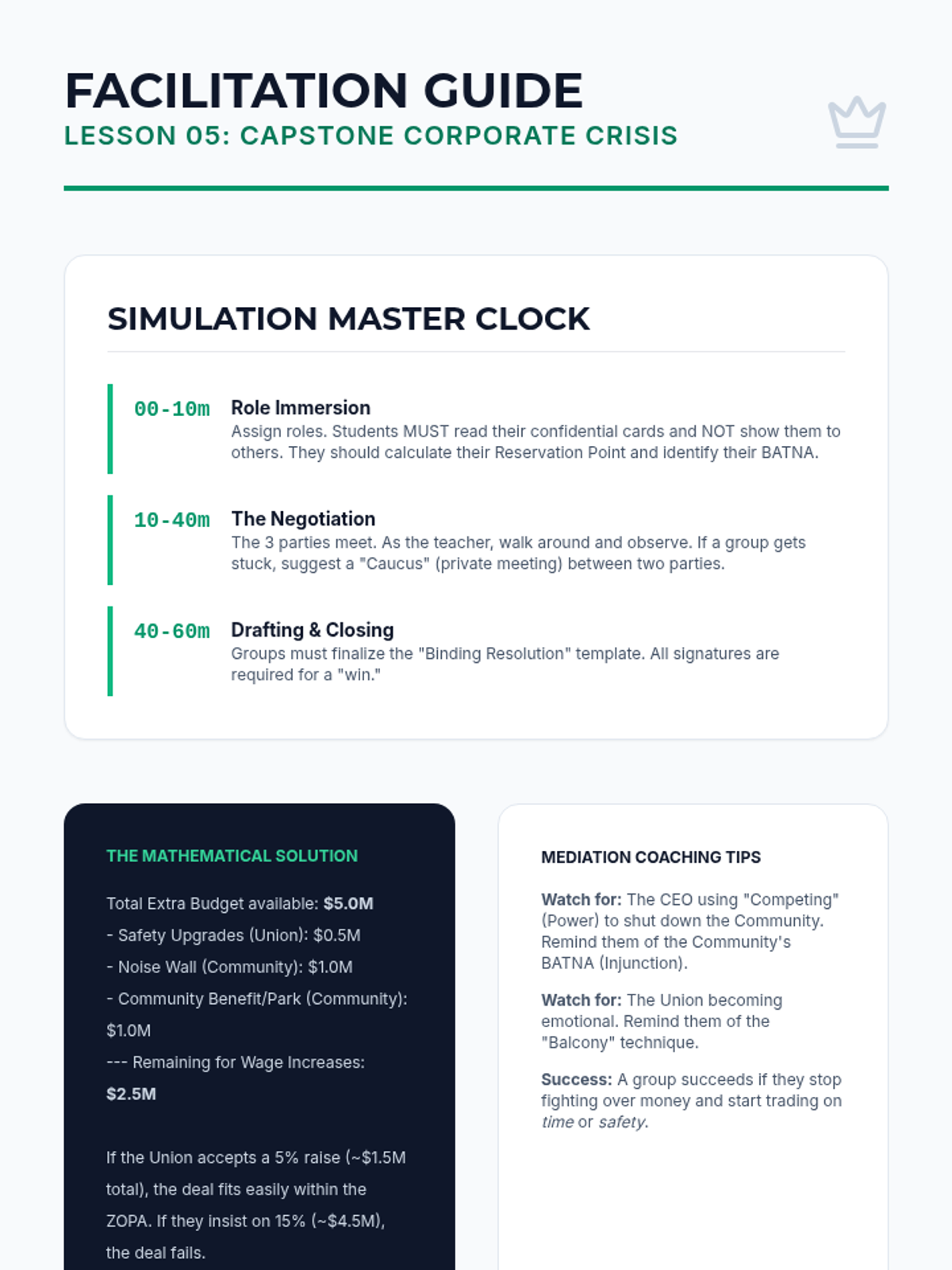
A culminating multi-stakeholder dispute simulation where students must apply all skills to mediate a corporate crisis and draft a binding resolution.
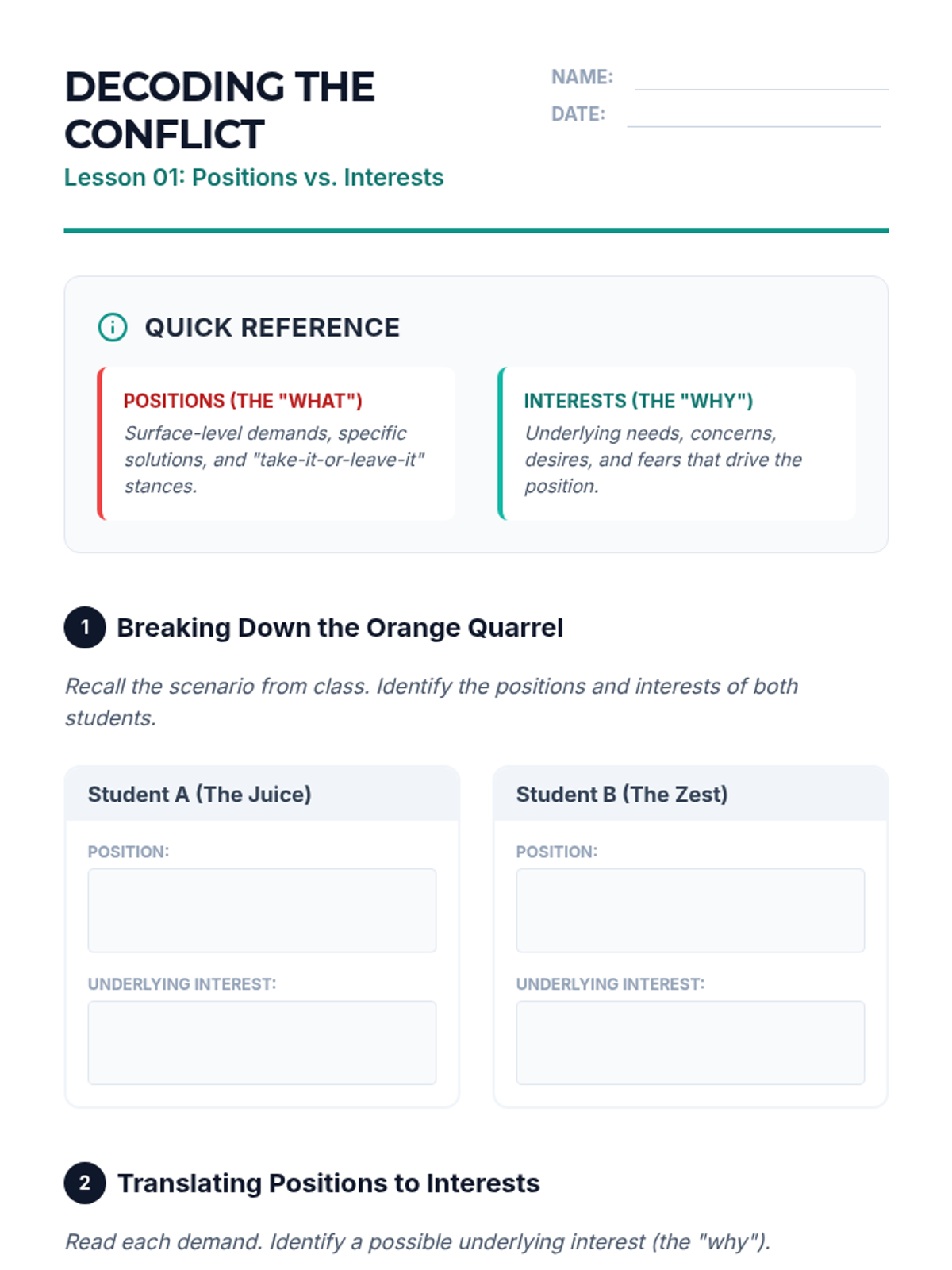
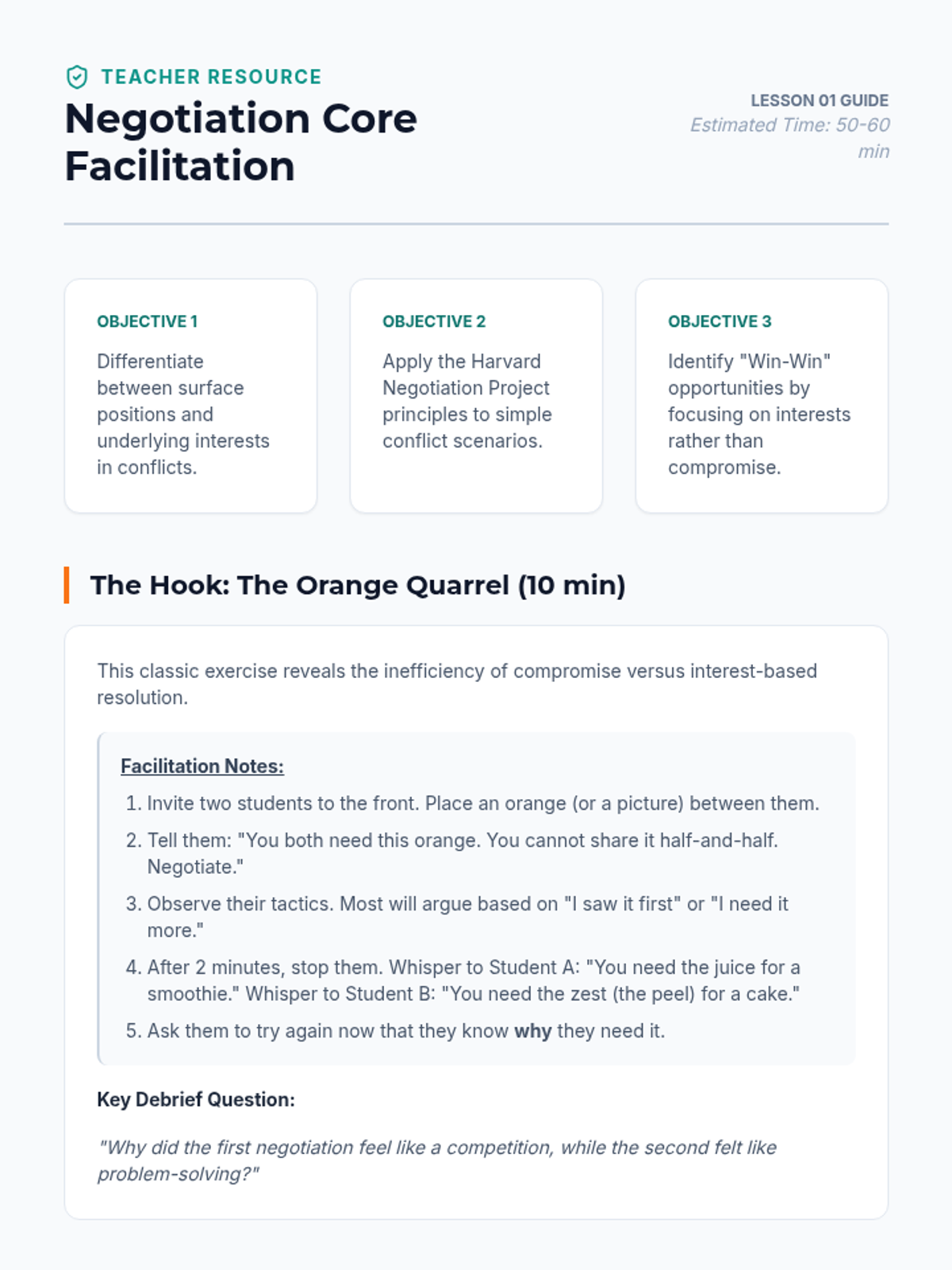
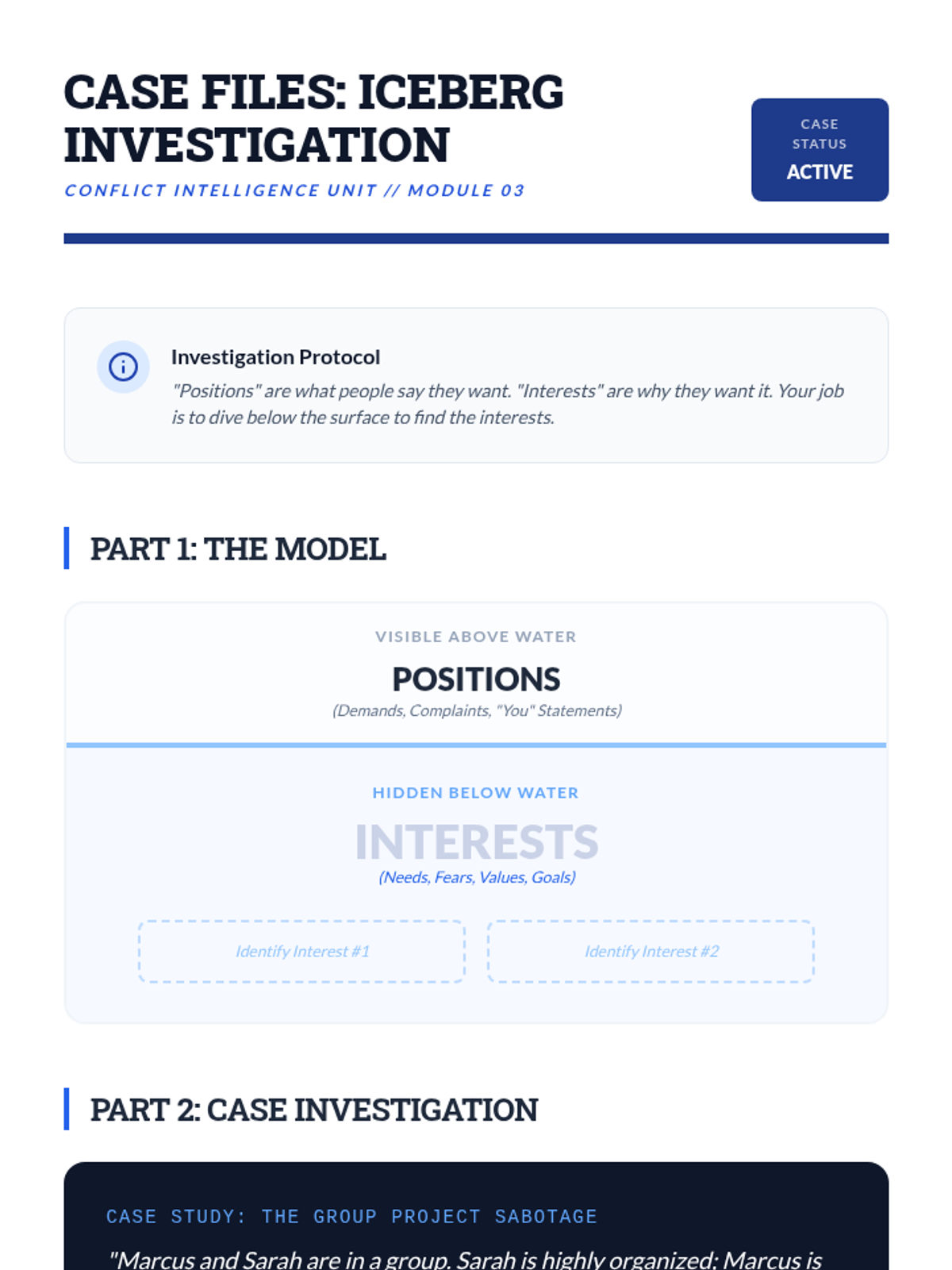
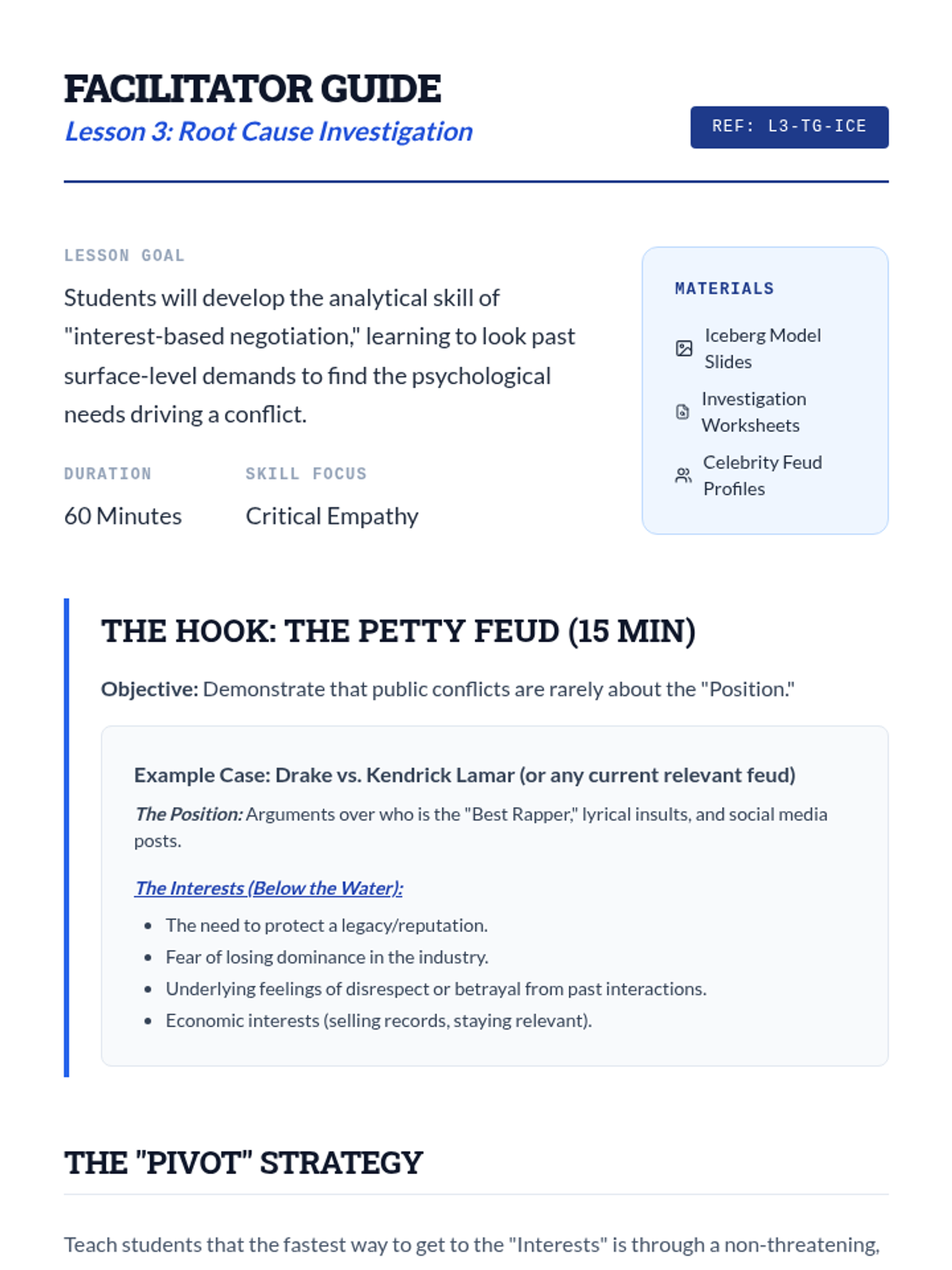
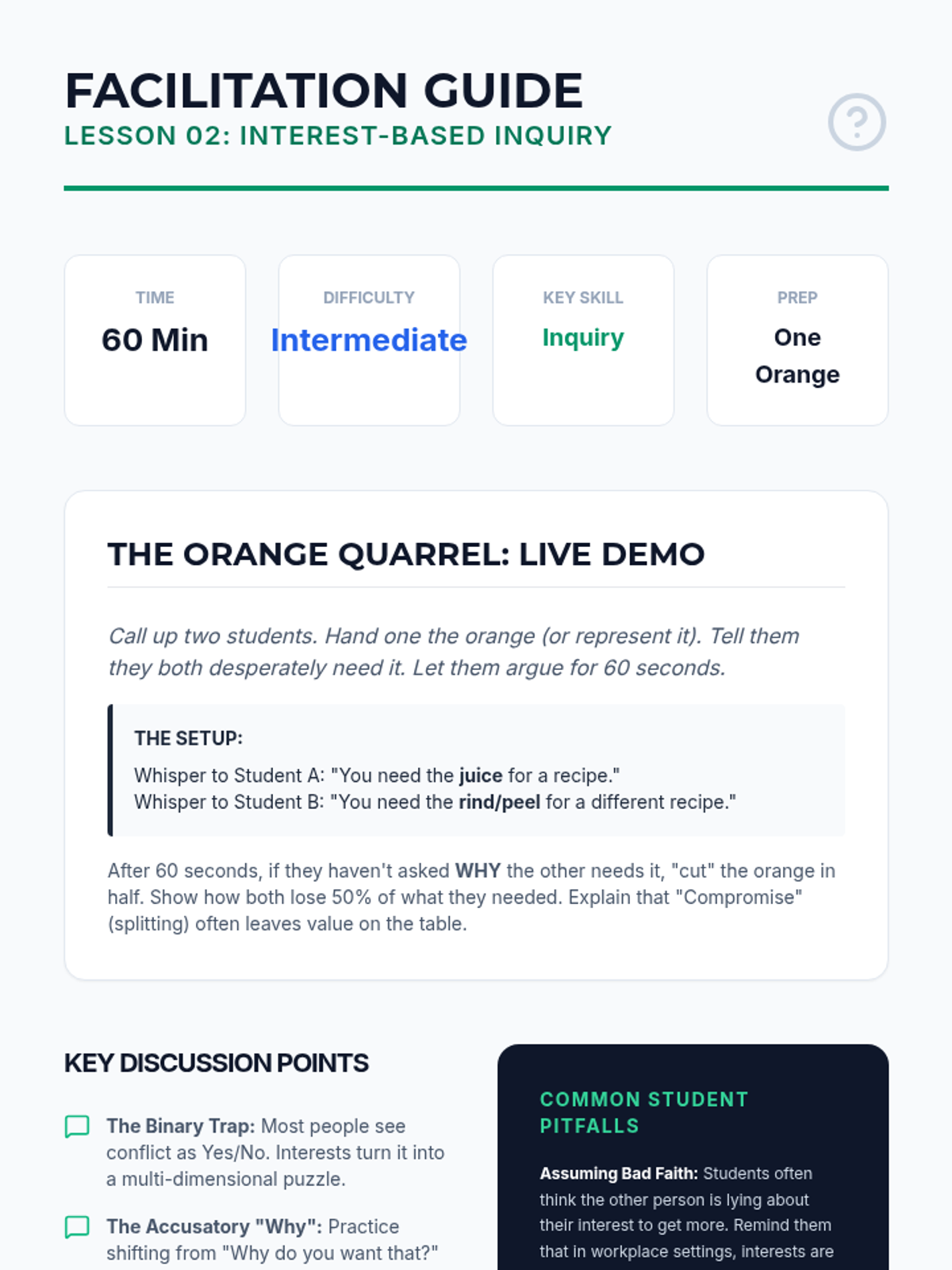
Students learn to distinguish between surface-level positions and underlying interests using the Harvard Negotiation Project model. The lesson introduces Interest-Based Negotiation (IBN) through the classic 'Orange Quarrel' scenario and case study analysis.
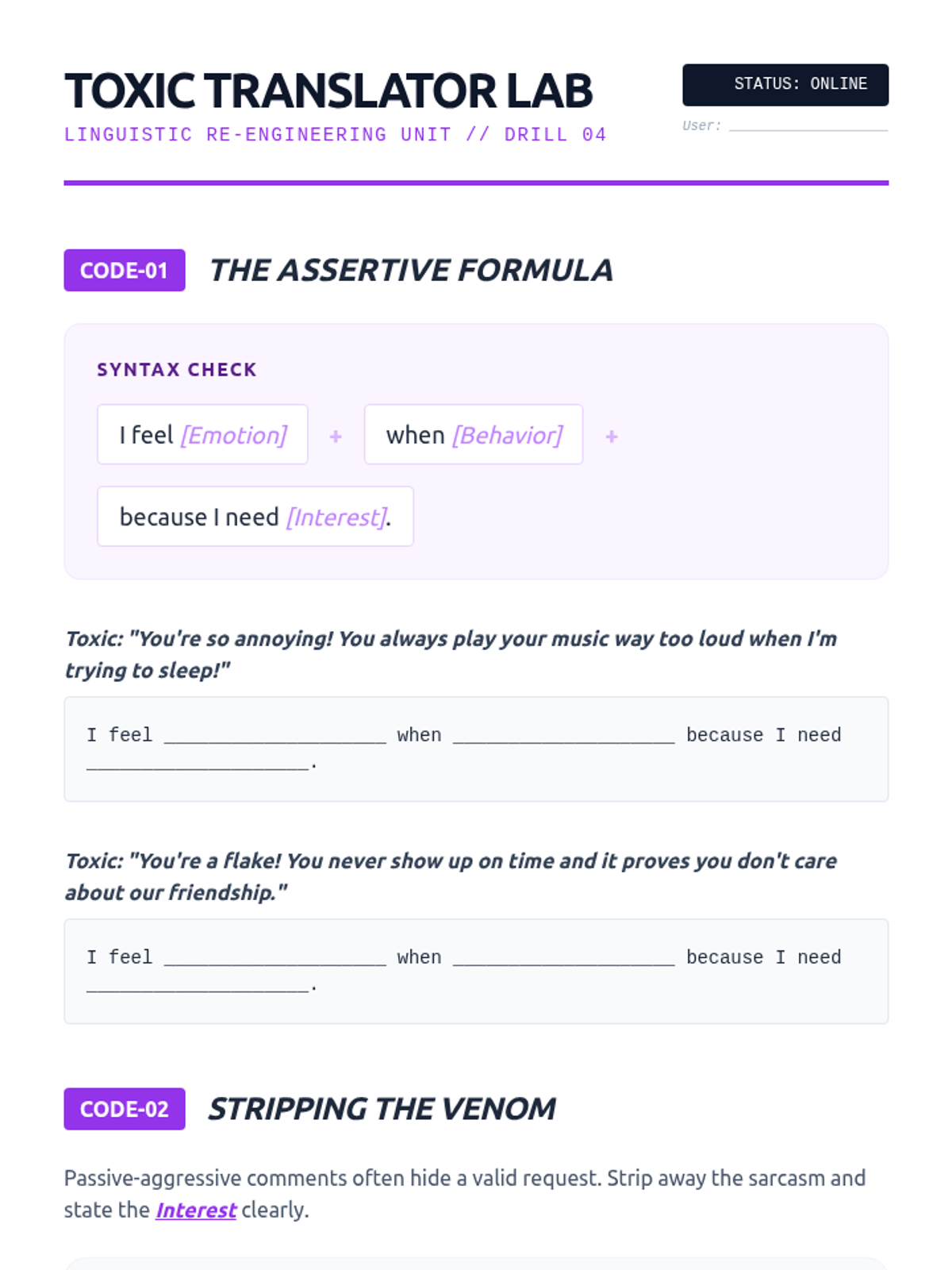
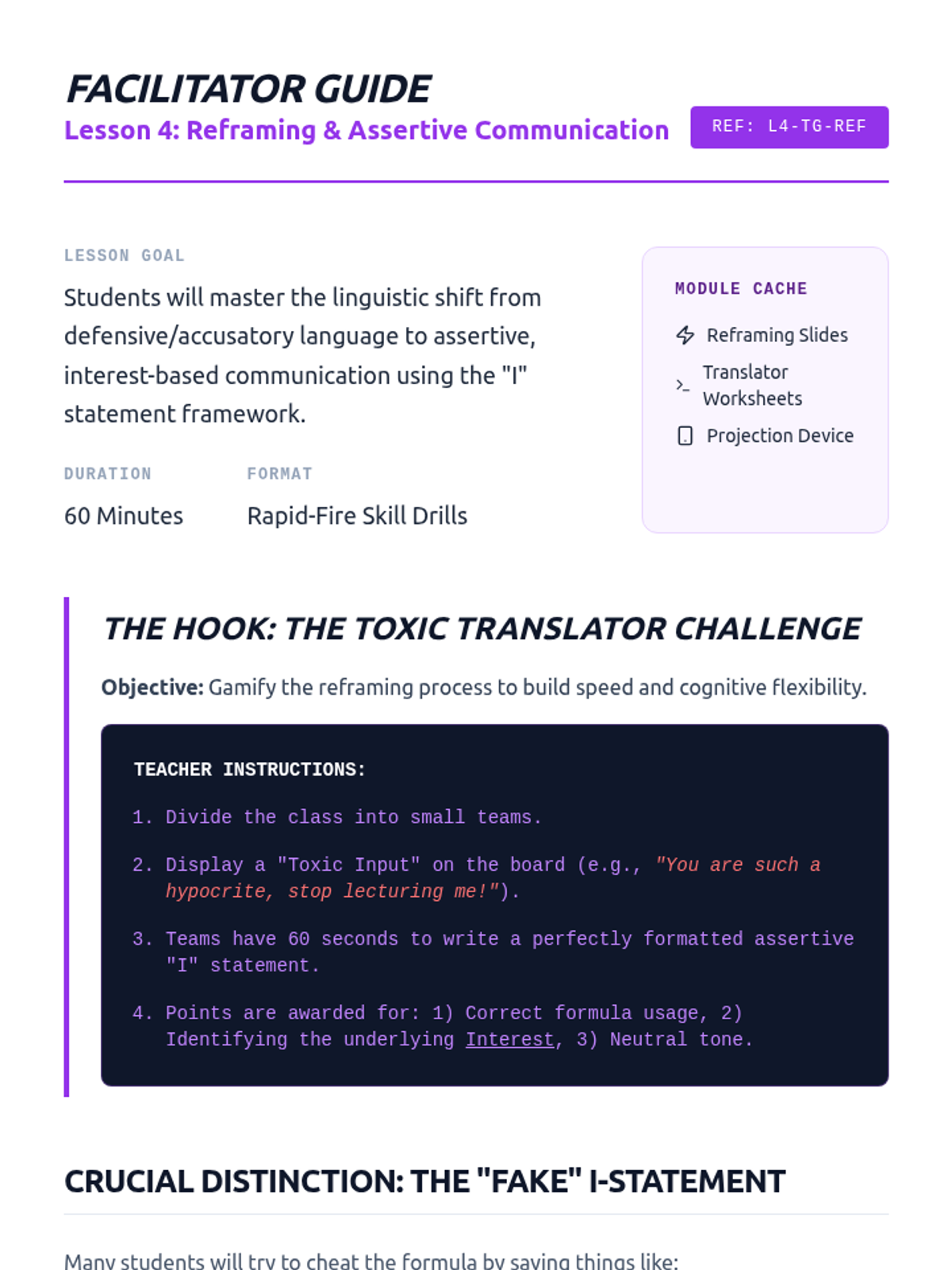
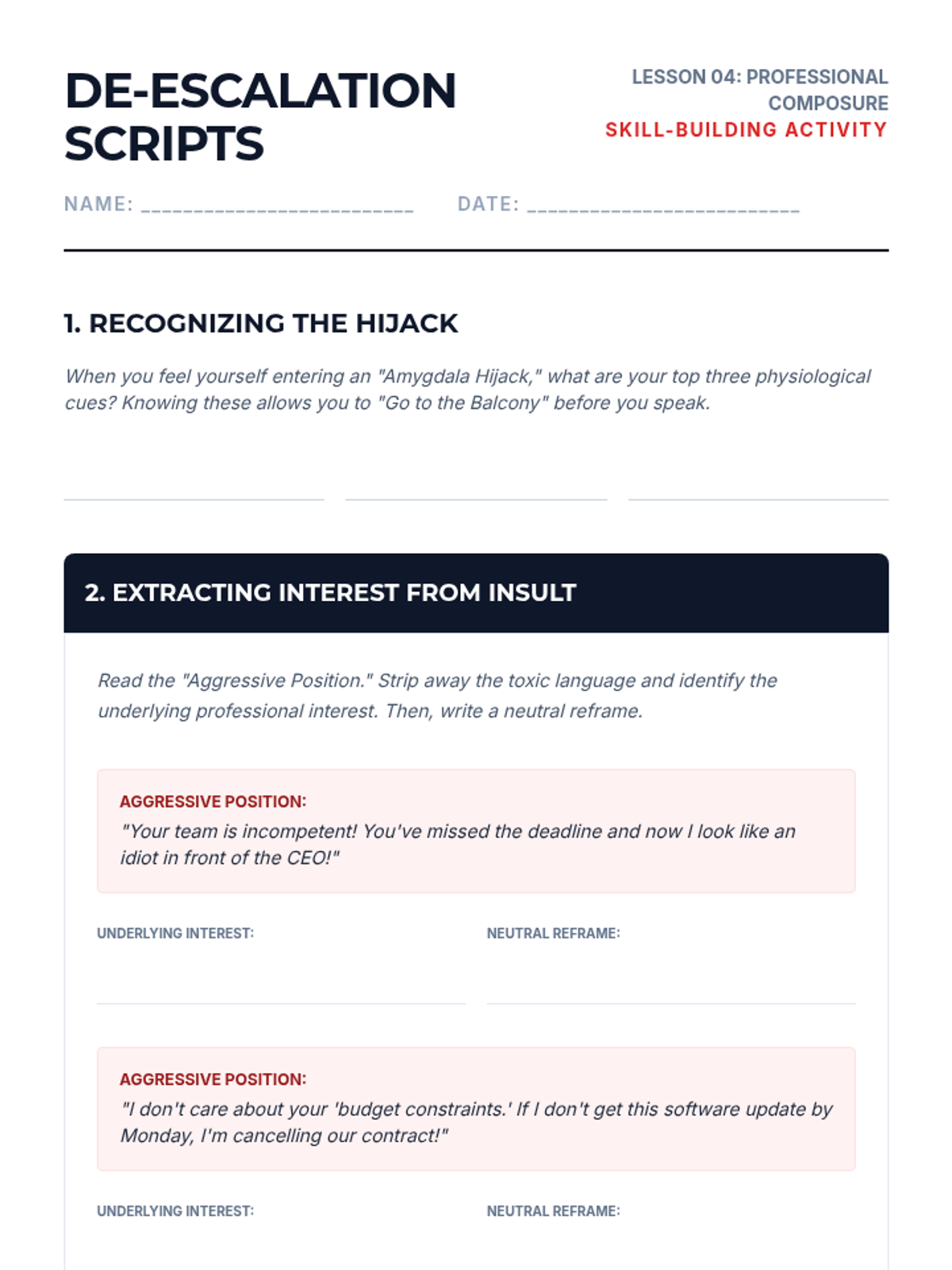
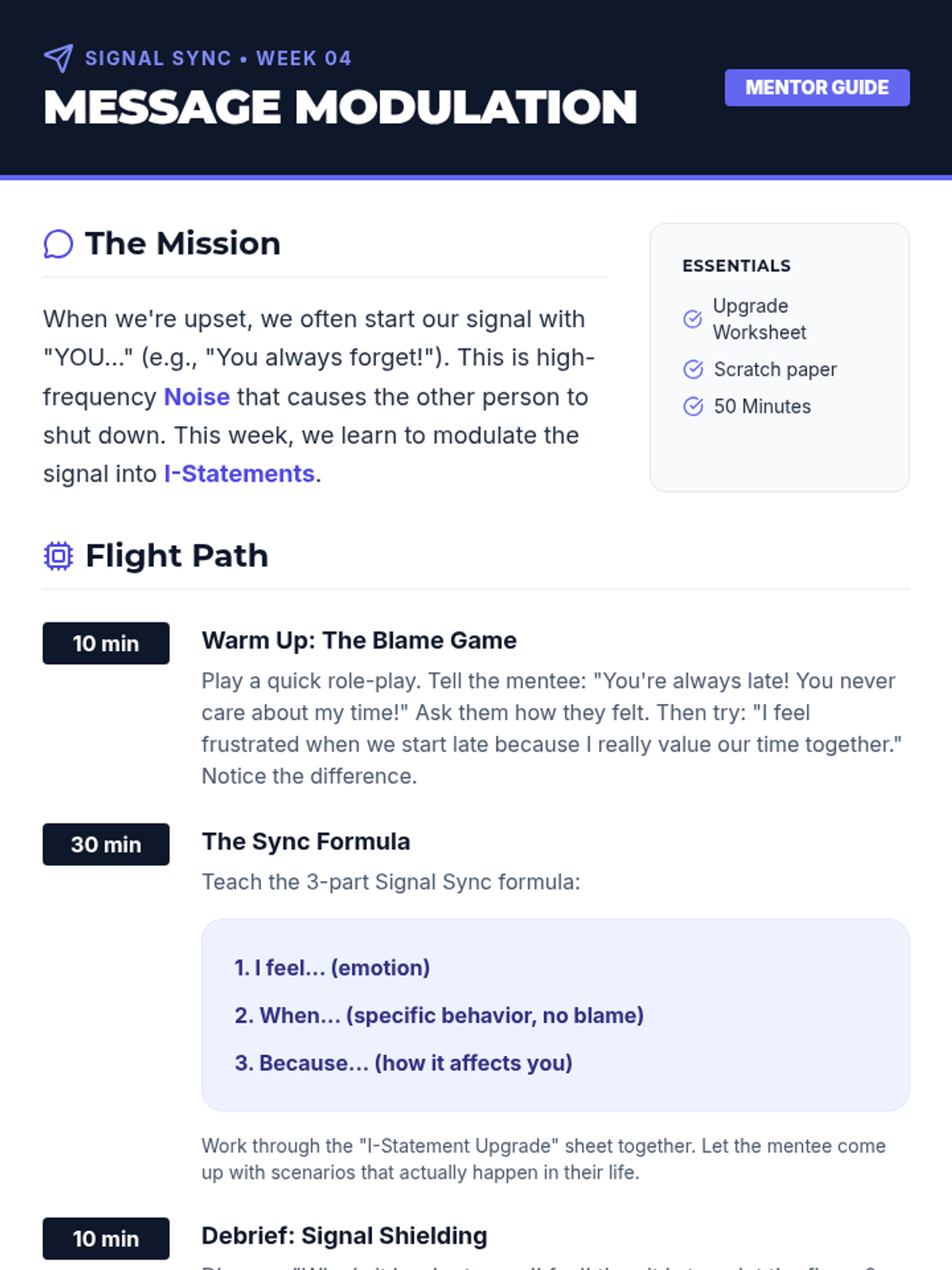
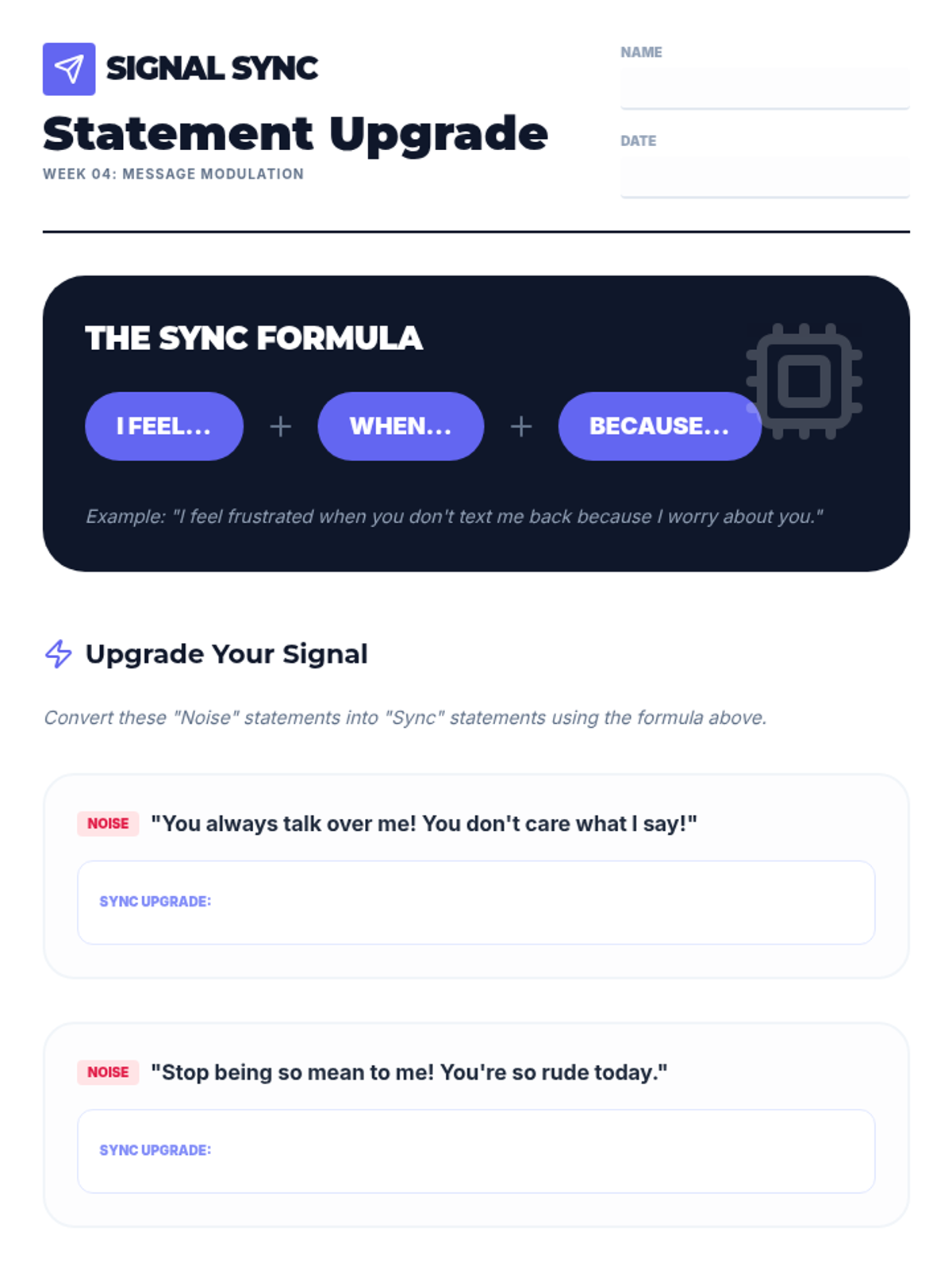
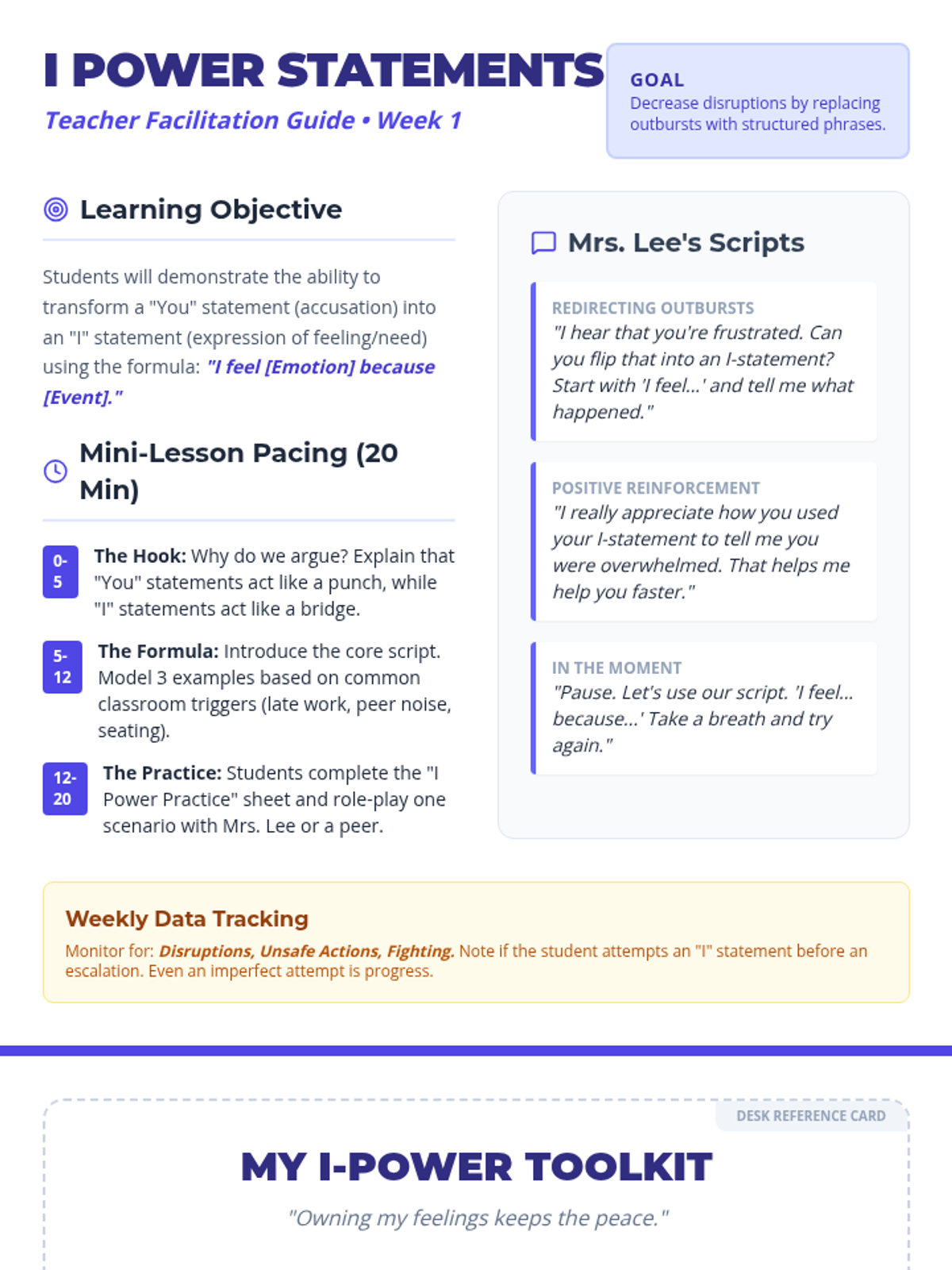
Students master the art of 'I' statements and reframing aggressive language into neutral, problem-solving dialogue.
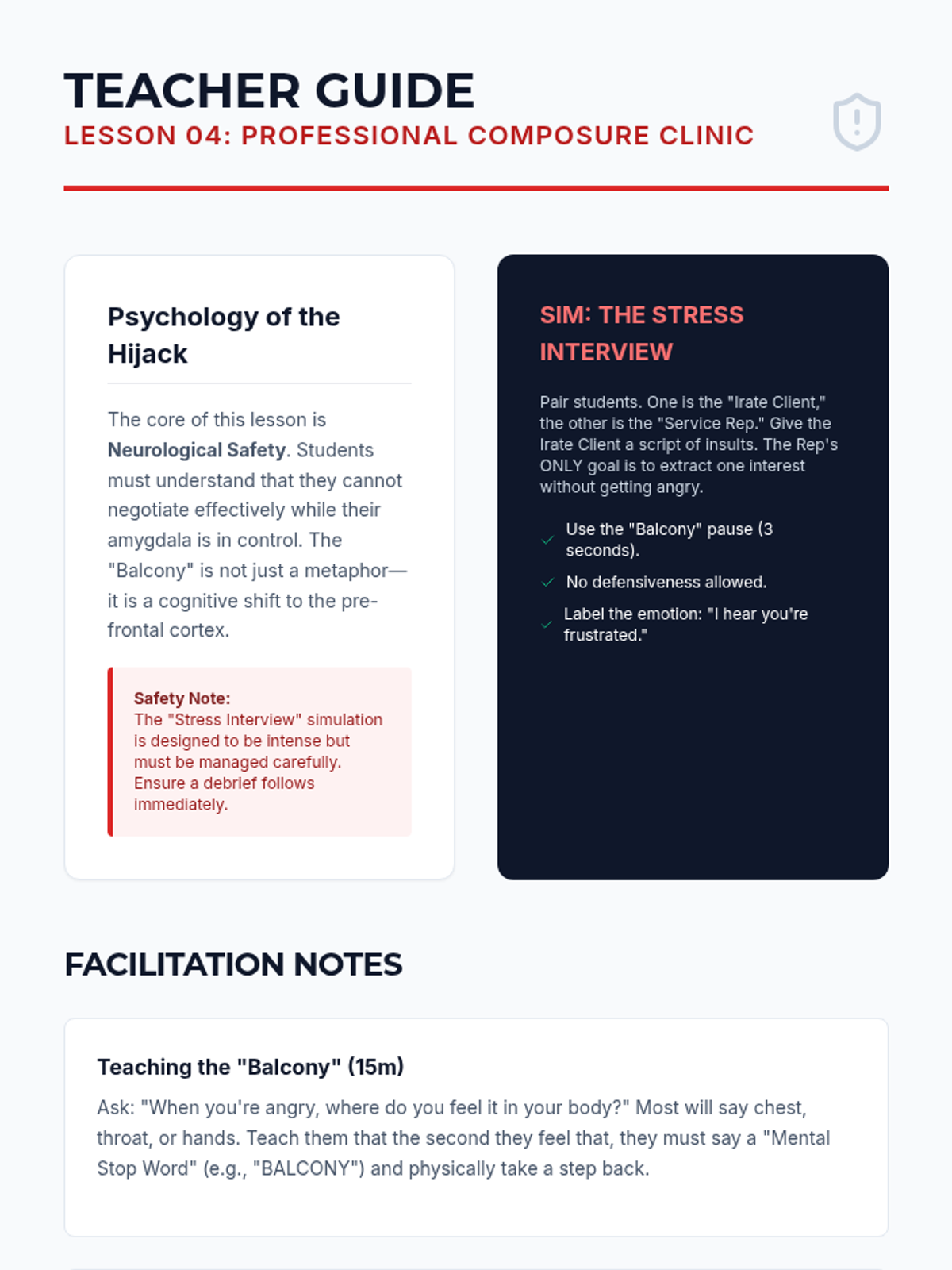
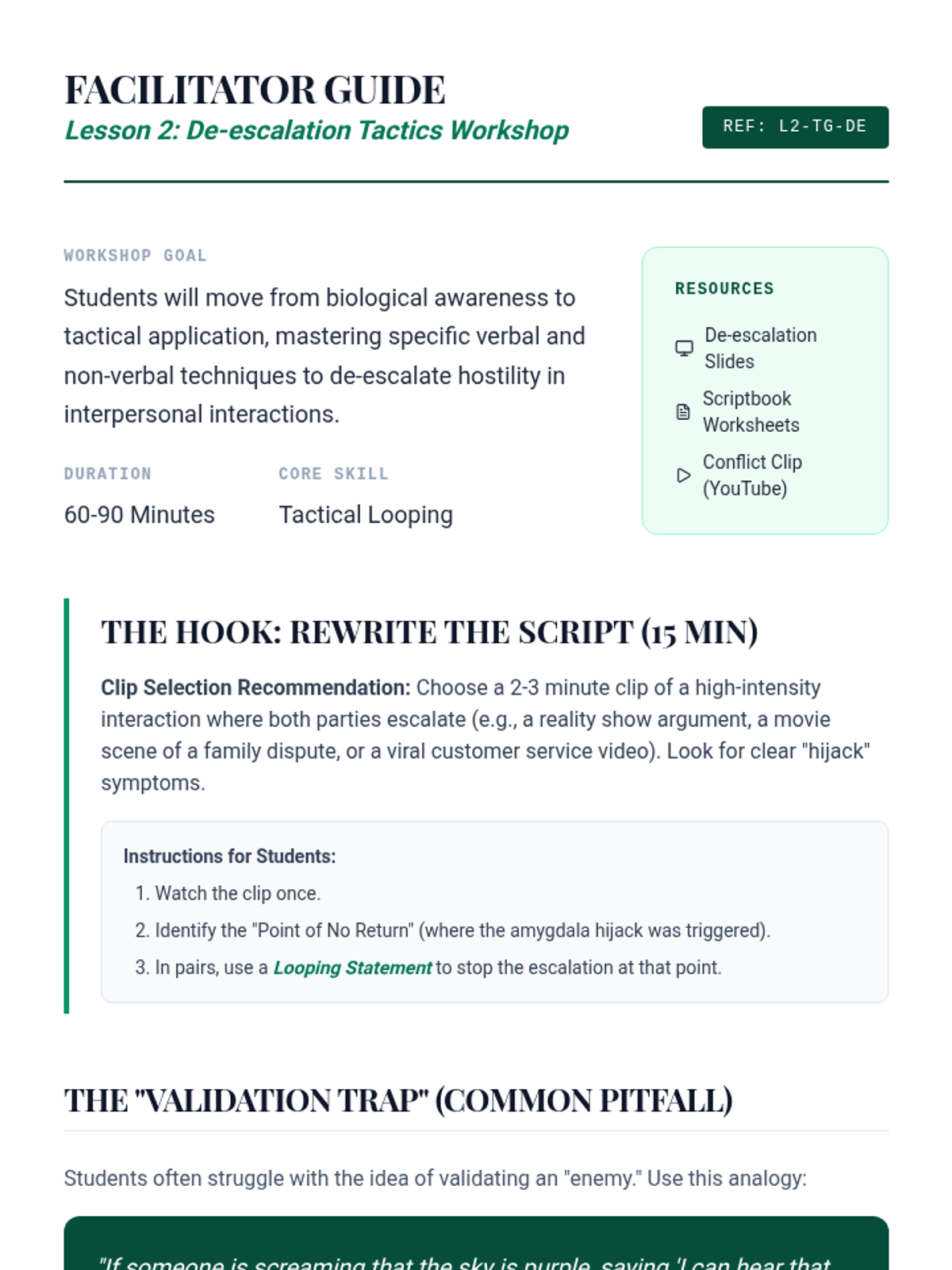
Students learn to manage the 'amygdala hijack' and high-arousal emotions in professional settings using de-escalation scripts and the 'balcony' technique.
Using the Iceberg Model, students analyze underlying needs and fears driving conflicts beyond surface-level arguments.
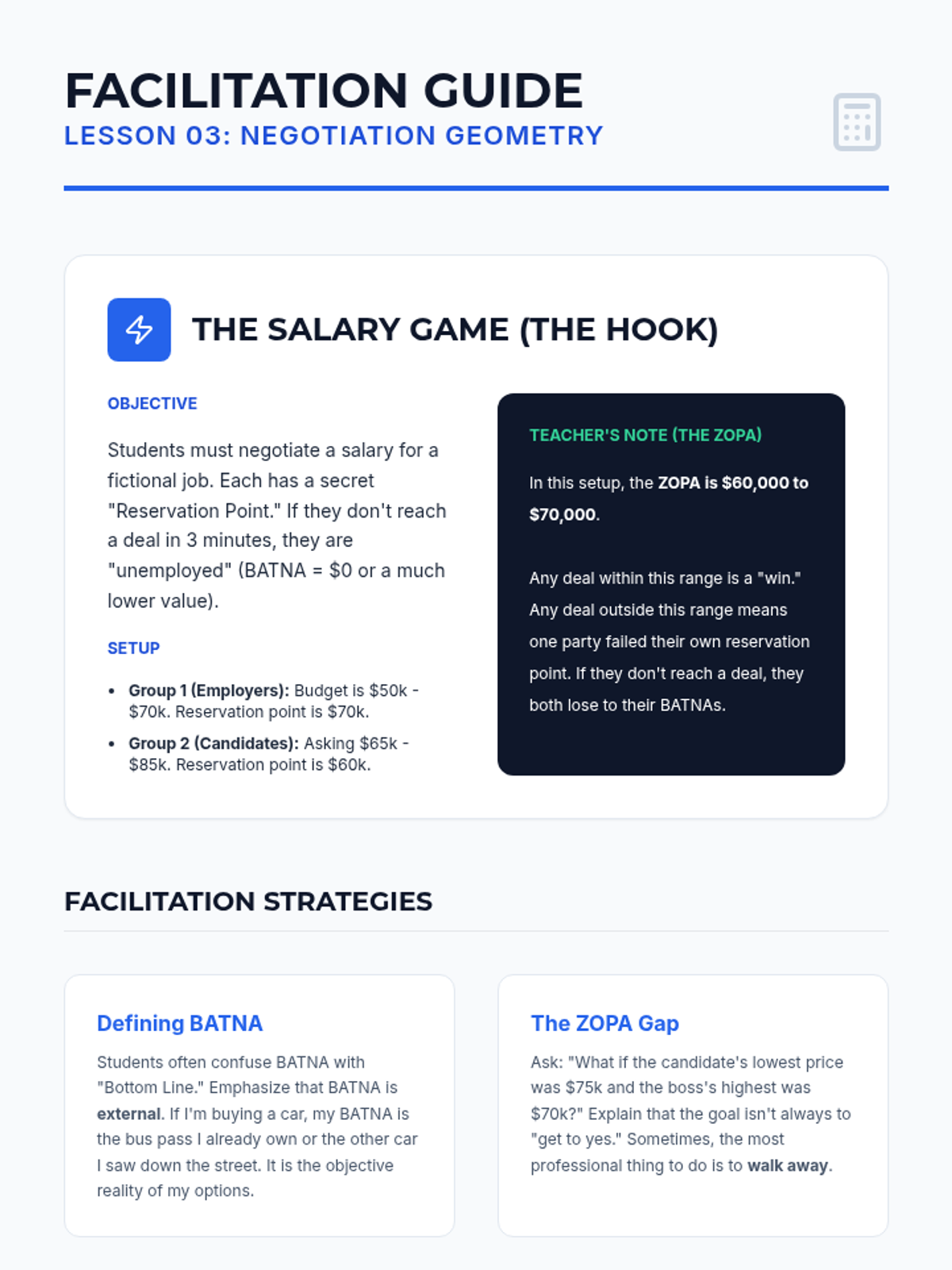
Students explore the technical side of negotiation by calculating BATNA and ZOPA, learning to determine leverage and walk-away points.
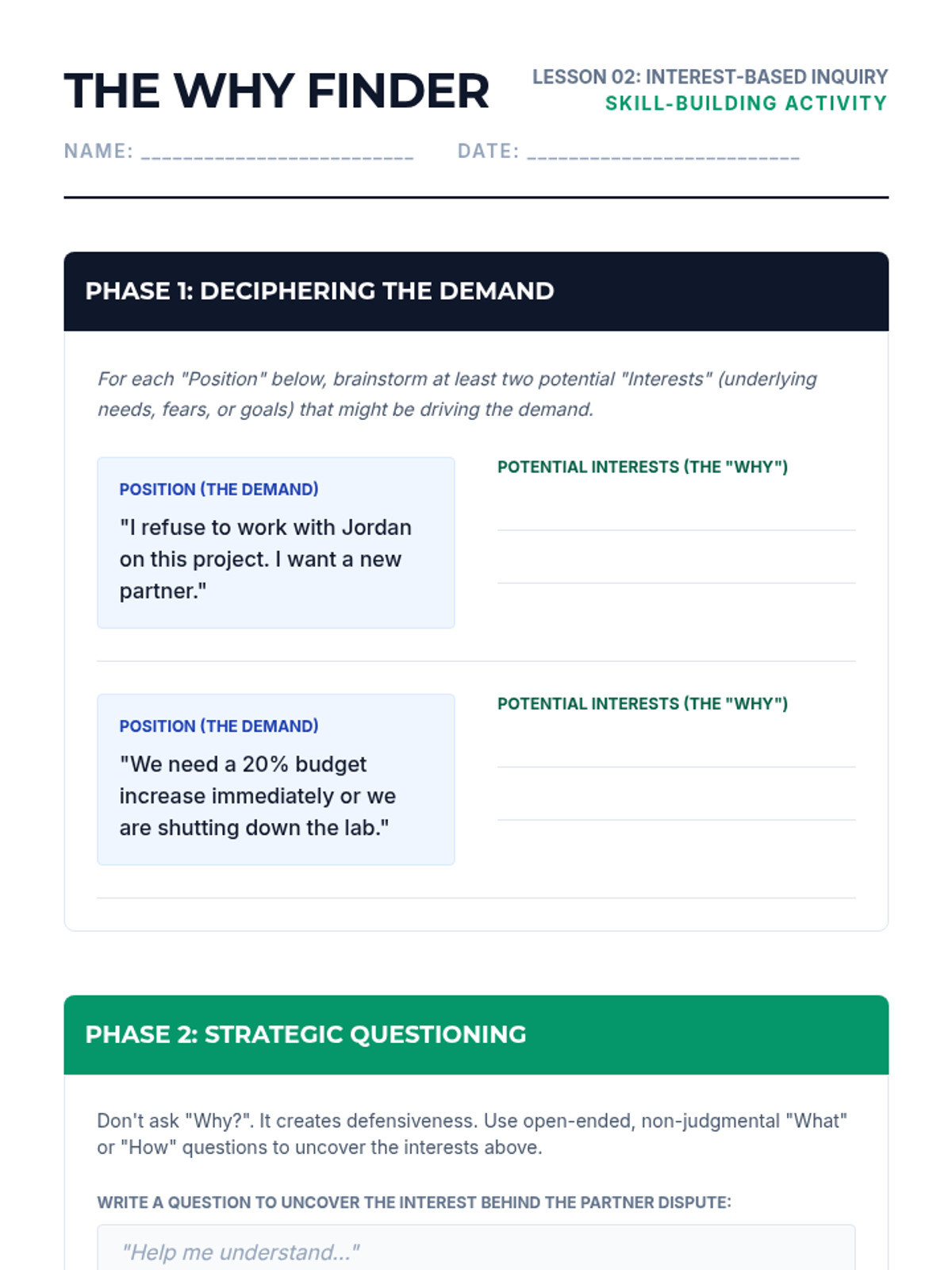
Students learn to distinguish between positions and underlying interests, using strategic questioning to shift from winning arguments to solving problems.
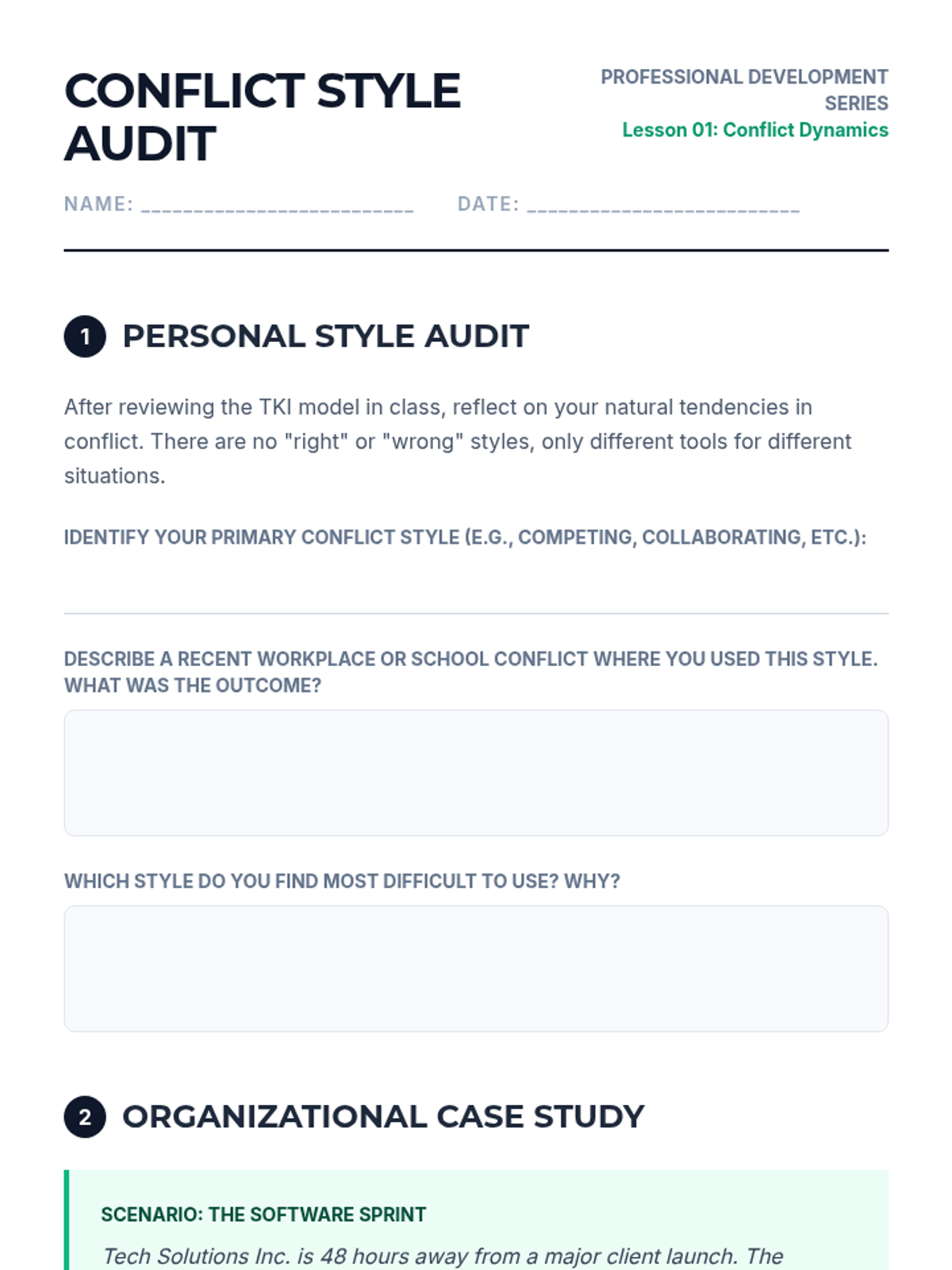
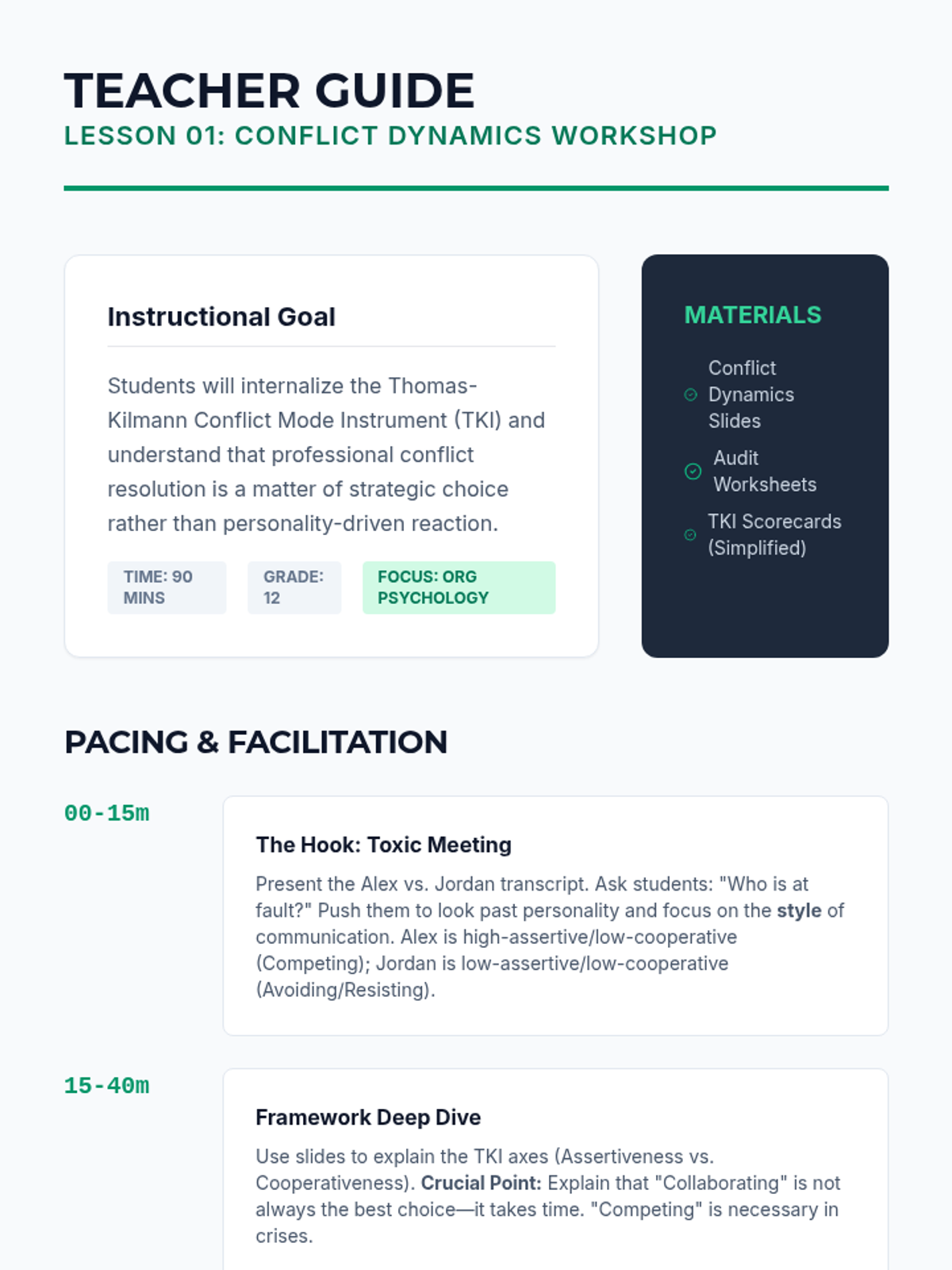
Students analyze their personal conflict management styles using the Thomas-Kilmann model and apply these to organizational case studies to understand professional hierarchies.
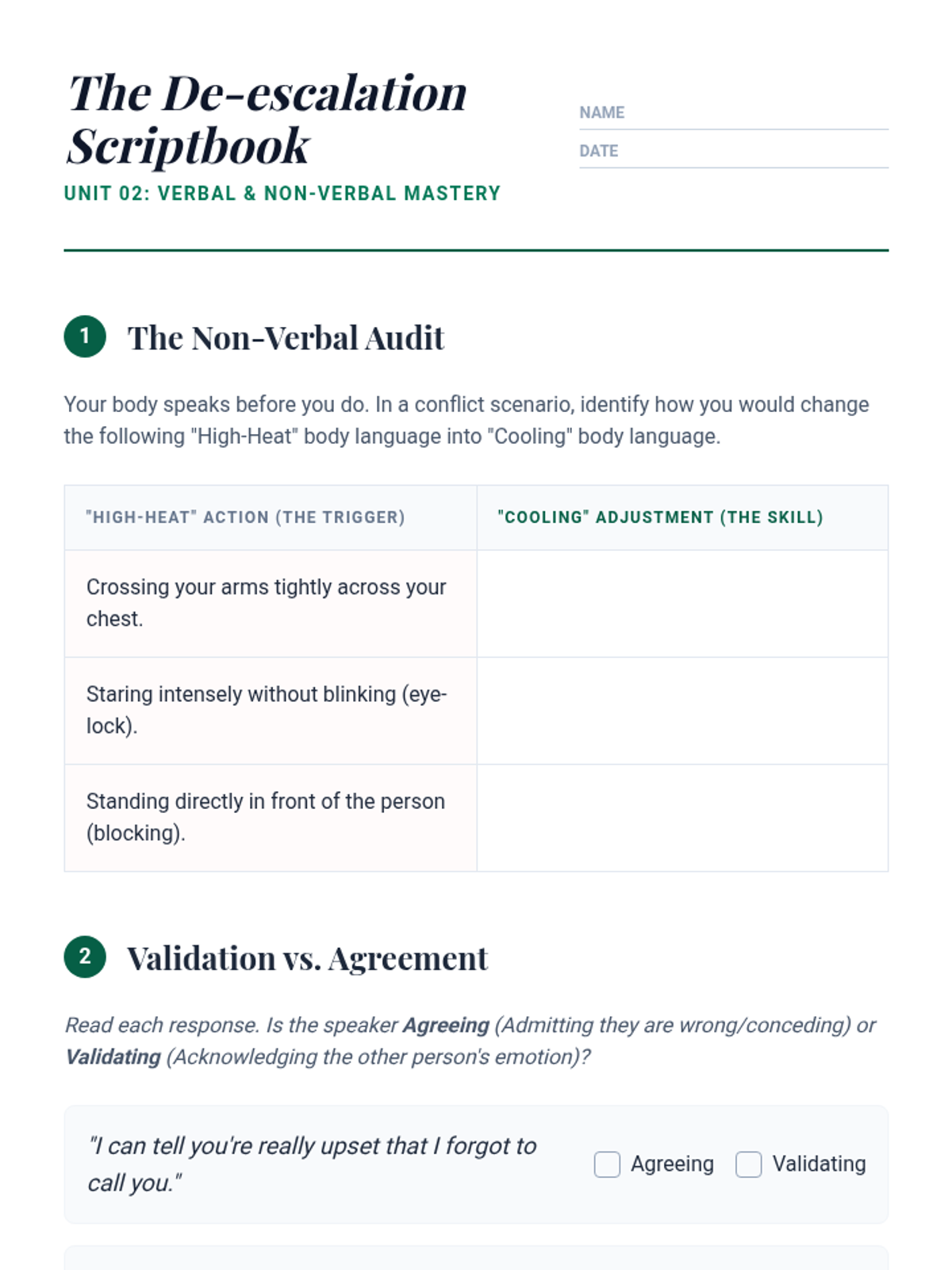
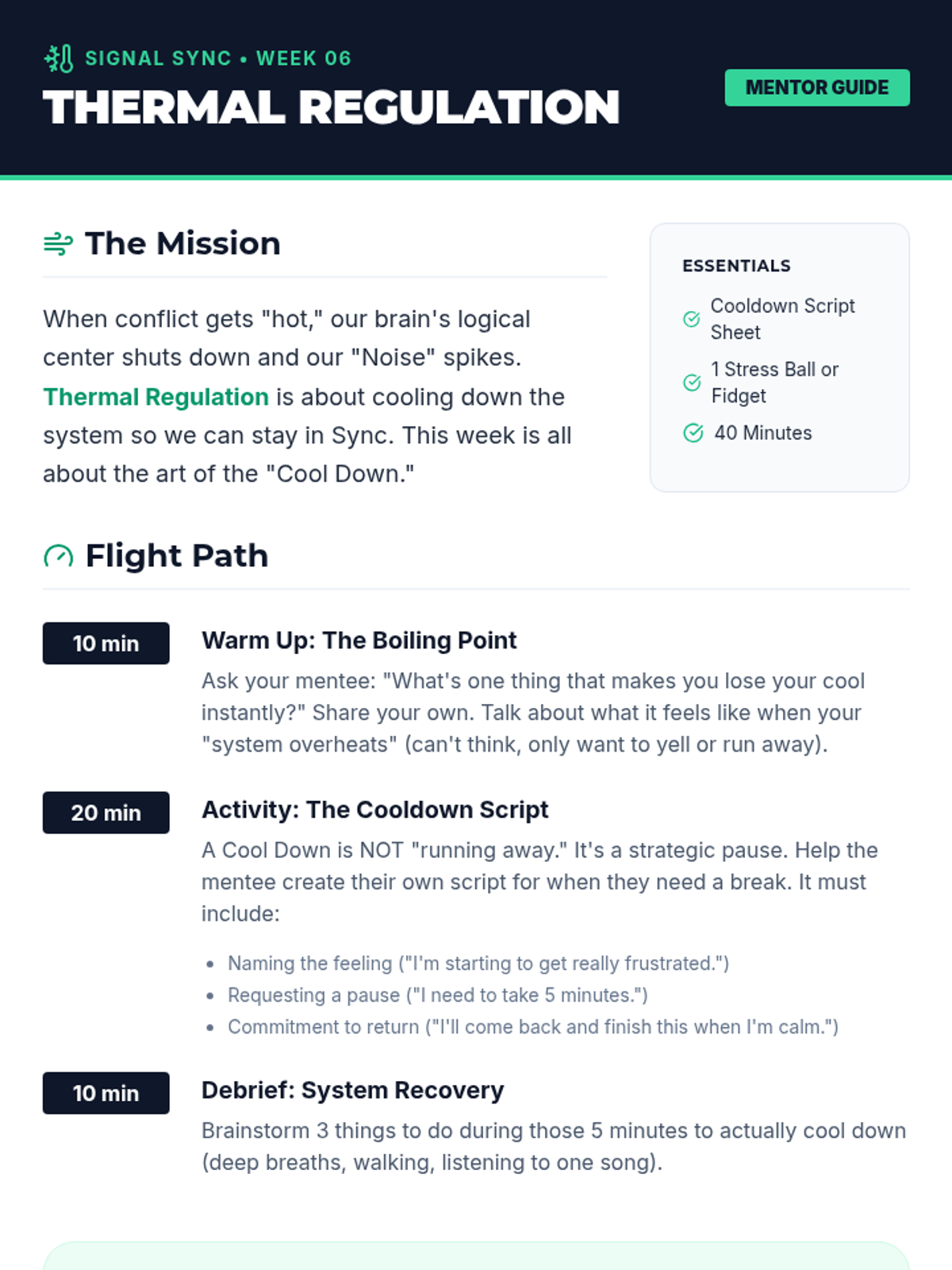
Focuses on verbal and non-verbal techniques for lowering emotional temperature, including tone, body language, and 'looping'.
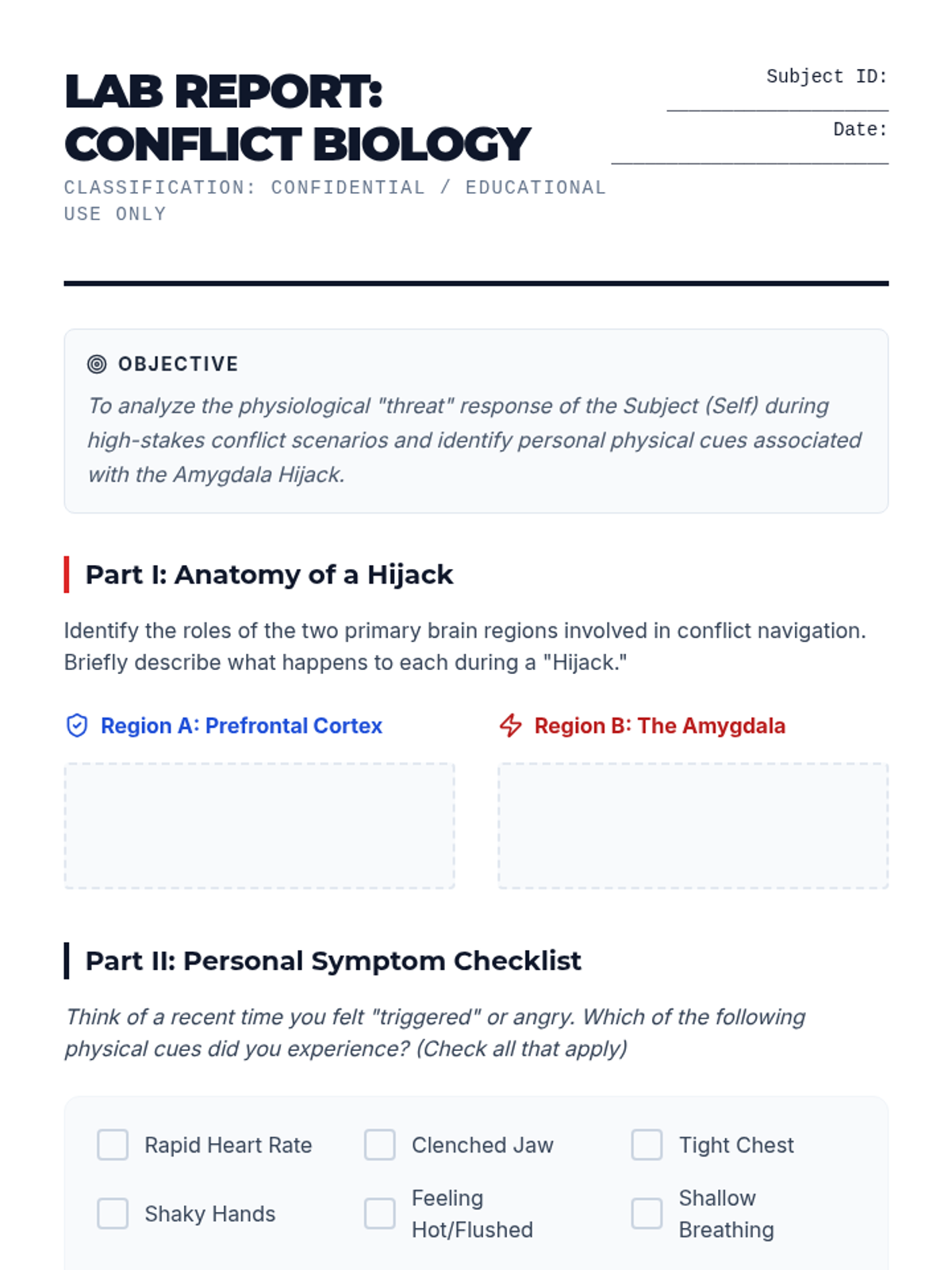
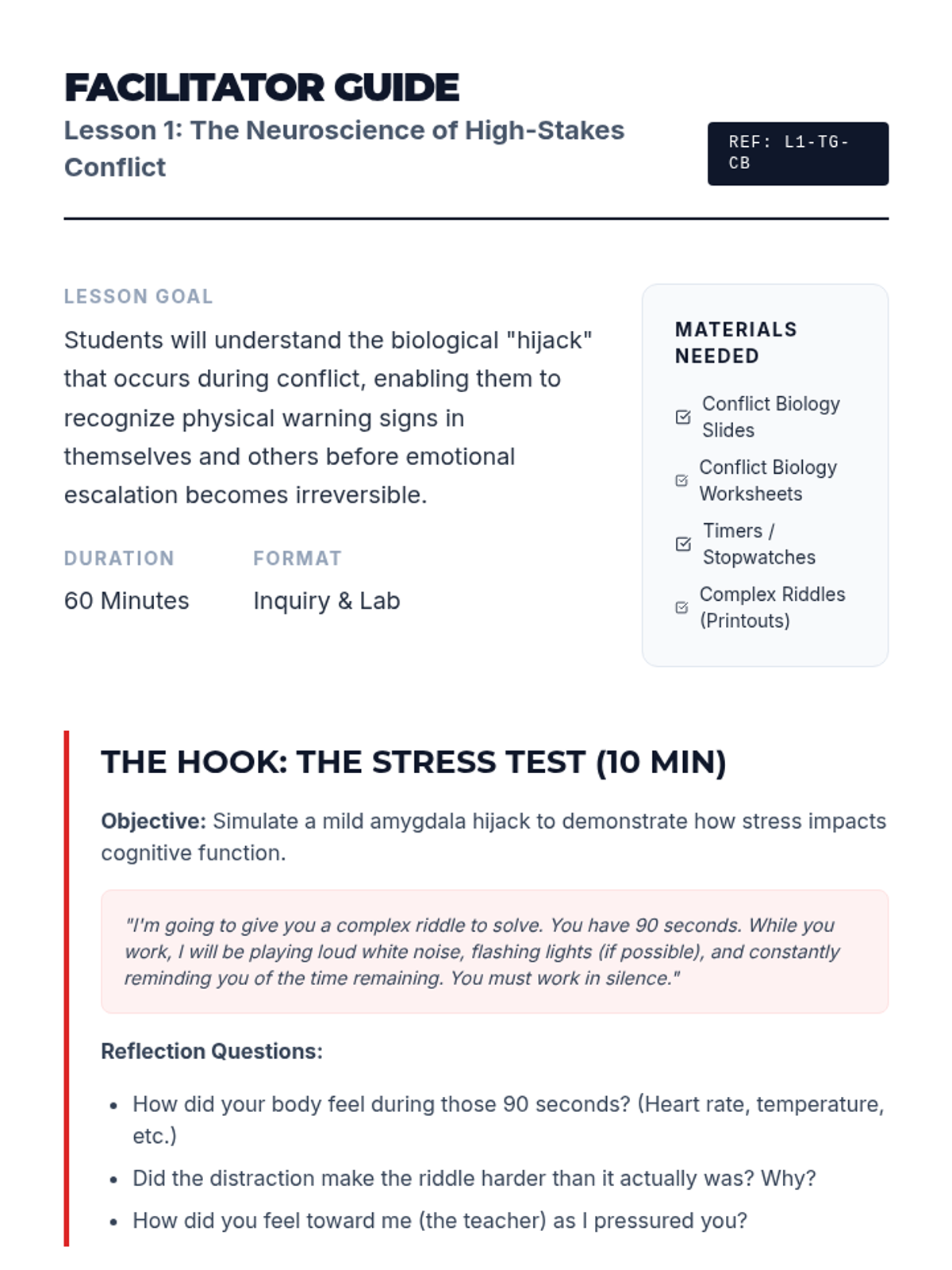
Students investigate the physiological responses to conflict, focusing on the amygdala hijack and physical cues of escalating emotions.
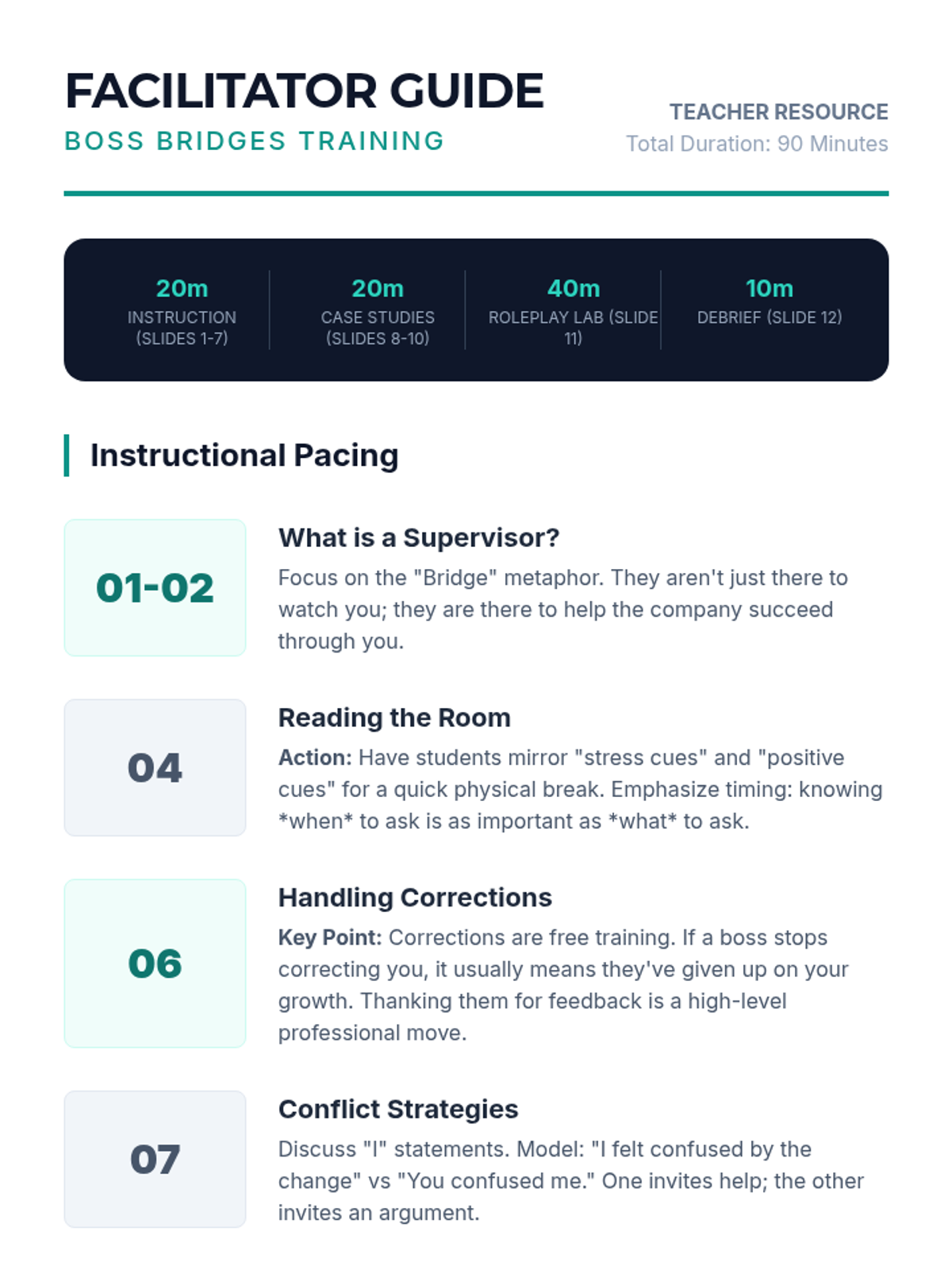
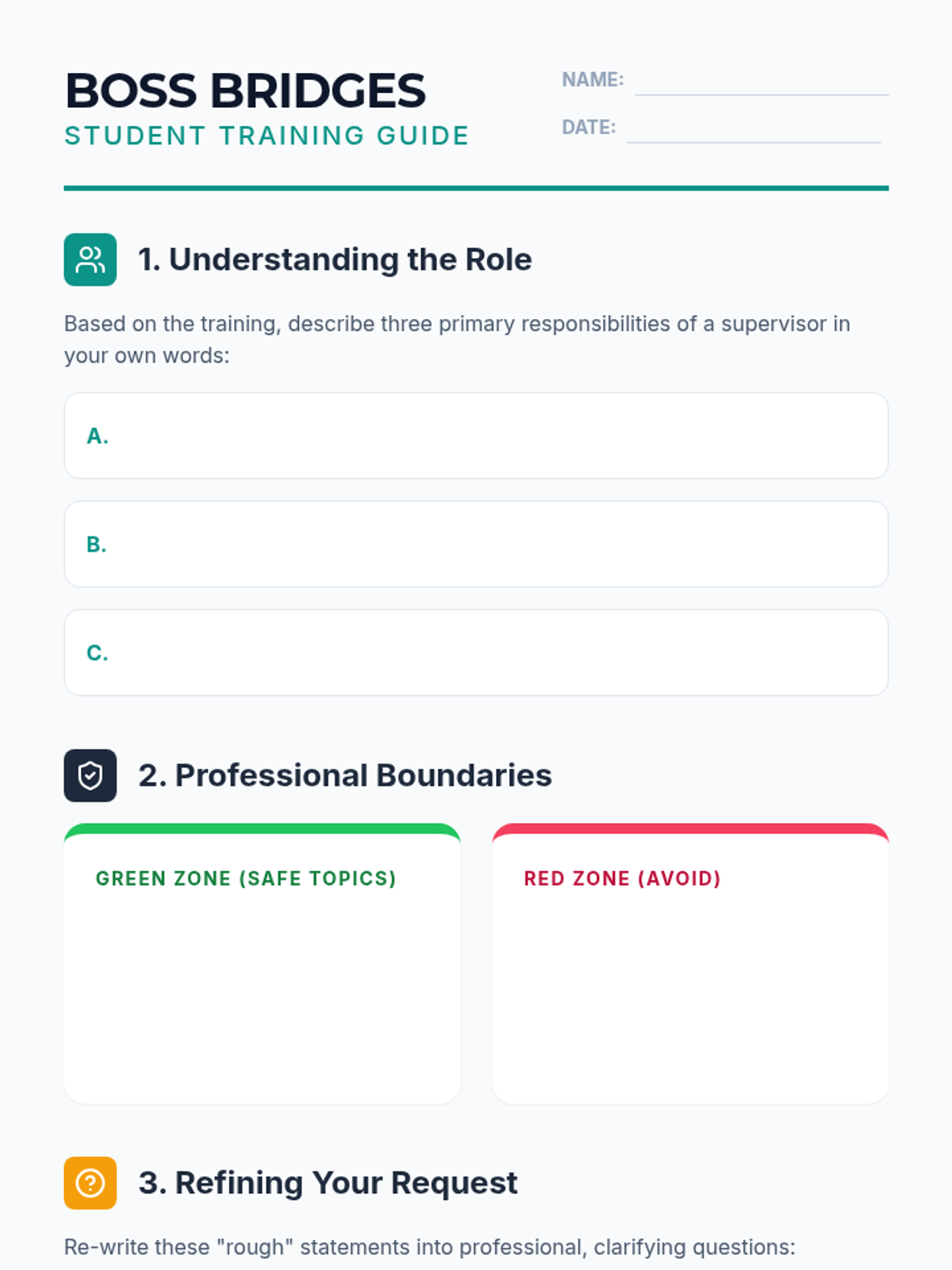
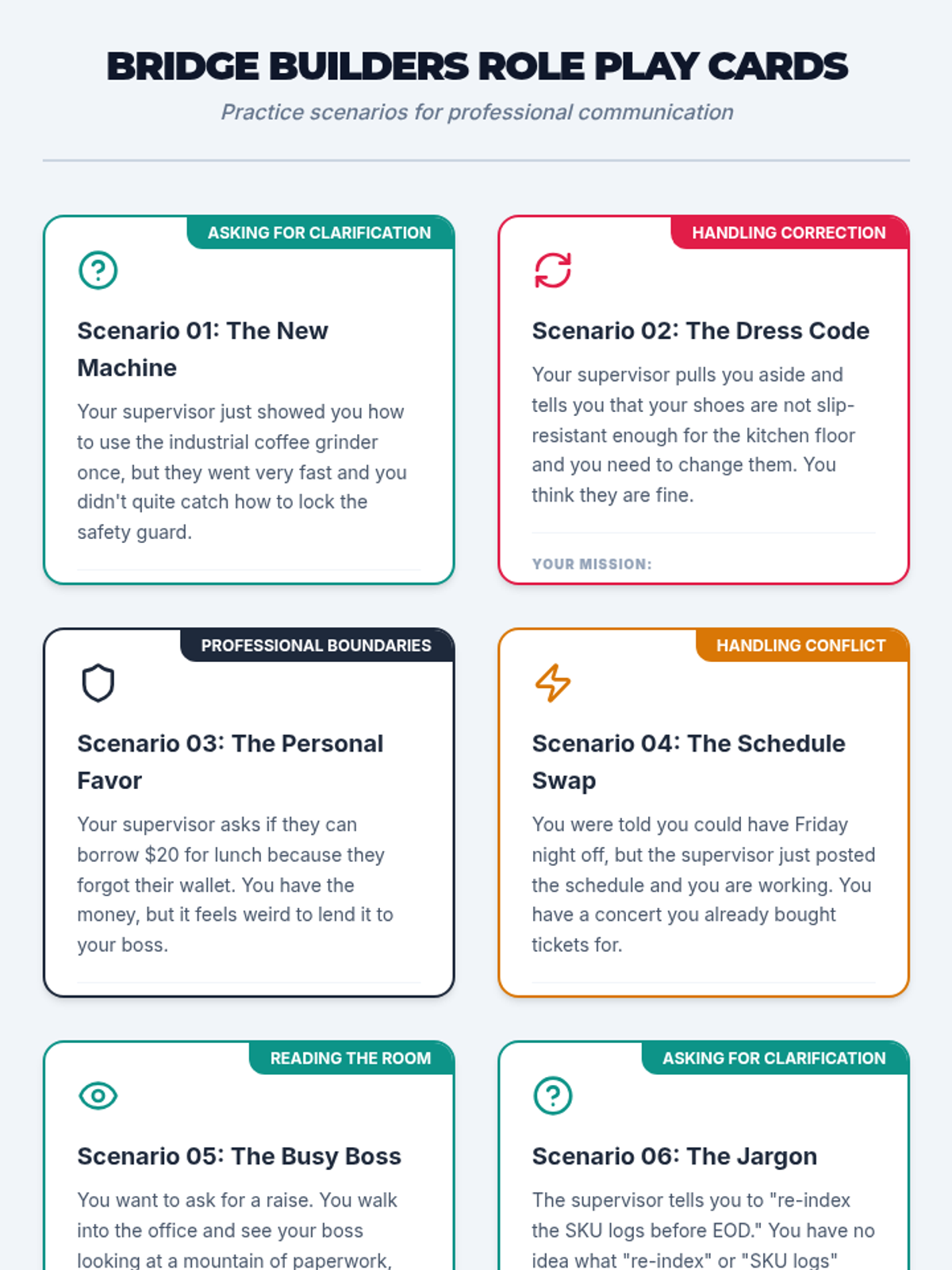
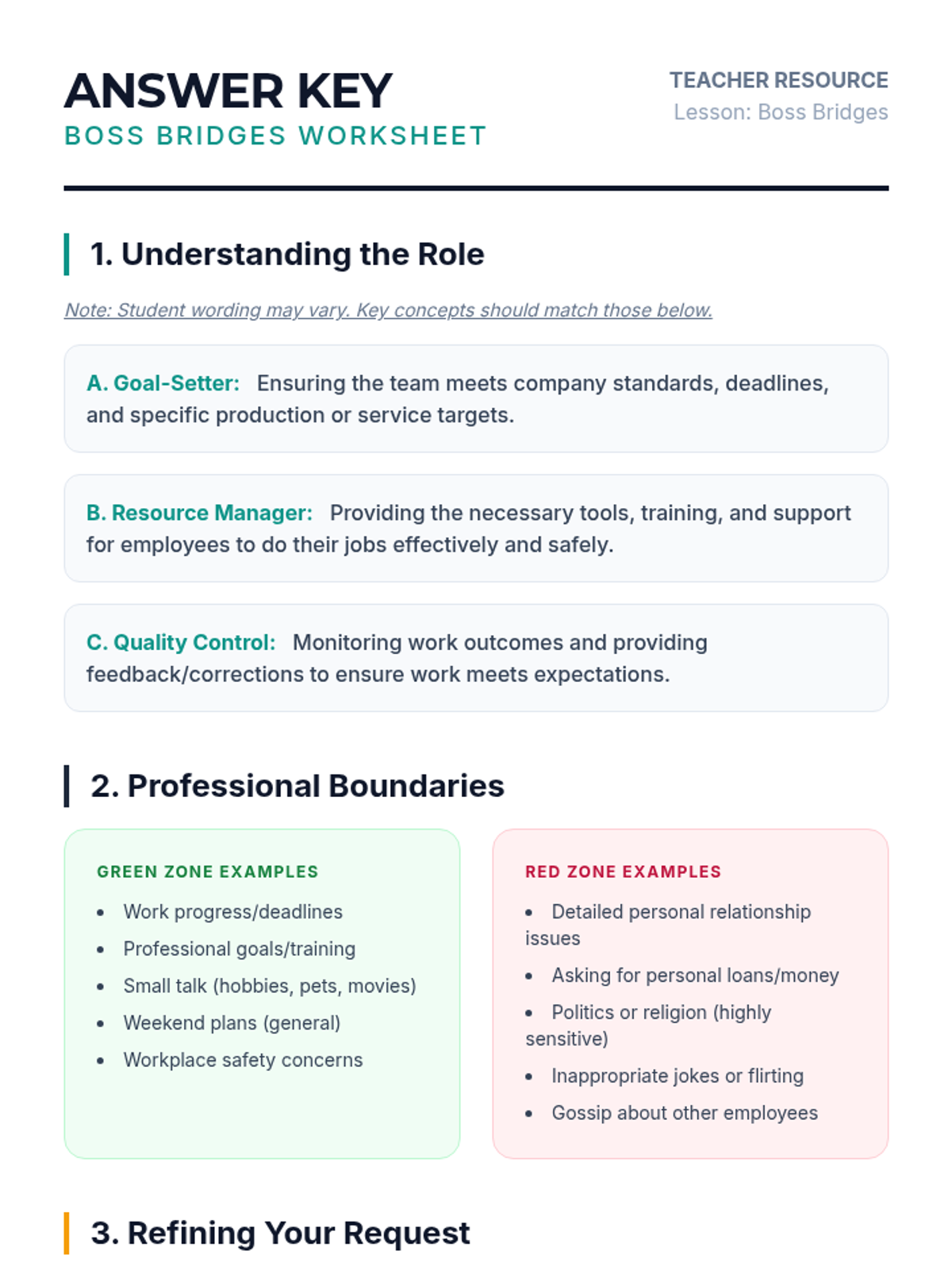
A comprehensive training session focusing on the professional relationship between employees and supervisors. Students will learn about supervisor roles, boundaries, communication strategies, and conflict resolution through interactive case studies.
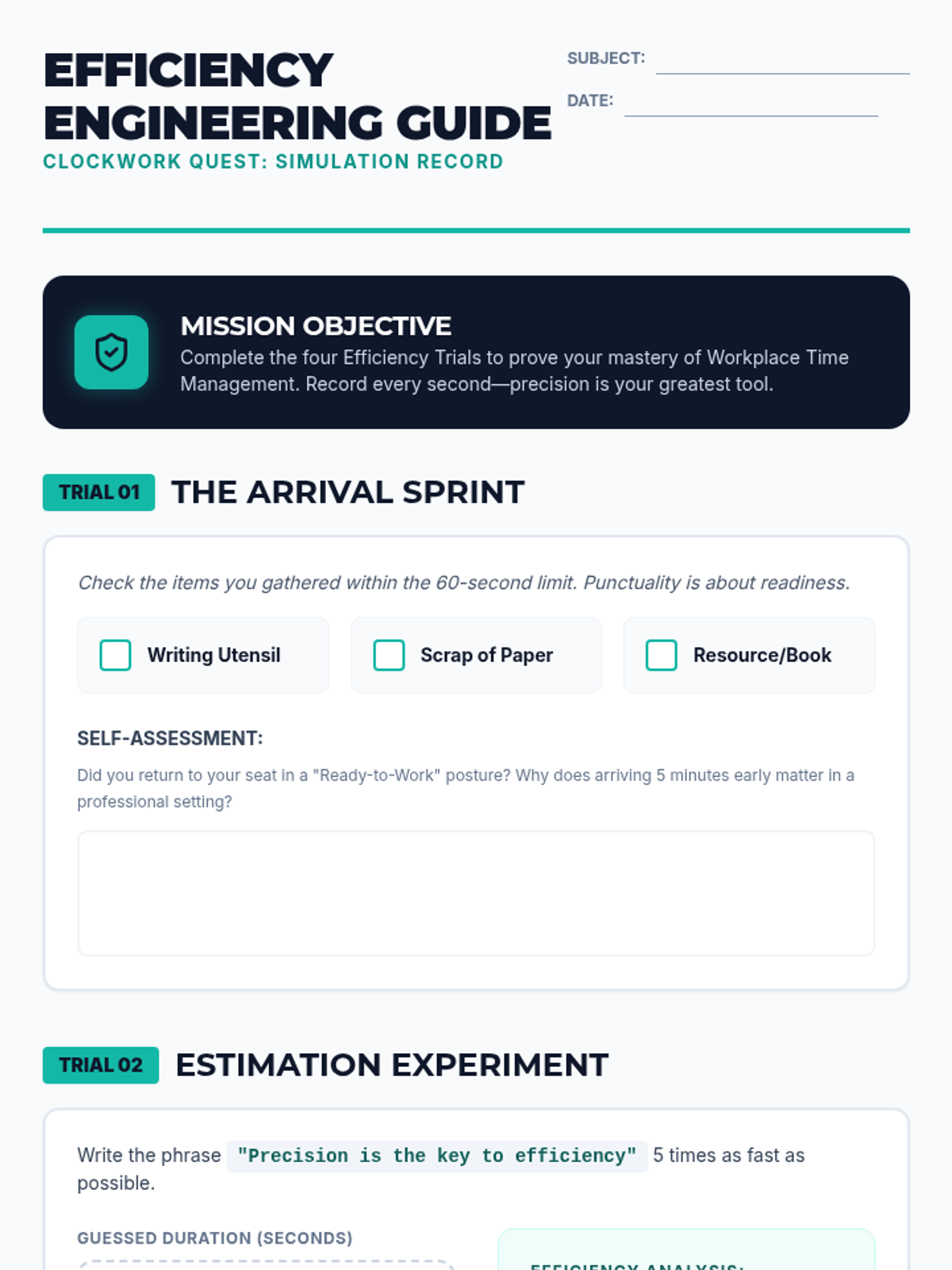
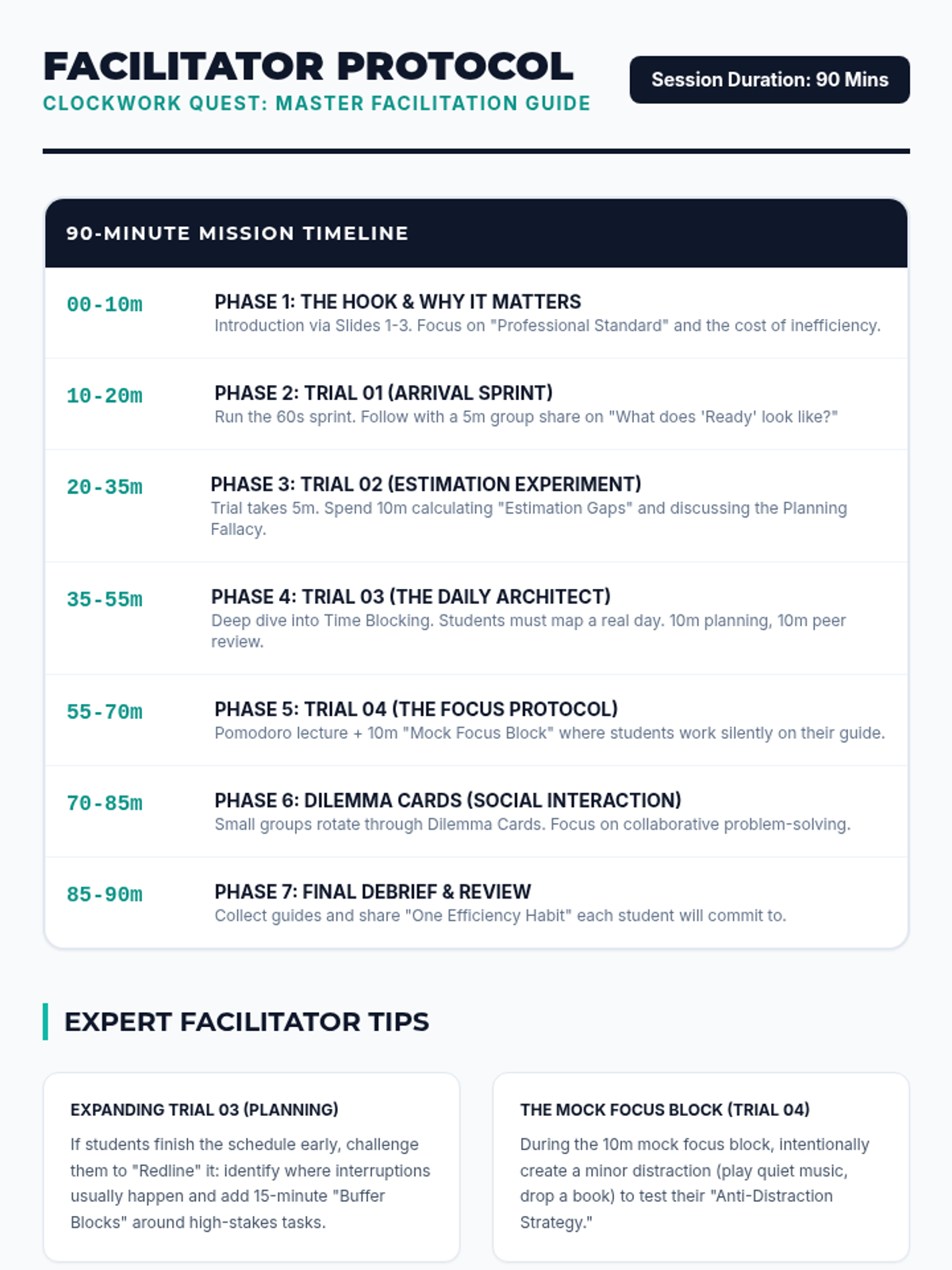
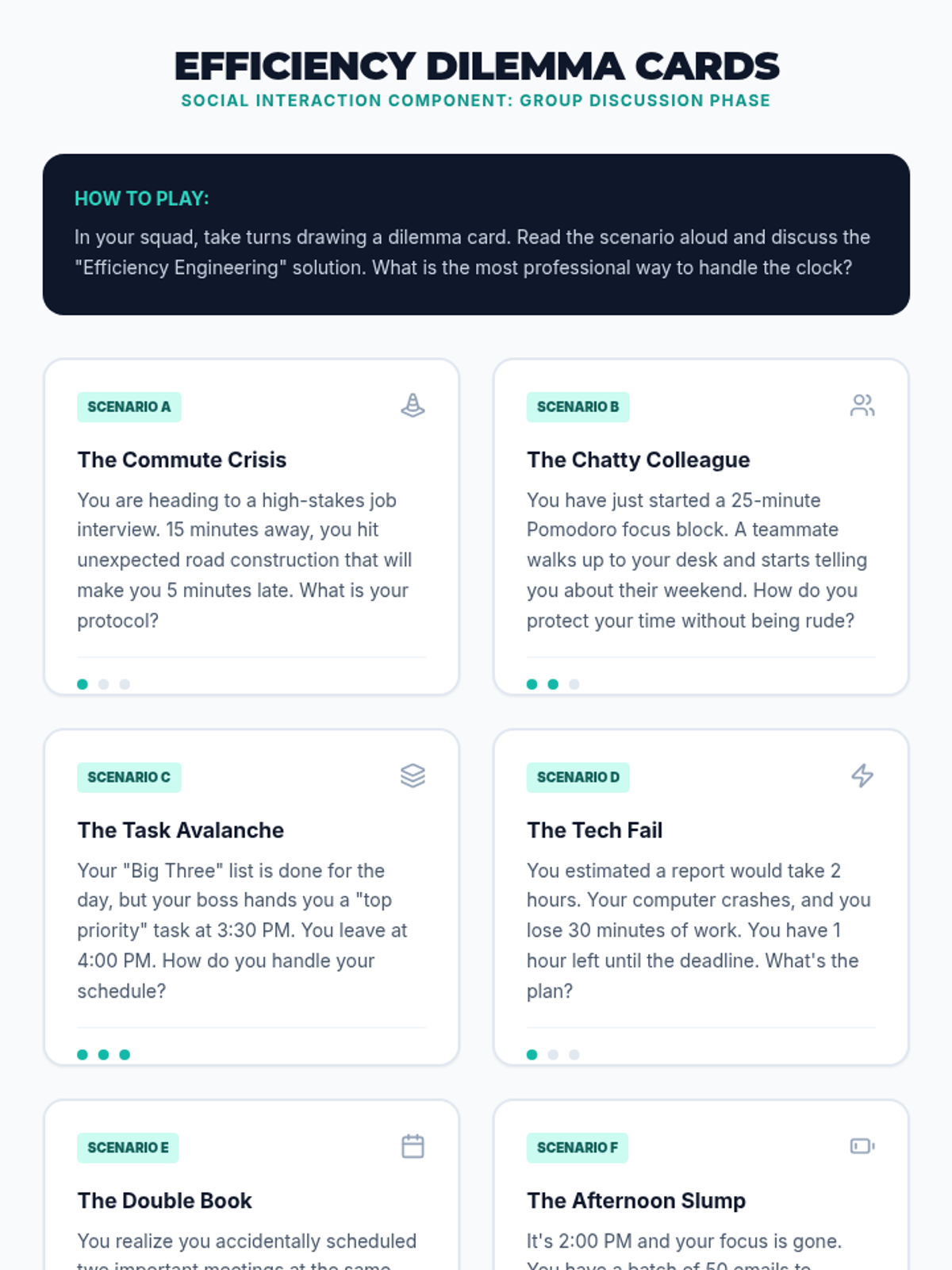
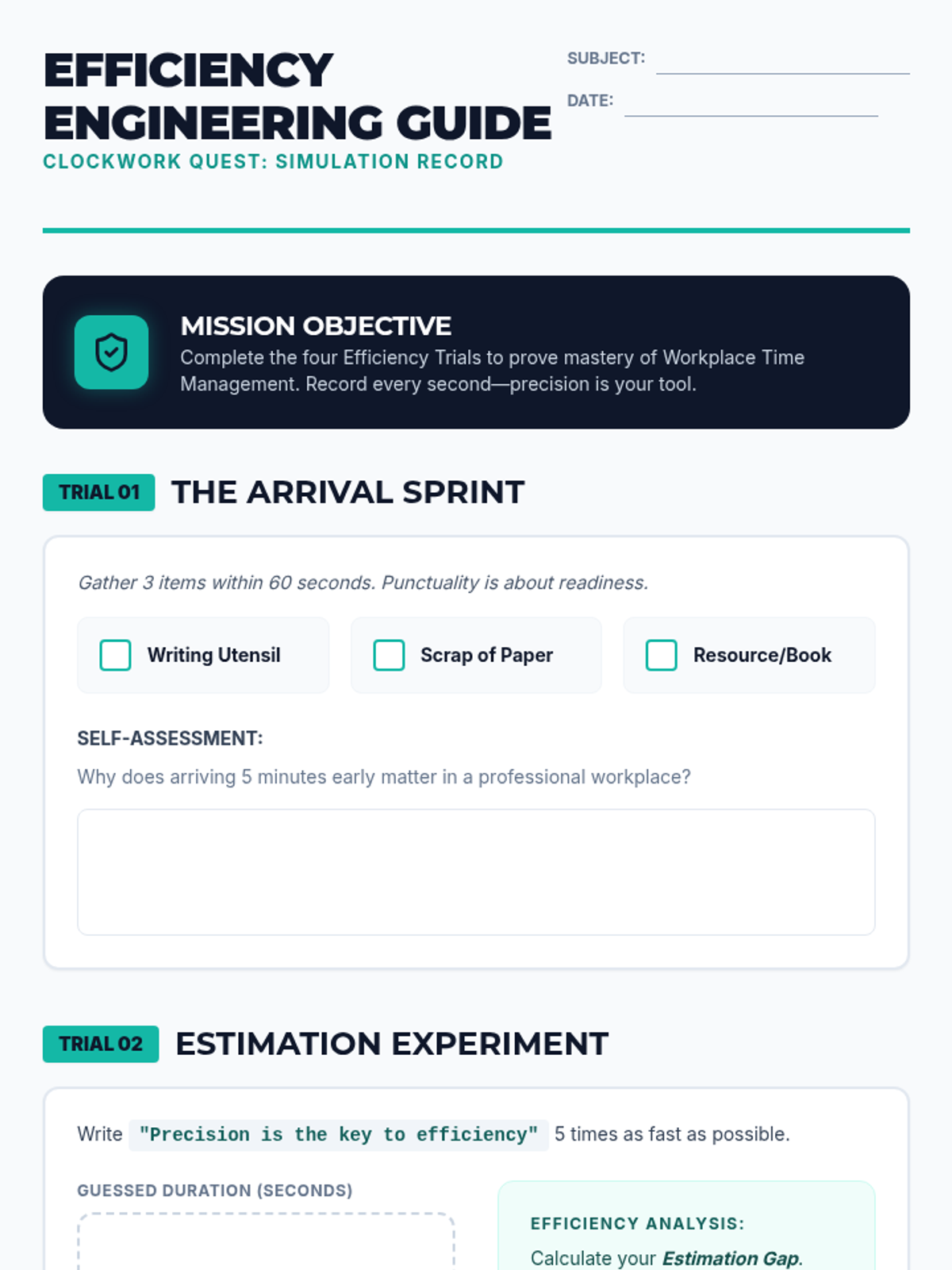
A lesson focused on mastering time management through hands-on 'trials' that teach punctuality, task estimation, scheduling, and focus techniques.
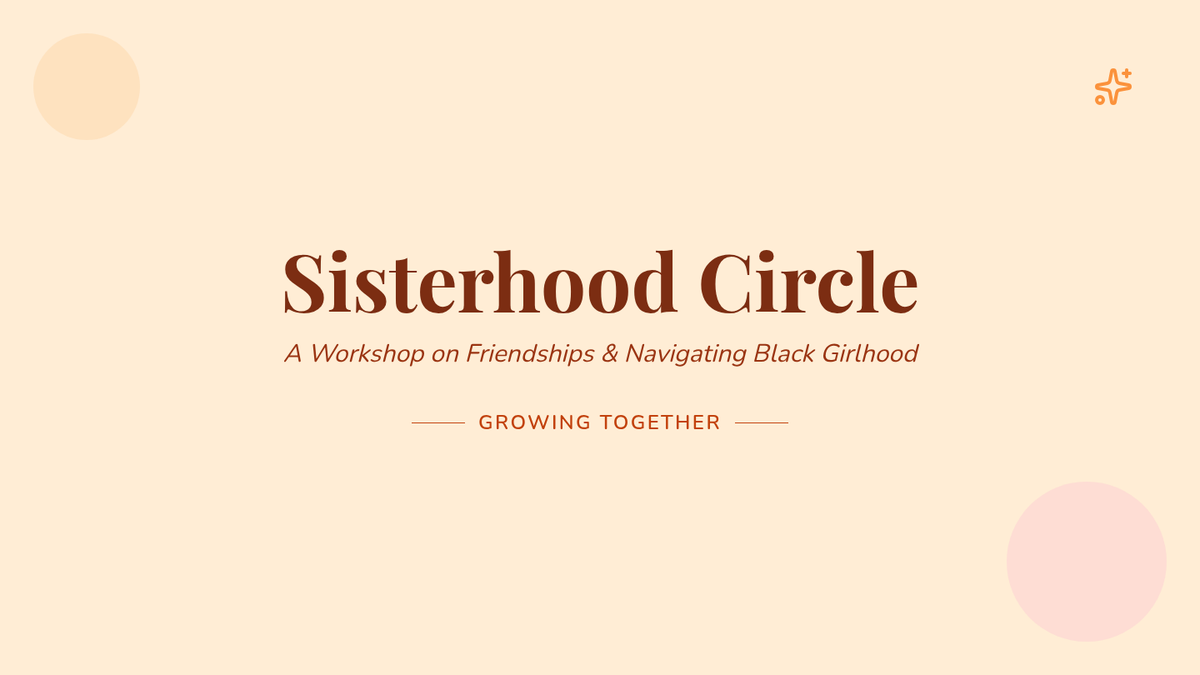
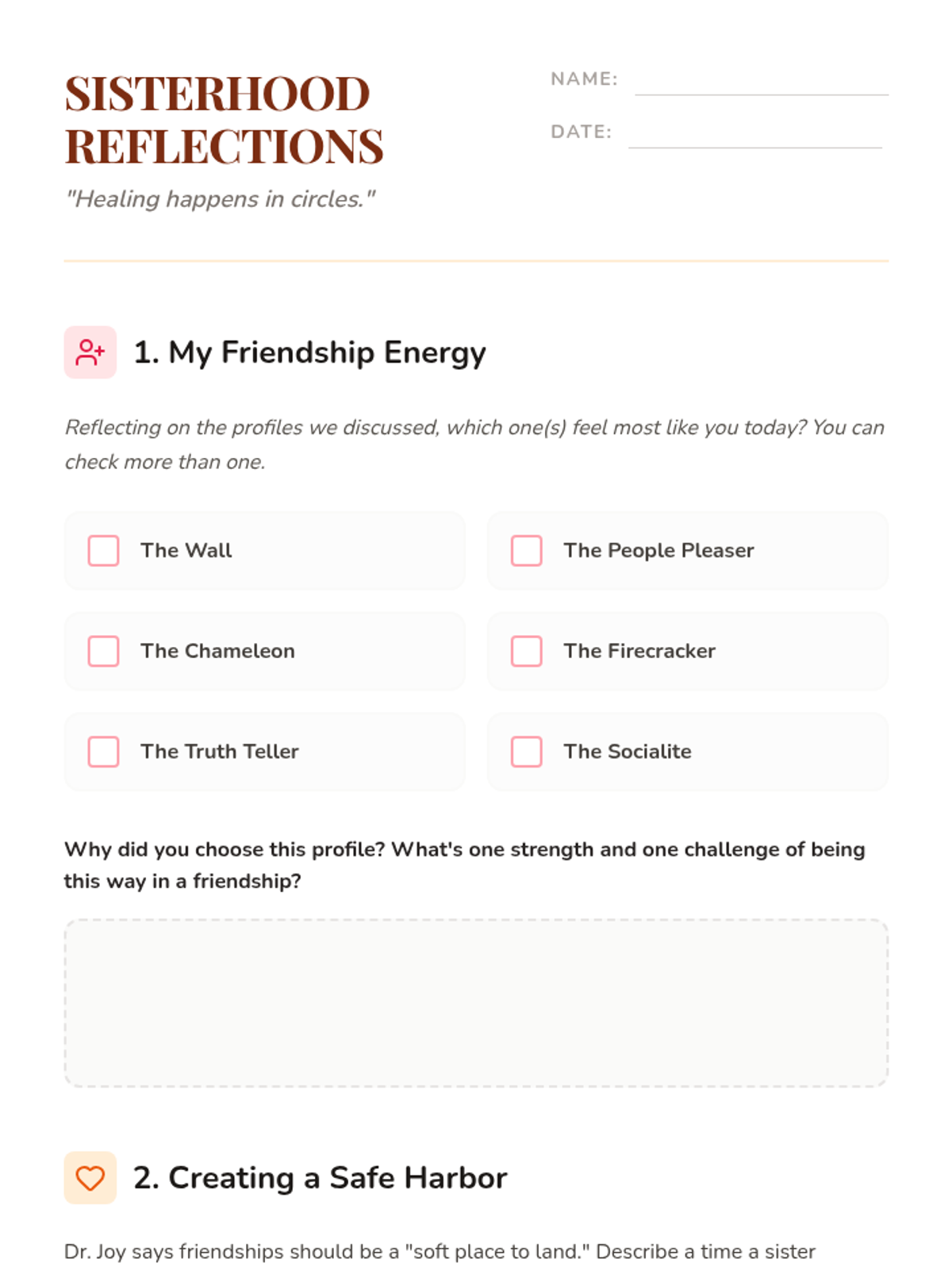
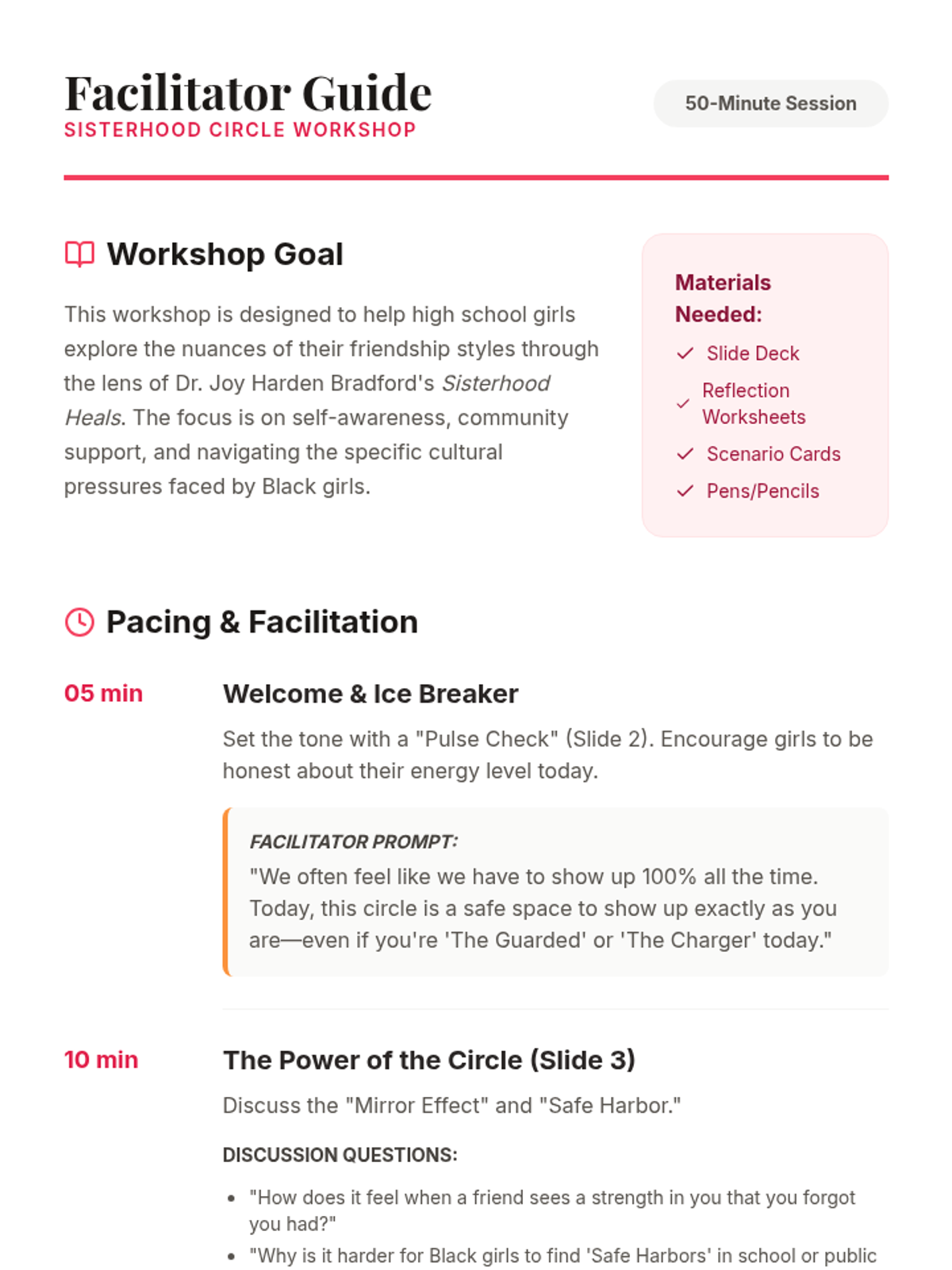
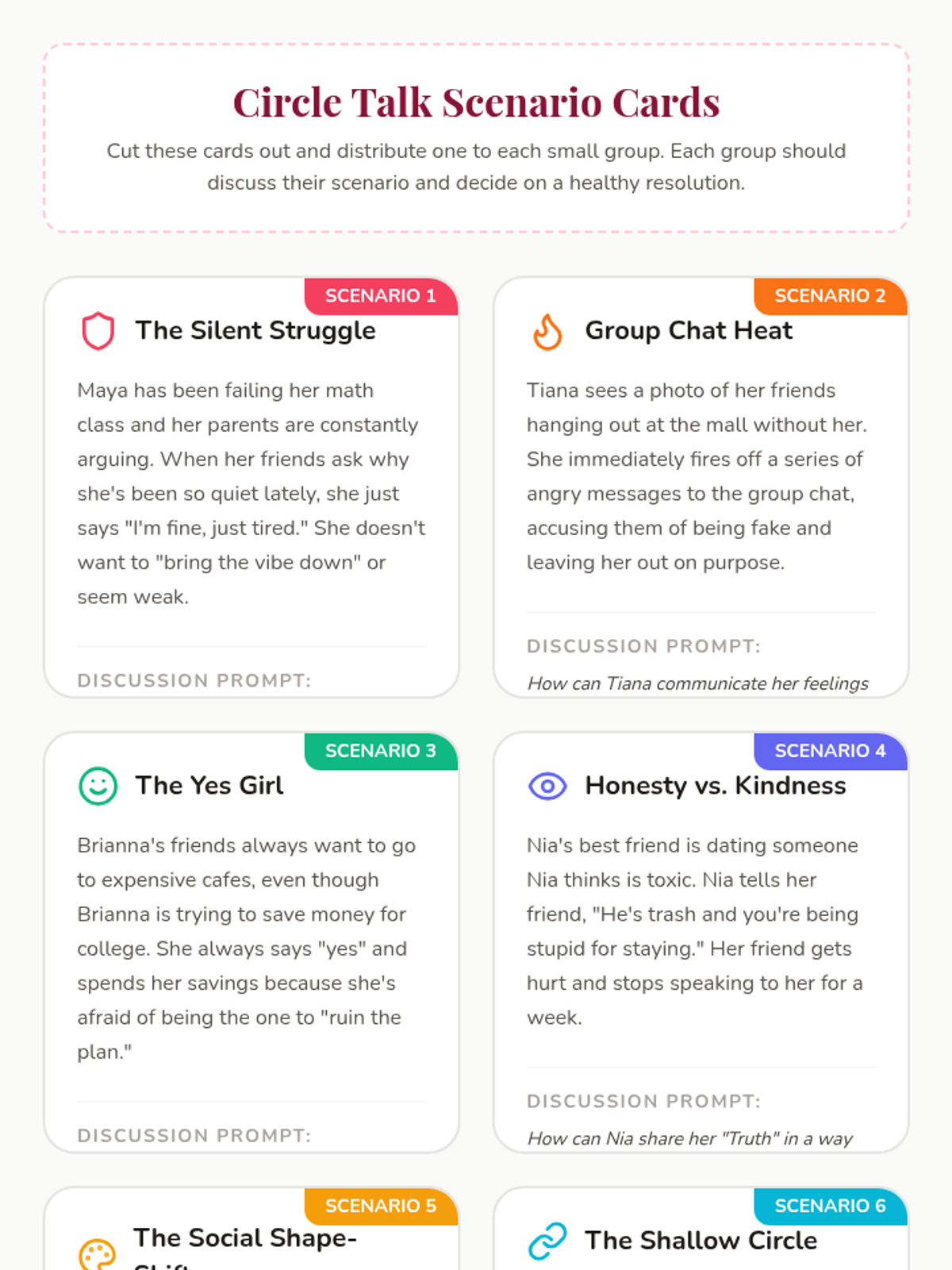
A 50-minute interactive workshop for high school girls focused on the power of sisterhood, navigating the nuances of Black girlhood, and understanding personal friendship styles inspired by Dr. Joy Harden Bradford's 'Sisterhood Heals'.
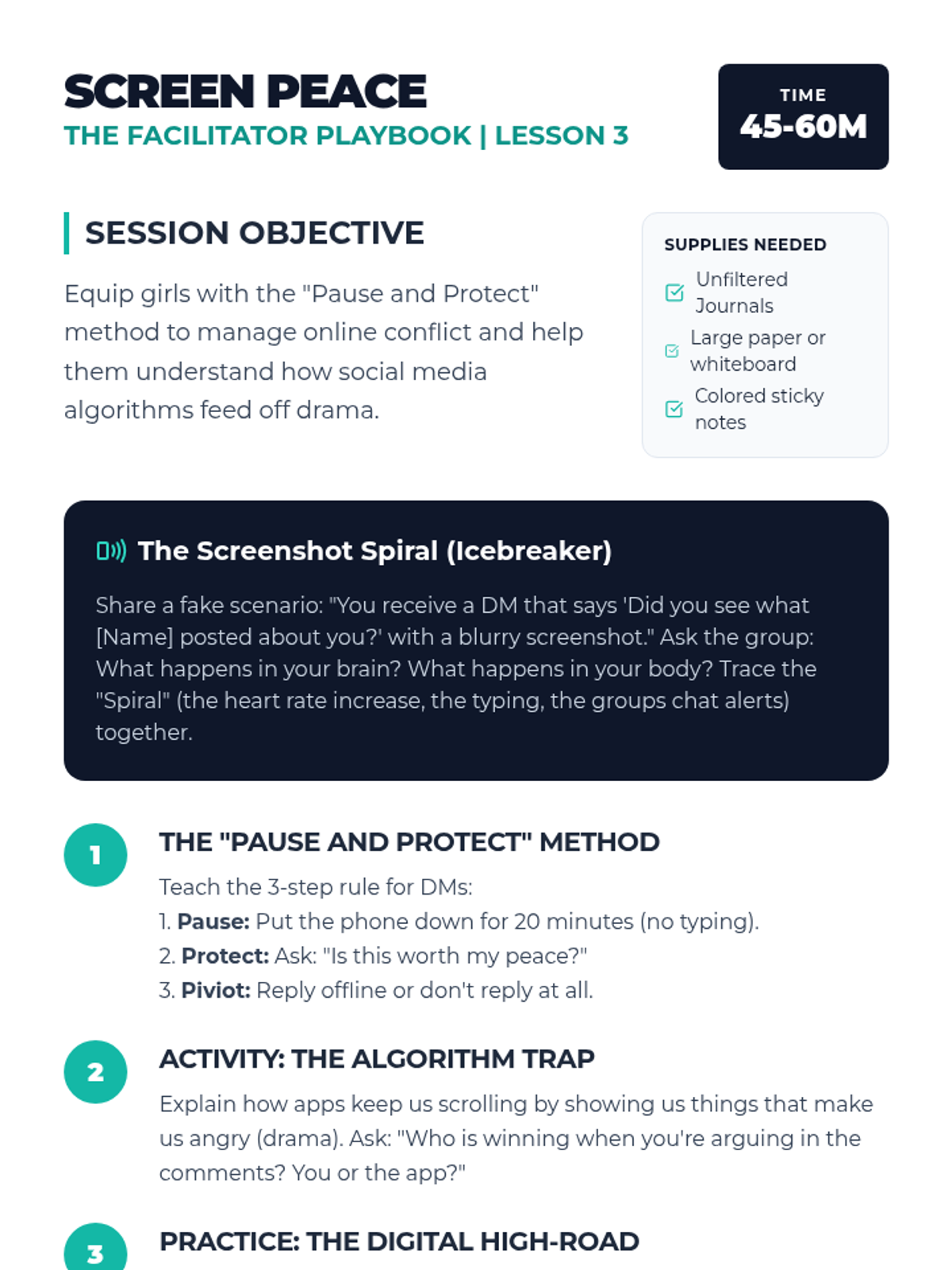
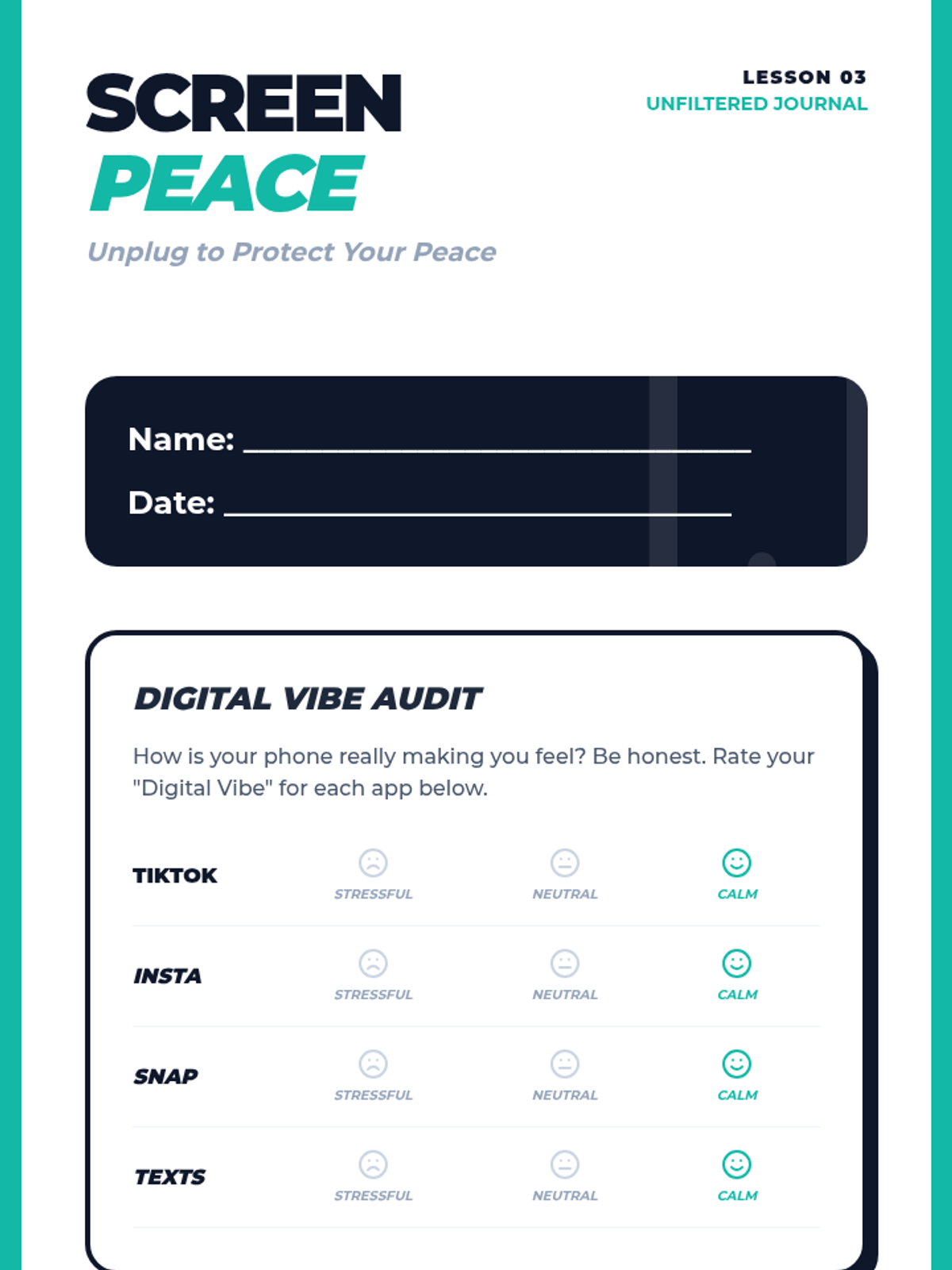
Students will analyze how digital interactions fuel drama and develop a 'Pause and Protect' strategy for managing online conflict and social media stress.
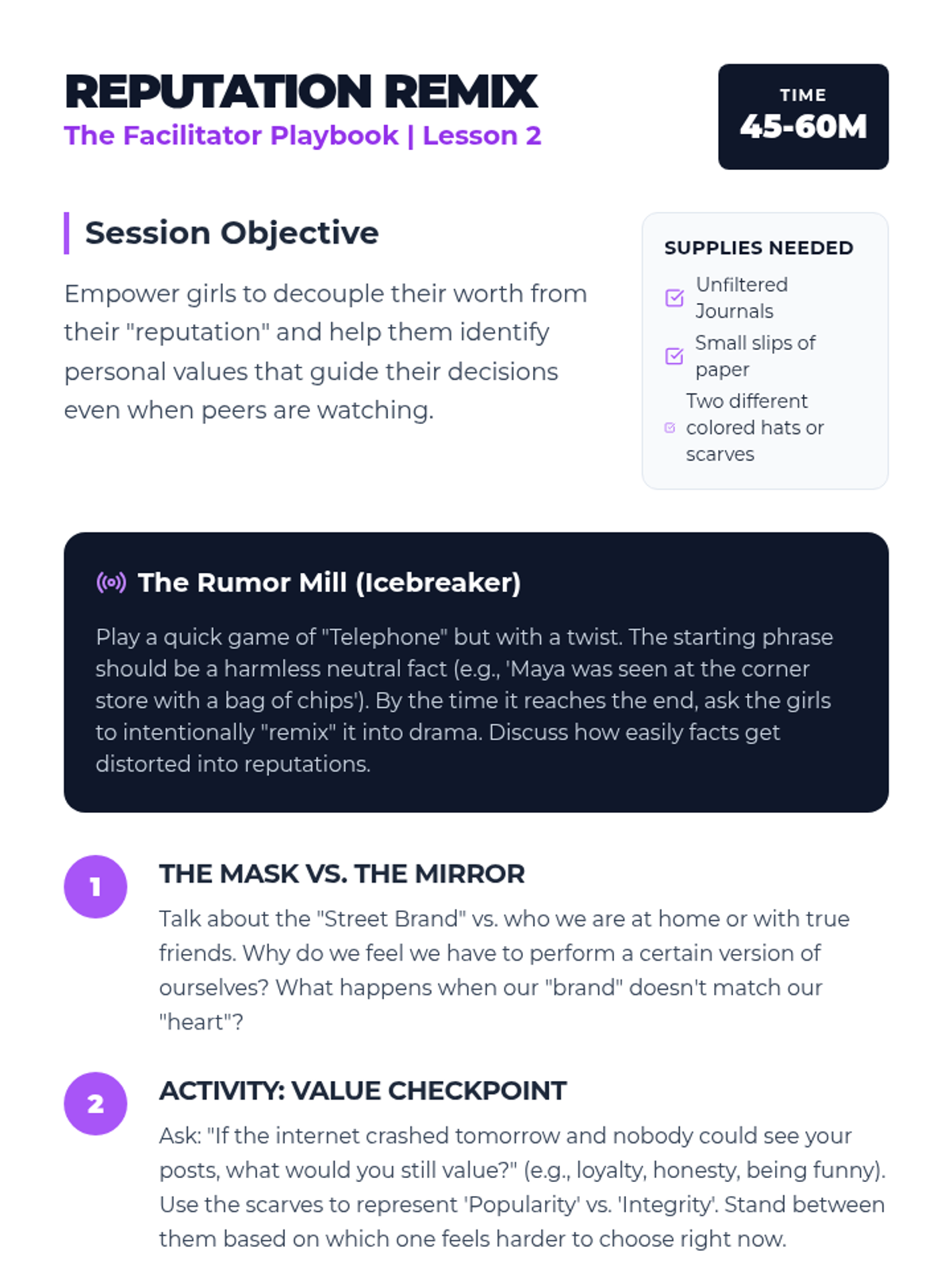
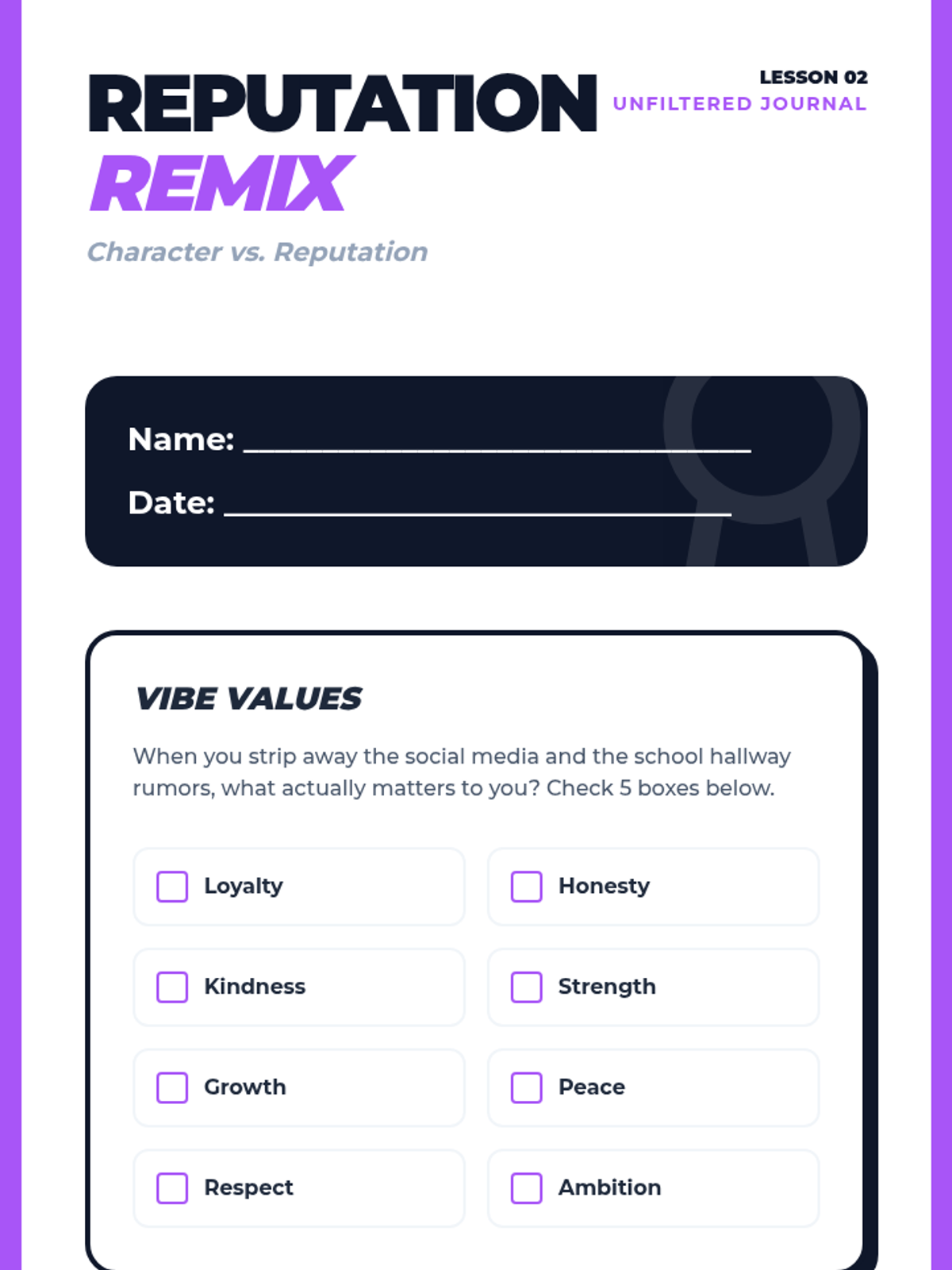
This lesson explores the pressure of maintaining a 'reputation' and provides strategies for staying true to personal values when faced with peer influence.
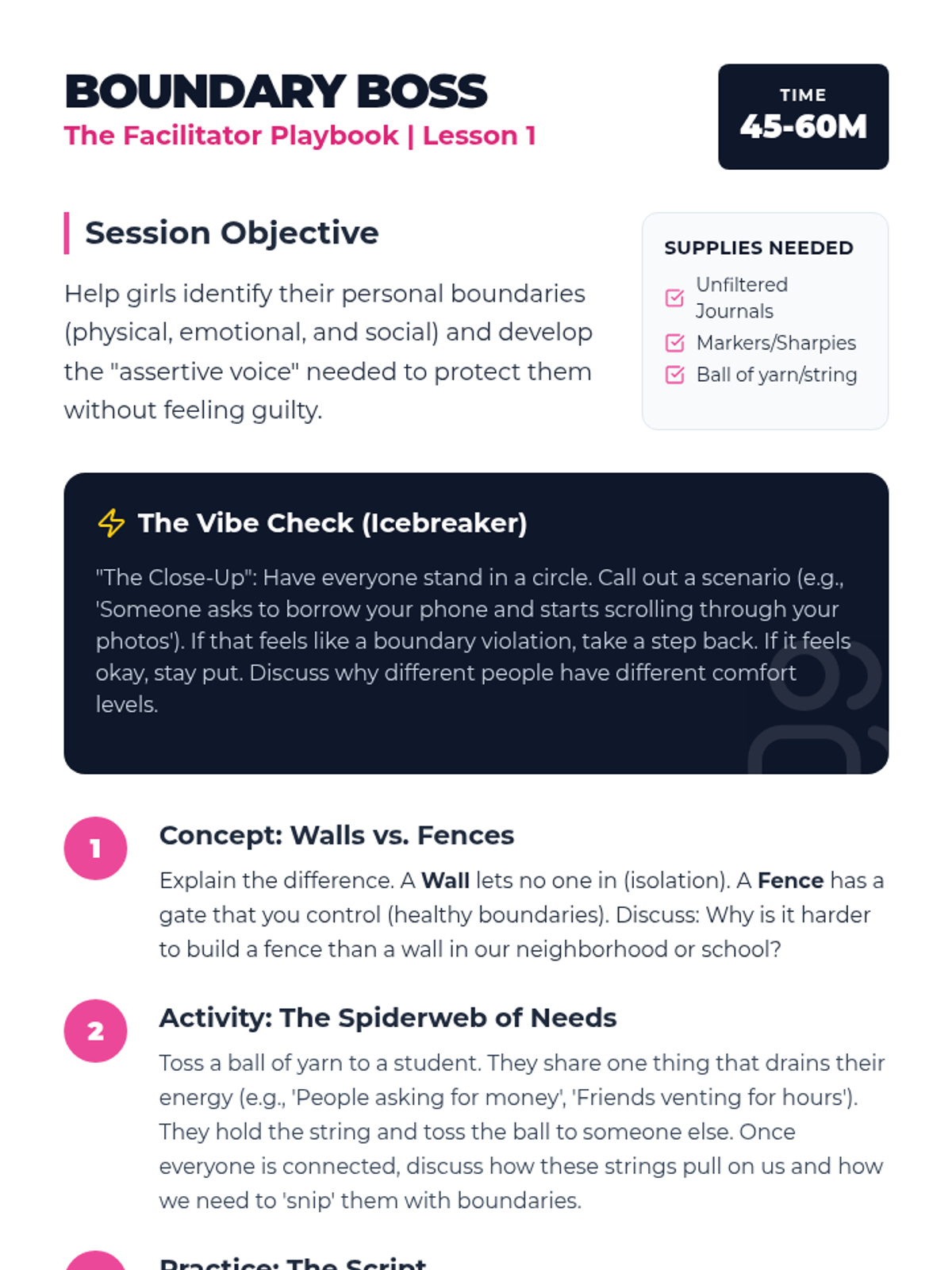
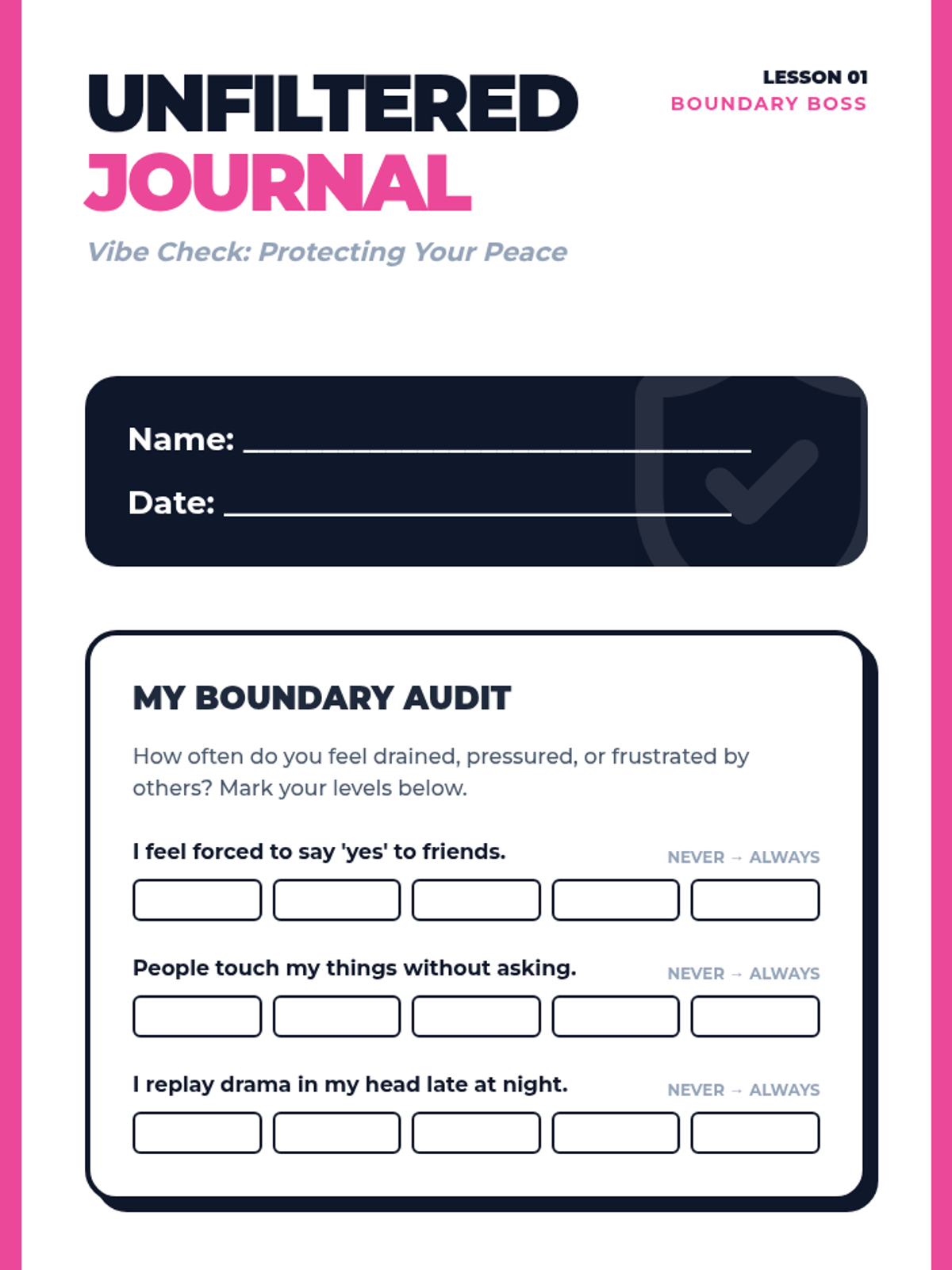
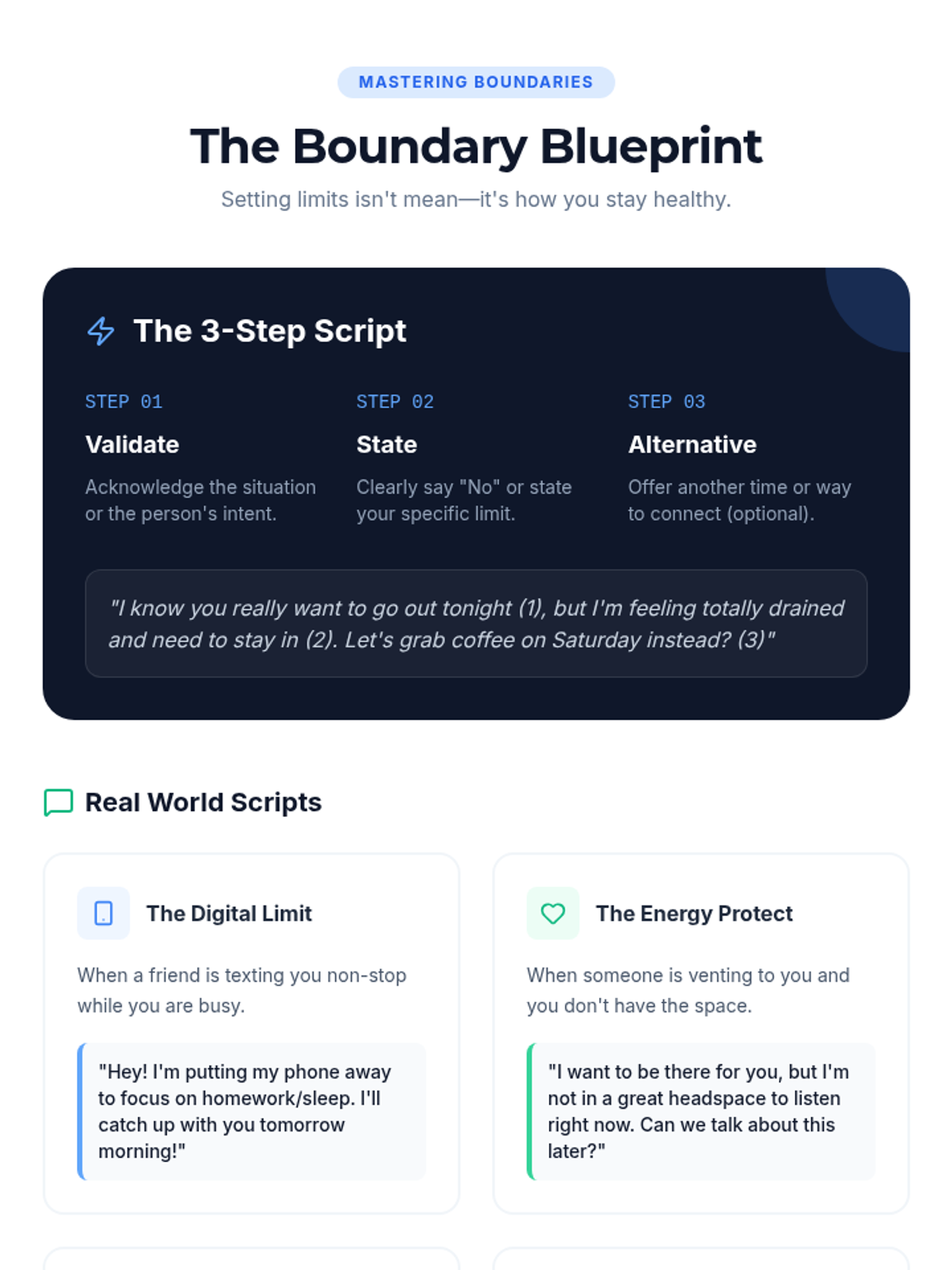
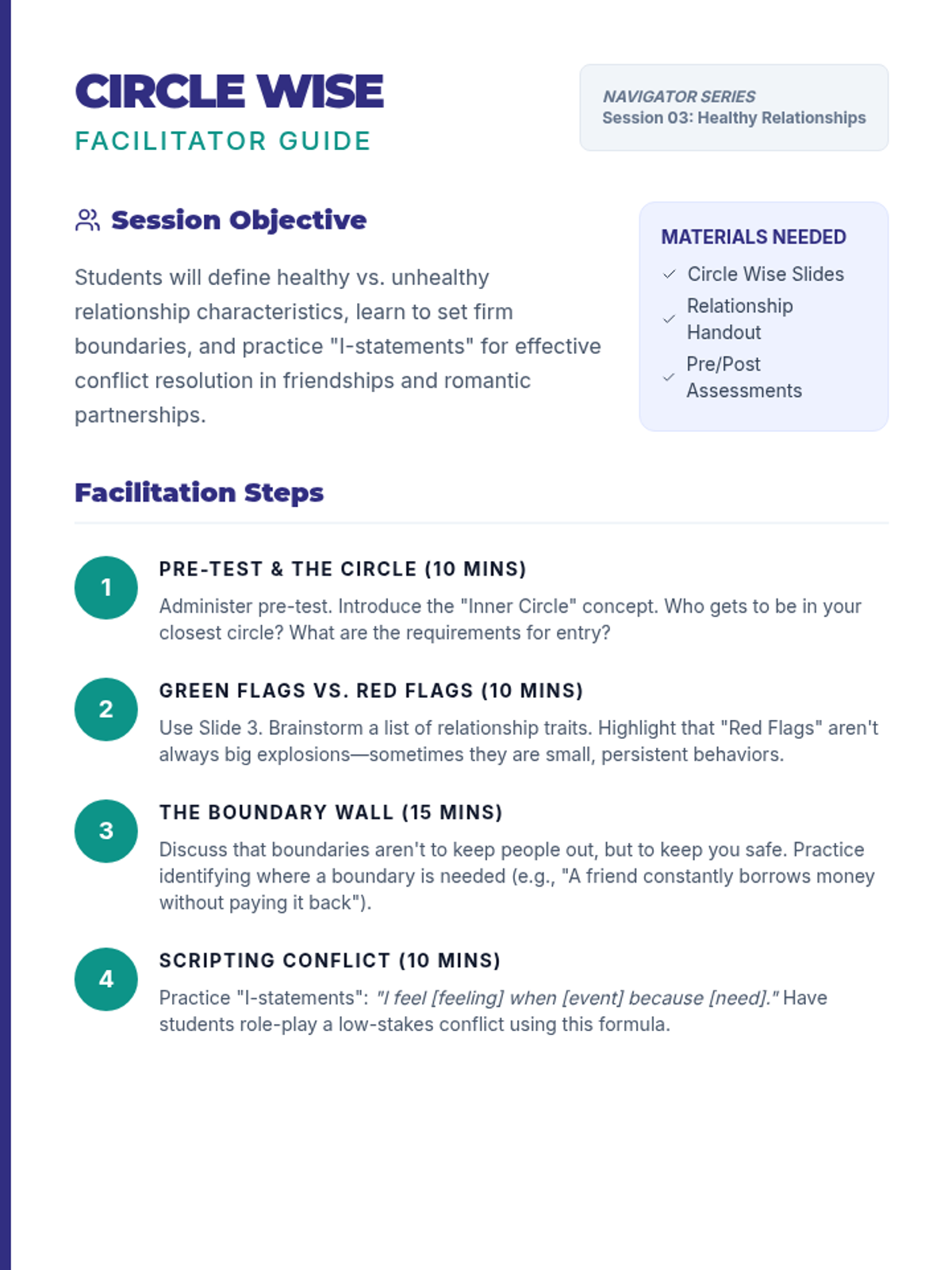
Students will learn to distinguish between healthy and unhealthy boundaries, practice assertive communication, and identify their personal 'safe space' limits.
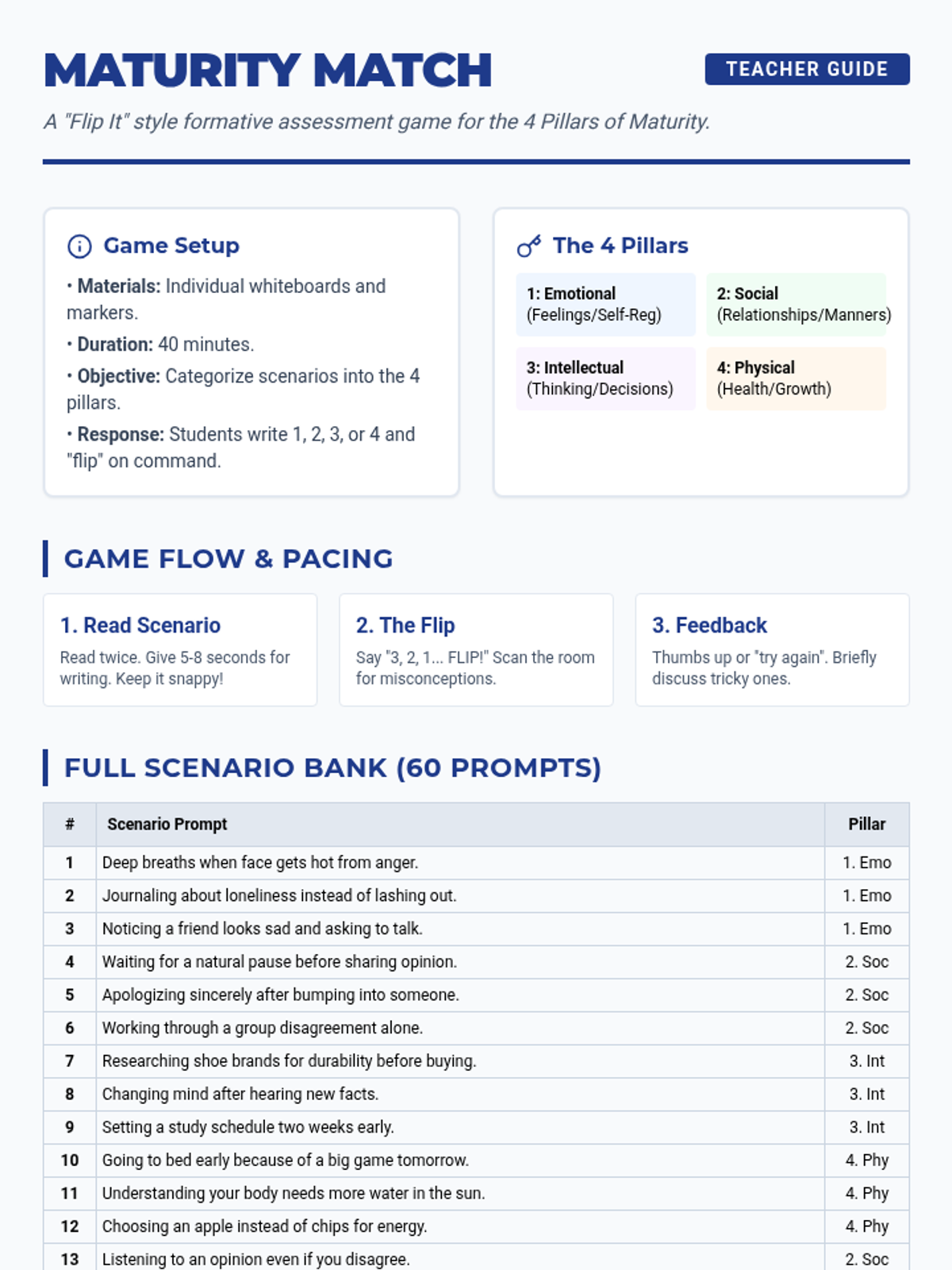
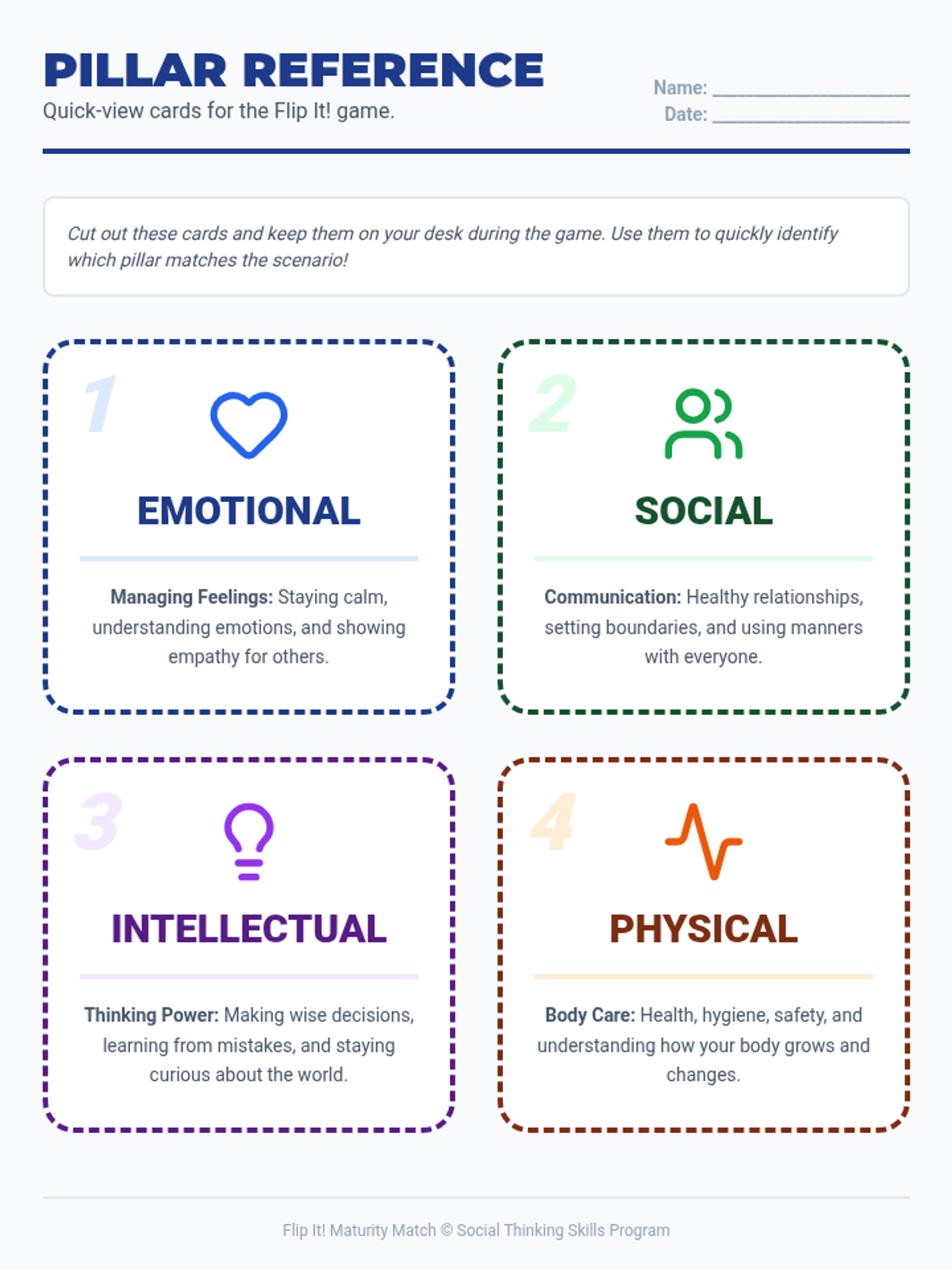
A fast-paced formative assessment game where students identify the four pillars of maturity through real-world scenarios. Includes a visual slide deck, a bank of 60 scenarios for the teacher, and reference cards for students.
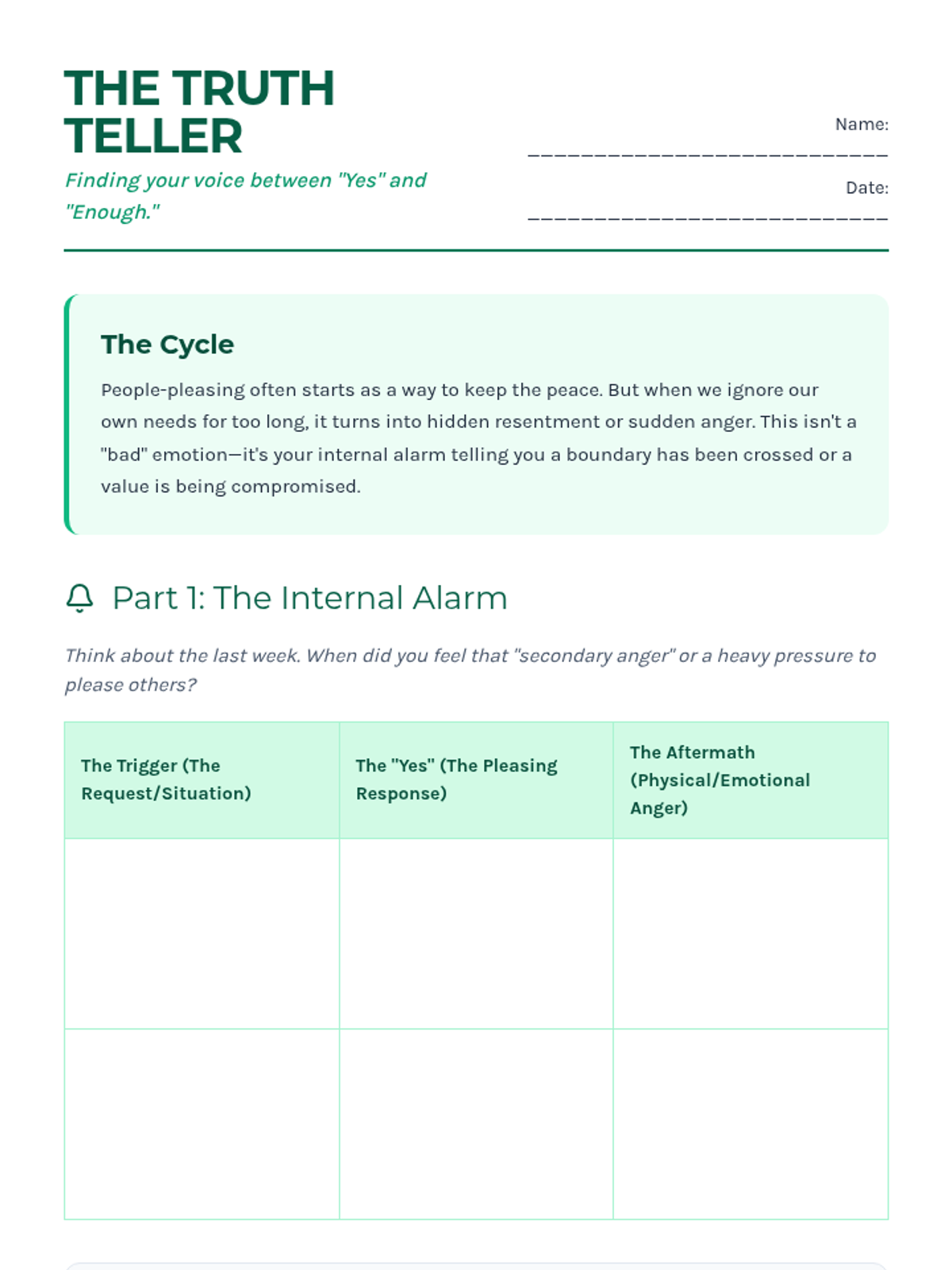
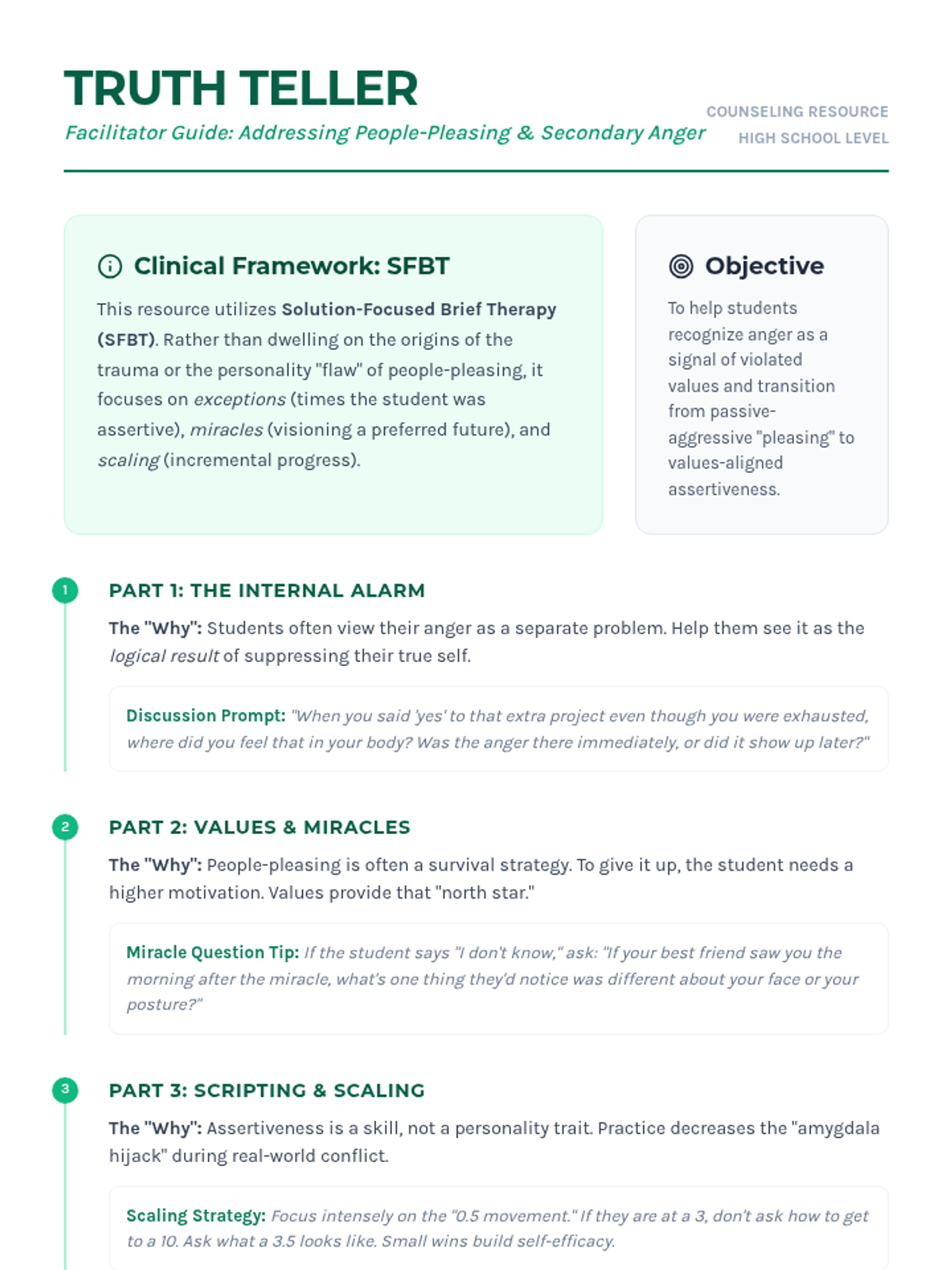
A comprehensive counseling lesson for high school students focused on recognizing people-pleasing behaviors and transforming secondary anger into values-aligned assertiveness using a Solution-Focused framework.
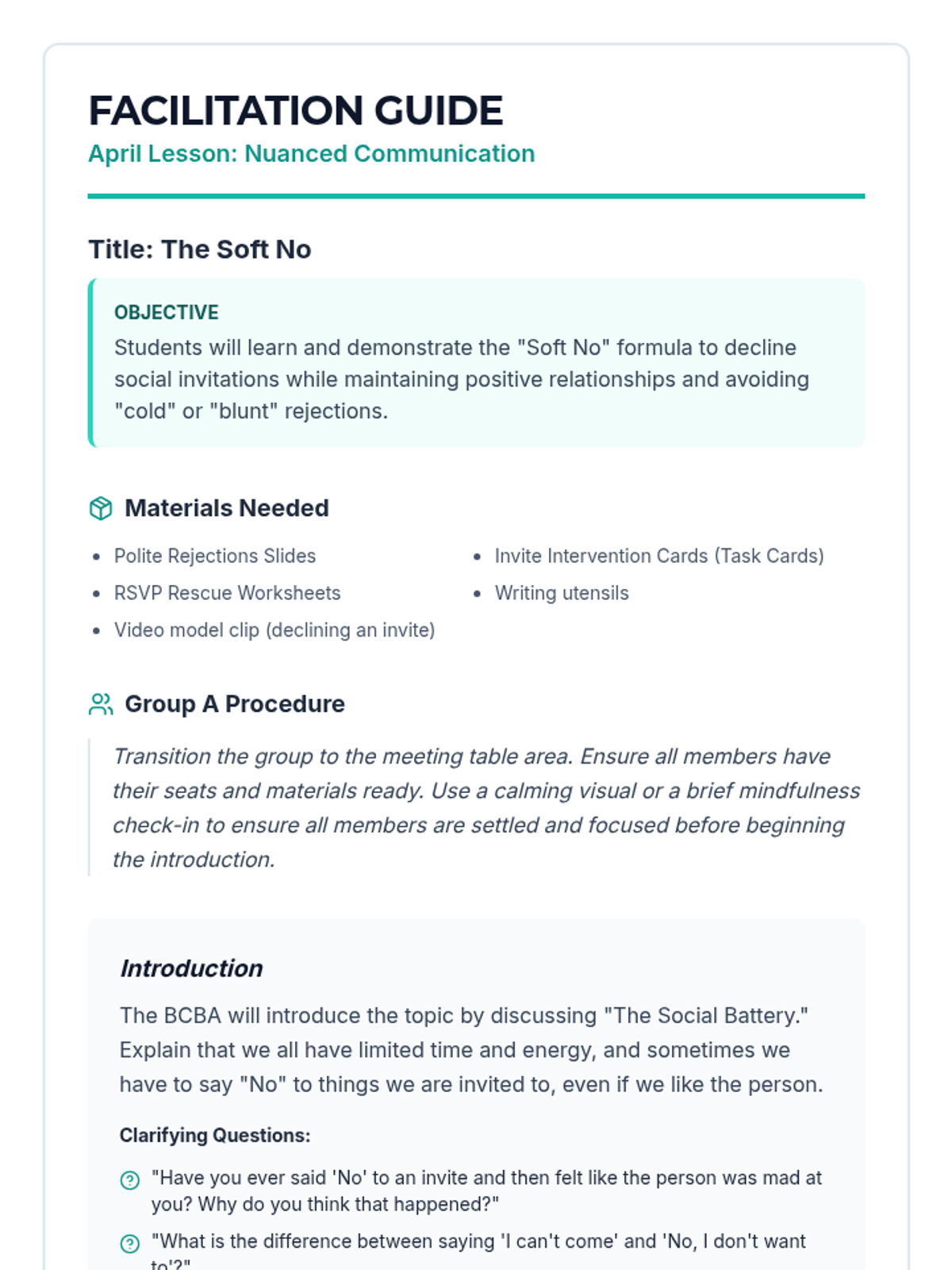
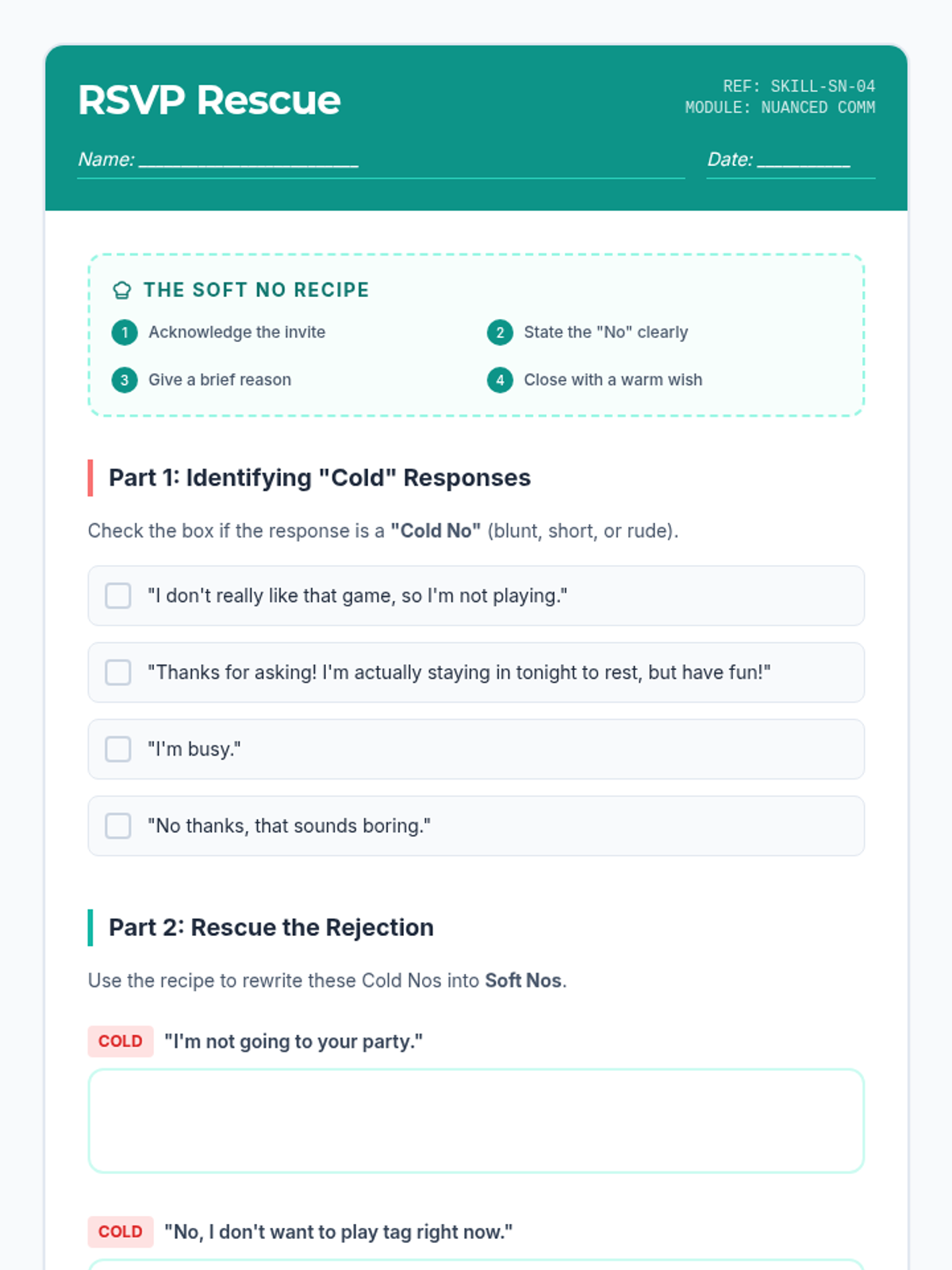
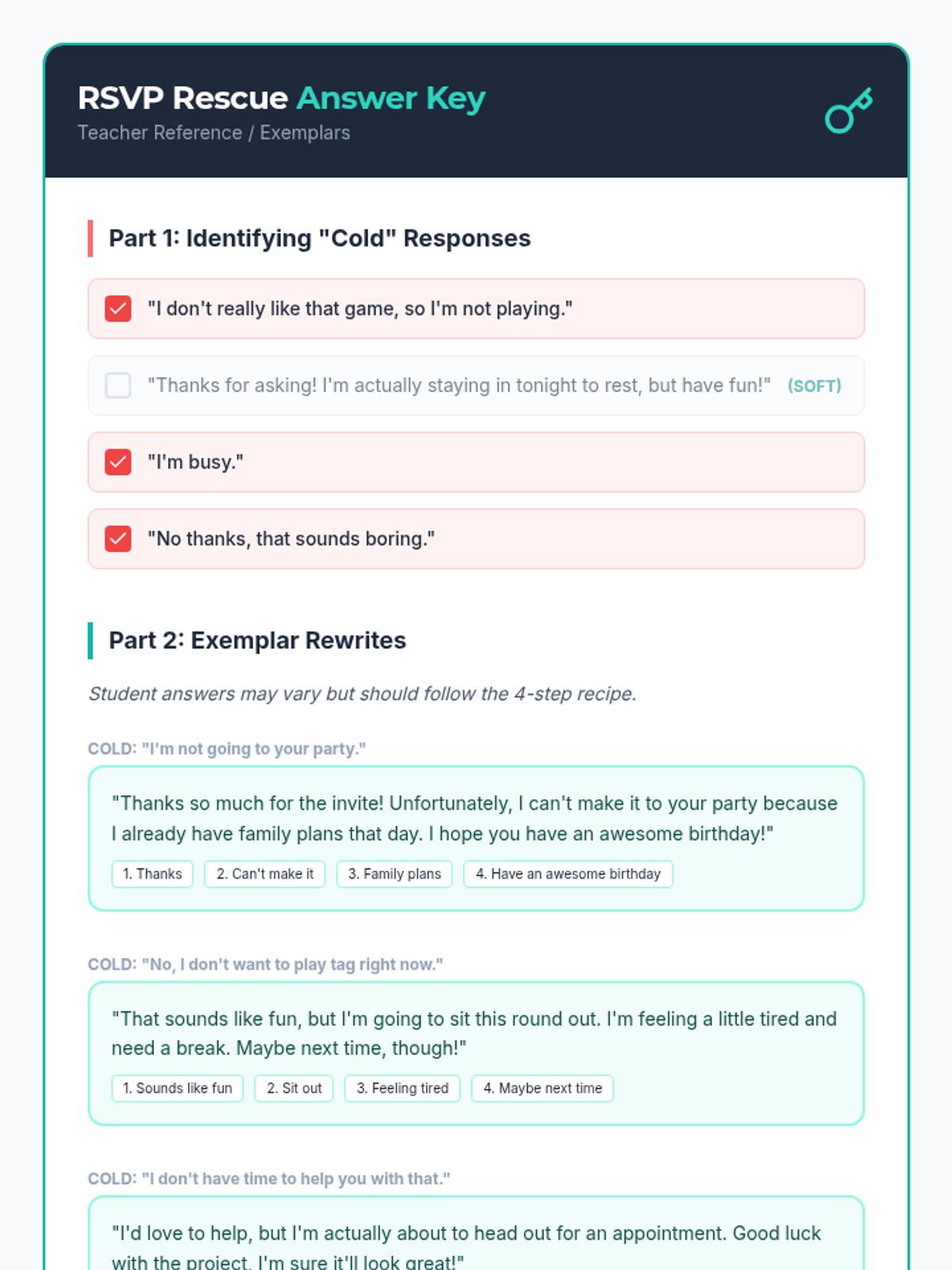
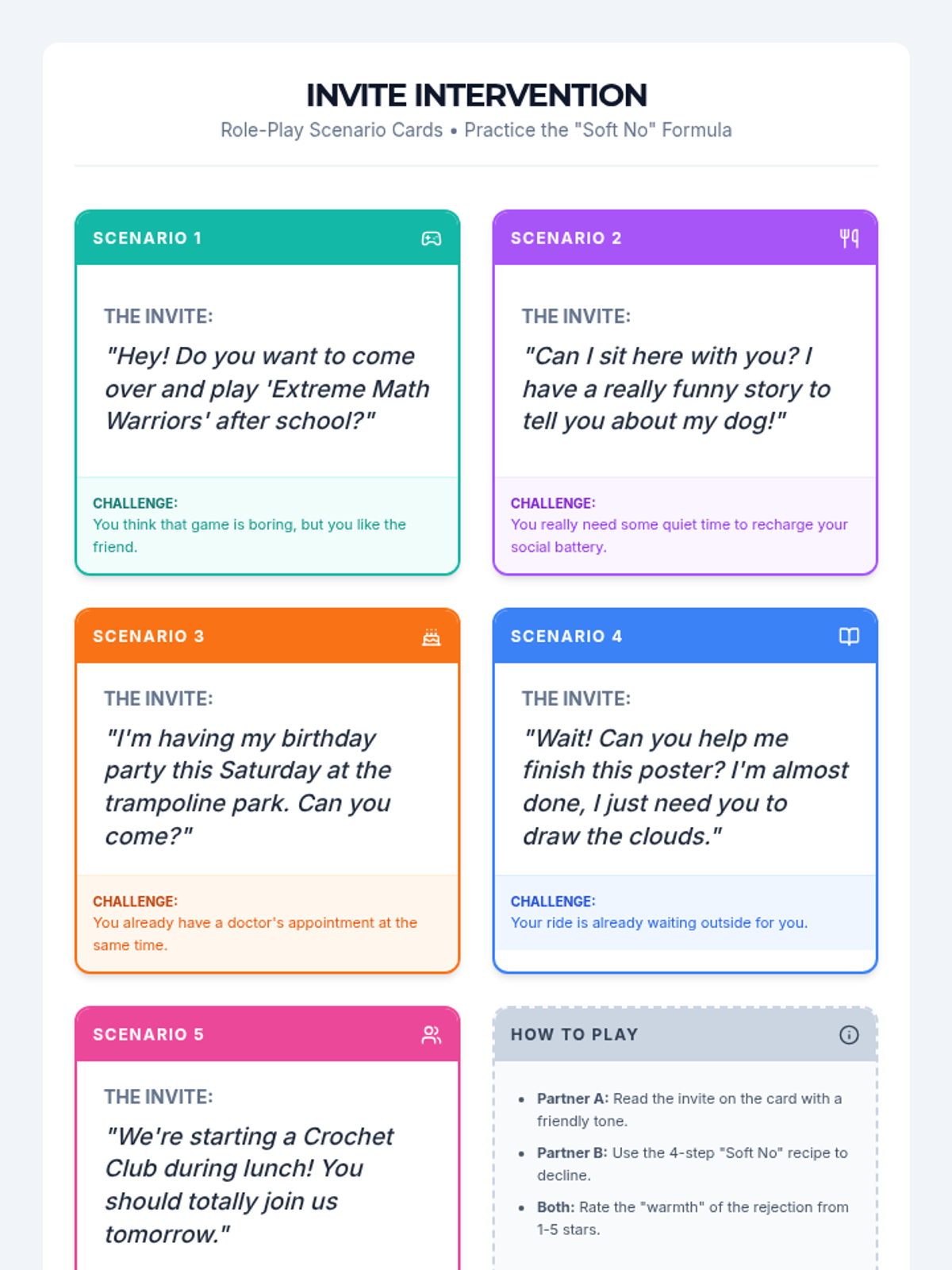
This lesson teaches students how to decline social invitations politely using 'The Soft No' formula. Students will practice acknowledging the invitation, stating their unavailability briefly, and closing with a warm sentiment to maintain social connections.
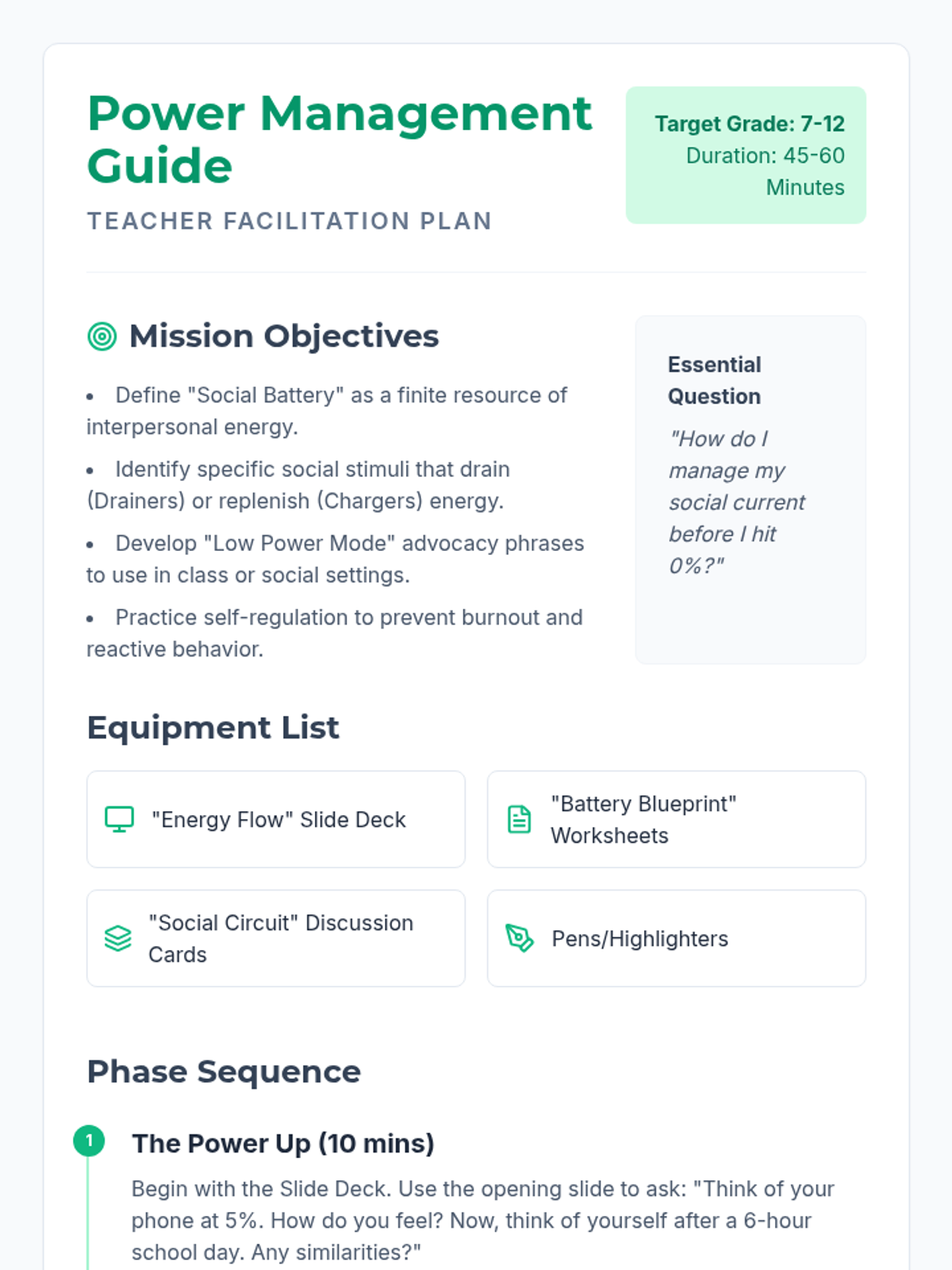
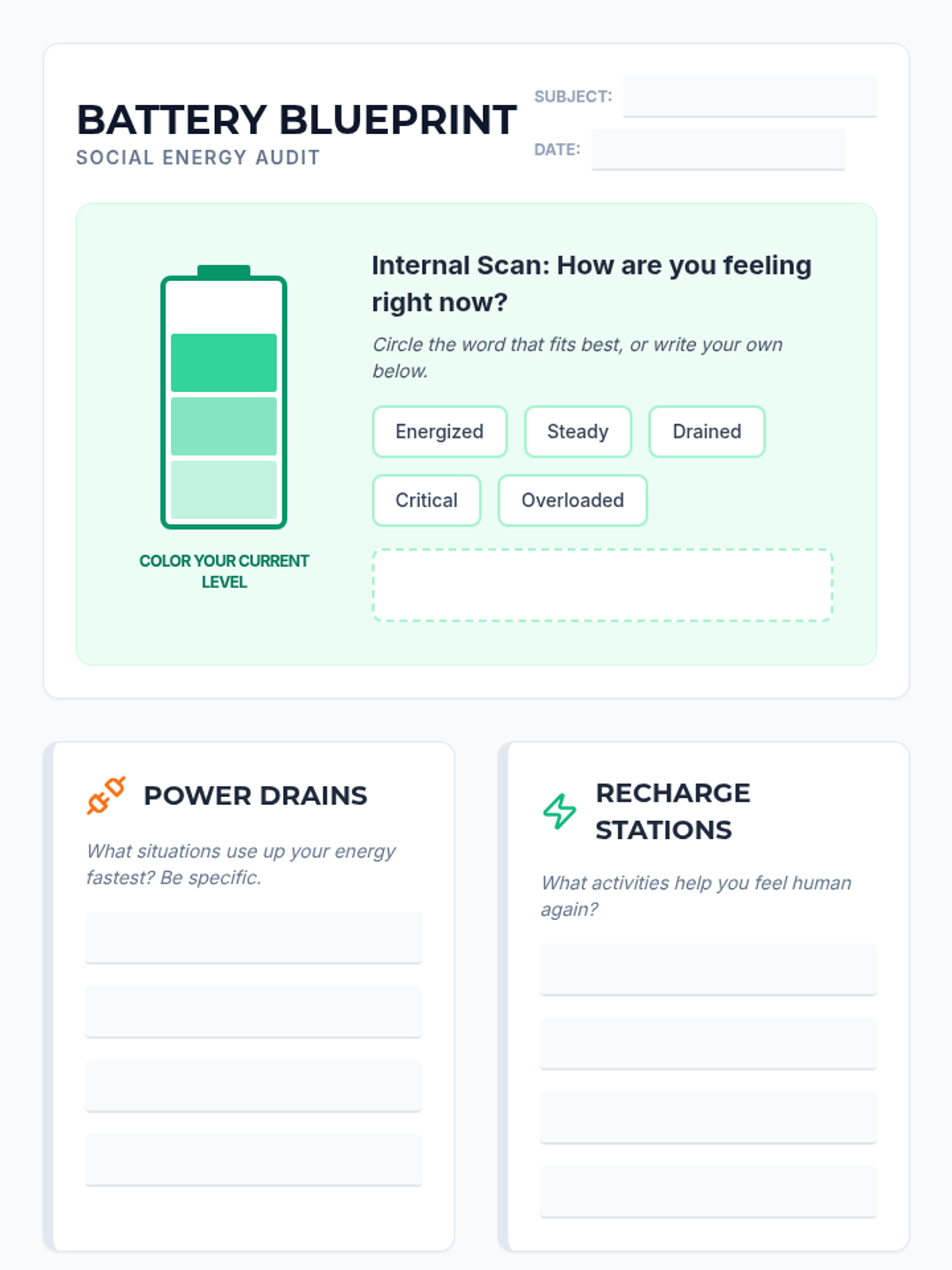
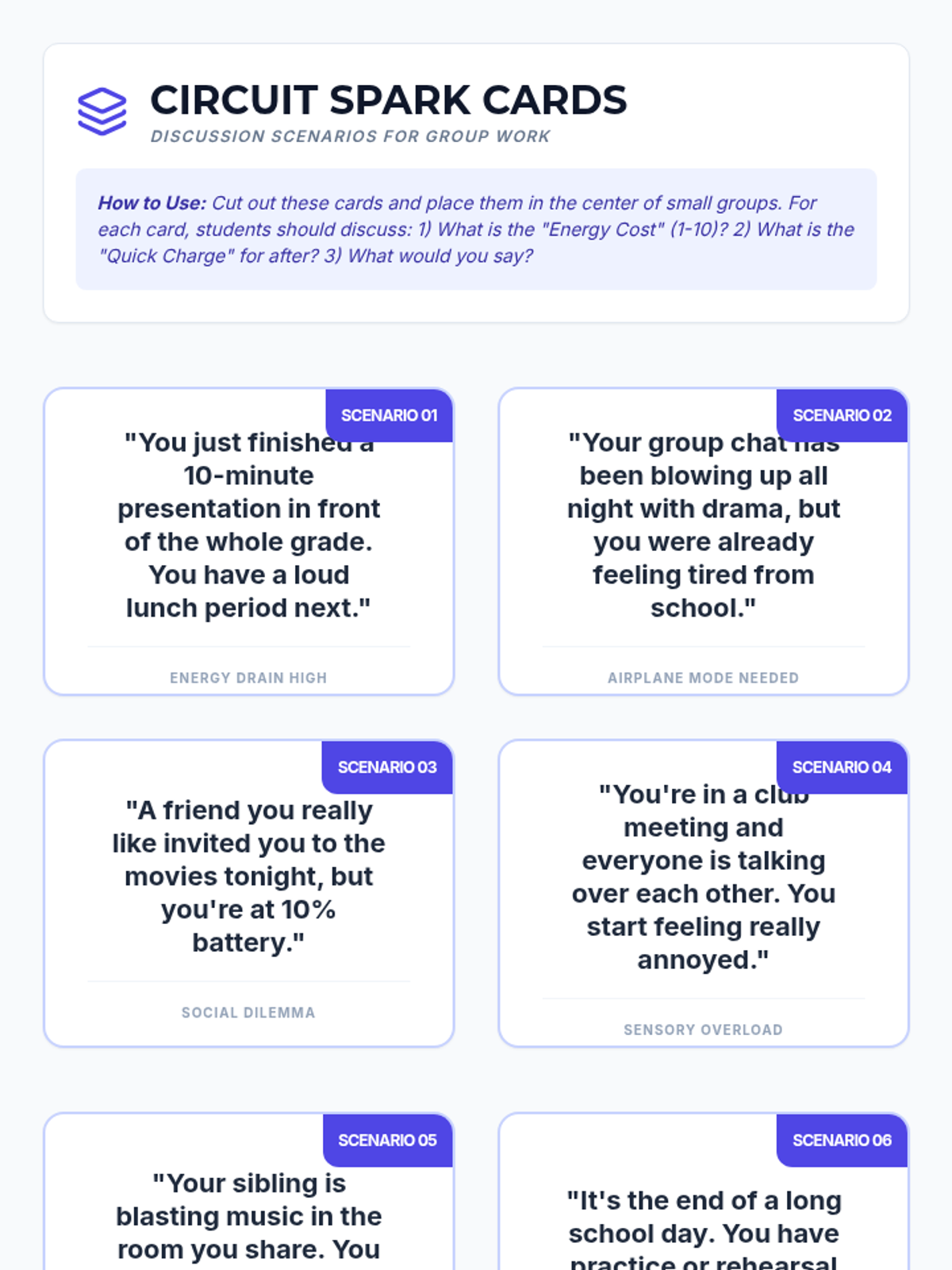
A comprehensive lesson for teens to visualize their social energy as a battery, identifying personal 'drainers' and 'chargers' to develop self-regulation and burnout prevention strategies.
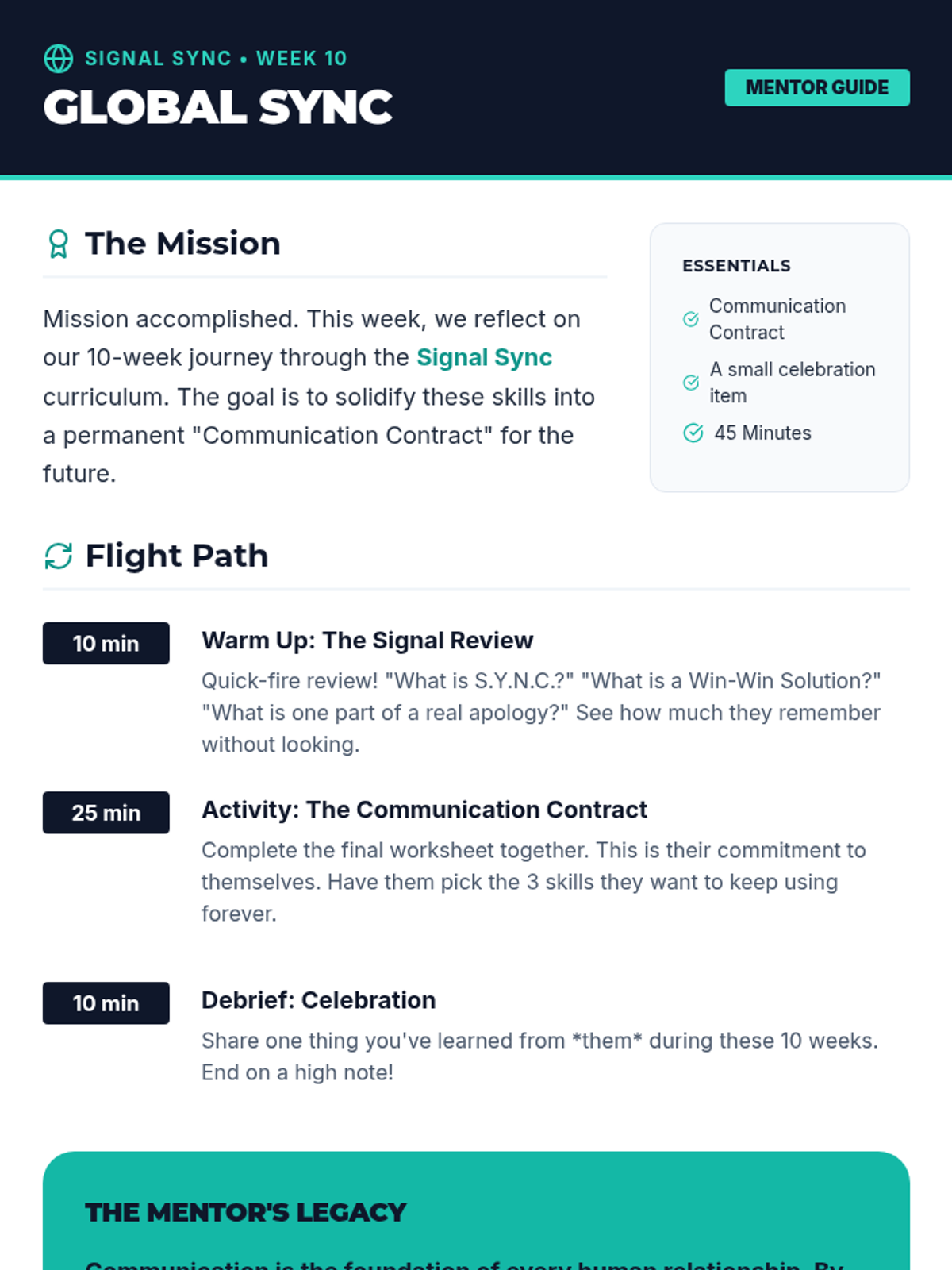
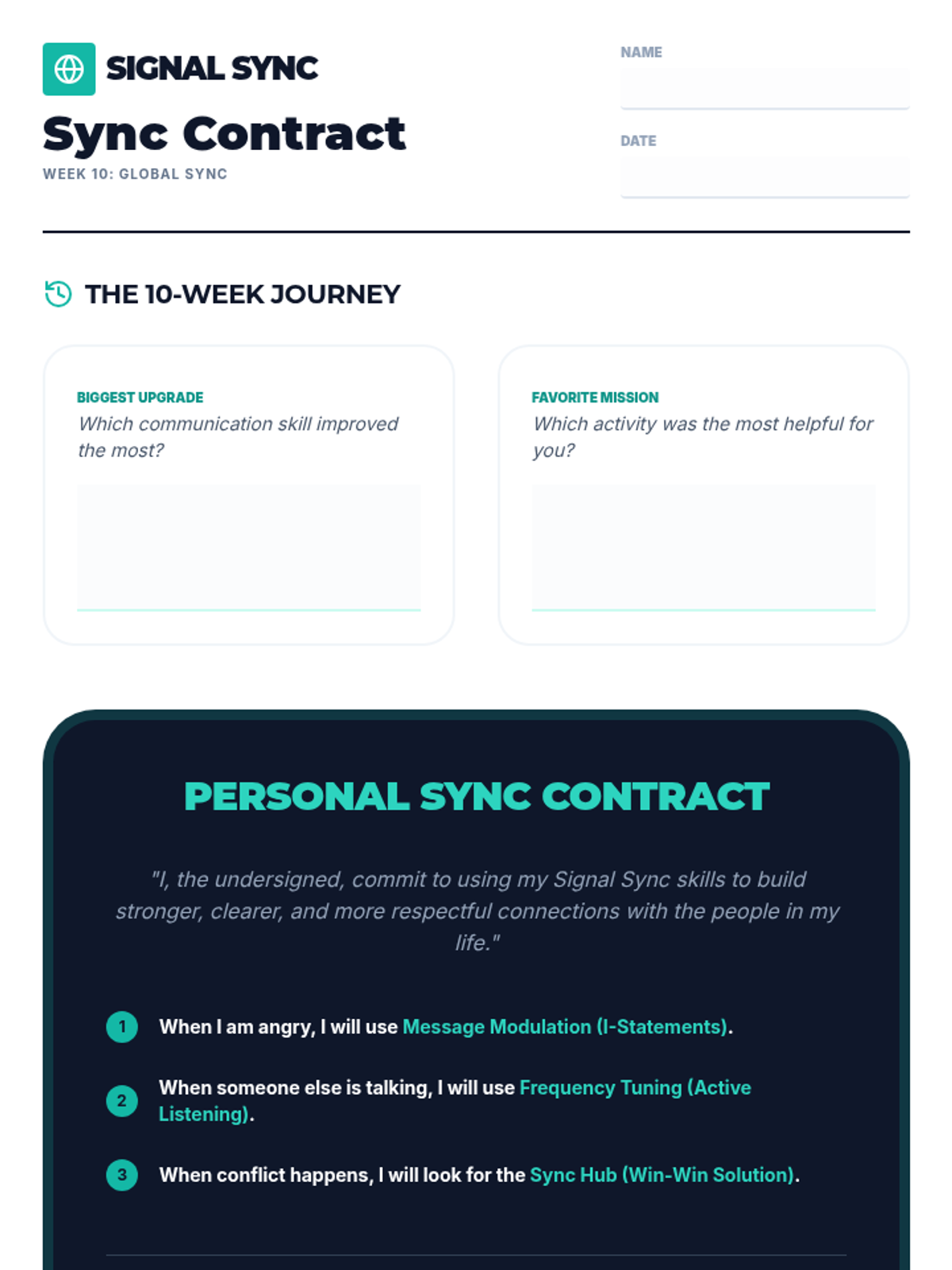
Reflecting on the 10-week journey and creating a personal communication contract for the future.
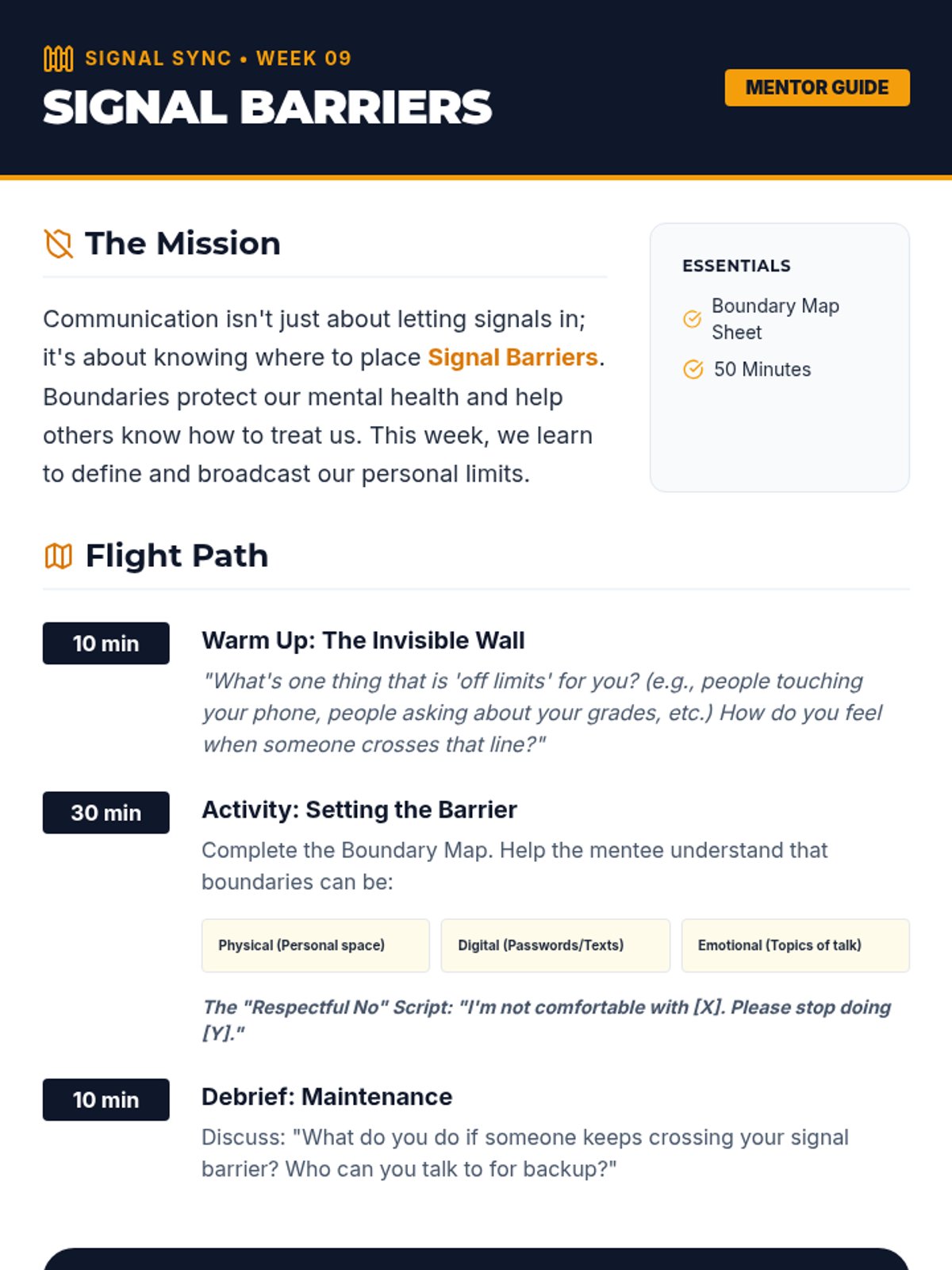
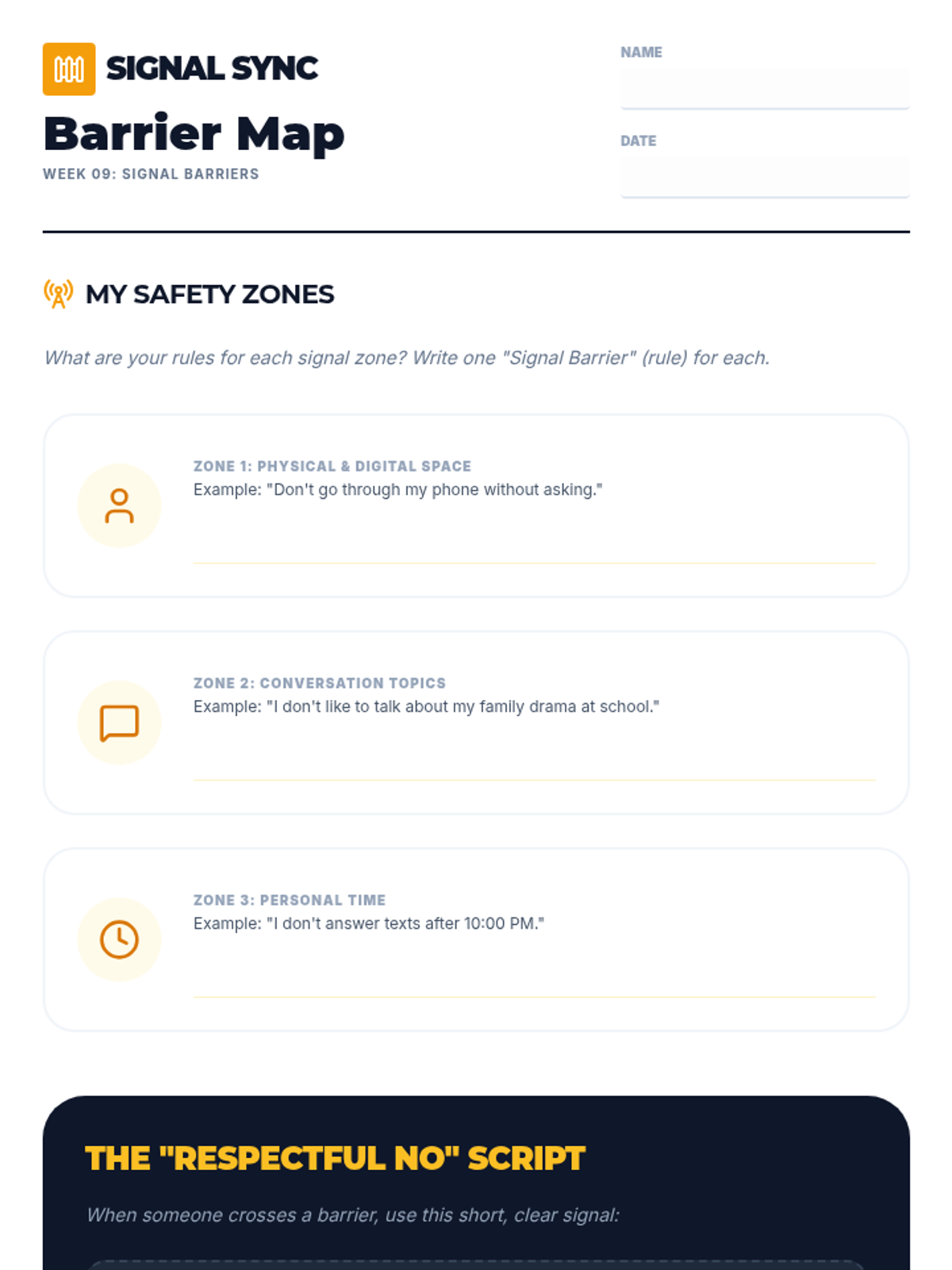
How to define, communicate, and maintain personal boundaries in a healthy way.
The framework for offering and accepting genuine apologies to repair damaged relationships.
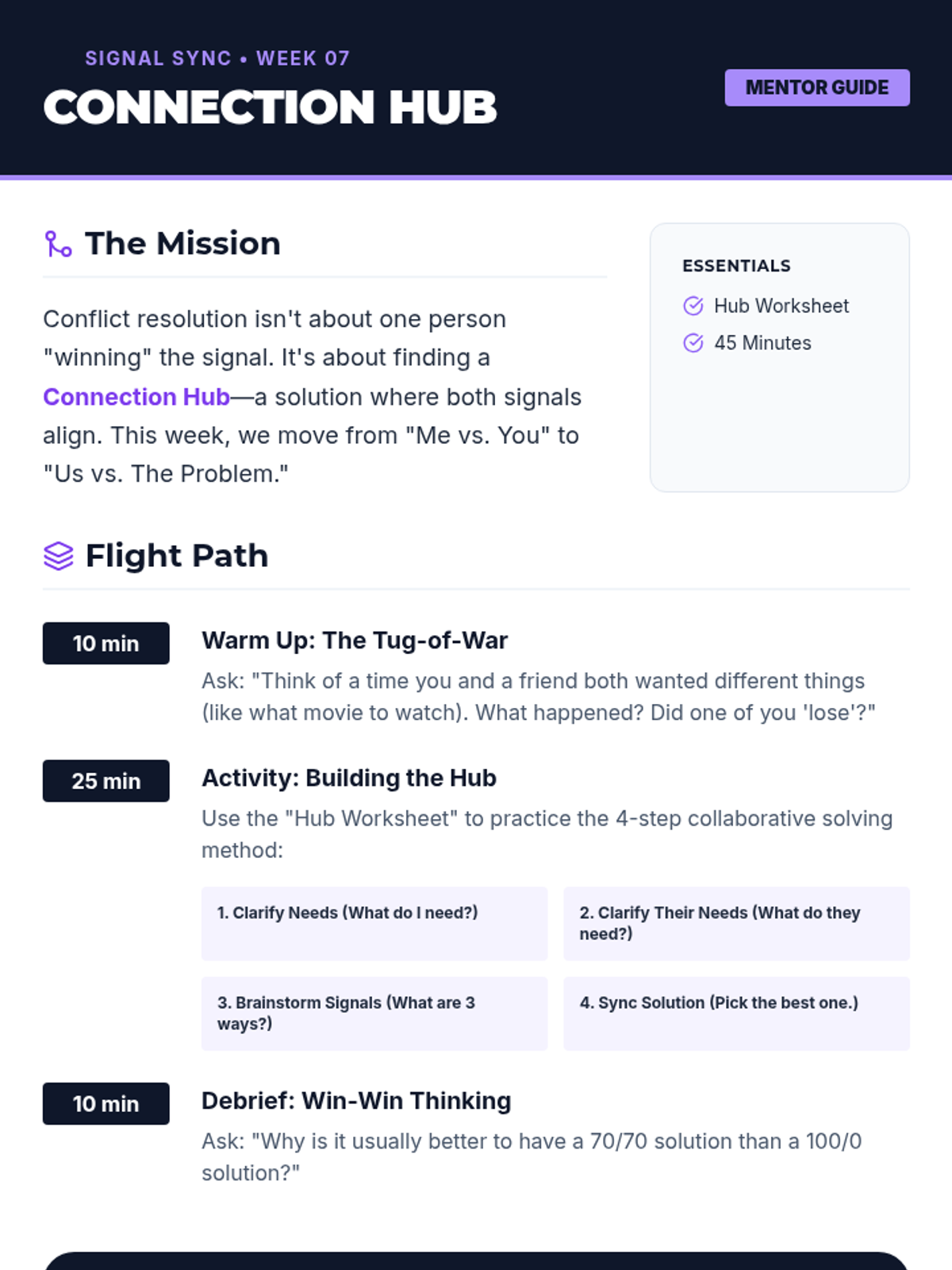
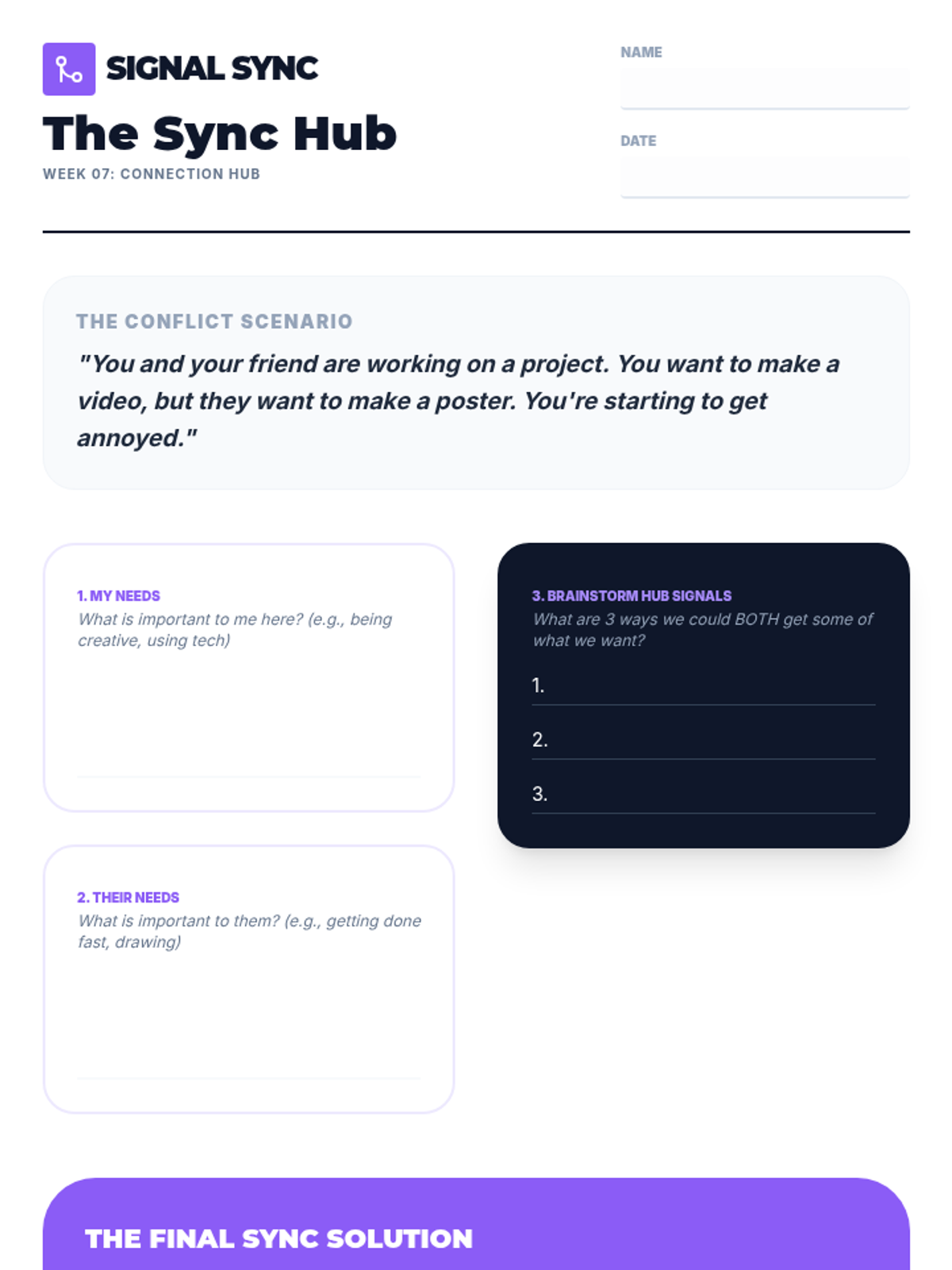
A collaborative approach to problem-solving that seeks 'win-win' outcomes for all involved.
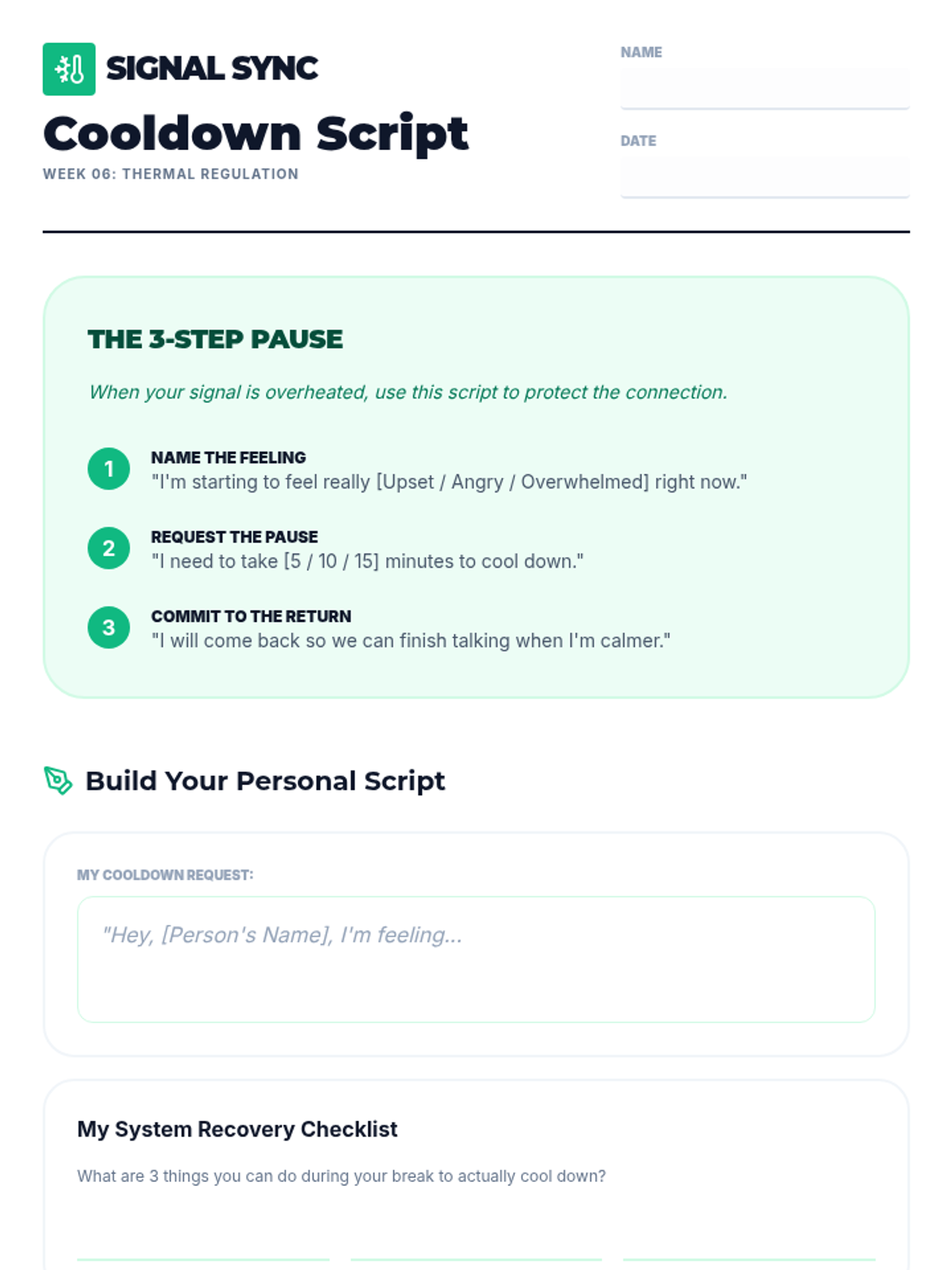
Techniques for emotional regulation and de-escalation when a conversation starts to get 'hot'.
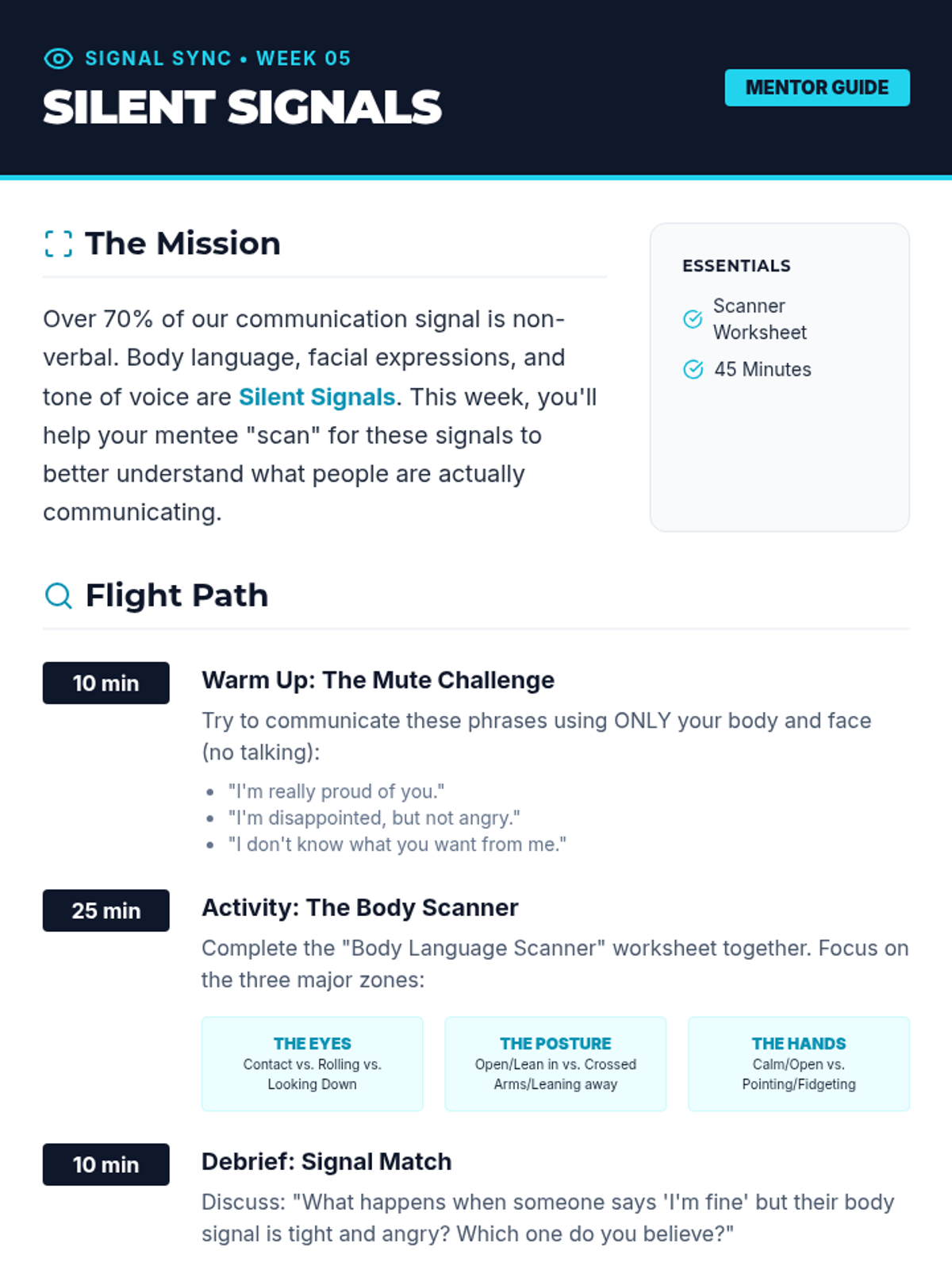
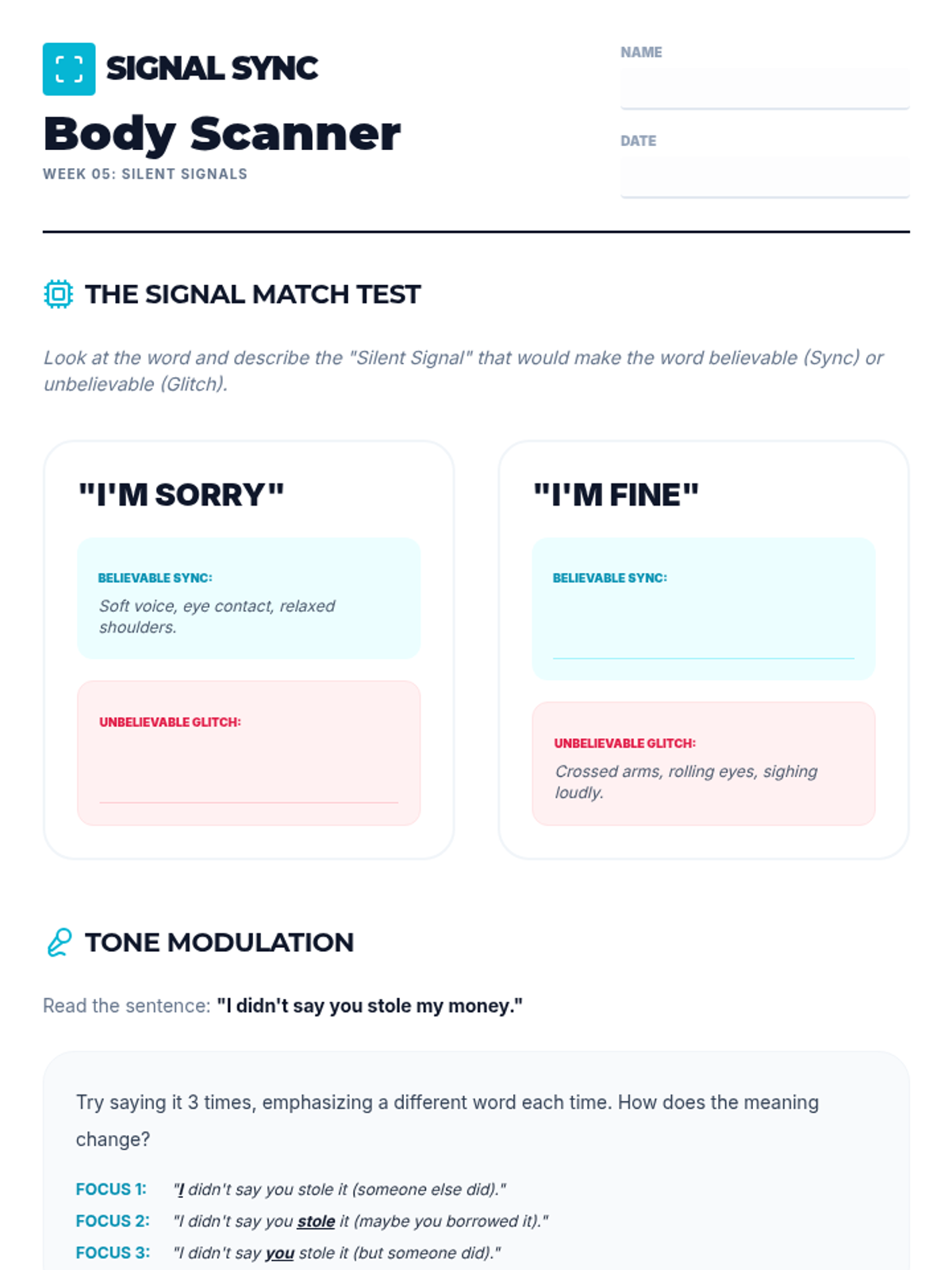
Exploring non-verbal communication, including body language, facial expressions, and tone of voice.
Learning to use 'I' statements to express feelings and needs without triggering defensiveness in others.
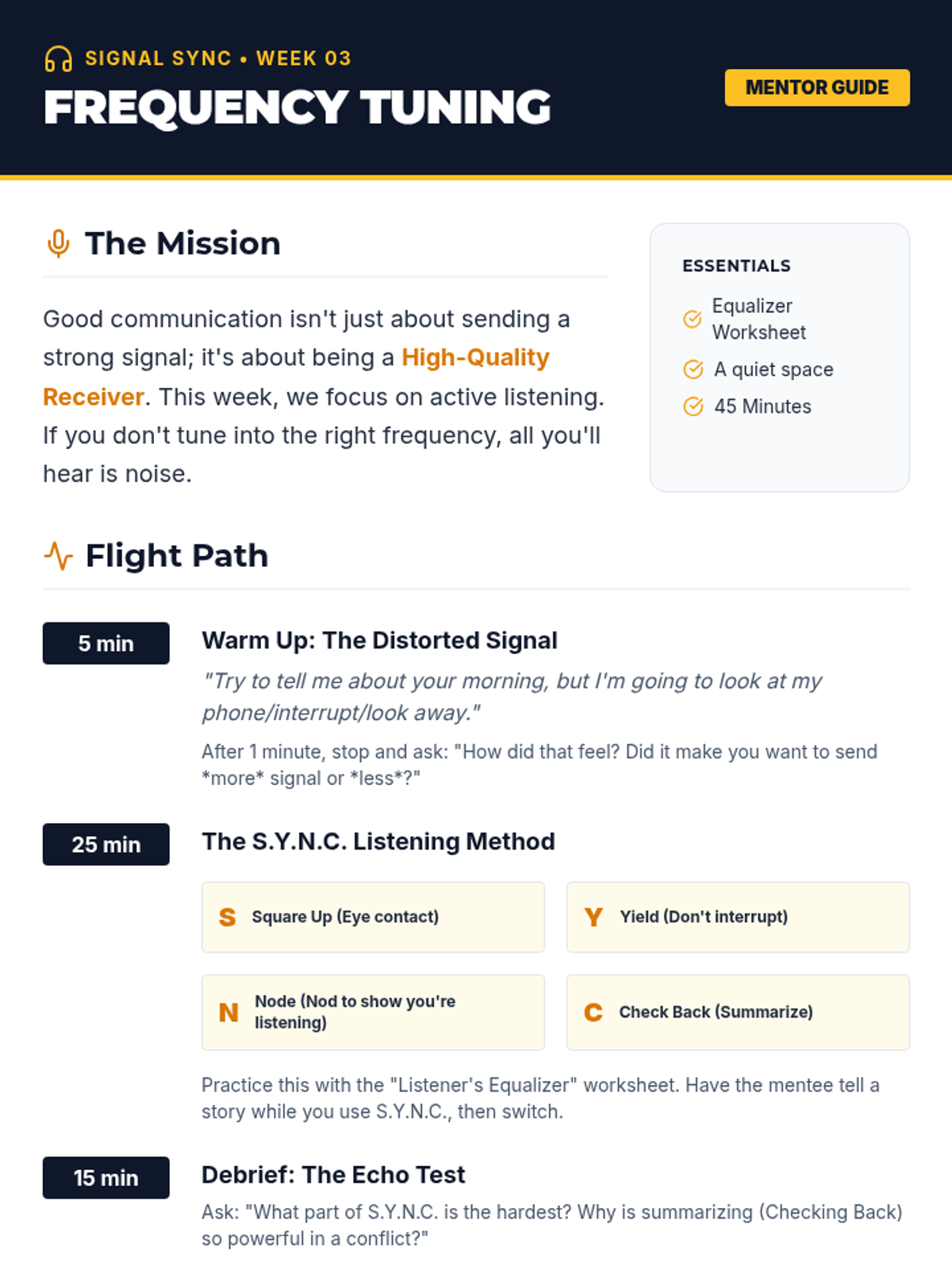
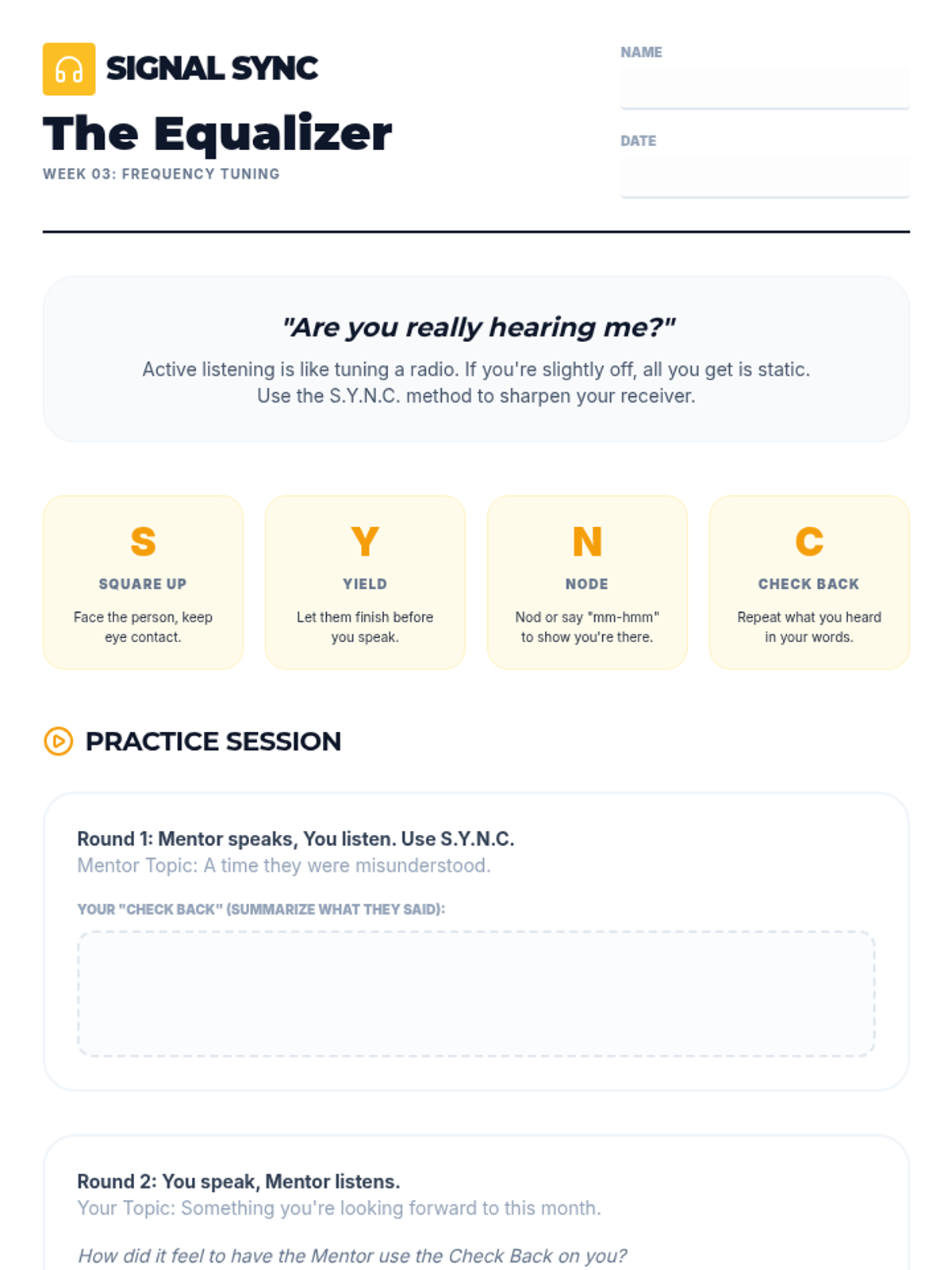
Mastering active listening techniques to ensure the receiver is fully tuned into the sender's message.
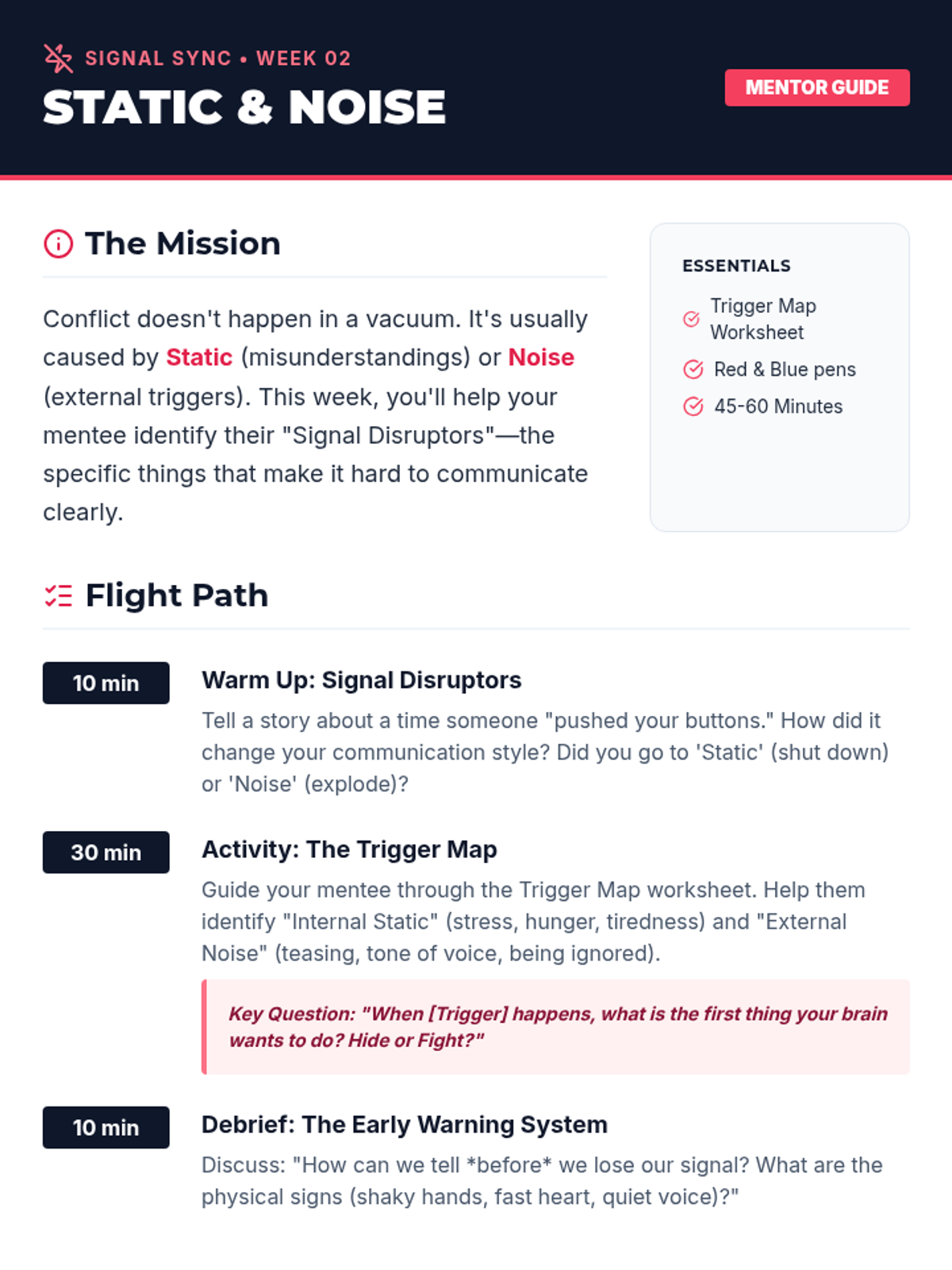
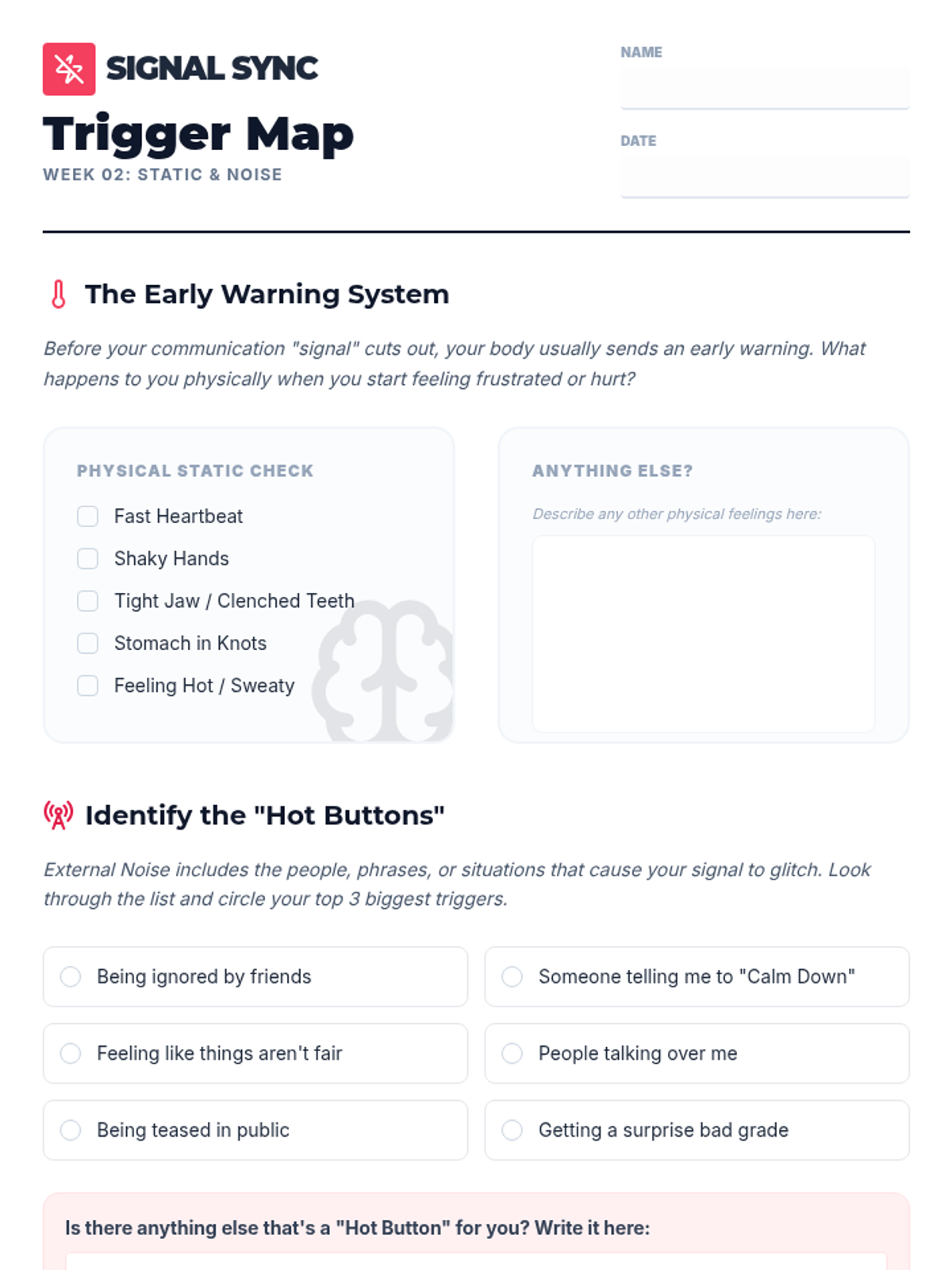
Identifying the 'static' or triggers that lead to conflict and understanding the root causes of misunderstandings.
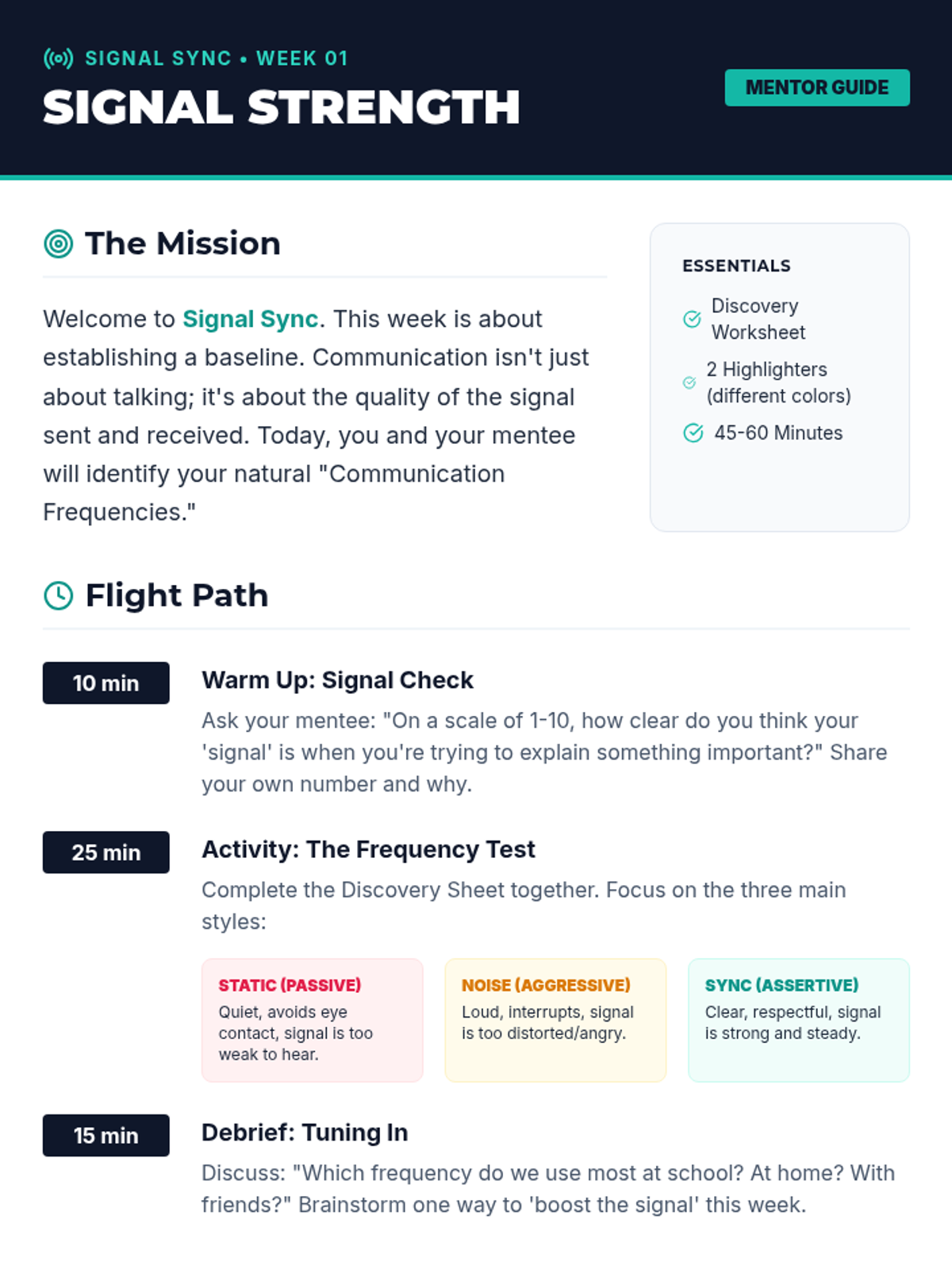
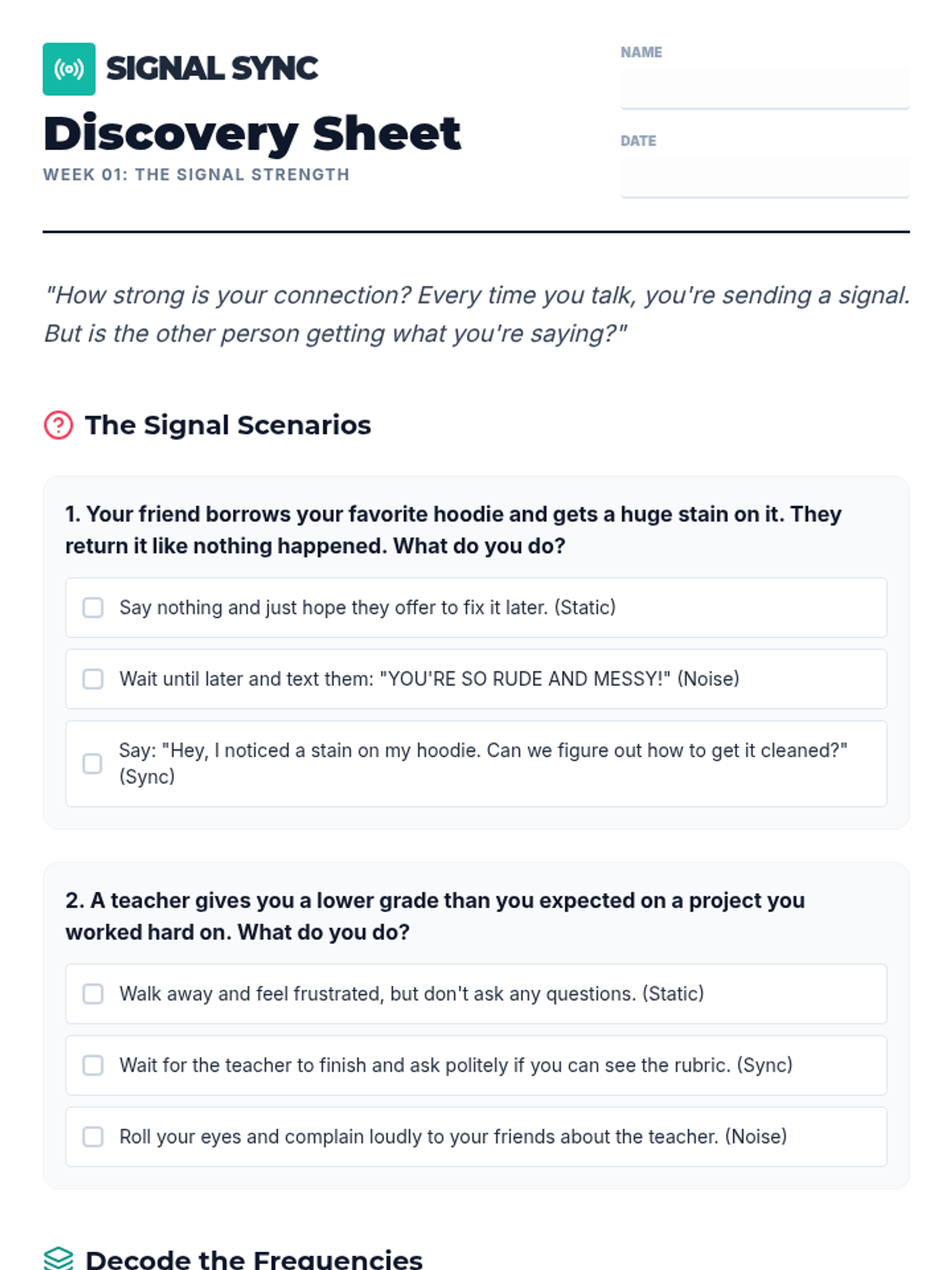
Introduction to communication styles and building a baseline understanding of how we send and receive information.
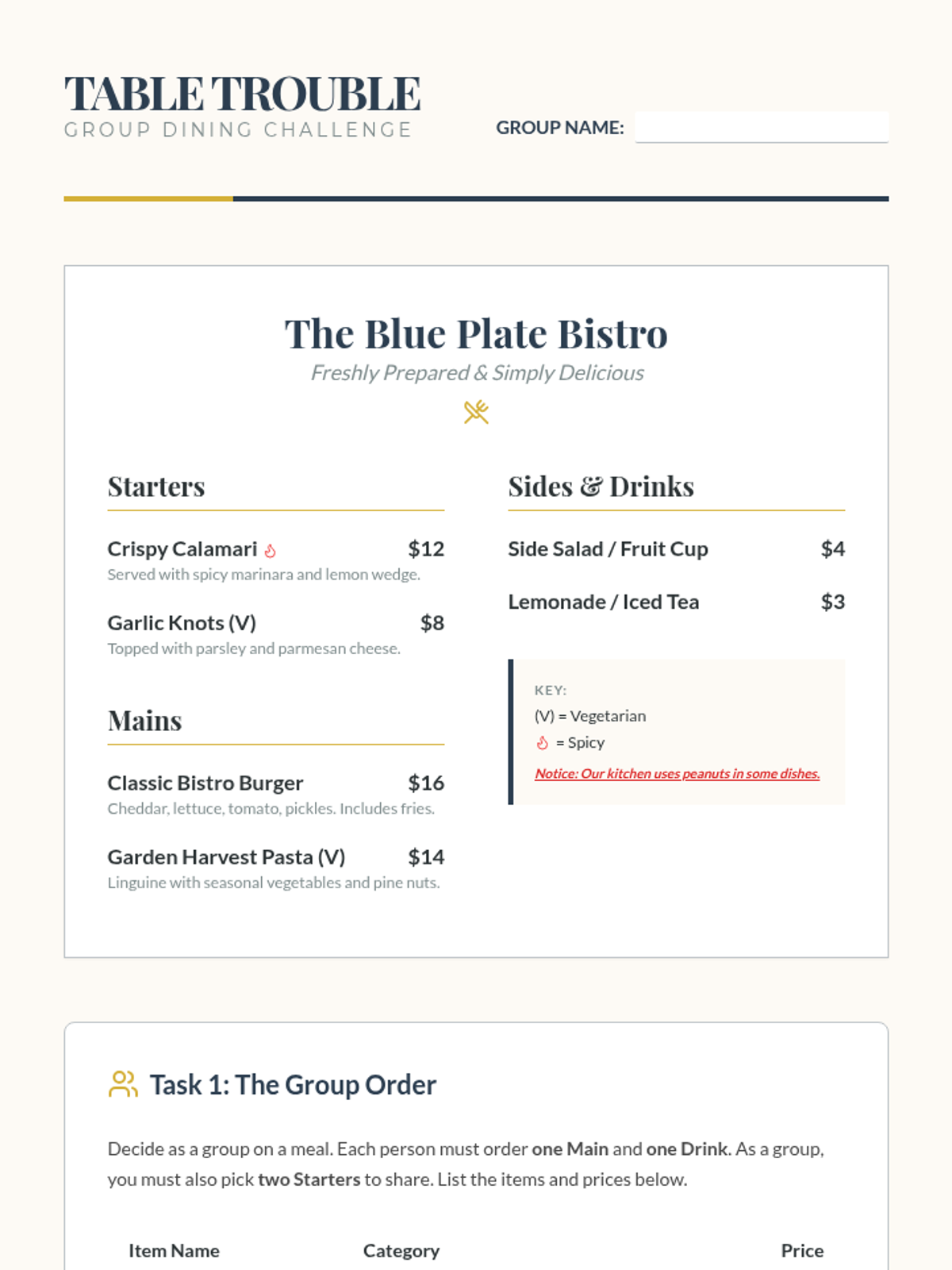
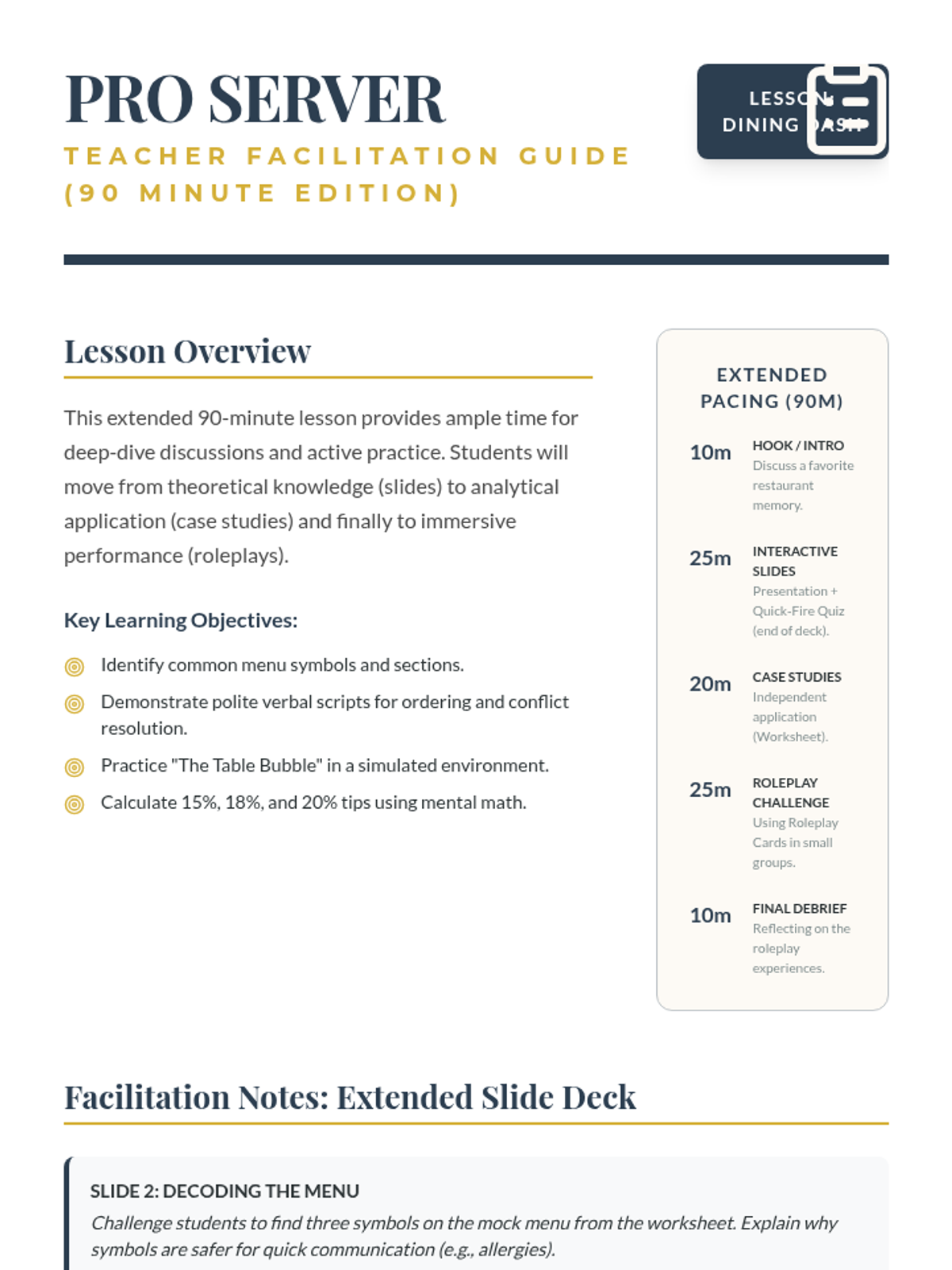
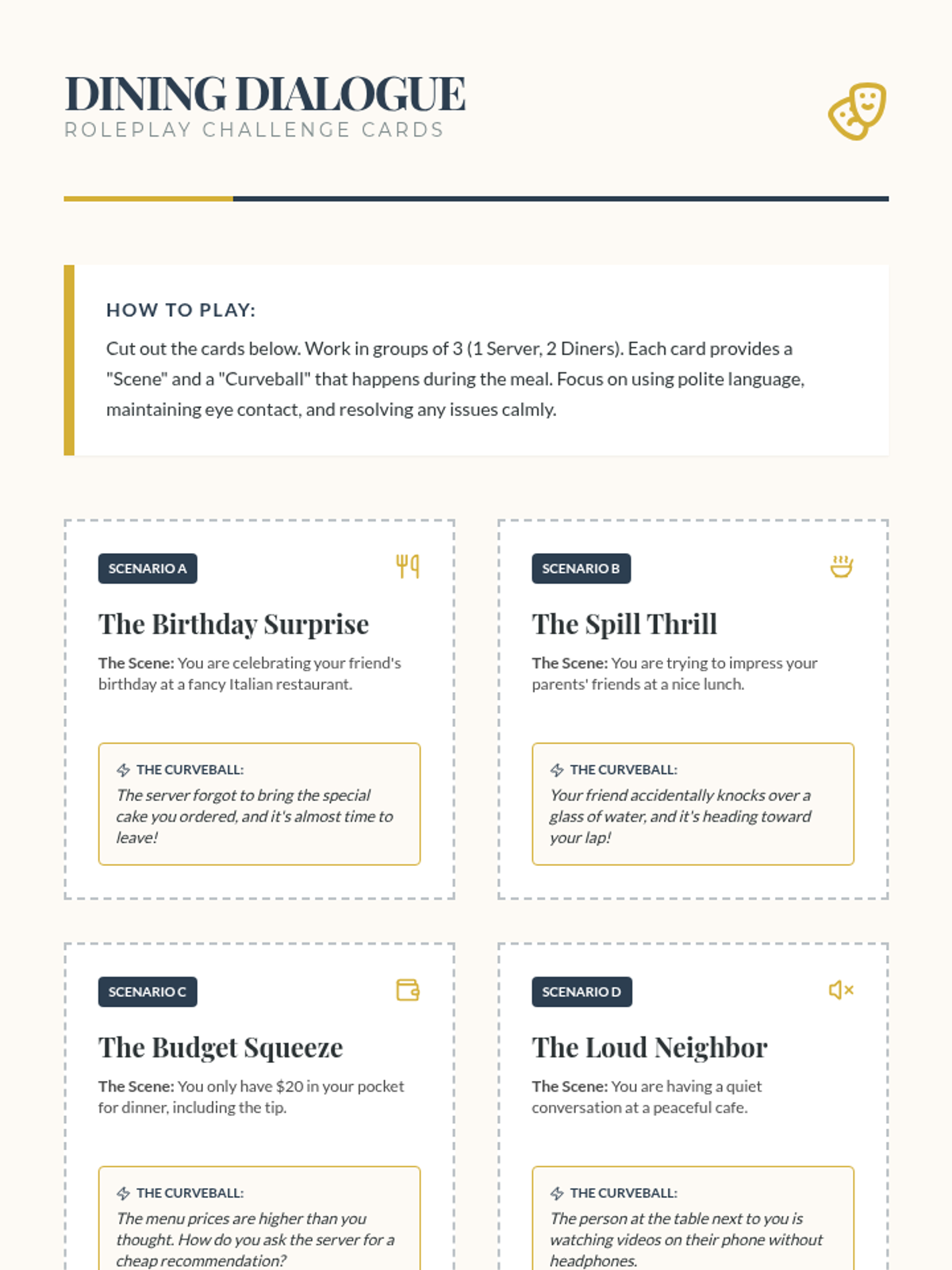
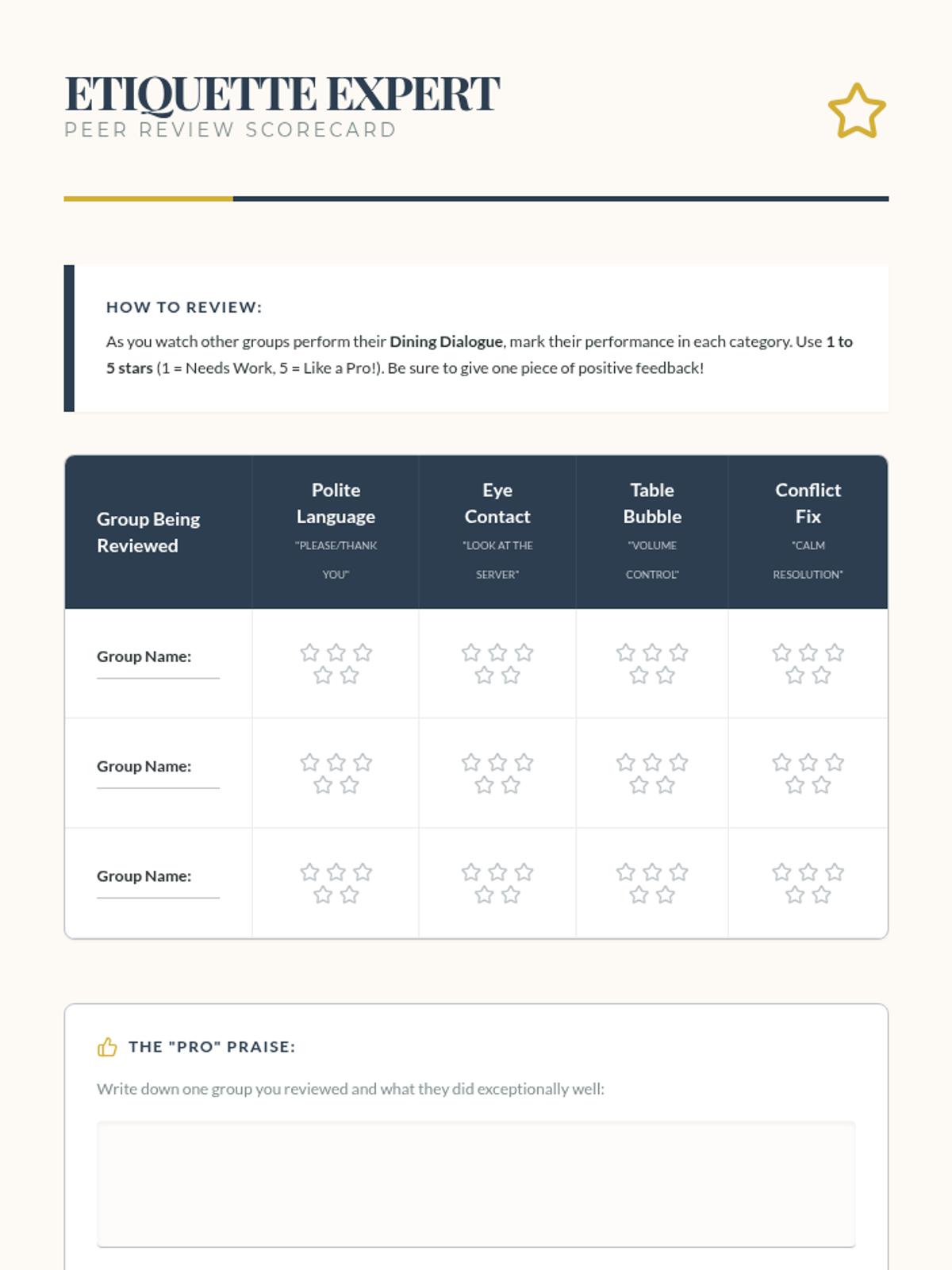
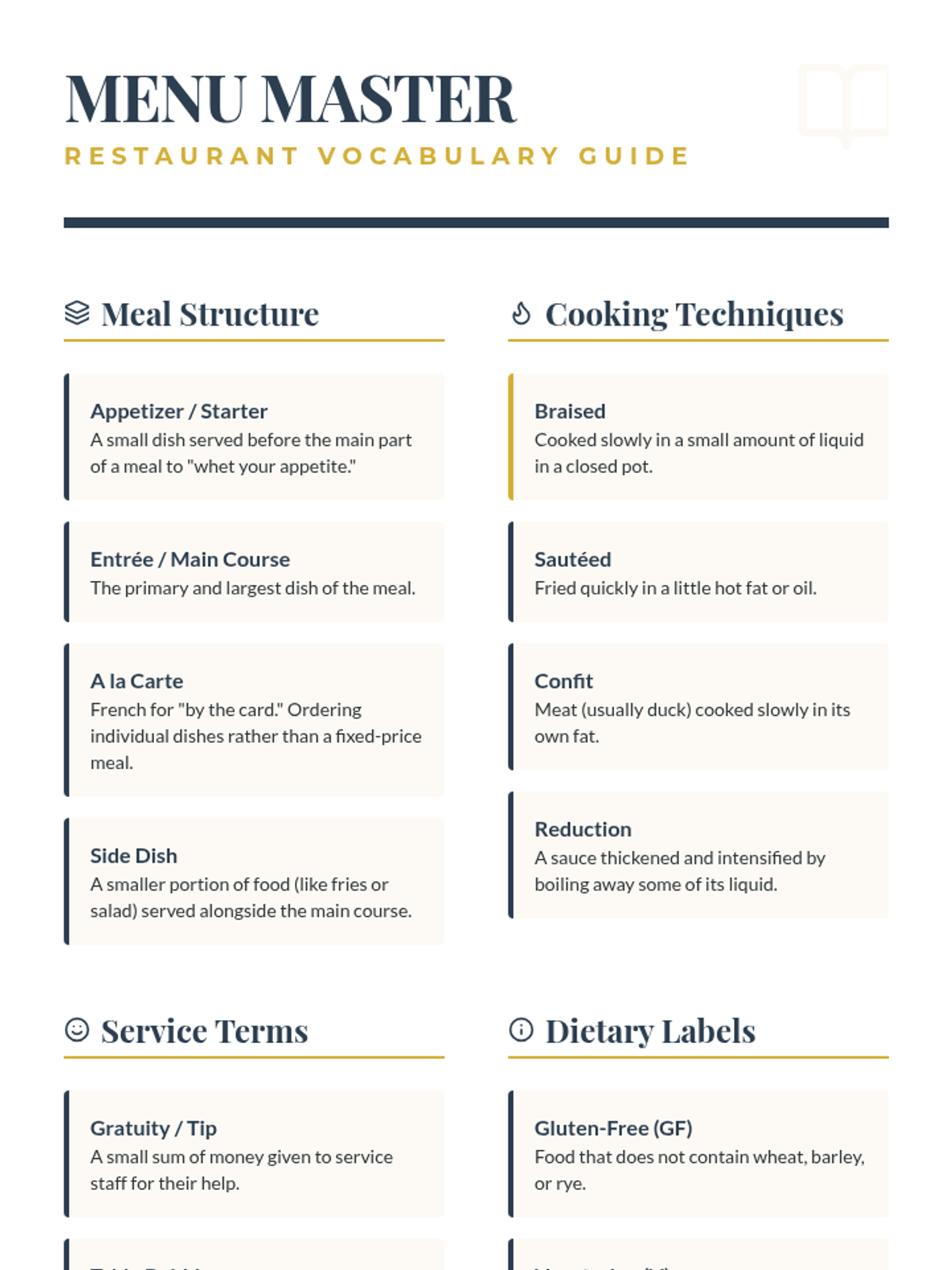
A comprehensive lesson on restaurant etiquette covering menu reading, ordering, manners, volume control, tipping, and conflict resolution.
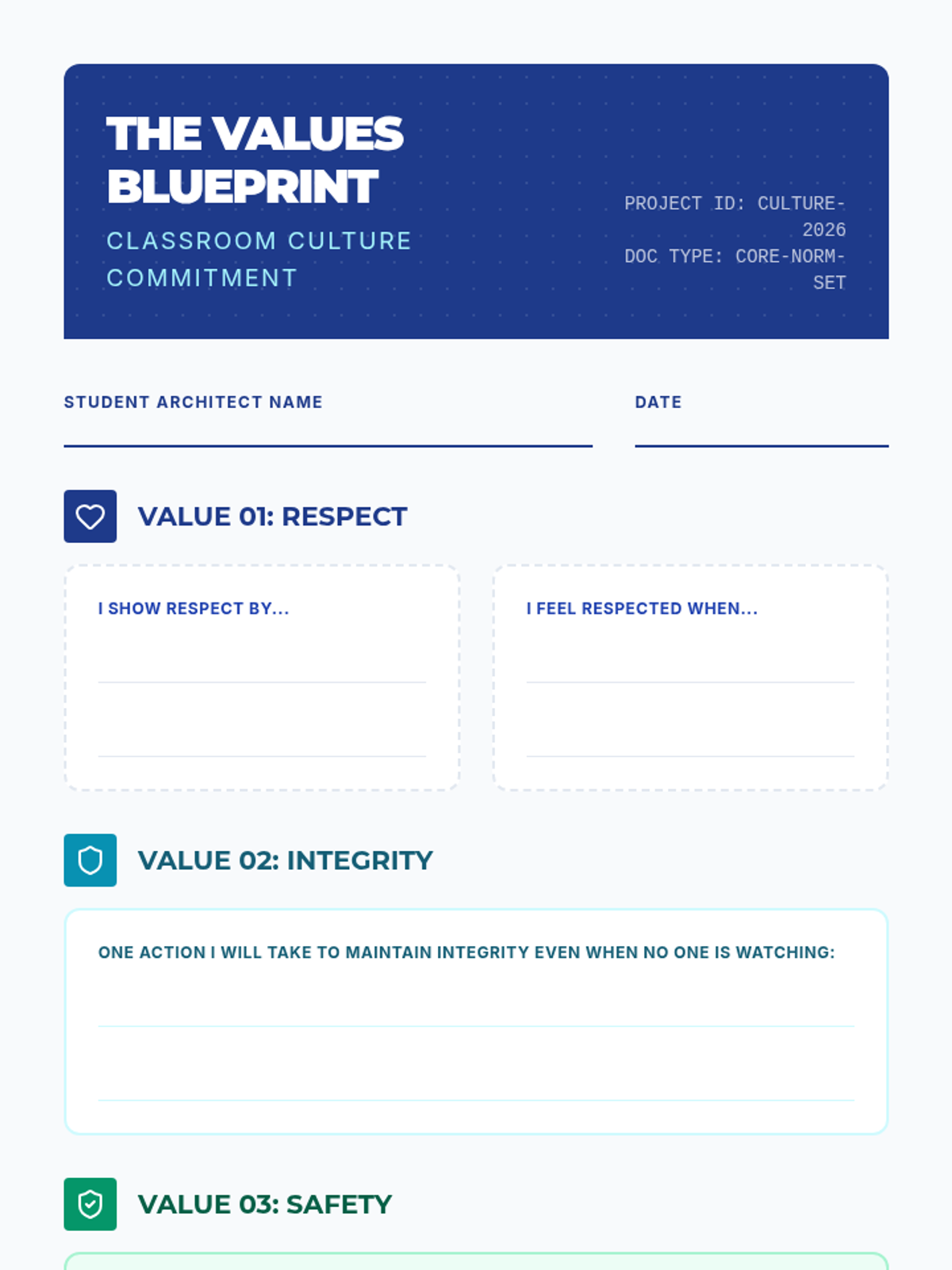
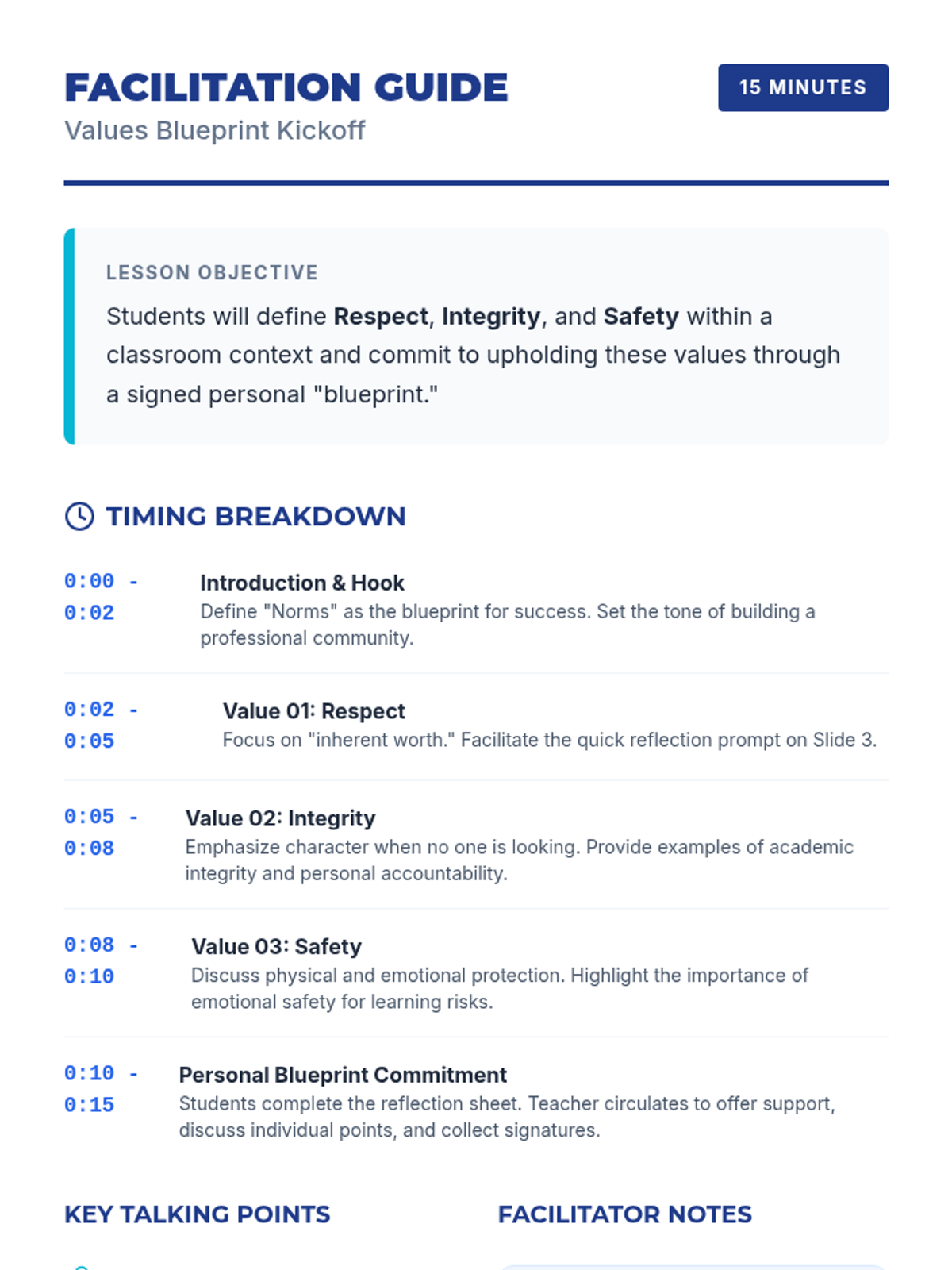
A concise 15-minute introduction to classroom norms centered on the core values of Respect, Integrity, and Safety. Students will define these values and commit to a shared culture of success.
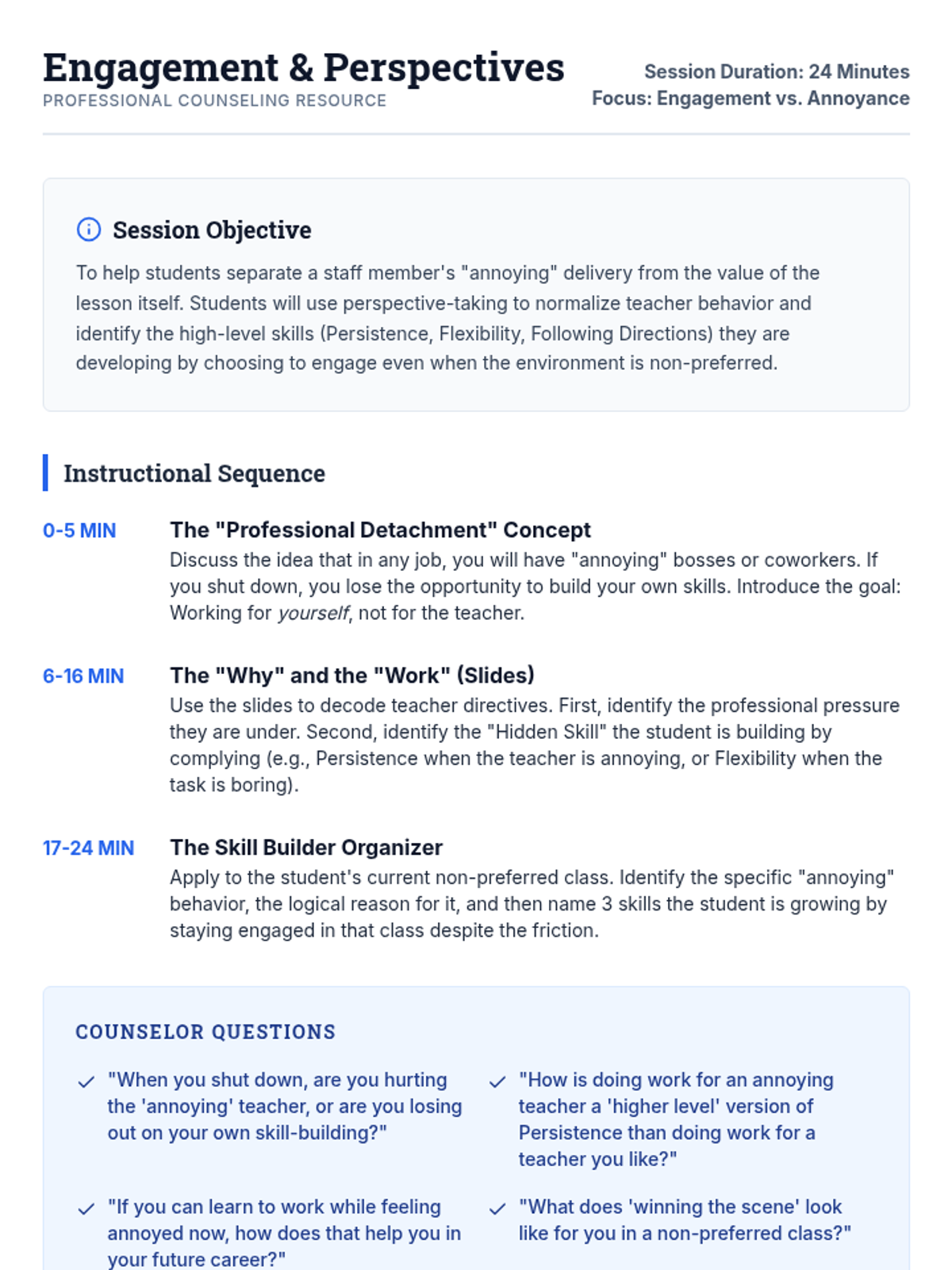
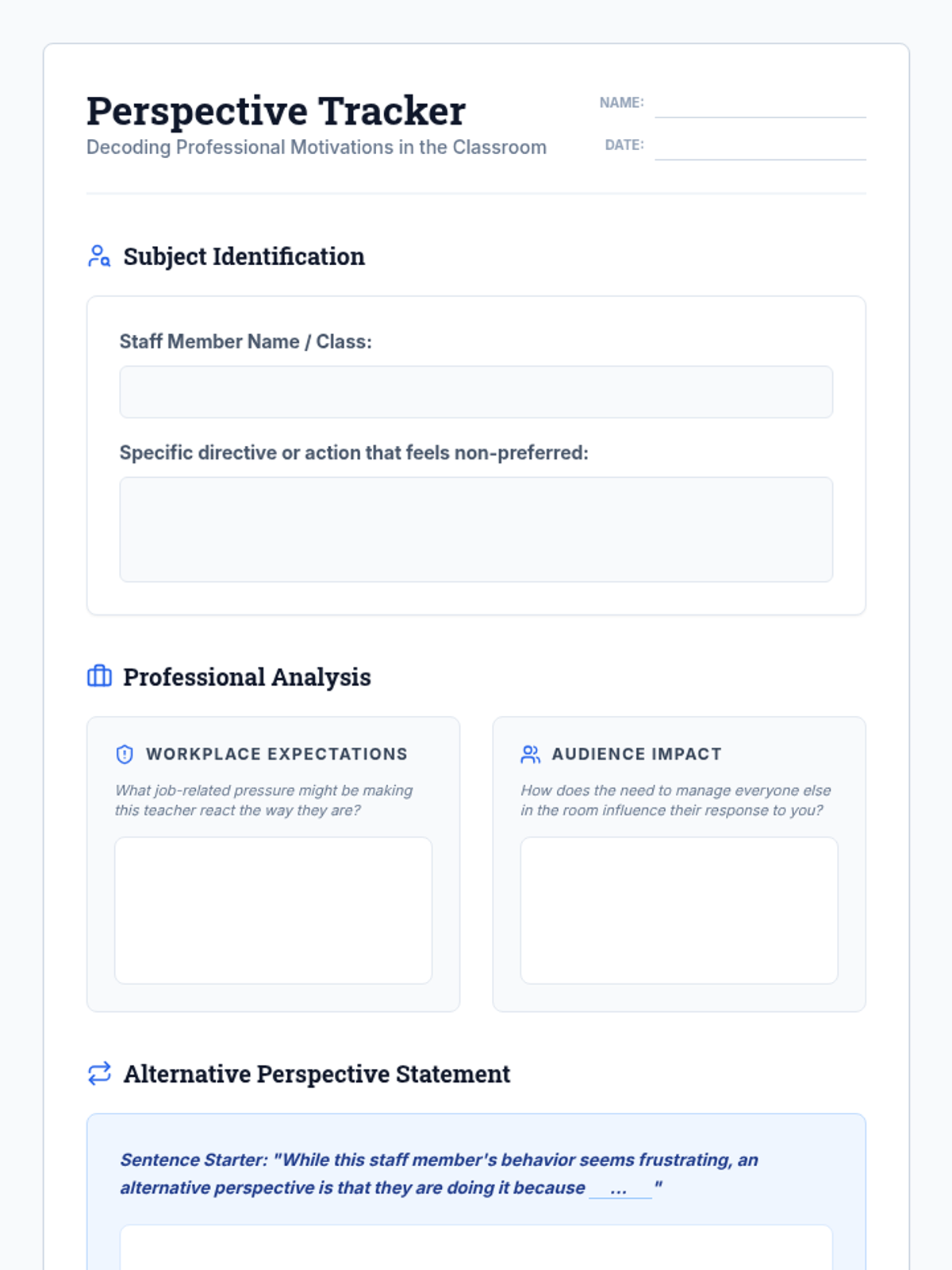
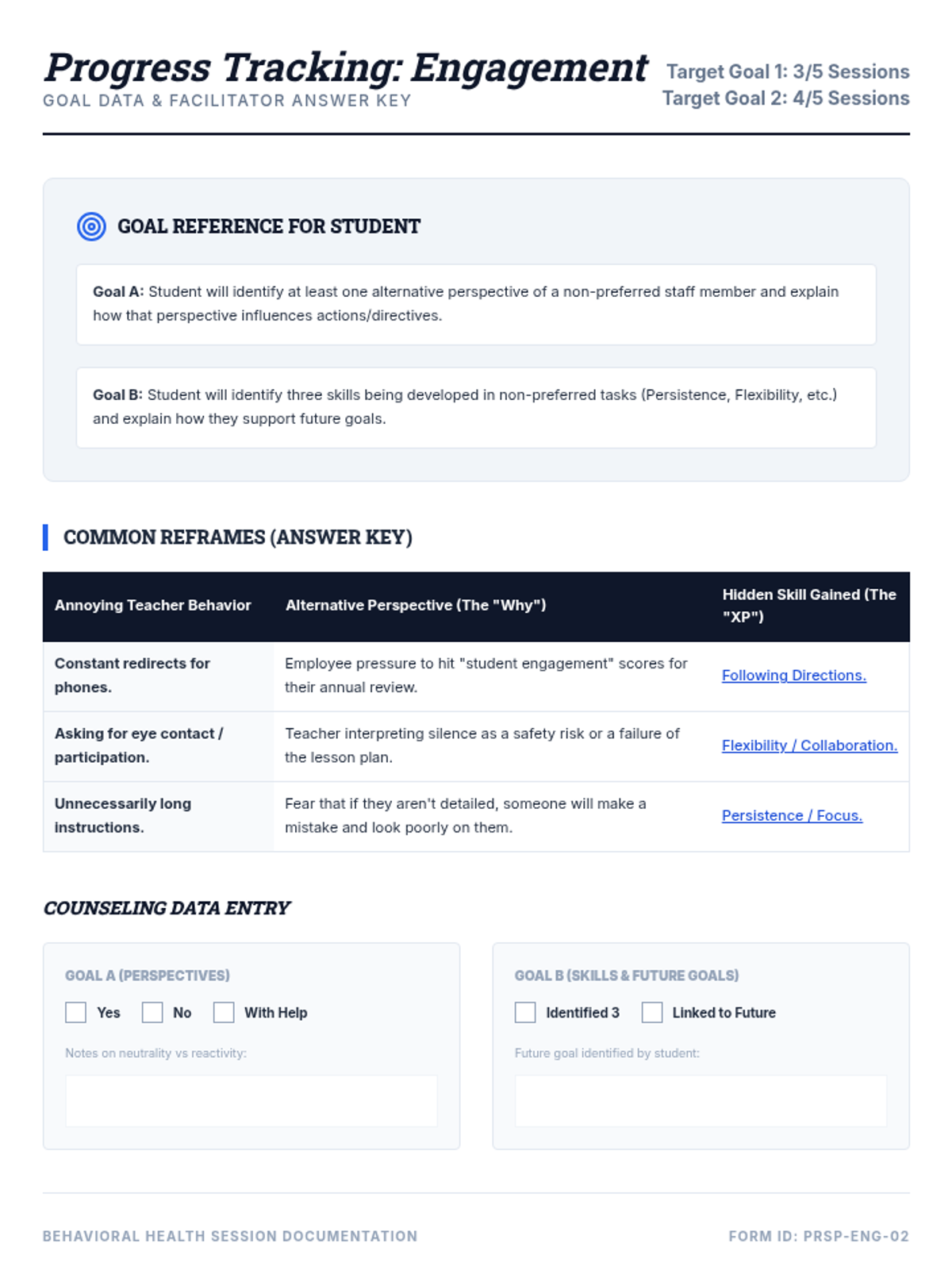
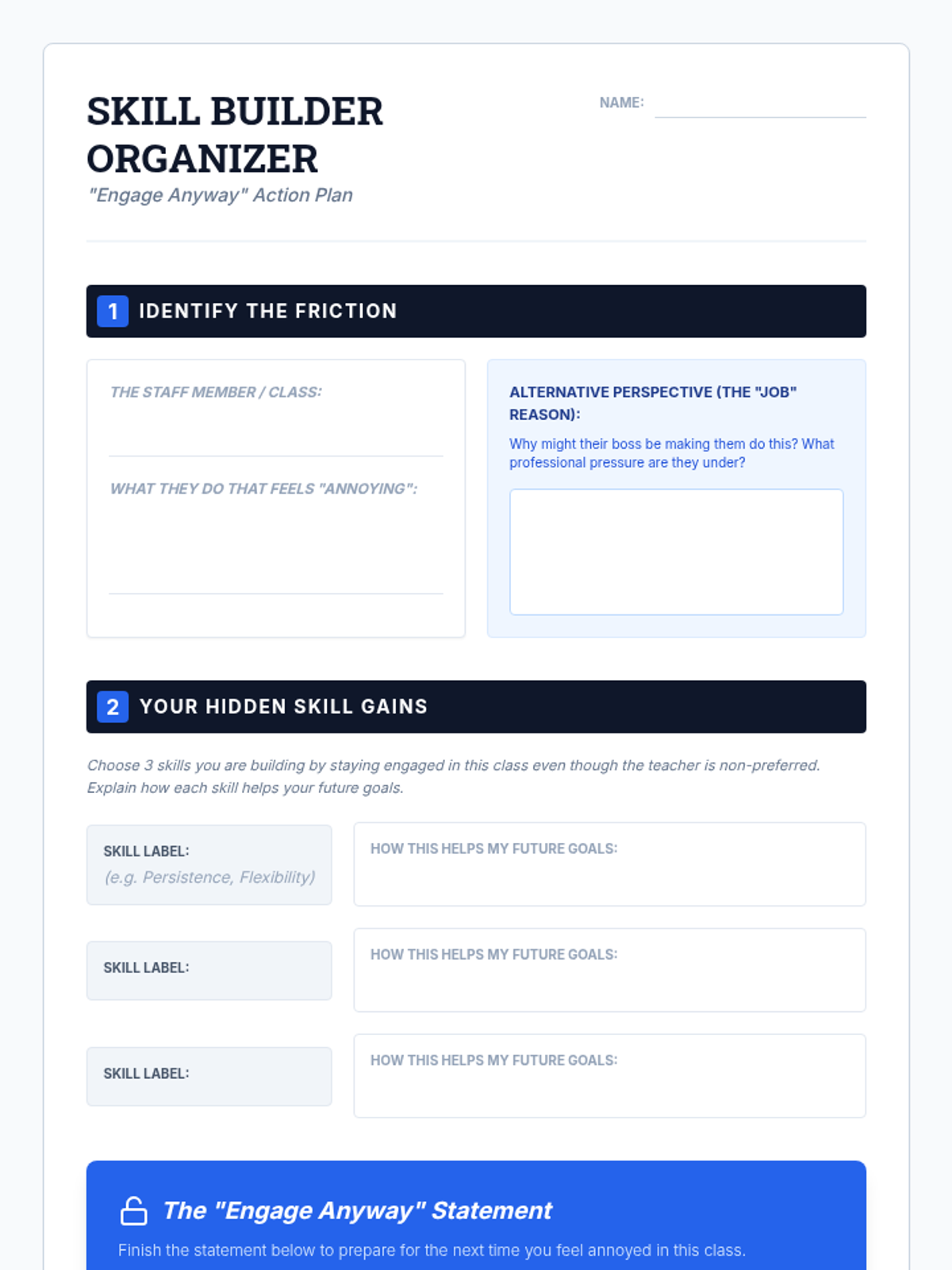
A 24-minute counseling session focused on social perspective-taking, specifically helping students identify the underlying motivations and professional pressures that influence staff member actions and directives.
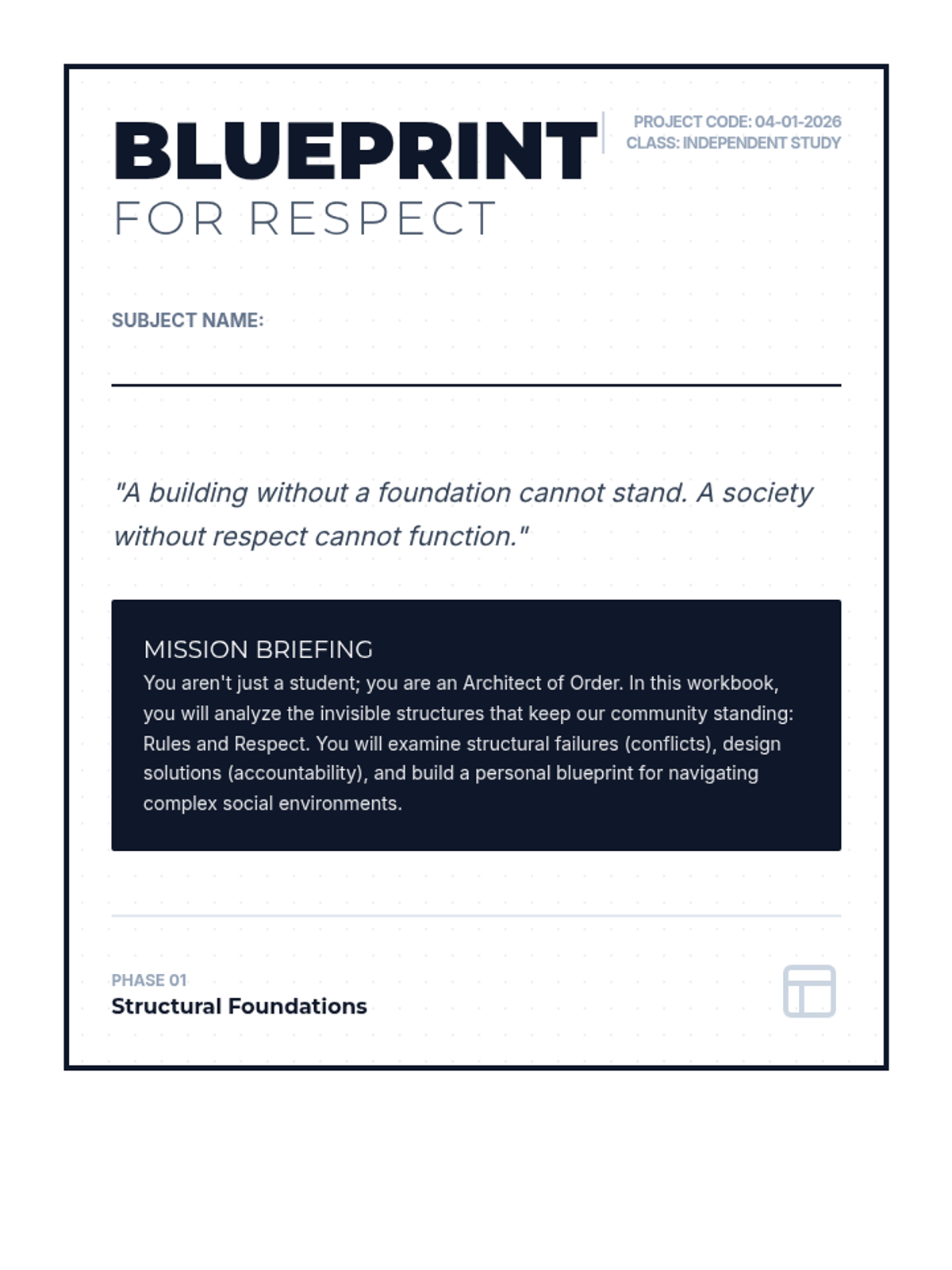
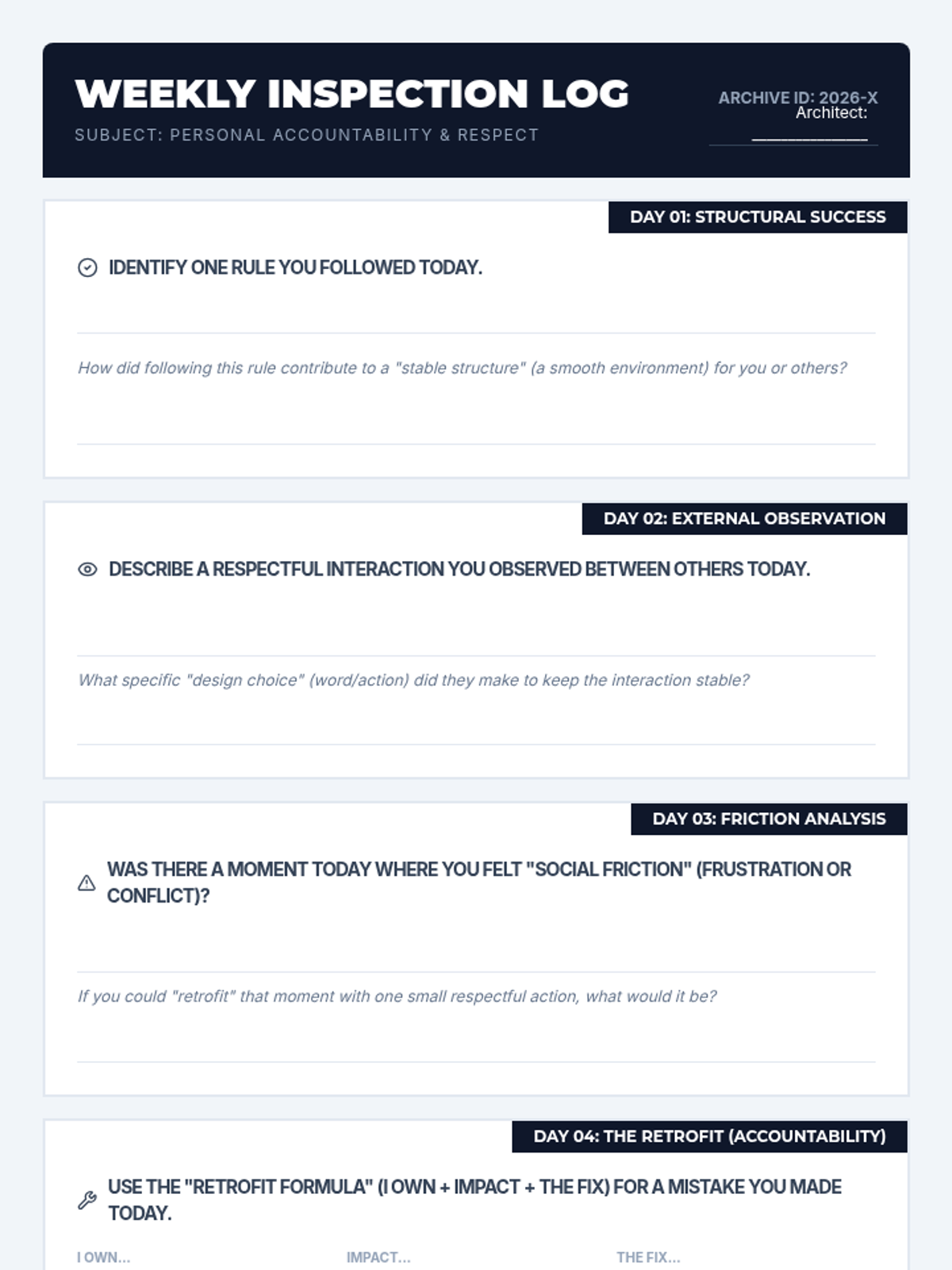
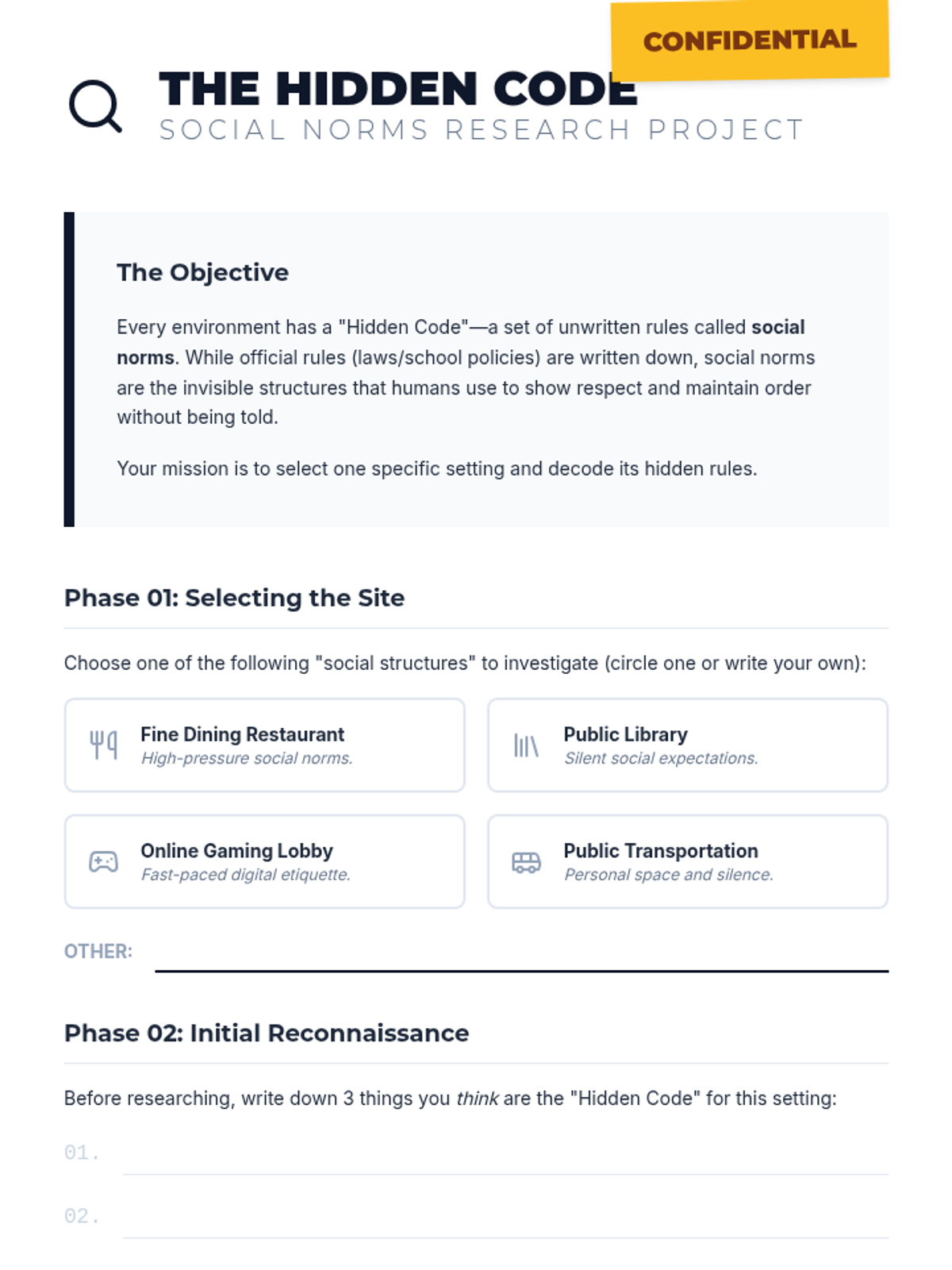
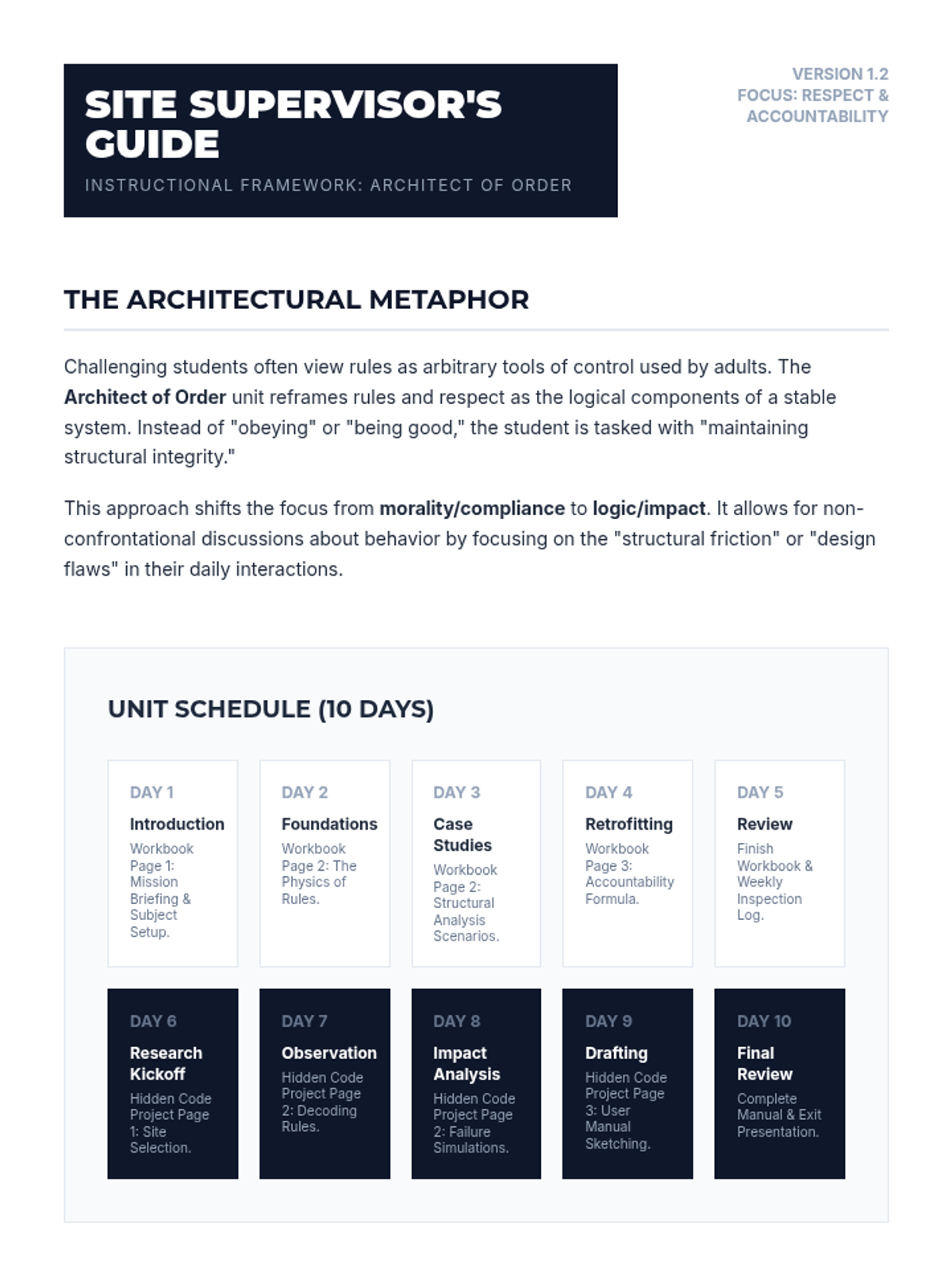
A comprehensive independent study unit for students to explore the logical foundations of respect, rules, and personal accountability through an architectural lens.
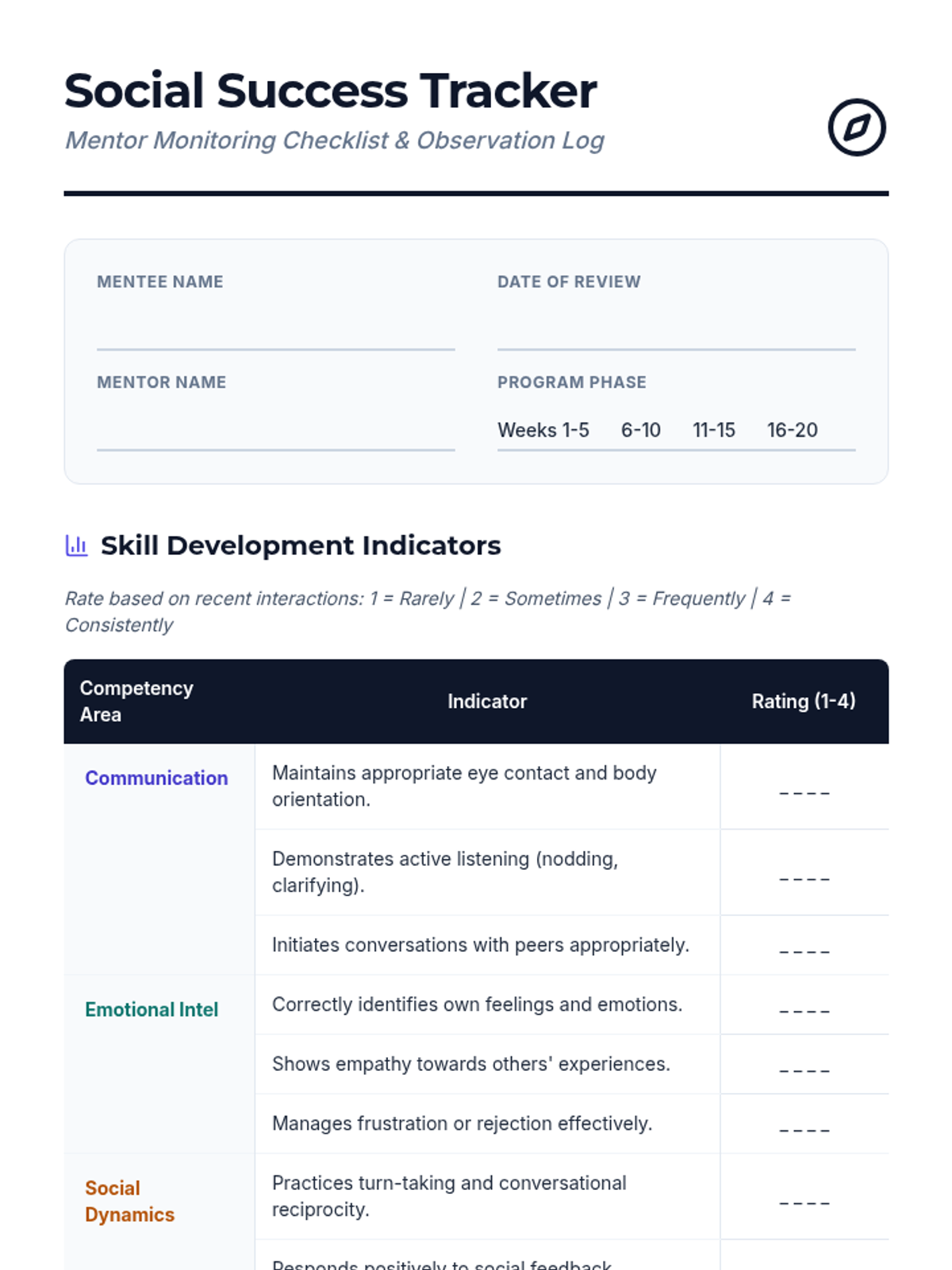
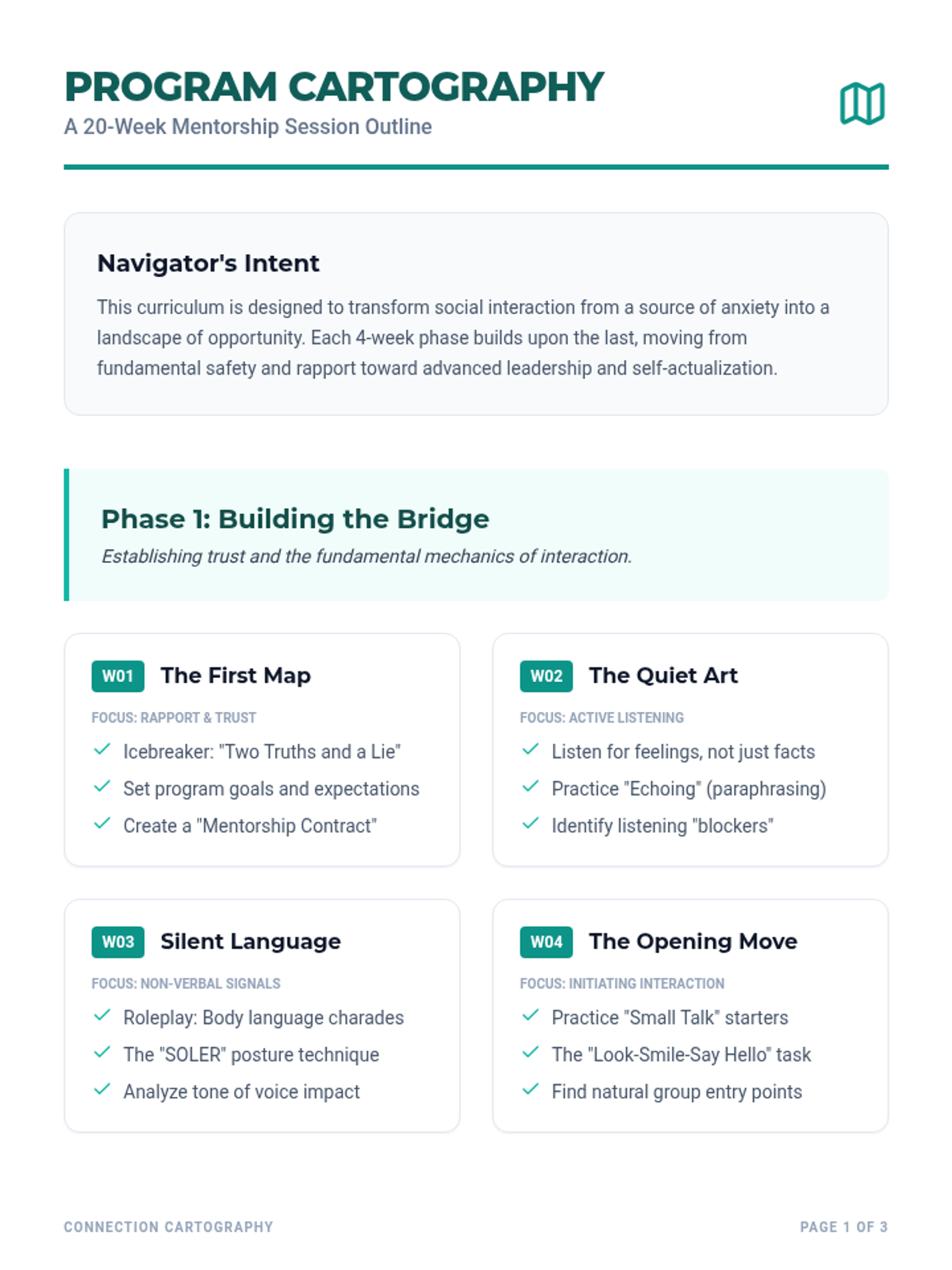
The core foundational resources for mentors to guide their mentees through the 20-session journey.
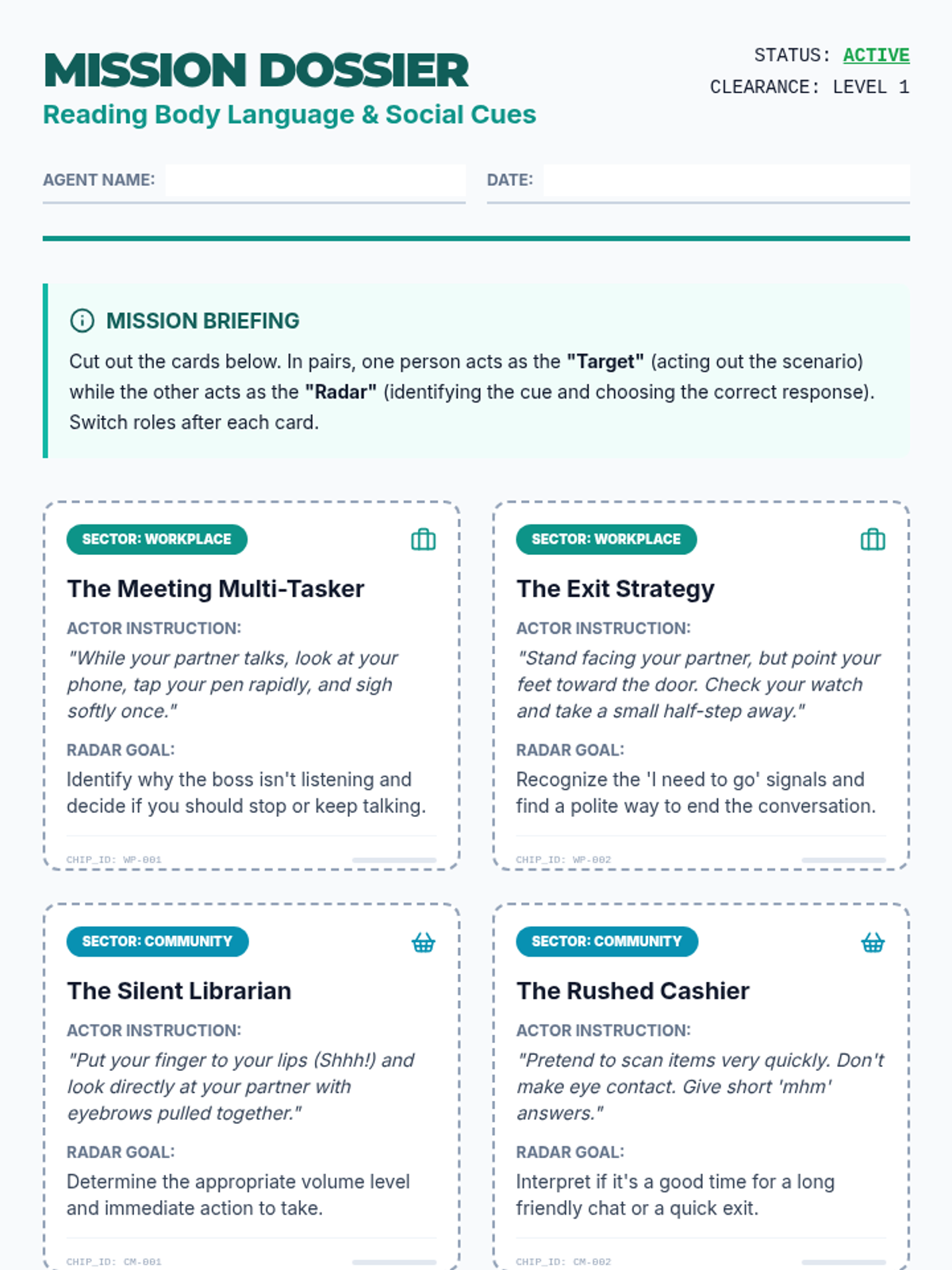
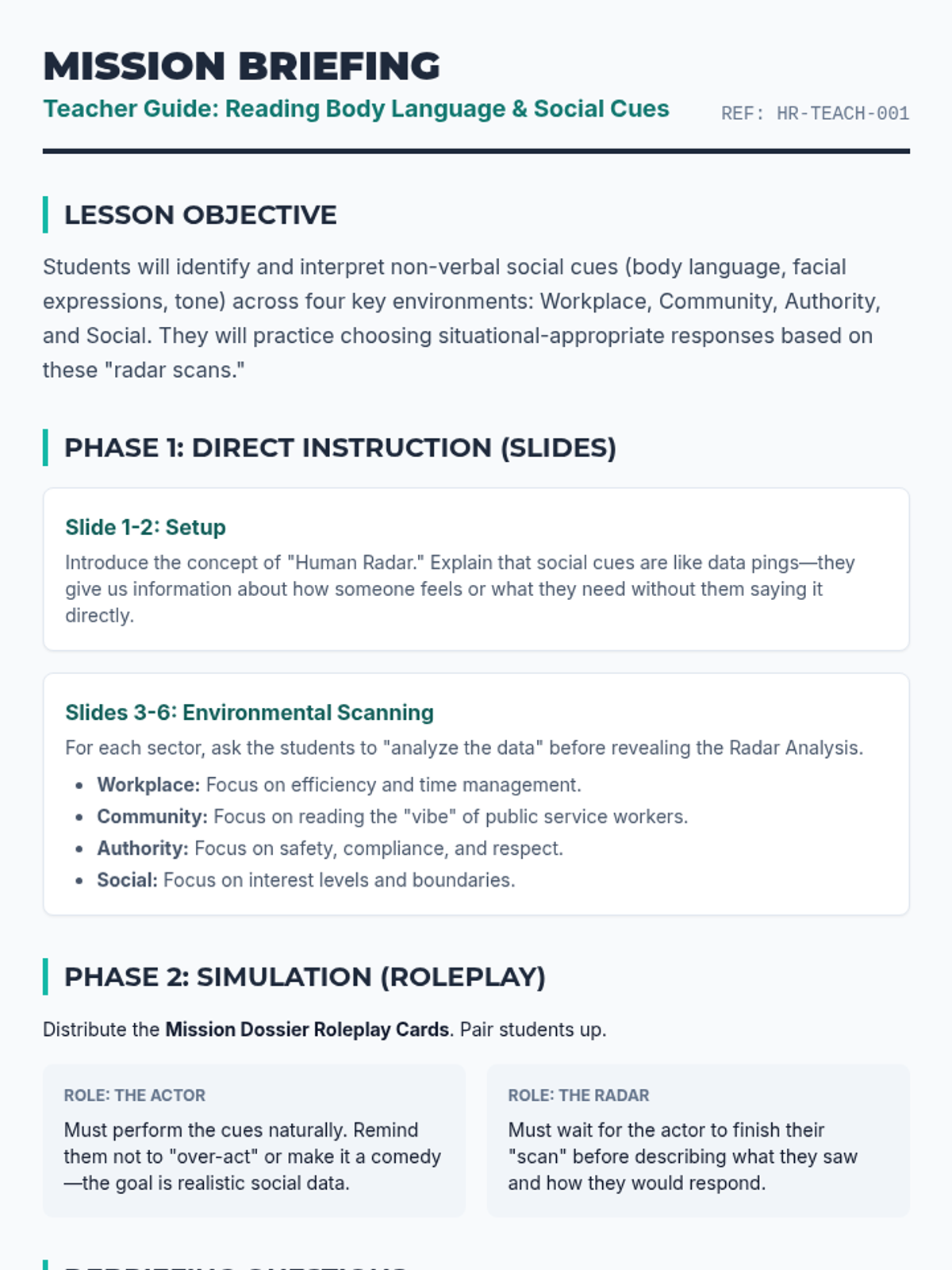
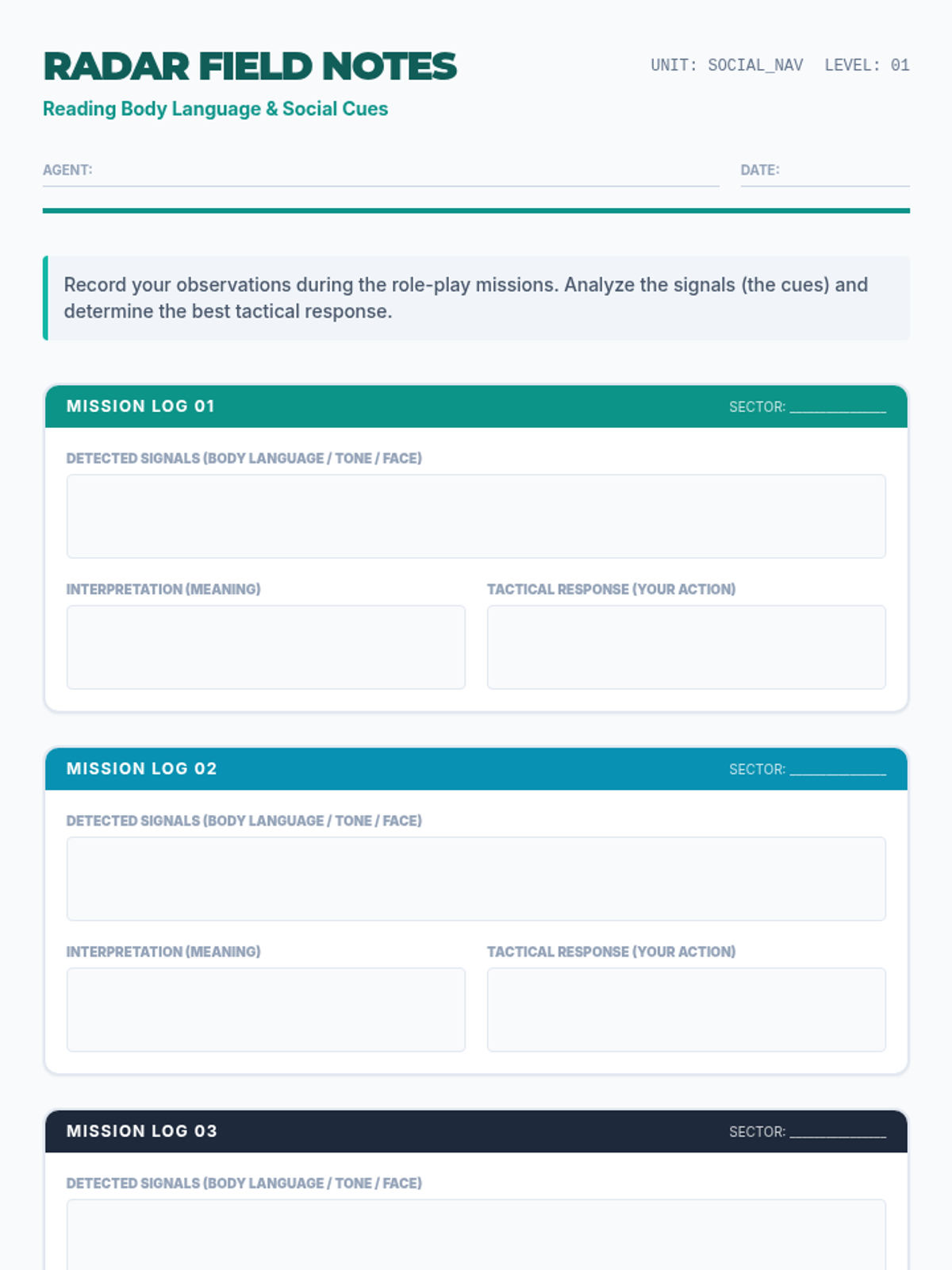
A lesson on interpreting body language and social cues across various professional and community settings. Students will learn to decode non-verbal communication and practice responding appropriately through role-play.
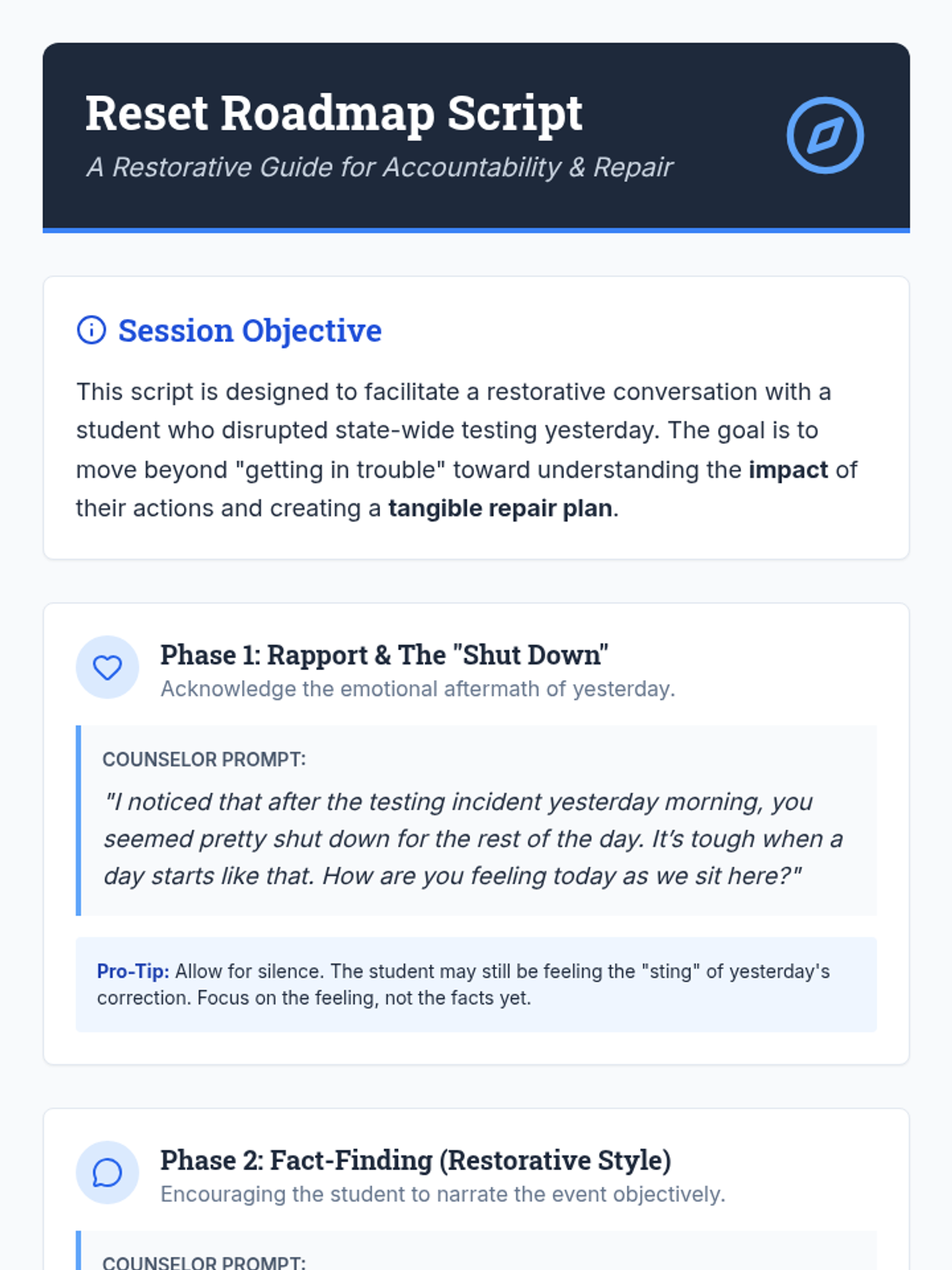
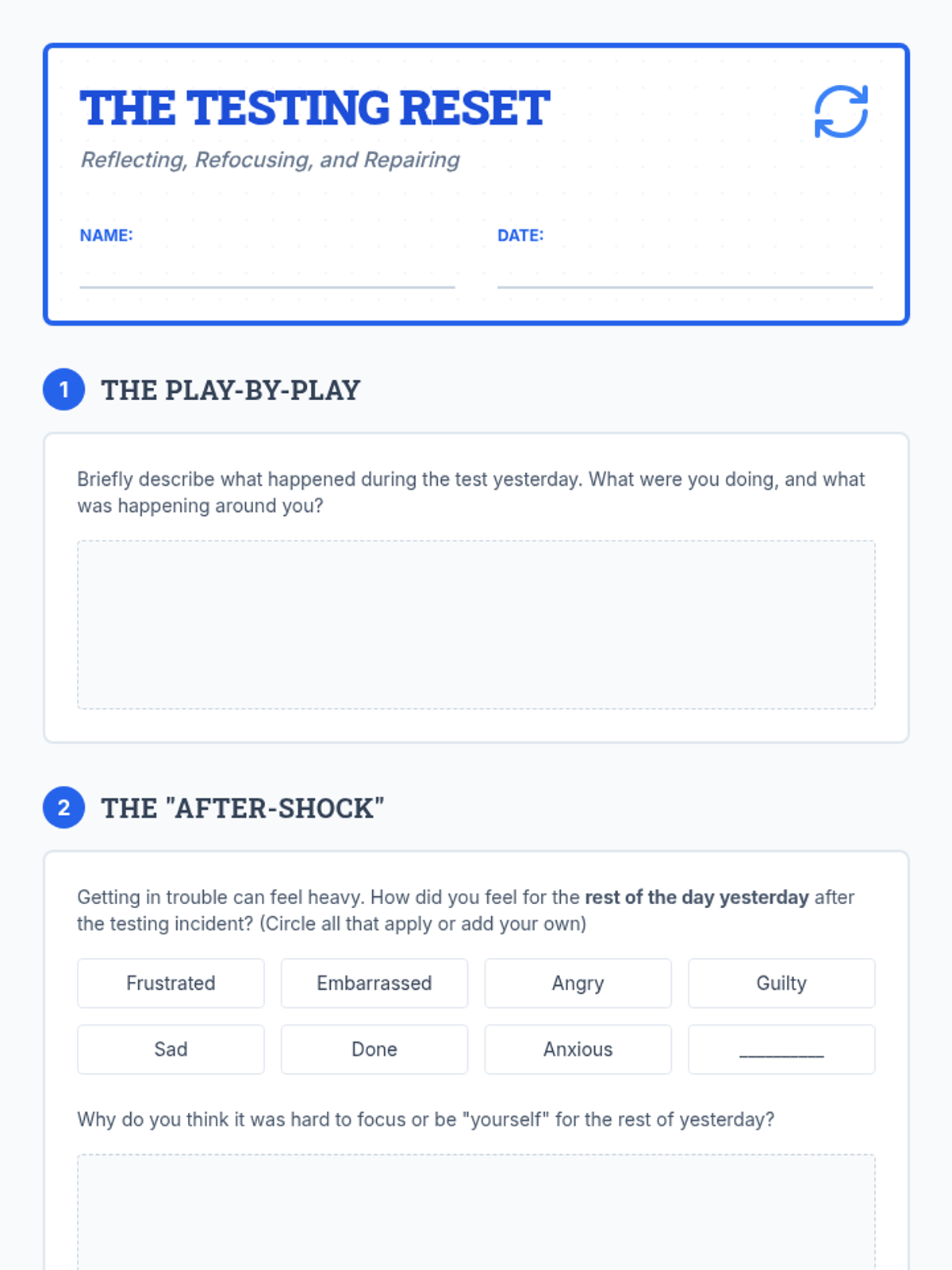
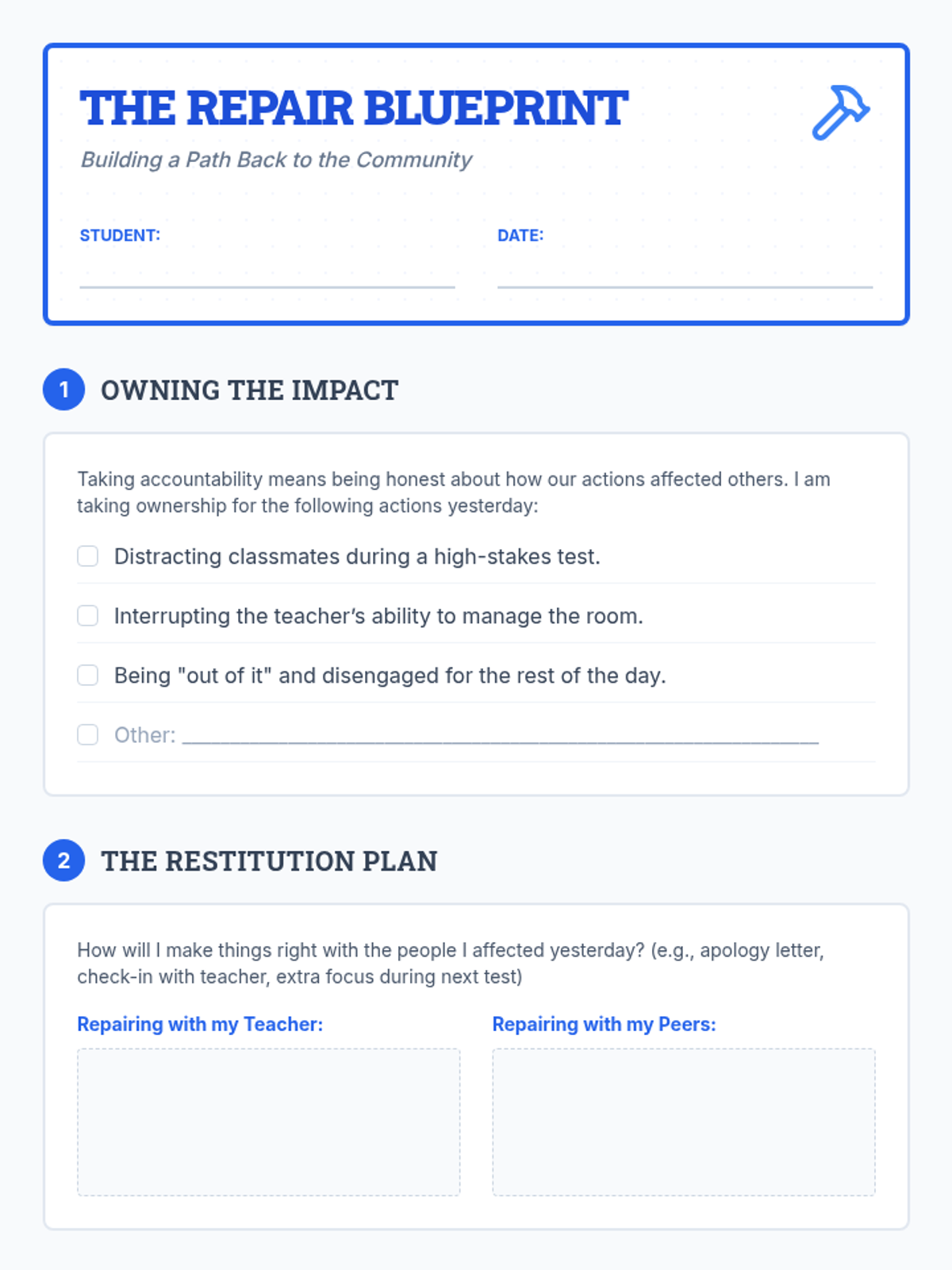
A comprehensive restorative counseling session designed to help a student take accountability for testing disruptions, process the emotional aftermath of getting in trouble, and create a concrete plan to repair relationships and behaviors.
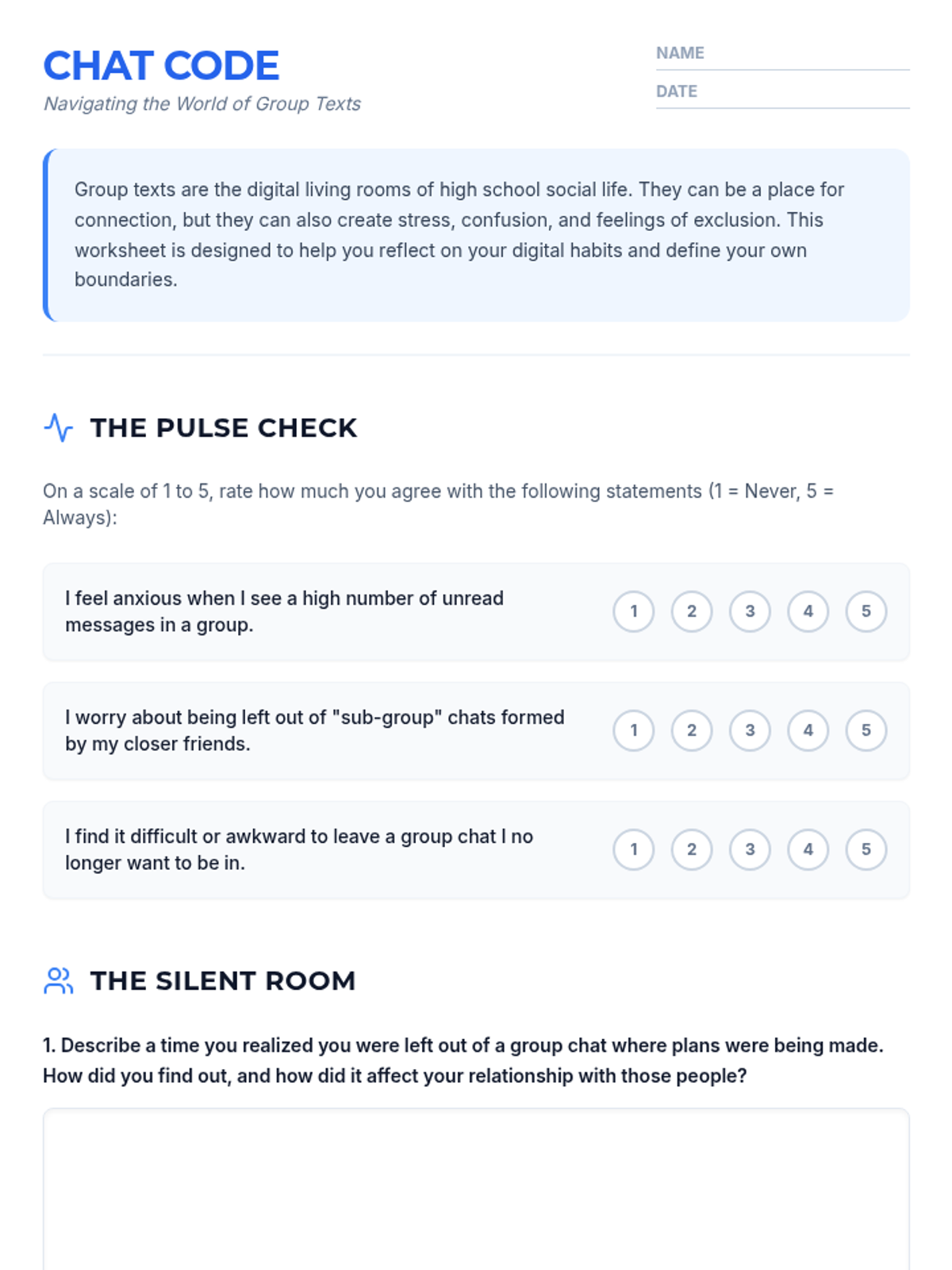
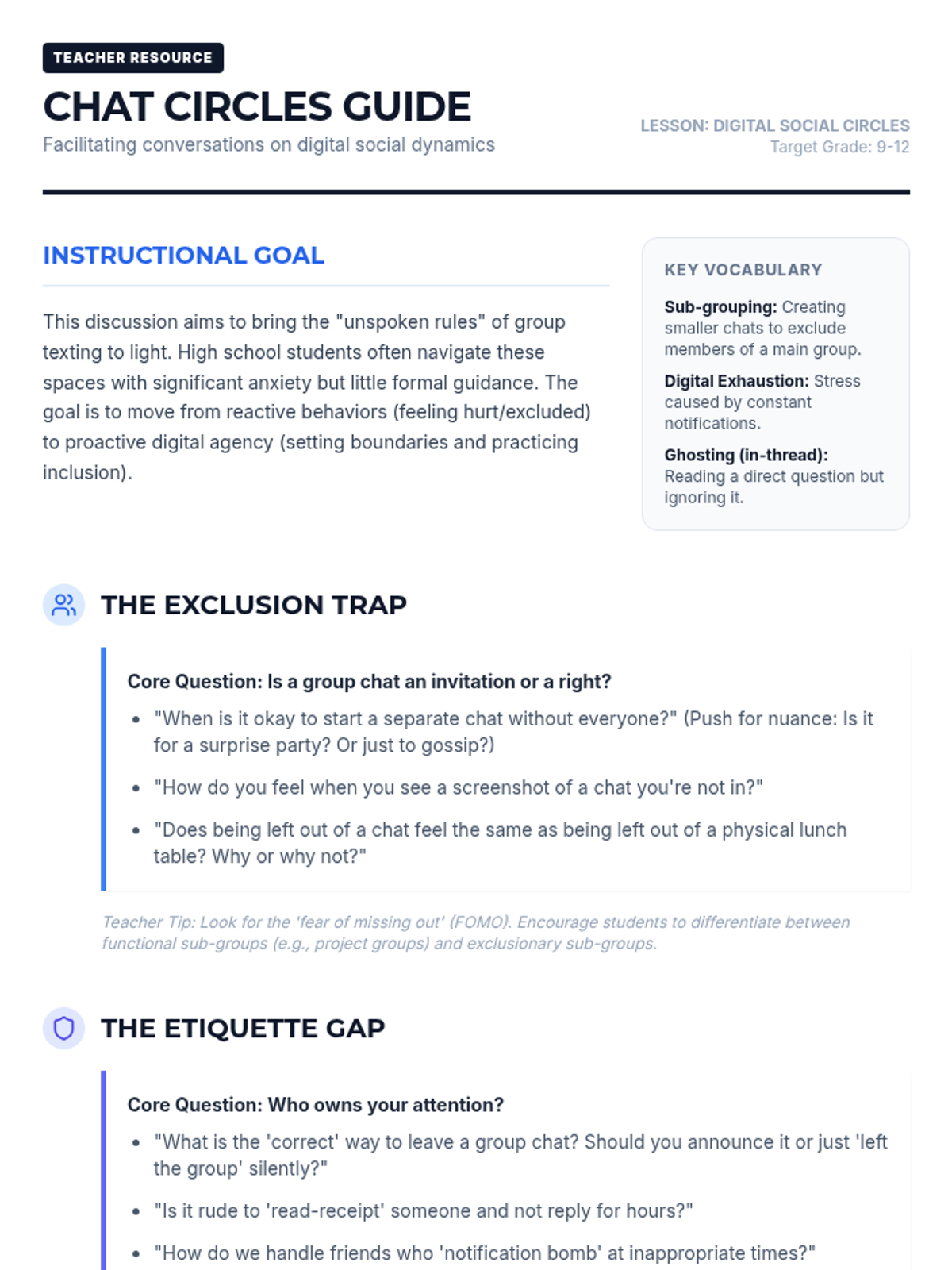
A lesson exploring the social dynamics of group texts, focusing on inclusion, exclusion, and setting healthy digital boundaries.
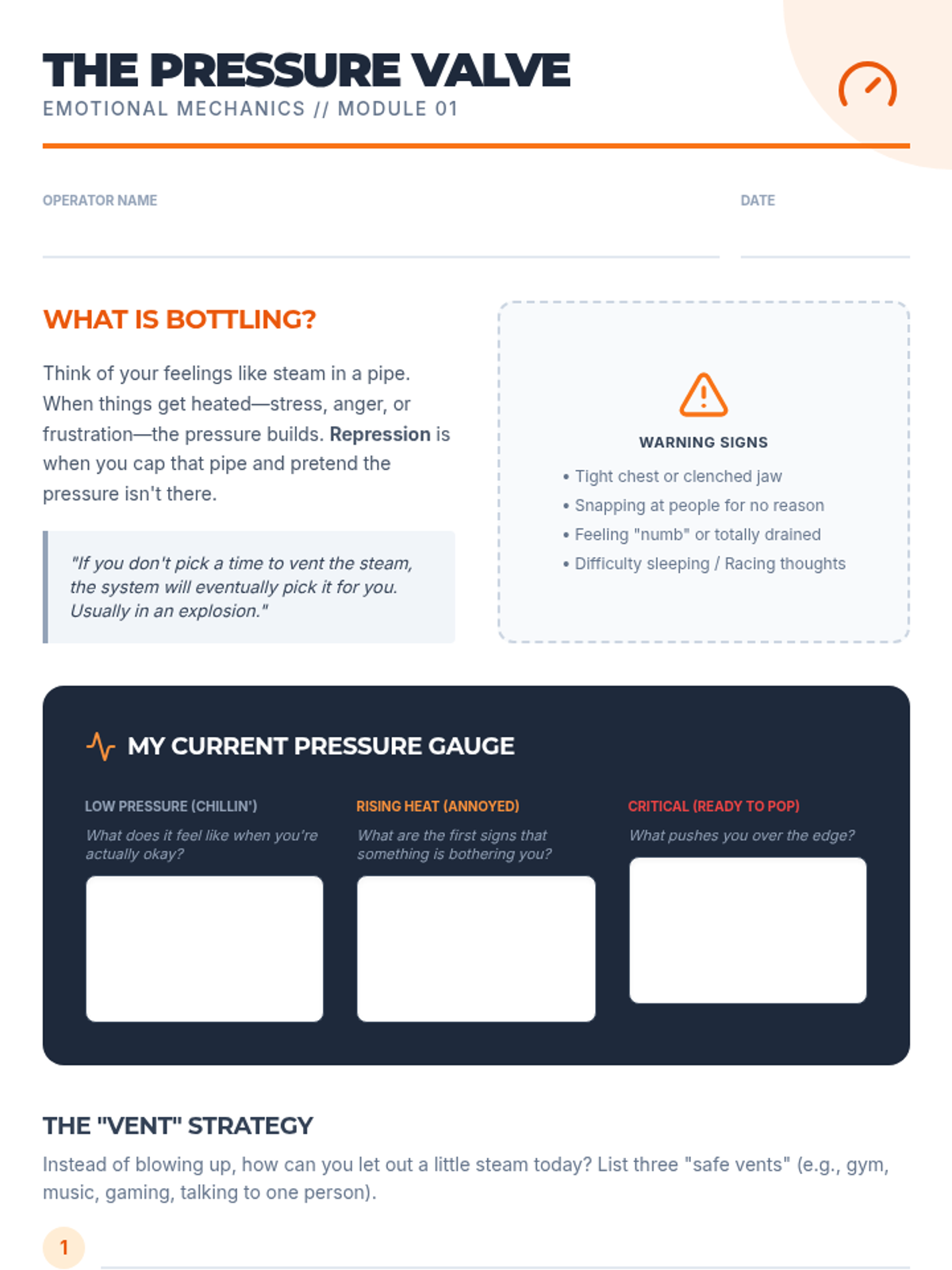
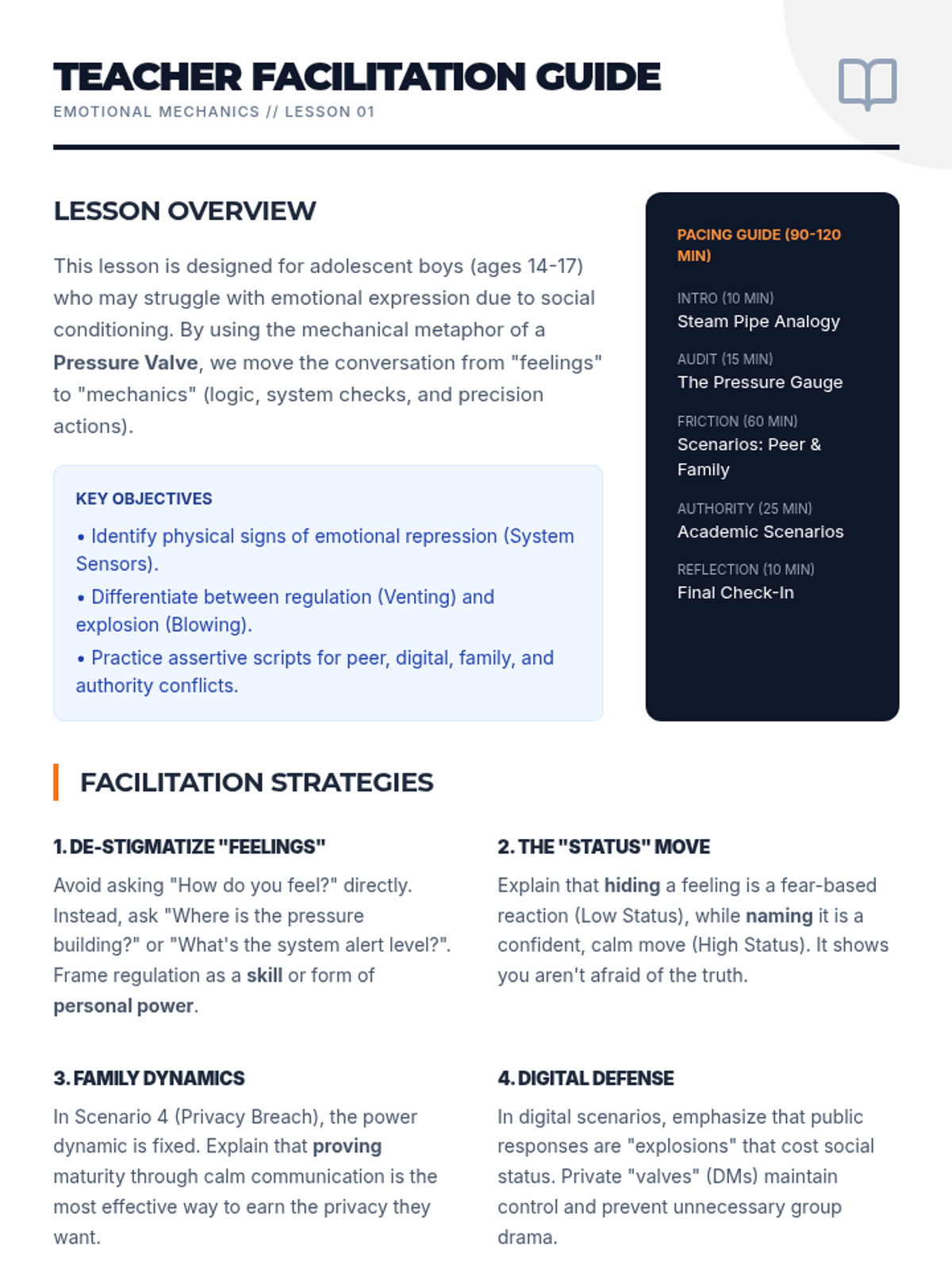
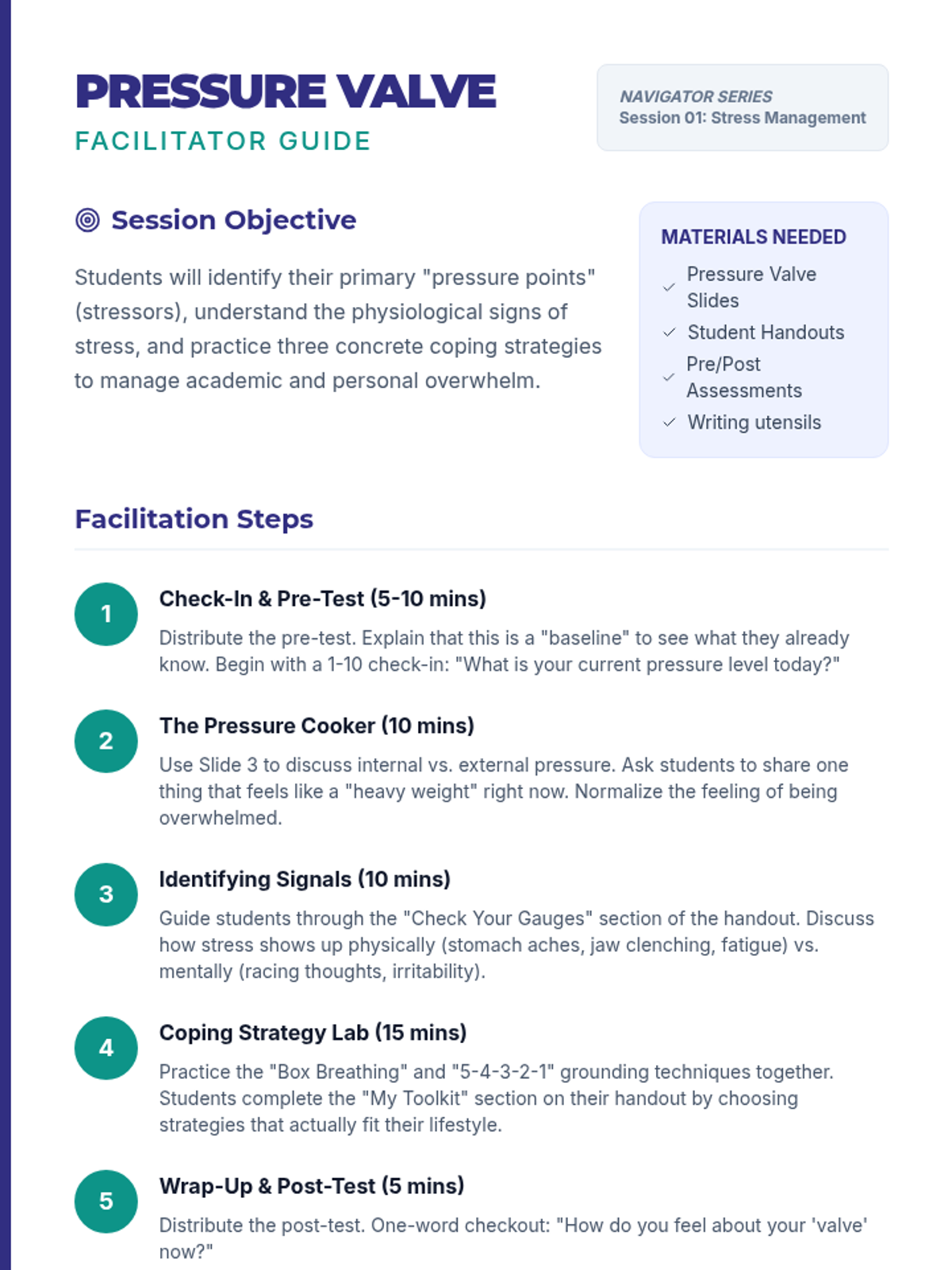
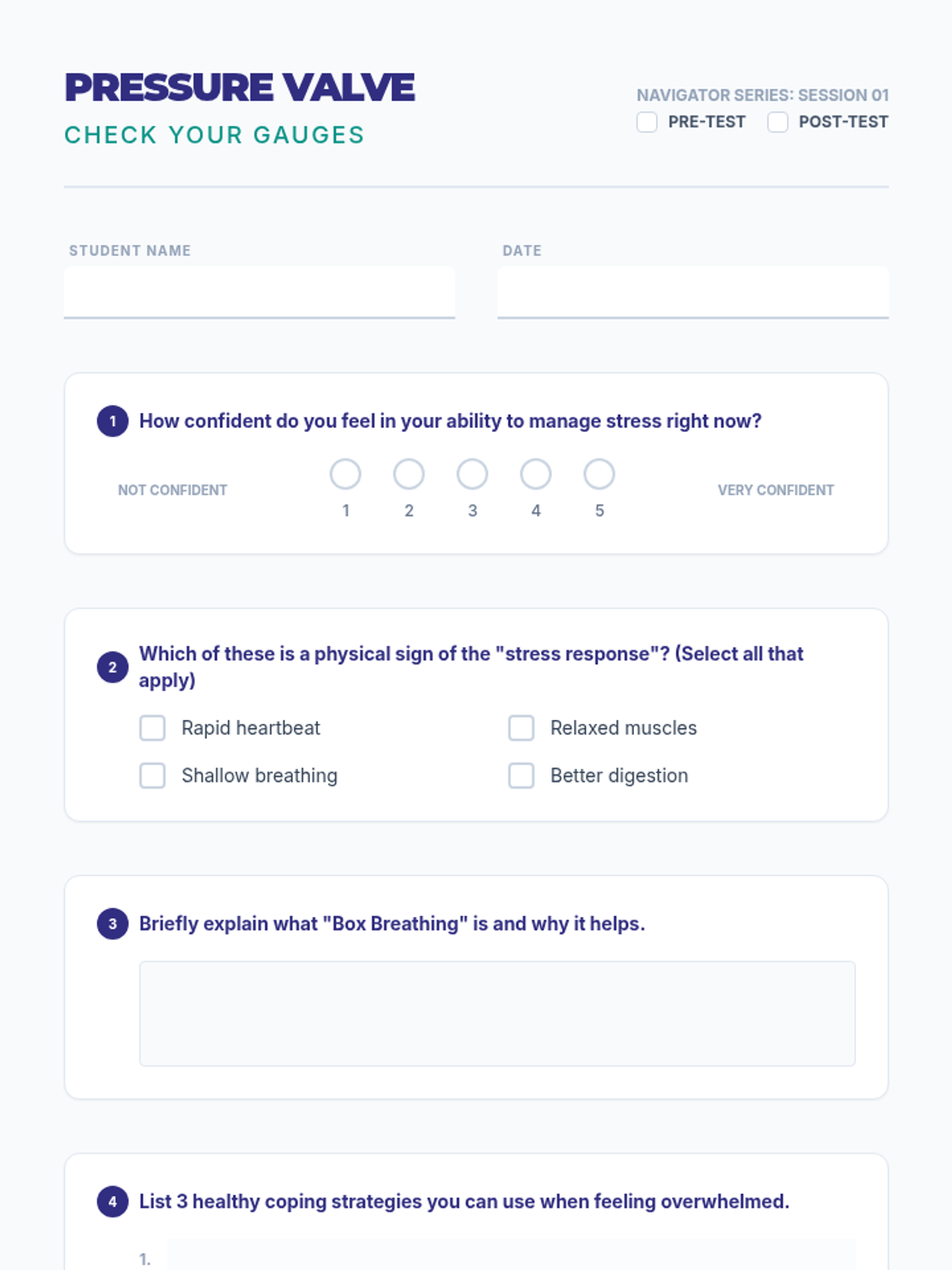
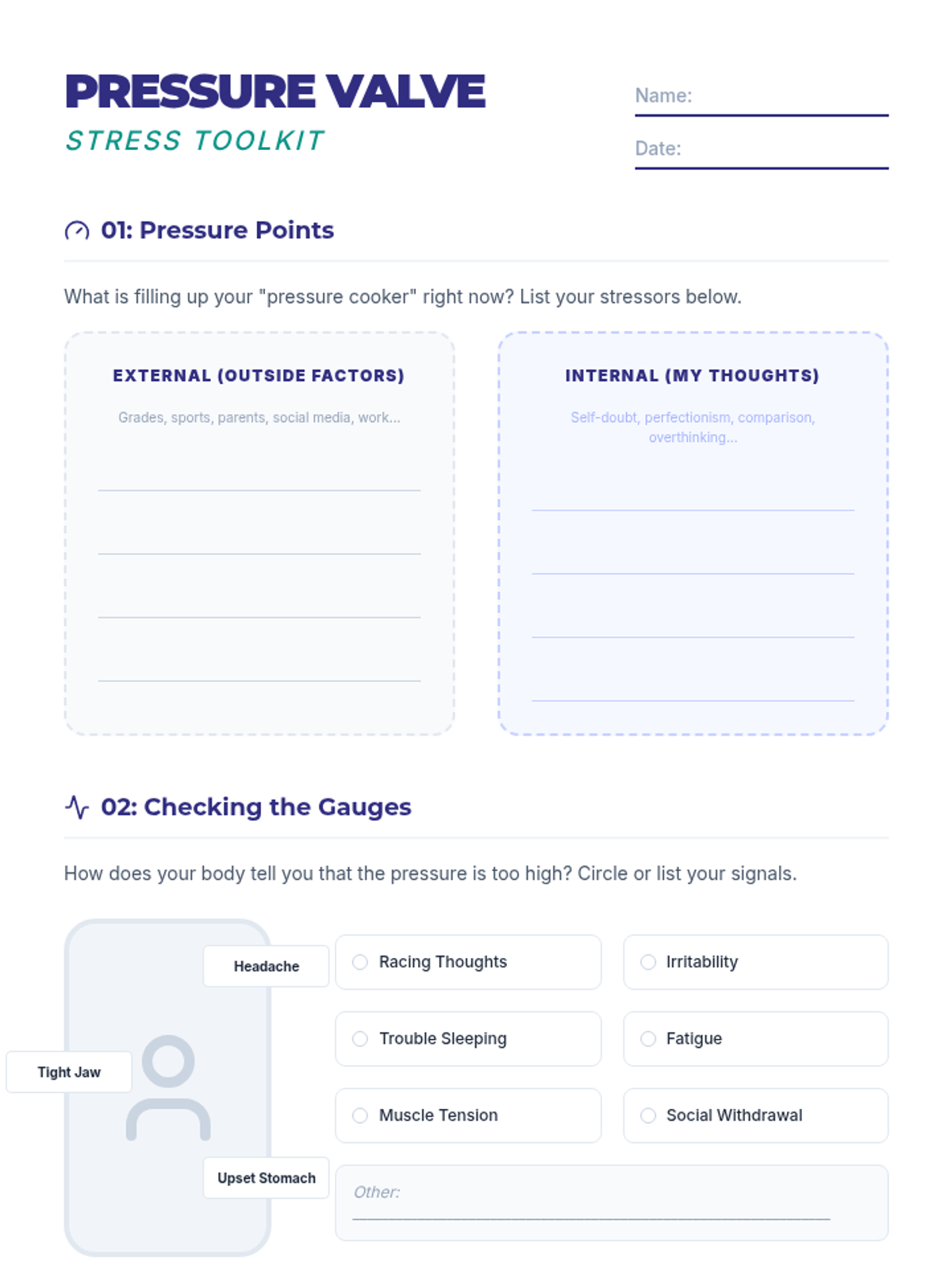
A lesson for adolescent boys on identifying emotional repression and practicing conflict resolution through the 'Pressure Valve' metaphor. Includes a student workbook and a teacher facilitation guide.
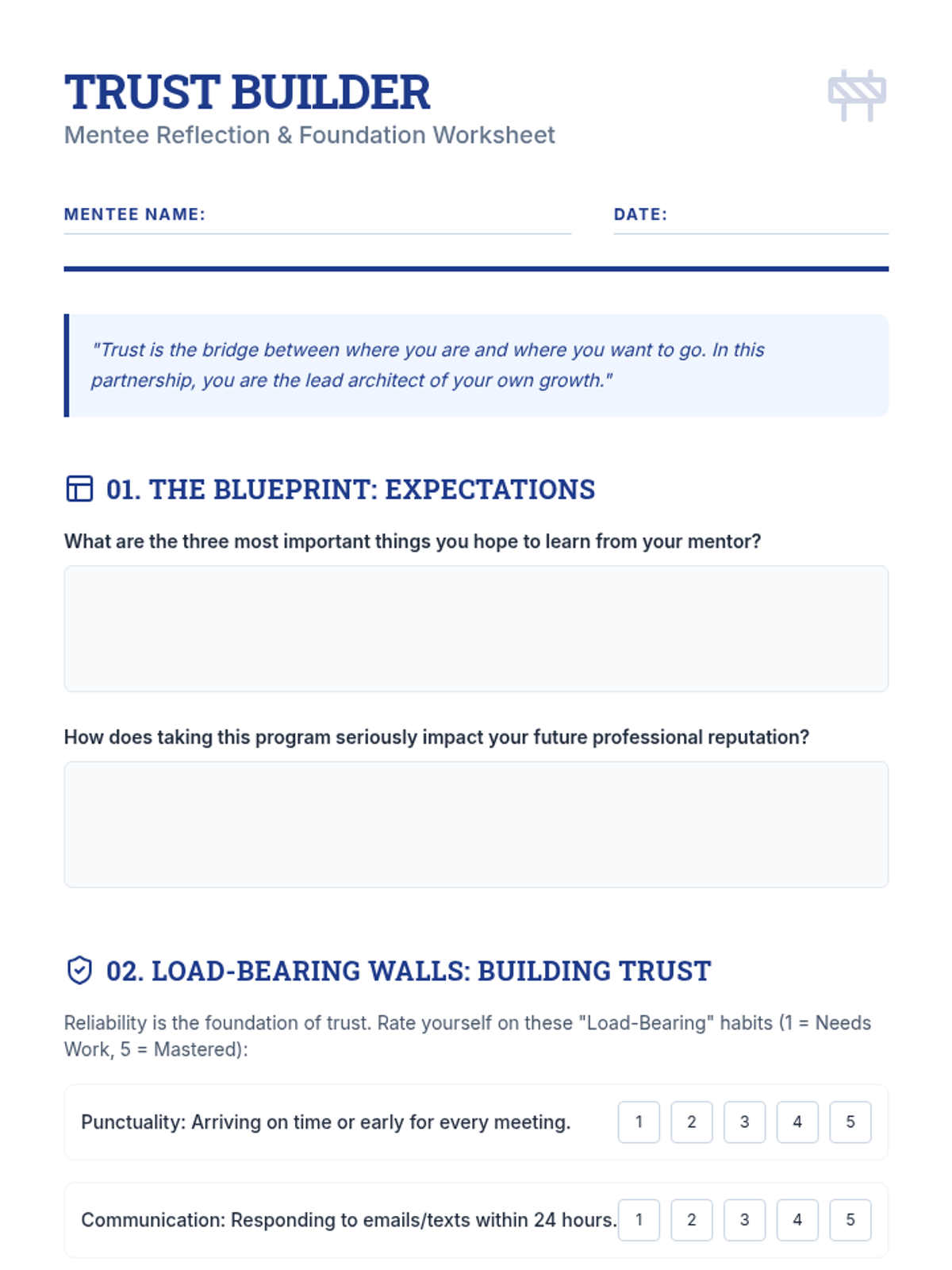
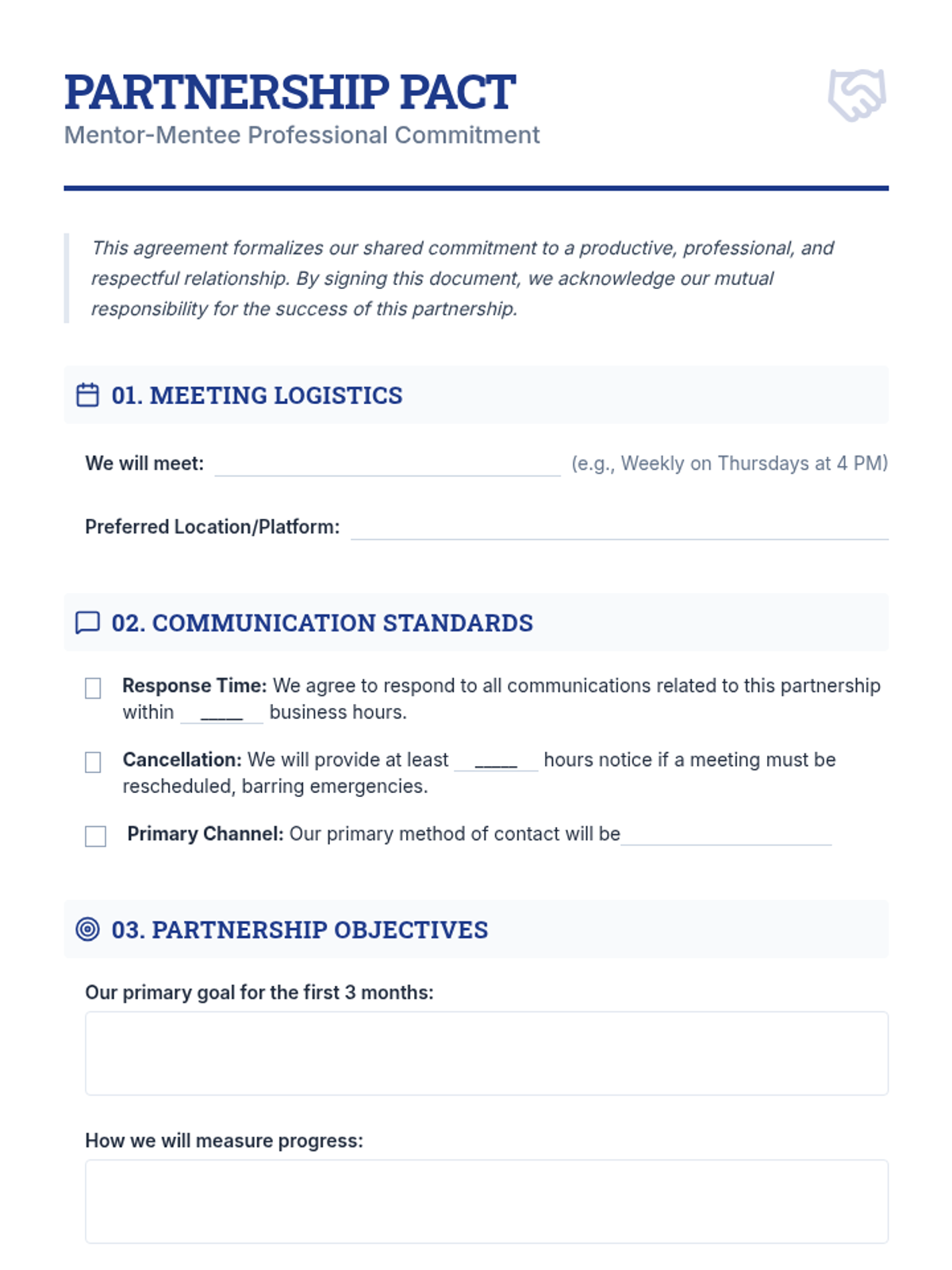
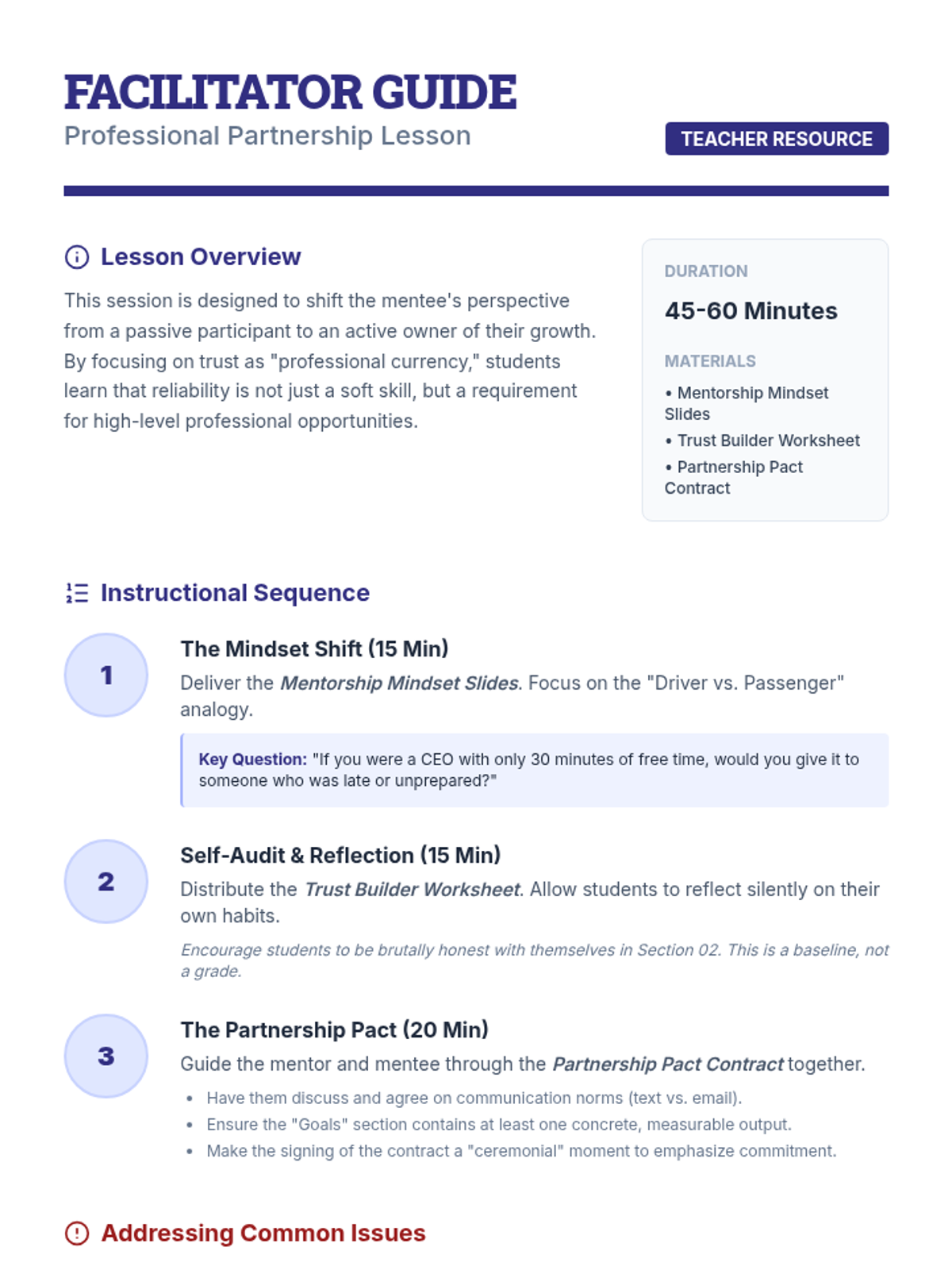
This lesson focuses on establishing a professional foundation for the mentor-mentee relationship, emphasizing the importance of trust, reliability, and professional etiquette. Students will reflect on their role as a mentee and formalize their commitment through a collaborative contract.
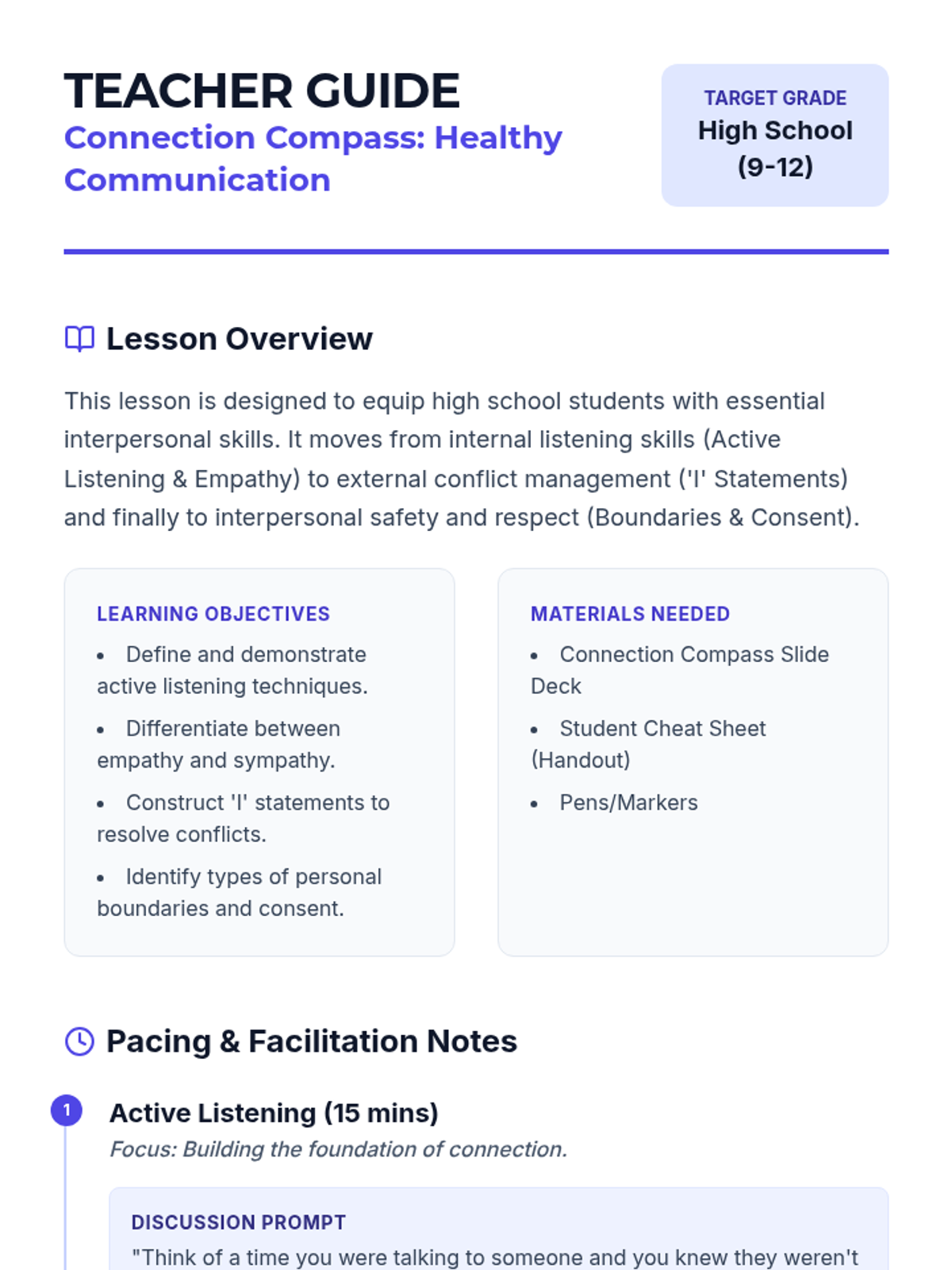
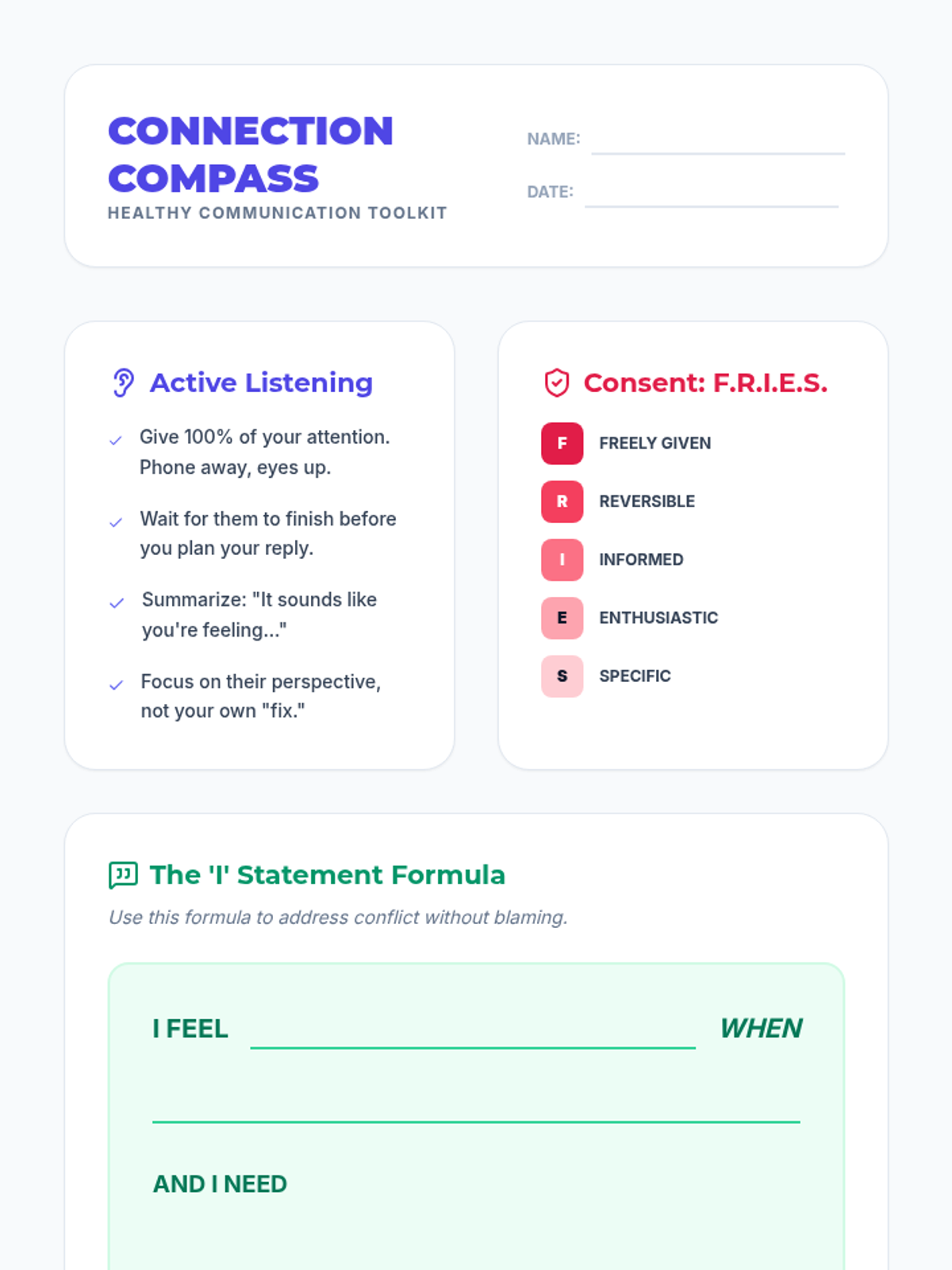
A comprehensive lesson on healthy communication skills, focusing on active listening, conflict resolution, and setting boundaries. Students engage with theory and practice through real-world scenarios.
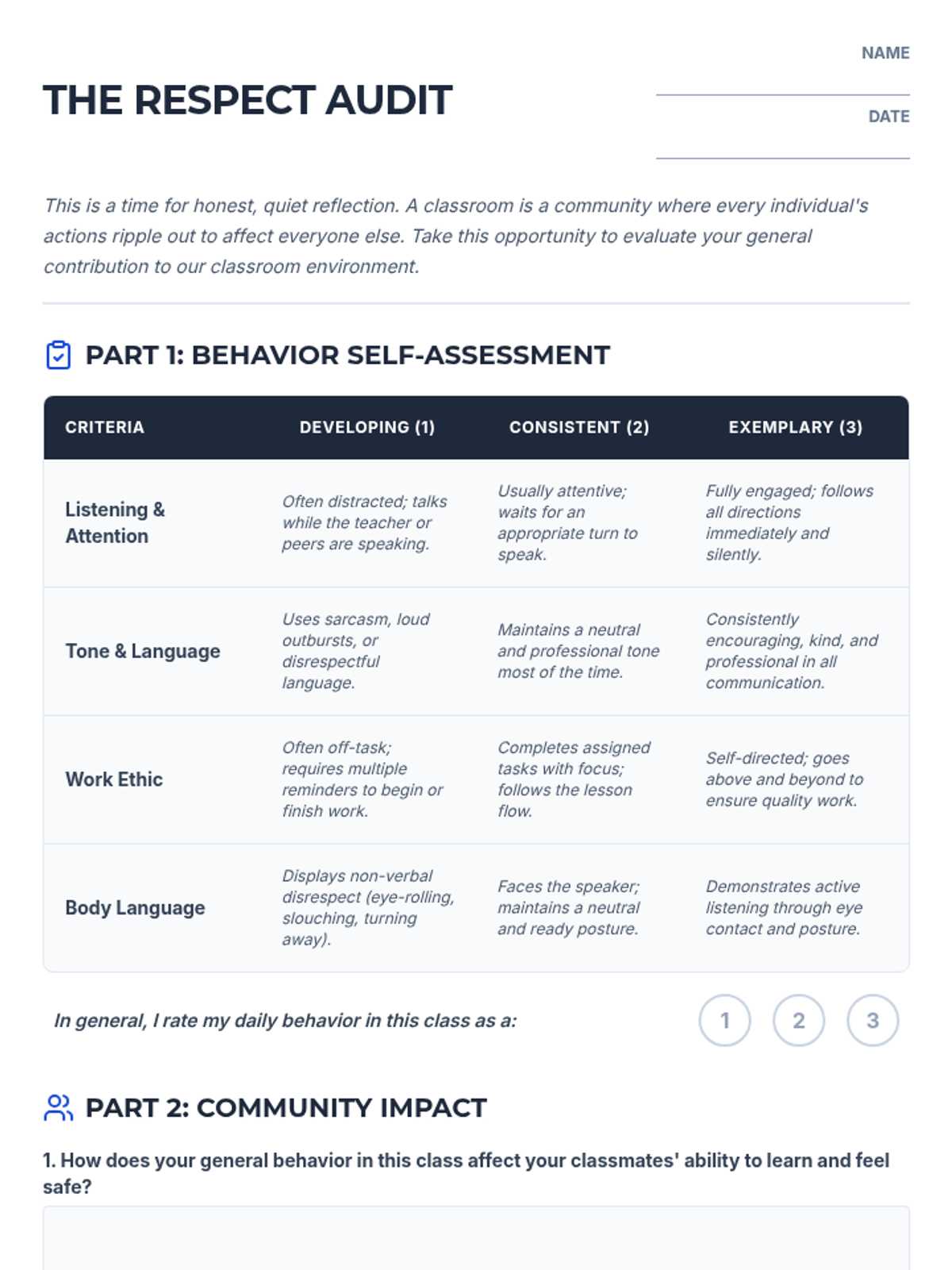
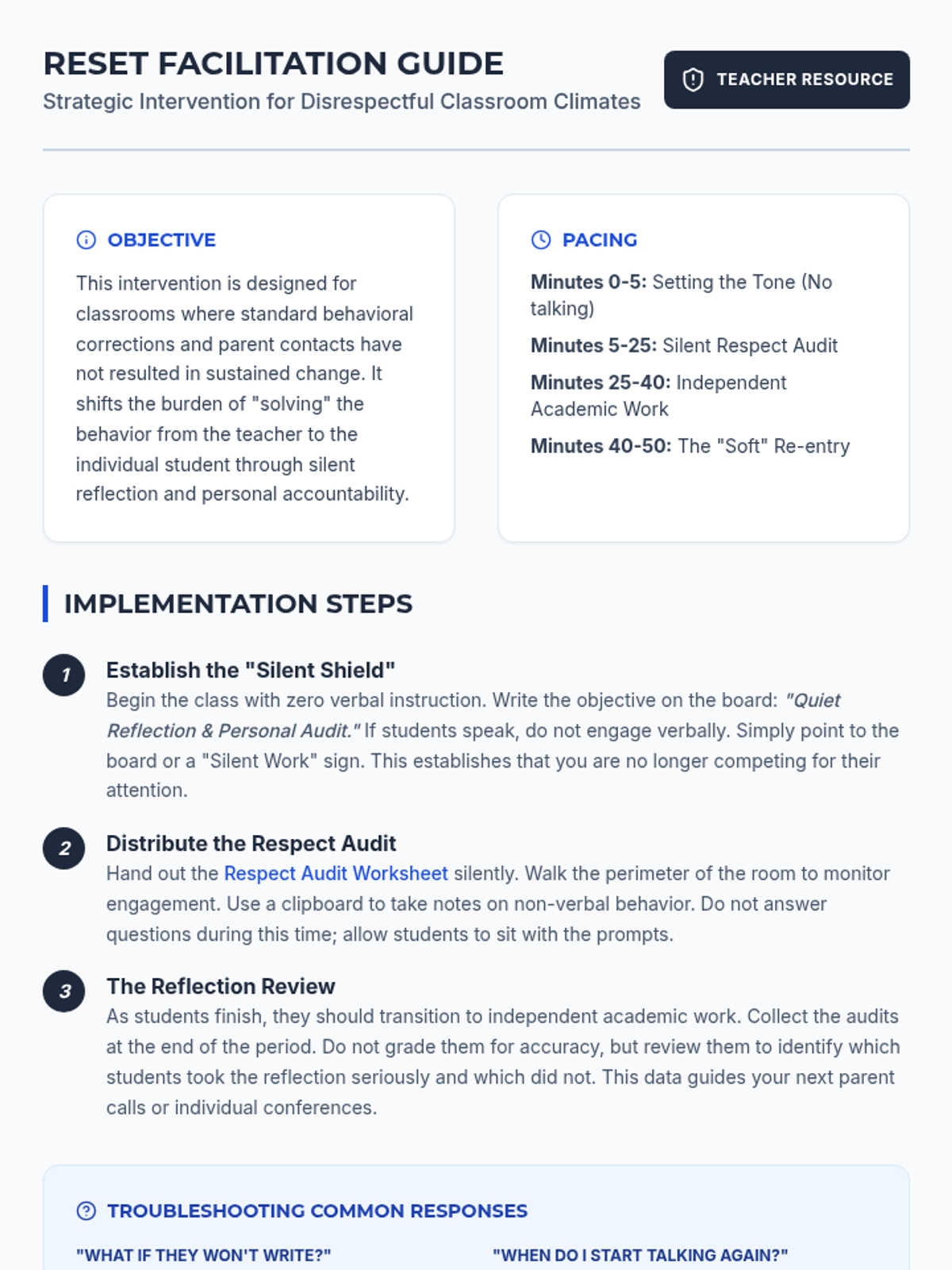
A self-guided reflection lesson designed to help students evaluate their behavior, understand its impact on the classroom community, and set concrete goals for improvement.
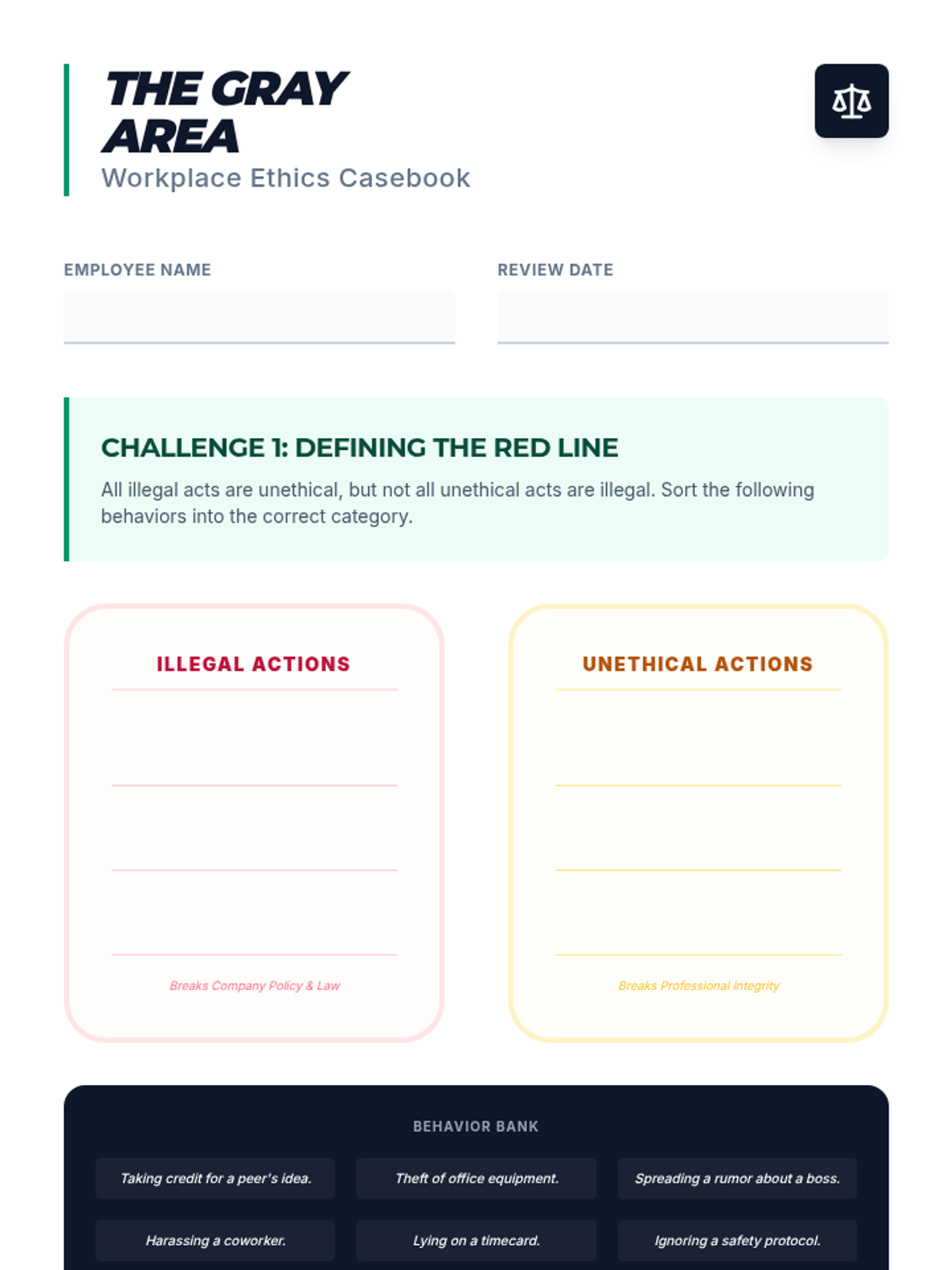
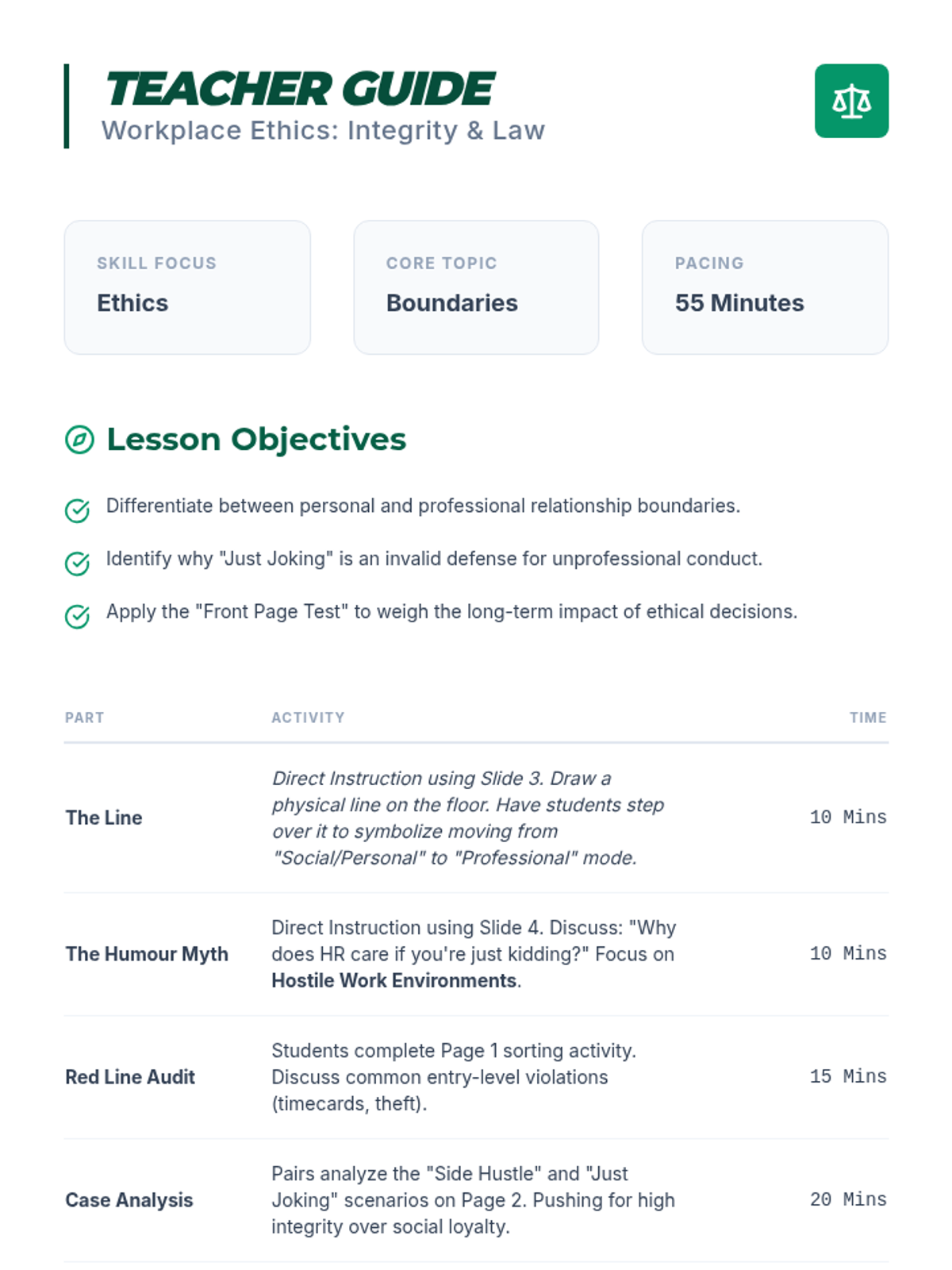
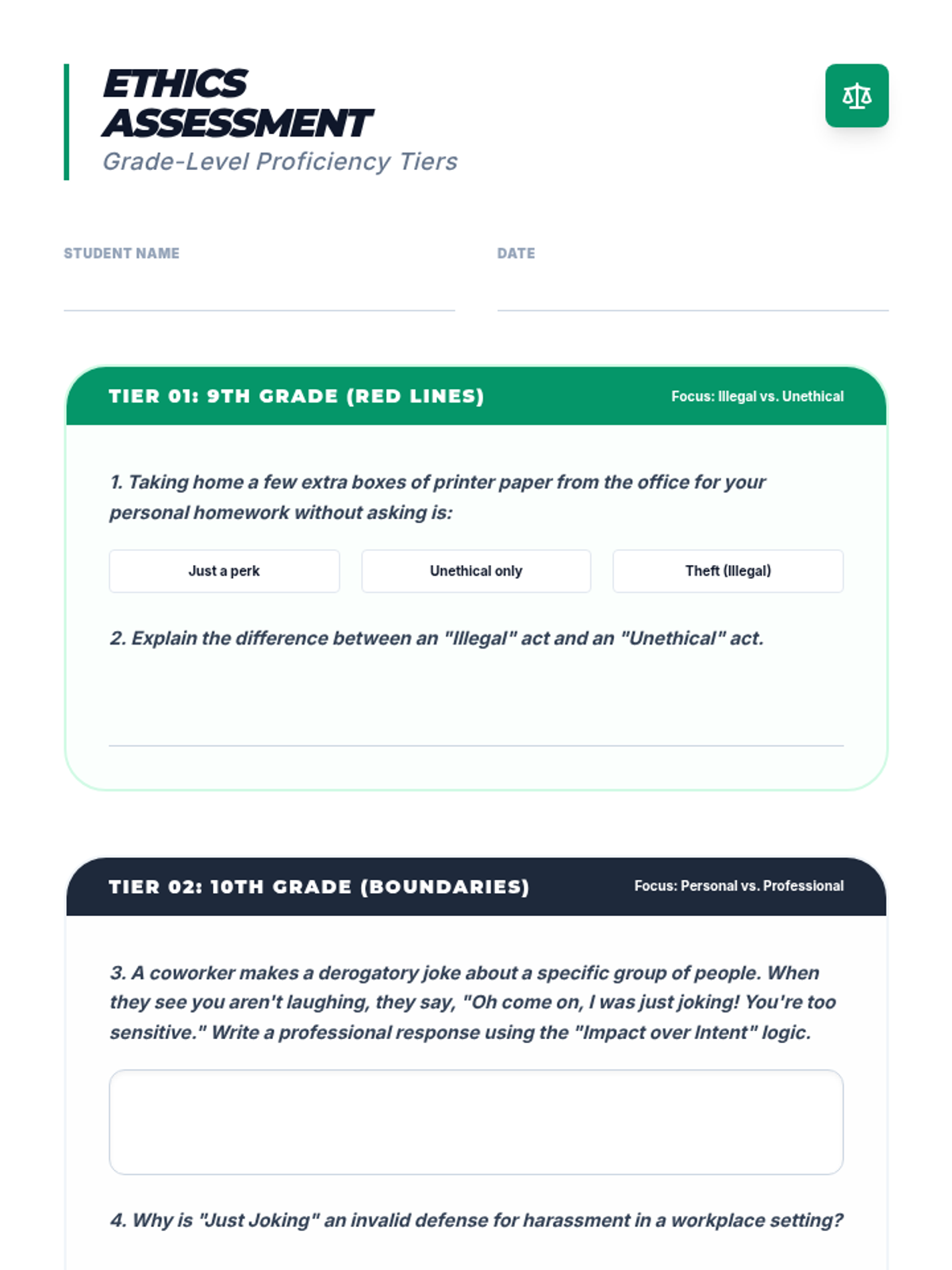
Explores the moral framework of the modern workplace. Students will analyze ethical dilemmas, define 'conflict of interest,' and practice the 'Front Page Test' to navigate gray areas where company policy and personal values intersect.
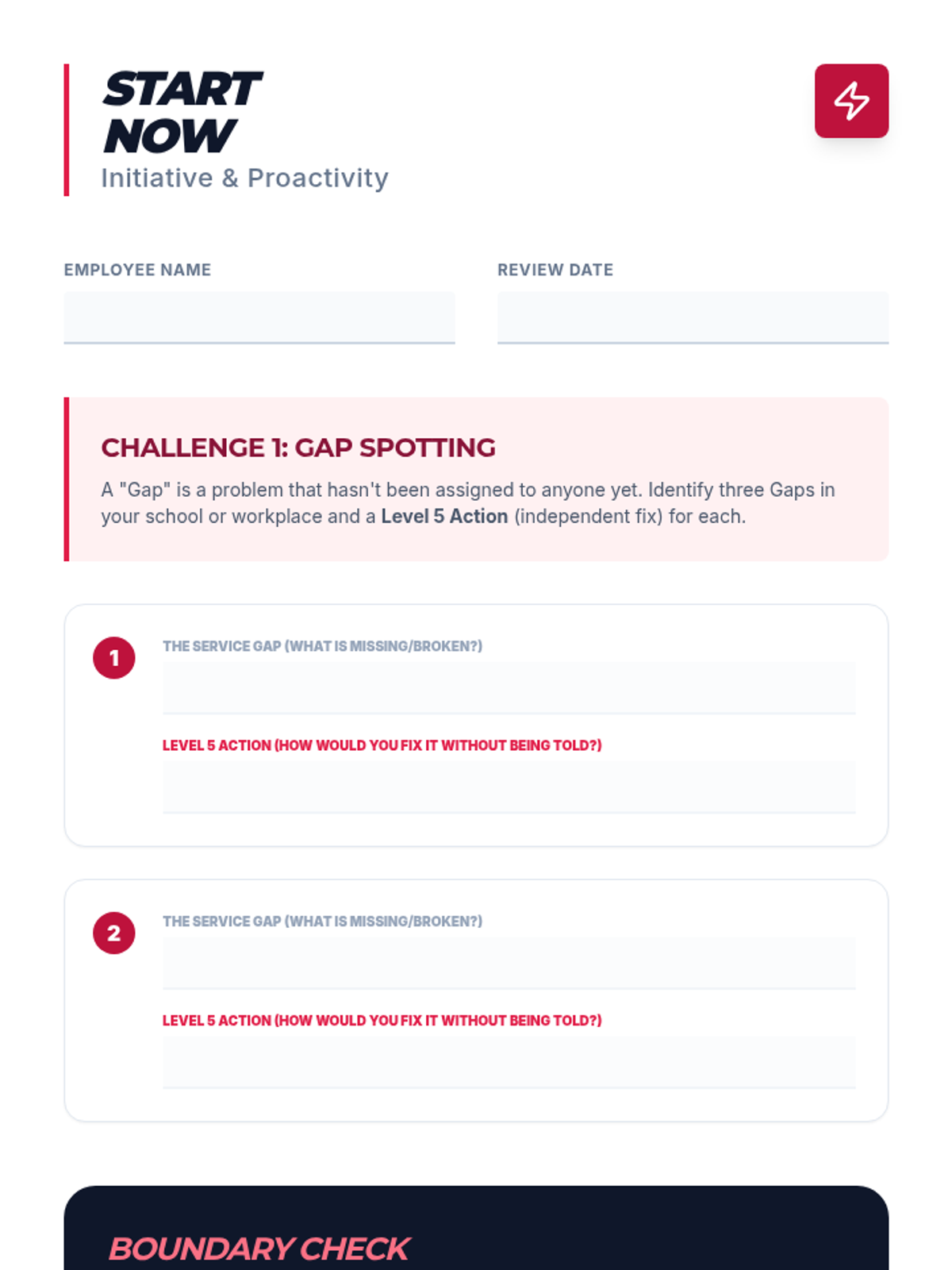
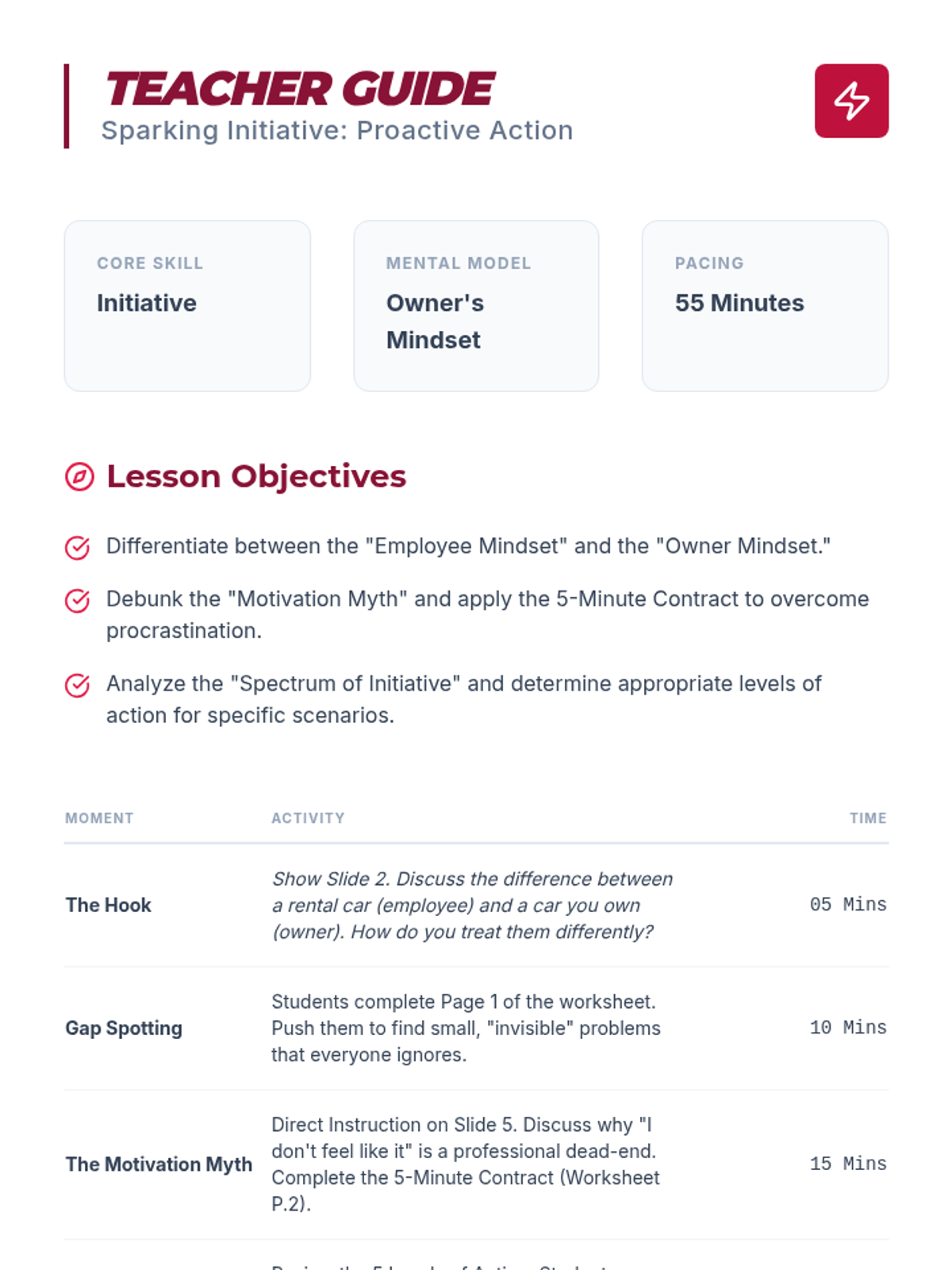
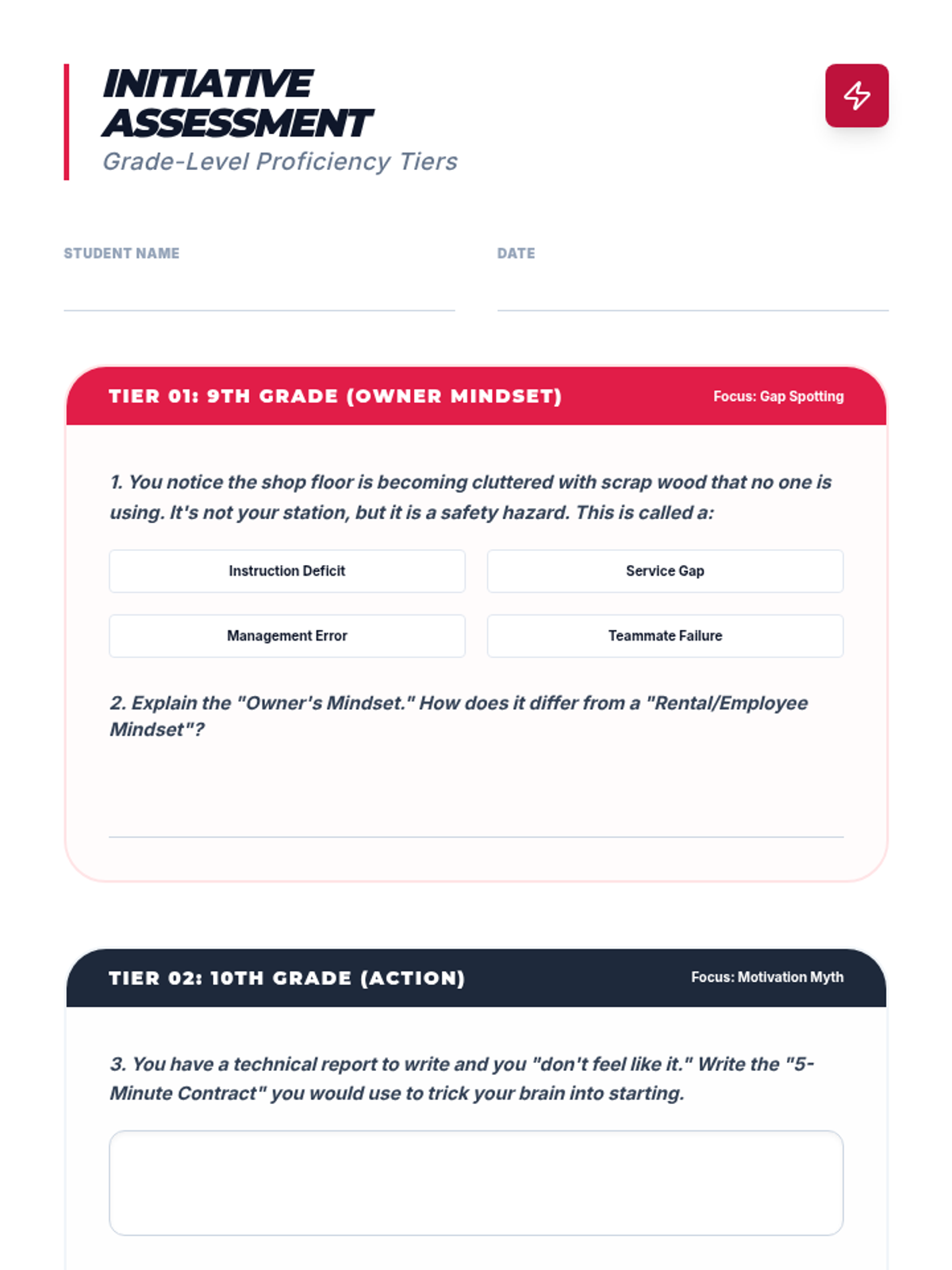
Focuses on the professional skill of acting without being told what to do. Students will learn the "Owner's Mindset," how to identify service gaps, and the appropriate boundaries of taking initiative in a workplace hierarchy.
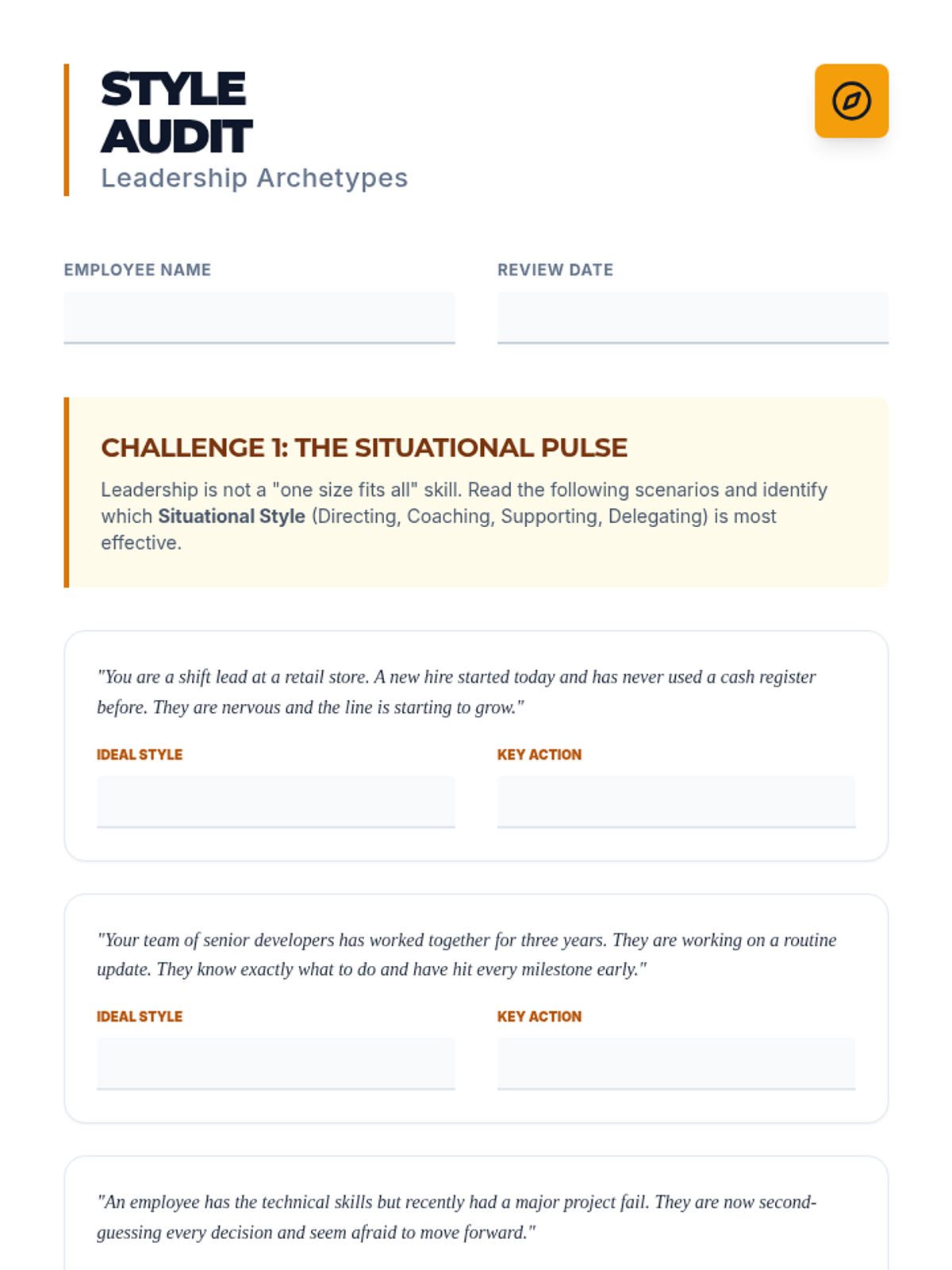
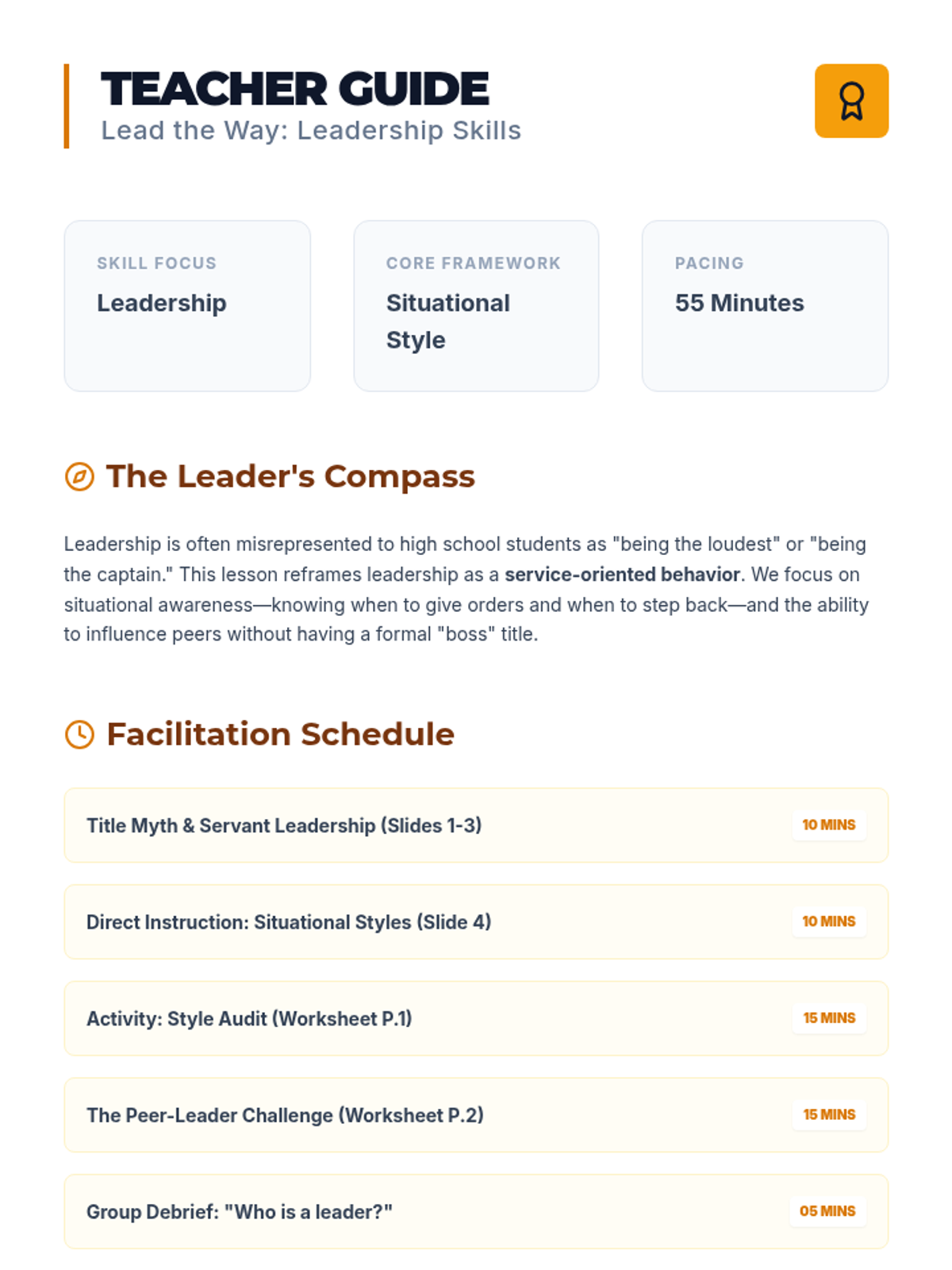
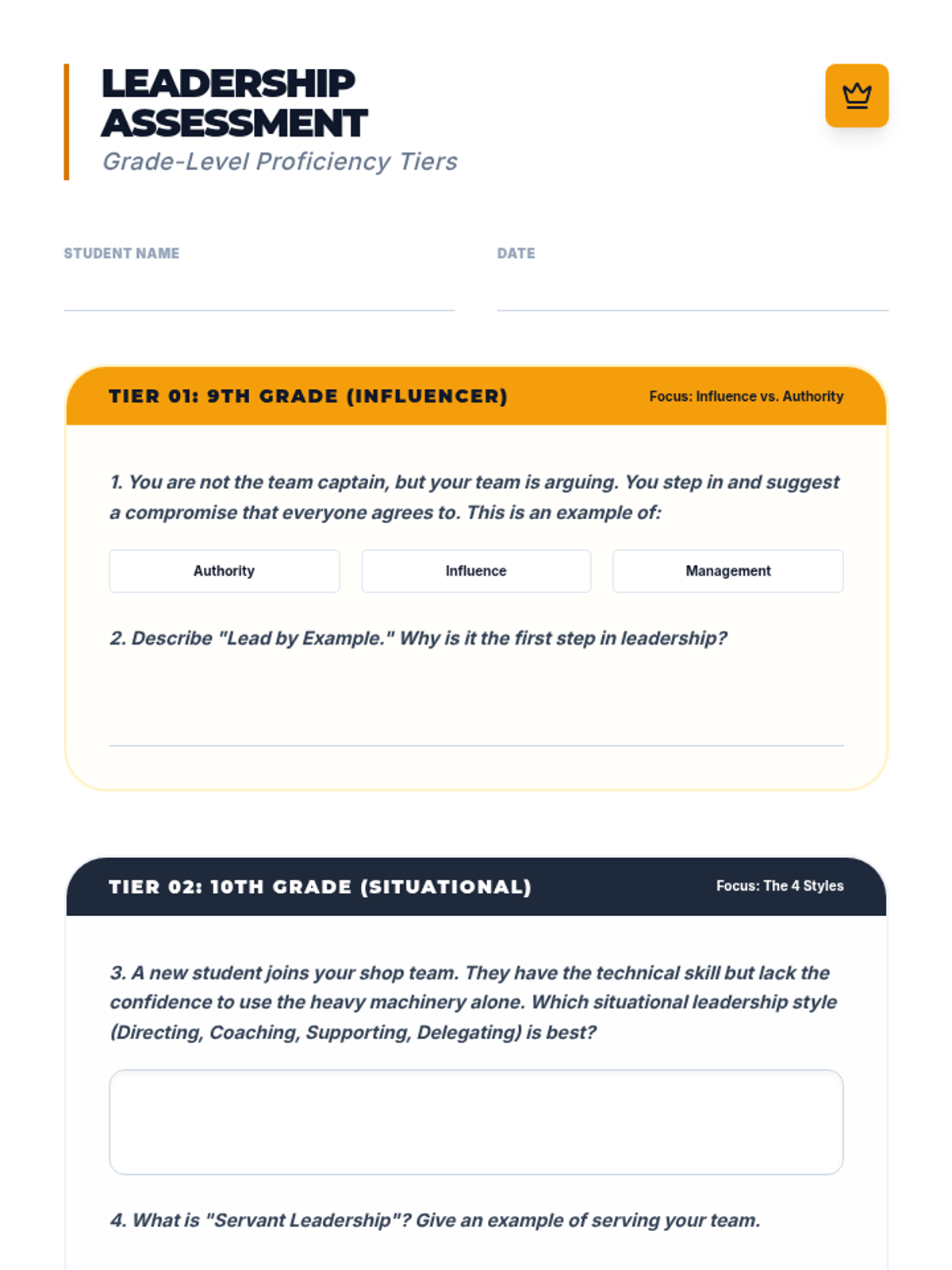
Explores leadership as a set of behaviors rather than a job title. Students will learn about situational leadership, the concept of 'Servant Leadership,' and how to influence a team positively from any position in the organizational chart.
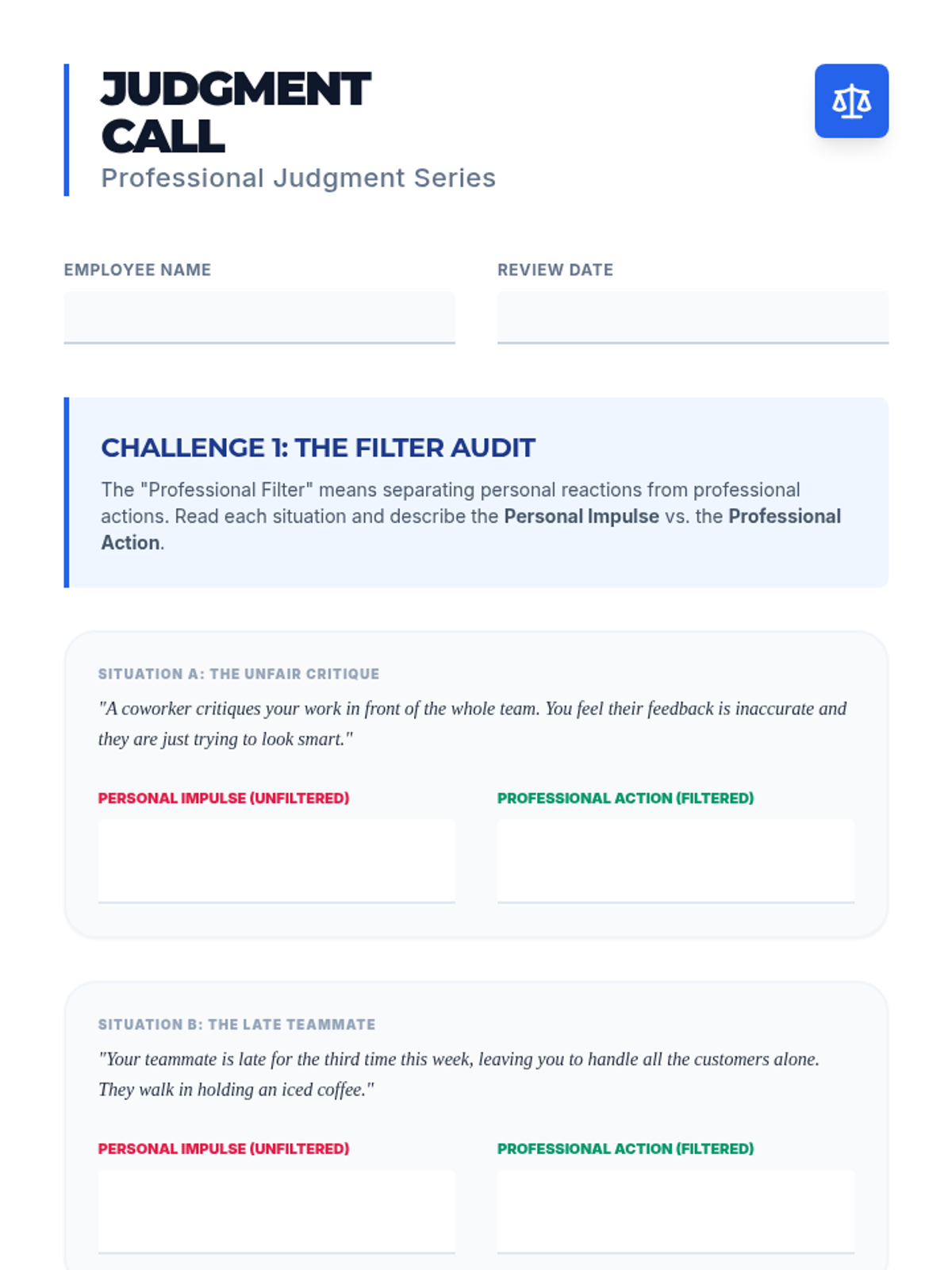
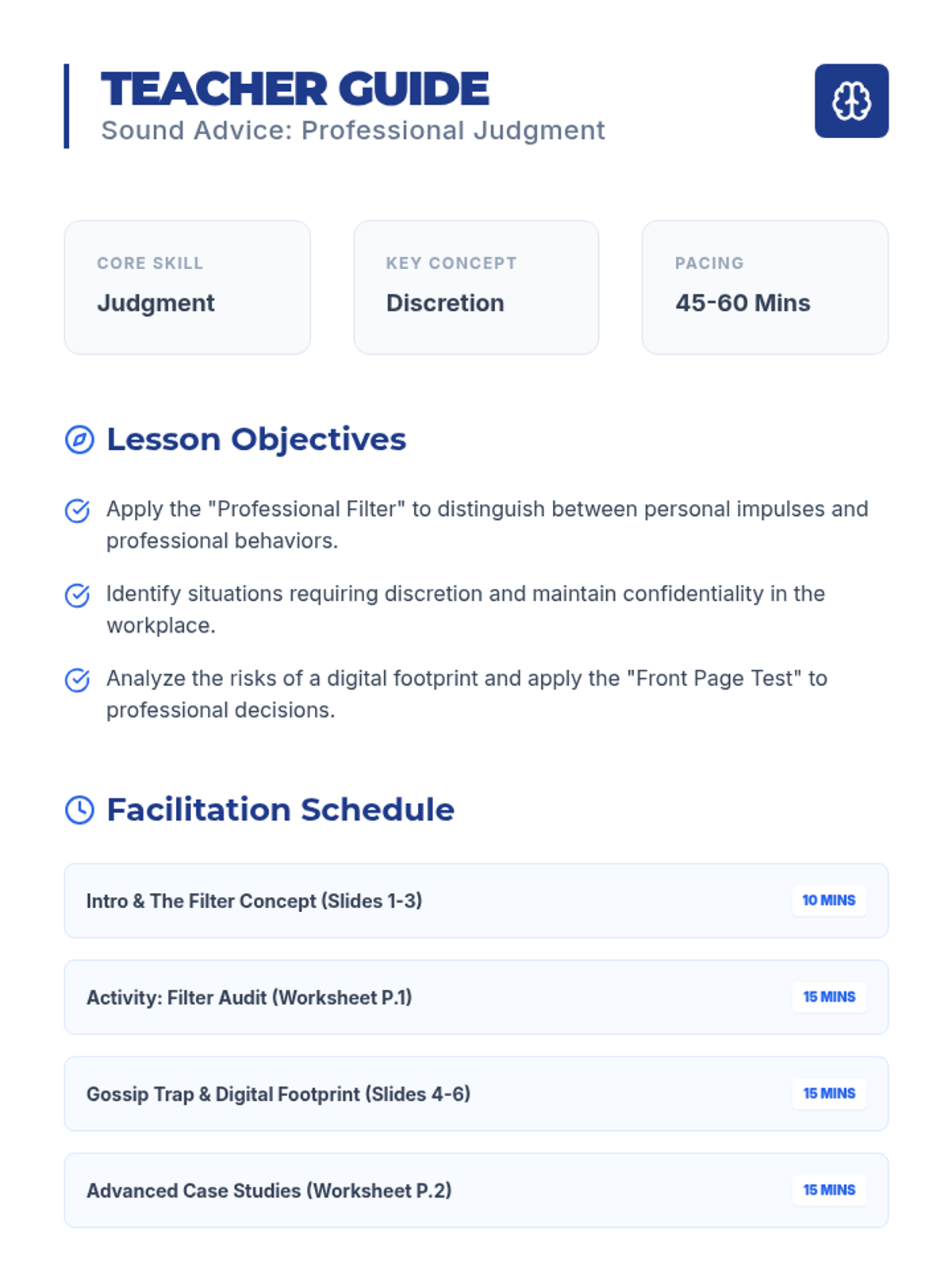
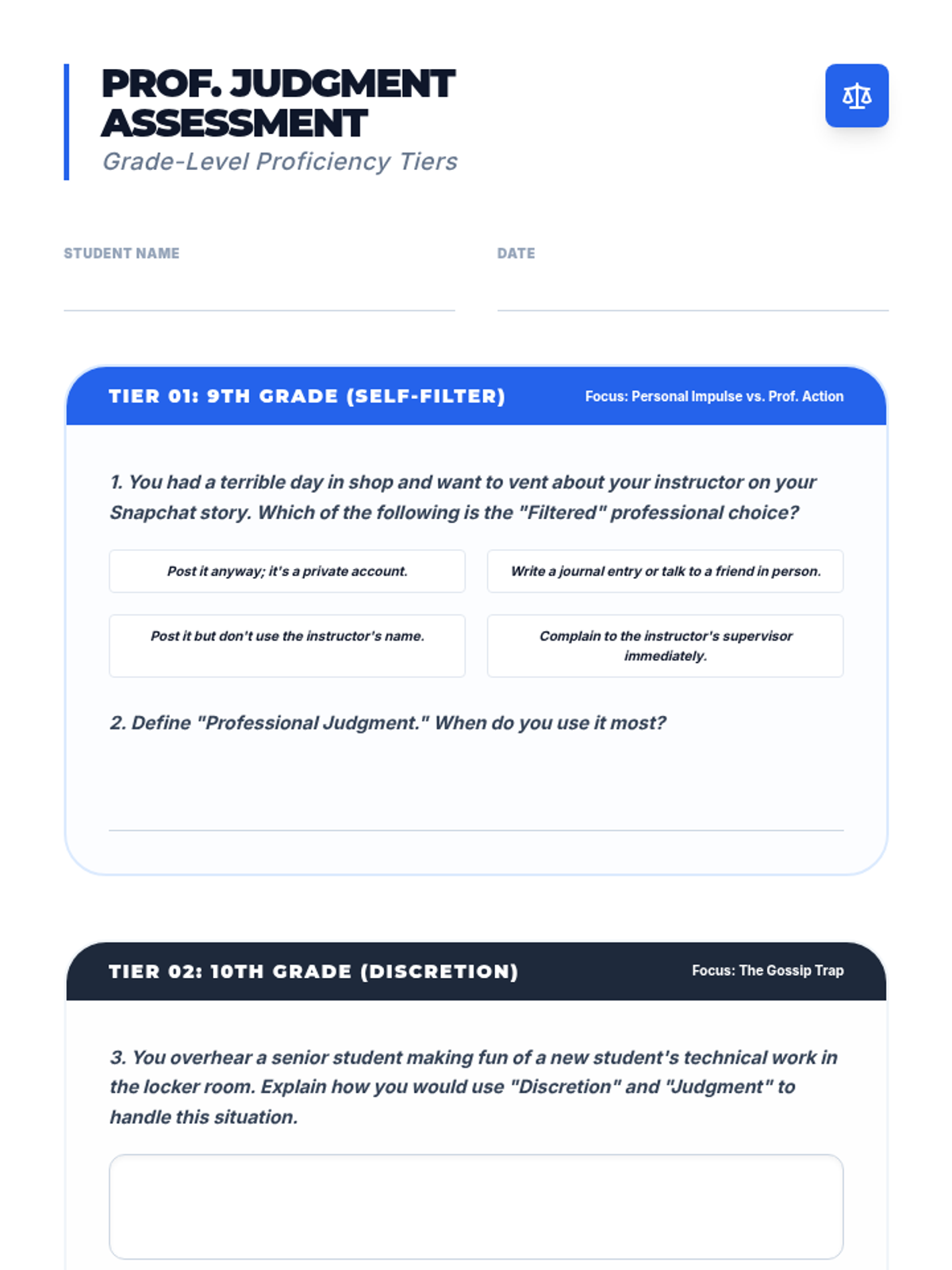
Focuses on the critical skill of making sound decisions in the workplace. Students will explore the 'Professional Filter,' the importance of confidentiality/discretion, and the impact of their digital footprint on their professional reputation.
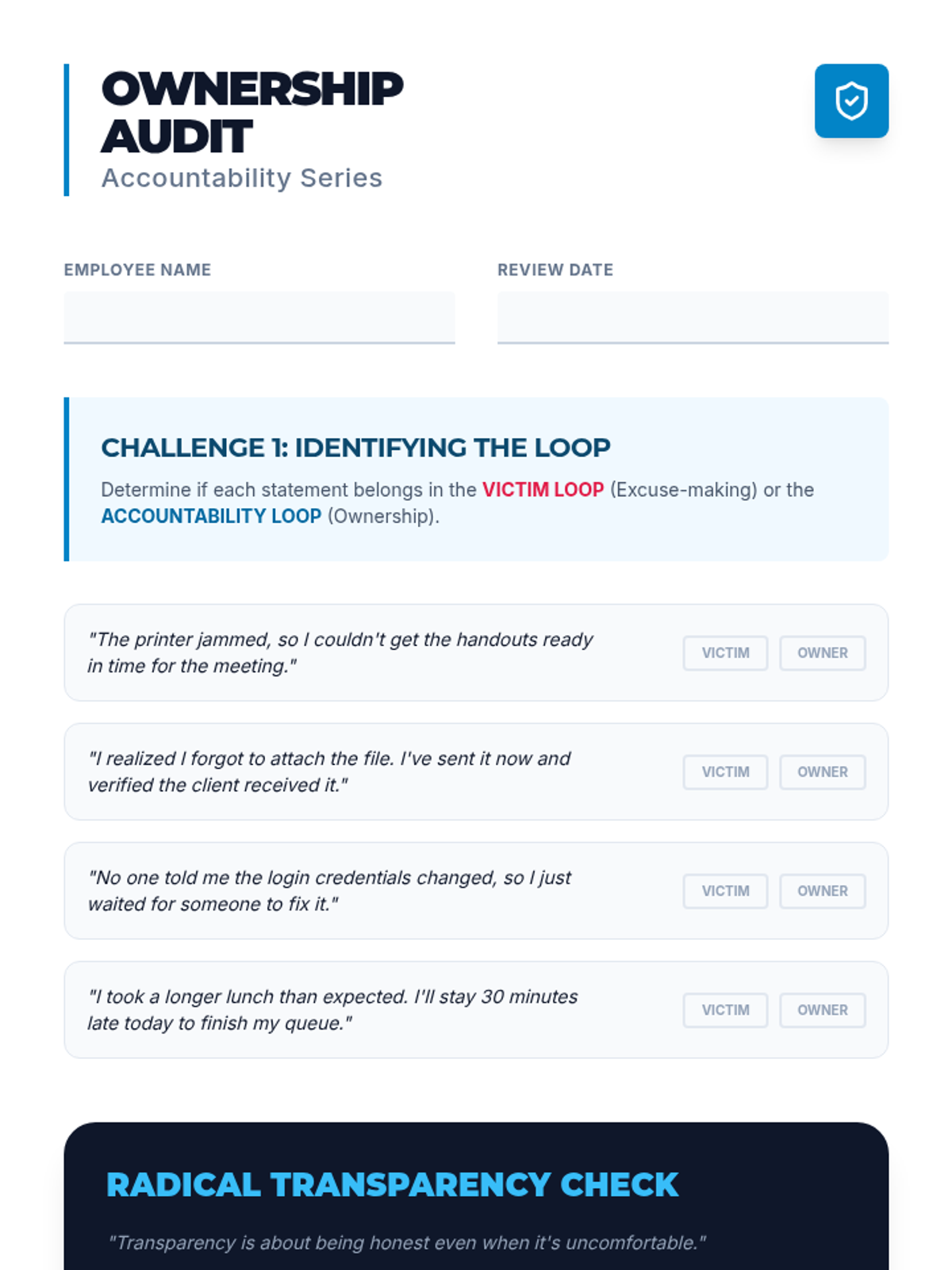
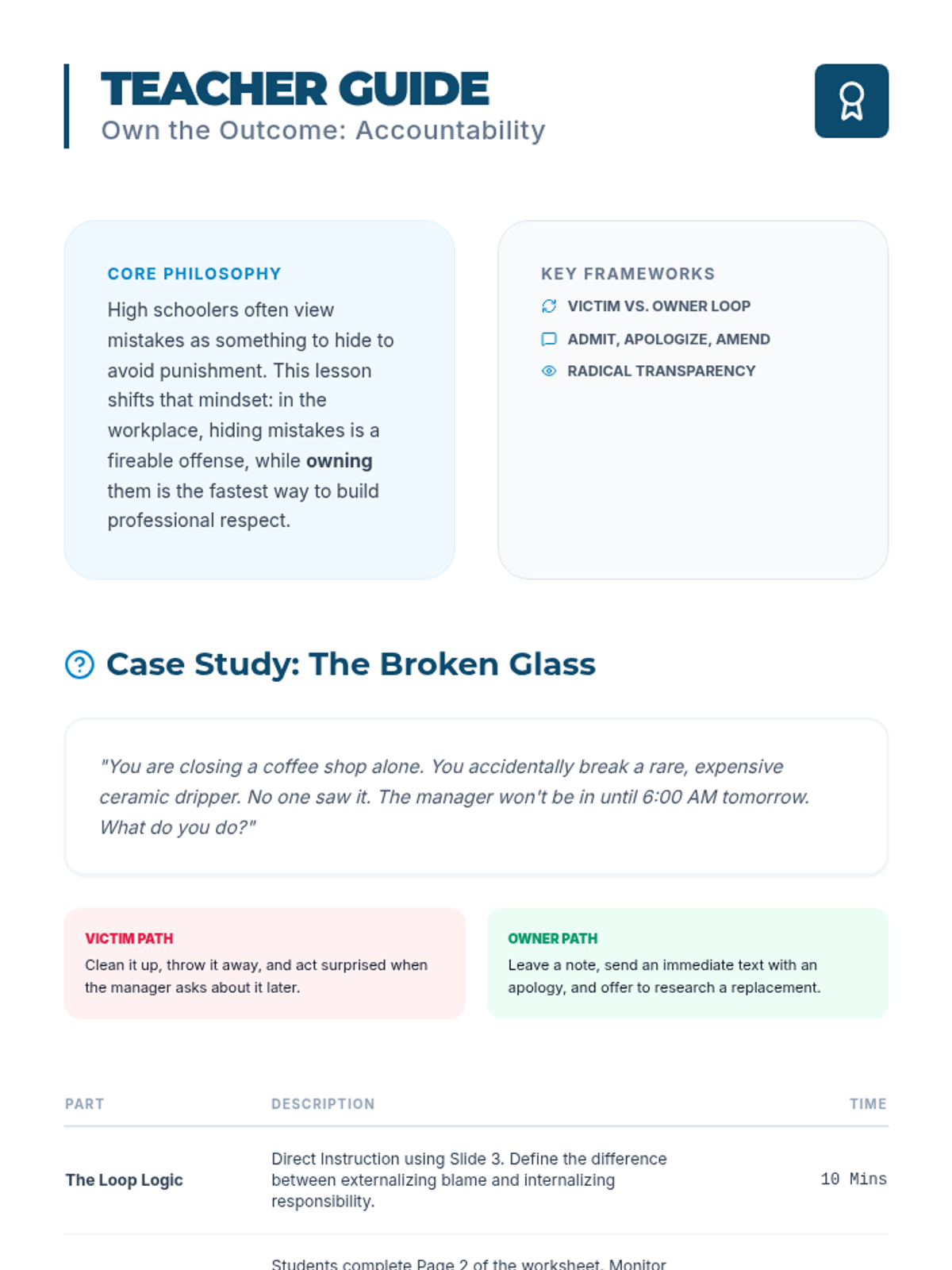
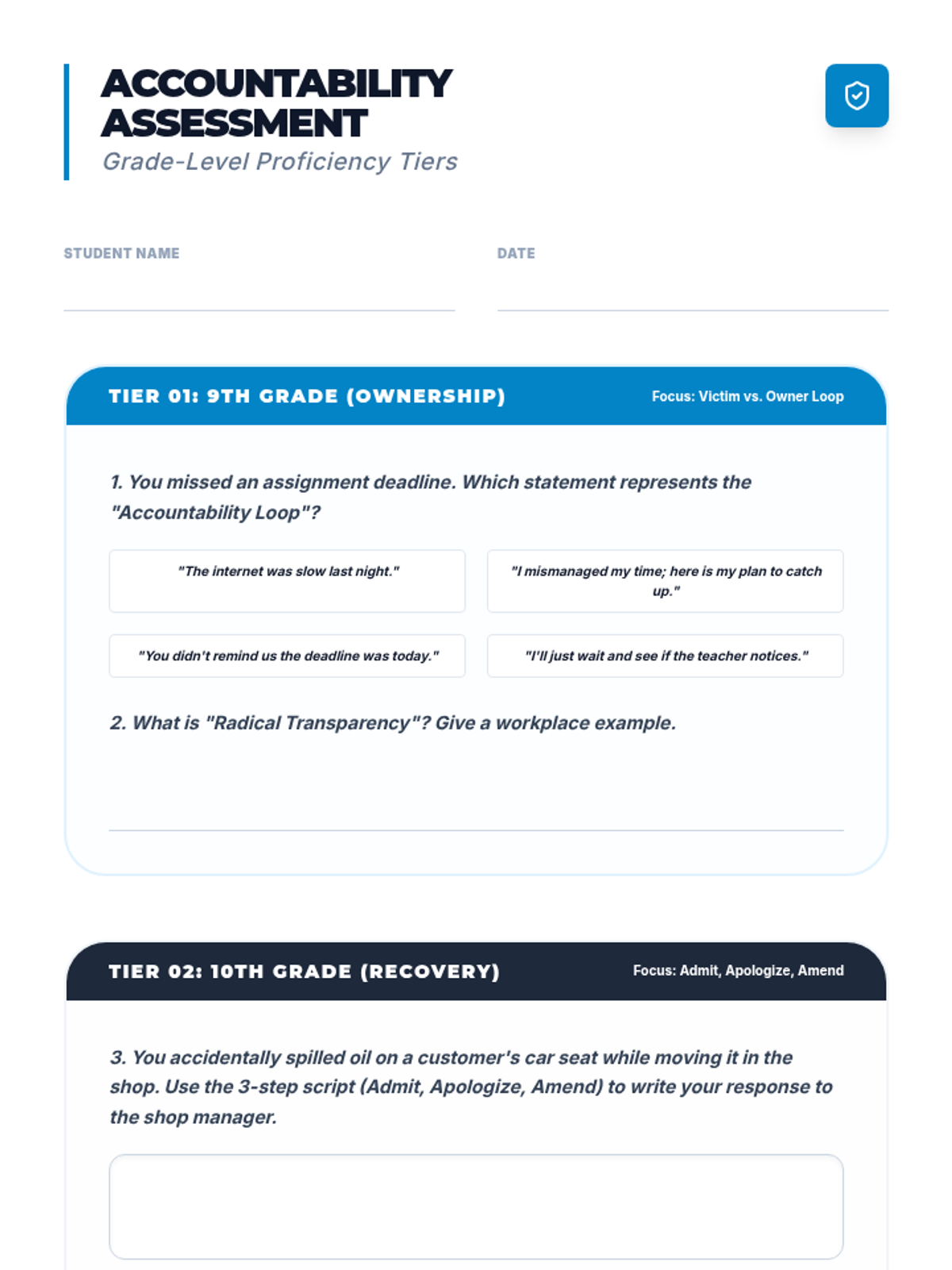
Focuses on the professional discipline of taking ownership for actions and outcomes. Students will explore the 'Accountability Loop' versus the 'Victim Loop,' practice the 'Admit, Apologize, Amend' script for errors, and learn how to build a reputation for extreme ownership.
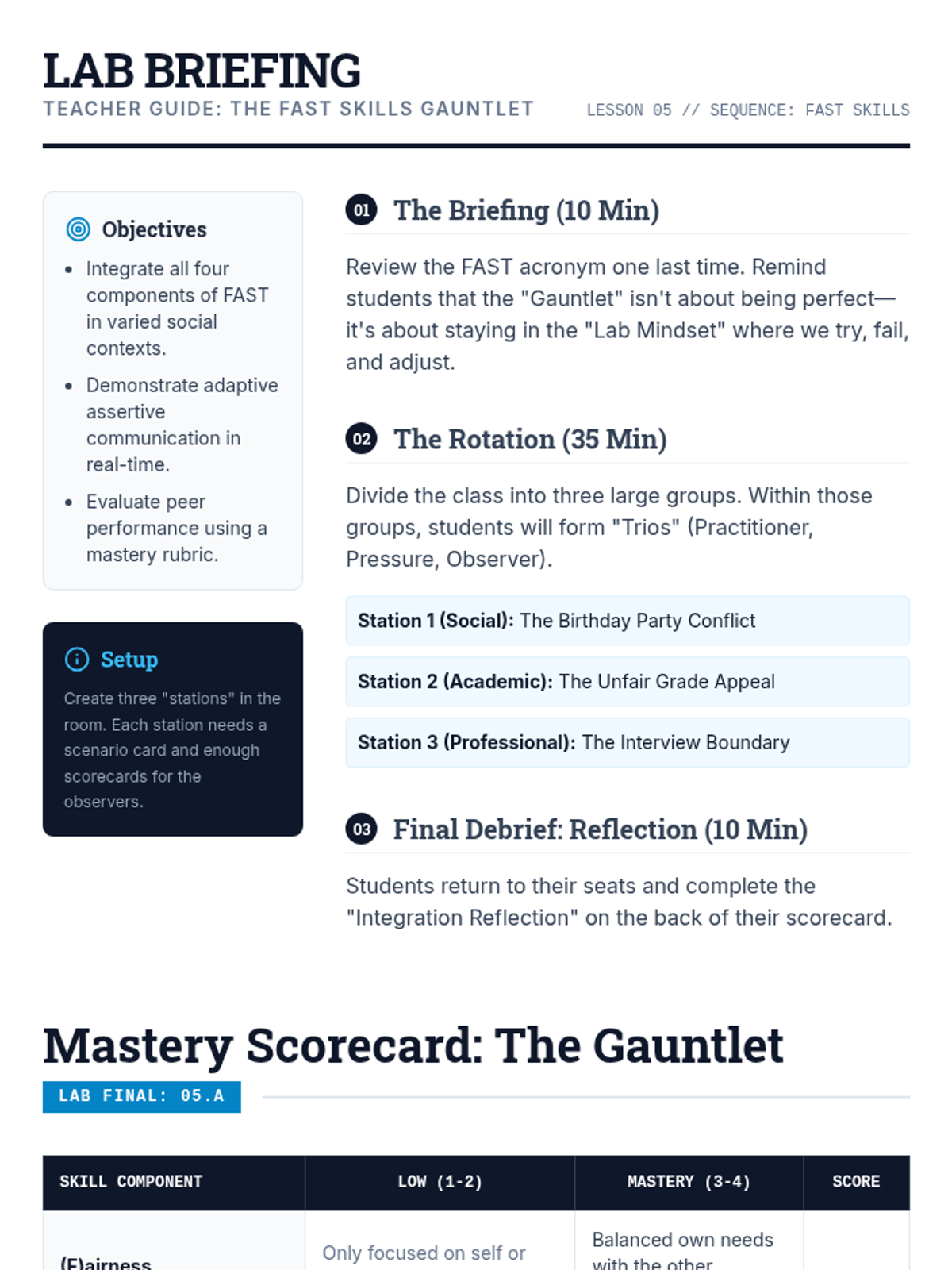
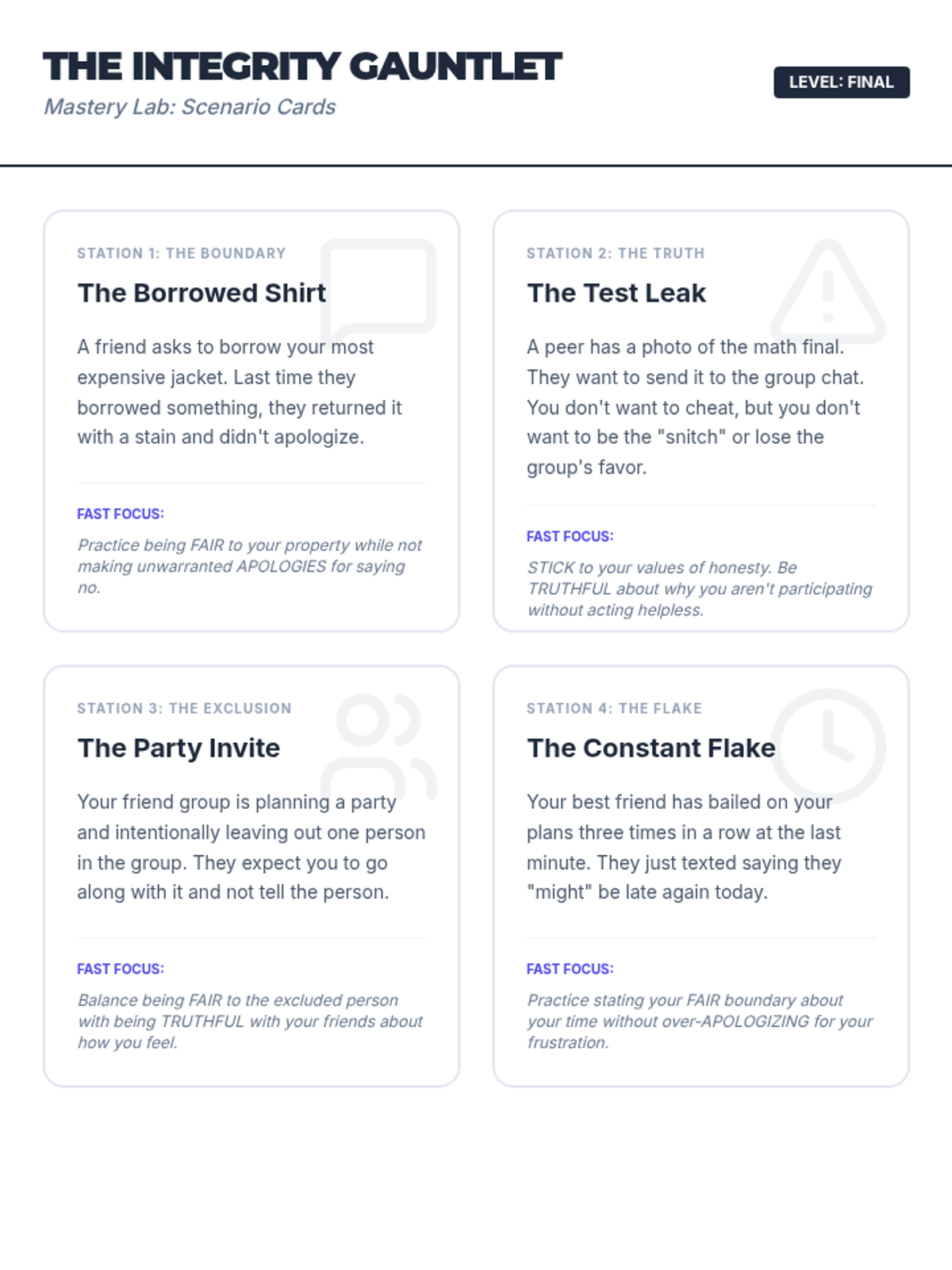
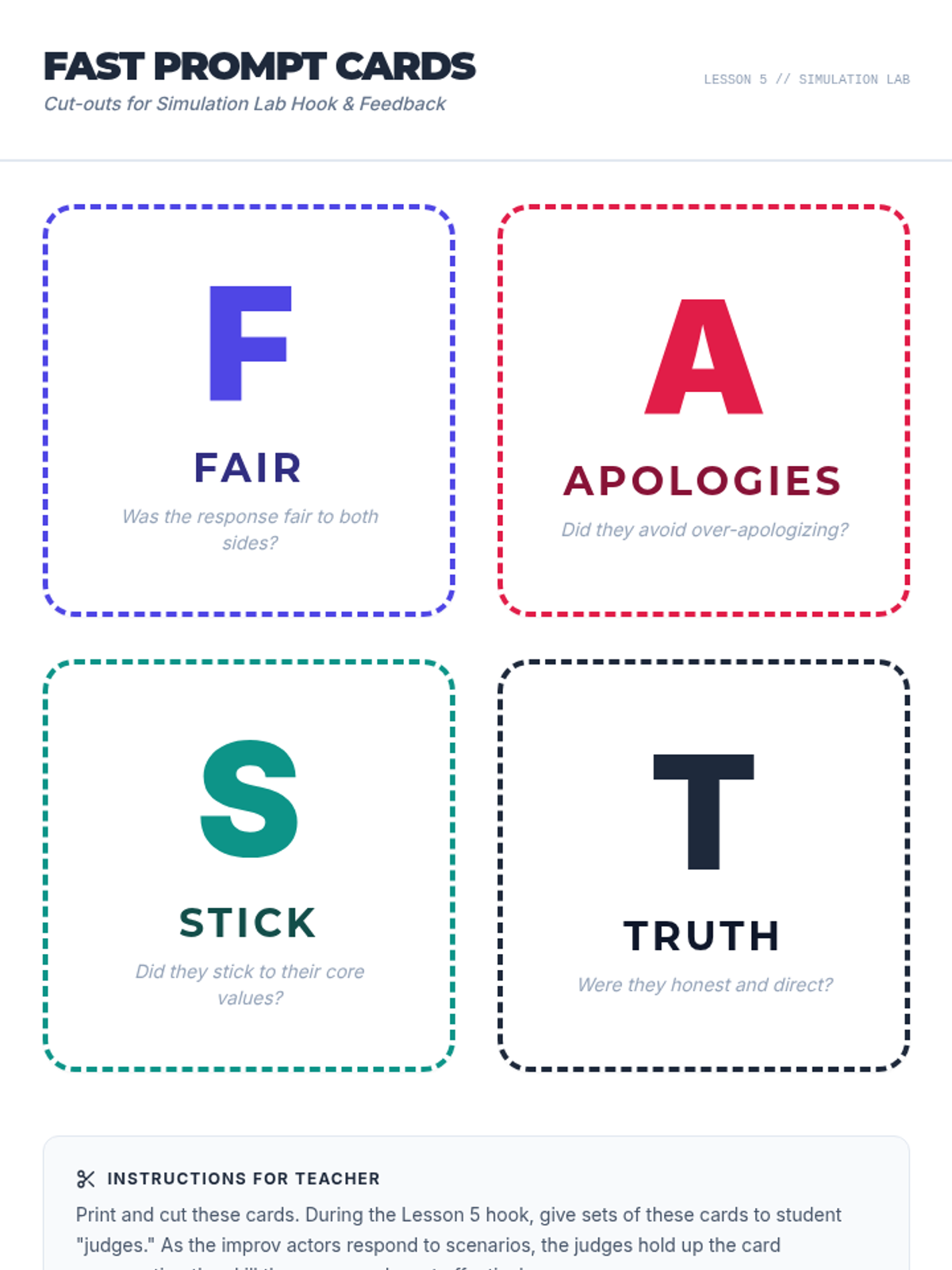
A final mastery-based assessment where students rotate through three 'Gauntlet' stations to apply all FAST skills in academic, social, and professional contexts.
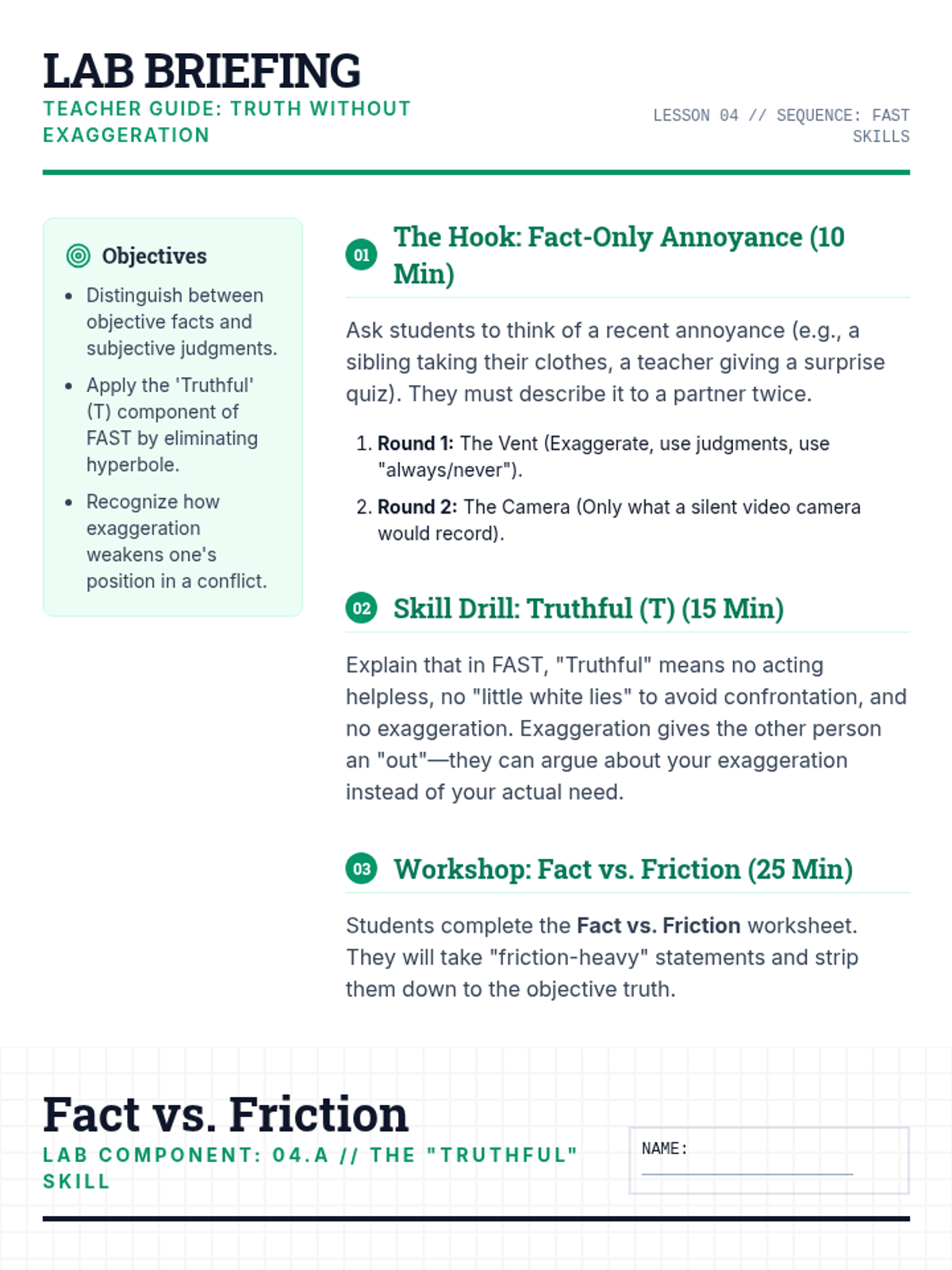
A skill-building workshop centered on the 'Truthful' component of FAST, teaching students to communicate difficult situations using objective facts rather than exaggerations.
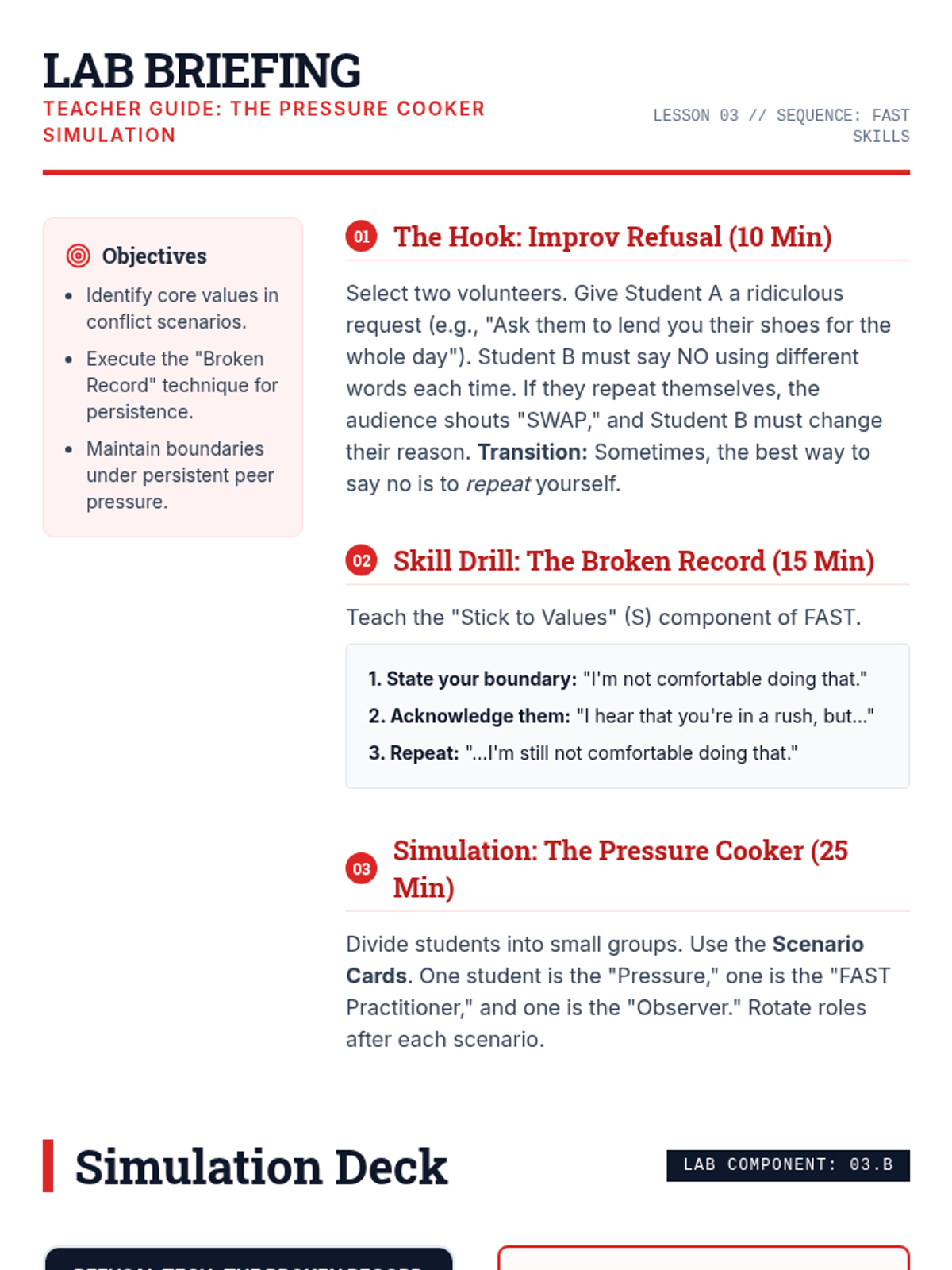
A simulation-heavy lesson focusing on 'Sticking to Values' through refusal skills and the 'broken record' technique in high-pressure social scenarios.
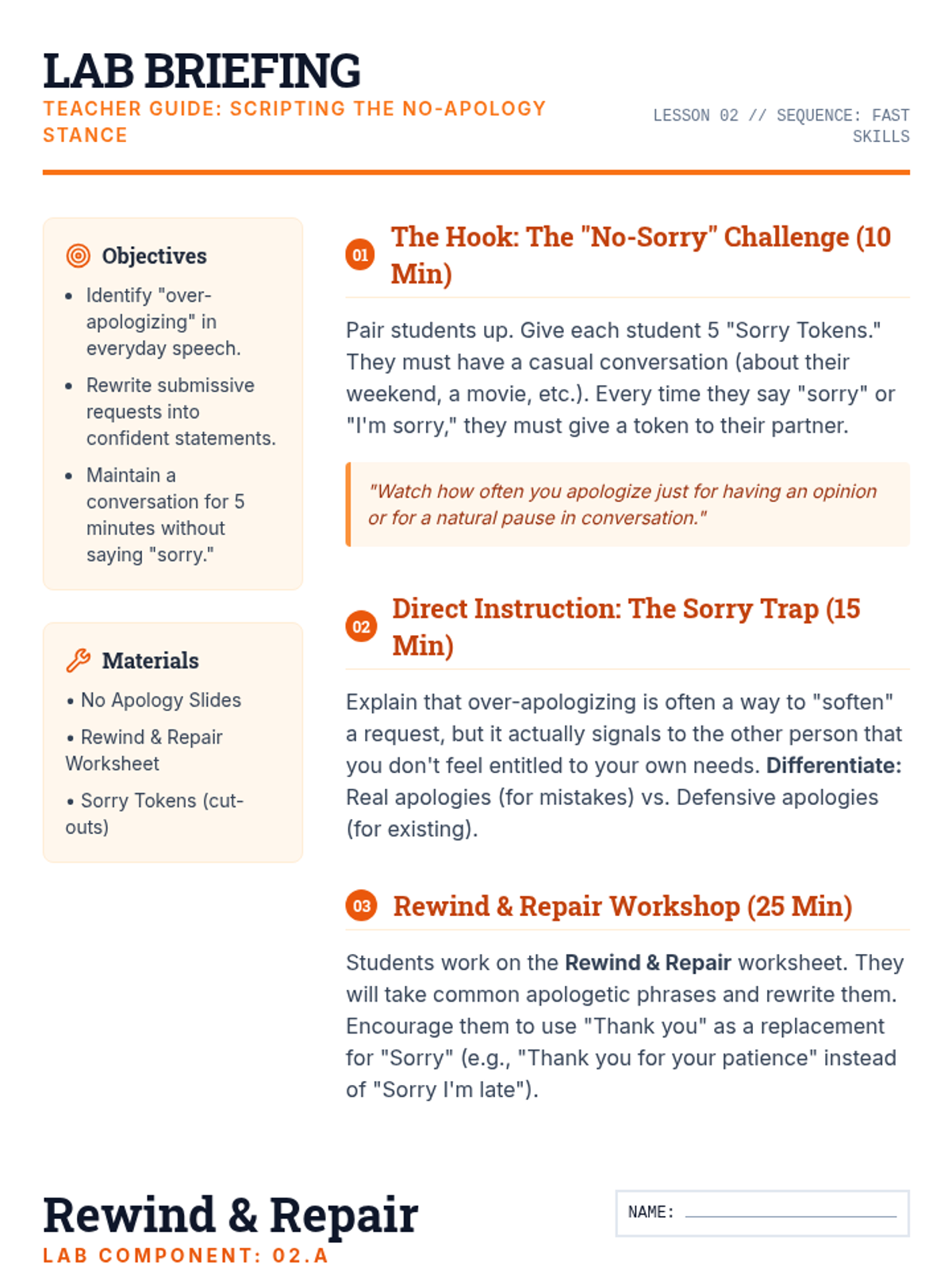
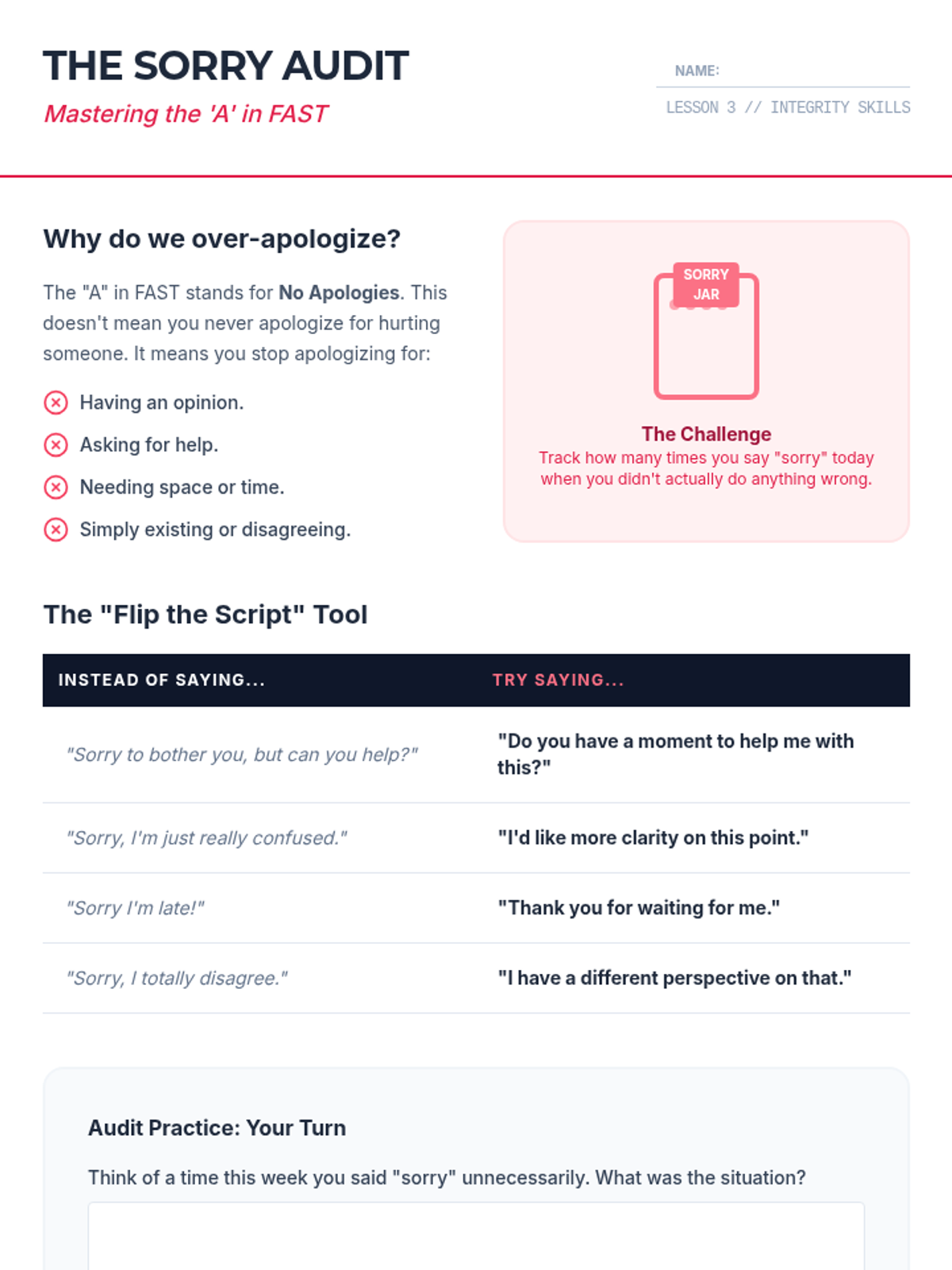
A workshop focused on the 'No Apologies' skill, where students rewrite dialogue to eliminate unnecessary over-apologizing and practice confident communication.
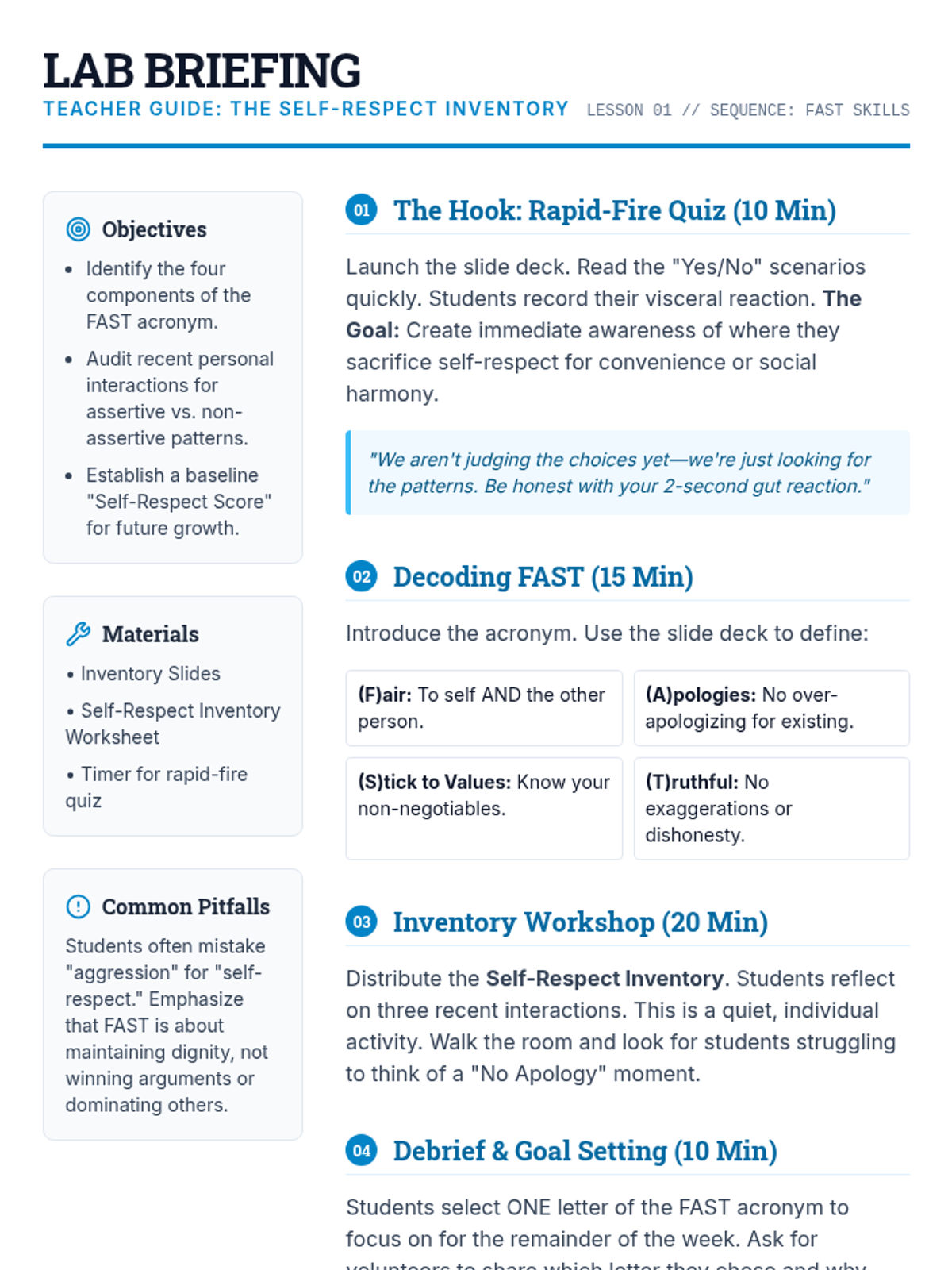
Students audit their recent social interactions to identify patterns of passivity or aggression and set personal growth goals for specific FAST skills.
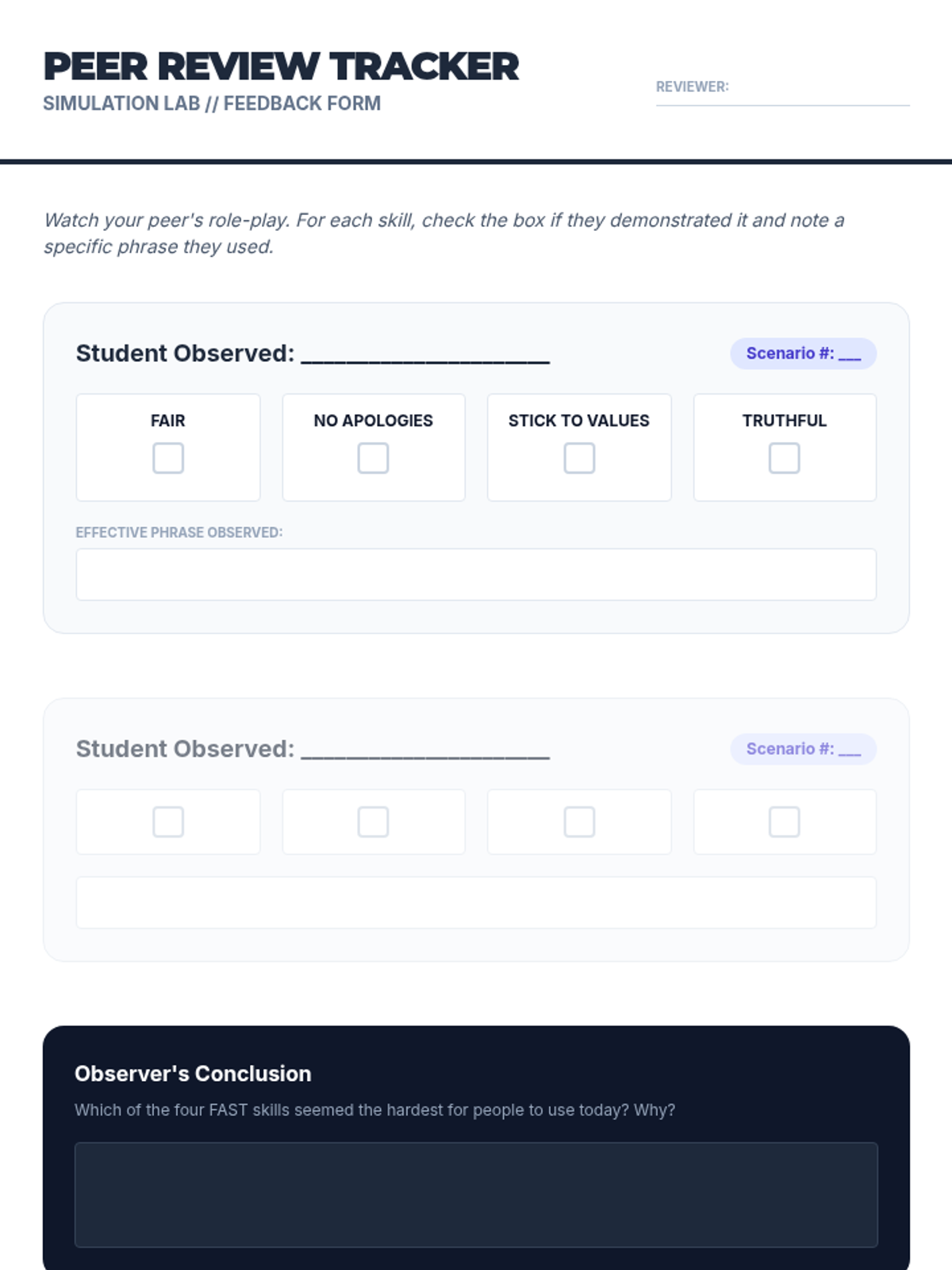
A culminating simulation where students apply the full FAST framework to real-world 9th-grade dilemmas through role-play and peer feedback.
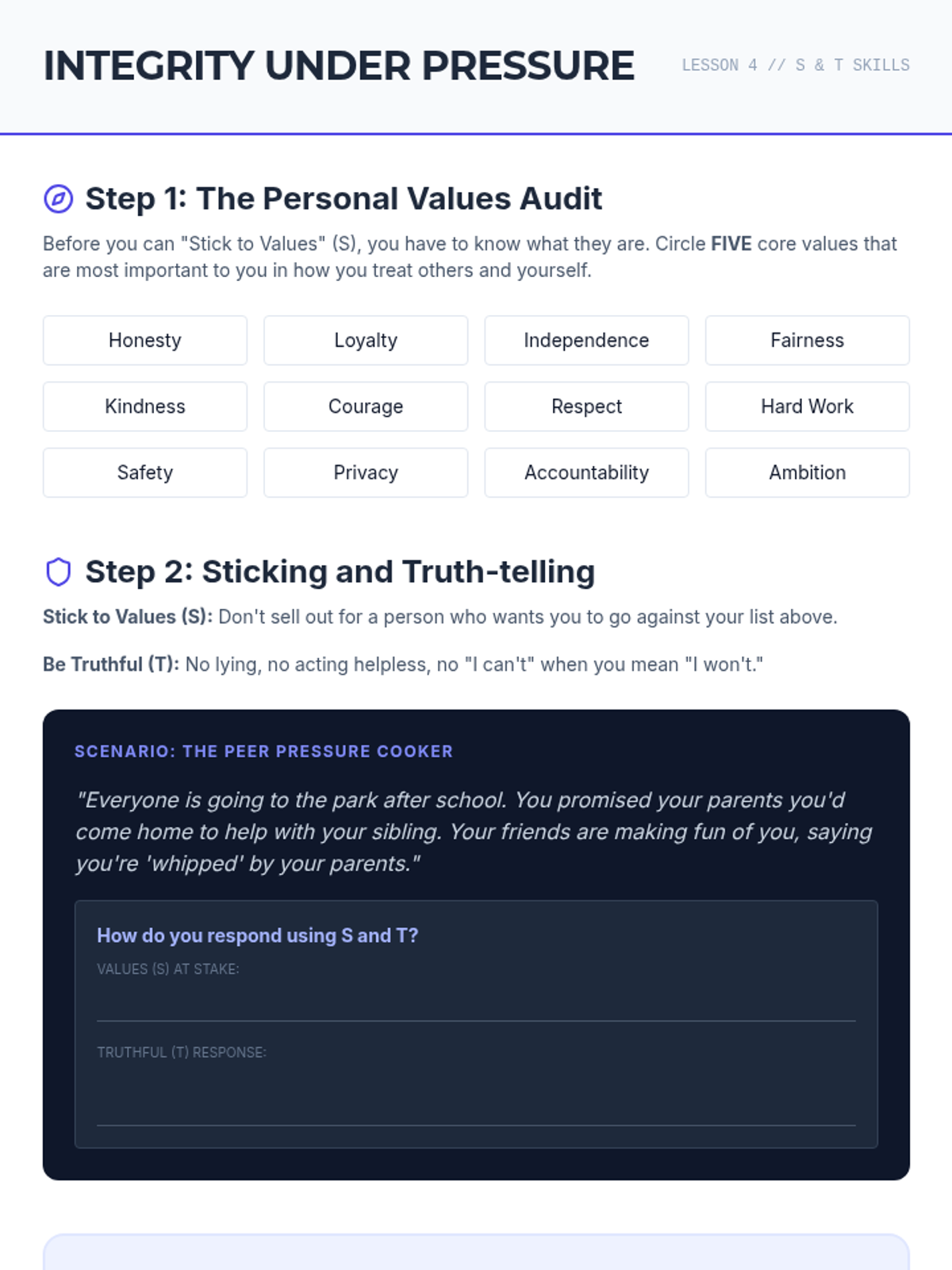
Students identify their personal core values and practice 'Sticking to values' and being 'Truthful' (S and T in FAST) even when under social pressure.
Students analyze the habit of over-apologizing and learn to replace unwarranted 'sorries' with assertive statements or expressions of gratitude, focusing on the 'A' in FAST.
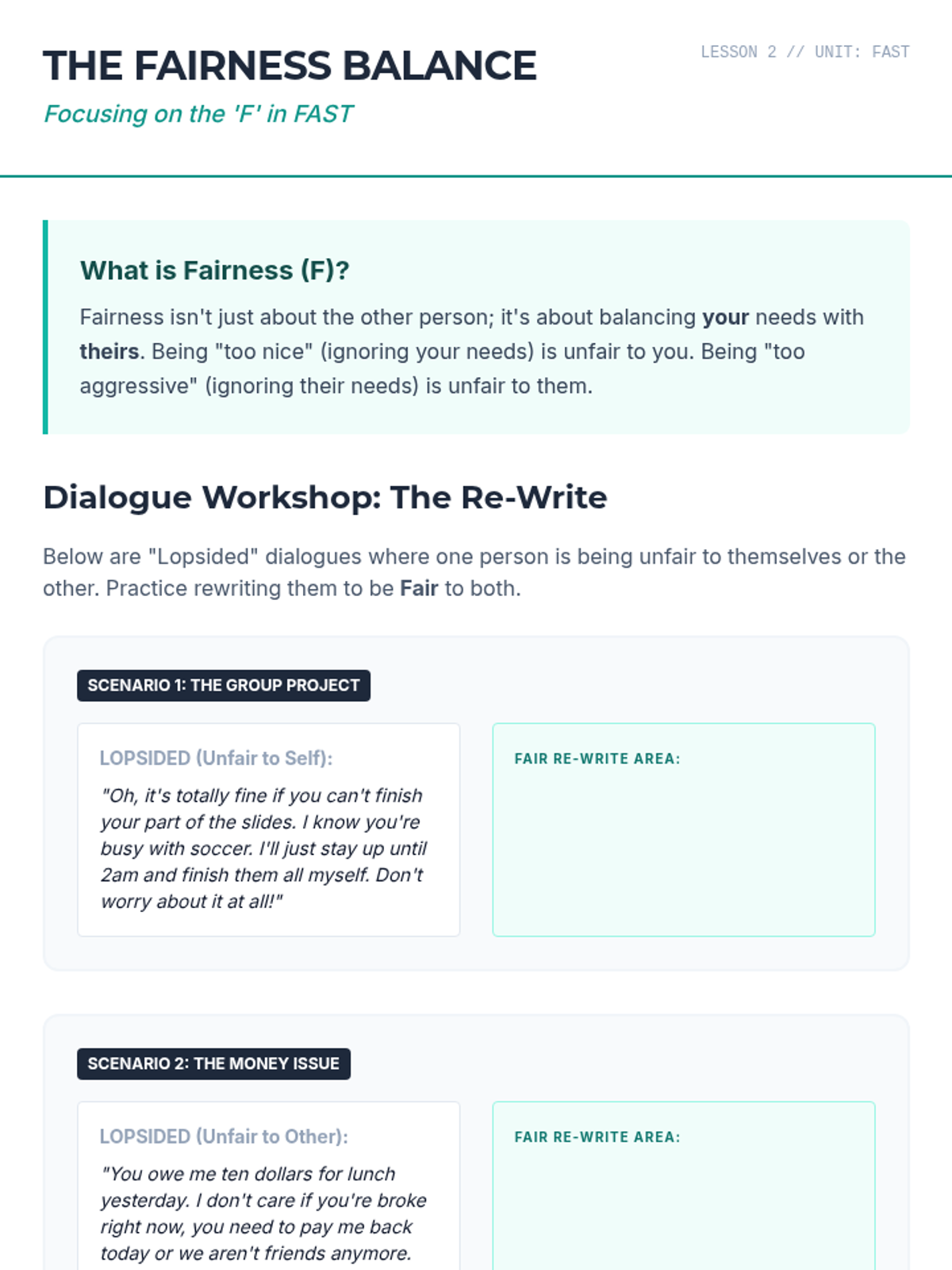
Focusing on the 'F' in FAST, students learn to balance their own needs with the needs of others. They practice rewriting one-sided communication into fair exchanges.
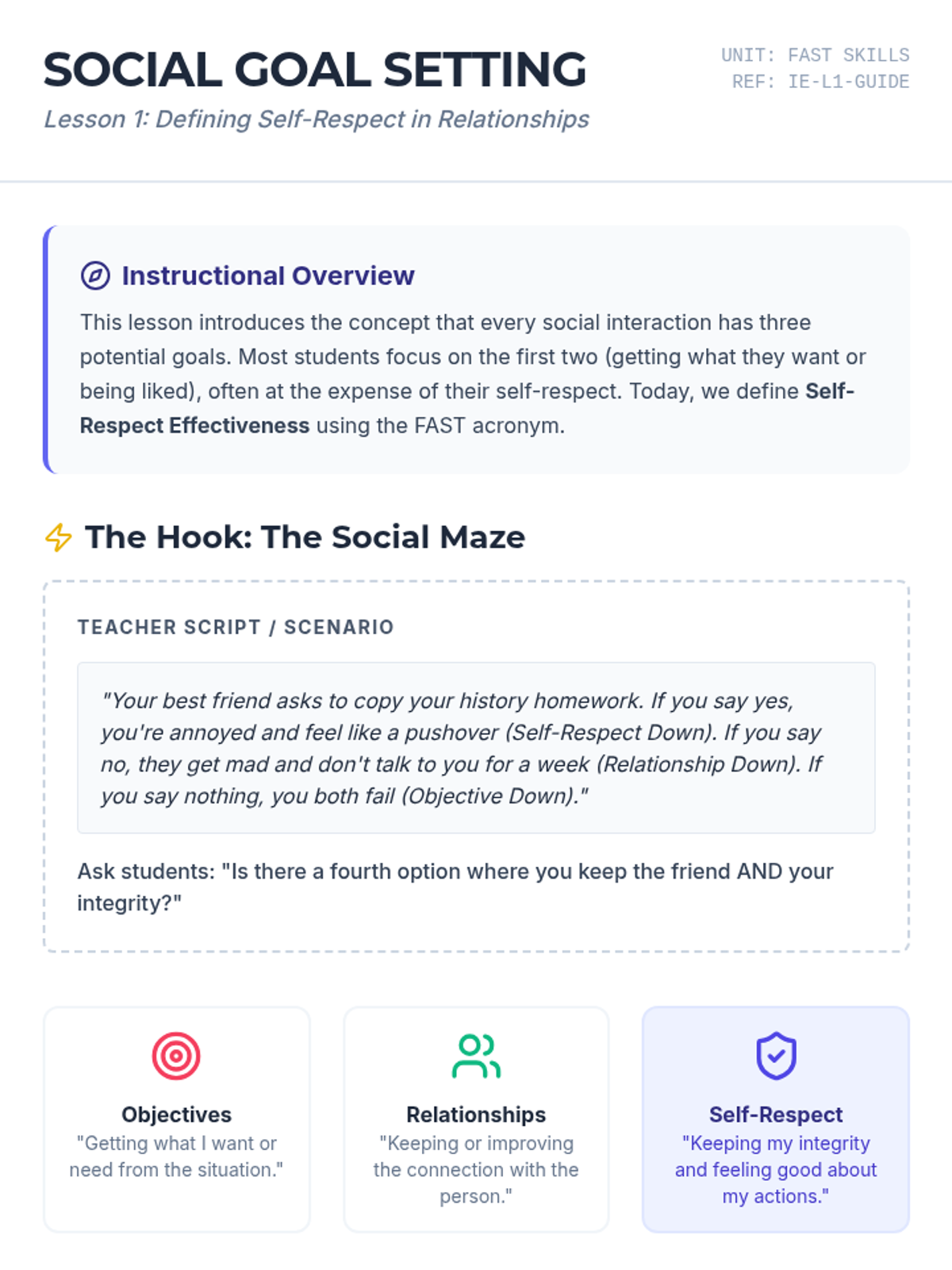
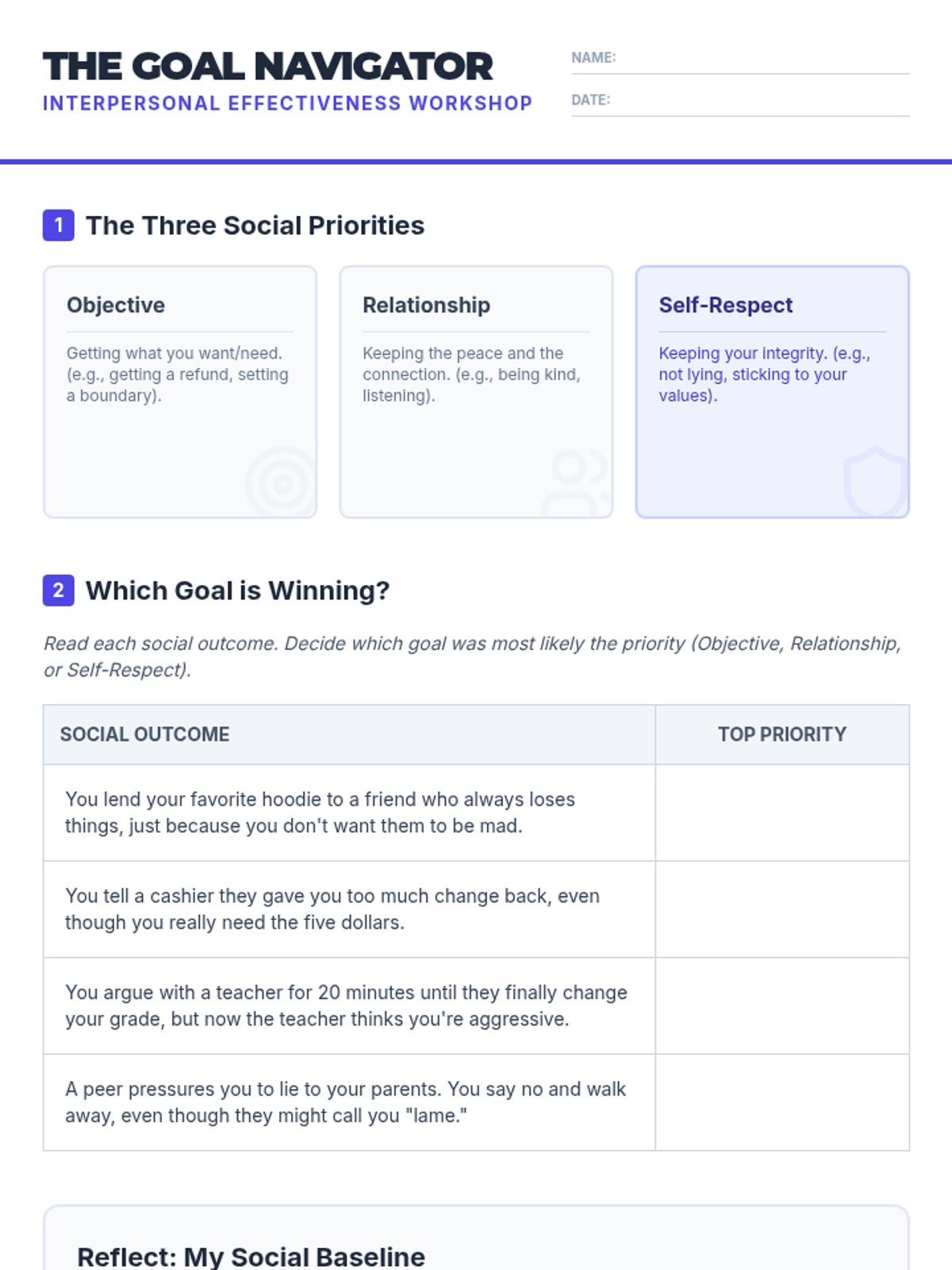
Students distinguish between the three main goals of interpersonal effectiveness: getting what you want, keeping the relationship, and keeping self-respect. They learn why self-respect (FAST) is often the missing piece in conflict resolution.
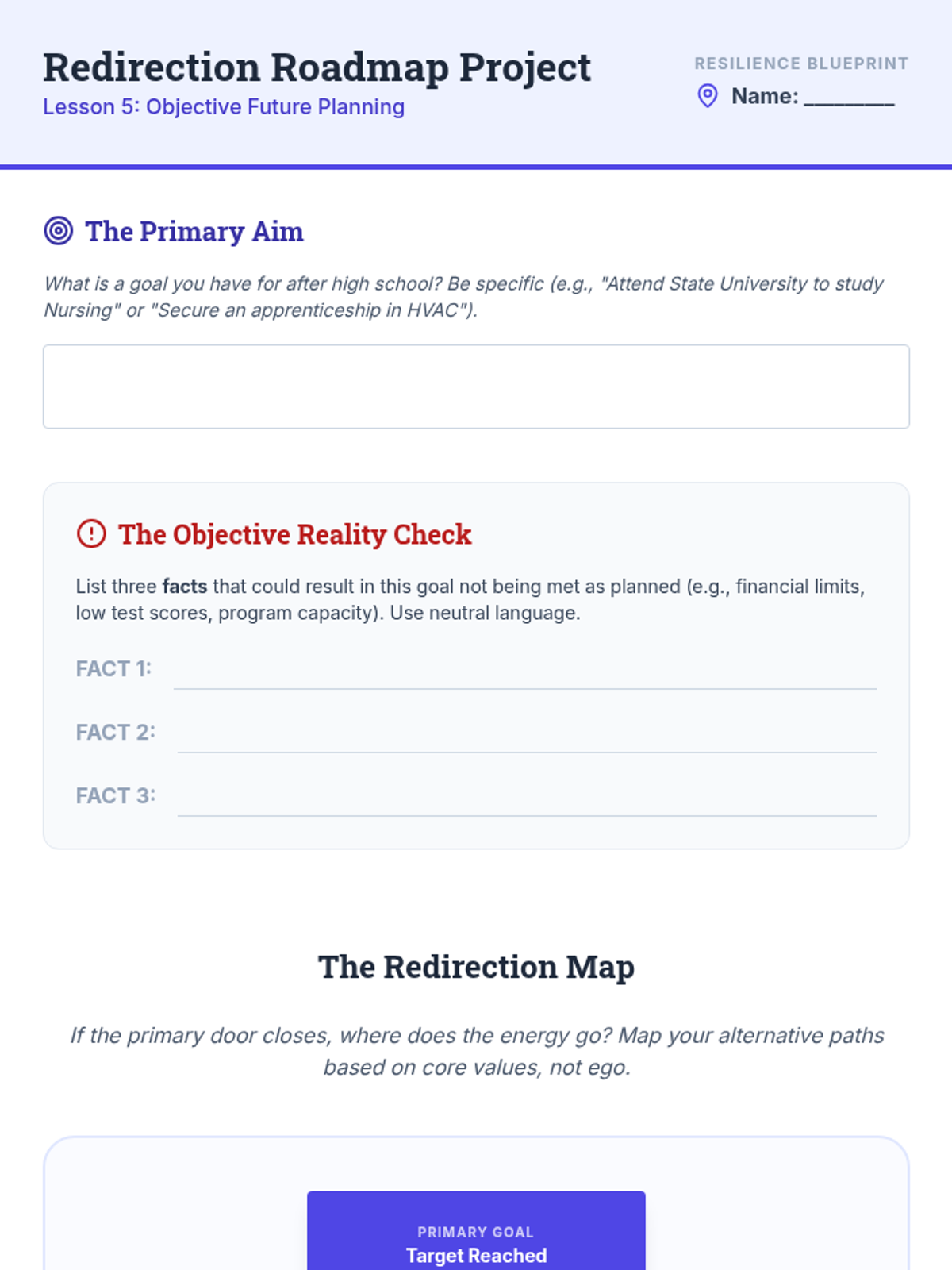
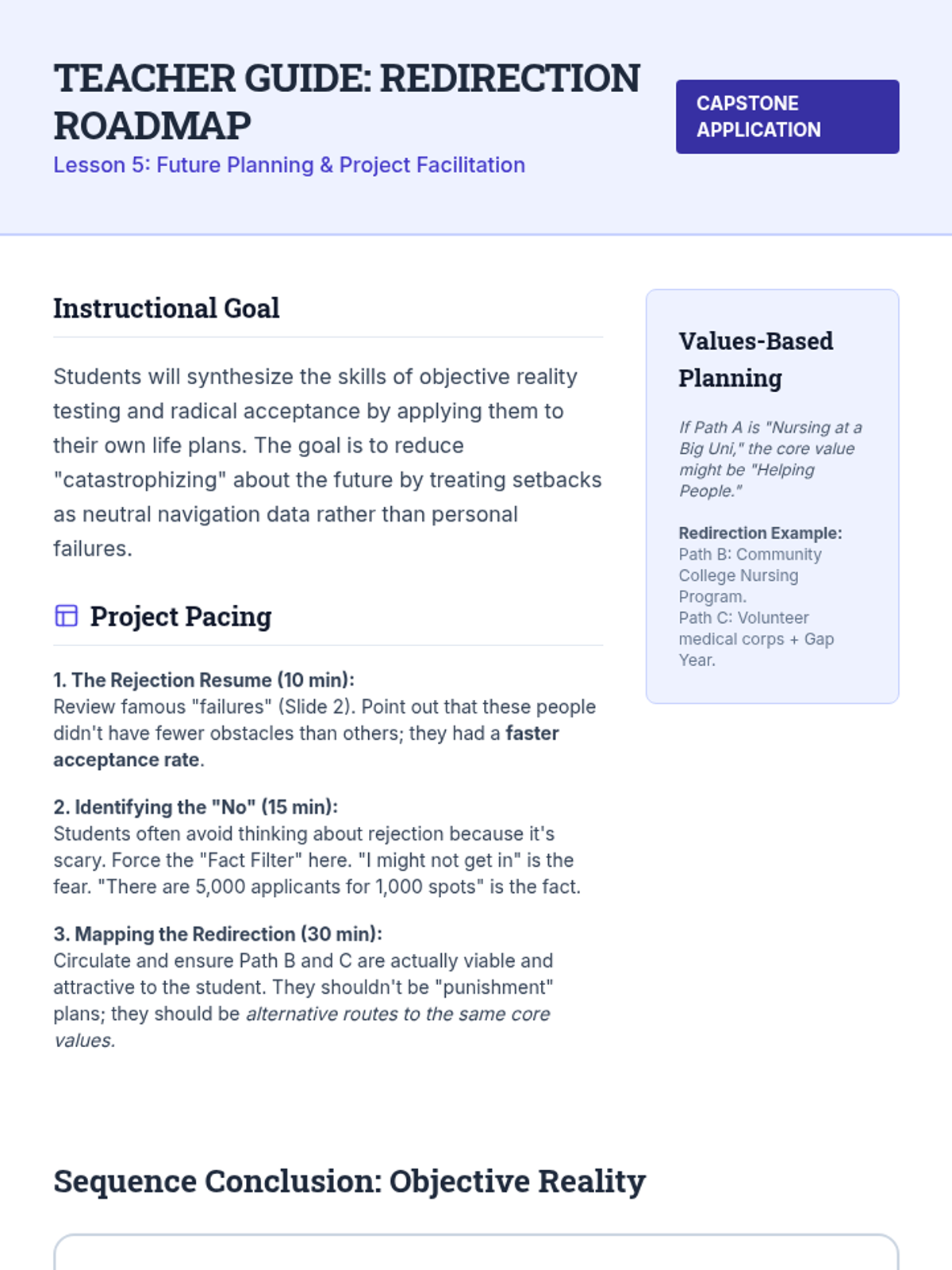
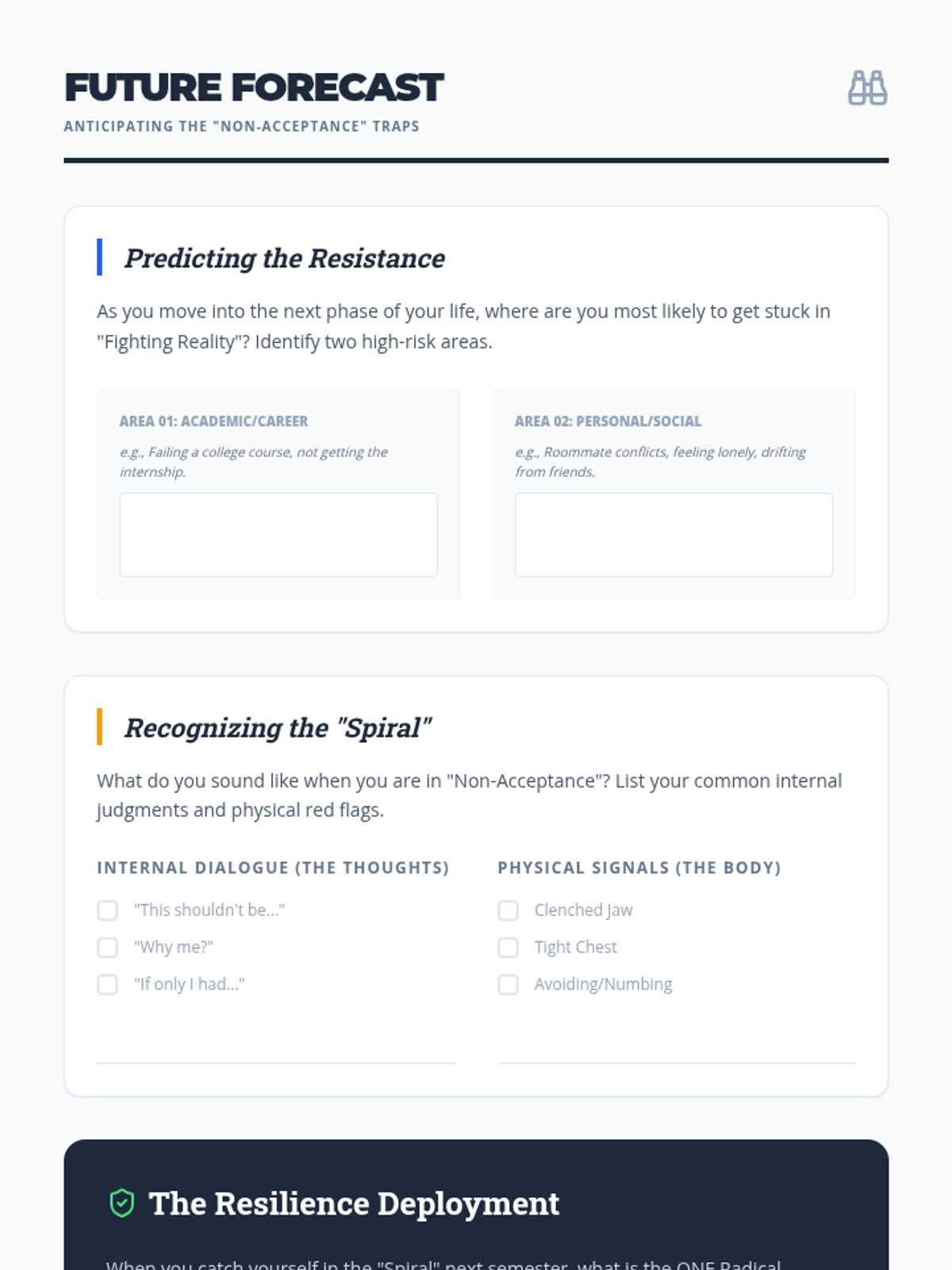
Students create a resilience-based future plan, reframing potential rejections as redirects and developing objective flowcharts for goal-setting.
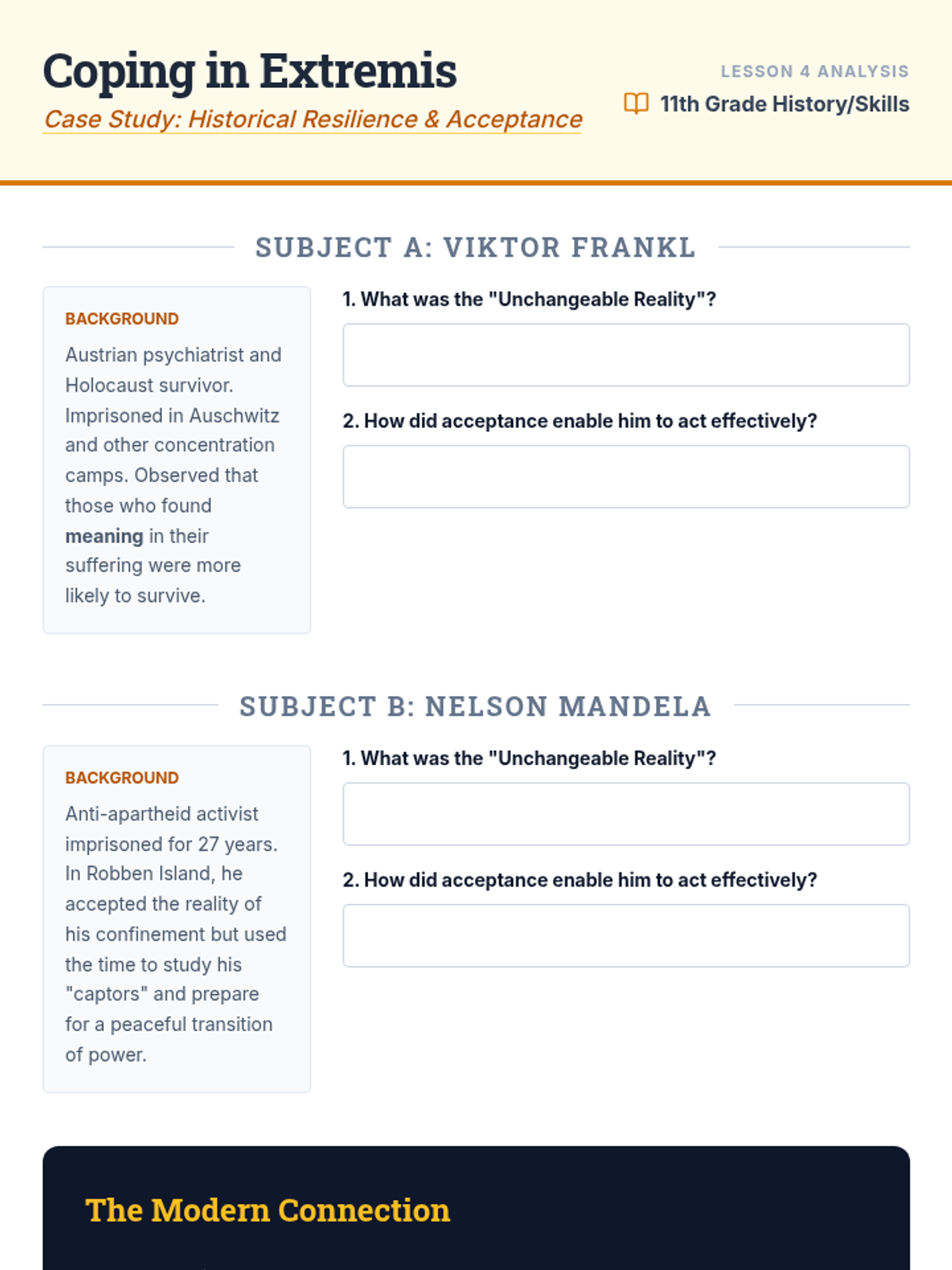
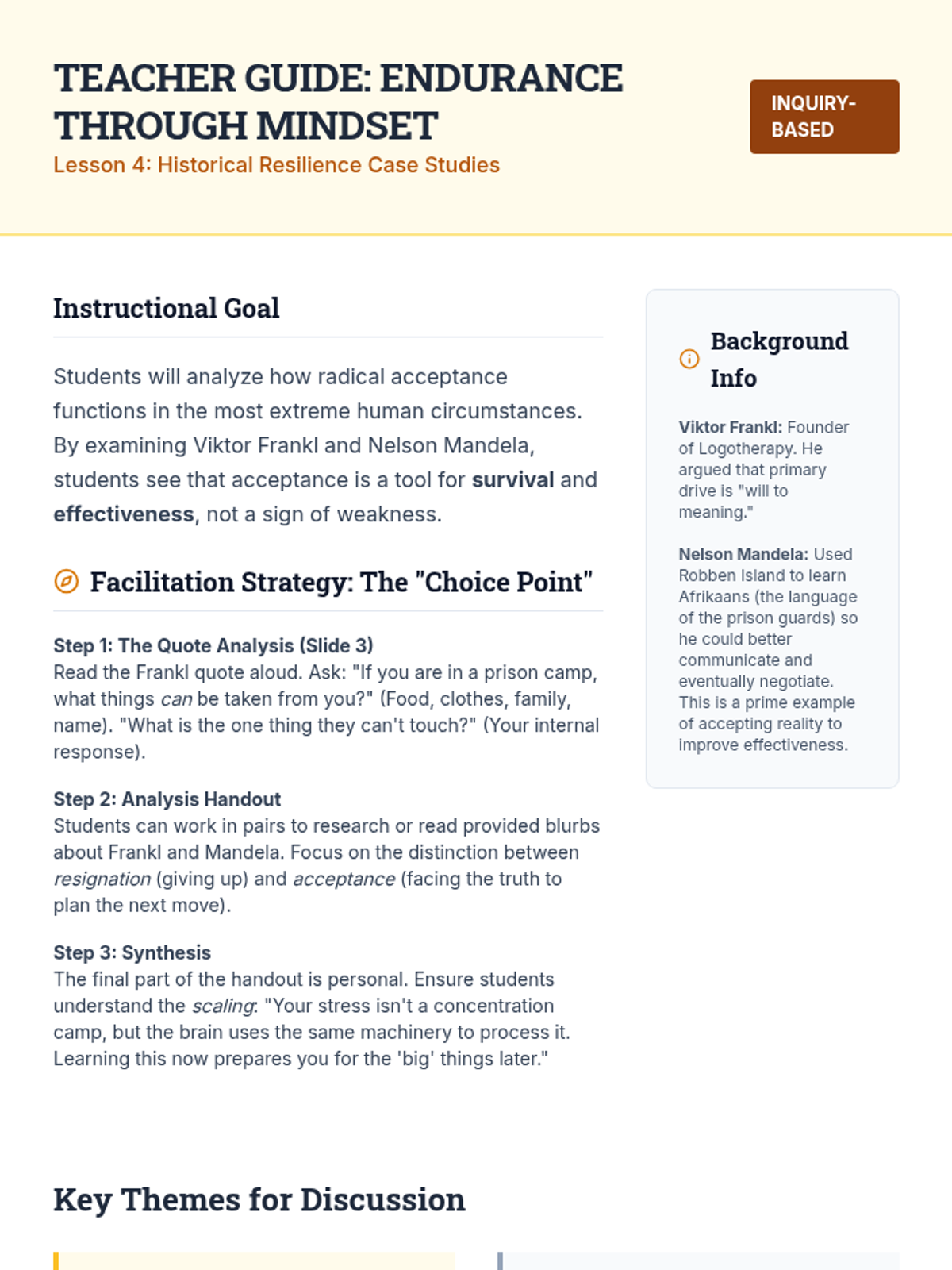
An analysis of historical figures who used acceptance and attitude-shifting to survive and thrive in extreme circumstances.
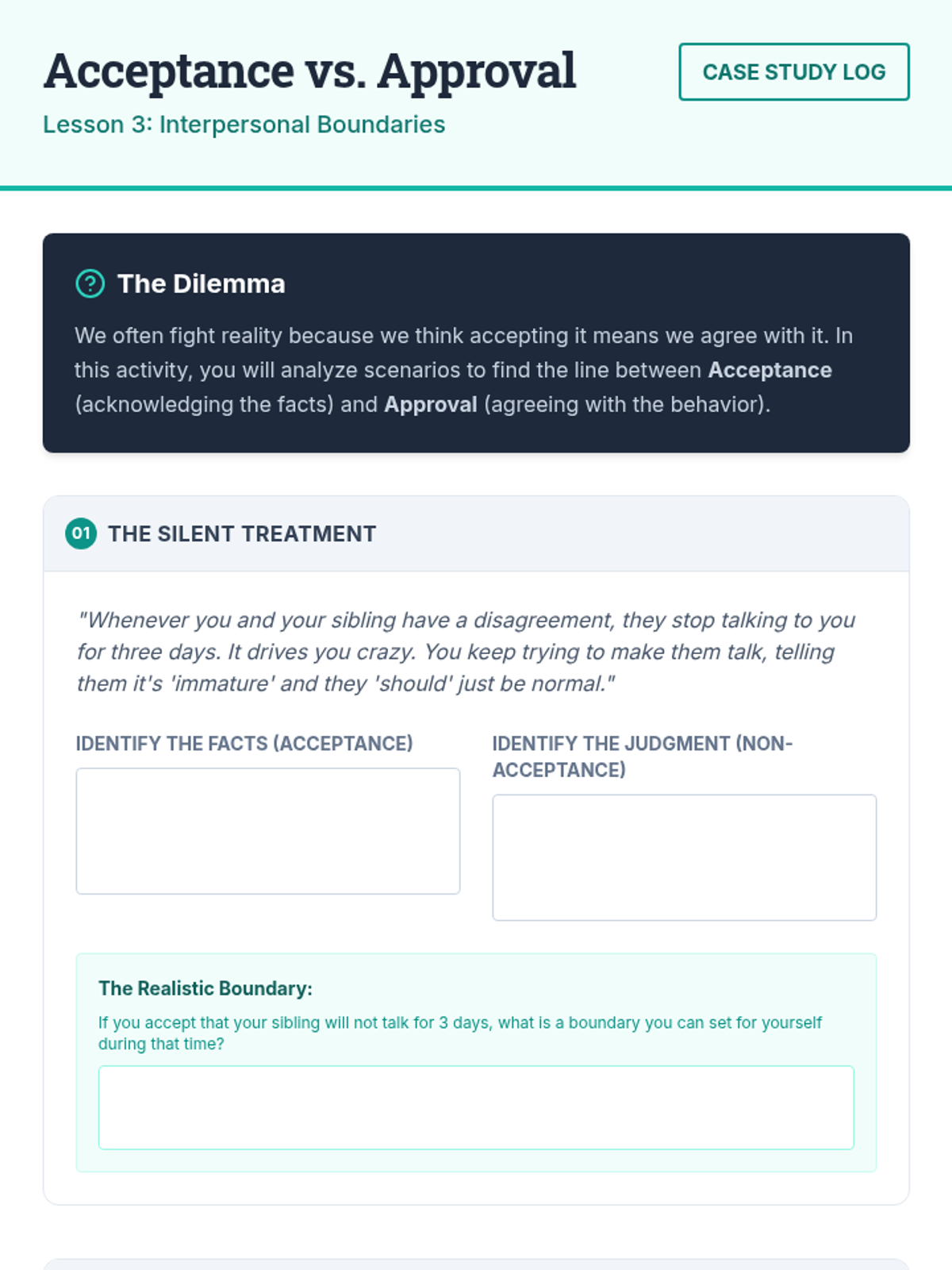
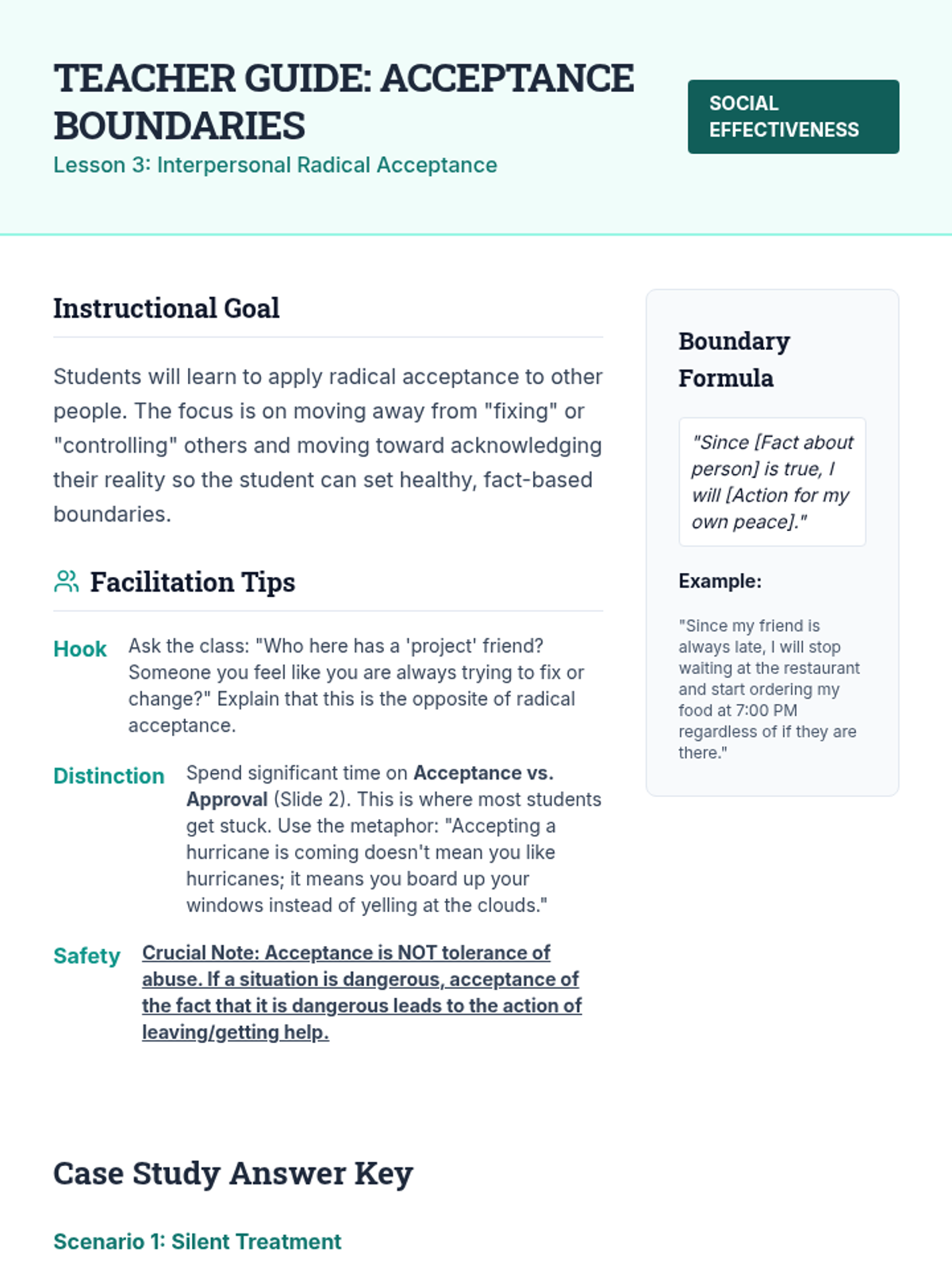
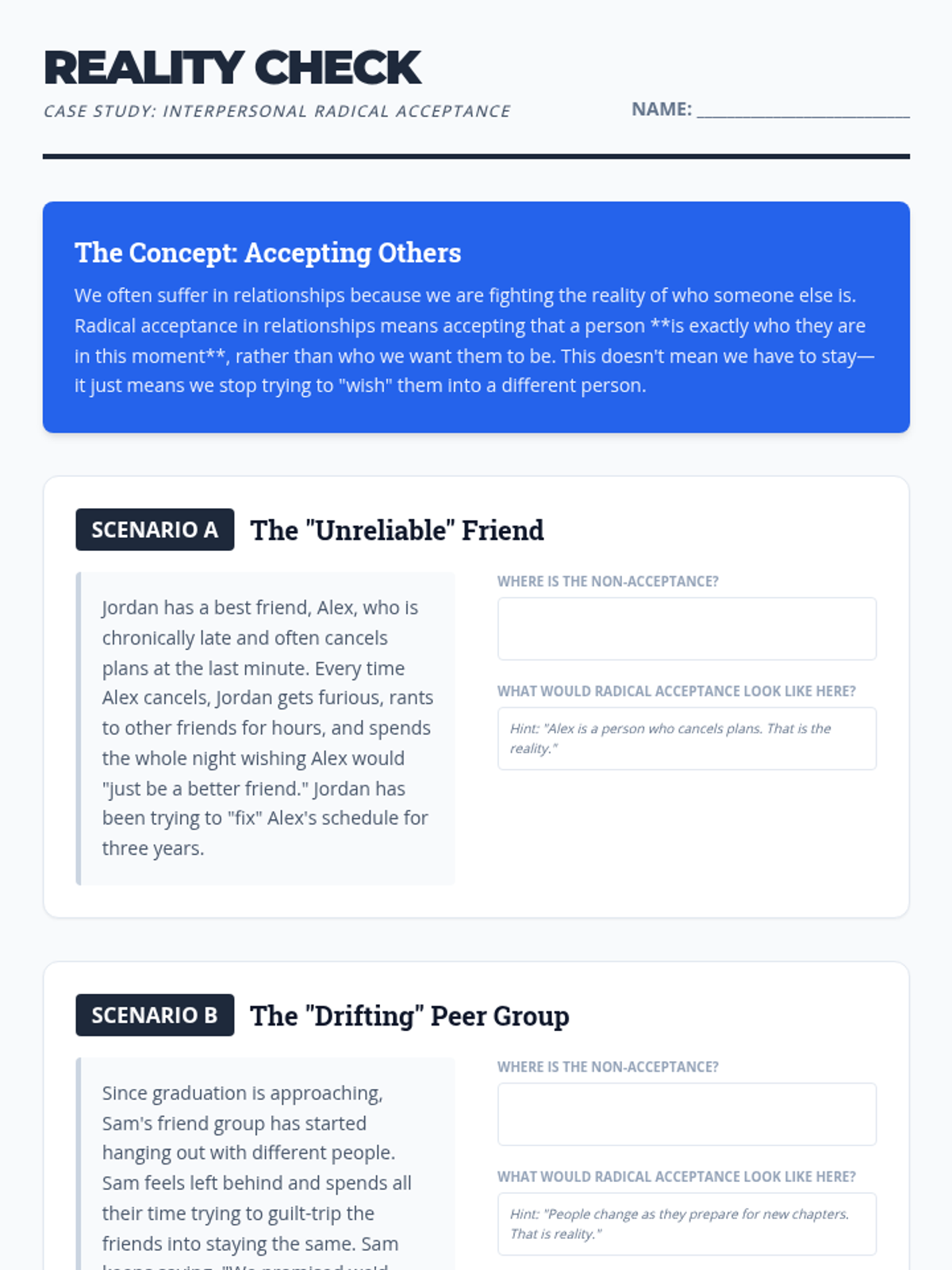
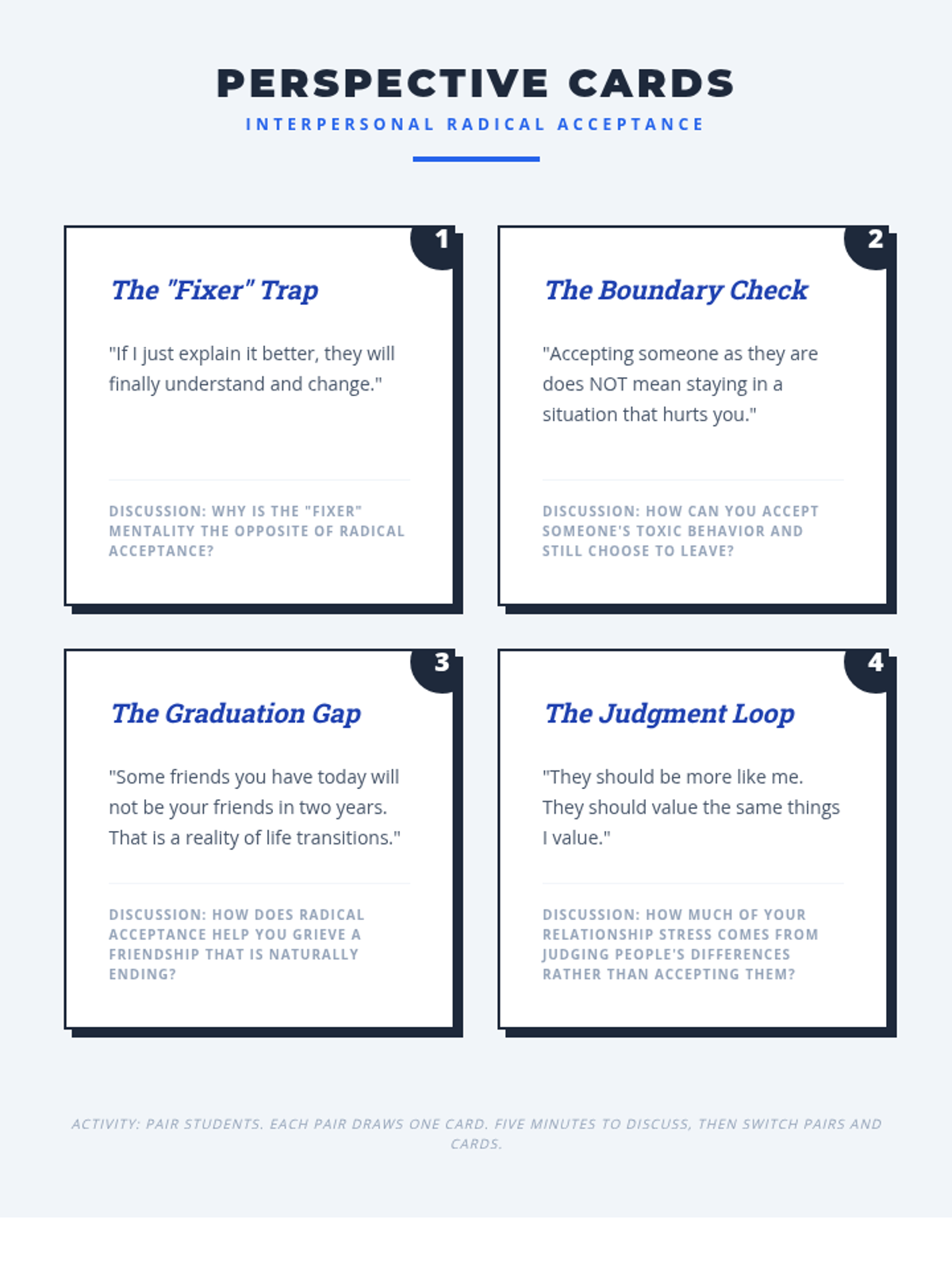
Students apply radical acceptance to interpersonal dynamics, learning the distinction between accepting a situation and approving of it.
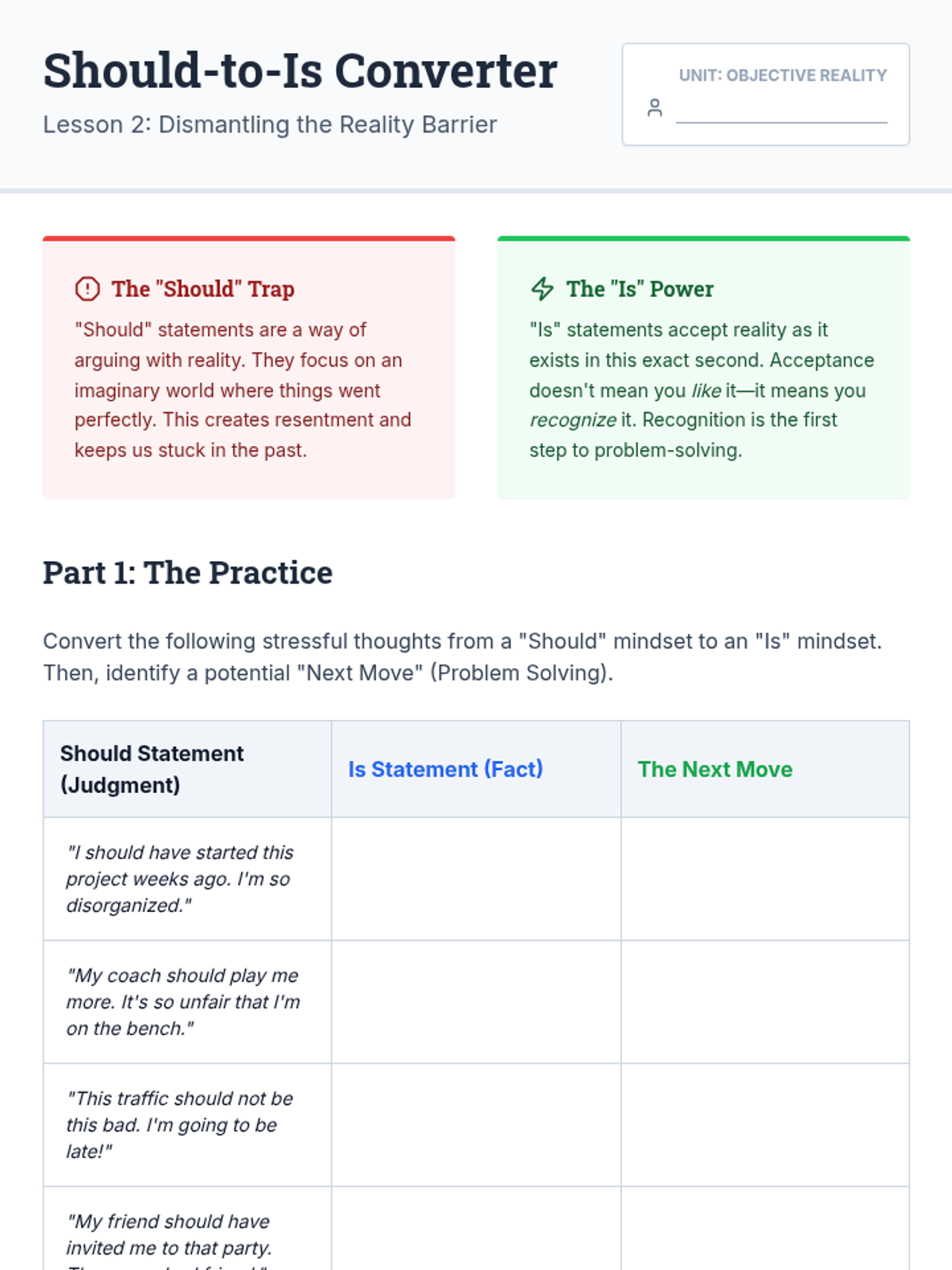
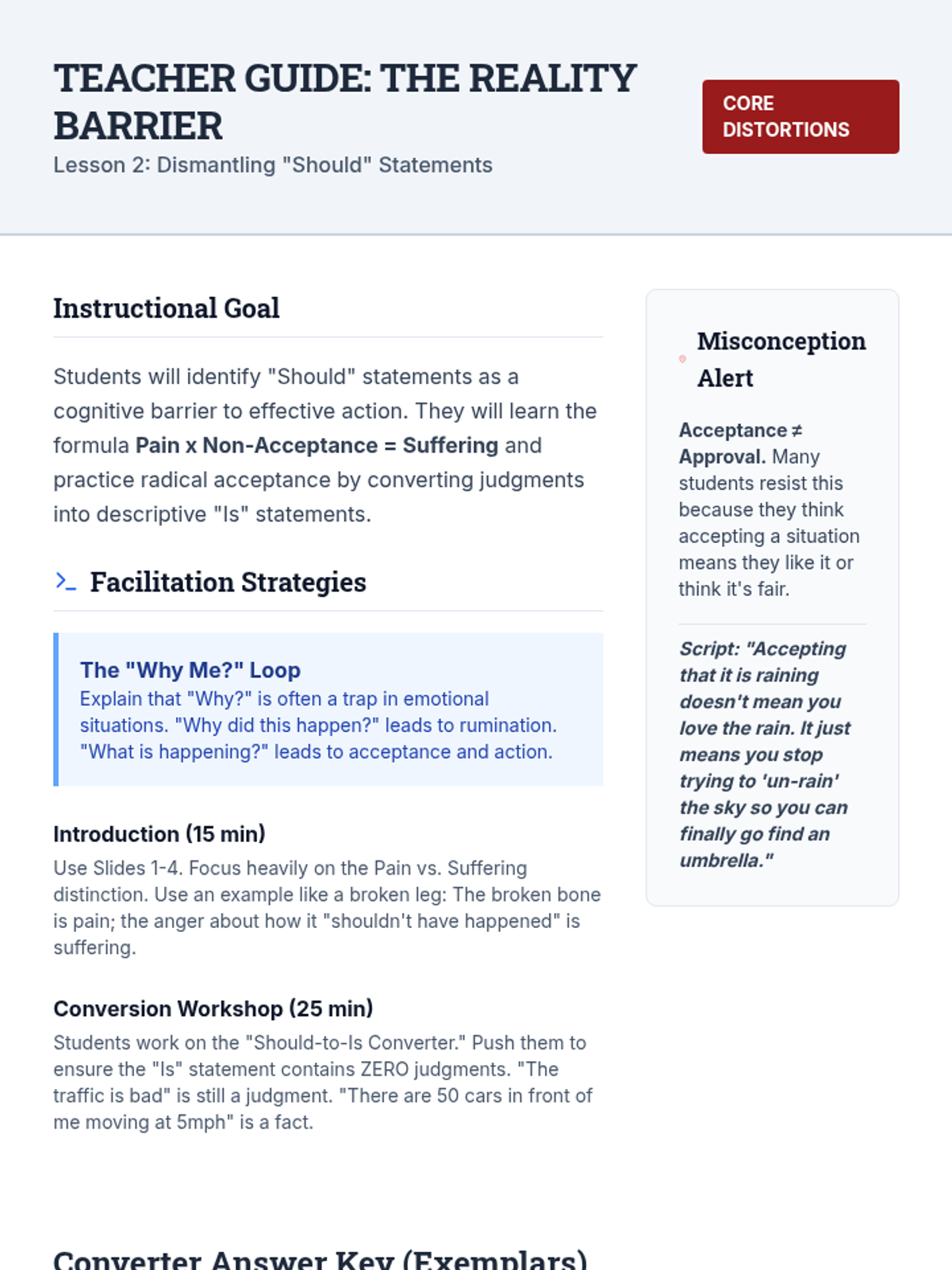
This lesson explores how 'should' statements create a barrier to problem-solving and how converting them to 'is' statements promotes radical acceptance.
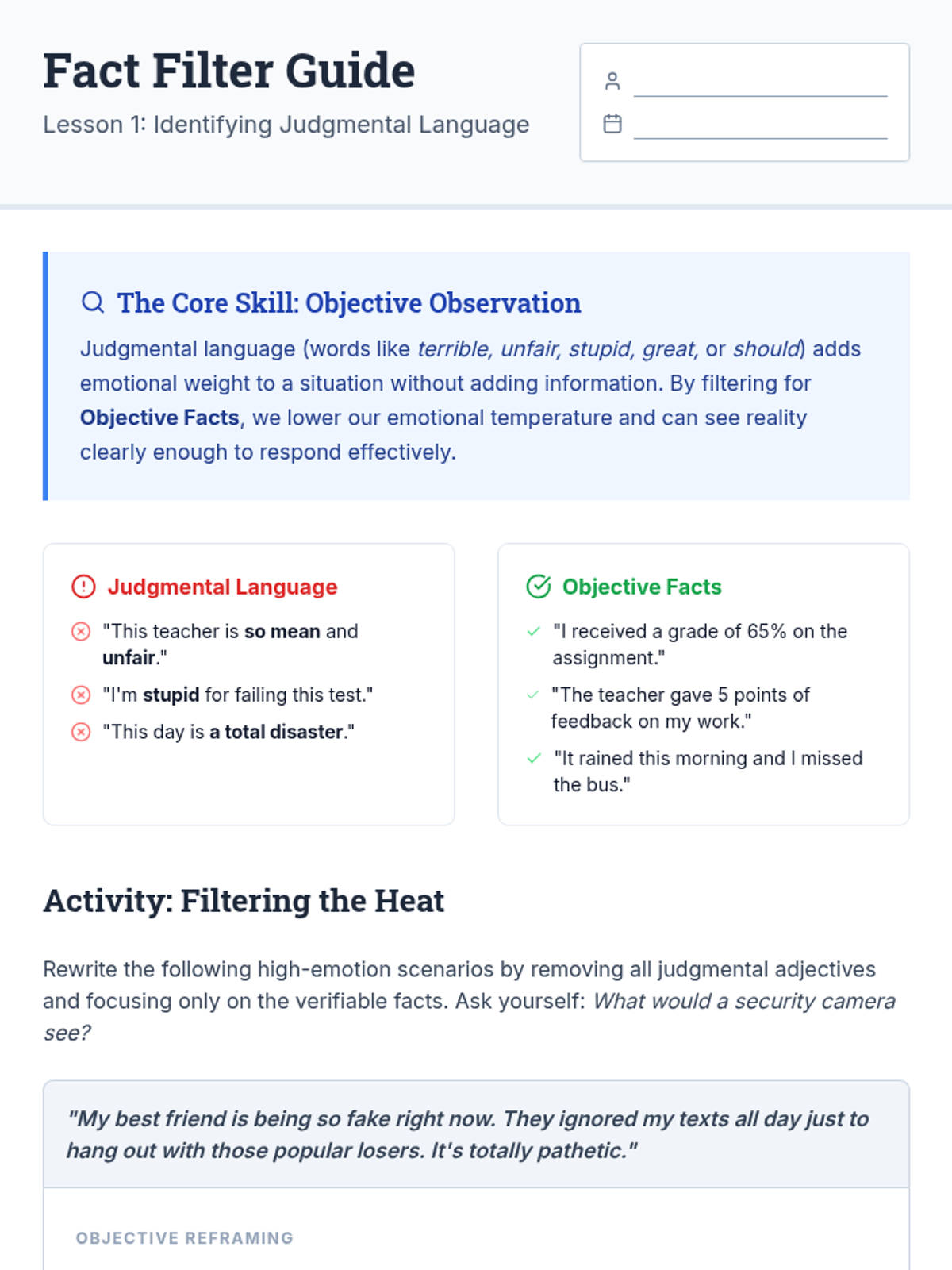
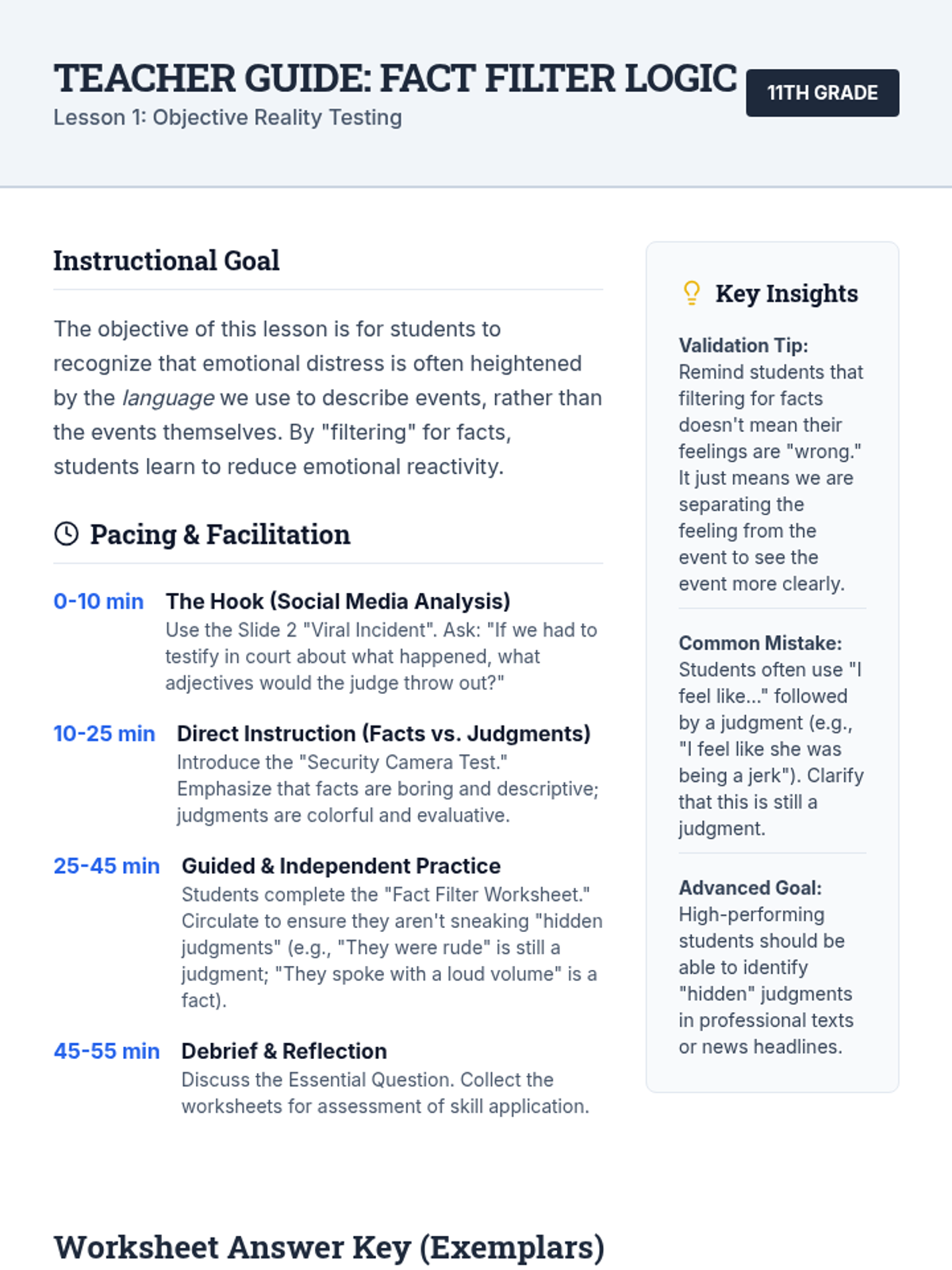
Students analyze the difference between judgmental language and objective facts, practicing how to strip away evaluative adjectives to reduce emotional distress.
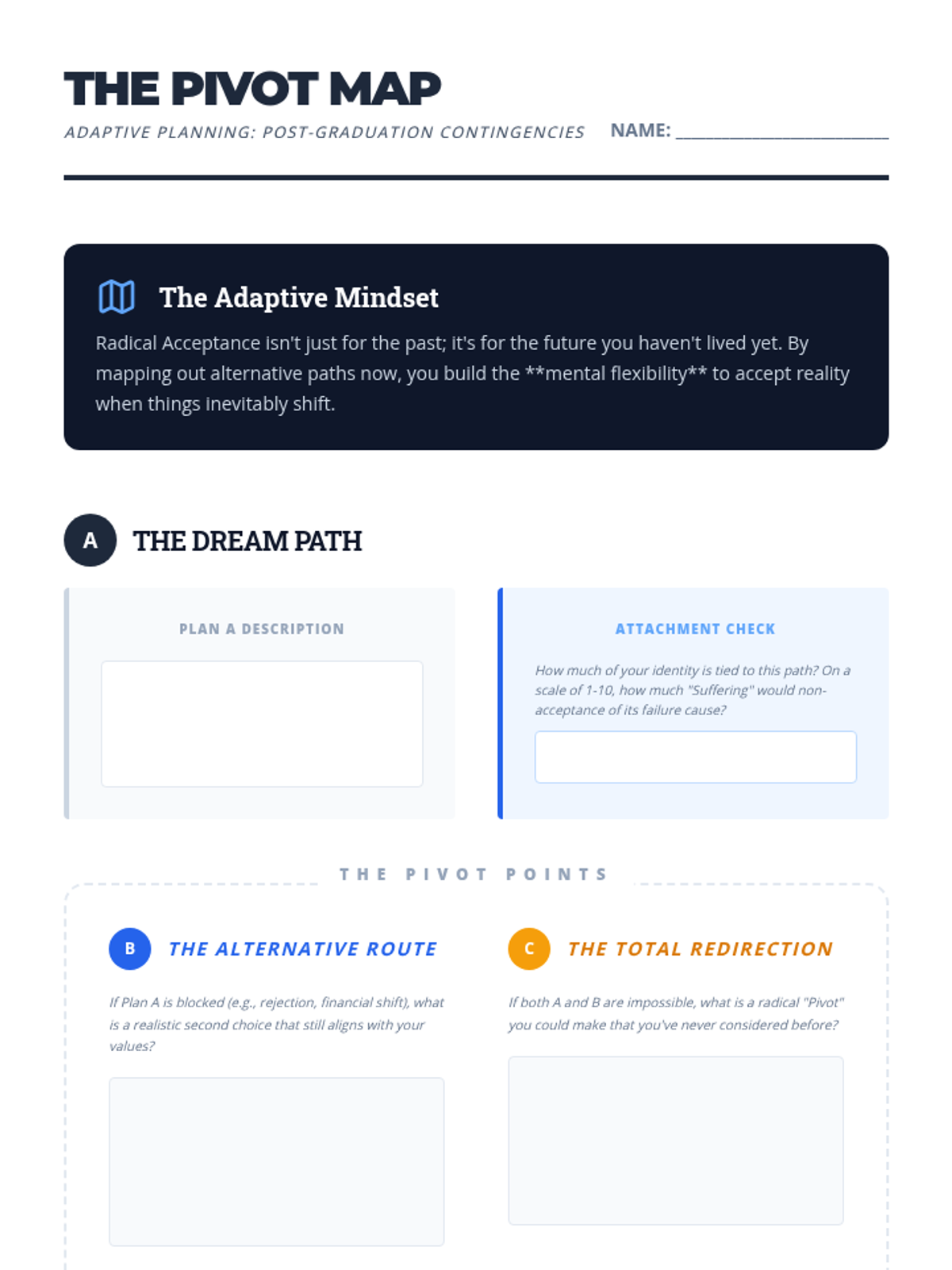
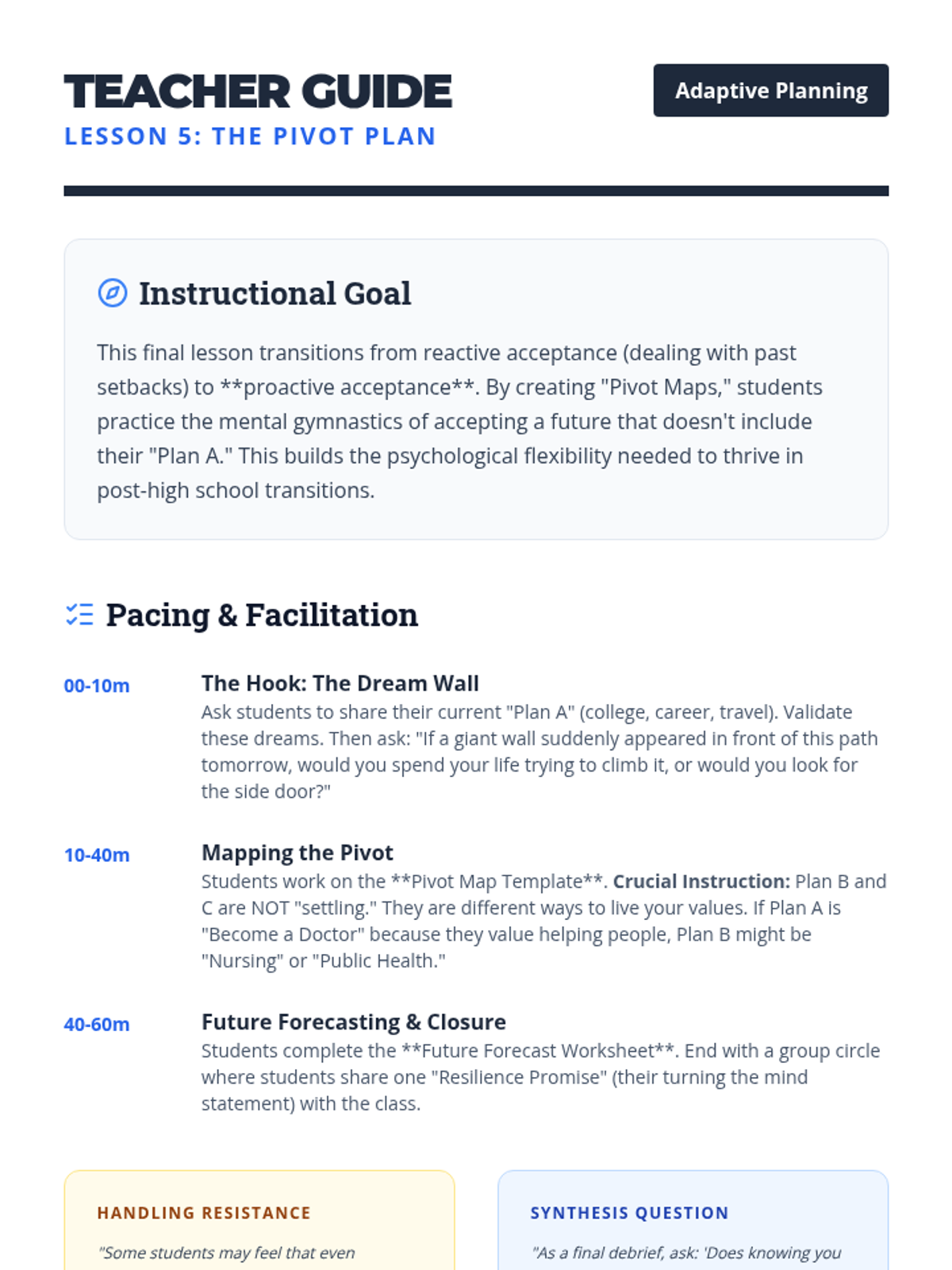
Students create adaptive 'Pivot Plans' for their post-graduation lives, practicing the mental flexibility to accept and thrive in alternative life paths.
Exploring how to apply radical acceptance to interpersonal dynamics, focusing on accepting others as they are and maintaining boundaries during life transitions.
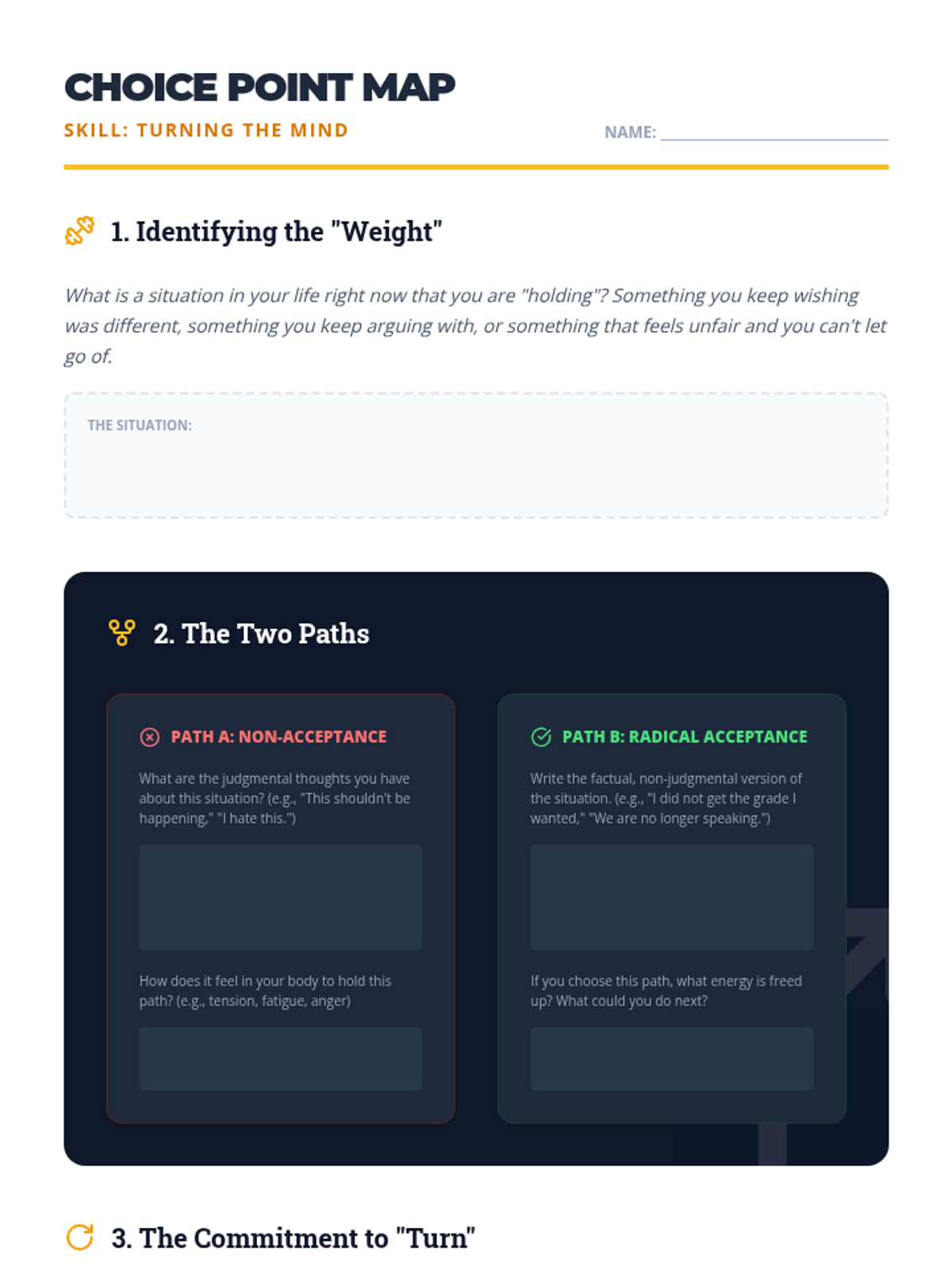
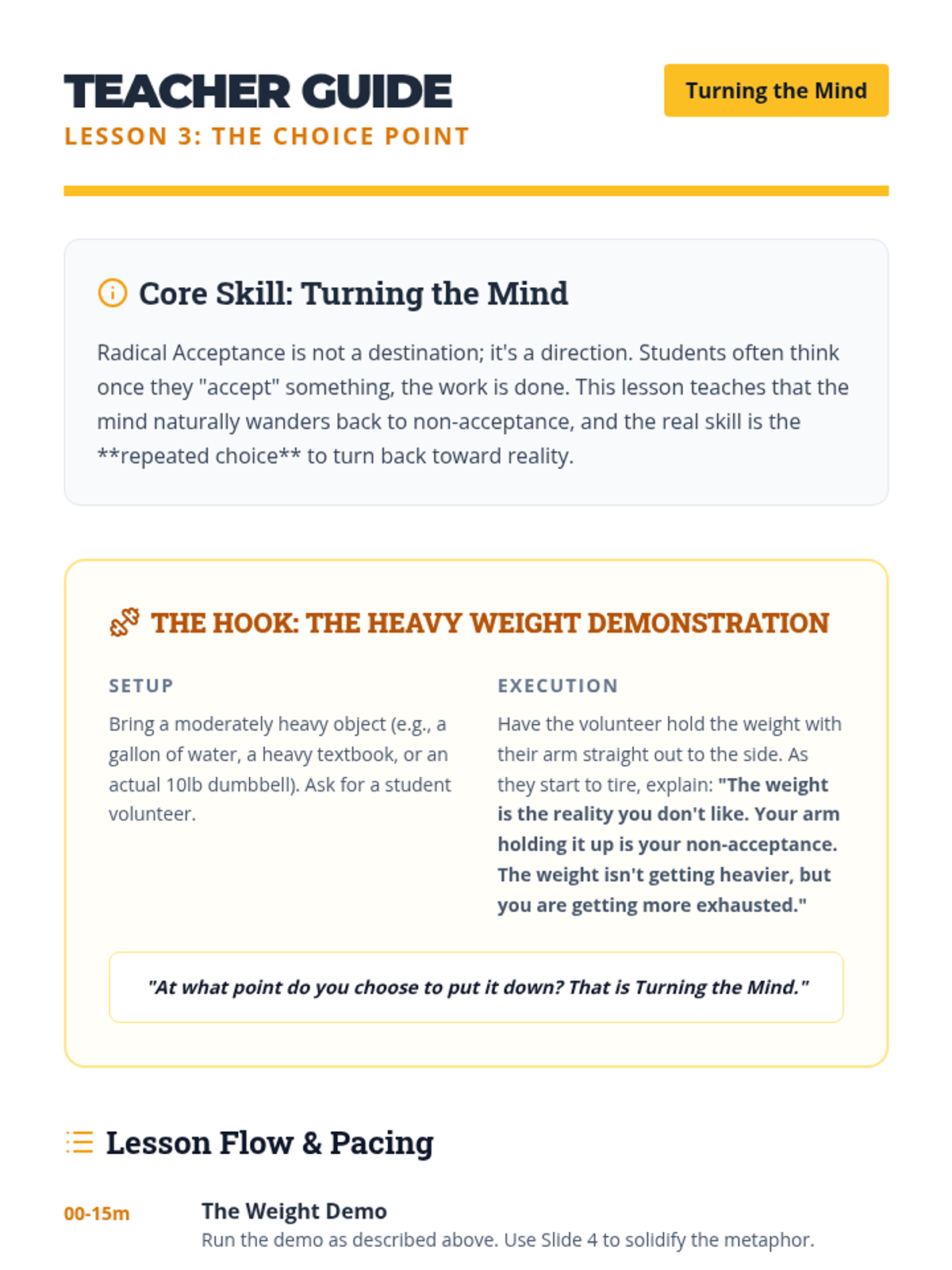
An introduction to the DBT skill of 'Turning the Mind', focusing on the active, repeated choice to accept reality during moments of distress.
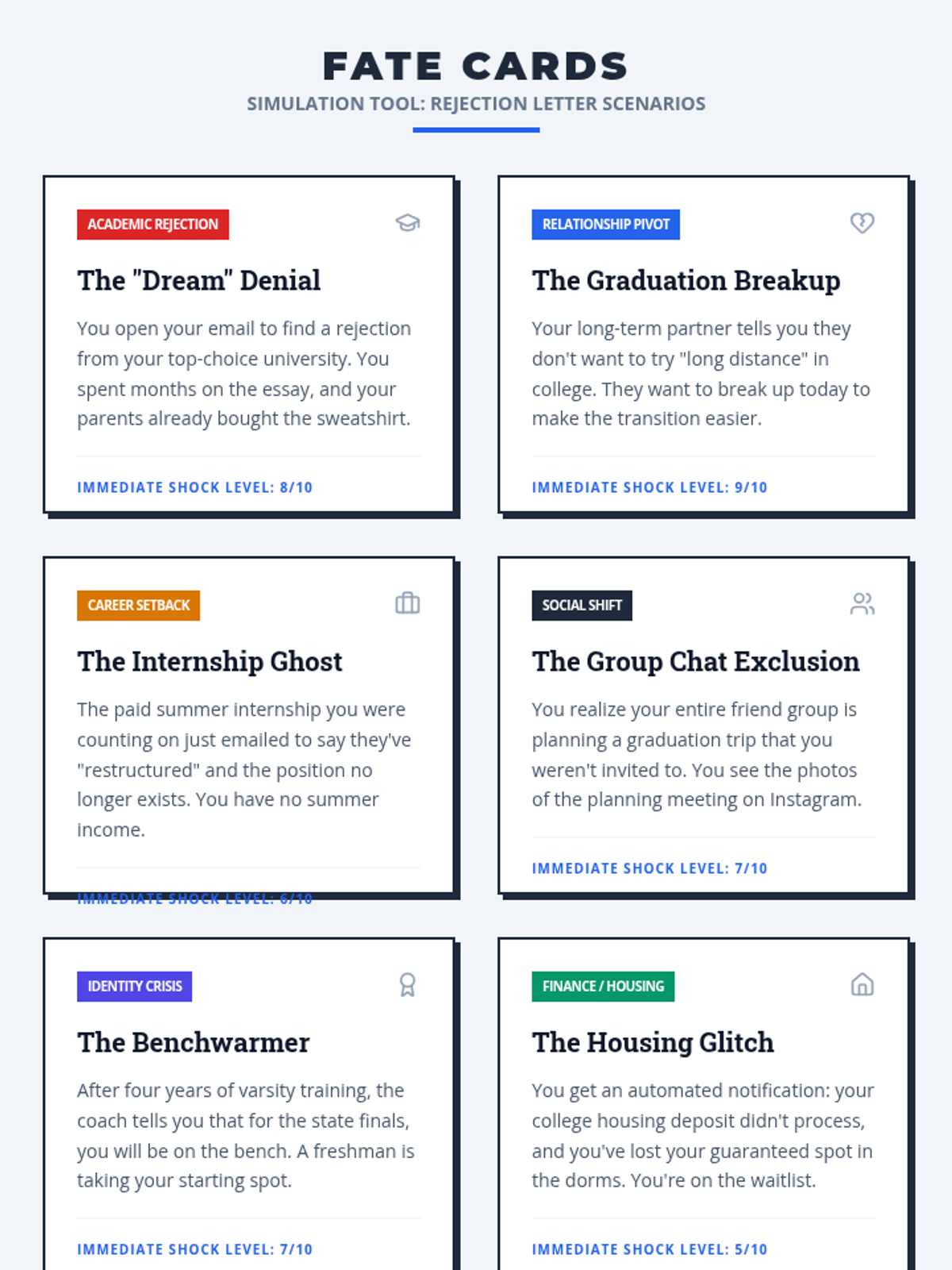
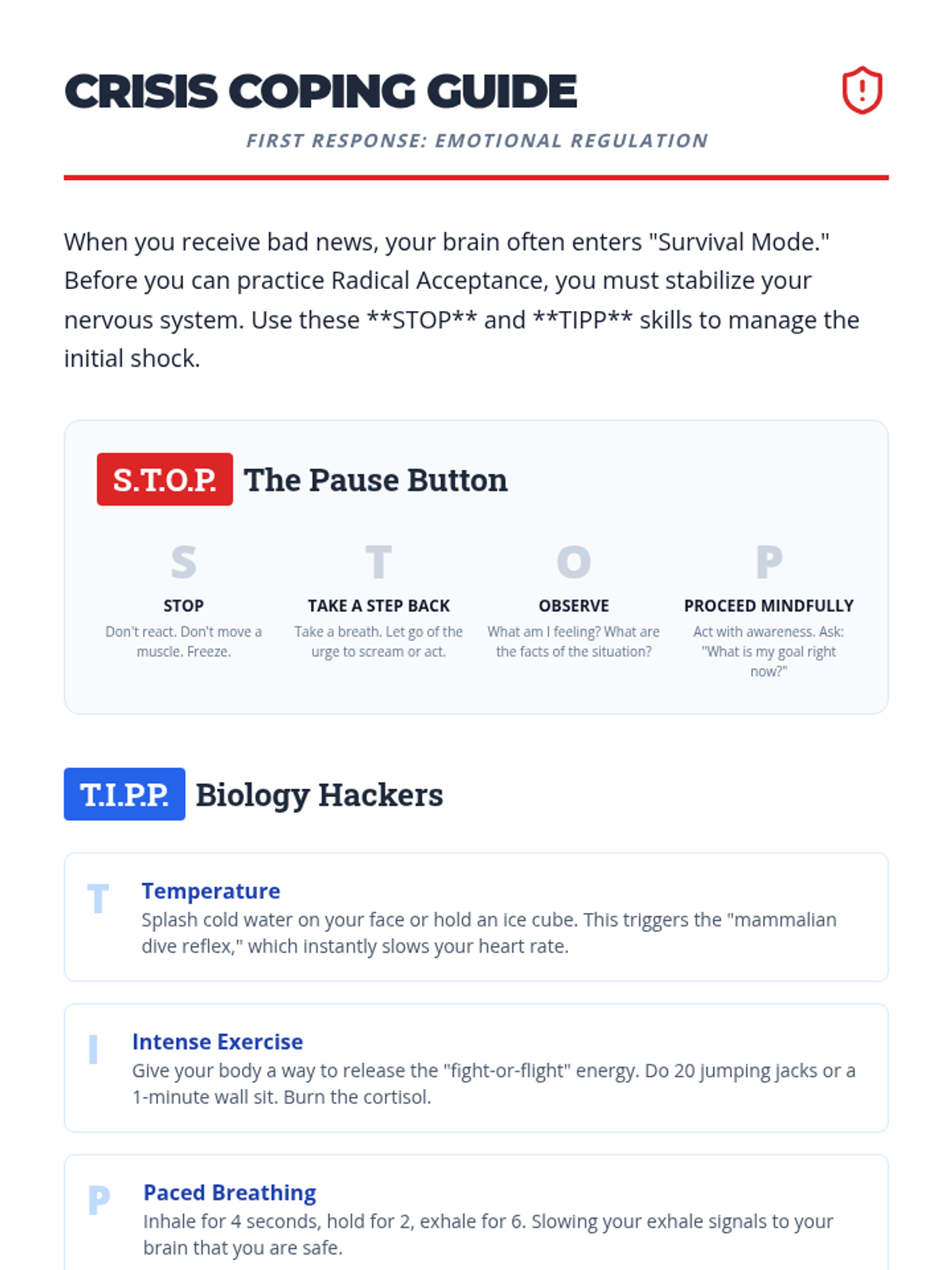
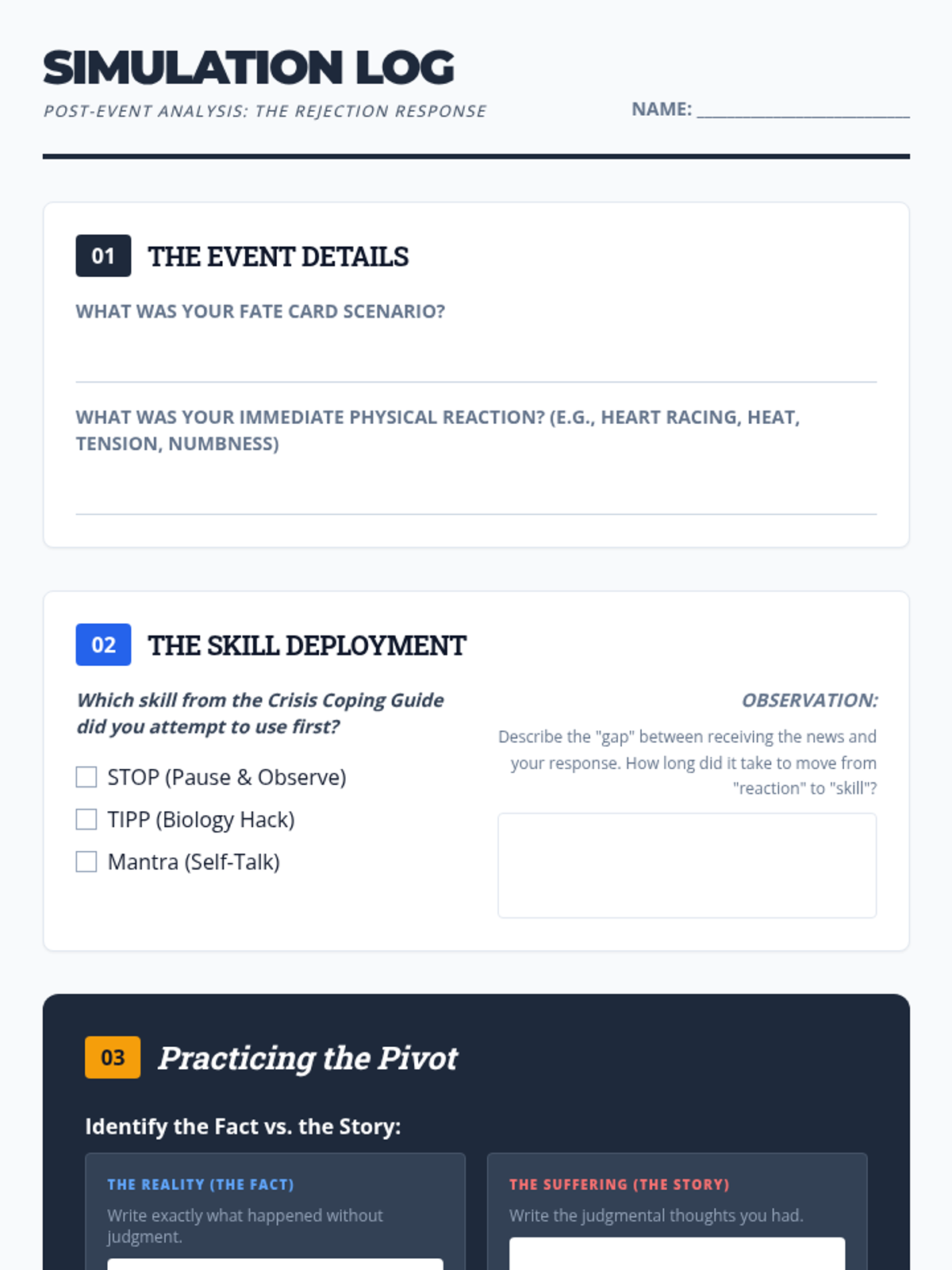
A role-play simulation where students receive unexpected bad news and practice immediate coping mechanisms to regulate emotions without making the situation worse.
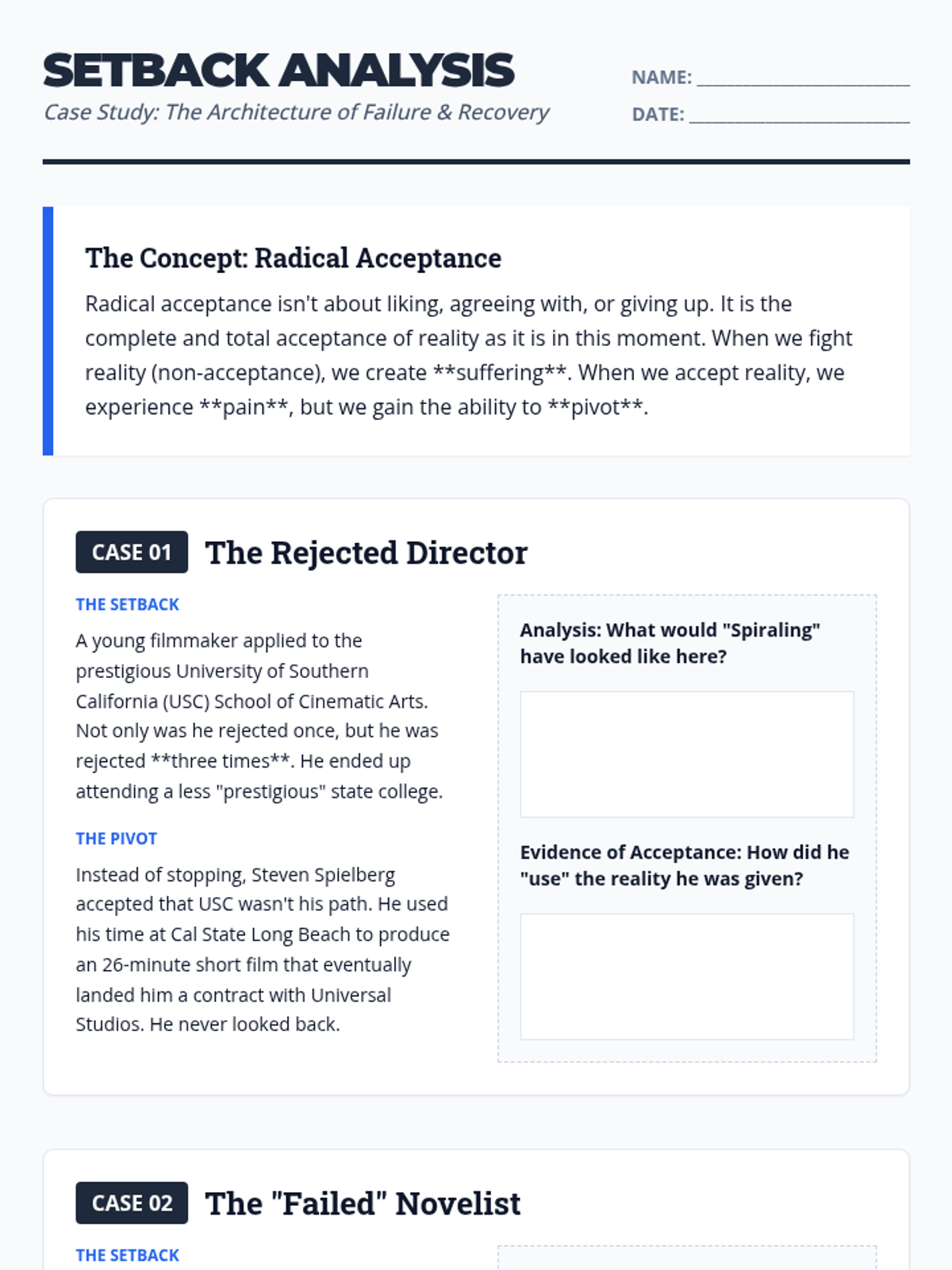
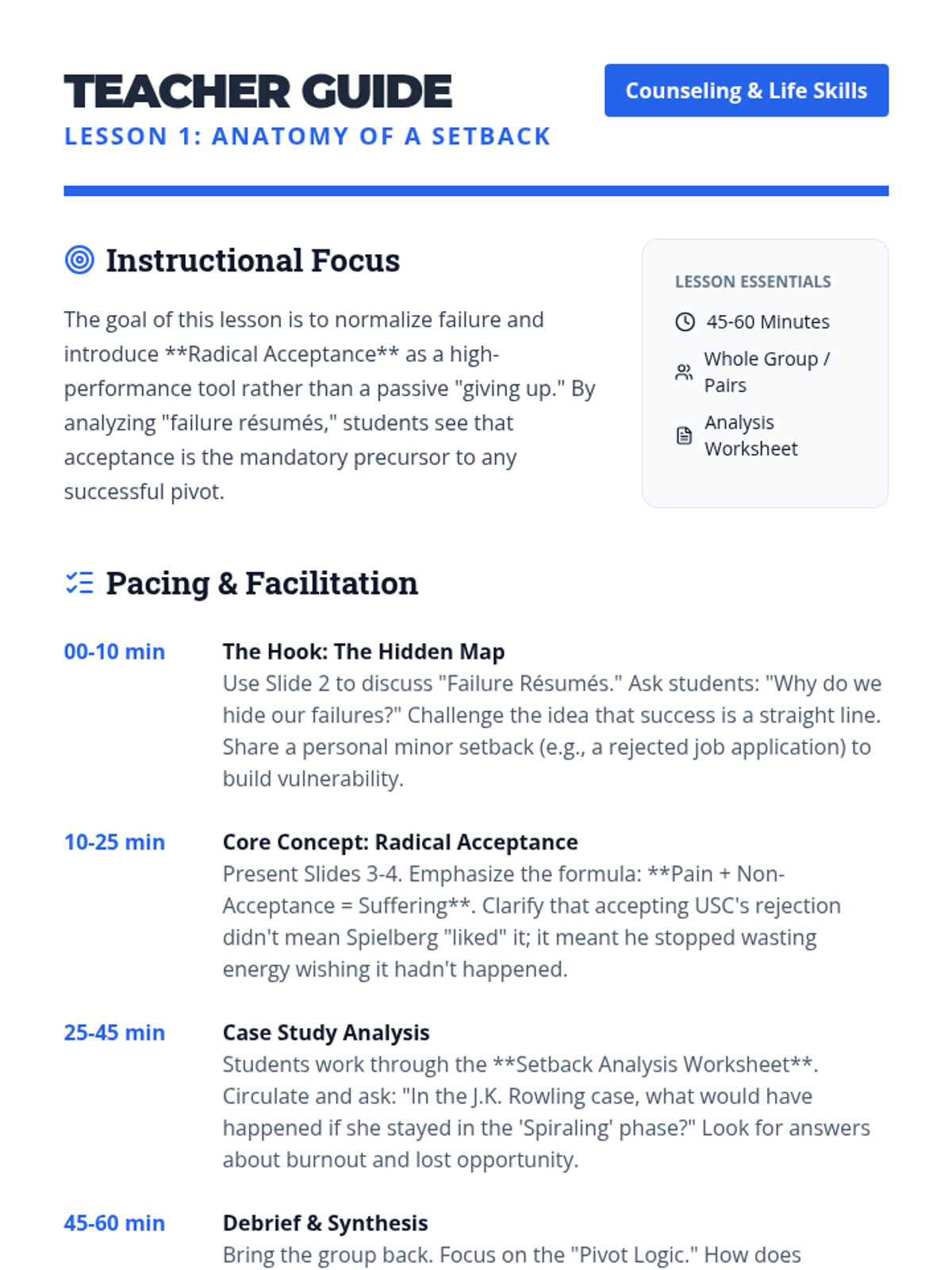
Students analyze 'failure résumés' of successful individuals to distinguish between spiraling and pivoting through the lens of radical acceptance.
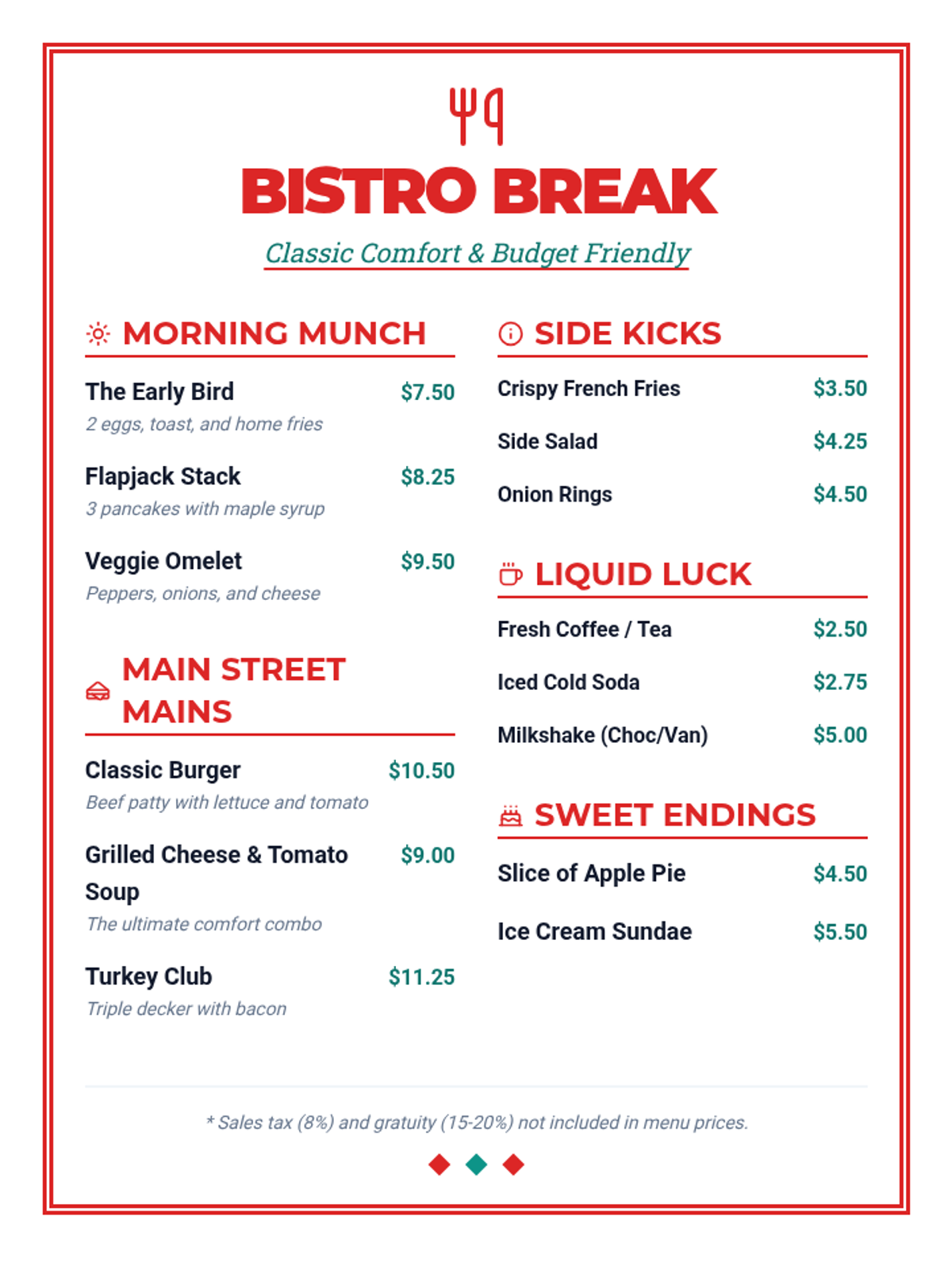
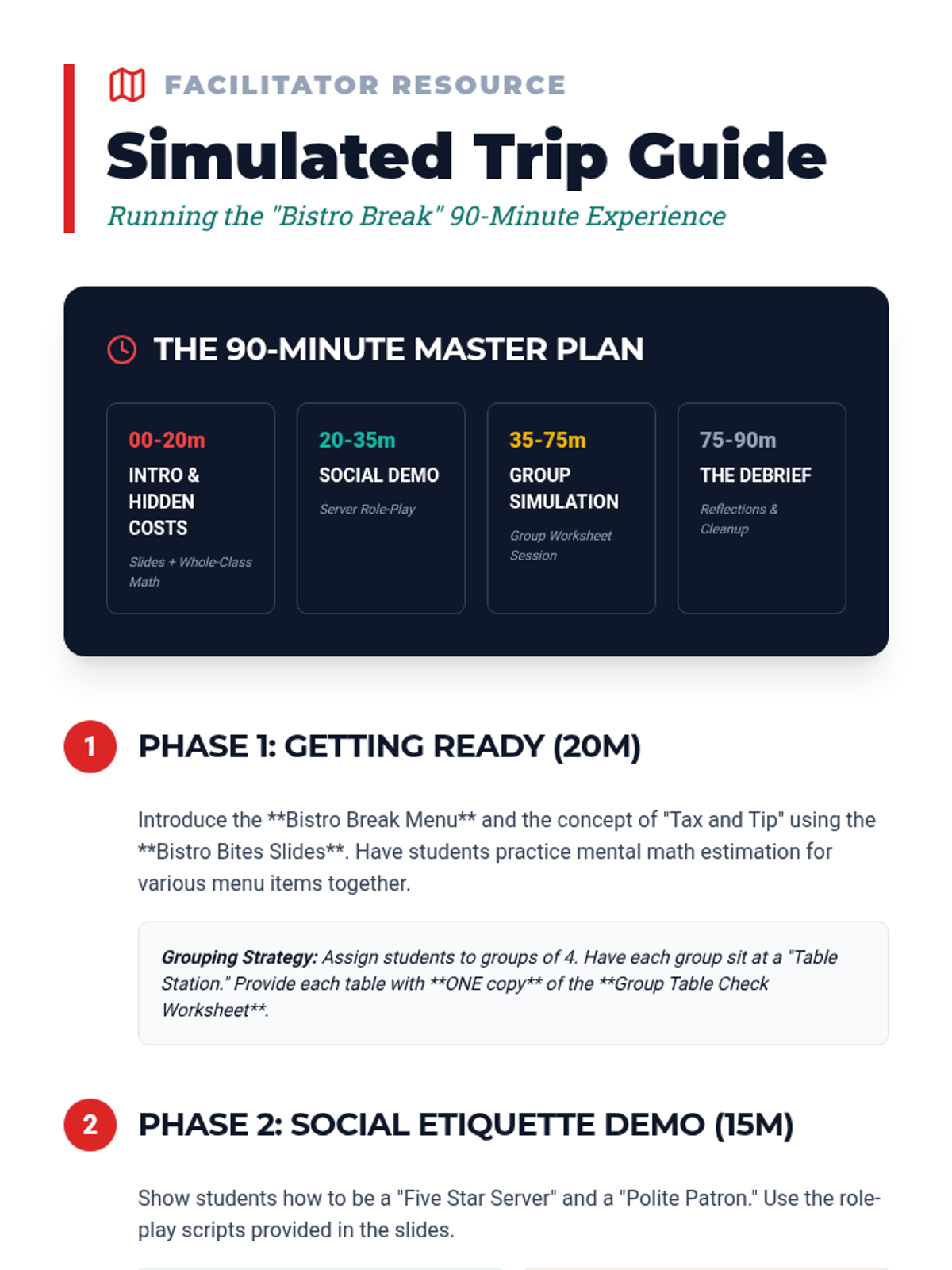
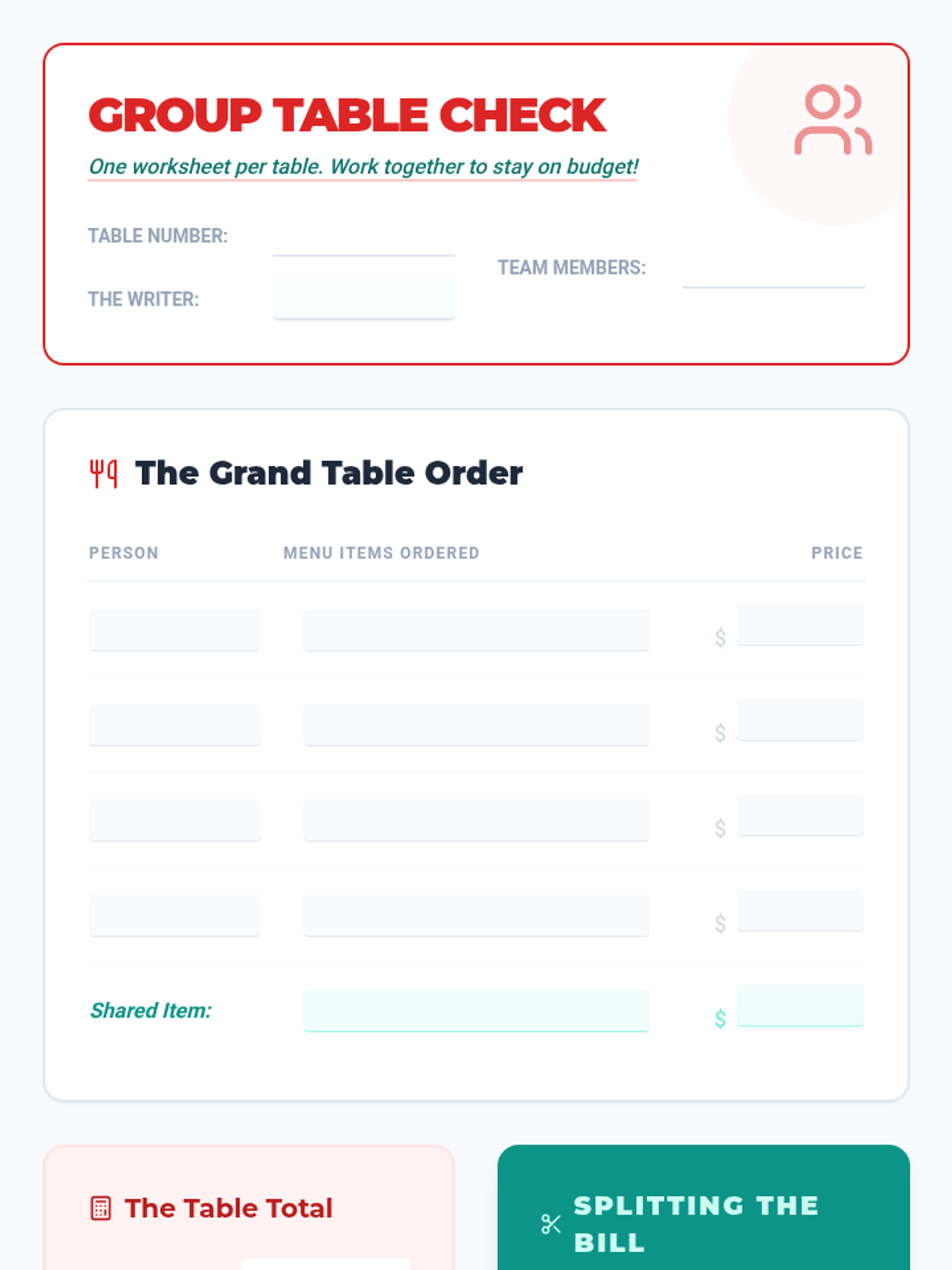
A functional skills lesson focused on navigating a restaurant experience on a budget, covering menu reading, budget planning, social etiquette, and group check splitting.
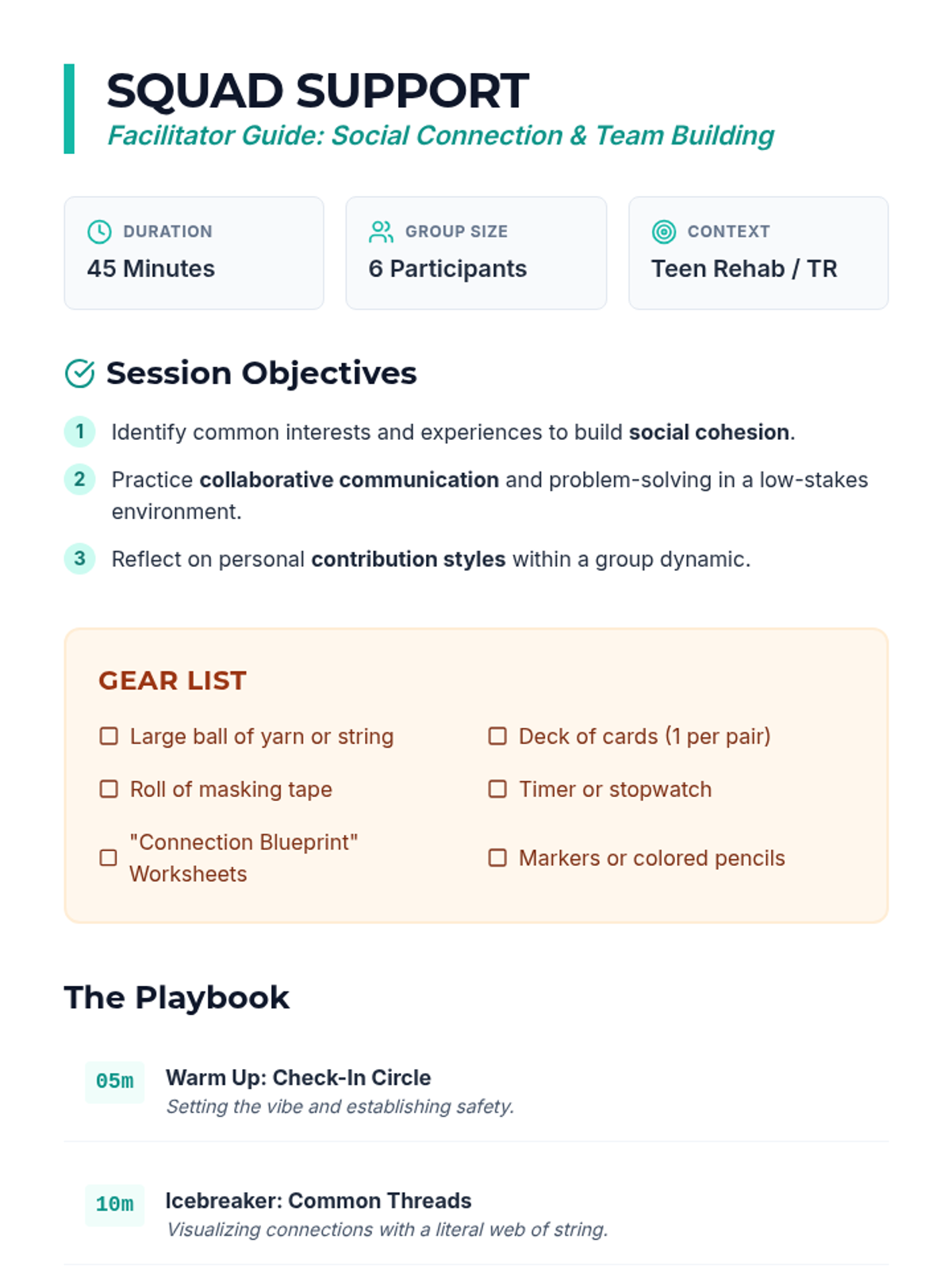
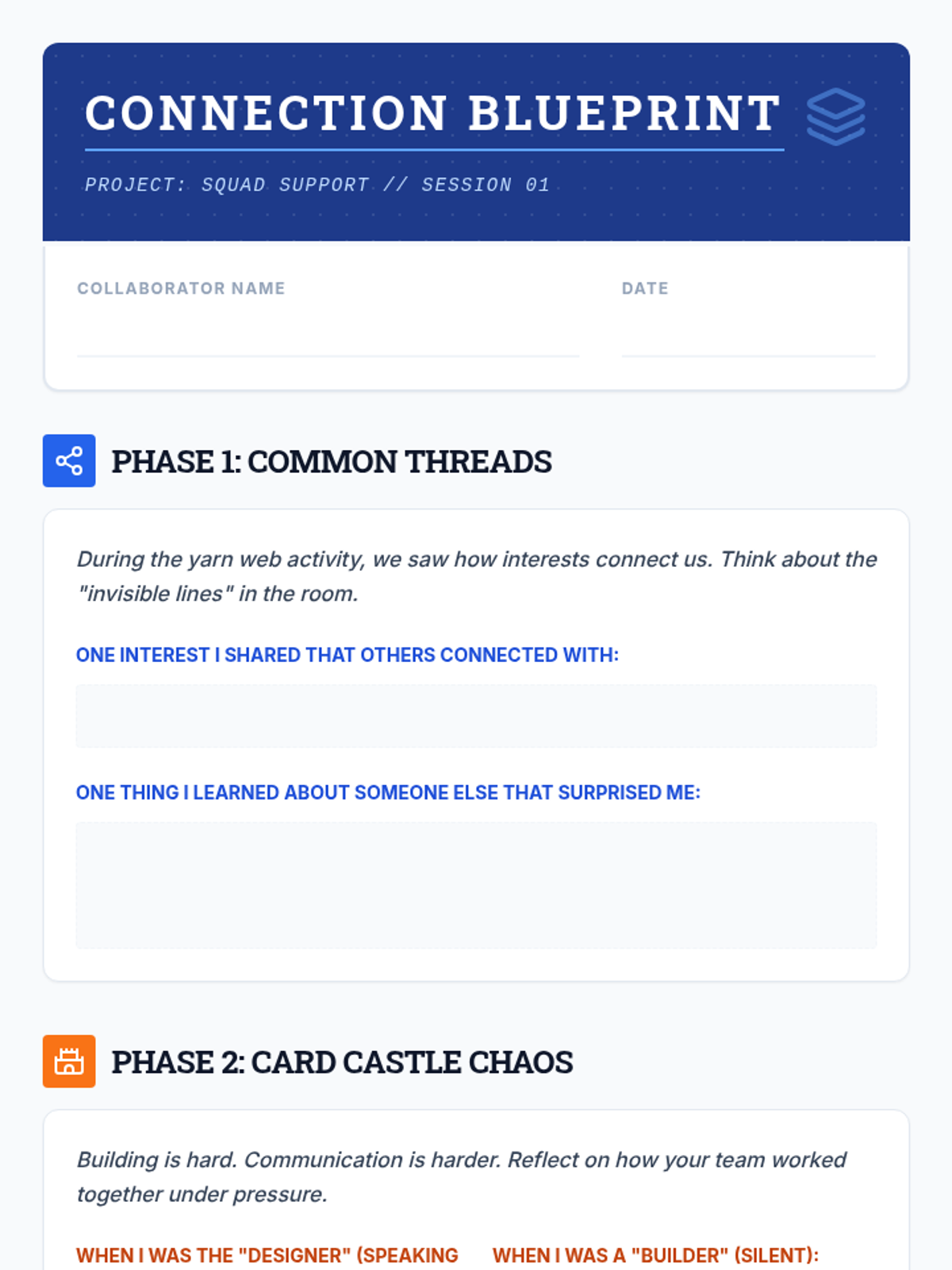
A 45-minute therapeutic leisure session for teens focused on building social connections and team dynamics through collaborative activities and reflection.
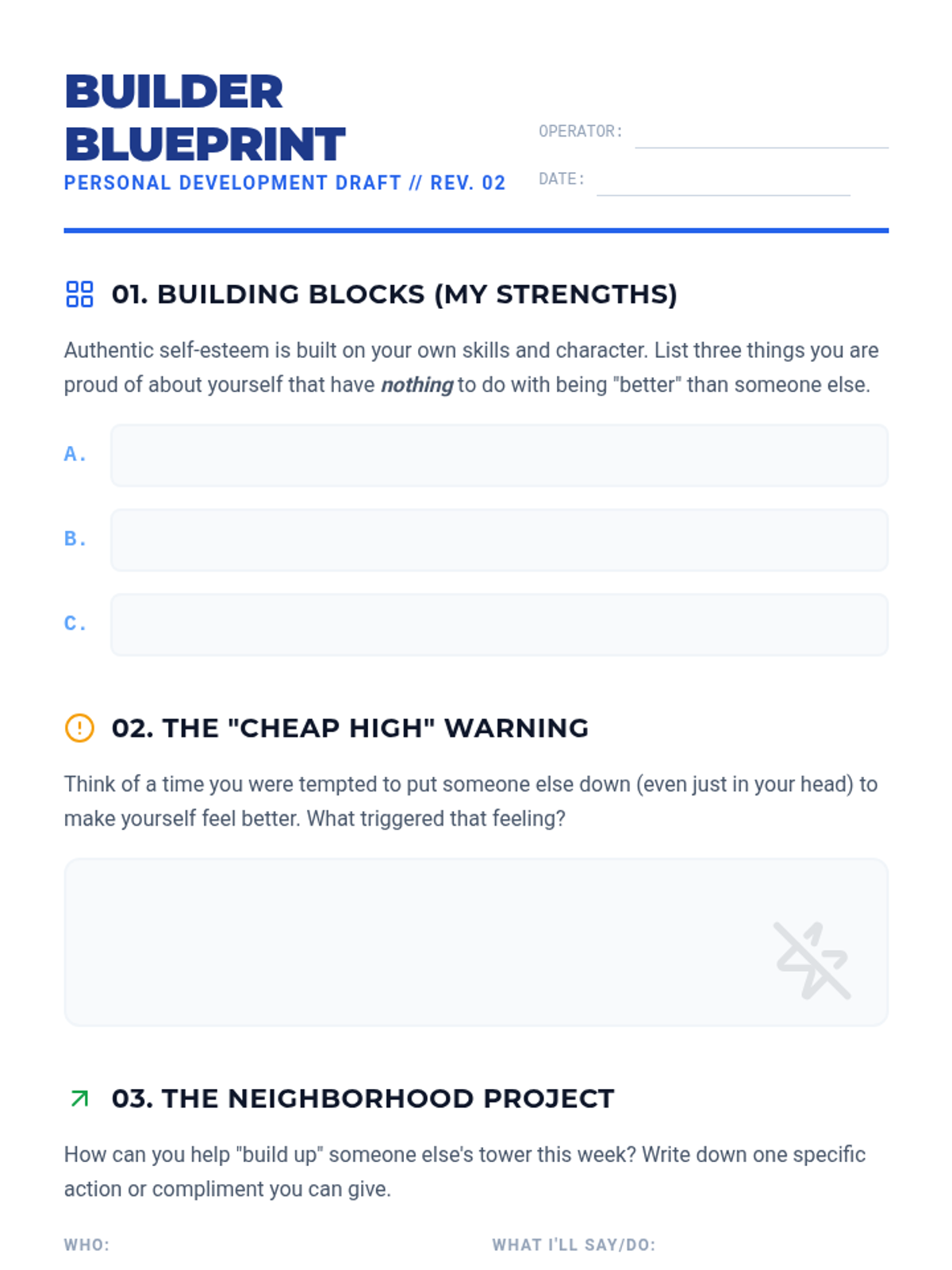
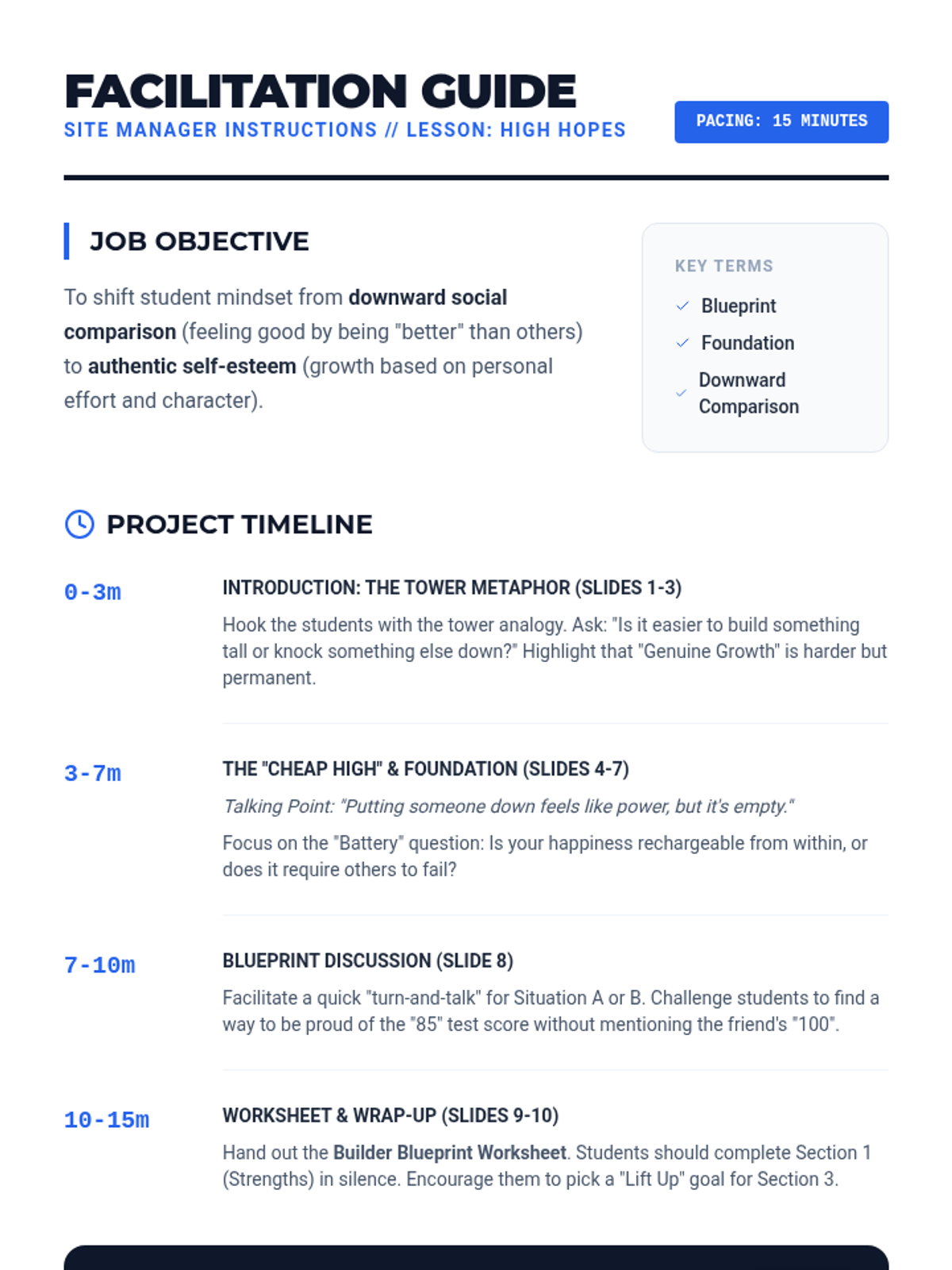
A 15-minute lesson exploring the pitfalls of 'downward social comparison' and how to build authentic self-esteem without diminishing others. Students will learn that true confidence comes from personal growth rather than putting others down.
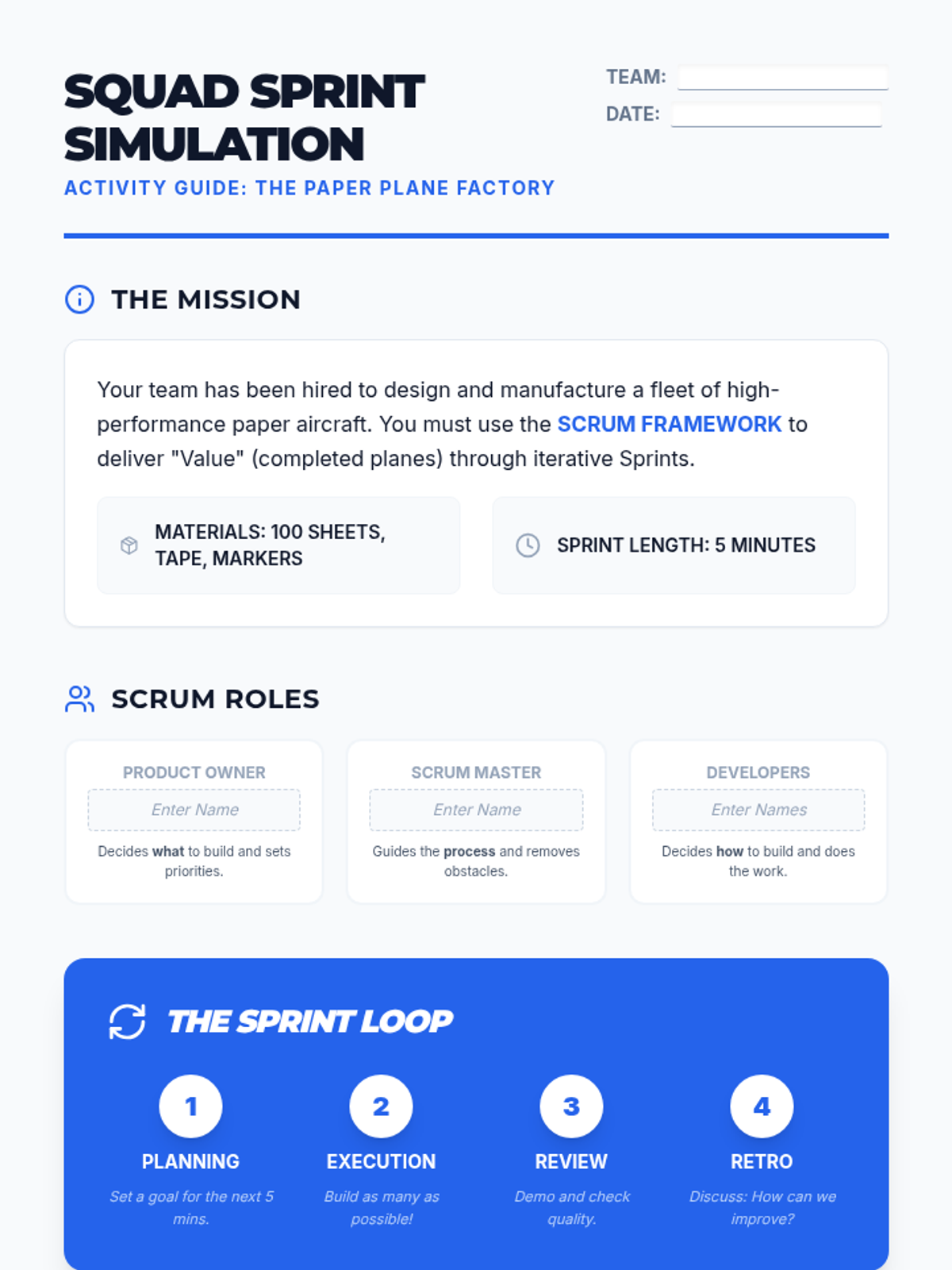
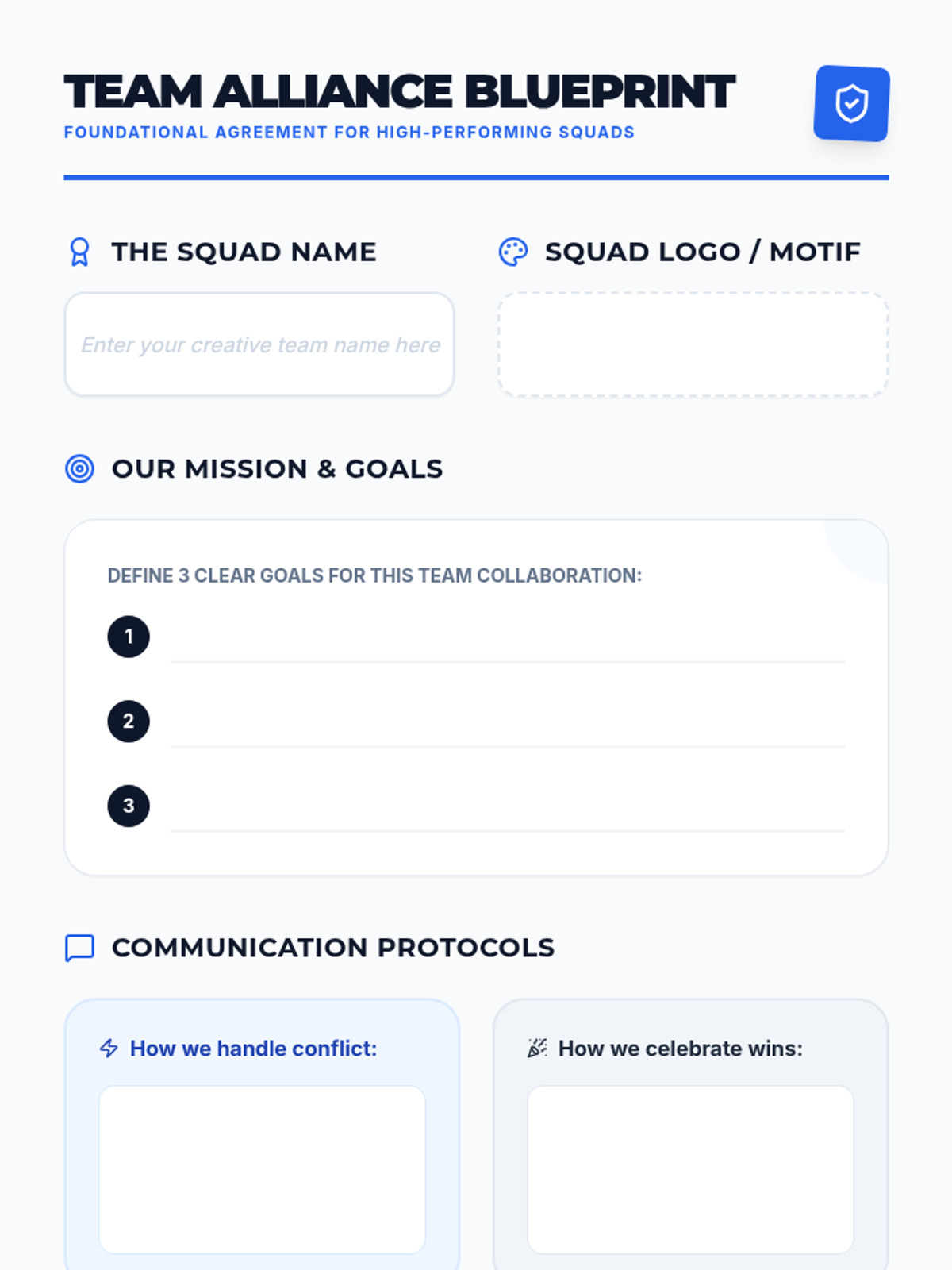
This lesson introduces students to the core concepts of Agile and Scrum through the lens of team dynamics. Students will explore roles, ceremonies, and the critical importance of communication in high-performing teams.
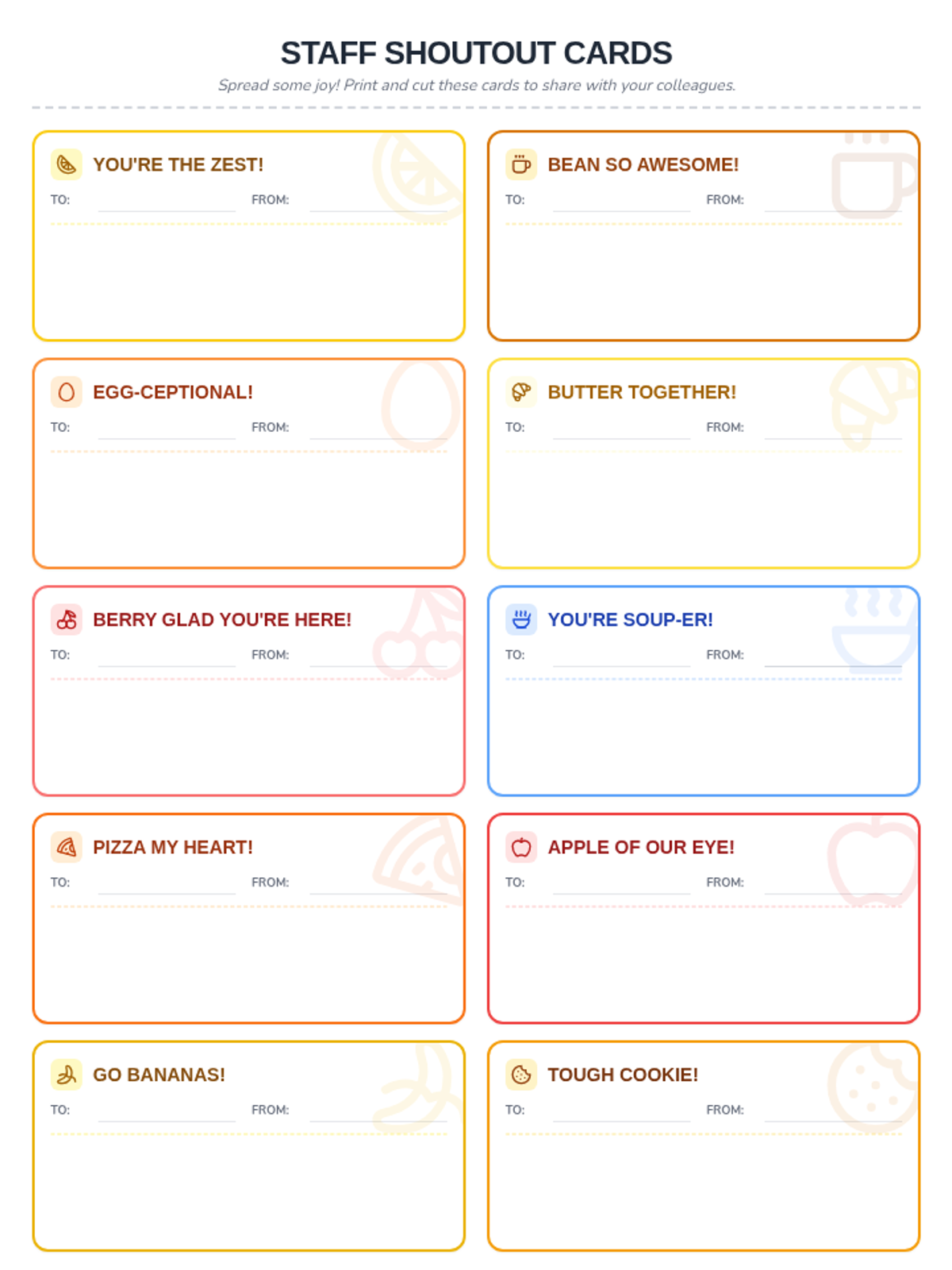
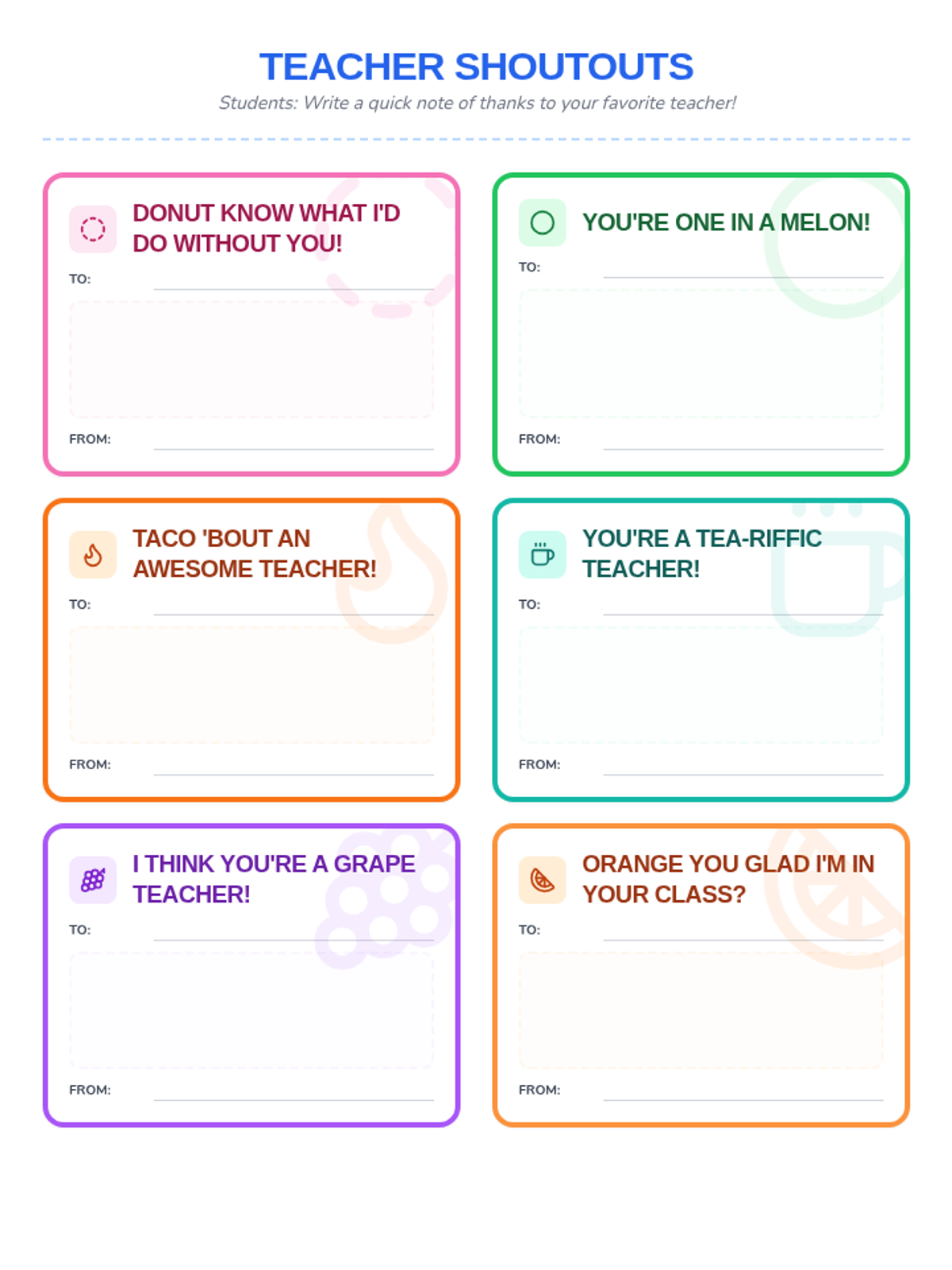
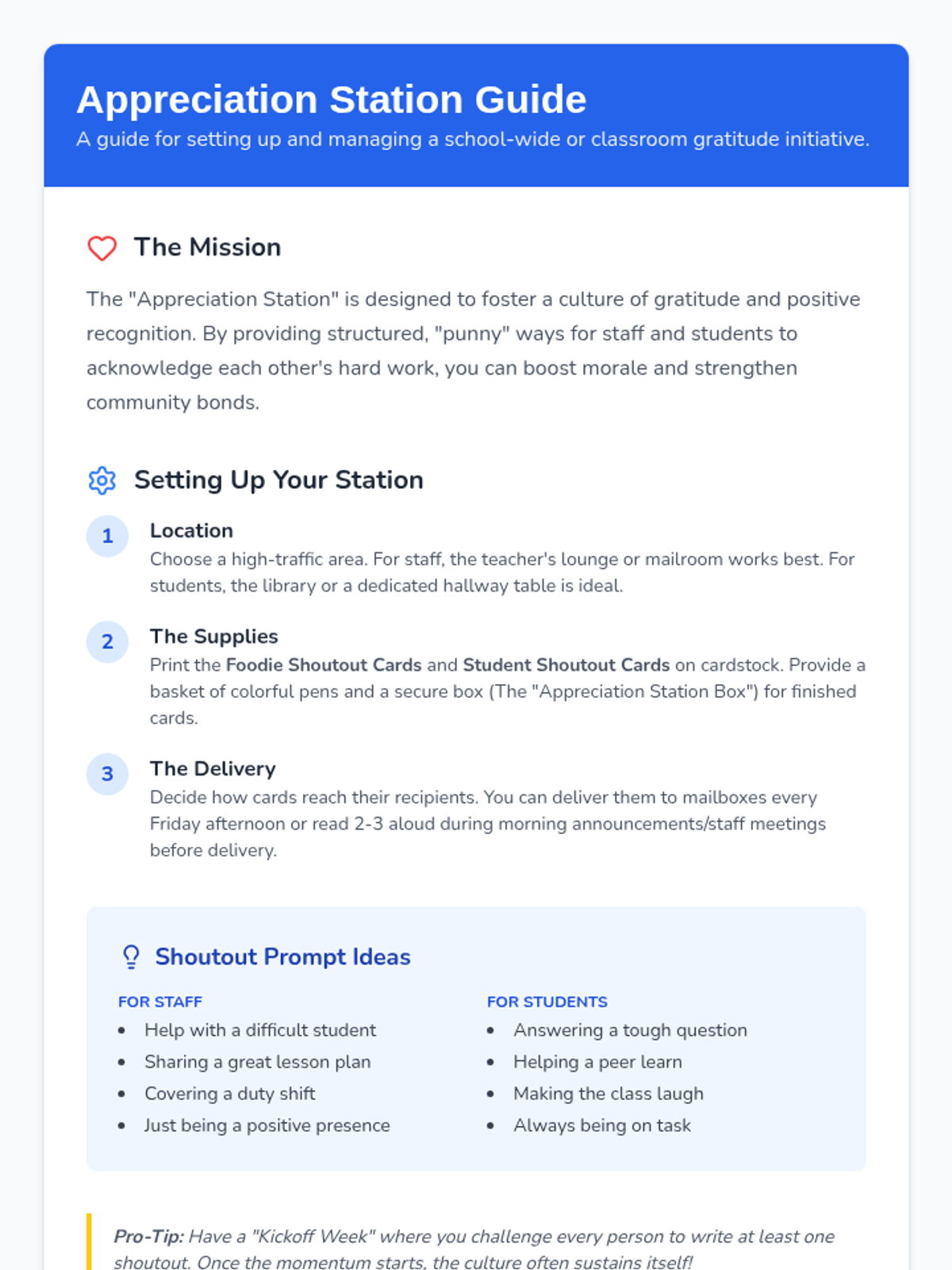
A collection of appreciation-themed resources for school staff and students to express gratitude through creative, pun-based shoutout cards.
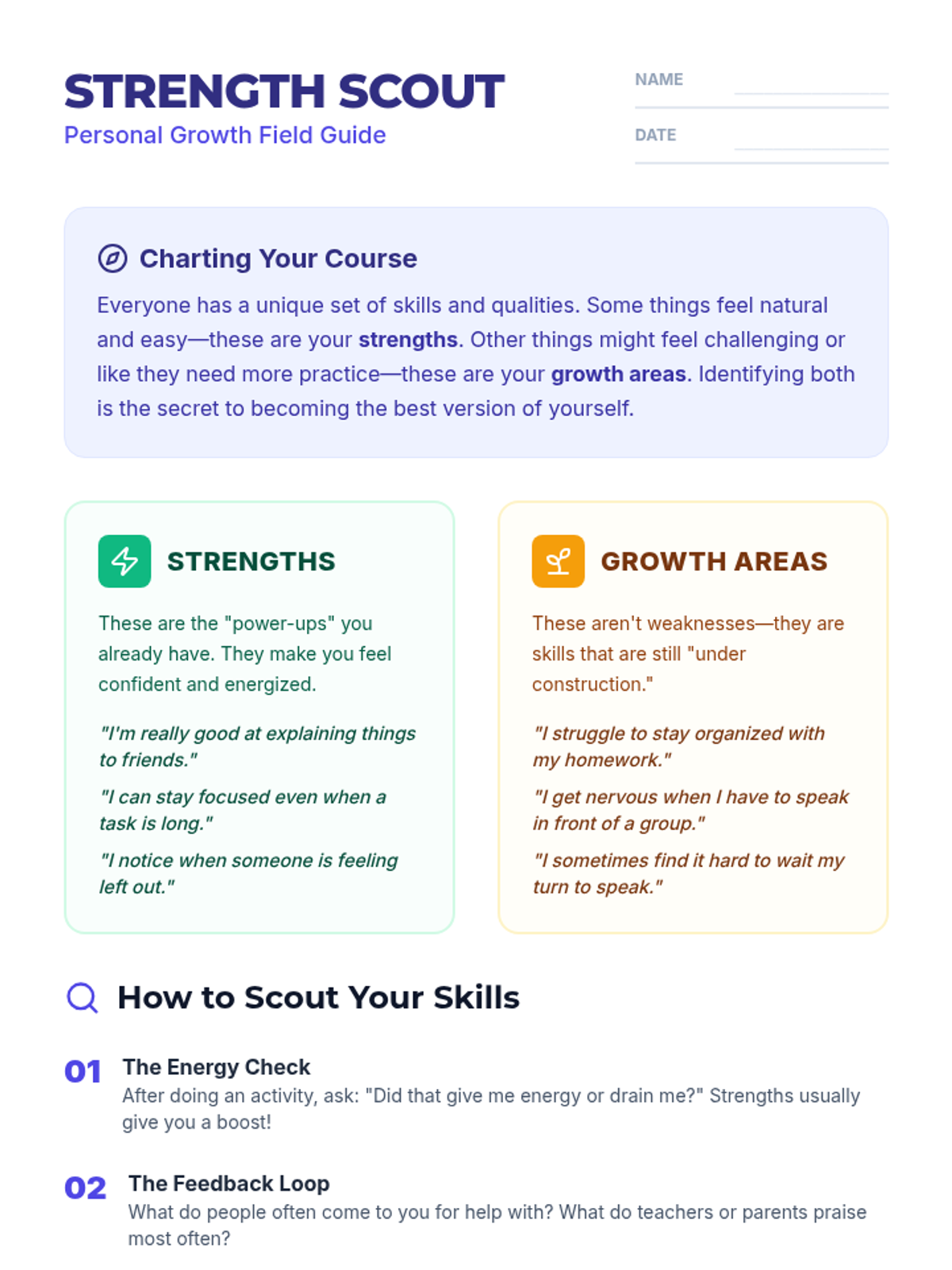
A lesson focused on helping students identify their personal strengths and areas for future development through self-reflection and scenario-based analysis.
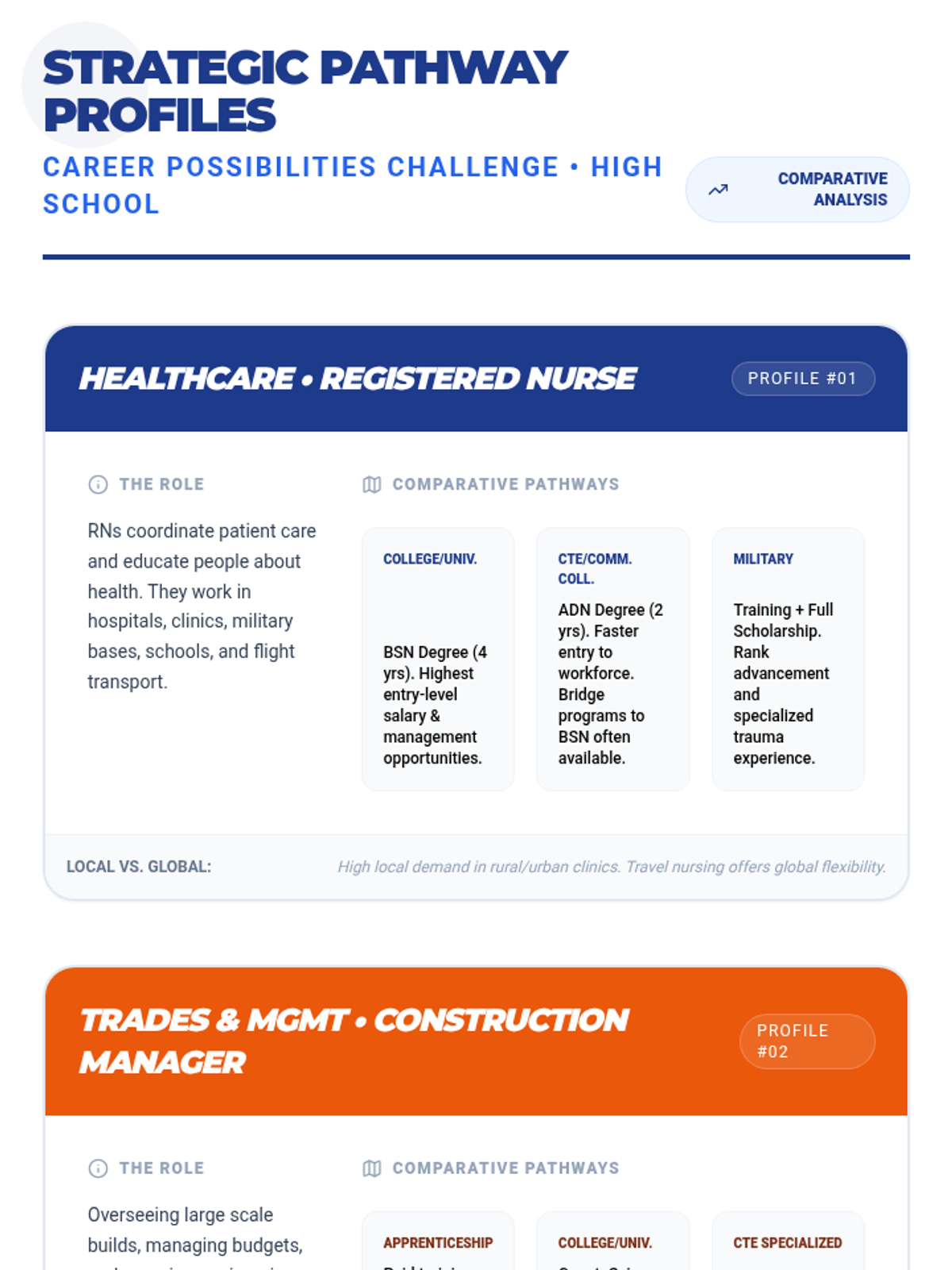
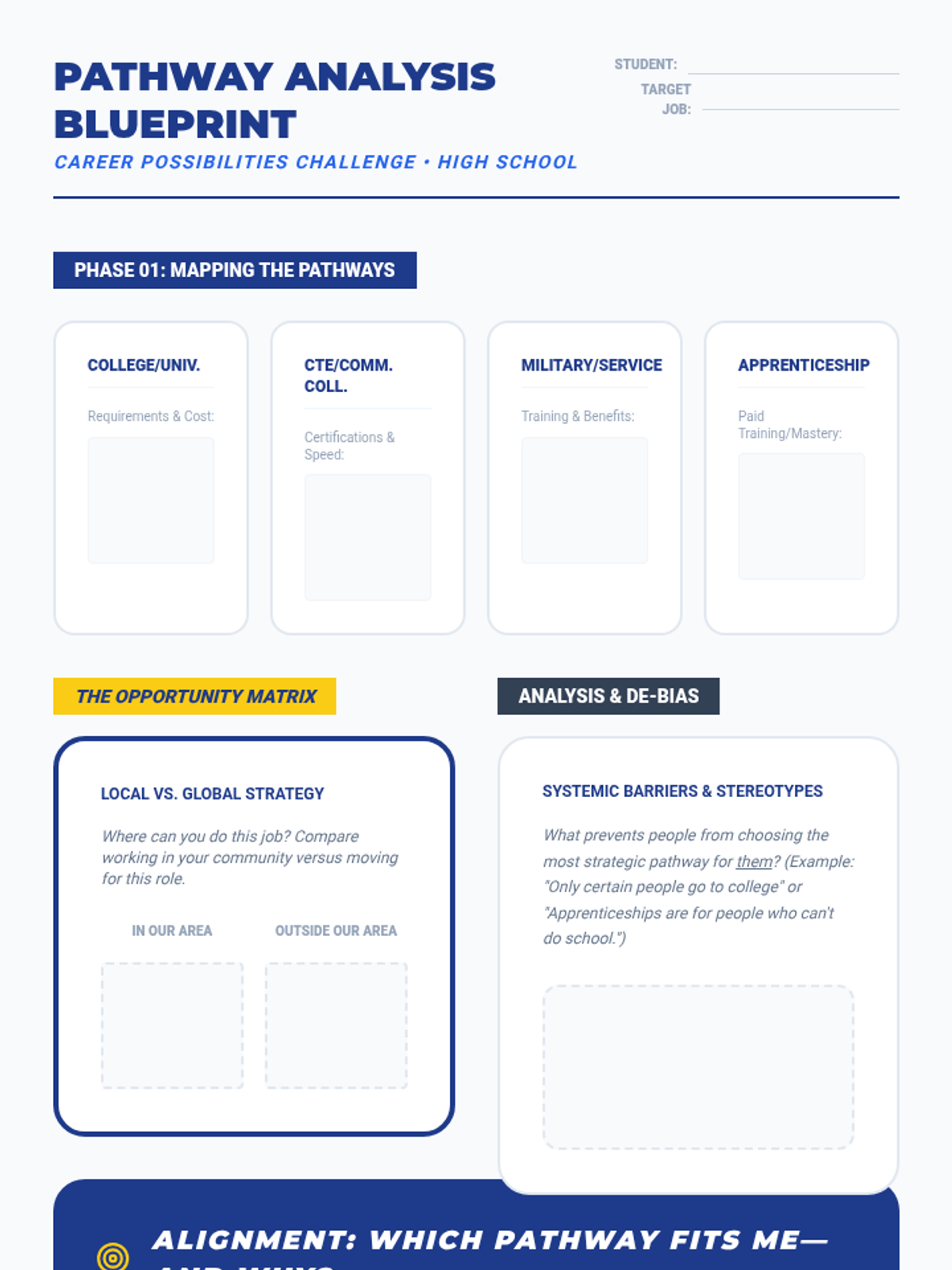
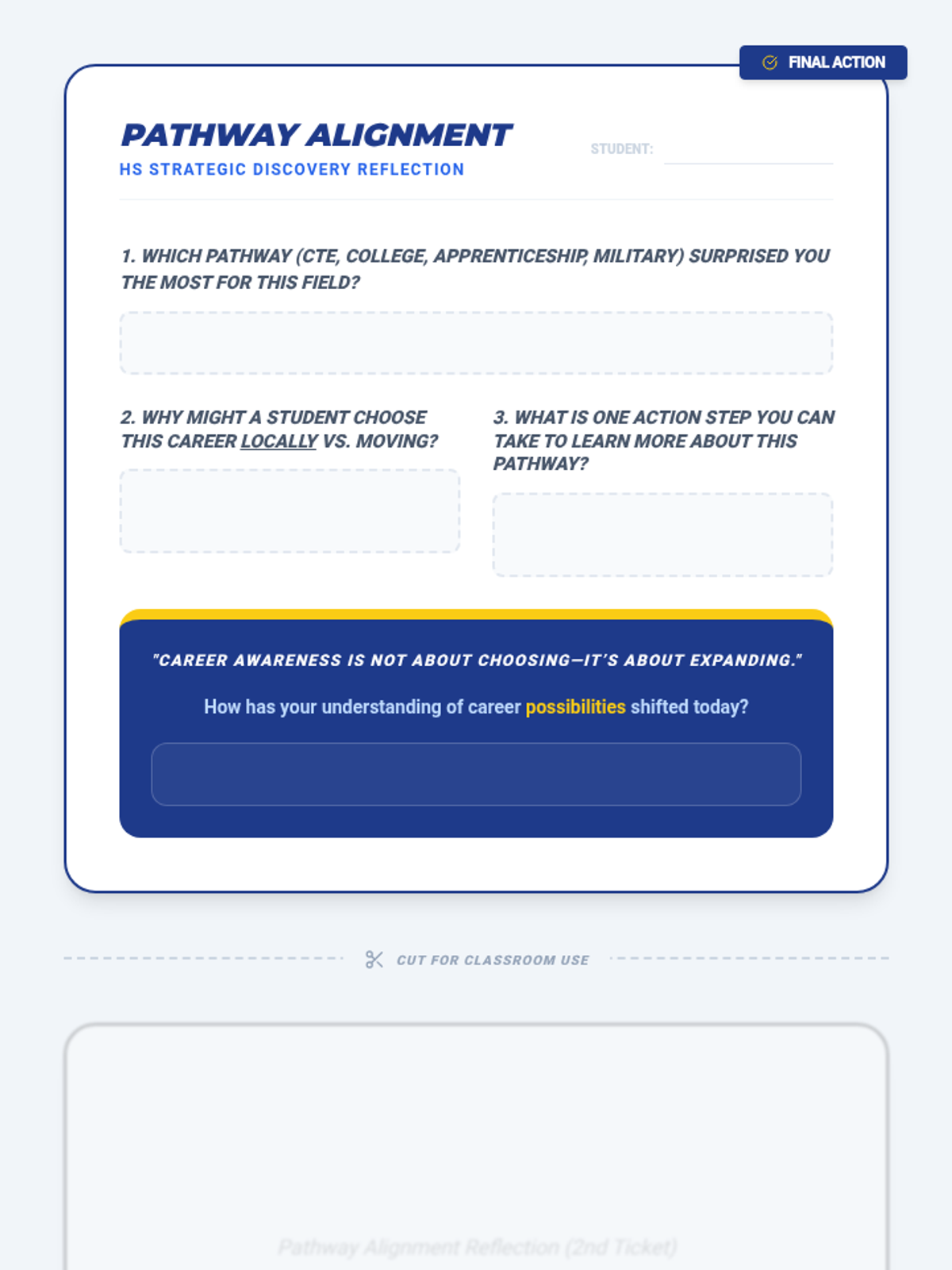
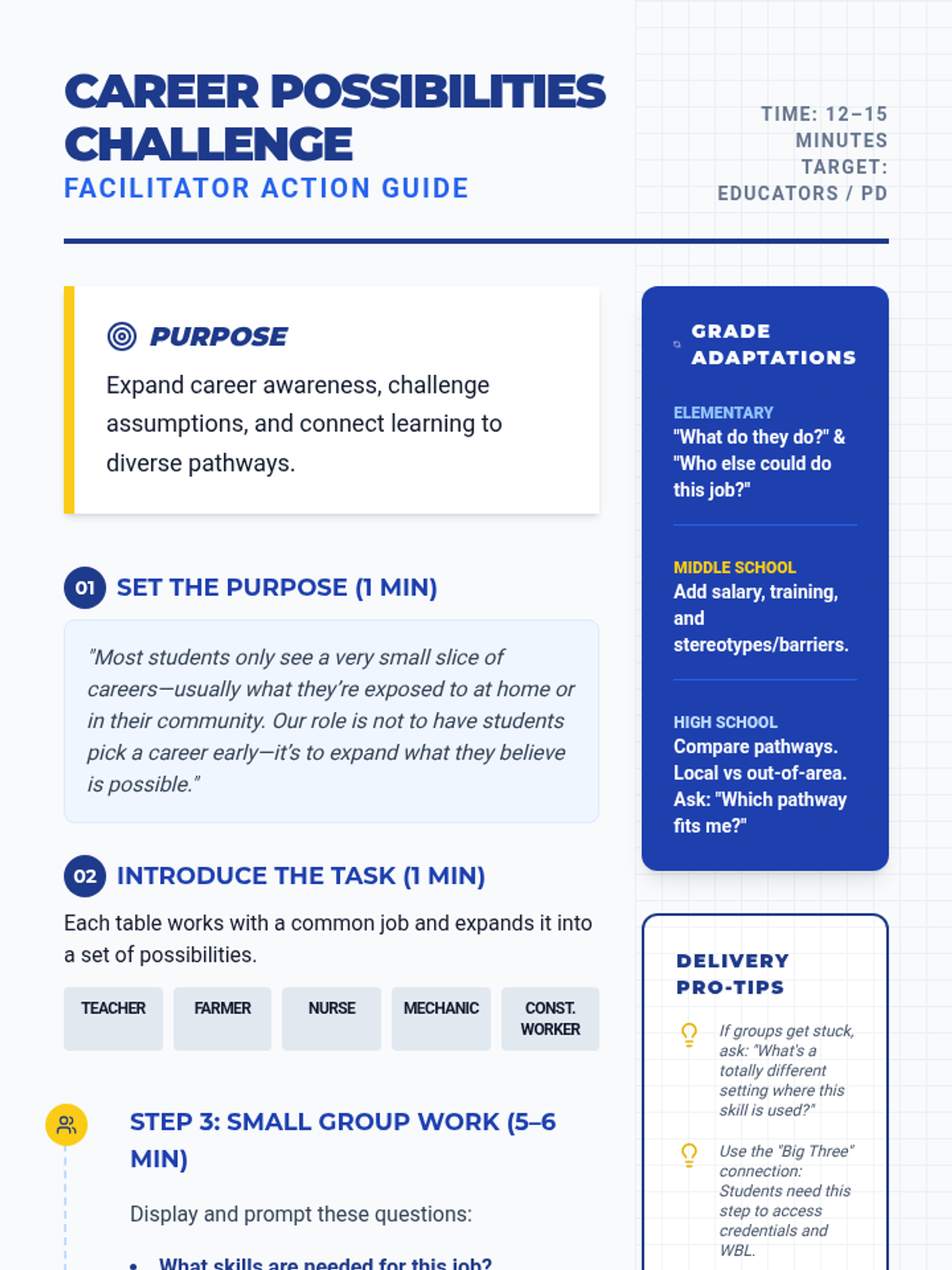
A strategic career planning lesson for high schoolers focusing on comparing specific pathways (CTE, college, military) and evaluating local versus out-of-area opportunities.
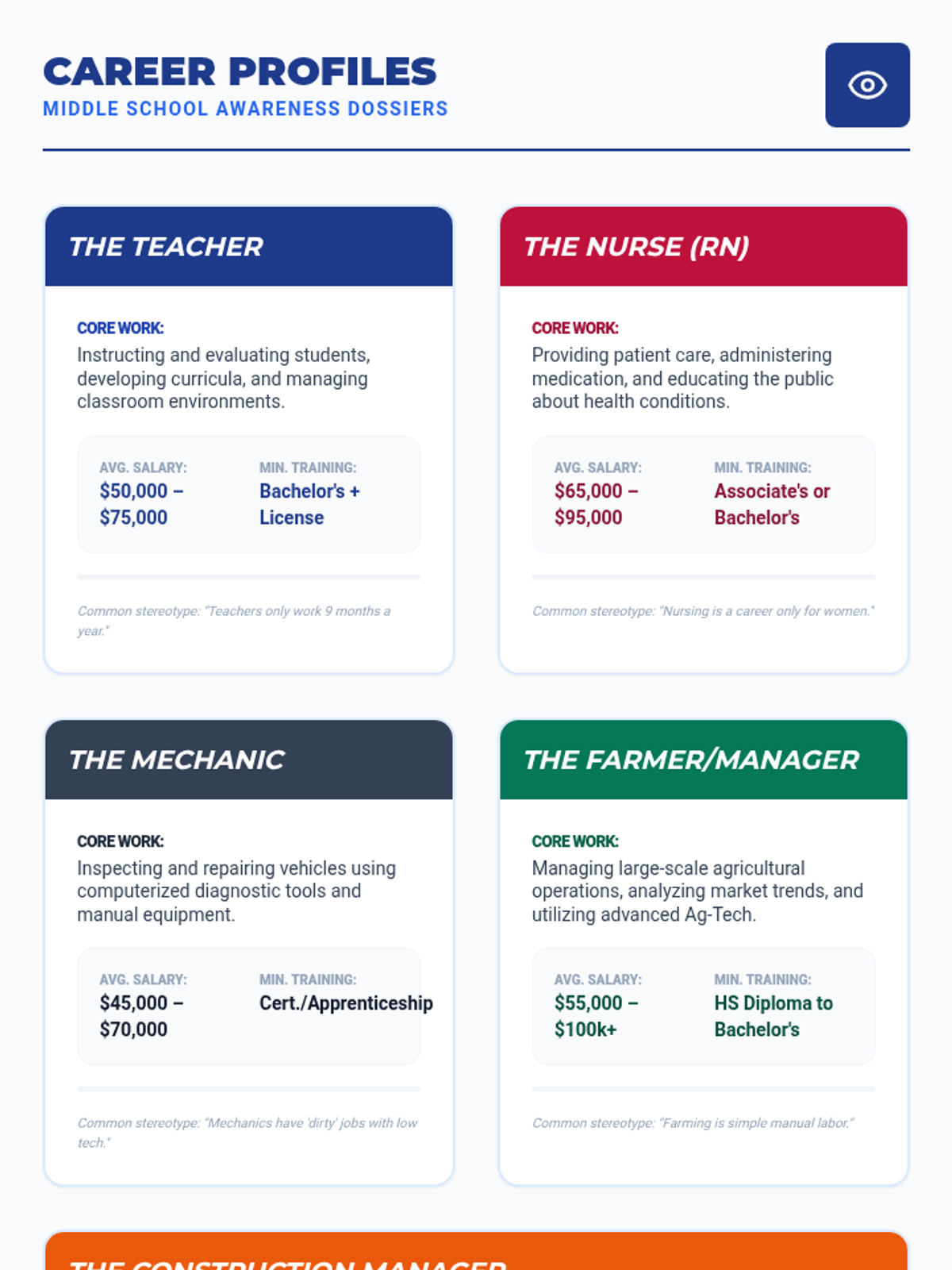
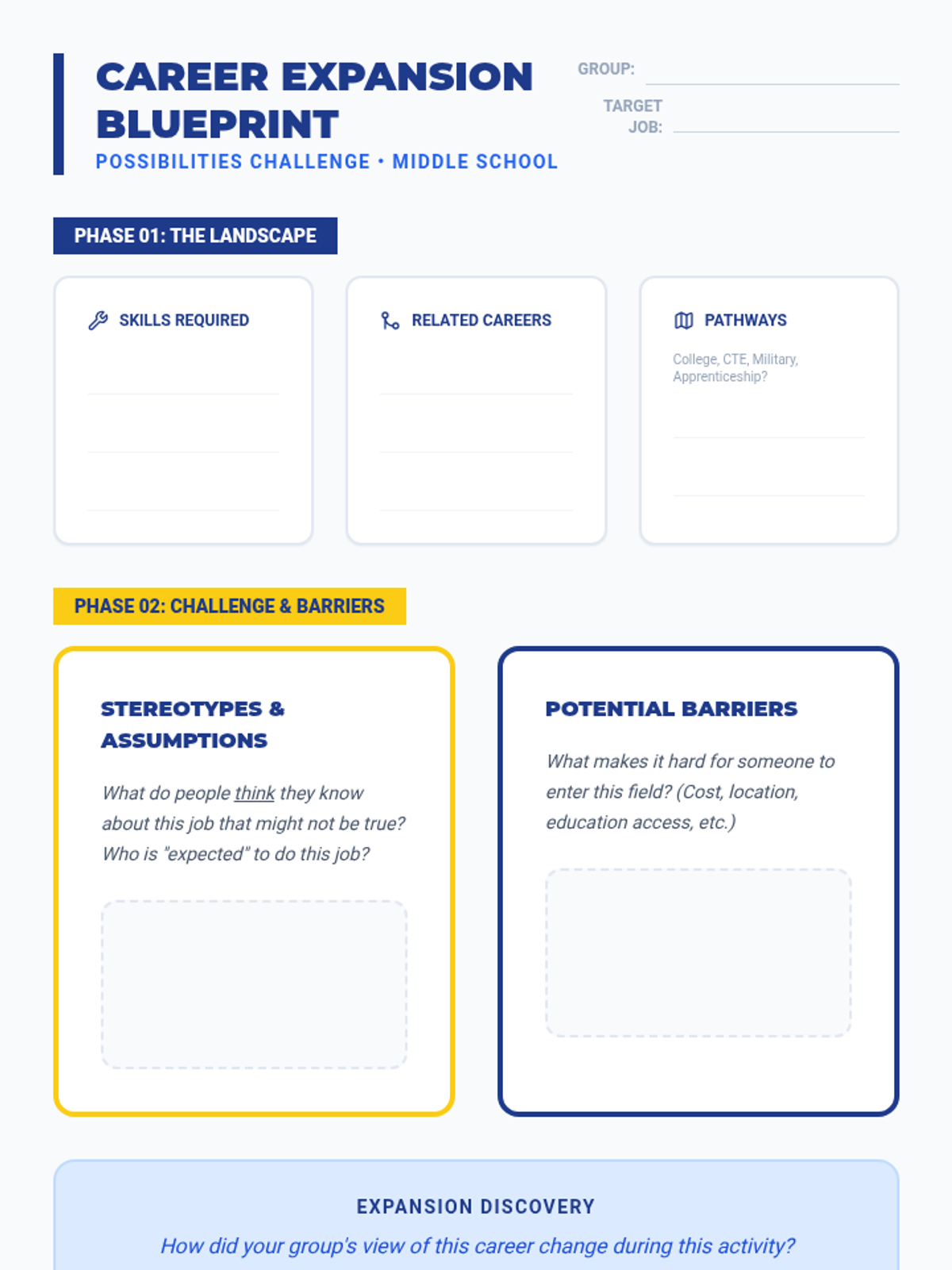
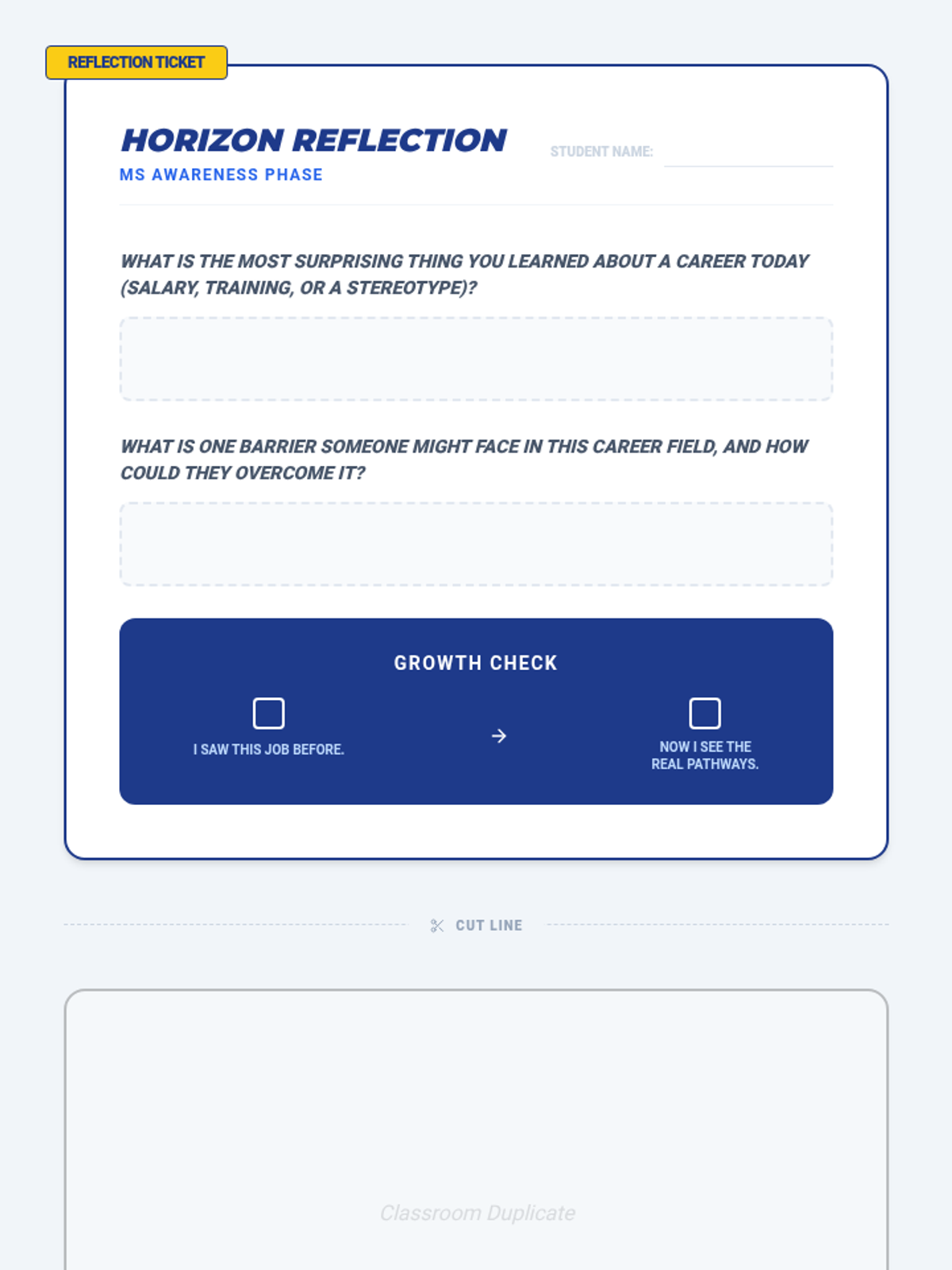
A career exploration lesson for middle schoolers that dives into salary, education requirements, and identifying stereotypes or barriers within specific career fields.
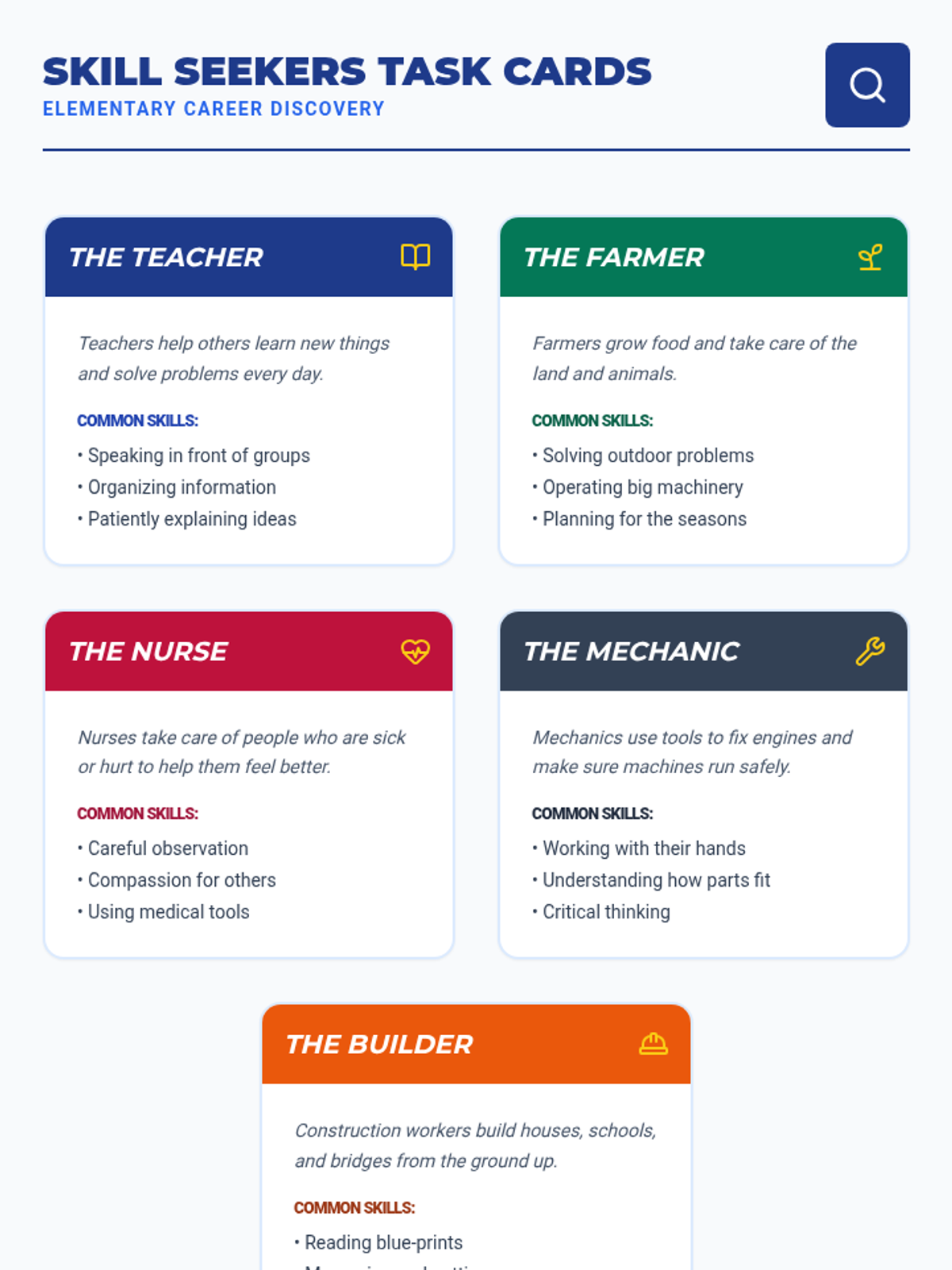
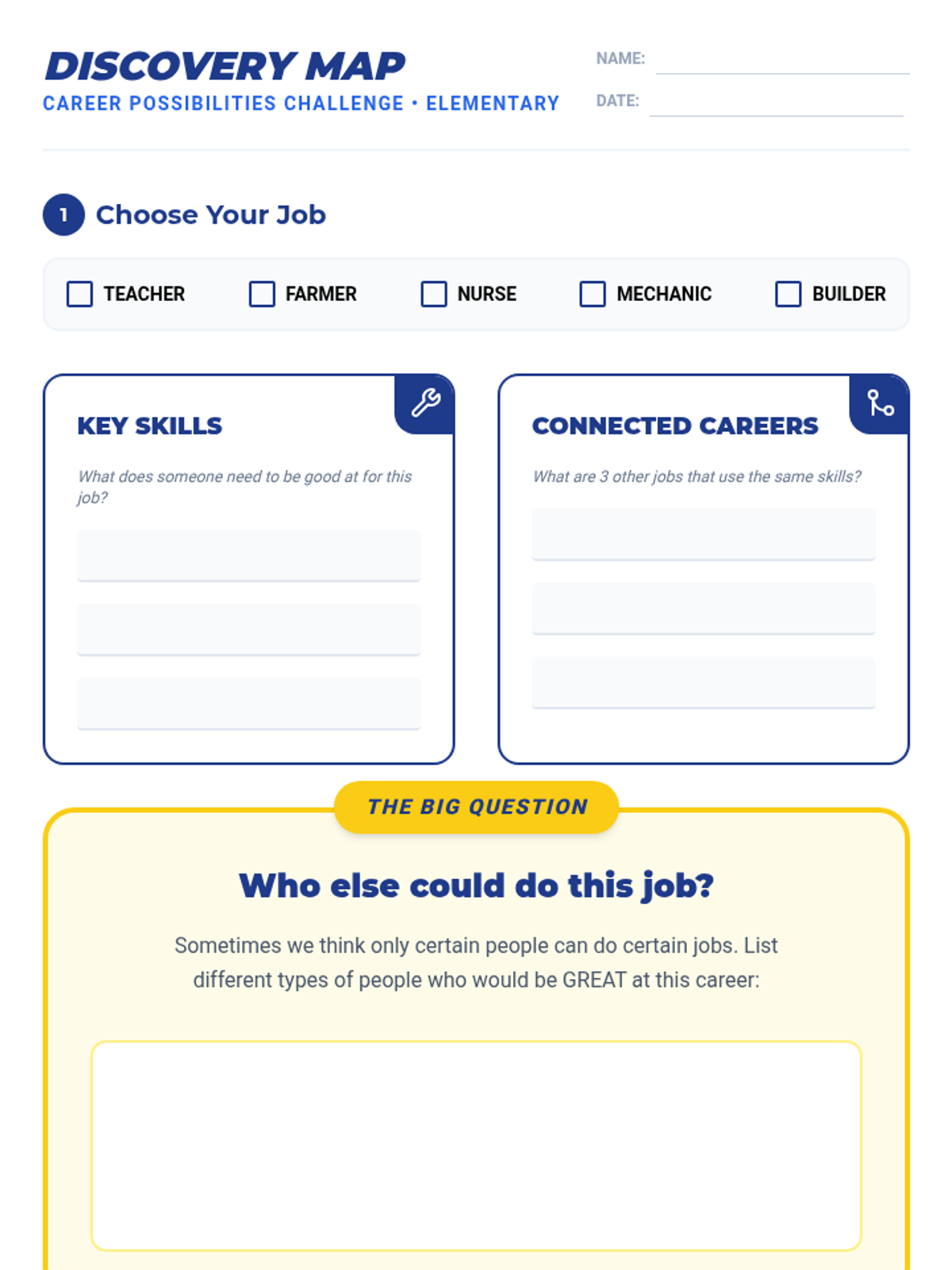
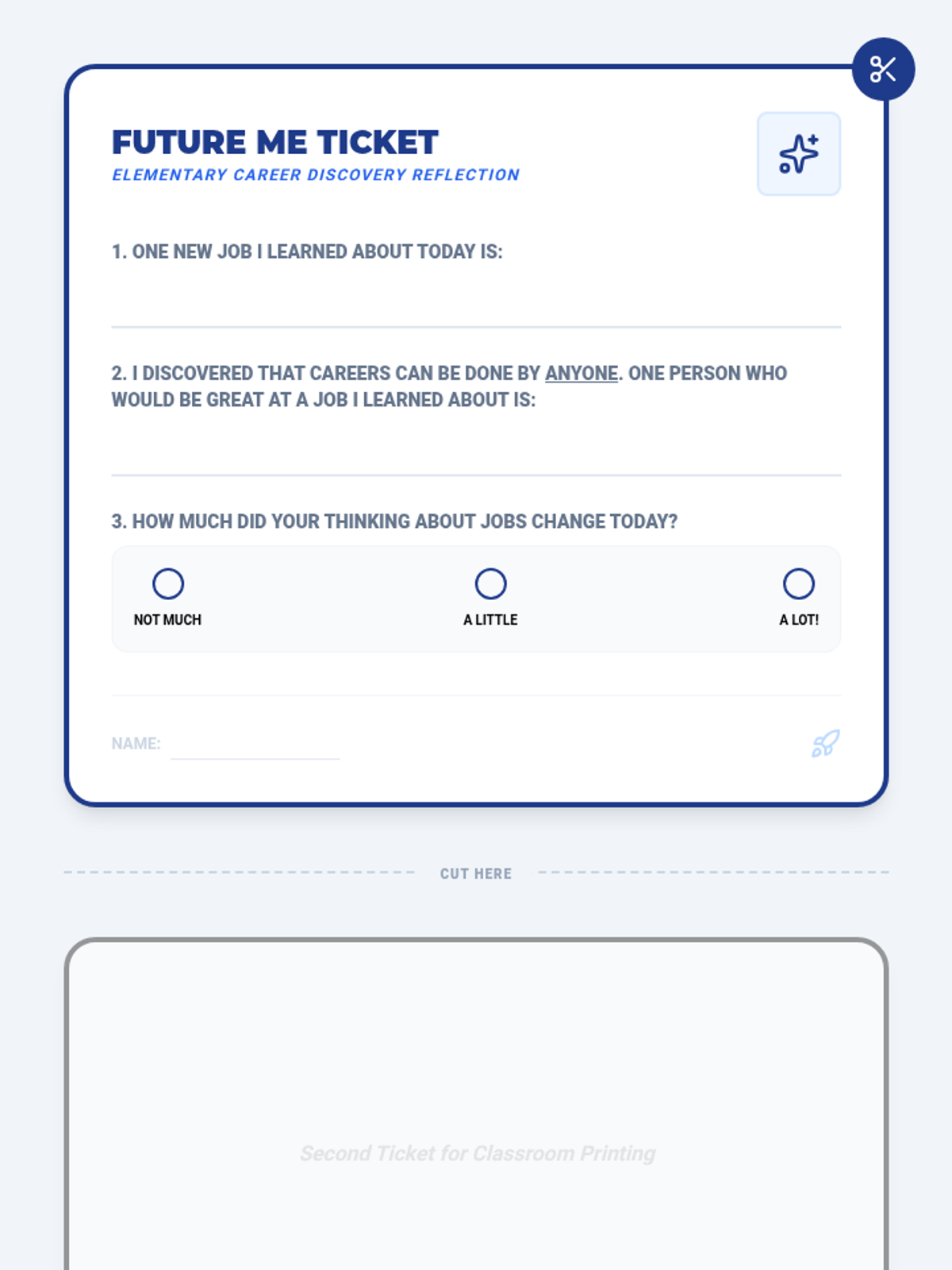
An introductory career awareness lesson for elementary students focusing on identifying job skills and exploring 'who else' can do a job. Students use a graphic organizer to expand their understanding of common professions.
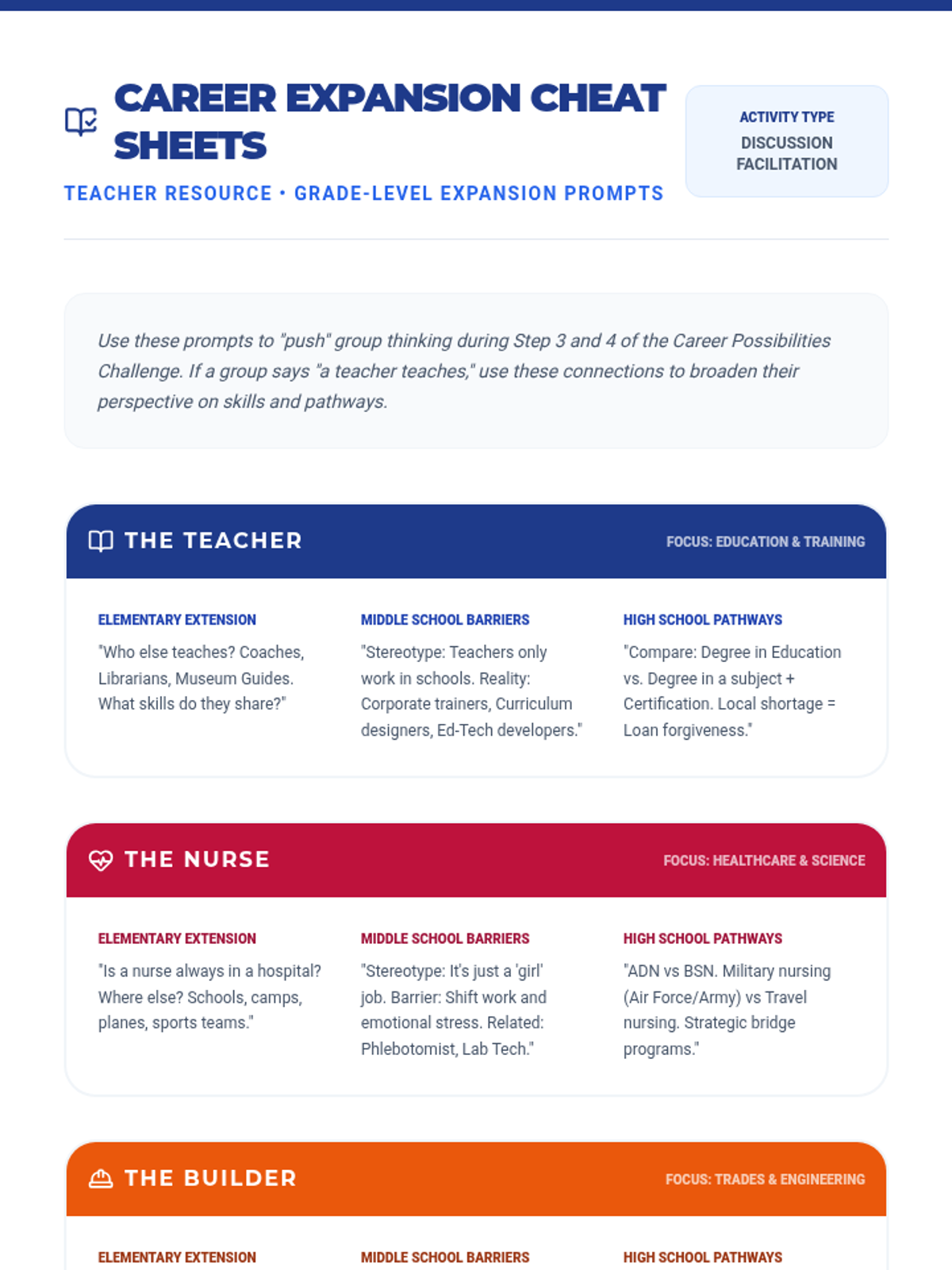
A professional development session for educators to learn how to facilitate career expansion activities that challenge student assumptions and connect learning to diverse pathways.
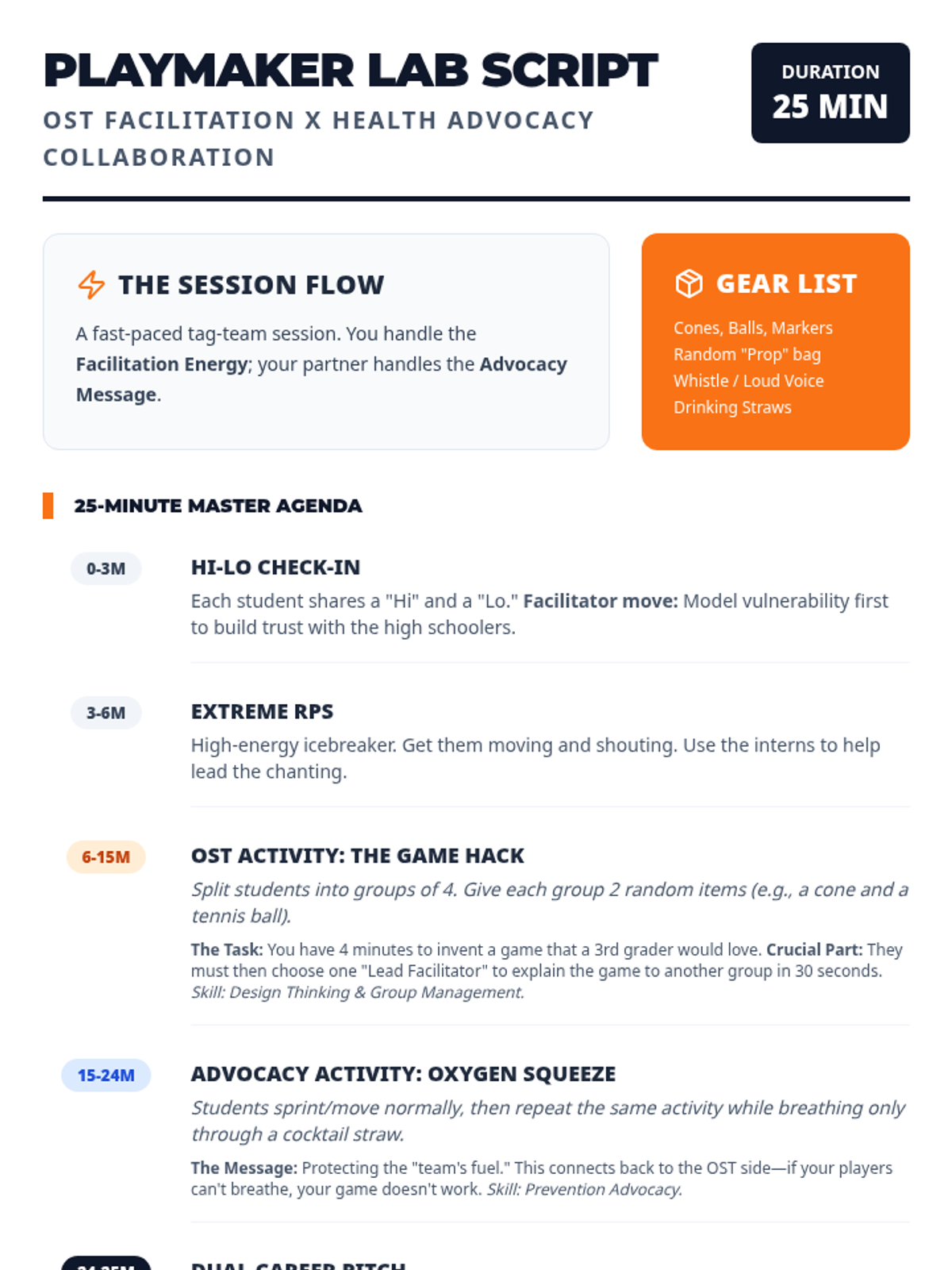
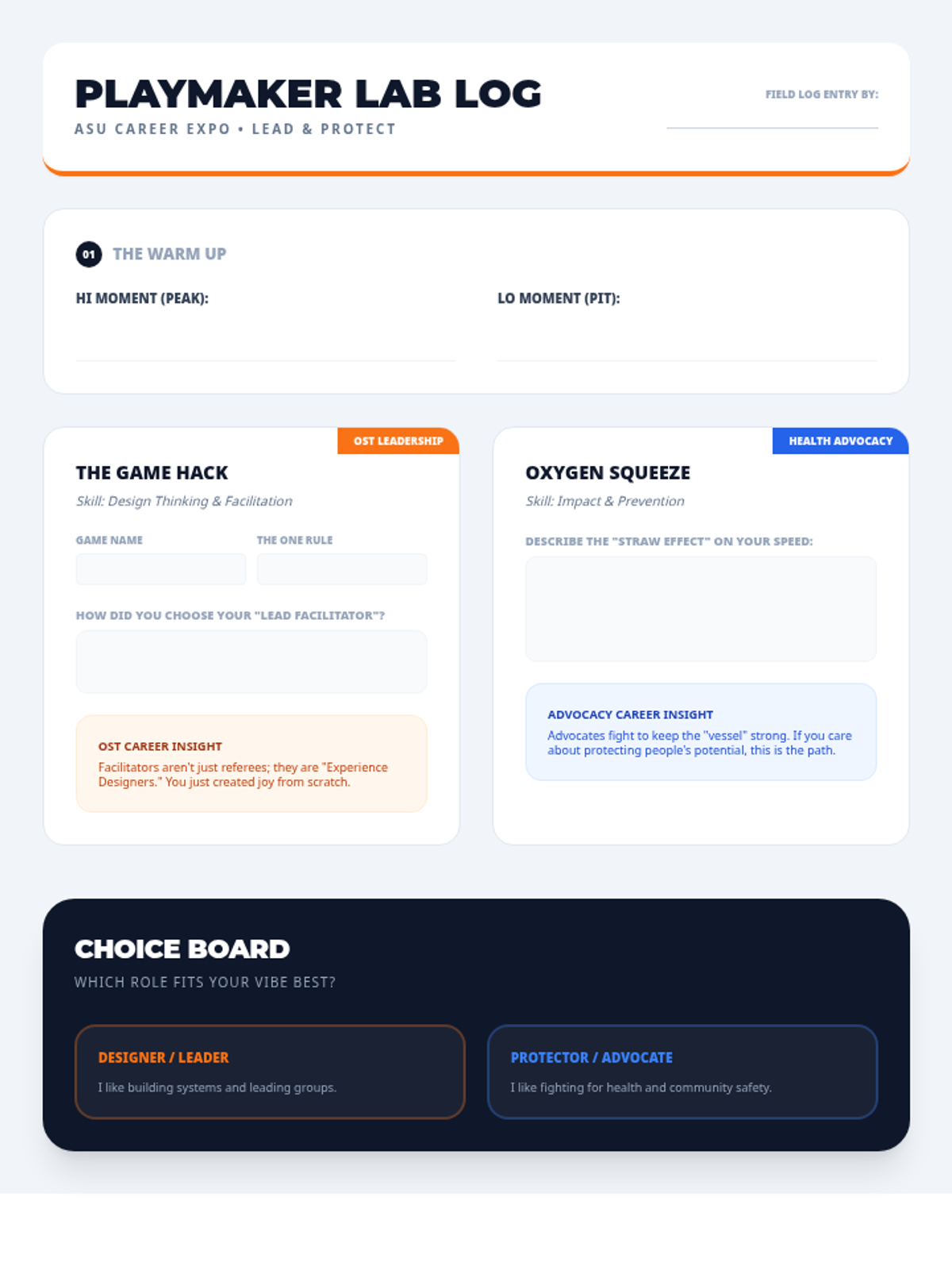
A fast-paced, 25-minute experiential session where students explore careers in out-of-school-time (OST) and health advocacy. In collaboration with an anti-vaping professional, students learn how to use play and game design to promote healthy choices and lead community-wide change.
Final group closure and graduation ceremony.
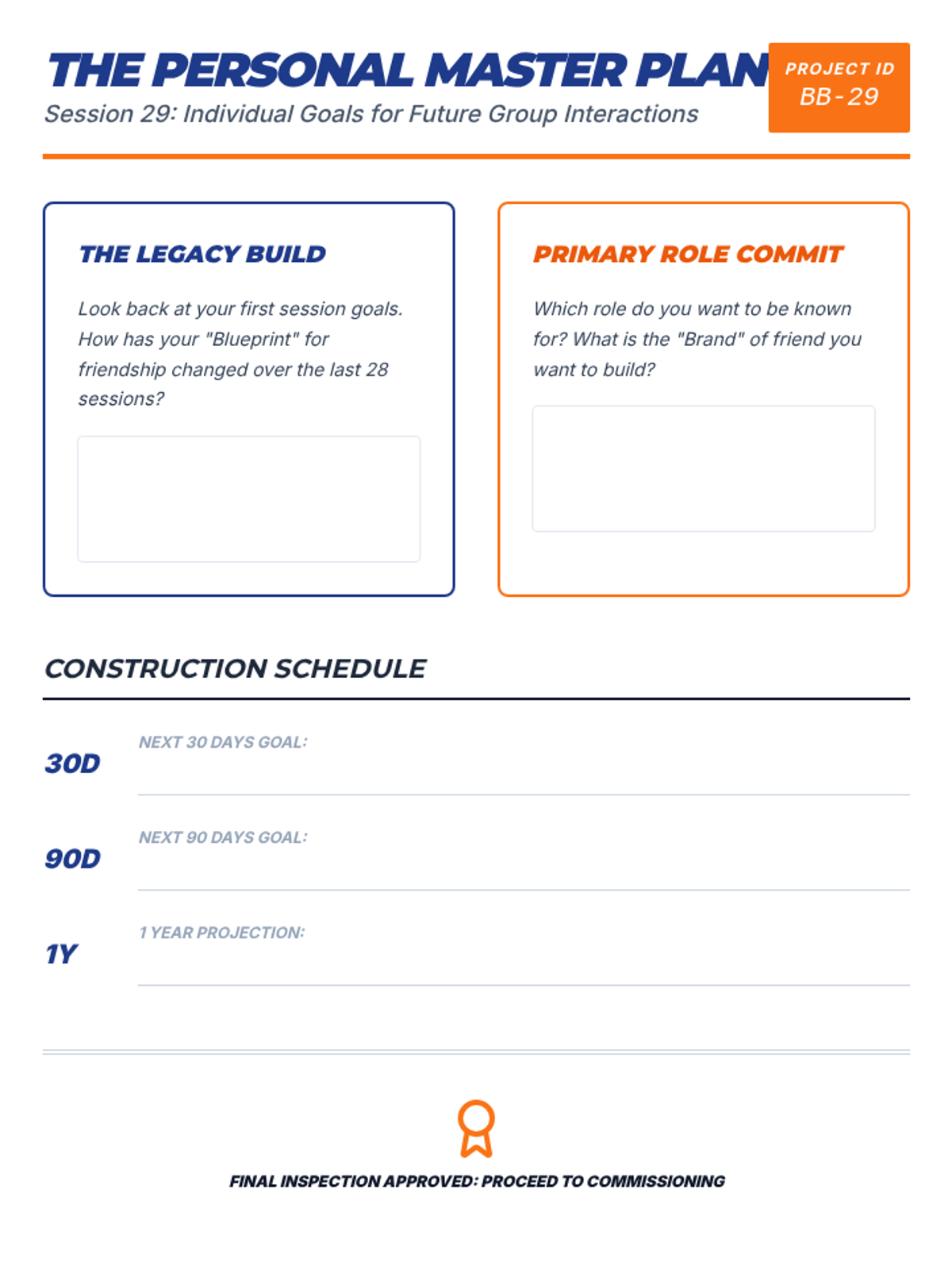
Individual goals for future group interactions.
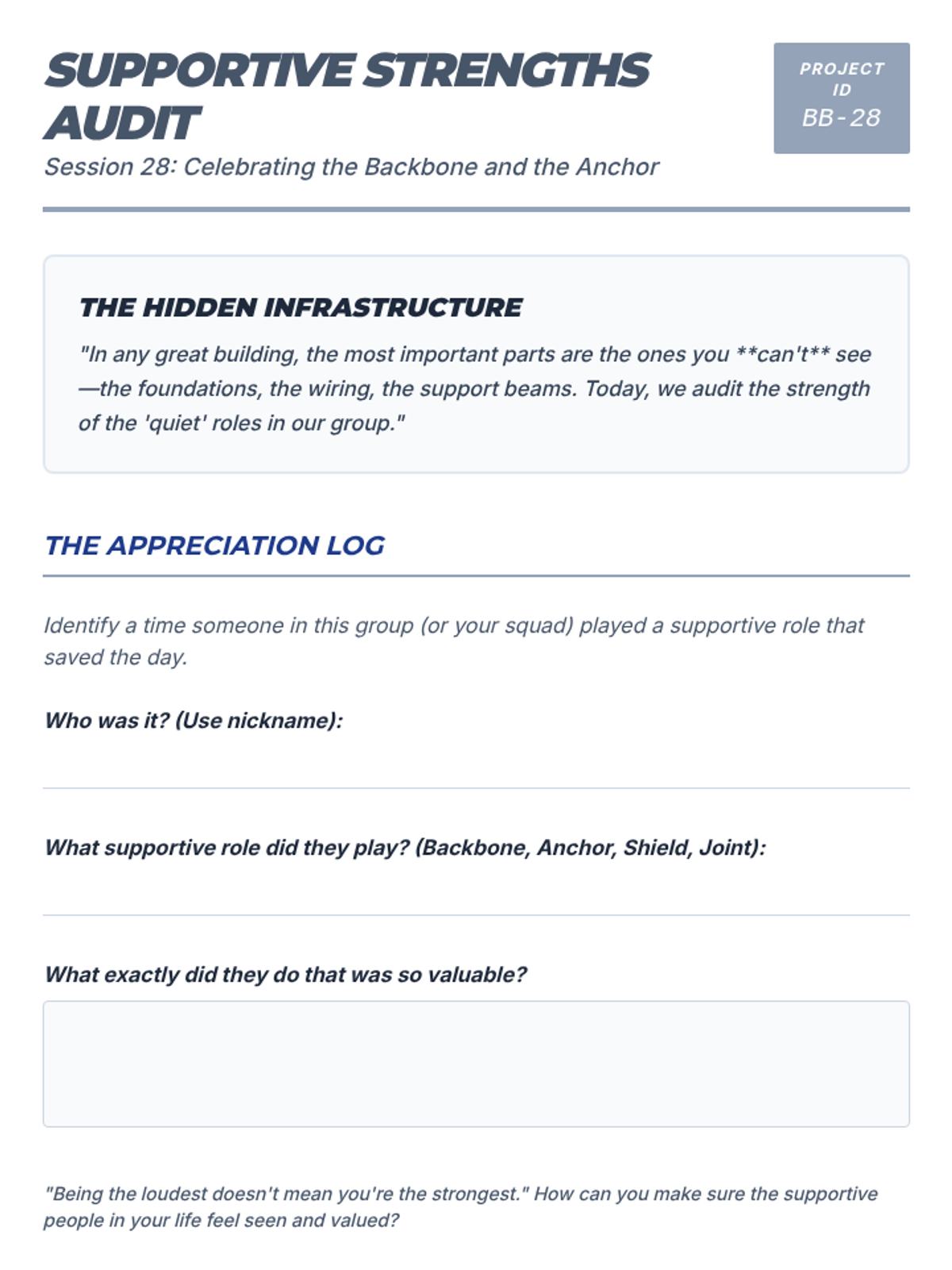
Celebrating the importance of supporting roles (Follower, Loyalist).
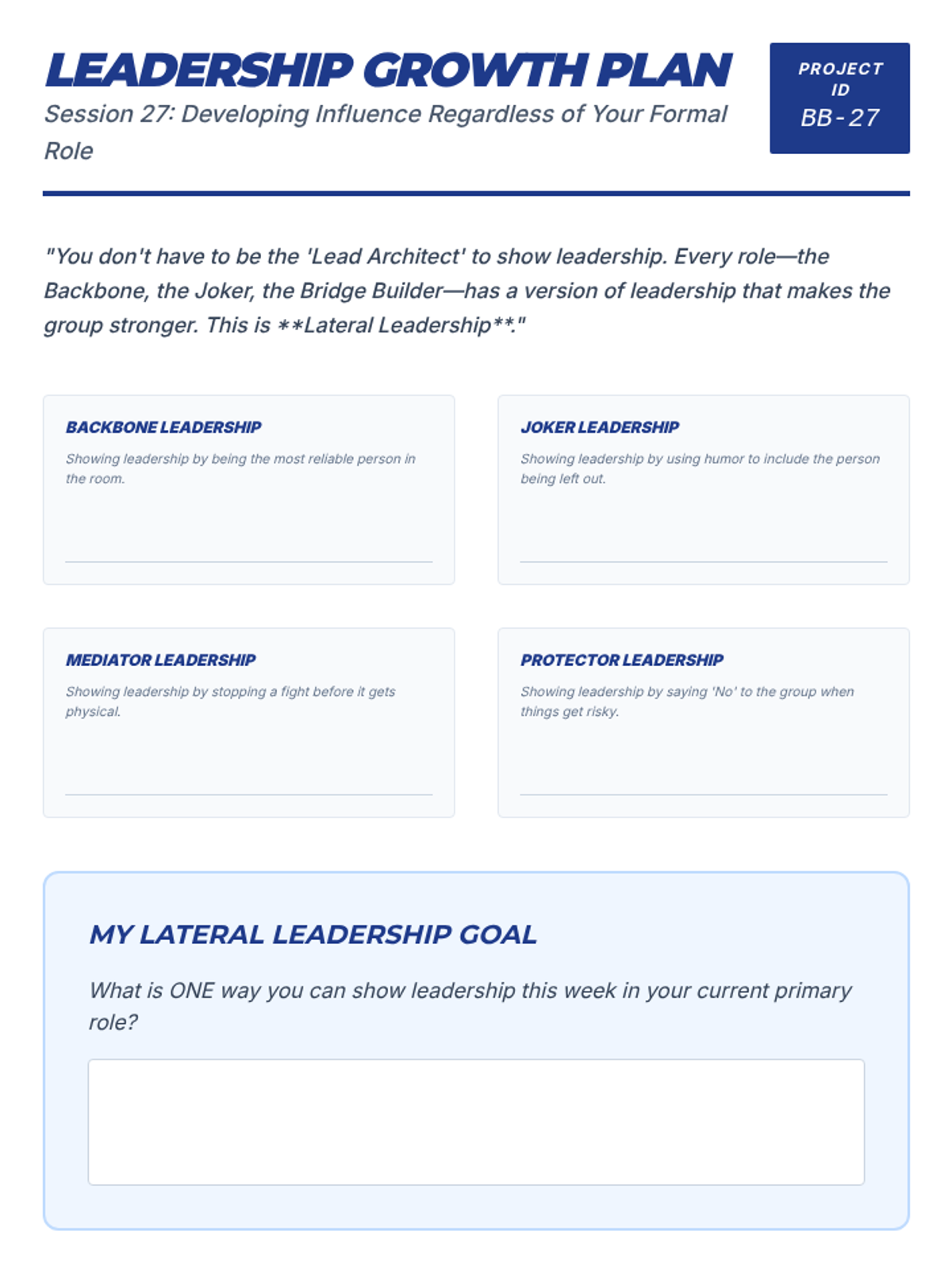
Developing positive leadership traits regardless of formal role.
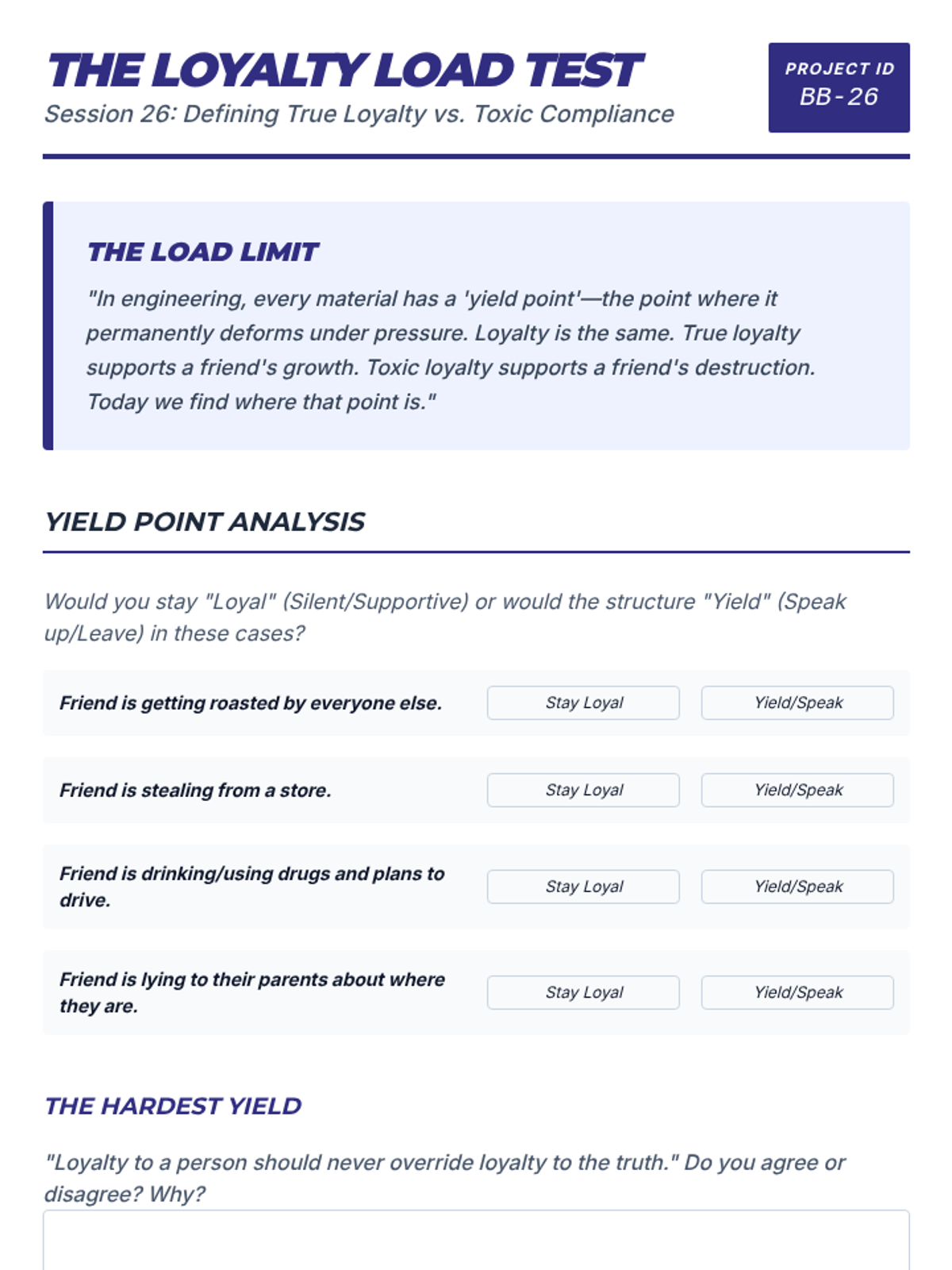
Defining what true loyalty looks like versus toxic compliance.
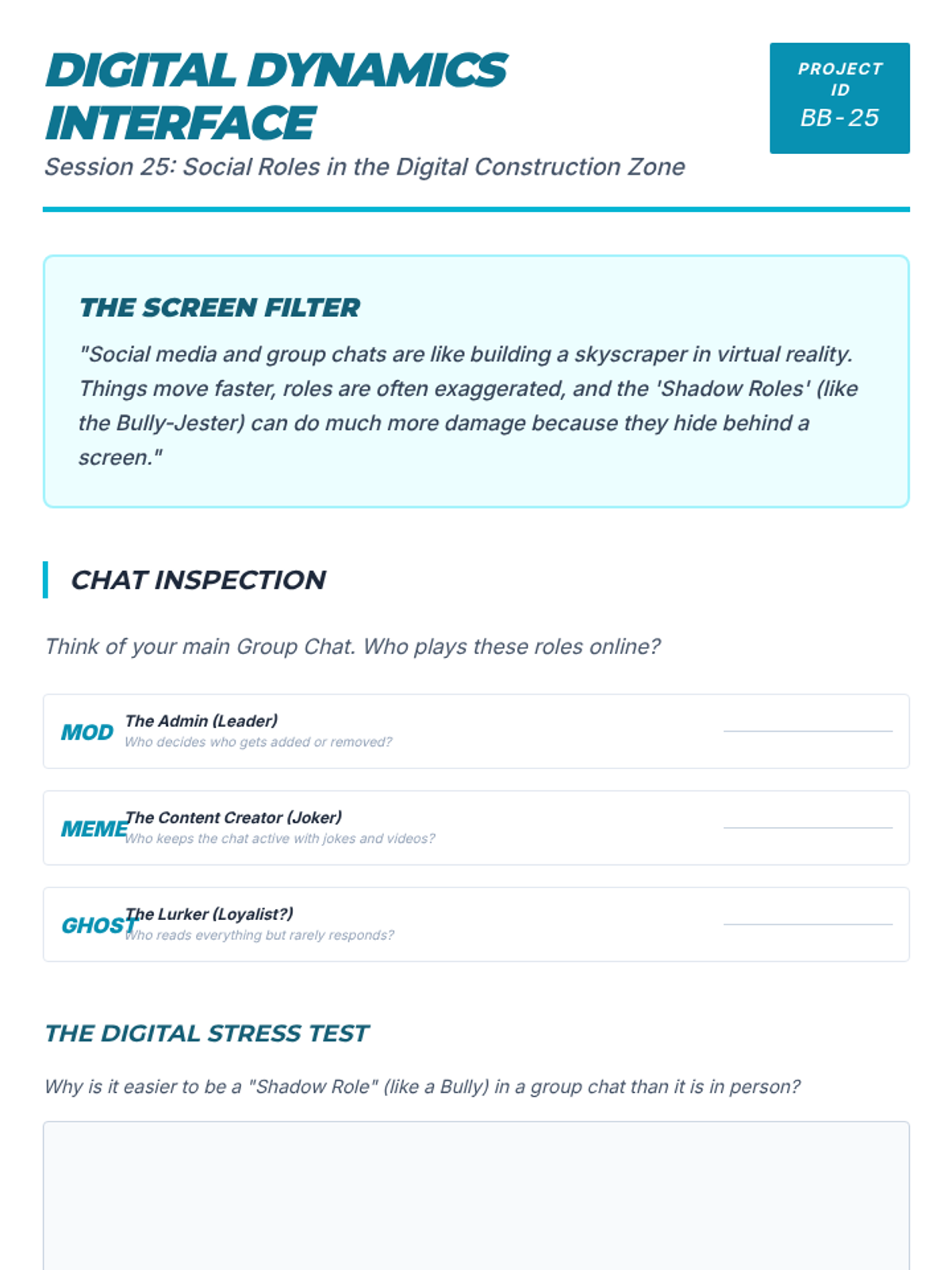
How social media shifts role dynamics and group communication.
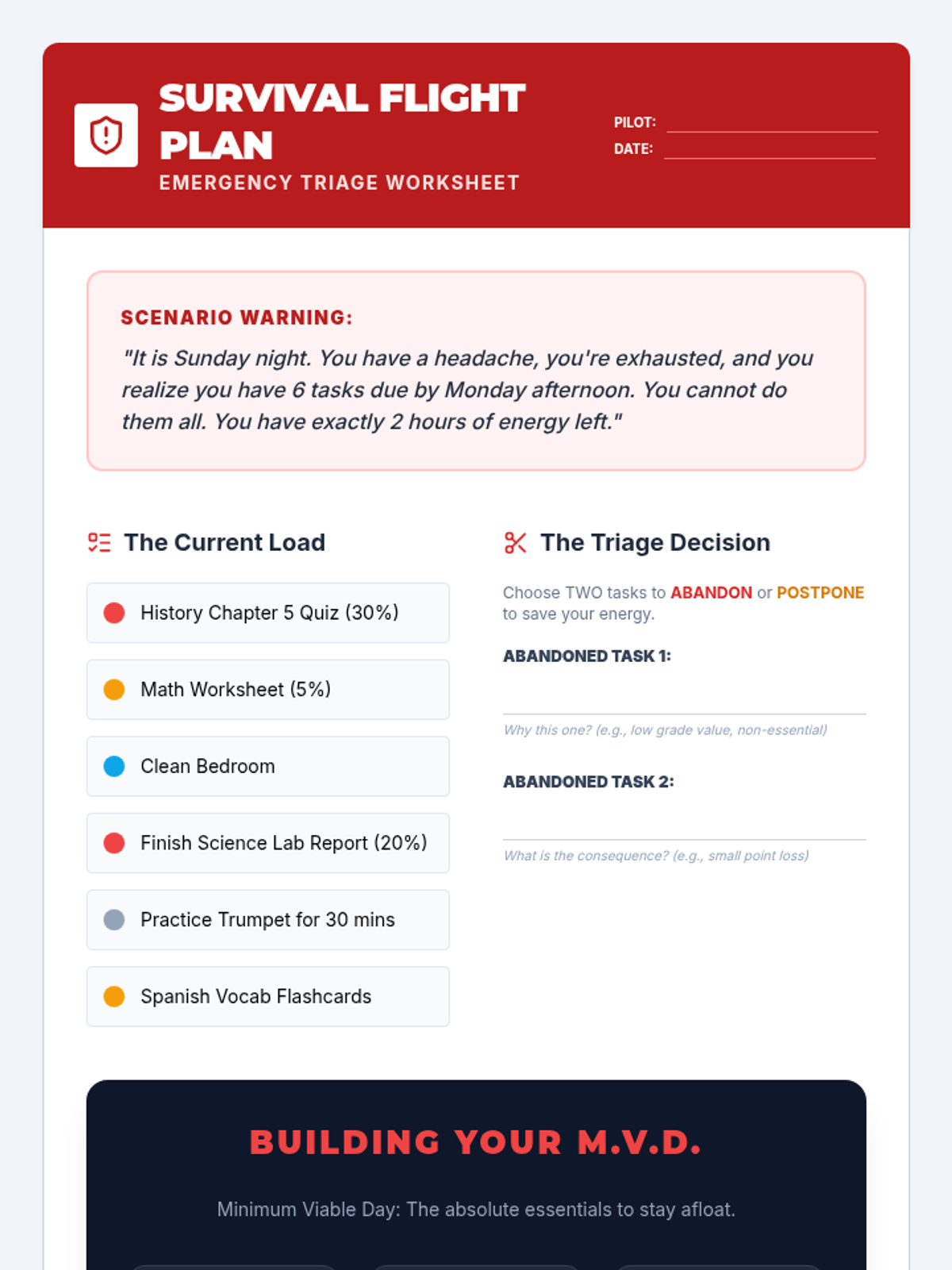
Students develop emergency 'triage' strategies and create a 'Minimum Viable Day' plan for maintaining performance during periods of high stress or illness.
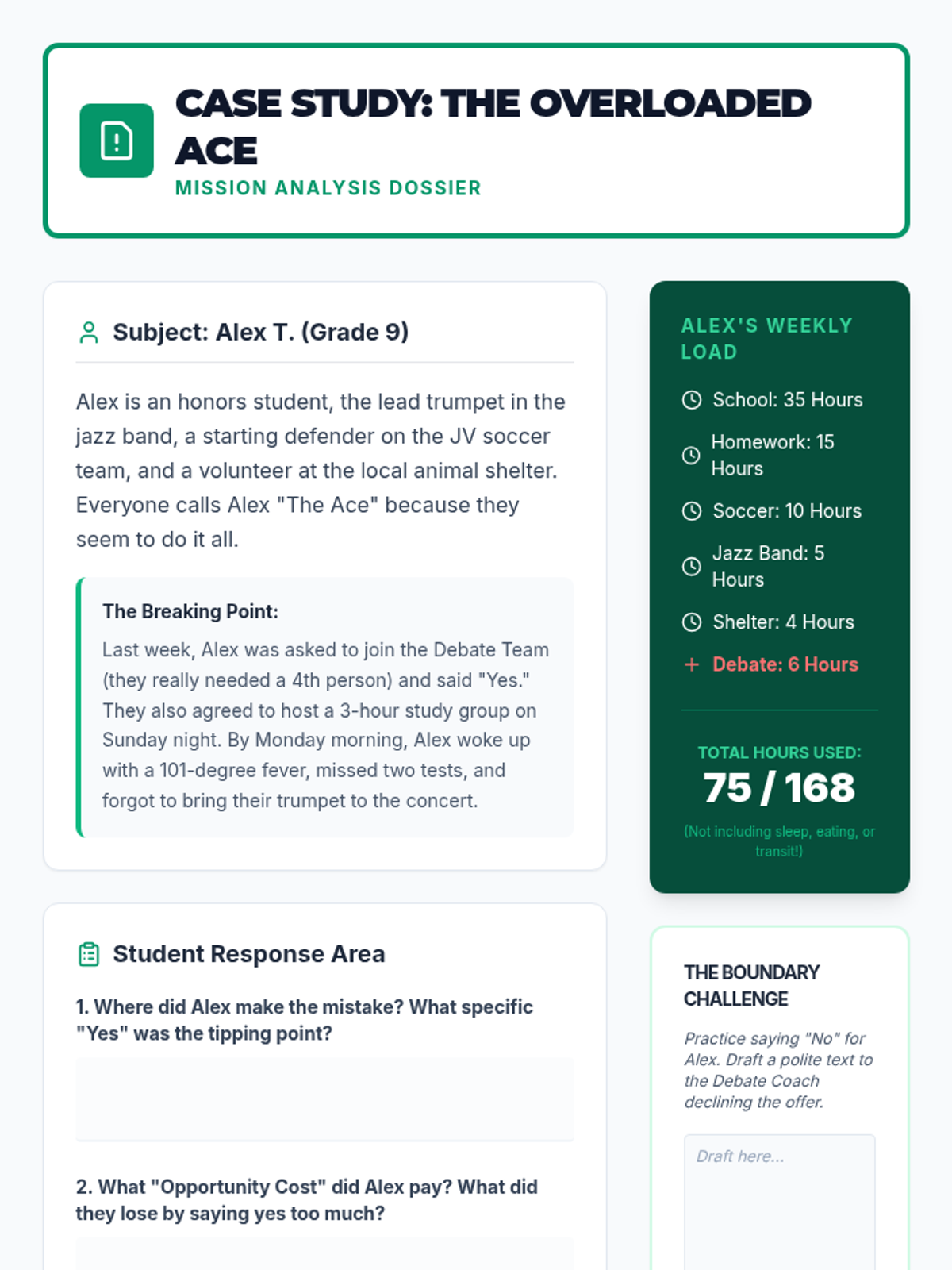
Students explore the concept of opportunity cost and practice strategies for politely but firmly declining optional commitments.
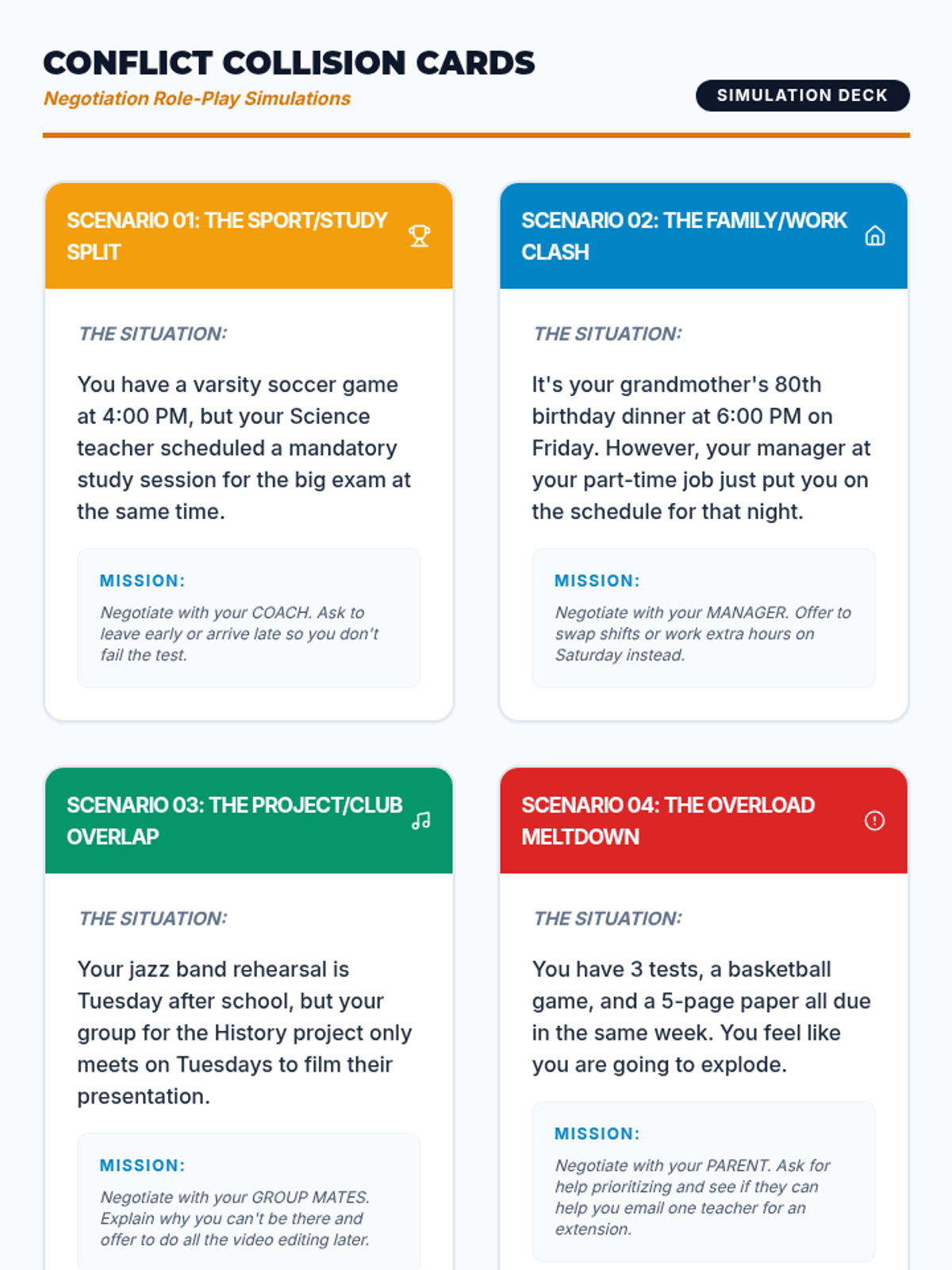
Through role-play and simulation, students practice face-to-face negotiations to resolve scheduling conflicts between multiple commitments.
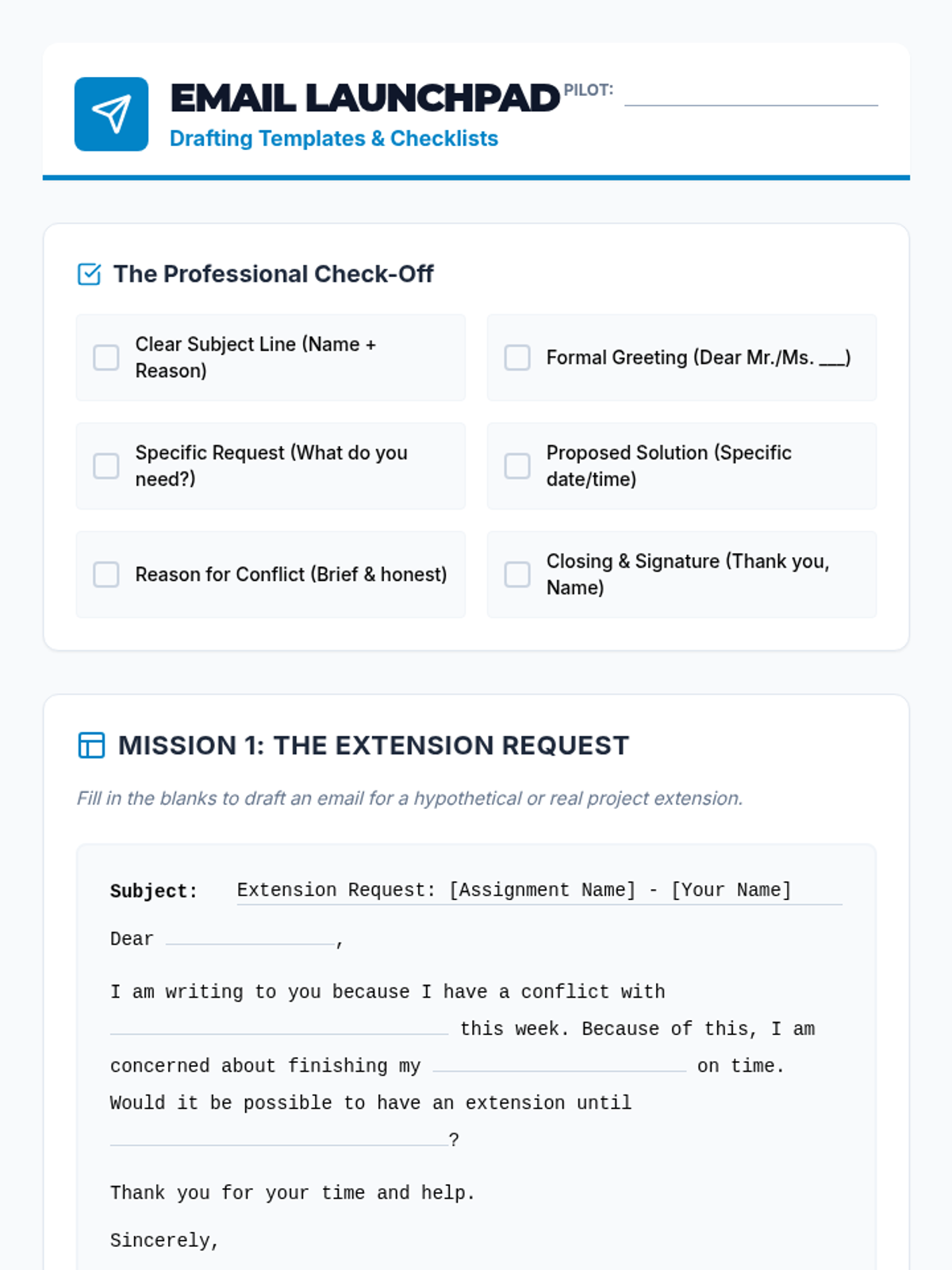
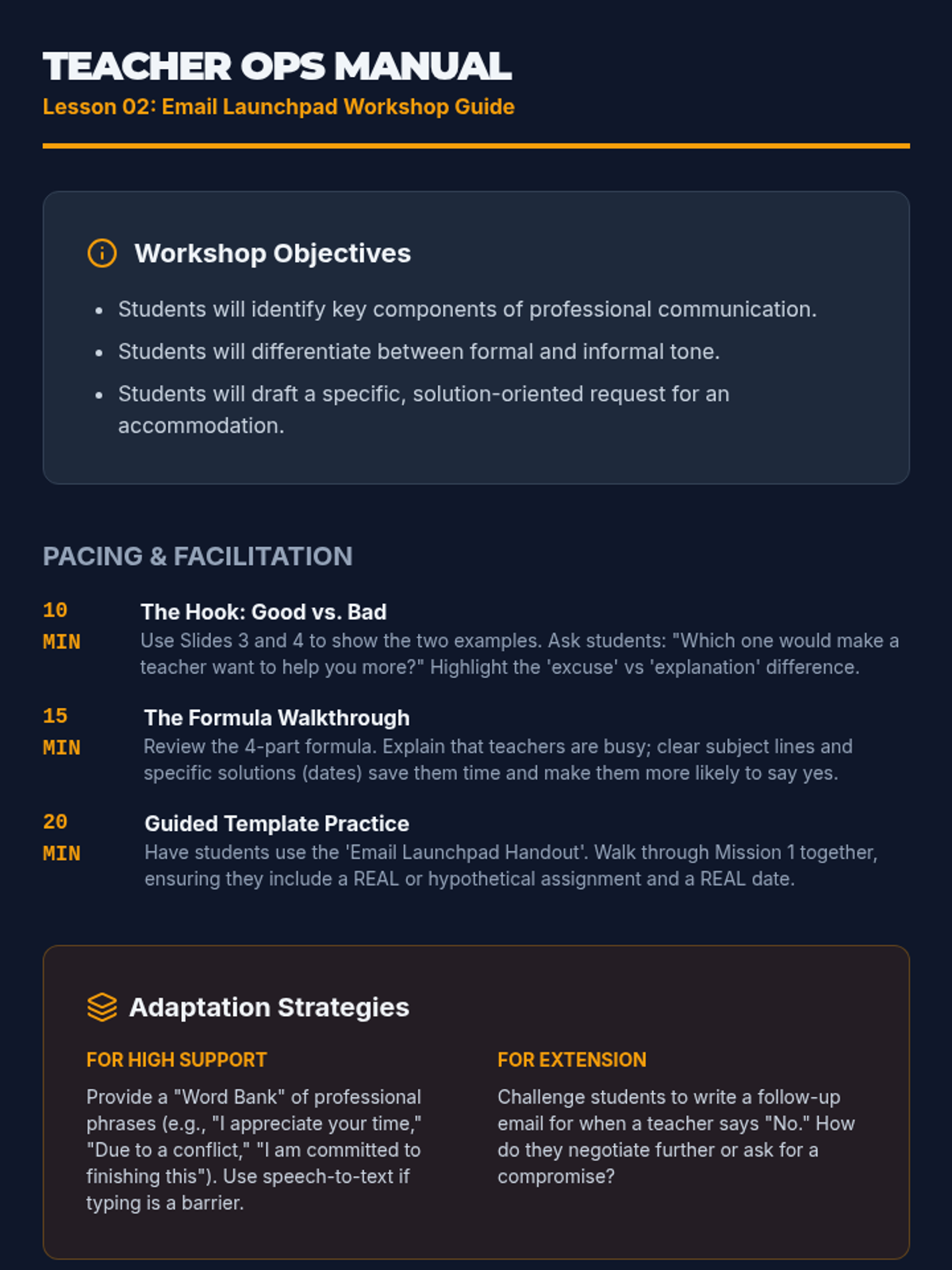
Students master the art of professional email communication, learning to draft responsible and clear requests for extensions or accommodations.
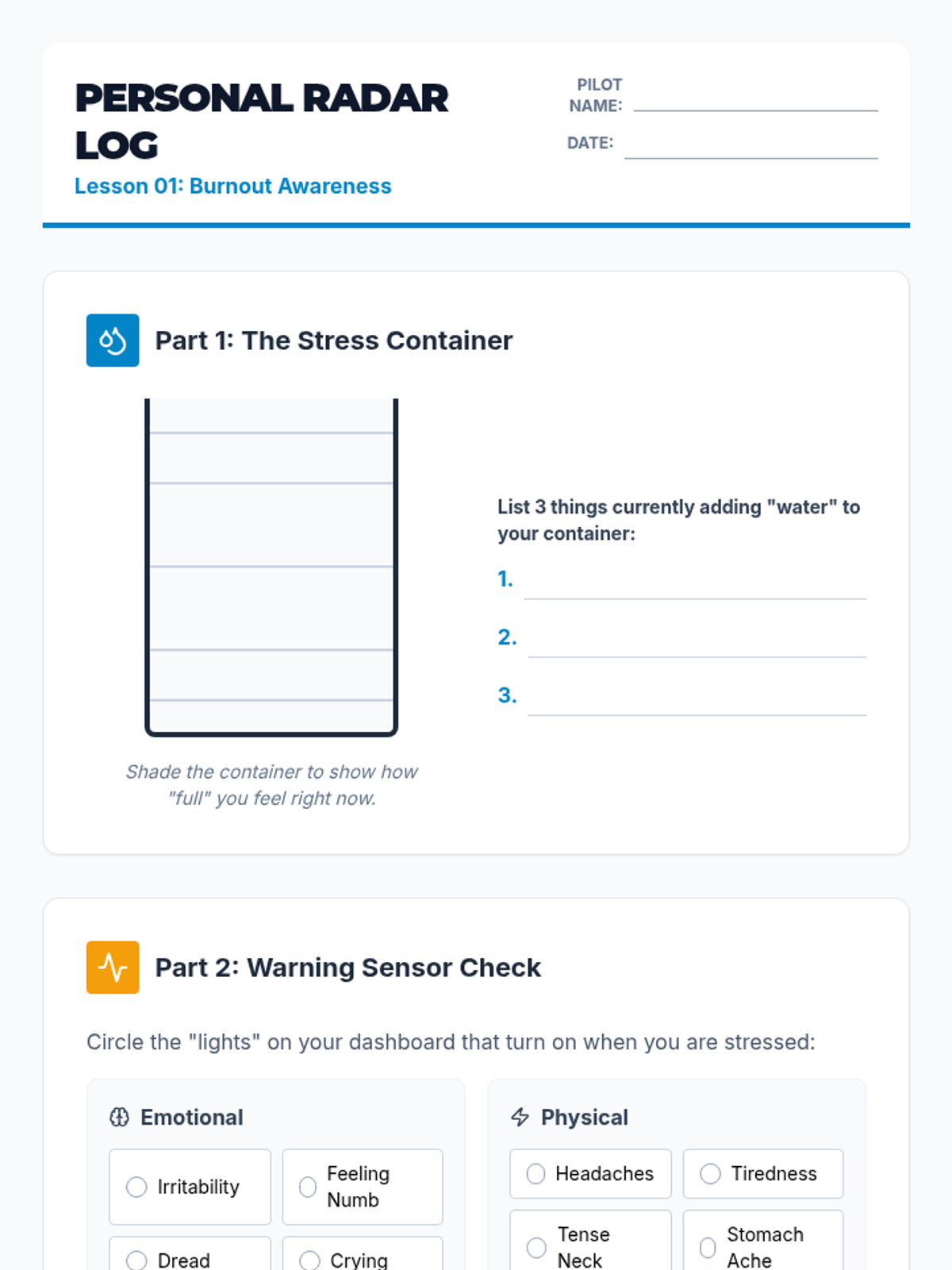
Students identify physical and emotional signs of burnout and use the 'Stress Container' visualization to understand their personal capacity and tipping points.
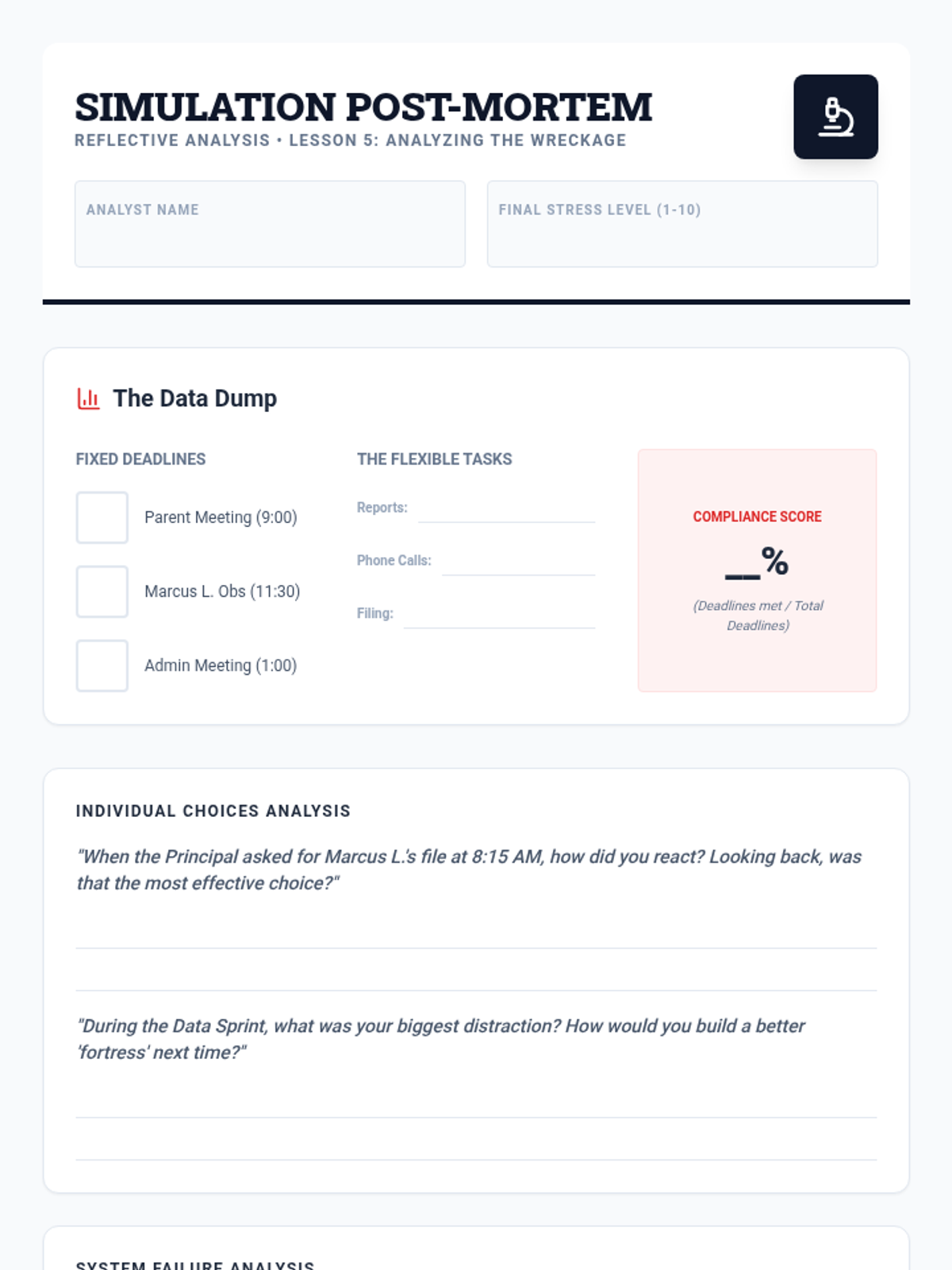
A final analysis of simulation performance, identifying system failures versus individual choices and reflecting on professional growth.
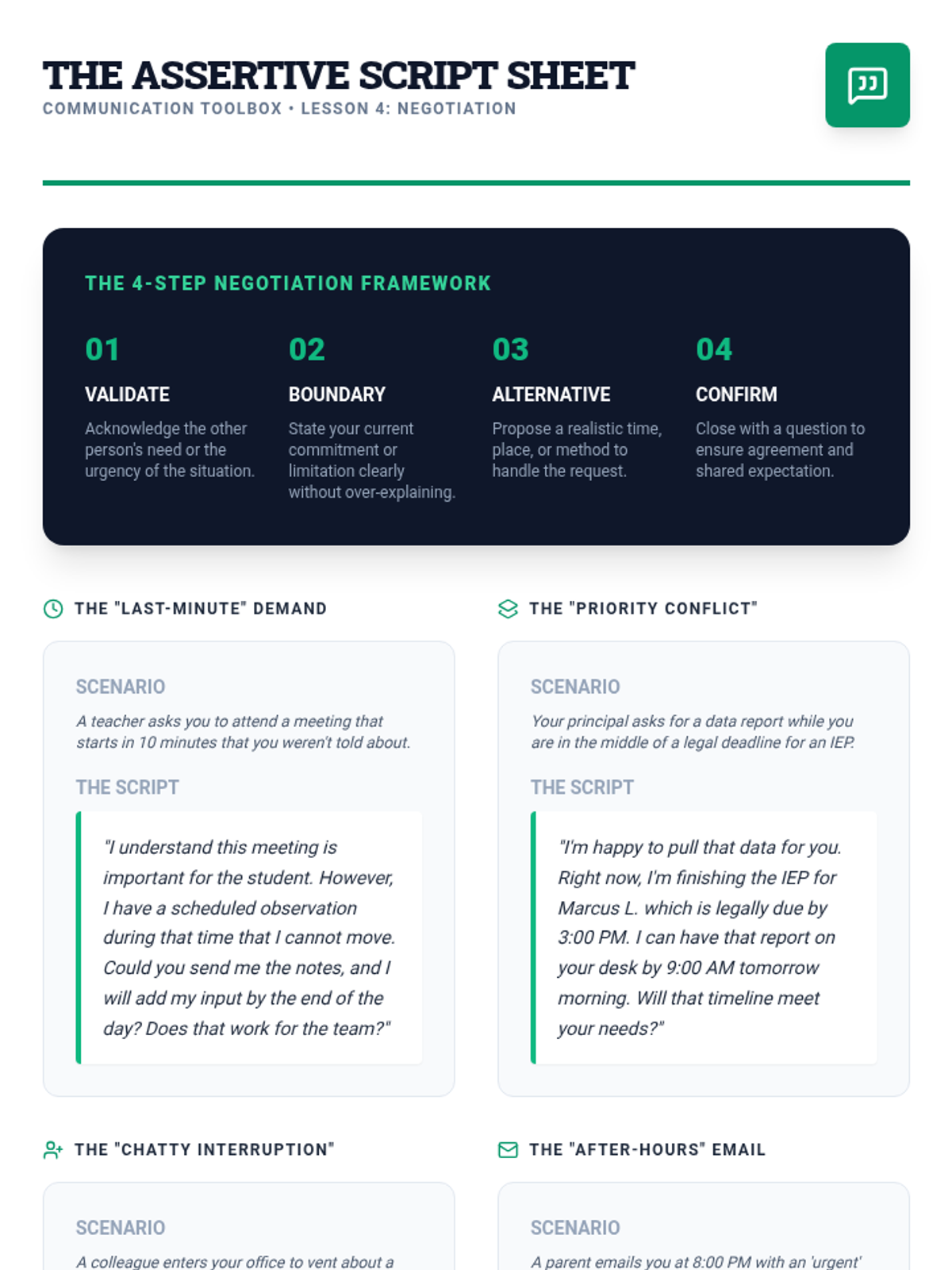
Navigating schedule overlaps and professional conflicts through negotiation and assertive communication.
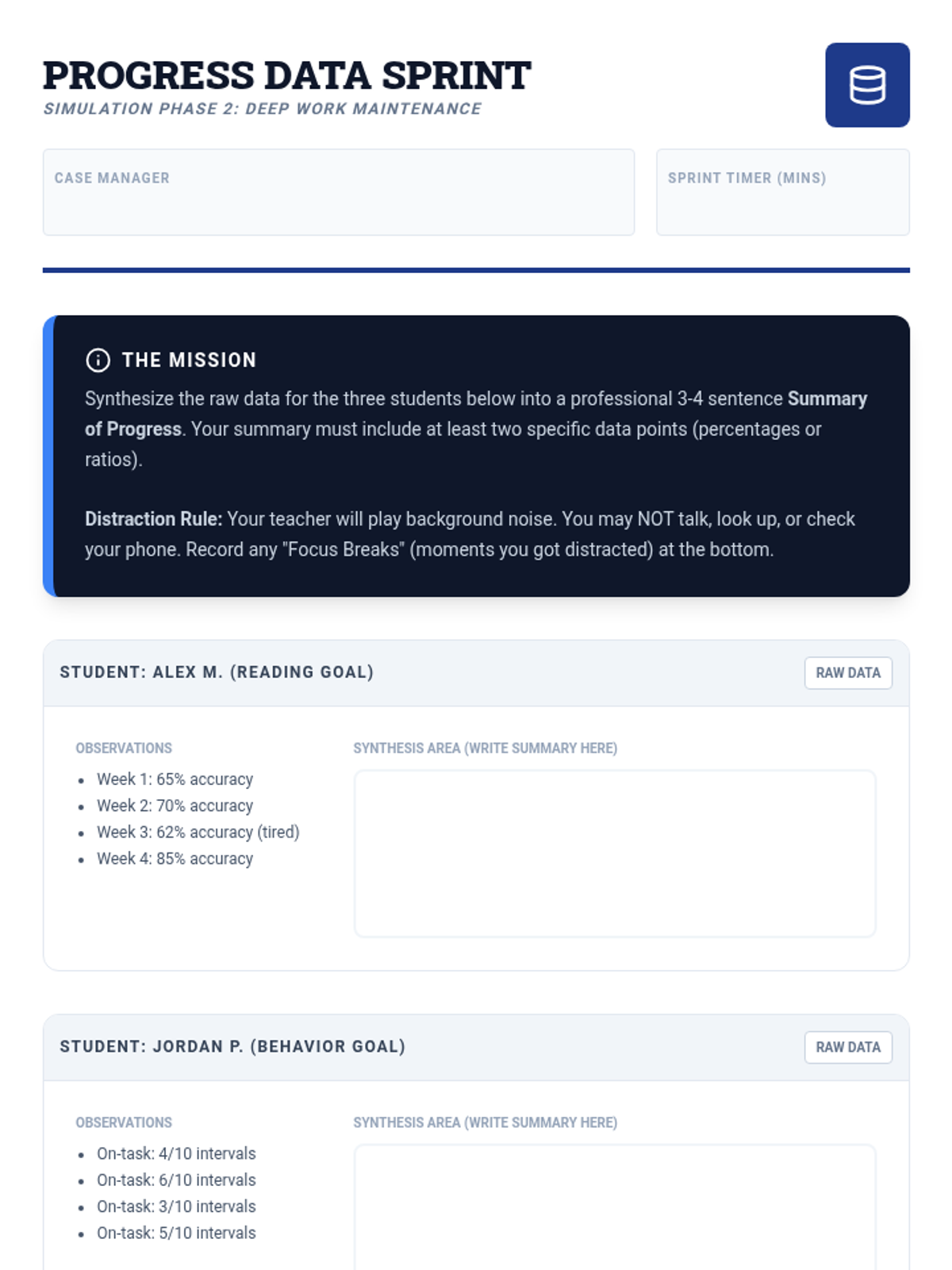
Focuses on maintaining deep work and focus while completing high-priority documentation under pressure.
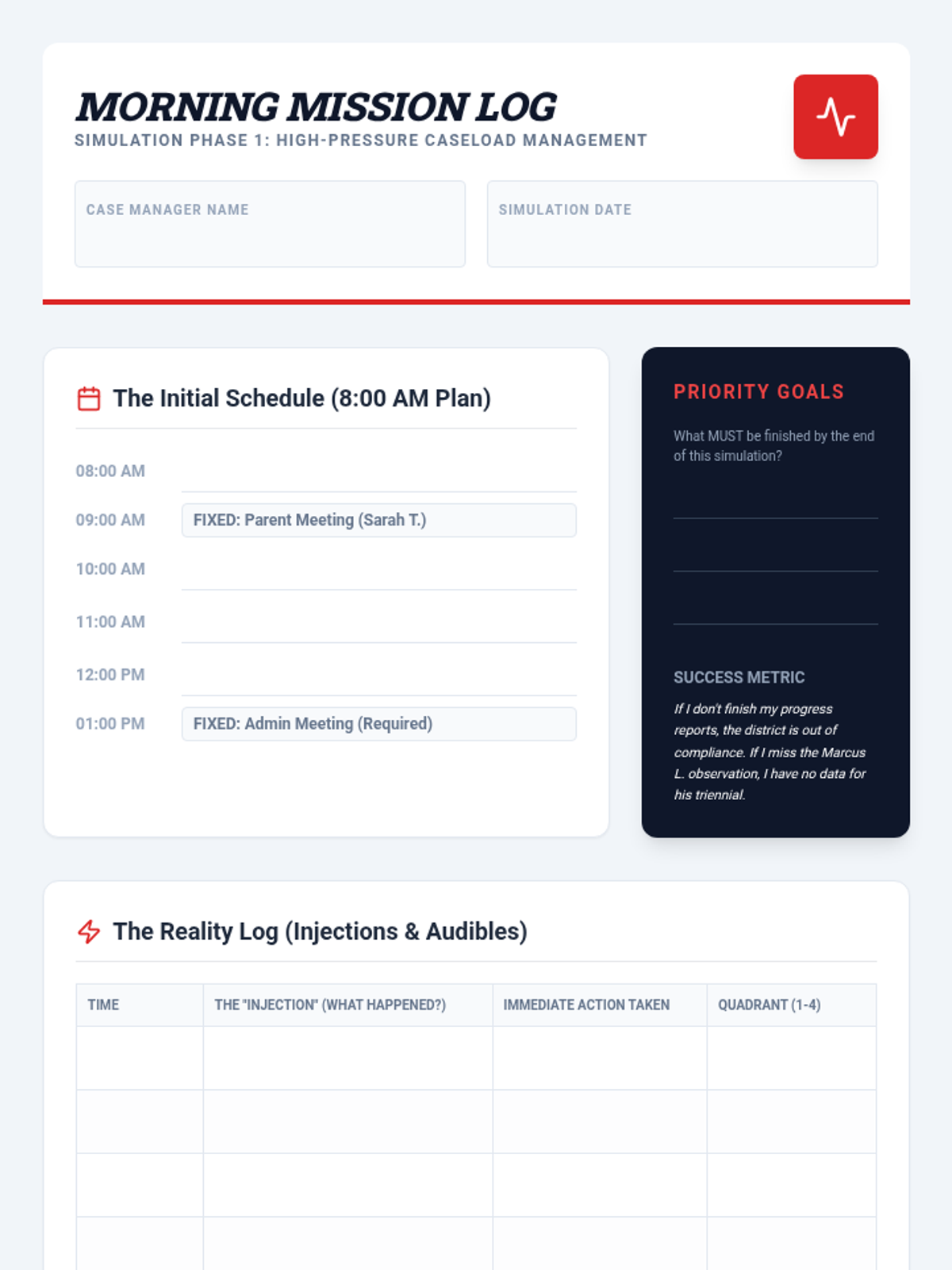
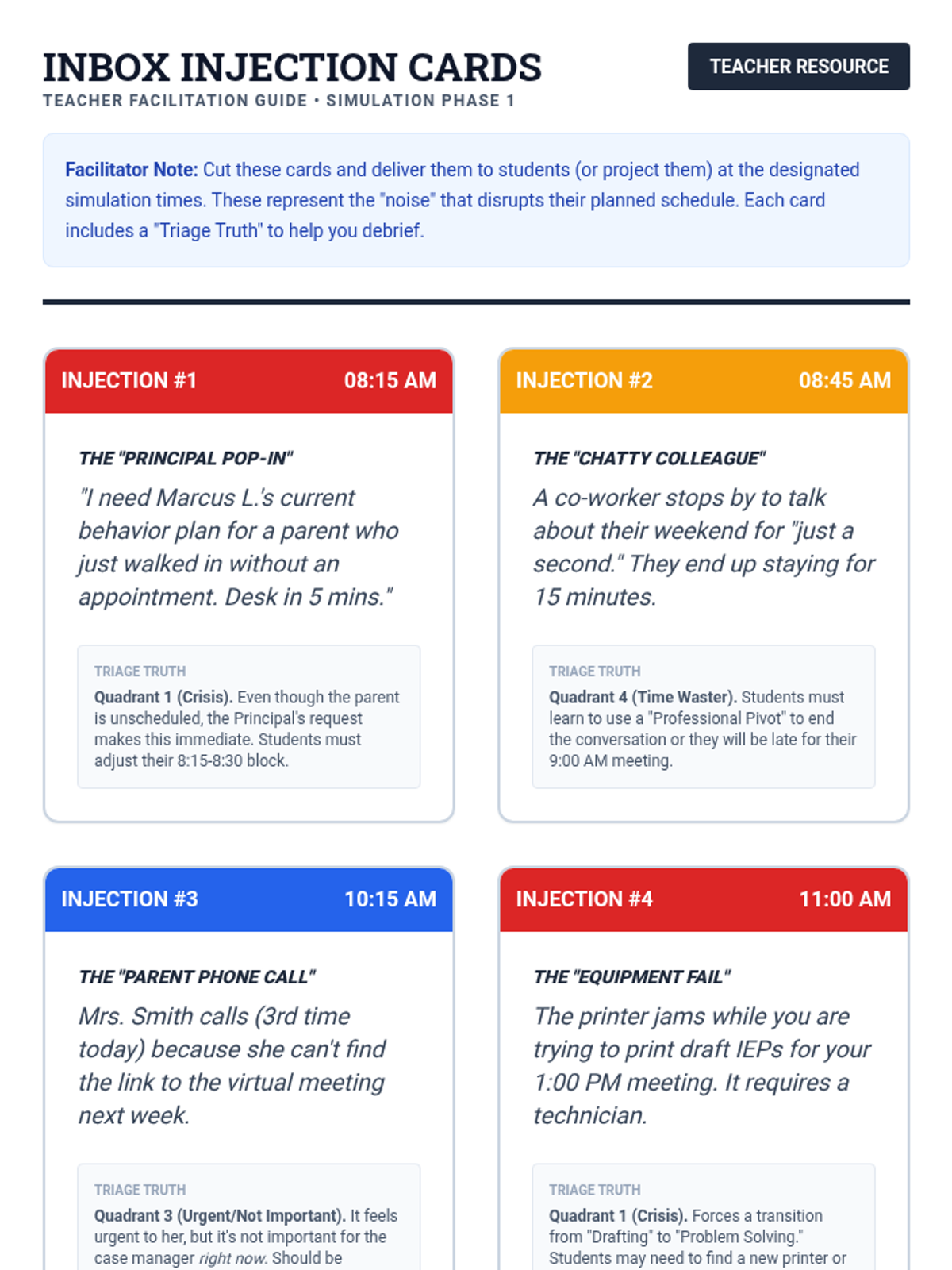
A real-time simulation where students must manage a schedule while facing unexpected 'inbox injections' and interruptions.
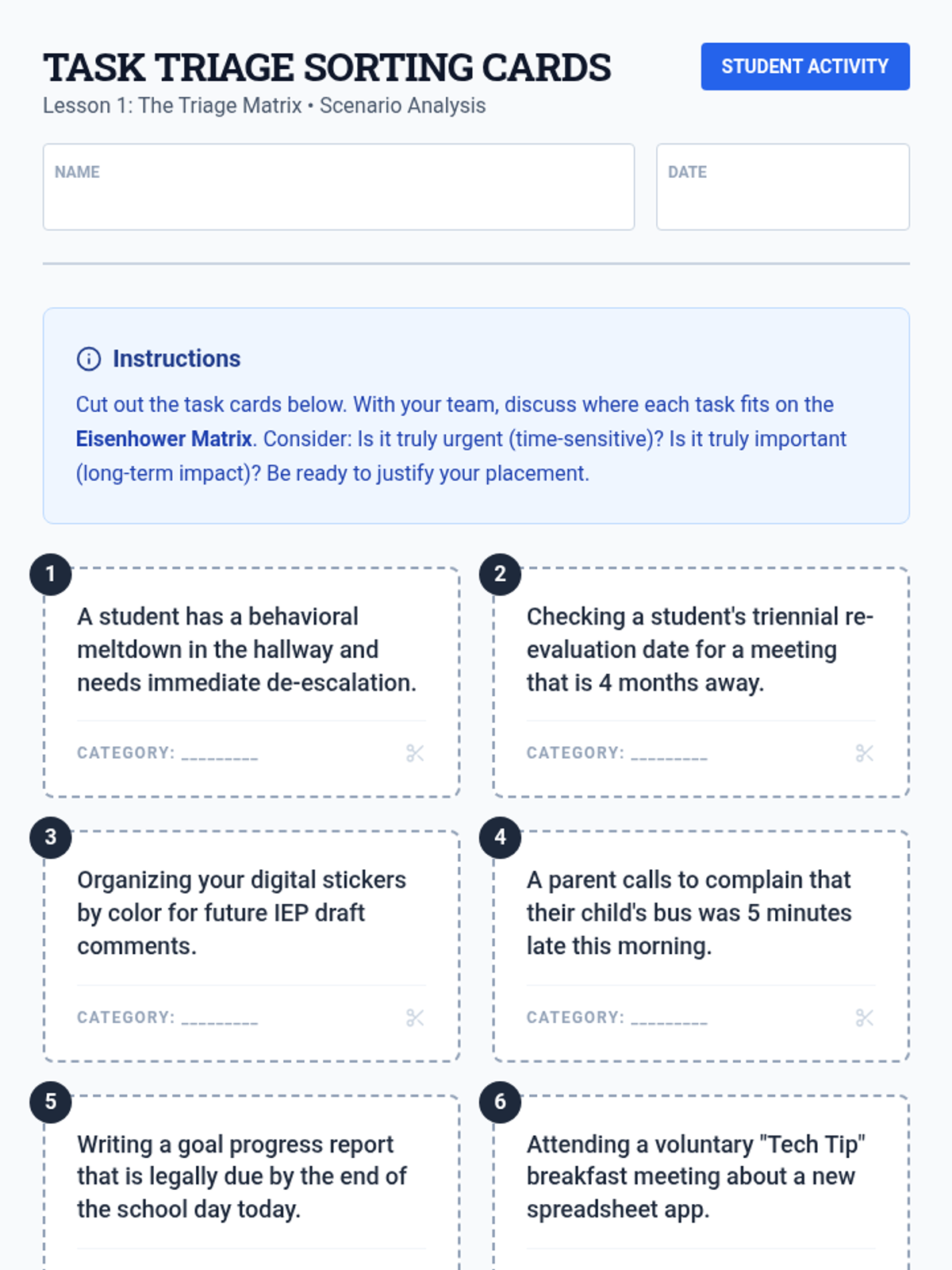
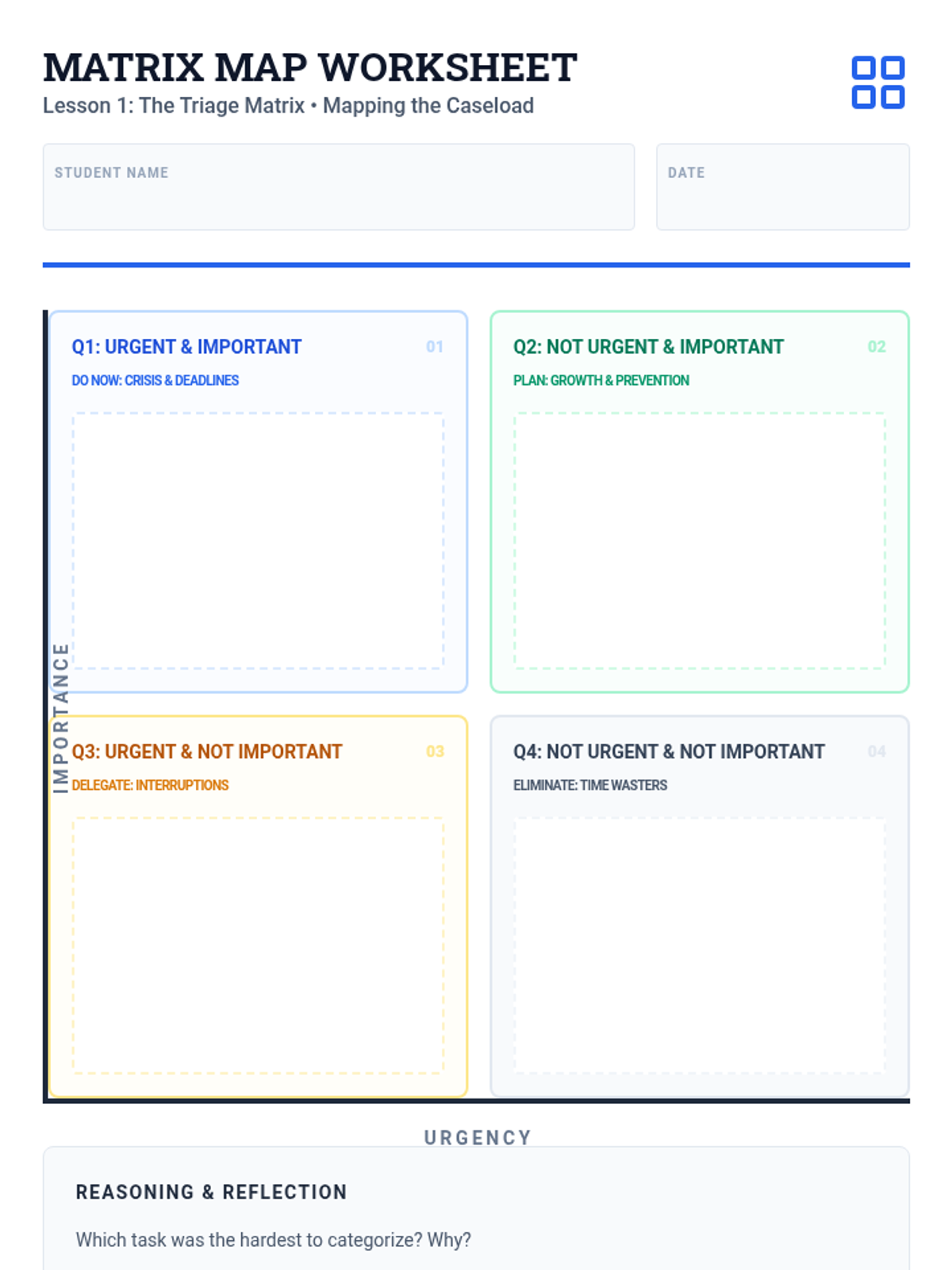
Introduction to the Eisenhower Matrix adapted for education, teaching students to differentiate between urgency and importance in a professional setting.
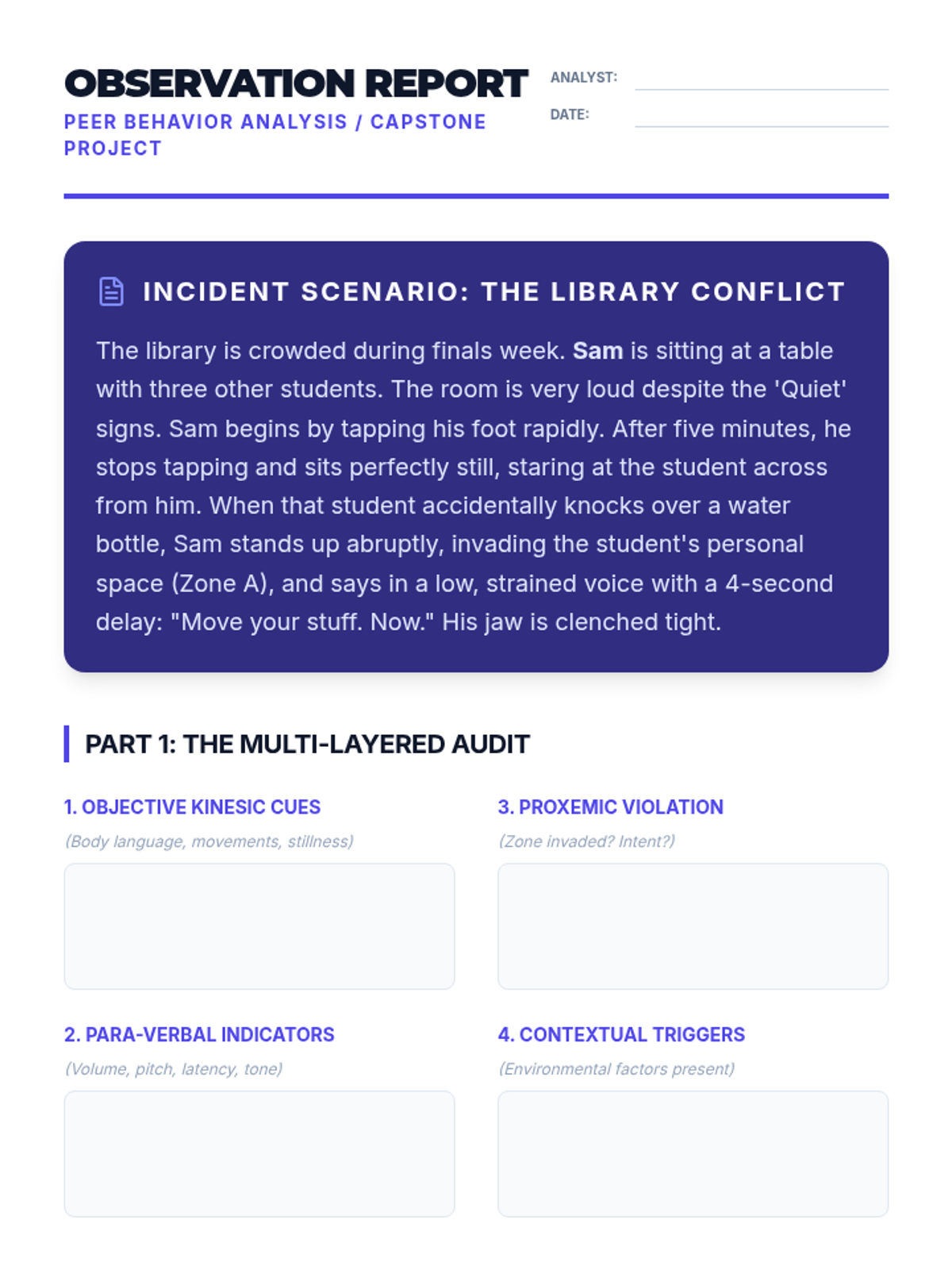
Students synthesize their observation skills to analyze full scenarios, identifying how environmental triggers (noise, crowds) combine with behavioral cues to predict escalation.
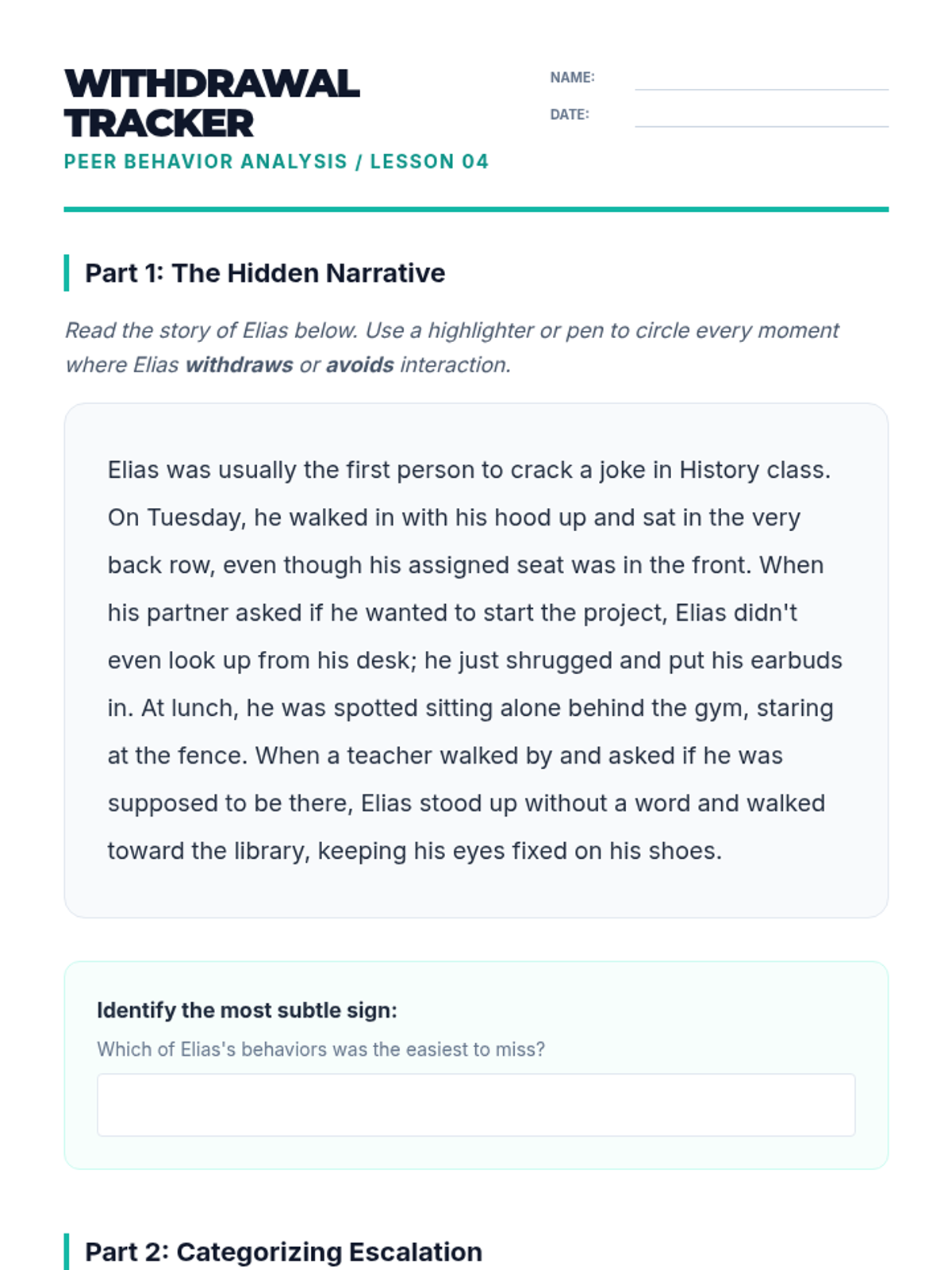
Students learn to identify 'implosive' escalation—withdrawal, shutting down, or avoiding eye contact—and discuss how these quiet signs can be precursors to explosive behavior.
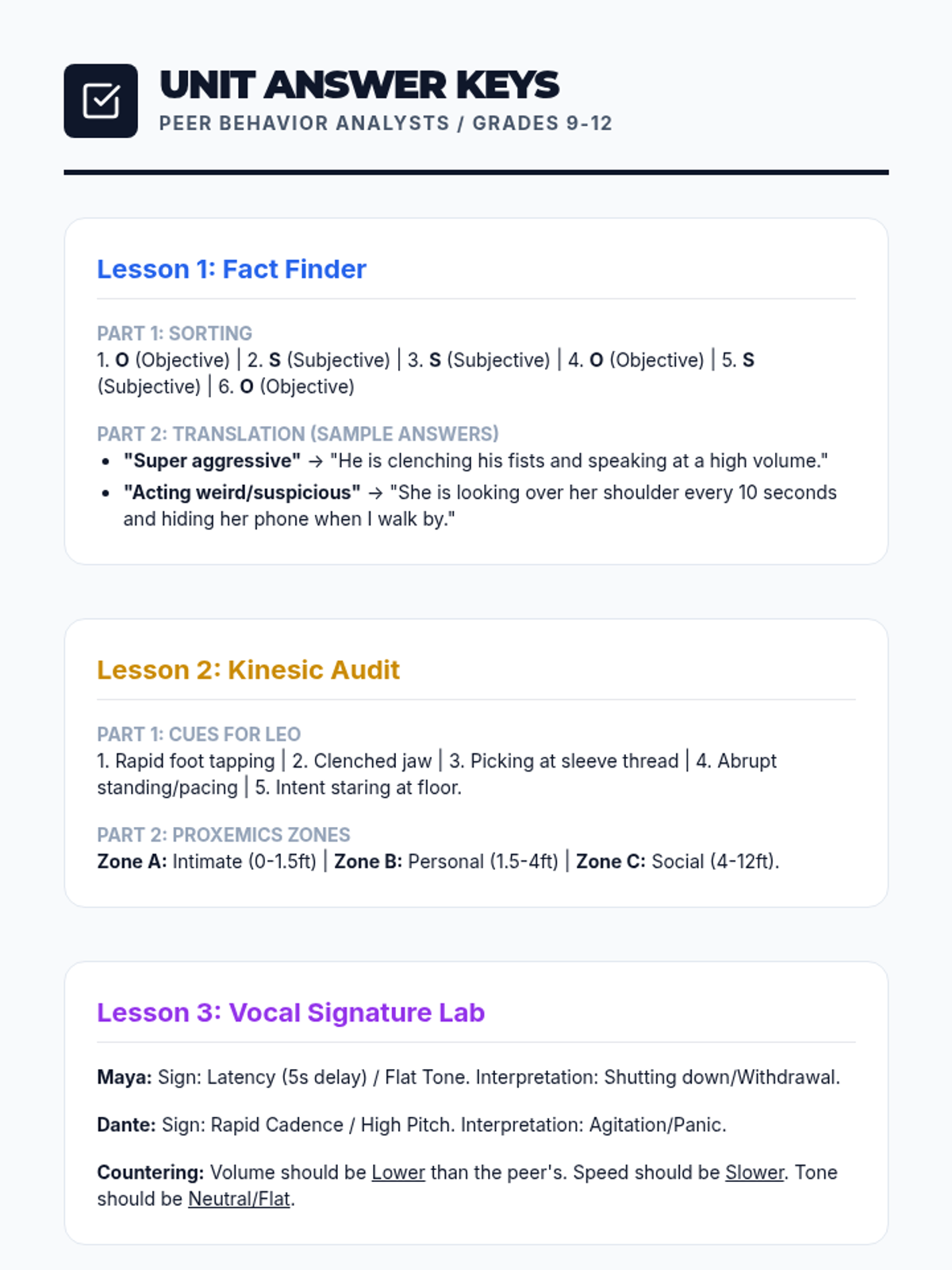
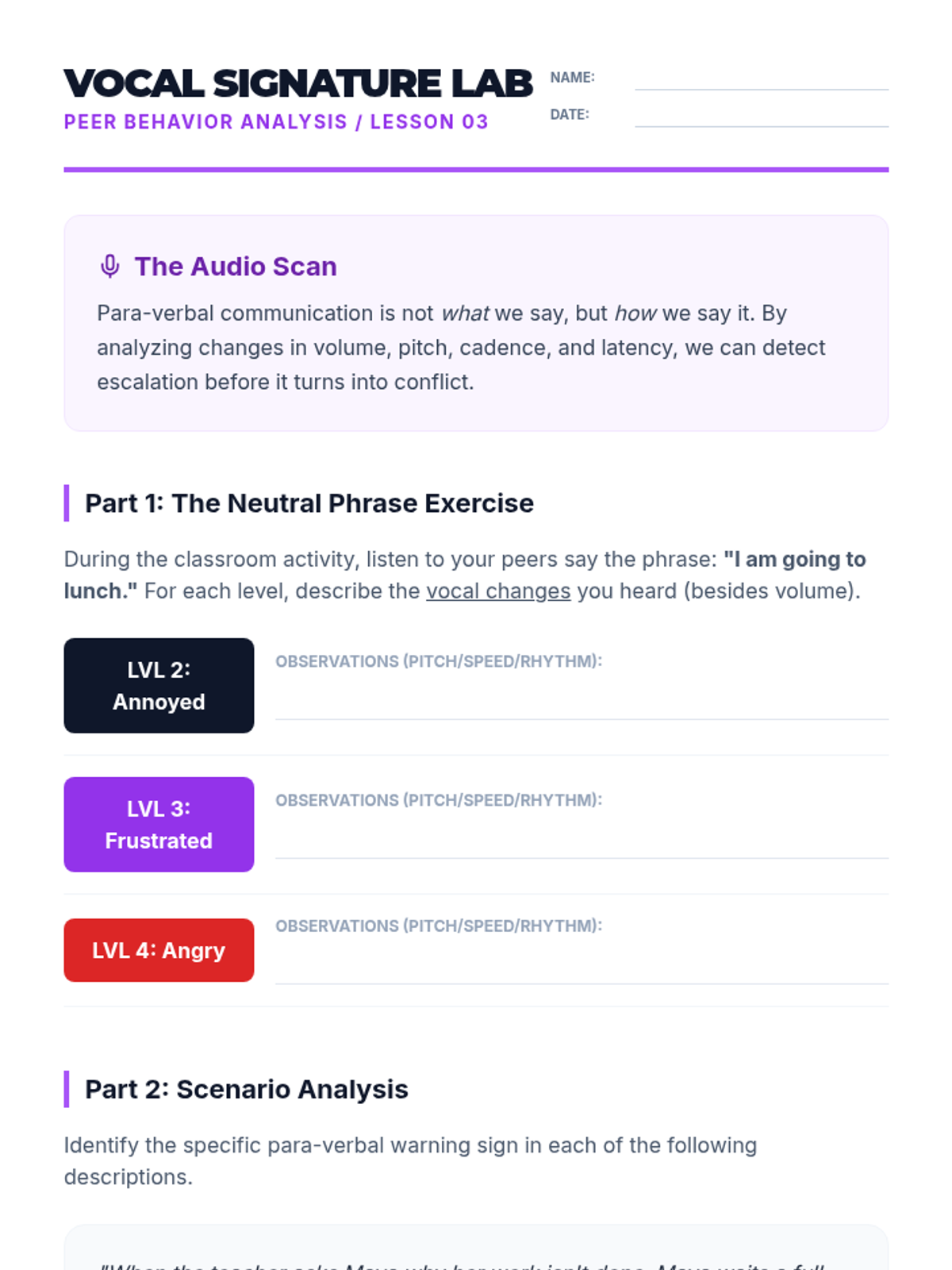
Students examine the vocal components of escalation, including changes in pitch, speed, volume, and latency of response.
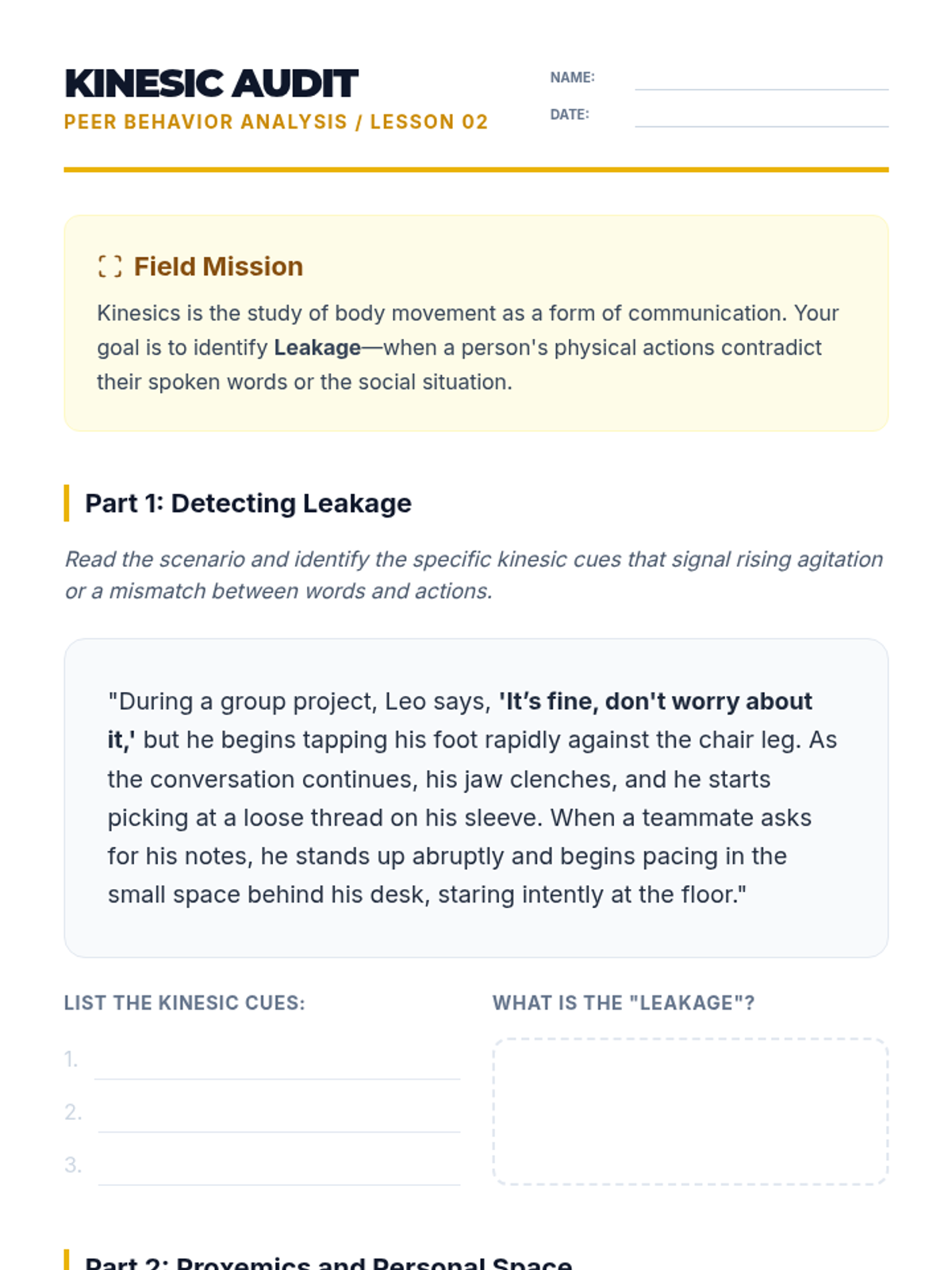
Focuses on gross motor movements that signal agitation and identifying 'leakage'—when body language contradicts spoken words.
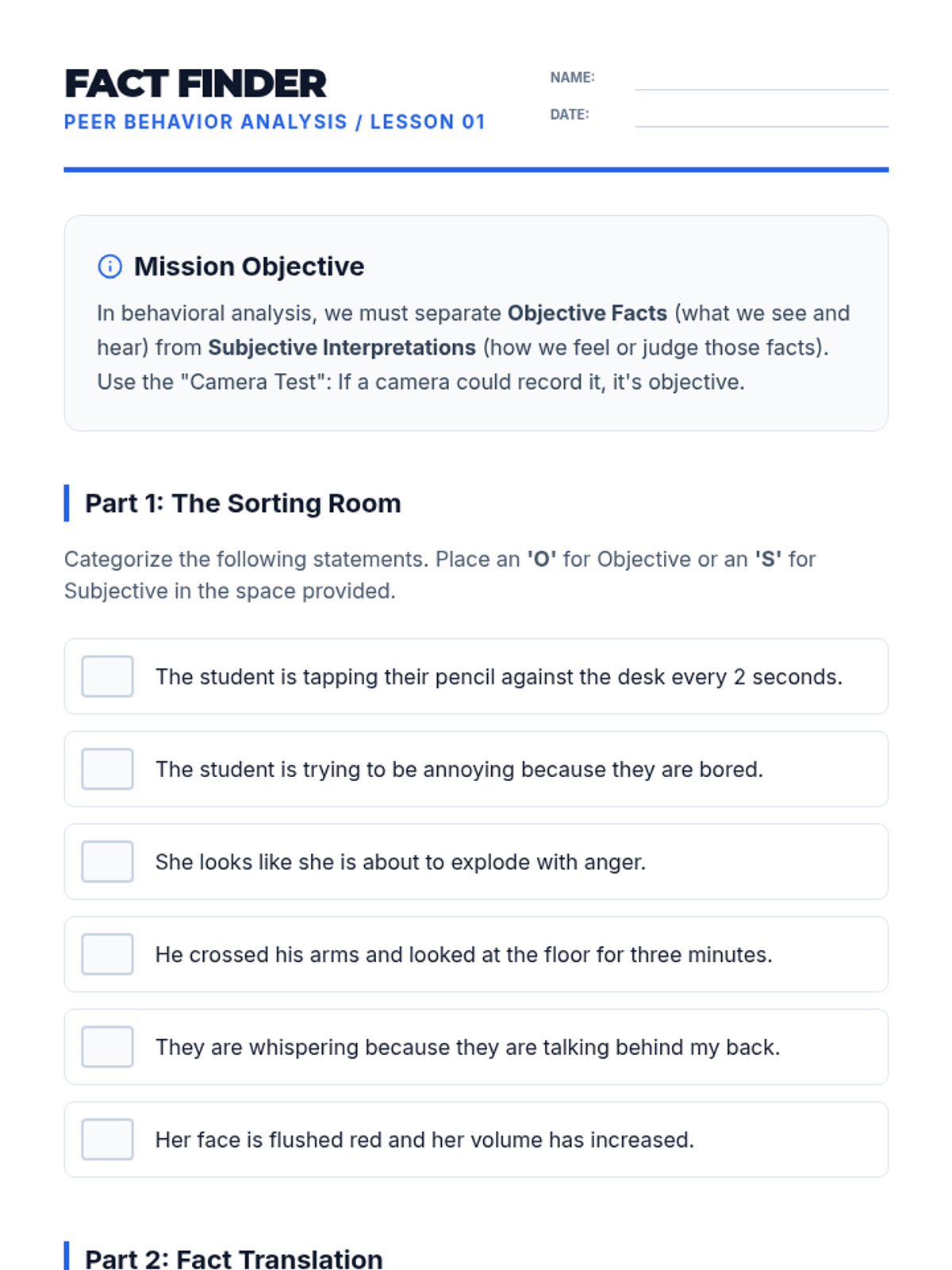
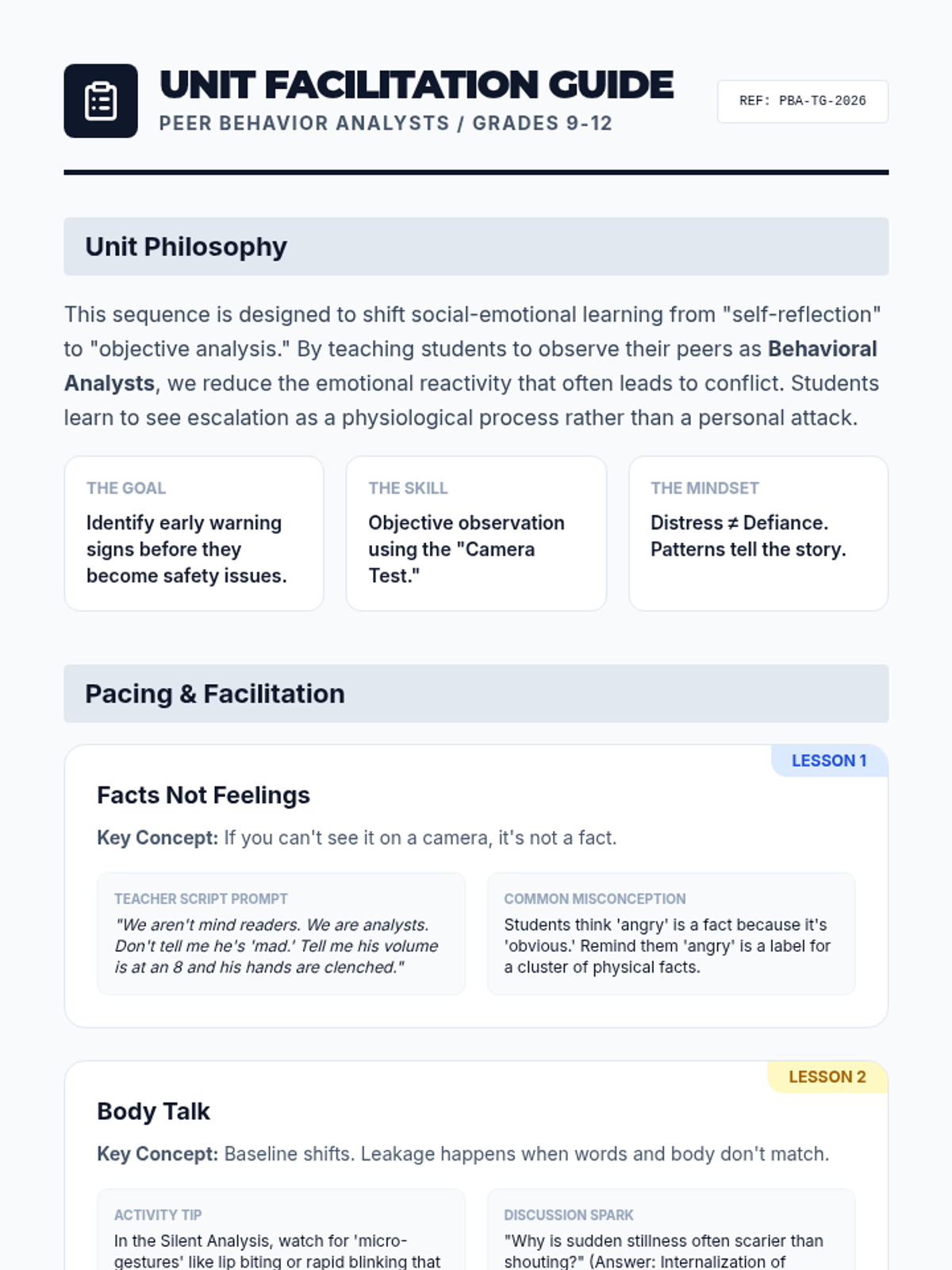
Students learn to distinguish between objective observations (facts) and subjective interpretations (opinions) to ensure accurate behavioral assessment.
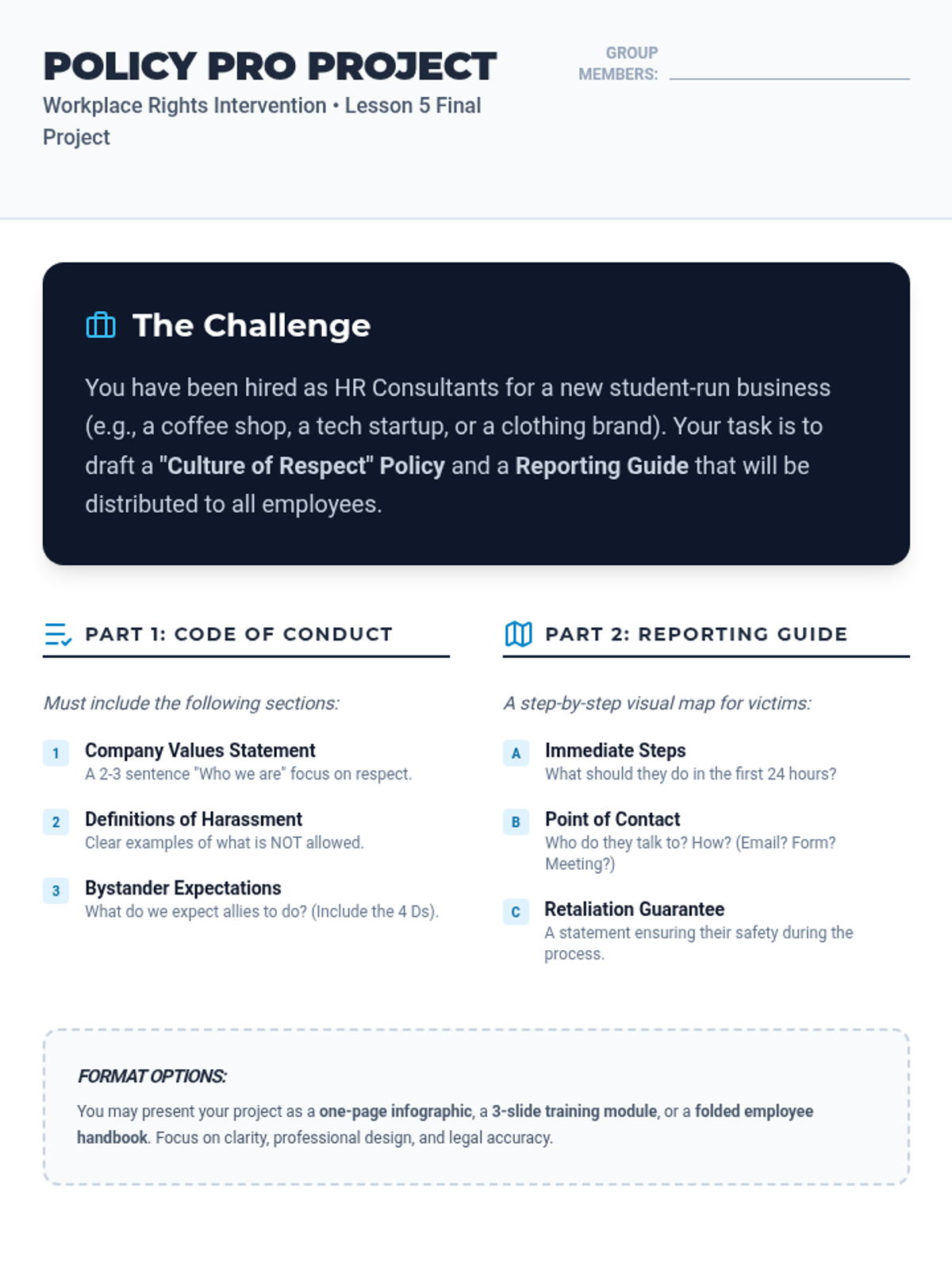
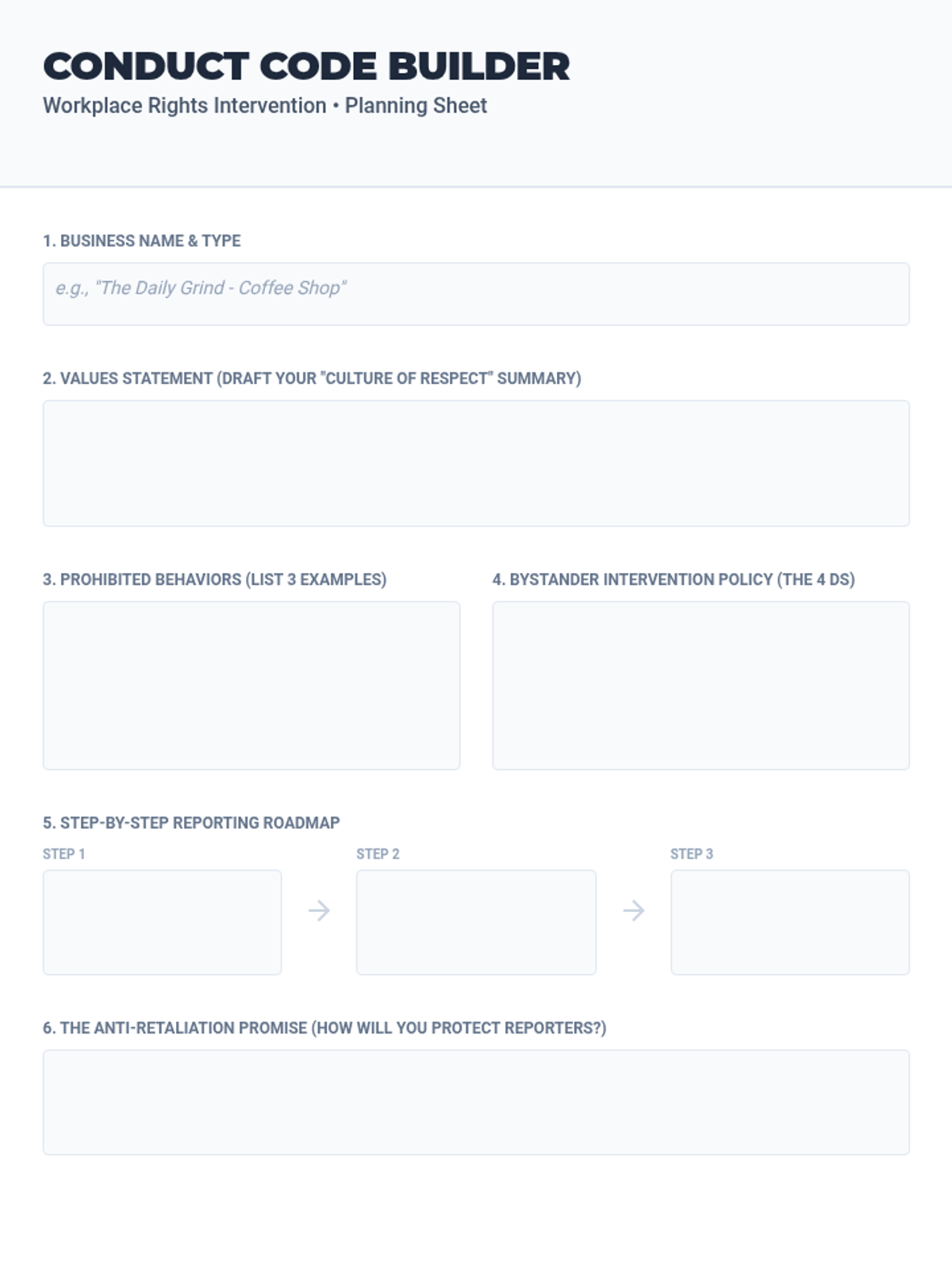
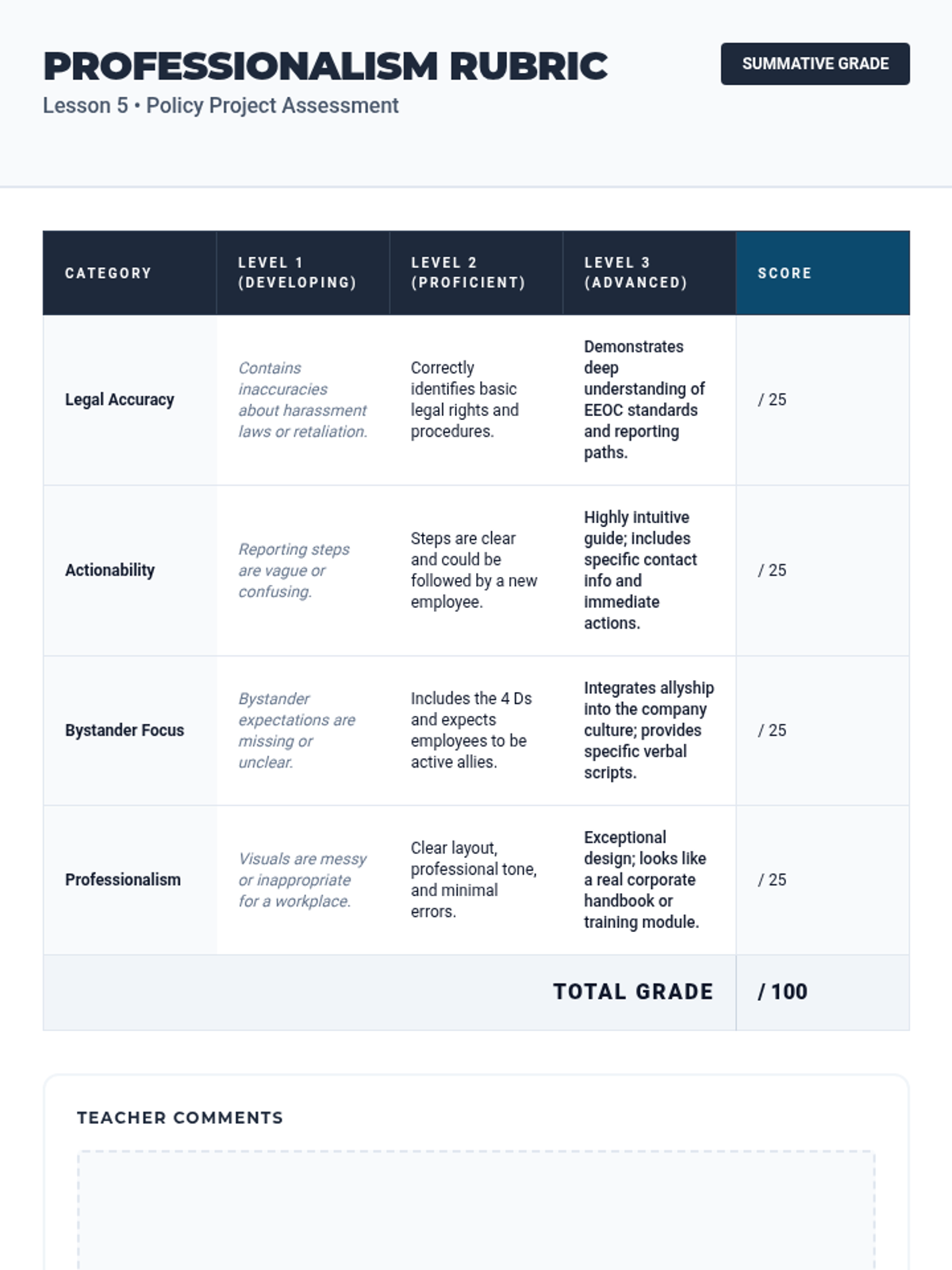
Students work in groups to draft a 'Code of Conduct' and a 'Reporting Guide' for a student-run business or organization, synthesizing all sequence concepts.
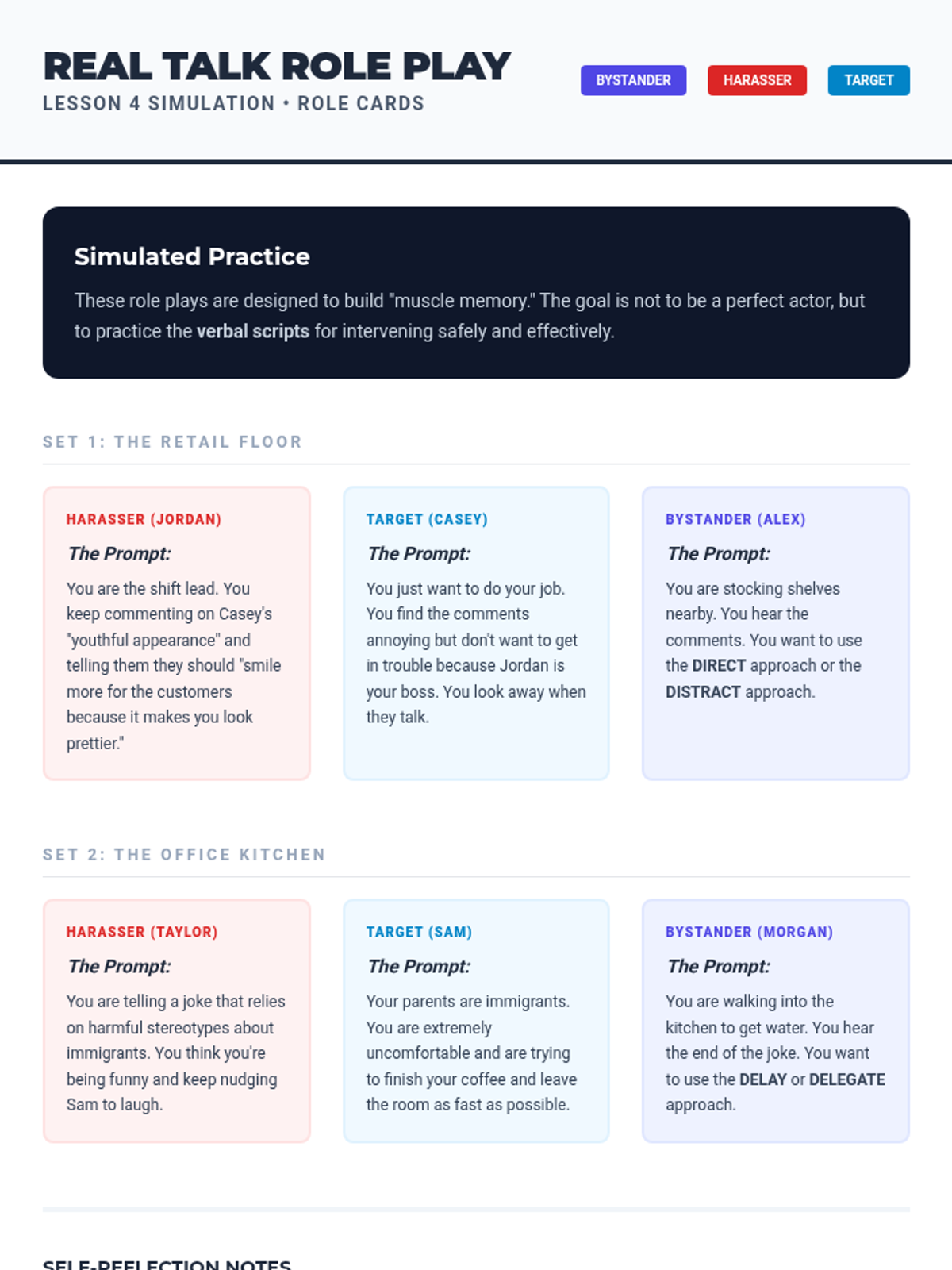
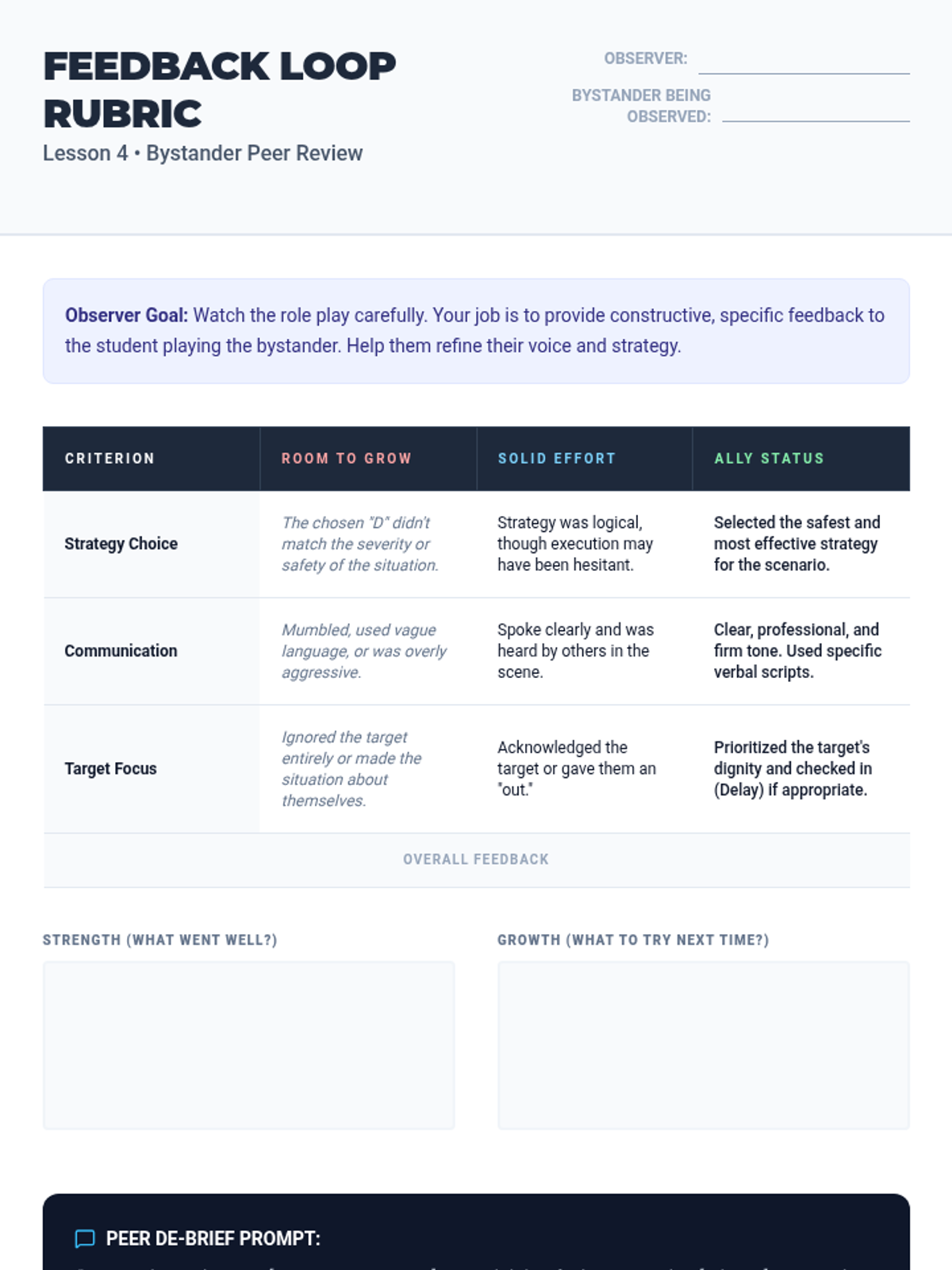
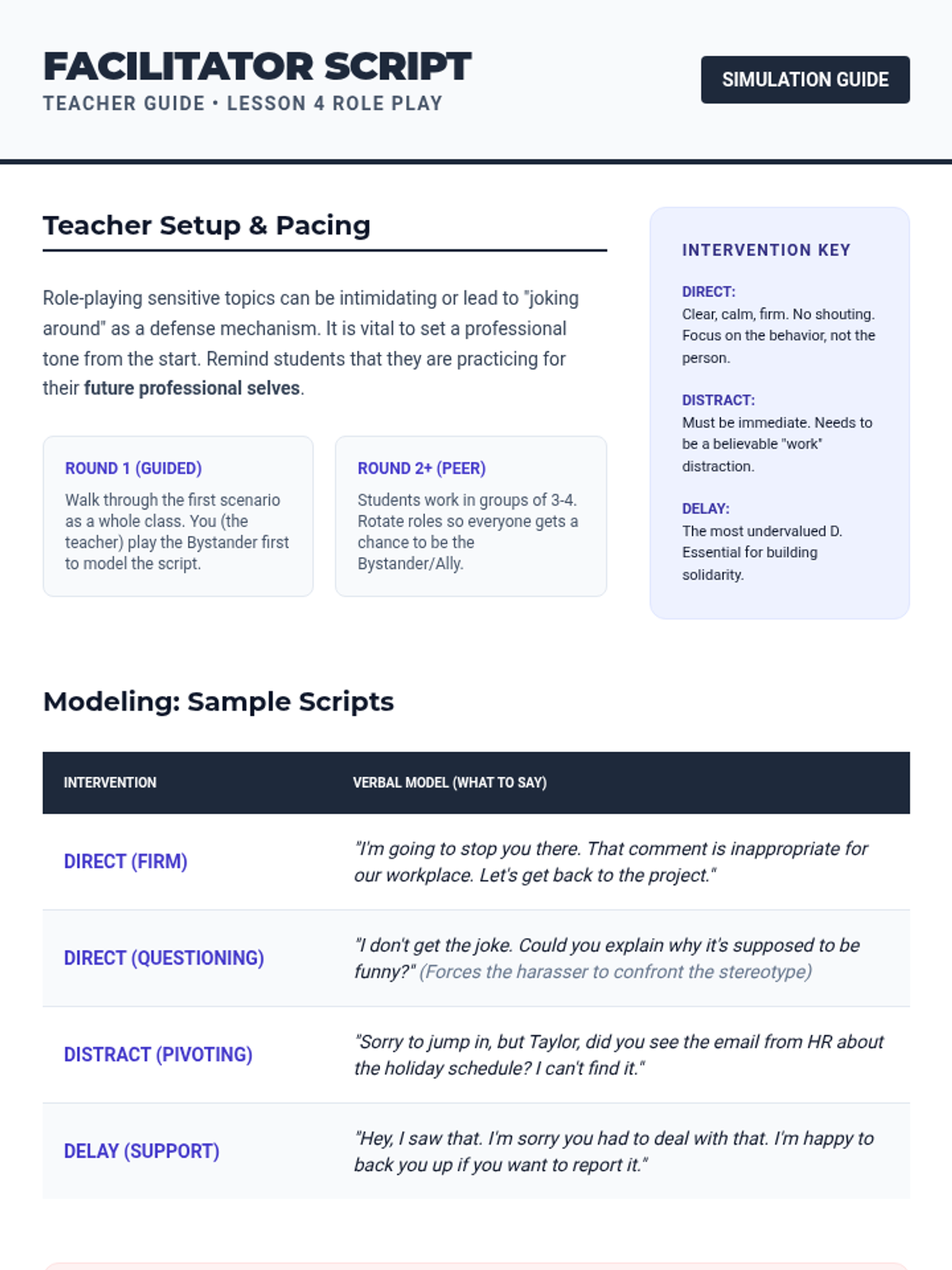
Students engage in structured role-plays to practice the intervention strategies learned. They take turns acting as the target, the harasser, and the bystander.
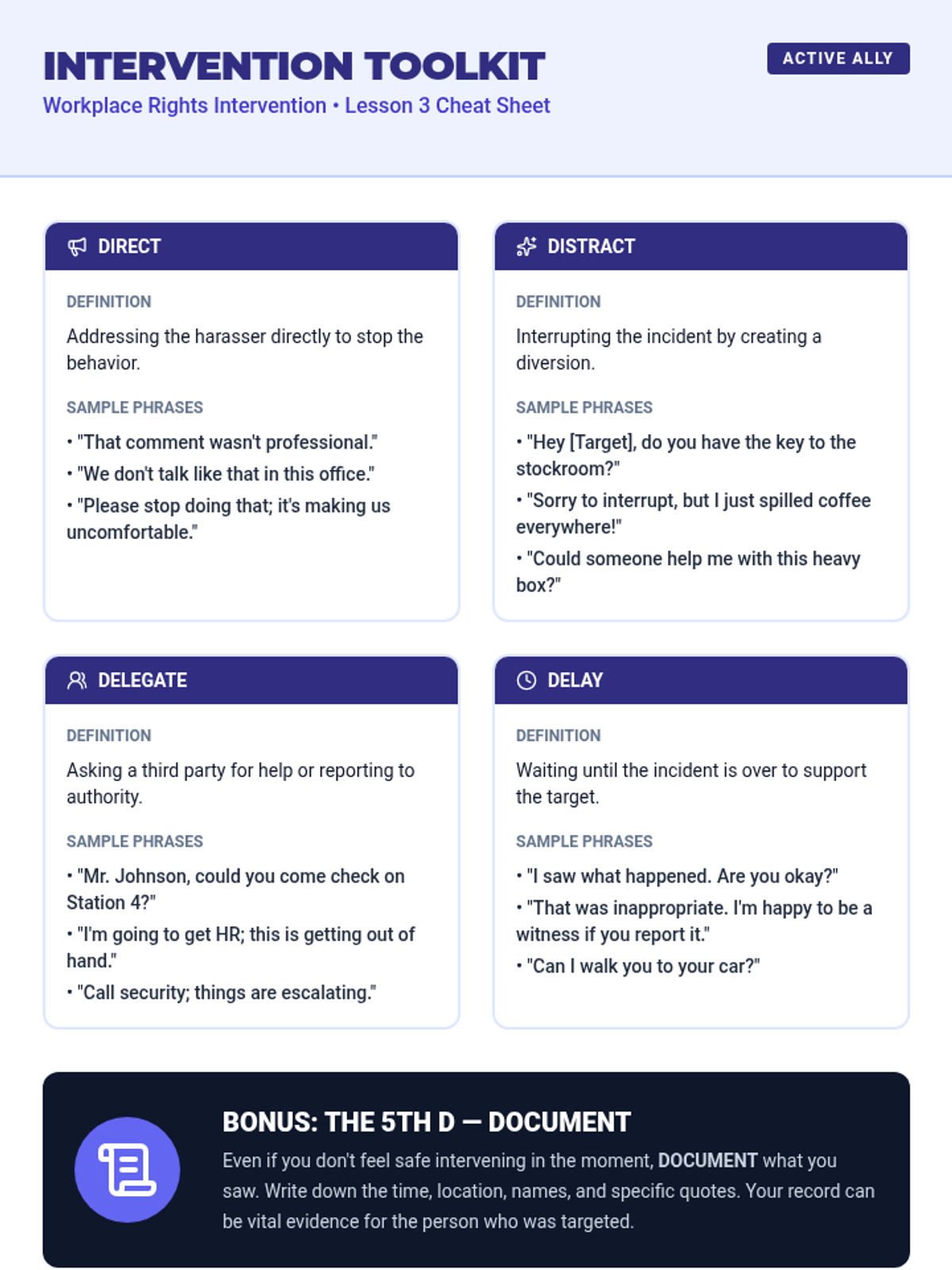
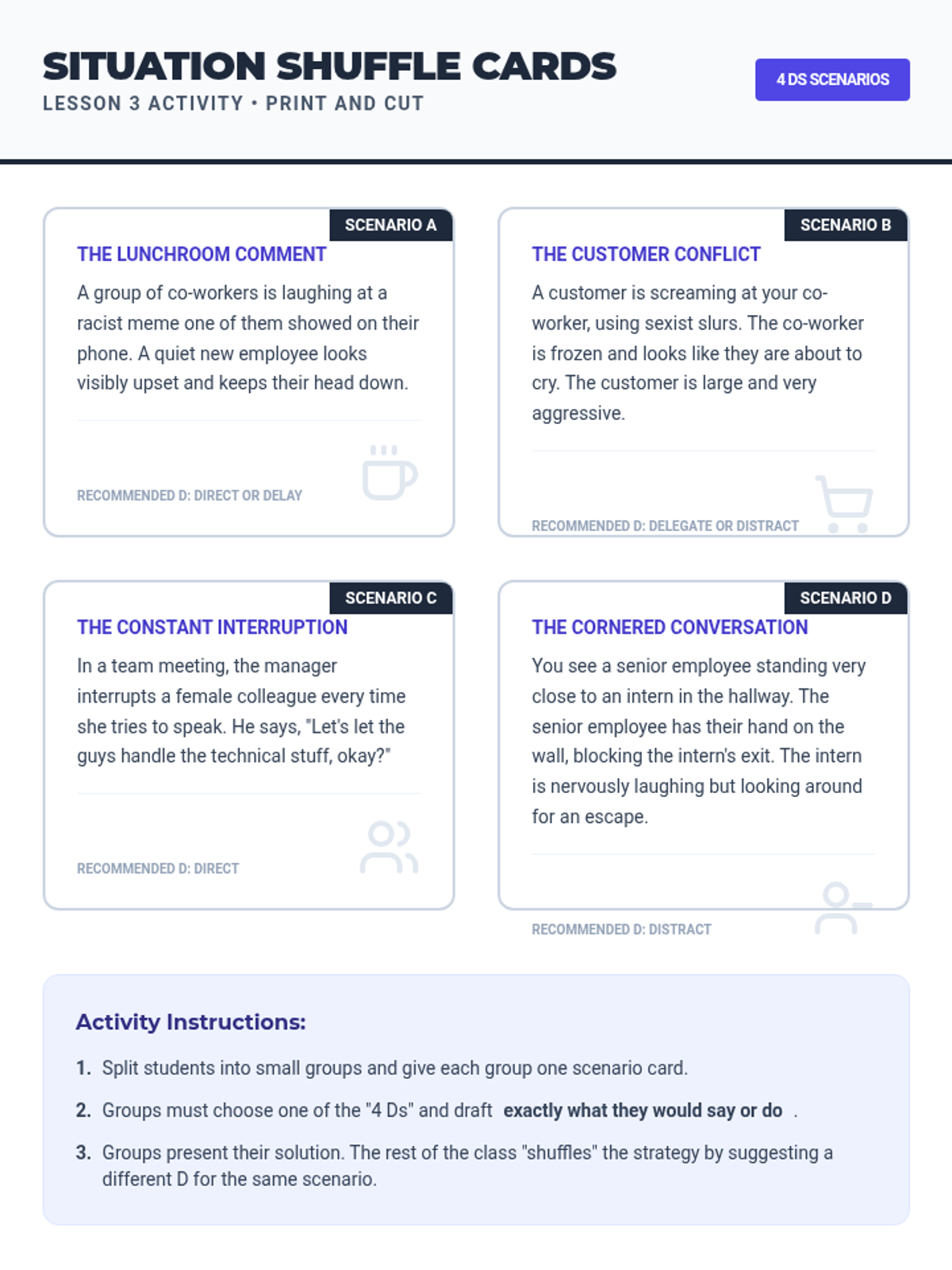
Students are introduced to the '4 Ds' of bystander intervention: Direct, Distract, Delegate, and Delay. They analyze scenarios to determine the best intervention strategy.
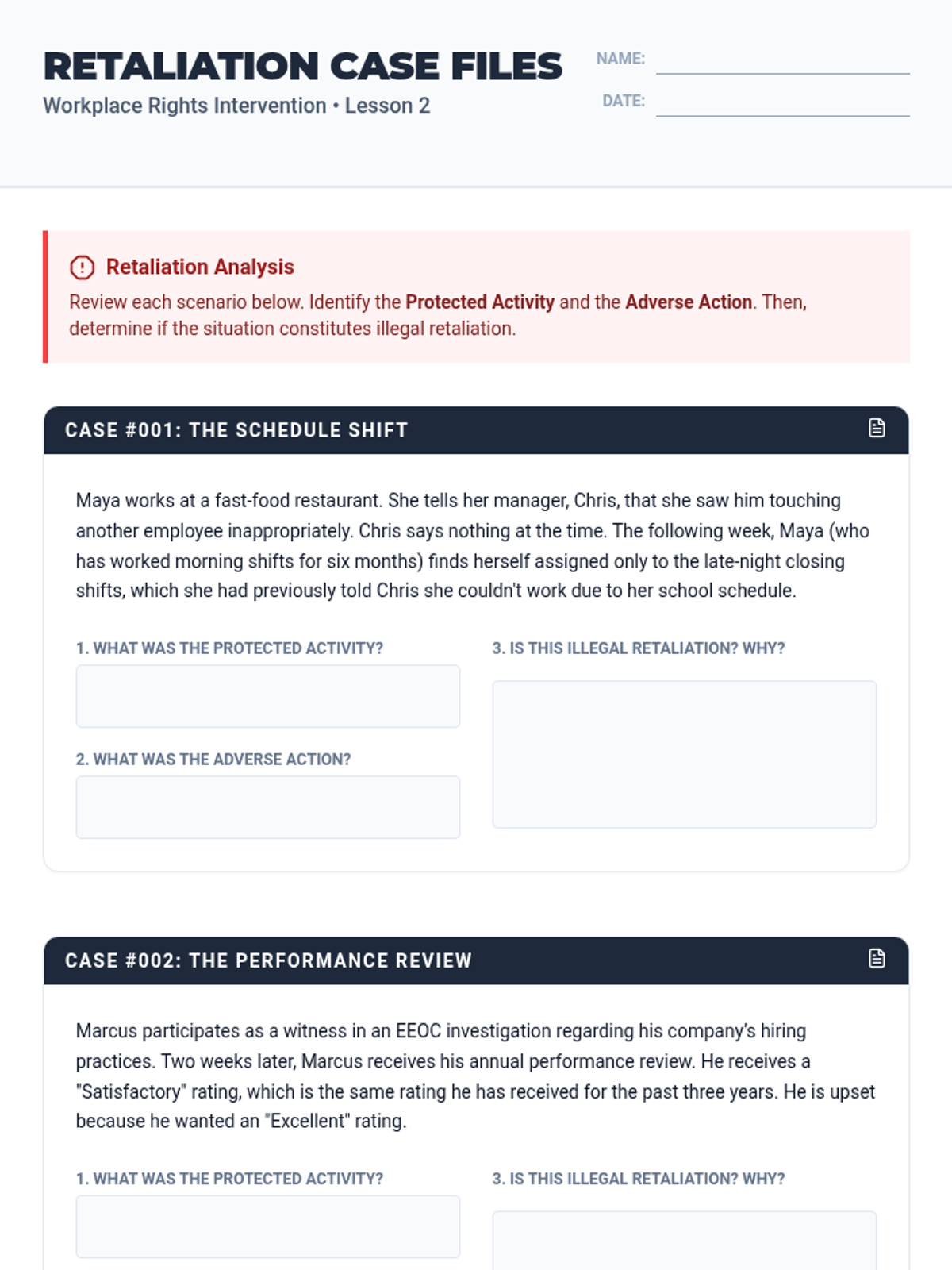
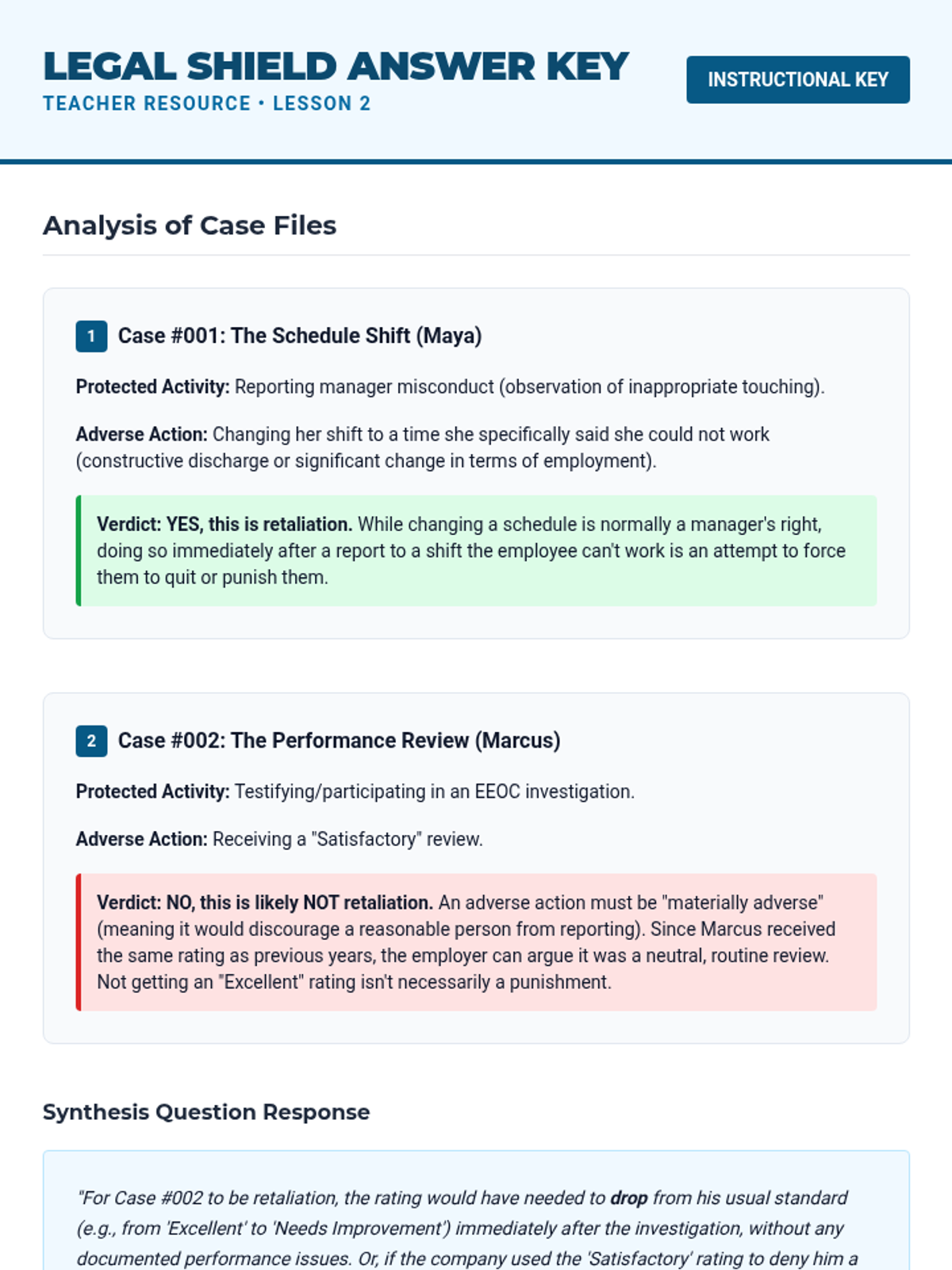
This lesson covers the legal protections for employees who report misconduct, focusing on the concept of 'retaliation' and identify which actions constitute illegal retaliation.
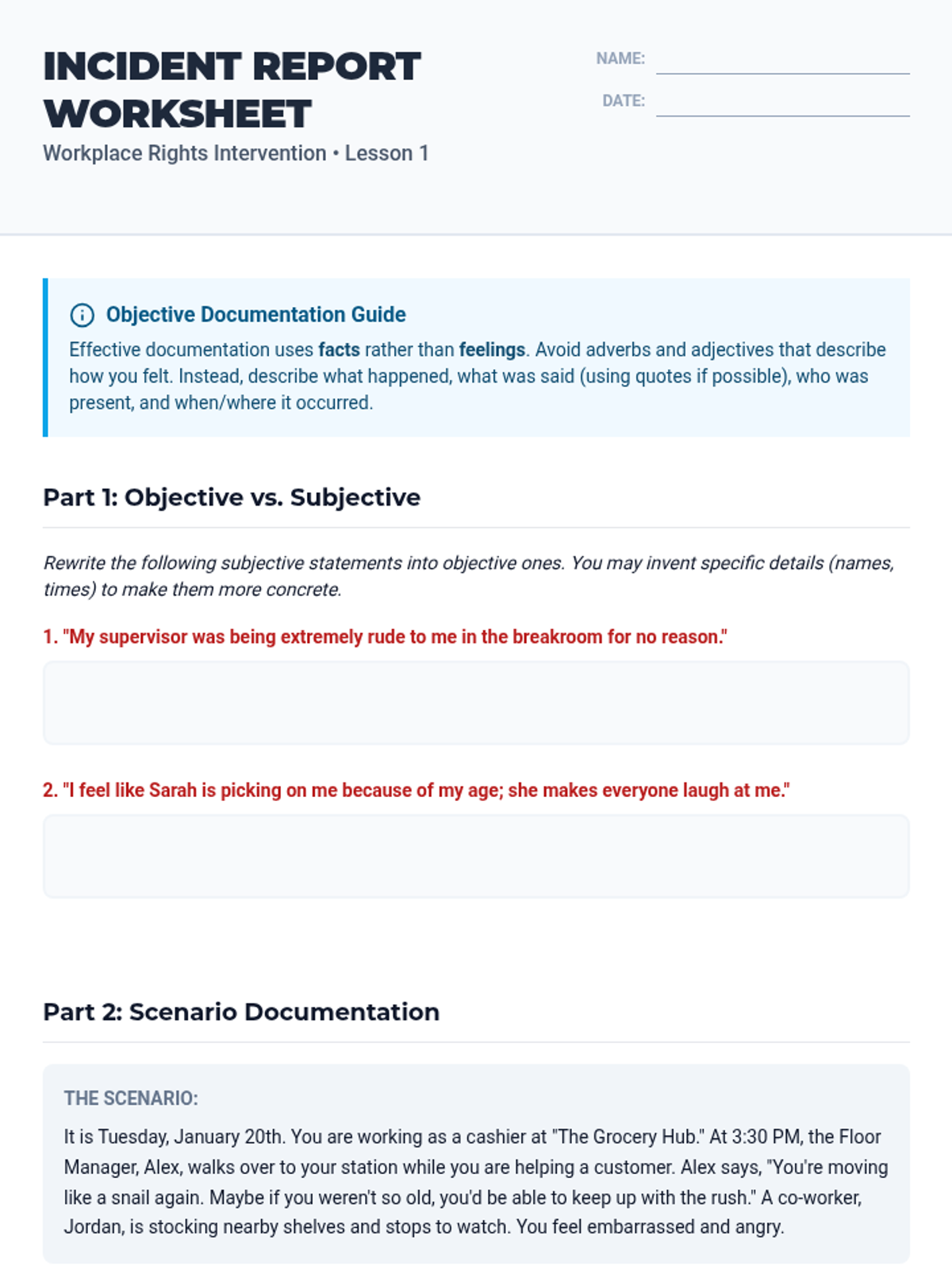
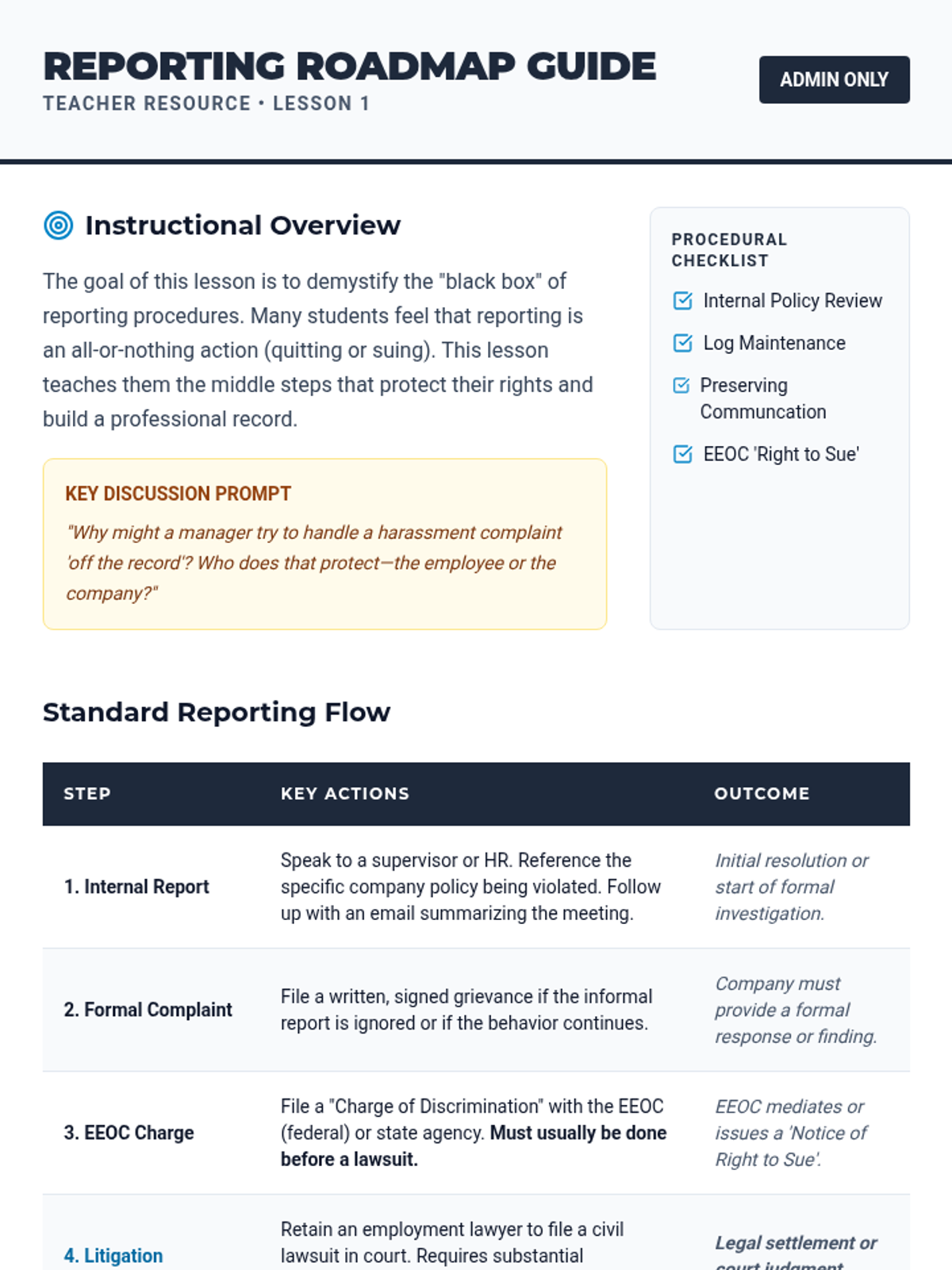
Students learn the standard procedures for reporting harassment, including internal HR complaints and external EEOC filings. They practice the skill of objective documentation.
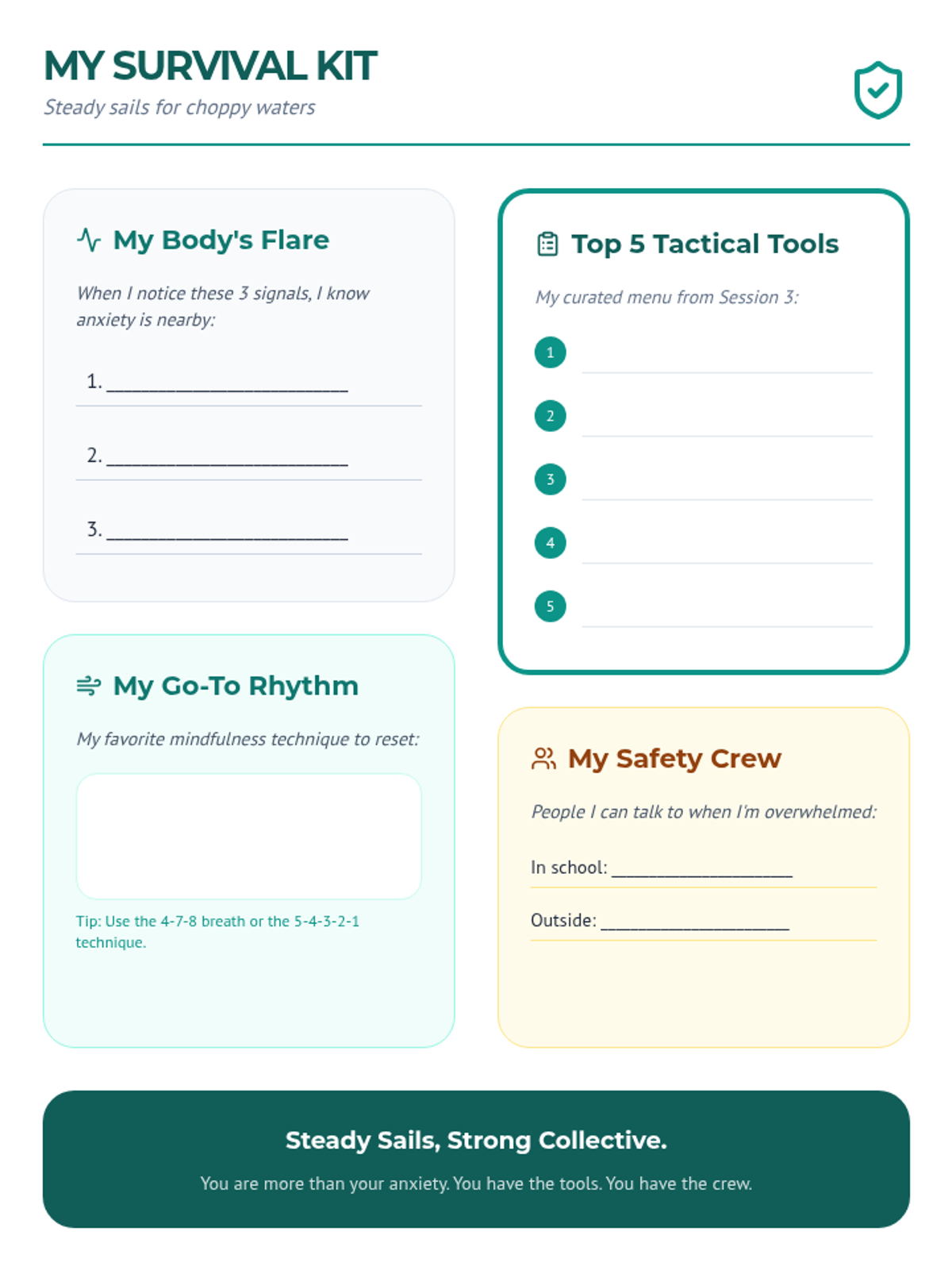
The final session focuses on long-term maintenance and 'relapse prevention.' Students will create a take-home survival kit and celebrate their growth within the collective.
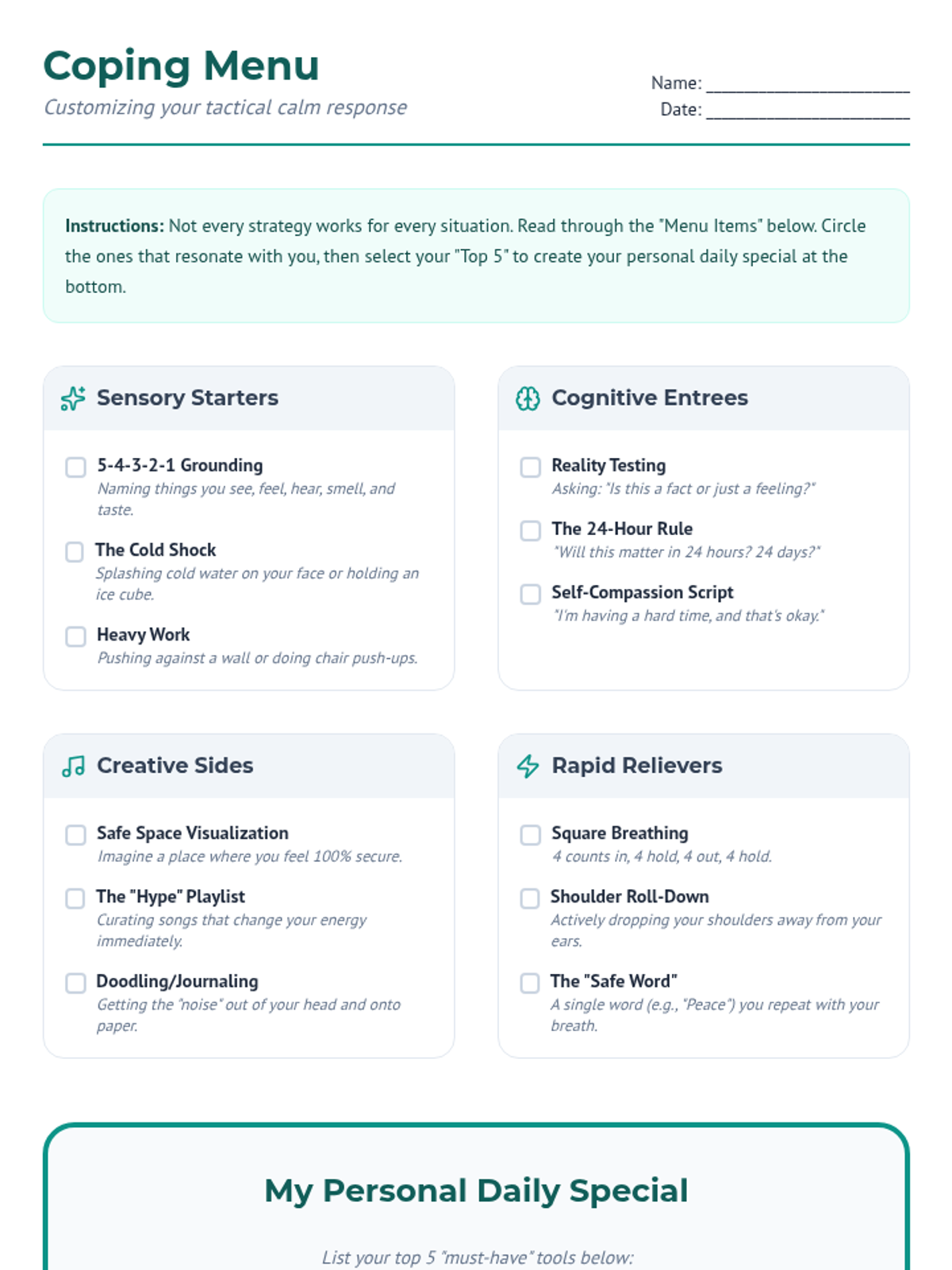
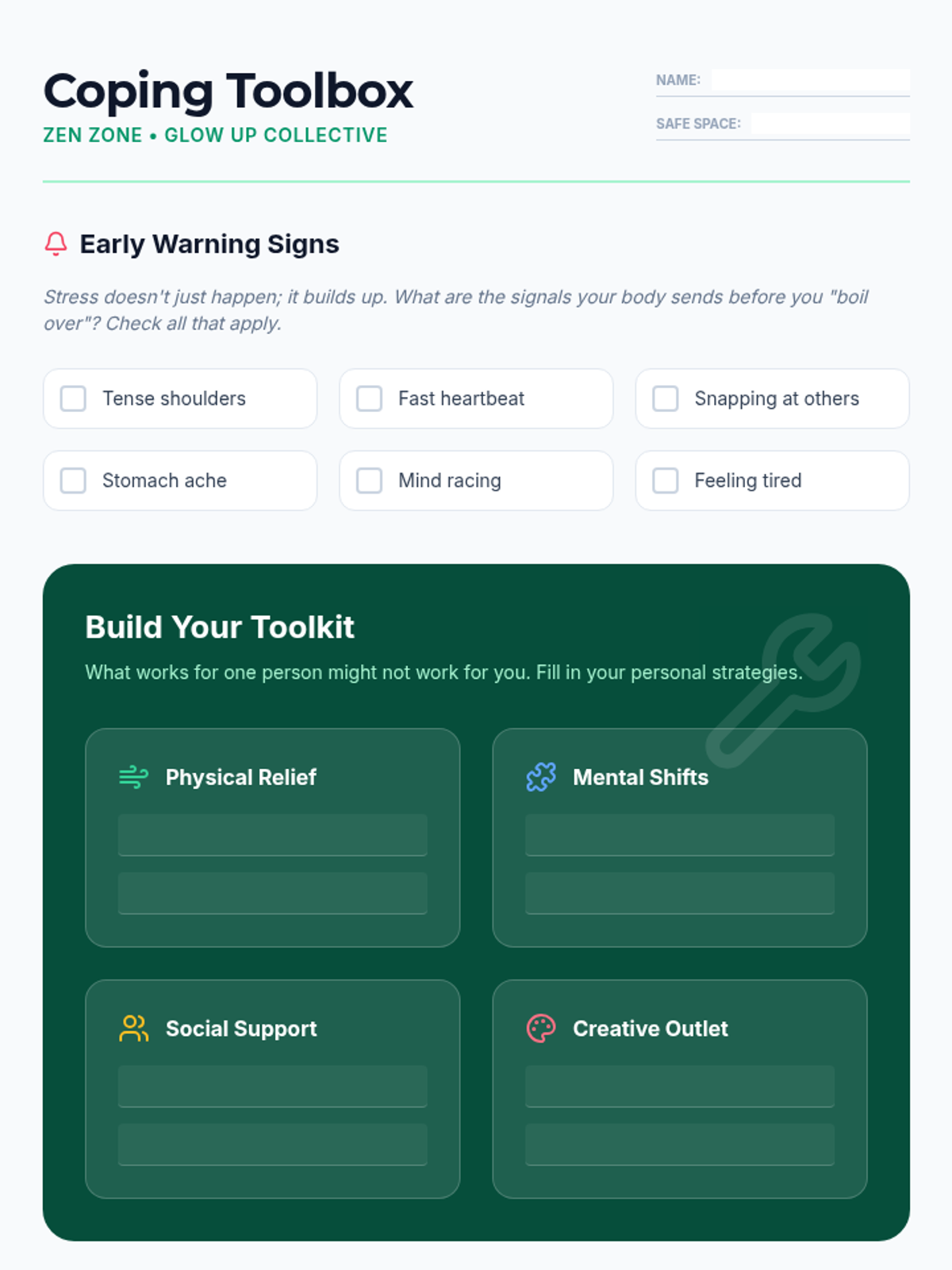
Students will explore a variety of sensory and cognitive coping strategies. They will evaluate which techniques work best for them and begin building their personal 'Coping Menu'.
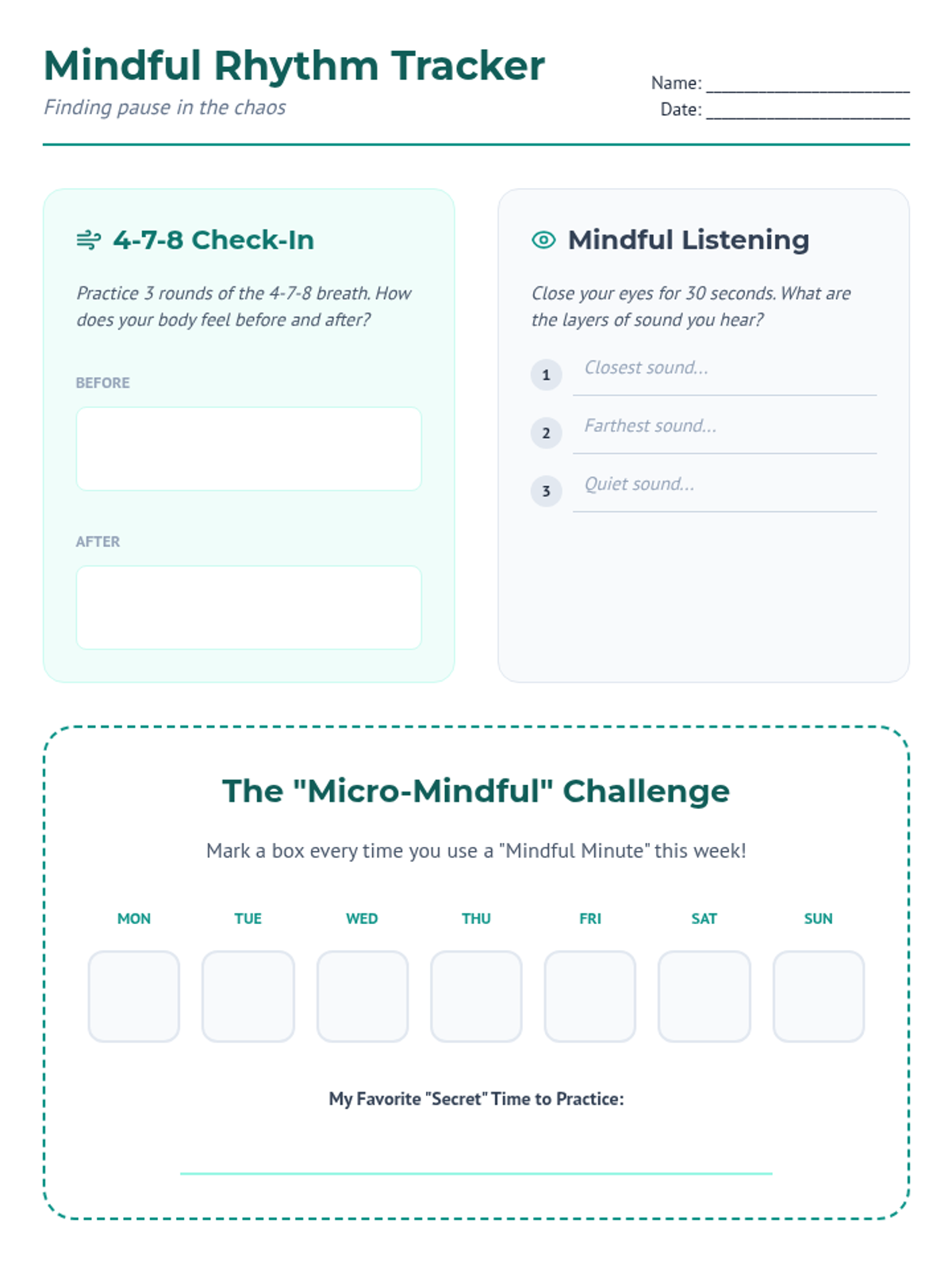
This session introduces mindfulness as a tool for presence. Students will practice breathwork and a body scan, discussing how to integrate these small moments into a busy high school schedule.
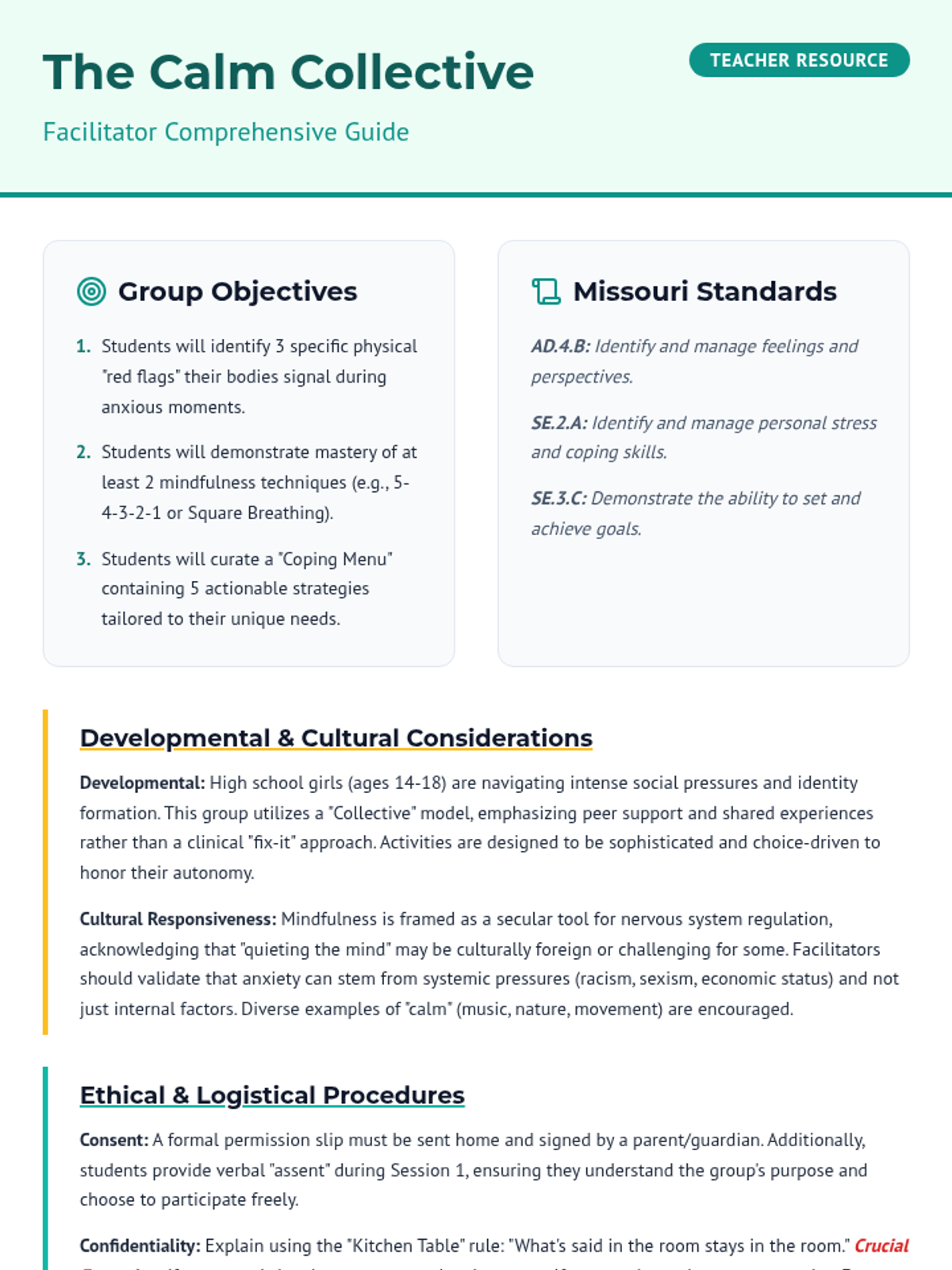
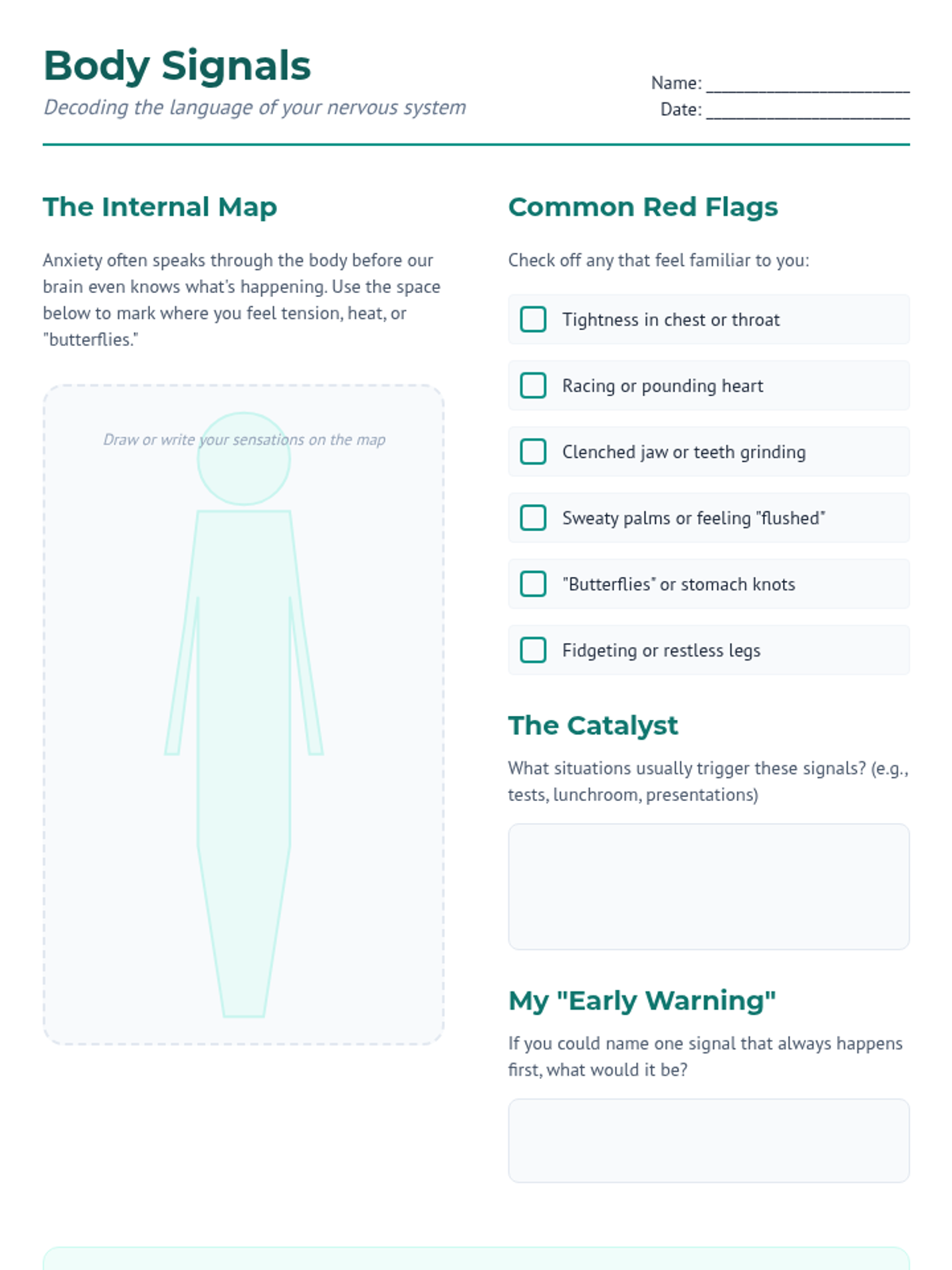
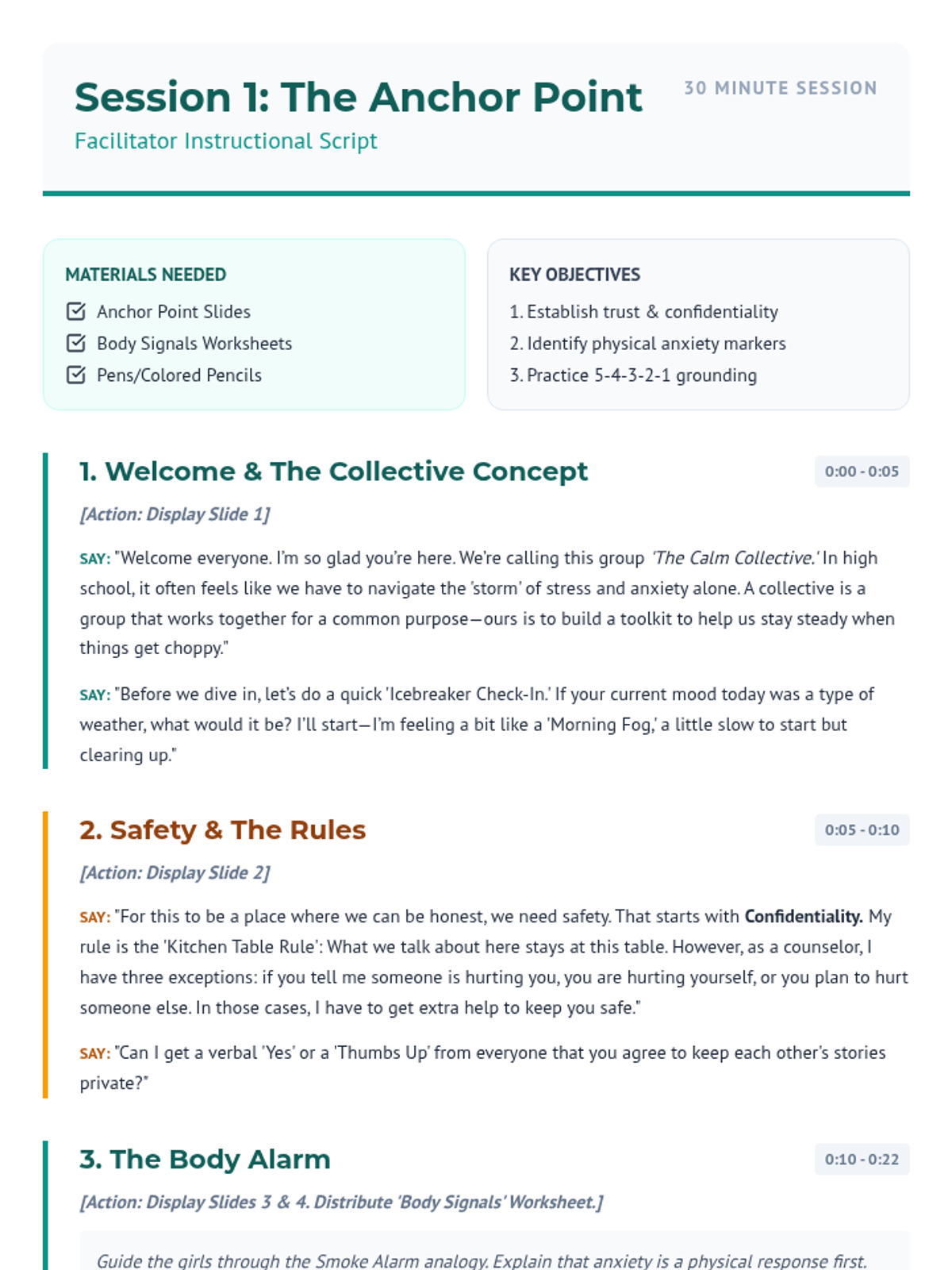
The first session focuses on establishing the group's foundation, including ethical guidelines, confidentiality, and the basic 'Anchor' grounding technique. Students will identify how anxiety physically manifests in their bodies.
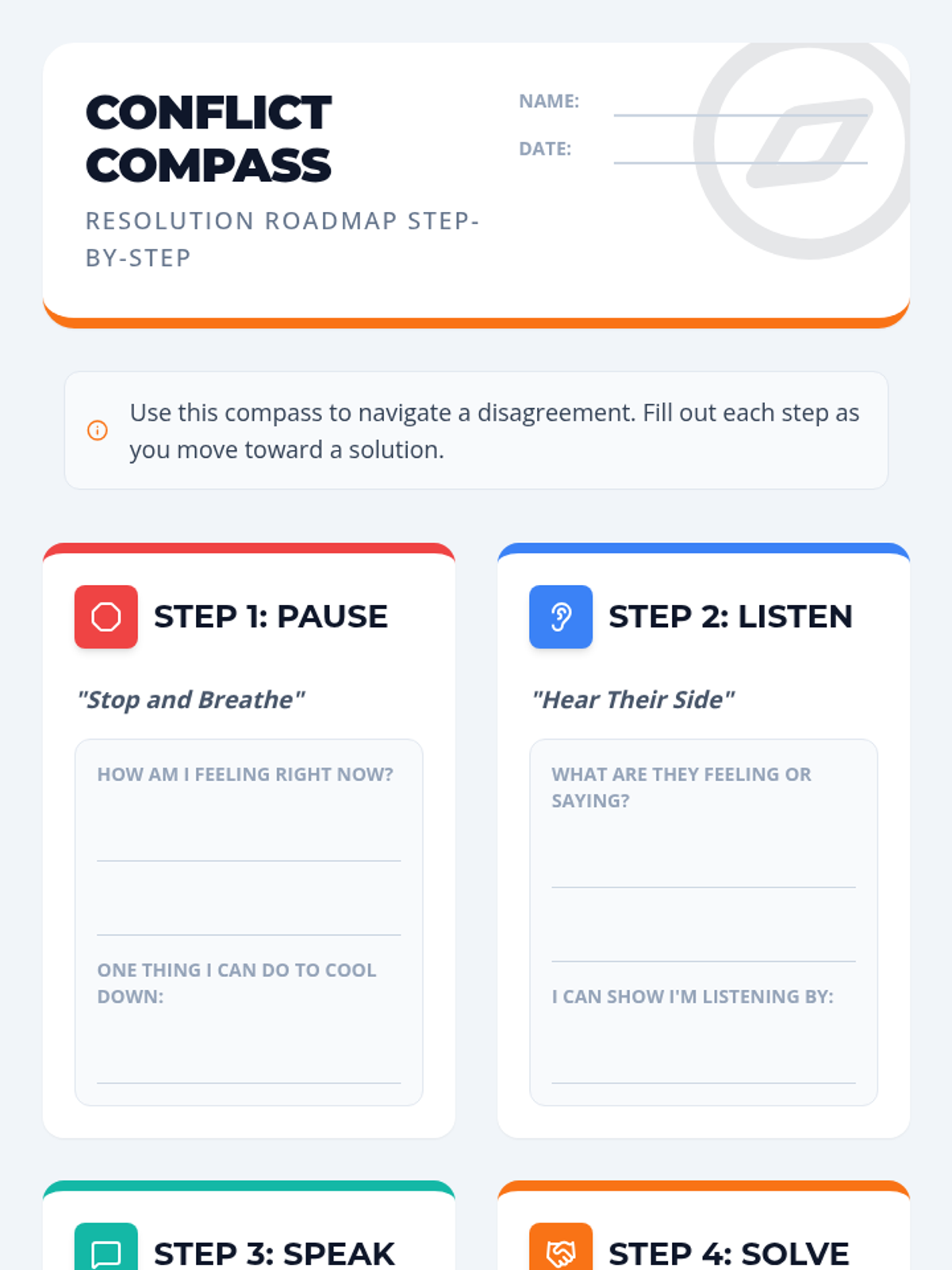
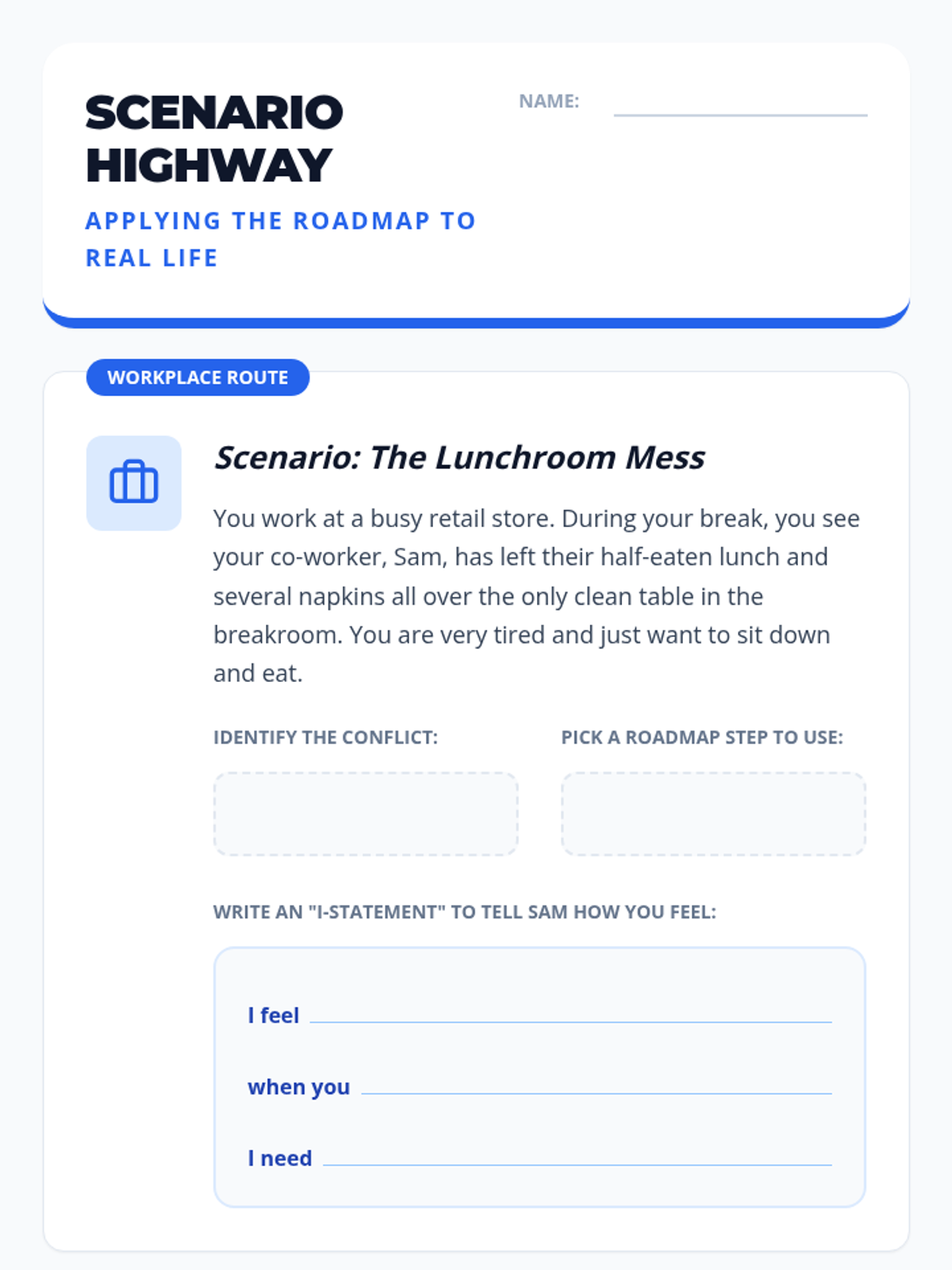
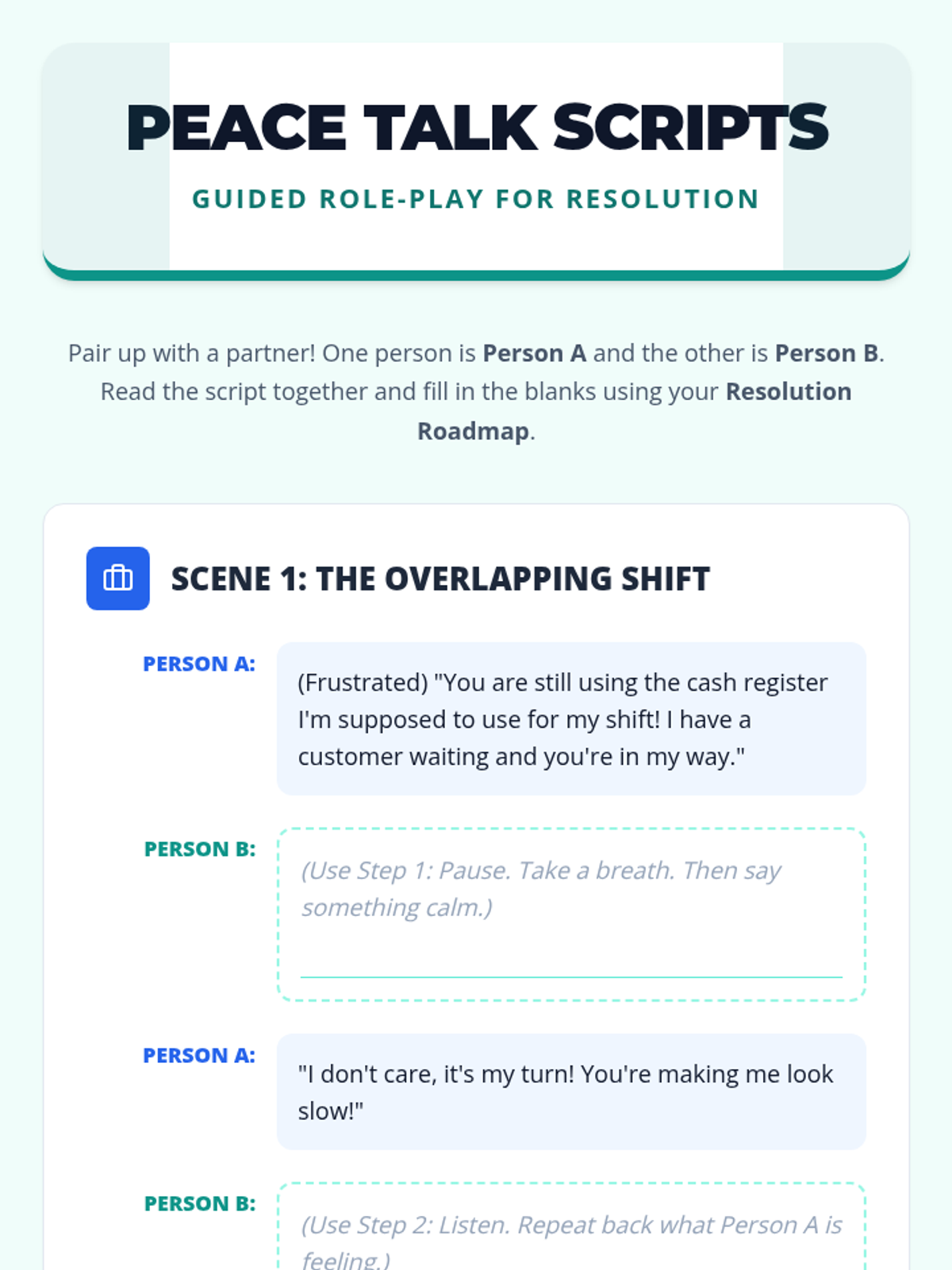
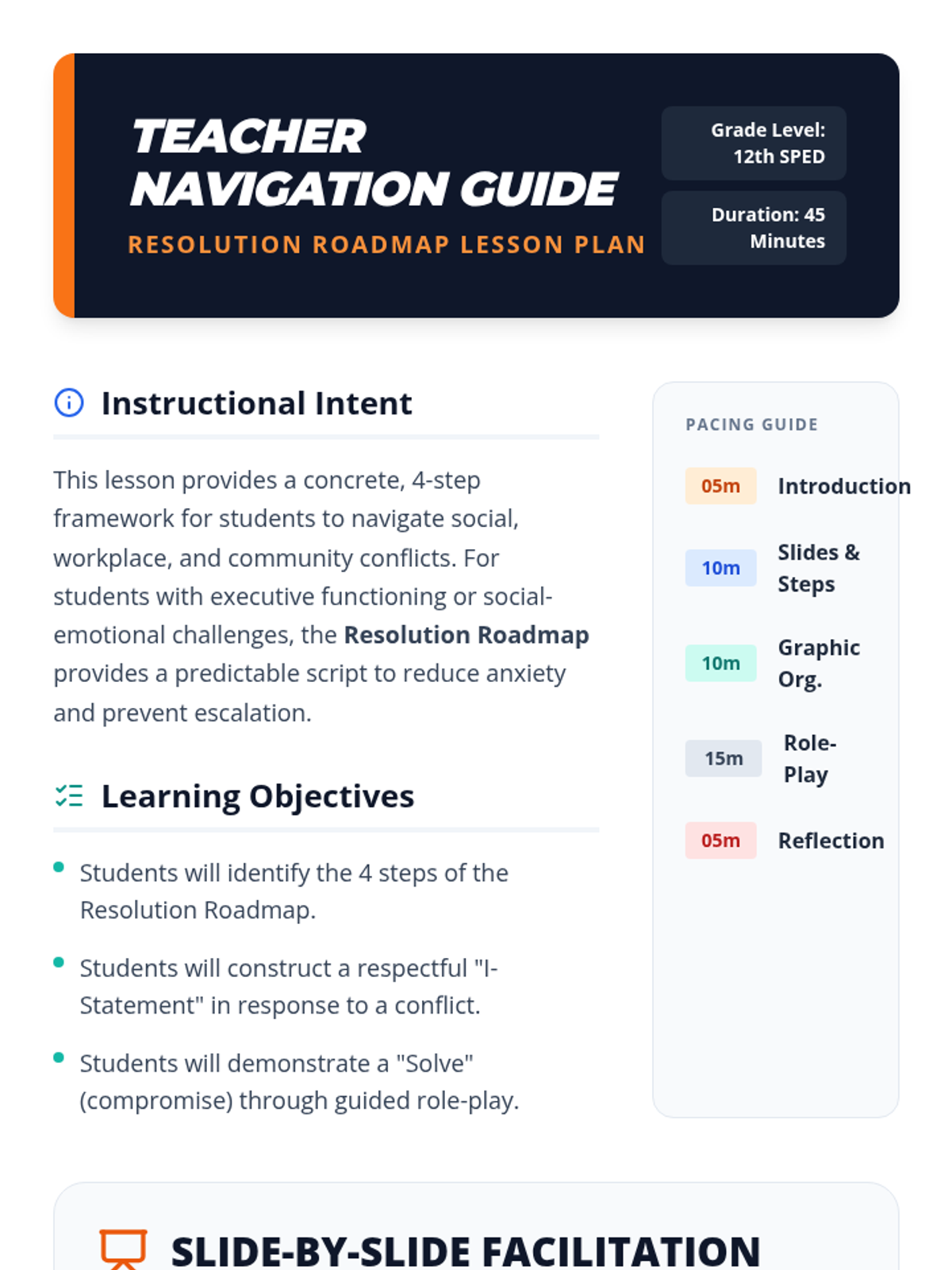
A comprehensive lesson designed for 12th-grade special education students to master conflict resolution across workplace, school, and community settings using a structured 'Resolution Roadmap' framework.
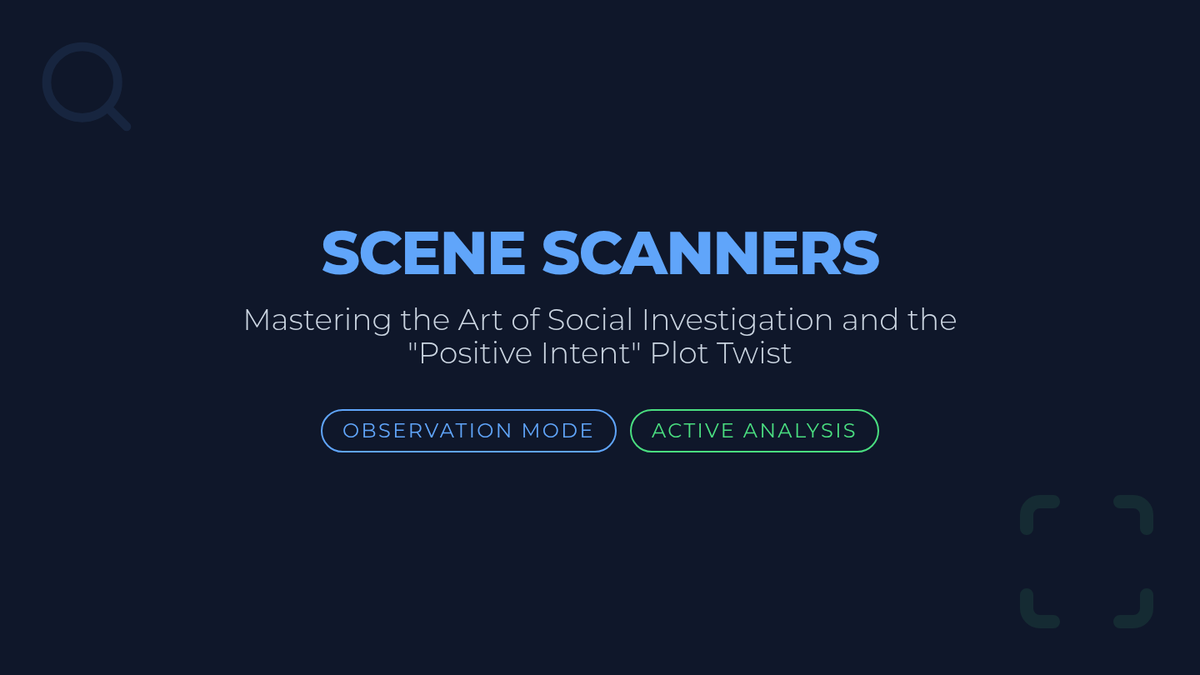
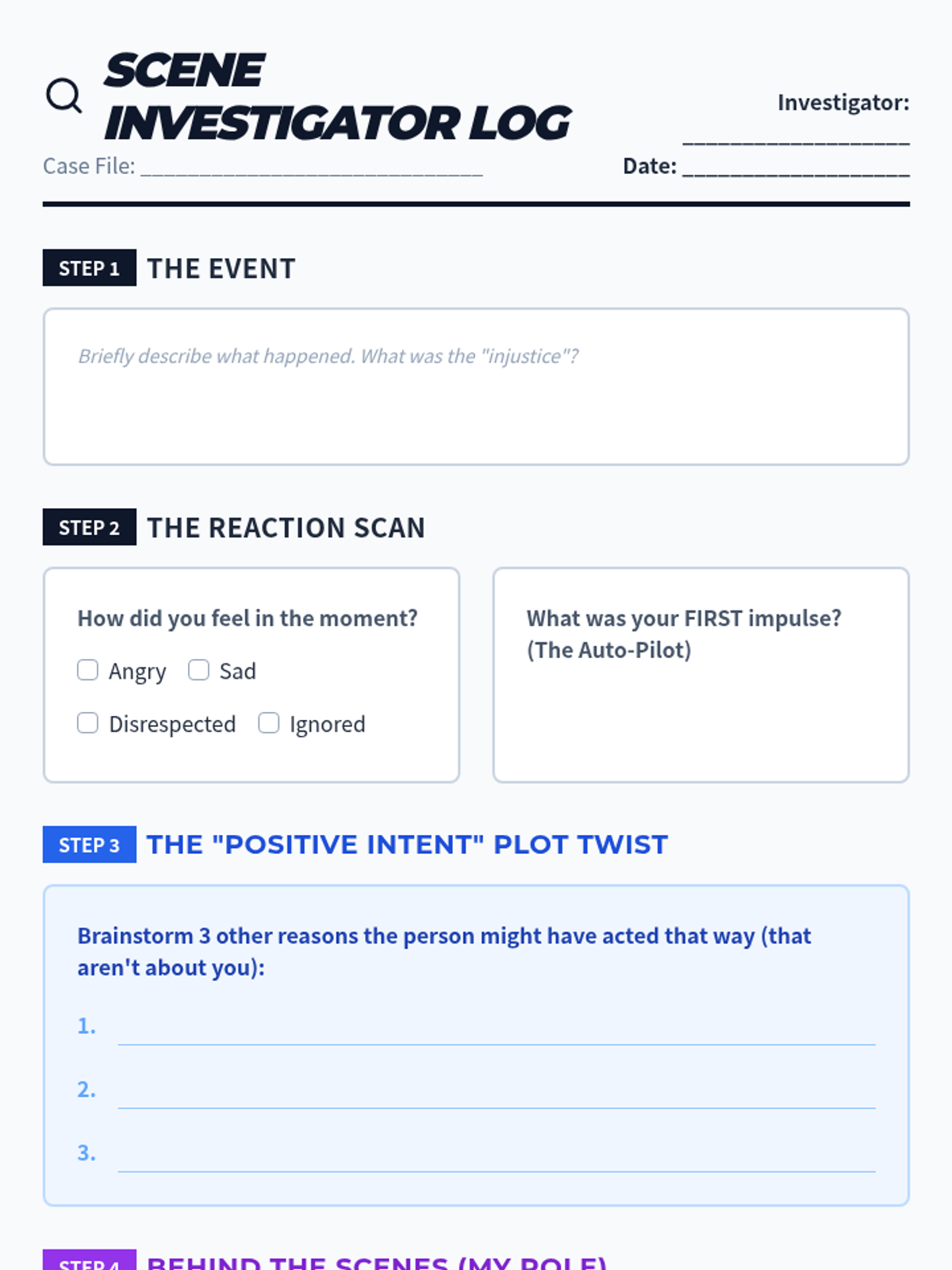
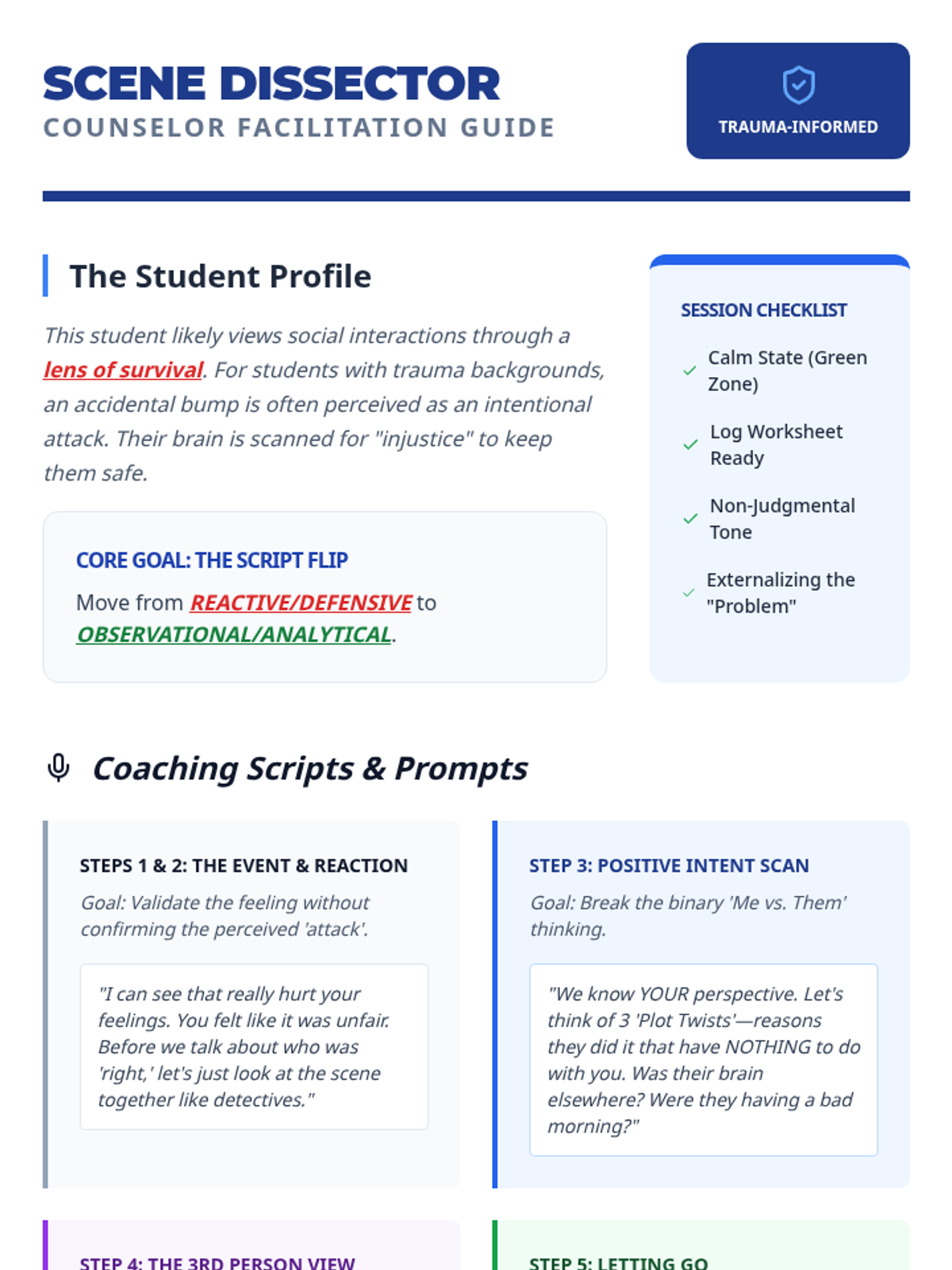
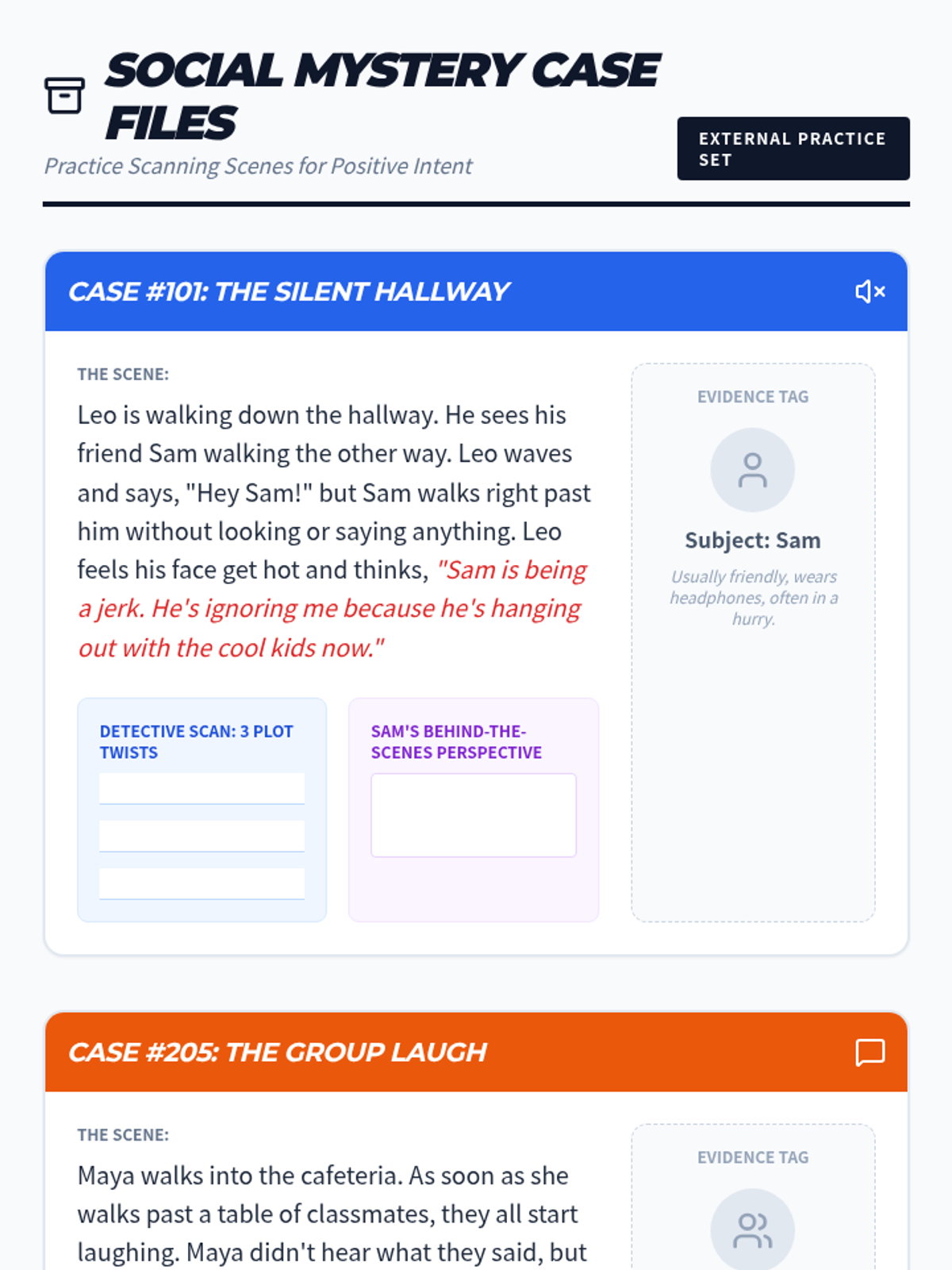
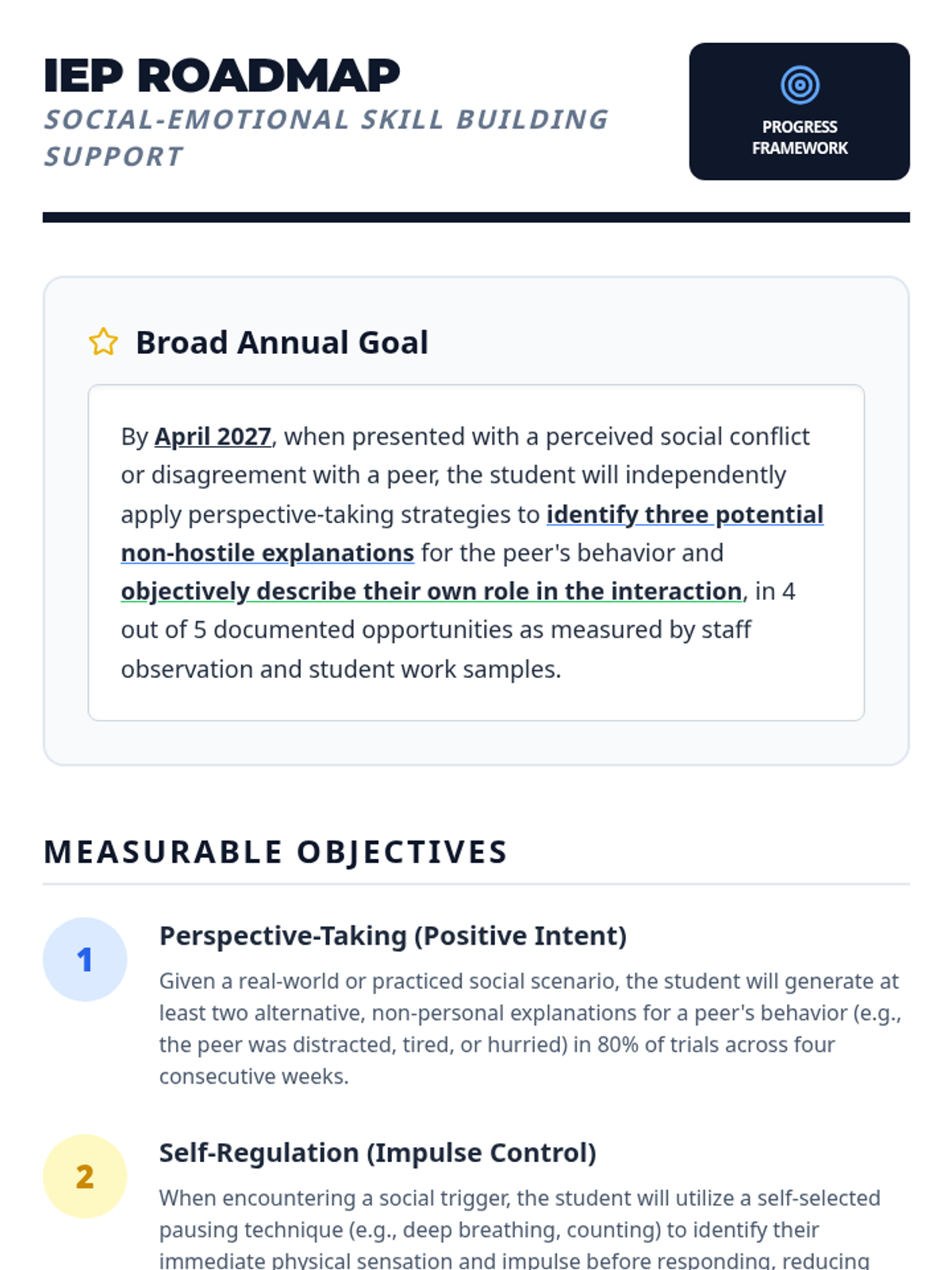
A social-emotional learning lesson designed for students with trauma backgrounds and impulse control challenges. It focuses on 'Scene Scanning'—assuming positive intent and dissecting social interactions through a detective-style lens to improve perspective-taking and reduce reactivity.
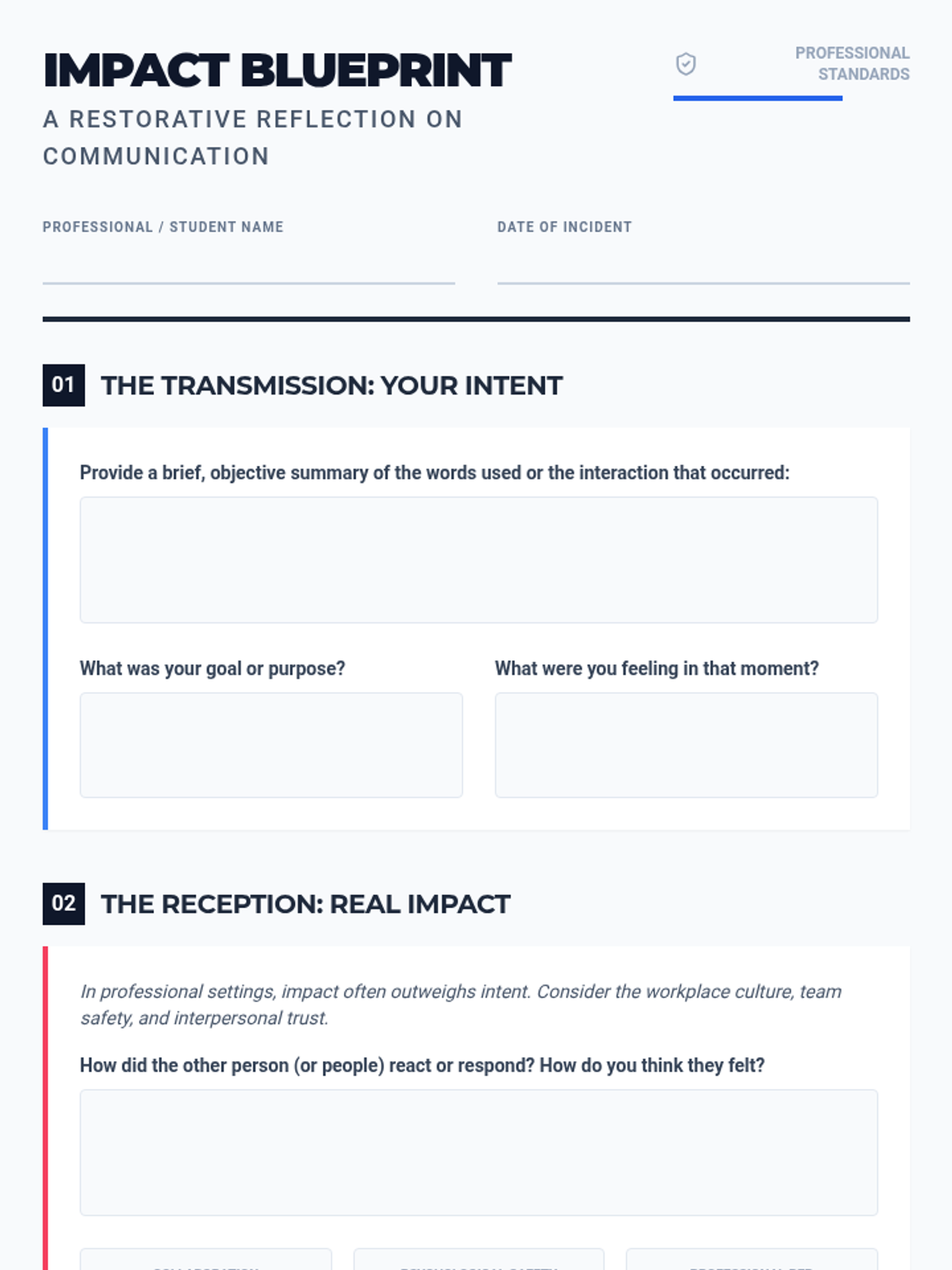
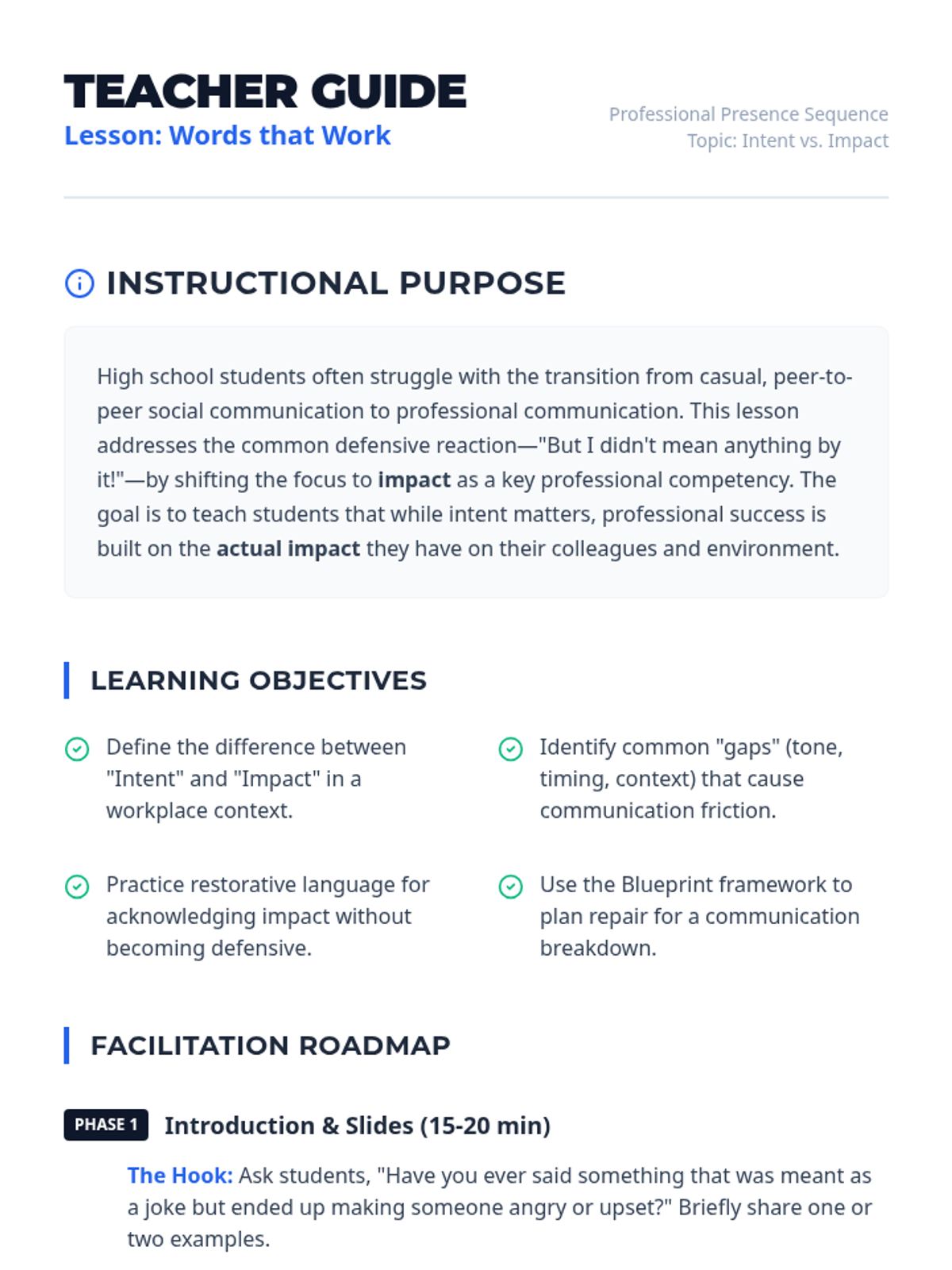
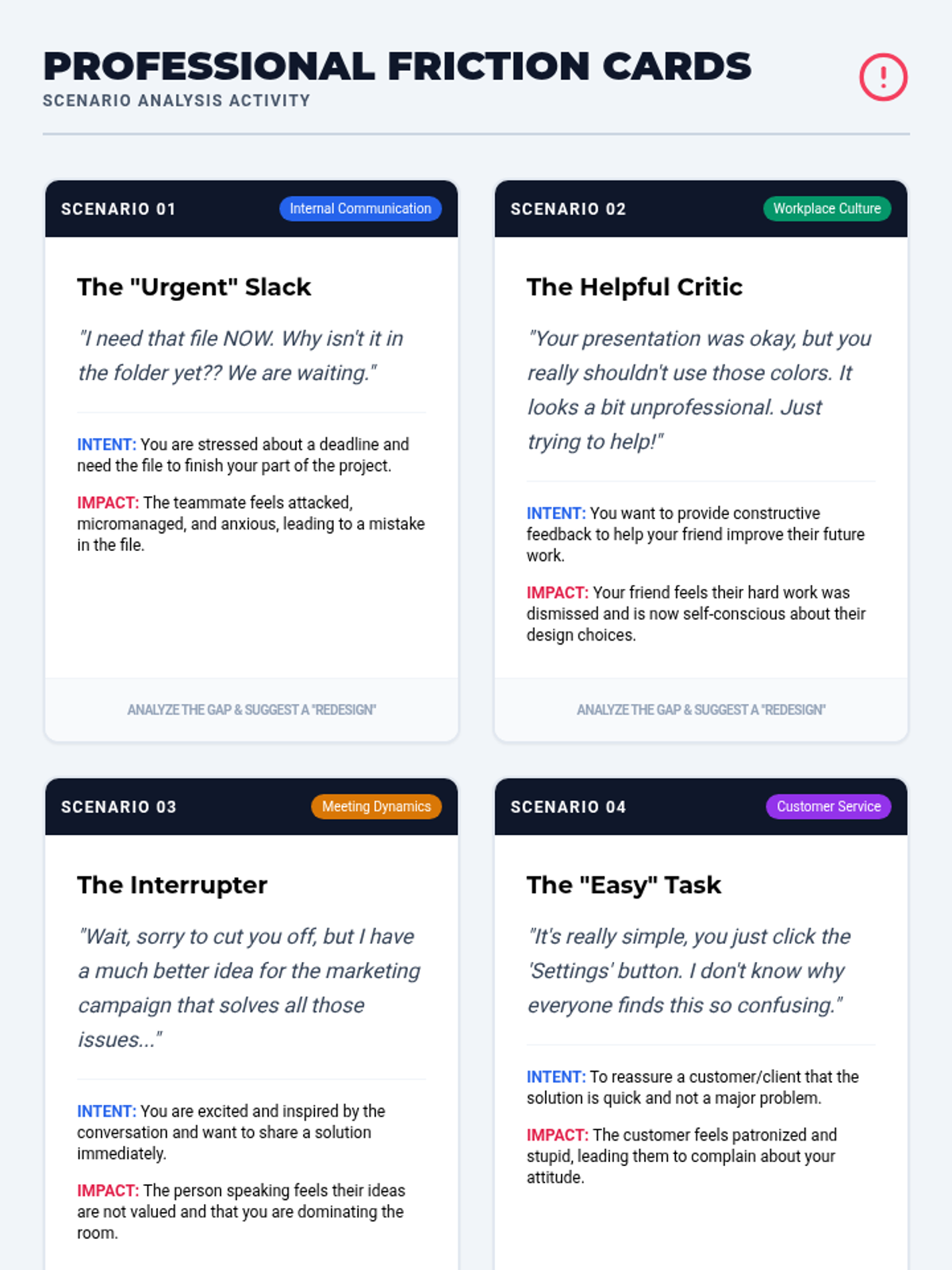
This lesson explores the "intent vs. impact" framework in professional settings, helping students understand how their words affect workplace culture and how to use restorative reflection to repair professional relationships.
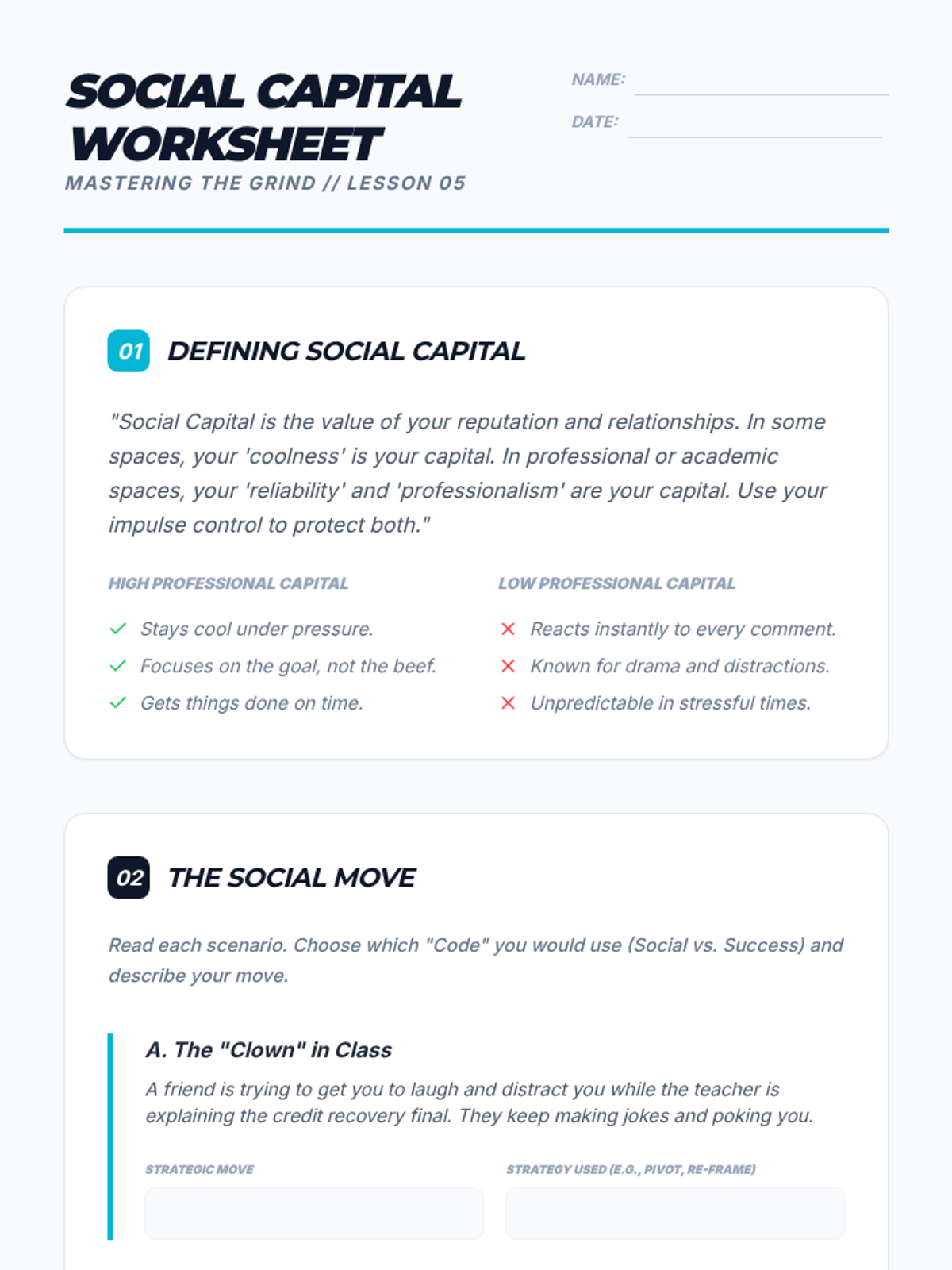
Focuses on social intelligence and 'code-switching' as tools for success. Students practice navigating conflict with peers and authority figures to protect their progress and 'own the room' professionally.
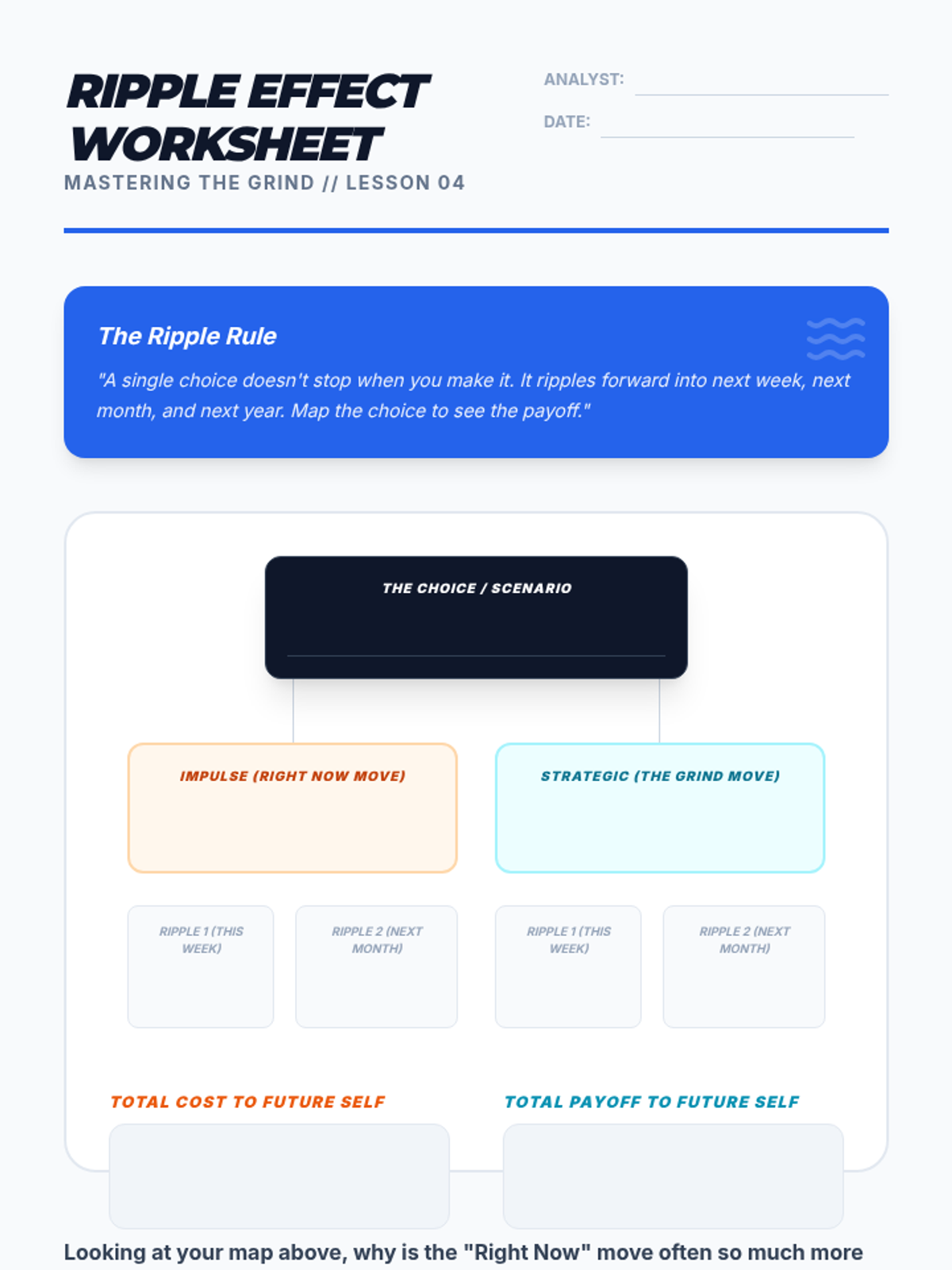
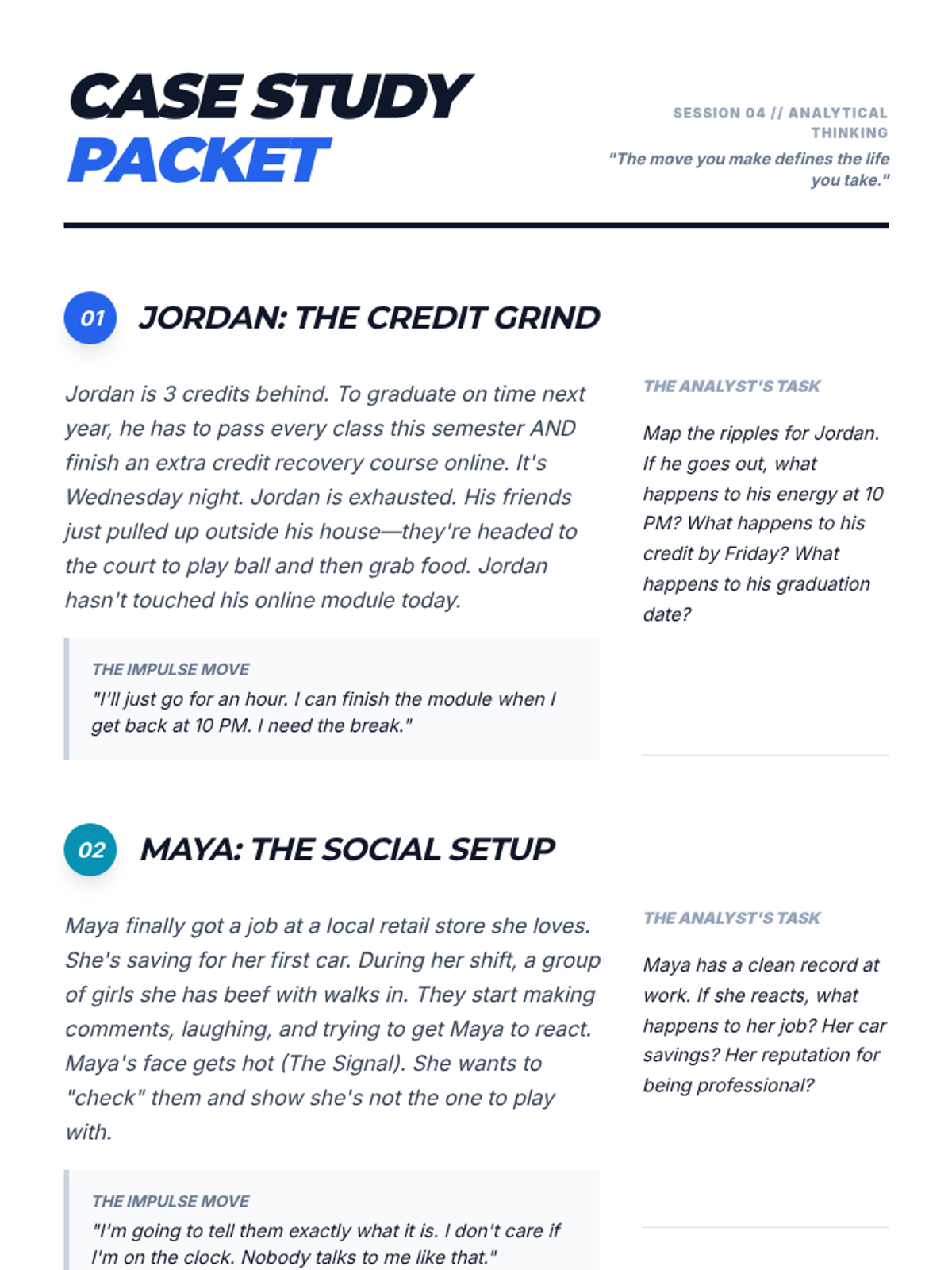
Visualizes the 'Ripple Effect' of choices on graduation timelines and future earnings. Students analyze case studies of peers navigating high-stakes decisions to understand the compounding nature of consistency.
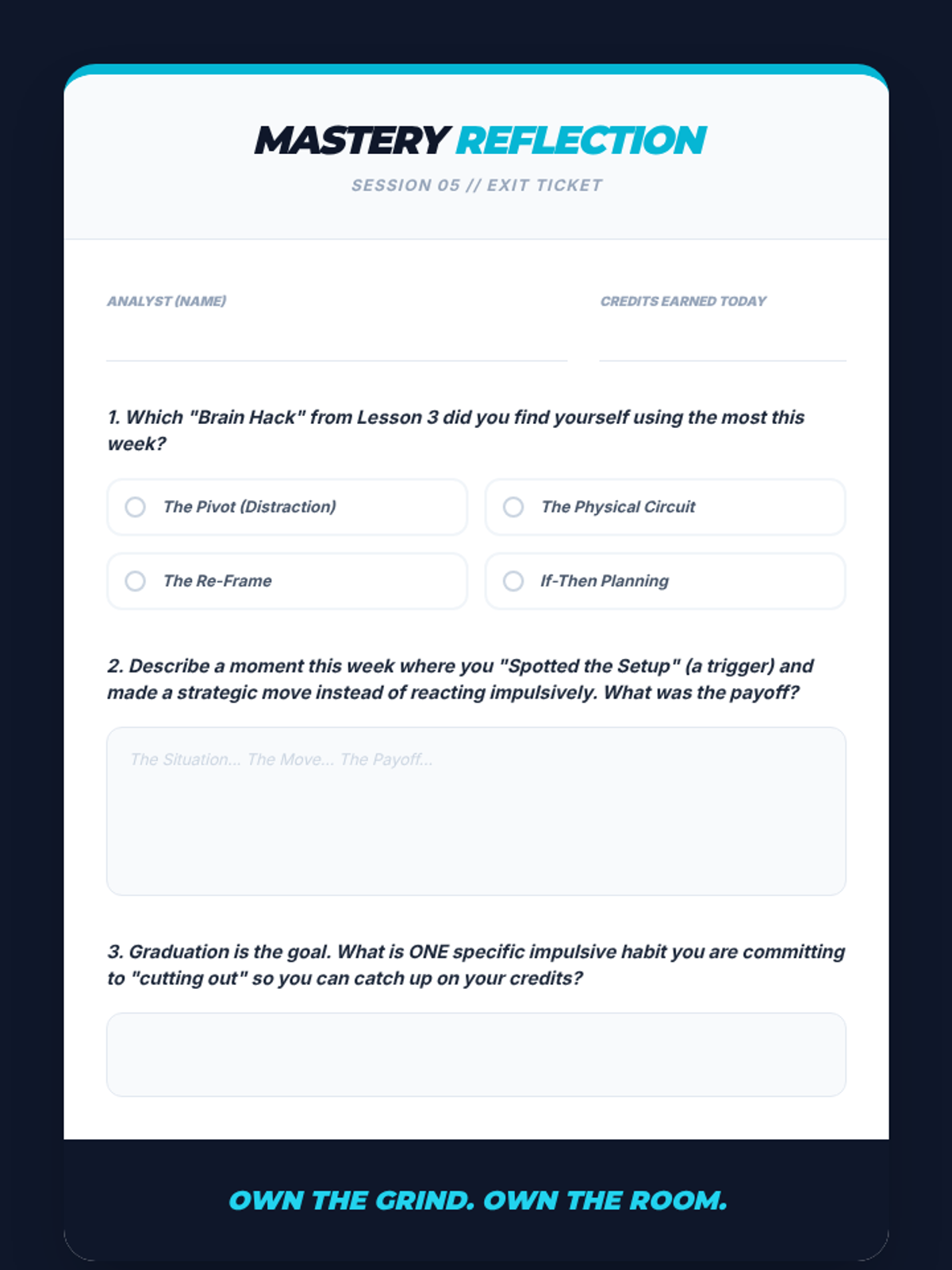
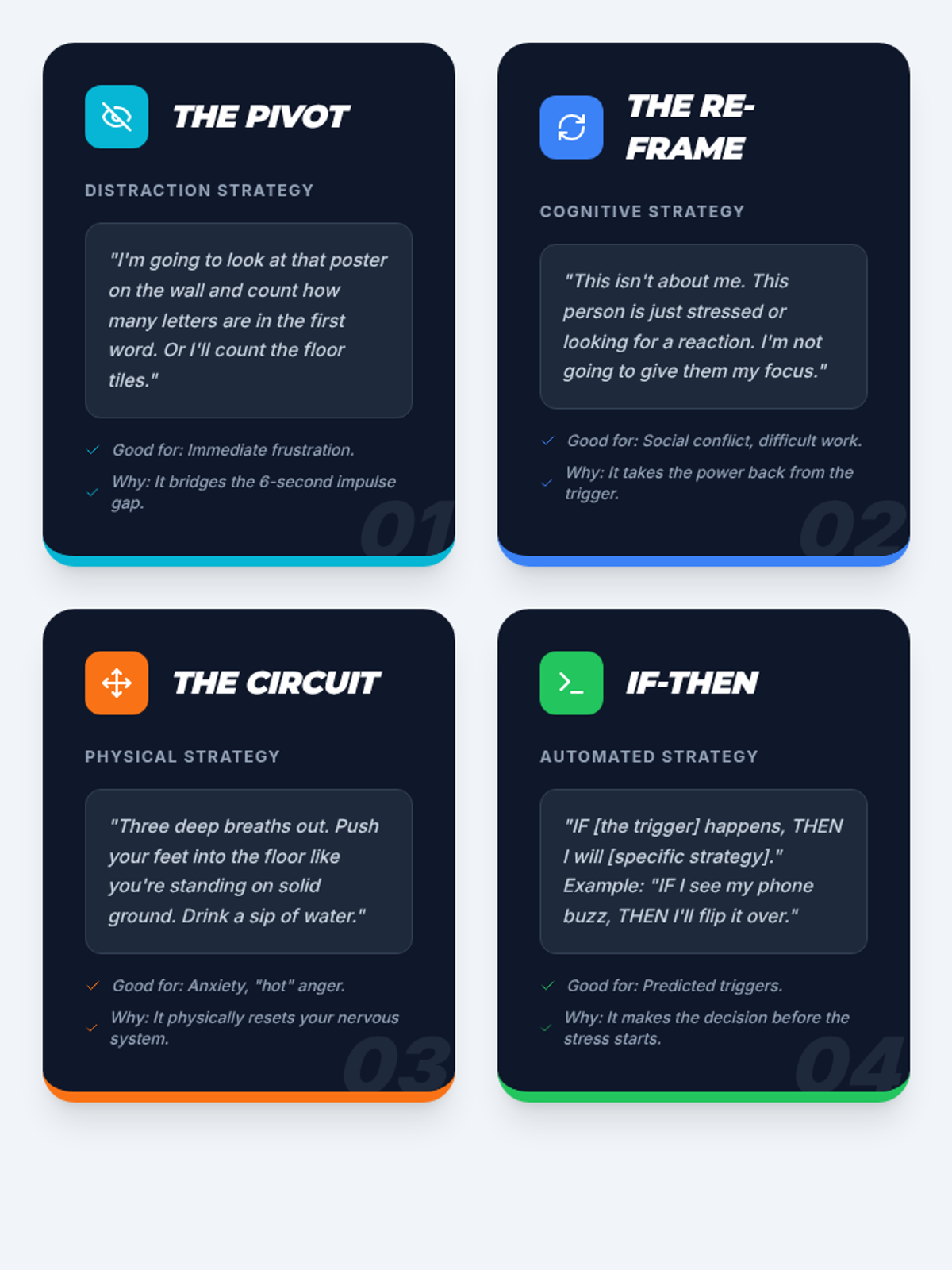
Equips students with high-level cognitive strategies to override impulsive reactions. Focuses on 'reframing' stressful situations and using 'if-then' planning to maintain composure under pressure.
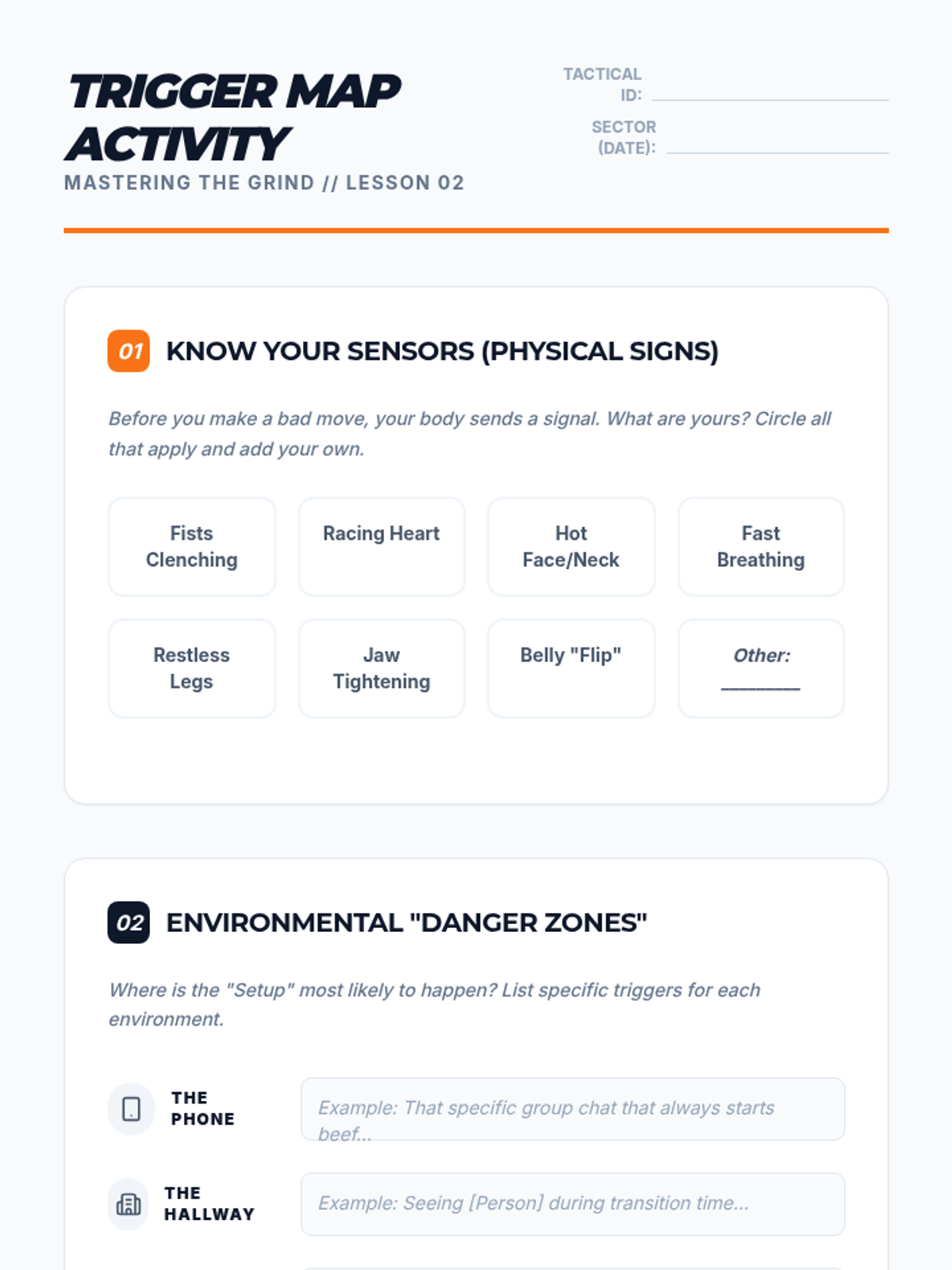
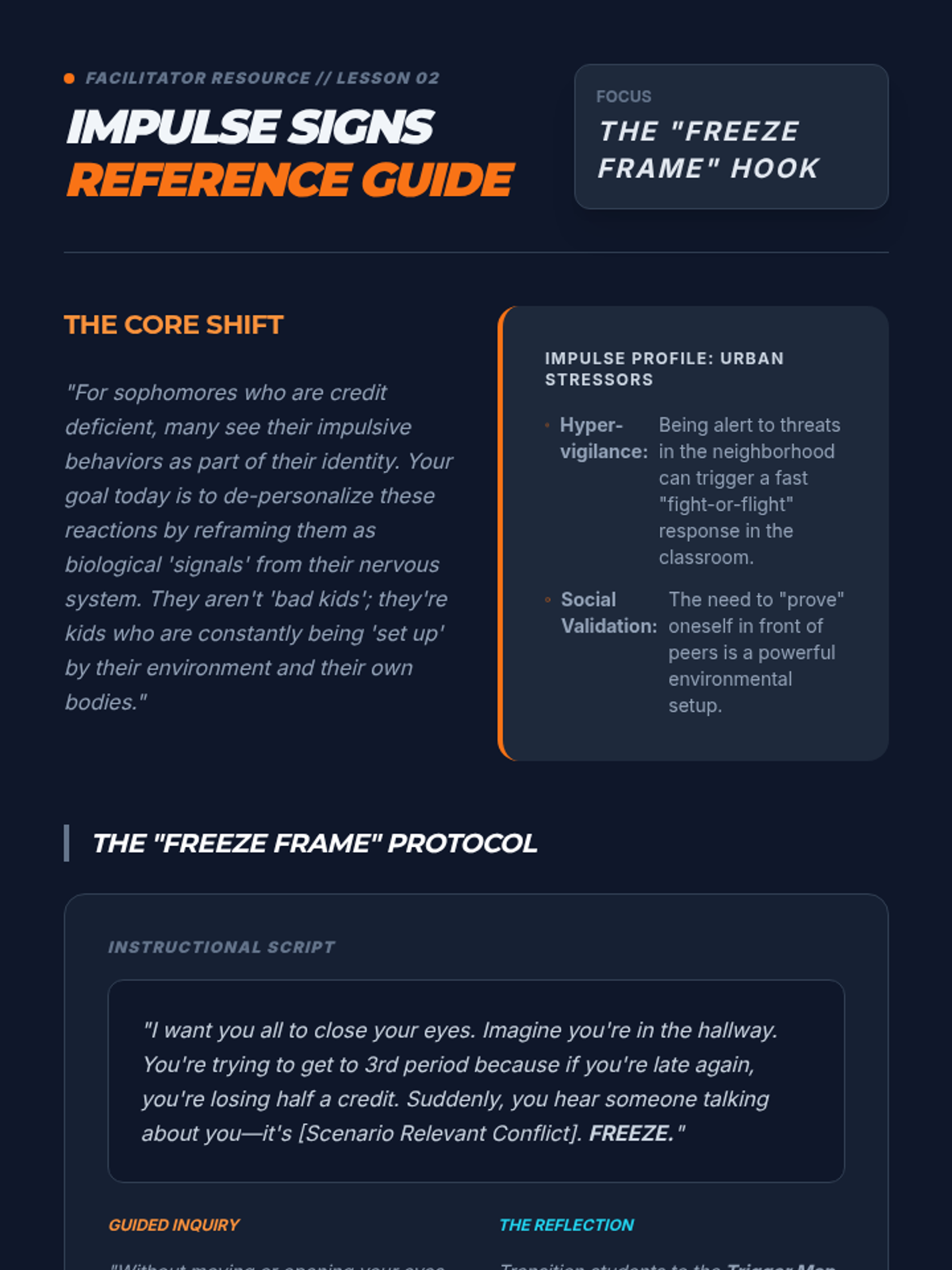
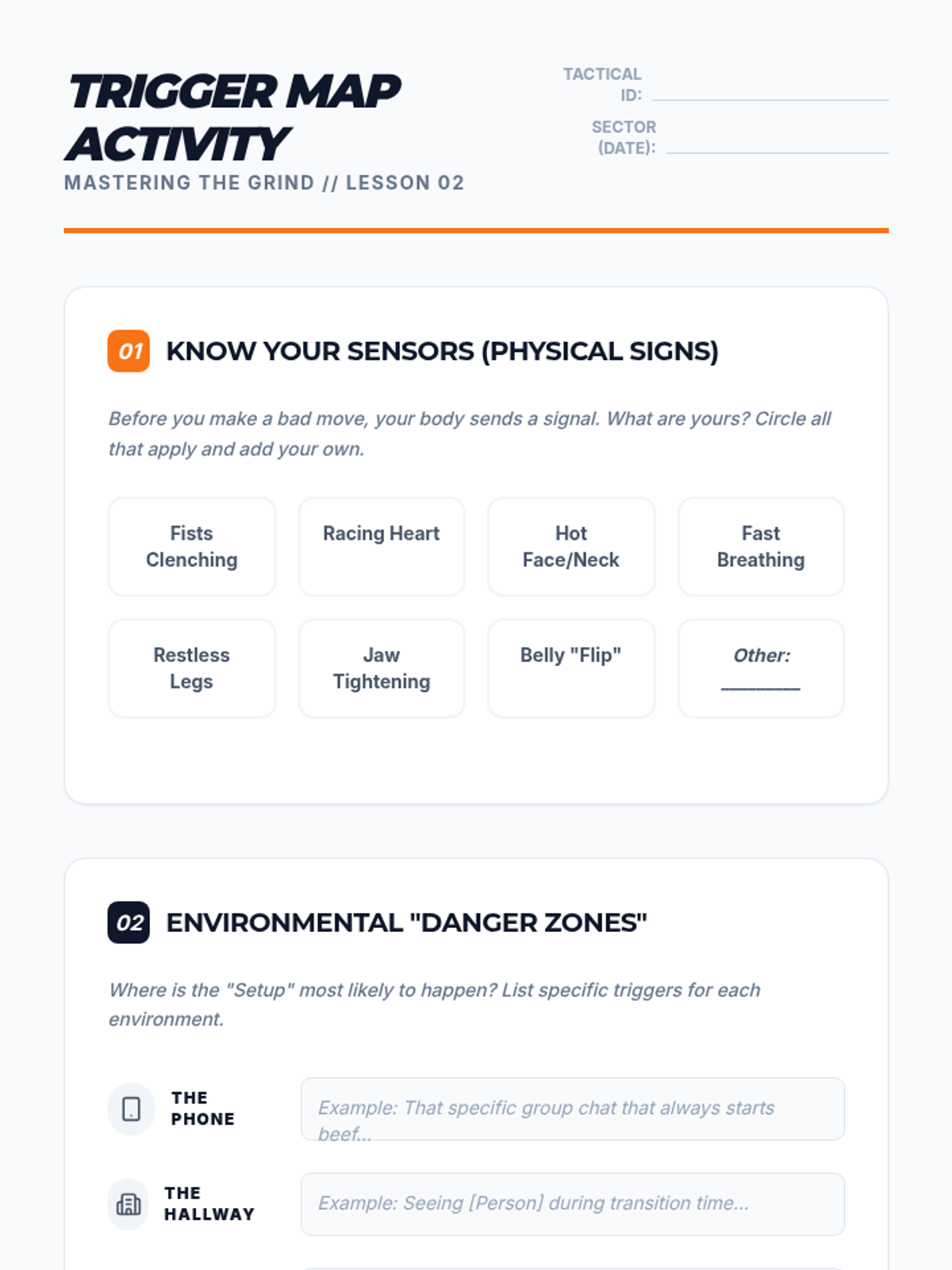
Students identify internal and environmental 'setups'—triggers that lead to self-sabotage. They create tactical maps of their daily routines to anticipate and bypass distractions in an urban school environment.
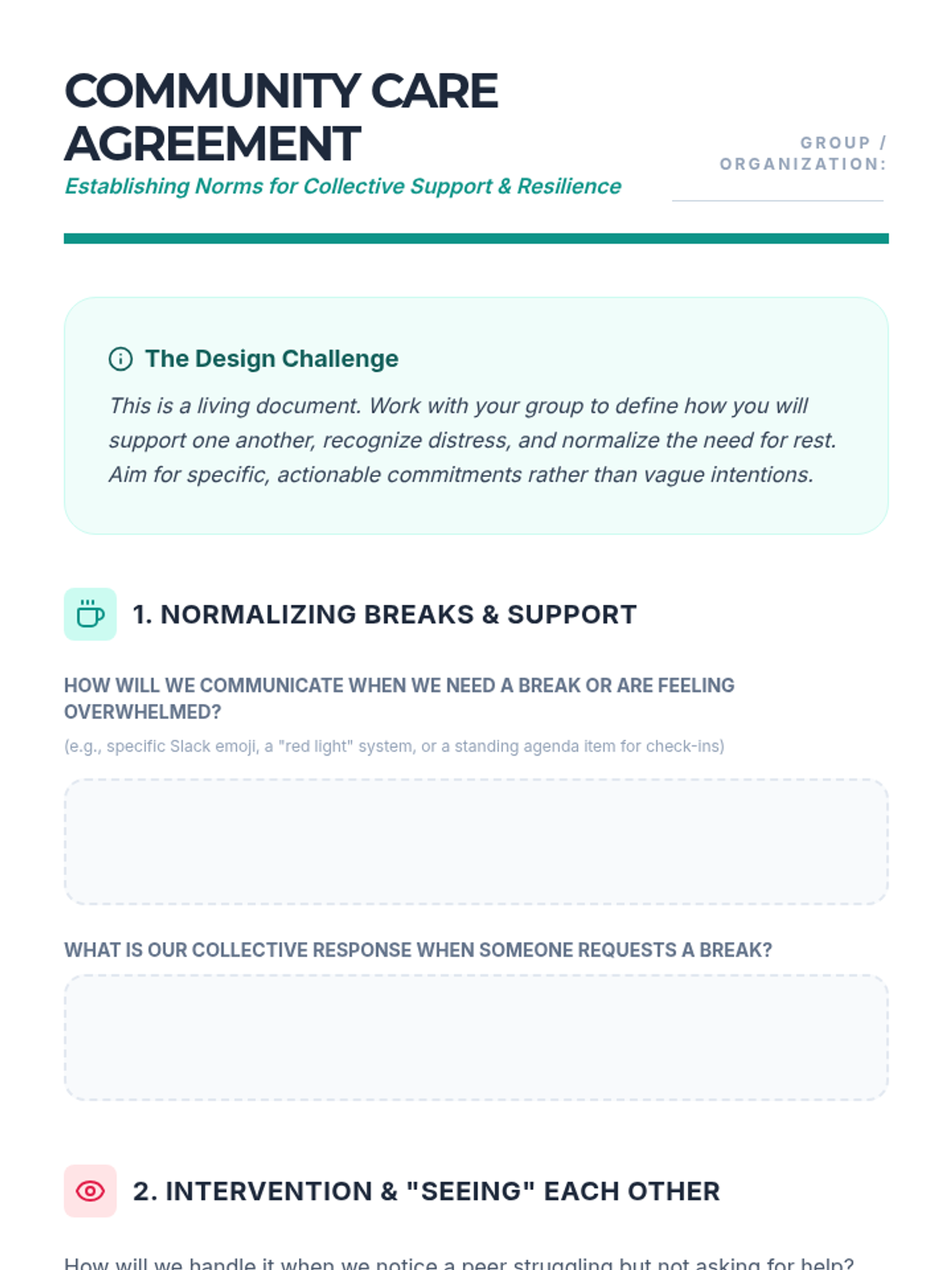
The sequence concludes with students designing a 'Community Care Agreement' to establish norms for mutual support and collective rest in their own communities.
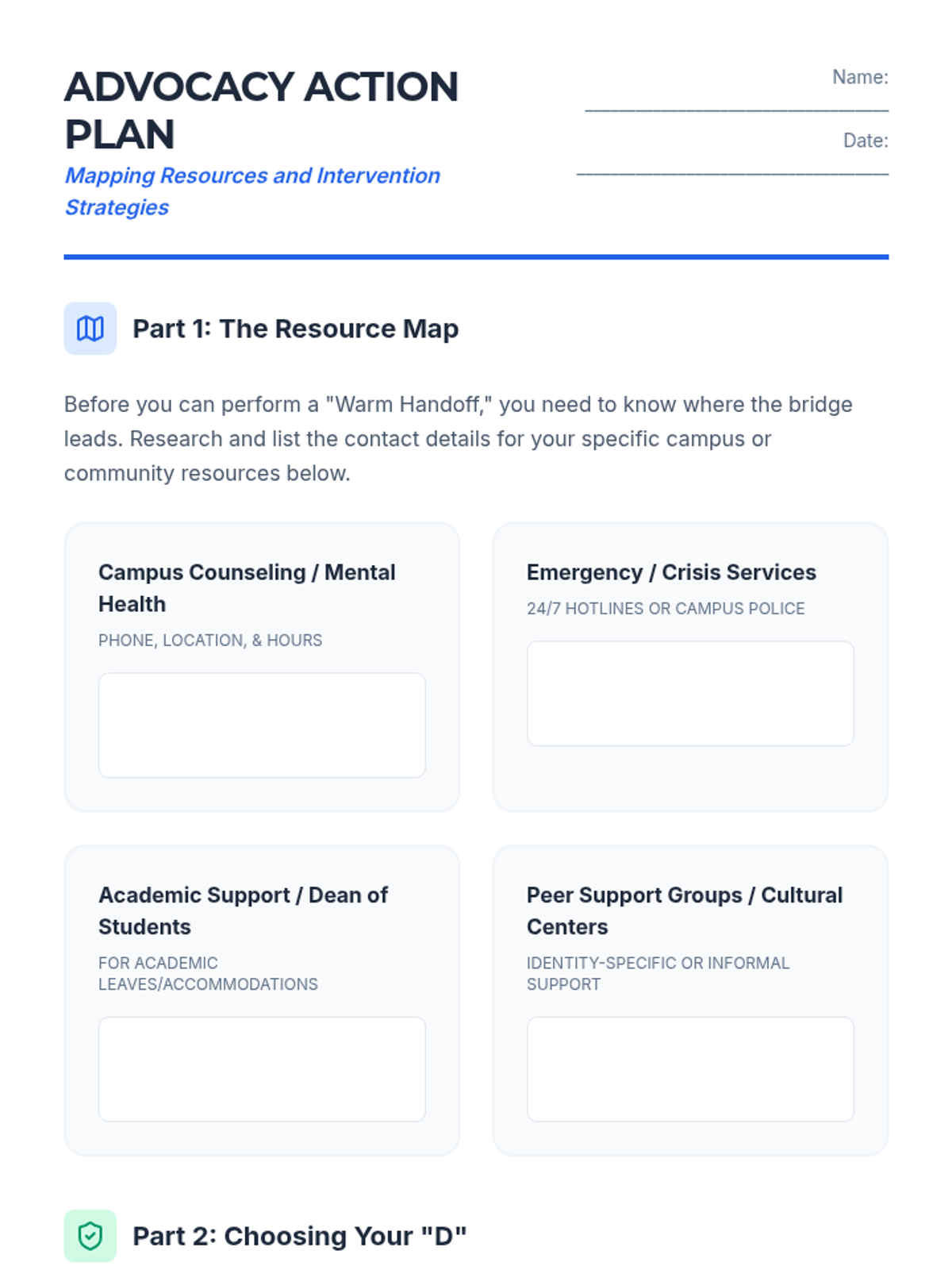
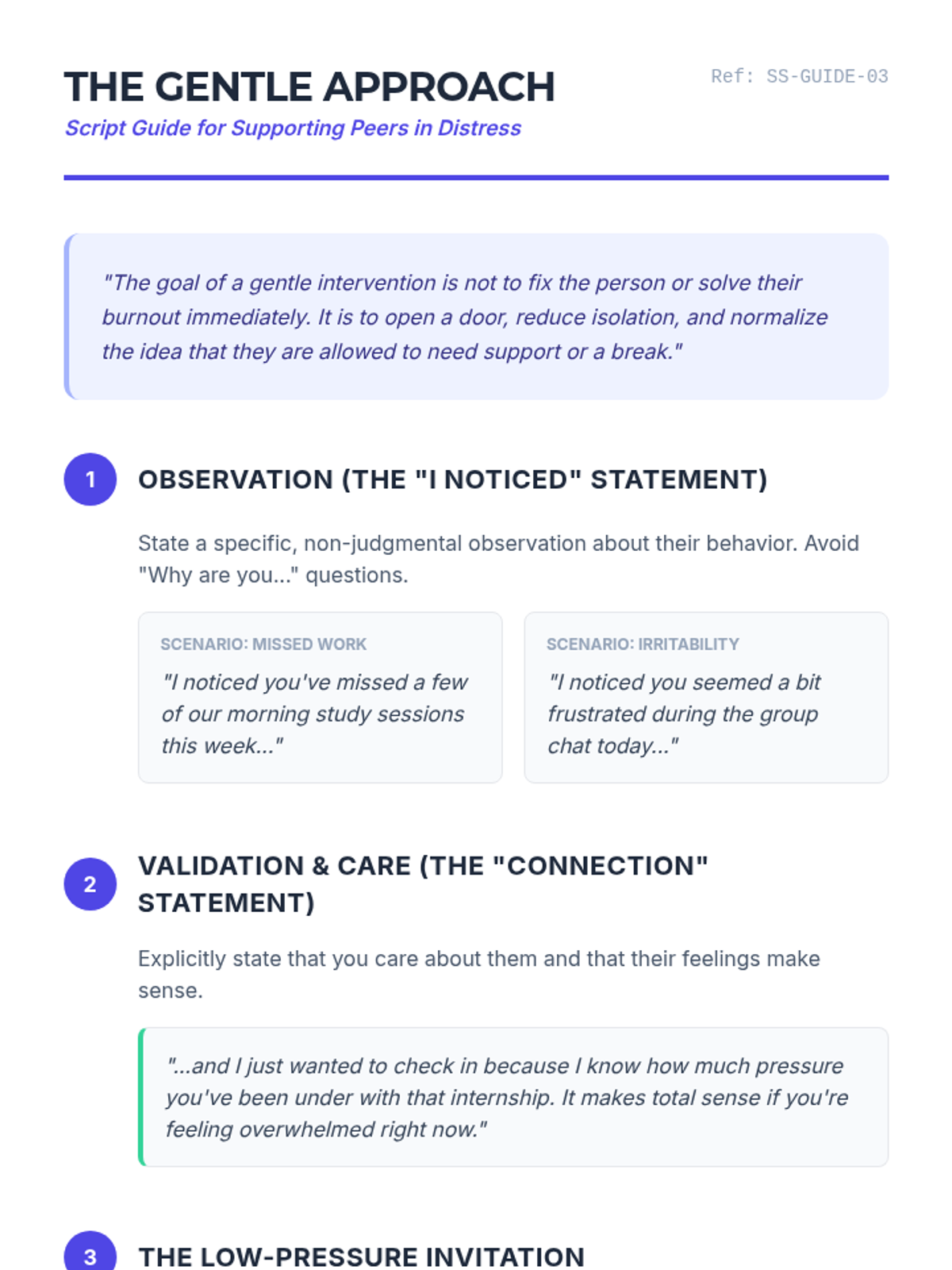
This lesson teaches specific bystander intervention strategies to bridge the gap between noticing distress and connecting a peer to resources.
Students learn to identify subtle behavioral and non-verbal signs of distress in their peers and practice gentle intervention strategies.
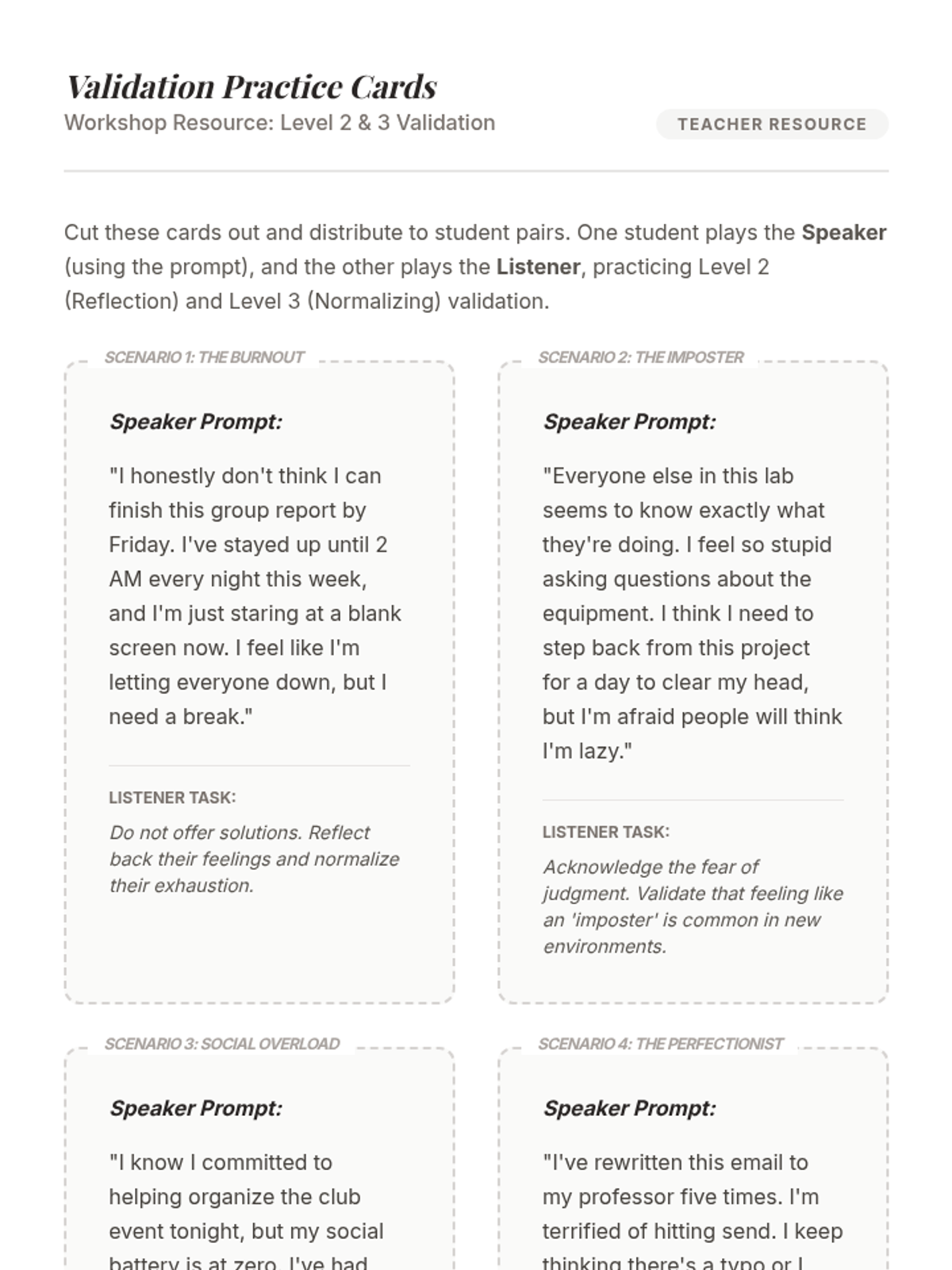
A workshop focusing on the listening skills required to support peers, emphasizing validation over immediate problem-solving.
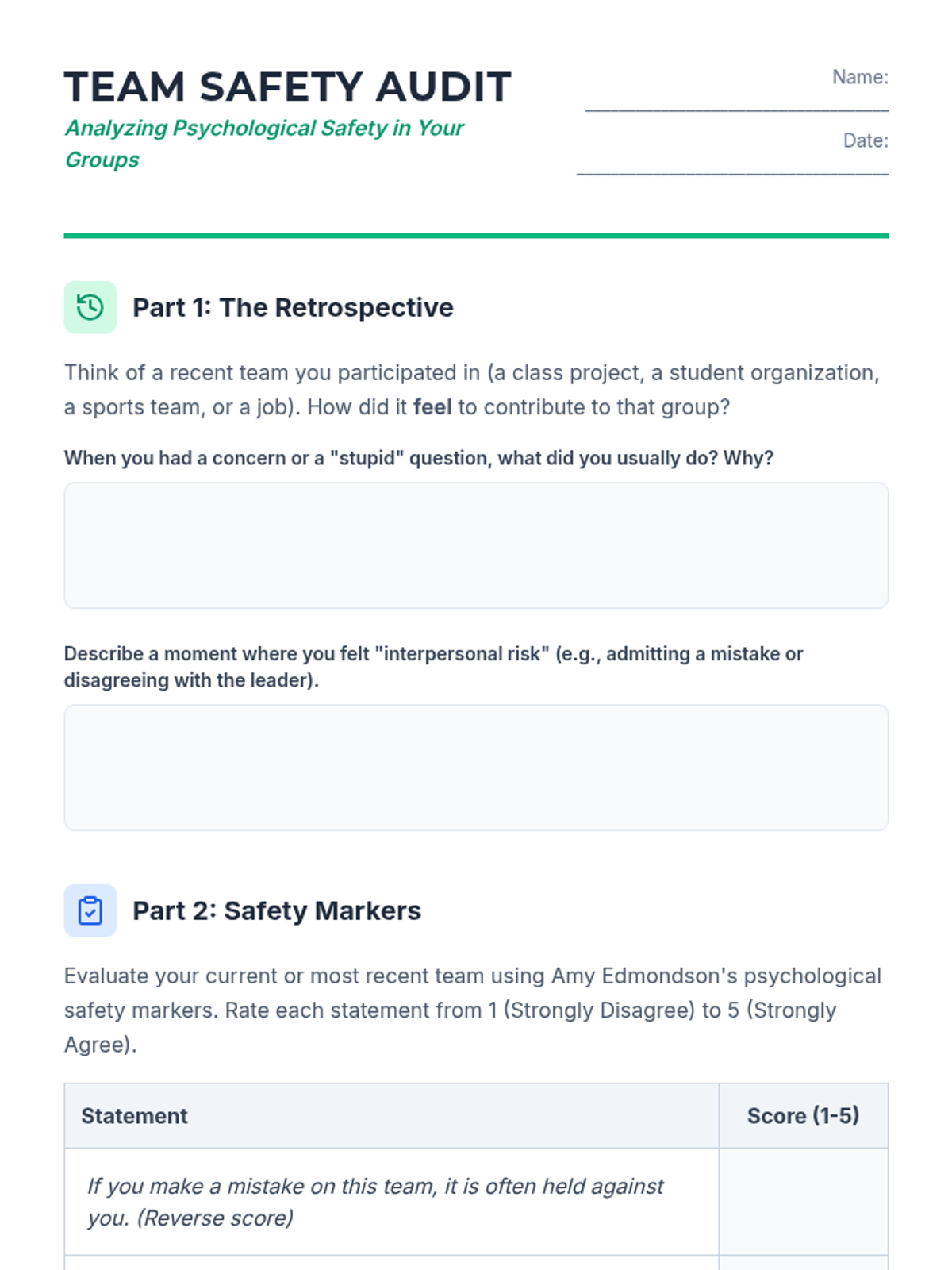
Students define psychological safety and analyze its impact on team performance, using Google's 'Project Aristotle' as a primary case study.
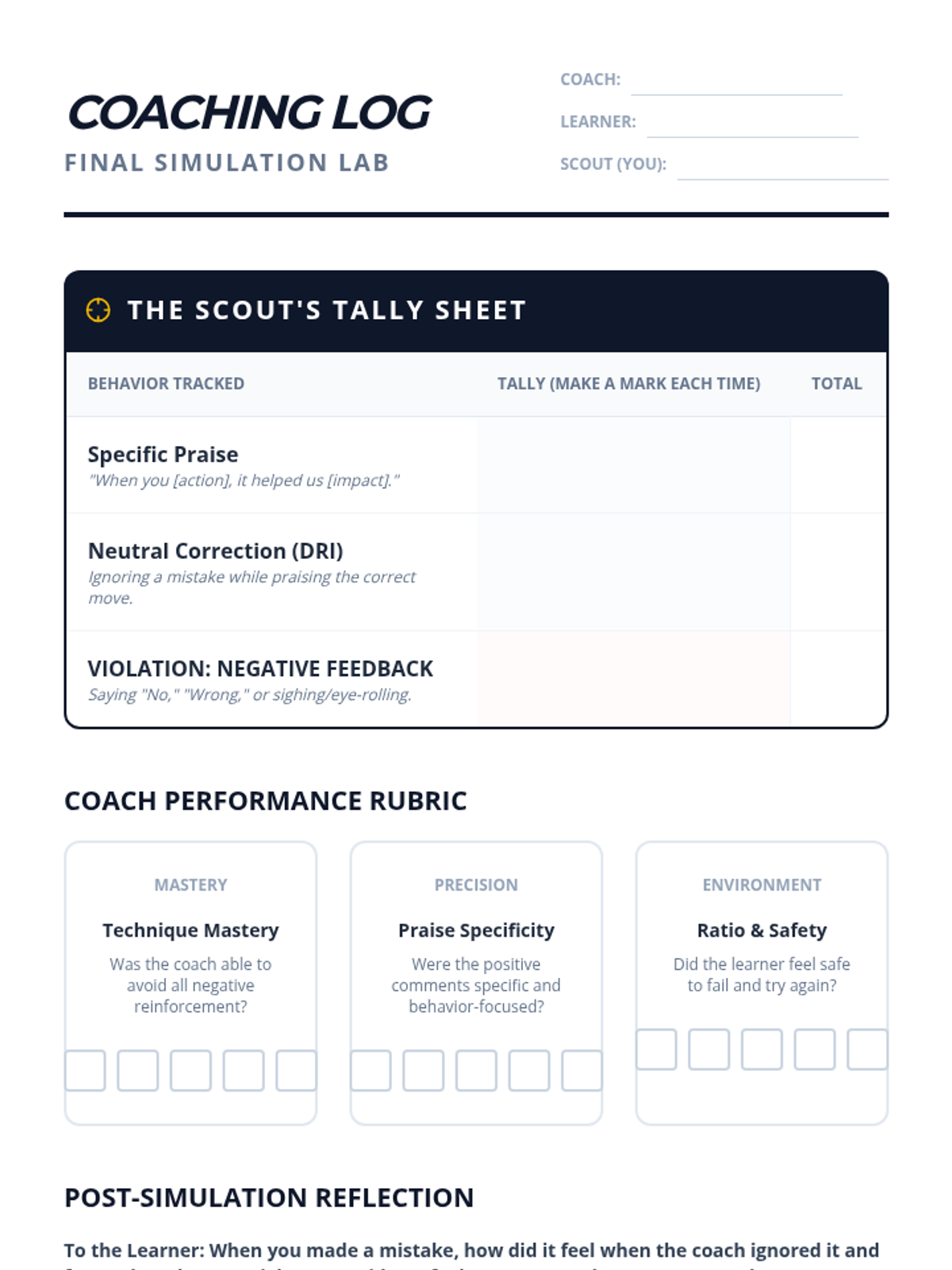
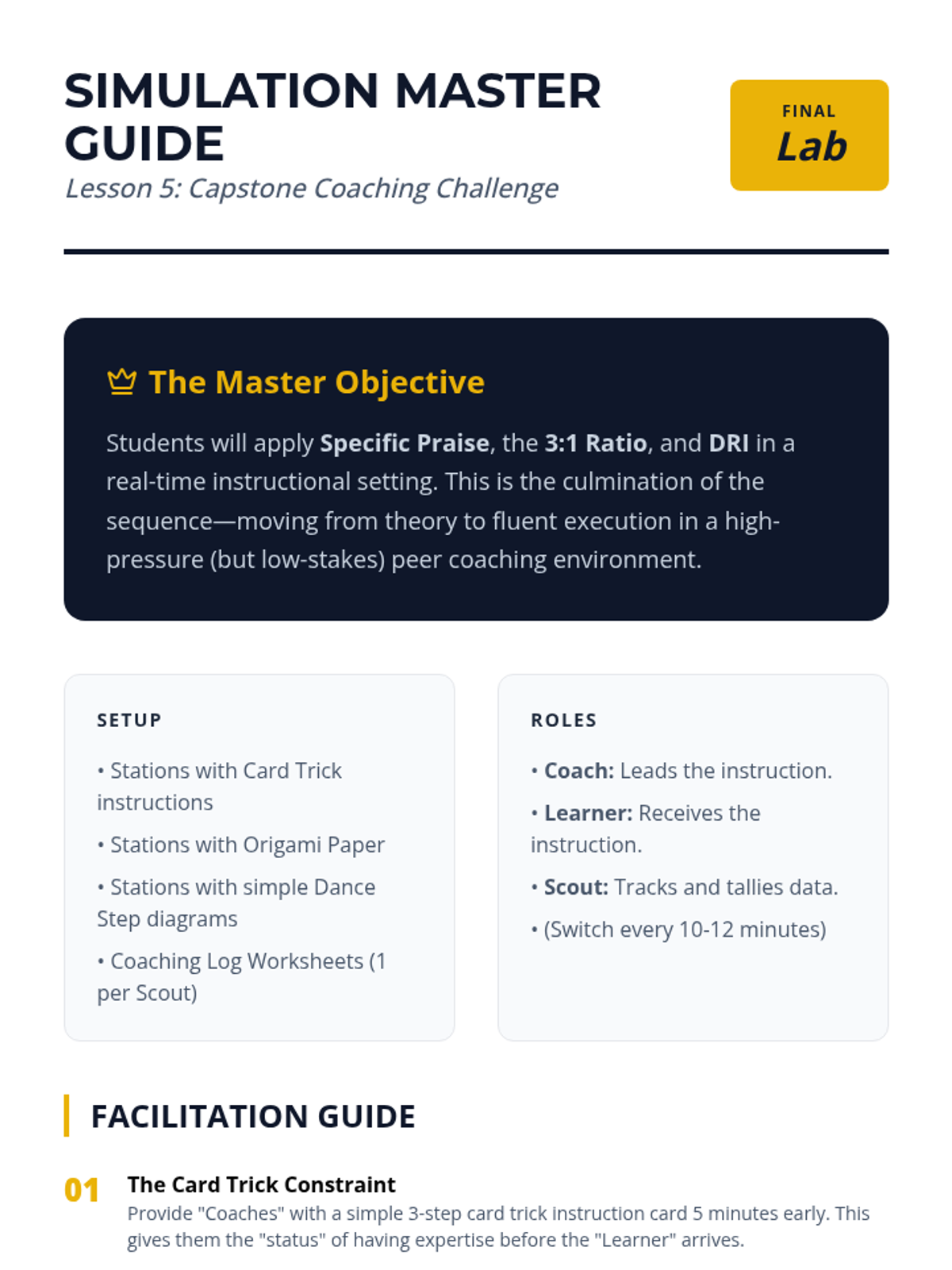
In small groups, students take turns role-playing a coach or team lead helping a peer master a new skill. They must use the reinforcement techniques learned to guide the learner to success.
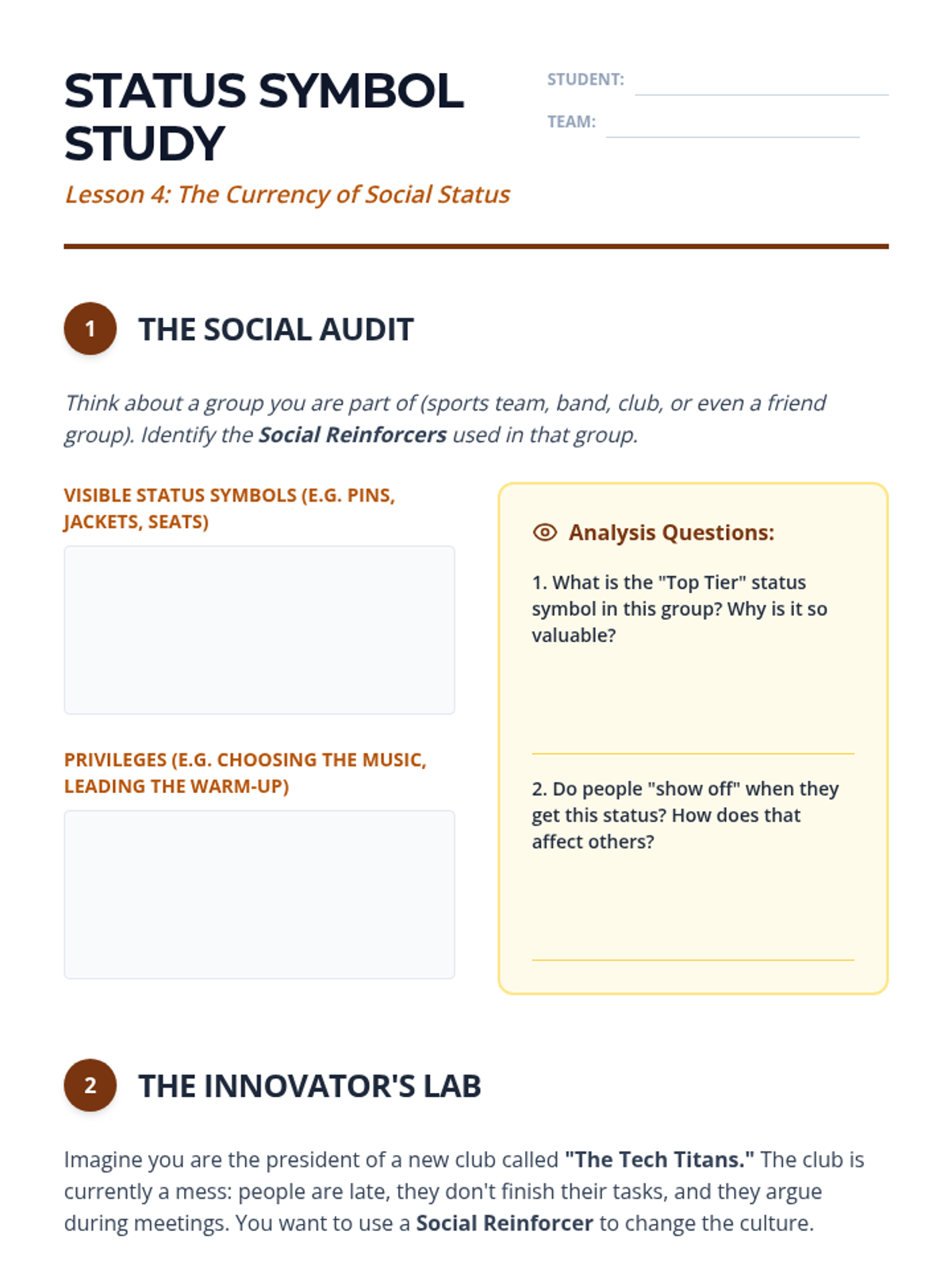
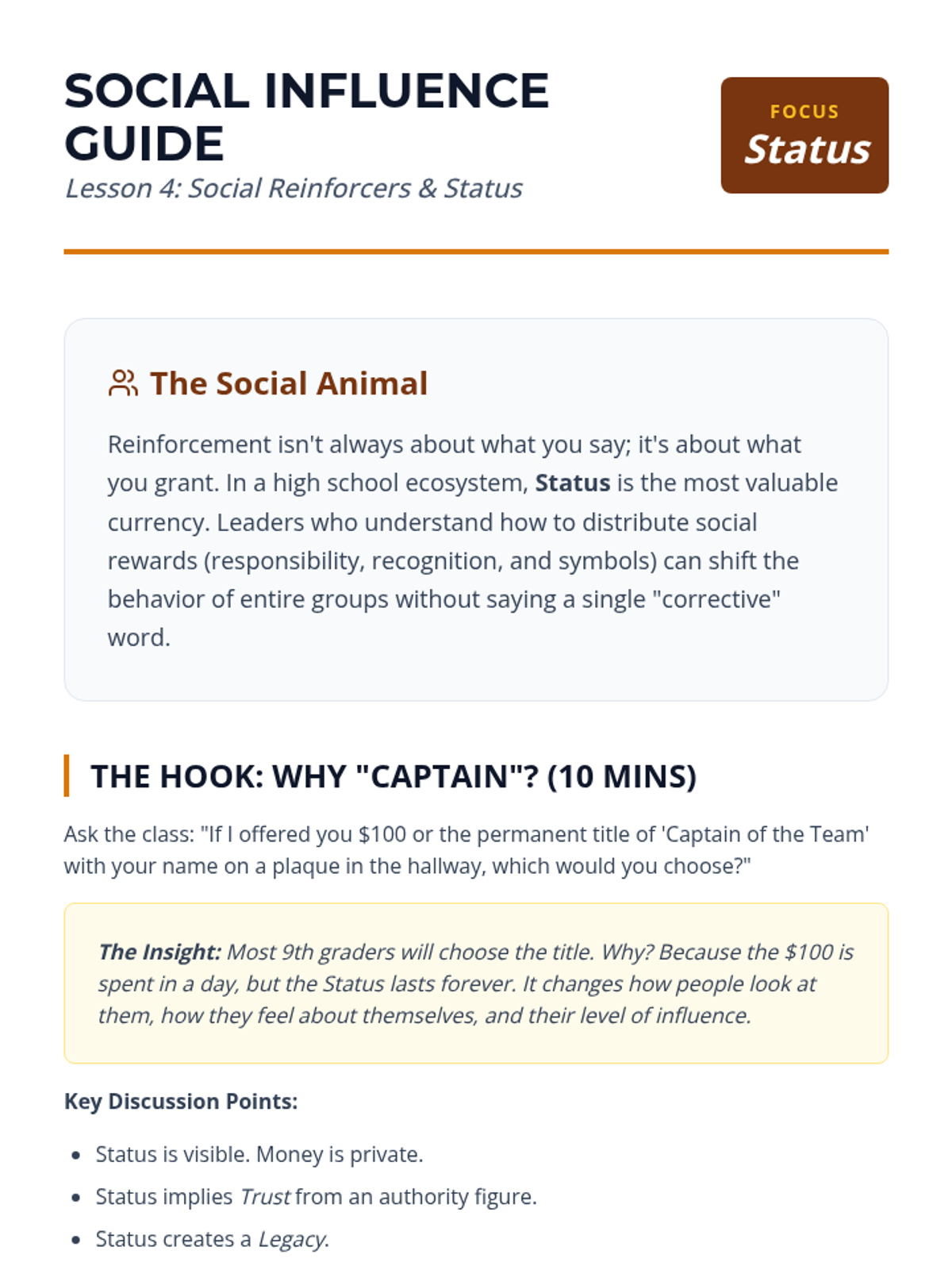
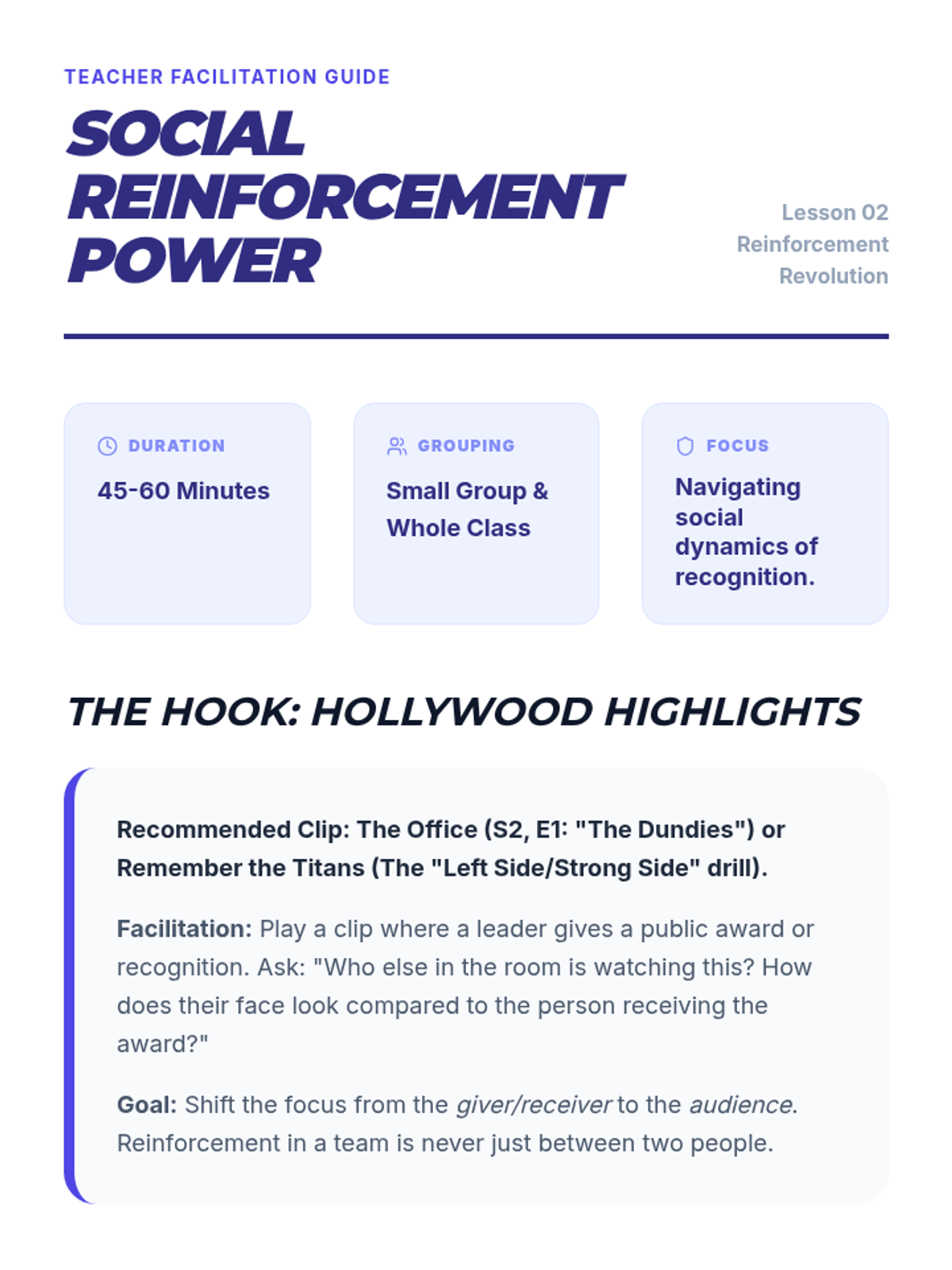
This lesson examines non-verbal and social rewards, such as public recognition or increased responsibility. Students discuss how social status acts as a powerful reinforcer in high school settings.
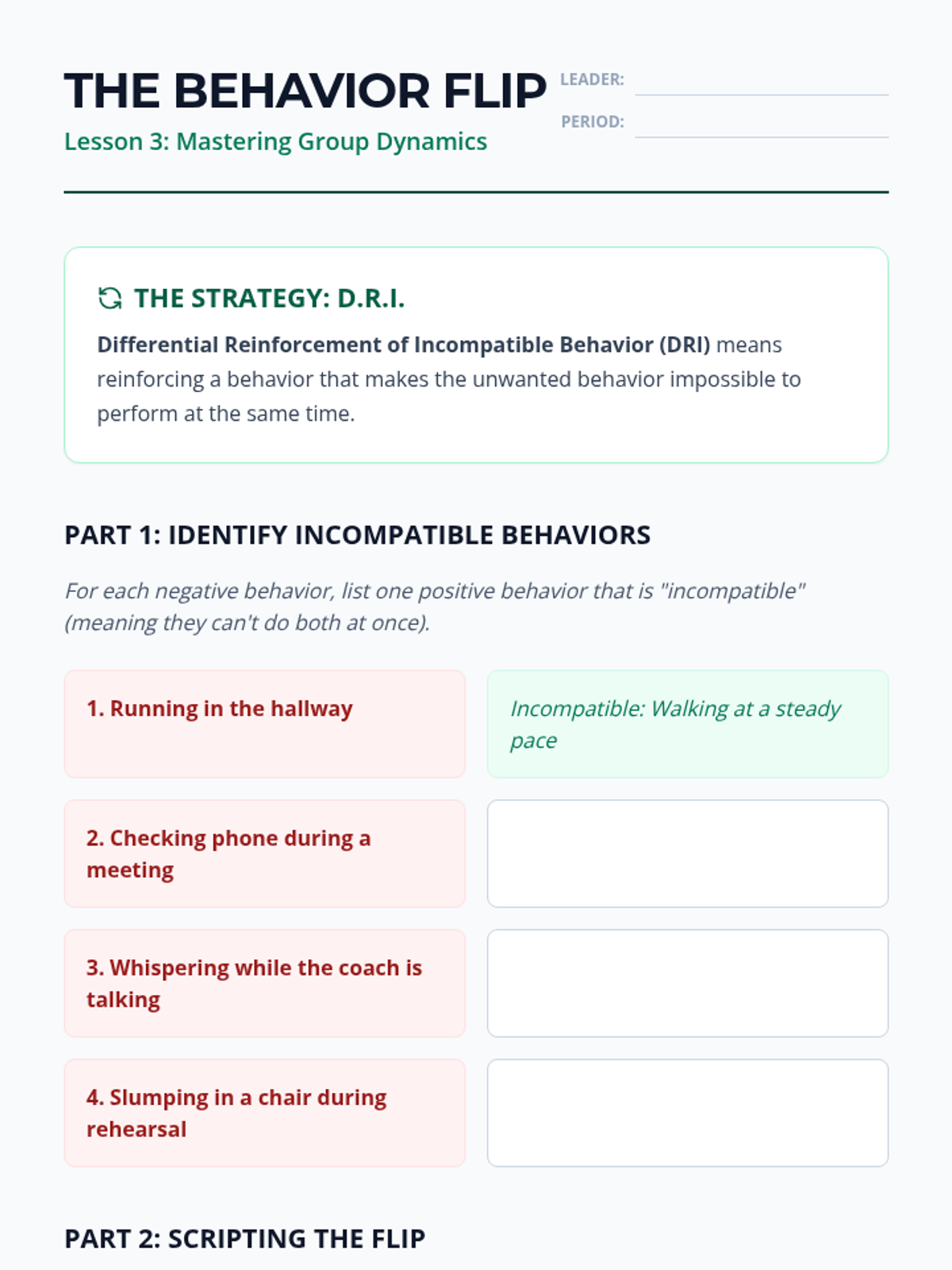
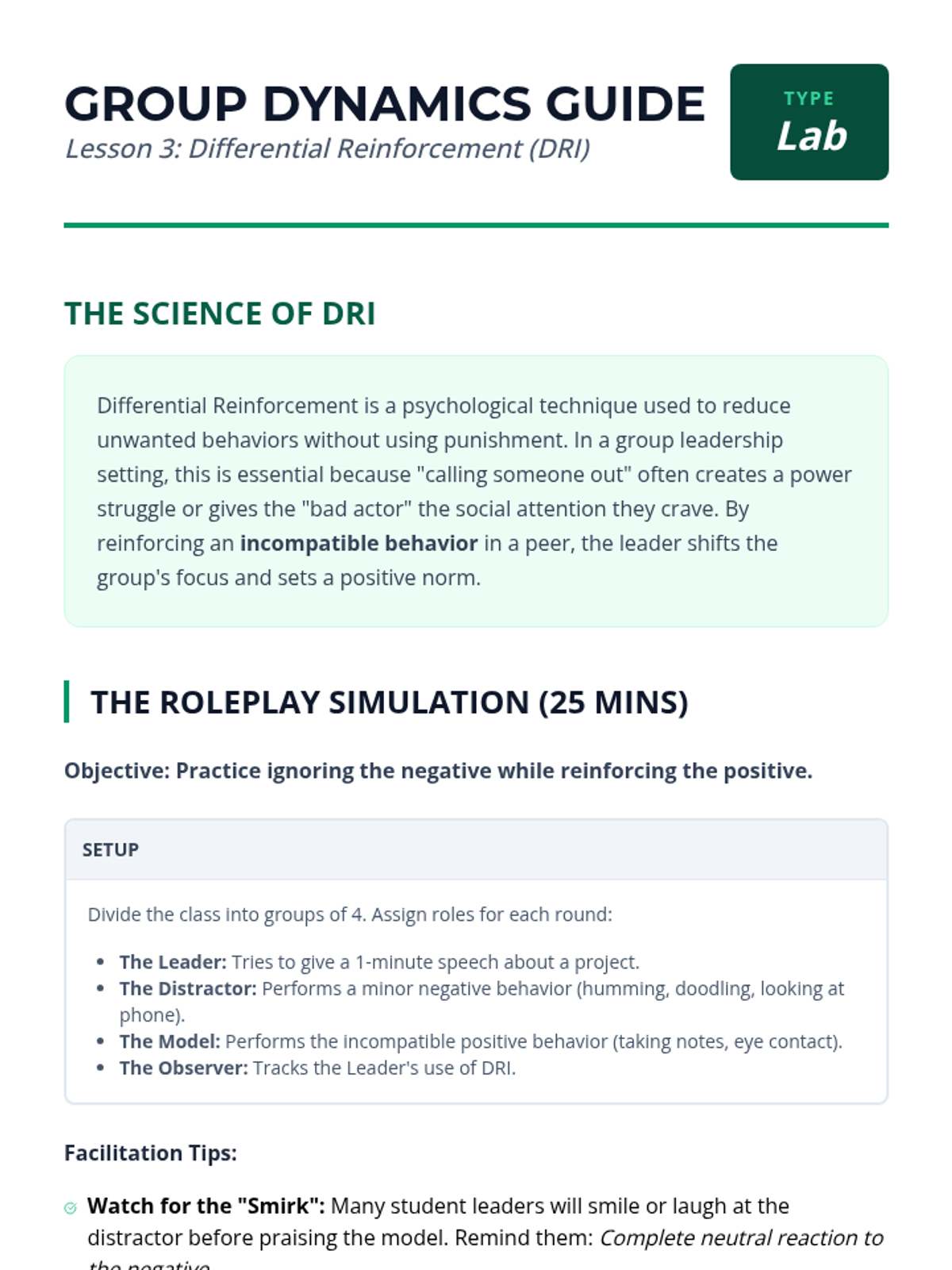
Students learn how to reduce unwanted behavior in a group by reinforcing incompatible, positive behaviors (ignoring the interruption while praising the hand-raising).
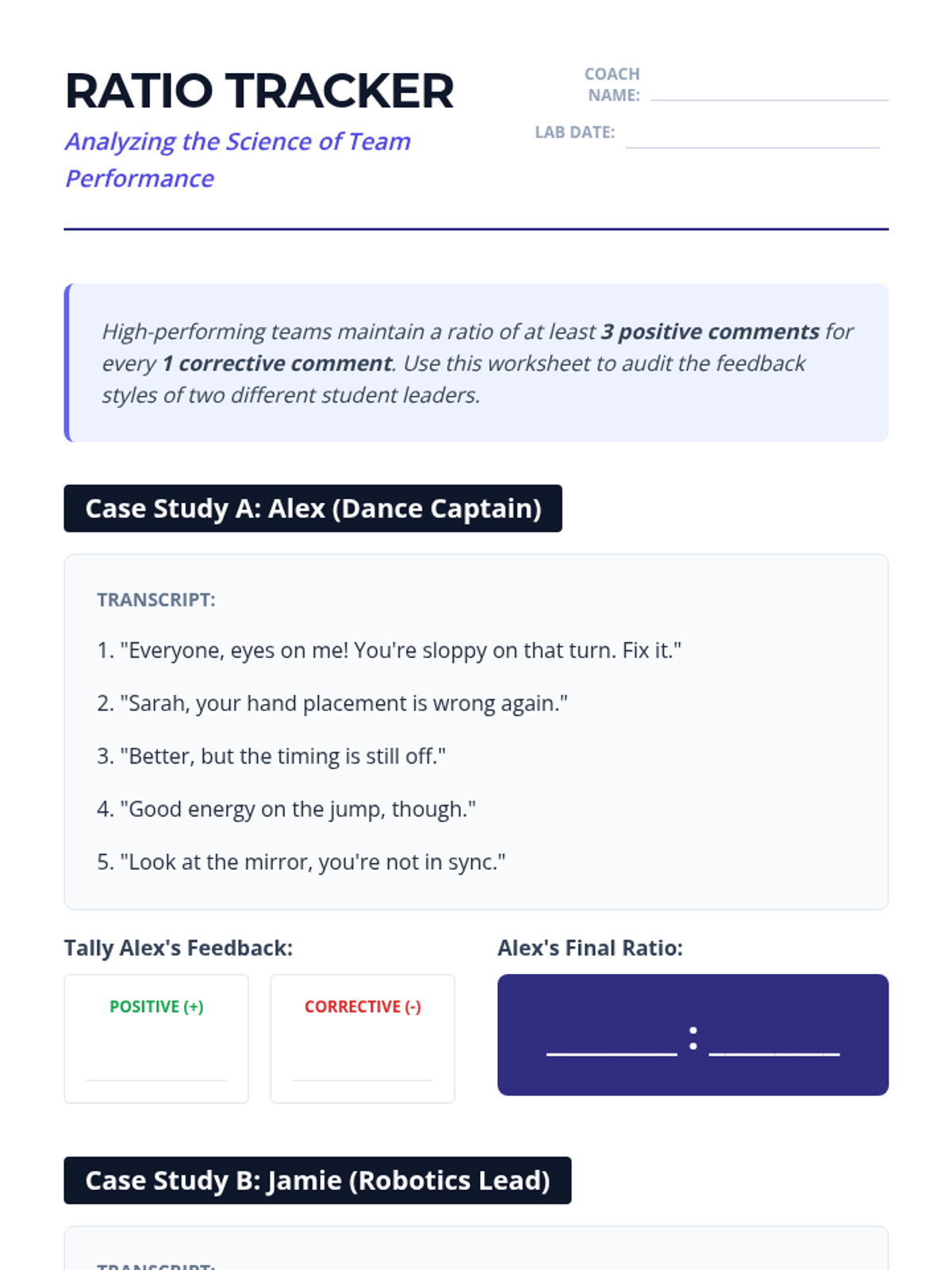
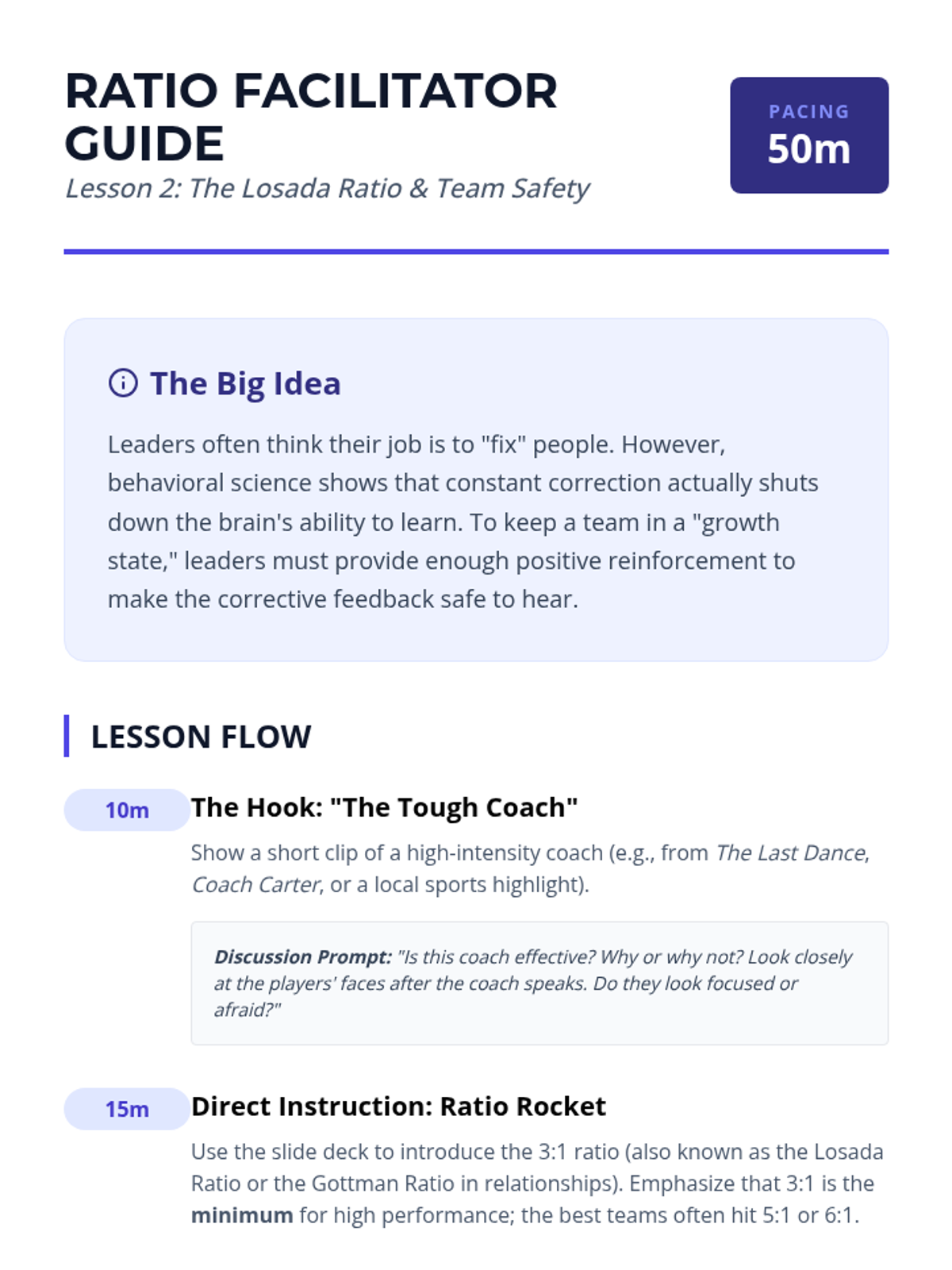
Students explore the concept of the 'Losada Ratio' and analyze how a high ratio of positive to negative feedback influences team performance and psychological safety.
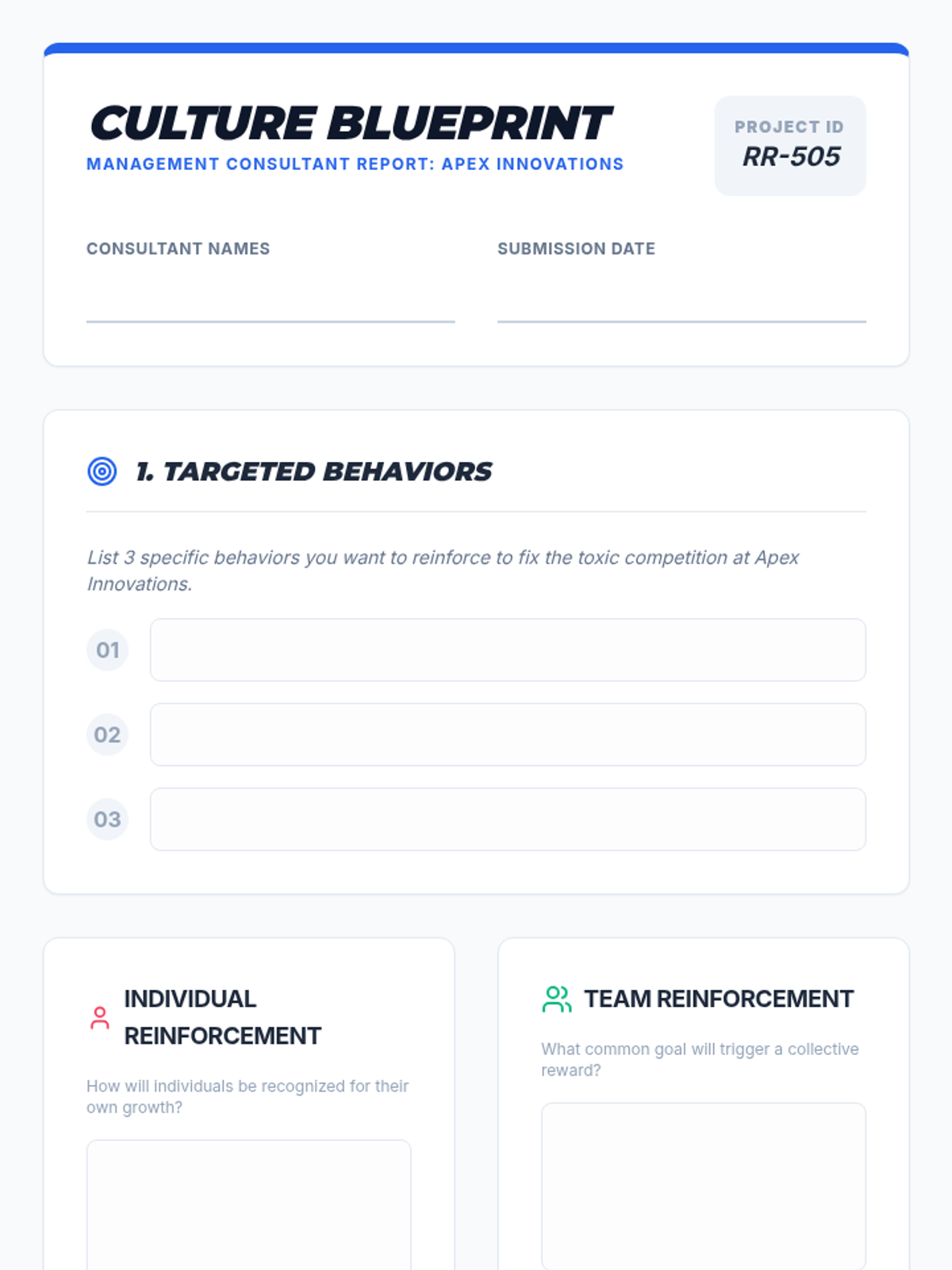
In this culminating activity, students act as management consultants designing a reinforcement system for a struggling organization, balancing individual rewards with team goals.
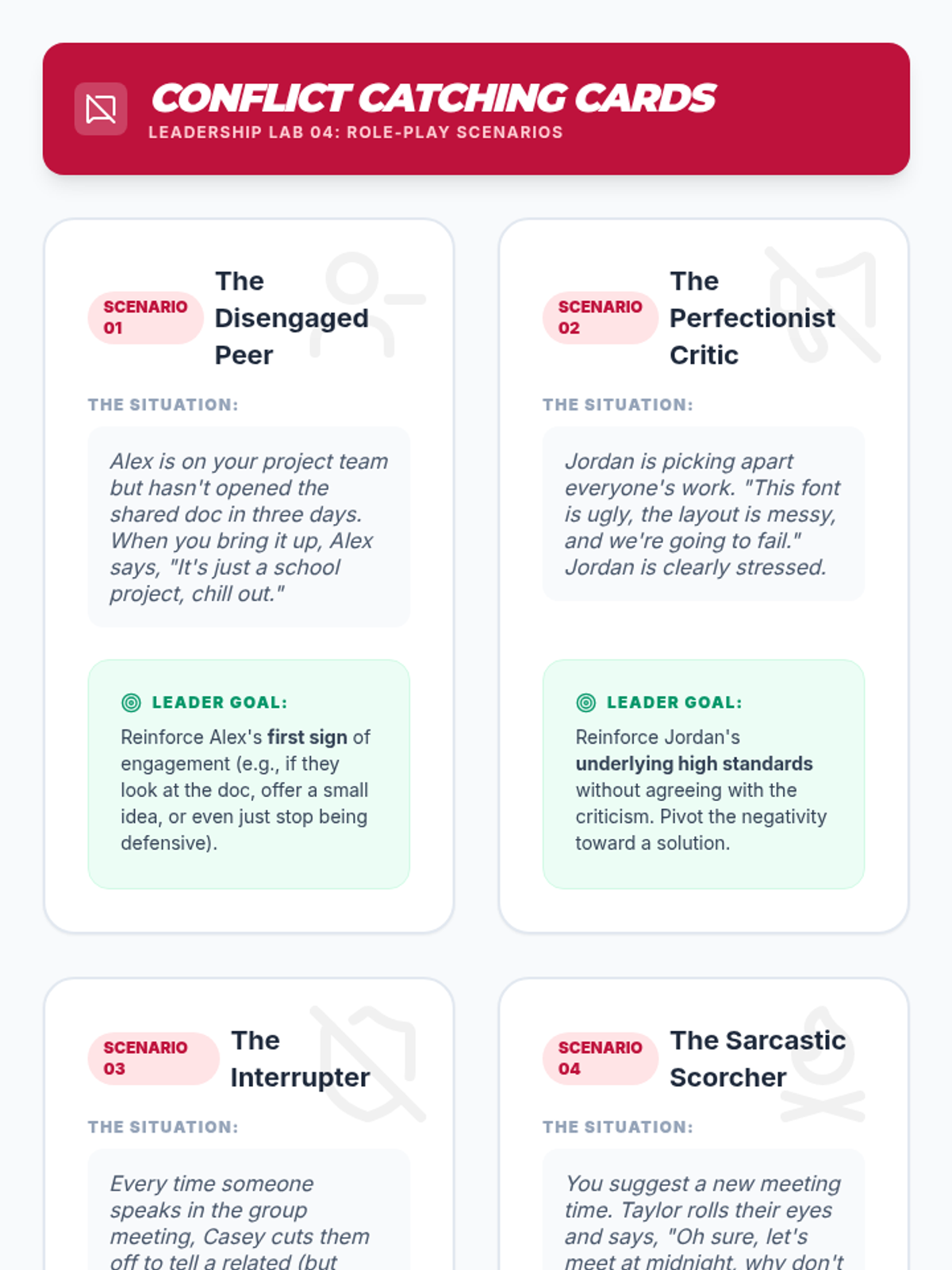
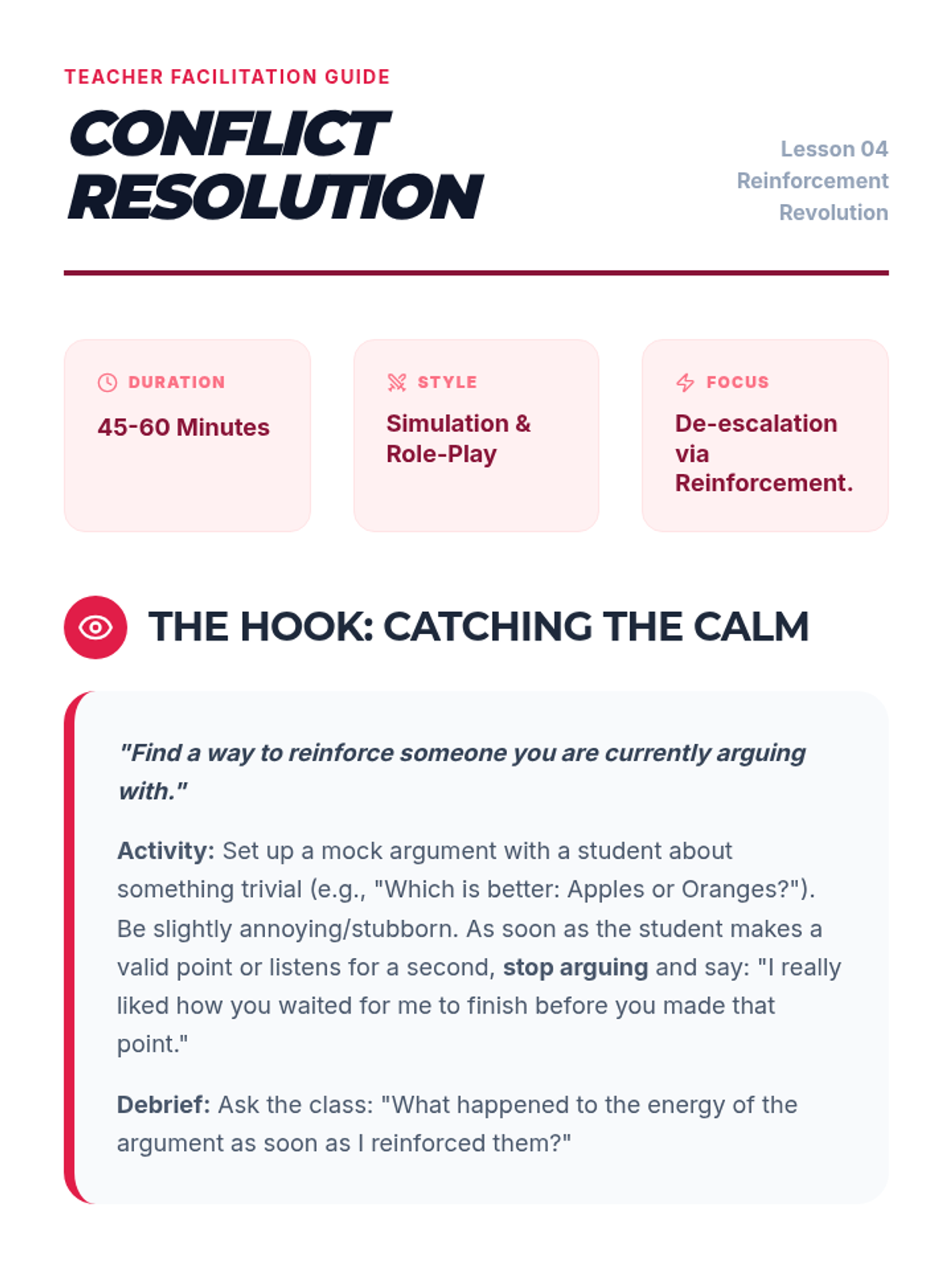
Students investigate how to use positive reinforcement to de-escalate conflict and reinforce cooperative behavior in stressful leadership situations.
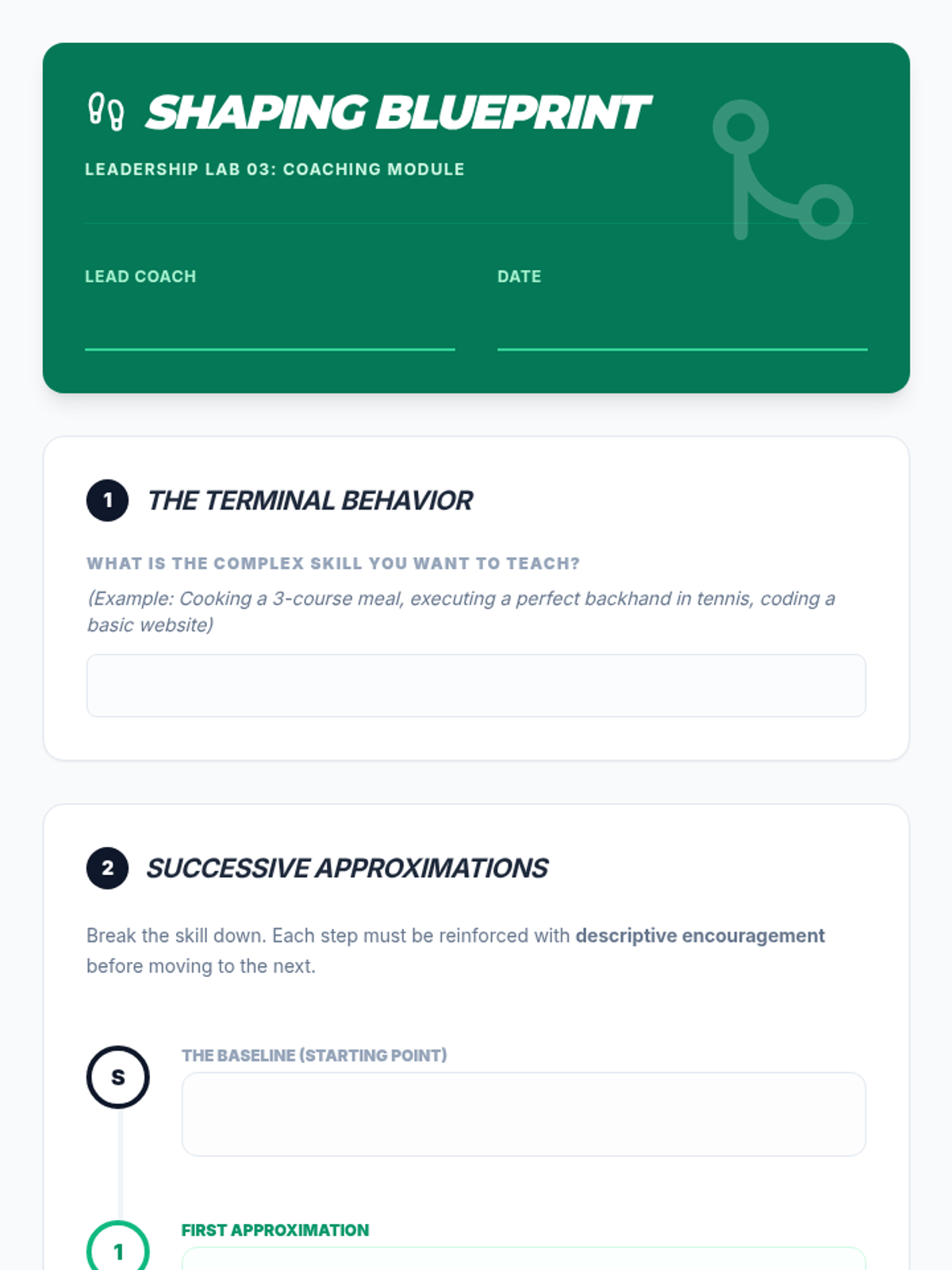
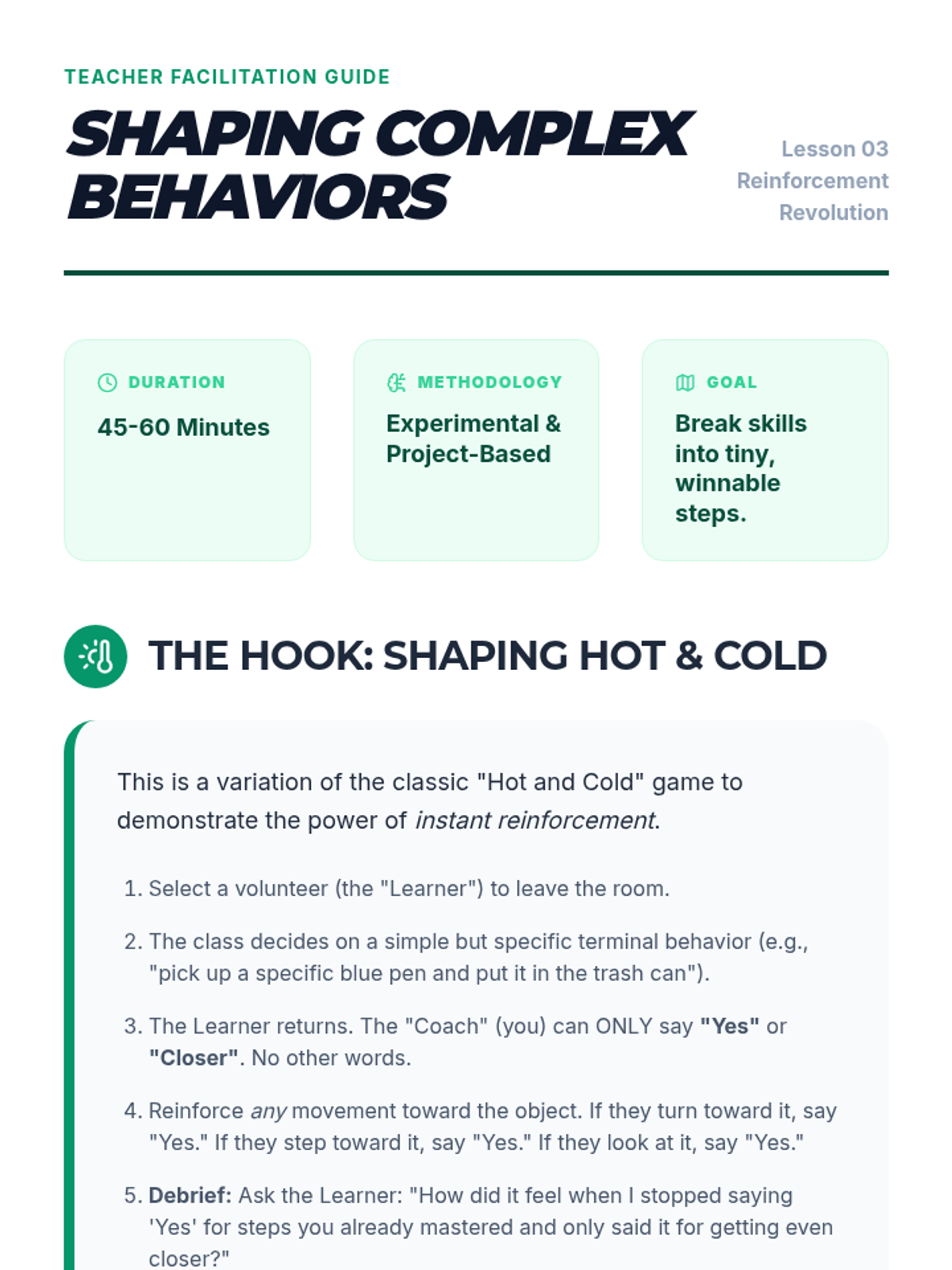
Students learn the technique of 'shaping'—reinforcing successive approximations of a desired complex behavior. They plan how they would teach a peer a new skill by rewarding small steps rather than waiting for perfection.
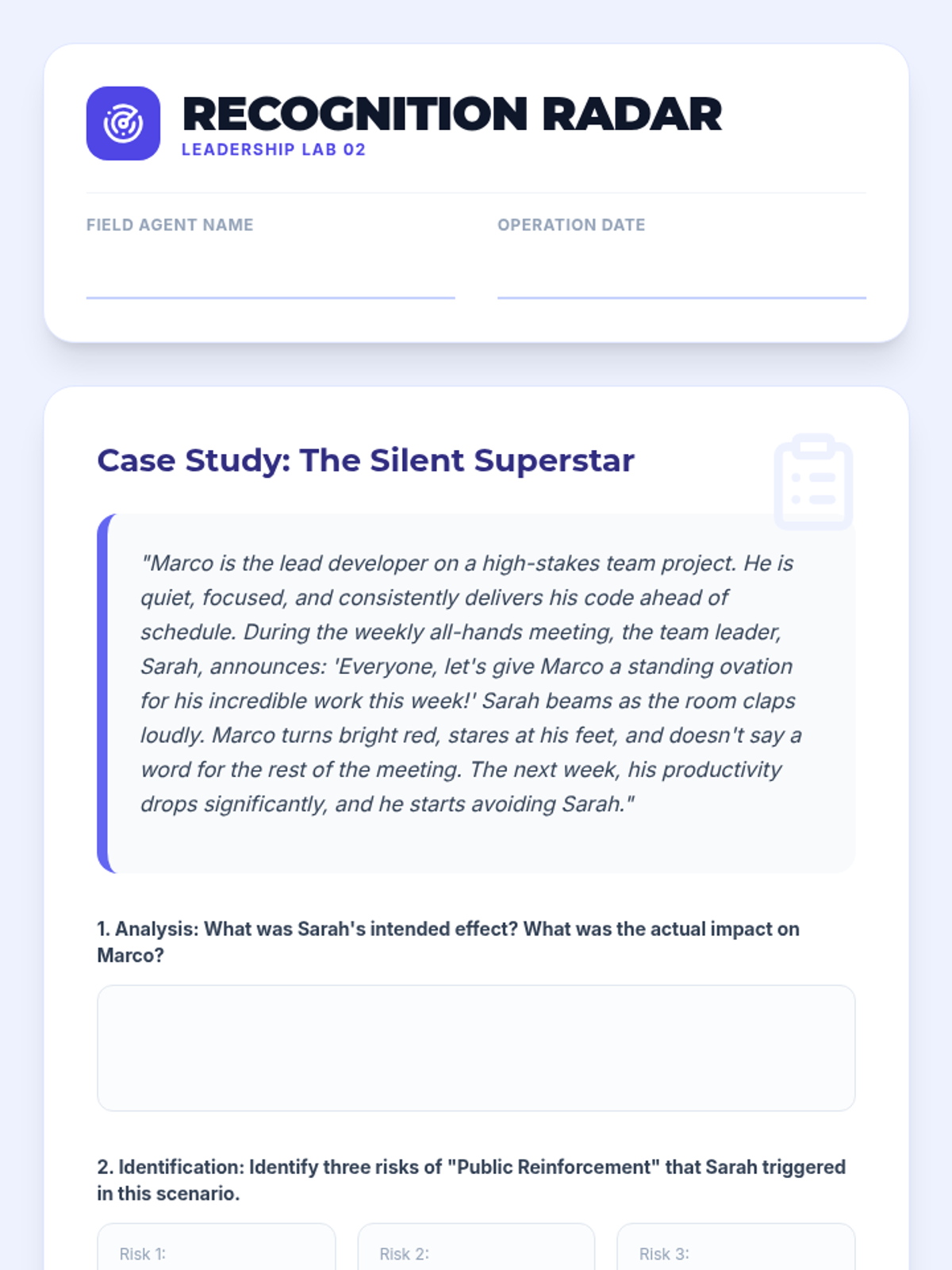
This lesson looks at social recognition as a powerful motivator in teams and groups. Students analyze case studies of workplace or sports team cultures and explore how public vs. private recognition affects individuals differently.
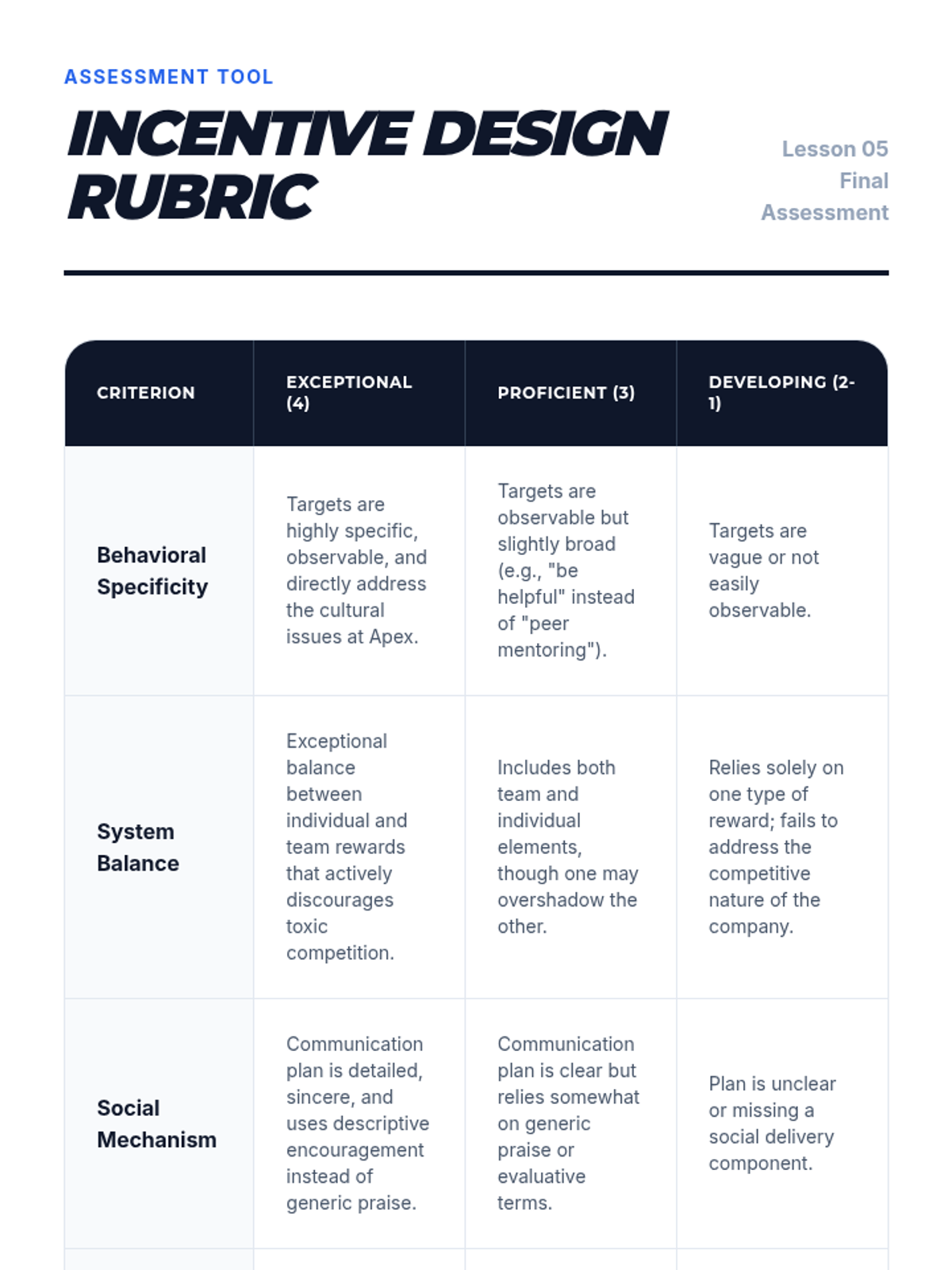
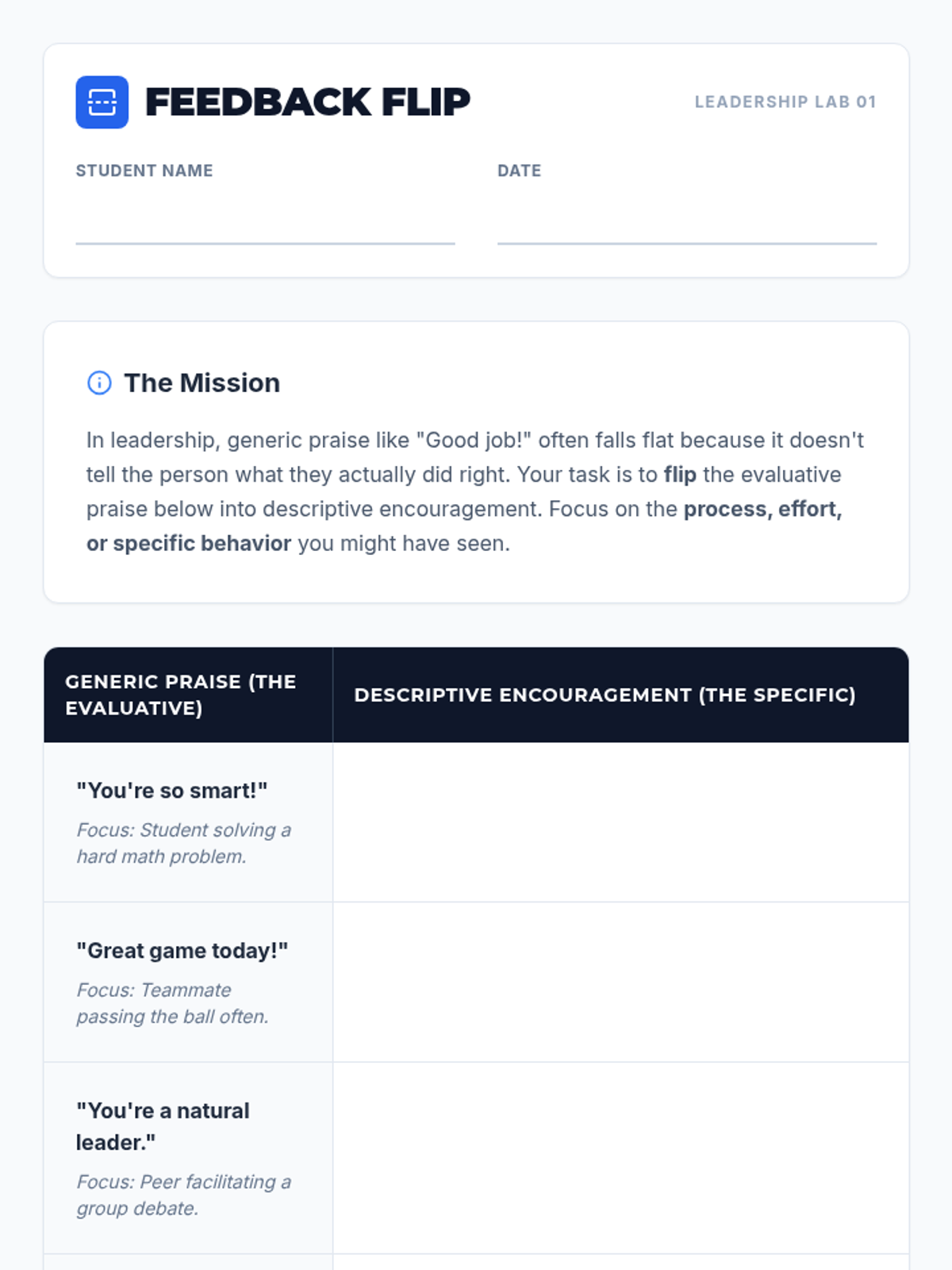
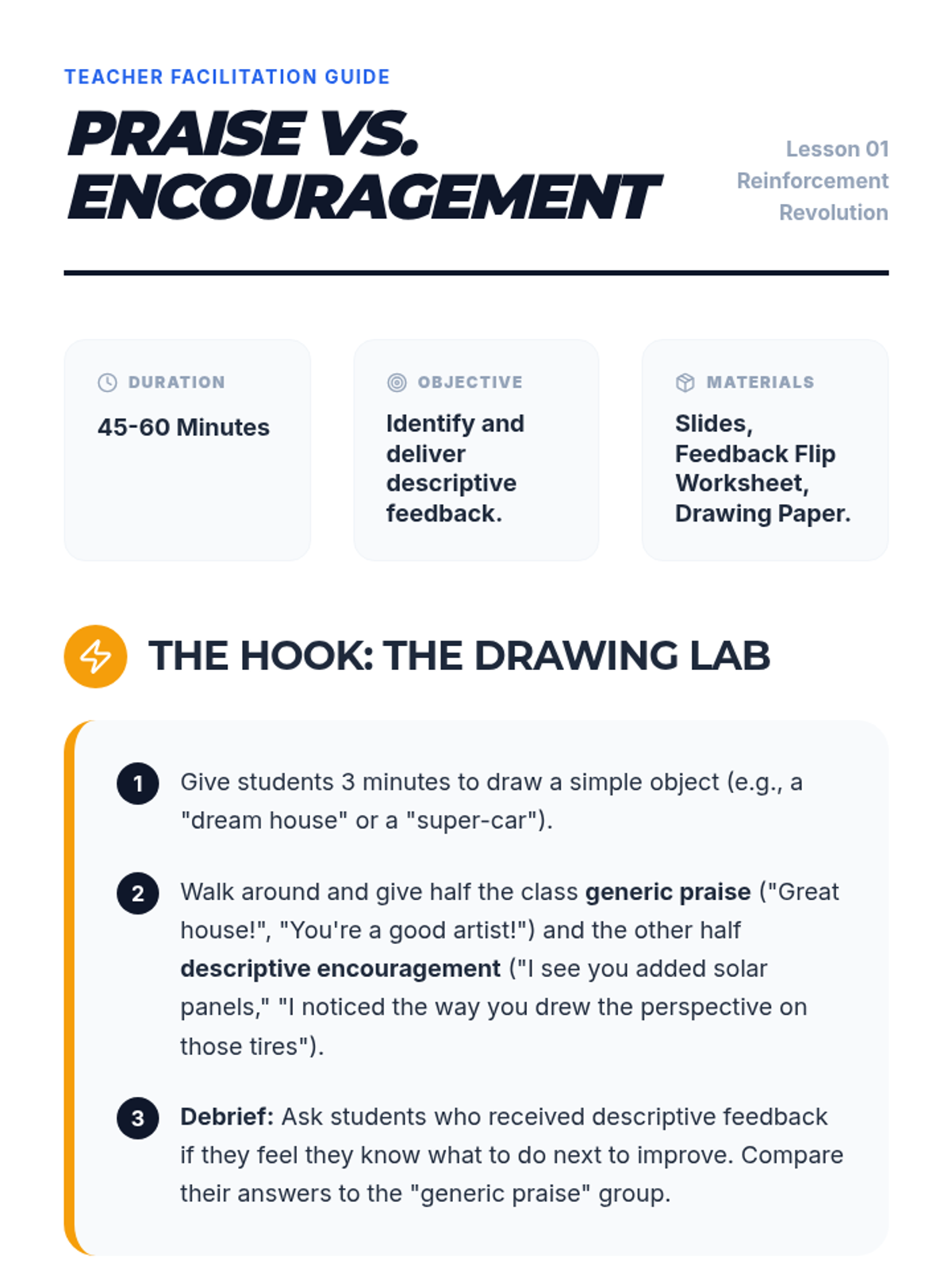
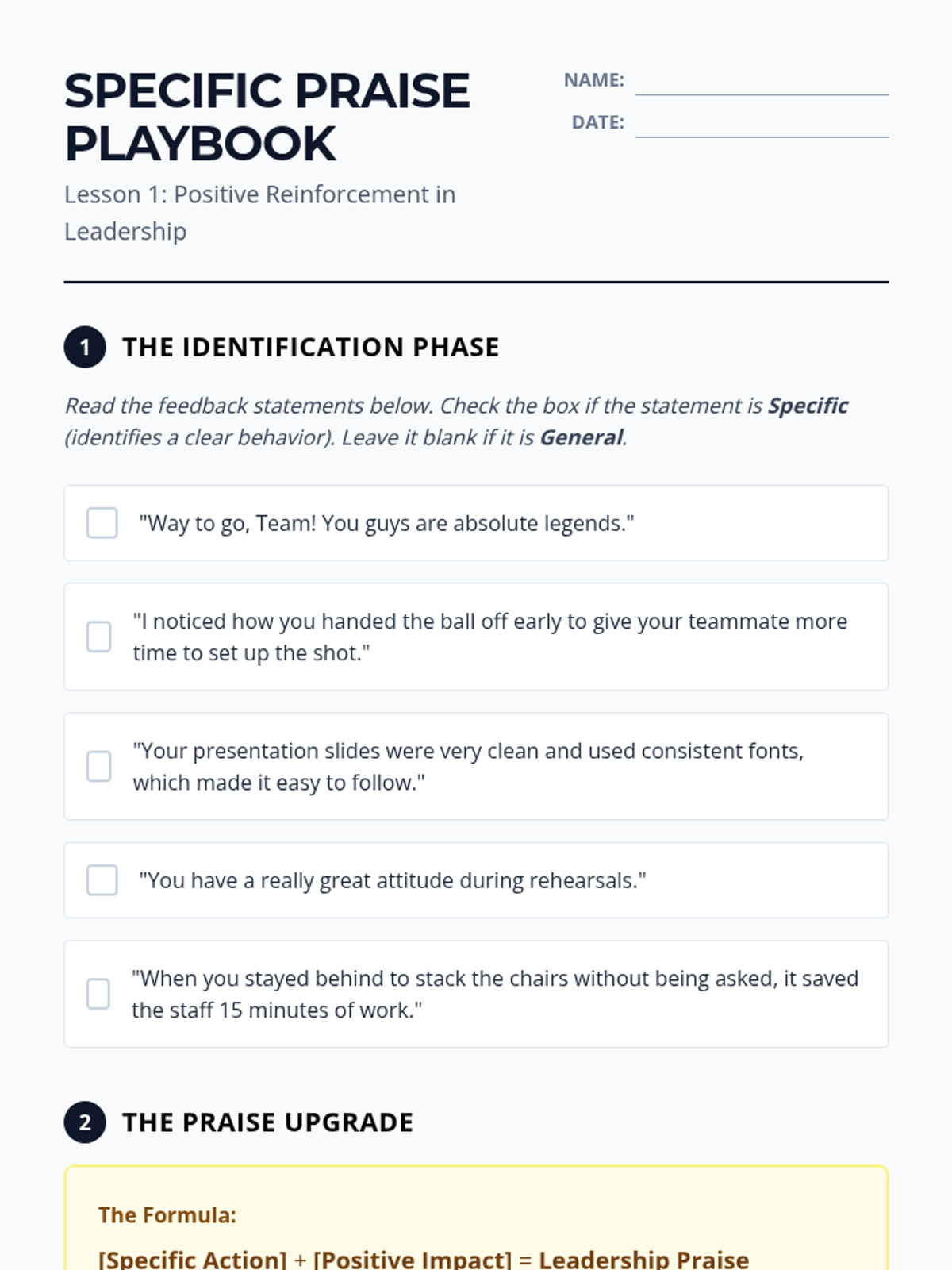
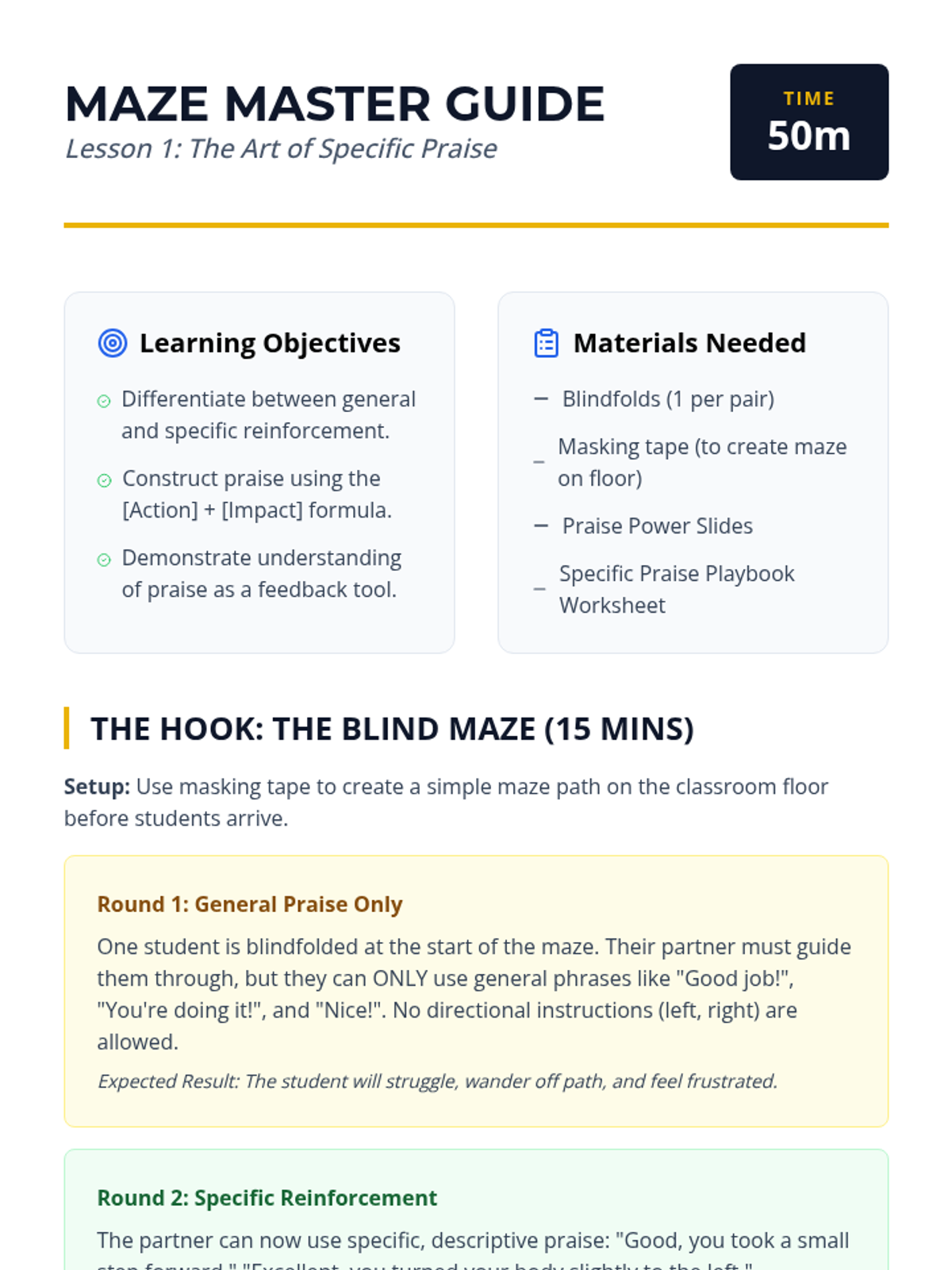
Students distinguish between evaluative praise ('Good job') and descriptive encouragement ('I noticed you organized the files by date'). They practice converting generic compliments into specific, behavior-focused reinforcement that provides actionable feedback.
Students learn to move beyond generic 'good job' feedback to specific, behavior-focused praise that reinforces exact actions.
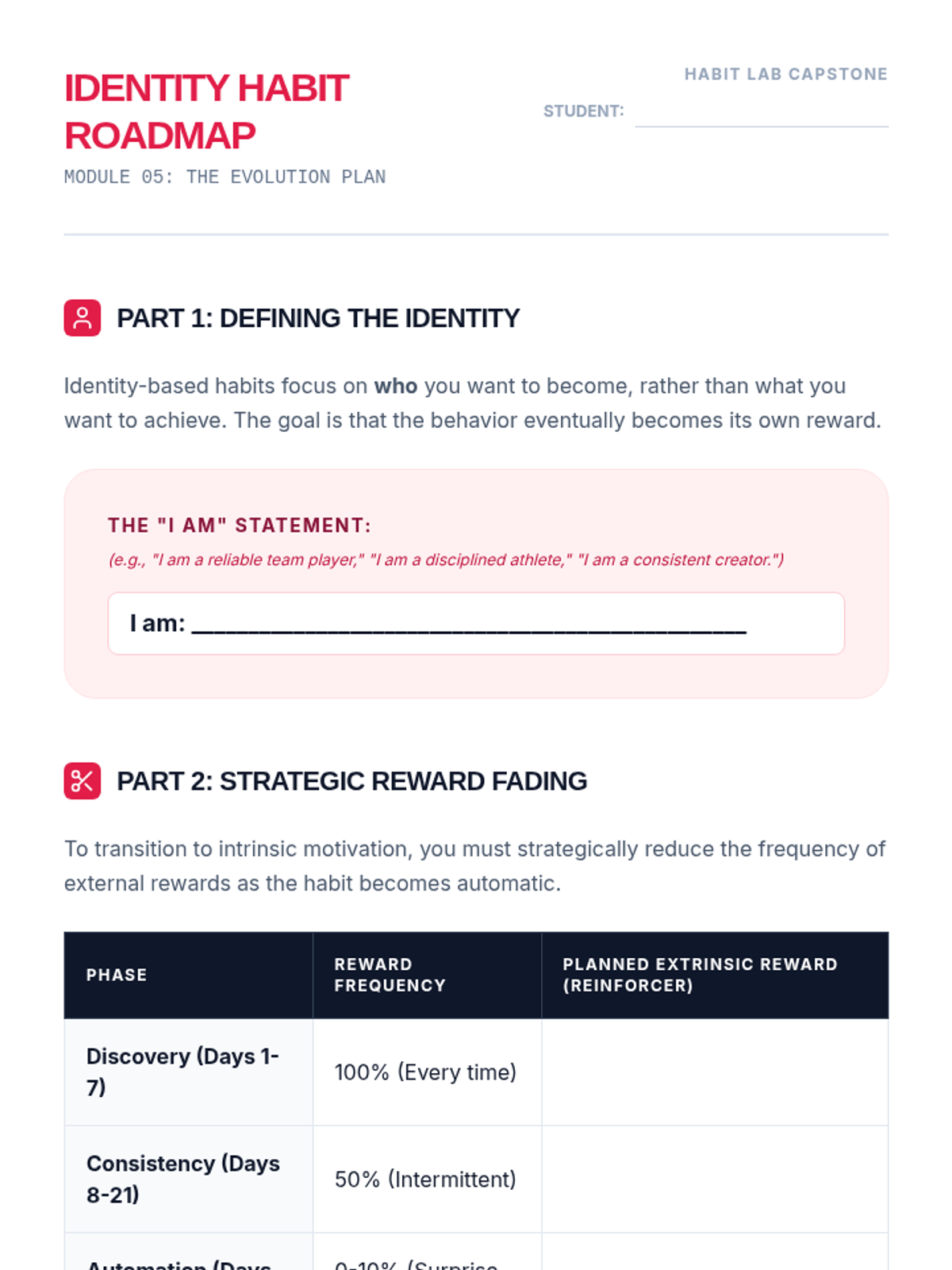
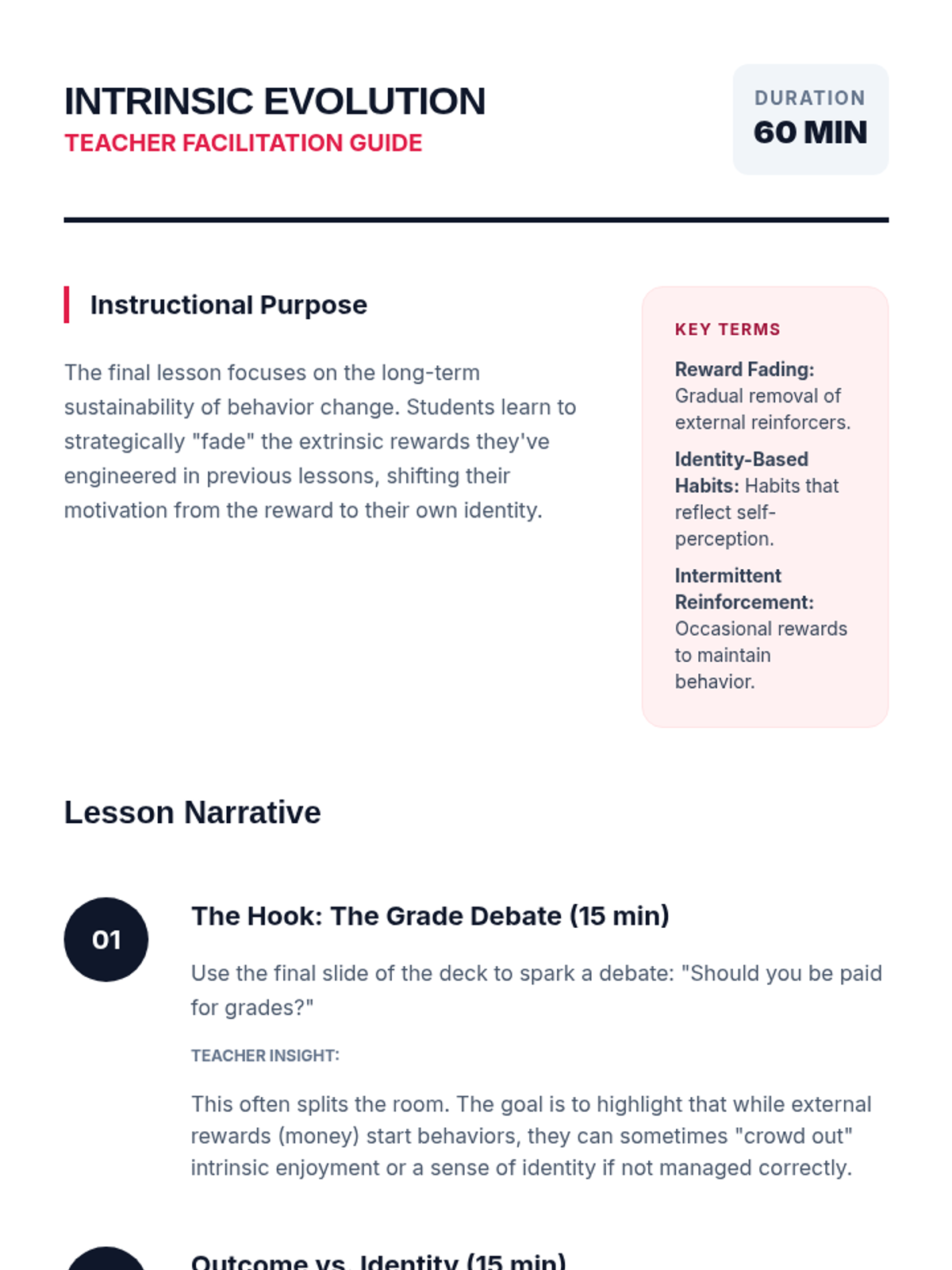
Students learn how to strategically fade out extrinsic rewards as behaviors become automatic, focusing on shifting from outcome-based goals to identity-based habits.
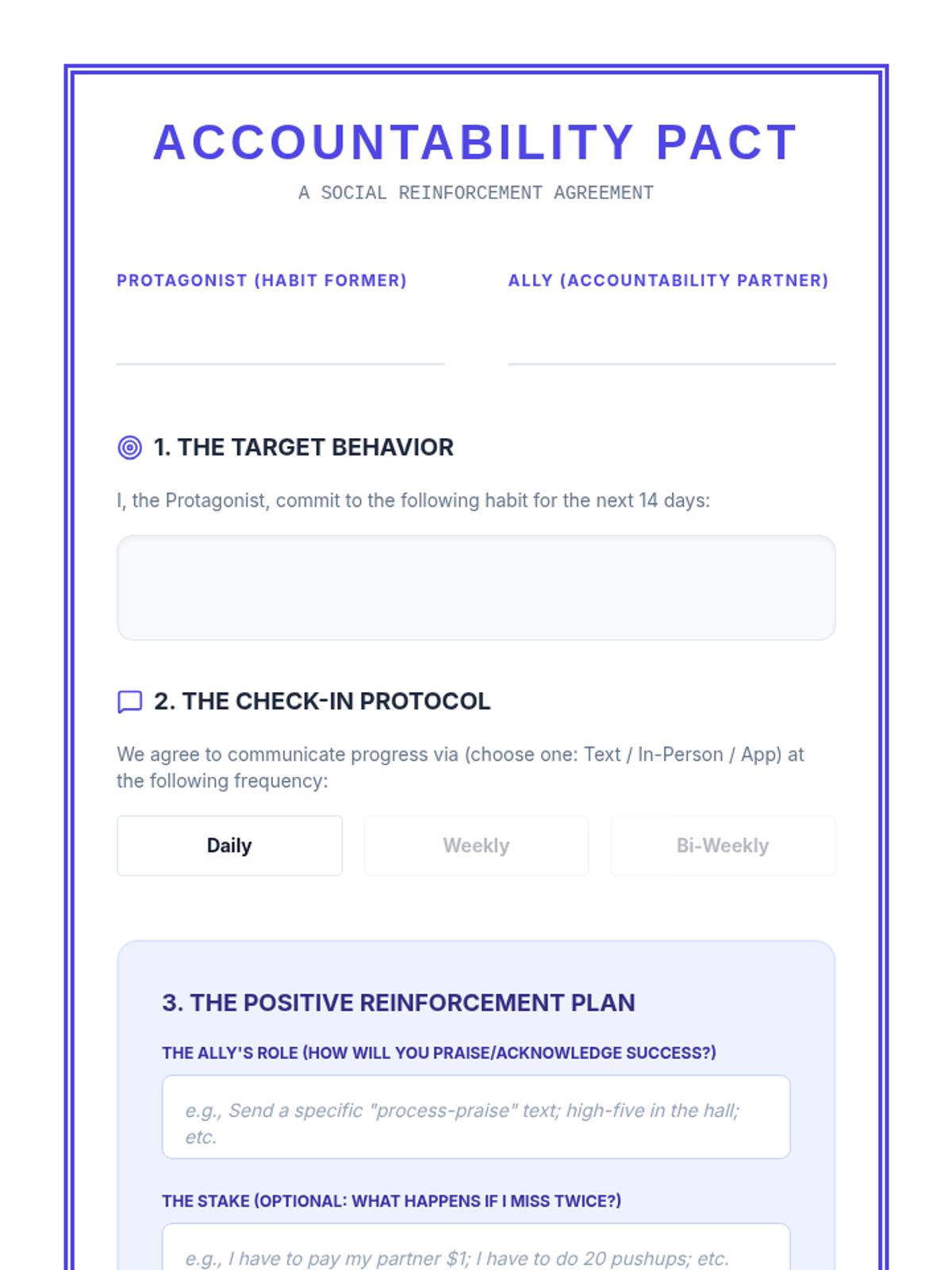
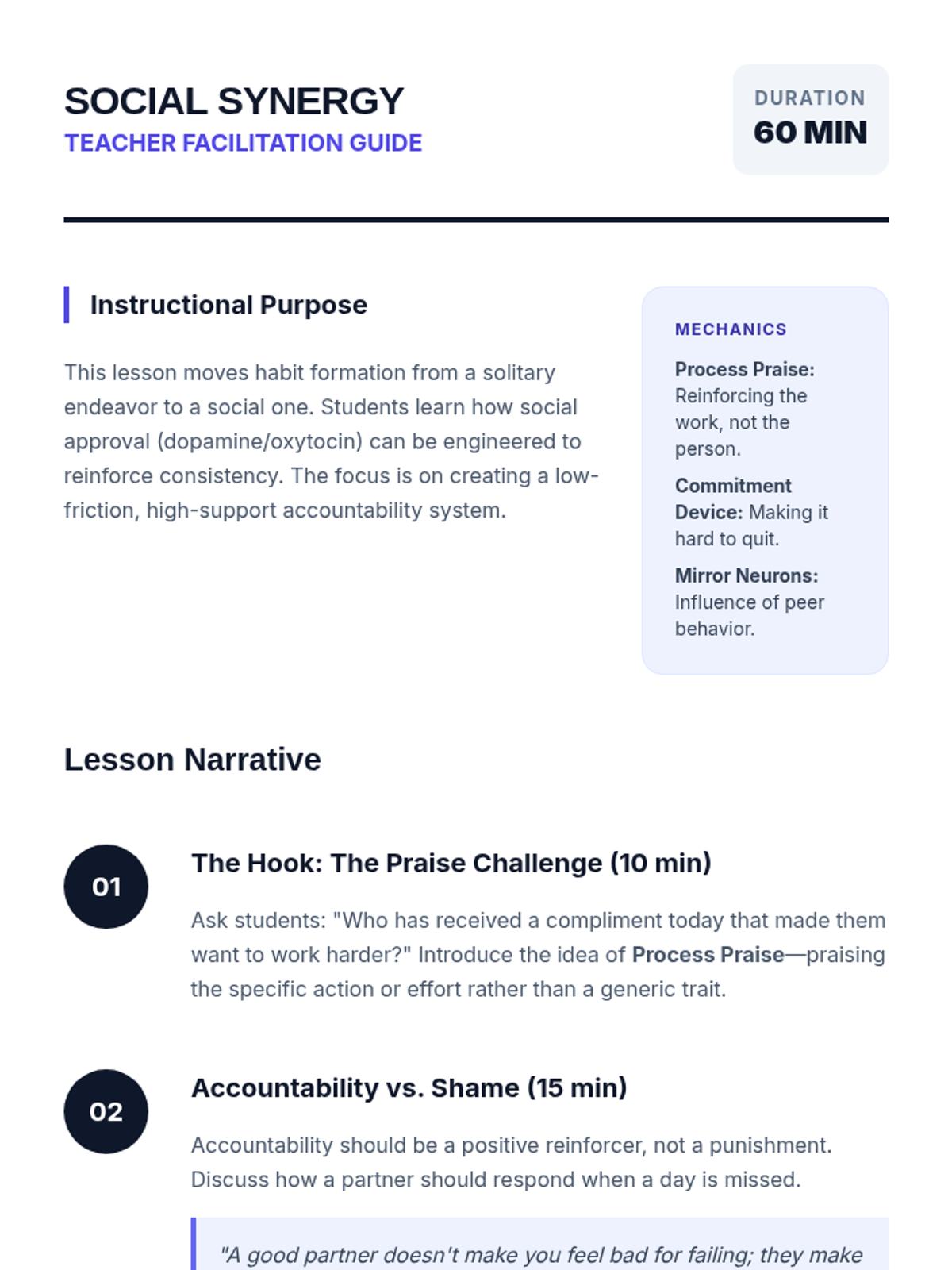
Investigates the power of social approval as a positive reinforcer, focusing on how accountability partnerships and public commitments can sustain behavior change.
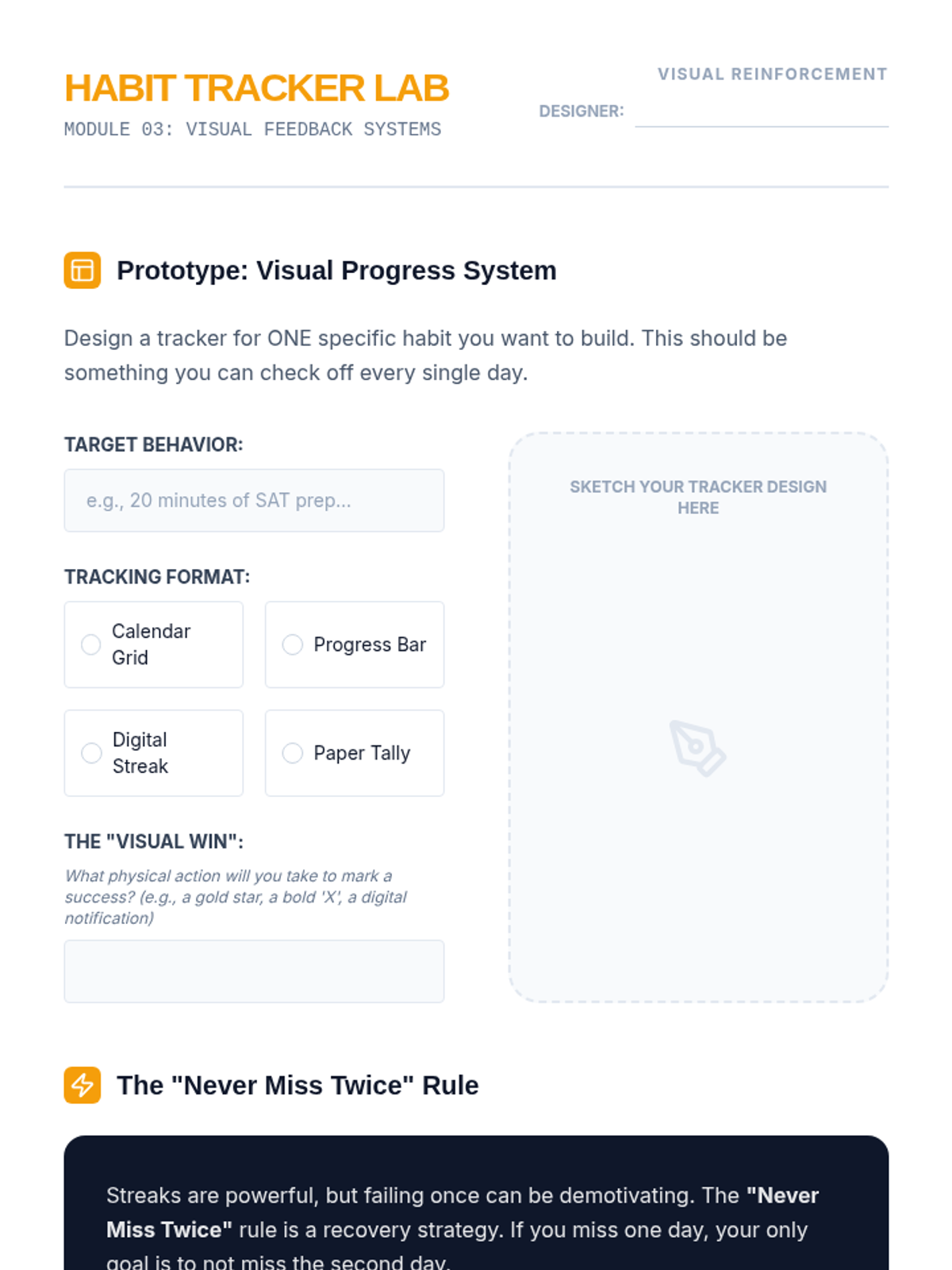
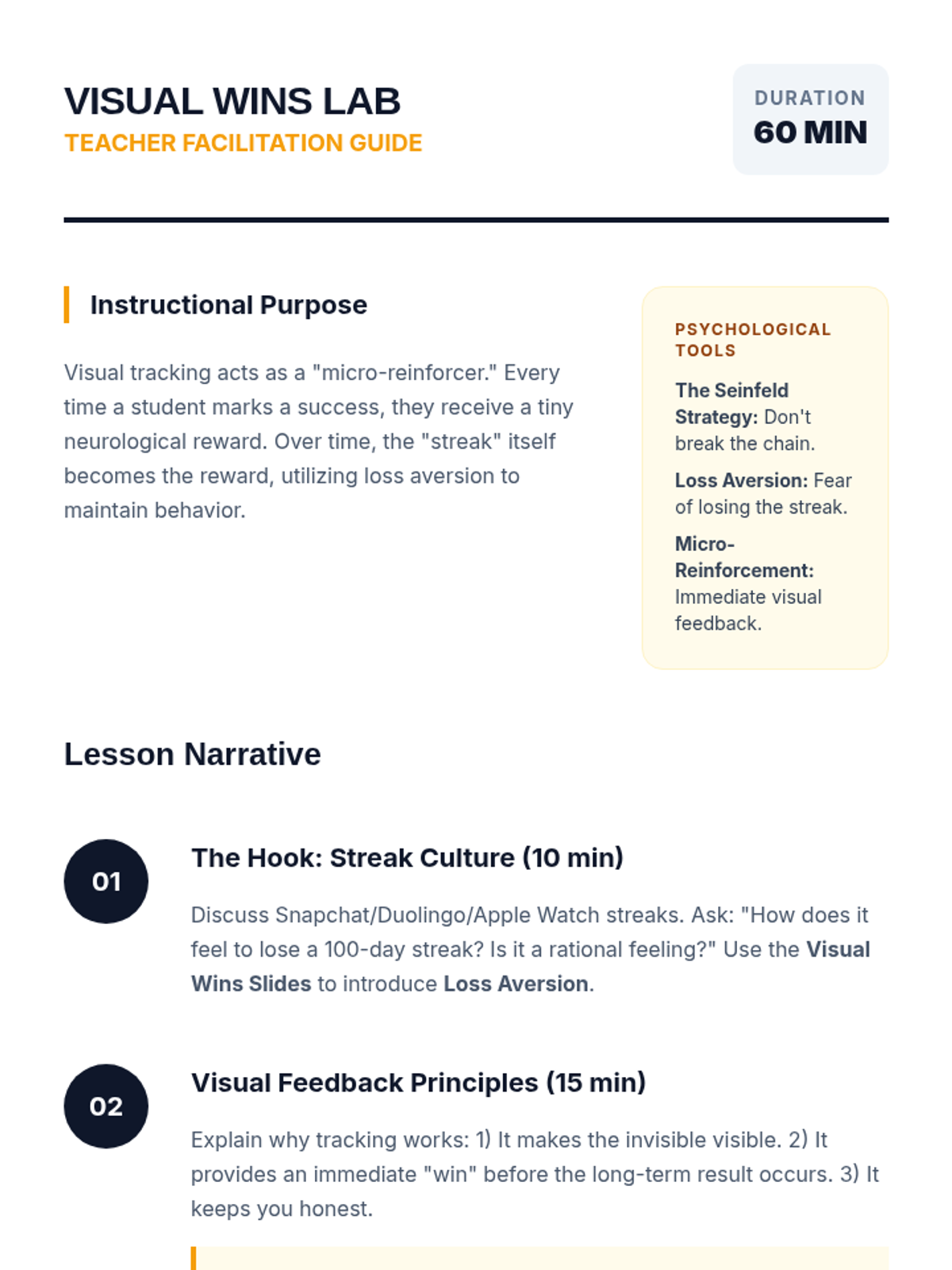
Students examine the psychological impact of visual progress tracking and 'streaks' to design a visual reinforcement system that provides micro-rewards for small wins.
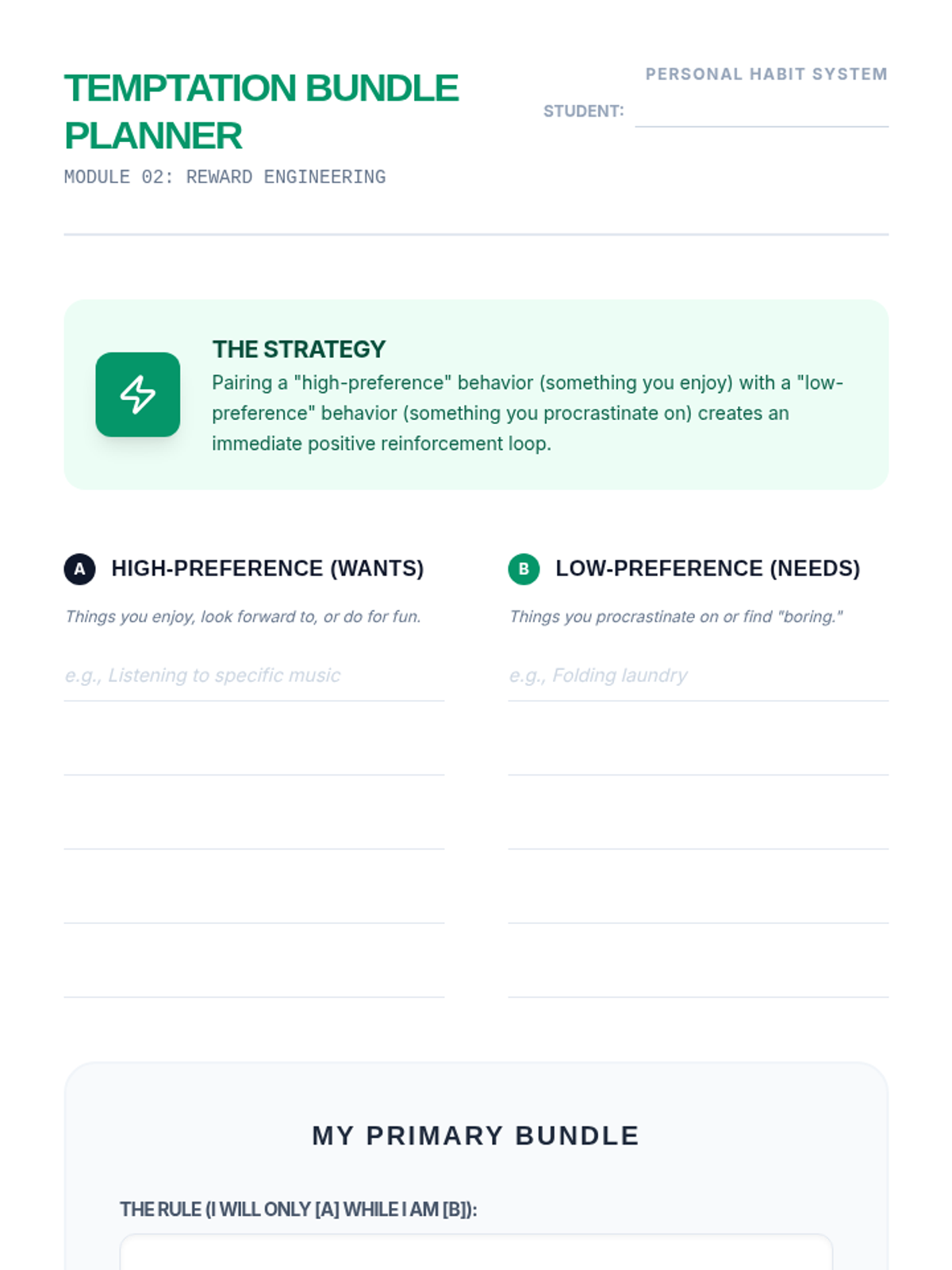
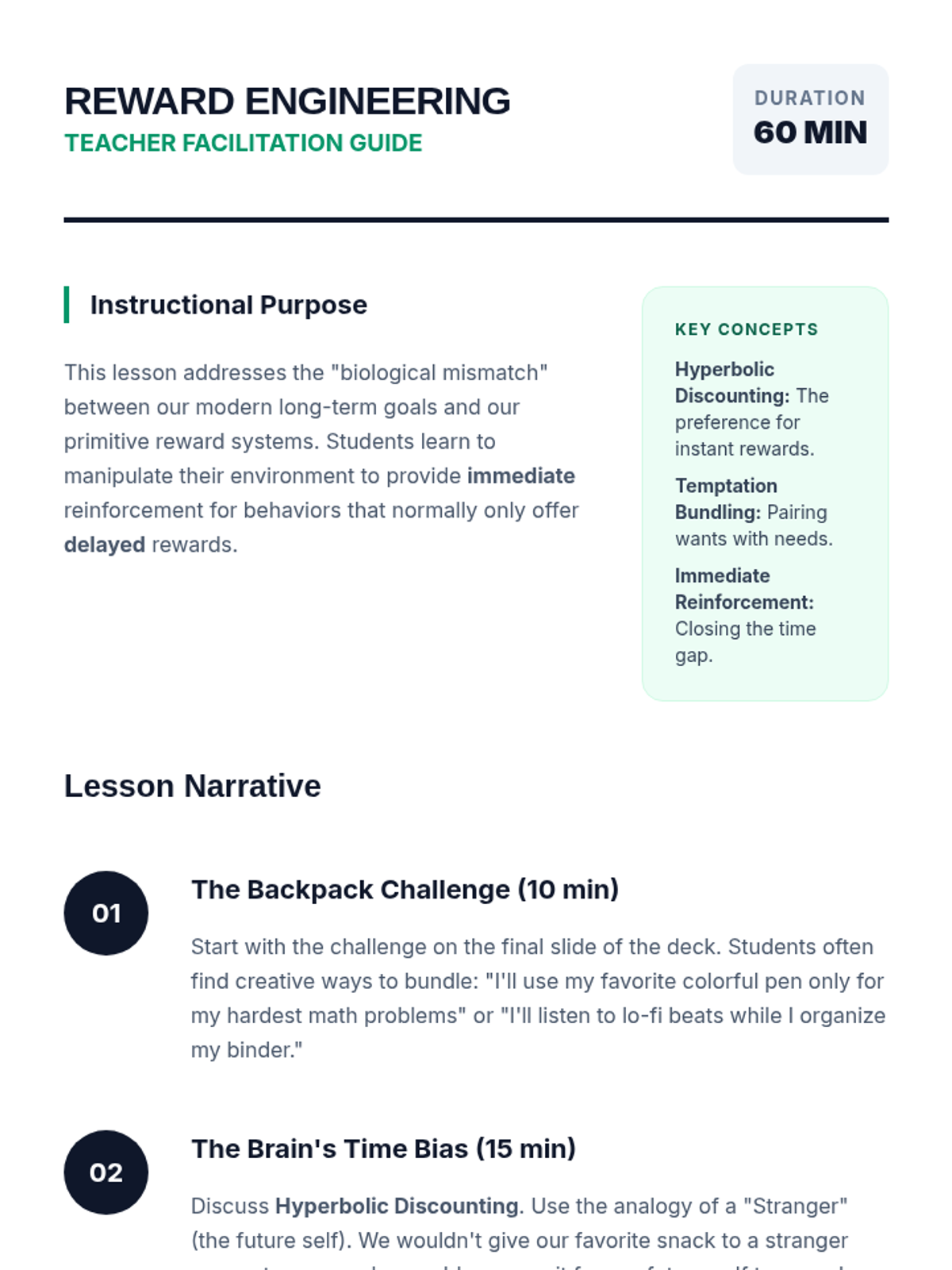
Focuses on the struggle between immediate and delayed gratification, teaching students to attach immediate positive reinforcement to difficult tasks through techniques like temptation bundling.
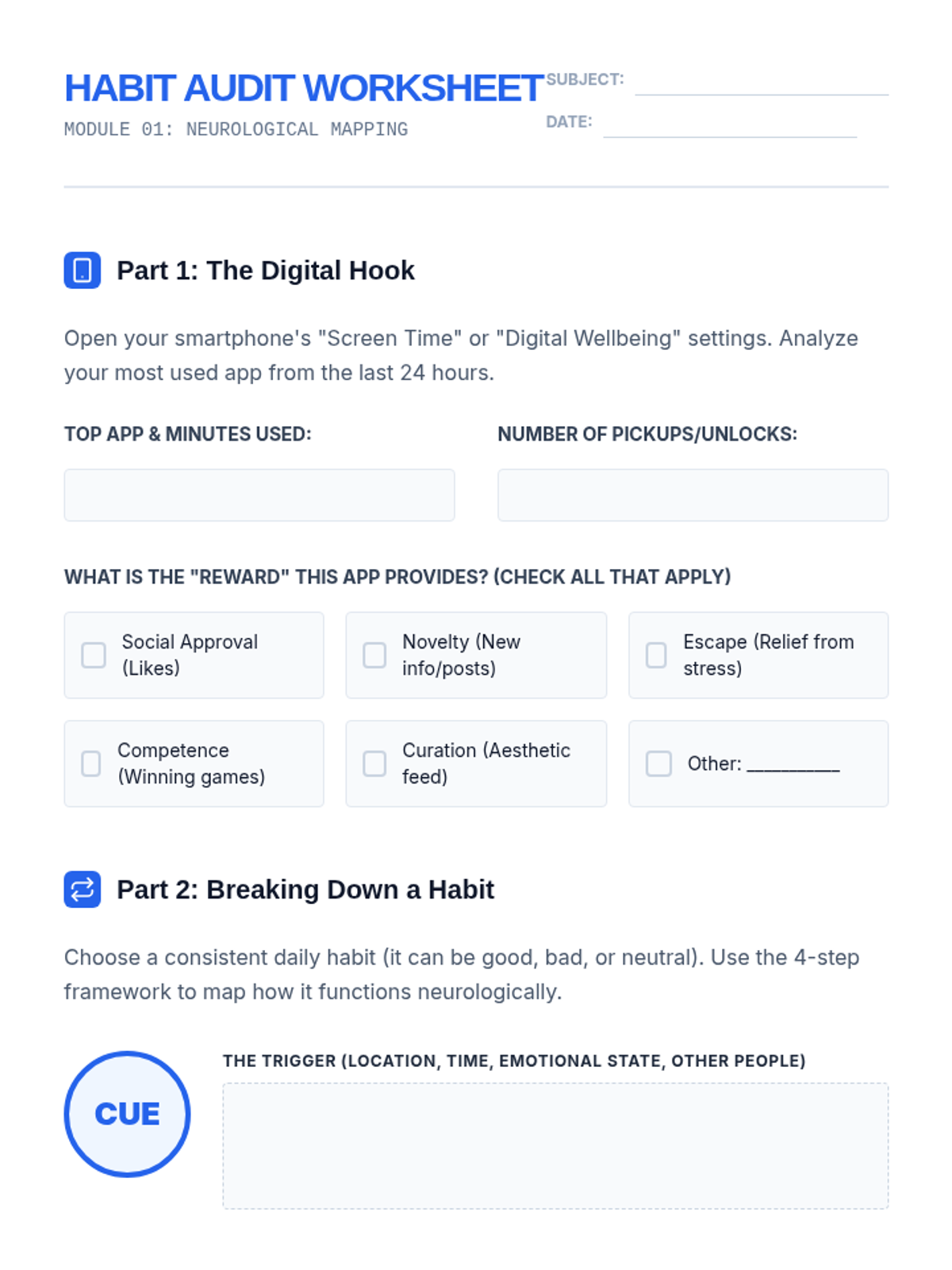
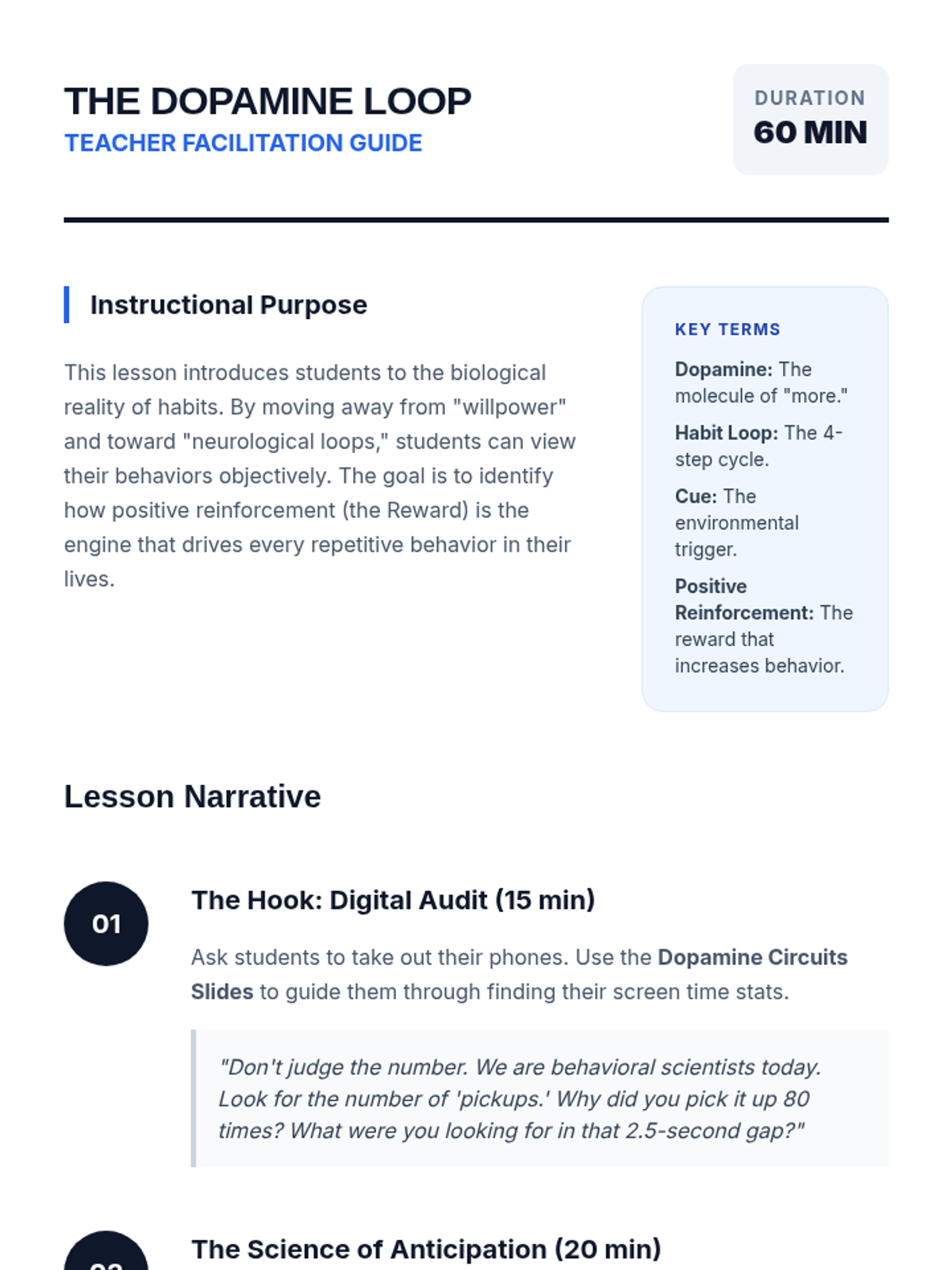
Students explore the neuroscience behind dopamine and the feedback loop (Cue, Craving, Response, Reward) to understand how habits are physically wired in the brain. They identify the rewards driving their current behaviors through a personal habit audit.
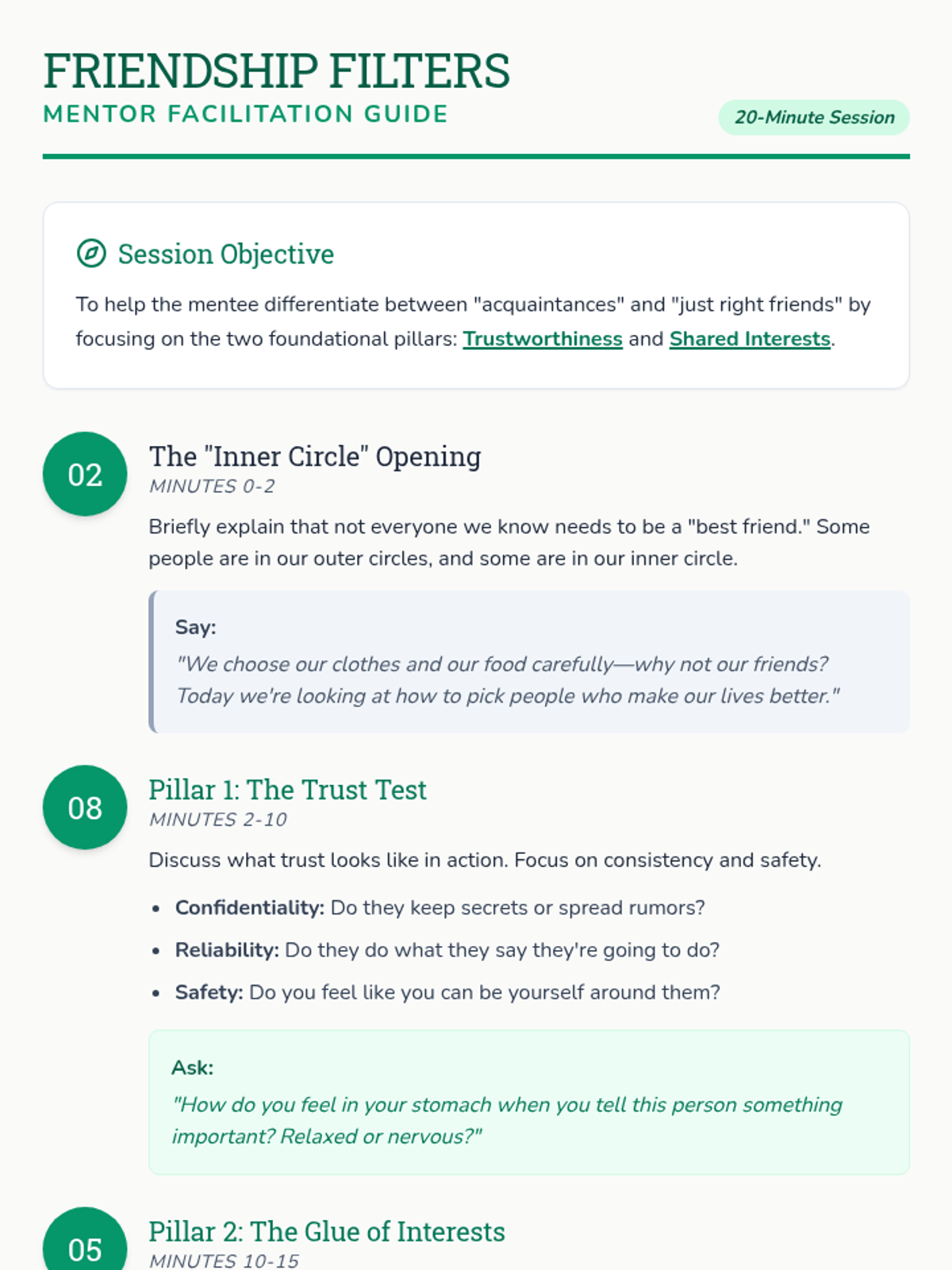
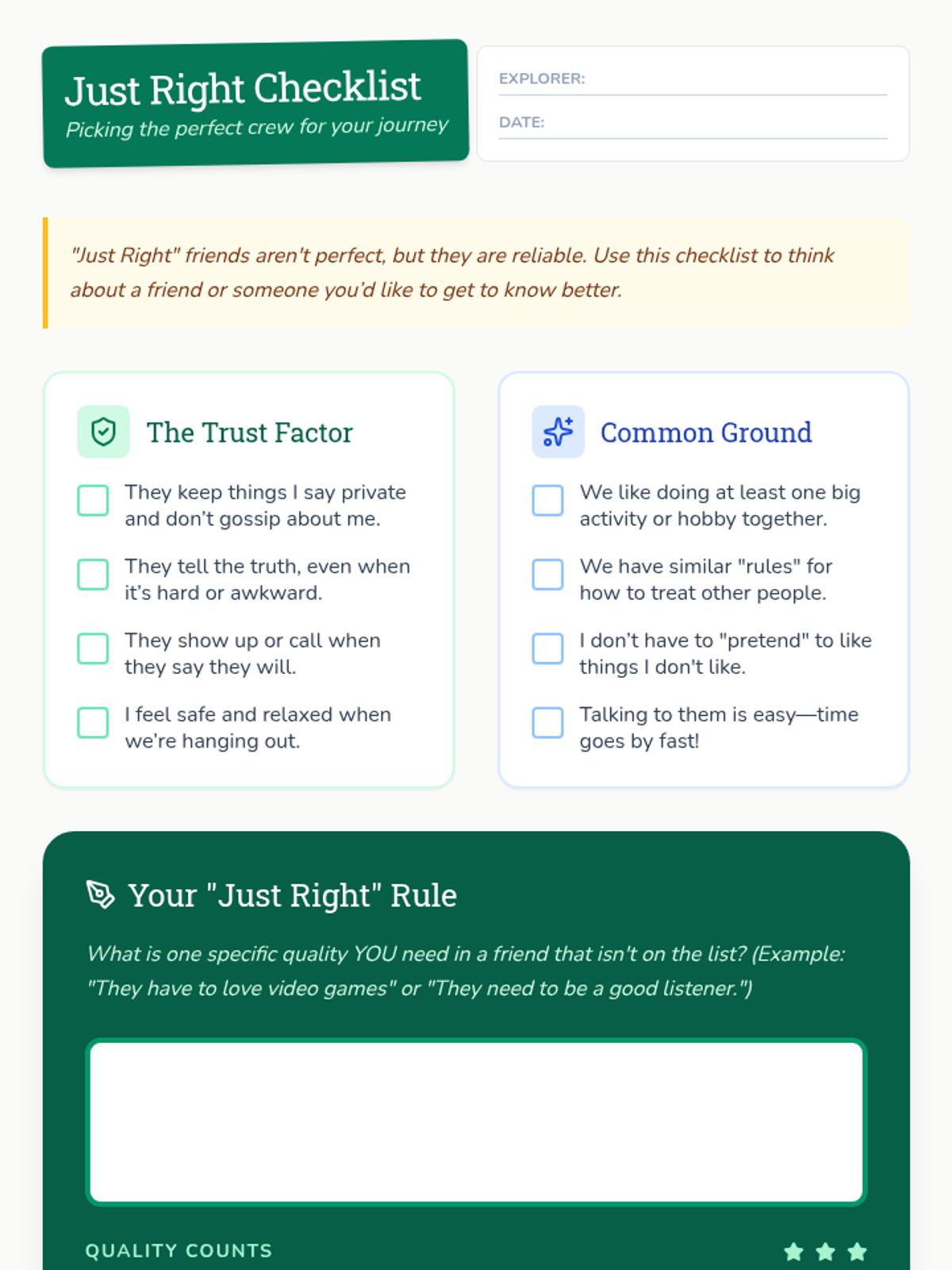
A focused 20-minute mentorship session designed to help mentees identify and cultivate high-quality friendships based on trustworthiness and shared interests.
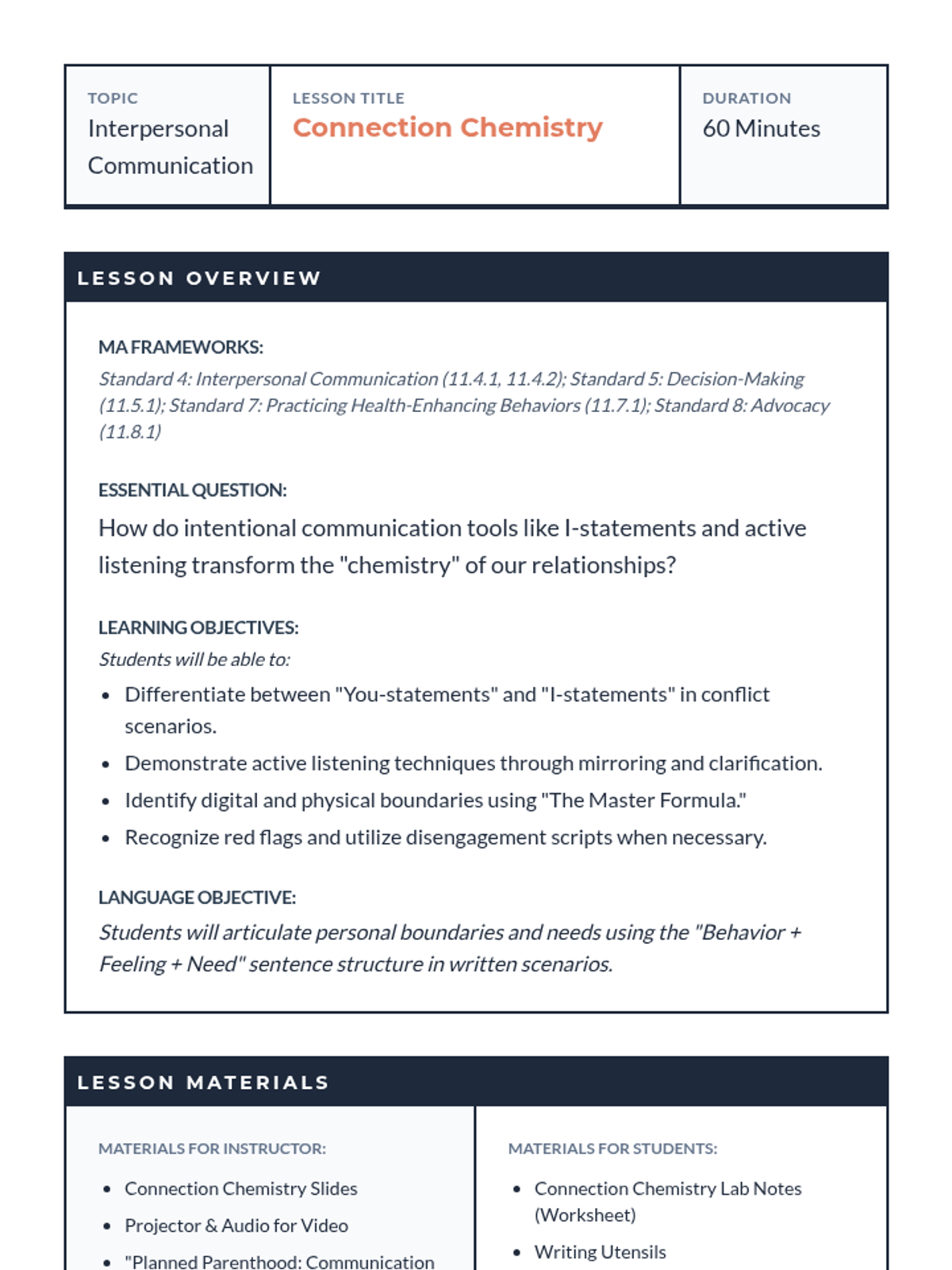
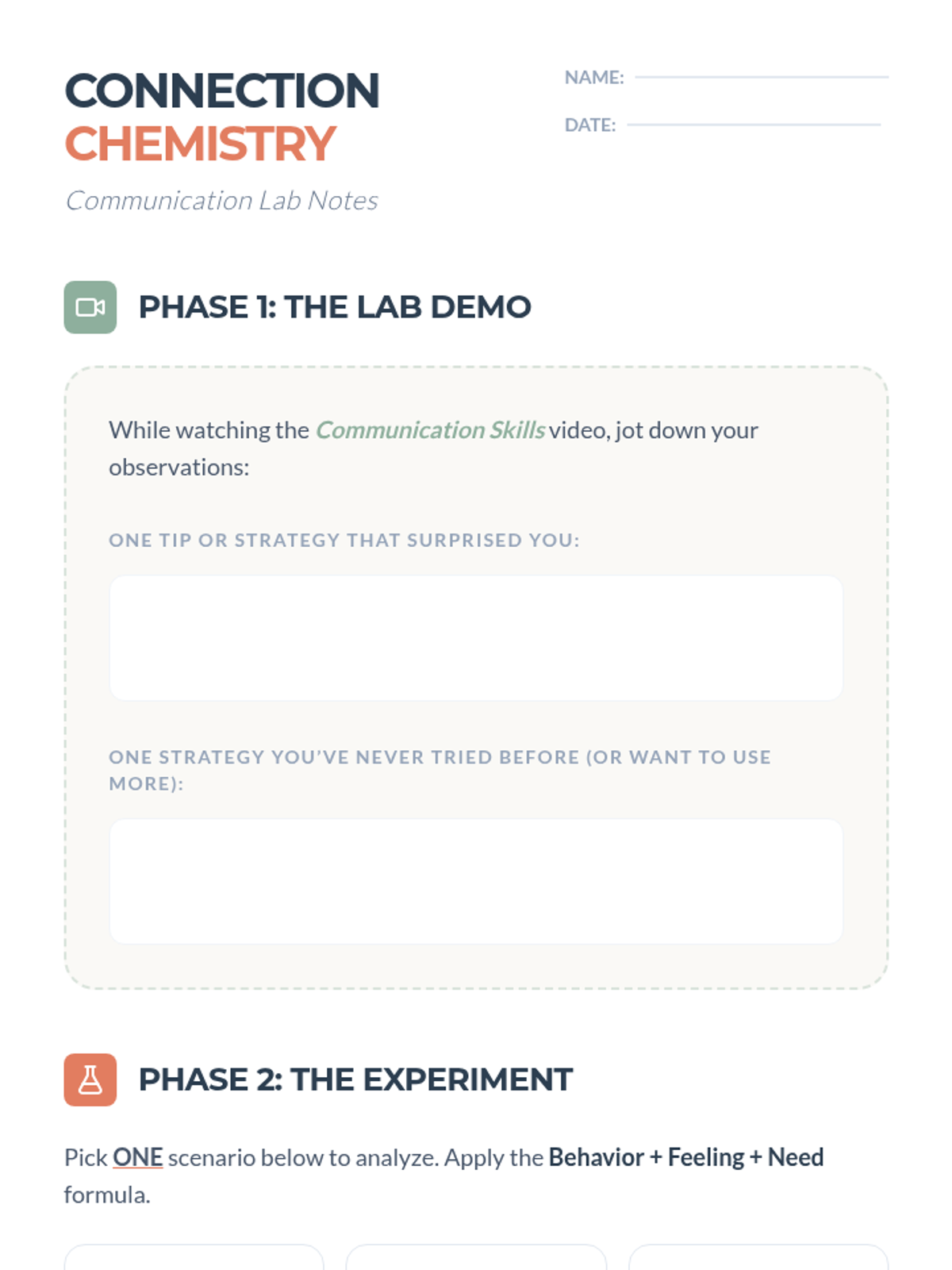
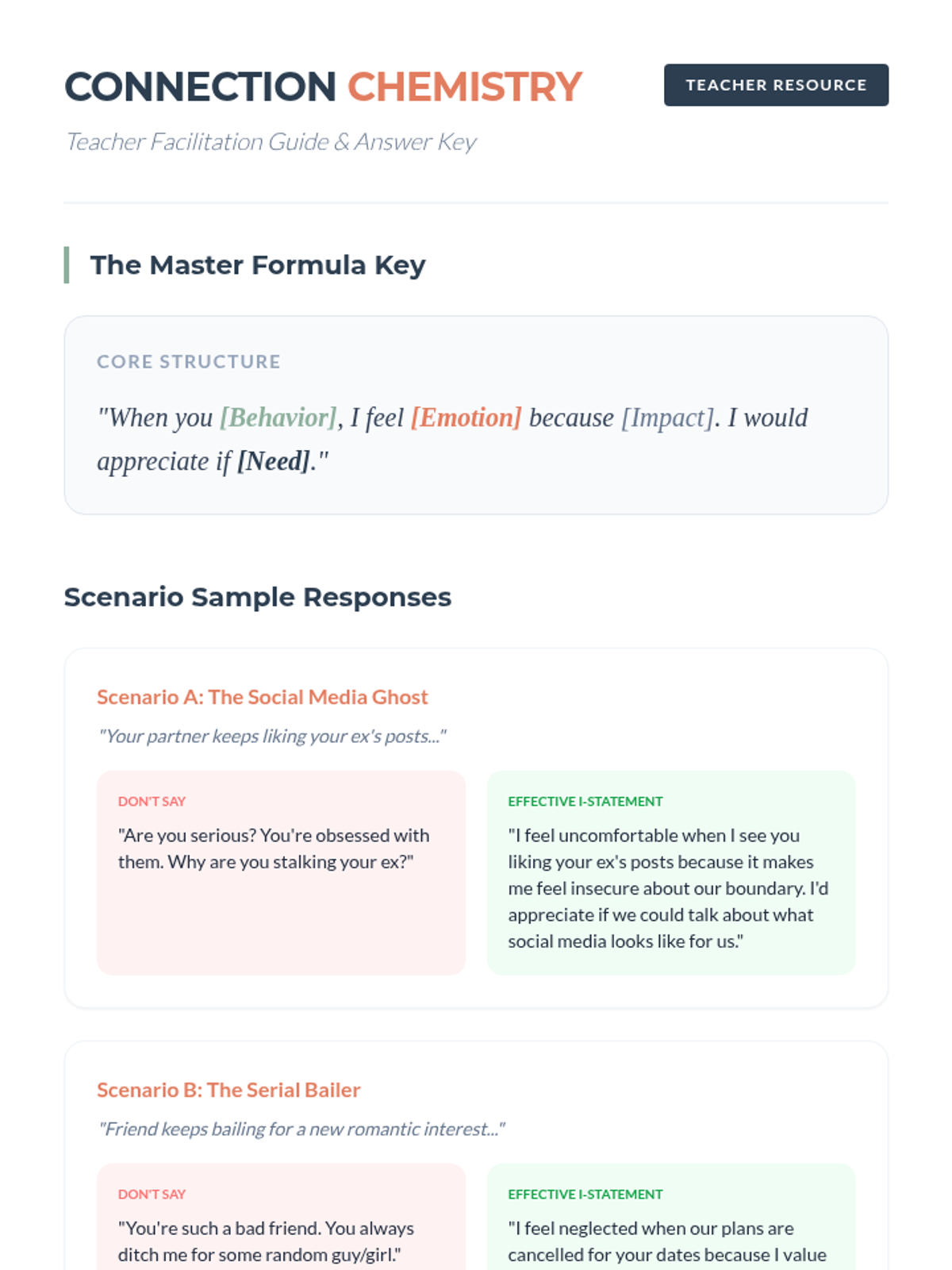
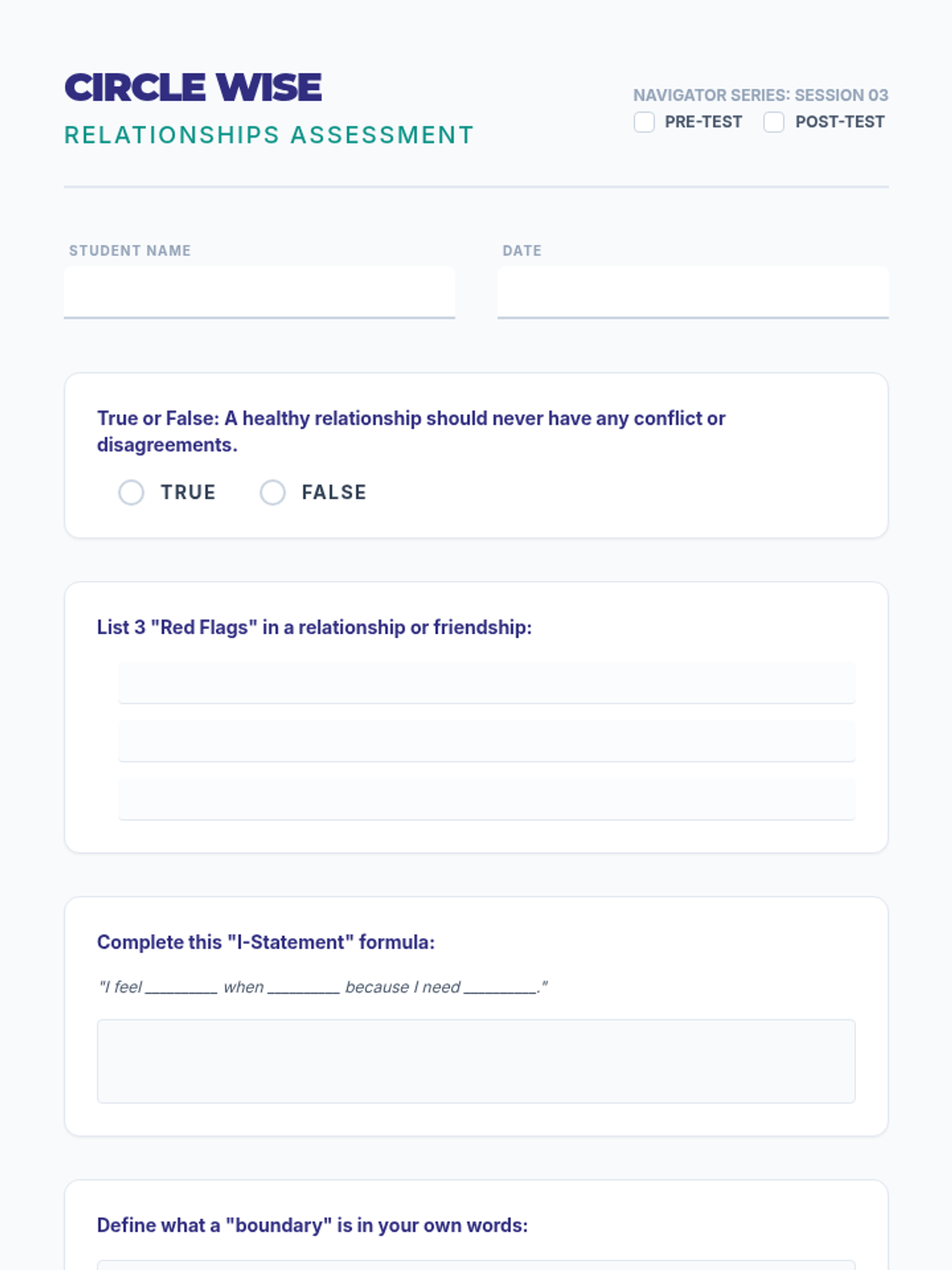
This lesson teaches high school students (grades 10-12) the practical skills of effective interpersonal communication, focusing on I-statements, active listening, boundary setting, and recognizing healthy vs. unhealthy patterns in modern contexts.
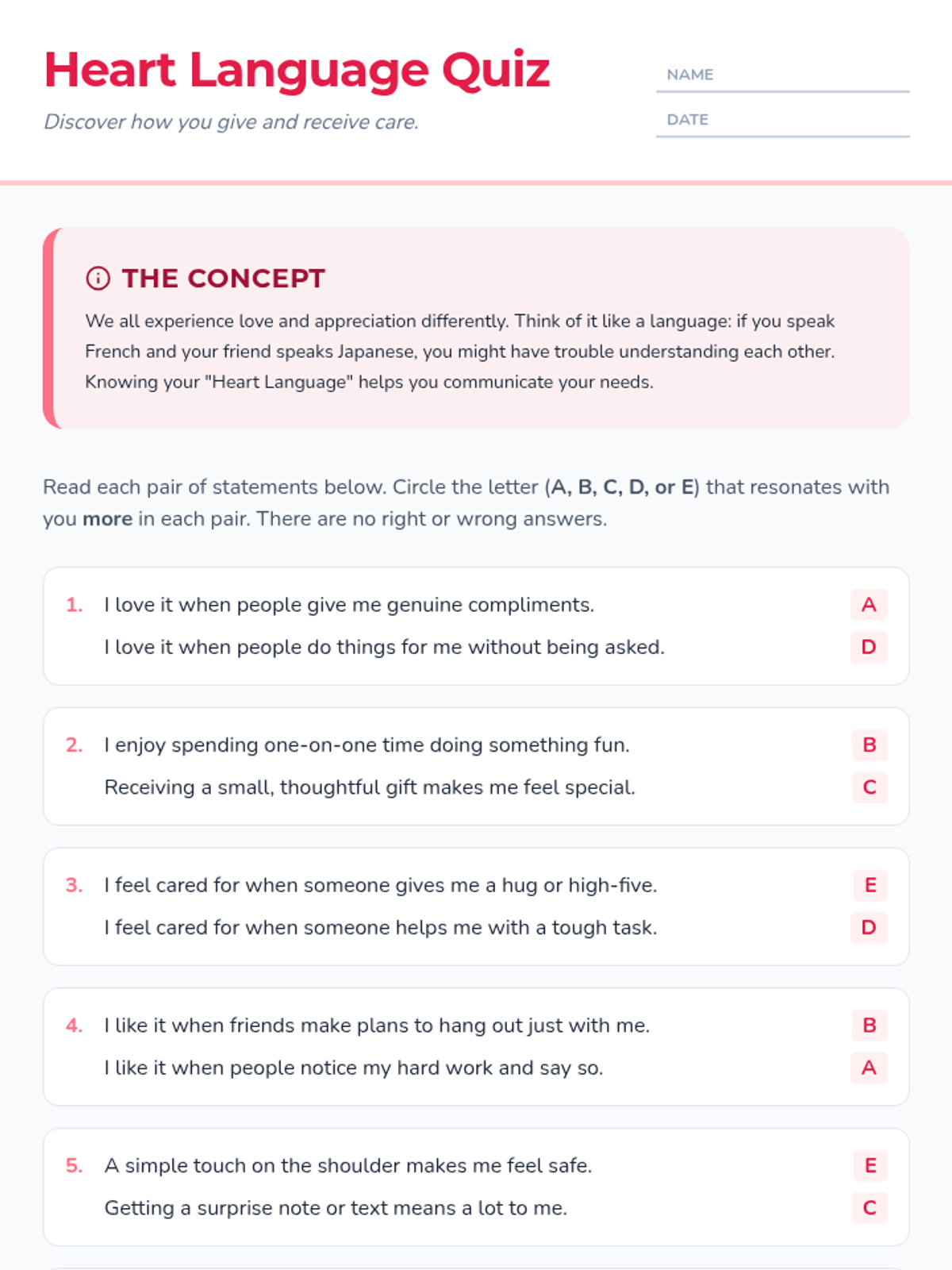
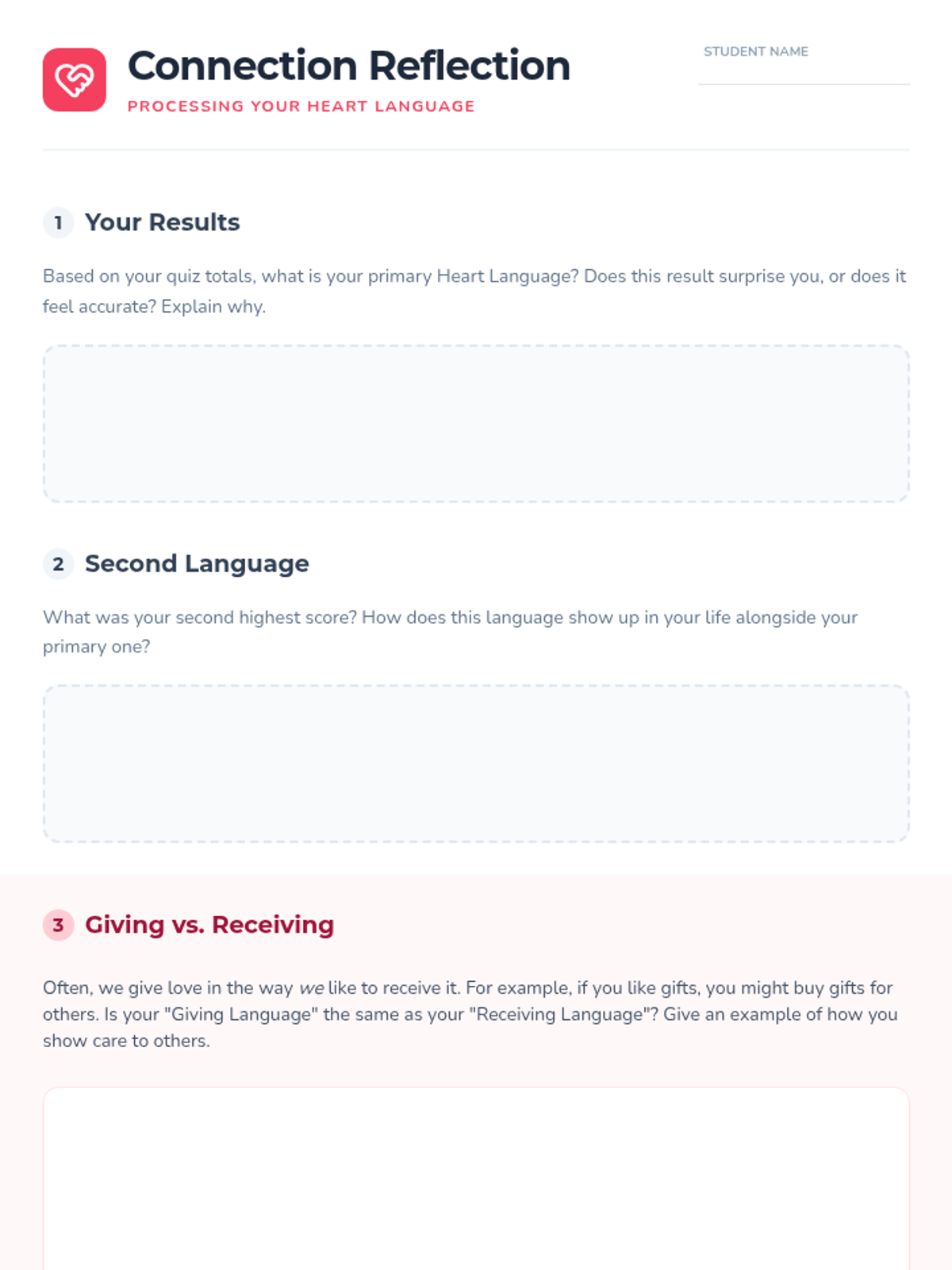
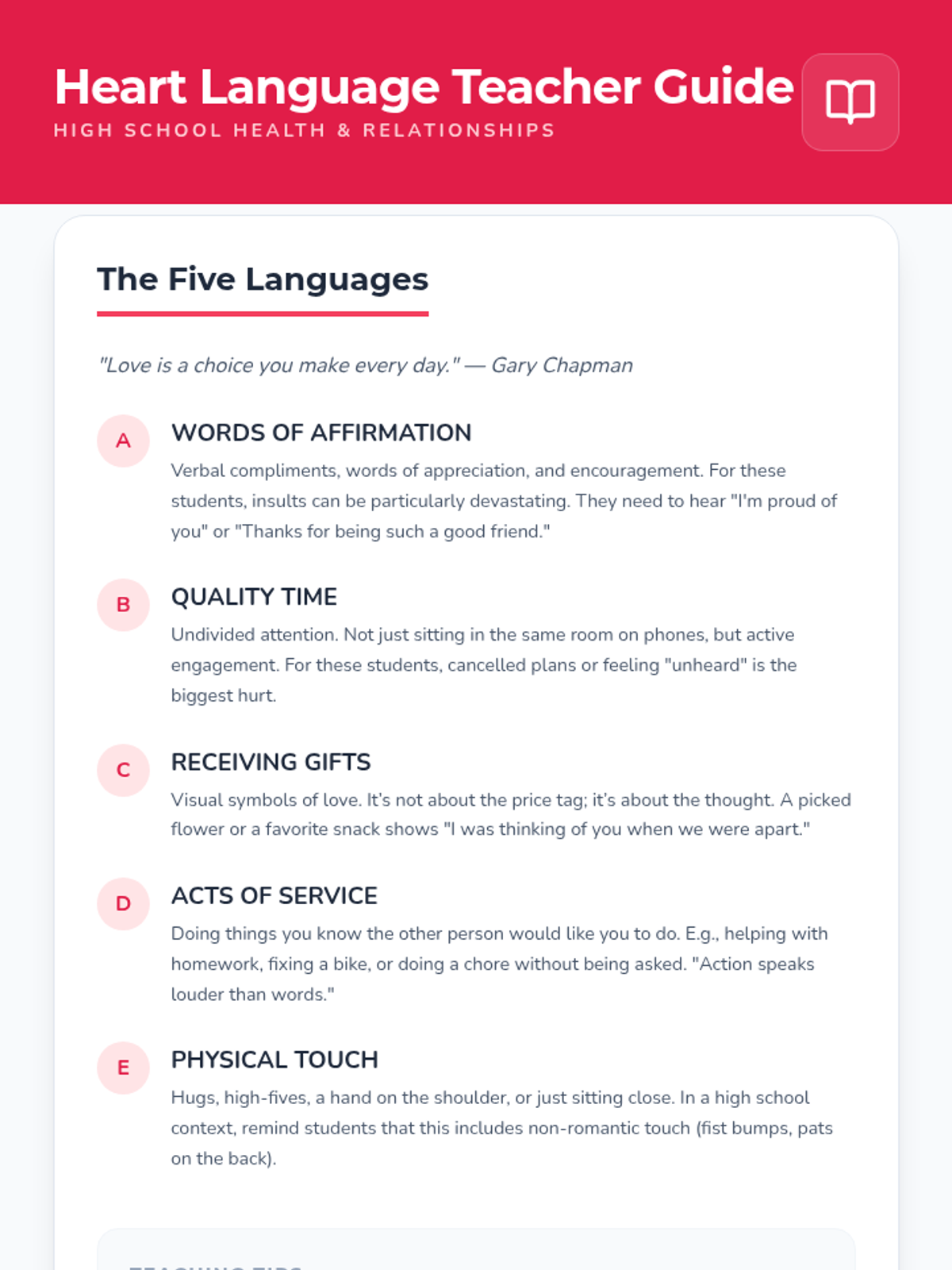
This lesson explores Gary Chapman's Five Love Languages through the lens of high school relationships, helping students identify their own needs and learn how to better support others in their lives.
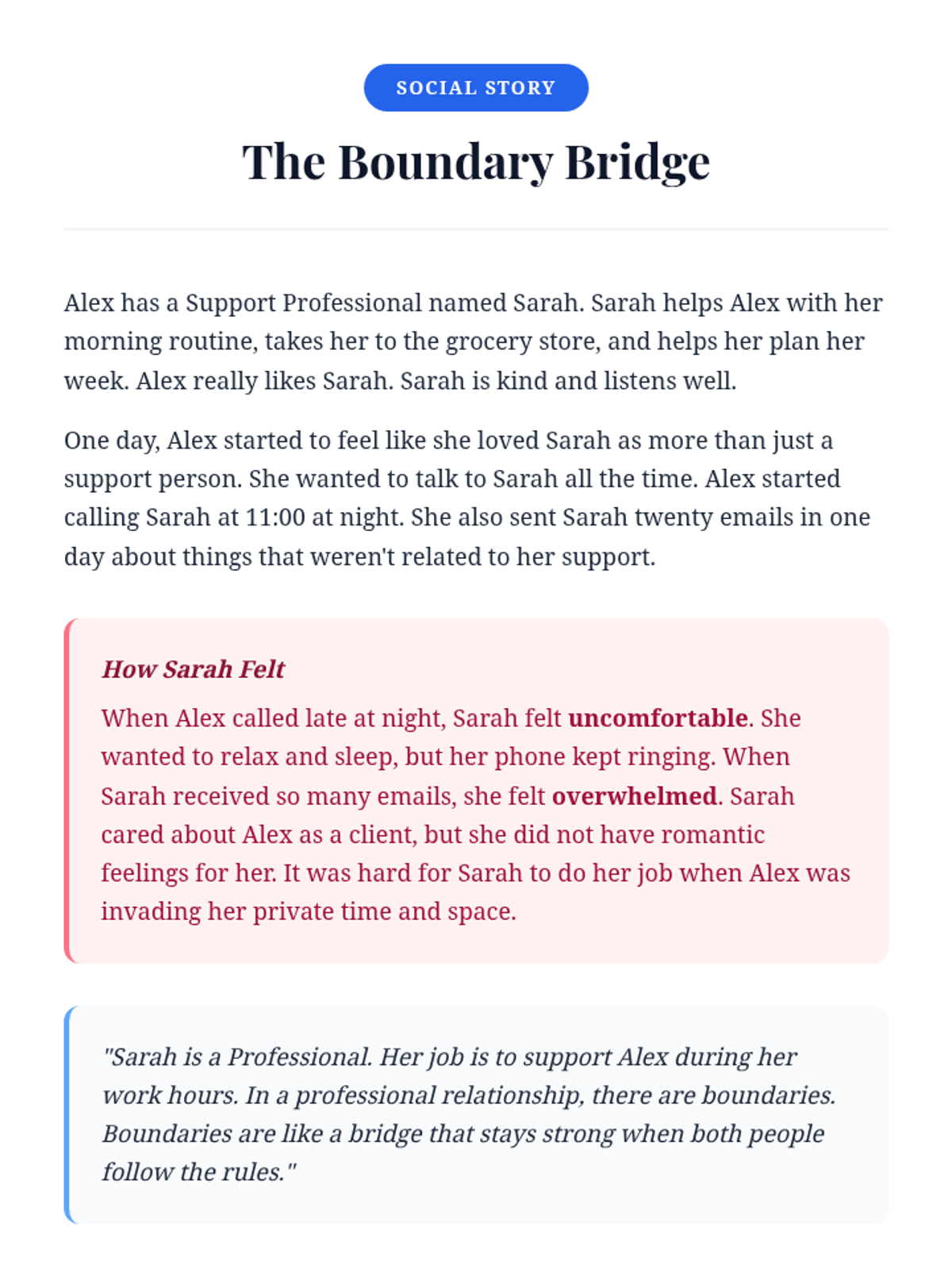
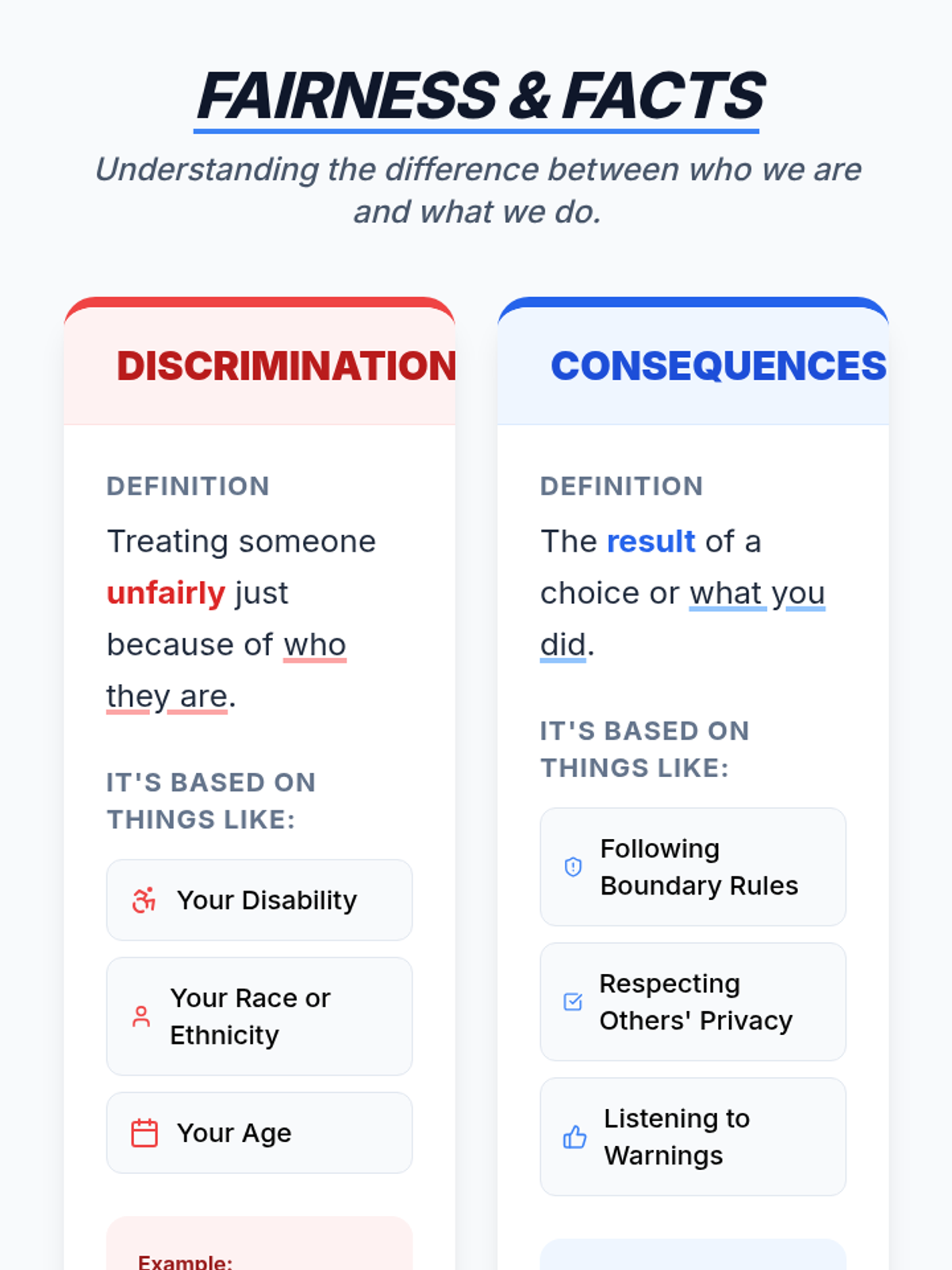
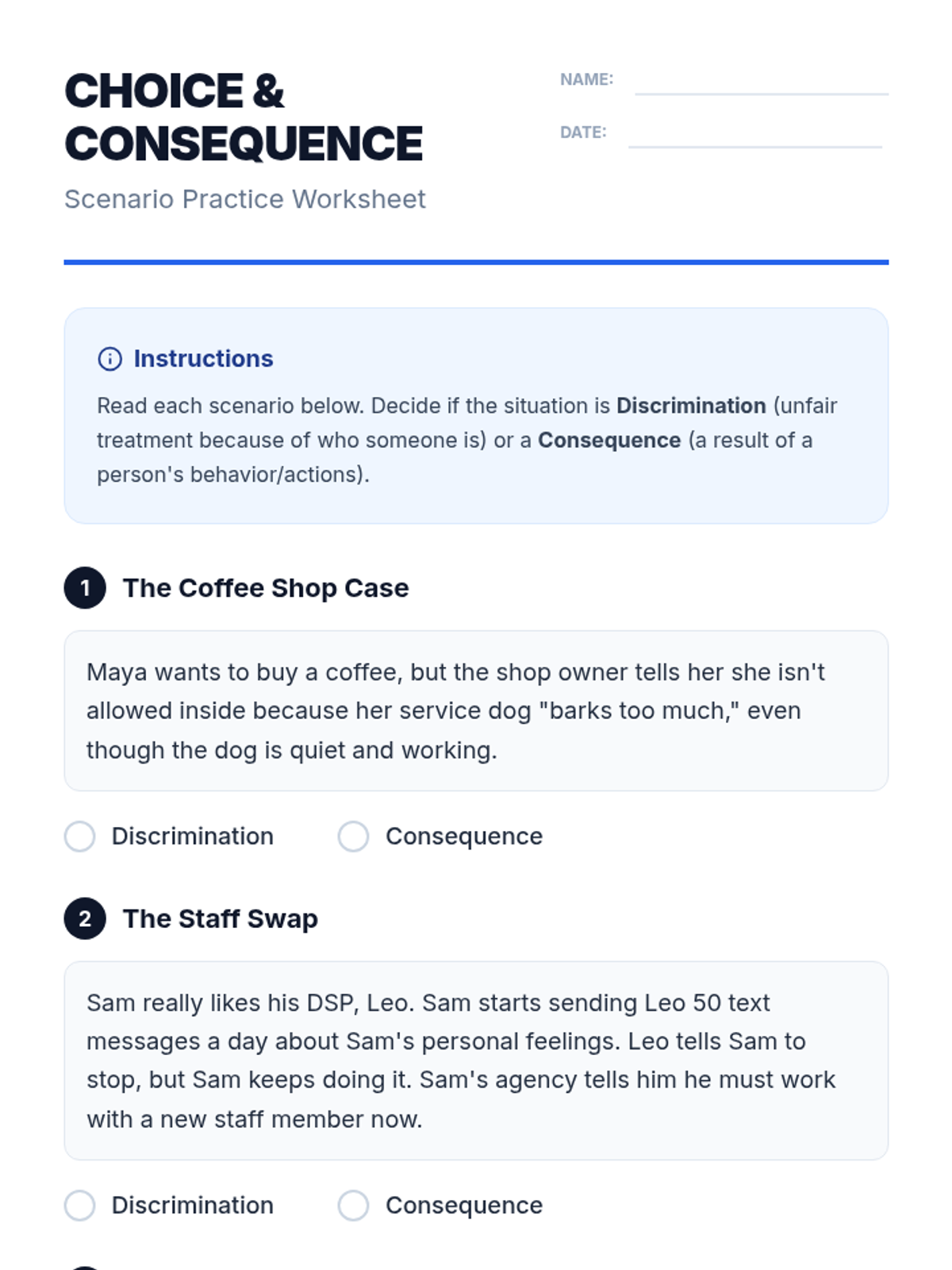
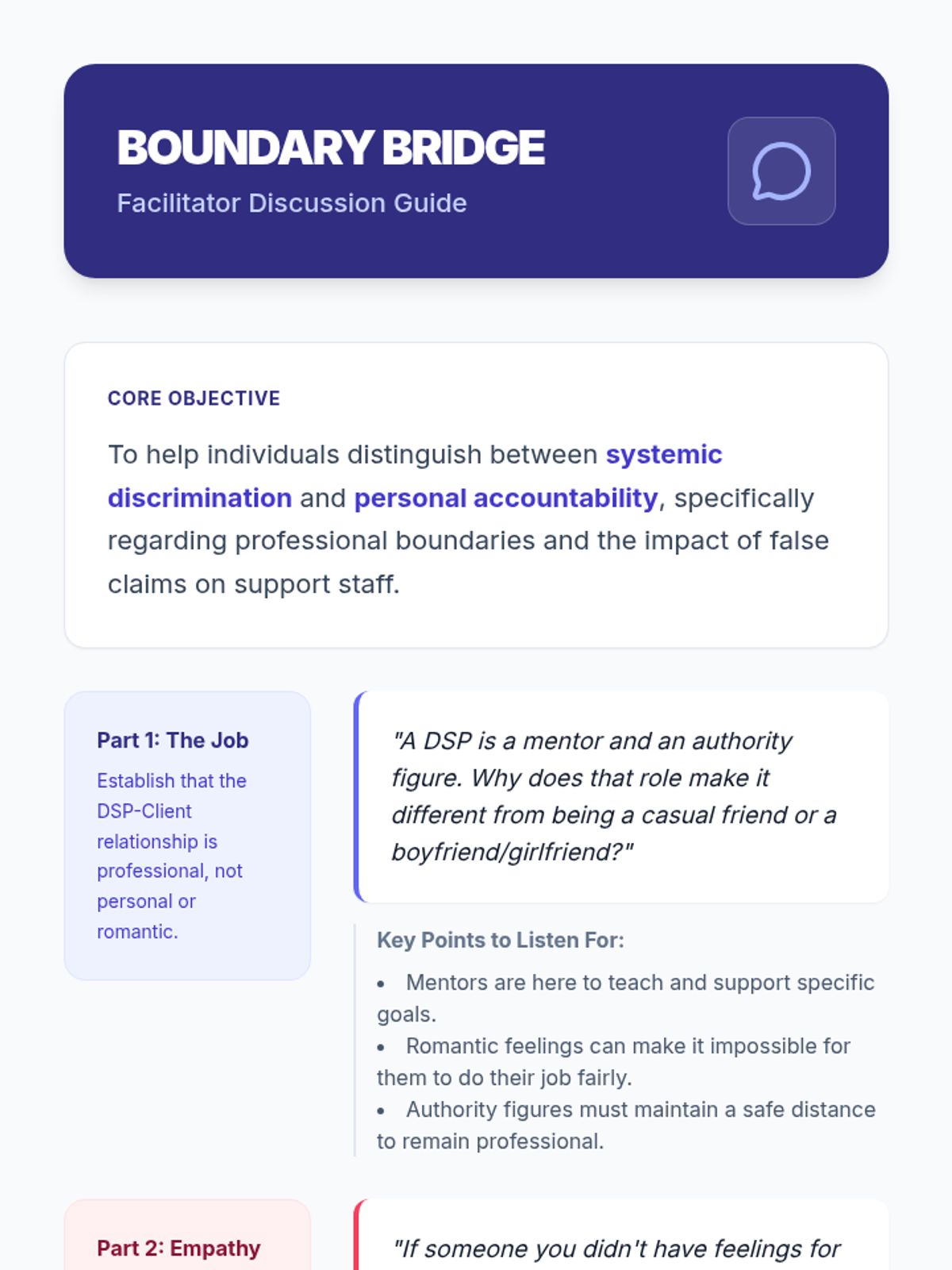
This lesson explores the definition of discrimination, the importance of professional boundaries in DSP relationships, and how actions lead to specific consequences.
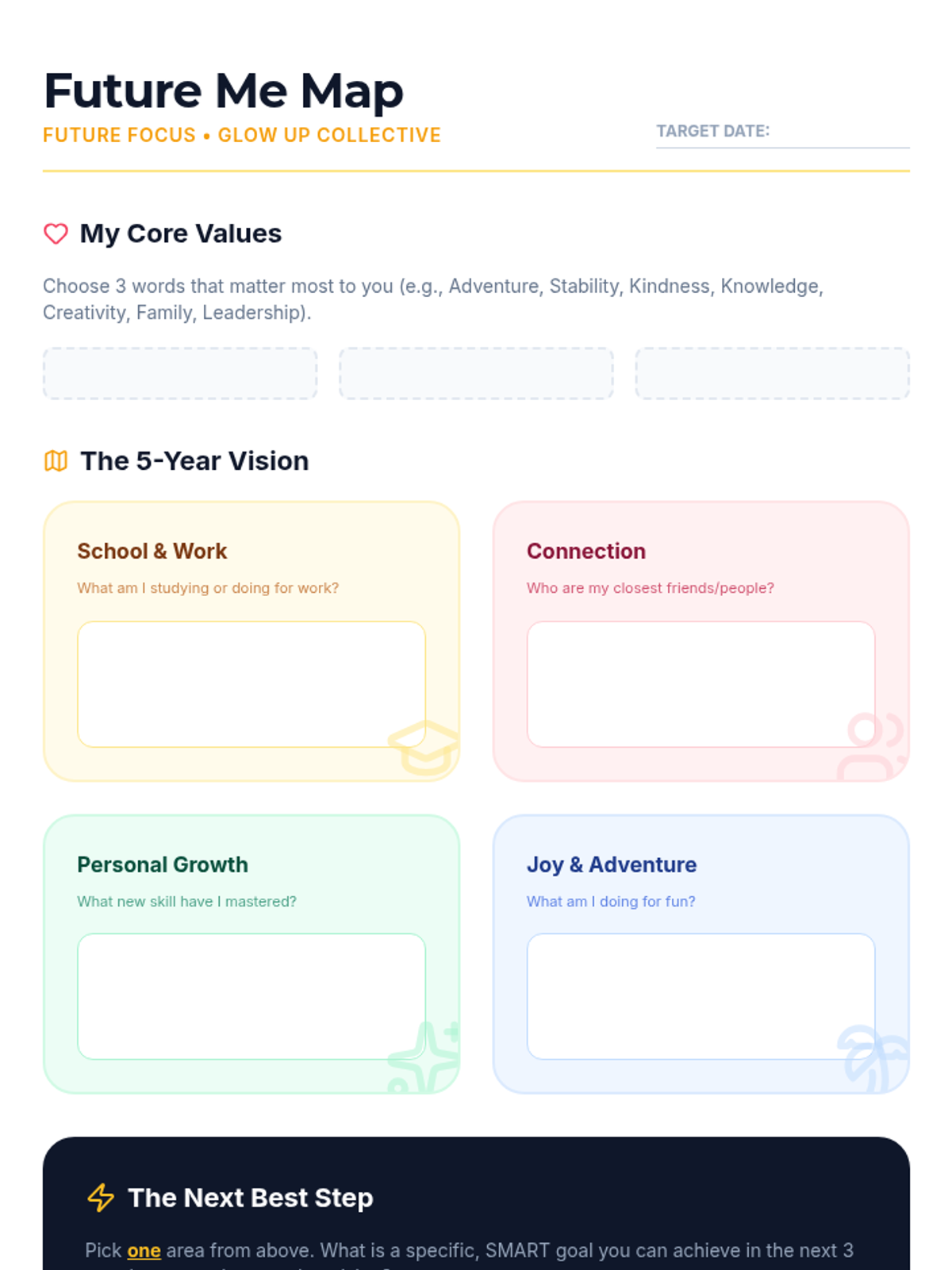
Focuses on long-term goal setting and identifying personal passions. Students learn the SMART goal framework and engage in a guided visualization to plan their post-graduation paths.
Focuses on the science of stress and developing a personalized toolkit of healthy coping strategies. Students learn to differentiate between productive stress and burnout and practice immediate grounding techniques.
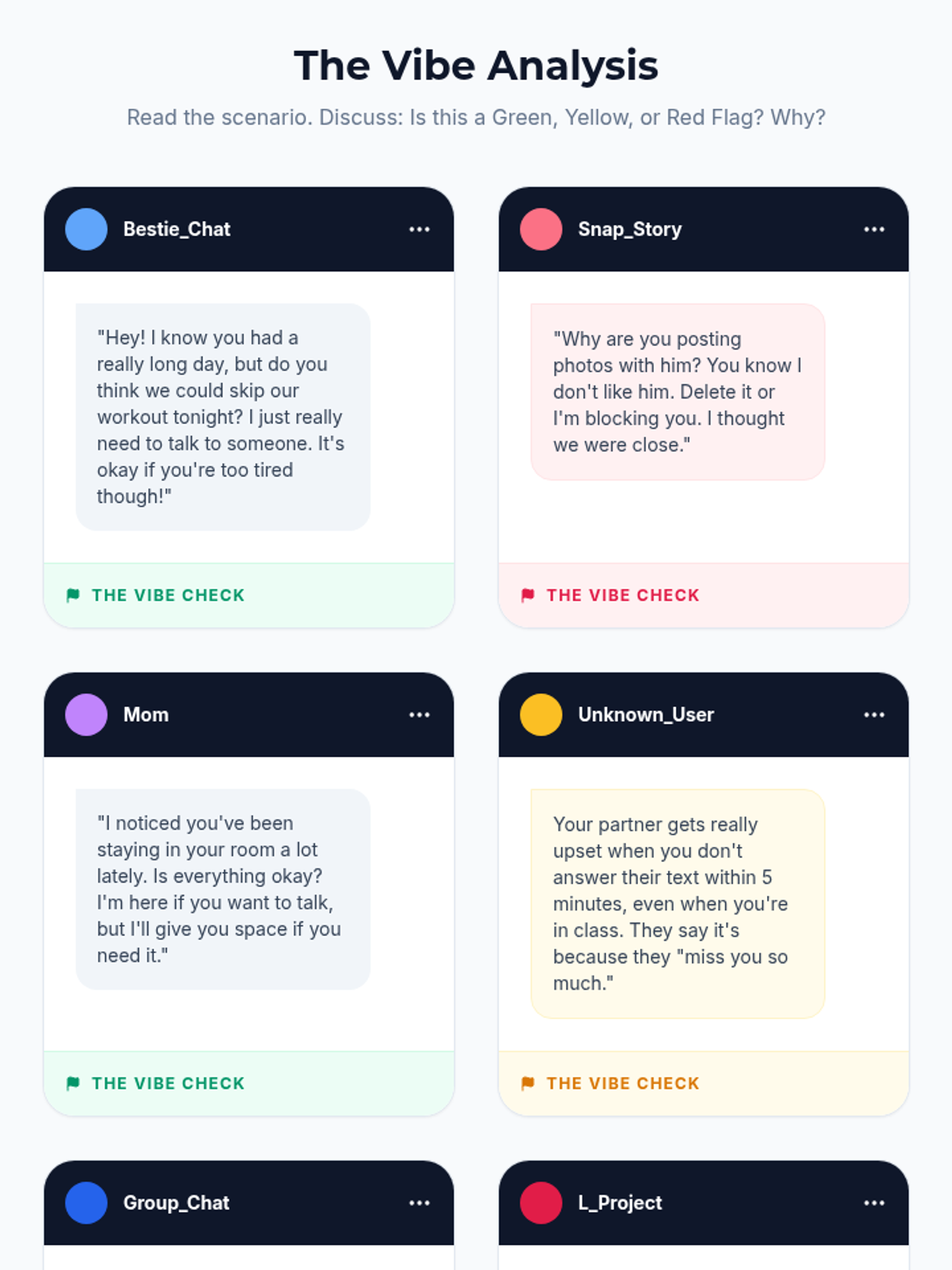
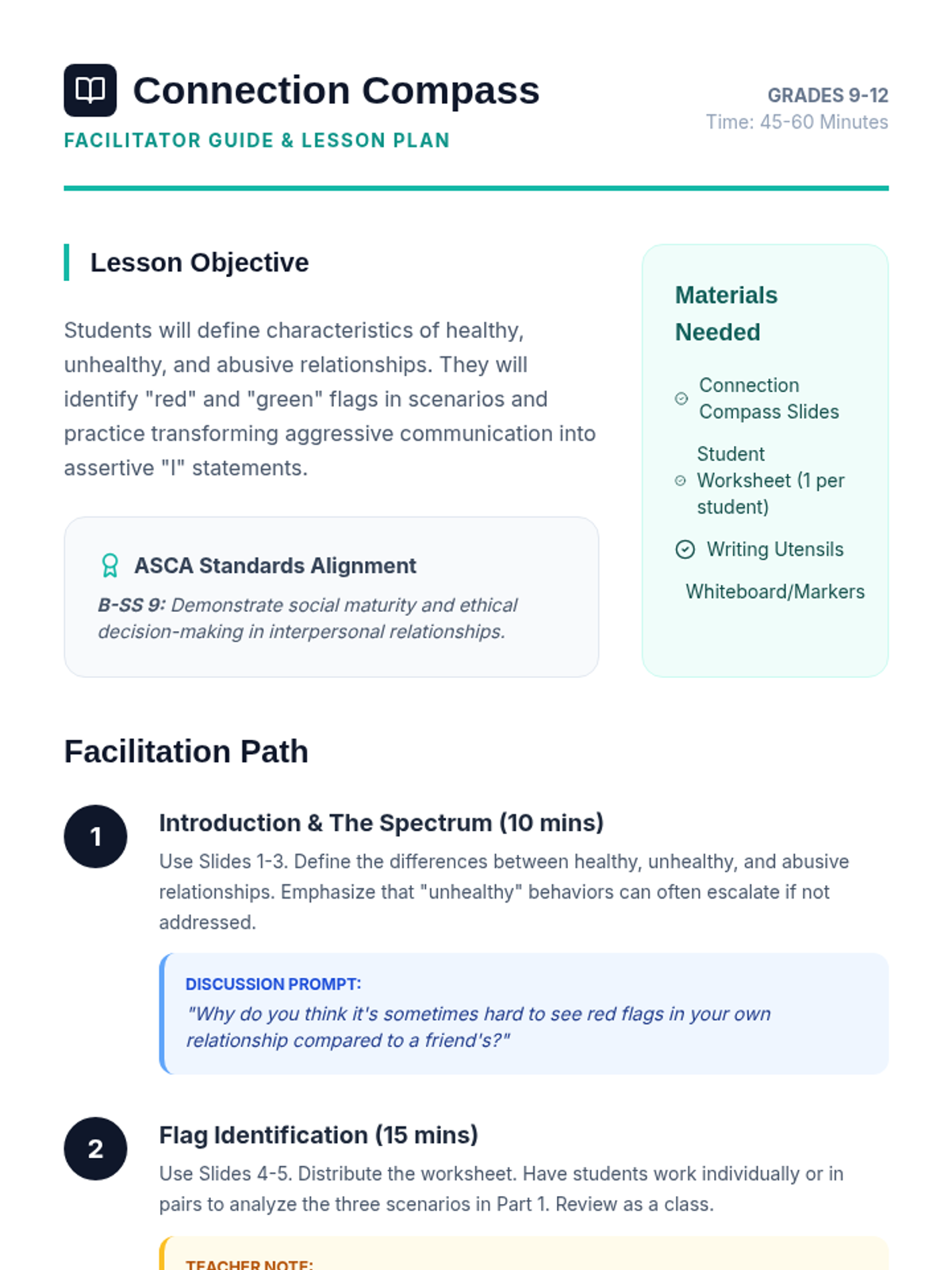
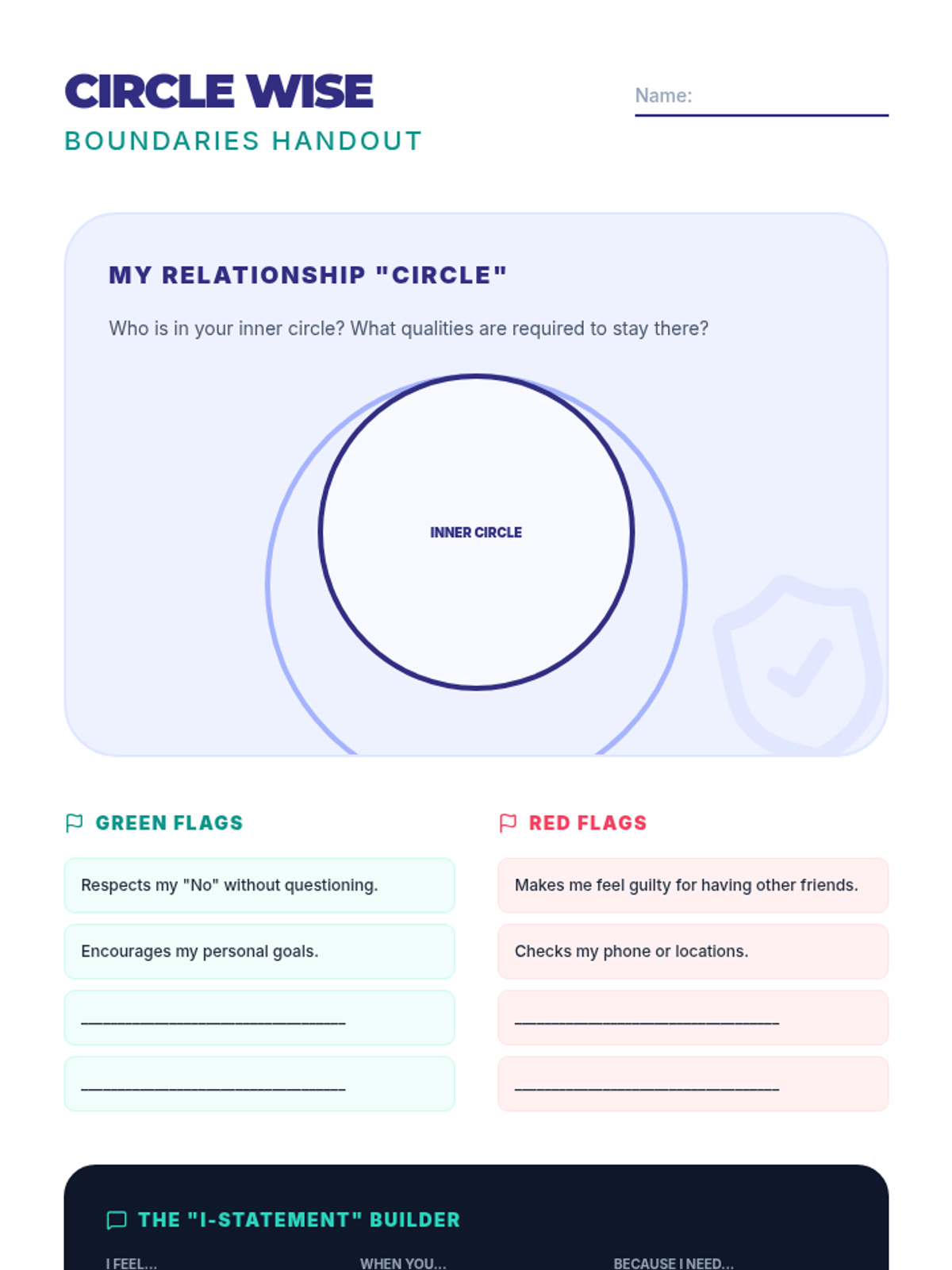
Focuses on identifying healthy and unhealthy relationship patterns. Students learn to recognize red and green flags and practice setting healthy boundaries with friends, family, and partners.
Focuses on building self-esteem by identifying personal strengths and reframing negative self-talk. Students will explore the difference between self-esteem and self-compassion through discussion and reflective activities.
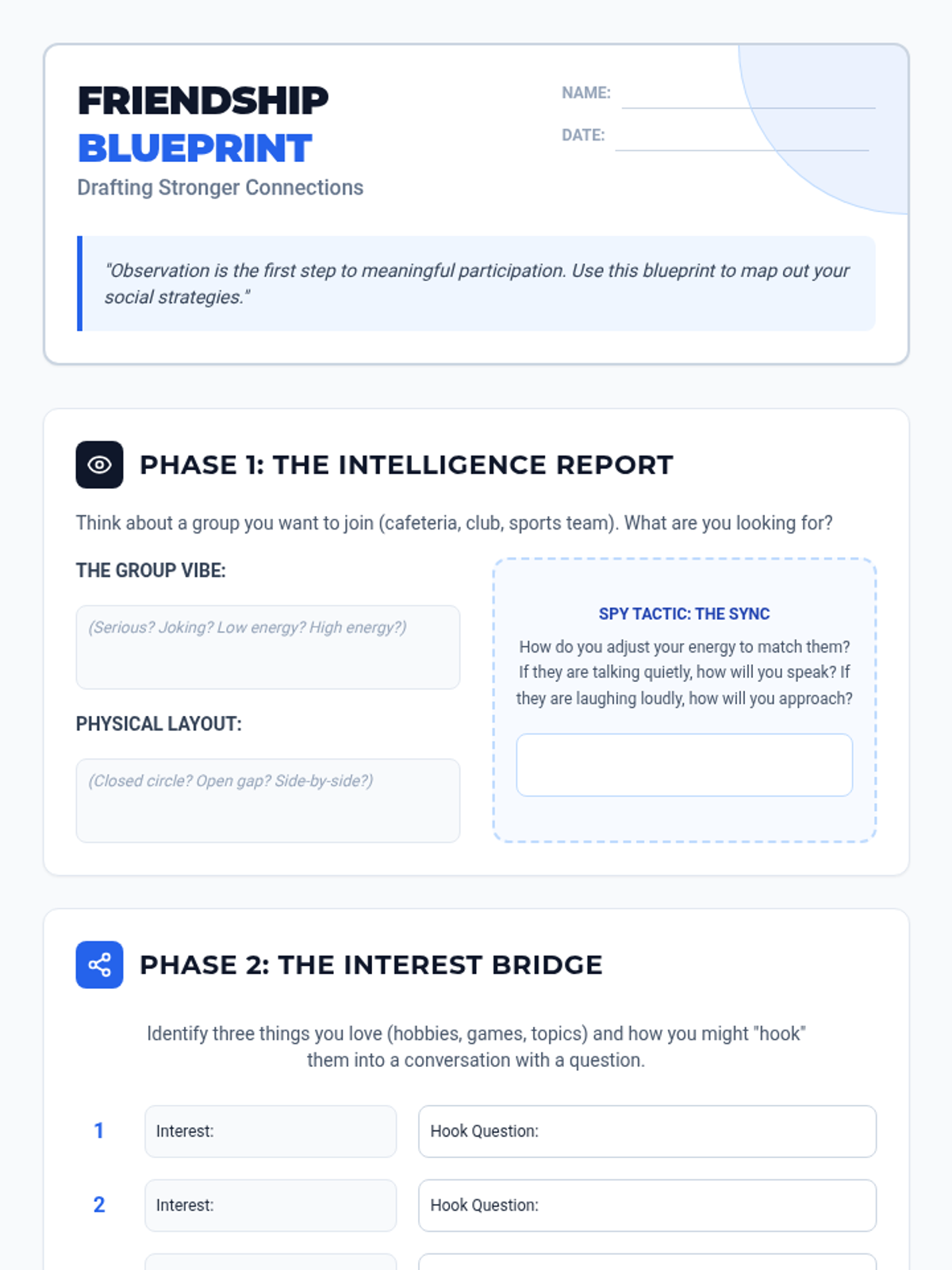
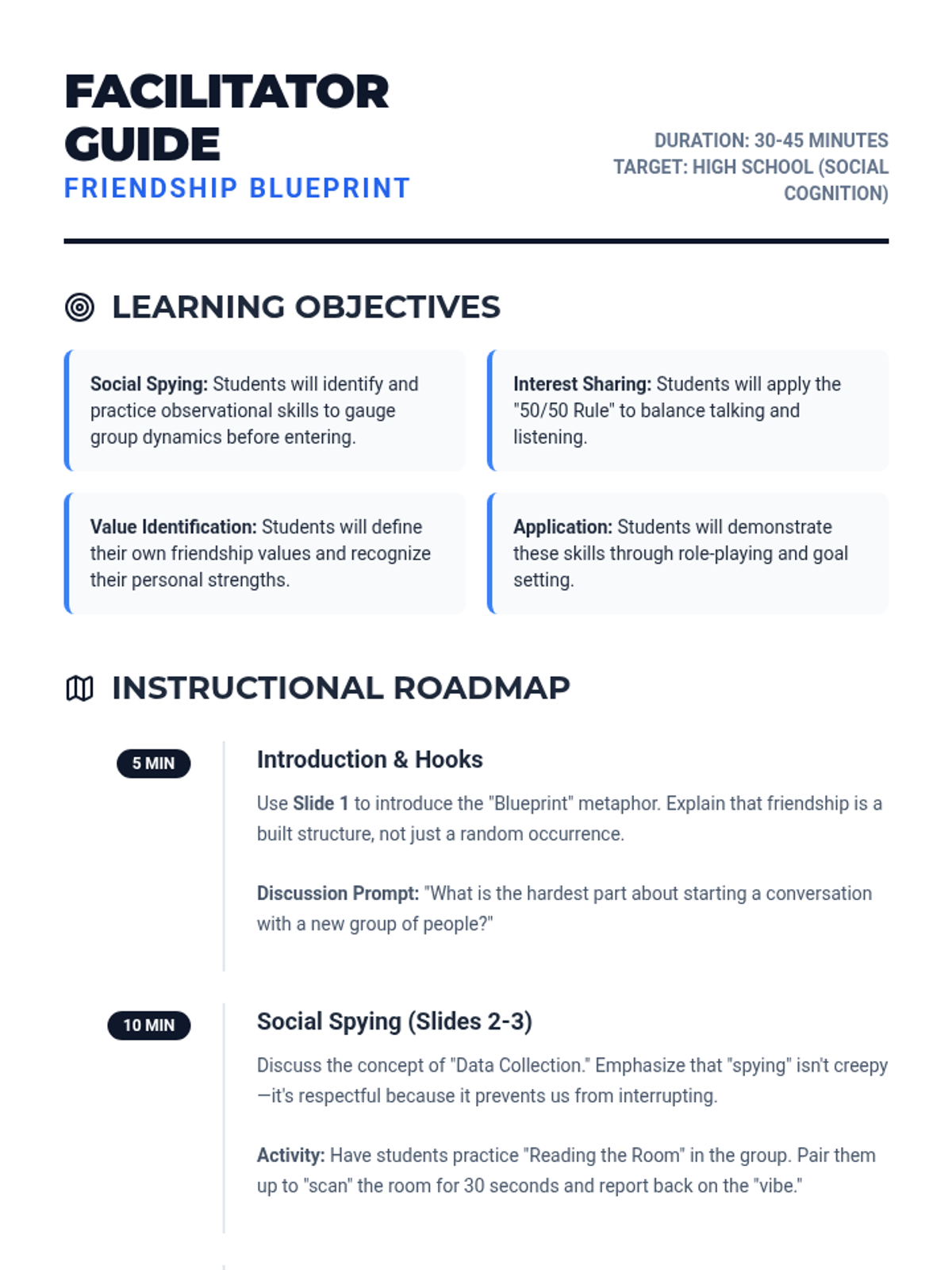
A lesson focused on developing social cognition skills for high schoolers, specifically targeting observational skills (social spying), sharing interests, and identifying personal values within friendships.
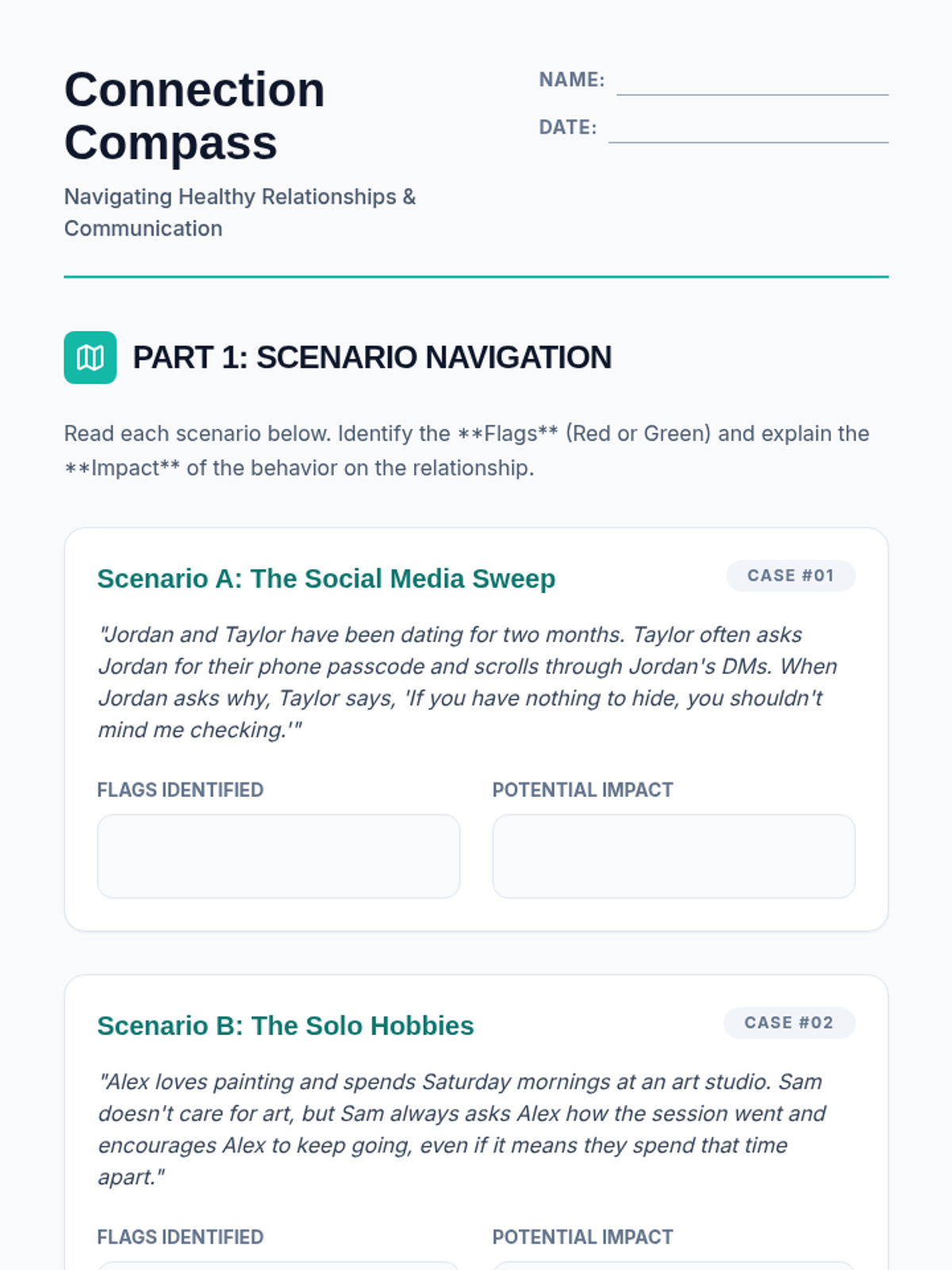
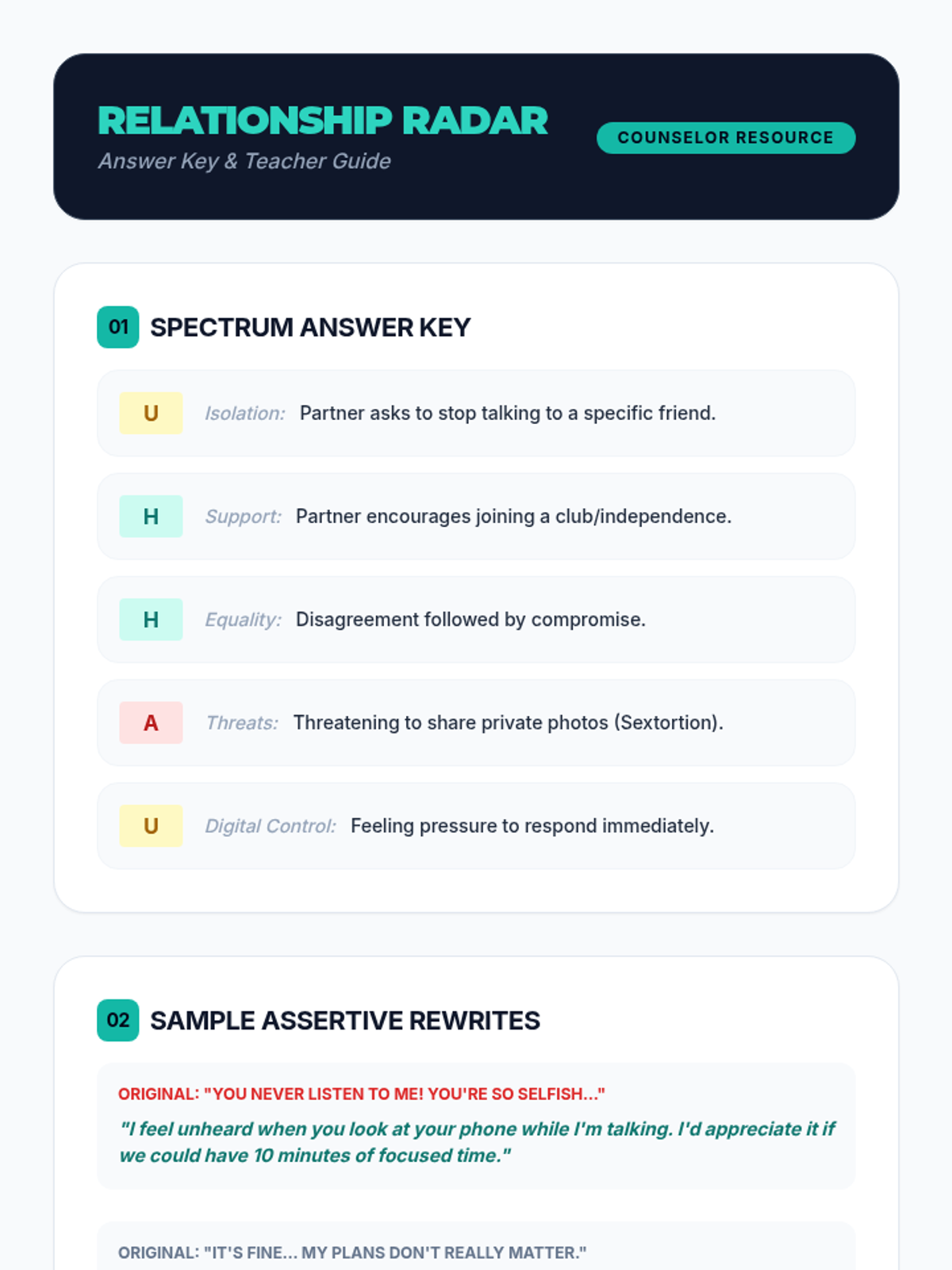
A high school counseling lesson focused on identifying red and green flags in relationships, understanding communication patterns, and applying these skills to real-world scenarios. Aligned to ASCA Mindsets & Behaviors B-SS 9.
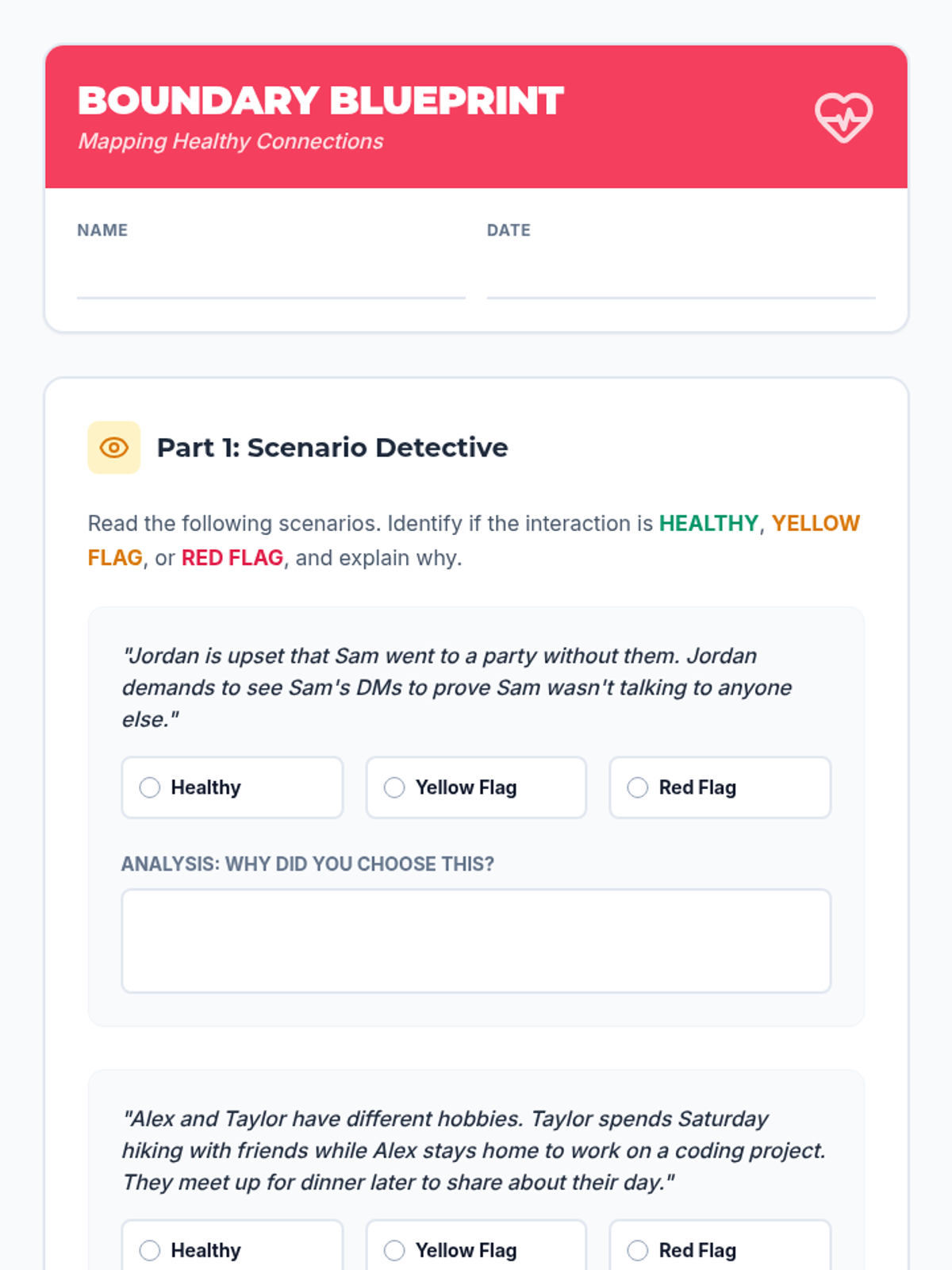
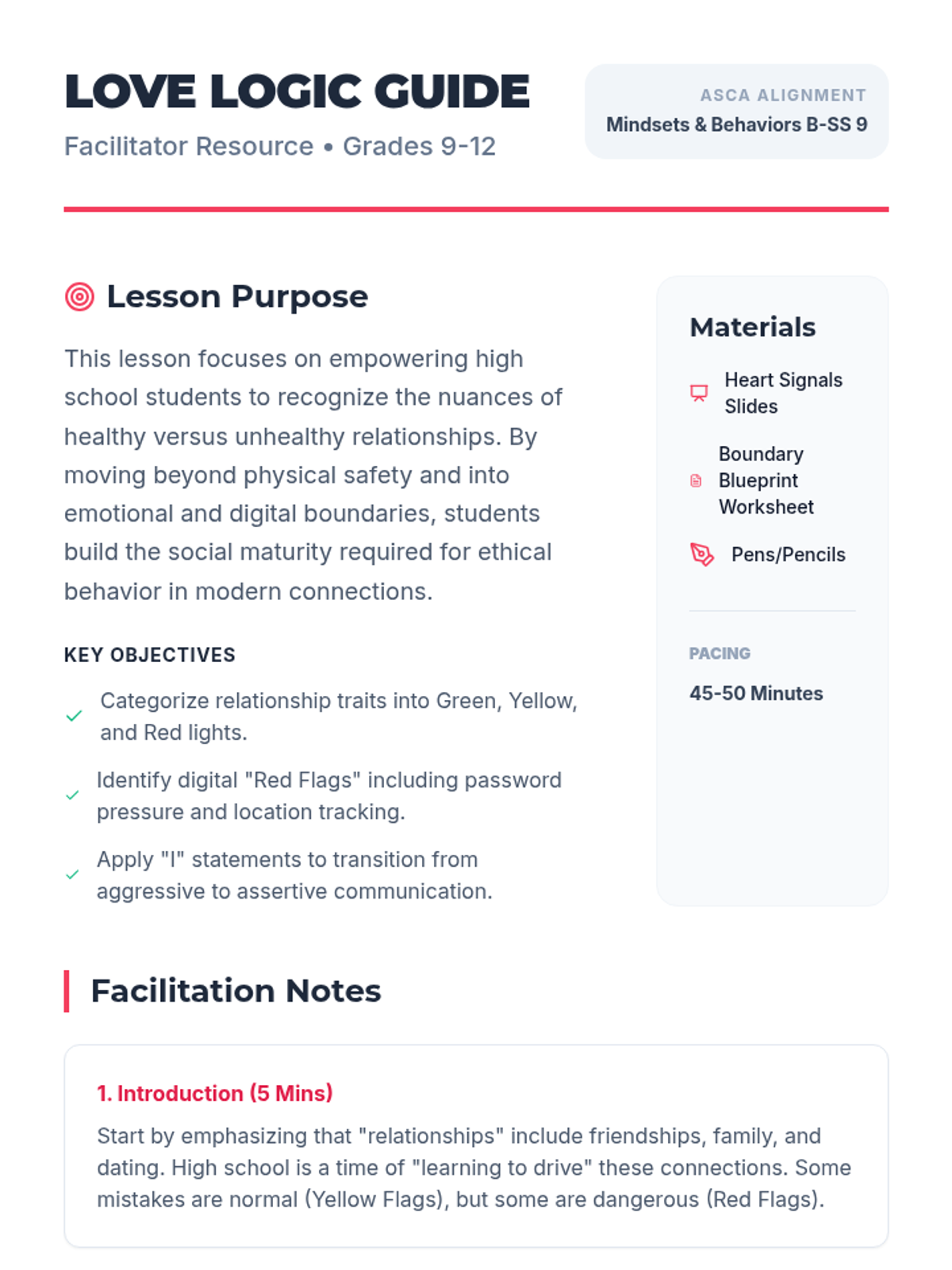
A comprehensive high school counseling lesson designed to help students distinguish between healthy and unhealthy relationship dynamics, identify red flags, and master assertive communication. Aligned with ASCA Mindsets & Behaviors B-SS 9, this lesson uses scenario-based learning to build social maturity and ethical relationship skills.
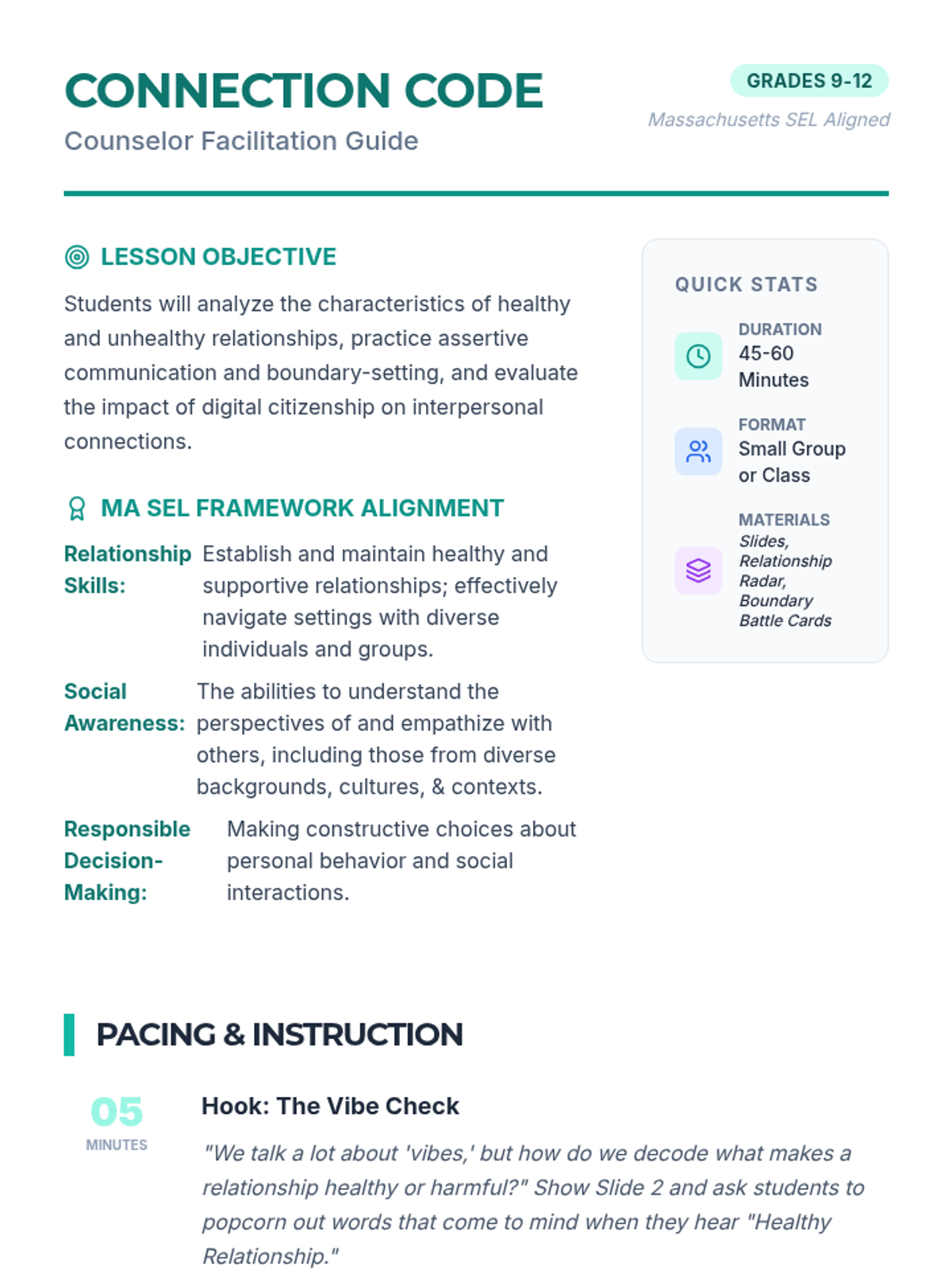
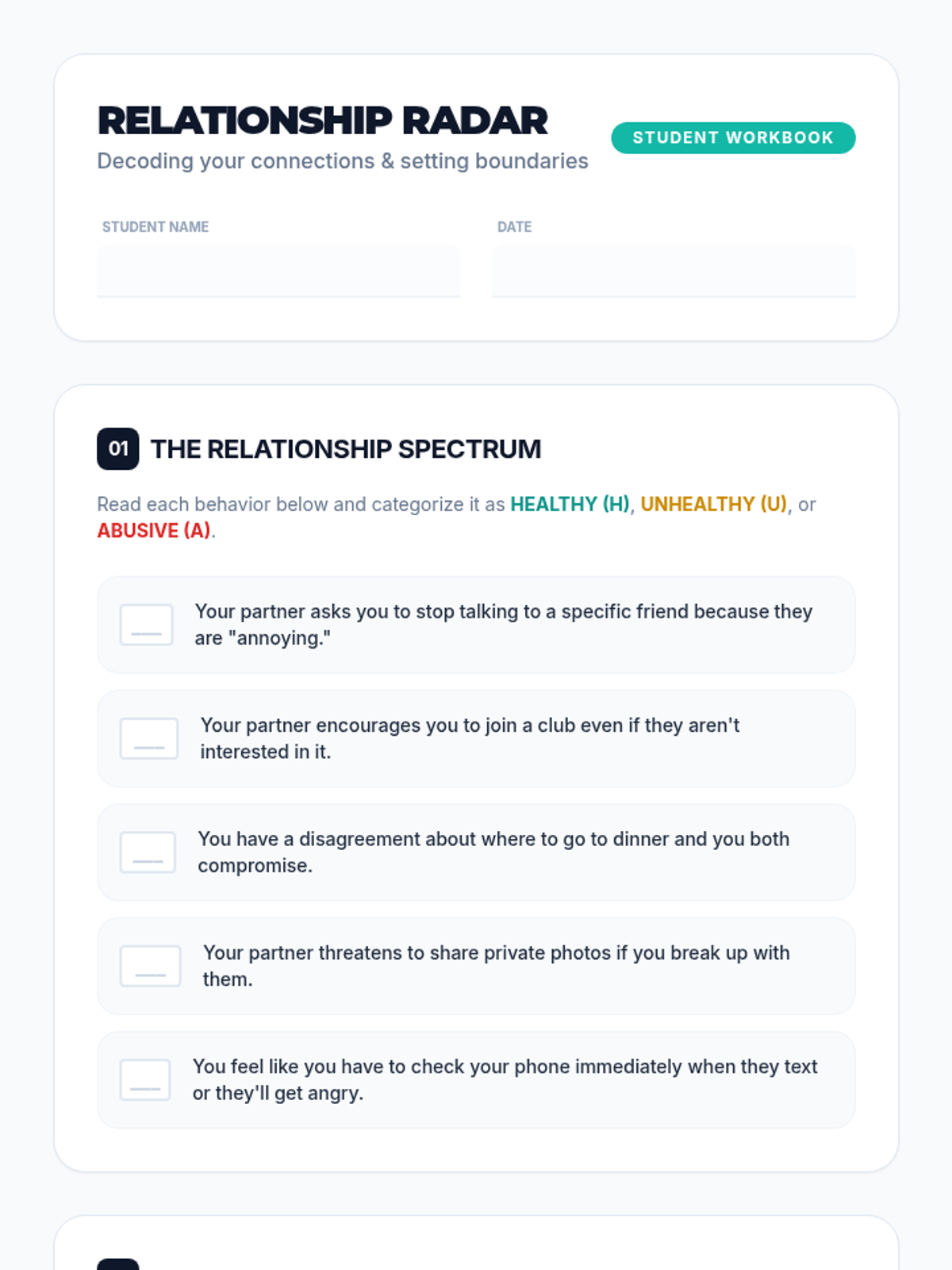
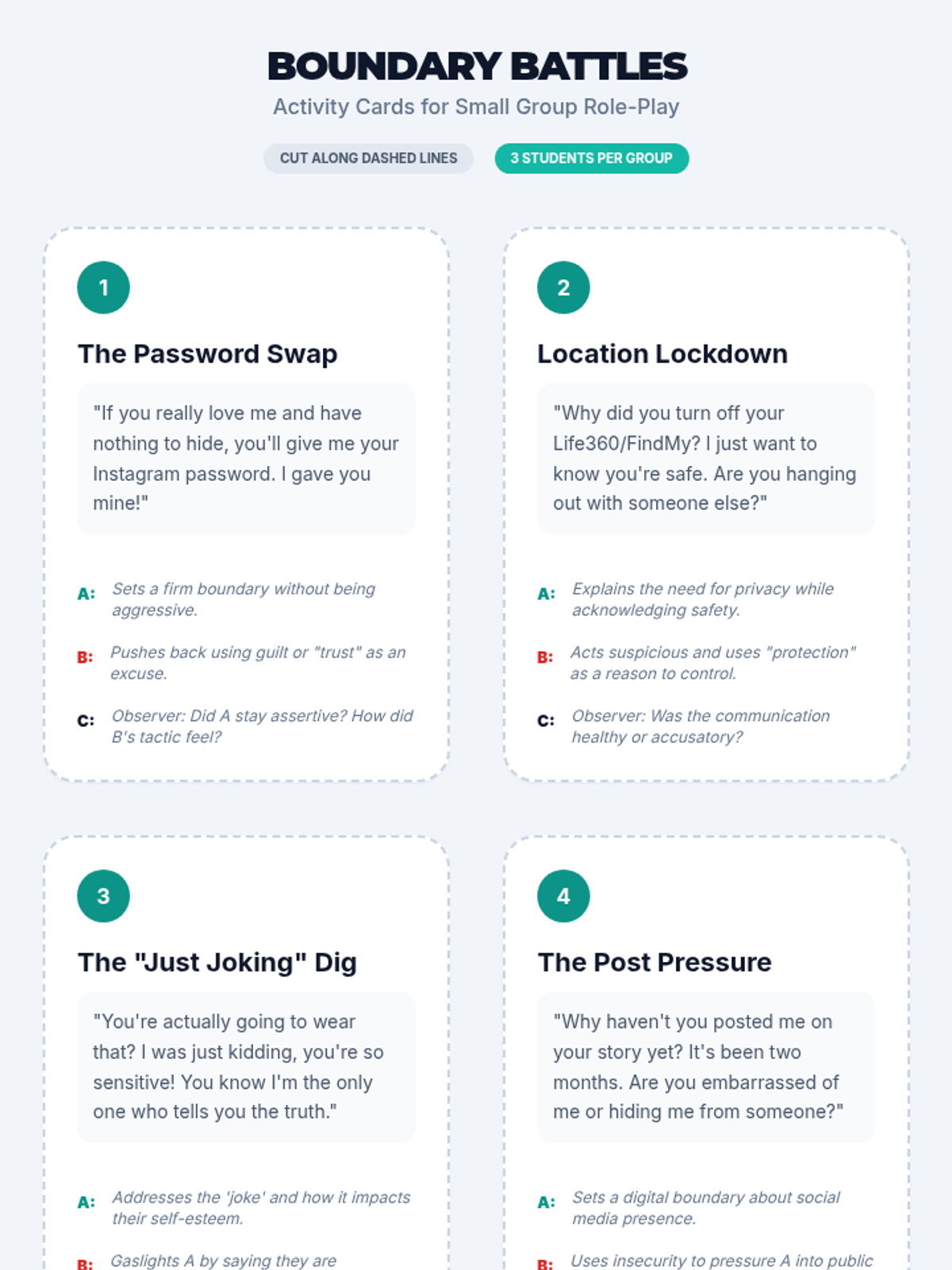
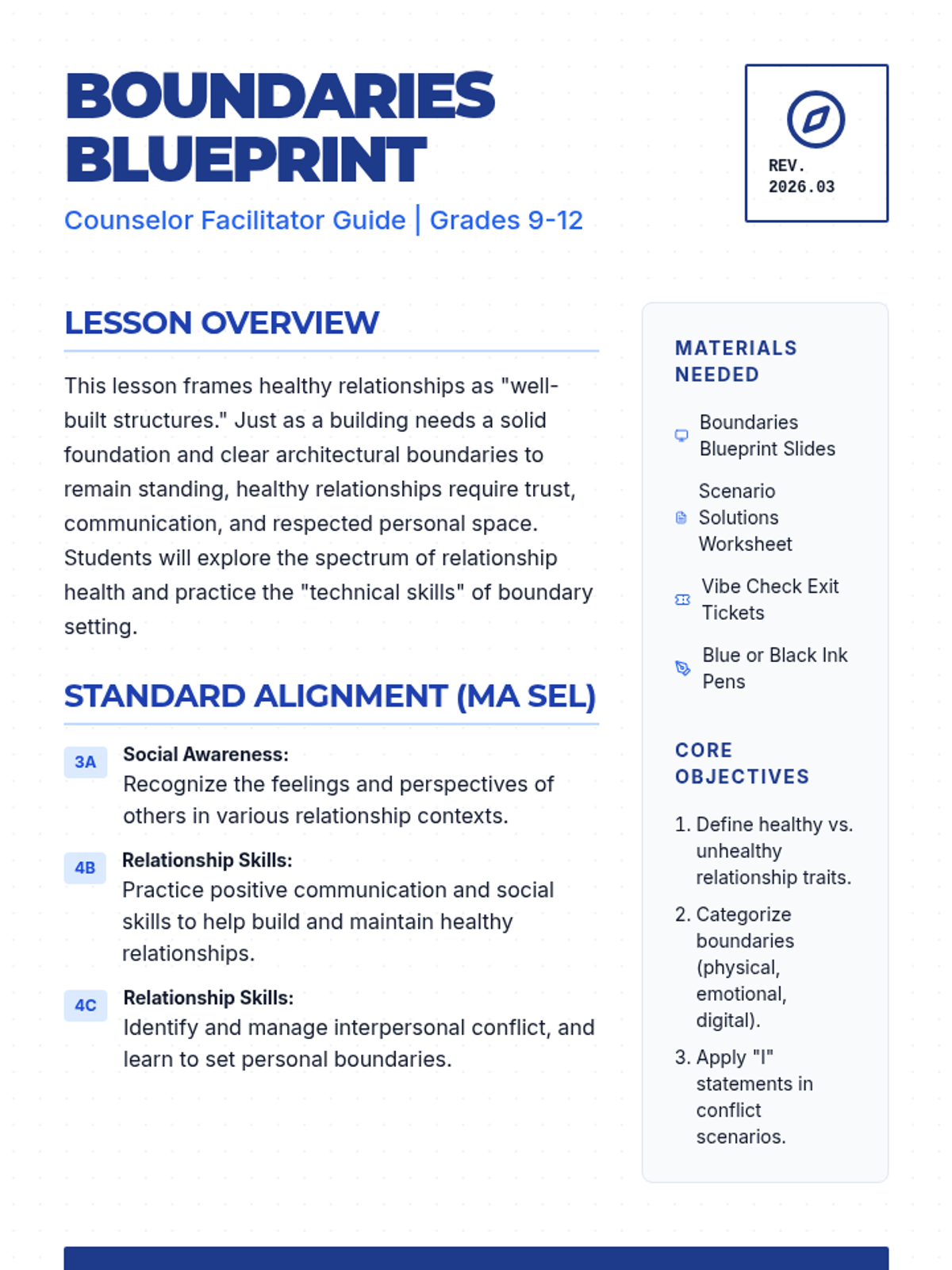
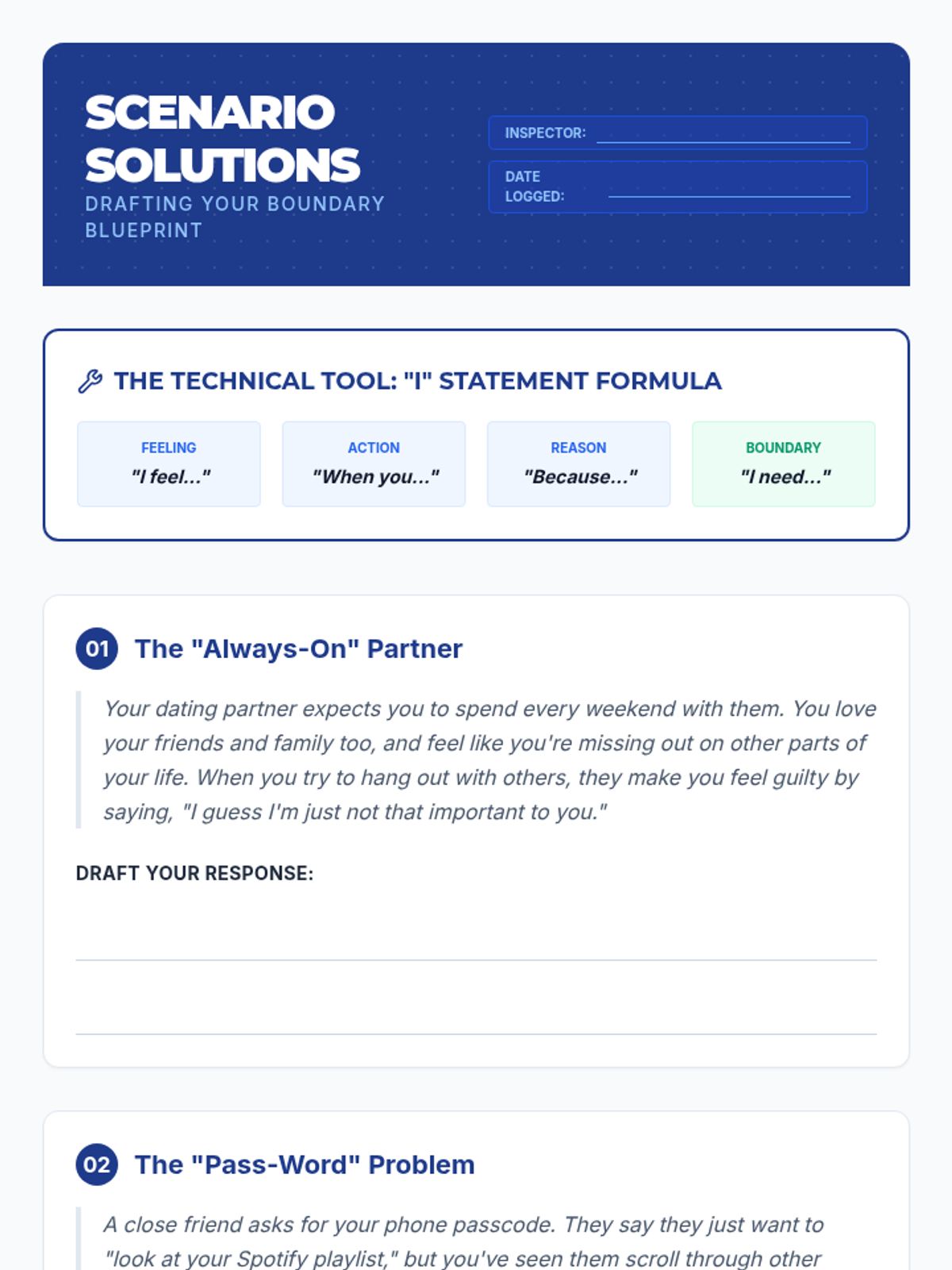
A comprehensive lesson for high school students, facilitated by counselors, focusing on identifying healthy vs. unhealthy relationship patterns, mastering communication, and navigating digital boundaries. Aligned with Massachusetts SEL Frameworks for grades 9-12.
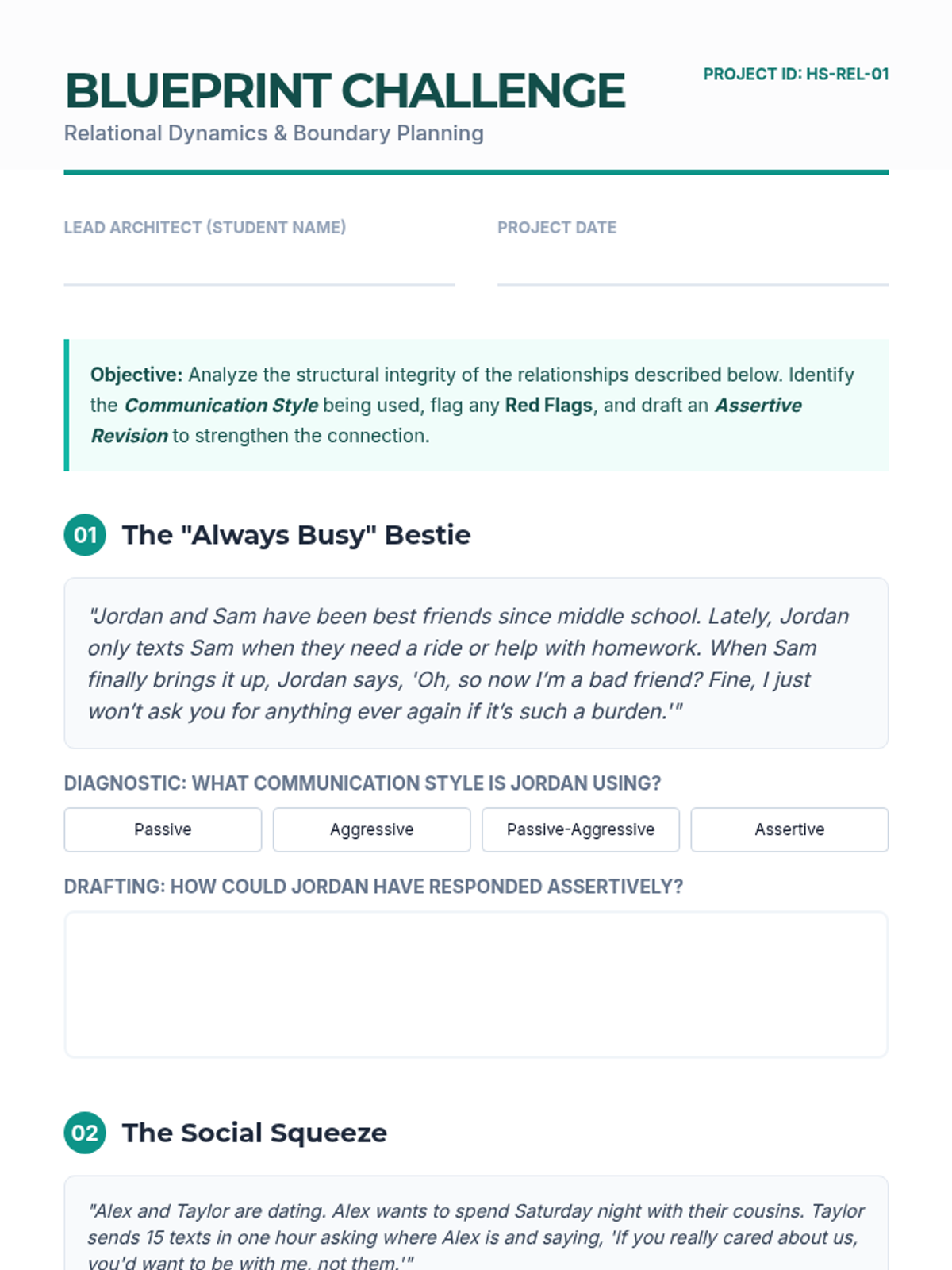
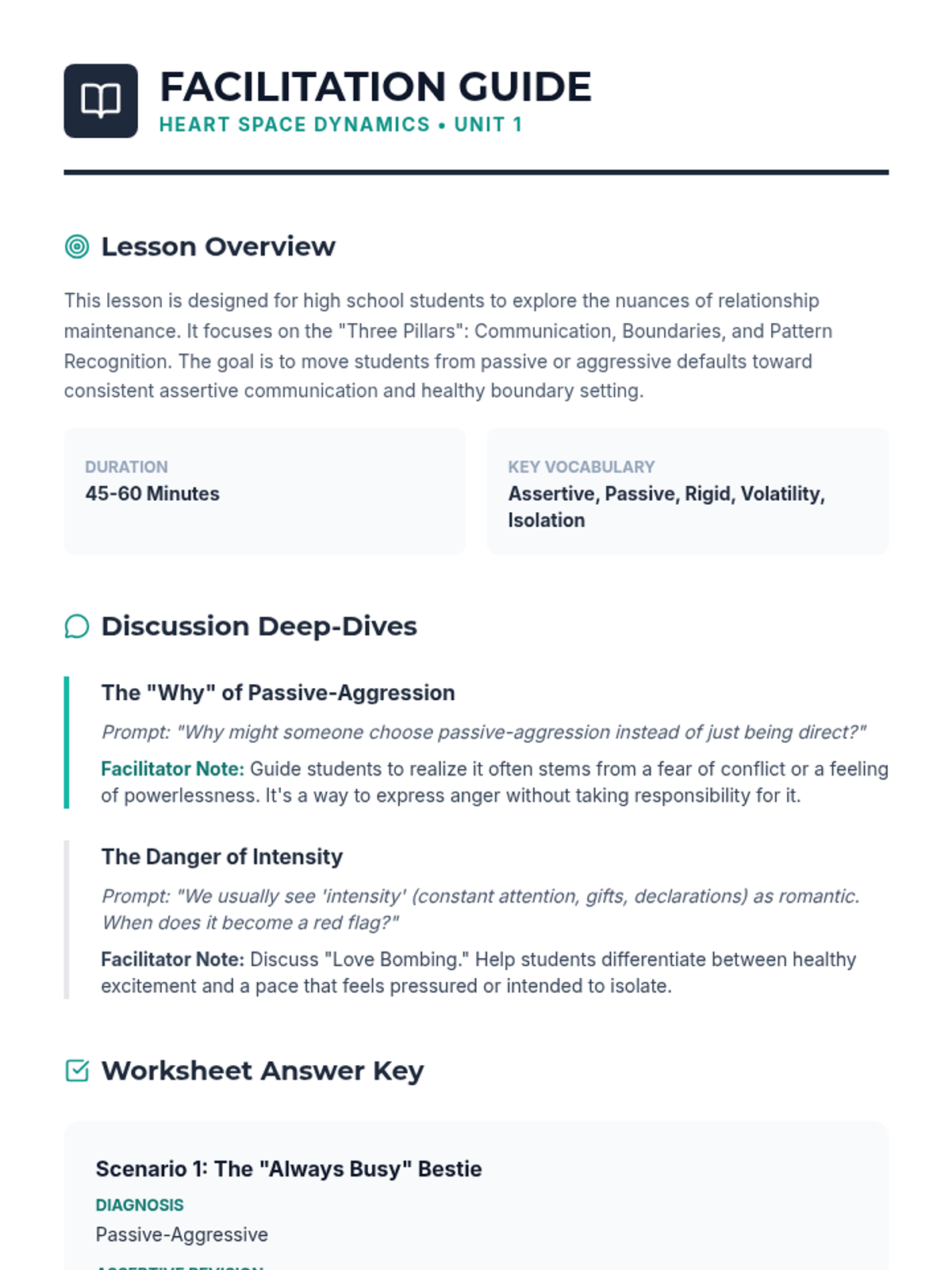
A comprehensive high school counseling lesson designed to help students navigate the complexities of healthy relationships, identify red flags, and master the art of setting and respecting personal boundaries through the lens of architectural blueprinting.
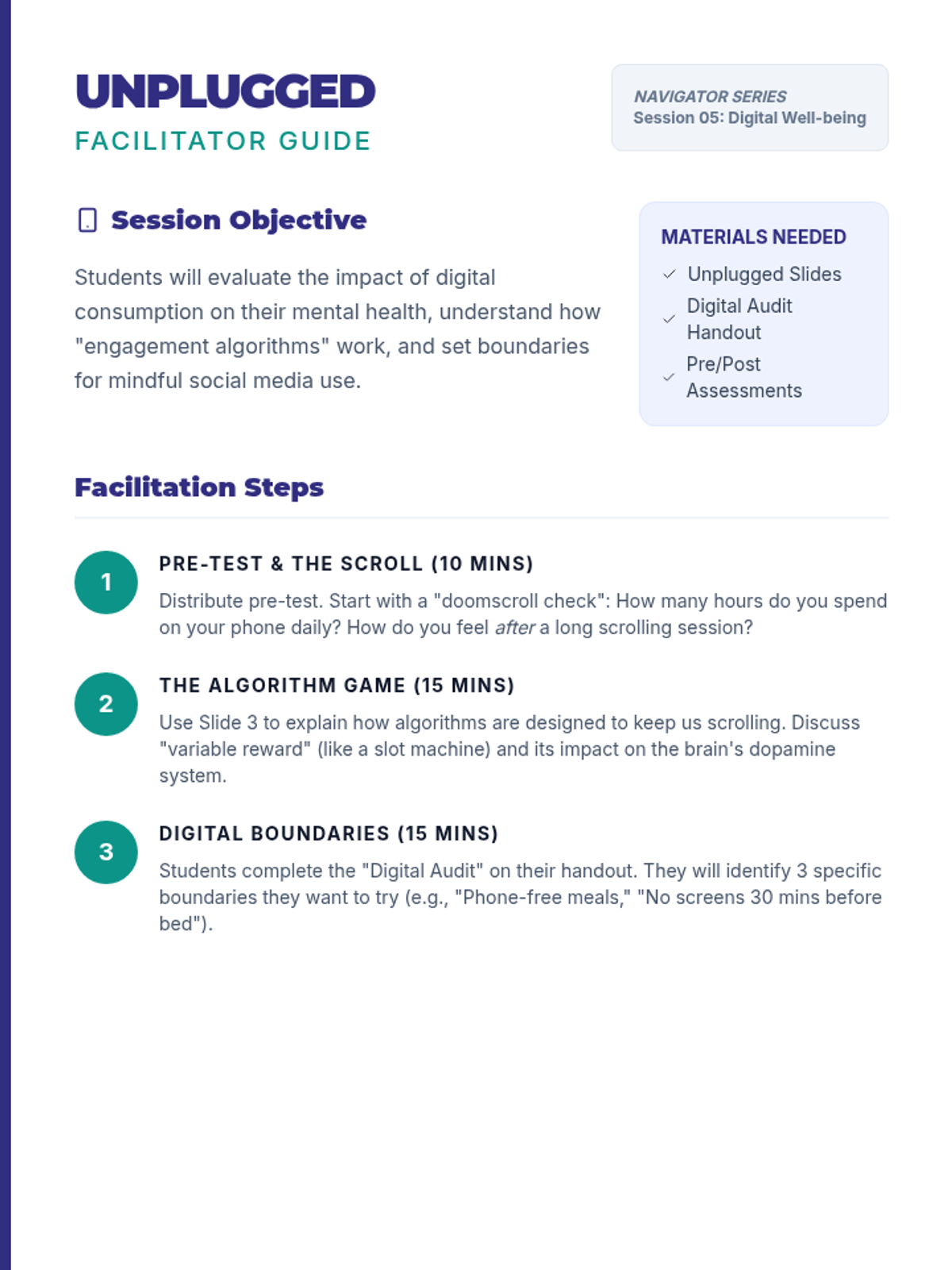
Addressing the impact of social media and technology on mental health, focusing on digital boundaries and mindful consumption.
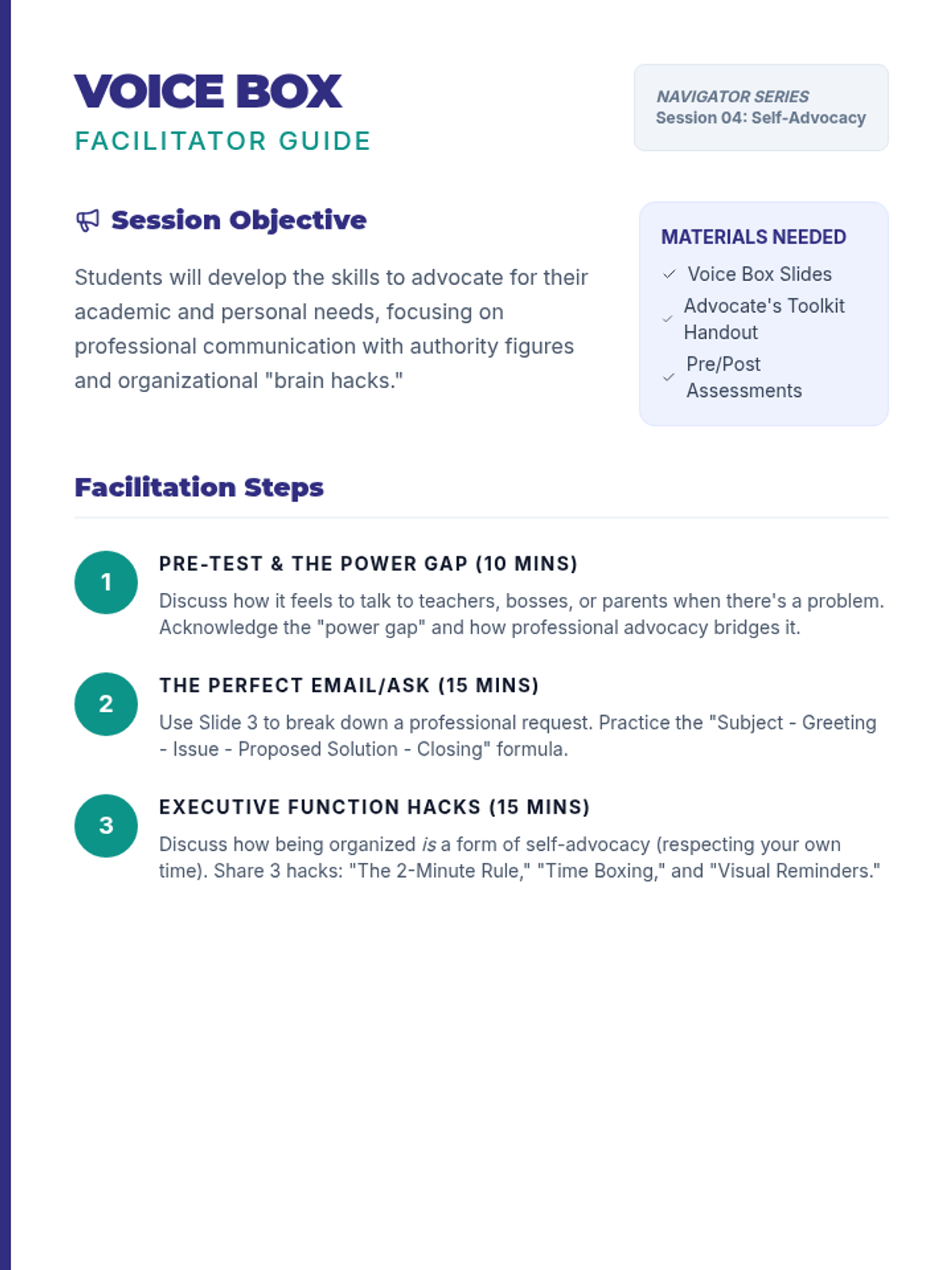
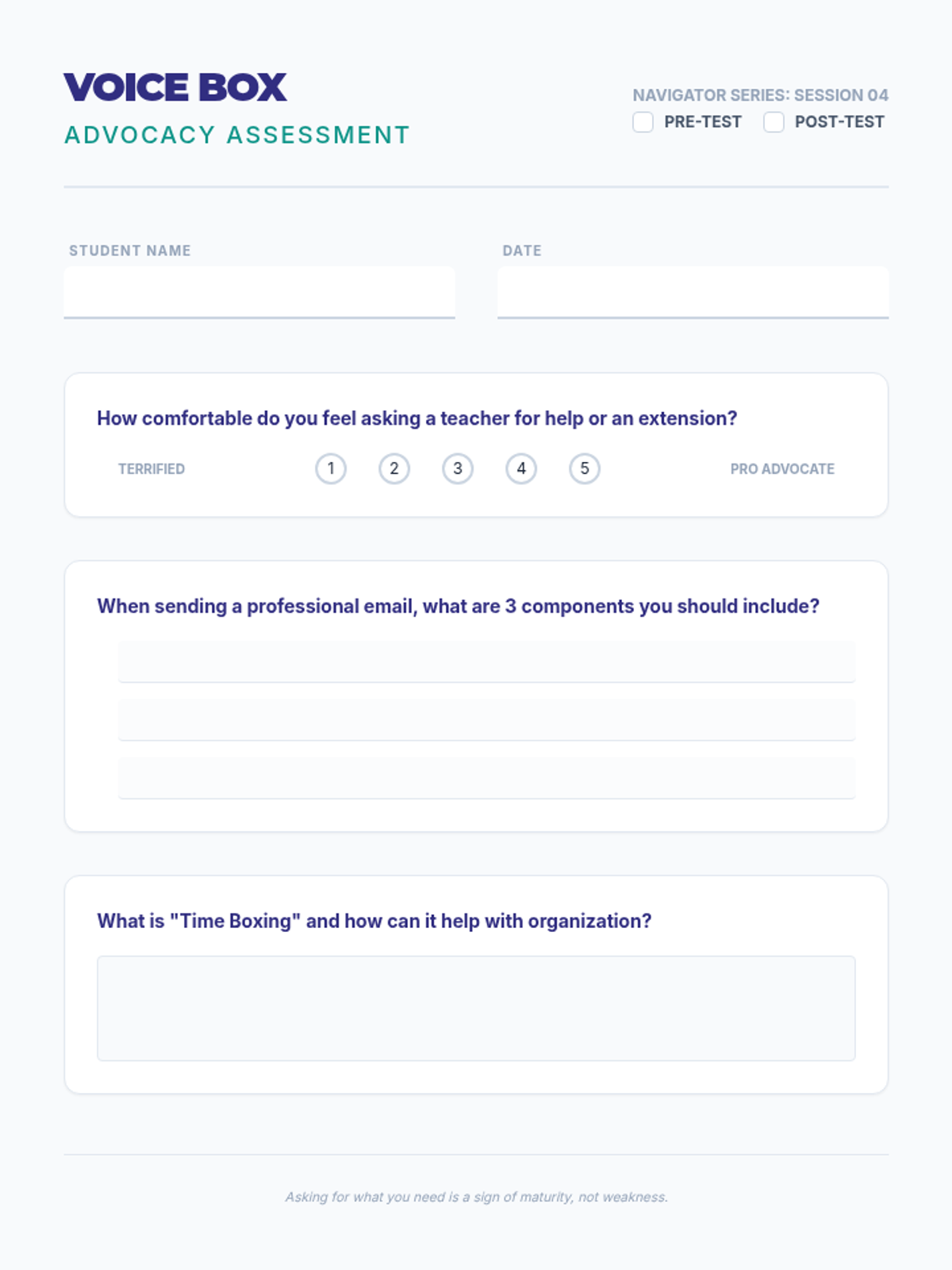
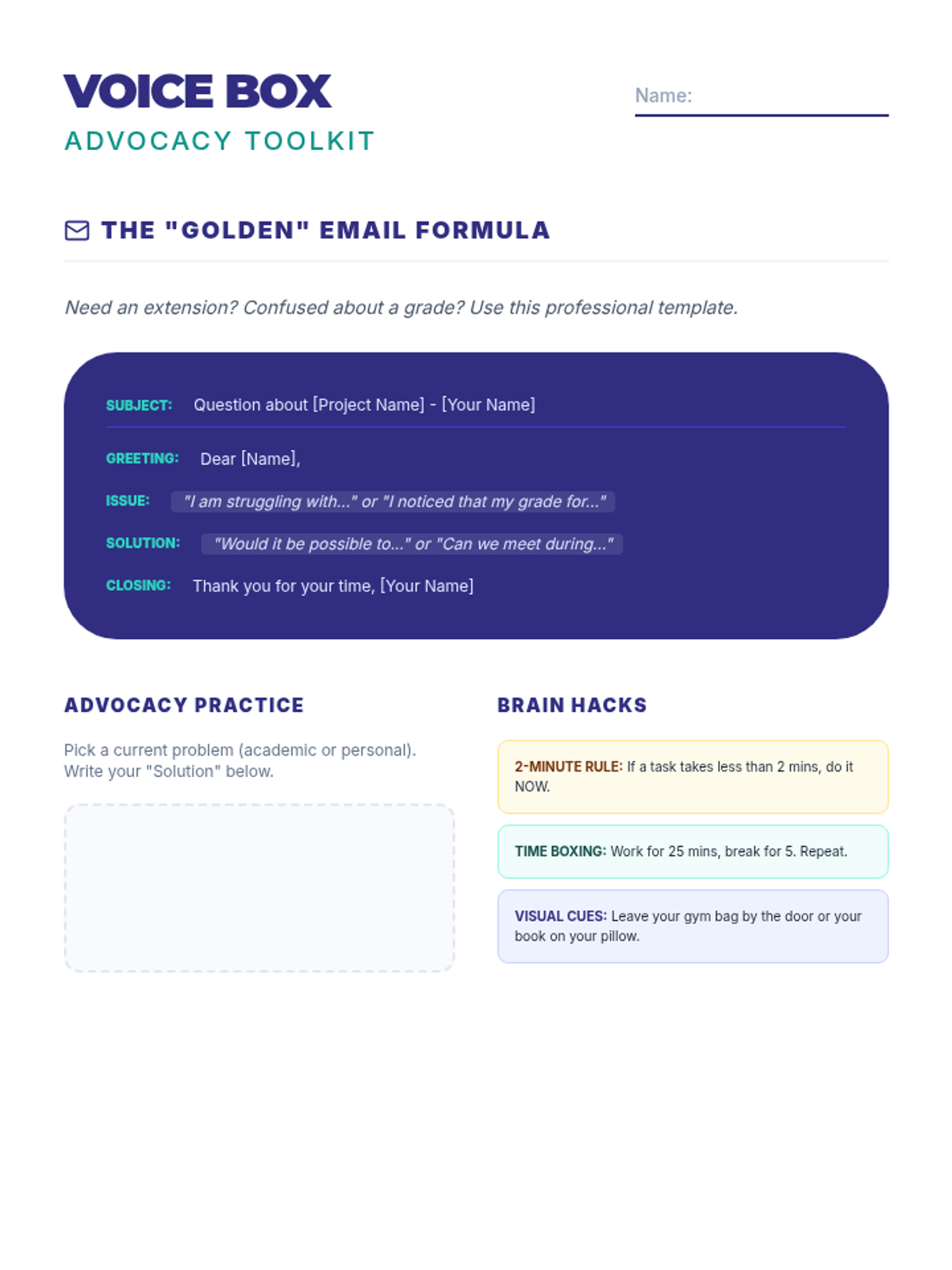
Empowering students to advocate for their needs in academic and personal settings while improving executive functioning and organizational skills.
An exploration of healthy versus unhealthy relationship dynamics, boundaries, and effective communication skills for high schoolers.
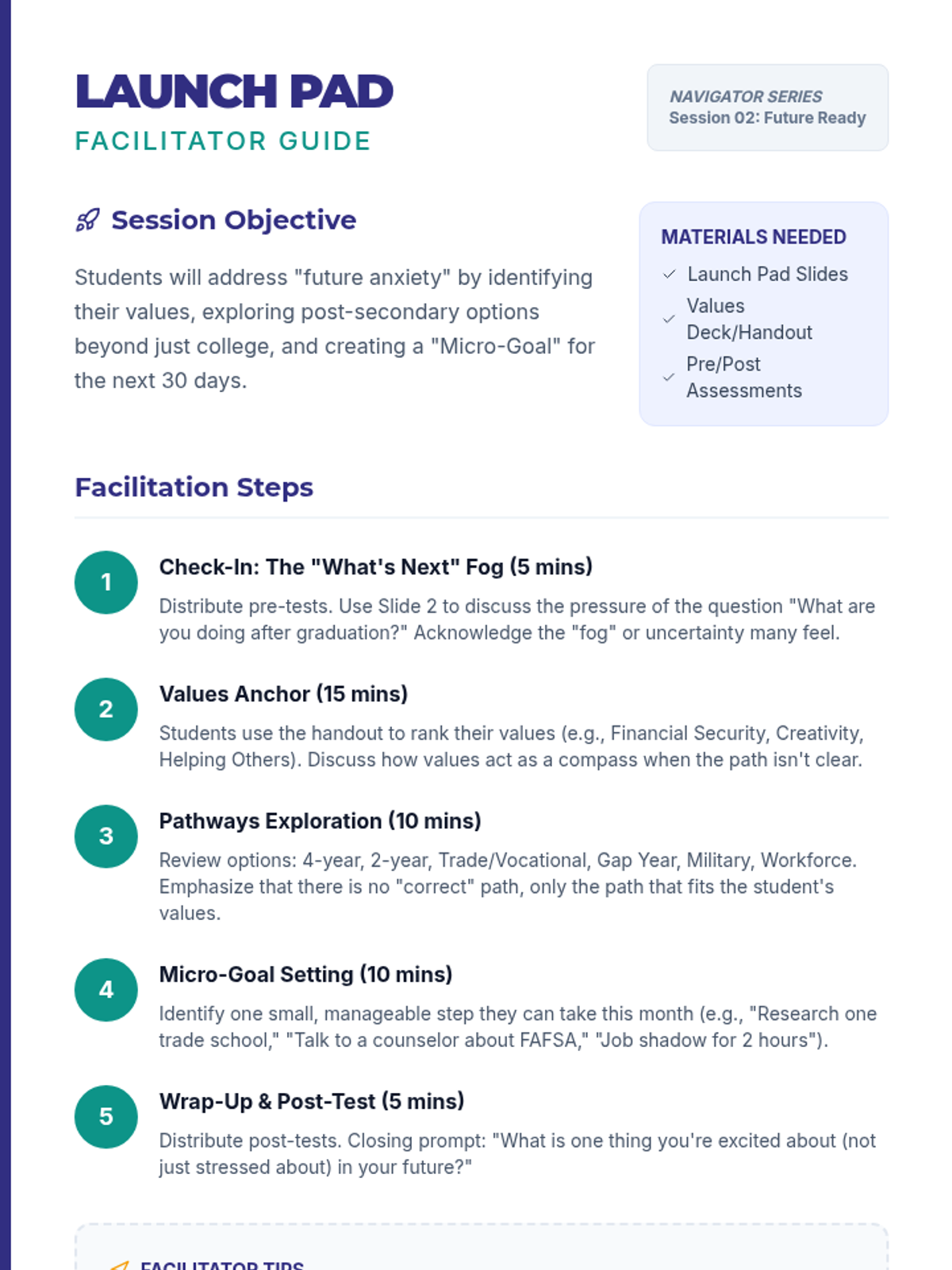
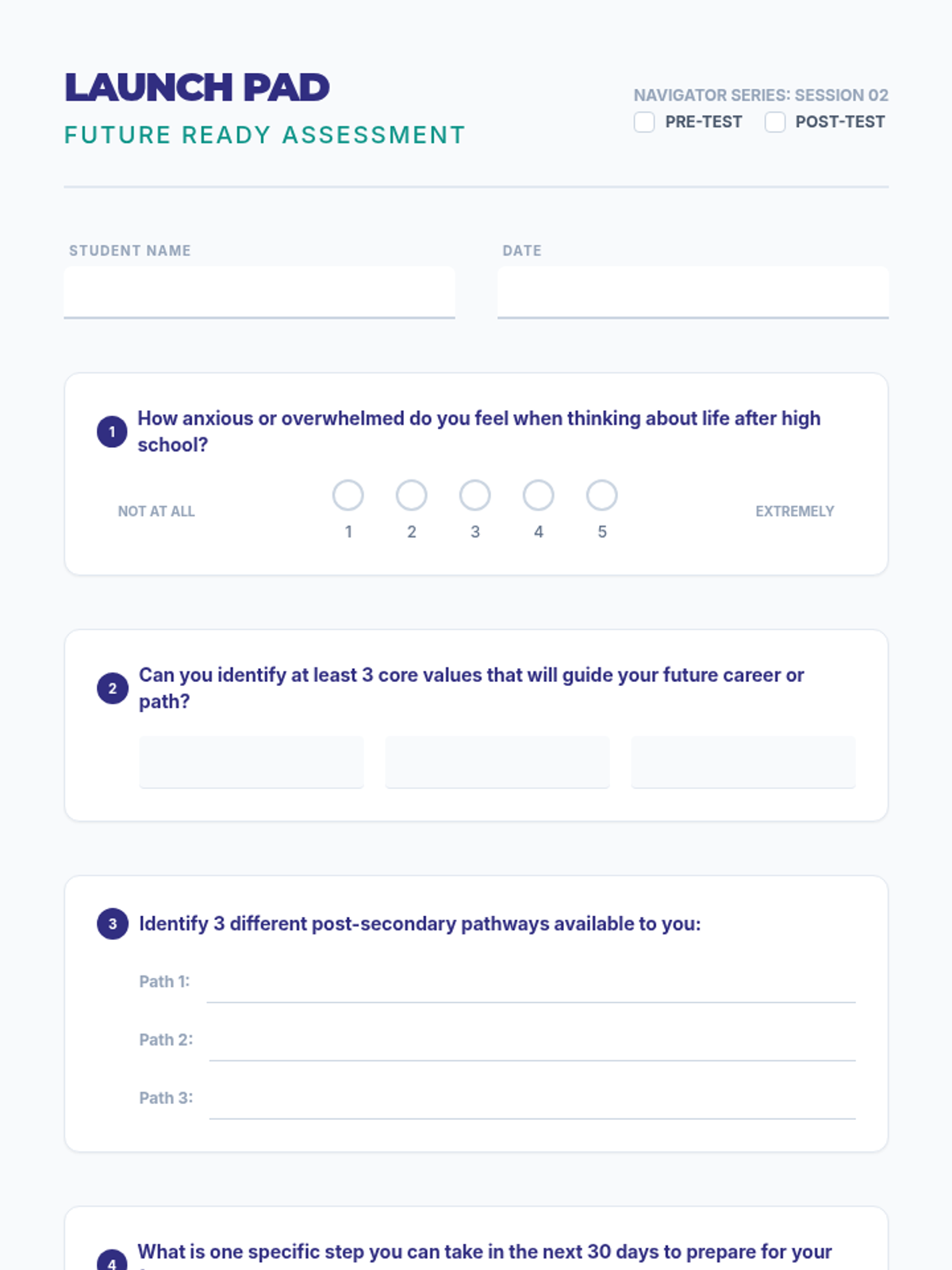
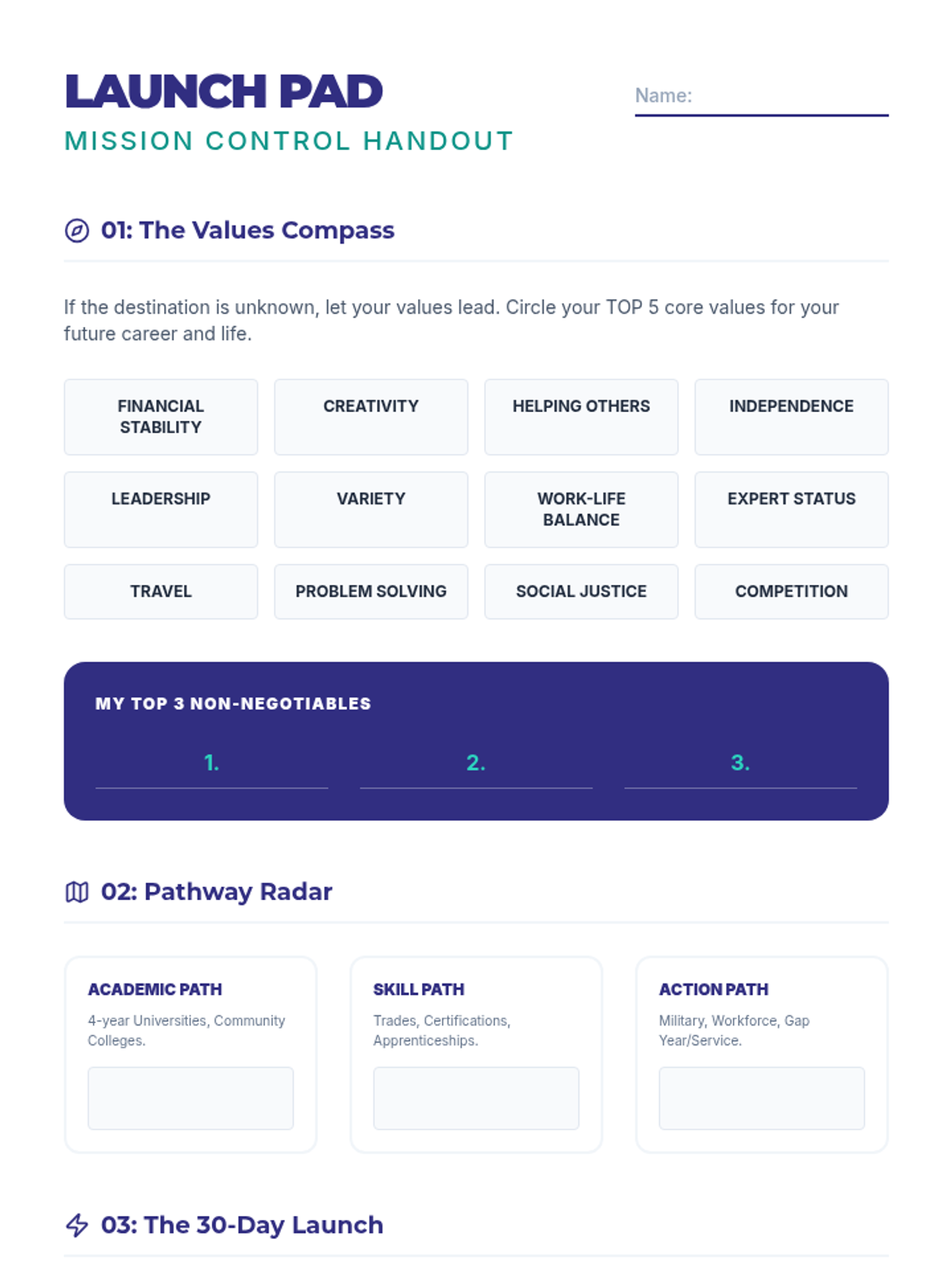
A session helping students navigate the transition to post-secondary life, focusing on career exploration, goal setting, and managing 'future anxiety'.
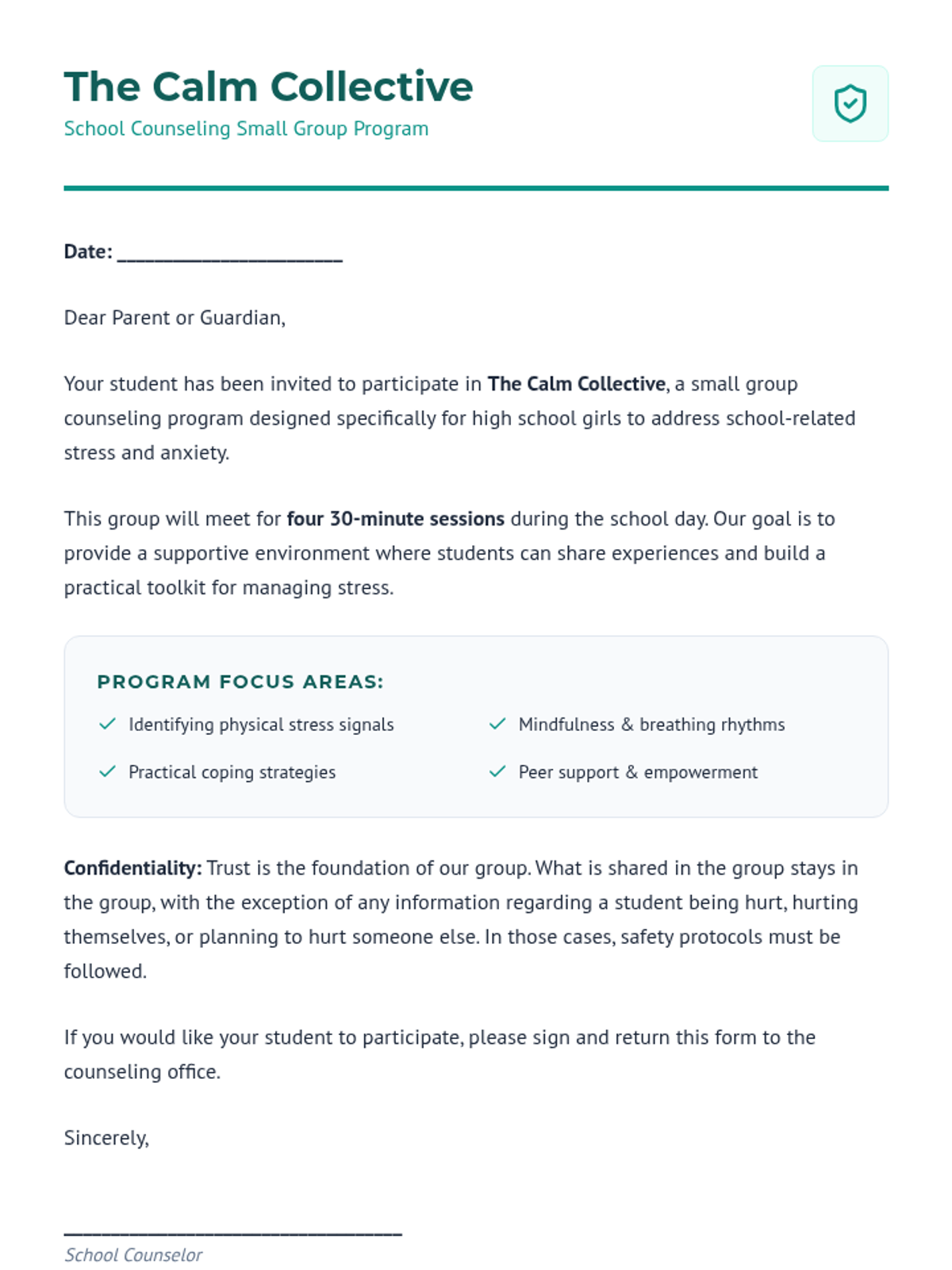
A small group session focused on identifying stressors and developing healthy coping mechanisms for high school students facing academic and social pressure.
A comprehensive high school lesson focused on navigating the complexities of modern relationships. Students will explore communication styles, define personal boundaries, and learn to identify both healthy and toxic relational patterns through interactive scenarios.
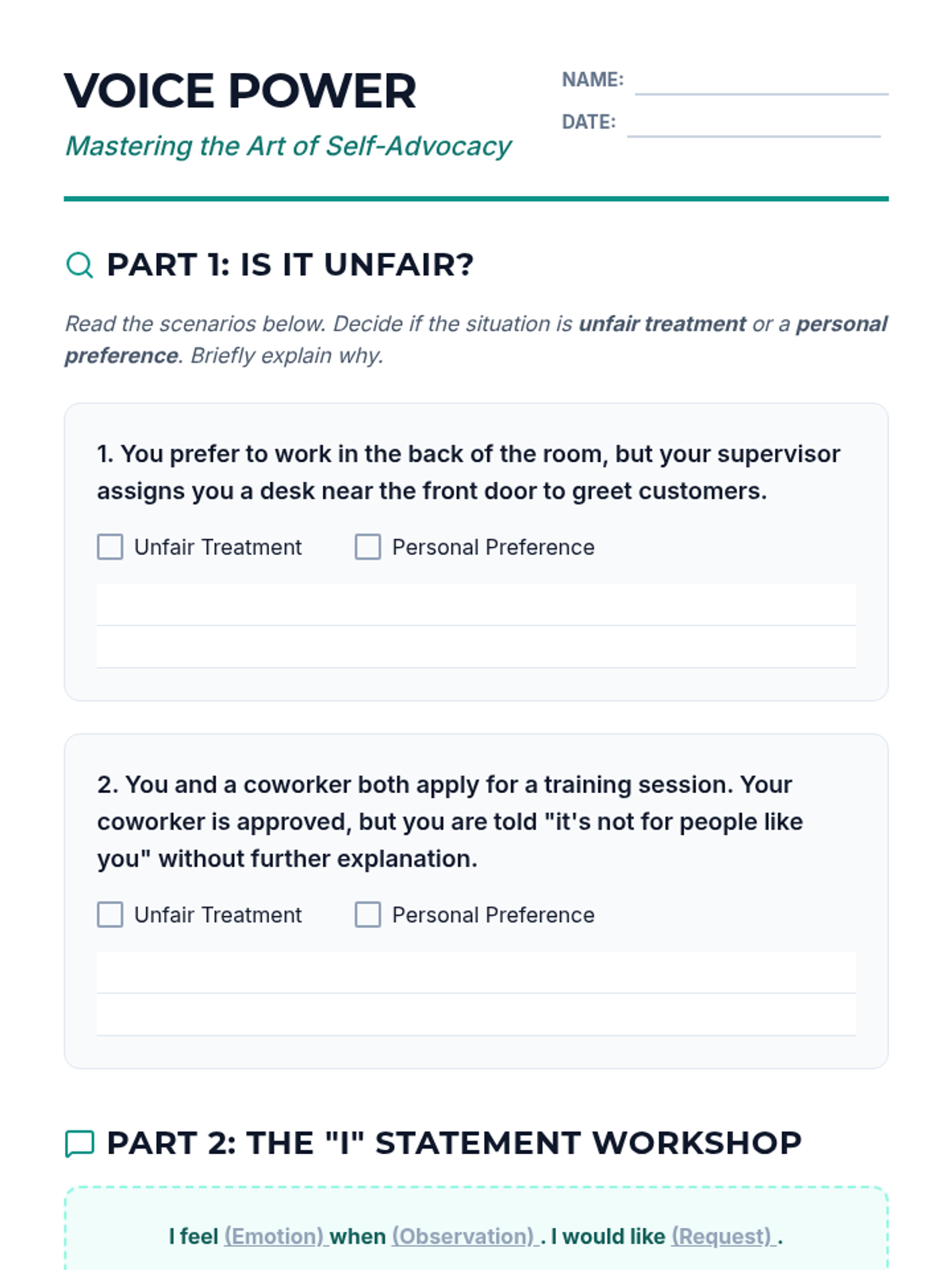
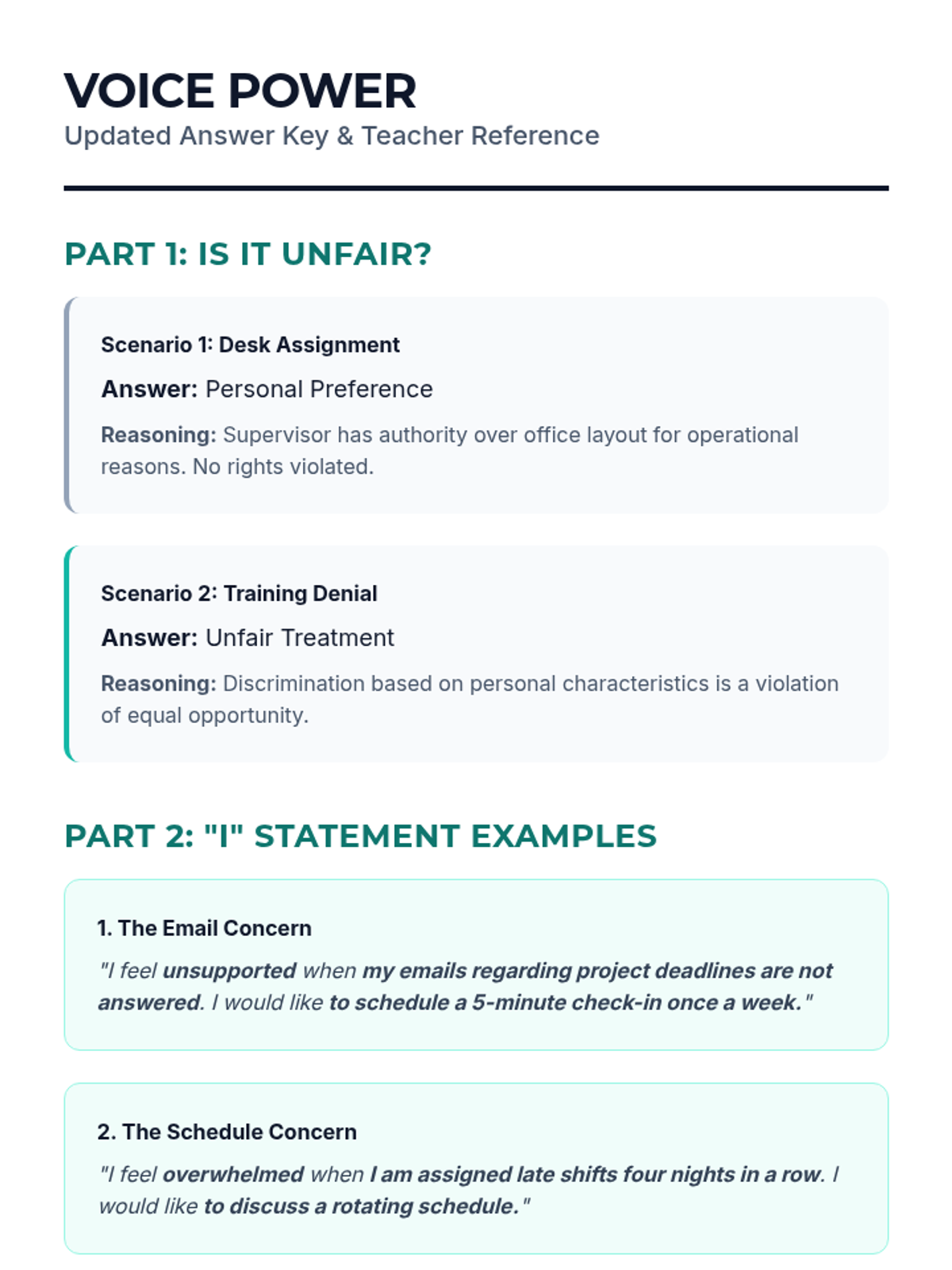
This lesson empowers students to identify unfair treatment and provides a step-by-step framework for self-advocacy, including 'I' statements and formal complaint procedures.
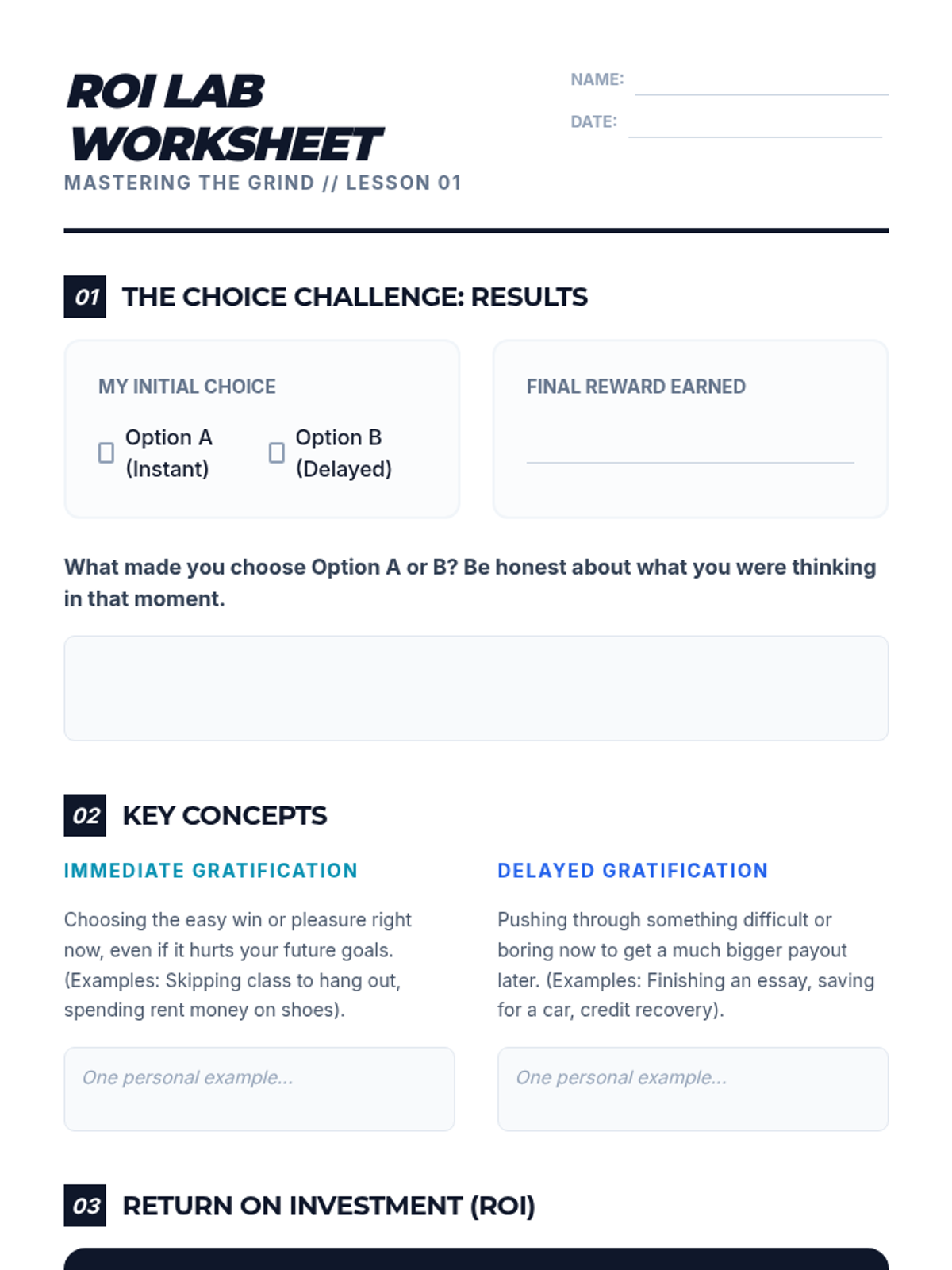
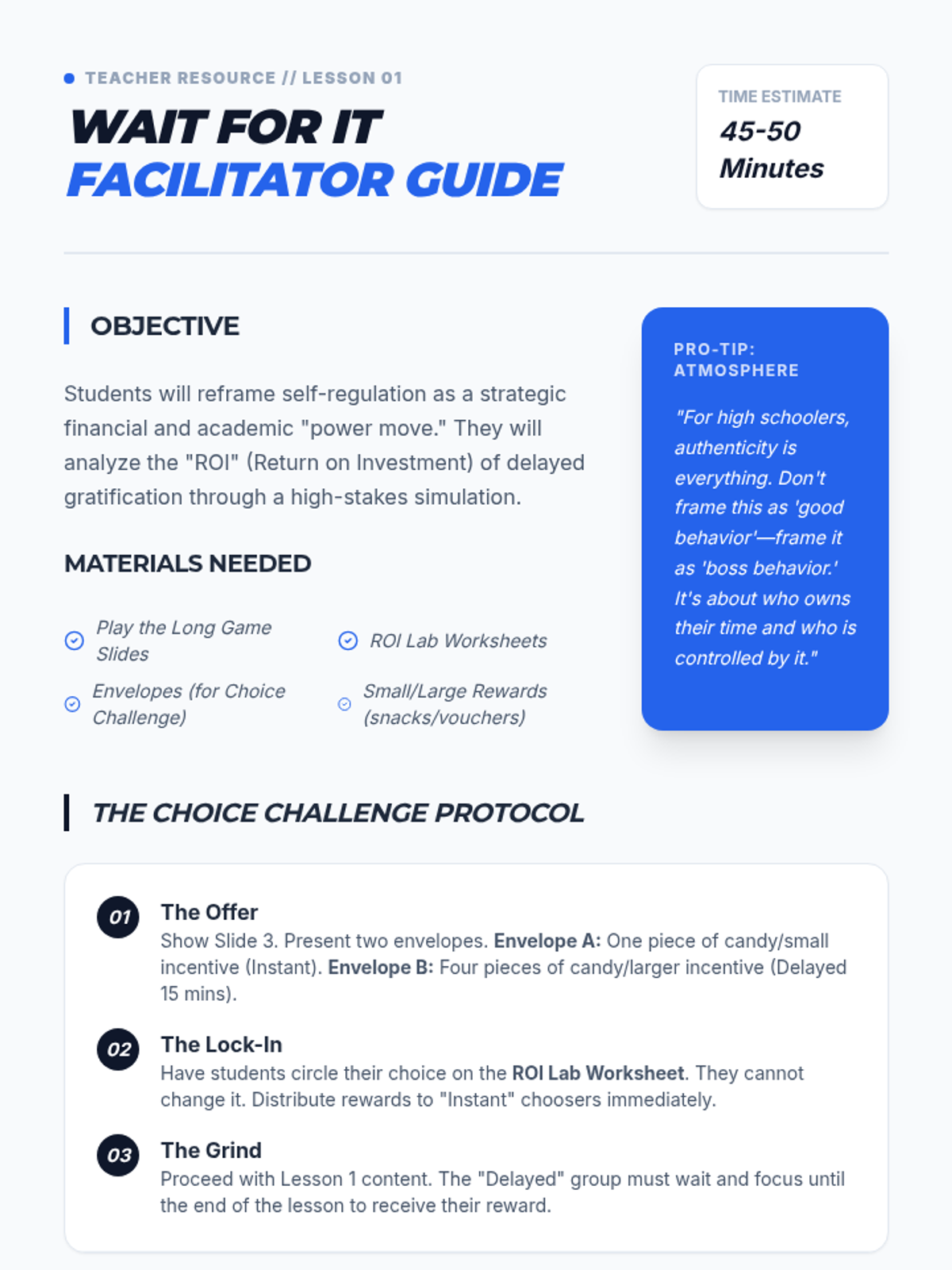
Reframes delayed gratification as a strategic investment. Students analyze the 'ROI' of their time and credits, participating in a simulation that mirrors real-world economic and academic trade-offs.
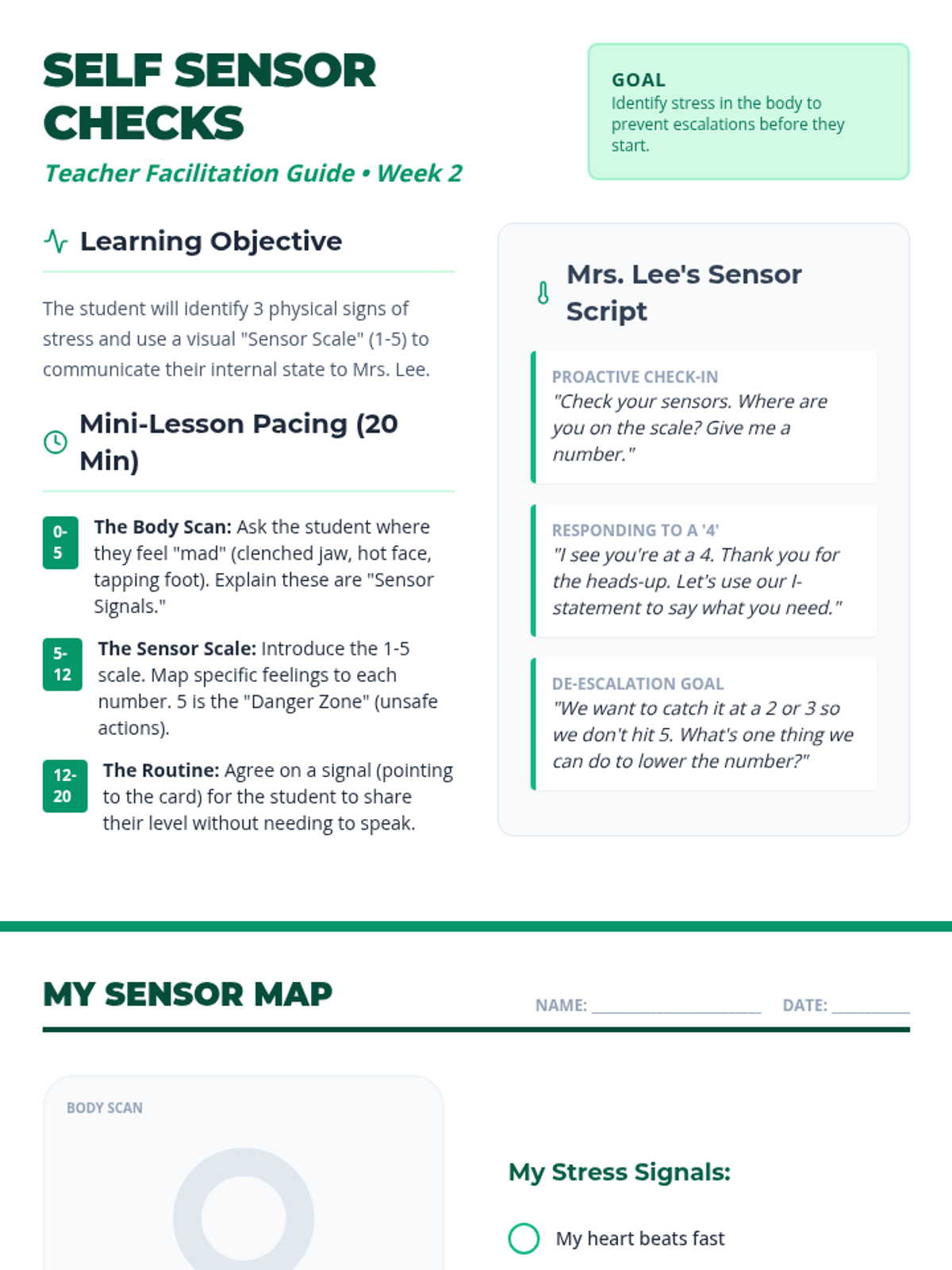
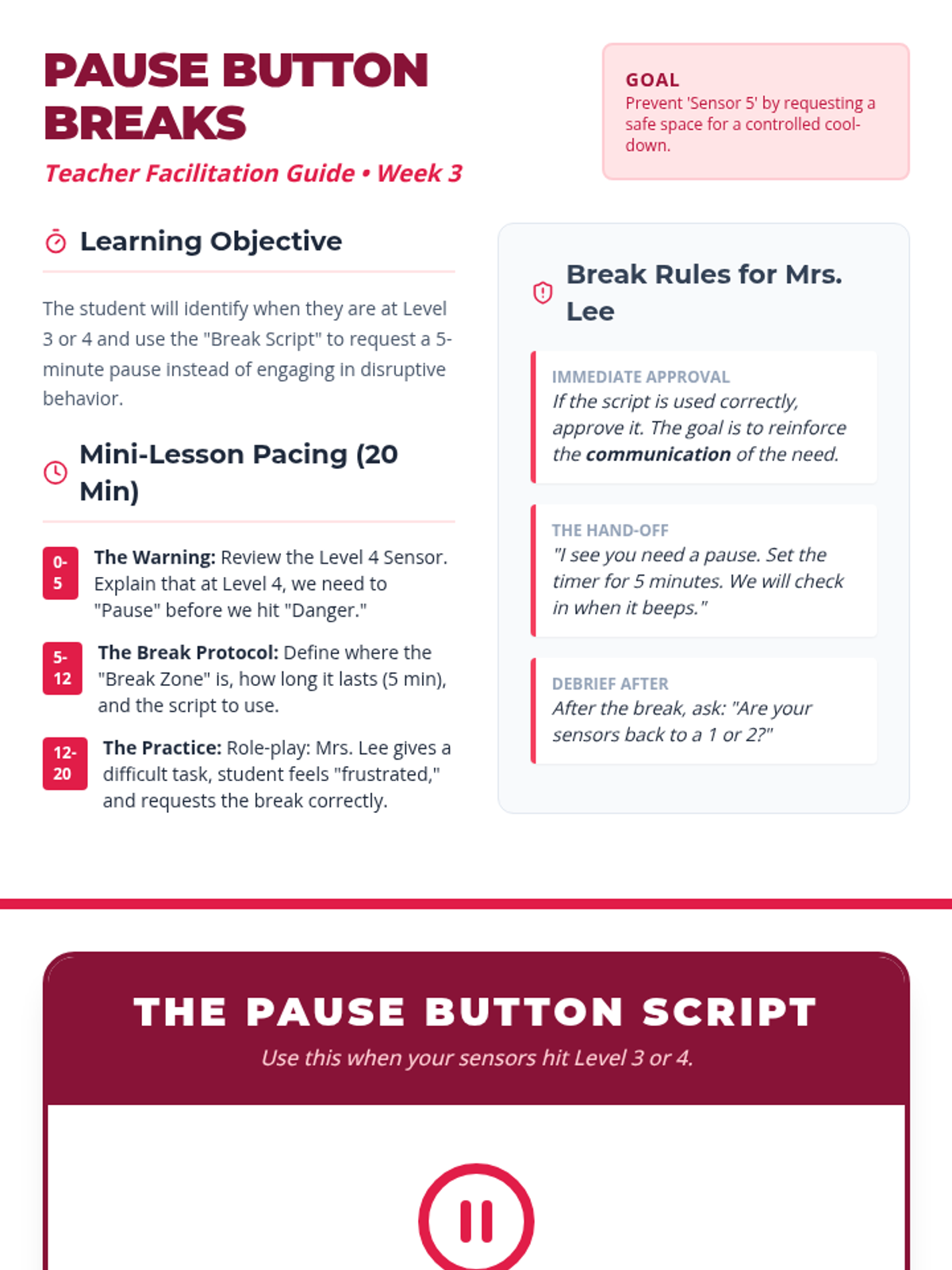
This lesson focuses on identifying internal emotional states and using visual check-ins to monitor stress levels before they lead to disruptions.