Root cause analysis and brainstorming techniques for everyday problem-solving. Equips learners with ethical frameworks and risk-benefit evaluation skills to predict consequences and make informed choices.
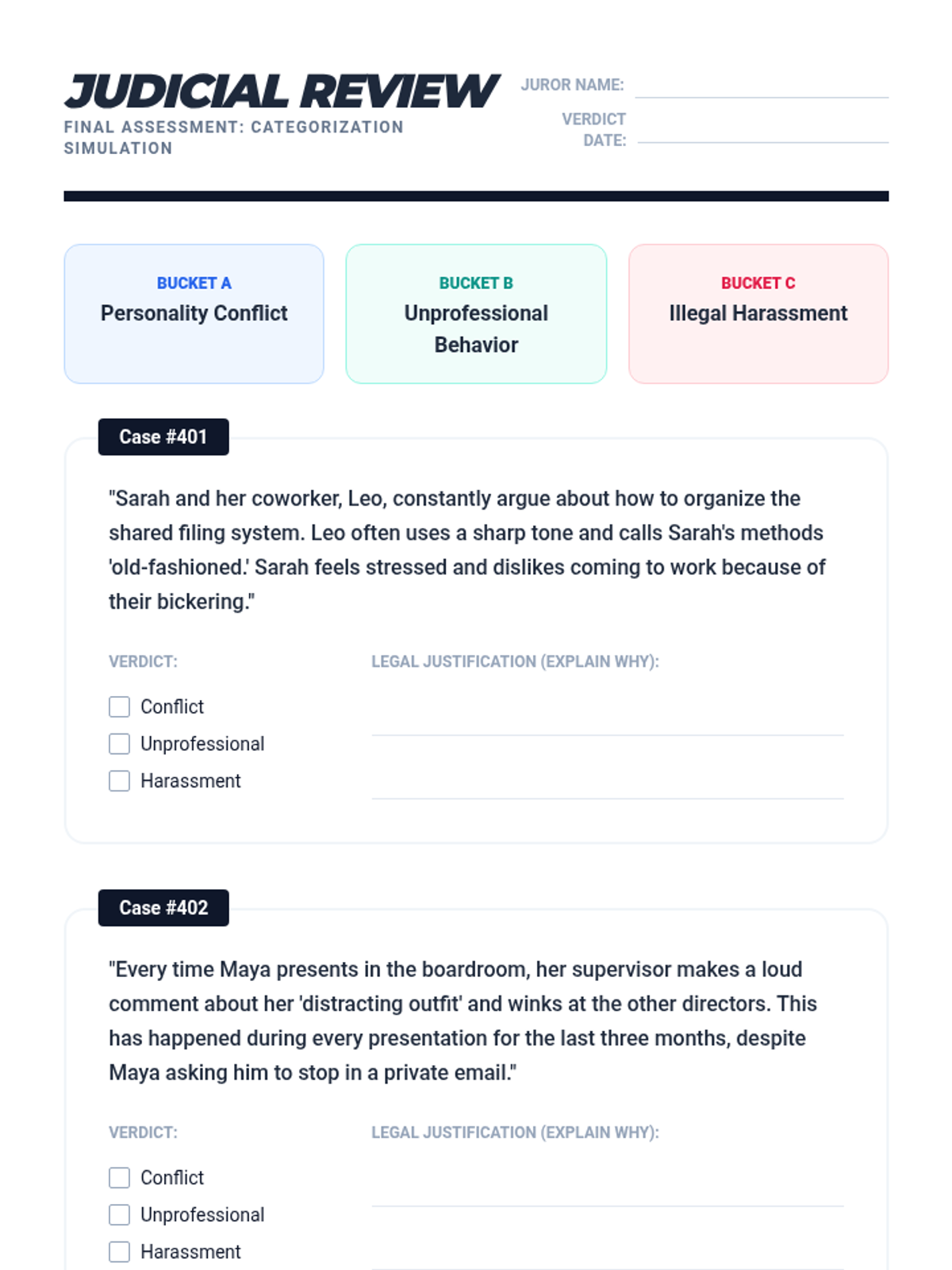
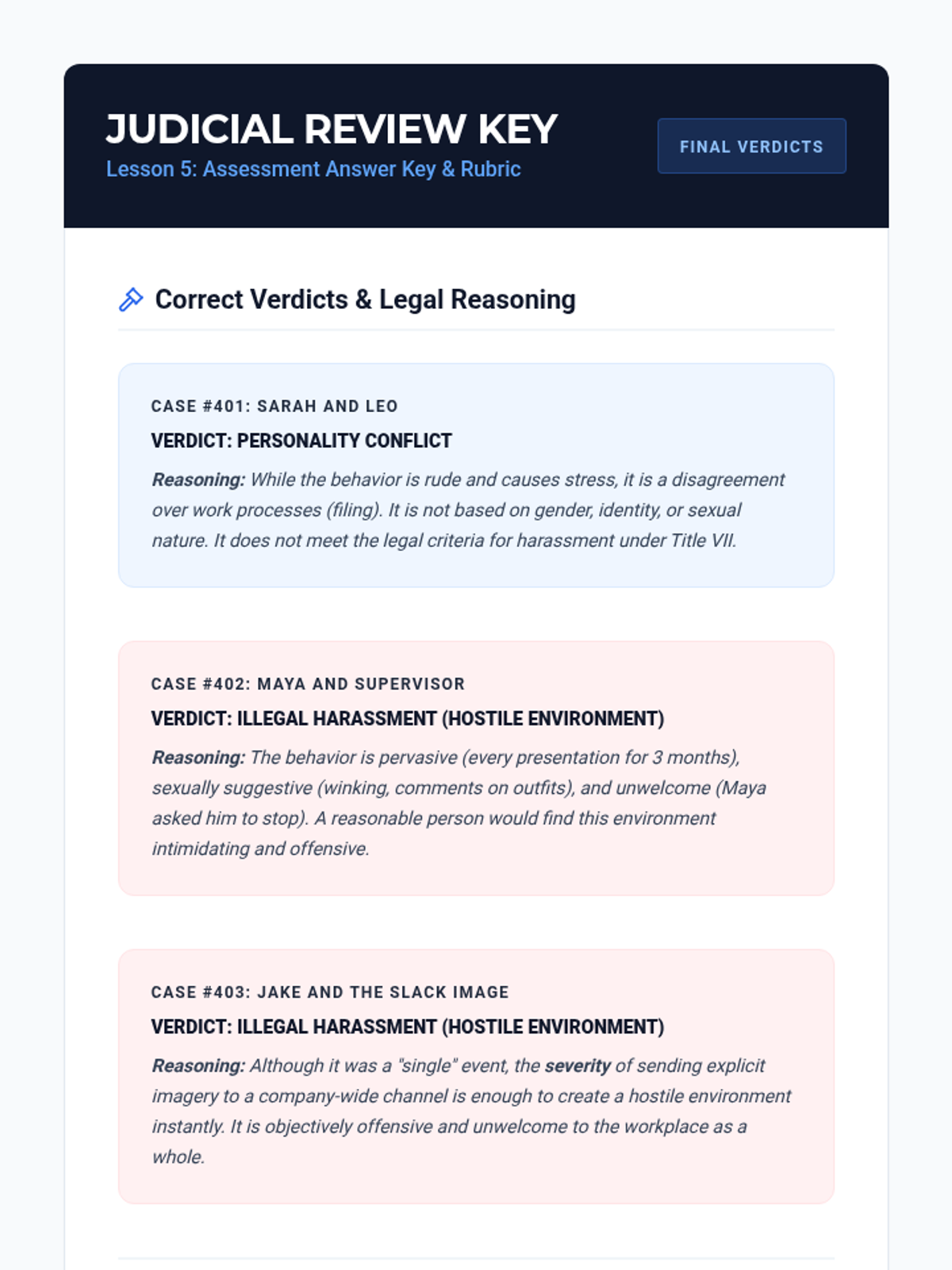
Students participate in a 'judicial review' simulation where they categorize complex scenarios as 'Personality Conflict,' 'Unprofessional,' or 'Illegal Harassment.' They must justify their categorization using criteria learned in the sequence.
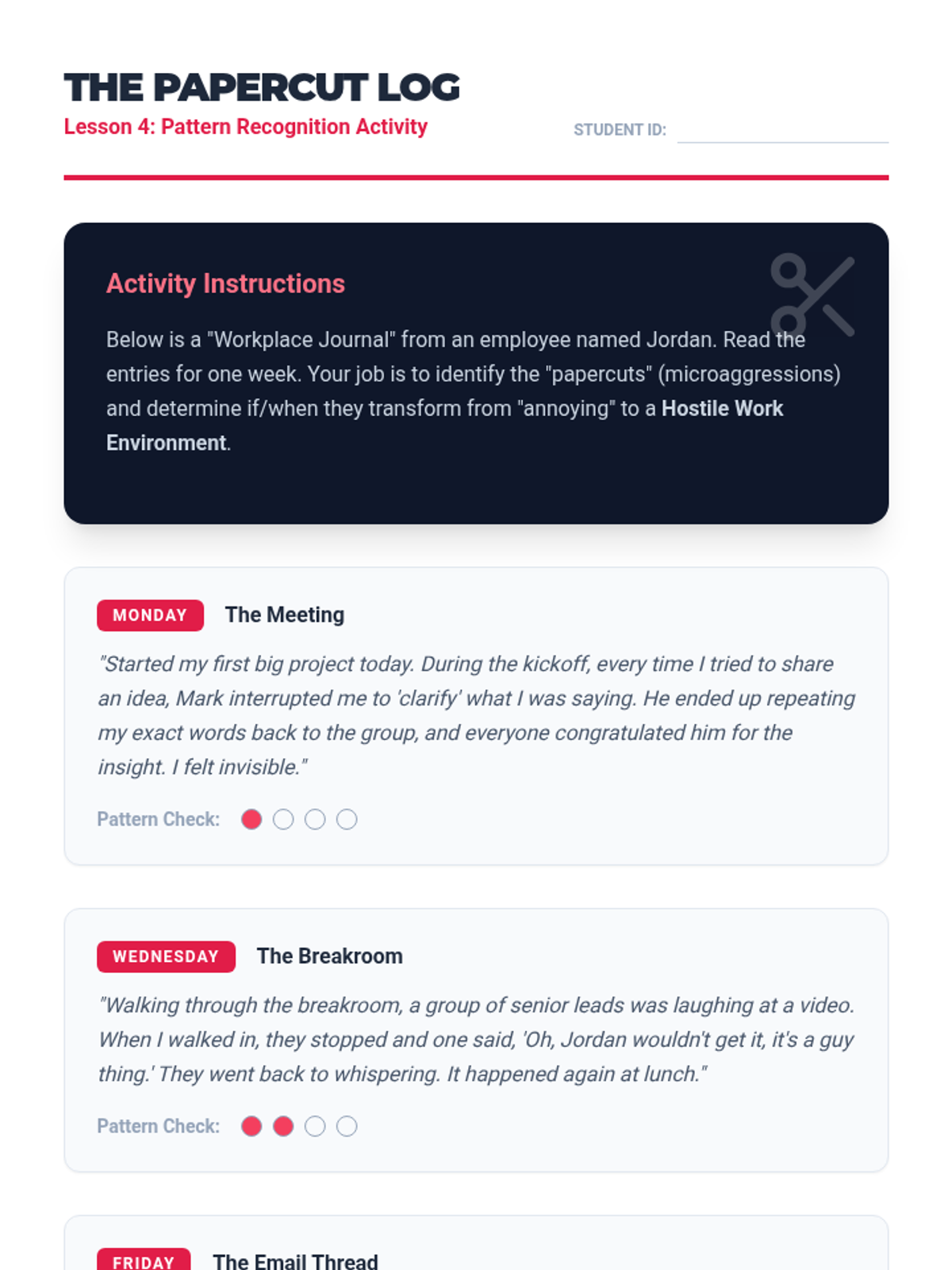
Students examine how microaggressions contribute to a hostile work environment over time. The lesson emphasizes recognizing patterns of behavior that may not be explicit harassment in isolation but become toxic cumulatively.
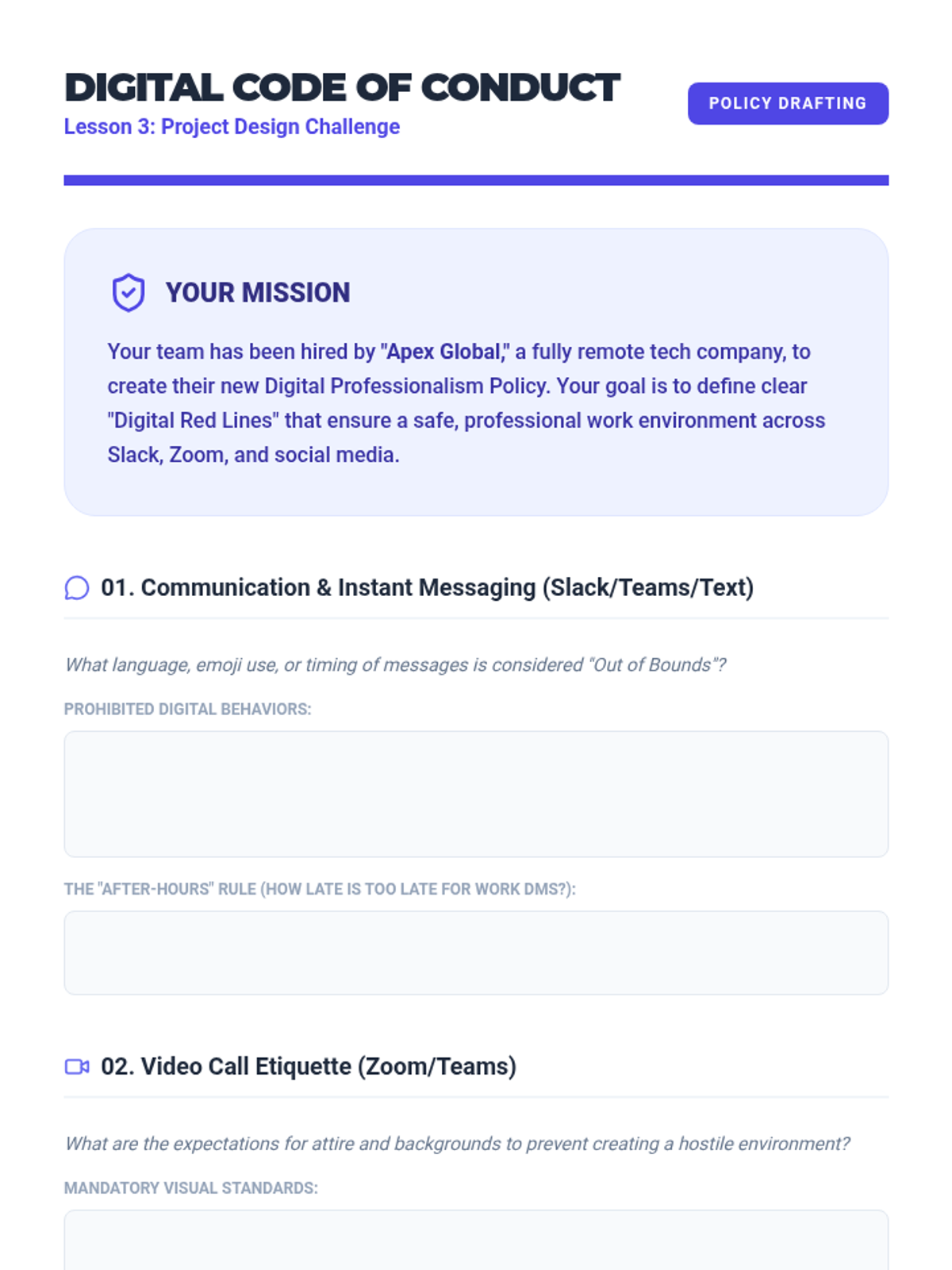
Students explore how harassment manifests in remote work and digital spaces, including inappropriate texts, emails, and social media interactions. They develop a code of conduct for digital professional communication.
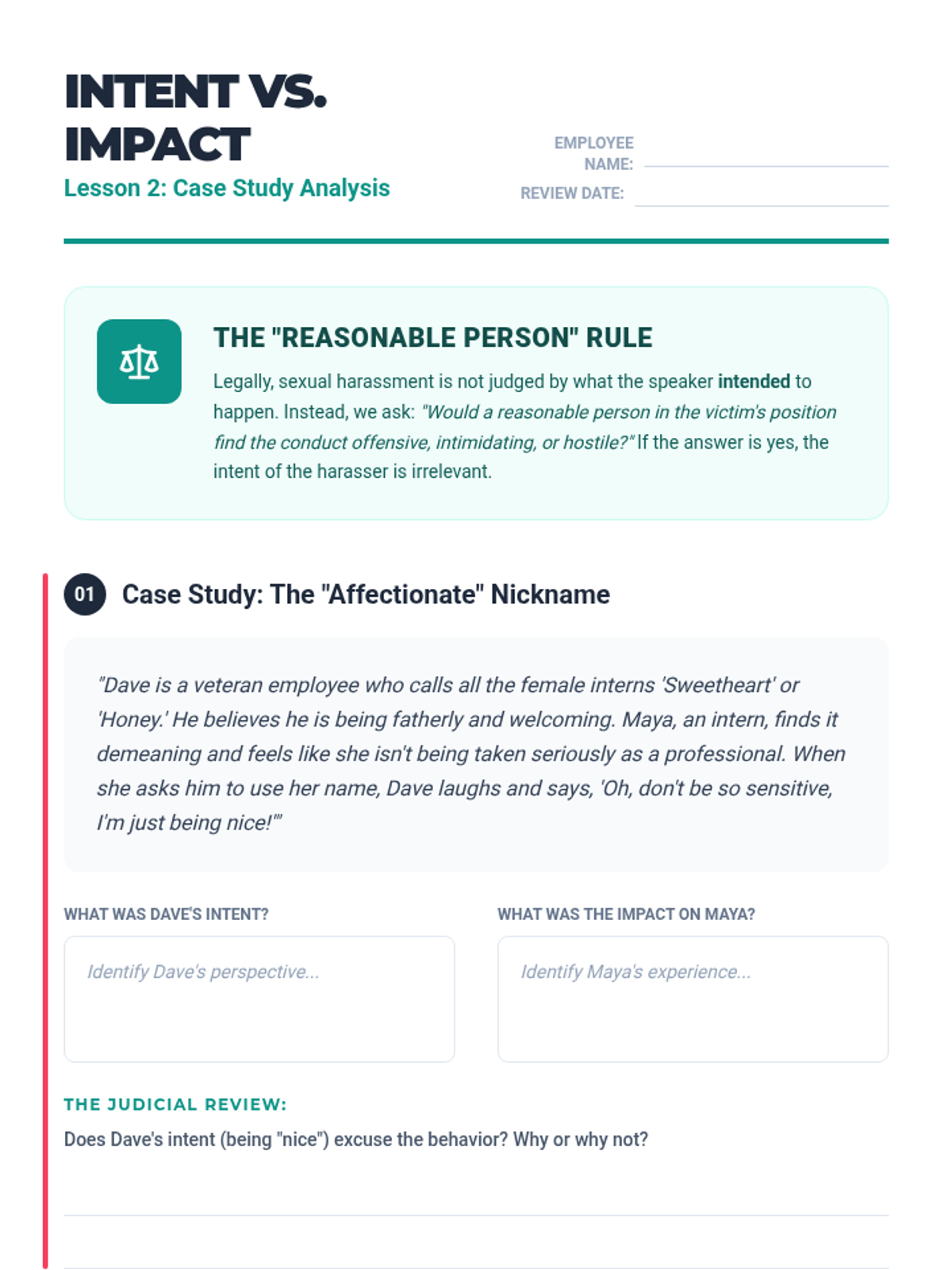
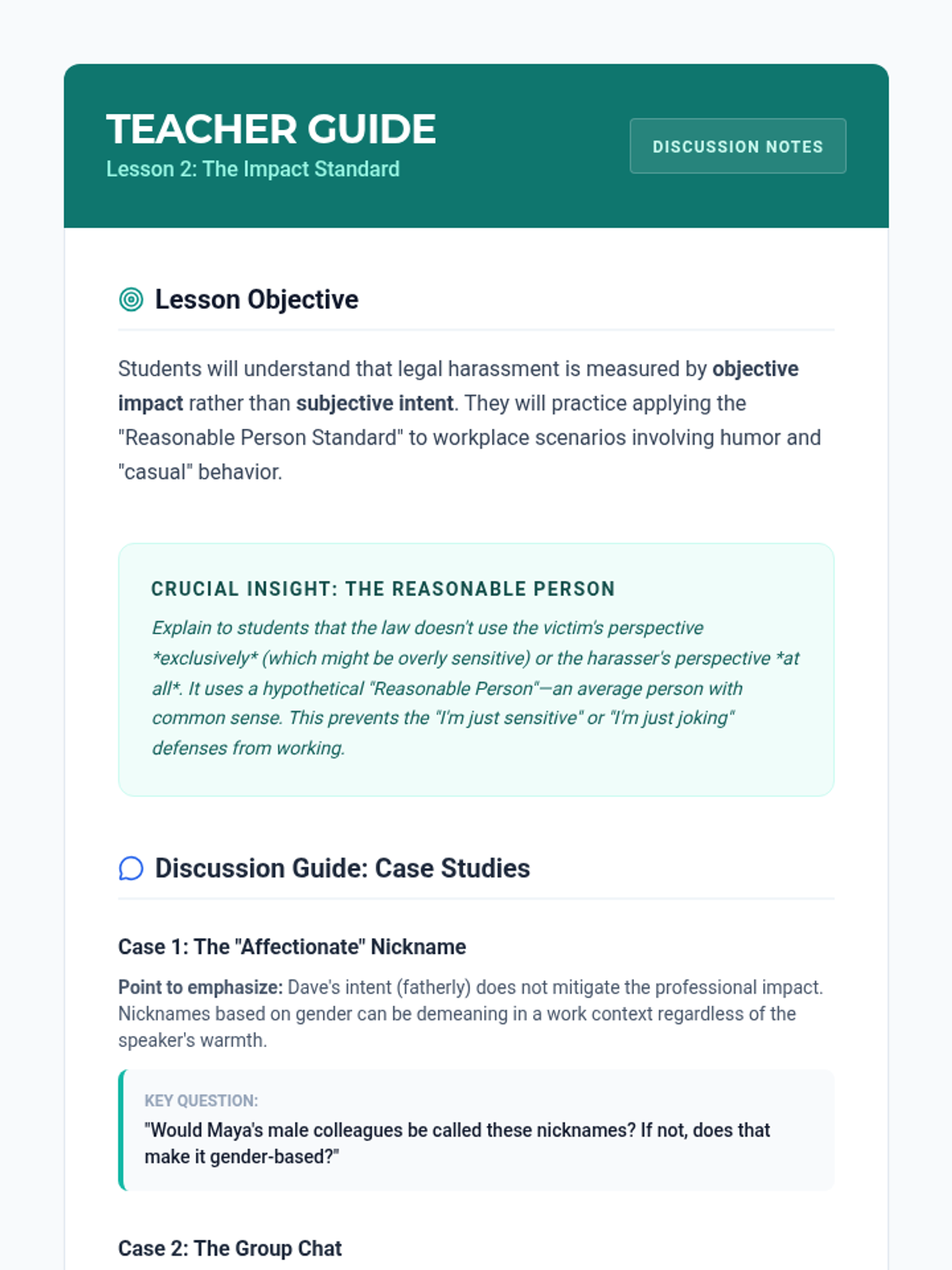
This lesson focuses on the legal standard that harassment is judged by its impact on the victim, not the intent of the harasser. Students review scenarios where 'jokes' constitute harassment.
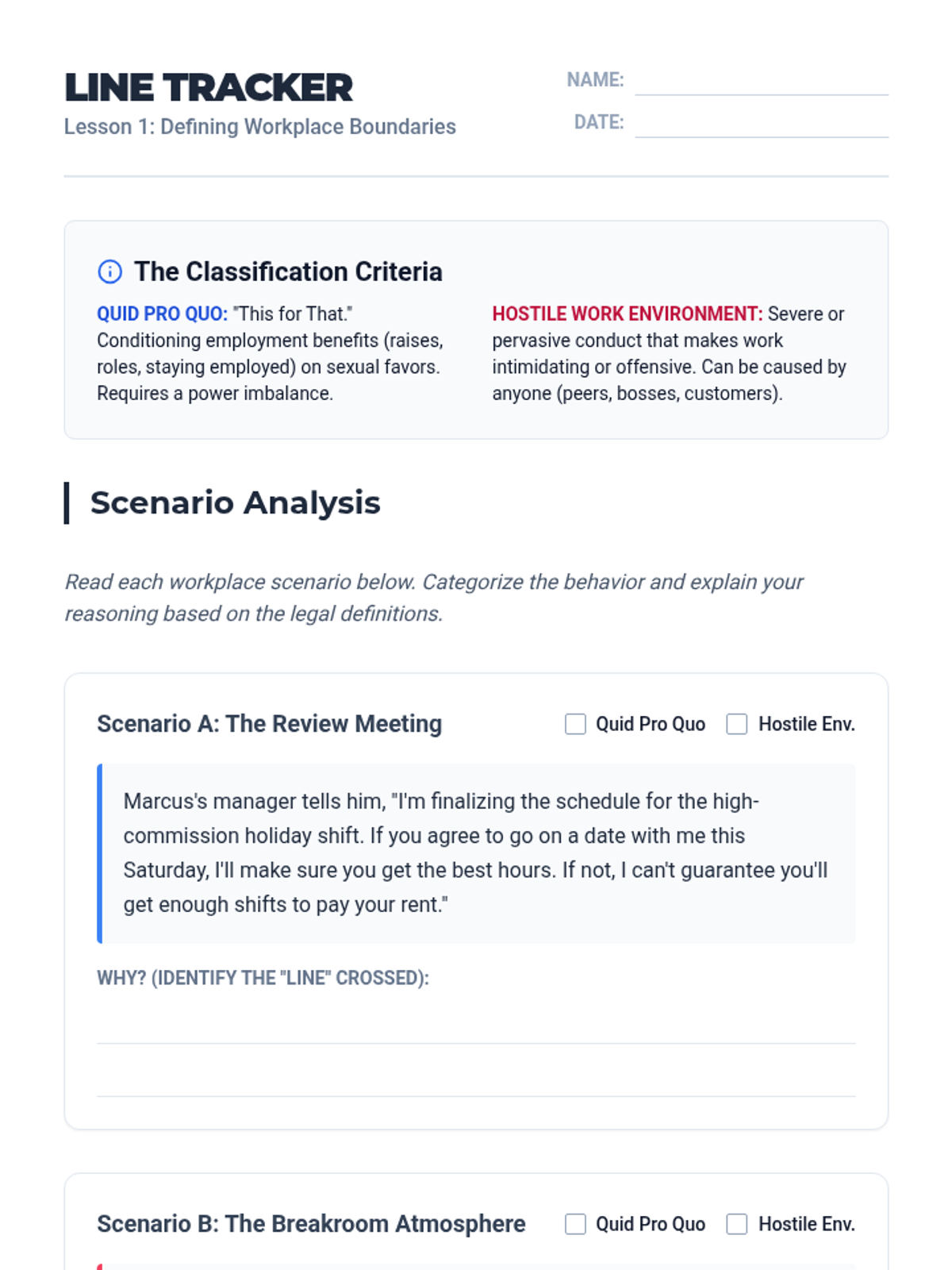
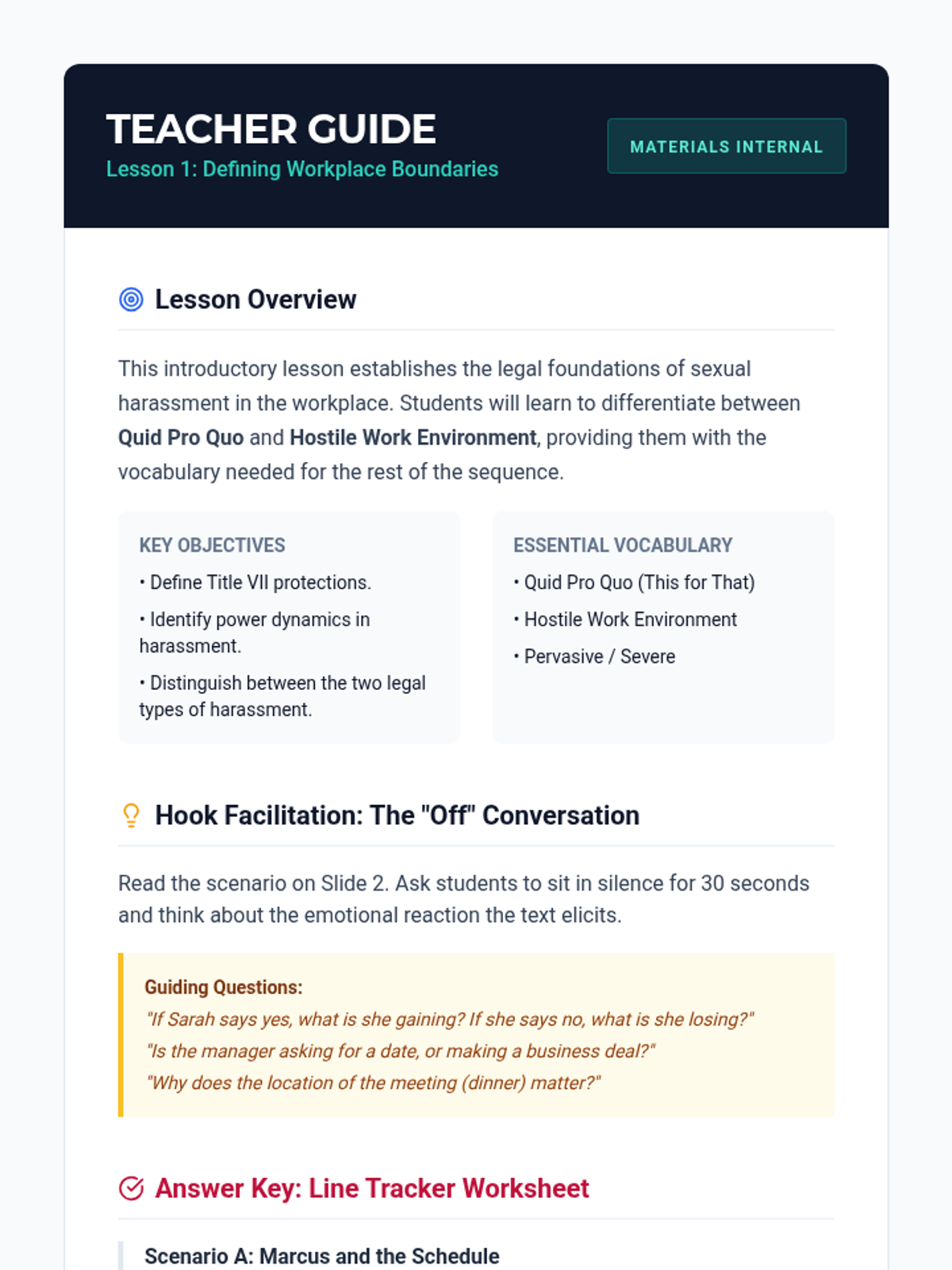
Students distinguish between the two primary legal types of sexual harassment: 'this for that' (quid pro quo) and pervasive hostile environments. They analyze clear-cut examples of each to build a working definition.
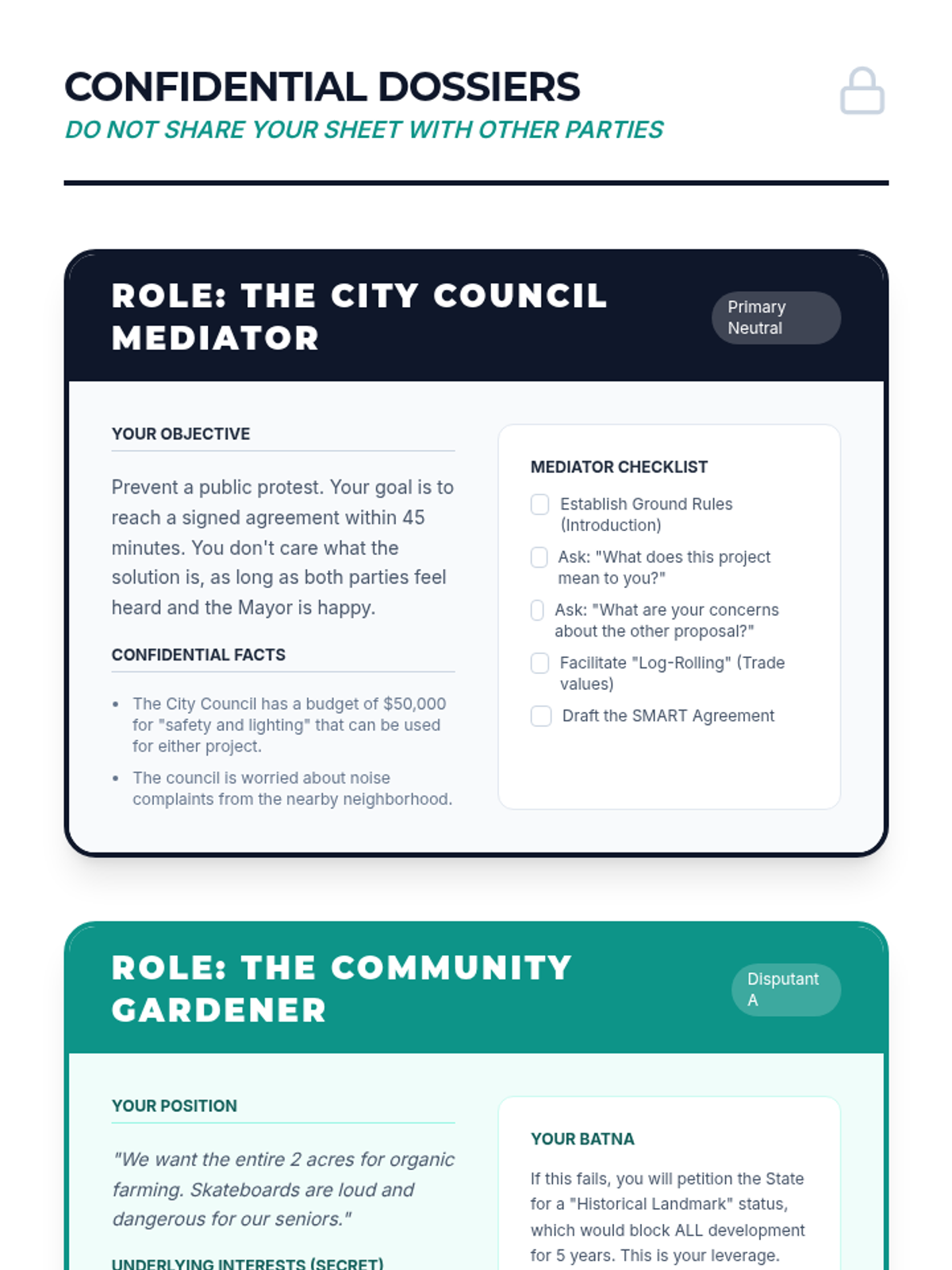
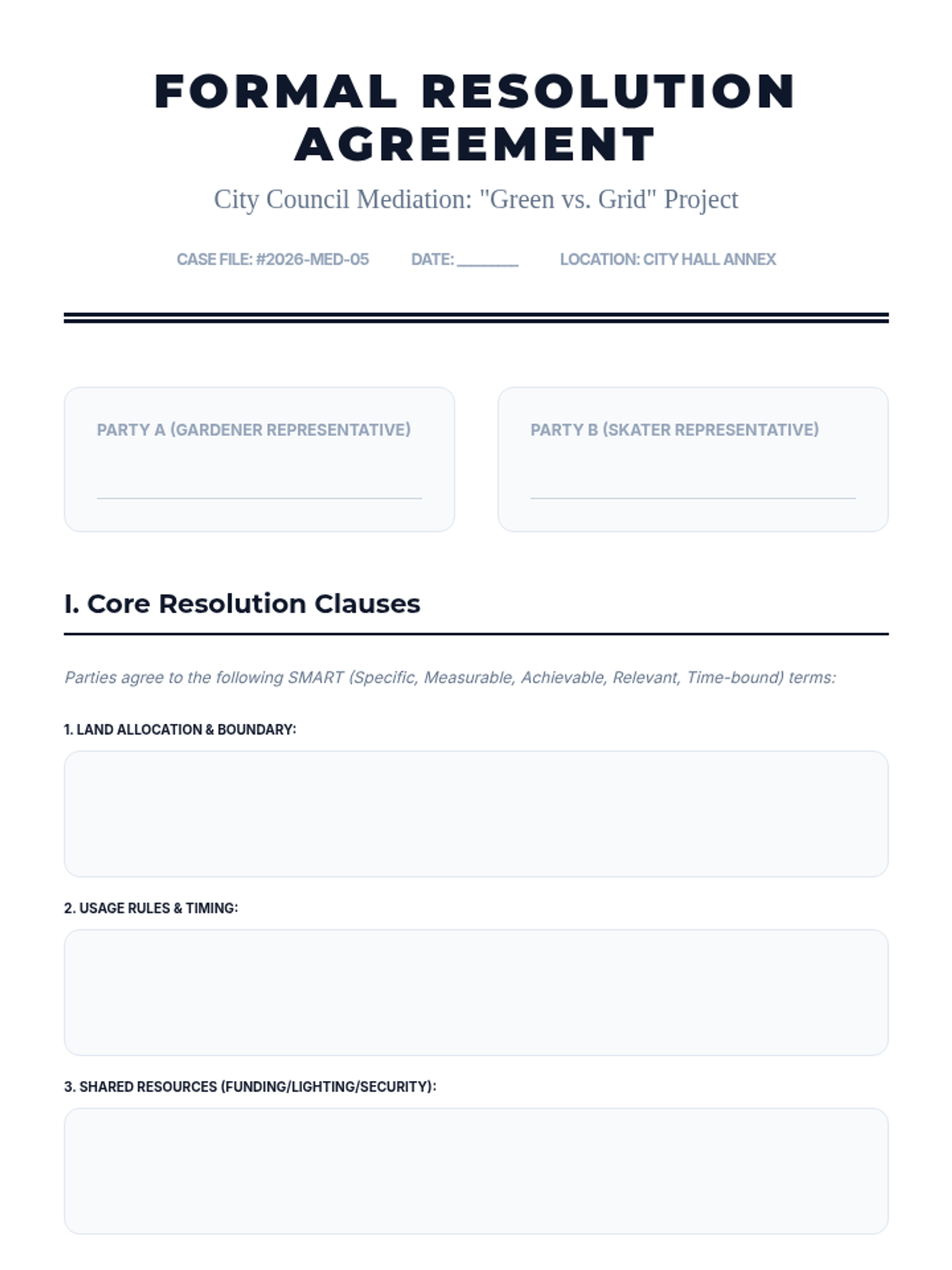
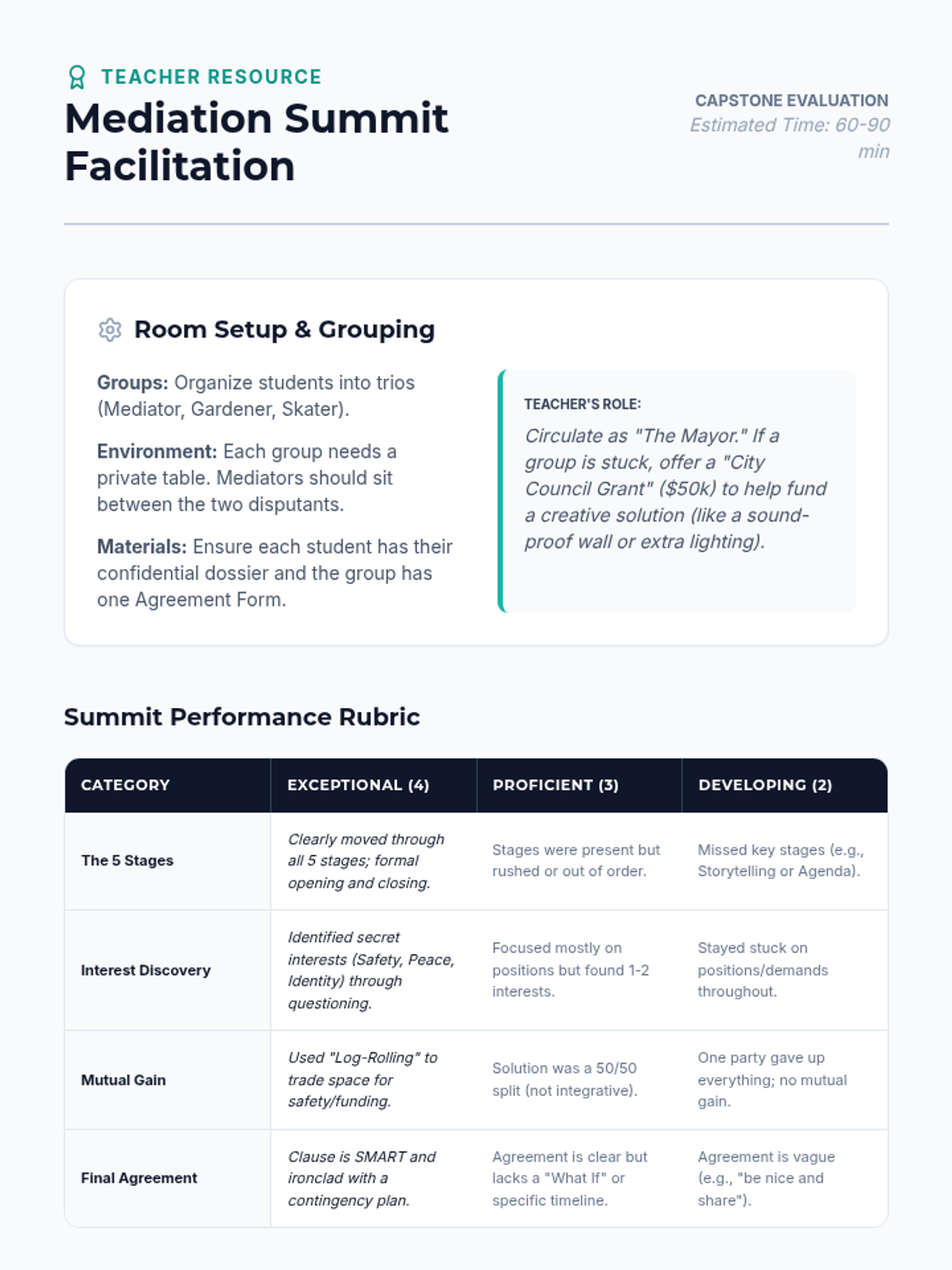
Students assume roles of mediators and disputants in a complex, multi-party dispute scenario (e.g., a land use dispute or school policy change). Mediators must facilitate the process, uncover interests, help generate options, and finalize a written agreement. The lesson focuses on synthesizing all previous frameworks into a cohesive professional performance.
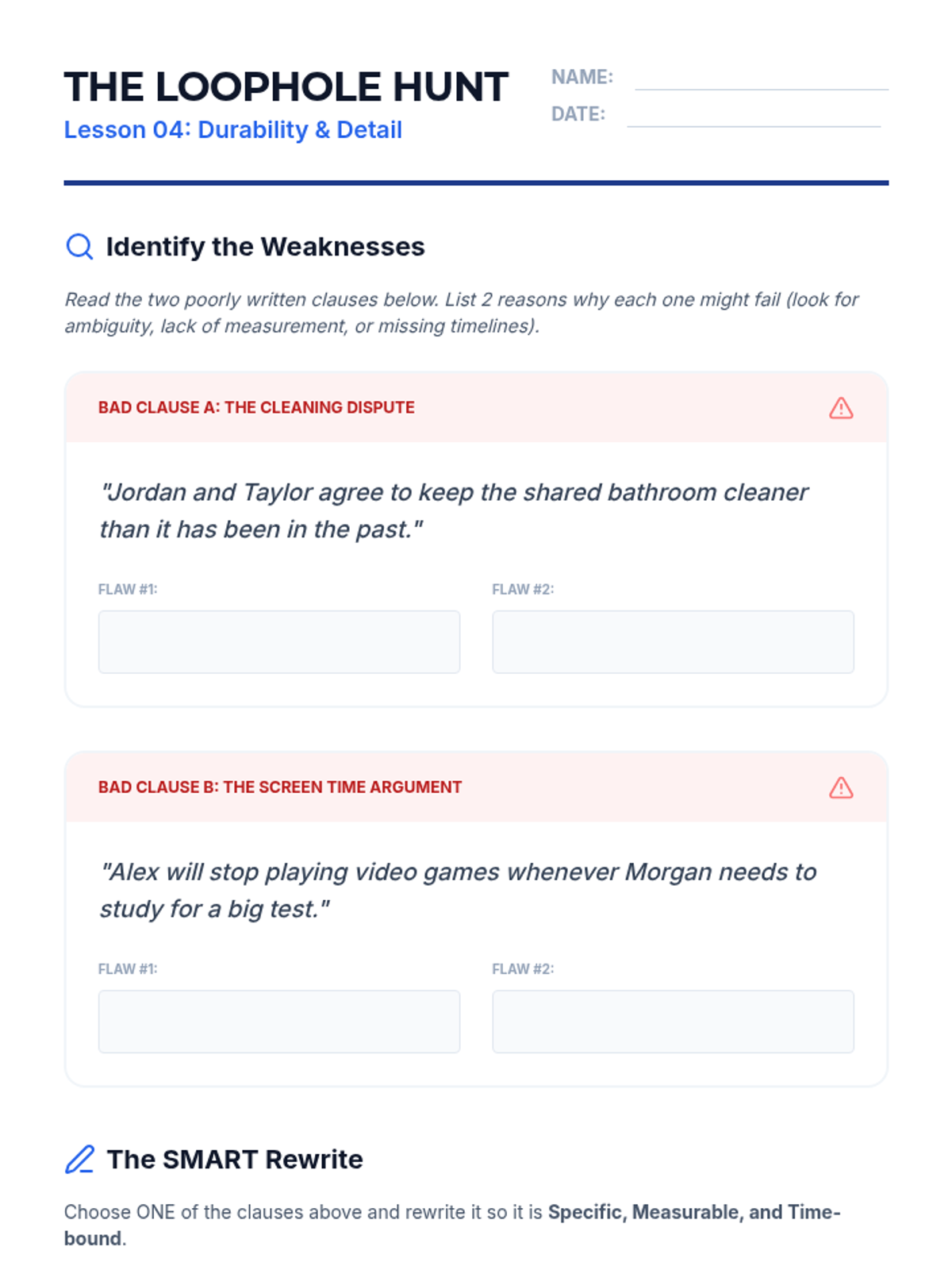
Resolving the conflict is only half the battle; writing a durable agreement is the rest. Students learn the components of a SMART agreement (Specific, Measurable, Achievable, Relevant, Time-bound) in a conflict context. They review failed contracts or treaties to identify loopholes and ambiguity, then practice drafting ironclad resolution clauses.
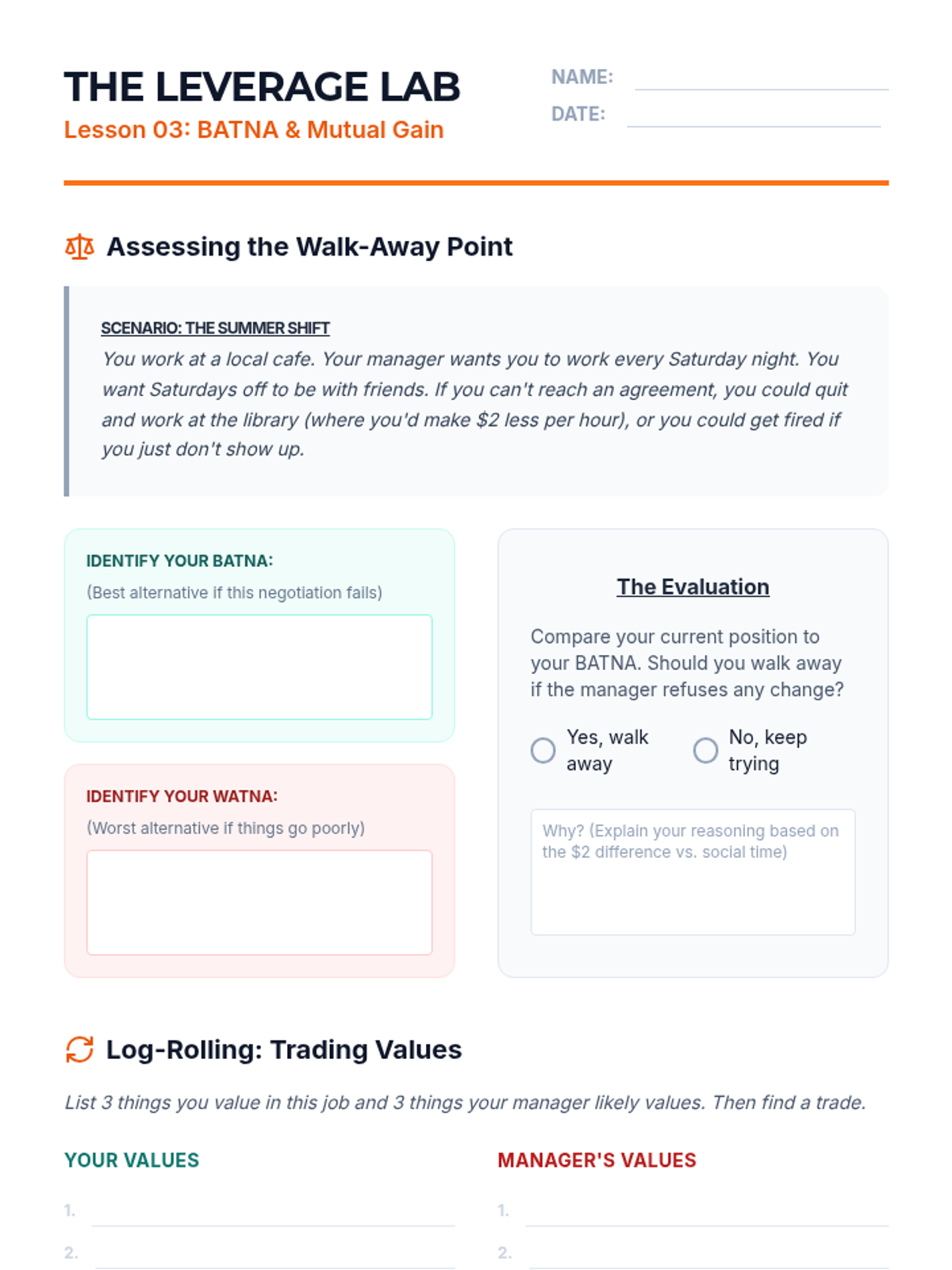
Students practice brainstorming techniques designed to break deadlocks. They learn about BATNA (Best Alternative to a Negotiated Agreement) and WATNA (Worst Alternative) to assess leverage. The class engages in exercises to expand the 'pie' rather than just dividing it, finding creative solutions that satisfy multiple interests.
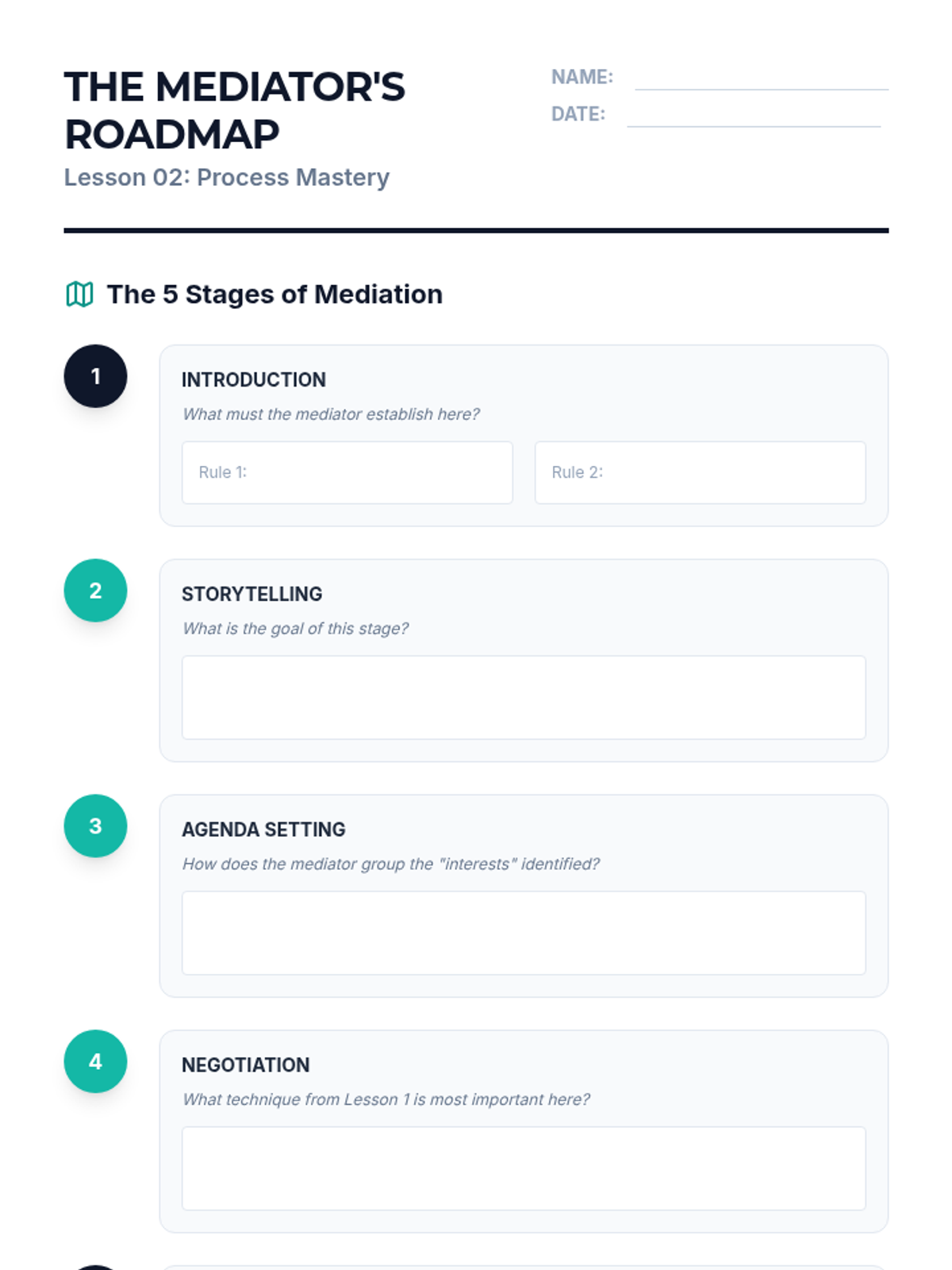
This lesson outlines the formal stages of mediation: Introduction, Storytelling, Agenda Setting, Negotiation, and Agreement. Students learn the procedural responsibilities of a mediator to maintain safety and order. They create visual flowcharts of the process to understand how to guide disputants from chaos to order.
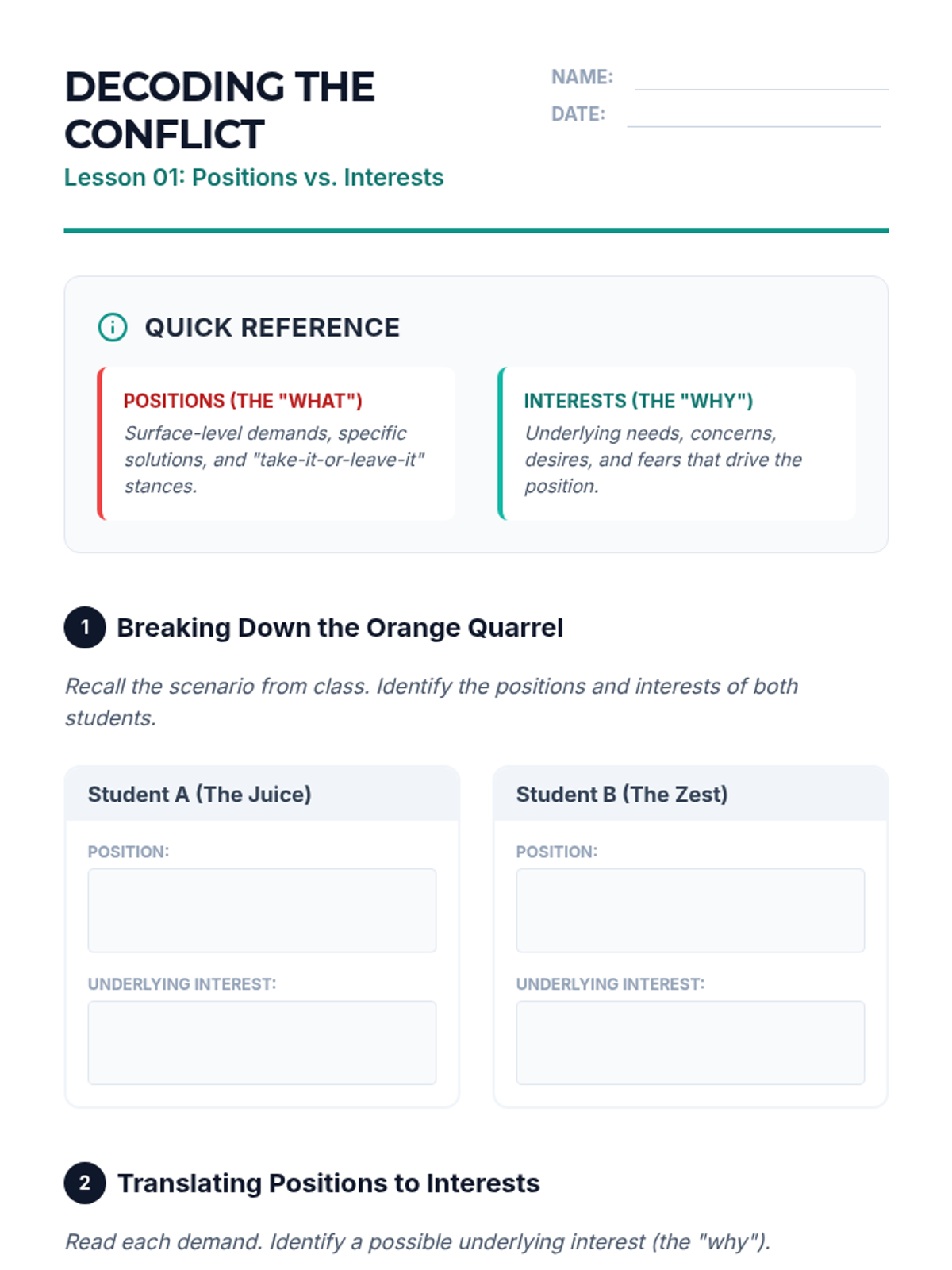
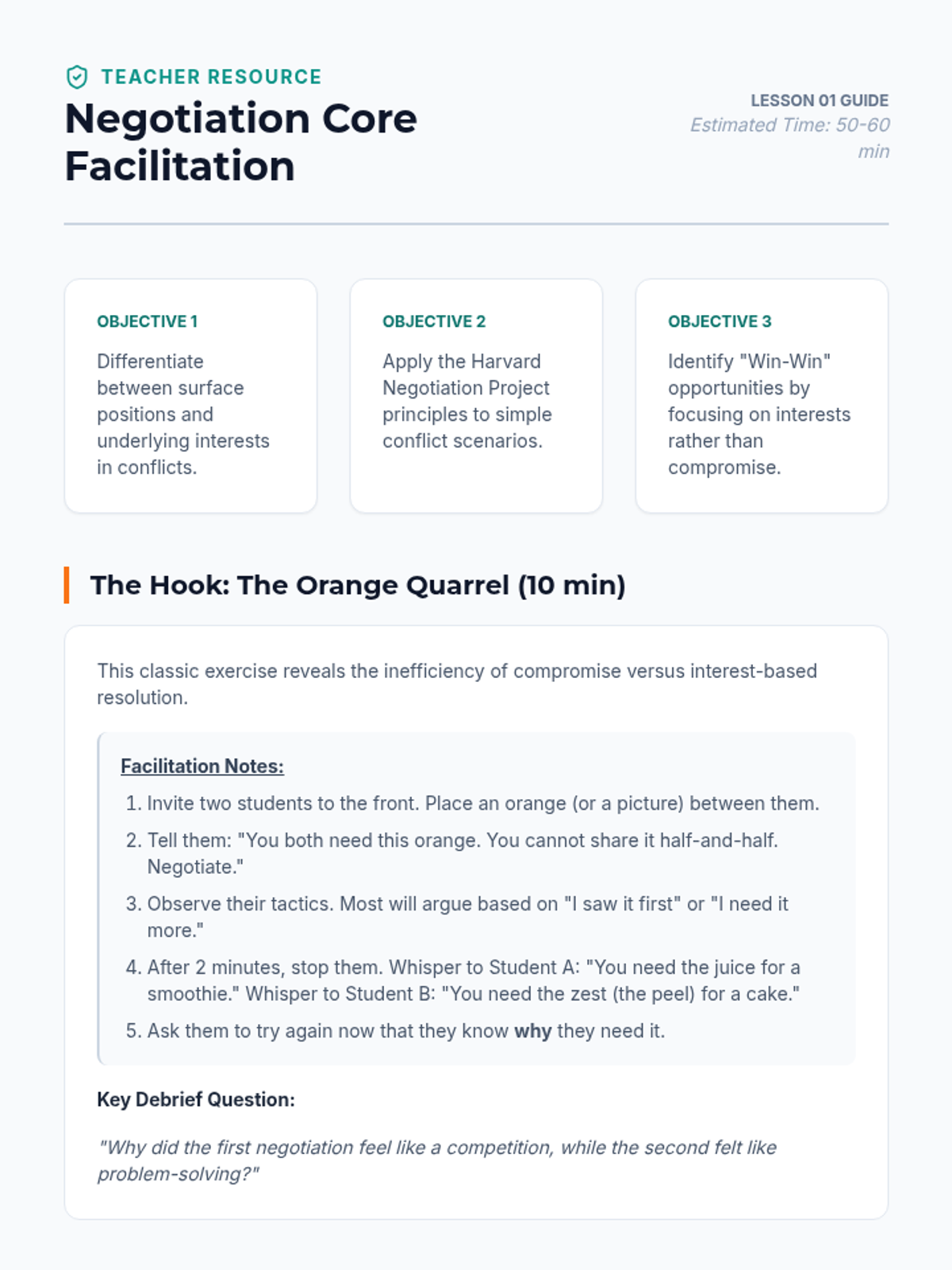
Students learn to distinguish between surface-level positions and underlying interests using the Harvard Negotiation Project model. The lesson introduces Interest-Based Negotiation (IBN) through the classic 'Orange Quarrel' scenario and case study analysis.
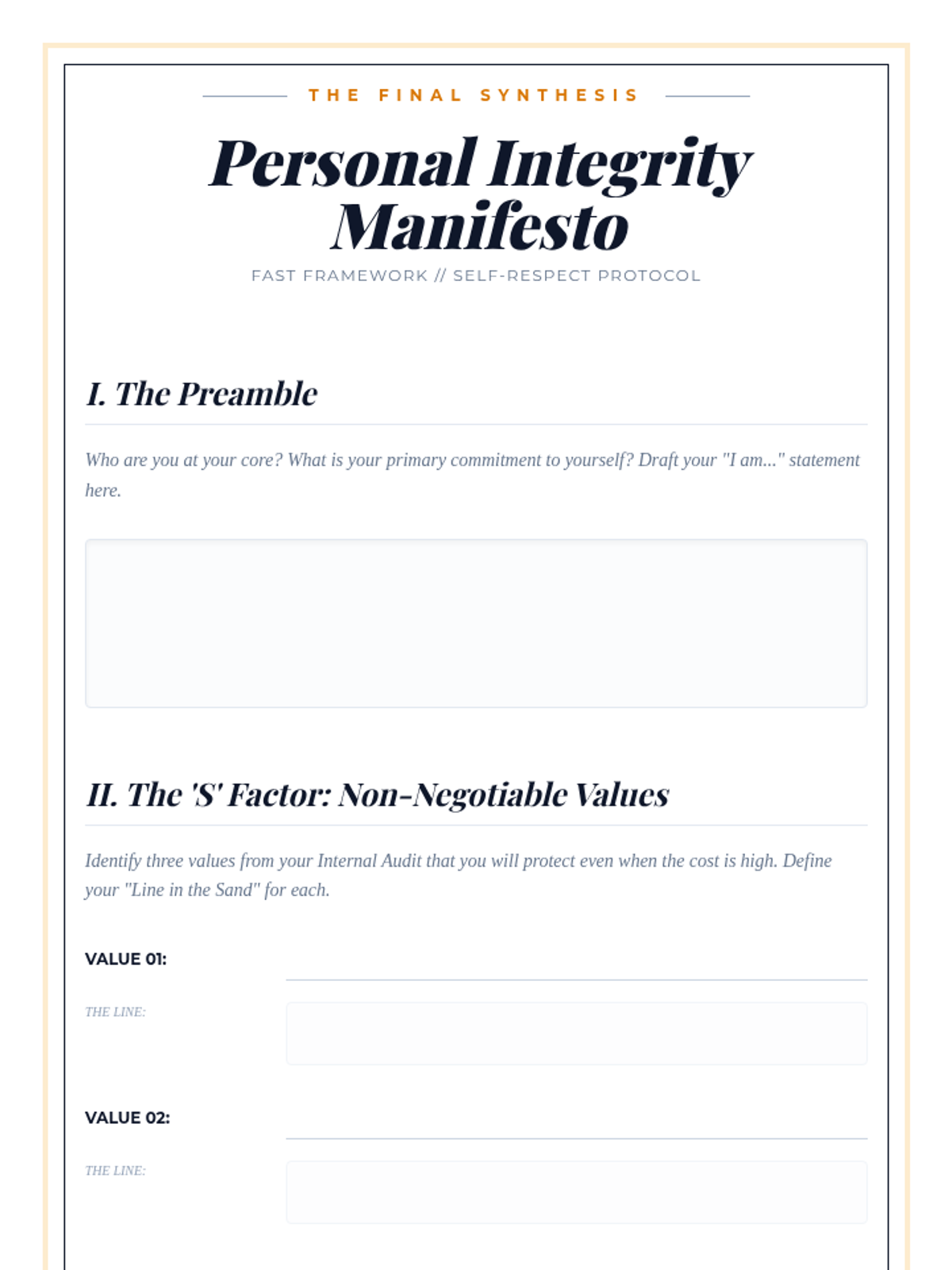
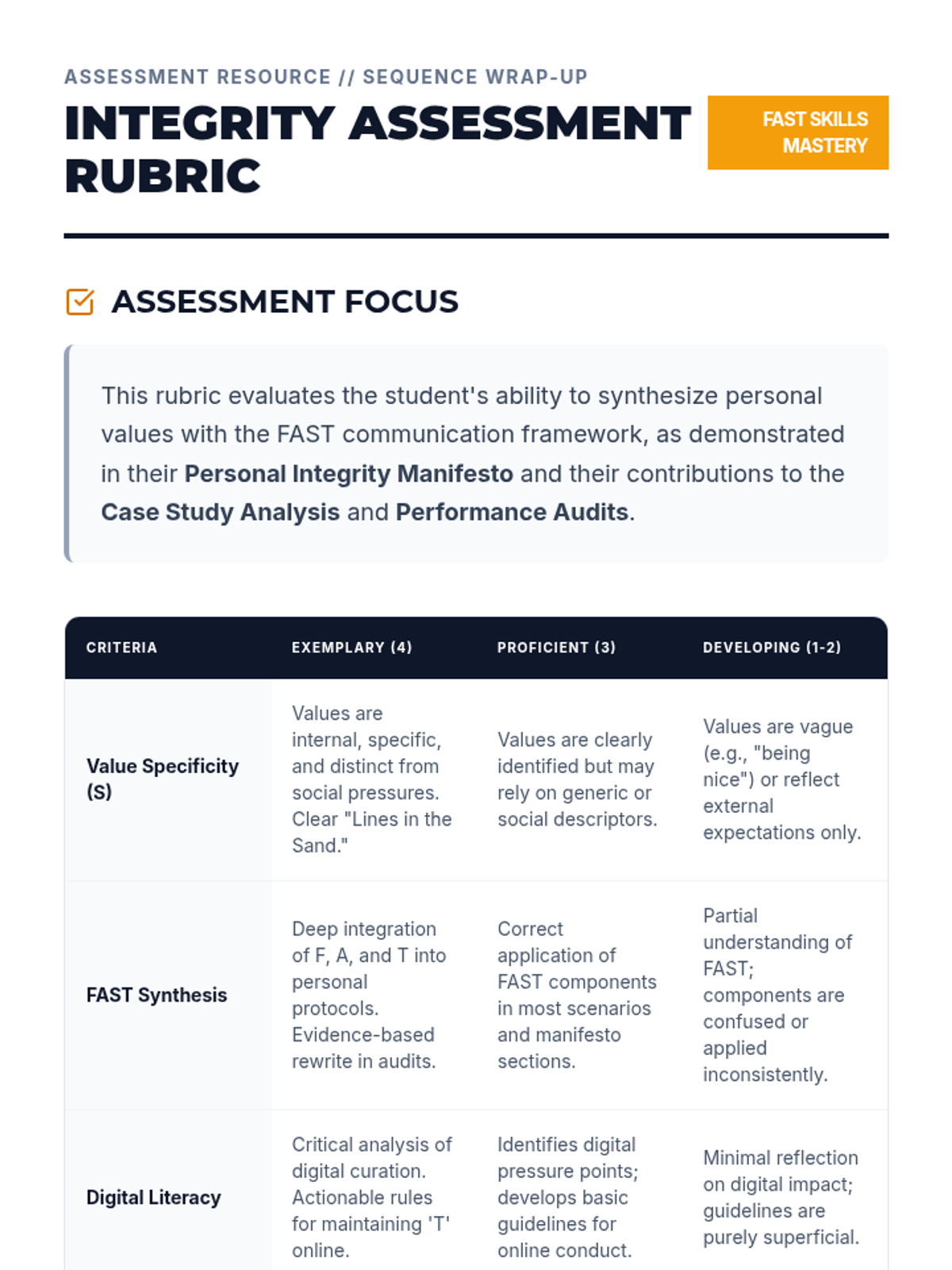
Students synthesize their learning into a personal integrity manifesto, creating a concrete guide for future ethical decision-making and self-advocacy.
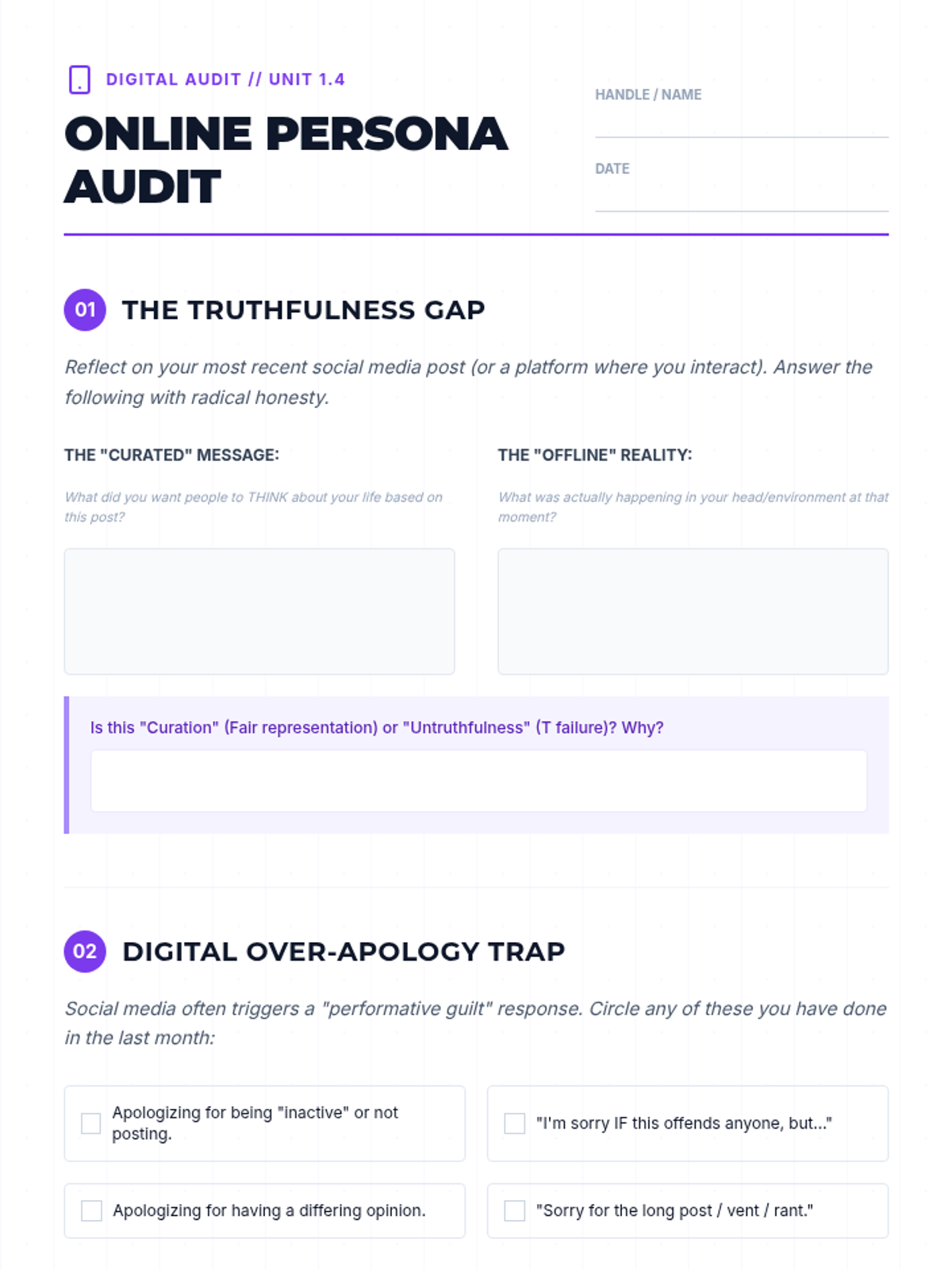
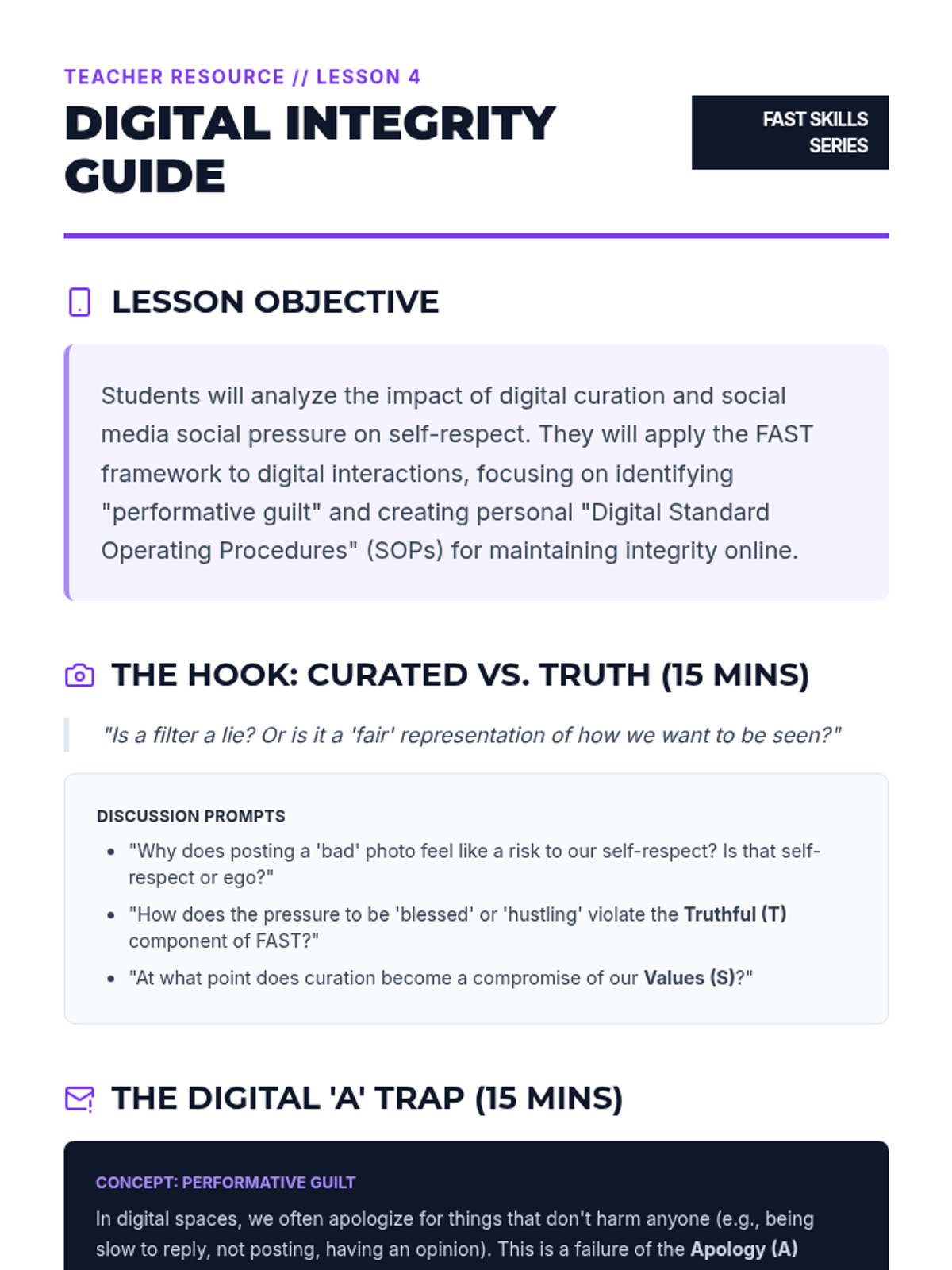
Applying FAST skills to digital interactions, students examine how social media affects truthfulness and self-respect, developing guidelines for online integrity.
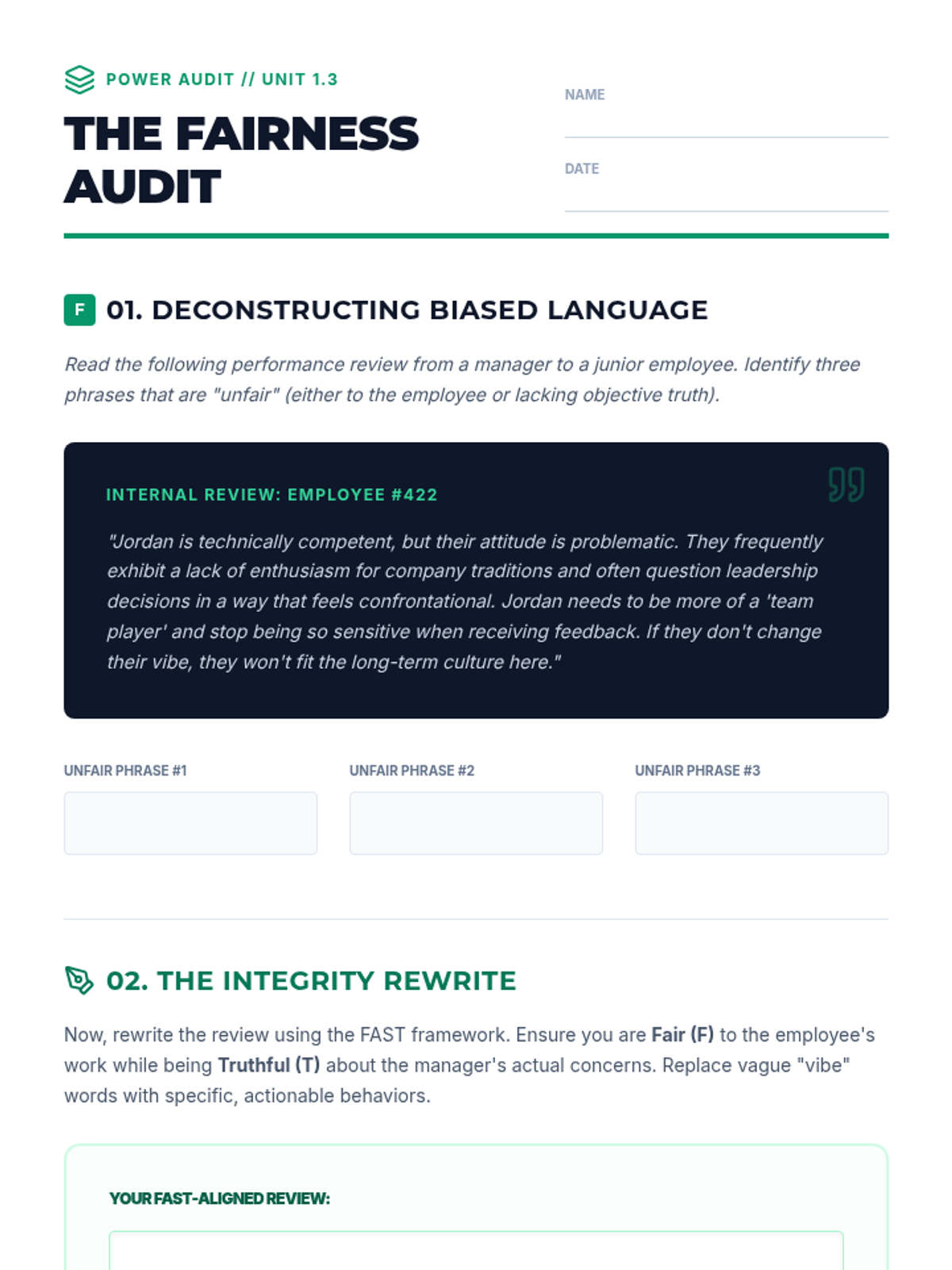
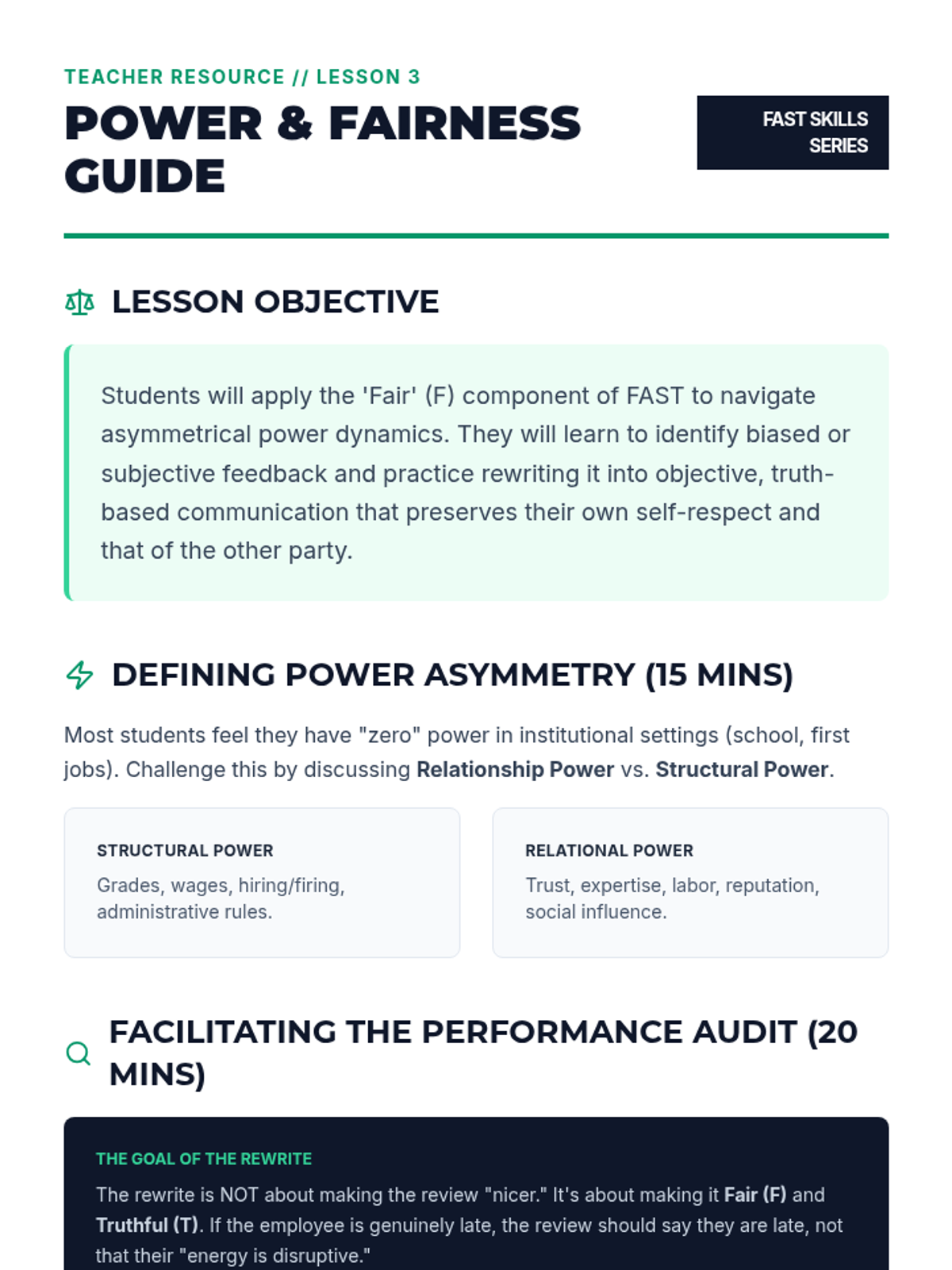
Exploration of the 'Fair' component of FAST within asymmetrical power dynamics, teaching students how to advocate for themselves while remaining equitable.
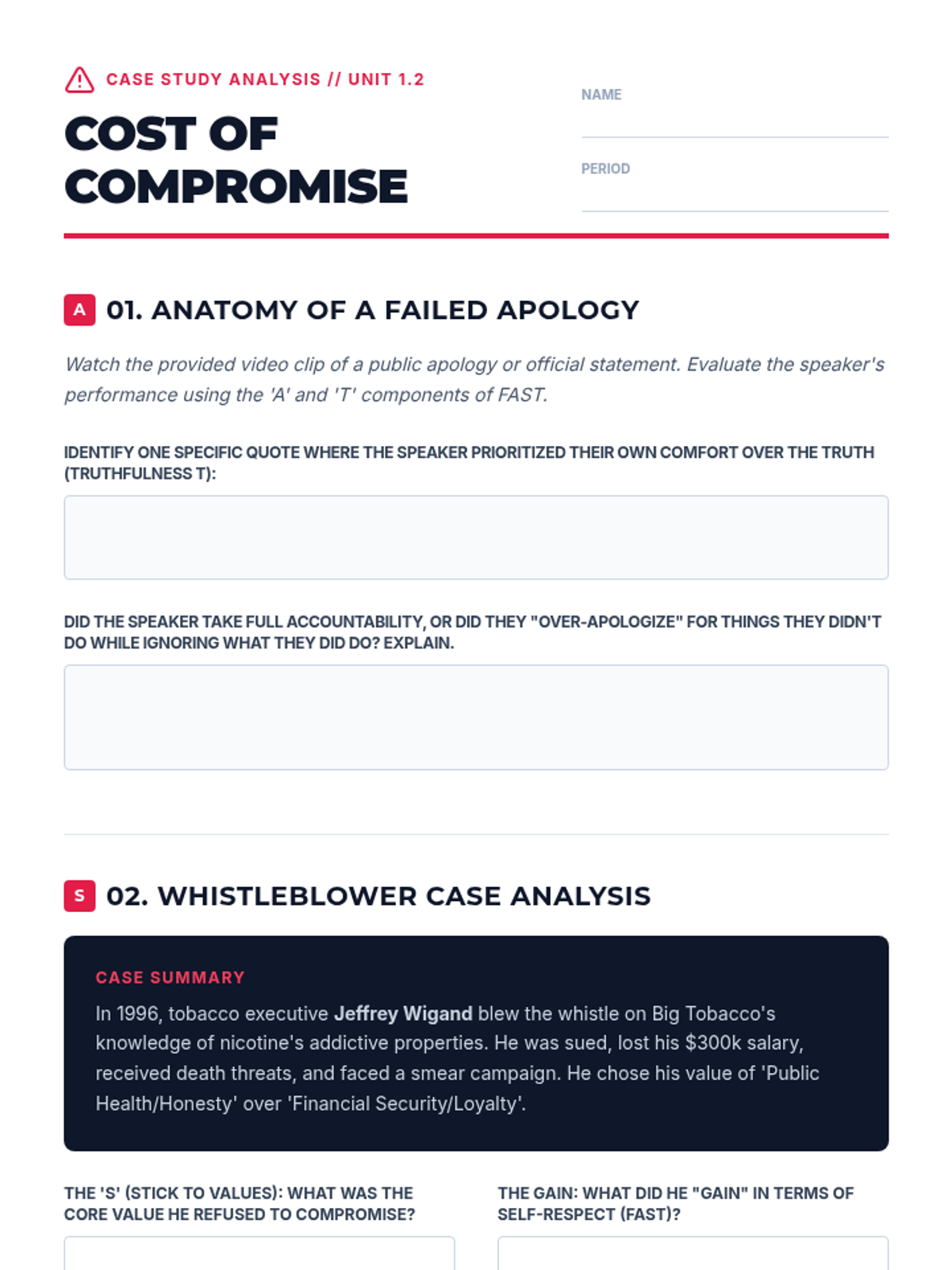
Students analyze case studies of individuals who faced ethical dilemmas, evaluating their decisions through the FAST framework with a focus on 'Stick to values' and 'Truthfulness'.
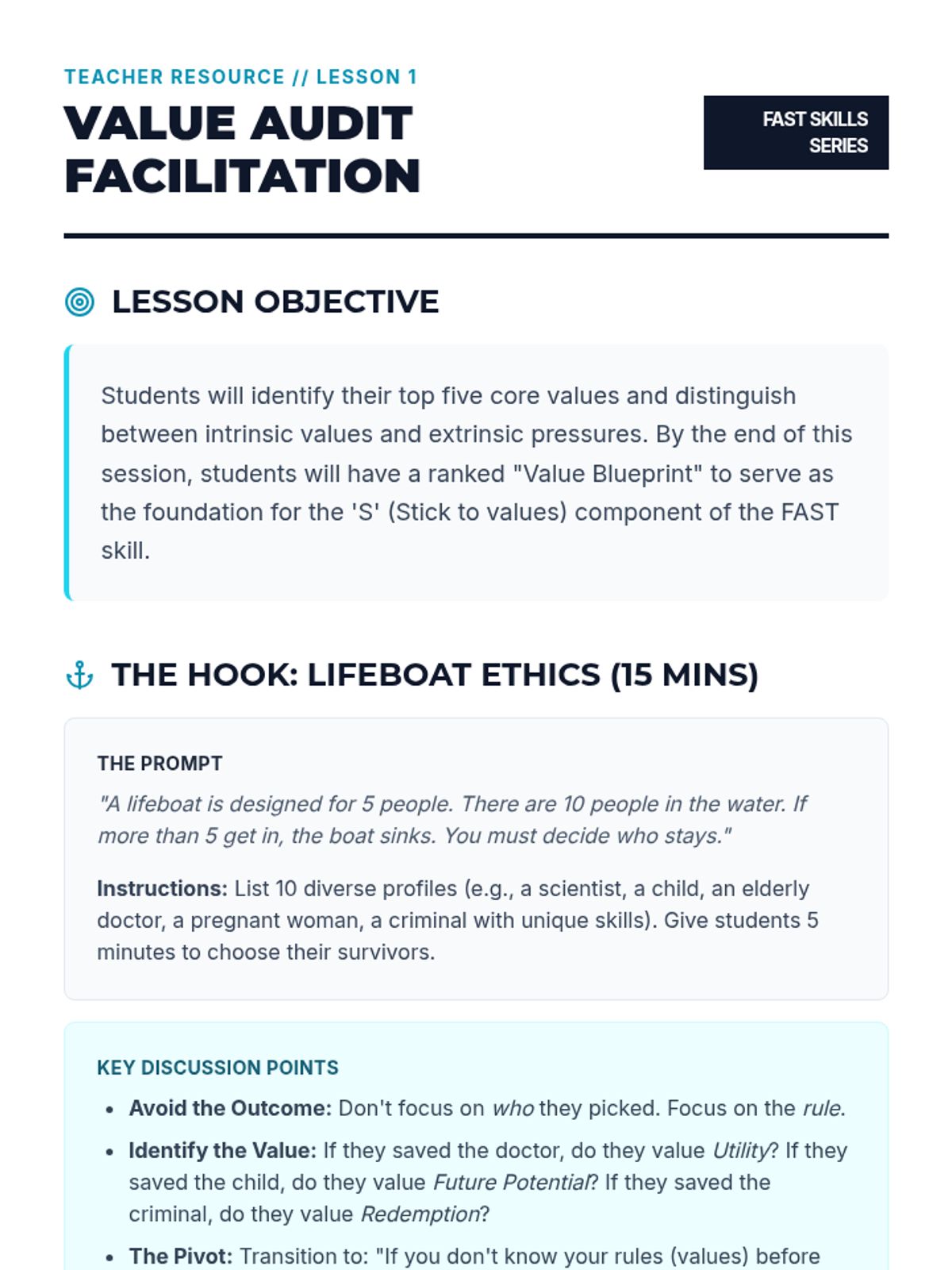
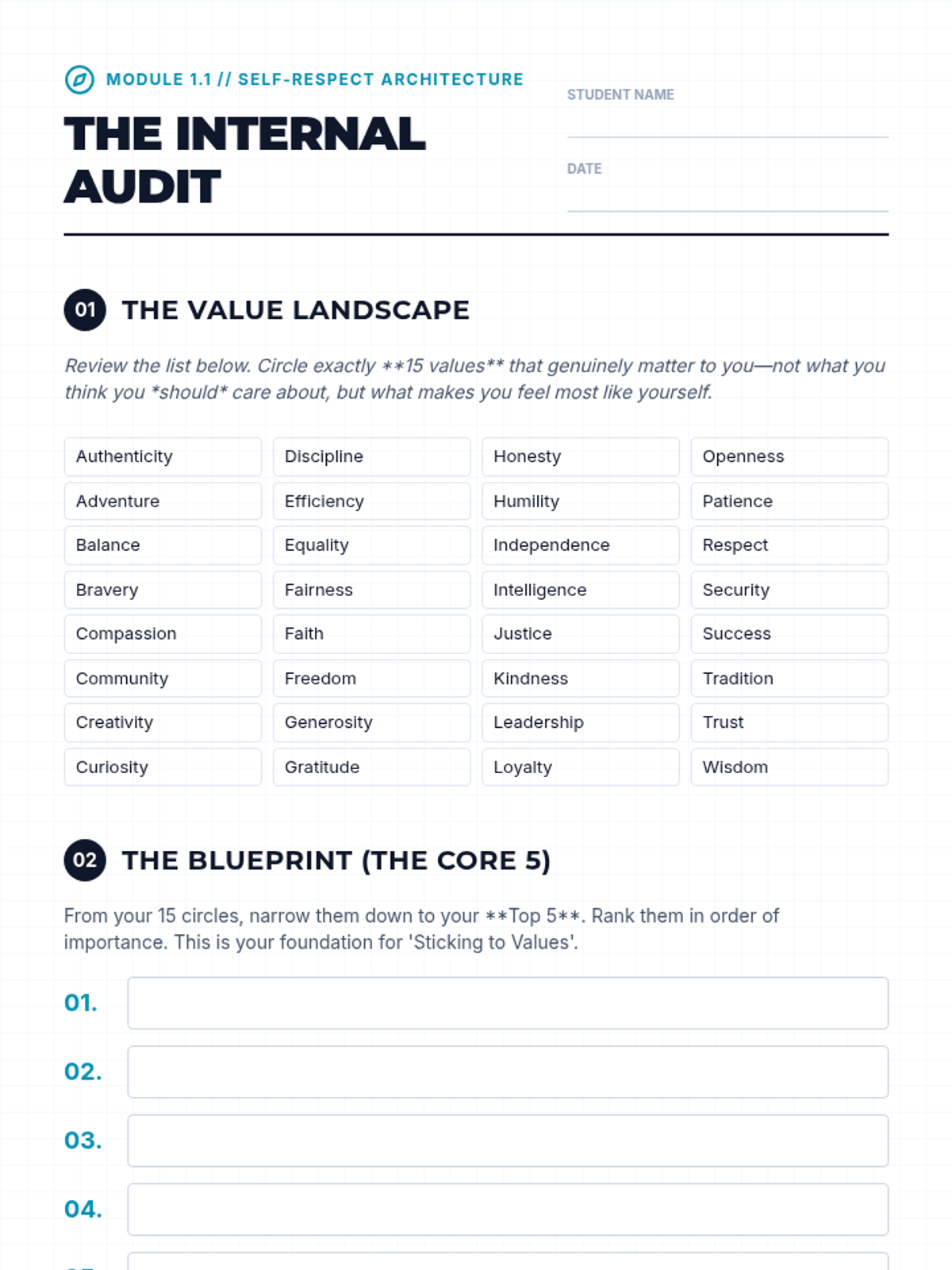
Students identify and prioritize their core values through inquiry-based activities, laying the groundwork for the 'Stick to values' component of the FAST skill.
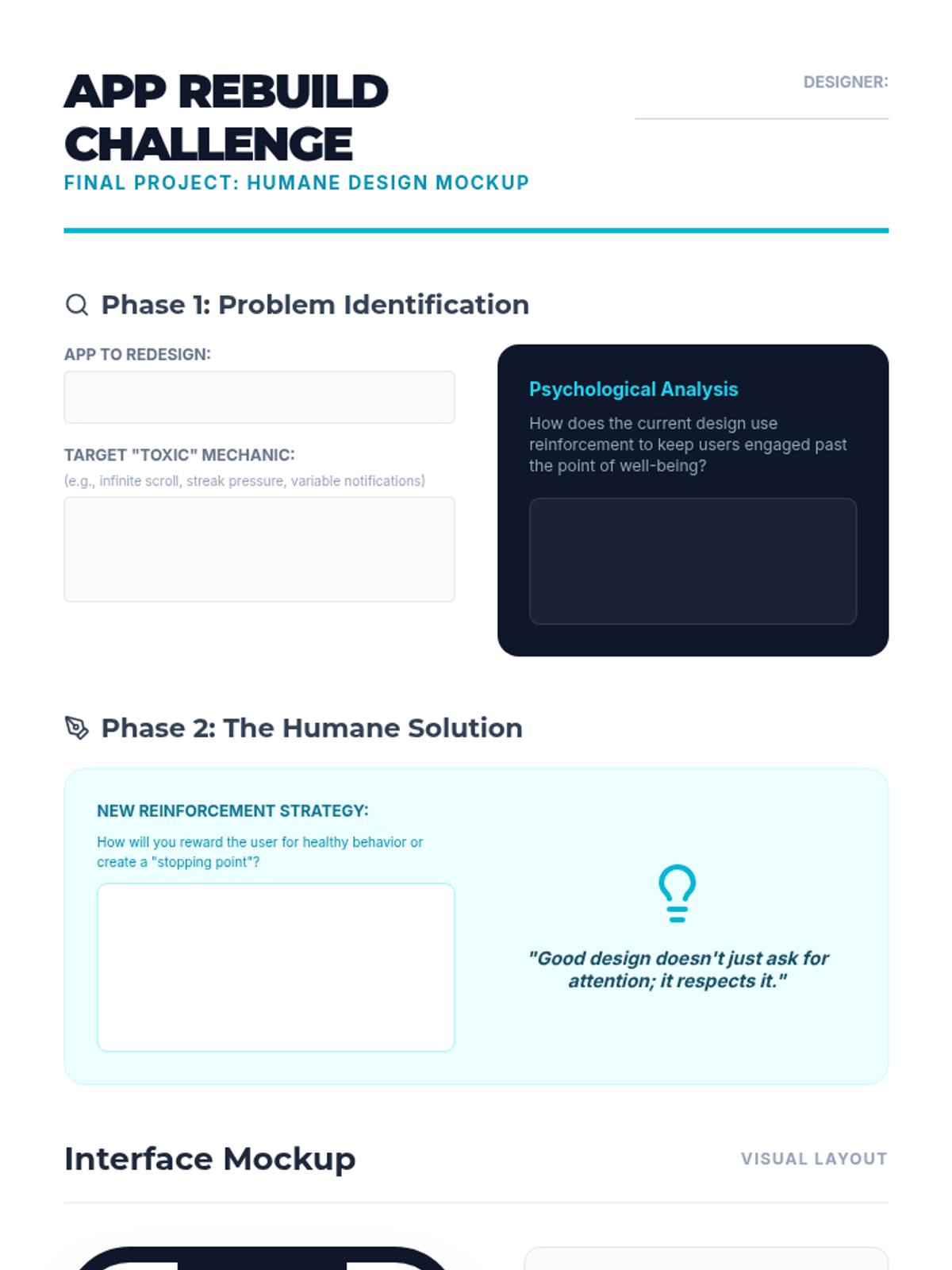
Students propose a redesign of a popular app that uses positive reinforcement to encourage healthy boundaries rather than endless consumption. They create mockups of 'humane' interfaces.
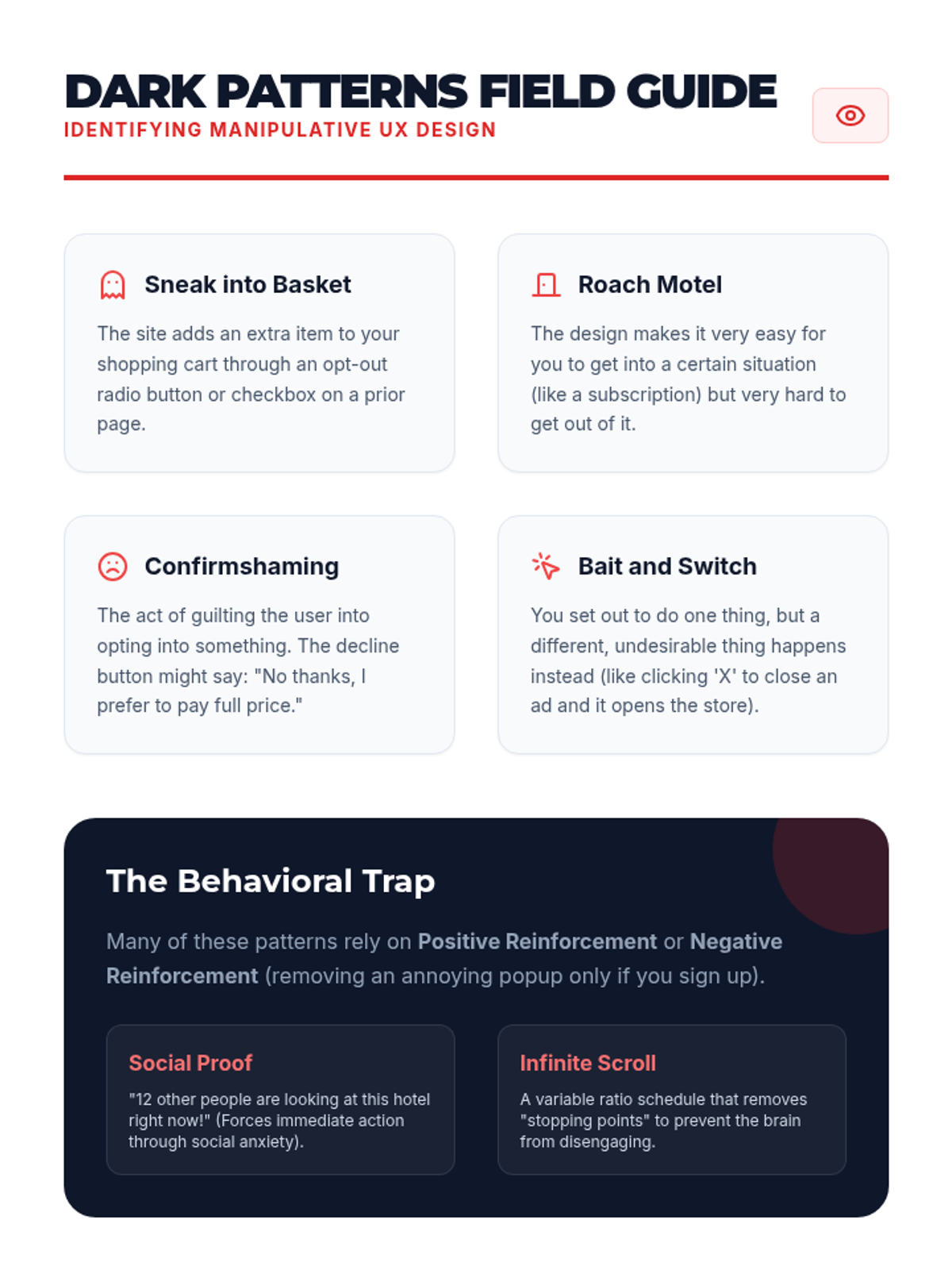
Students debate the ethics of using psychological vulnerabilities to maximize screen time. They look at 'dark patterns' in UI/UX design that exploit positive reinforcement loops.
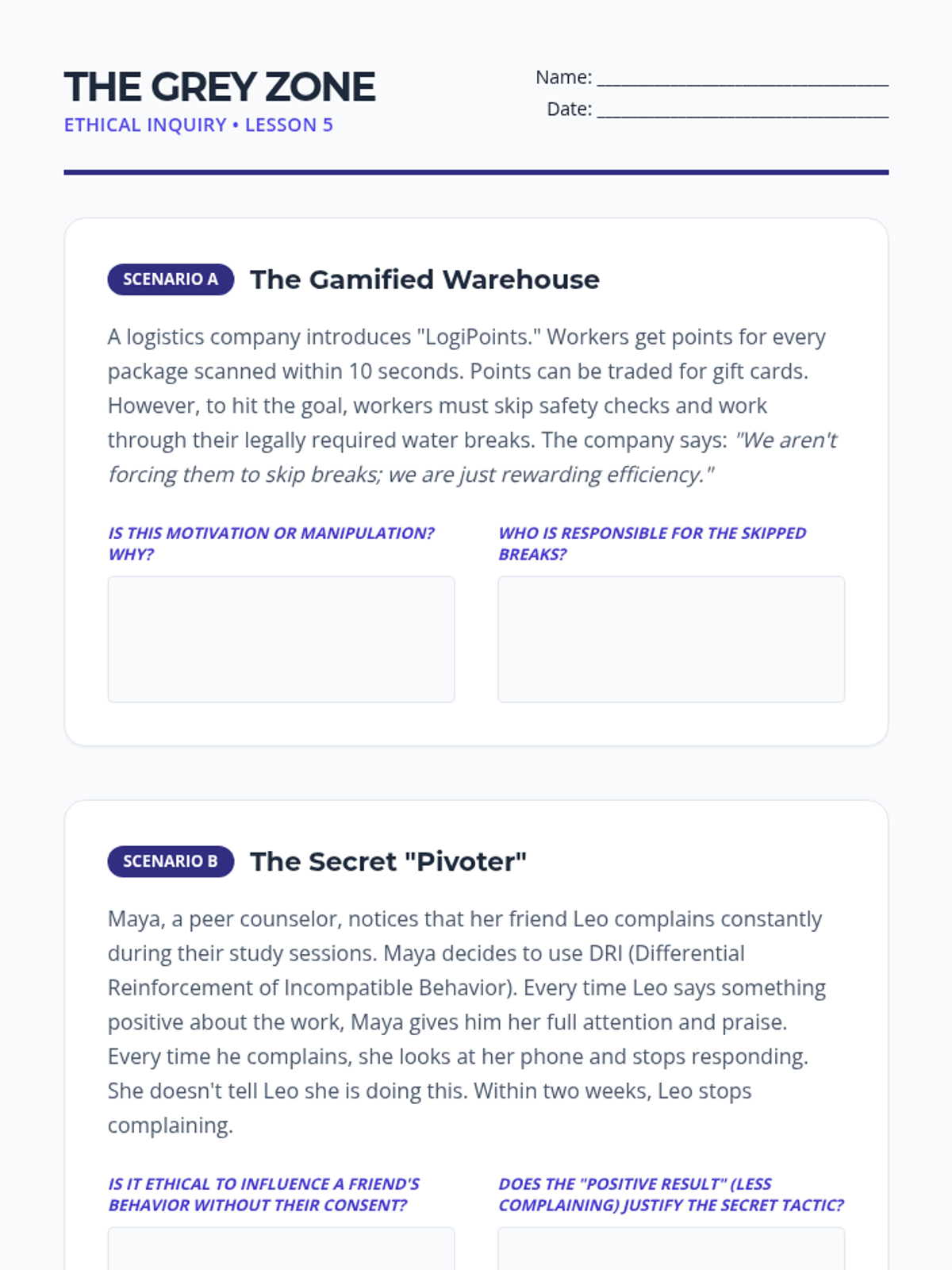
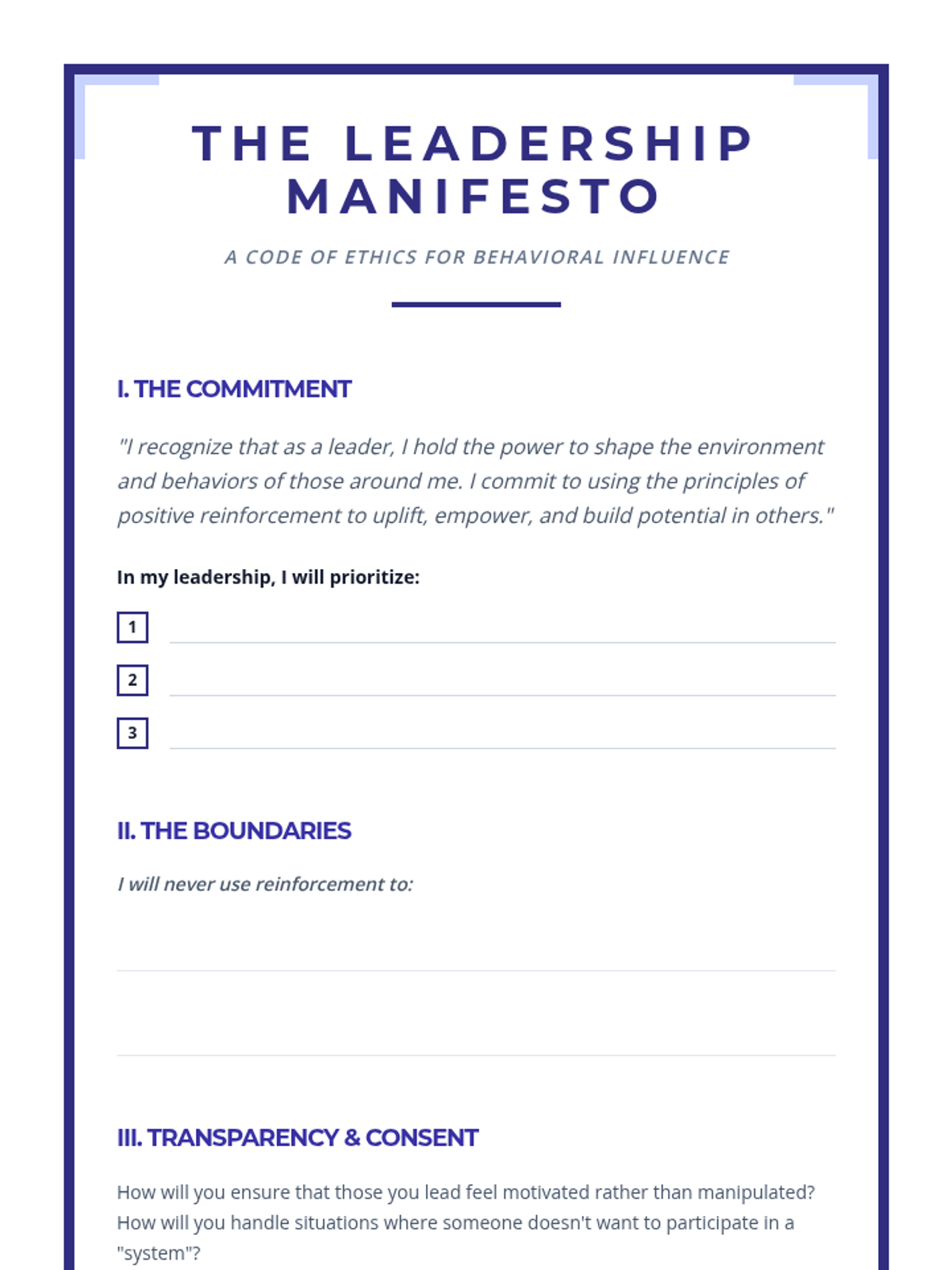
A deep dive into the ethics of behavioral leadership, debating the line between motivation and manipulation and creating a personal code of conduct.
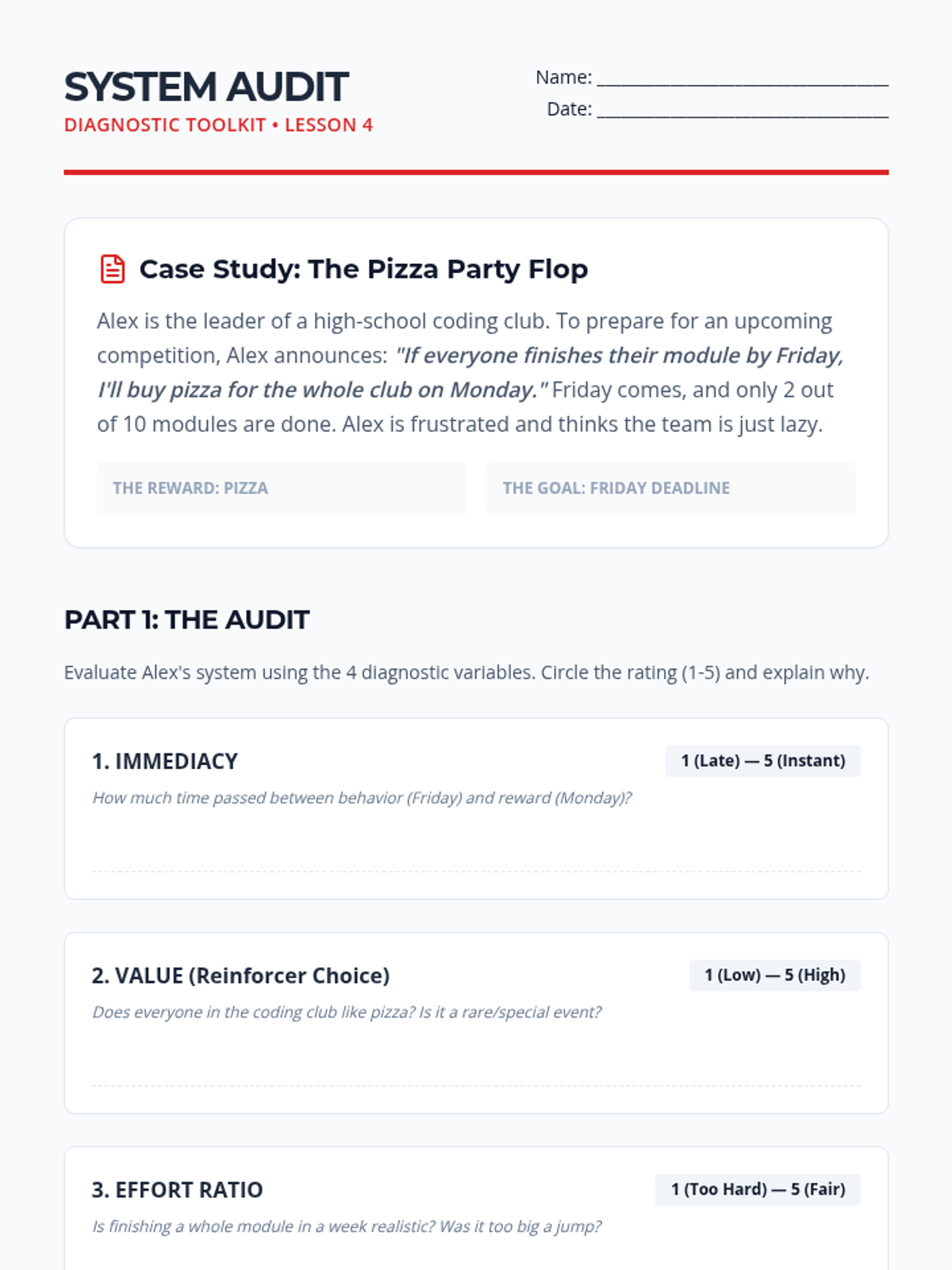
Students diagnose why certain reinforcement systems fail, looking at factors like lack of immediacy, poor reinforcer selection, and trust issues.
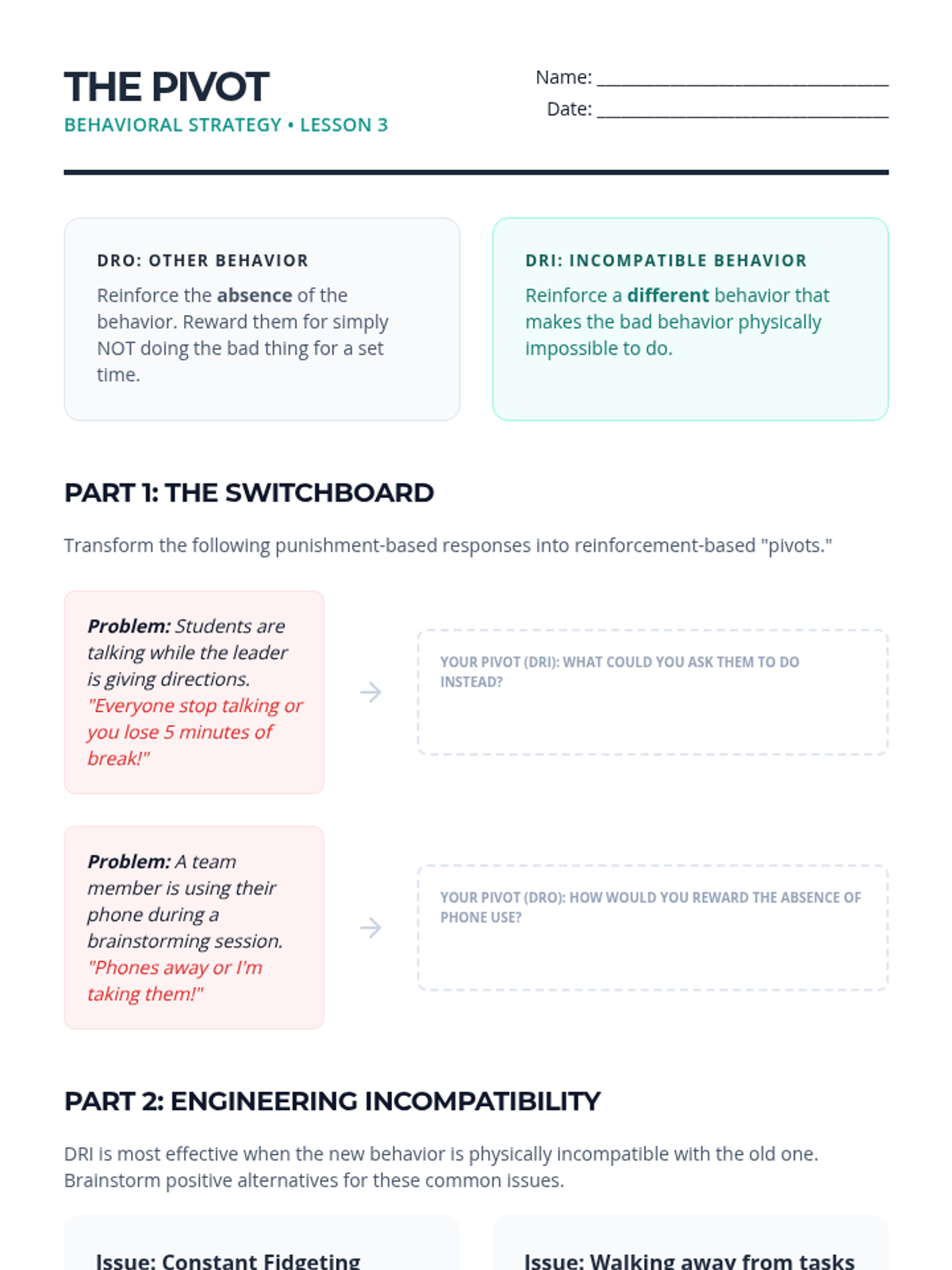
Students explore Differential Reinforcement of Other Behavior (DRO) as a tool for managing conflict and reducing unwanted behaviors without relying on punishment.
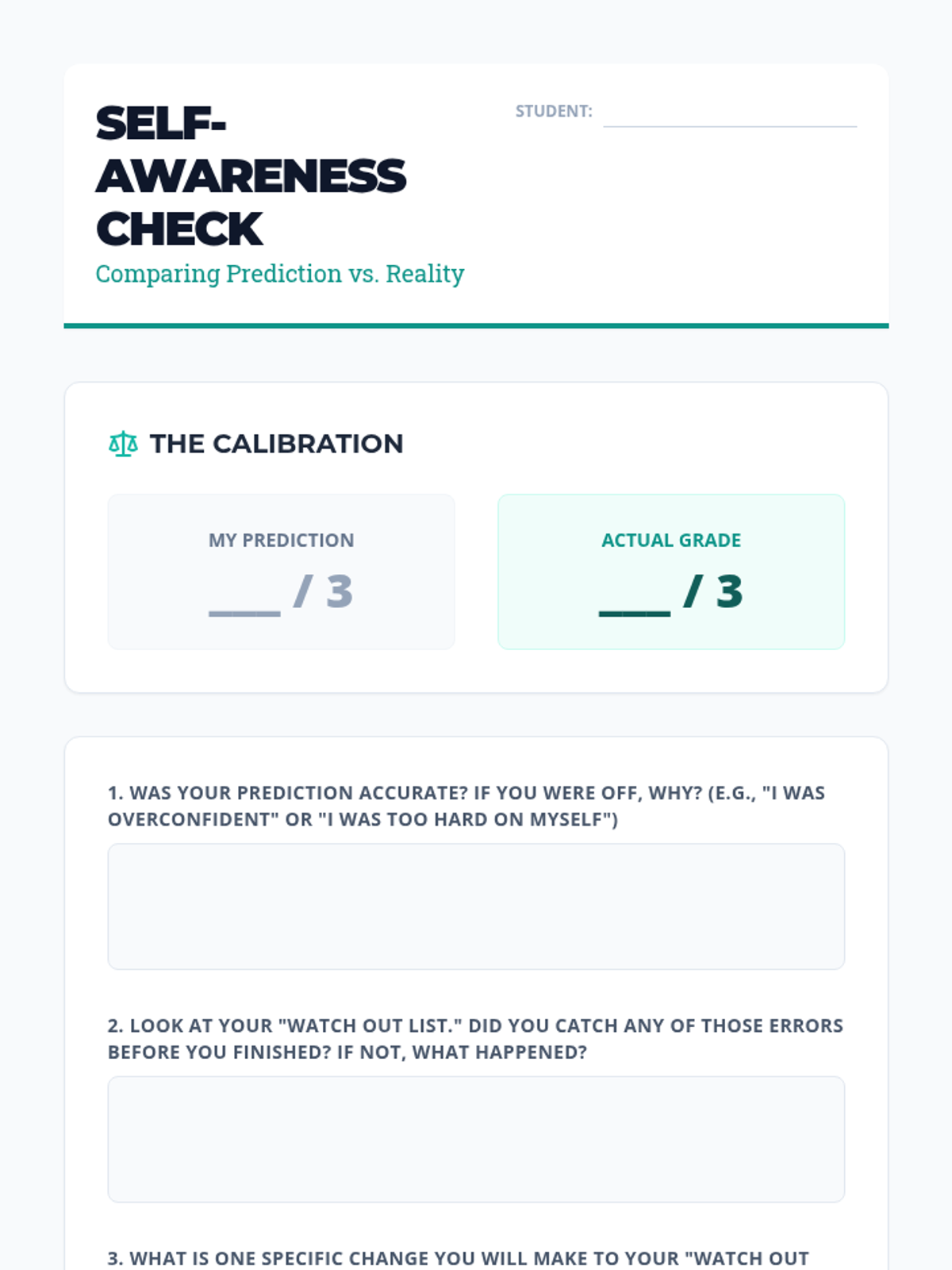
Students take a short assessment and immediately apply their error analysis protocol. They verify if their 'Watch Out' list helped them avoid previous habitual mistakes.
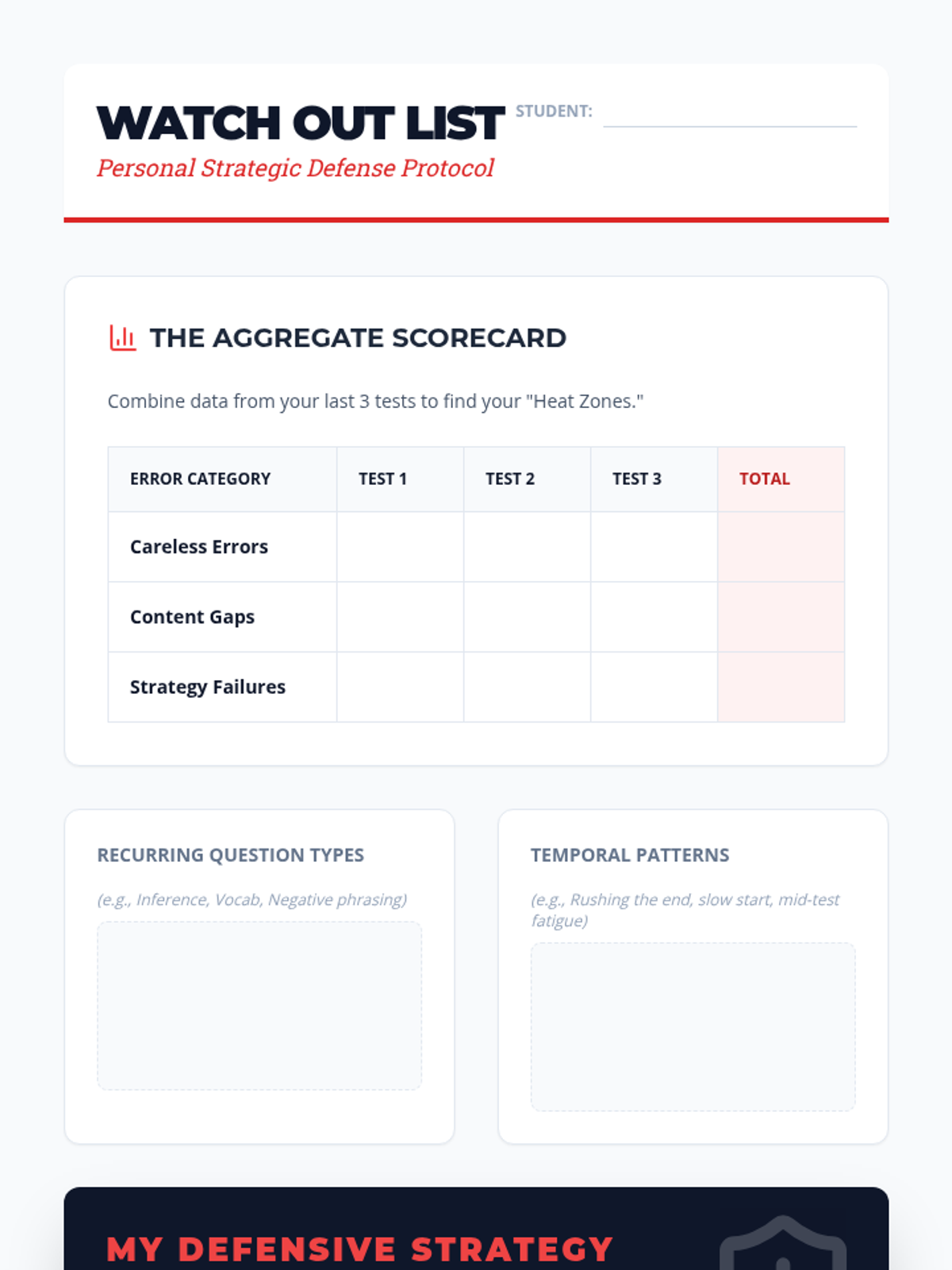
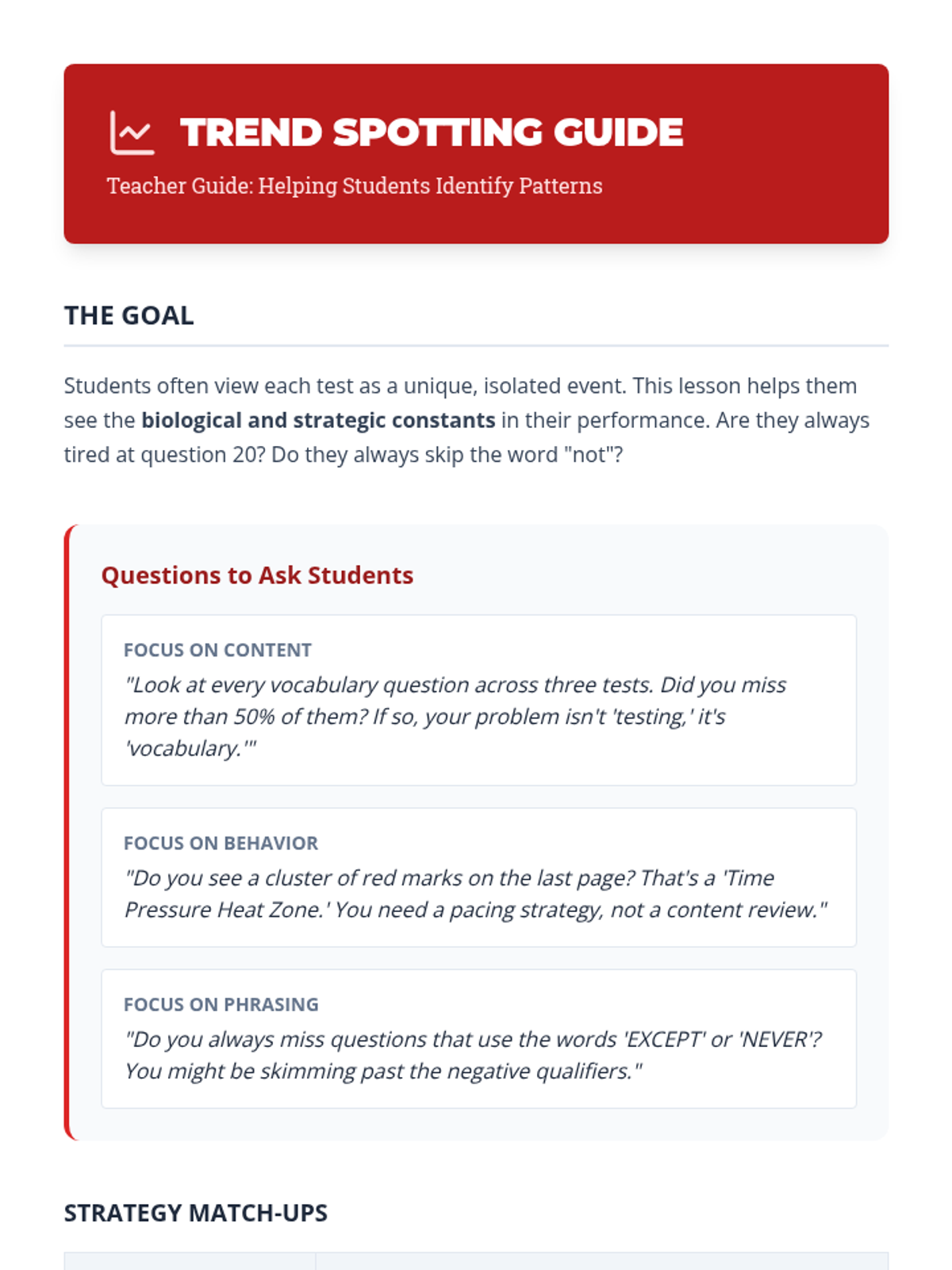
Students aggregate their error data to find personal patterns (e.g., 'I always miss inference questions' or 'I rush the last 5 minutes'). They create a personal 'Watch Out' list for future exams.
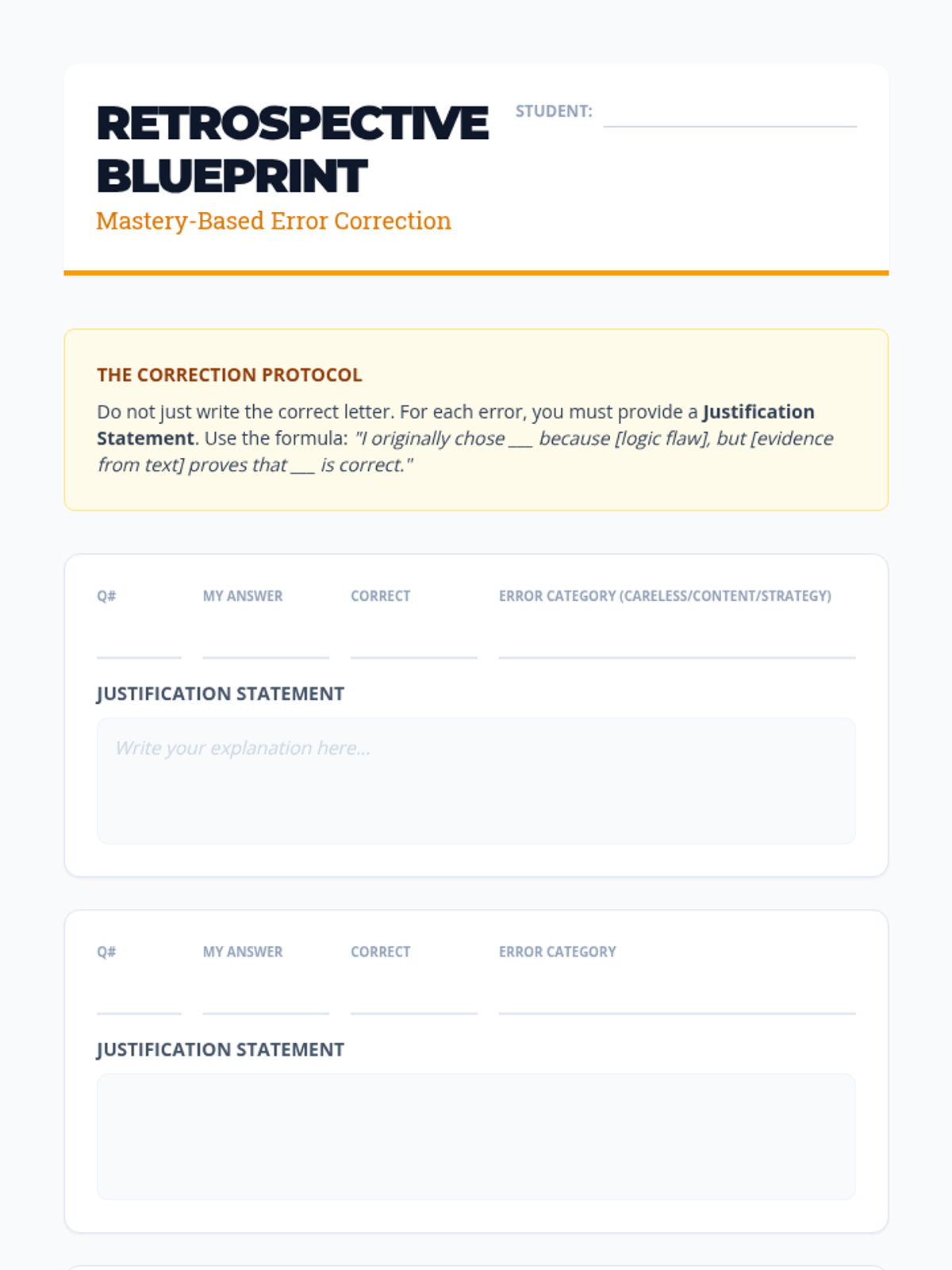
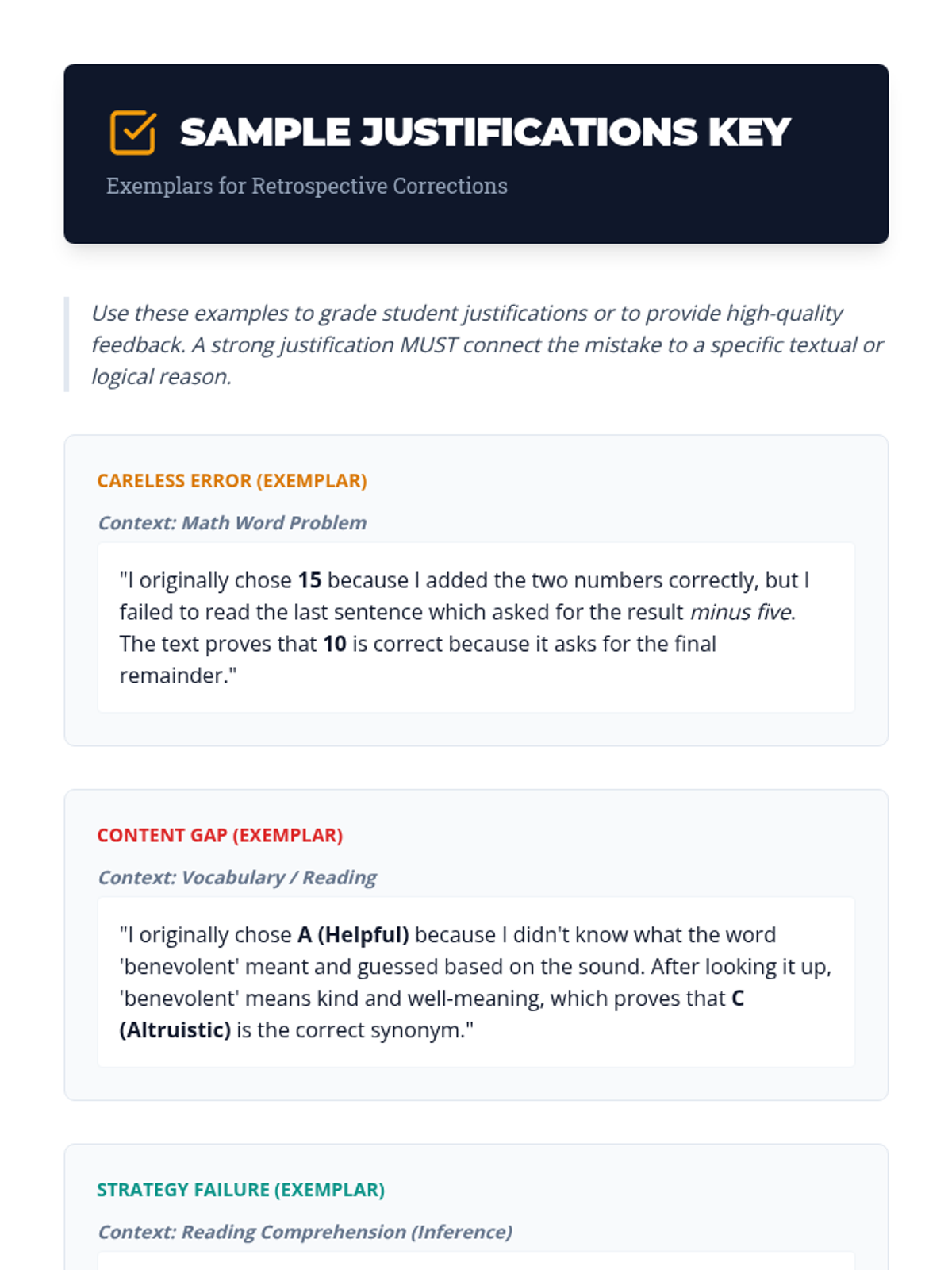
Instead of just marking correct answers, students must write a sentence explaining *why* their original answer was wrong and *why* the new answer is right. This ensures deep processing of the error.
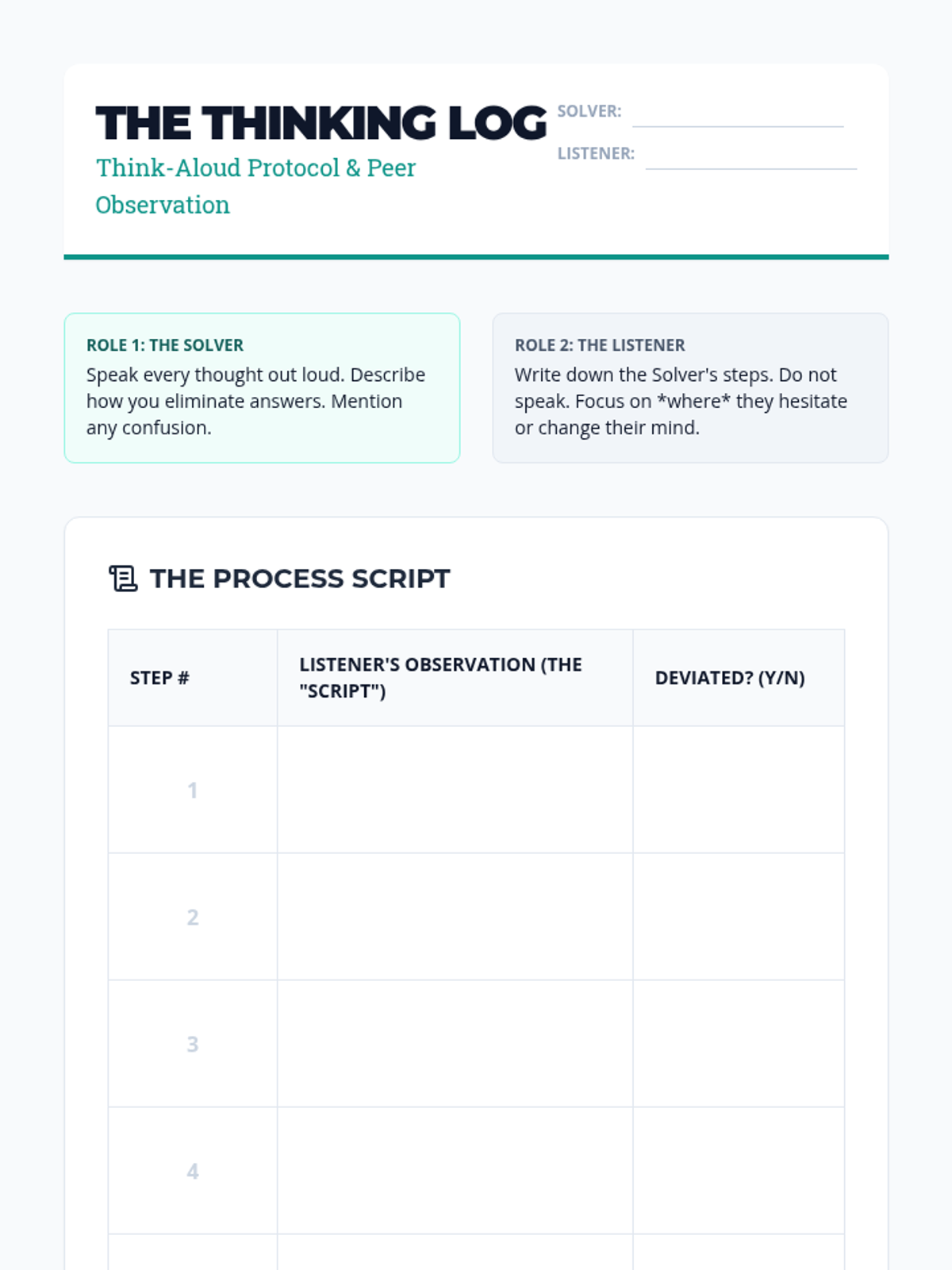
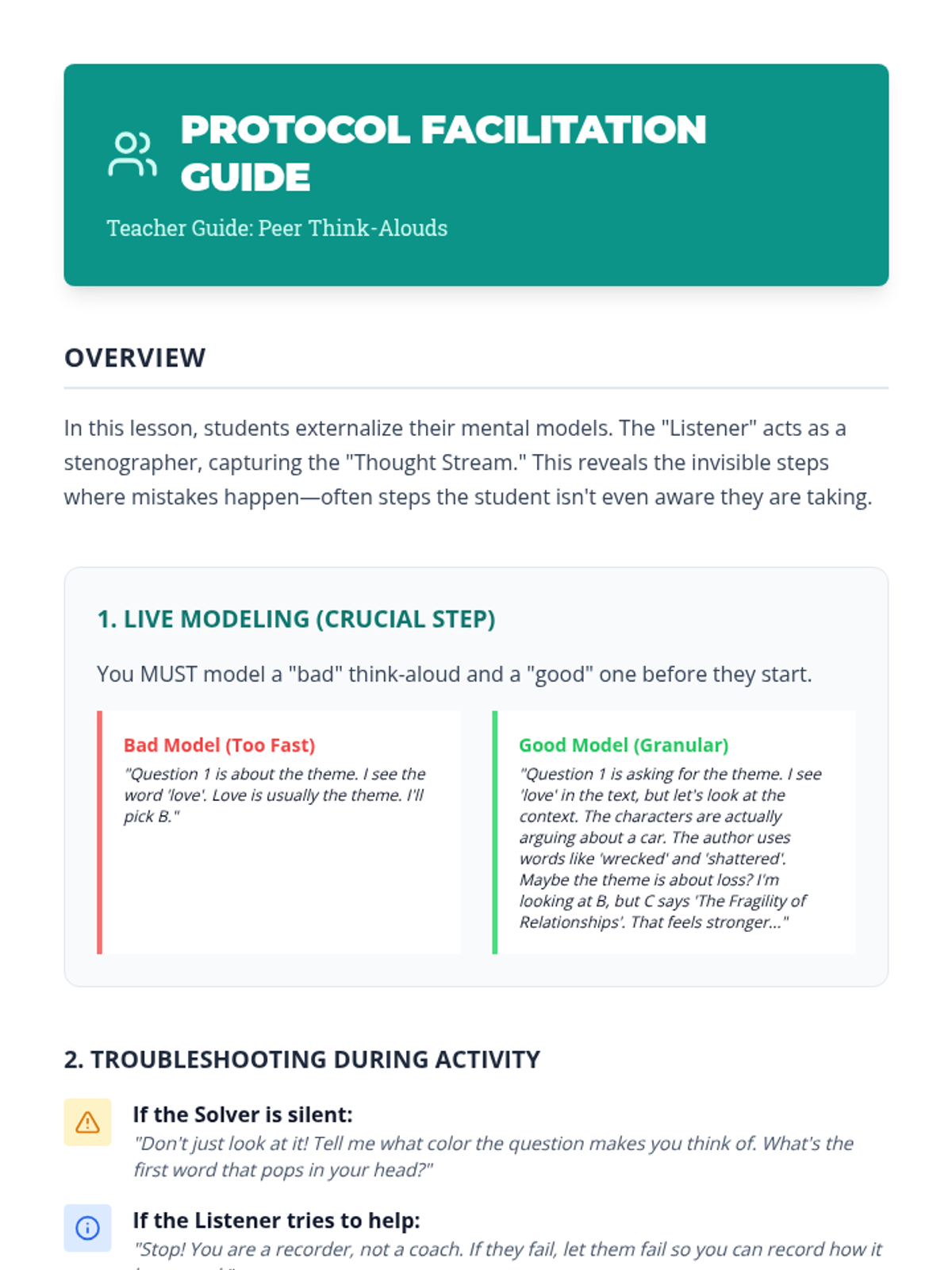
Working in pairs, students vocalize their thinking process while solving a problem while a partner records their steps. They analyze these recordings to identify where their logic deviated from the correct path.
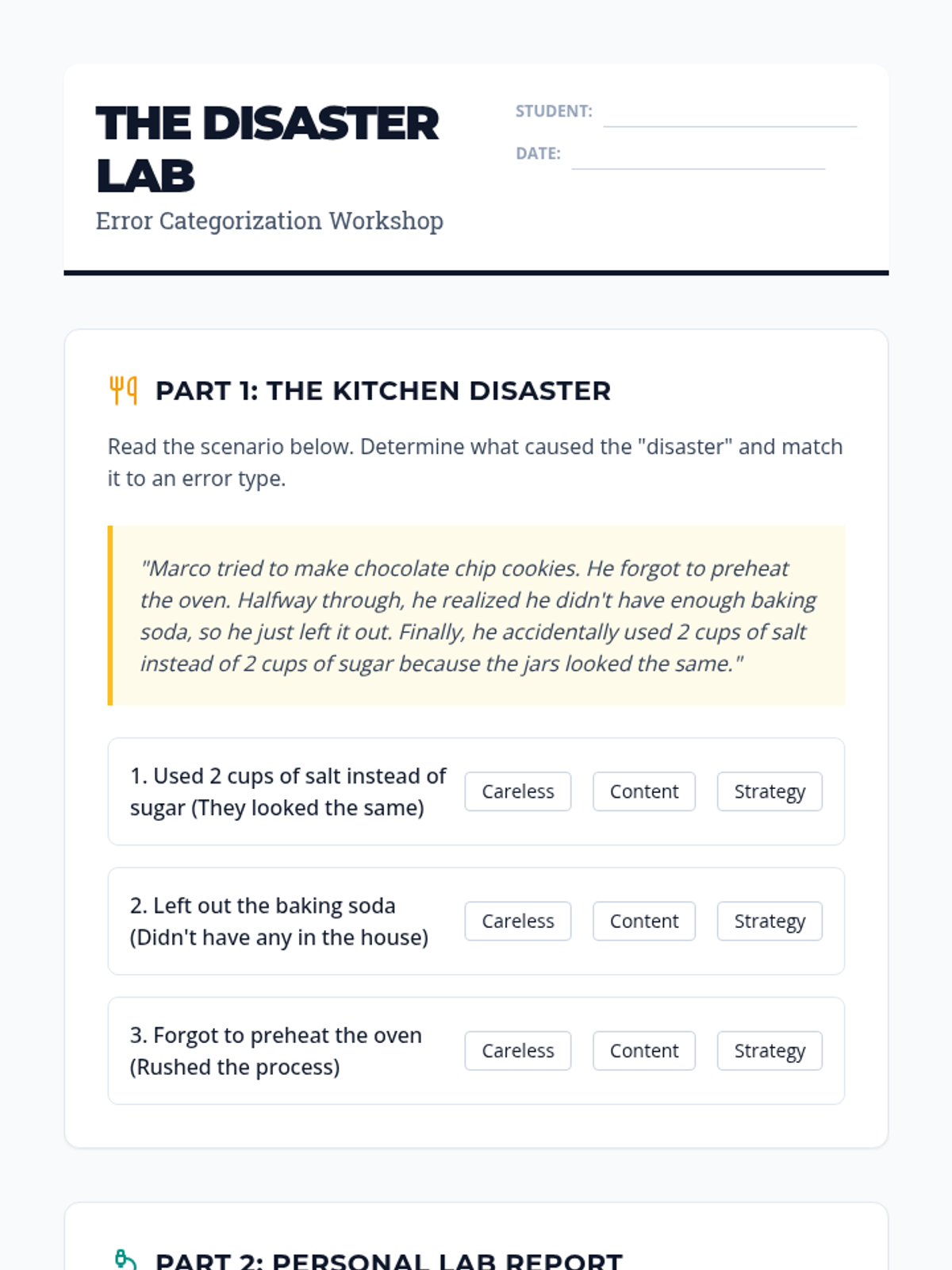
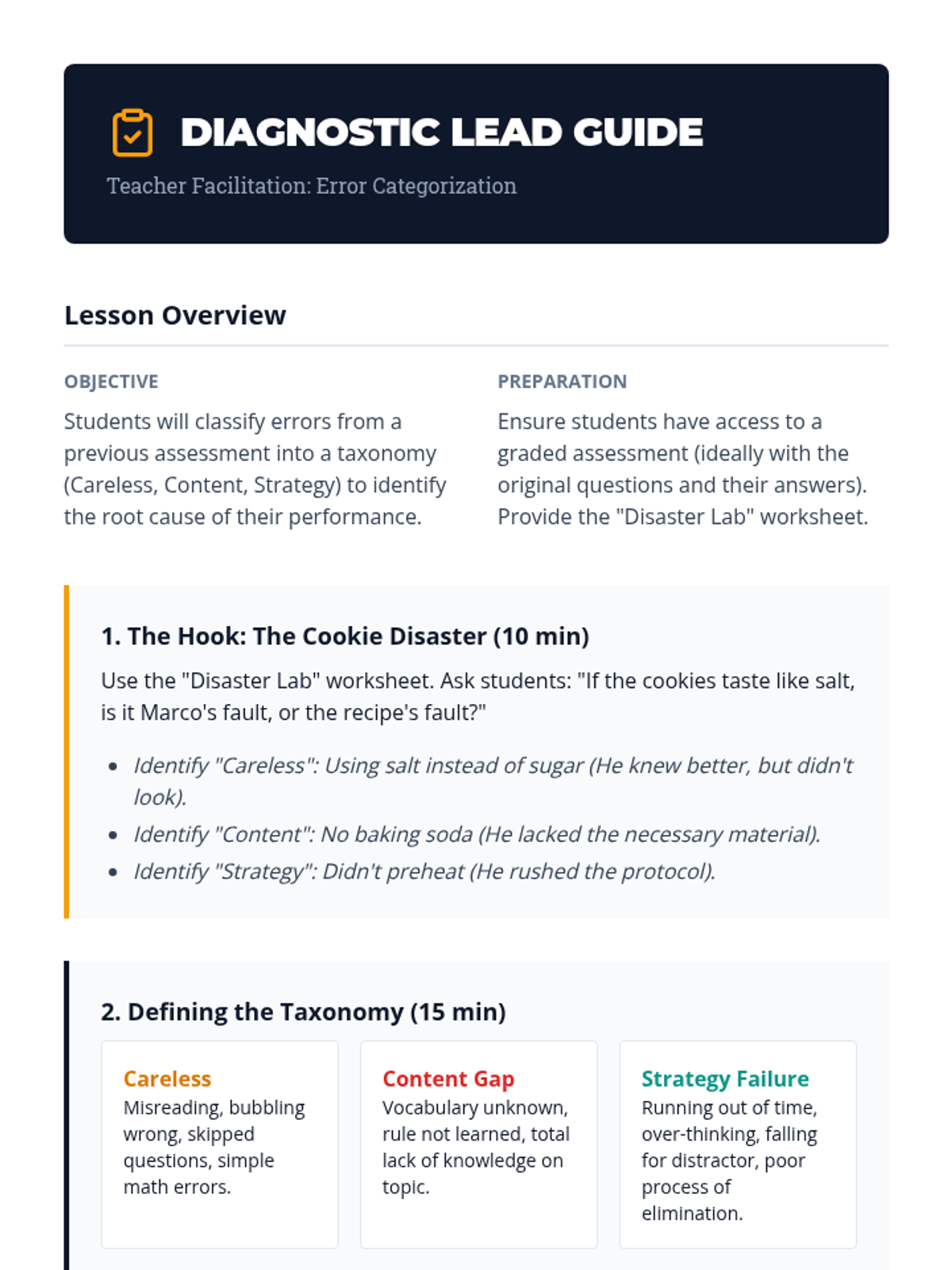
Students review a past assessment and categorize every incorrect answer as a 'Careless Error,' 'Content Gap,' or 'Strategy Failure.' This taxonomy helps them understand that not all mistakes are created equal.
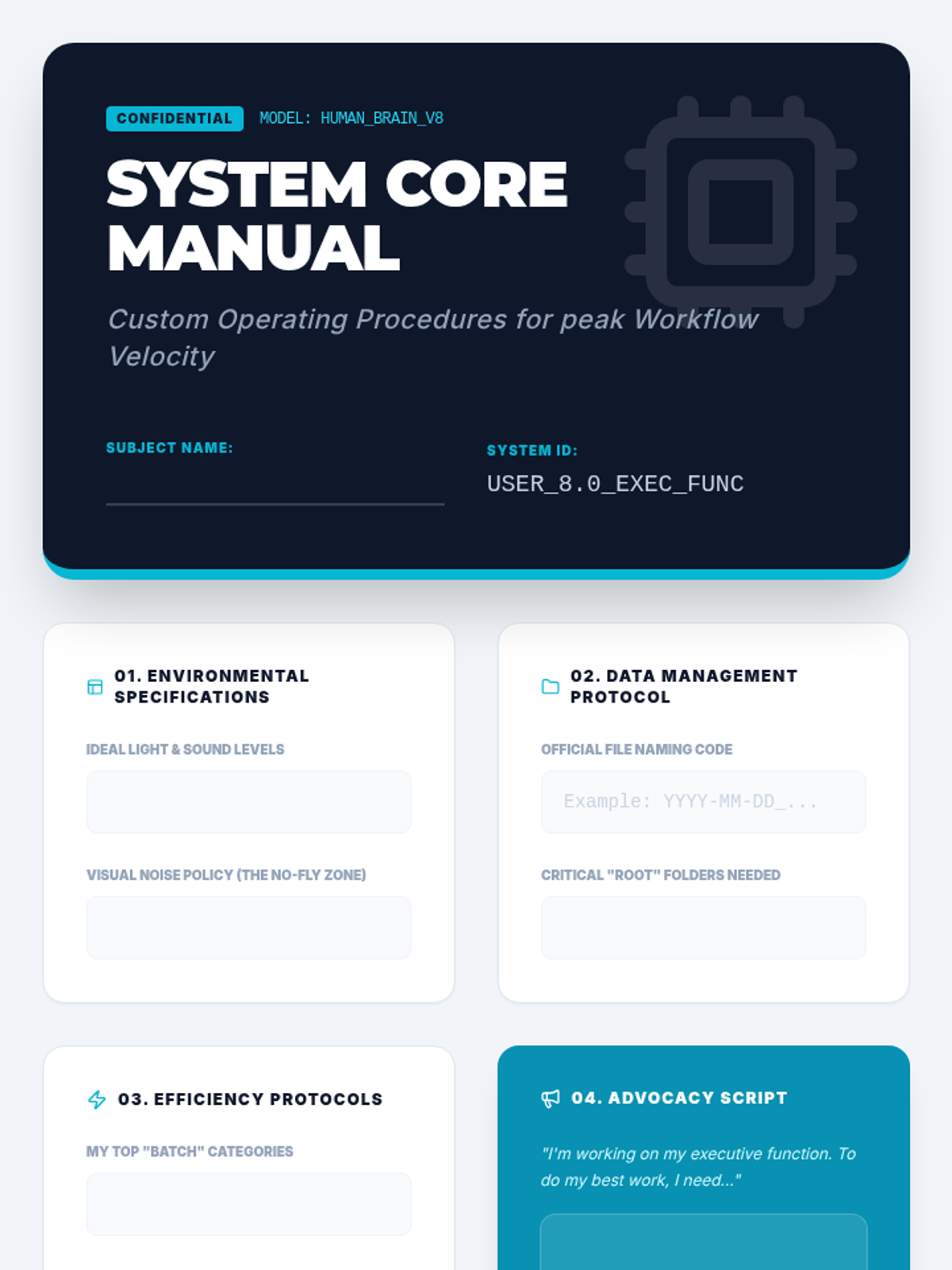
In this capstone lesson, students synthesize their learning into a 'User Manual' for their own brain. They document personalized strategies for physical, digital, and temporal organization to build self-advocacy and long-term habits.
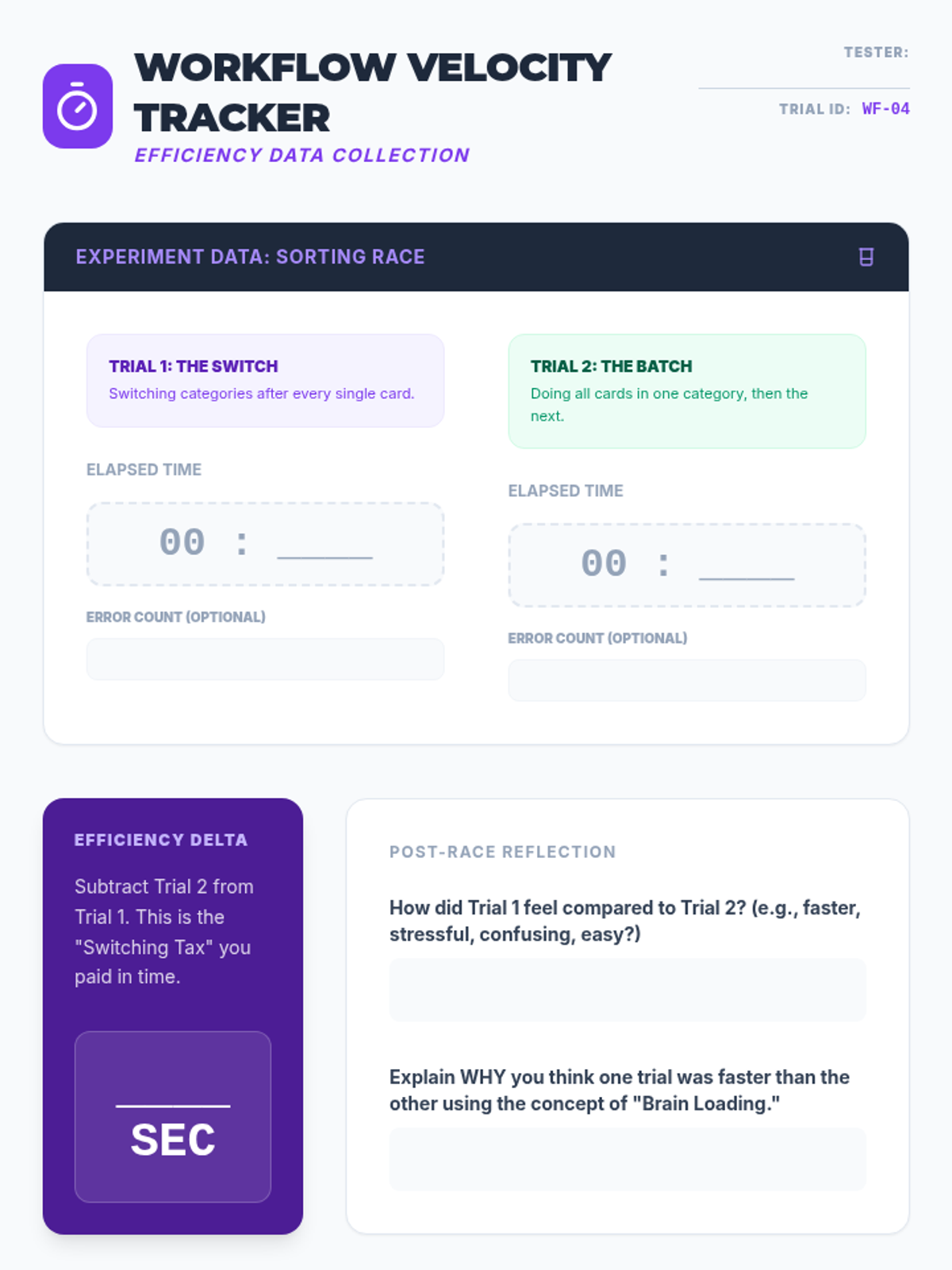
Students investigate the efficiency costs of multitasking and context switching. Through timed experiments, they compare sequential task completion with 'batching' strategies to develop more efficient workflow habits.
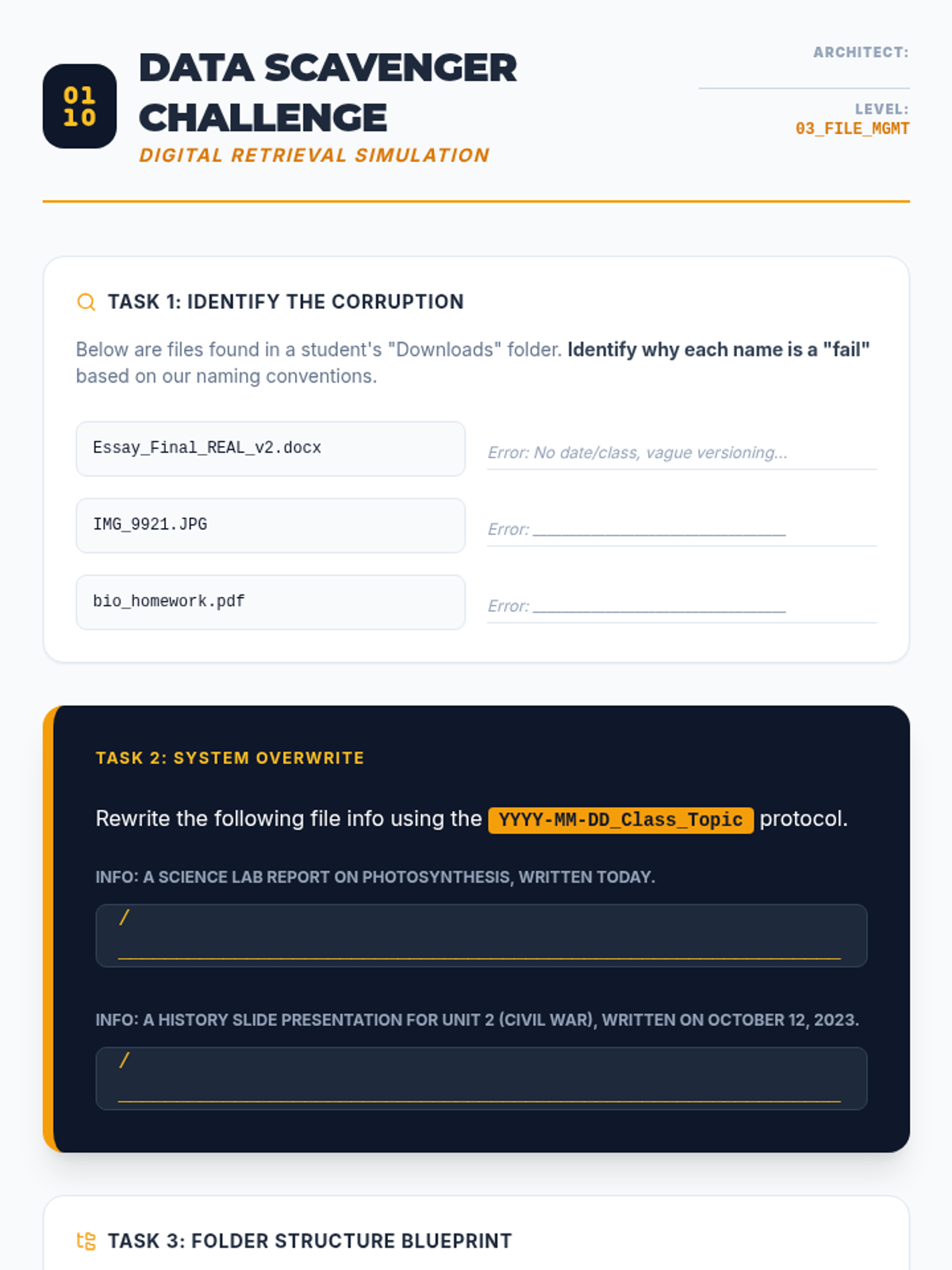
This lesson focuses on digital literacy through the lens of organization. Students learn effective file naming conventions, folder hierarchies, and inbox management strategies to prevent 'digital hoarding' and improve information retrieval speed.
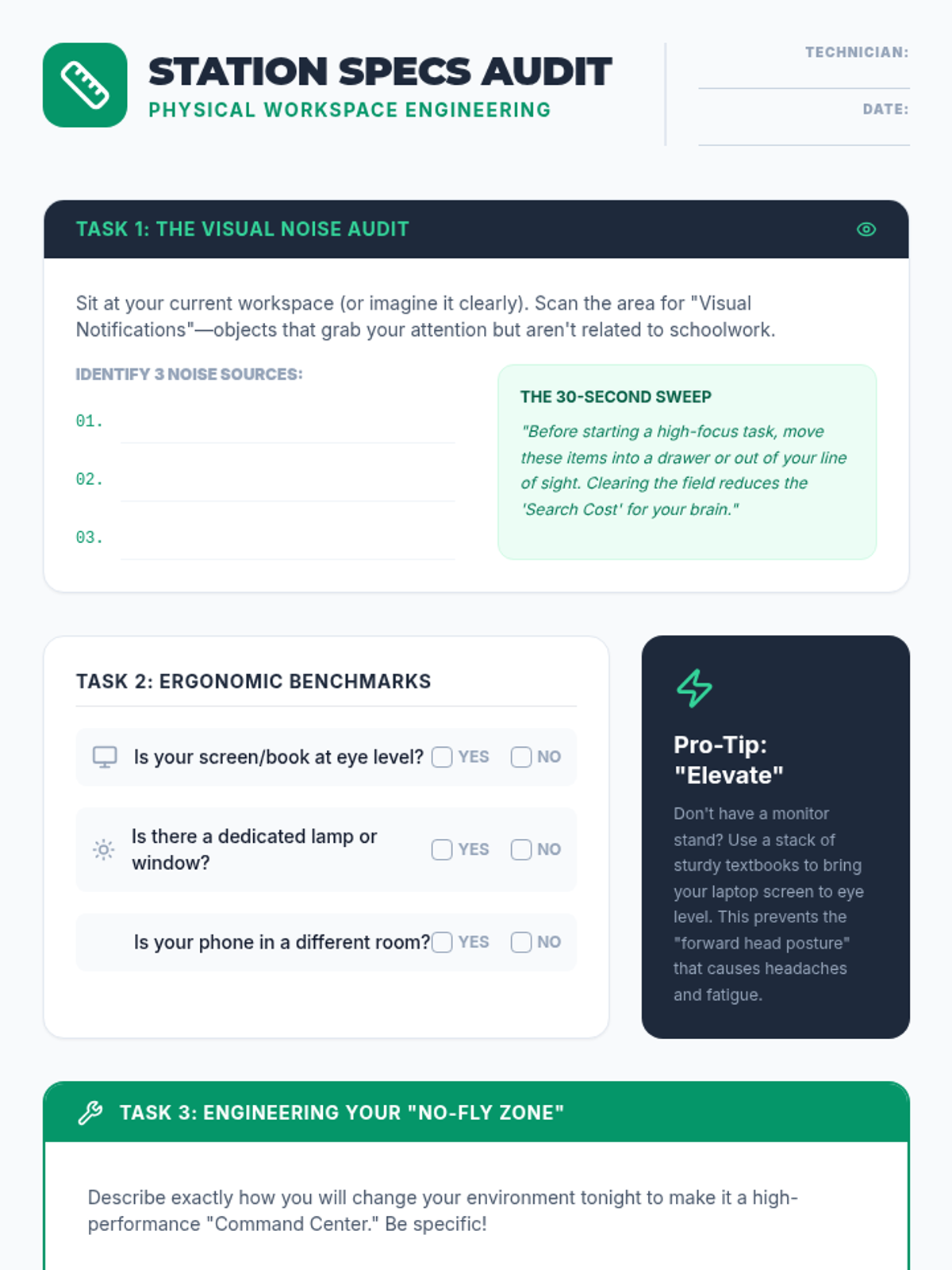
Students analyze the impact of their physical environment on focus and productivity. By auditing workspace case studies and their own study areas, they learn to design spaces that minimize distractions and optimize ergonomics.
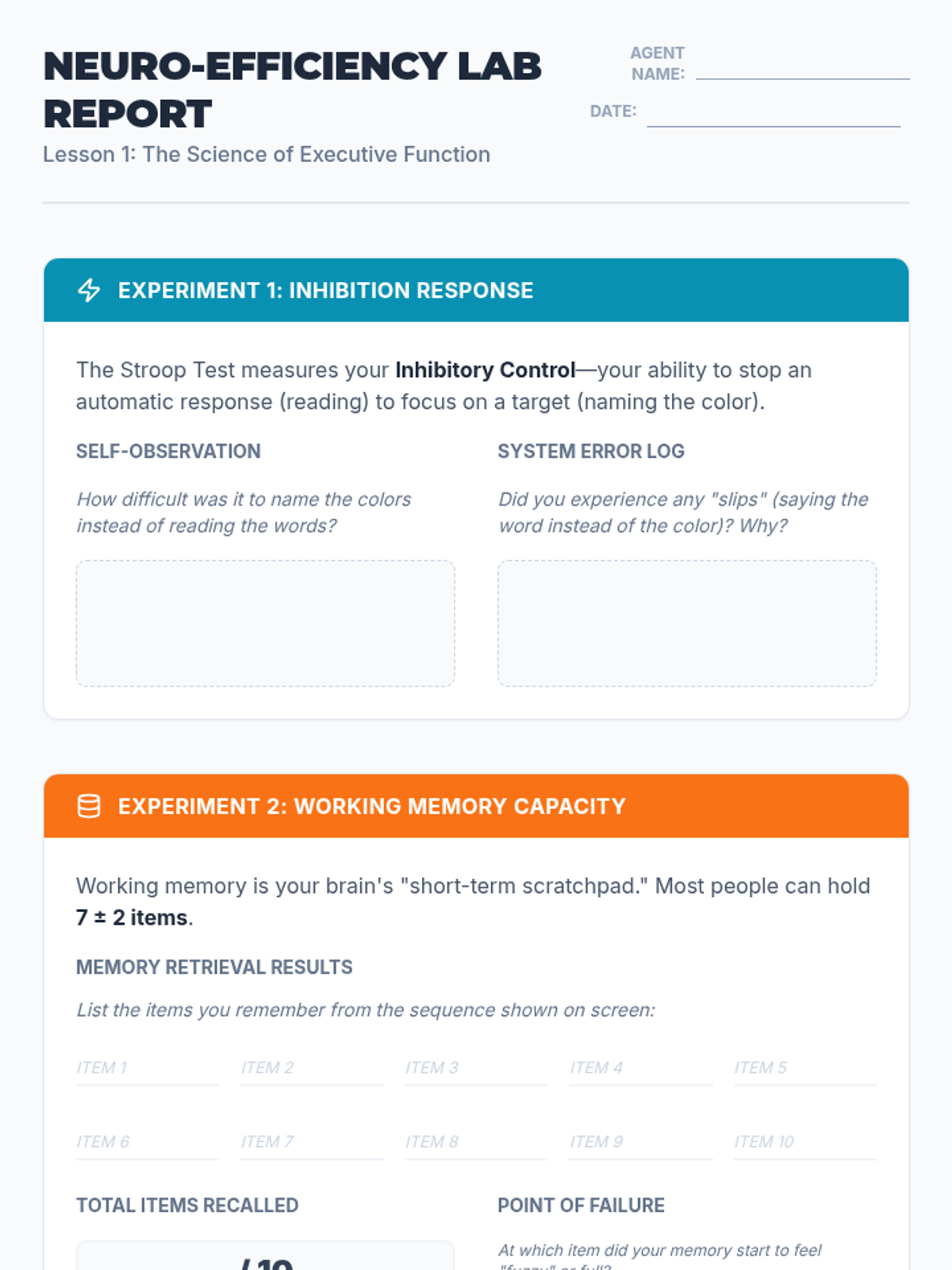
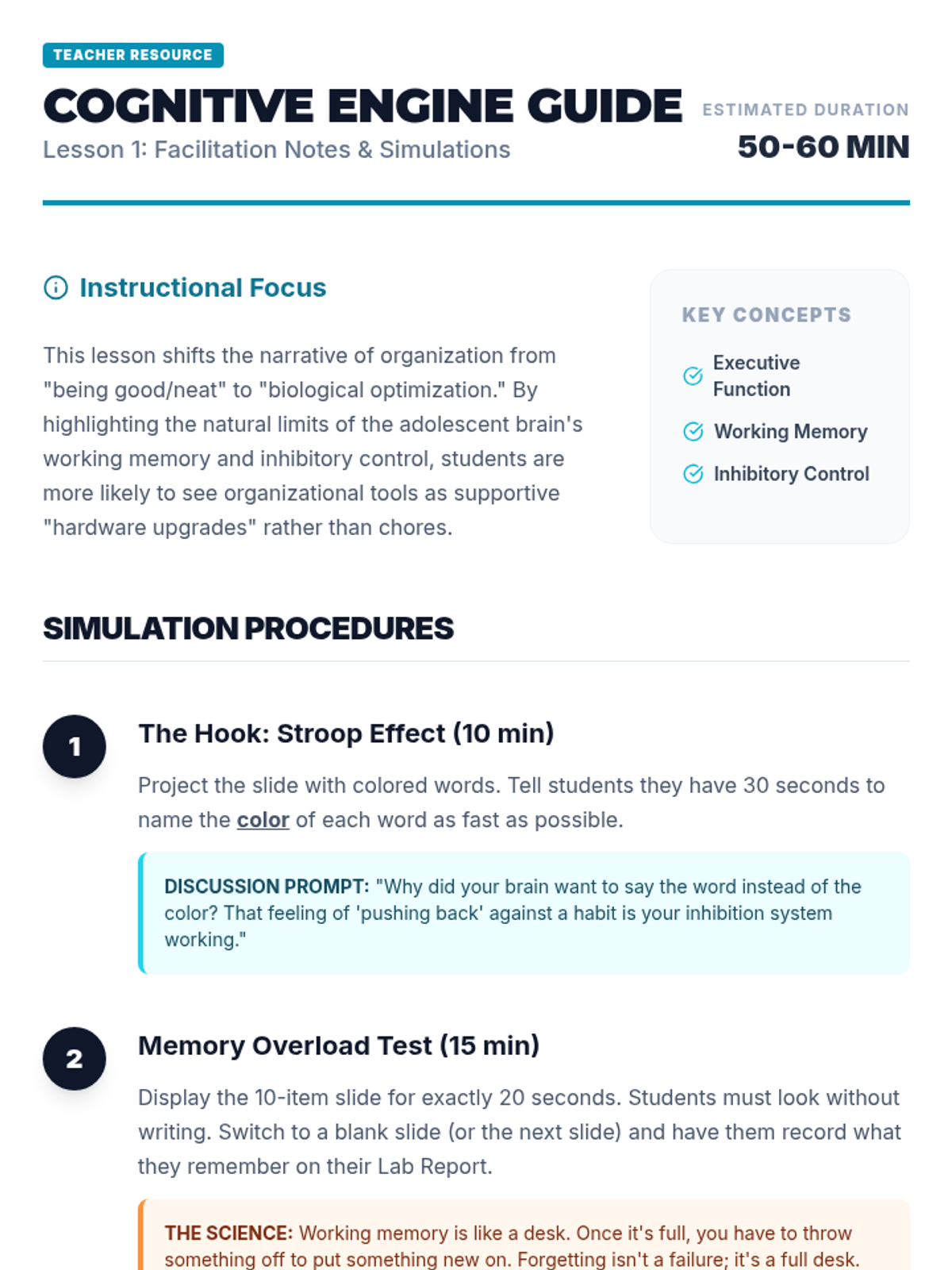
Students explore the neurological basis of executive function, focusing on working memory and inhibition. They engage in simulations like the Stroop Effect and memory overload tasks to understand why organizational systems are necessary for cognitive efficiency.
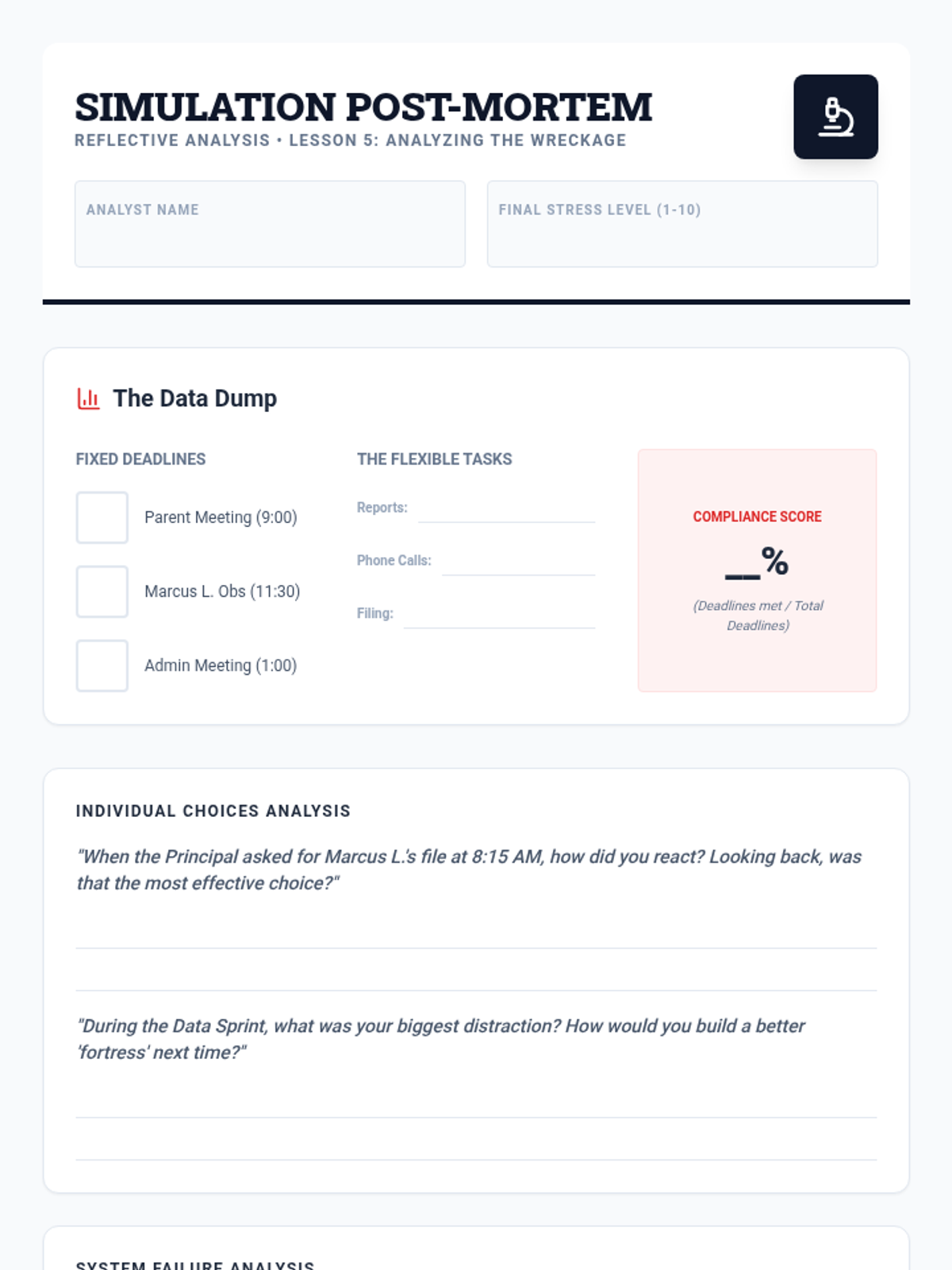
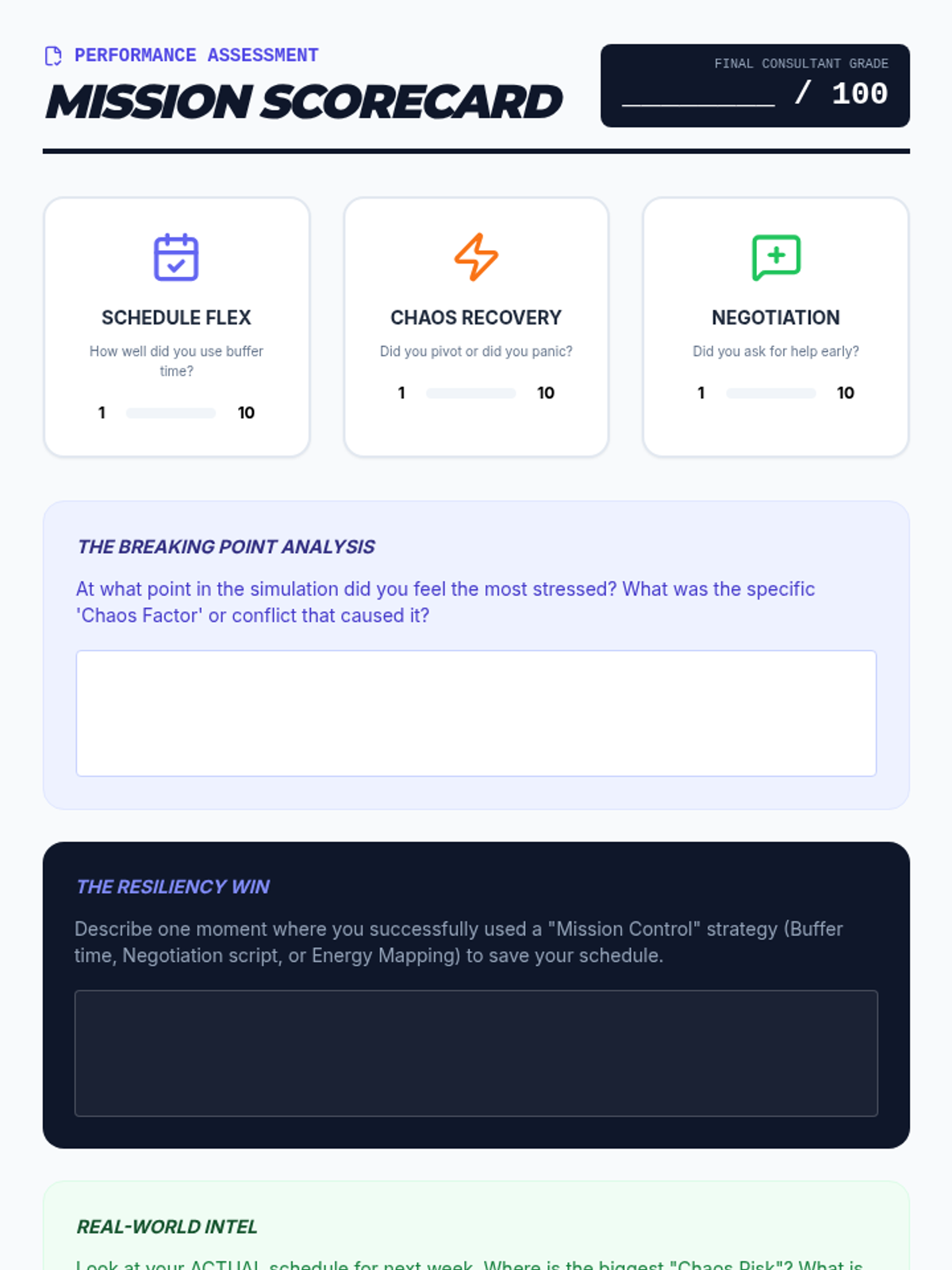
A final analysis of simulation performance, identifying system failures versus individual choices and reflecting on professional growth.
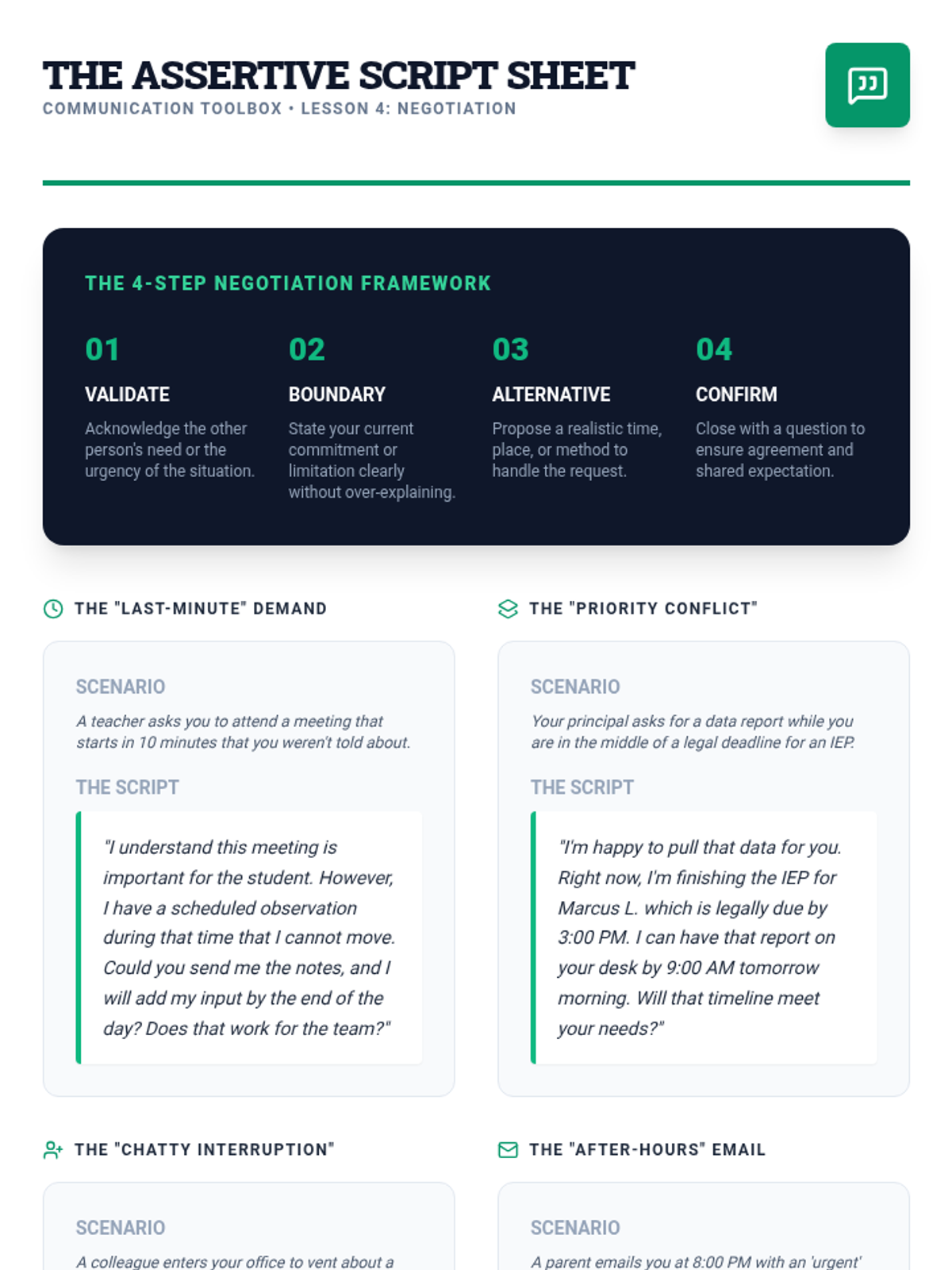
Navigating schedule overlaps and professional conflicts through negotiation and assertive communication.
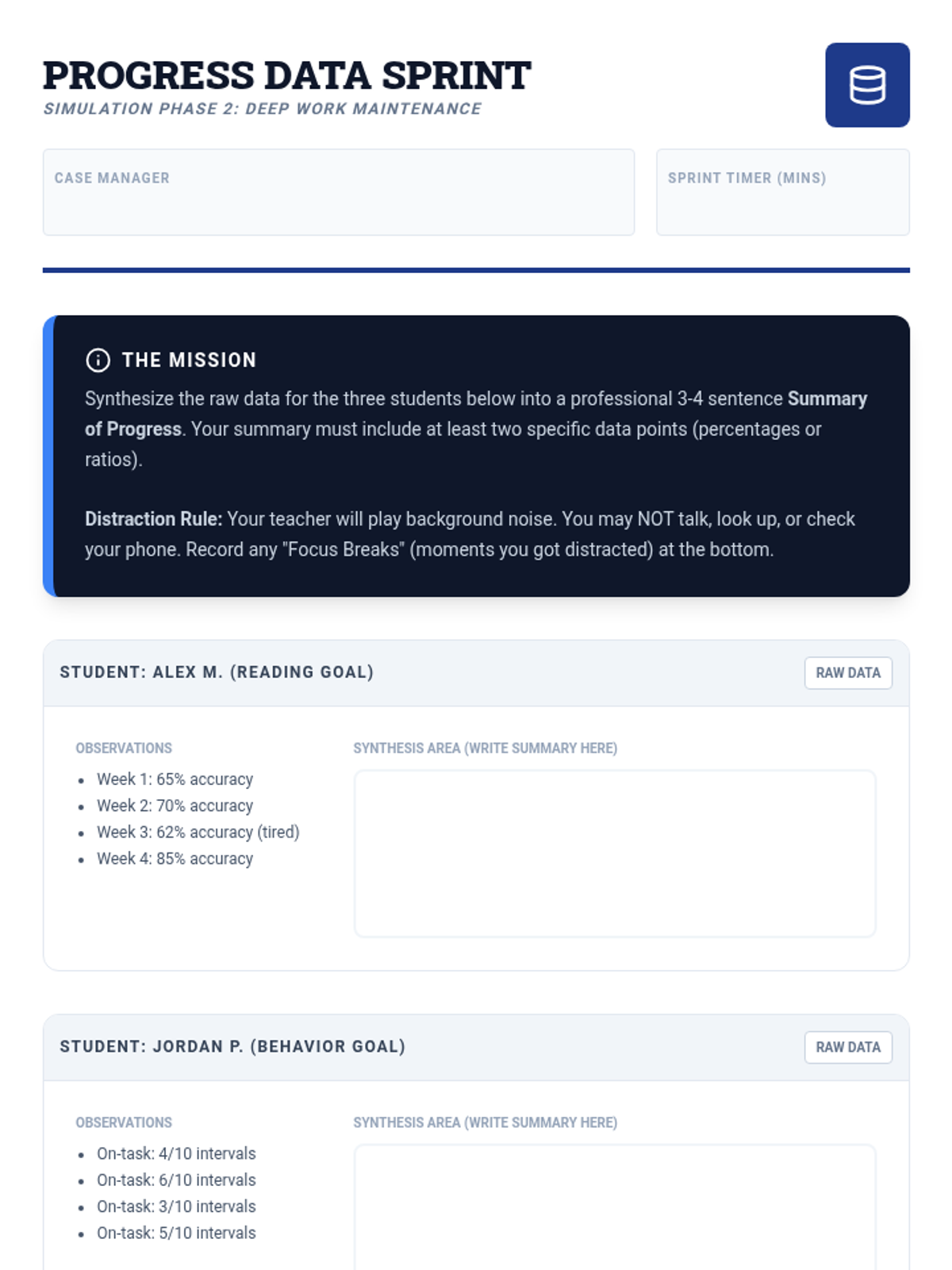
Focuses on maintaining deep work and focus while completing high-priority documentation under pressure.
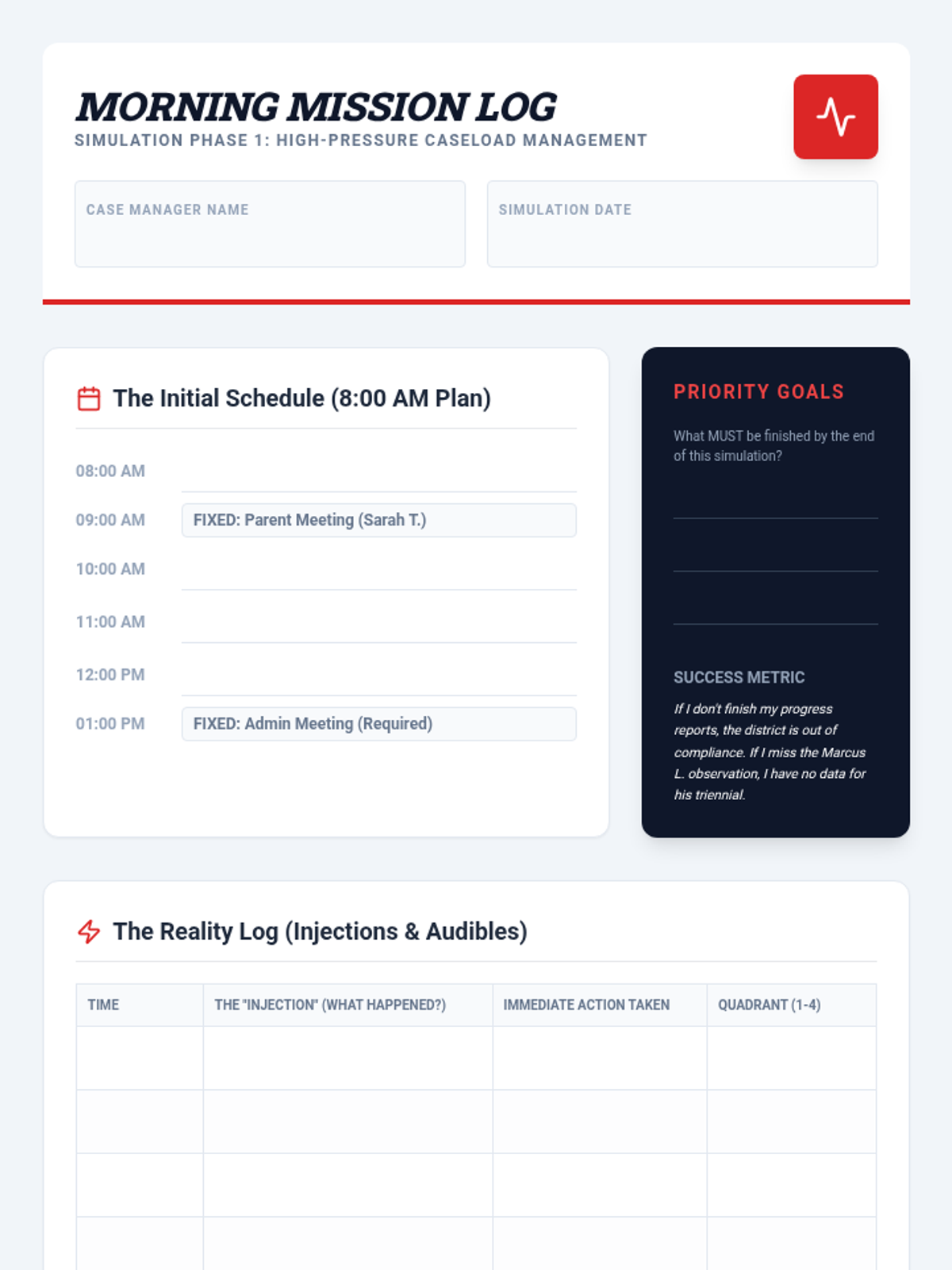
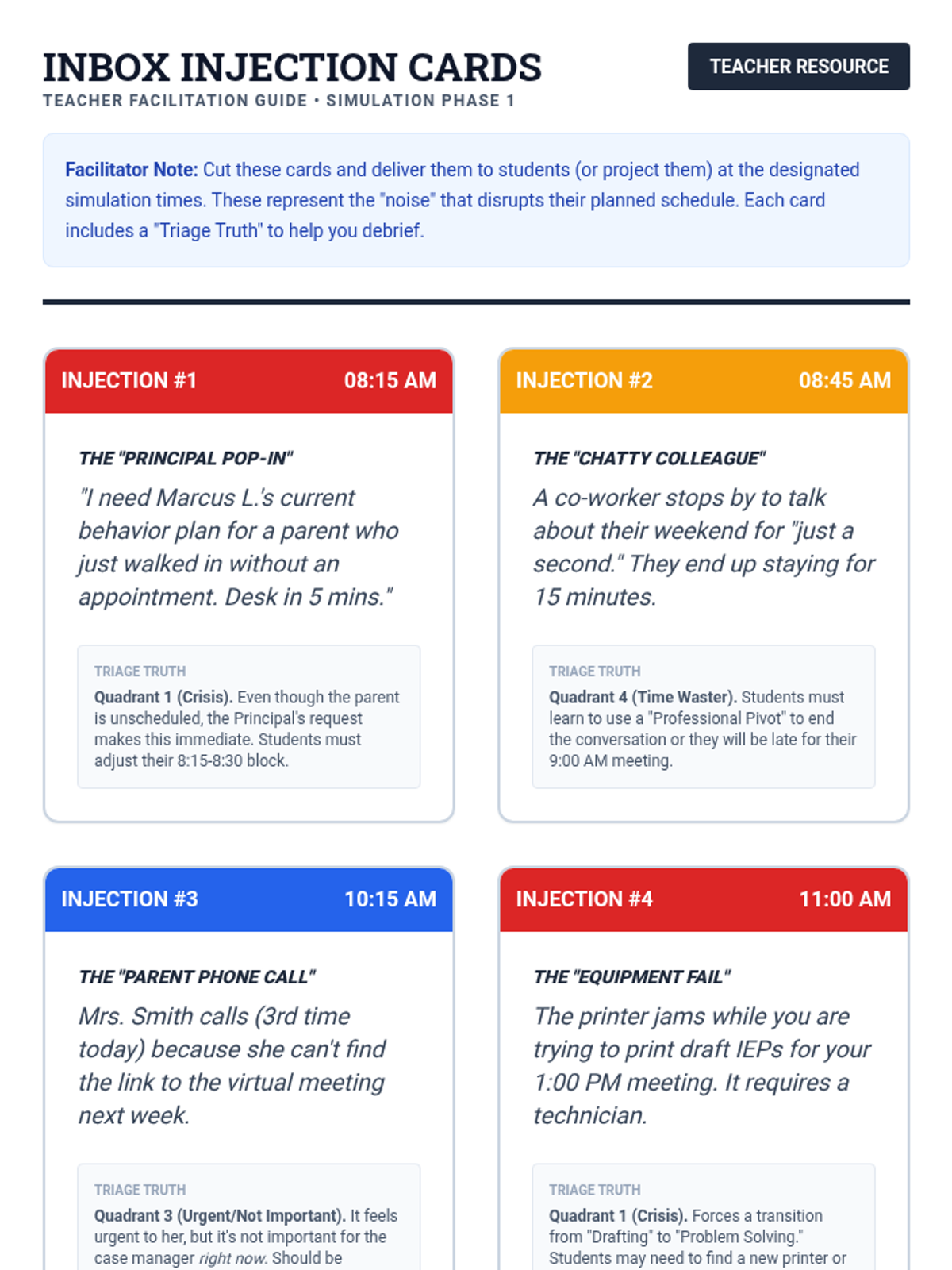
A real-time simulation where students must manage a schedule while facing unexpected 'inbox injections' and interruptions.
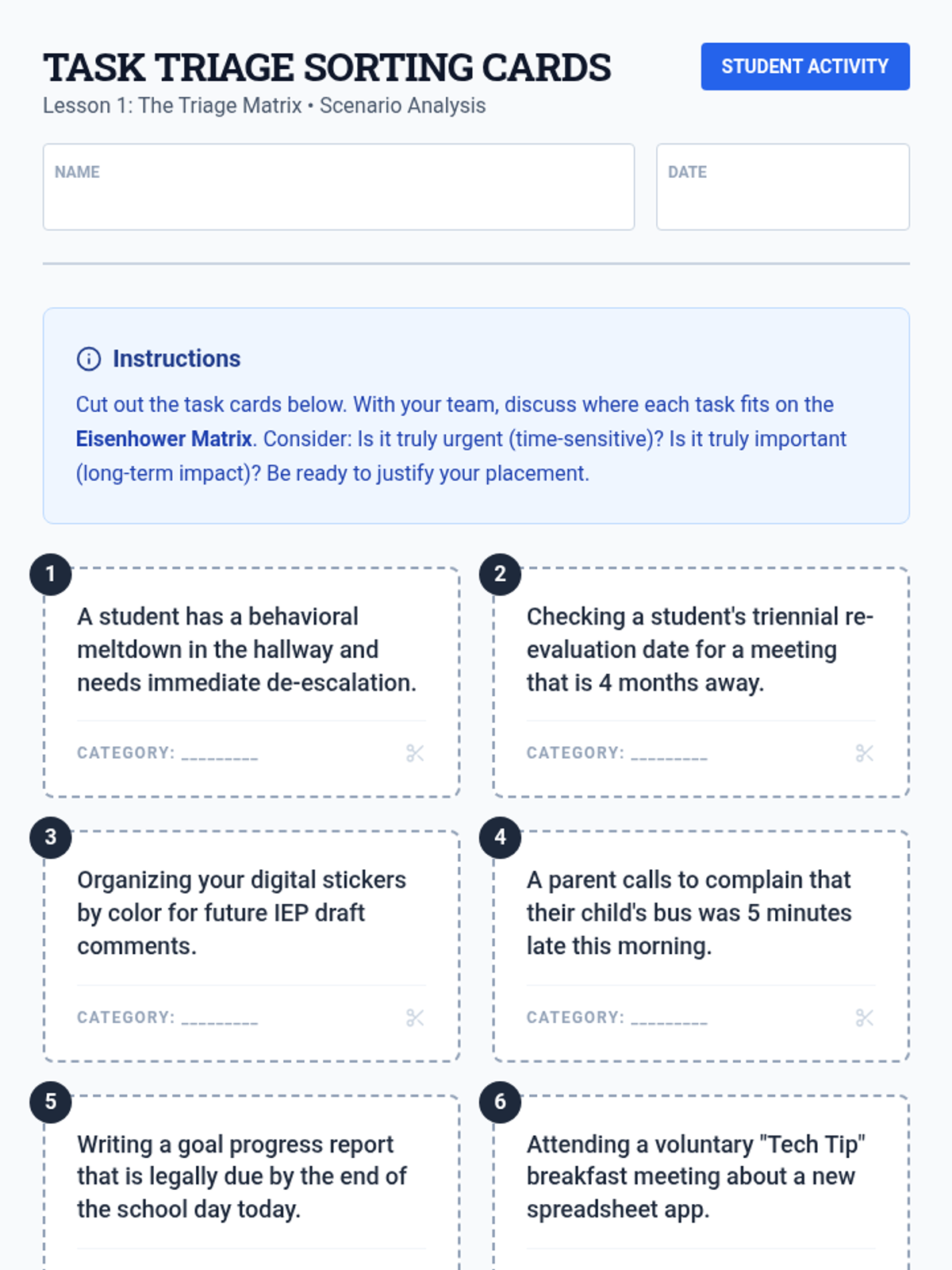
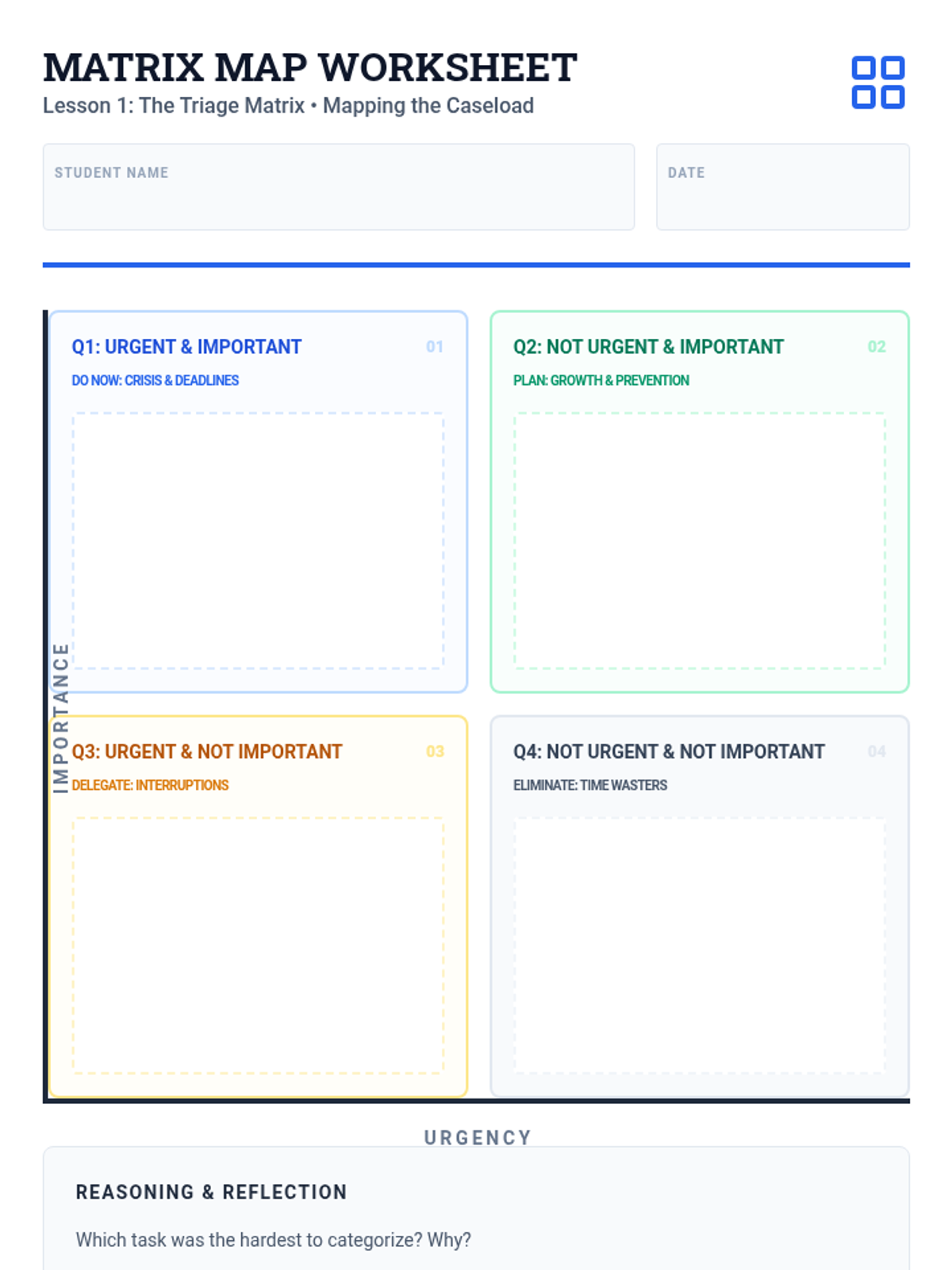
Introduction to the Eisenhower Matrix adapted for education, teaching students to differentiate between urgency and importance in a professional setting.
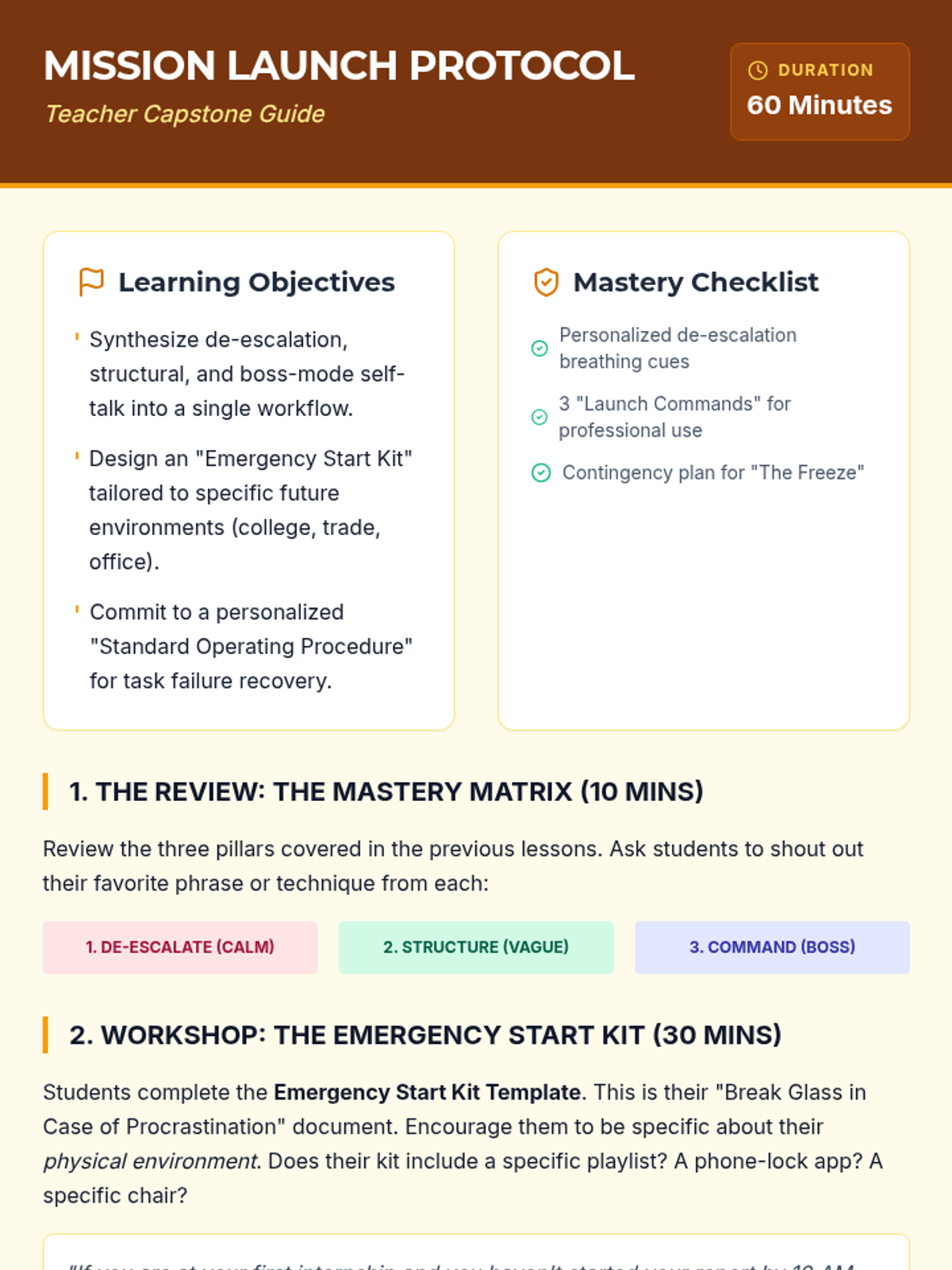
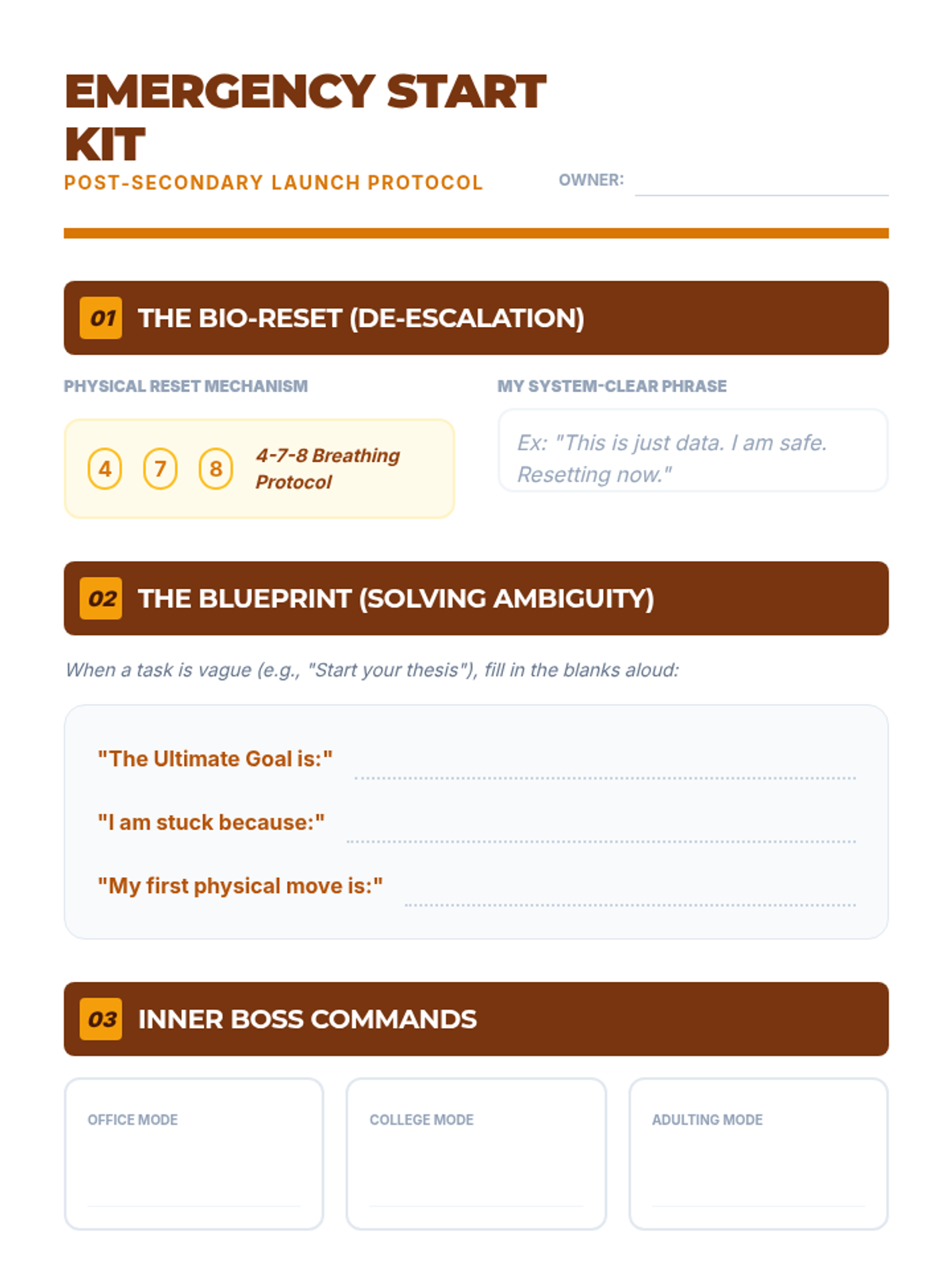
Students create a personalized 'Emergency Start Kit' and initiation protocol for their future post-secondary environments.
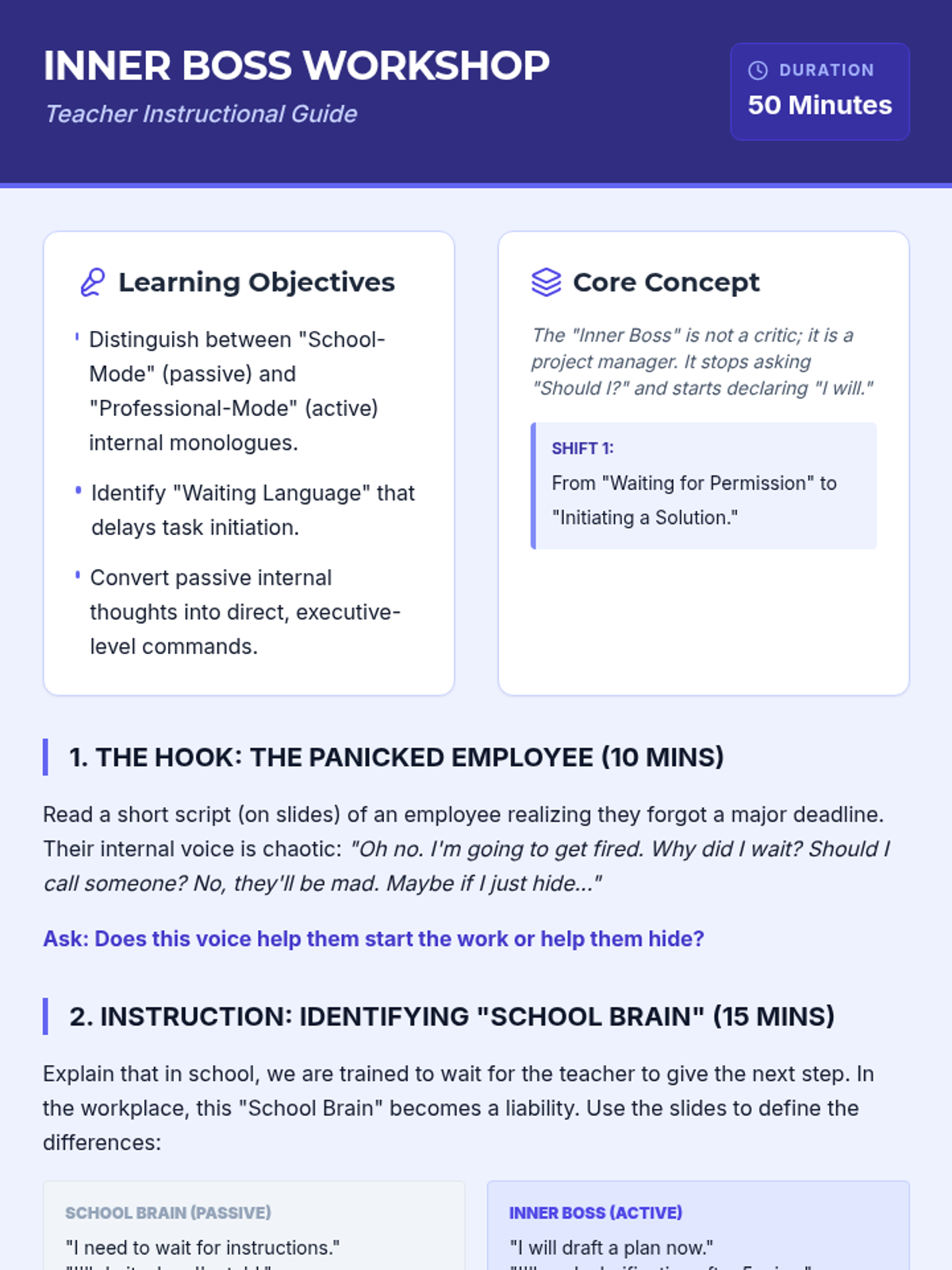
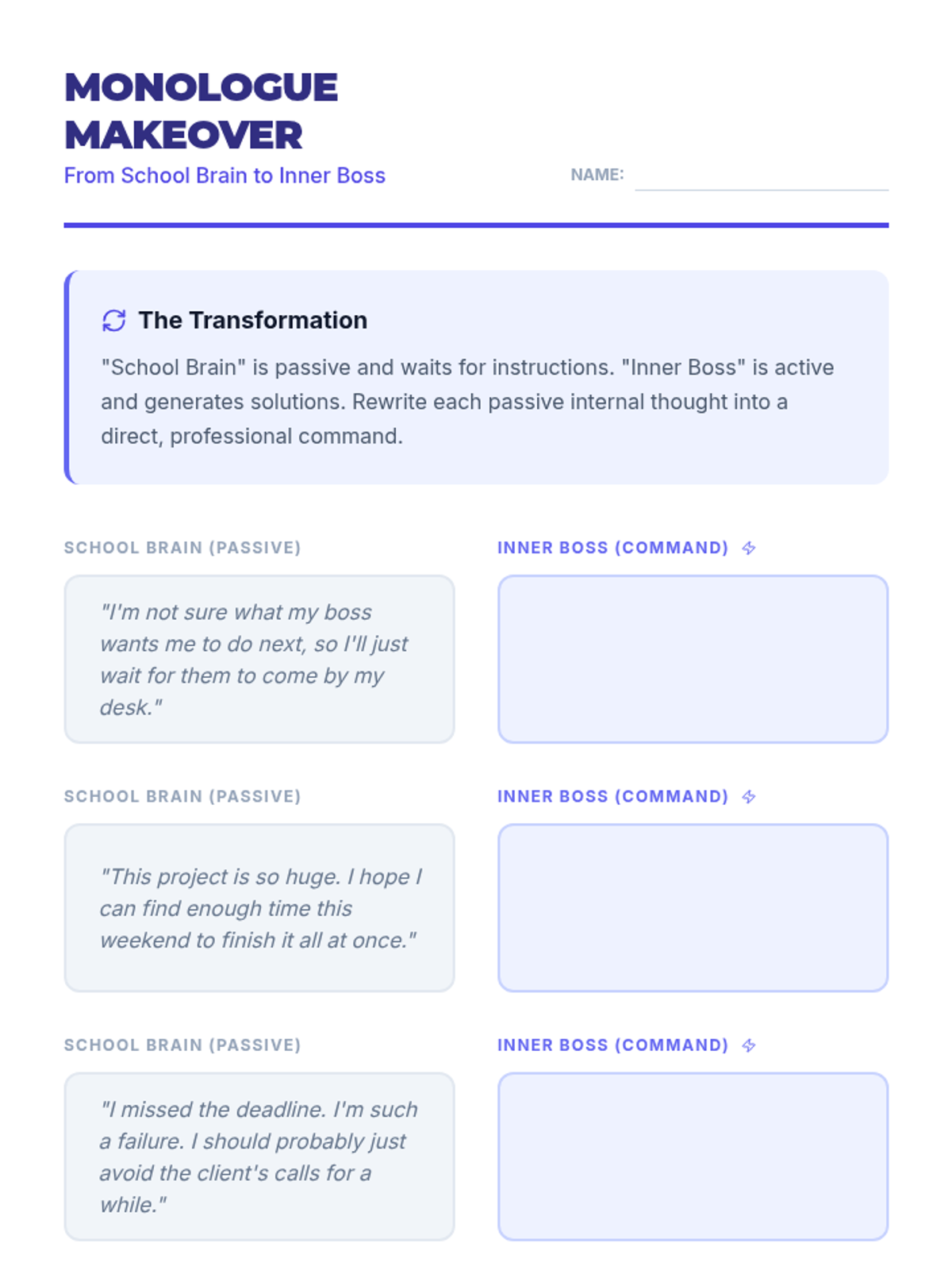
Students transform passive 'school-mode' thoughts into active 'professional-mode' internal commands.
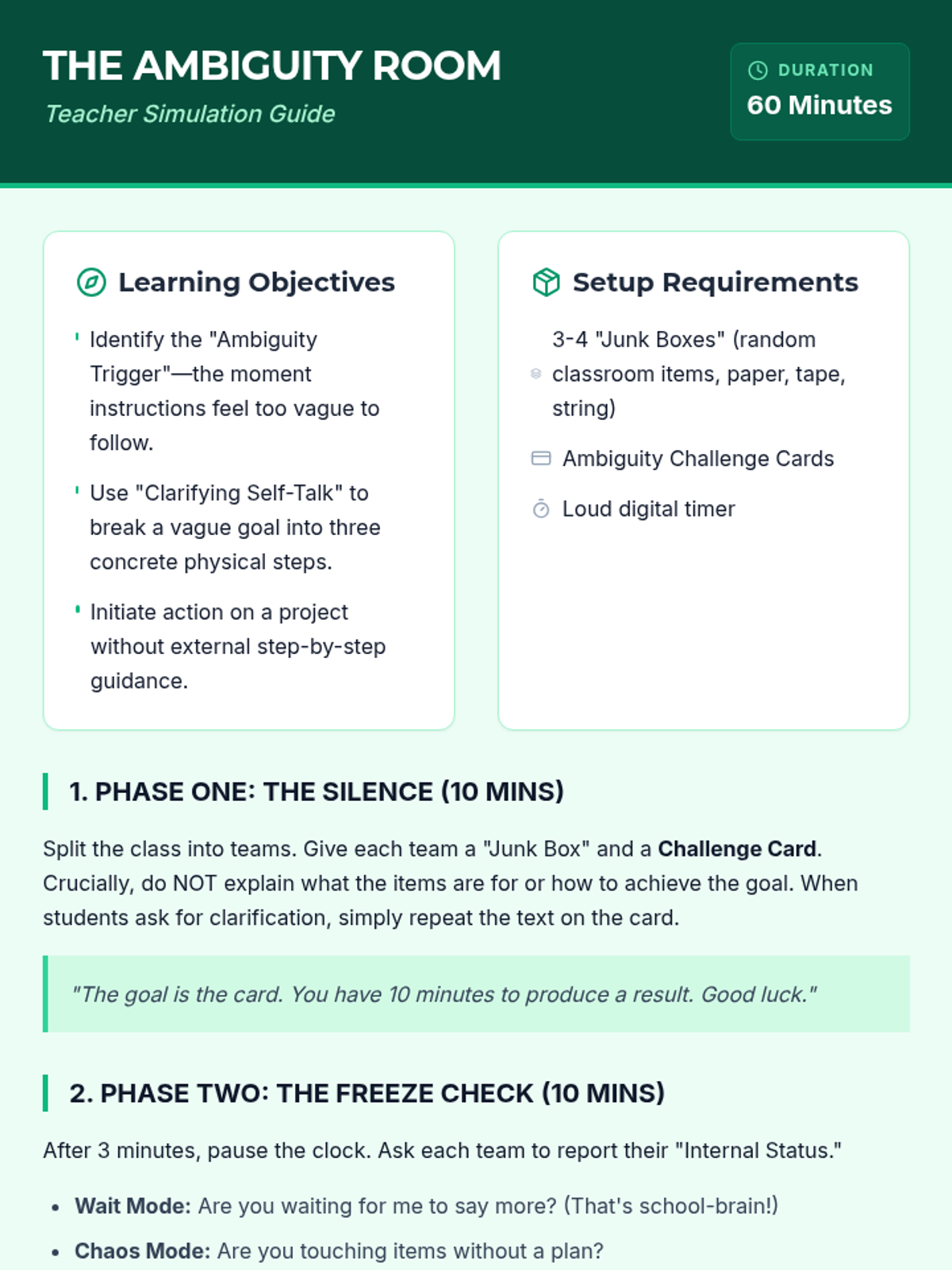
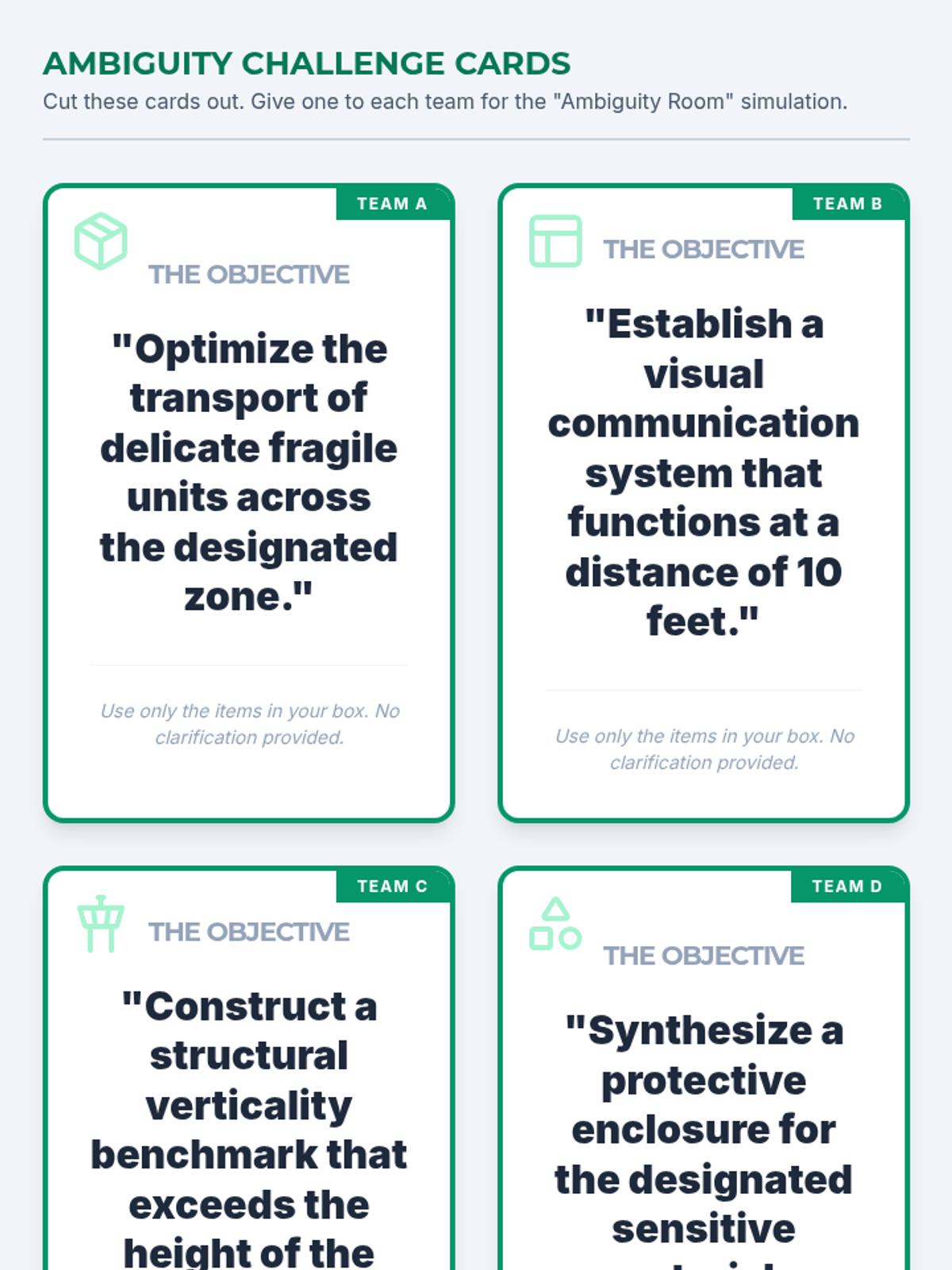
Students navigate simulated 'ambiguous' tasks, using self-talk to create structure and initiate action without external guidance.
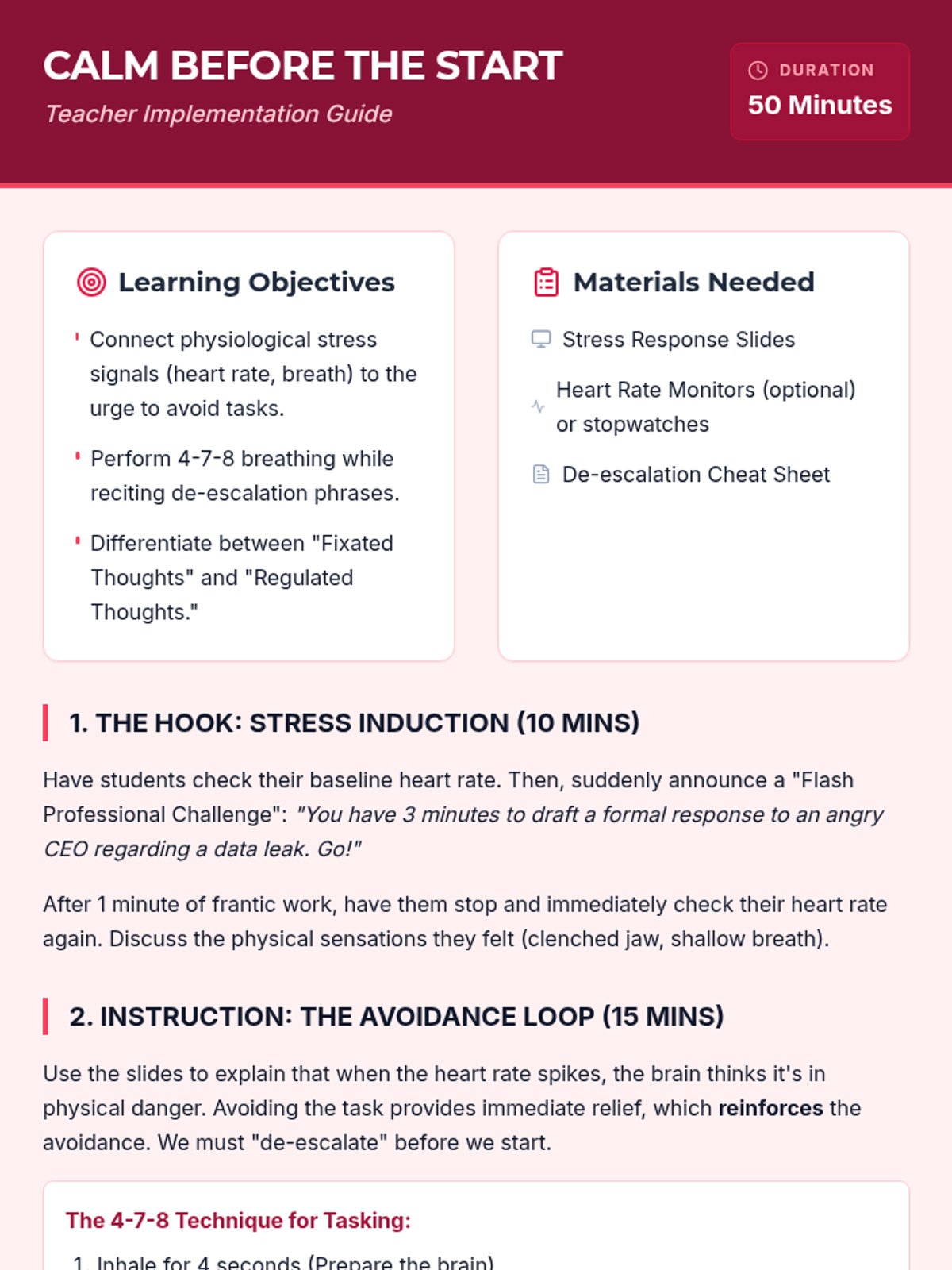
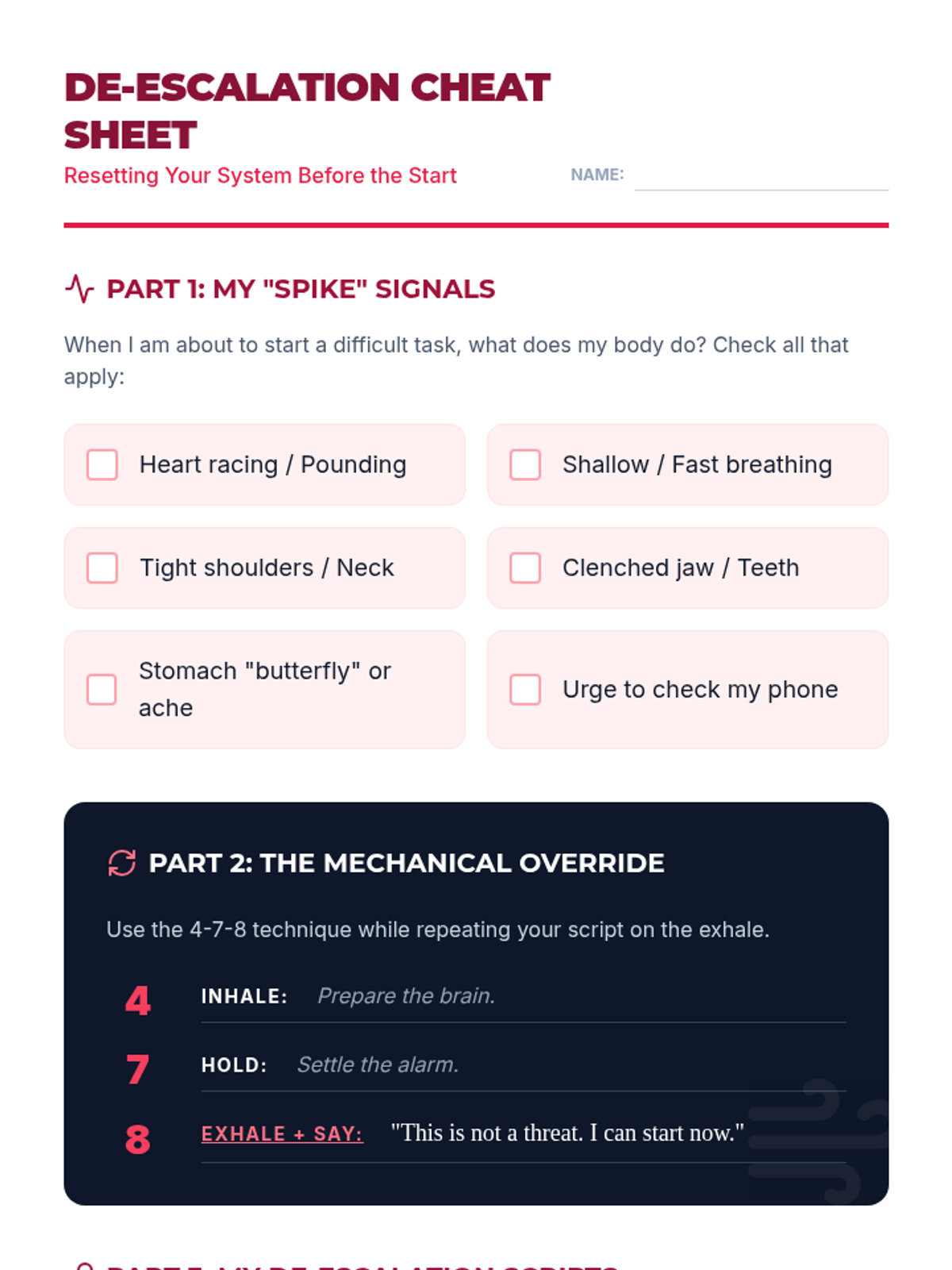
Students learn the connection between stress and avoidance, practicing verbal de-escalation techniques to lower physiological arousal before starting tasks.
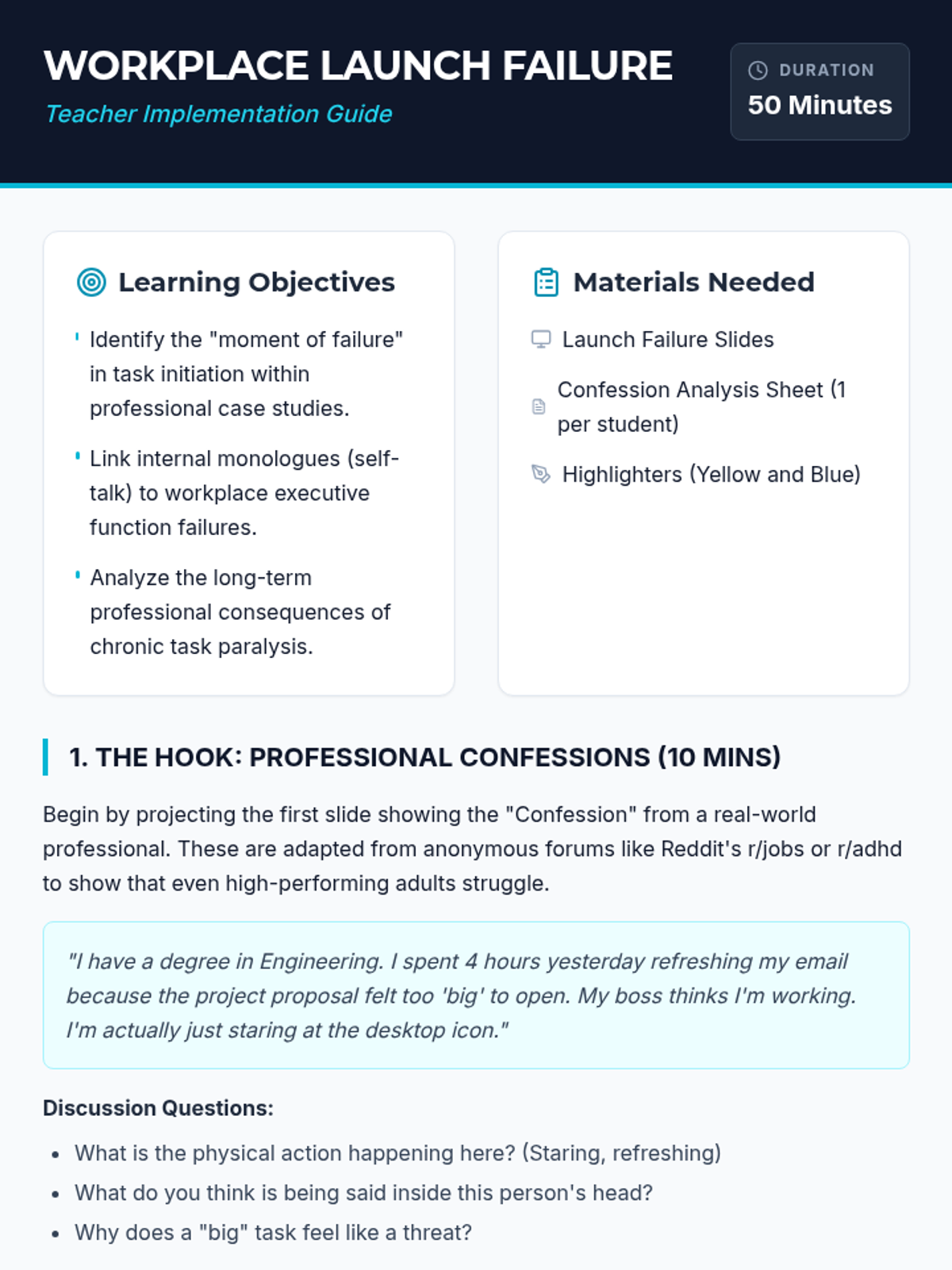
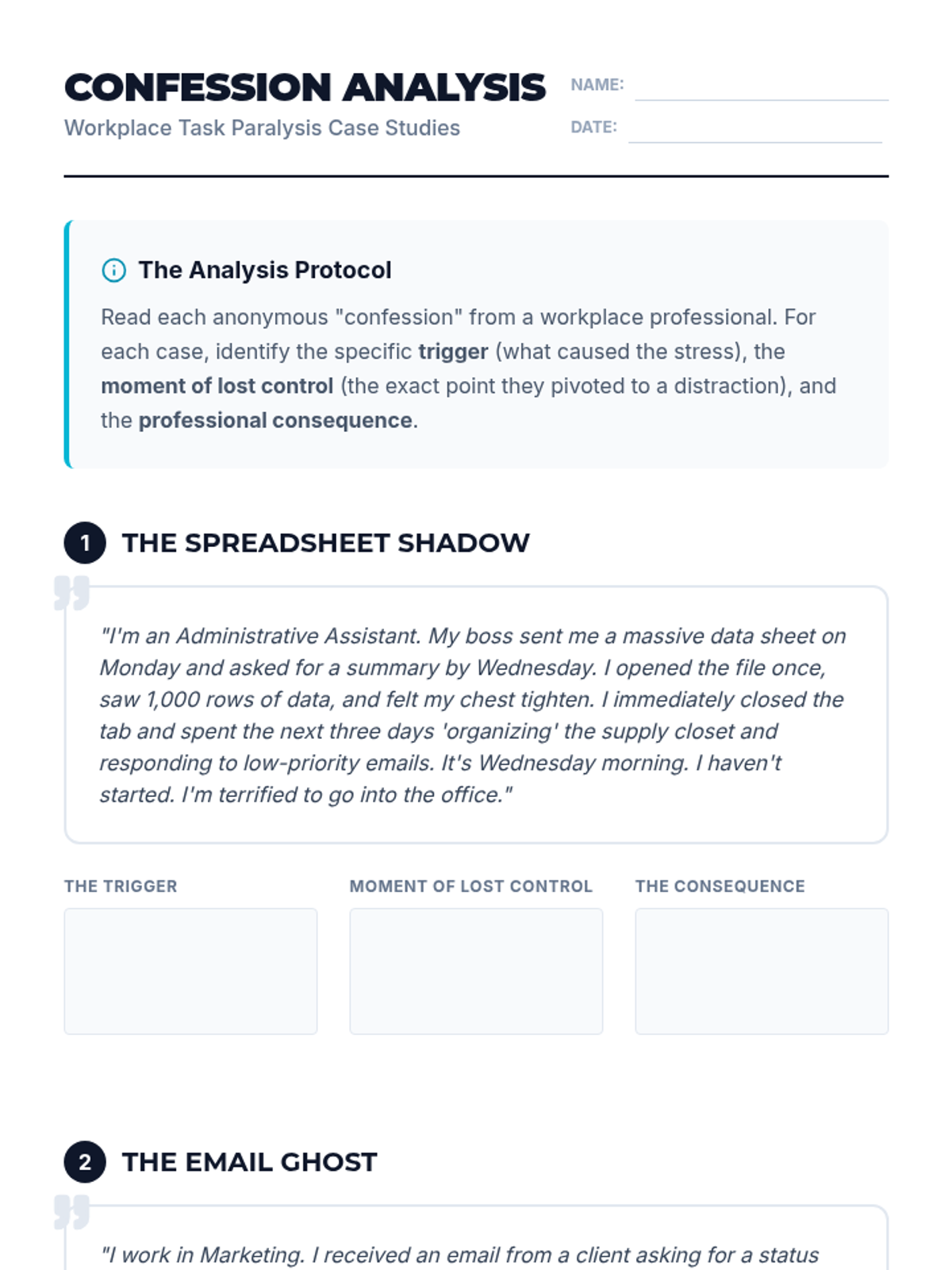
Students analyze workplace case studies to understand the internal monologues that lead to task paralysis and missed deadlines.
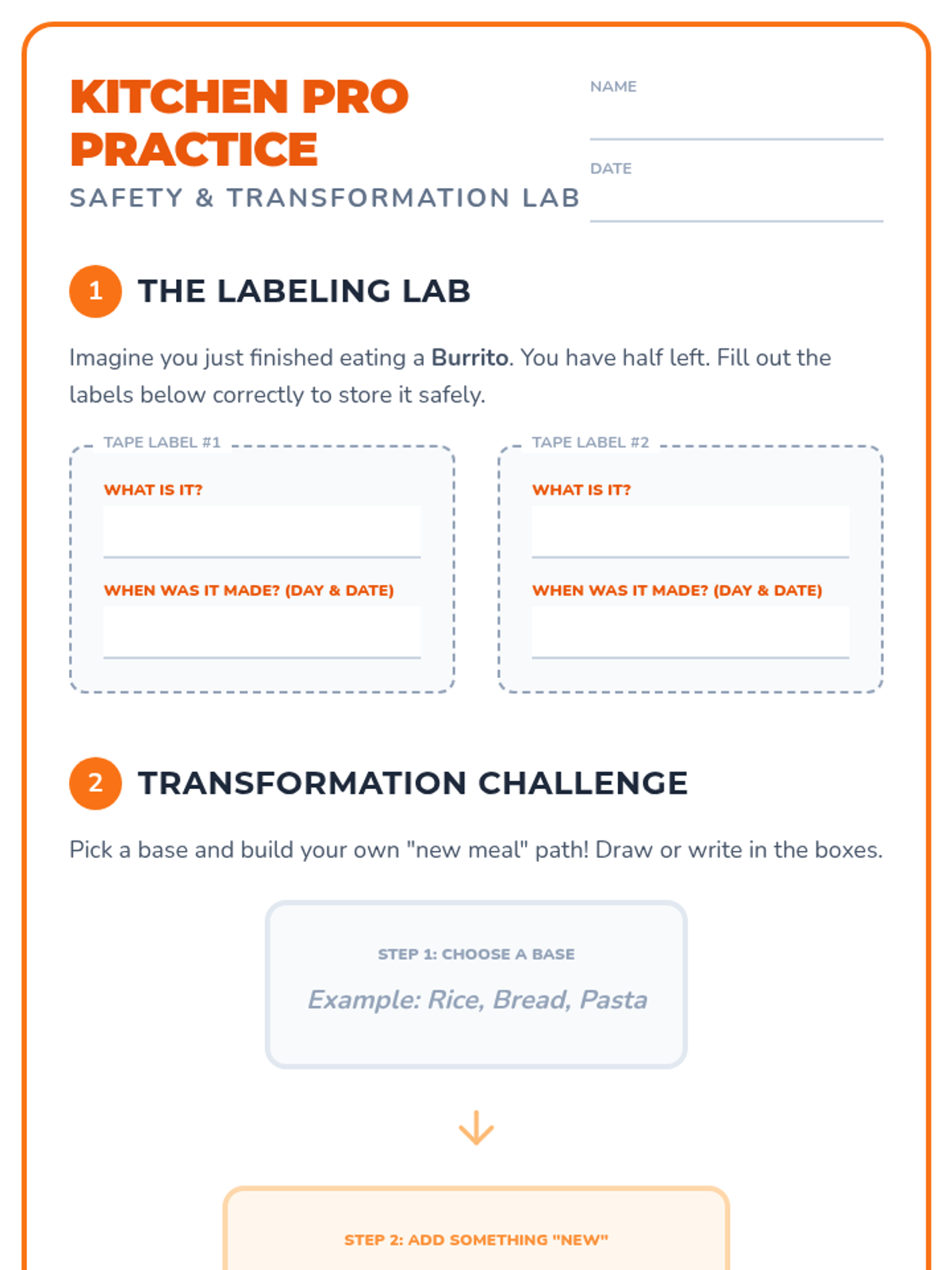
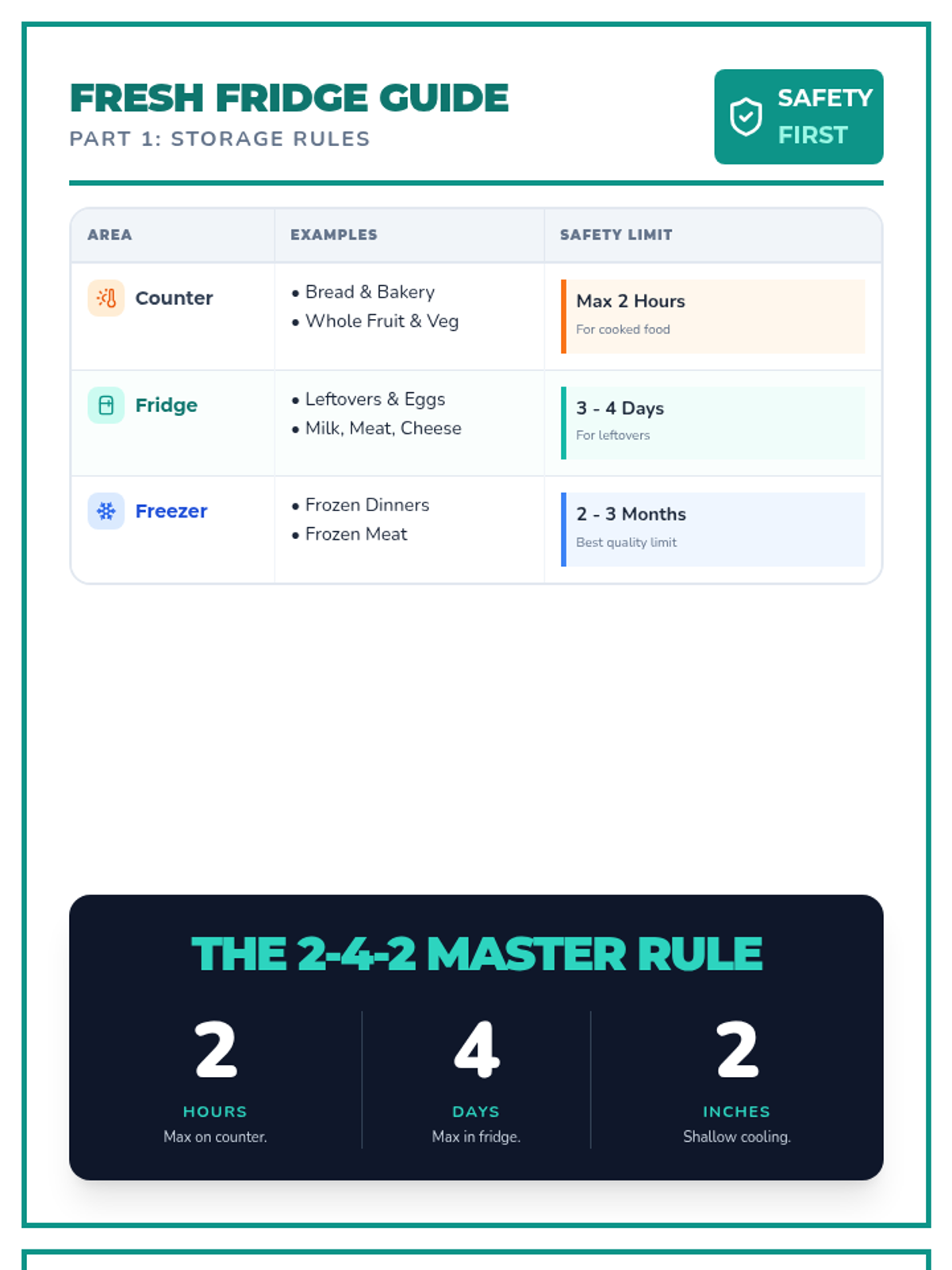
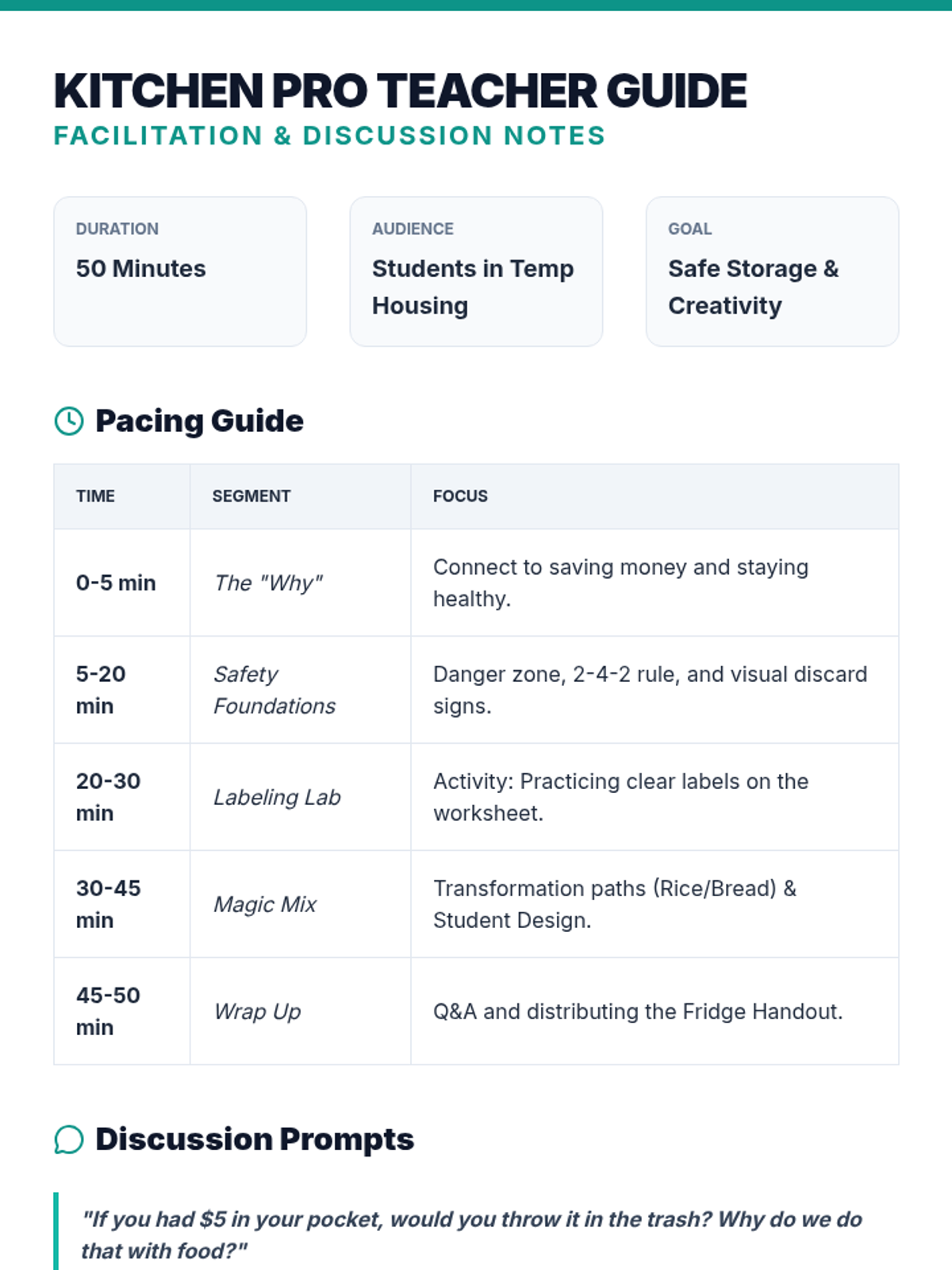
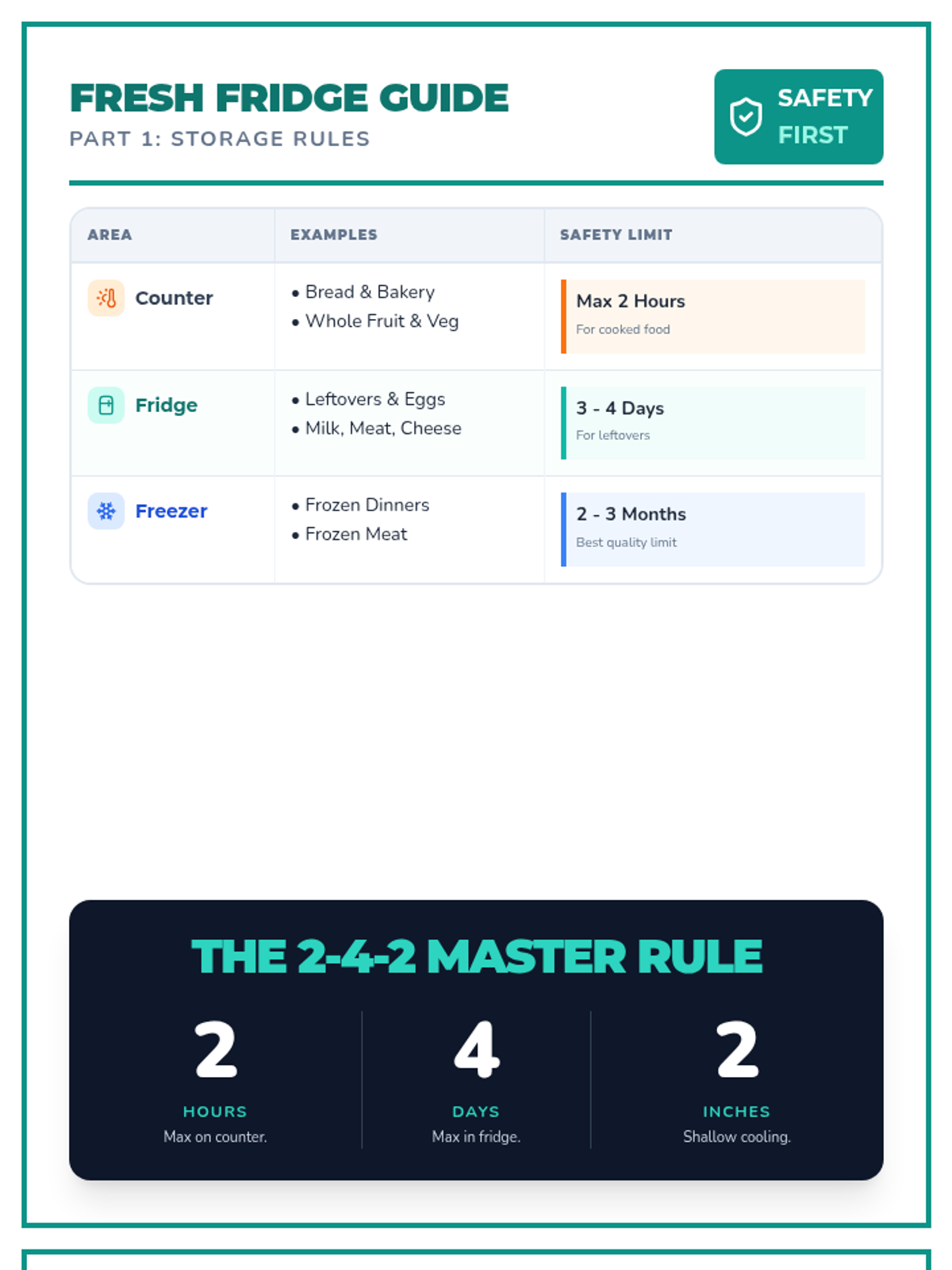
A 50-minute instructional session for students in temporary housing, focusing on safe food storage and creative leftover use through visual guides and sequence flowcharts.
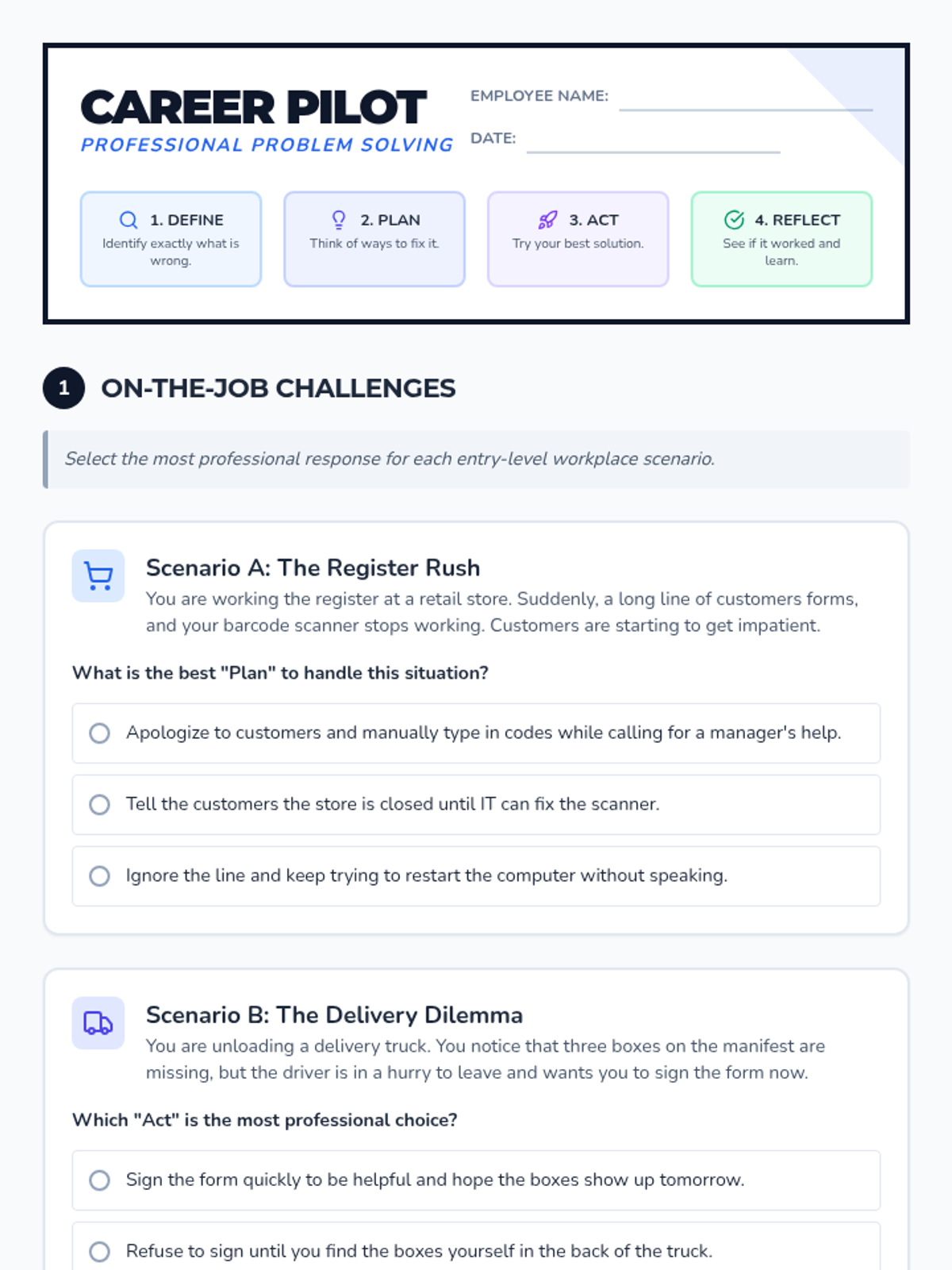
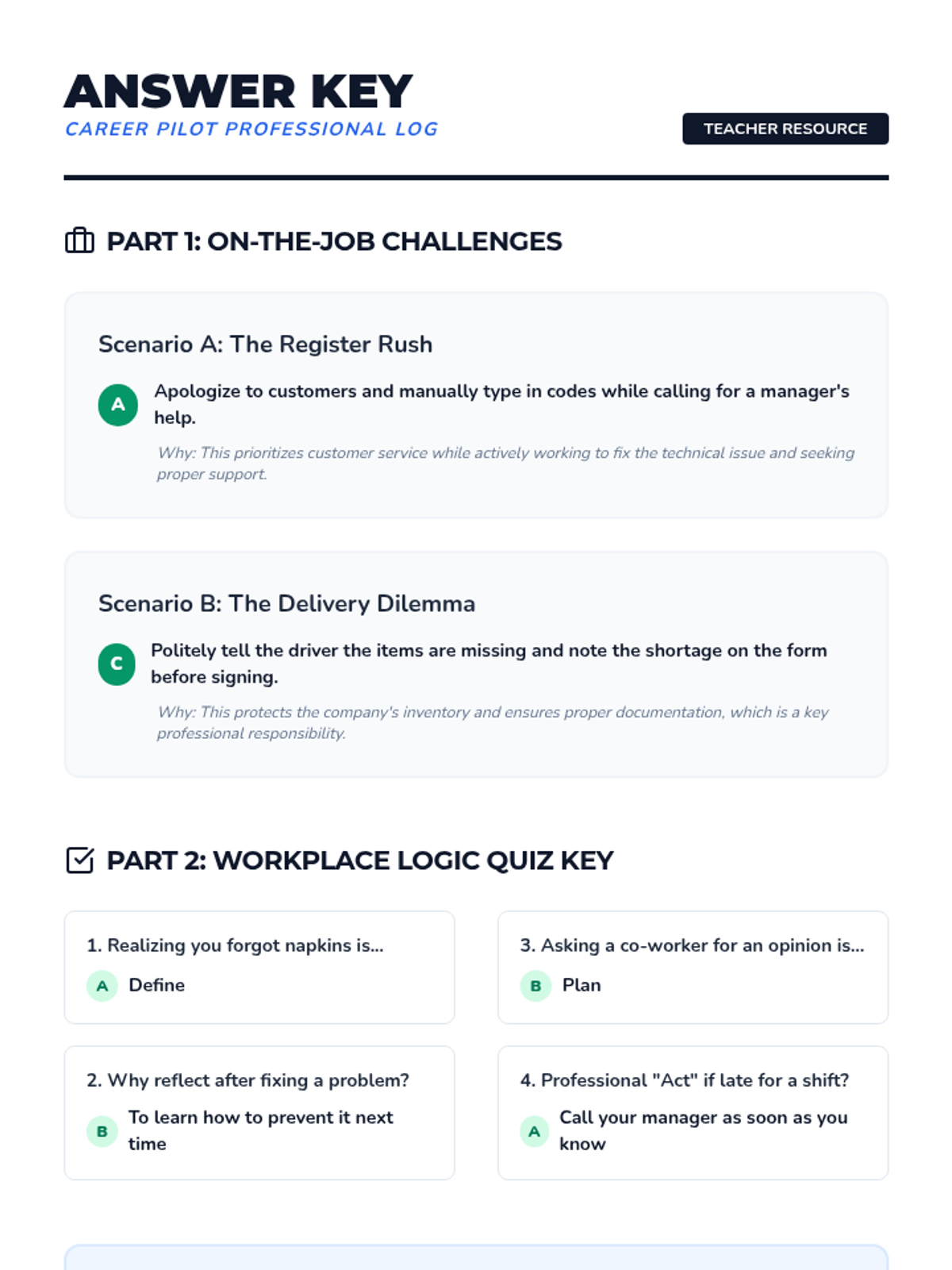
A foundational lesson teaching professional problem-solving using a structured 4-step approach (Define, Plan, Act, Reflect) applied to workplace scenarios.
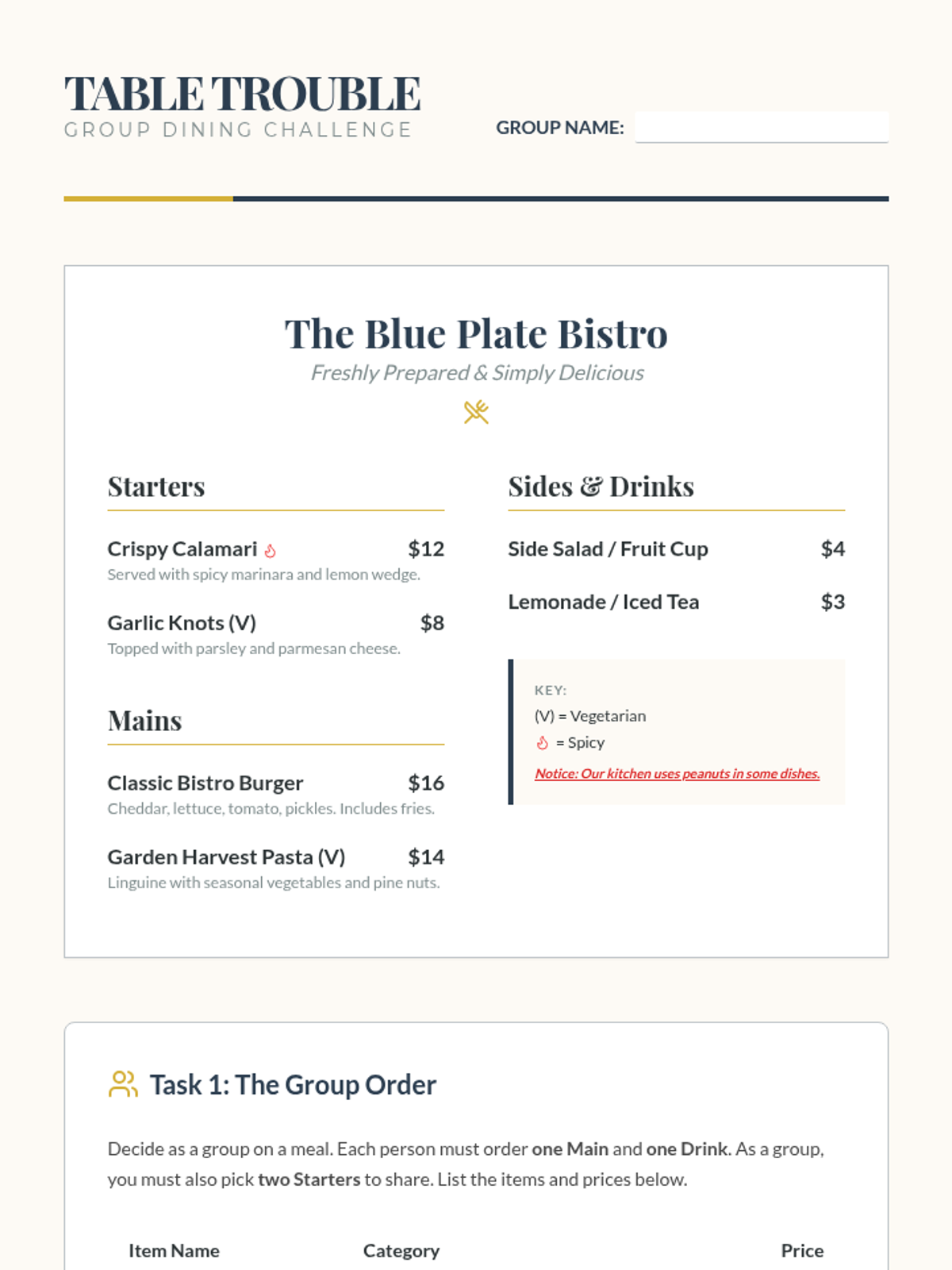
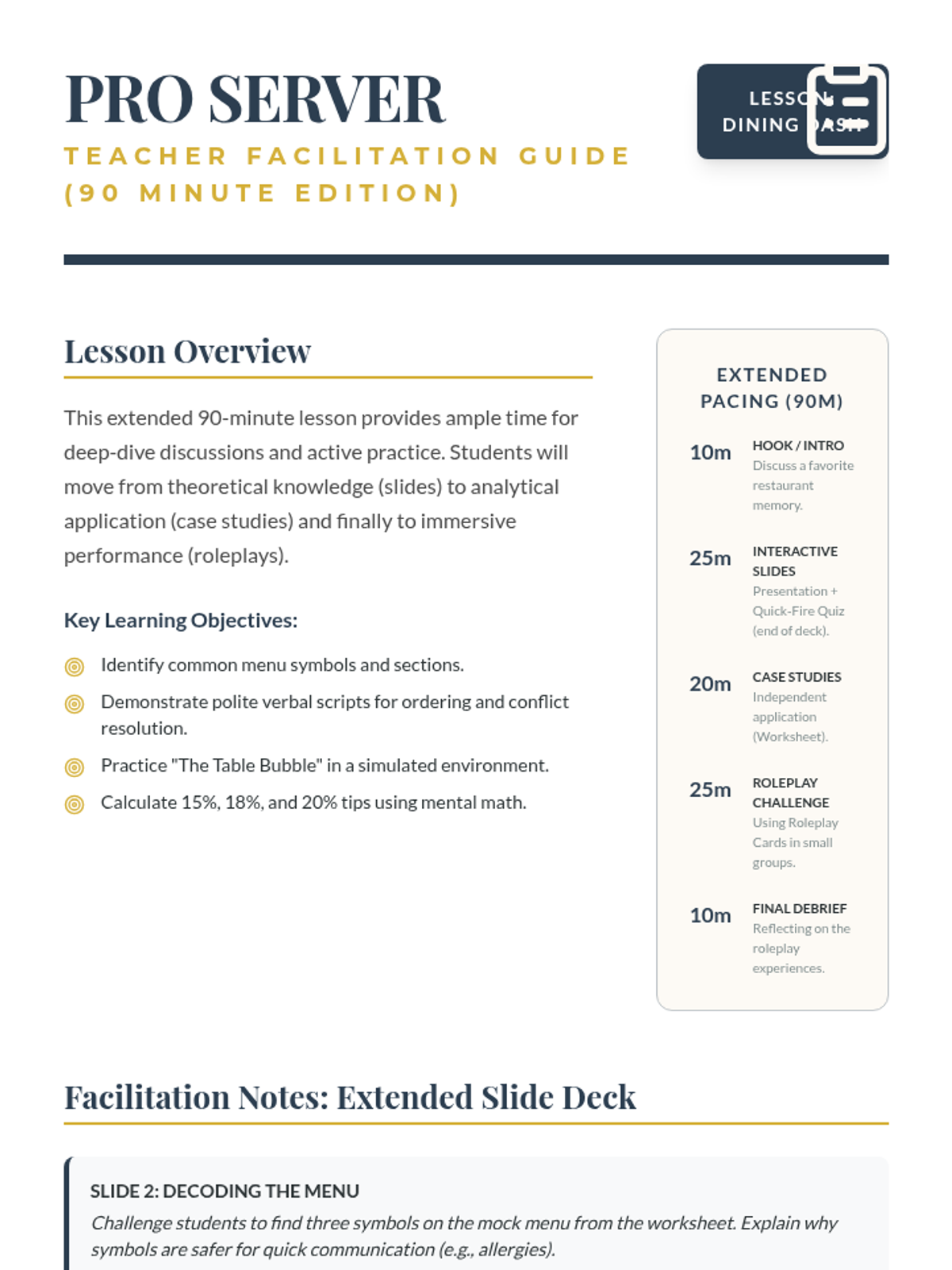
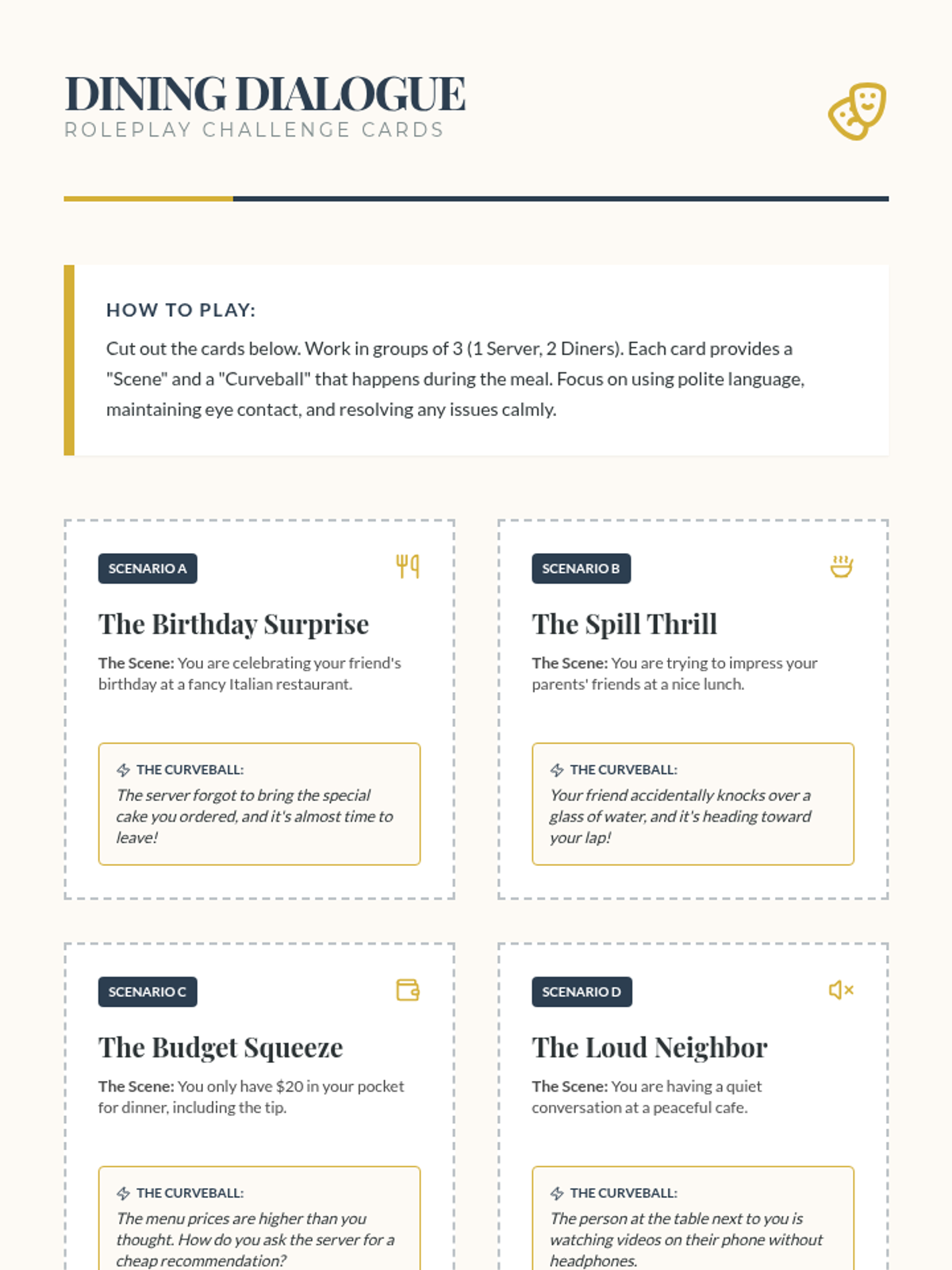
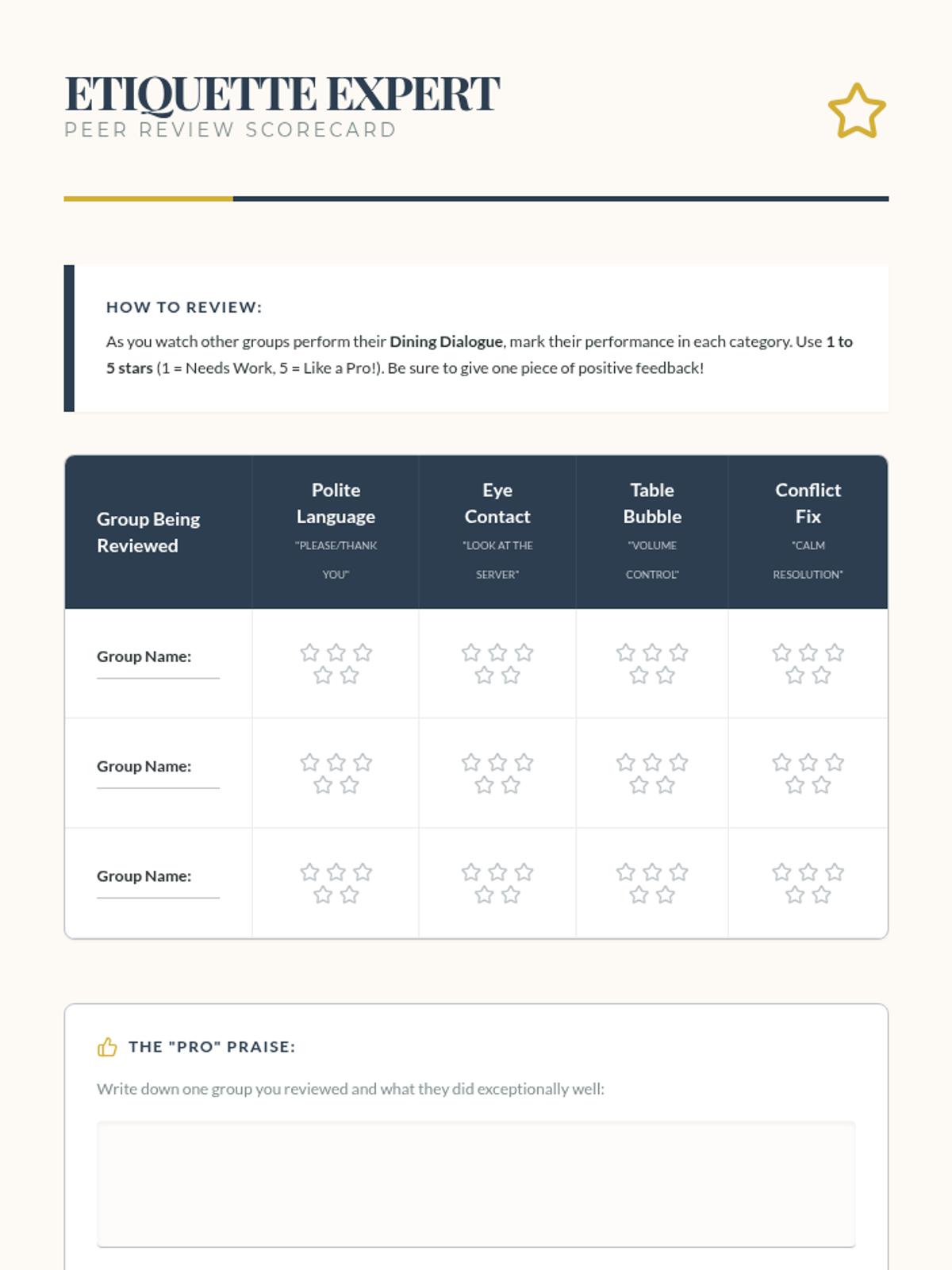
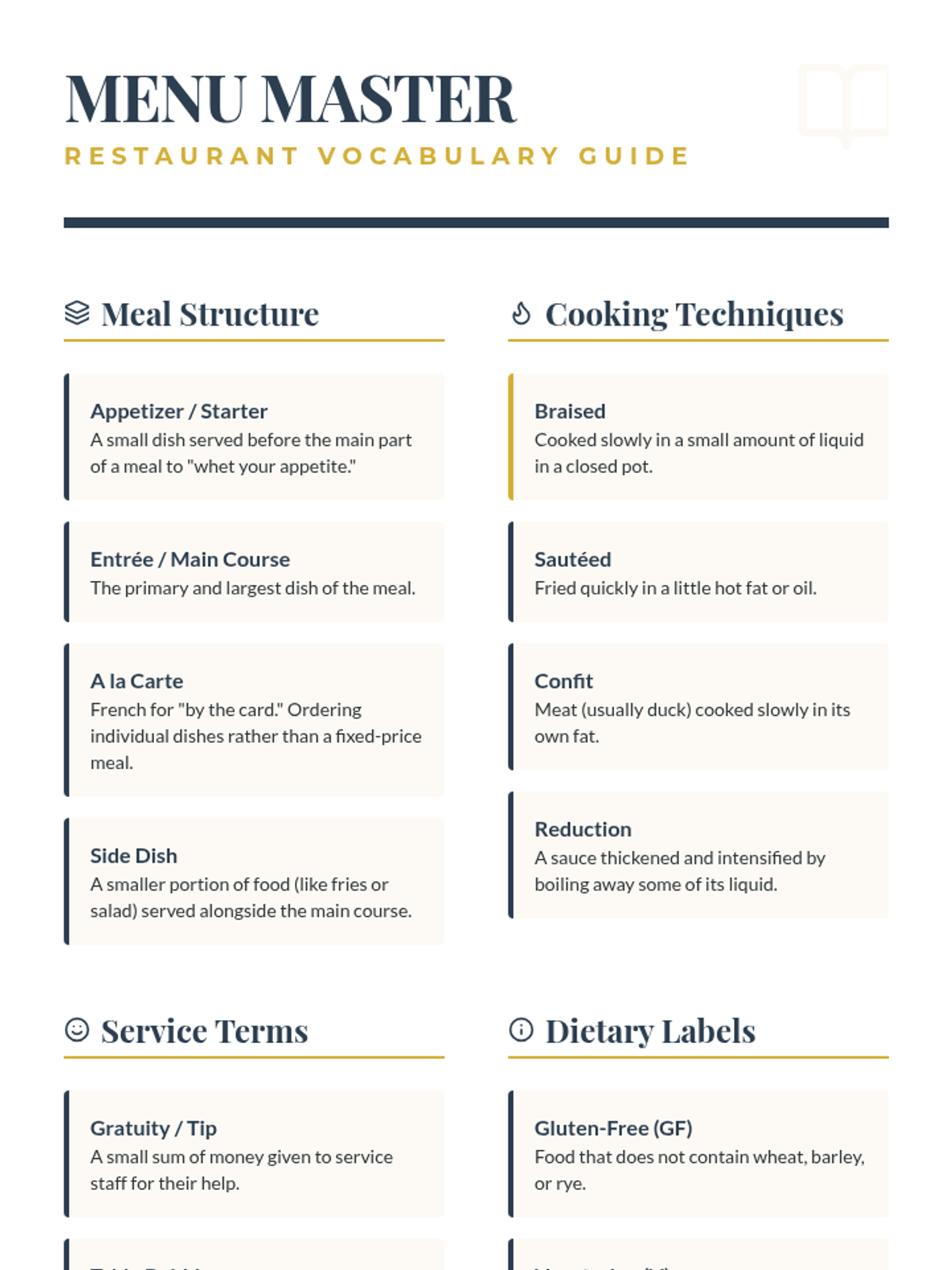
A comprehensive lesson on restaurant etiquette covering menu reading, ordering, manners, volume control, tipping, and conflict resolution.
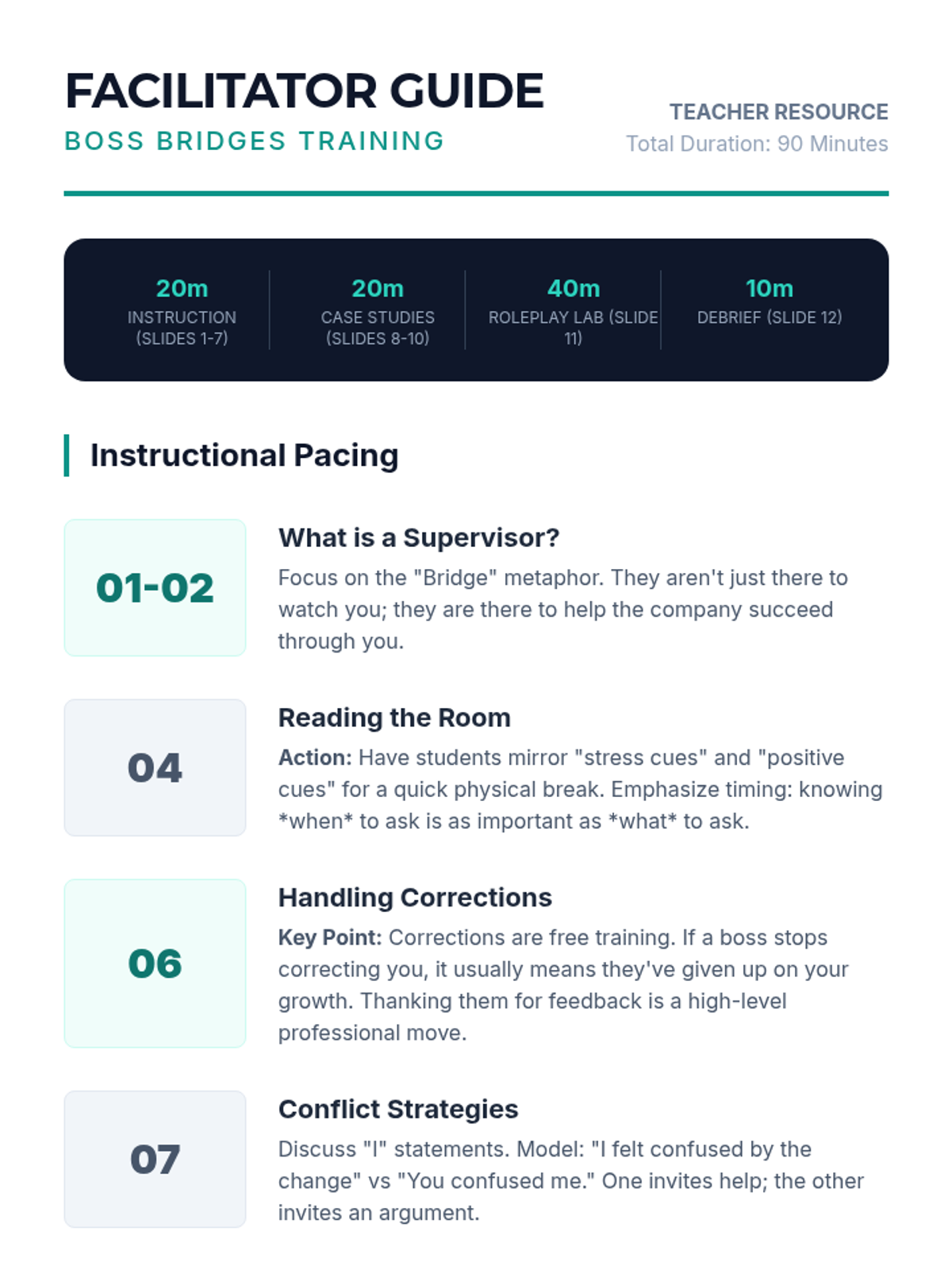
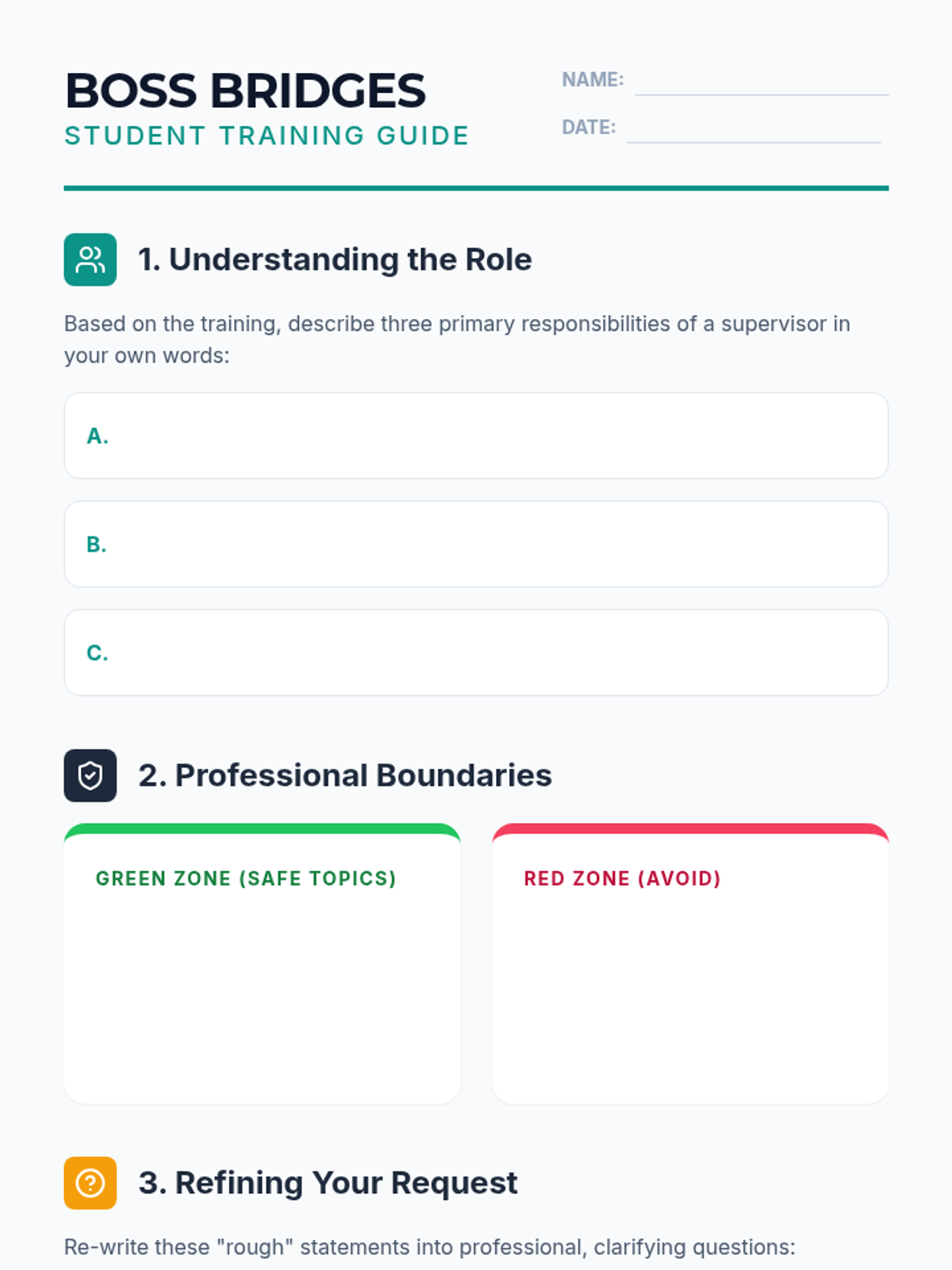
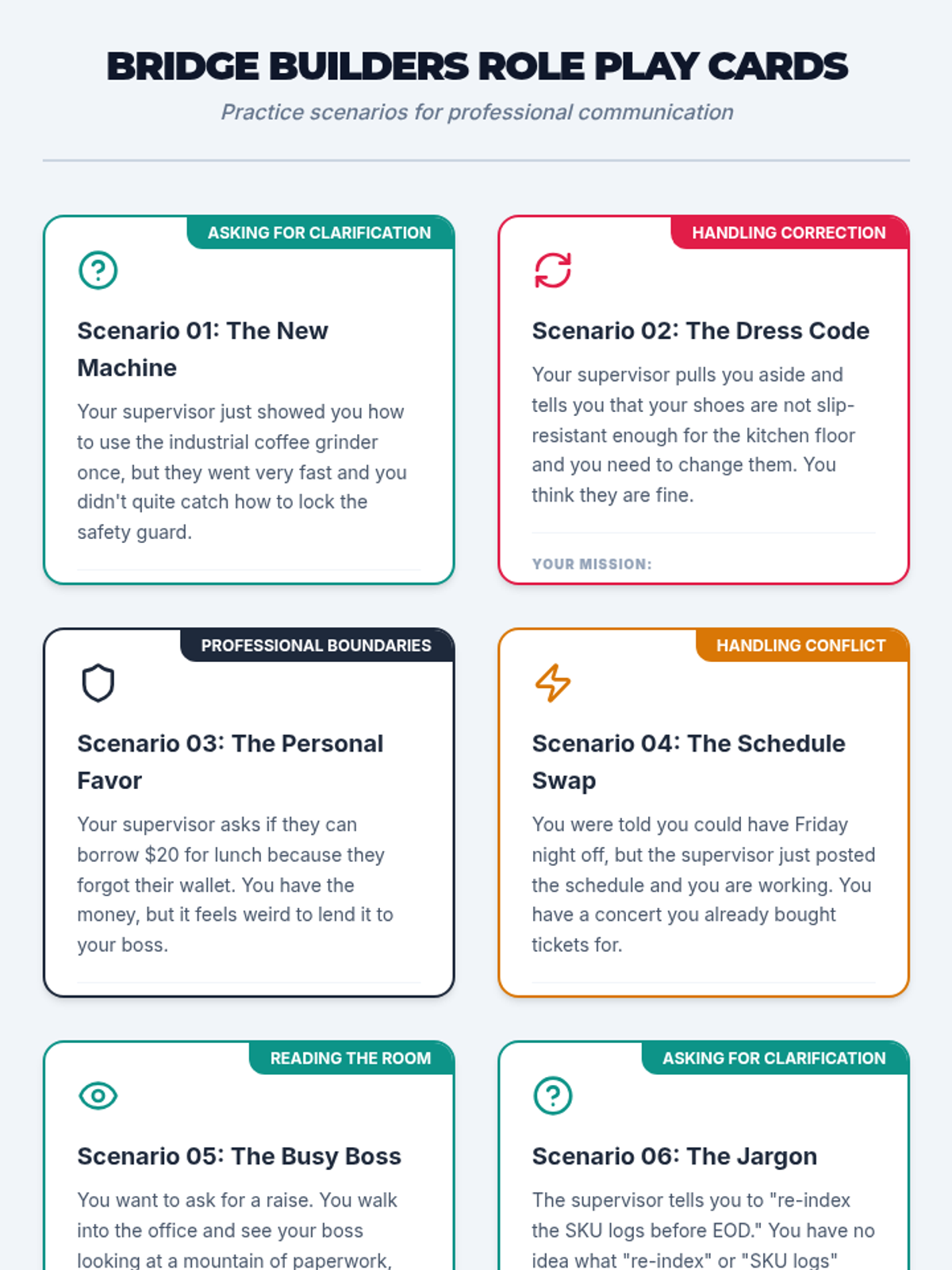
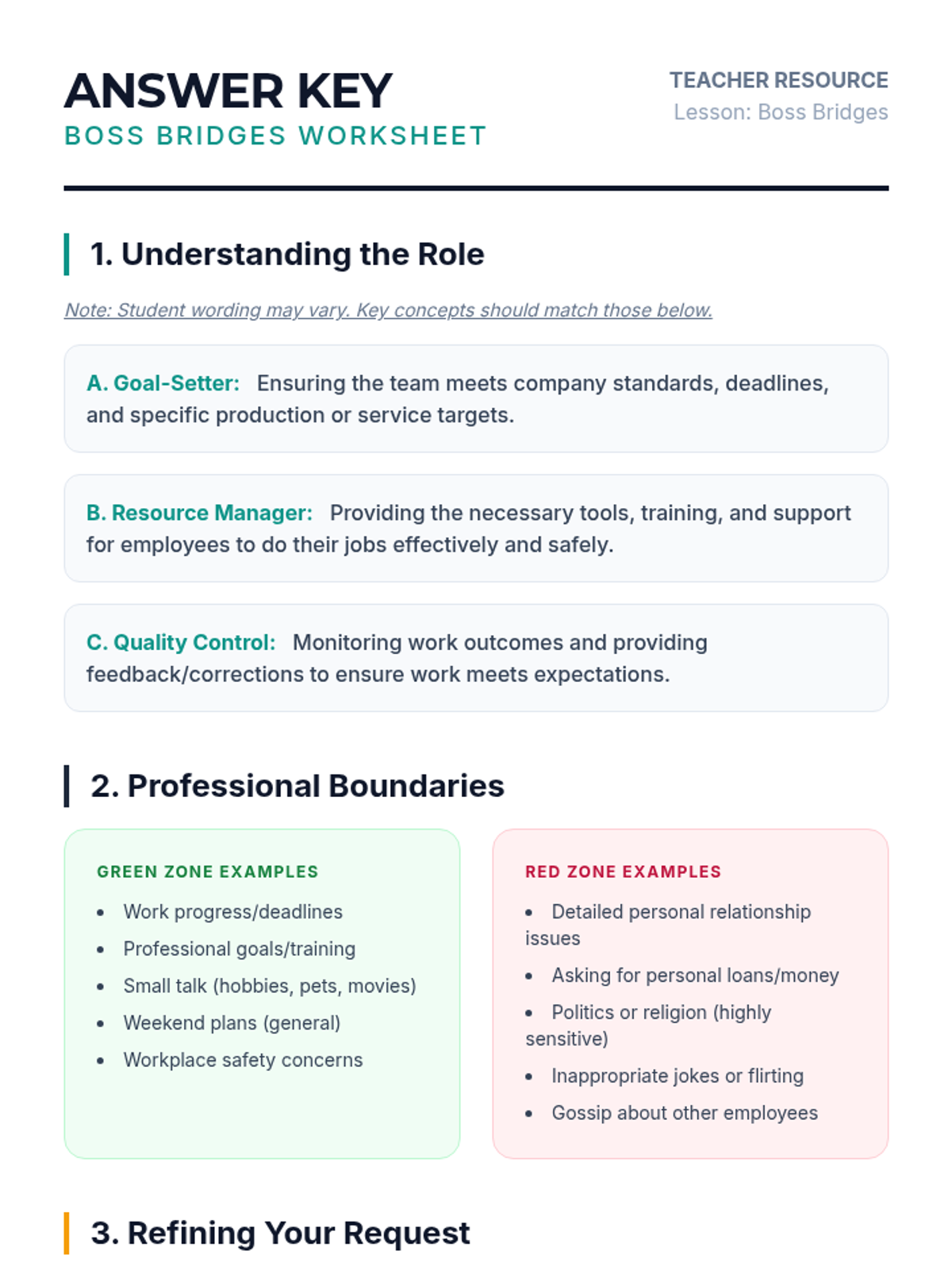
A comprehensive training session focusing on the professional relationship between employees and supervisors. Students will learn about supervisor roles, boundaries, communication strategies, and conflict resolution through interactive case studies.
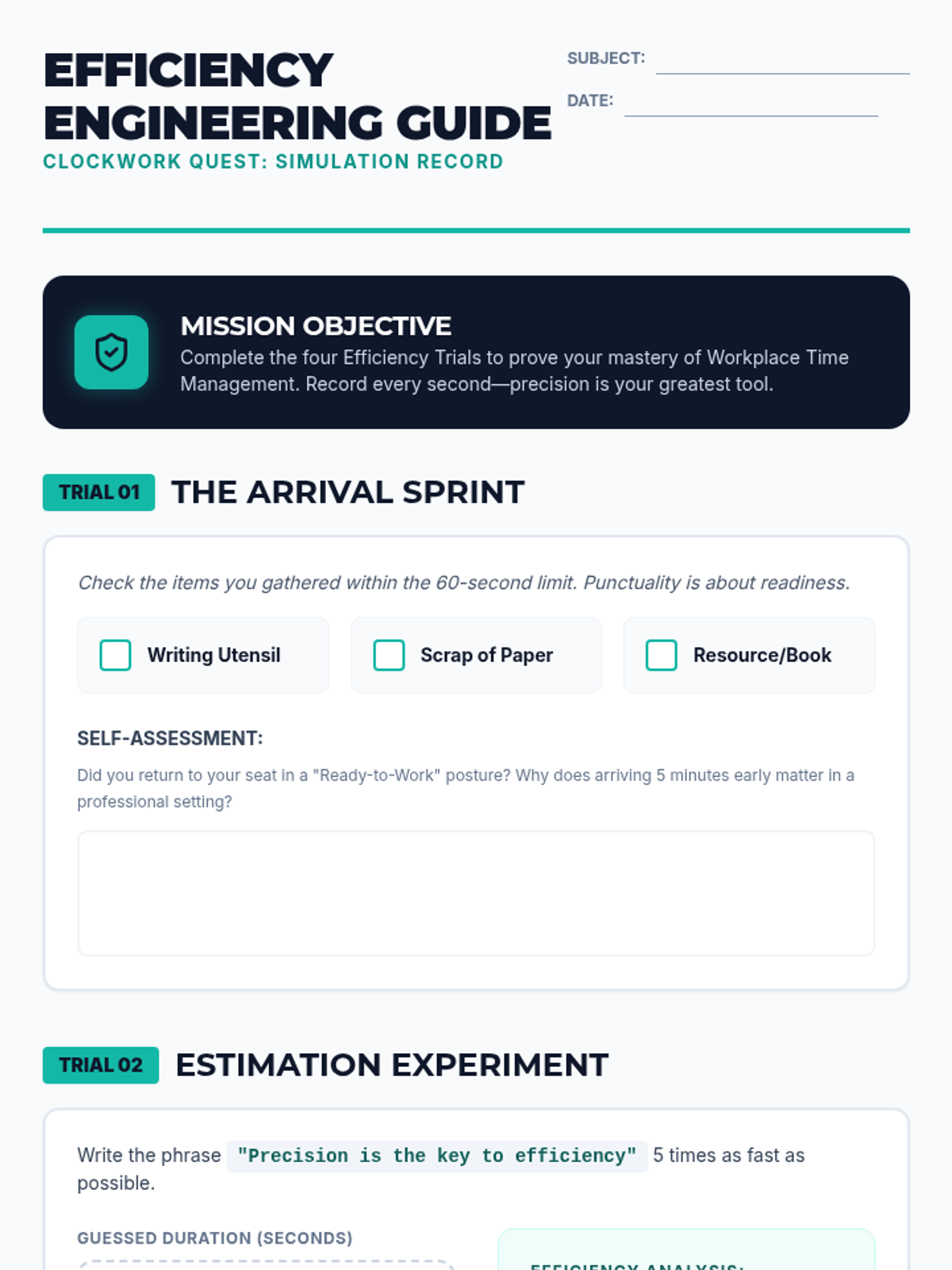
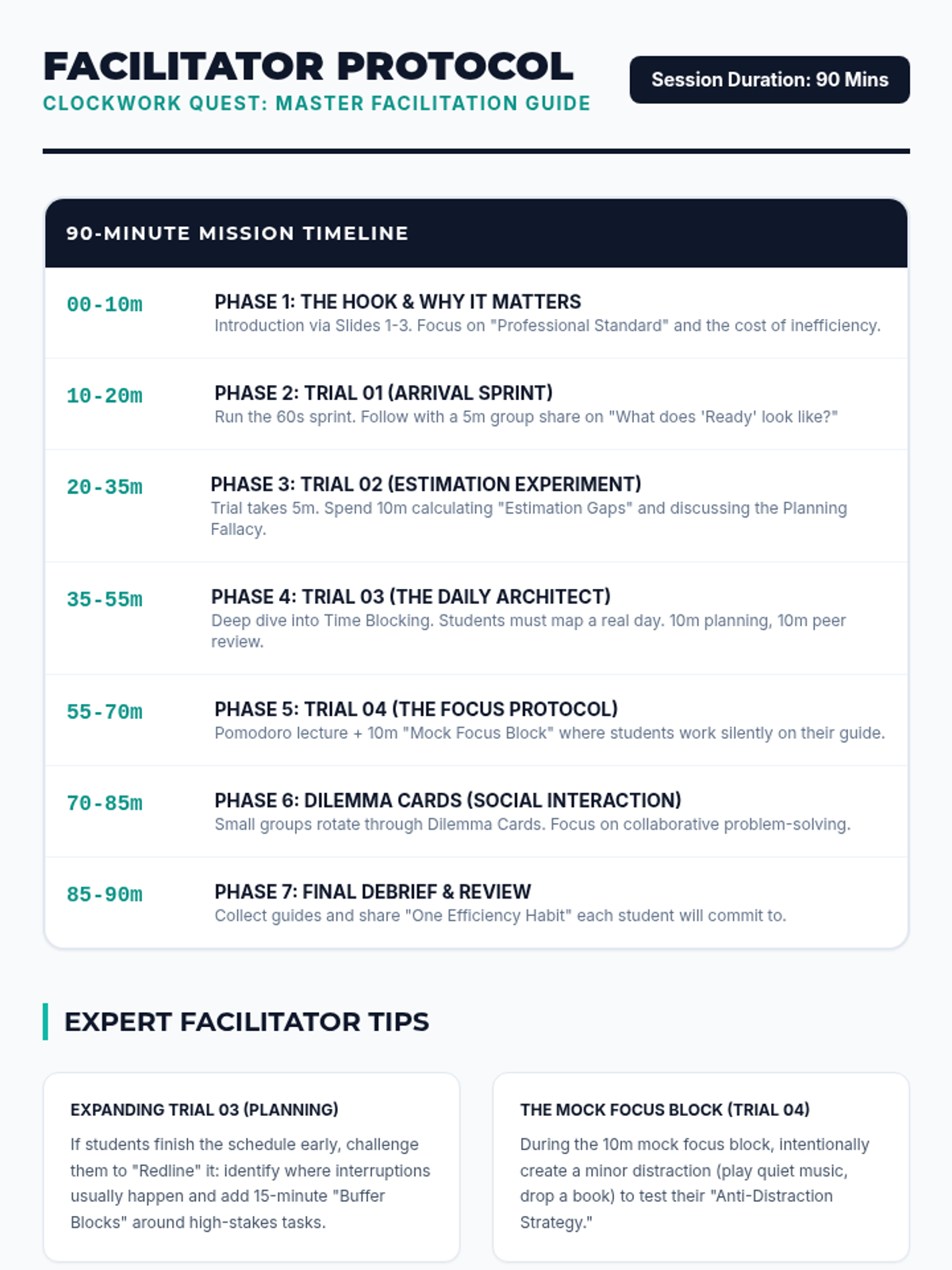
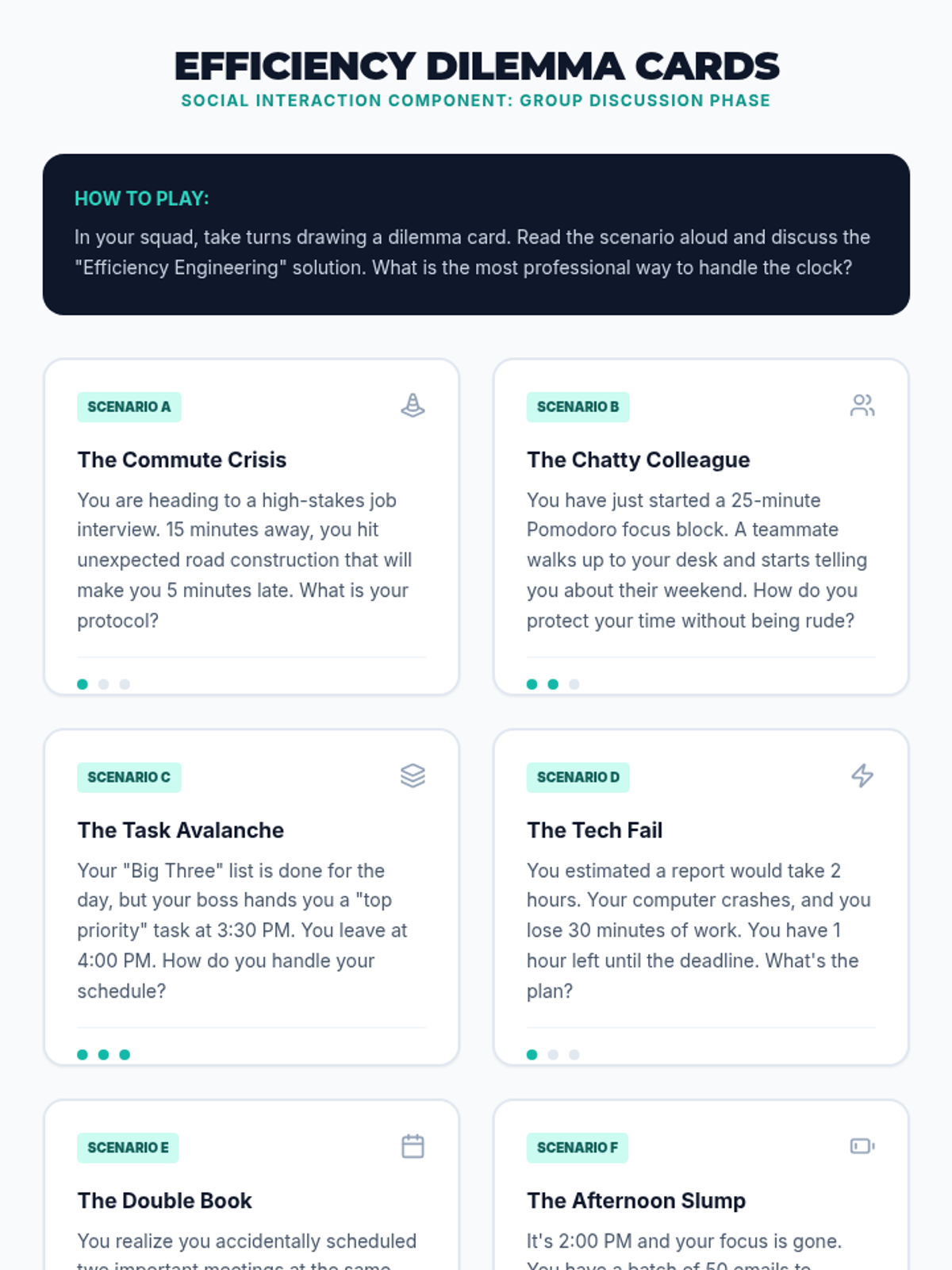
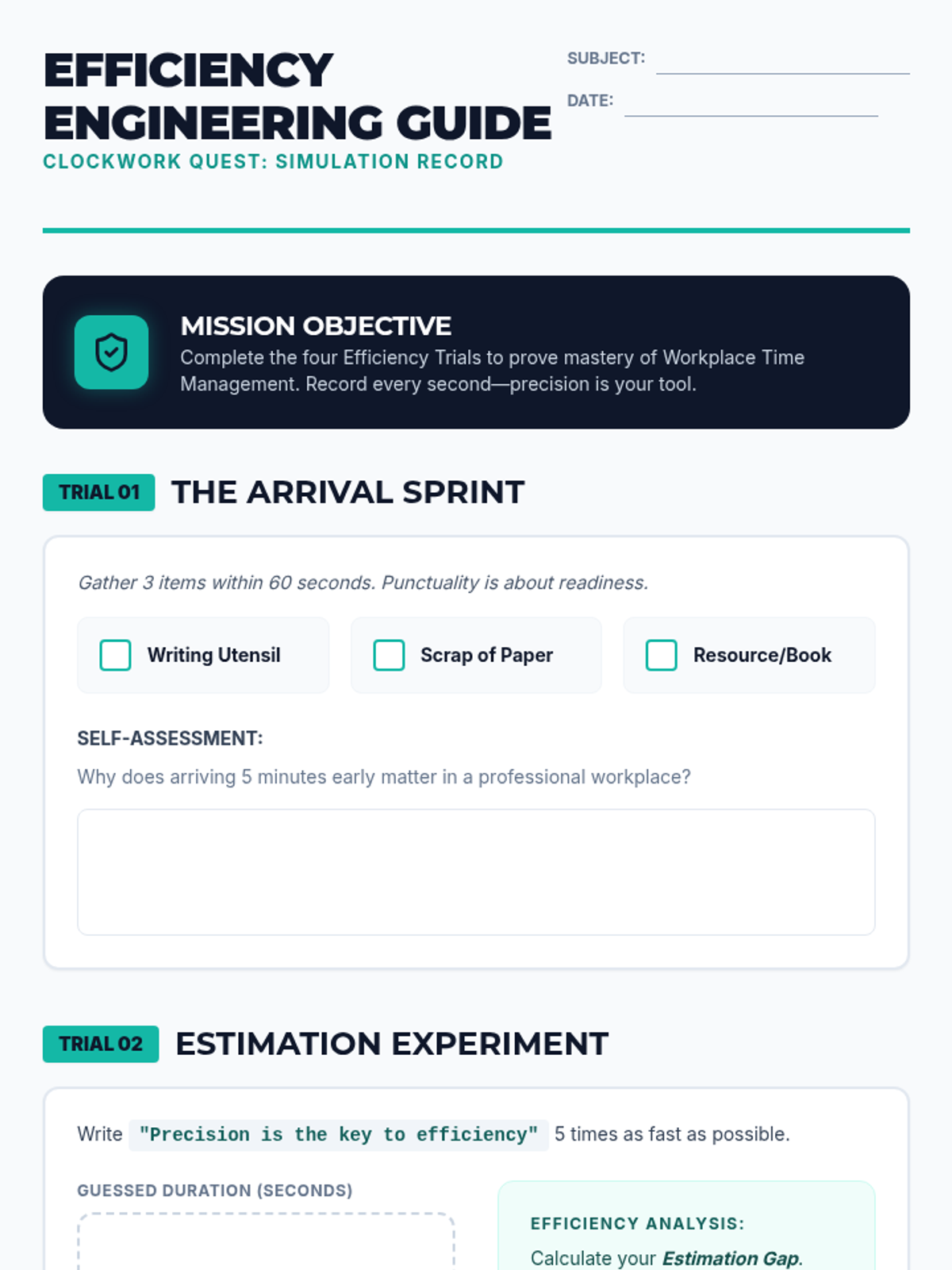
A lesson focused on mastering time management through hands-on 'trials' that teach punctuality, task estimation, scheduling, and focus techniques.
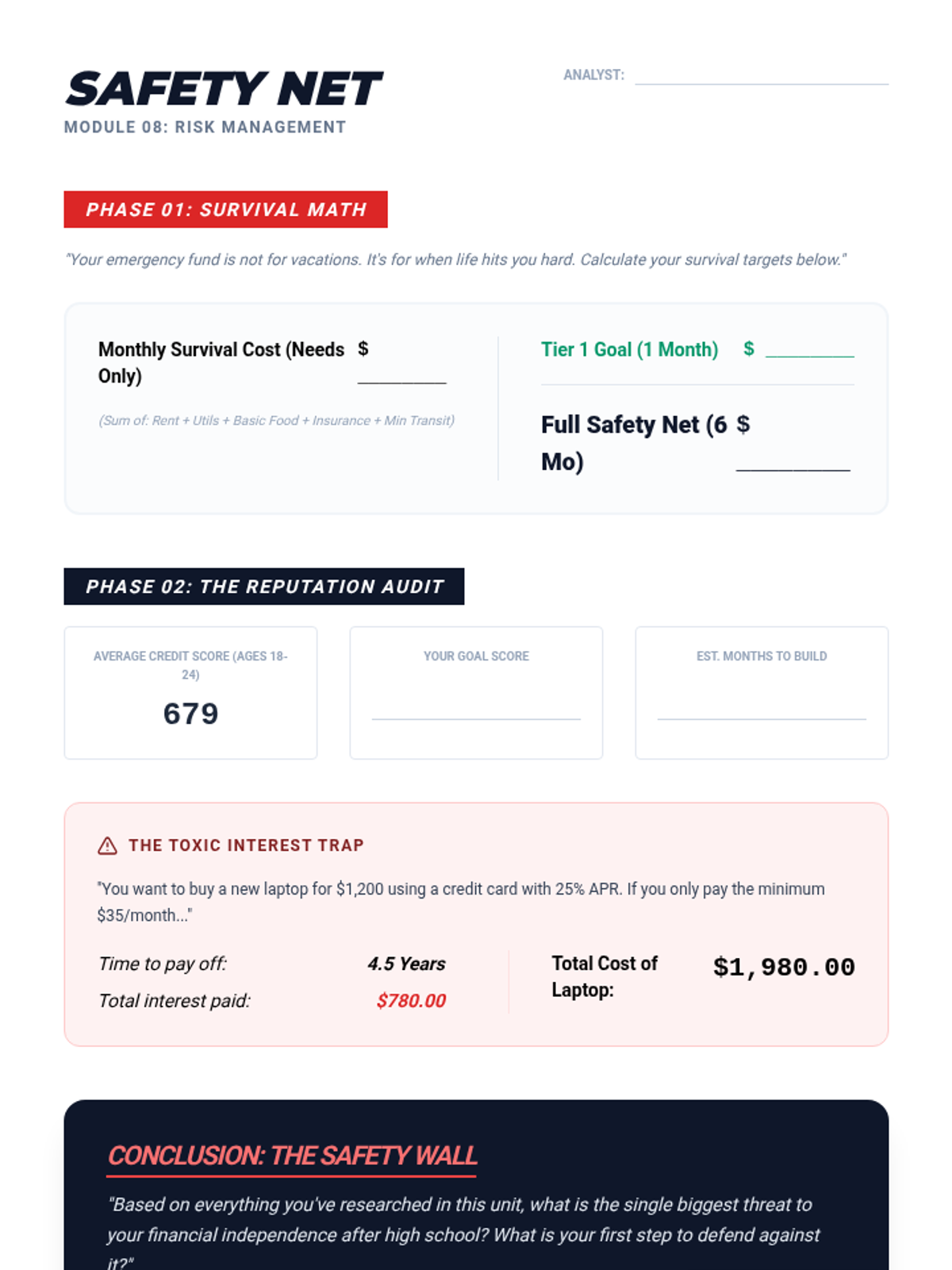
Exploring emergency funds, the basics of credit scores, and strategies for avoiding high-interest debt after high school.
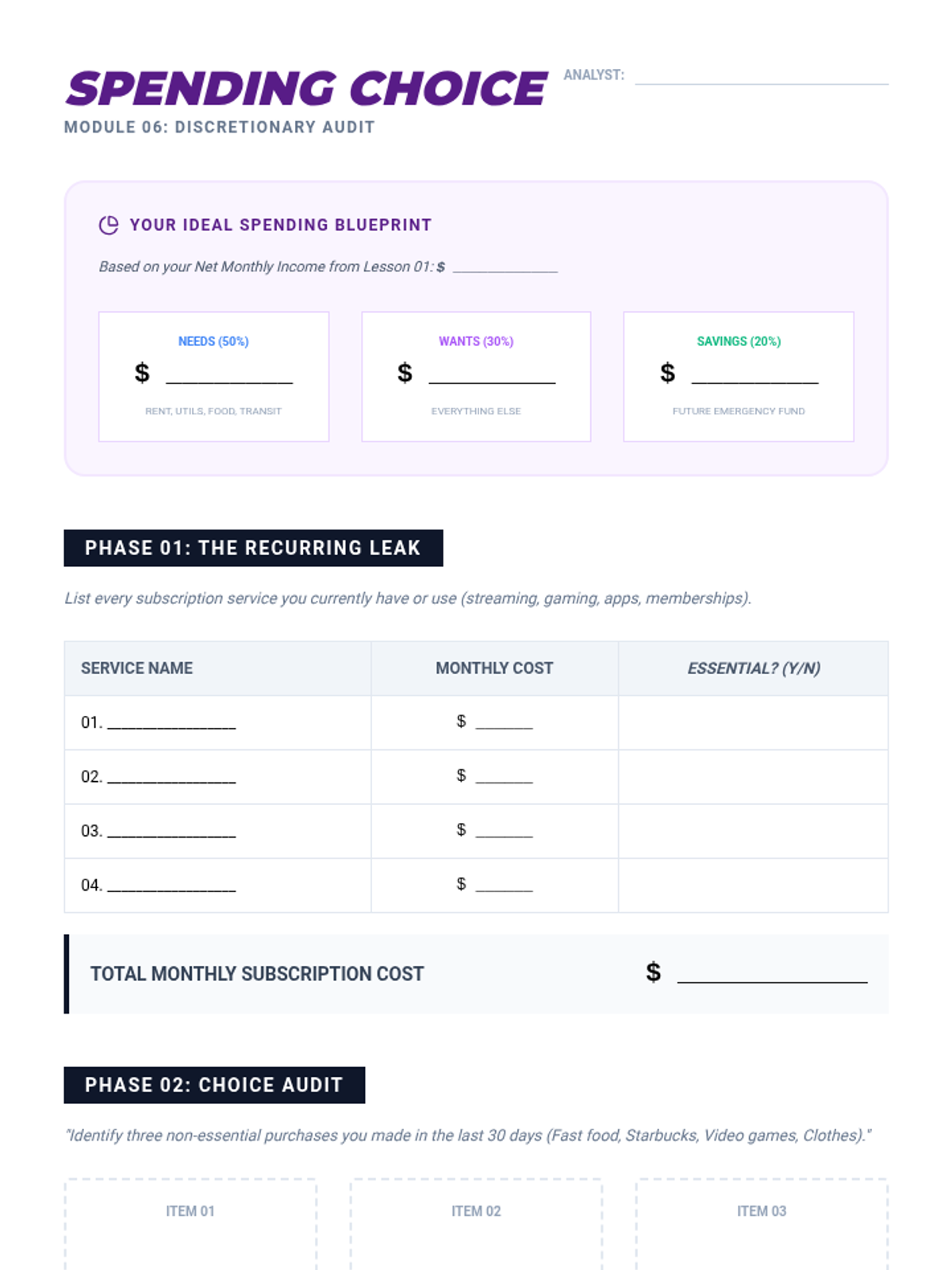
Understanding the 50/30/20 rule, identifying personal "wants" versus "needs," and managing discretionary expenses like subscriptions and entertainment.
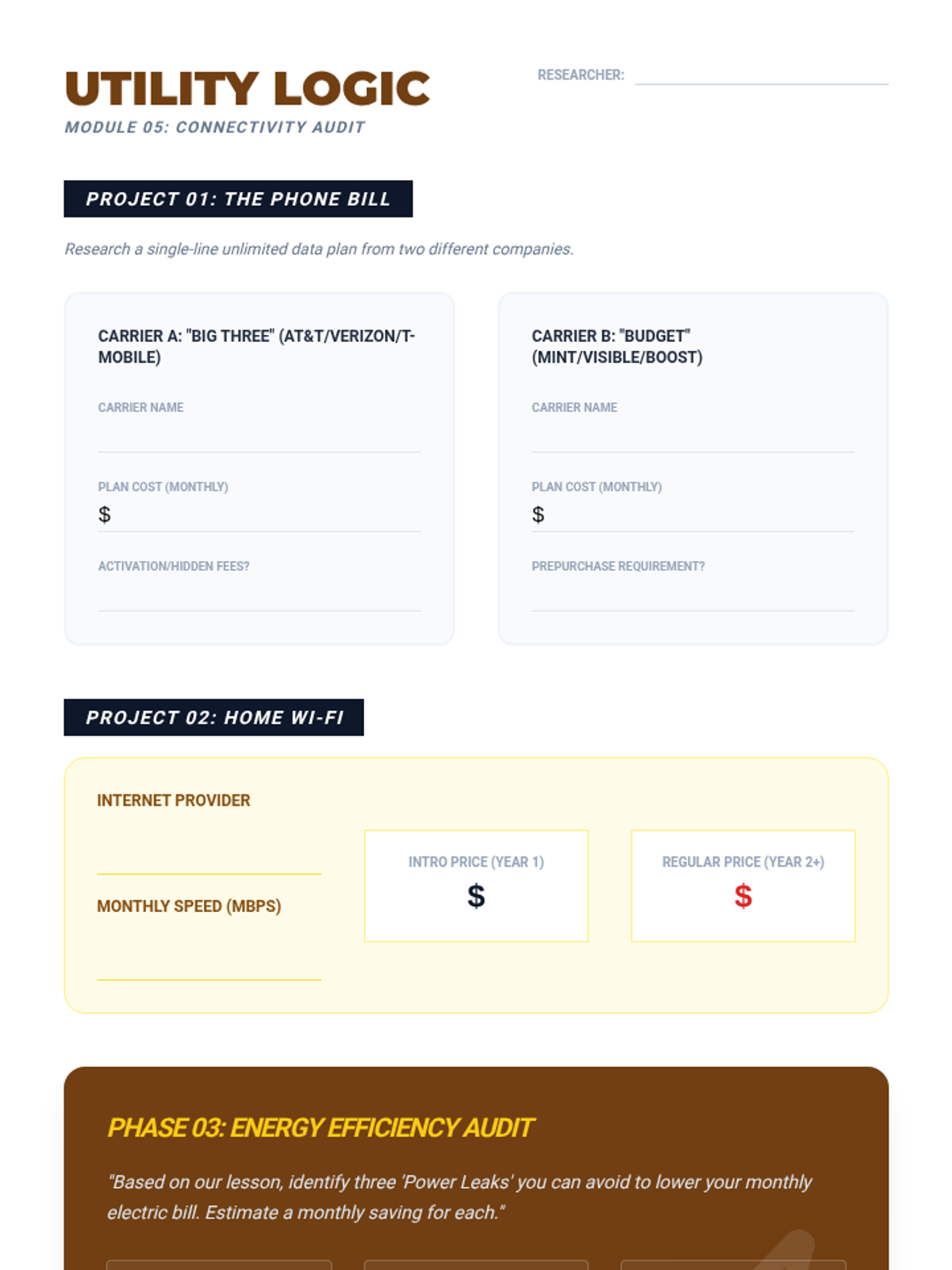
Managing recurring monthly bills like internet, phone plans, and electricity, including strategies for reducing usage and costs.
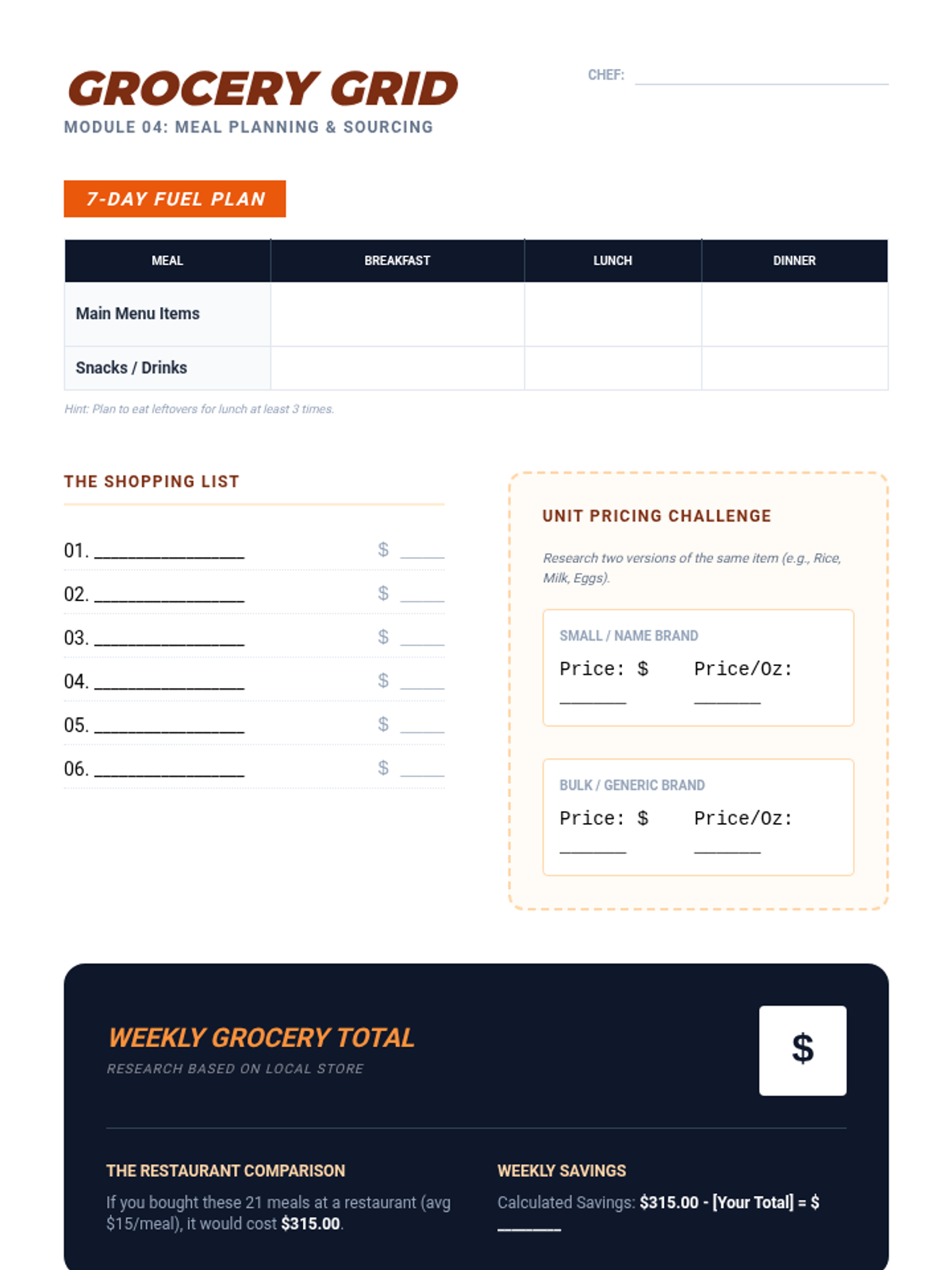
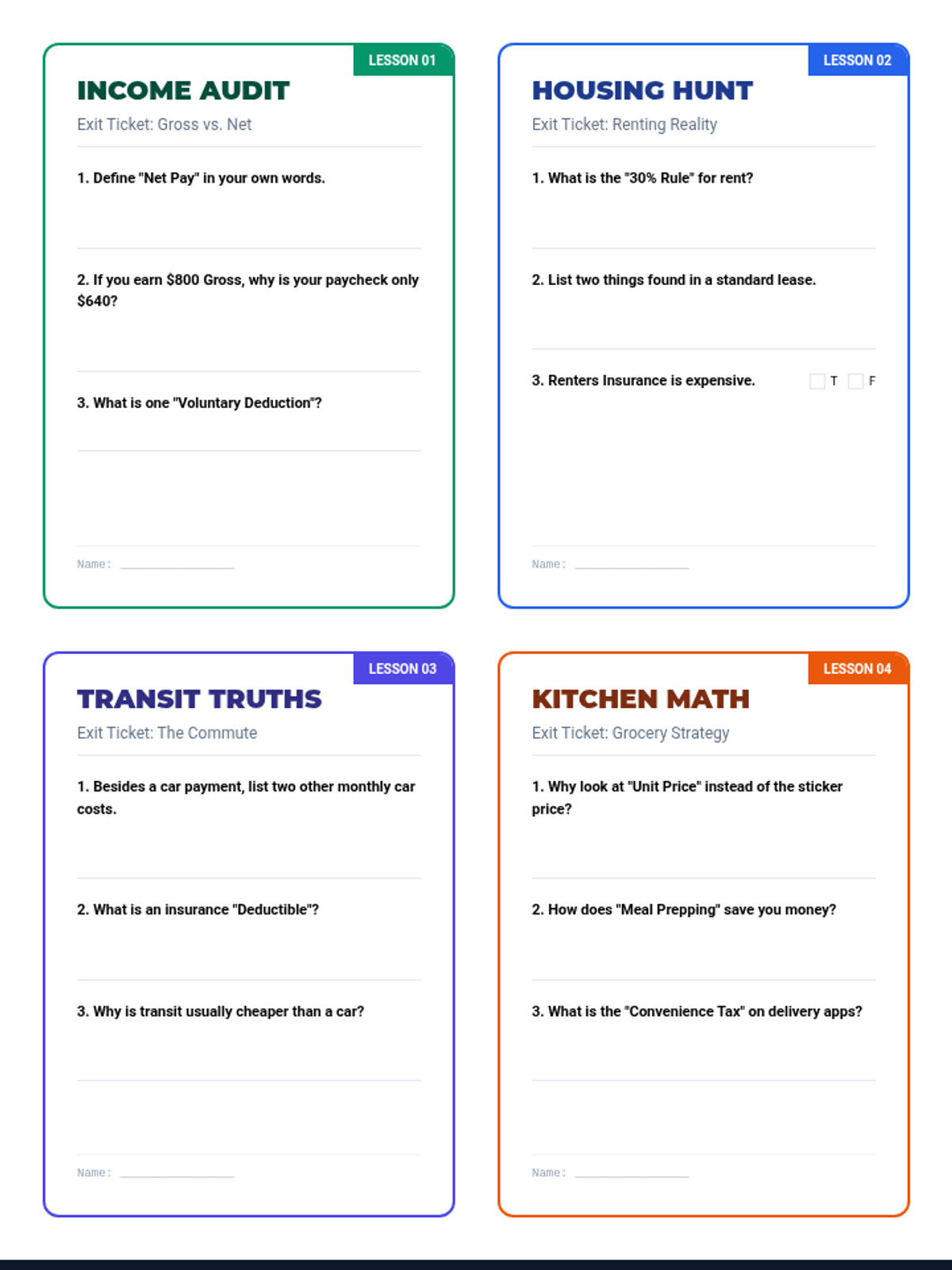
Practical math for grocery shopping, including unit pricing, meal planning on a budget, and the hidden costs of convenience foods.
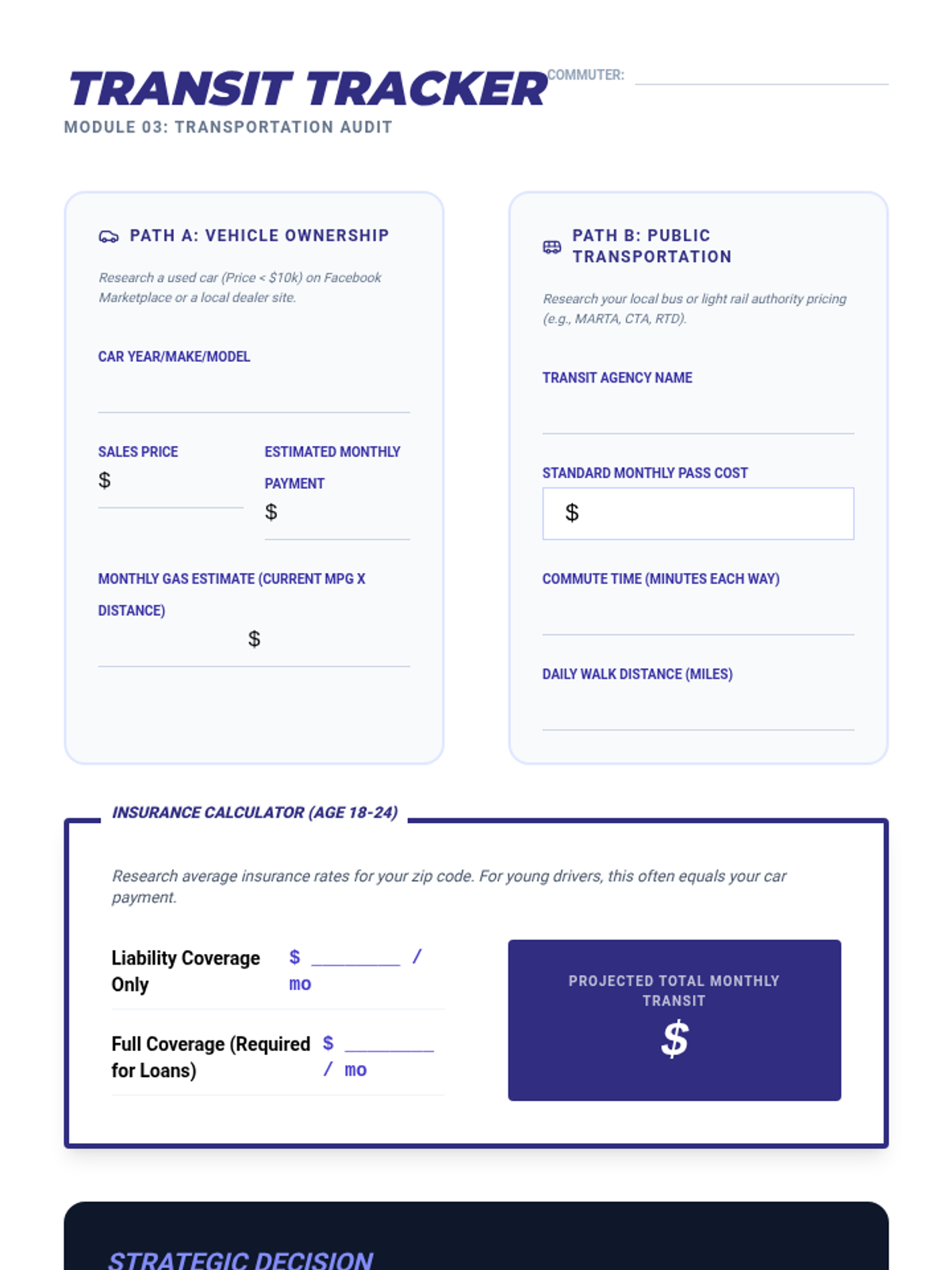
Comparing the true costs of vehicle ownership versus public transit, including insurance premiums, gas, maintenance, and parking.
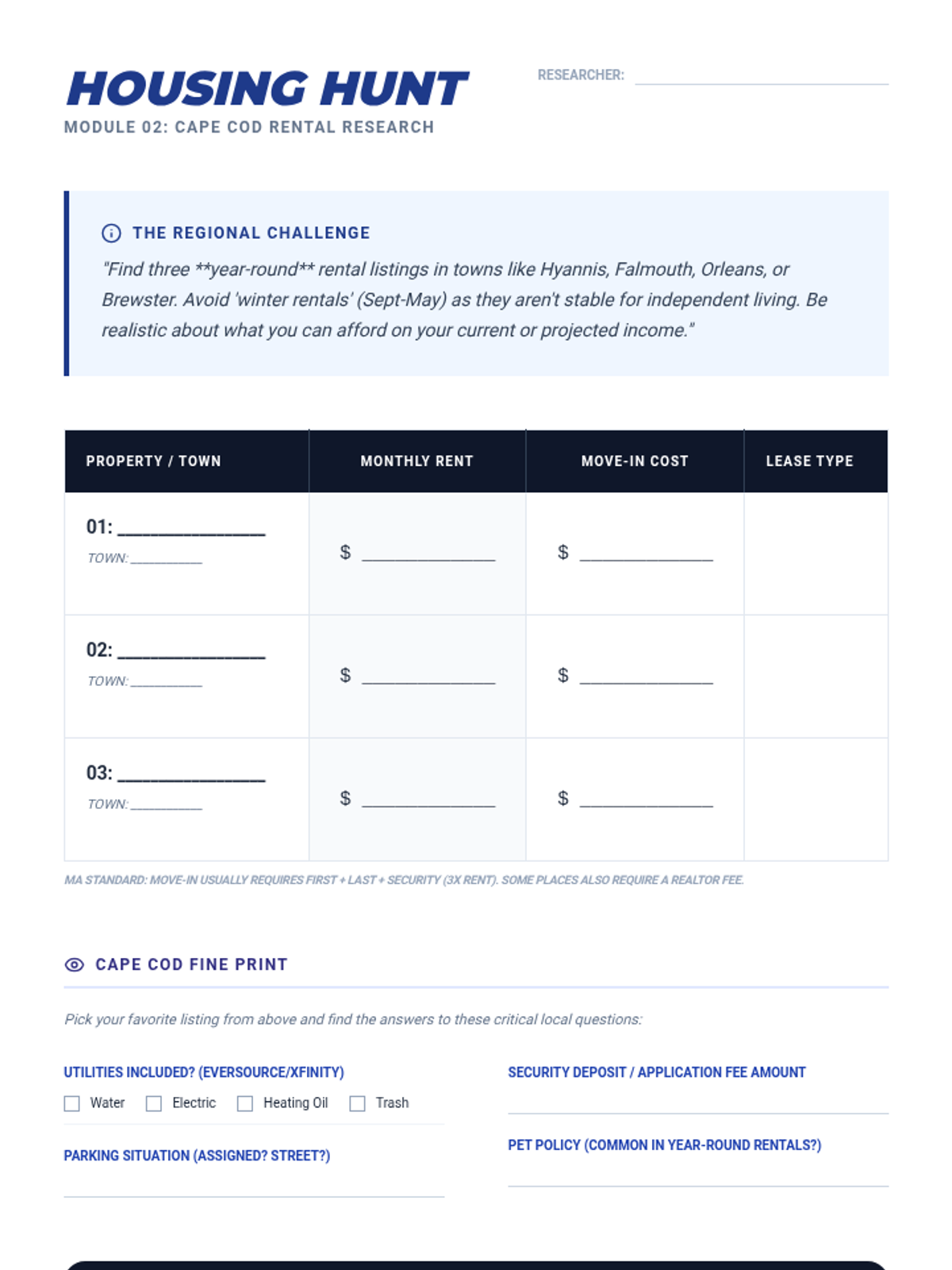
A deep dive into the costs of renting, including security deposits, renters insurance, and understanding the terms of a standard lease agreement.
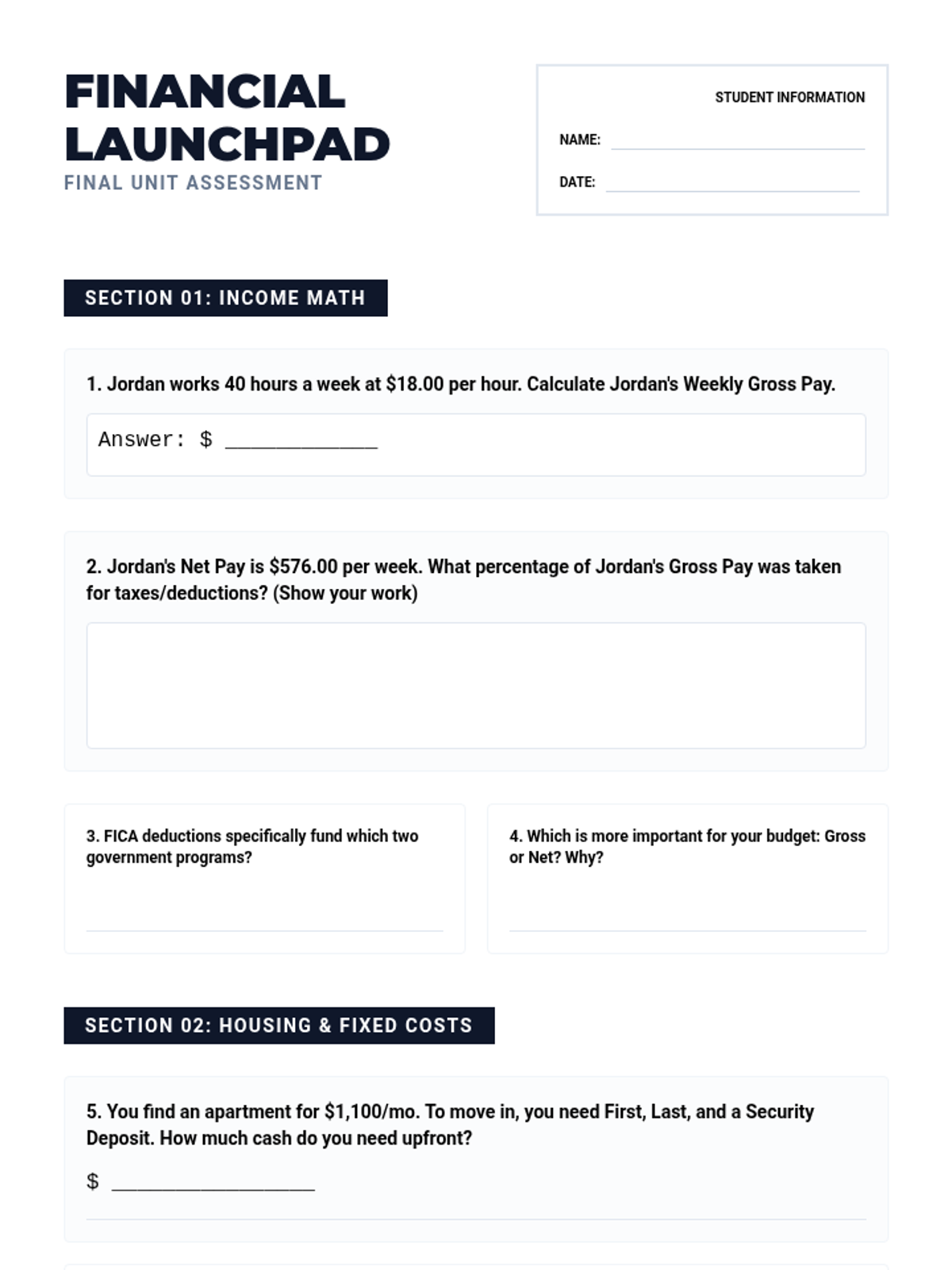
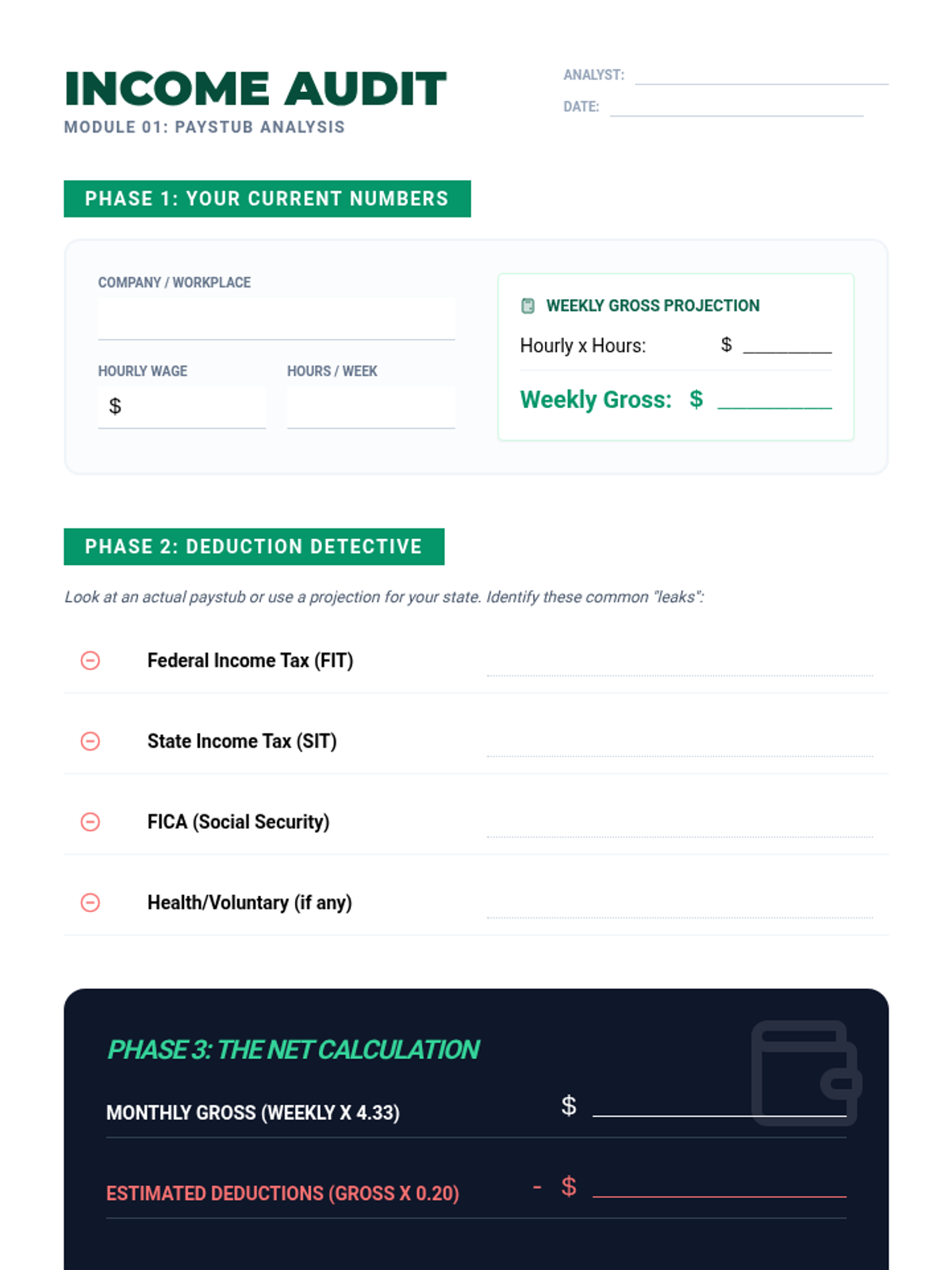
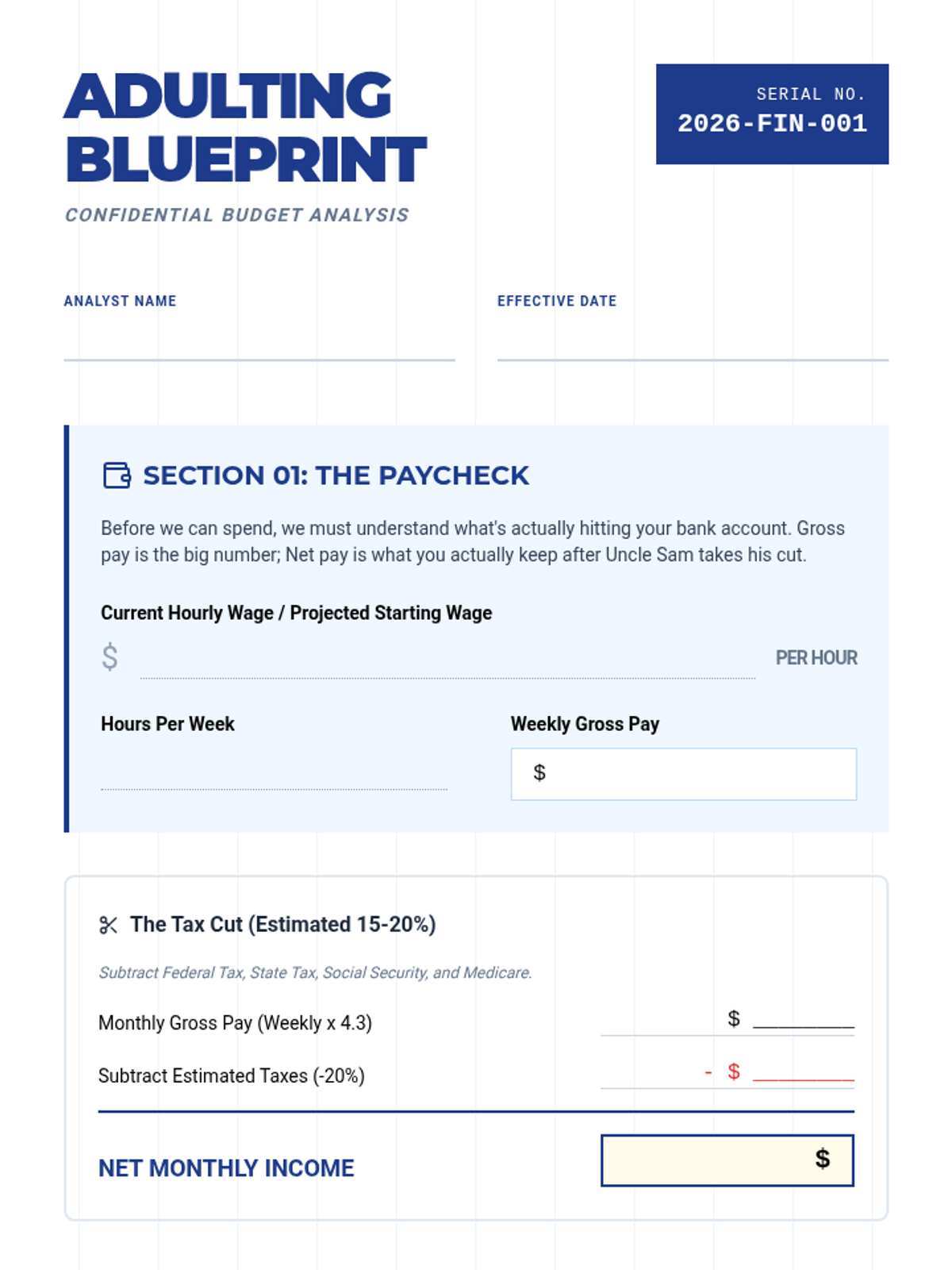
Students identify different components of a paystub, understand FICA and income tax deductions, and calculate accurate net monthly income based on their current jobs.
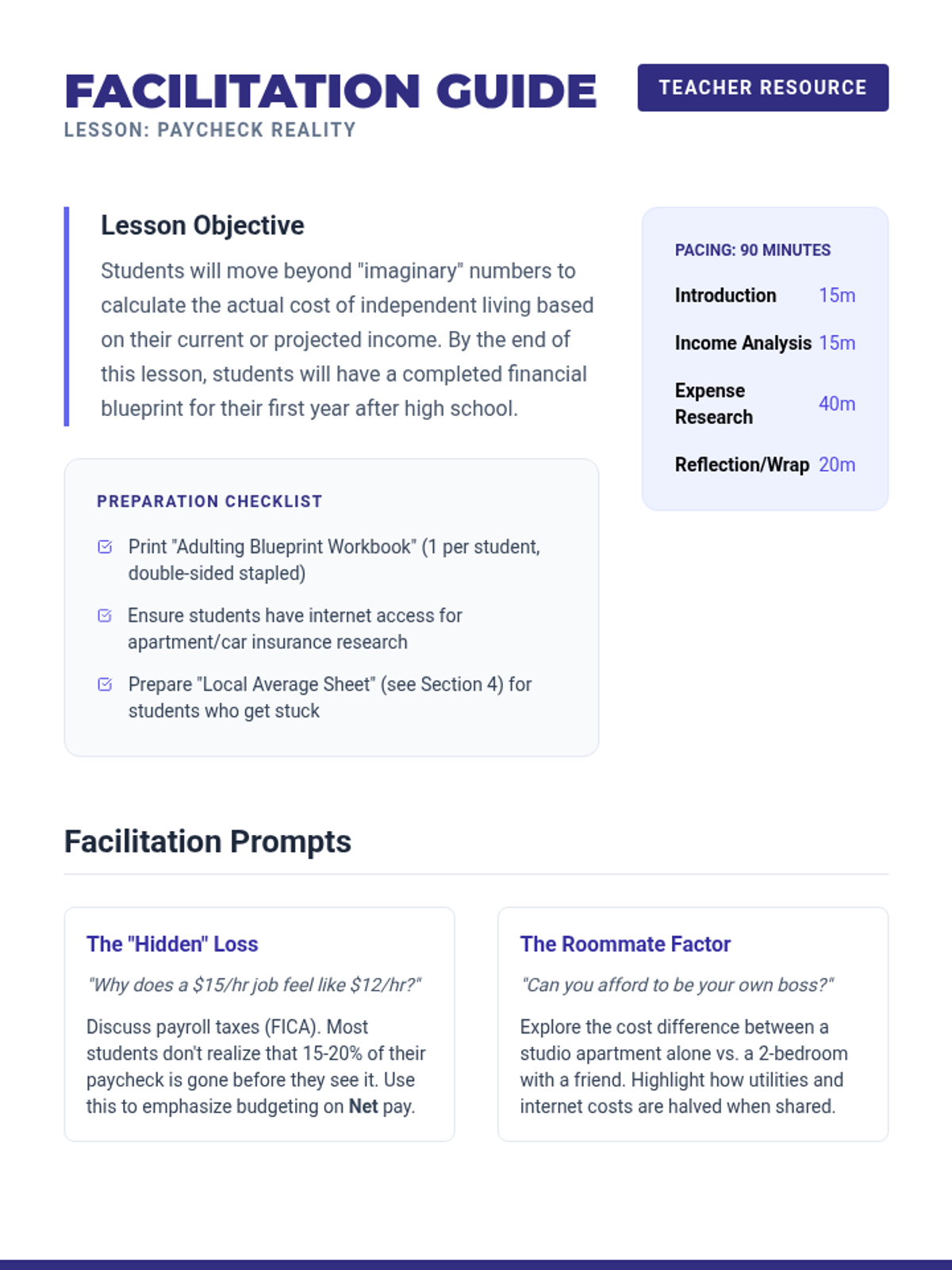
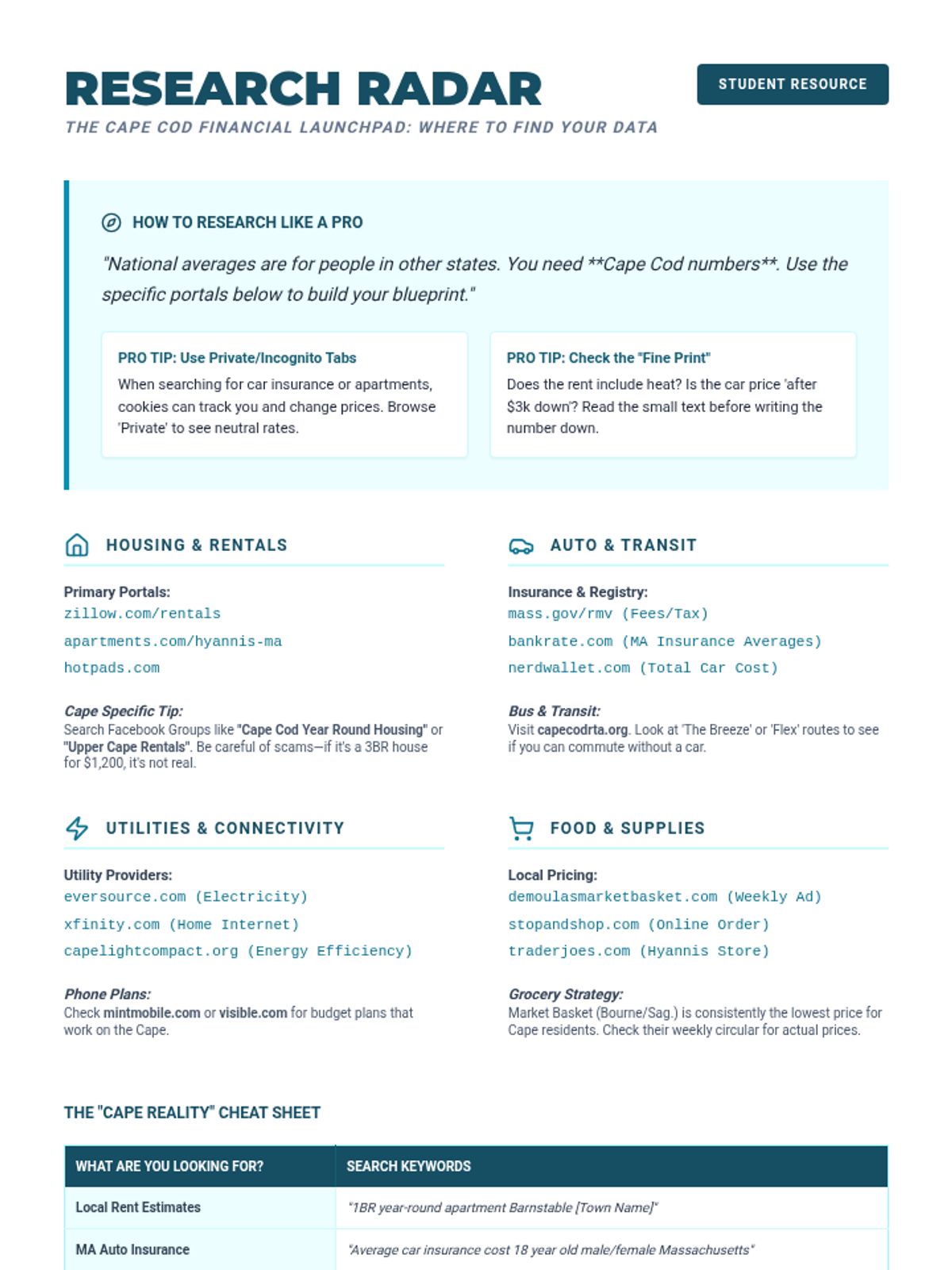
A practical, hands-on lesson designed for working high school seniors to navigate the transition to independent living. Students analyze their current income and projected expenses for housing, food, and transport to build a realistic monthly budget.
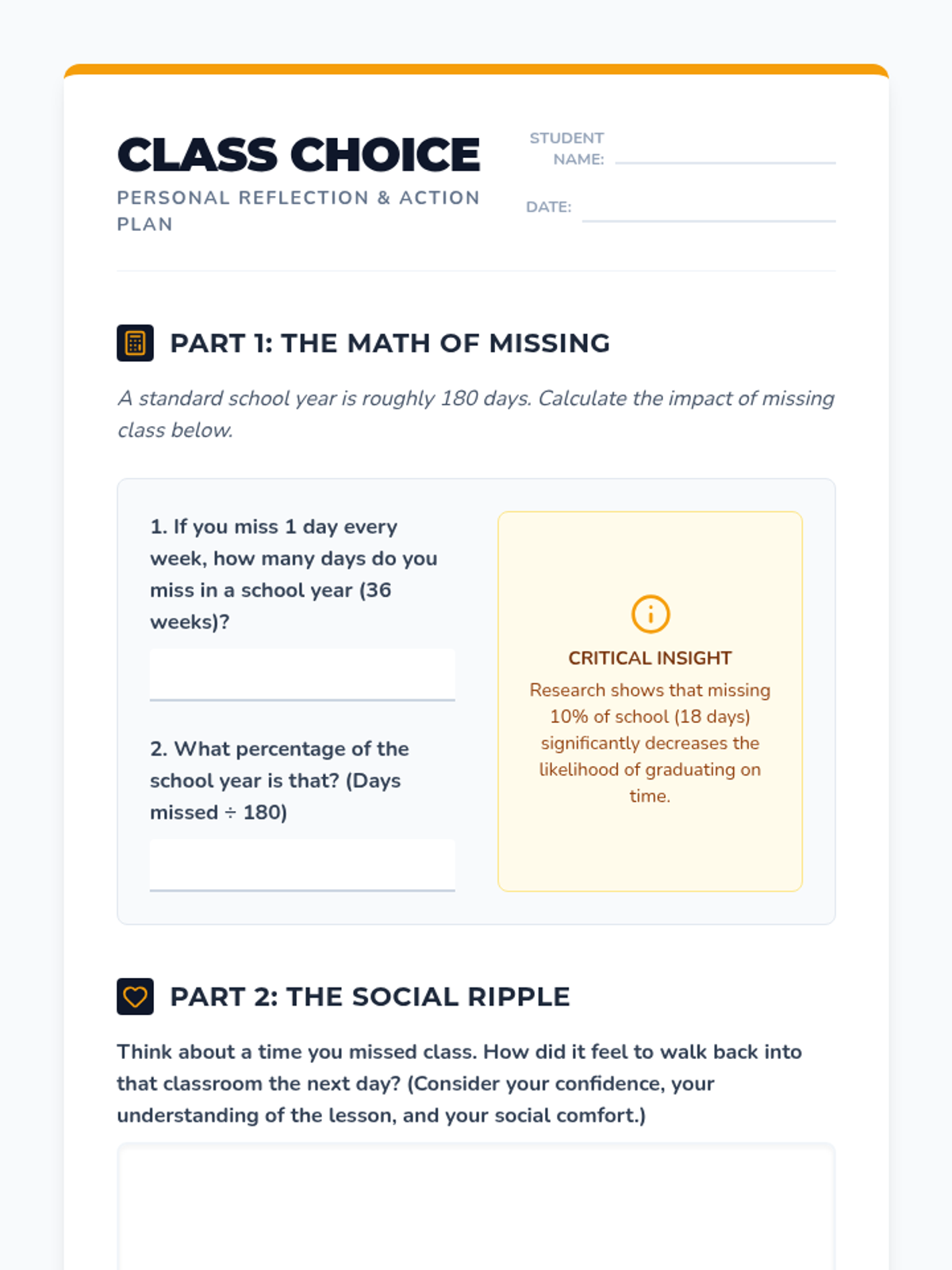
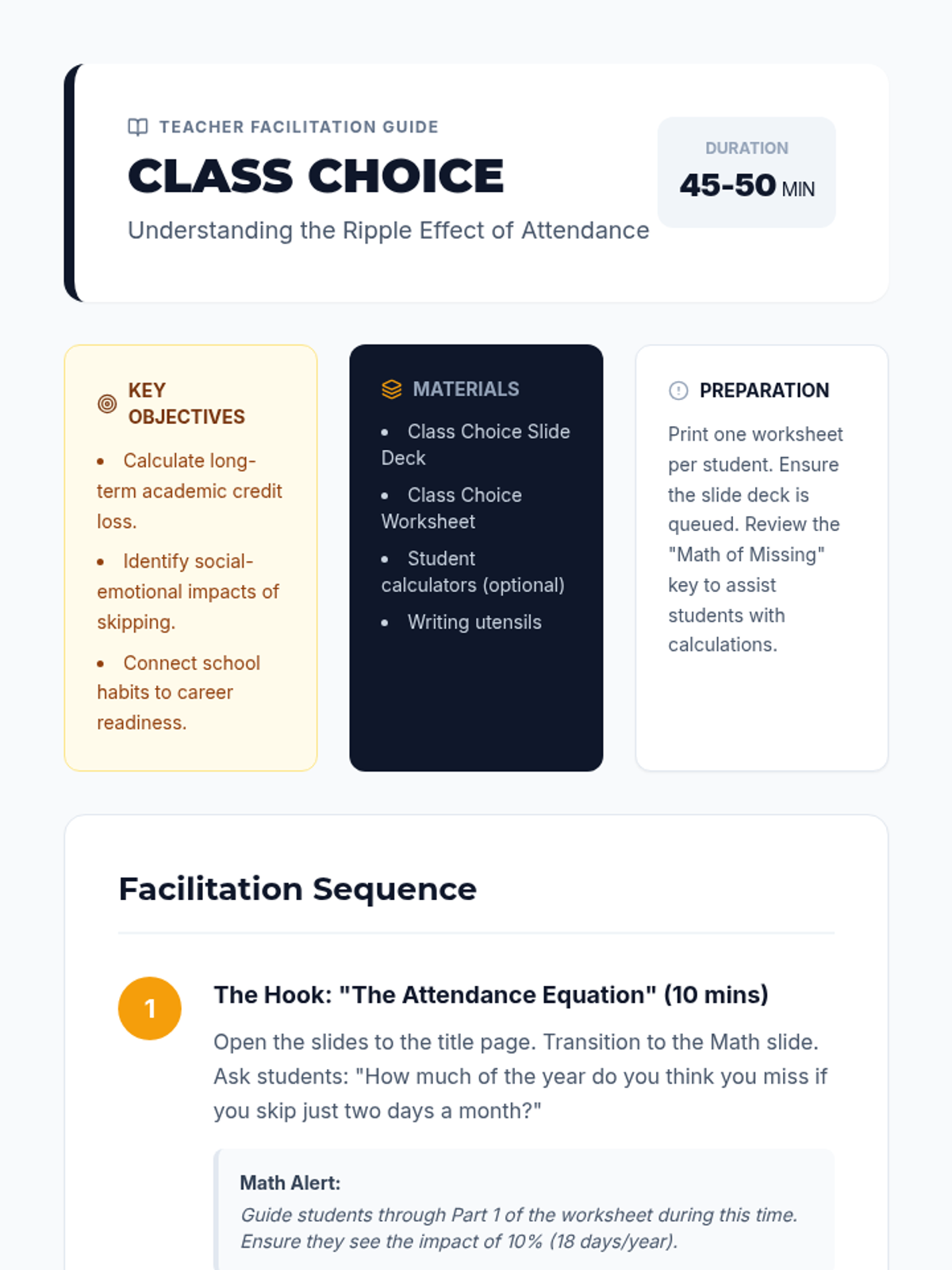
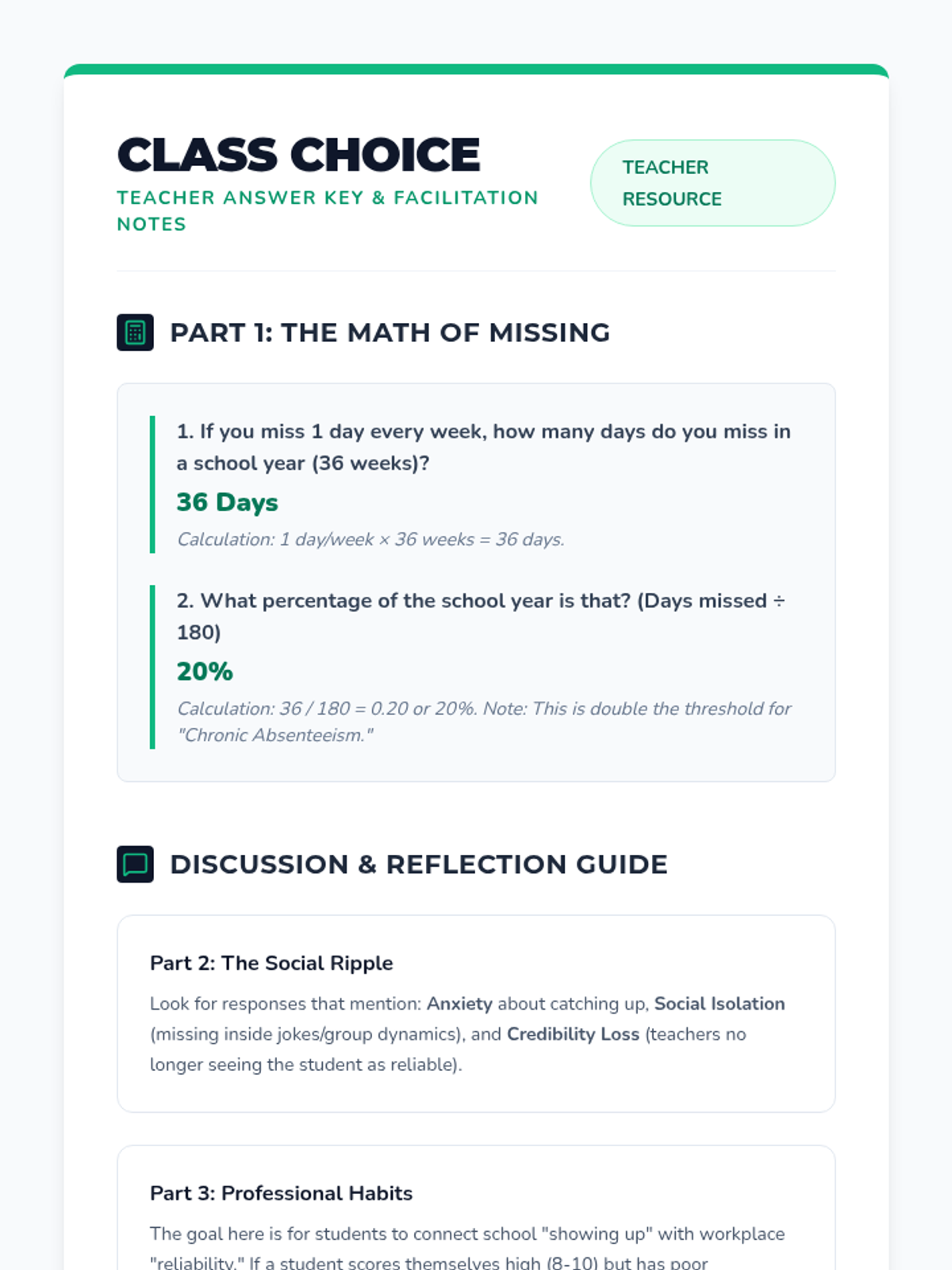
This lesson explores the multi-faceted consequences of skipping class, including academic setbacks, social-emotional impacts, and long-term career implications. Students will reflect on their choices and the weight of their decisions through interactive slides and personal reflection.
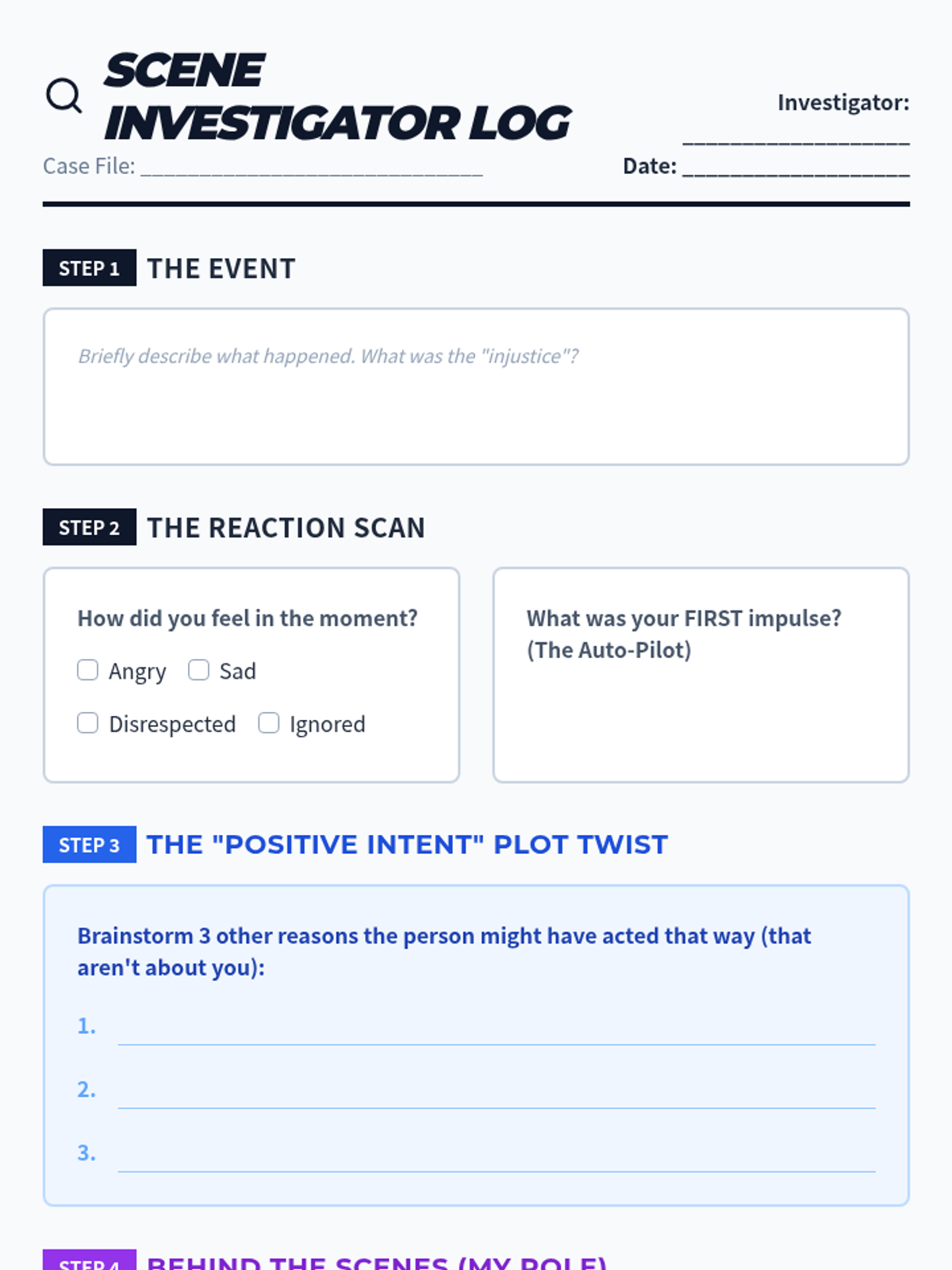
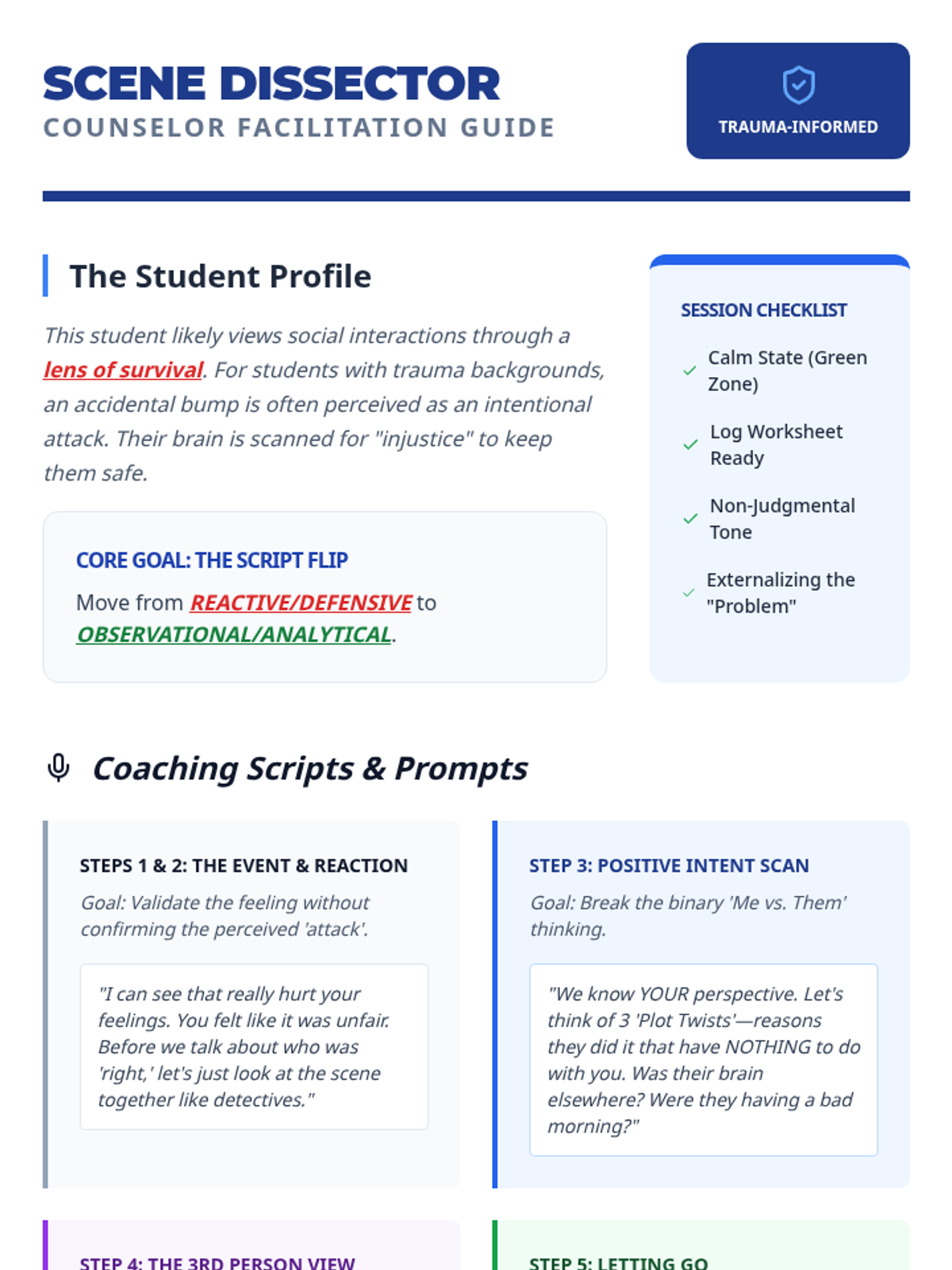
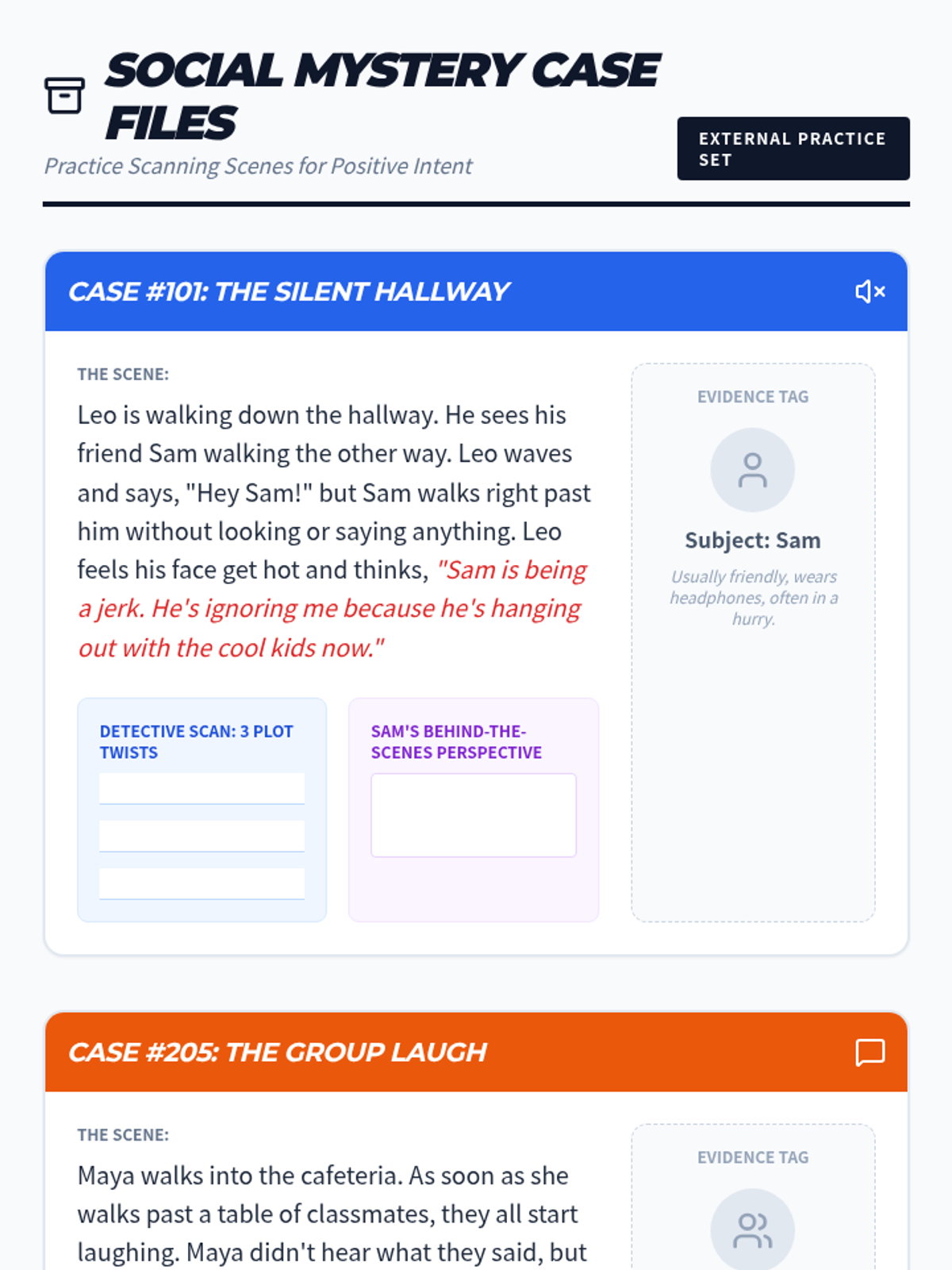
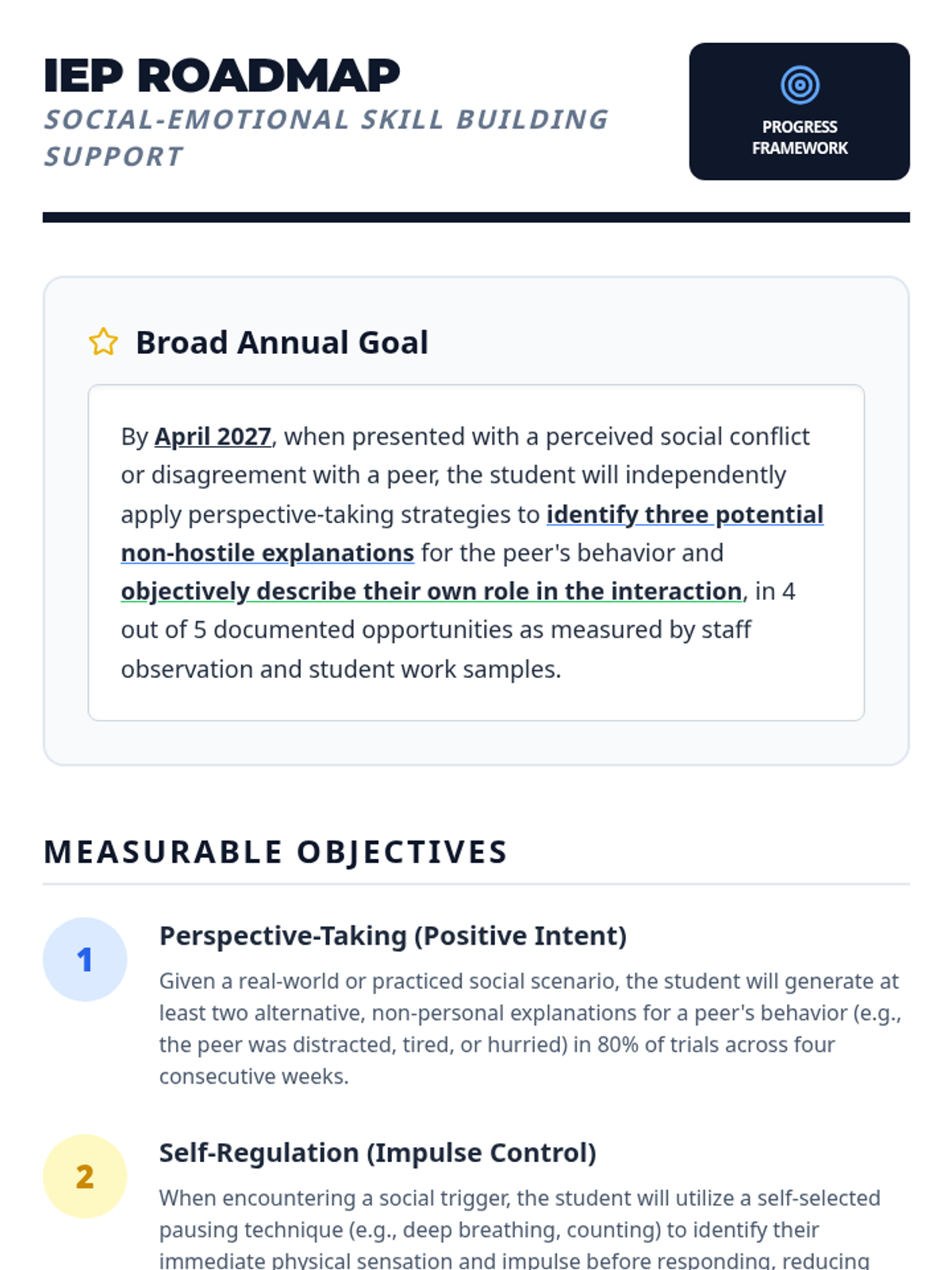
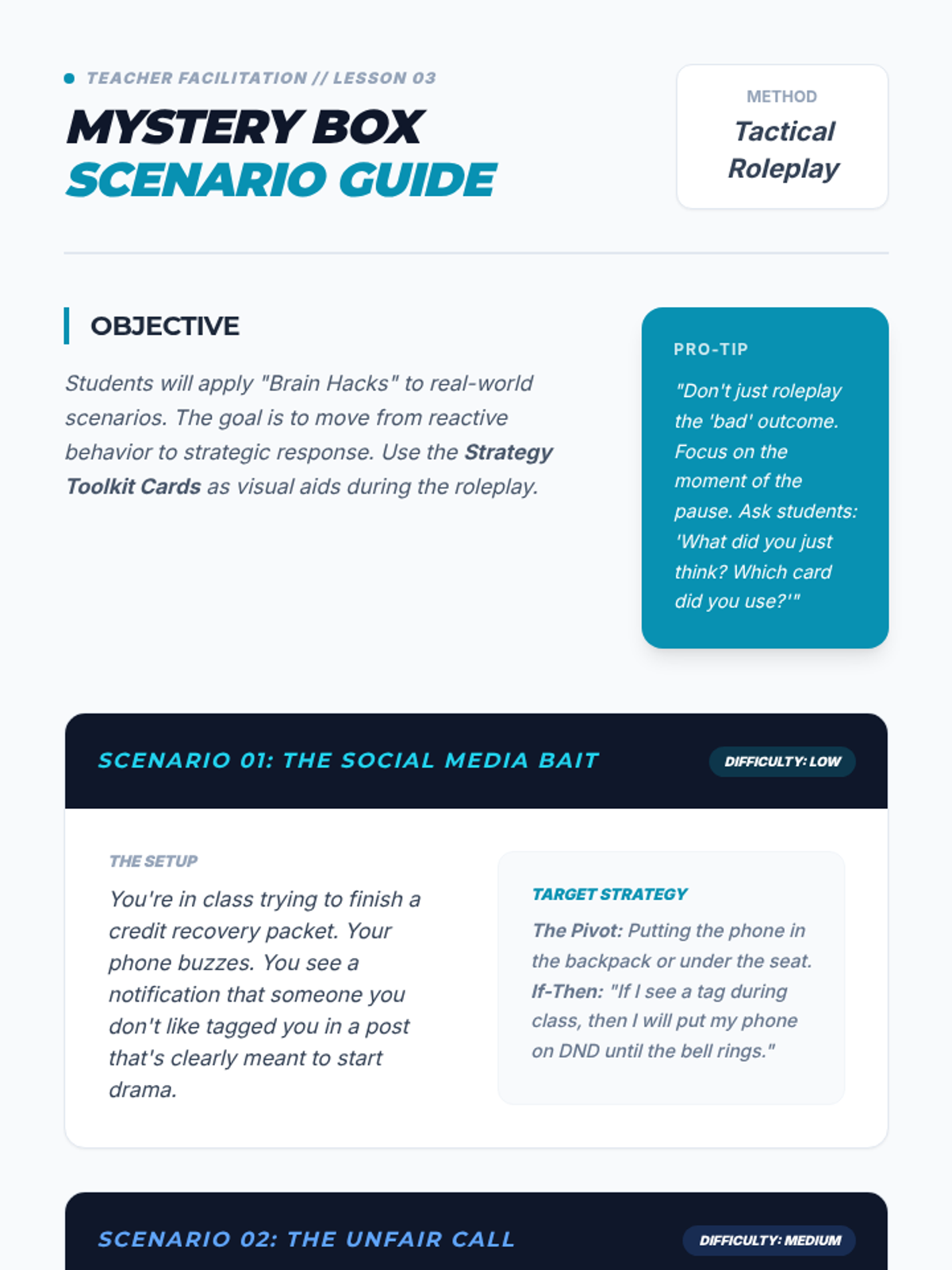
A social-emotional learning lesson designed for students with trauma backgrounds and impulse control challenges. It focuses on 'Scene Scanning'—assuming positive intent and dissecting social interactions through a detective-style lens to improve perspective-taking and reduce reactivity.
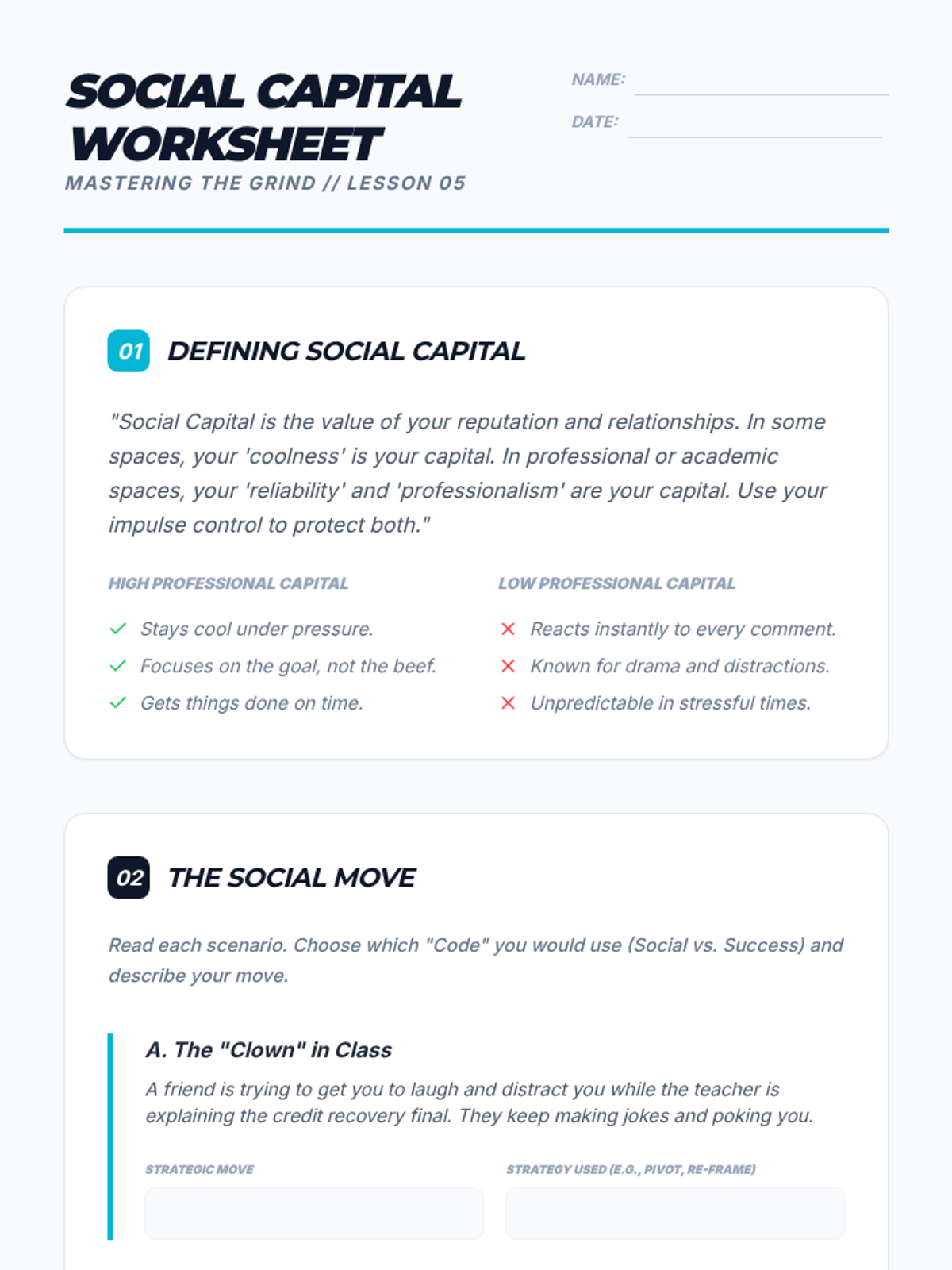
Focuses on social intelligence and 'code-switching' as tools for success. Students practice navigating conflict with peers and authority figures to protect their progress and 'own the room' professionally.
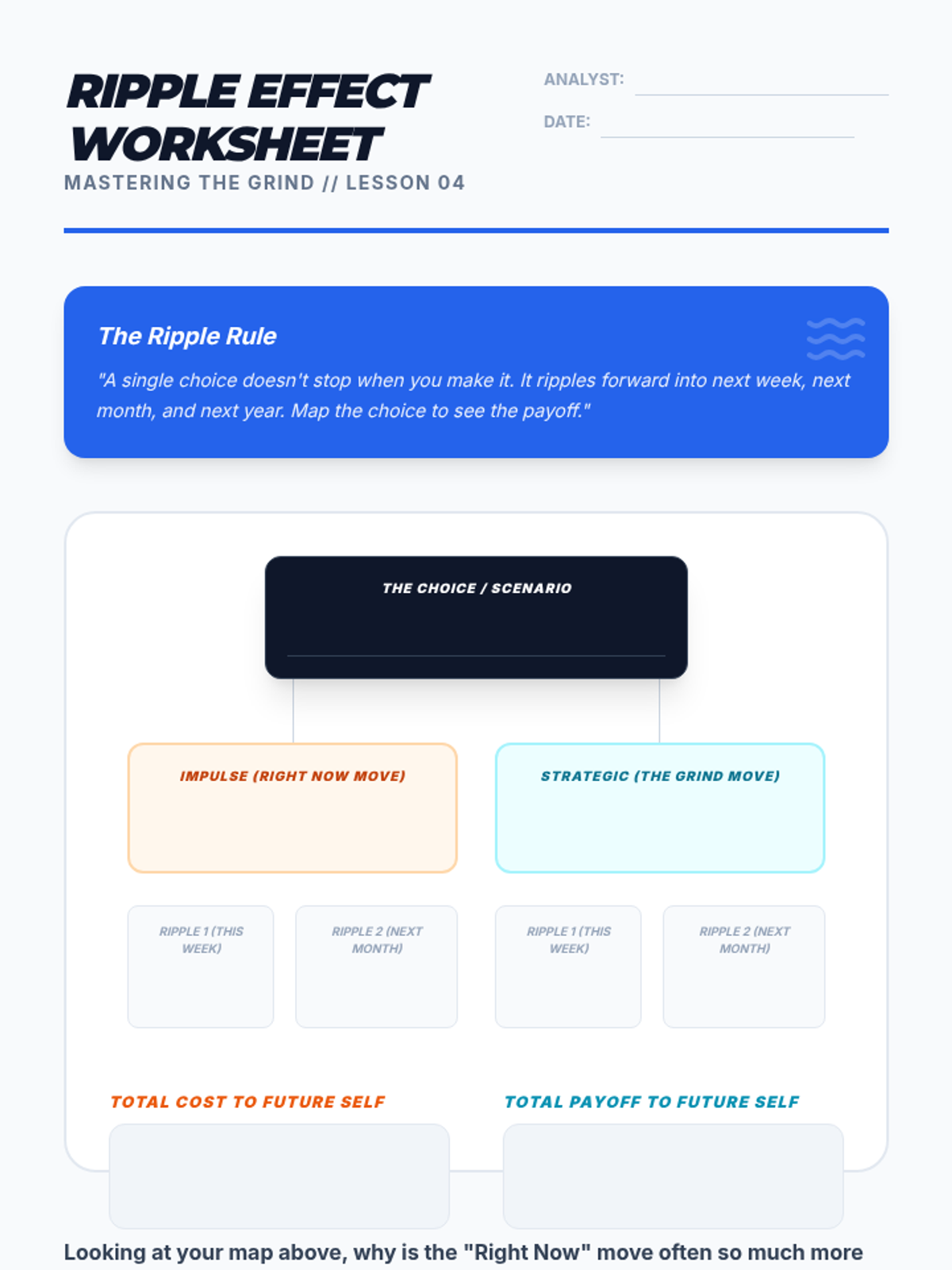
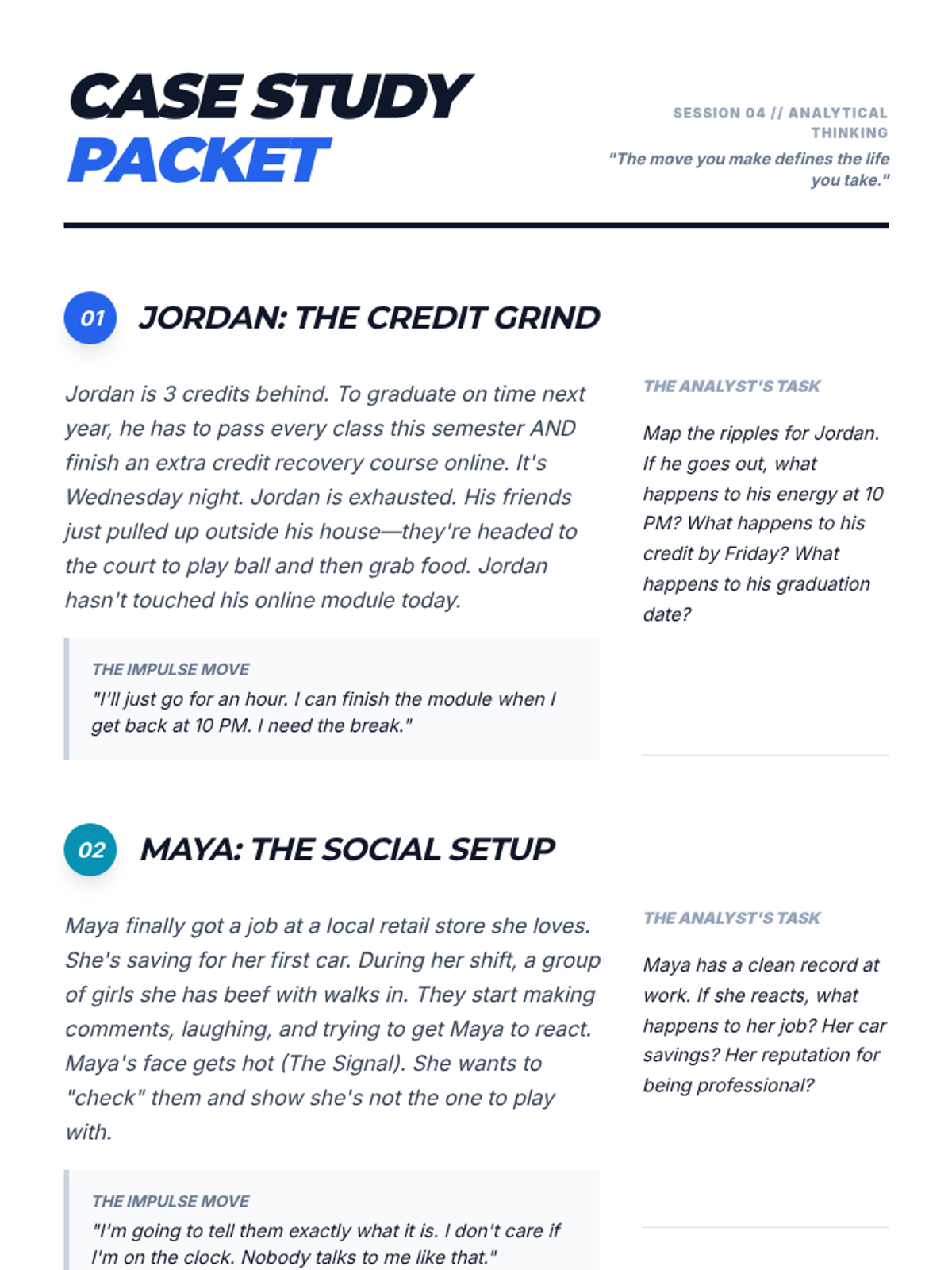
Visualizes the 'Ripple Effect' of choices on graduation timelines and future earnings. Students analyze case studies of peers navigating high-stakes decisions to understand the compounding nature of consistency.
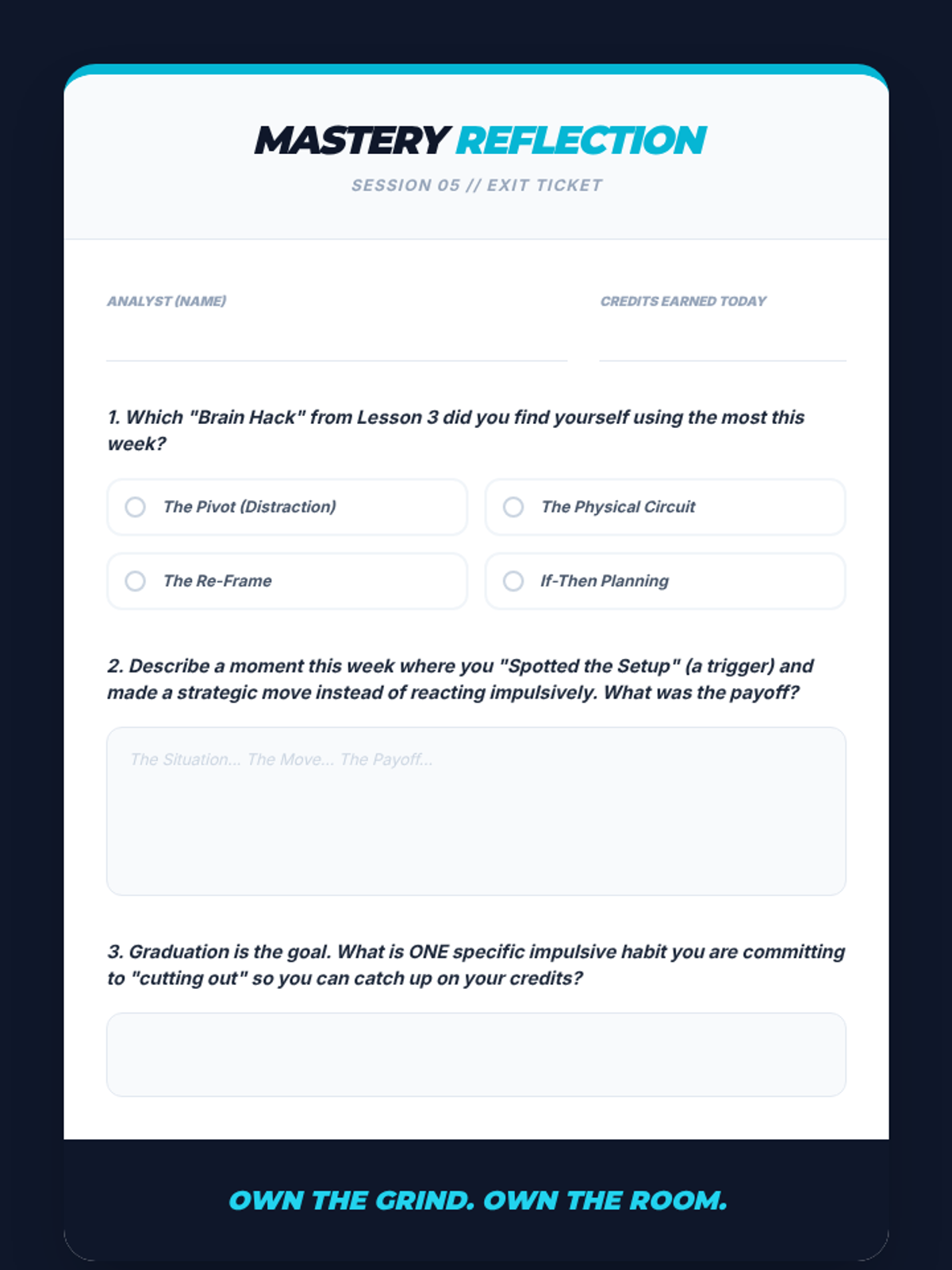
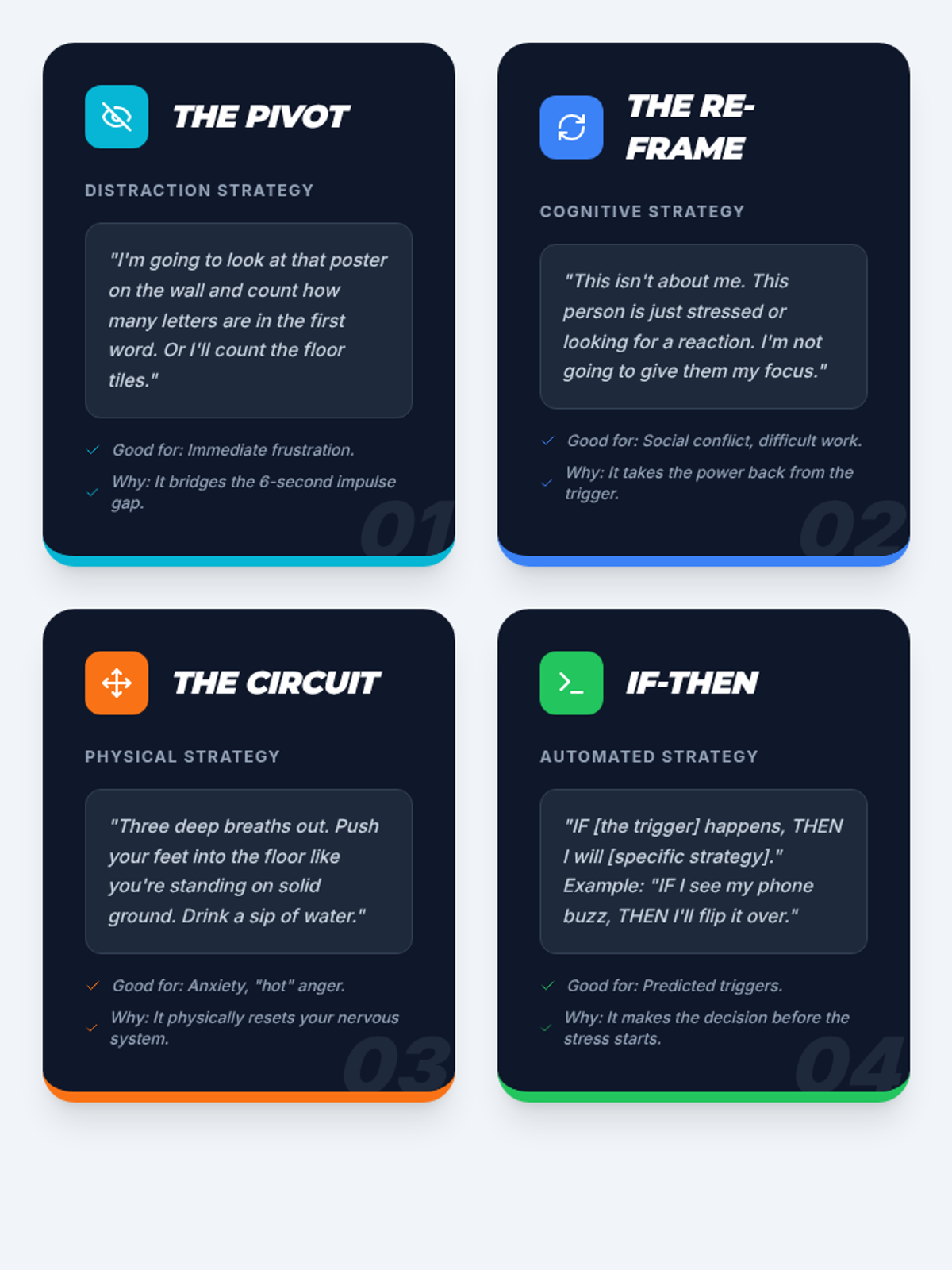
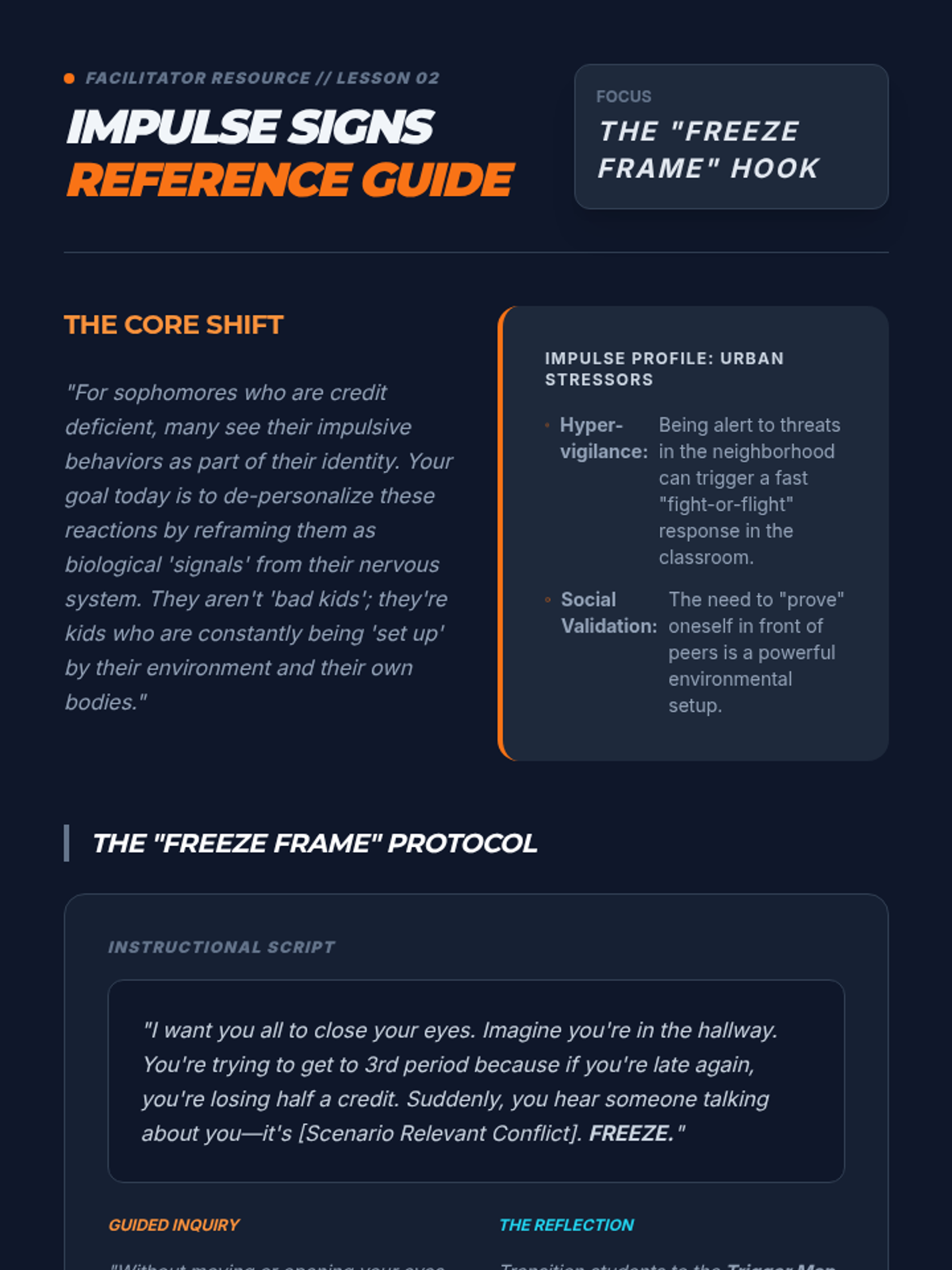
Equips students with high-level cognitive strategies to override impulsive reactions. Focuses on 'reframing' stressful situations and using 'if-then' planning to maintain composure under pressure.
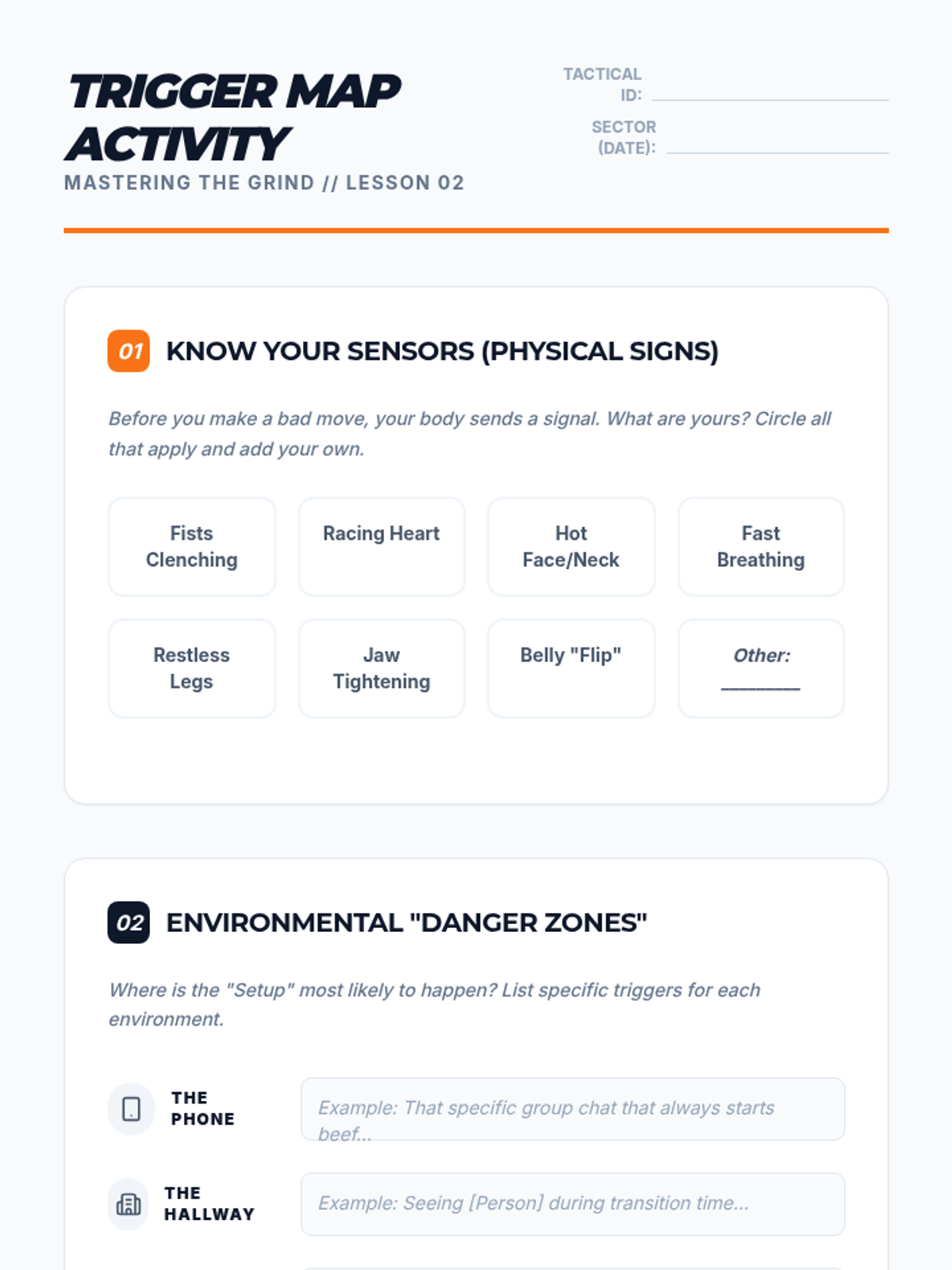
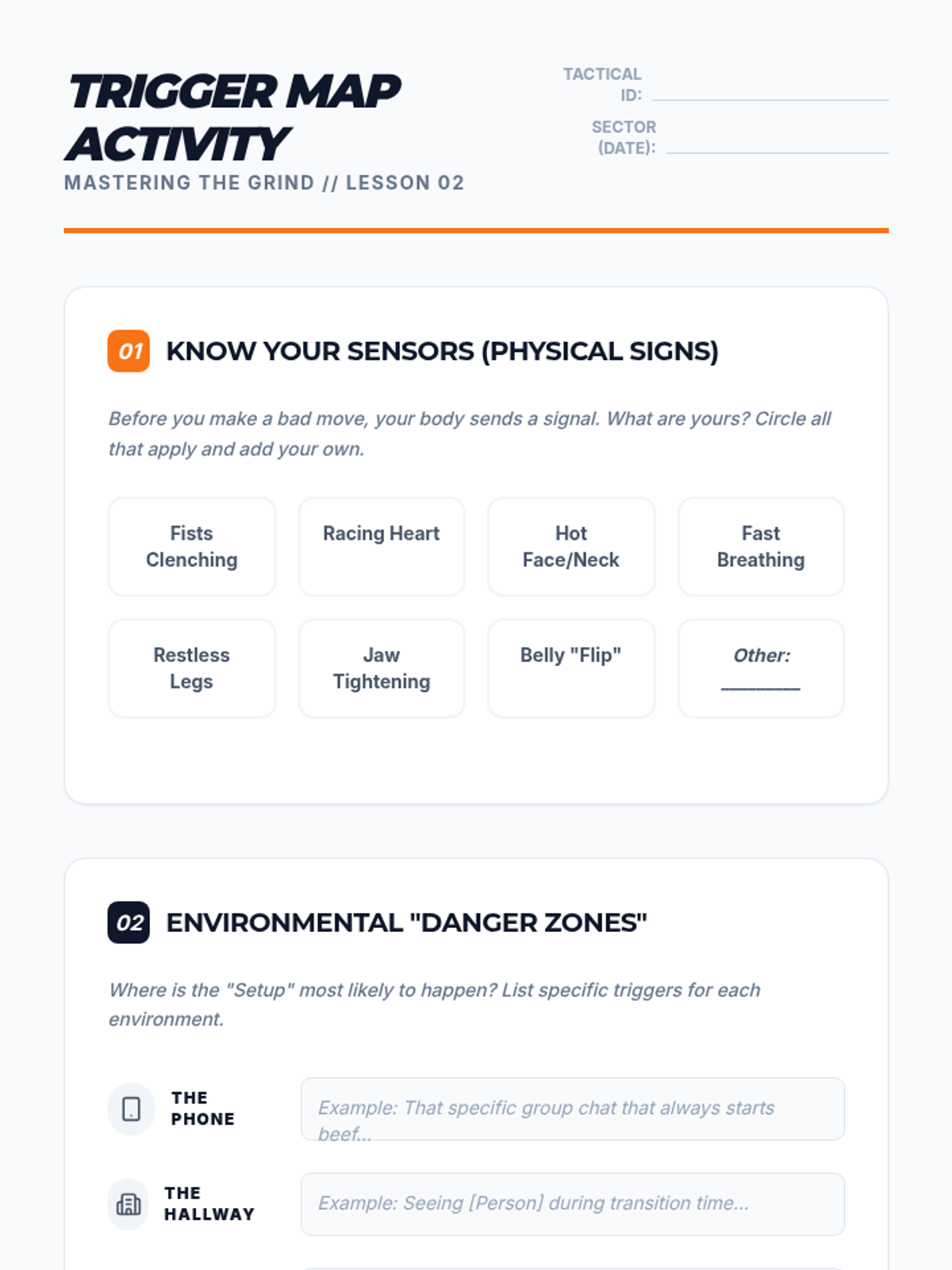
Students identify internal and environmental 'setups'—triggers that lead to self-sabotage. They create tactical maps of their daily routines to anticipate and bypass distractions in an urban school environment.
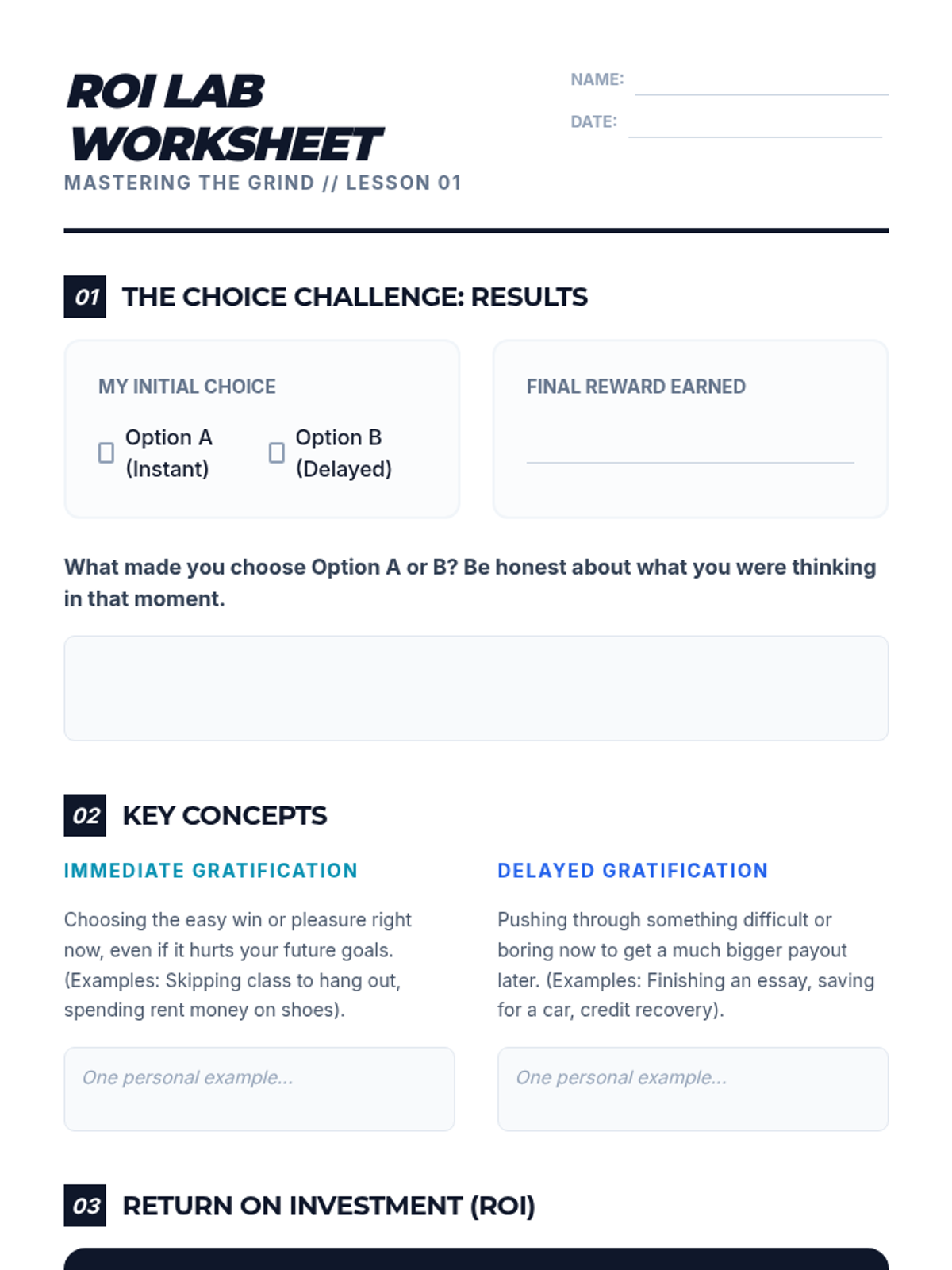
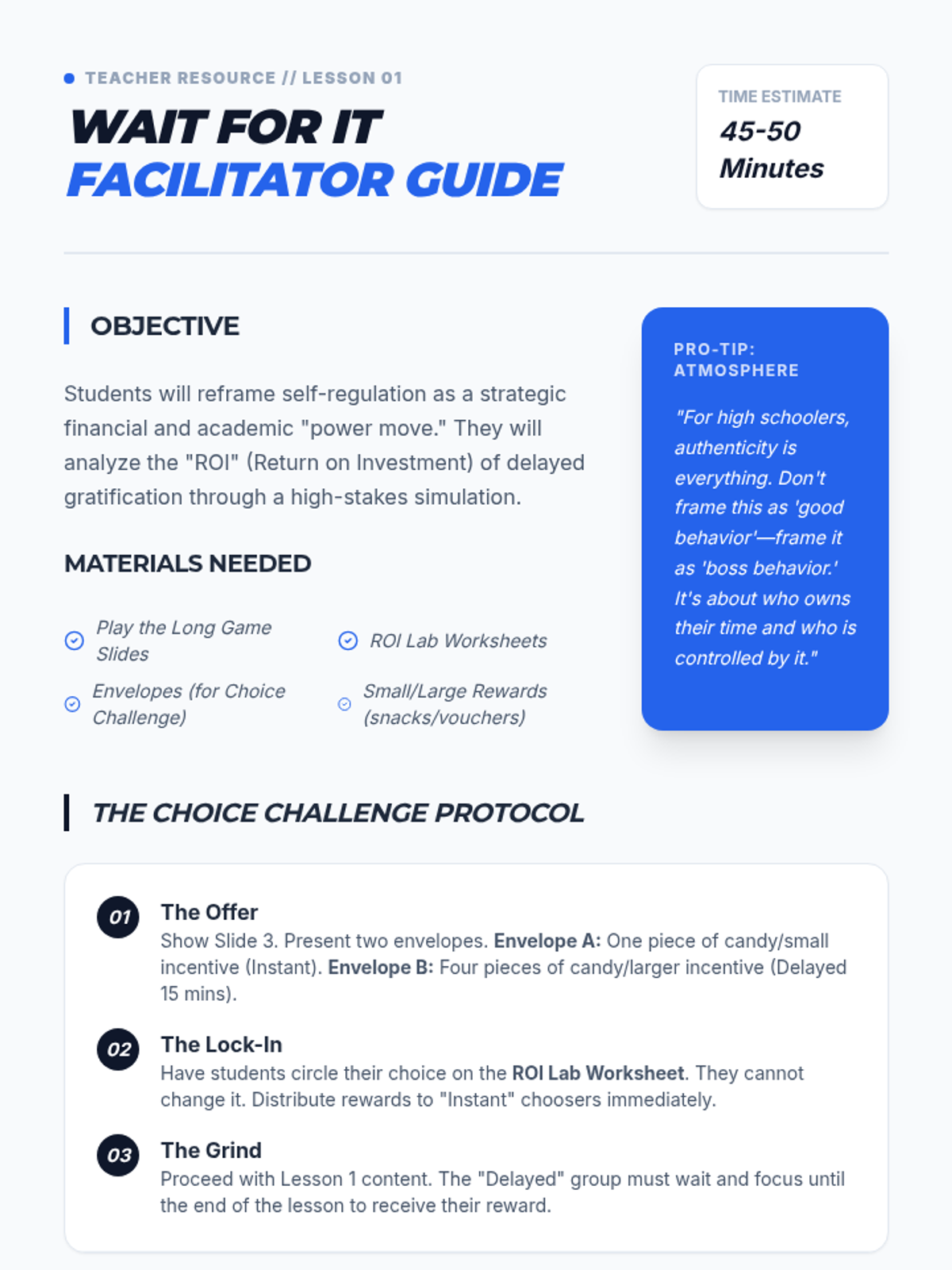
Reframes delayed gratification as a strategic investment. Students analyze the 'ROI' of their time and credits, participating in a simulation that mirrors real-world economic and academic trade-offs.
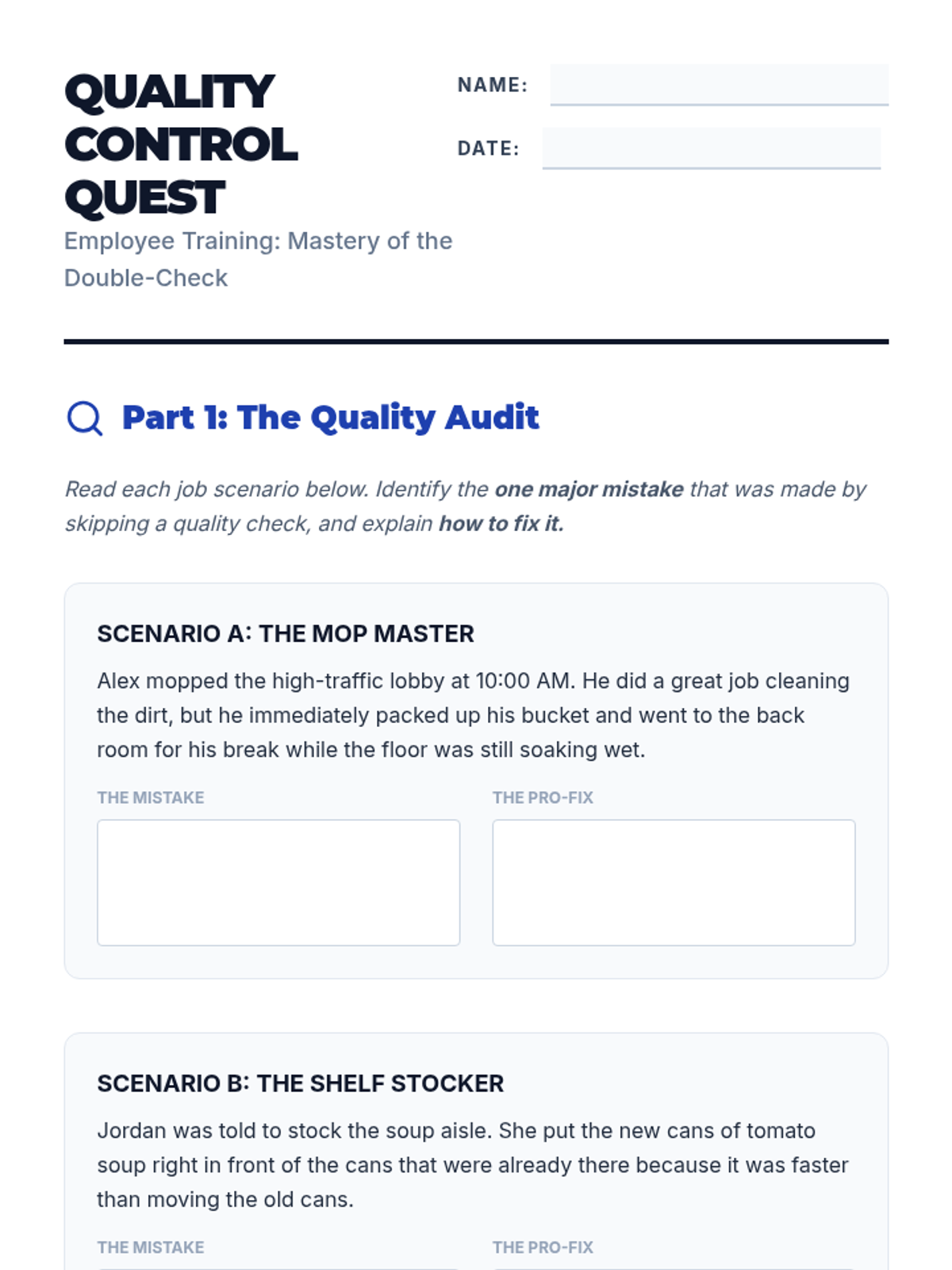
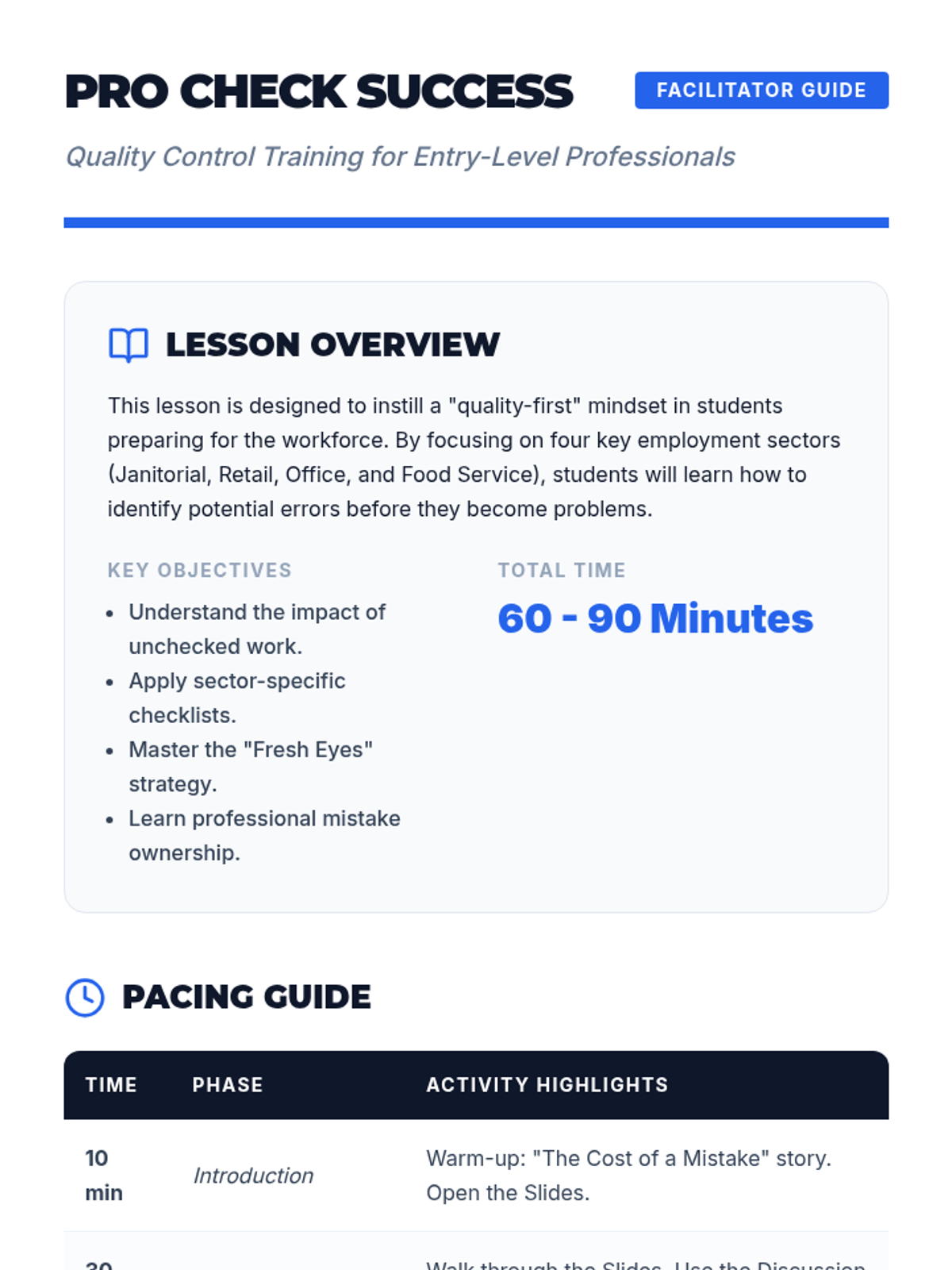
A comprehensive lesson on the importance of quality control and checking one's work across various entry-level employment sectors including janitorial, retail, office, and food service.
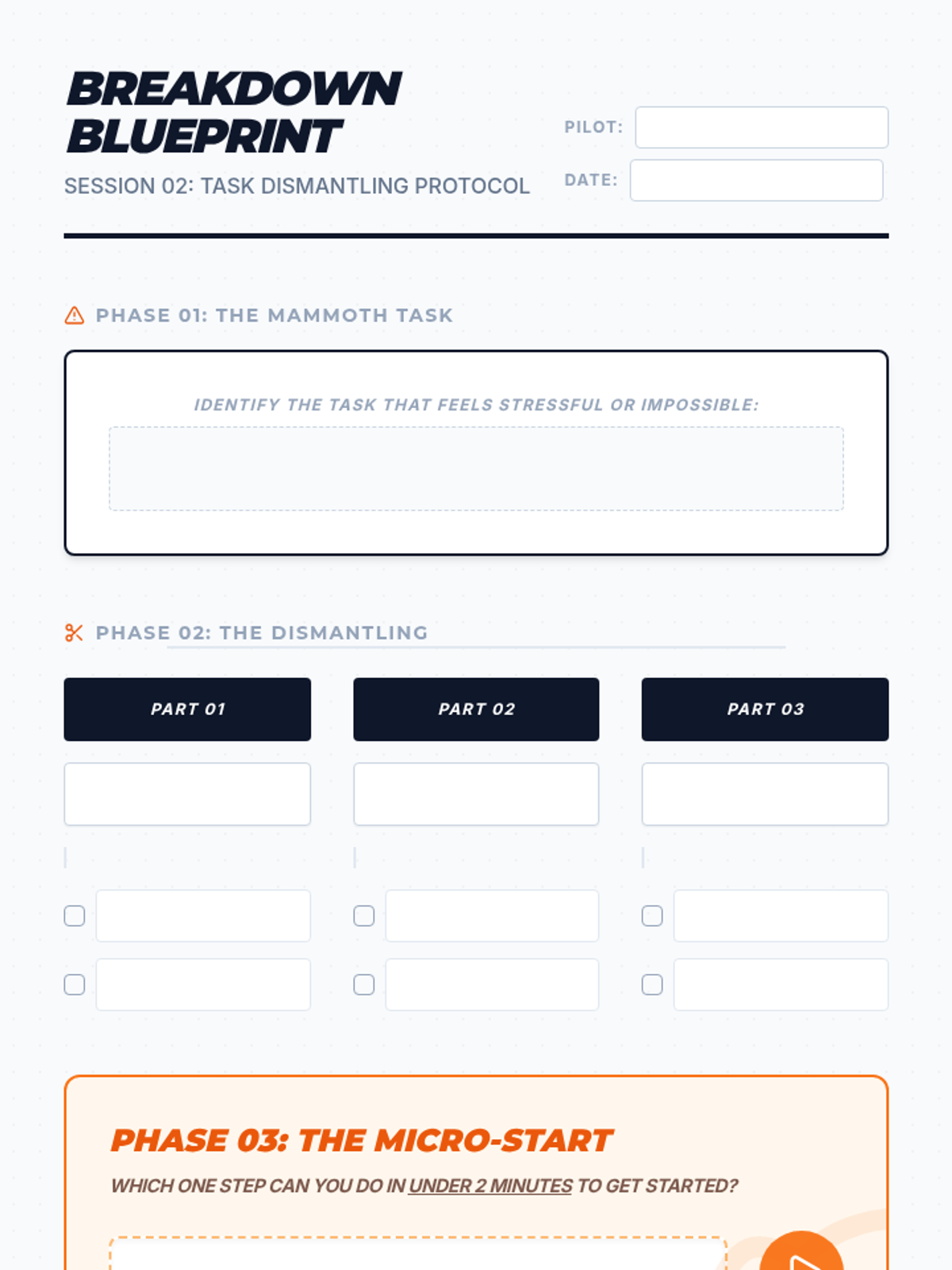
Focuses on overcoming procrastination and "stuckness" by breaking down complex tasks into manageable, non-intimidating units using the "Breakdown Blueprint."
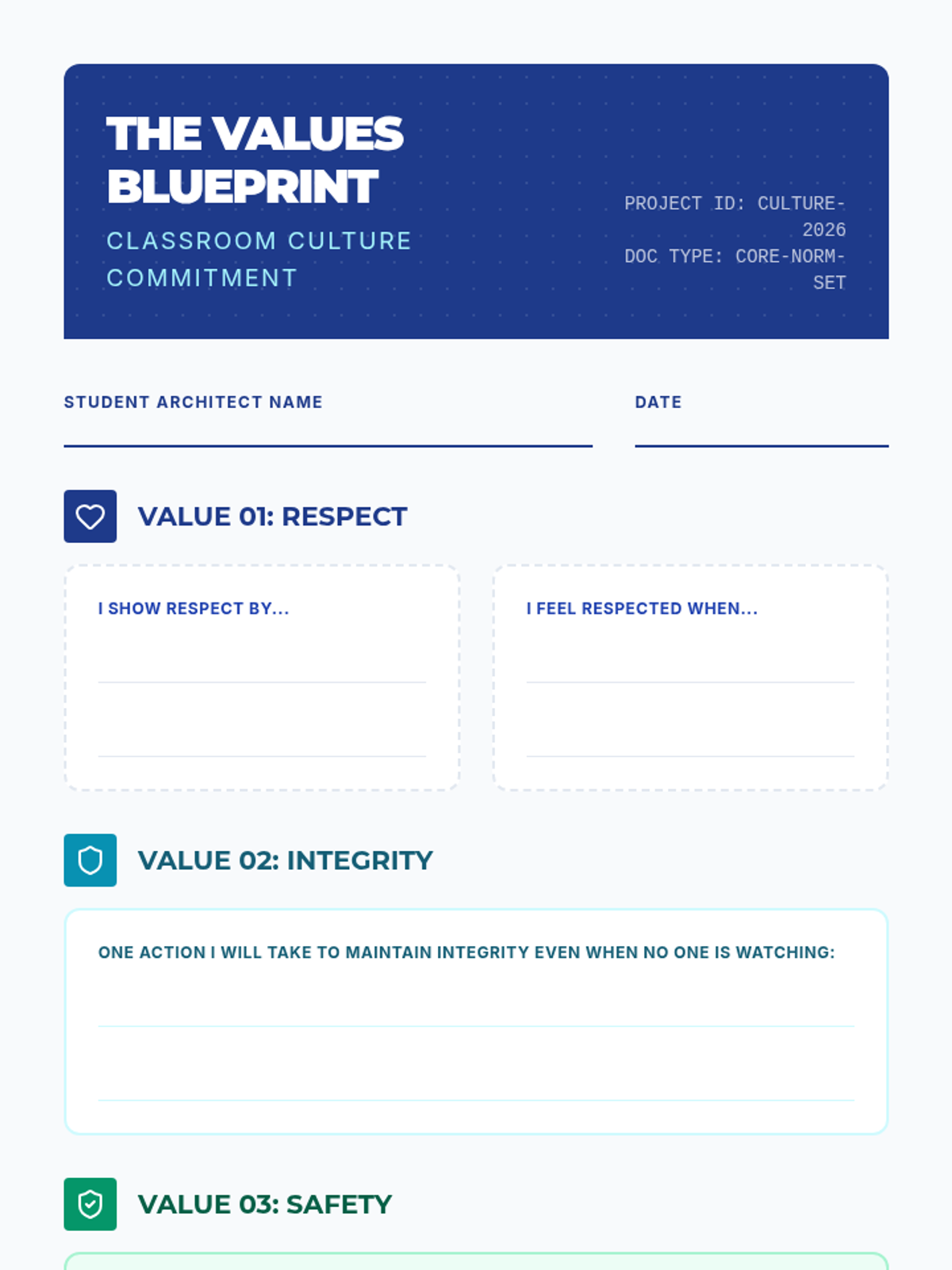
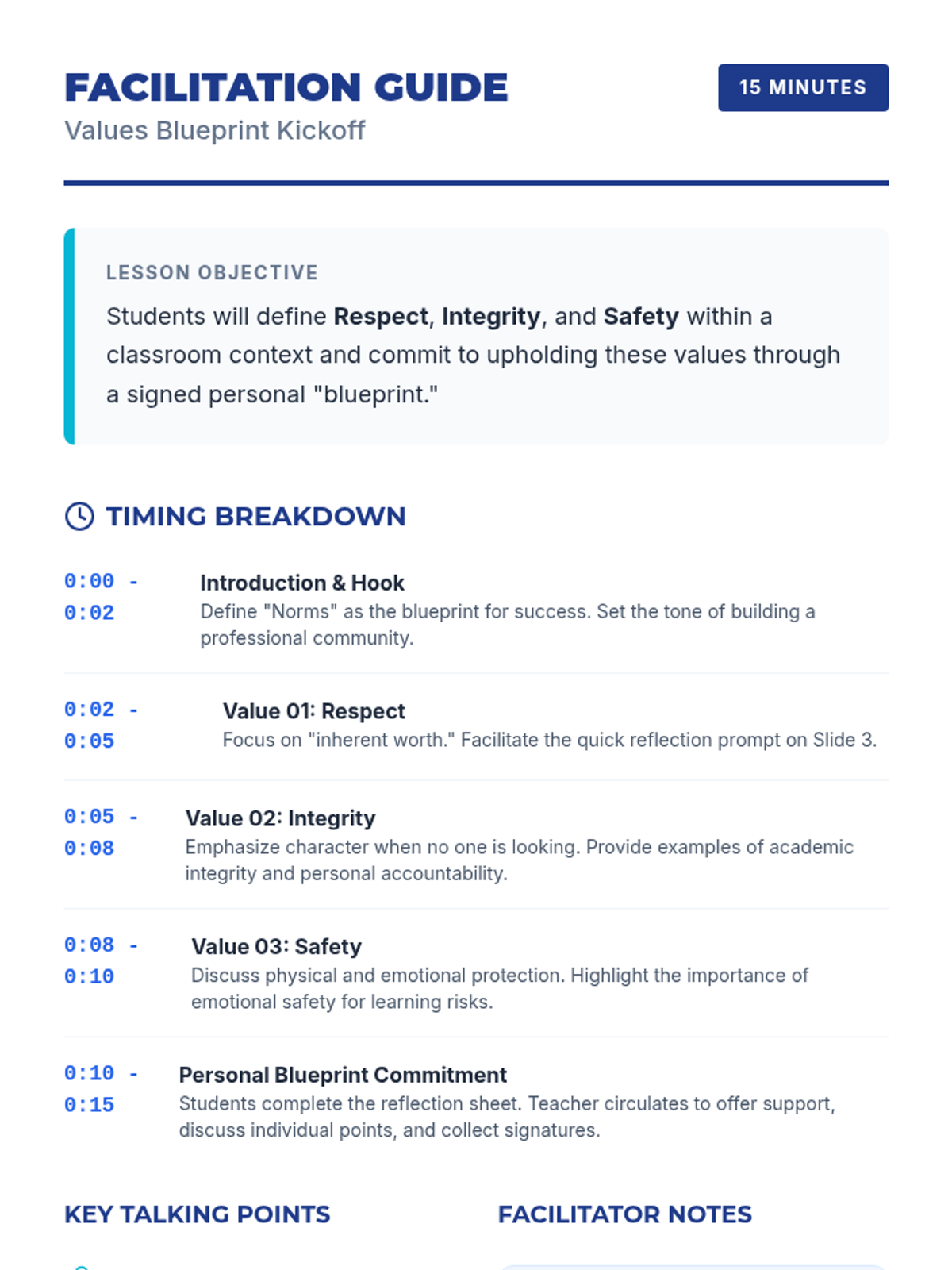
A concise 15-minute introduction to classroom norms centered on the core values of Respect, Integrity, and Safety. Students will define these values and commit to a shared culture of success.
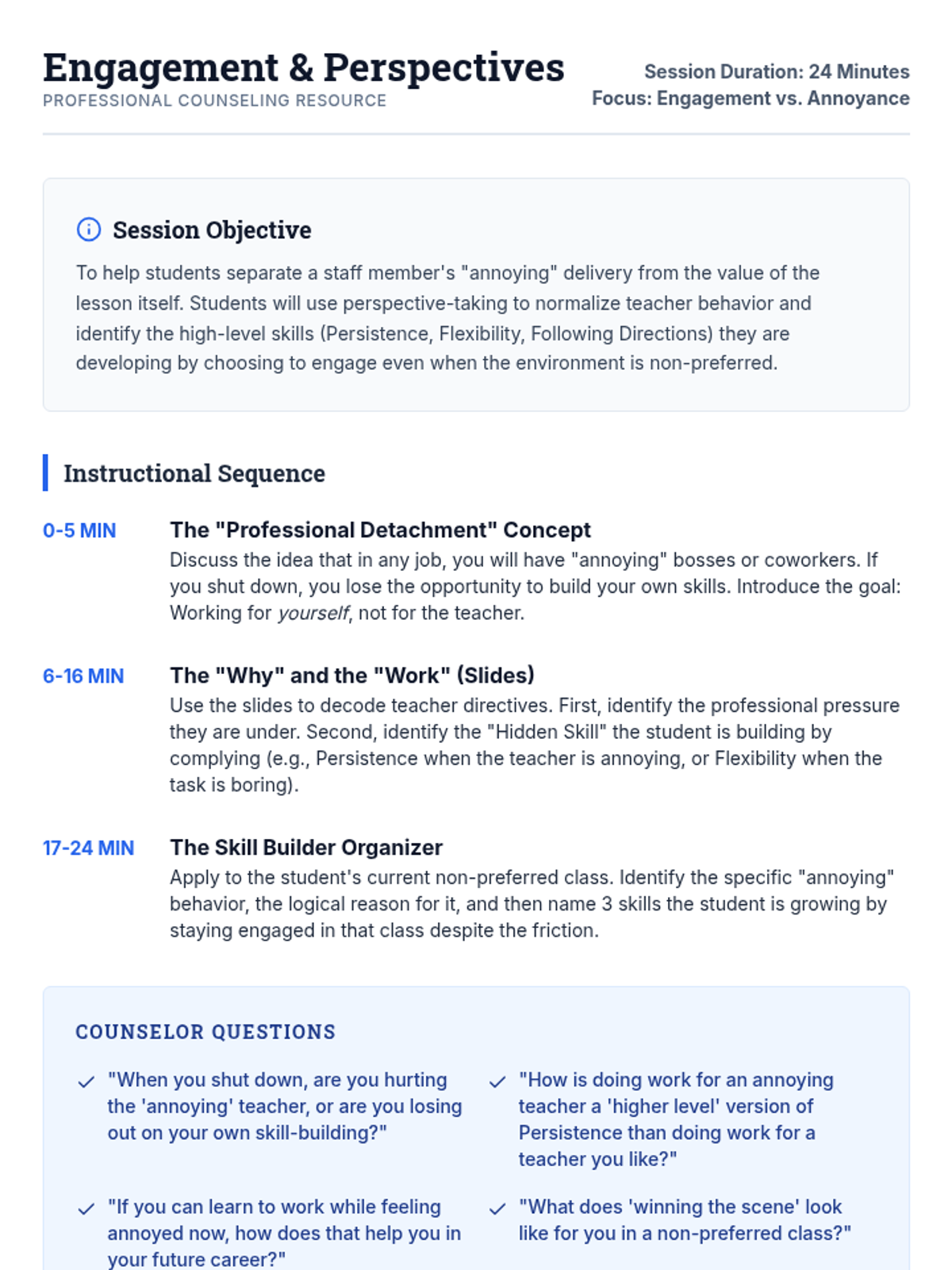
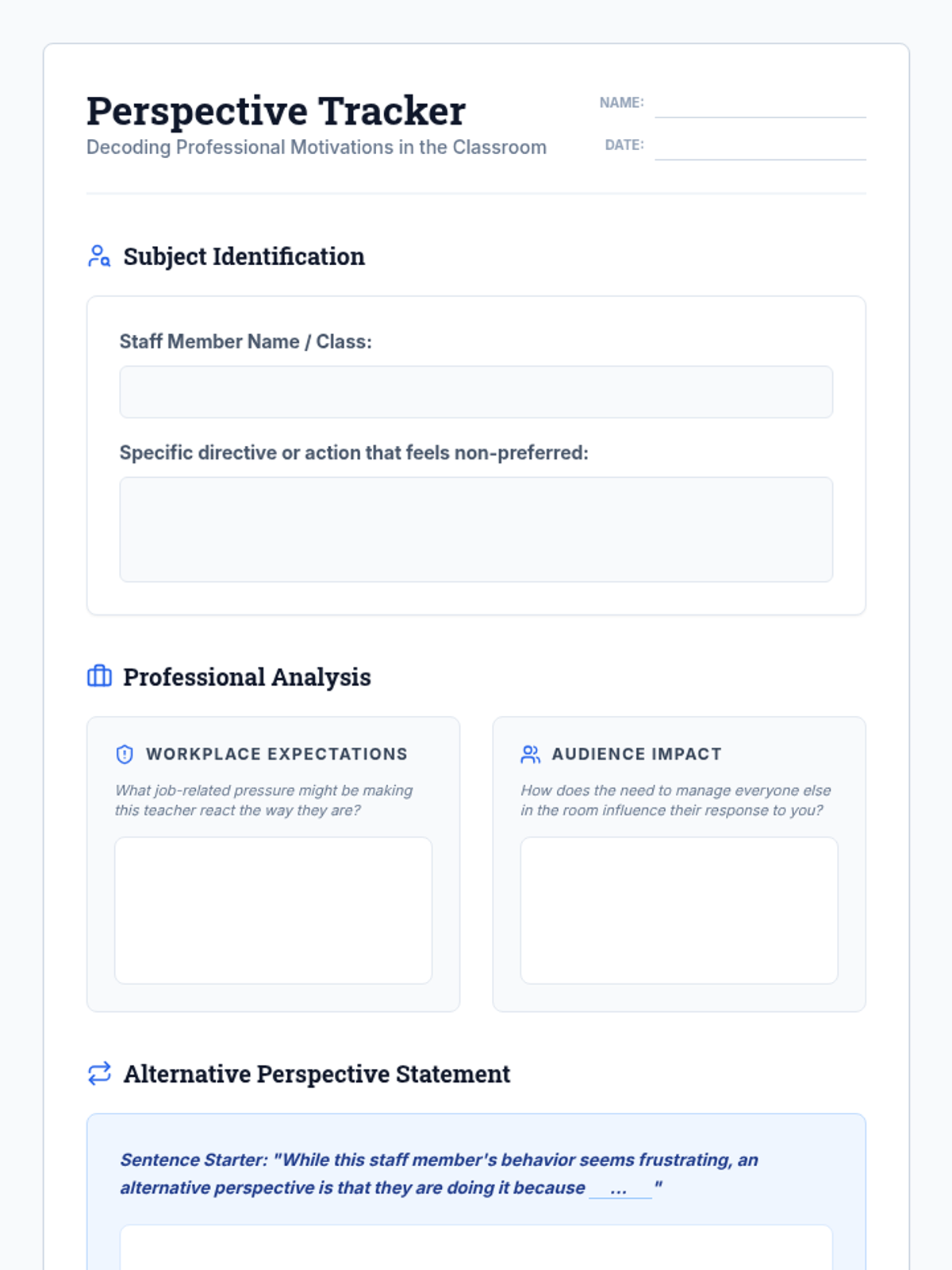
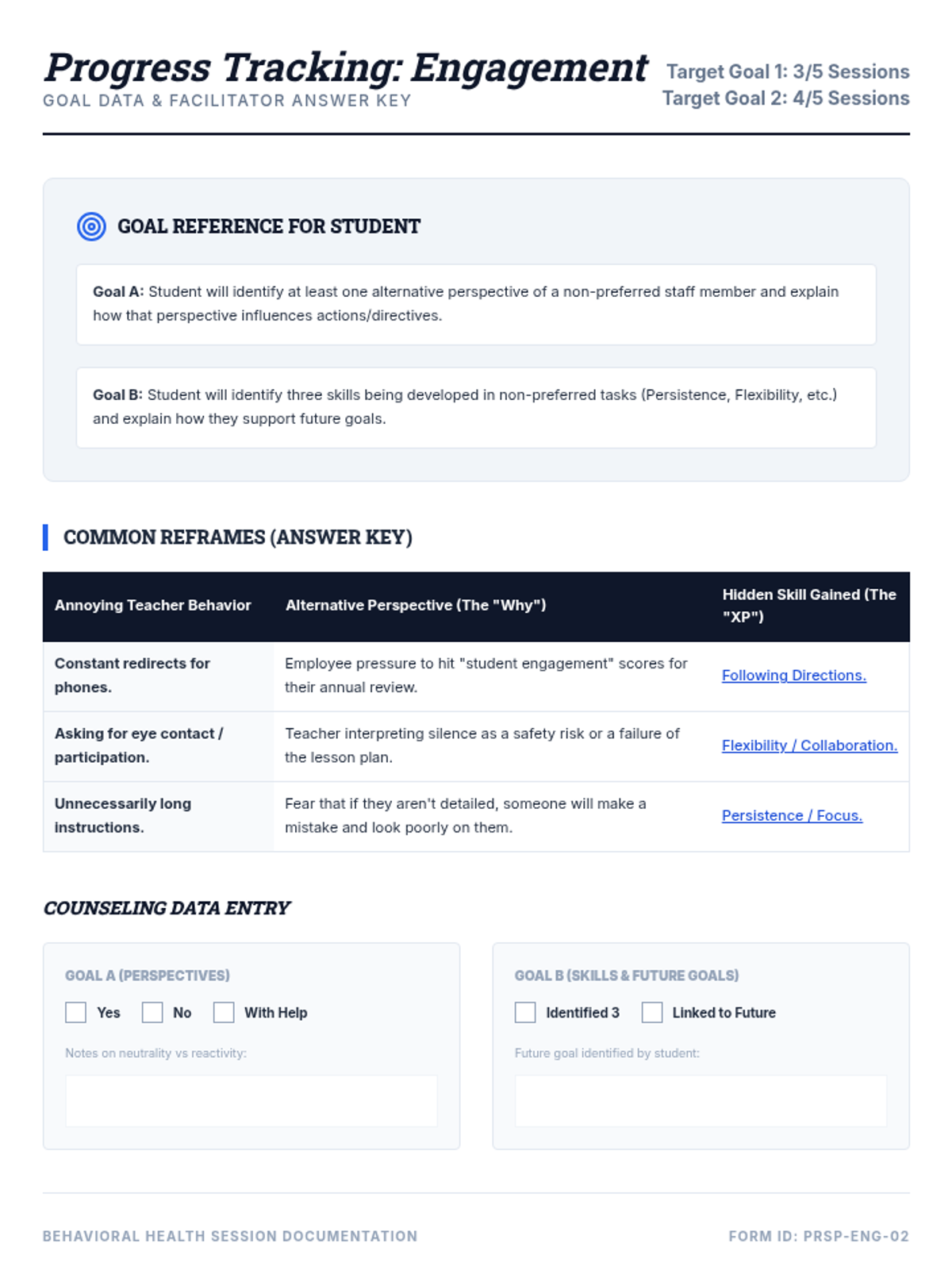
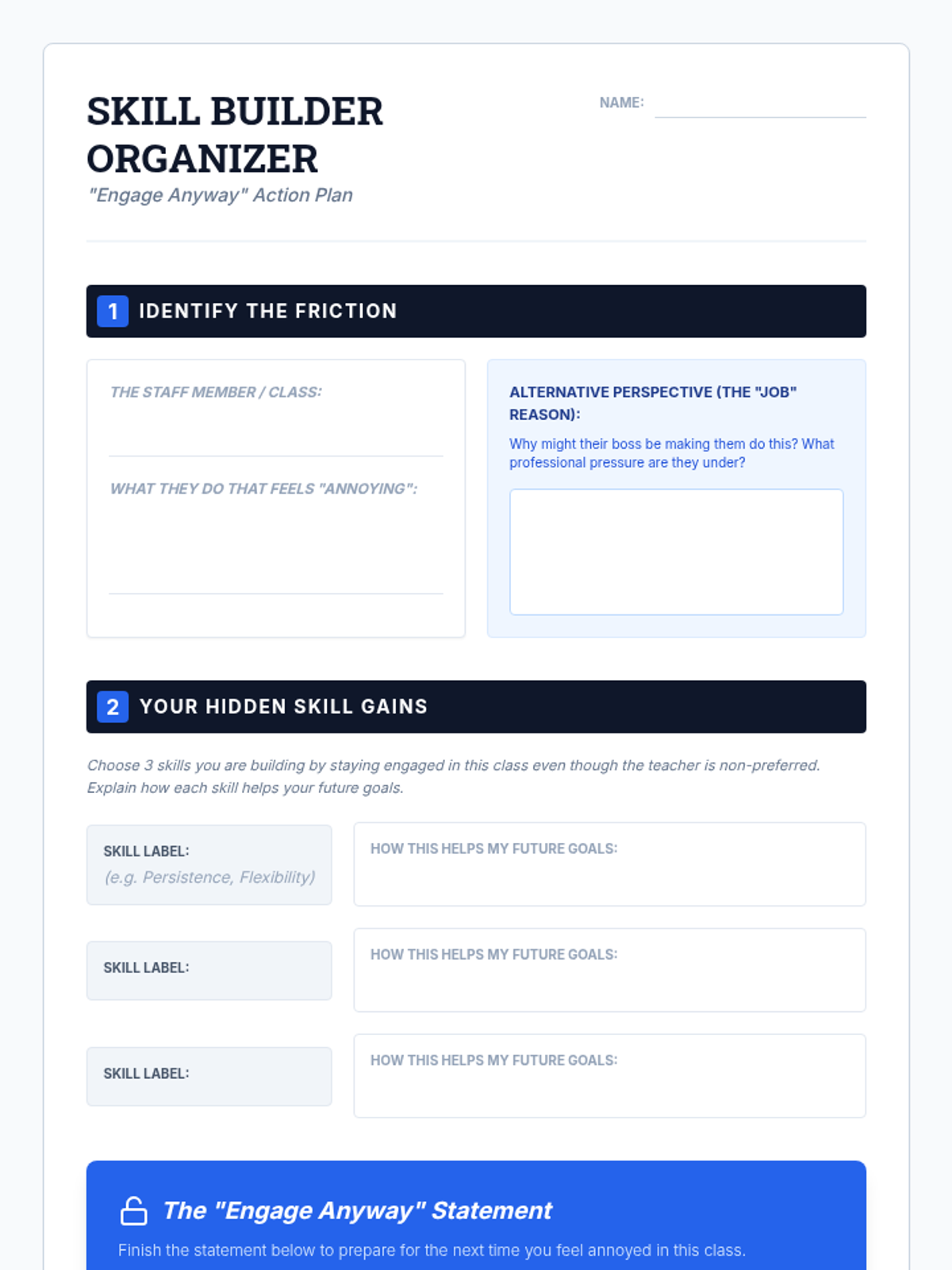
A 24-minute counseling session focused on social perspective-taking, specifically helping students identify the underlying motivations and professional pressures that influence staff member actions and directives.
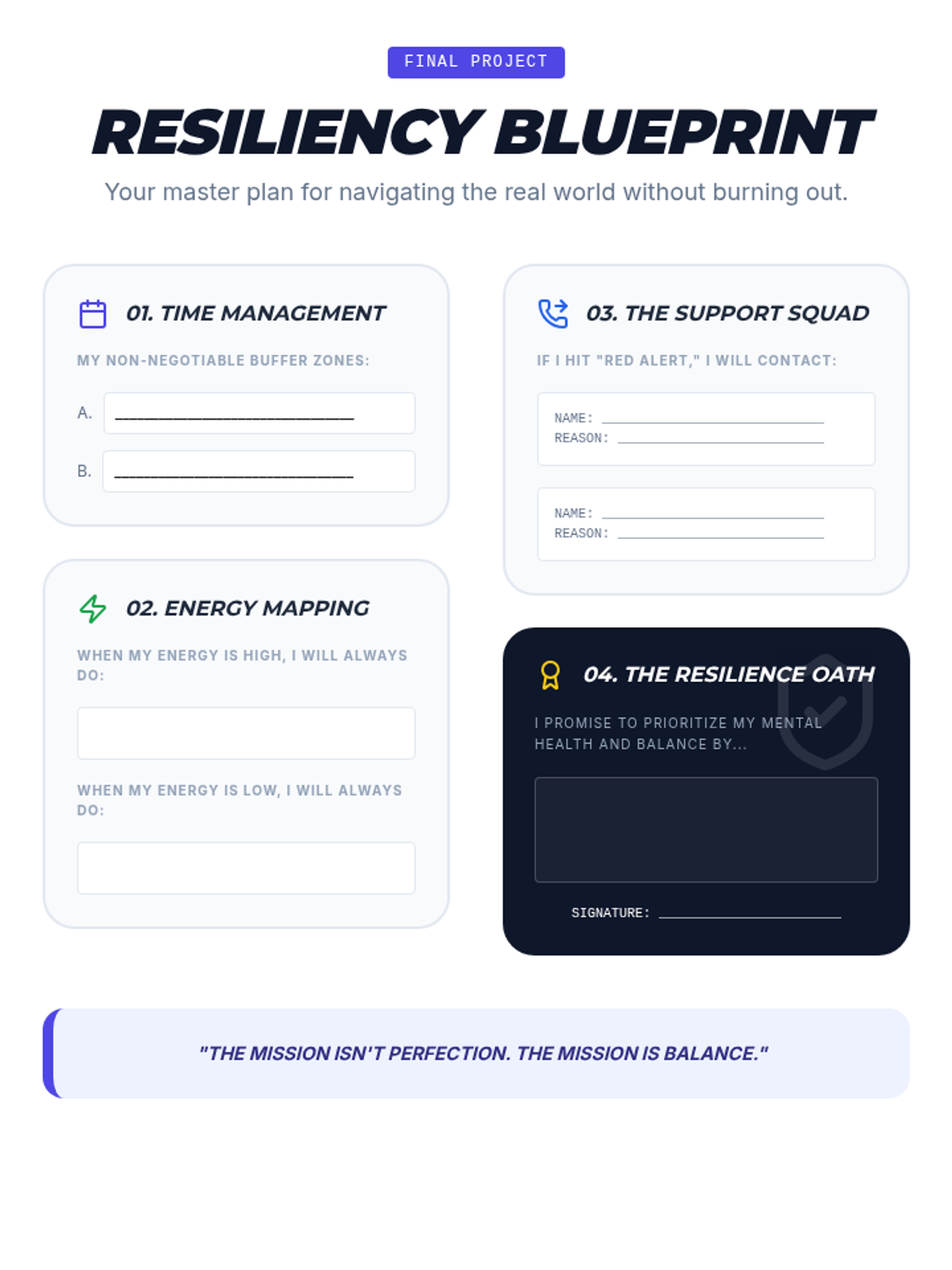
A final reflection on the simulation where students analyze their performance, identify breaking points, and create a long-term strategy for real-world balance.
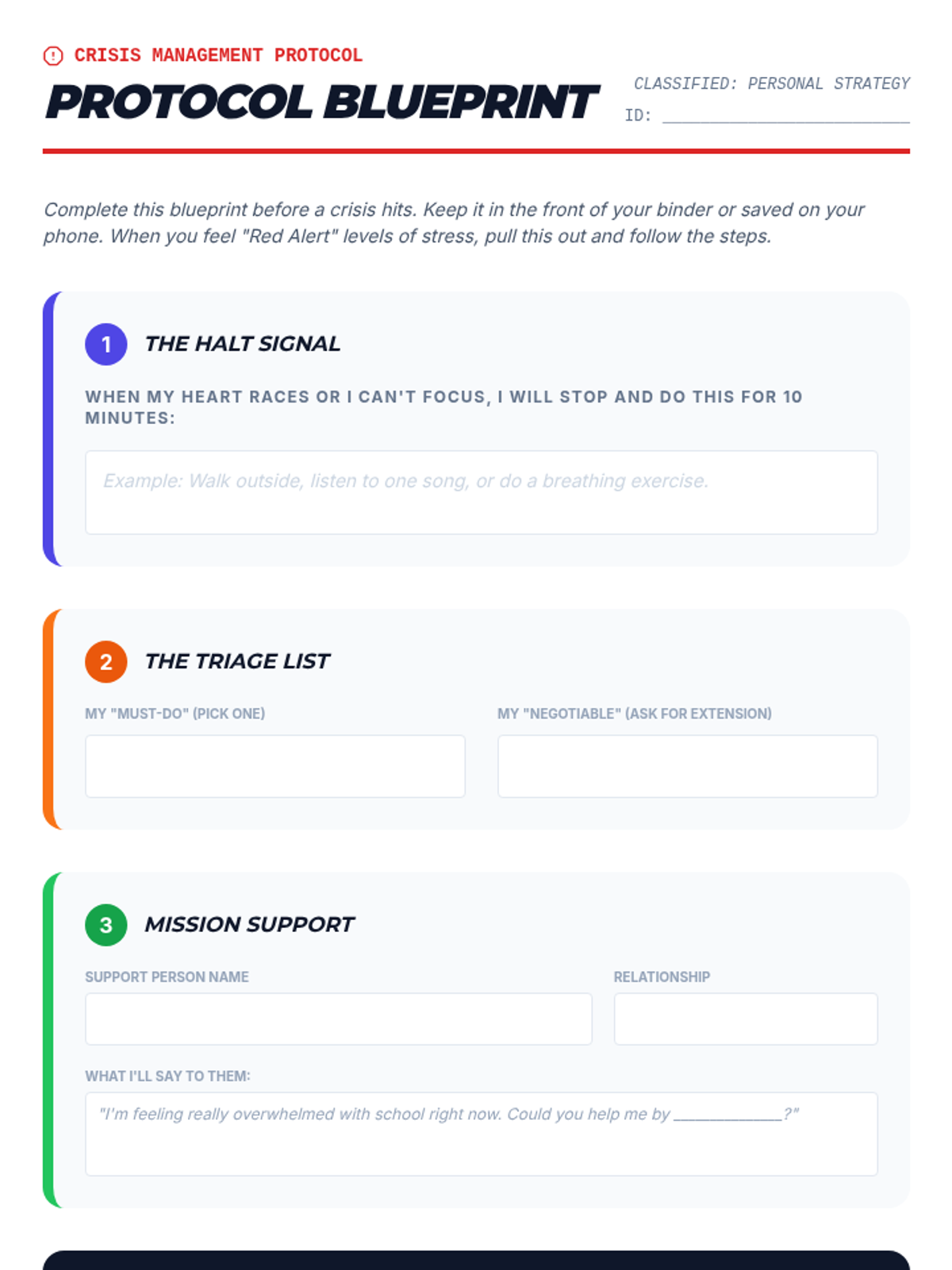
Students create a personal 'Emergency Protocol' for overwhelming situations, learning how to prioritize tasks to drop and identifying support systems for recovery.
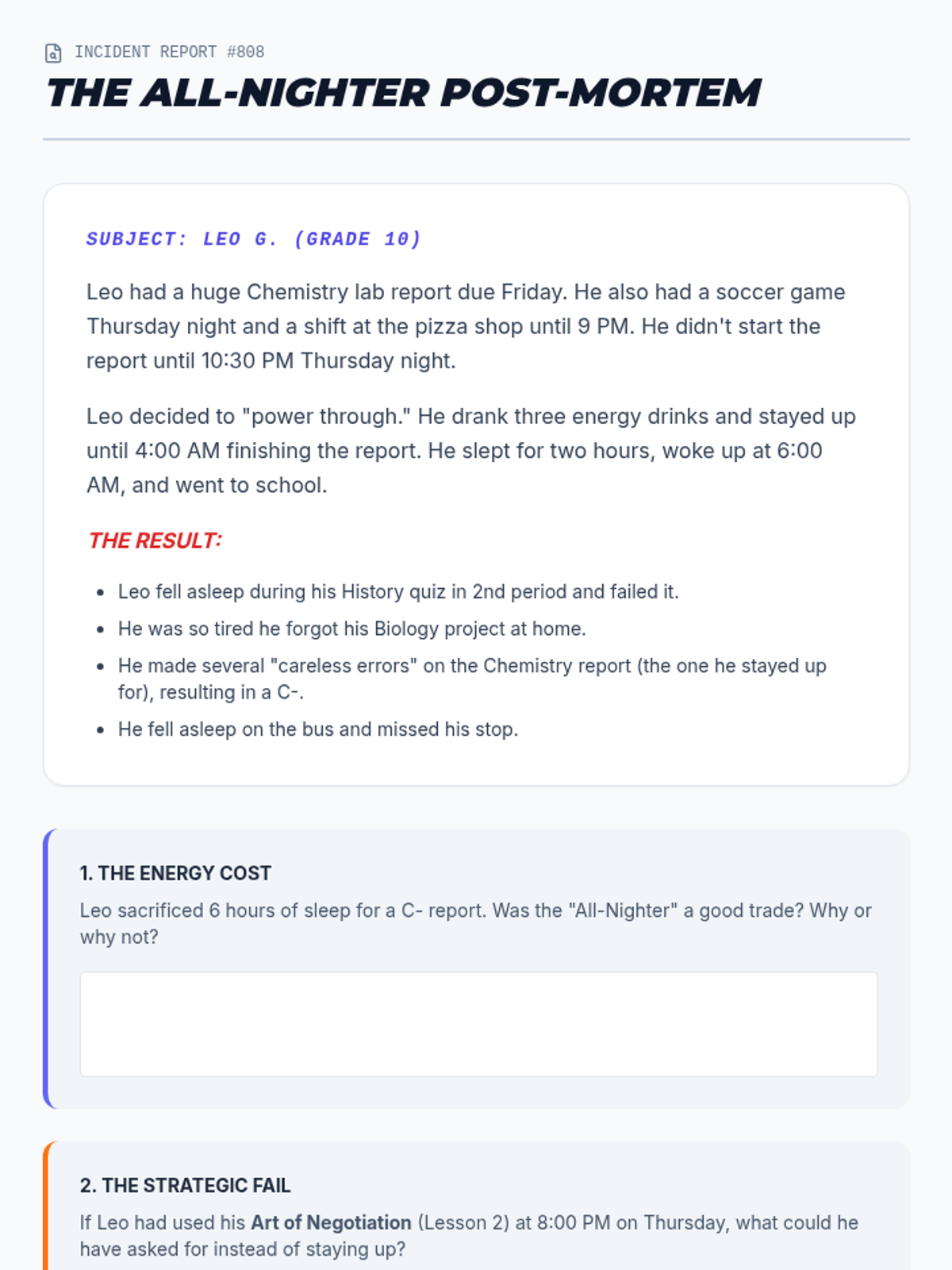
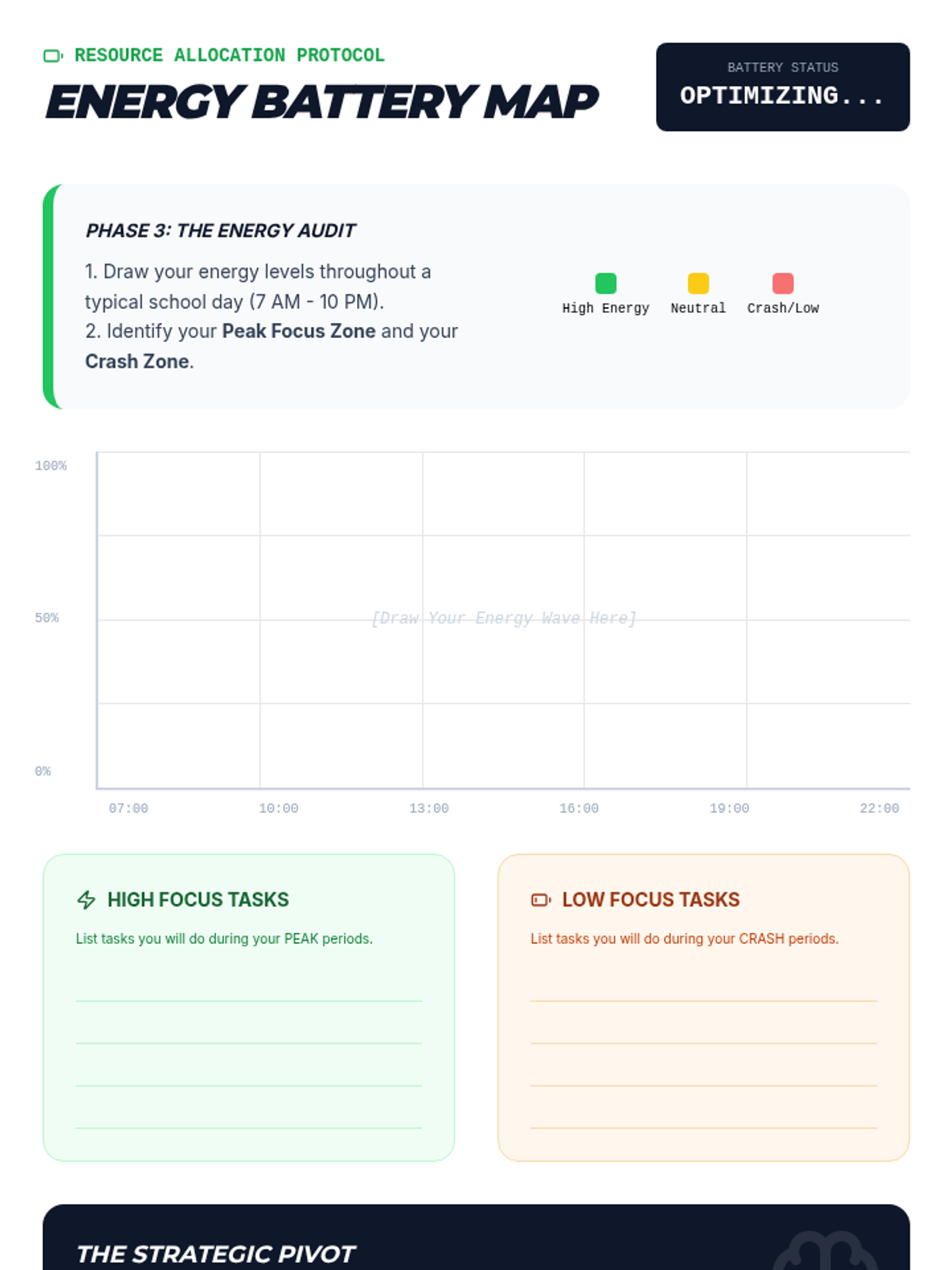
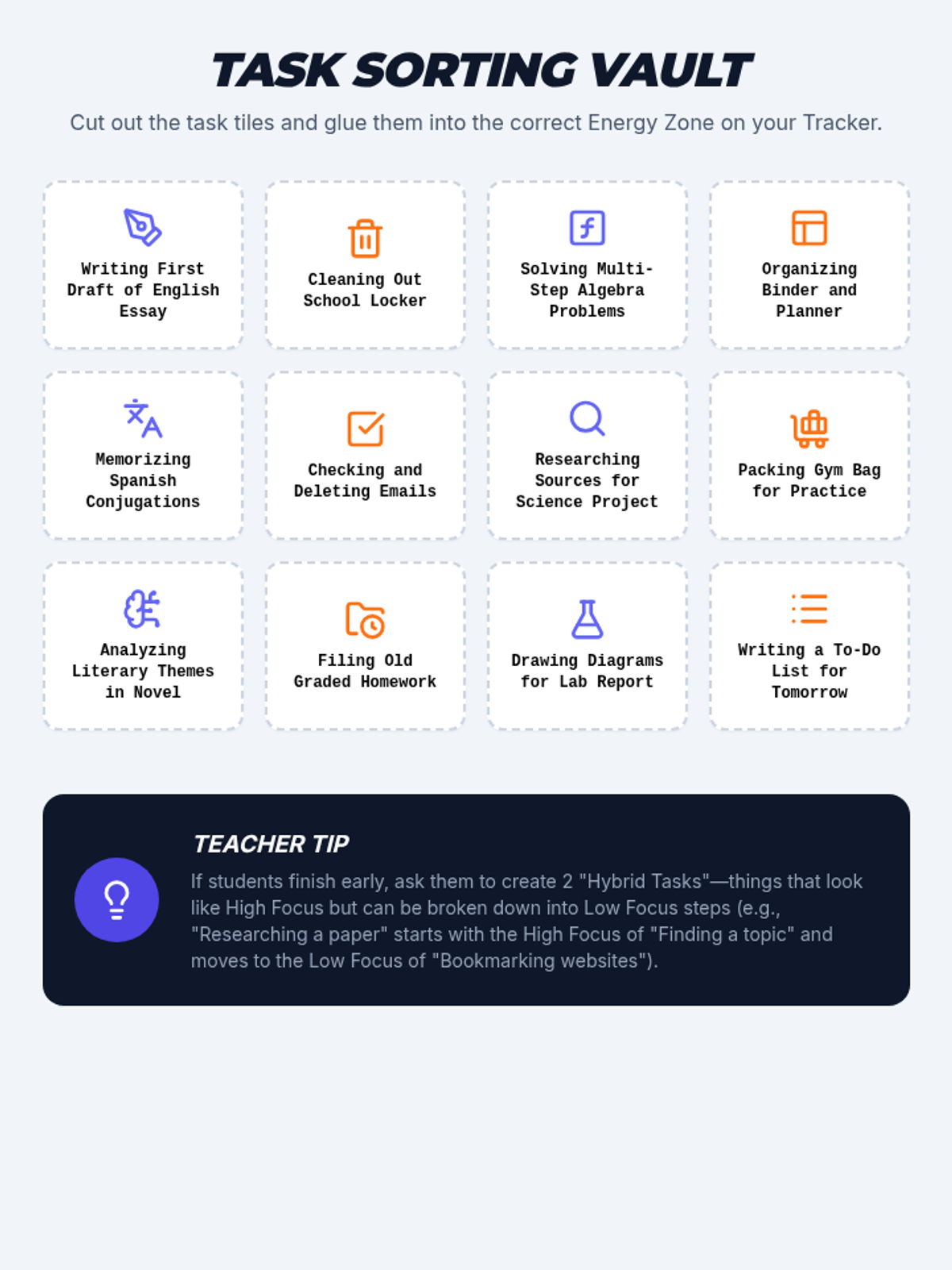
Students analyze their personal energy cycles to match high-demand tasks with high-energy periods, moving beyond simple time management to strategic resource allocation.
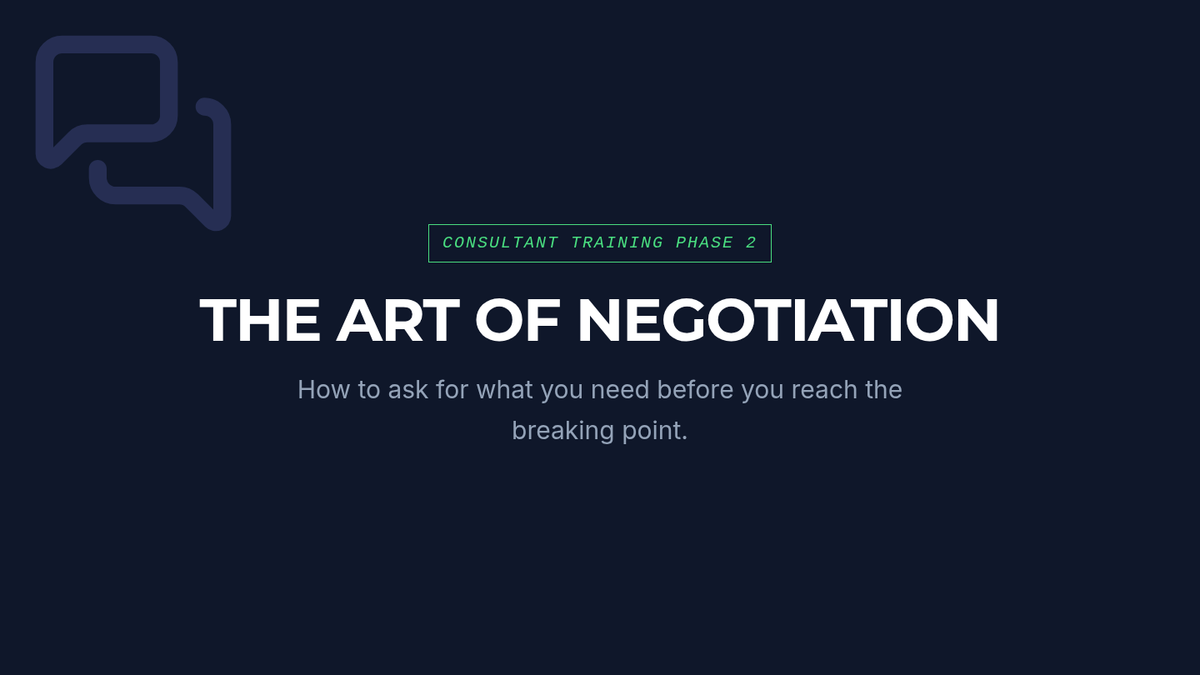
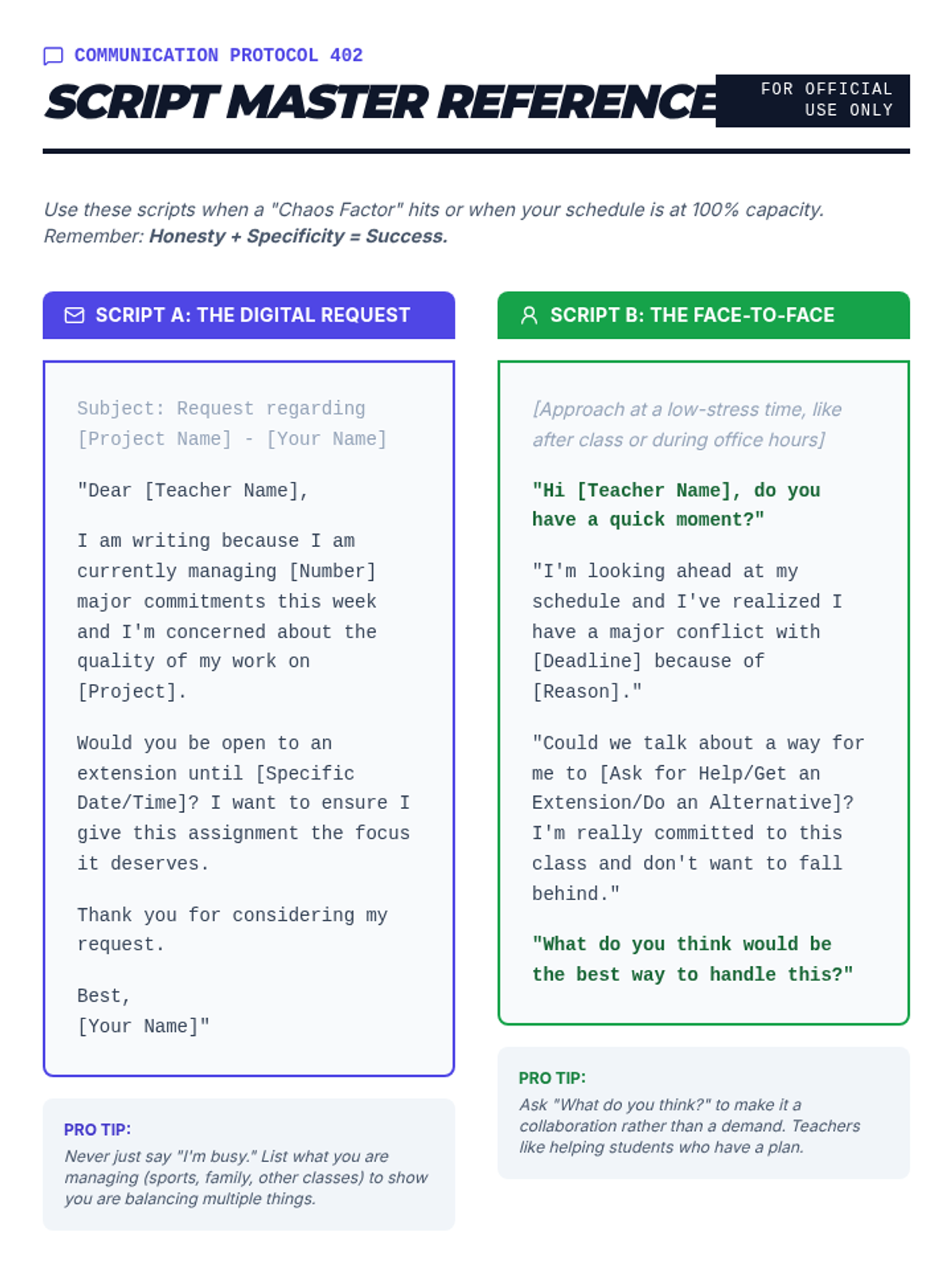
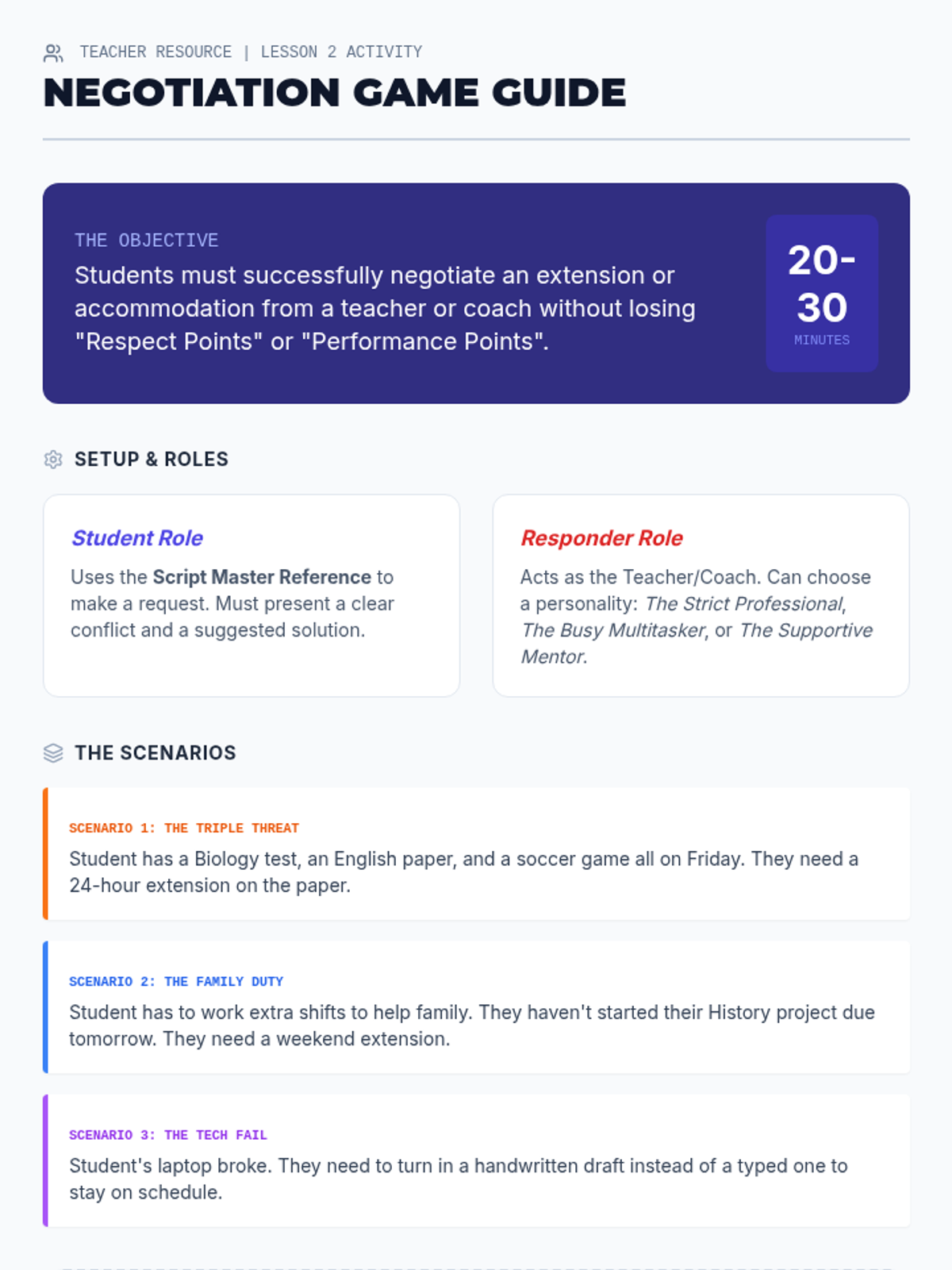
Focuses on professional communication and the distinction between hard and soft deadlines. Students practice scripts to negotiate extensions and help before a crisis occurs.
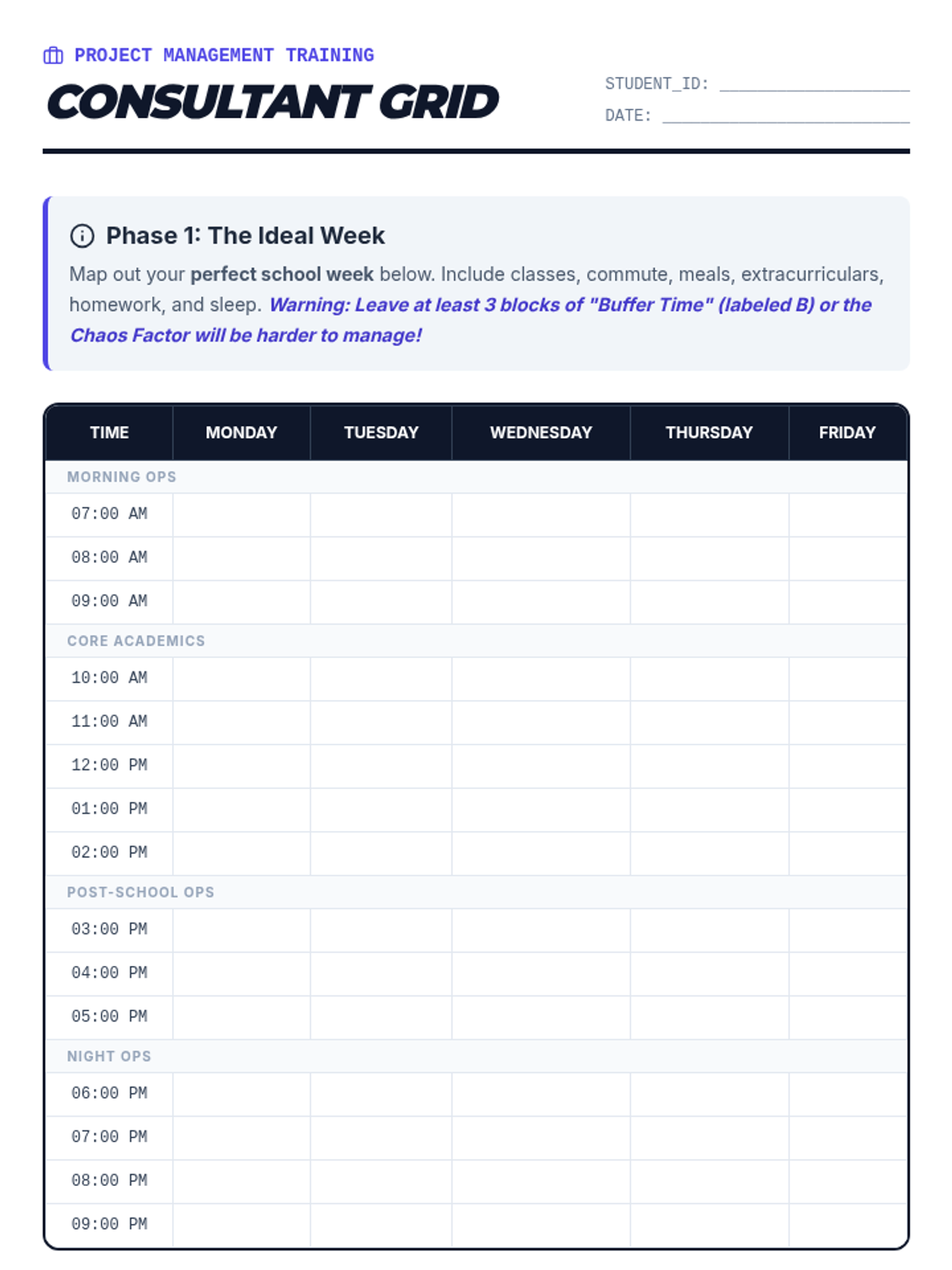
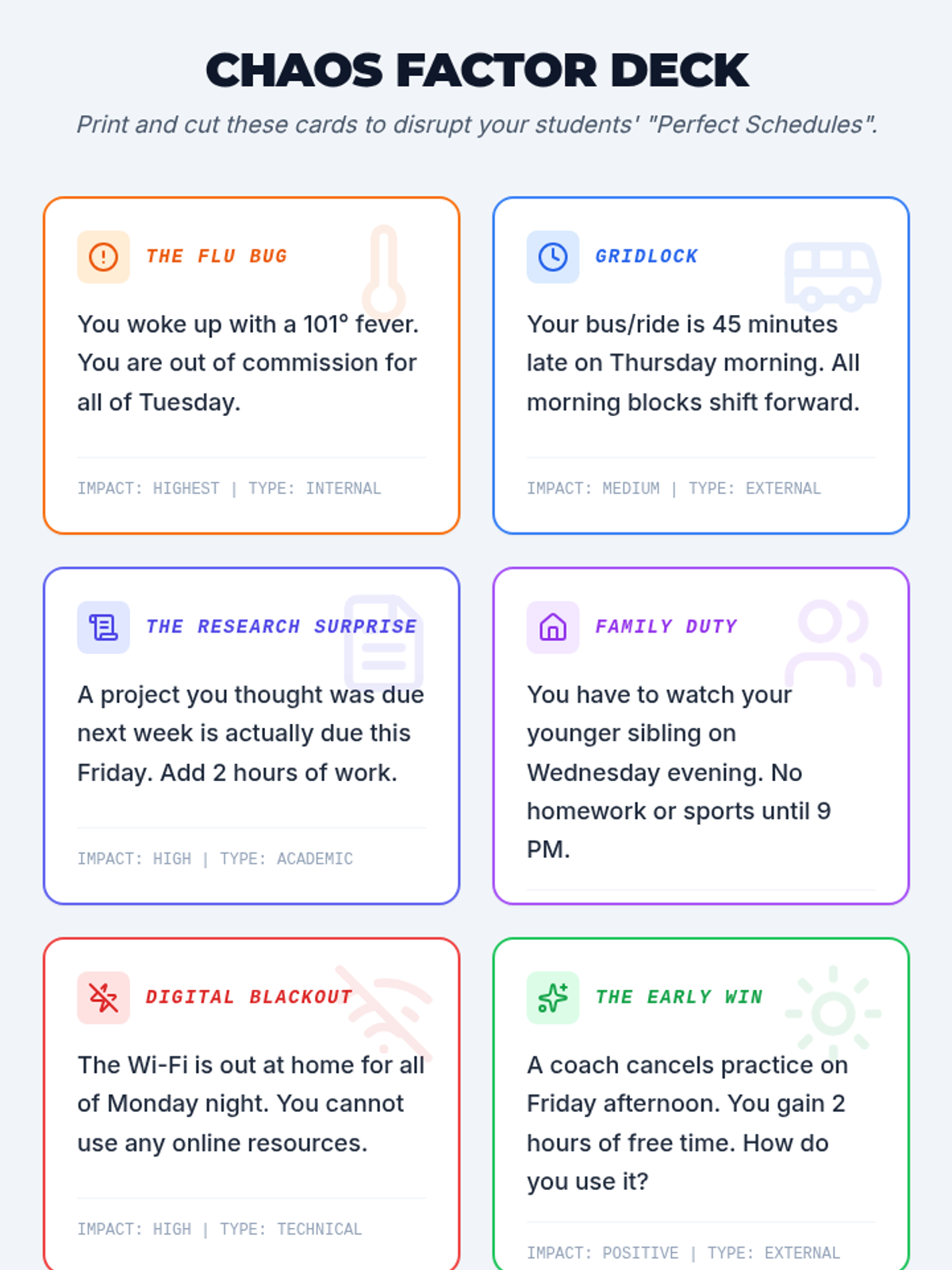
Students design an ideal weekly schedule and are immediately introduced to the 'Chaos Factor'—unpredictable life events that disrupt plans. They identify the need for buffer time and flexible scheduling.
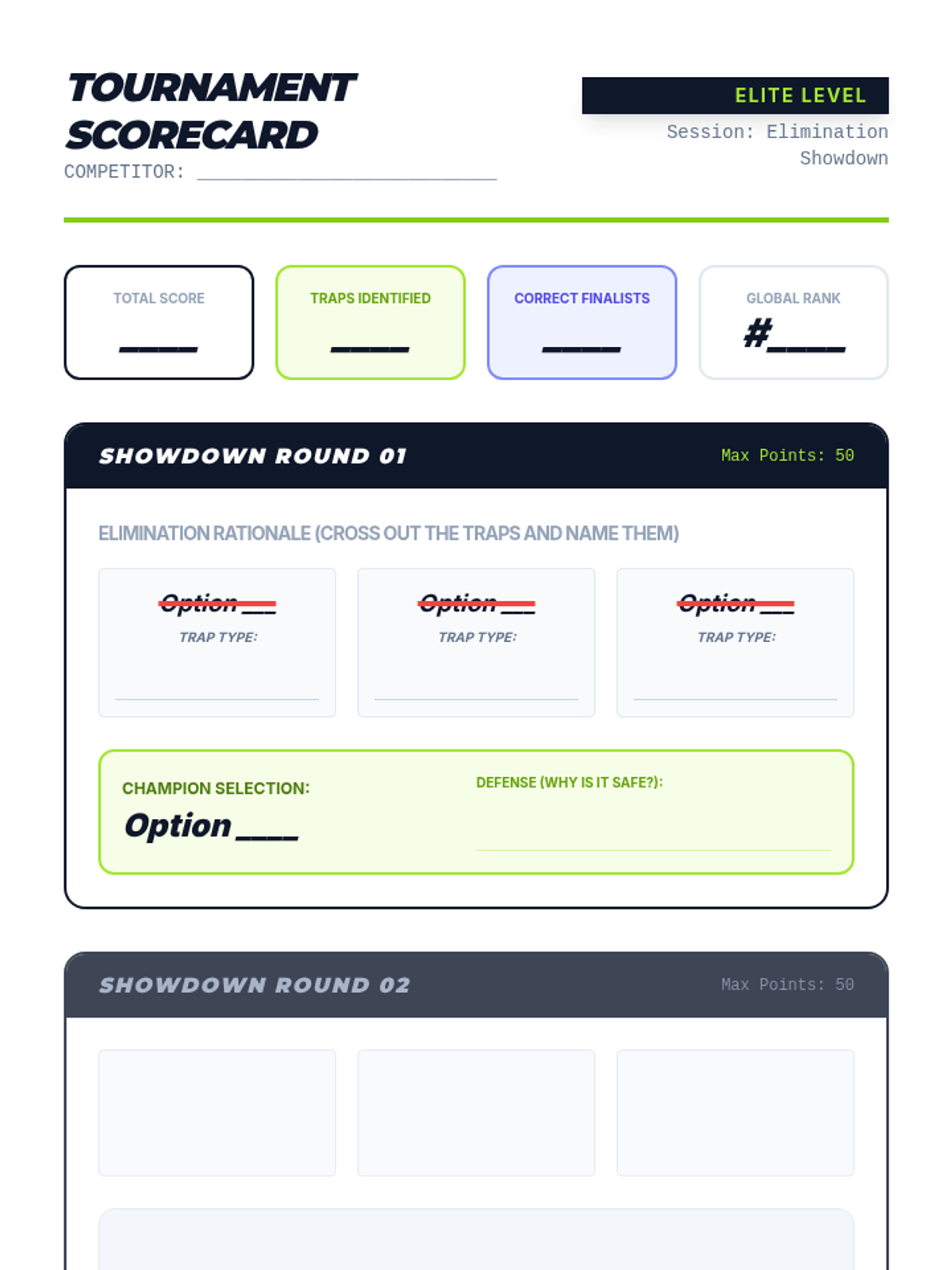
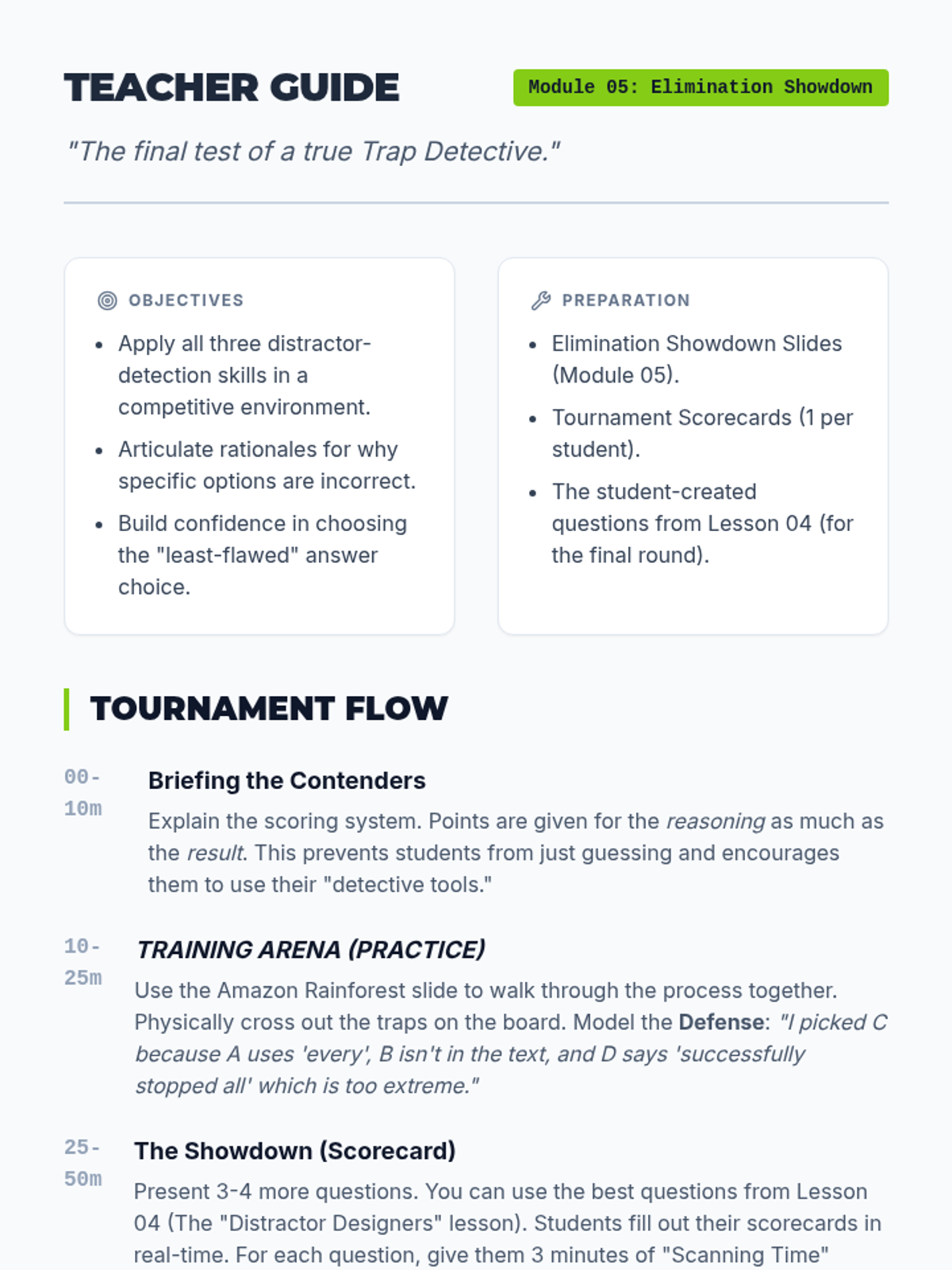
A competitive review tournament where students physically eliminate distractors with a rationale. Points are awarded for identifying specific trap types before selecting the correct answer.
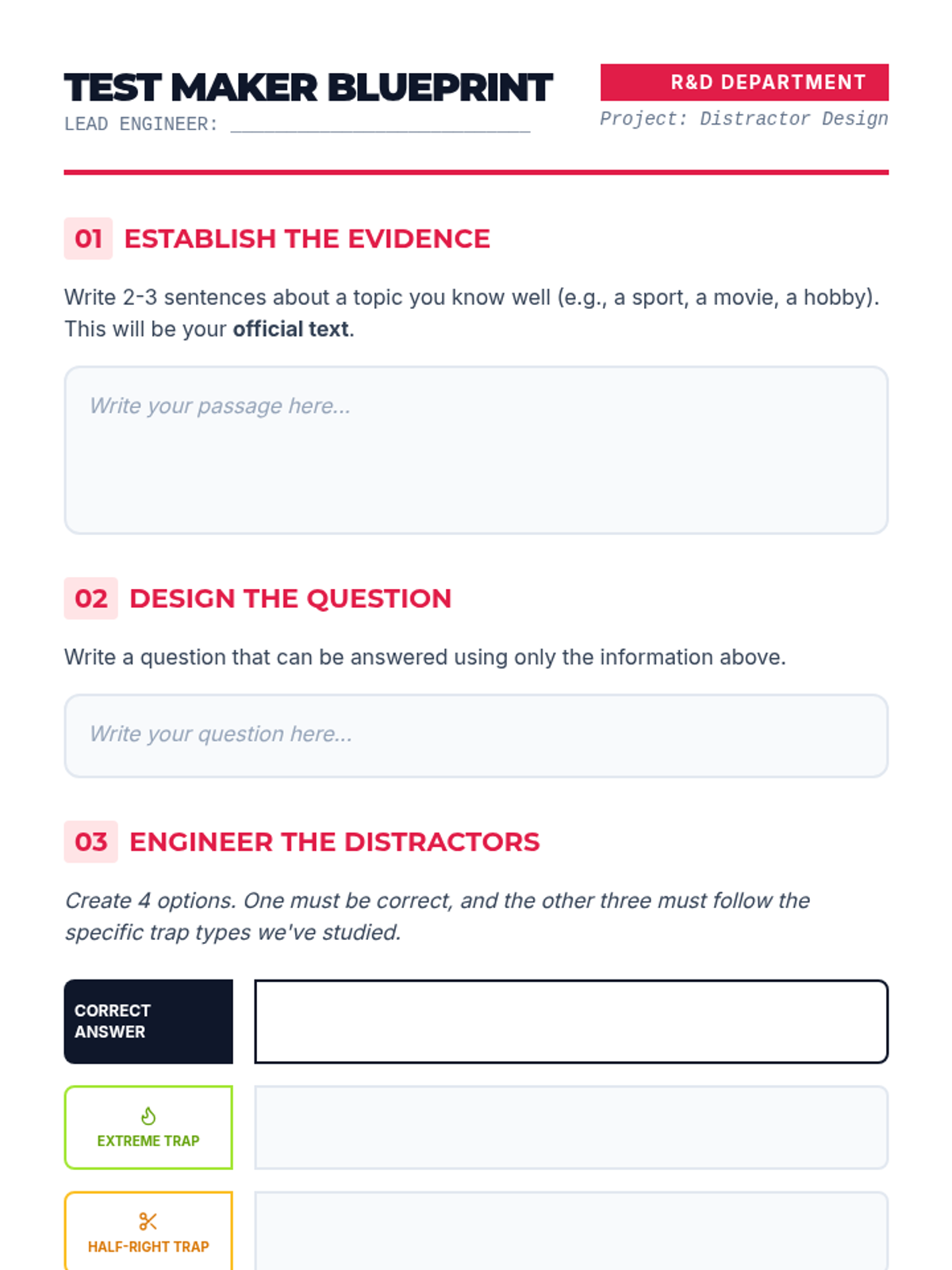
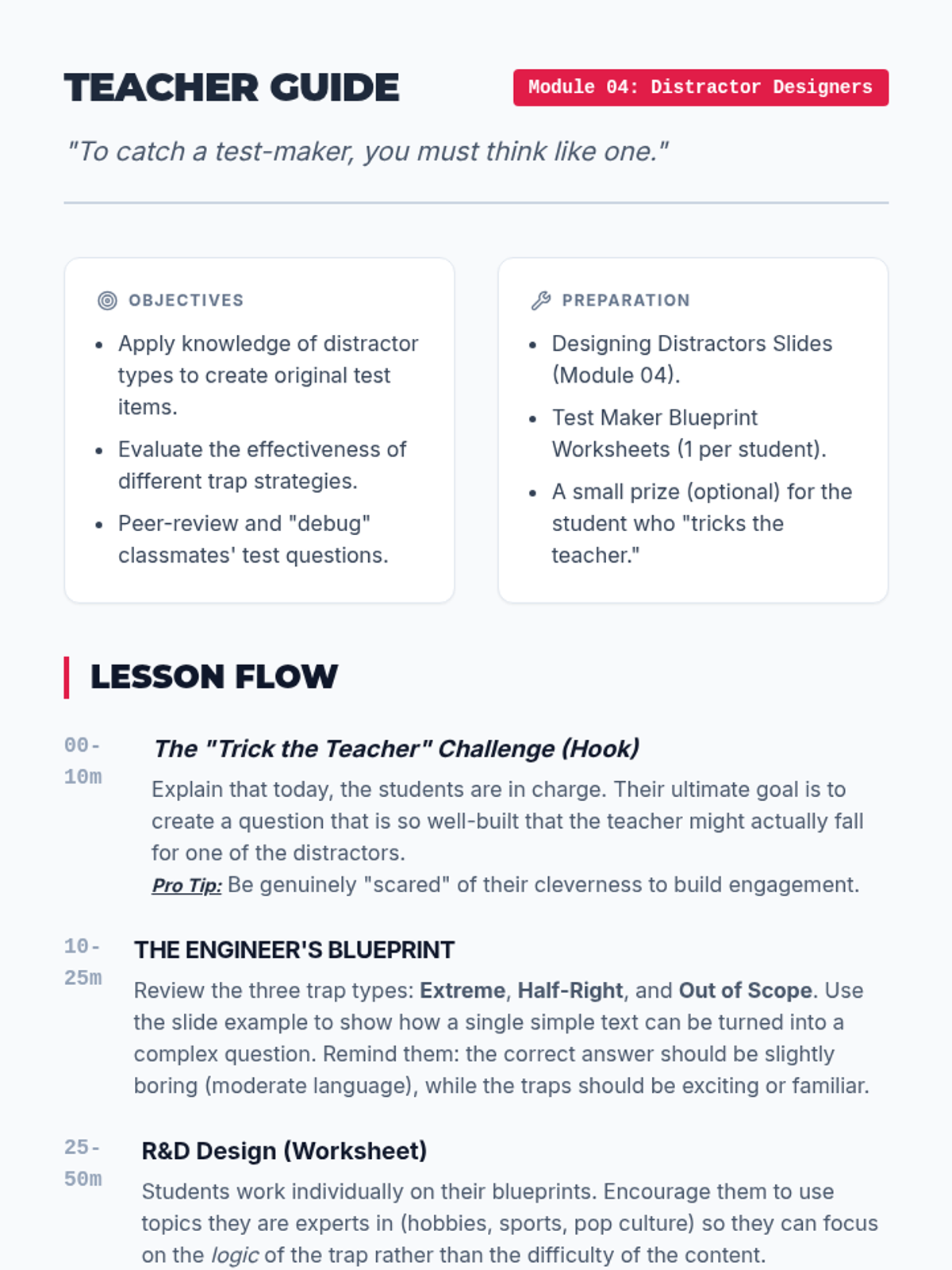
Students become test-makers by writing their own multiple-choice questions with deliberate traps. This role-reversal helps them internalize the logic behind distractor construction.
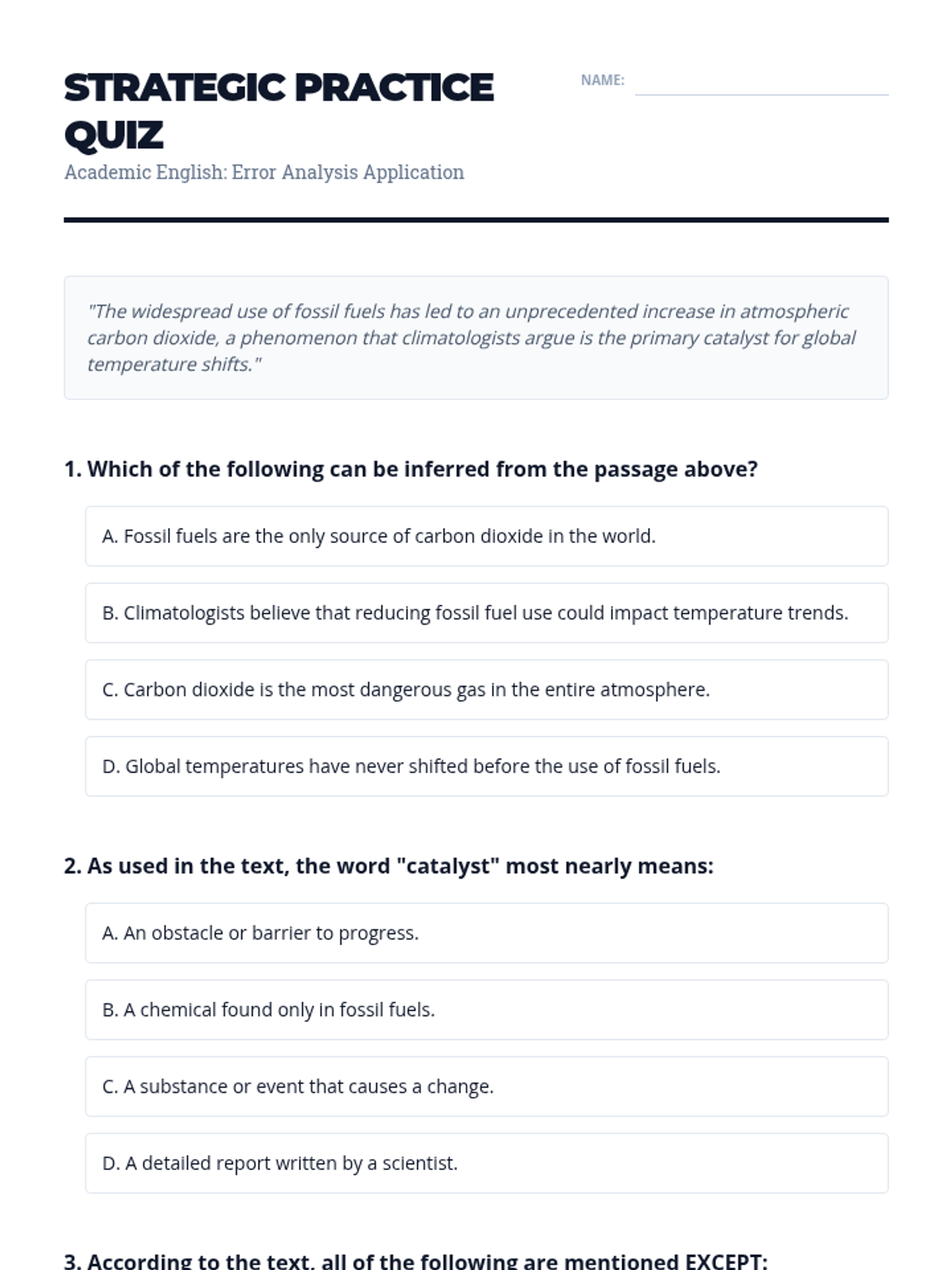
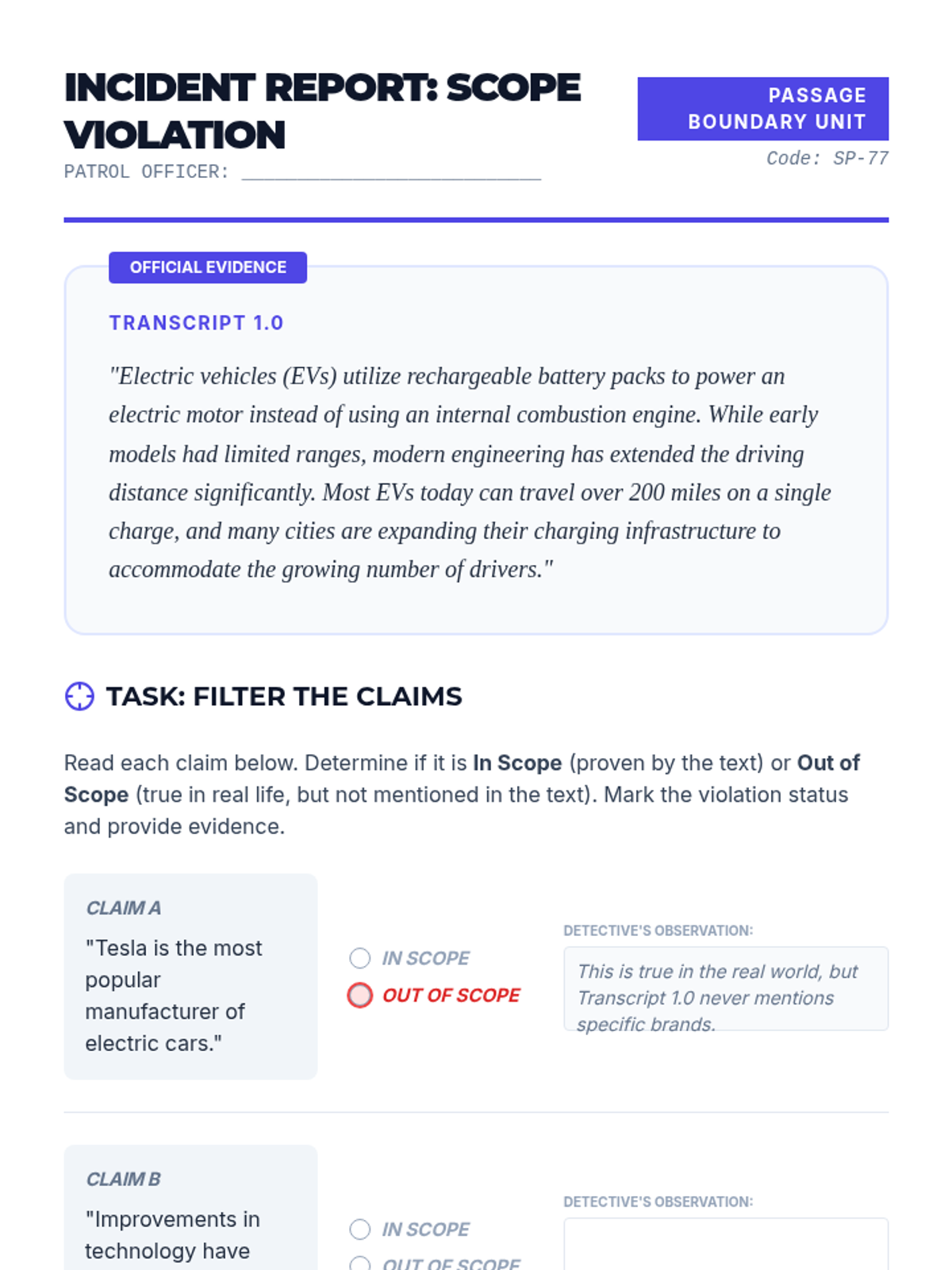
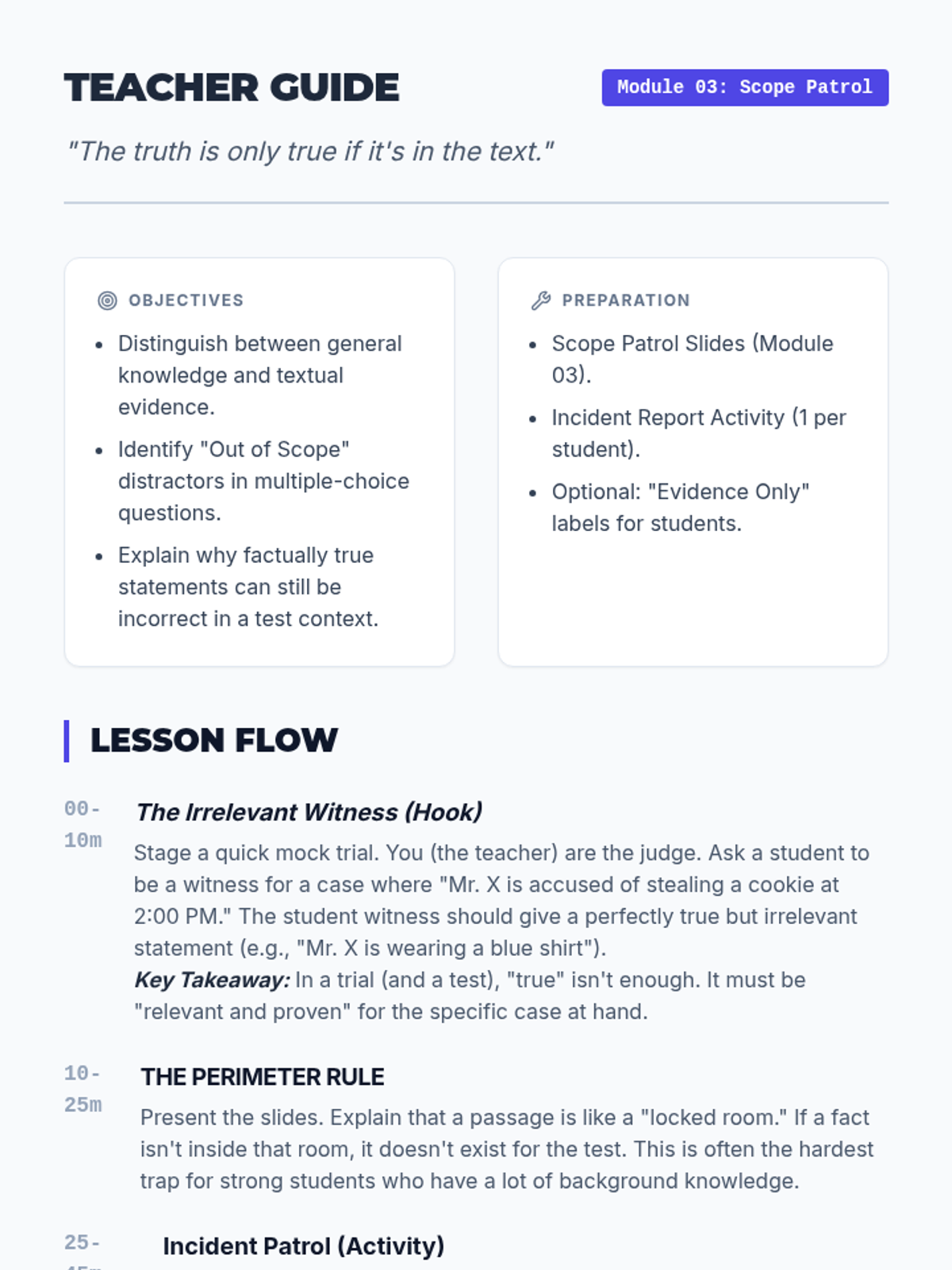
Students identify statements that are factually true in the real world but are not supported by the specific text provided. The focus is on maintaining evidence-based focus within the scope of the passage.
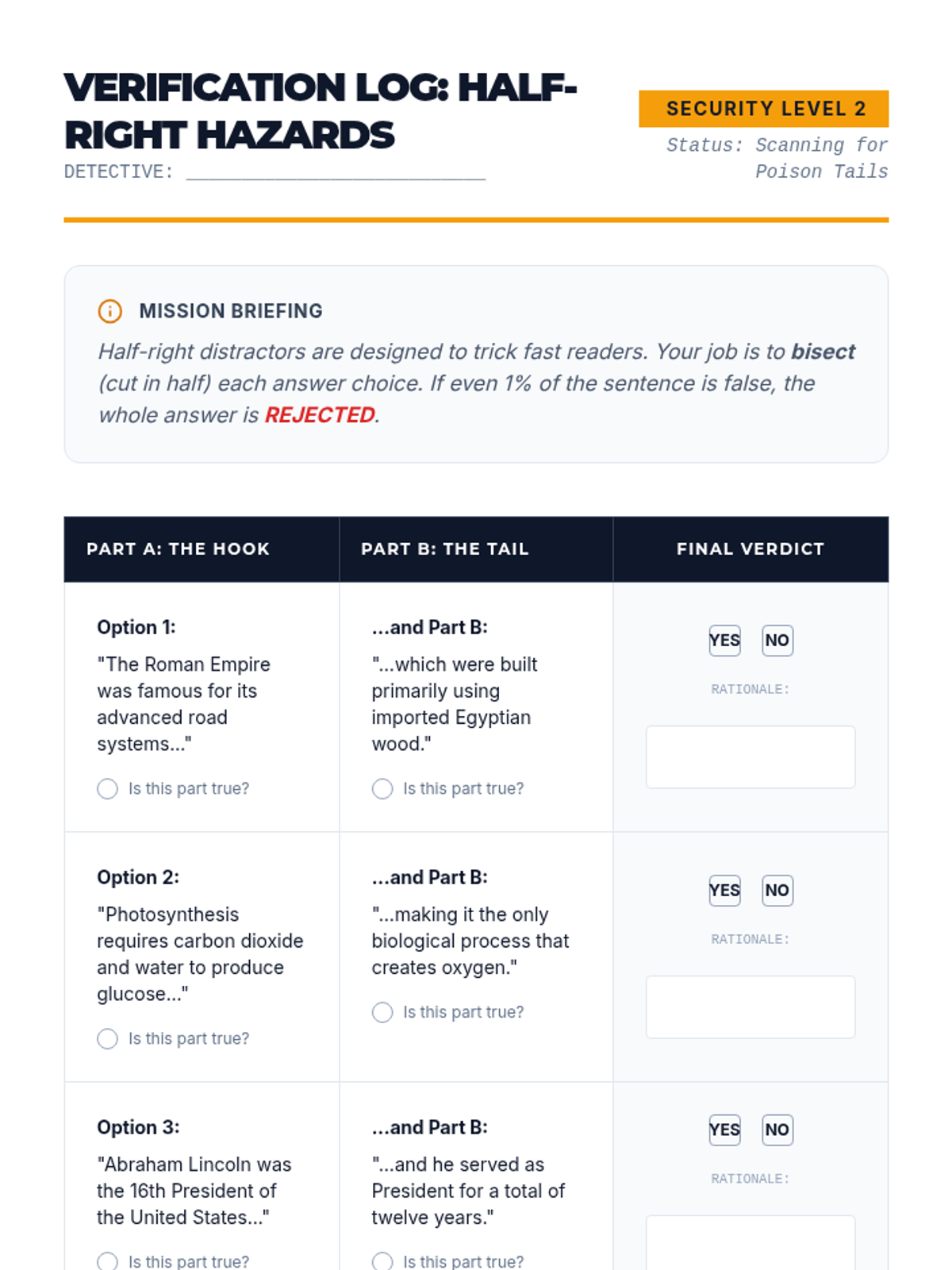
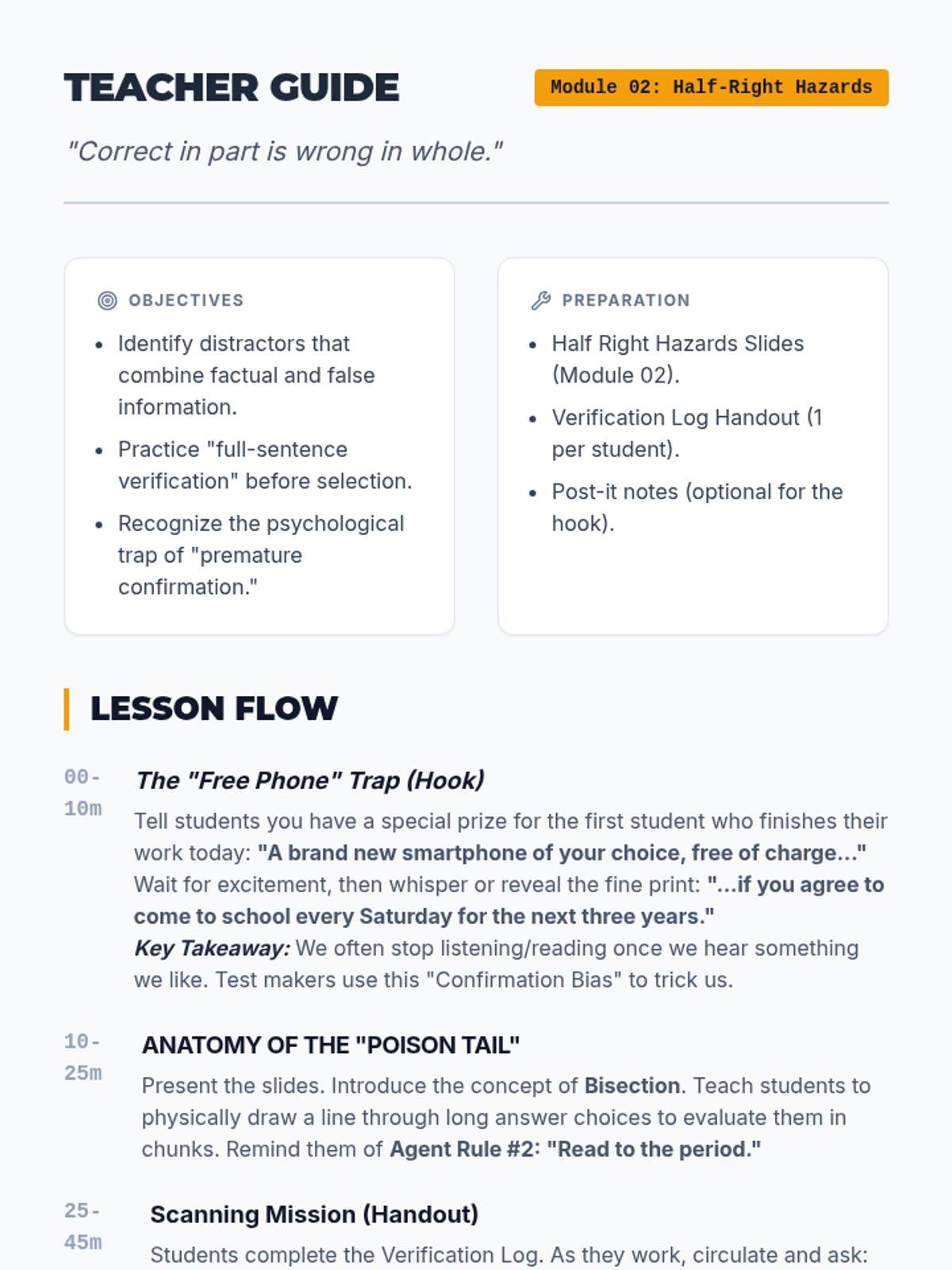
Learners analyze options that are partially correct but ultimately false. This lesson emphasizes the importance of reading every word of an answer choice to catch subtle inaccuracies.
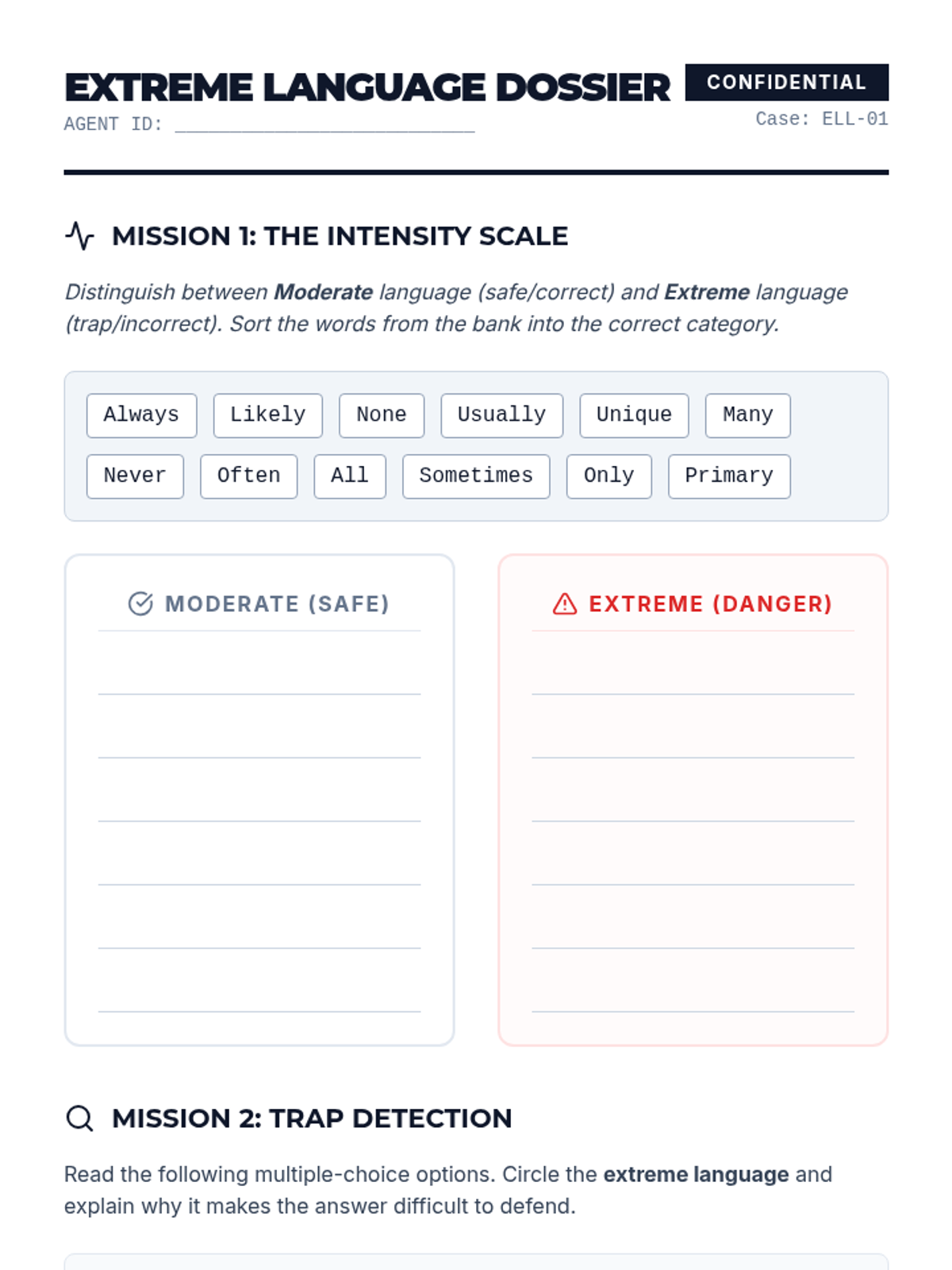
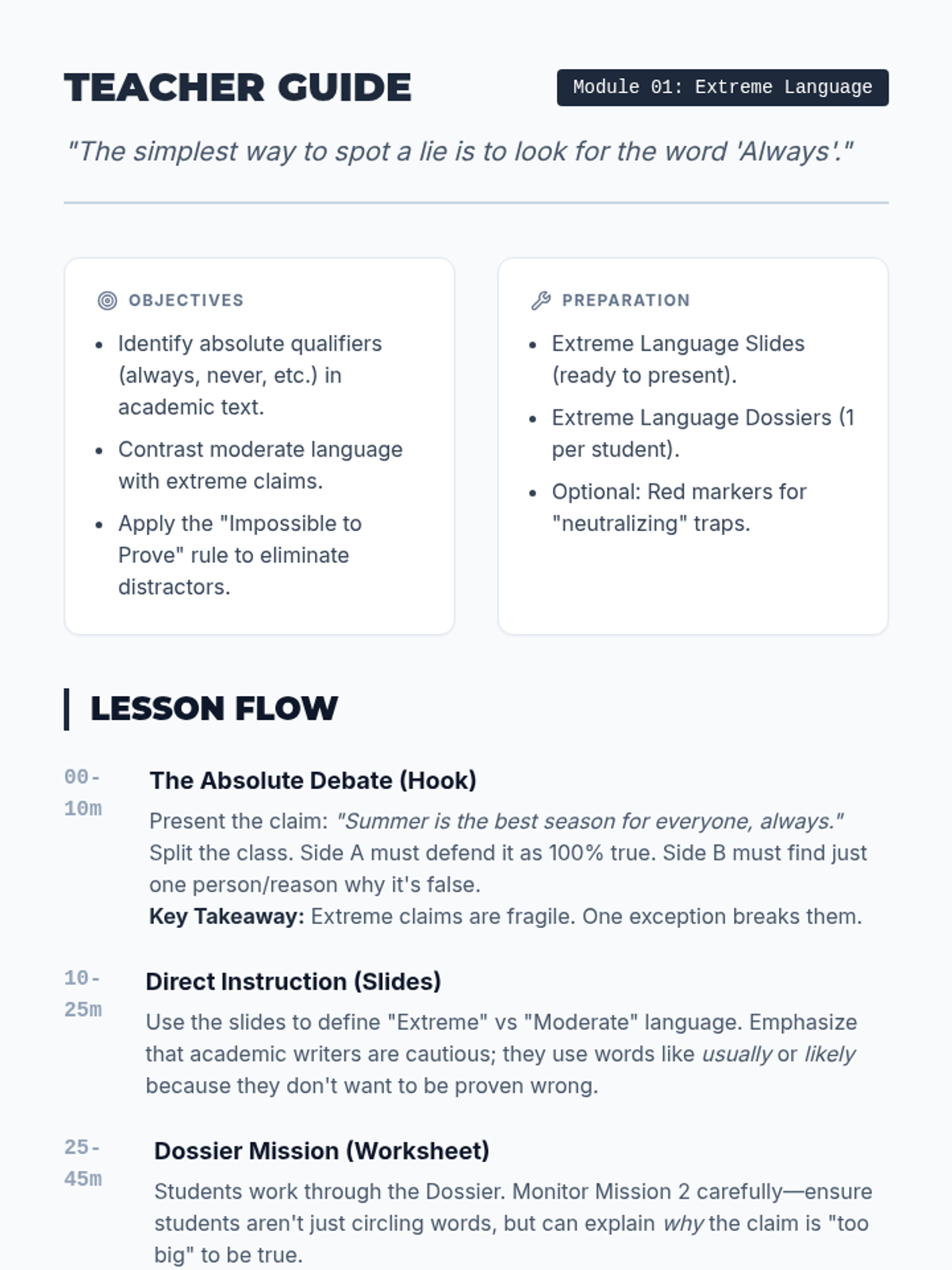
Students learn to identify absolute qualifiers like 'always' and 'never' that signal incorrect answers. They practice categorizing statements by their degree of intensity to evaluate their validity in a test context.
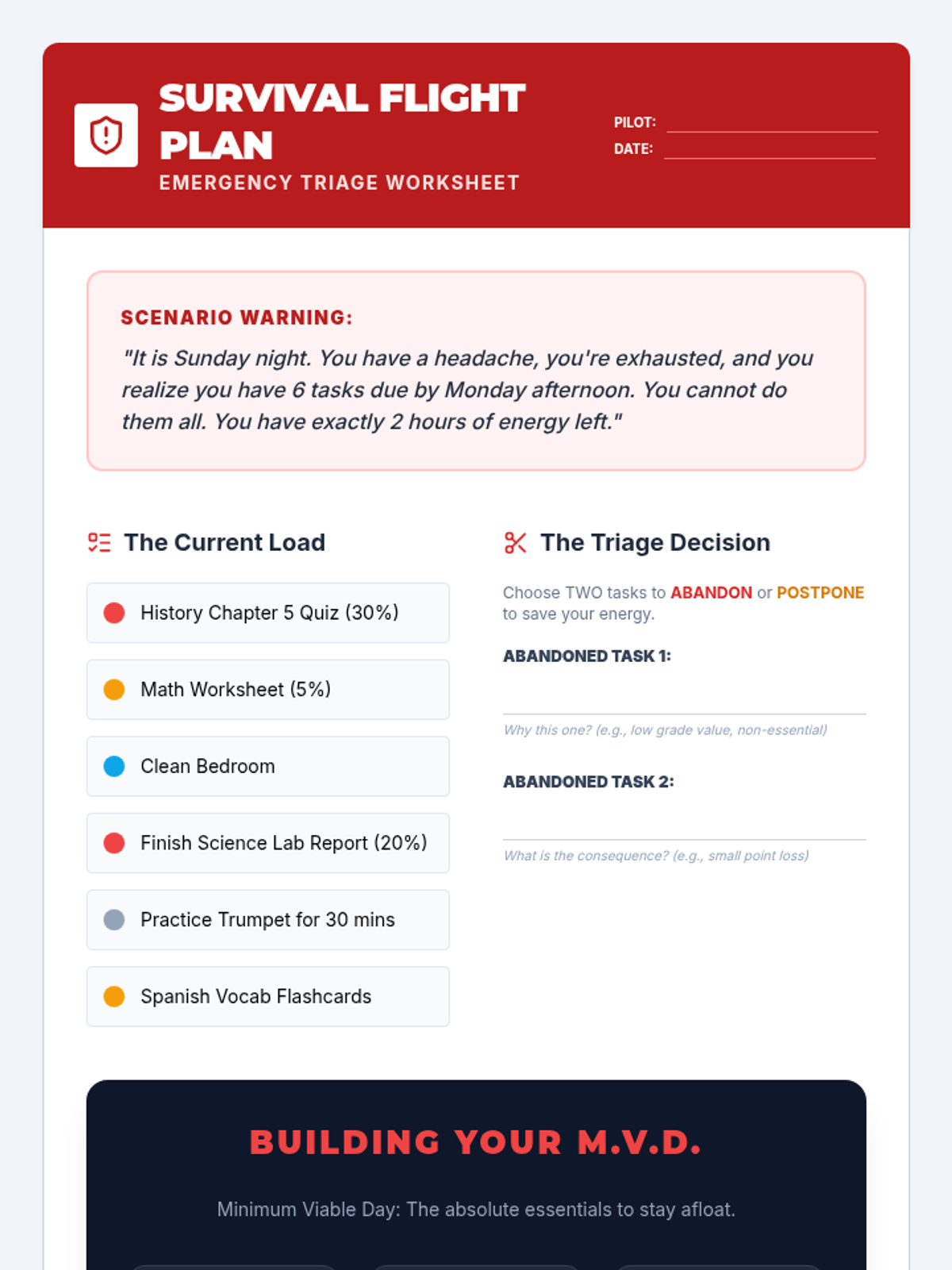
Students develop emergency 'triage' strategies and create a 'Minimum Viable Day' plan for maintaining performance during periods of high stress or illness.
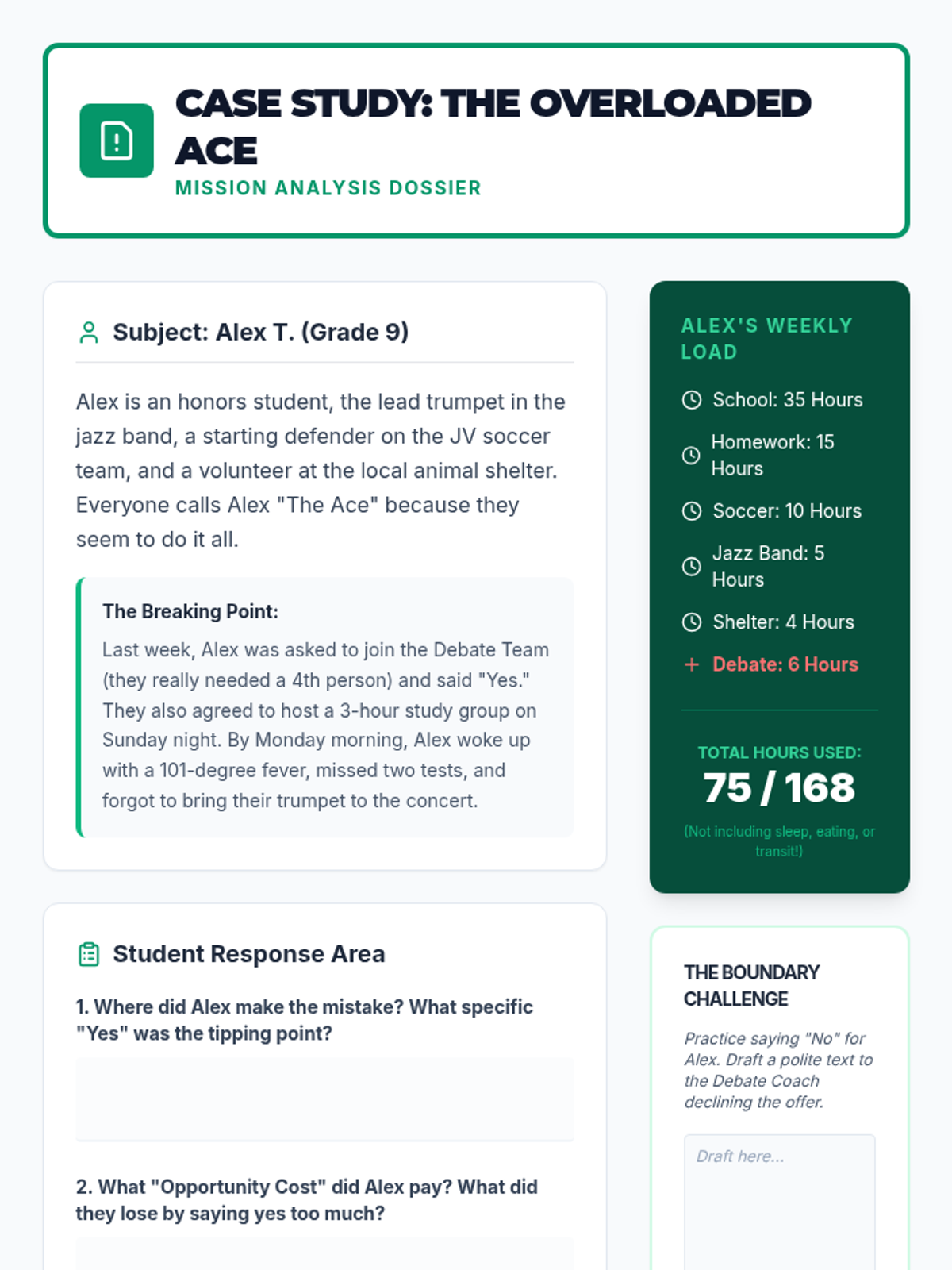
Students explore the concept of opportunity cost and practice strategies for politely but firmly declining optional commitments.
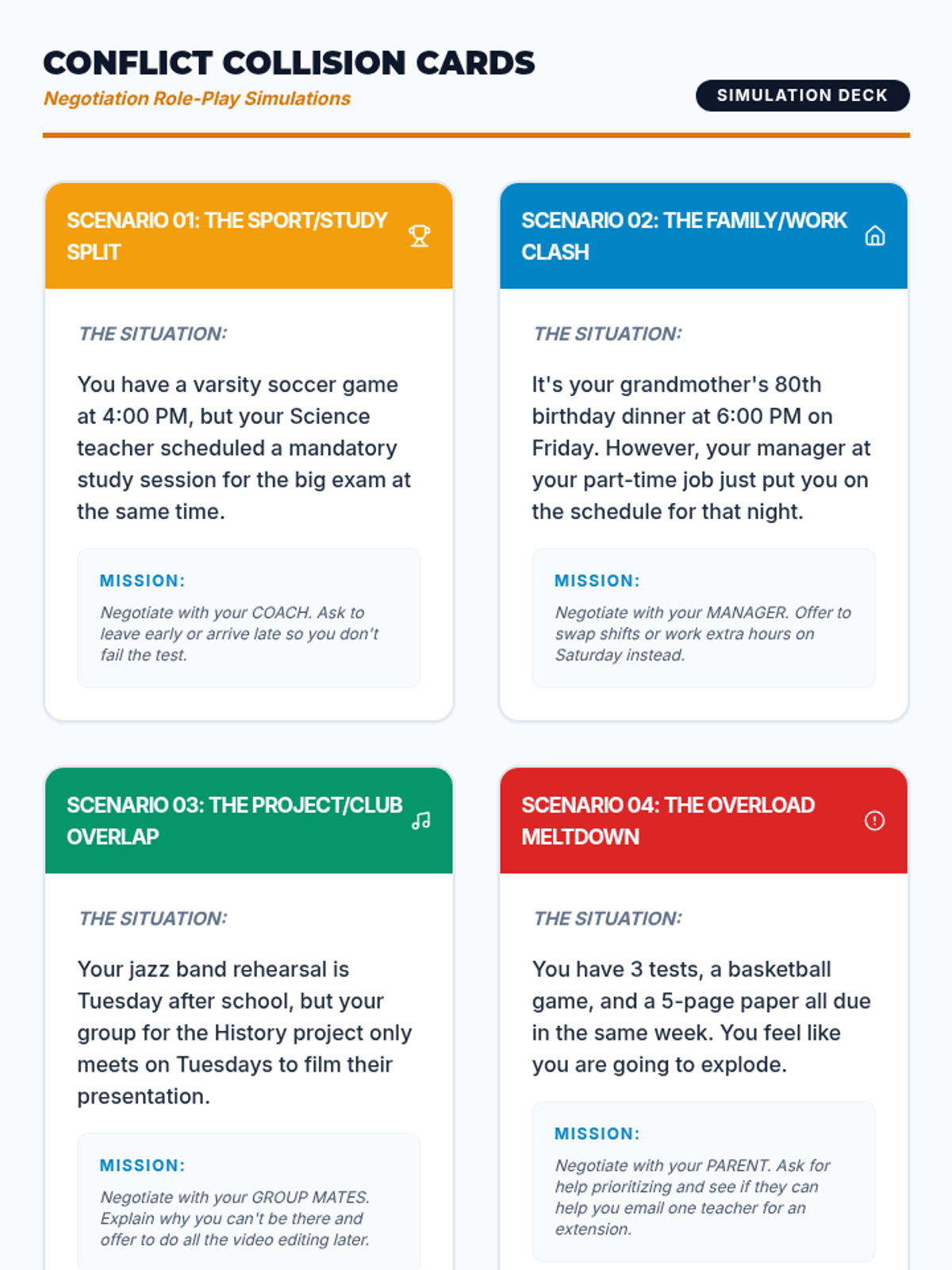
Through role-play and simulation, students practice face-to-face negotiations to resolve scheduling conflicts between multiple commitments.
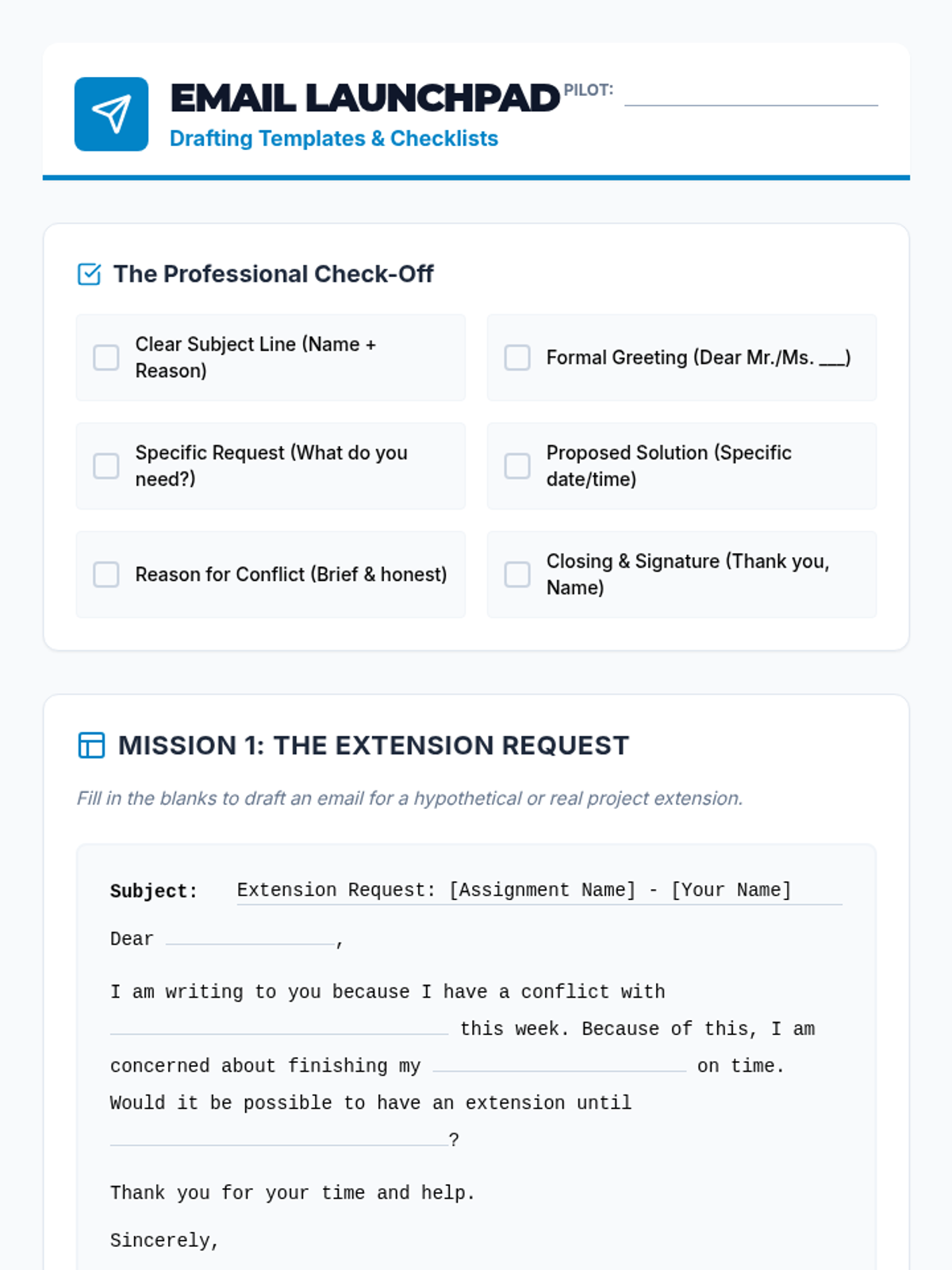
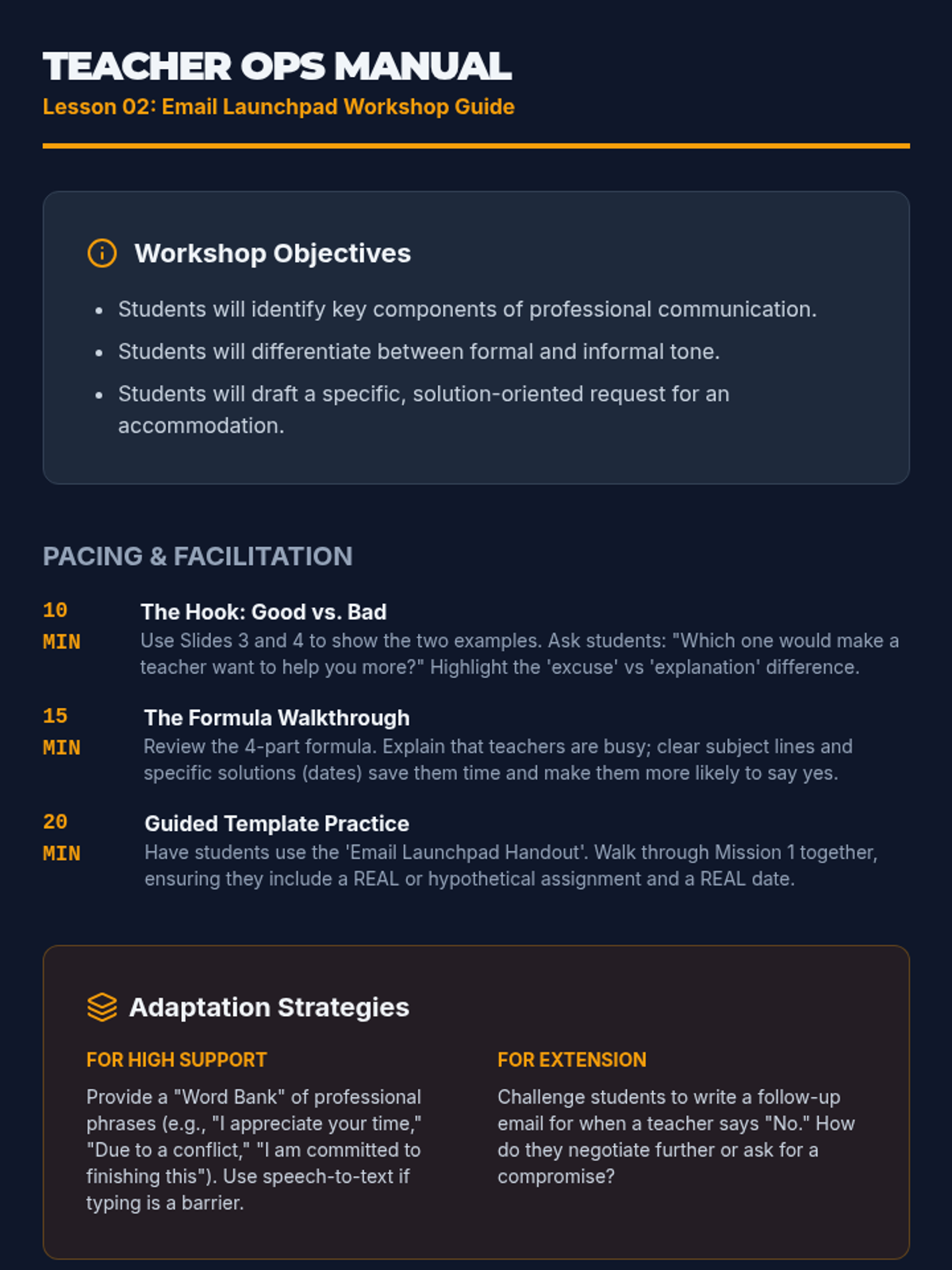
Students master the art of professional email communication, learning to draft responsible and clear requests for extensions or accommodations.
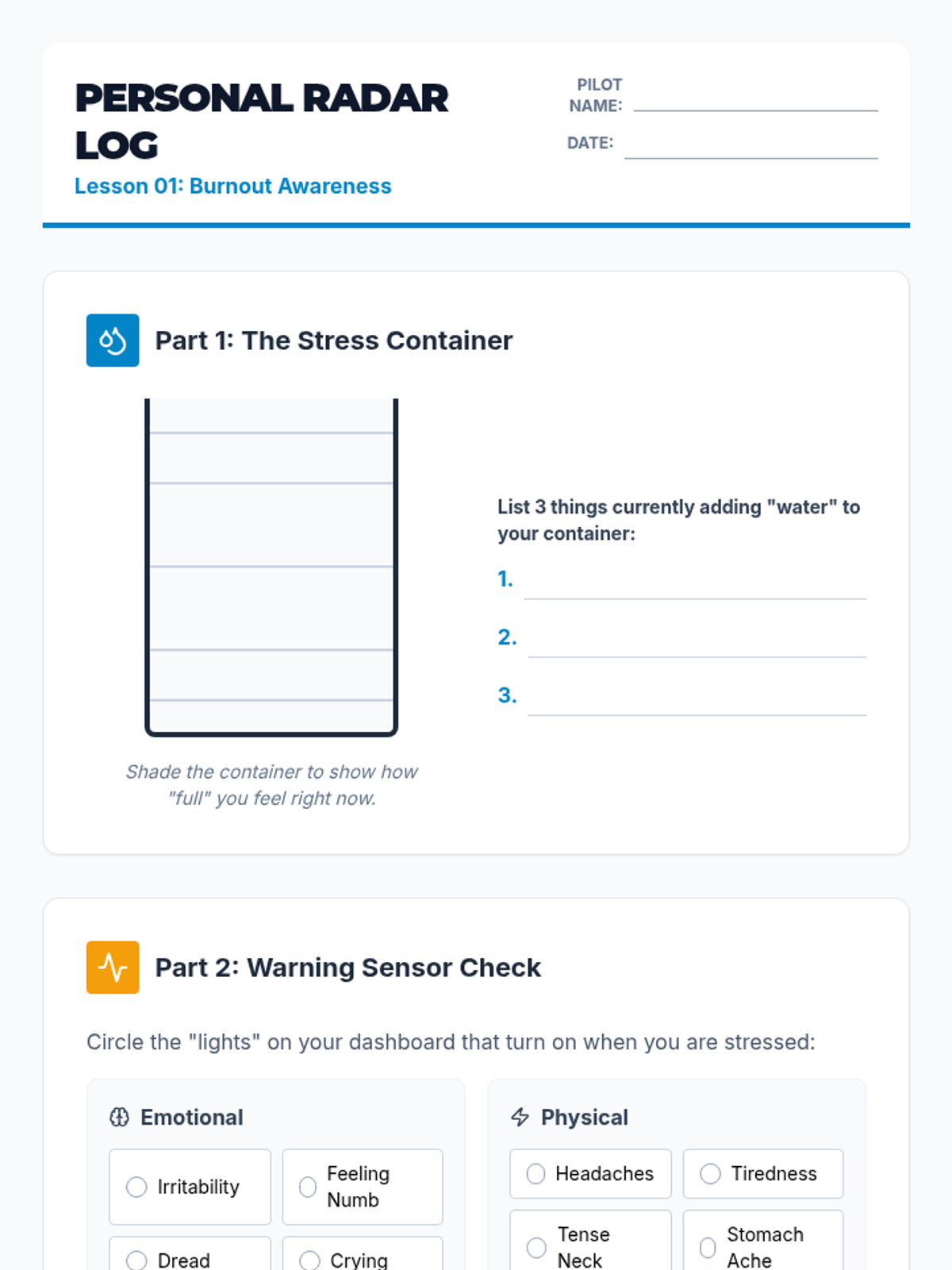
Students identify physical and emotional signs of burnout and use the 'Stress Container' visualization to understand their personal capacity and tipping points.