Emotion recognition ranging from basic feelings to complex nuances and mixed states. Strengthens accurate self-assessment through identity exploration, strength identification, and values-based decision making.
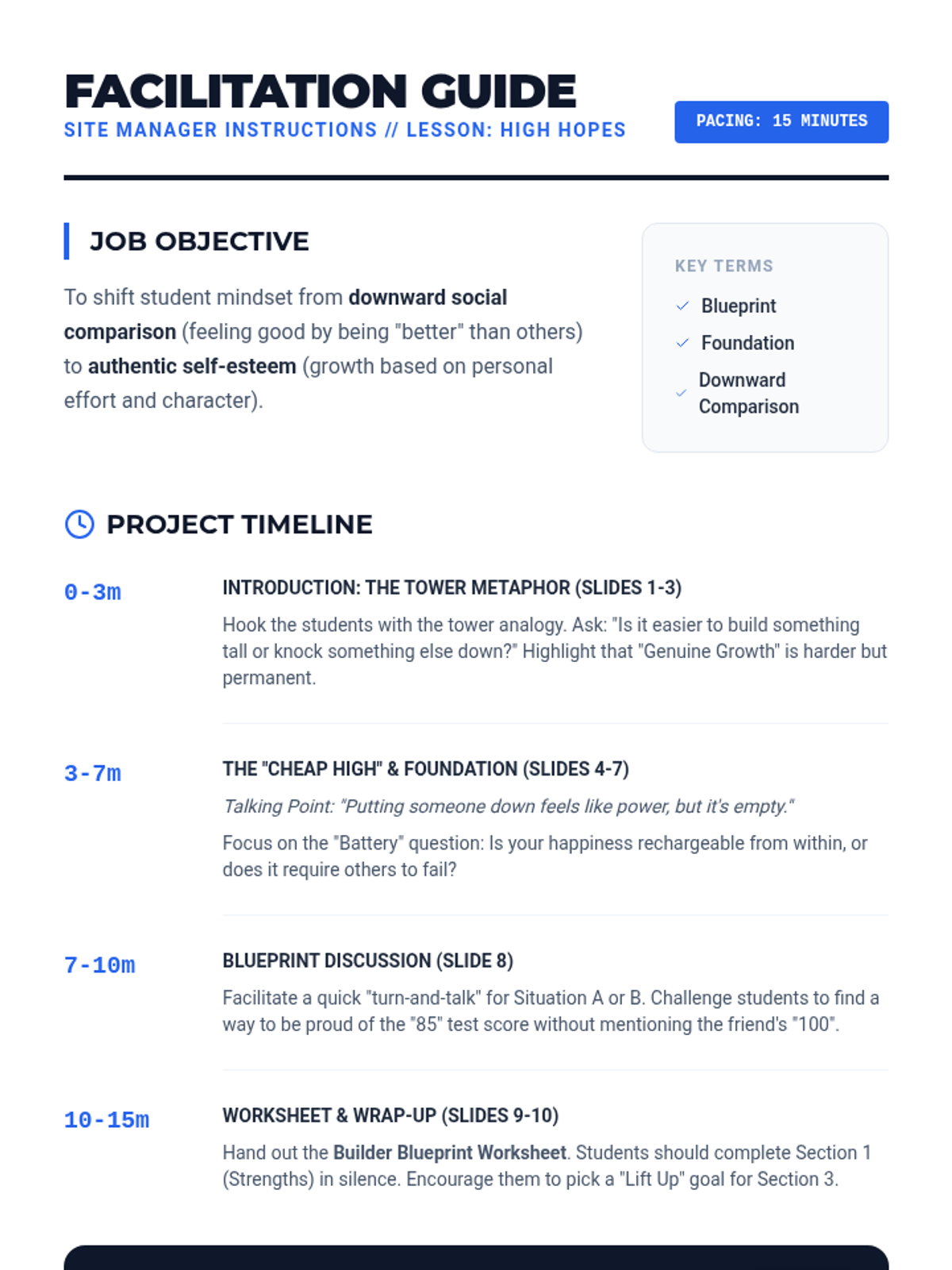
A teacher facilitation guide designed to manage a 15-minute lesson. It includes a pacing timeline, talking points for the tower metaphor, and strategies for handling common student responses.
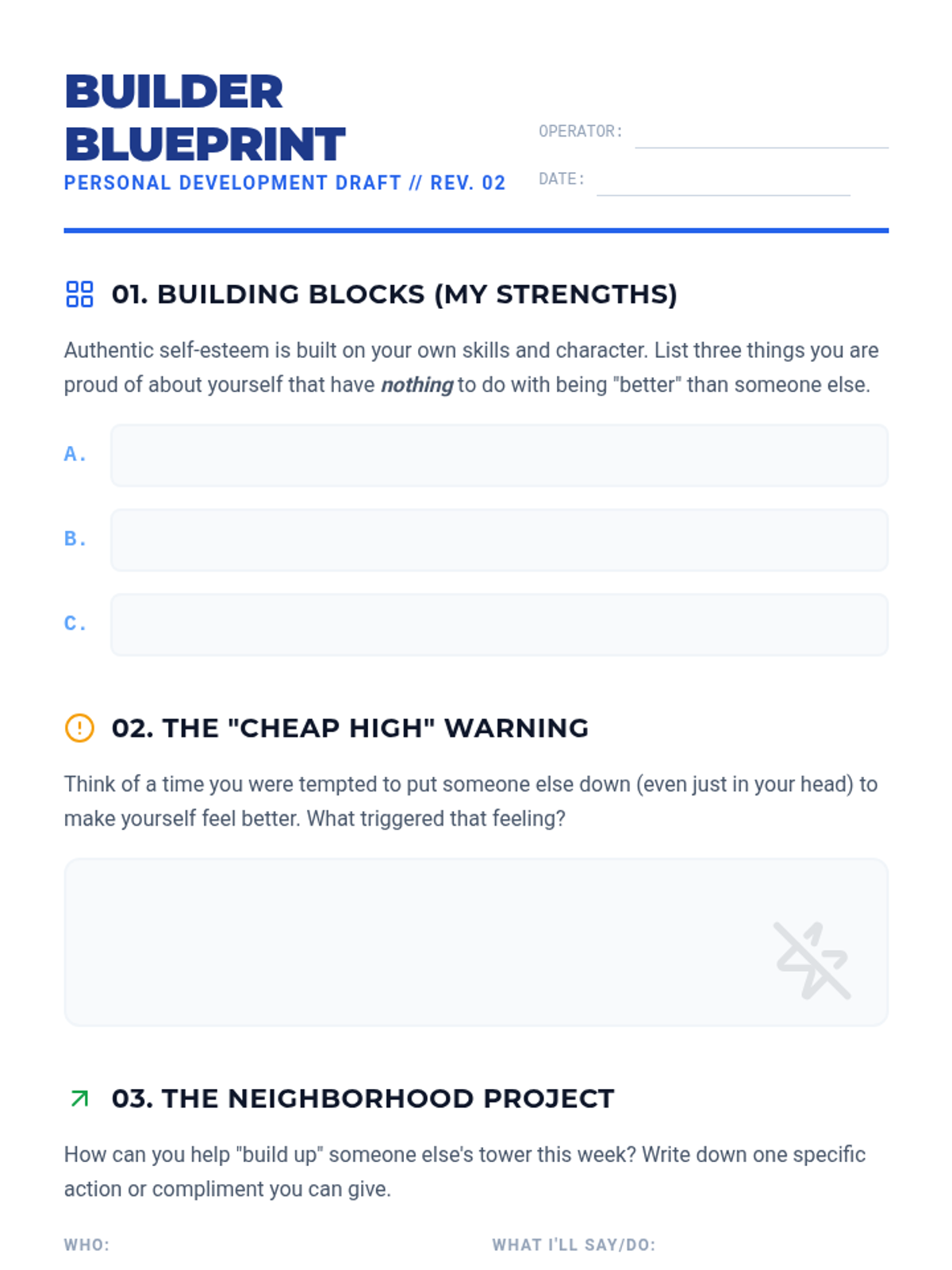
A student reflection worksheet that helps learners identify their personal strengths, recognize moments of unhealthy comparison, and set a goal to encourage others. Styled like a professional blueprint.
A 10-slide presentation using a construction and blueprint theme to teach students about authentic self-esteem. It contrasts 'building yourself up' with 'knocking others down' and provides actionable tools for genuine growth. Updated for maximum legibility.
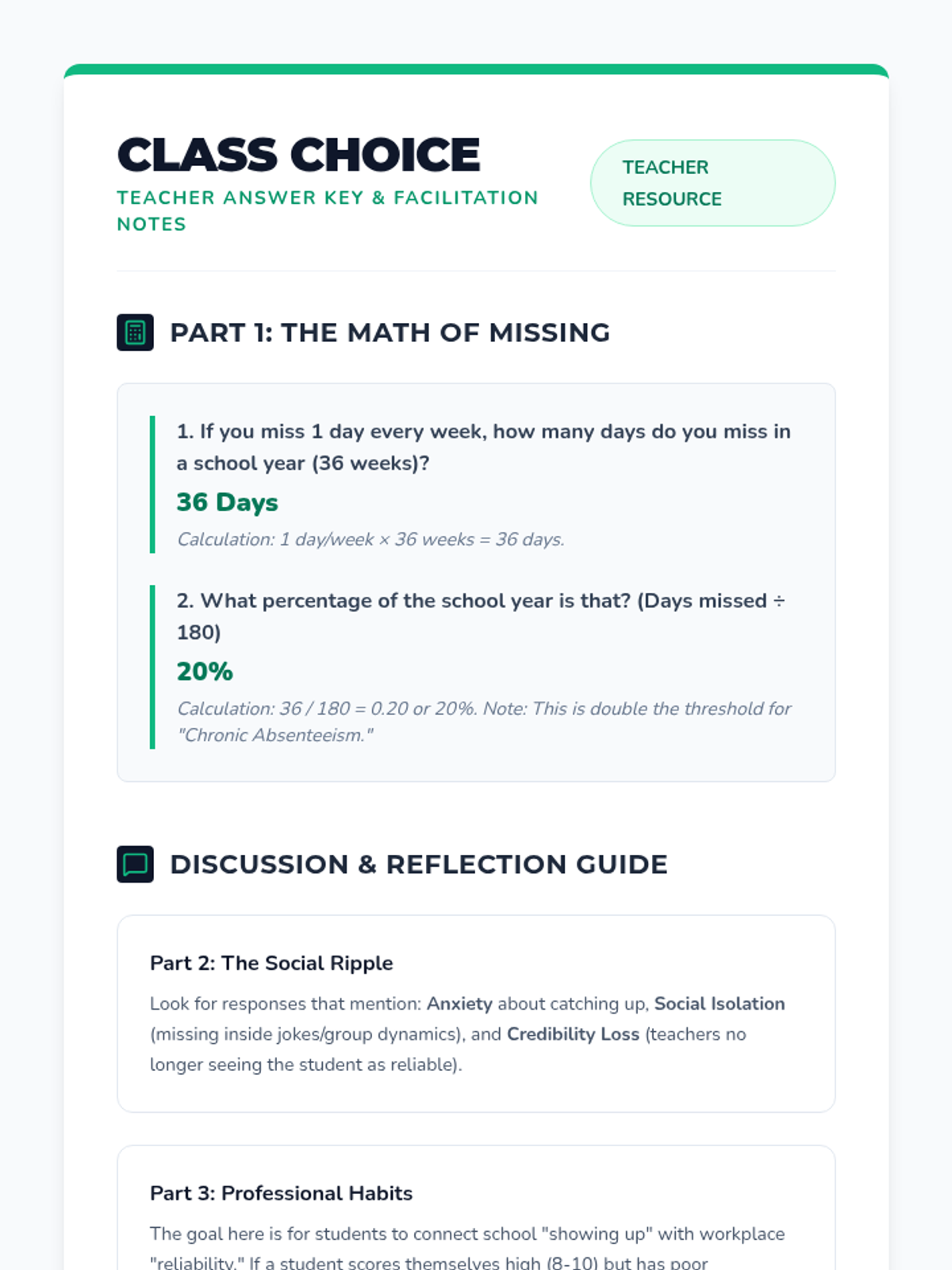
An answer key and facilitation resource for teachers to use with the Class Choice worksheet. Includes mathematical calculations for attendance impact and guidance for discussing social-emotional and career reflections.
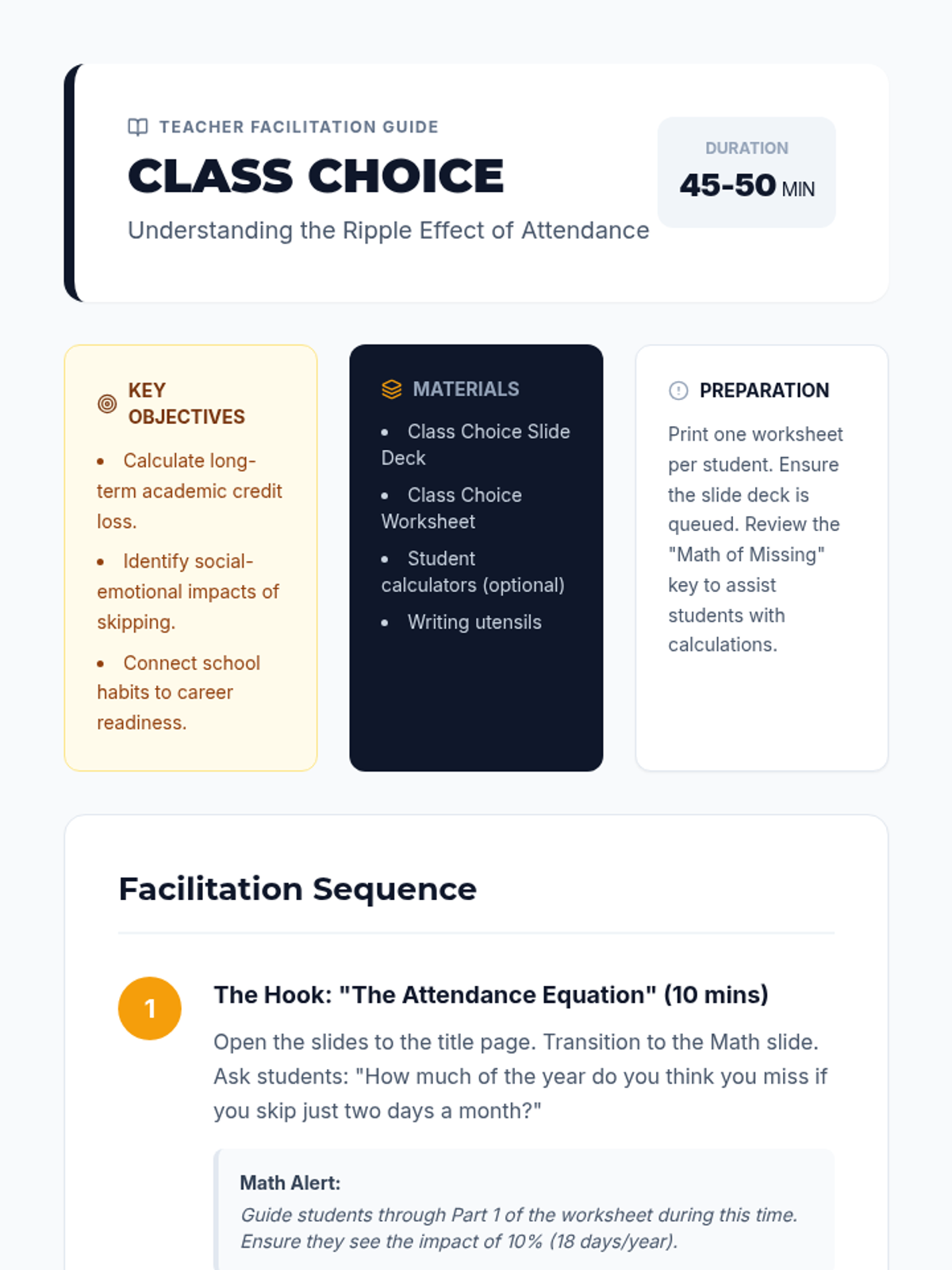
A comprehensive instructional guide for teachers to lead the Class Choice lesson. Includes timing, discussion prompts, prep instructions, and specific guidance for facilitating the math and scenario activities.
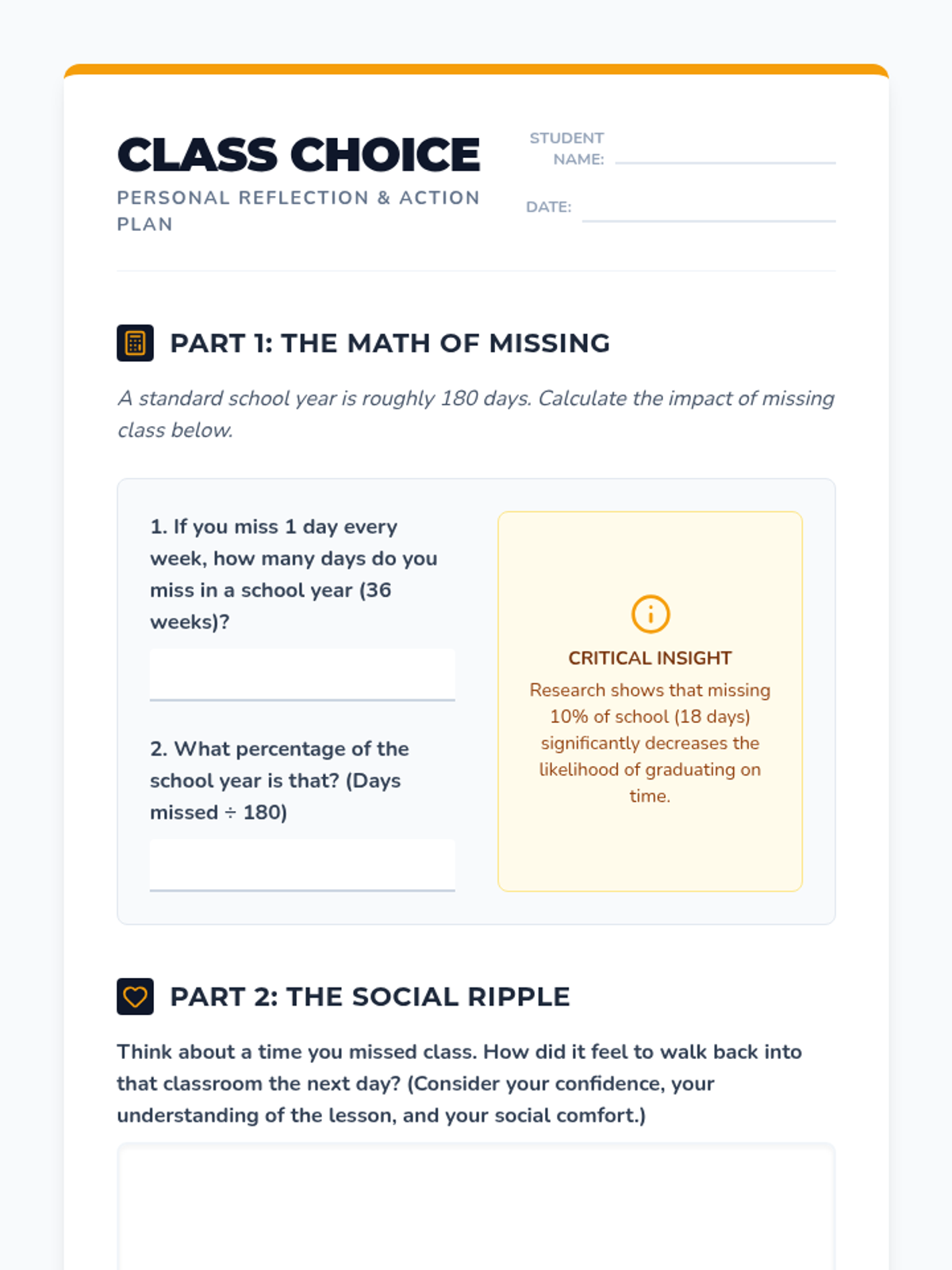
A two-page reflective worksheet where students analyze the mathematical impact of missing school, explore social-emotional consequences, and set personal attendance goals. Includes a career readiness assessment and scenario analysis.
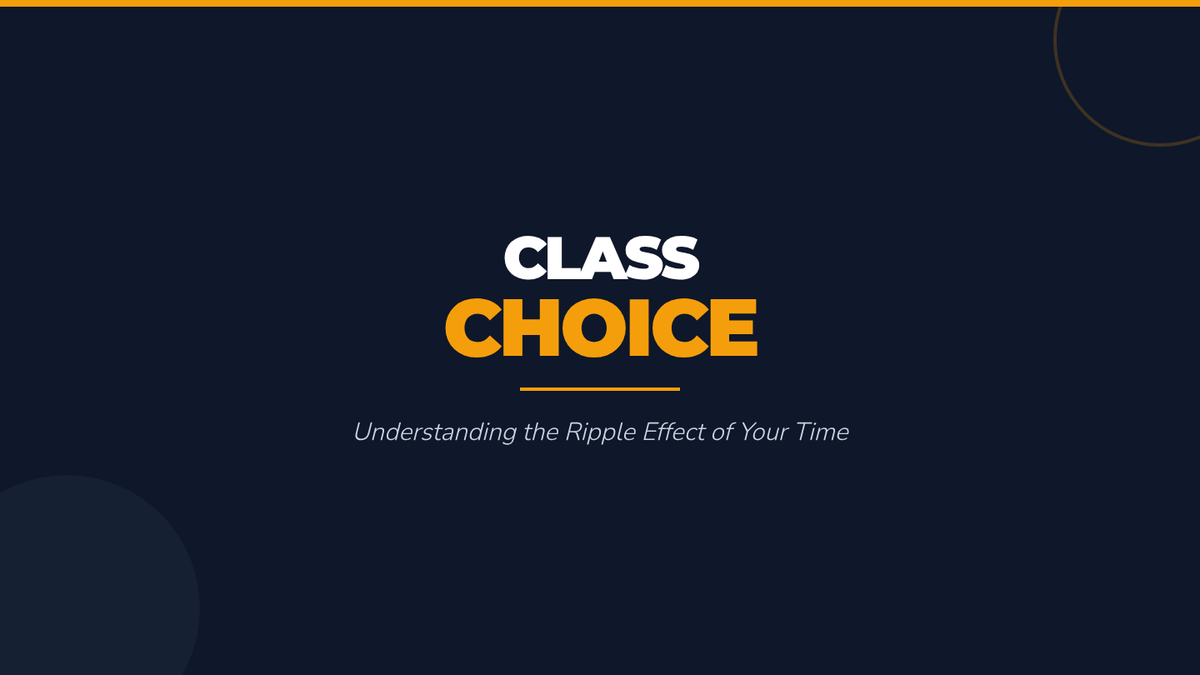
A visual and engaging slide deck exploring the academic, social, and professional consequences of skipping class. Features scenario-based learning and clear visual hierarchy to communicate the weight of attendance choices.
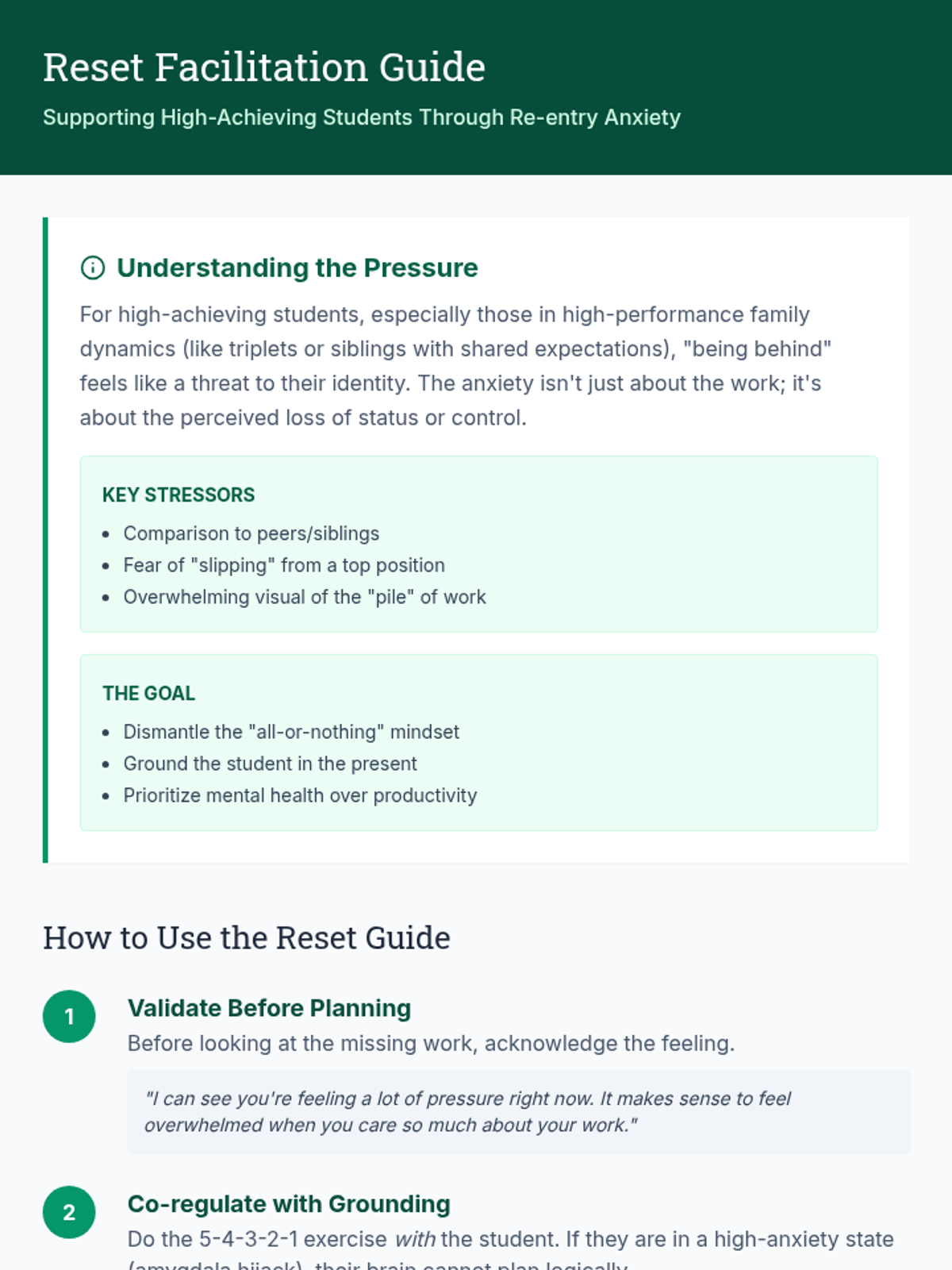
A facilitator's guide for teachers or counselors to help high-achieving students navigate academic re-entry anxiety and performance pressure.
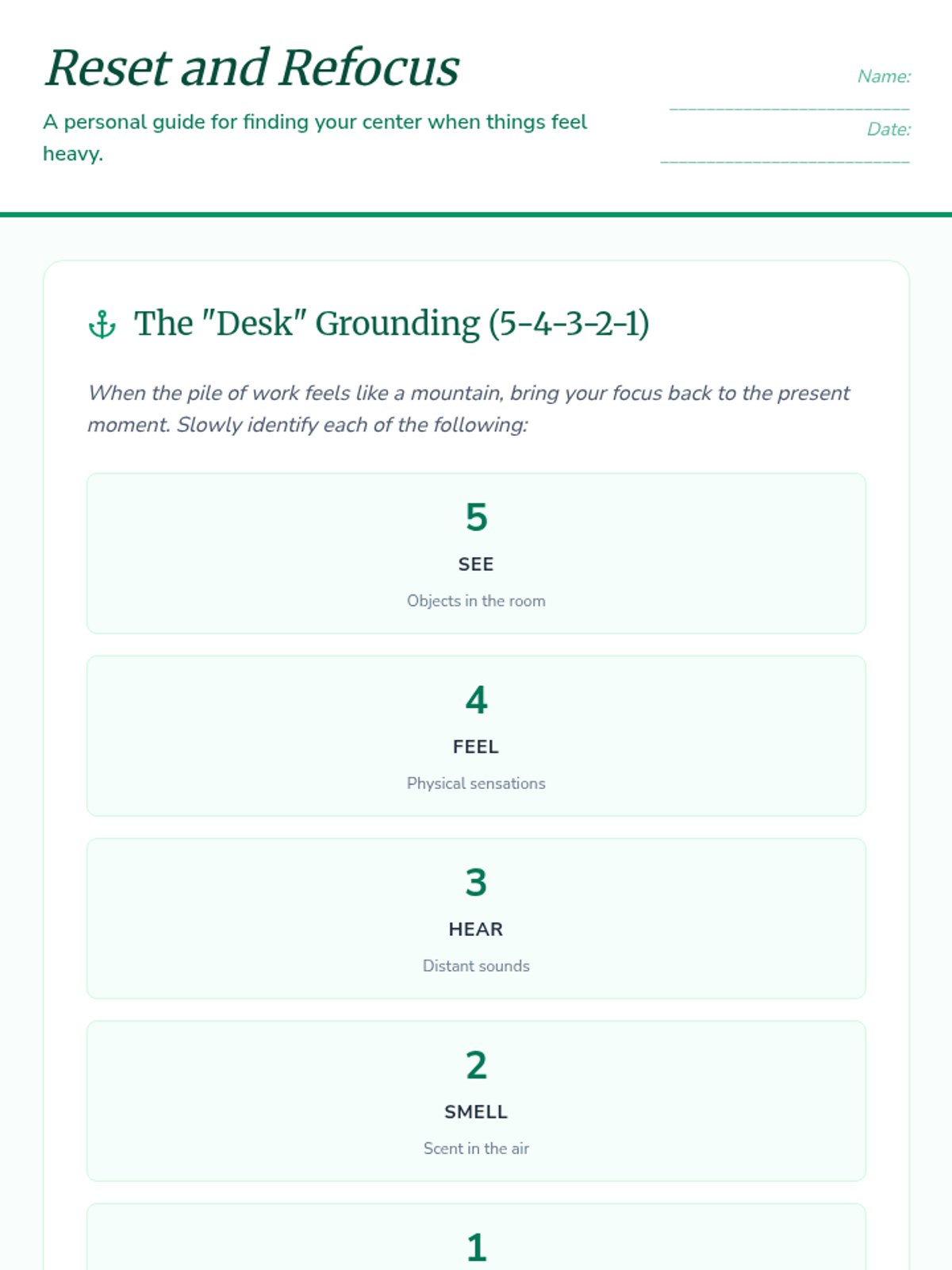
A grounding and mindfulness toolkit for high-achieving students to manage the anxiety of makeup work and academic pressure.
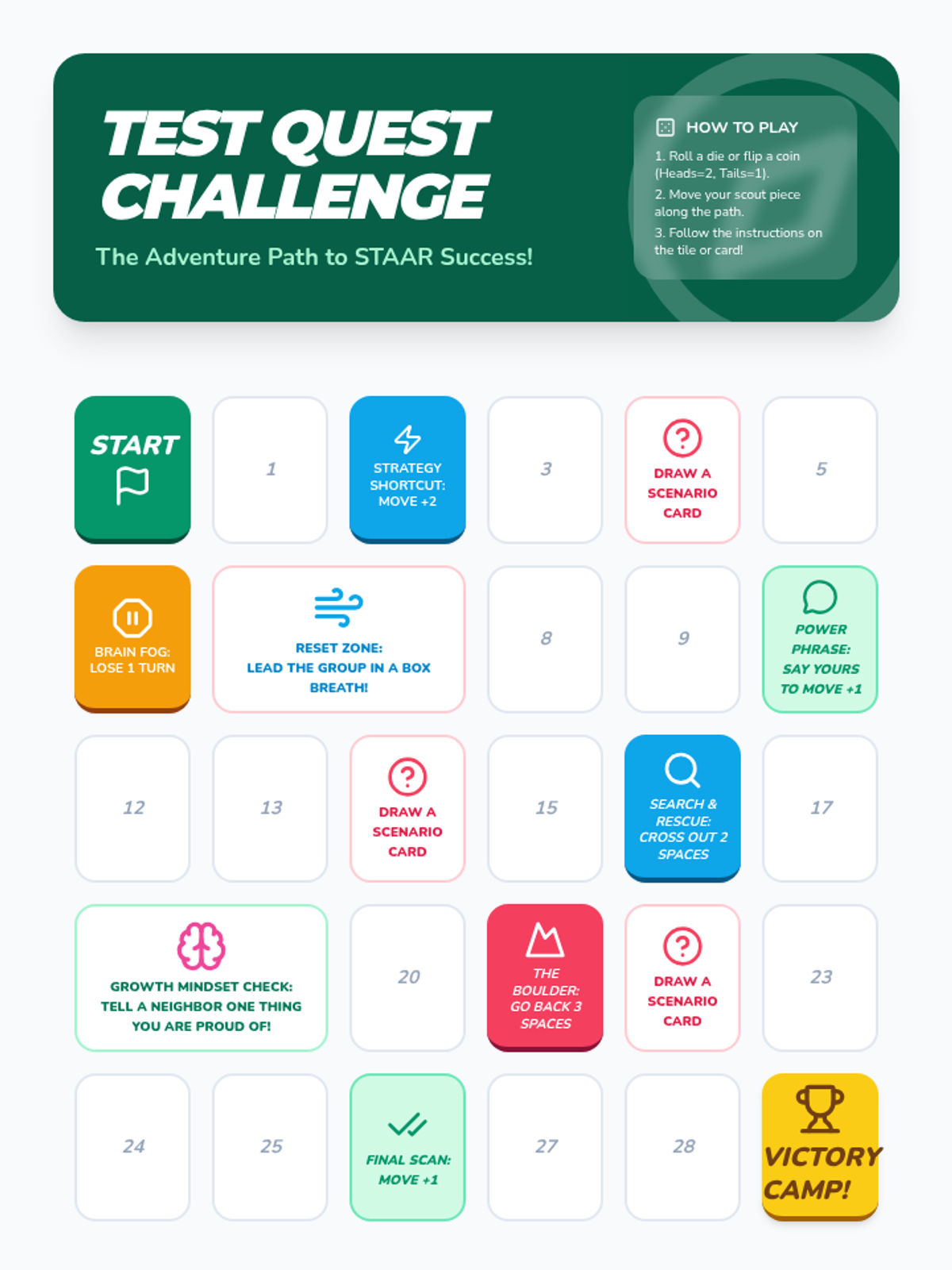
A 2-page printable board game and scenario card set where students navigate a 'Testing Forest' by practicing test-taking strategies and social-emotional techniques.
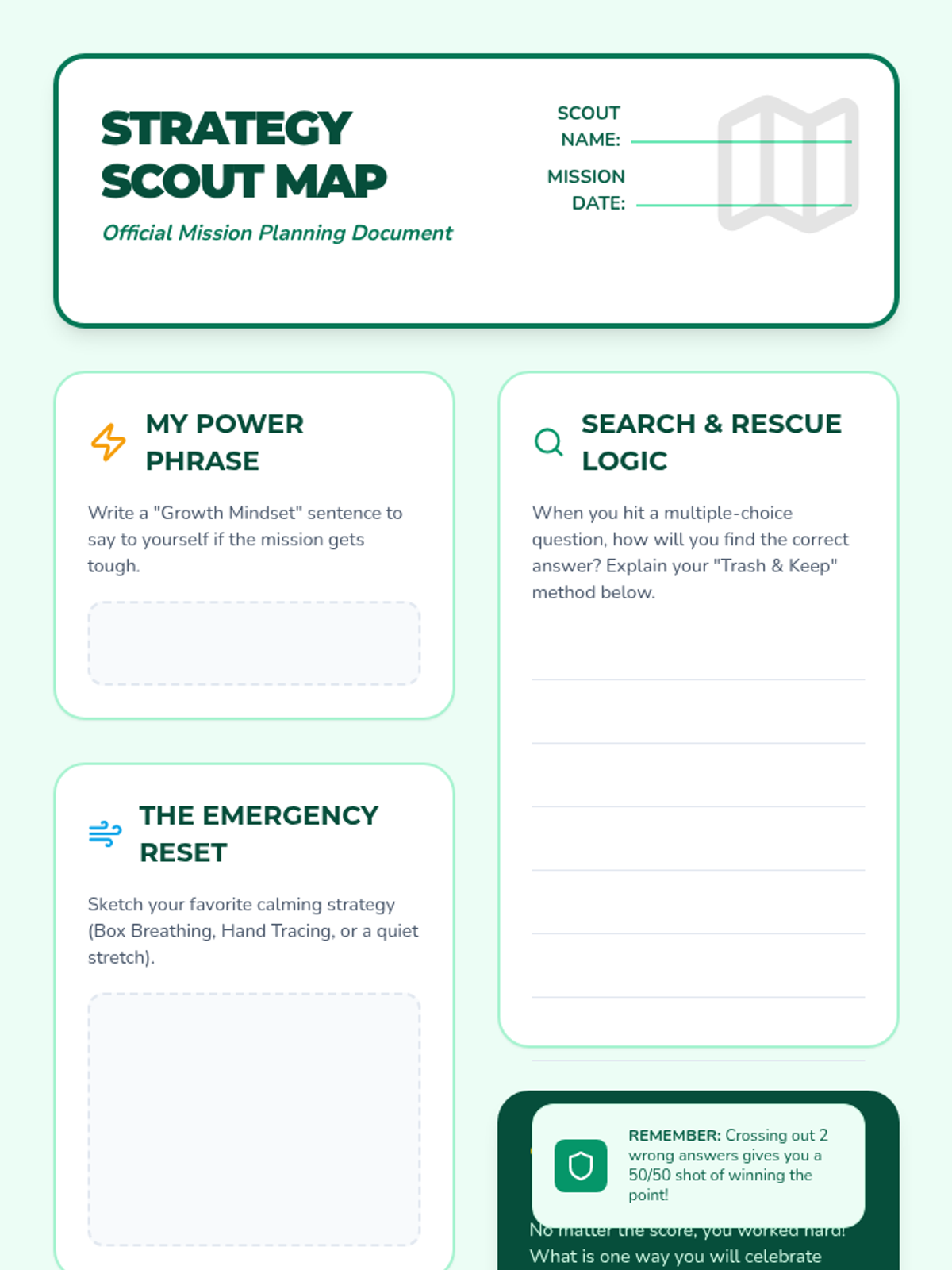
A student-facing mission-planning worksheet where students define their personal test-taking strategies, mindset phrases, and calming techniques in preparation for the STAAR test.
An engaging 9-slide presentation designed to teach students social-emotional strategies and practical test-taking techniques for the STAAR test, featuring a 'Mission Scout' adventure theme.
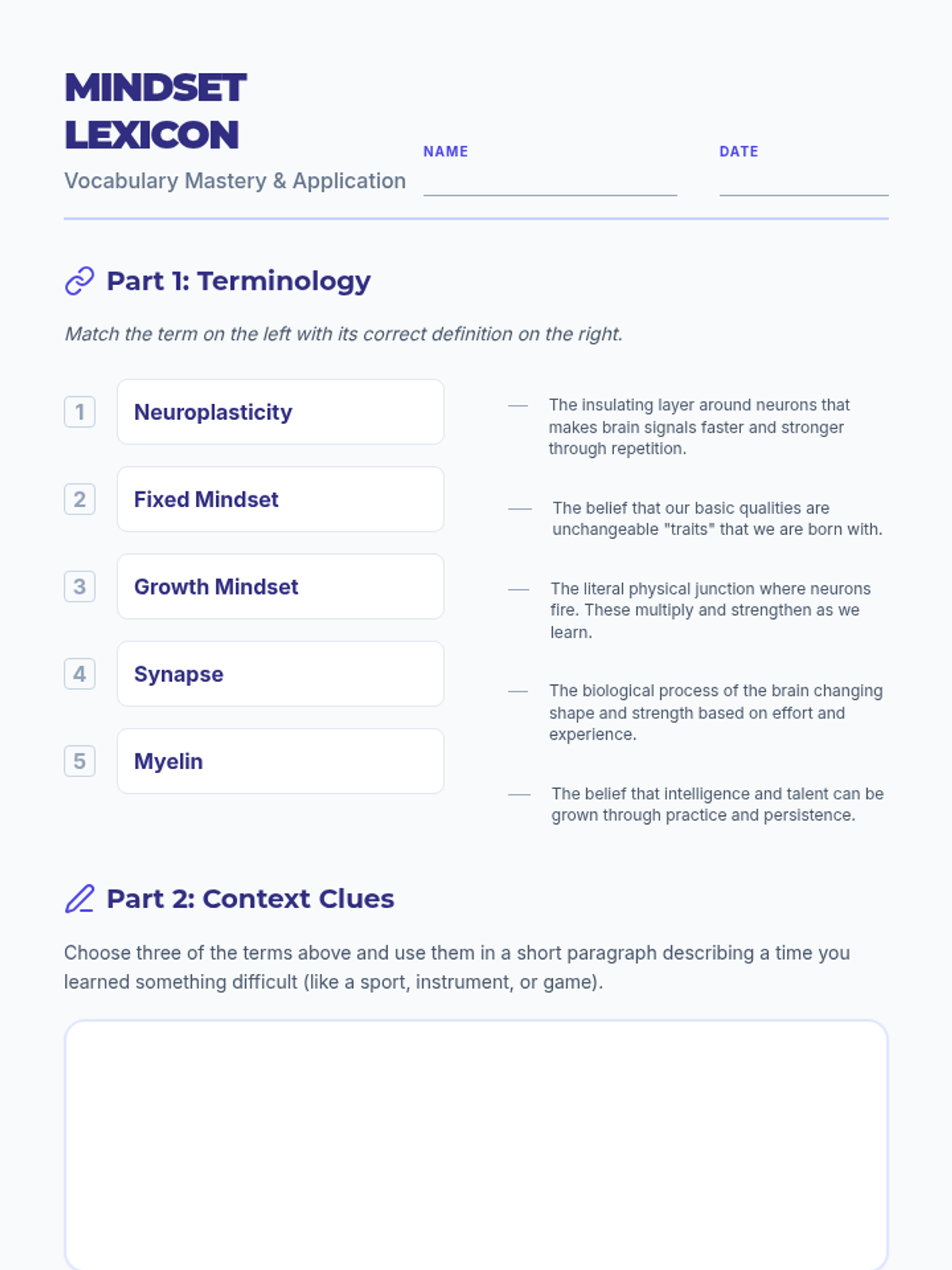
A vocabulary practice sheet for high school students focusing on the scientific and psychological terms related to growth mindset, including matching and open-ended application.
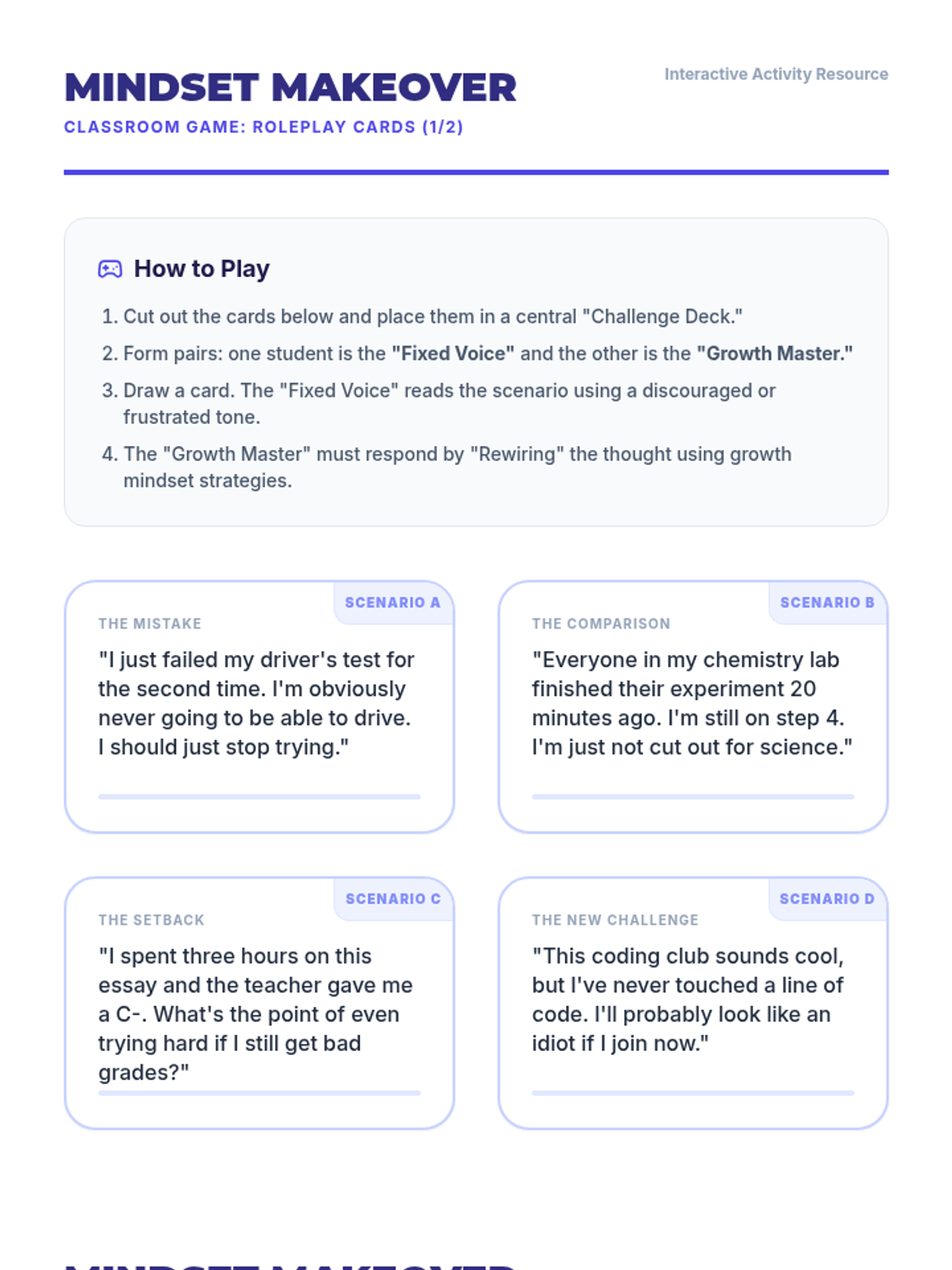
An interactive classroom game featuring 10 "Scenario Cards" across two pages. Students roleplay fixed mindset voices and growth mindset "rewires," focusing on academic, social, and personal high school challenges.
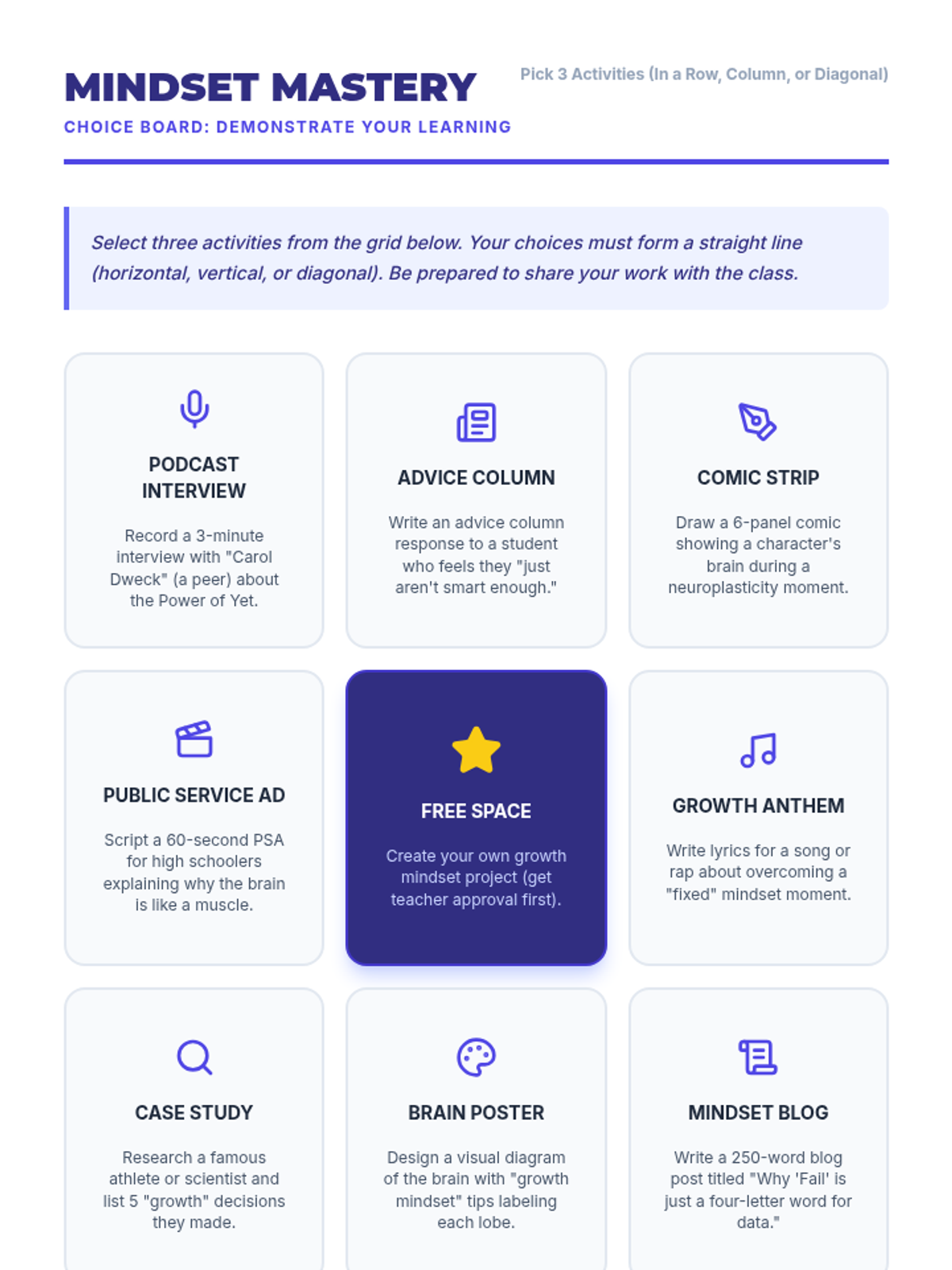
A high school choice board featuring 9 activities (podcasts, PSAs, case studies, etc.) that allow students to demonstrate their understanding of growth mindset and neuroplasticity in creative ways.
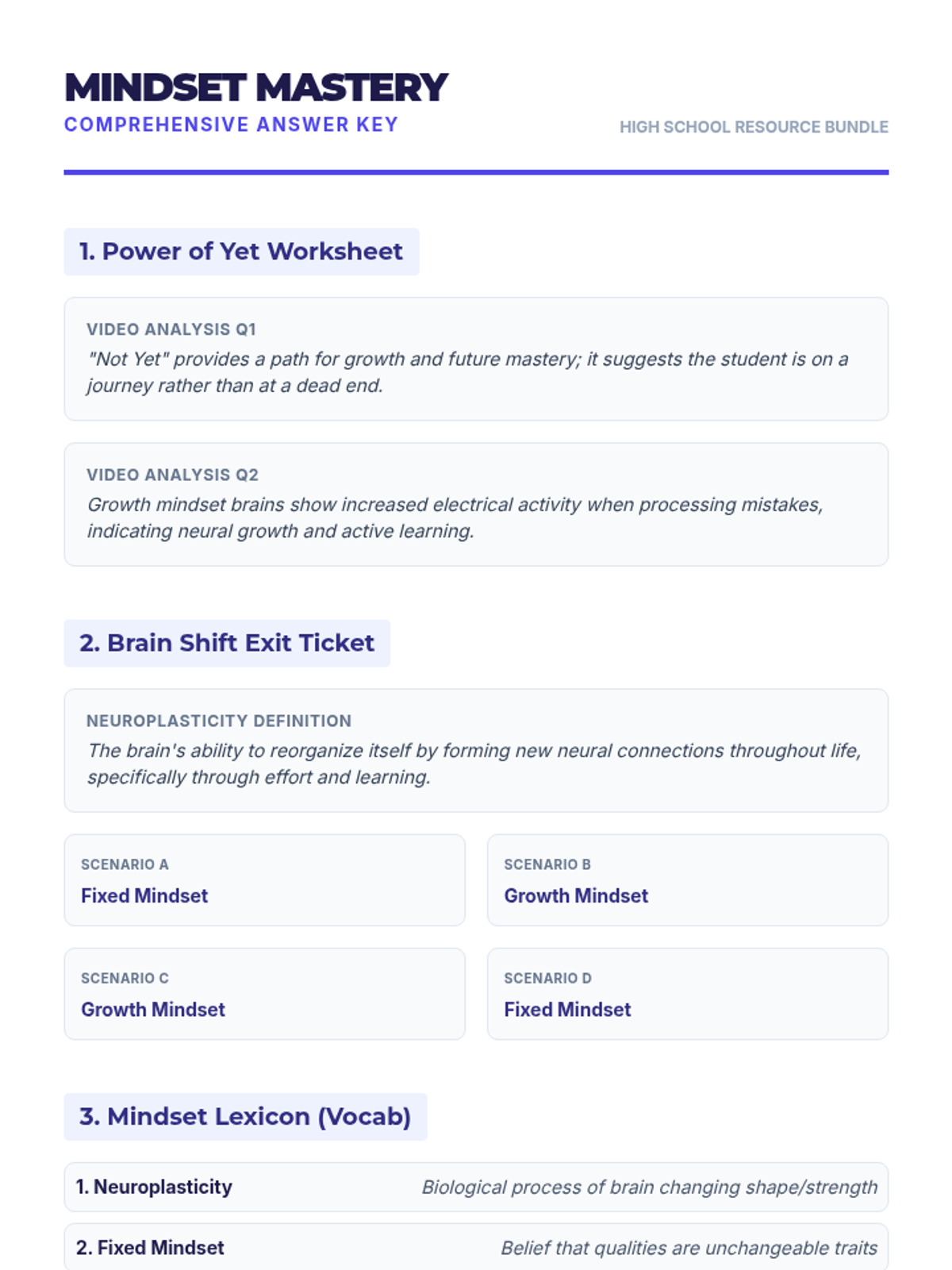
A comprehensive answer key for the "Power of Yet Worksheet," "Brain Shift Exit Ticket," and "Mindset Mastery Vocabulary Sheet," providing sample responses and teaching notes for high school educators.
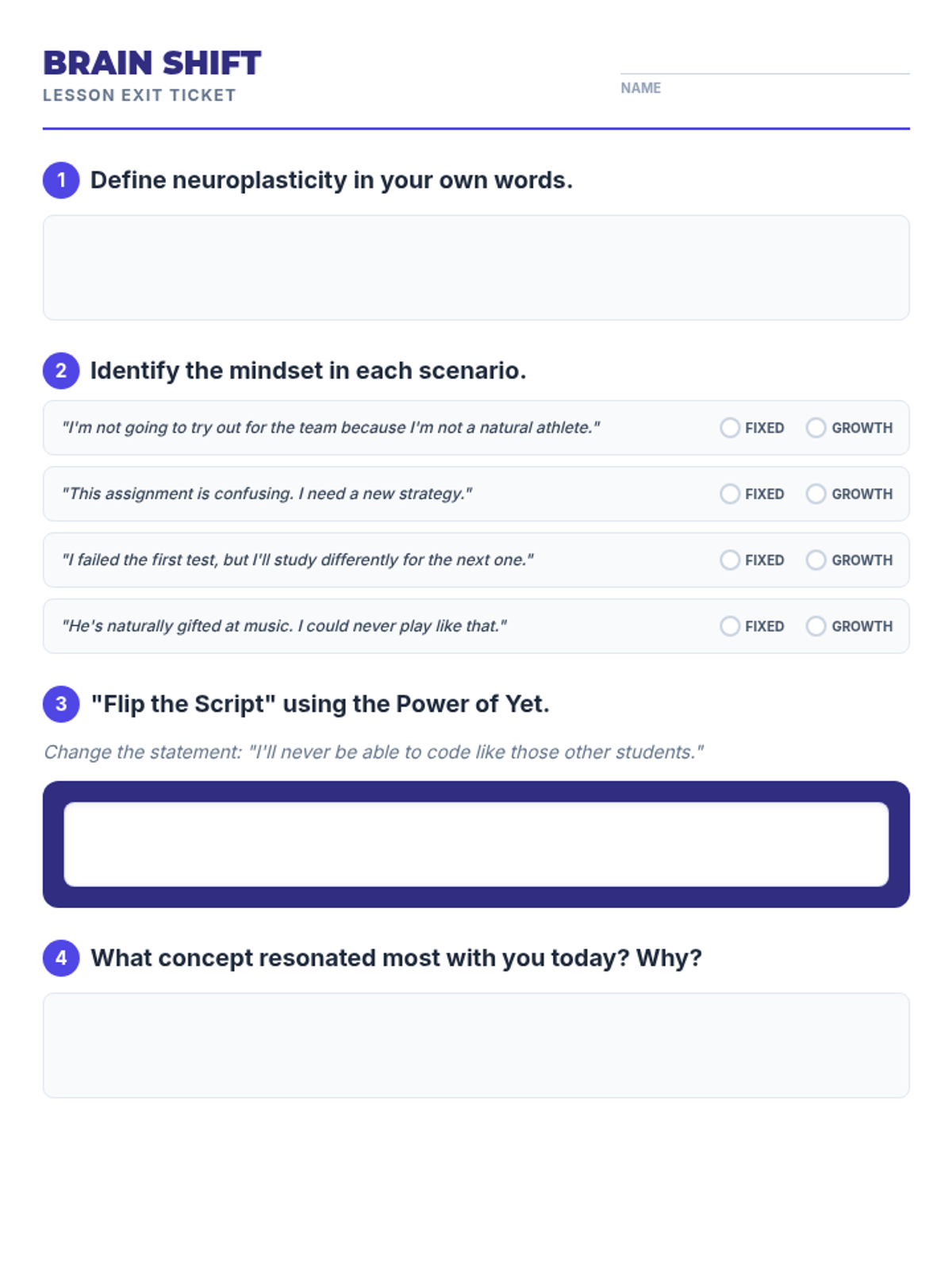
A quick formative assessment (exit ticket) for high school students to demonstrate understanding of neuroplasticity, mindset identification (now featuring 4 scenarios), and the application of the "Power of Yet" strategy.
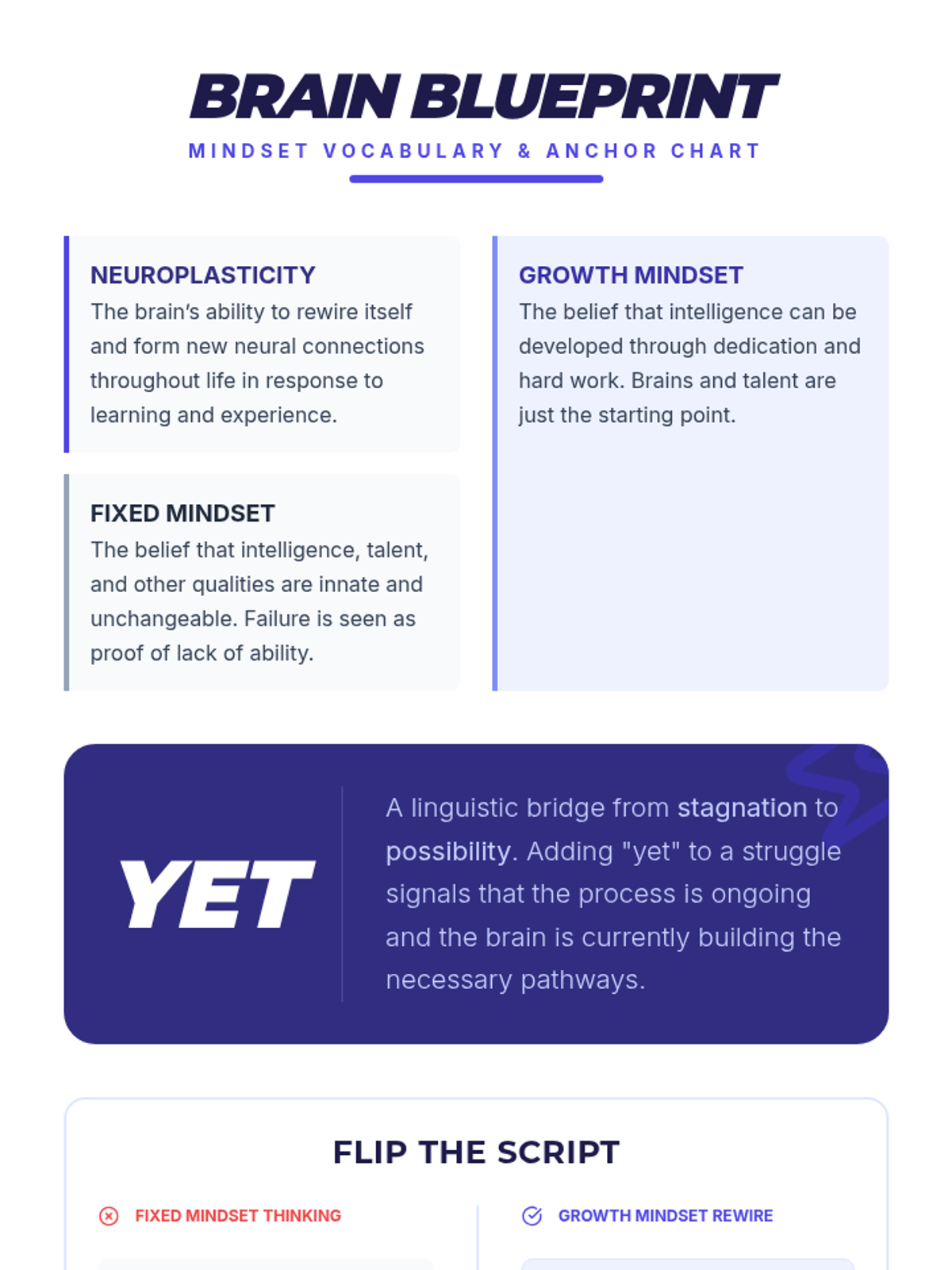
A visually engaging reference sheet (anchor chart) defining neuroplasticity and the core concepts of growth mindset, including a "Flip the Script" table for high school students.
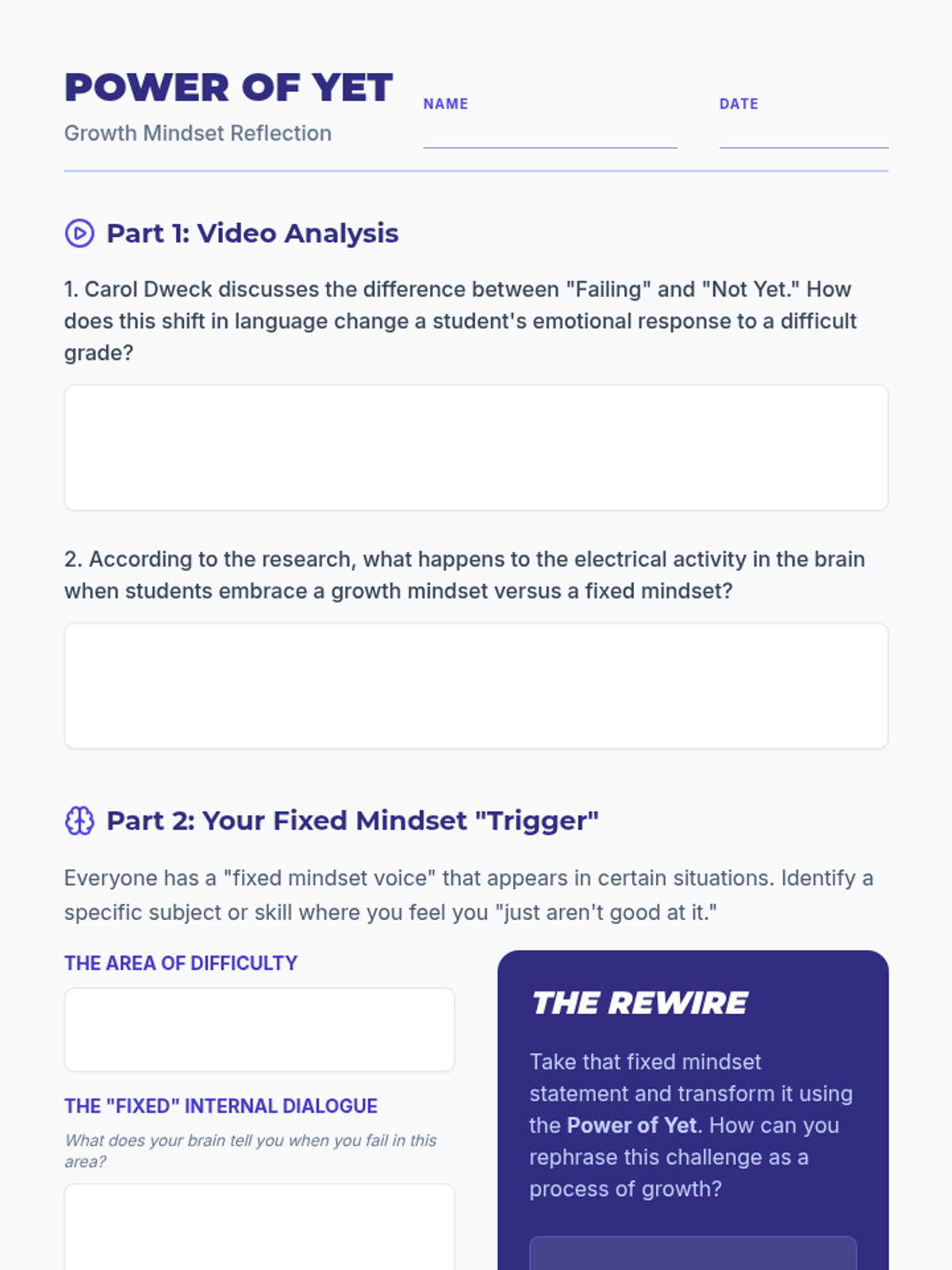
A student reflection worksheet designed for high schoolers to analyze Carol Dweck's research and perform a personal inventory of their fixed mindset triggers, concluding with a concrete growth action plan.
An expanded high-impact 7-slide visual presentation for high school students. Features Carol Dweck's research, famous growth mindset examples, and neuroplasticity fundamentals. All text optimized for readability with a minimum 24px font size.
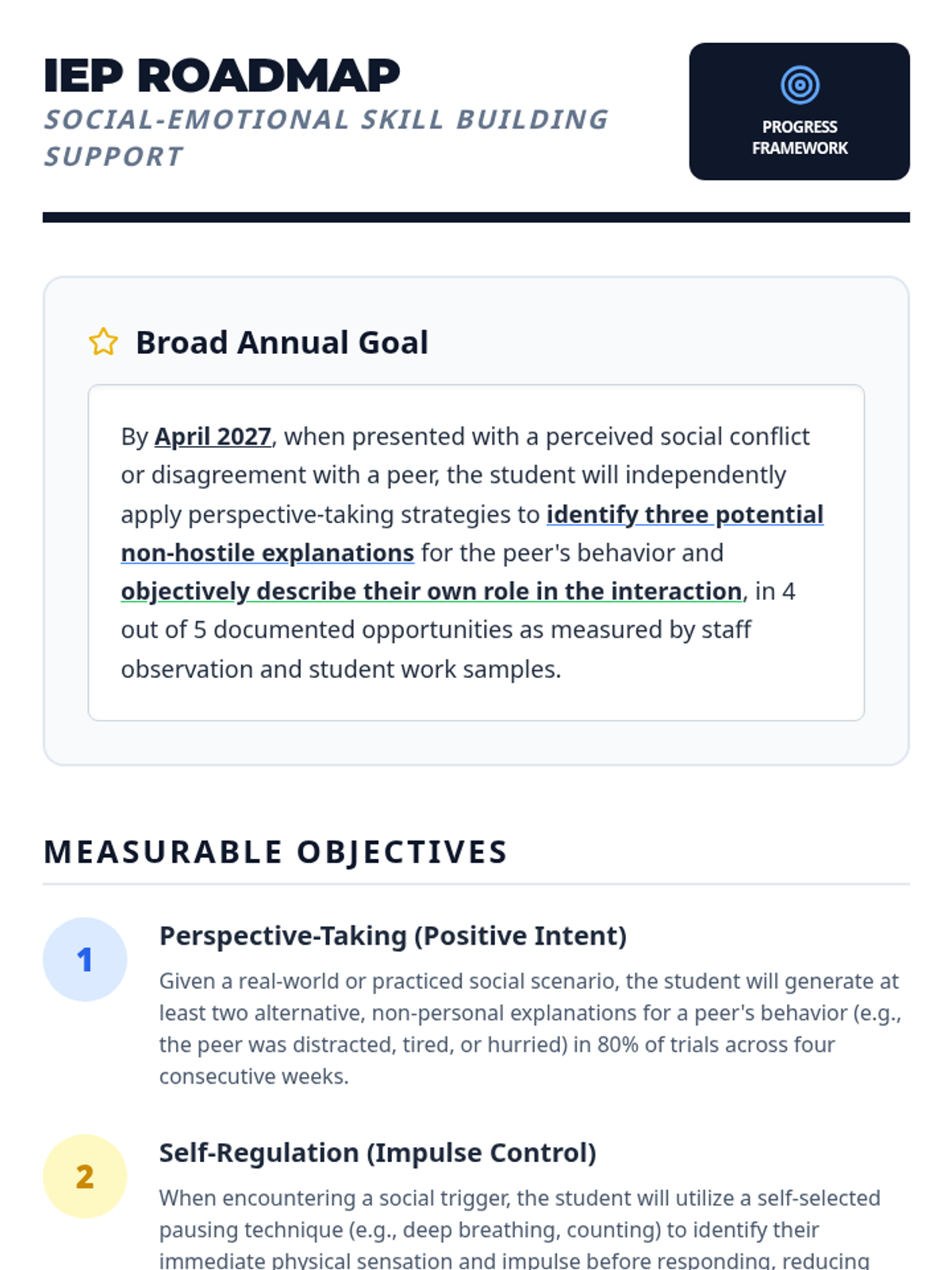
A finalized IEP Roadmap with generalized skill-building language for perspective-taking, self-regulation, and objective self-reflection, designed to support students with social perception challenges.
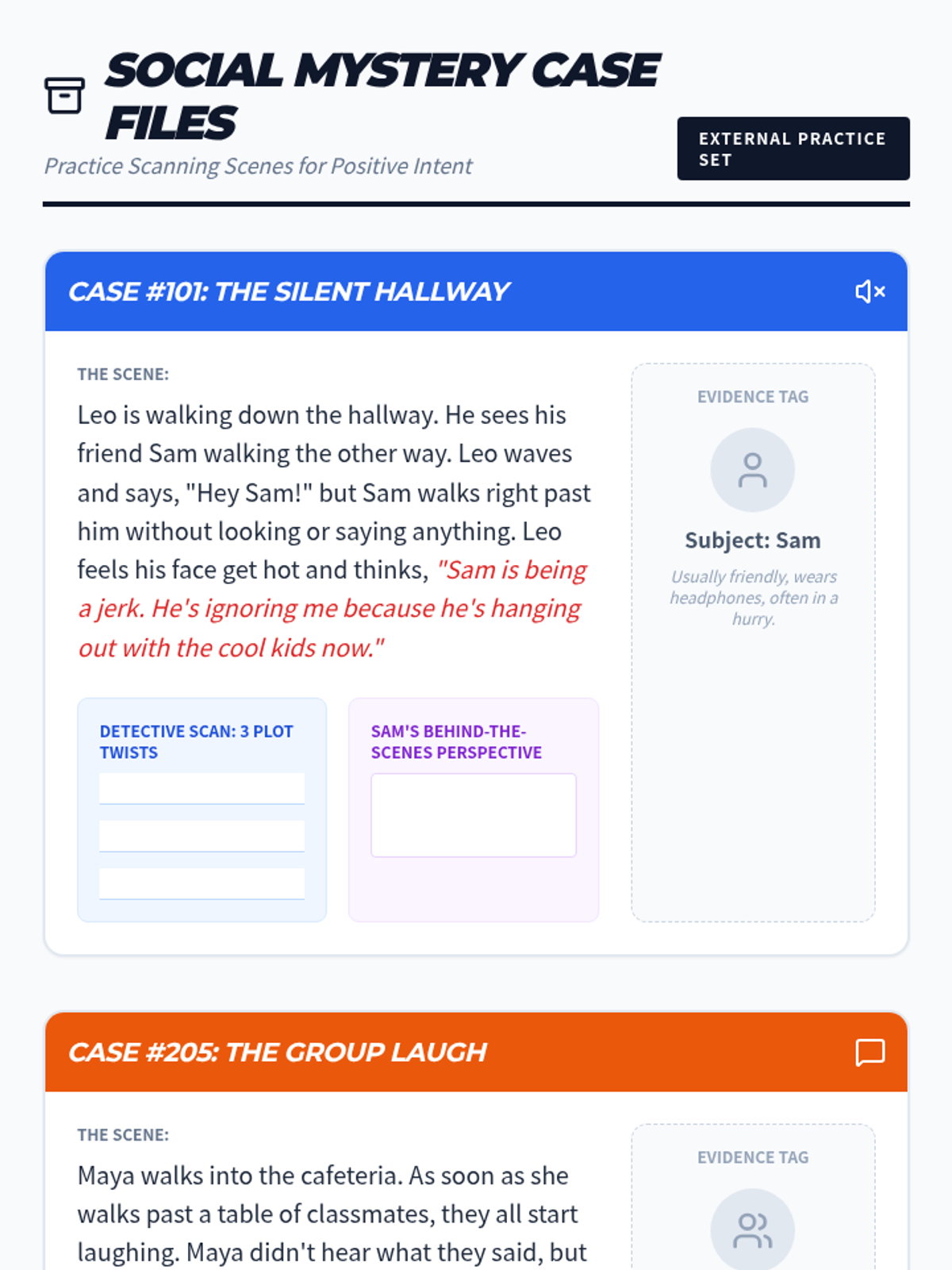
A multi-page set of 'Social Mystery Case Files' with four distinct practice scenarios. Each case includes a 'The Scene' description, an 'Evidence Tag' with extra clues, and space for students to brainstorm three 'Plot Twists' (positive intent explanations) and analyze the situation from an objective 'Camera View'.
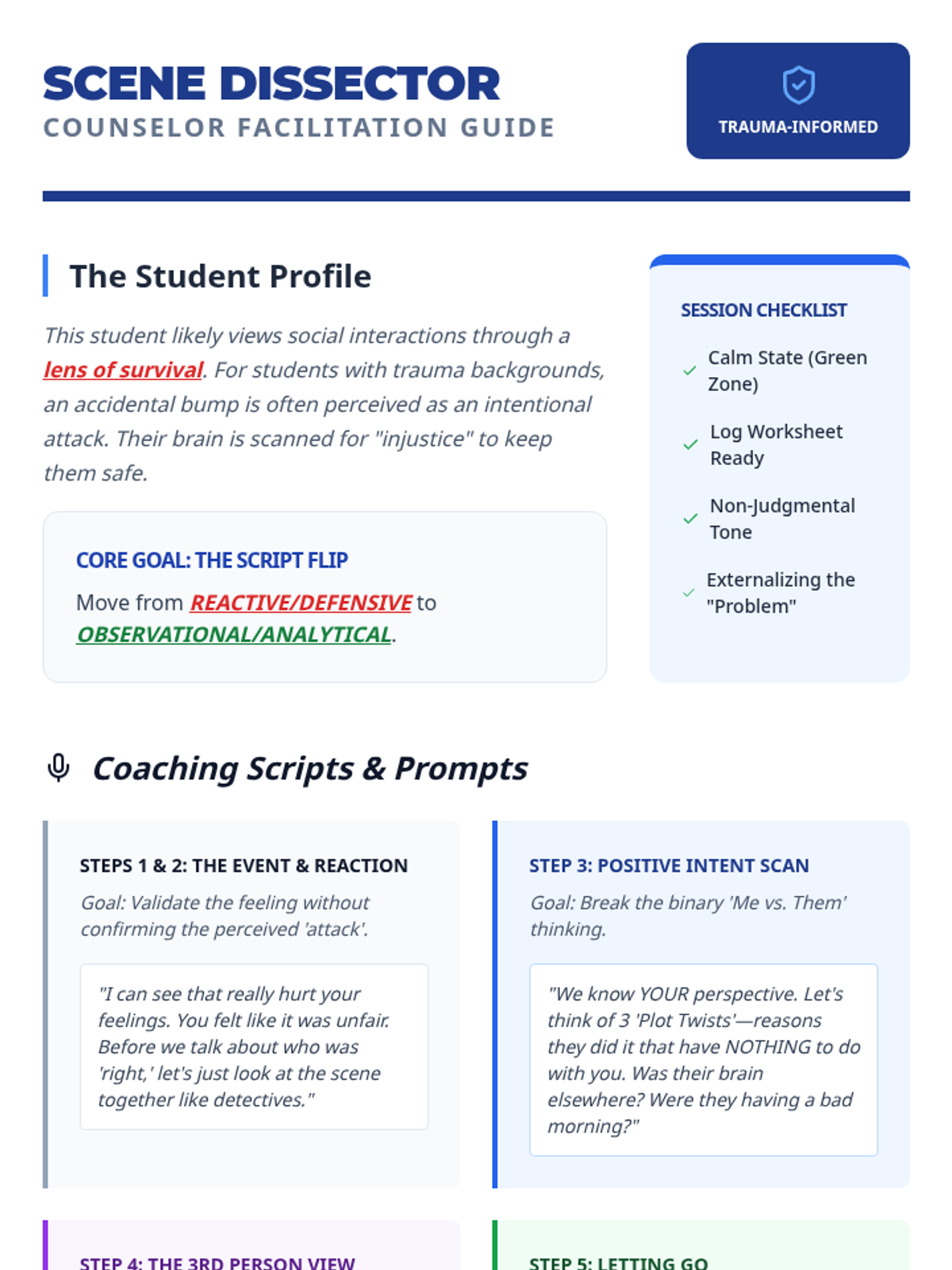
A facilitation guide for counselors to assist students in social interaction 'dissection'. It includes trauma-informed context, specific coaching scripts for each step of the 'Scene Scanners' process, and a metaphorical physical activity for addressing grudge-holding.
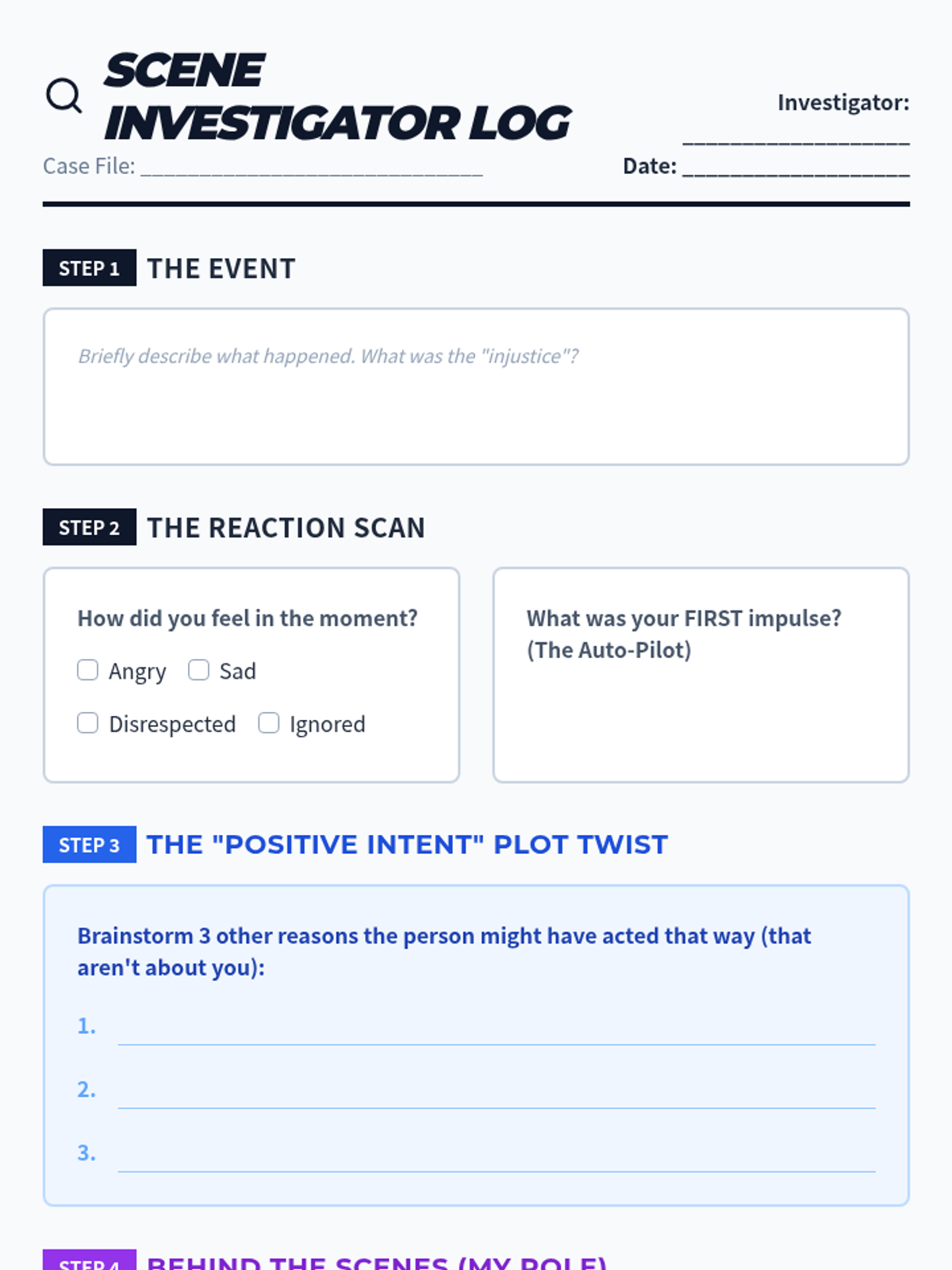
A student worksheet designed as an 'Investigator Log' to help students dissect social interactions. It prompts them to identify the event, their reaction, brainstorm positive intent, reflect on their own behavior, and consciously decide to let go of grudges.
A visual slide deck teaching the 'Scene Scanners' methodology for social interaction analysis. It focuses on assuming positive intent, using a '3-second brake' for impulse control, and understanding the personal weight of holding grudges.
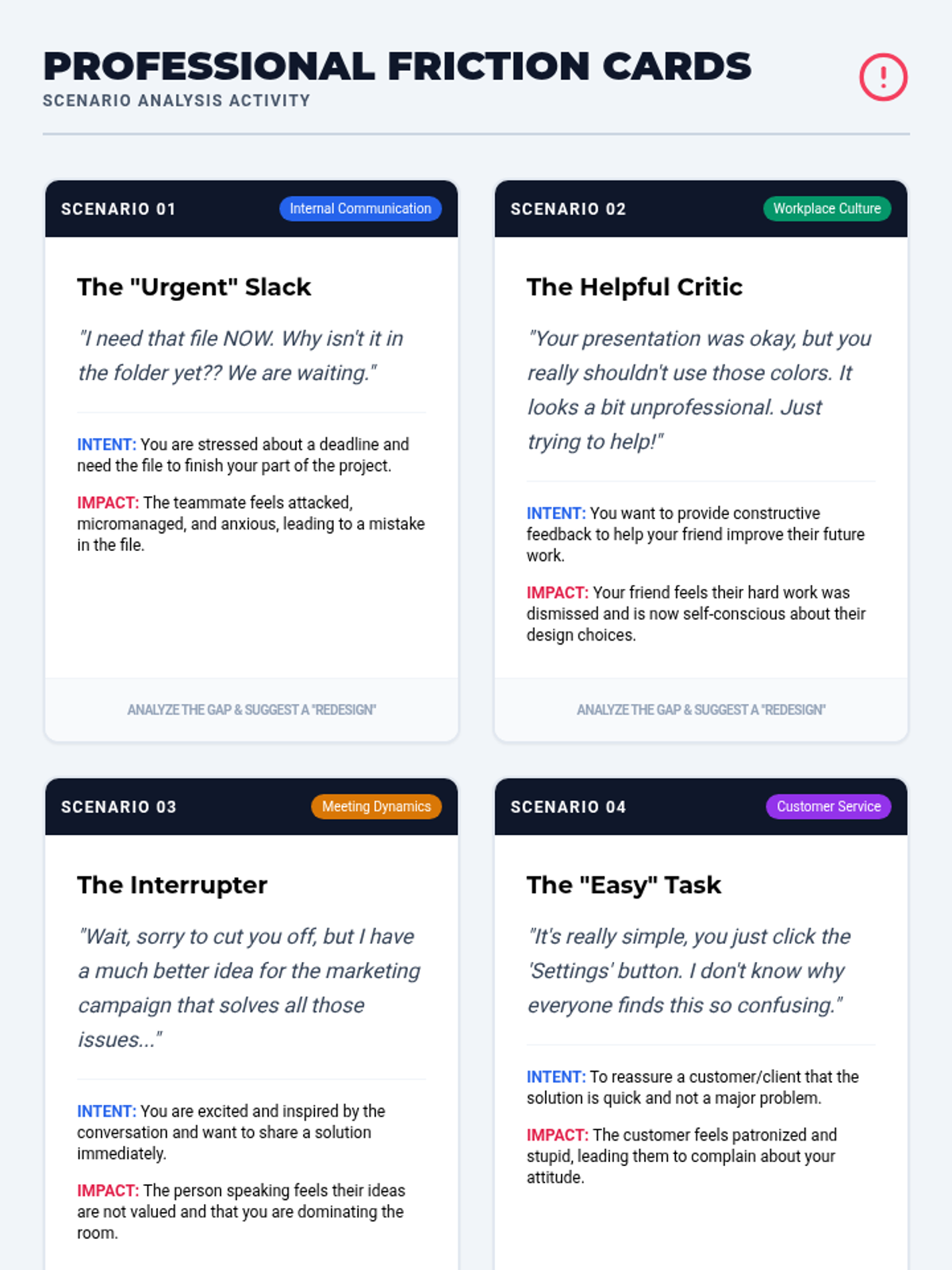
A set of four professional communication scenario cards for high school students. Each card features a common workplace "friction" moment, highlighting the gap between intent and impact for analysis and practice.
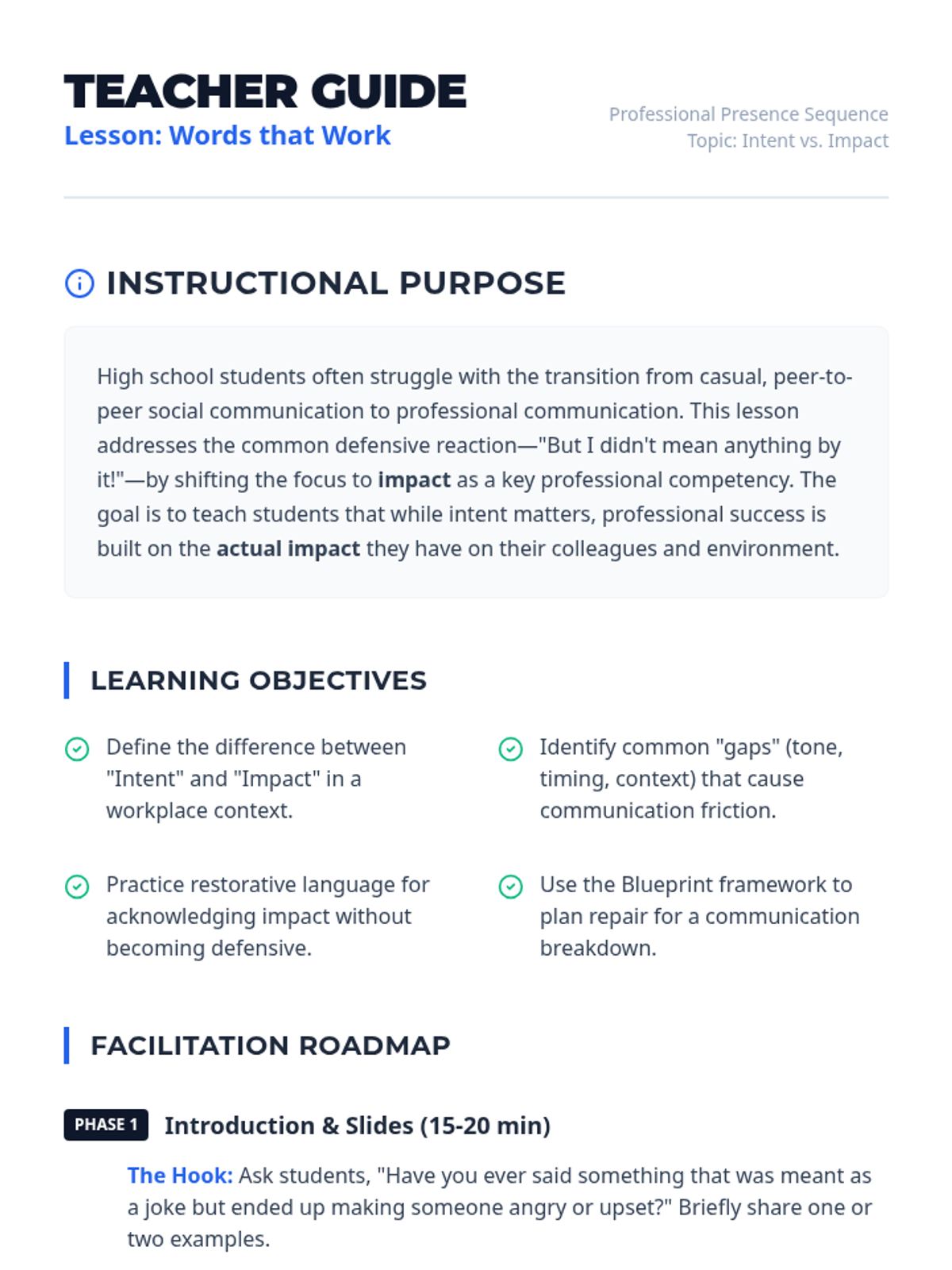
A comprehensive facilitation guide for teachers leading the "Words that Work" lesson. Includes instructional strategies, restorative practice notes, and discussion prompts for high school students.
A professional development slide deck for high school students introducing the concept of "intent vs. impact." Includes scenario analysis and a step-by-step guide to restorative workplace communication.
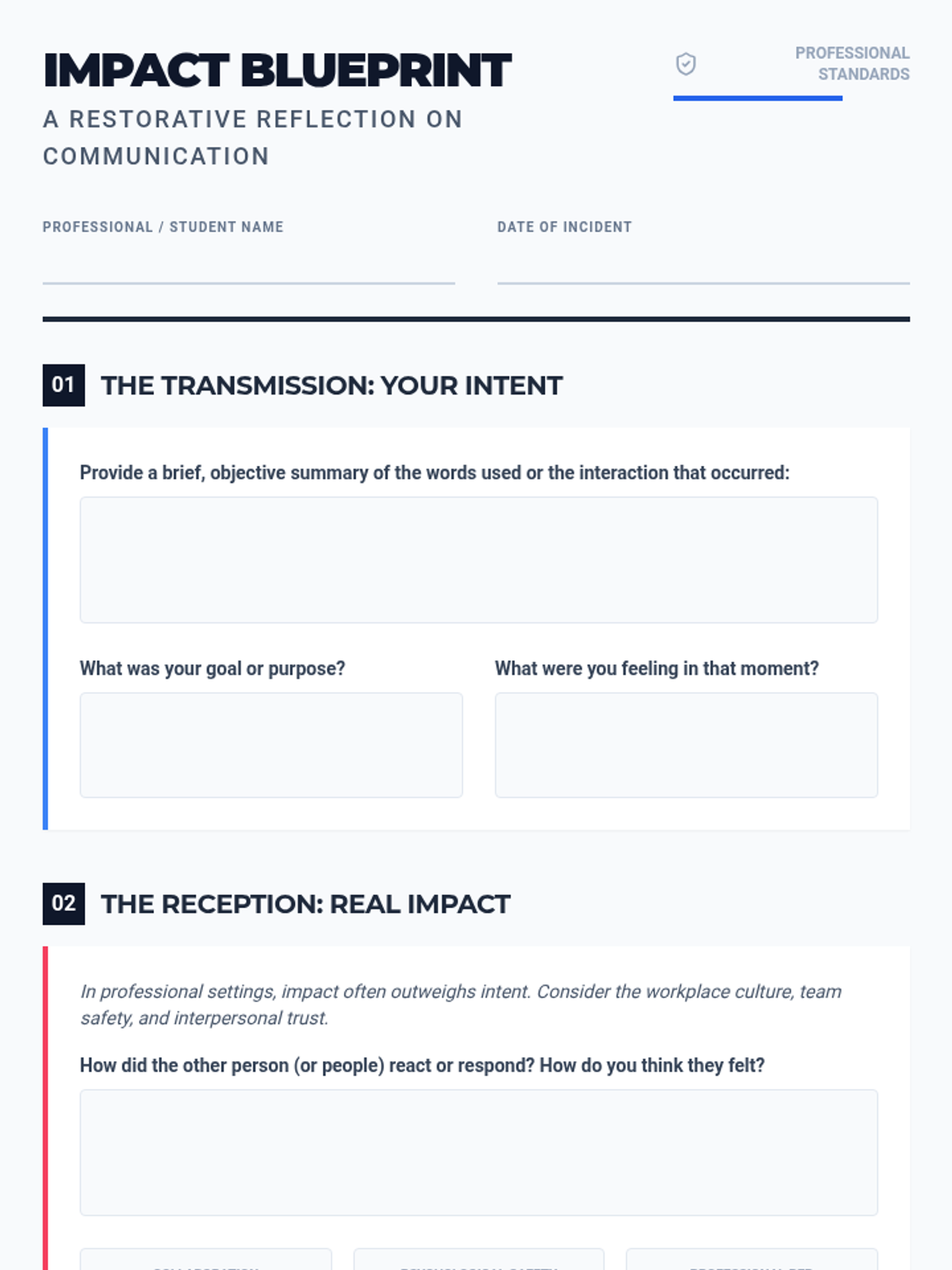
A restorative reflection worksheet for high school students focusing on the "intent vs. impact" framework in professional and soft skills contexts. The design uses a clean, industrial "blueprint" aesthetic to help students objectively analyze communication gaps and plan for repair.
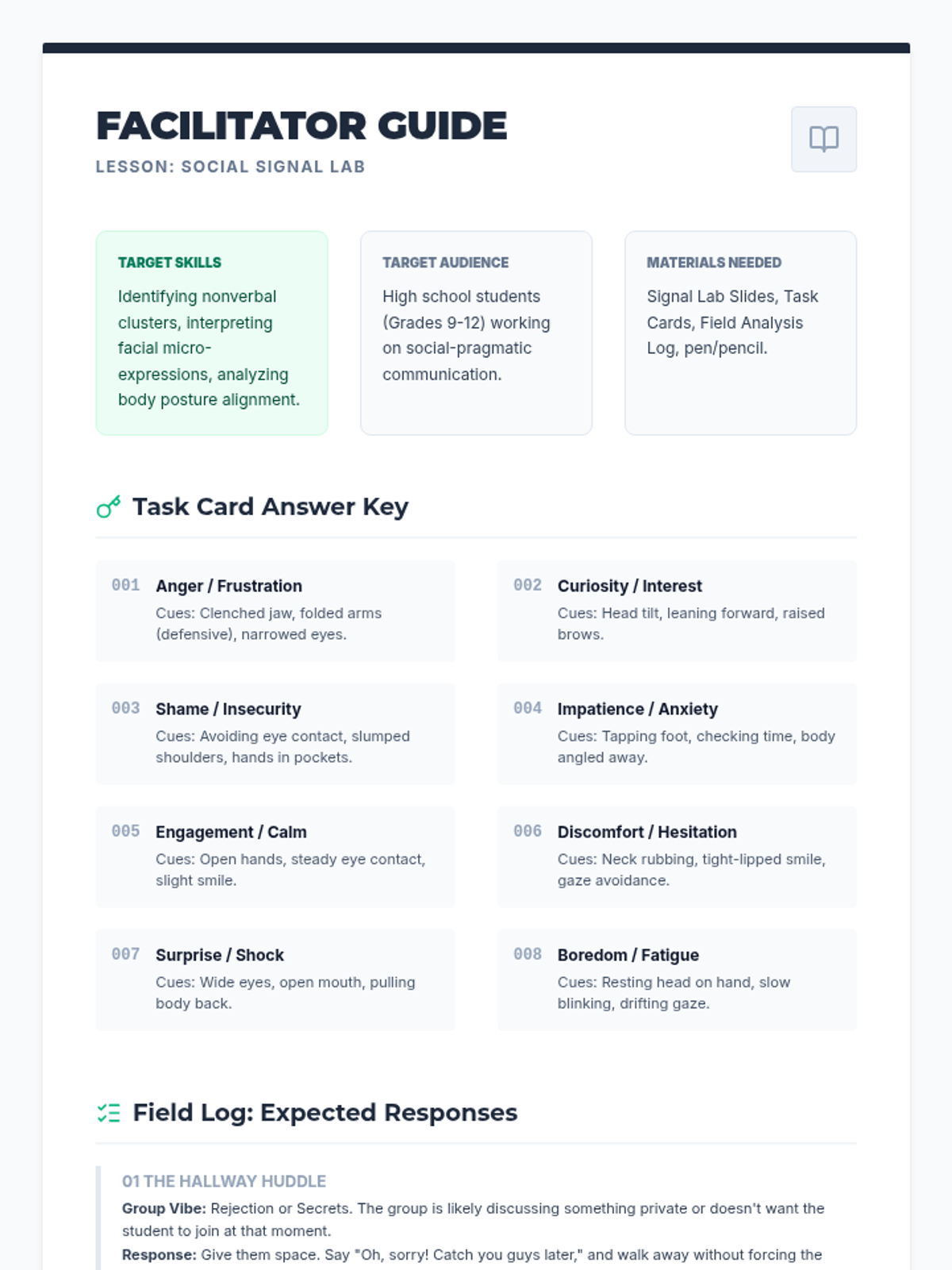
A comprehensive facilitator guide for the Social Signal Lab lesson, including answer keys for task cards and worksheets, instructional goals, and extension activity suggestions.
A visual presentation deck designed to introduce high schoolers to the core concepts of nonverbal communication, specifically facial markers and body posture clusters.
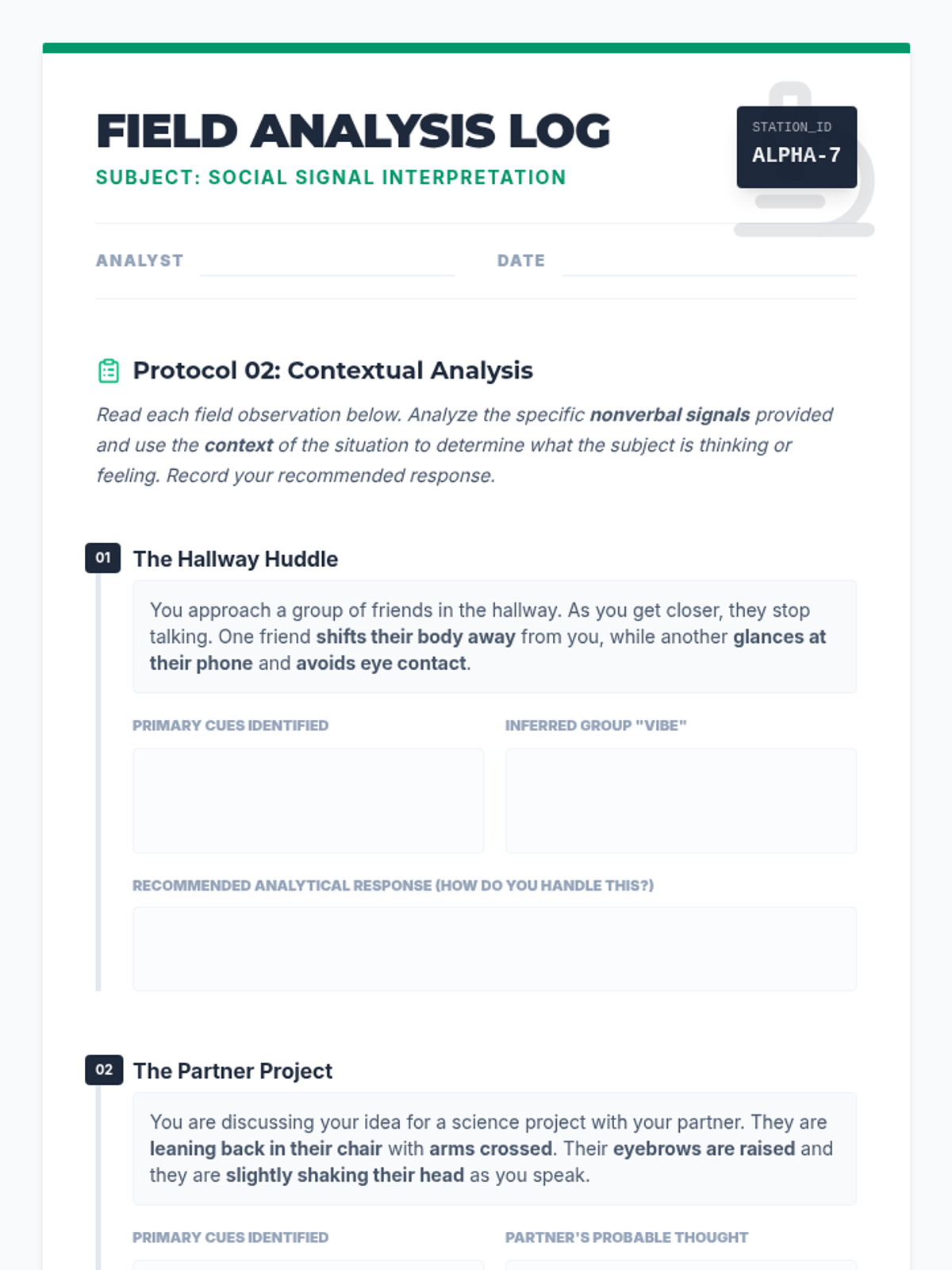
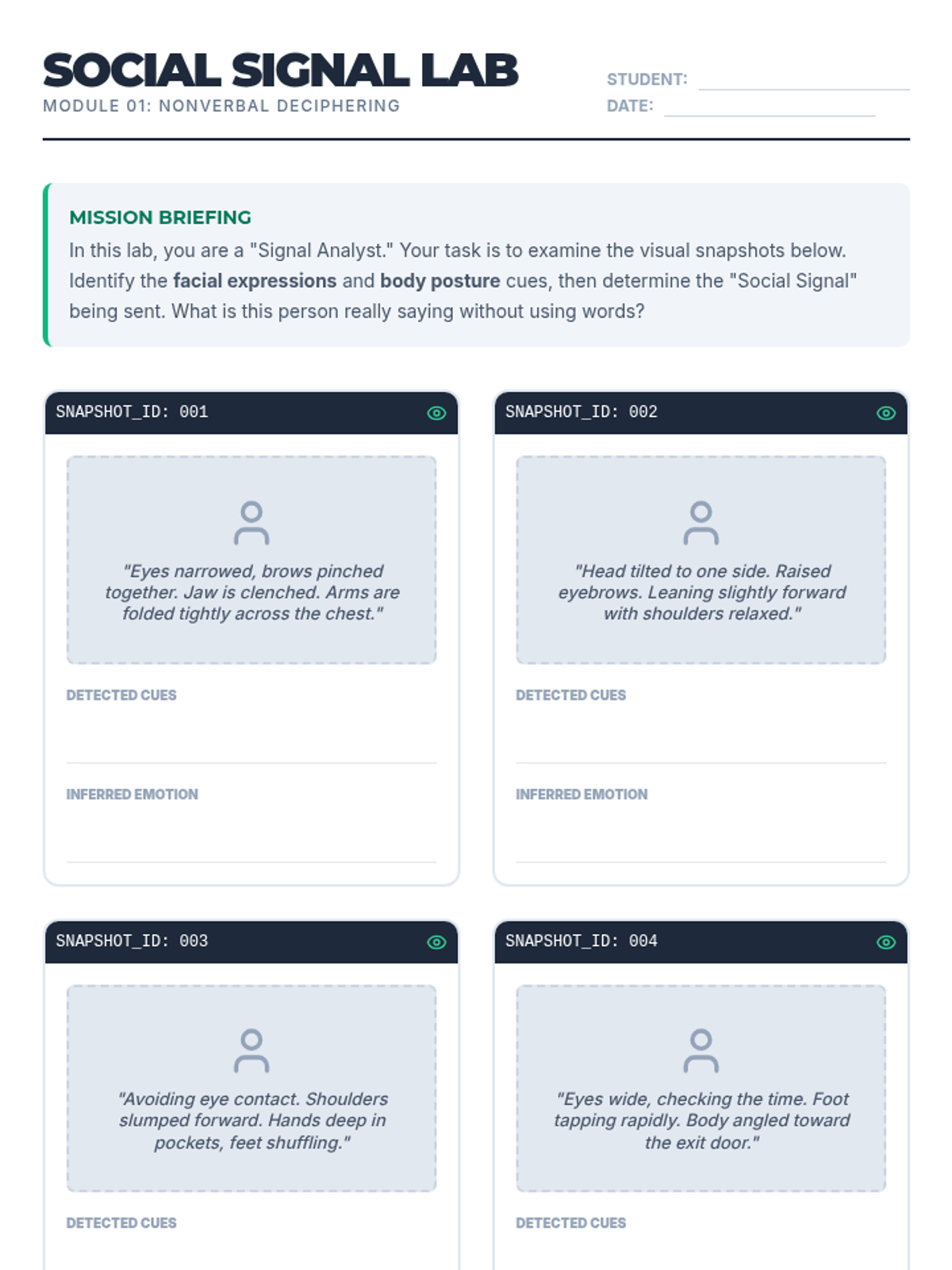
A scenario-based worksheet where students analyze social situations and identify facial expressions and body posture cues to infer emotions and determine appropriate responses.
A set of 8 photo-description task cards designed to help high school students identify facial expressions and body posture cues in social snapshots.
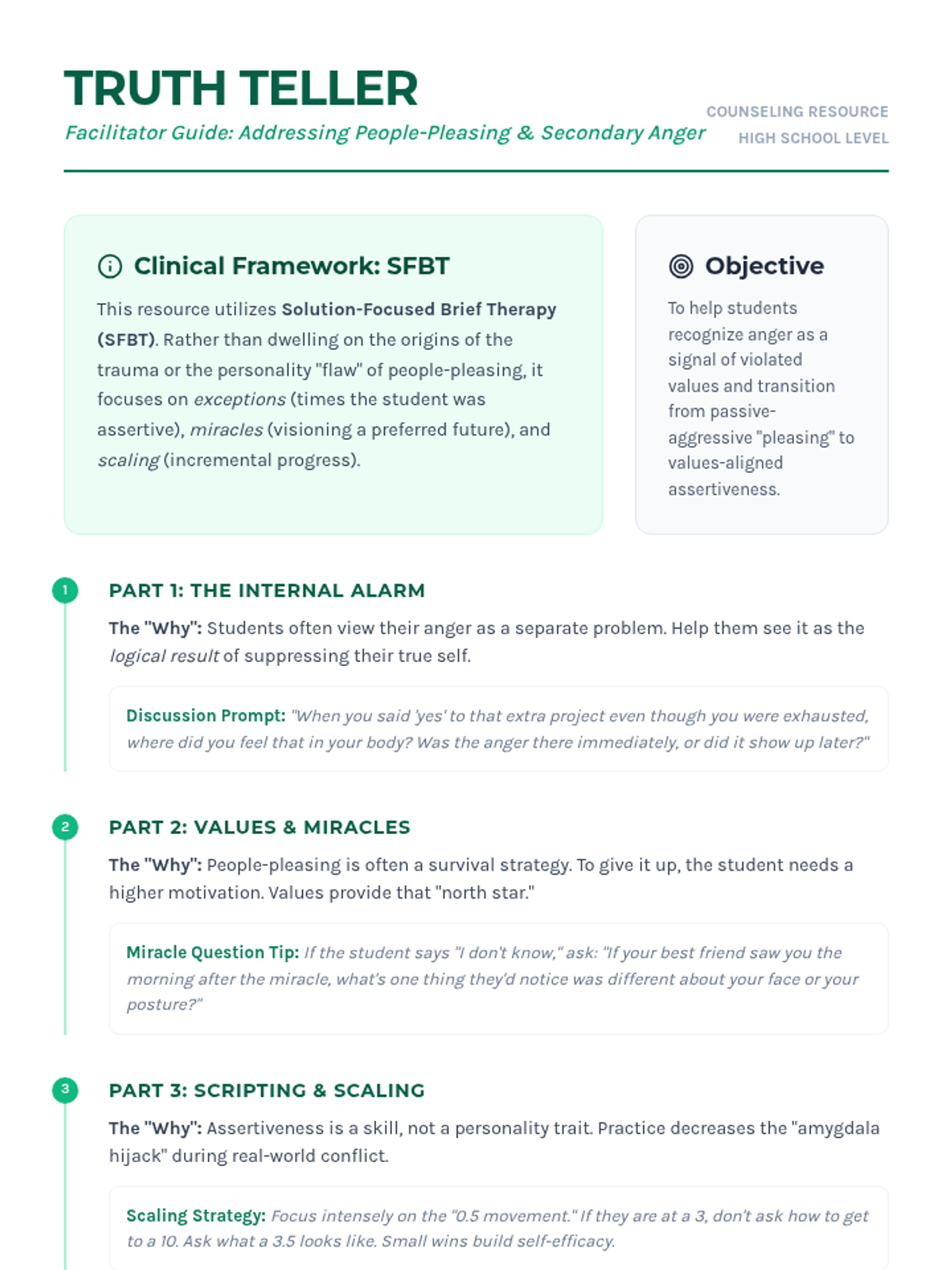
A teacher/facilitator guide for "The Truth Teller Worksheet," providing clinical context on the SFBT framework, discussion prompts, and strategies for navigating common student roadblocks with people-pleasing and anger.
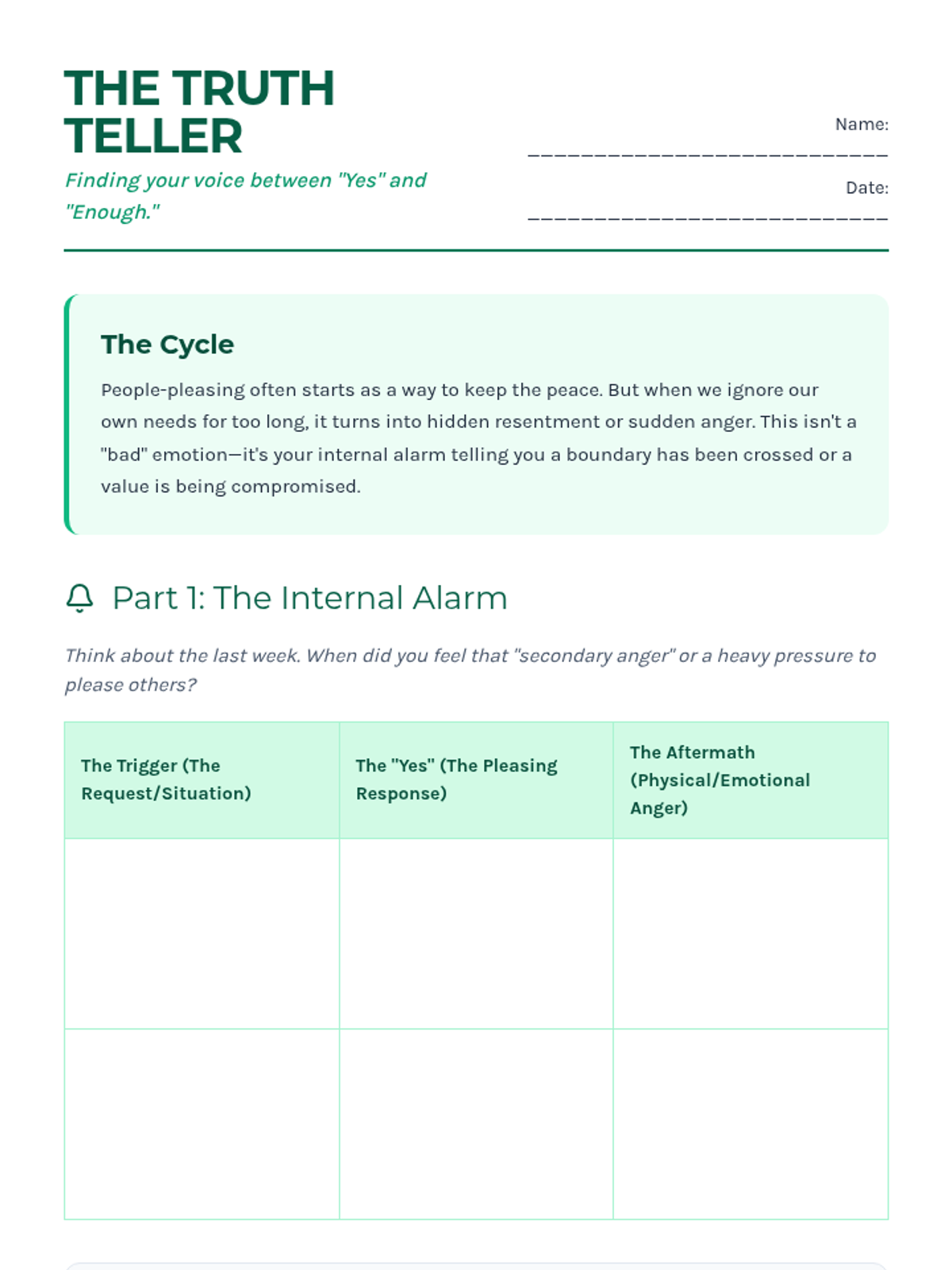
A 3-page comprehensive reflection worksheet for high school students using a Solution-Focused framework to address people-pleasing and secondary anger. It includes trigger tracking, values alignment, assertiveness script practice, and SFBT scaling questions.
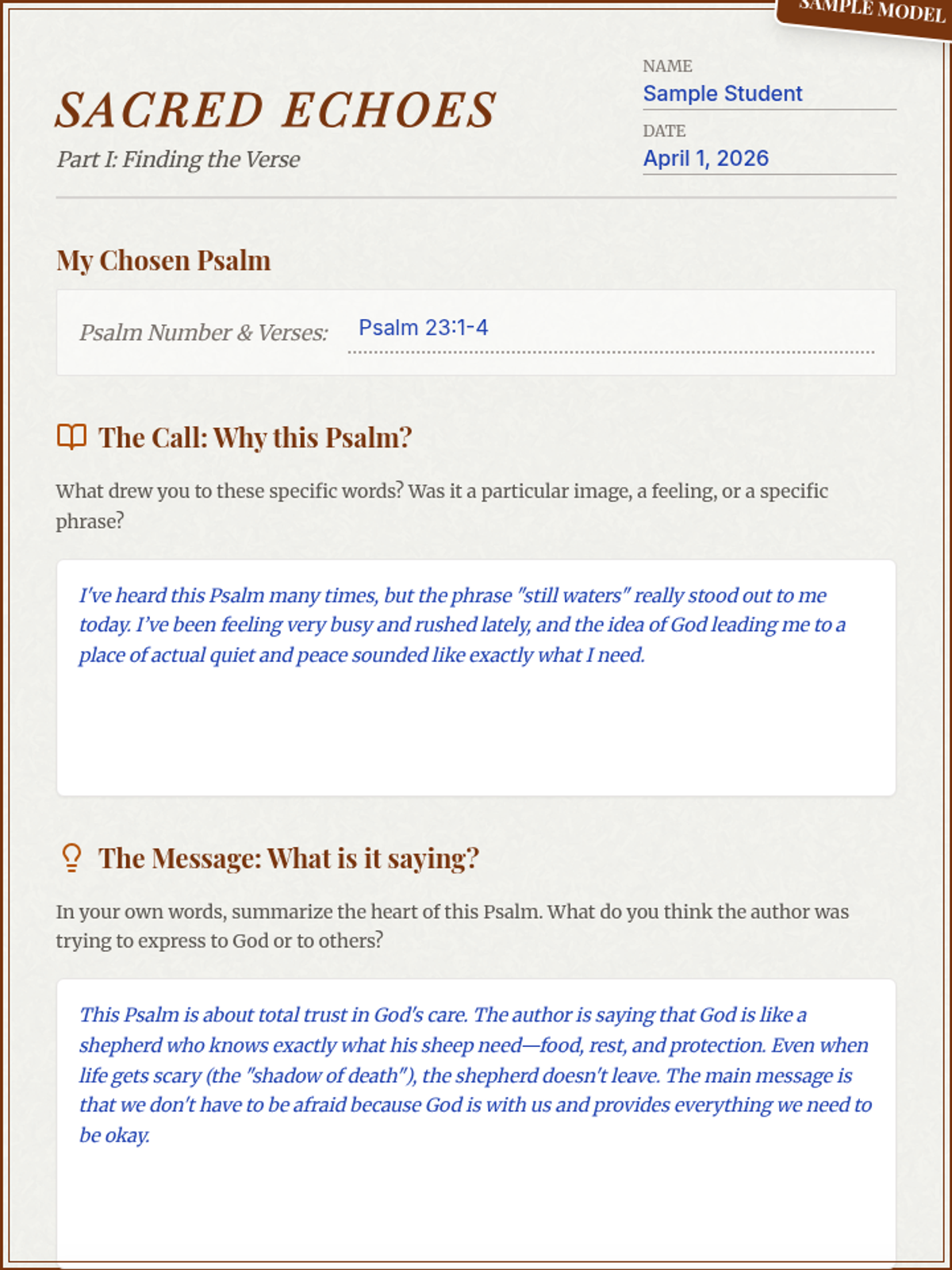
A sample completed version of the Sacred Echoes reflection worksheet using Psalm 23. Expanded into two pages to match the updated worksheet format, providing a clear example of the depth expected in each section.
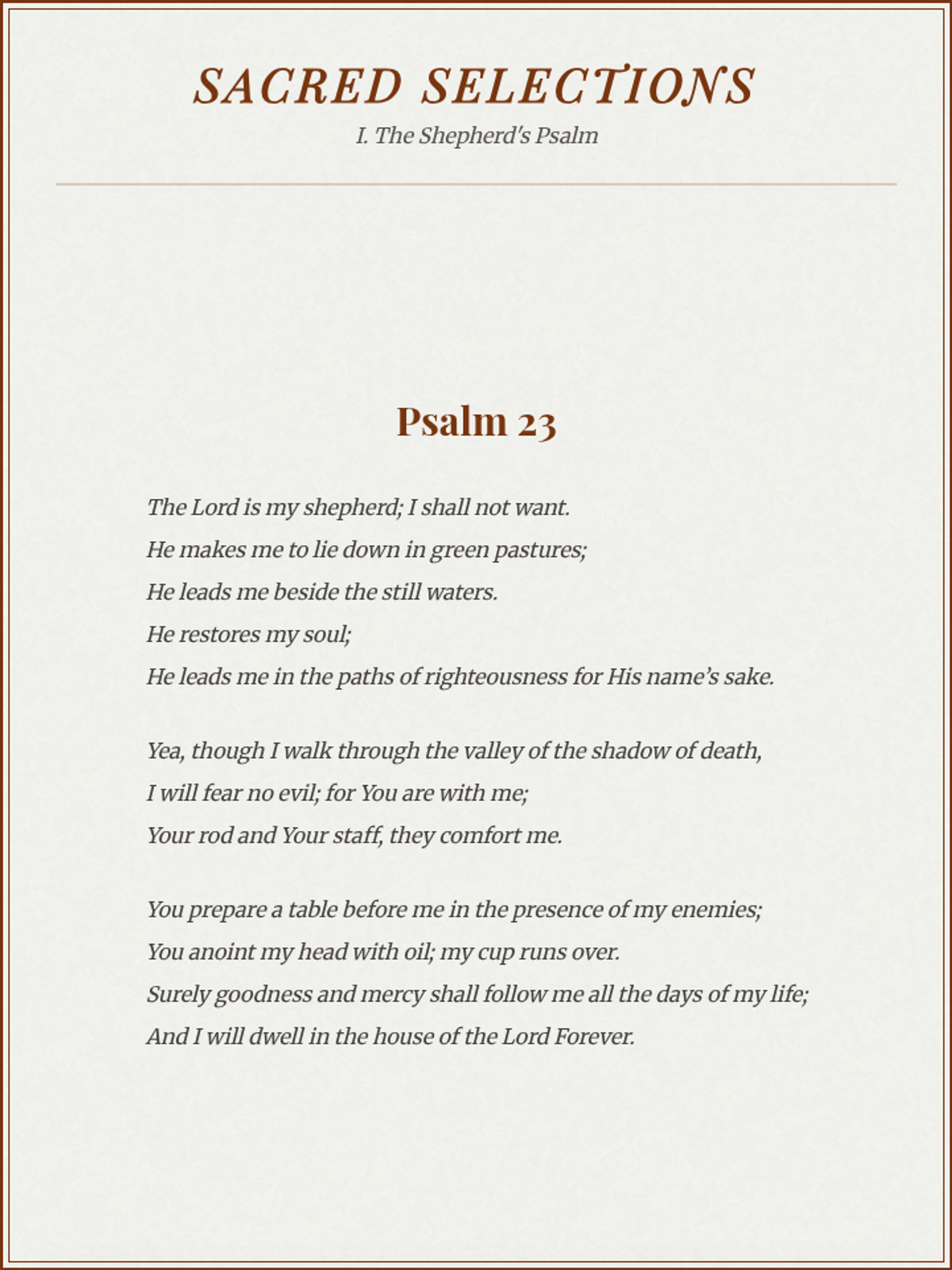
A collection of popular Psalms (23, 121, and excerpts from 46) provided as a reference handout. Each Psalm now starts on its own fresh page for clarity and easier reading.
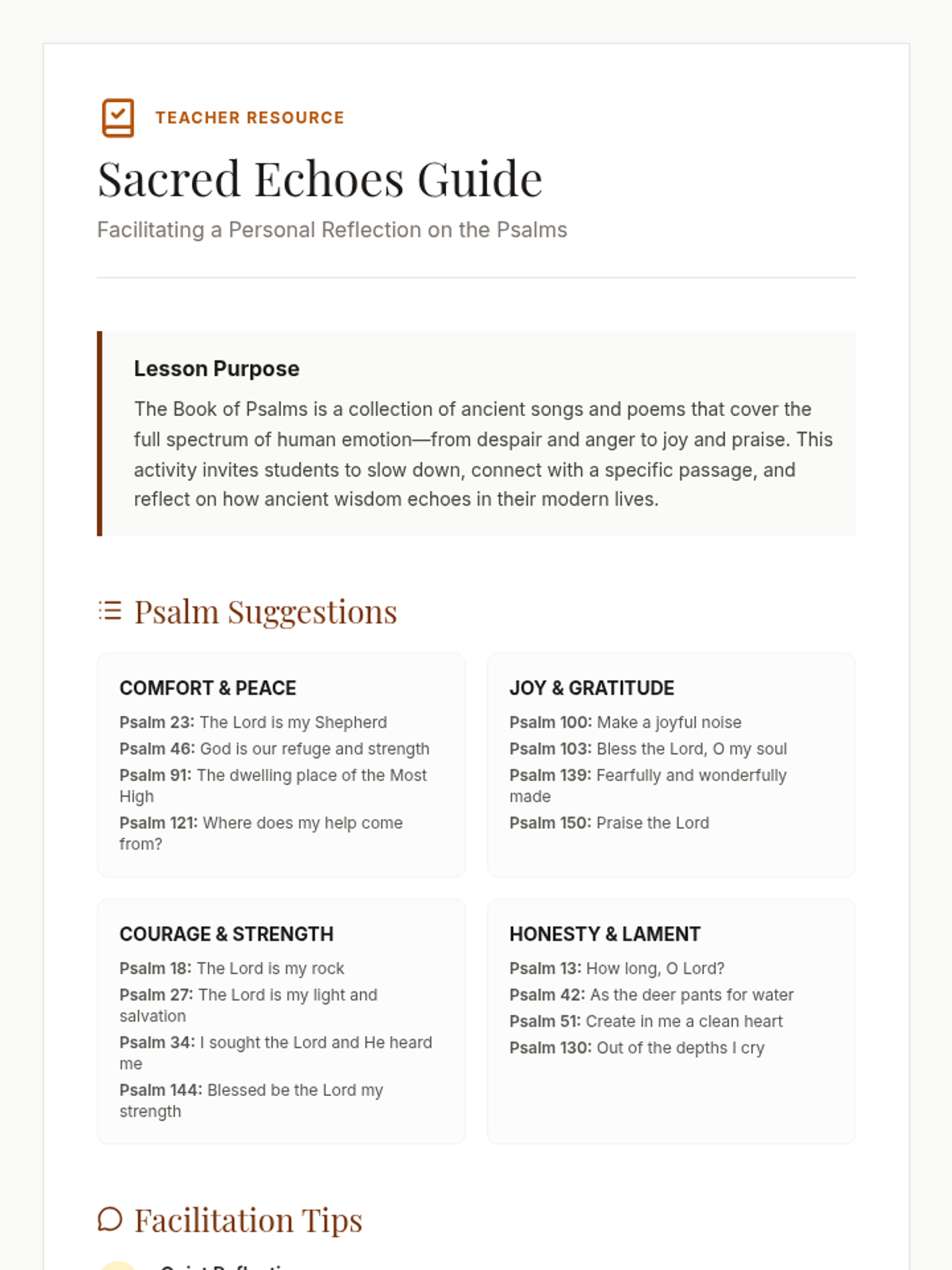
A comprehensive teacher's guide for the Sacred Echoes lesson. Includes a thematic list of suggested Psalms, facilitation tips for guiding student reflection, and meaningful discussion prompts to deepen the conversation.
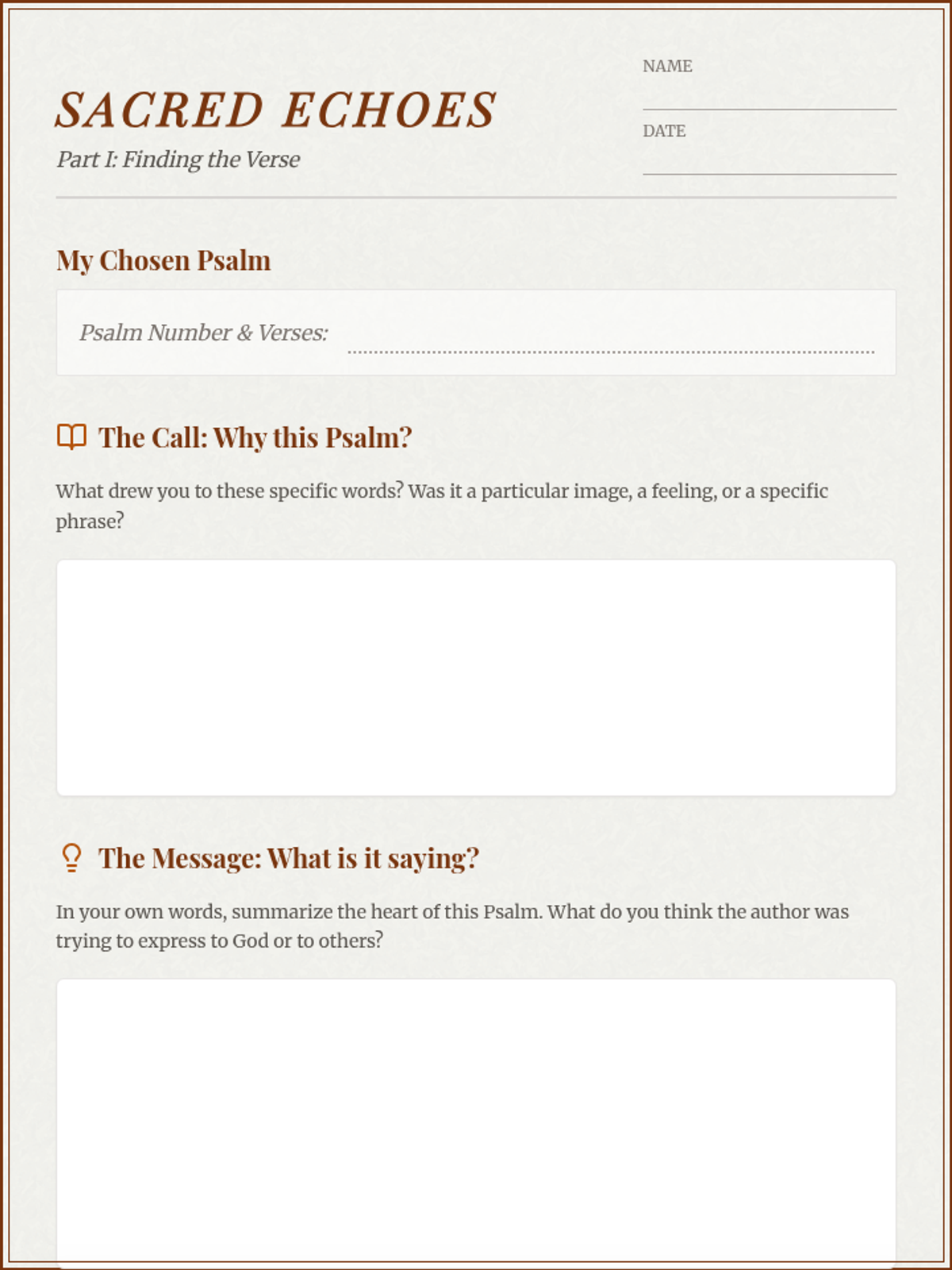
A beautifully designed personal reflection worksheet for students to analyze a chosen Psalm. Includes sections for explaining the choice, summarizing the message, connecting it to personal feelings, and providing a creative visual response. Now expanded into two distinct pages for more writing and drawing space.
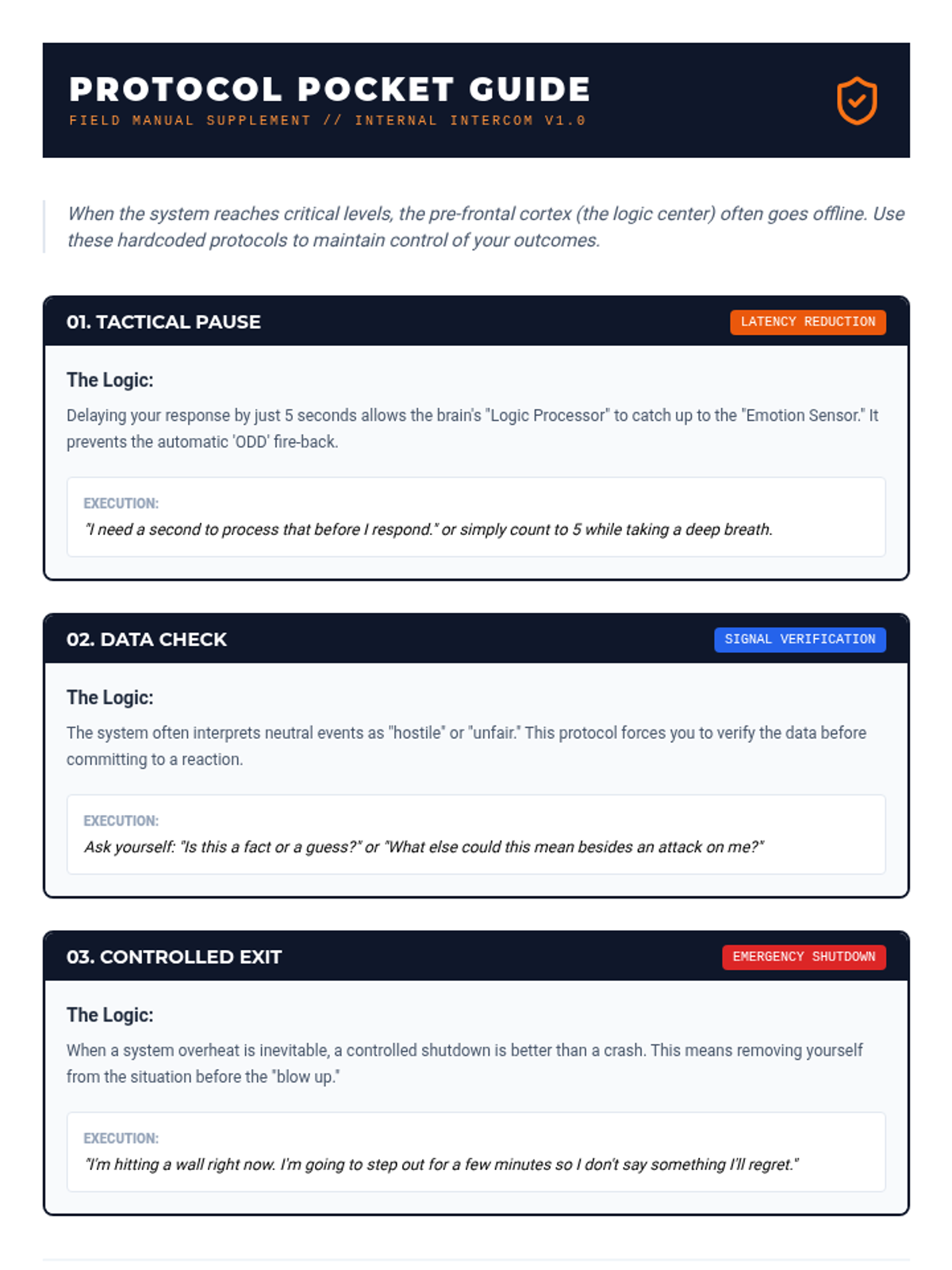
A practical, pocket-sized reference guide for students summarizing the three core emotion regulation protocols (Tactical Pause, Data Check, and Controlled Exit).
A vibrant slide deck for the Sisterhood Circle workshop, breaking down friendship profiles and exploring themes of Black girlhood and community. Revised for accessibility with minimum 24px font sizes.
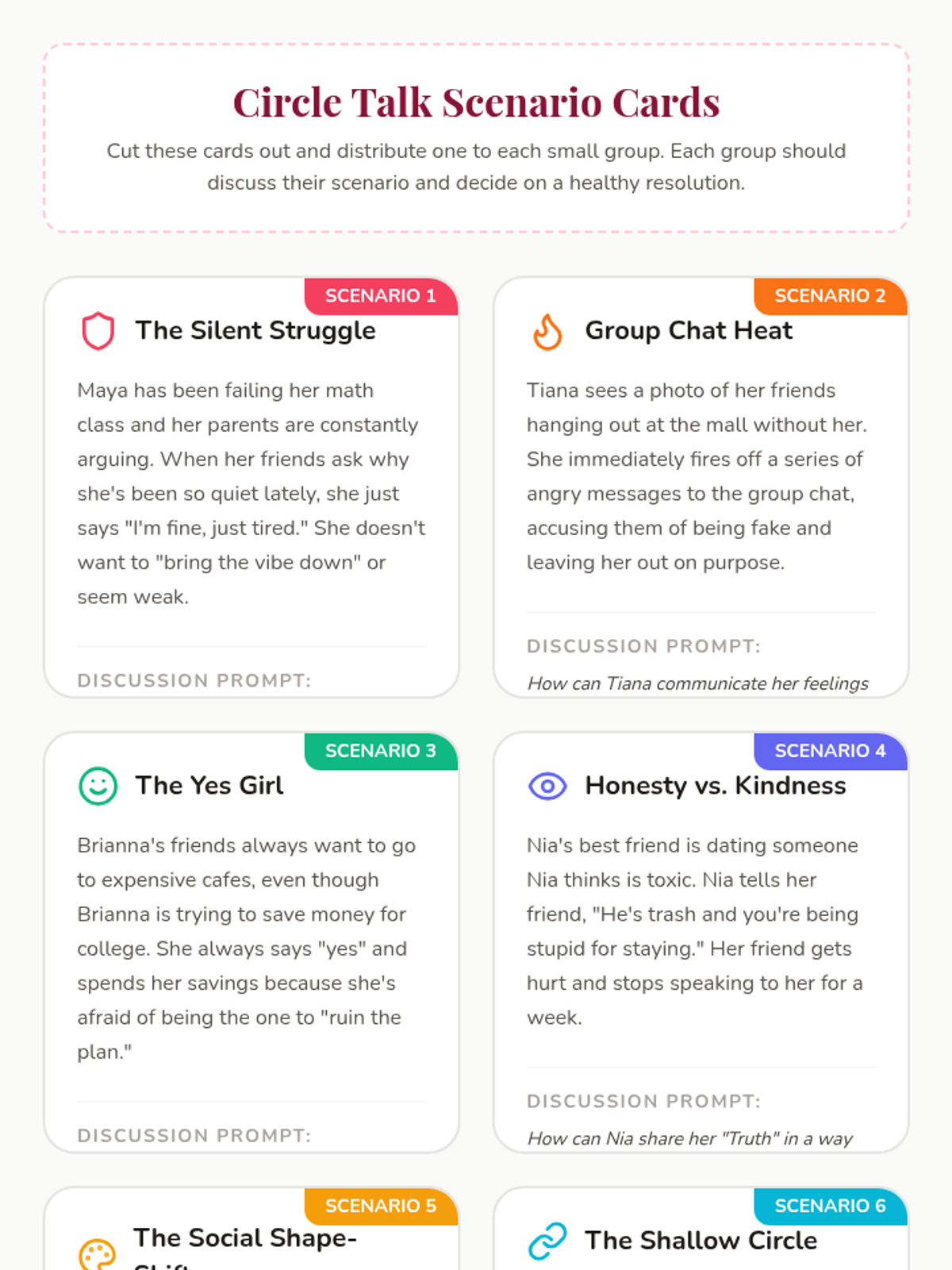
A set of scenario cards for small group discussion, highlighting different friendship profiles and challenges in Black girlhood friendships.
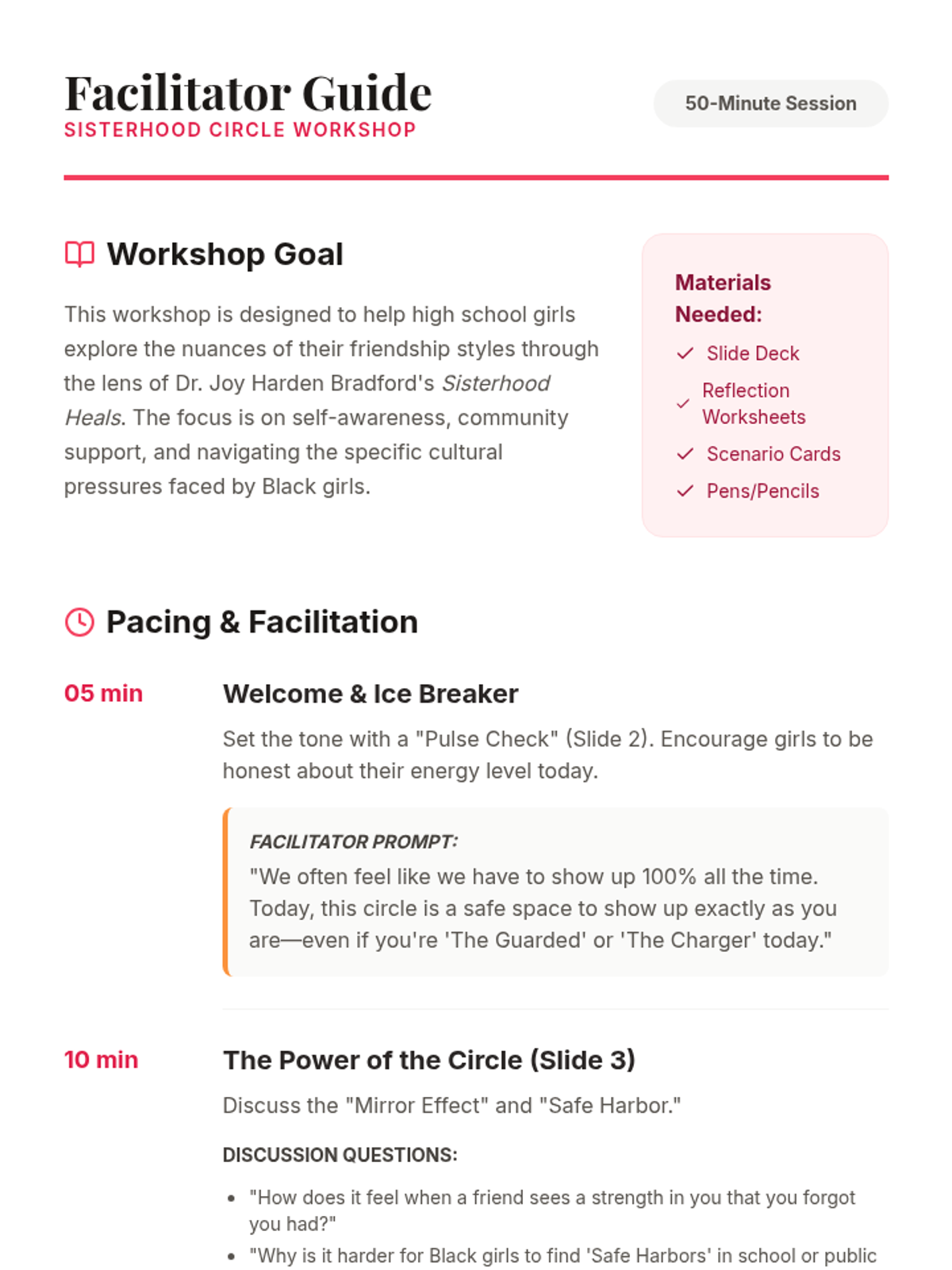
A comprehensive facilitator guide for the Sisterhood Circle workshop, including pacing, discussion prompts, and facilitation tips for high school girls.
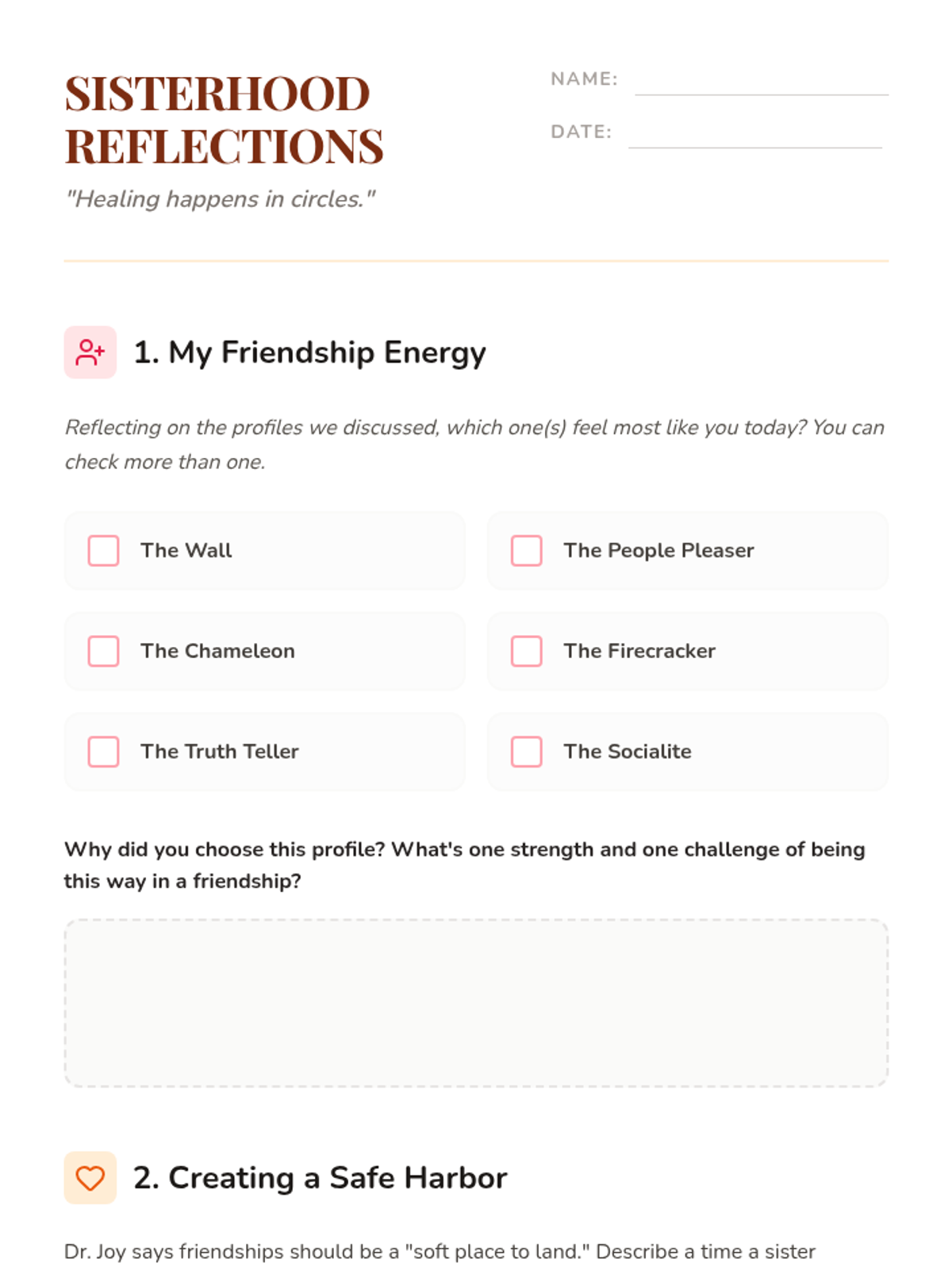
A personal reflection worksheet for students to self-identify their friendship profiles and reflect on their support systems.
A vibrant slide deck for the Sisterhood Circle workshop, breaking down friendship profiles and exploring themes of Black girlhood and community.
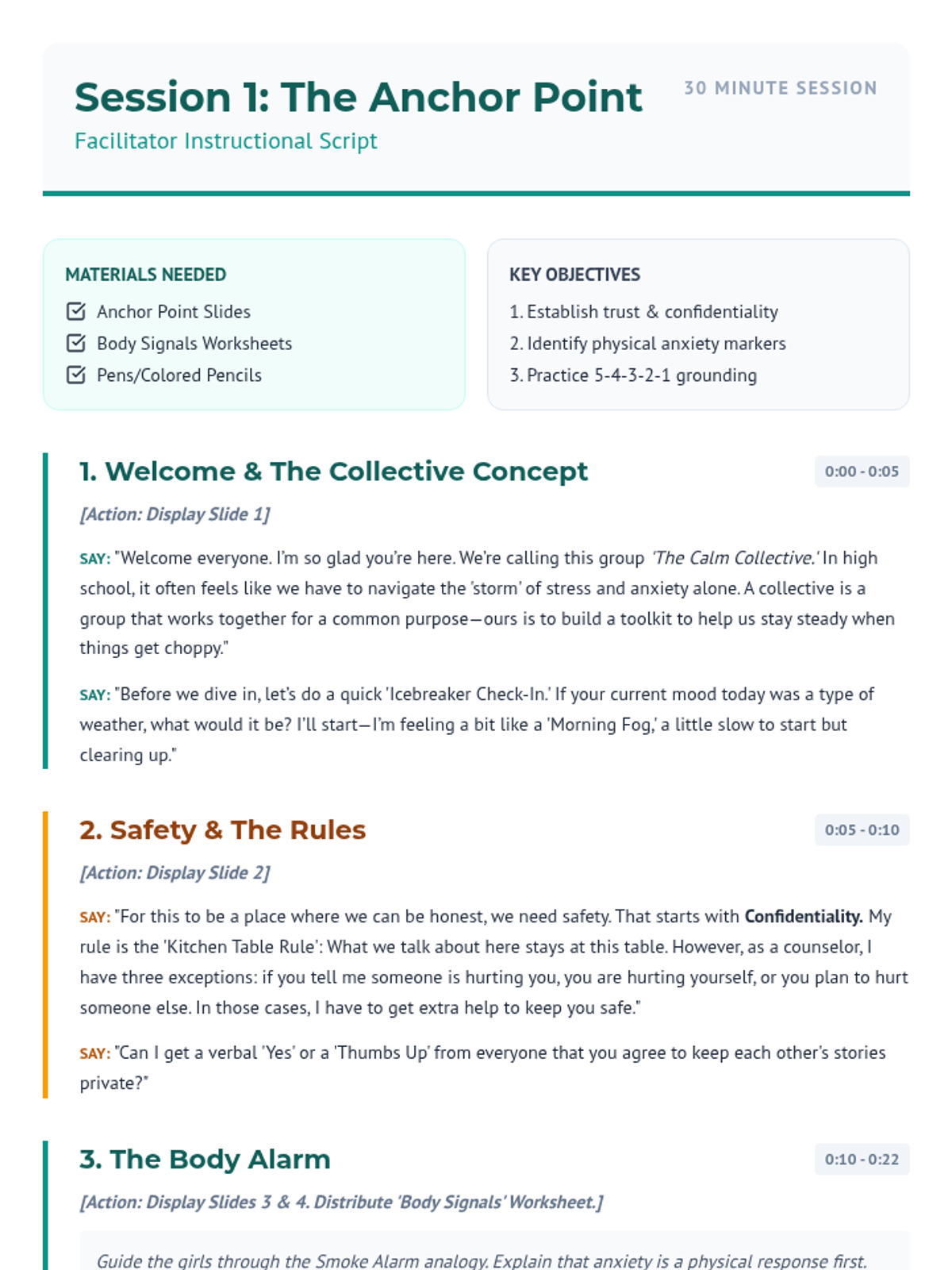
A detailed facilitation script for the first session of the Calm Collective, providing time-stamped sections, "what to say" prompts, and "what to do" instructions for the counselor.
A concluding slide deck for Session 4, providing reflection questions, growth mindset reinforcement, and a framework for maintaining long-term wellness after the group ends.
An instructional slide deck for Session 3, explaining sensory and cognitive coping strategies and guiding students through the "Coping Menu" selection process.
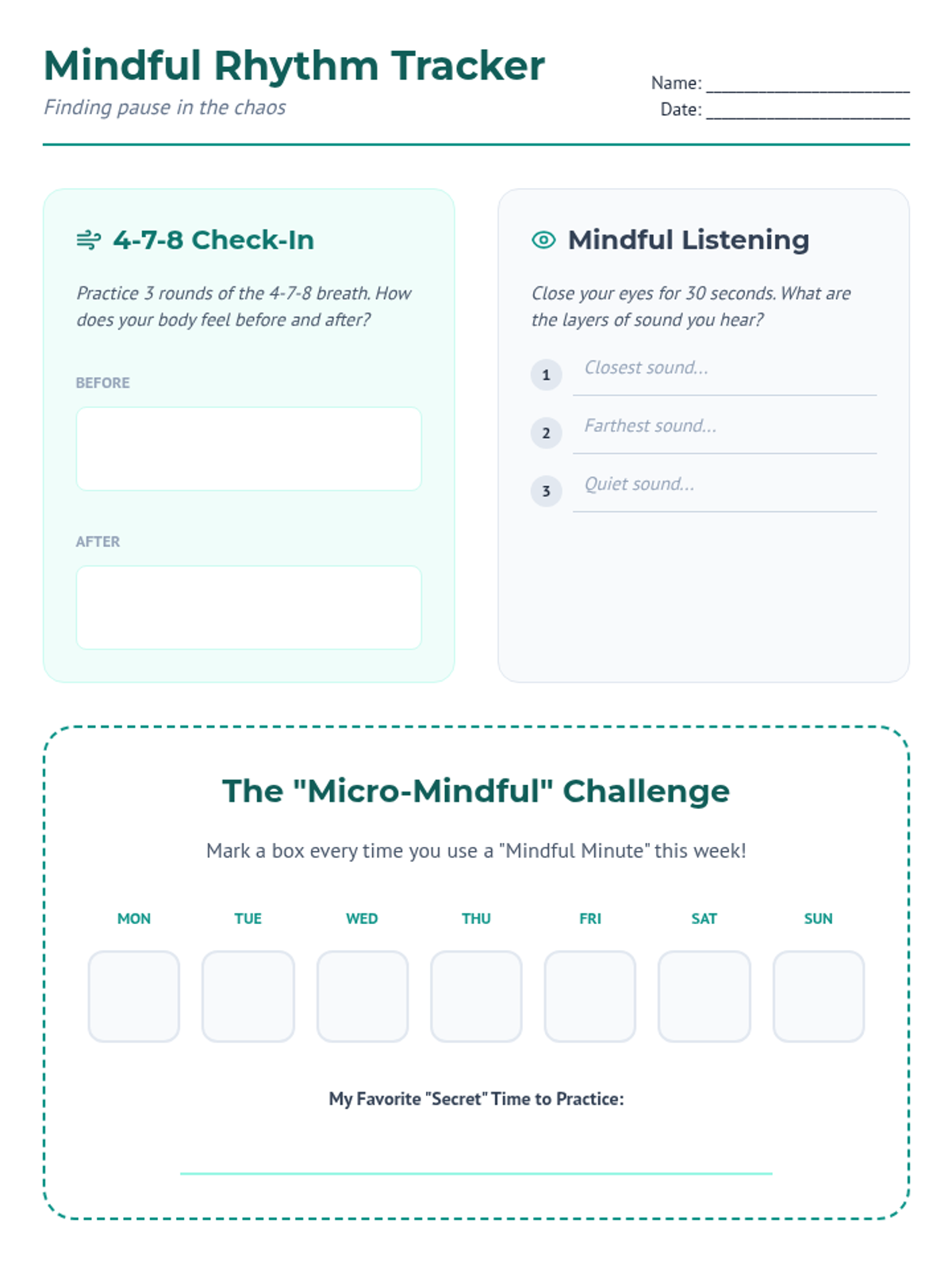
A student worksheet and weekly tracker for practicing 4-7-8 breathing and identifying "micro-mindfulness" moments throughout the school day.
Introductory slide deck for Session 1, covering group norms, confidentiality, defining anxiety, and the 5-4-3-2-1 grounding technique.
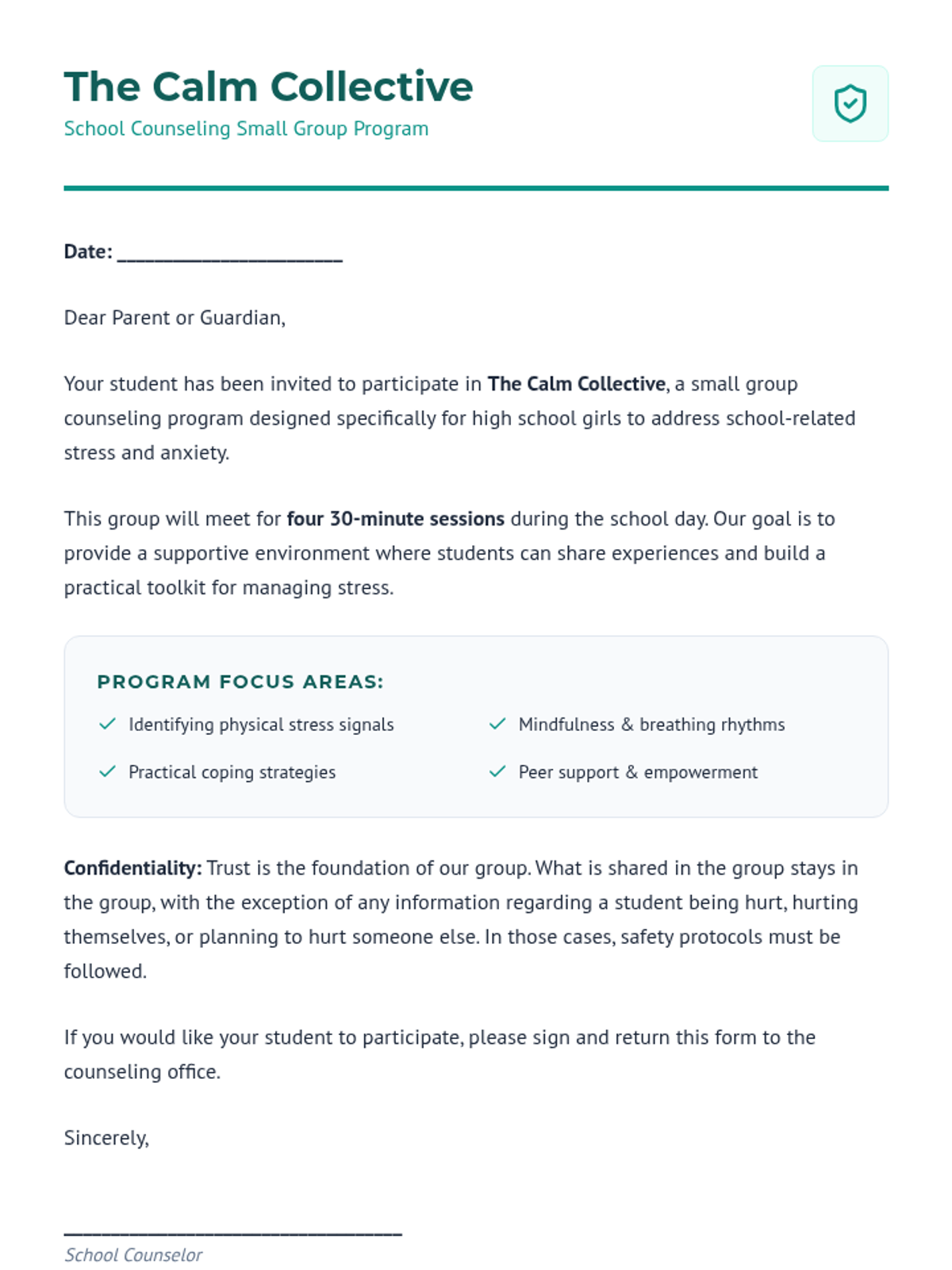
A professional parent permission and consent letter for The Calm Collective group, outlining program goals, confidentiality, and participation details.
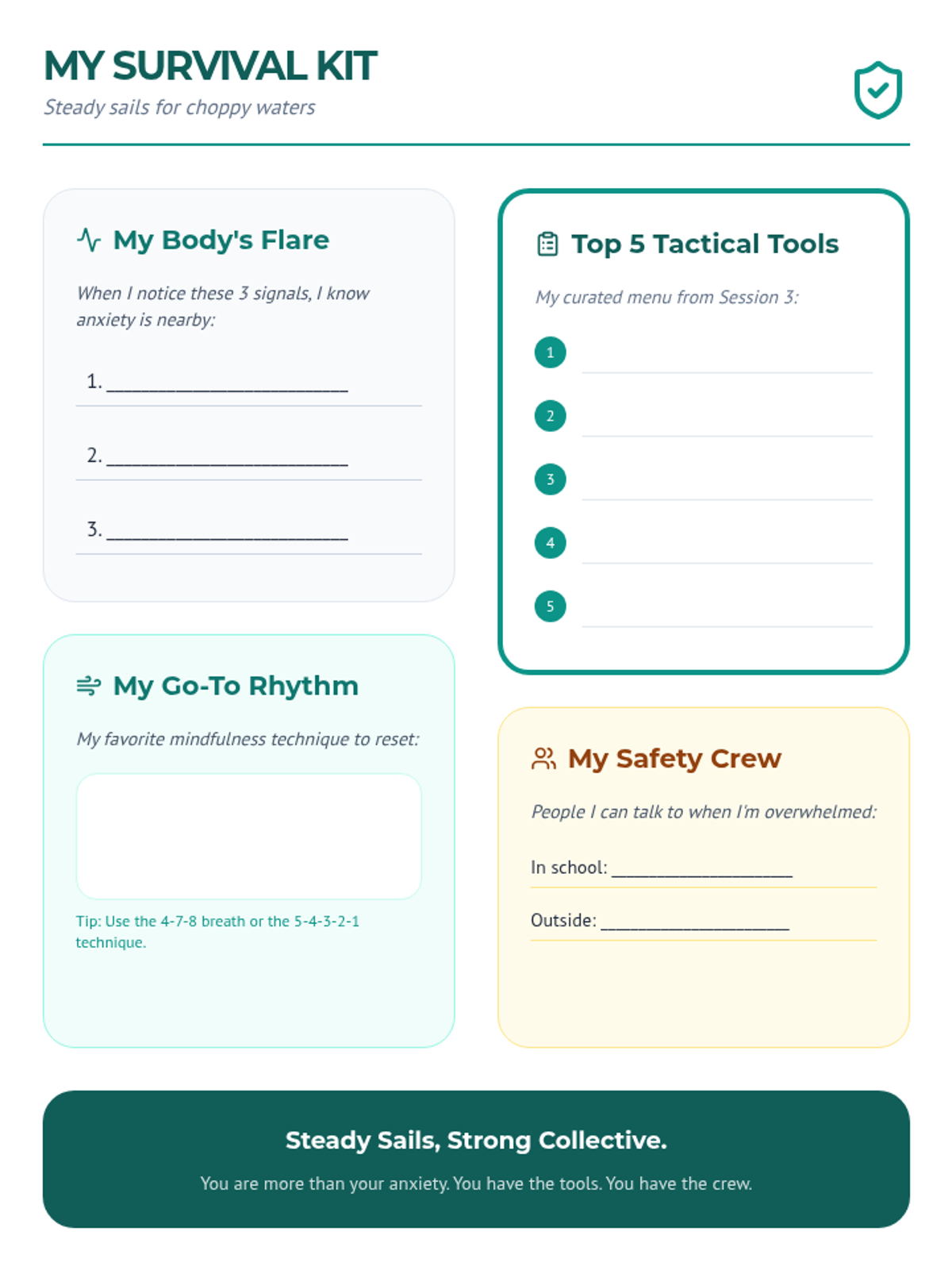
A one-page student "cheat sheet" and maintenance plan that summarizes the skills and tools learned throughout the 4 sessions.
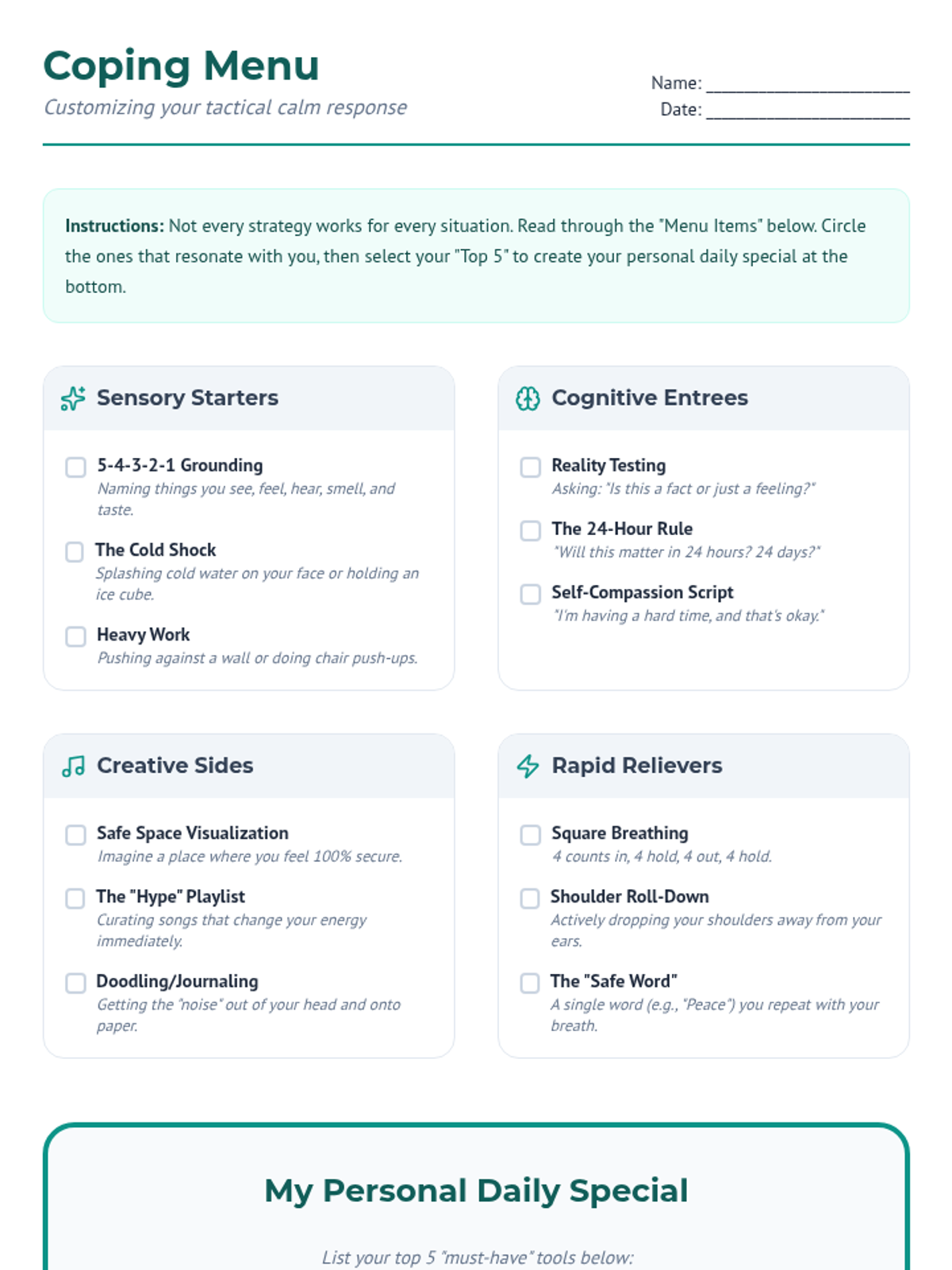
A student-facing "menu" of coping strategies divided into sensory, cognitive, creative, and rapid relief categories, allowing students to curate their own personalized toolkit.
An instructional slide deck for Session 2, introducing the concept of mindfulness, the 4-7-8 breathing technique, and practical ways to integrate mindfulness into a high school day.
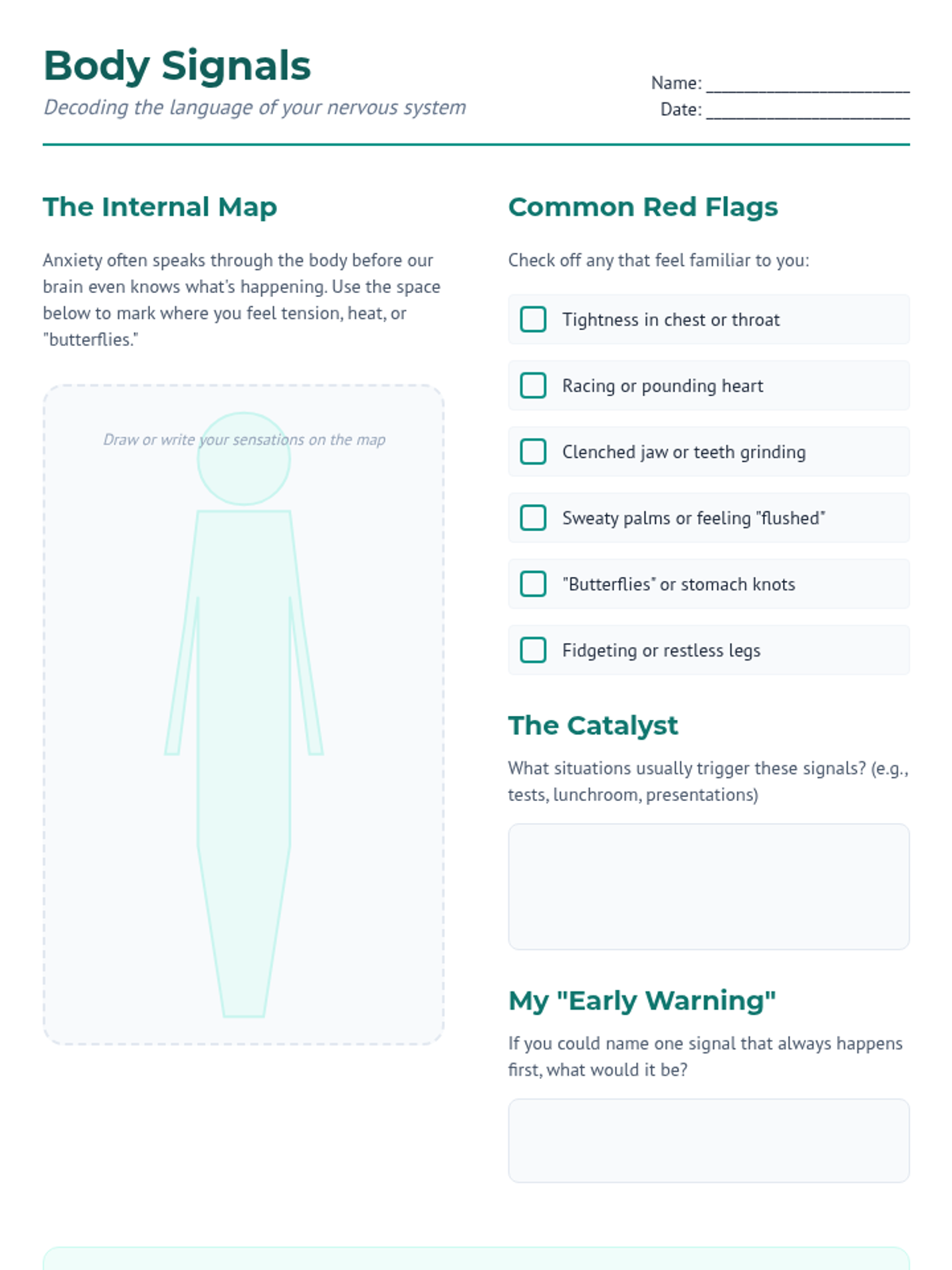
A student worksheet for identifying physical anxiety symptoms and triggers, featuring a body map and common physical "red flag" checklist.
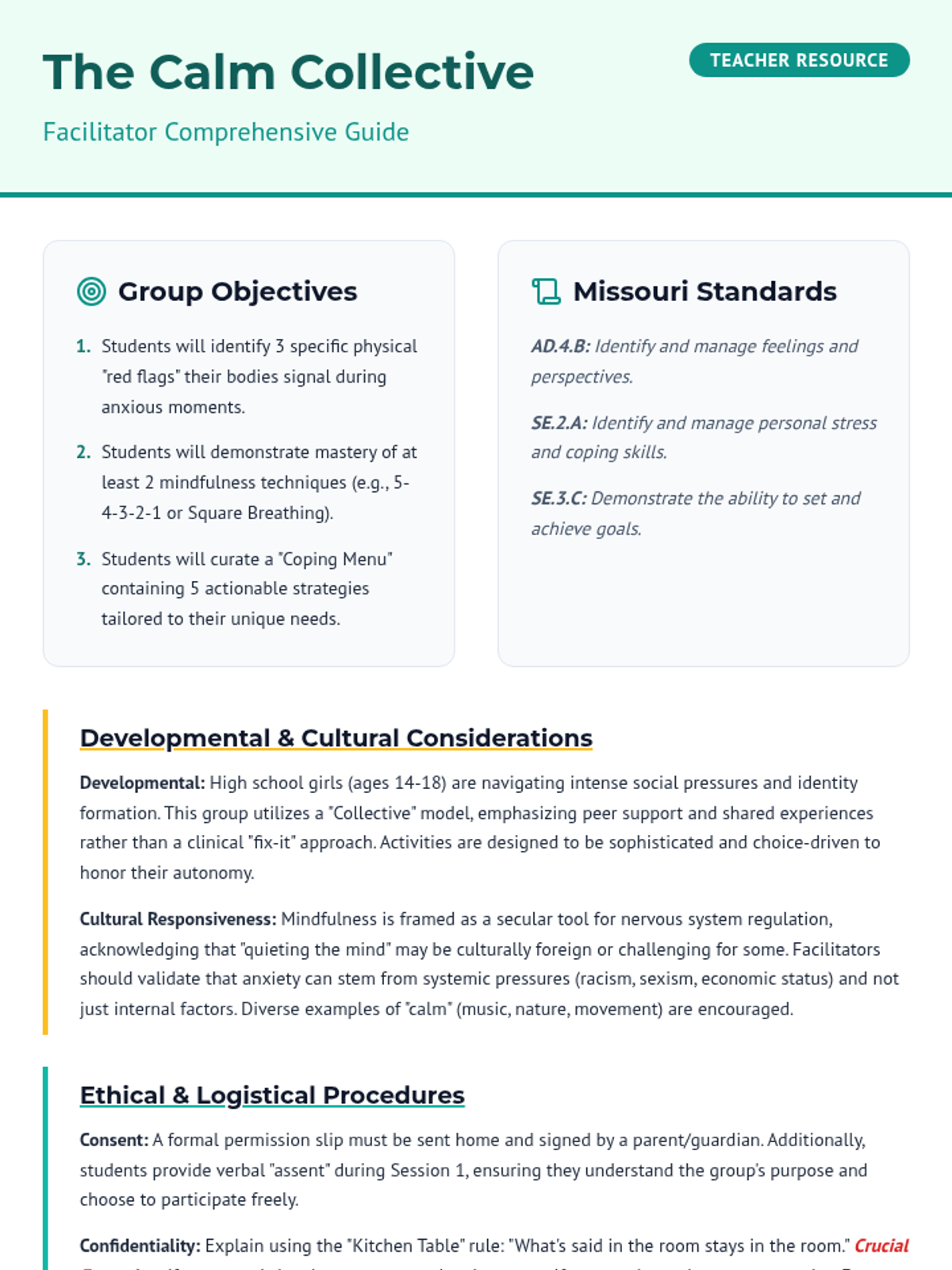
A comprehensive facilitator guide for the Calm Collective group, outlining measurable objectives, Missouri counseling standards, cultural/developmental considerations, and ethical procedures for the 4-session program.
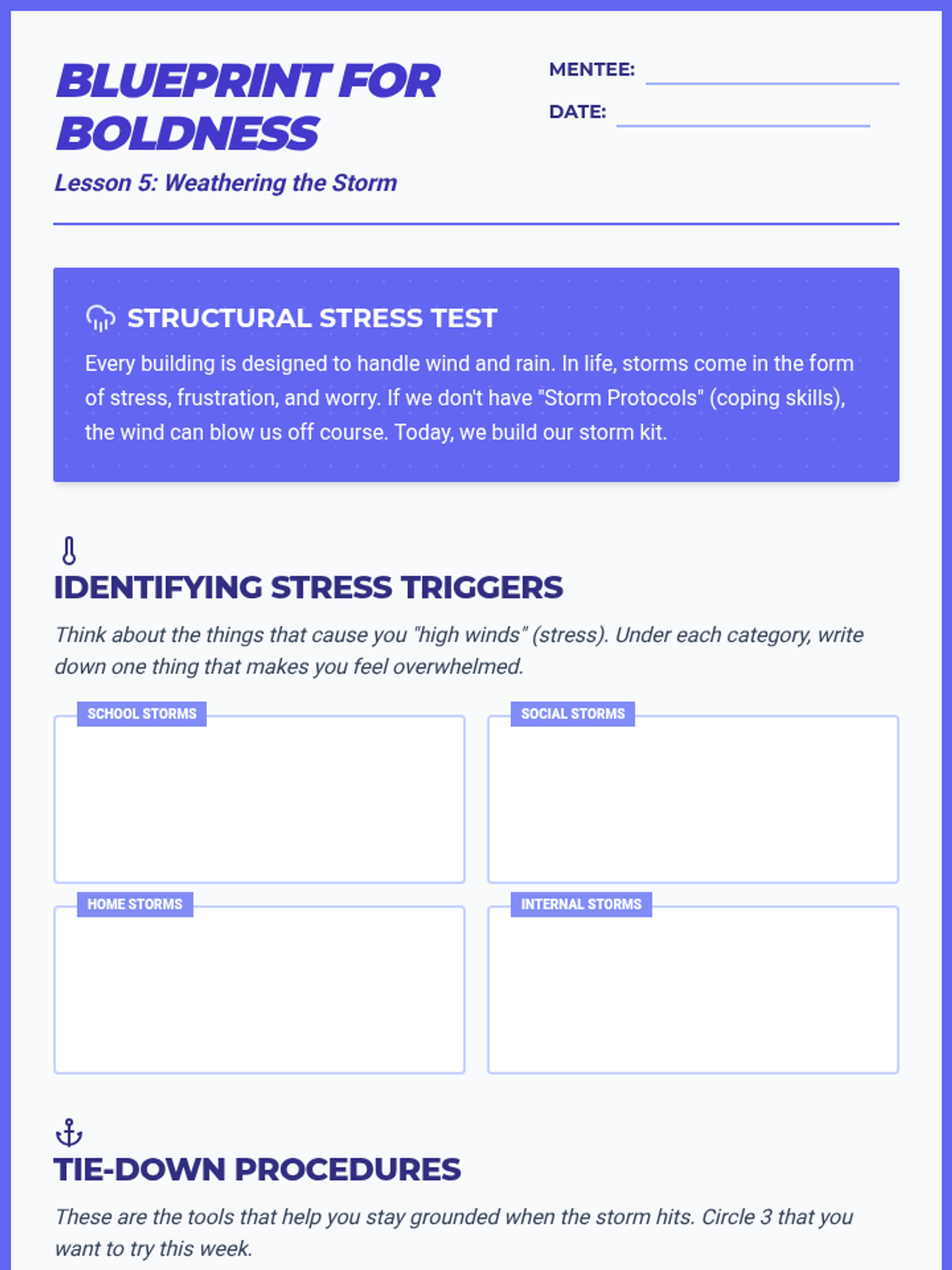
A stress management and coping skills worksheet with a structural stress test theme, helping mentees identify triggers and grounding techniques.
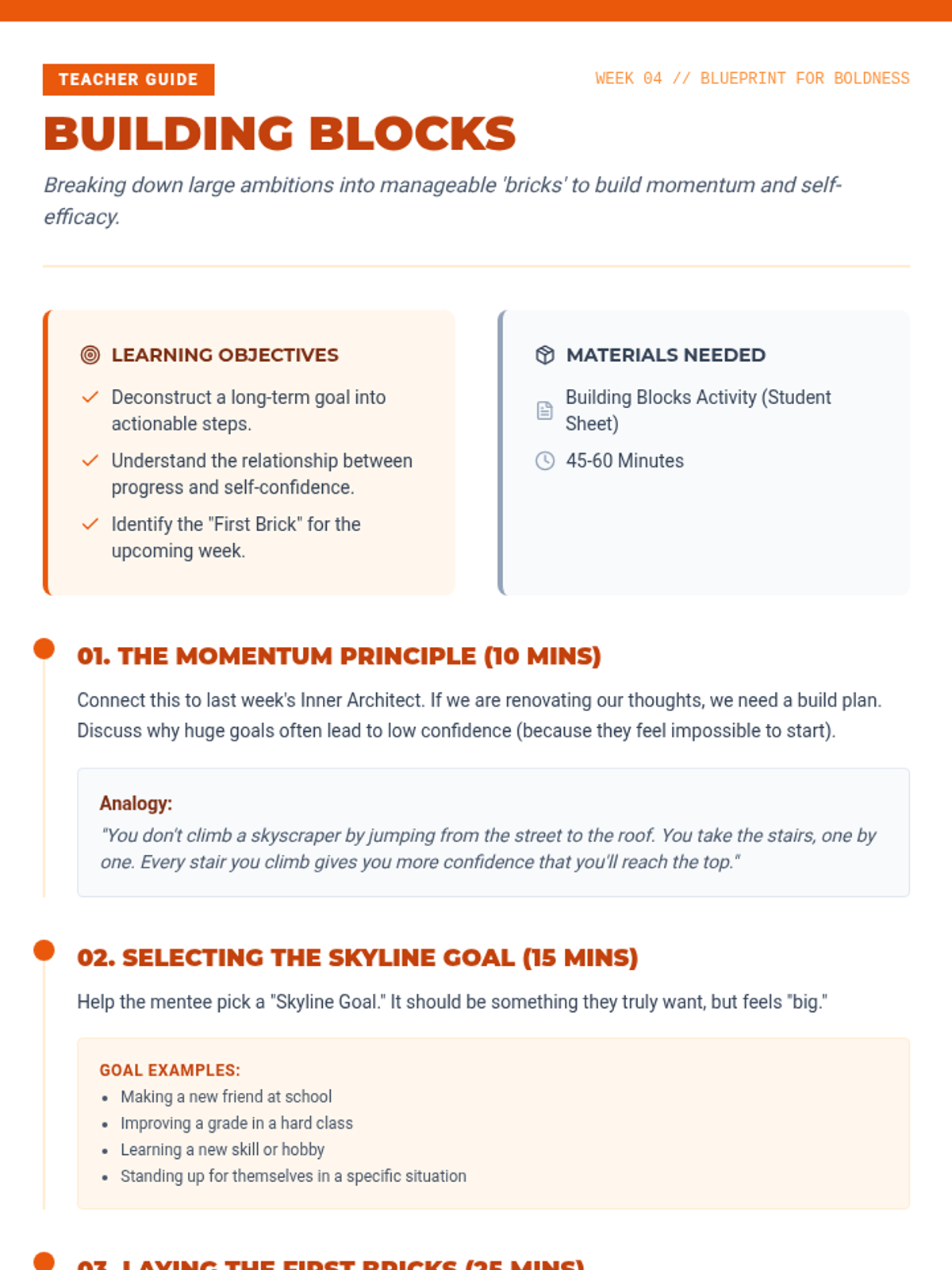
A teacher guide for Lesson 4, providing mentors with strategies for goal-setting, breaking down complex tasks, and building mentee self-efficacy.
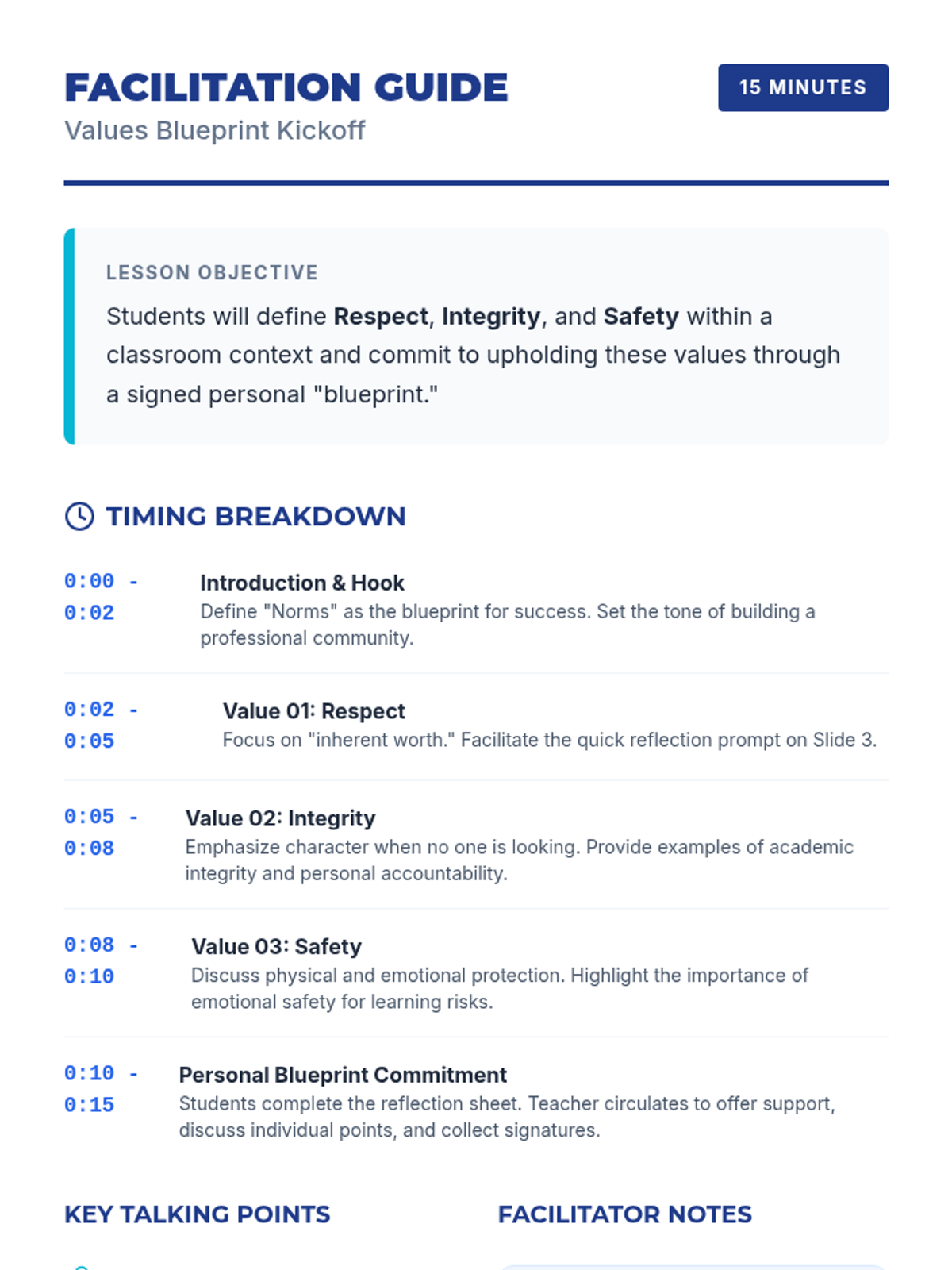
A concise facilitation guide for teachers to lead the 15-minute Values Blueprint Kickoff. Includes a minute-by-minute breakdown, key talking points, and strategies for handling student misconceptions.
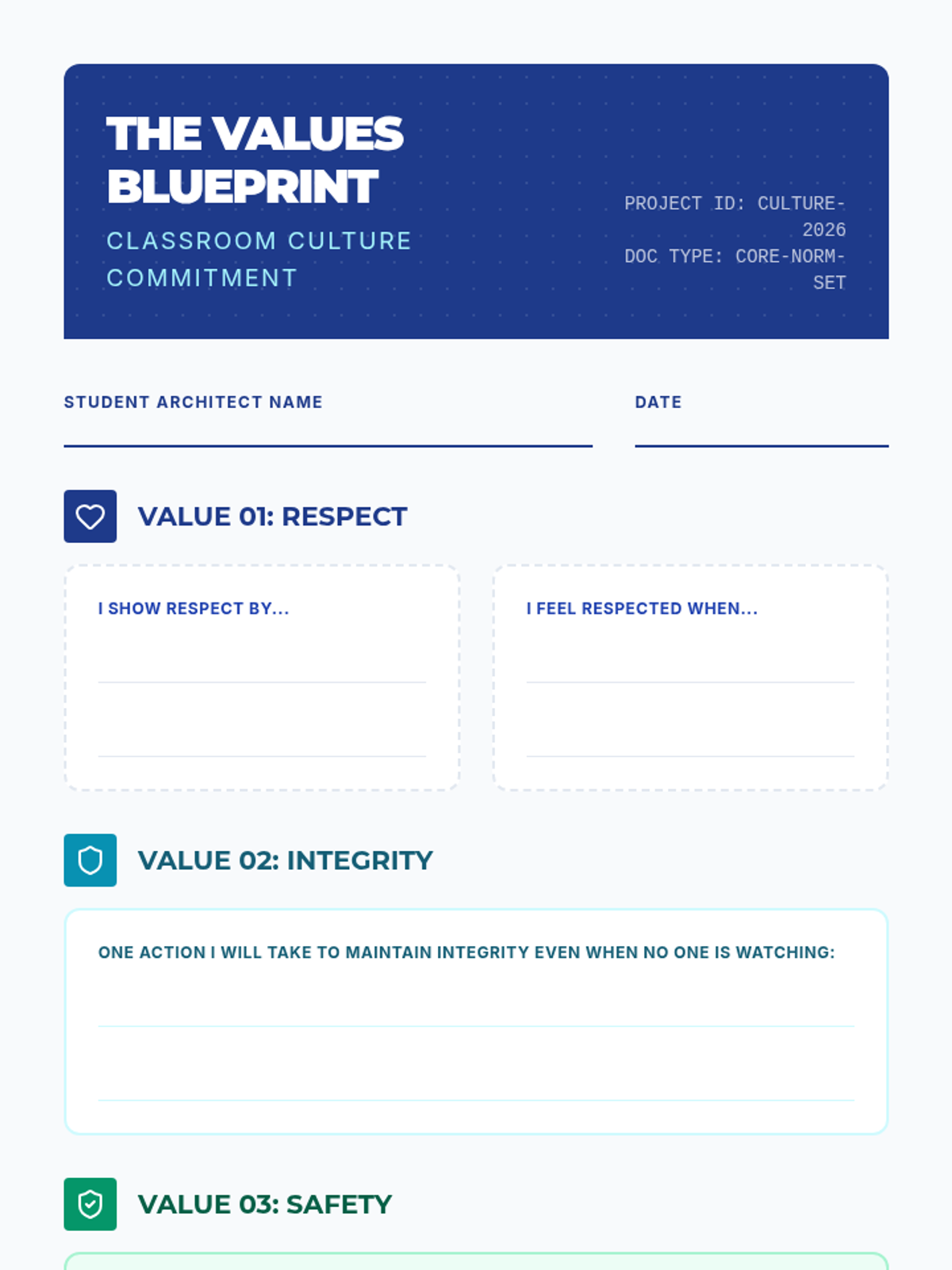
A student reflection sheet that reinforces the classroom values of Respect, Integrity, and Safety. Includes guided prompts and designated spaces for students to define their personal commitment to the classroom 'blueprint'.
A high-impact 7-slide presentation designed to introduce the core classroom values of Respect, Integrity, and Safety through a 'Blueprint' aesthetic. Includes clear definitions, practical examples, and a collective commitment.
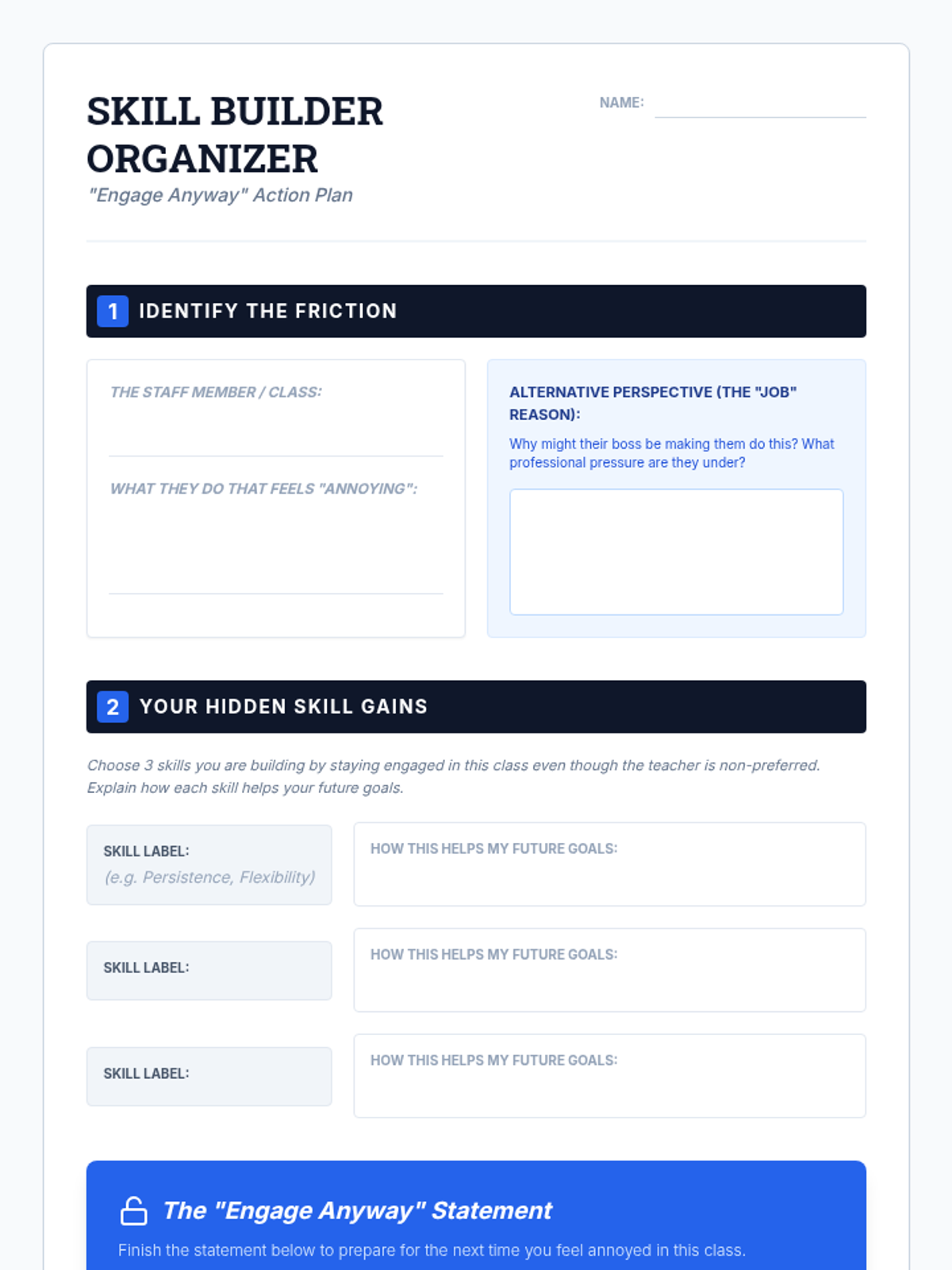
A student worksheet that helps students identify teacher perspectives and the personal skills (Persistence, Flexibility) they gain by choosing to engage despite annoyance.
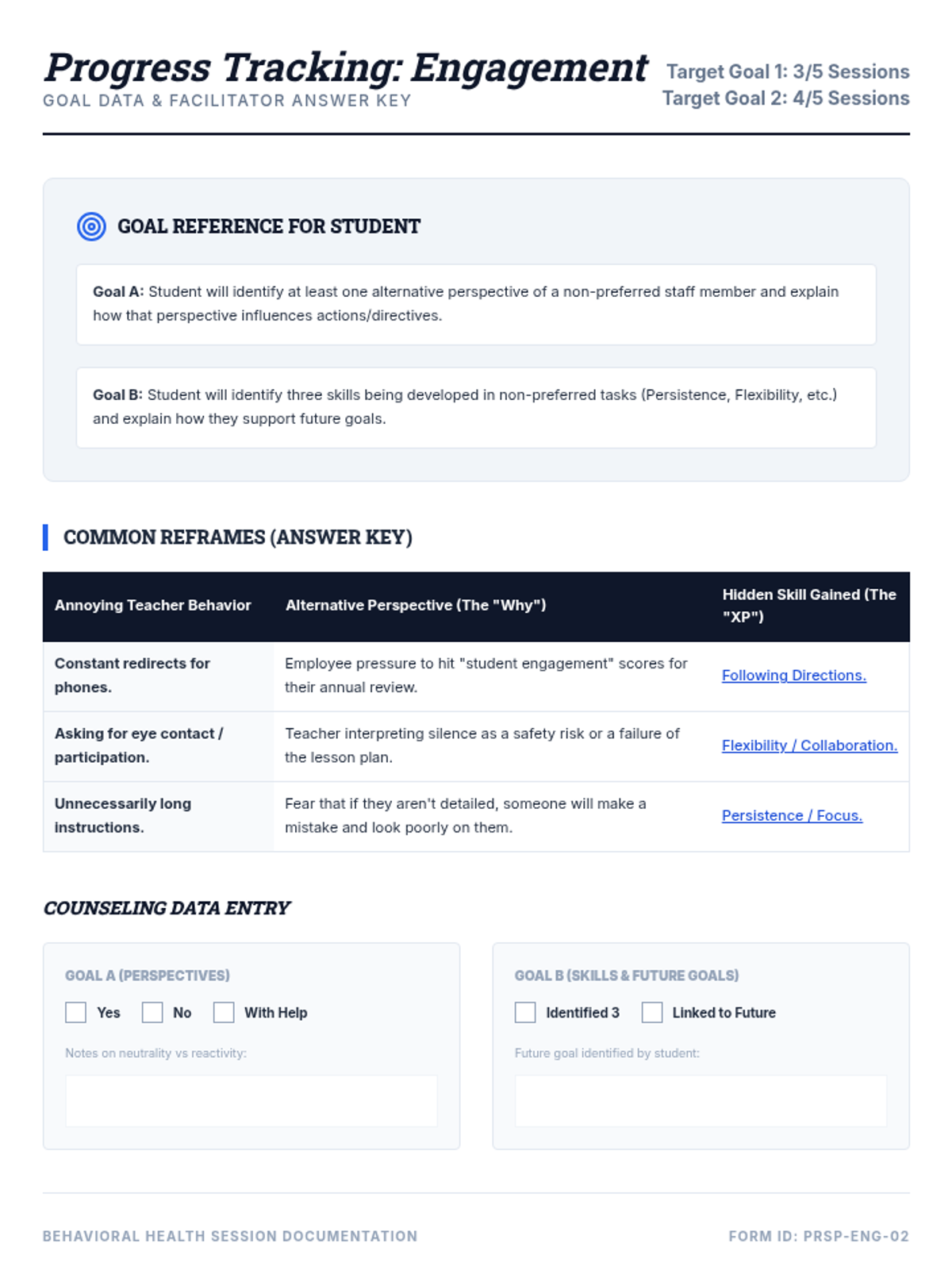
A tracking sheet and answer key for counselors to monitor student progress on perspective-taking and identifying skills (Persistence, Flexibility) developed during non-preferred tasks.
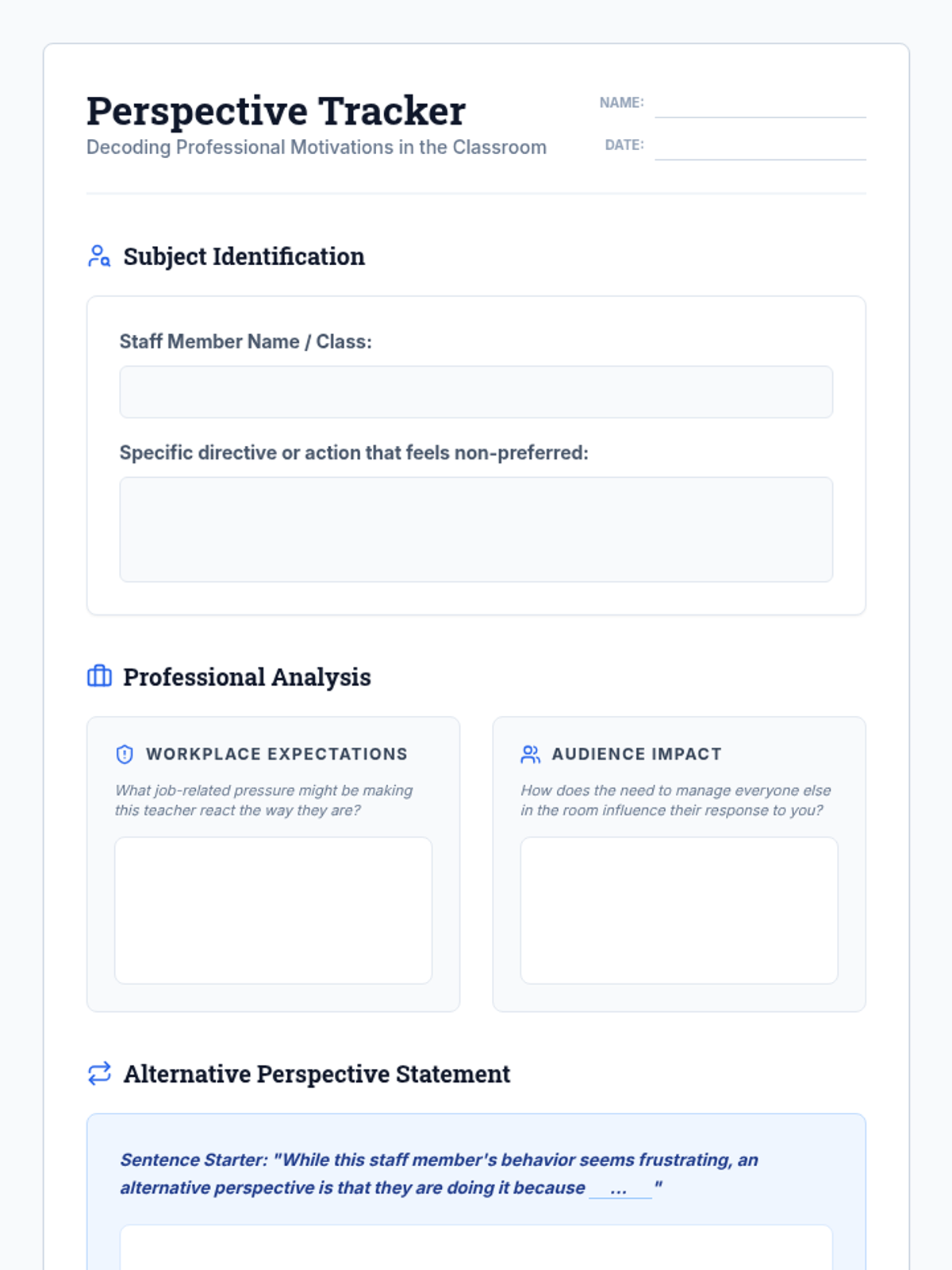
A student worksheet designed as a "Director's Script Organizer" to help students analyze staff member motivations and perspectives.
A presentation that reframes "annoying" staff behavior and focuses on the high-value skills (Persistence, Flexibility) students build by choosing to engage.
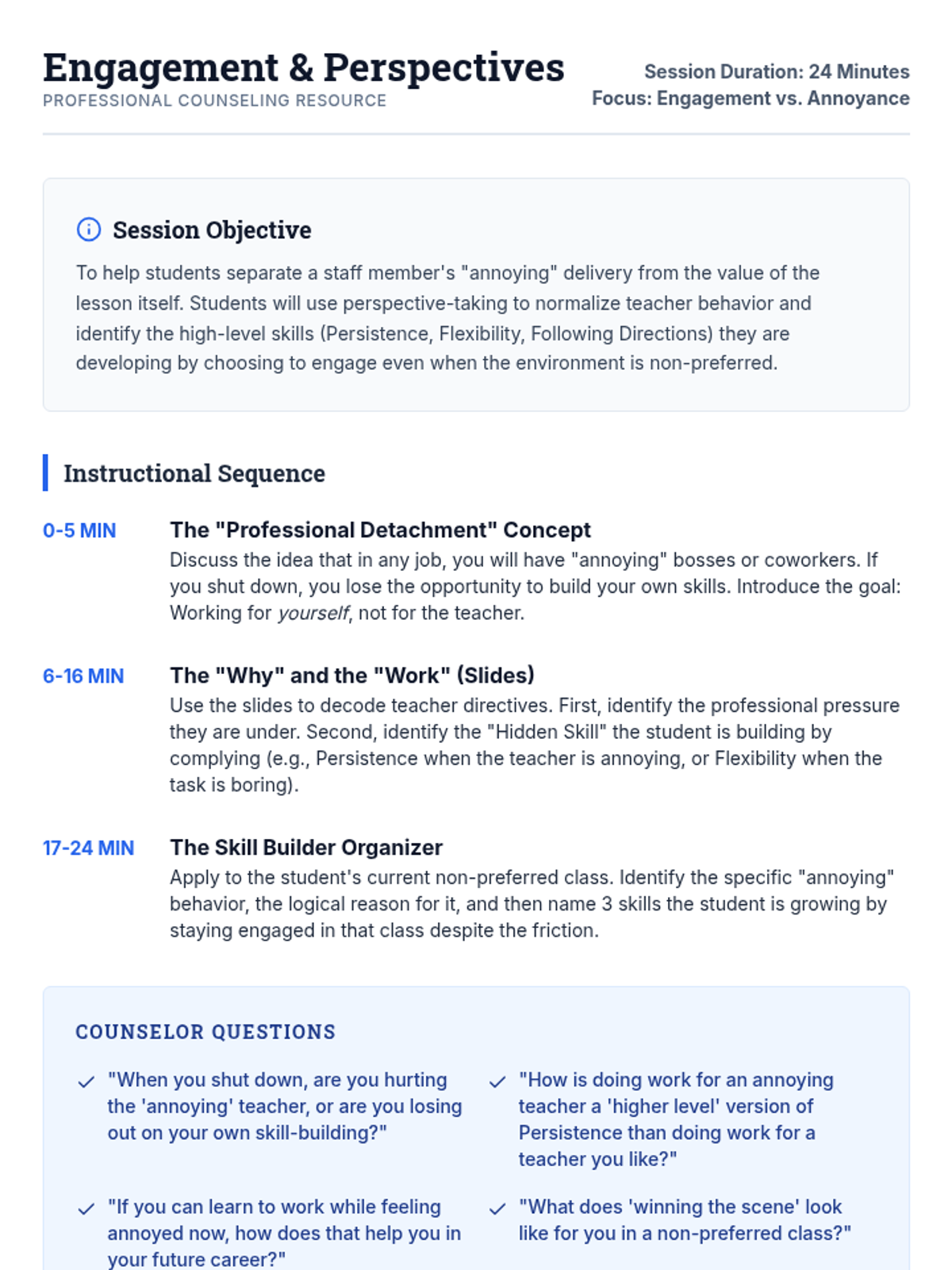
A facilitator's guide for a 24-minute counseling session focused on engaging in lessons despite feeling "annoyed" by staff, by identifying professional perspectives and personal skill-building.
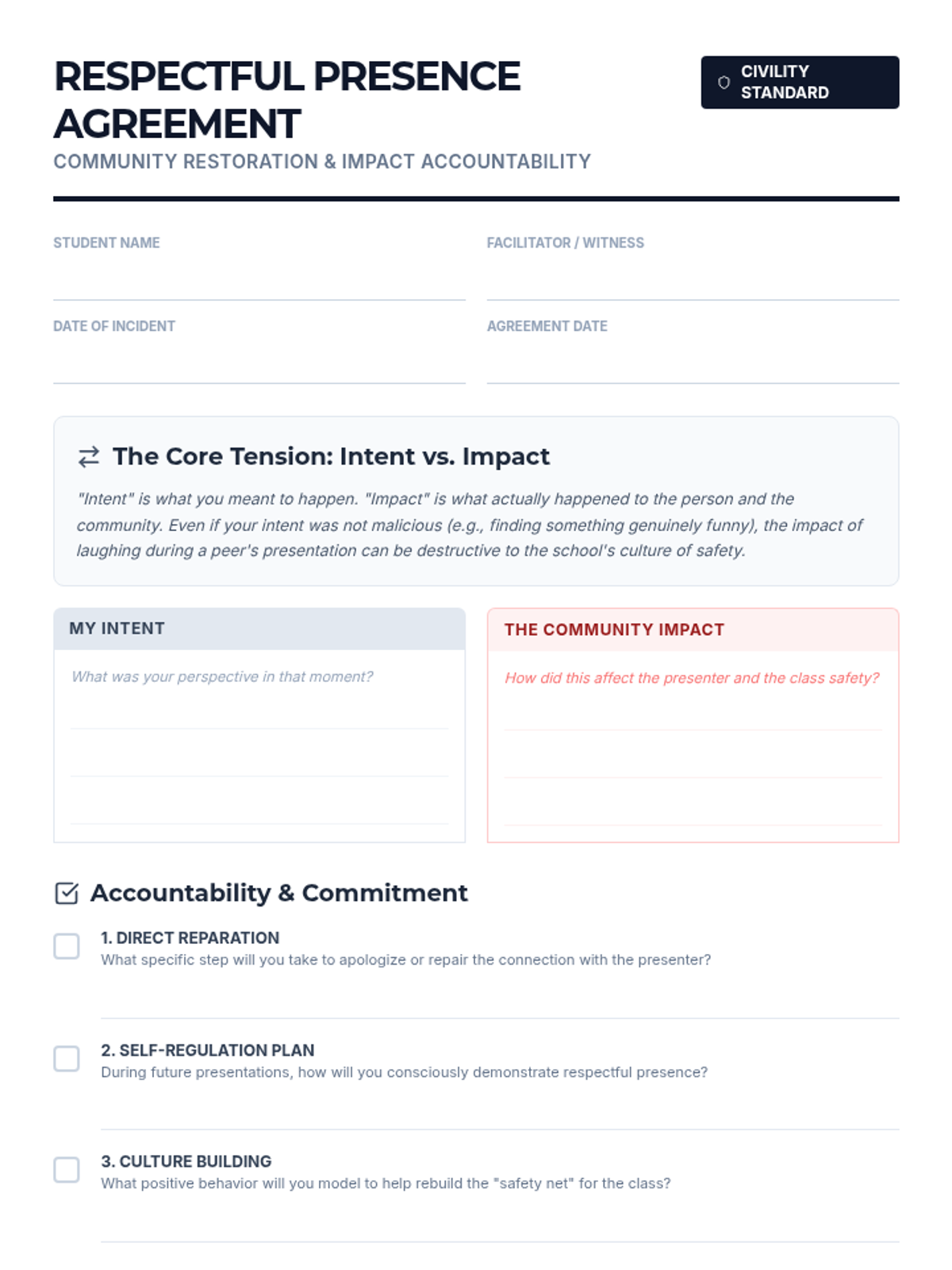
A high-school level behavioral contract using the "Intent vs. Impact" framework to address peer mockery during presentations. It guides students through a reflective process to acknowledge communal harm and commit to specific restorative actions that improve school culture.
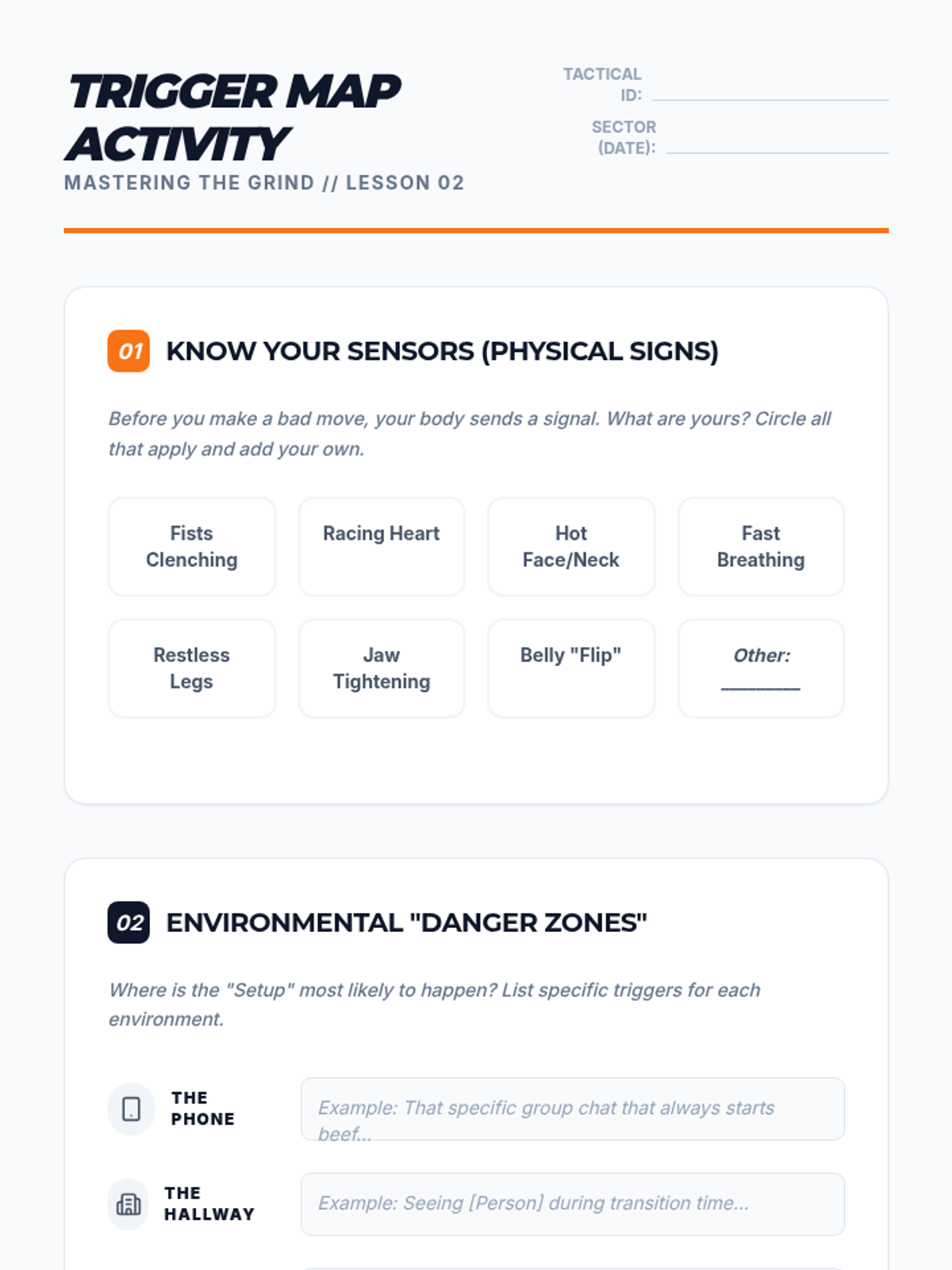
Student activity sheet for Lesson 2 to map out personal physical impulse signs and environmental triggers across different settings (home, school, social). Background of work area updated for legibility.
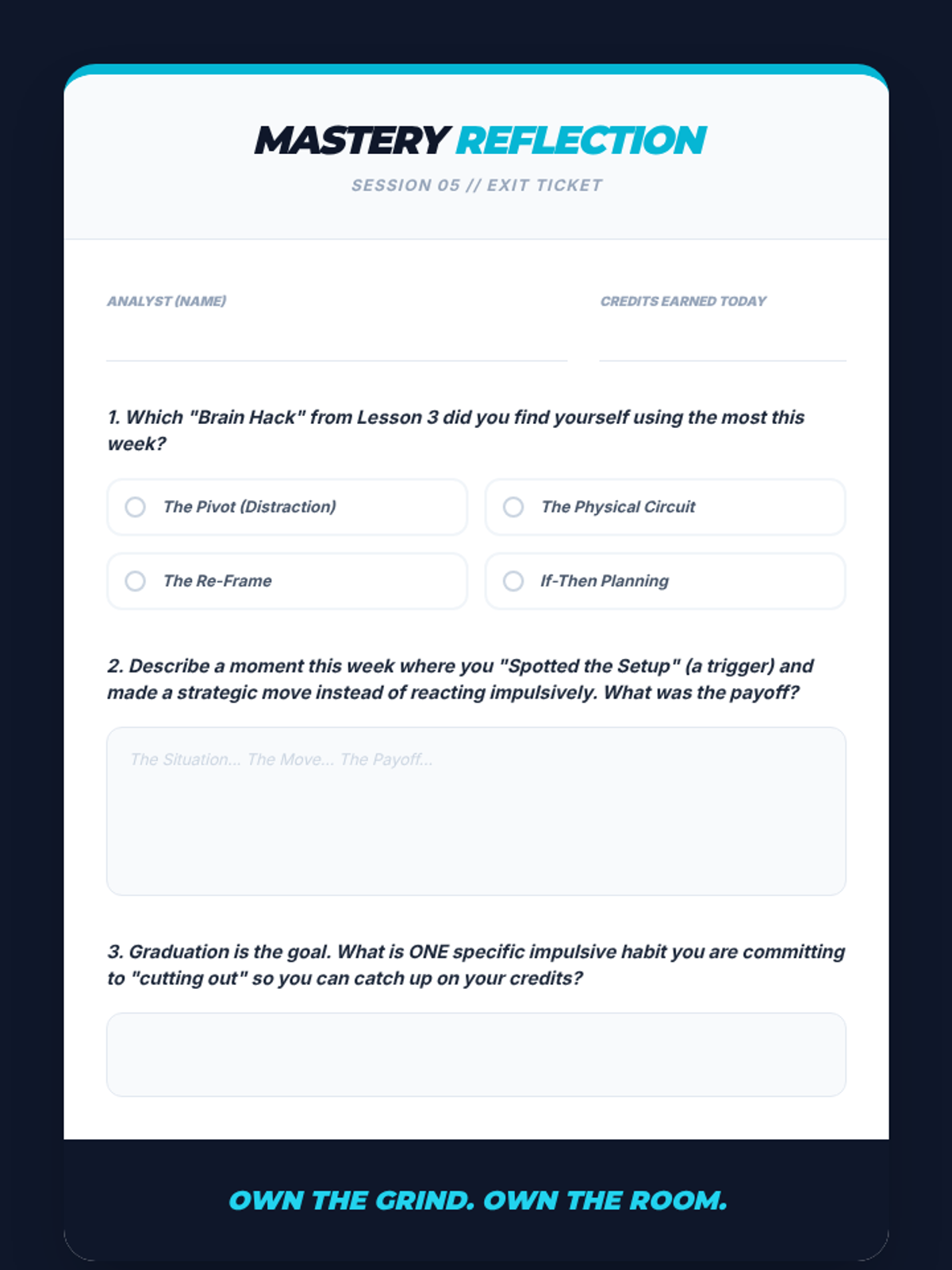
Summative reflection and exit ticket for the "Impulse Control Academy" sequence, where students self-assess their progress and set a goal for their future self.
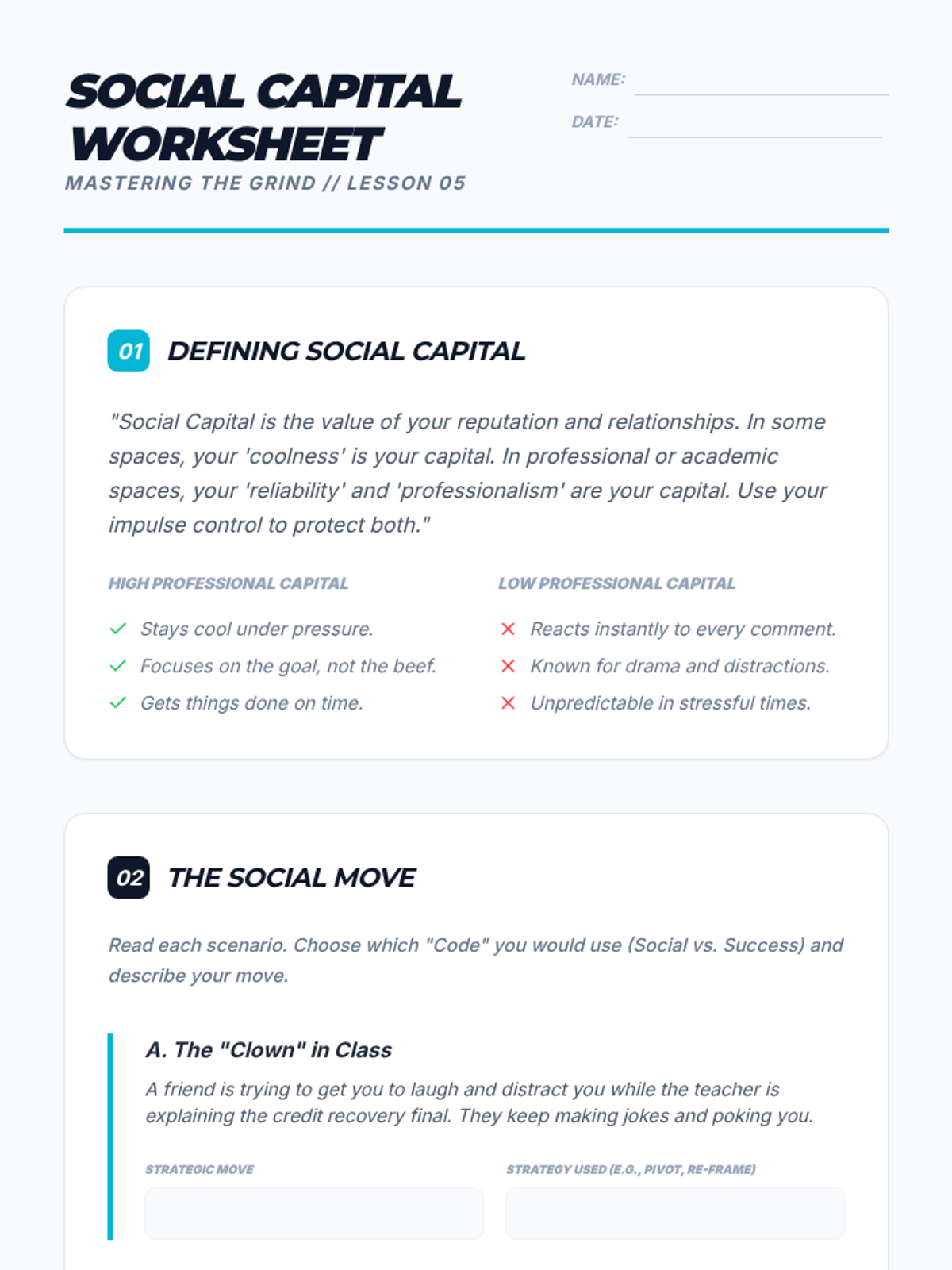
Student activity sheet for Lesson 5 focusing on social scenario analysis and the interpersonal consequences of impulsive versus regulated behavior.
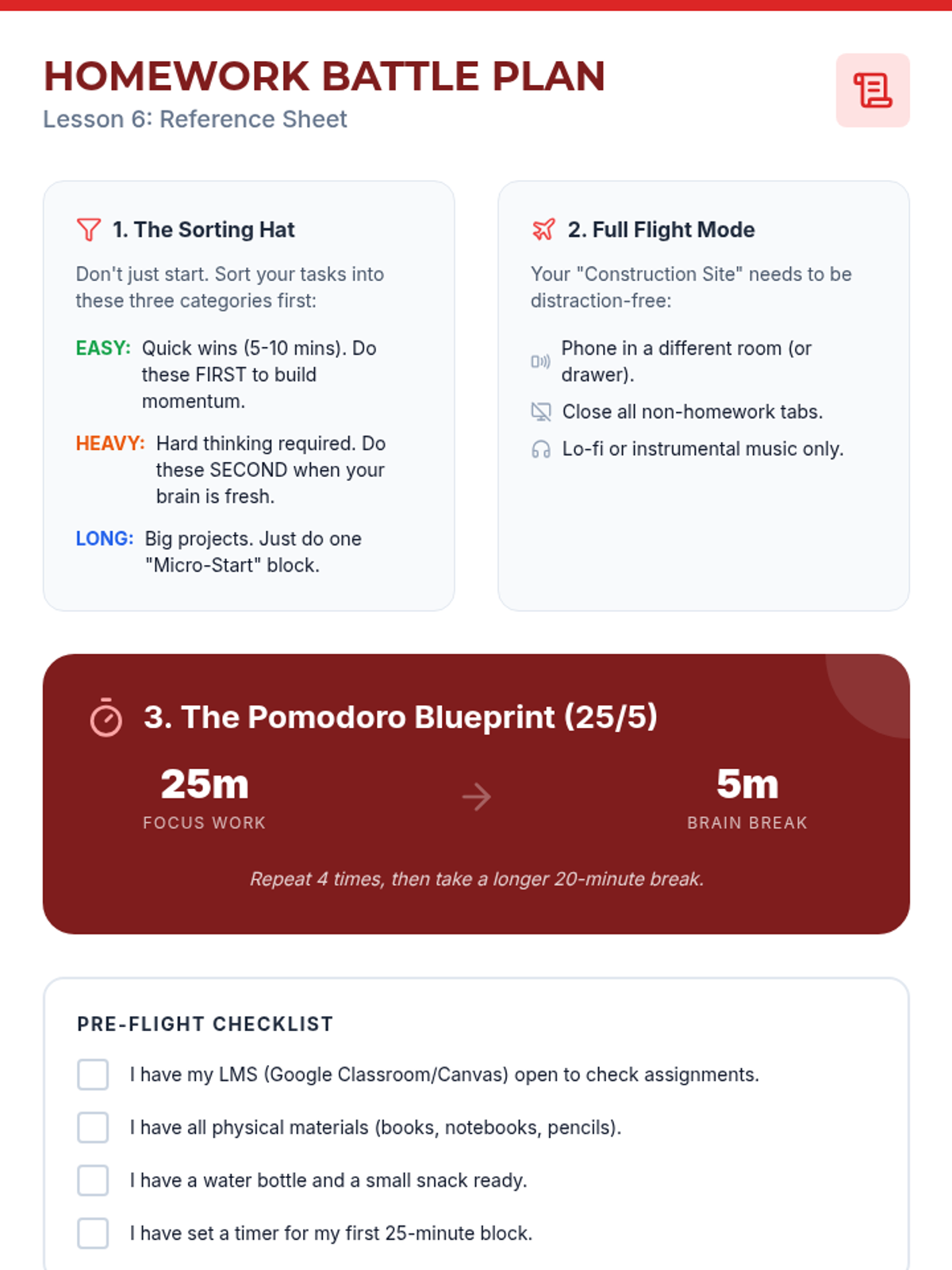
A comprehensive homework strategy guide featuring task sorting, distraction management, the Pomodoro method, and a pre-study checklist.
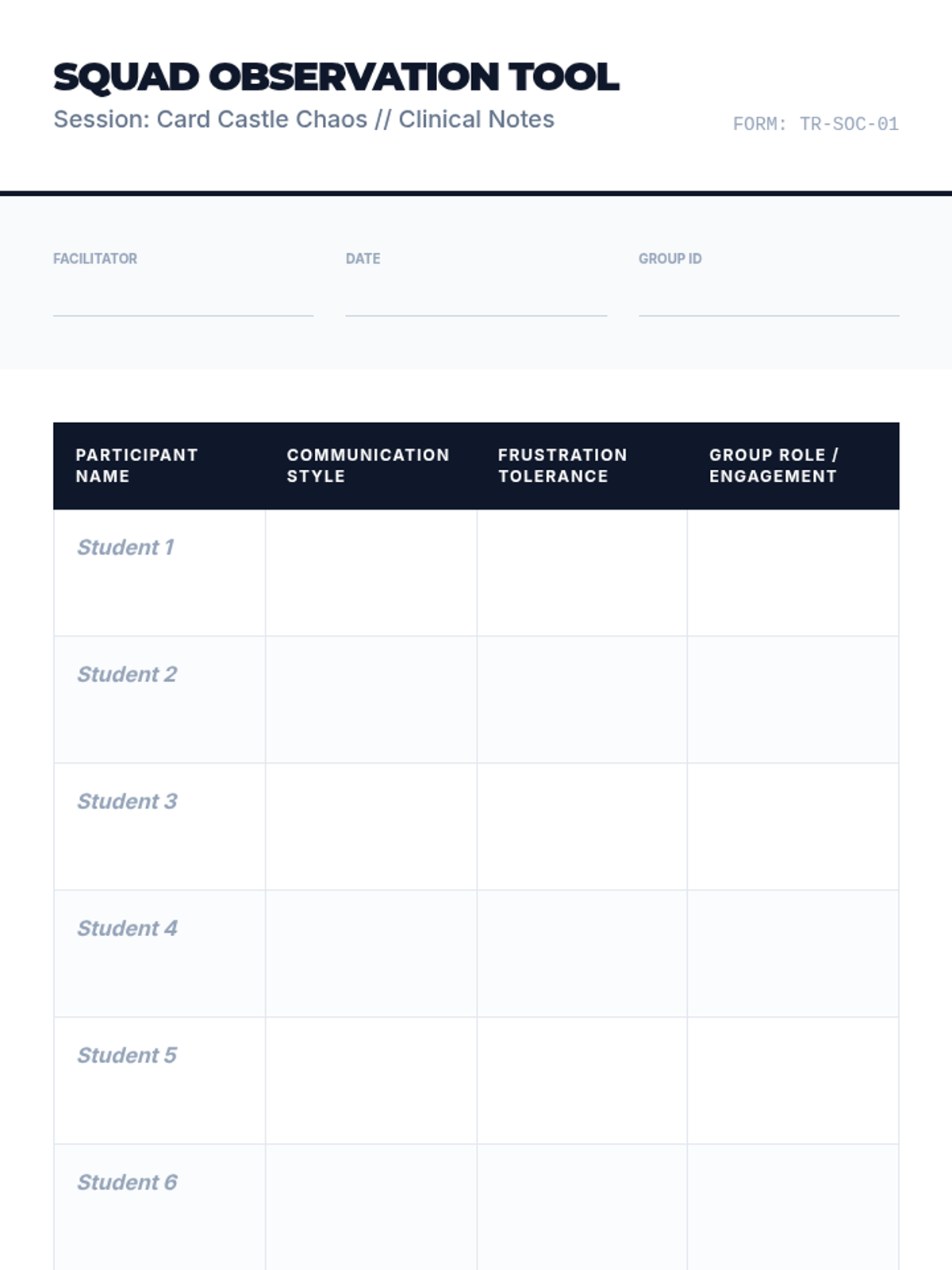
A clinical observation tool for the facilitator to track participant engagement, communication styles, and frustration tolerance during the session's activities. Designed specifically for the clinical rehab context.
A presentation slide deck for the Squad Support session. It introduces the session objectives, provides clear instructions for the "Common Threads" and "Card Castle Chaos" activities, and sets the stage for final reflection.
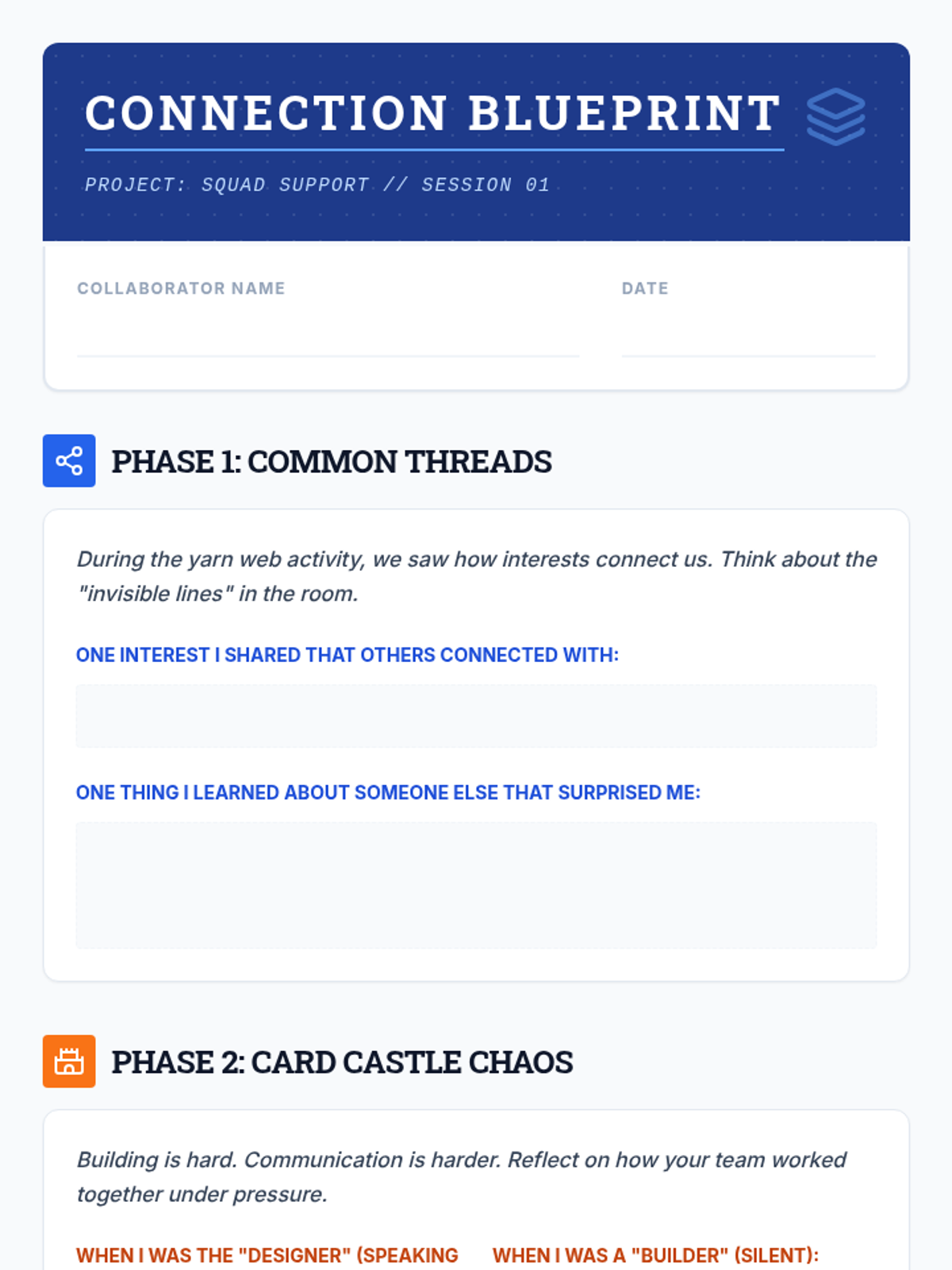
A student reflection worksheet using a "blueprint" aesthetic. It guides teens through processing their experiences with connection and teamwork from the session's activities.
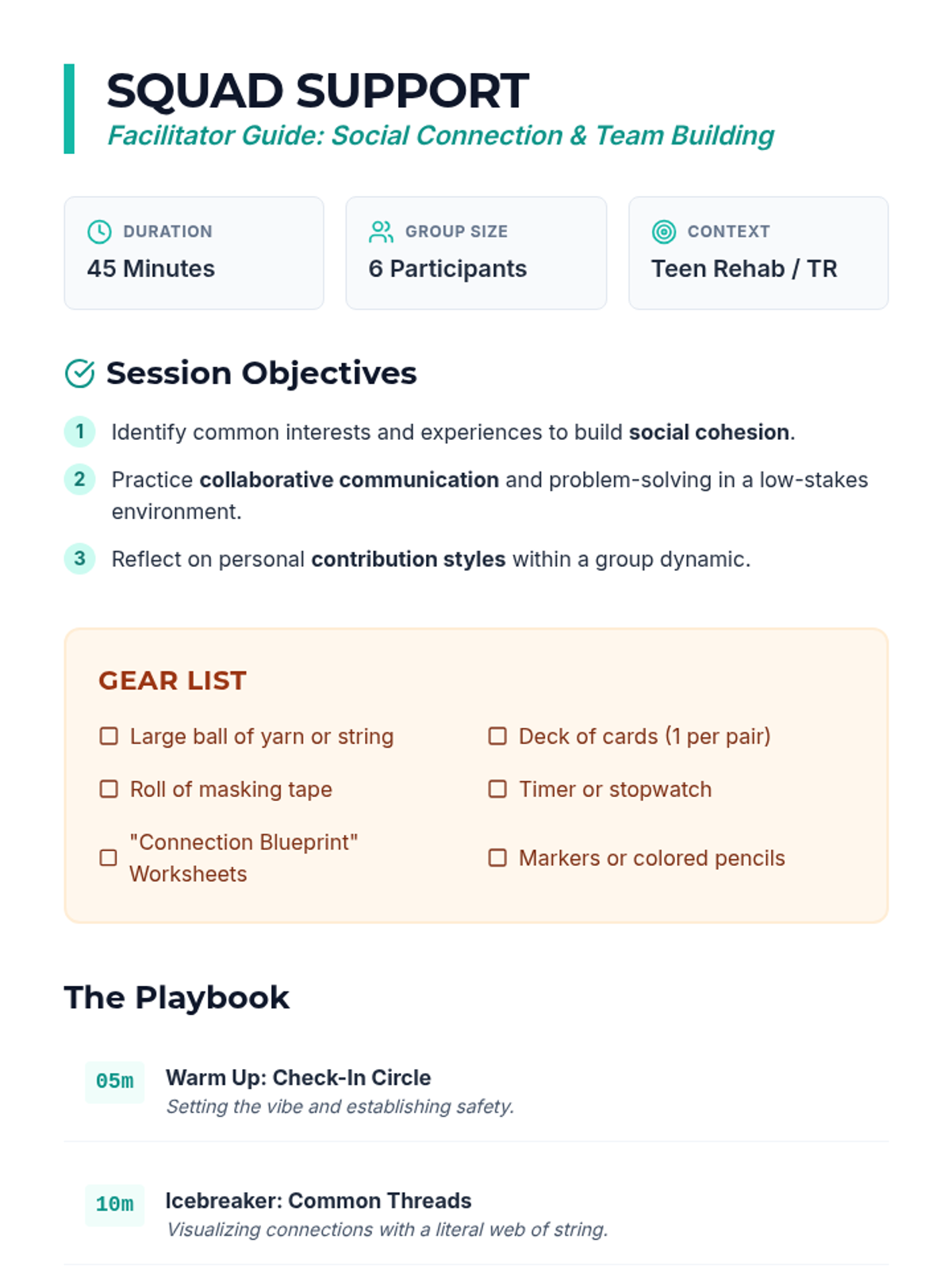
A comprehensive facilitator guide for a 45-minute therapeutic leisure session. Includes session objectives, a detailed materials checklist, activity breakdowns with specific prompts, and clinical considerations for working with teens in rehab.
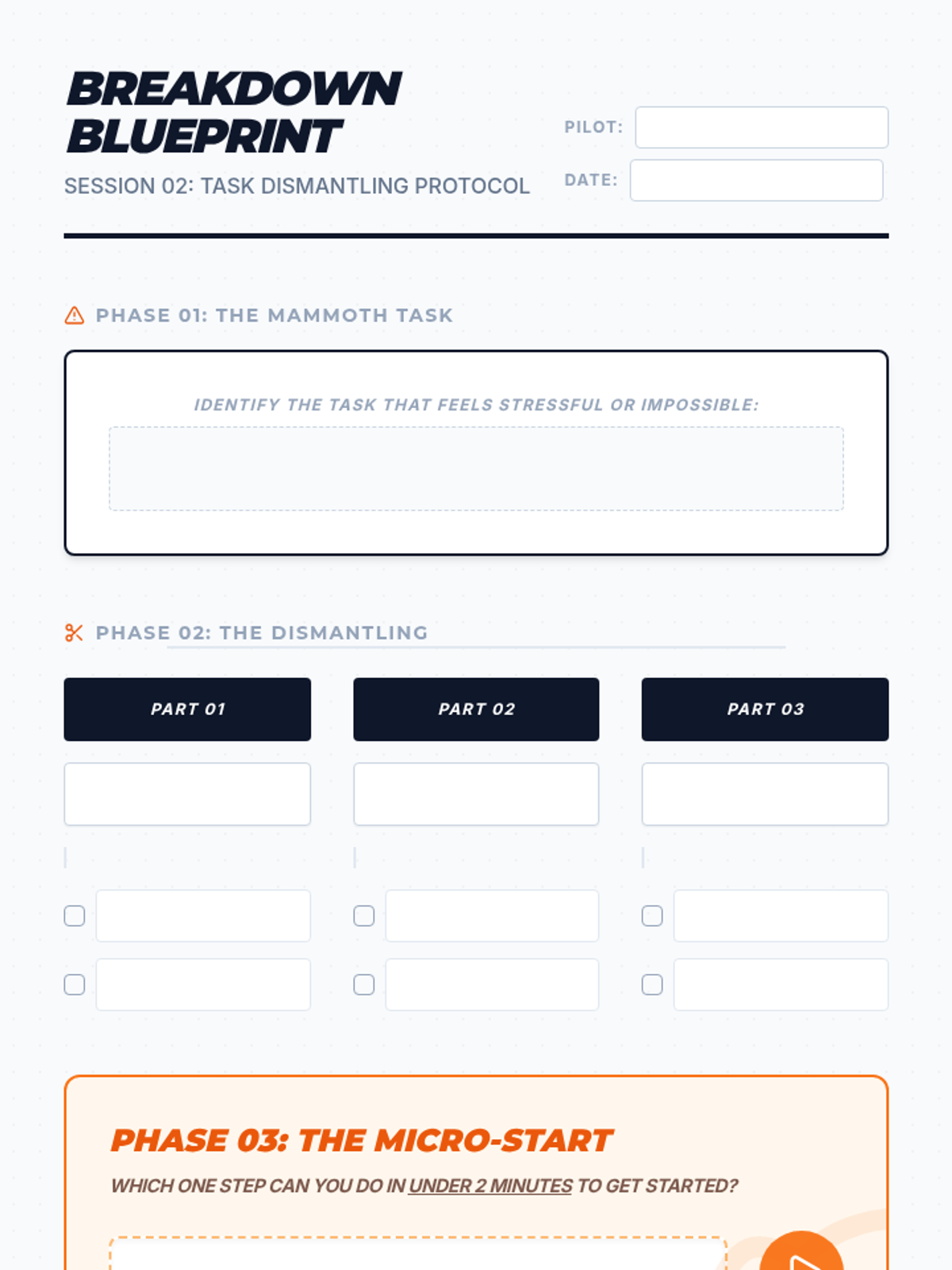
A visual breakdown map used to turn large, intimidating projects into manageable components and identify a specific 2-minute "micro-start."
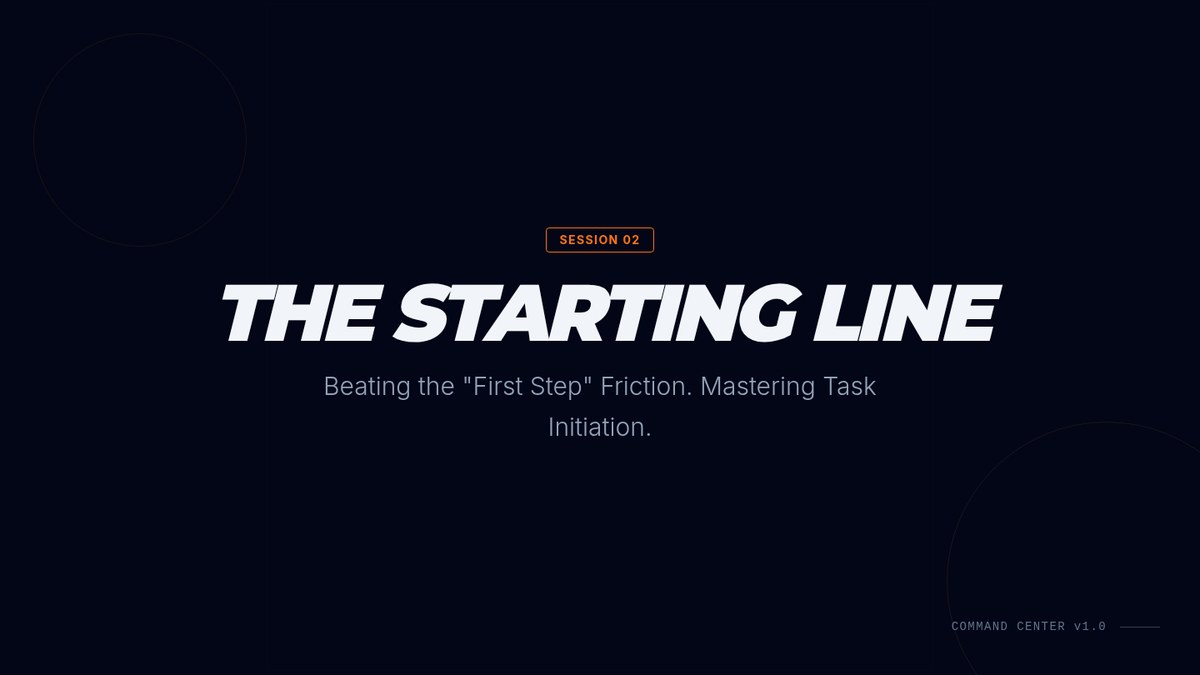
Presentation slides for Session 2, covering the concept of task initiation, why brains stall (Amygdala Hijack), and the strategy of breaking down mammoth tasks.
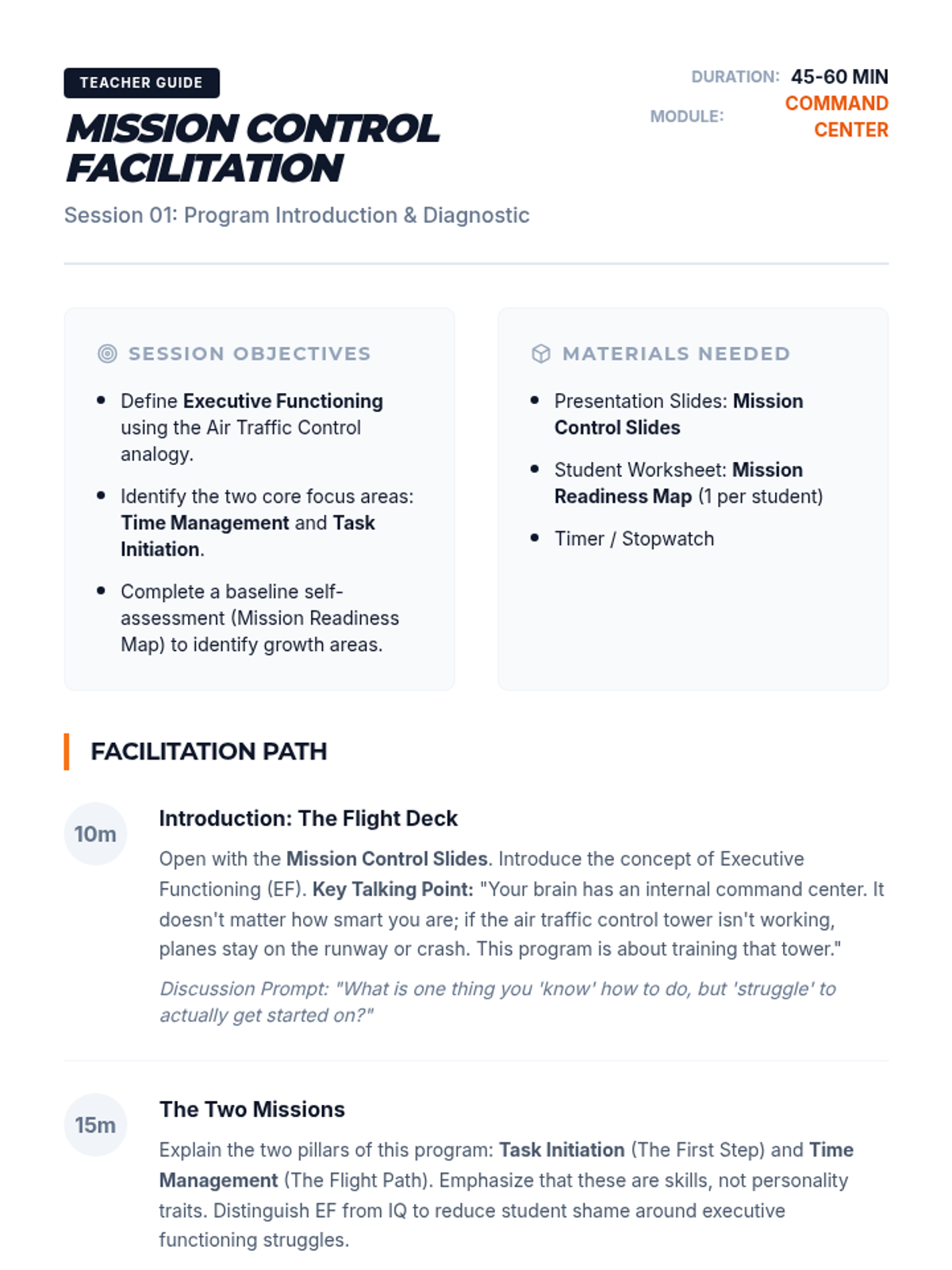
Facilitation guide for Session 1, including program introduction, key talking points, activity steps, and differentiation strategies.
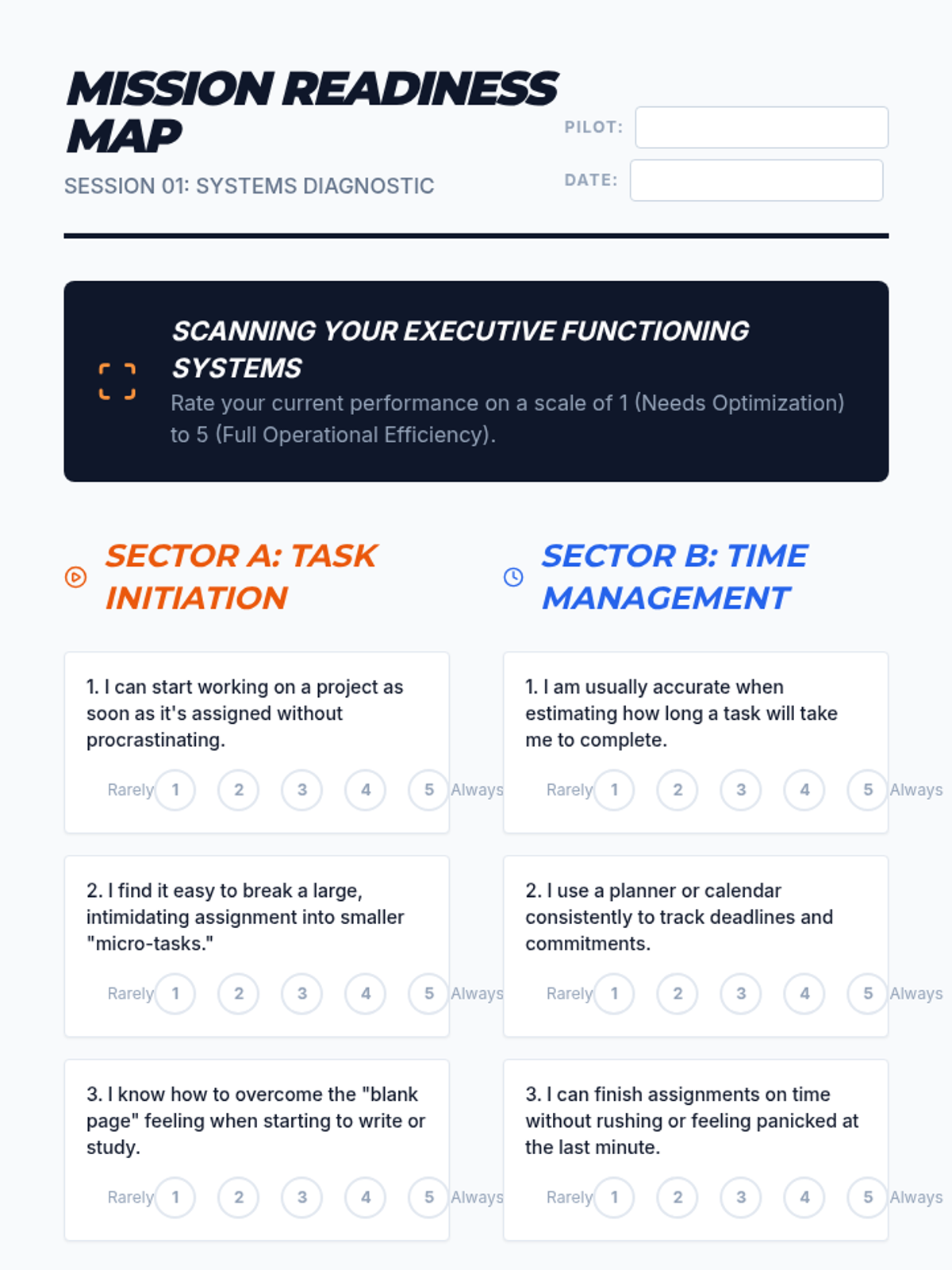
A student self-assessment worksheet to identify current strengths and challenges in task initiation and time management using a radar-themed diagnostic layout.
Introductory presentation for Session 1, defining executive functioning through the Air Traffic Control analogy and outlining the 8-session program.
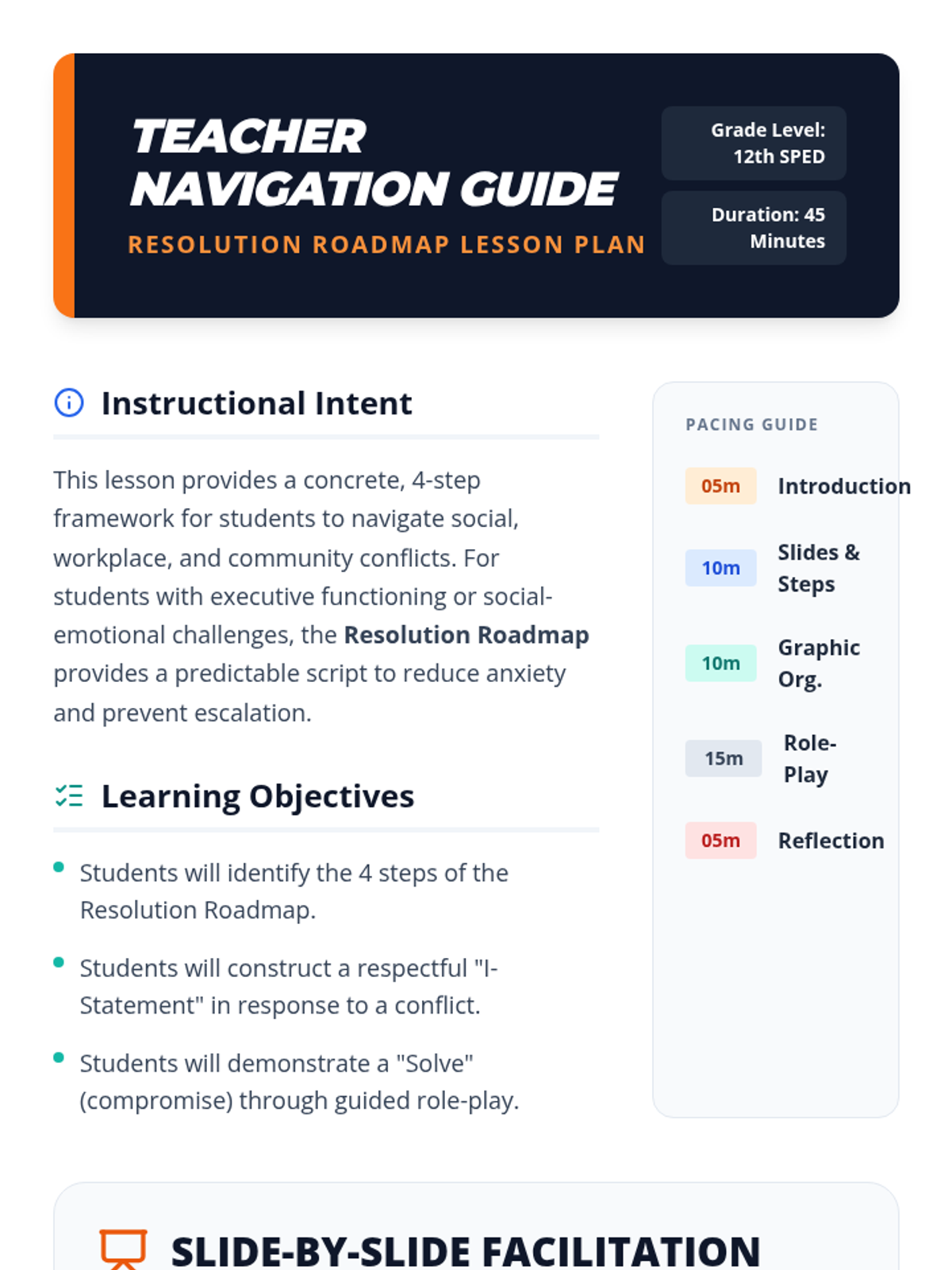
A teacher-facing lesson plan and facilitation guide for the 'Resolution Roadmap' lesson, including pacing, instructional strategies, and differentiation tips for special education.
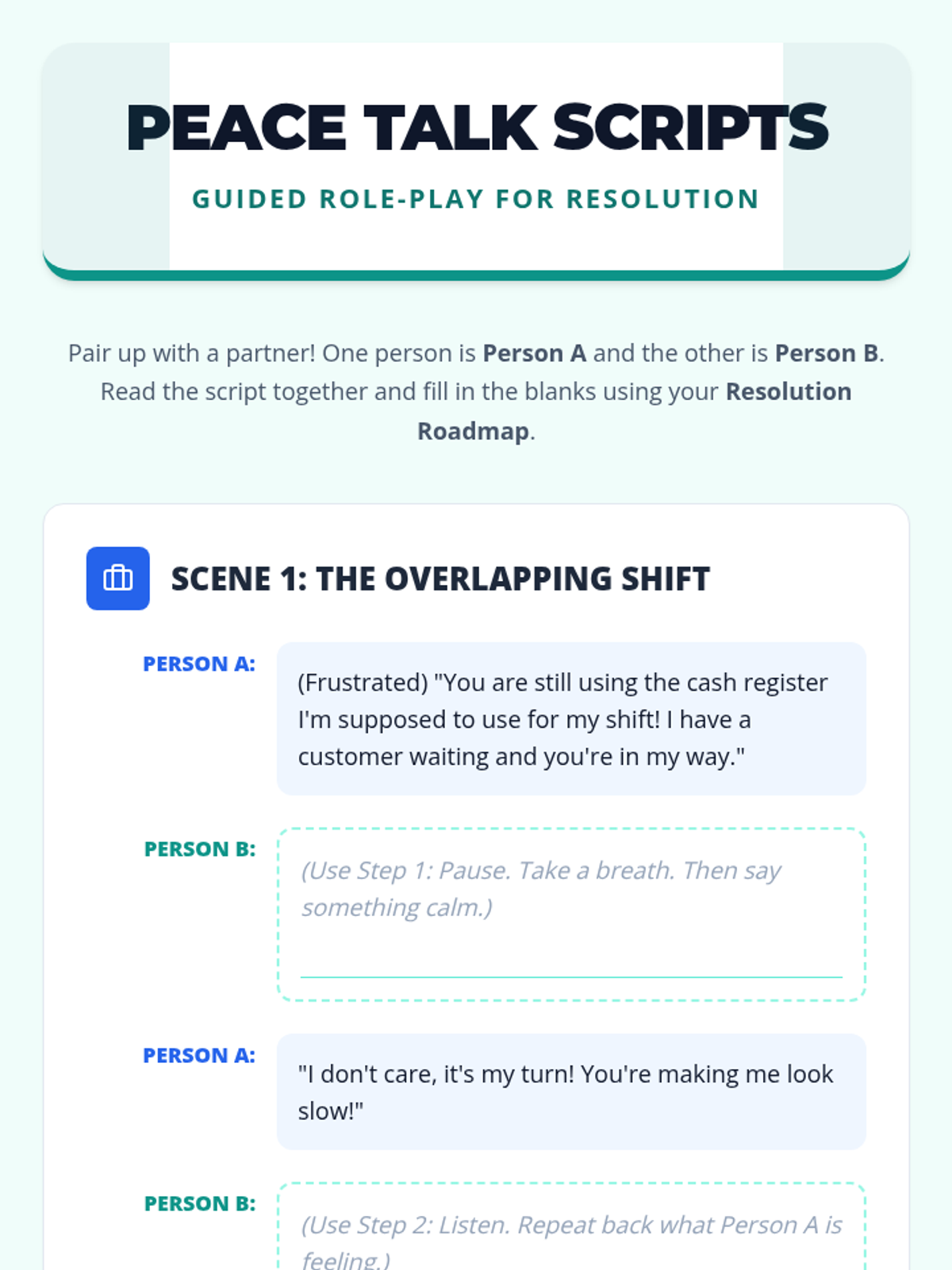
A set of guided role-play scripts for students to practice conflict resolution using 'Person A' and 'Person B' roles with structured 'Resolution Roadmap' fill-in-the-blanks.
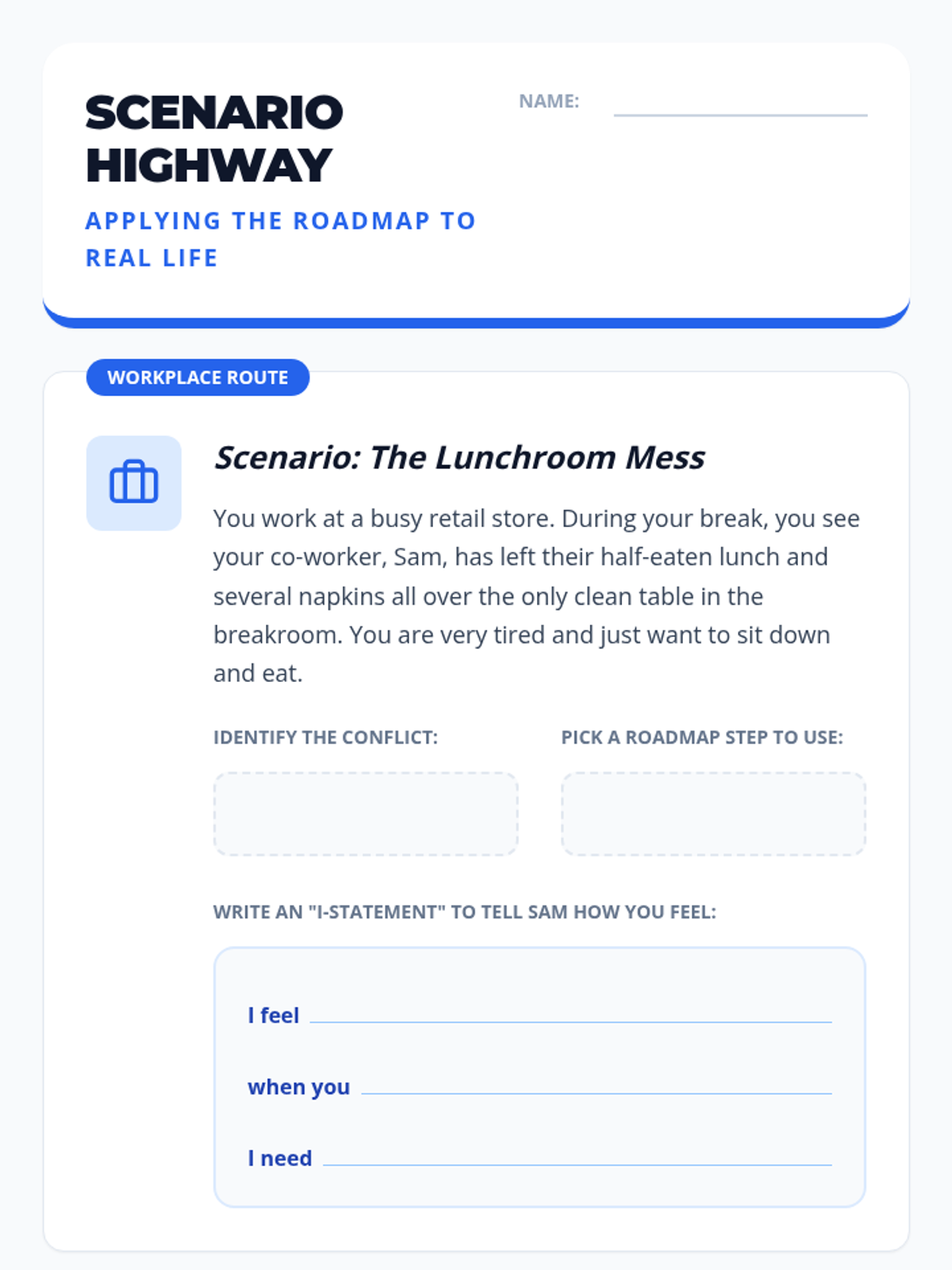
A scenario-based worksheet that allows students to apply the 'Resolution Roadmap' to practical situations in the workplace, school, and community.
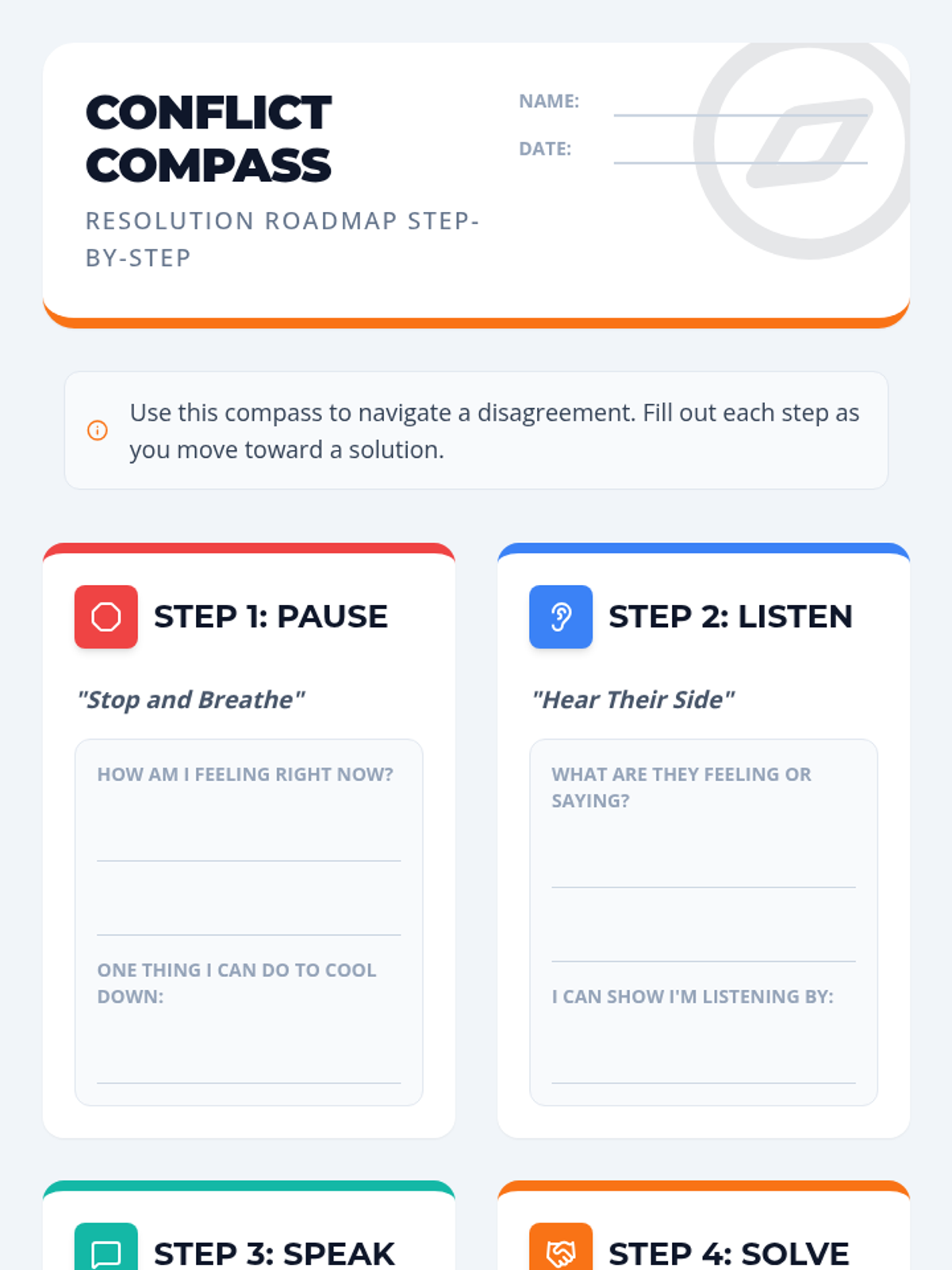
A structured graphic organizer for students to process conflicts step-by-step using the 'Resolution Roadmap' framework, featuring clear work areas and guided prompts.
A visual slide presentation introducing the 'Resolution Roadmap' 4-step framework for conflict resolution, specifically designed for 12th-grade students with high-contrast visuals and accessible language. Minimum font size 24px.
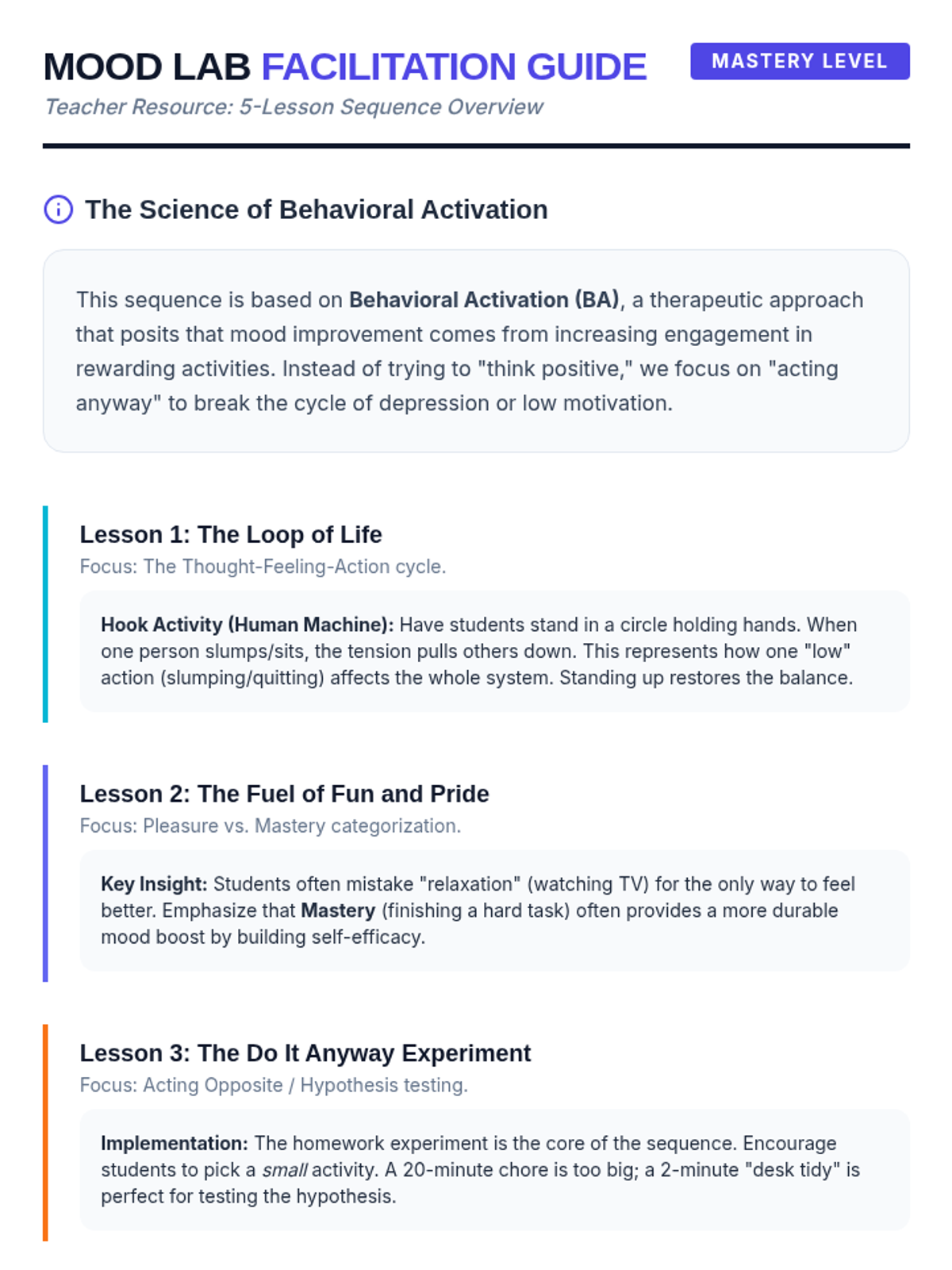
A teacher facilitation guide for the 'Mood Lab Experiment' sequence, providing therapeutic context, hook instructions, and tips for each lesson.
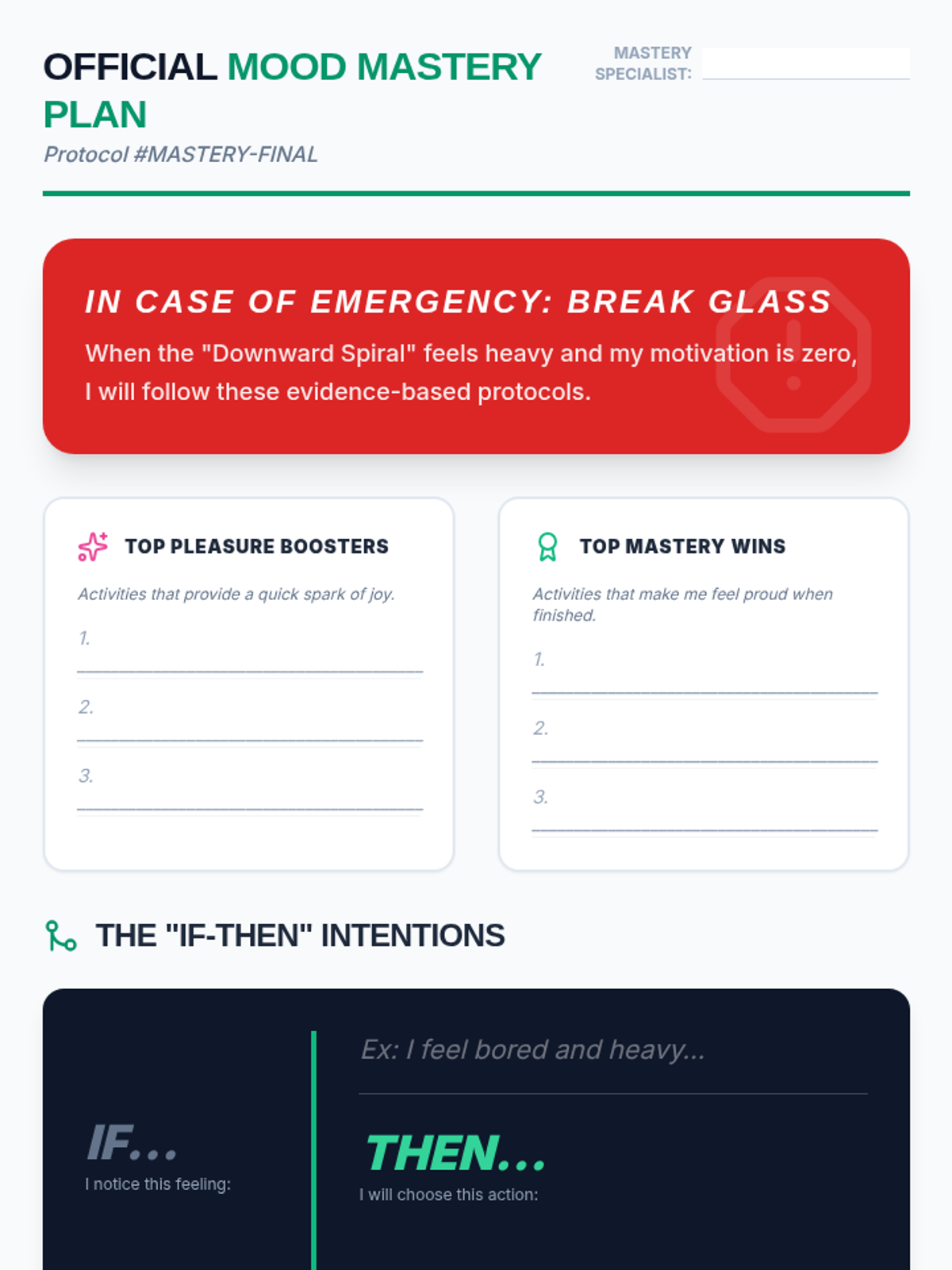
A comprehensive 'Break the Glass' emergency plan worksheet where students synthesize their findings into specific 'If-Then' implementation intentions for mood regulation.
Final slide deck for the 'Mood Mastery Lab' lesson, teaching students how to create implementation intentions and synthesize their learning into an emergency activation plan.
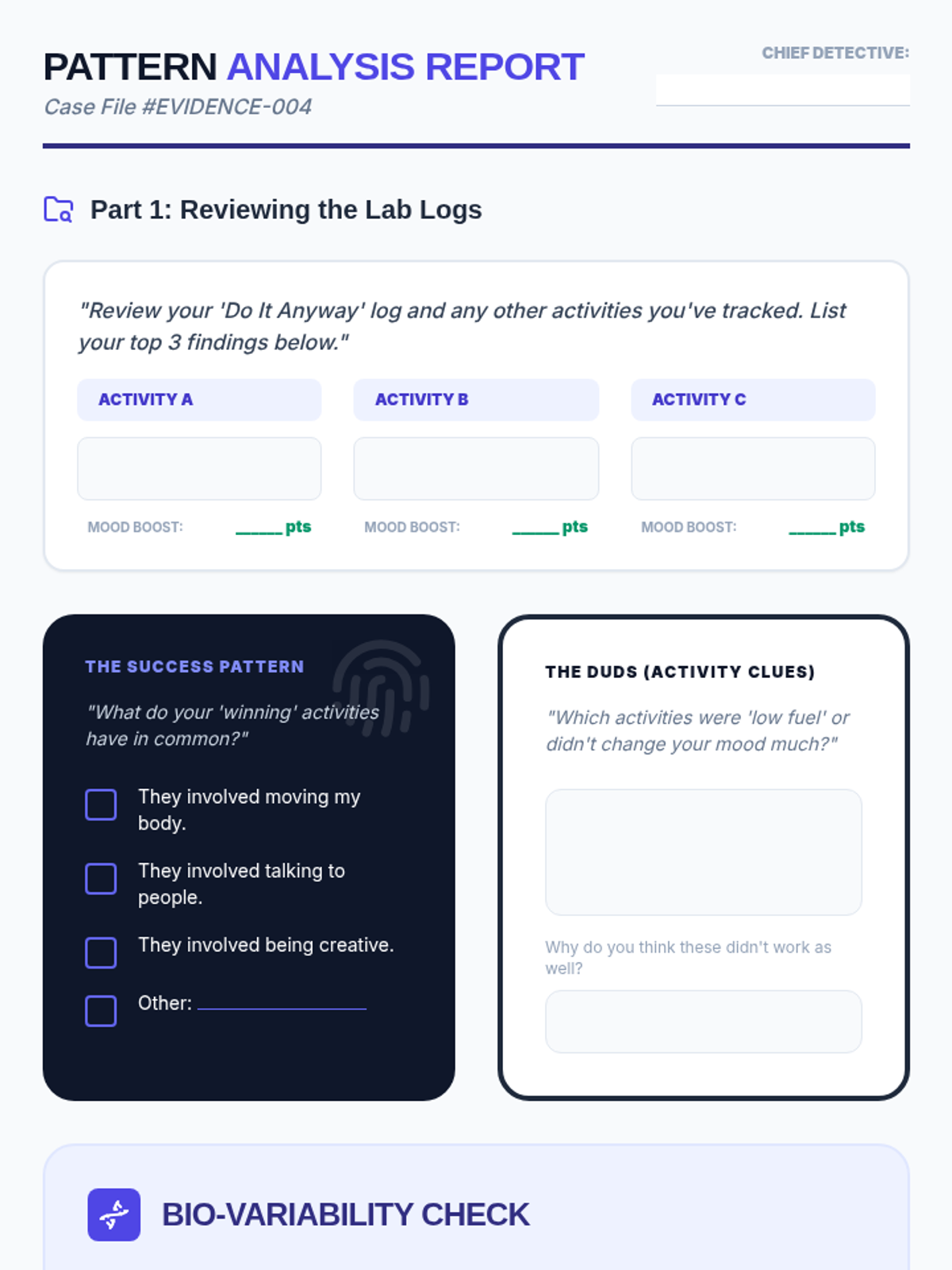
A lab report worksheet for students to analyze their experiment data, identify patterns in effective activities, and reflect on individual differences.
Introductory slides for the 'Mood Pattern Detectives' lesson, helping students analyze their data and understand the concept of individual variability in activity effectiveness.
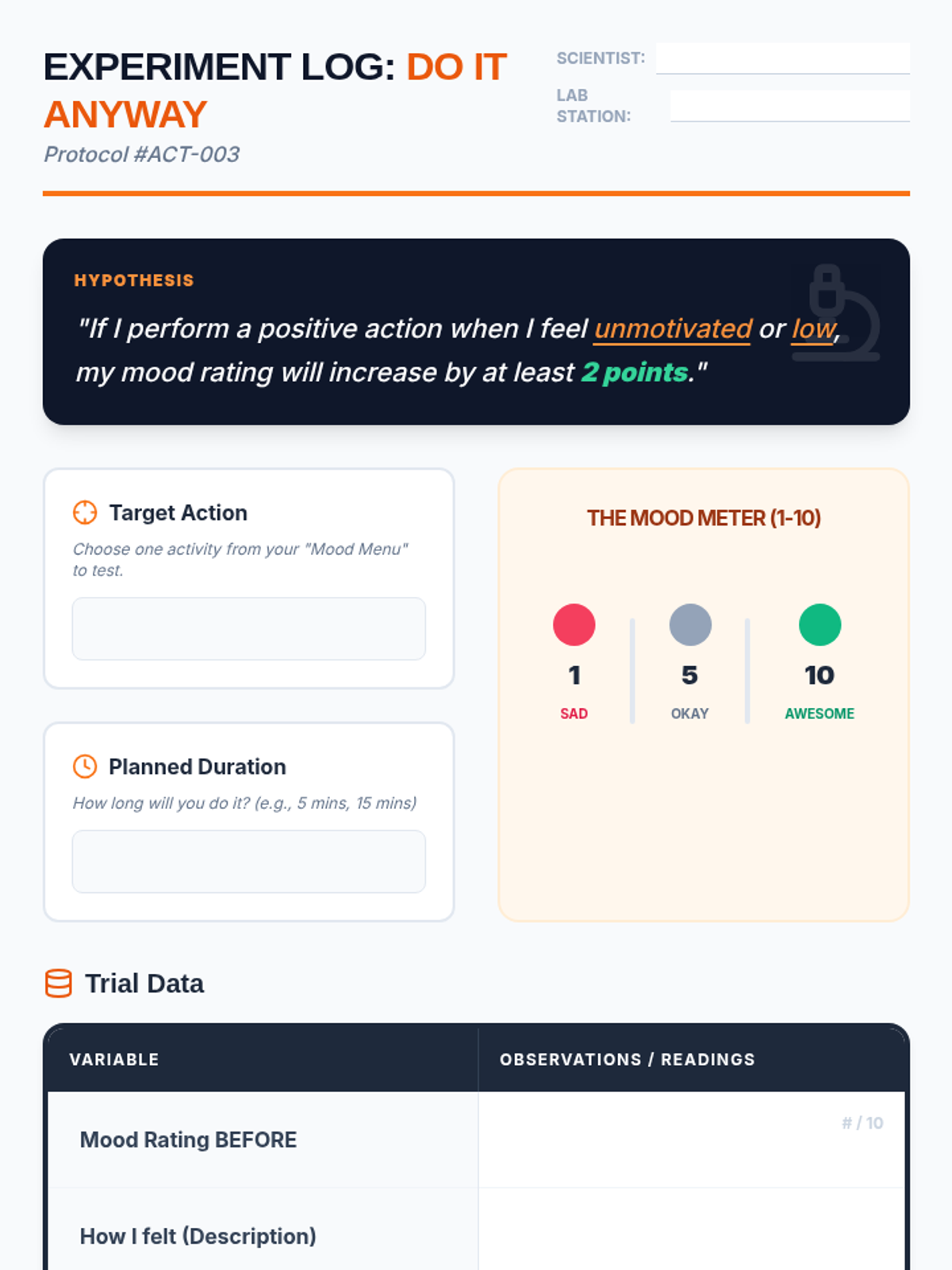
A data collection log for the 'Do It Anyway' experiment, allowing students to track their mood ratings before and after engaging in a positive action.
Introductory slides for the 'Do It Anyway' experiment, explaining the concept of 'acting opposite' and how to track mood data for a personal science experiment.
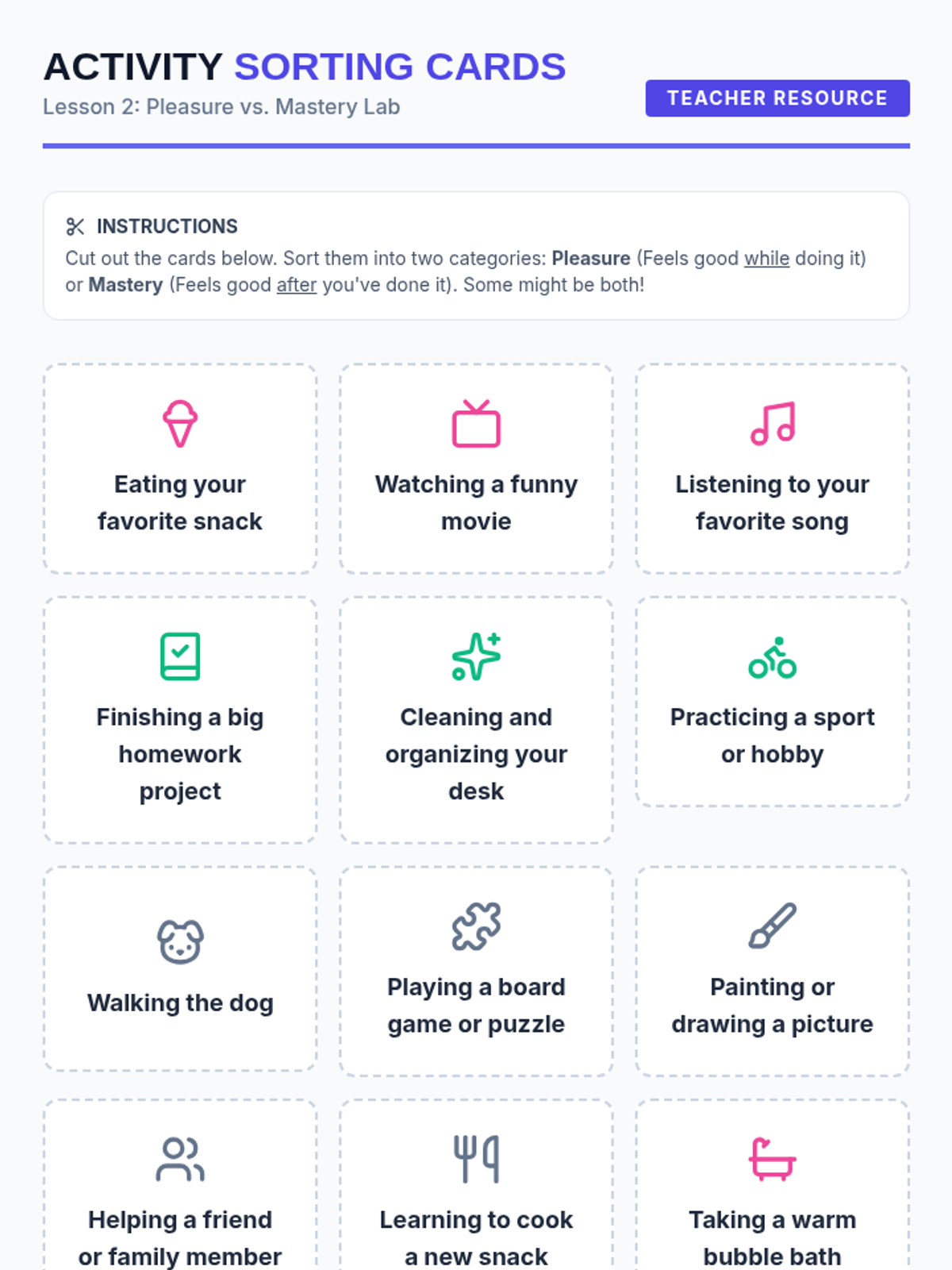
Sorting cards and a categorization t-chart for Lesson 2, helping students distinguish between pleasure-based and mastery-based activities.
Introductory slides for the 'Pleasure and Mastery' lesson, explaining the difference between 'Fun fuel' and 'Proud fuel' and the importance of a balanced activity diet.
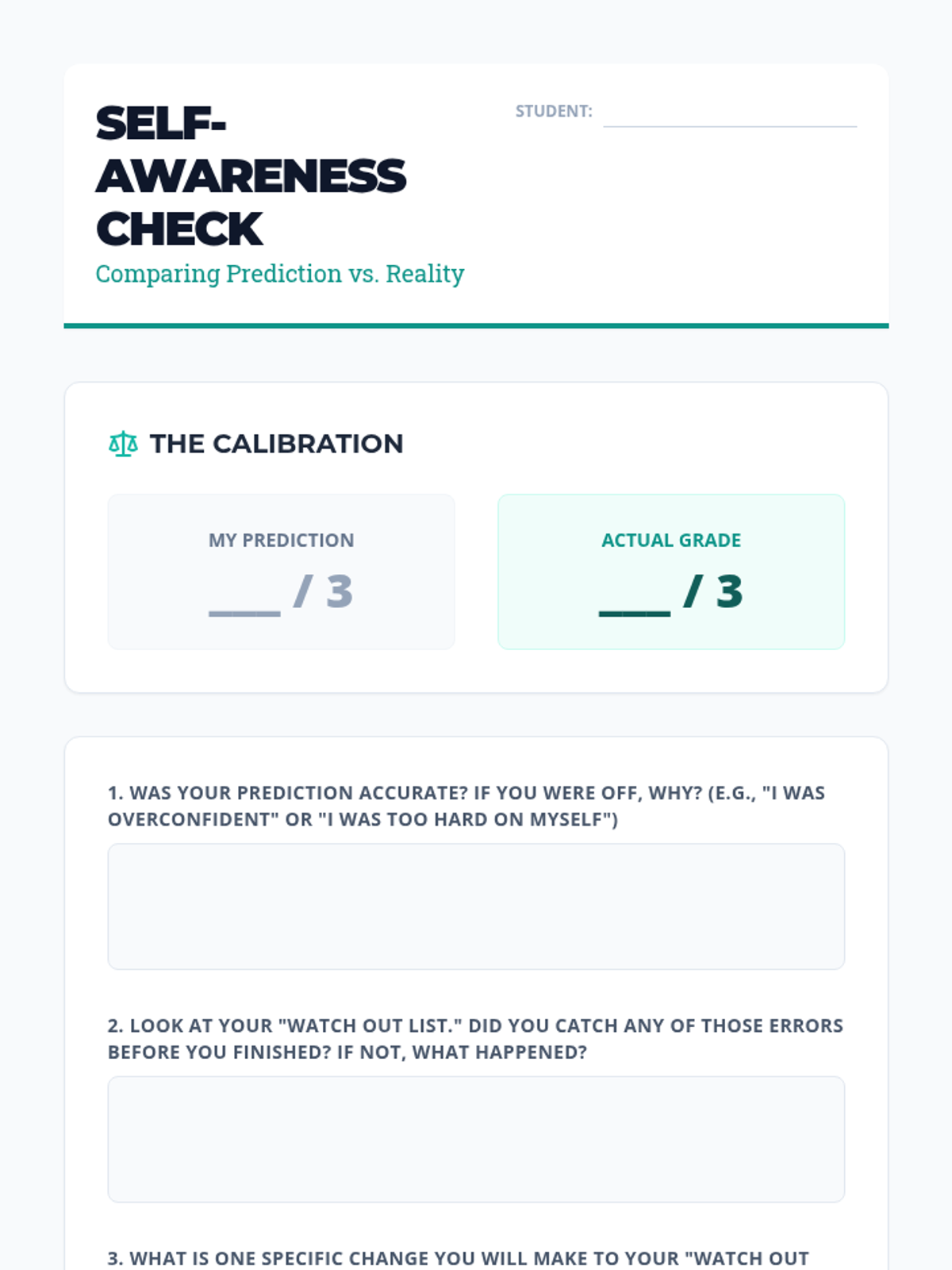
A final reflection sheet for students to compare their quiz predictions with their actual grades, evaluating the effectiveness of their metacognitive strategies.
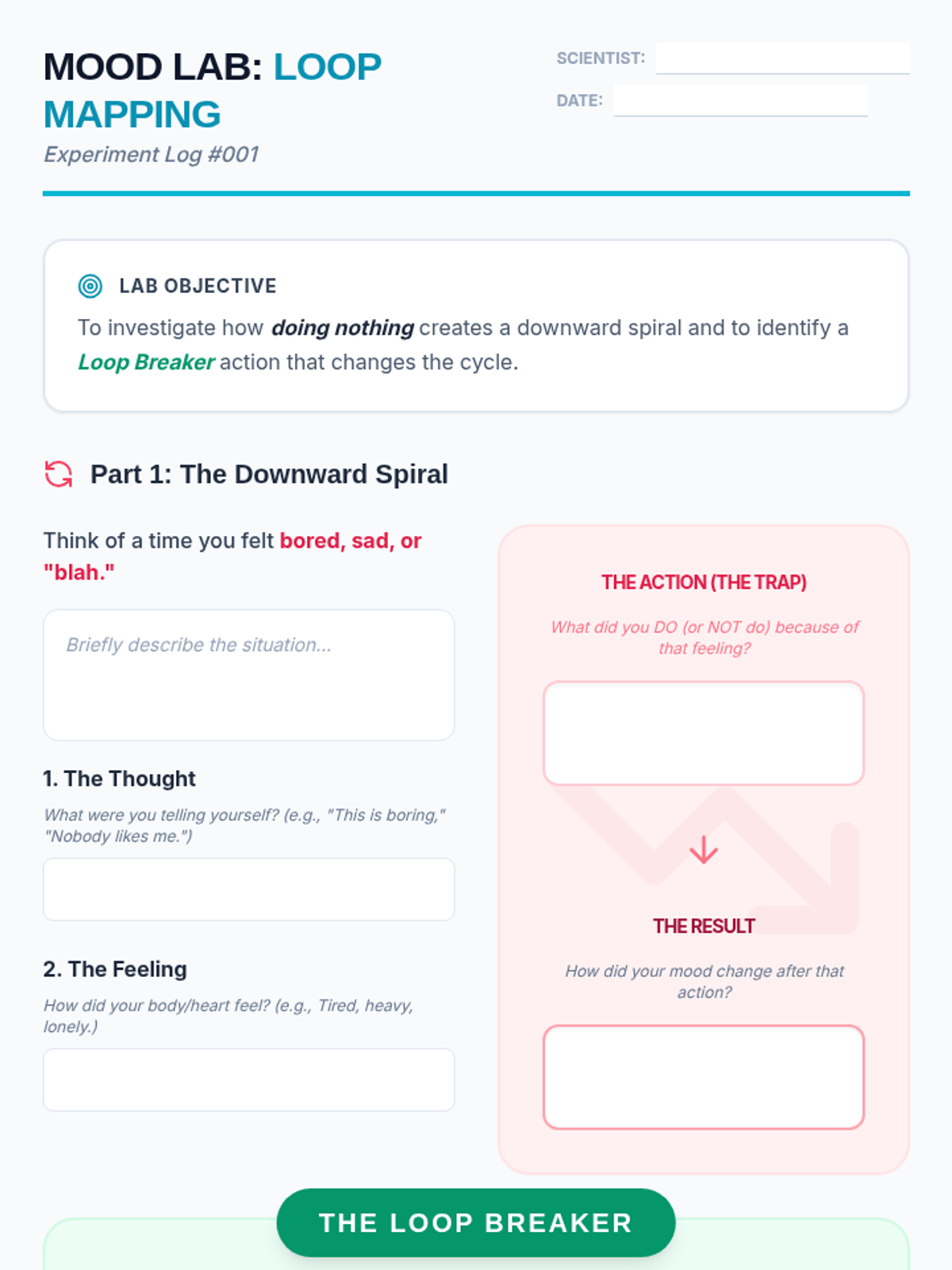
A lab notebook style worksheet for students to map out their own action-emotion loop, identifying a 'downward spiral' moment and a 'loop breaker' action.
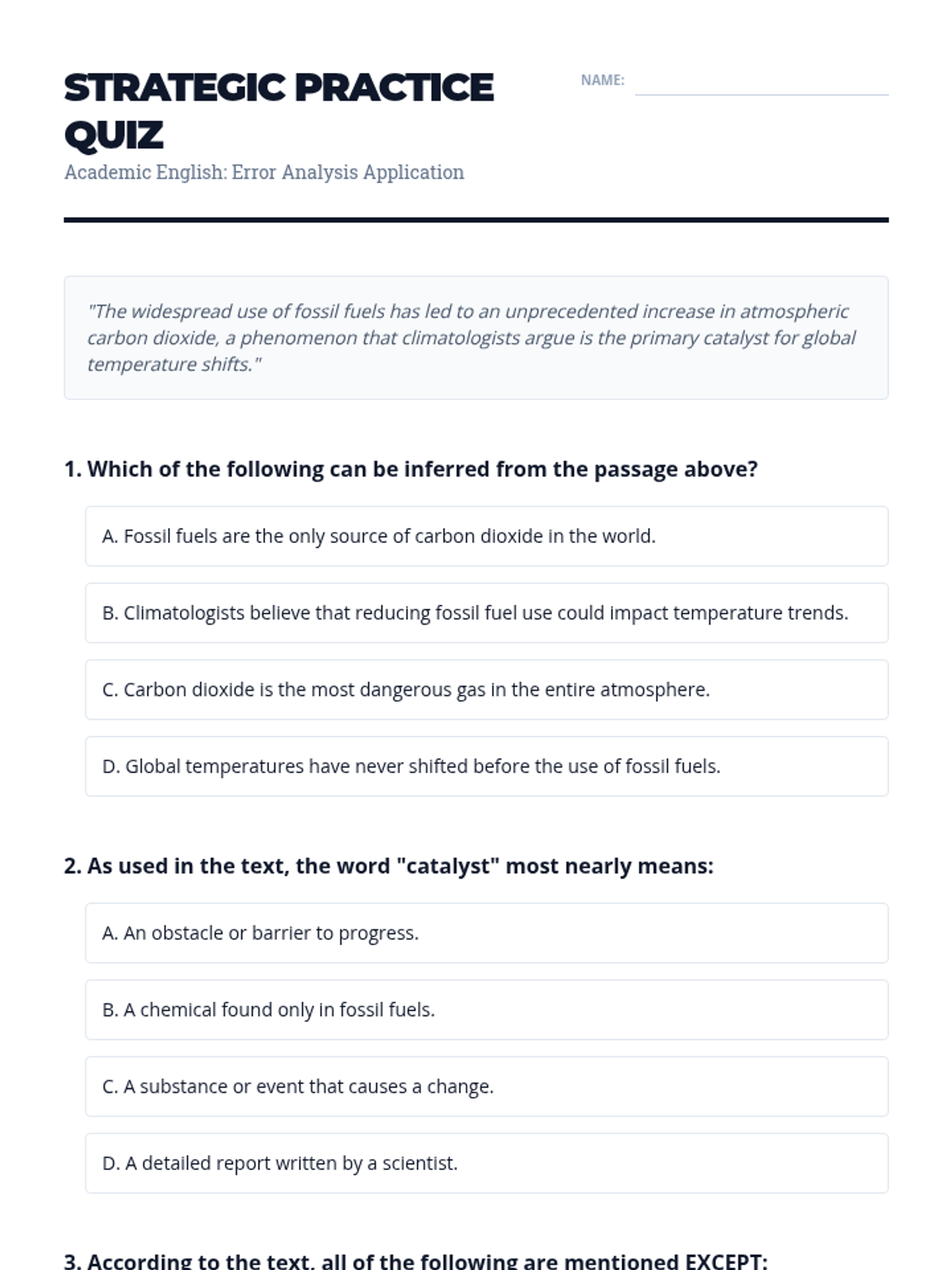
A short Academic English quiz designed to test students' application of their "Watch Out List," including a mandatory pre-grading self-reflection and score prediction section.
Final slides for the sequence focusing on the "Showtime" assessment. It introduces the score prediction challenge and real-time error analysis.
Introductory slides for the 'Loop of Life' lesson, featuring the human machine hook and visual representations of the thought-feeling-action cycle.
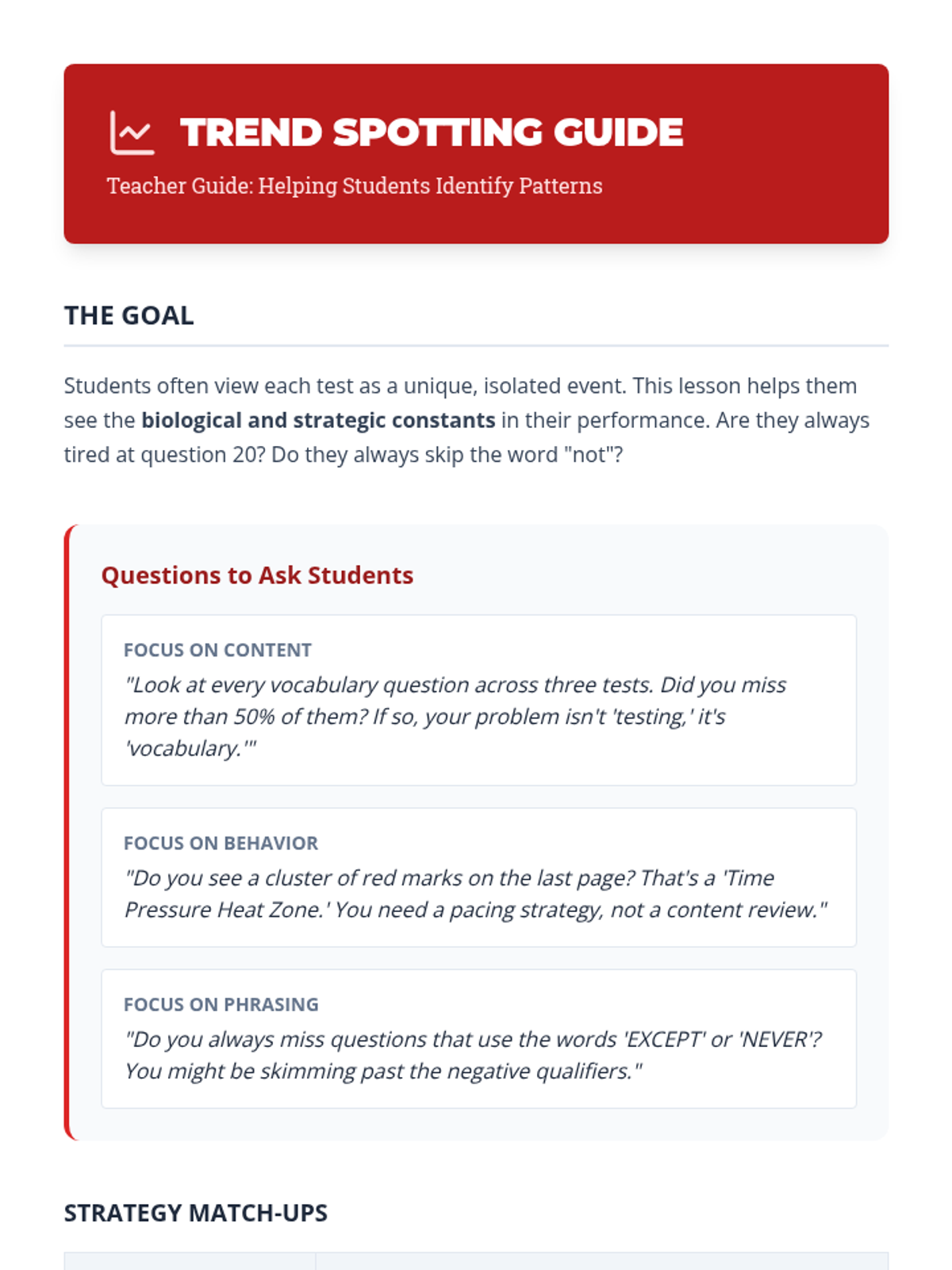
A guide for teachers to help students interpret their error data and connect patterns to specific defensive strategies.
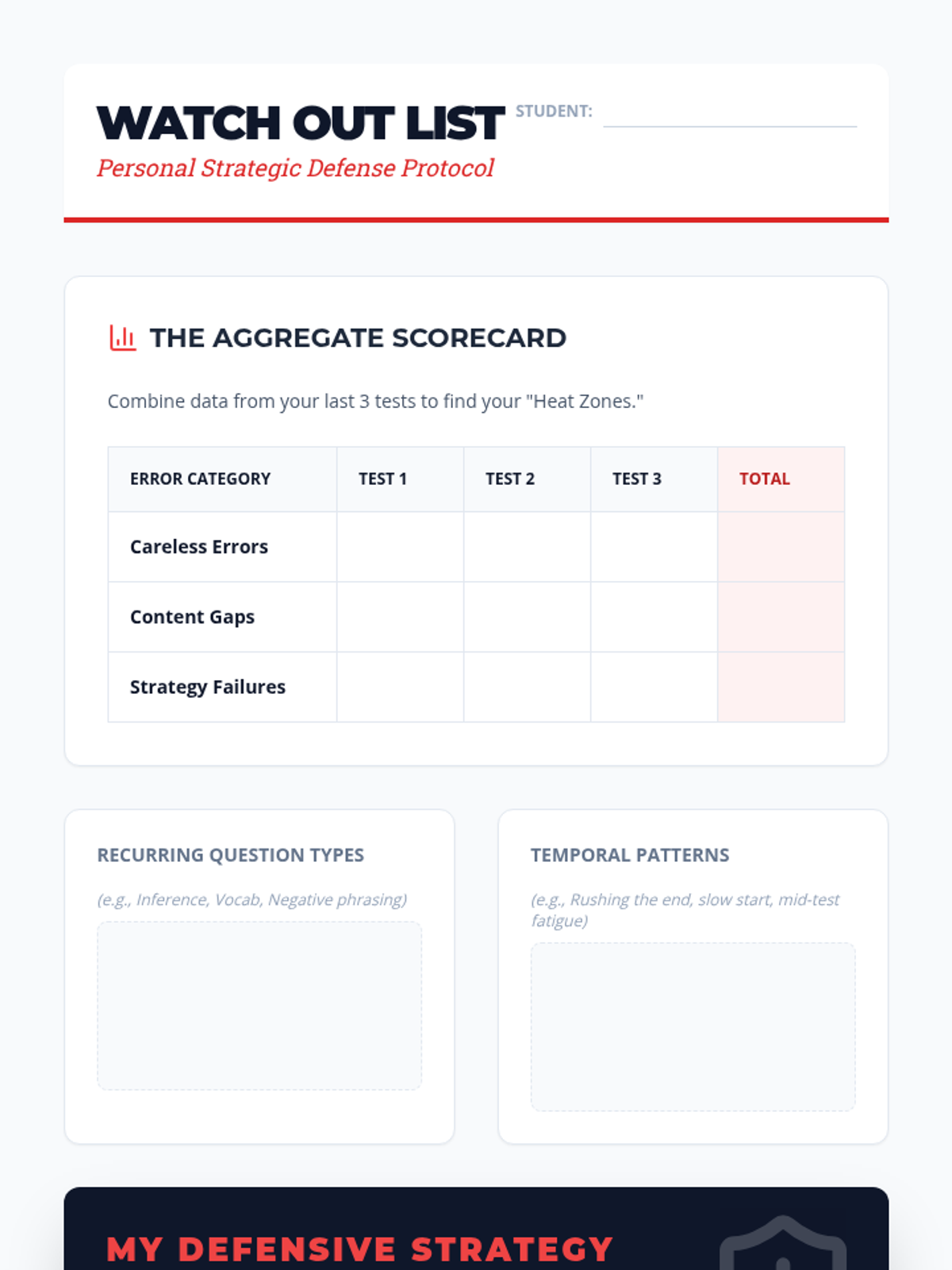
A student worksheet for aggregating error data across multiple assessments and distilling those patterns into a "Watch Out List" for future defense.
Slides for Lesson 4 that use a "Heatmap" analogy to teach students how to aggregate error data and identify recurring personal patterns.
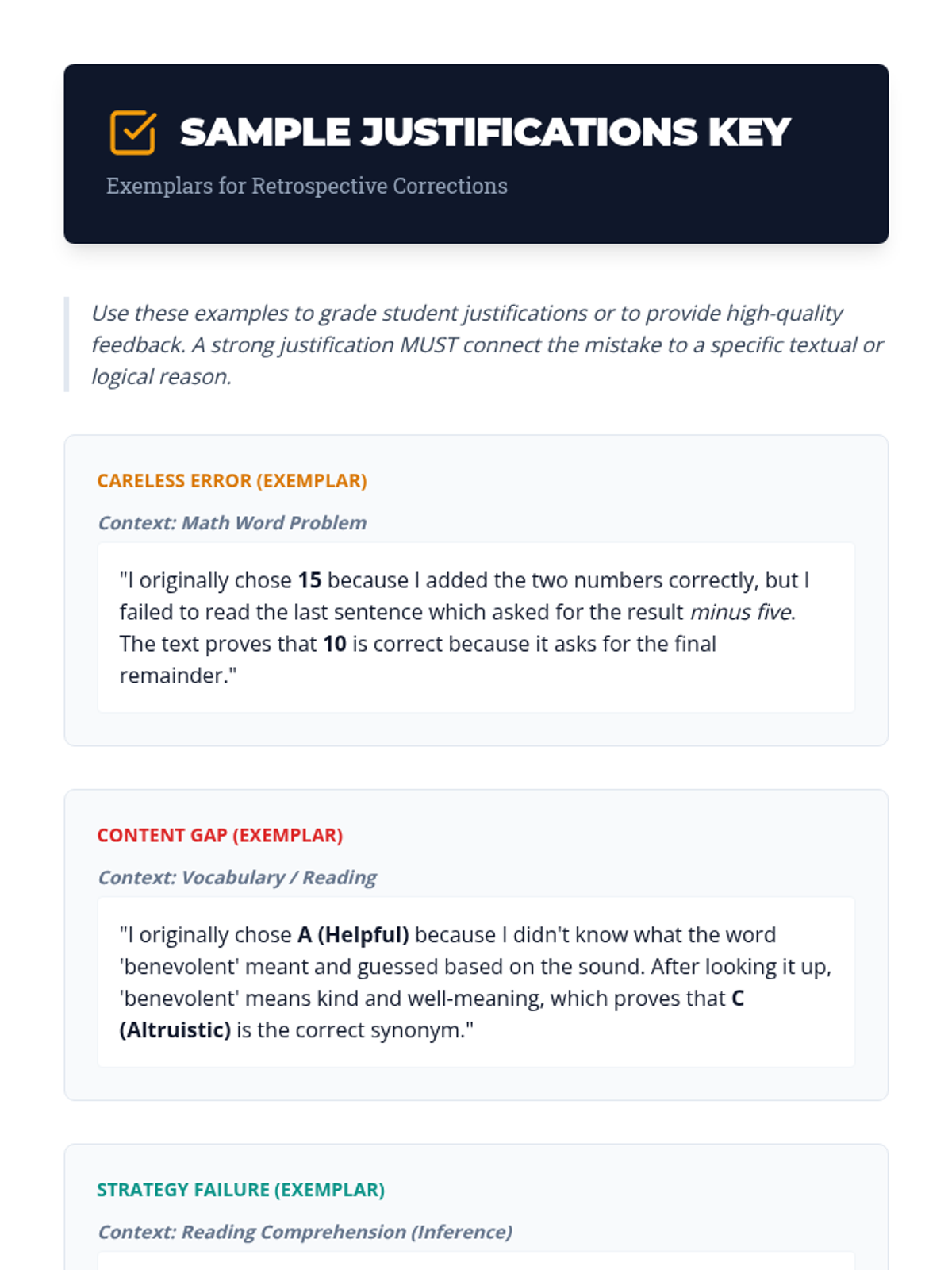
An answer key/exemplar guide for teachers to evaluate student justification statements, showing the difference between weak and mastery-level corrections.
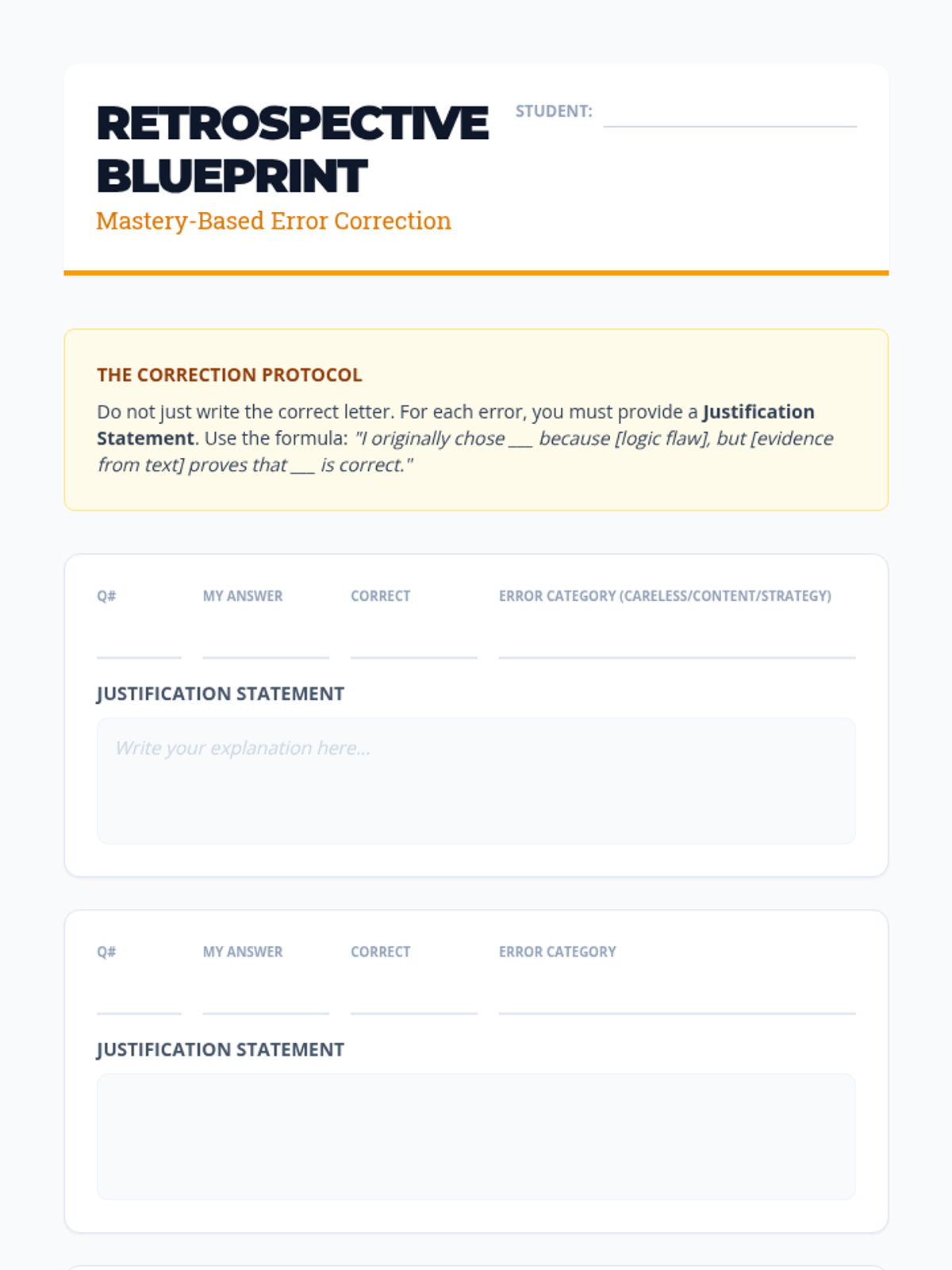
A template for students to perform deep error corrections, requiring them to write justification statements using a specific logic-based formula.
Slides for Lesson 3 introducing the "Justified Fix" method. It emphasizes that students must explain why they were wrong and why the new answer is right using evidence.