Written and verbal communication standards for the workplace, including email etiquette, presentation delivery, and professional phone conduct. Develops collaborative skills for teamwork, constructive feedback, and efficient time management.
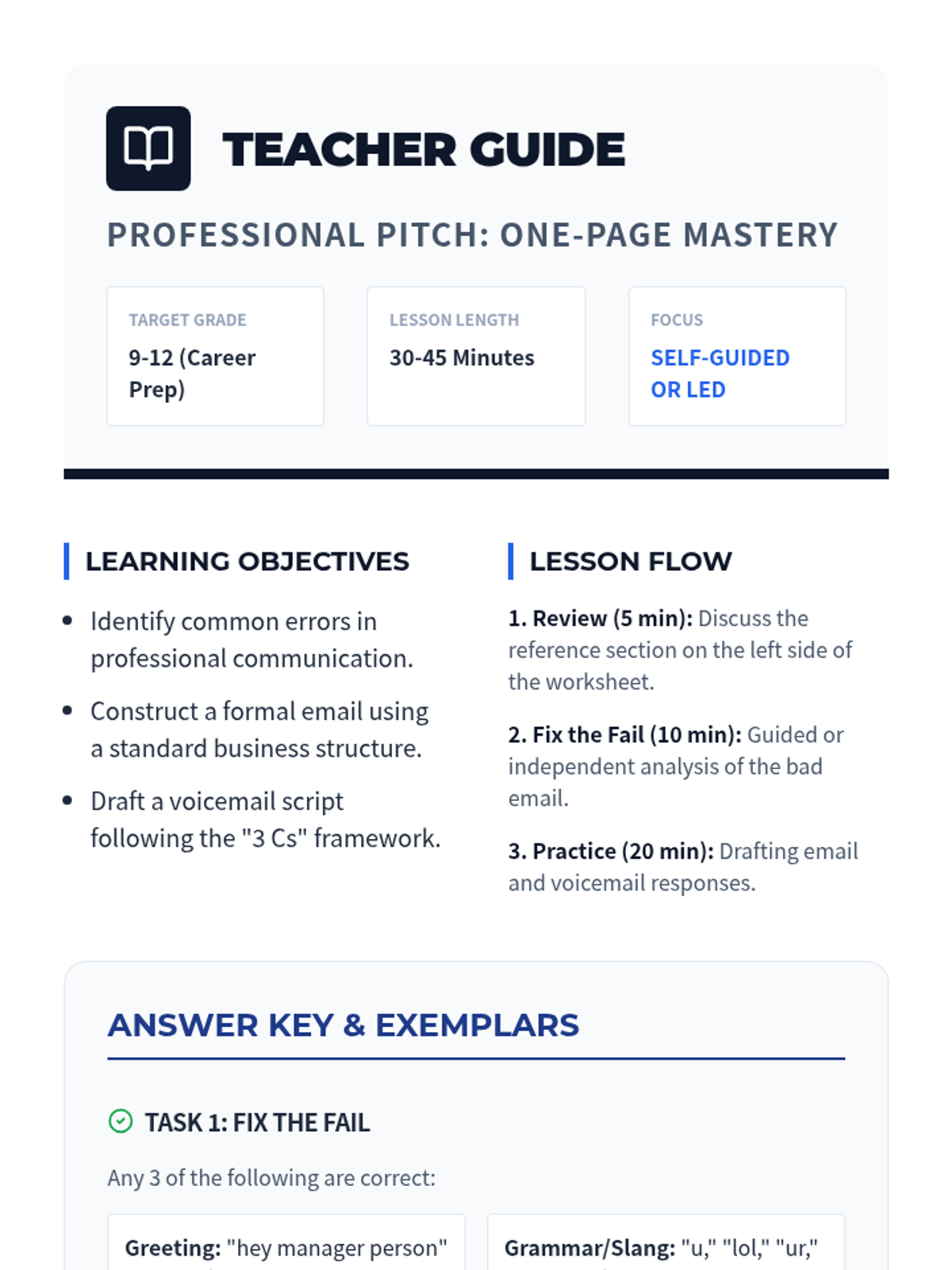
A condensed teacher guide for the one-page Professional Pitch lesson, including learning objectives, a streamlined facilitation plan, and answer keys.
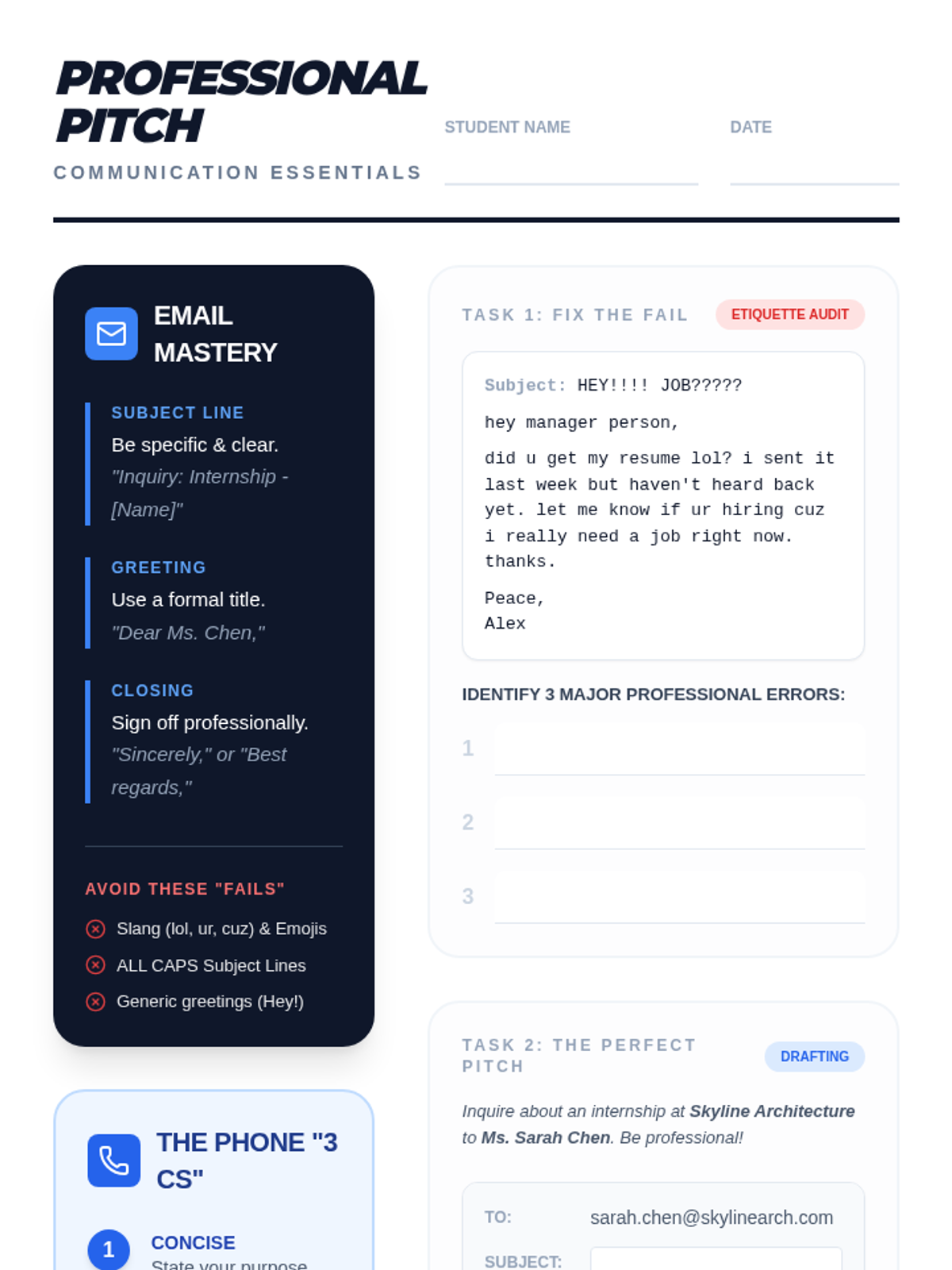
An updated one-page professional communication worksheet with improved spacing, font sizes for readability, and a cleaner layout. Combines instruction with three practice tasks.
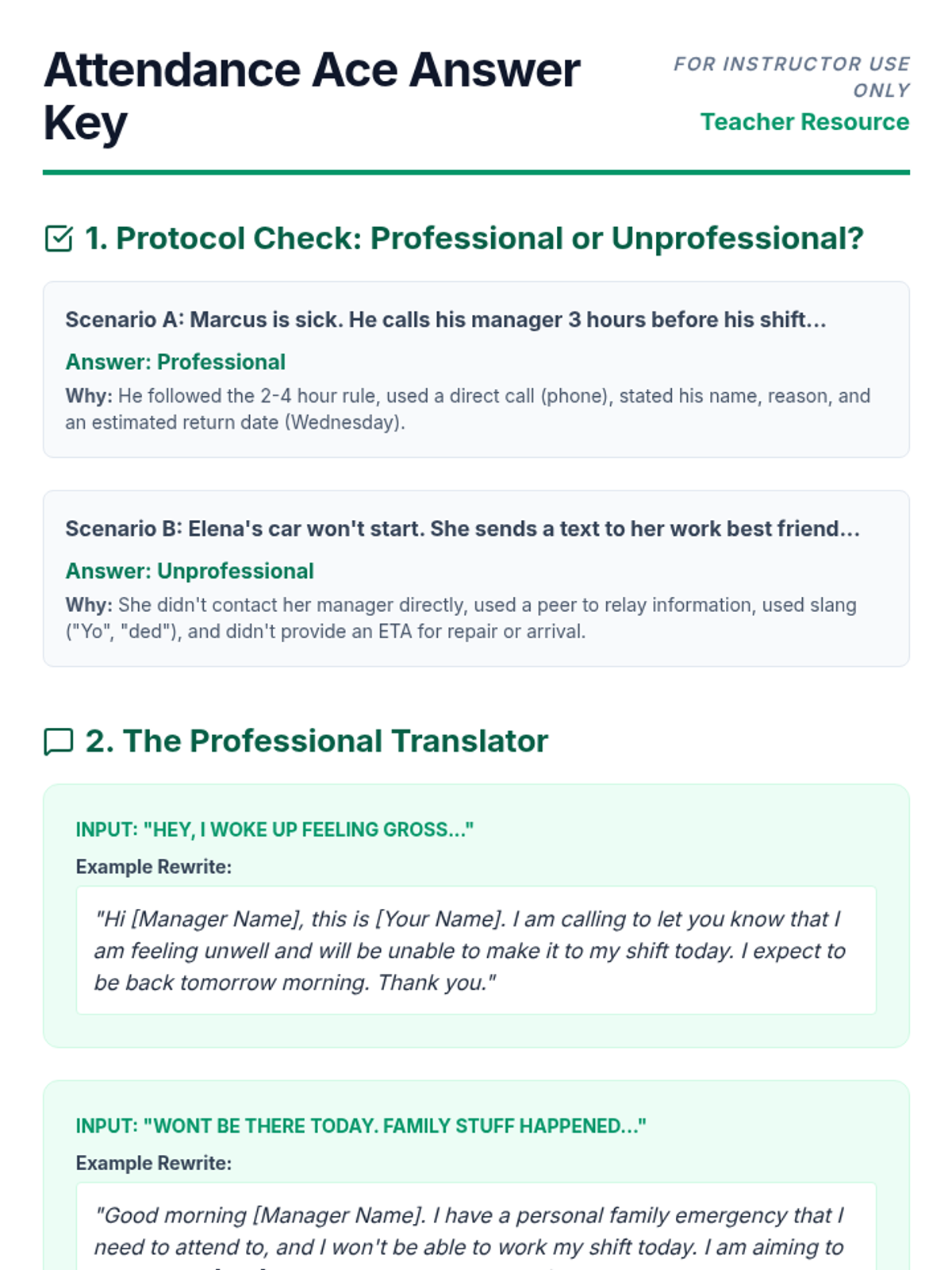
A comprehensive answer key for the Attendance Ace Worksheet, providing example professional rewrites and instructional guidance for the scenario analysis.
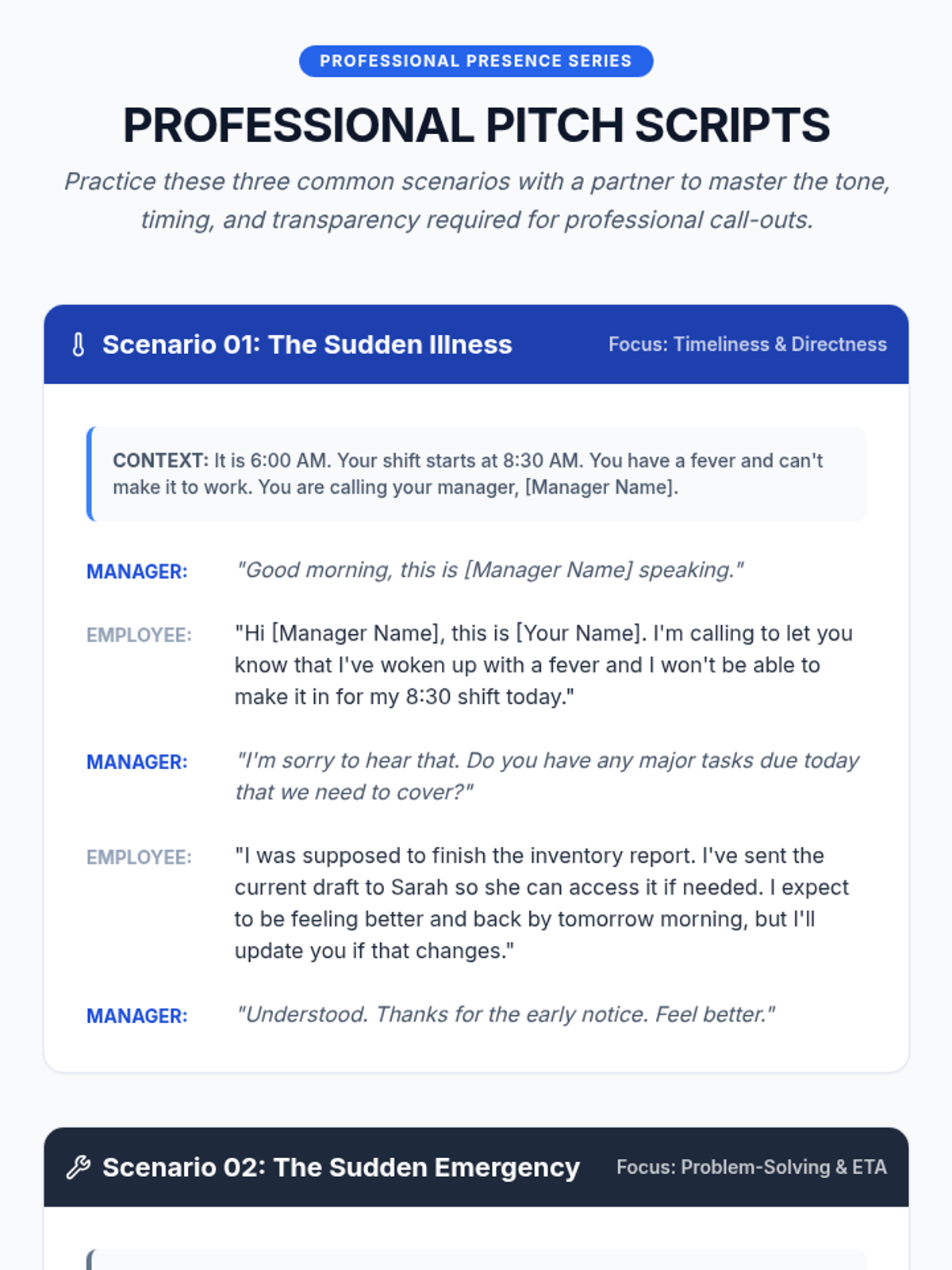
A set of three role-play scripts for practicing professional communication during common call-out scenarios: sudden illness, mechanical emergency, and planned appointments.
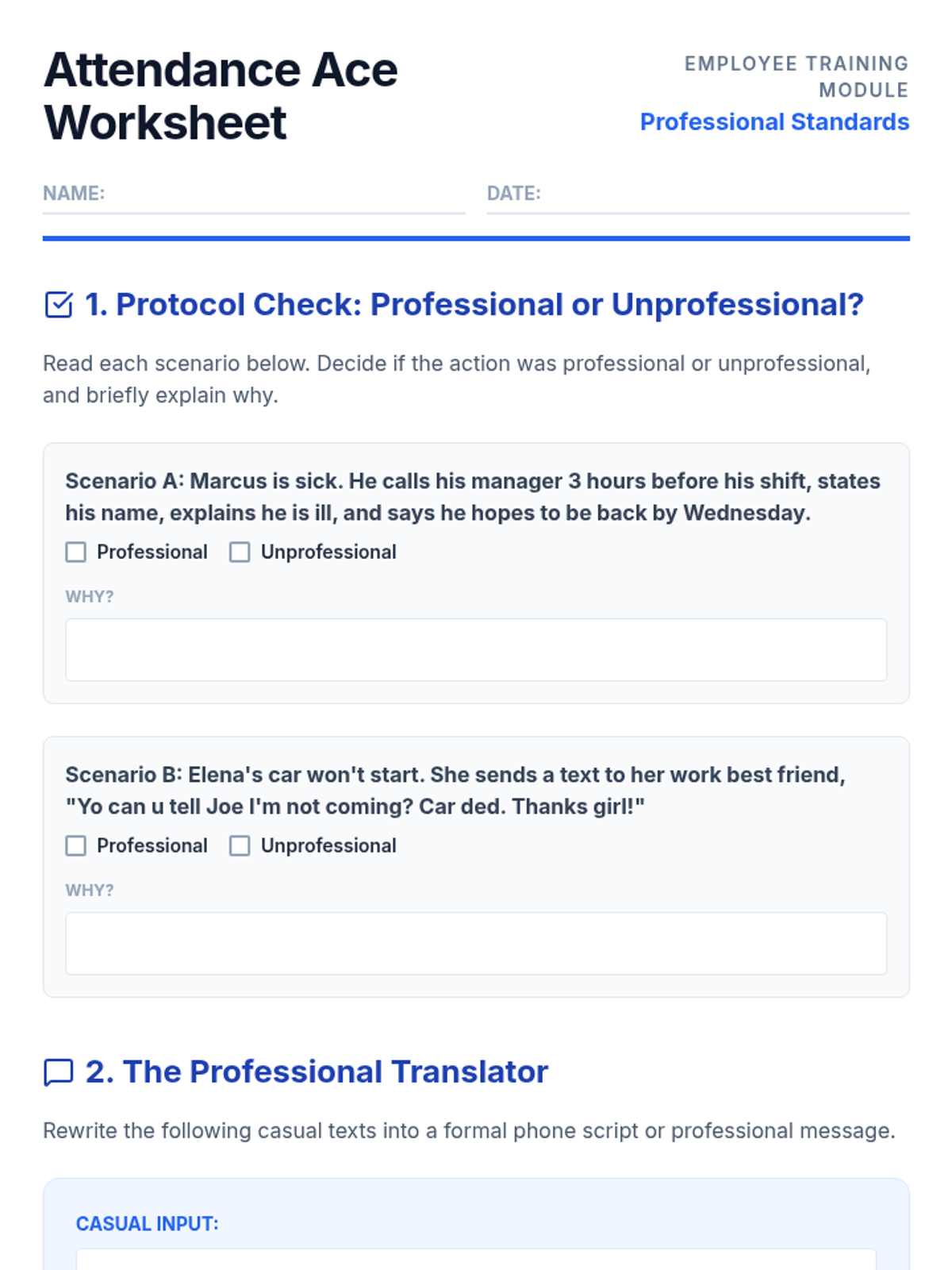
A worksheet for employees to practice professional call-out procedures, featuring scenario analysis, a text translator activity, and short-answer protocol questions.
A comprehensive slide deck for employment training on calling out protocols, covering timing, communication methods, professional phrasing, and medical excuses through informative content and case studies.
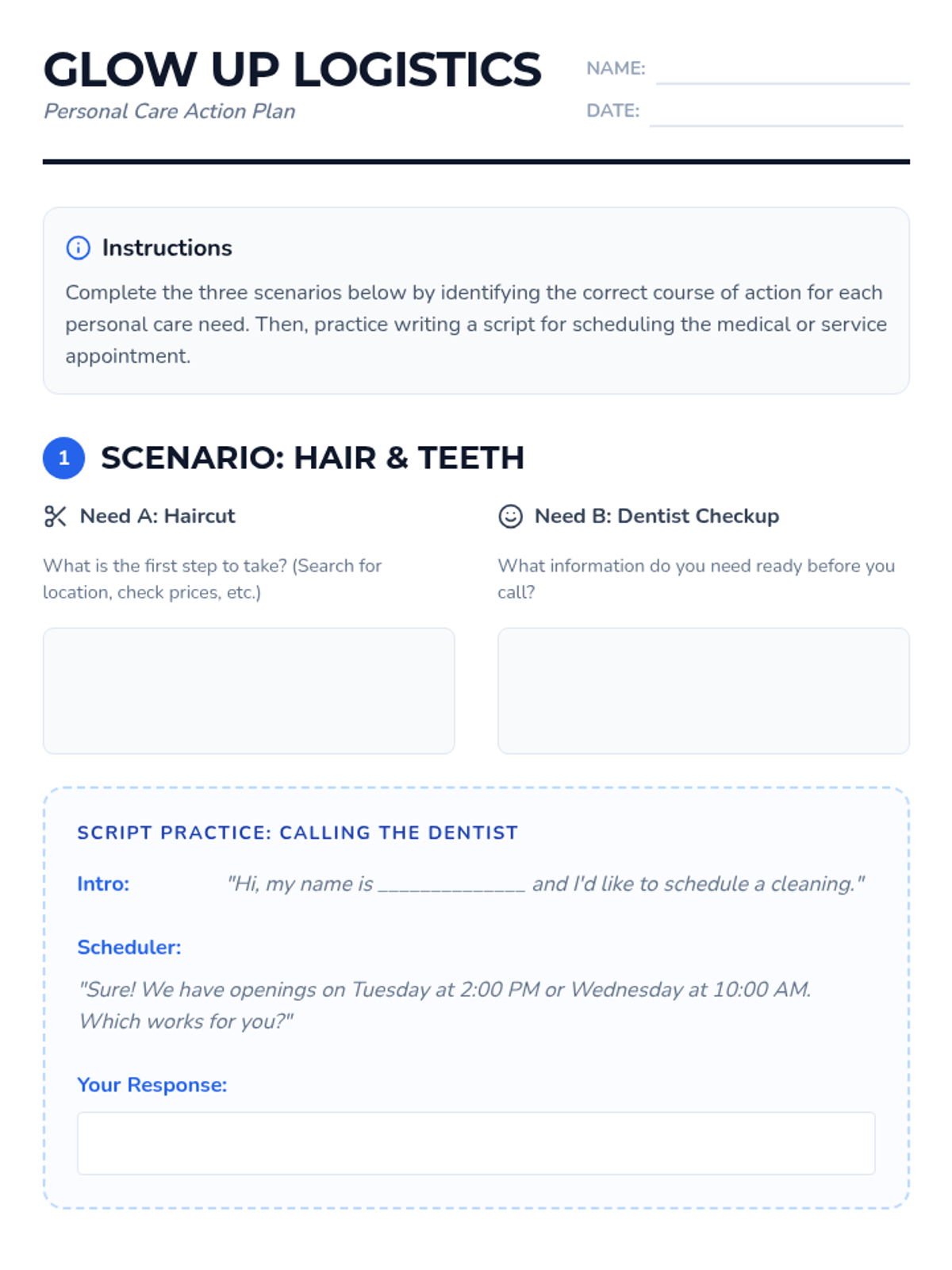
A practice workbook for students to identify personal care needs, practice appointment scripts, and complete simplified personal information forms.
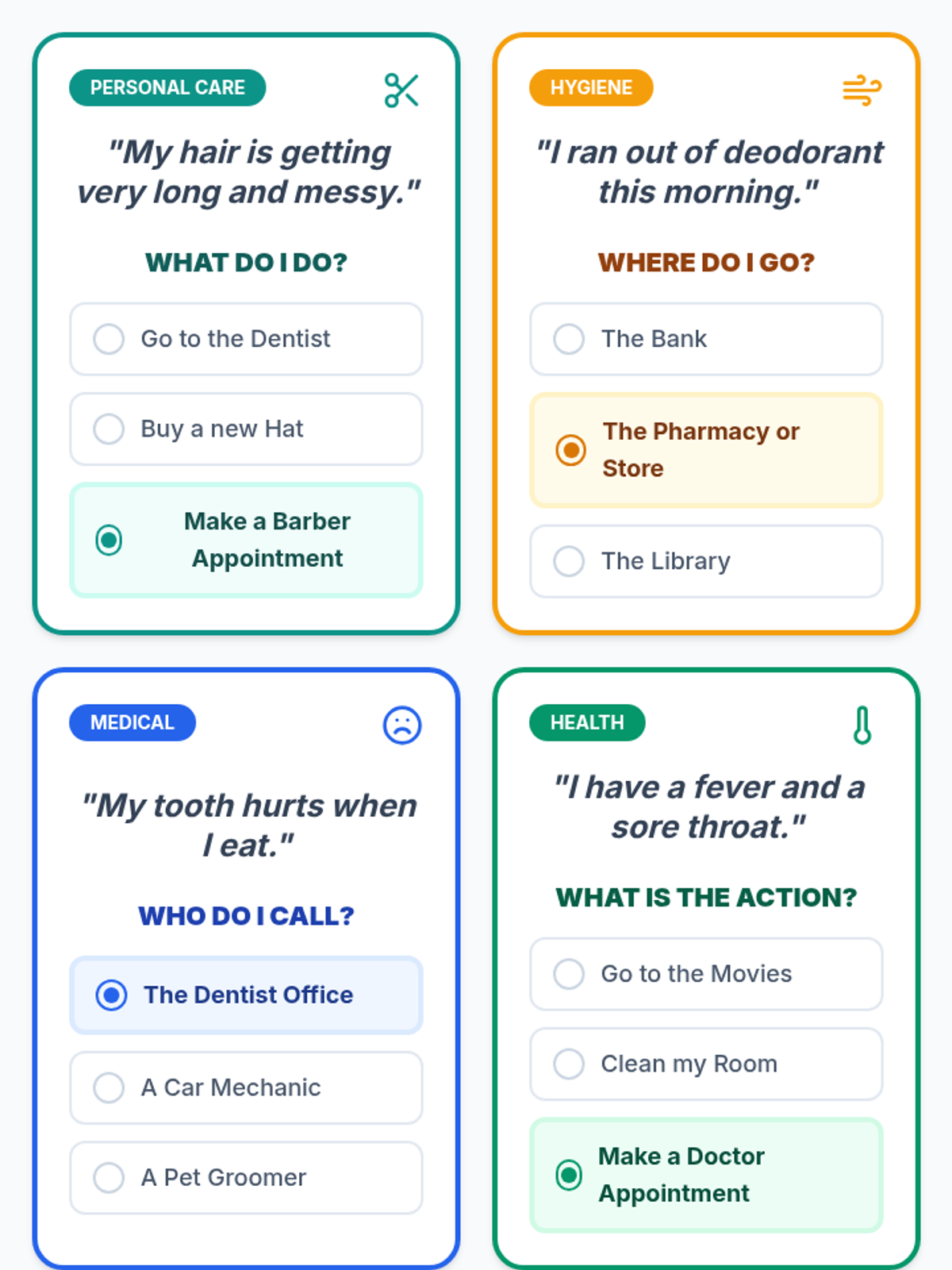
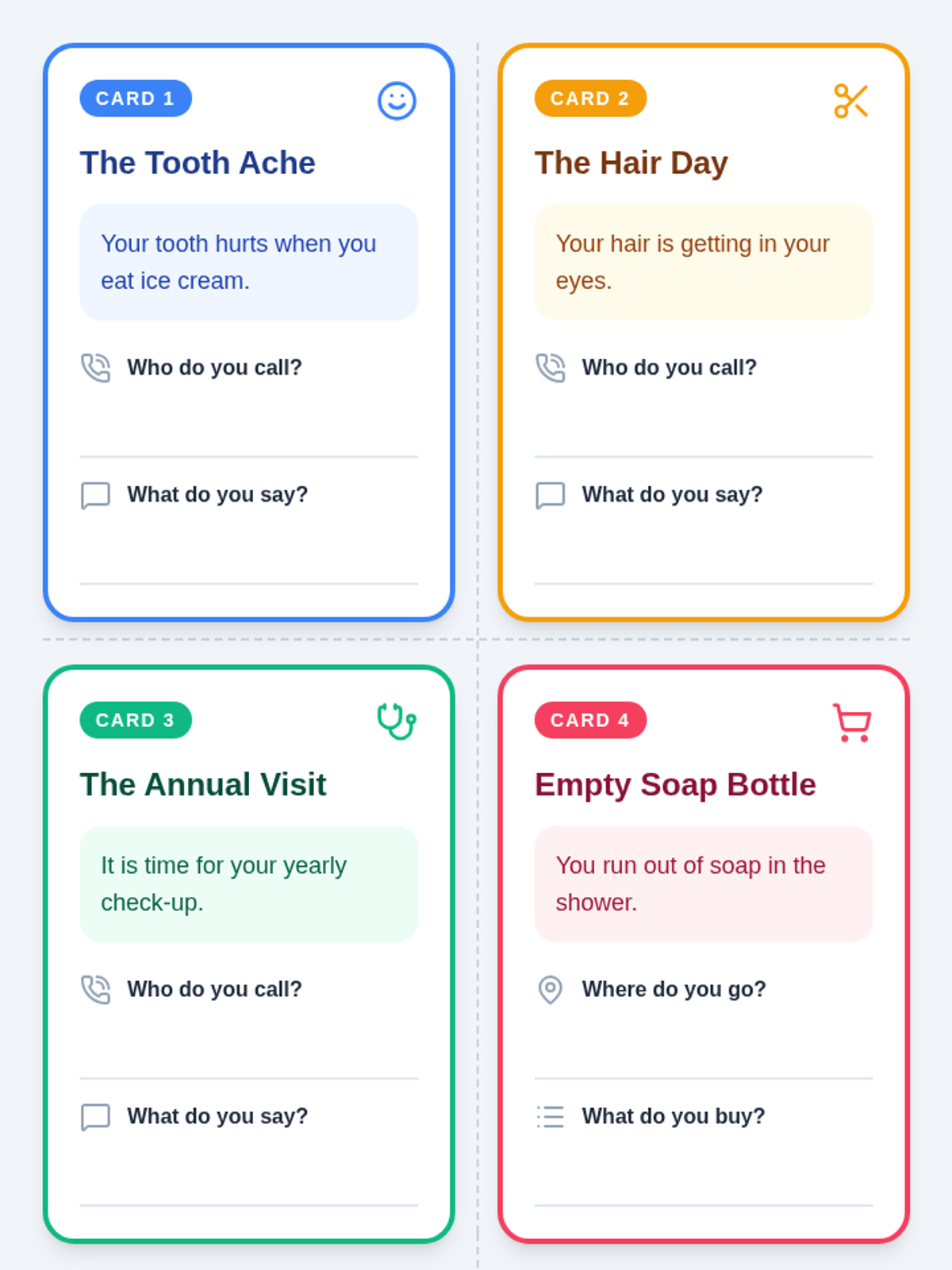
A set of 8 task cards with scenarios for students to identify appropriate personal care actions and hygiene product purchases.
A visual slide presentation designed for high-support students, covering personal hygiene needs, medical appointments, and personal information basics.
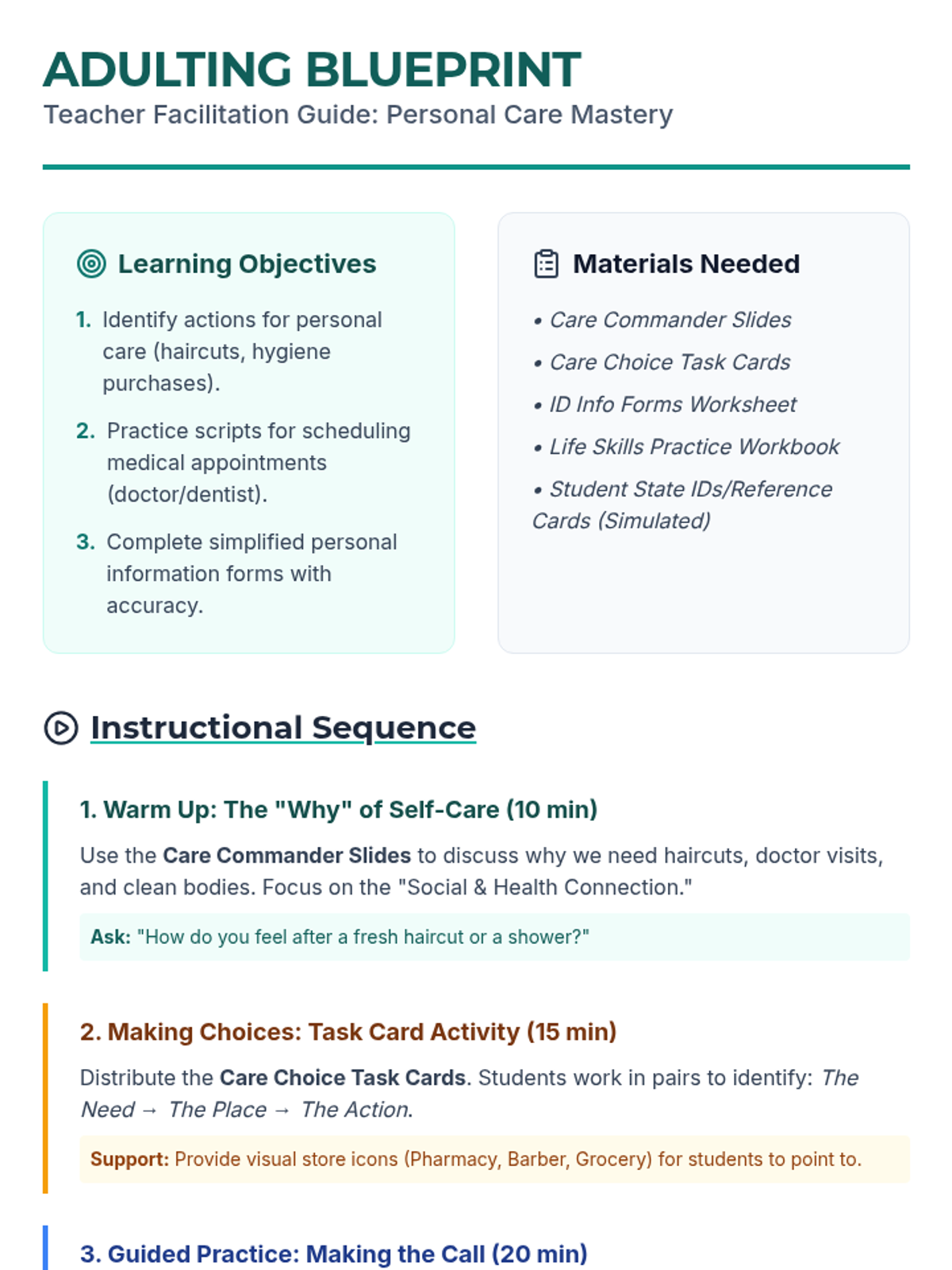
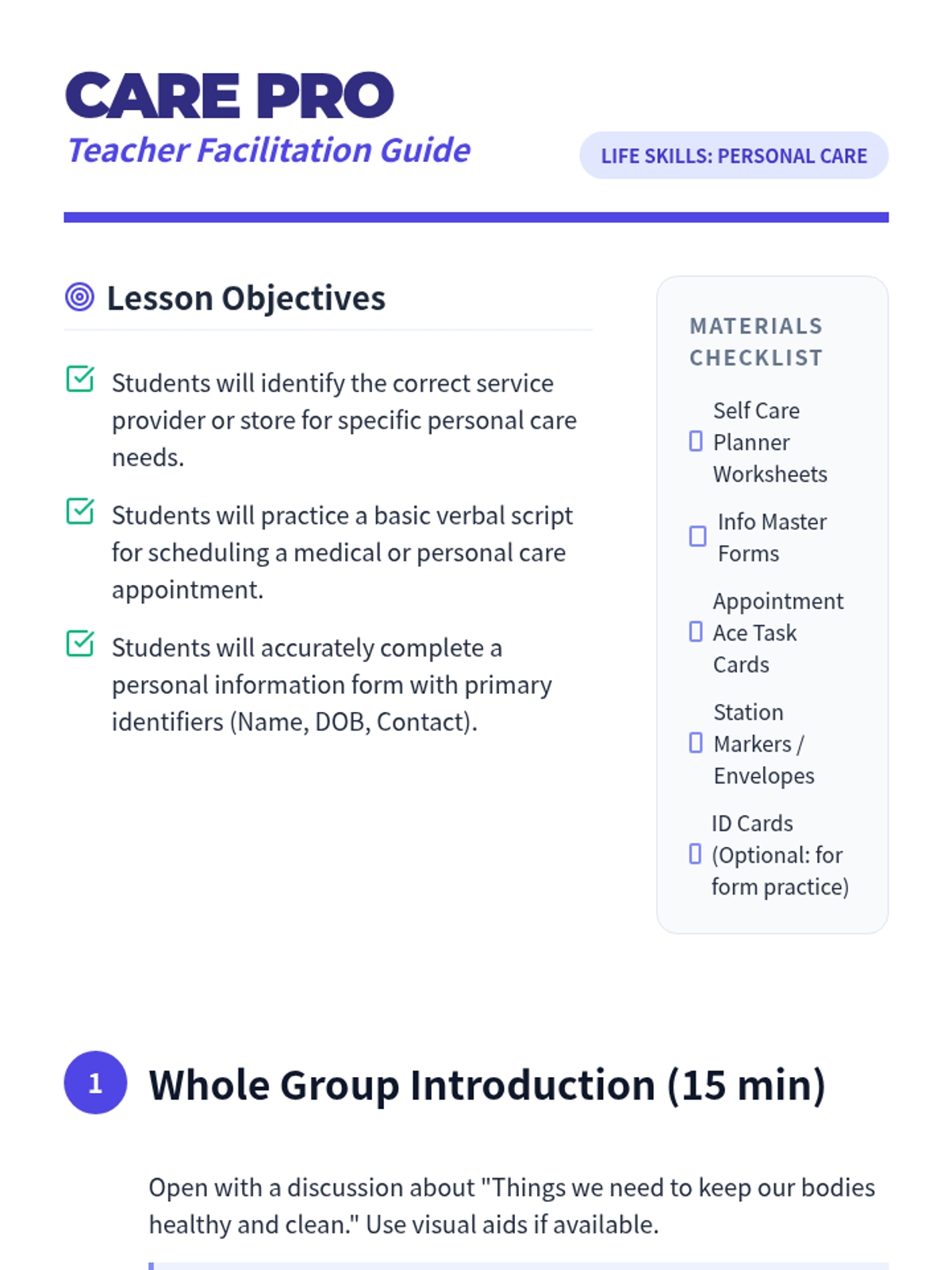
A teacher facilitation guide outlining the lesson flow, objectives, and differentiation strategies for personal care mastery.
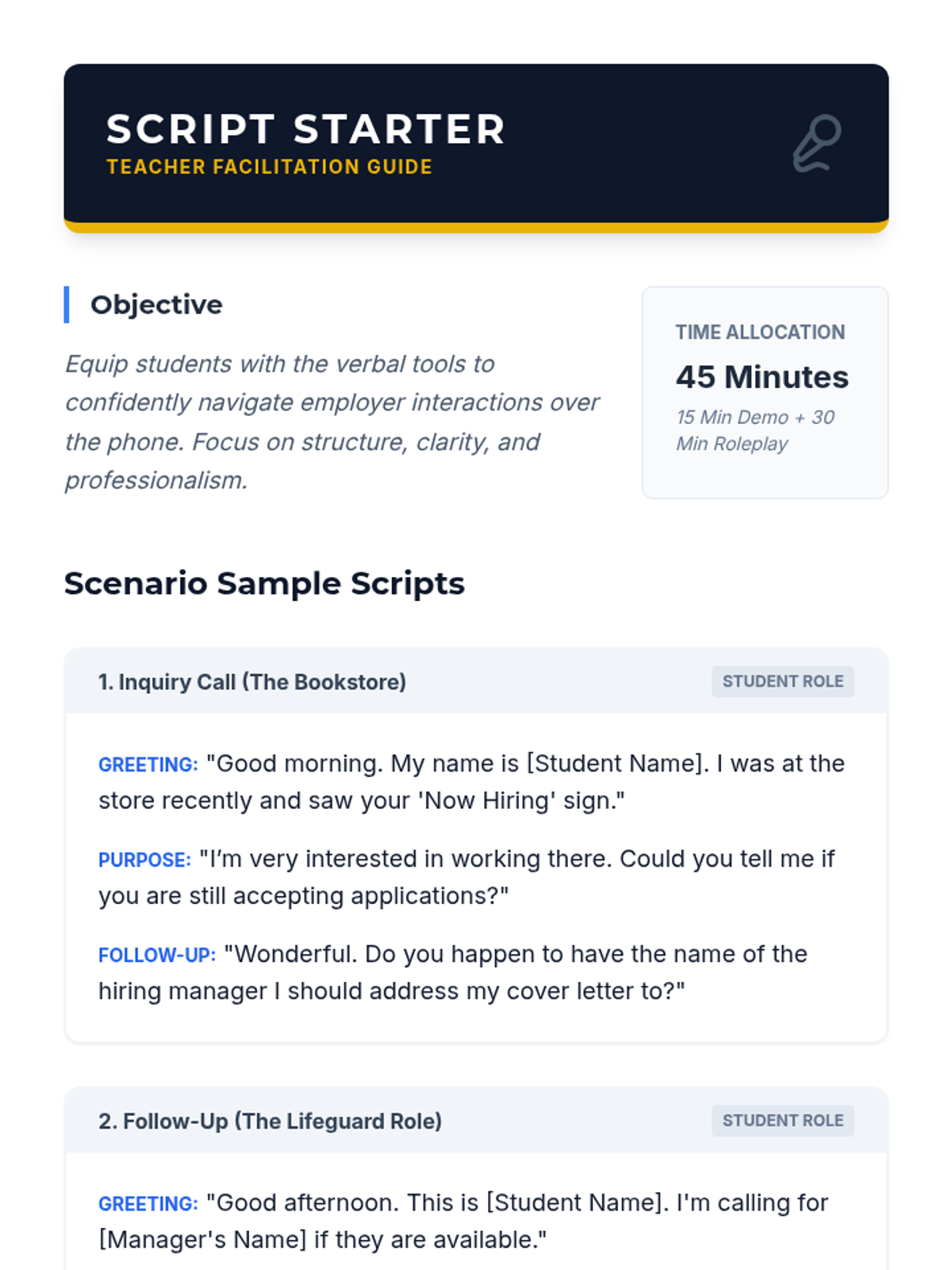
A teacher facilitation guide featuring sample scripts, roleplay objectives, and common pitfalls for the phone etiquette lesson.
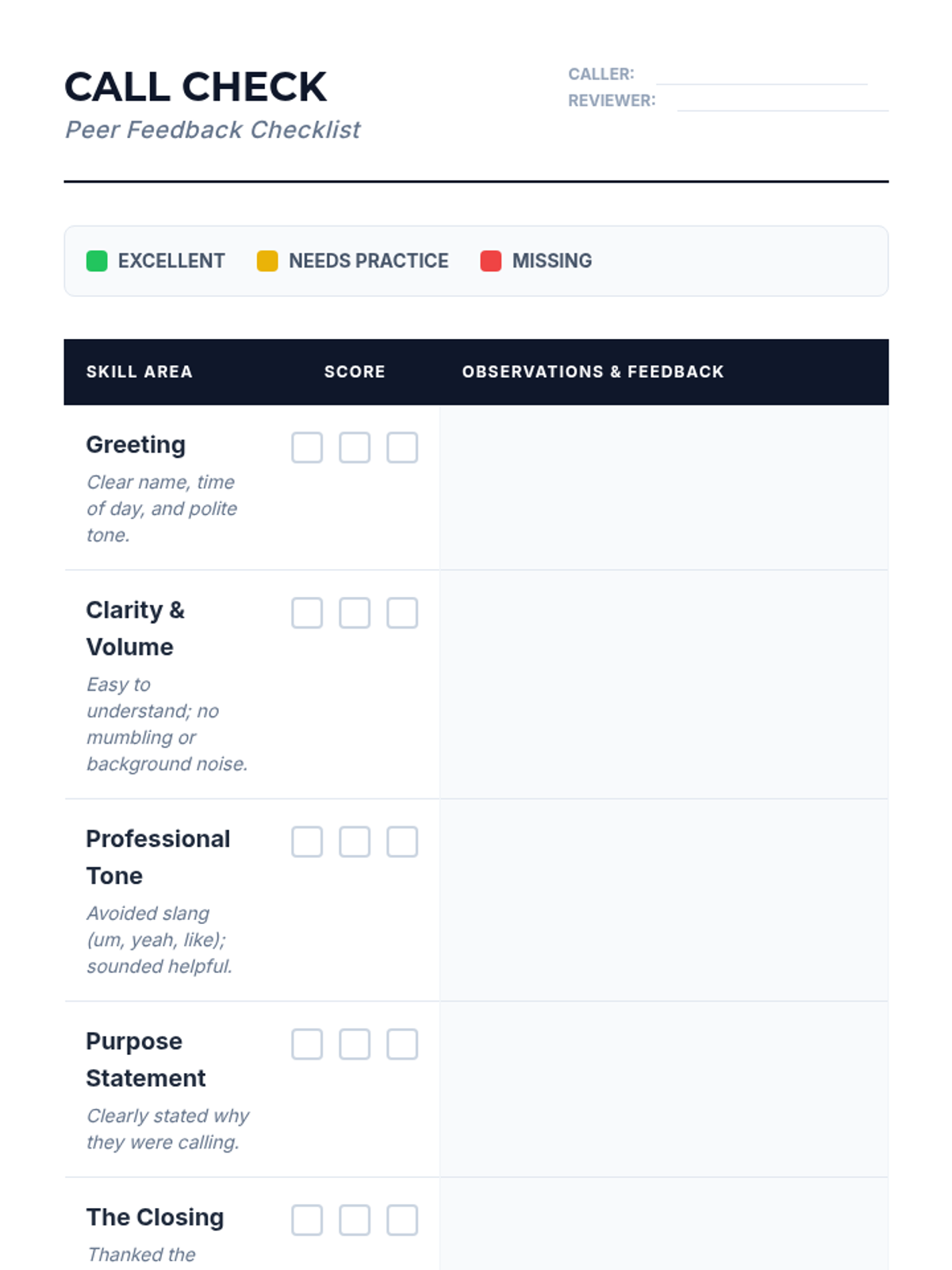
A peer assessment checklist for students to provide feedback to one another during phone etiquette roleplay practice sessions.
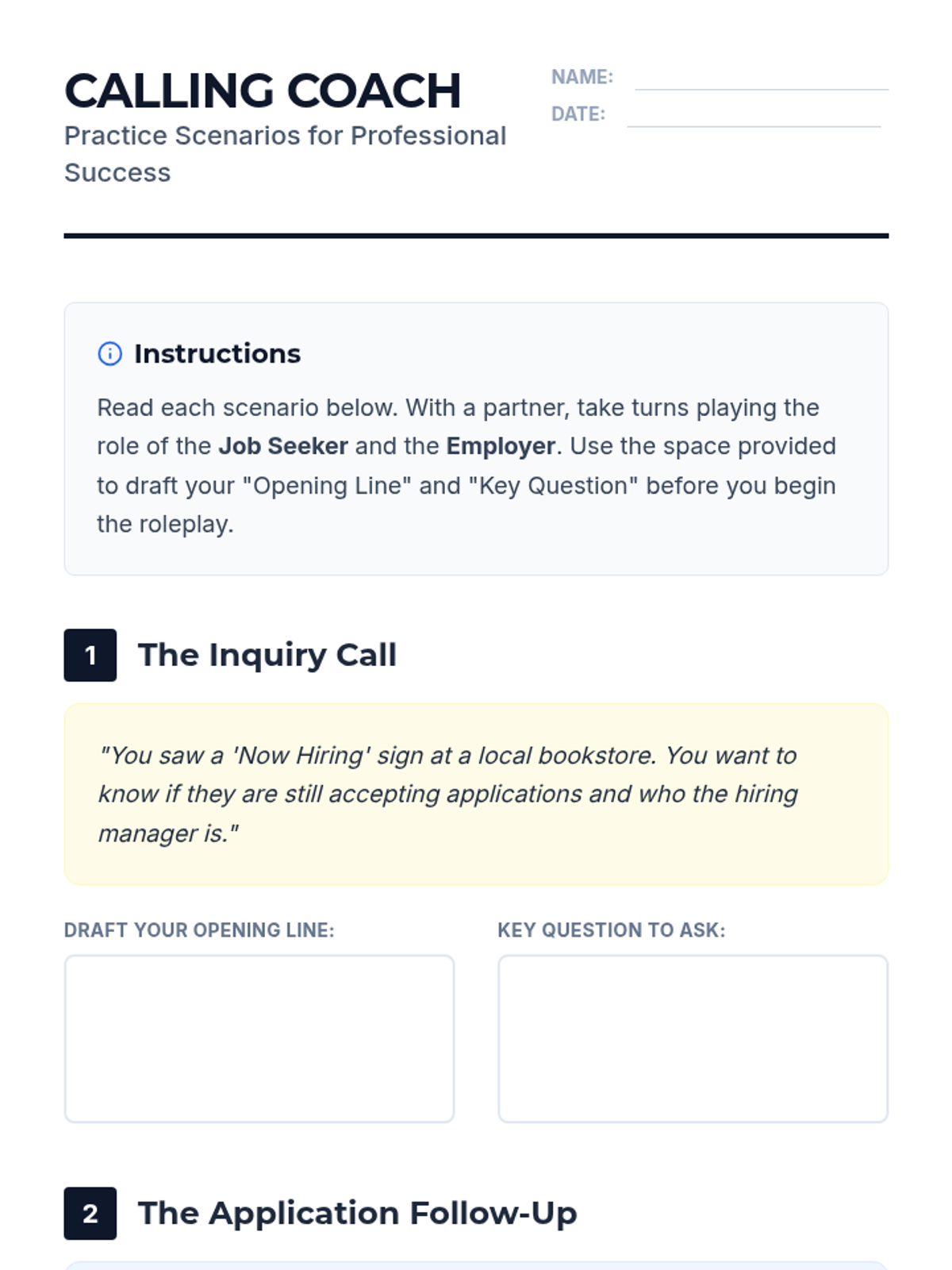
A worksheet featuring realistic calling scenarios for job seekers to practice their professional phone etiquette with drafted response areas.
A visually professional slide deck teaching the fundamentals of phone etiquette for job seekers, including preparation, script structure, and handling voicemails.
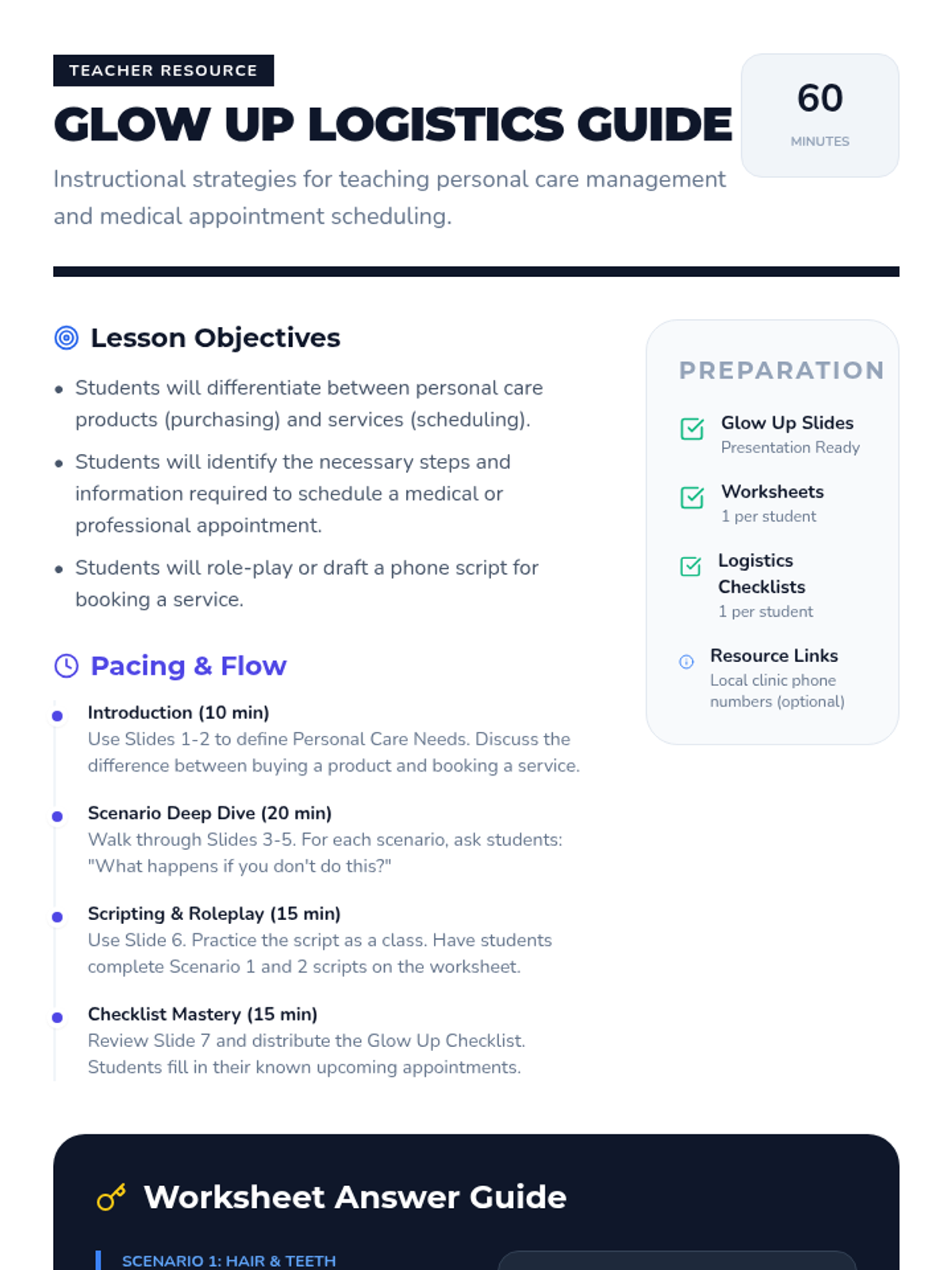
A teacher resource providing lesson objectives, pacing guides, discussion prompts, and an answer key for the Glow Up Logistics unit.
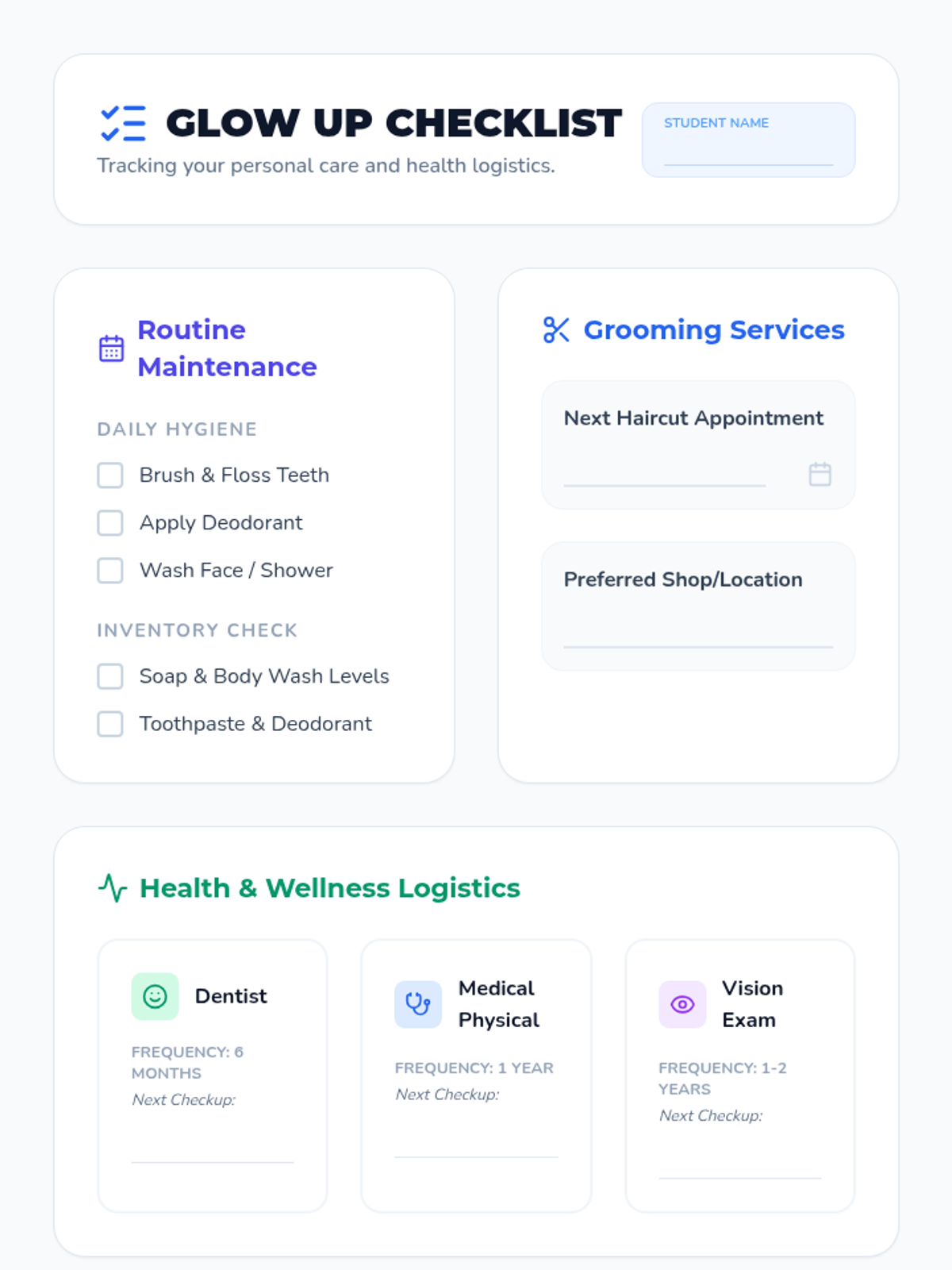
A comprehensive checklist for students to track their daily hygiene routines, upcoming grooming appointments, and annual medical logistics.
A worksheet where students practice identifying courses of action for specific personal care needs and draft scripts for scheduling medical and service appointments.
A visual slide deck introducing the concepts of personal care needs, types of services, and a practical script for scheduling medical and grooming appointments.
A comprehensive teacher's guide for the Self Care Pro lesson. Includes instructional sequences, station setup for task cards, and specific differentiation strategies for Level 2 learners.
A set of scenario-based task cards for practicing identifying appropriate actions for personal care needs and scheduling various appointments. Includes 8 distinct scenarios with visual supports.
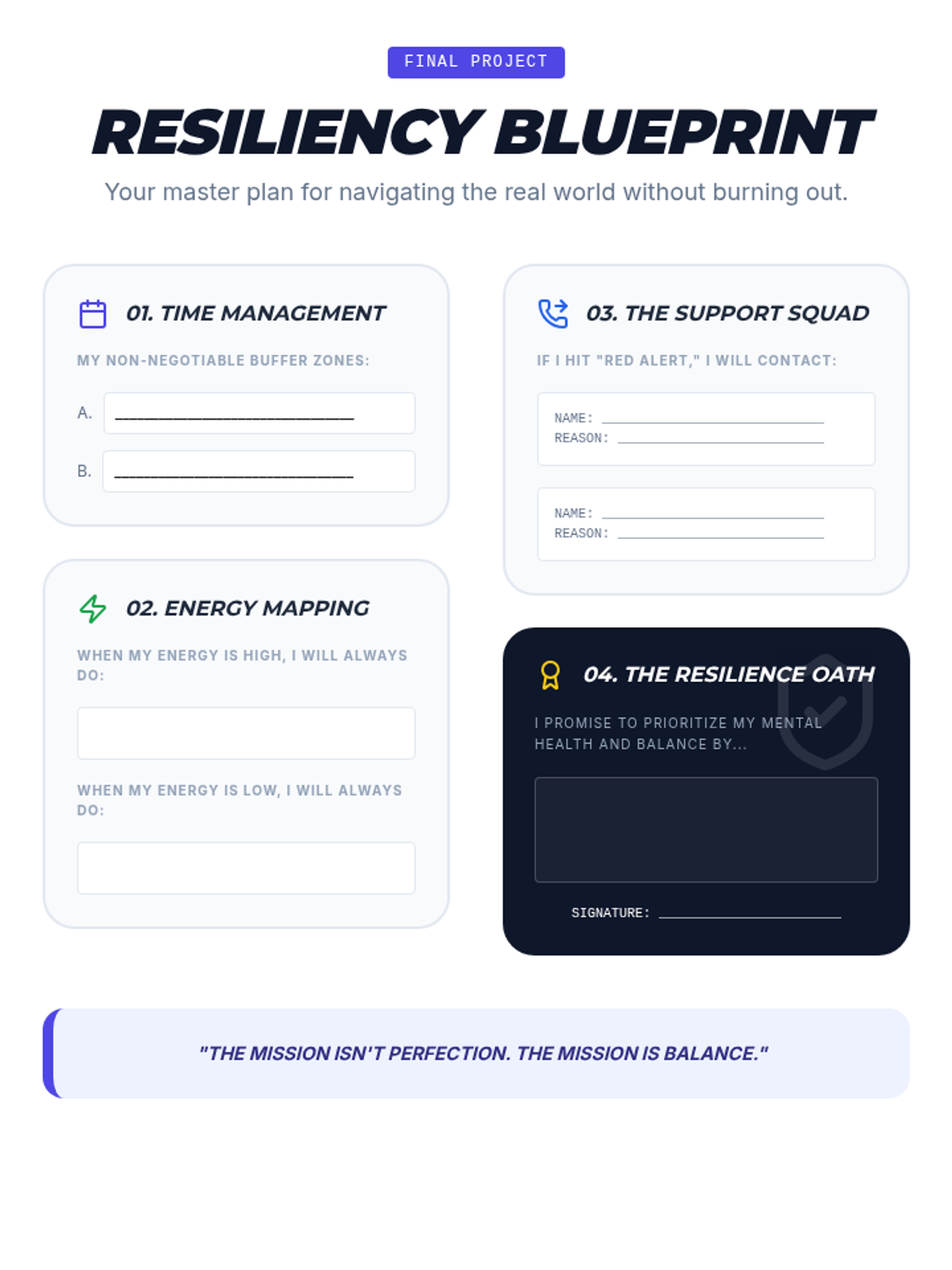
A summative project document where students synthesize everything they have learned into a personal 'Resiliency Blueprint' for real-world application.
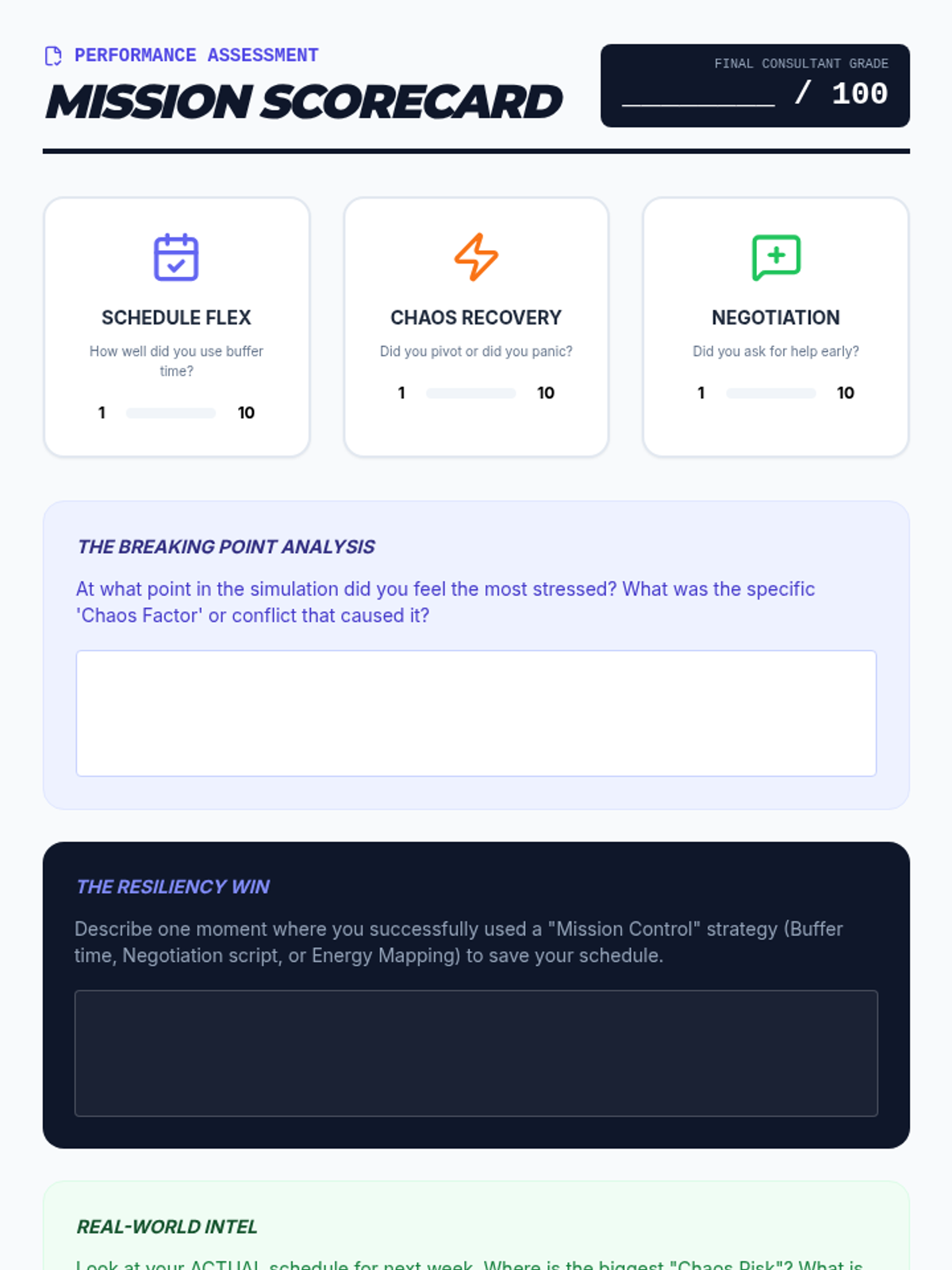
A final self-assessment 'Scorecard' for the Mission Balance sequence, allowing students to rate their performance and reflect on their growth in schedule management and resiliency.
Final presentation for the Mission Balance sequence, reviewing core concepts of chaos management, negotiation, and energy management, and introducing the final scorecard activity.
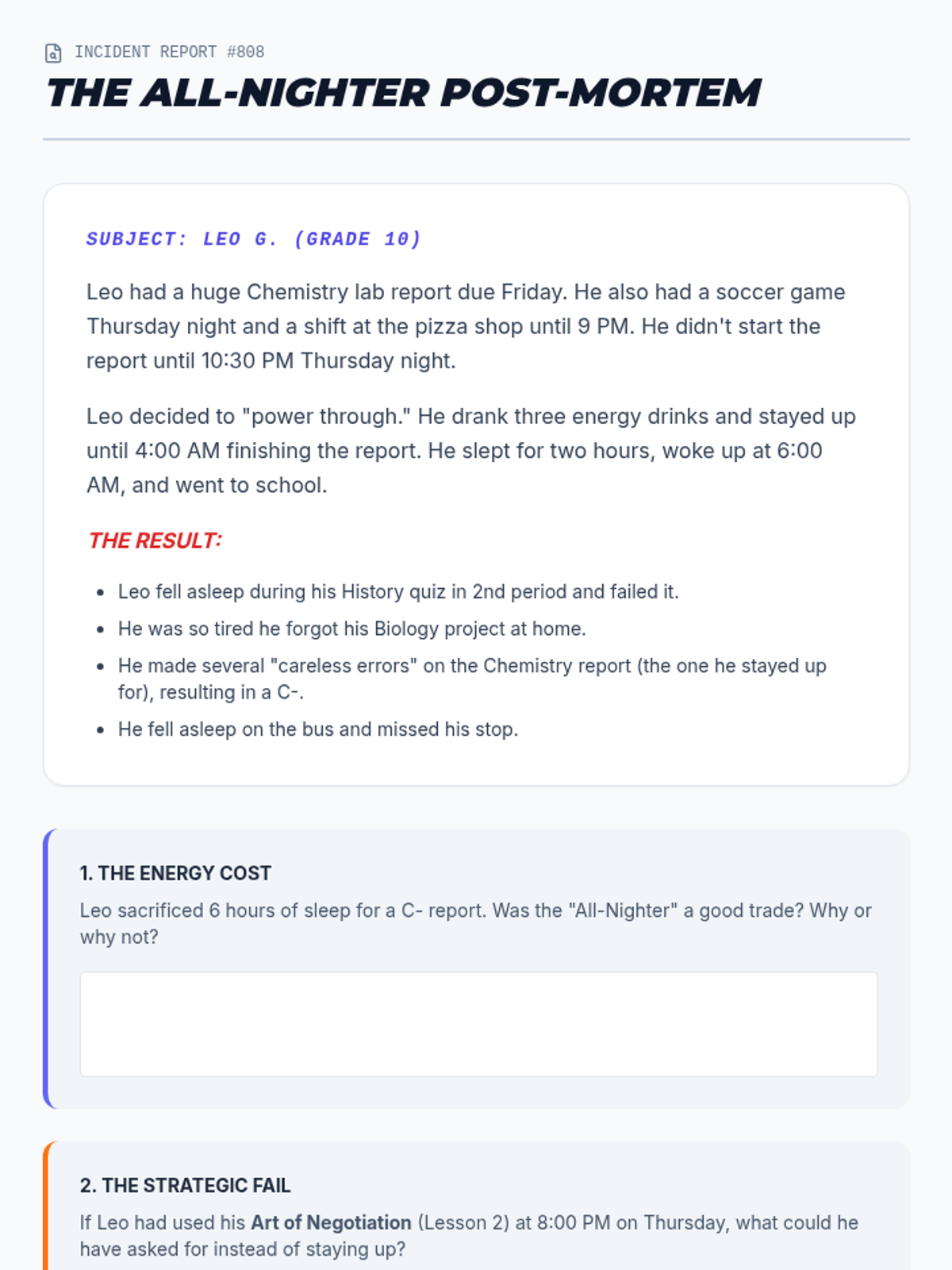
A case study analysis of a student's 'all-nighter' experience, prompting students to evaluate the consequences and identify alternative strategies from the sequence.
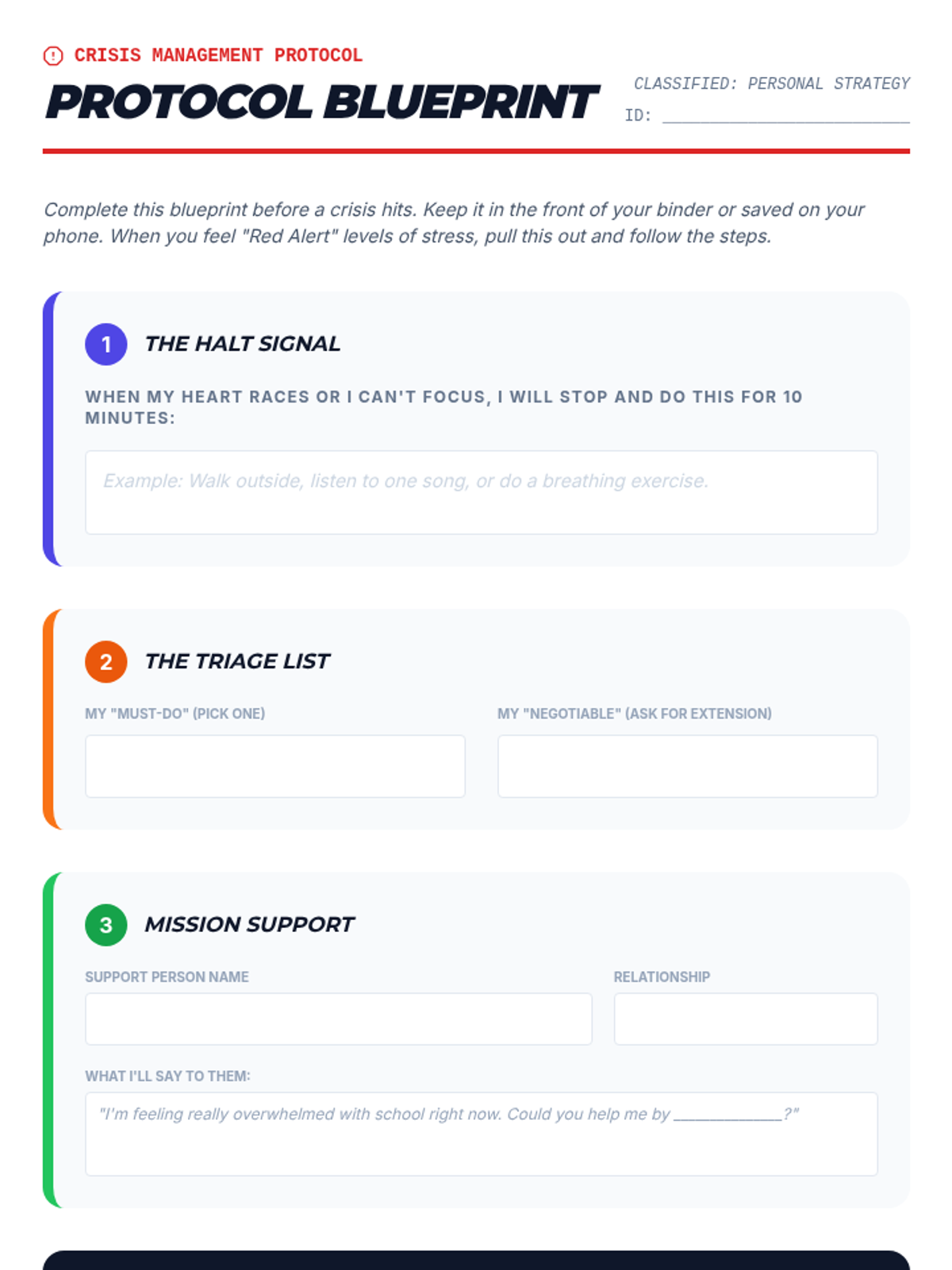
A personal crisis management worksheet where students document their specific 'Red Alert' protocols, including triage strategies, support contacts, and recovery plans.
Lesson 4 slides on crisis management protocols, teaching students how to identify burnout, prioritize tasks during 'Red Alert' scenarios, and activate support systems.
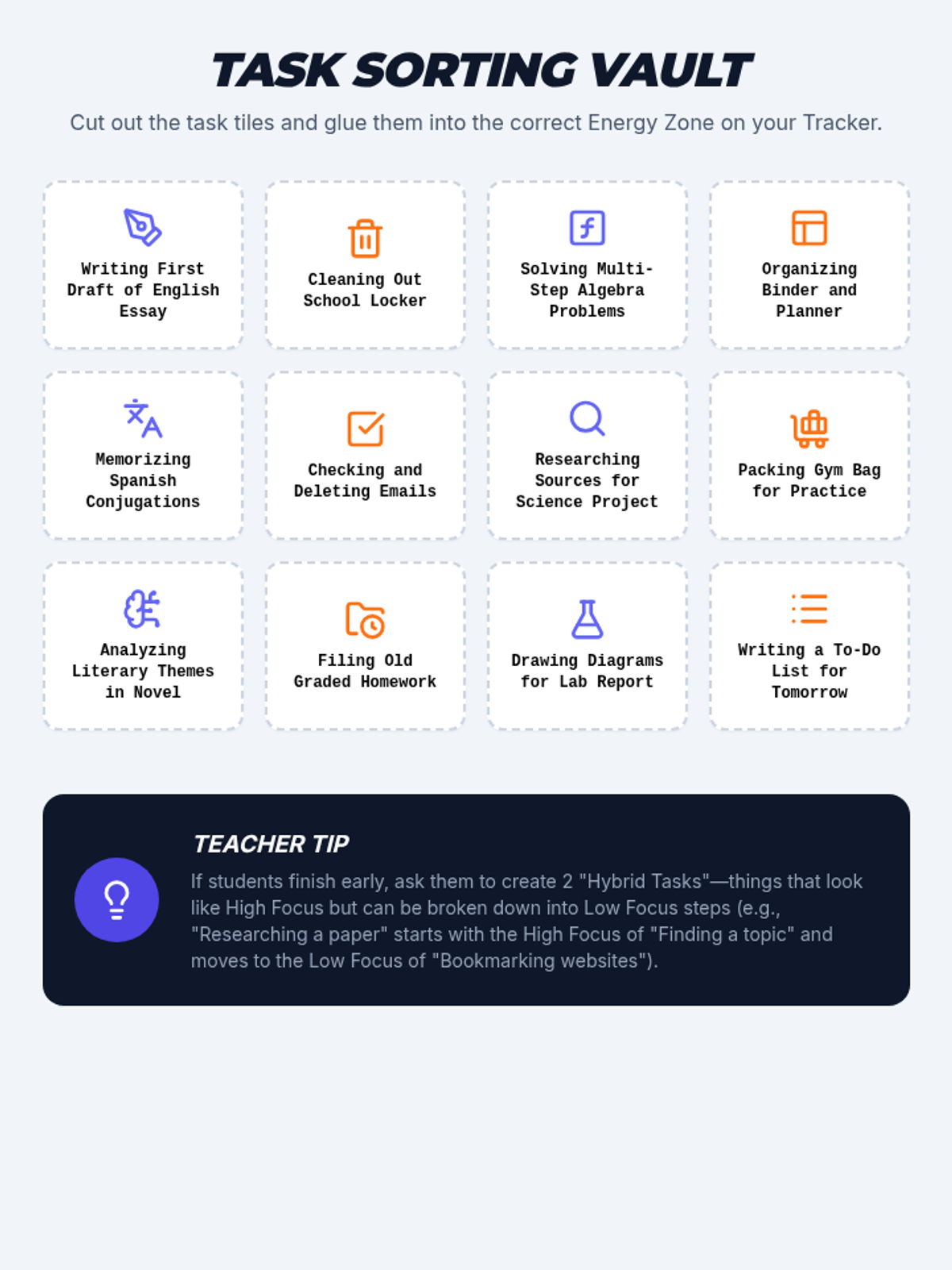
A cut-and-paste sorting activity for students to categorize common school and life tasks as either 'High Focus' or 'Low Focus' energy requirements.
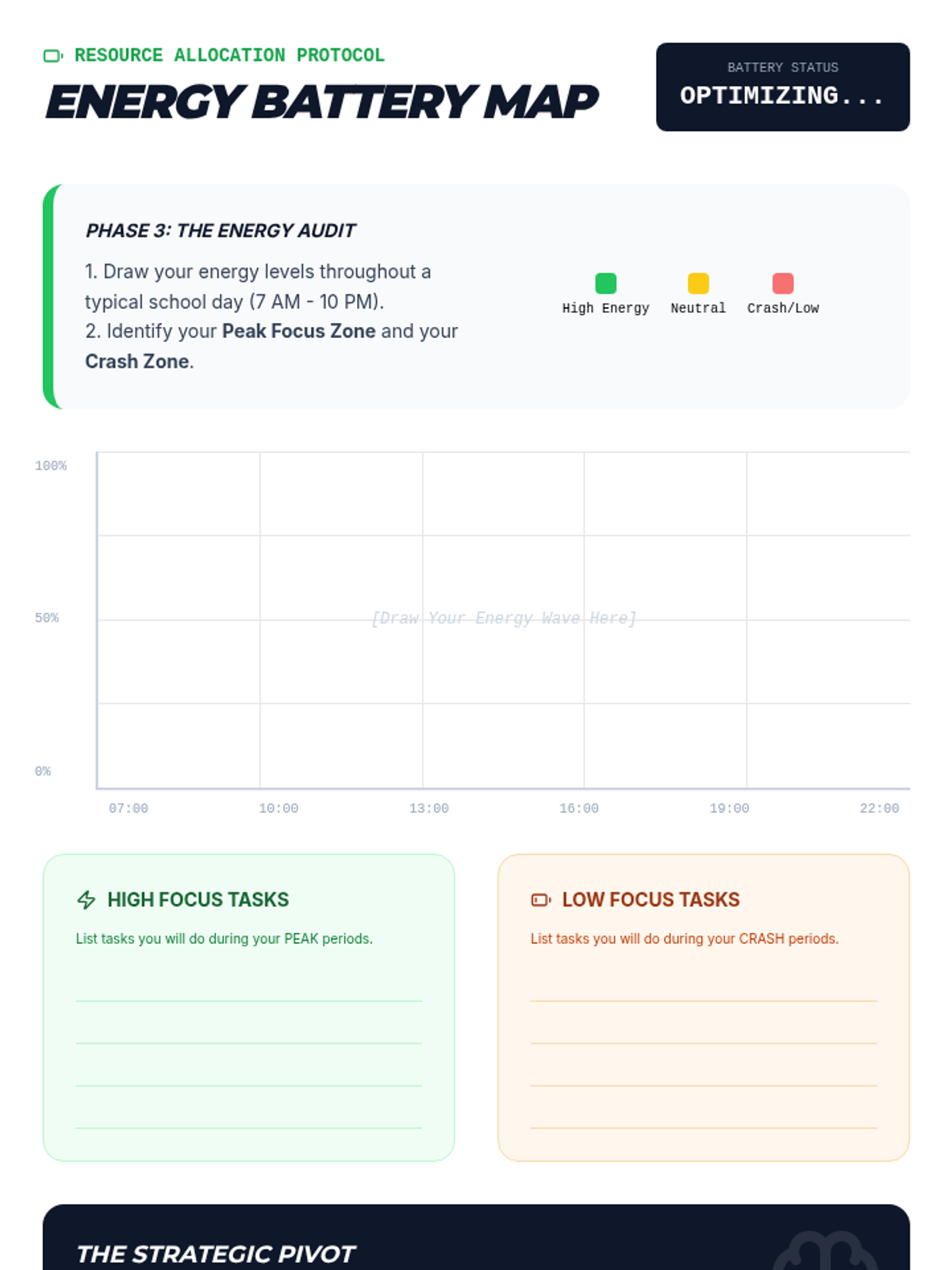
A worksheet for students to map their daily energy levels and strategically assign tasks based on their peak focus periods.
Lesson 3 presentation on energy management, teaching students to differentiate between High Focus and Low Focus tasks and to identify their personal peak energy periods.
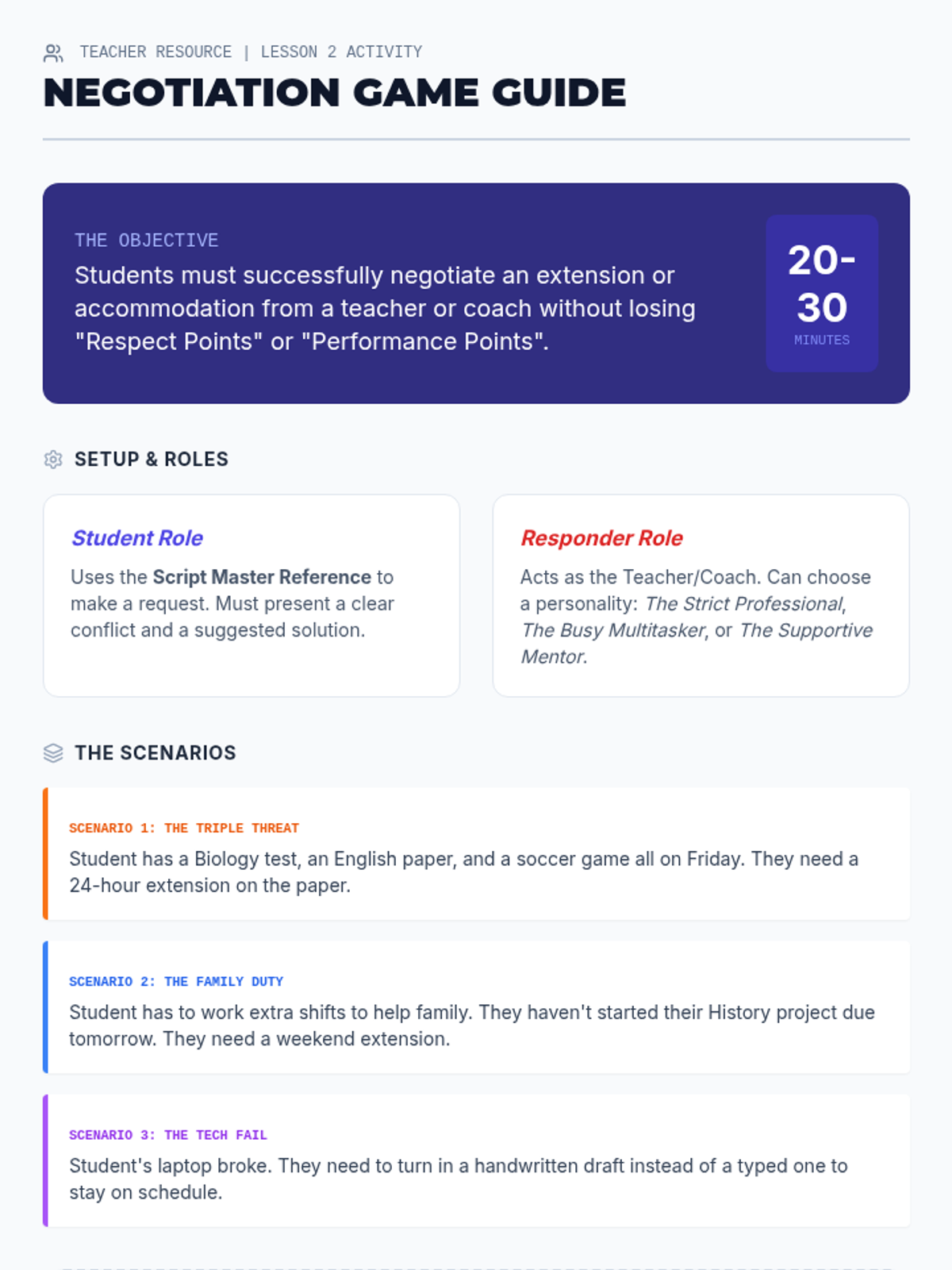
Teacher facilitation guide for the Lesson 2 role-play simulation, providing scenarios, roles, and assessment criteria for student negotiations.
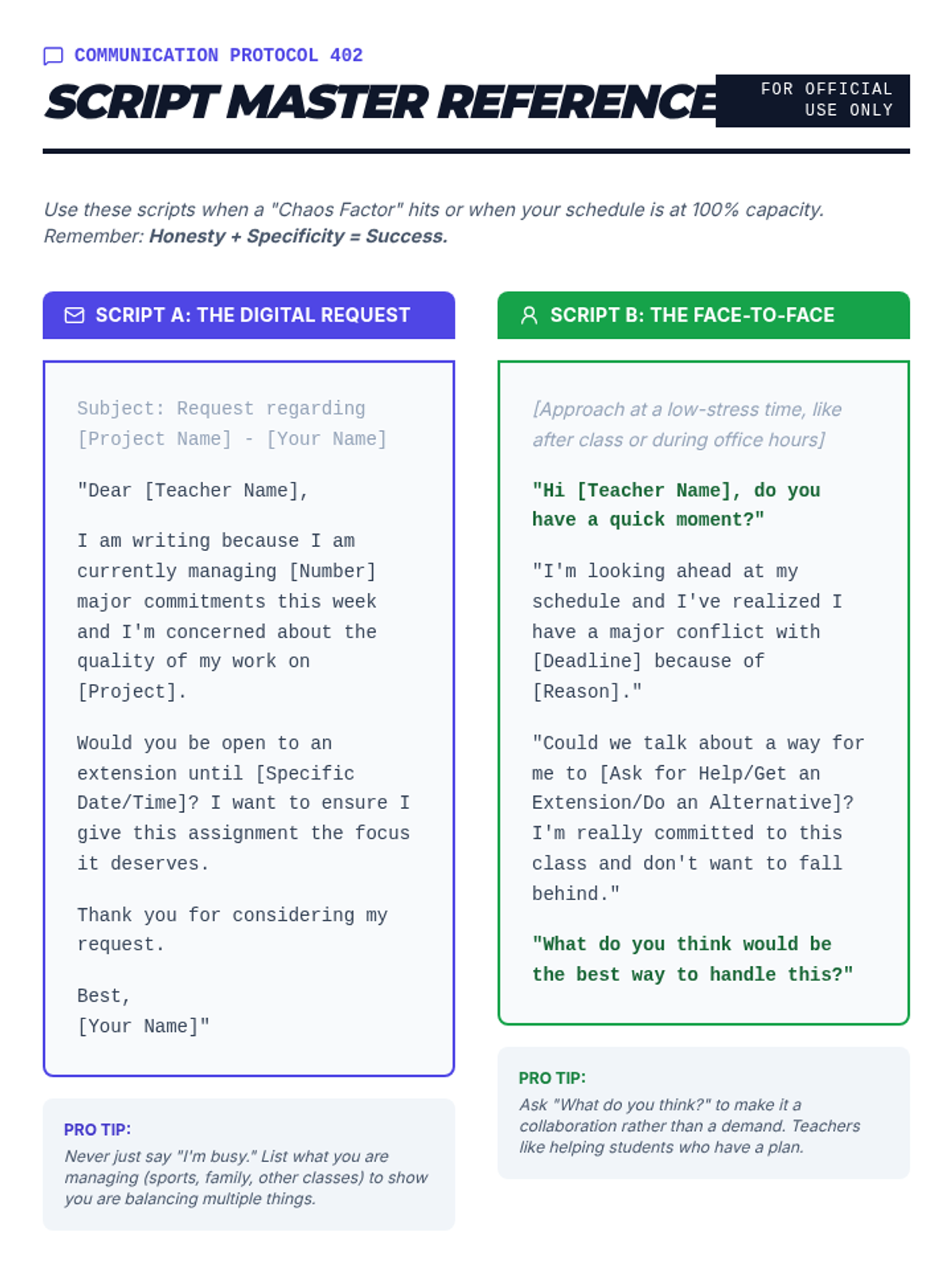
A professional communication guide for students, featuring scripted templates for digital and in-person deadline negotiations, including a practice exercise.
Slide deck for Lesson 2, teaching students the difference between hard and soft deadlines and providing a professional framework for negotiating extensions.
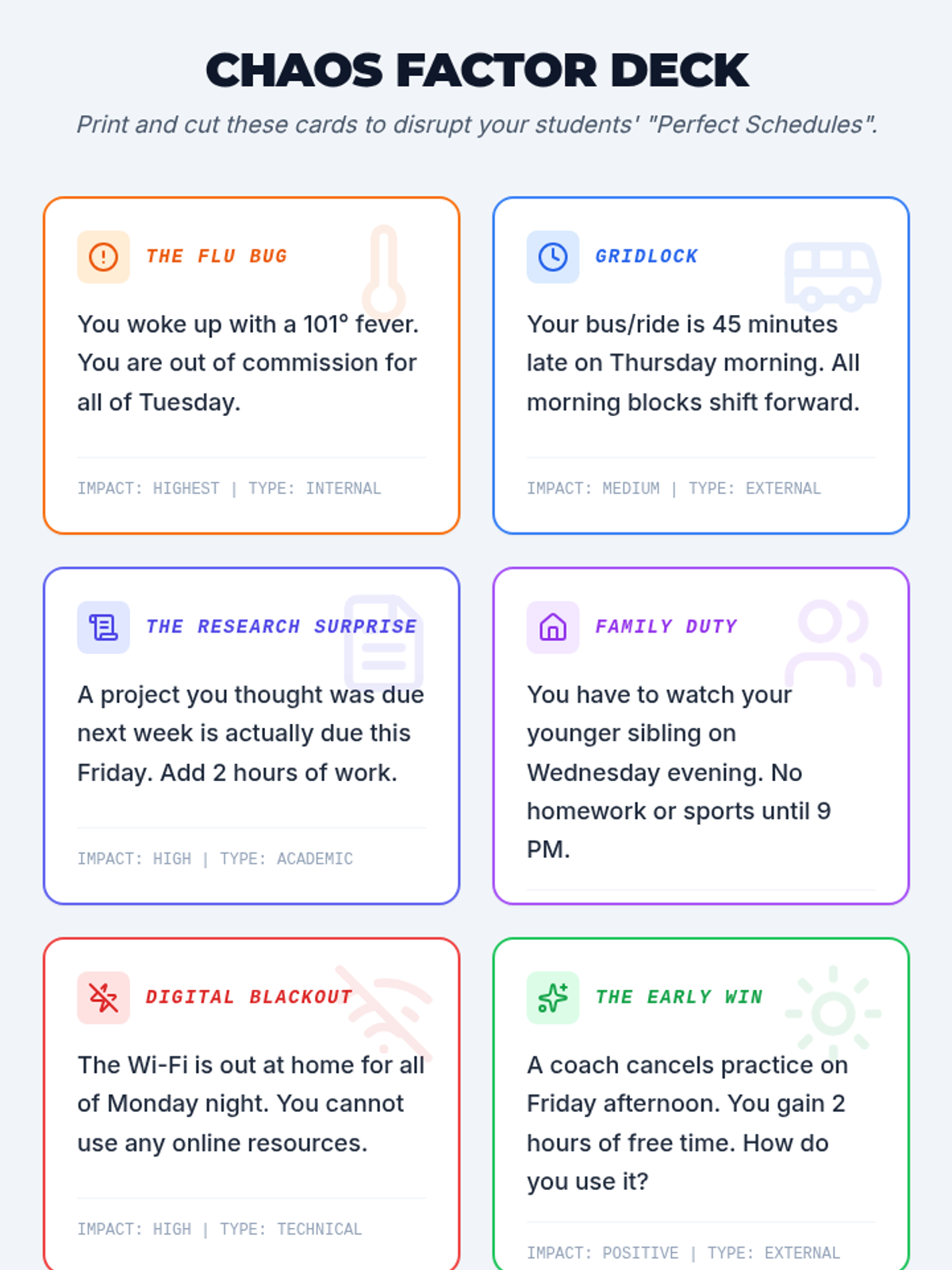
A set of printable 'Chaos Factor' cards for teachers to use in the Mission Balance simulation, featuring various disruptions to a student's schedule.
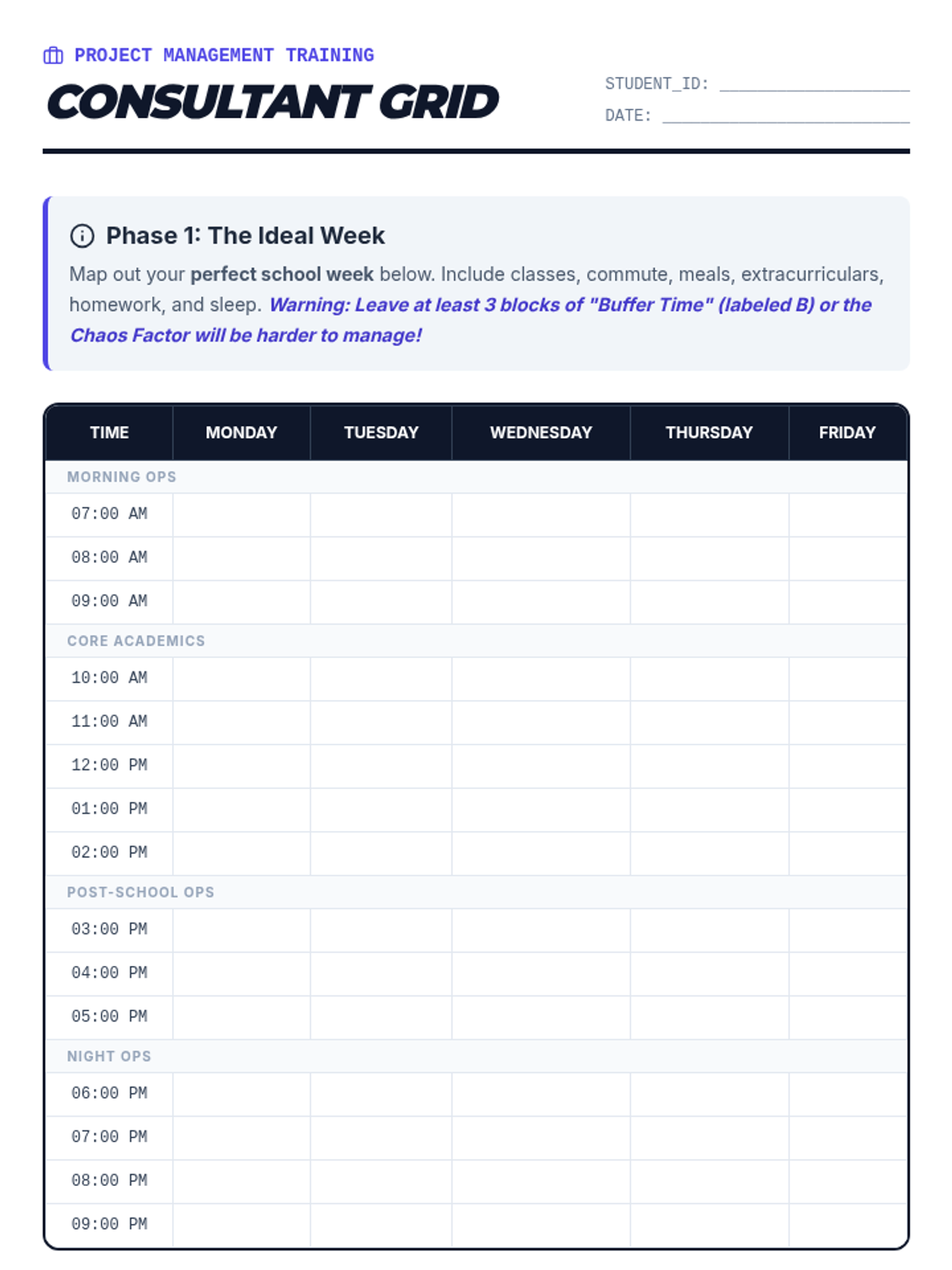
A student-facing weekly scheduling grid designed for the Mission Balance simulation, including a section for analyzing and responding to 'Chaos Factor' disruptions.
Introductory presentation for the Mission Balance sequence, teaching students about the 'Chaos Factor' and the importance of 'Buffer Time' in scheduling.
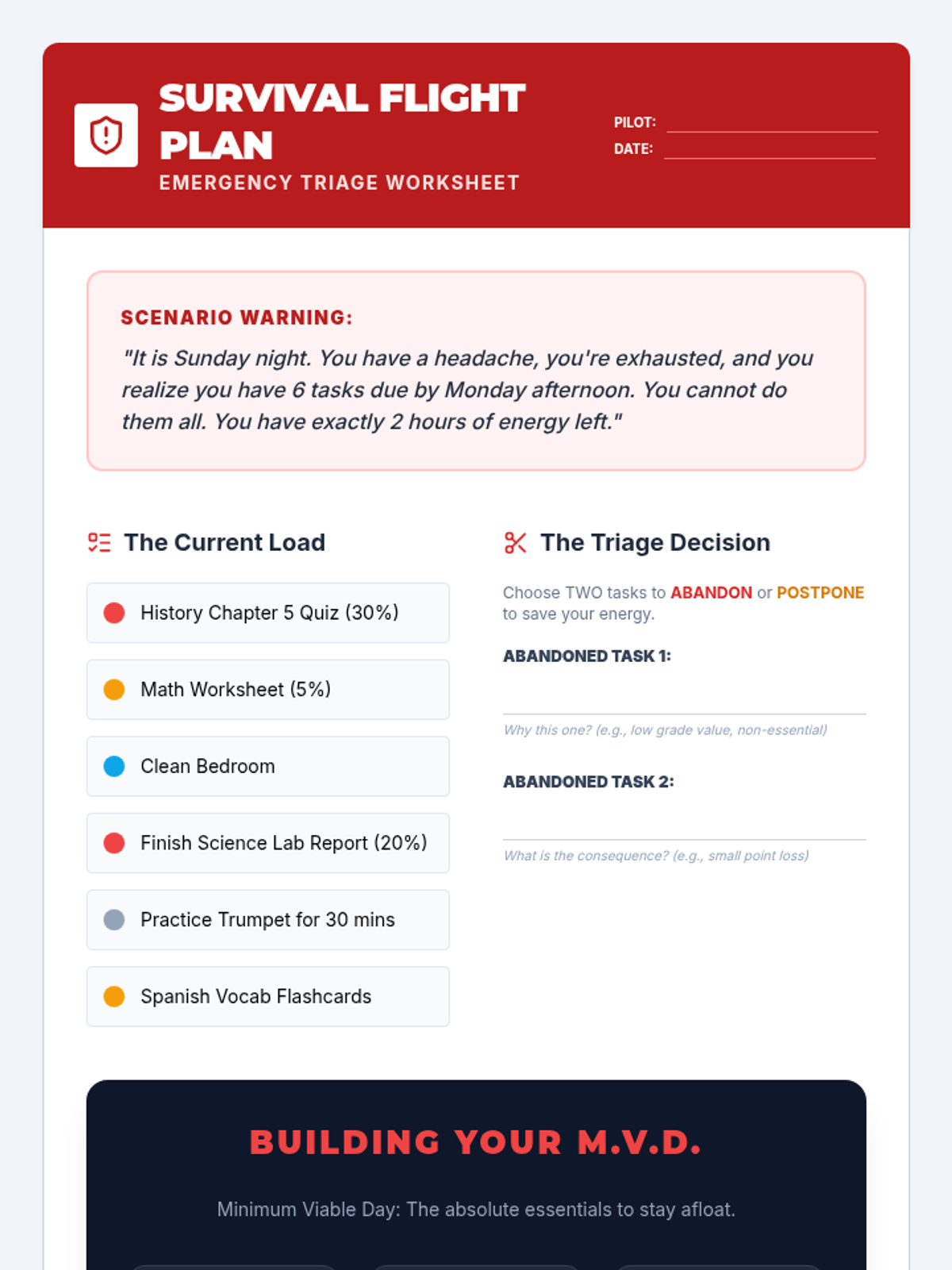
An emergency triage worksheet that guides students through a simulated crisis scenario, helping them identify which tasks to abandon and how to construct a Minimum Viable Day (MVD).
Lesson 5 slide deck on emergency triage and the 'Minimum Viable Day' concept, teaching students how to prioritize critical tasks during periods of crisis or illness.
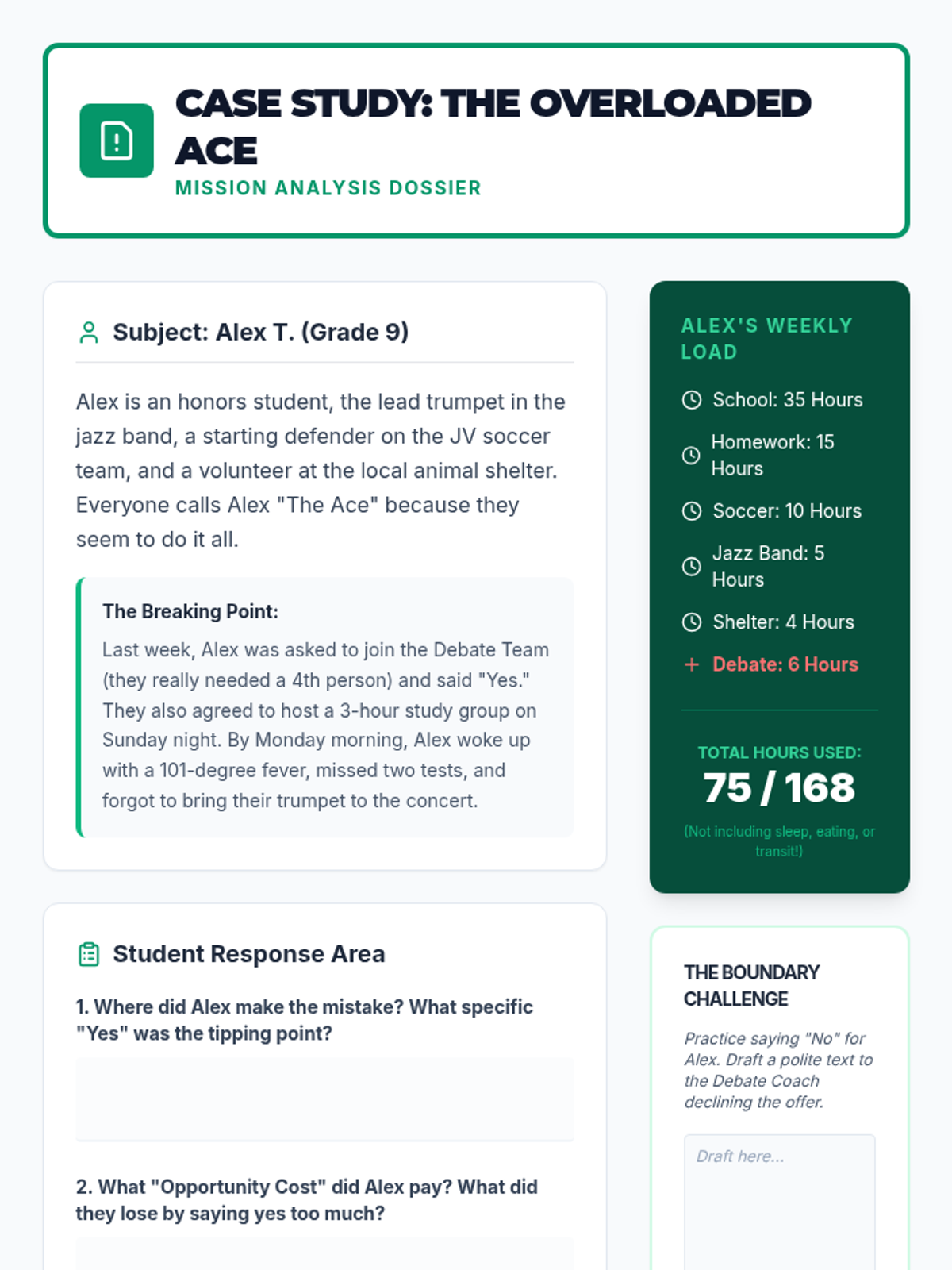
A case study document about 'Alex the Ace', a student who takes on too much, designed to help students analyze the consequences of over-commitment and practice setting boundaries.
Lesson 4 slide deck introducing the concept of opportunity cost and providing a "No Bank" of polite but firm scripts for setting boundaries.
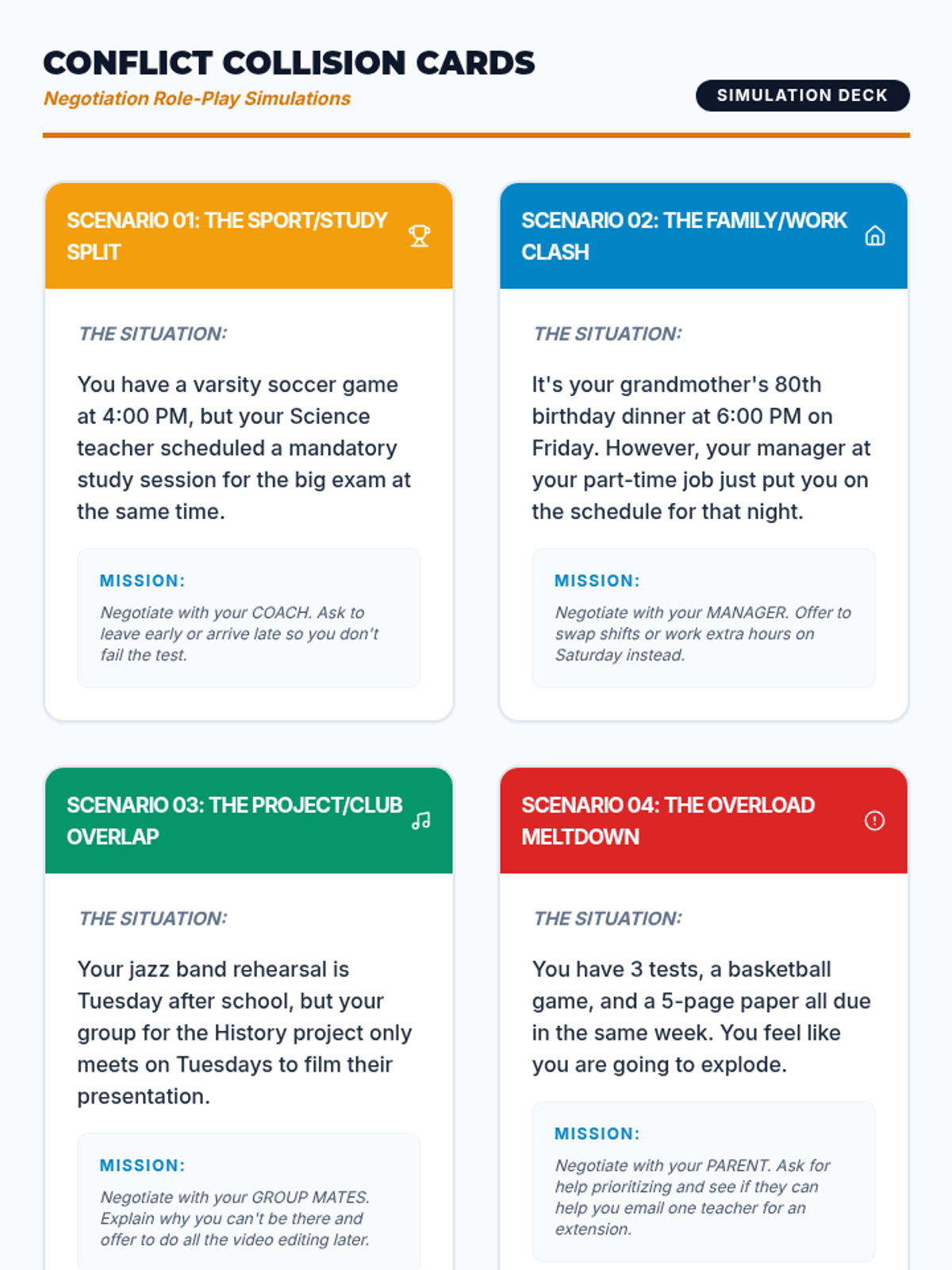
A set of role-play simulation cards for students to practice negotiating scheduling conflicts in various realistic scenarios (sports vs. academics, work vs. family, etc.).
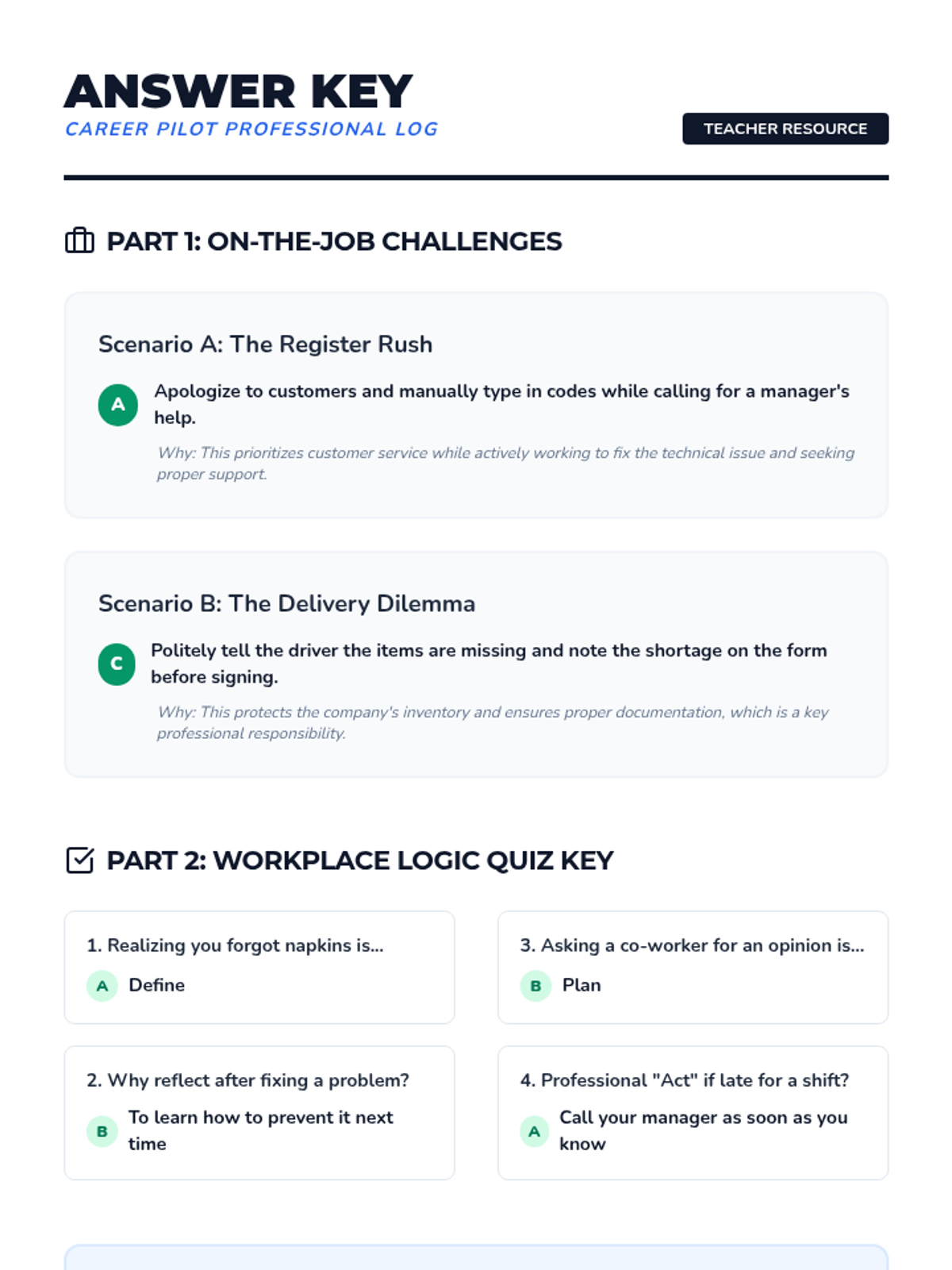
The updated answer key for entry-level workplace scenarios, providing correct multiple-choice selections and brief rationales.
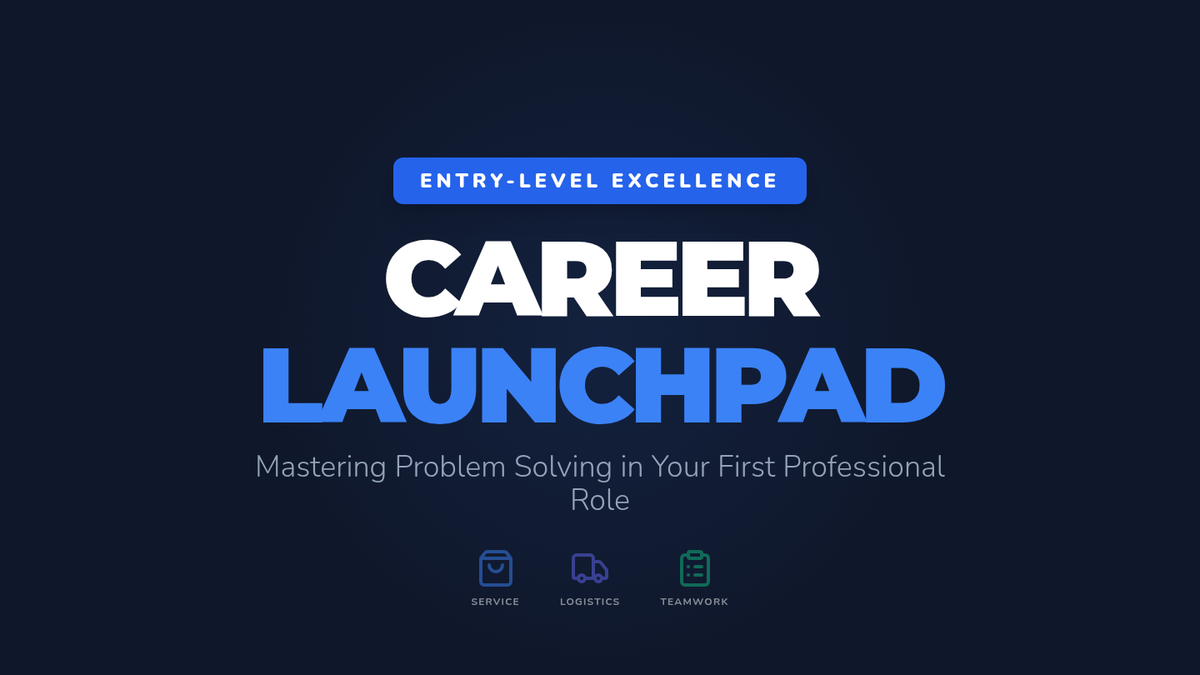
A career-focused slide deck for entry-level workers, teaching the 4-step problem-solving sequence with examples from service and logistics.
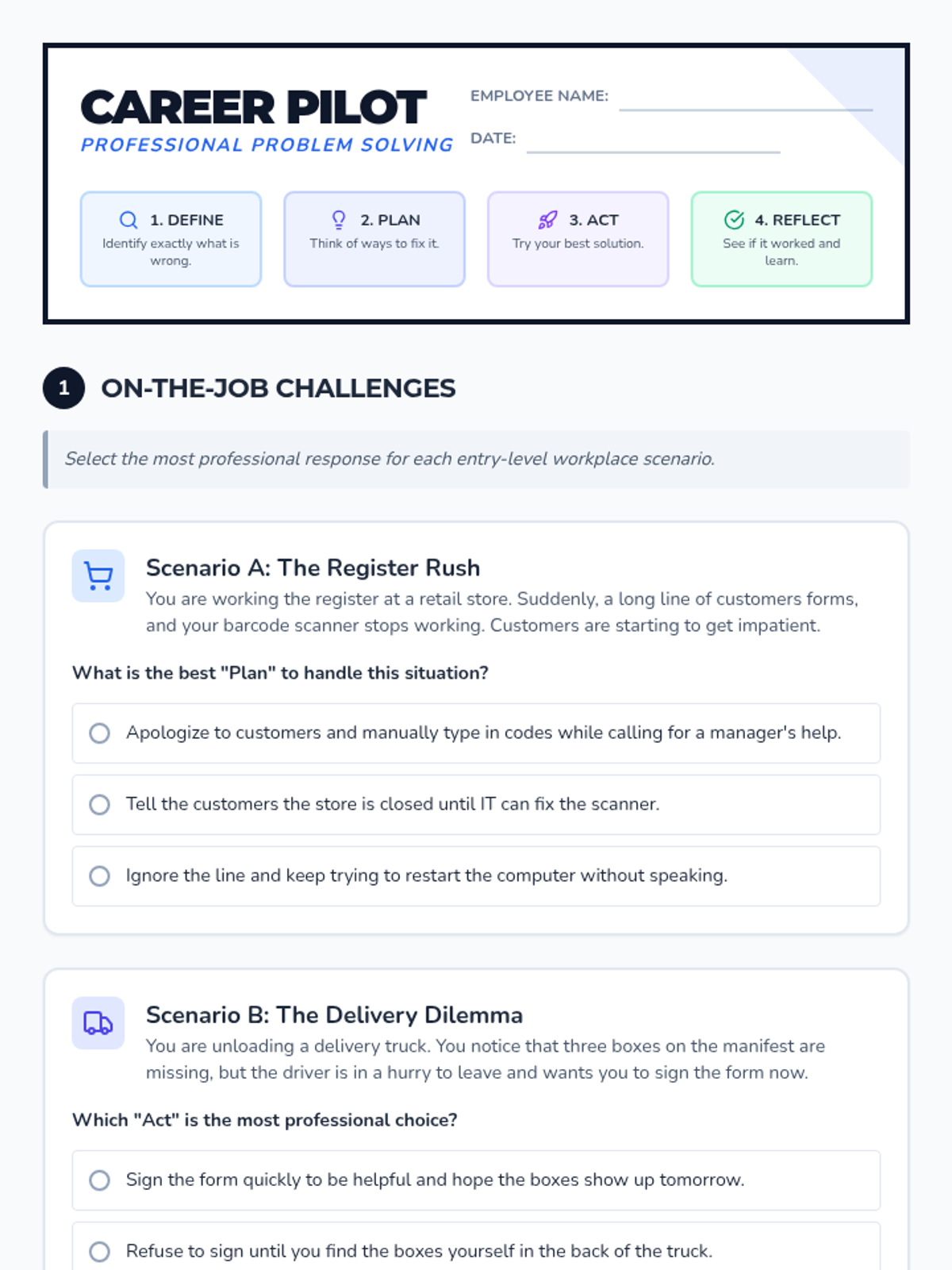
An entry-level workplace problem-solving worksheet with multiple-choice scenarios involving retail, delivery, and basic workplace etiquette.
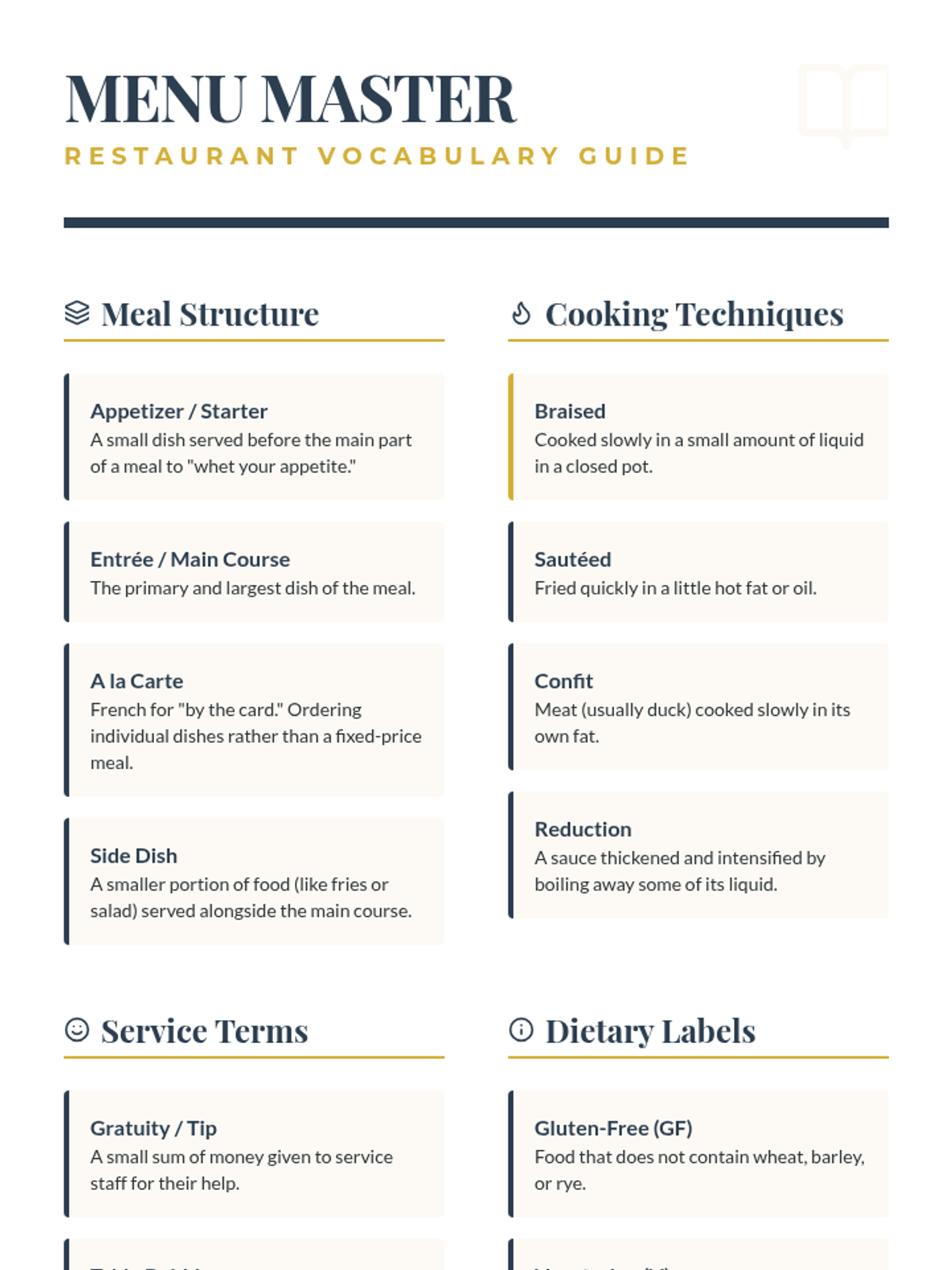
A vocabulary reference sheet for students to understand common restaurant terms, cooking styles, and dietary labels found on menus.
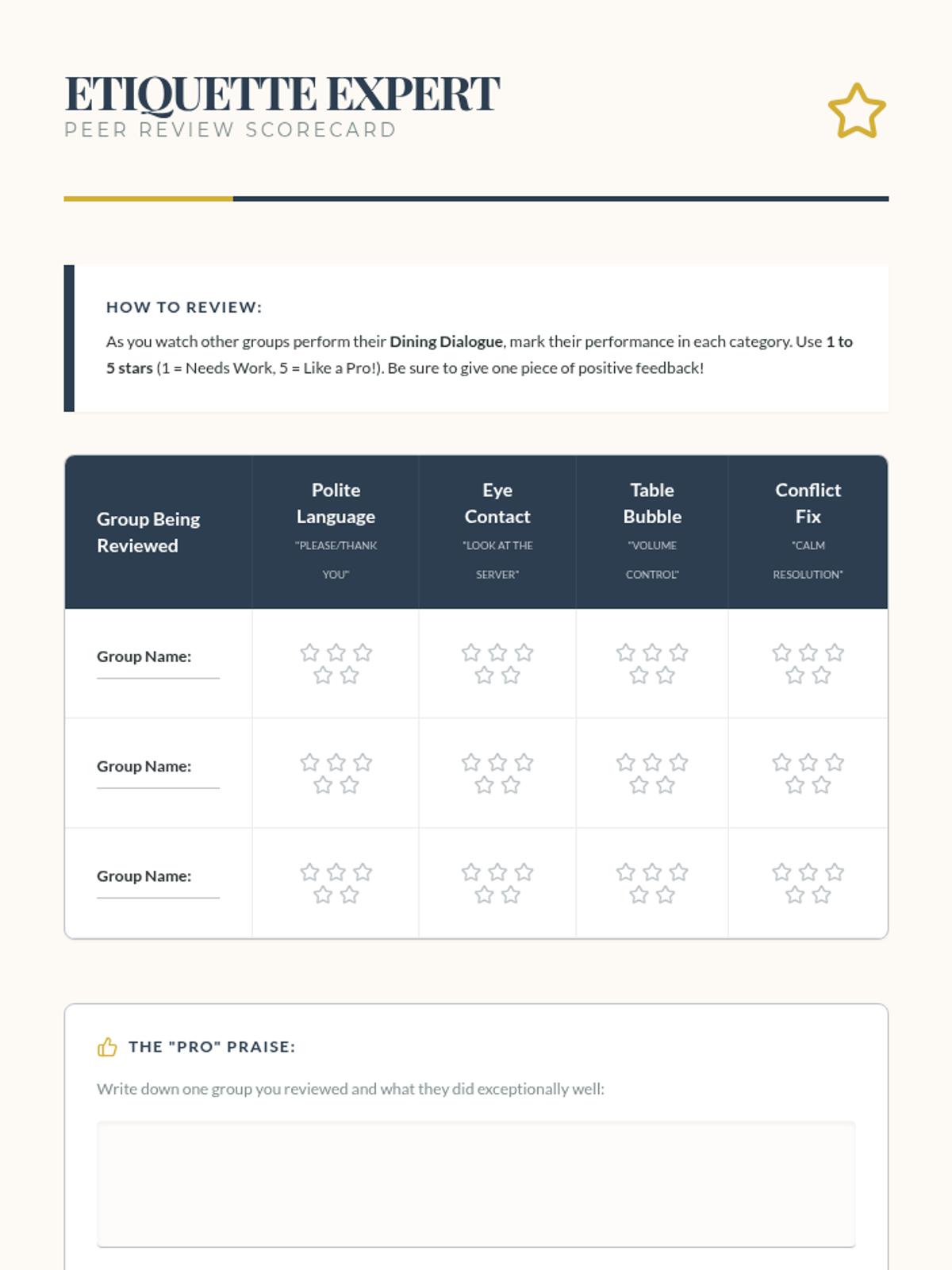
A peer review evaluation sheet for students to score each other's etiquette skills during the roleplay portion of the lesson.
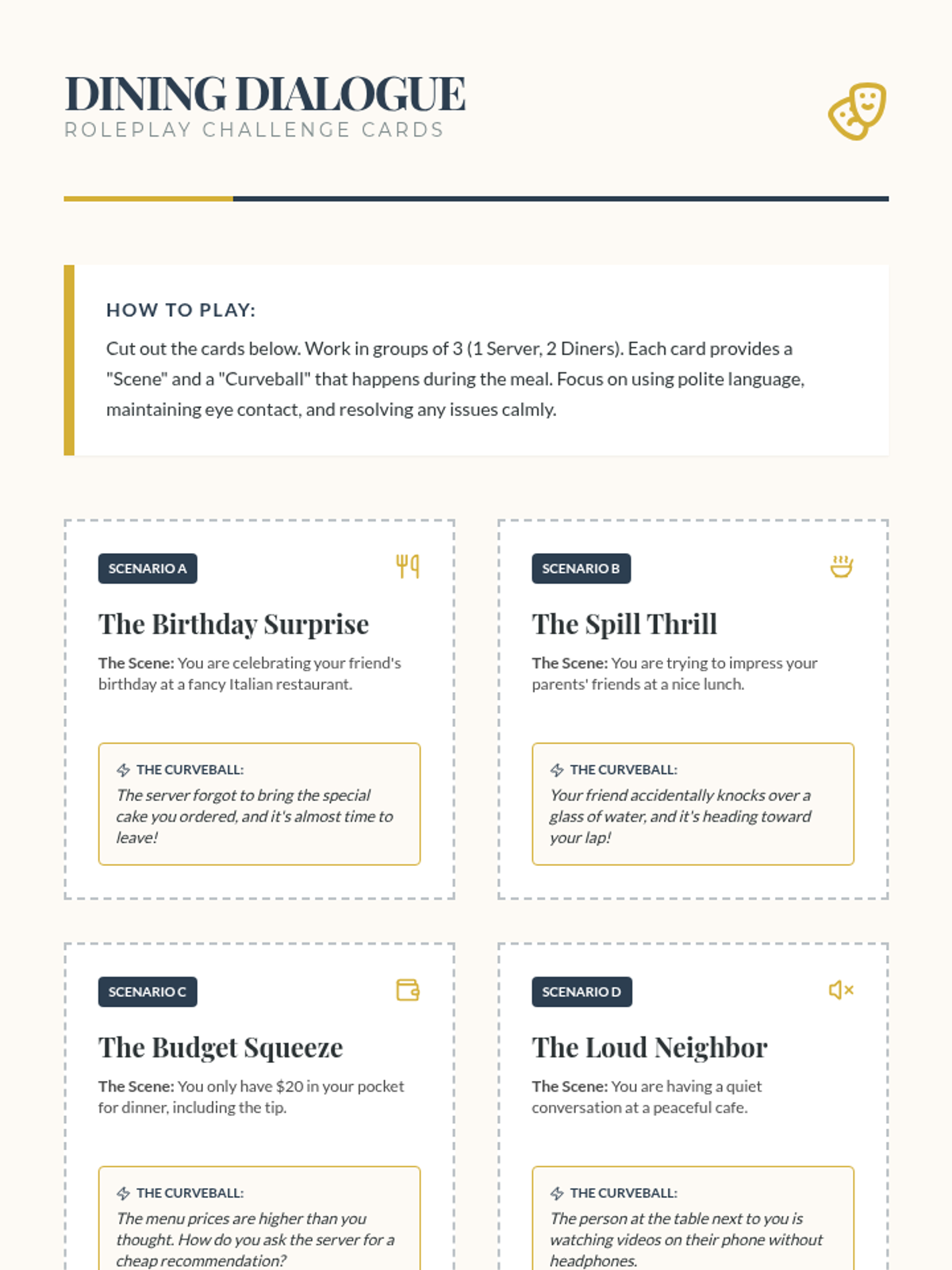
A set of four roleplay challenge cards for students to practice ordering, manners, and conflict resolution in various restaurant scenarios.
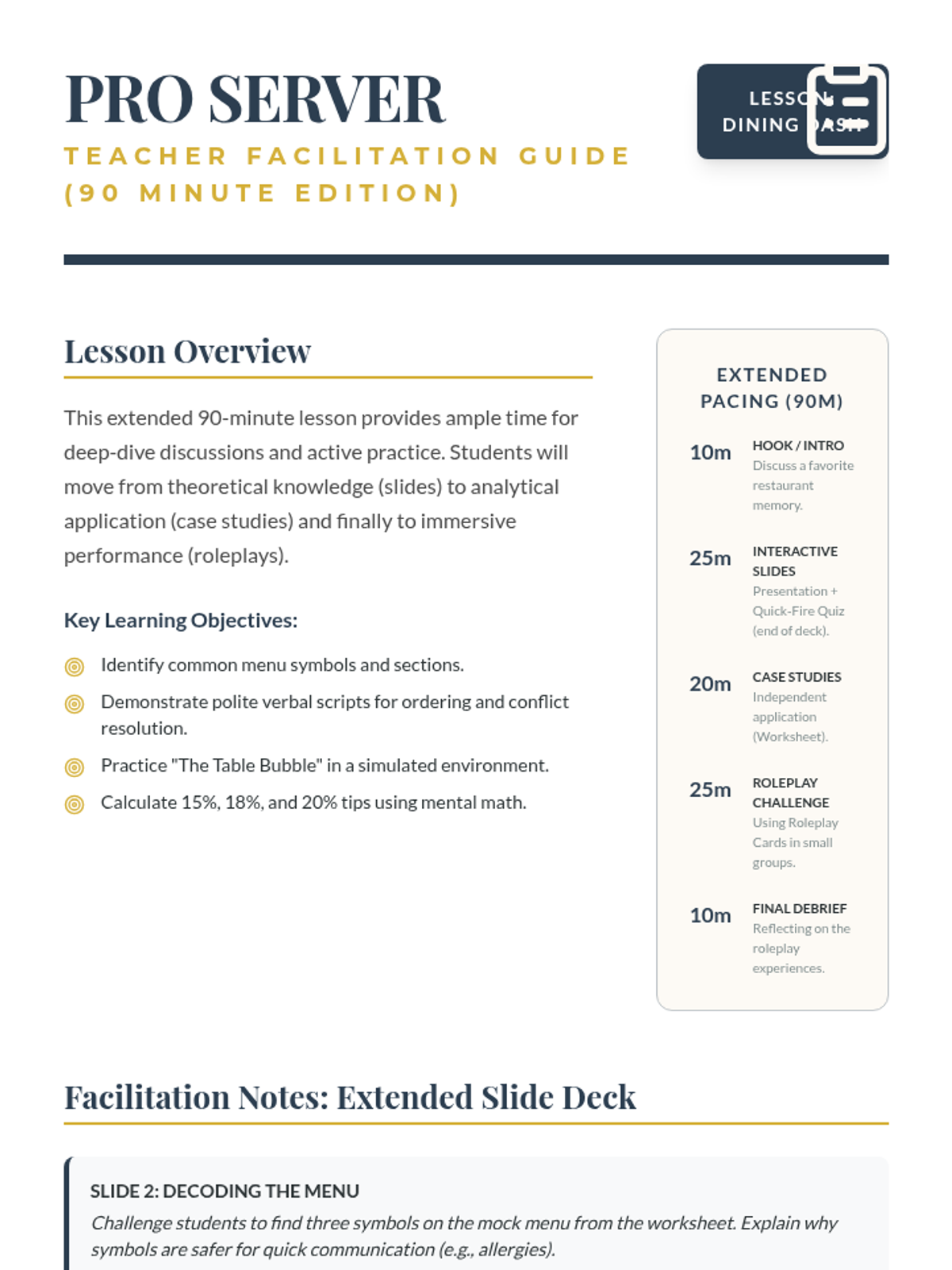
A teacher guide featuring lesson objectives, pacing suggestions, slide-by-slide discussion prompts, and a detailed answer key for the case studies.
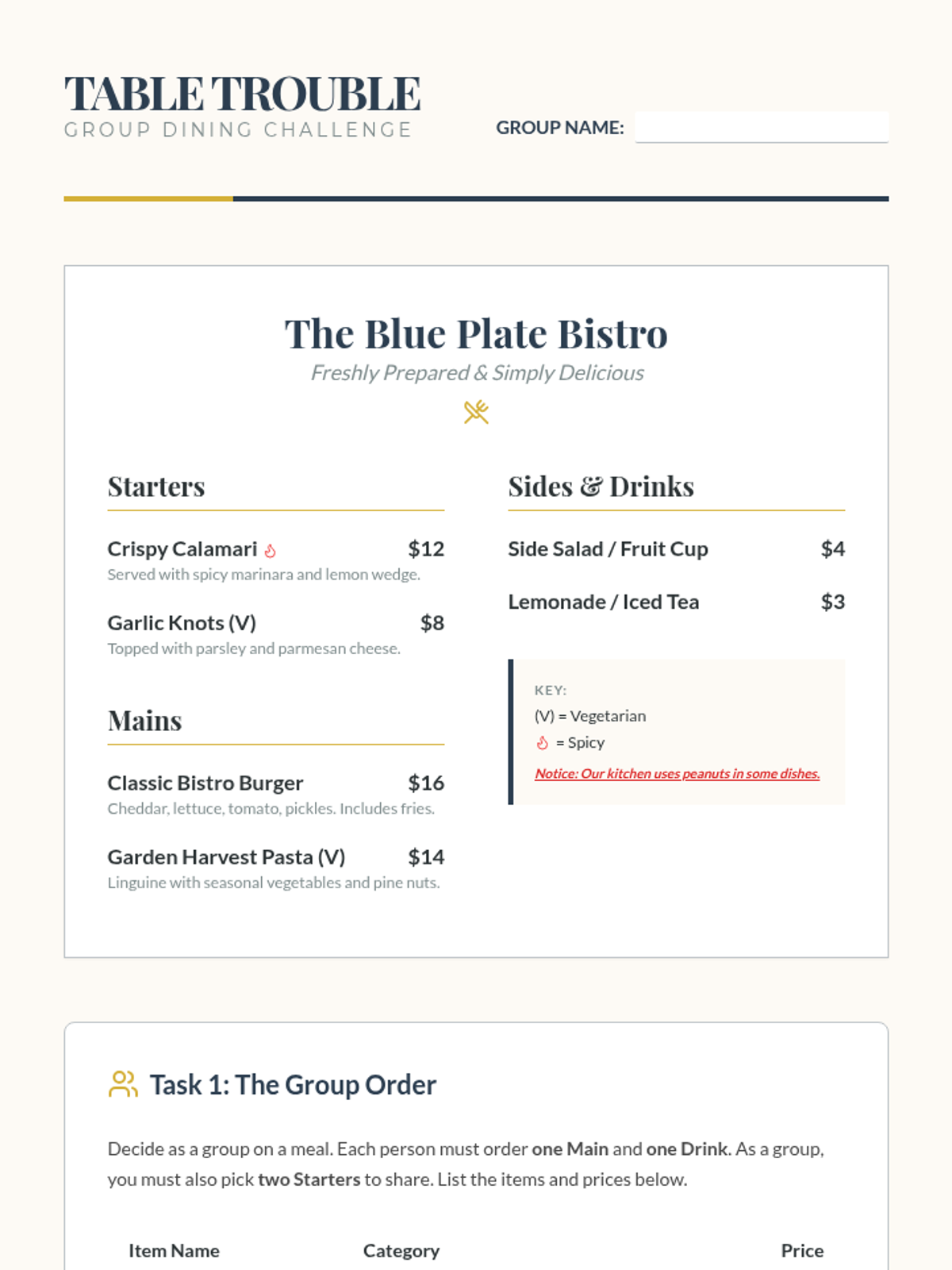
A group-focused student worksheet featuring a mock menu, a collective ordering challenge, group bill calculations, and collaborative restaurant scenarios.
A visual slide deck teaching restaurant etiquette, including menu reading, ordering scripts, table manners, volume control, tipping, and conflict resolution. Separates quiz questions and answers for better engagement.
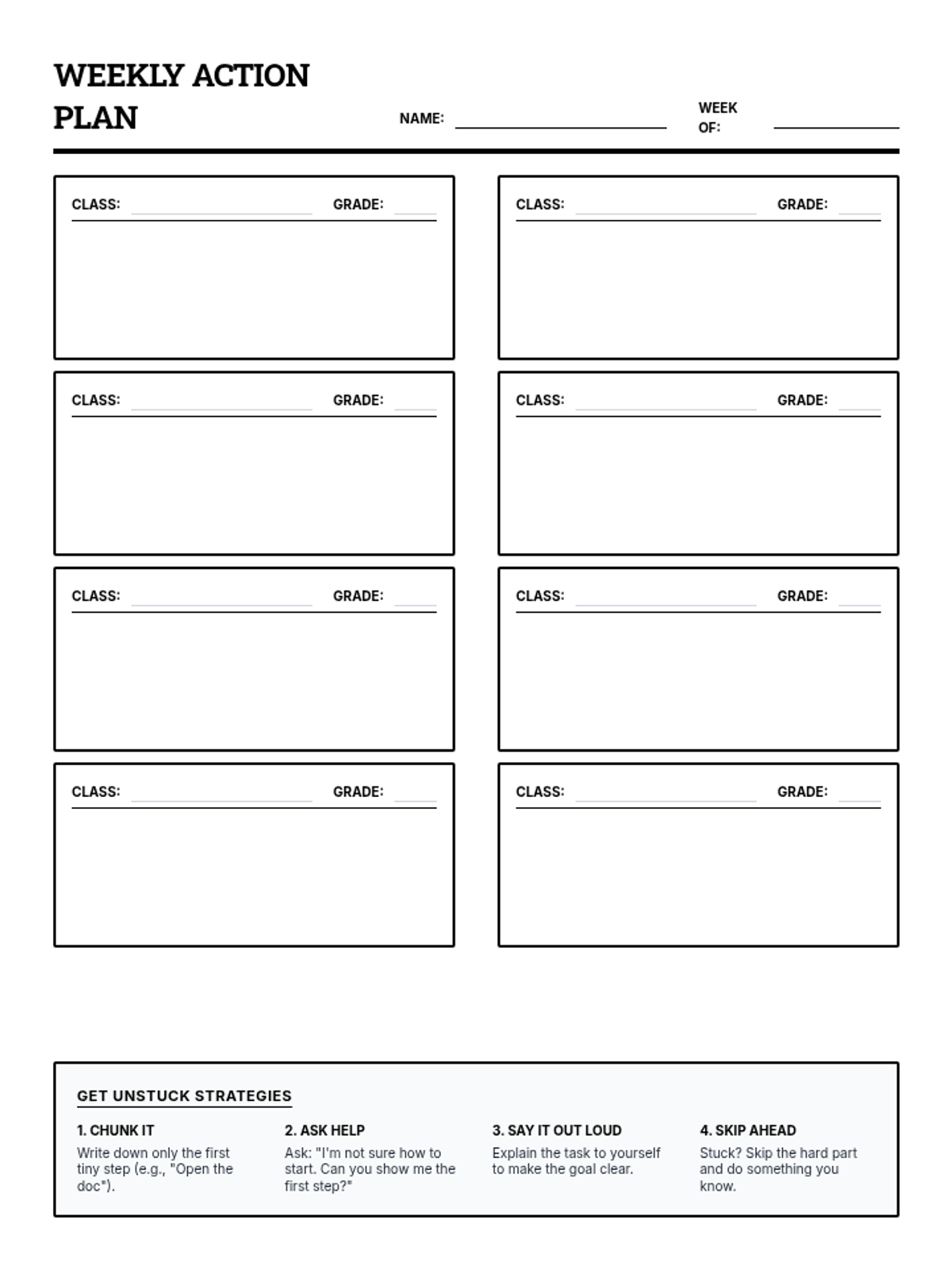
A highly efficient, single-page Weekly Action Plan designed for students with executive functioning needs. It features 8 streamlined class boxes with space for subjects and grades, plus a concise footer with 'Get Unstuck' strategies, all formatted to fit within a single printable page.
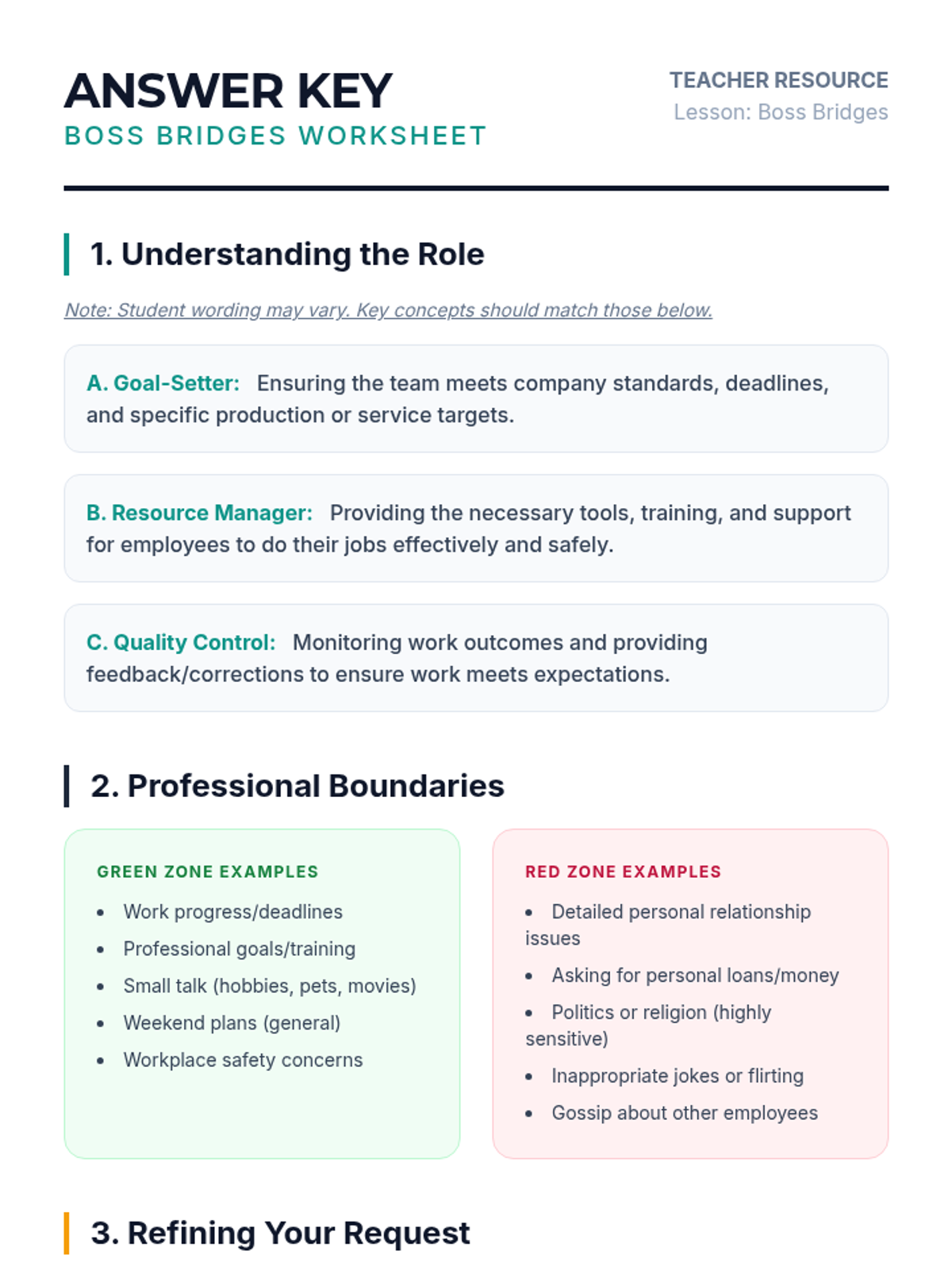
A 2-page teacher-facing answer key for the Boss Bridges Worksheet. It provides suggested professional responses for role definitions, boundary categorization, communication rewrites, and the three training case studies.
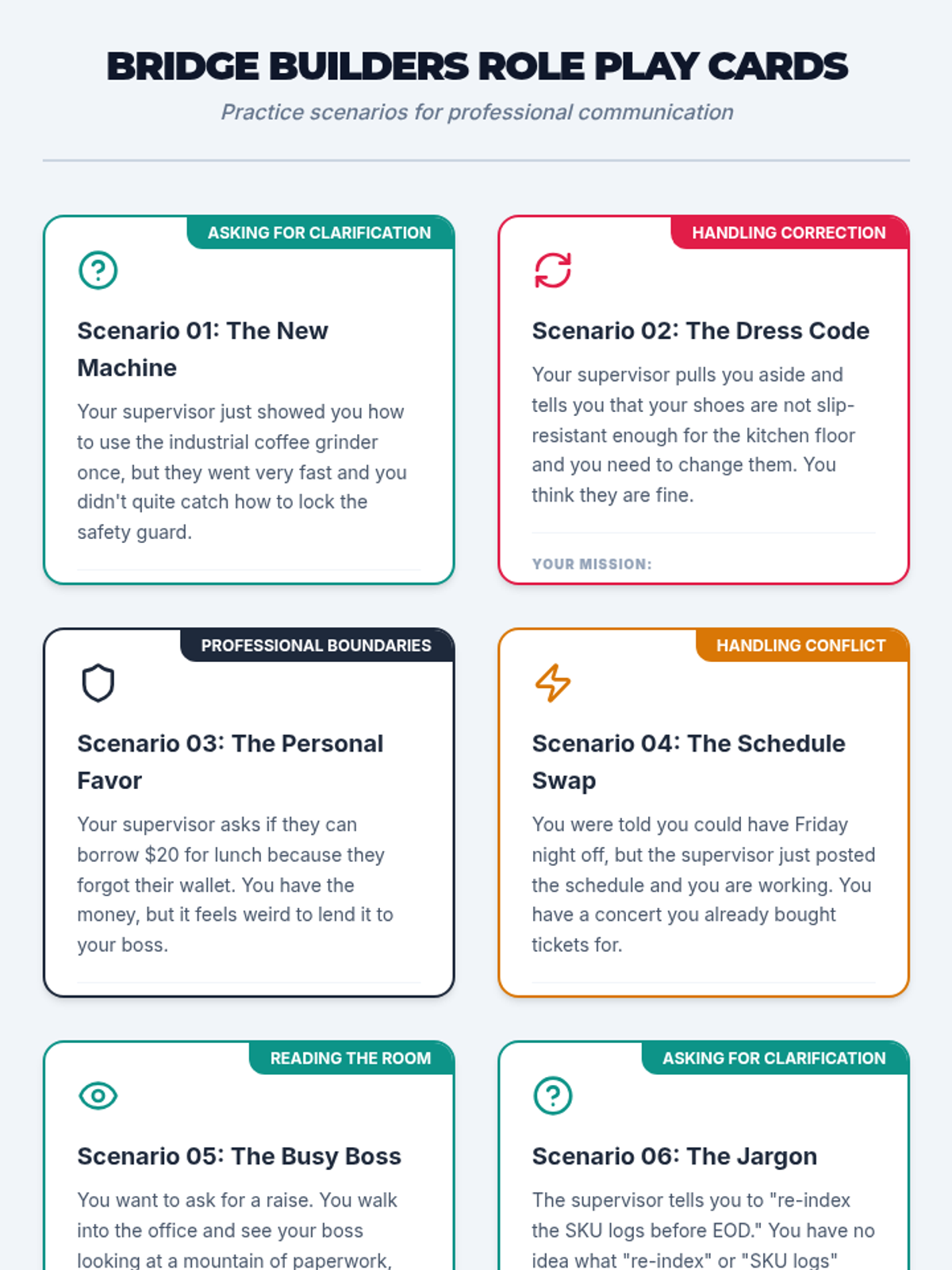
A printable set of 8 role-play scenario cards (Clarification, Correction, Boundaries, Conflict) designed to provide hands-on practice for students in employment training. Each card includes a specific scenario and a clear communication mission.
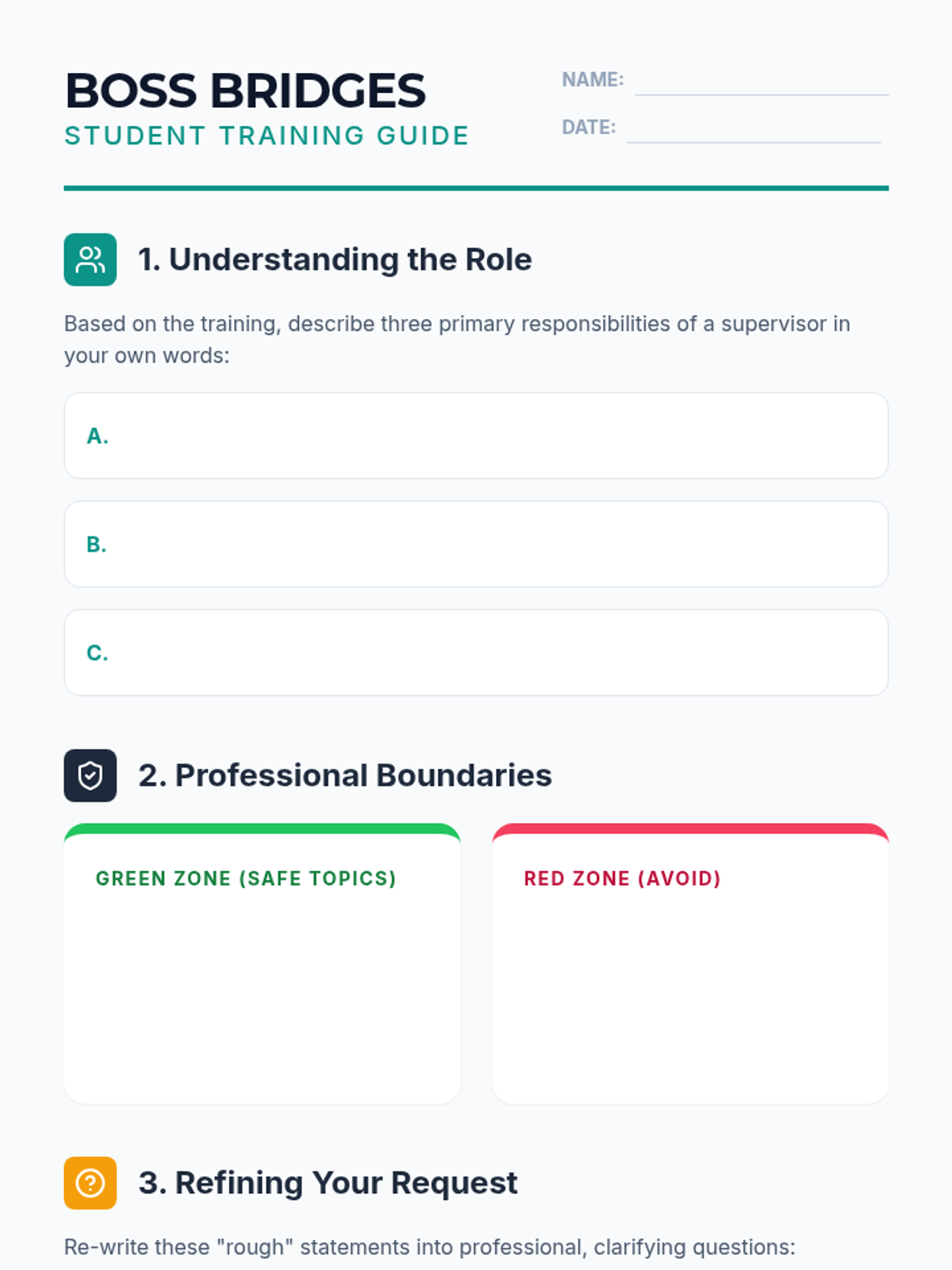
A 2-page student worksheet that complements the slide deck. It includes sections for identifying supervisor roles, mapping professional boundaries, practicing communication strategies, and documenting reflections on the training case studies.
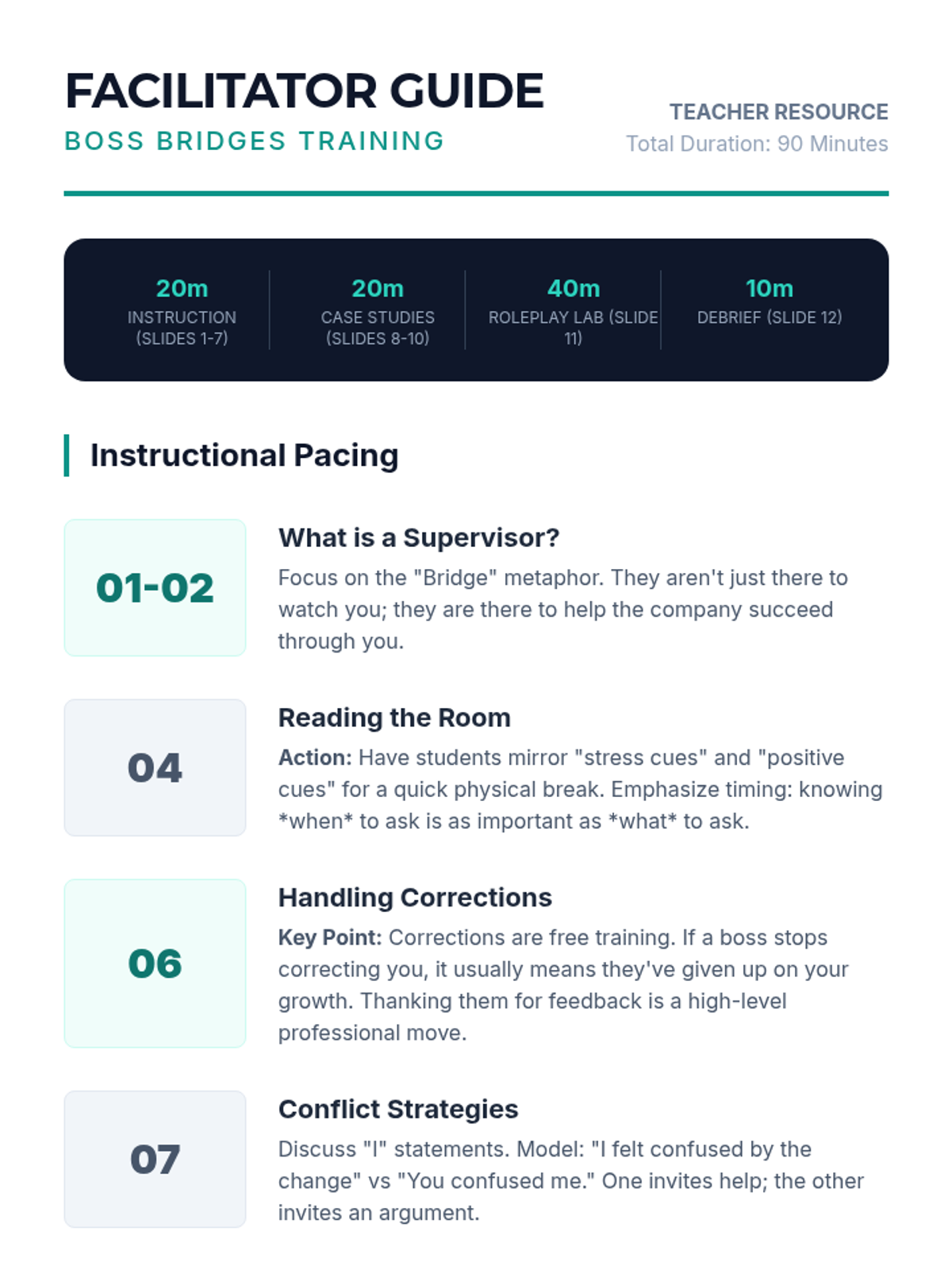
A 2-page facilitator guide updated for a 90-minute session, including detailed pacing, instruction on slides, and a structured plan for the 40-minute Roleplay Lab.
An updated 12-slide presentation that includes a dedicated "Roleplay Lab" slide to guide the 40-minute practice session, ensuring a cohesive 90-minute training experience.
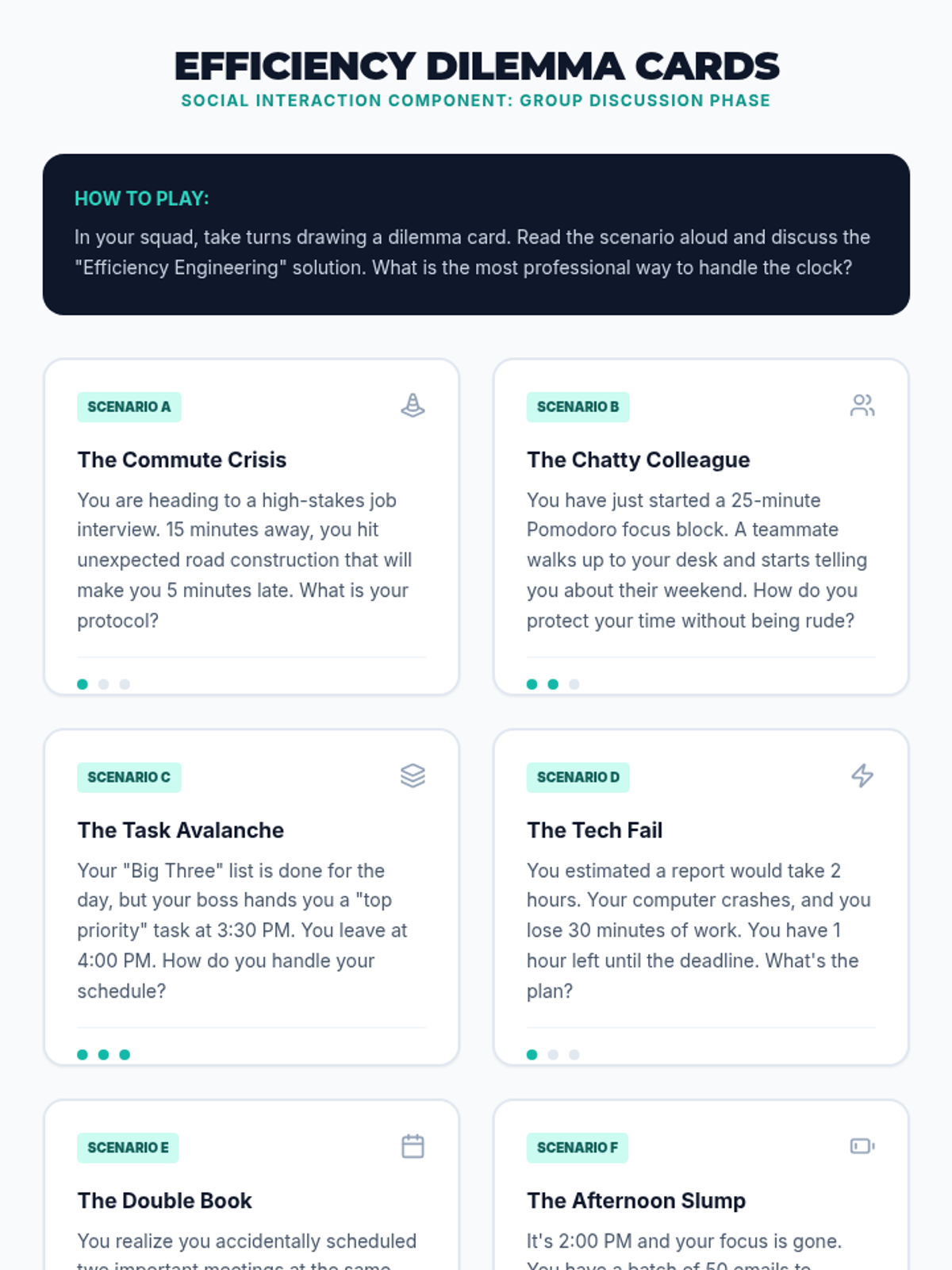
A set of scenario-based discussion cards designed to help students navigate real-world time management dilemmas in a social, collaborative setting.
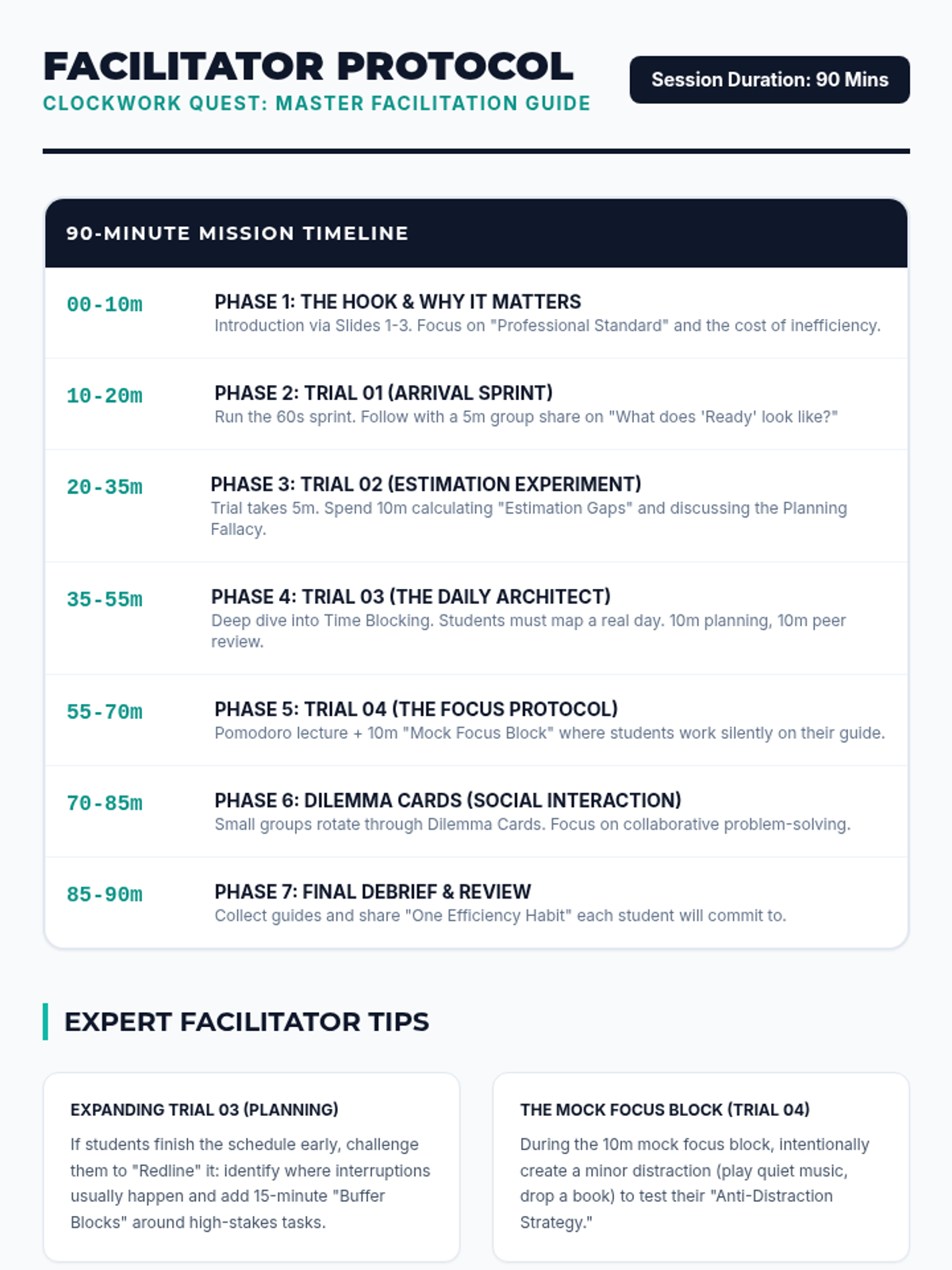
A comprehensive teacher-facing facilitation guide for running the Clockwork Quest trials, featuring a detailed 90-minute agenda, expert tips, and success metrics.
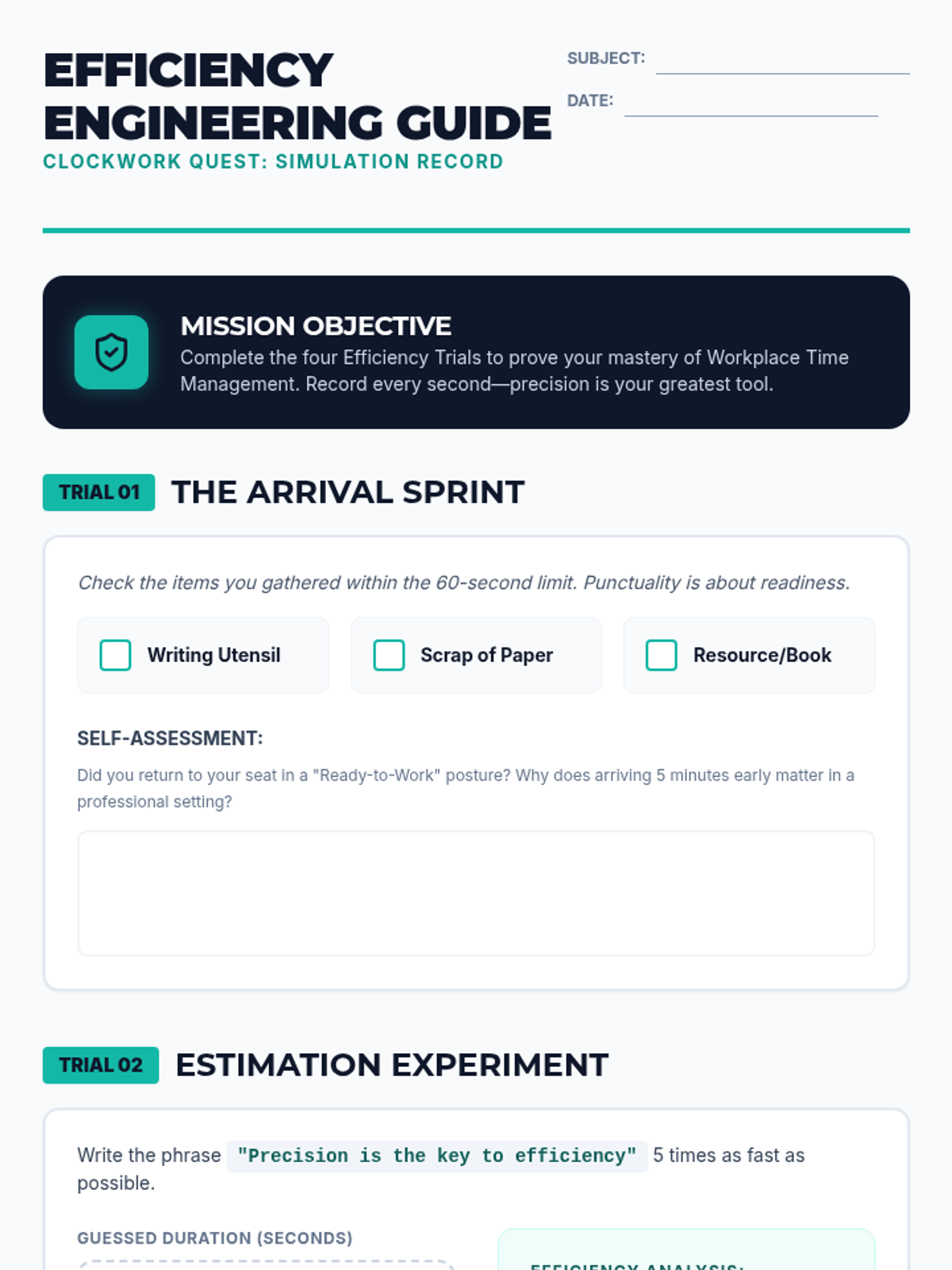
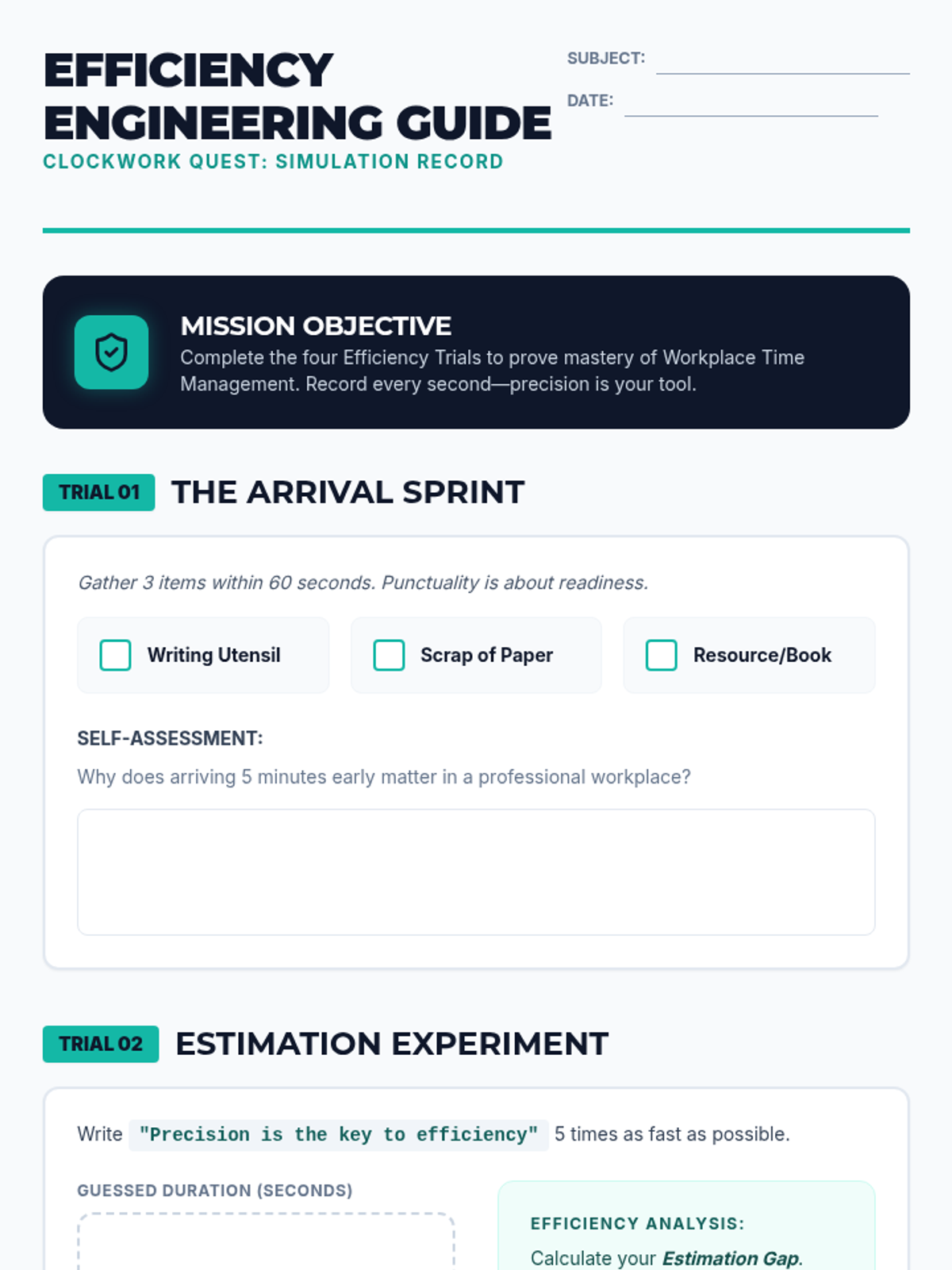
A comprehensive student worksheet featuring hands-on 'trials' to master time management, including estimation experiments, daily scheduling, and focus planning. Updated to include a specific reflective analysis question for Trial 3 for consistency.
A high-energy, modern slide presentation for teaching time management skills like punctuality, task estimation, scheduling, and the Pomodoro technique.
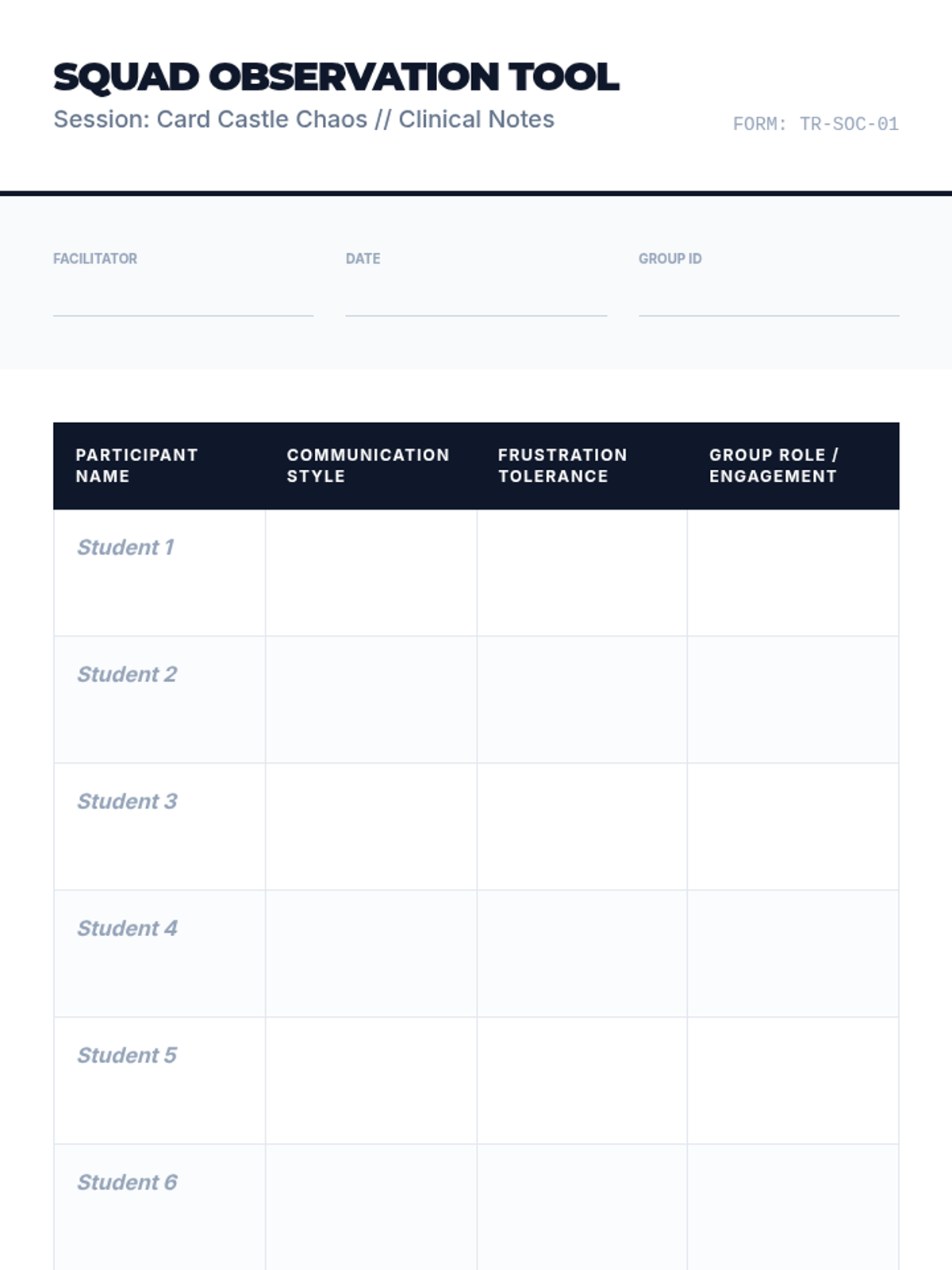
A clinical observation tool for the facilitator to track participant engagement, communication styles, and frustration tolerance during the session's activities. Designed specifically for the clinical rehab context.
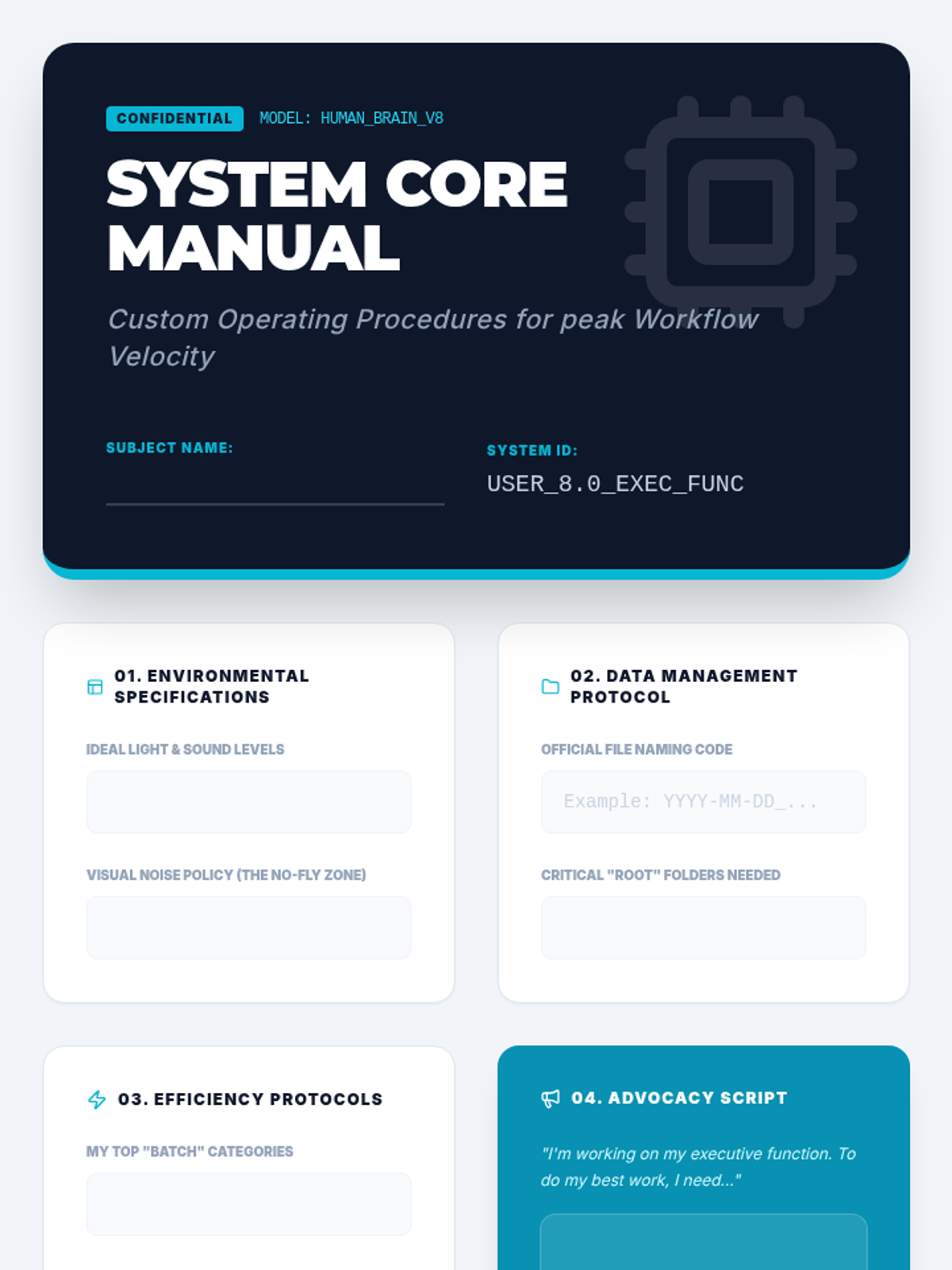
The capstone project template for the sequence. Students synthesize all previous learning into a professional-looking "System Core Manual" that documents their personalized organizational strategies and self-advocacy needs.
Final project presentation guiding students to synthesize their learning into a personal "Operating Manual." Focuses on self-advocacy and developing a set of standard operating procedures for their individual cognitive needs.
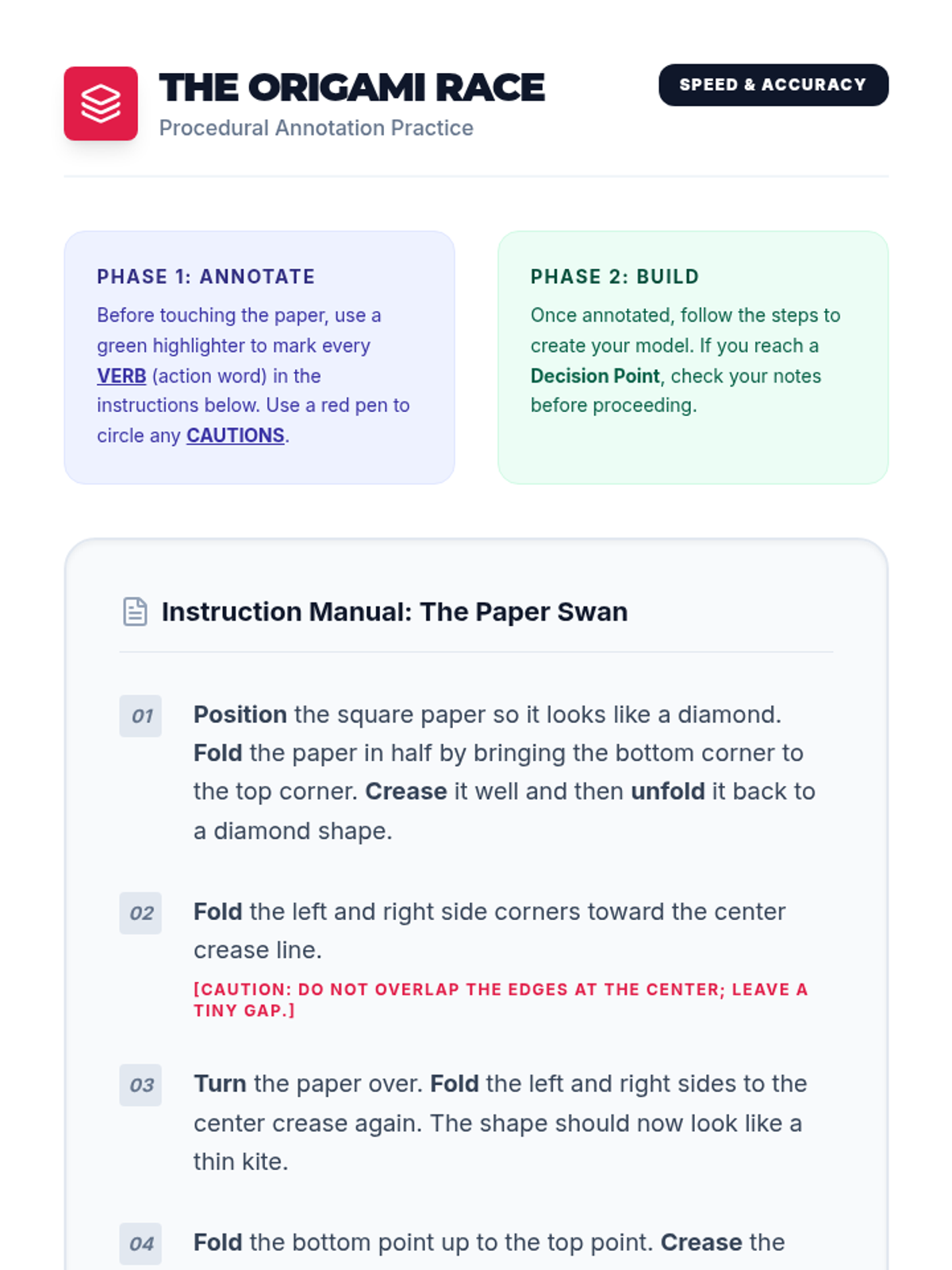
A hands-on activity sheet for practicing procedural annotation by highlighting verbs and cautions in an origami instruction manual.
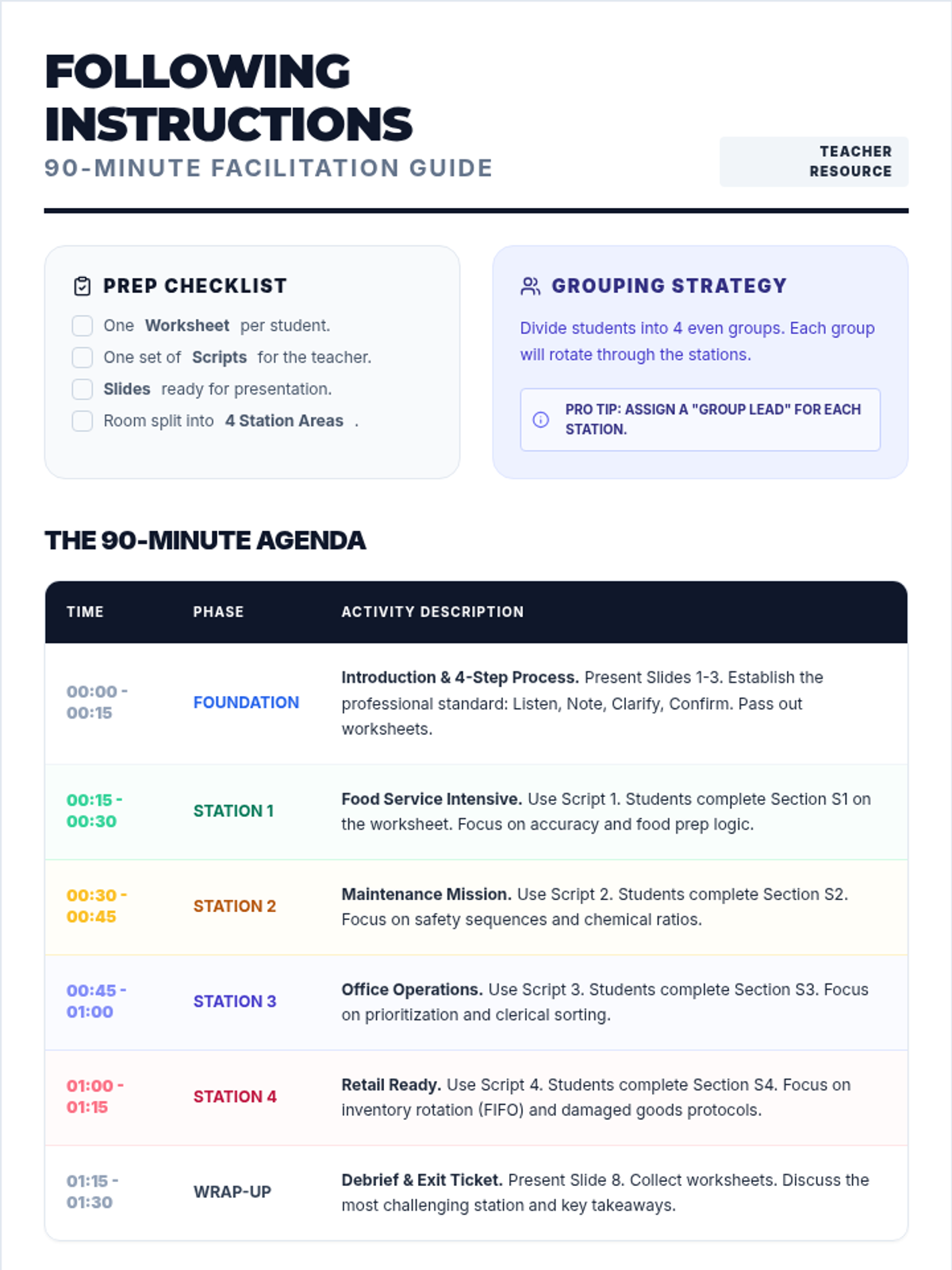
A comprehensive teacher guide for facilitating the 90-minute Following Instructions workshop. Includes a detailed timeline, prep checklist, station management tips, and observation strategies to ensure student mastery.
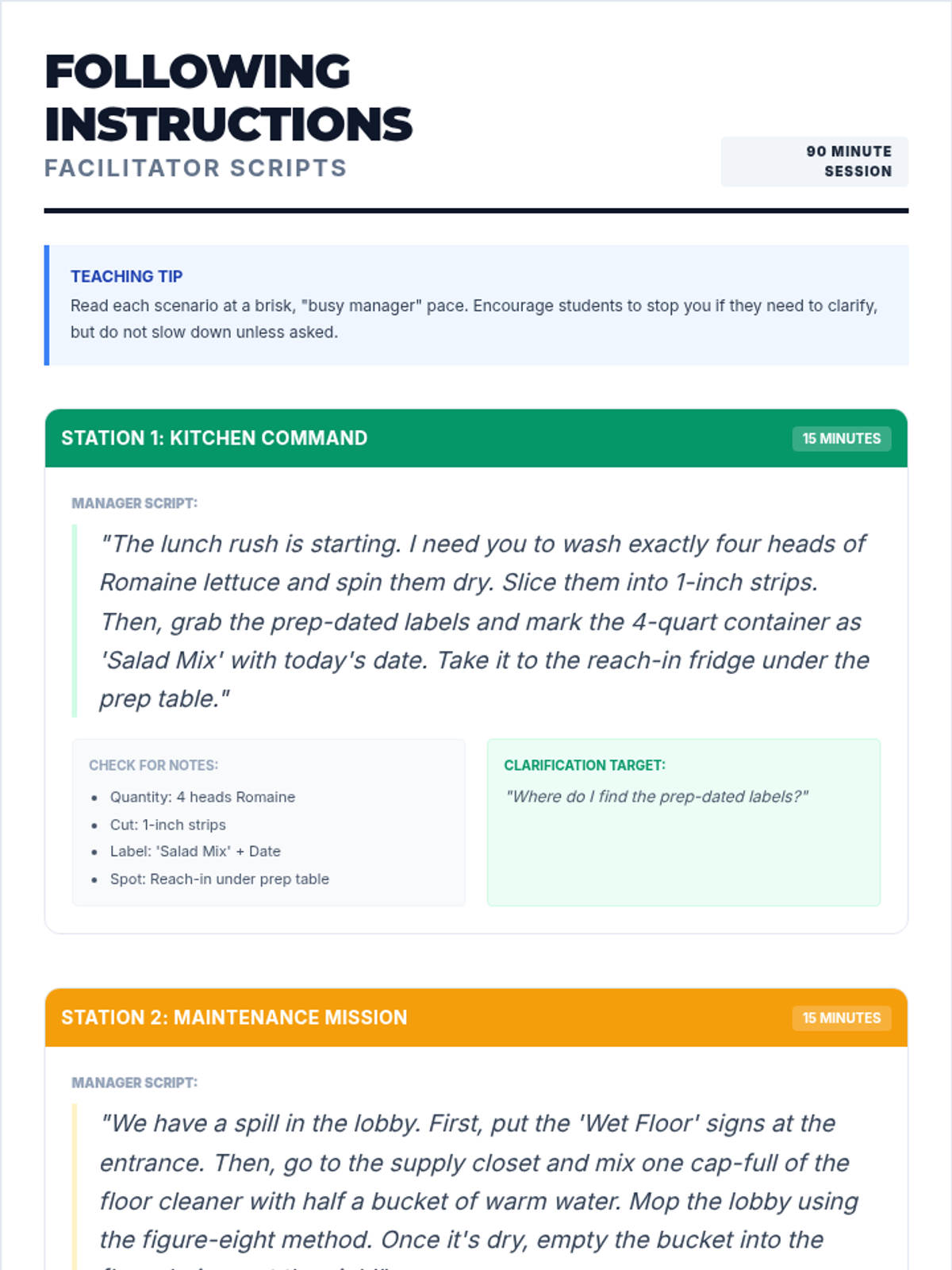
A teacher resource providing specific manager scripts for the 90-minute workshop's four industry stations. Includes key details for observation and suggested clarification questions to guide student role-play.
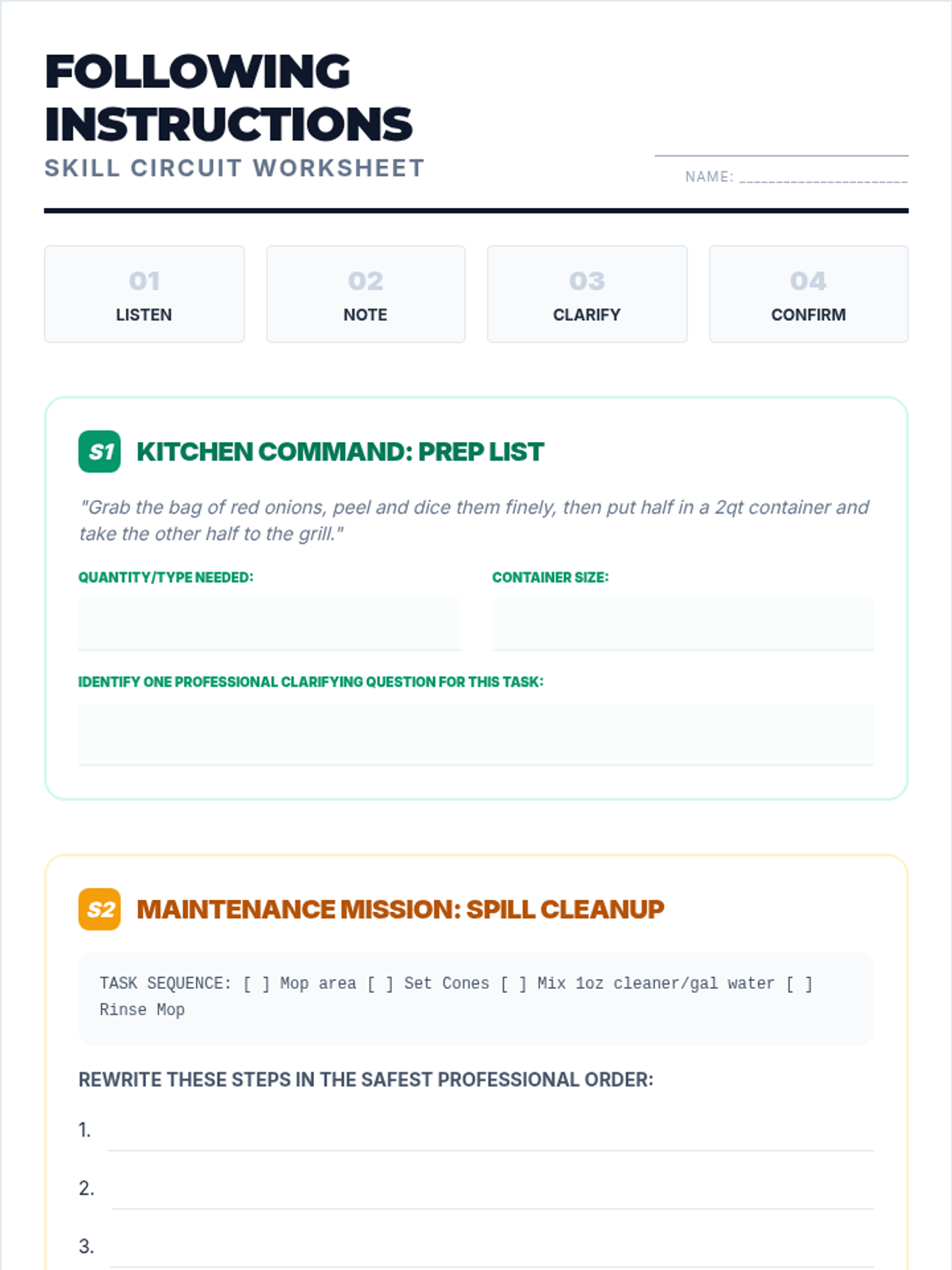
A two-page consolidated worksheet for a 90-minute workshop. Features dedicated sections for food service, maintenance, clerical, and retail skills with an integrated 4-step professional process guide and exit ticket reflection.
An intensive 90-minute workshop slide deck covering the 4-step professional process for following instructions across food, maintenance, office, and retail industries. Includes integrated challenges and discussion prompts.
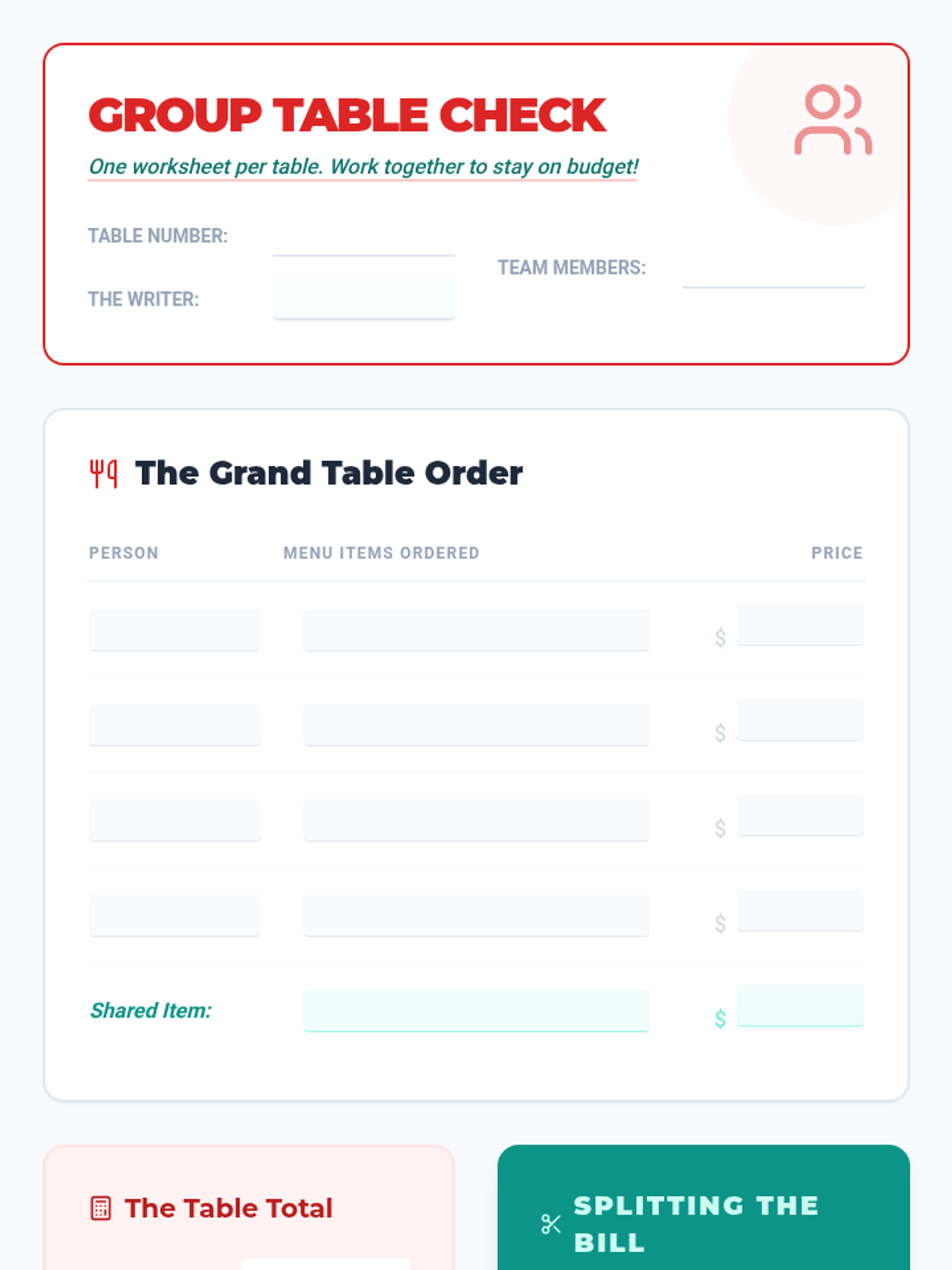
A comprehensive group worksheet that combines combined food order tracking, table total calculations (including tax and tip), group math challenges, and social etiquette reflections into a single multi-page document.
A comprehensive student worksheet featuring hands-on 'trials' to master time management. Updated with an expanded 'Simulation Prompt' for Trial 3 that includes low-priority tasks, challenging students to practice prioritization and postponement. Content optimized for clarity and student completion.
Instructional slide deck for the Budget Bites lesson, covering the 90-minute agenda, hidden costs (tax and tip), and restaurant social etiquette.
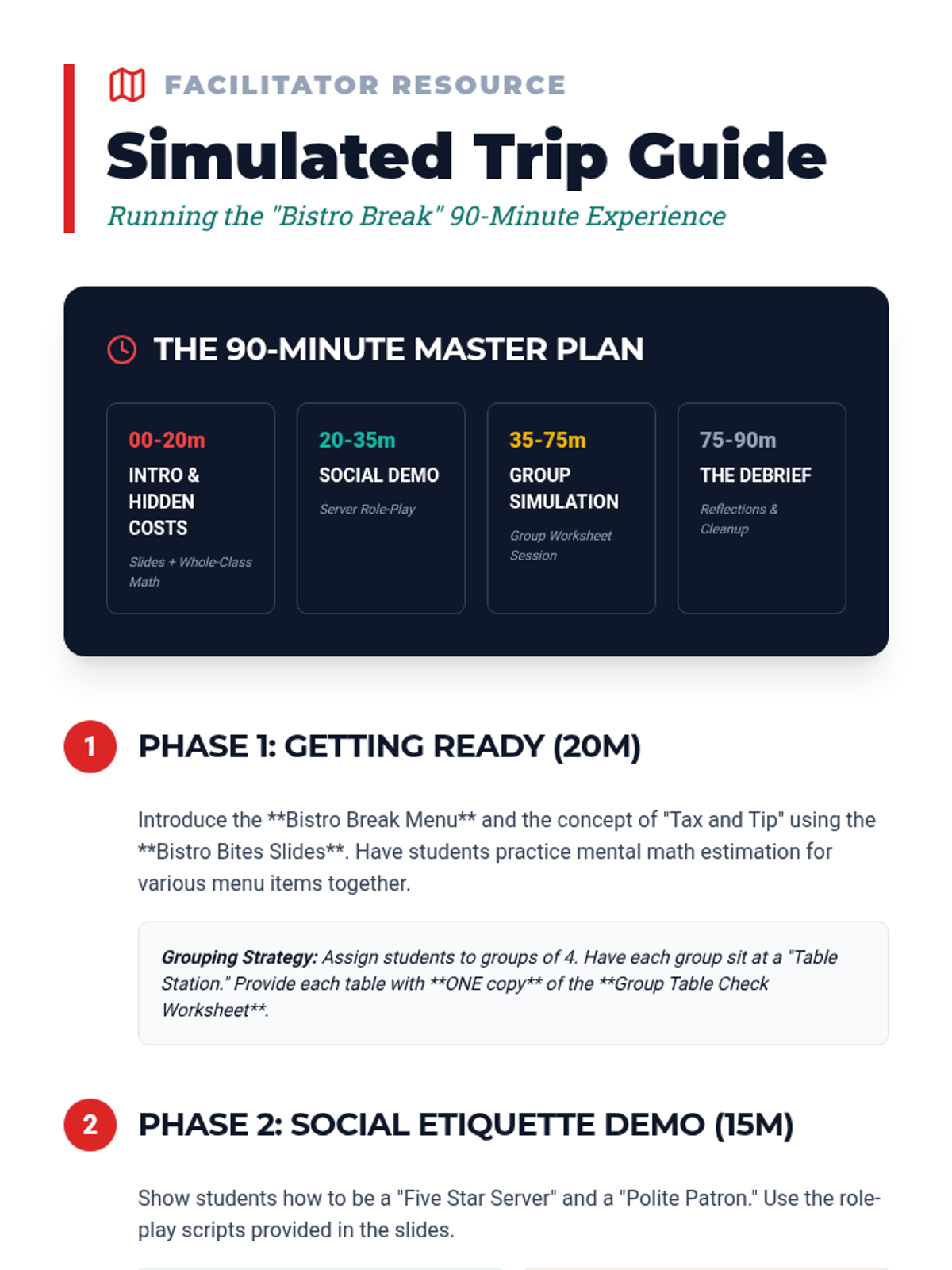
A facilitator's guide for conducting a simulated restaurant field trip in the classroom, including role-play scripts and setup instructions.
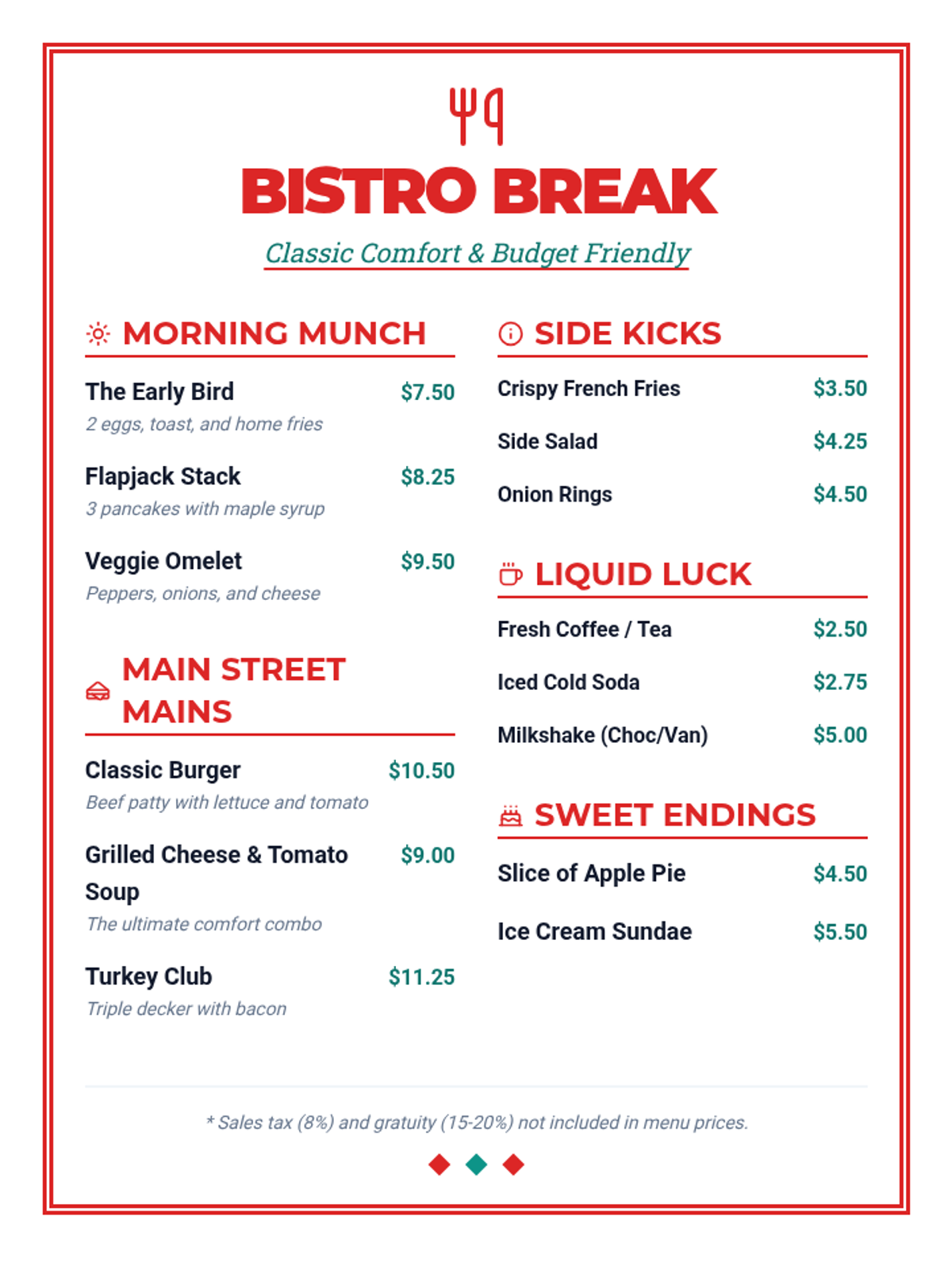
A retro-style bistro menu featuring breakfast, main courses, sides, drinks, and desserts with clear pricing for use in budget and math exercises.
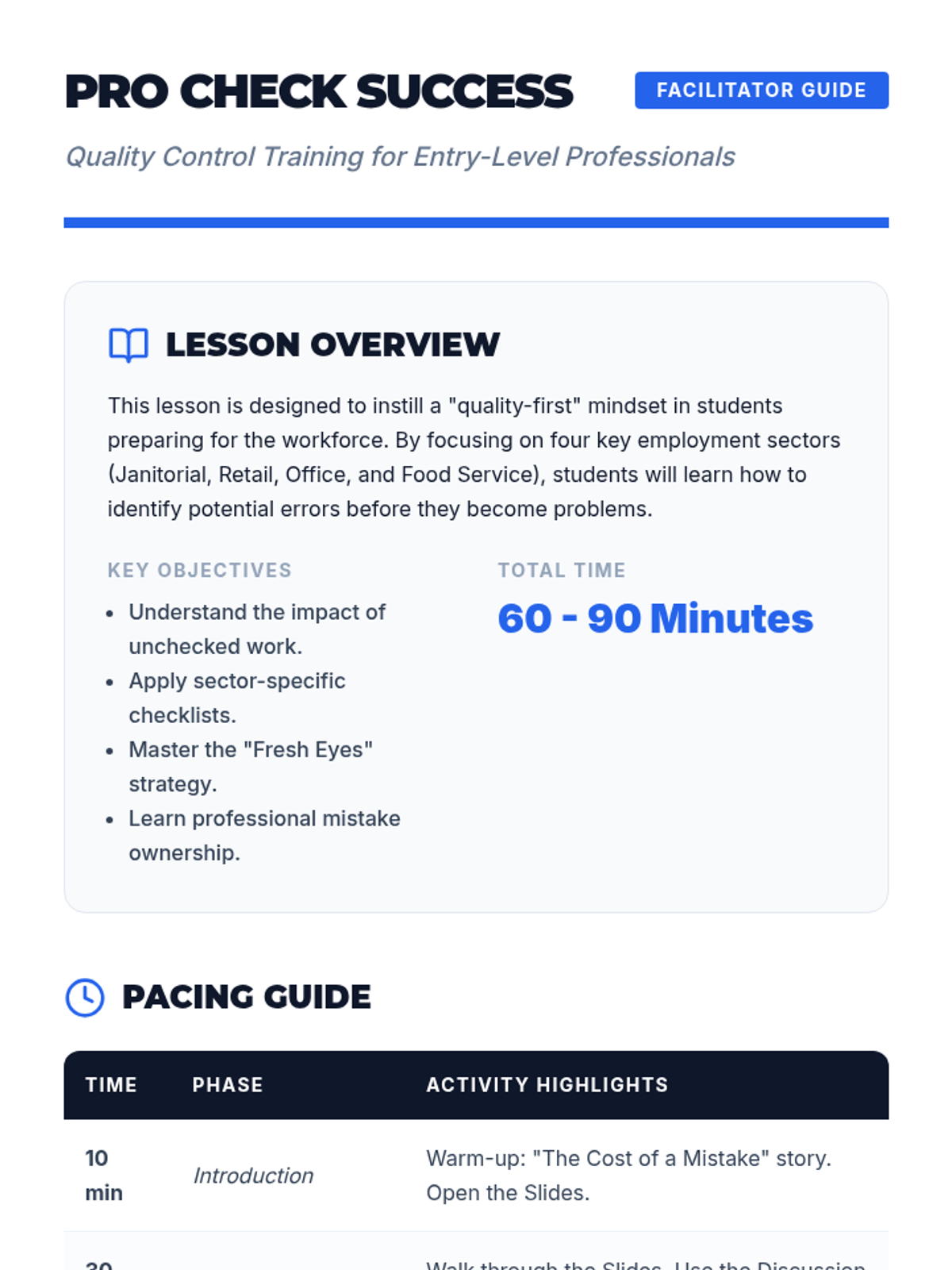
A comprehensive teacher guide for the 'Pro Check Success' lesson, including pacing, slide-by-slide discussion prompts, a 'The Intentional Error' classroom activity, and an answer key for the student worksheet.
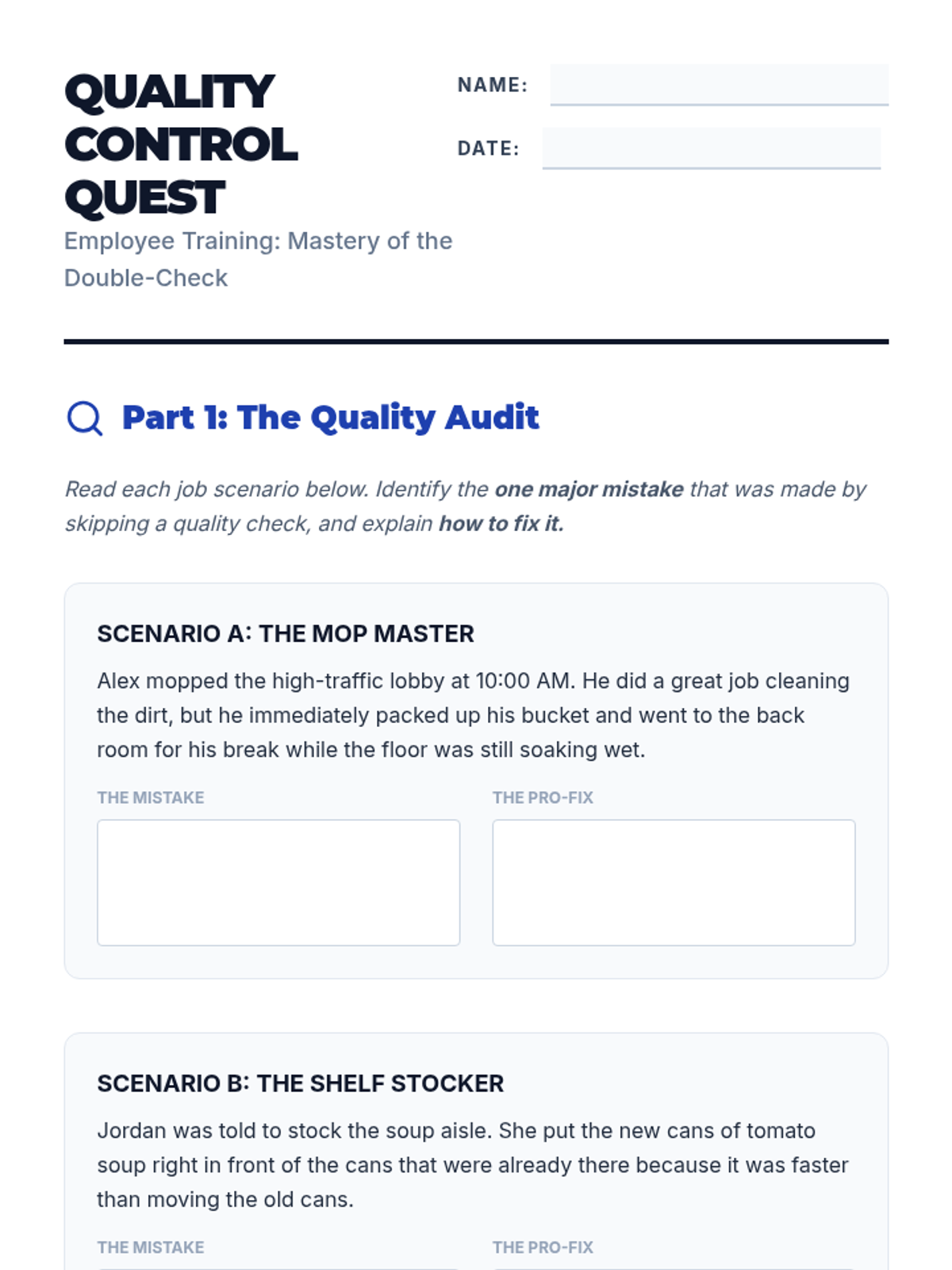
A 2-page student worksheet that reinforces quality control concepts through scenario analysis, a custom checklist design activity, and reflection on the 'Fresh Eyes' strategy. Includes professional branding and ample writing space.
A comprehensive 10-slide presentation designed for employment training, focusing on quality control and checking work across four key job sectors: janitorial, retail, office, and food service. Includes specific checklists, professional strategies like 'Fresh Eyes', and scenarios for discussion.
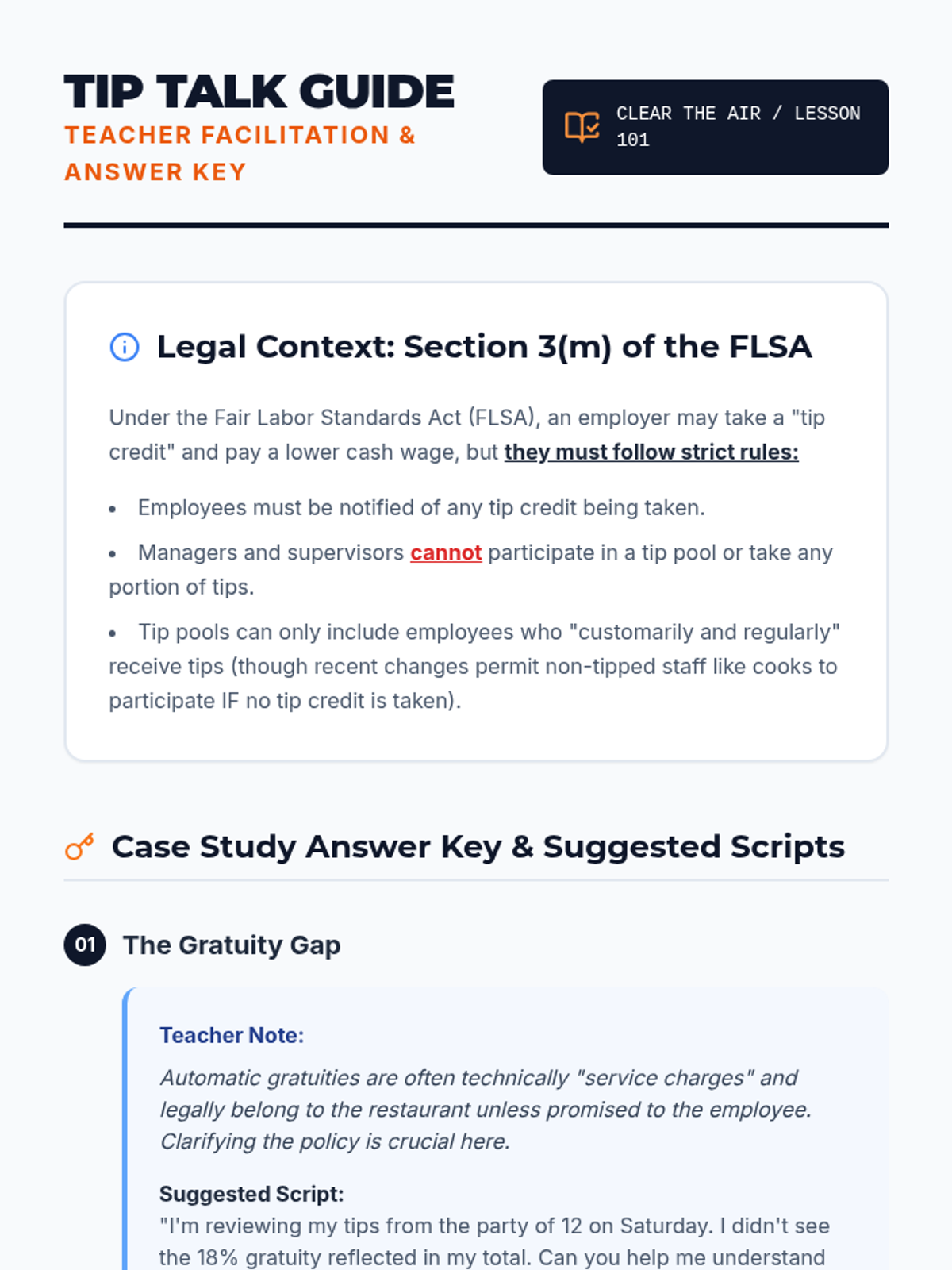
A facilitation guide for instructors, featuring key legal concepts regarding the Fair Labor Standards Act, suggested scripts for case studies, and discussion prompts to encourage self-advocacy in the service industry.
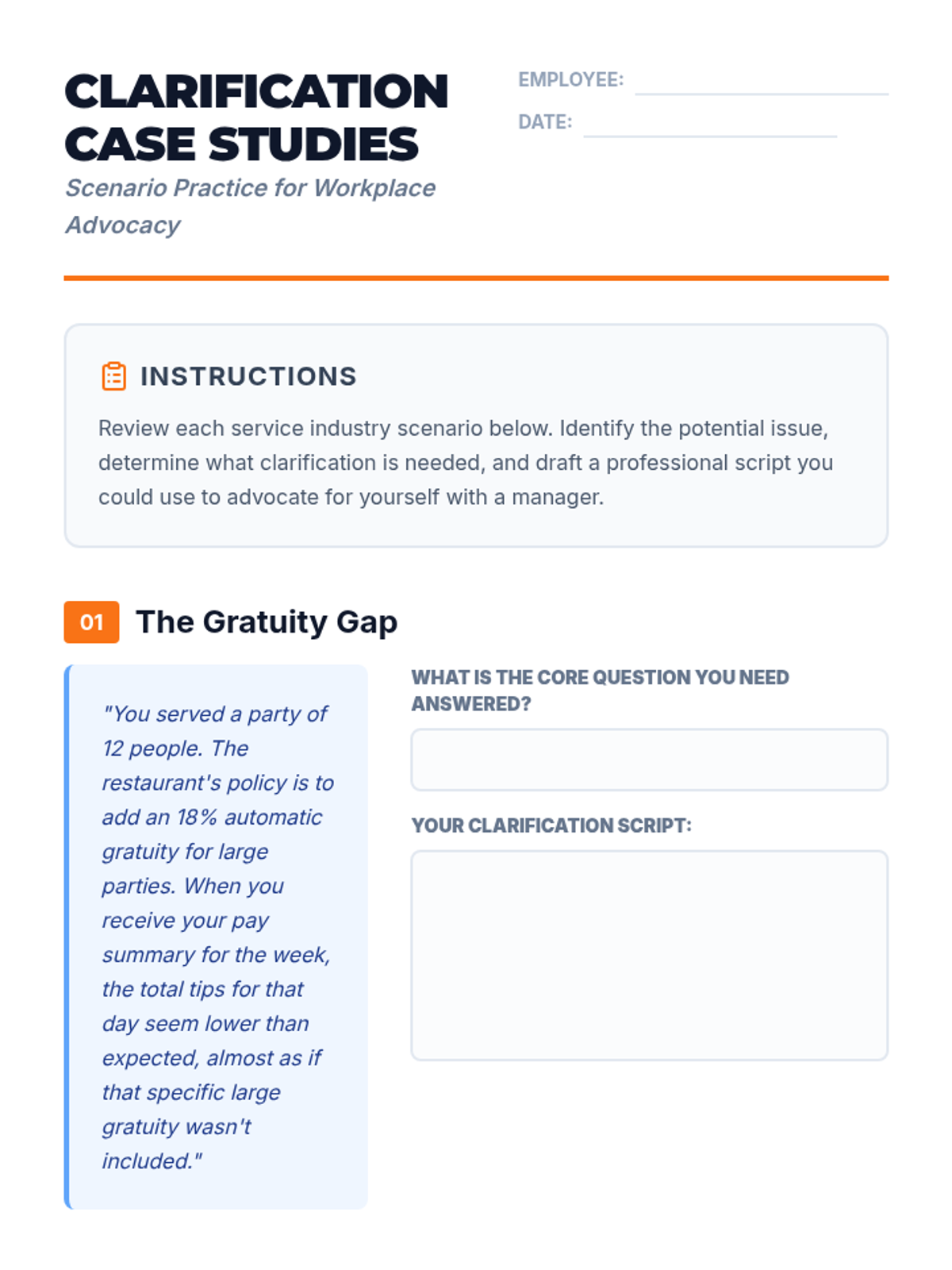
A worksheet featuring three real-world service industry scenarios involving tipping confusion. Students practice identifying core issues and drafting professional scripts to ask for clarification from management.
A visual presentation designed to teach service industry employees about different tipping systems, their legal rights regarding tips, and professional strategies for asking for clarification on pay. It includes specific scripts and identification of red flags in the workplace.
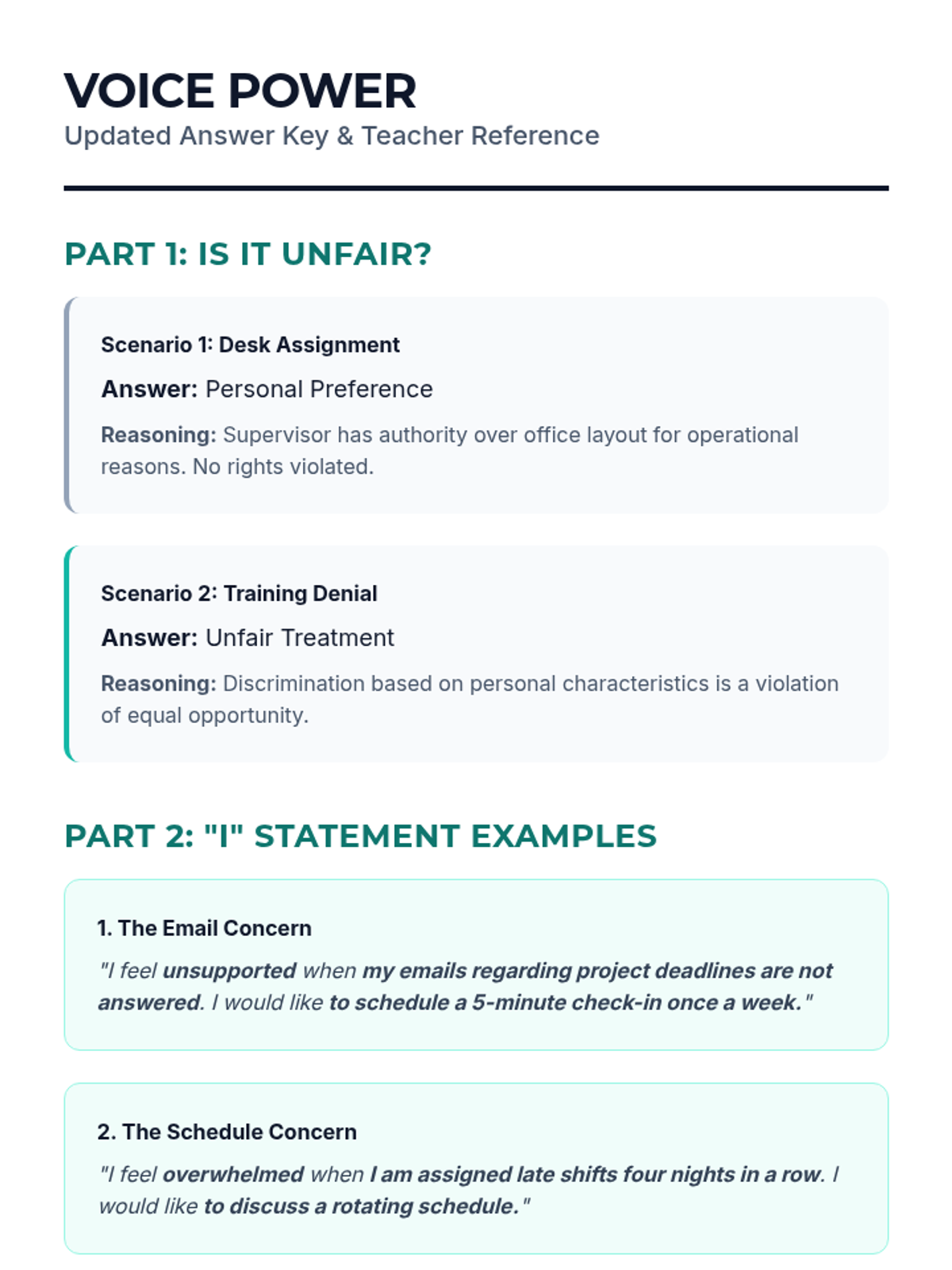
An updated answer key and teacher reference sheet that includes suggested responses for the advanced safety, promotion, and consumer rights case studies.
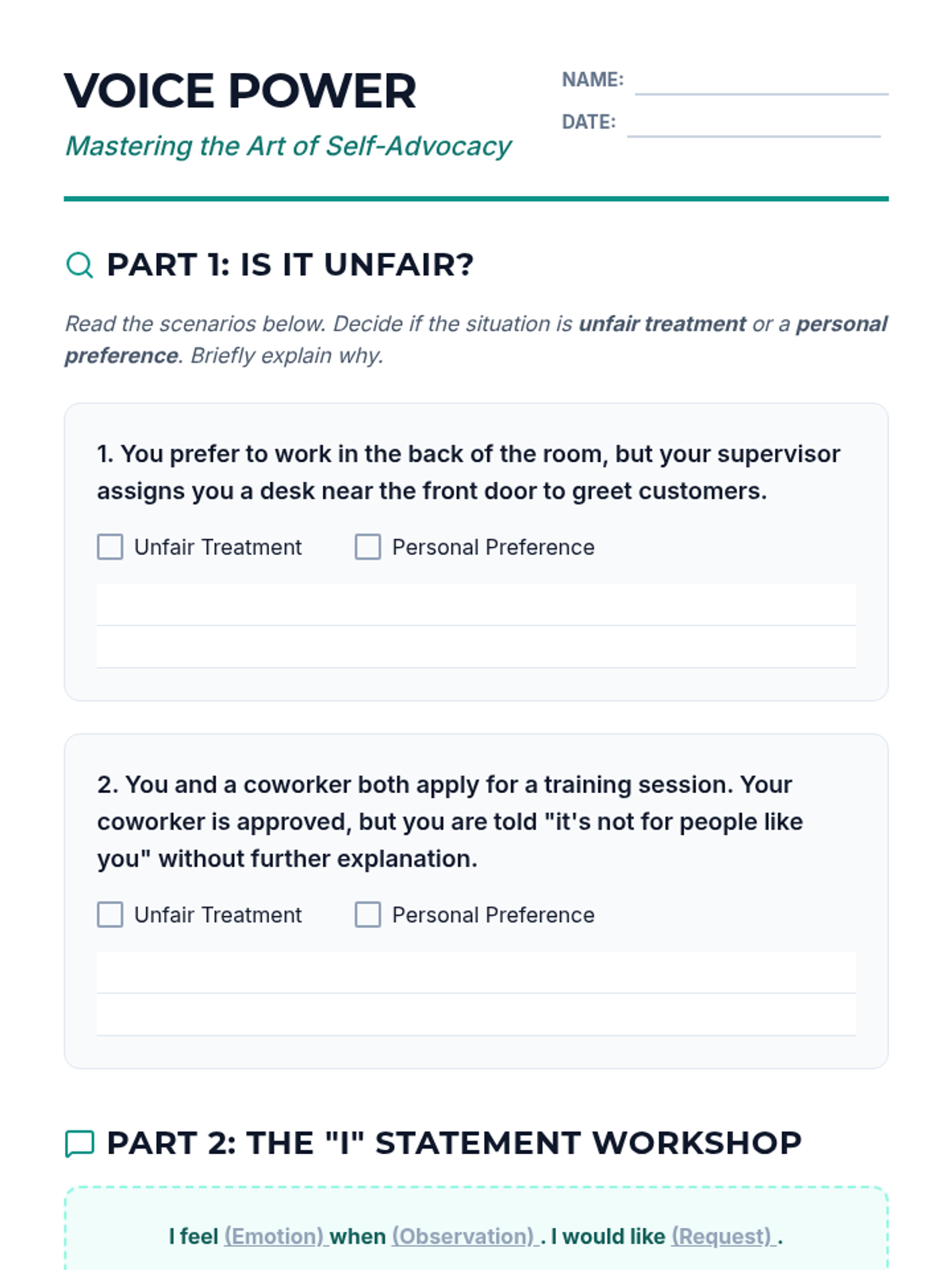
An expanded two-page student worksheet that includes the original scenarios plus three new advanced case studies focused on workplace safety, promotion fairness, and consumer rights.
An updated slide deck featuring four YouTube videos on effective complaining and consumer rights, along with three new workplace and consumer case studies for class discussion.
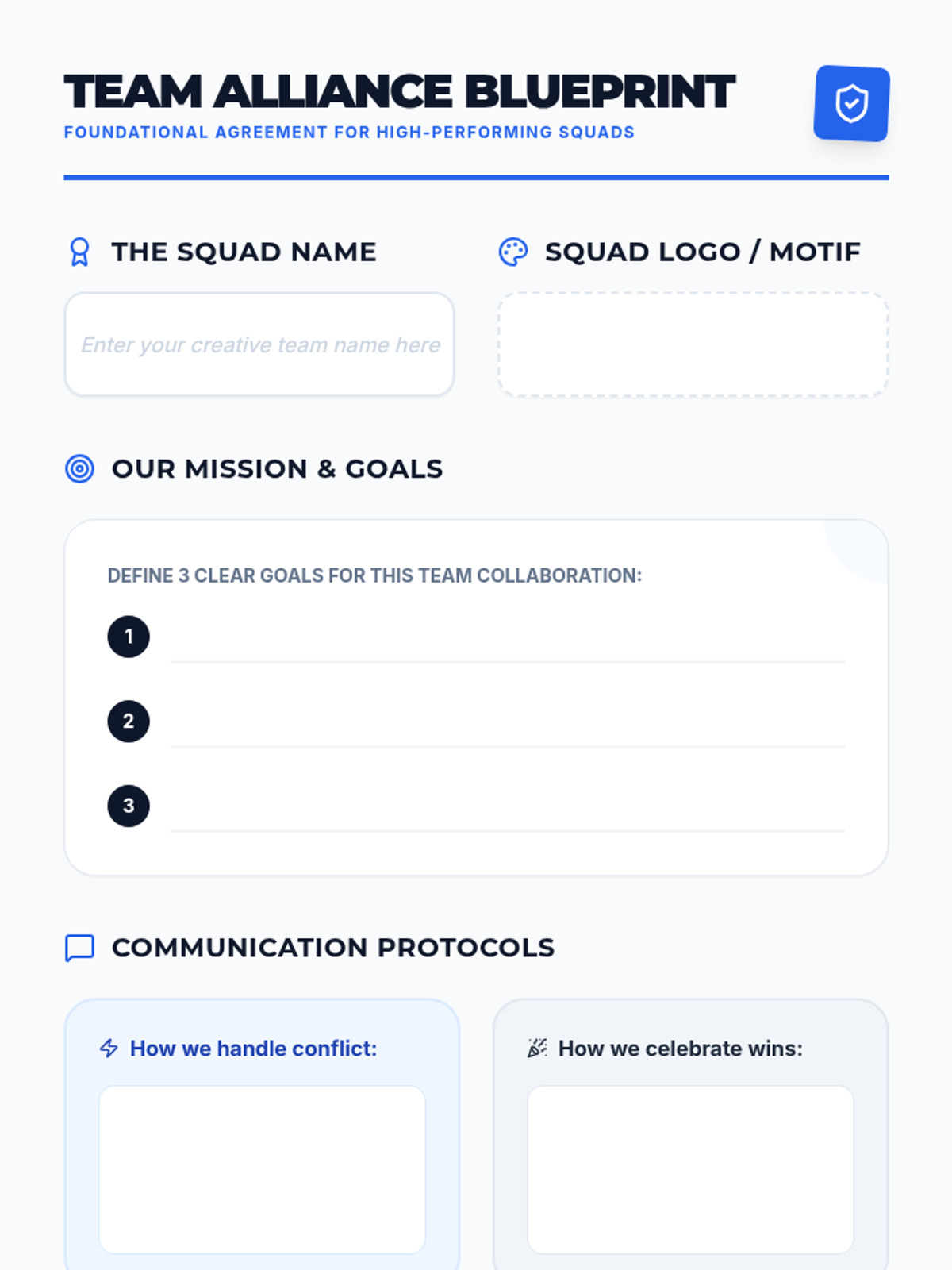
A team-building charter where student groups define their name, mission, communication norms, and shared commitments.
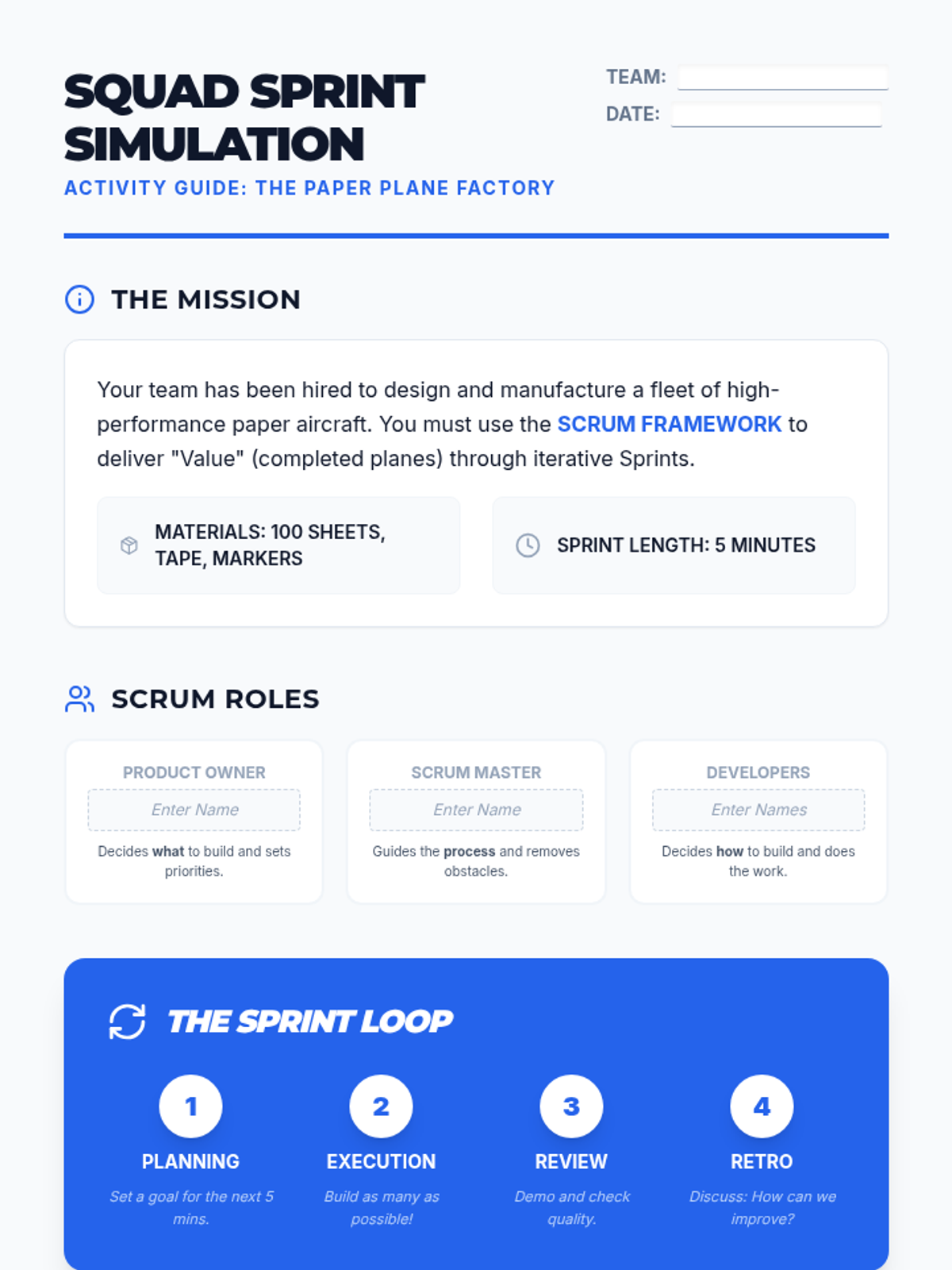
A detailed guide for a paper plane factory simulation activity, including role assignments, sprint trackers, and communication reflection questions.
A comprehensive slide deck covering Agile mindset, Scrum framework roles/events, and the importance of effective communication and psychological safety in teams.
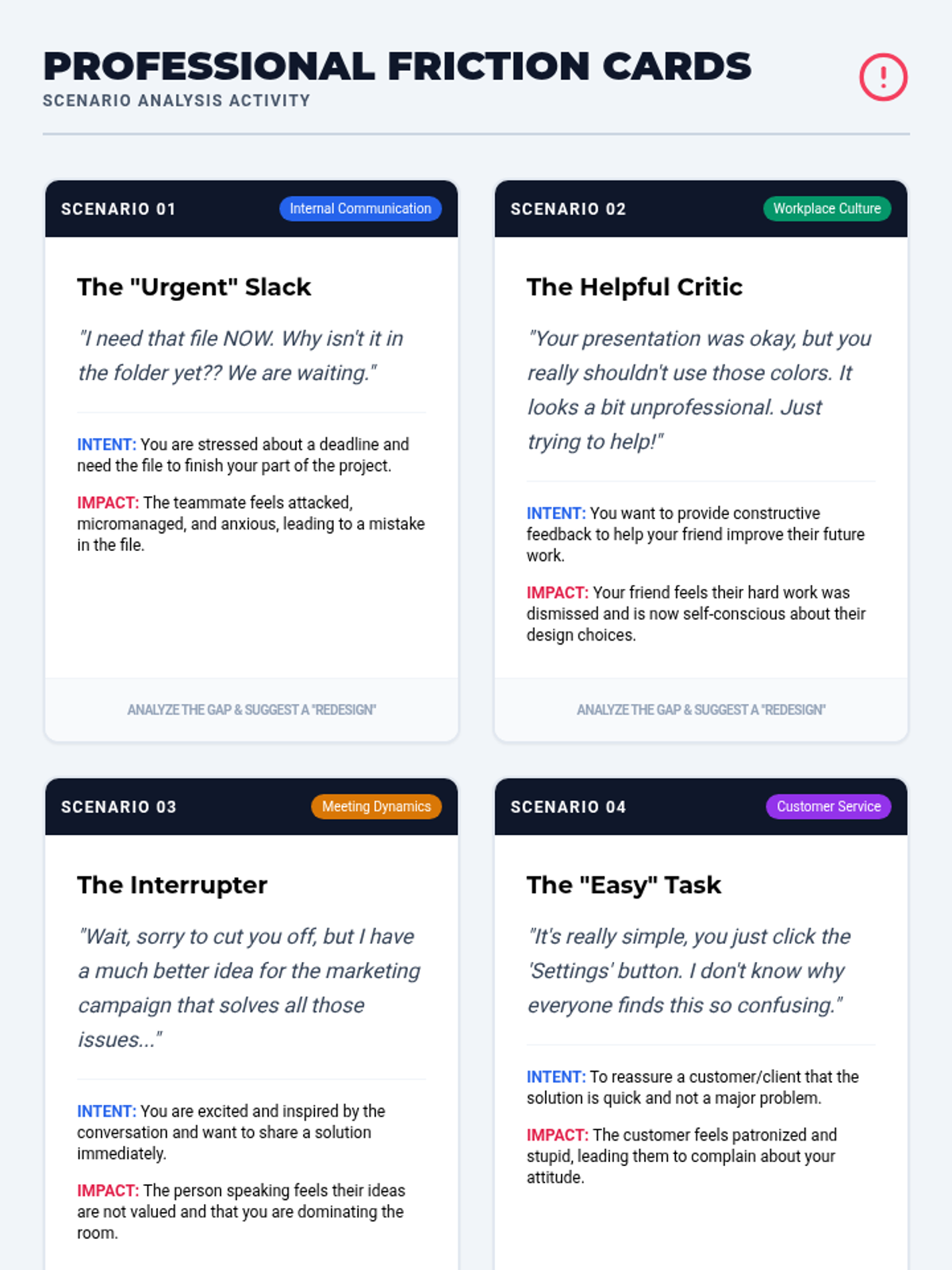
A set of four professional communication scenario cards for high school students. Each card features a common workplace "friction" moment, highlighting the gap between intent and impact for analysis and practice.
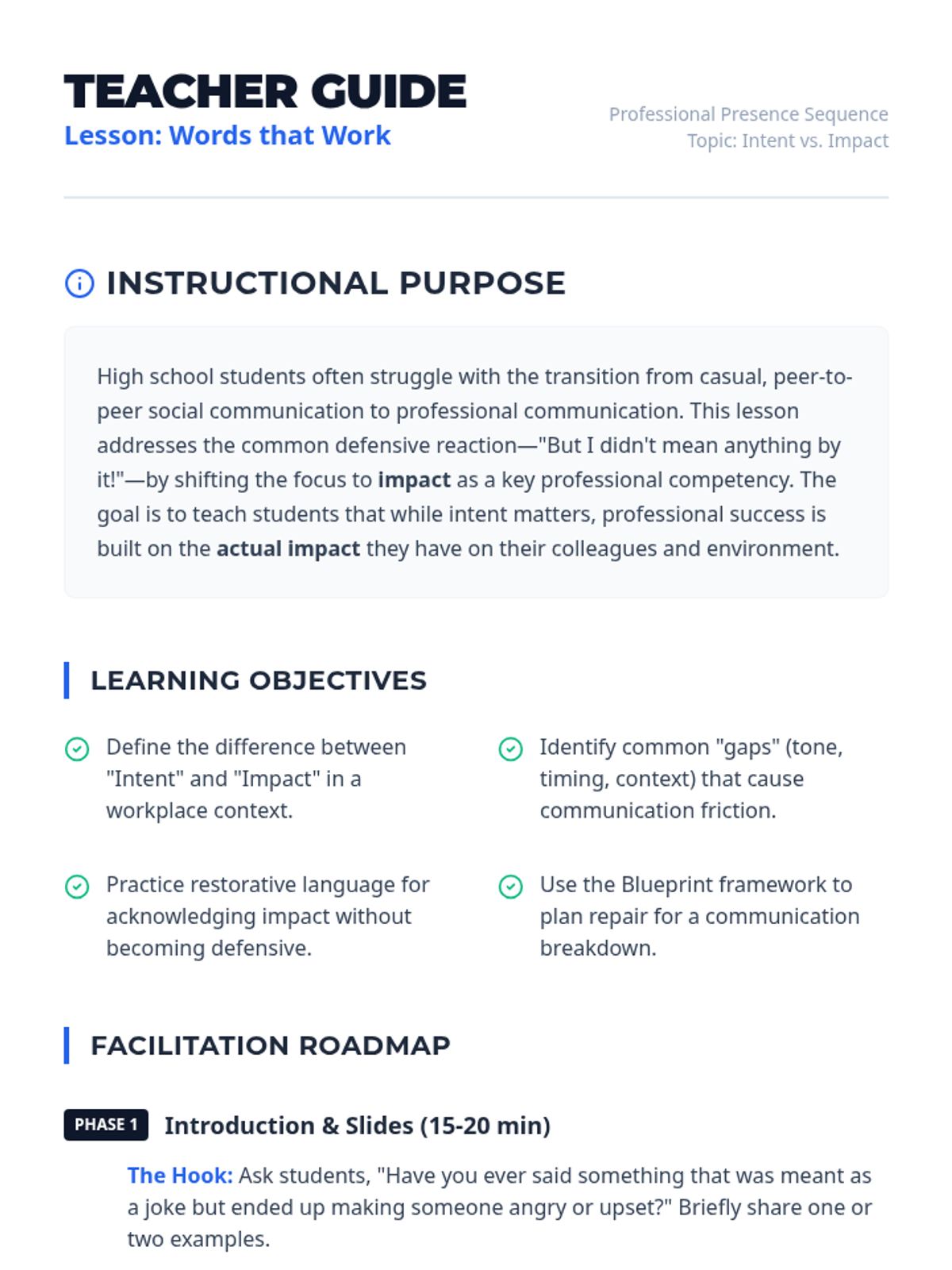
A comprehensive facilitation guide for teachers leading the "Words that Work" lesson. Includes instructional strategies, restorative practice notes, and discussion prompts for high school students.
A professional development slide deck for high school students introducing the concept of "intent vs. impact." Includes scenario analysis and a step-by-step guide to restorative workplace communication.
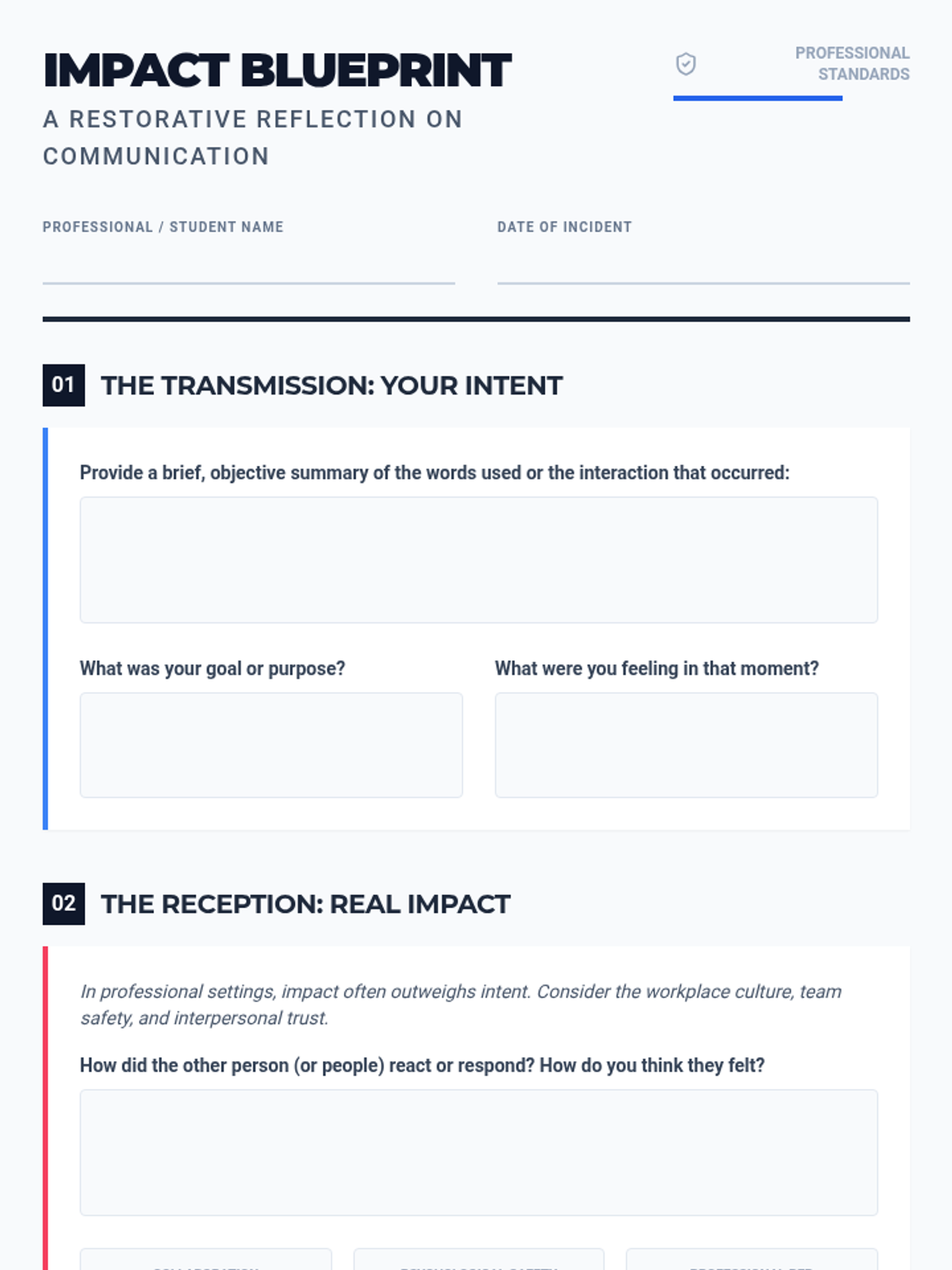
A restorative reflection worksheet for high school students focusing on the "intent vs. impact" framework in professional and soft skills contexts. The design uses a clean, industrial "blueprint" aesthetic to help students objectively analyze communication gaps and plan for repair.
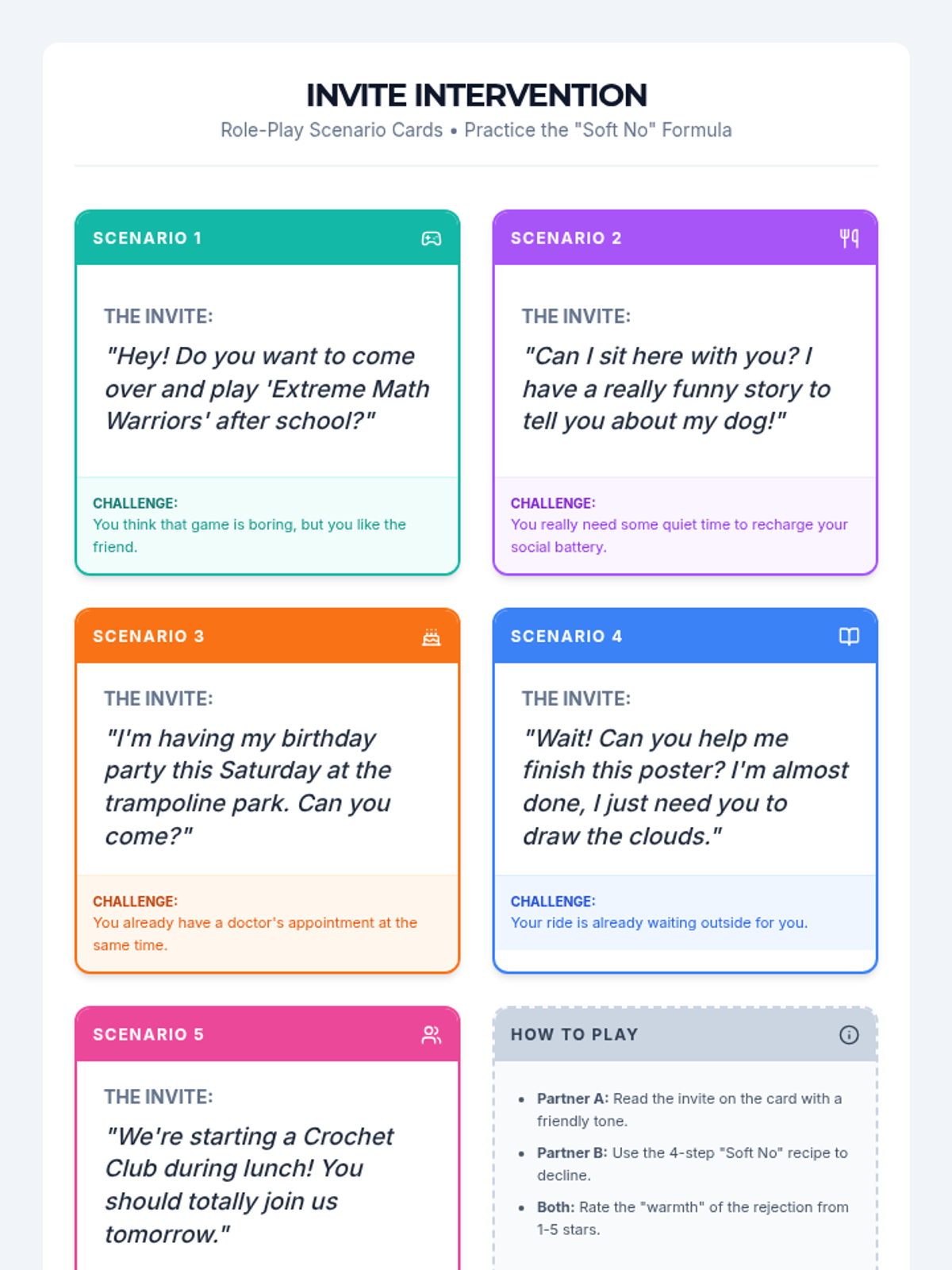
A set of five role-play task cards featuring common social scenarios where a student might need to decline an invitation. Includes a challenge for each scenario and brief instructions for partner practice.
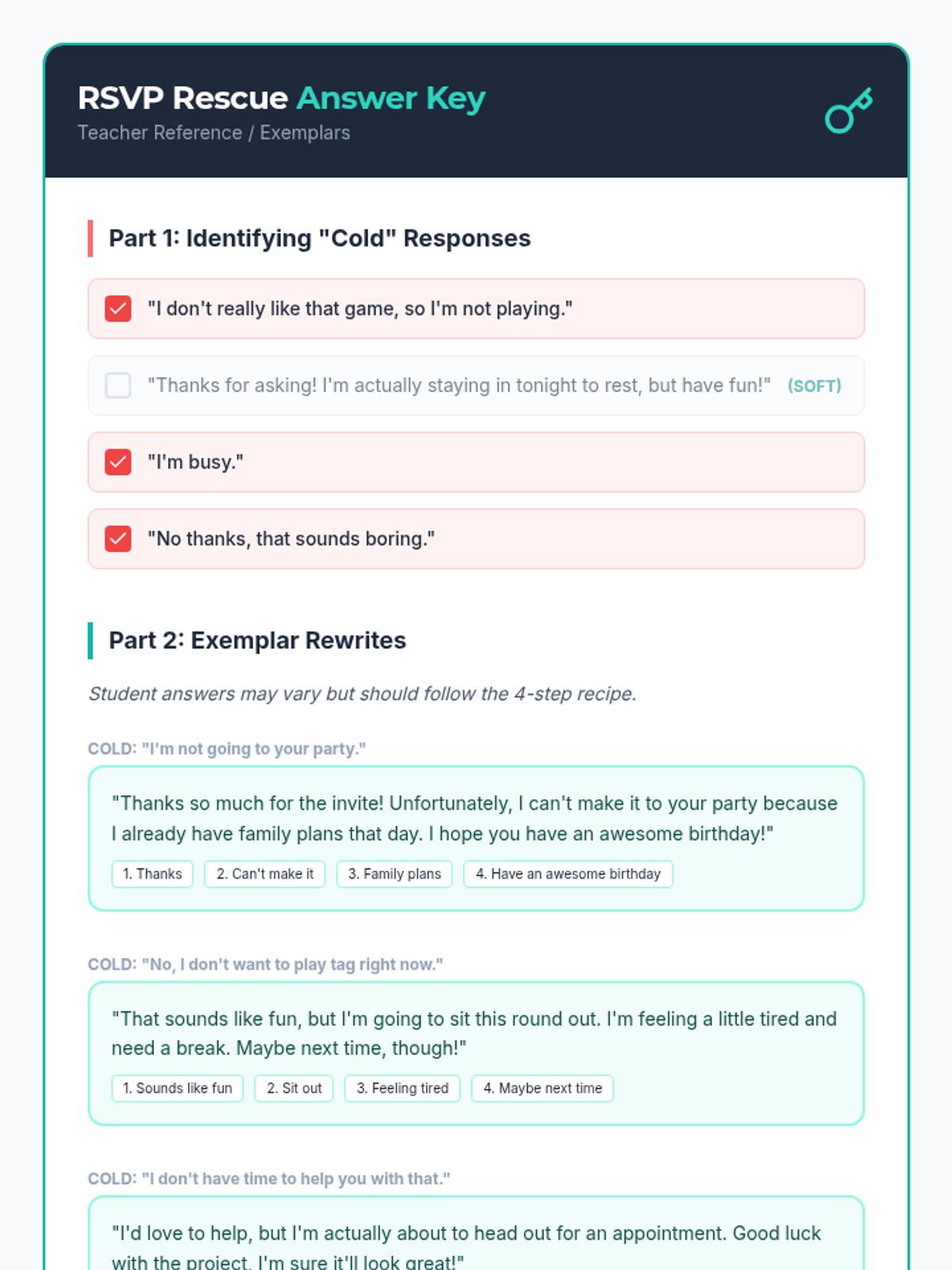
Teacher answer key for the RSVP Rescue worksheet, providing correctly identified 'cold' rejections and exemplar 'soft' rejection rewrites for classroom discussion and grading.
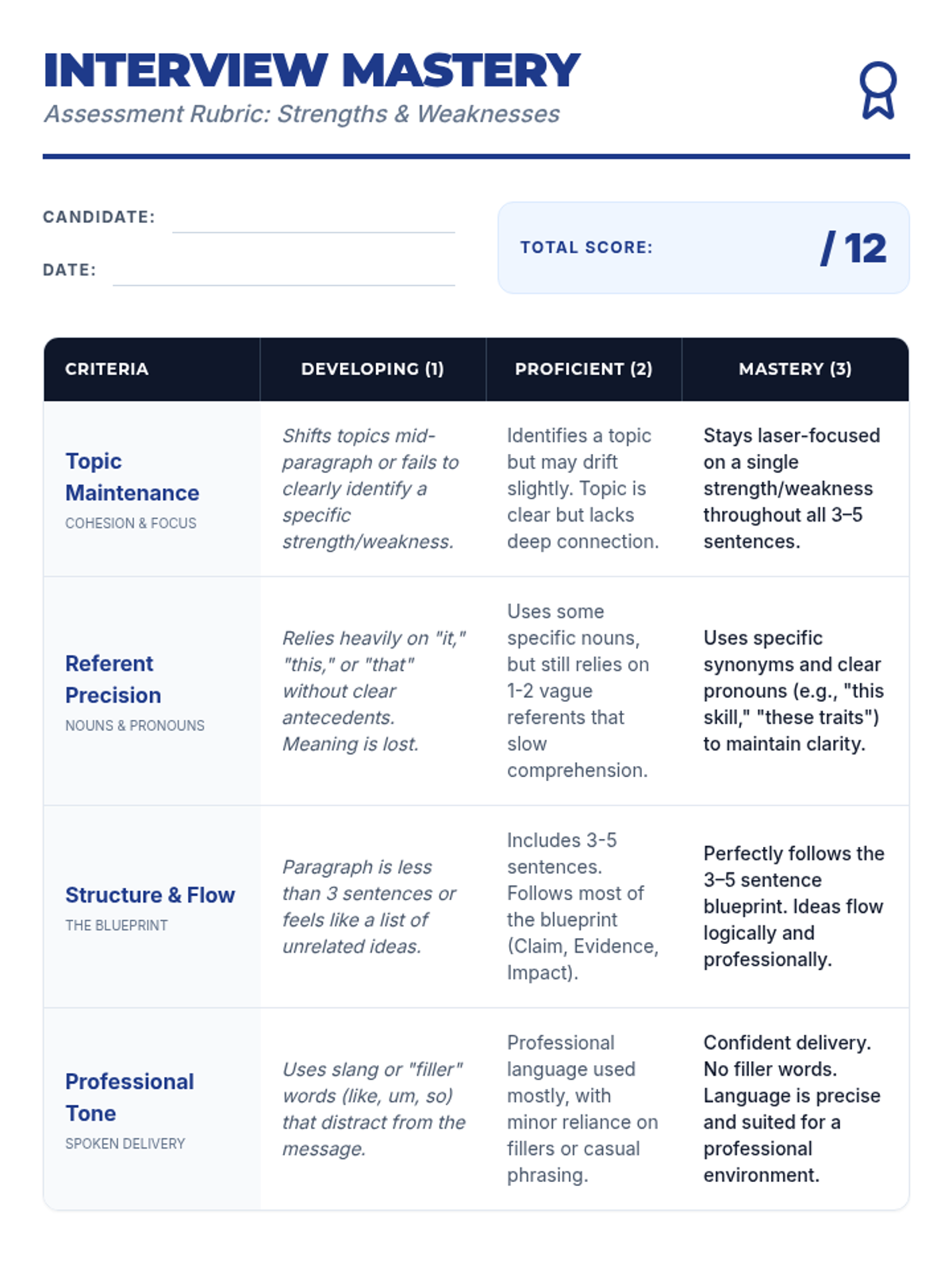
A comprehensive assessment rubric for evaluating a student's 3-5 sentence interview response, focusing on topic maintenance, referent precision, and professional delivery.
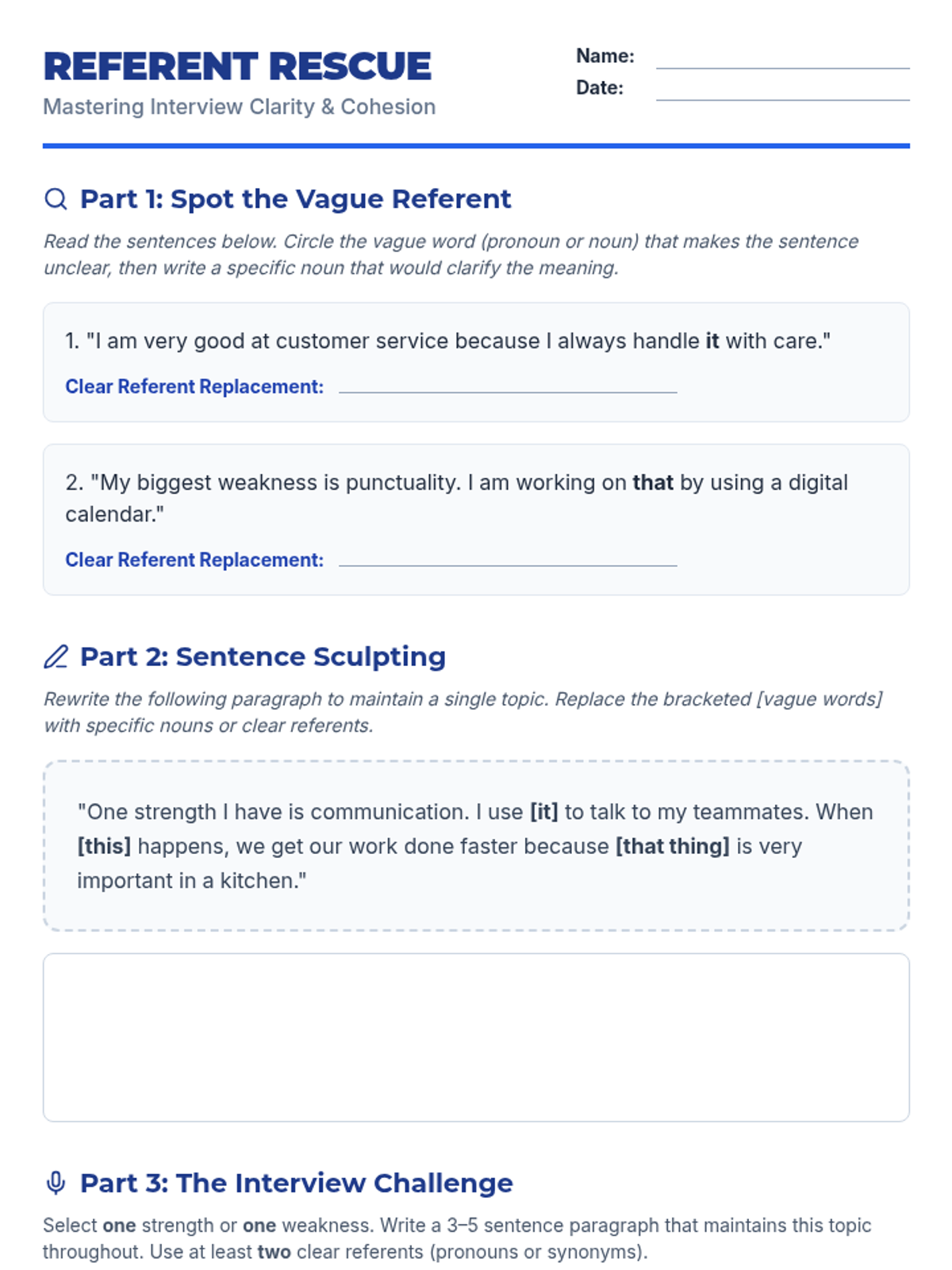
A scaffolded worksheet for 11th and 12th graders to practice identifying and correcting vague referents, culminating in writing their own interview response.
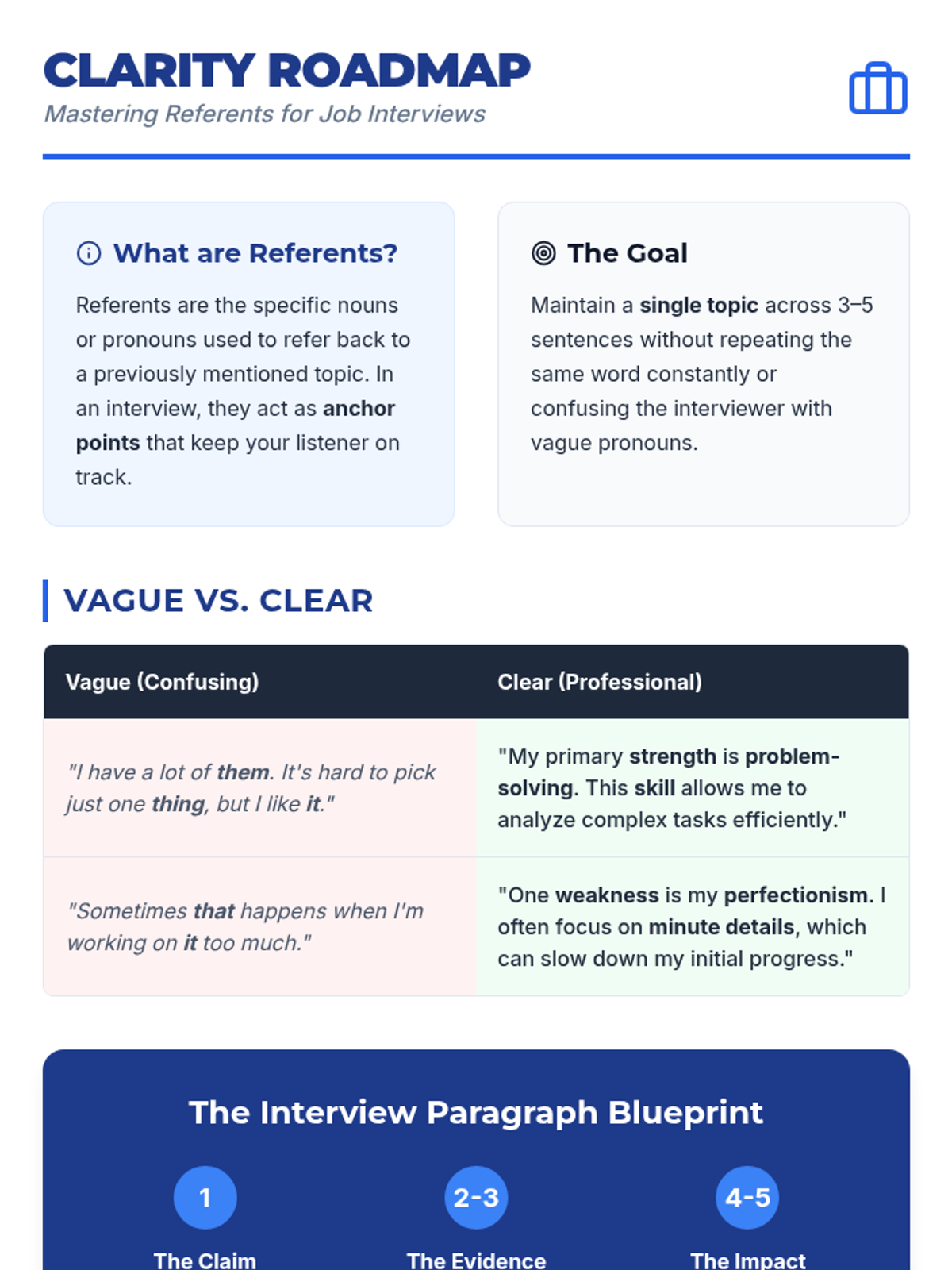
A visual anchor chart explaining clear referents and the structure of an interview response for strengths and weaknesses, designed for high school students.
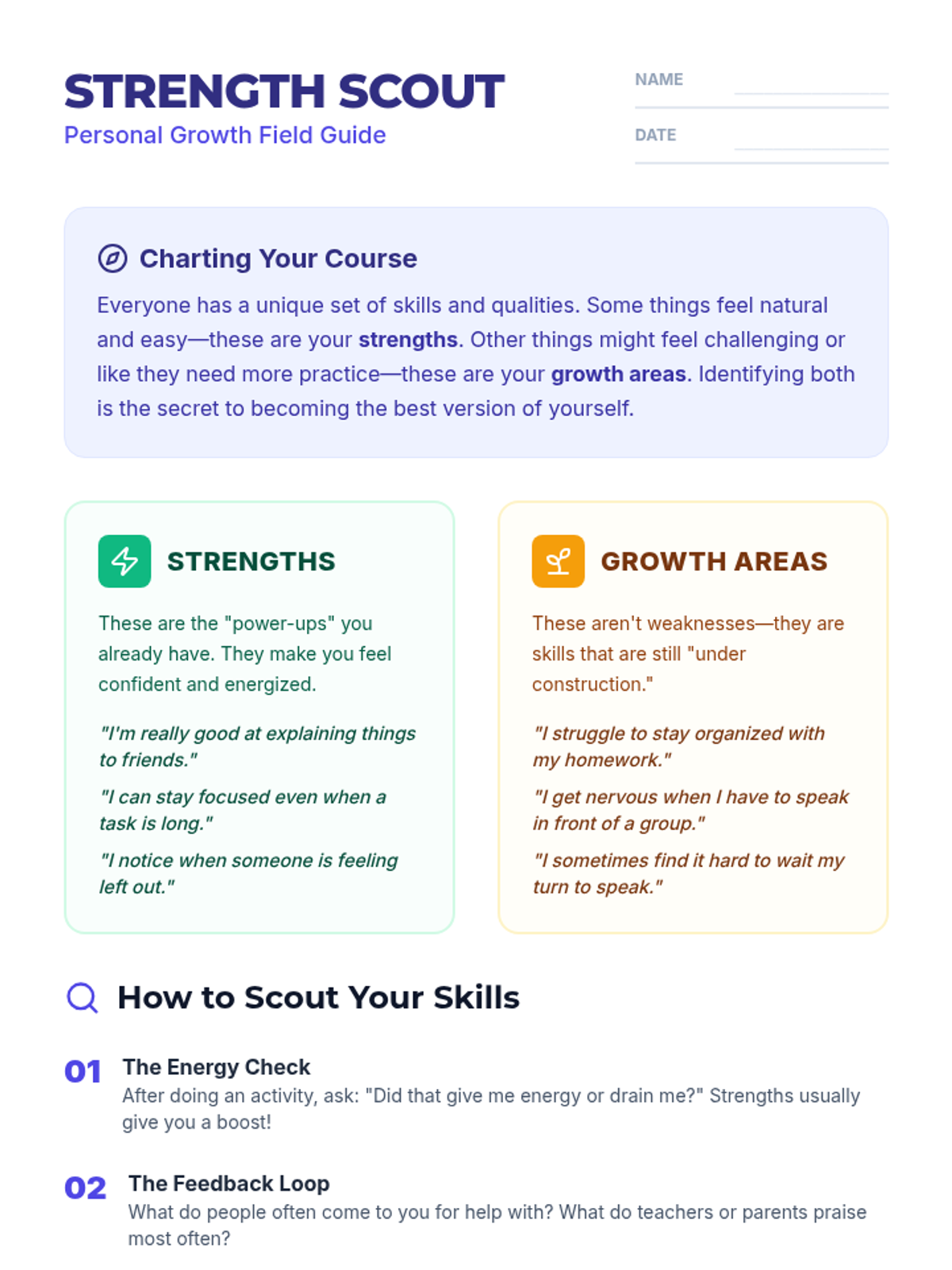
A two-page worksheet featuring an informational guide on identifying personal strengths and growth areas, followed by a scenario-based self-assessment with 1-5 rating scales and reflection spaces.
High-contrast, large-font presentation slides designed for an outdoor workshop. The slides cover the definition of Out-of-School Time, facilitation skills, and career pathways in the youth development industry.
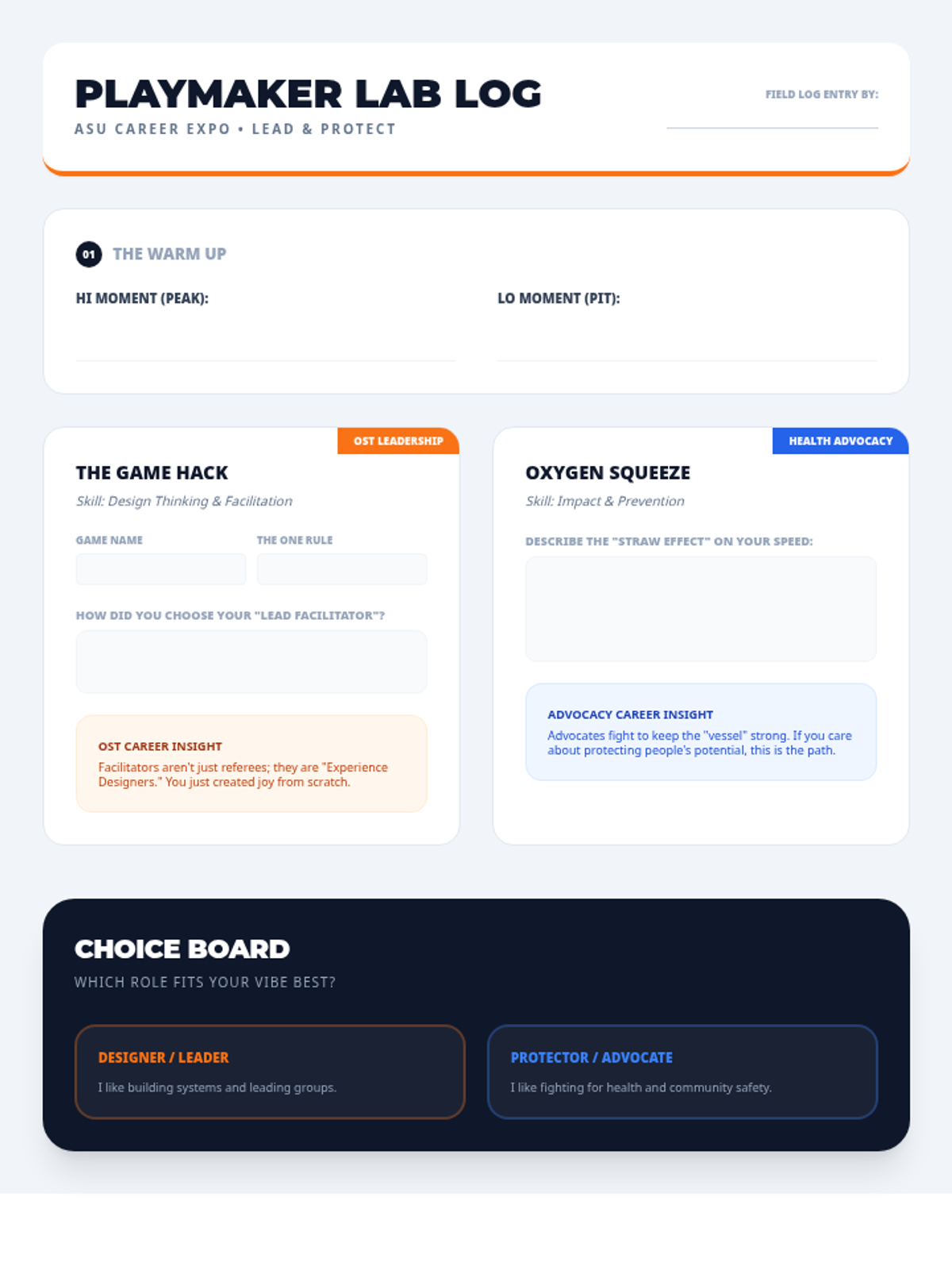
A student-facing log for the 25-minute Playmaker Lab, with dedicated space for reflecting on the Hi-Lo check-in, the OST leadership challenge, and the health advocacy activity.
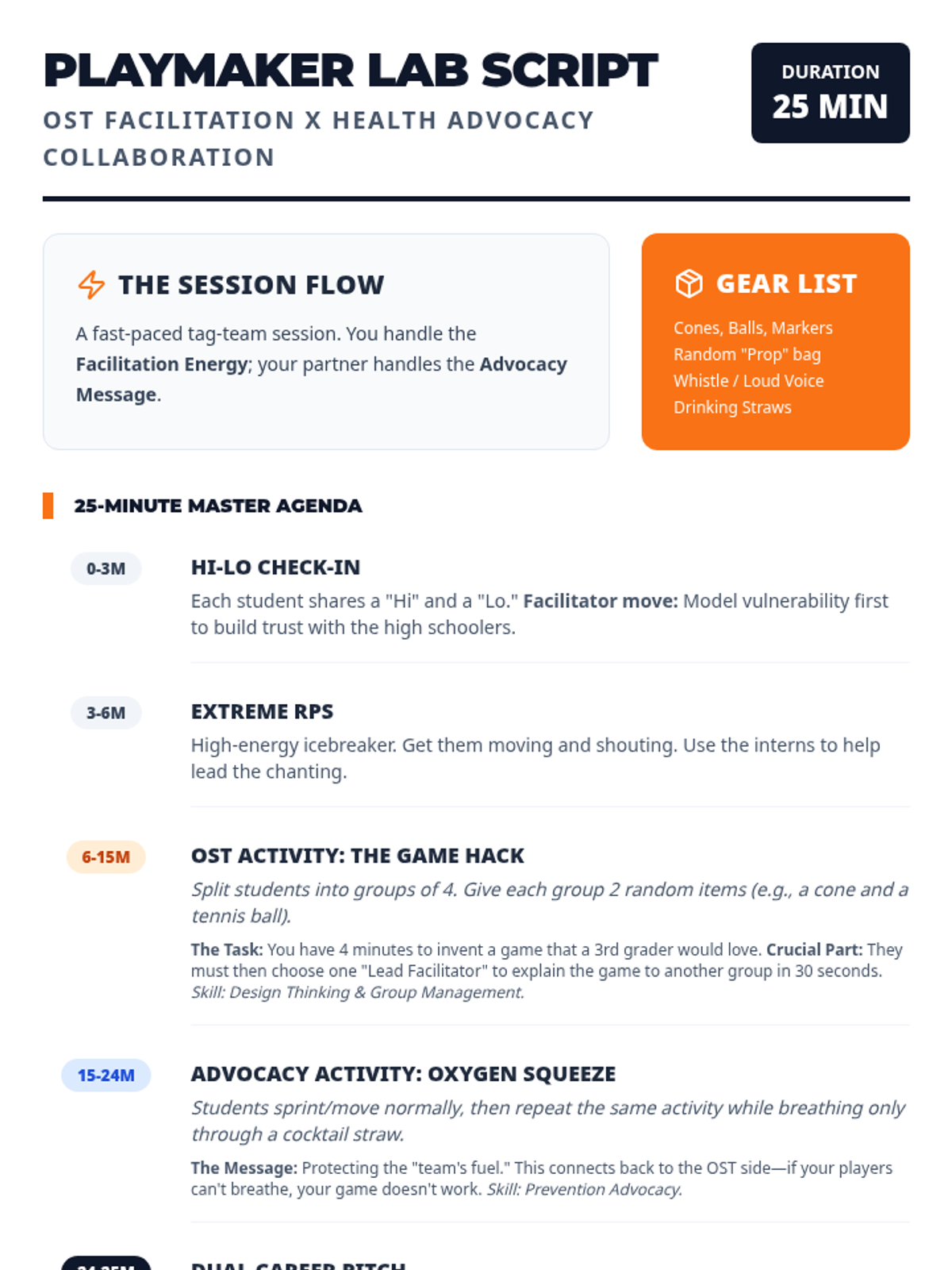
A 25-minute facilitation script for a dual-expert career session, featuring a Hi-Lo check-in, energy-building RPS, and dedicated slots for OST leadership and anti-vaping advocacy activities.
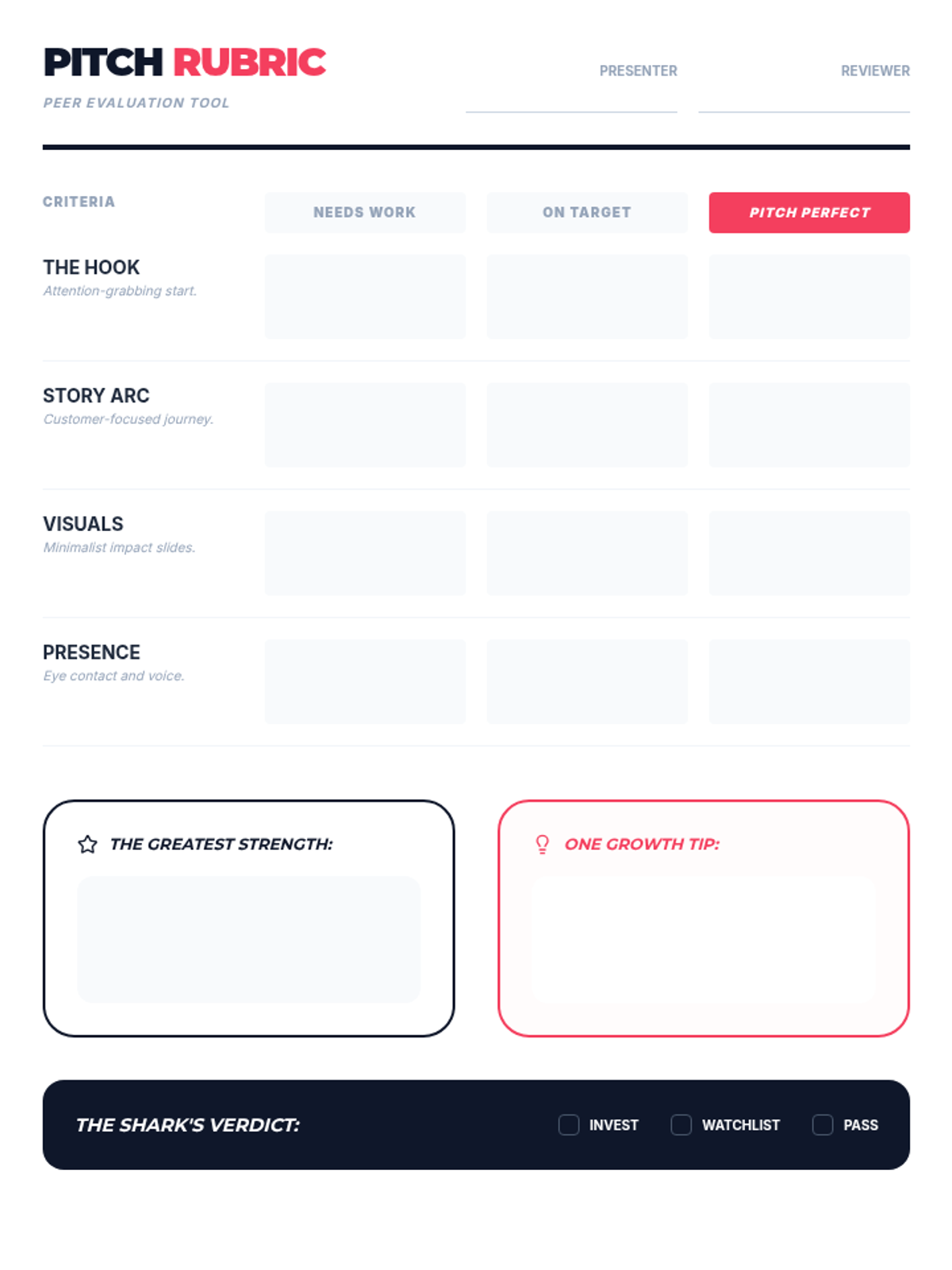
A professional peer-evaluation rubric for marketing presentations, focusing on persuasion, visual design, and stage presence.
A high-impact visual guide for the final presentation day, establishing professional protocols and peer review expectations.
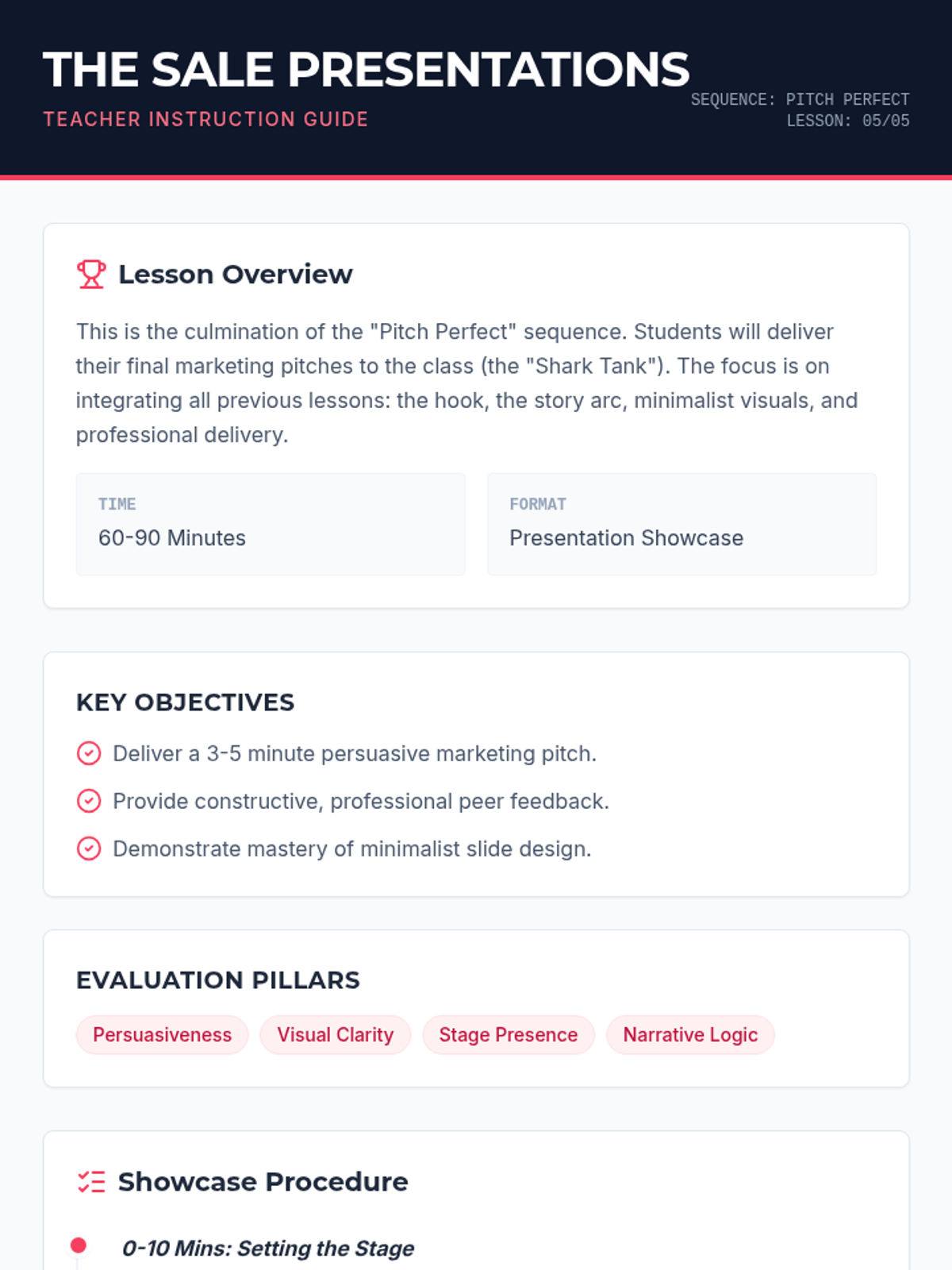
A teacher guide for the final lesson of the 'Pitch Perfect' sequence, focusing on final presentations and professional feedback loops.
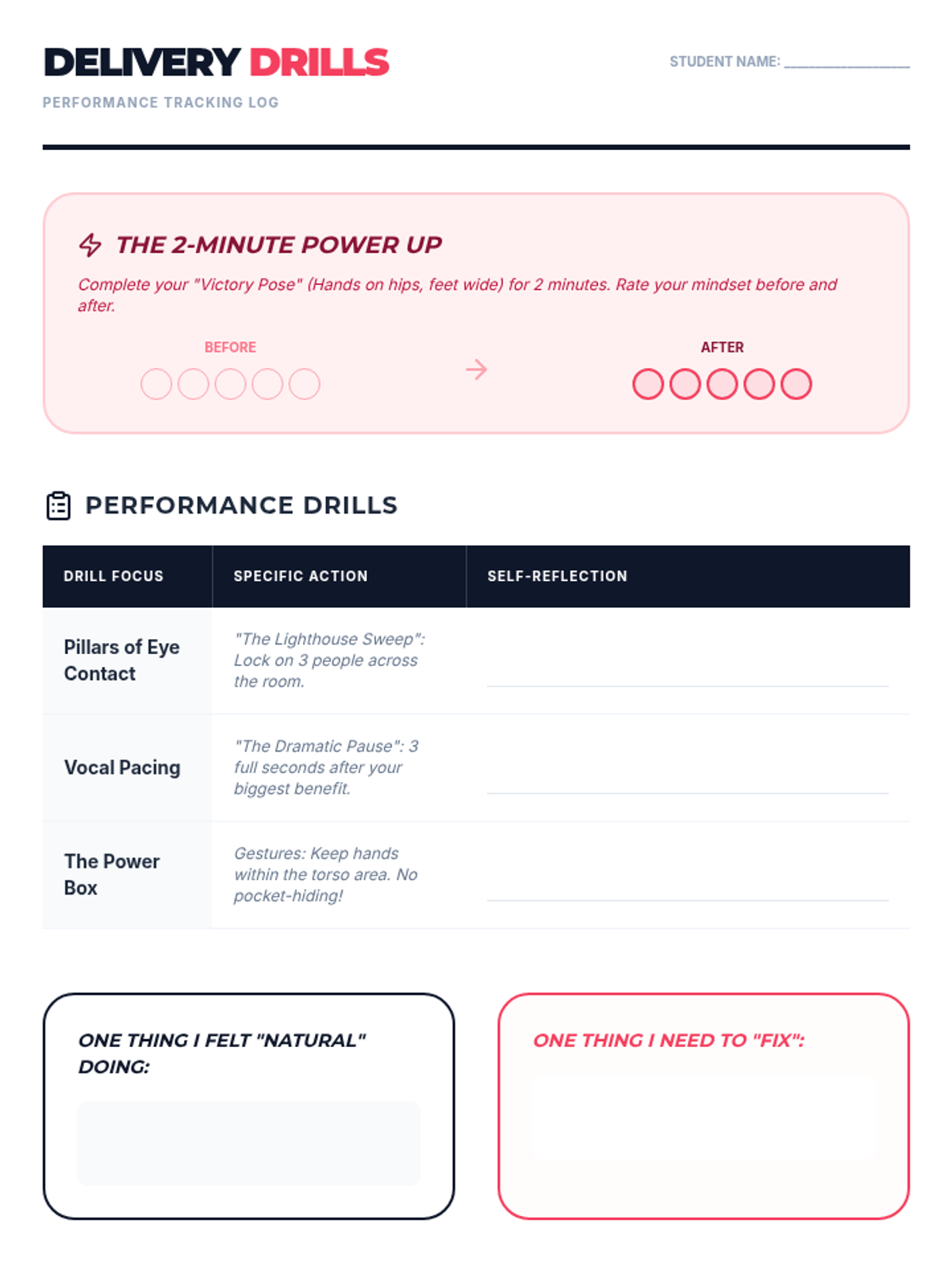
A student drill log for practicing and self-evaluating public speaking performance, focusing on eye contact, pacing, and gestures.
A visual guide to public speaking delivery, focusing on the 7-38-55 rule, eye contact strategies, and vocal variety for presenters.
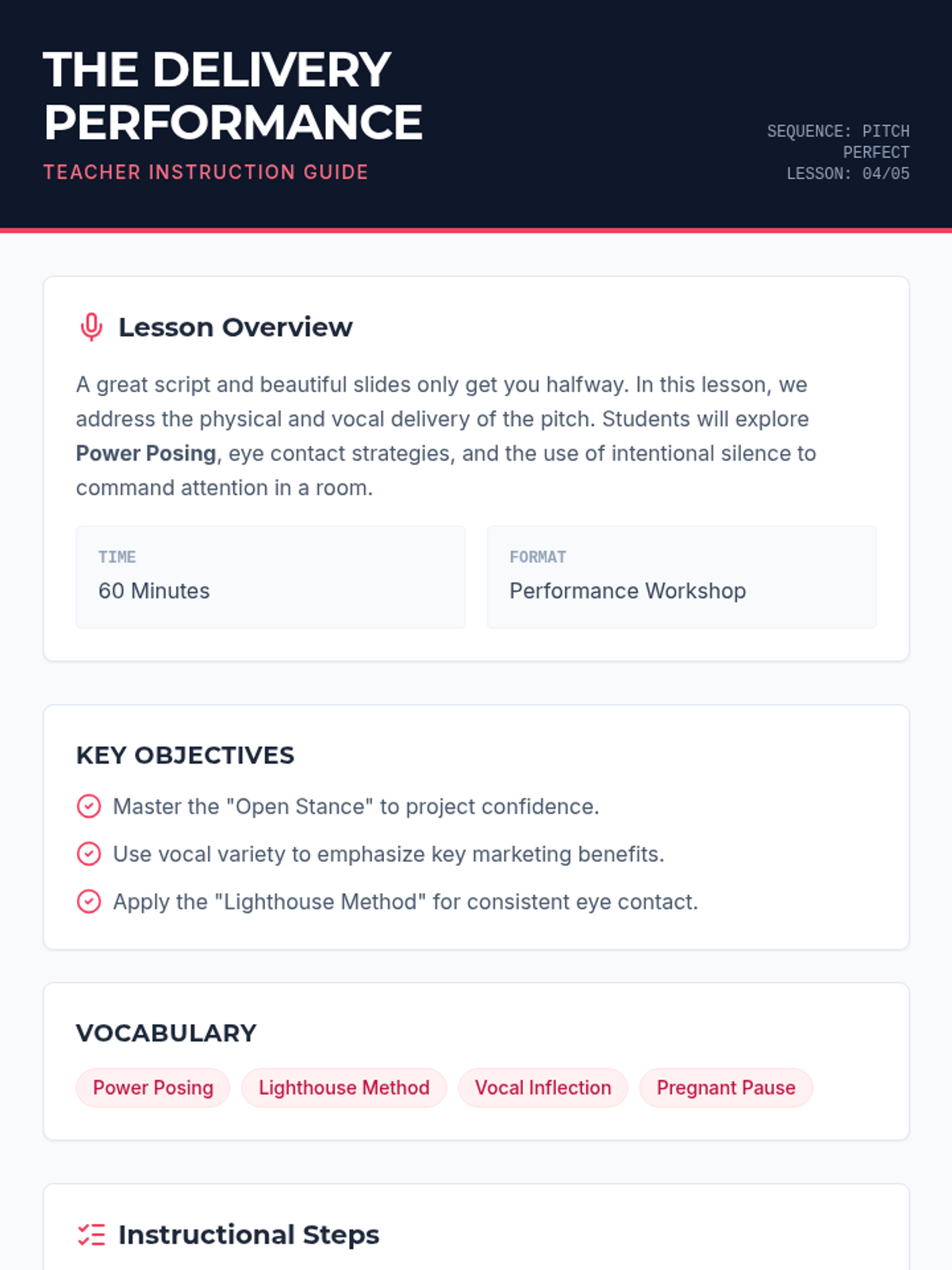
A teacher guide for the fourth lesson, focusing on body language, vocal variety, and managing presentation anxiety.
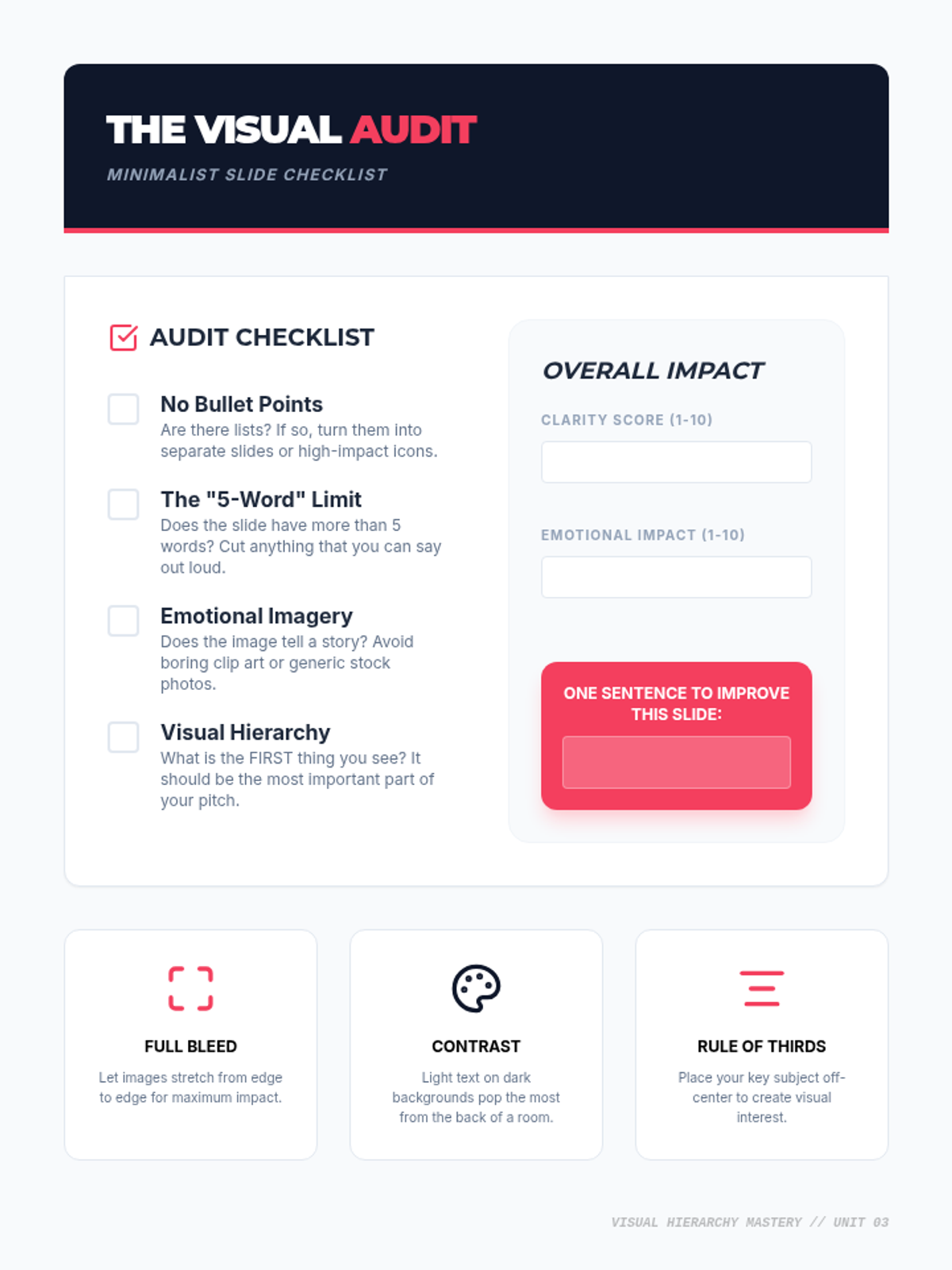
A student checklist for evaluating and improving the visual impact of presentation slides, focusing on minimalism and clarity.
A visual guide for Lesson 3, teaching minimalist slide design principles, cognitive load theory, and data visualization strategies for marketing presenters.
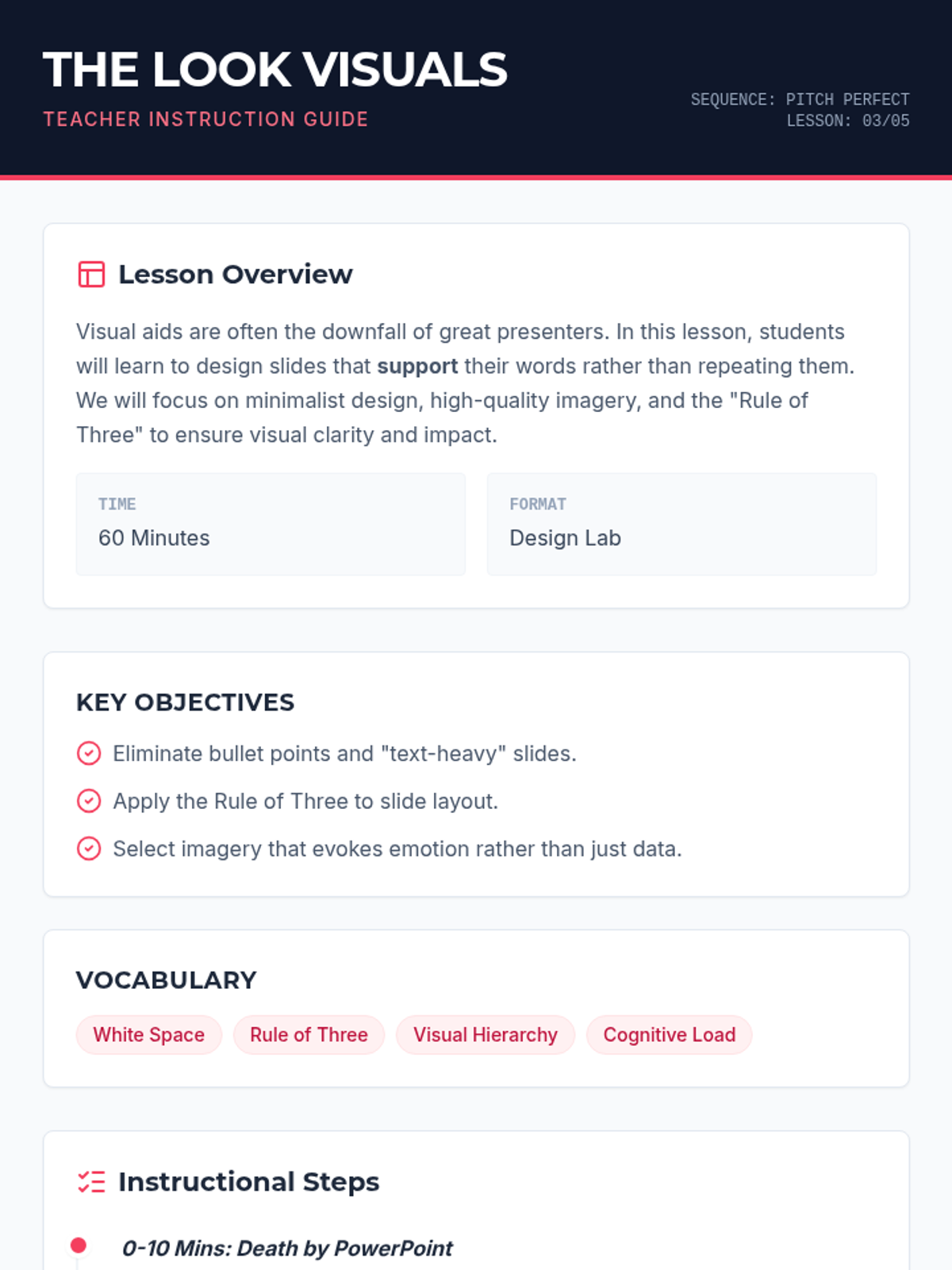
A teacher guide for the third lesson of the 'Pitch Perfect' sequence, focusing on minimalist slide design and visual hierarchy.
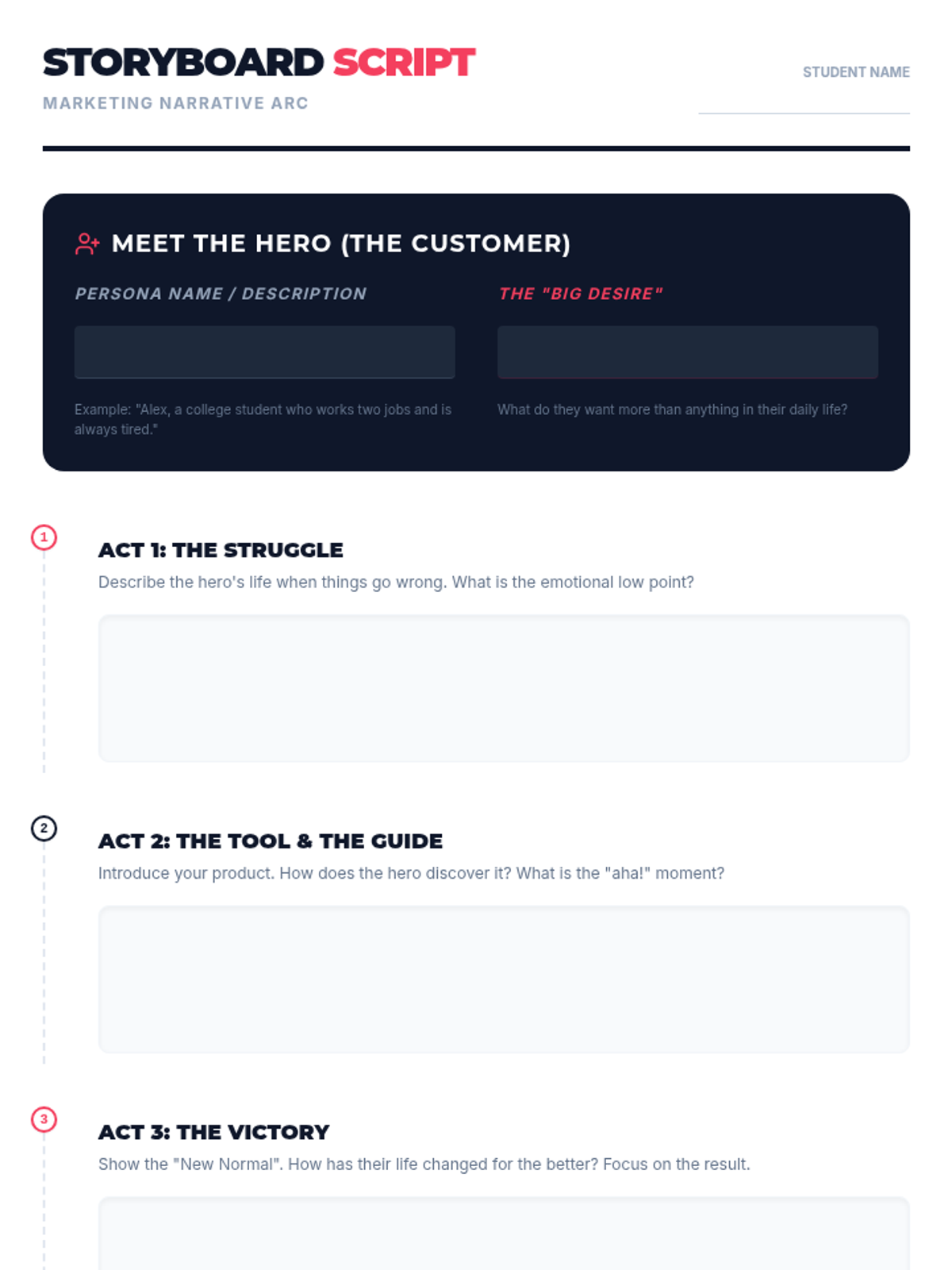
A student worksheet for mapping out a 3-act marketing narrative, focusing on the customer persona and emotional arc.
A visual guide to storytelling in marketing, focusing on the 3-Act Structure and positioning the customer as the hero.
A slide deck introducing strategies for annotating technical manuals and 'how-to' guides, focusing on sequence, warnings, and decision trees.
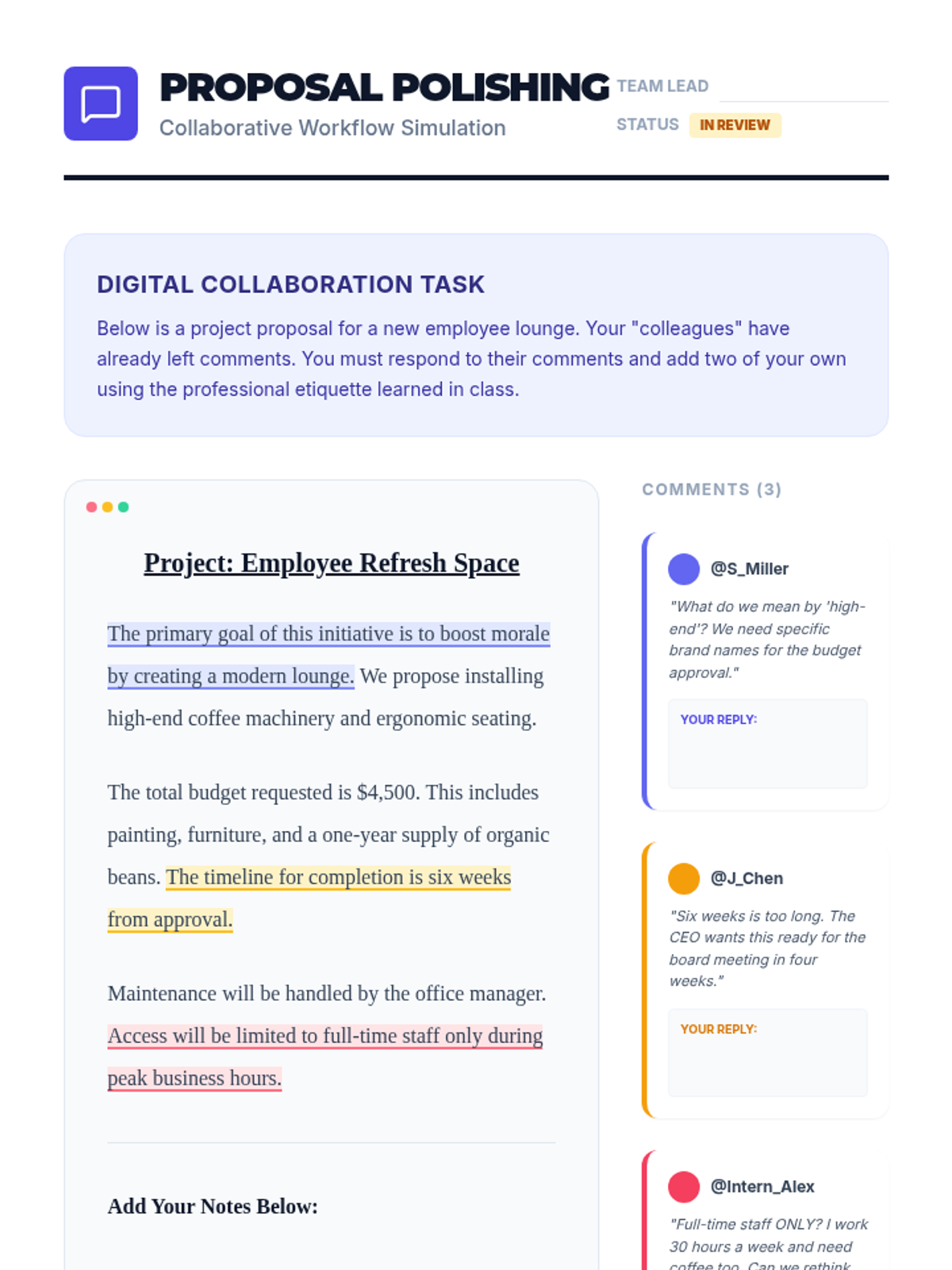
A worksheet that simulates a shared digital document where students respond to colleague comments using professional workplace etiquette.
A slide deck introducing strategies for collaborative digital annotation and workplace communication etiquette.
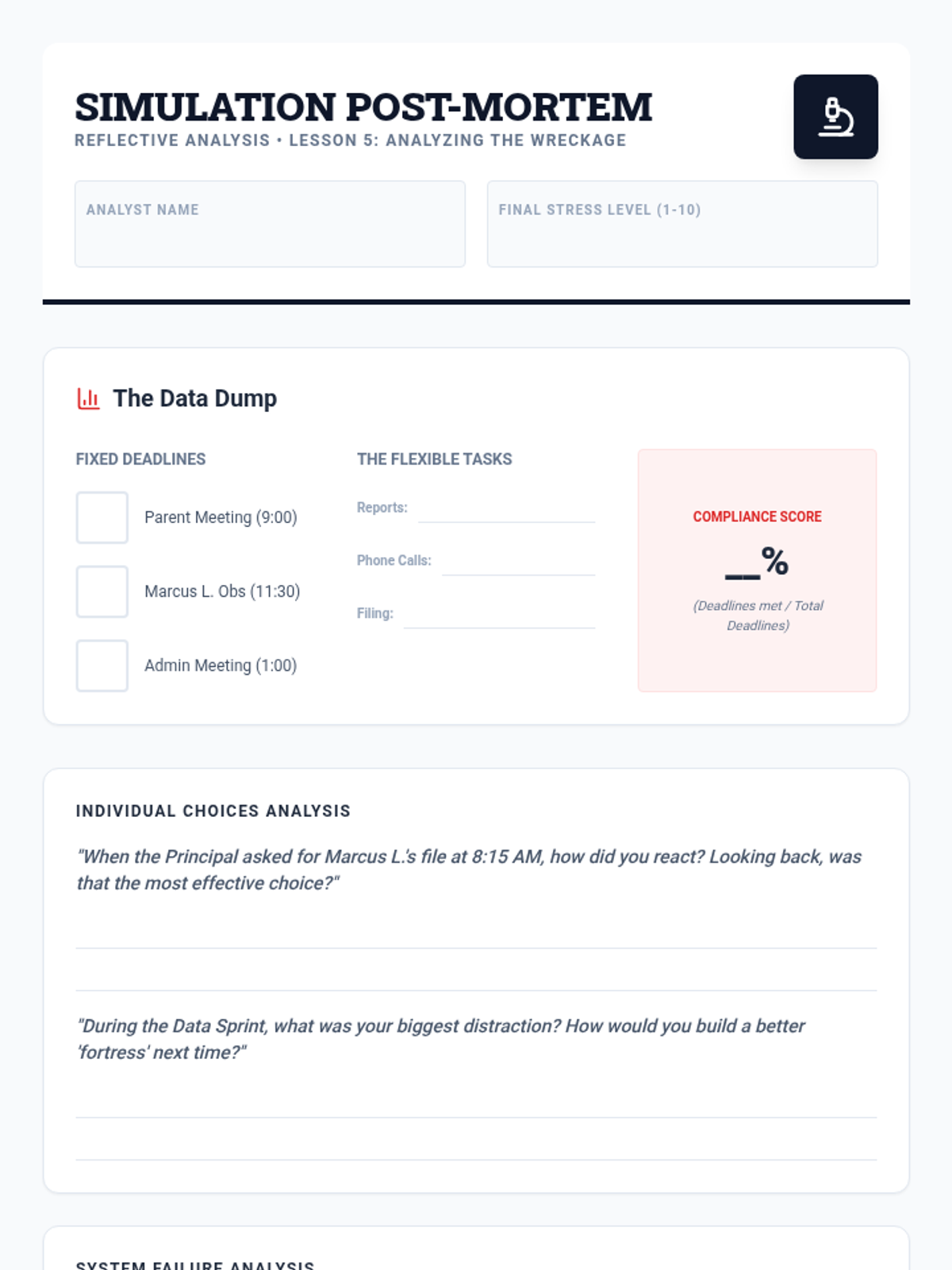
A detailed reflection worksheet for students to analyze their simulation performance, identify mistakes, and distinguish between individual and systemic issues.
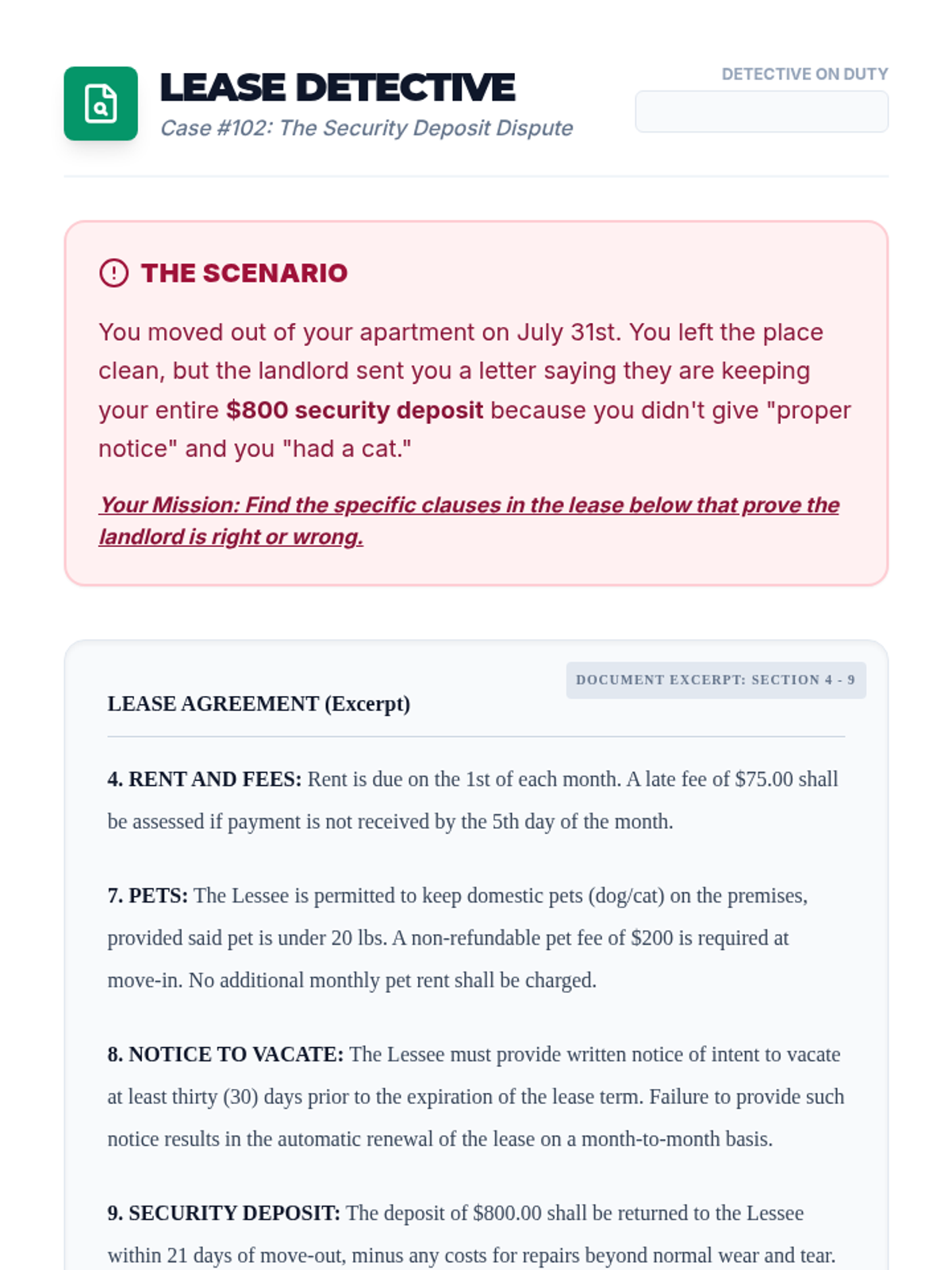
A case study worksheet where students analyze a simplified lease agreement to solve a deposit dispute using color-coded annotation.
Visual presentation for the final debrief of the simulation, identifying system failures versus individual choices and reflecting on professional growth.
A slide deck introducing strategies for annotating legal leases, focusing on color-coding rights, obligations, and deadlines.
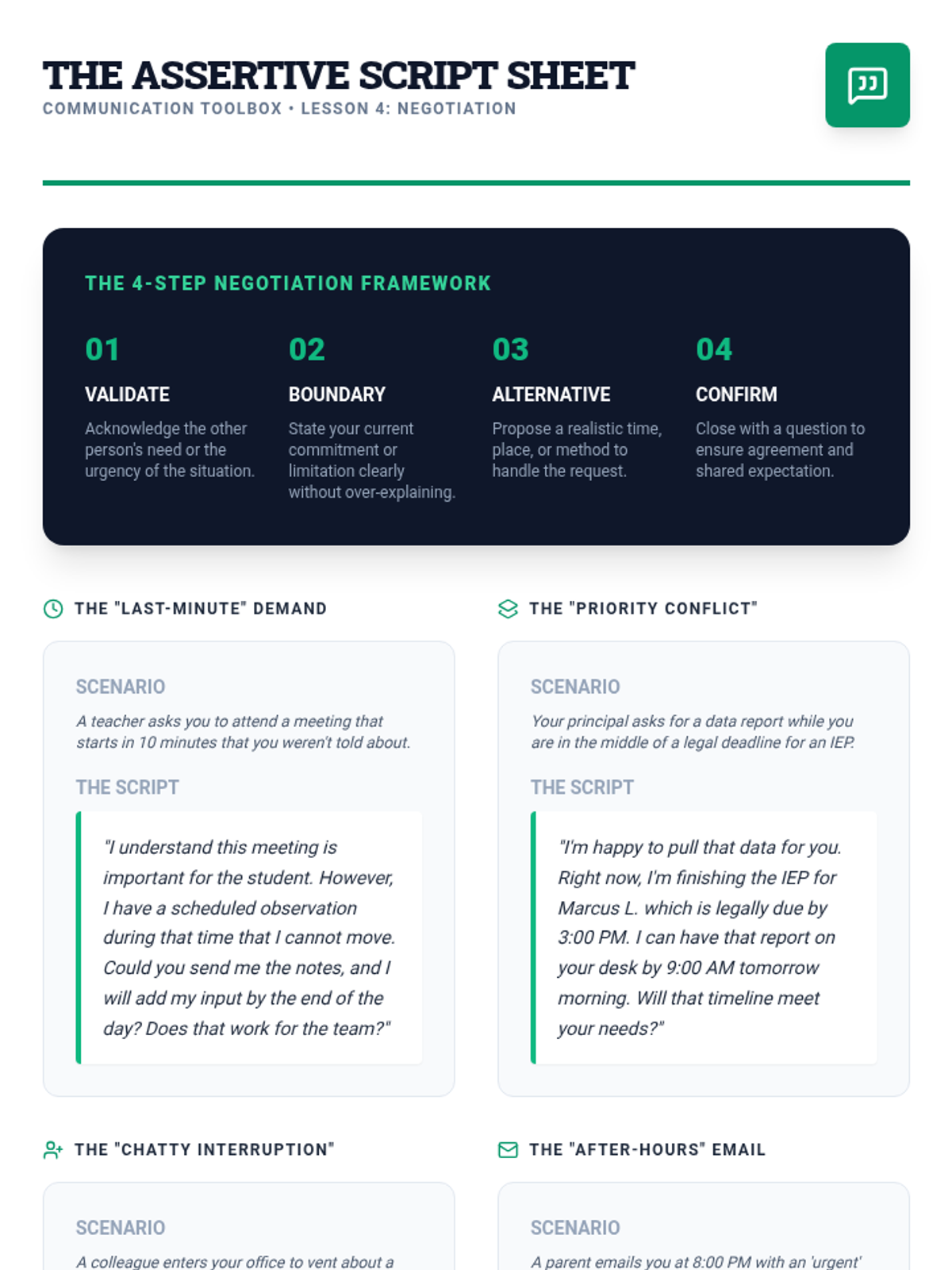
A professional communication guide providing specific scripts for "polite but firm" refusal and negotiation in common workplace scenarios.
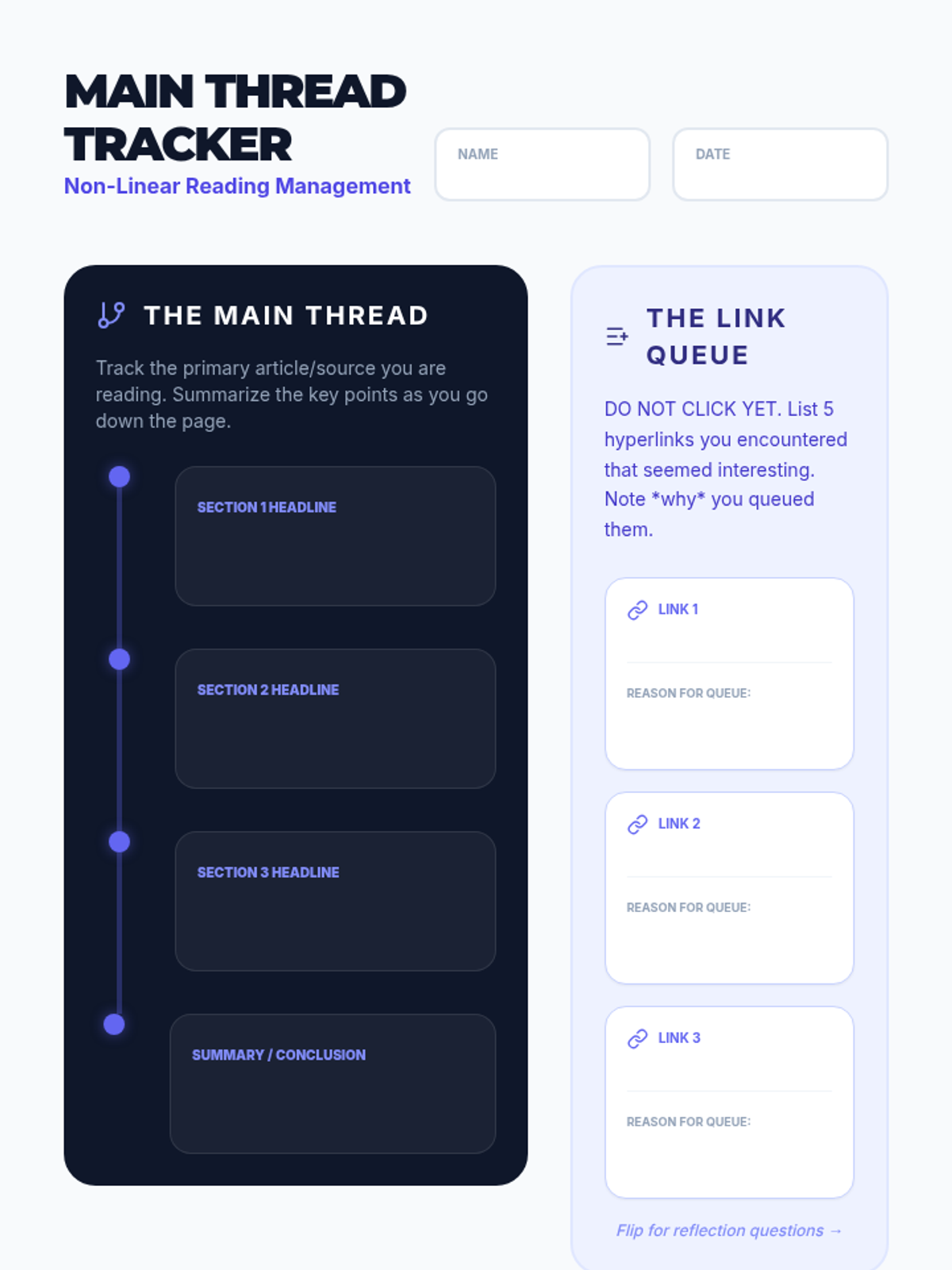
A graphic organizer to help students track the 'Main Thread' of a digital text while 'queuing' hyperlinks to avoid distractions.
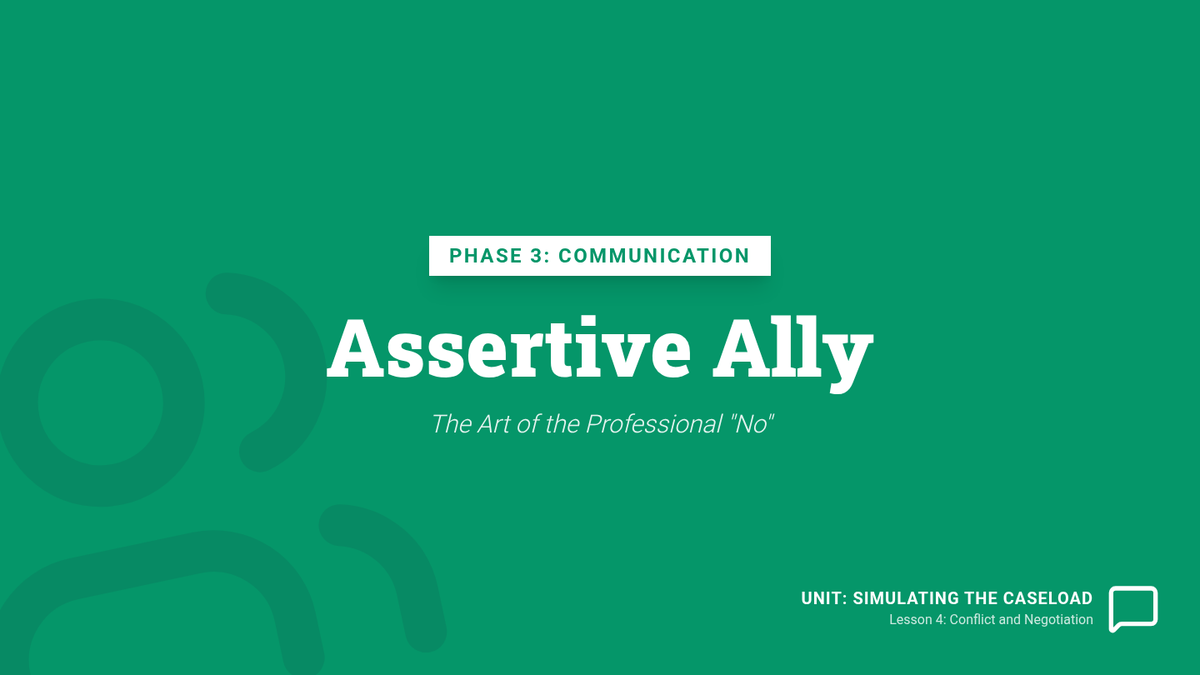
Visual presentation for Lesson 4, teaching students about assertive communication, professional boundaries, and negotiation scripts in high-pressure work environments.
A slide deck focusing on strategies for maintaining focus in non-linear digital environments, including 'link queuing' and anchor-point annotation.
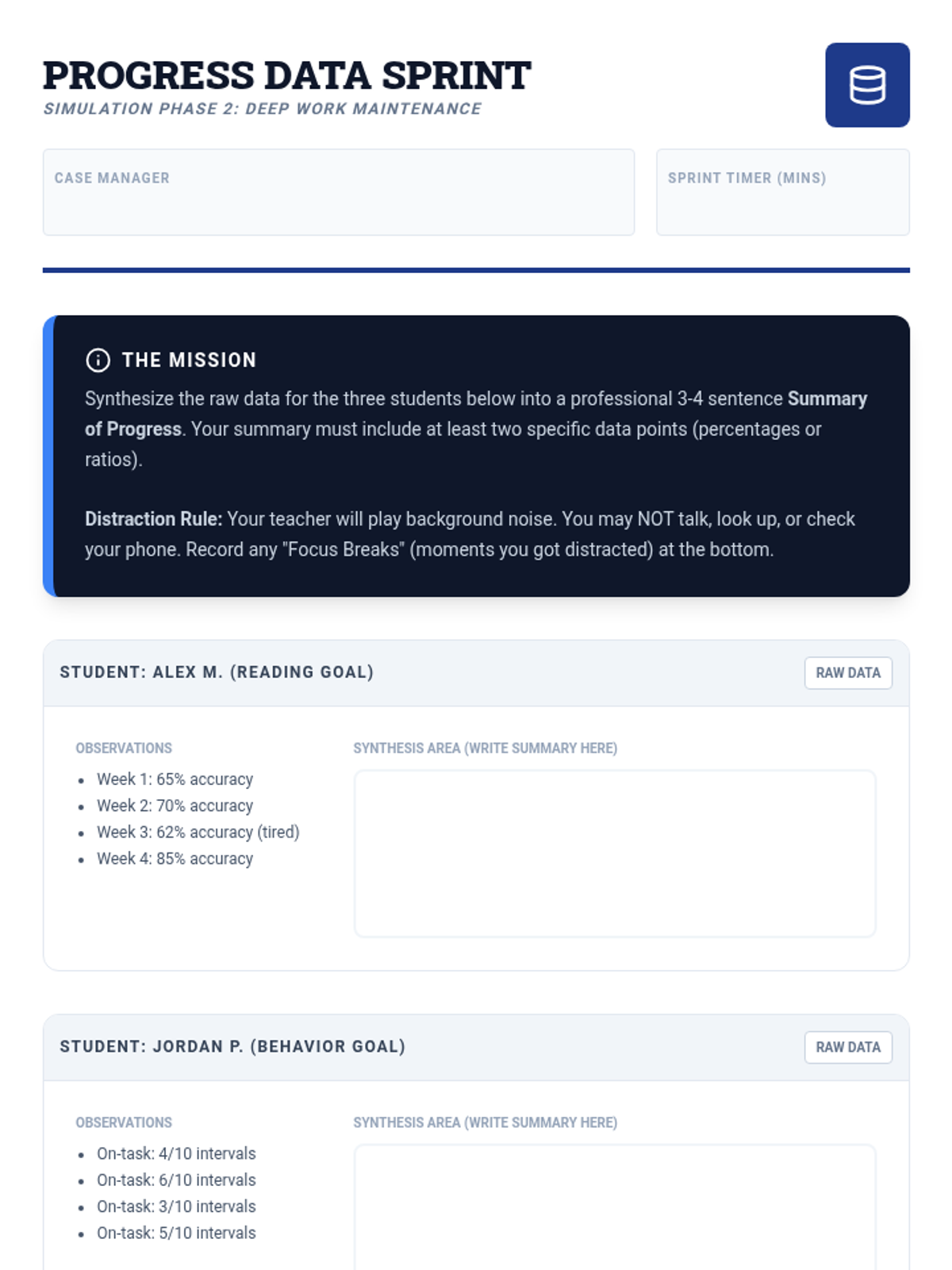
A simulation activity where students must synthesize raw student progress data into professional summaries under distracting conditions.
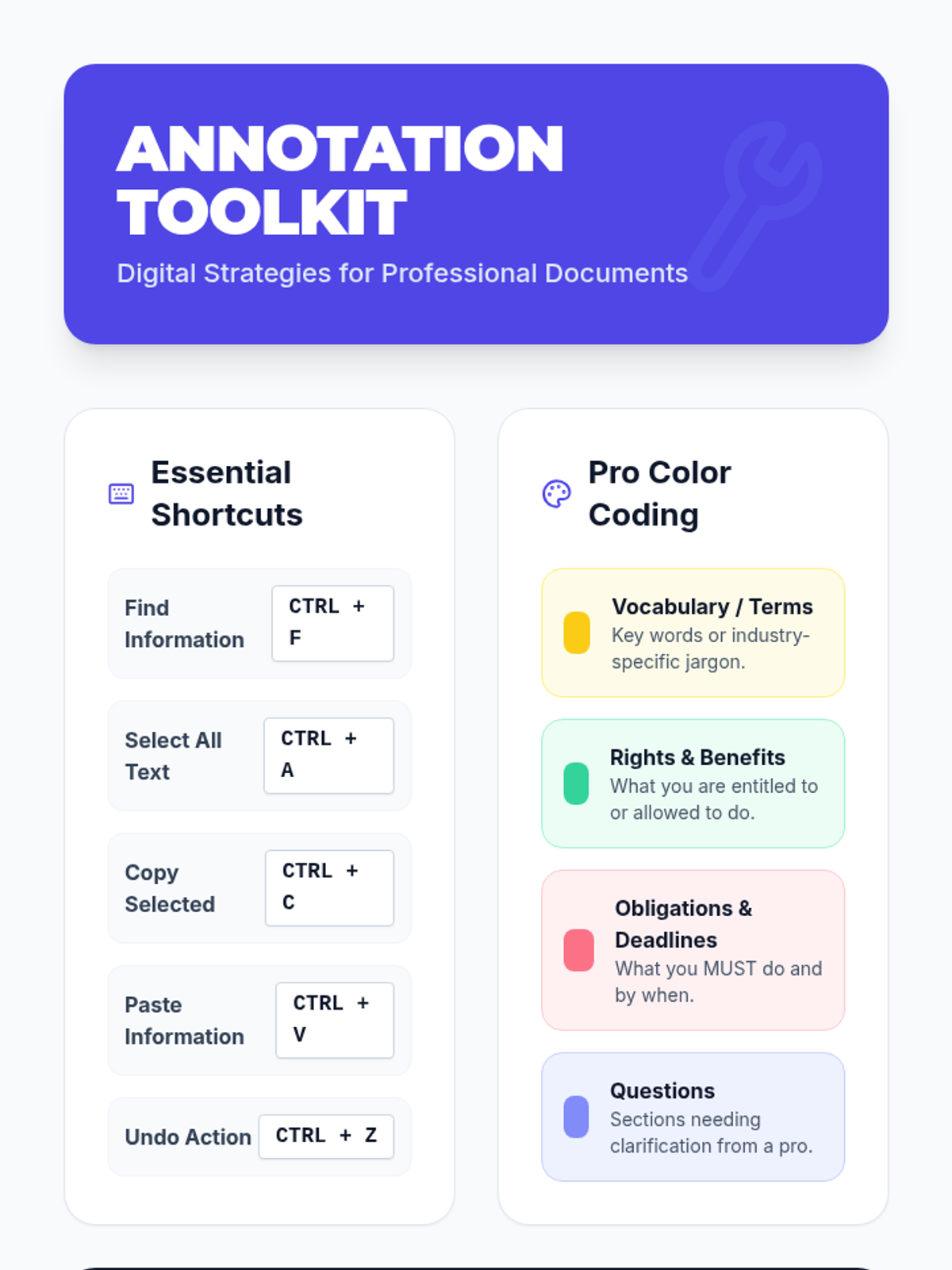
A handy reference sheet for 12th-grade students outlining digital annotation shortcuts, color-coding strategies, and software tools.
Visual presentation for Lesson 3, teaching students about deep work, the cost of interruptions, and strategies like time batching and defensive communication.
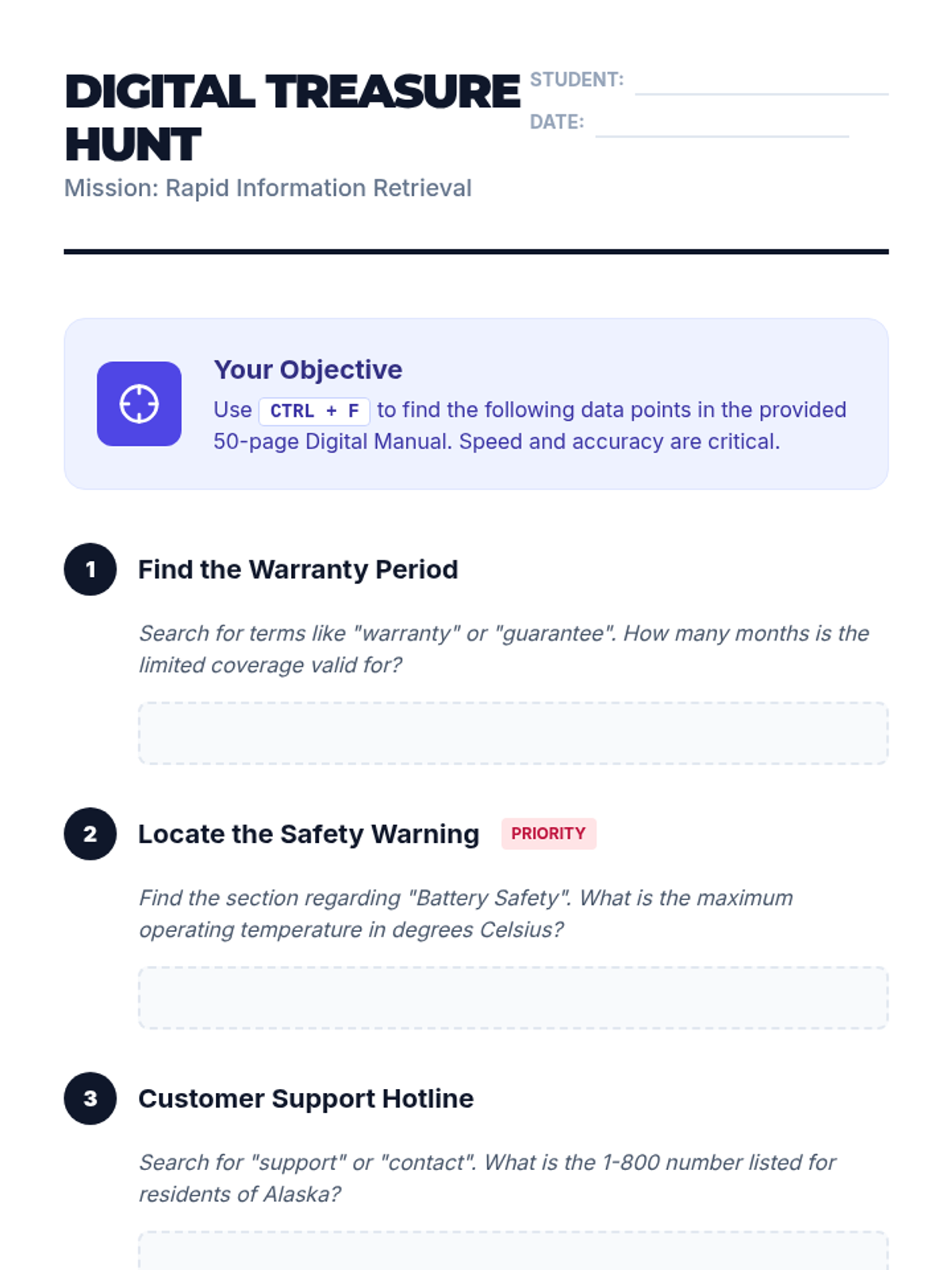
A worksheet for the 'Digital Treasure Hunt' activity where students use search functions to find specific data points in a long digital manual.
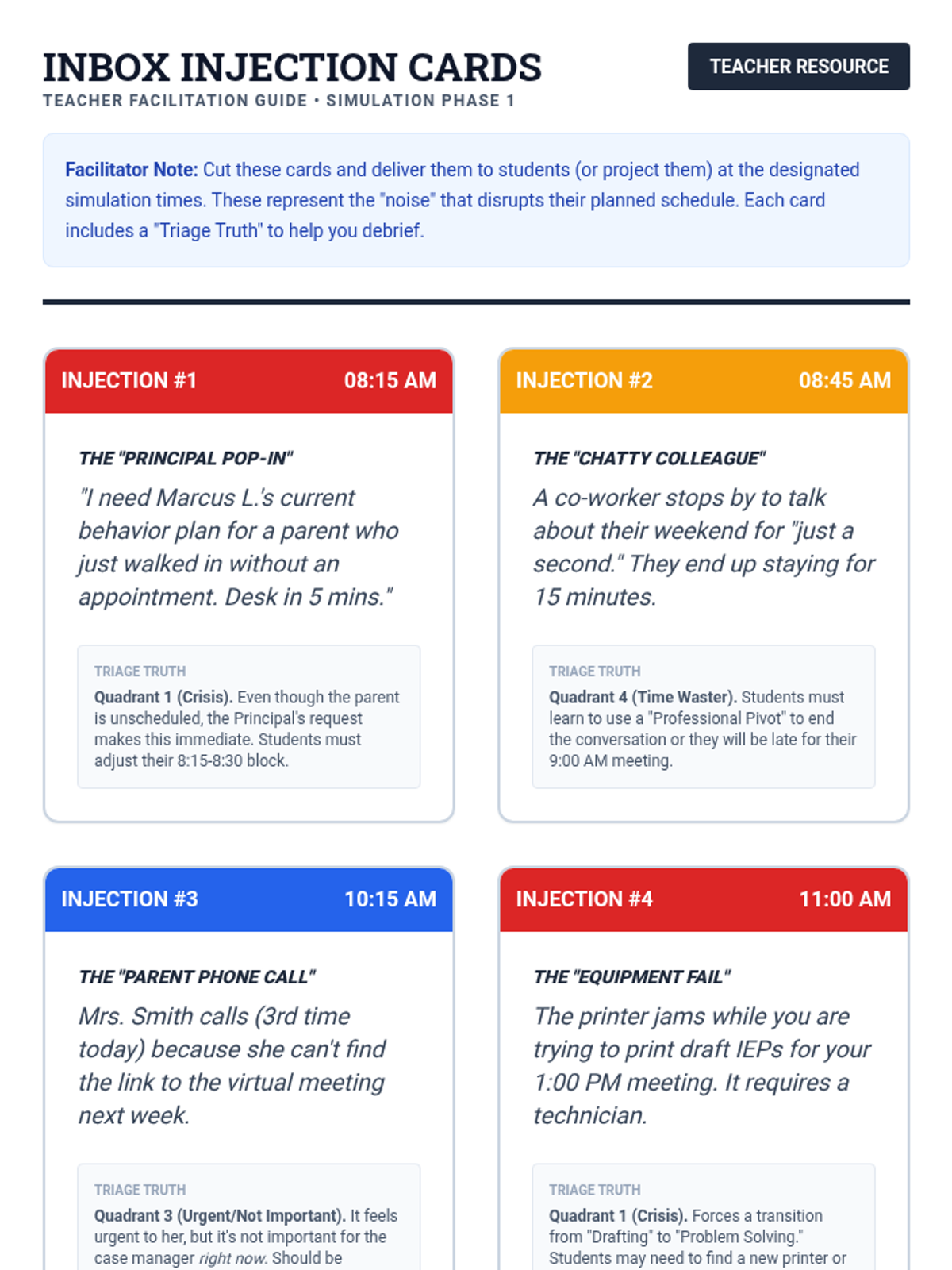
A set of scenario cards for the teacher to reveal during the Morning Rush simulation, providing specific interruptions and the 'triage truth' for debriefing.
An introductory slide deck for 12th graders explaining the advantages of digital annotation, showcasing essential tools, and outlining pro-level strategies for managing digital documents.
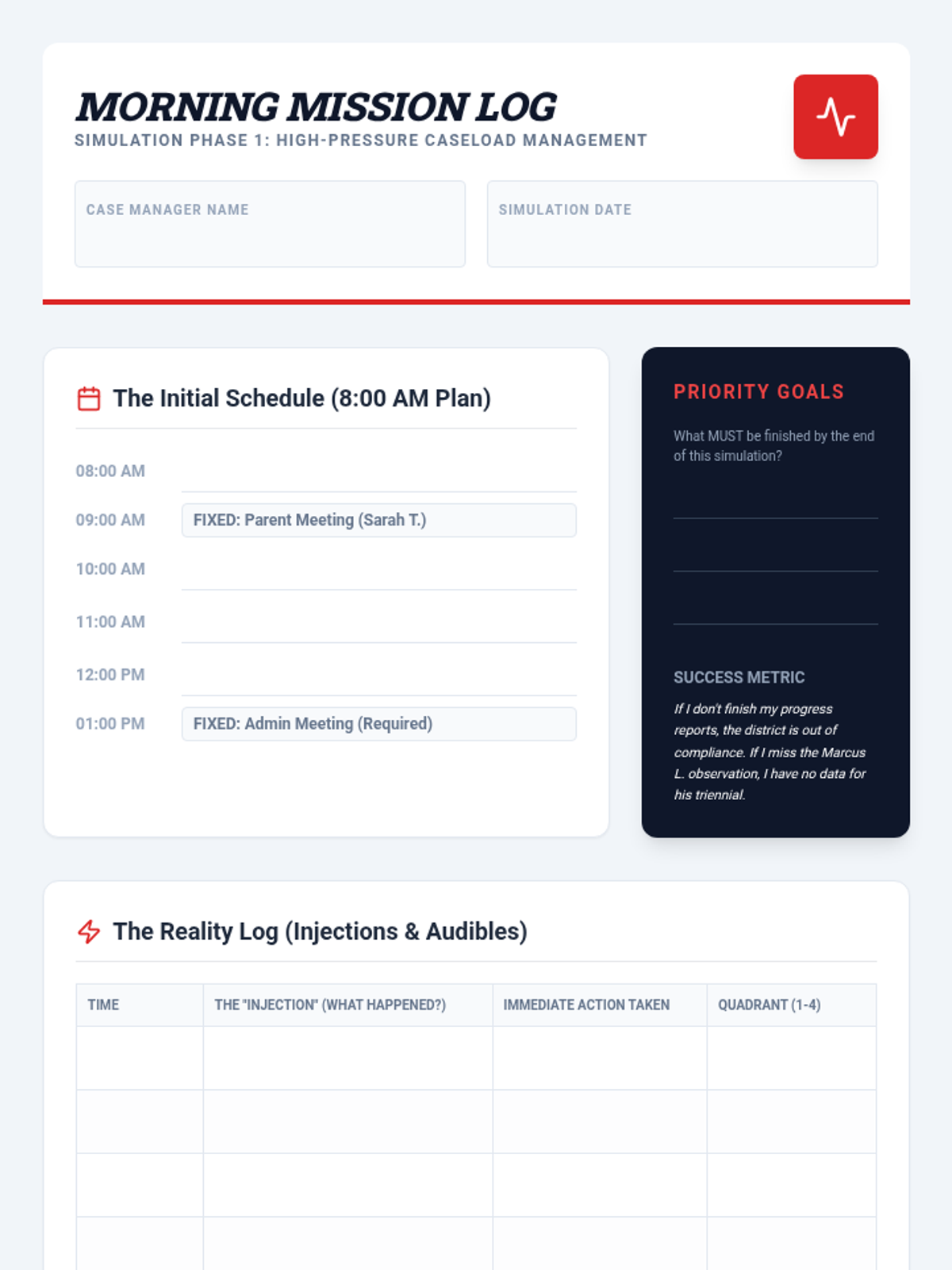
A planning and tracking worksheet for students to manage their simulated workday and record the impact of unexpected interruptions.
Visual presentation for the Morning Rush simulation, including timers, task lists, and the first unexpected "Inbox Injection."