College selection, application workflows, and financial aid navigation including FAFSA and scholarship acquisition. Builds skills in personal statement writing and career exploration to align post-secondary choices with long-term professional goals.
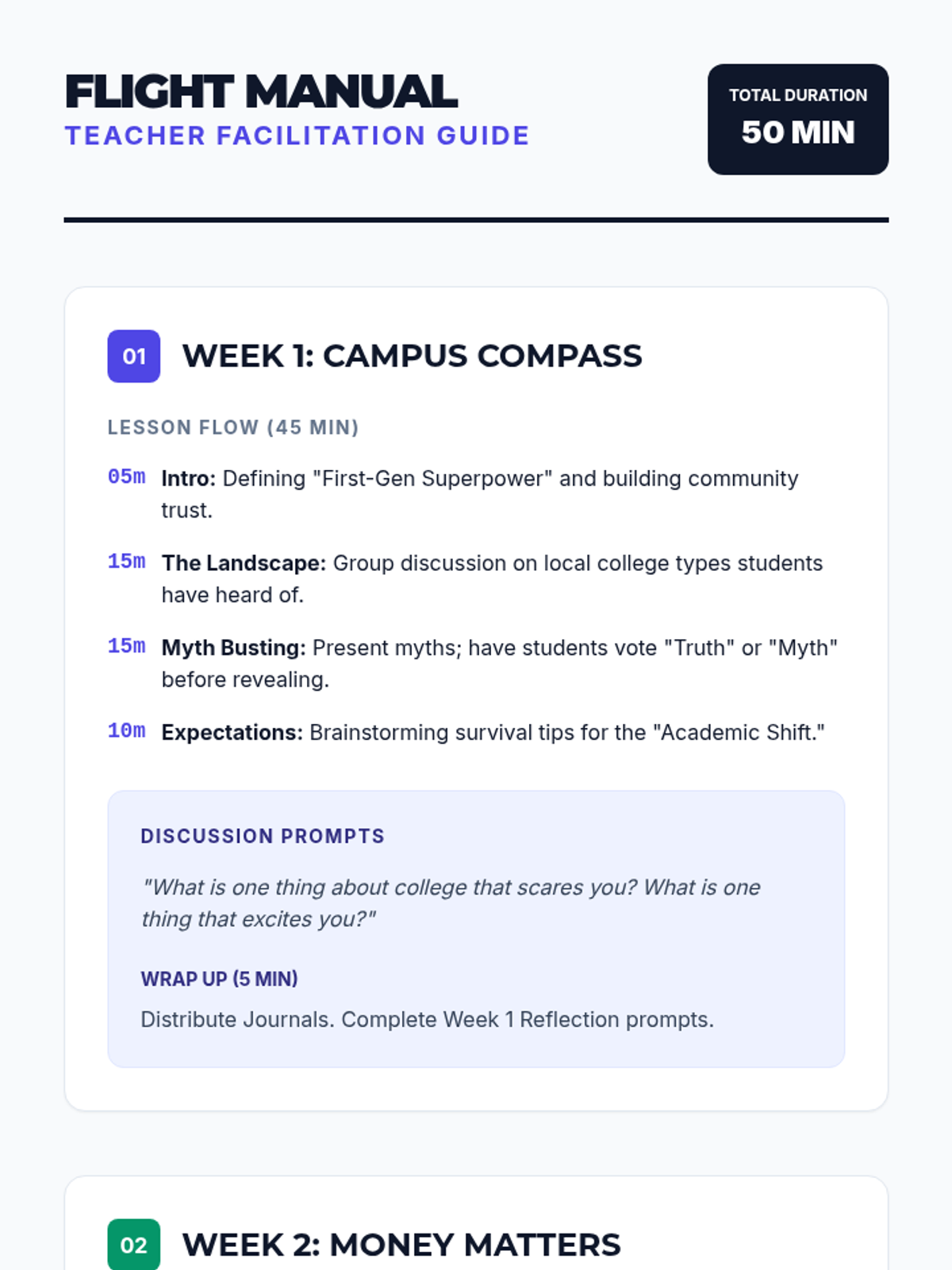
A comprehensive facilitation guide for teachers leading the 4-week First Gen Flight Plan program, including 45-minute lesson flows, discussion prompts, and wrap-up activities.
A comprehensive reflection journal for first-generation students to document their college readiness journey, featuring weekly prompts and a final mission statement activity.
A presentation for first-generation students outlining the steps to take after receiving acceptance letters, including deposits, orientation, and housing.
A presentation for first-generation students guiding them through the application timeline, components of a college application, and the admissions review process.
A presentation for first-generation students focusing on financial aid basics, scholarship hunting strategies, and how to read financial aid award letters.
A presentation introducing first-generation students to different types of colleges, debunking academic myths, and setting expectations for the college experience.
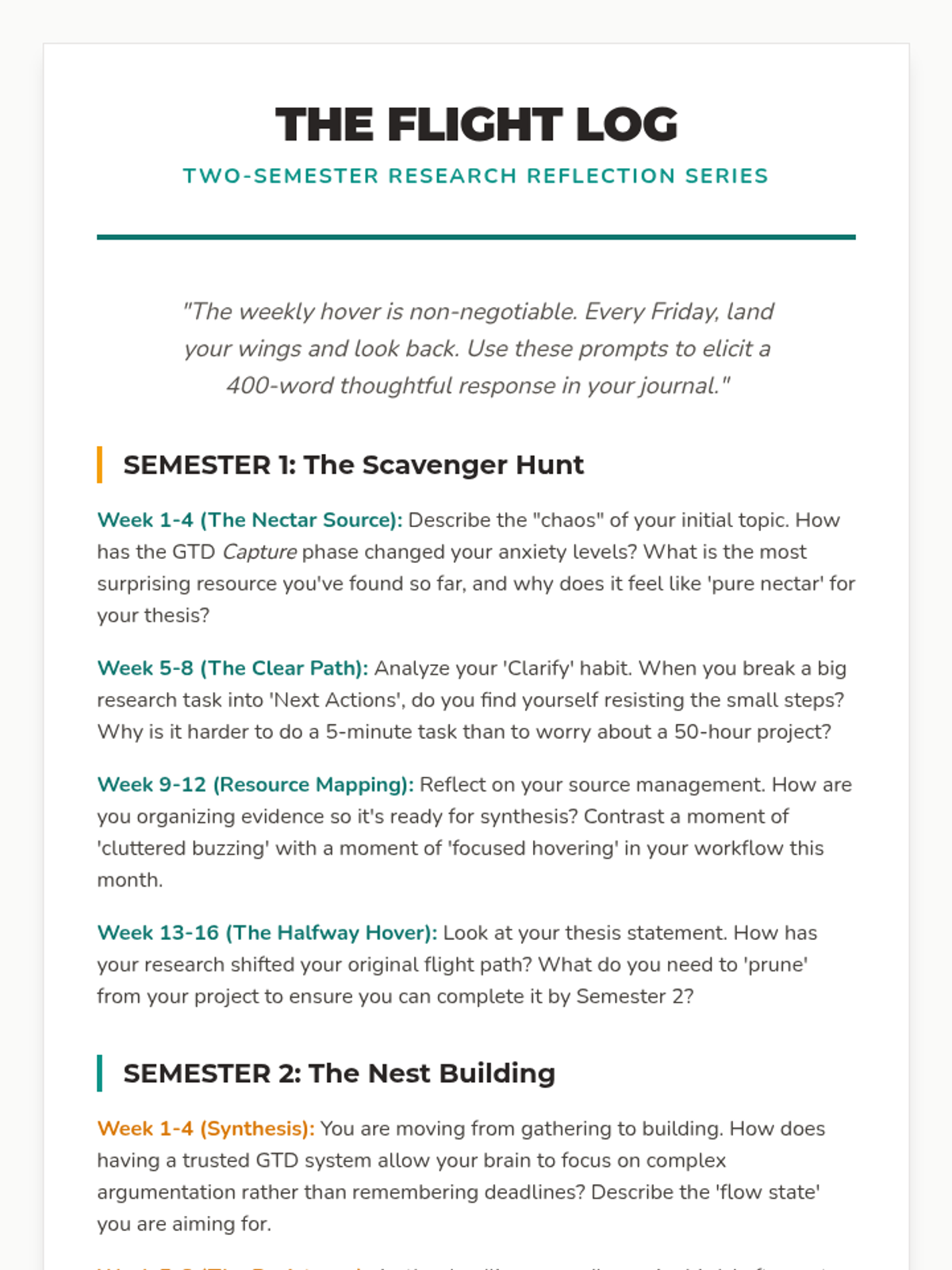
A set of weekly writing prompts and a structured reflection template for a two-semester research project. It guides students through the GTD phases—Capture, Clarify, Organize, and Reflect—while encouraging 400-word thoughtful responses.
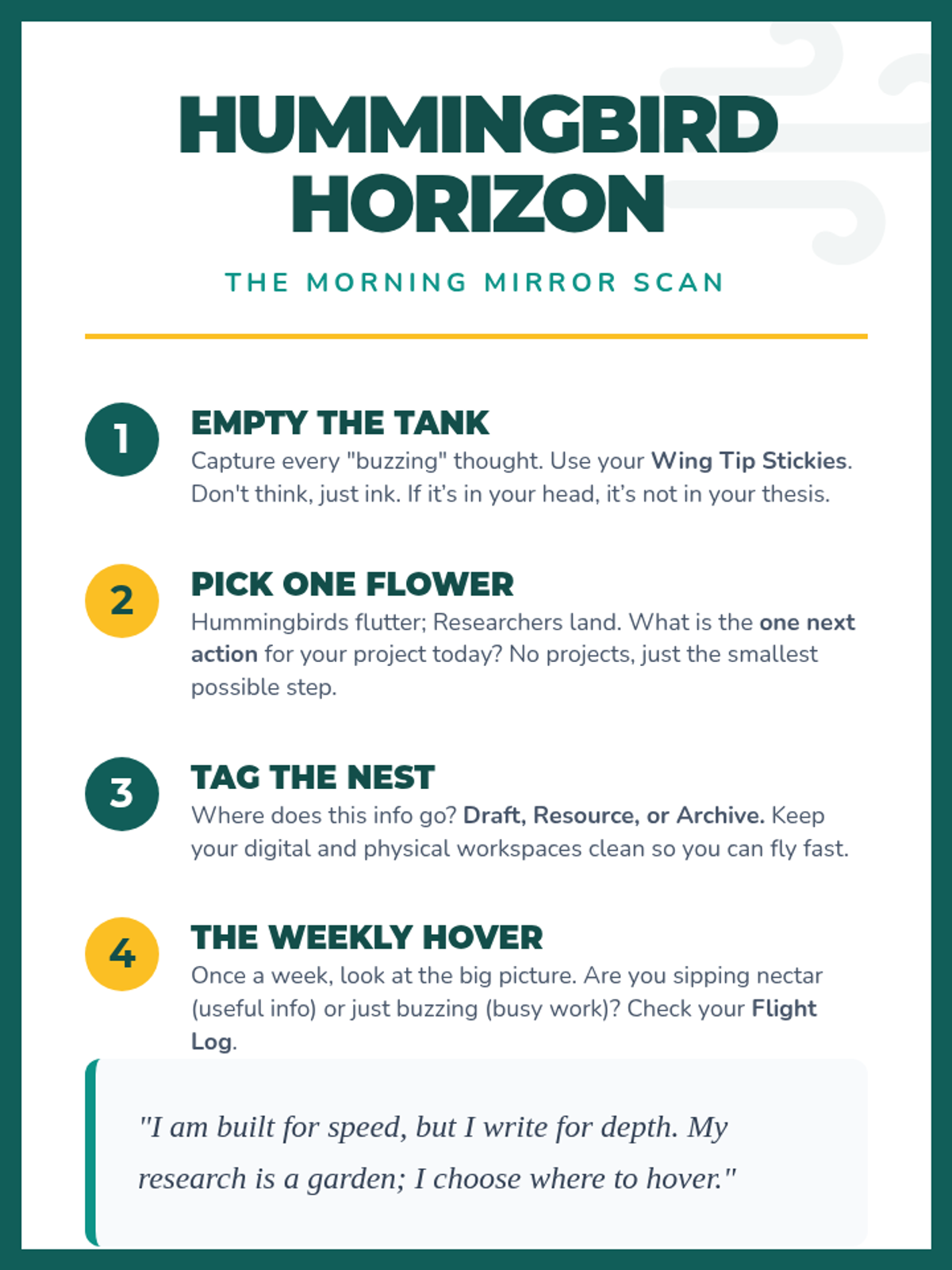
A high-impact visual poster designed for a bathroom mirror to provide daily GTD reminders tailored for 'hummingbird' students. It simplifies the capture-clarify-organize-reflect cycle into daily habits for managing a long-term research project.
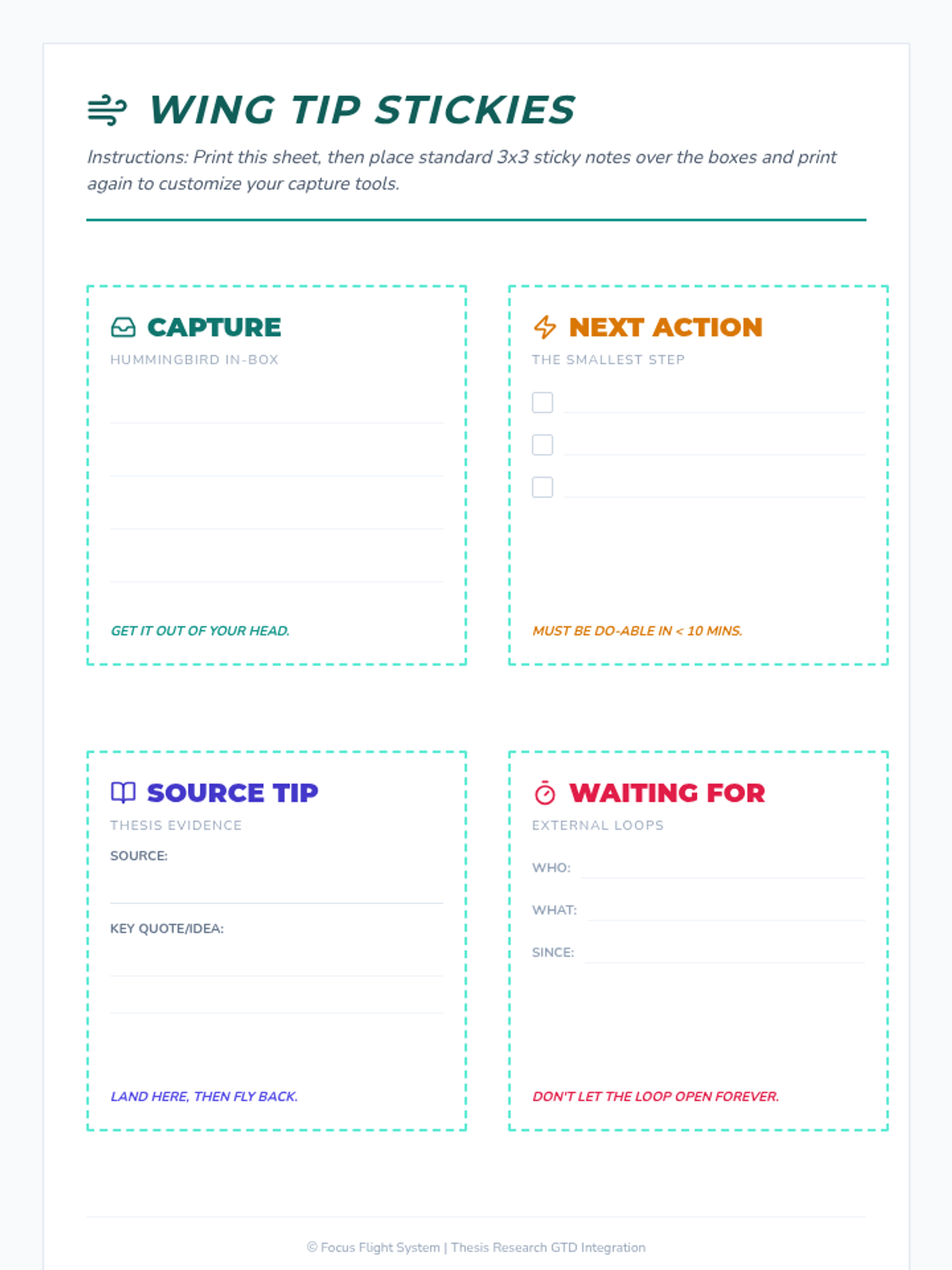
A printable template for standard 3x3 sticky notes, designed to help 'hummingbird' students quickly capture ideas, define next actions, log research sources, and track pending items without losing focus.
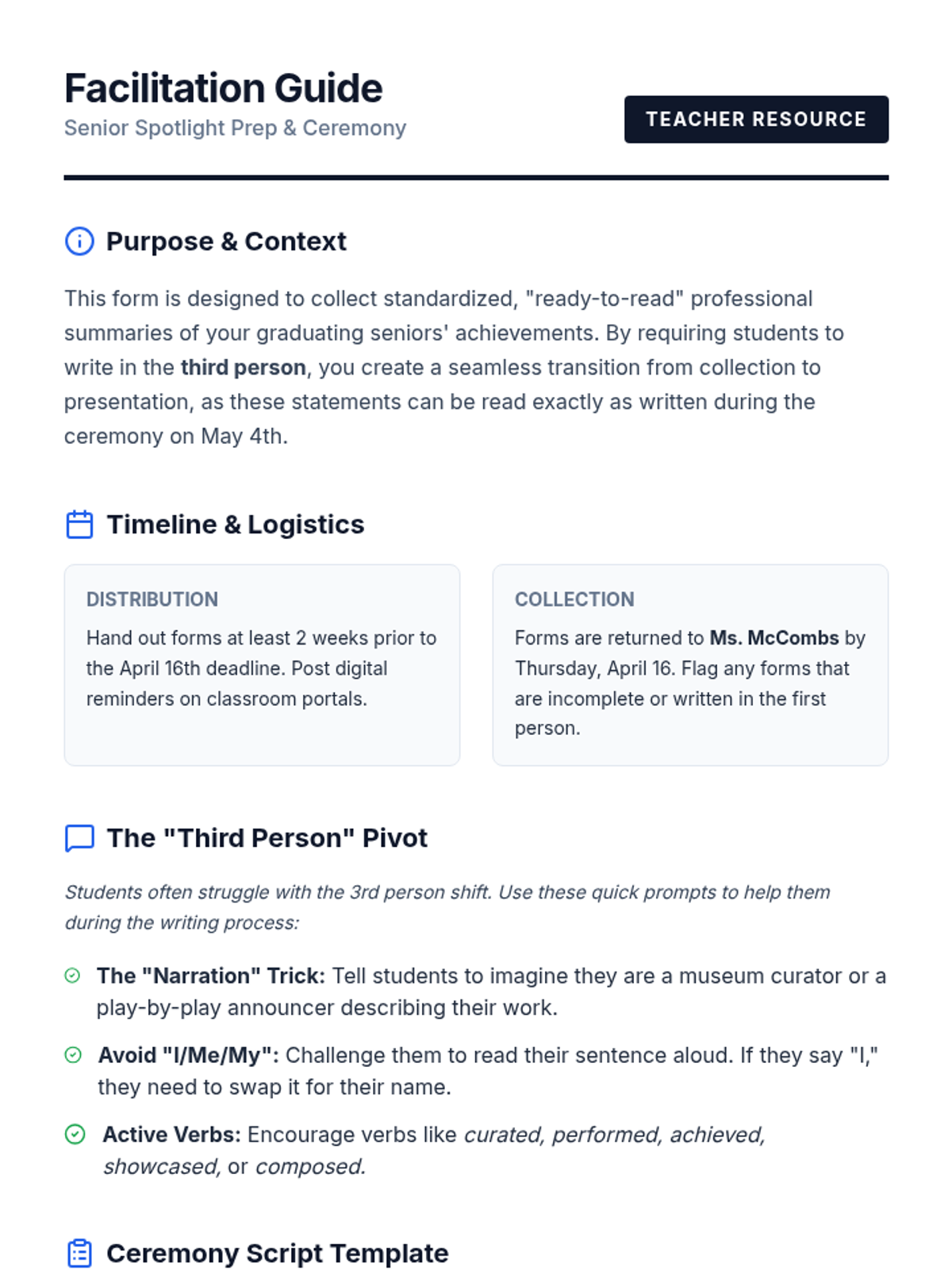
A guide for teachers to manage the collection and use of Senior Spotlight statements for the recognition ceremony.
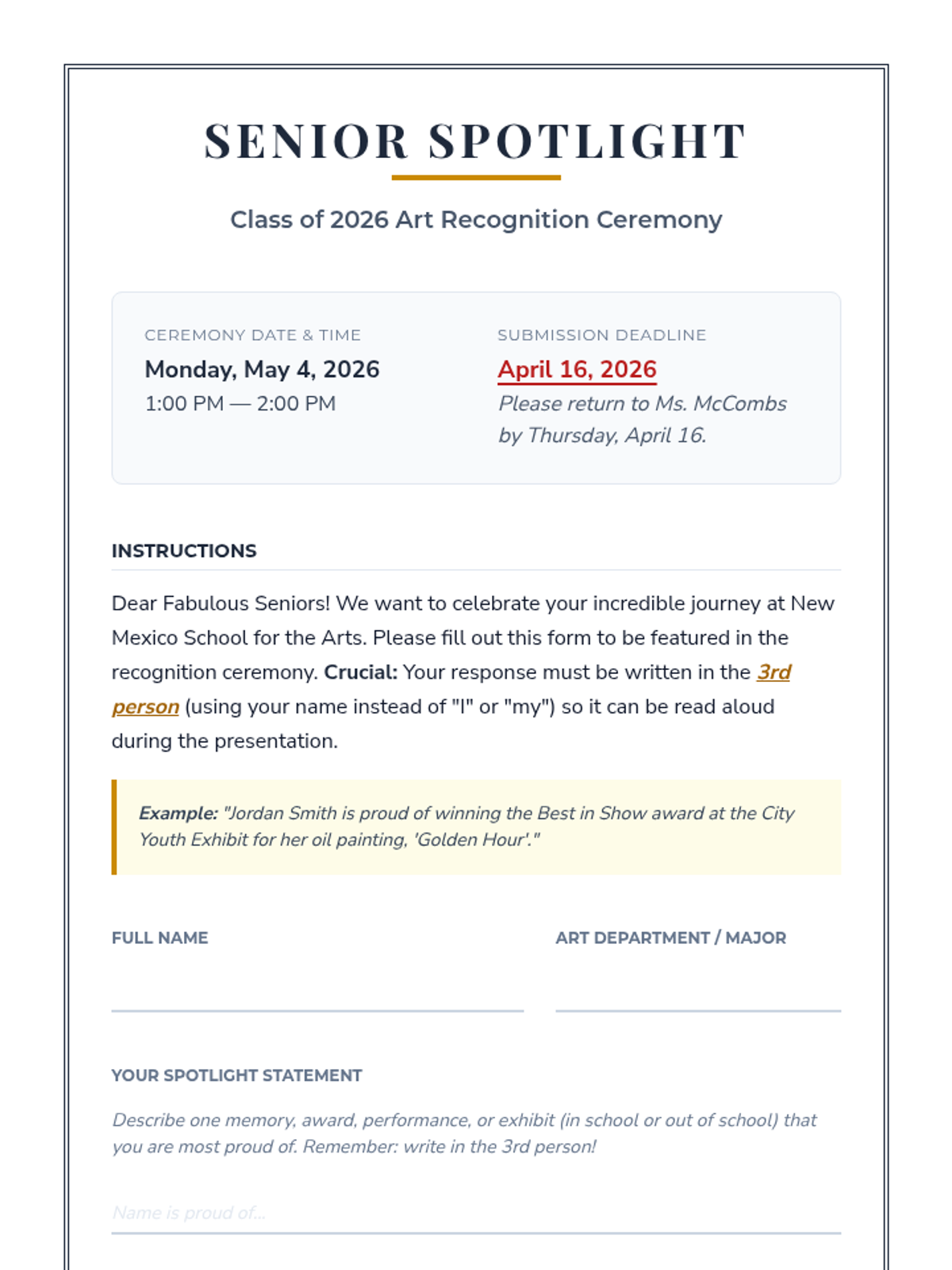
Final Senior Spotlight Form with name and department at top, unified March 12 deadline and 3rd-person instructions, and a complete set of five department icons.
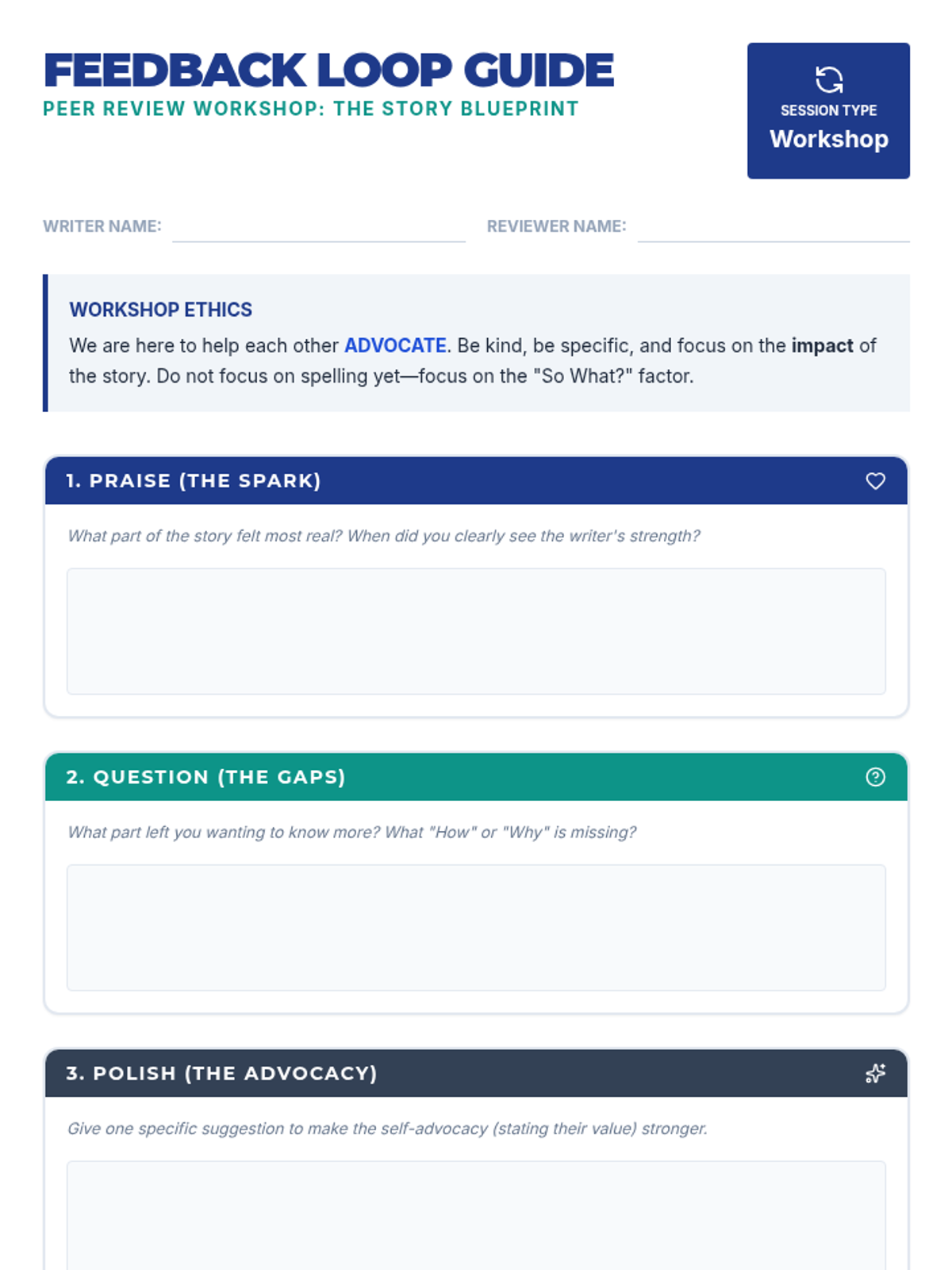
A structured peer review guide for high schoolers to provide and receive constructive feedback on their personal statement drafts using the Praise-Question-Polish (PQP) method.
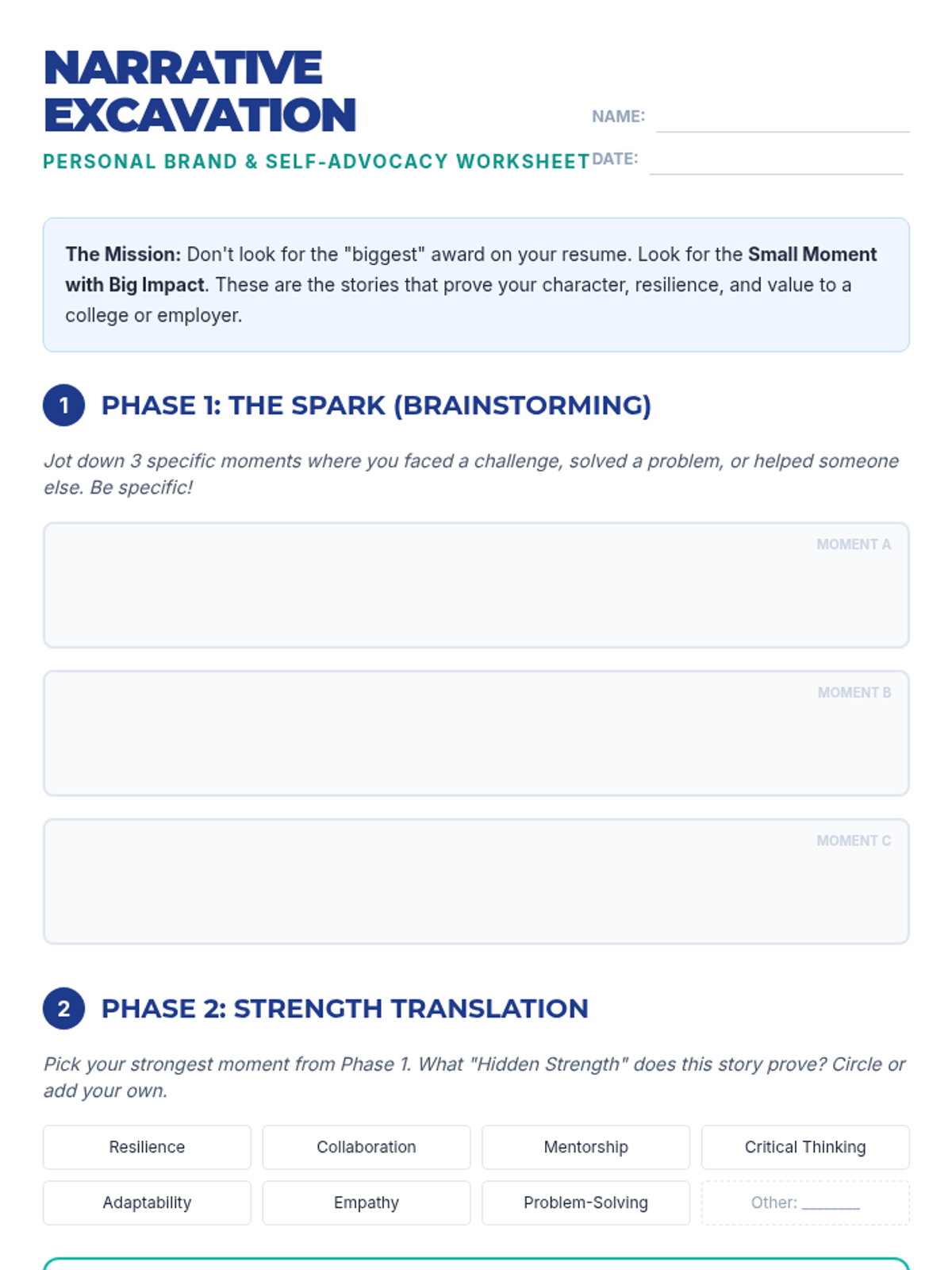
A student worksheet designed to help high schoolers brainstorm personal narratives and translate their life experiences into professional strengths for college and career applications.
An engaging instructional slide deck for a high school lesson on self-advocacy and personal statements, using a "Blueprint" theme to guide students through narrative writing.
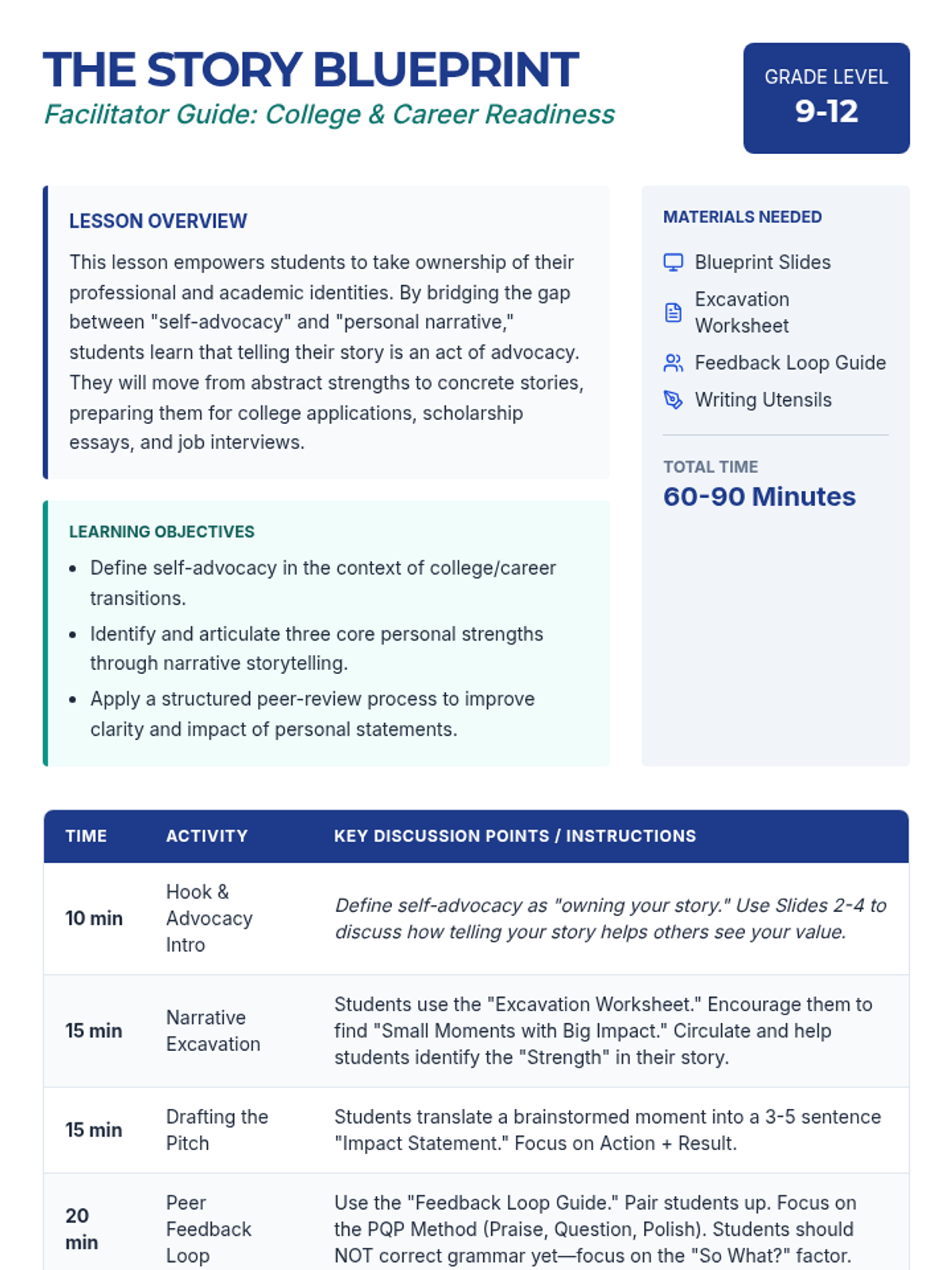
A comprehensive teacher guide for leading a high school counseling lesson on self-advocacy and personal statement writing, featuring pacing, discussion prompts, and facilitation tips.
A revised 5-slide visual presentation for counselors with optimized font sizes (minimum 24px) and high-impact layouts for guiding seniors through post-secondary planning.
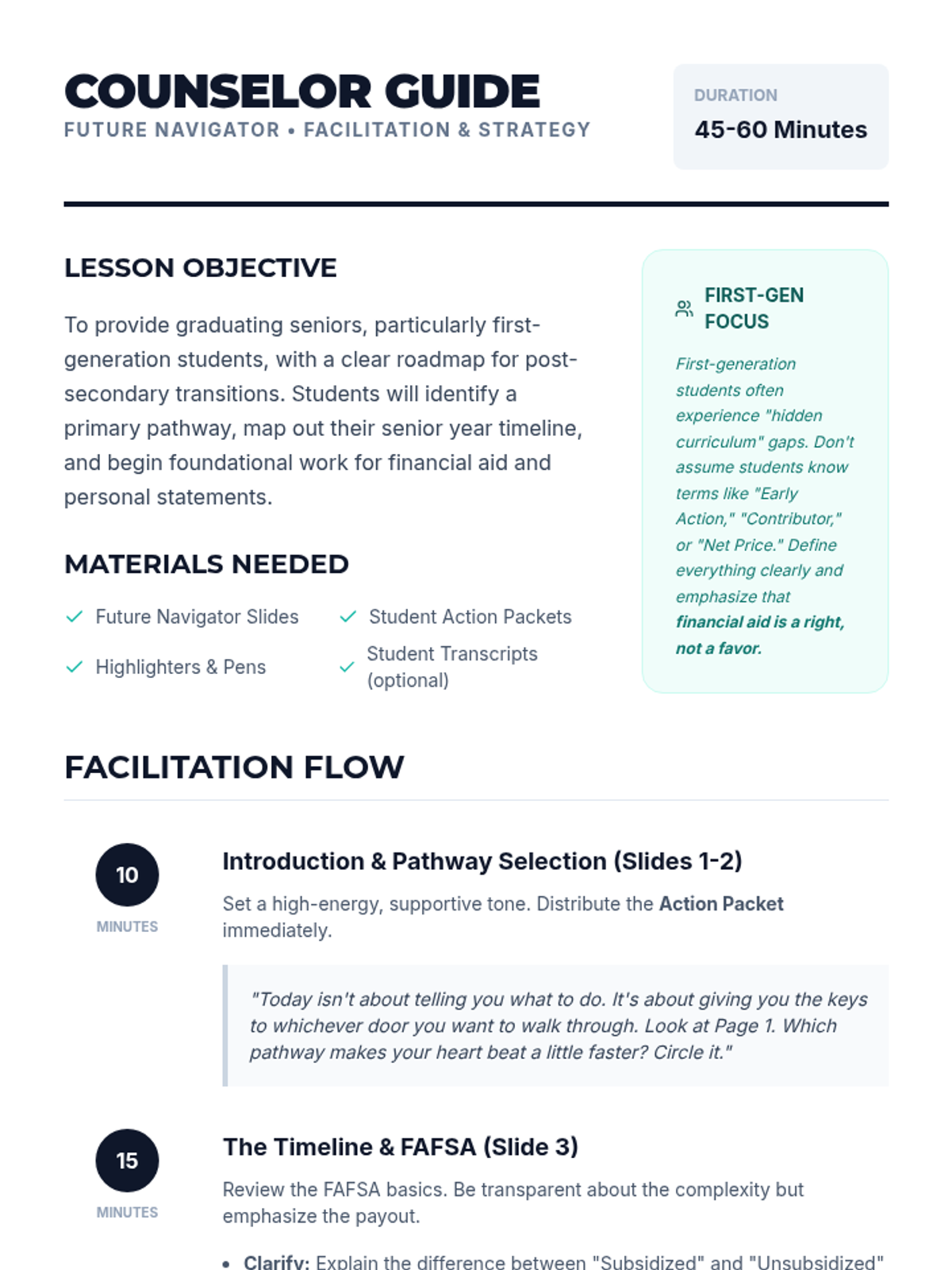
A 2-page counselor's guide for facilitating the Future Navigator lesson, including pacing, discussion prompts, vocabulary keys, and specific strategies for supporting first-generation students.
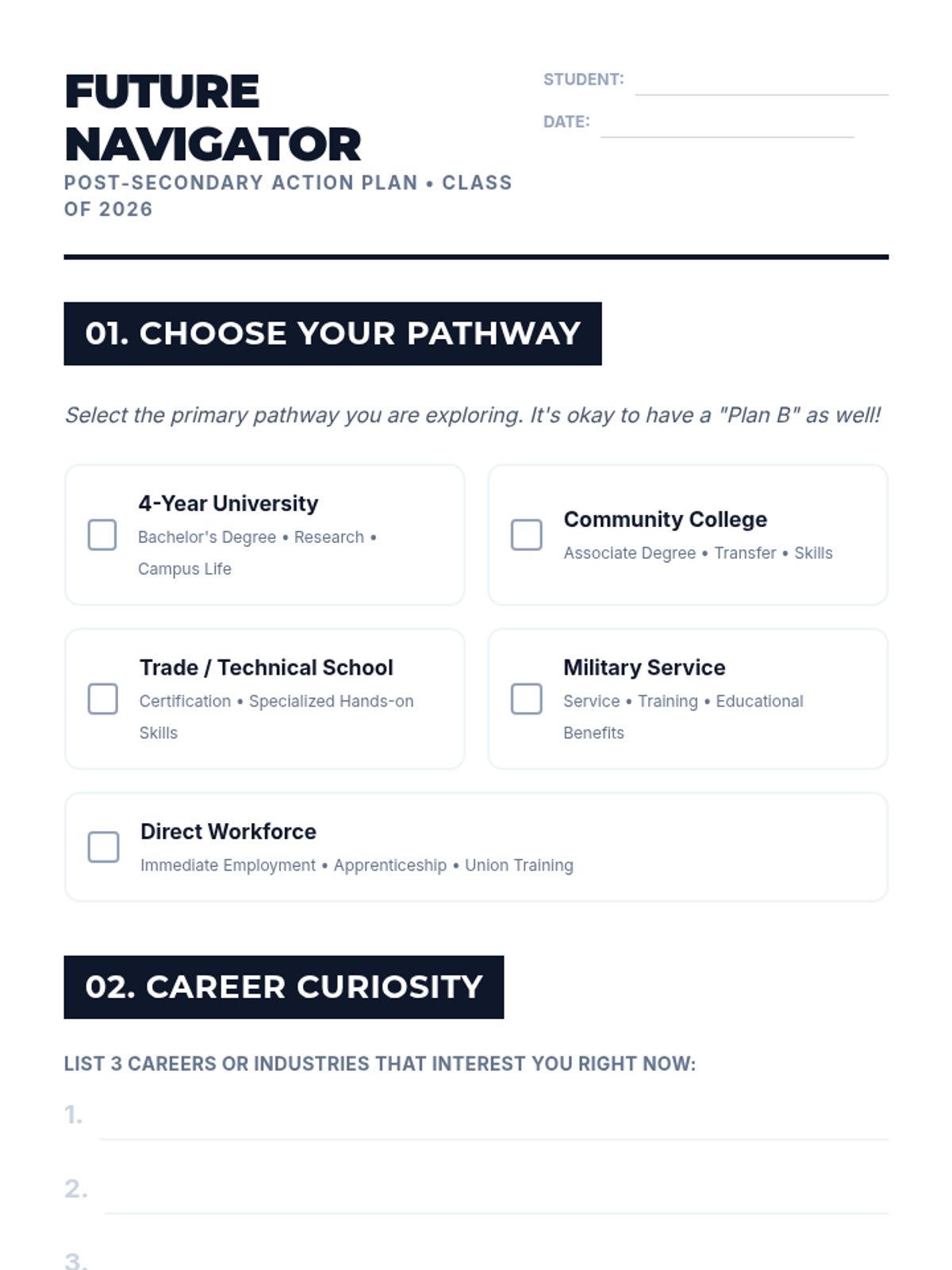
A 3-page student packet for college and career planning, featuring a pathway selector, monthly senior timeline, personal statement scratchpad, and FAFSA preparation checklist.
A 5-slide visual presentation for counselors to guide seniors through post-secondary options, FAFSA, and the personal statement, featuring high-contrast design and clear pathways.
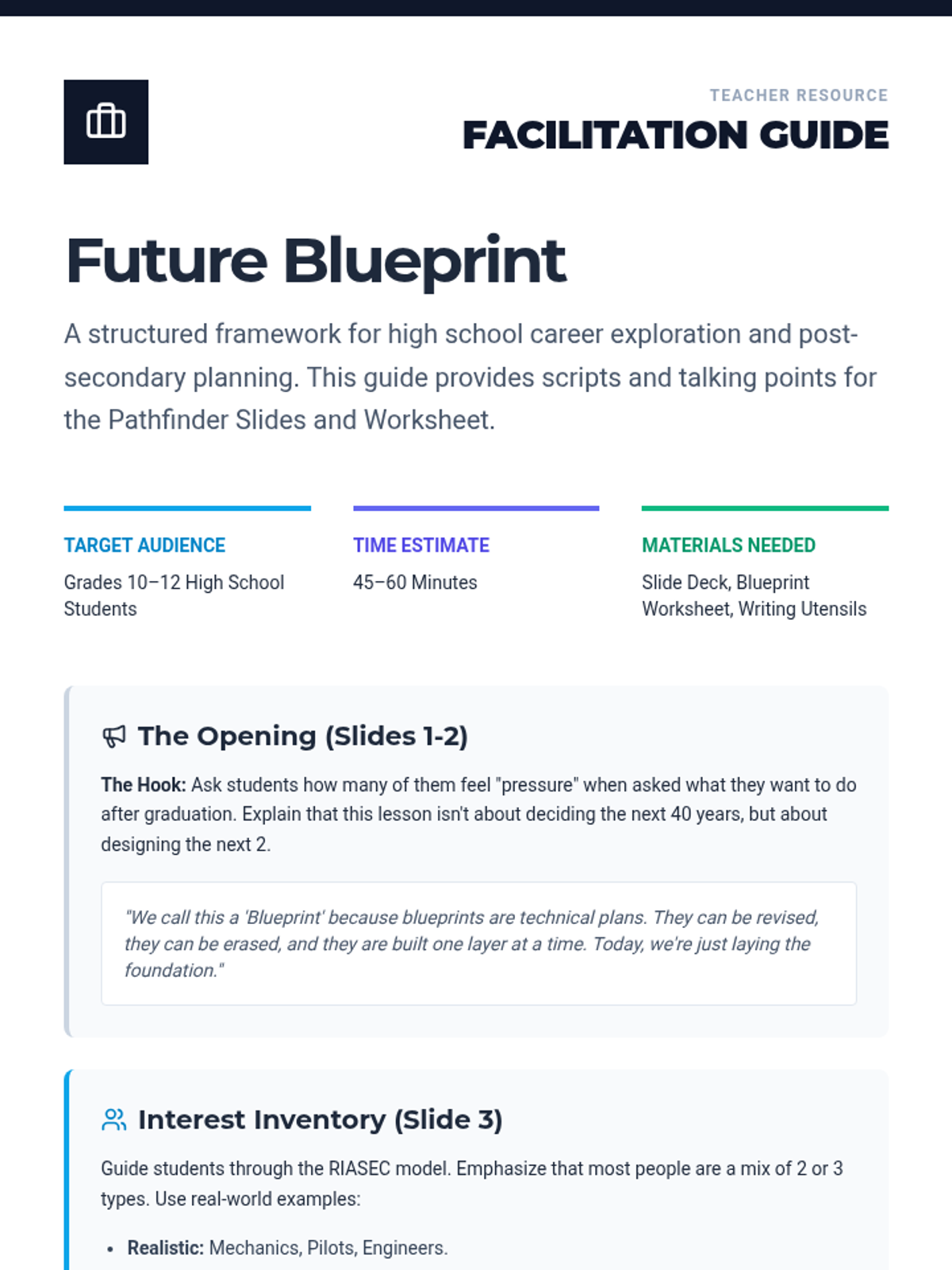
A comprehensive facilitator guide for high school counselors. It includes scripts, talking points, RIASEC career examples, differentiation strategies, and follow-up actions for the Future Blueprint lesson.
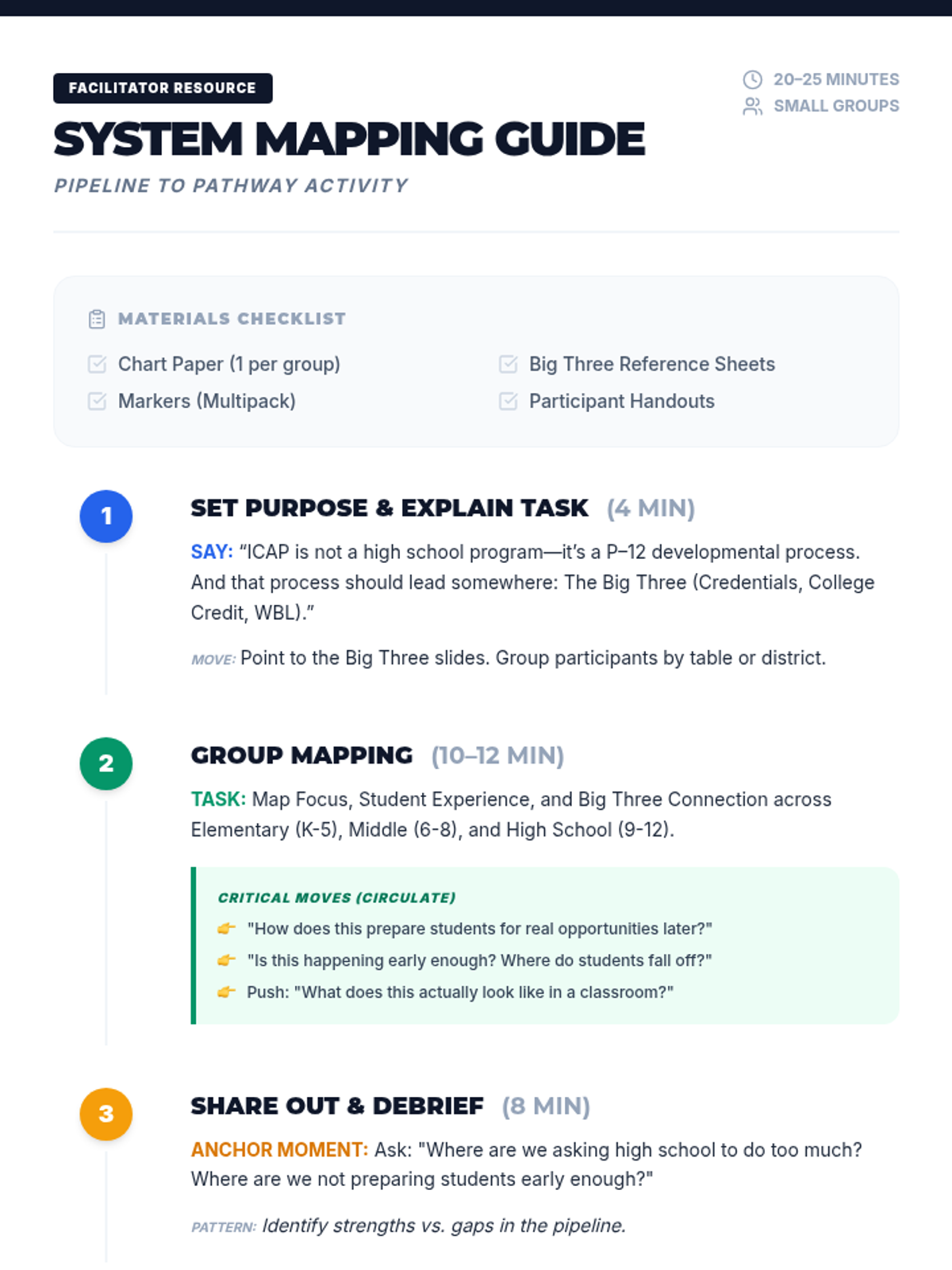
A facilitator cheat sheet for the Pipeline to Pathway activity, providing a step-by-step guide with scripts, moves, and critical prompts to ensure a high-impact session.
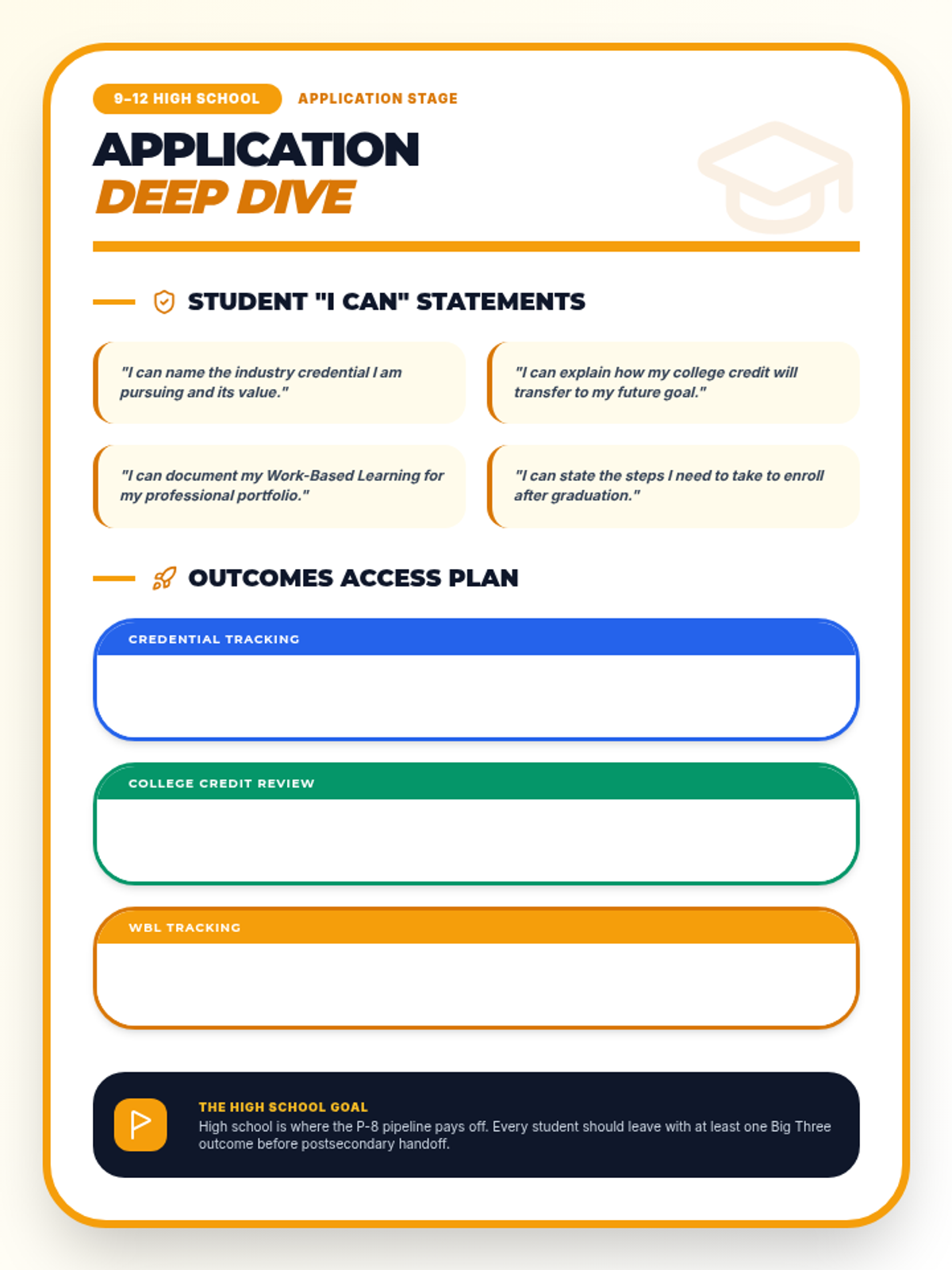
A deep dive implementation guide for the High School (9-12) level. Redesigned with a full-page layout that maximizes space for outcome tracking (Credentials, College Credit, WBL) and high-impact "I Can" statements.
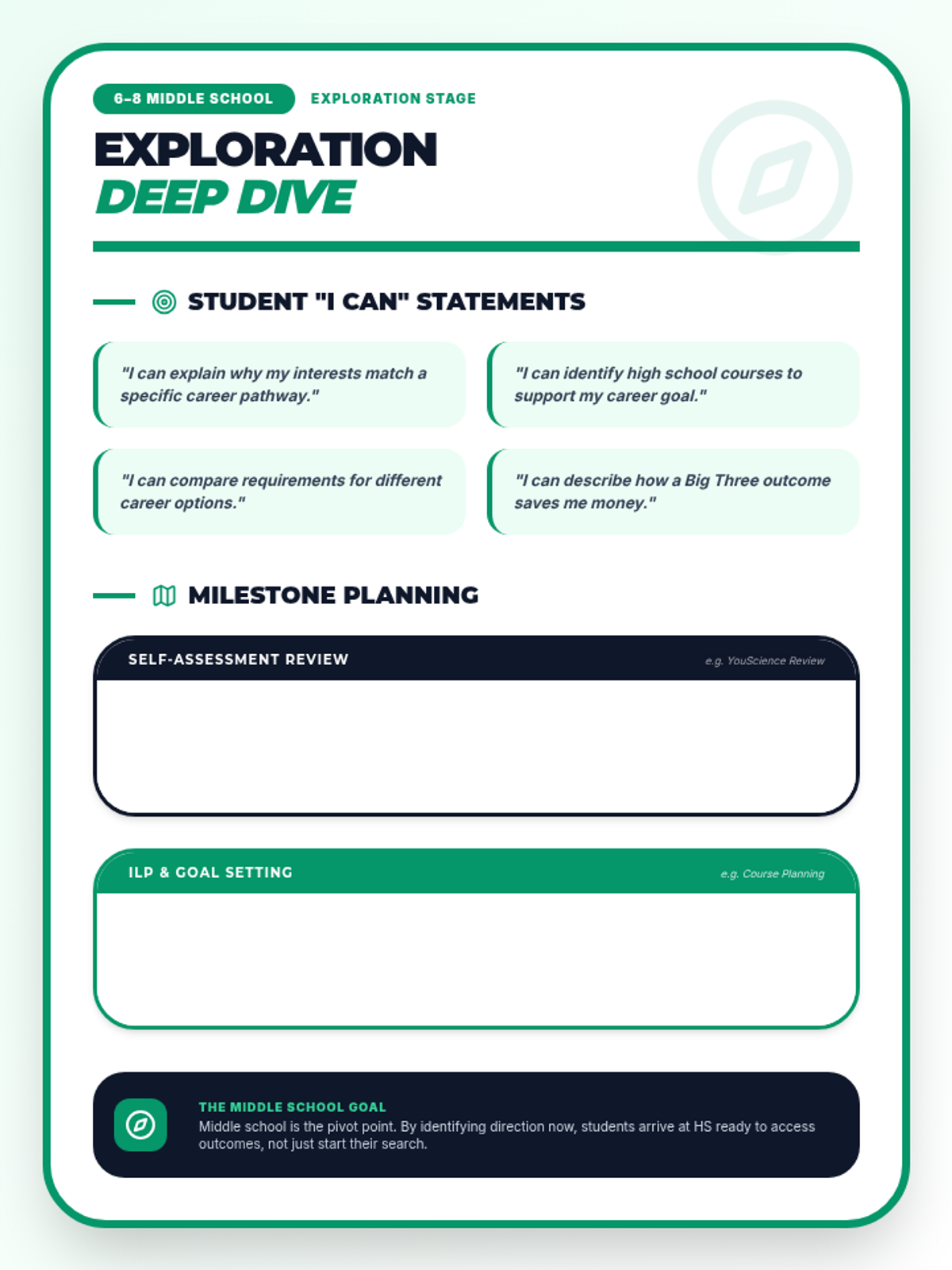
A deep dive implementation guide for the Middle School (6-8) level. Redesigned with a full-page layout that maximizes space for milestone planning and "I Can" statement exploration.
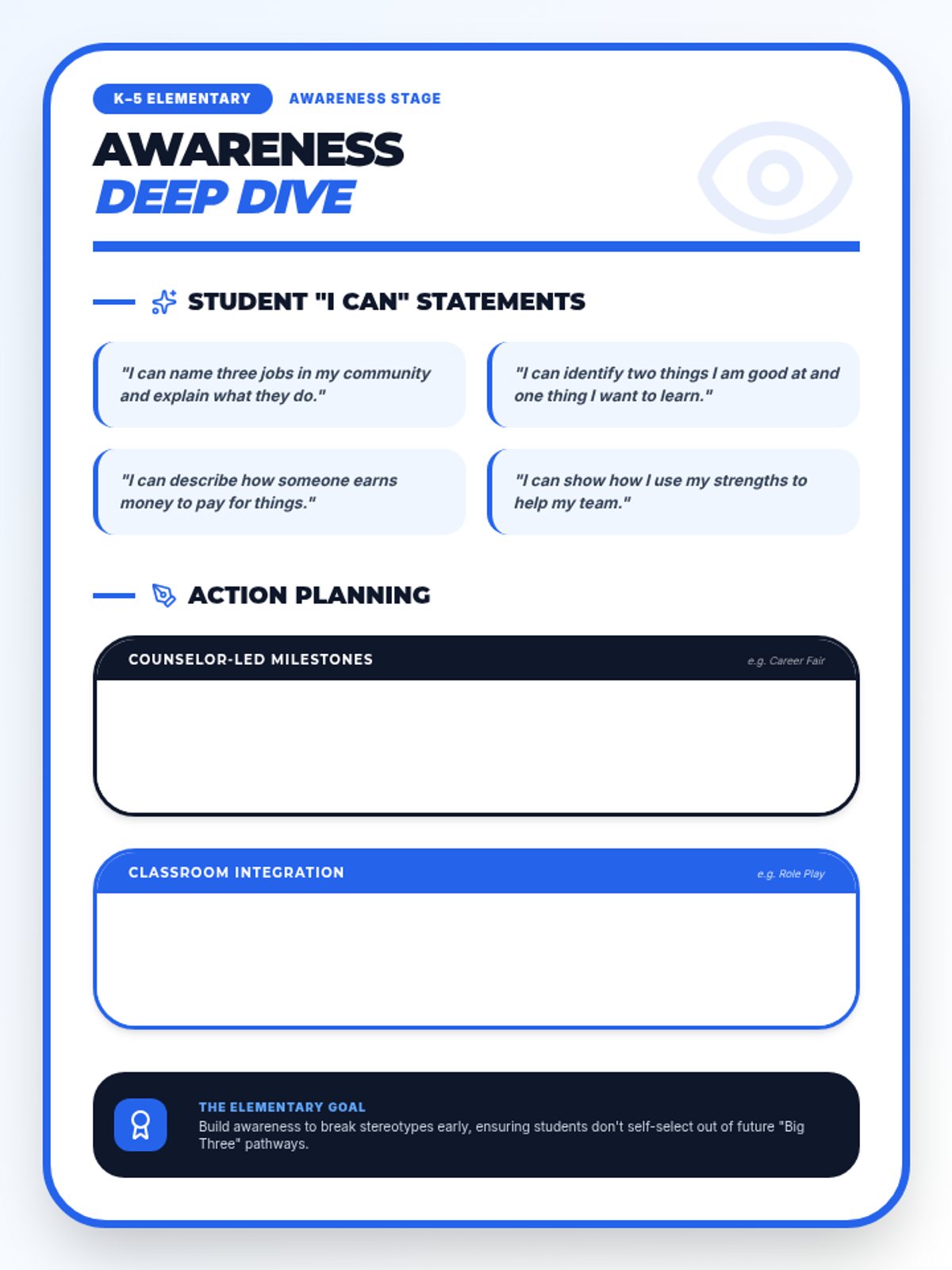
A deep dive implementation guide for the Elementary (K-5) level. Redesigned with a full-page layout that maximizes space for action planning while maintaining high-impact visuals.
A complete presentation guide for the facilitator, following the 7-step Pipeline to Pathway activity with integrated "Big Three" themes and prompts. All text is sized for maximum visibility (minimum 24px).
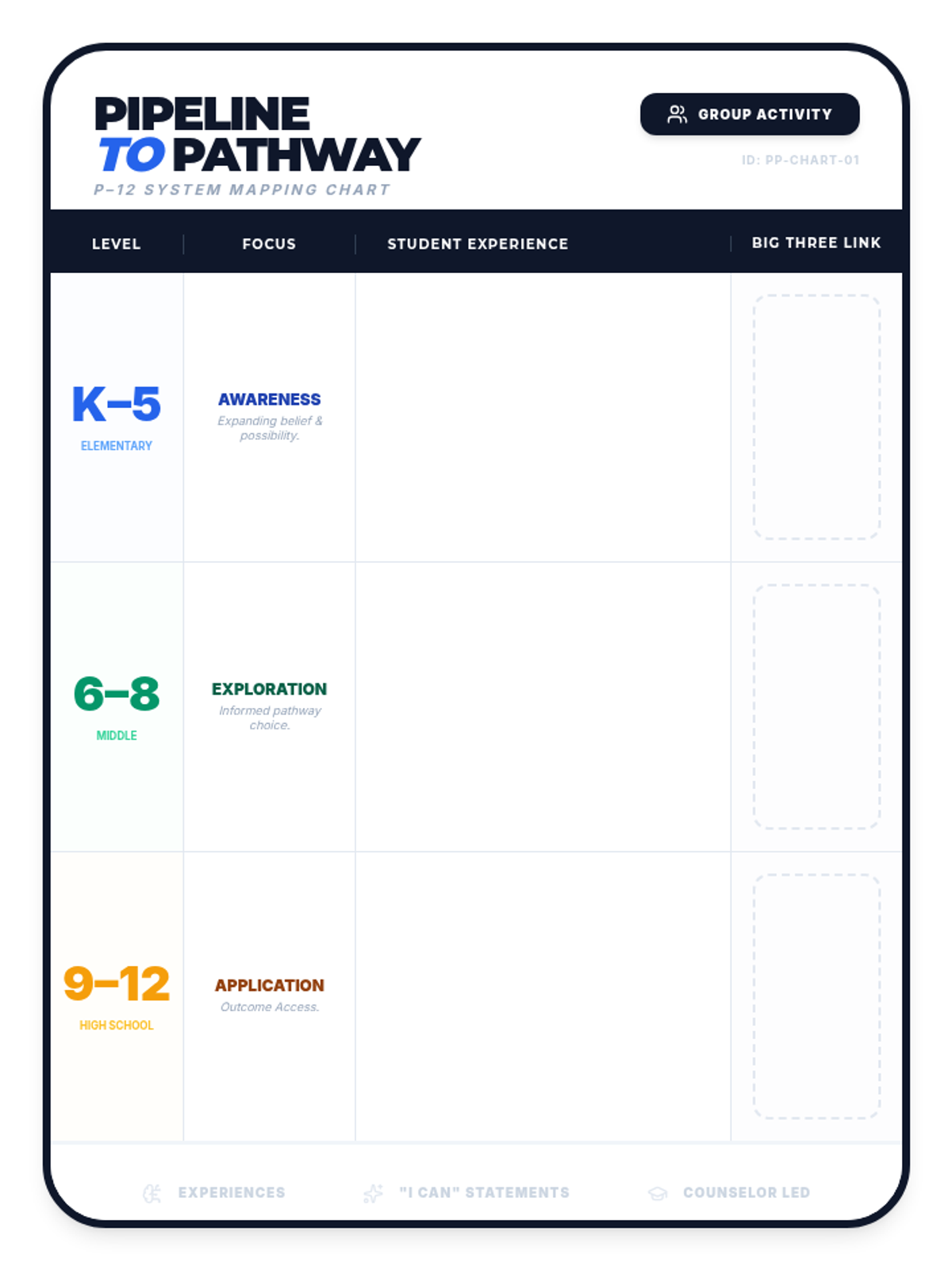
A large-format chart template for group activity, precision-fitted for a portrait printable area (720x960). Features three equal sections for Elementary, Middle, and High School mapping.
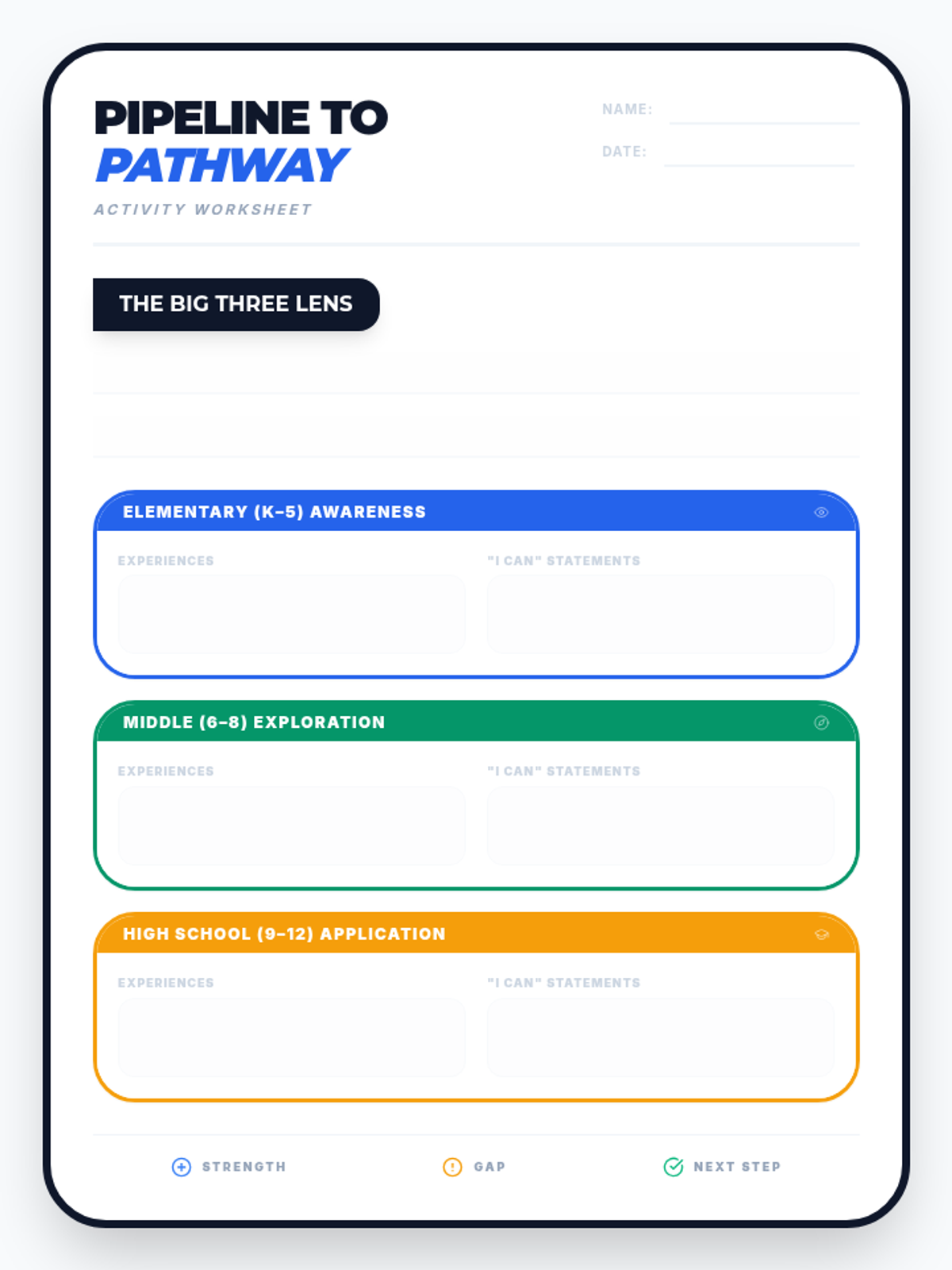
A participant handout for the Pipeline to Pathway activity. Redesigned to fill the full 720x960 page with three equal grade-level sections and clear work areas.
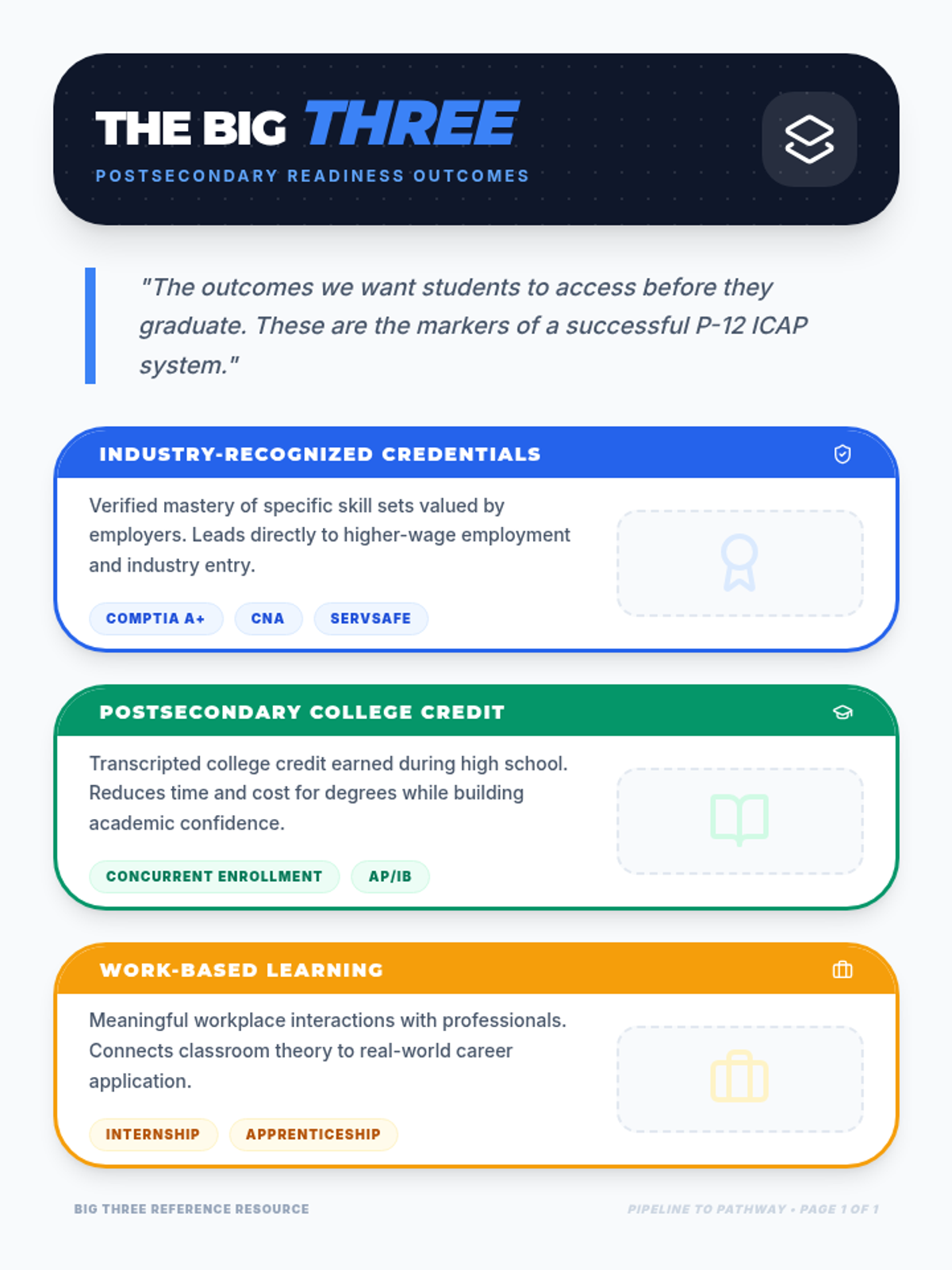
A high-quality reference sheet defining the Big Three outcomes (Industry Credentials, College Credit, and Work-Based Learning). Redesigned to fill the full 720x960 page with high-impact visuals.
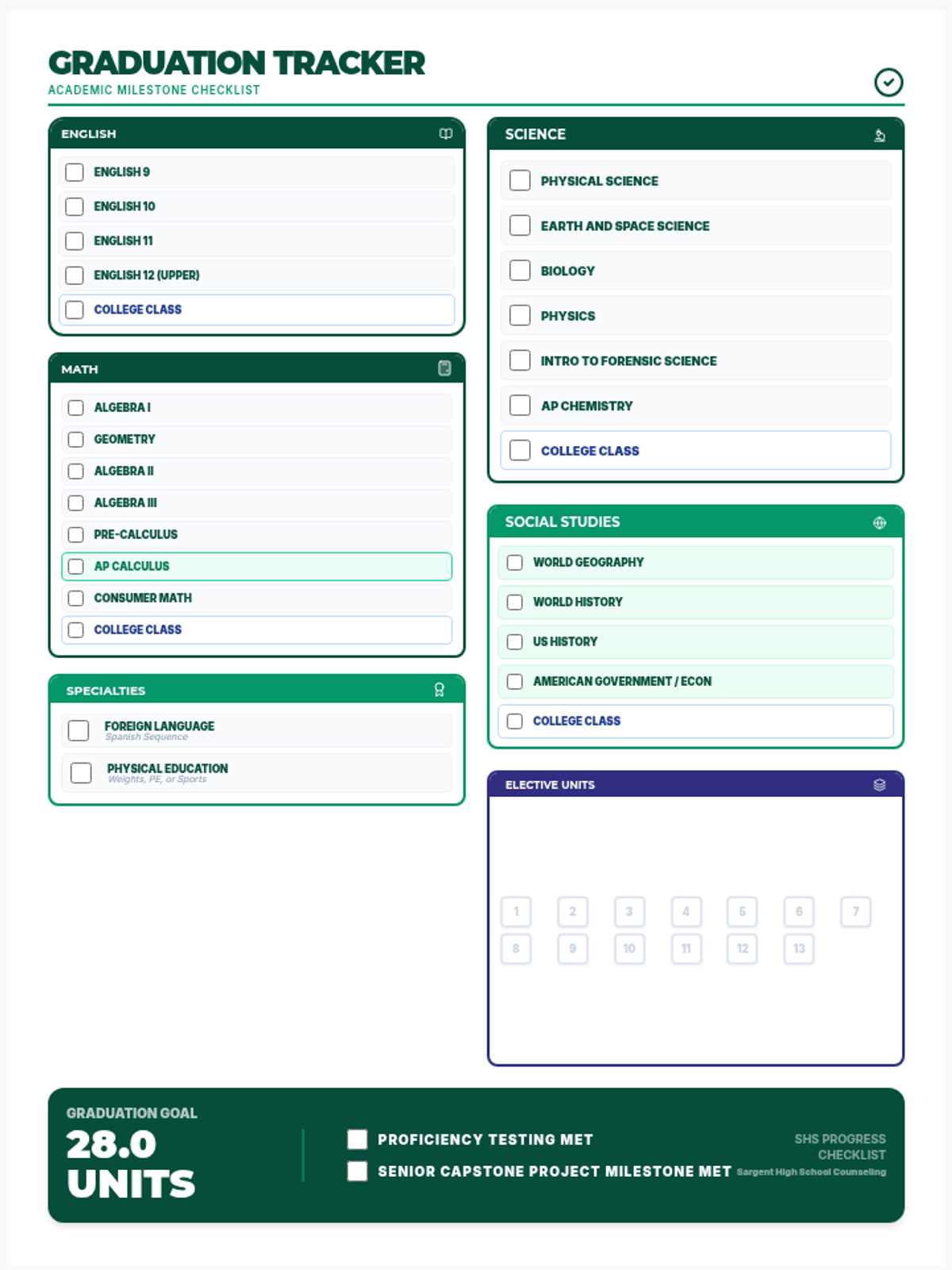
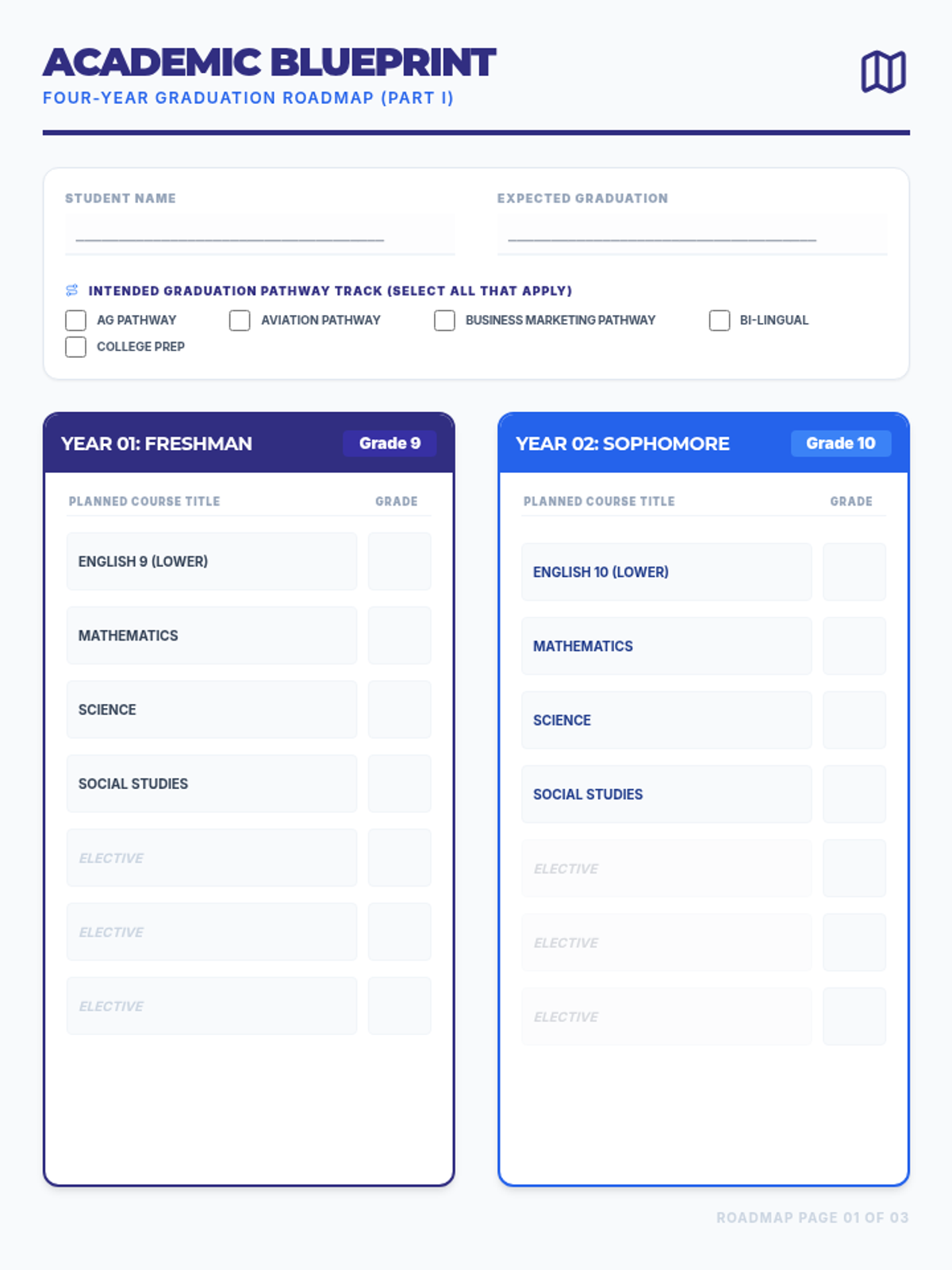
A comprehensive graduation tracker checklist for high school students, featuring updated 28.0 credit total and the Capstone Project milestone. English 12 now labeled as (Upper). American Government is listed as American Government / Econ. Math section updated with AP Calculus (Green) and College Class (Blue). Geometry placed after Algebra I. Science subjects broken out individually. Optimized for a robust single-page fit. All credit-level annotations like "1.0" have been removed. Science and Math broken out individually.
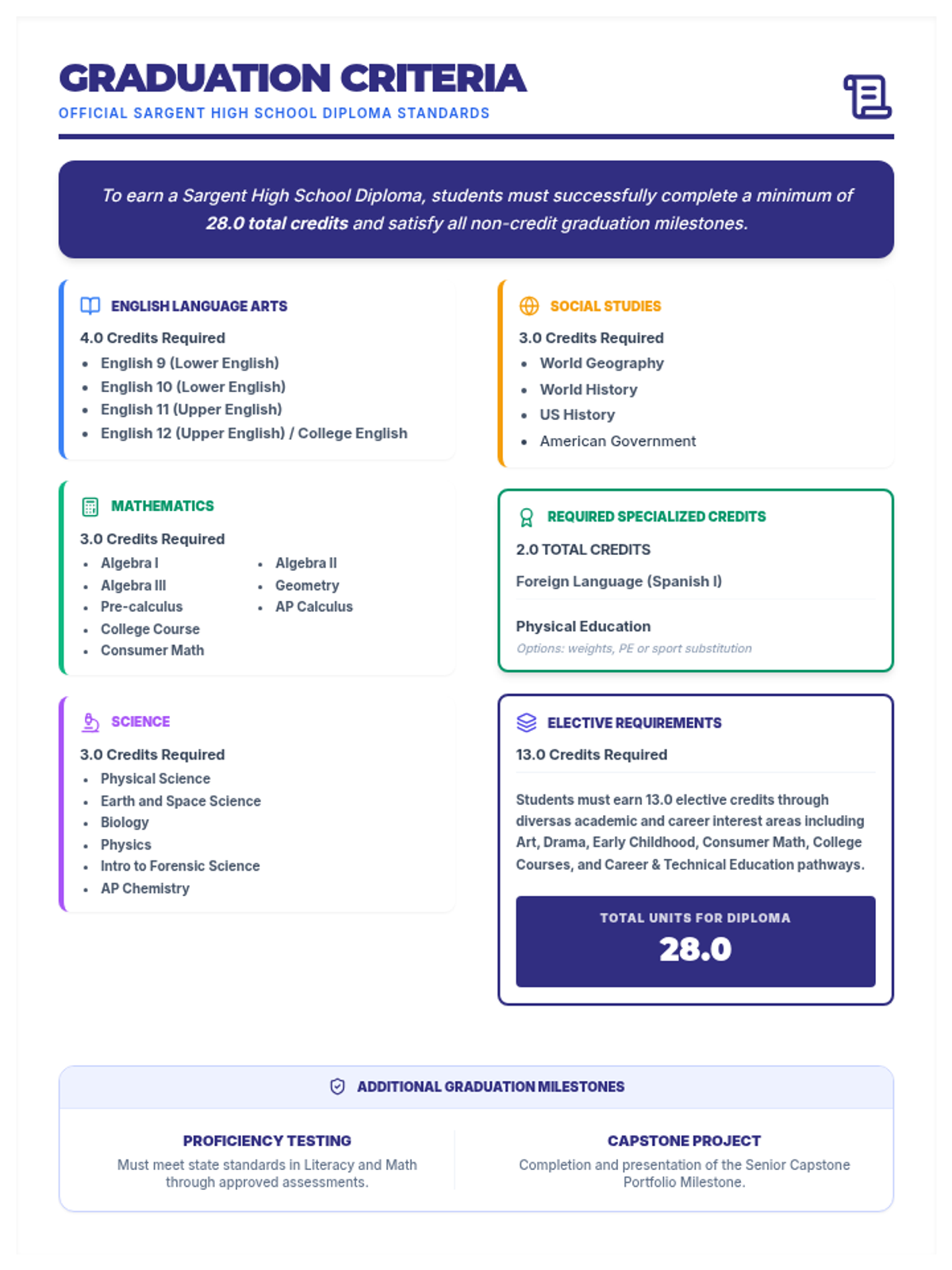
A comprehensive reference sheet outlining high school graduation requirements, reverted to the original 2-column layout optimized for a single-page fit. Science subjects are broken out individually and Social Studies is streamlined. All credit-level annotations like "1.0" have been removed from individual courses. Physical Education options clarified. Highlighting for Consumer Math and American Government has been removed. American Government is no longer bold. Elective pathways list removed from the description for a cleaner look.
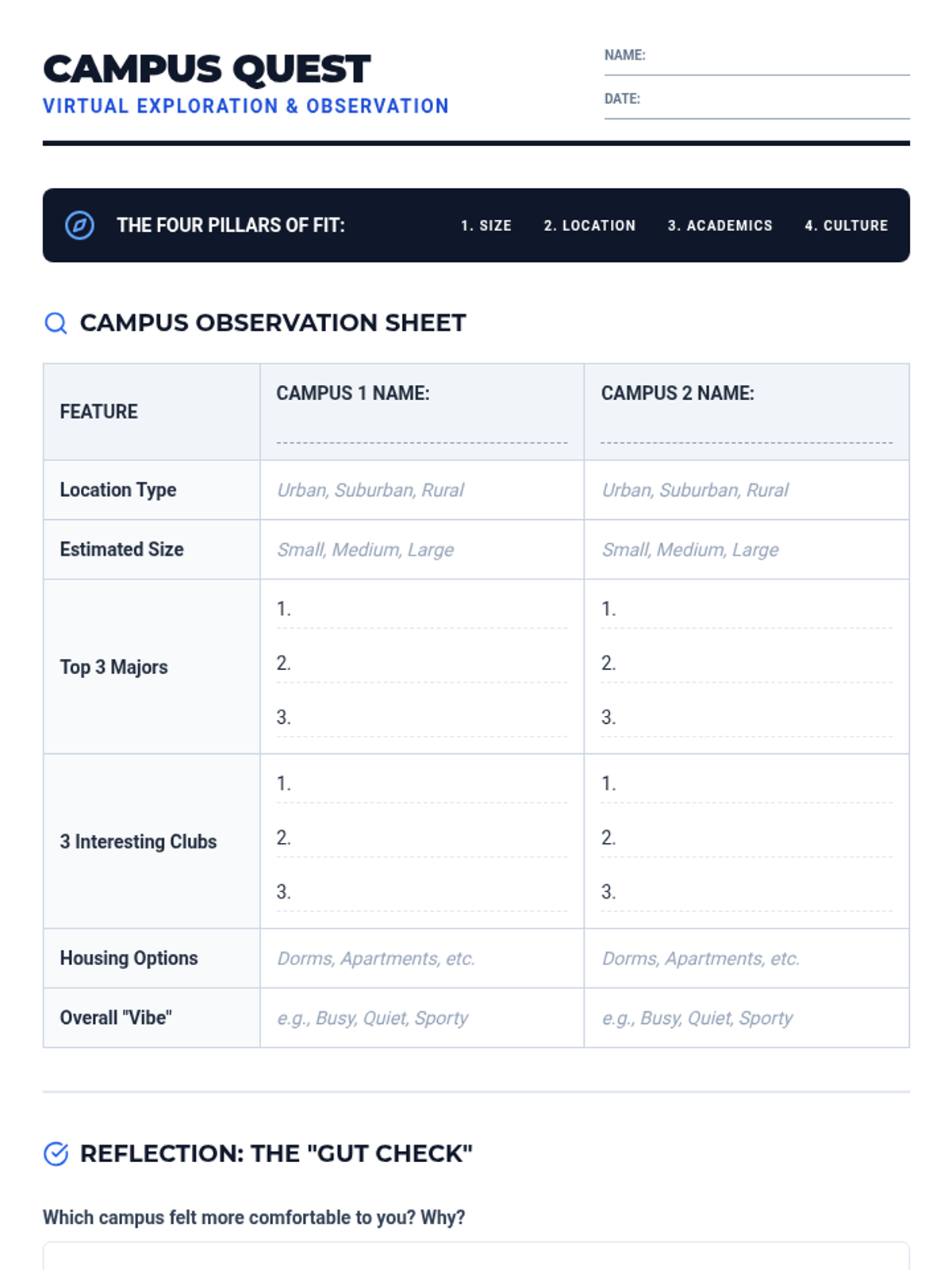
A student-facing observation sheet and reflection guide for virtual college tours, featuring a comparison table for two campuses and "gut check" reflection questions.
A visually engaging slide deck to accompany the Campus Quest lesson, illustrating the "Four Pillars" of college choice (Size, Location, Academics, and Culture) to help students prepare for virtual campus tours.
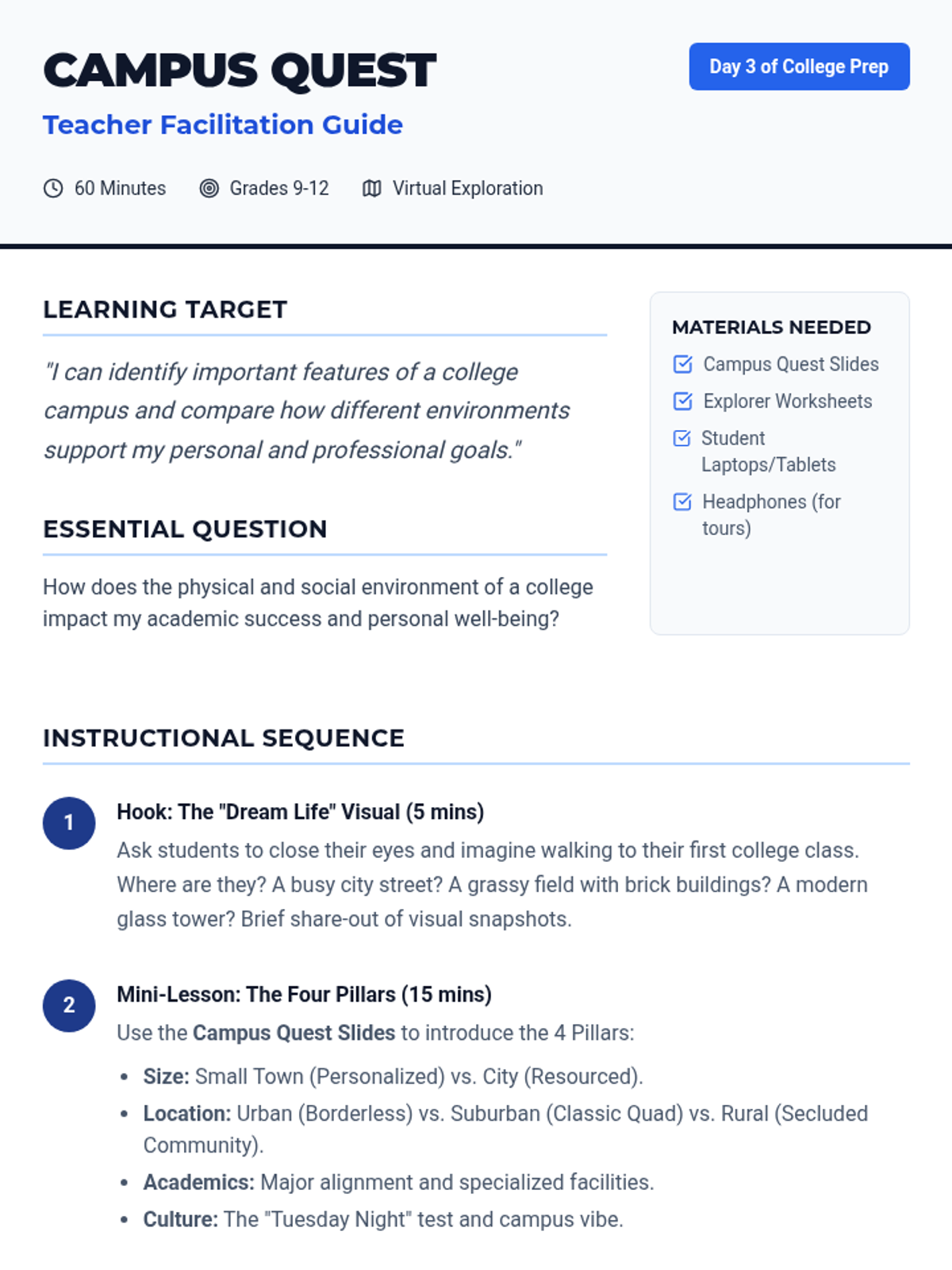
A comprehensive teacher facilitation guide for the Campus Quest lesson, featuring learning targets, a detailed 60-minute instructional sequence, and discussion prompts for guiding virtual college tours.
A 3-page academic roadmap for high school students. The action steps section has been replaced with a log for 'Documented Changes to Academic Plan', including specific fields for dates and change descriptions.
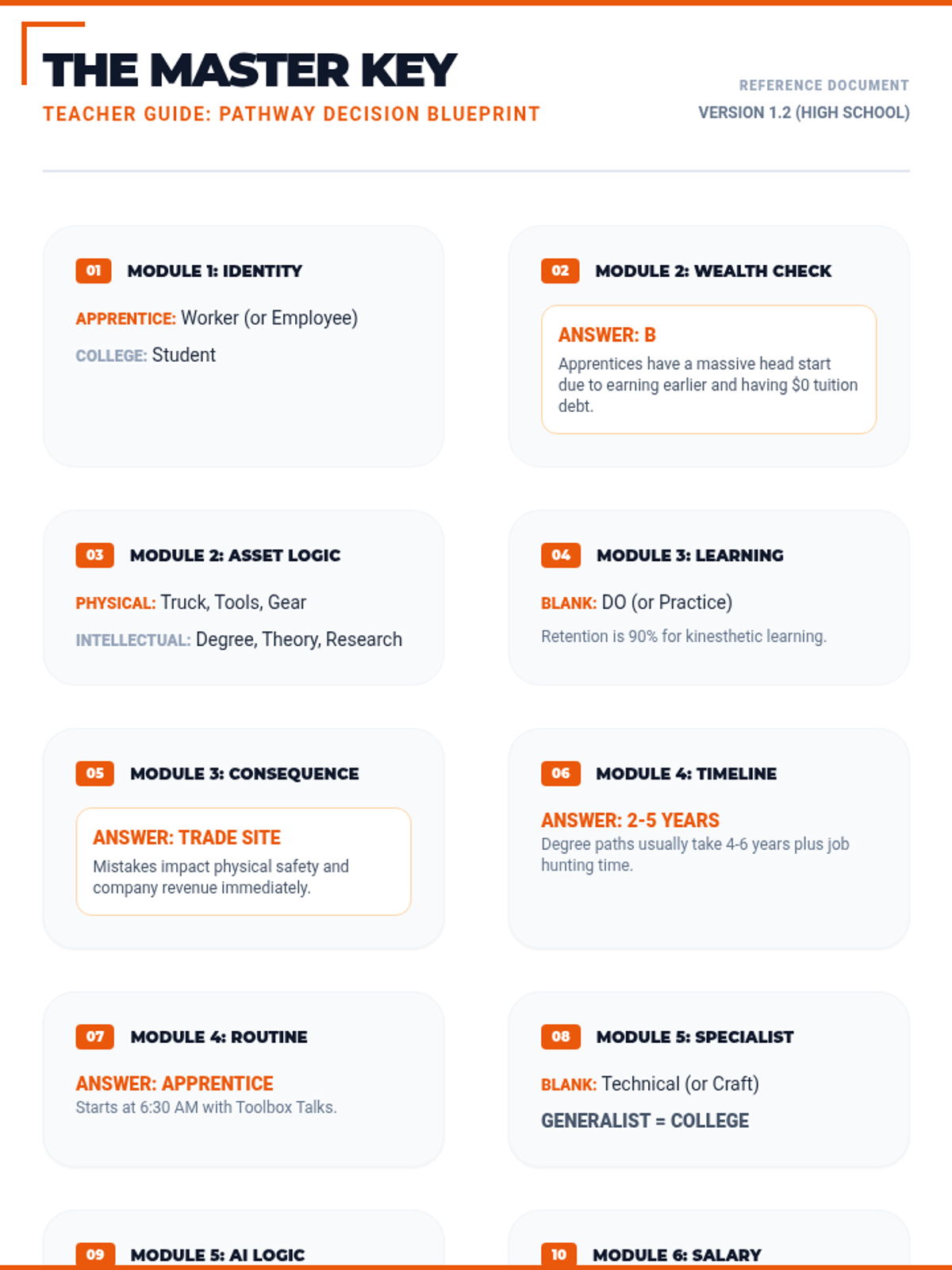
A teacher's master answer key for the Pathway Decision Blueprint Worksheet (15-section version), provided in a clean print layout with a Safety Orange and Slate theme.
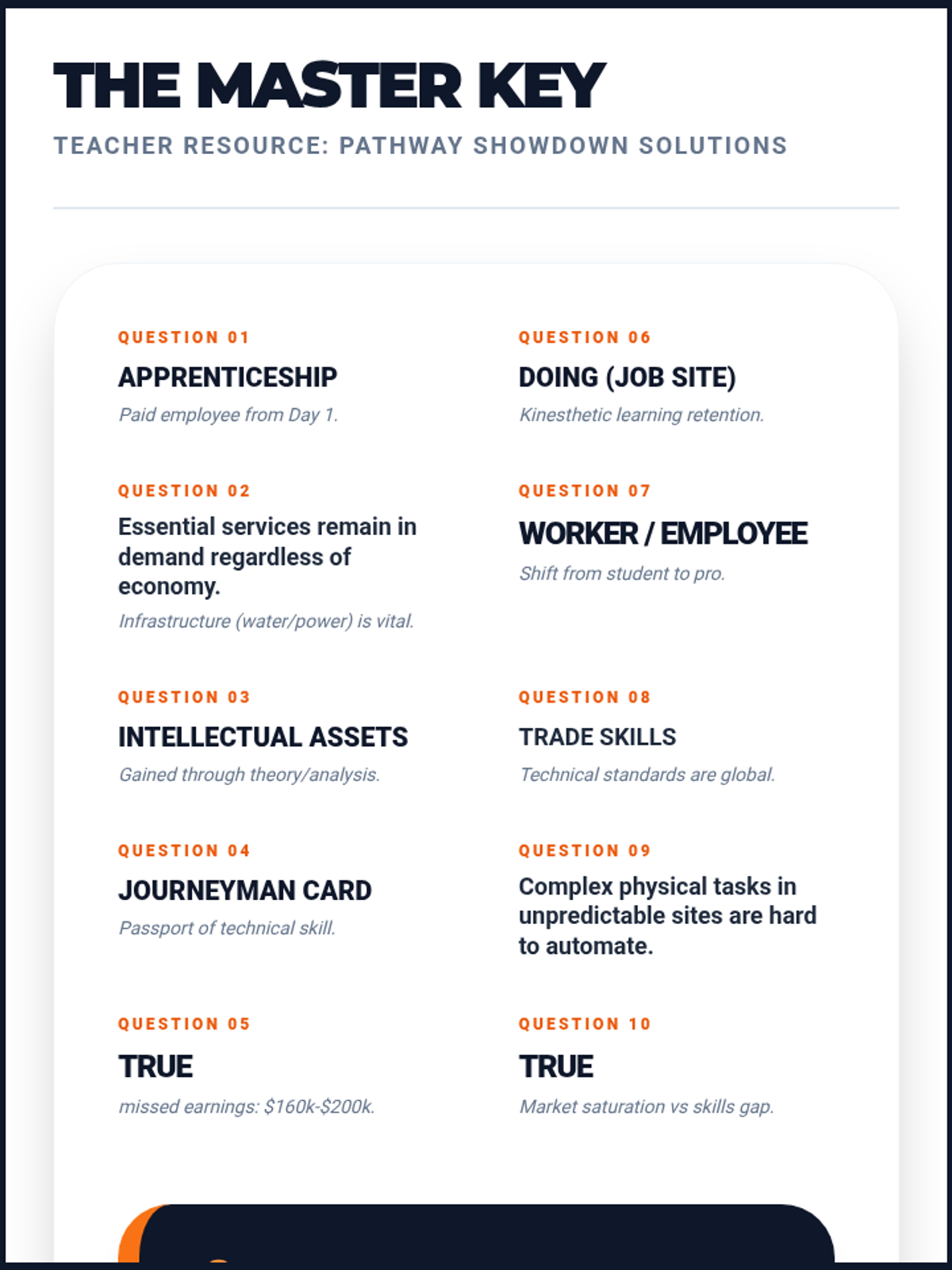
A standalone print-ready teacher answer key for the Pathway Showdown Info Sheet, featuring solutions for all 10 knowledge-check questions with detailed explanations.
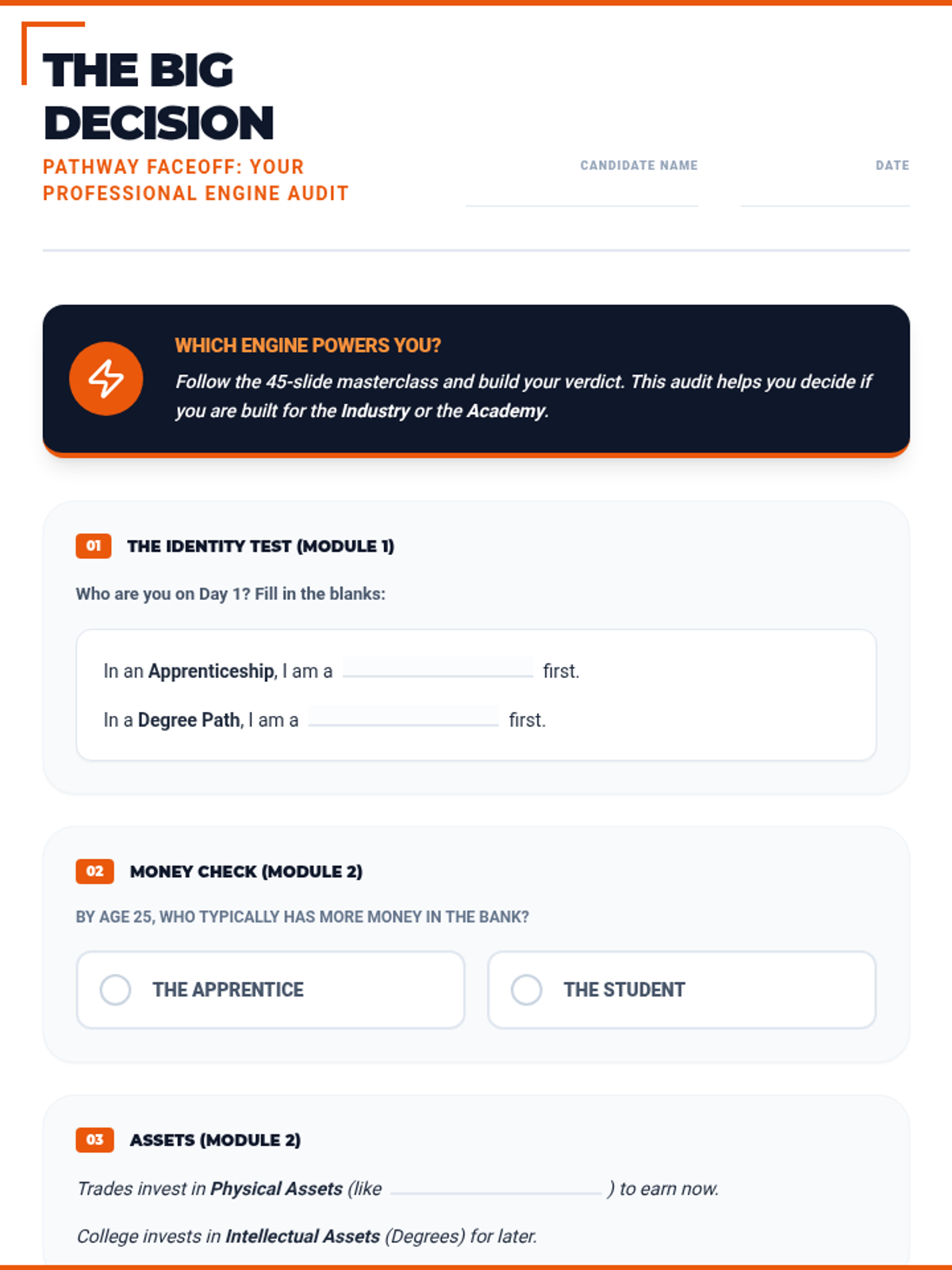
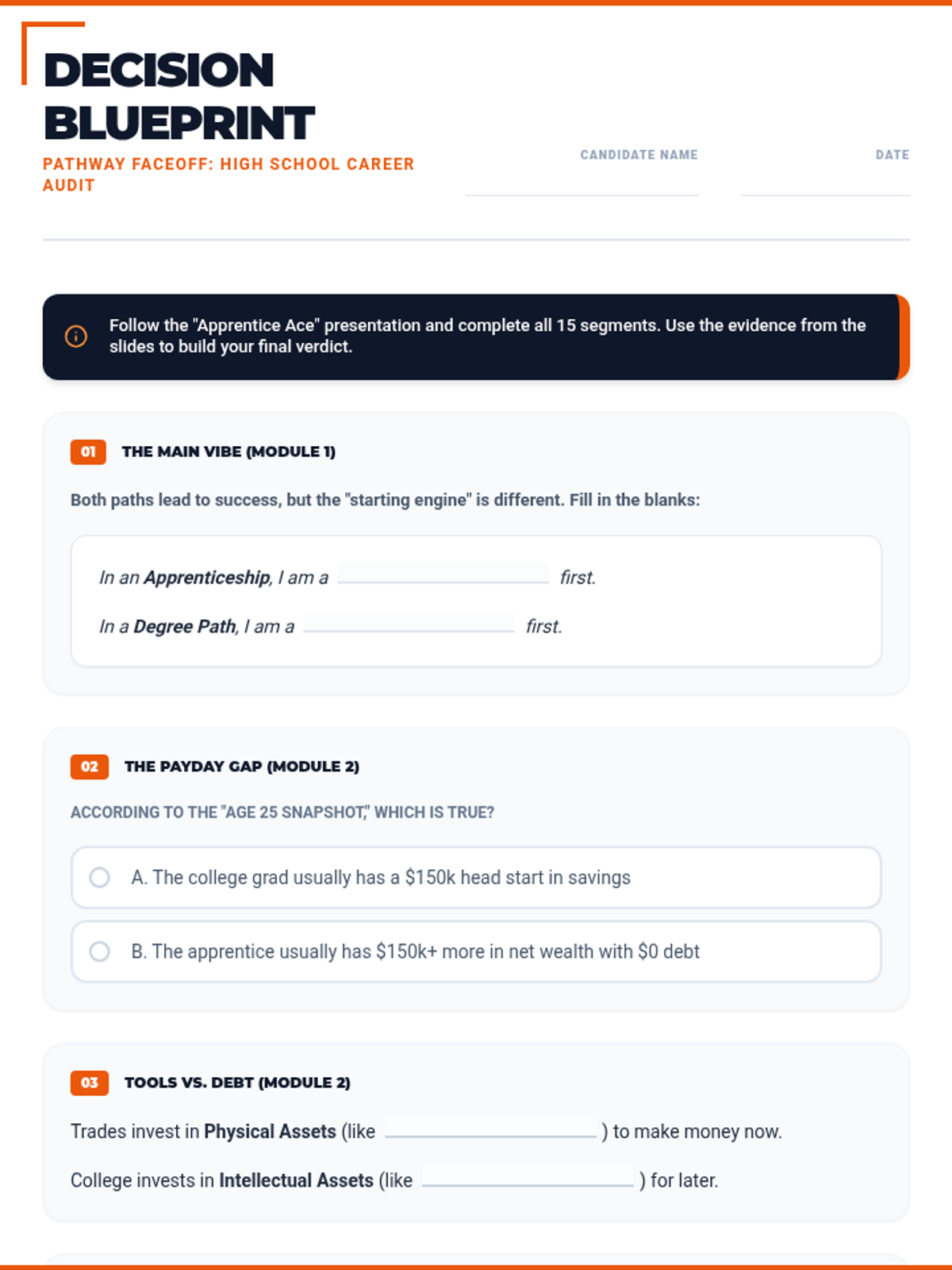
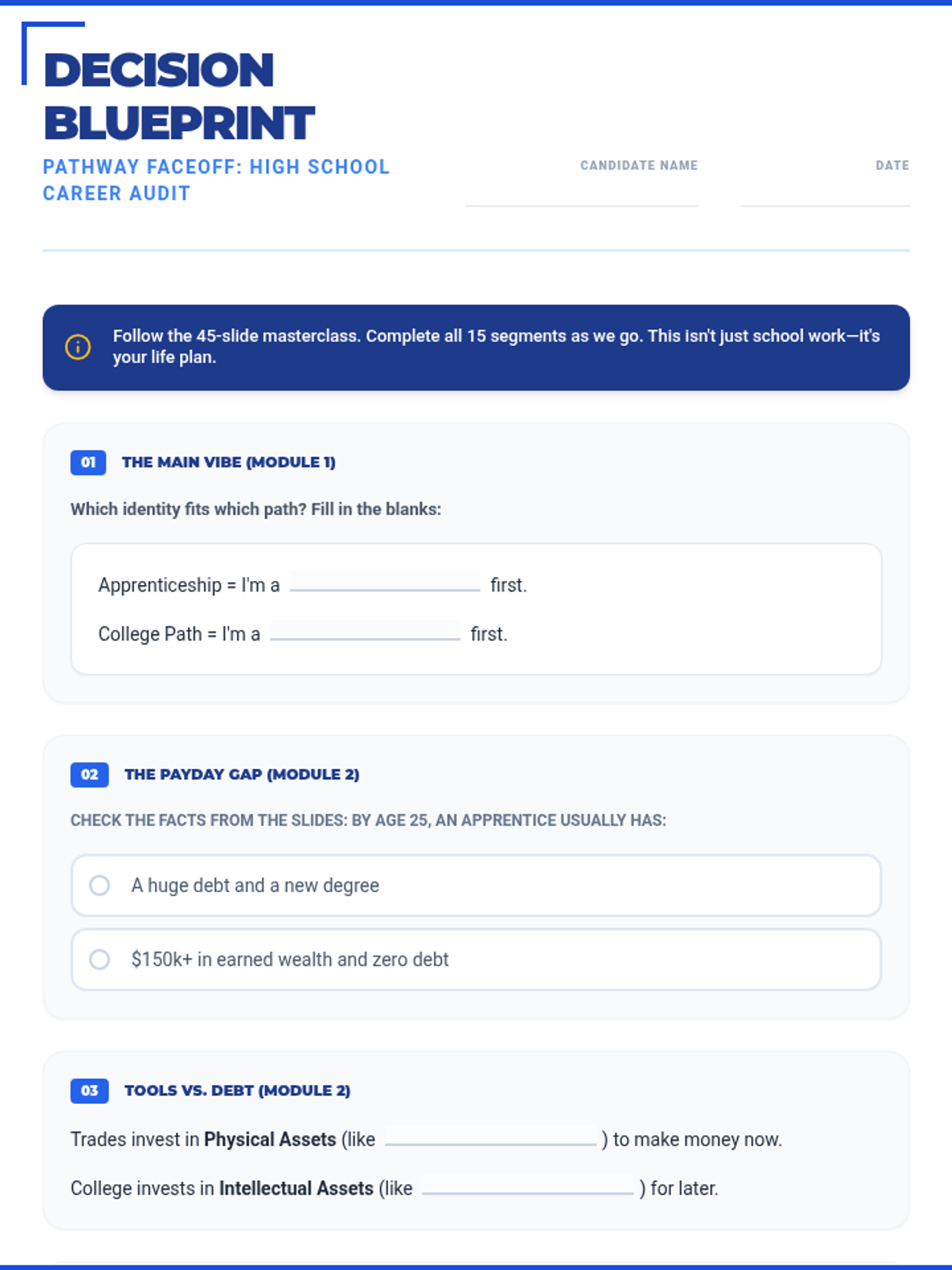
A simplified 15-section career exploration worksheet designed for 16-year-old high school students, featuring punchy, relatable titles and a "Safety Orange & Slate" theme. Meticulously aligned with the 45-slide masterclass. All correct answer highlights have been removed for student use.
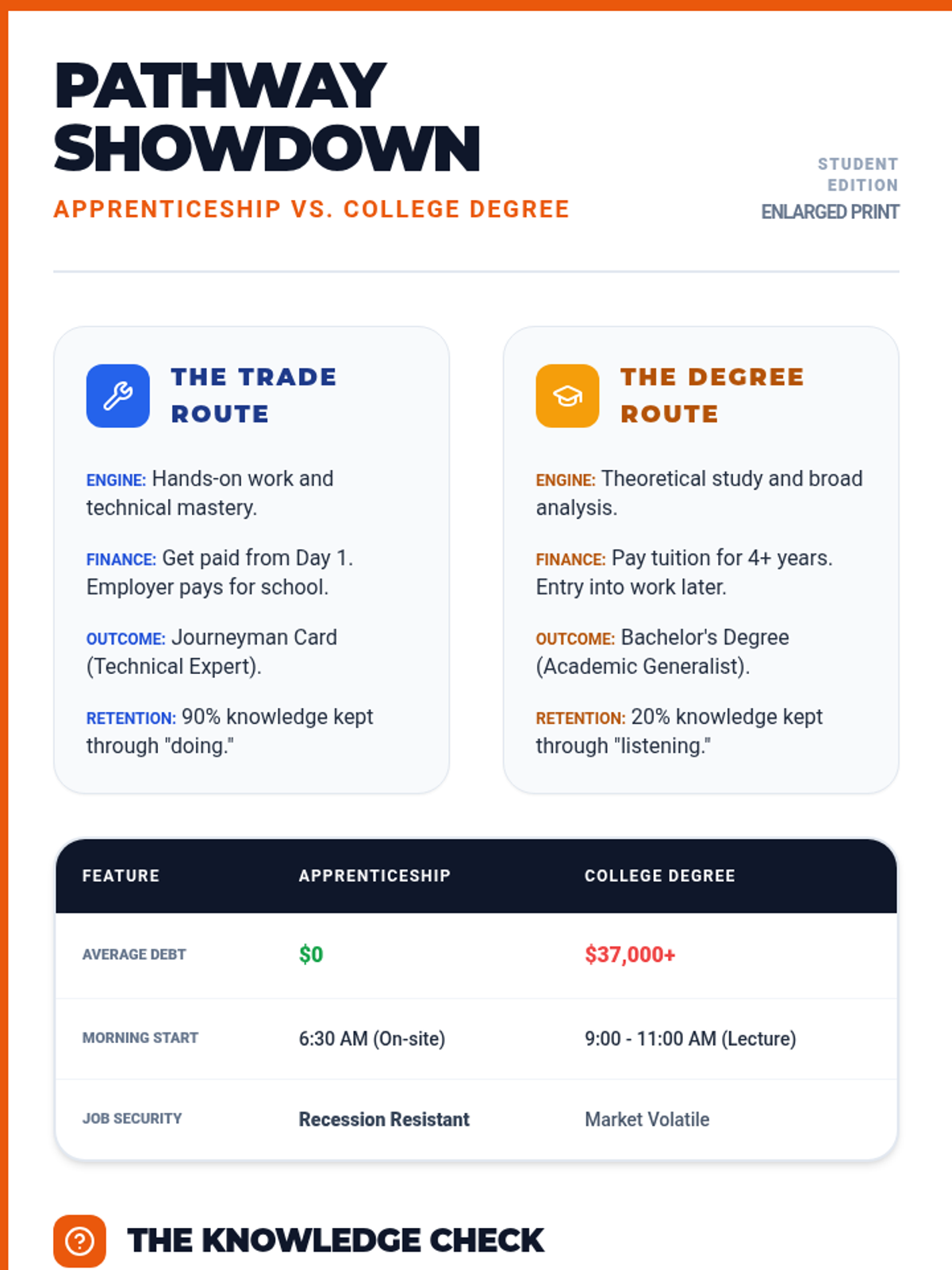
A 1-page enlarged informational summary comparing Apprenticeships and College Degrees, designed for maximum readability. Includes a facts breakdown, comparison table, and 6 key knowledge-check questions.
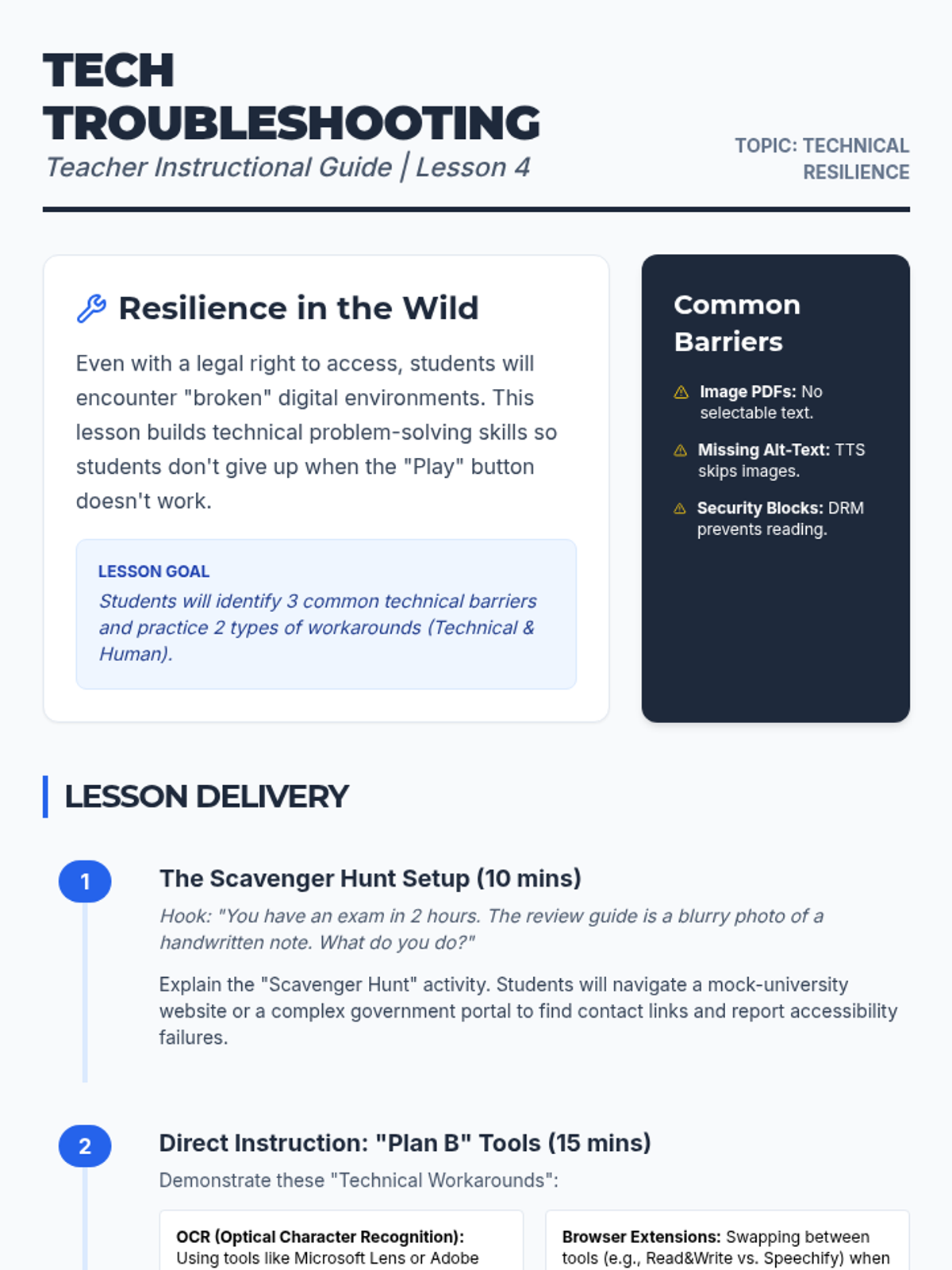
An instructional guide for teachers to lead the Tech Trouble Detectives lesson, including demonstrations of OCR tools and facilitation for the scavenger hunt.
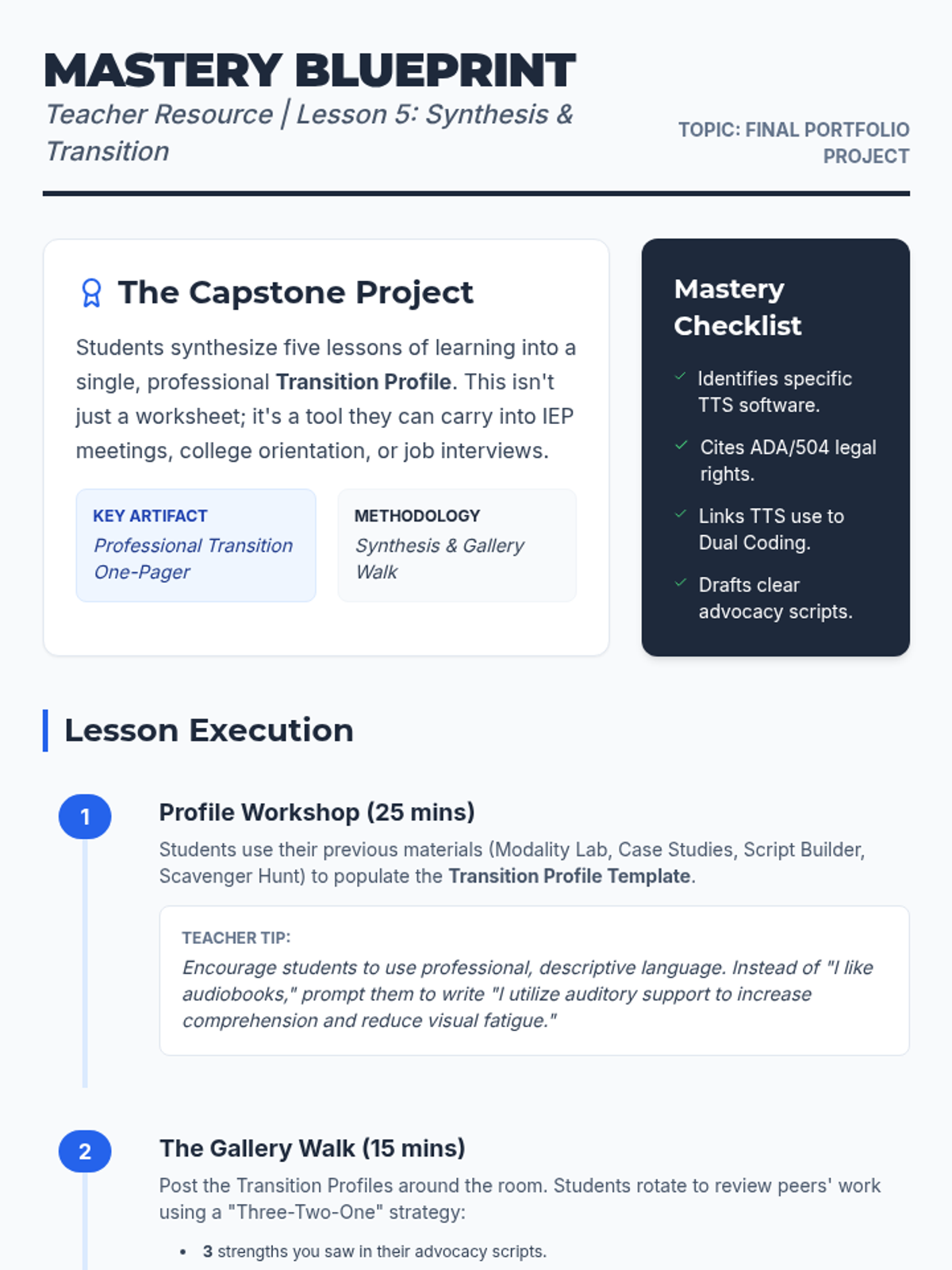
A teacher resource providing guidance for the final 'Transition Profile' project, instructions for a gallery walk activity, and a mastery rubric.
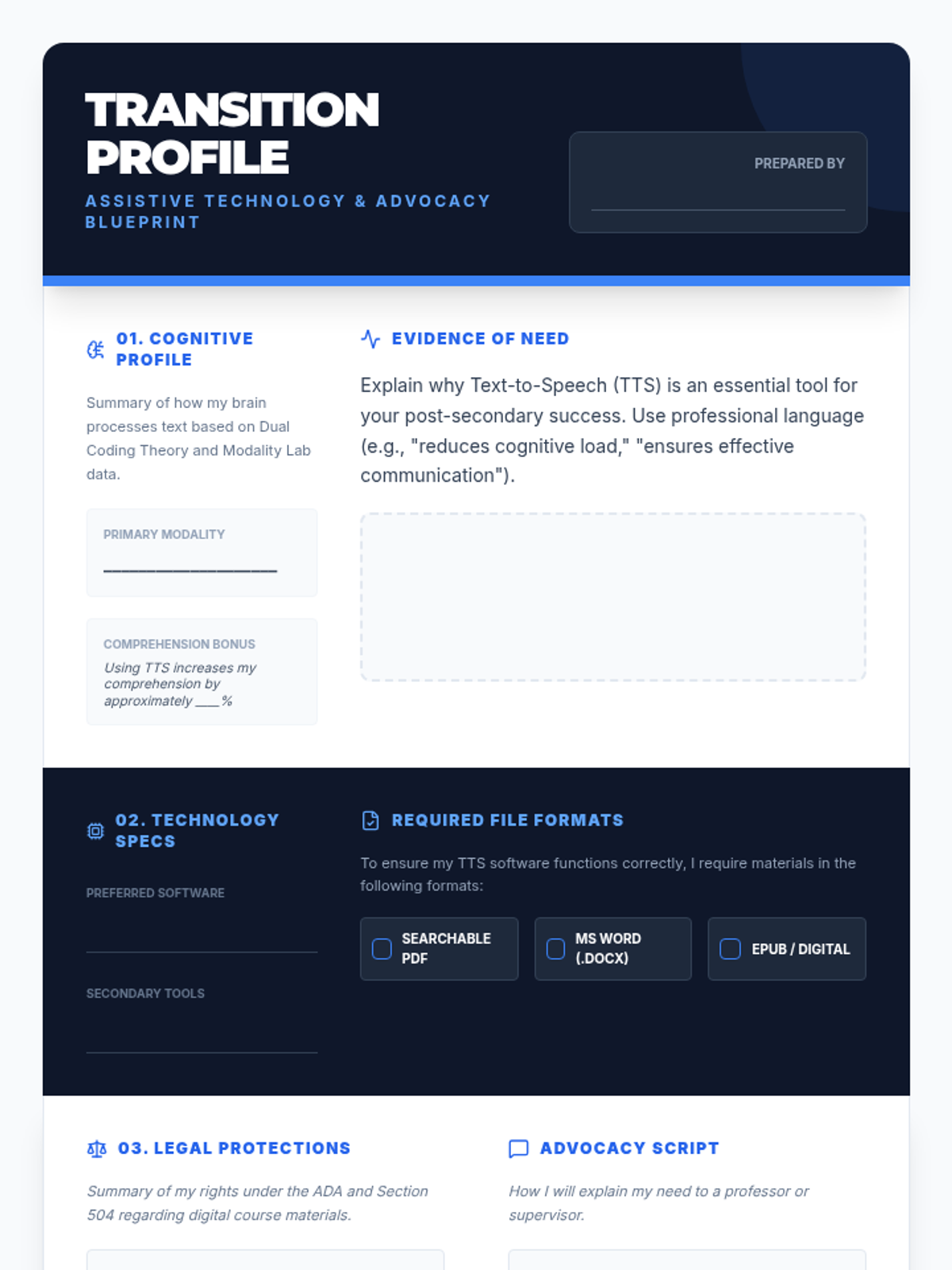
A student template for creating a professional 'Transition Profile' that summarizes their assistive technology needs, legal rights, and self-advocacy scripts.
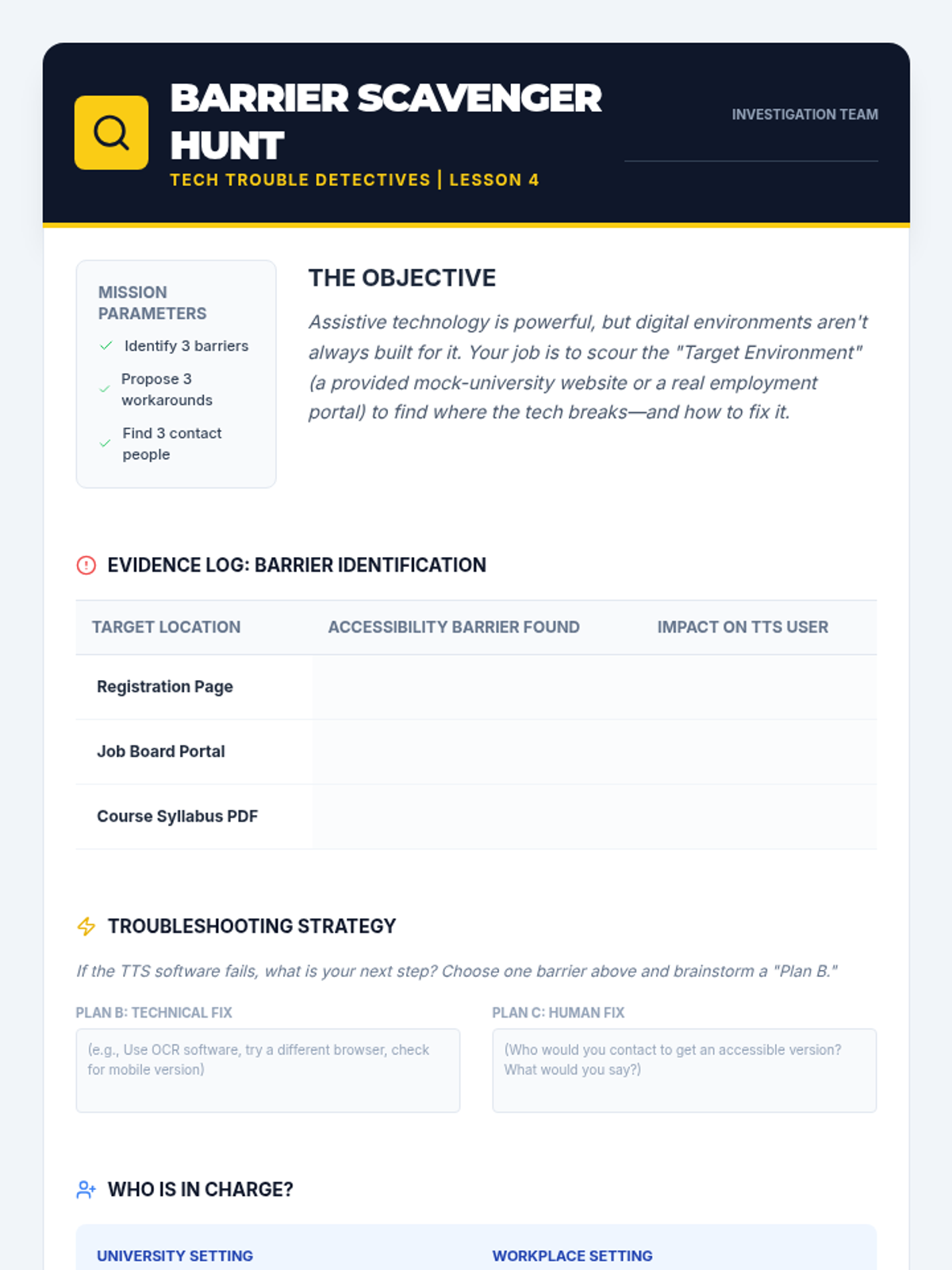
A student worksheet for identifying digital barriers on websites and practicing finding technical workarounds or appropriate contact persons for accessibility support.
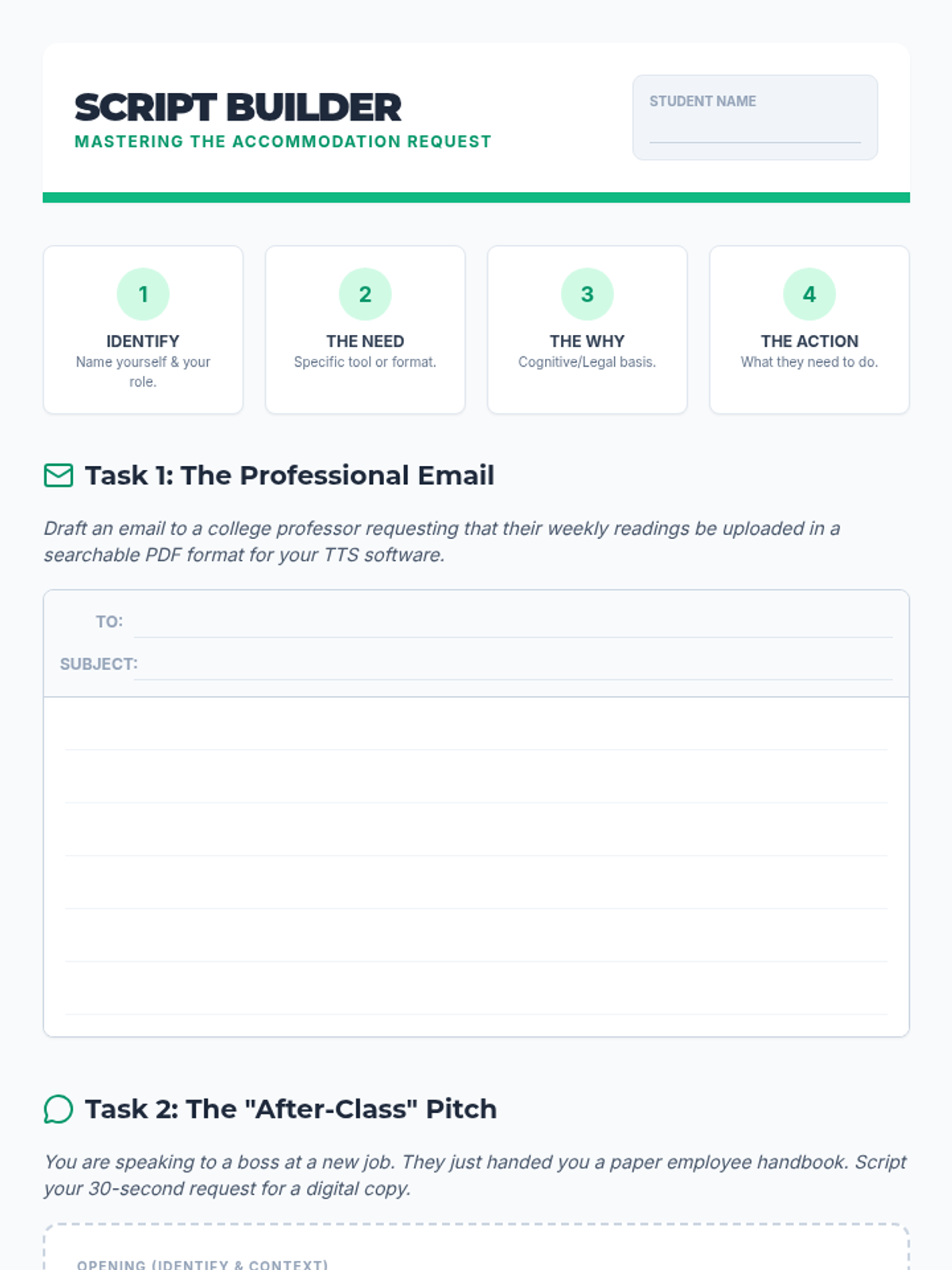
A student worksheet for drafting professional emails and verbal scripts to request Text-to-Speech accommodations in post-secondary and workplace environments.
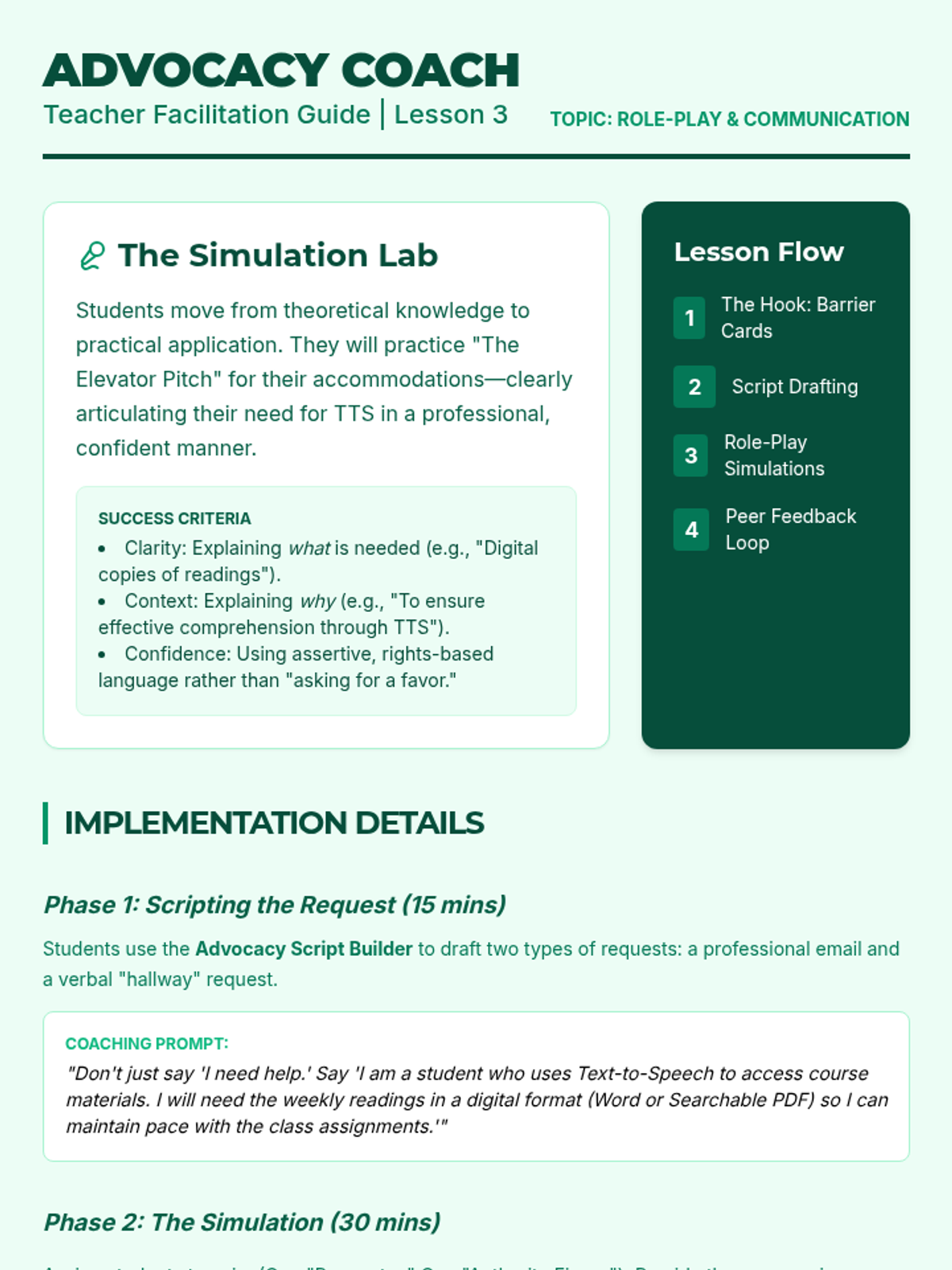
A teacher resource providing role-play scenarios, coaching prompts, and a feedback rubric for simulating accommodation requests in college and workplace settings.
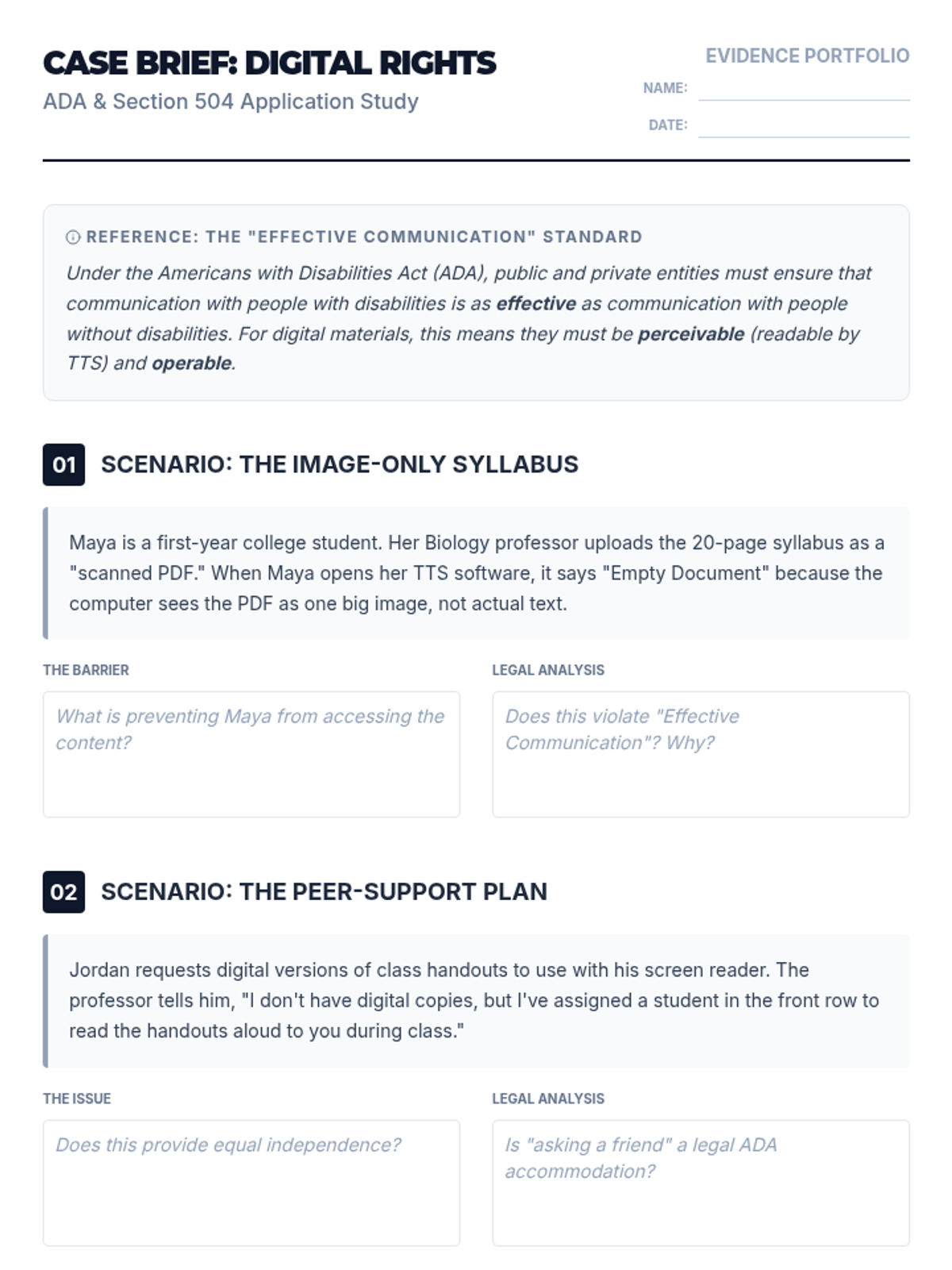
A student worksheet featuring three legal scenarios where digital accessibility is a barrier, requiring students to analyze the situation using ADA standards.
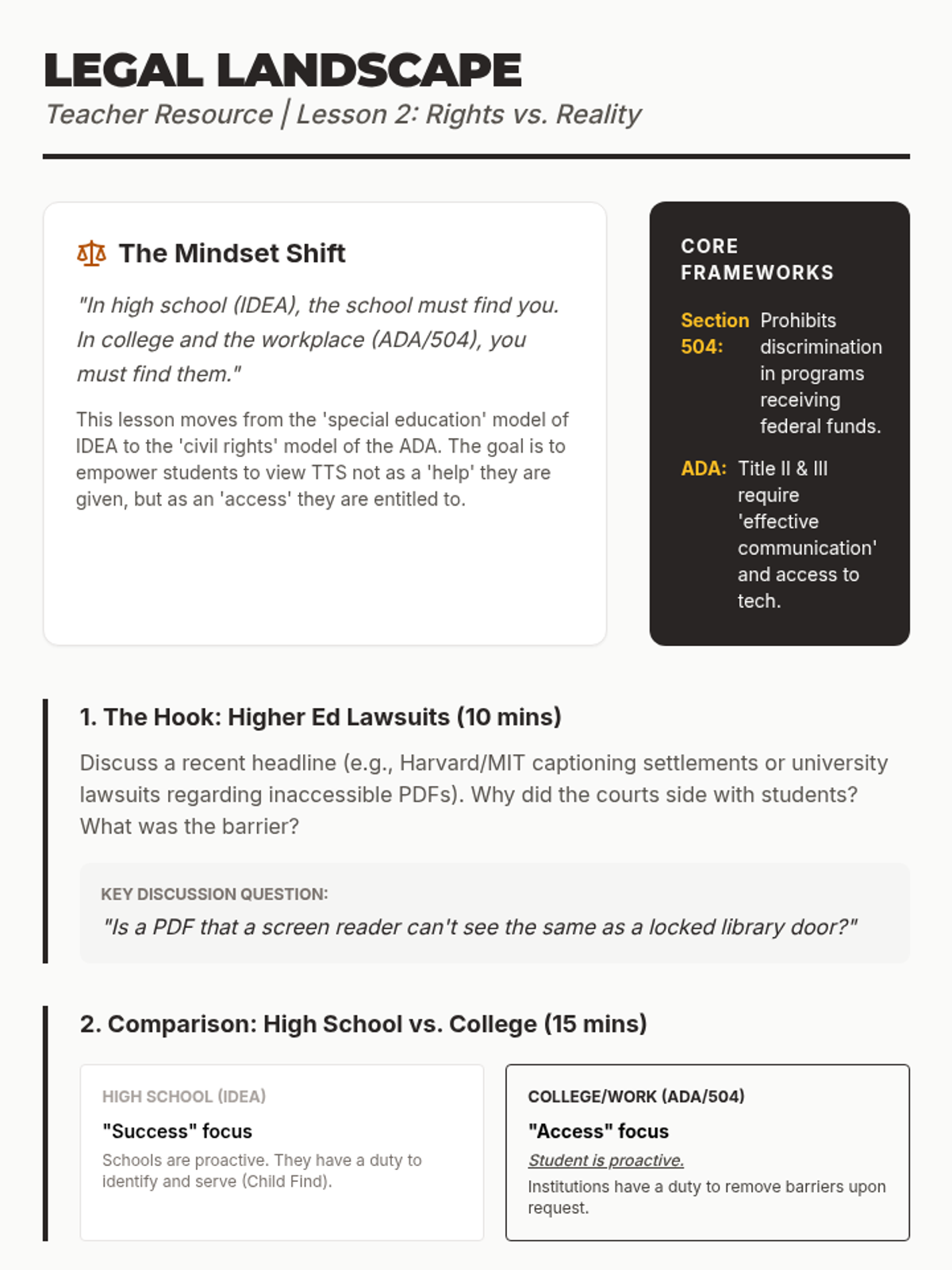
A teacher resource outlining the shift from IDEA to ADA, providing discussion prompts, and an answer key for legal case studies.
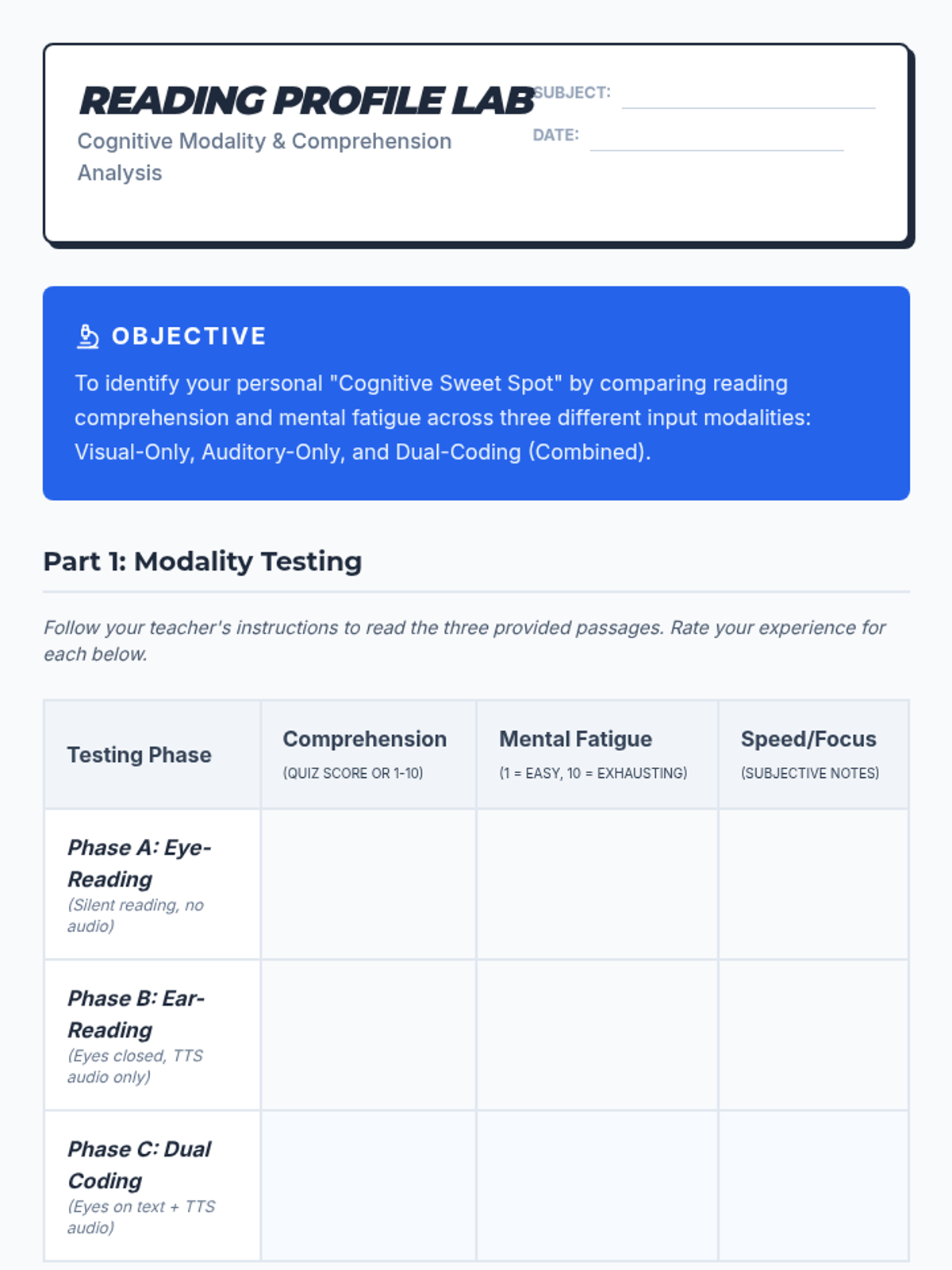
A student lab report for comparing comprehension and fatigue across different reading modalities (visual, auditory, and combined).
Visual presentation for Lesson 1, introducing Dual Coding Theory and Cognitive Load Theory to contextualize the use of Text-to-Speech technology.
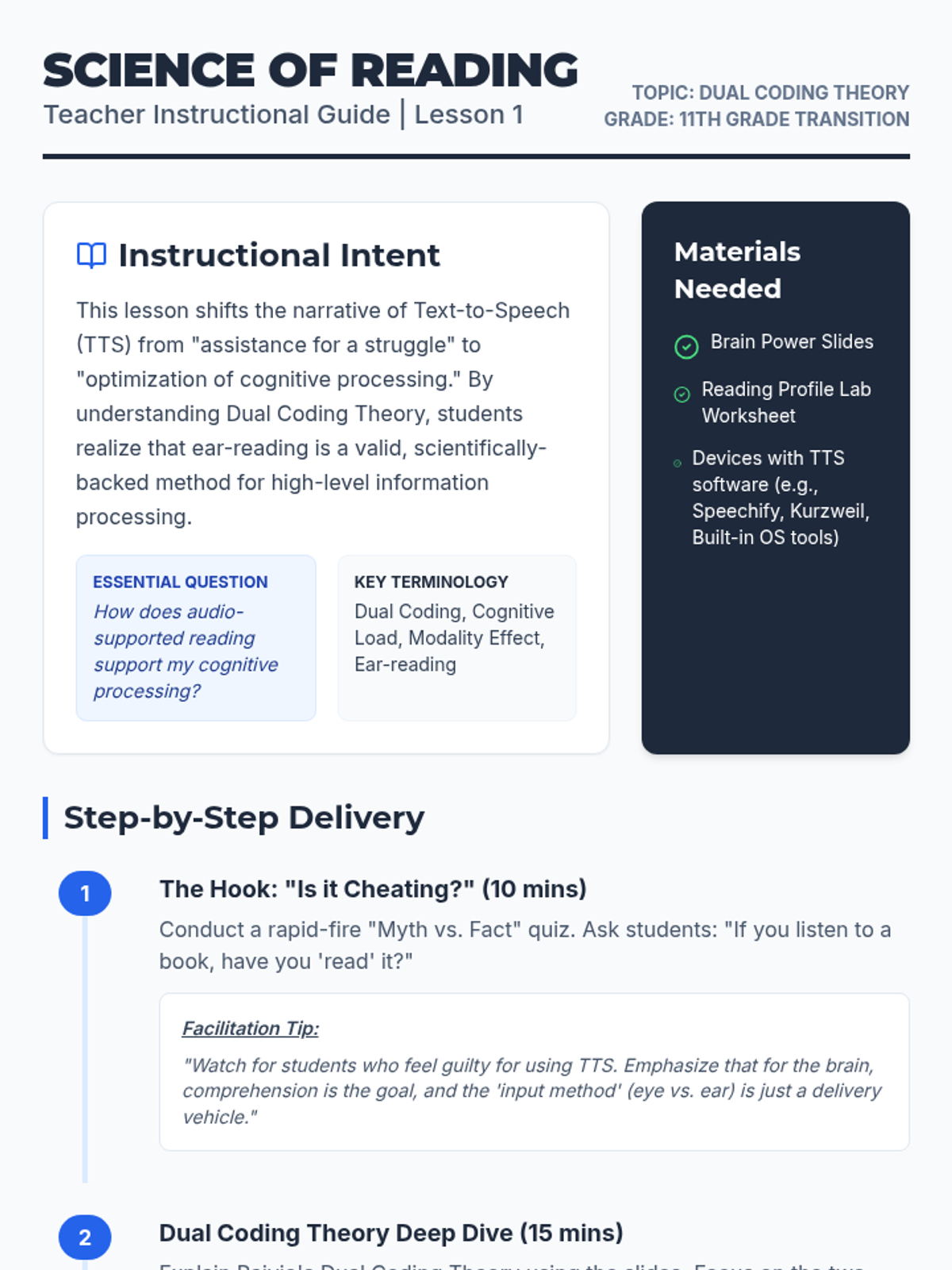
An instructional guide for teachers providing the pedagogical background of Dual Coding Theory and a step-by-step lesson plan for implementing a reading modality lab.
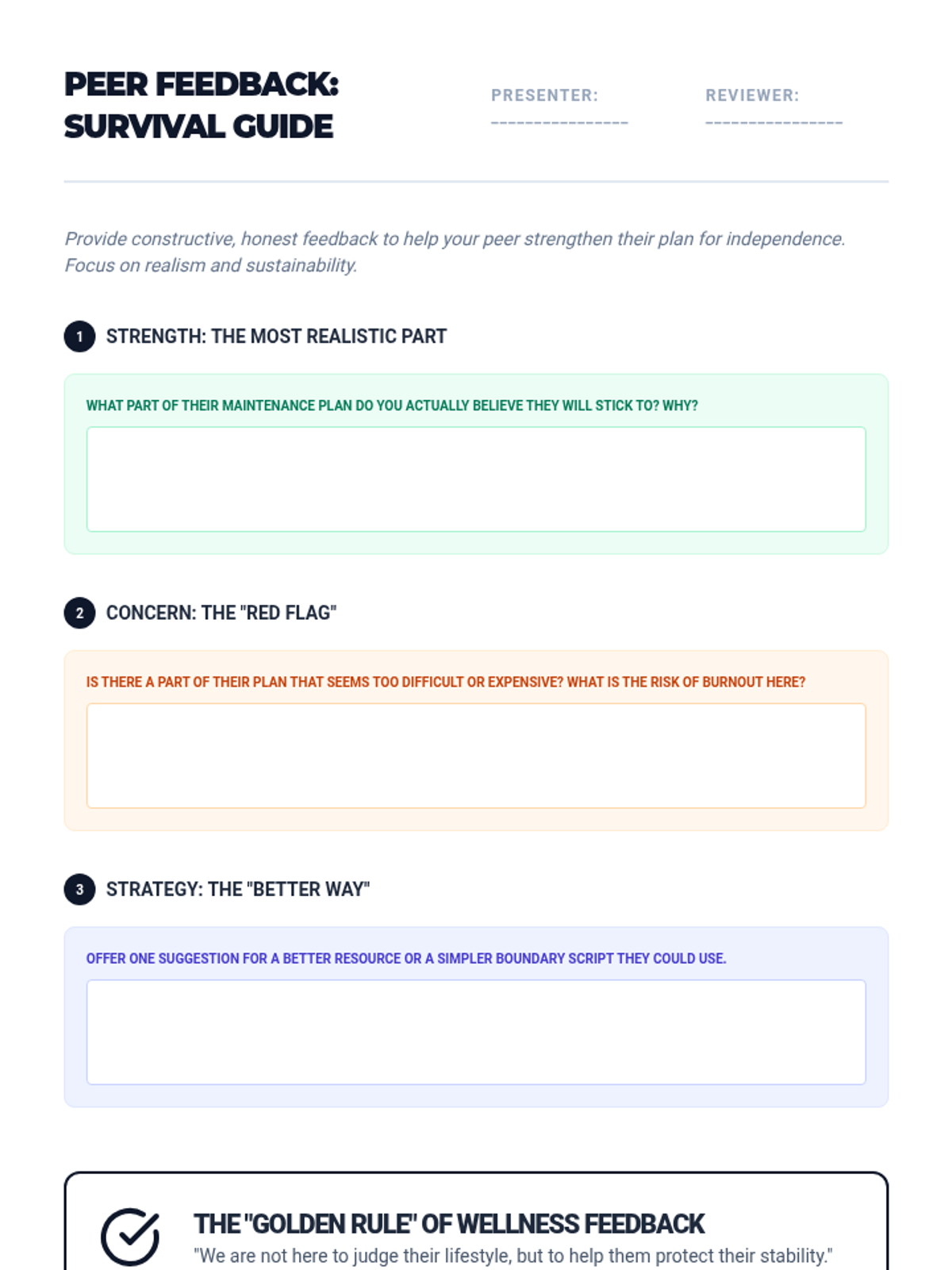
A peer feedback form for students to provide structured critiques on their classmates' independent living plans.
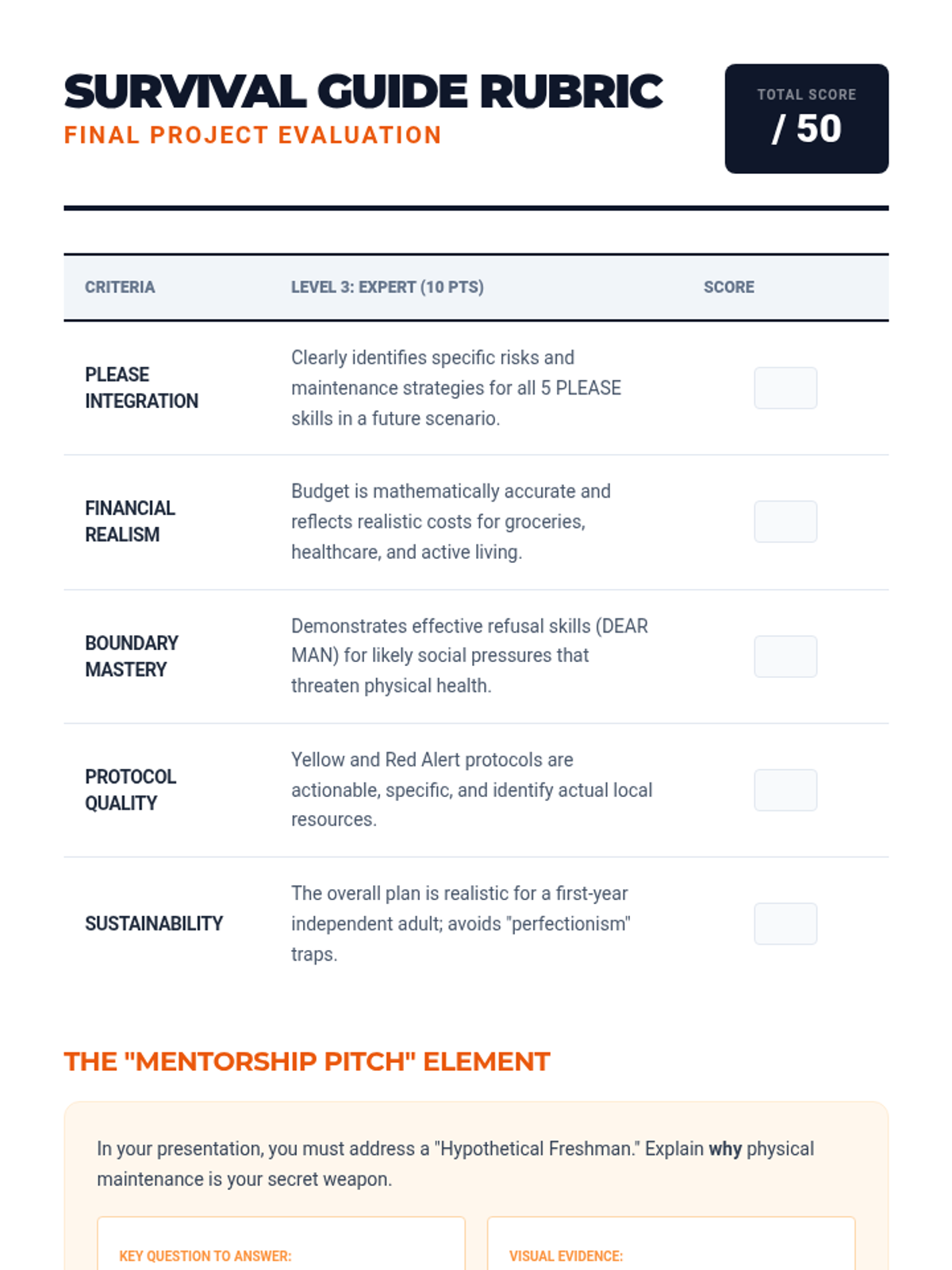
A grading rubric for the final Survival Guide project, assessing PLEASE integration, financial realism, boundary mastery, and sustainability.
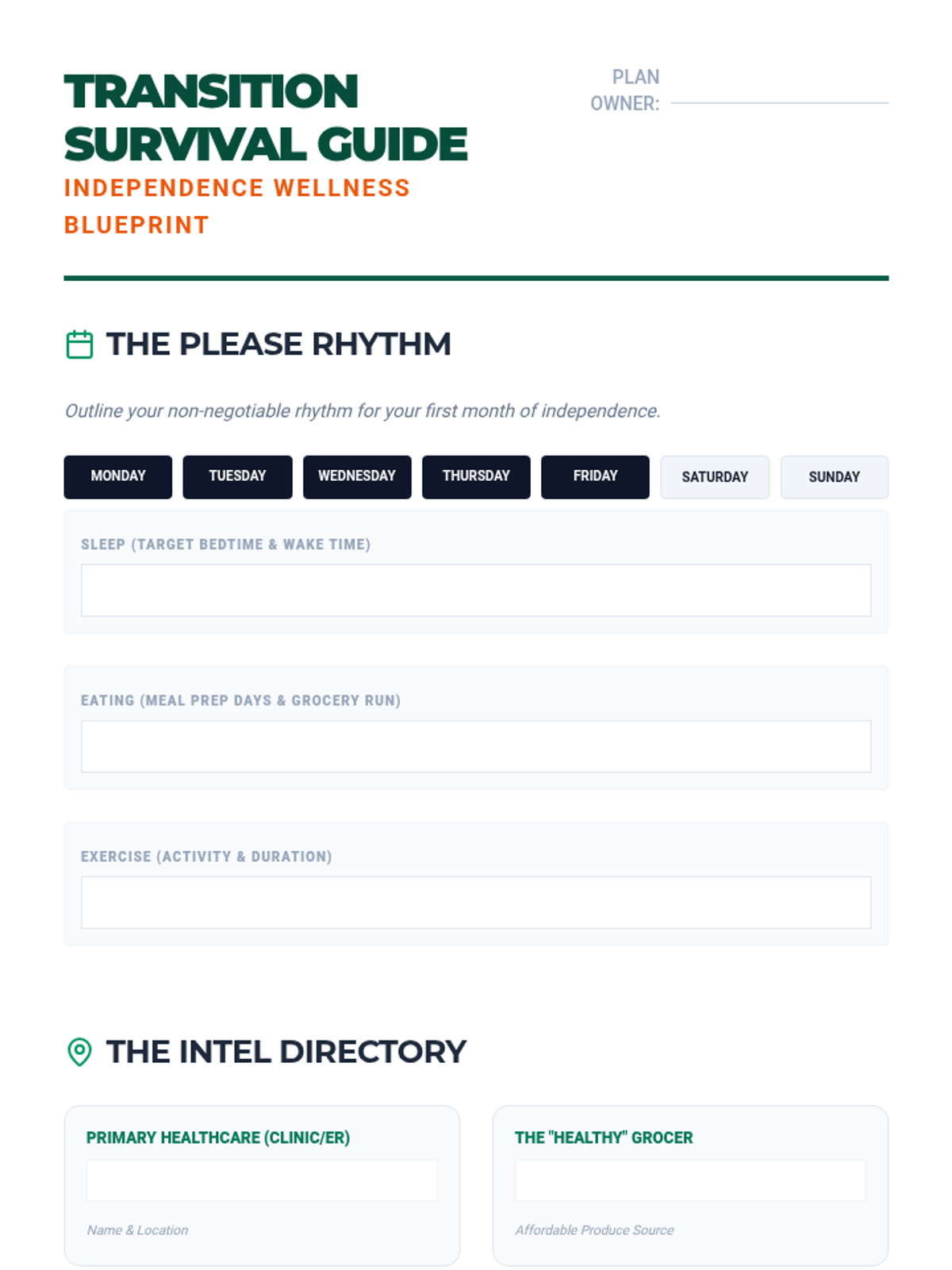
A comprehensive wellness plan template for students to outline their maintenance schedule, local resources, and crisis protocols for independent living.
A slide deck for Lesson 4 that introduces the concept of a "Resource Scavenger Hunt" and setting "Non-Negotiable" standards for physical maintenance.
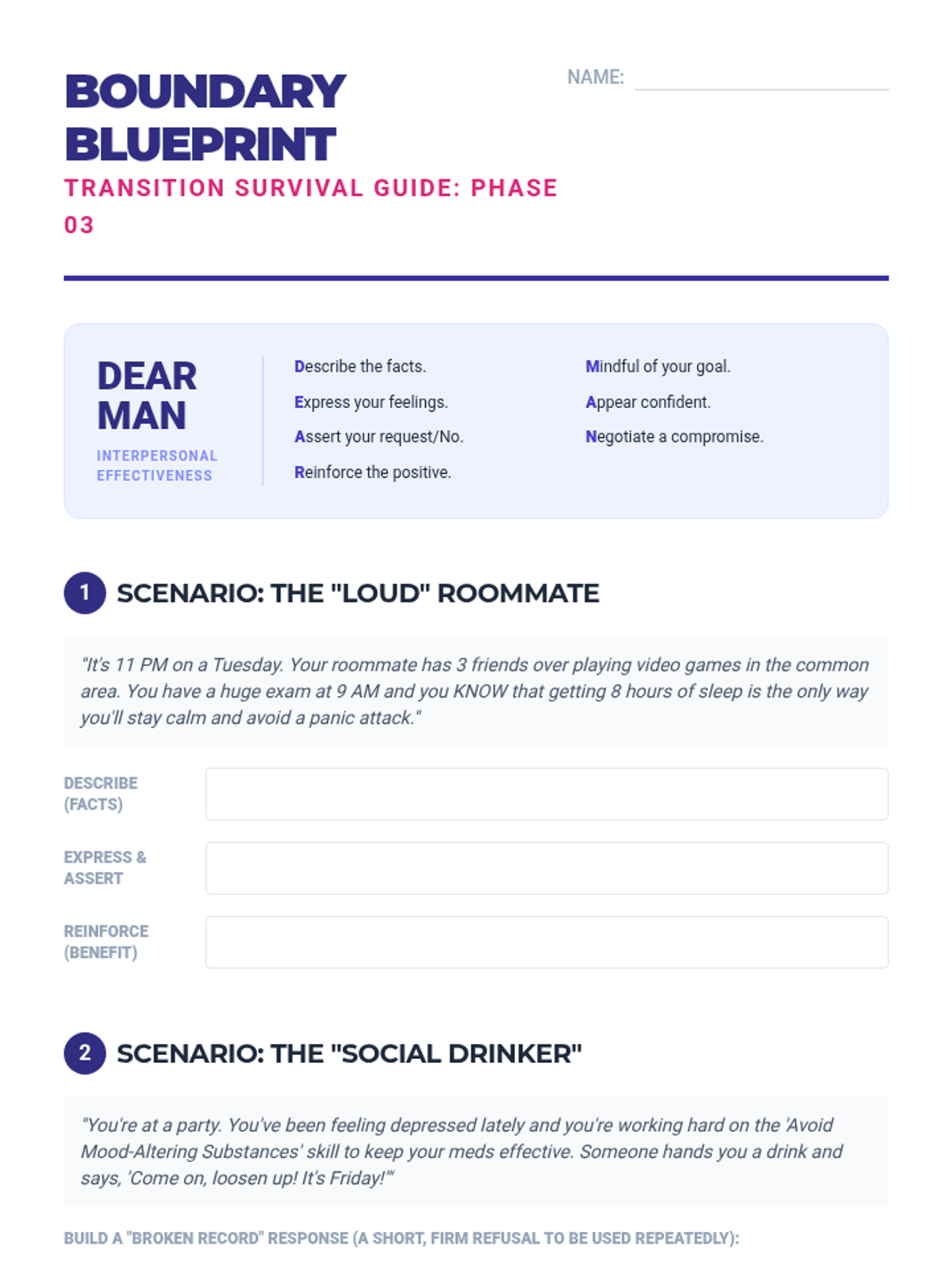
A worksheet where students practice using DEAR MAN to set boundaries around their PLEASE skills in various social scenarios.
A slide deck for Lesson 3 that introduces the concept of "Biological Boundaries" and the conflict between social pressure and physical maintenance.
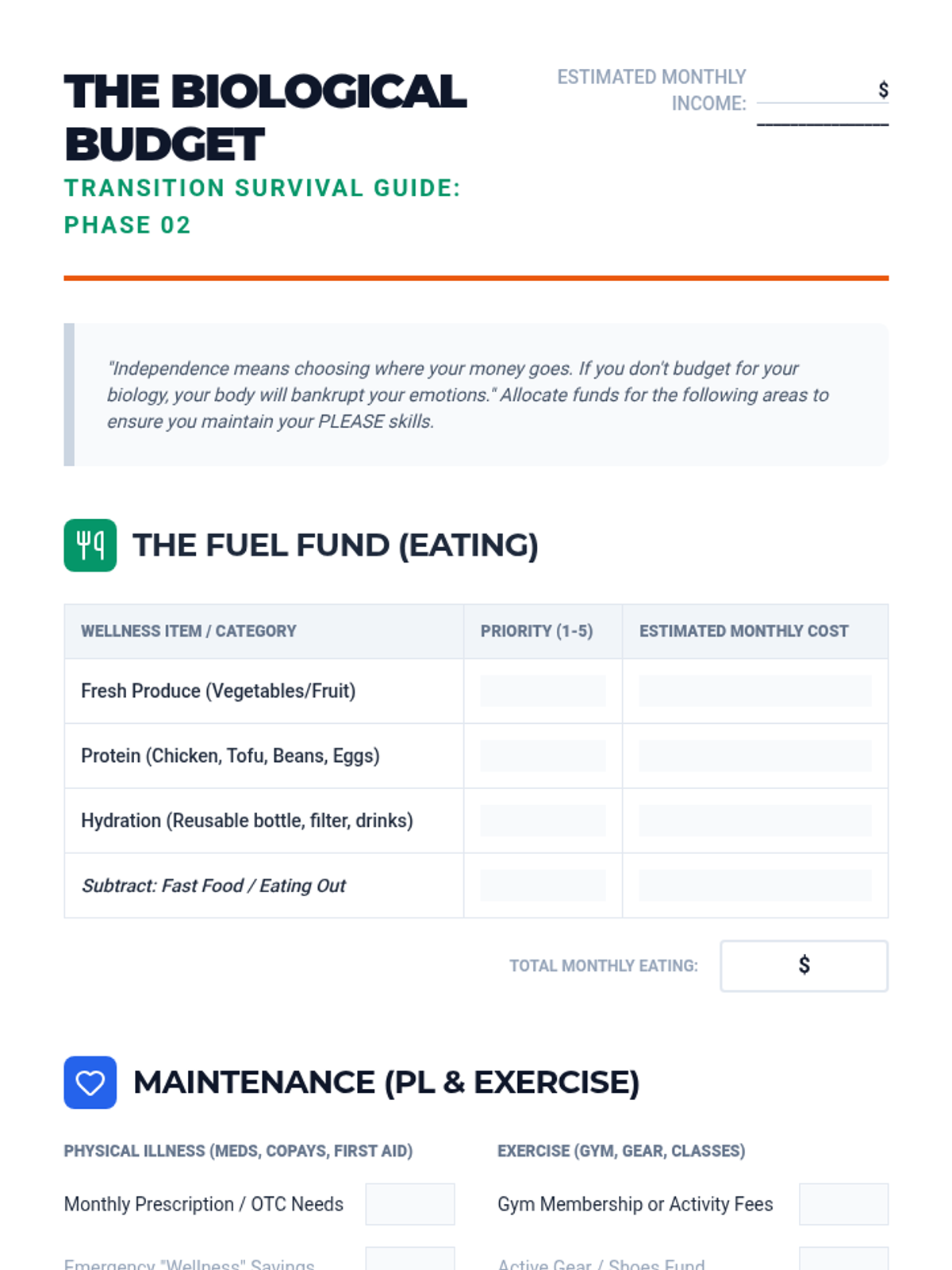
A budgeting worksheet where students prioritize and allocate funds for their PLEASE skills, identifying trade-offs to maintain emotional stability.
A slide deck for Lesson 2 that introduces the concept of the "Biological Tax" and the financial cost of maintaining PLEASE skills.
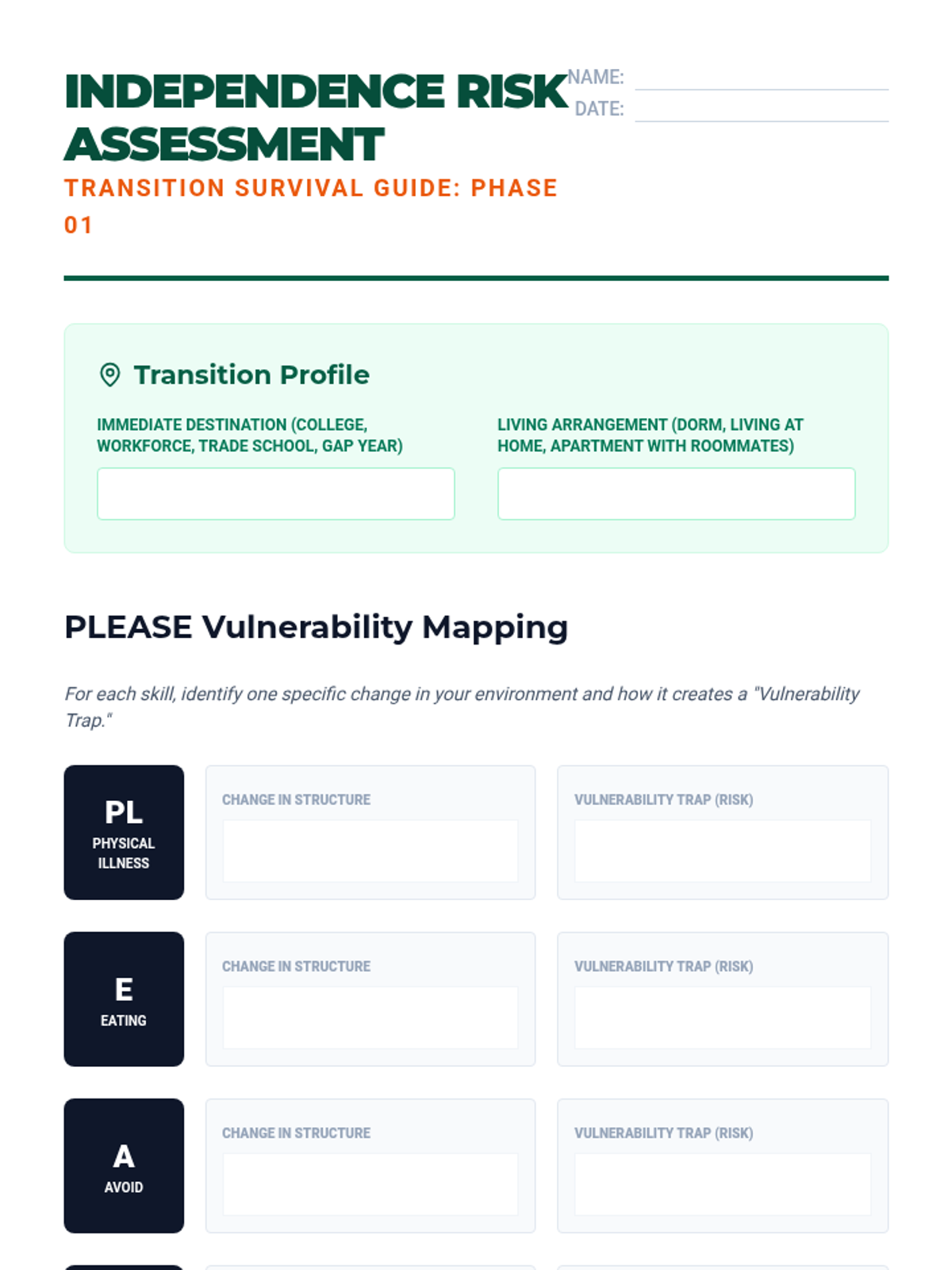
A risk assessment worksheet where students map out transition stressors to each PLEASE skill and prioritize them on a heat map.
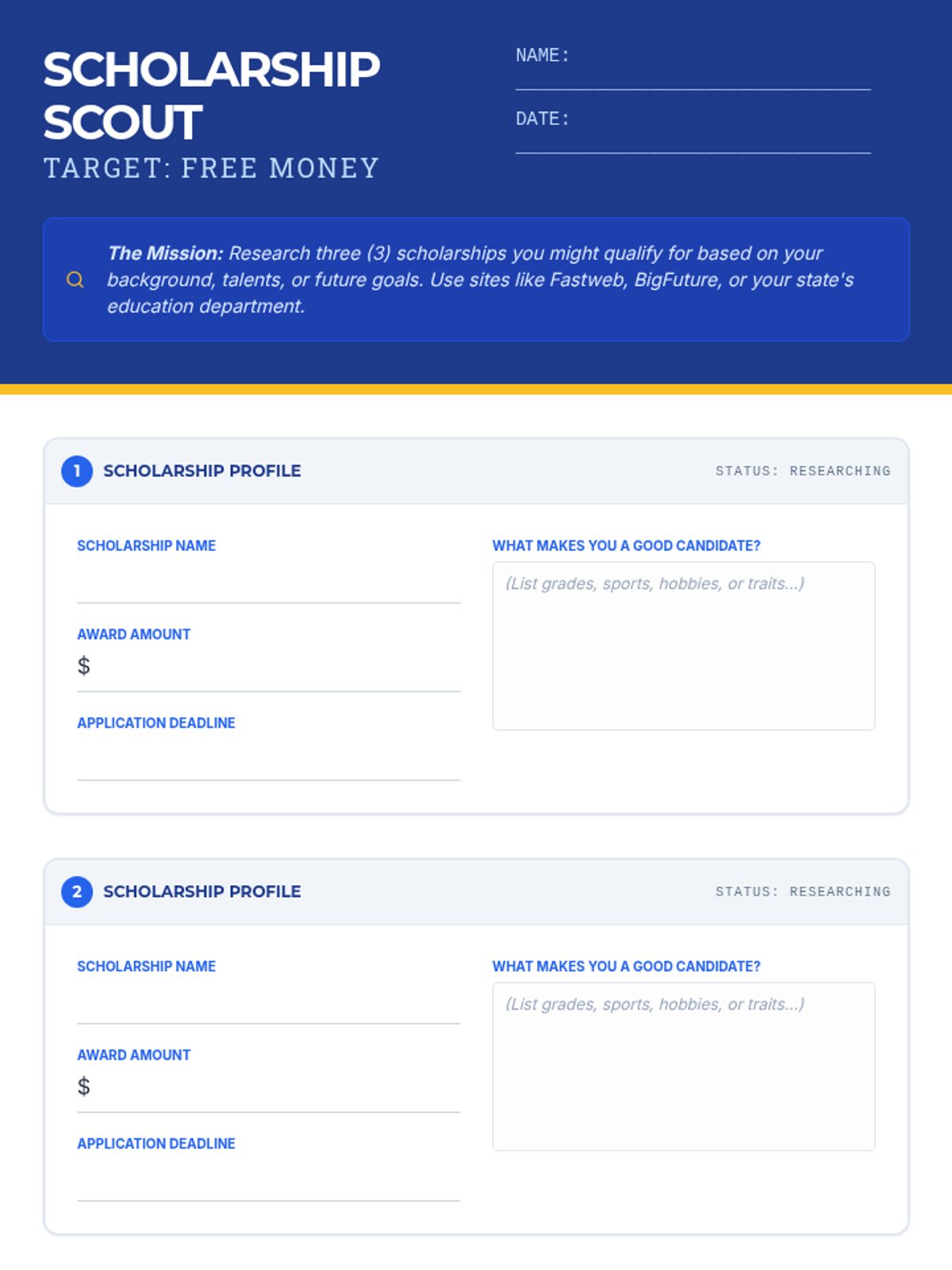
A research template for students to identify and analyze three specific college scholarships based on their background and interests.
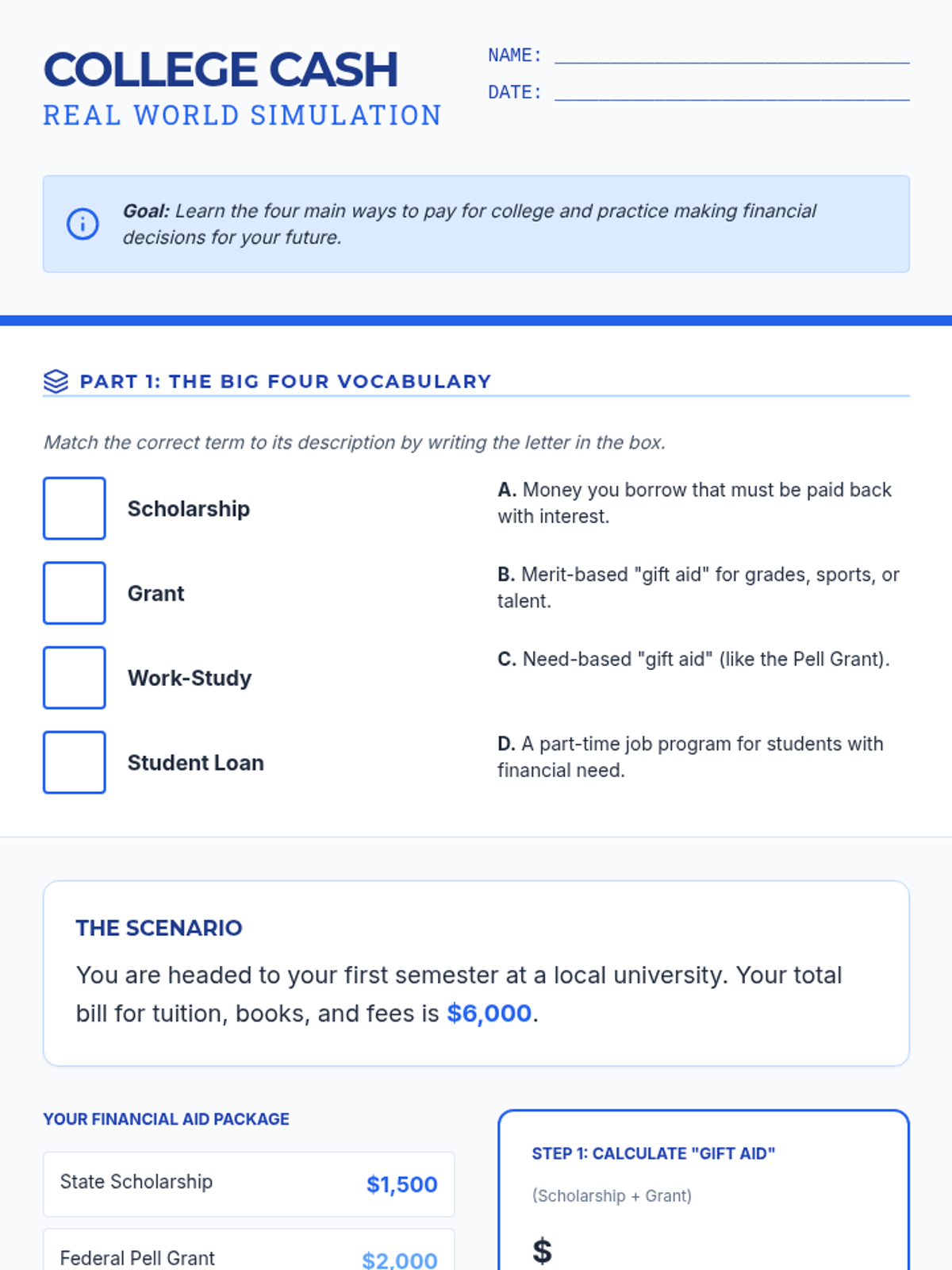
A student worksheet for calculating a college financial aid package and making budget-based decisions.
A visually engaging slide deck covering the four main types of college funding and the "Real World Budget" simulation scenario.
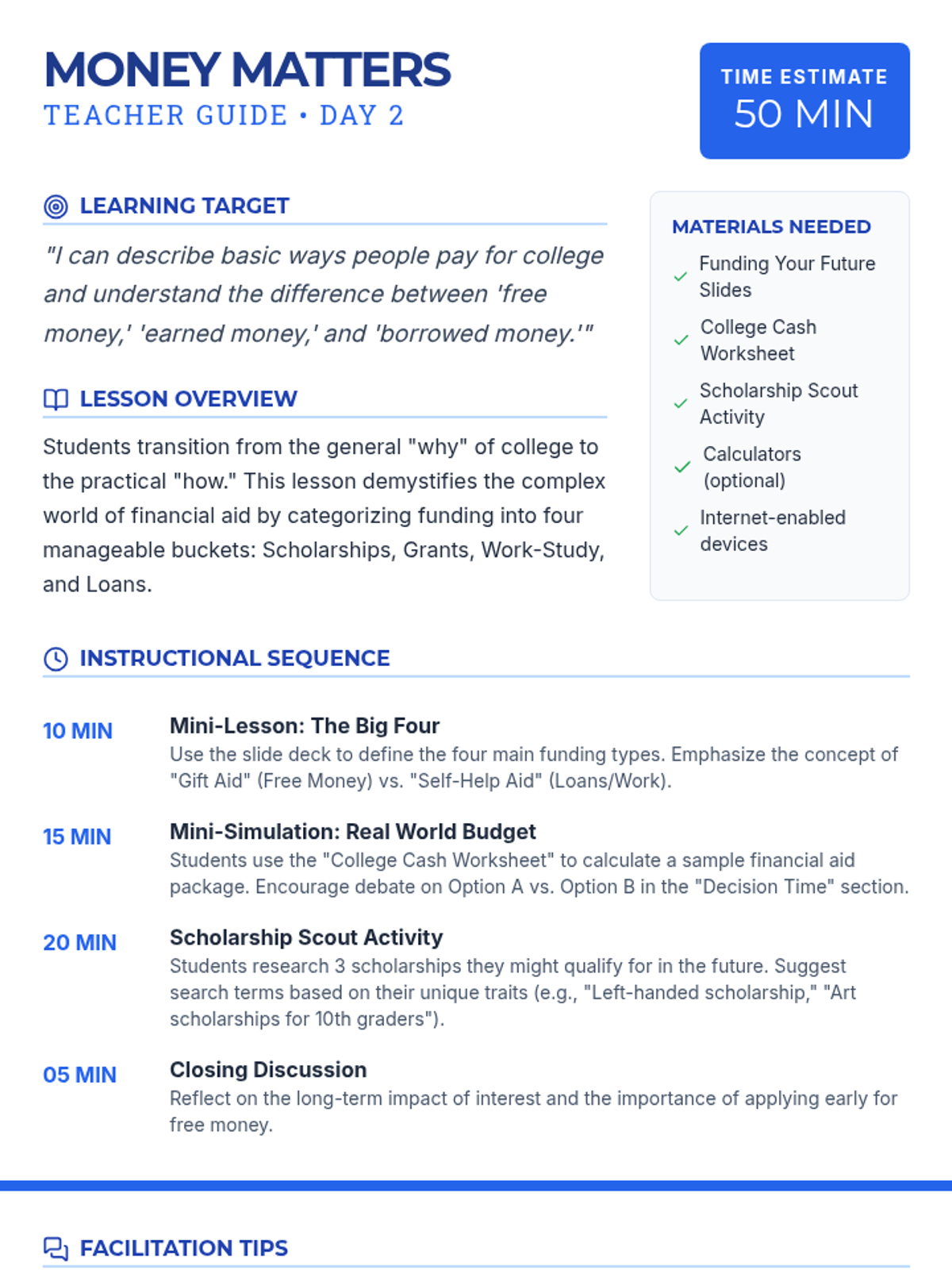
A comprehensive teacher's guide for the "Paying for College Basics" lesson, featuring a pacing guide, facilitation tips, common misconceptions, and an answer key for the student activities.
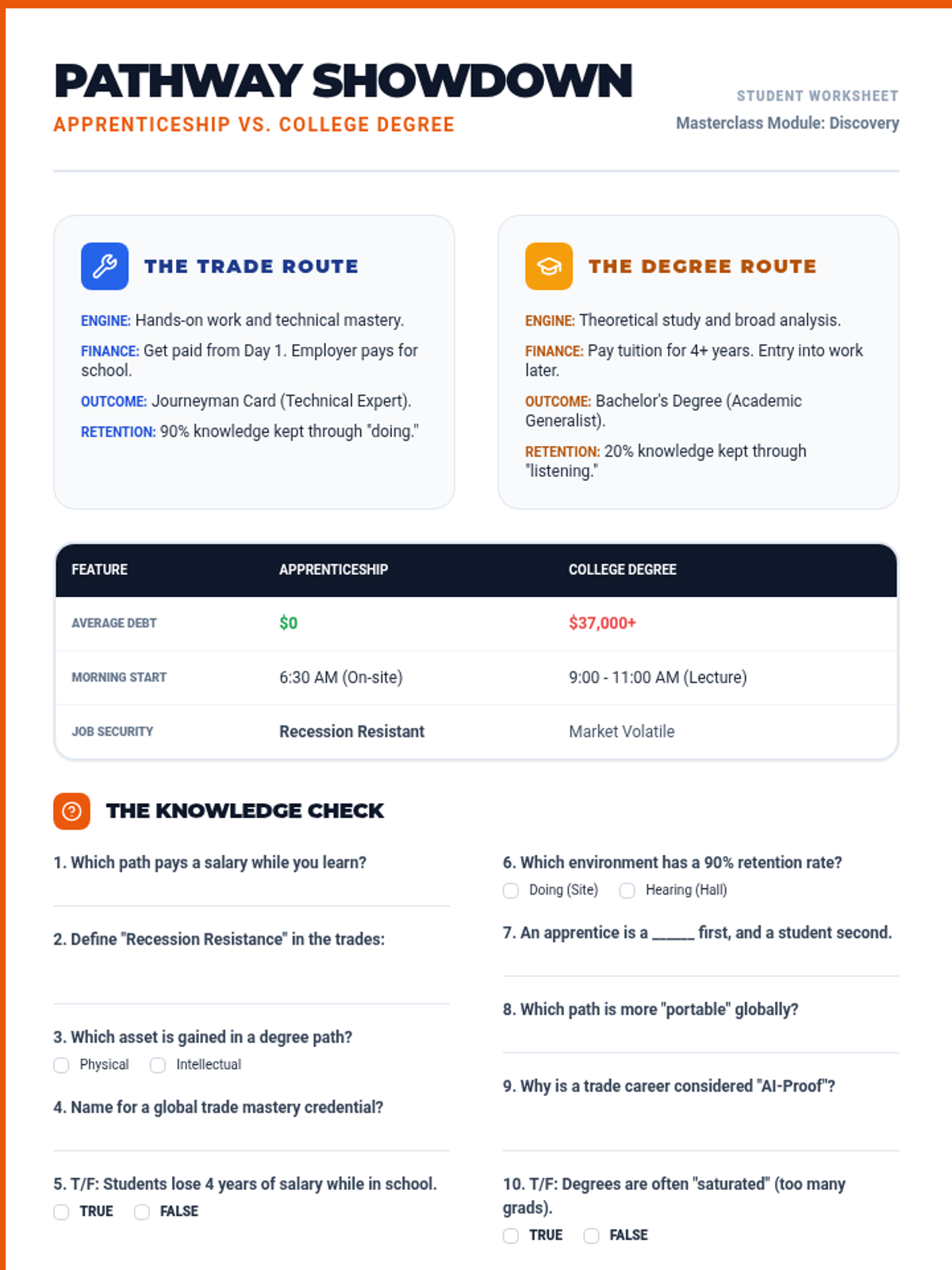
A 1-page informational summary comparing Apprenticeships and College Degrees, featuring a facts breakdown, comparison table, and 10 knowledge-check questions.
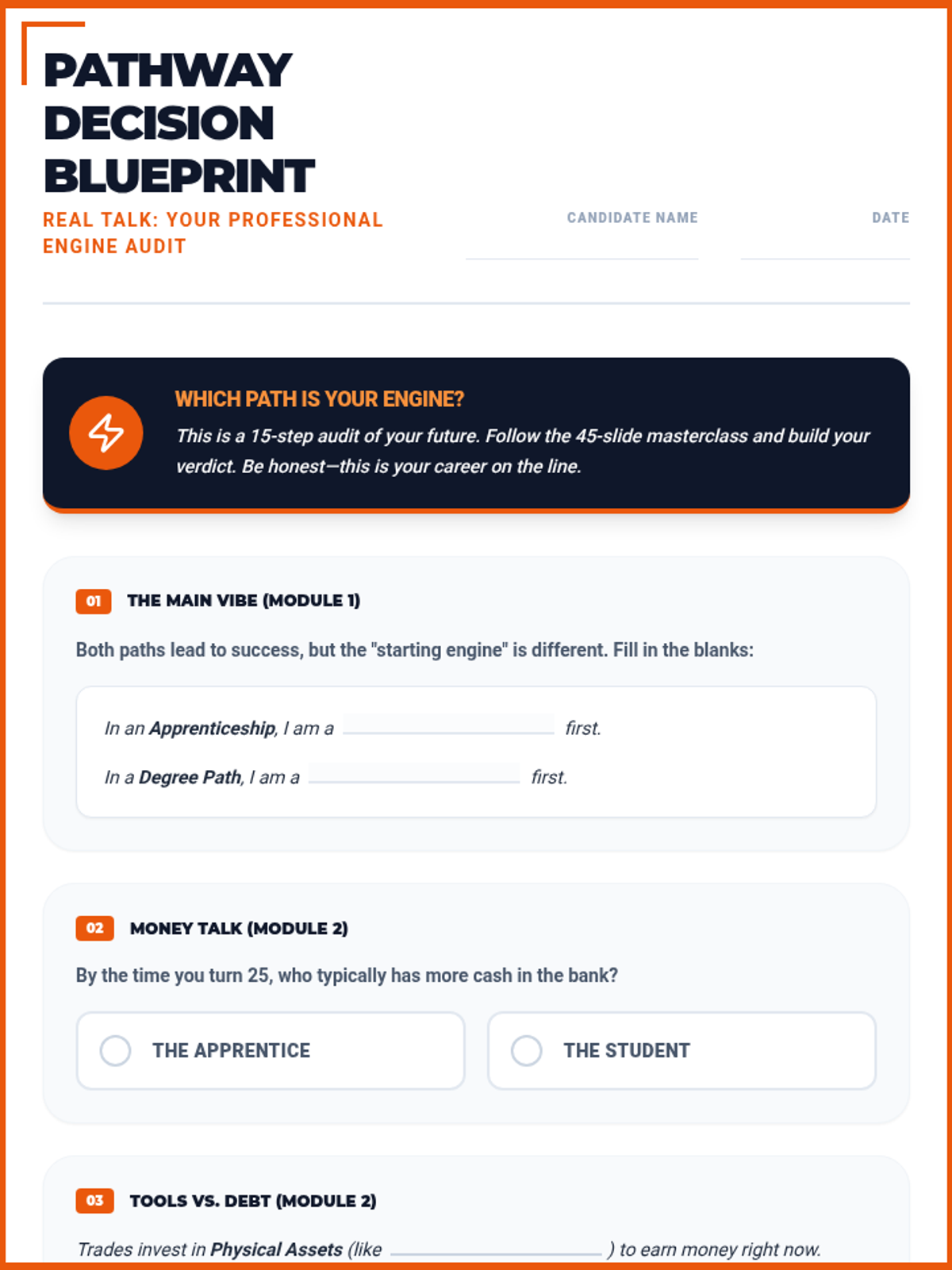
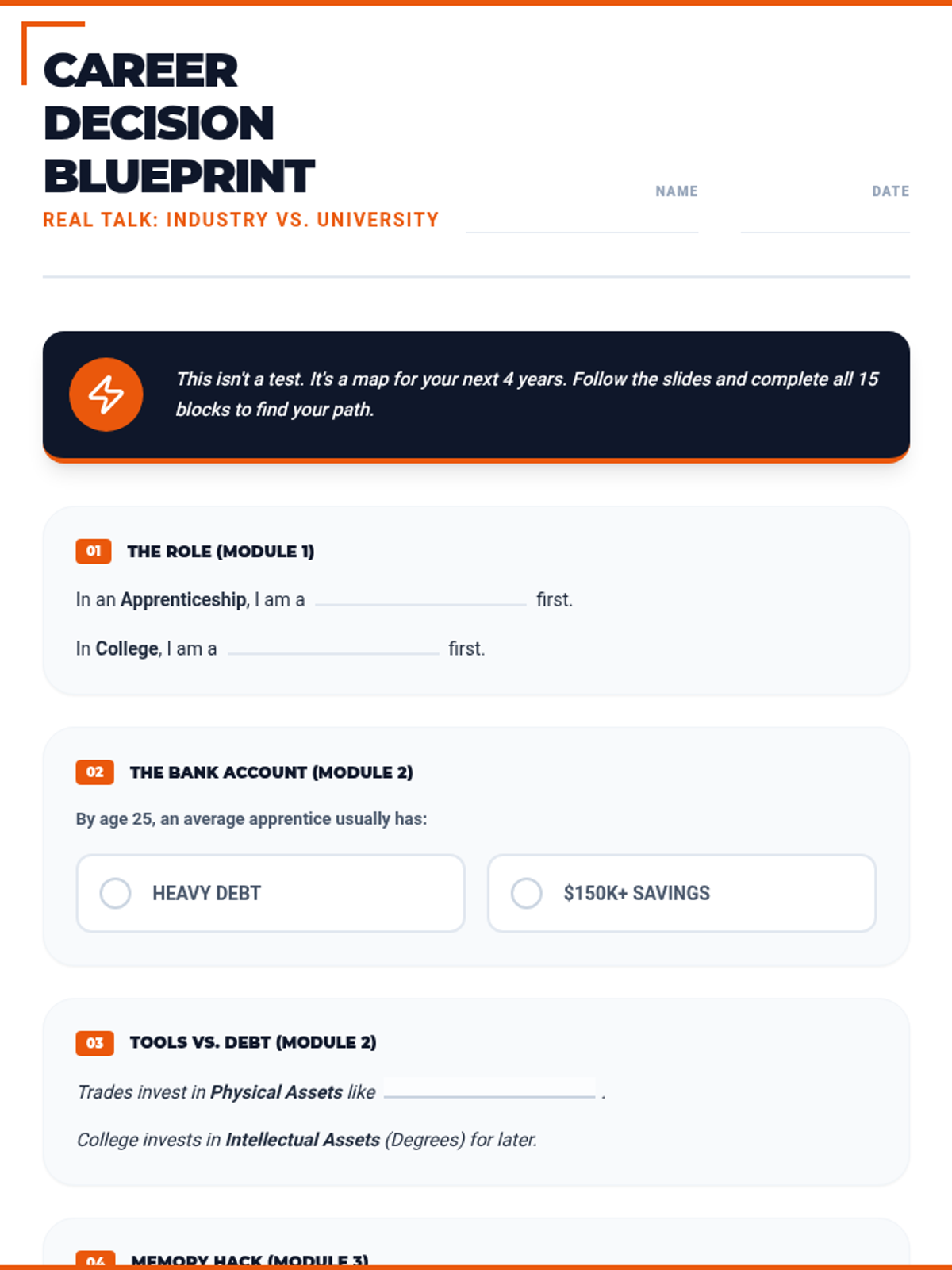
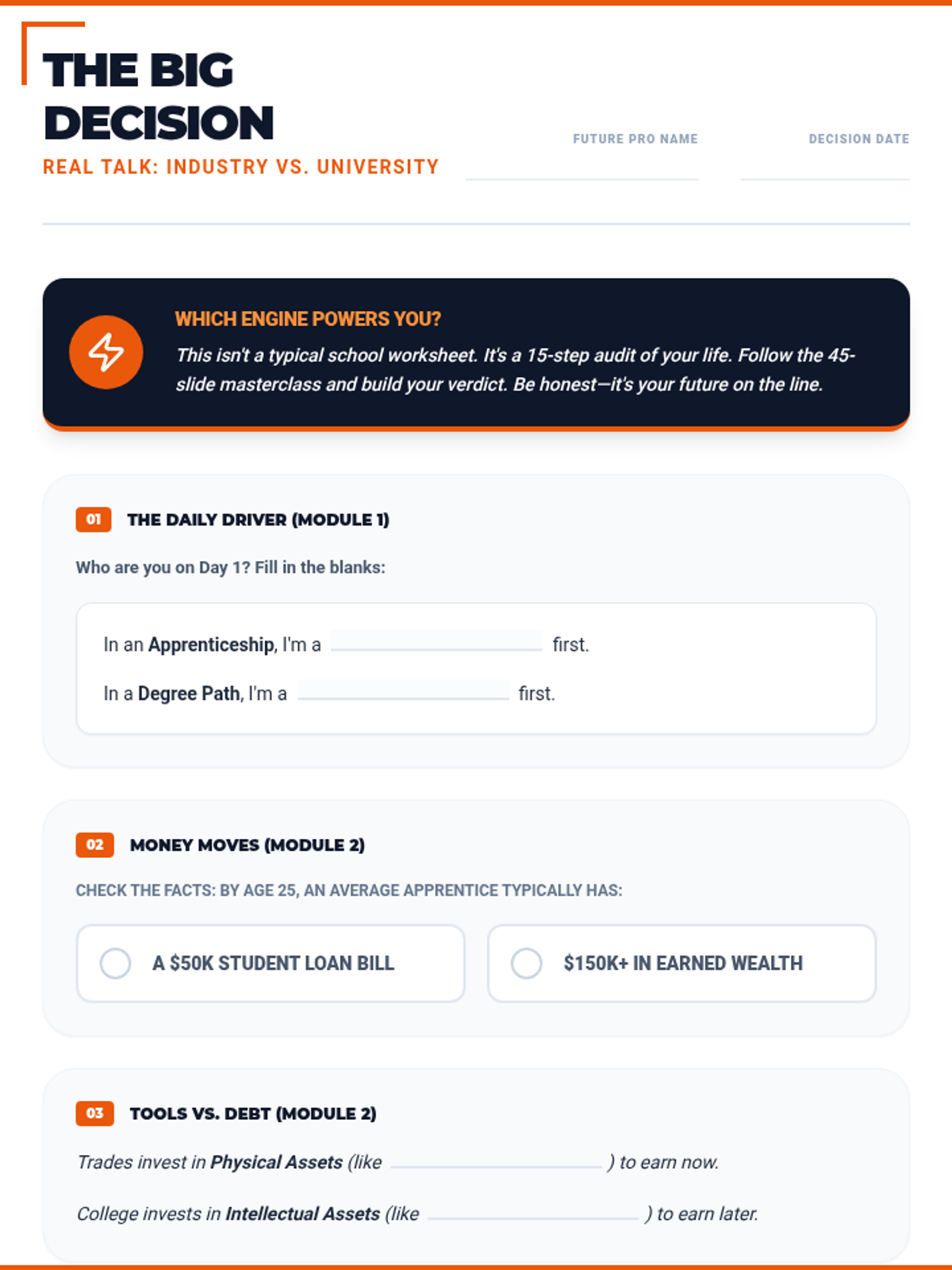
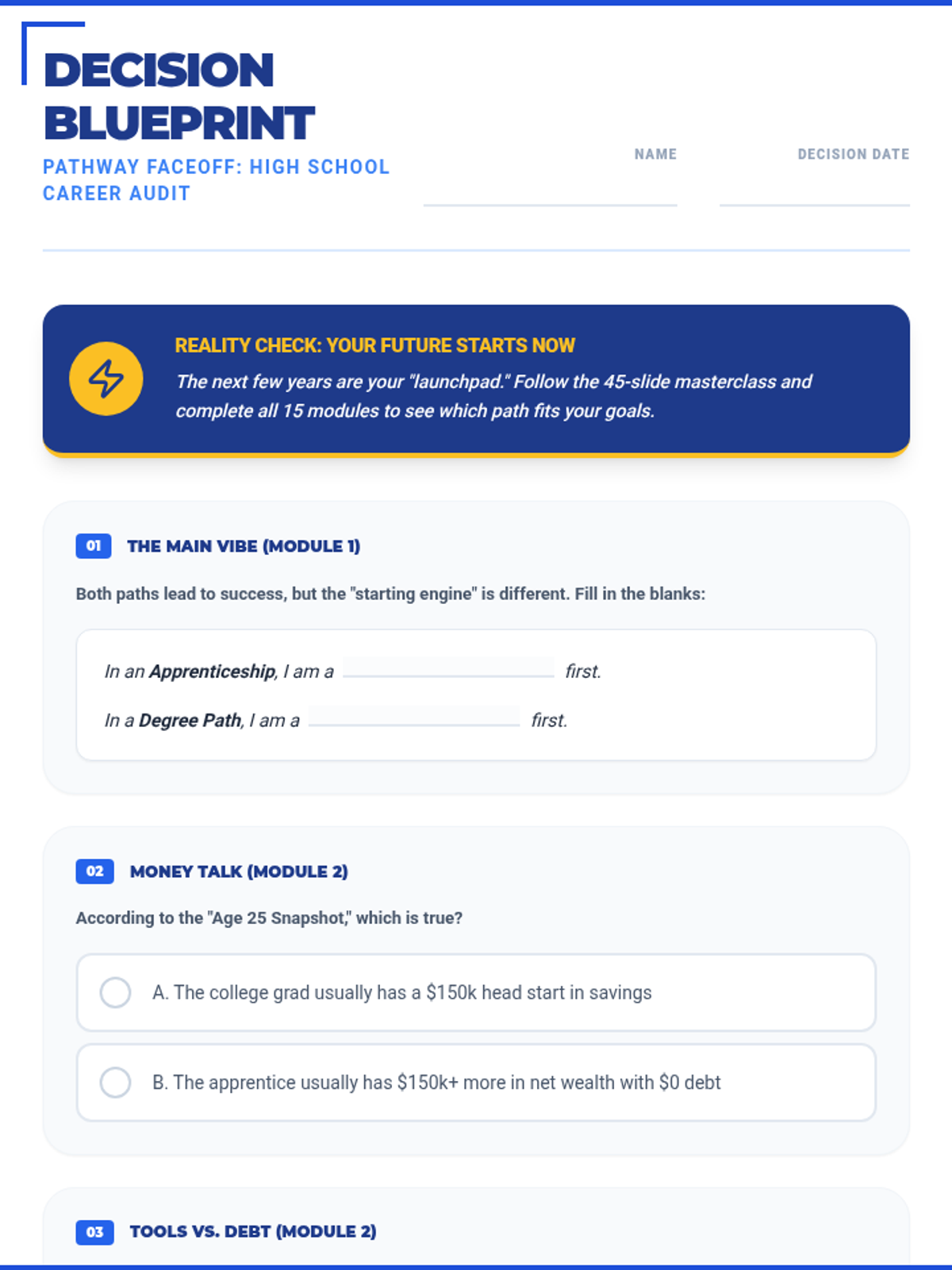
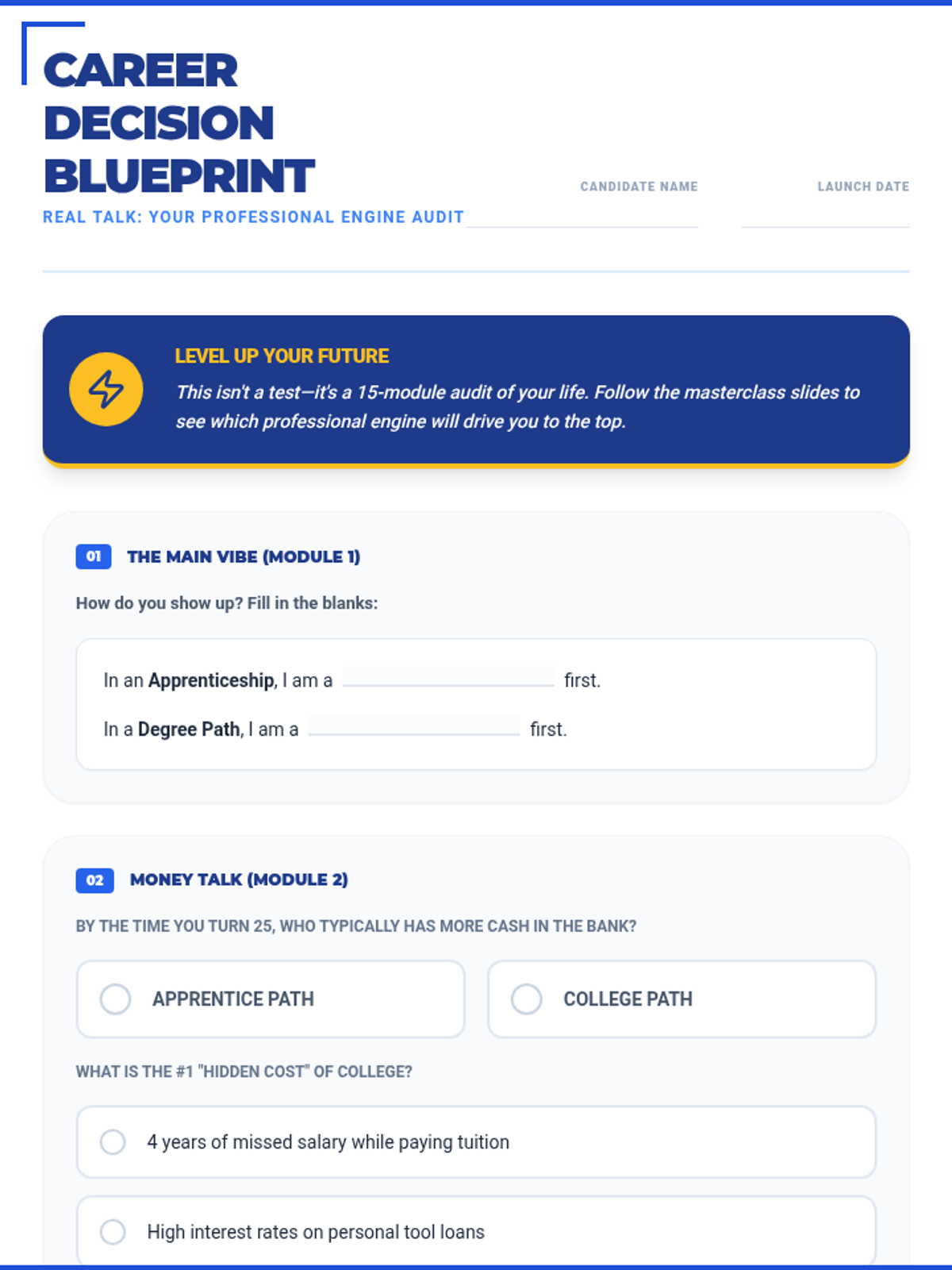
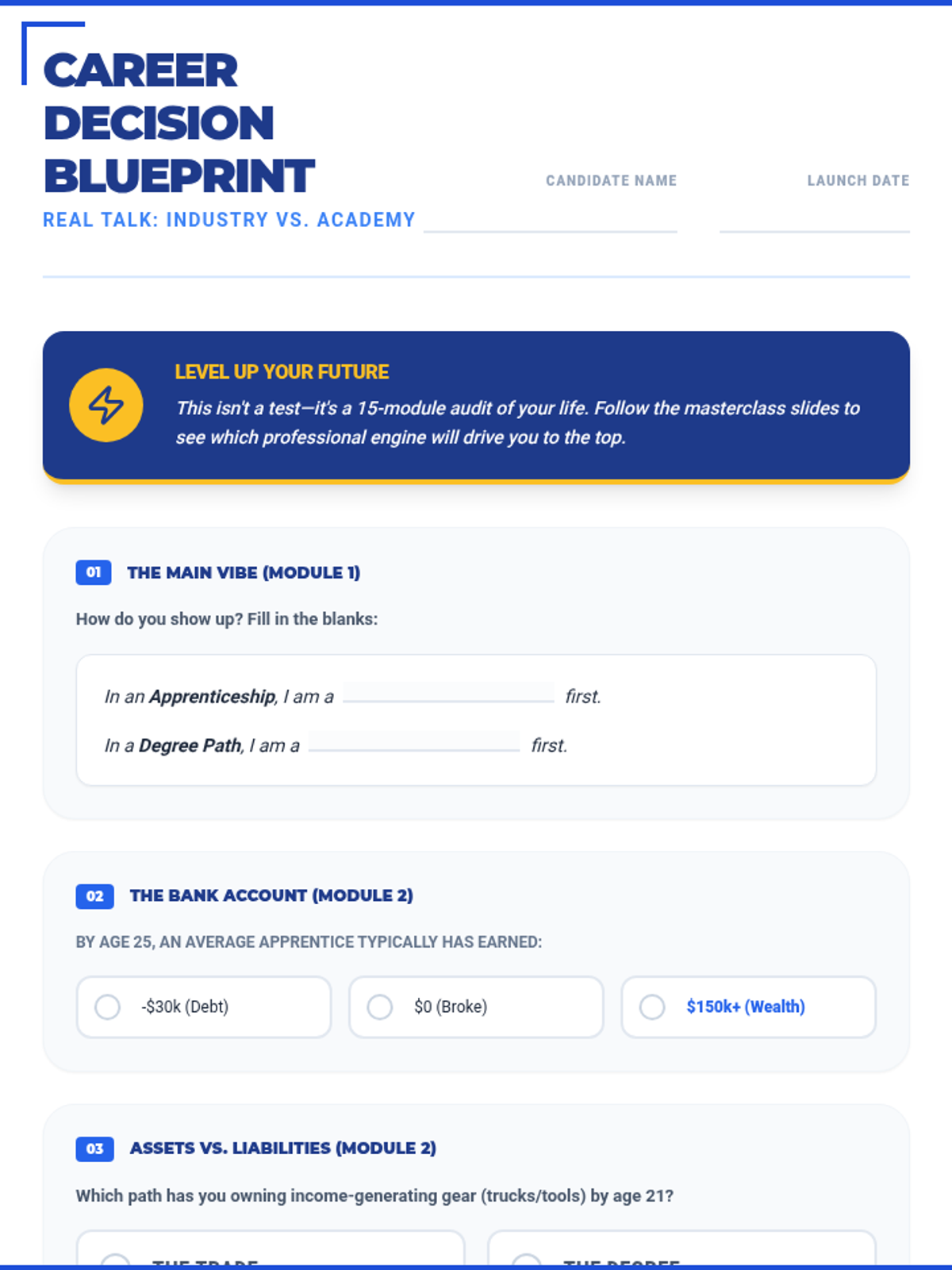
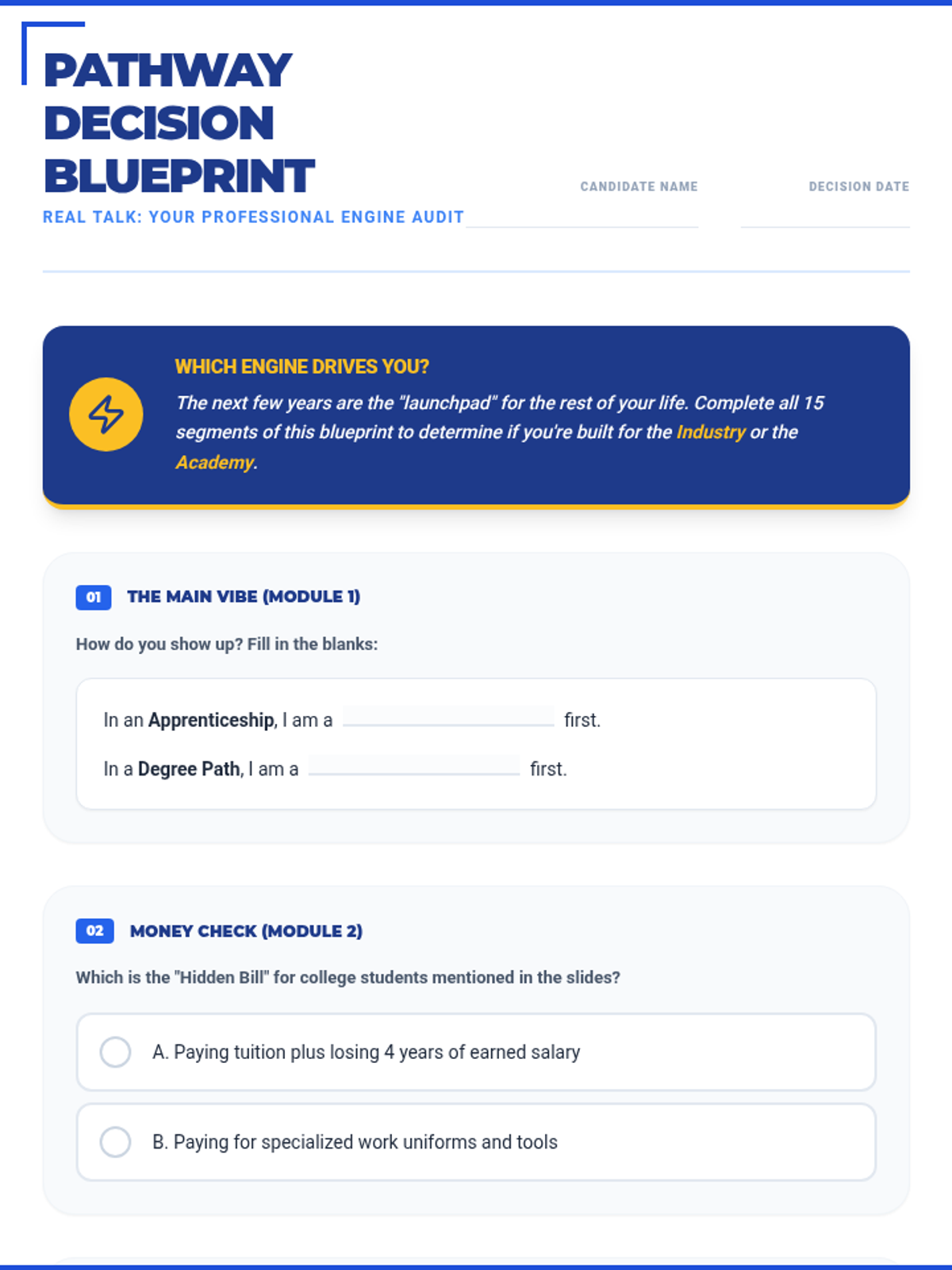
A 15-section career exploration worksheet designed for 16-year-old high school students, featuring punchy, relatable titles and refined "Real Talk" language like "The Main Vibe" and "Why I'll crush it." Meticulously aligned with the 45-slide masterclass. All correct answer highlights have been removed for student use.
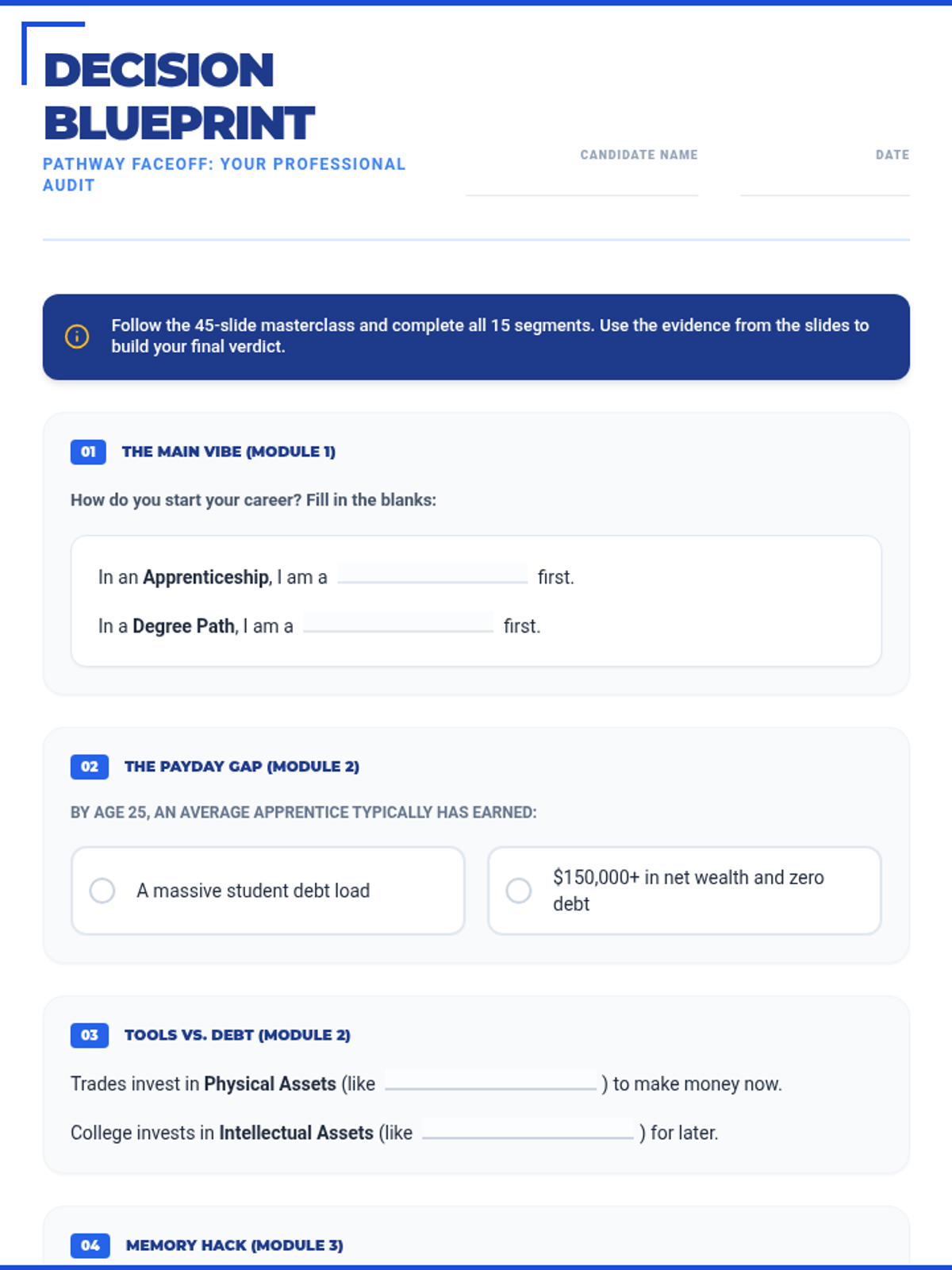
A 15-section career exploration worksheet designed for 16-year-old high school students, featuring punchy, relatable titles and a "Safety Orange & Slate" theme. Meticulously aligned with the 45-slide masterclass. All correct answer highlights have been removed for student use.
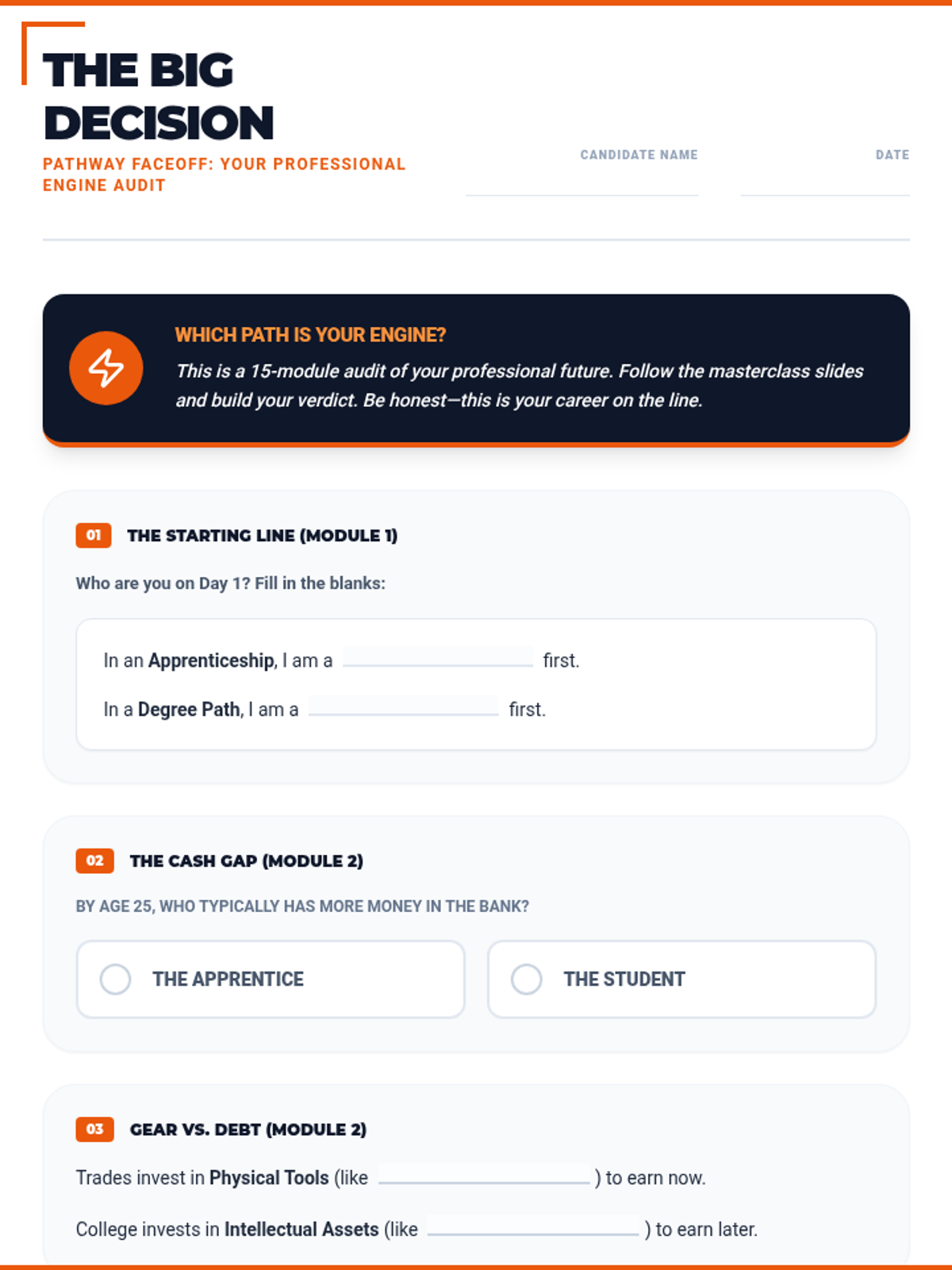
A 15-section career exploration worksheet designed for 16-year-old high school students, featuring punchy, relatable titles and refined "Real Talk" language like "The Vibe Check" and "Why I'll crush it." Meticulously aligned with the 45-slide masterclass. All correct answer highlights have been removed for student use.
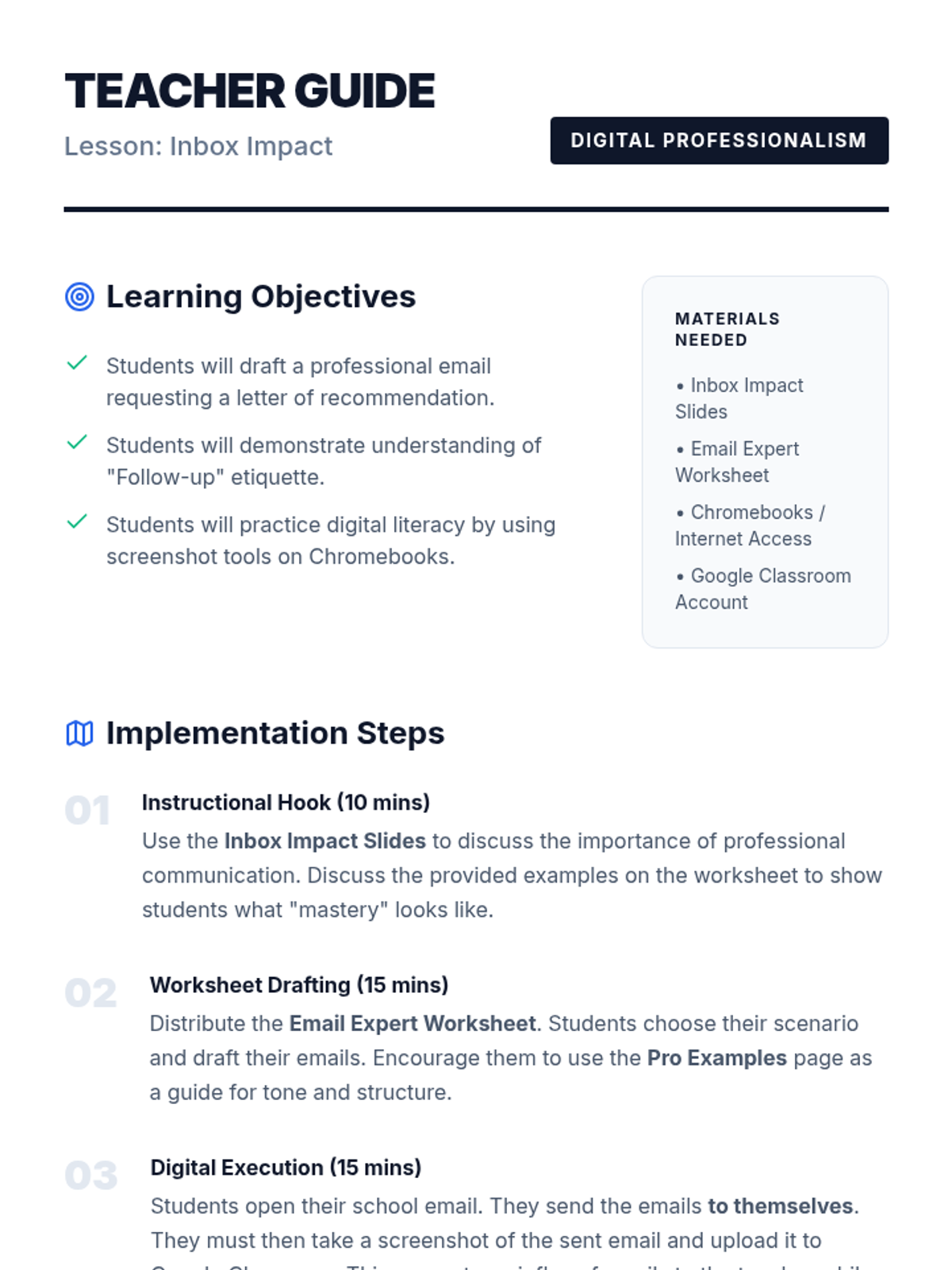
A comprehensive teacher guide for the Inbox Impact lesson. Includes learning objectives, step-by-step implementation, technical troubleshooting for Chromebooks, and a clear grading rubric. Updated to reflect student-to-self email submission process.
A high-impact slide deck for teaching professional email etiquette. It covers the importance of first impressions, the anatomy of a request email, drafting body paragraphs, and the technical steps for the digital assignment. Updated to reflect student-to-self email submission.
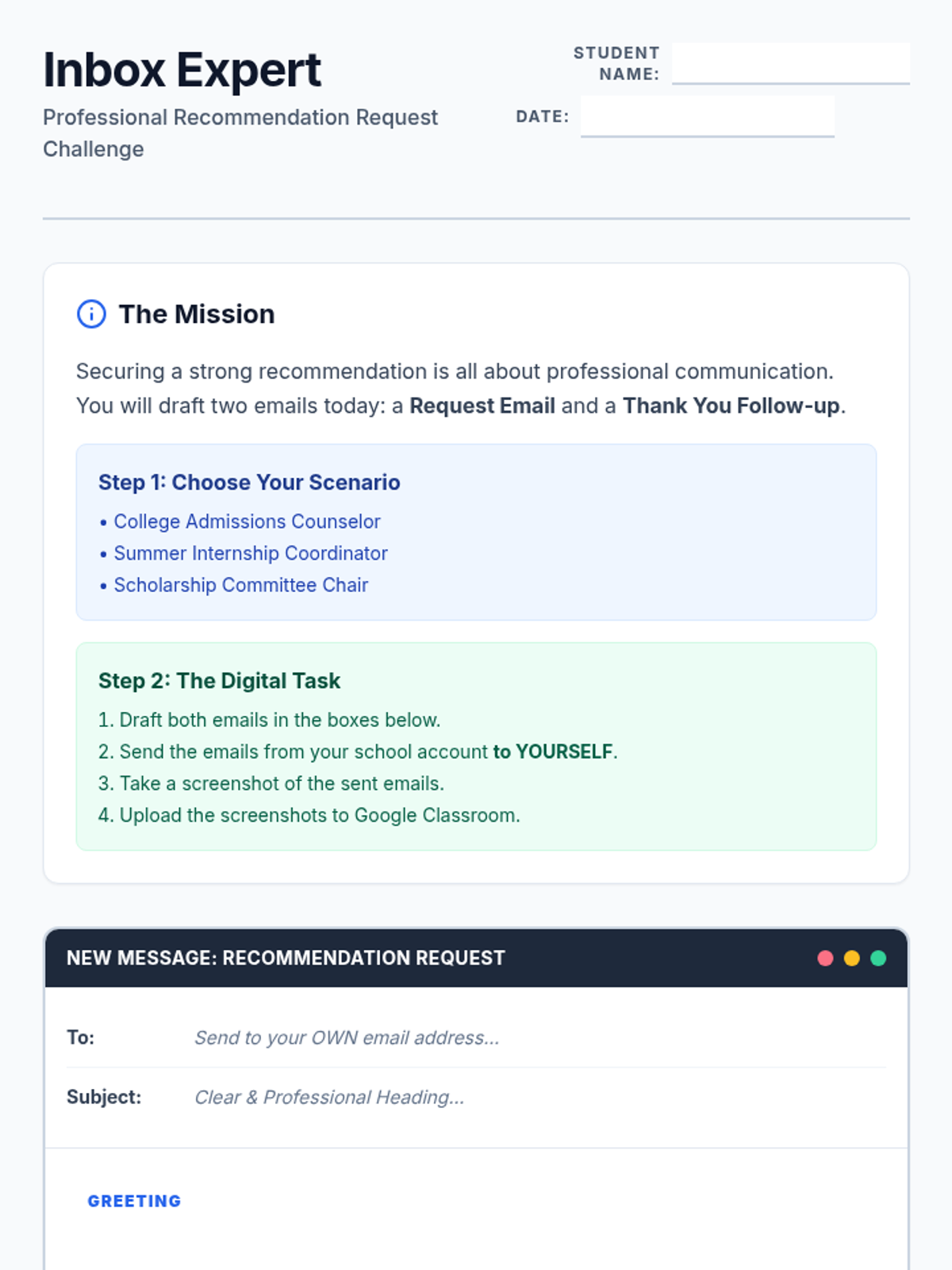
A professional email drafting worksheet designed to look like an inbox compose window. Students draft a recommendation request and a thank-you follow-up, with fields for recipient, subject, and body content, followed by a digital submission checklist. Includes full professional examples for both emails.
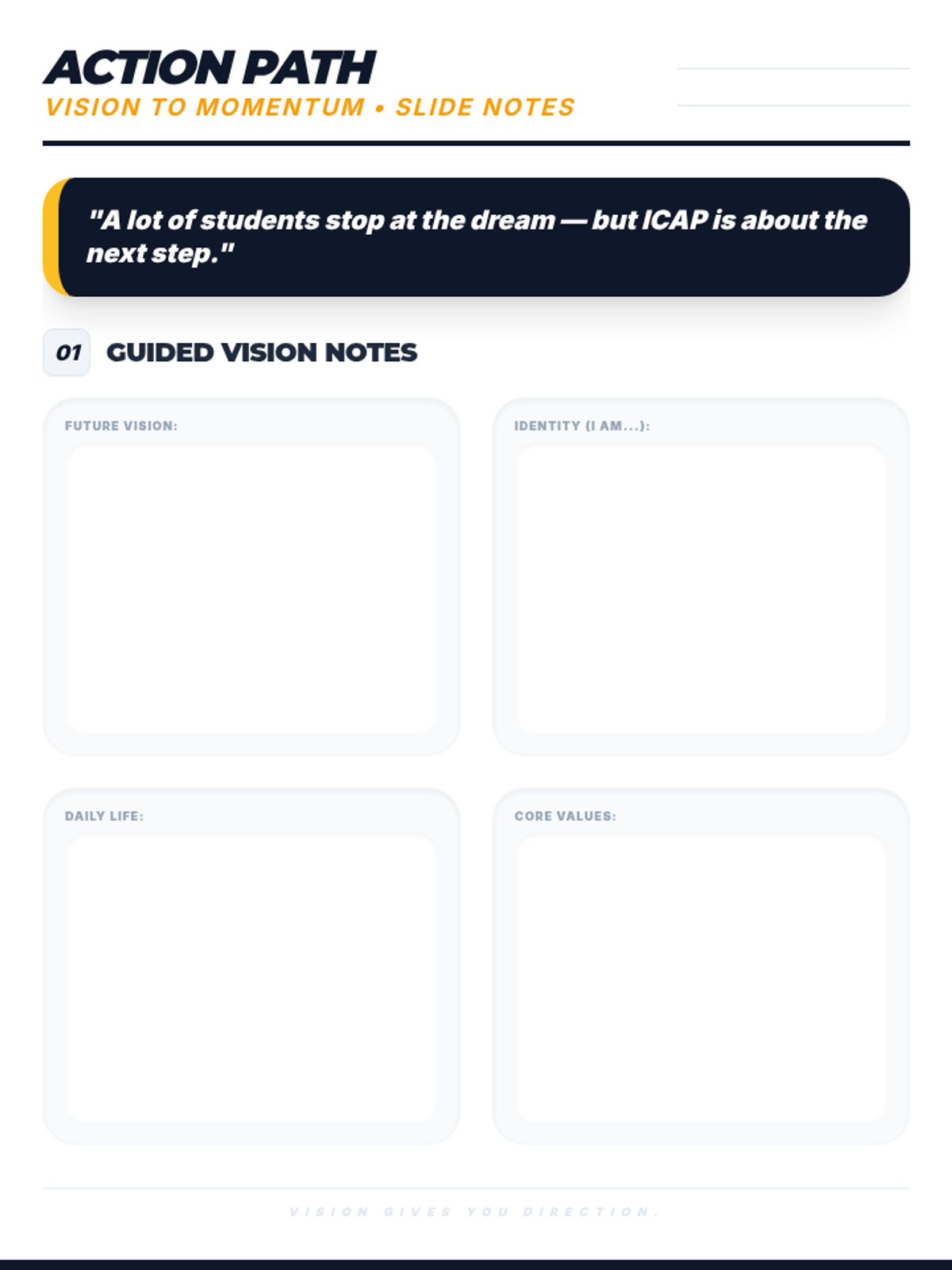
A comprehensive 2-page printable companion for the Action Path slide deck. Includes detailed sections for Vision, Next Steps, and Support/Barriers, designed for front-to-back printing. Strictly formatted to fit on two 720x960 pages without overflow. Guaranteed no page splitting. High-end professional aesthetic.
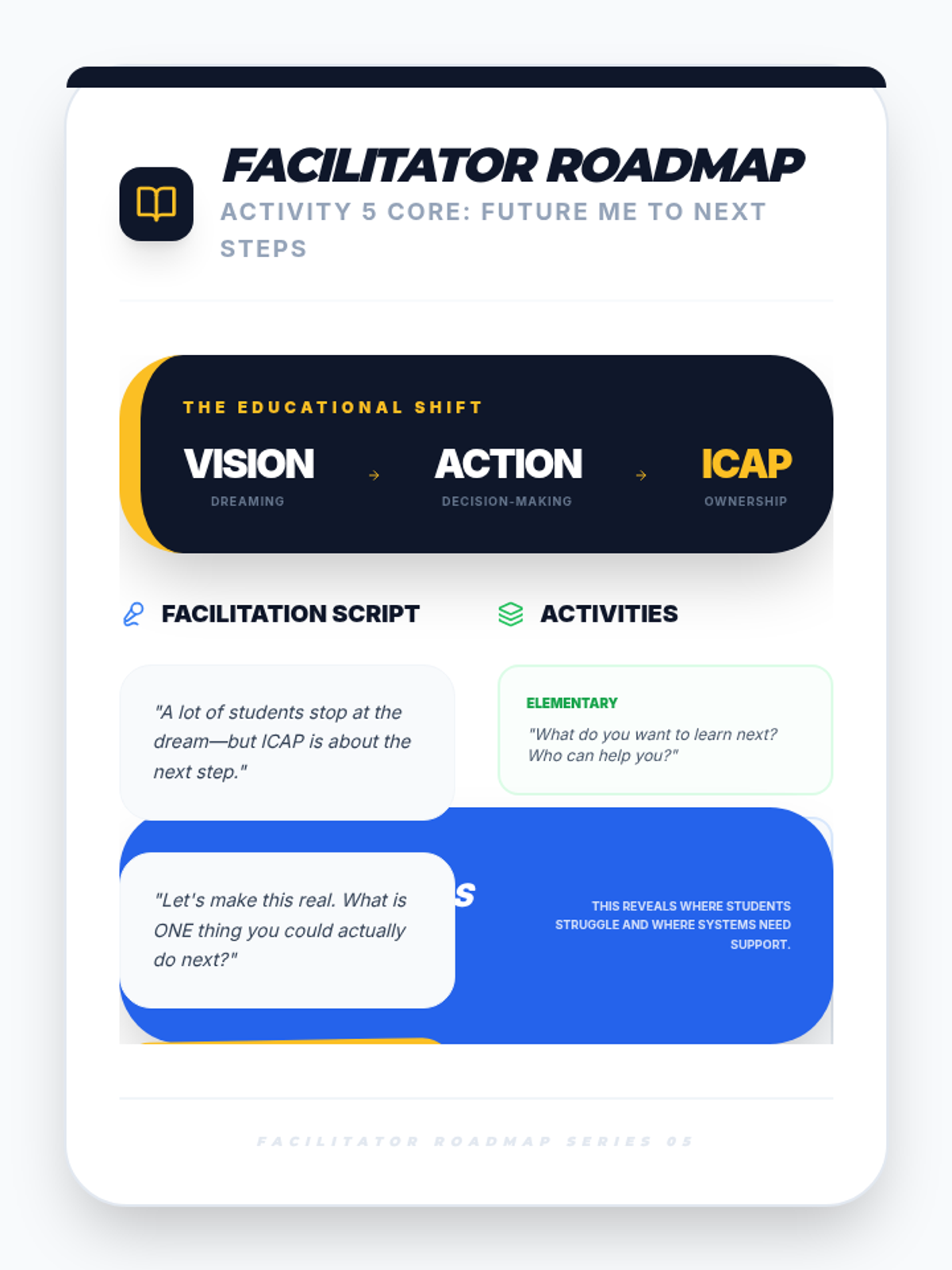
A high-impact facilitator guide for teachers. Includes scripts, grade-level strategies, and the core pedagogical shift from vision to action. Strictly formatted to fit on a single page.
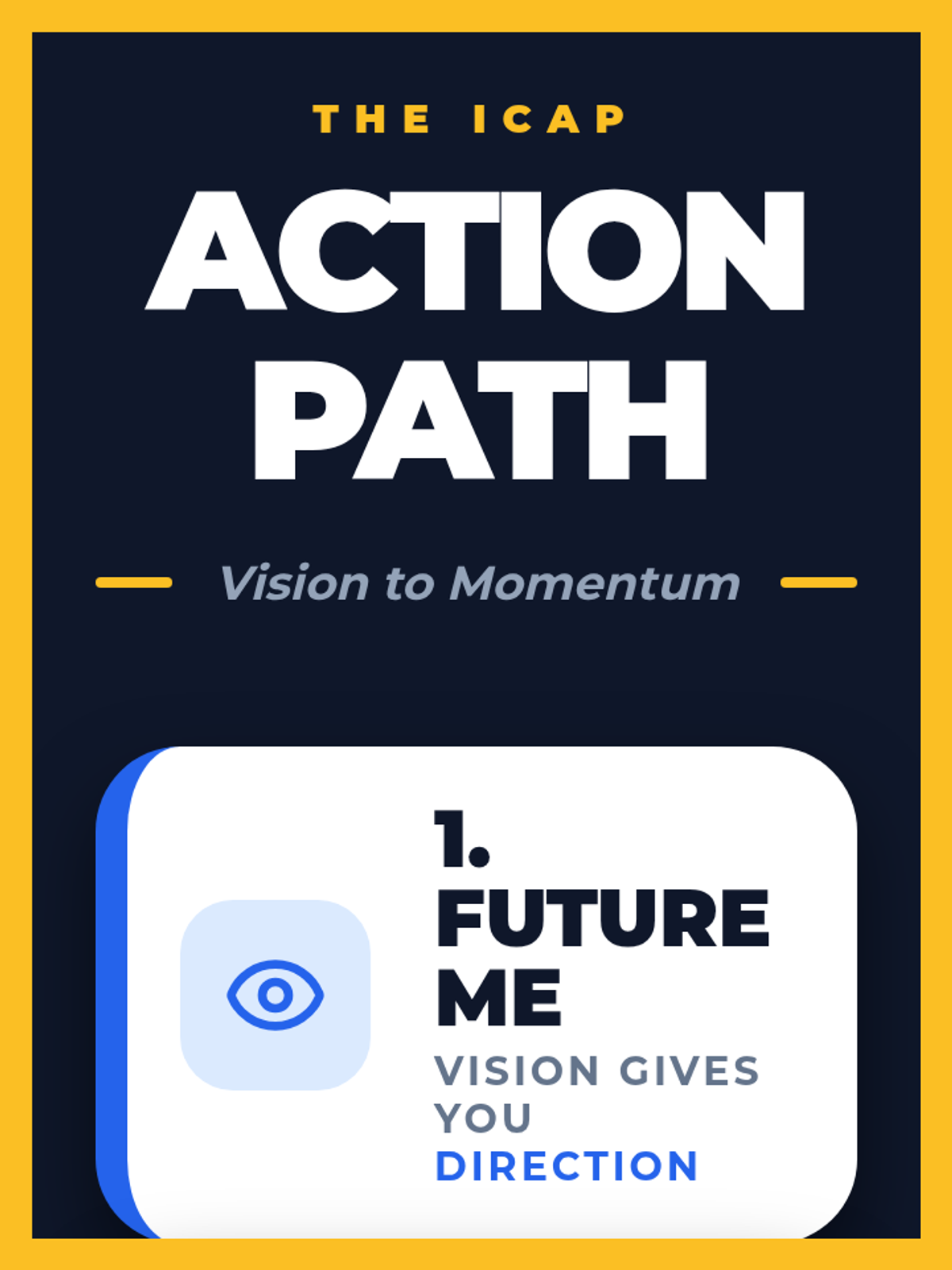
A bold, visually striking classroom anchor chart that defines the Action Path stages: Future Me, Next Steps, and Support/Barriers. High-impact design for classroom walls.
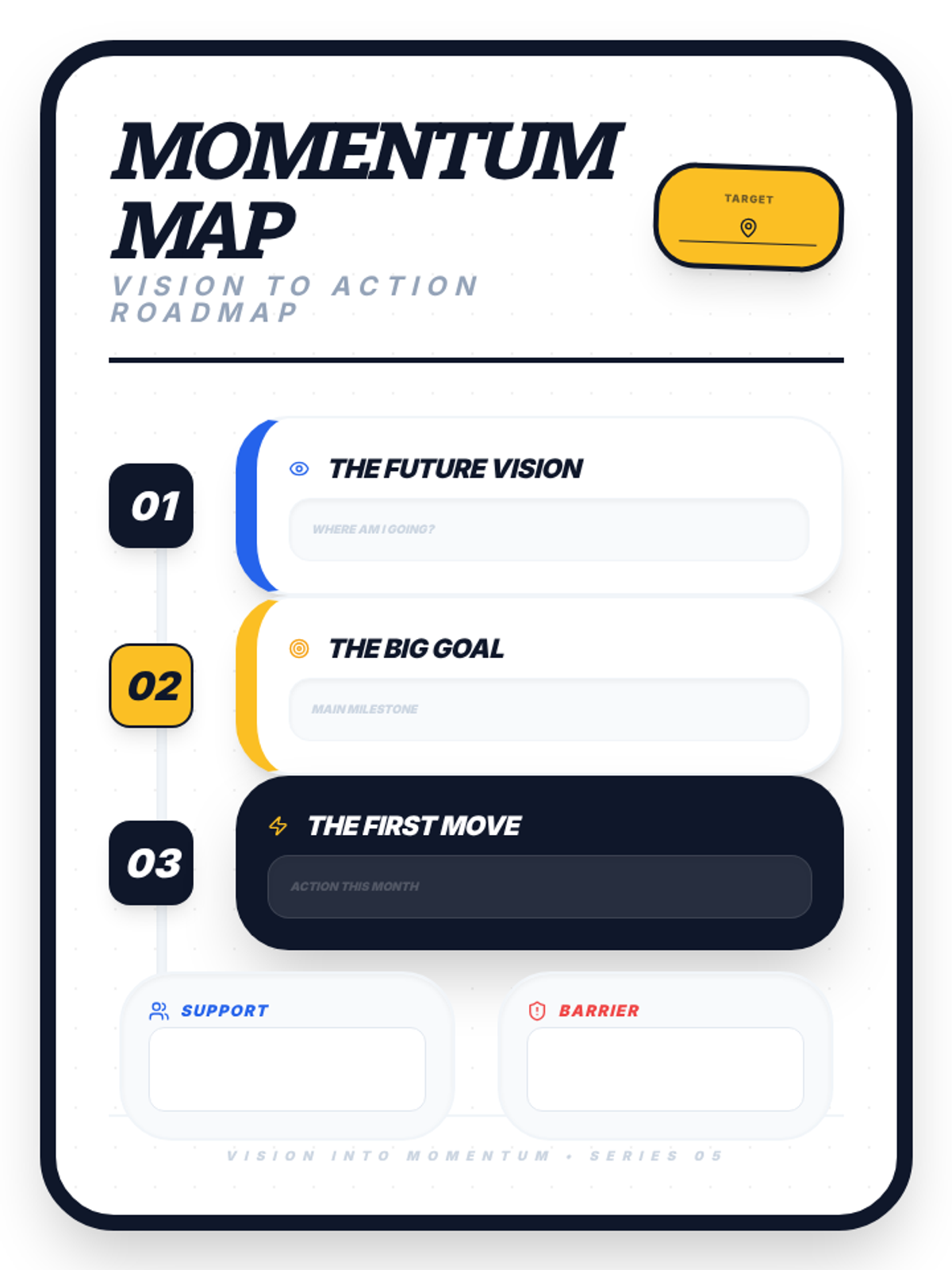
A professional, vertical roadmap Momentum Map. Designed with a high-contrast theme and strictly formatted to fit on a single 720x960 page using a safe height buffer. Guaranteed no overflow.
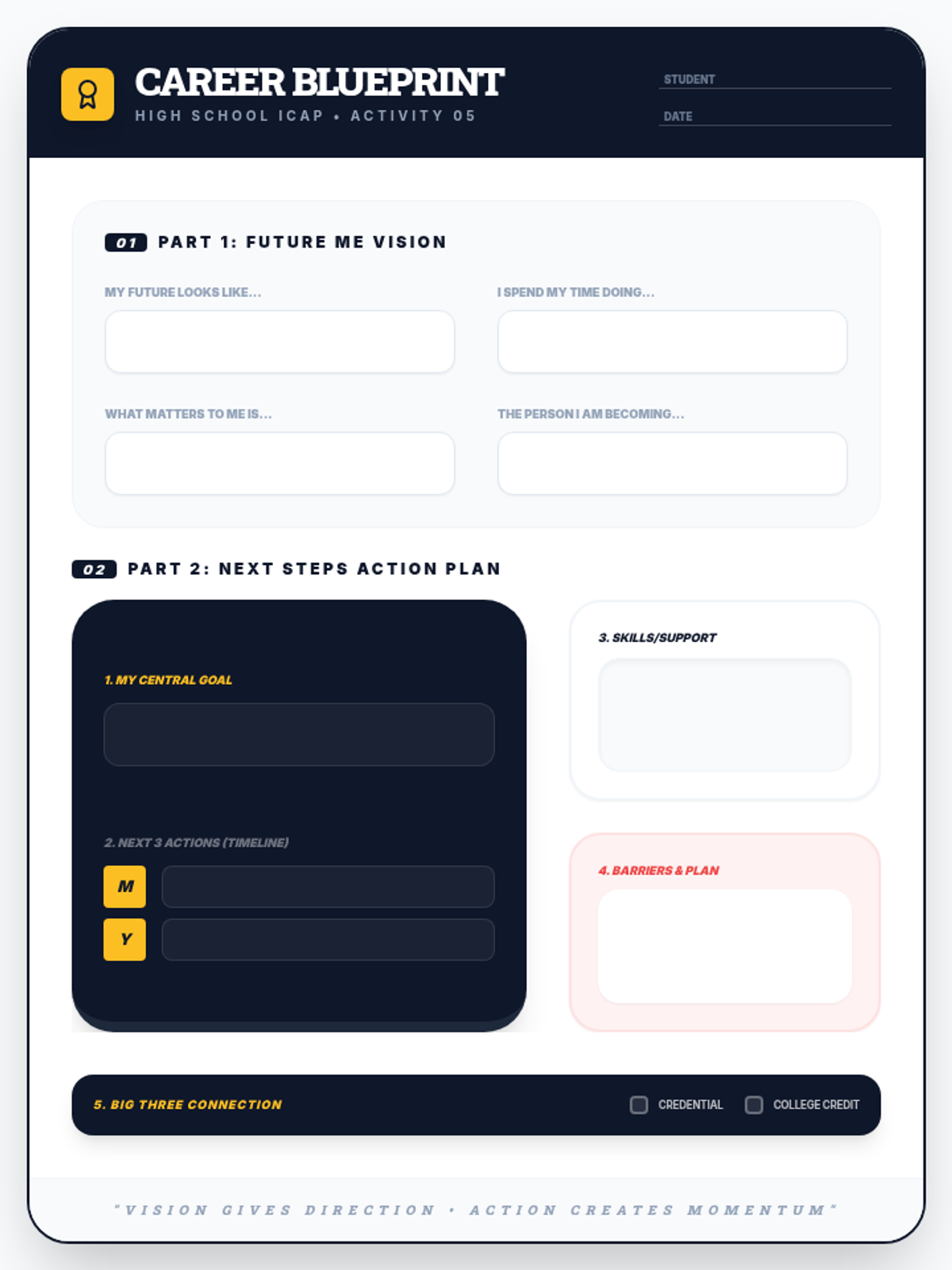
A high-density, professional Career Blueprint for high school students. Designed with a clean minimalist aesthetic and strictly formatted to fit 100% on a single 720x960 page using a safe height buffer. Guaranteed no page splitting.
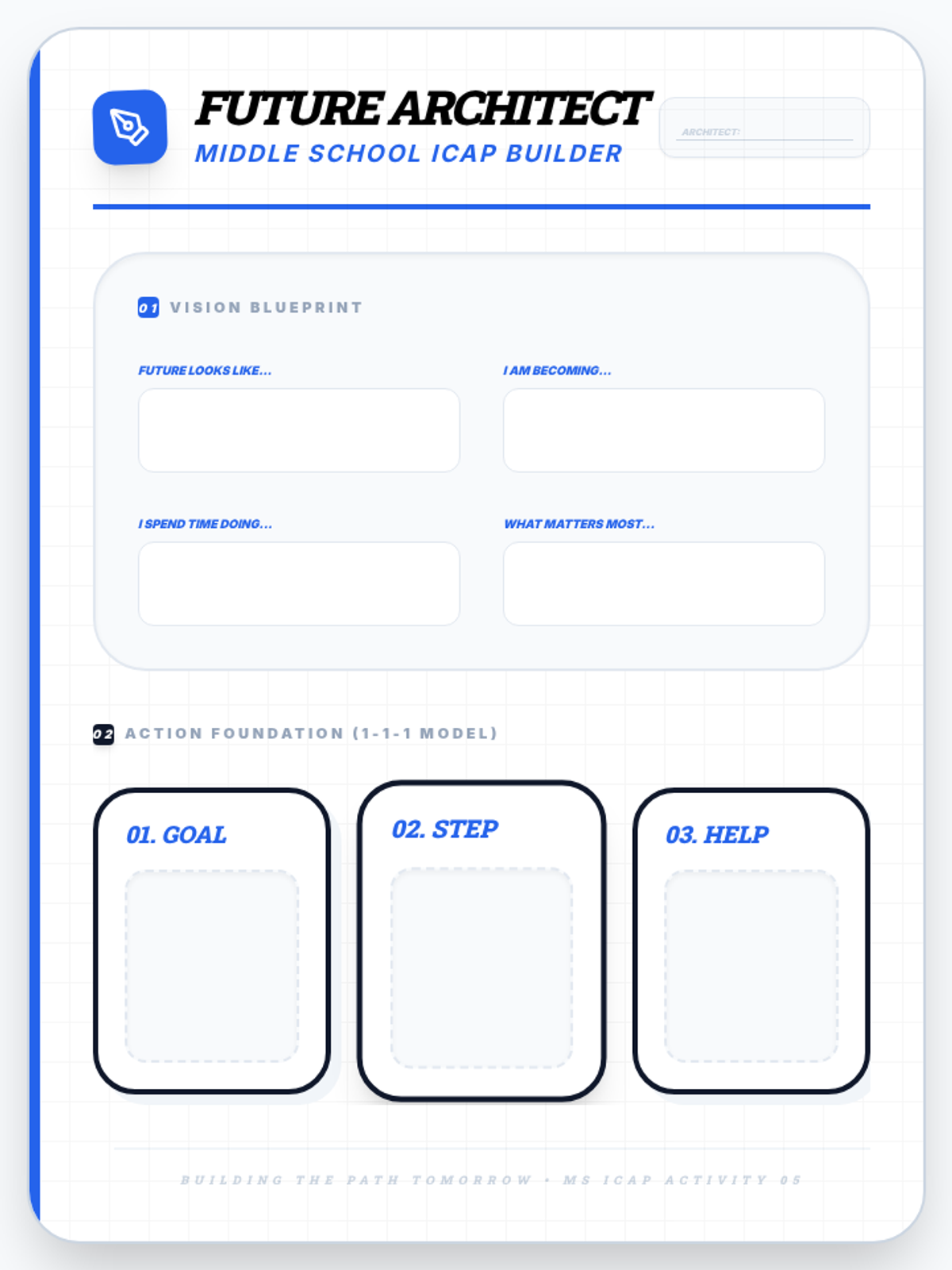
A high-impact planning worksheet for middle school students. Designed with a clean minimalist aesthetic and strictly formatted to fit on a single 720x960 page. Guaranteed no overflow.
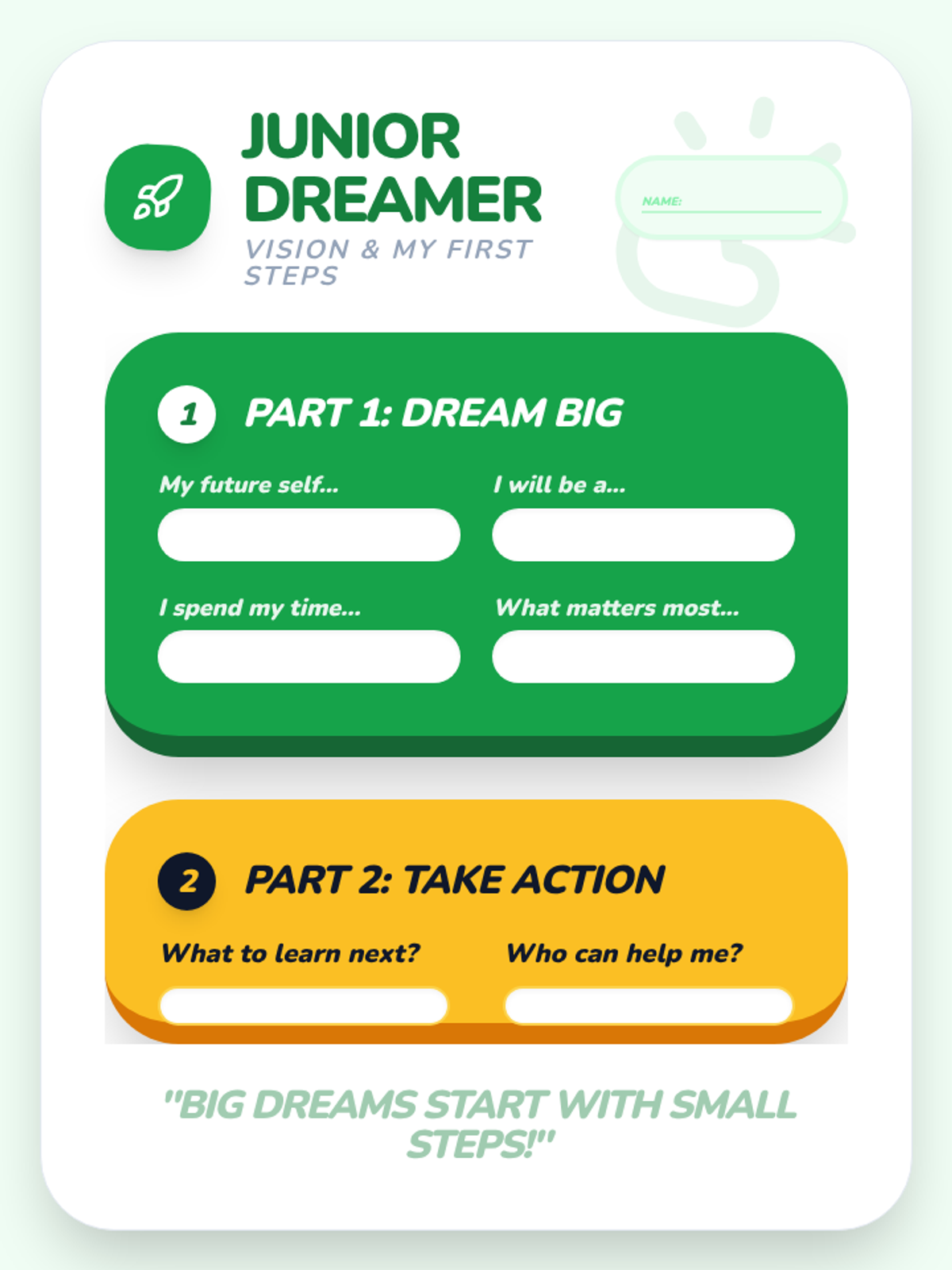
An engaging, professional-quality workshop sheet for elementary students. Designed with a clean minimalist aesthetic and strictly formatted for a single 720x960 page using a safe height buffer. Guaranteed no overflow.
A comprehensive slide presentation for Activity 5 Core: Future Me to Next Steps. Now fully inclusive of all grade levels (ES, MS, HS) with specific slides for each developmental stage and action model.
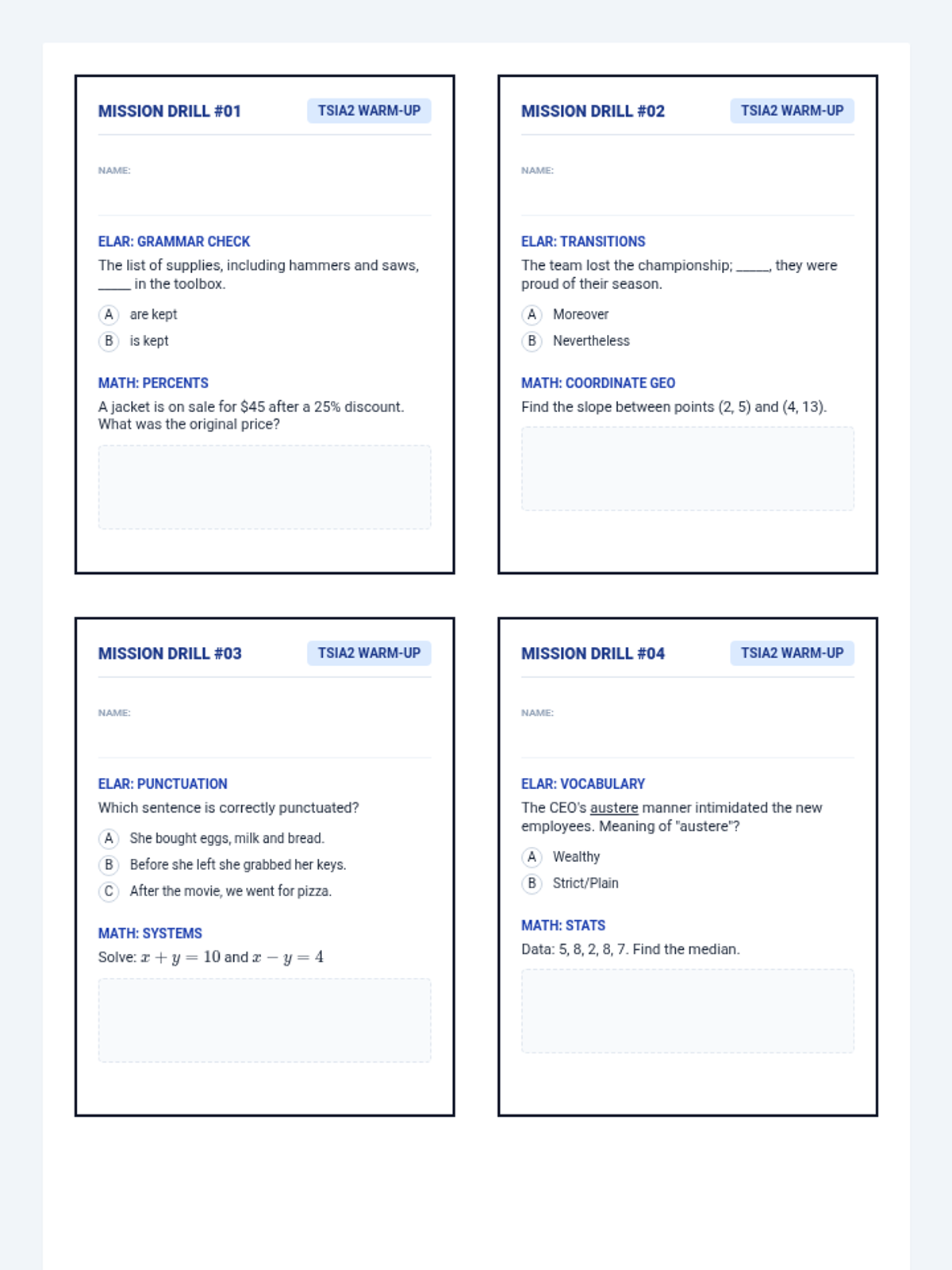
Daily quick-response mission slips for TSIA2, featuring mixed ELAR and Mathematics problems to reinforce high-frequency concepts.
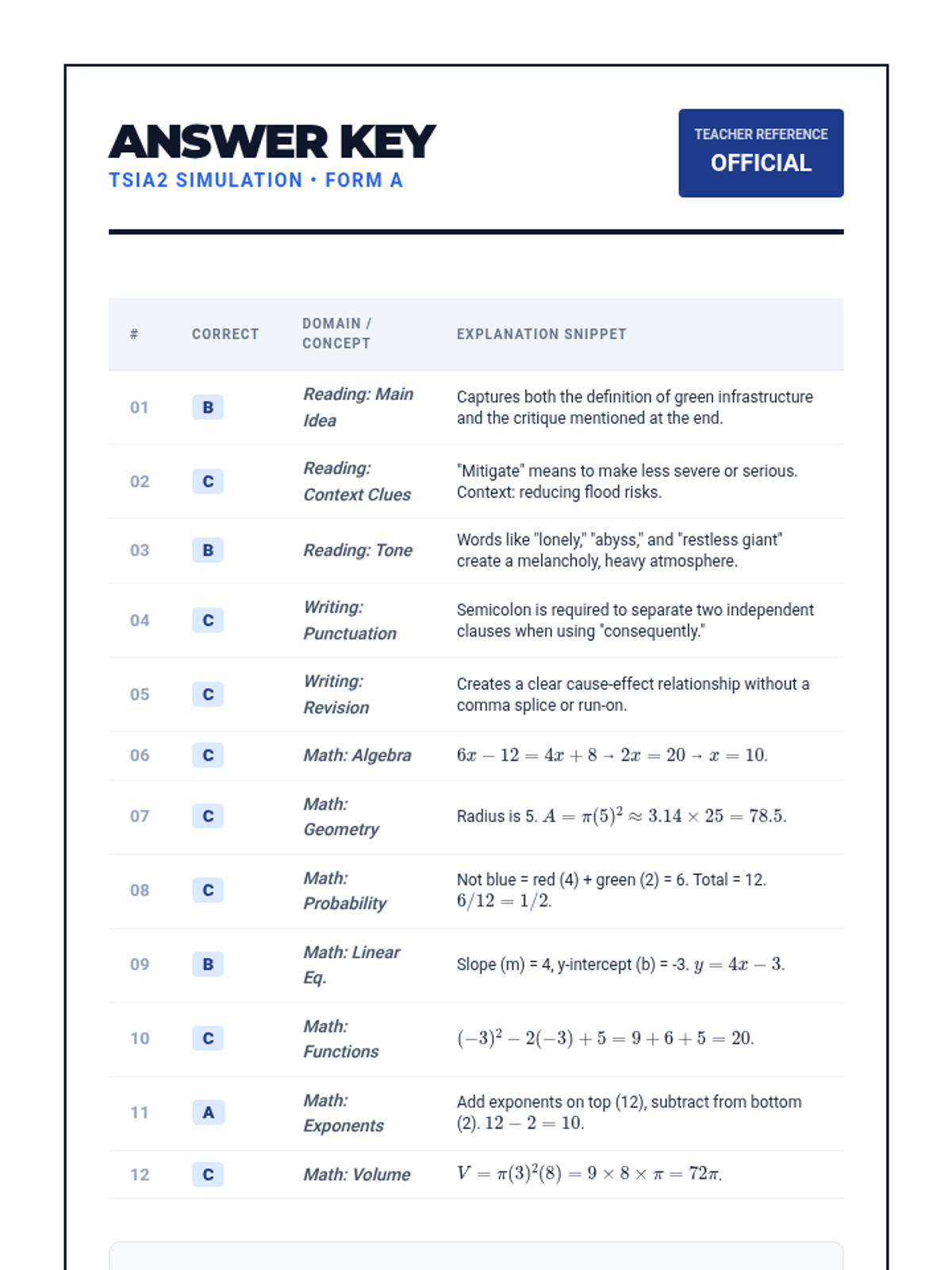
Complete answer key and explanation guide for the TSIA2 Simulation Practice Test.
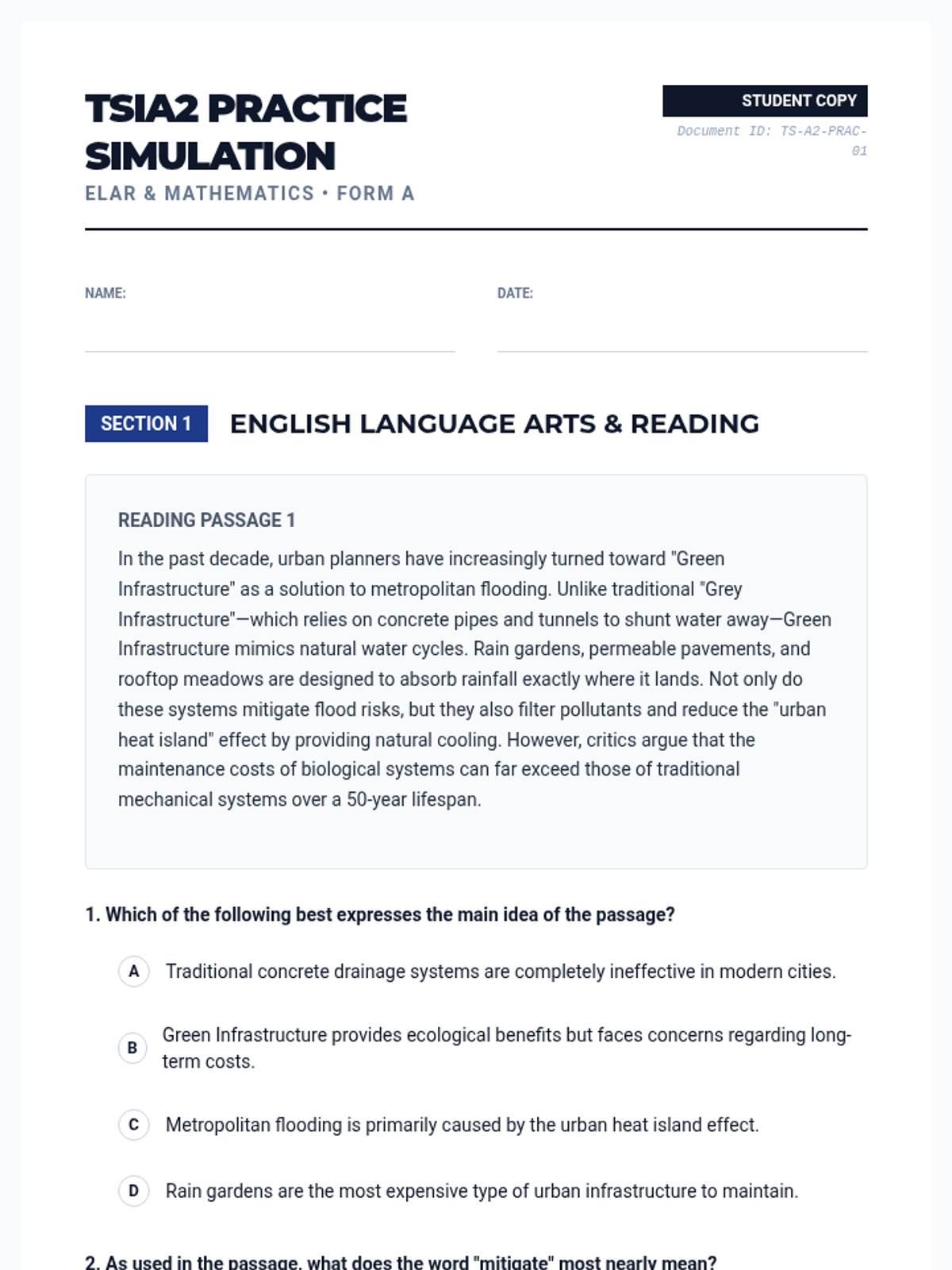
A simulated practice test for the TSIA2 covering ELAR reading comprehension, sentence editing, and core mathematics concepts (Algebra, Geometry, Probability).
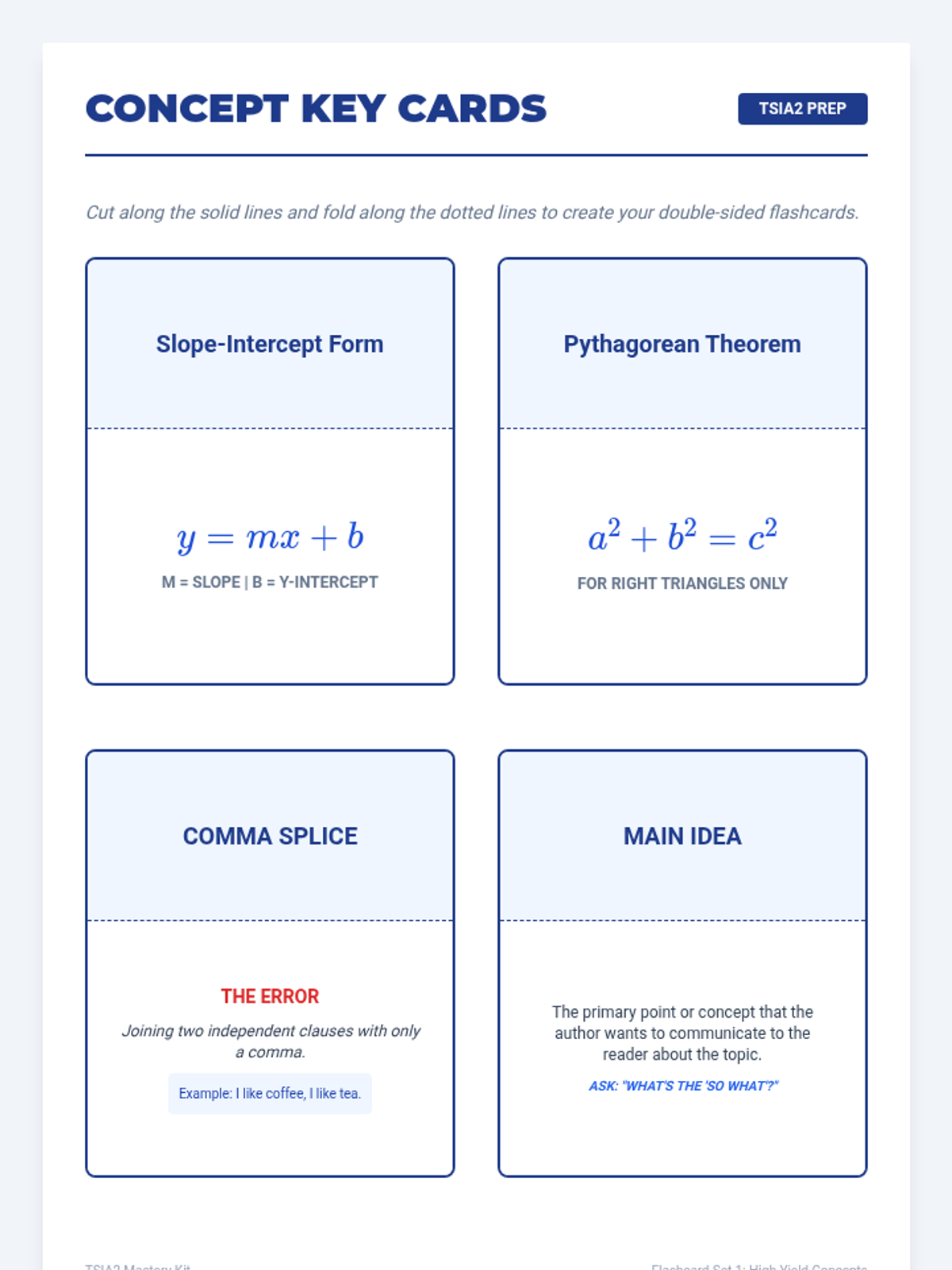
Printable high-yield concept flashcards for TSIA2, covering essential math formulas and ELAR grammar rules.
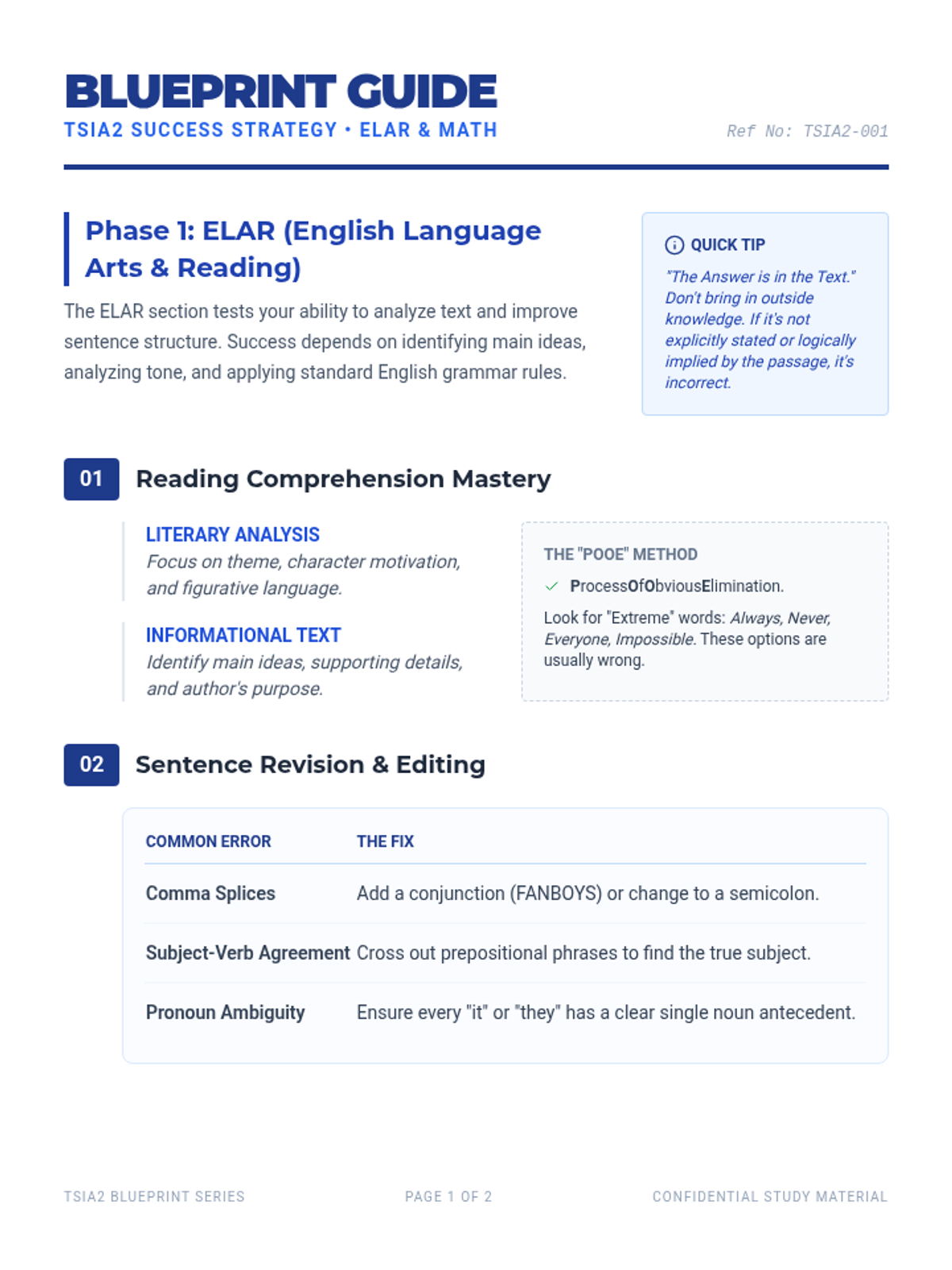
A comprehensive step-by-step study guide for the TSIA2, covering essential ELAR and Mathematics strategies, content domains, and critical formulas.
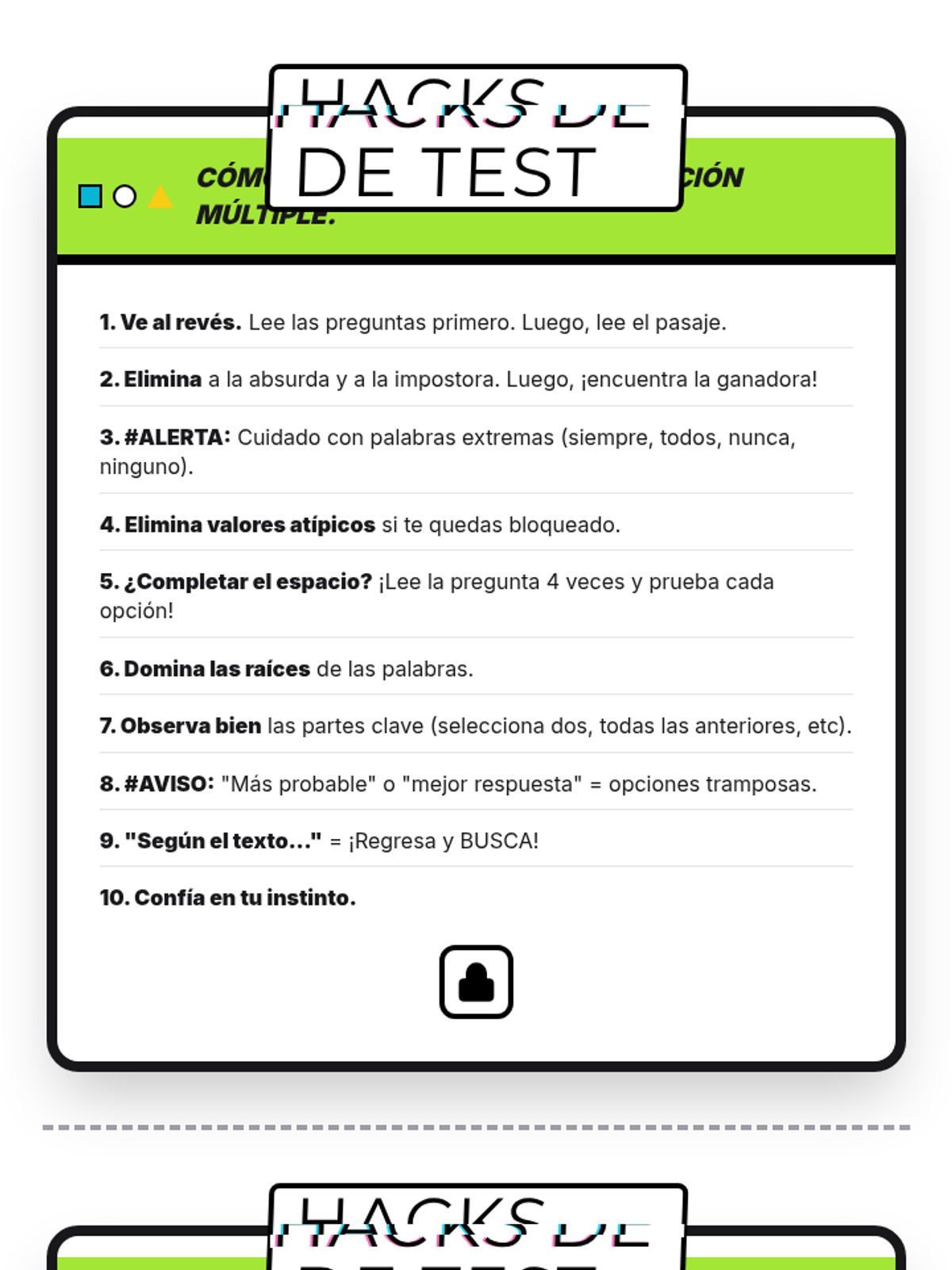
A Spanish translation of the Test Hacker handout, featuring two identical cards with a cyber-glitch aesthetic and practical multiple-choice strategies.
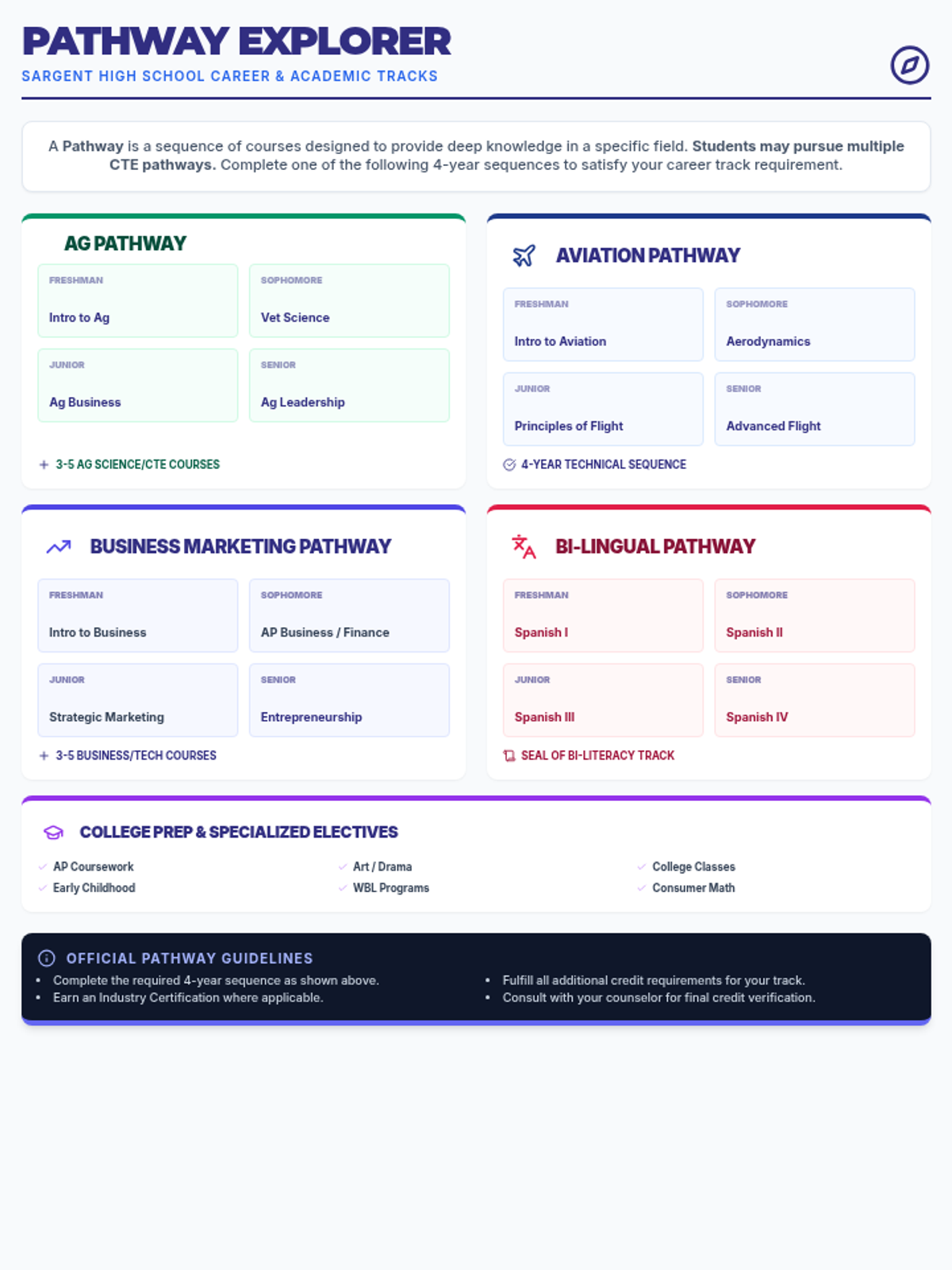
A supplementary handout providing the specific 4-year course sequences for the AG, Aviation, Business Marketing, and Bi-Lingual Pathways. Renamed back to Aviation Pathway. Optimized for a single-page layout. All credit-level annotations like "1.0" have been removed.
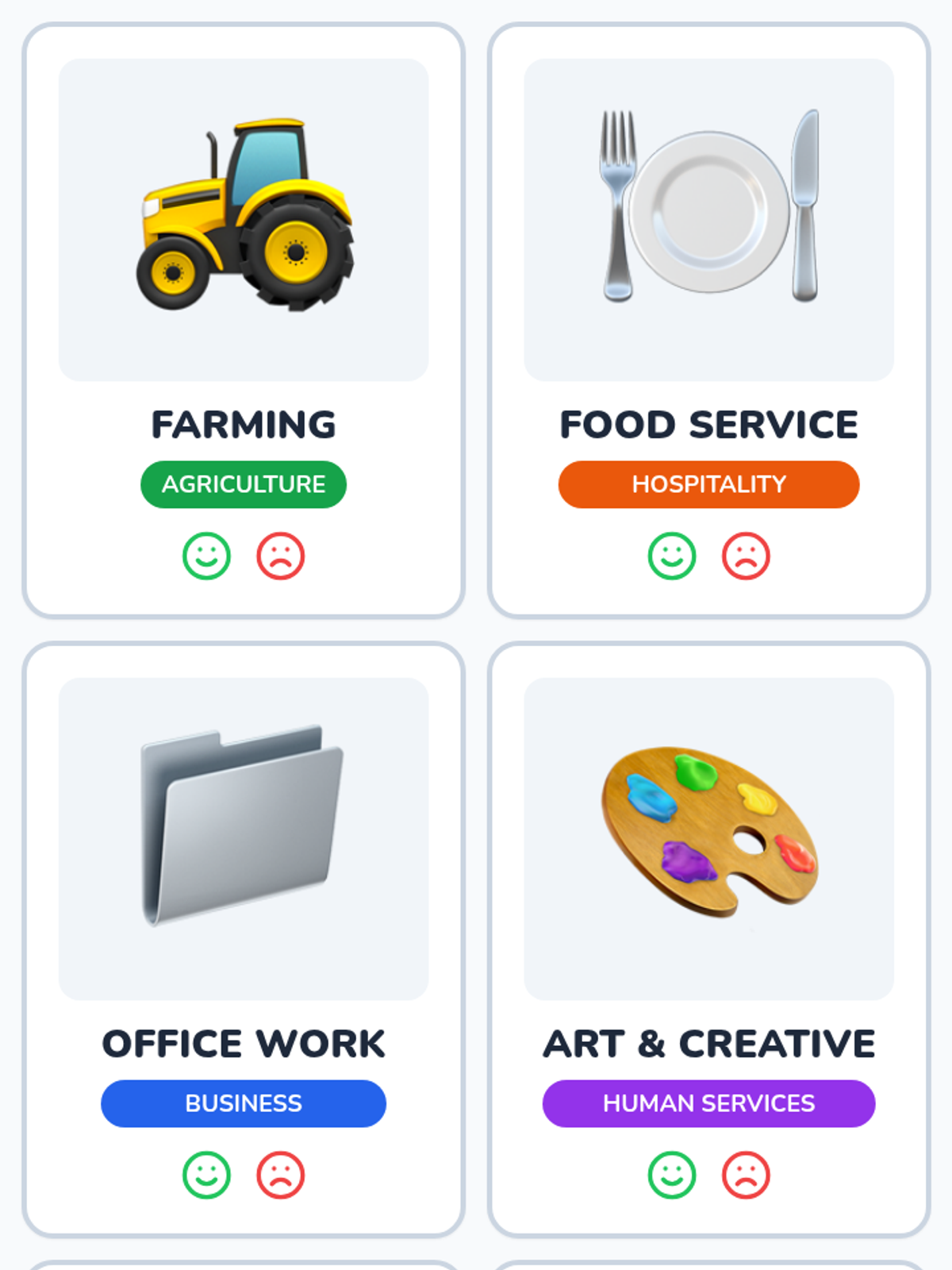
Printable 4-per-page job choice cards with visual cues and career cluster labels, designed for sorting activities and physical preference selection.
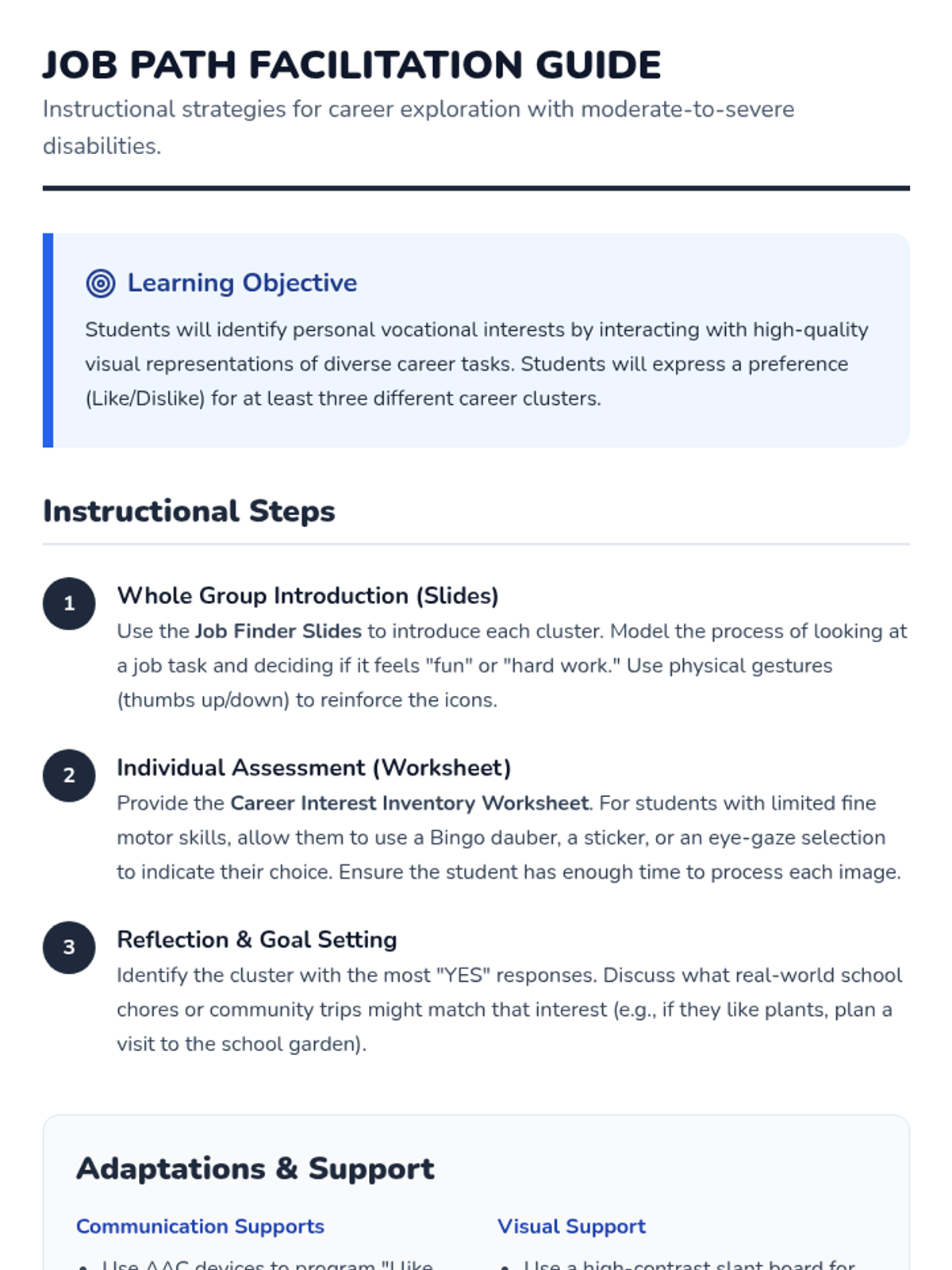
A teacher-facing facilitation guide providing instructional strategies, differentiation tips, and data collection prompts for the Job Path Explorer lesson.
A large-scale visual presentation featuring career clusters and tasks with simple 'Like' and 'Don't Like' prompts, updated to include Construction and Arts clusters for students with moderate to severe disabilities.
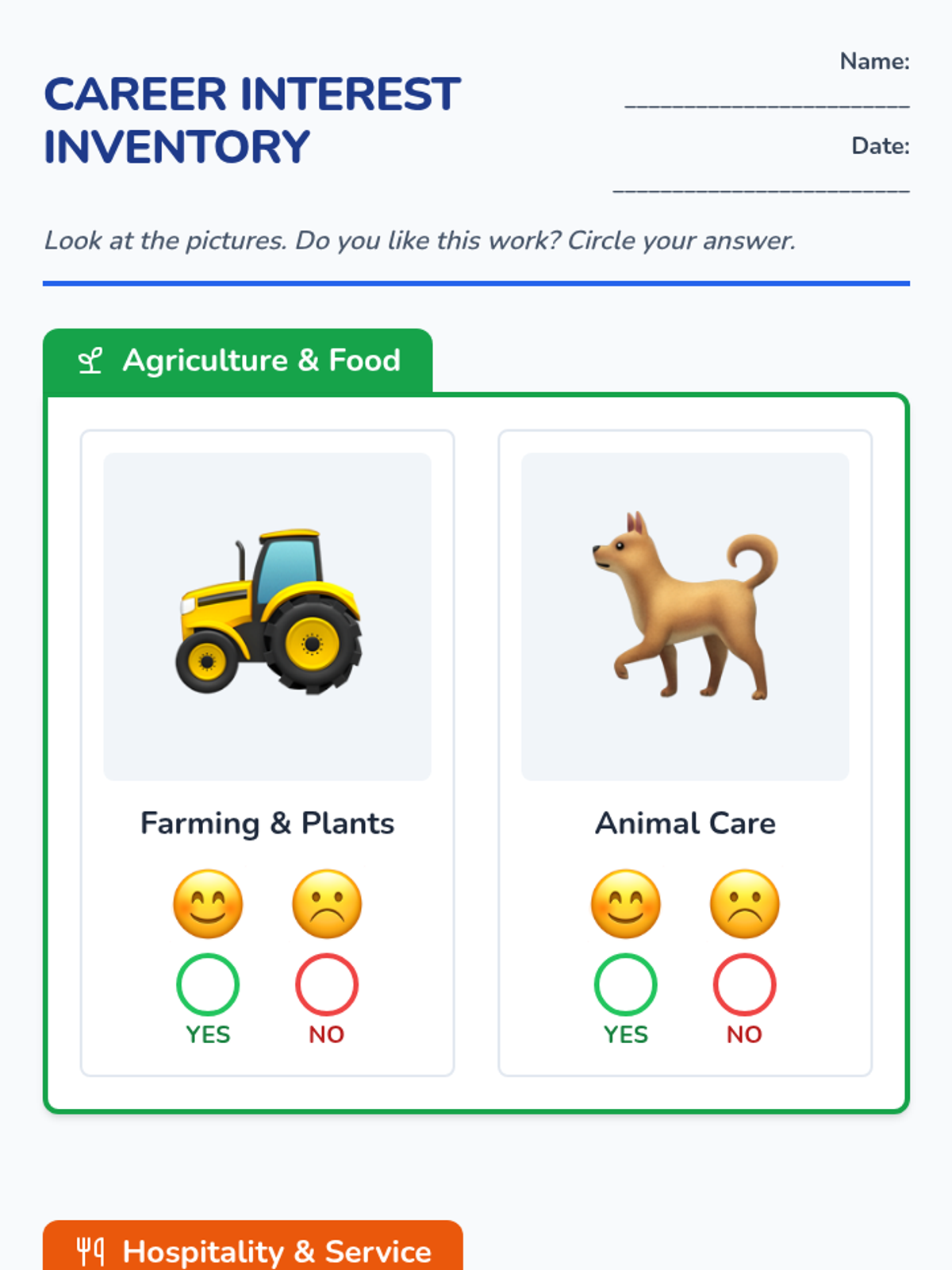
An expanded picture-based career interest inventory for students with moderate to severe disabilities, featuring 5 core career clusters with clear visual options for preferences.
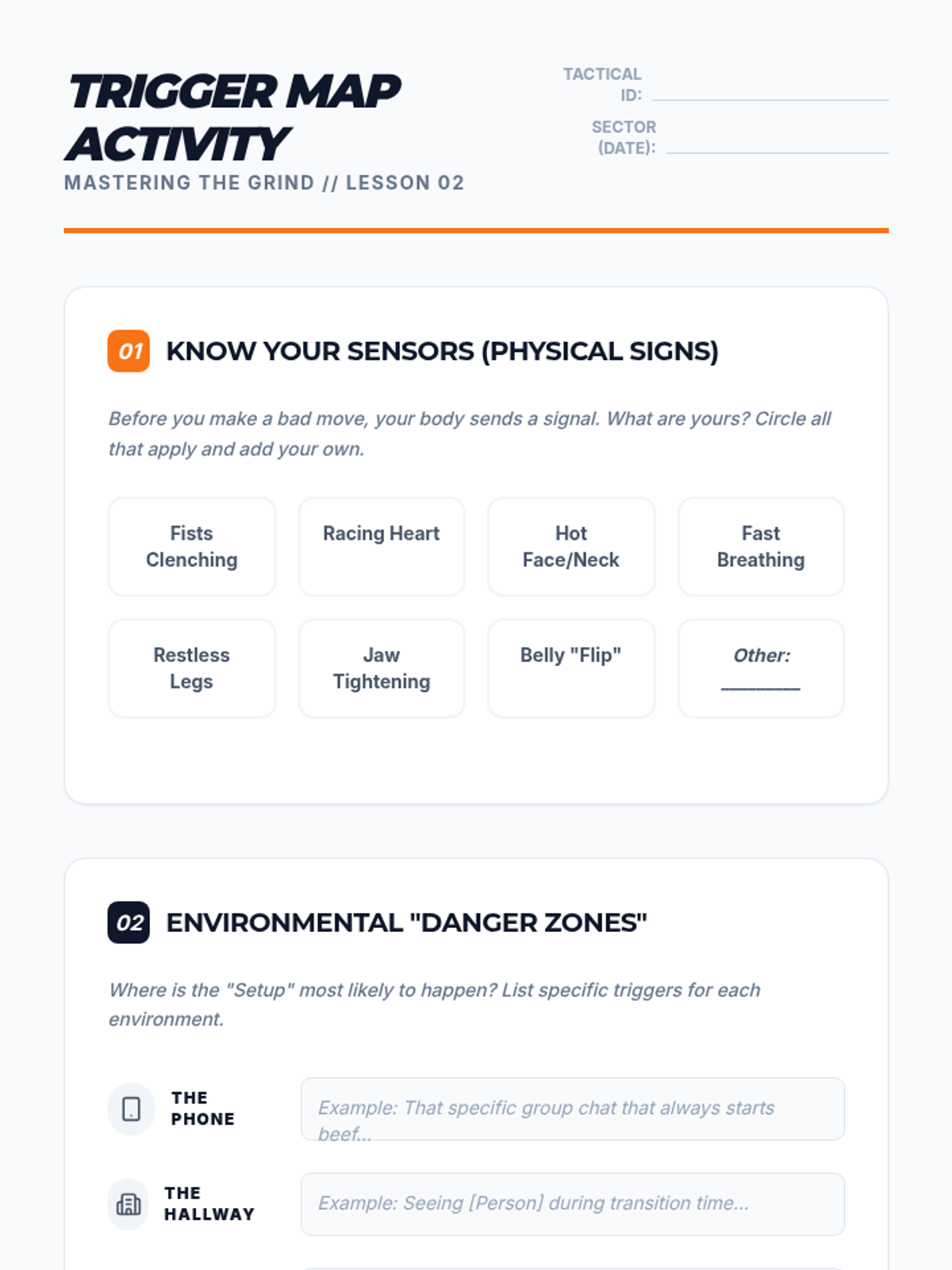
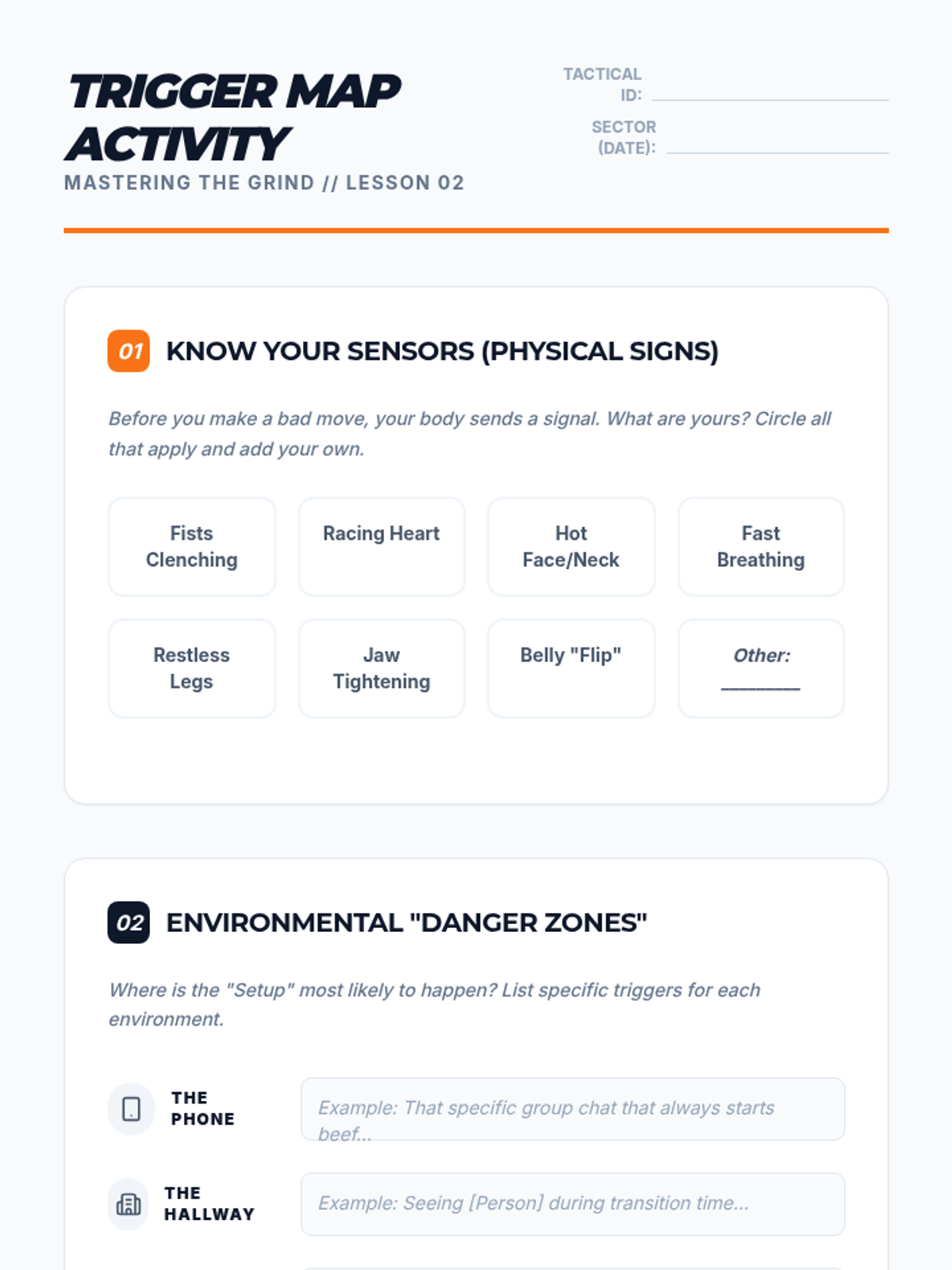
Student activity sheet for Lesson 2 to map out personal physical impulse signs and environmental triggers across different settings (home, school, social). Background of work area updated for legibility.
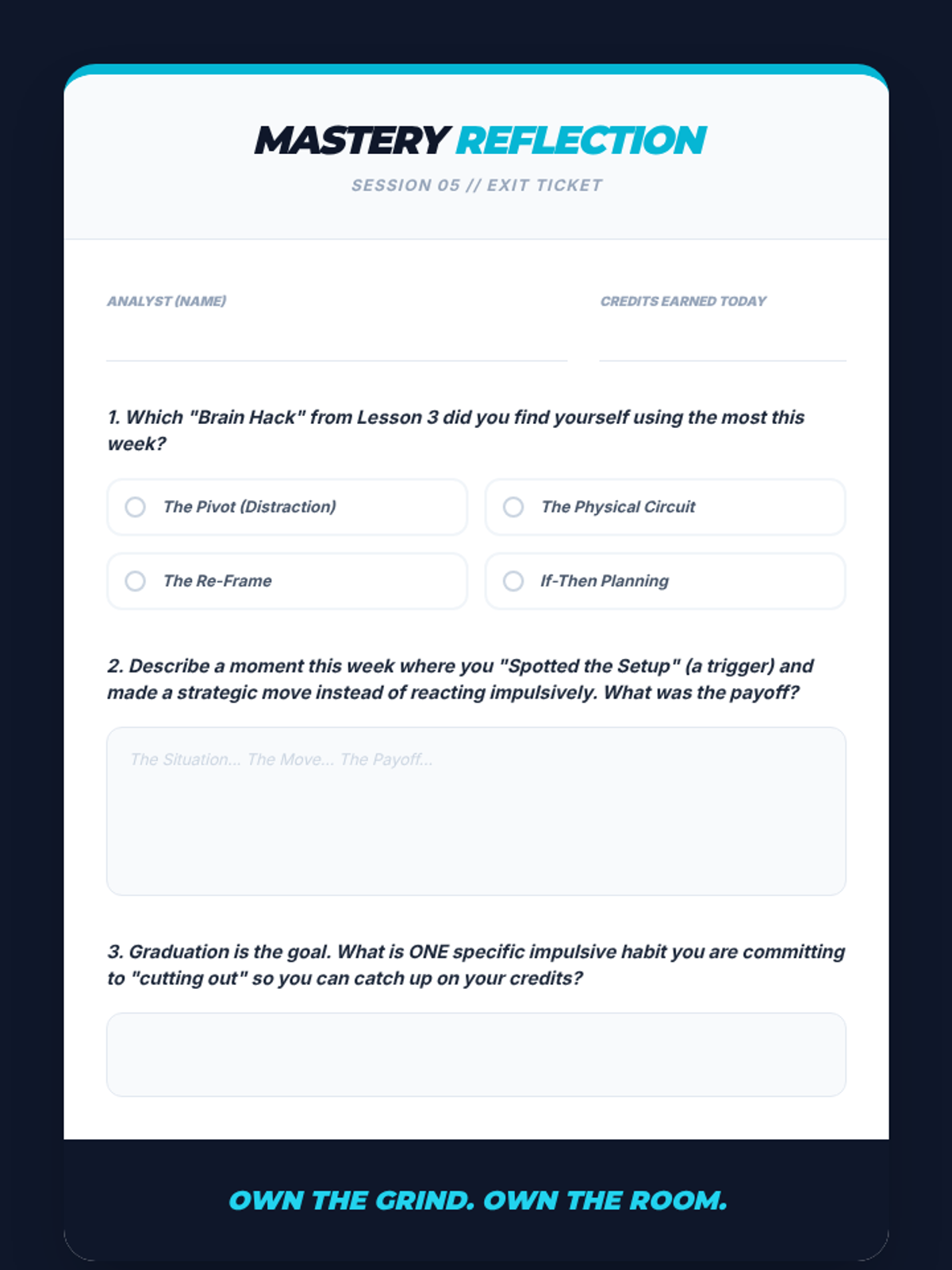
Summative reflection and exit ticket for the "Impulse Control Academy" sequence, where students self-assess their progress and set a goal for their future self.
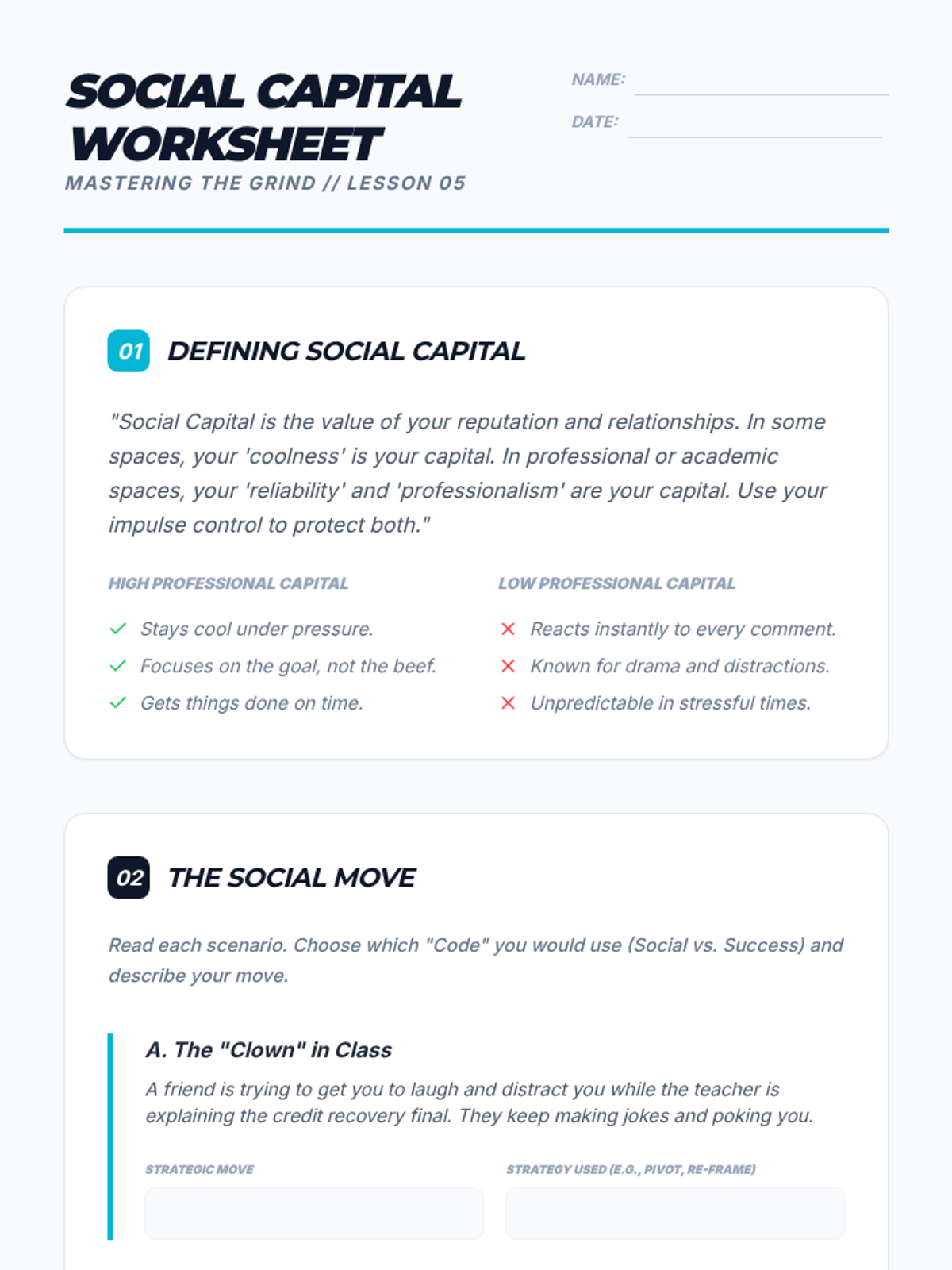
Student activity sheet for Lesson 5 focusing on social scenario analysis and the interpersonal consequences of impulsive versus regulated behavior.
Final slide deck for Lesson 5, focusing on applying impulse control strategies to social interactions and peer pressure.
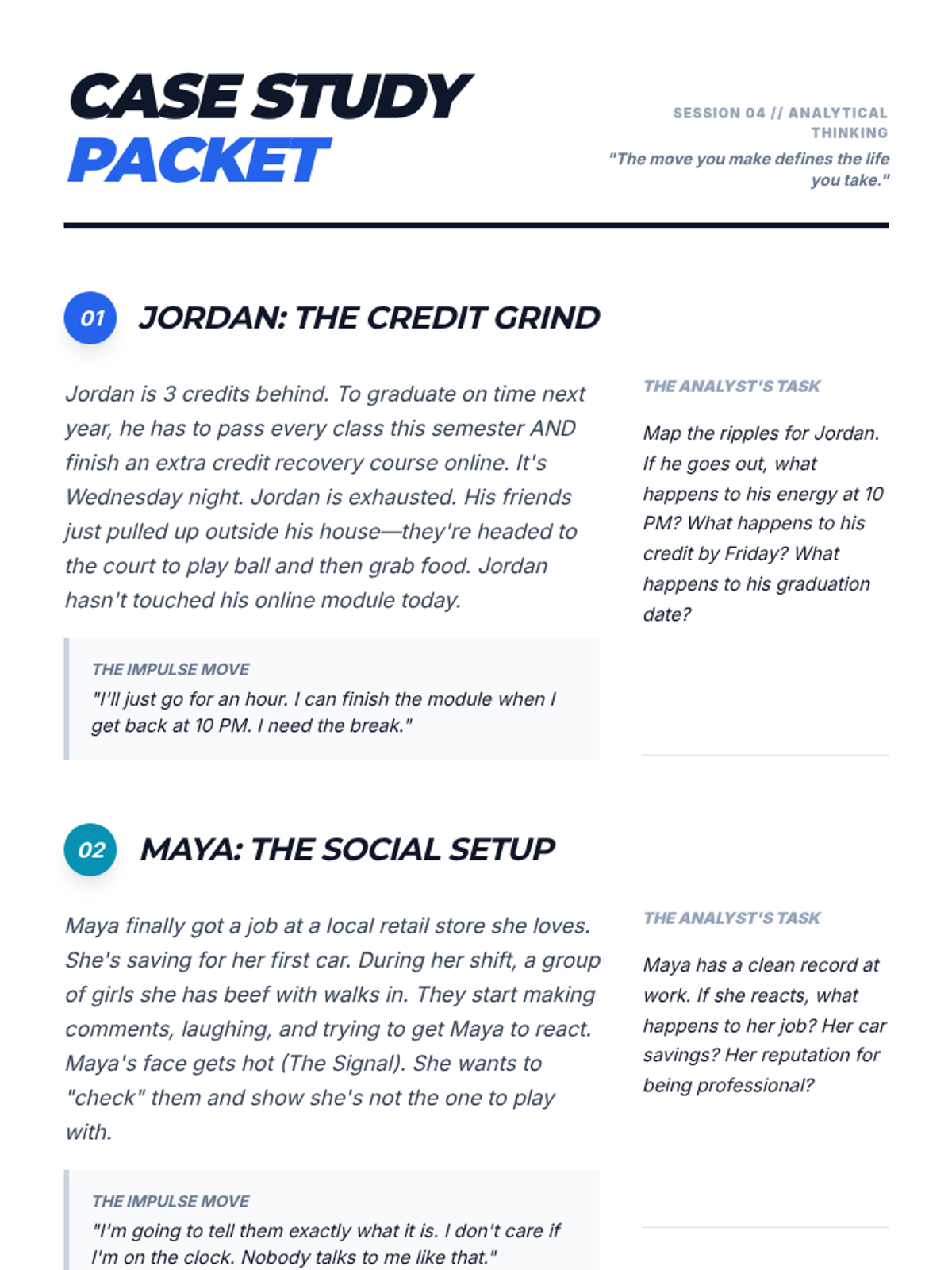
Case study packet for Lesson 4 featuring "Impulsive Ivan" scenarios for students to analyze the long-term ripples of impulsive decisions.
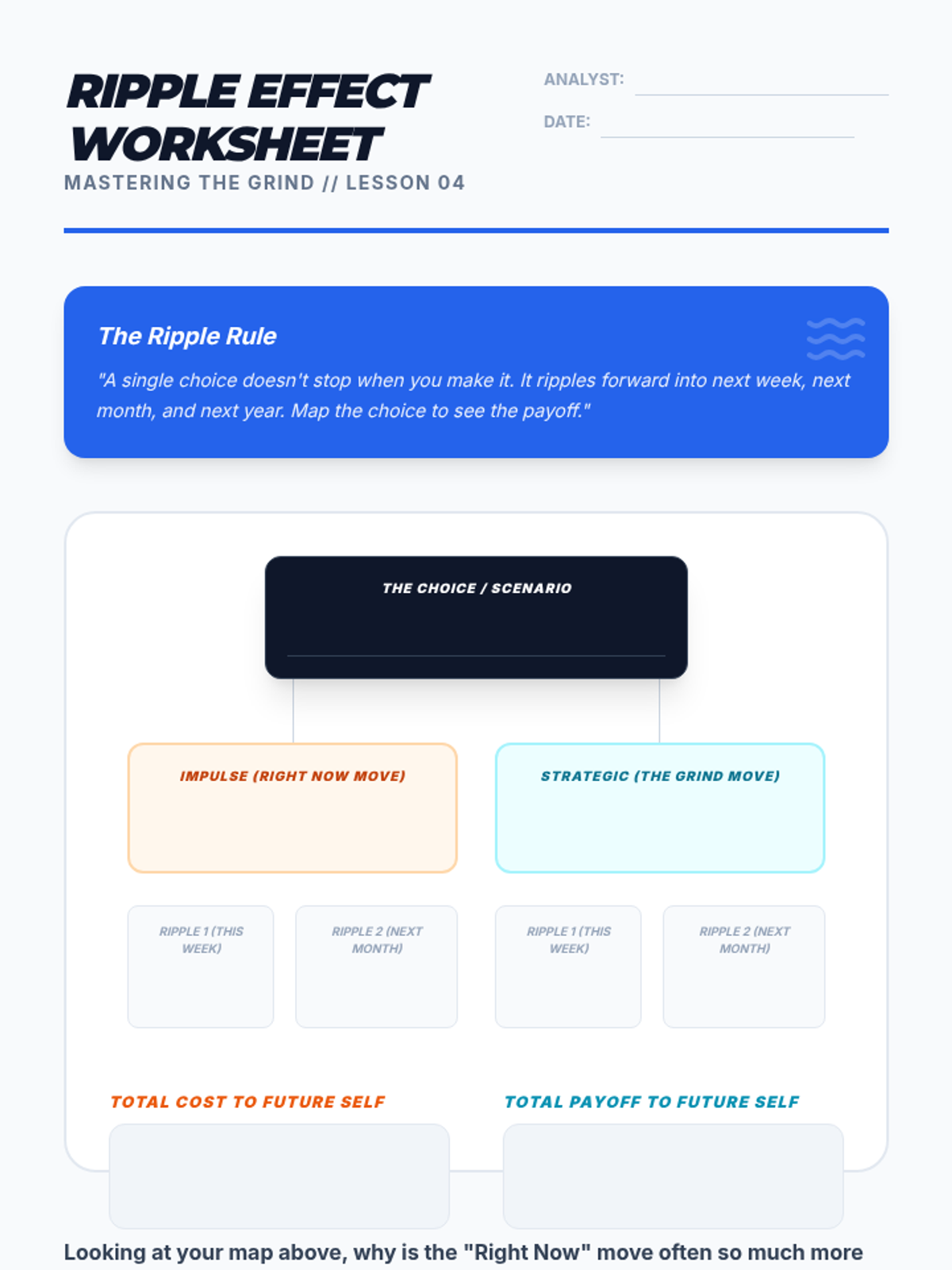
Student worksheet for Lesson 4 where students map out the "now" and "later" consequences of a specific academic/social dilemma using a tree diagram.
Slide deck for Lesson 4 exploring the "Ripple Effect" of choices and the concept of thinking about one's "Future Self" to weigh consequences.
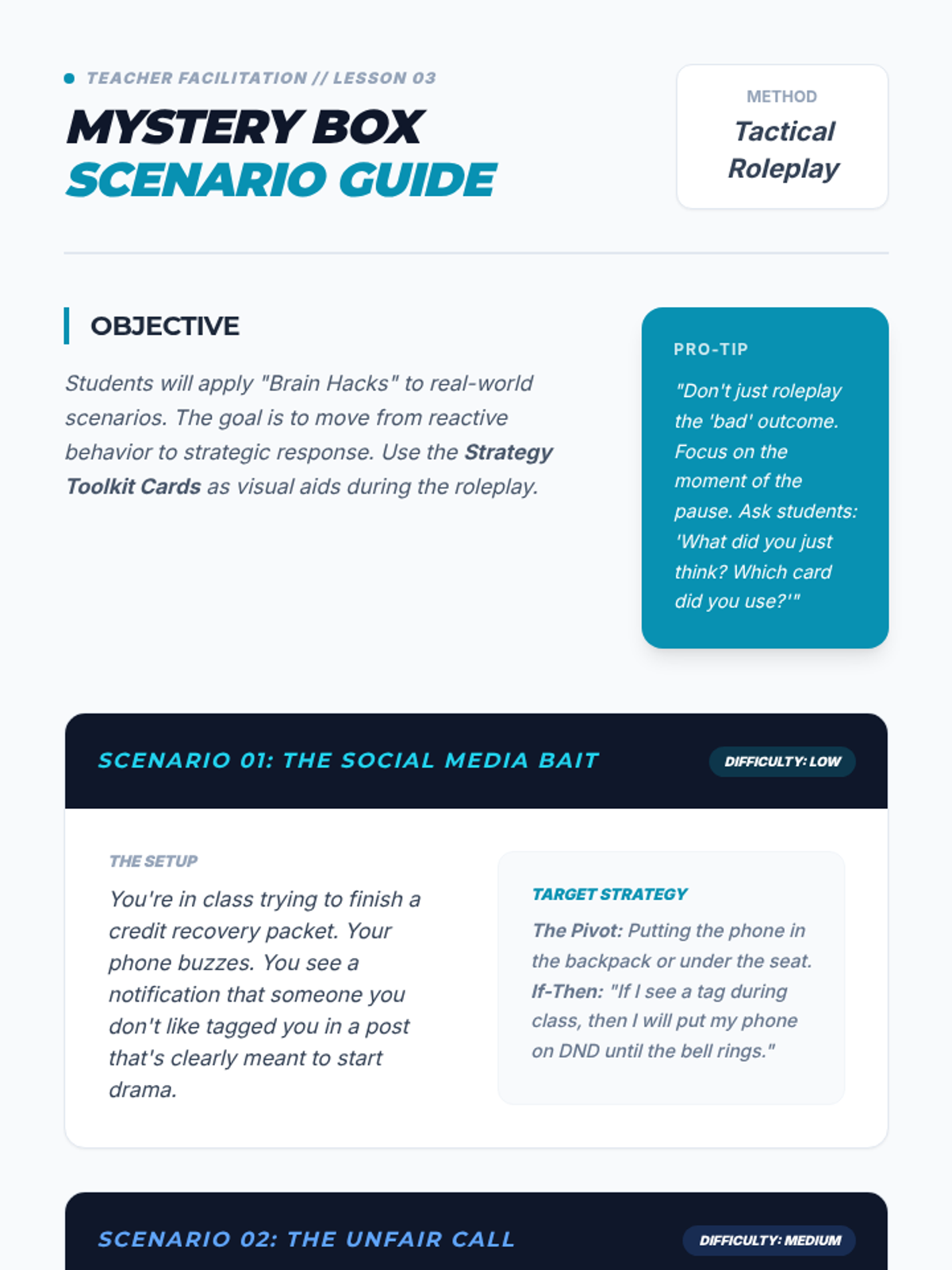
Teacher facilitation guide for Lesson 3 roleplay scenarios and the "Mystery Box" practical application activity.
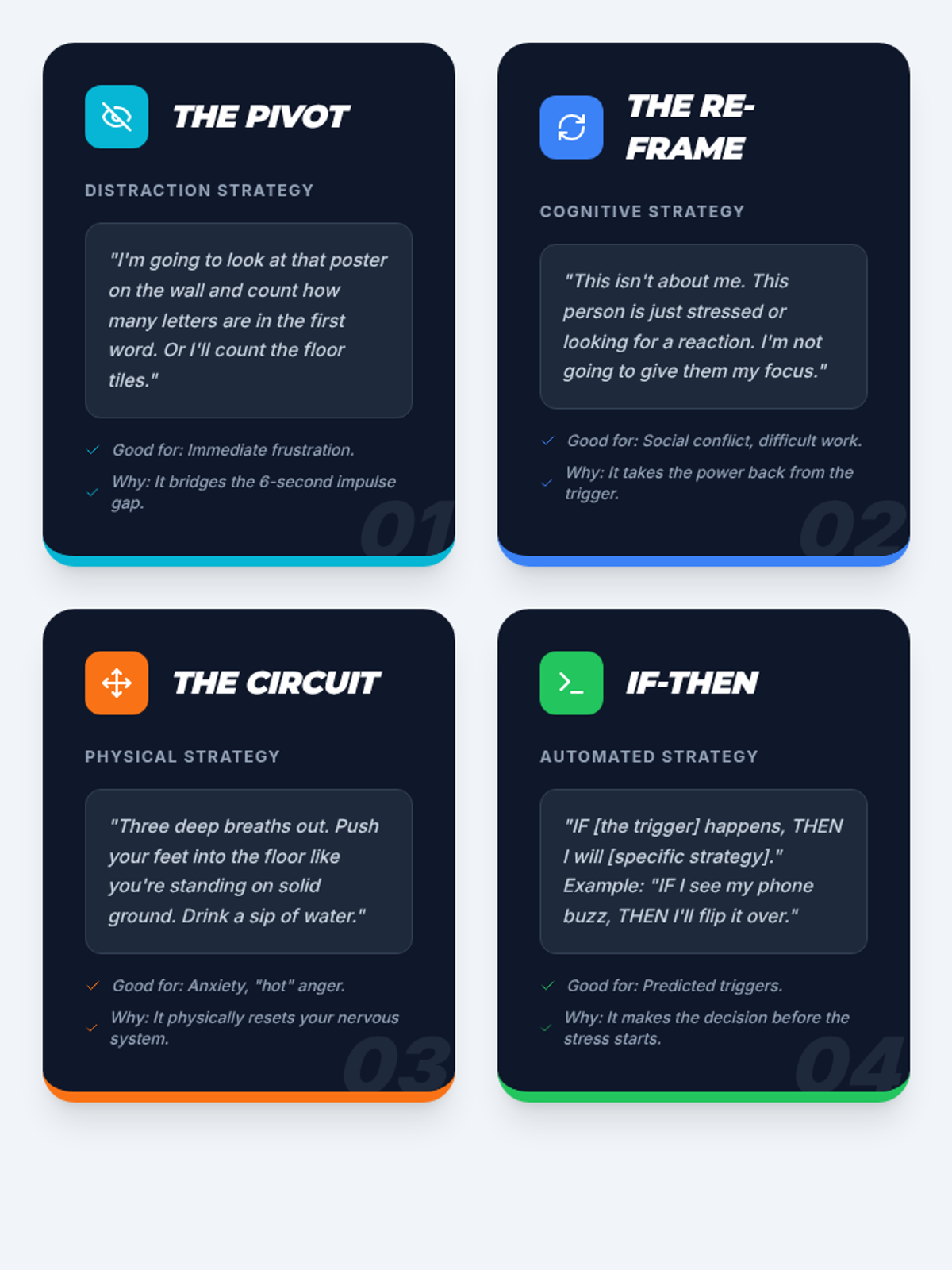
Reference cards for students featuring the four primary "Brain Hacks" (Distraction, Reframing, Physical, If-Then) and a space to select their preferred combination.
Slide deck for Lesson 3 introducing distraction and reframing strategies, including the "Mystery Box" challenge.
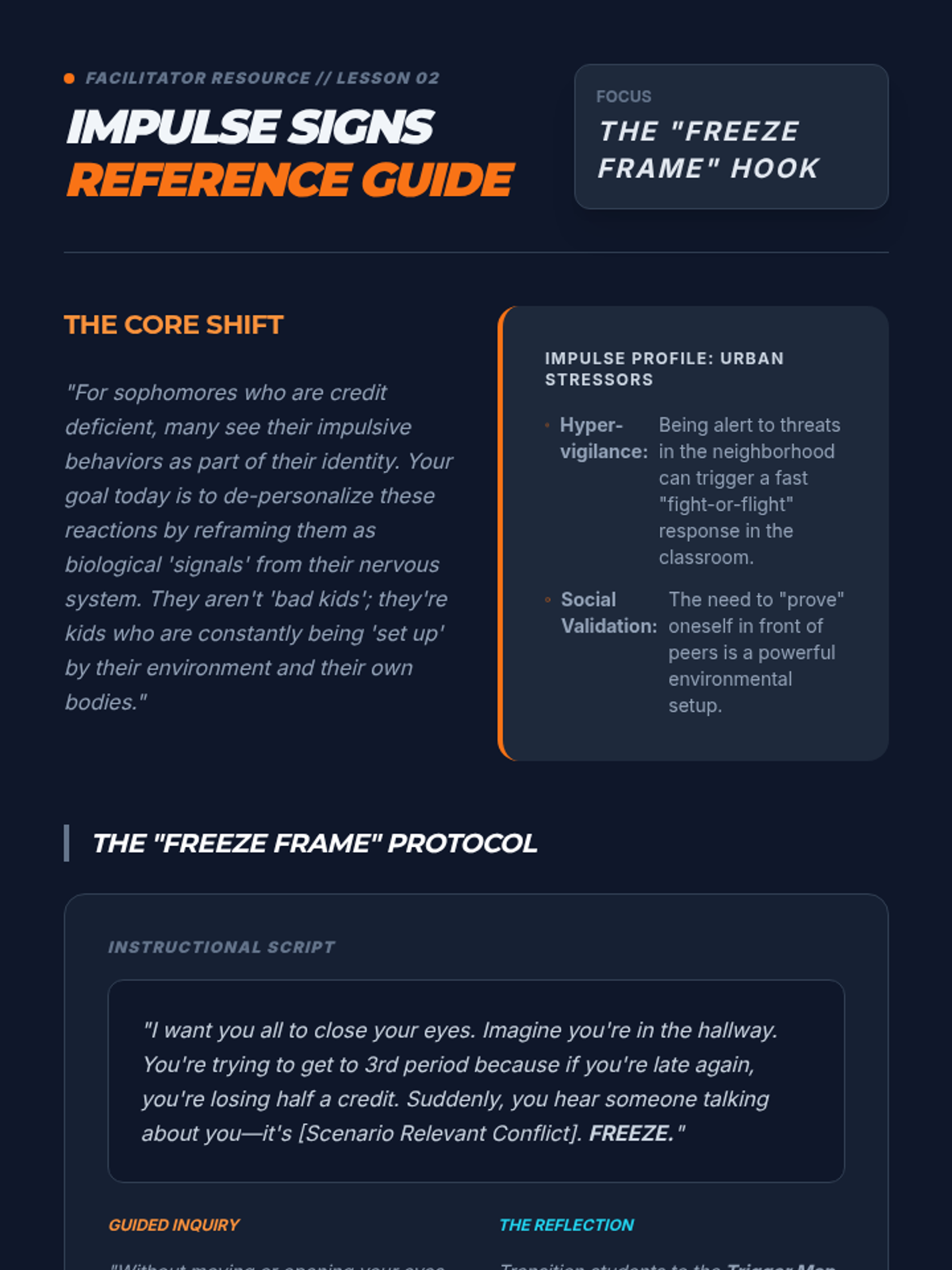
Teacher resource for Lesson 2 providing deeper context on the "impulse profile" and a script for the "Freeze Frame" hook activity.
Student activity sheet for Lesson 2 to map out personal physical impulse signs and environmental triggers across different settings (home, school, social).
Slide deck for Lesson 2 focused on identifying physical and environmental triggers that lead to impulsive behavior. Reframed as "Spot the Setup" for an urban high school audience.
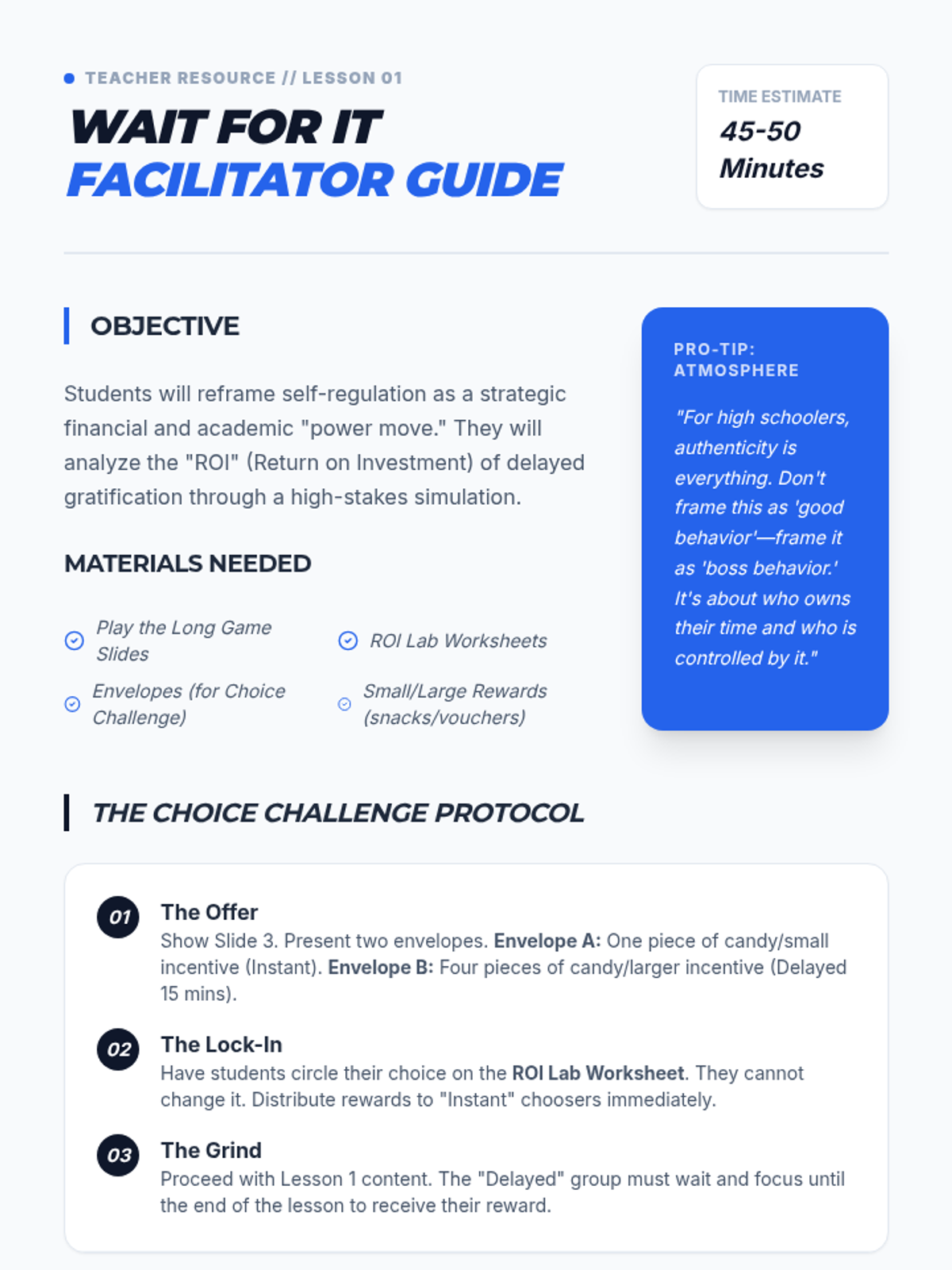
Teacher's facilitation guide for Lesson 1, including the specific protocol for the "Choice Challenge" simulation and discussion prompts. Updated for high school audience.
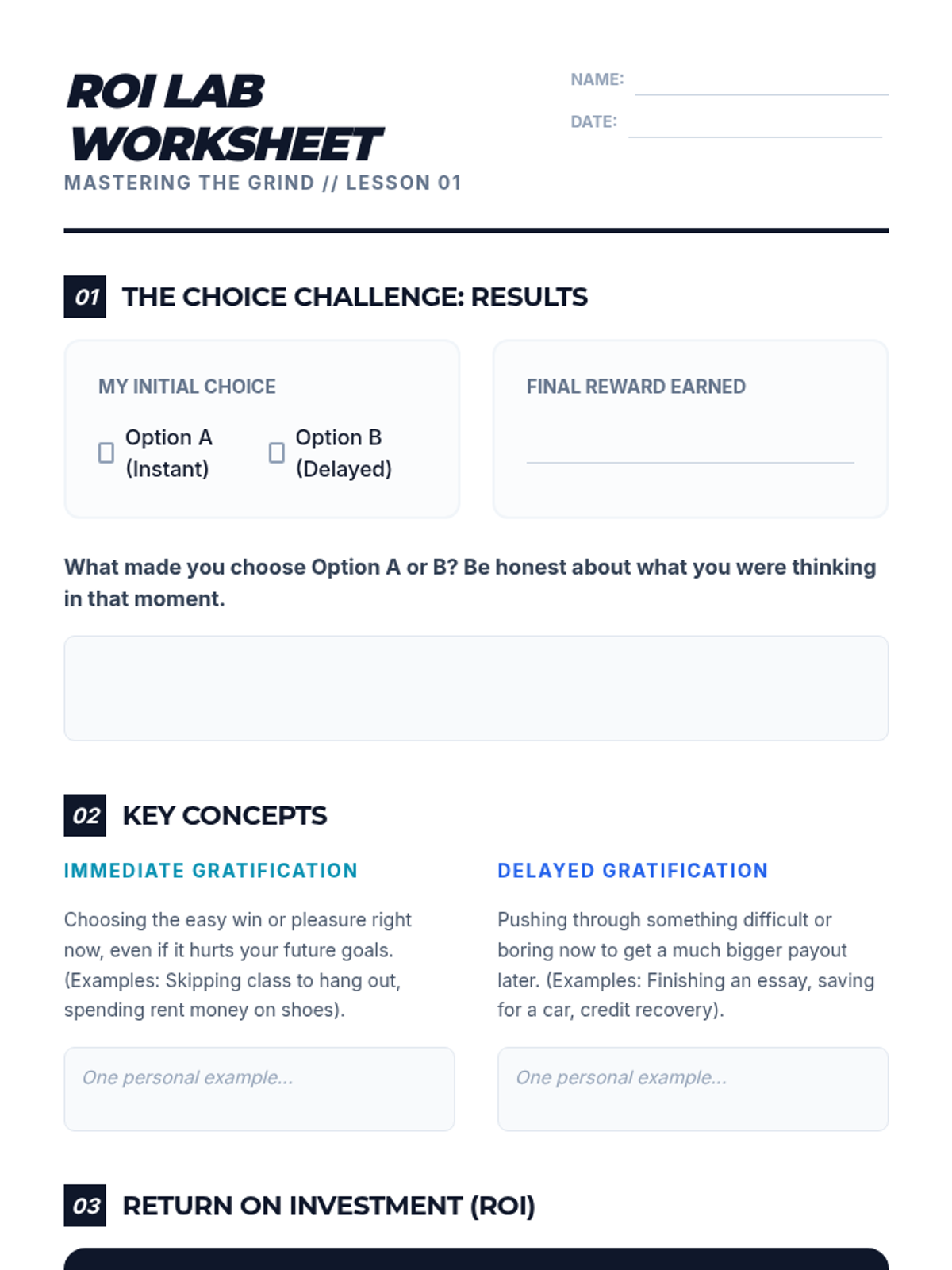
Student worksheet for Lesson 1 to record simulation results, define key terms, and reflect on personal waiting strategies. Reframed for high school sophomores with a focus on "Return on Investment" (ROI).
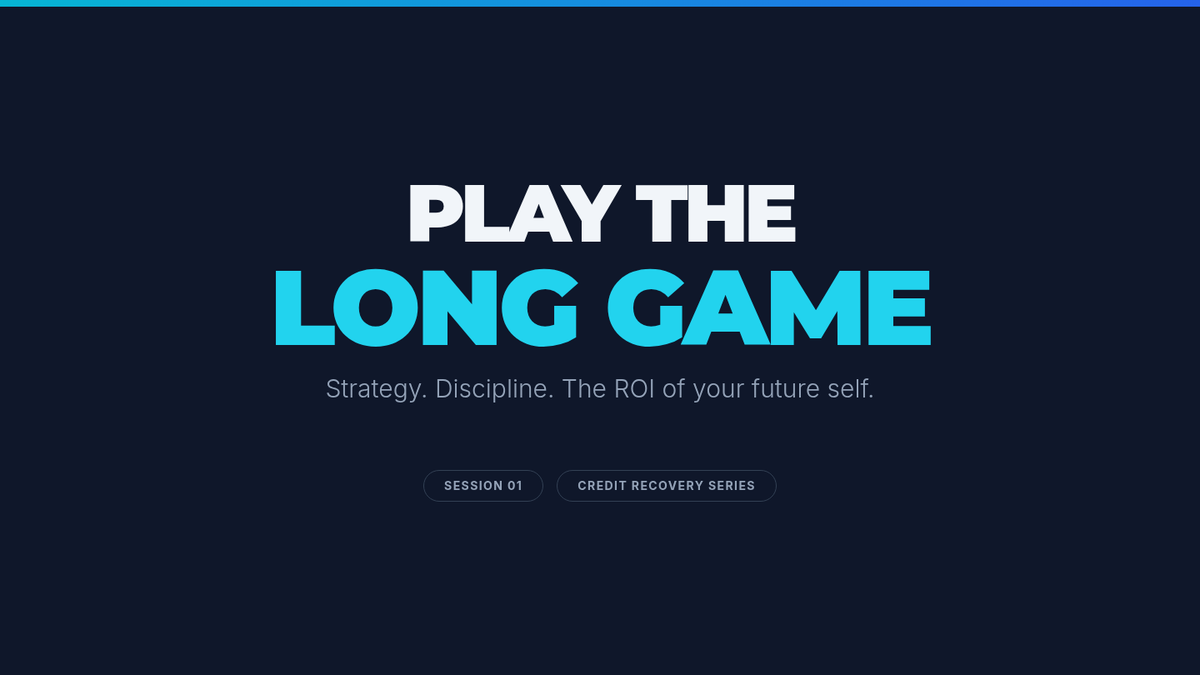
High-impact slides for Lesson 1, reframing impulse control as a strategic power move for credit-deficient sophomores. Features high-contrast urban design and focus on "Return on Investment" for graduation.
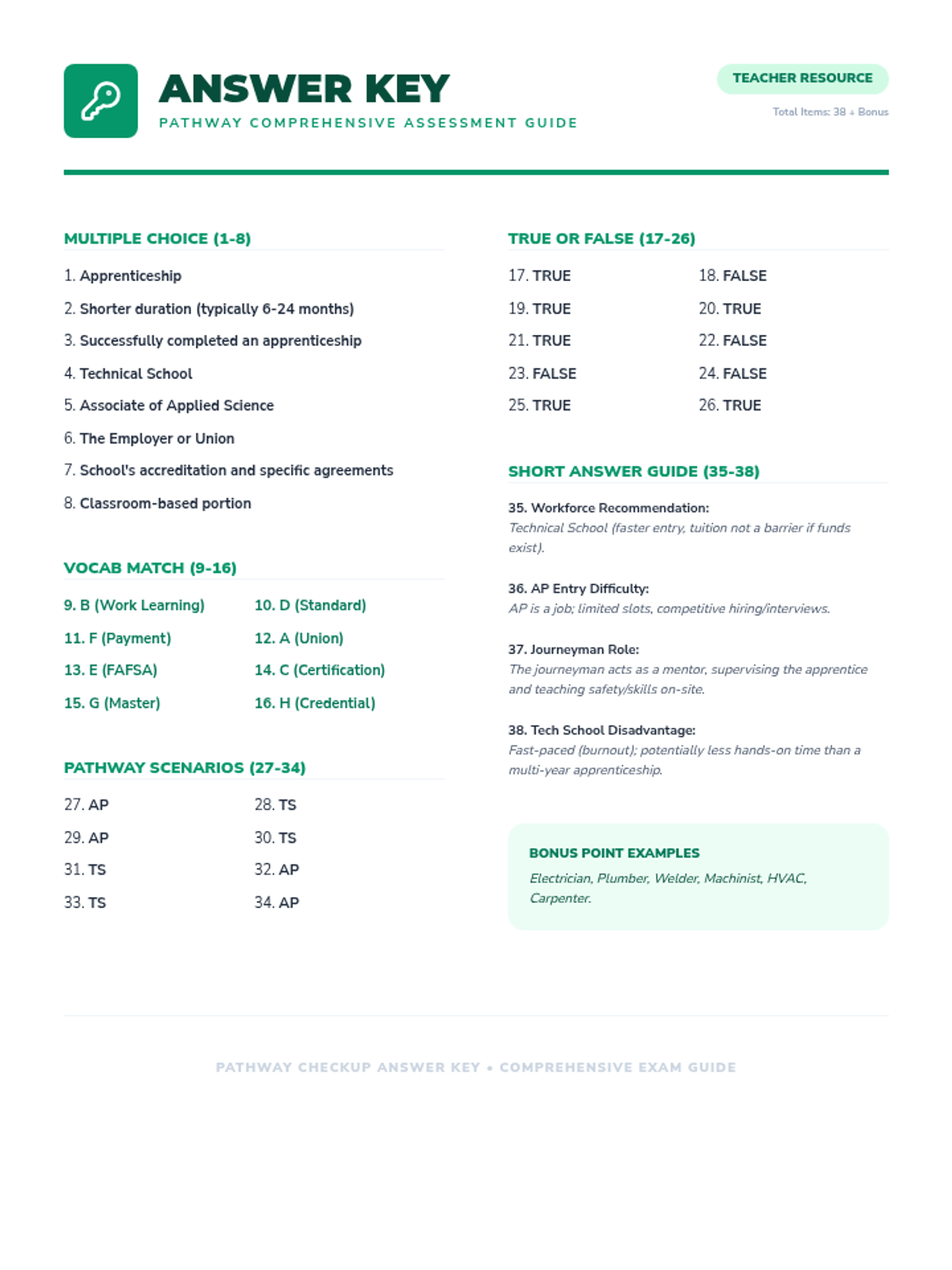
A teacher-facing answer key for the Pathway Checkup Quiz, including sample responses for short-answer questions and a bonus question guide.
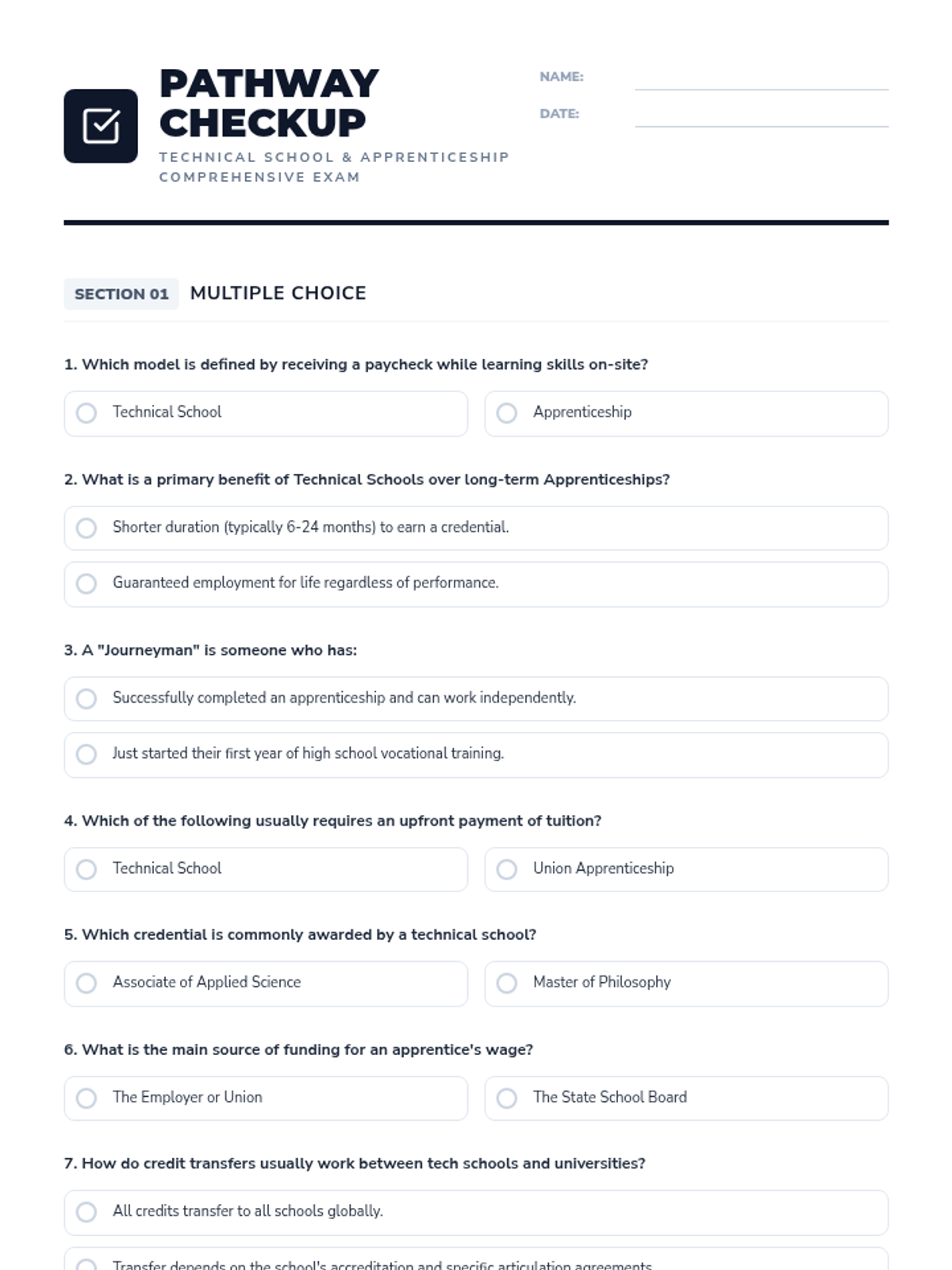
An extended 38-question formal assessment featuring multiple-choice, vocabulary matching, scenario analysis, true/false, and short-answer questions to evaluate student understanding of technical schools and apprenticeships.
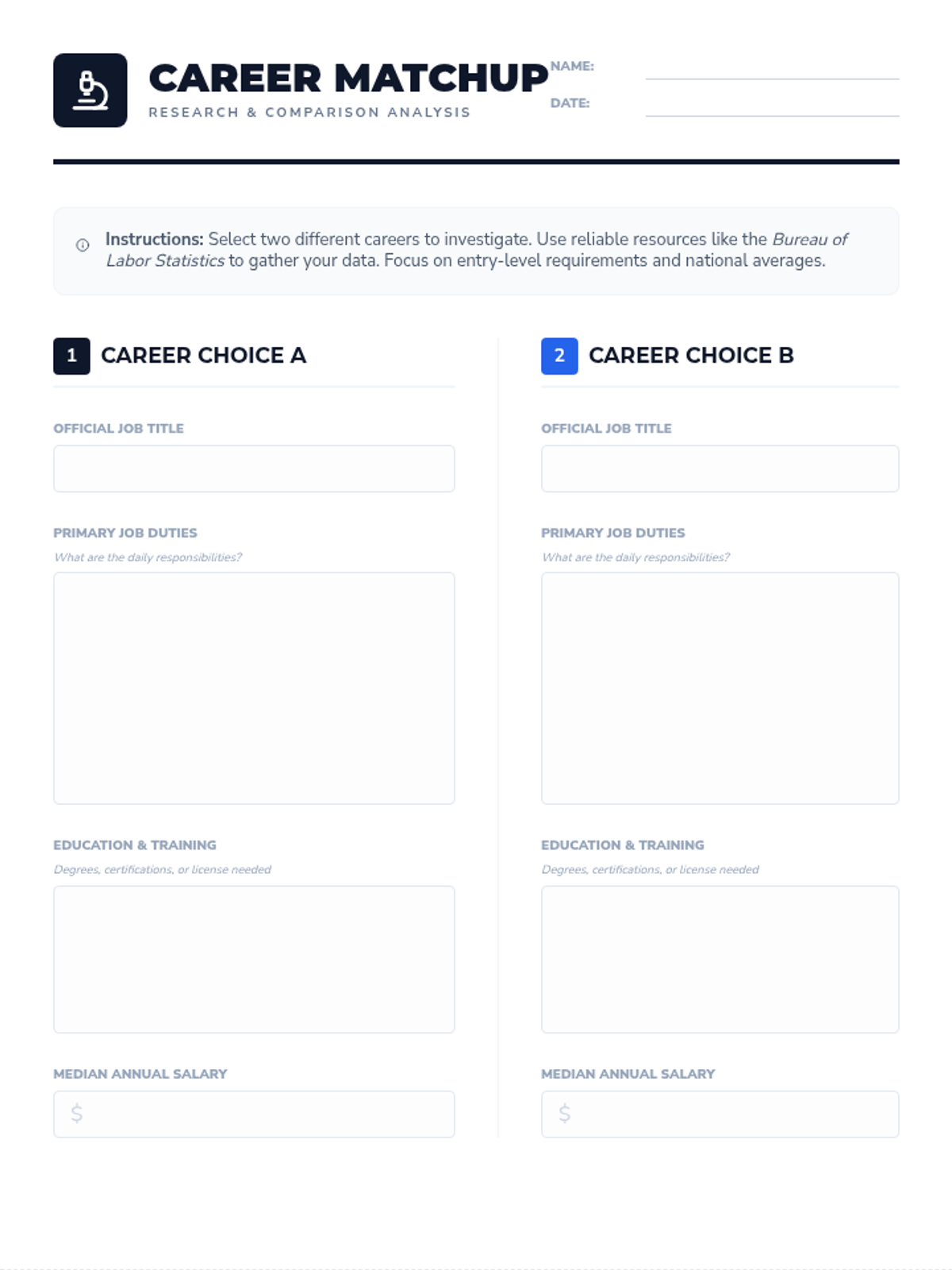
A student research activity sheet designed for comparing two different career paths side-by-side, focusing on job duties, education requirements, salary, and a detailed similarity/difference analysis.
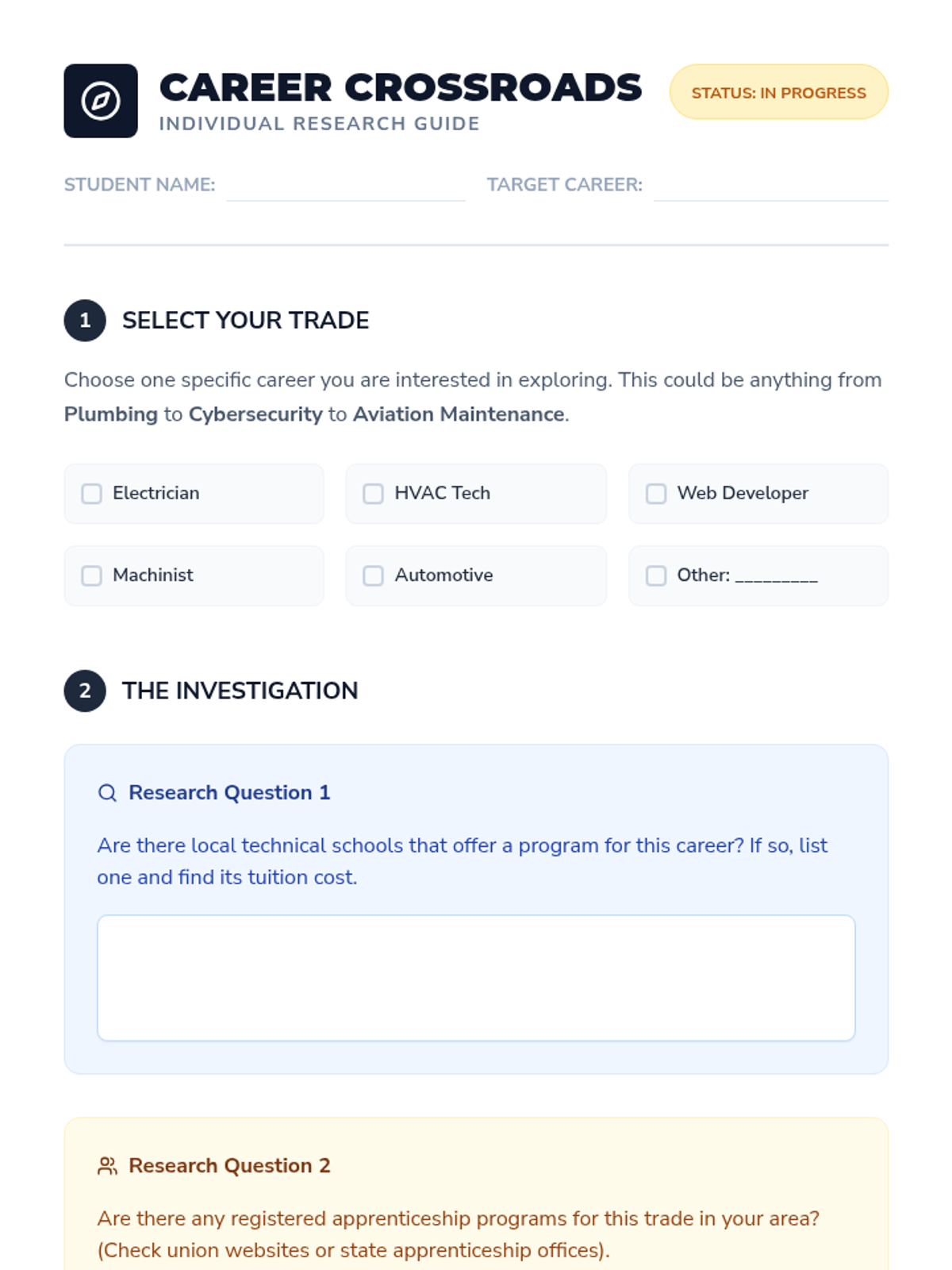
A student-led research guide for exploring specific trade careers and determining the local requirements for both technical school and apprenticeship pathways.
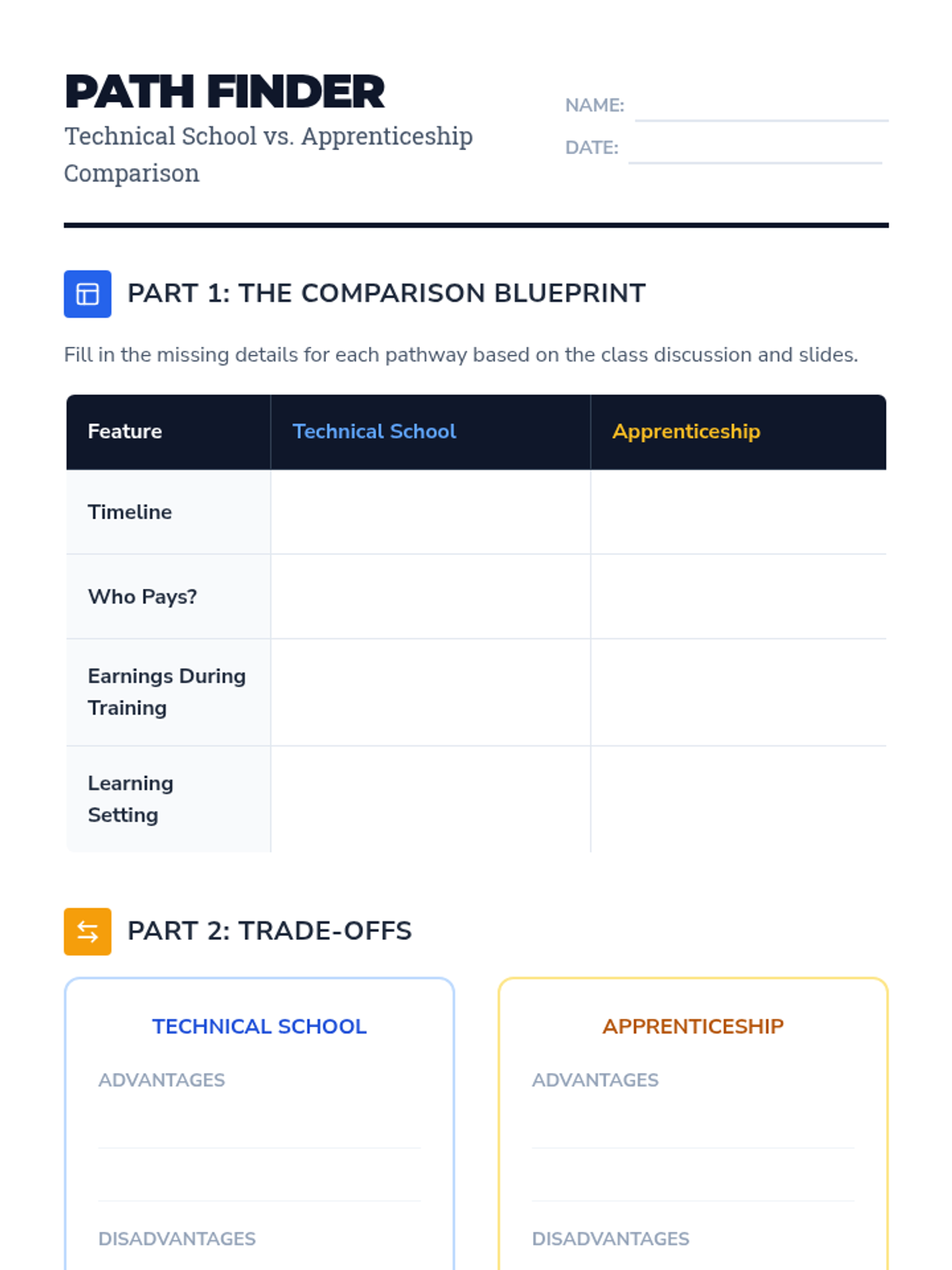
A student worksheet for comparing technical schools and apprenticeships, featuring a comparison table, pros/cons sorting, and scenario-based decision making.
A high-impact visual presentation using a 16:9 aspect ratio, designed to guide students through the definitions, pros, cons, and industry snapshots of technical schools and apprenticeships.
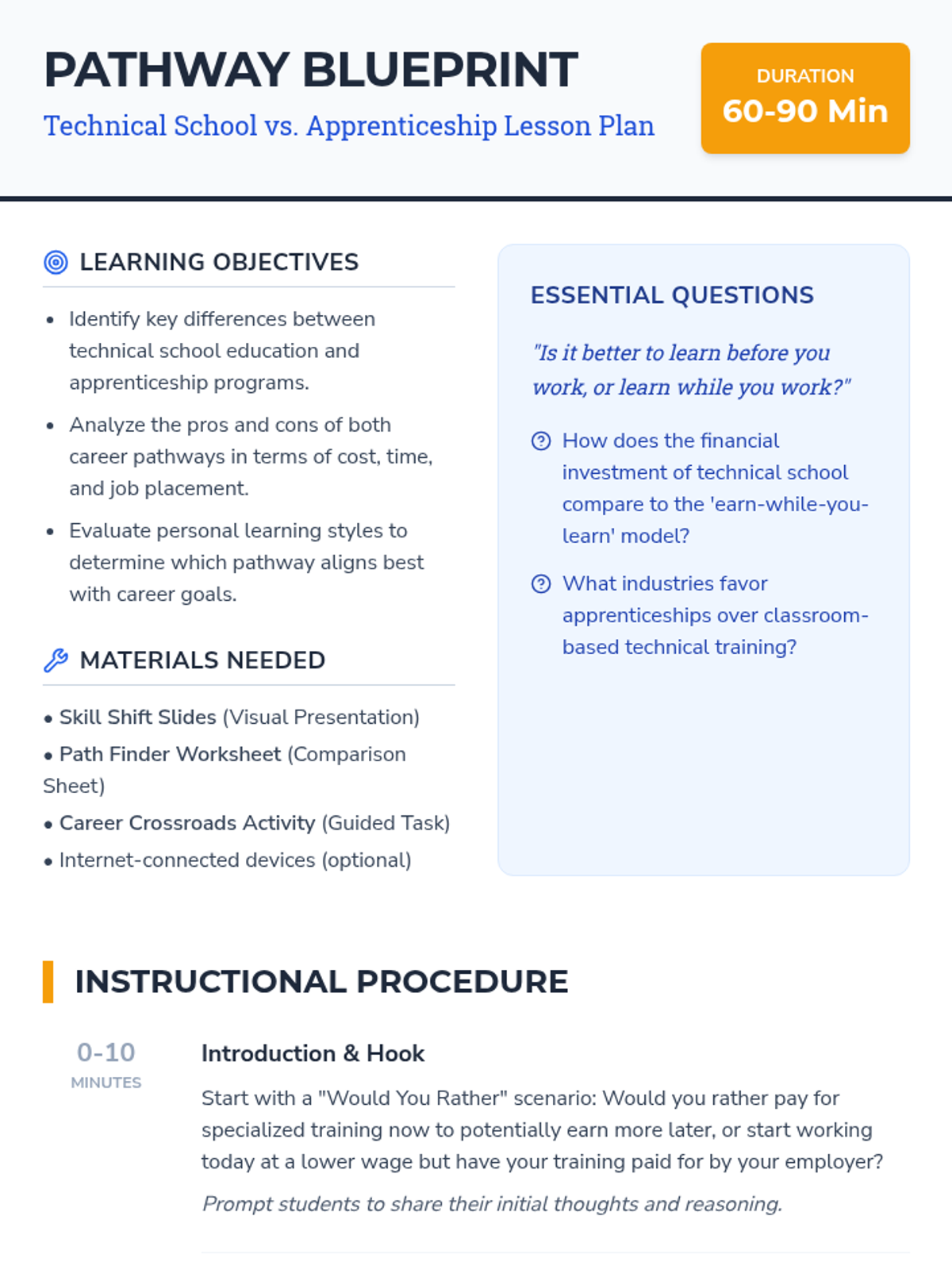
A detailed instructional guide for teachers, outlining lesson objectives, essential questions, and a step-by-step procedure for teaching students about the differences between technical schools and apprenticeships.
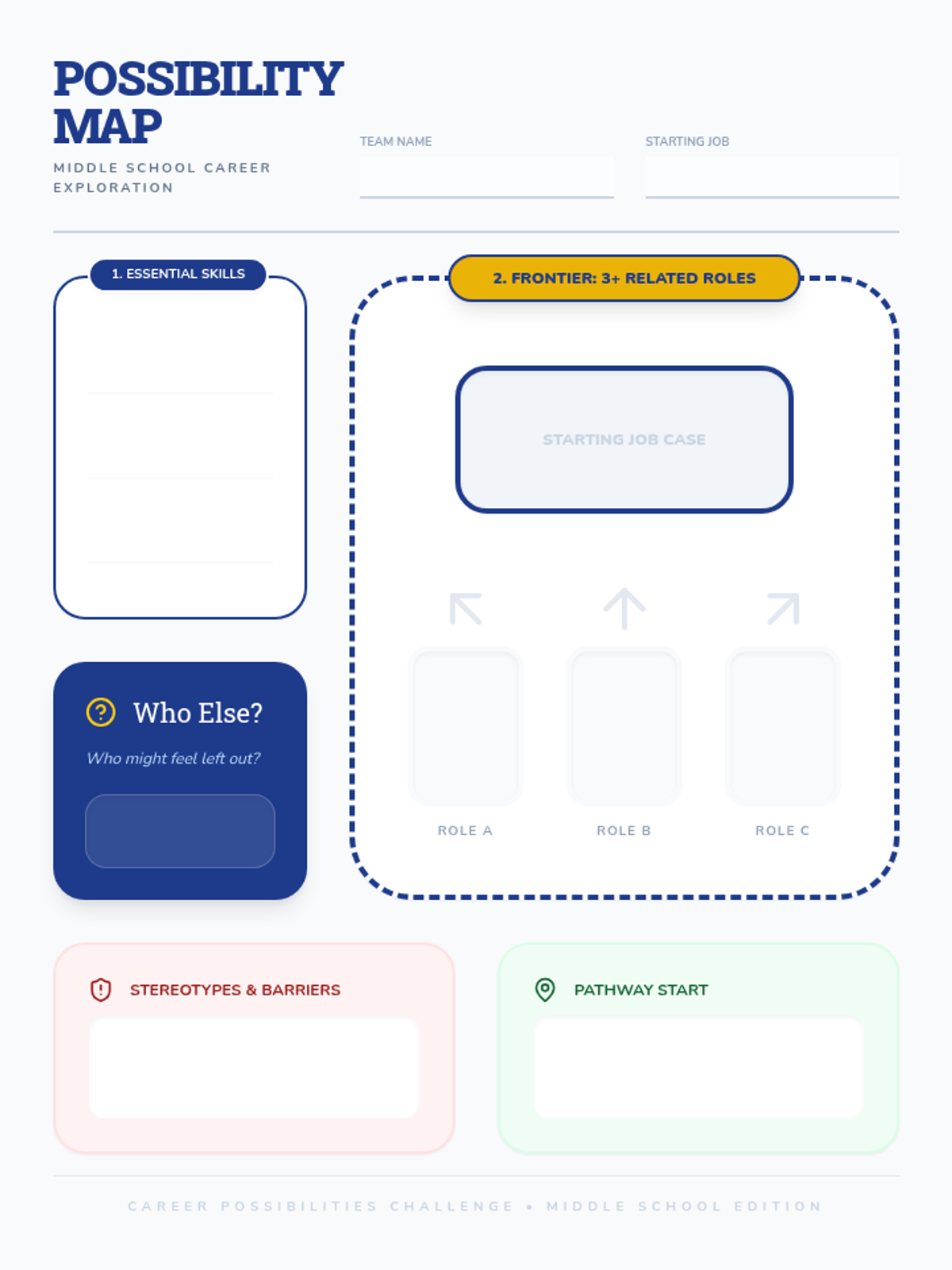
A middle-school-level brainstorming worksheet for mapping career skills, expansion connections, and common stereotypes/barriers, condensed to fit on a single page.
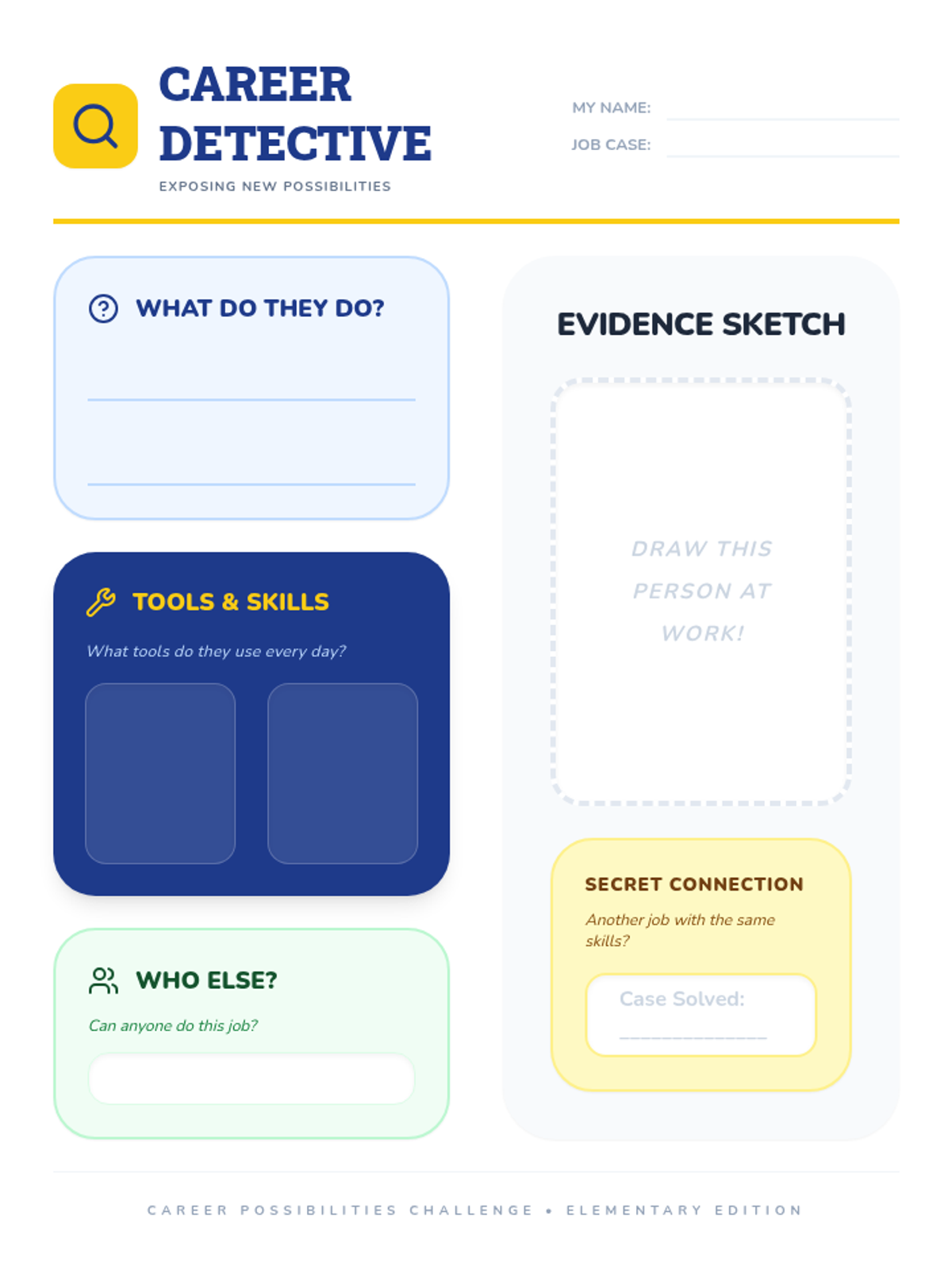
A simplified career exploration worksheet for elementary students, focusing on basic job roles, tools, and visual representation, condensed to fit on a single page.
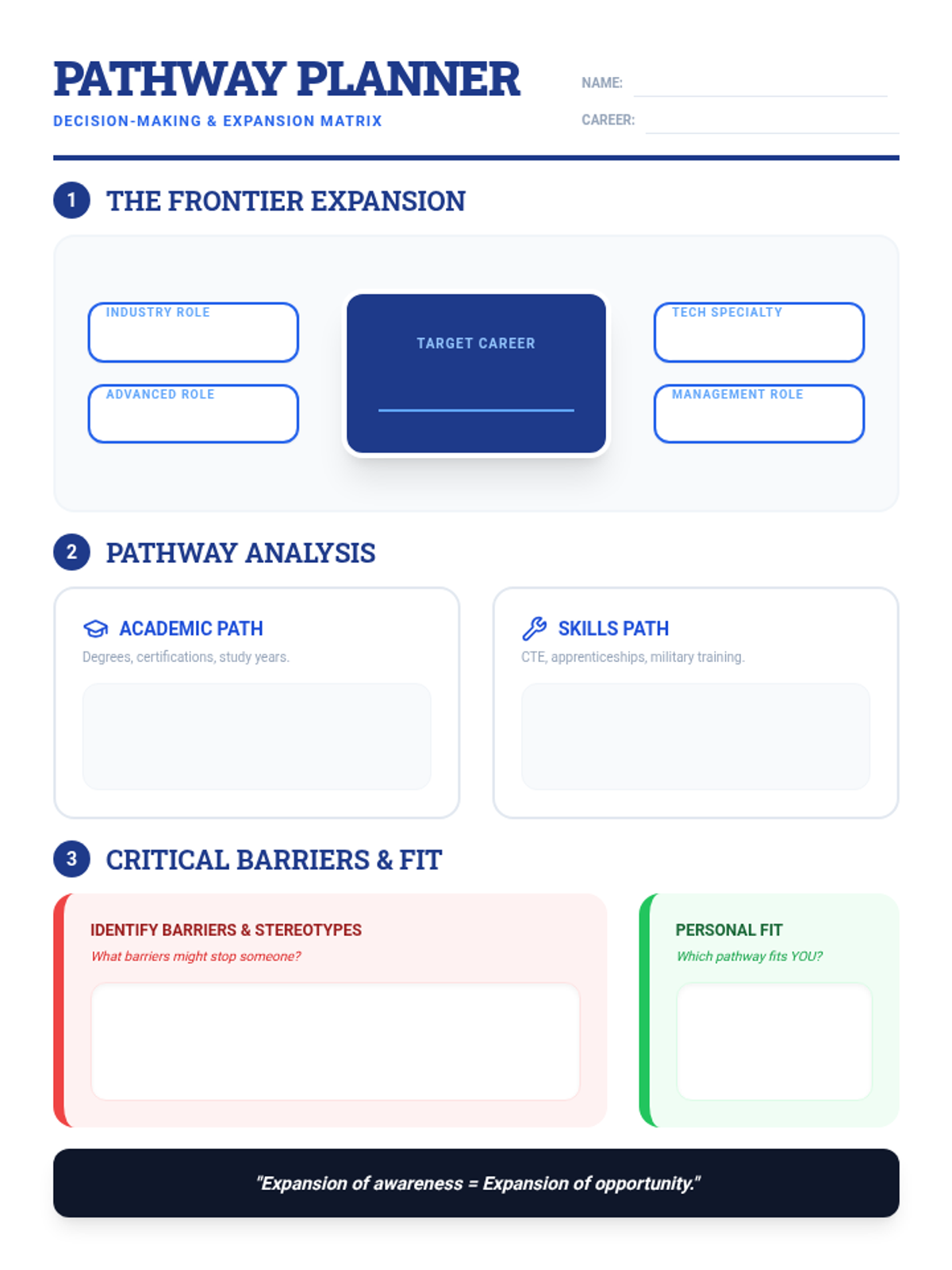
A high-school-level graphic organizer for comparing academic and skills-based pathways for specific careers, condensed to fit on a single page.
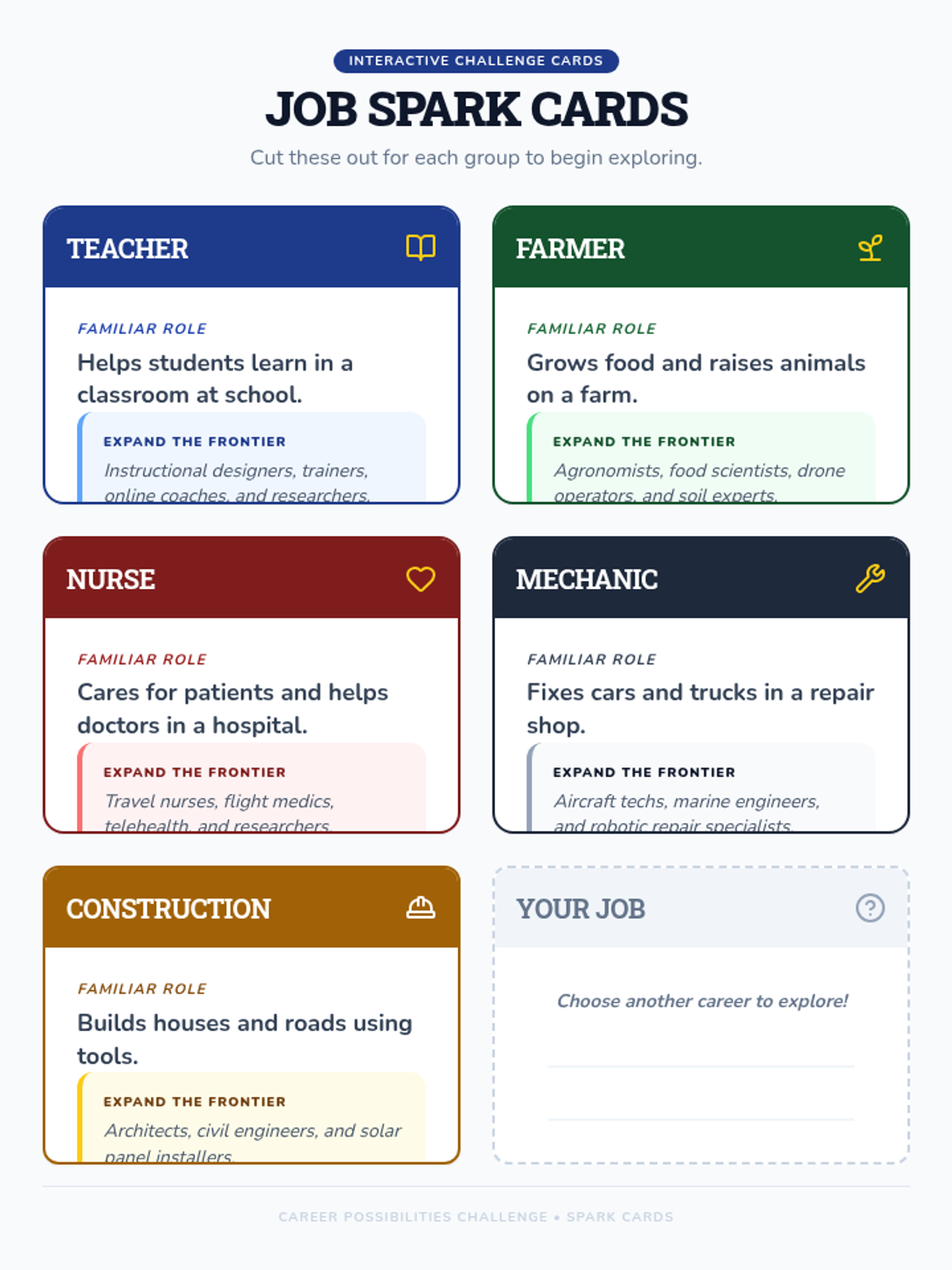
Printable job cards for five familiar careers, condensed to a single-page 2x3 grid to ensure they fit on one page when printed.
A high-impact visual presentation to guide students through the Career Possibilities Challenge, featuring prompts for skill mapping, related career exploration, and critical thinking about barriers.
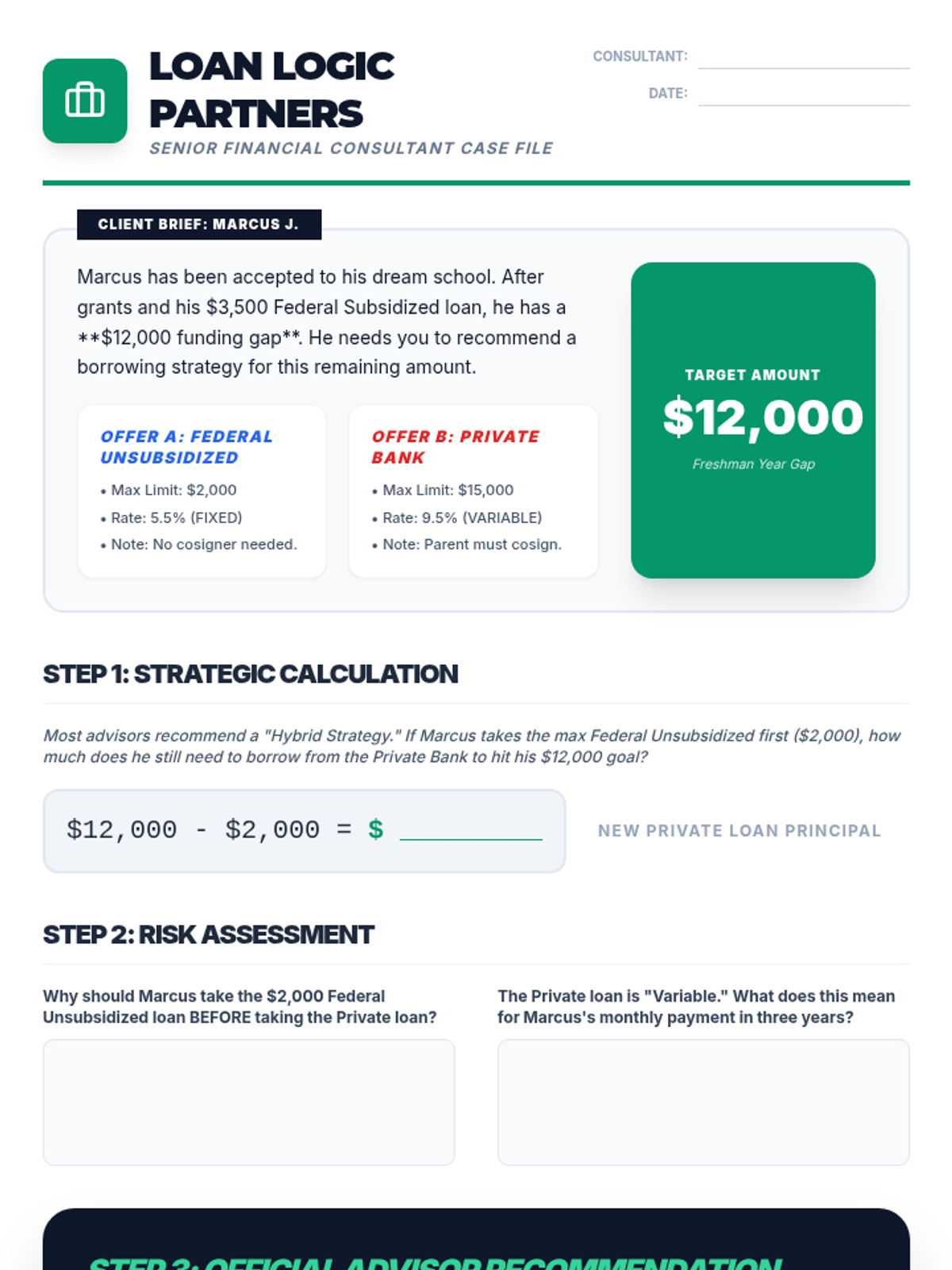
A student project for Lesson 5 where students synthesize their knowledge to create a borrowing recommendation for a fictional client.
Visual presentation for Lesson 5, focusing on a final case study project where students act as financial advisors to evaluate loan offers.
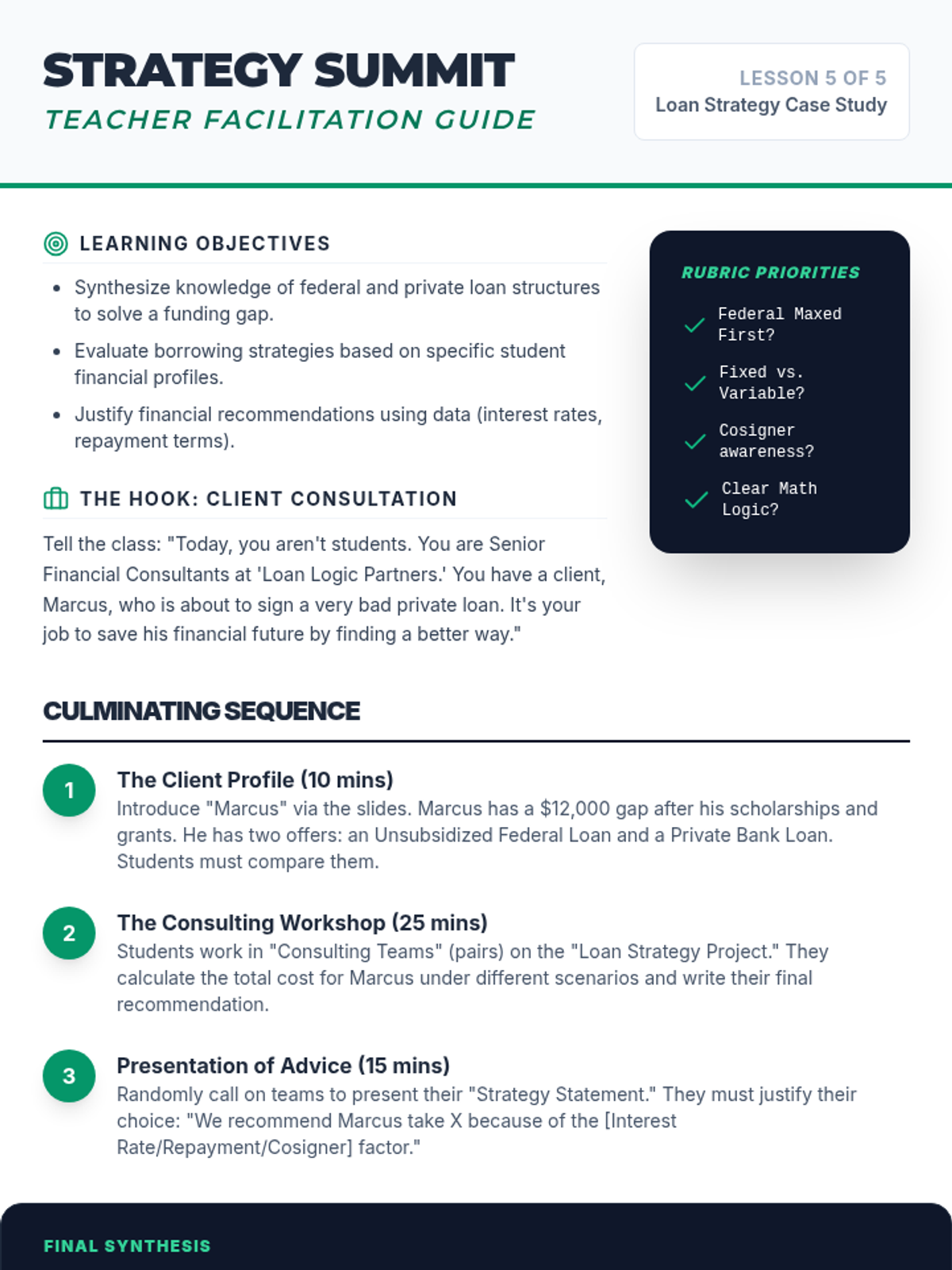
A teacher facilitation guide for Lesson 5, focusing on a final case study project where students act as financial advisors to evaluate loan offers.
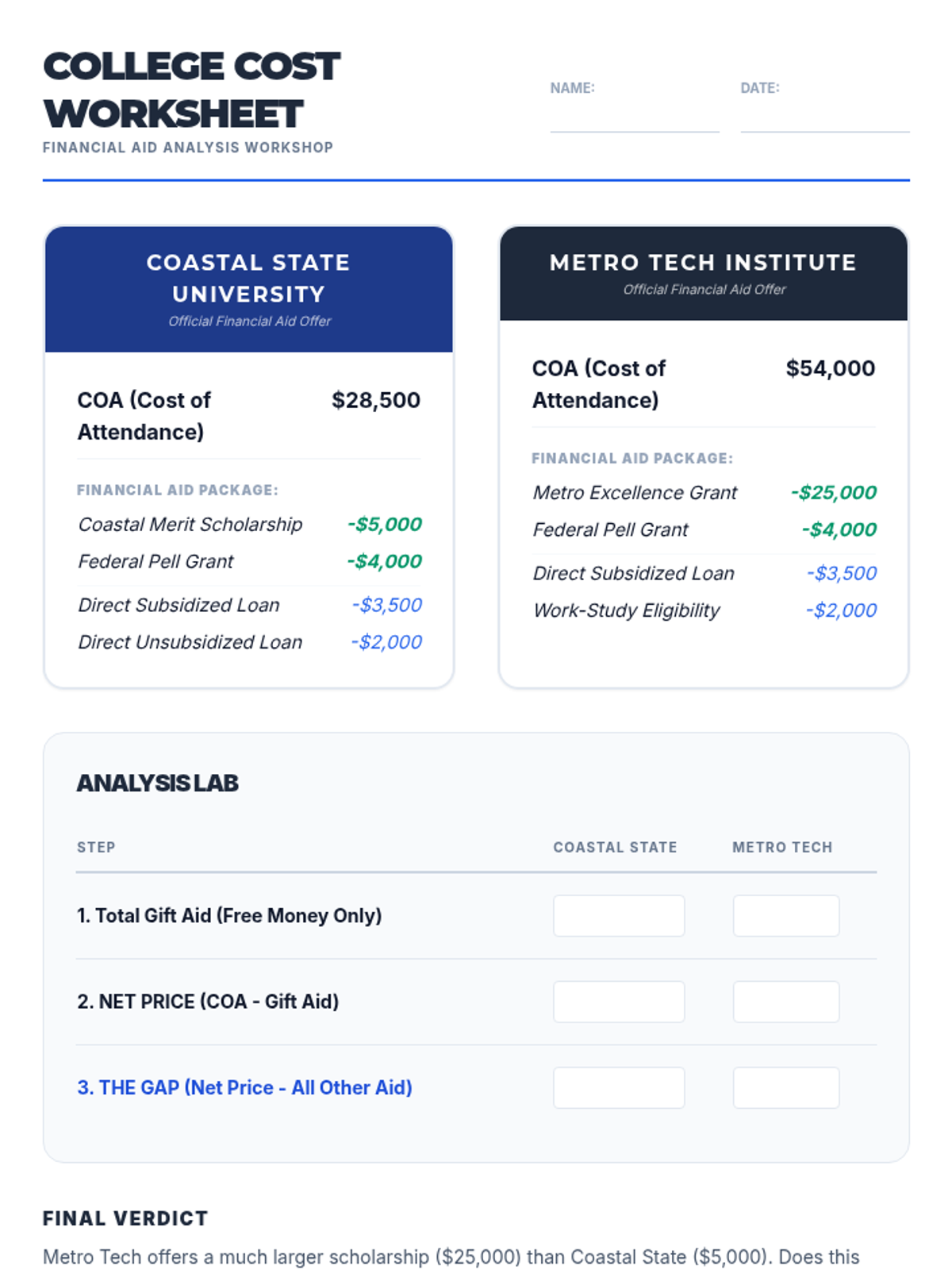
A student worksheet for Lesson 4 where students compare two financial aid award letters and calculate net price and funding gaps.
Visual presentation for Lesson 4, focusing on interpreting financial aid award letters and calculating the true net price of college.
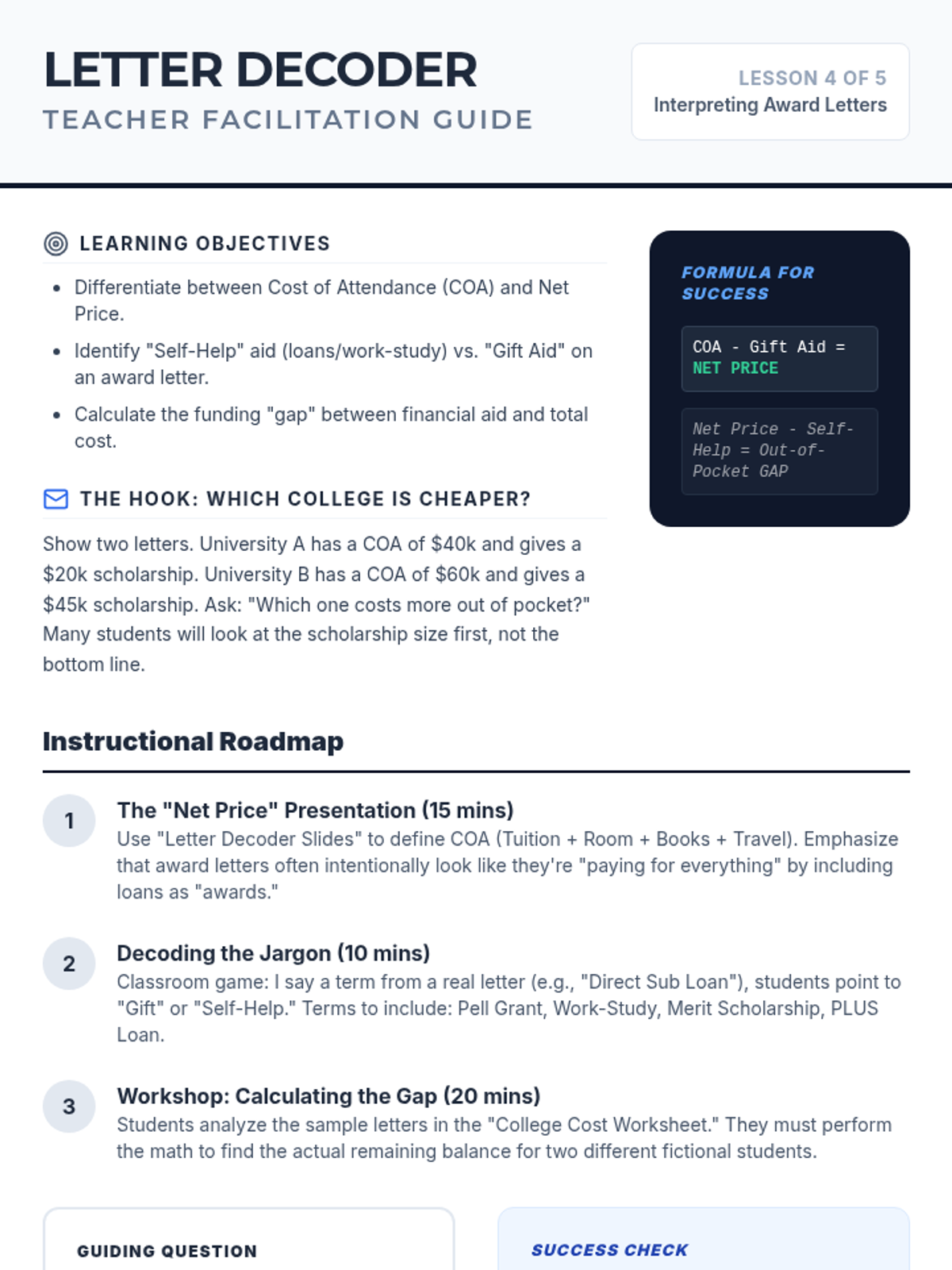
A teacher facilitation guide for Lesson 4, focusing on interpreting financial aid award letters and calculating the true net price of college.
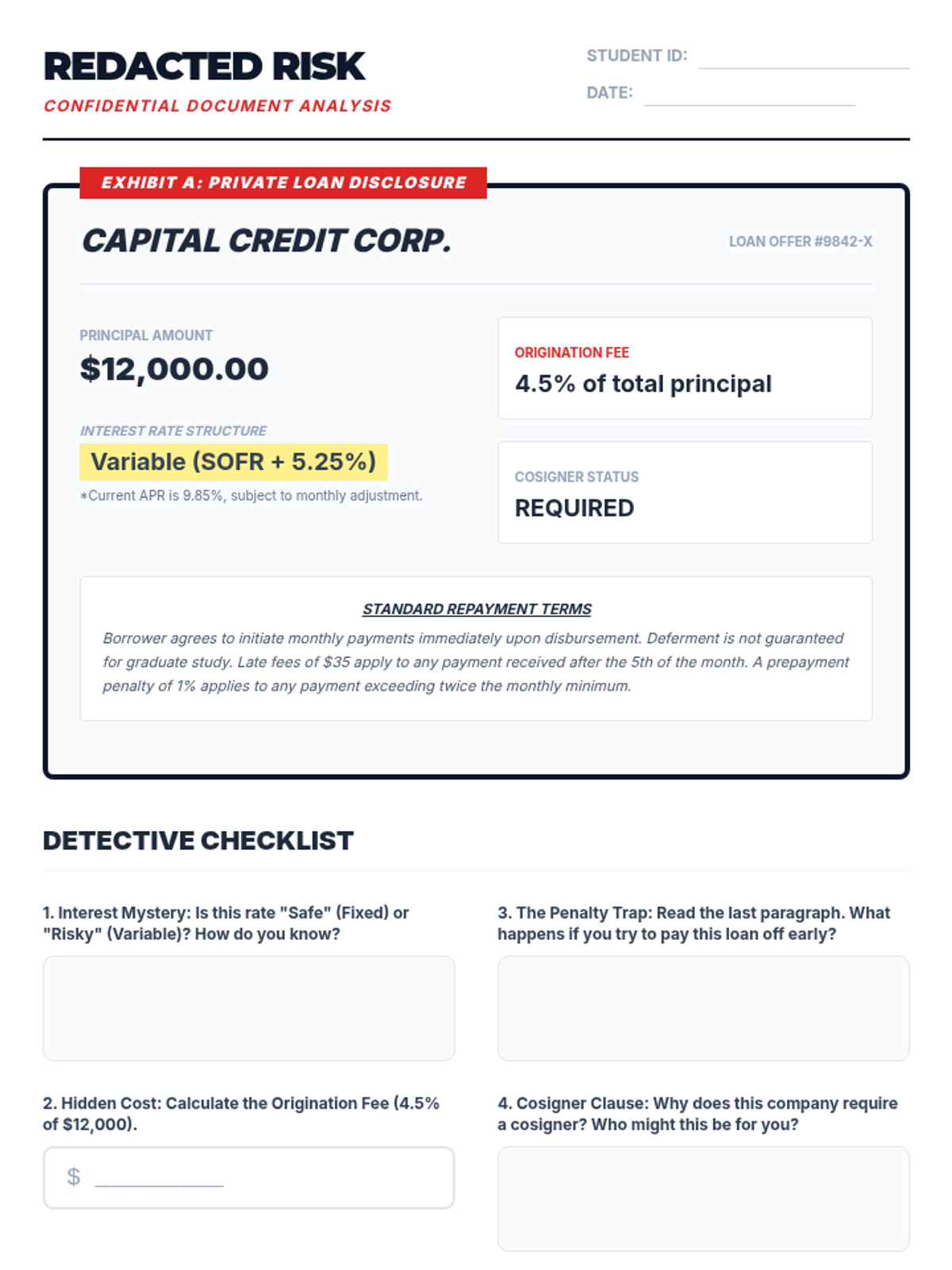
A student risk assessment worksheet where students analyze a redacted private loan offer to identify predatory terms and hidden fees.
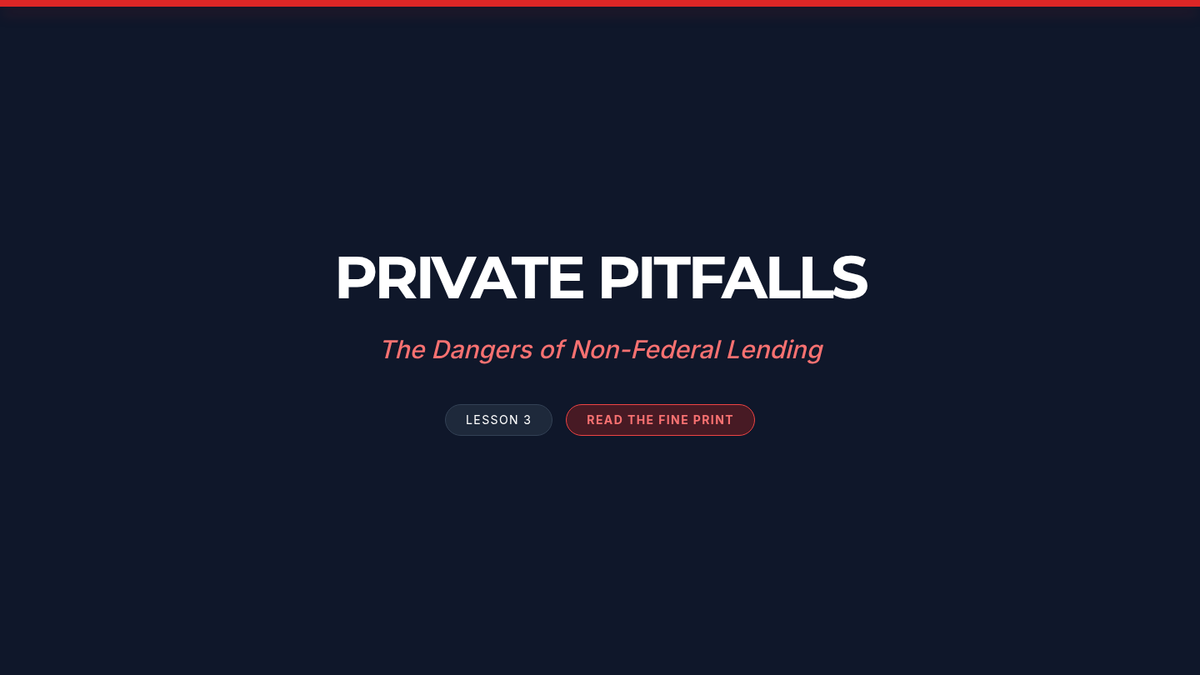
Visual presentation for Lesson 3, introducing the risks of private student loans, variable interest rates, and cosigner requirements.
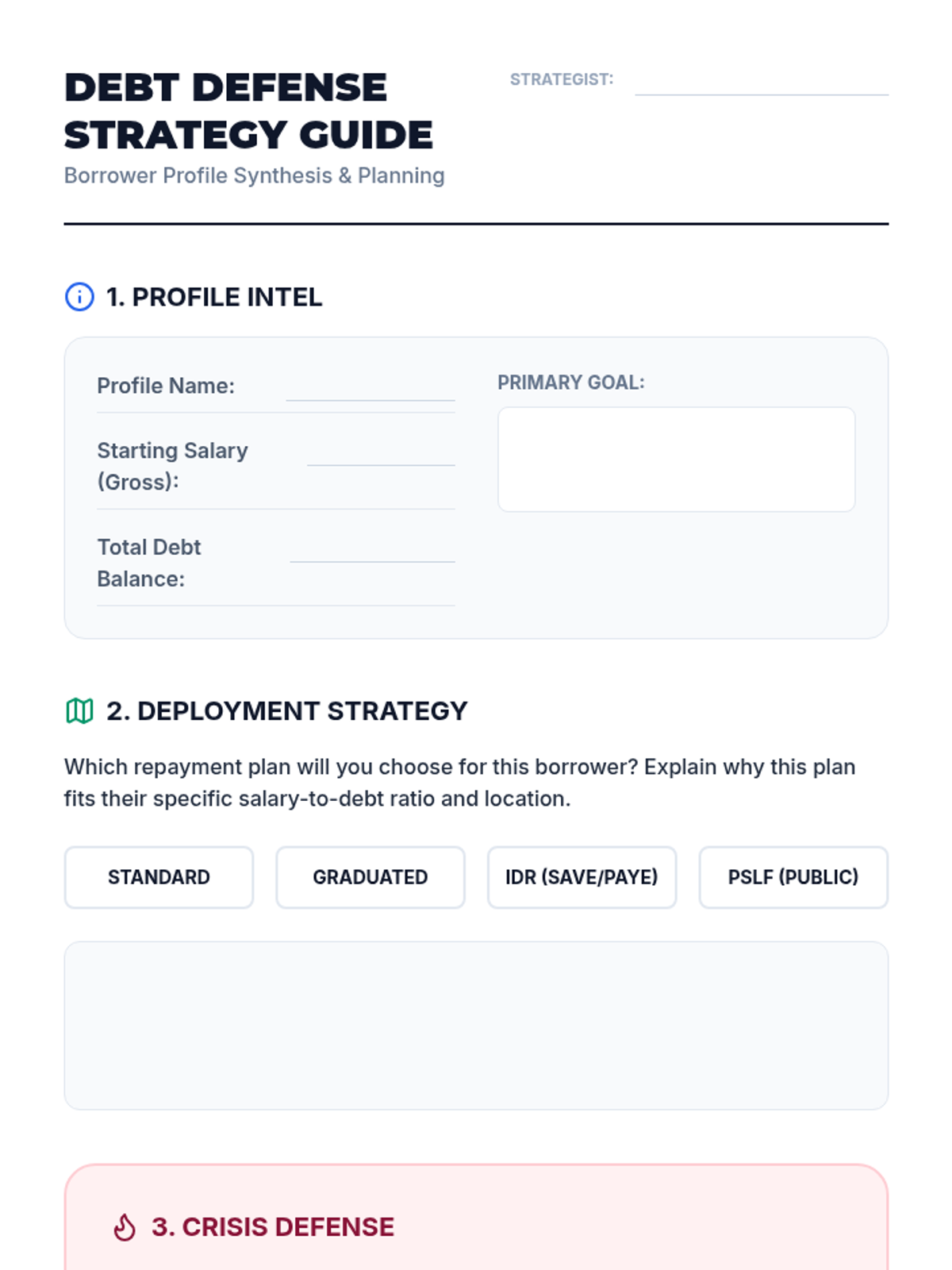
A strategy worksheet for the final simulation where students document their borrower profile, repayment strategy, and crisis response, followed by a peer review section.
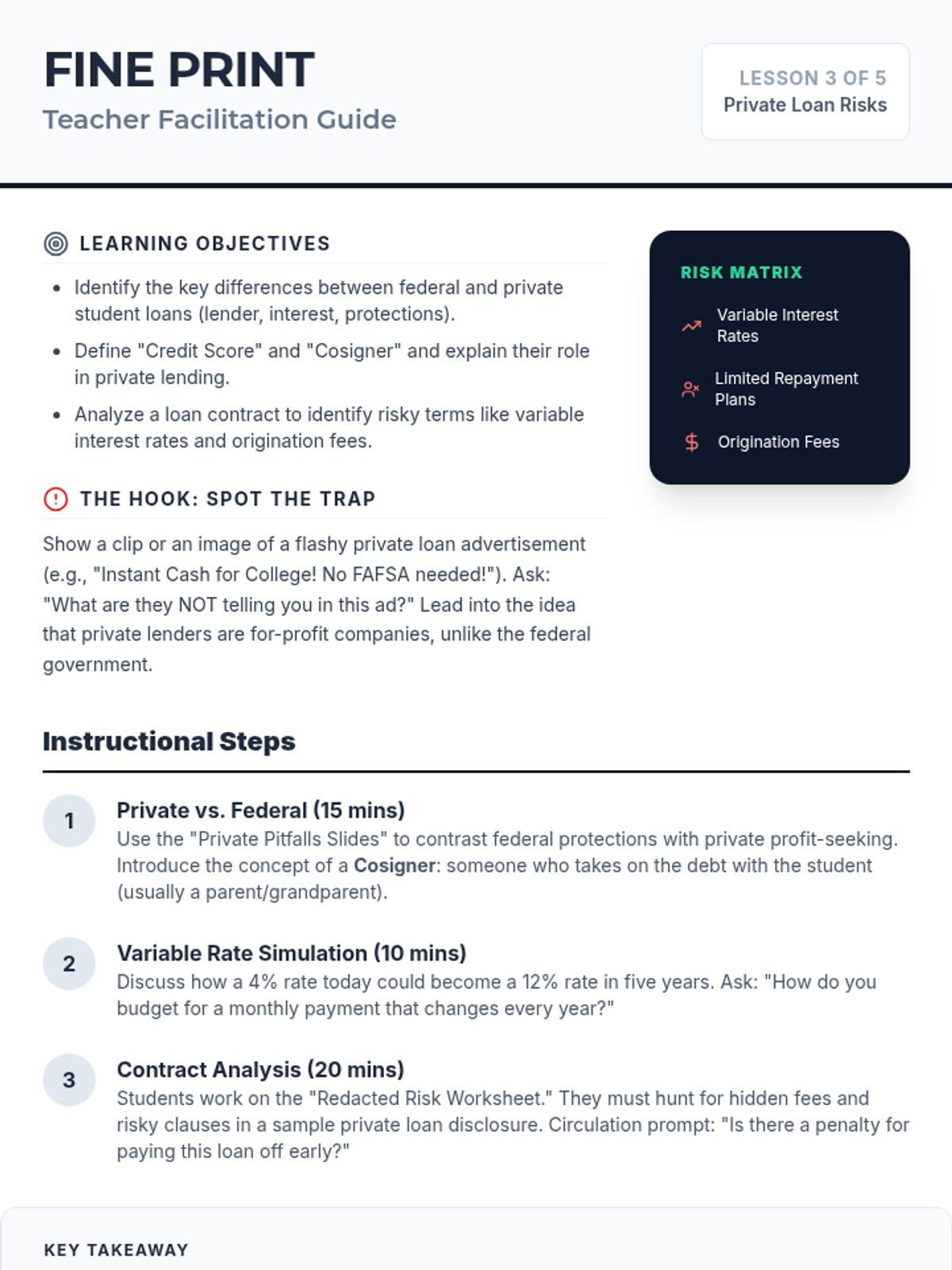
A teacher facilitation guide for Lesson 3, focusing on the risks of private student loans and how to teach document analysis of loan terms.
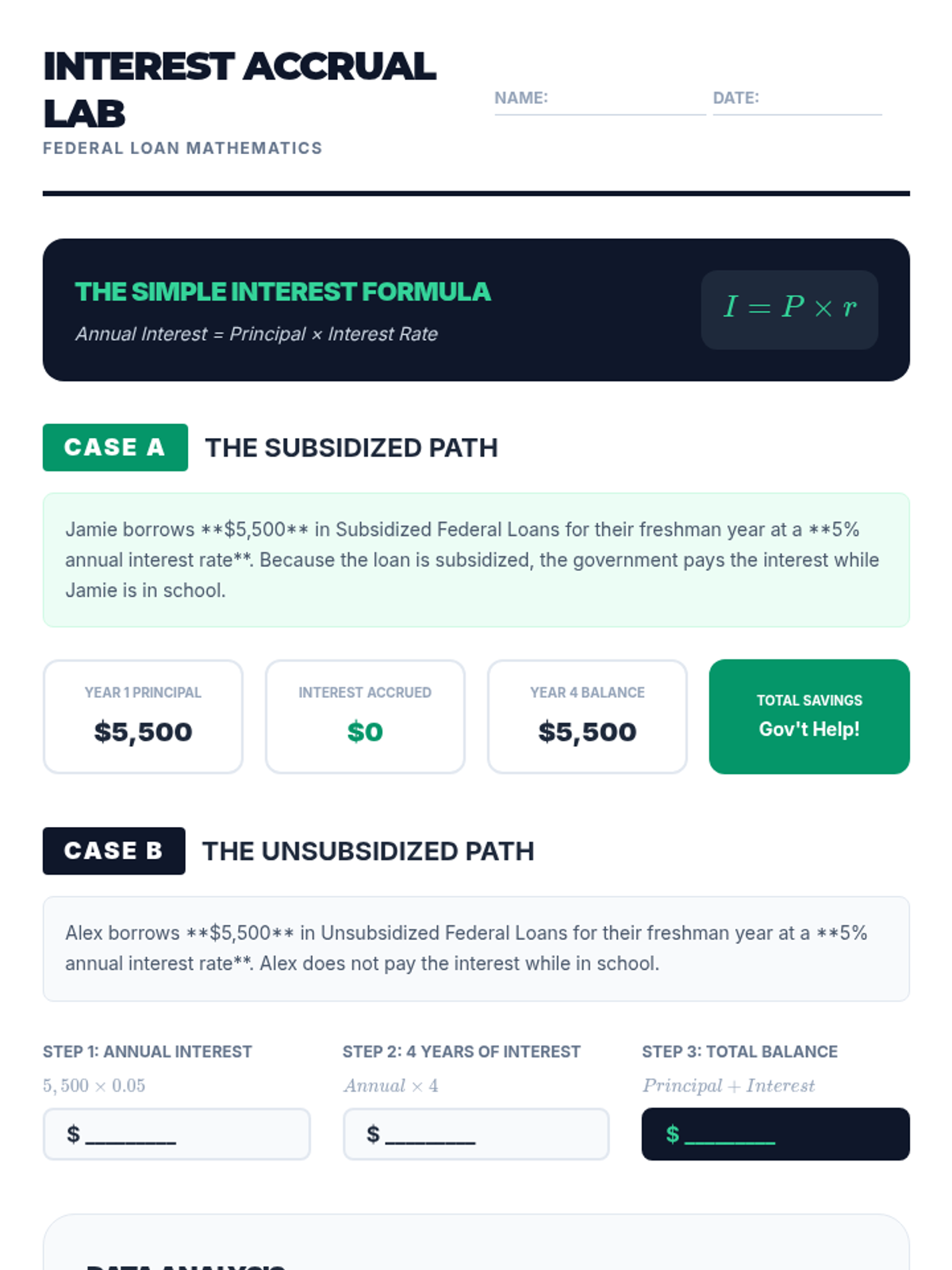
A student worksheet for Lesson 2 that guides students through calculating interest accrual for Subsidized vs. Unsubsidized federal loans.
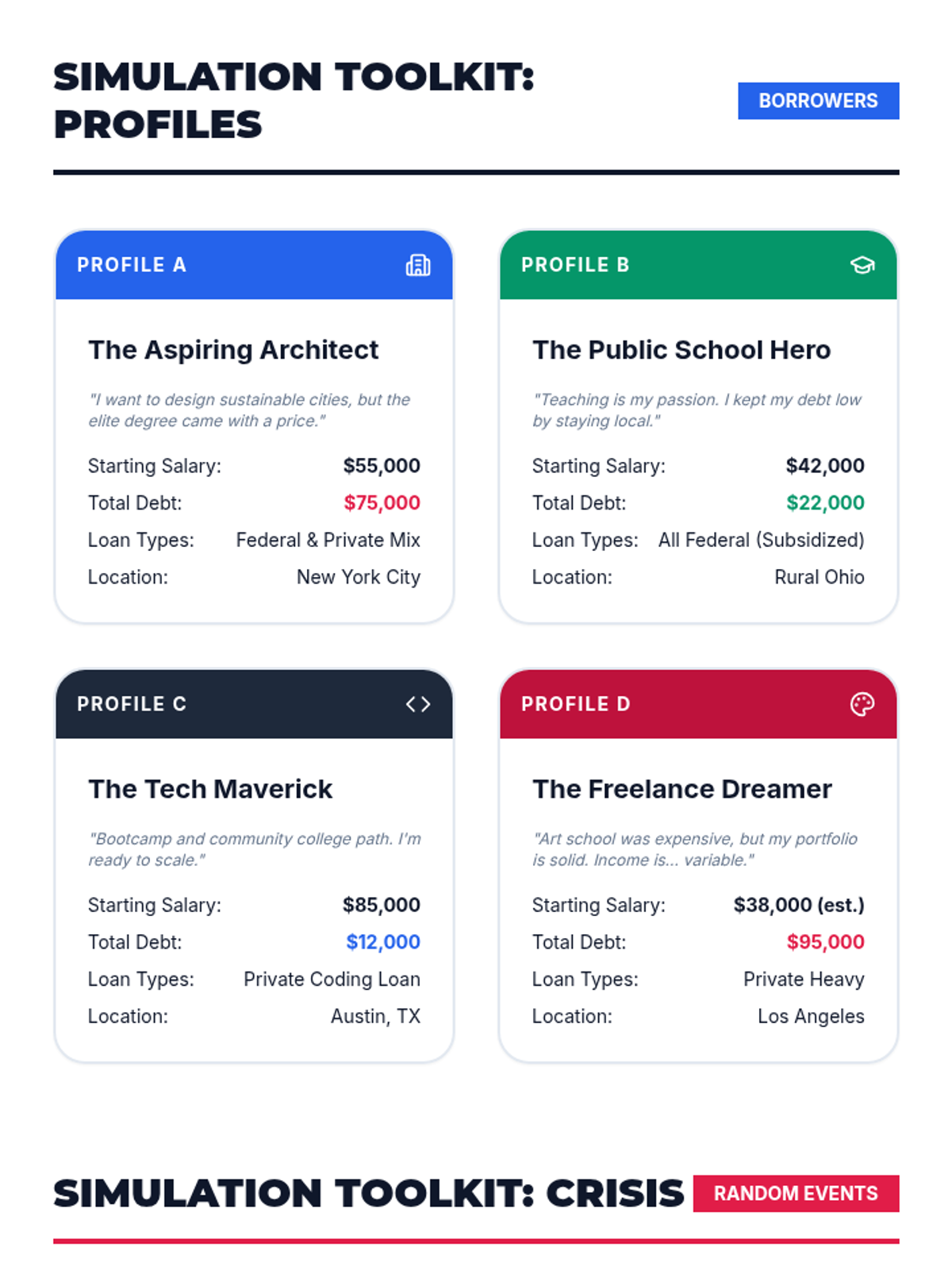
A comprehensive set of borrower profiles and random event 'Crisis Cards' used to simulate real-world financial management and debt repayment.
Visual presentation for Lesson 2, introducing the differences between Federal Direct Subsidized and Unsubsidized loans with a focus on interest accrual.
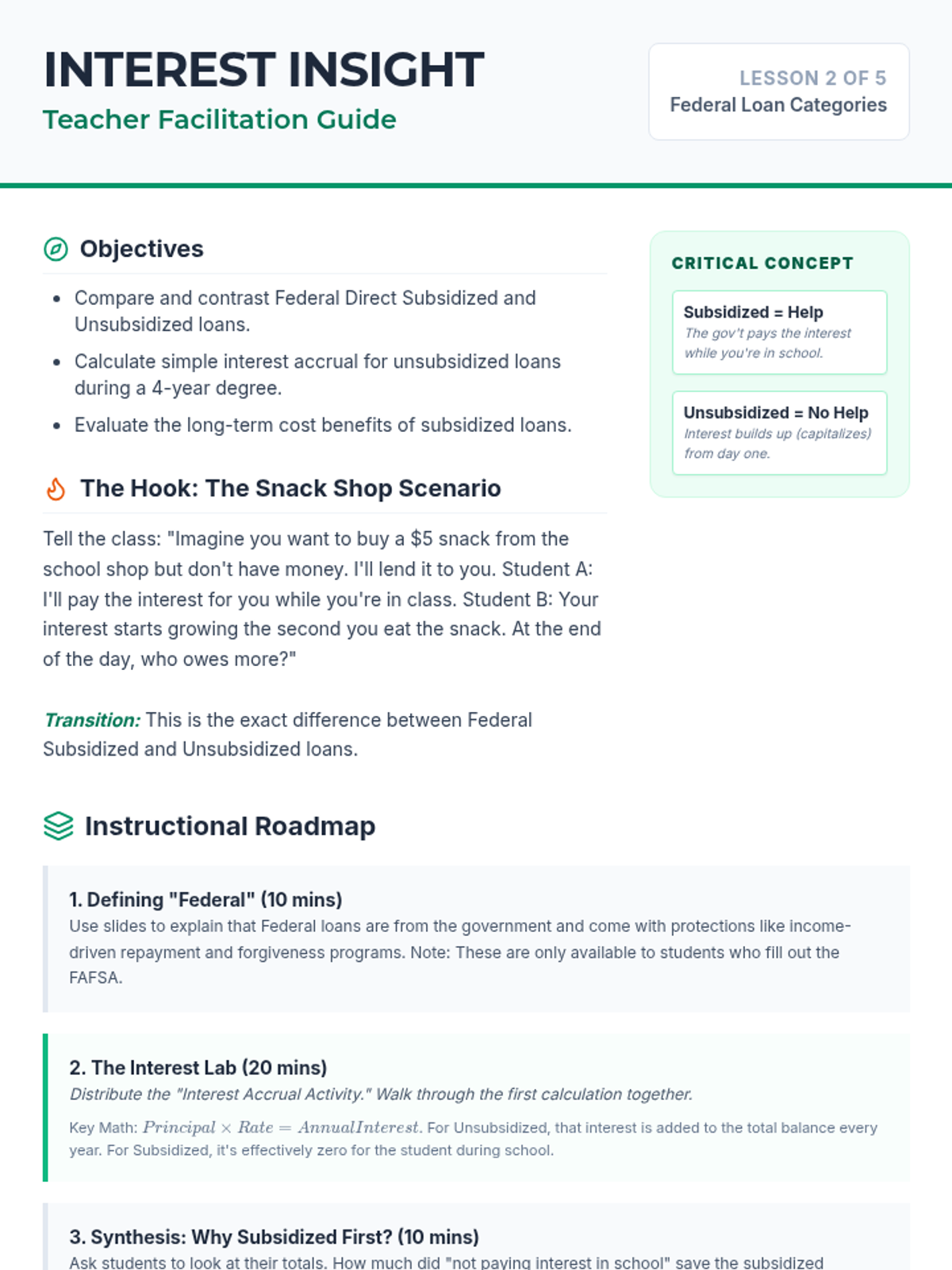
A teacher facilitation guide for Lesson 2, providing instructional steps for explaining Subsidized vs. Unsubsidized federal loans and interest math.
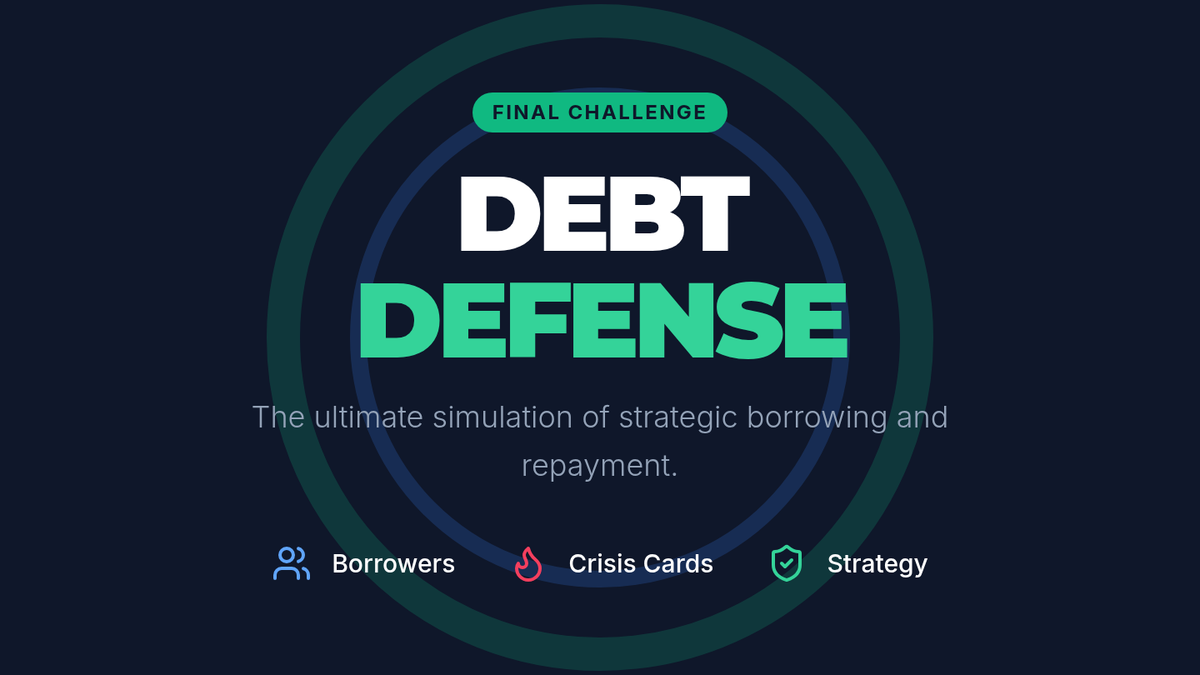
Introductory slides for the final simulation, explaining the mechanics of borrower profiles, crisis cards, and the consequences of loan default. Revised for font size compliance.
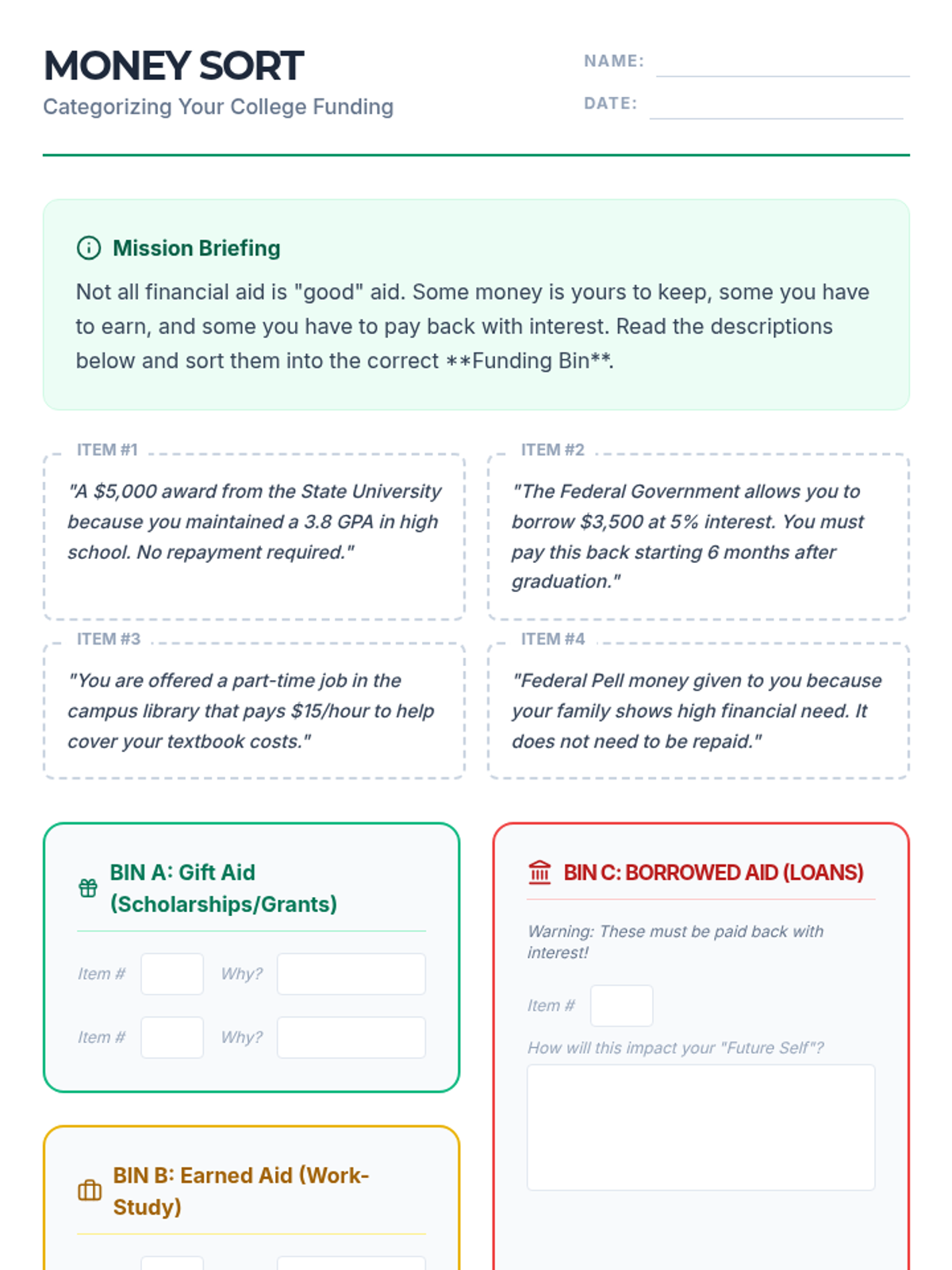
A student sorting activity for Lesson 1, where students categorize real-world financial aid descriptions into Gift Aid, Earned Aid, or Borrowed Aid.
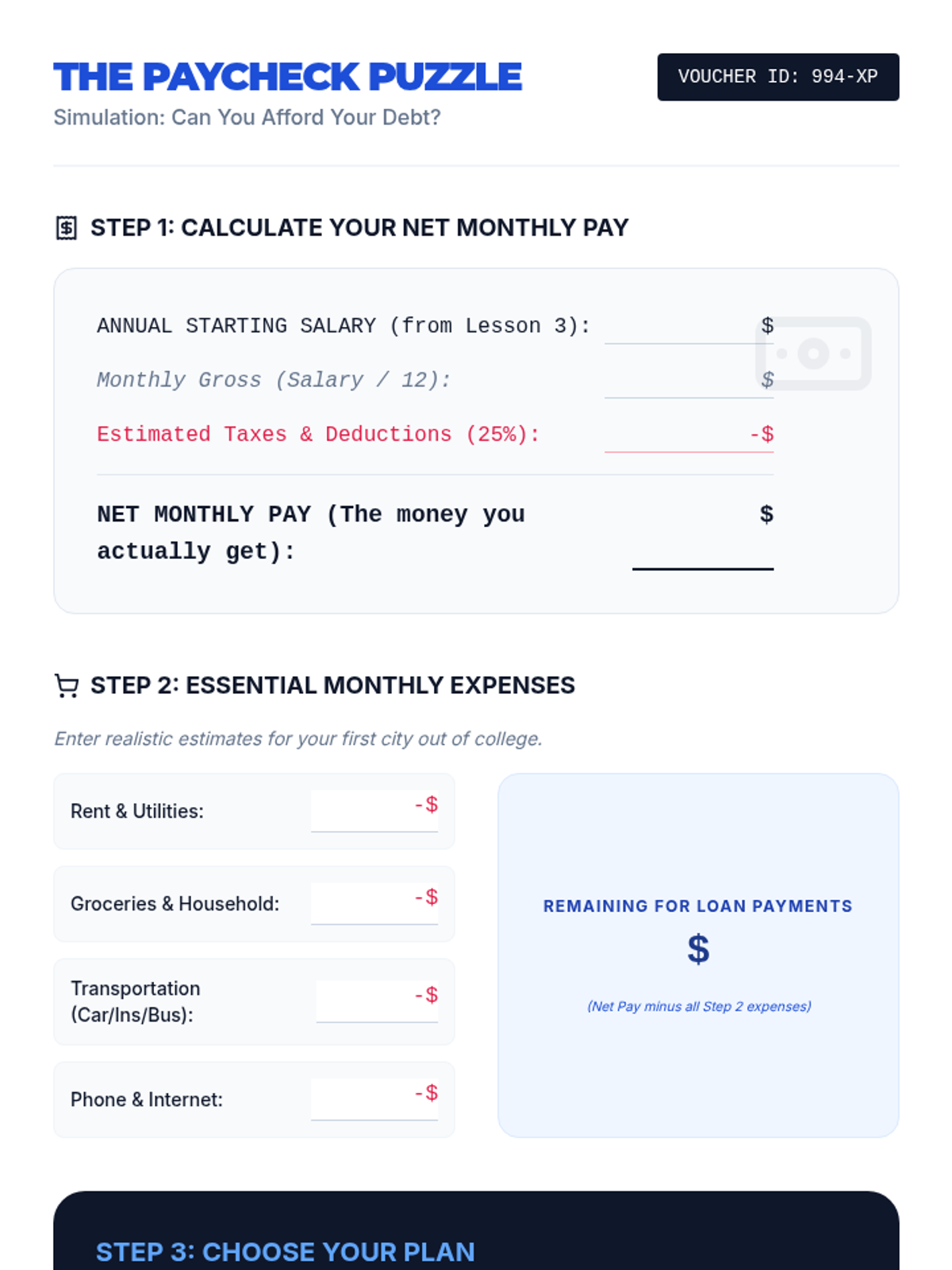
A simulation worksheet where students calculate their net monthly income, subtract essential living expenses, and evaluate which repayment plan best fits their budget.
Visual presentation for Lesson 1, introducing the financial aid hierarchy and key loan terminology with a focus on 'gift aid' vs 'owed money'.
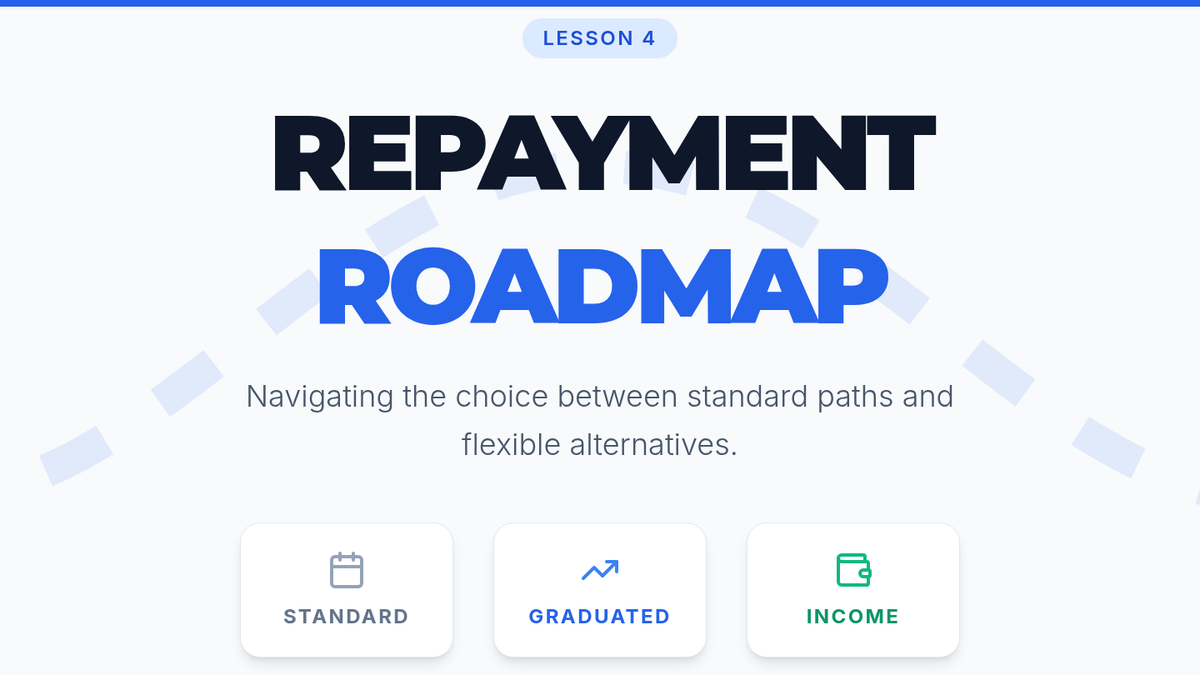
Instructional slides on federal repayment options (Standard, Graduated, IDR), the mechanics of amortization, and Public Service Loan Forgiveness (PSLF). Revised for font size compliance.
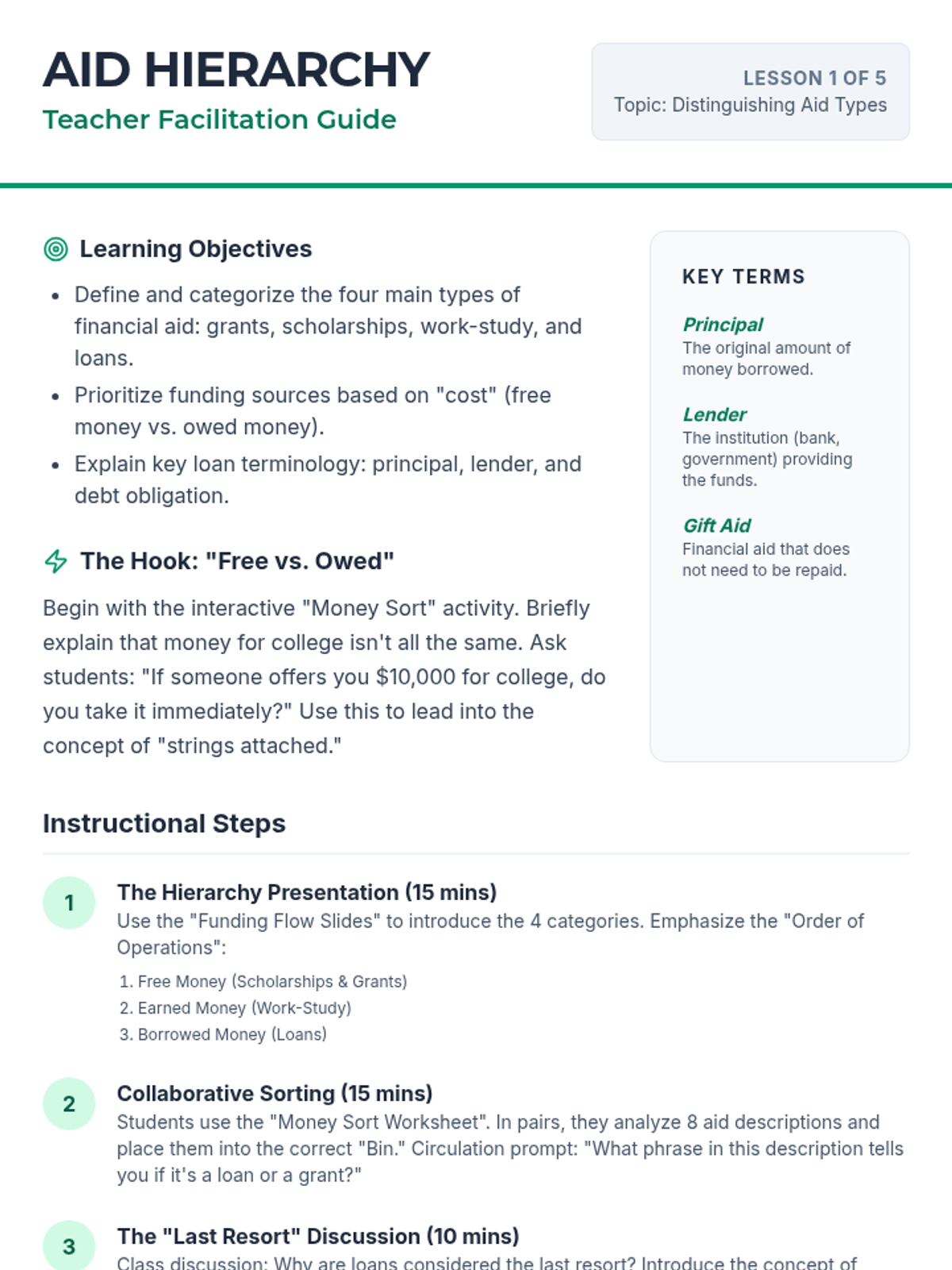
A teacher facilitation guide for Lesson 1, detailing learning objectives, instructional steps for the financial aid hierarchy, and key discussion prompts.
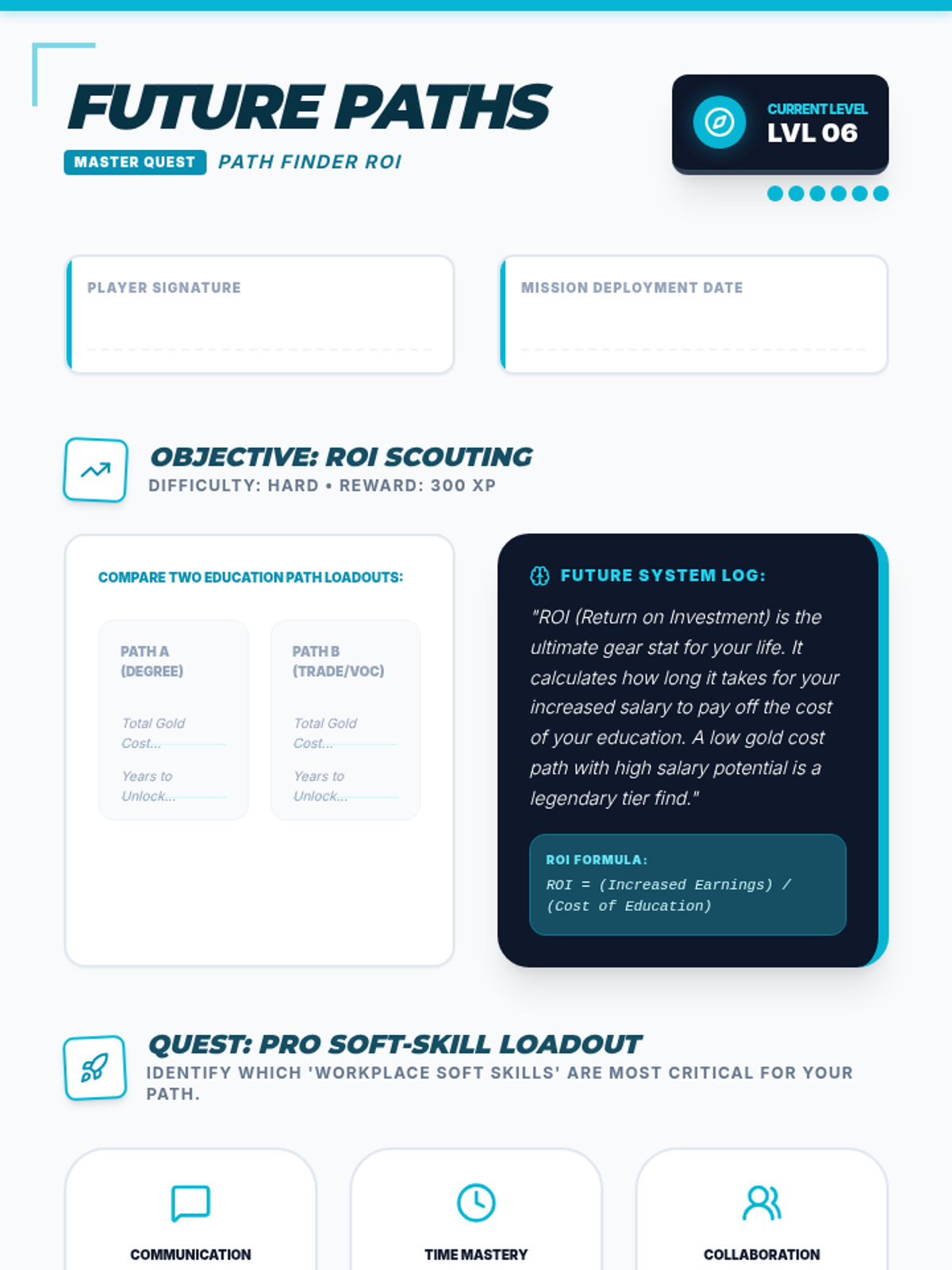
A gamified worksheet for the Future Paths module, focusing on education ROI comparison and professional soft skill identification. Features a high-fidelity 'Quest Log' visual theme with cyan accents and RPG-inspired UI elements.
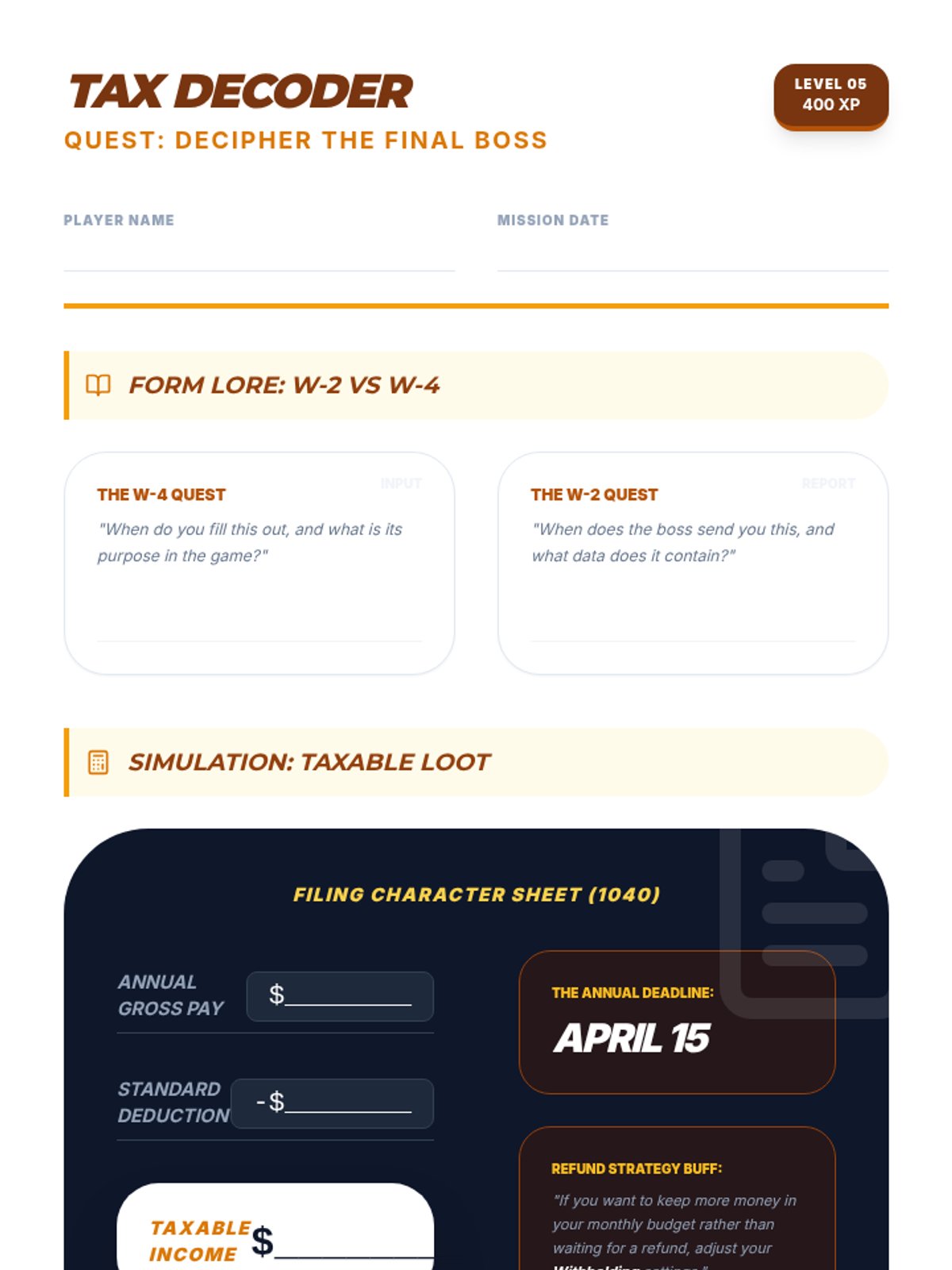
A gamified worksheet for the Tax Decoder module, focusing on tax form logic, filing deadlines, and income simulation. Features a high-fidelity 'Quest Log' visual theme with amber accents and RPG-inspired UI elements.
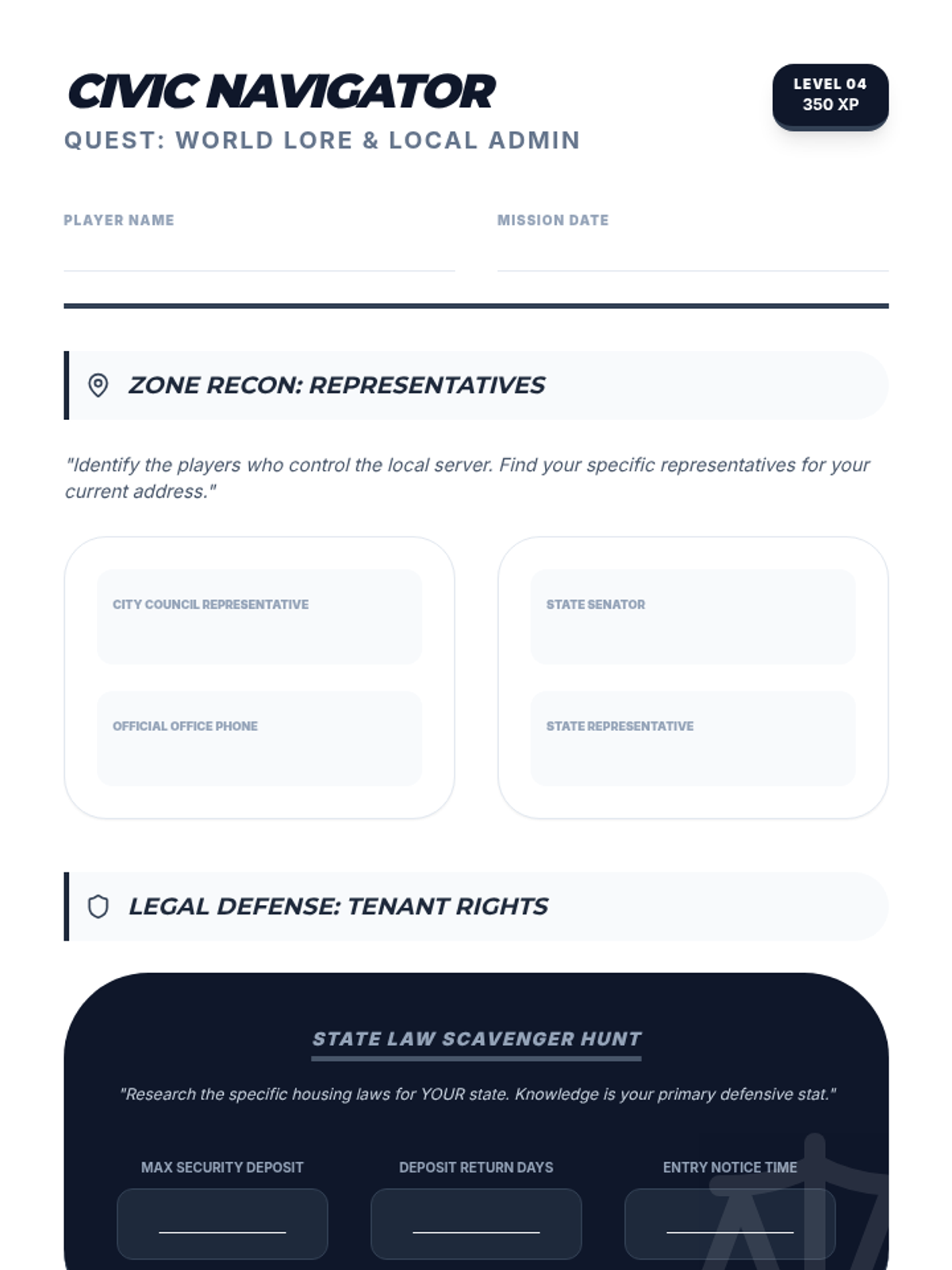
A gamified worksheet for the Civic Navigator module, focusing on identifying representatives and researching state-specific tenant rights. Features a high-fidelity 'Quest Log' visual theme with indigo accents and RPG-inspired UI elements.
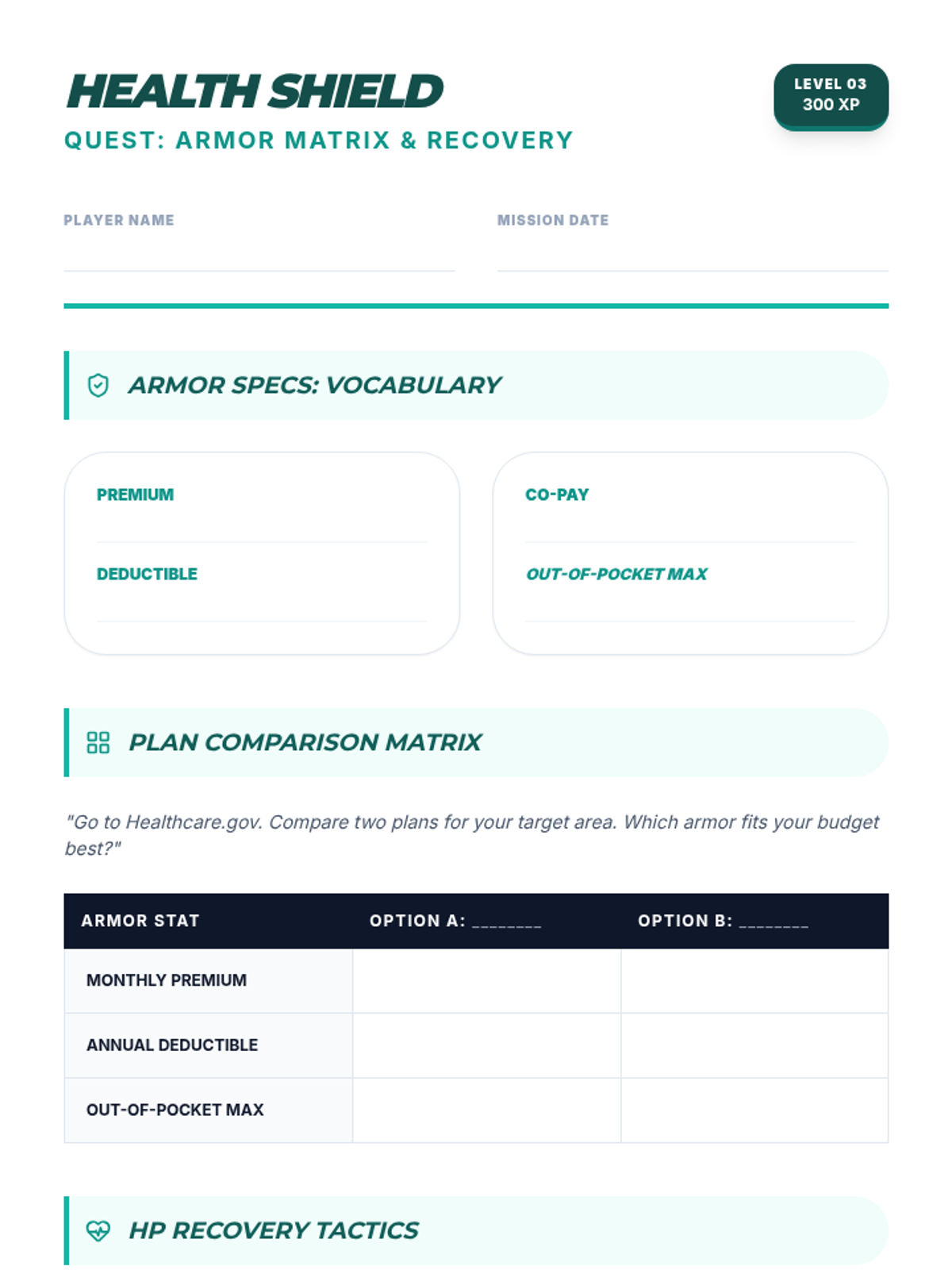
A gamified worksheet for the Health Shield module, focusing on insurance terminology, plan comparisons, and HP recovery tactics. Features a high-fidelity 'Quest Log' visual theme with rose red accents and RPG-inspired UI elements.
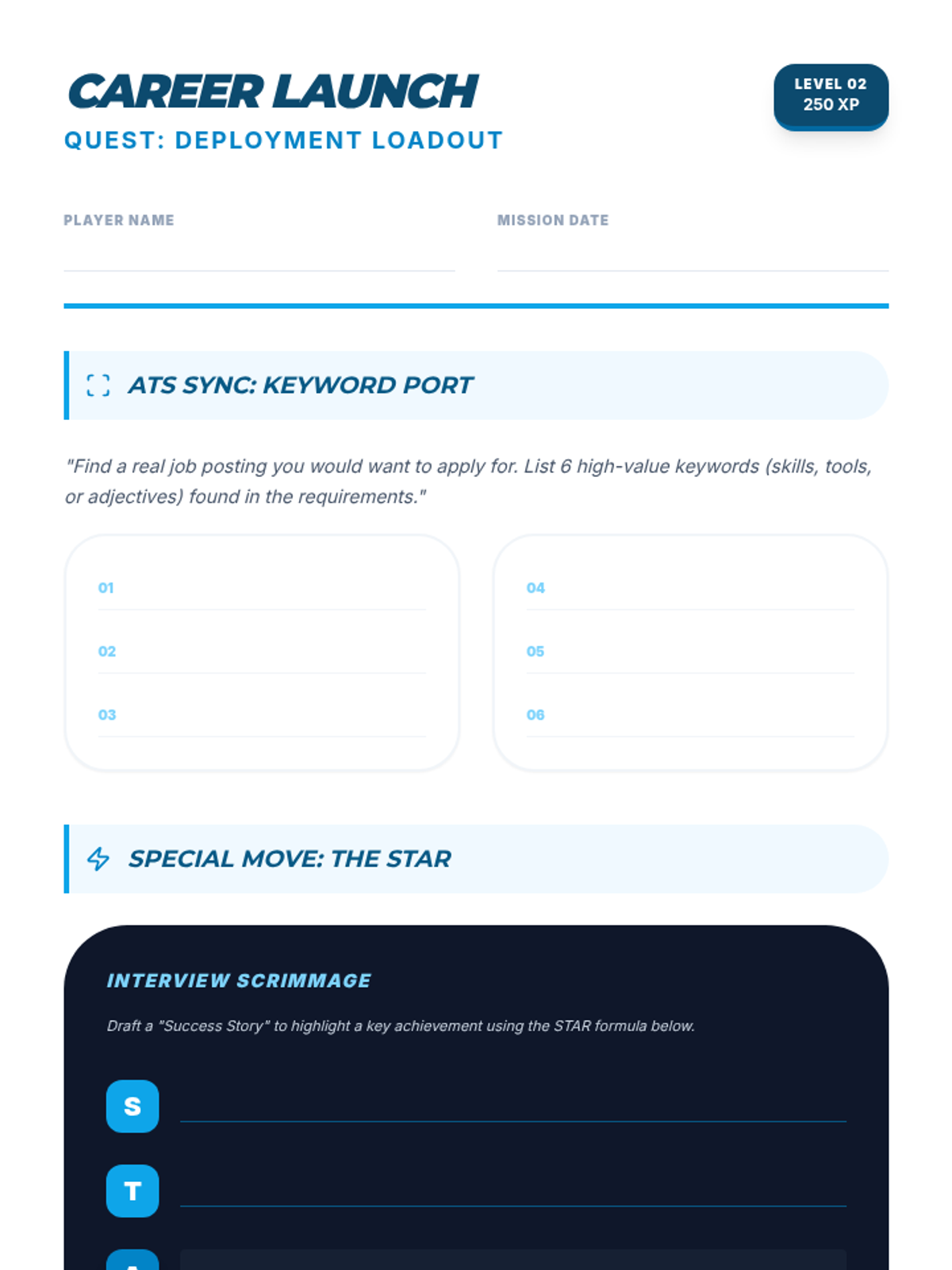
A gamified worksheet for the Career Launch module, focusing on keyword scouting and STAR method drafting. Features a high-fidelity 'Quest Log' visual theme with sky blue accents and RPG-inspired UI elements.
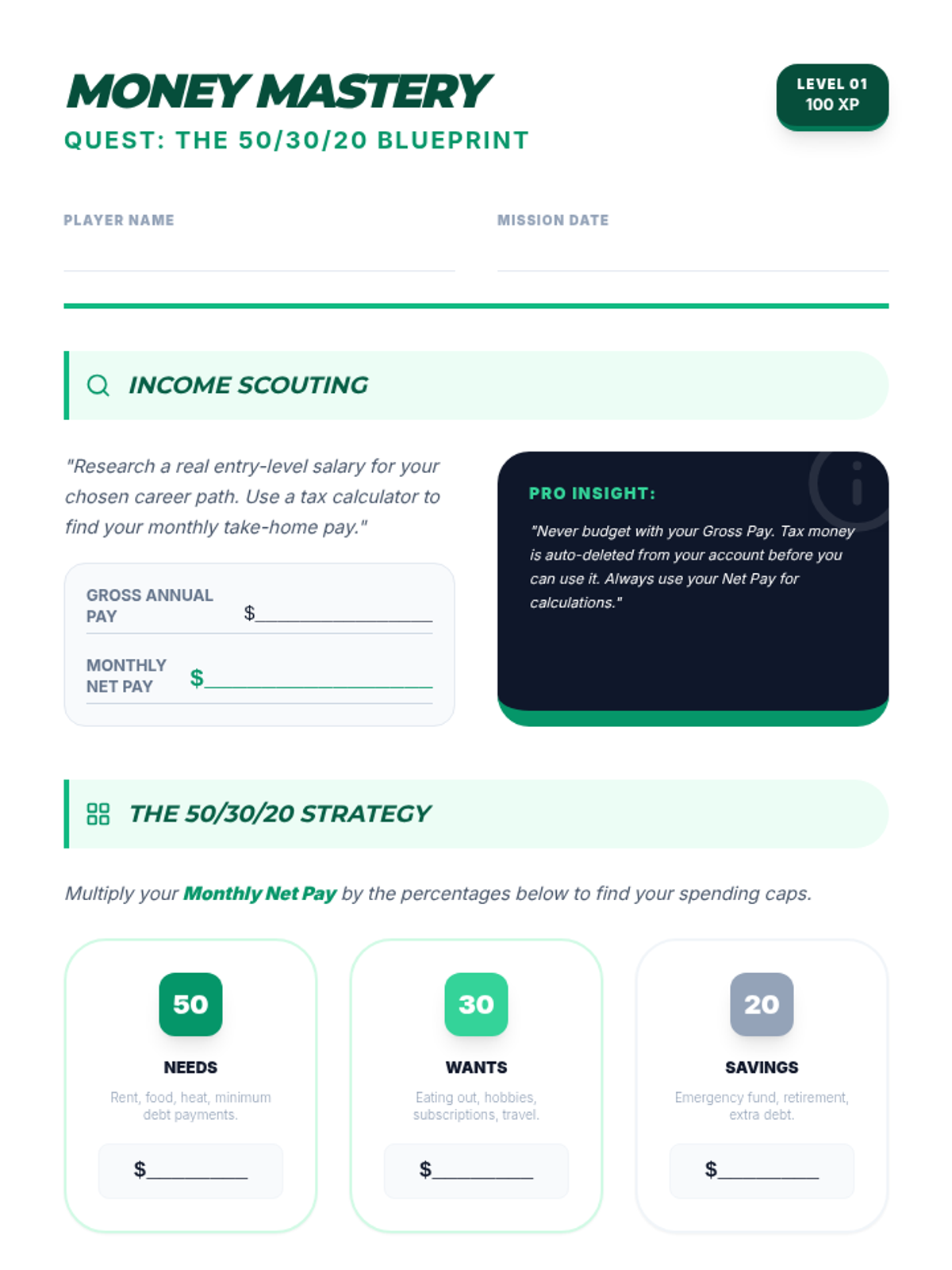
A gamified worksheet for the Money Mastery module, focusing on 50/30/20 budgeting math and income research. This updated version features a 'Quest Log' visual theme with RPG-inspired UI elements, XP rewards, and high-impact visual aids.
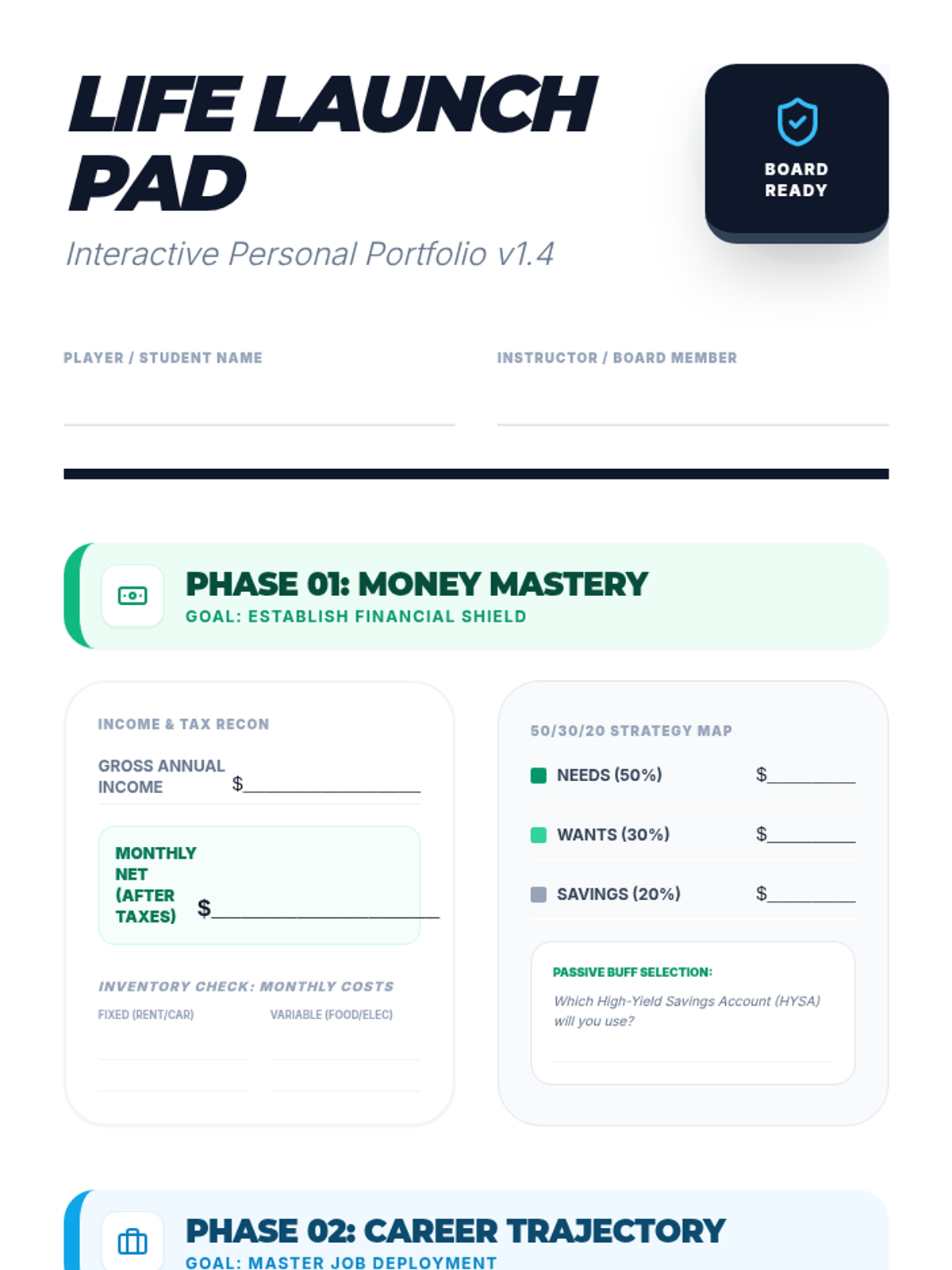
A high-impact, gamified student portfolio document designed as the primary deliverable for the course. Students complete tasks for all six levels, including budgeting, STAR drafting, insurance comparison, and ROI scouting. Updated v3.0 with improved layout and maximum whitespace. Expanded to 8 dedicated pages for printable consistency.
A gamified slide deck covering college vs. vocational paths, career ROI, and essential work readiness soft skills. Includes a Live PBL Path Finder workshop.
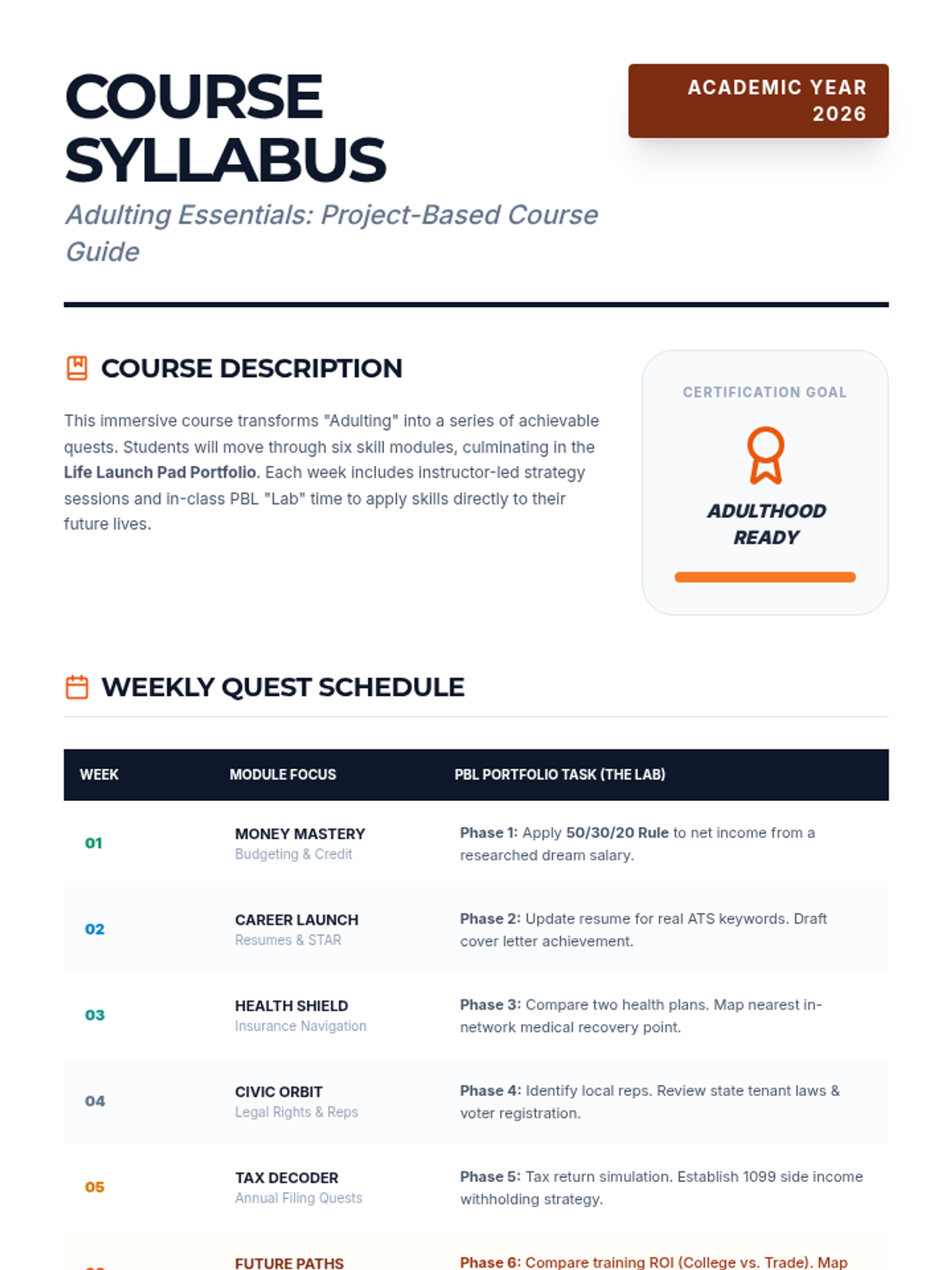
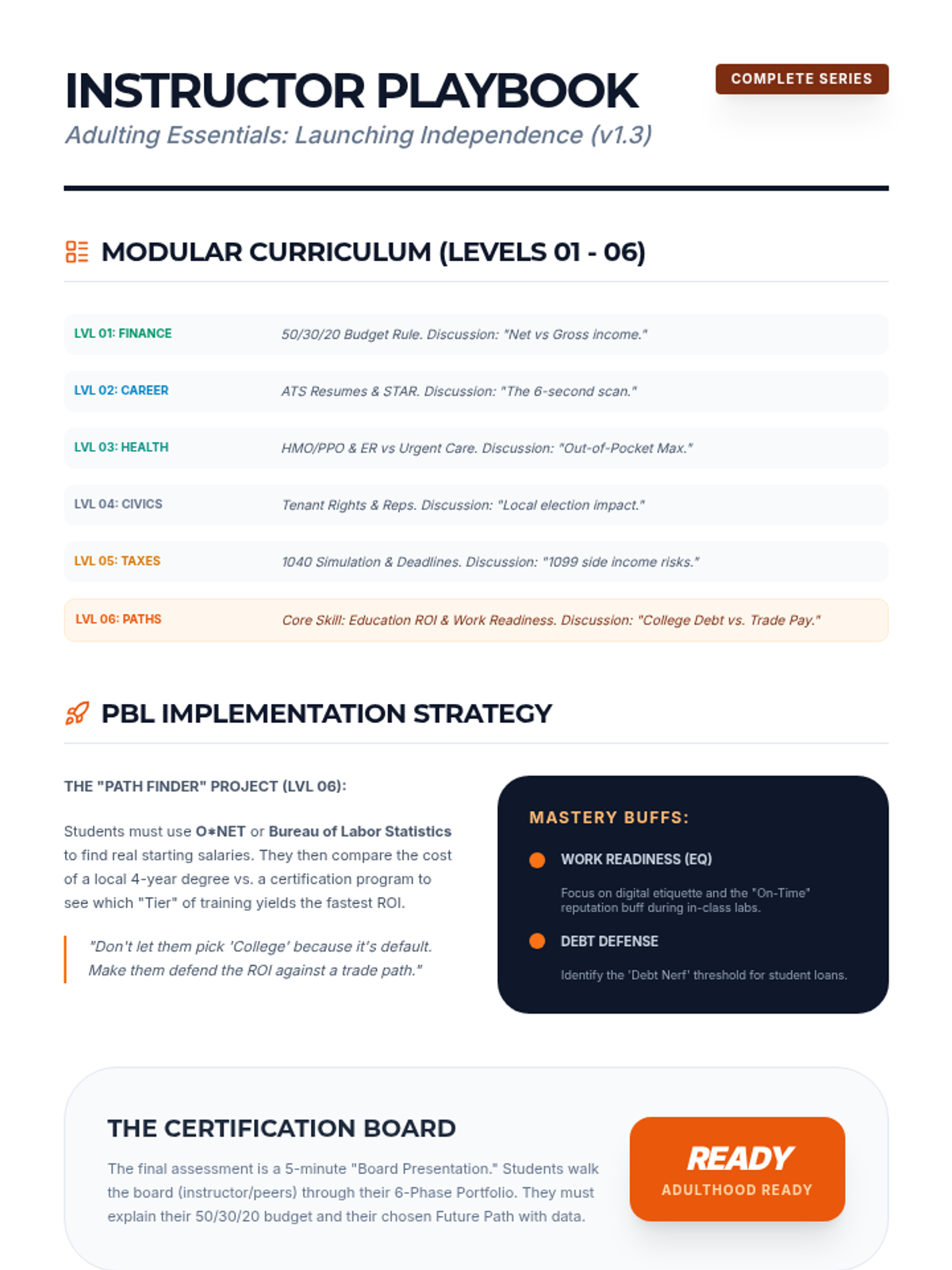
A structured pacing guide and syllabus for the Adulting Essentials in-class course, breaking down 6 weeks of instruction and PBL Lab time. Updated with Future Paths.
An essential slide deck covering tax vocabulary, the difference between W-2 and W-4 forms, and a step-by-step guide to filing taxes. Expanded with a Live PBL Workshop.
A comprehensive instructional guide for teachers, featuring lesson pacing, discussion prompts for each module, and strategies for facilitating the Life Launch Pad PBL project.
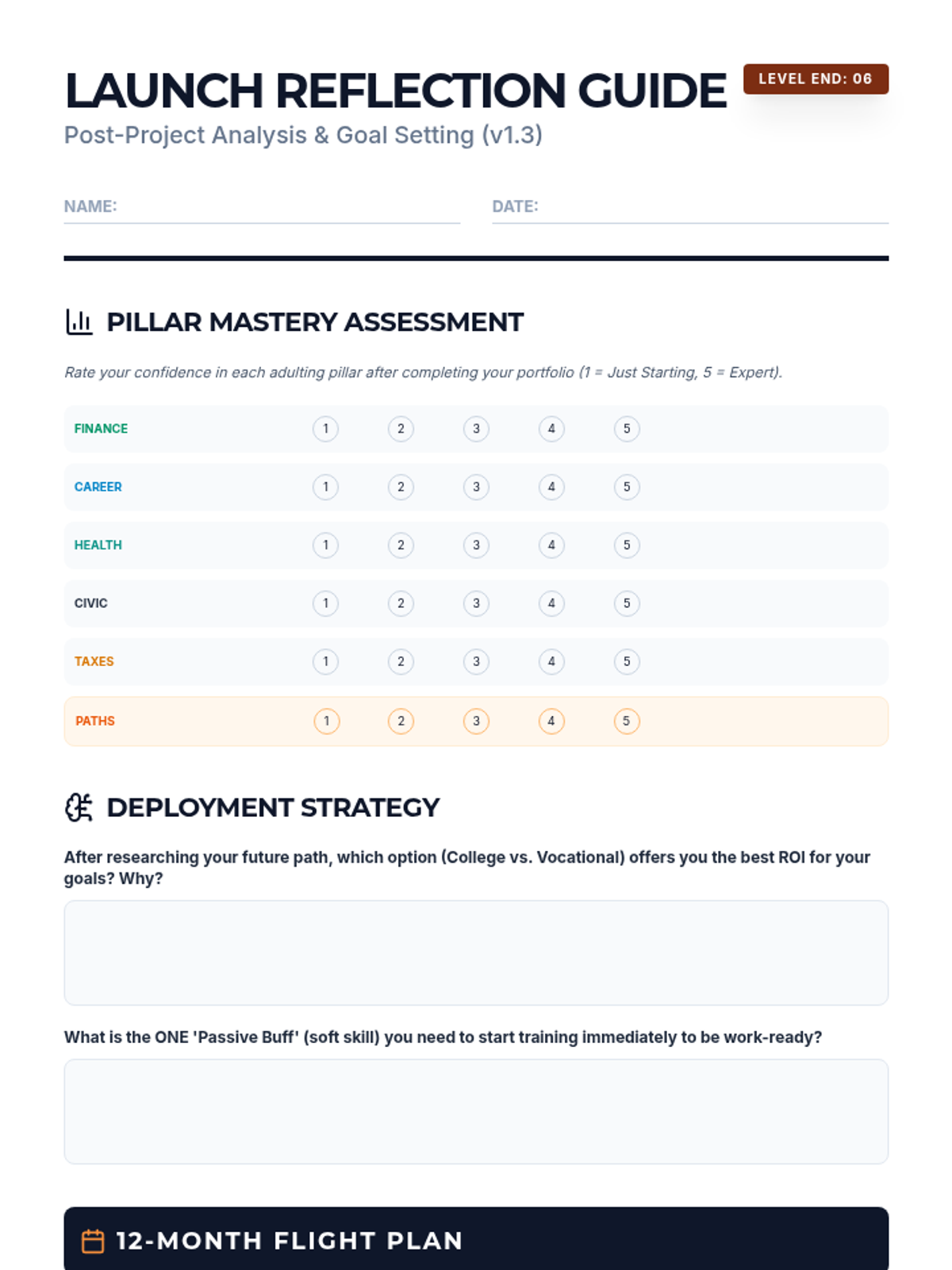
A student reflection guide for the Life Launch Pad project, featuring self-assessment ratings, critical insight prompts, and short/long-term goal setting. Updated with future paths.
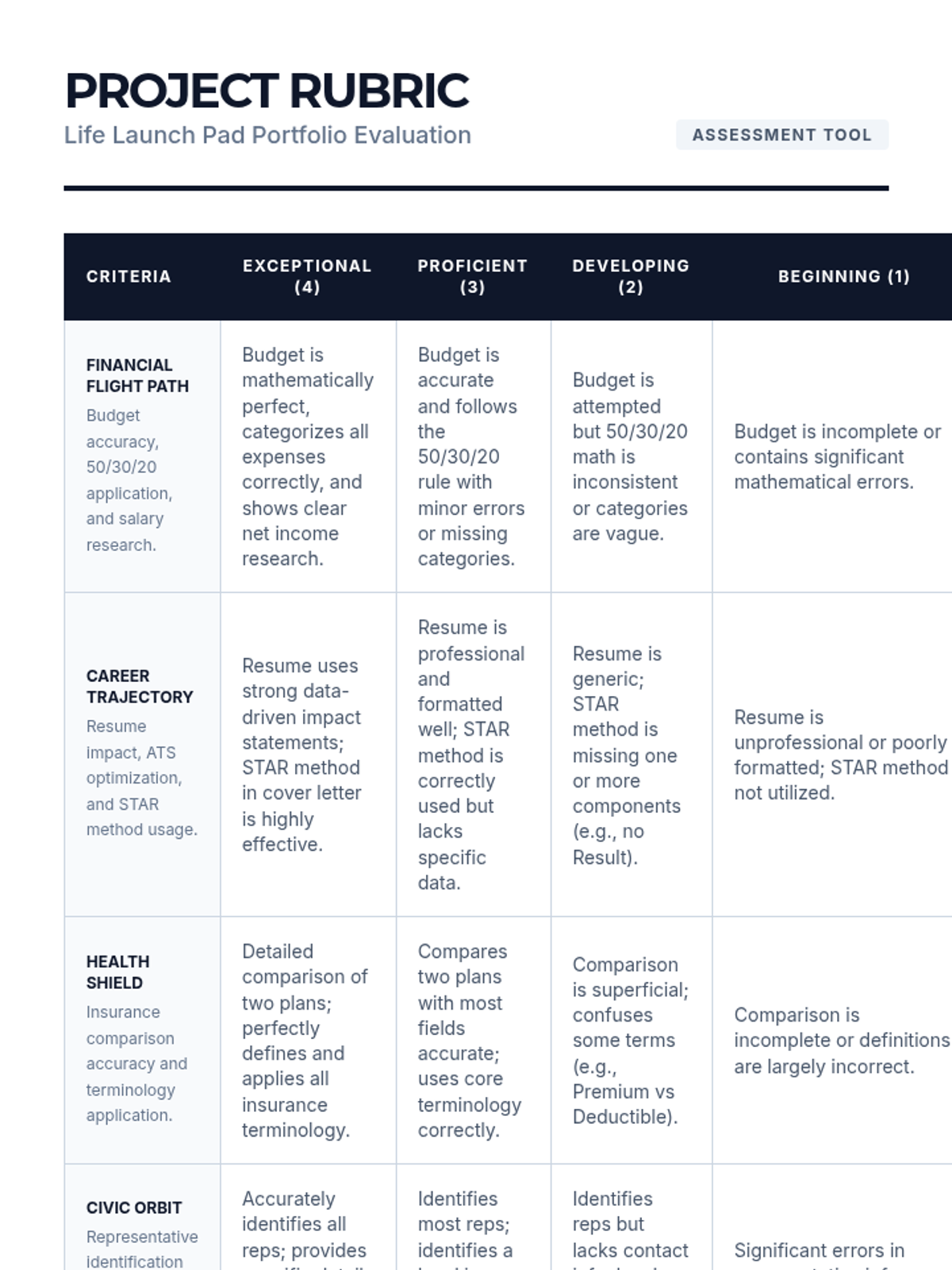
A professional grading rubric for the Life Launch Pad PBL project, covering financial, career, health, civic, tax, and future path criteria.
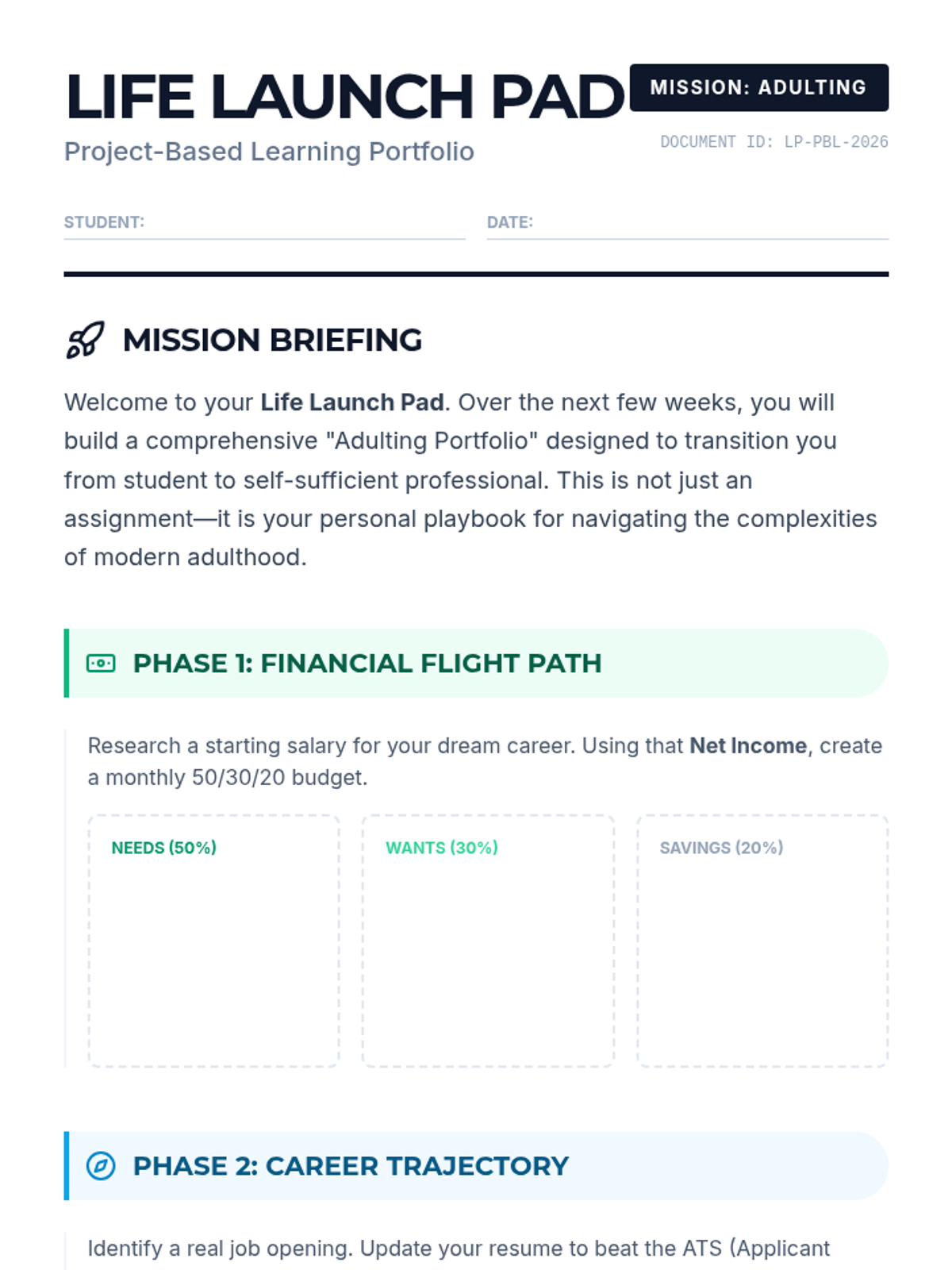
A comprehensive Project-Based Learning assignment that guides students through creating a personal adulting portfolio, integrating financial, career, health, civic, tax, and future path tasks.