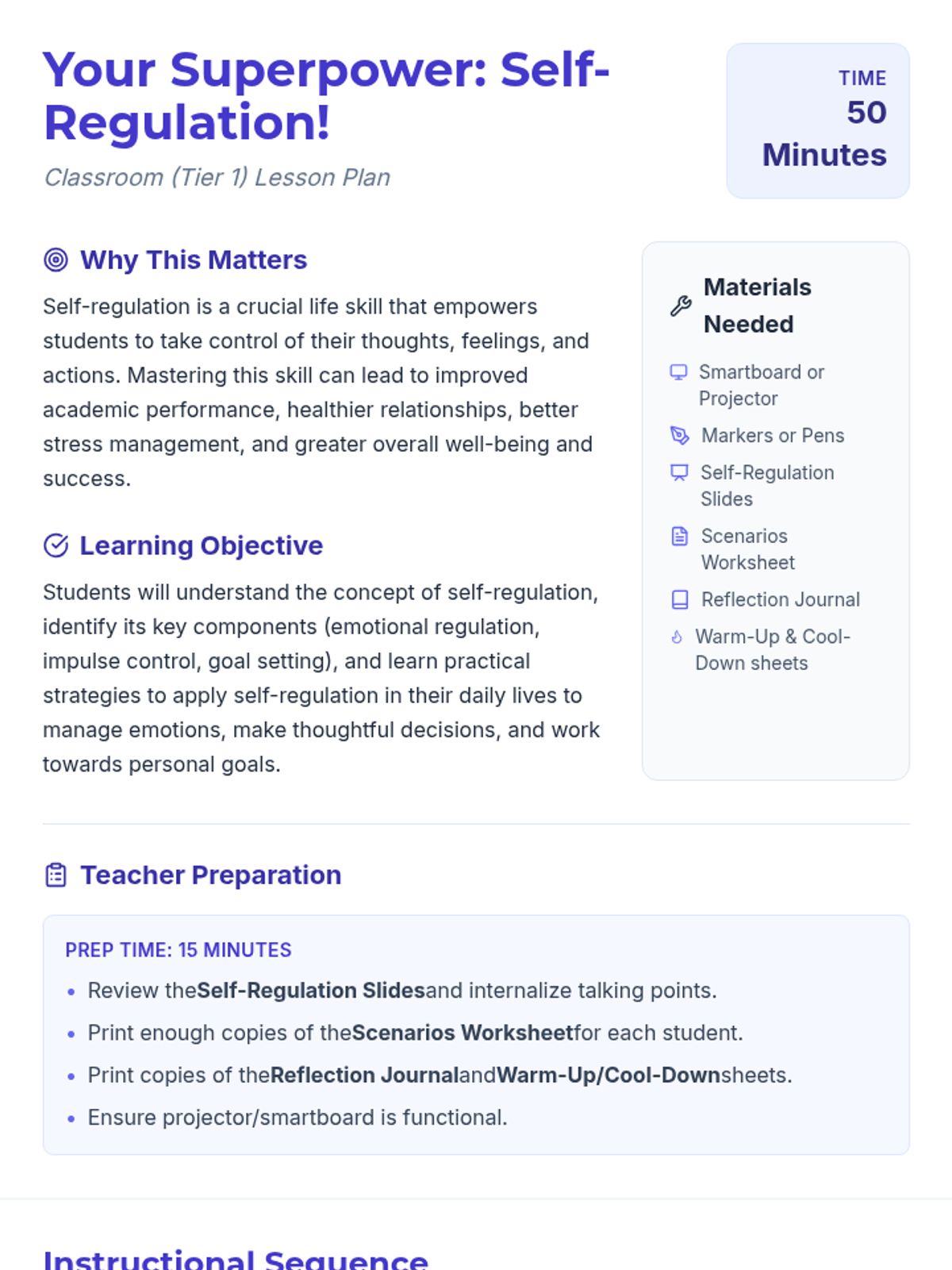
Stop-and-think strategies, impulse management, and SMART goal setting for personal growth. Develops internal motivation, stress reduction techniques, and resilience through proactive planning and monitoring.
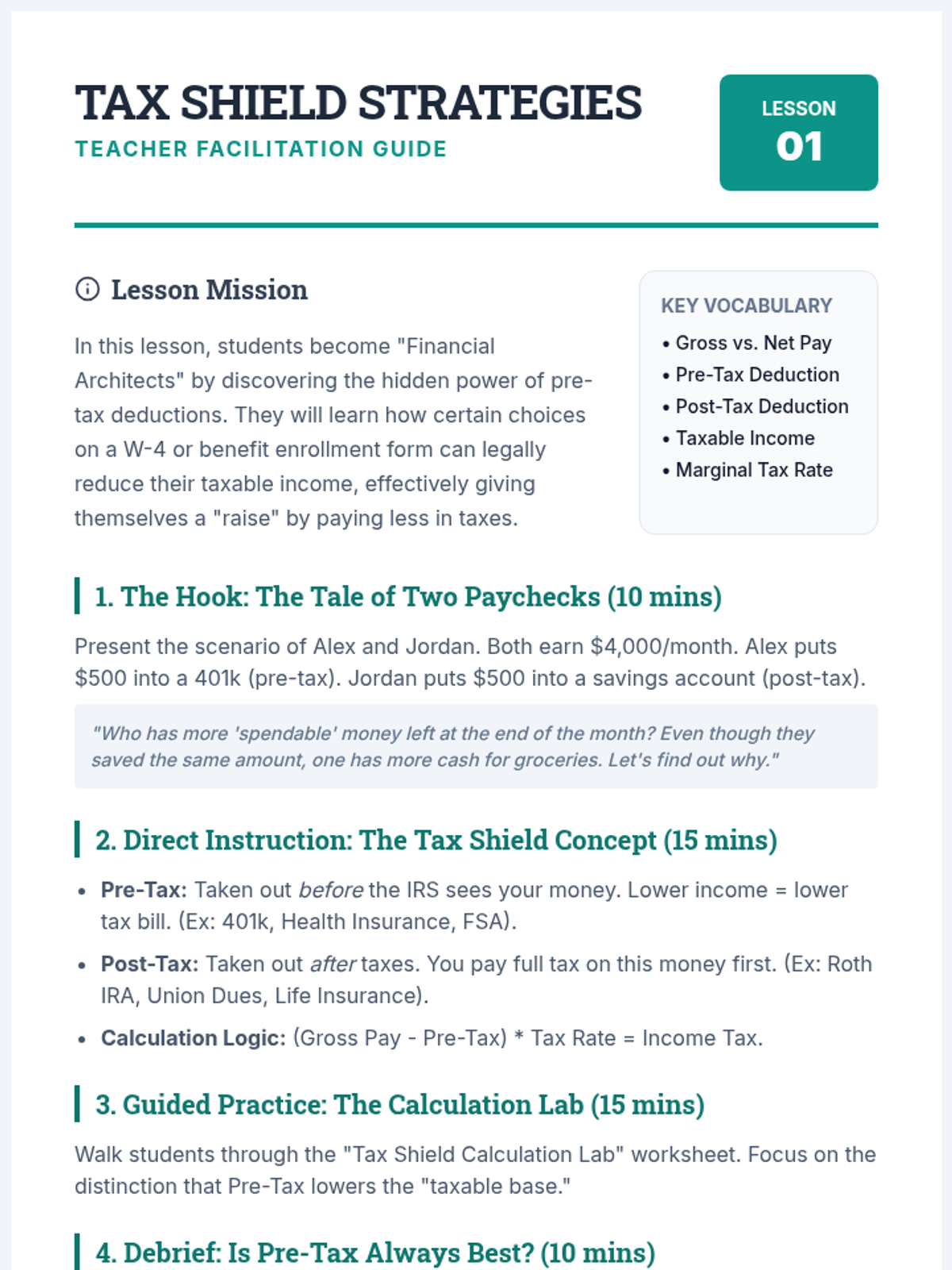
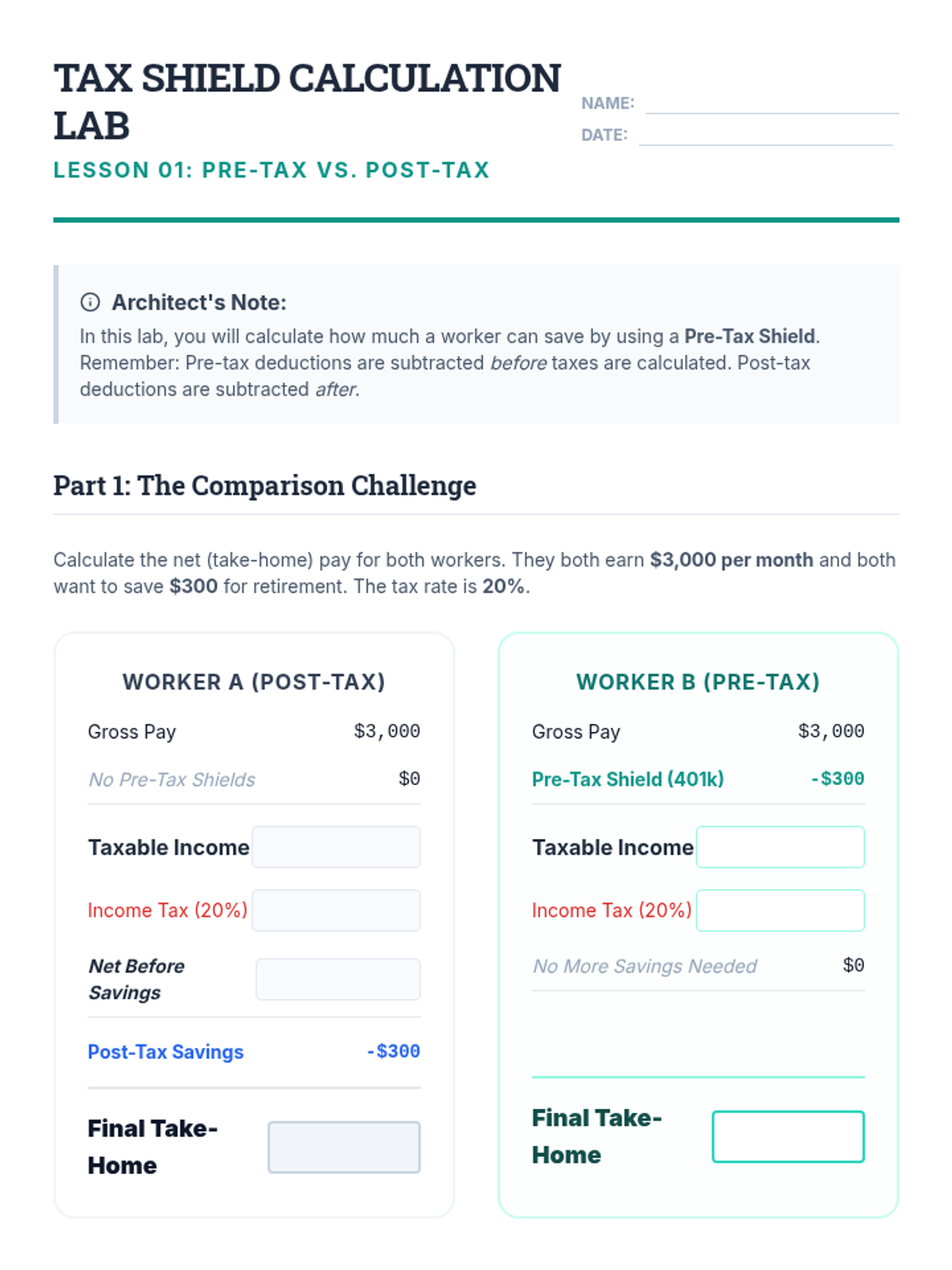
A comprehensive project-based unit exploring how strategic payroll deductions like FSAs, HSAs, and retirement contributions build long-term wealth and manage risk. Students move from basic tax calculations to designing a 'Payroll Strategy Guide' for a career-ready future.
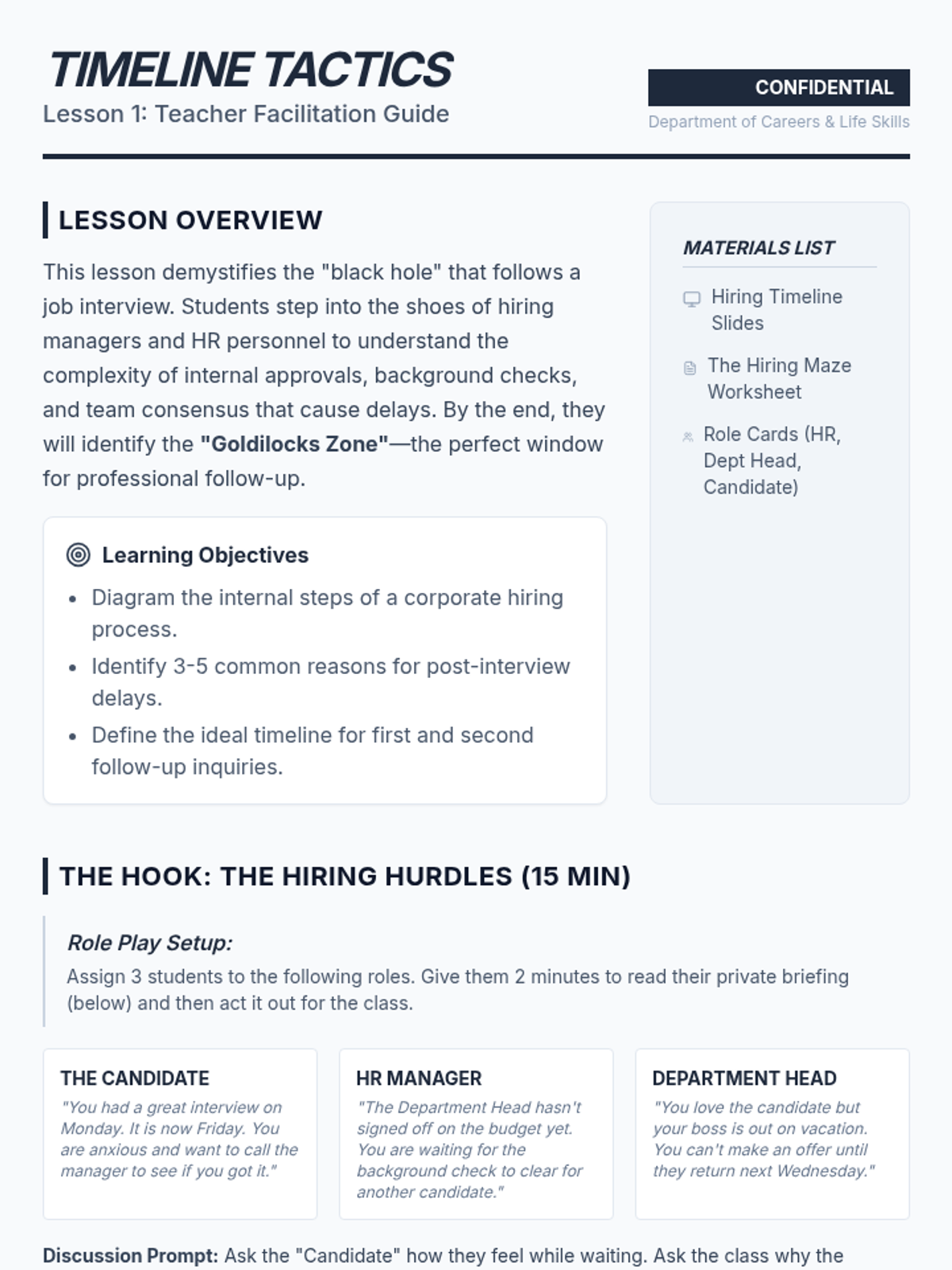
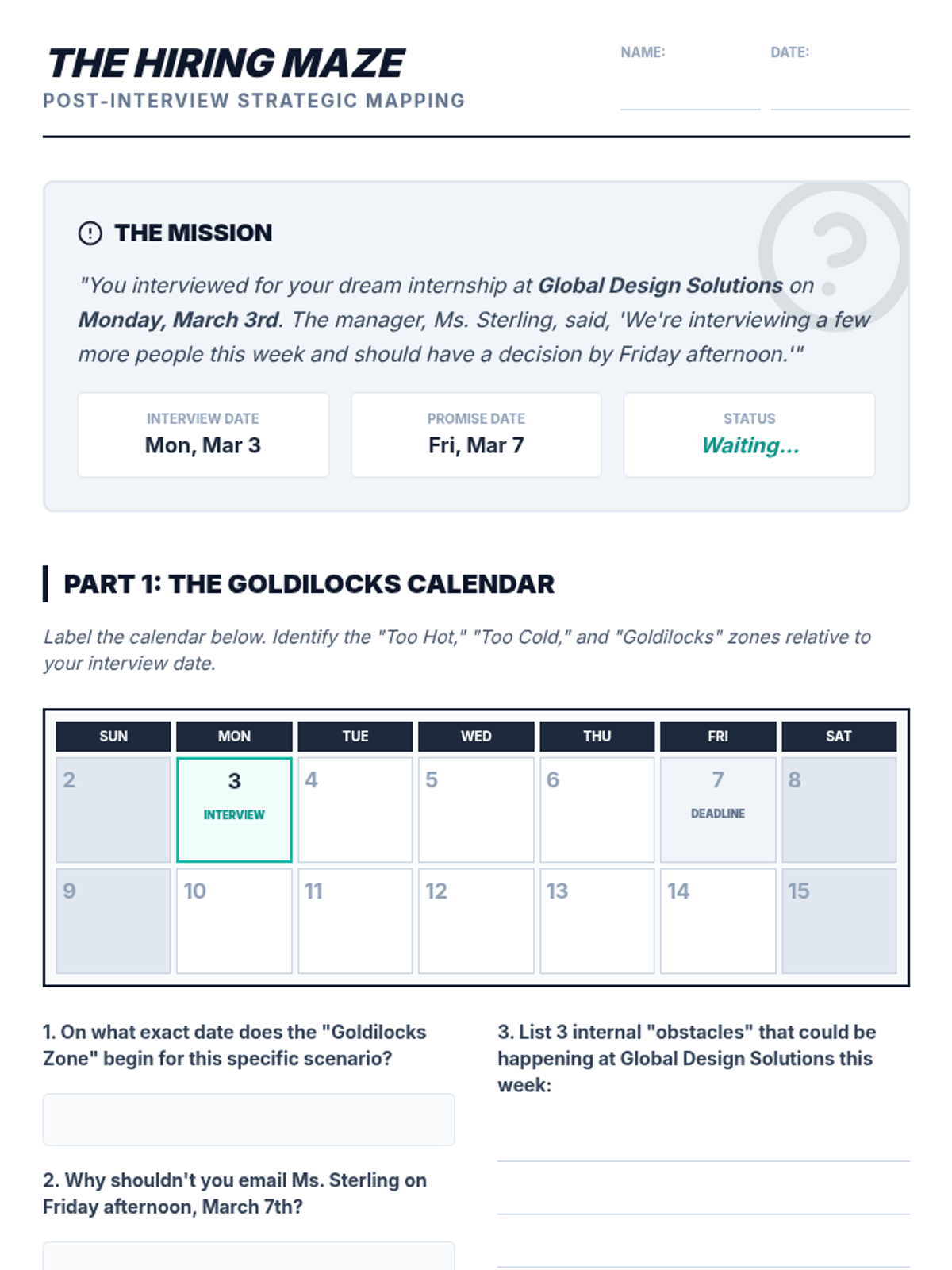
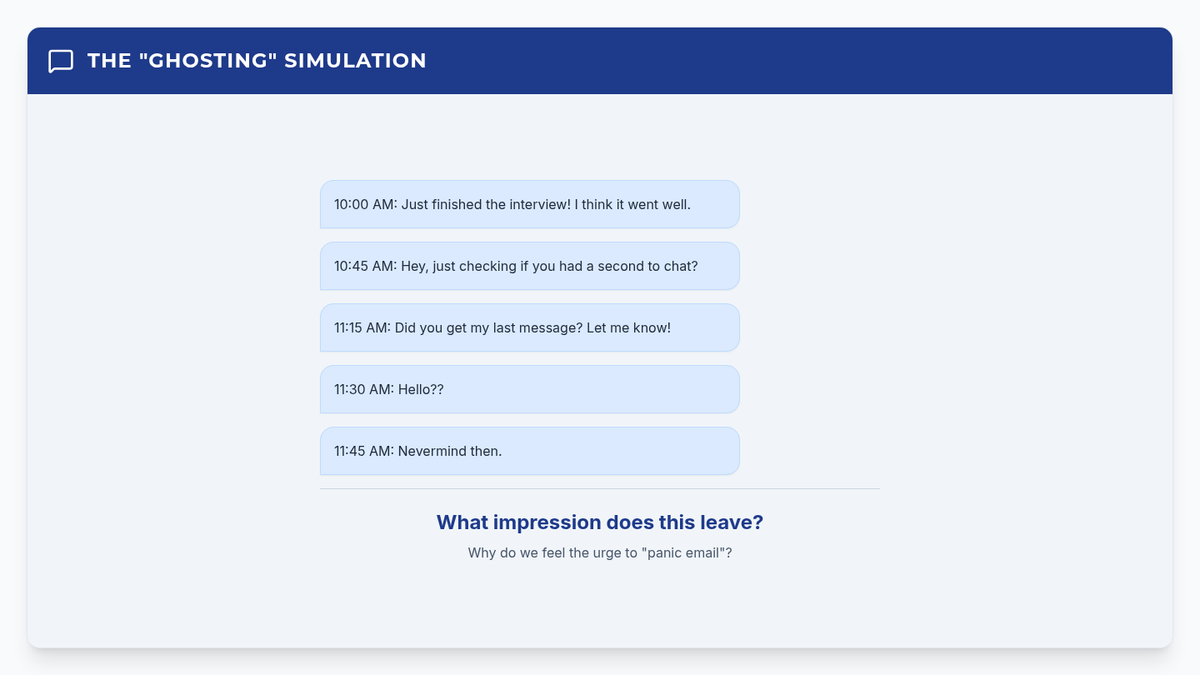
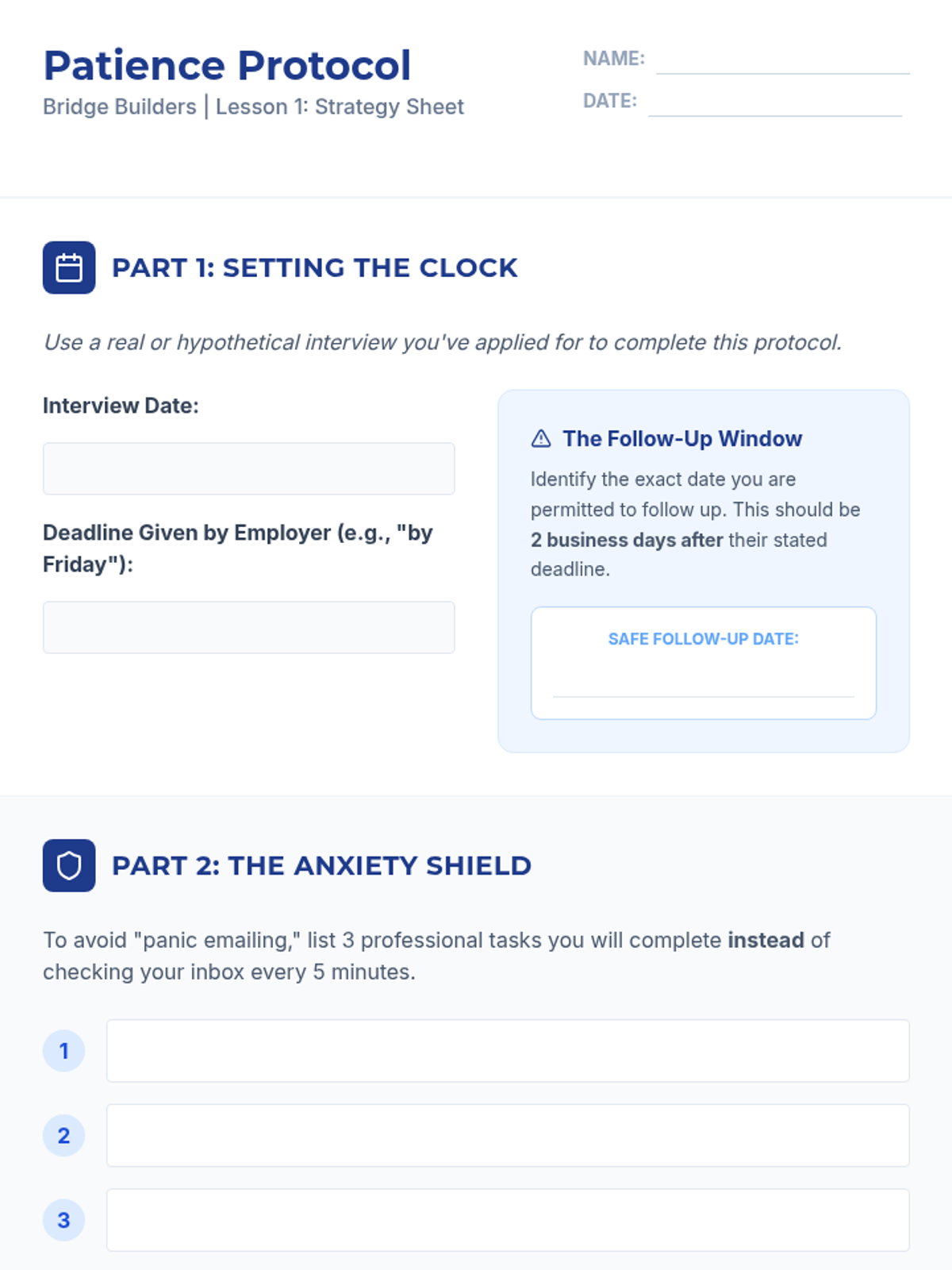
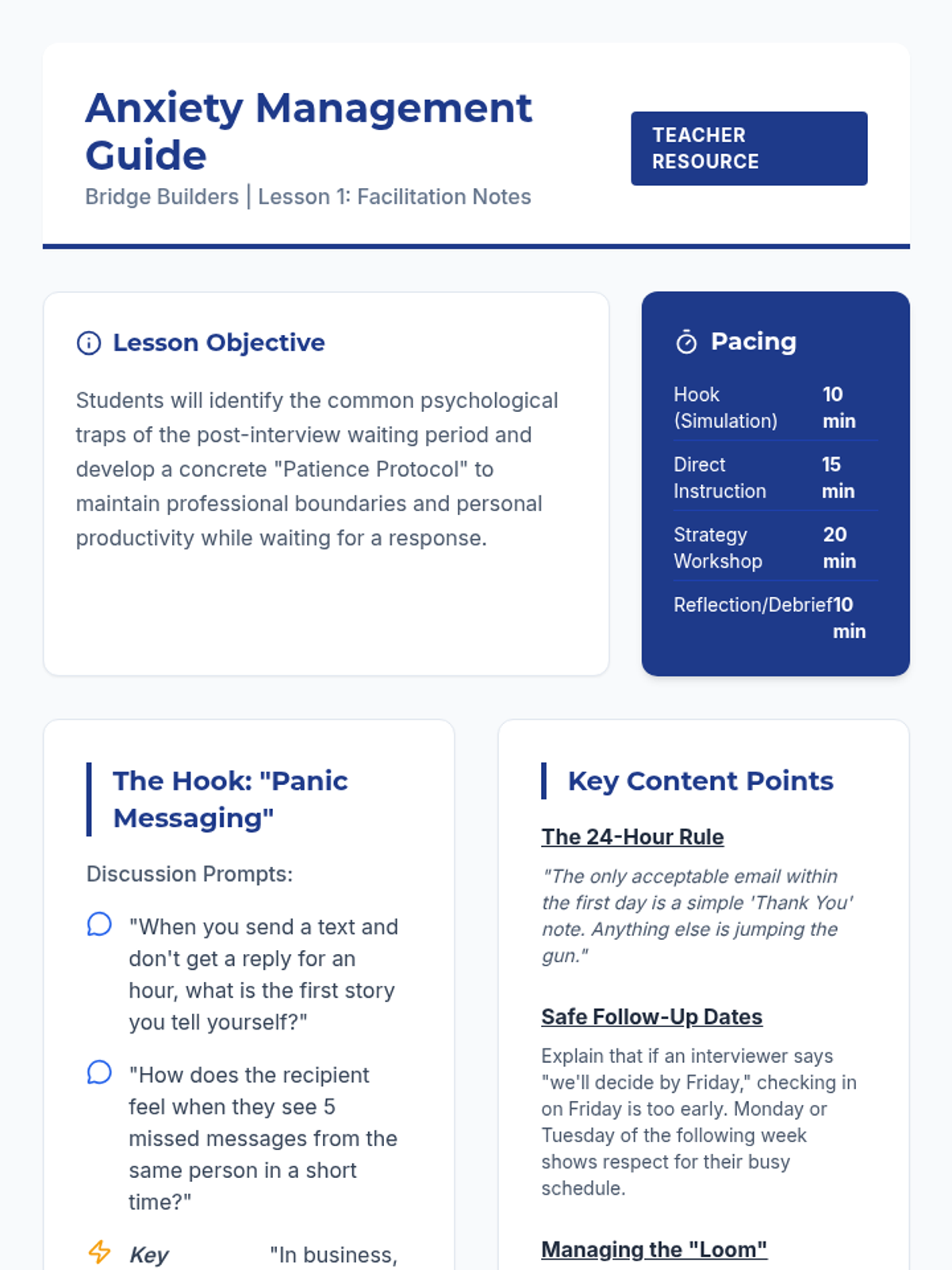
This sequence explores the professional art of following up after a job interview. Students learn to navigate the 'waiting game' by understanding employer timelines, drafting strategic inquiries, and responding professionally to outcomes ranging from job offers to rejections.
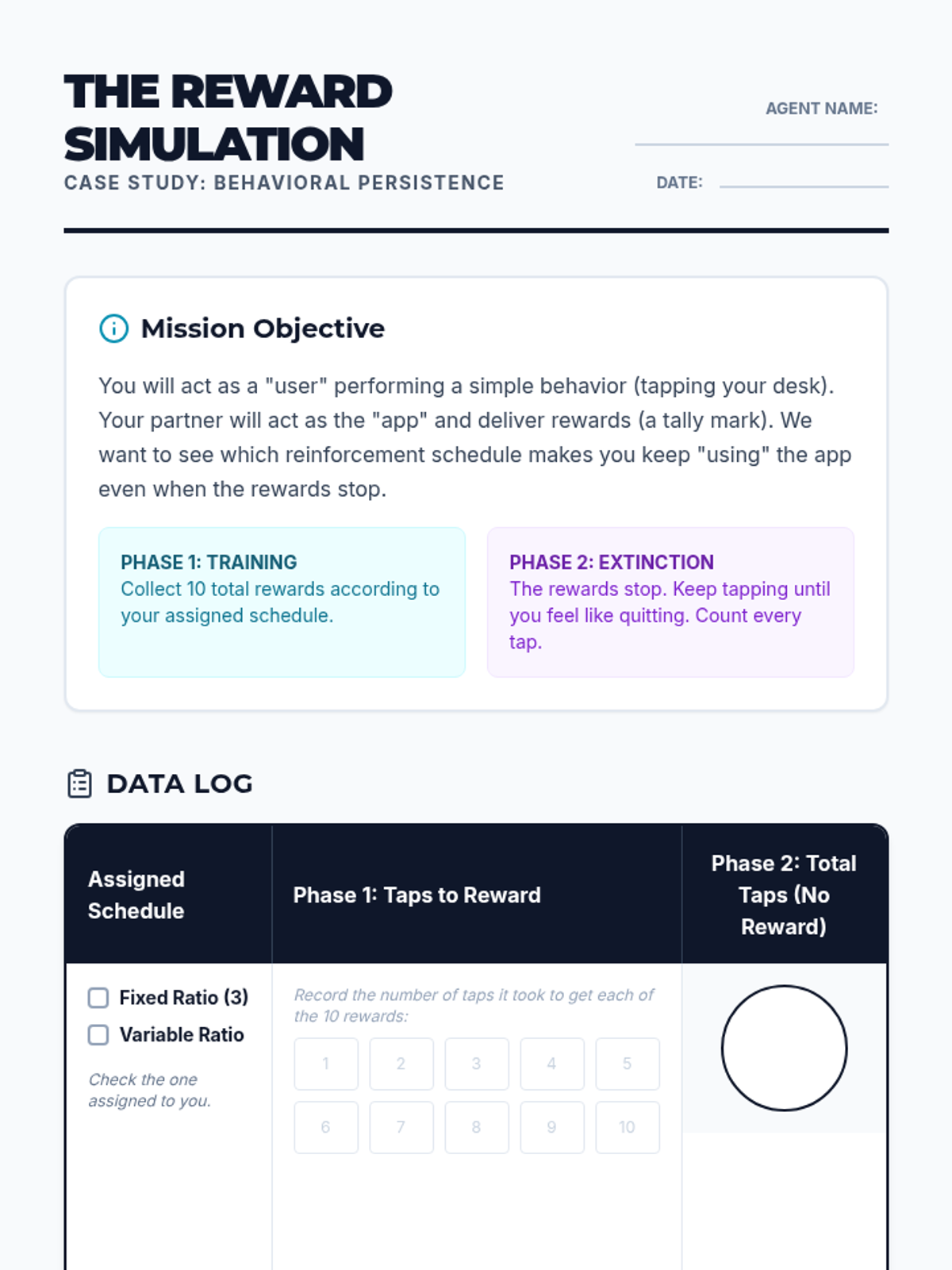
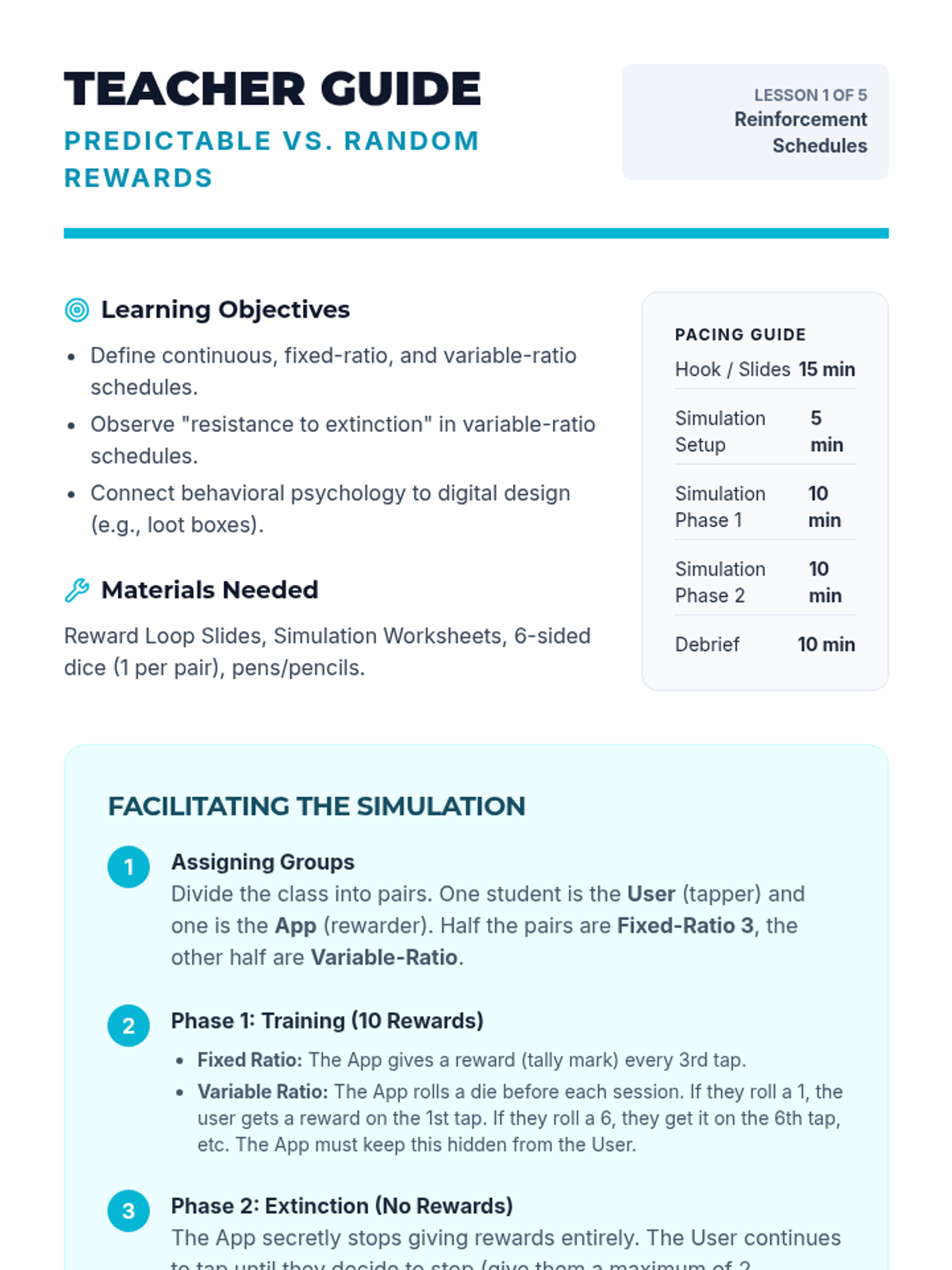
A 5-lesson sequence exploring how technology uses schedules of reinforcement (fixed and variable) to drive engagement. Students analyze gamification, social media mechanics, and ethical design to build digital literacy.
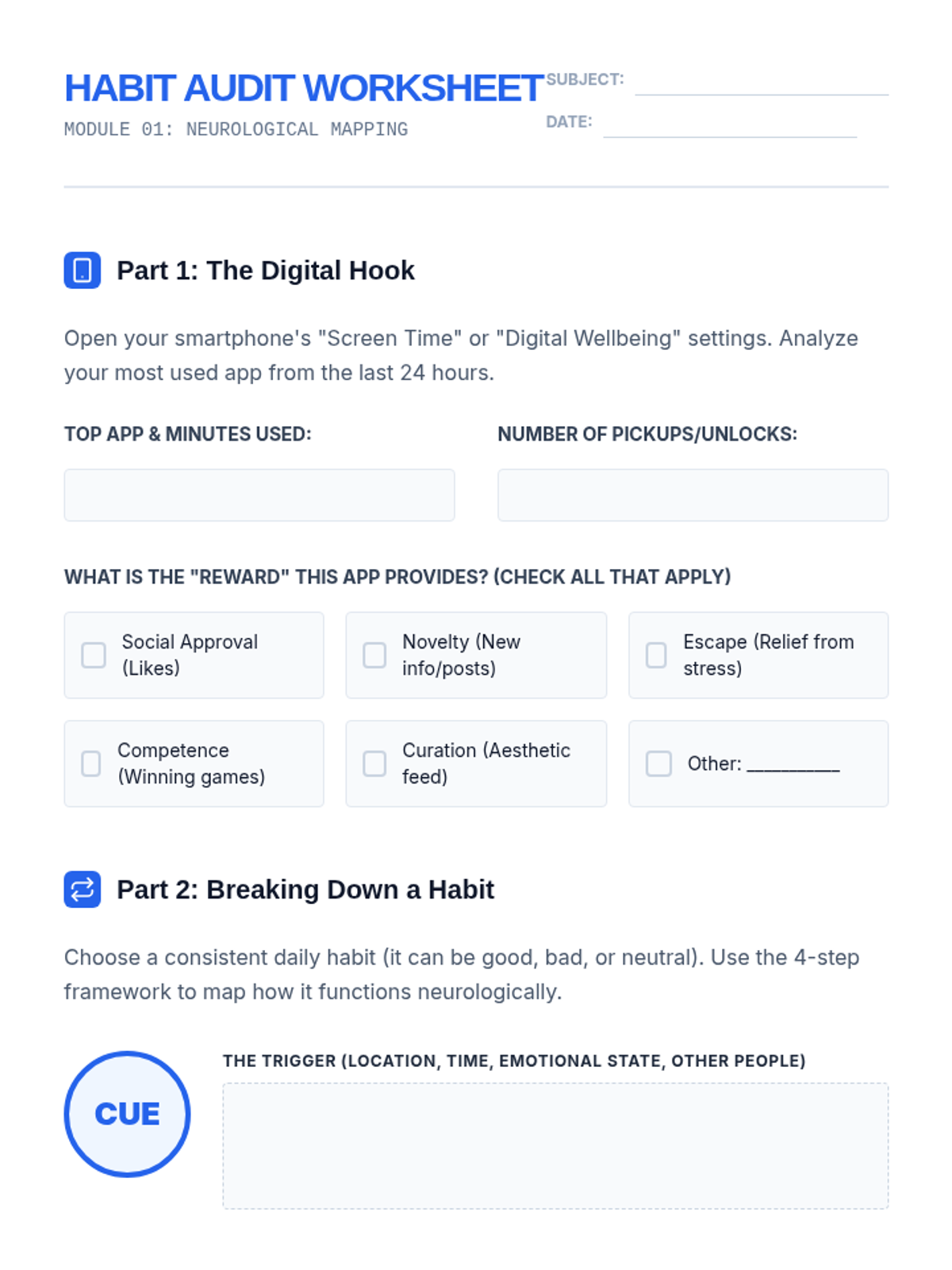
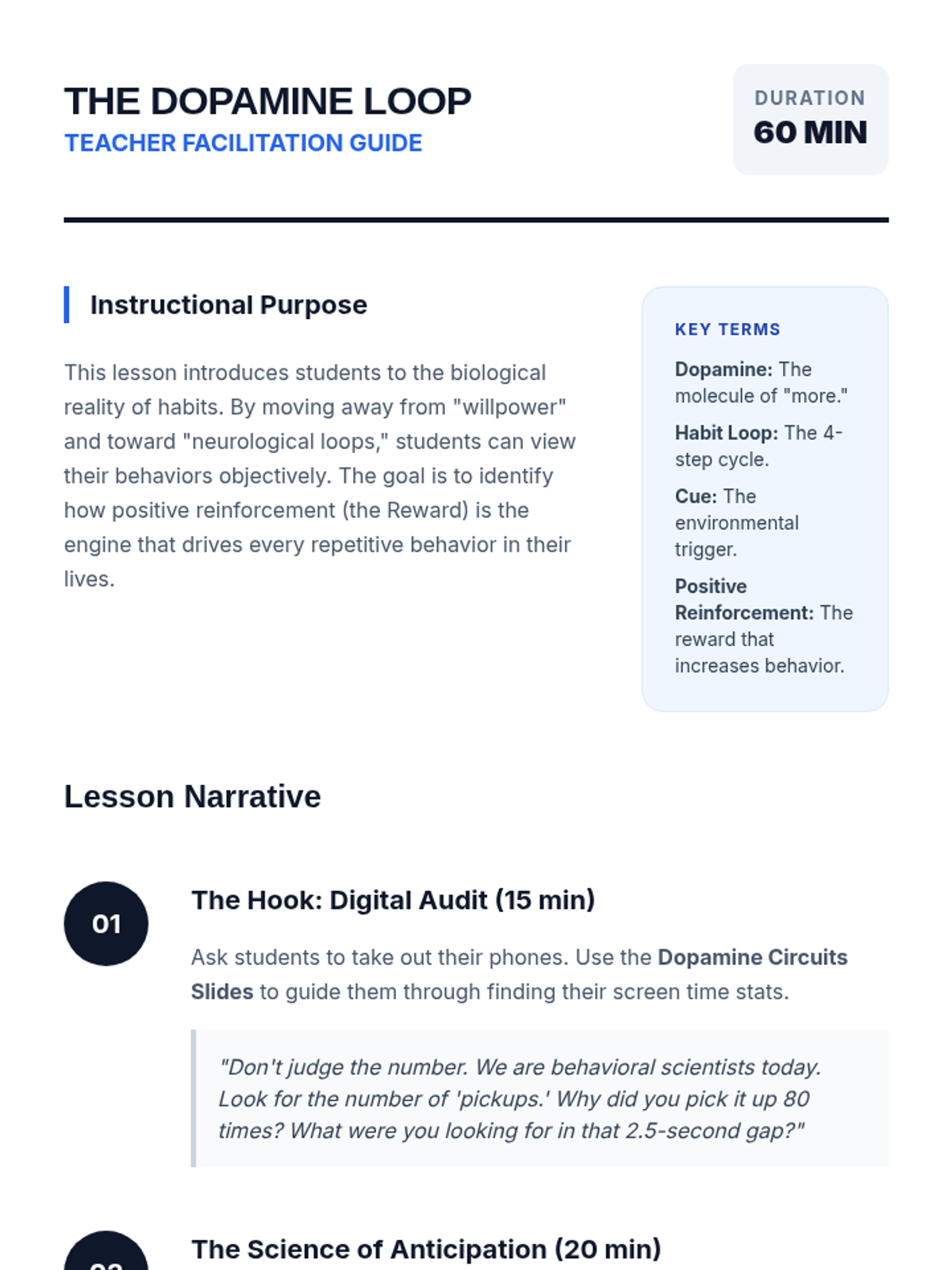
A comprehensive sequence for 12th-grade students that applies positive reinforcement and behavioral science principles to personal habit formation. Students learn to analyze their neurobiology, engineer immediate rewards, track progress visually, leverage social accountability, and eventually transition to intrinsic motivation.
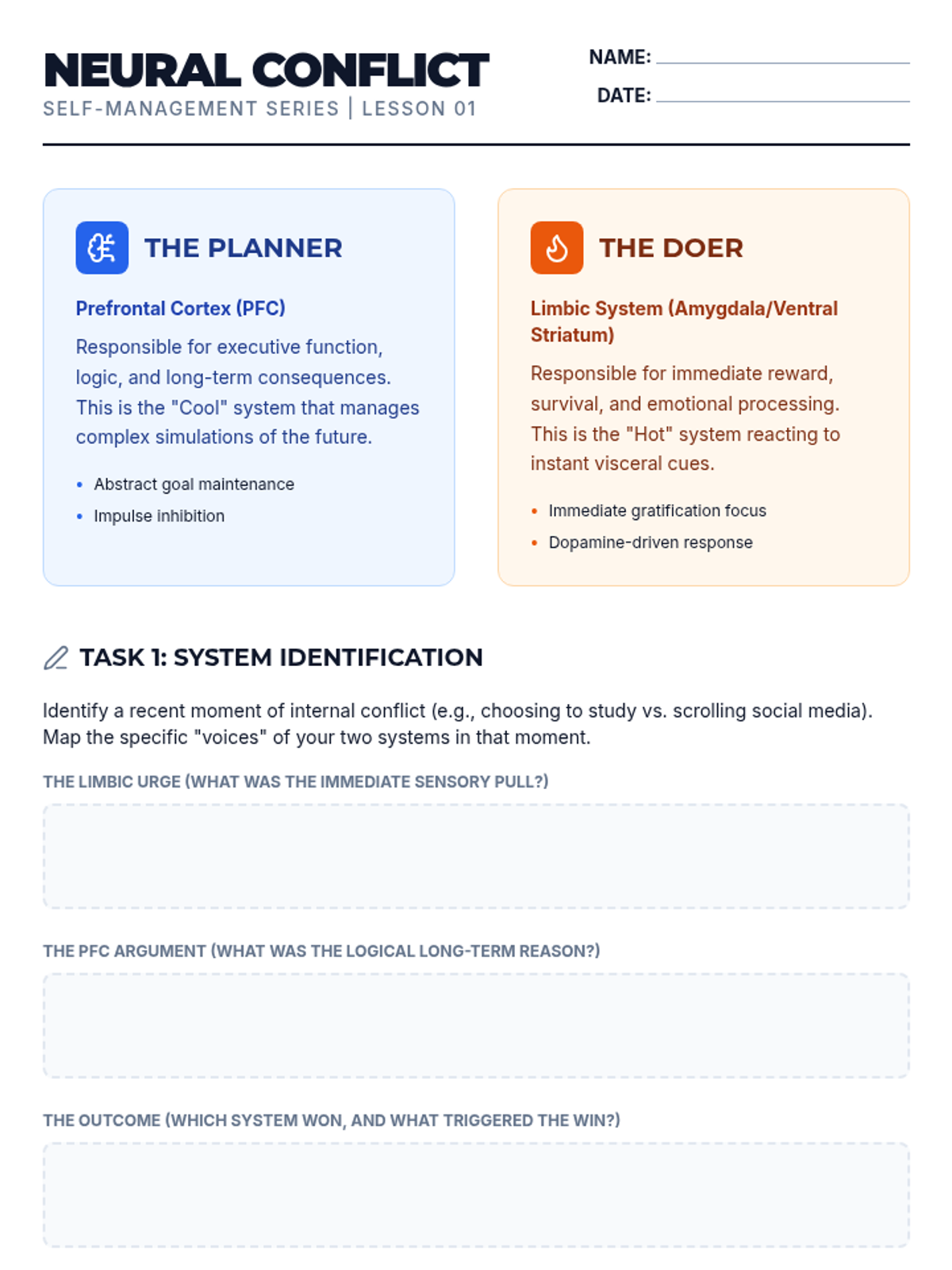
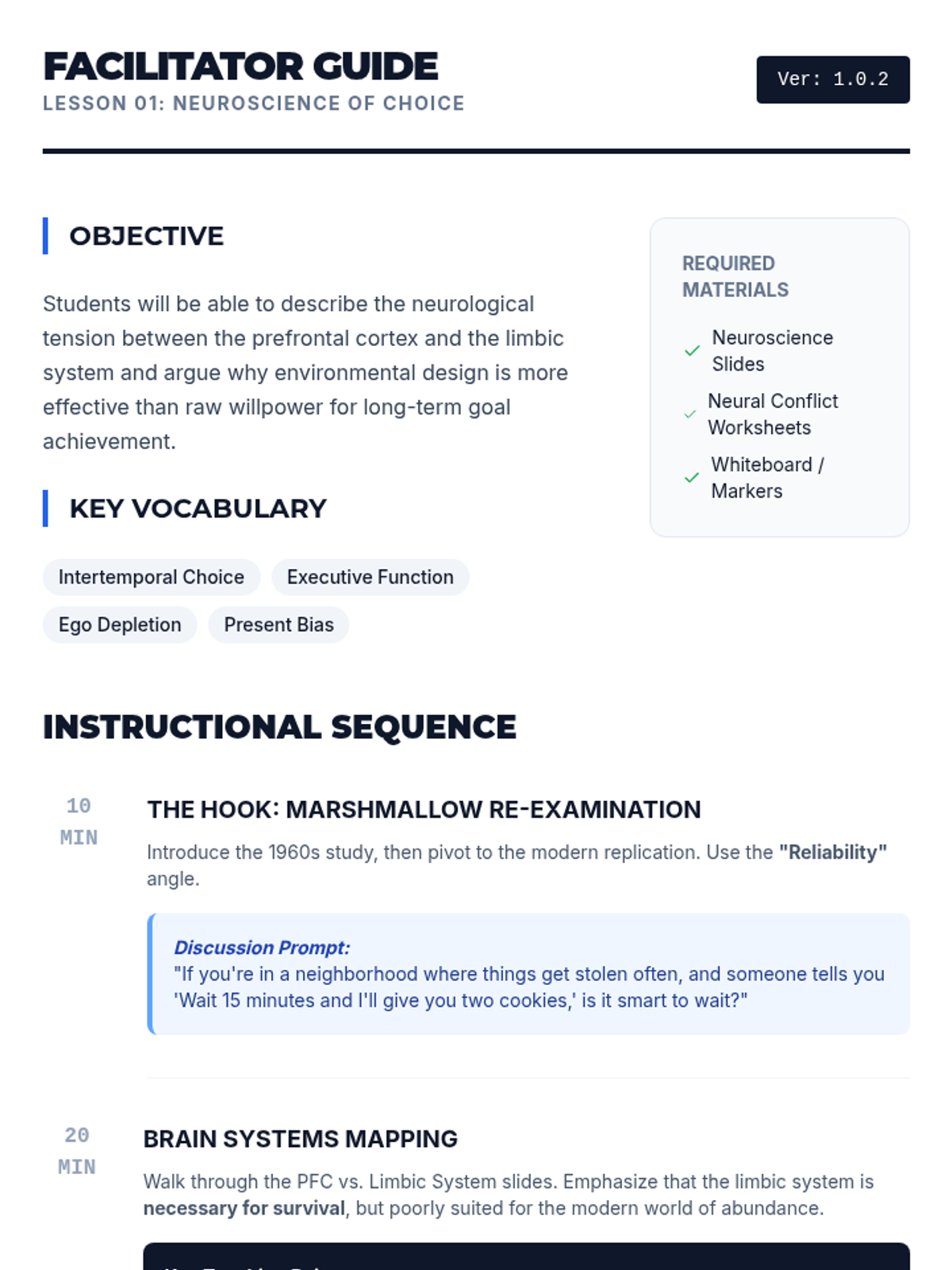
This sequence explores the psychological and neurological mechanisms of delayed gratification, moving beyond willpower to evidence-based strategies like commitment devices and environmental architecture. Students will analyze hyperbolic discounting, fMRI brain studies, and implementation intentions to build a personalized framework for long-term goal achievement.
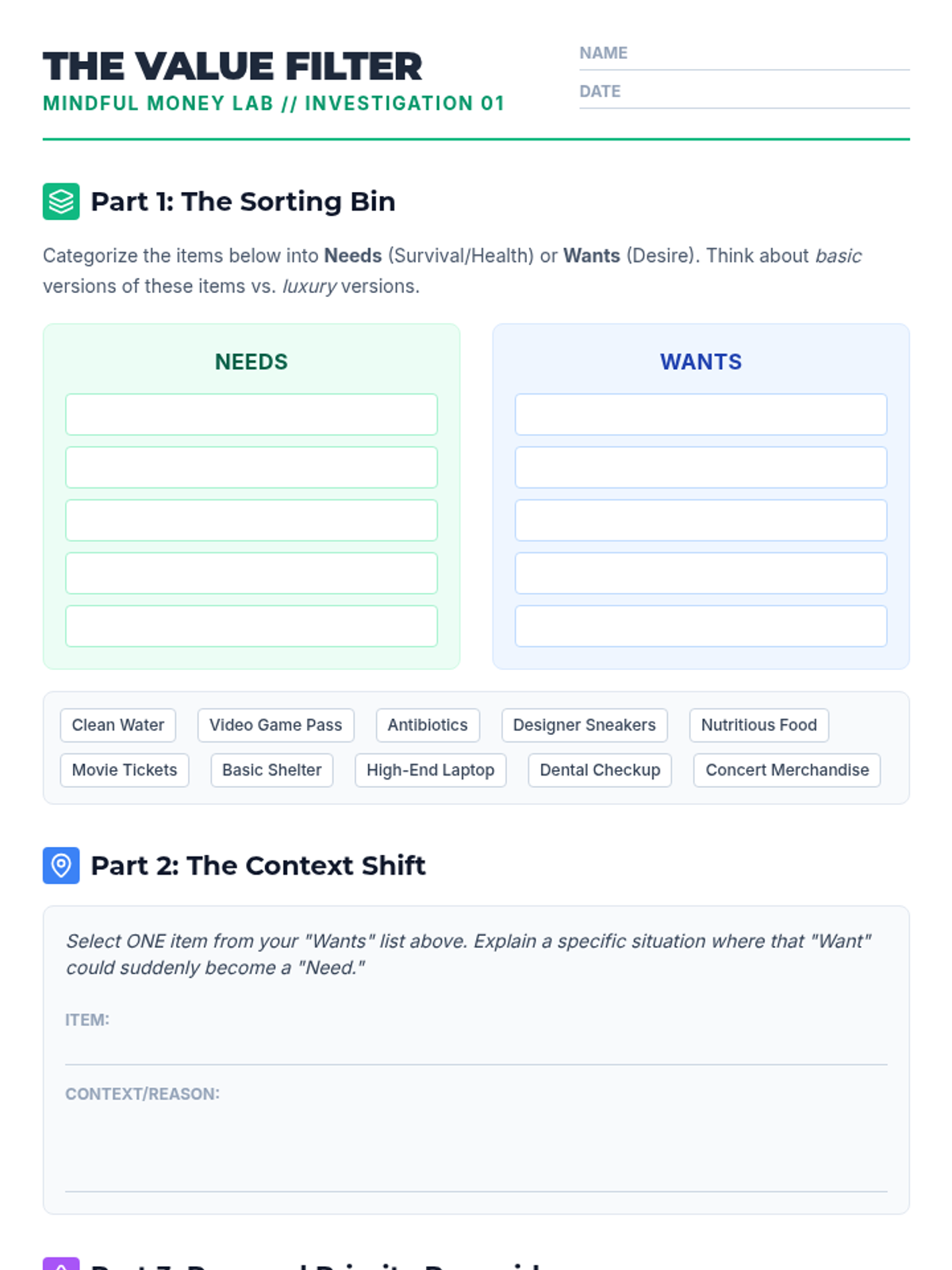
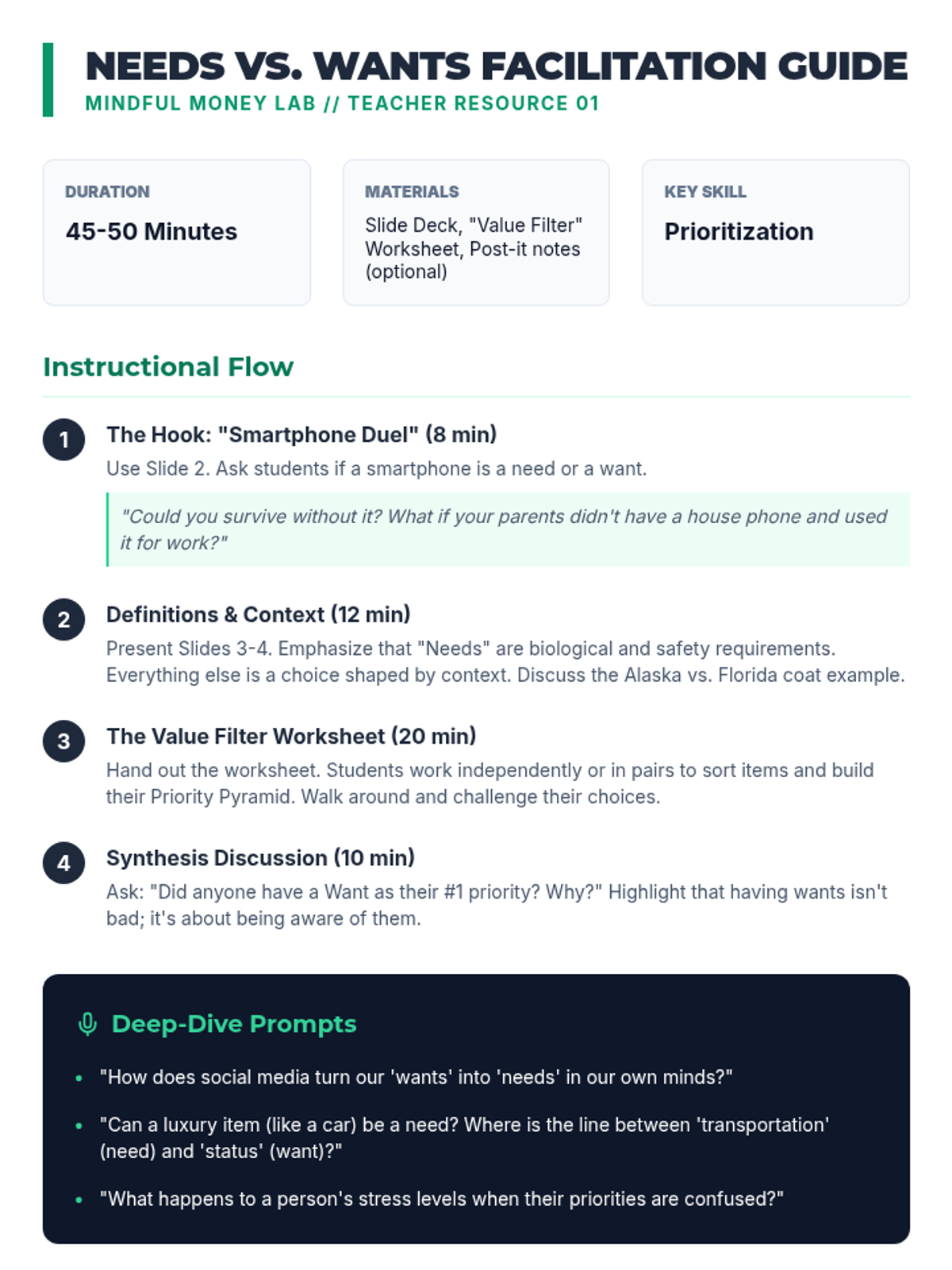
This sequence explores the psychology behind spending, focusing on impulse control, emotional triggers, and the economic concept of opportunity cost. Students move from basic needs/wants categorization to developing a personalized mindful spending plan.
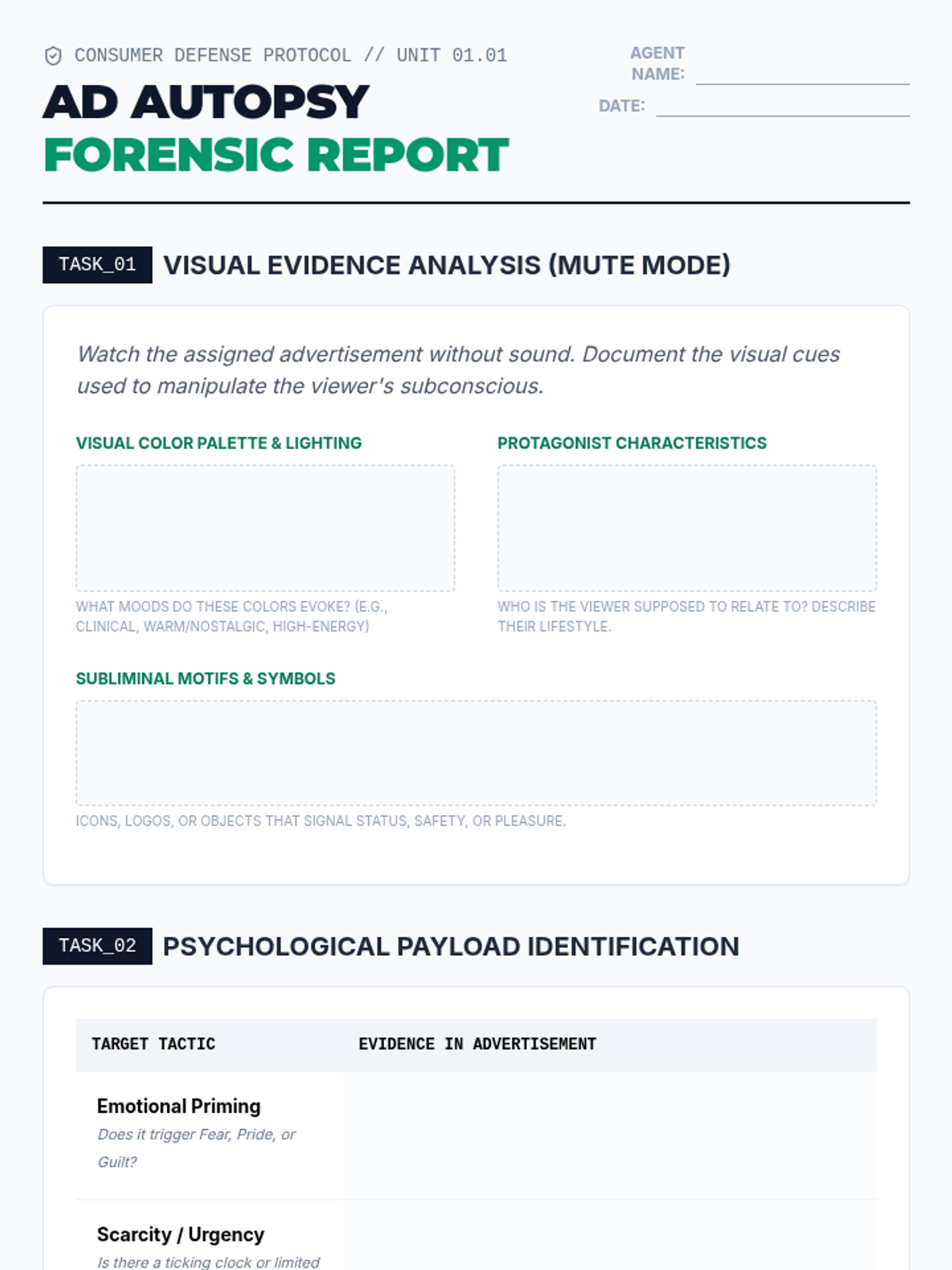
A high-school level sequence exploring the psychological and digital mechanisms of modern advertising. Students learn to identify neuromarketing, algorithmic targeting, influencer tactics, and dark patterns to develop critical consumer autonomy.
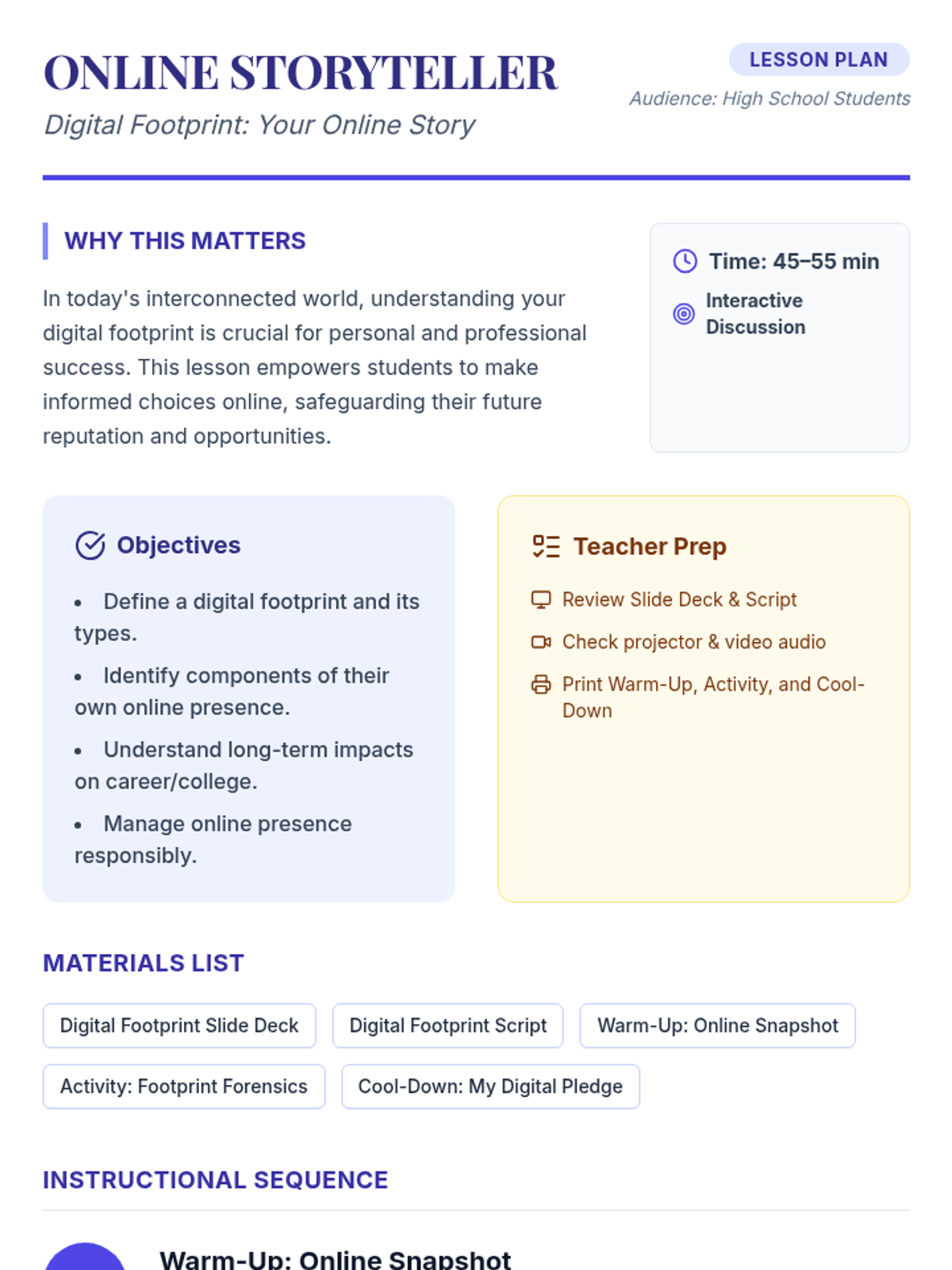
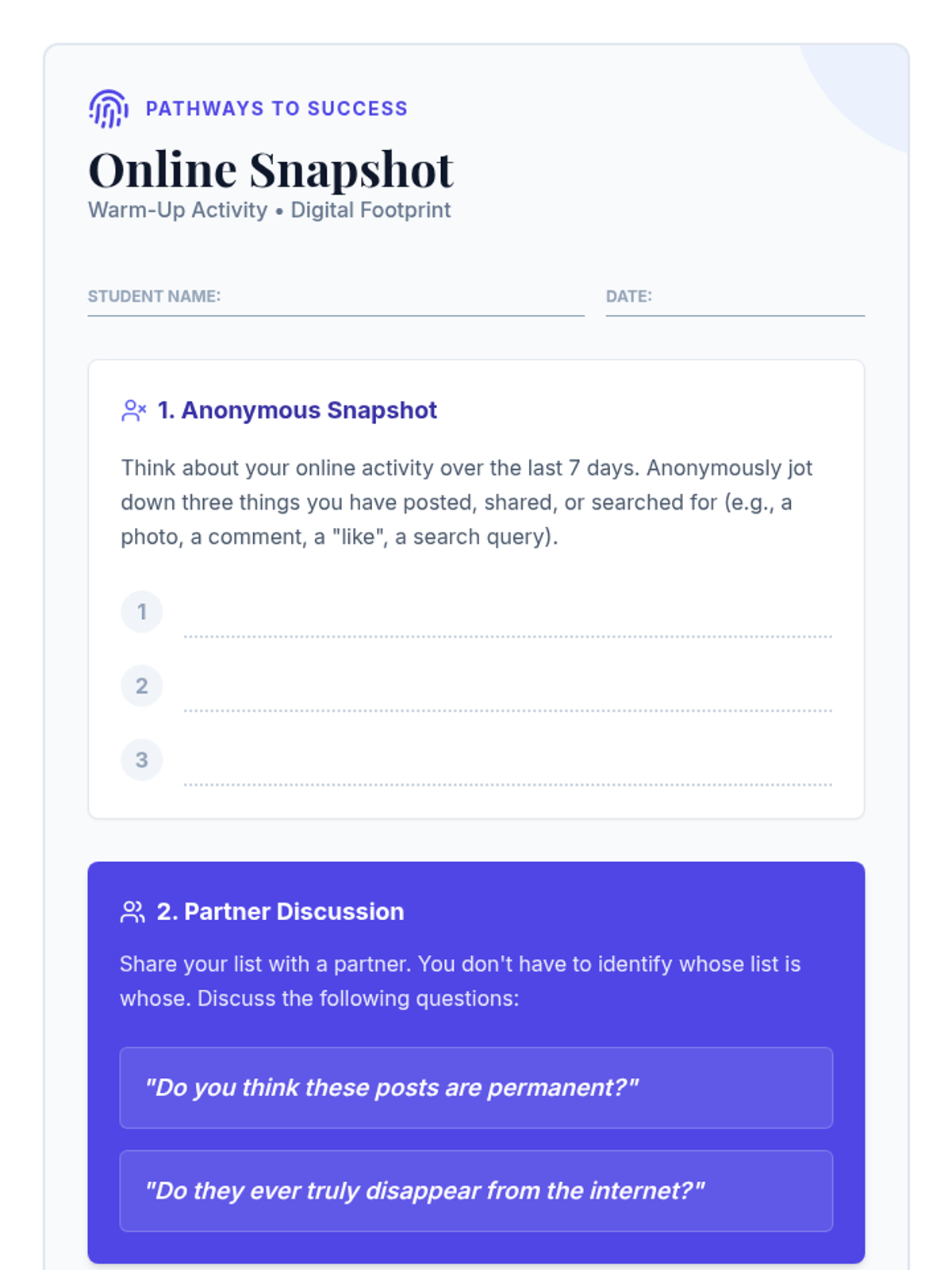
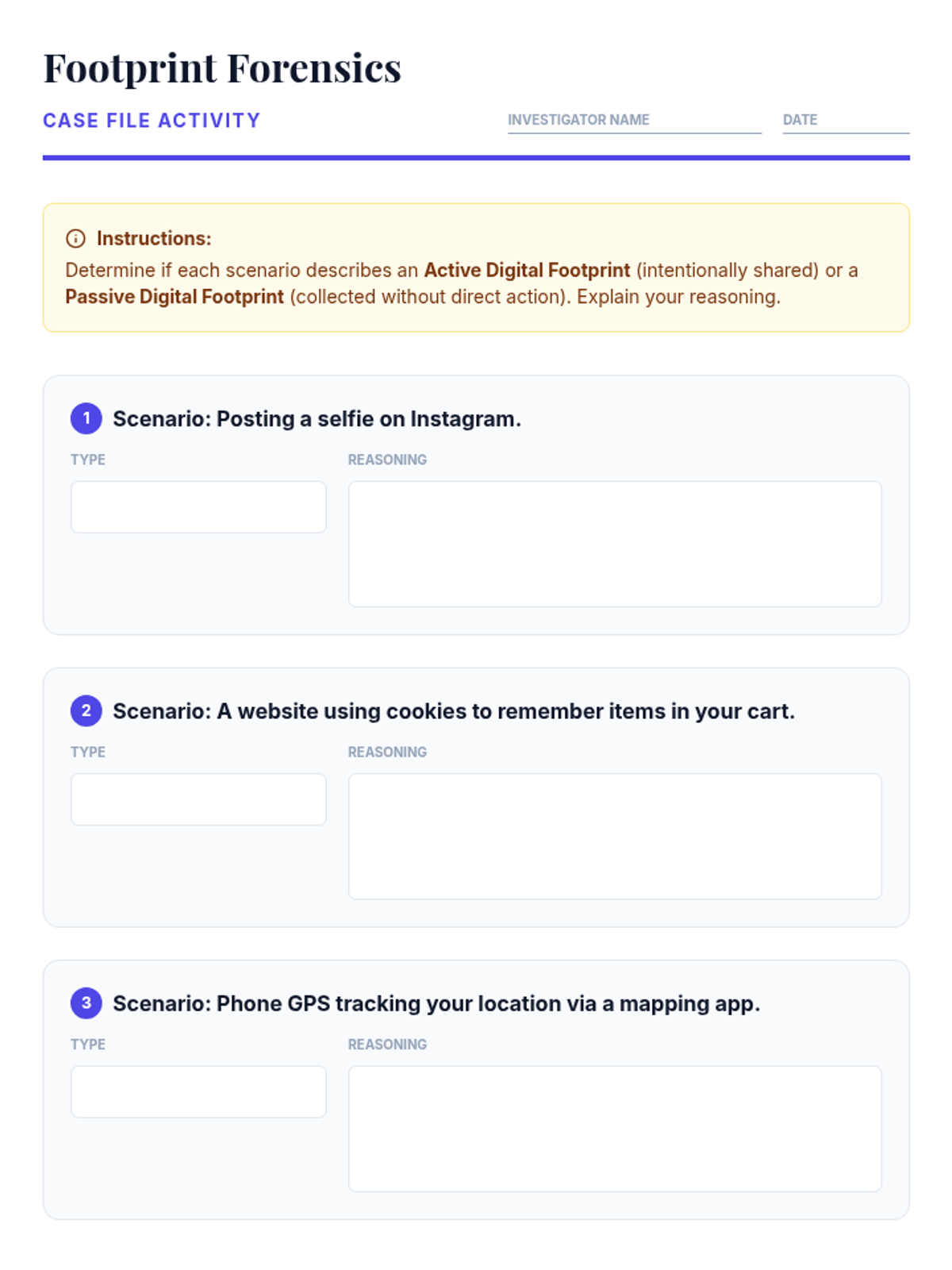
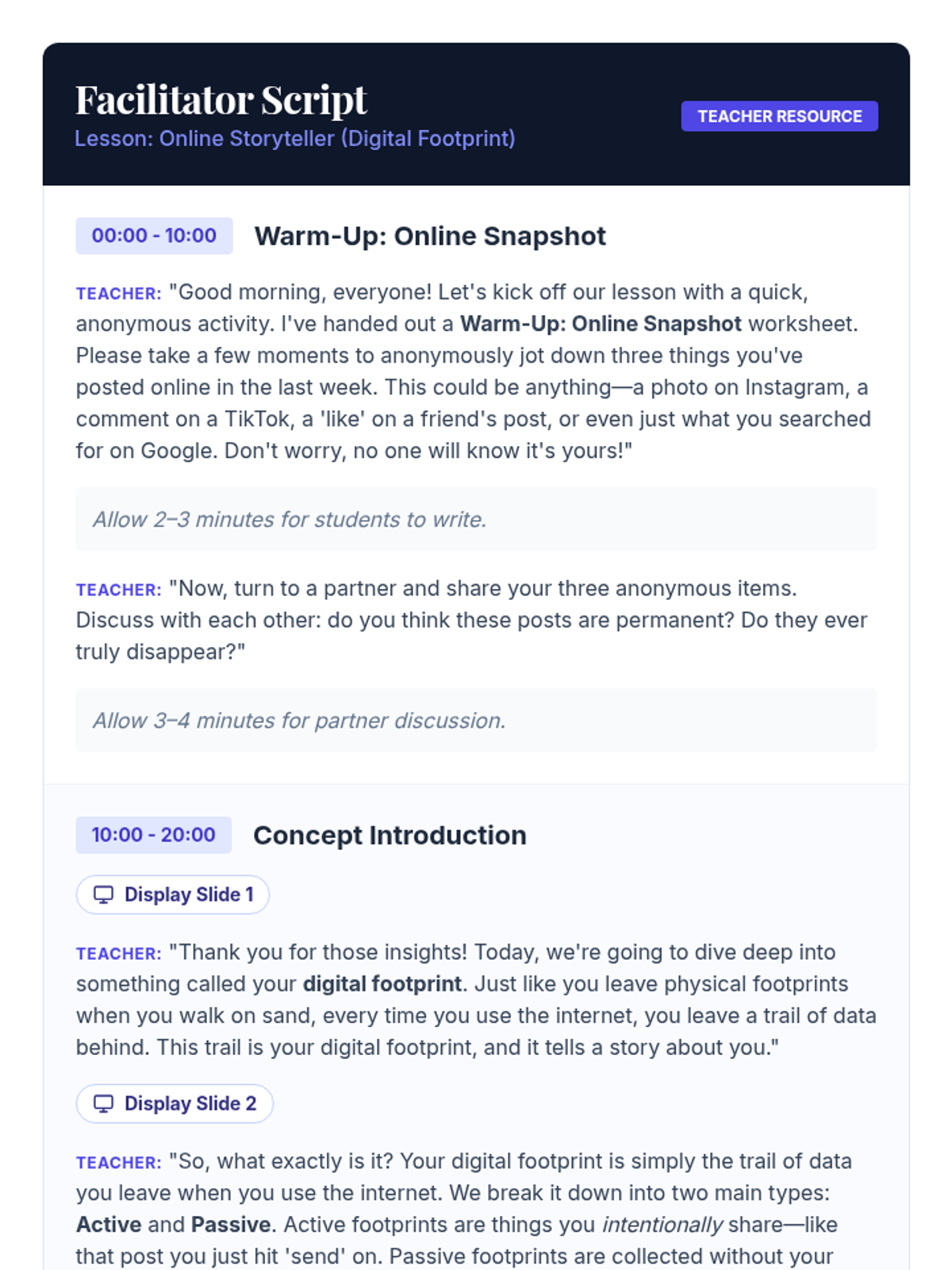
A comprehensive suite of lessons designed for high school students to master digital citizenship and essential executive function skills. Topics include digital footprint management, goal setting, time prioritization, organization, and overcoming procrastination.
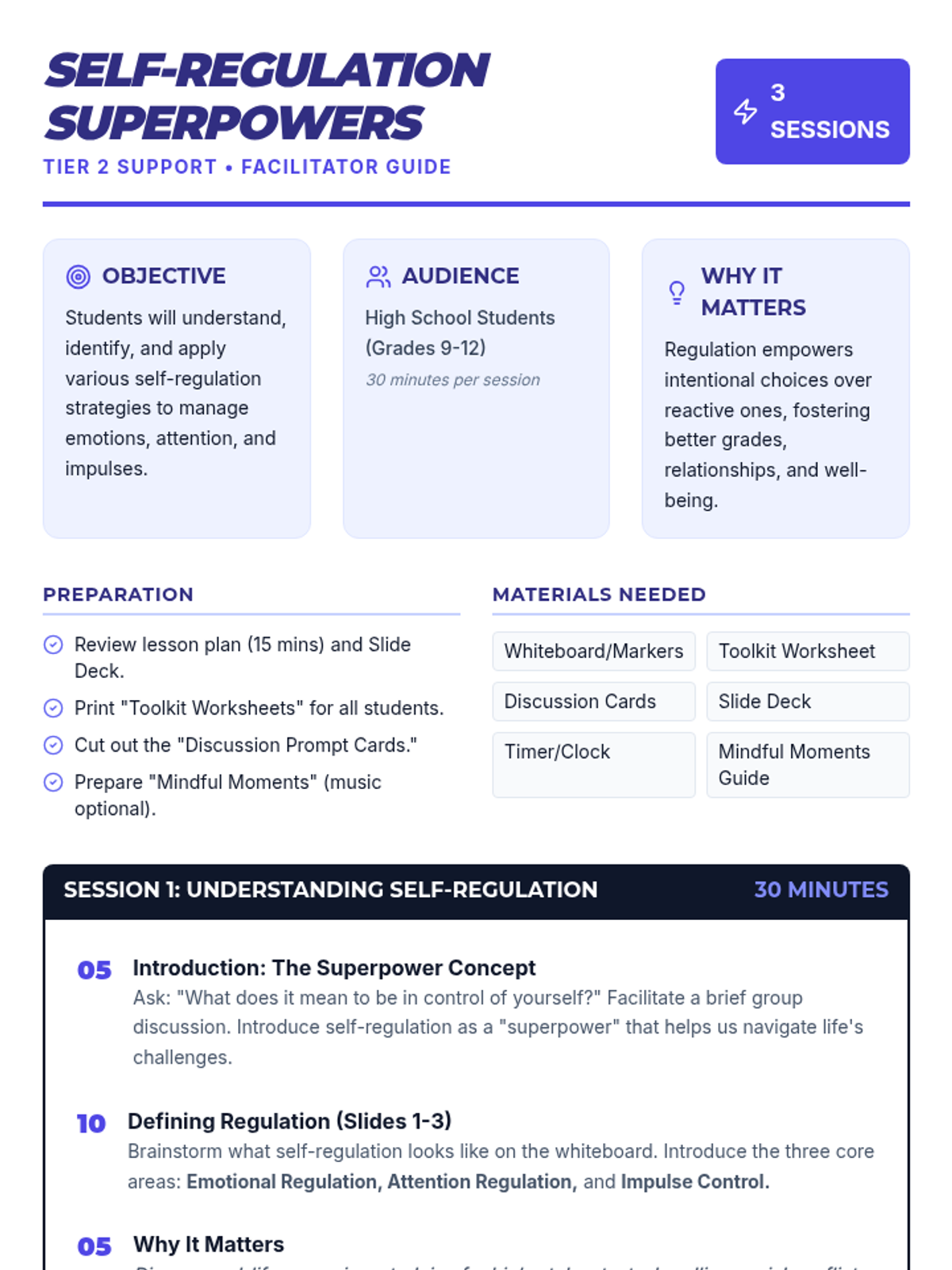
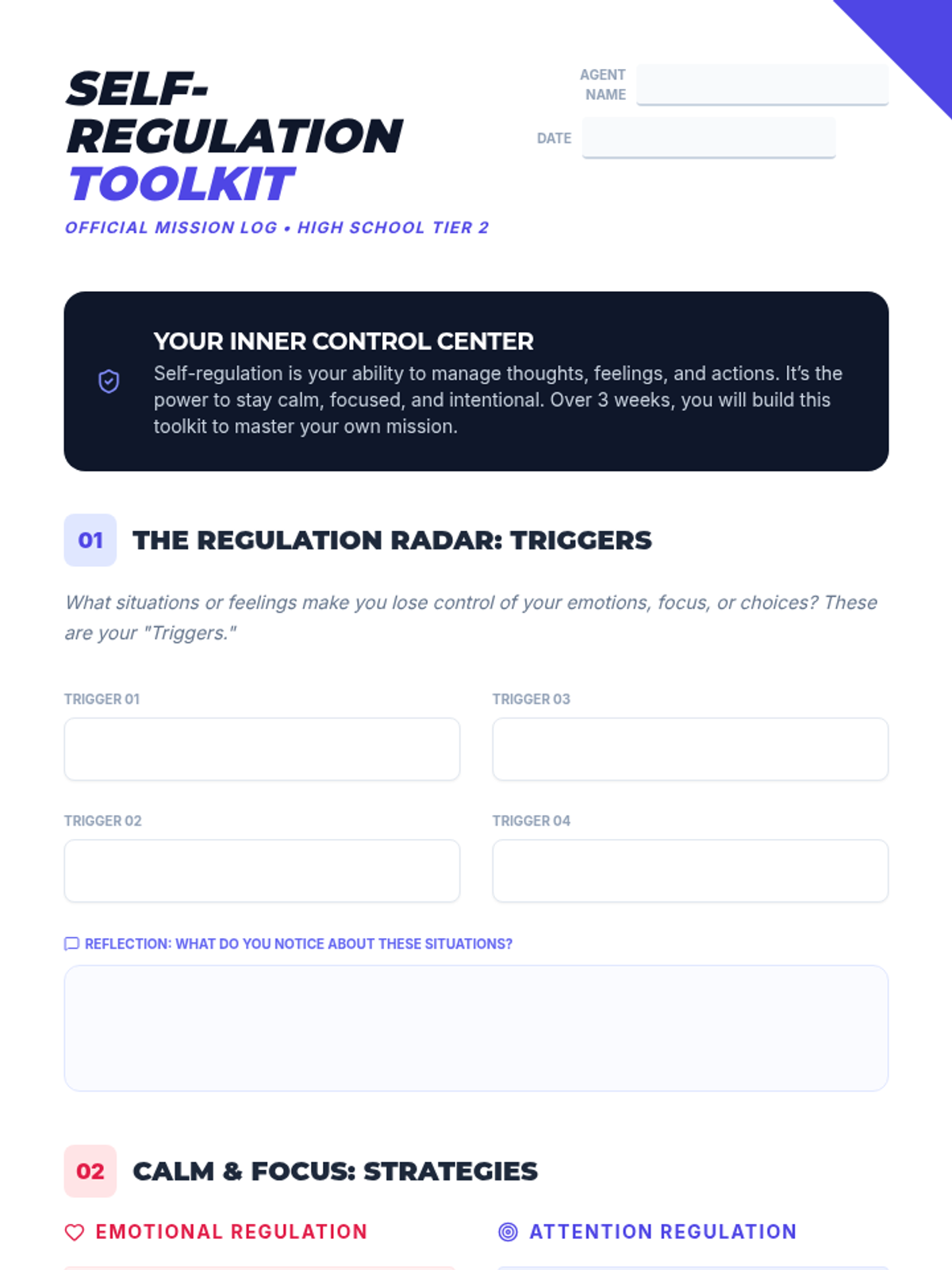
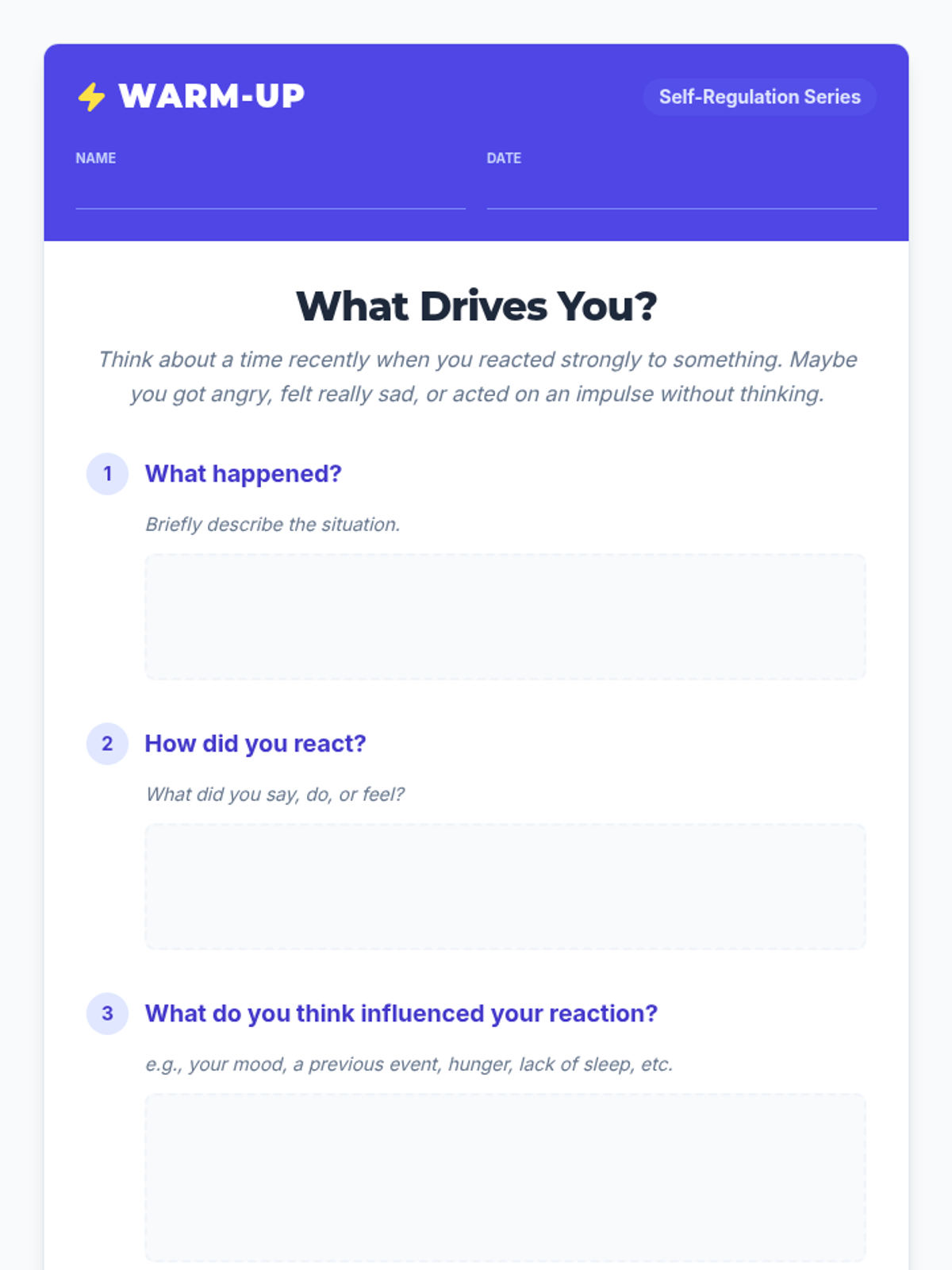
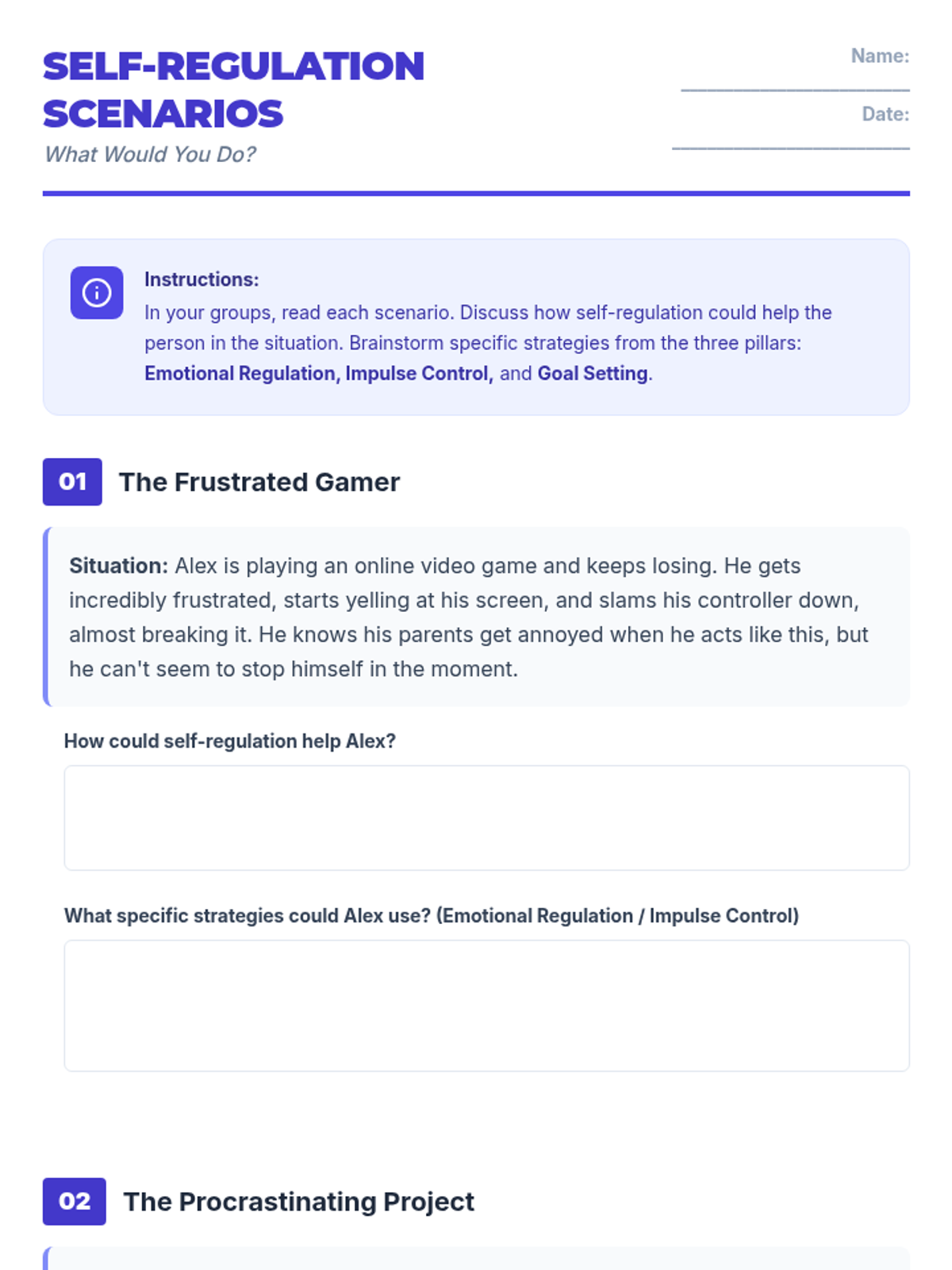
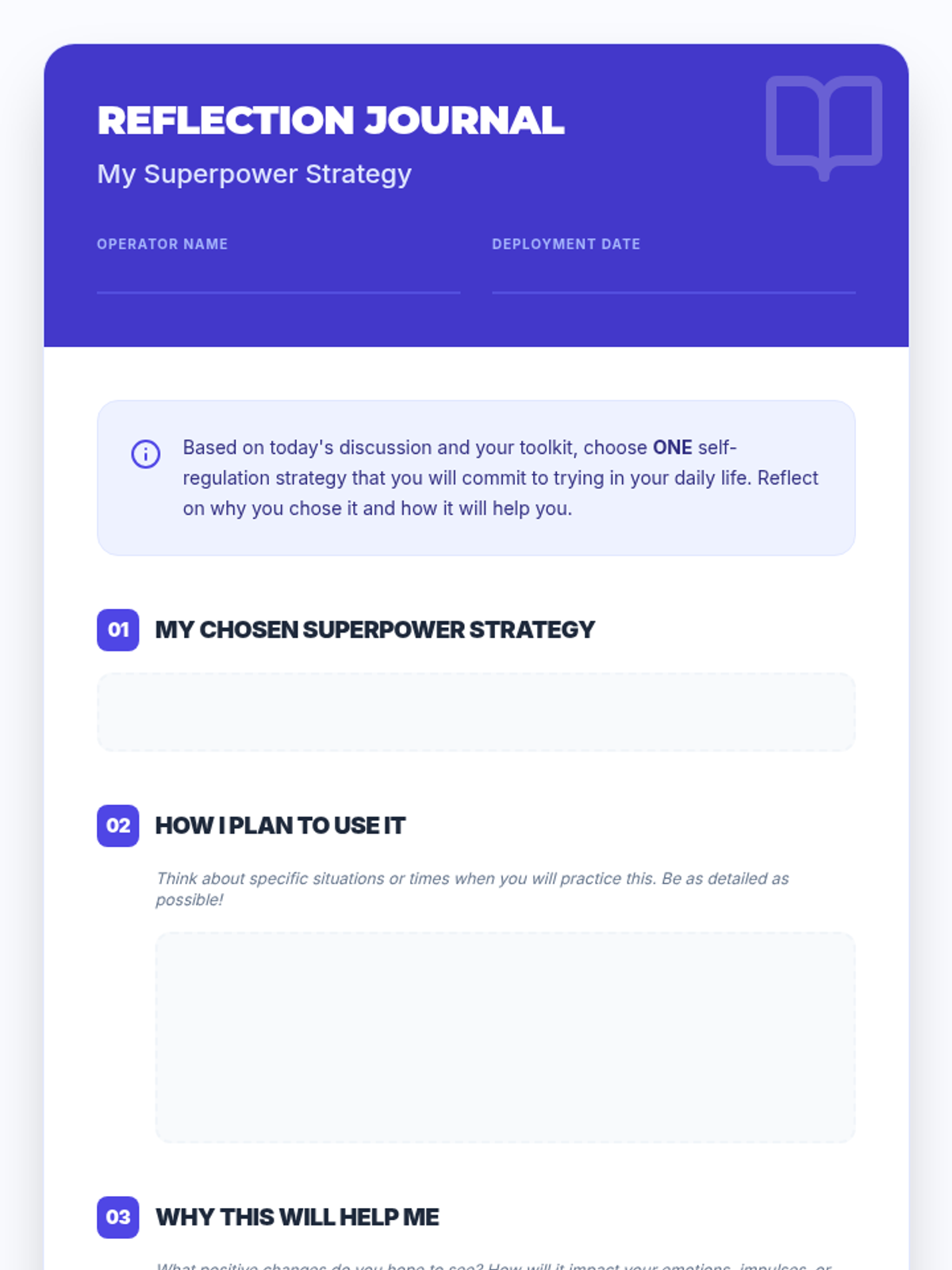
A 3-week, Tier 2 social-emotional learning sequence designed for high school students to develop self-regulation strategies for emotional management, attention focus, and impulse control.
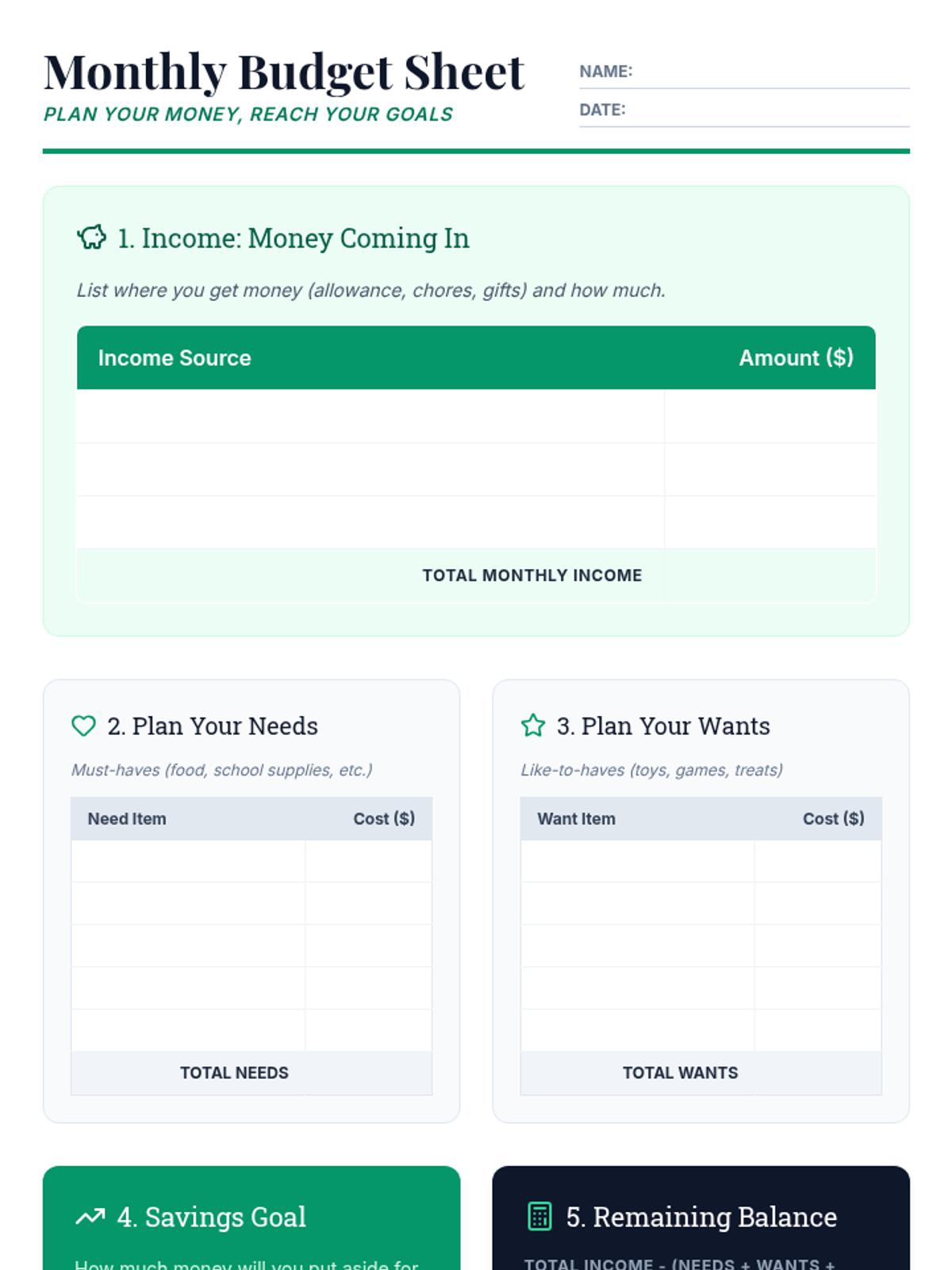
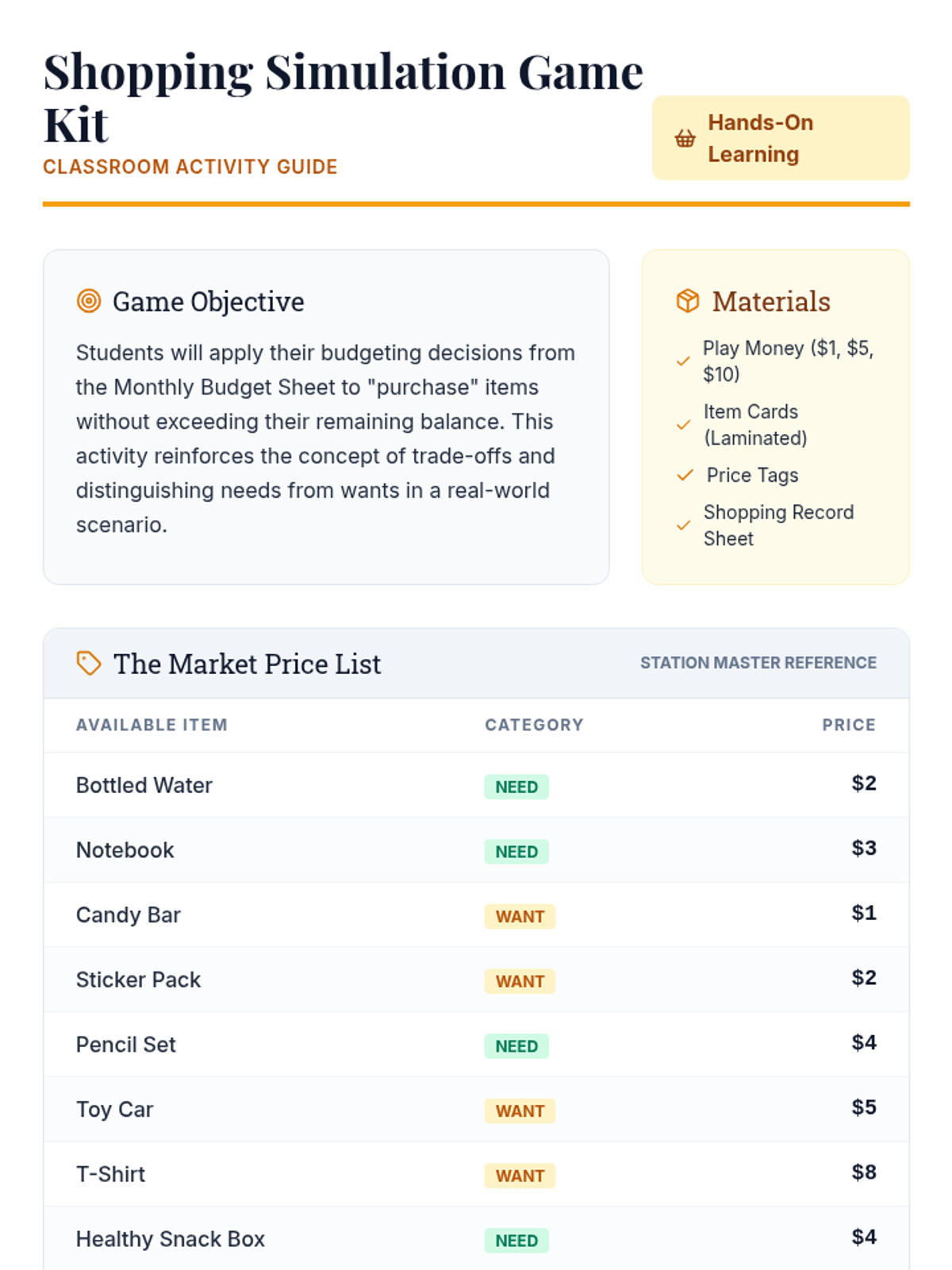
A comprehensive sequence for high school students focusing on essential life skills, including emotional self-regulation and financial literacy through budgeting.
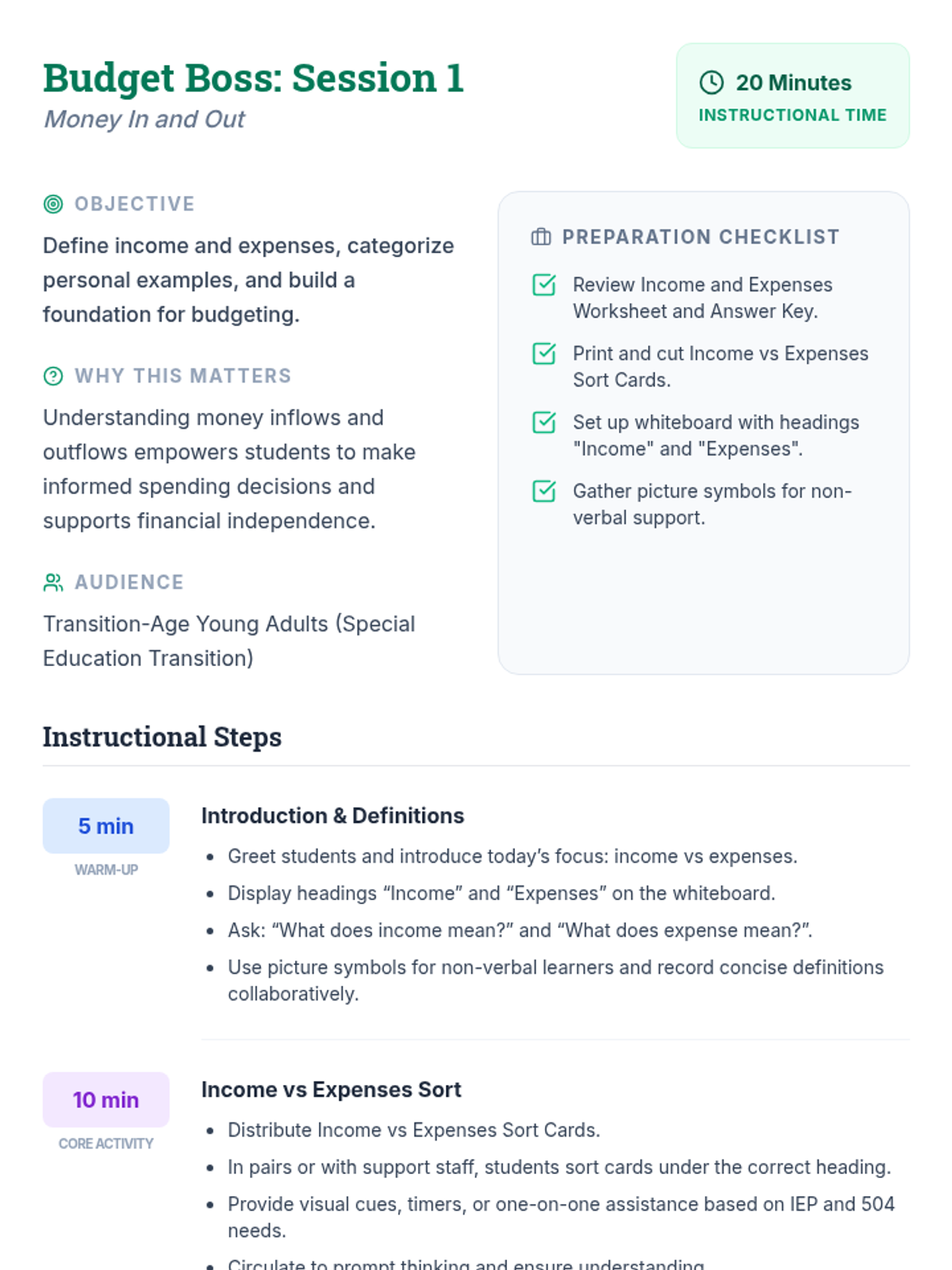
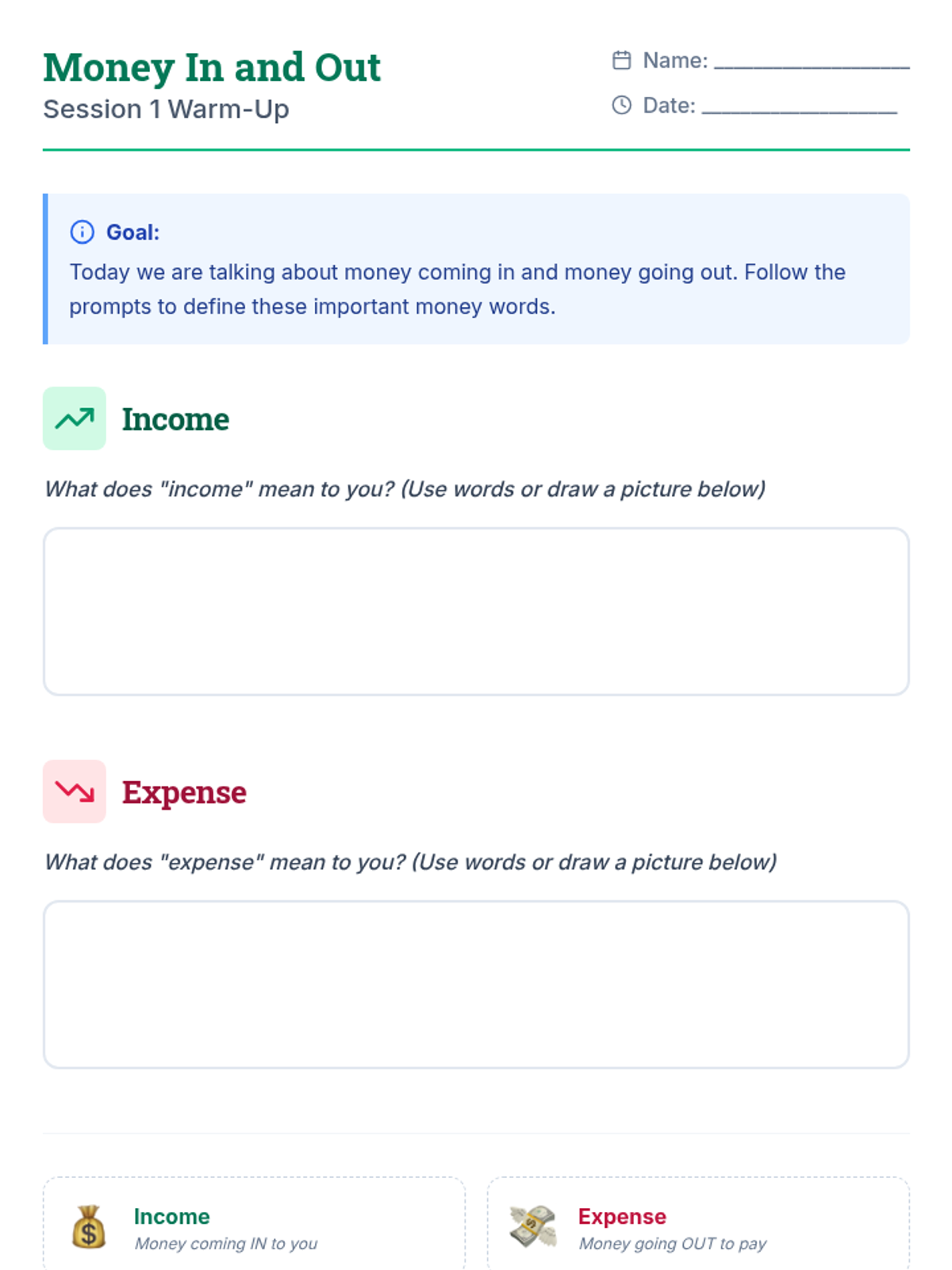
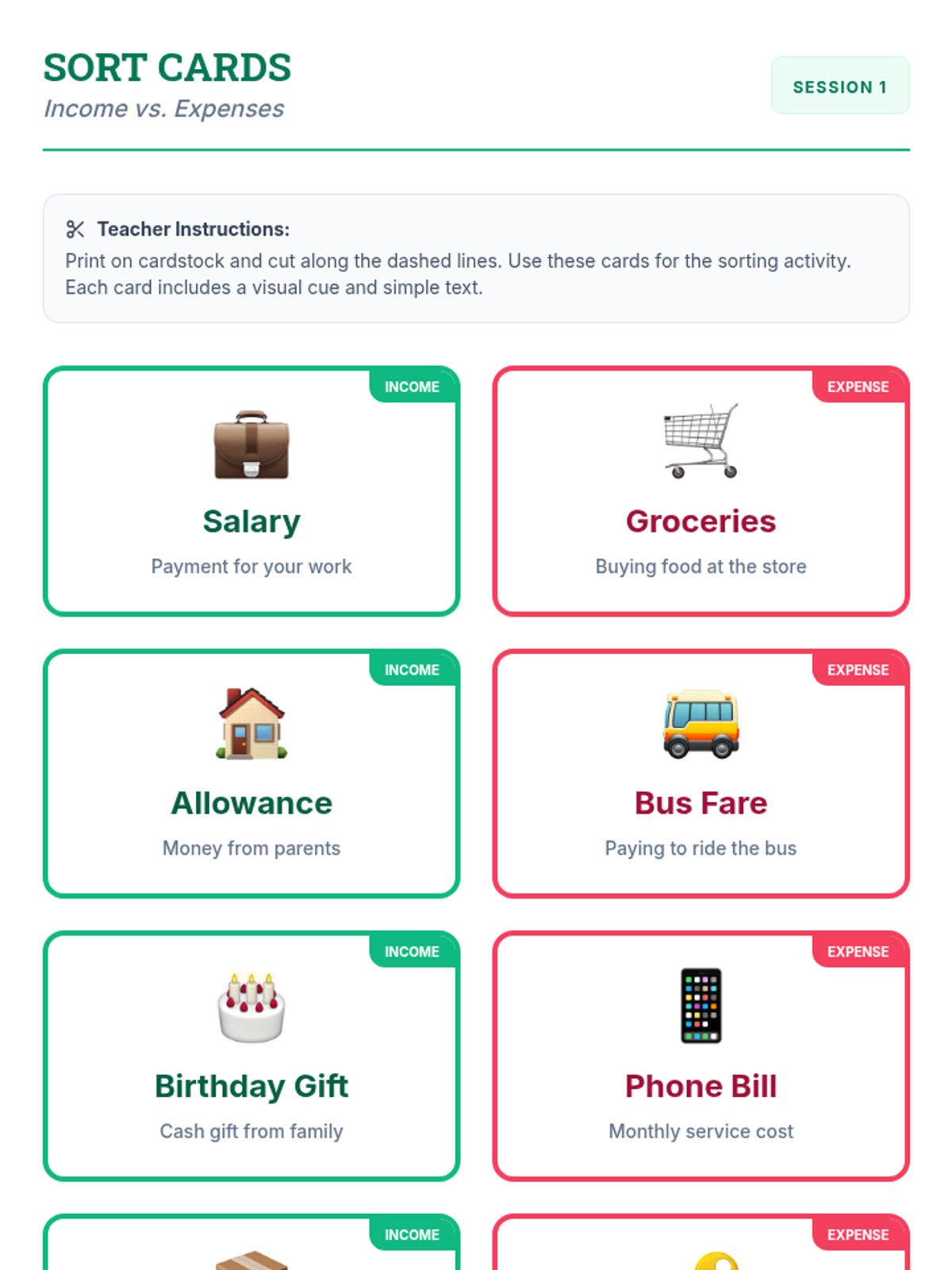
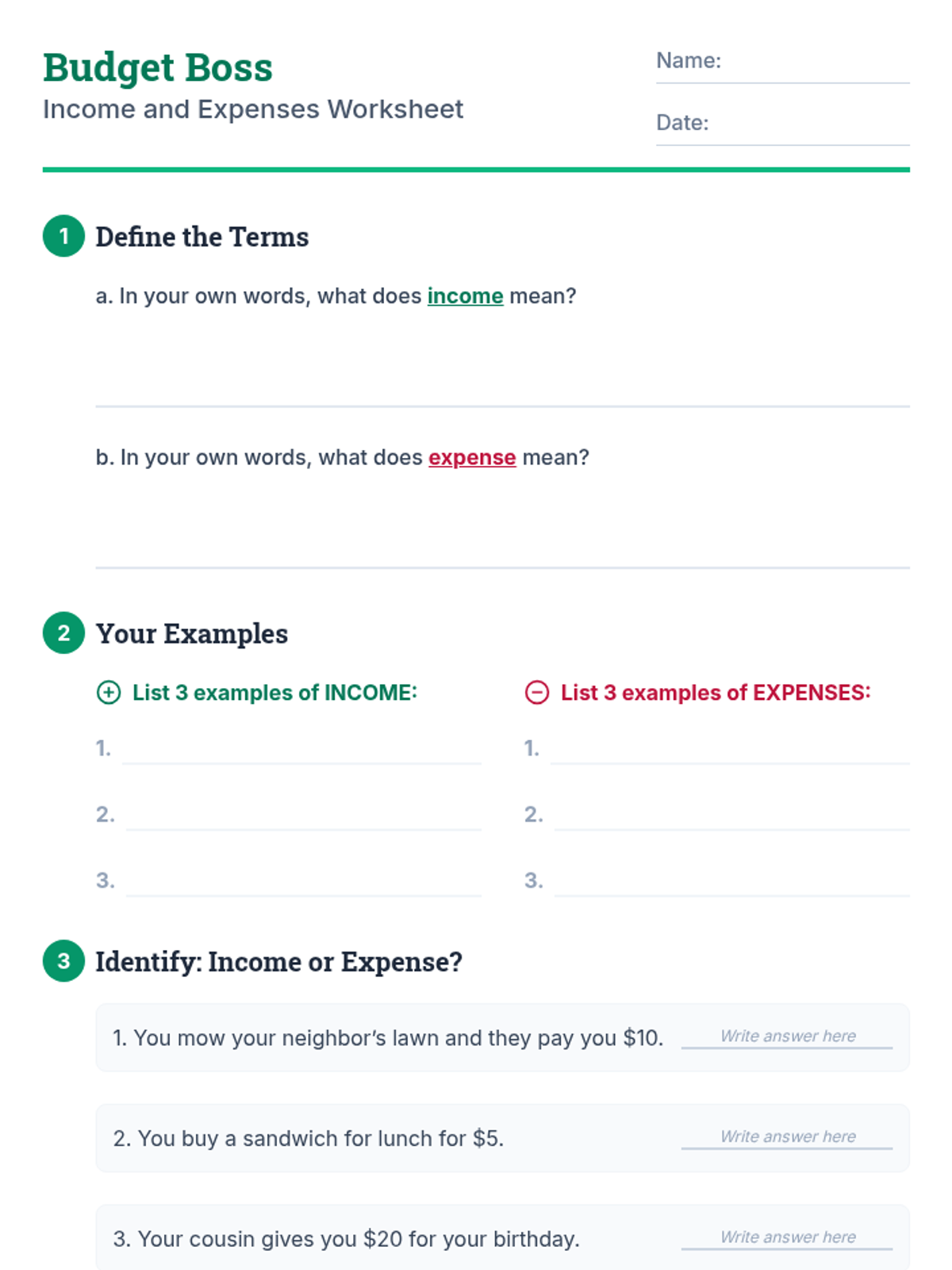
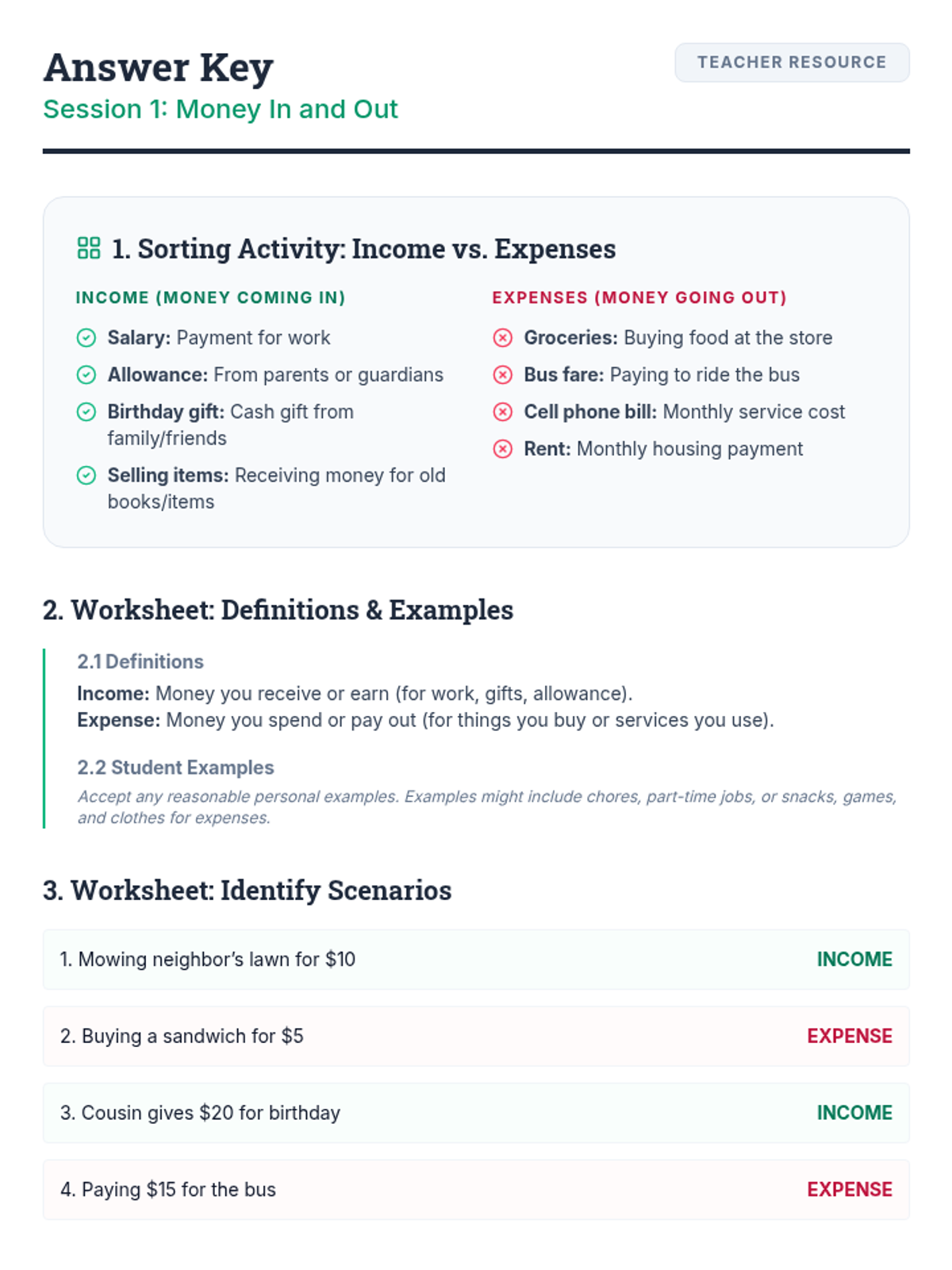
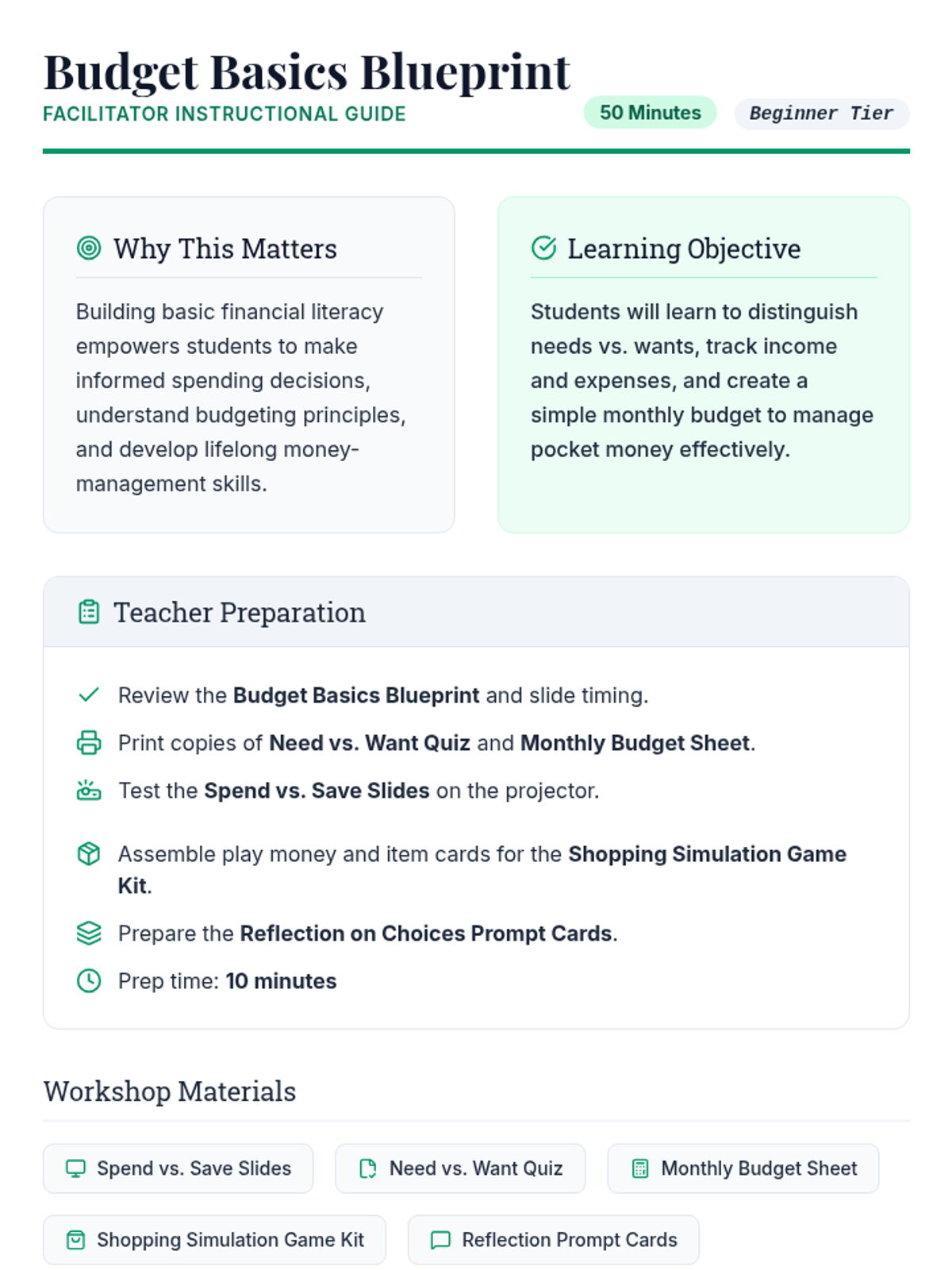
A three-session financial literacy course designed for transition-age young adults with special needs, focusing on income, expenses, tracking, and personal budgeting.
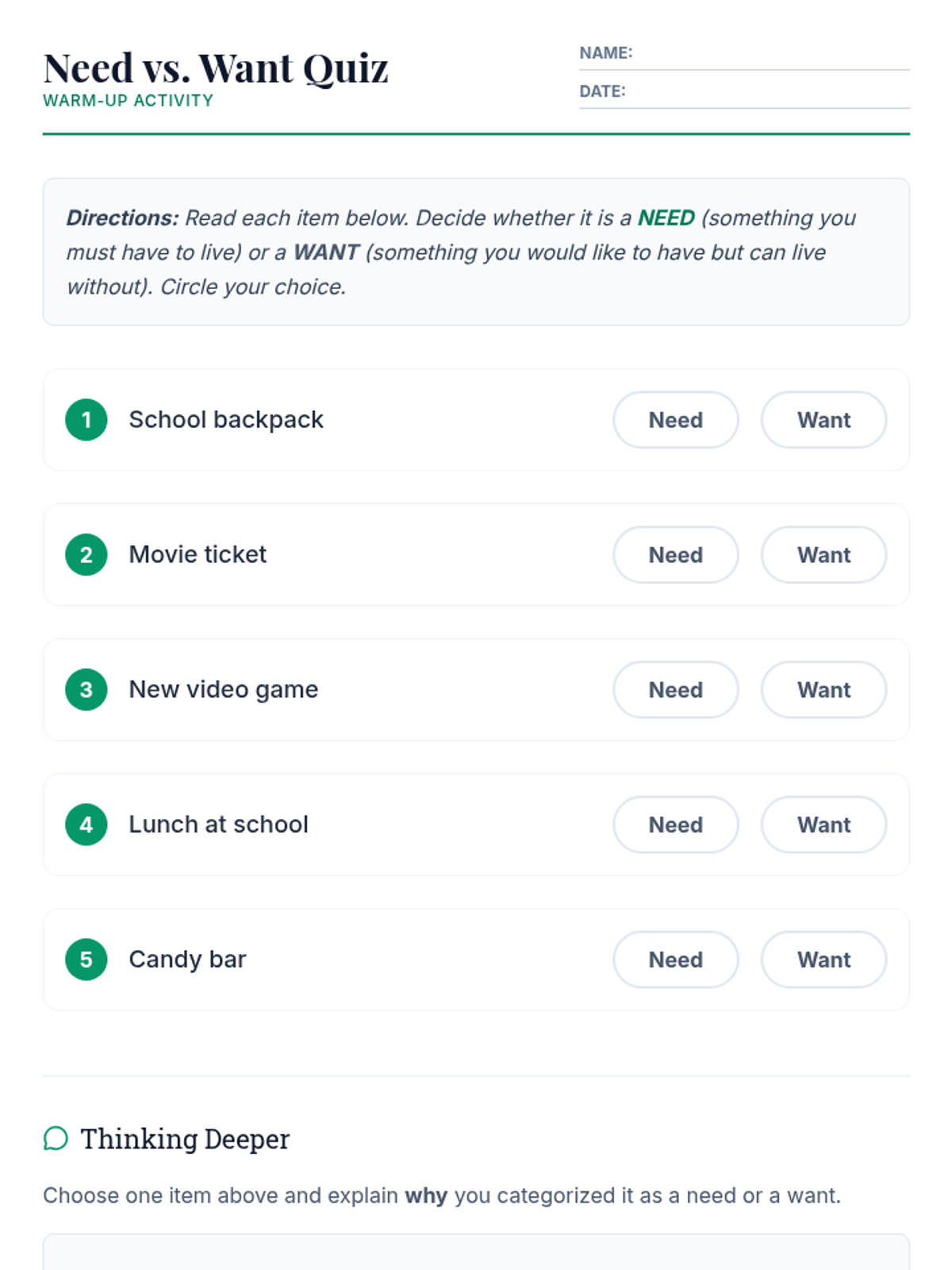
A comprehensive financial literacy sequence designed to take students from basic money concepts to advanced budgeting, goal setting, and investment basics. Suitable for diverse learners in a workshop setting.
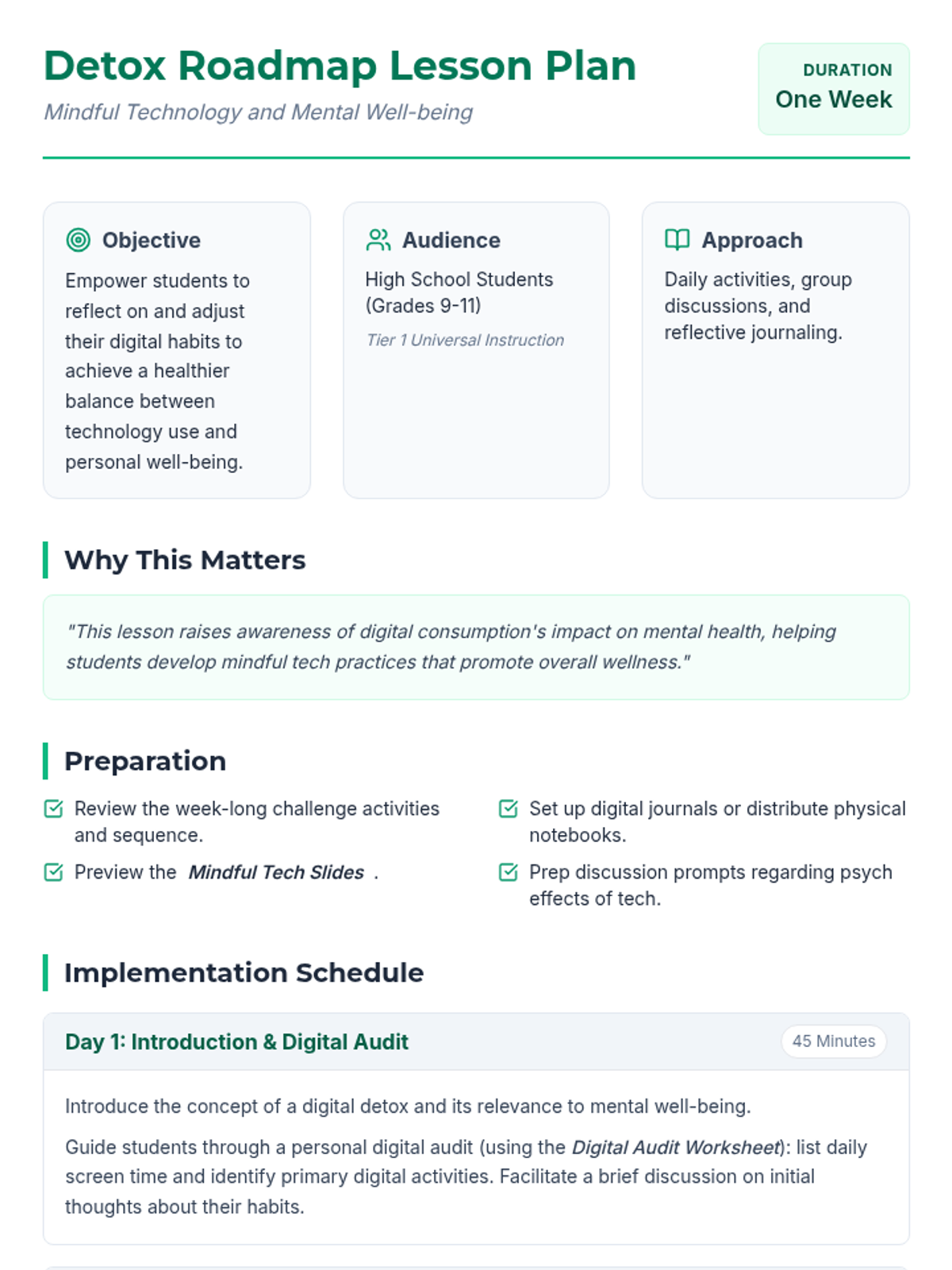
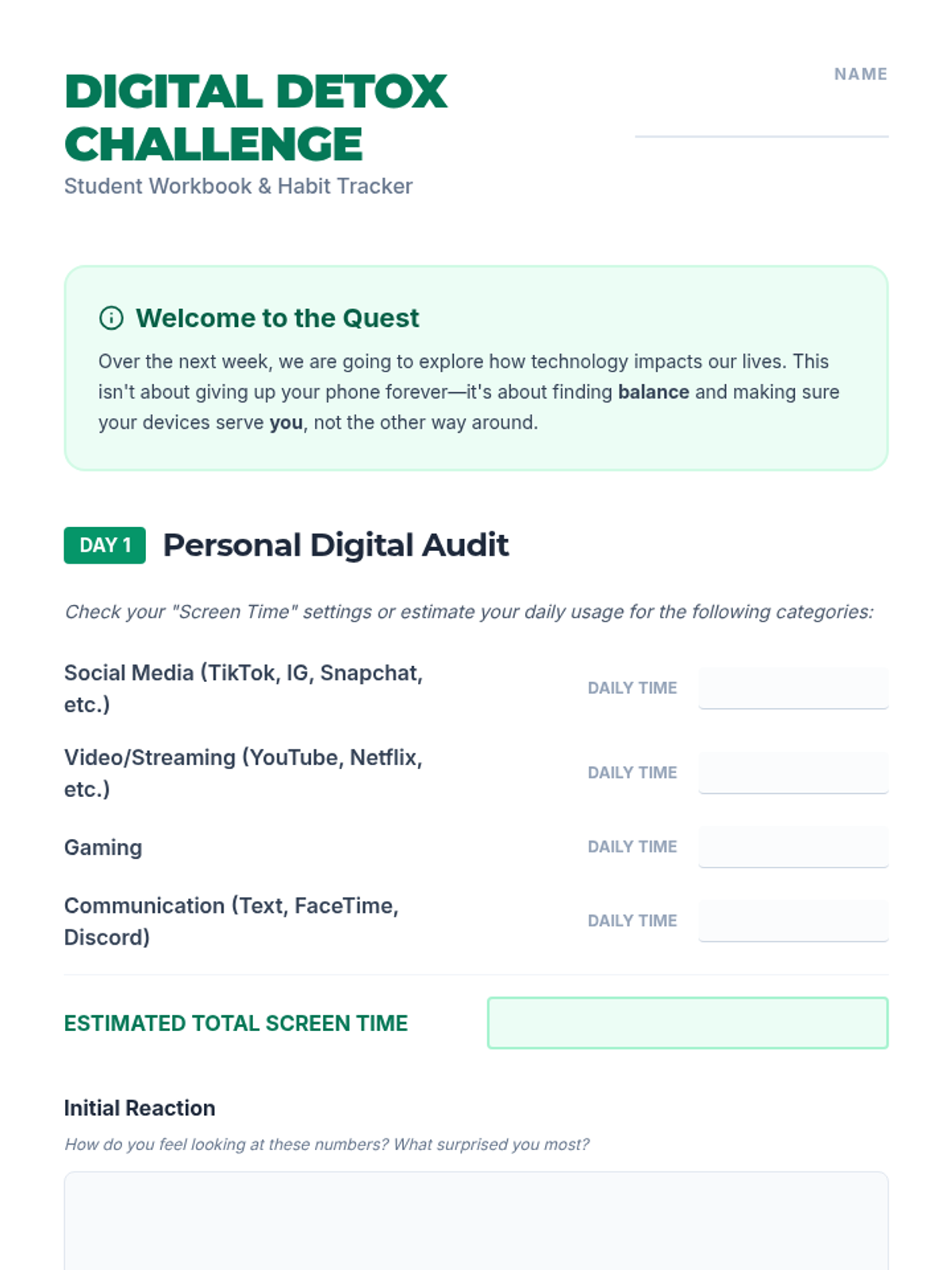
A transformative journey for students to reclaim their time and attention from digital distractions through a structured detox challenge and habit-building exercises.
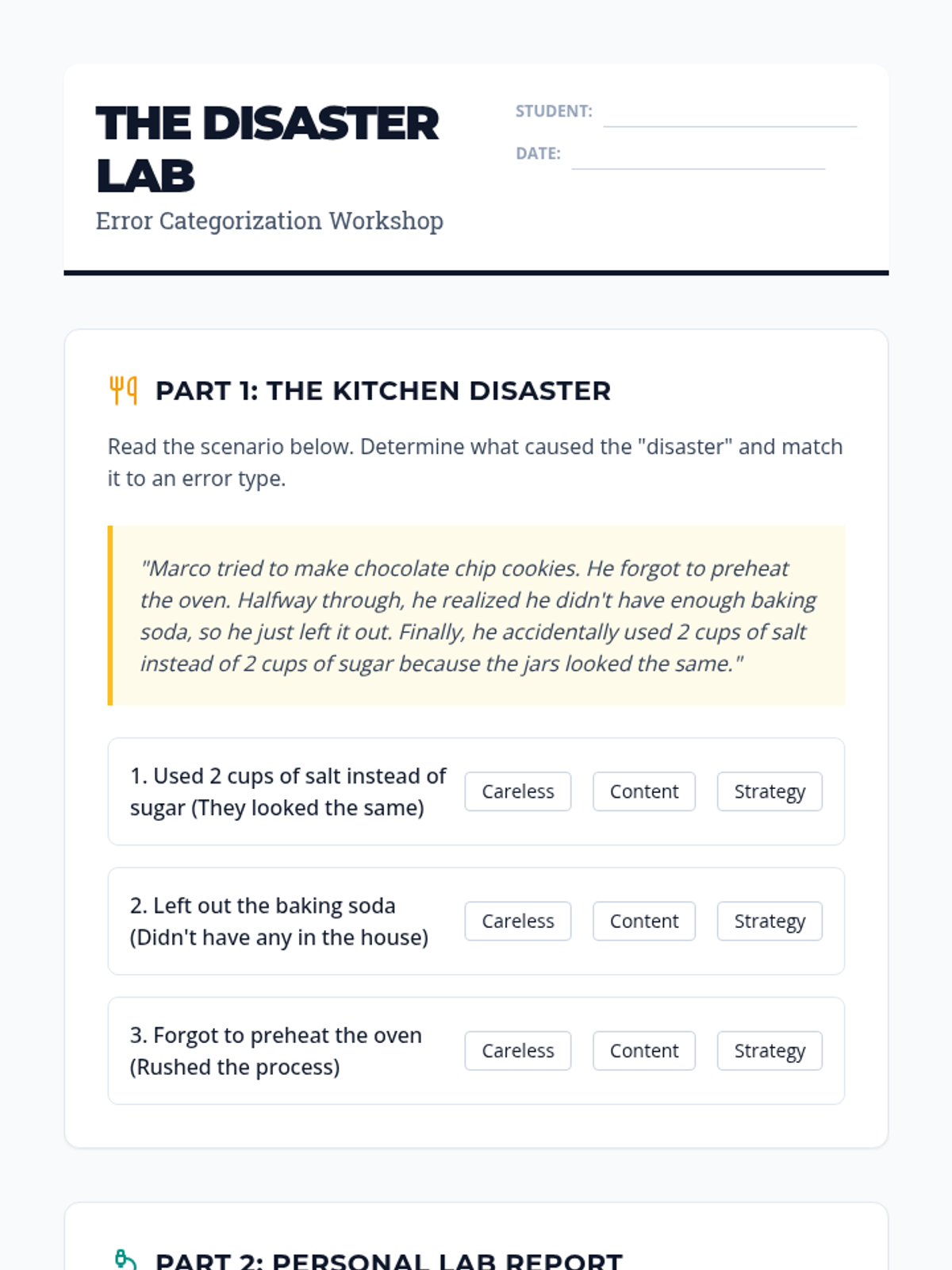
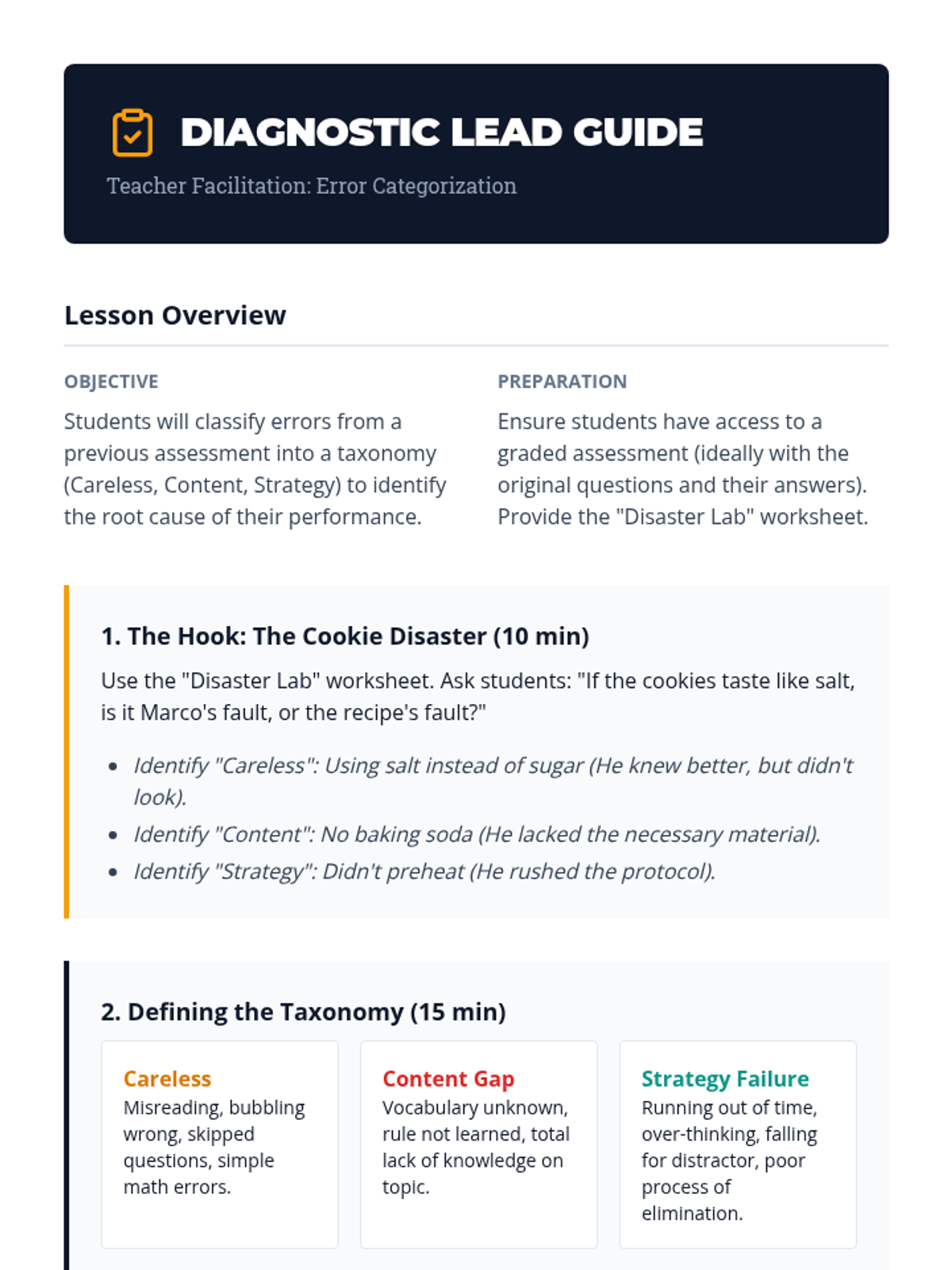
A comprehensive sequence on metacognitive error analysis, teaching students to categorize, analyze, and learn from their mistakes to improve test-taking performance. Students move from simple error classification to deep retrospective correction and personal strategy development.
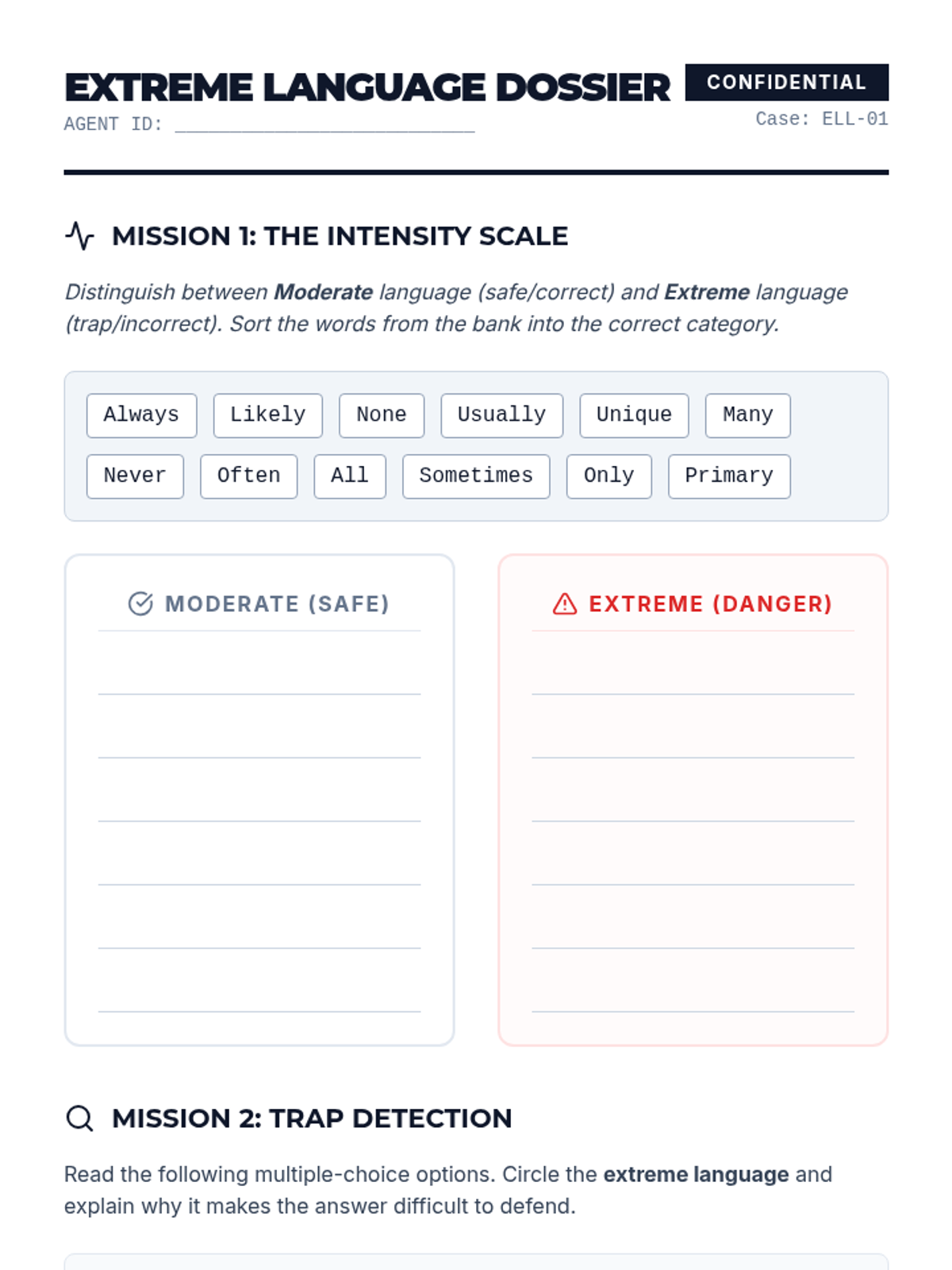
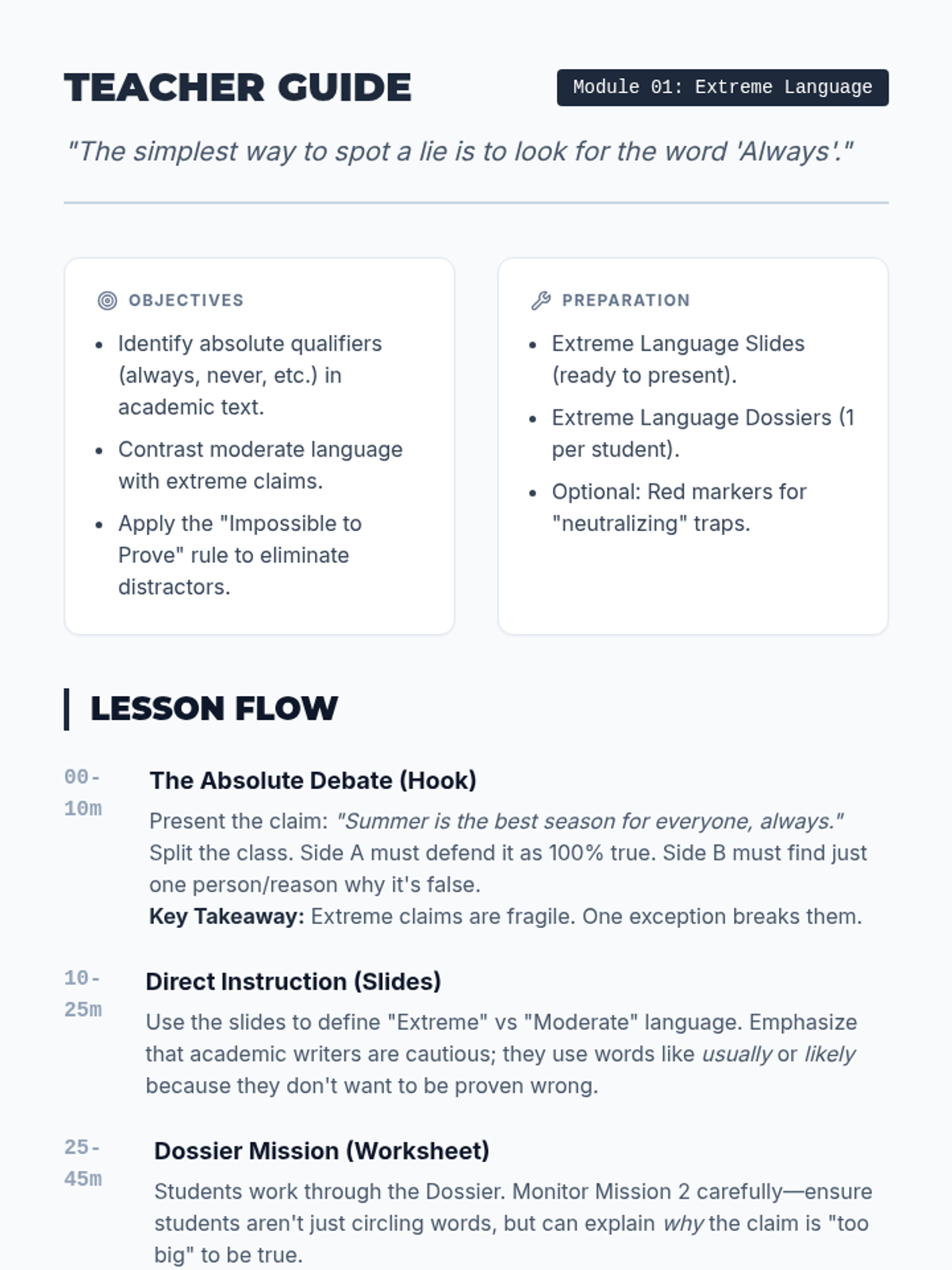
This sequence transforms students into 'Trap Detectives' who can identify and eliminate common distractors in academic tests. Students learn to spot extreme language, half-right traps, and out-of-scope answers through gamified lessons and role-reversal activities.
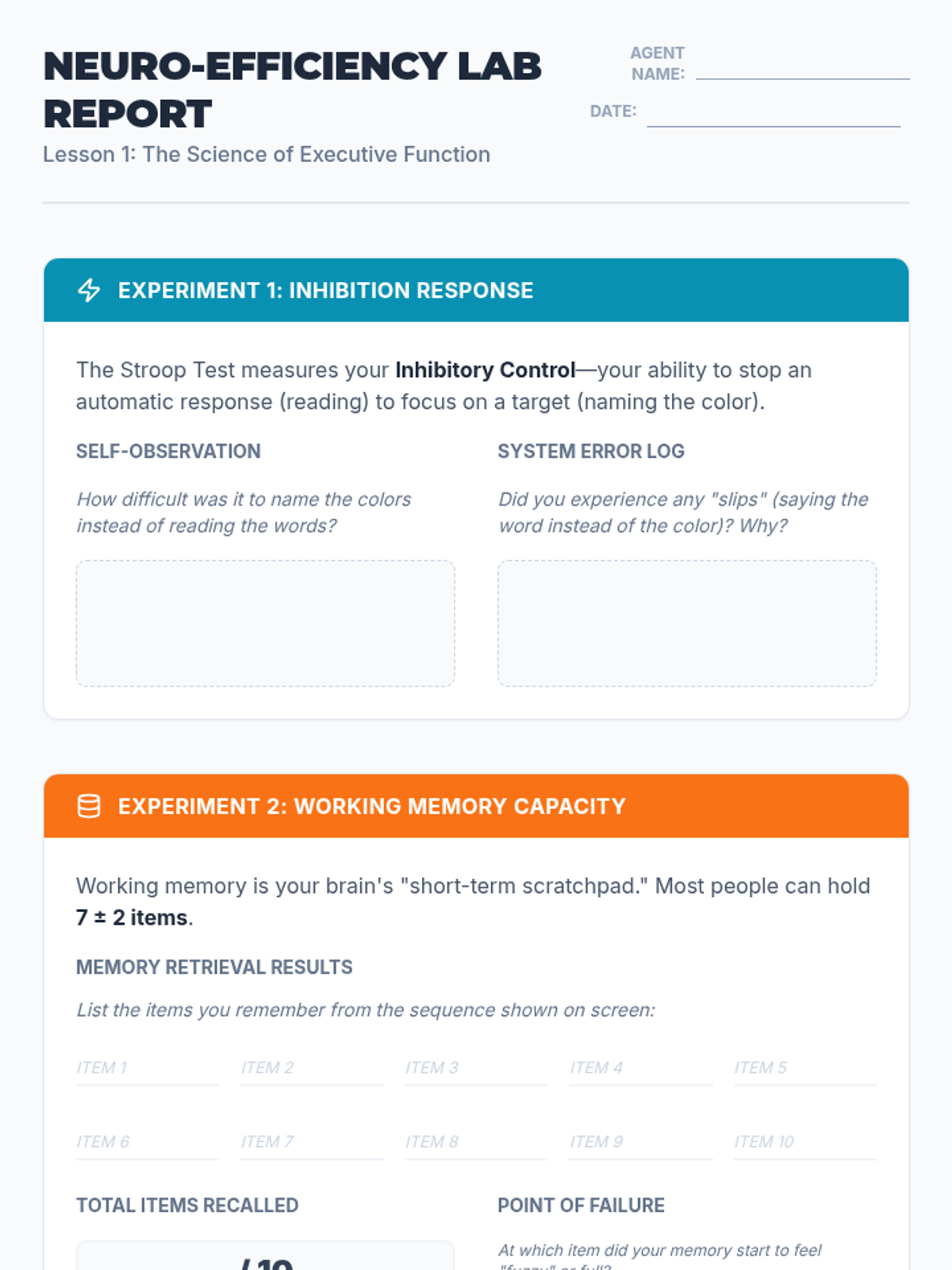
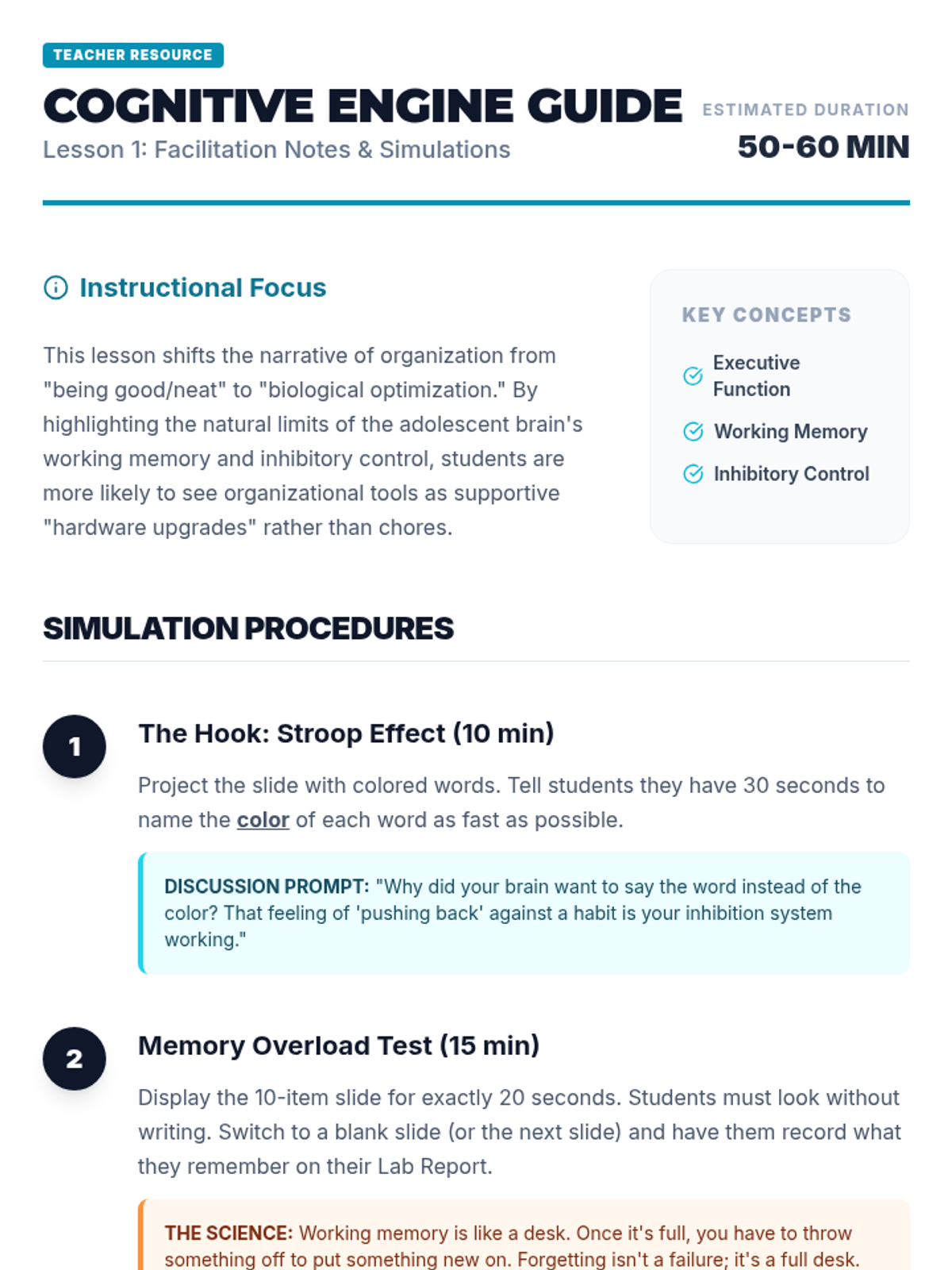
This sequence guides 8th-grade students through the engineering of their physical and digital environments to support executive function. Students move from understanding the neurological 'why' of organization to building a personalized operating manual for their own workflow optimization.
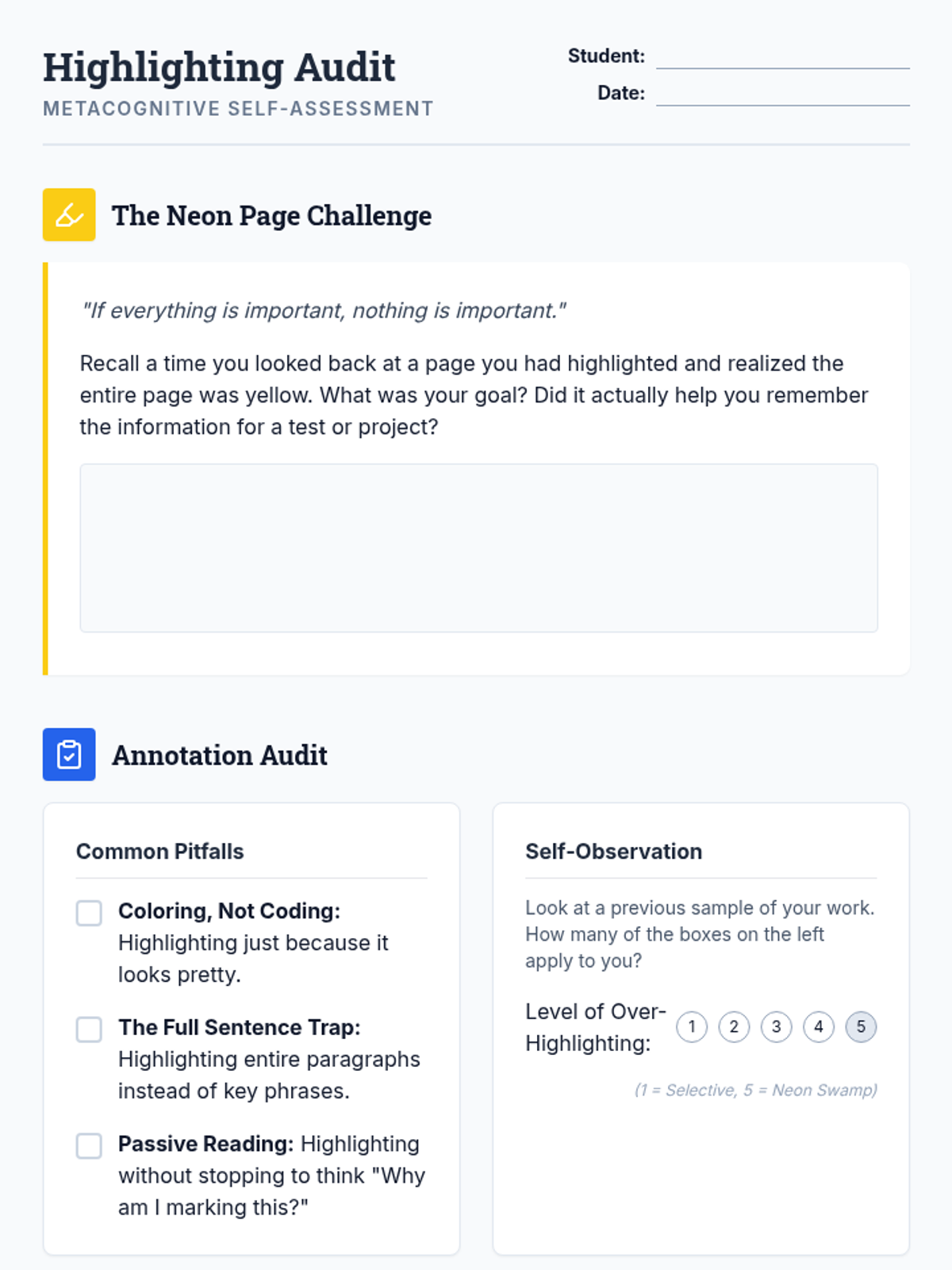
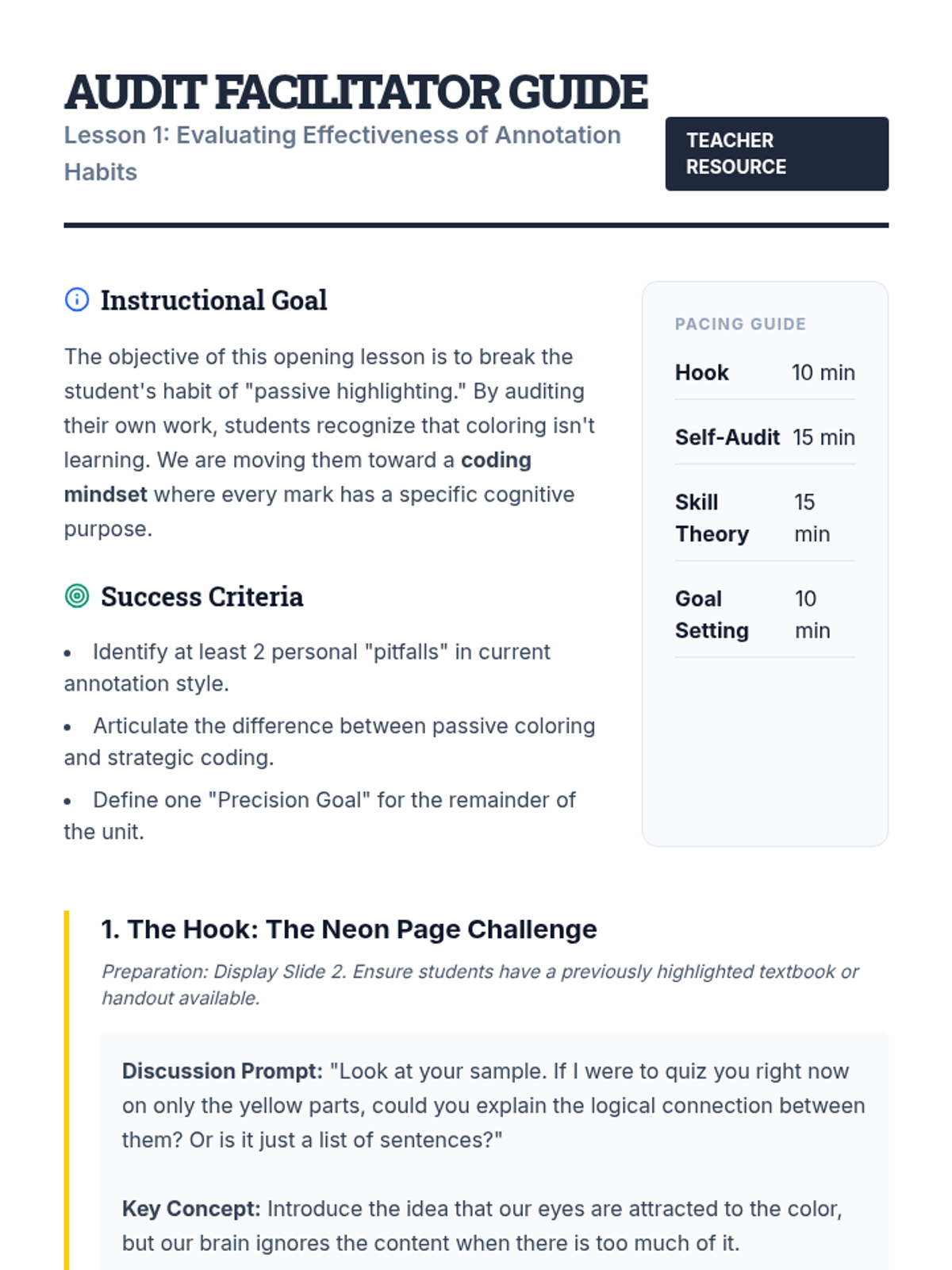
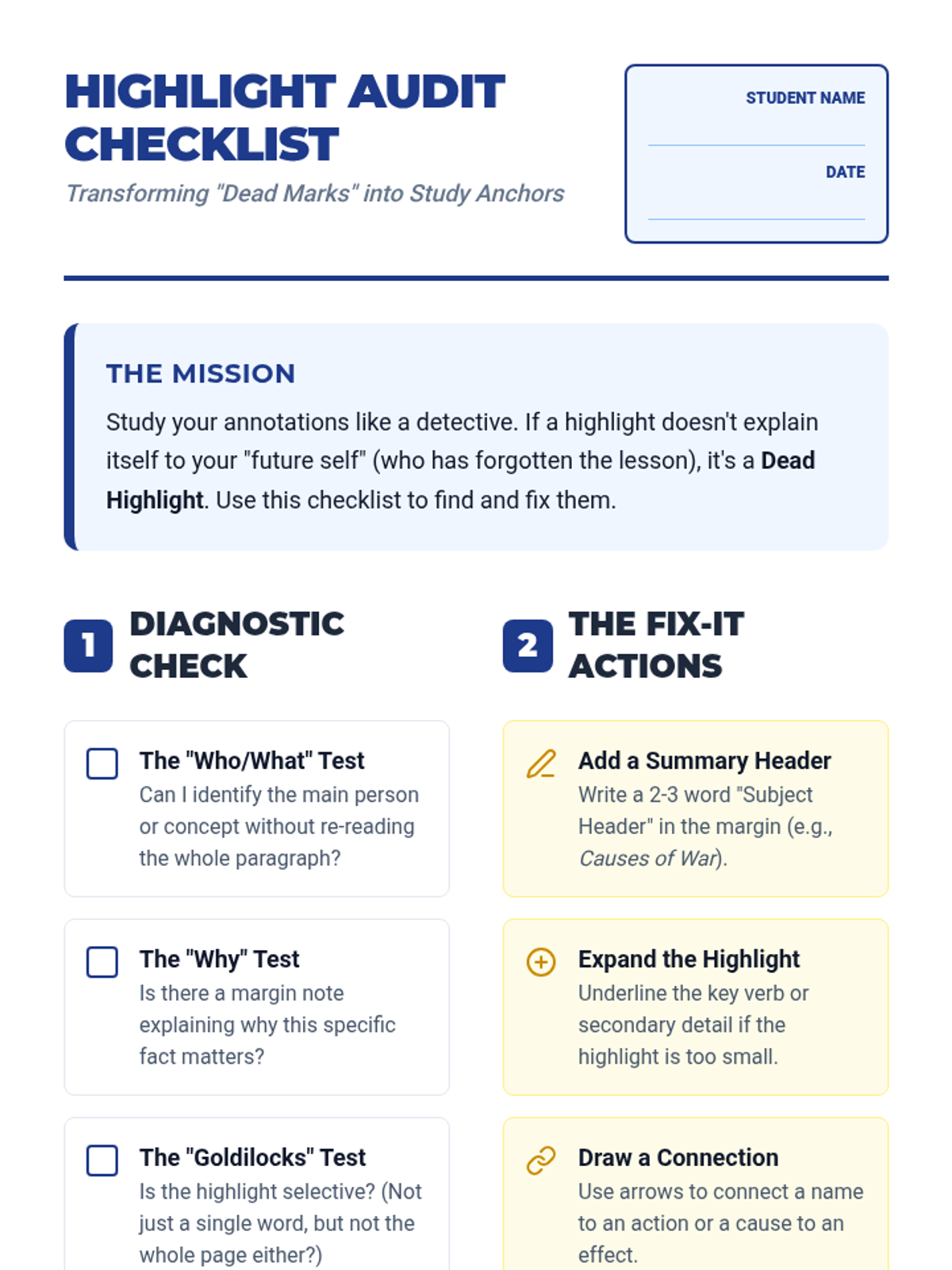
This sequence transforms highlighting from a passive activity into a rigorous, systematic method for information processing. Students evaluate current habits, establish hierarchical color systems, develop marginal shorthand, and apply these strategies to complex texts to create effective study tools.
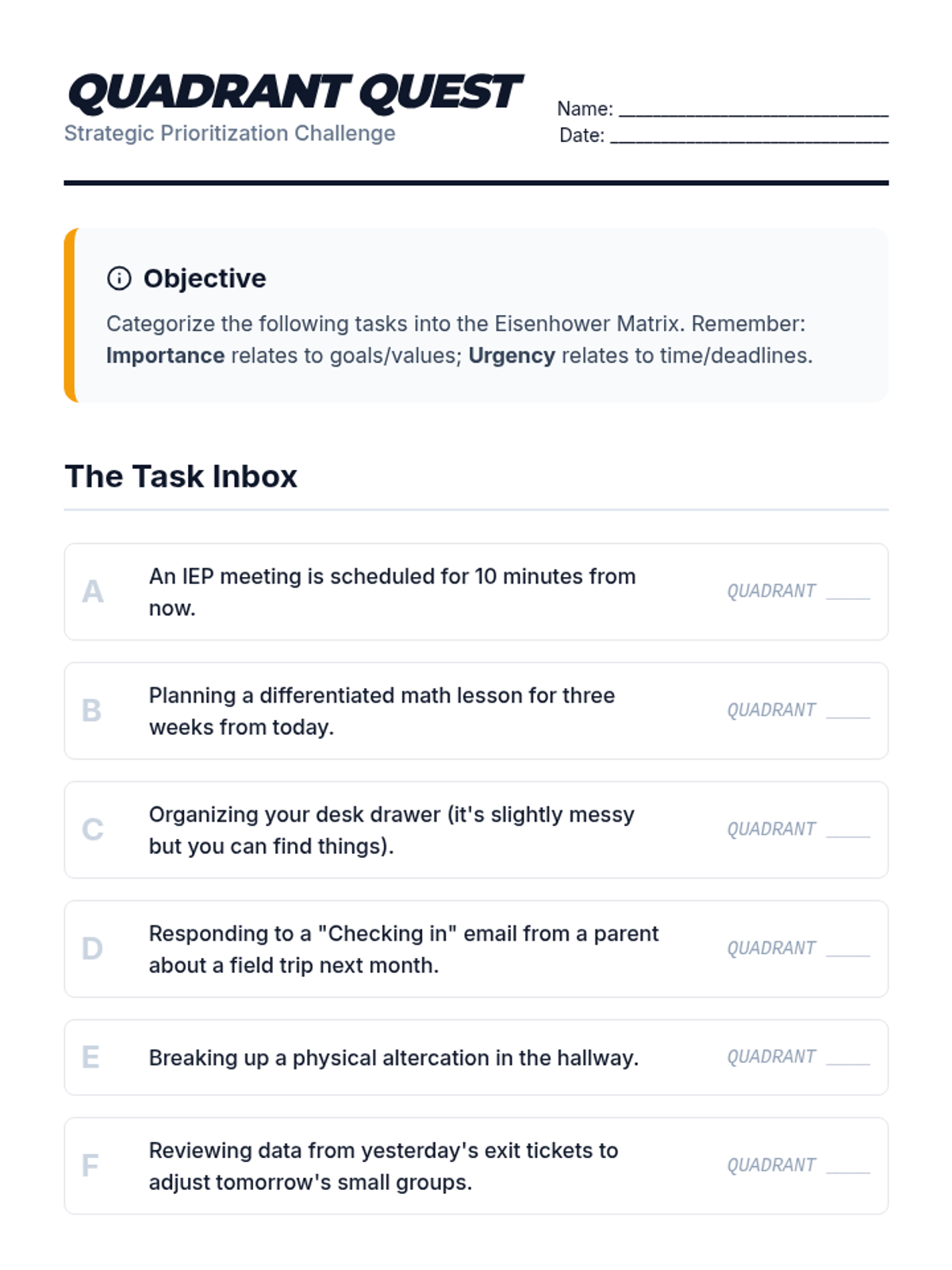
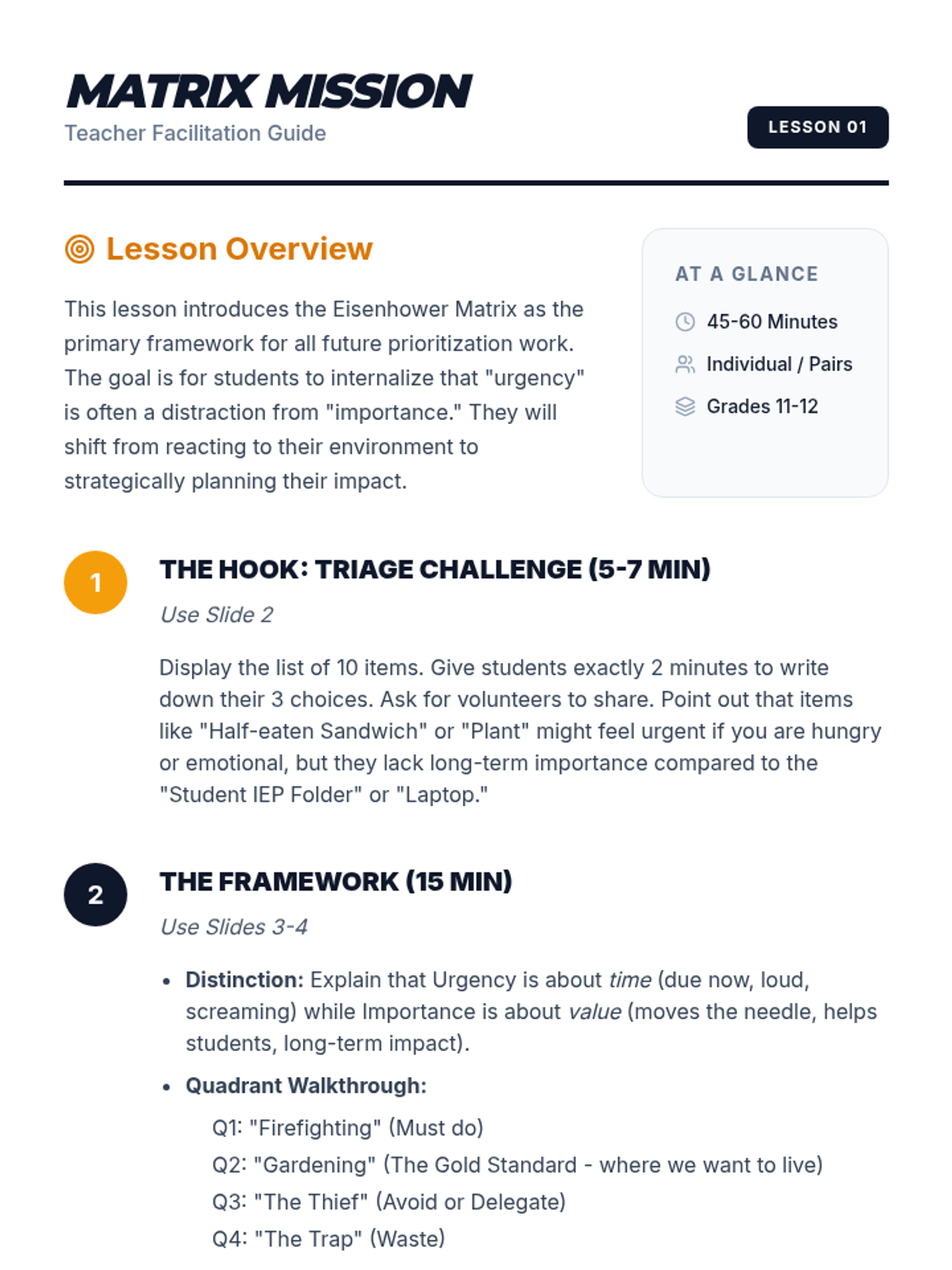
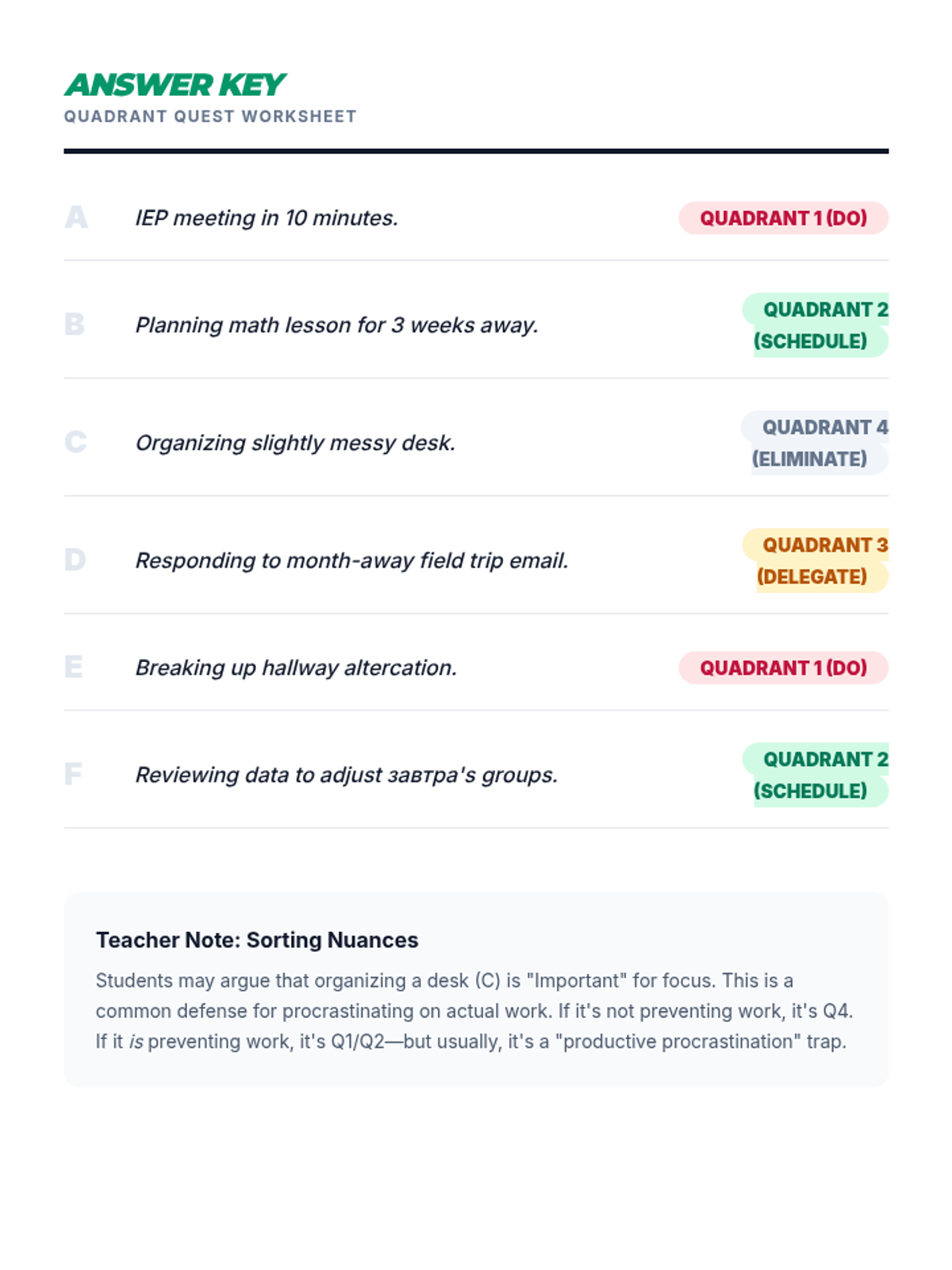
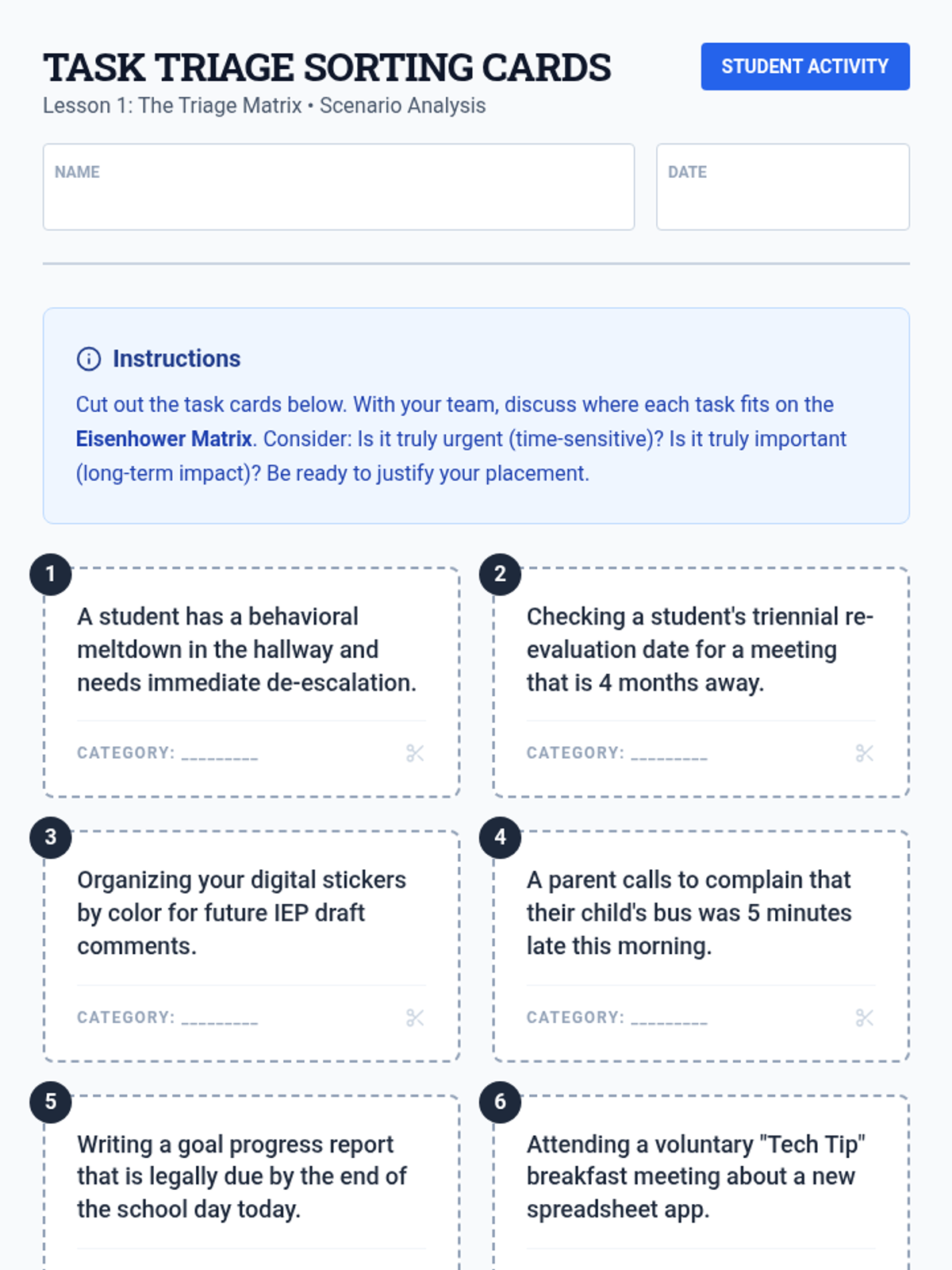
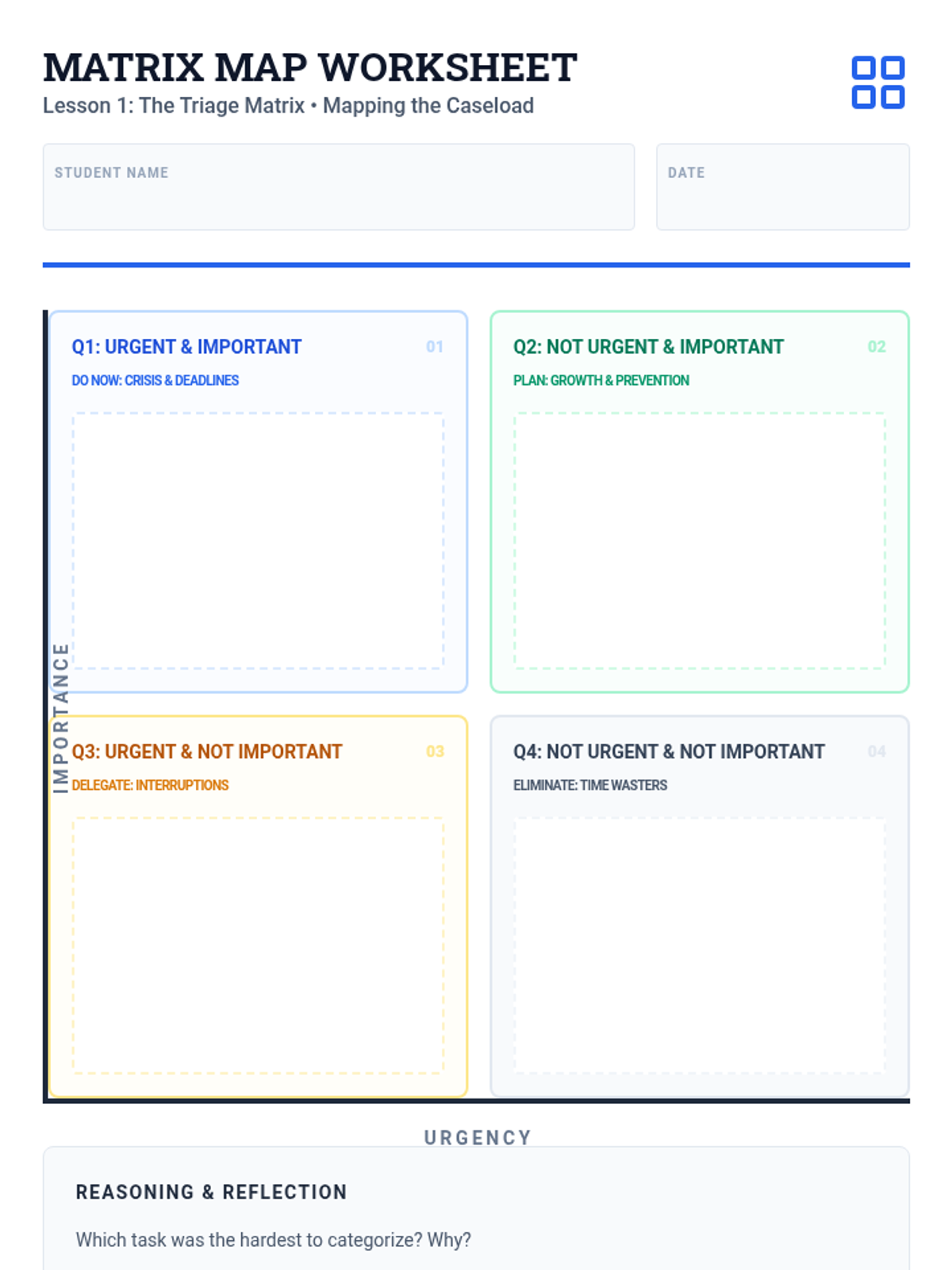
A professional executive functioning sequence for 11th-grade students (specifically those in teaching or professional pathways) focused on high-stakes prioritization. Students master the Eisenhower Matrix, ABCDE method, and time-blocking to navigate the complex demands of educational environments.
A high-stakes simulation for 12th graders transitioning to professional environments, focusing on prioritizing competing demands, managing interruptions, and professional communication in a special education caseload context.
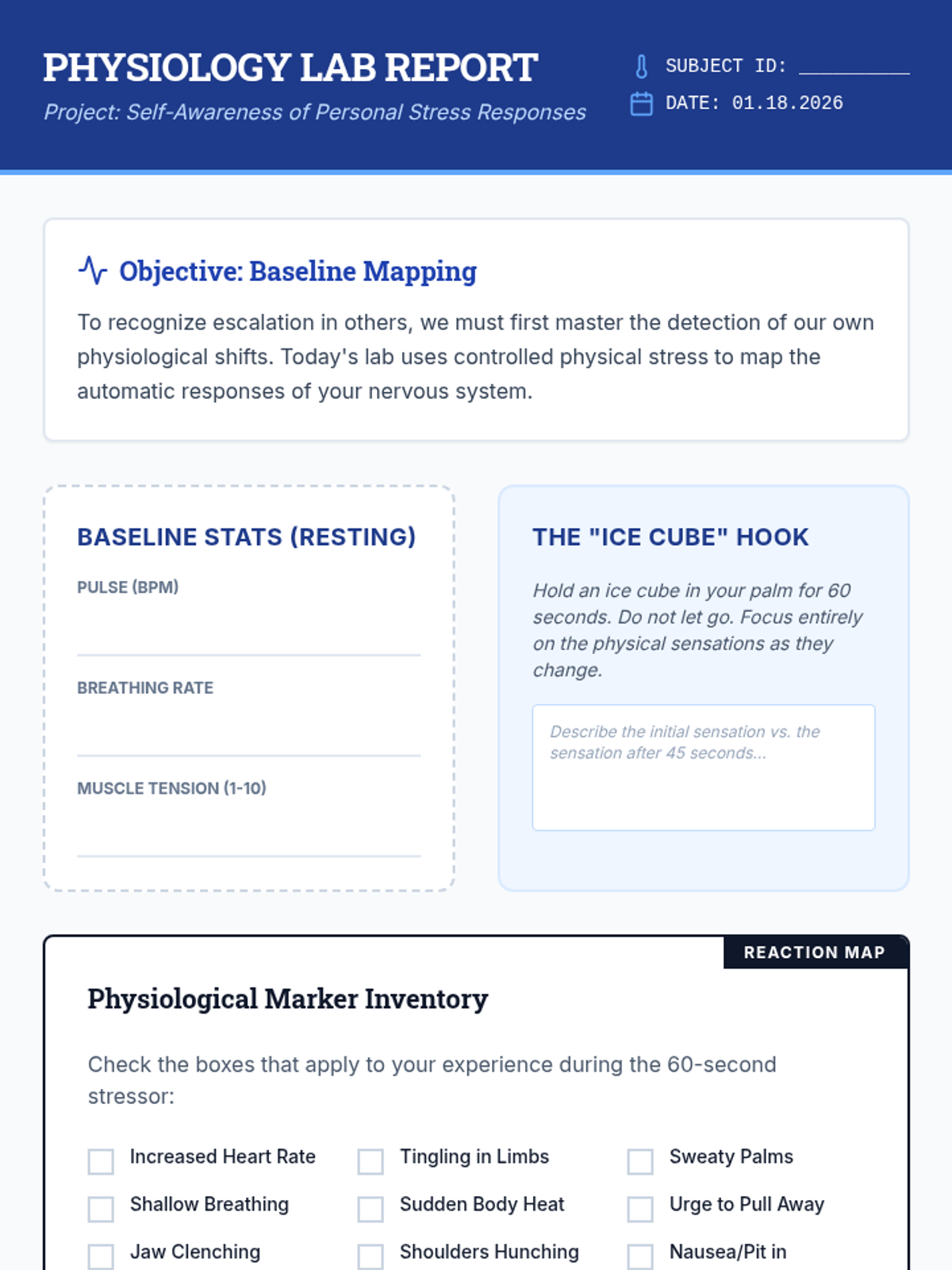
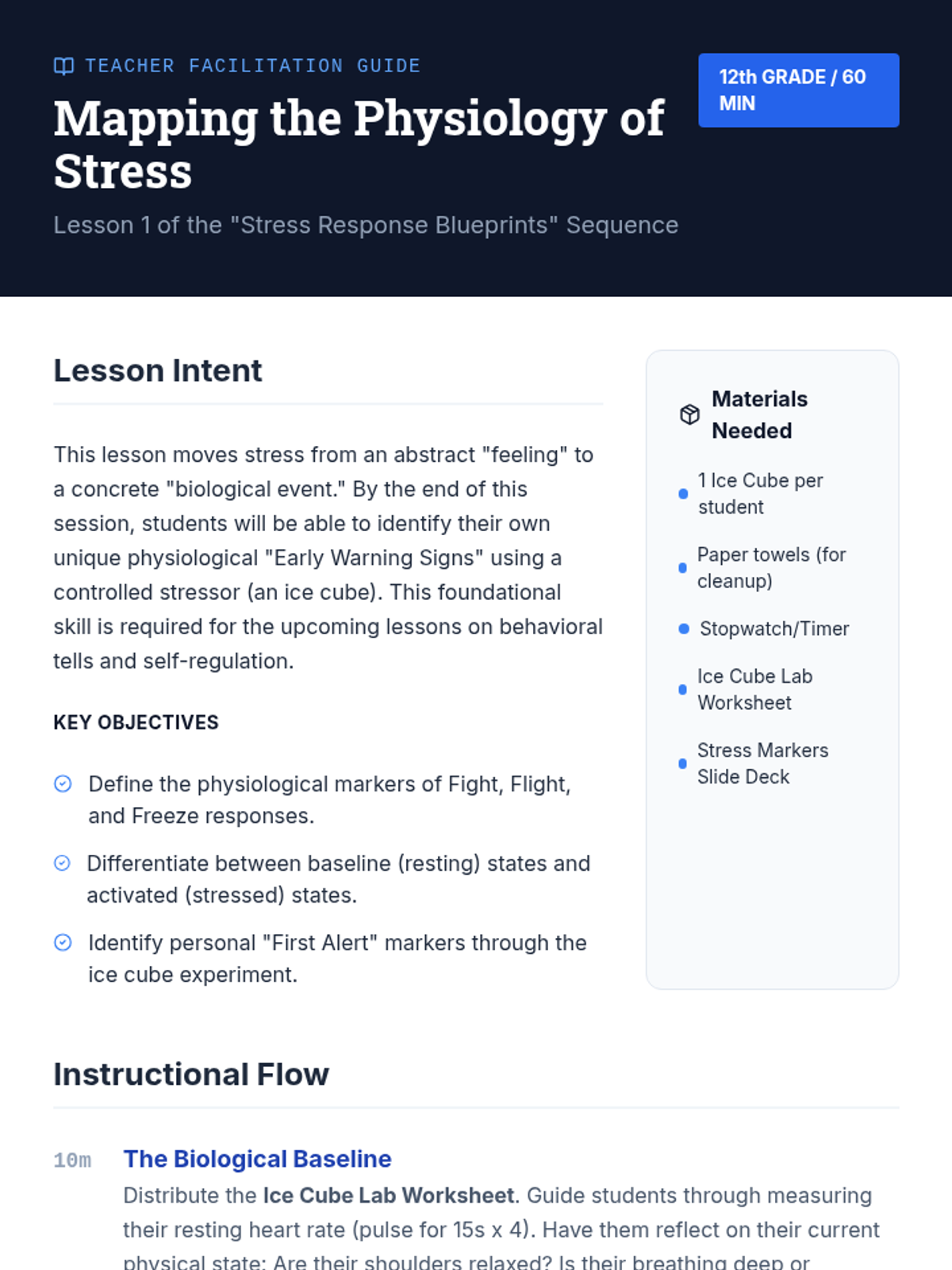
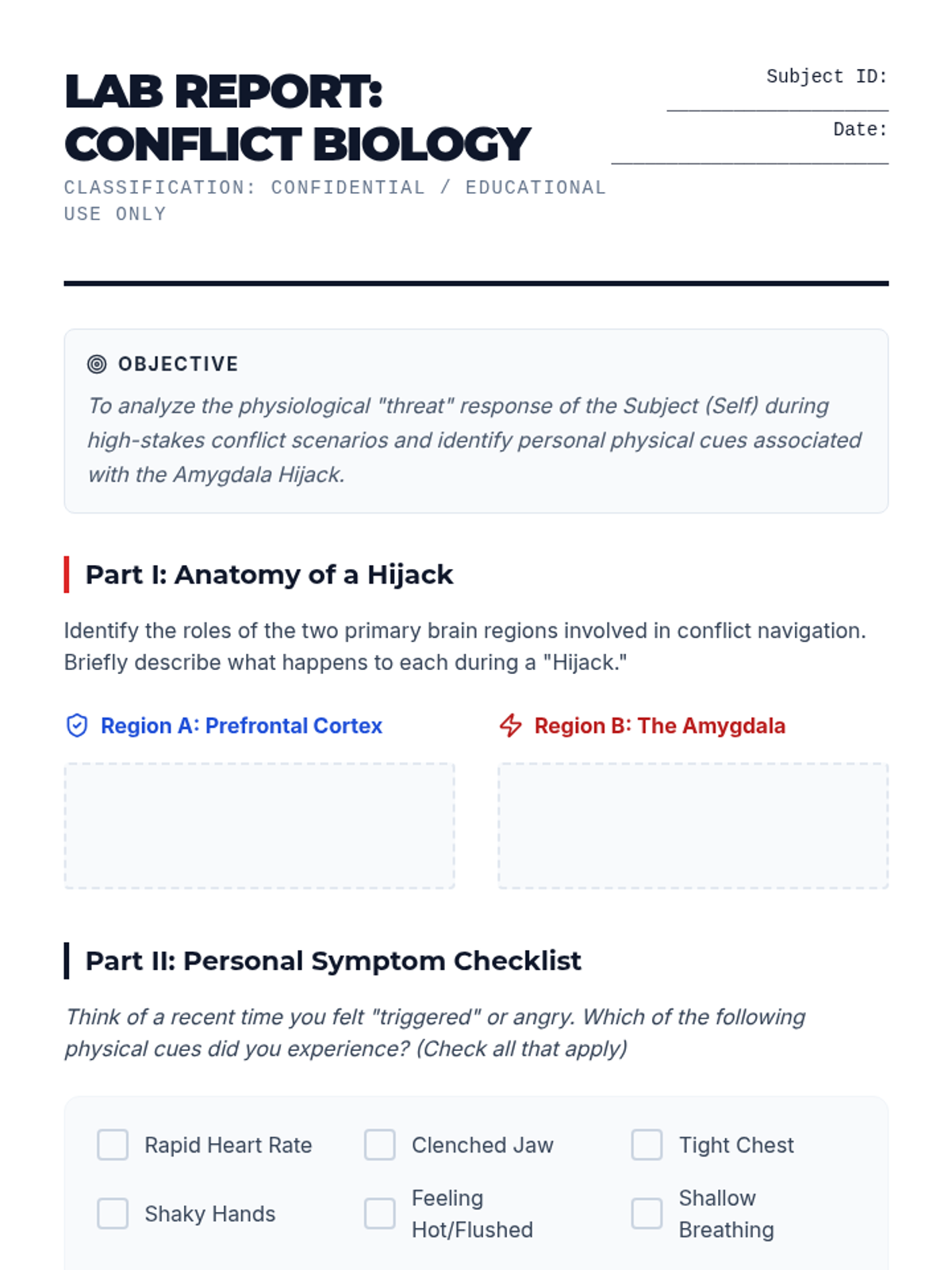
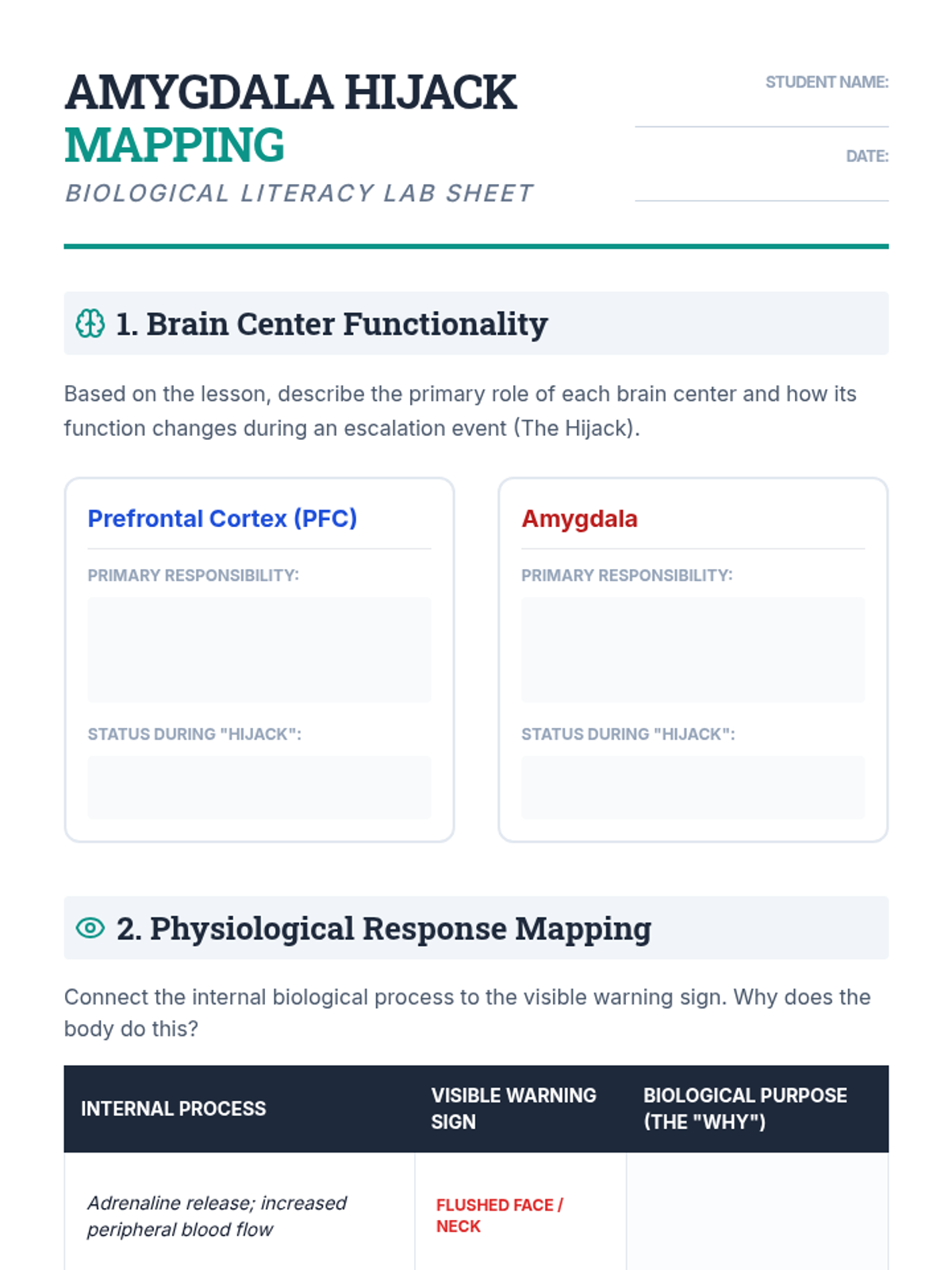
A 12th-grade sequence focused on developing self-awareness of personal stress responses. Students map their physiological and behavioral escalation signs to build empathy and professional self-regulation skills.
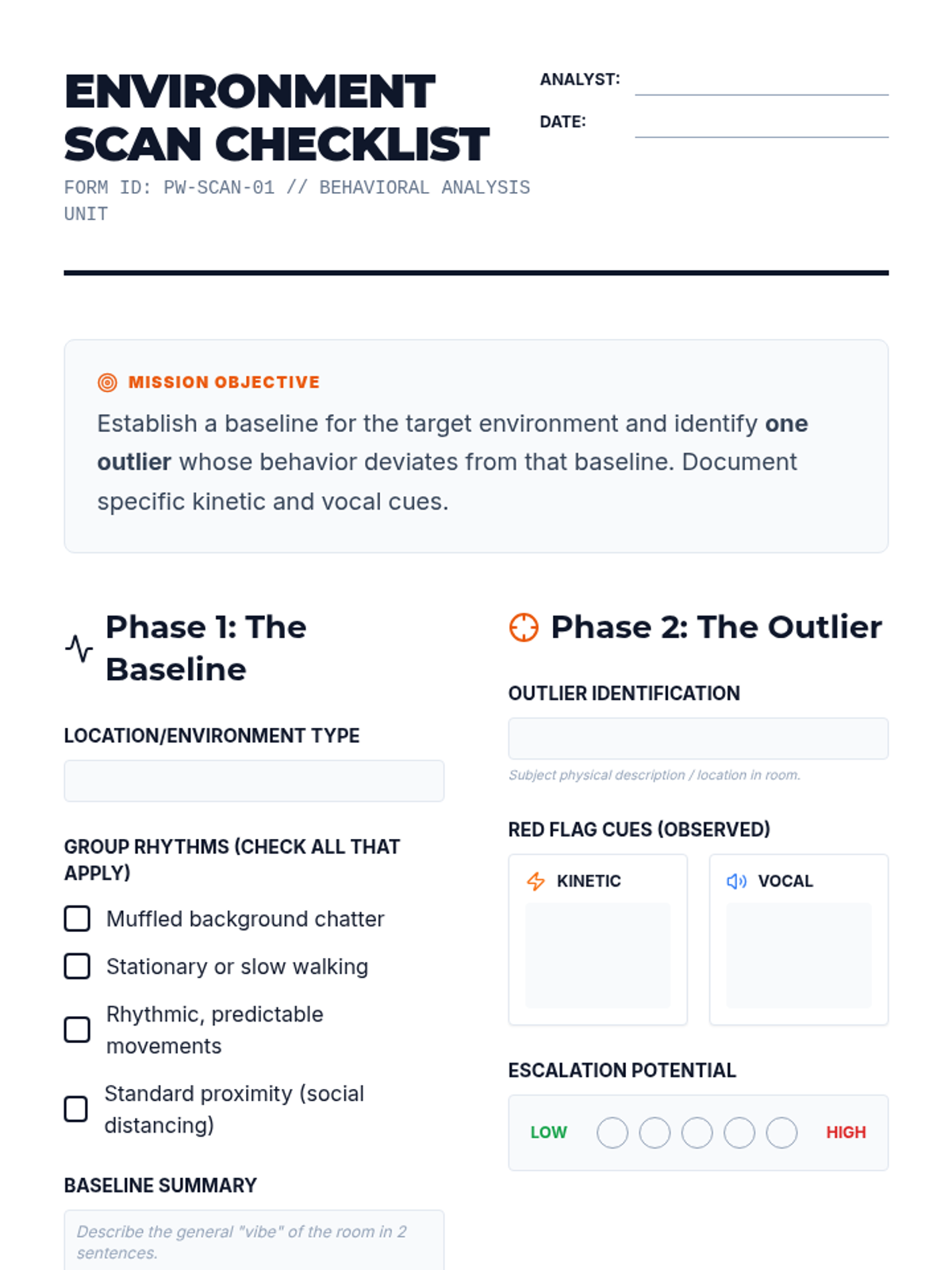
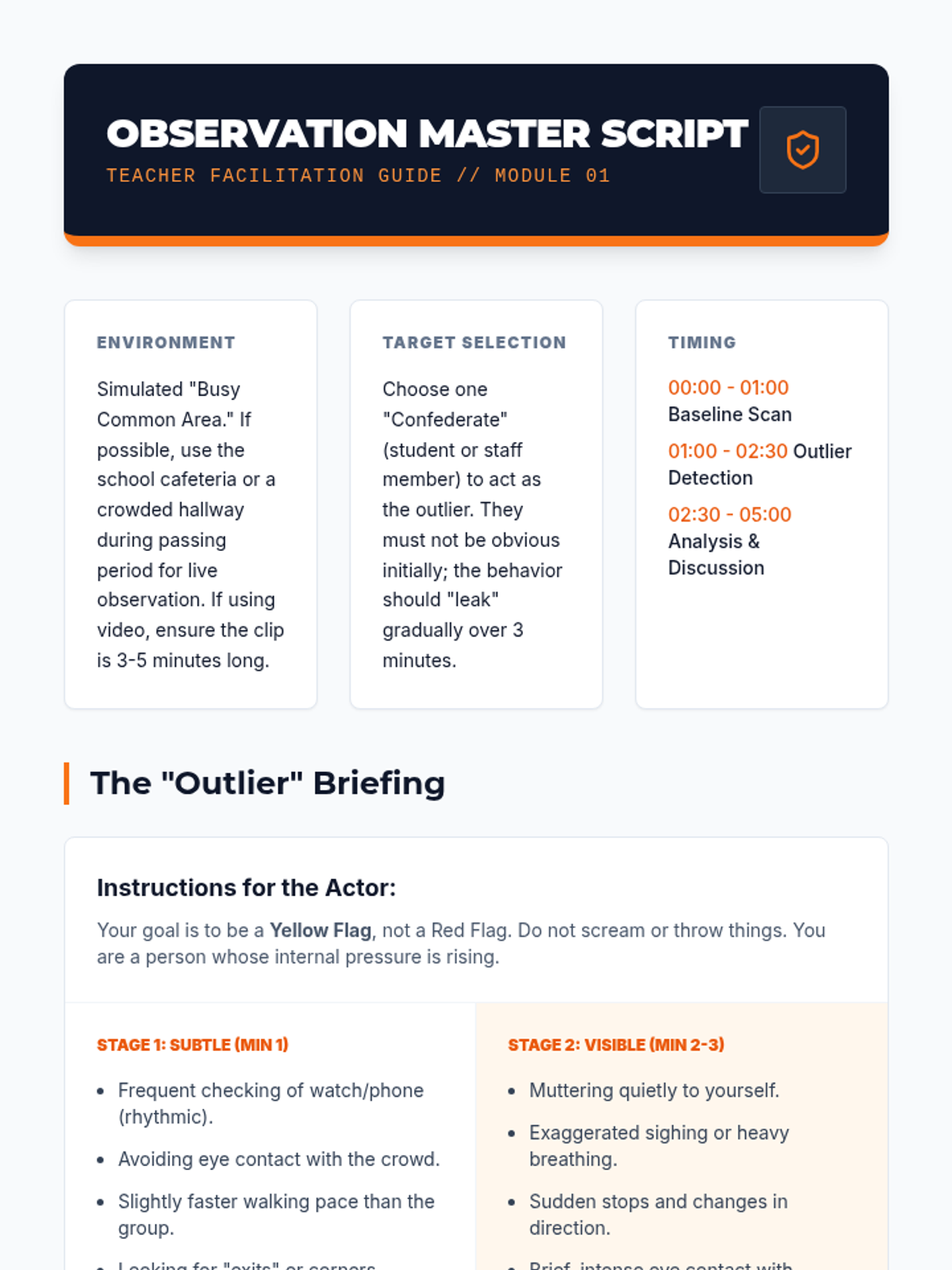
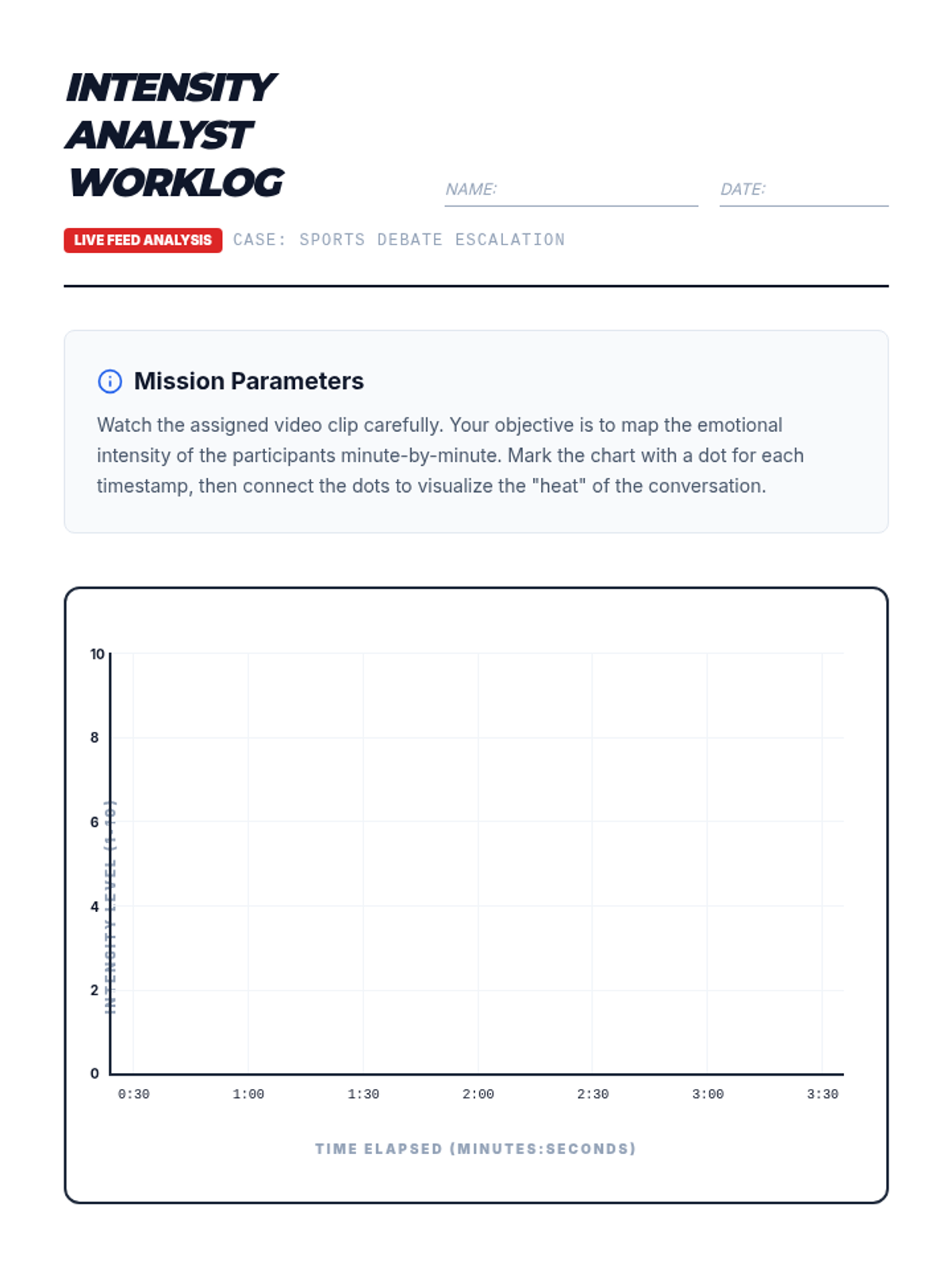
A high-intensity simulation-based unit for 12th graders focusing on situational awareness and the early detection of behavioral escalation in dynamic environments. Students take on the role of behavioral analysts to identify subtle cues before they lead to crisis.
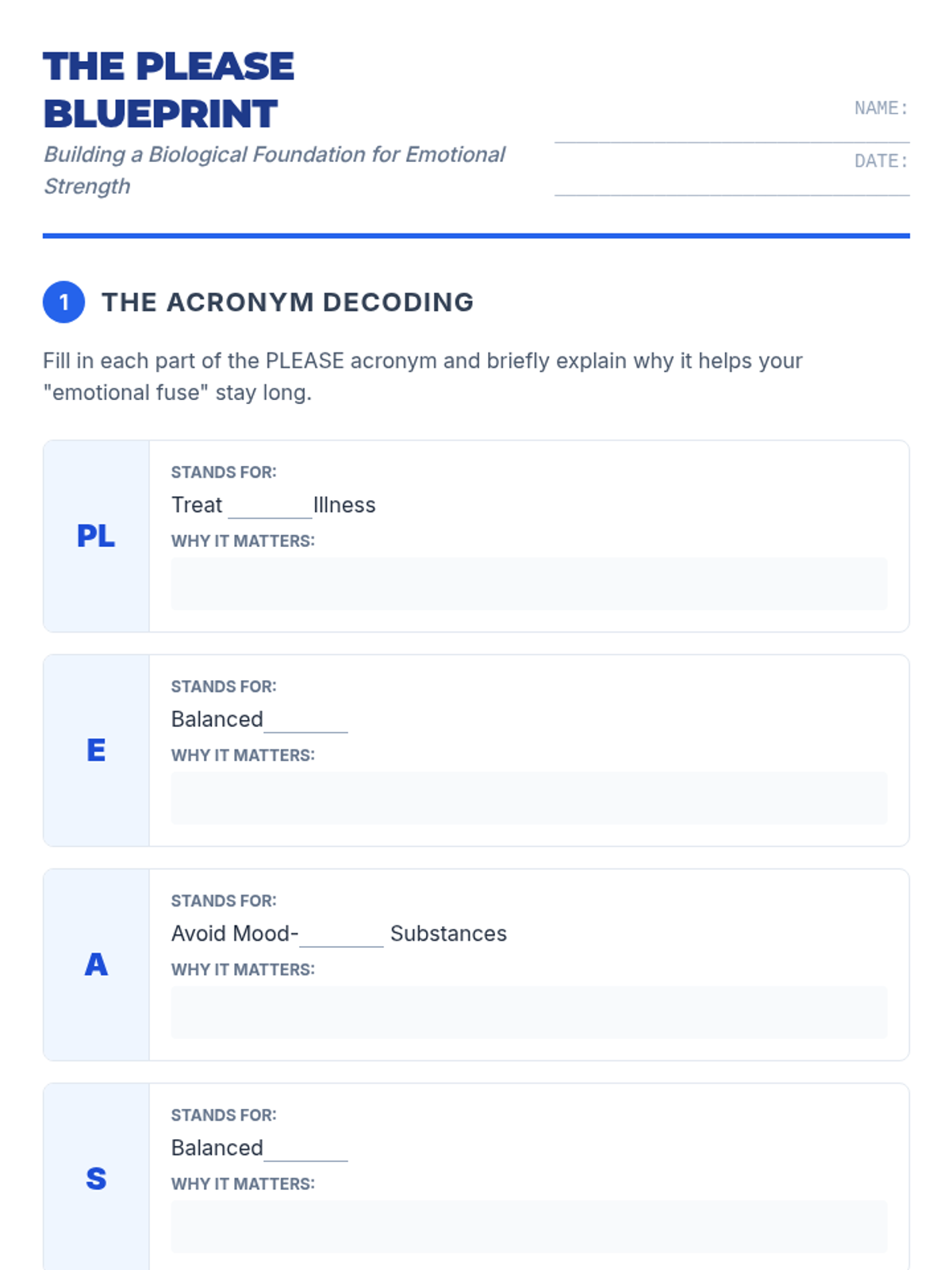
A 5-lesson sequence for 9th-grade students on the DBT 'PLEASE' framework. Students explore how physical homeostasis (illness treatment, nutrition, avoiding substances, sleep, and exercise) acts as a primary defense against emotional dysregulation by shortening their 'emotional fuse.'
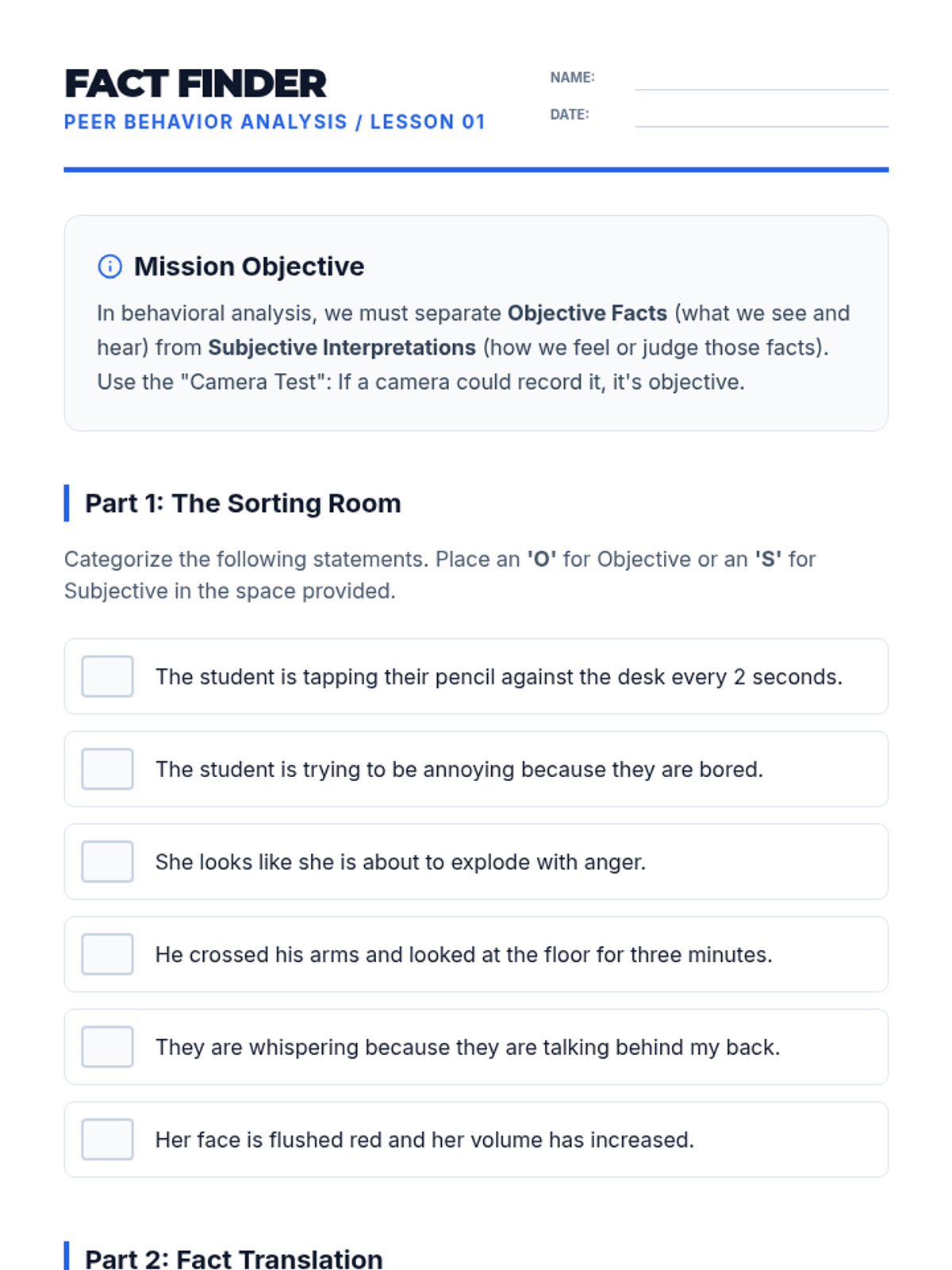
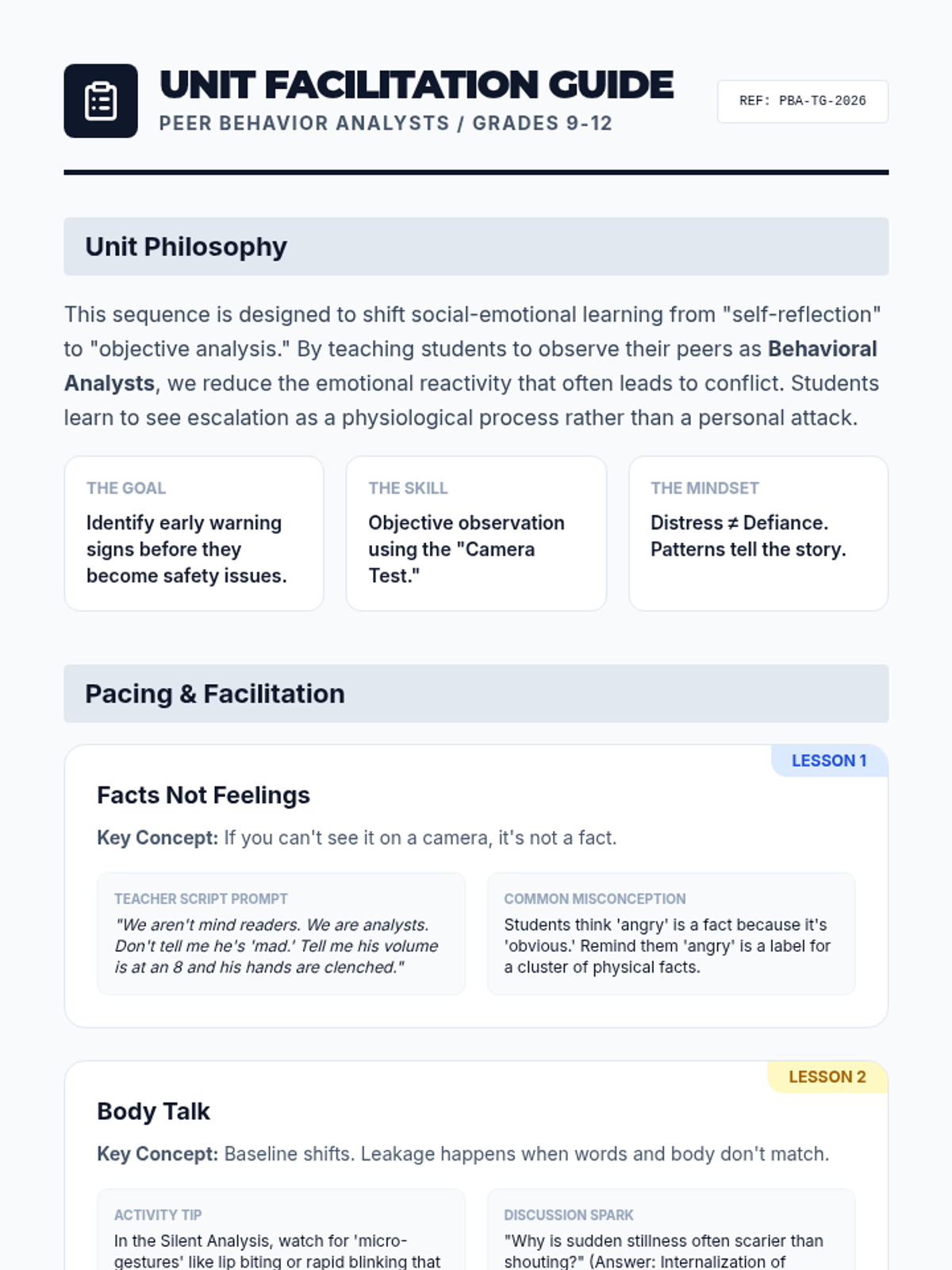
A 5-lesson sequence for 9th-grade students focused on developing social awareness and safety by identifying peer behavioral shifts and escalation warning signs through objective observation and non-verbal analysis.
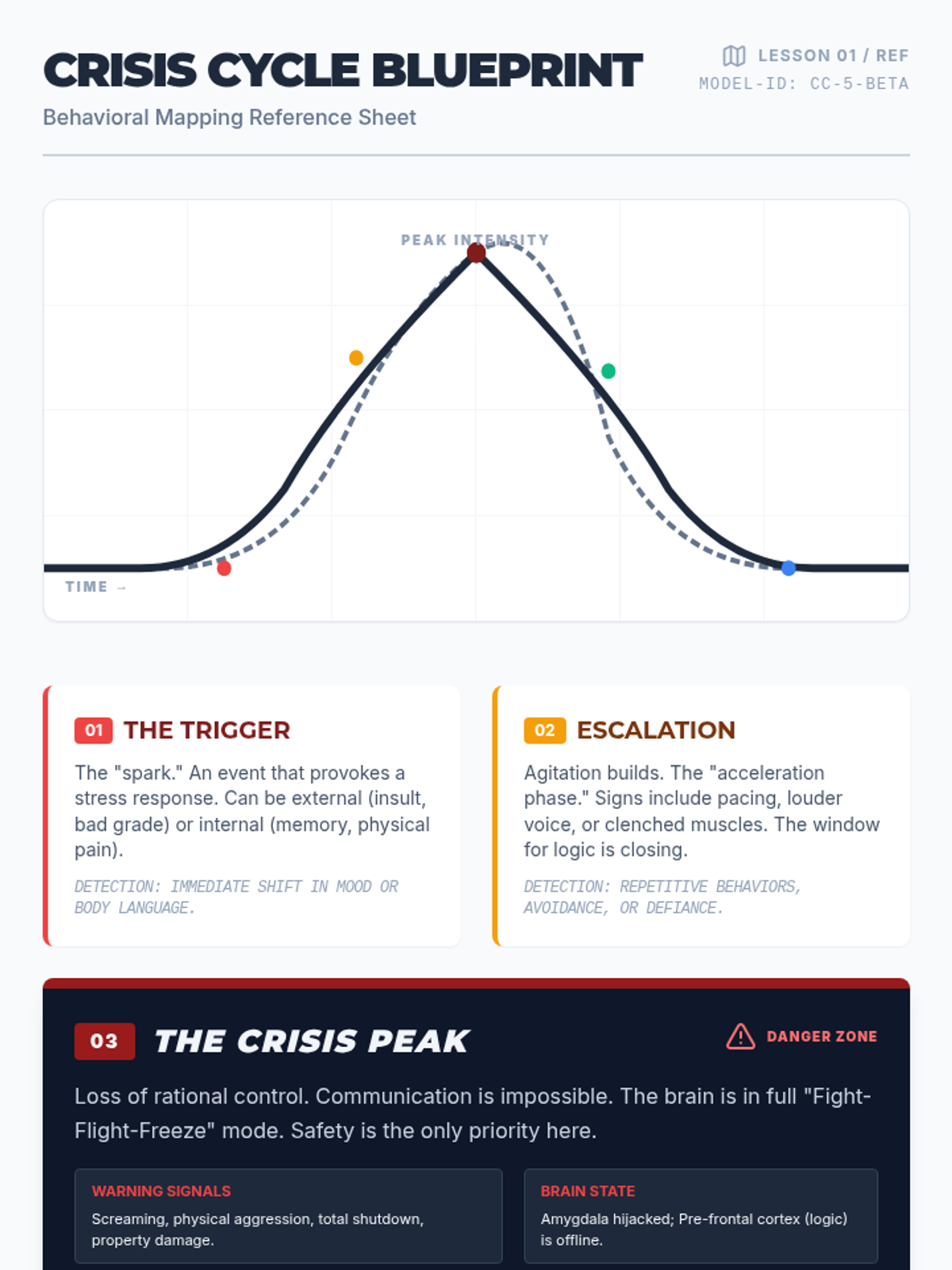
A comprehensive 5-lesson unit on the Crisis Cycle, focusing on identifying triggers, escalation stages, and intervention points through a technical mapping and simulation lens. Students move from theoretical understanding to retroactive detective work to understand behavioral patterns.
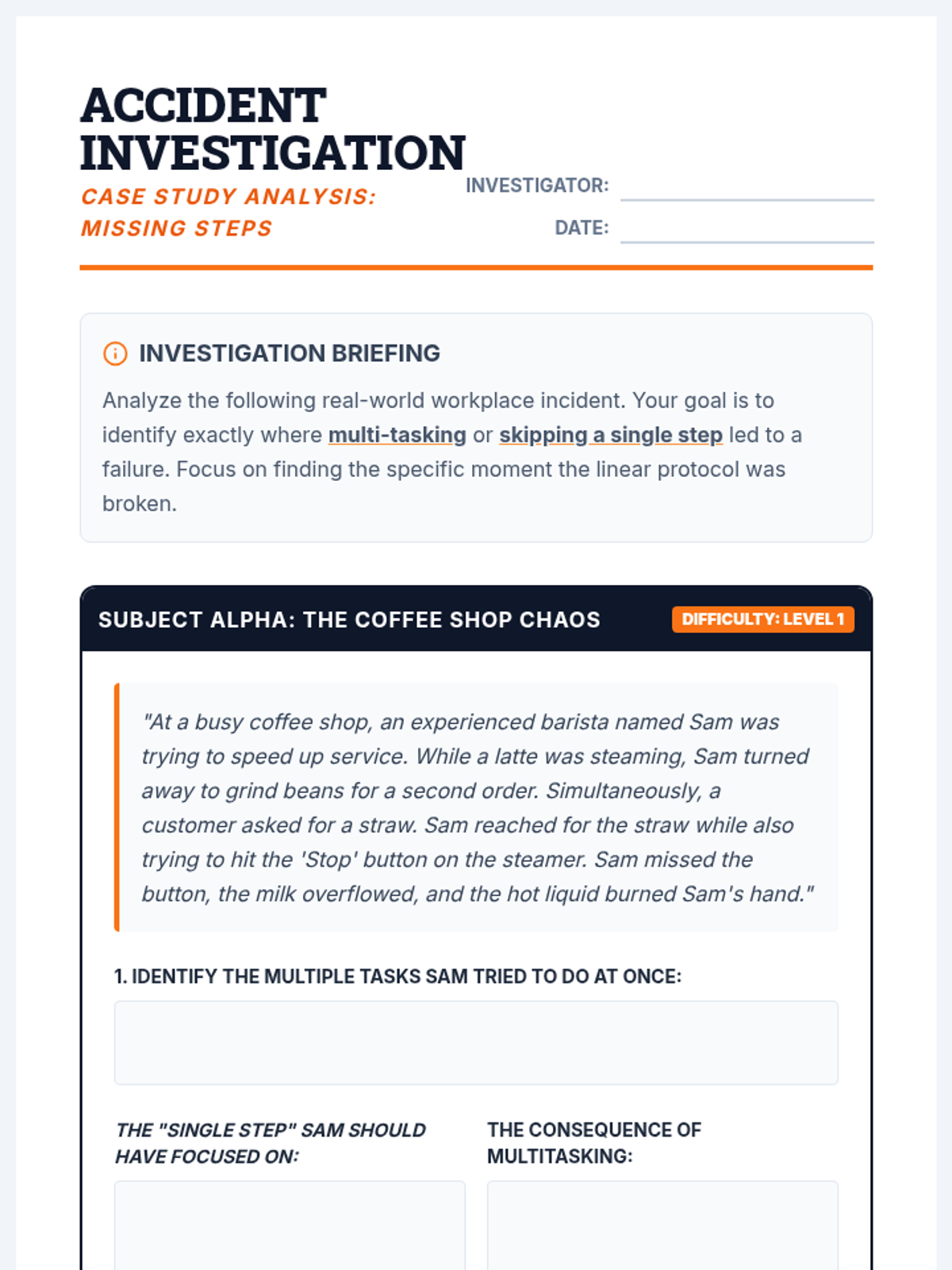
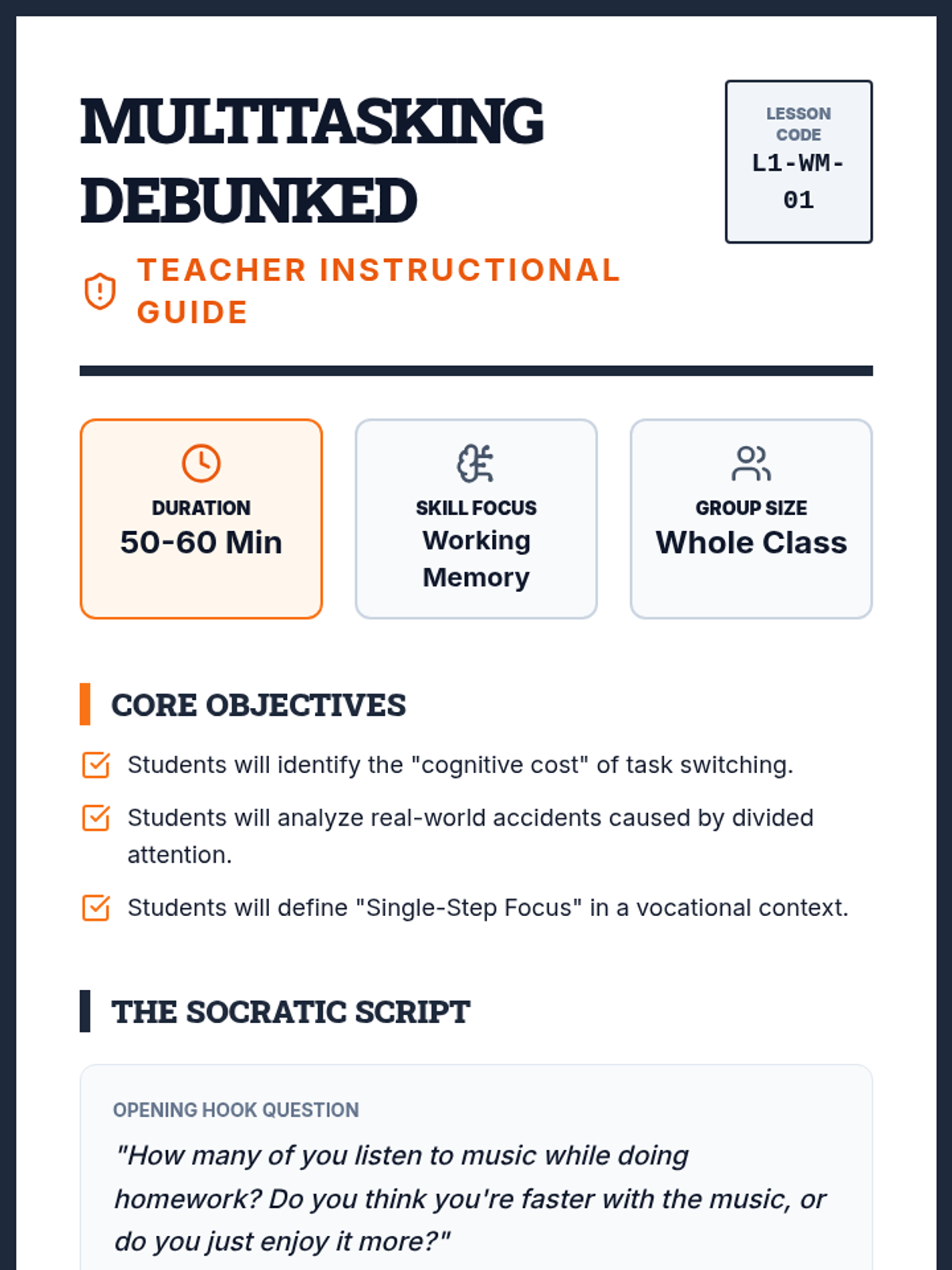
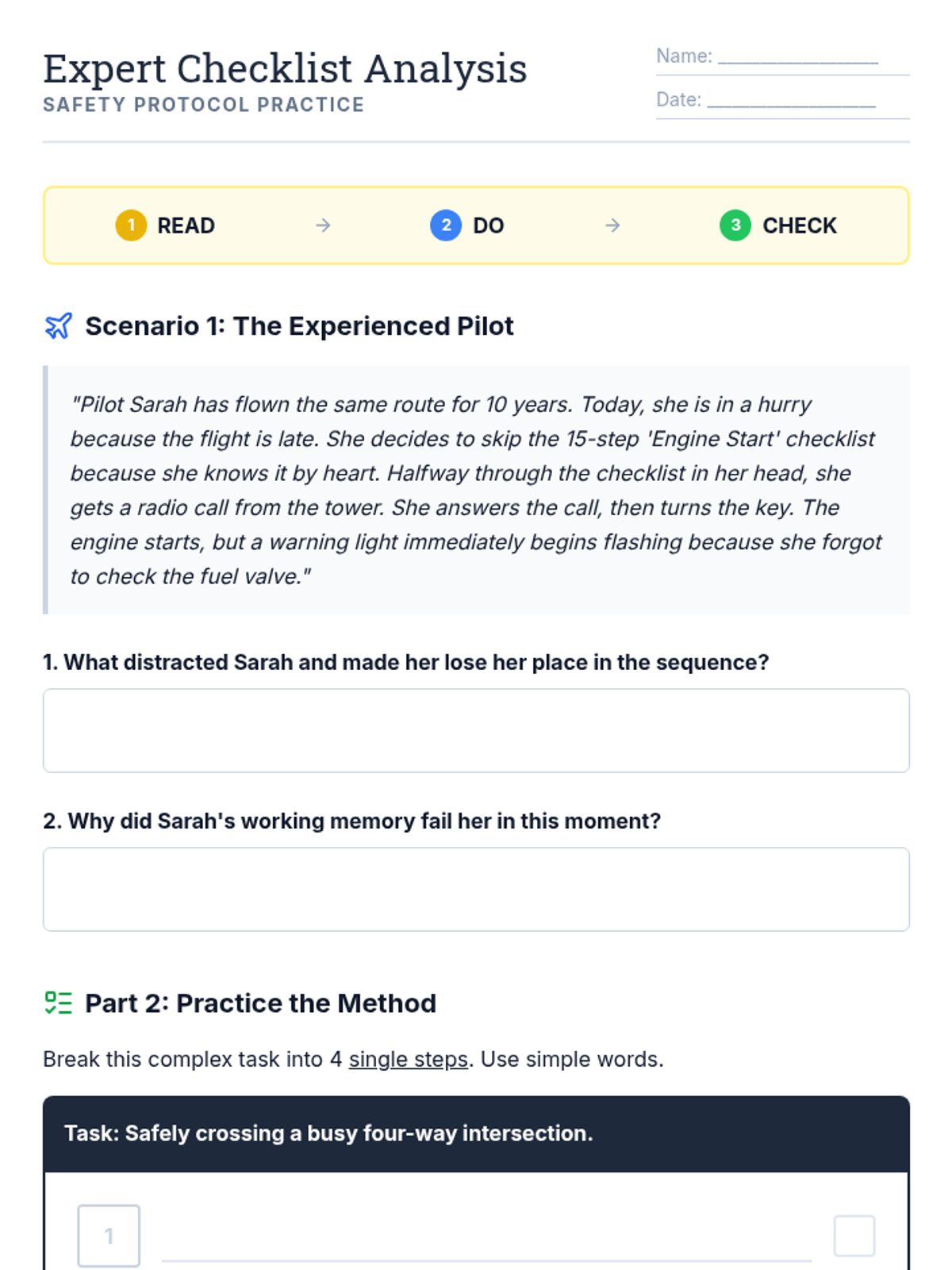
This sequence explores the critical importance of single-step focus in vocational environments. Students analyze how working memory limitations impact safety and quality, practicing sequential execution through industrial case studies, SOP development, and high-stakes simulations.
A 12th-grade sequence focused on empowering students with working memory challenges to advocate for single-step directions in professional and academic settings. Students learn to recognize their processing limits, draft professional scripts, and practice high-stakes role-play to ensure they can manage information overload effectively.
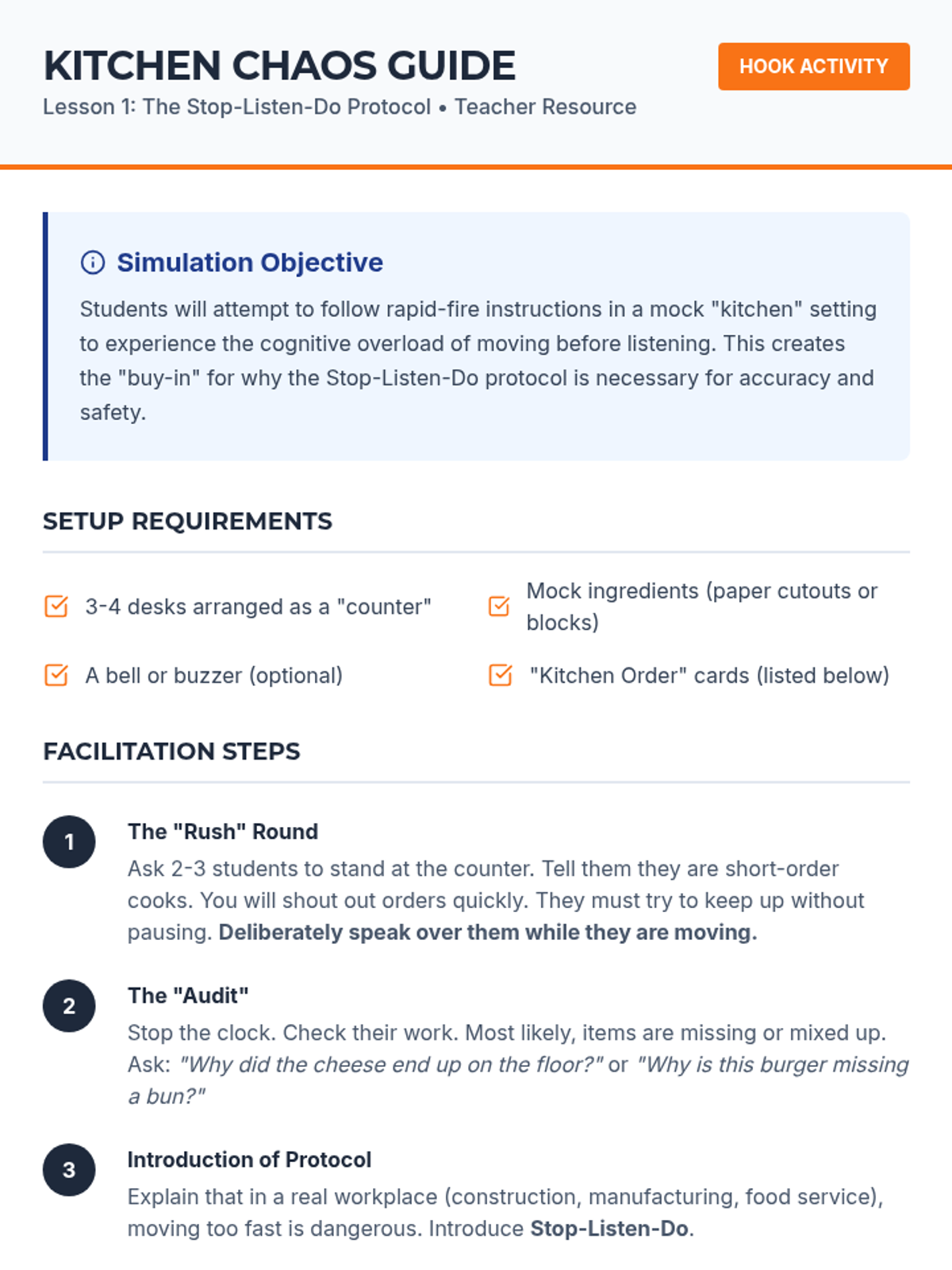
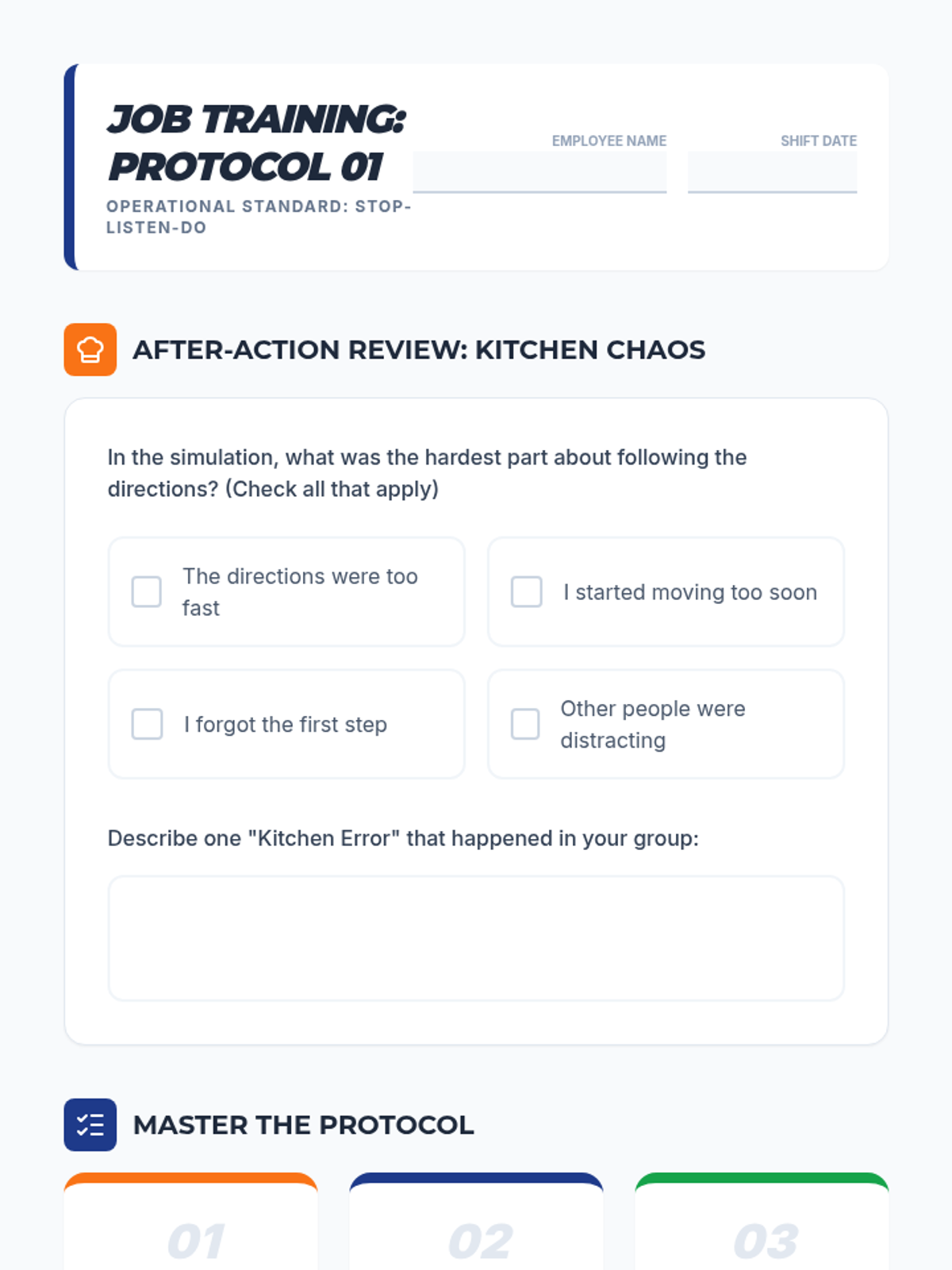
A vocational readiness sequence designed for 9th-grade students with working memory needs, focusing on the 'Stop-Listen-Do' protocol to master single-step directions in workplace environments. Students engage in simulations ranging from clerical work to assembly line tasks, emphasizing active listening and verification.
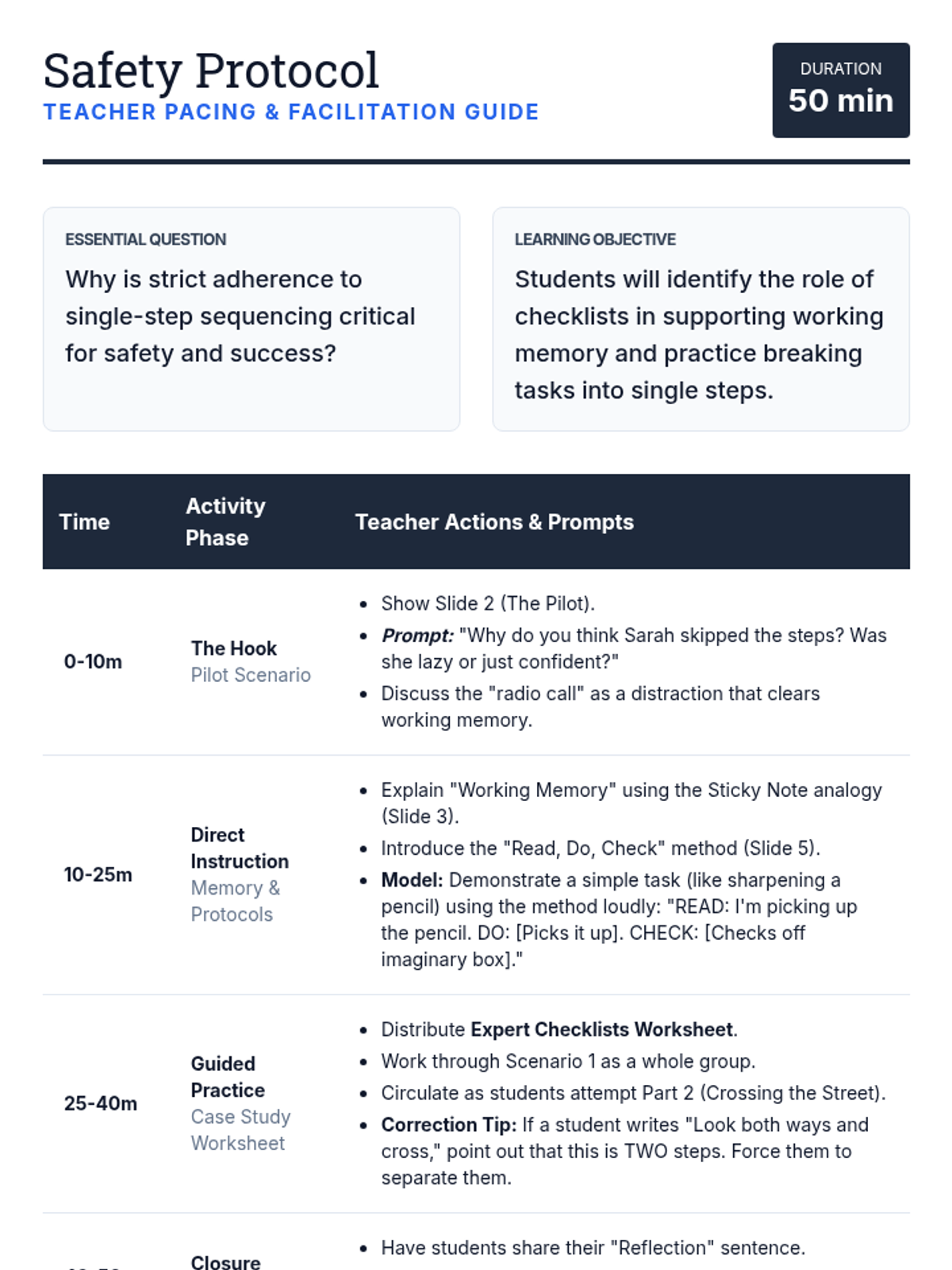
A vocational and life skills sequence for 7th-grade students focusing on working memory through single-step directions. Students explore how strict adherence to sequences ensures safety and success in fields like aviation, cooking, digital security, and emergency response.
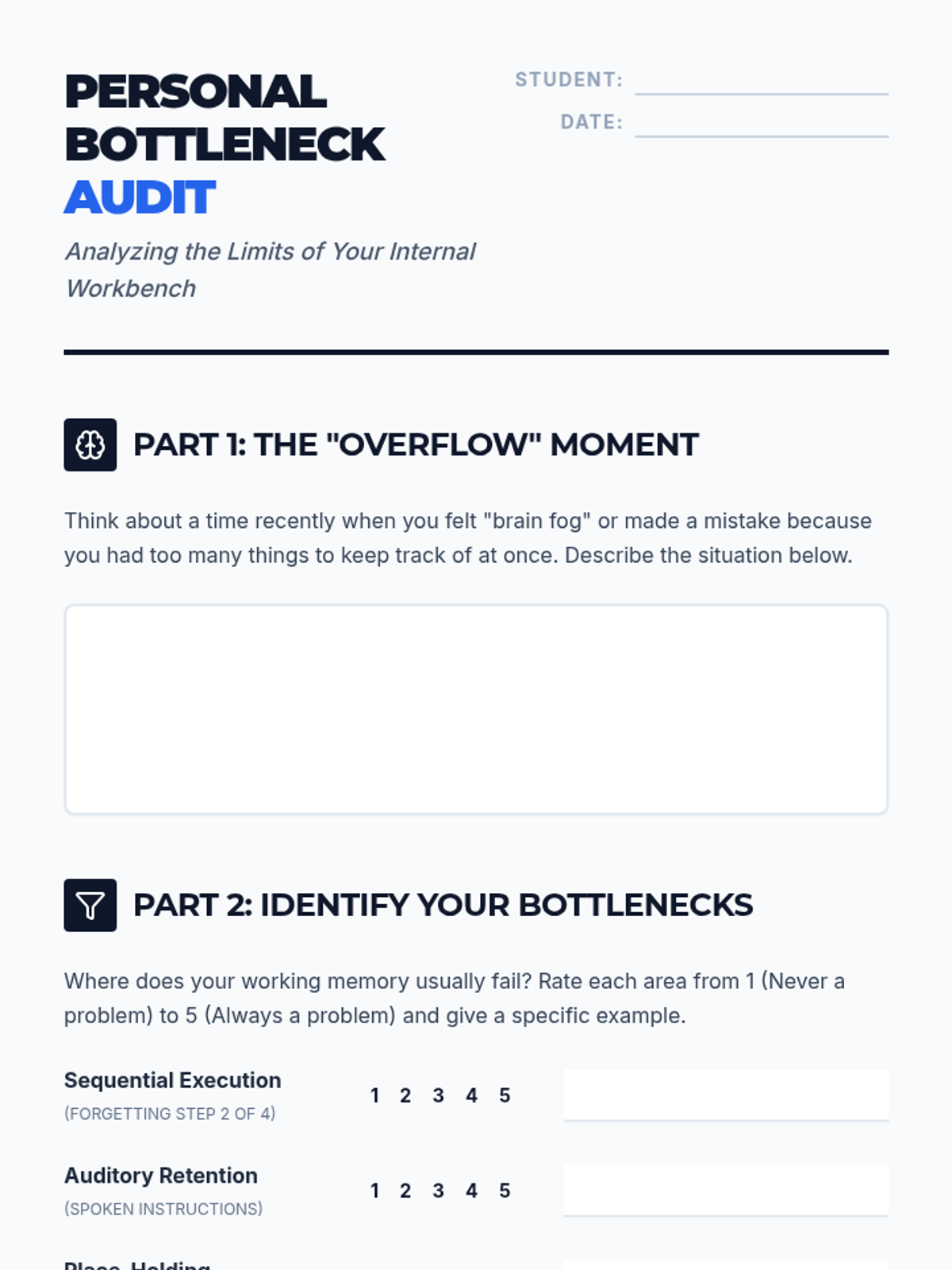
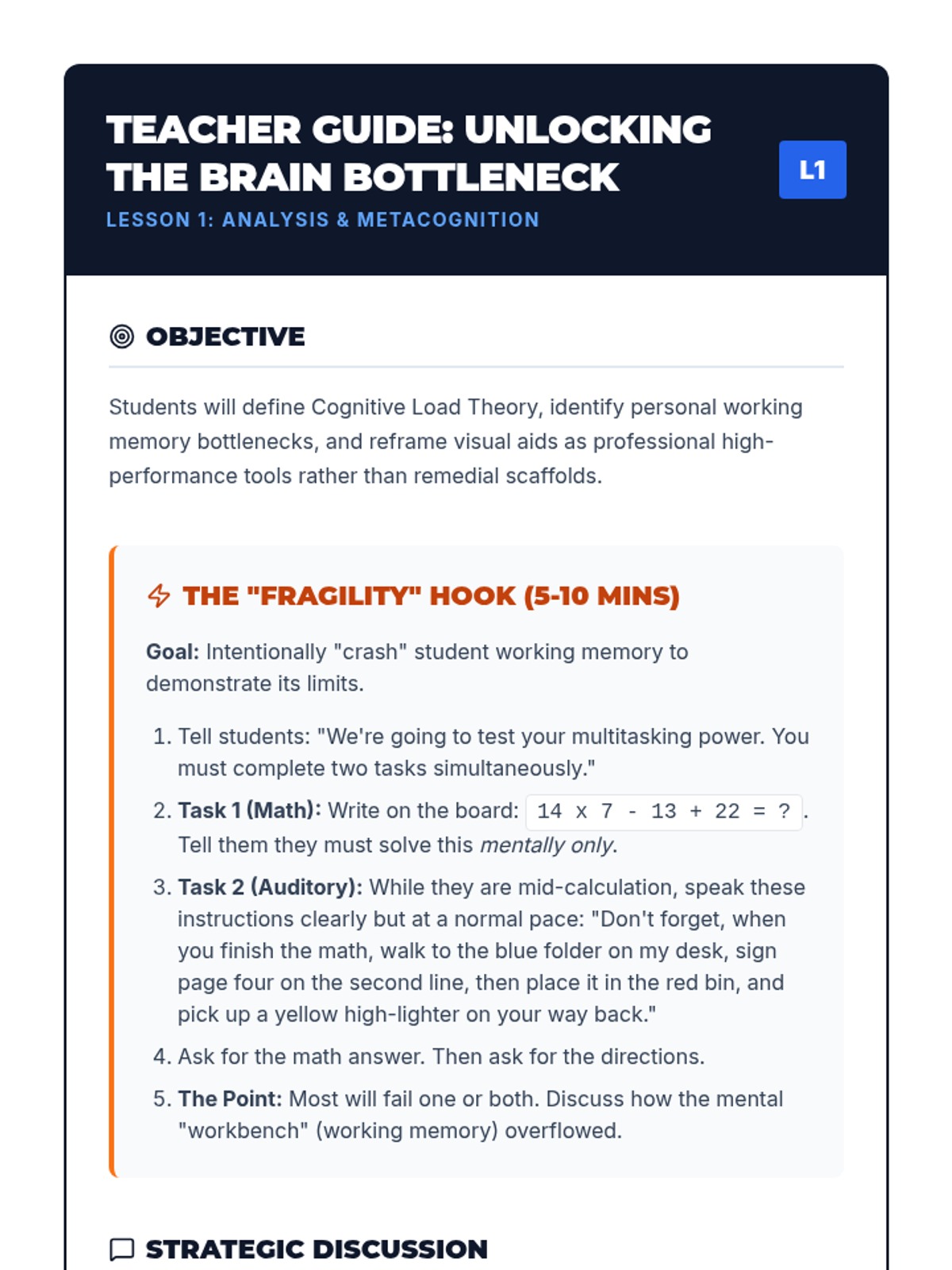
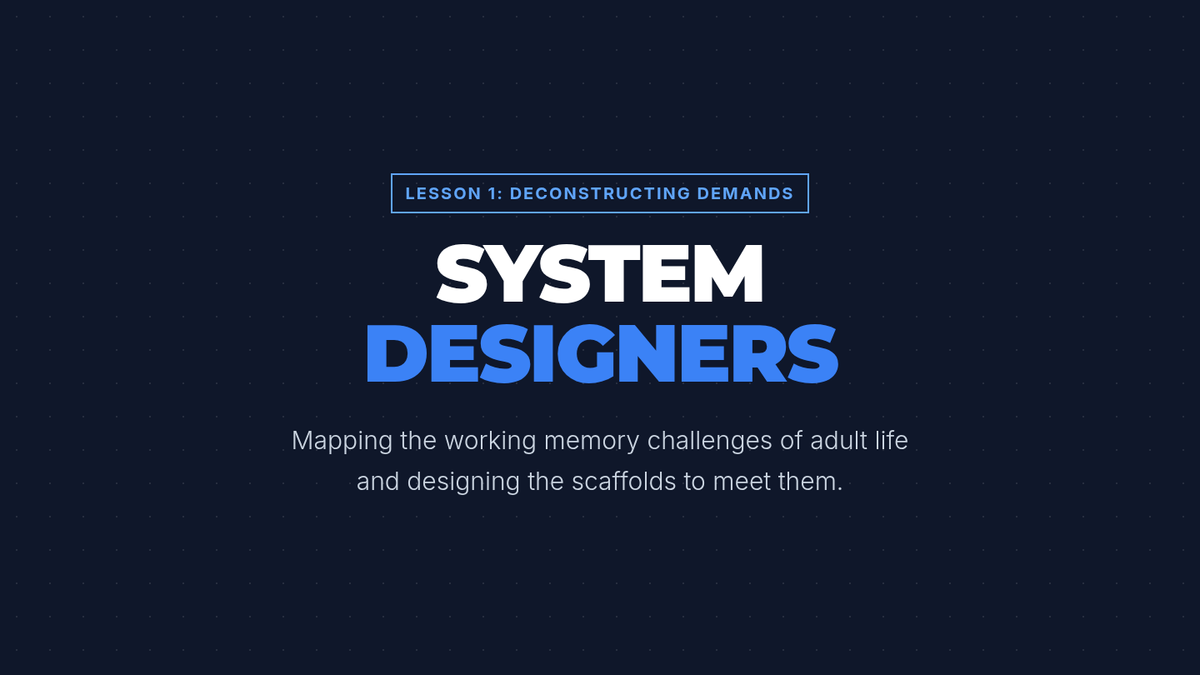
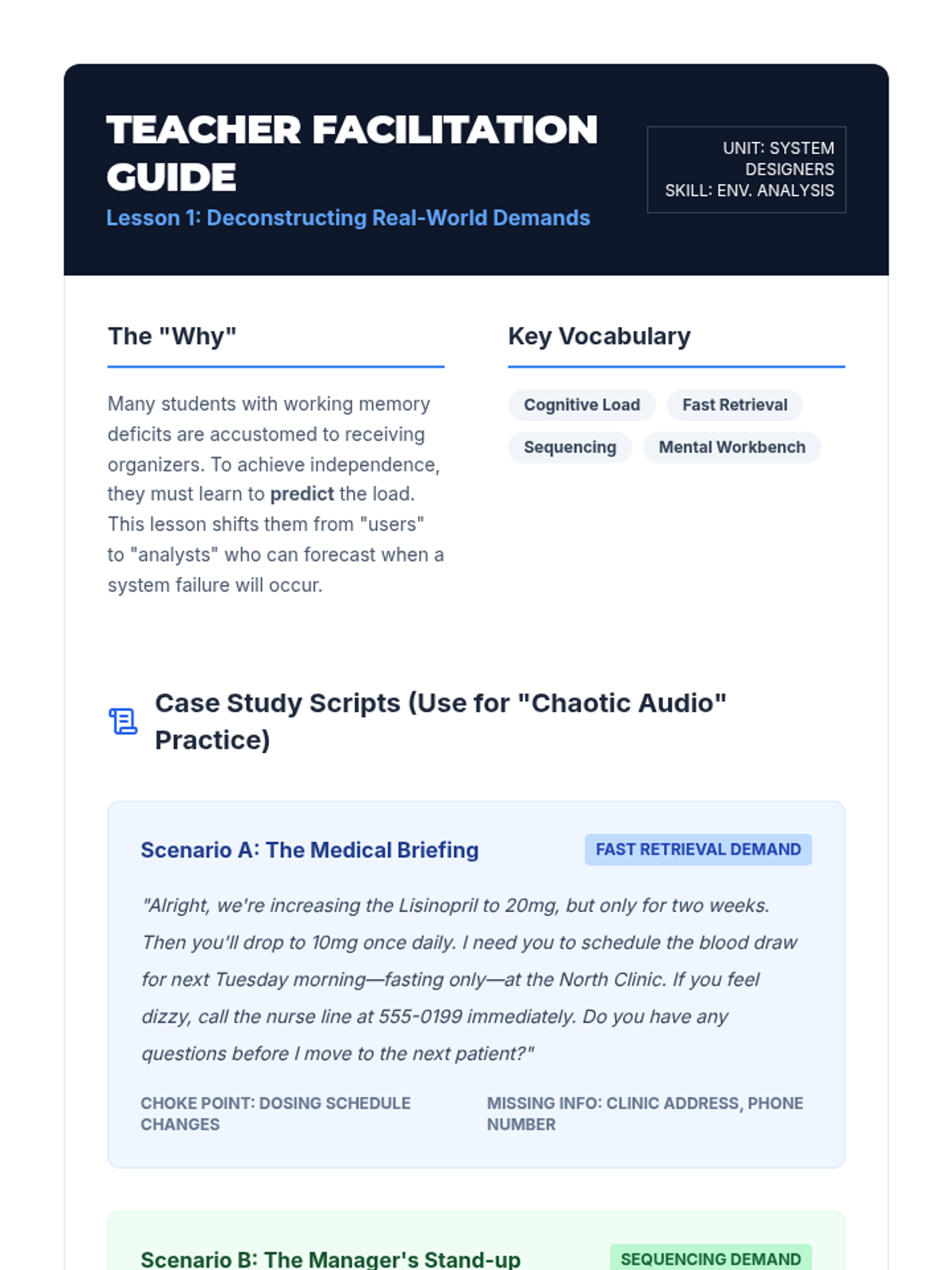
A 12th-grade sequence focused on transitioning from teacher-provided scaffolds to student-designed visual memory systems for college and career readiness. Students analyze cognitive load, design flowcharts and SOPs, and optimize their environments to support executive function.
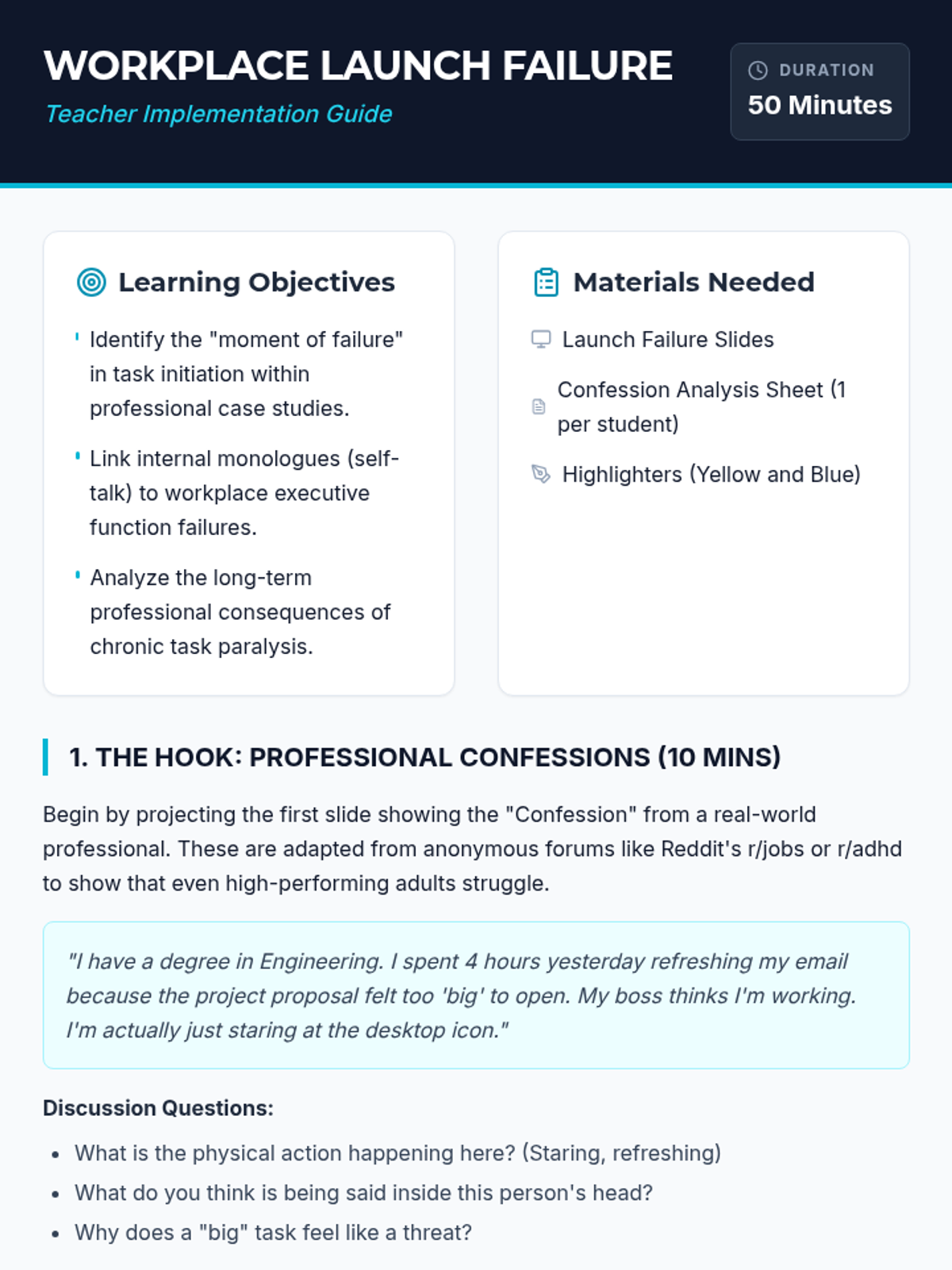
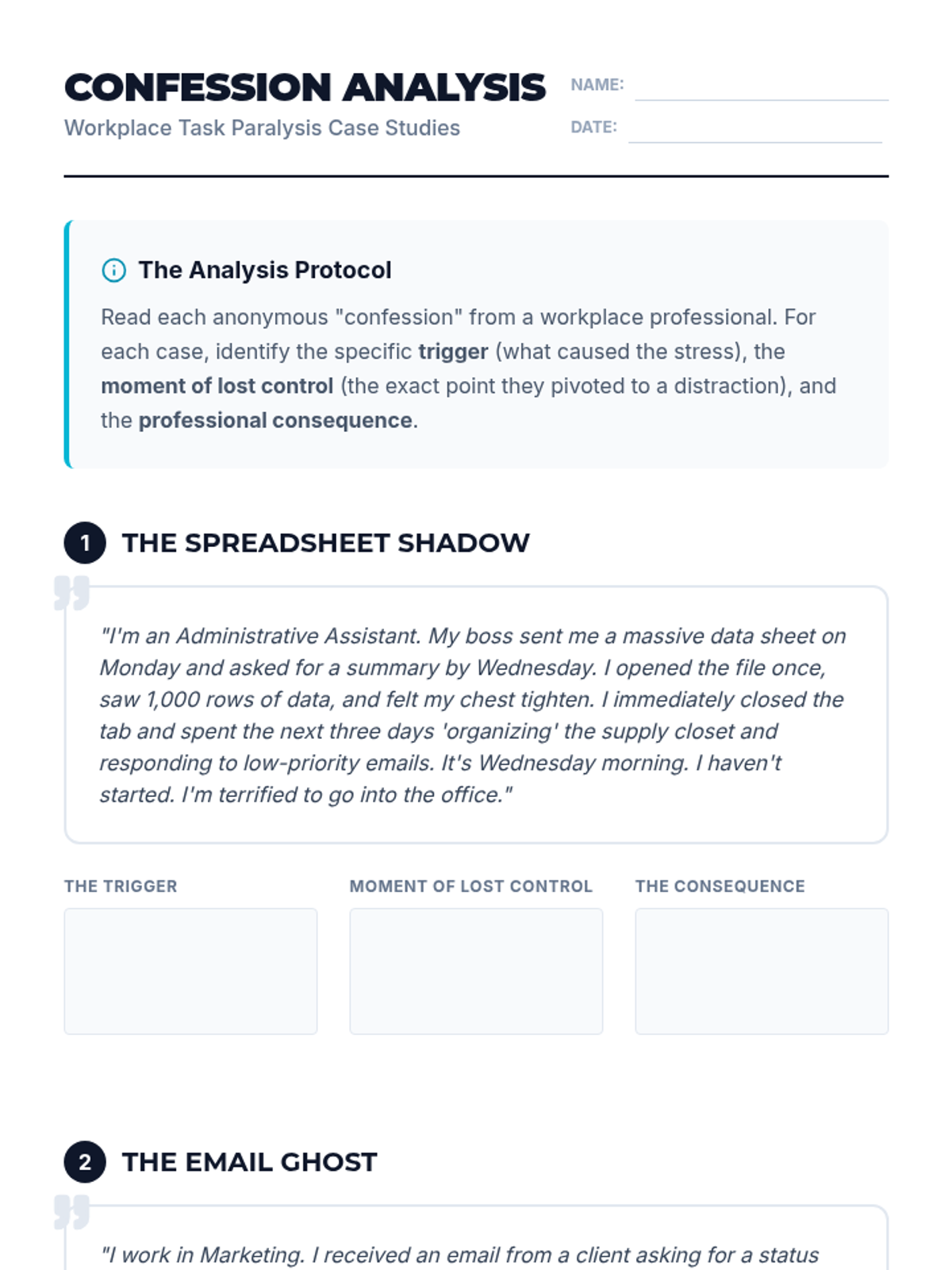
A comprehensive sequence for transition-age students to master self-talk strategies for task initiation in professional and independent living contexts. Students move from analyzing workplace failures to building a personalized 'Standard Operating Procedure' for overcoming task paralysis.
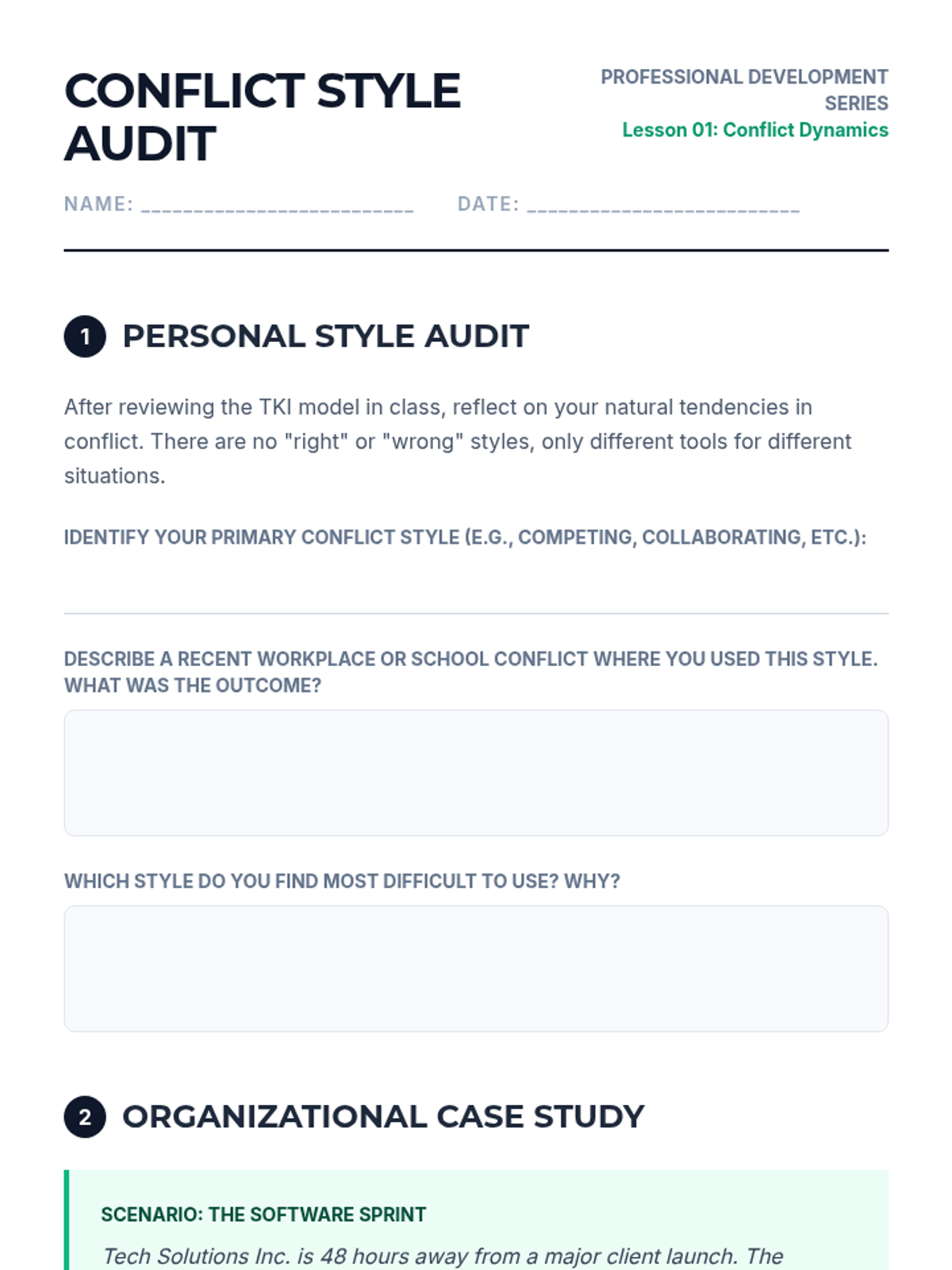
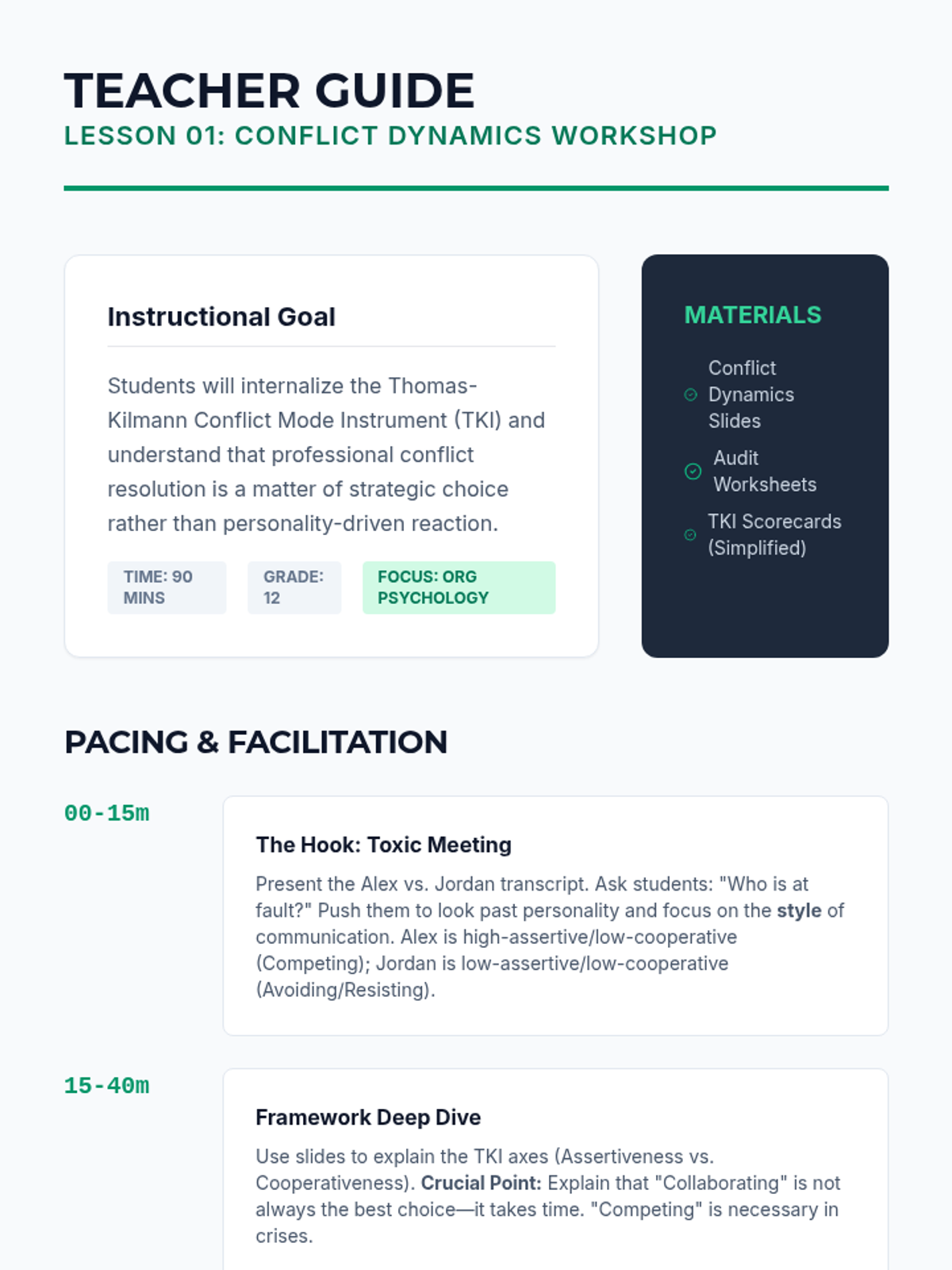
This sequence equips high school seniors with professional-grade negotiation and mediation skills. It moves from understanding conflict styles to mastering interest-based negotiation, BATNA/ZOPA calculations, and emotional regulation, culminating in a complex multi-party corporate simulation.
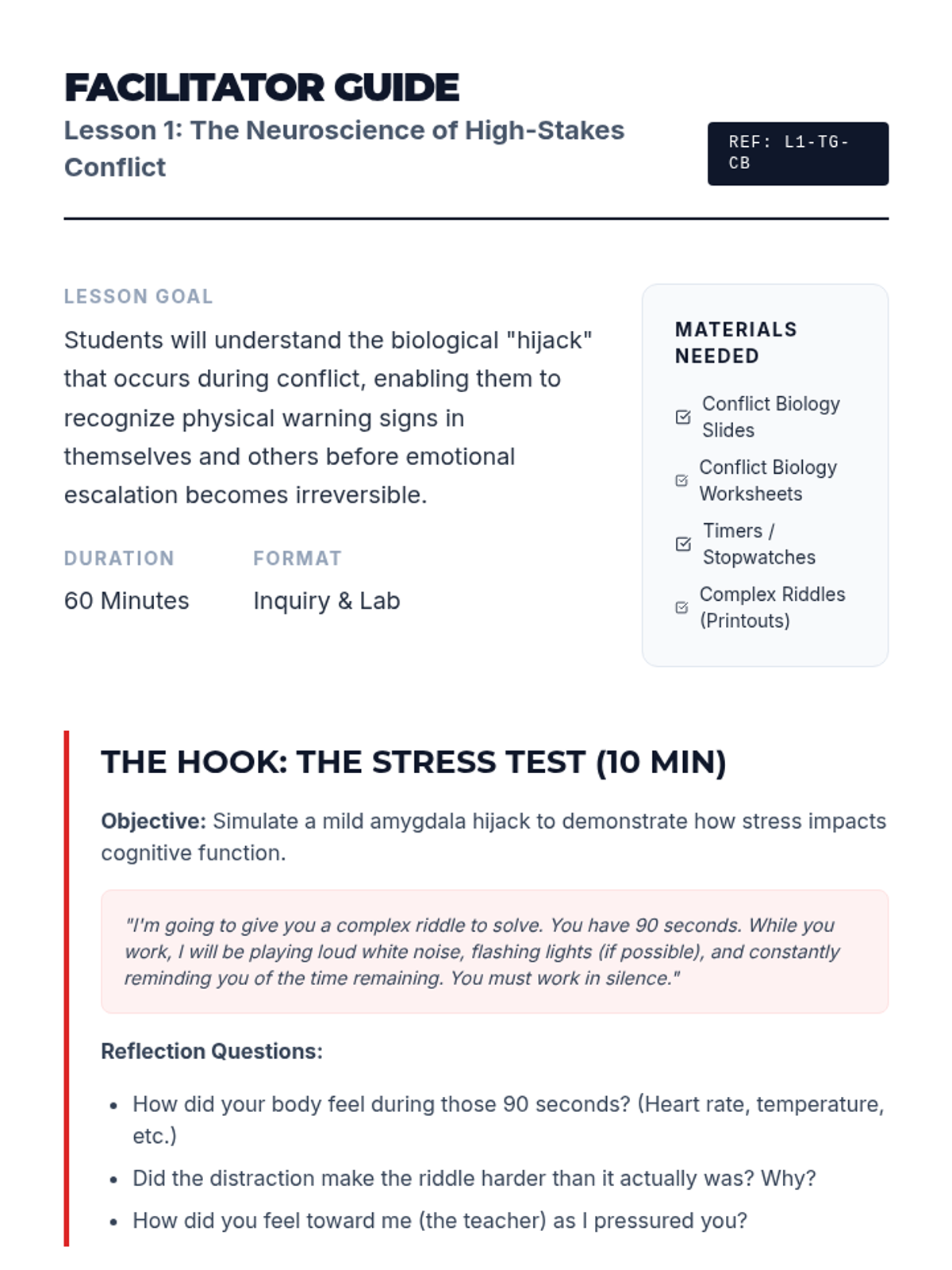
A comprehensive 5-lesson sequence on the psychological and interpersonal mechanics of managing high-conflict situations. Students explore the neuroscience of anger, practice verbal and non-verbal de-escalation, use the Iceberg Model to find root causes, and master assertive communication through simulations.
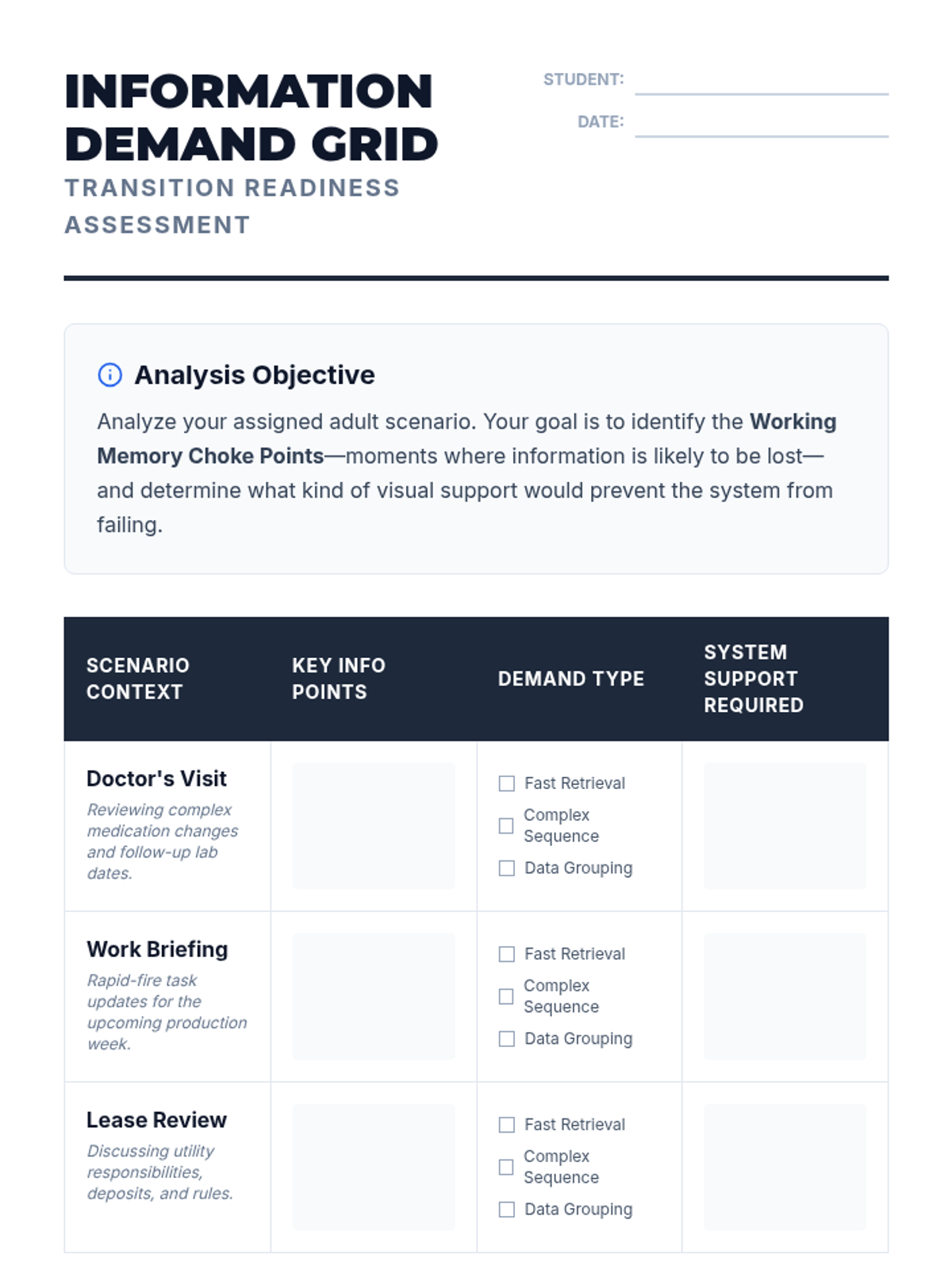
This sequence empowers 12th-grade students with neurodivergent profiles to design, test, and advocate for personalized note-taking systems. By analyzing real-world information demands and exploring digital and analog tools, students prepare for independent living and post-secondary success.
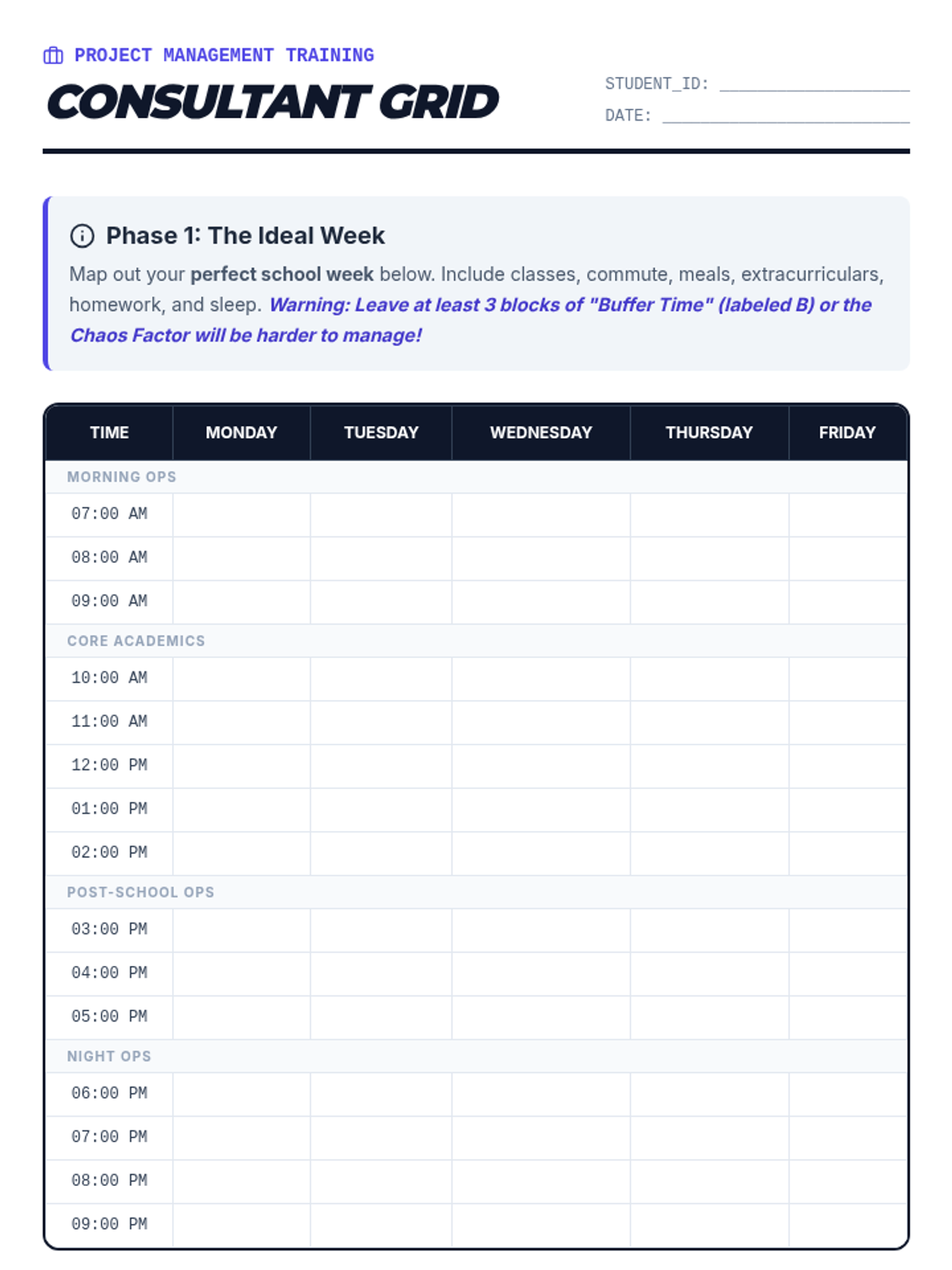
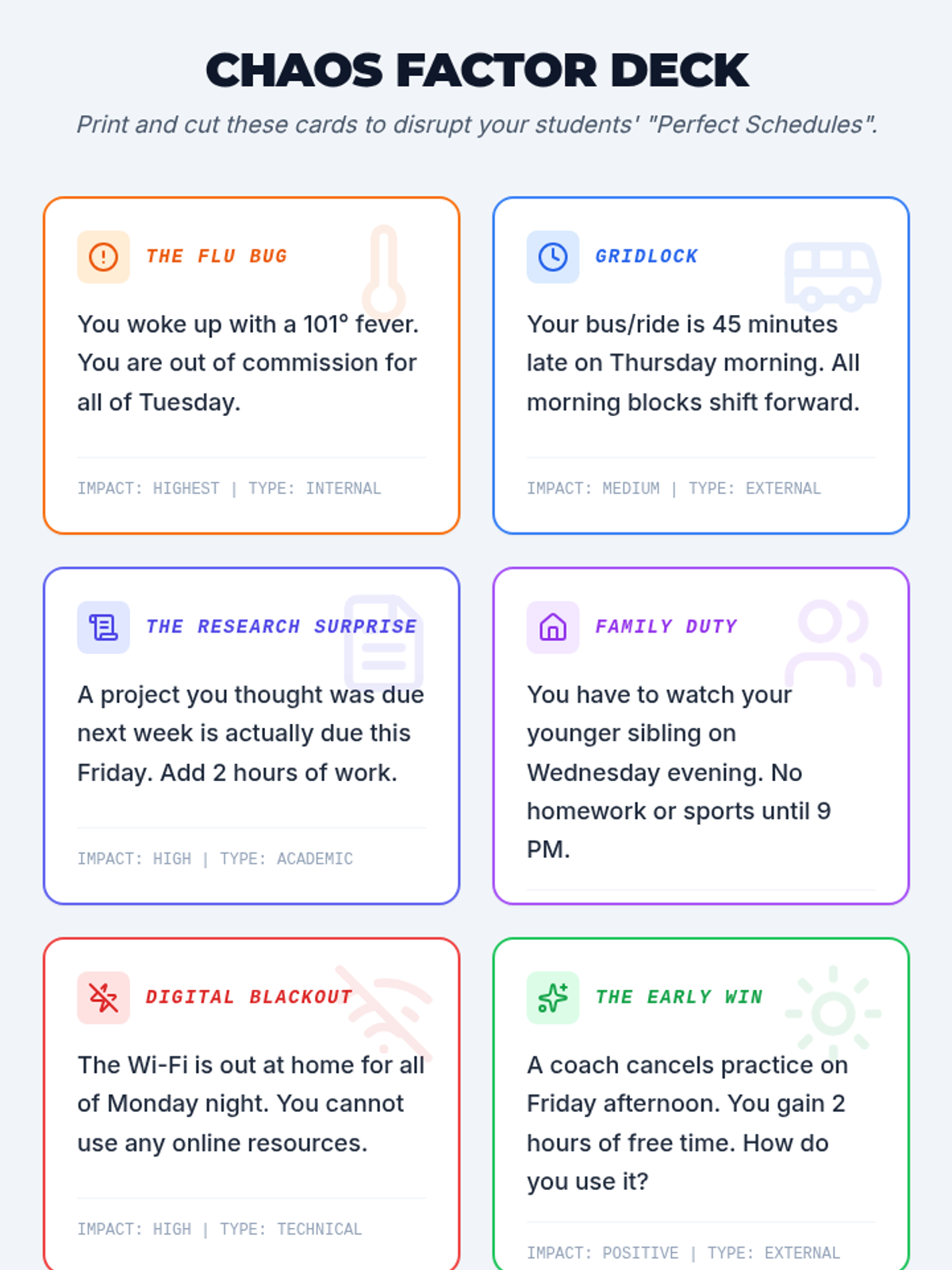
A simulation-based sequence where 10th-grade students act as 'Student-Consultants' to master schedule management and adaptive resiliency. Students learn to handle 'Chaos Factors', negotiate deadlines, and manage energy levels to maintain balance amidst competing demands.
A comprehensive sequence for 9th-grade students focusing on self-advocacy, communication skills, and boundary setting to manage schedule conflicts and prevent burnout. Students learn to recognize stress signals, draft professional requests, negotiate deadlines, and prioritize tasks during crises.
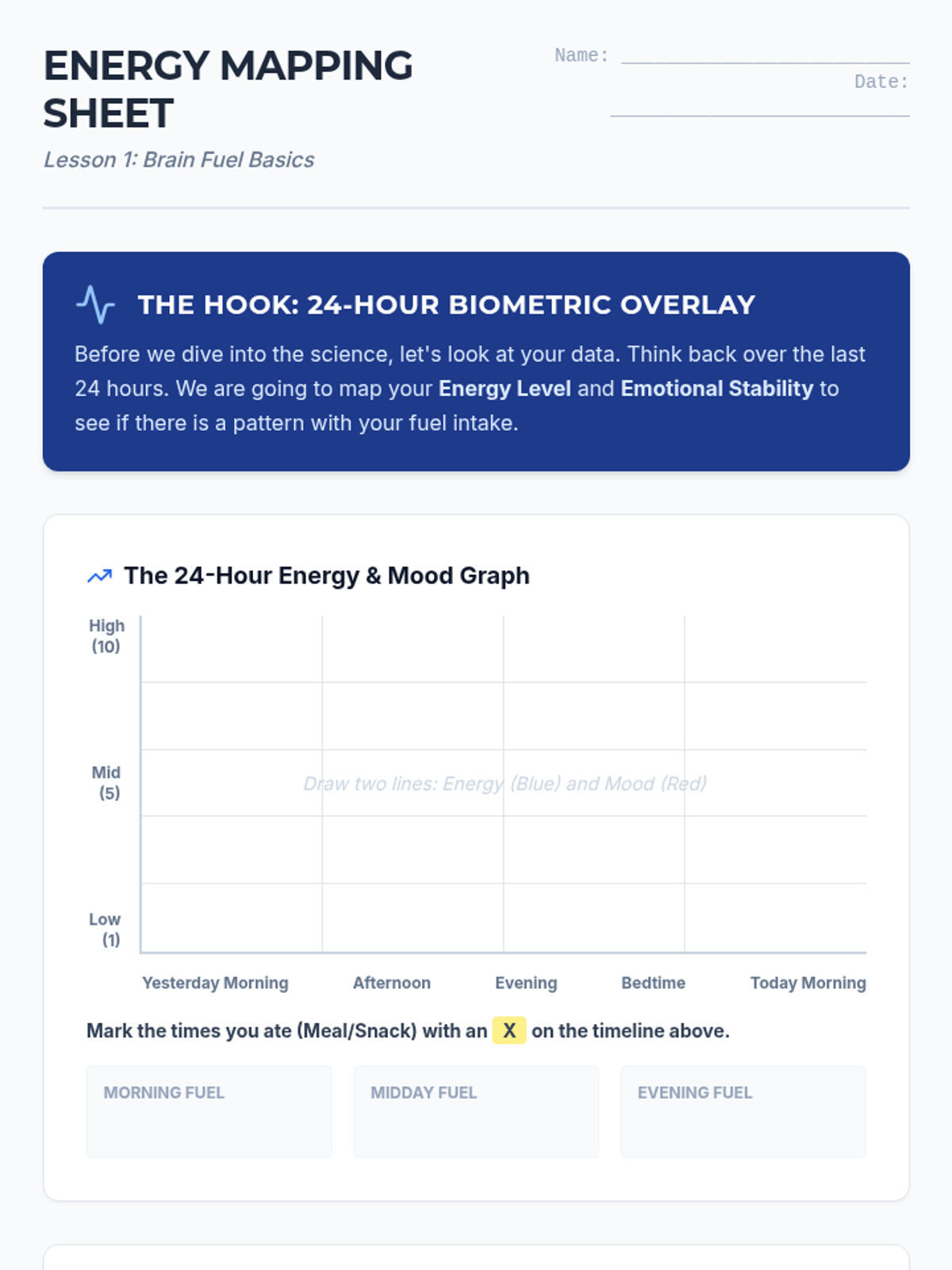
An 11th-grade workshop-style sequence focused on the PLEASE skills of Eating and Sleep. Students analyze the neuroscience of blood sugar and sleep architecture to create personalized, realistic routines for emotional stability.
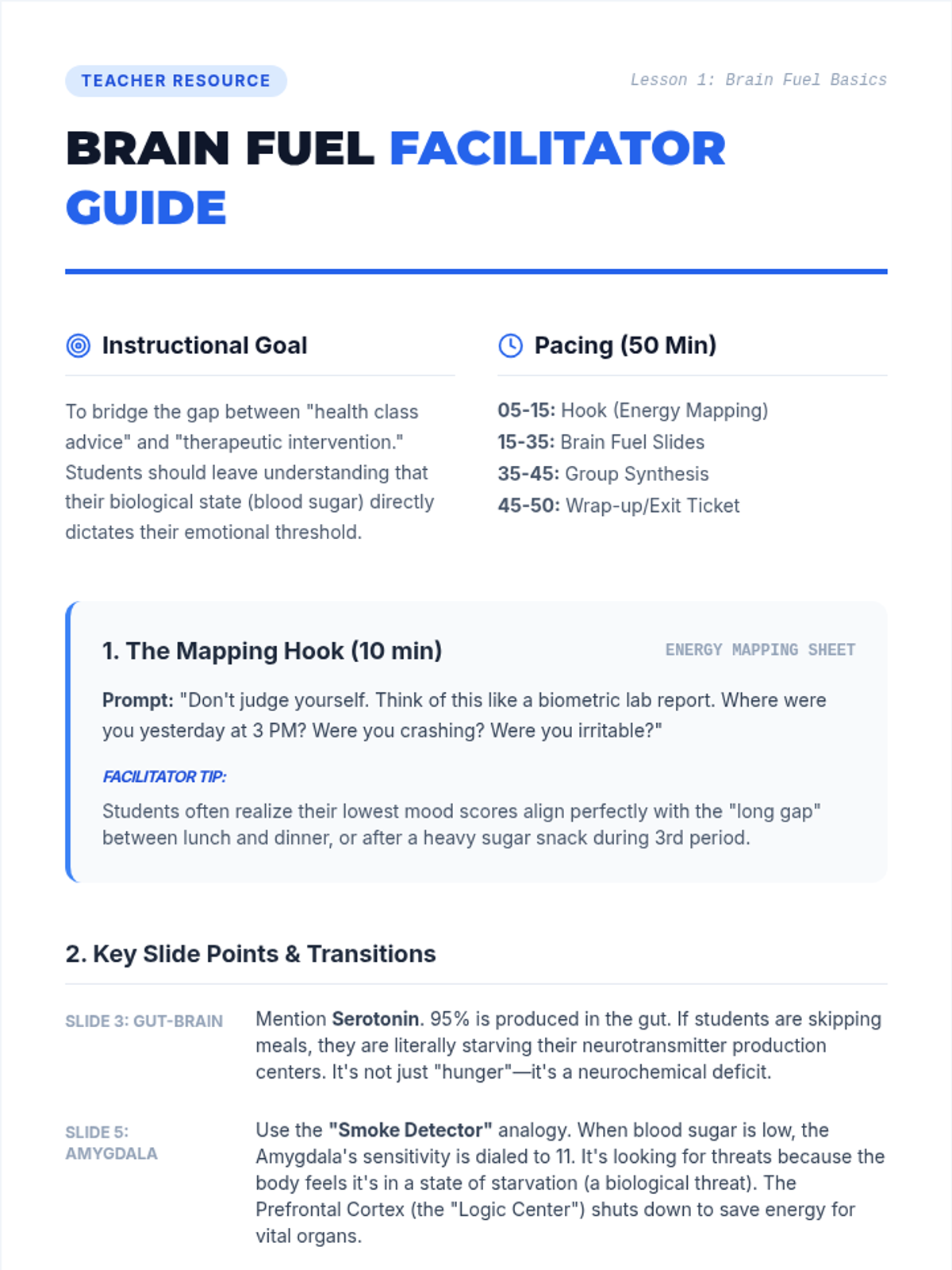
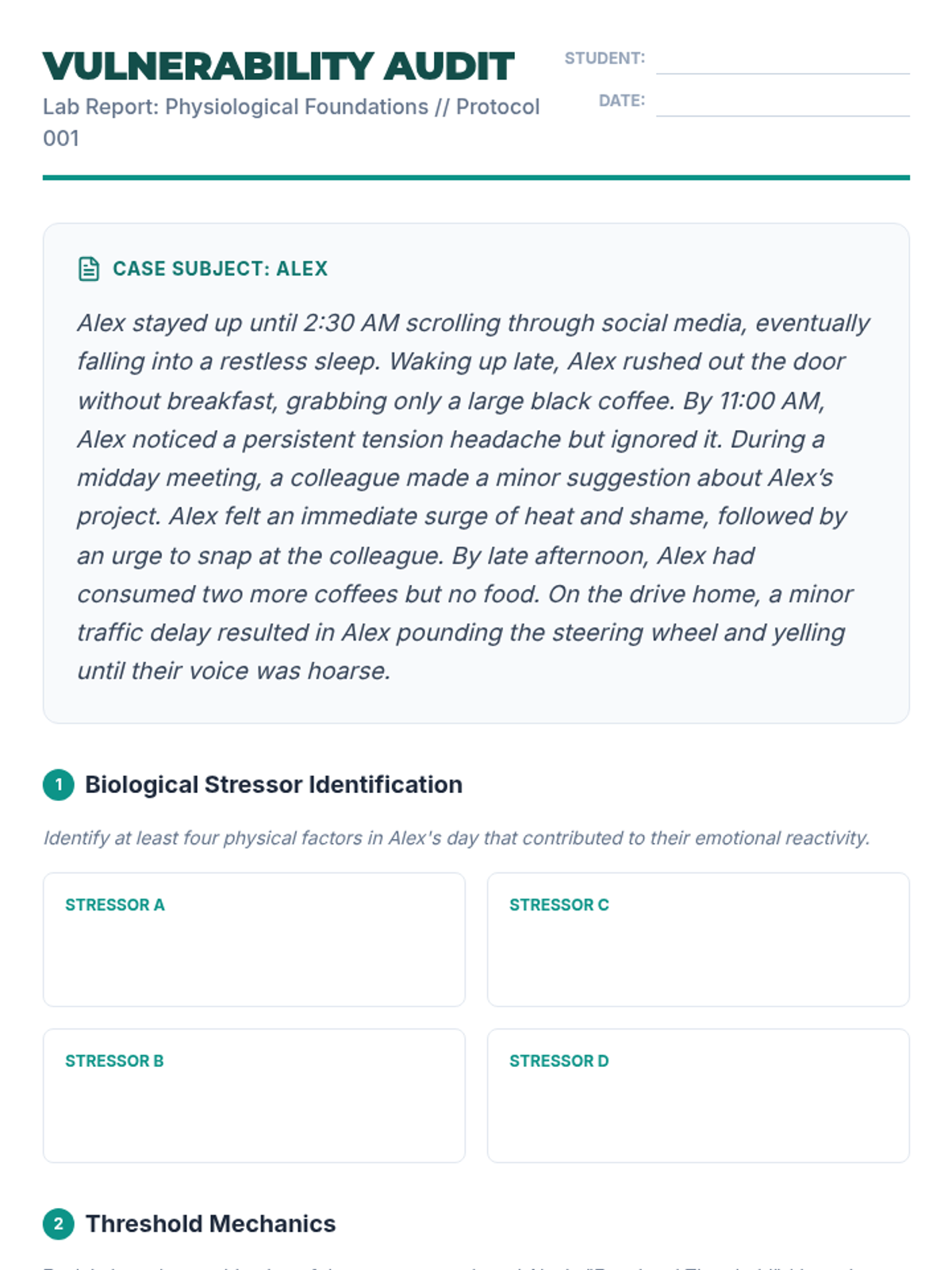
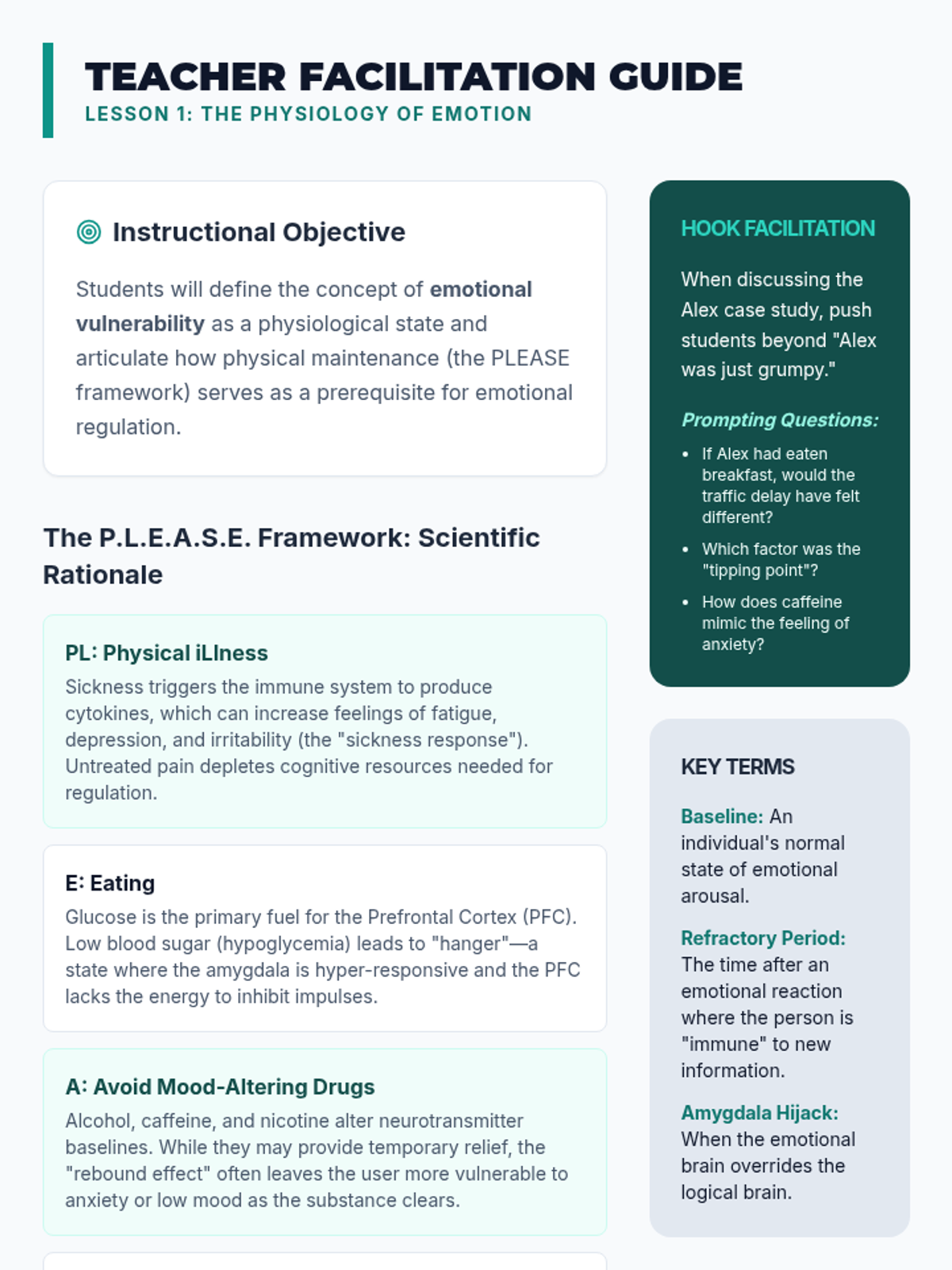
This sequence guides 12th-grade students through the physiological foundations of emotional regulation, focusing on the science behind the DBT 'PLEASE' skills. Students investigate how physical health factors like sleep, nutrition, and substance use create a biological threshold for emotional sensitivity.
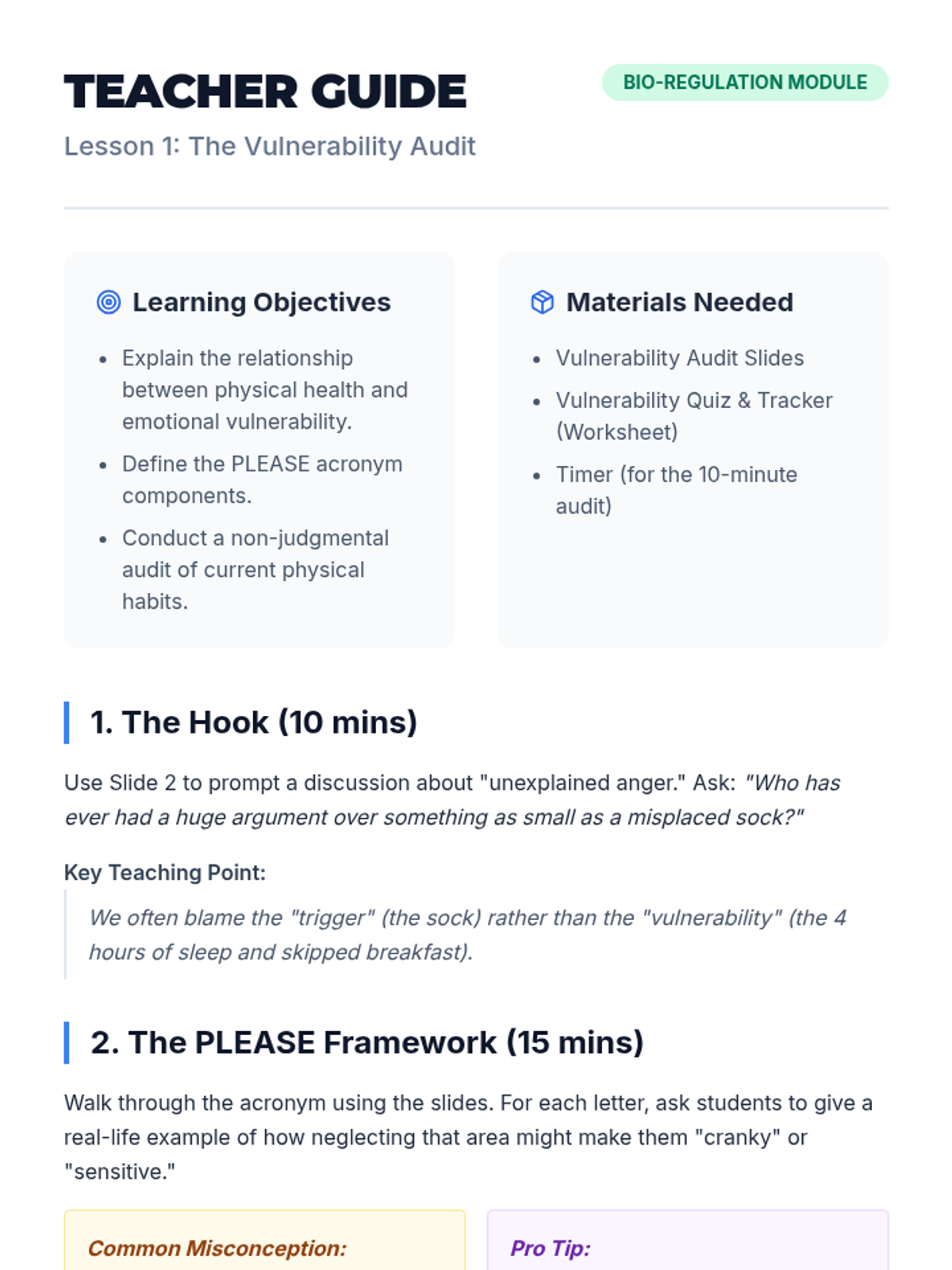
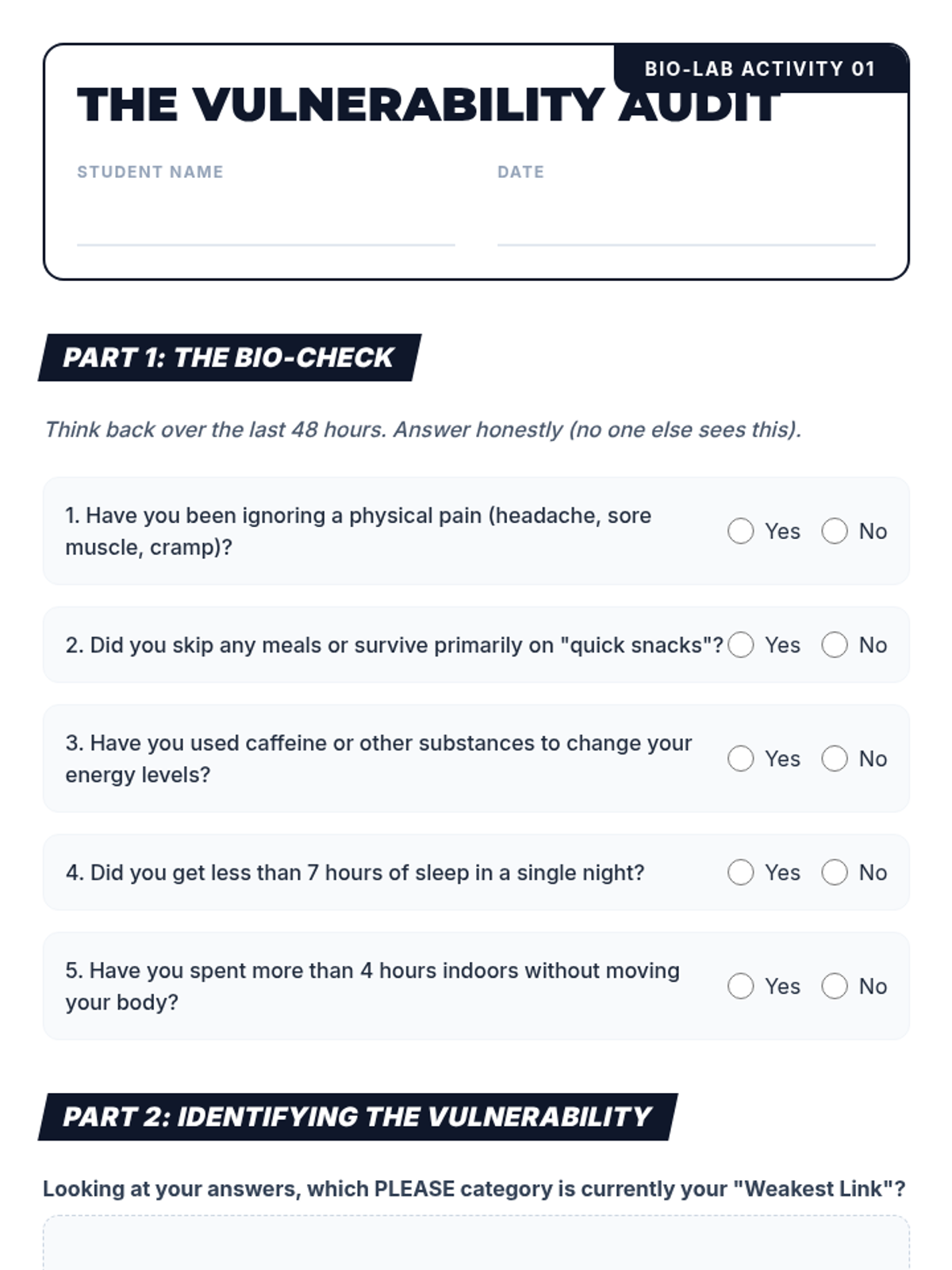
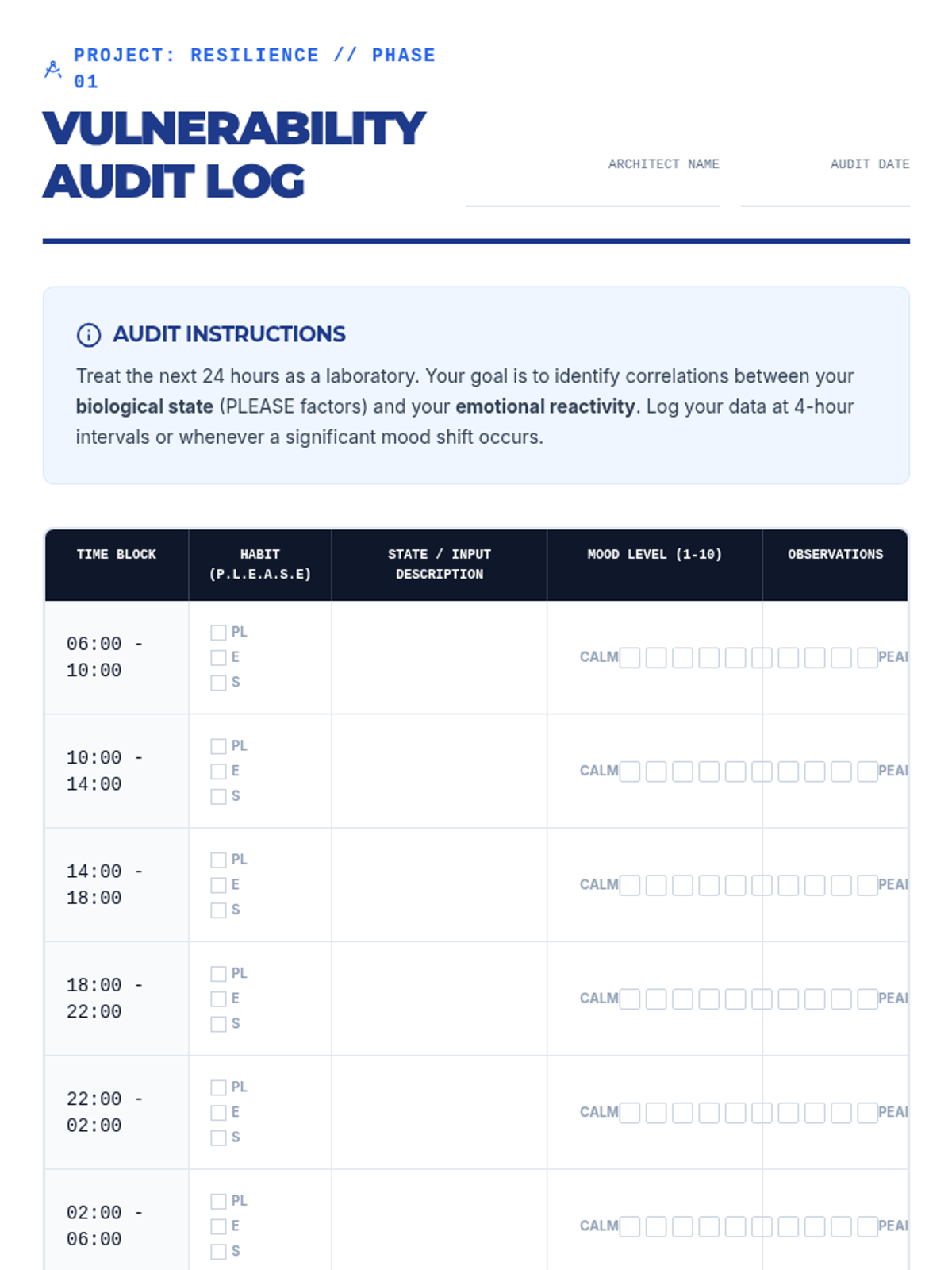
This workshop-style sequence teaches 12th-grade students how to use the PLEASE skills framework to reduce emotional vulnerability through systematic physical health management. Students audit their current habits, experiment with behavioral changes, and analyze personal data to create a sustainable self-care plan for the transition to adulthood.
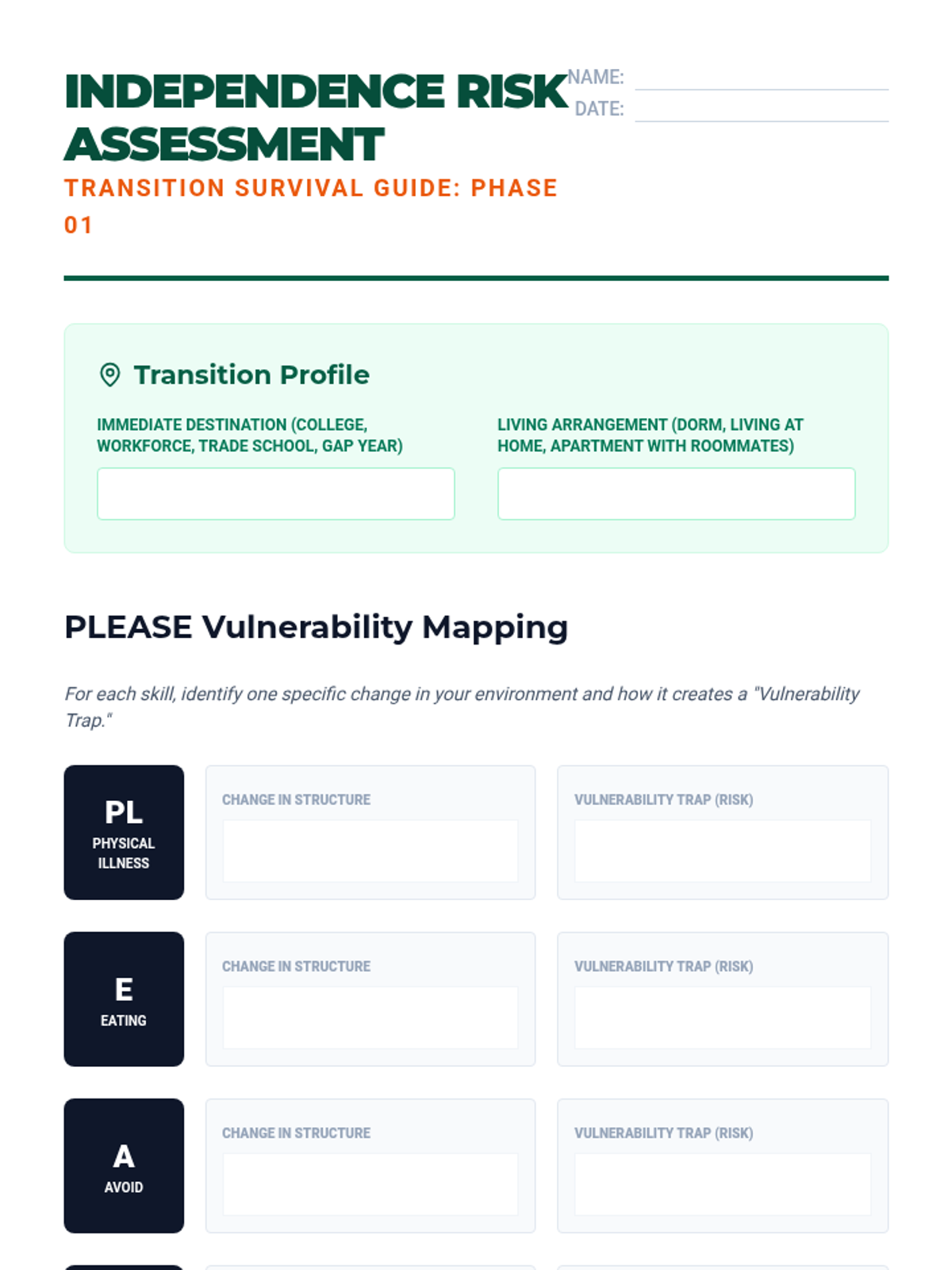
This project-based sequence prepares 12th graders for independent living by applying the PLEASE skills to future scenarios. Students identify potential disruptions to their physical and emotional health during major life transitions and develop a 'Transition Survival Guide' to maintain emotional stability.
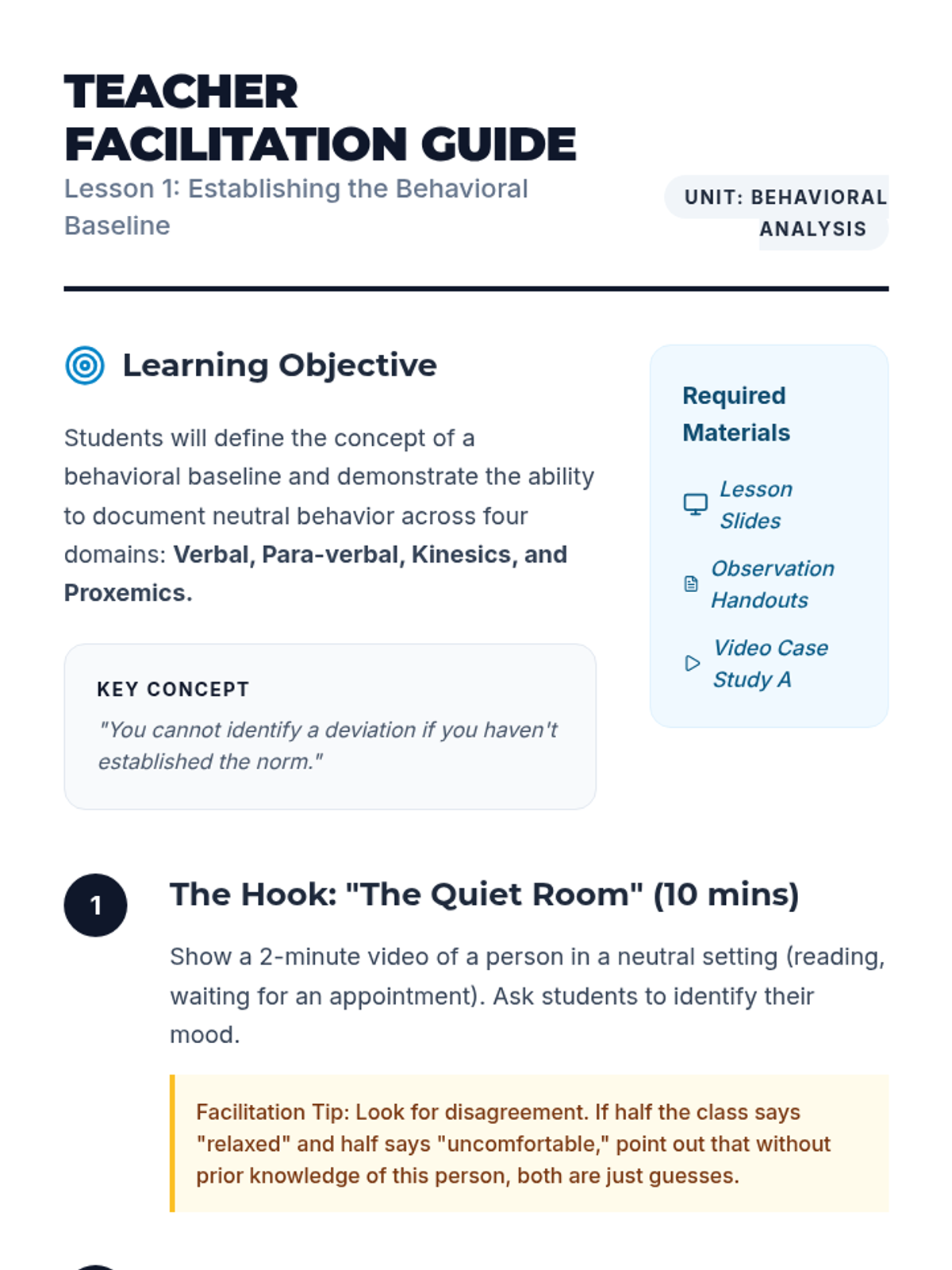
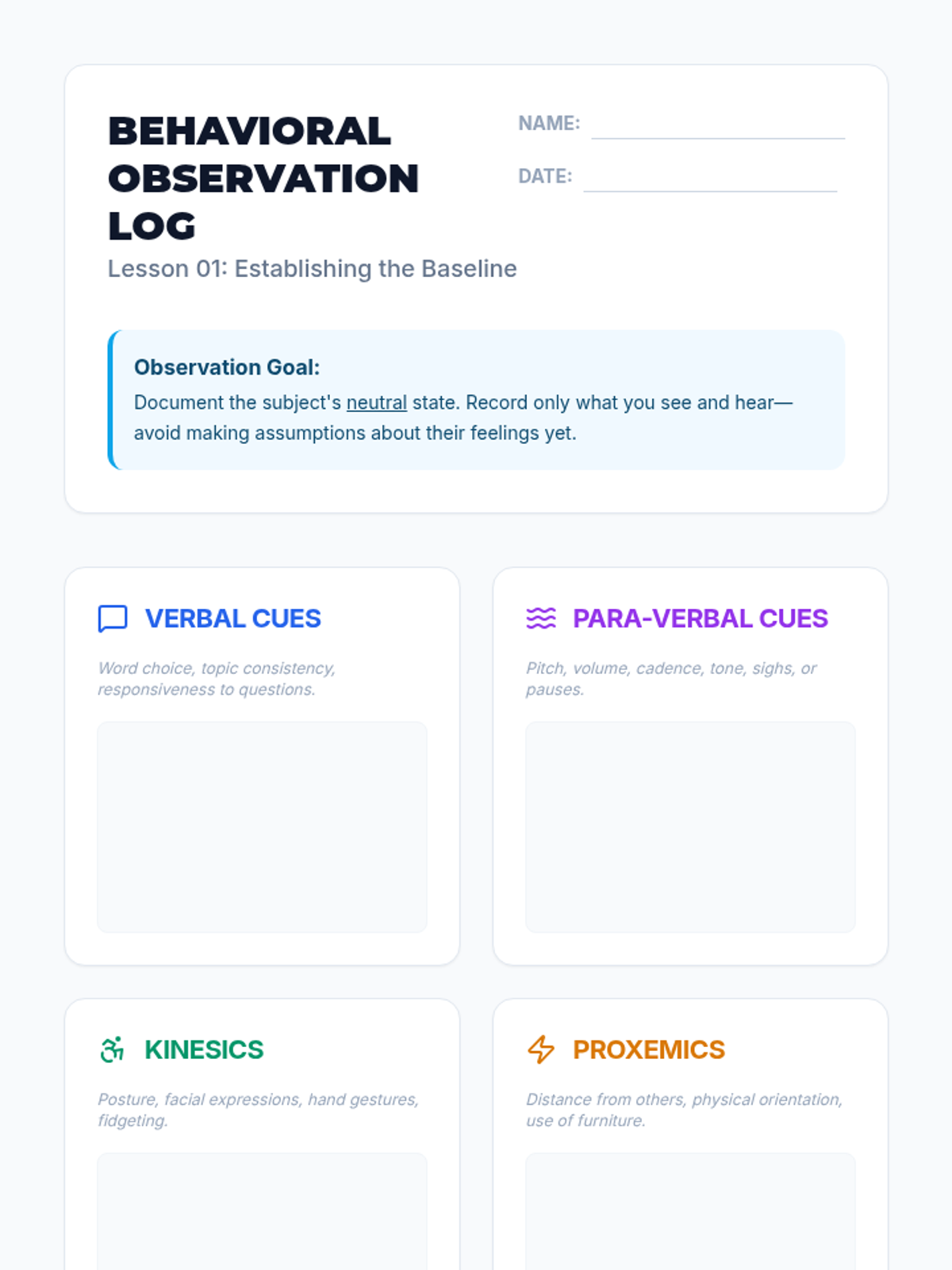
A comprehensive 5-lesson unit for 12th-grade students on identifying behavioral baselines and recognizing early warning signs of emotional escalation through analytical observation of verbal, para-verbal, and non-verbal cues.
This sequence connects behavioral observation to the biological science of the stress response. Students investigate the 'why' behind warning signs by studying the sympathetic nervous system and the 'fight, flight, or freeze' response, culminating in a biological profile of behavioral escalation.
A project-based sequence where 9th-grade students act as 'Lifestyle Architects' to design personalized protocols for reducing emotional vulnerability using the PLEASE acronym. Students audit their habits, research evidence-based strategies, and create a sustainable plan for emotional resilience.
A 5-lesson sequence for 11th-grade students focusing on reducing cognitive load through specialized graphic organizer note-taking templates. Students move from understanding working memory limitations to fluidly selecting and applying hierarchical, sequential, and semantic models.
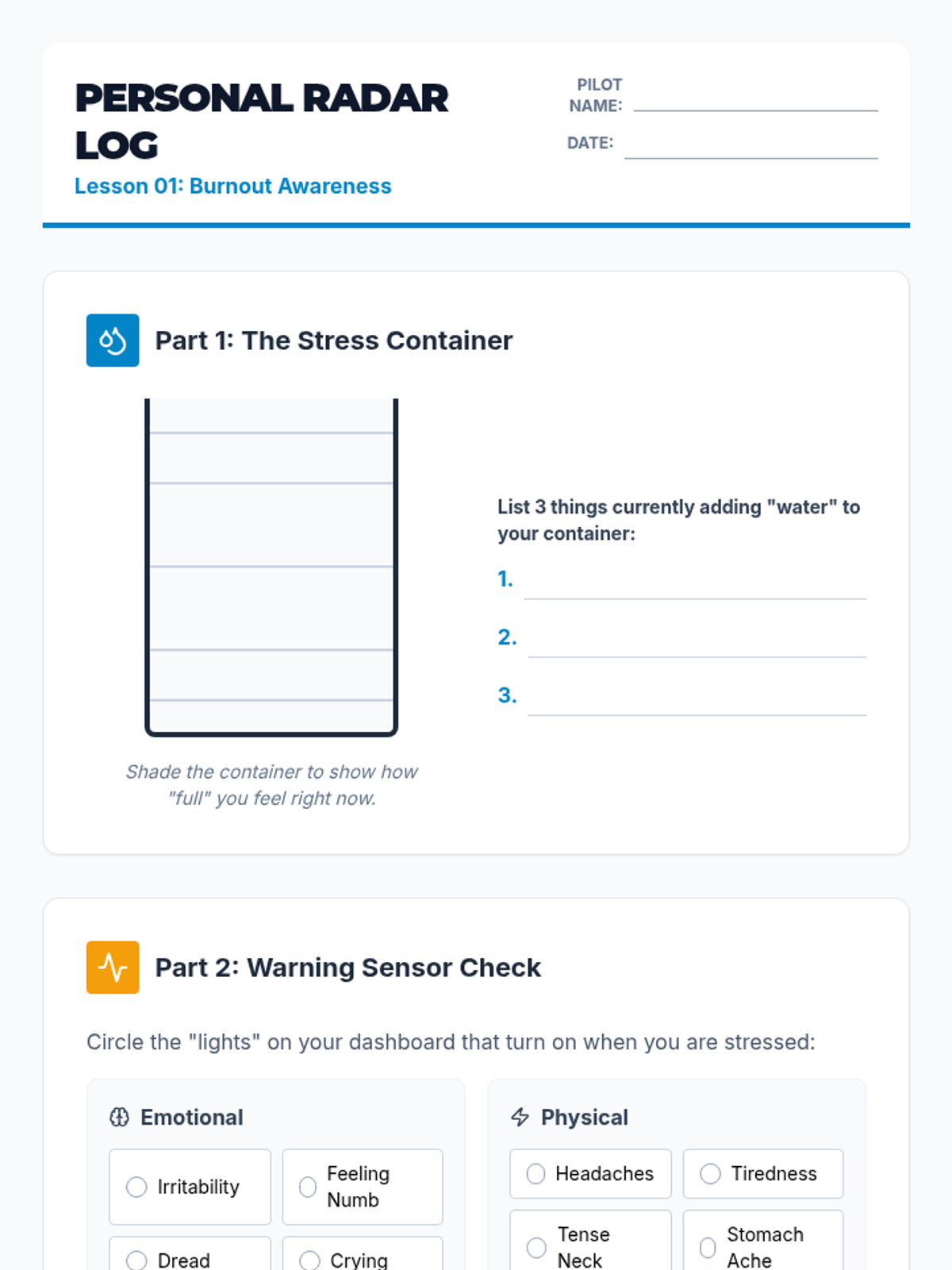
This sequence explores the psychology of group dynamics and community care. Students learn to recognize burnout, offer effective support, and advocate for cultures where requesting breaks is normalized and valued.
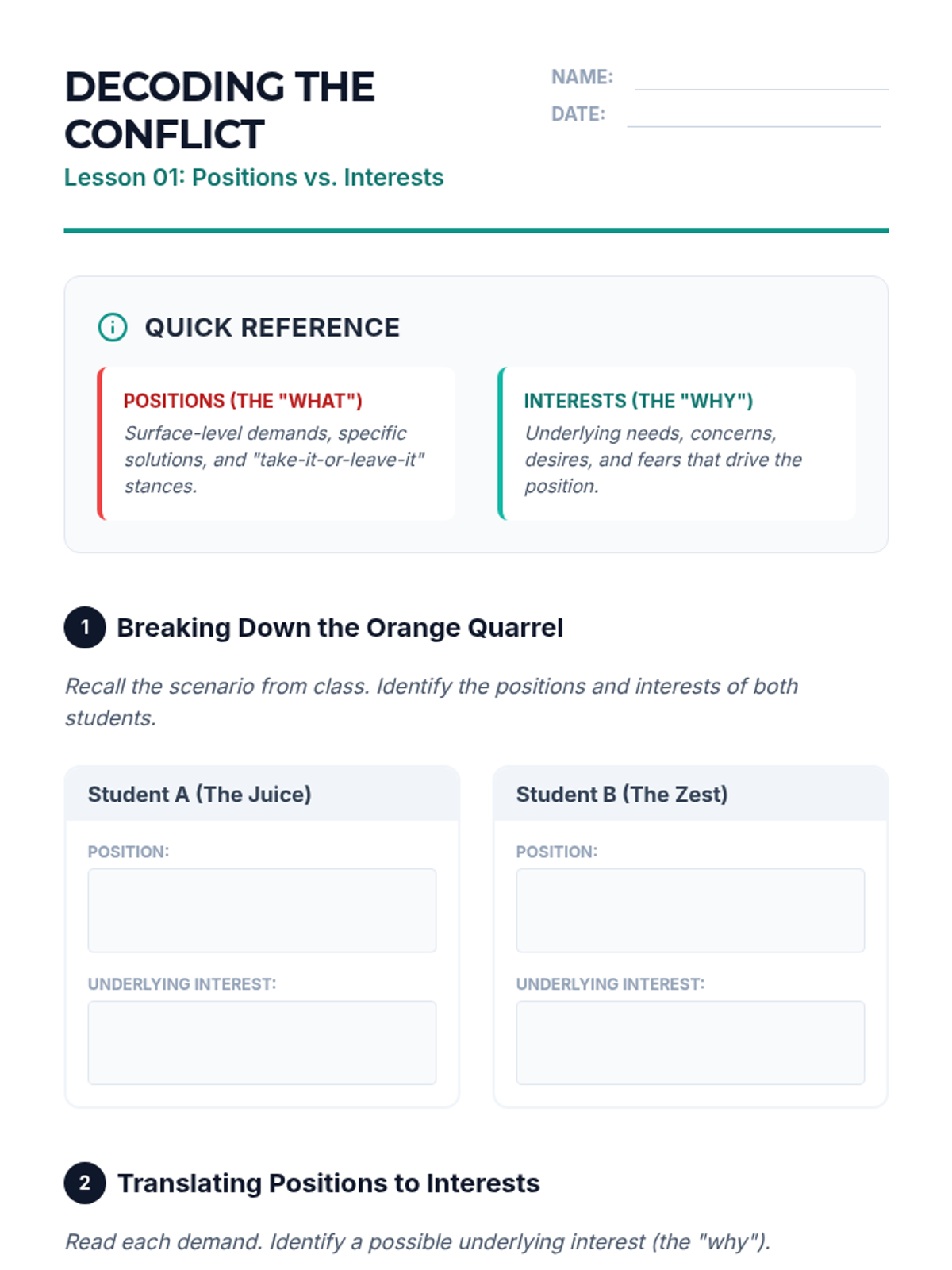
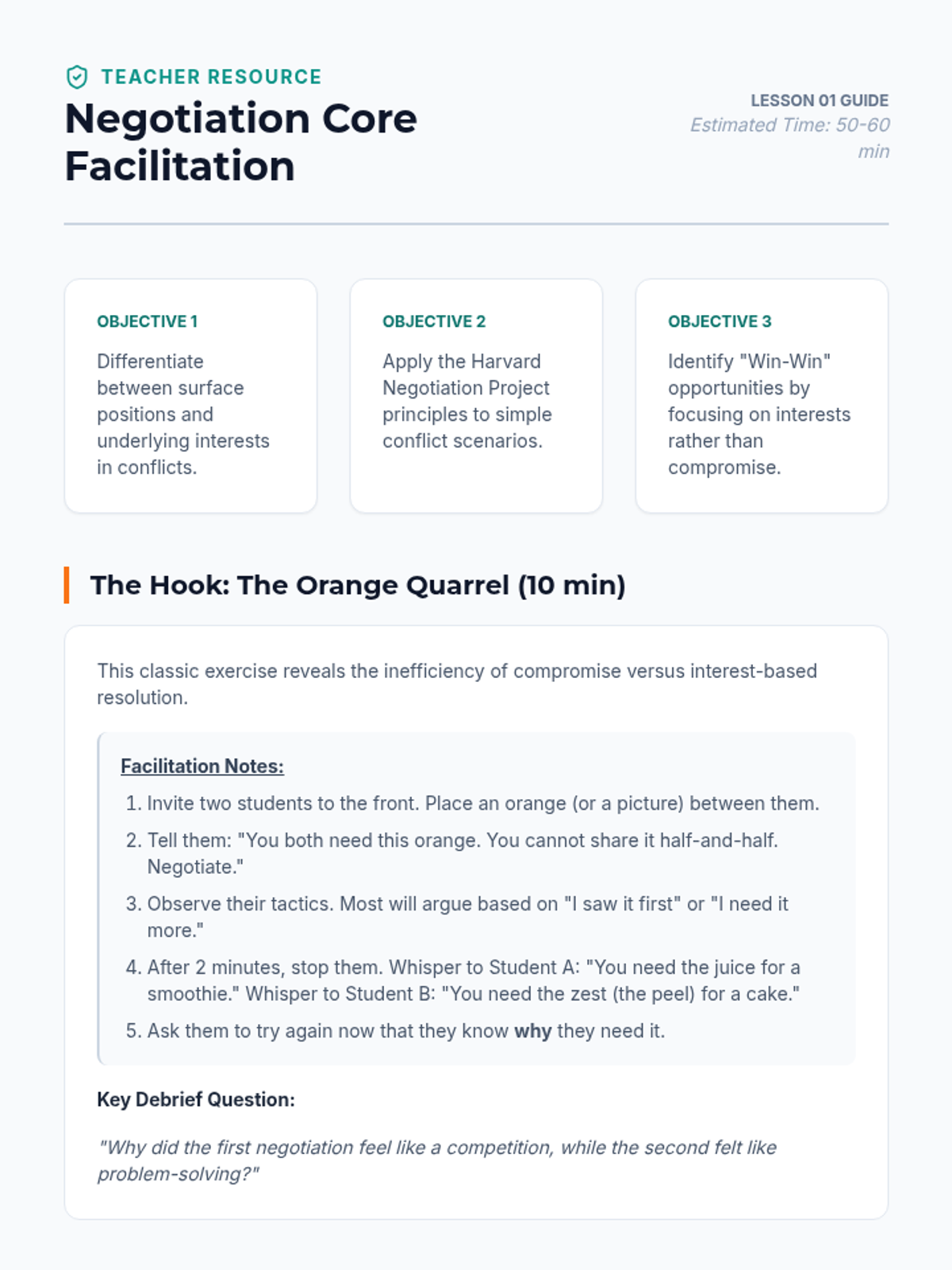
A comprehensive high school unit on interest-based negotiation and formal mediation. Students move from understanding individual interests to facilitating multi-party resolutions using the Harvard Negotiation Project framework and professional mediation stages.
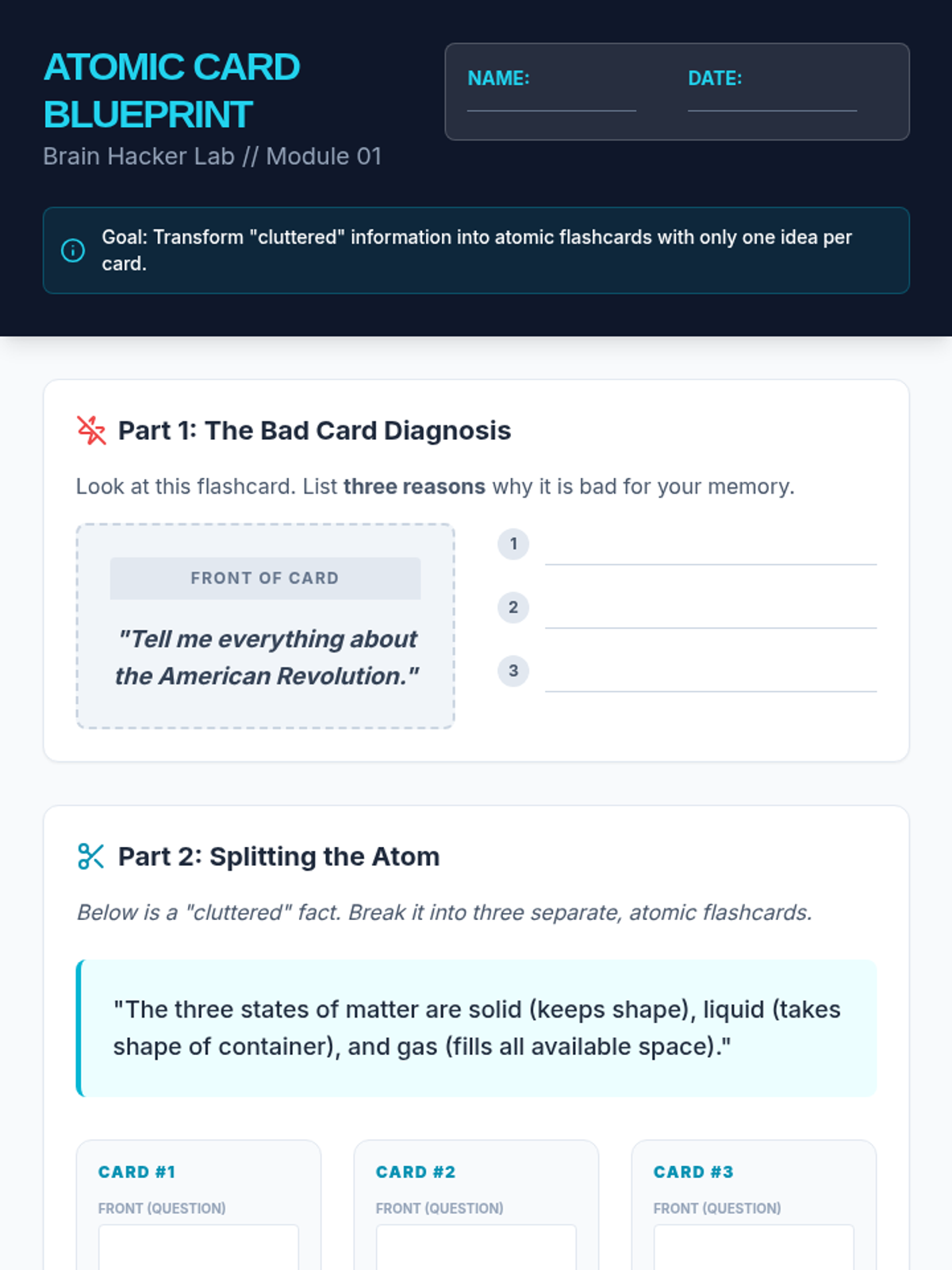
A comprehensive 5-lesson series designed to help 9th-grade students in academic support settings transform their passive highlights and annotations into active retrieval-based study tools. Through a 'Study Blueprint' theme, students move from auditing their existing notes to building outlines, concept maps, and flashcards, culminating in a personalized study guide for an external subject.
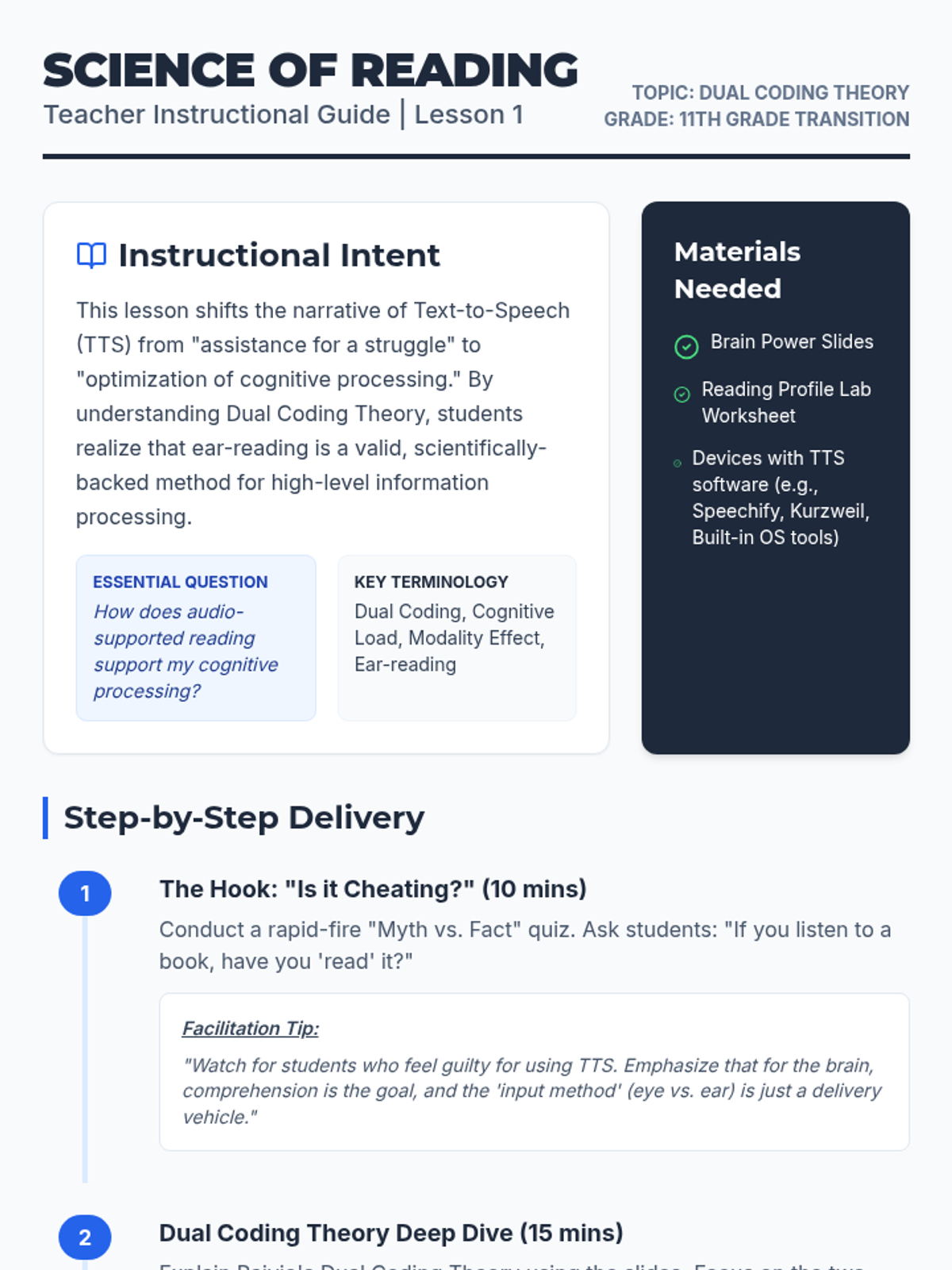
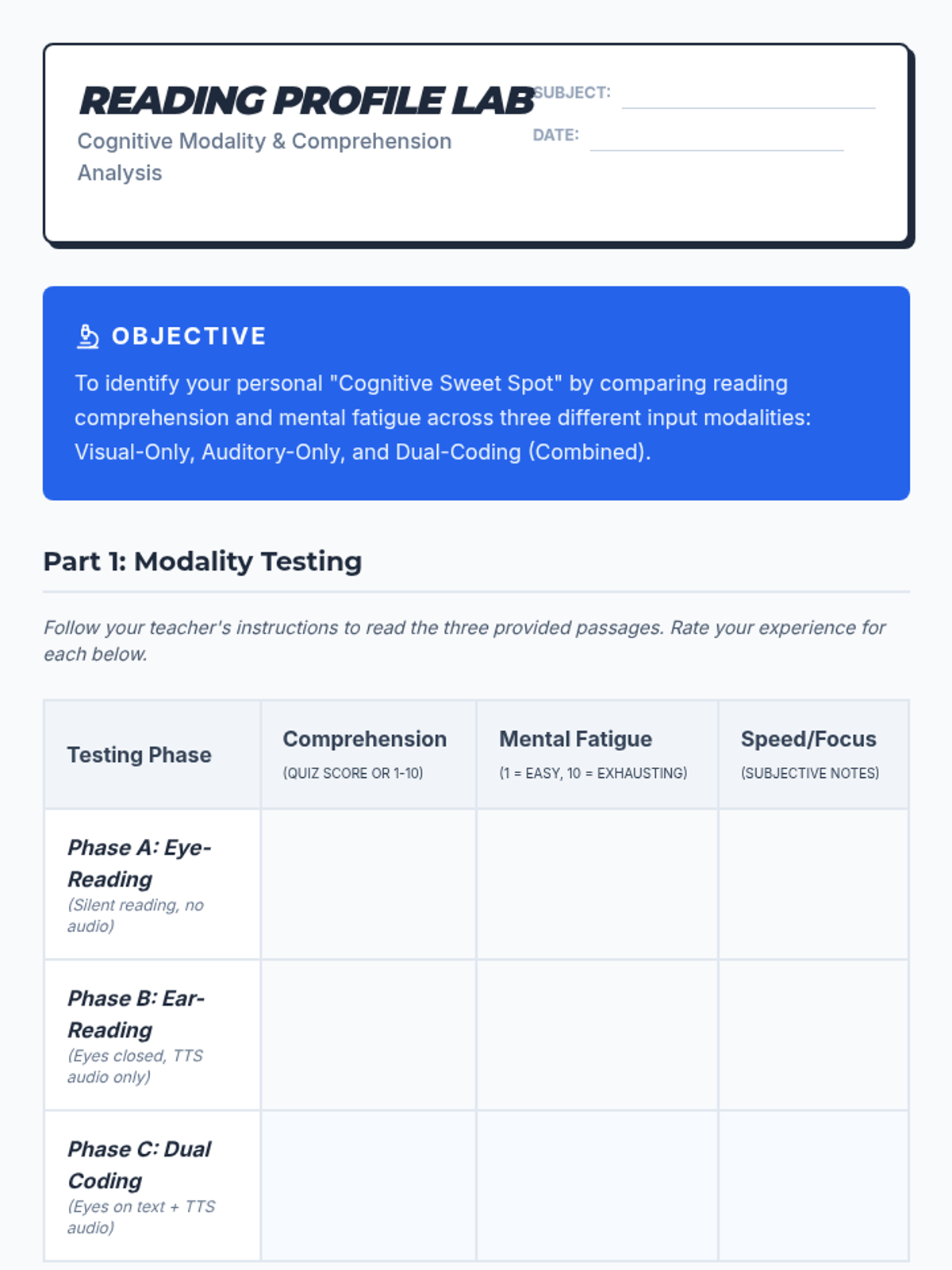
A comprehensive sequence for 11th-grade students focusing on the metacognitive and self-advocacy skills needed for using Text-to-Speech (TTS) technology in post-secondary environments. Students investigate cognitive science, legal frameworks, and practical communication strategies to ensure accessibility in college and career.
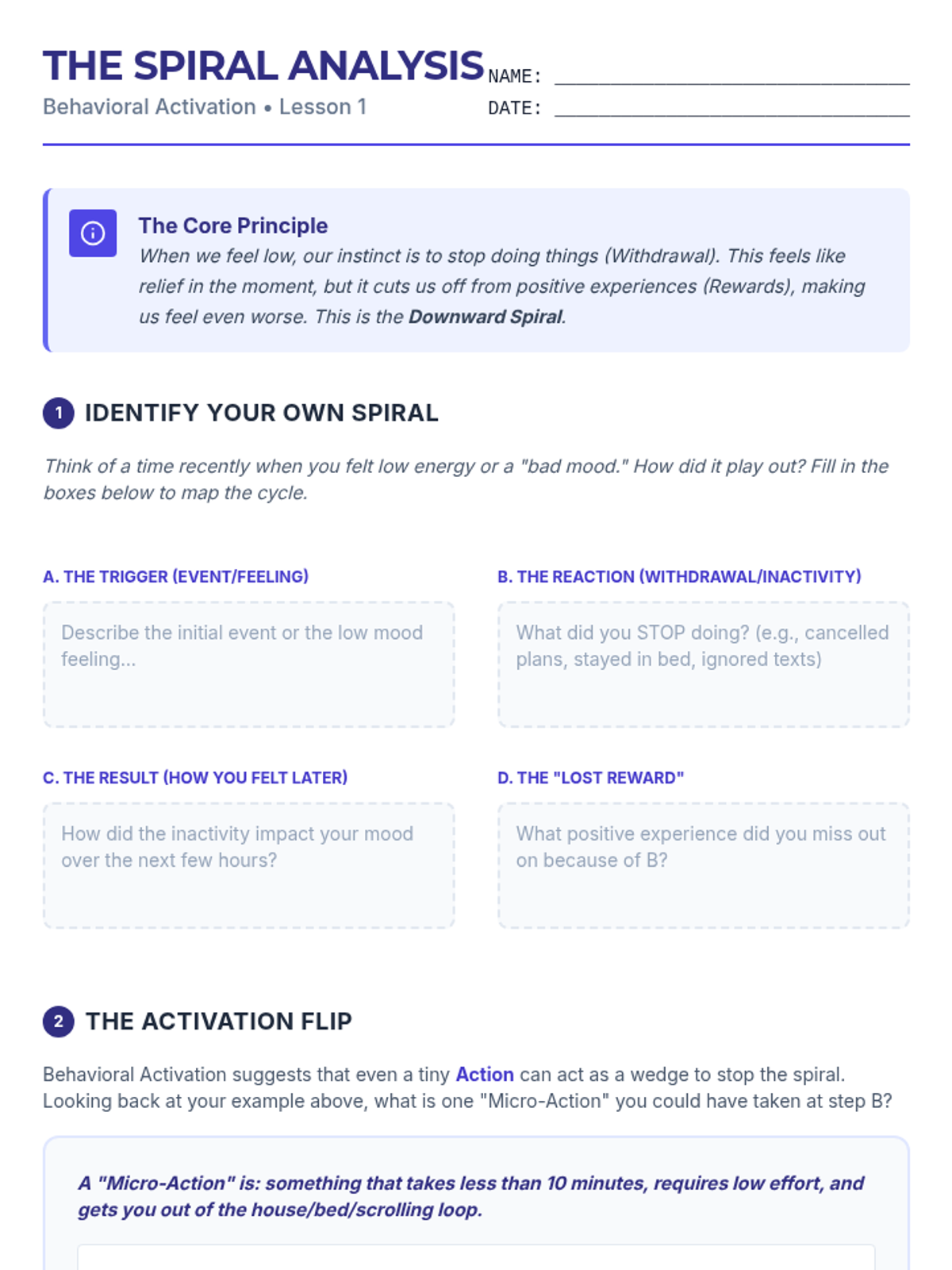
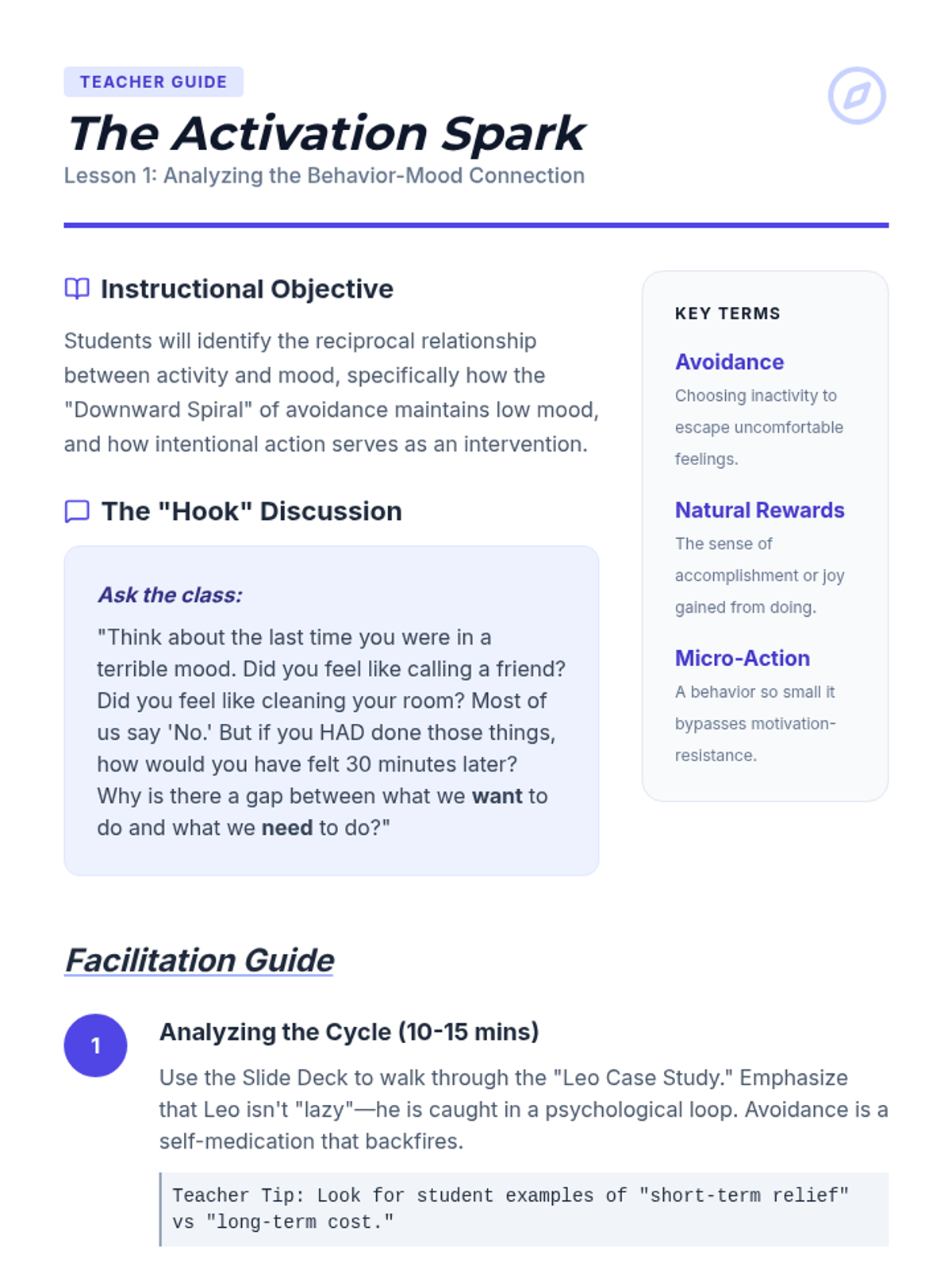
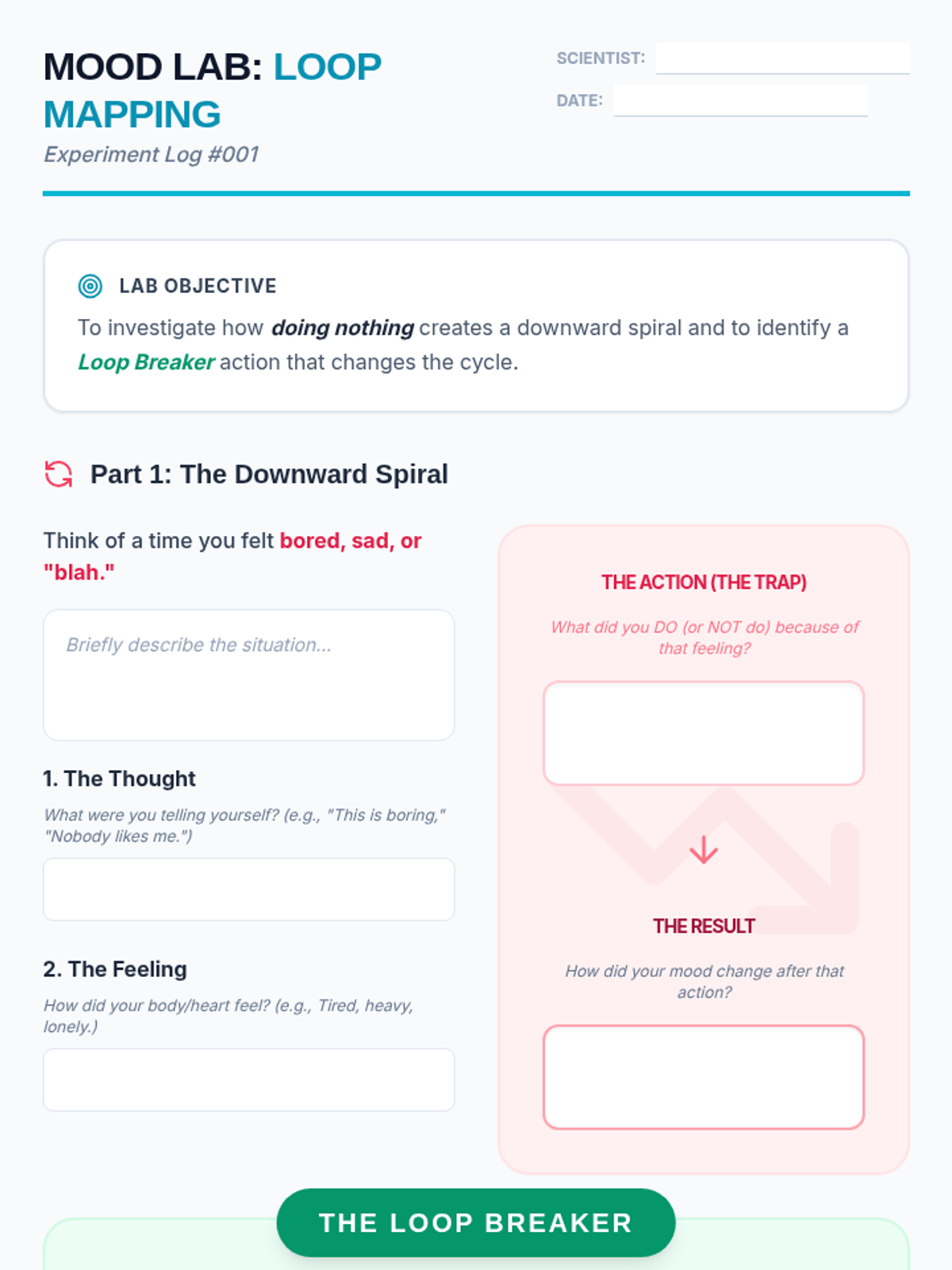
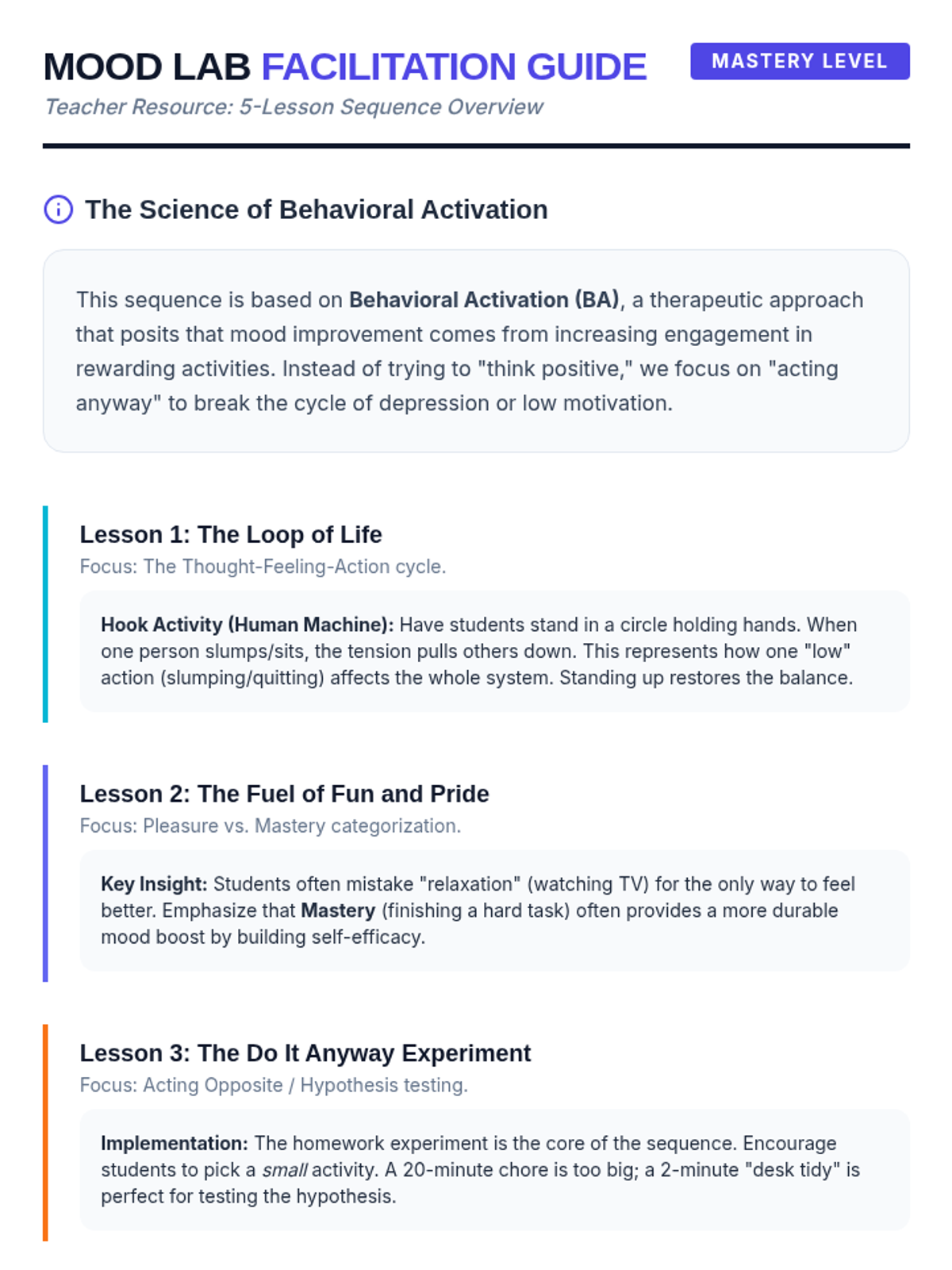
A comprehensive 12th-grade sequence on Behavioral Activation (BA), teaching students how to interrupt negative mood cycles through values-aligned activity scheduling and barrier management.
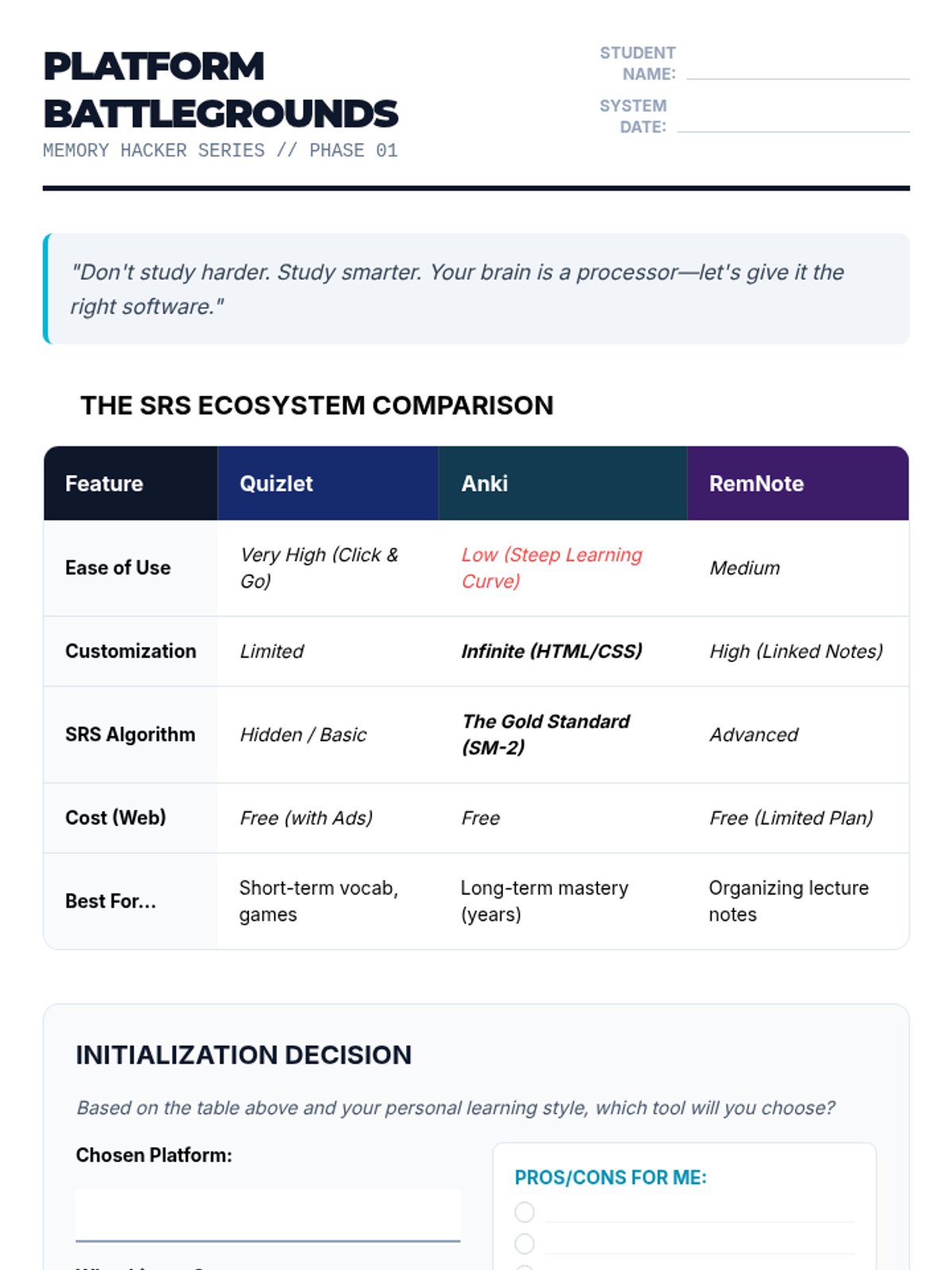
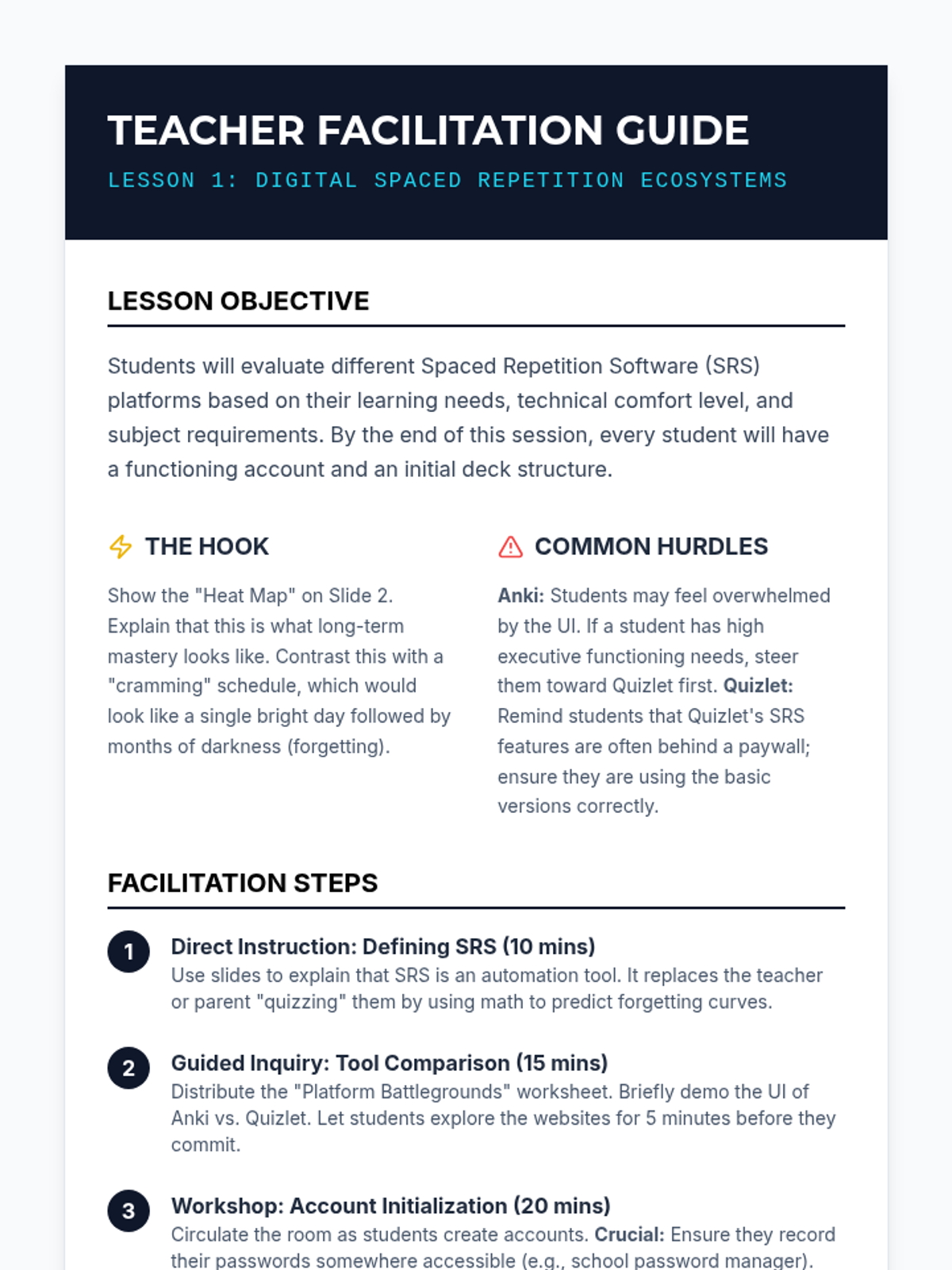
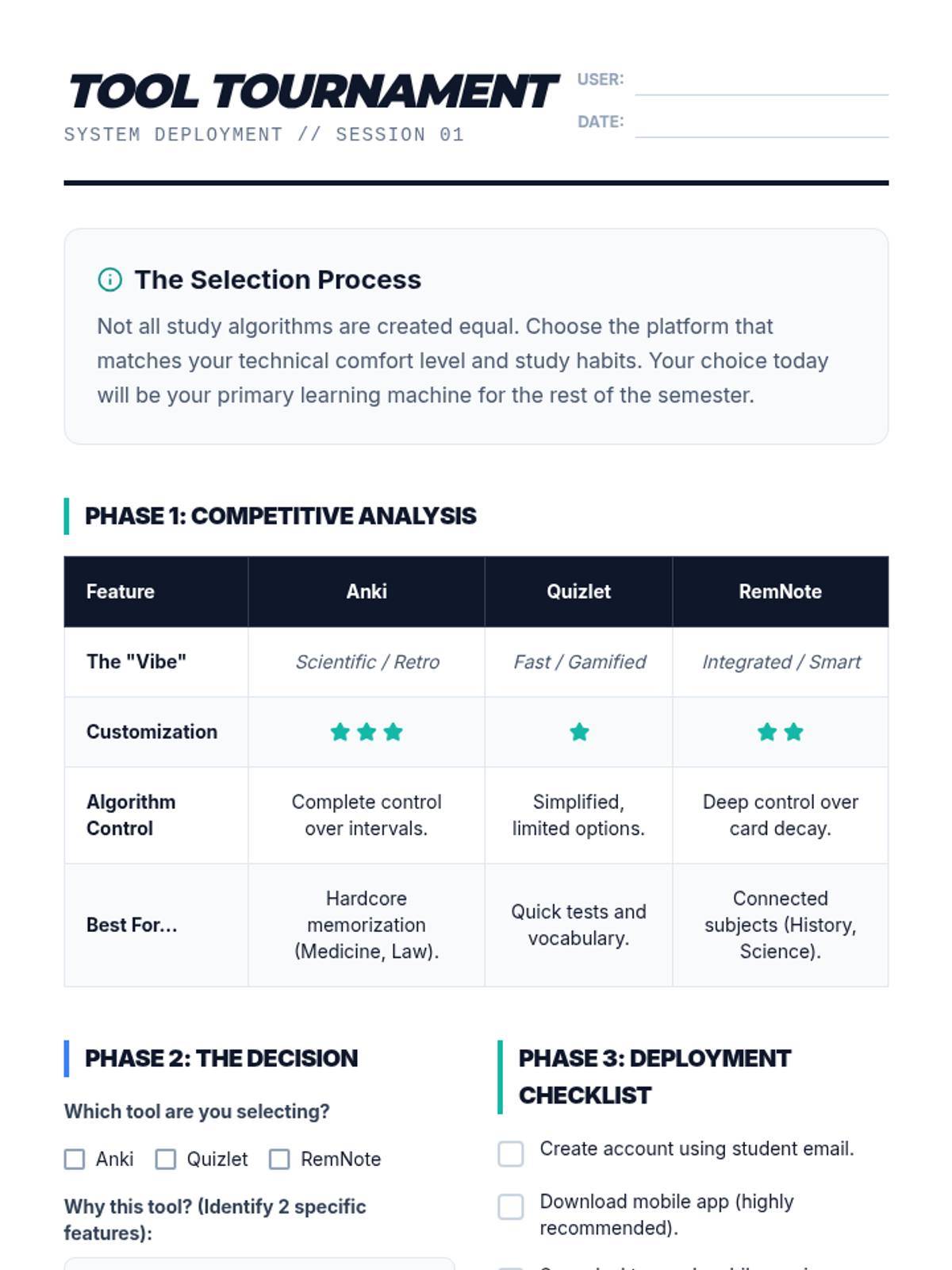
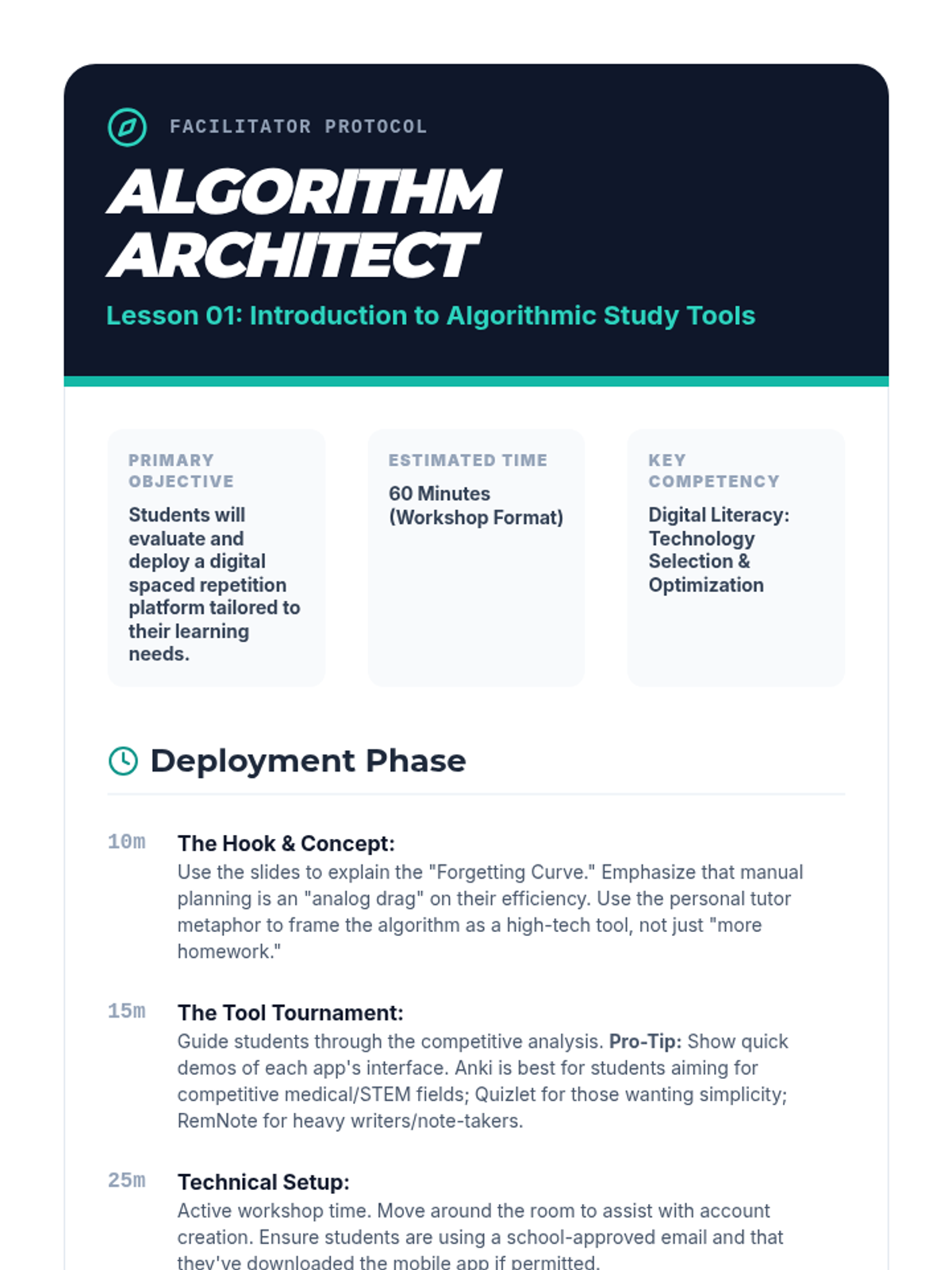
A 5-lesson unit for 10th-grade academic support focused on leveraging digital spaced repetition software (SRS) to automate memory retention and track learning progress through data.
A comprehensive sequence for 11th-grade students with executive function challenges, focusing on automating study schedules using digital spaced repetition software. Students learn to set up systems, create multimodal digital decks, interpret learning analytics, and personalize algorithms for their unique processing speeds.
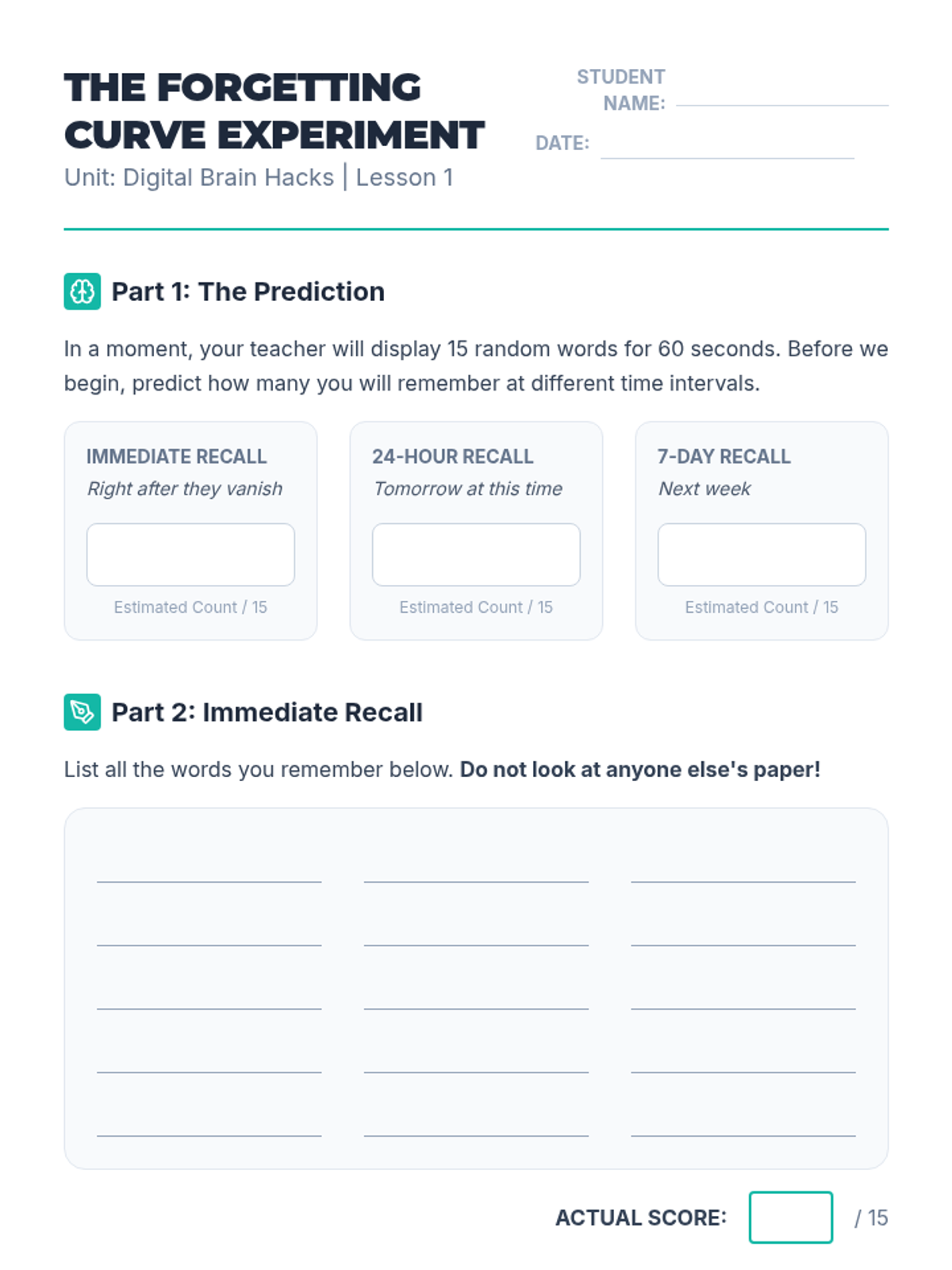
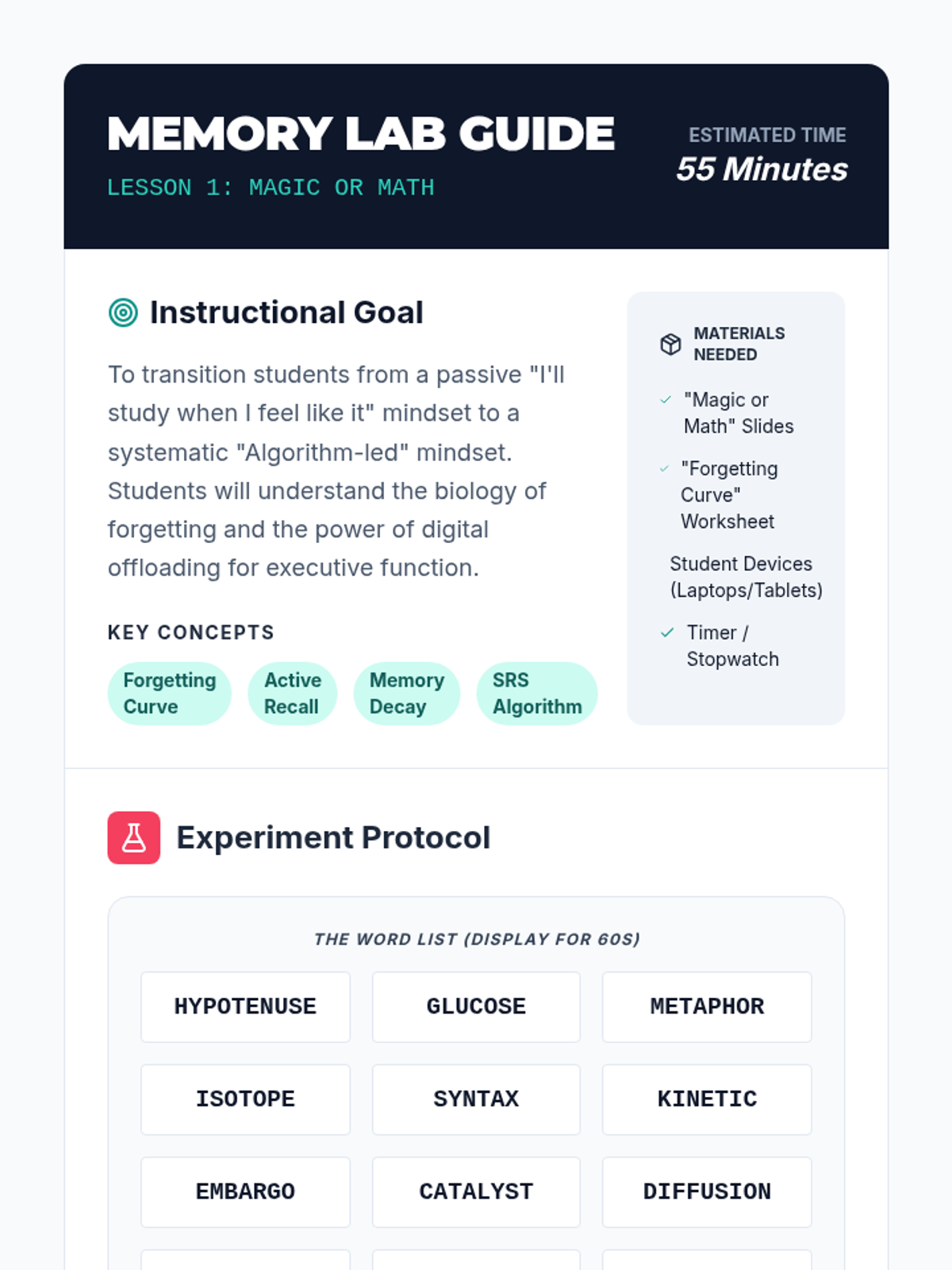
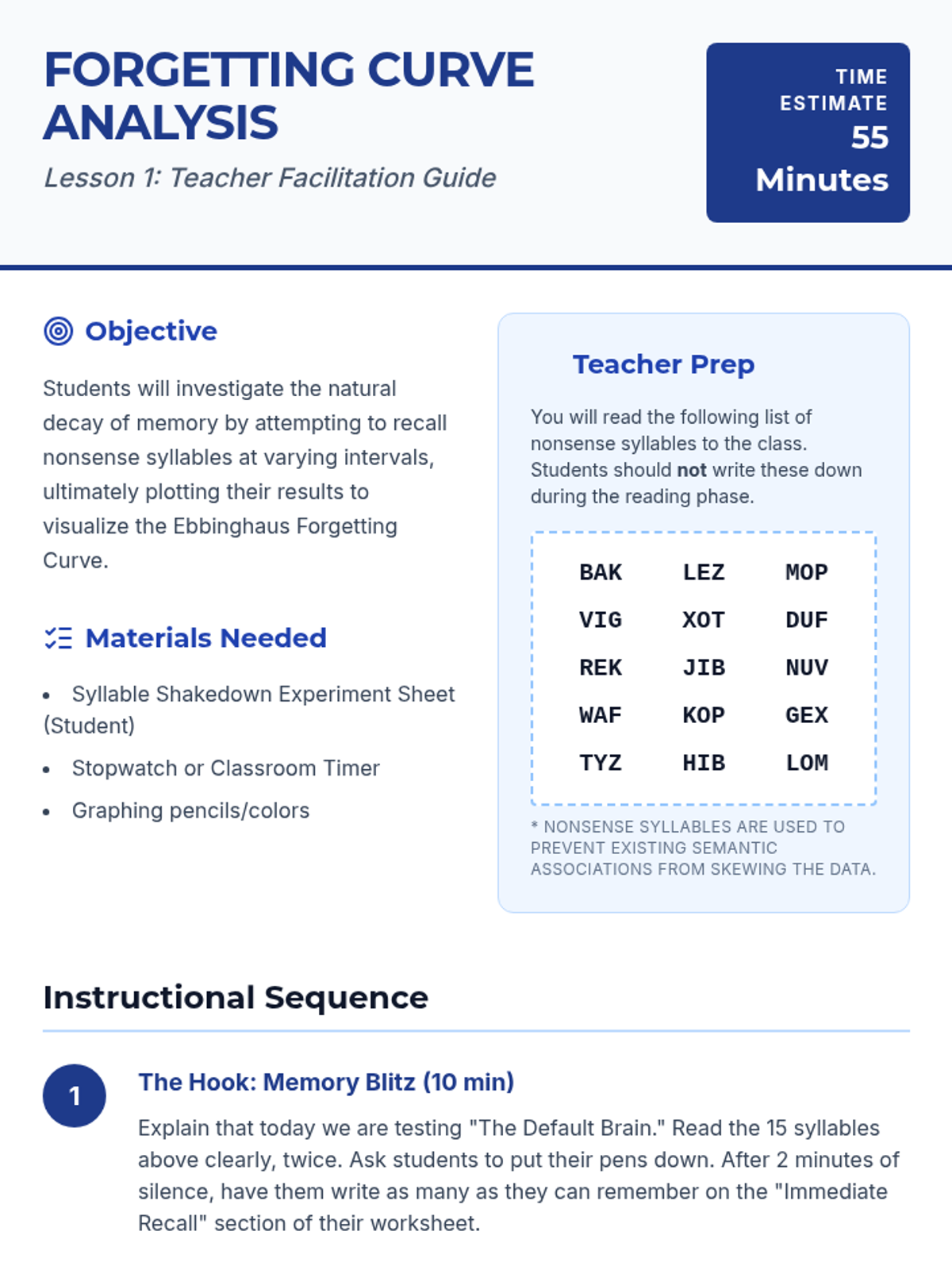
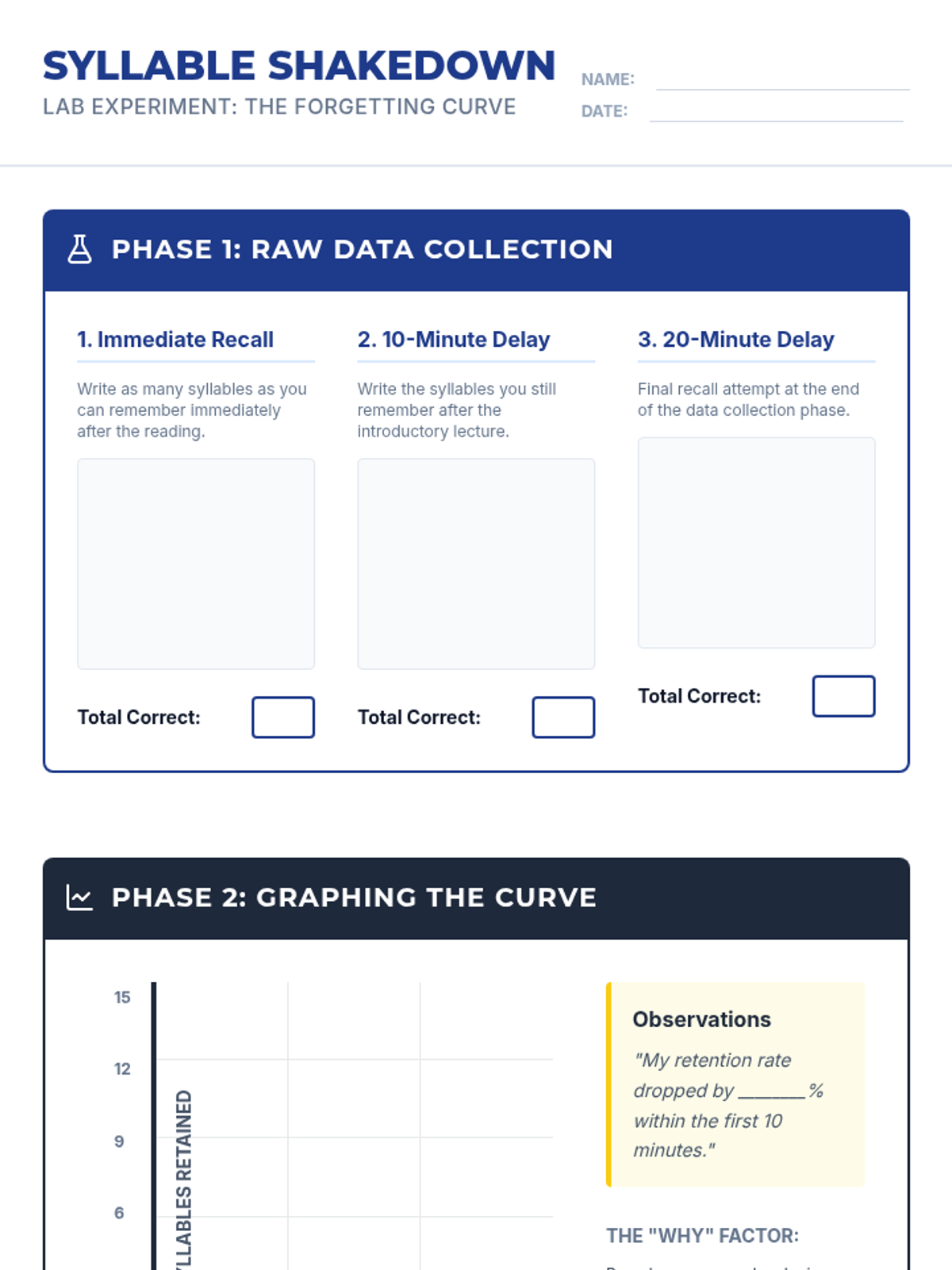
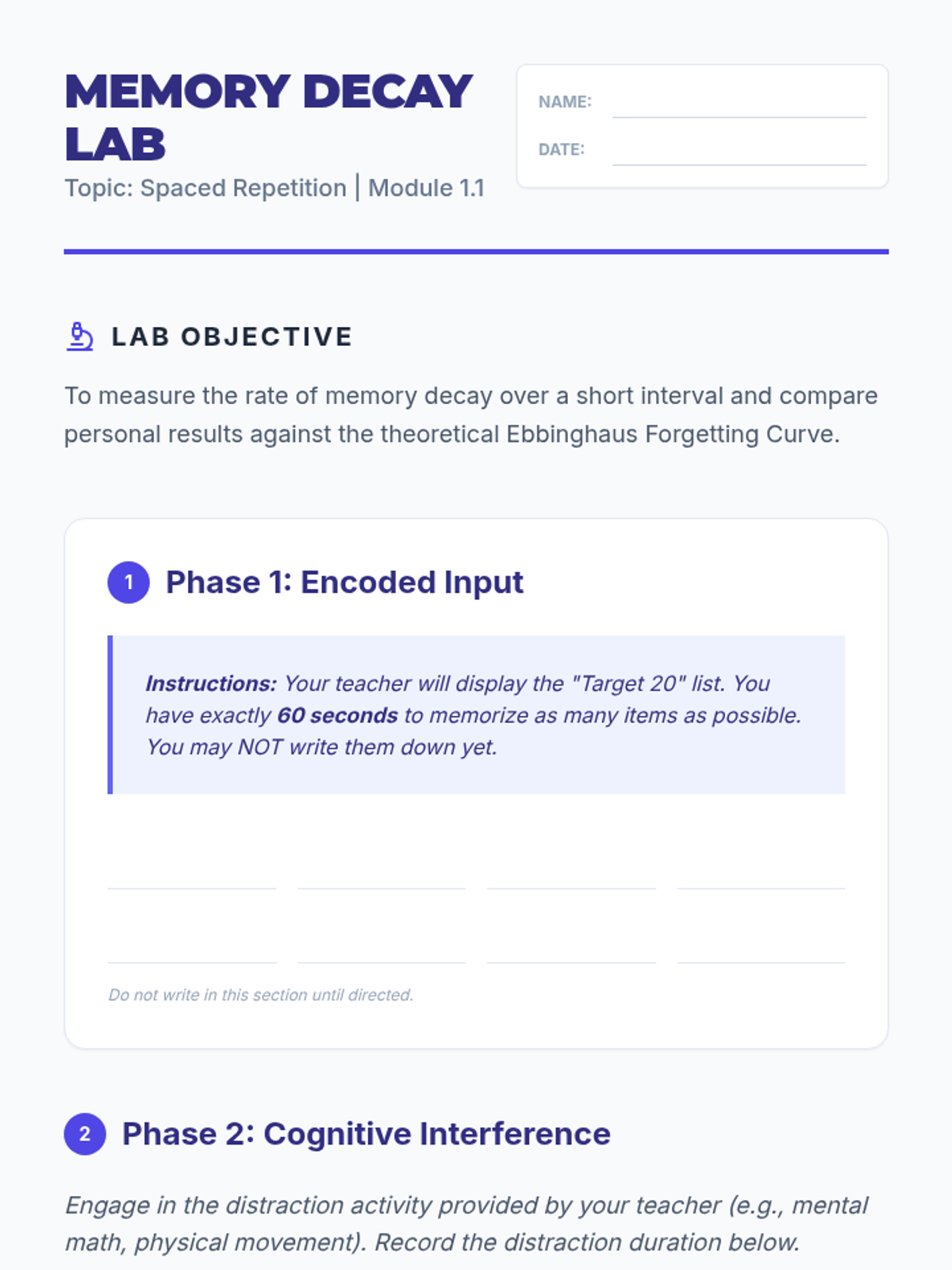
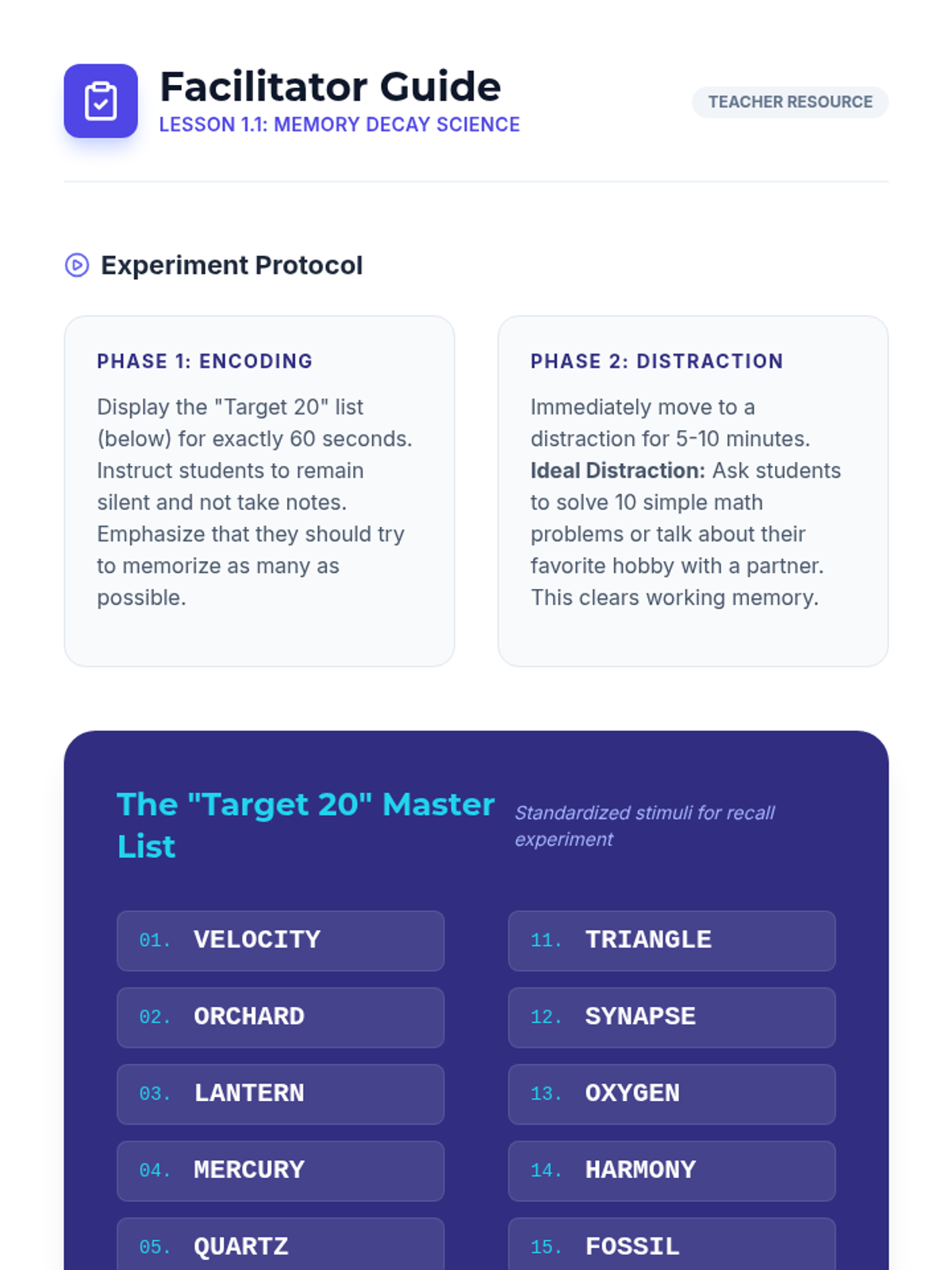
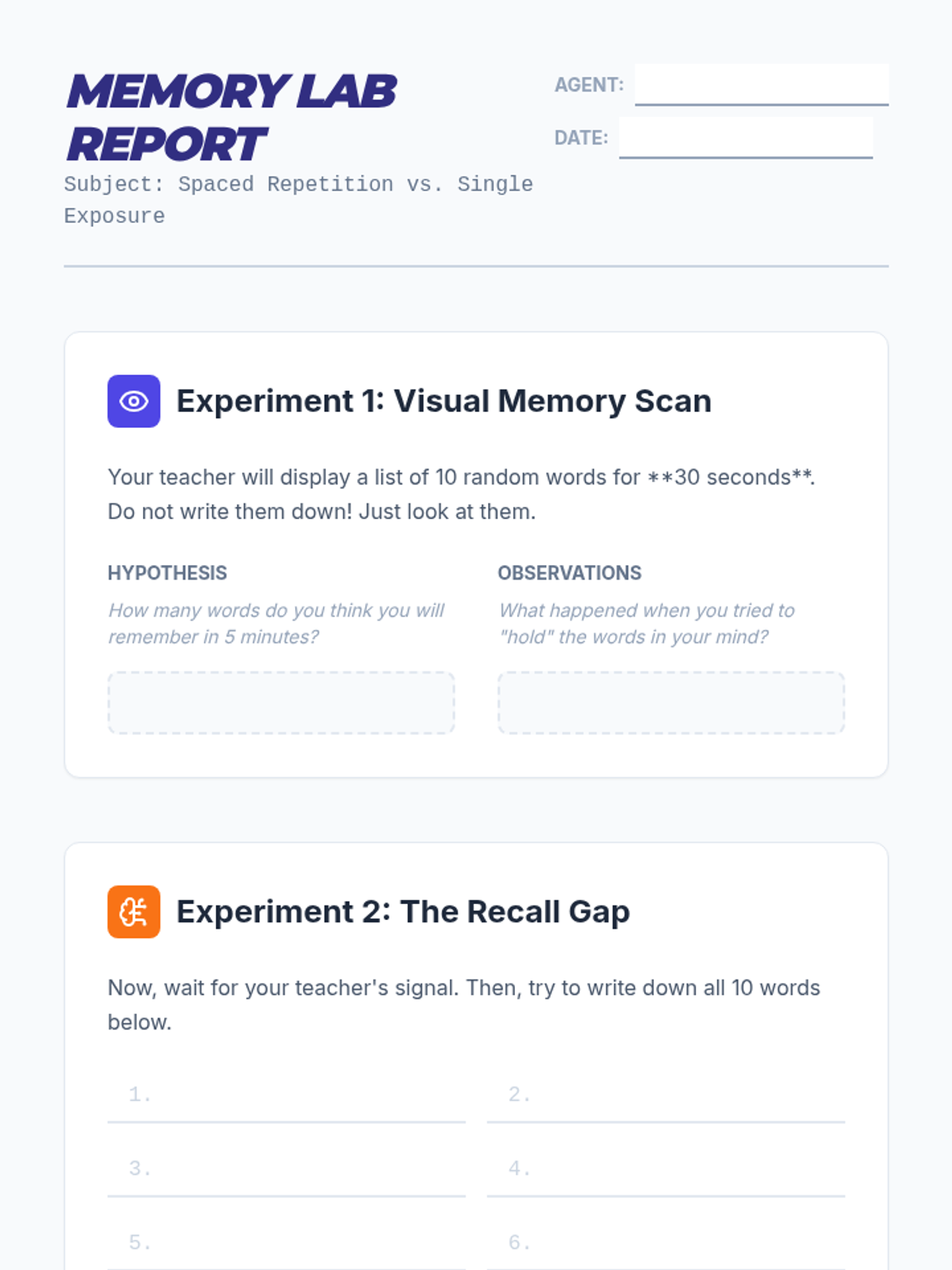
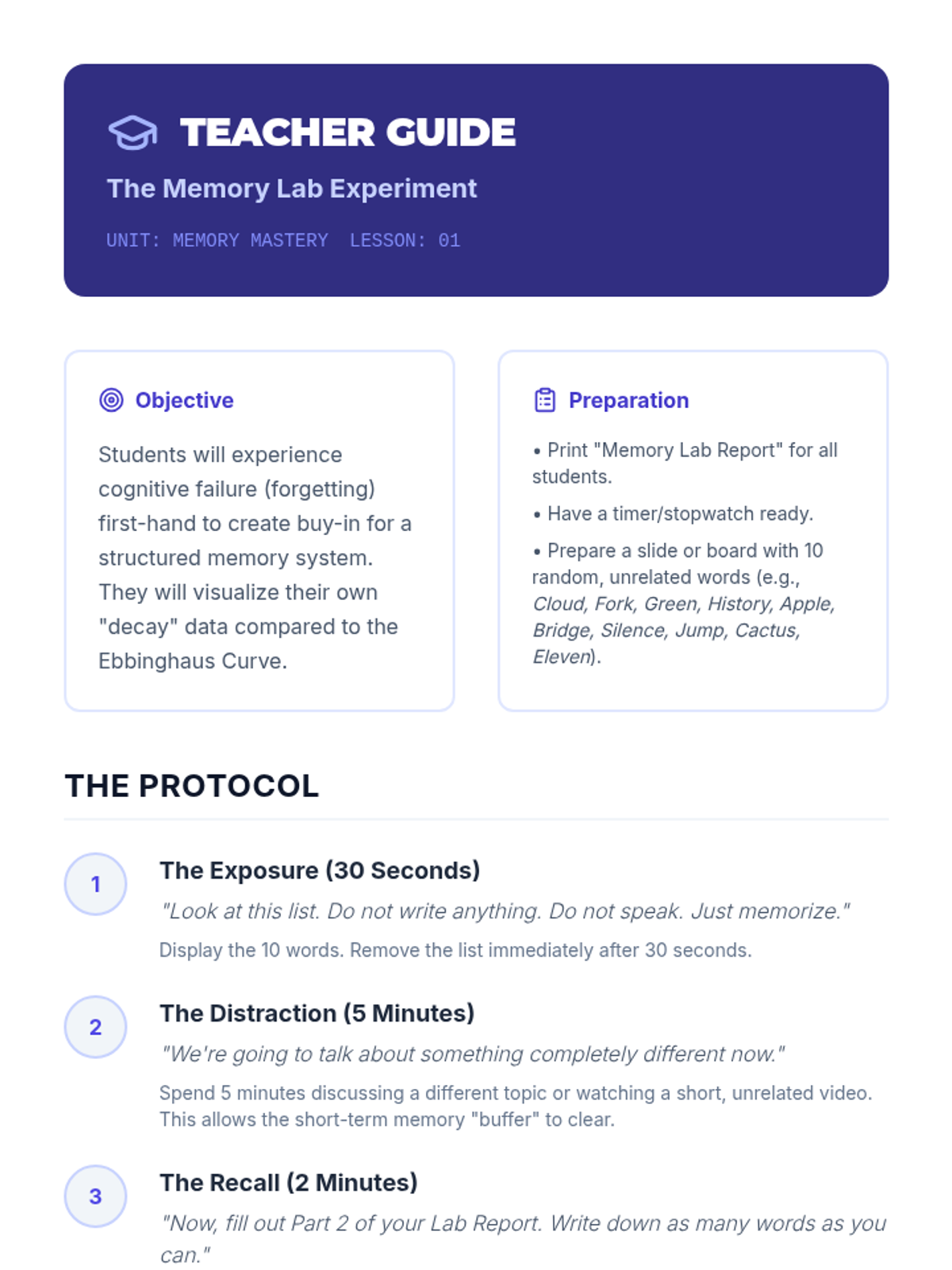
An inquiry-based exploration into the neuroscience of memory, focusing on the Forgetting Curve and how spaced repetition can 'hack' the brain for long-term retention. Students move from understanding memory decay to designing their own efficient study schedules based on biological principles.
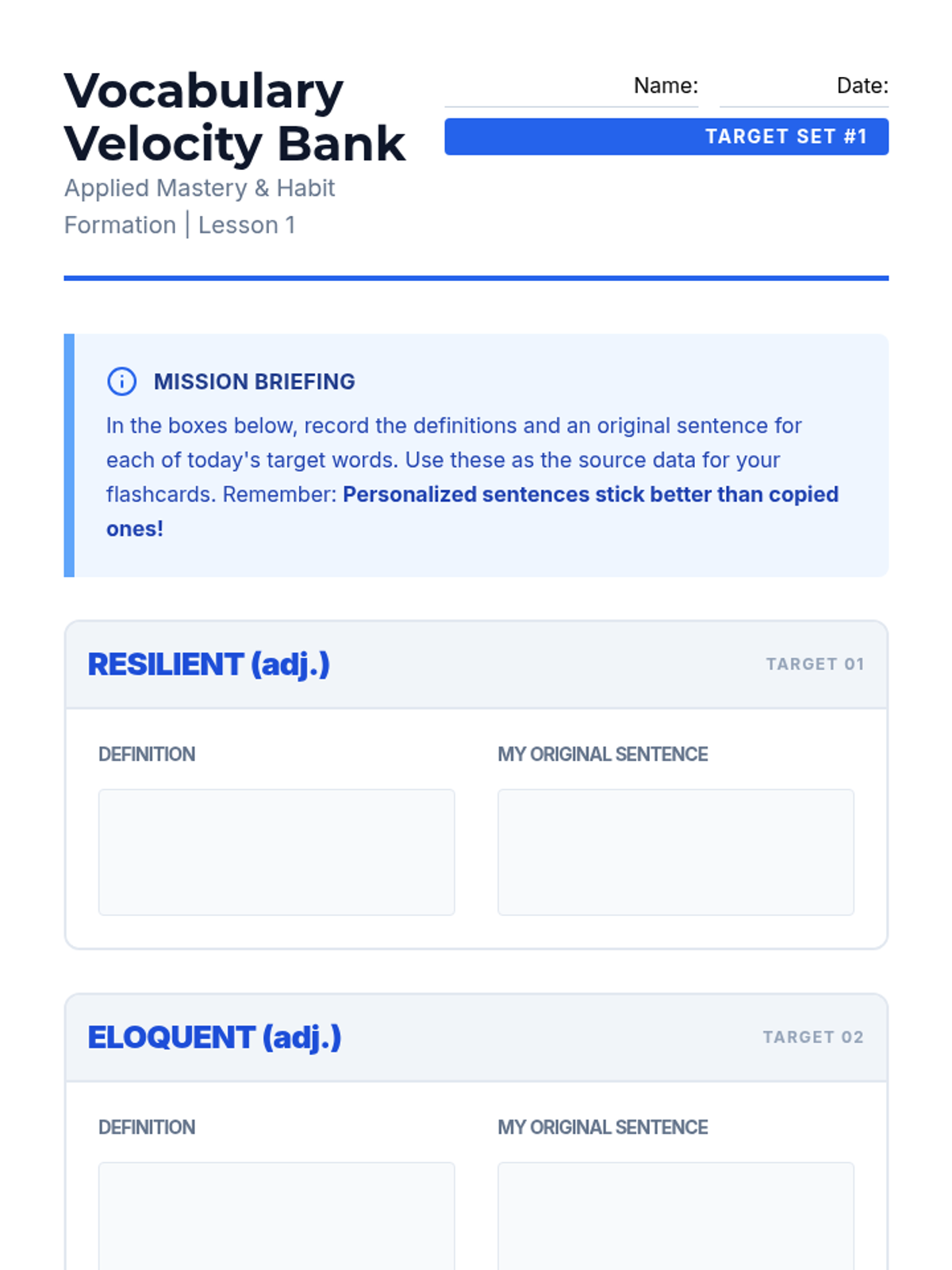
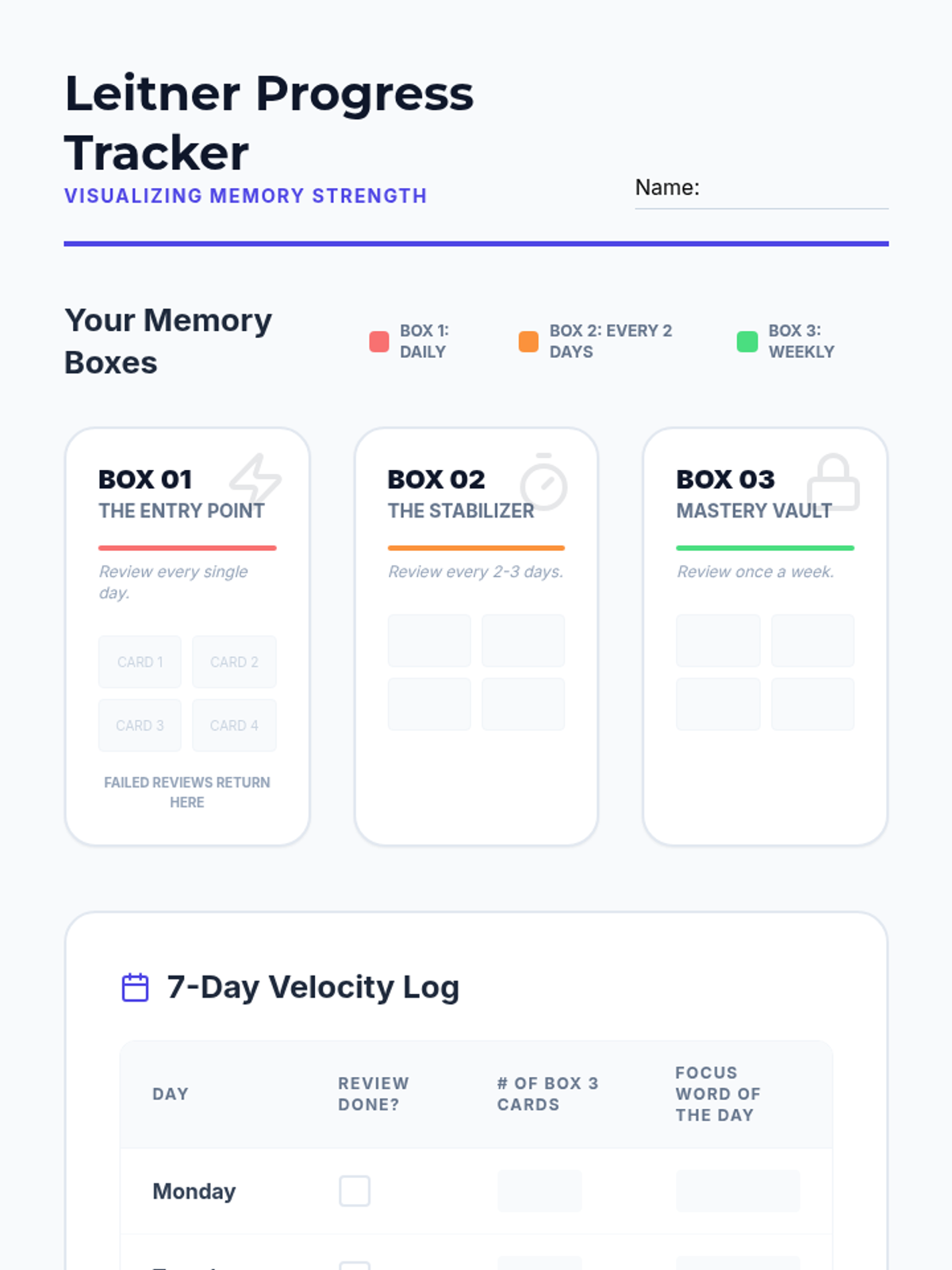
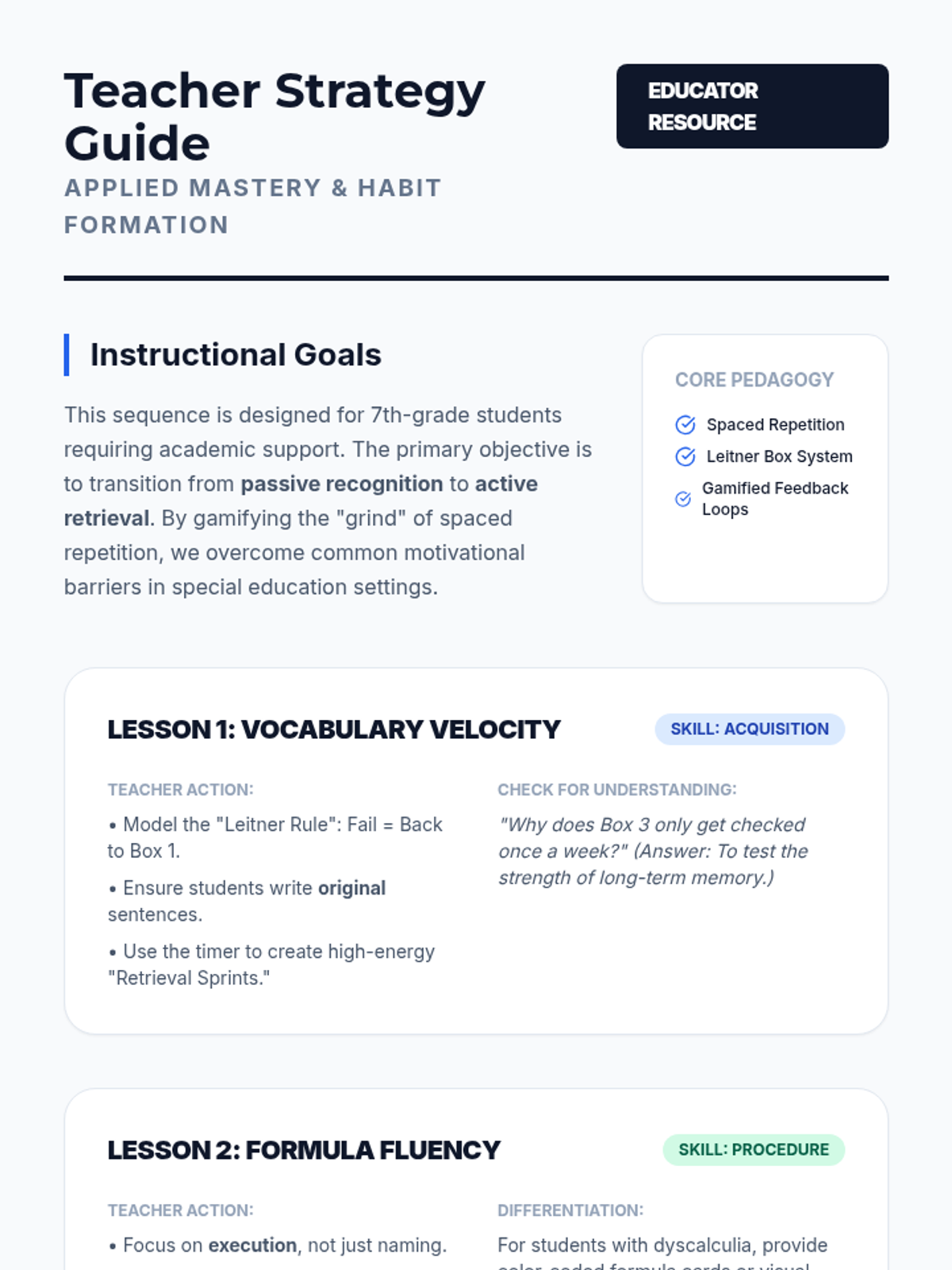
This sequence integrates spaced repetition strategies directly into current academic content, turning the practice into a habit through gamification and mastery tracking. Students apply their systems to vocabulary, math facts, and core concepts relevant to their grade level, helping them visualize their growth over time.
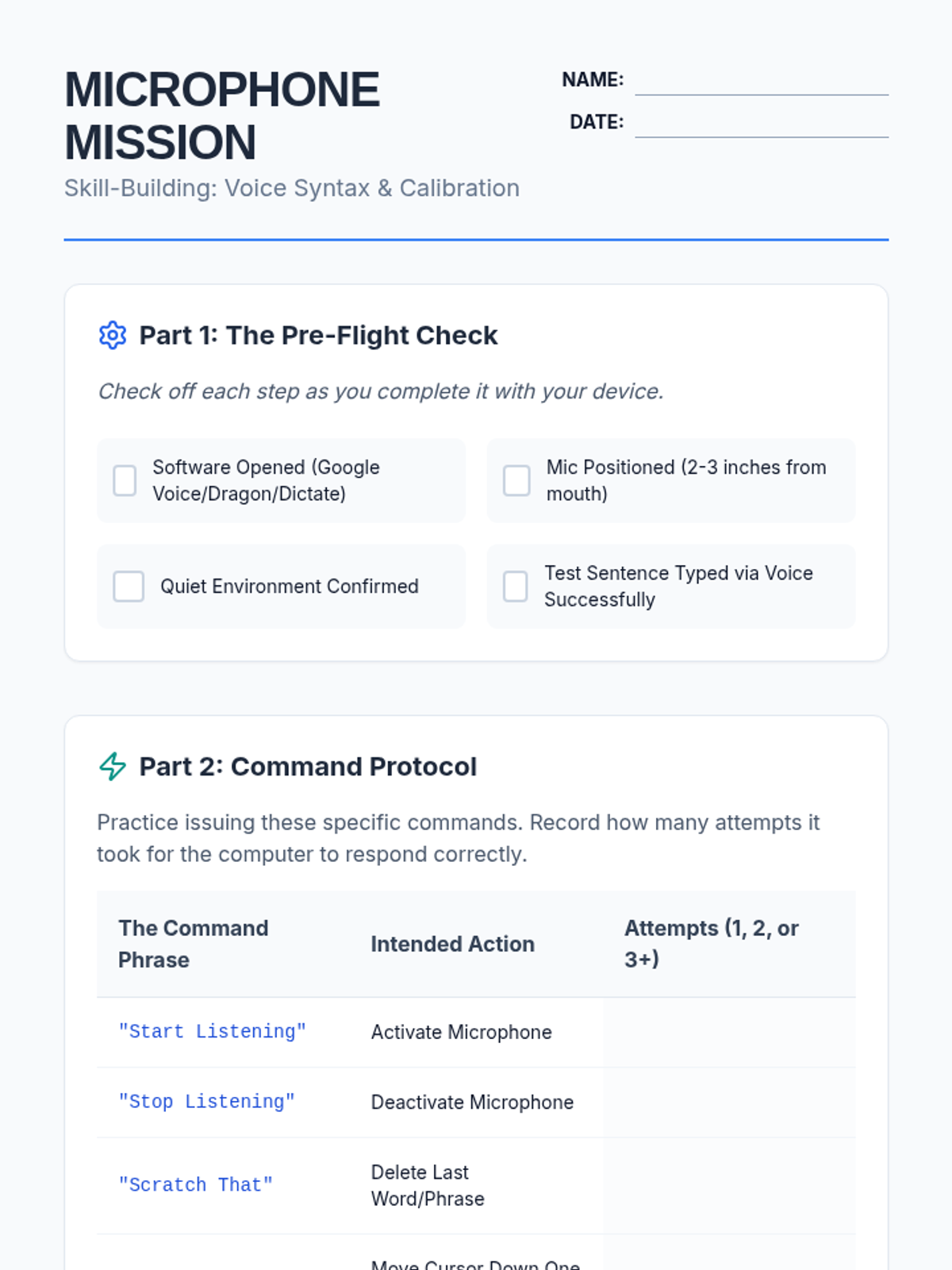
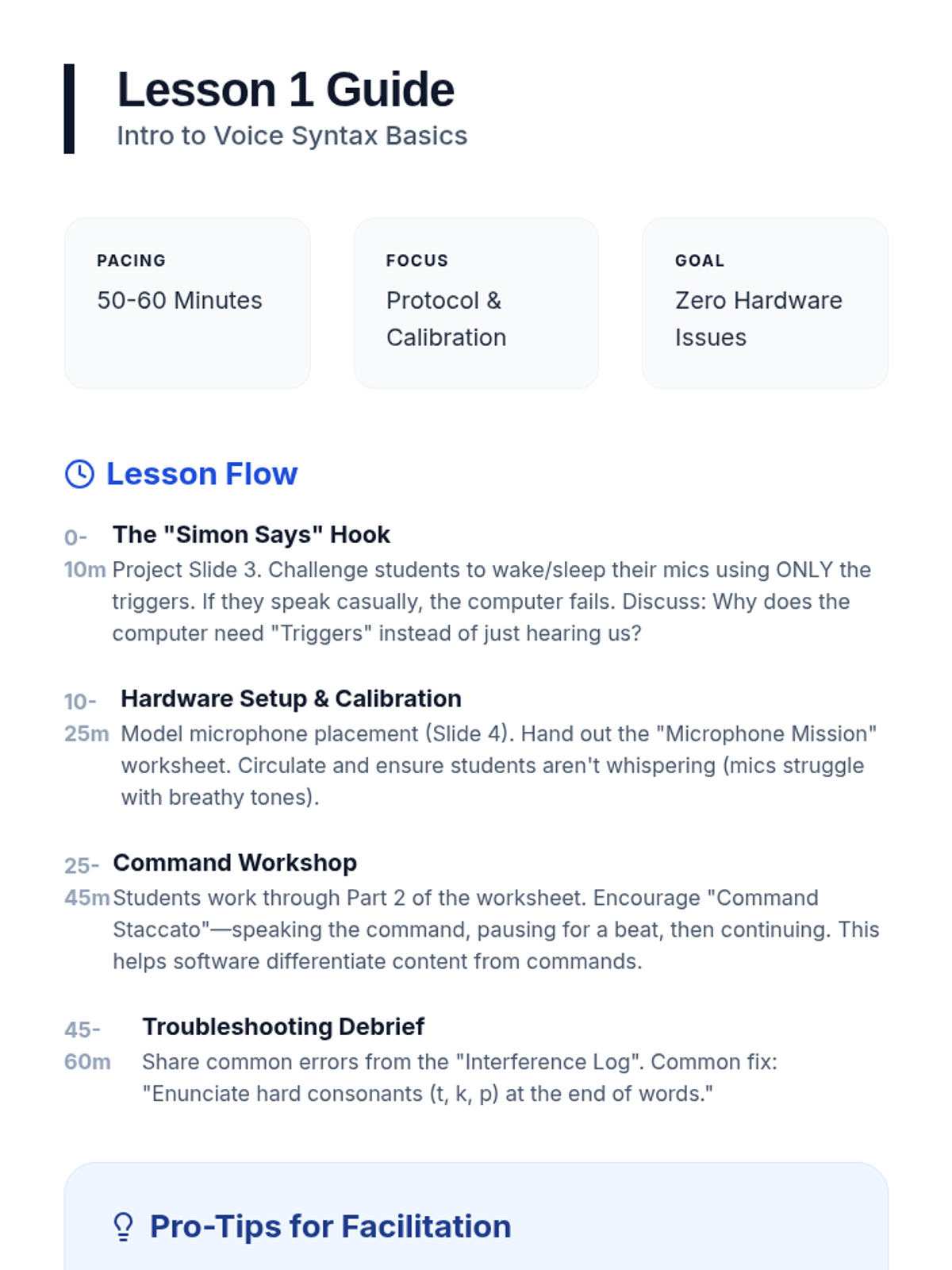
A comprehensive sequence for 11th-grade students to master speech-to-text technology, focusing on voice commands, punctuation syntax, and hands-free document formatting. Students transition from basic dictation to precise cursor control and layout management.
A comprehensive guide for 12th-grade students to master long-term memory through the science of spaced repetition and the physical implementation of a manual Leitner Box system. Students move from theoretical understanding of the Ebbinghaus Forgetting Curve to practical system management and self-regulation.
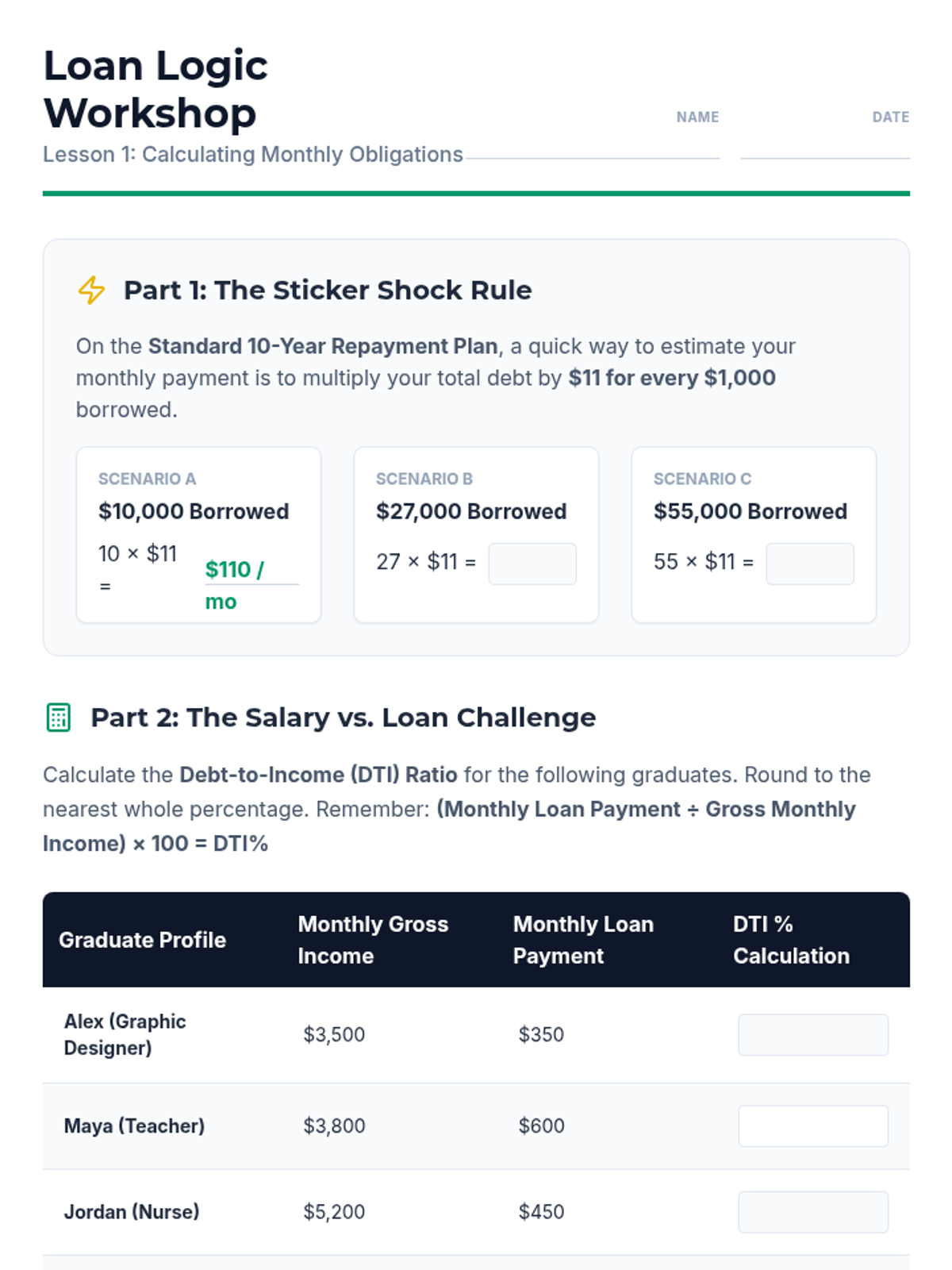
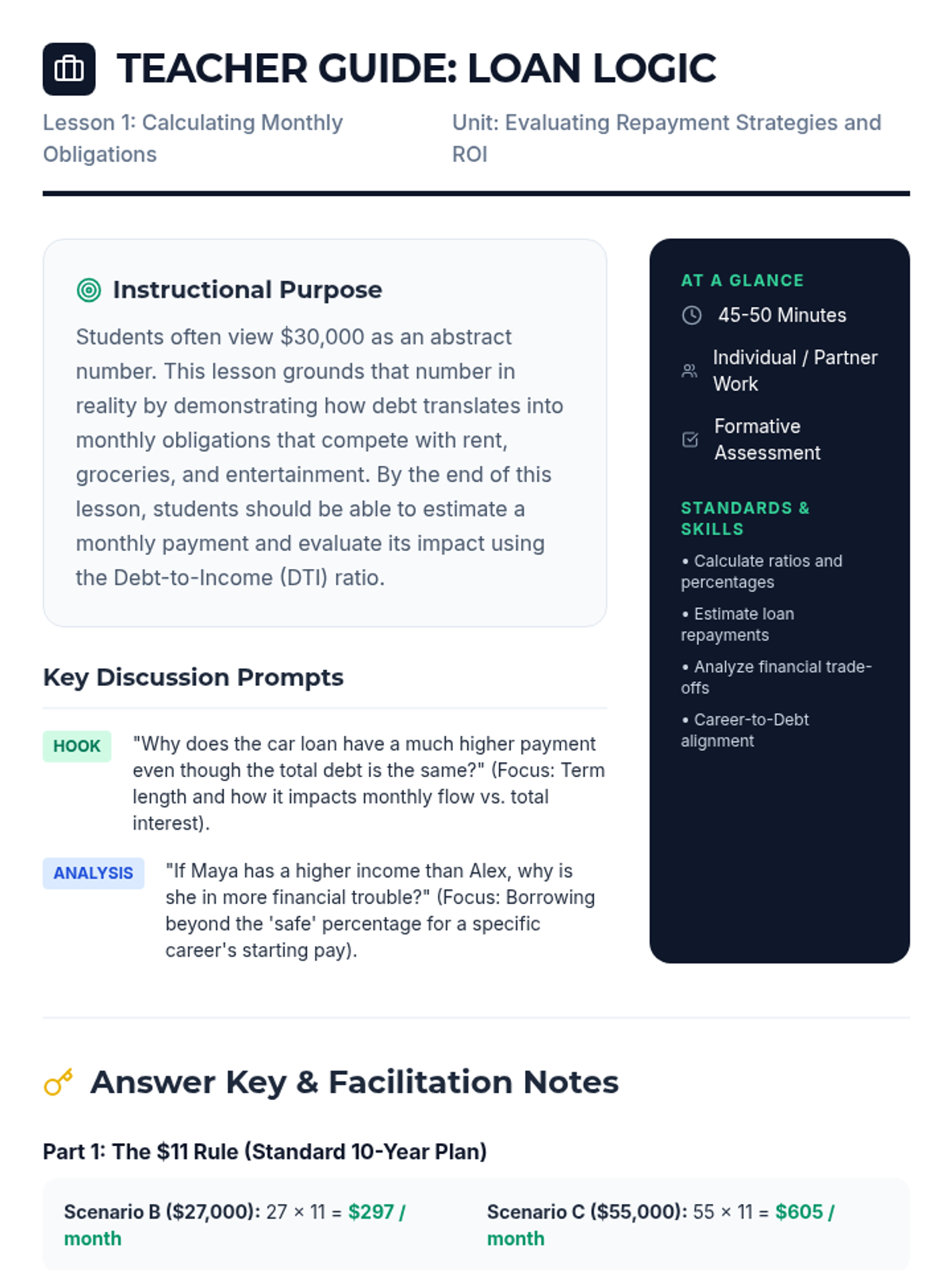
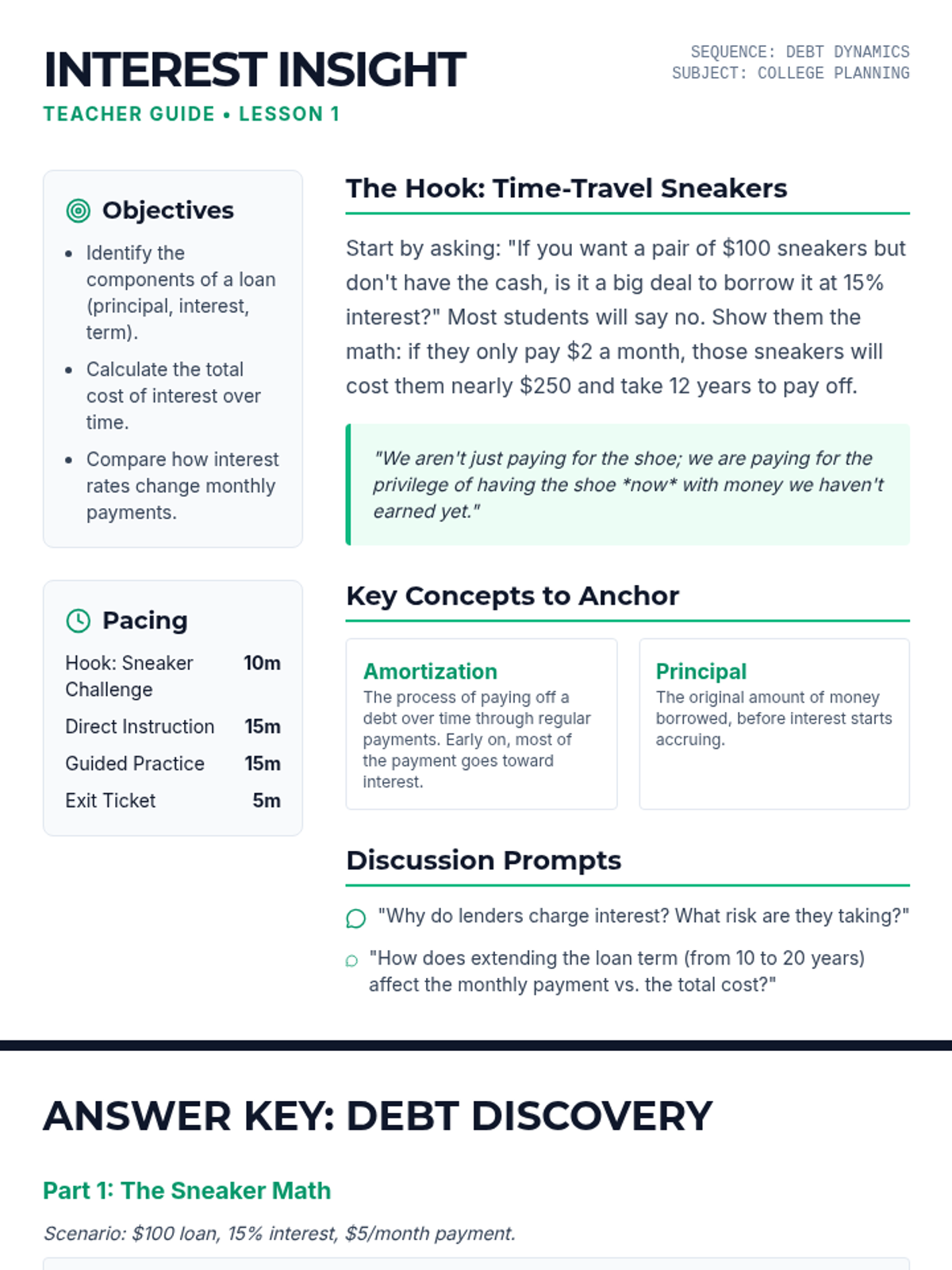
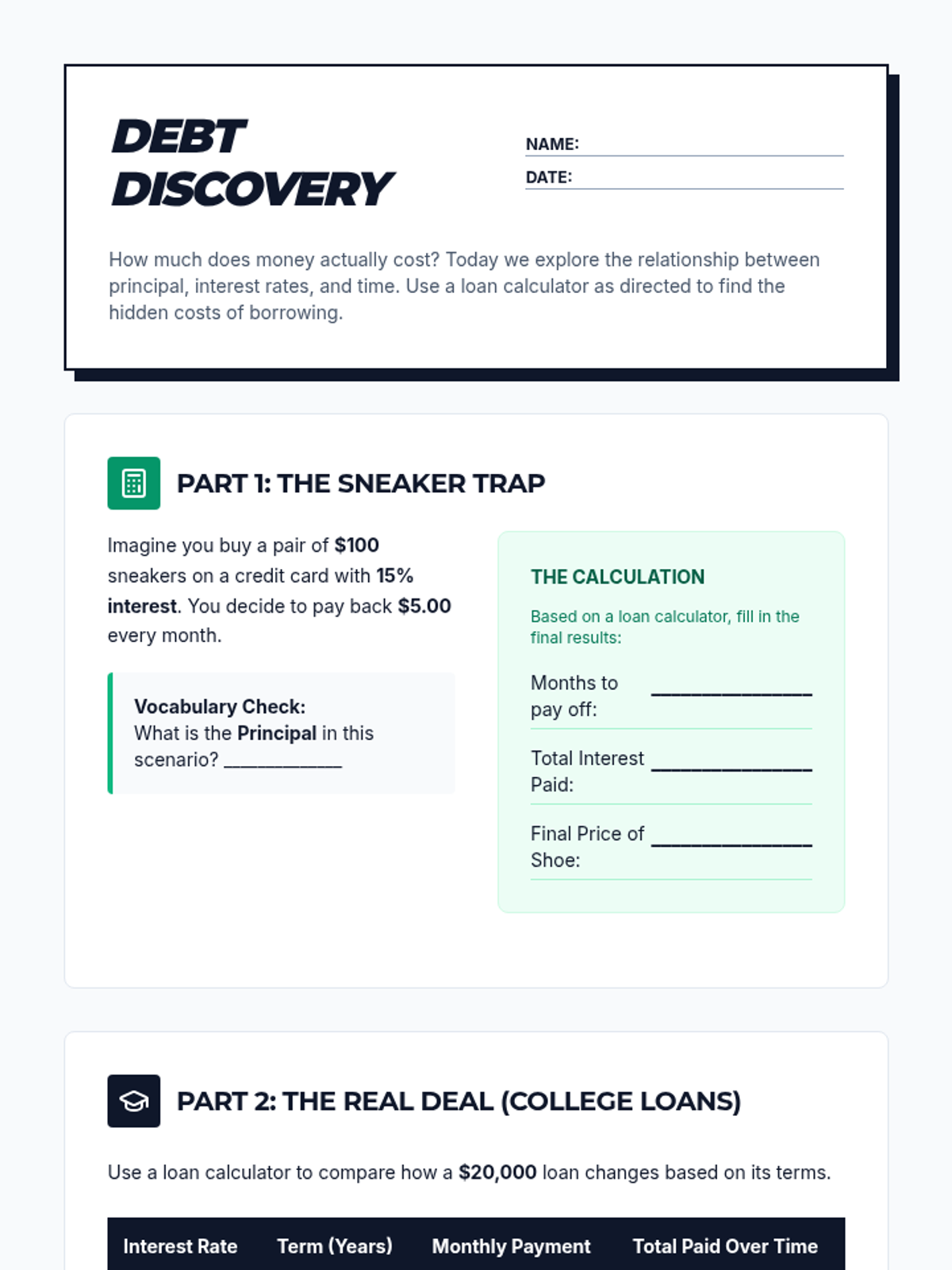
A comprehensive sequence for 10th-grade students focusing on the financial realities of student loan repayment, the impact of debt-to-income ratios, and evaluating the long-term ROI of post-secondary education choices. Students progress from basic math to strategic advisory, culminating in a complex case study analysis.
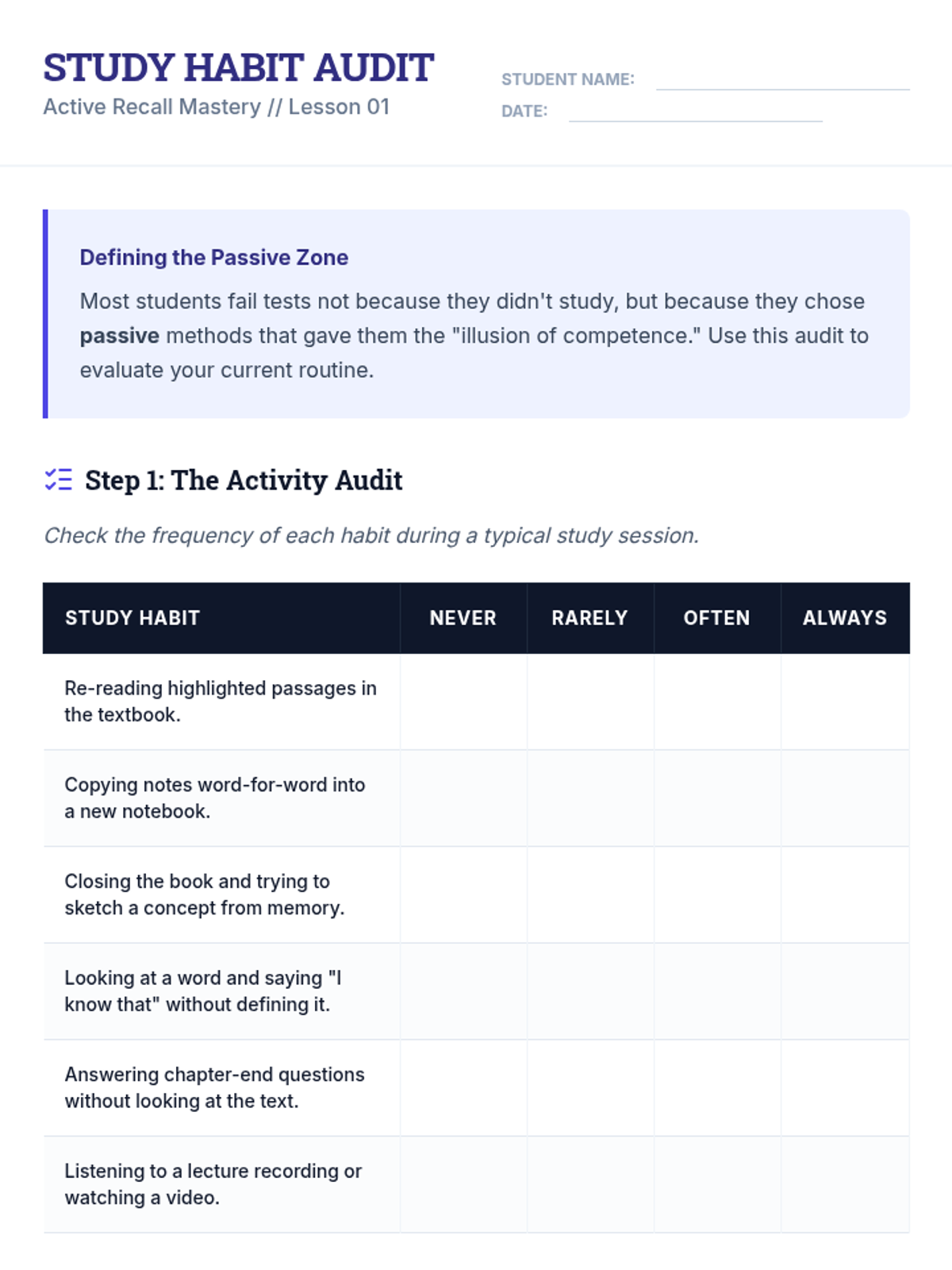
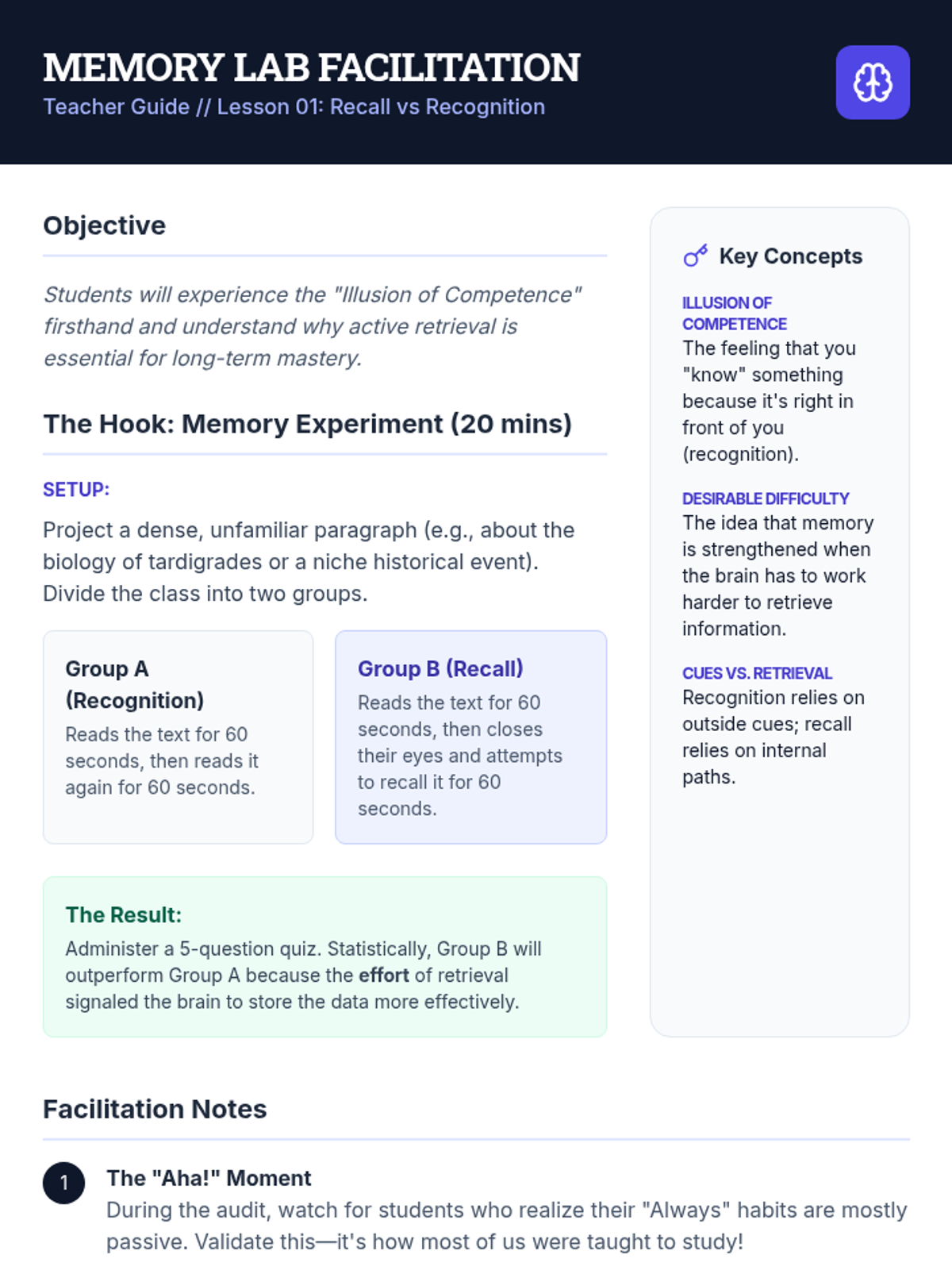
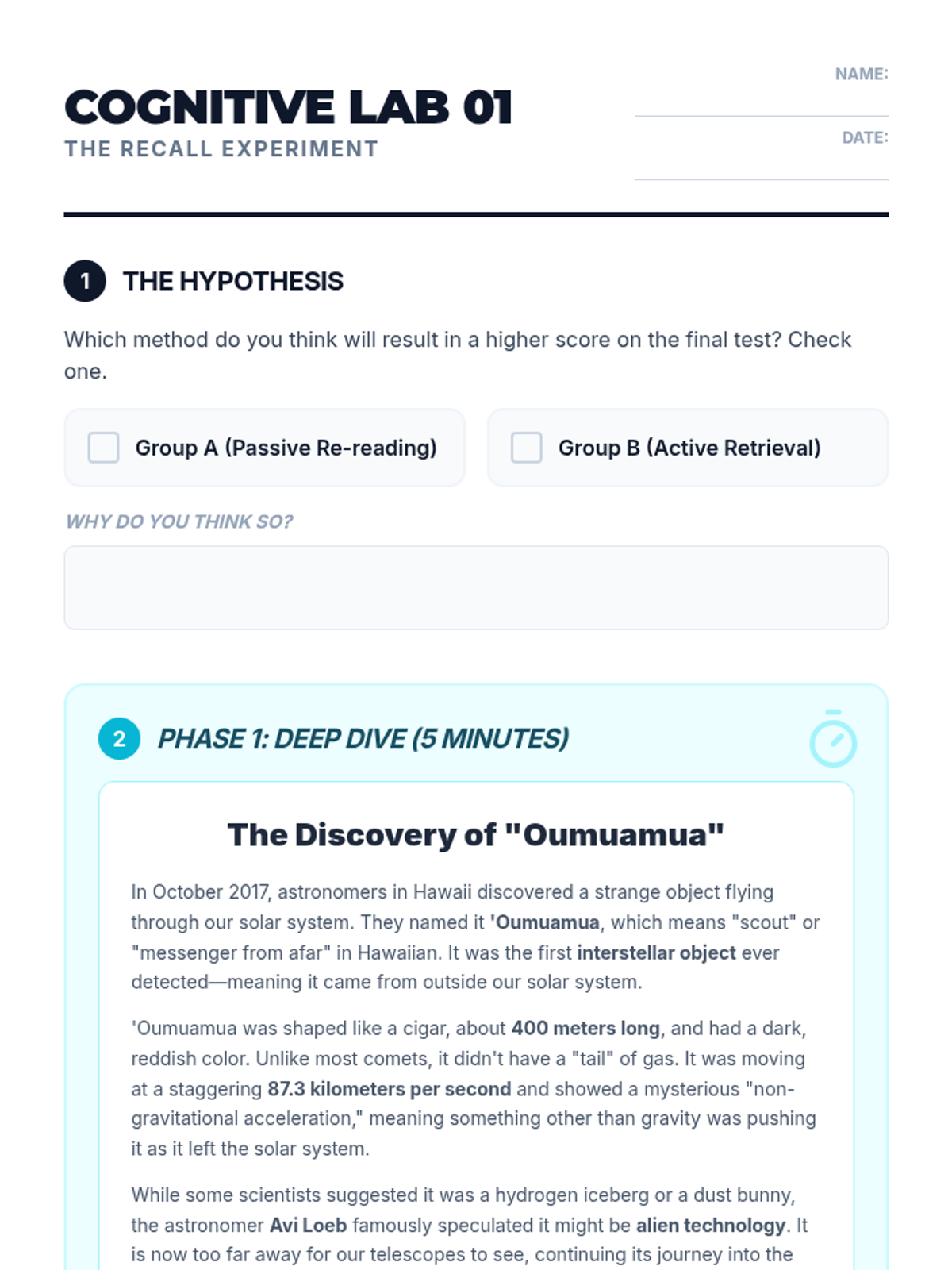
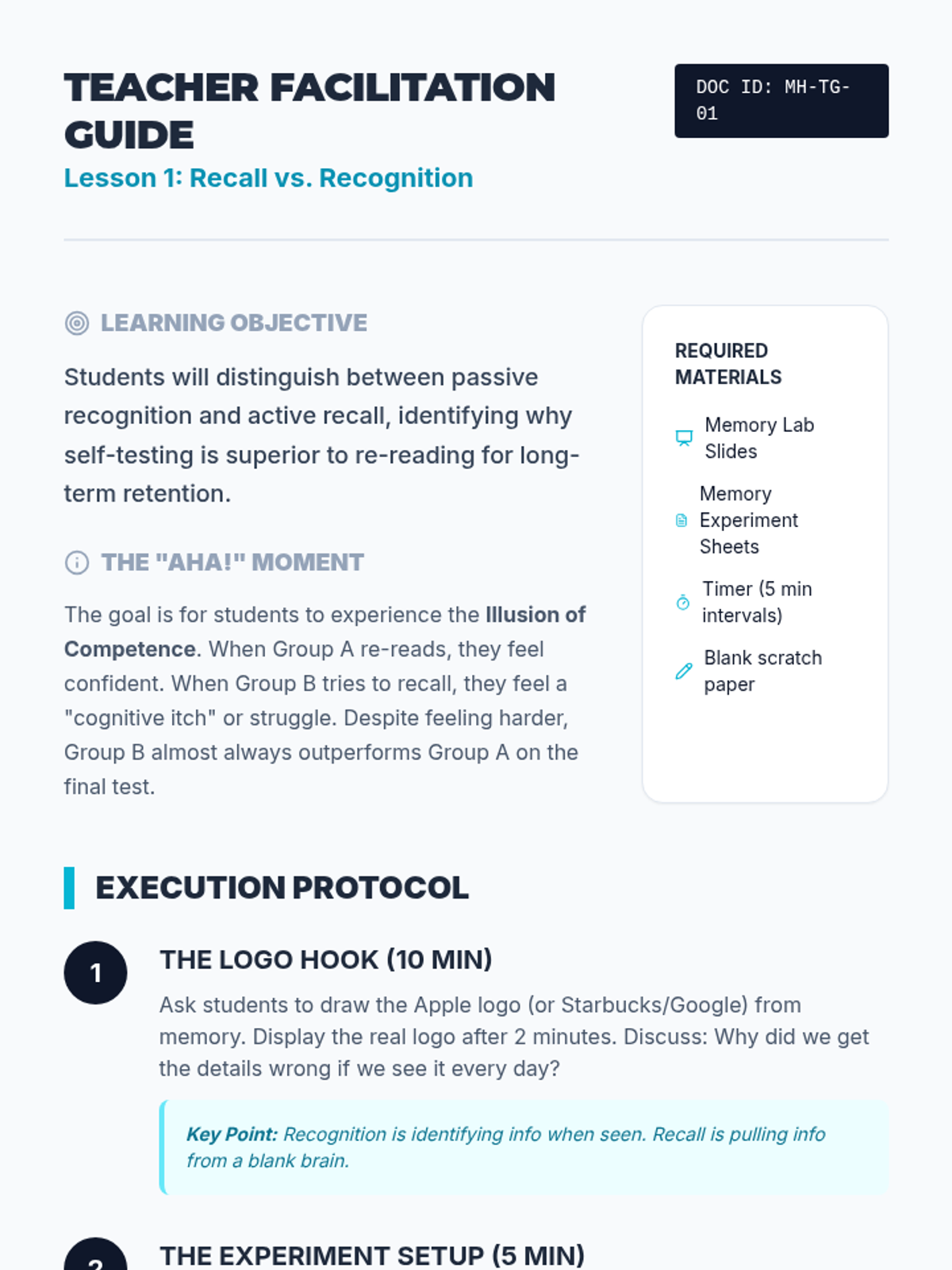
This sequence teaches 11th-grade students to transition from passive re-reading to active recall strategies. Students will master question formulation, study tool design, and error analysis to create effective self-testing materials.
This sequence shifts focus from the design of the study guide to its utility, emphasizing active recall and self-testing strategies to help students distinguish between familiarity and actual mastery of material.
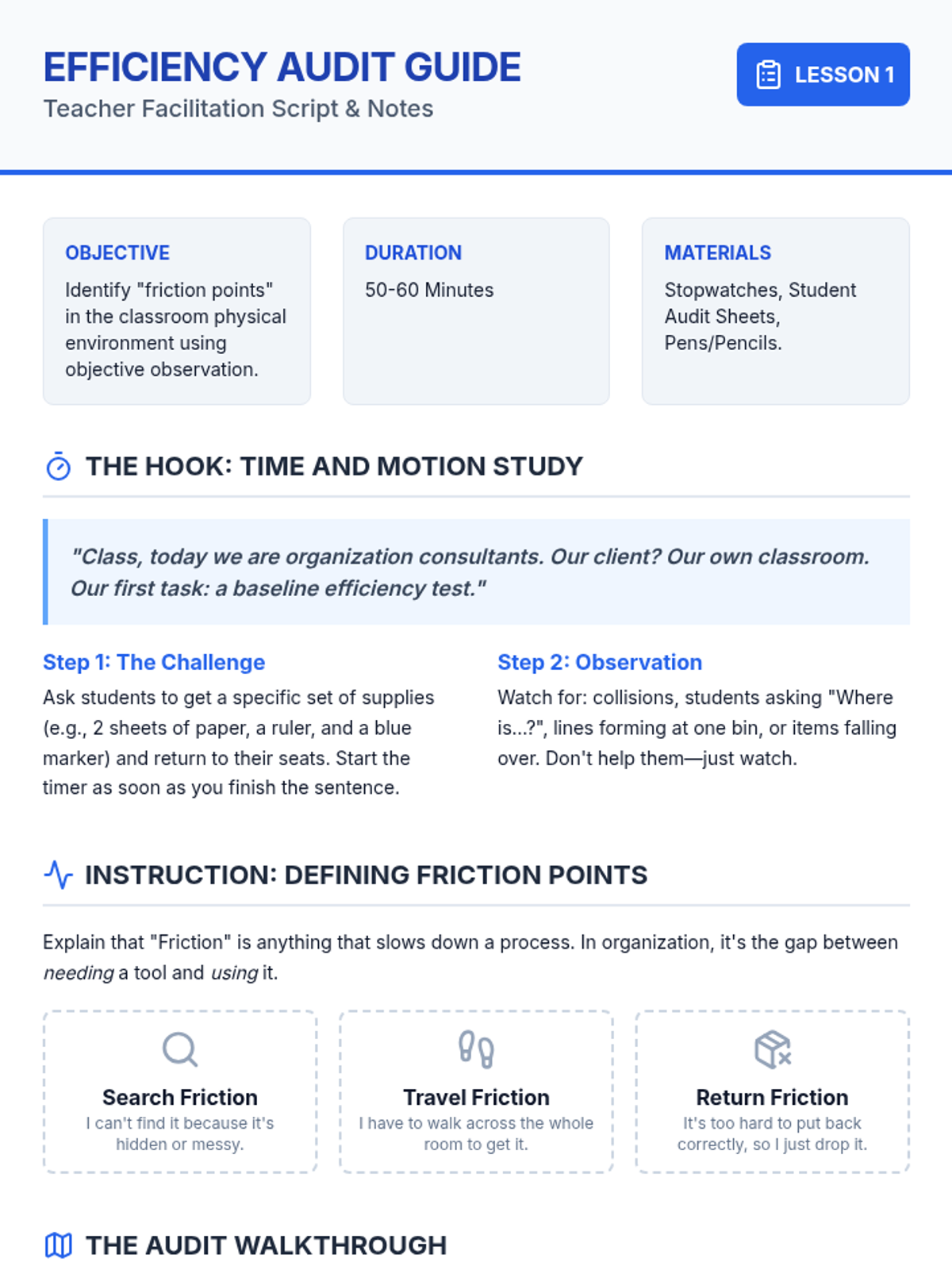
A project-based unit where students act as organization consultants to evaluate, redesign, and implement efficient physical systems in their classroom. Students learn systems thinking, visual communication, and the psychology of environmental design to create a more functional learning space.
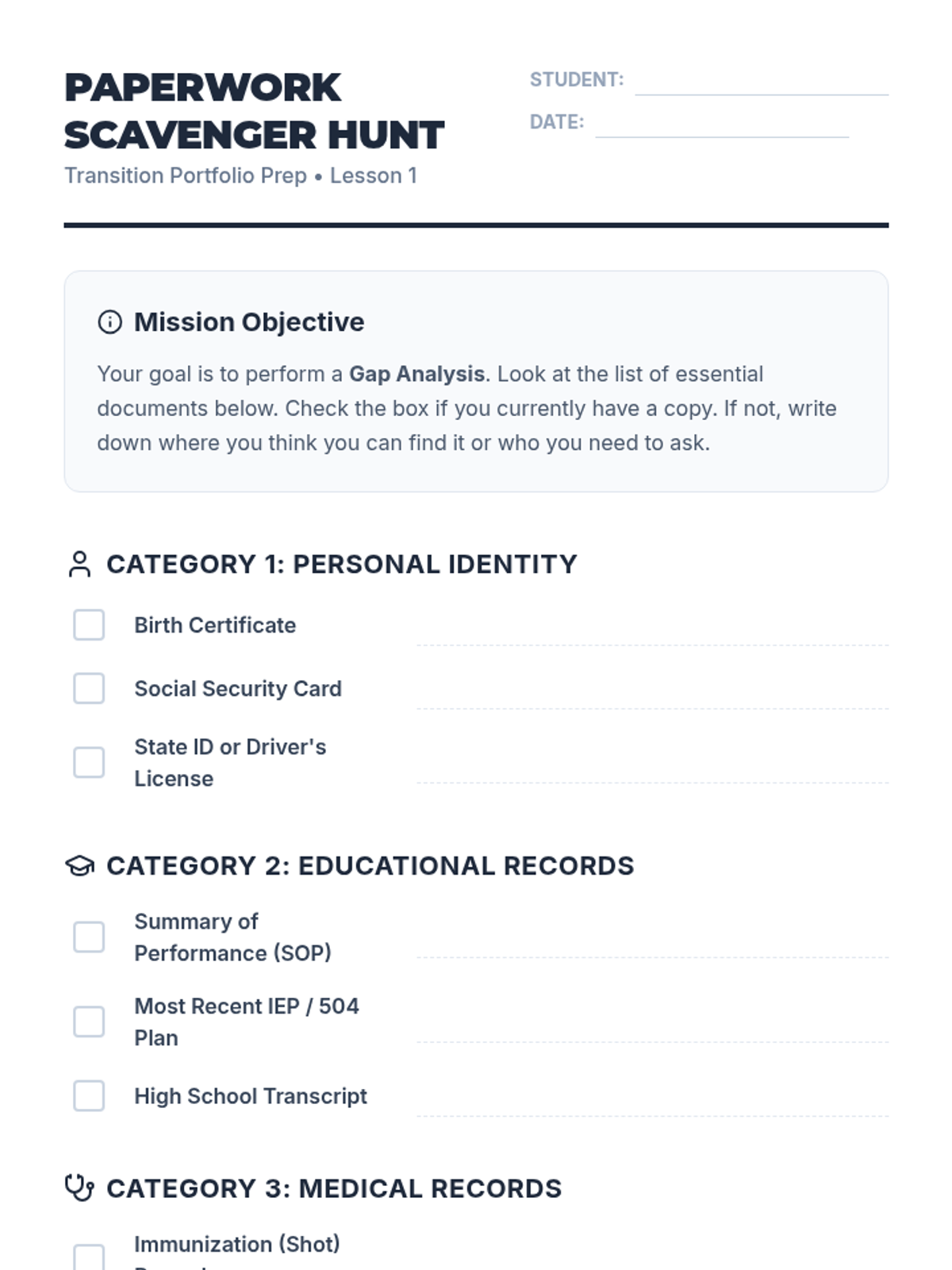
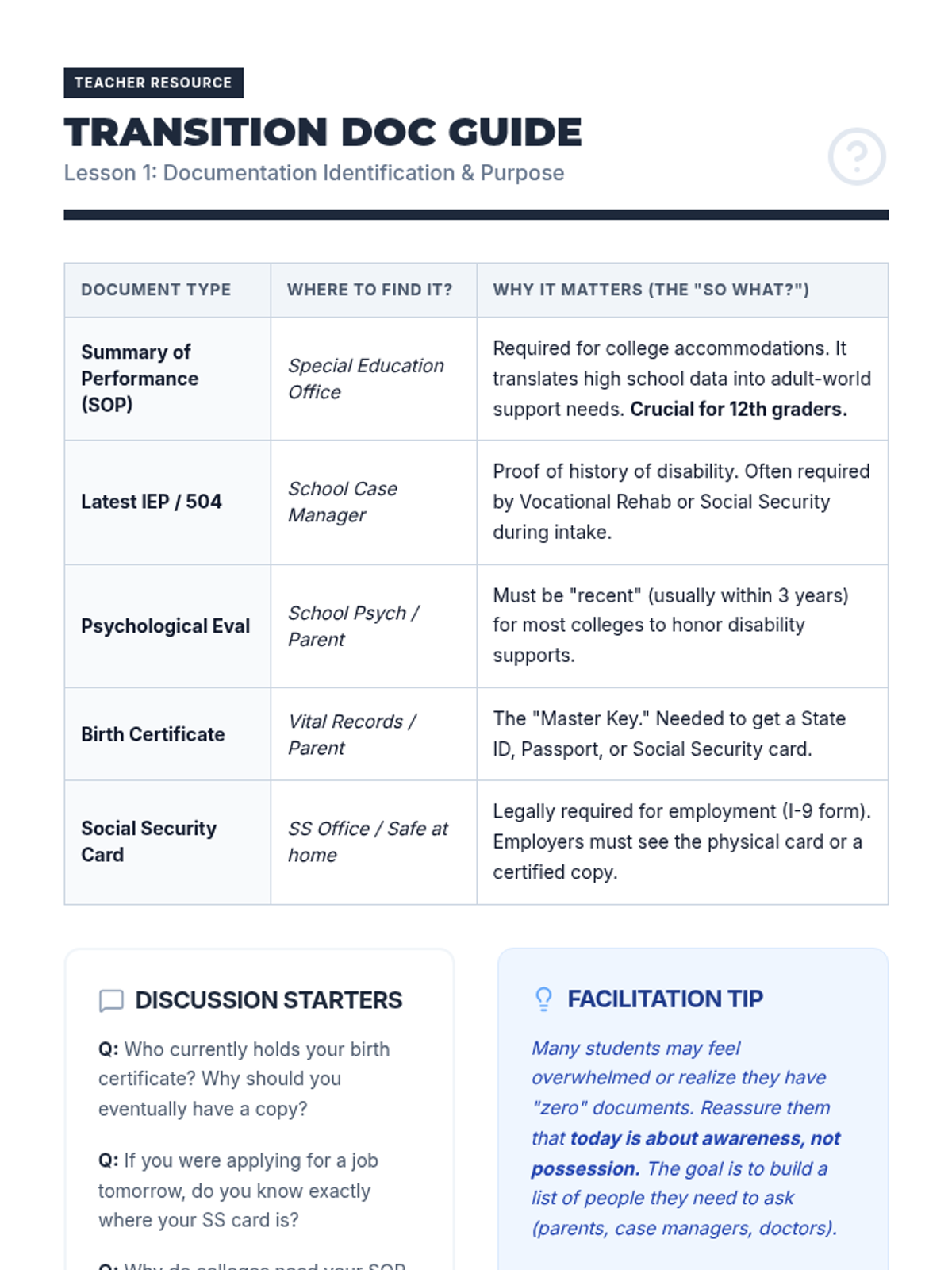
This sequence empowers 12th-grade students to take ownership of their personal, educational, and legal documentation as they transition to adulthood. Students will identify, secure, organize, and utilize essential records to foster independence and self-advocacy.
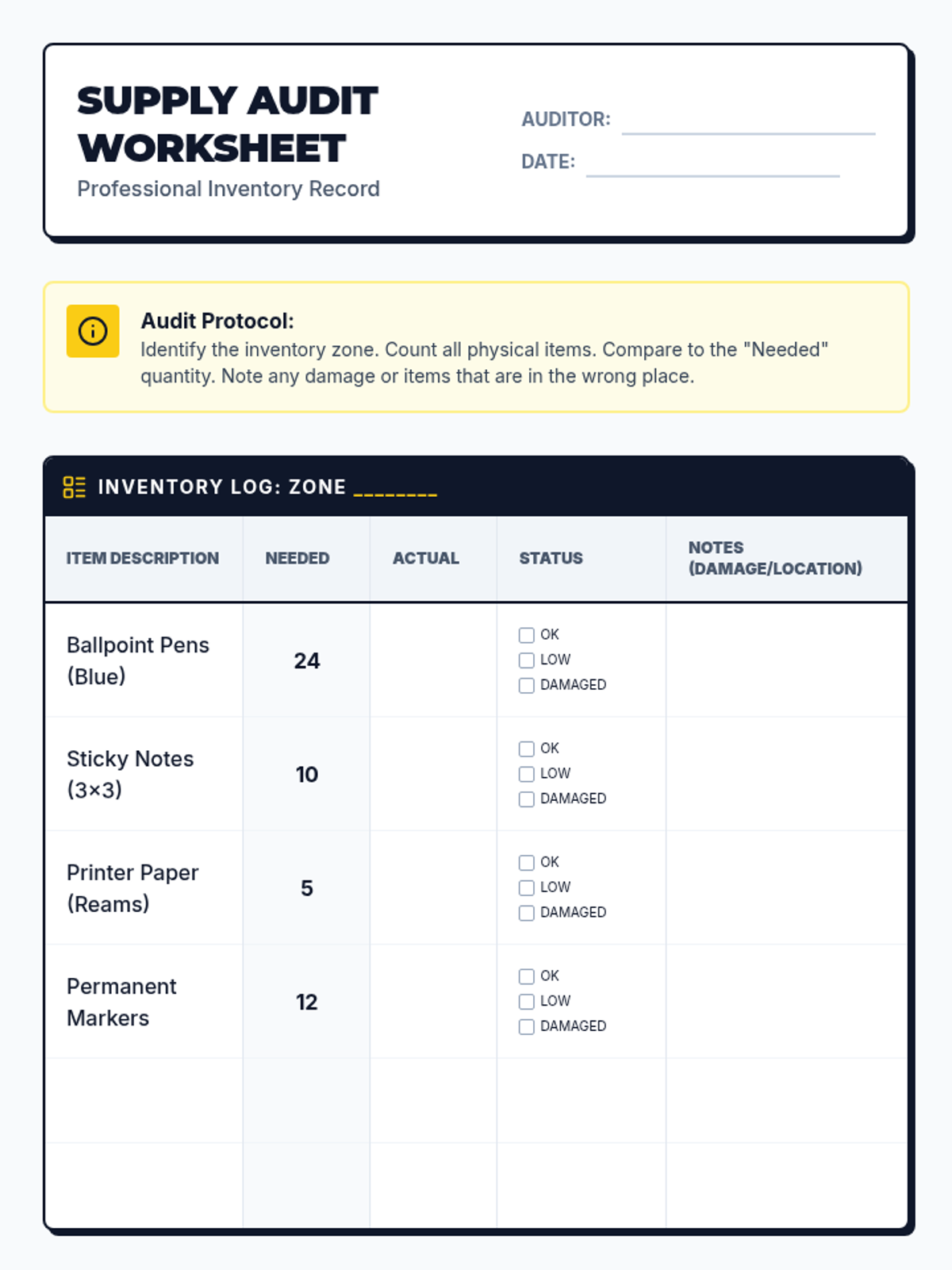
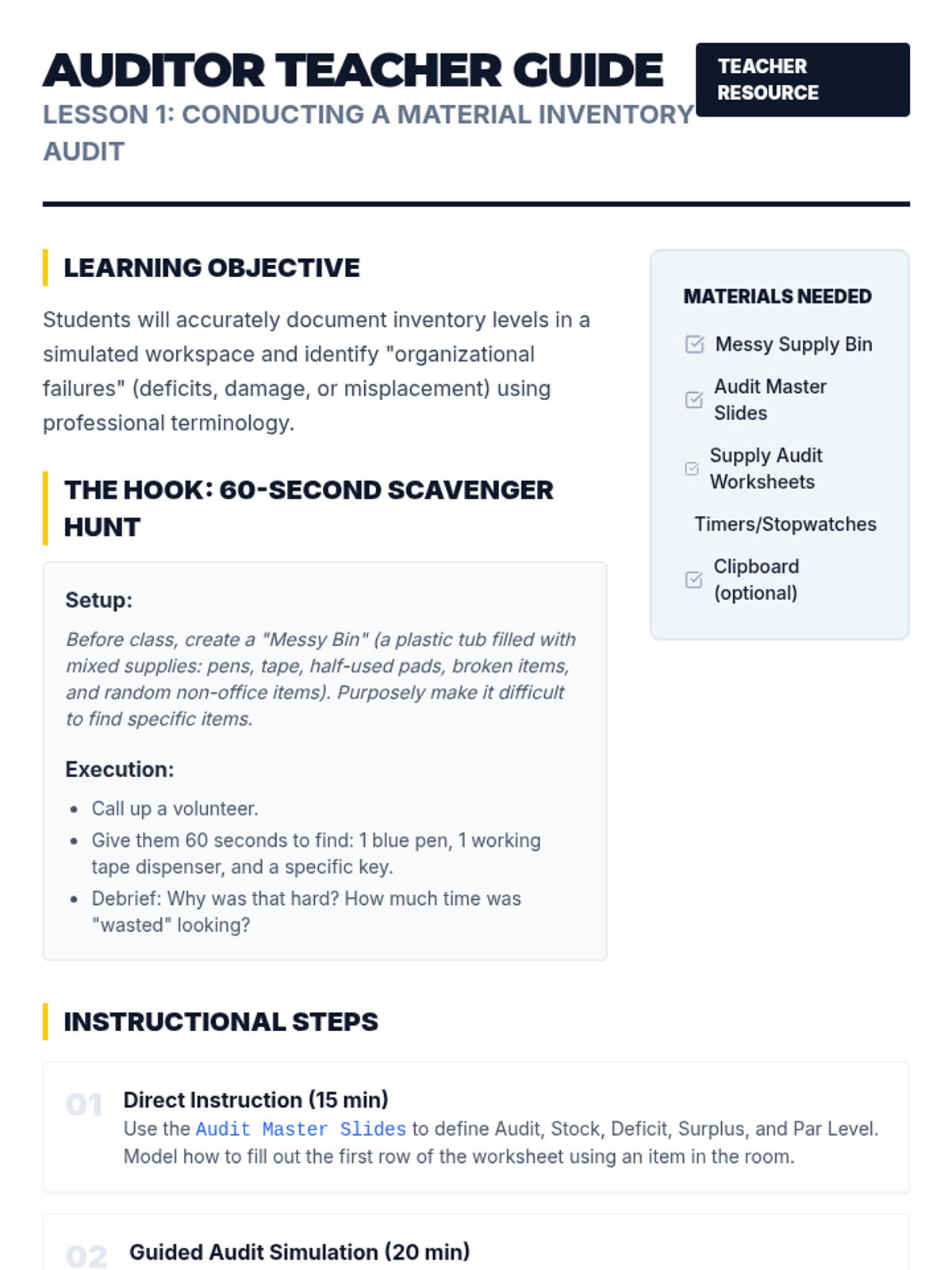
This vocational sequence prepares 12th-grade students for workplace success by teaching systematic physical organization, inventory auditing, and maintenance strategies. Students move from assessing current states to designing and implementing efficient material management systems.
This sequence explores the long-term financial implications of student loans, focusing on repayment plans, budgeting, and return on investment (ROI). Students transition from understanding borrowing mechanics to simulating the real-world impact of debt on lifestyle and career choices.
In this inquiry-driven sequence, students explore behavioral activation, investigating how their actions influence their emotions. They learn to distinguish between pleasure and mastery activities, conduct personal experiments to track mood changes, and create a personalized evidence-based plan for mood regulation.
This sequence transitions 12th-grade students from manual study methods to digital spaced repetition software (SRS). Students will master advanced card-creation techniques, interpret retention data to optimize their learning, and develop long-term maintenance strategies for post-secondary success.
A comprehensive sequence designed to teach 7th-grade students the science and practice of spaced repetition. Students learn to design effective flashcards, build a physical Leitner Box system, and master the sorting algorithms required for long-term memory retention.
A comprehensive sequence introducing 9th-grade students to the Leitner System, combining the science of the Forgetting Curve with the practical skill of building and maintaining a spaced repetition study system.
A comprehensive workshop series for 12th-grade students to master visual scaffolding techniques, reducing cognitive load and enhancing long-term retention during academic tasks. students transition from understanding cognitive science to real-time application of hierarchical, sequential, and comparative note-taking structures.
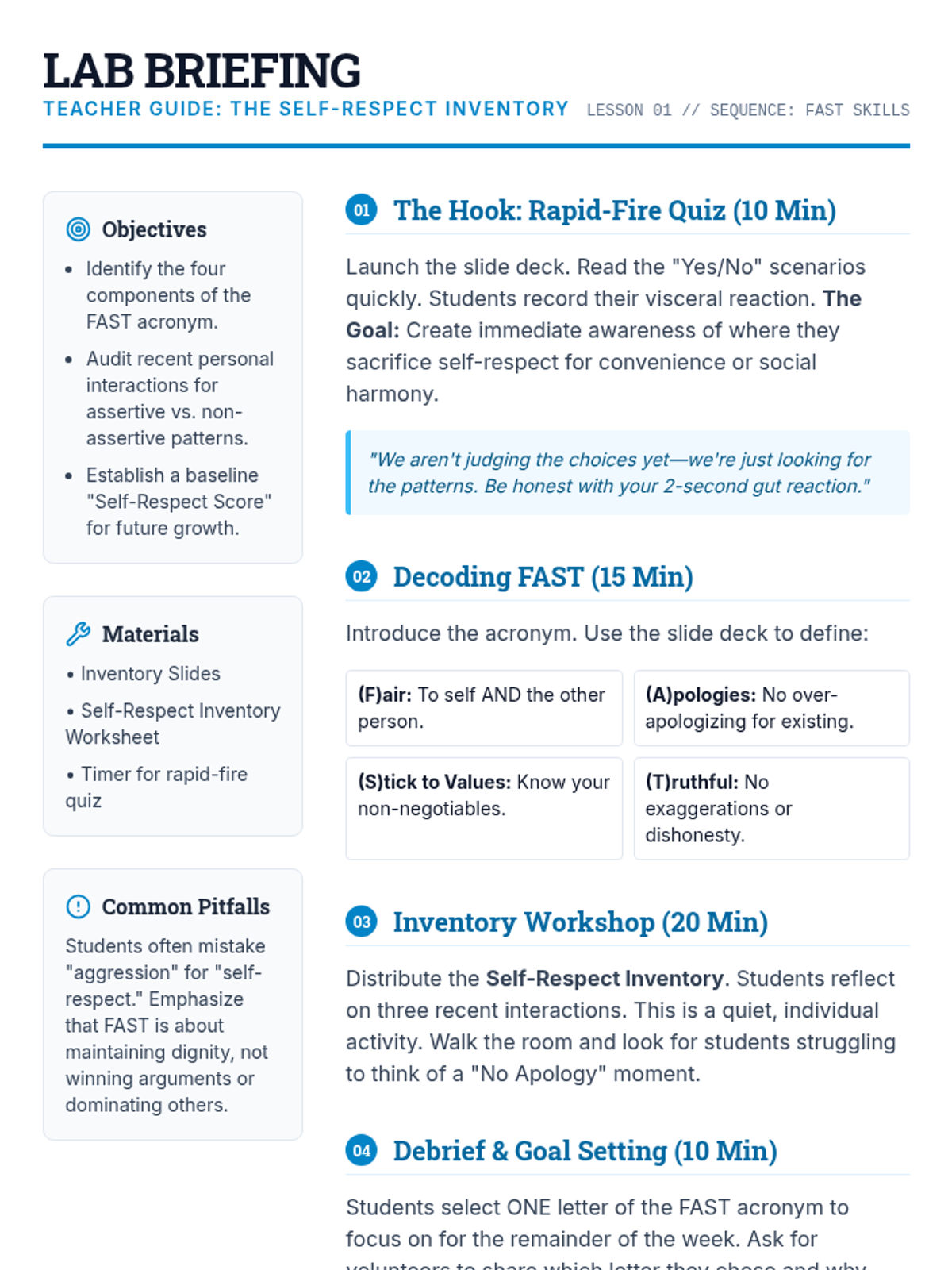
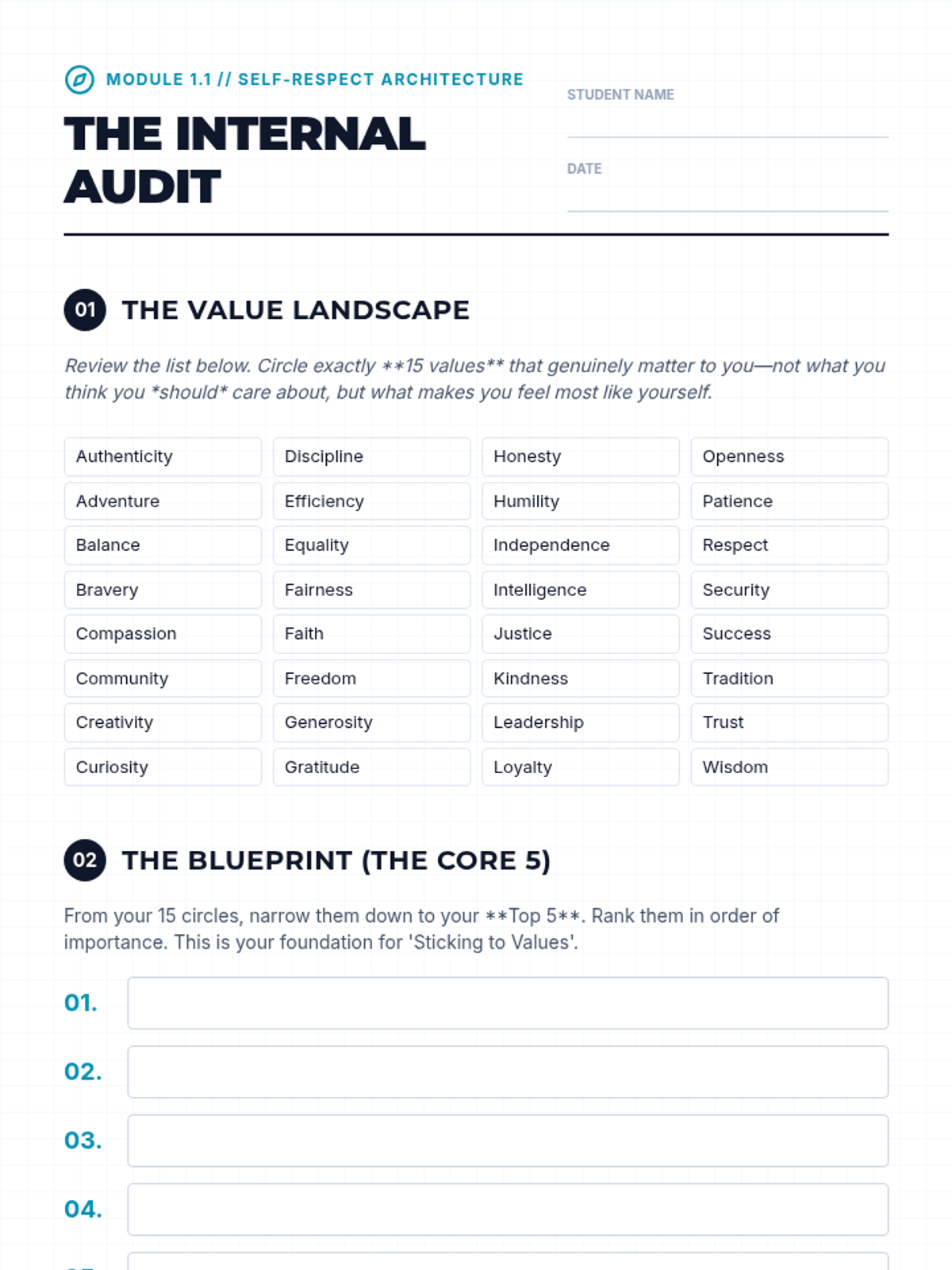
A high-school level interpersonal communications lab focused on the FAST acronym (Fair, No Apologies, Stick to Values, Truthful). Students transition from self-reflection to active behavioral rehearsal to build 'muscle memory' for self-respecting communication.
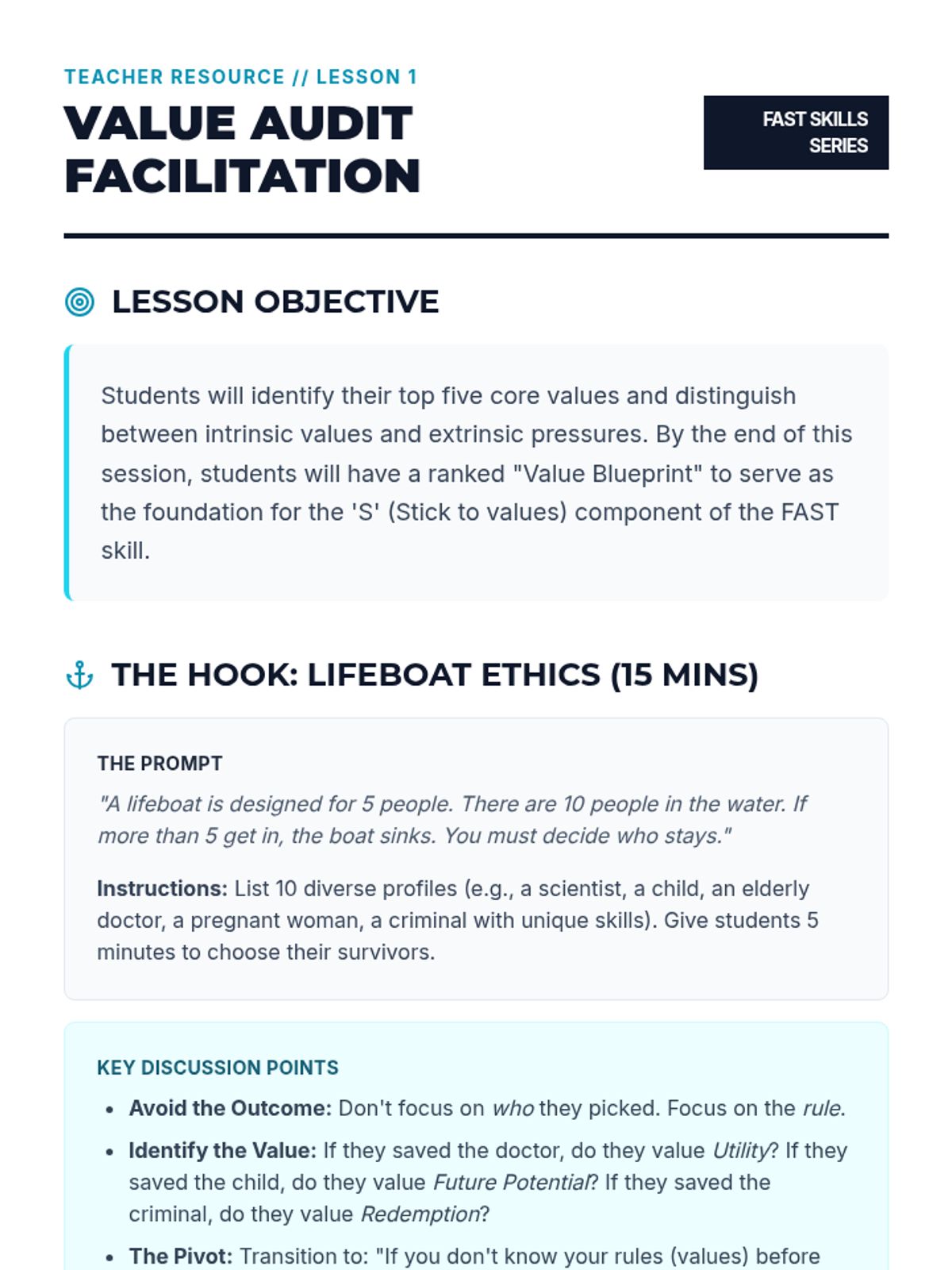
A 12th-grade sequence on FAST skills for self-respect, focusing on personal ethics, integrity in communication, and maintaining values in the face of external pressure and digital influence.
A 12th-grade sequence focused on the psychological and communicative aspects of interview outcomes. Students learn to navigate rejection, solicit feedback, analyze offers, and communicate professionally regardless of the result.
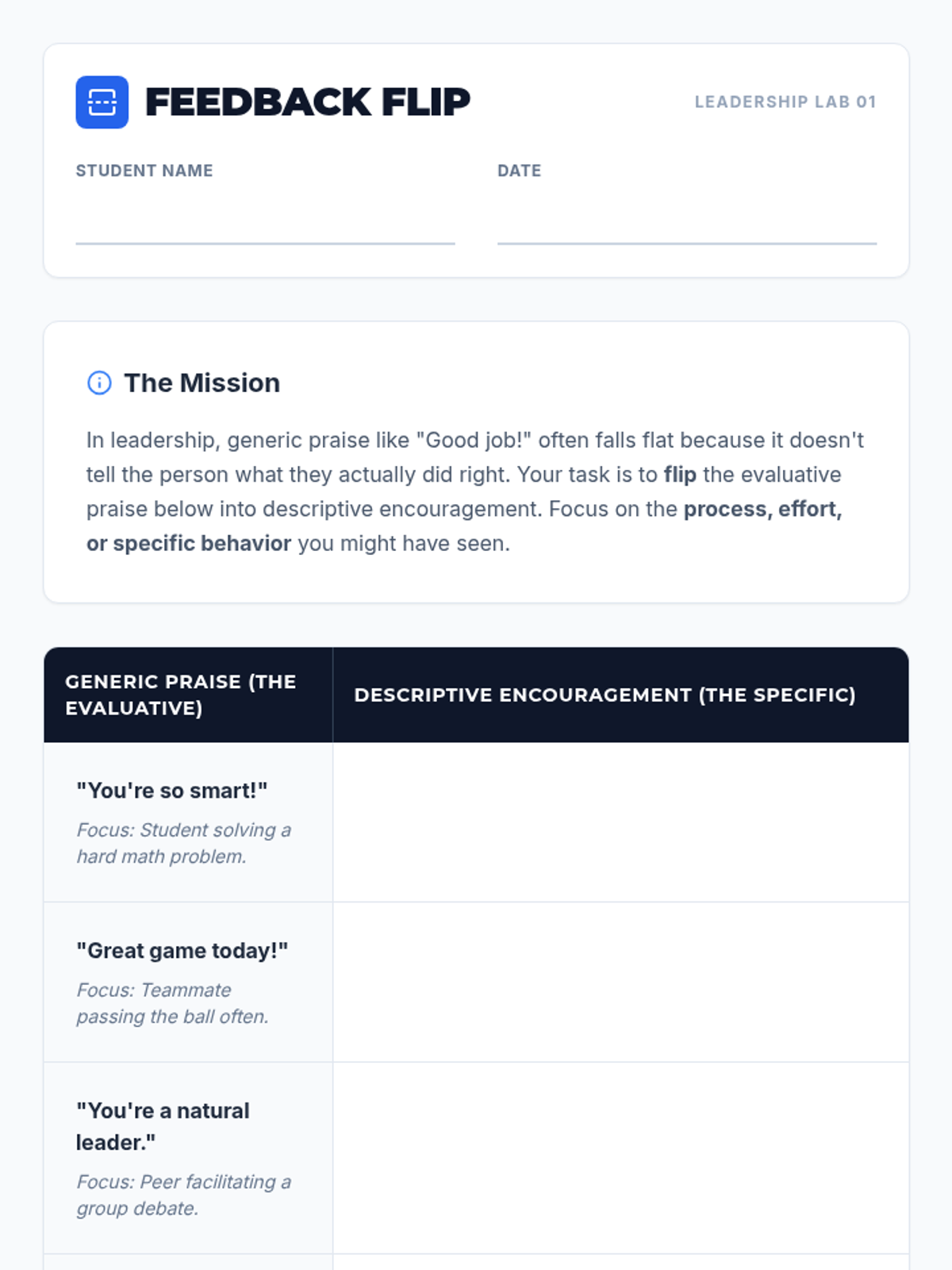
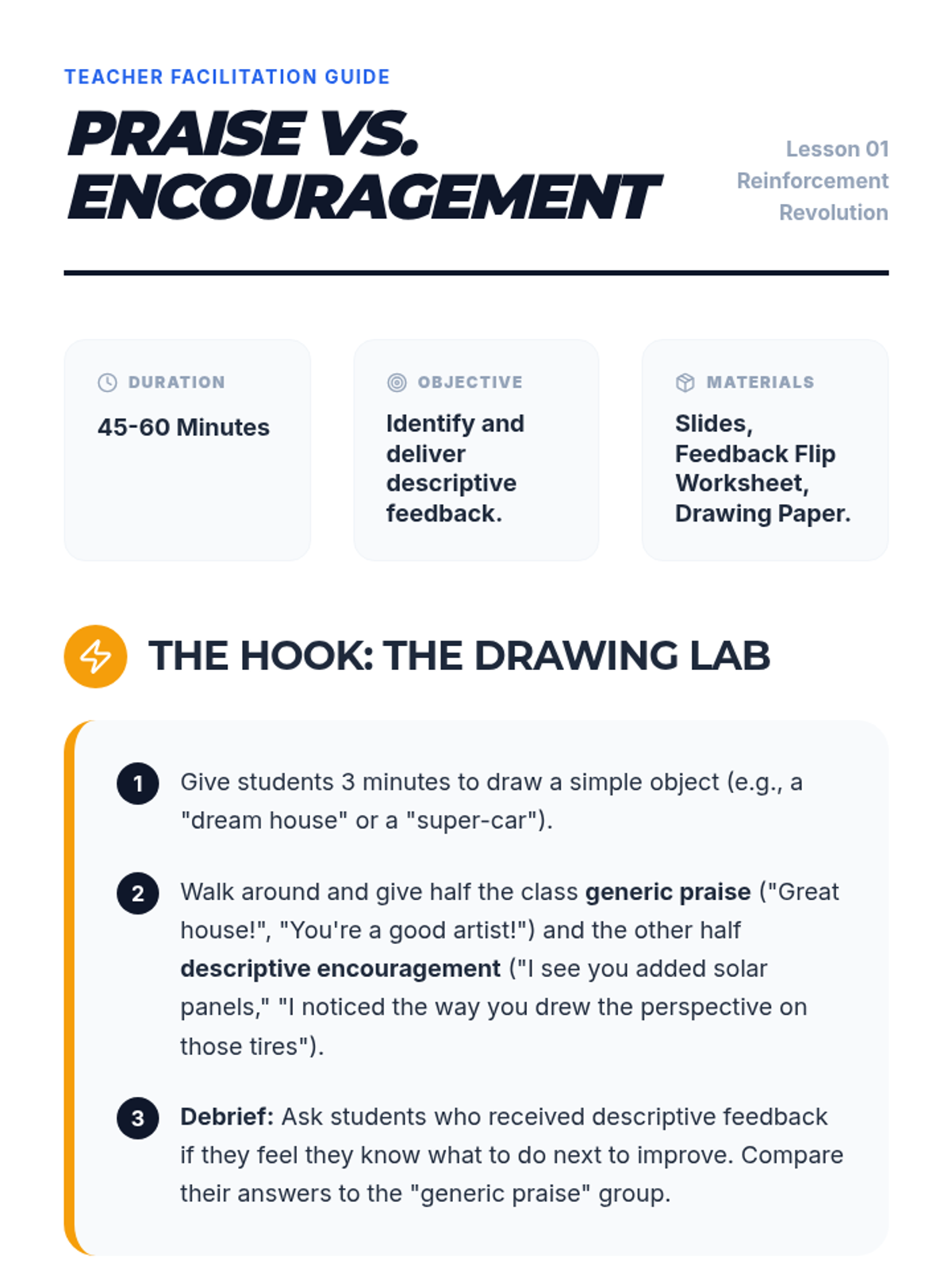
This sequence explores the interpersonal application of positive reinforcement in leadership, coaching, and mentoring contexts. Students examine how leaders influence group culture and individual performance through specific praise and recognition systems.
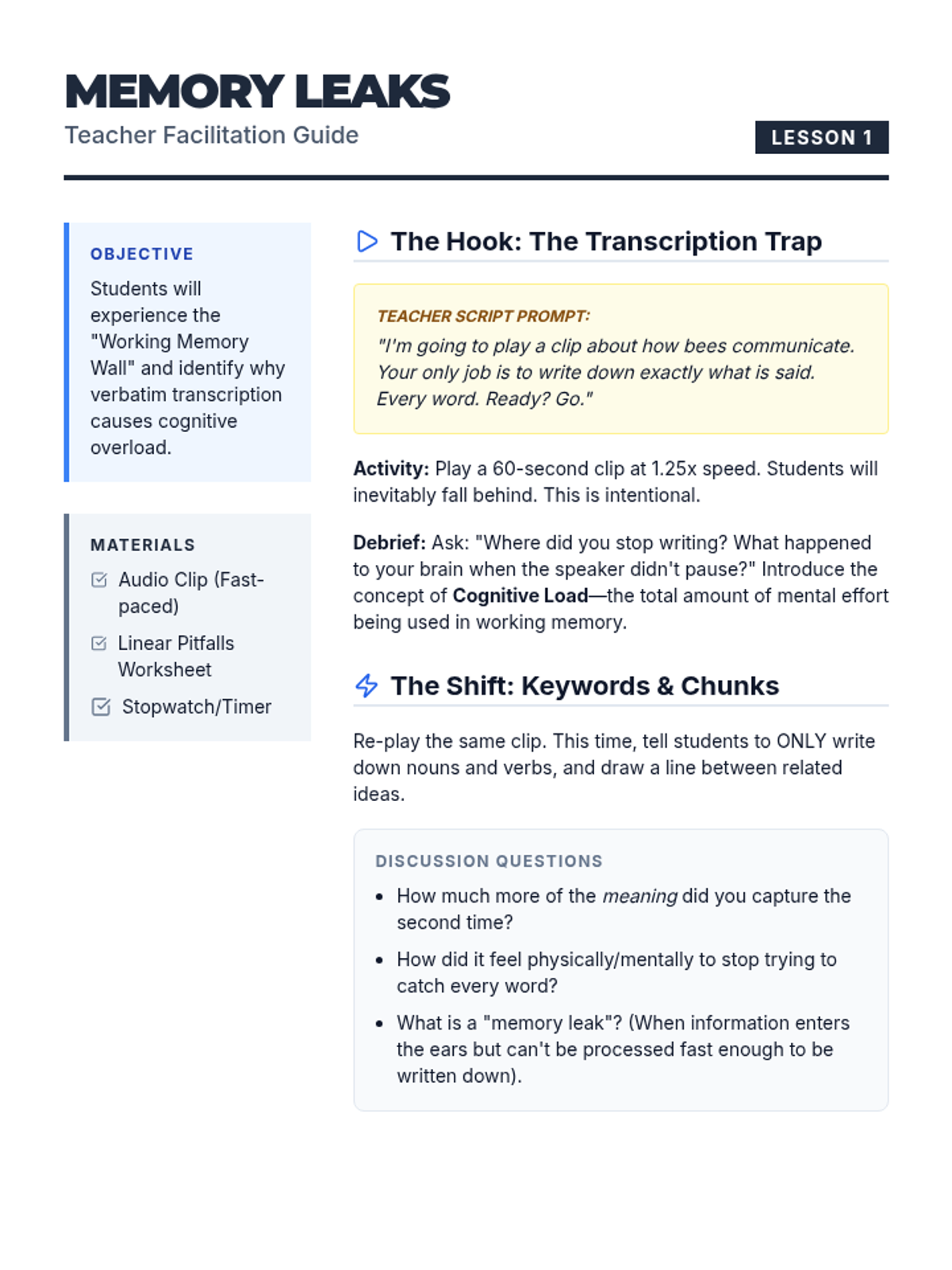
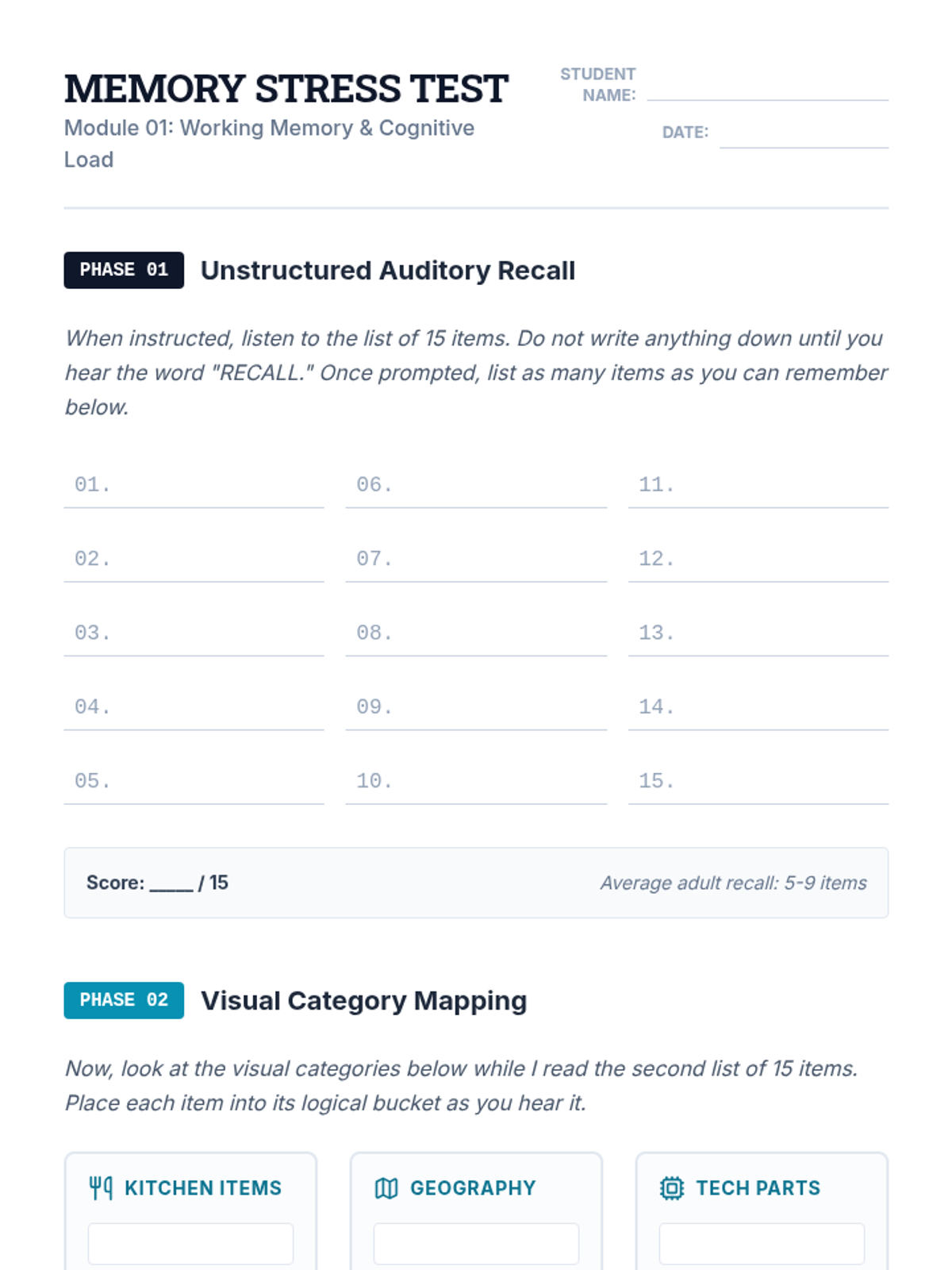
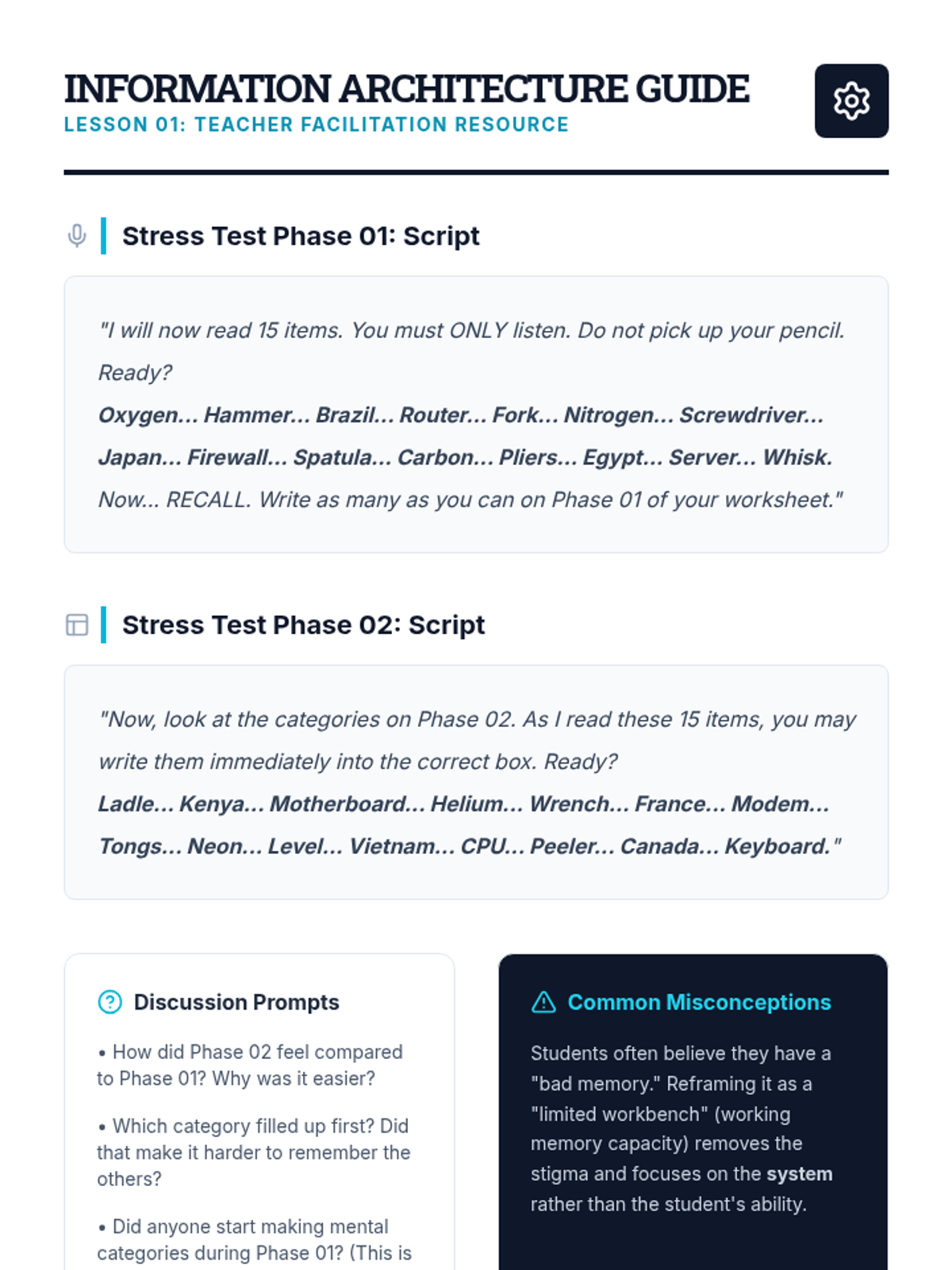
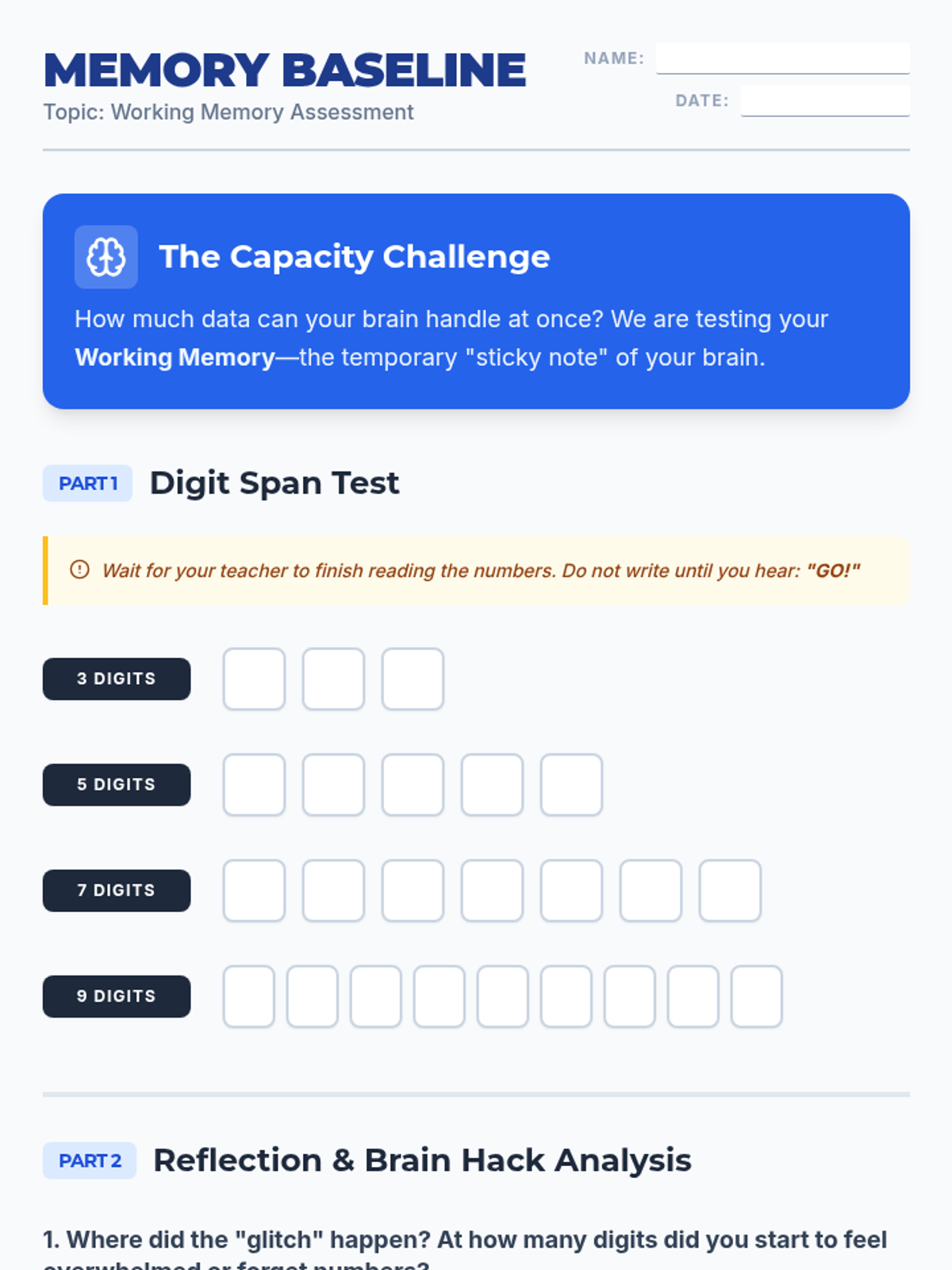
This sequence helps students understand and apply chunking and association strategies to overcome working memory limitations. Through a series of game-based lessons, students will learn to organize data into manageable patterns to increase their cognitive processing capacity.
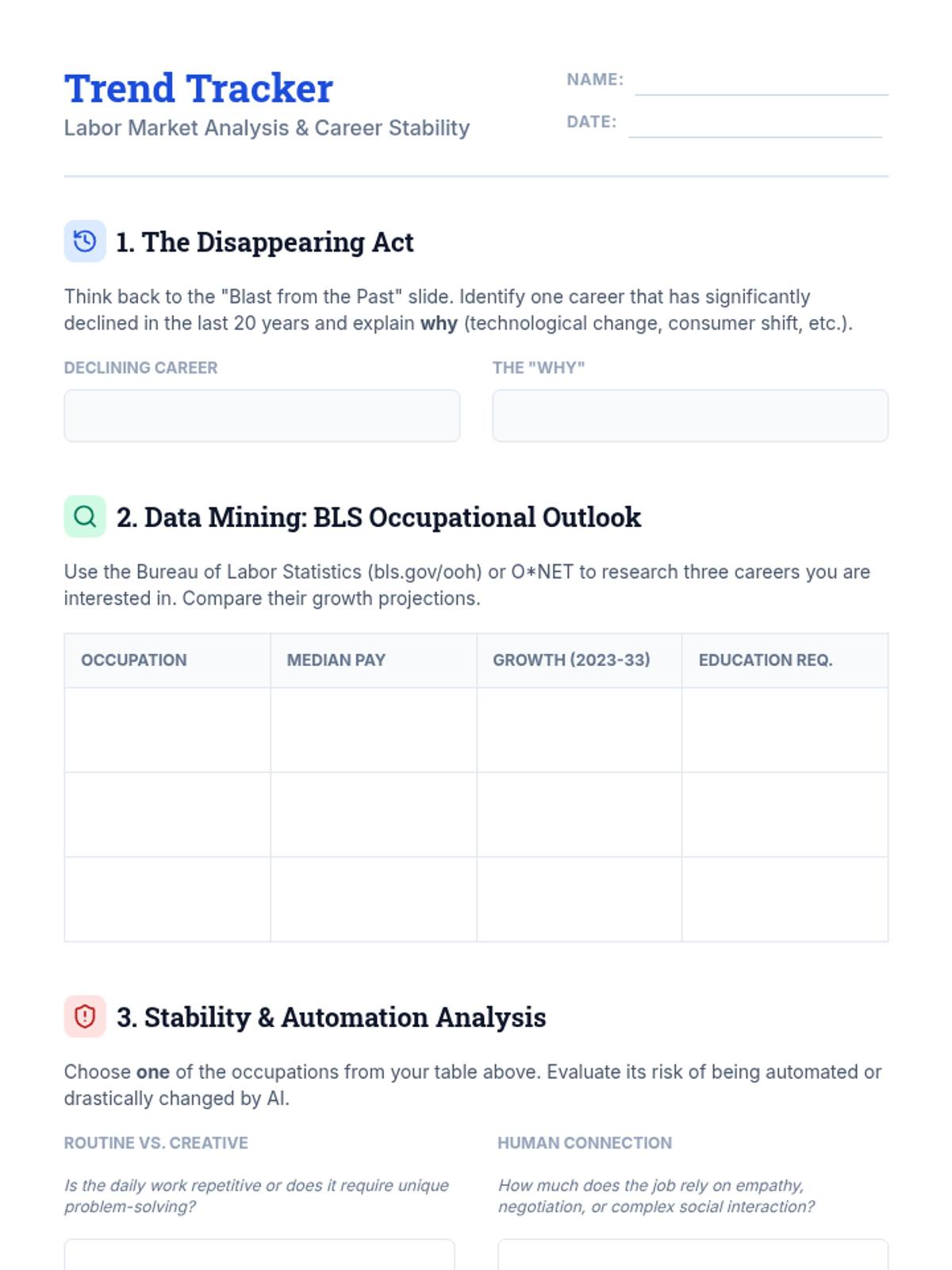
A comprehensive sequence designed to prepare 12th-grade students for a dynamic professional landscape through labor market analysis, career mapping, and strategic 10-year planning. Students will learn to navigate technological shifts and develop a mindset of professional agility.
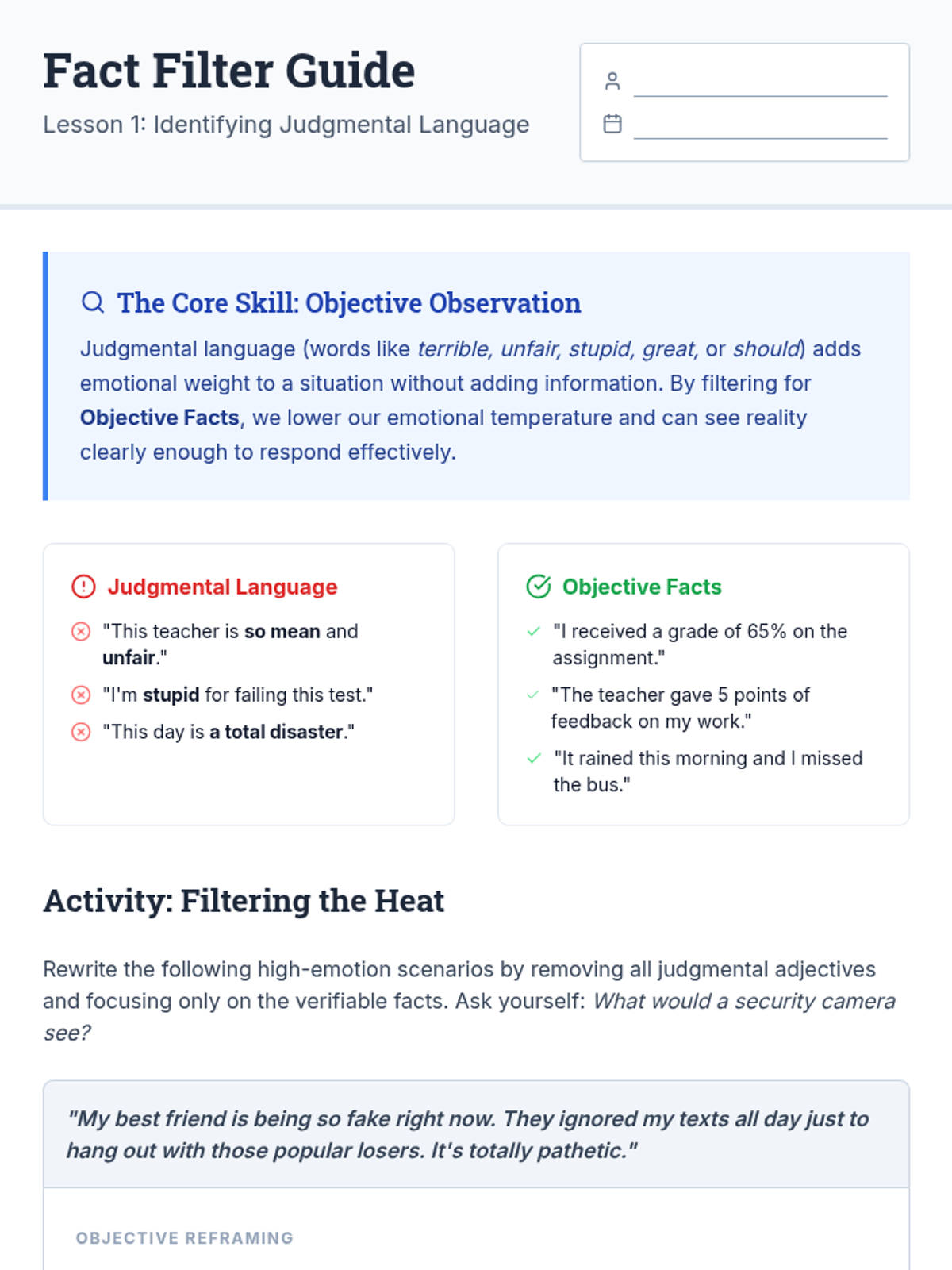
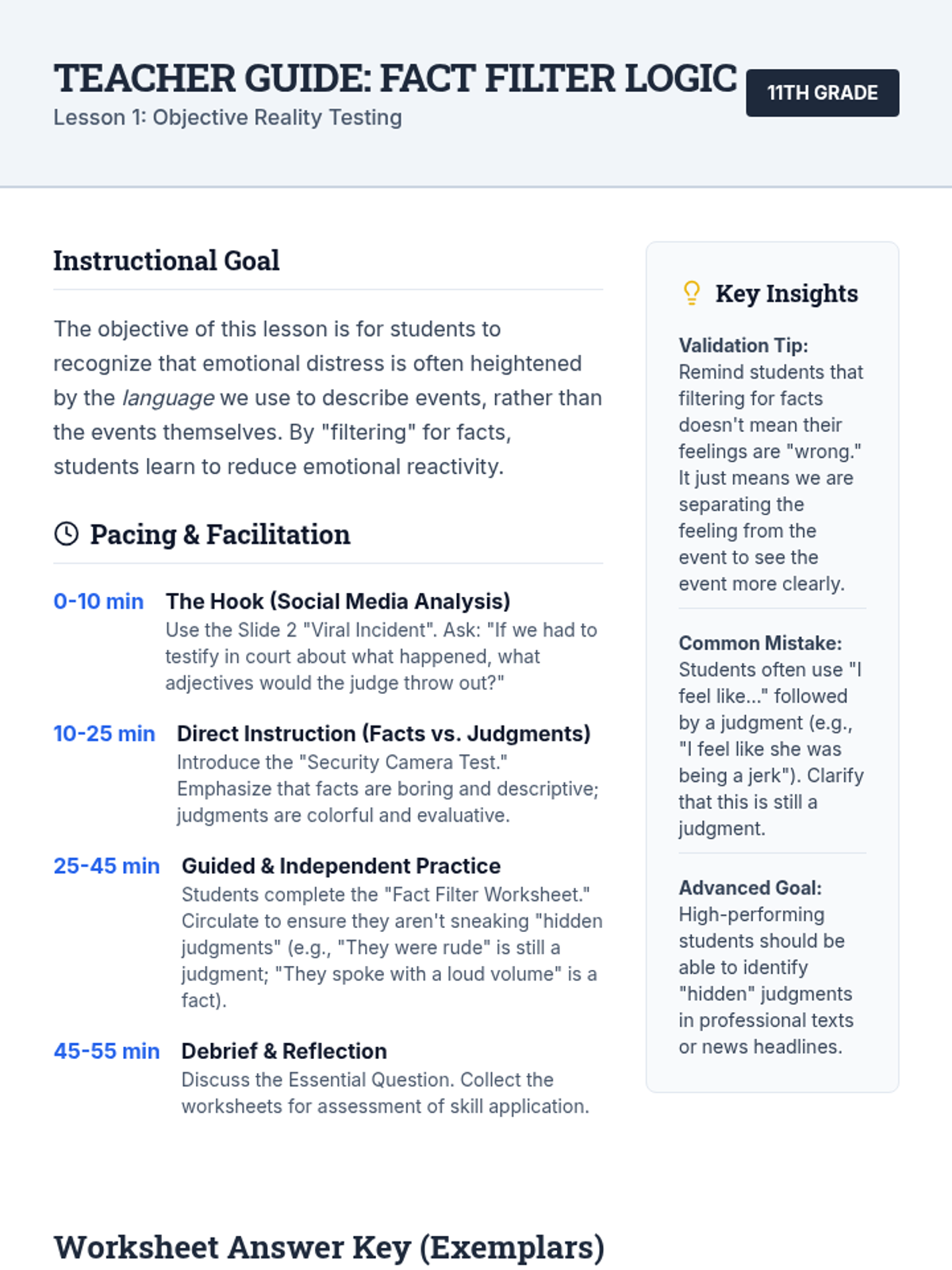
An 11th-grade sequence exploring radical acceptance through cognitive reframing. Students learn to distinguish facts from judgments, dismantle 'should' statements, and apply resilience strategies to interpersonal relationships and future planning.
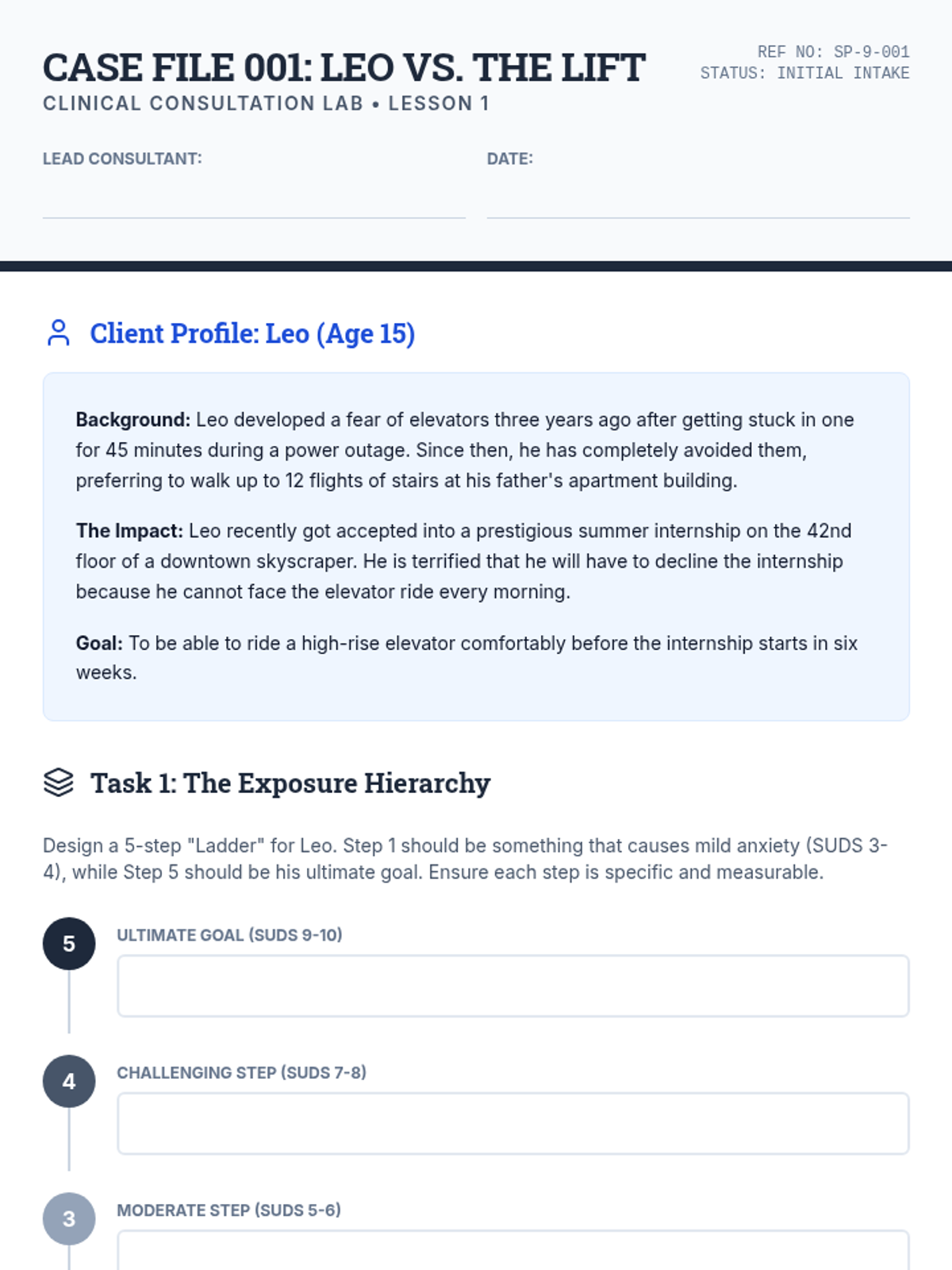
This sequence guides 9th-grade students through the practical application of exposure hierarchies. Acting as 'clinical consultants,' students analyze specific phobias, social anxiety variables, and stalled progress, eventually designing a comprehensive care plan rooted in personal values.
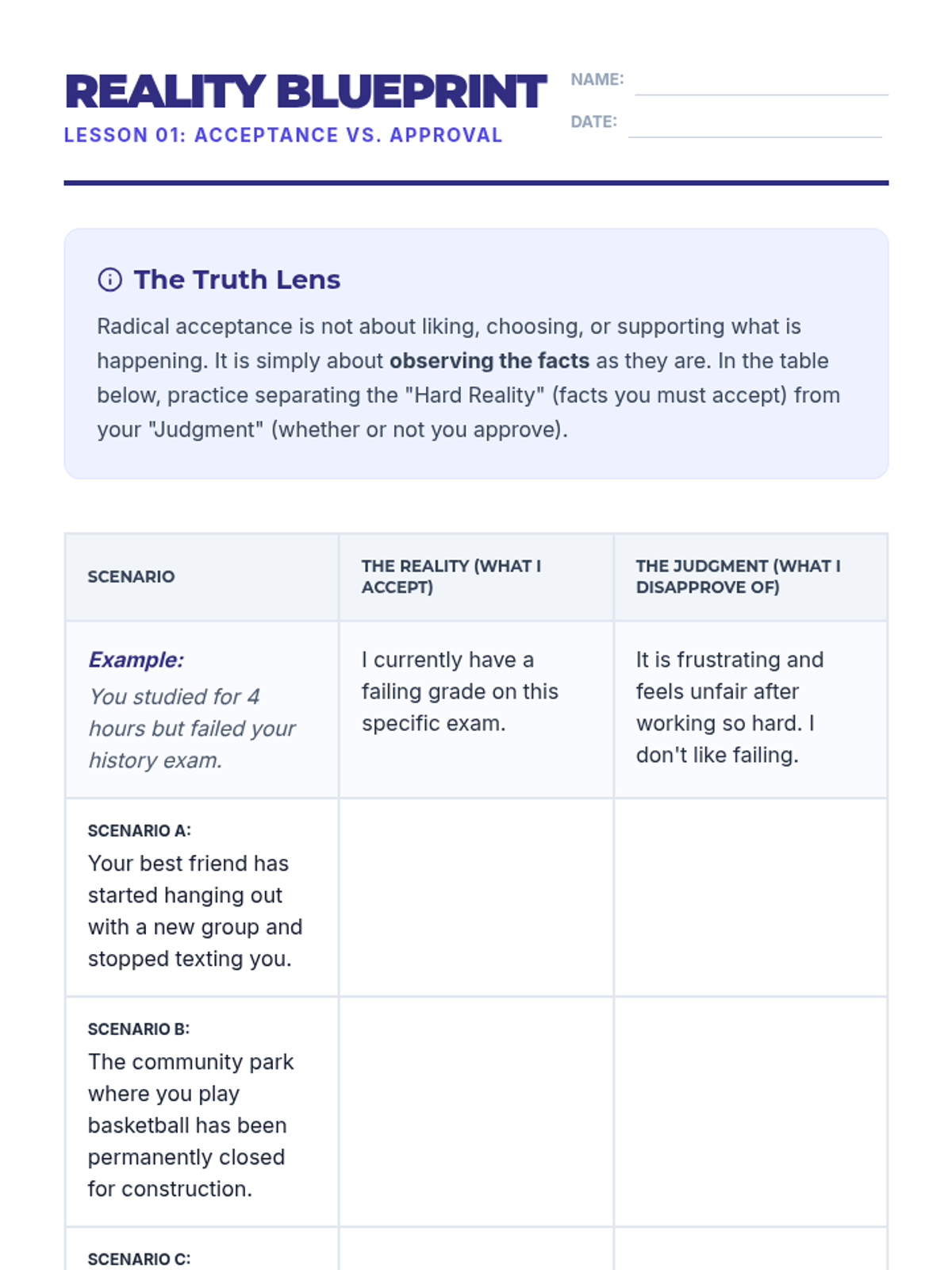
This sequence explores the psychological concept of Radical Acceptance, teaching students to distinguish between acceptance and approval. Students will analyze case studies, relationship dynamics, and civic advocacy to understand how acknowledging reality is the first step toward effective change.
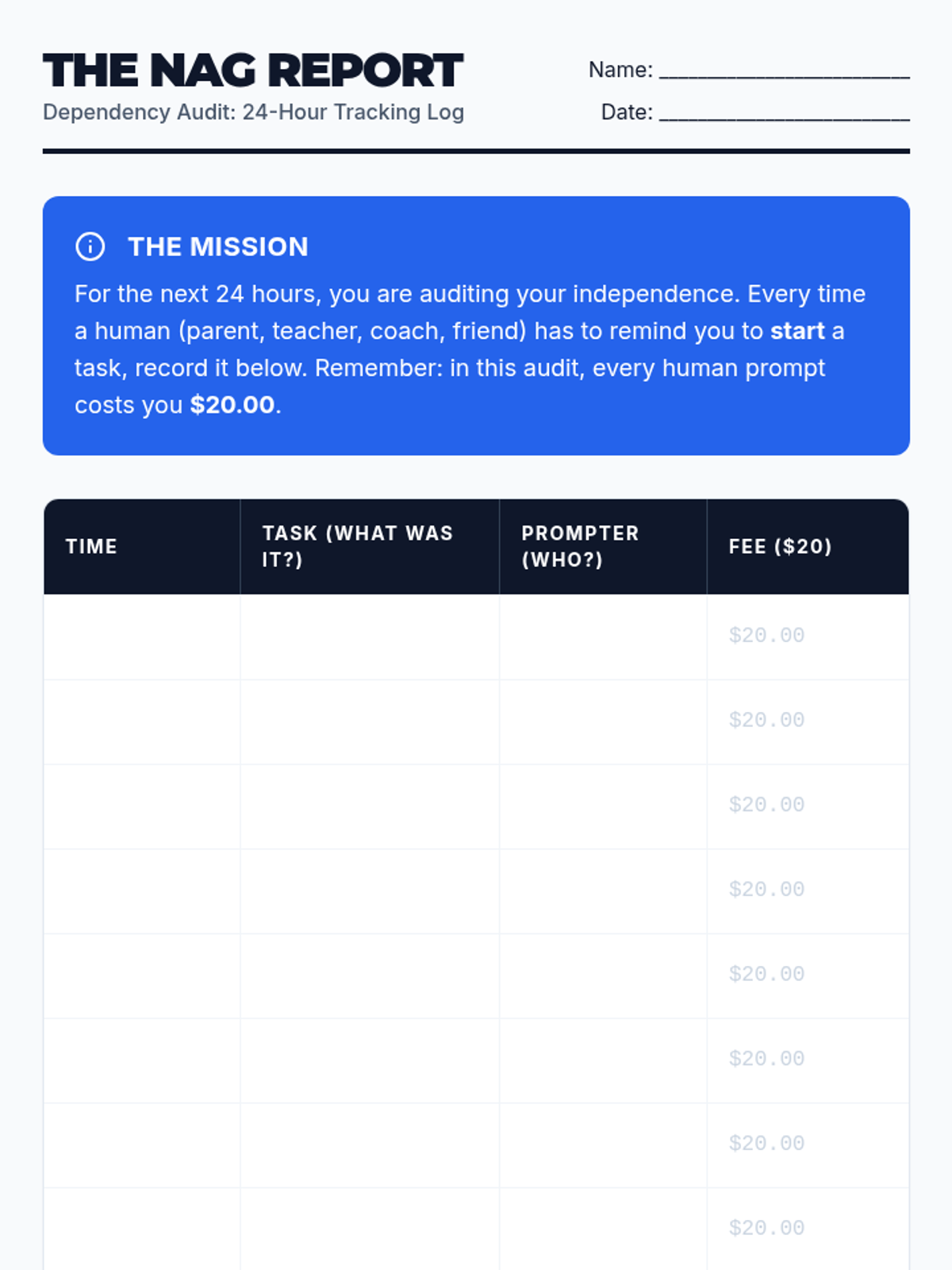
A 5-lesson sequence for 11th-grade students focused on transitioning from human-led prompts to digital, self-managed systems. Students audit their current dependencies, learn to program time and location-based triggers, and build a backup plan for technology failures to achieve greater independence.
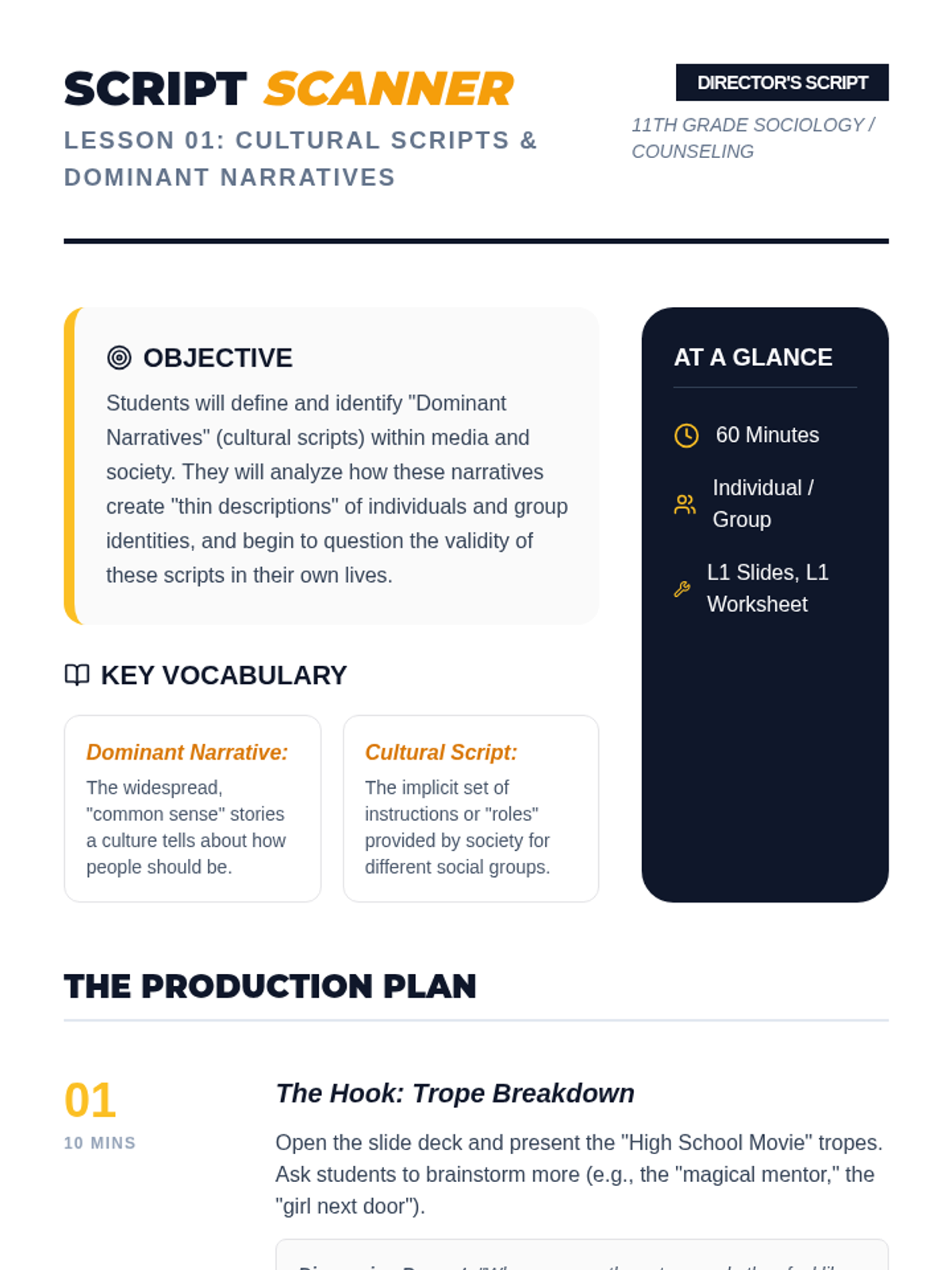
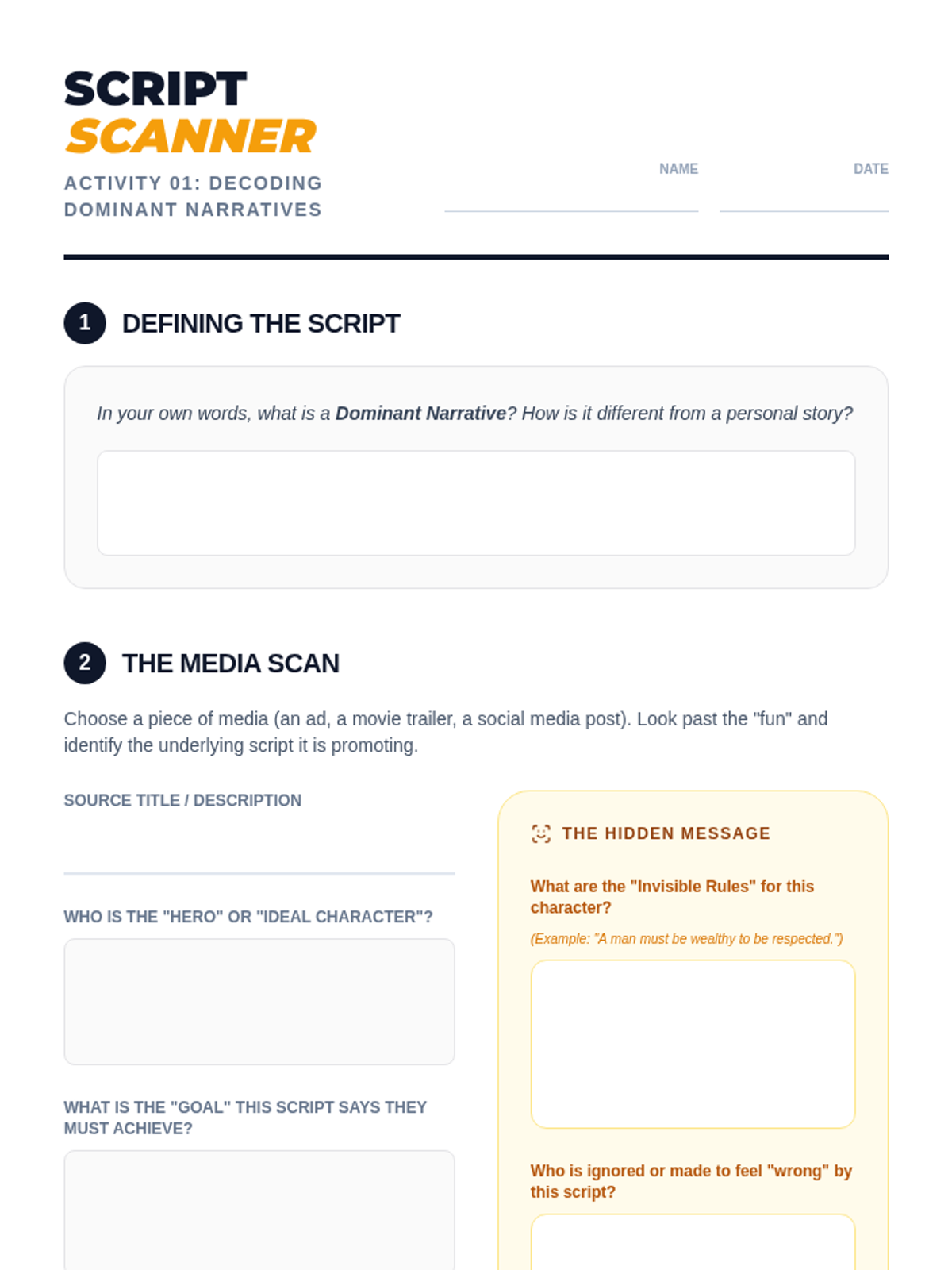
A 5-lesson sequence for 11th-grade students focused on narrative therapy concepts applied to sociology. Students learn to identify dominant societal narratives, deconstruct 'thin' descriptions, and identify 'unique outcomes' to build alternative, empowering storylines.
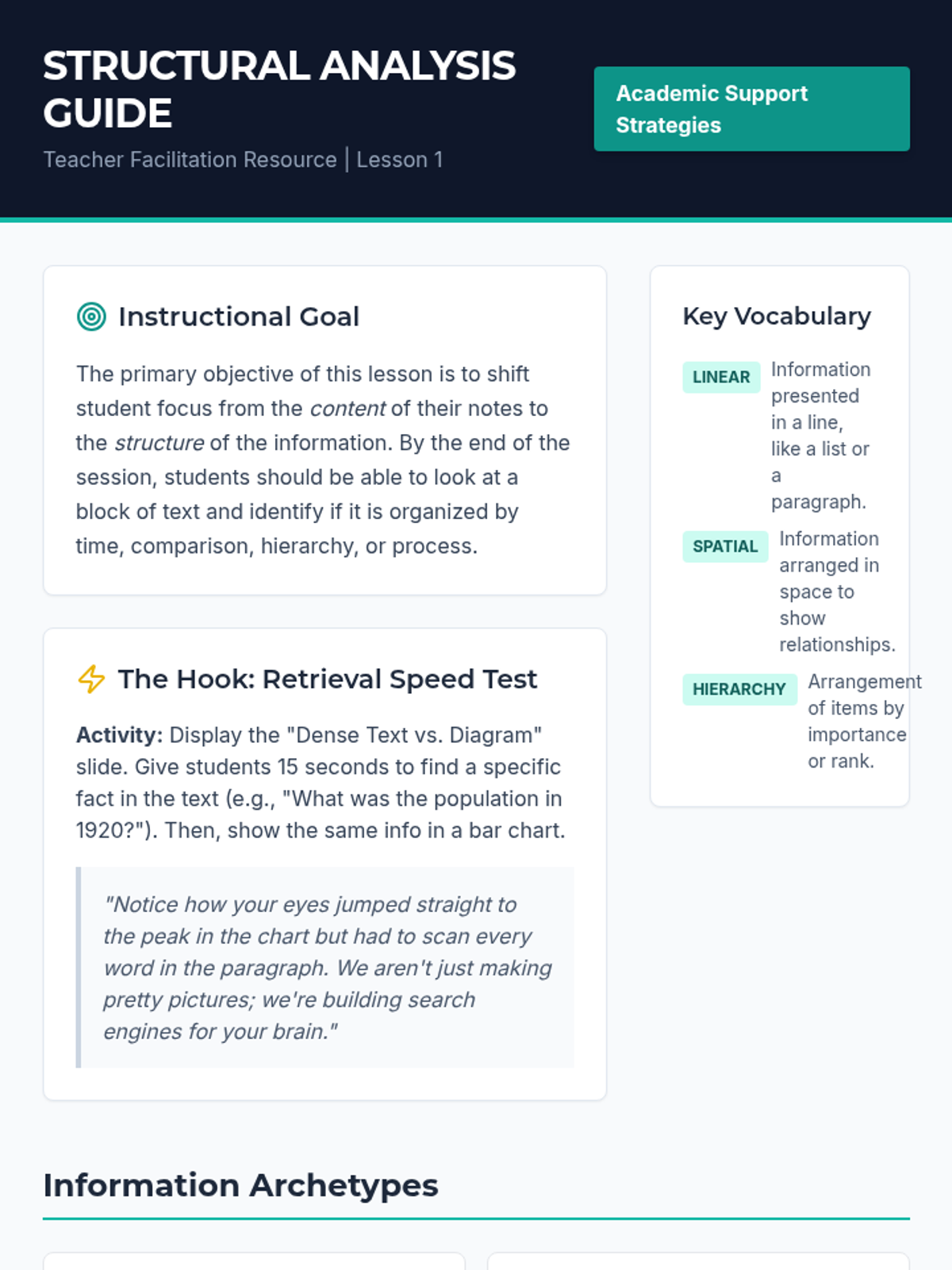
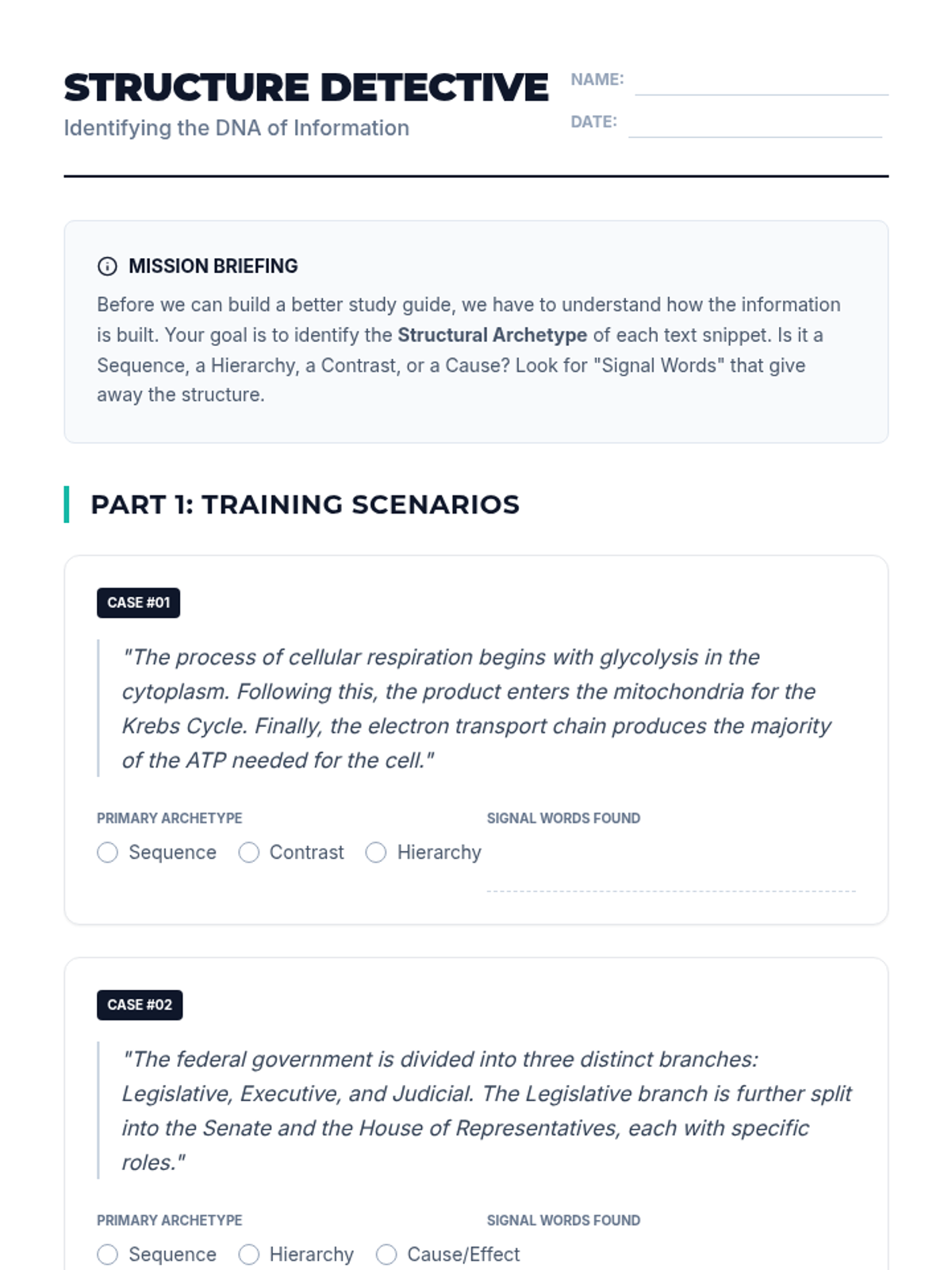
This sequence teaches 12th-grade students how to transform linear notes into visual graphic organizers to improve information synthesis and retention. Students move from analyzing content structures to creating a comprehensive, visually-coded master study guide for their own coursework.