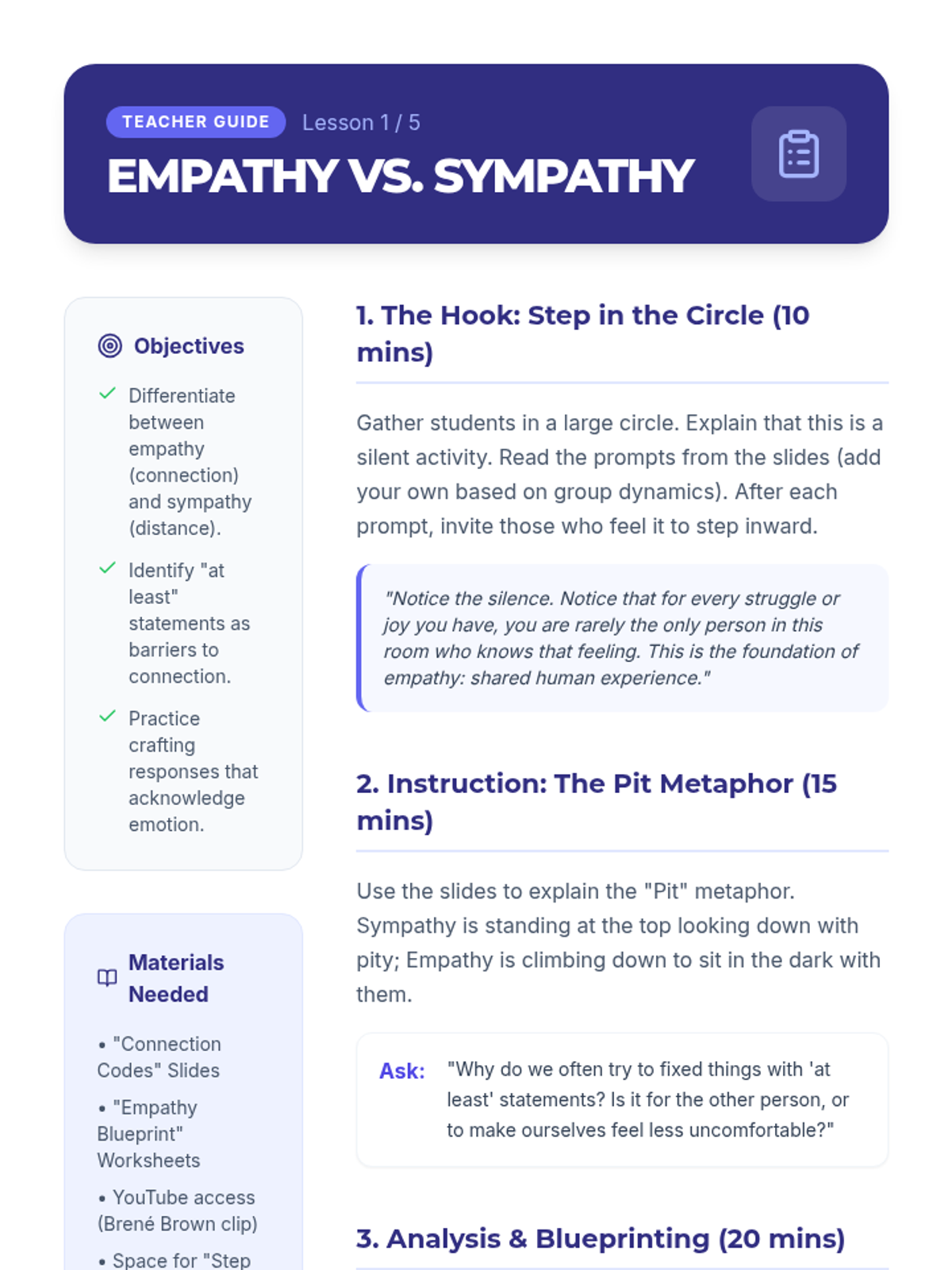
Empathetic skill development through emotion recognition, cultural diversity appreciation, and bias confrontation. Targets multi-perspective analysis to support respectful interactions and complex social responses.
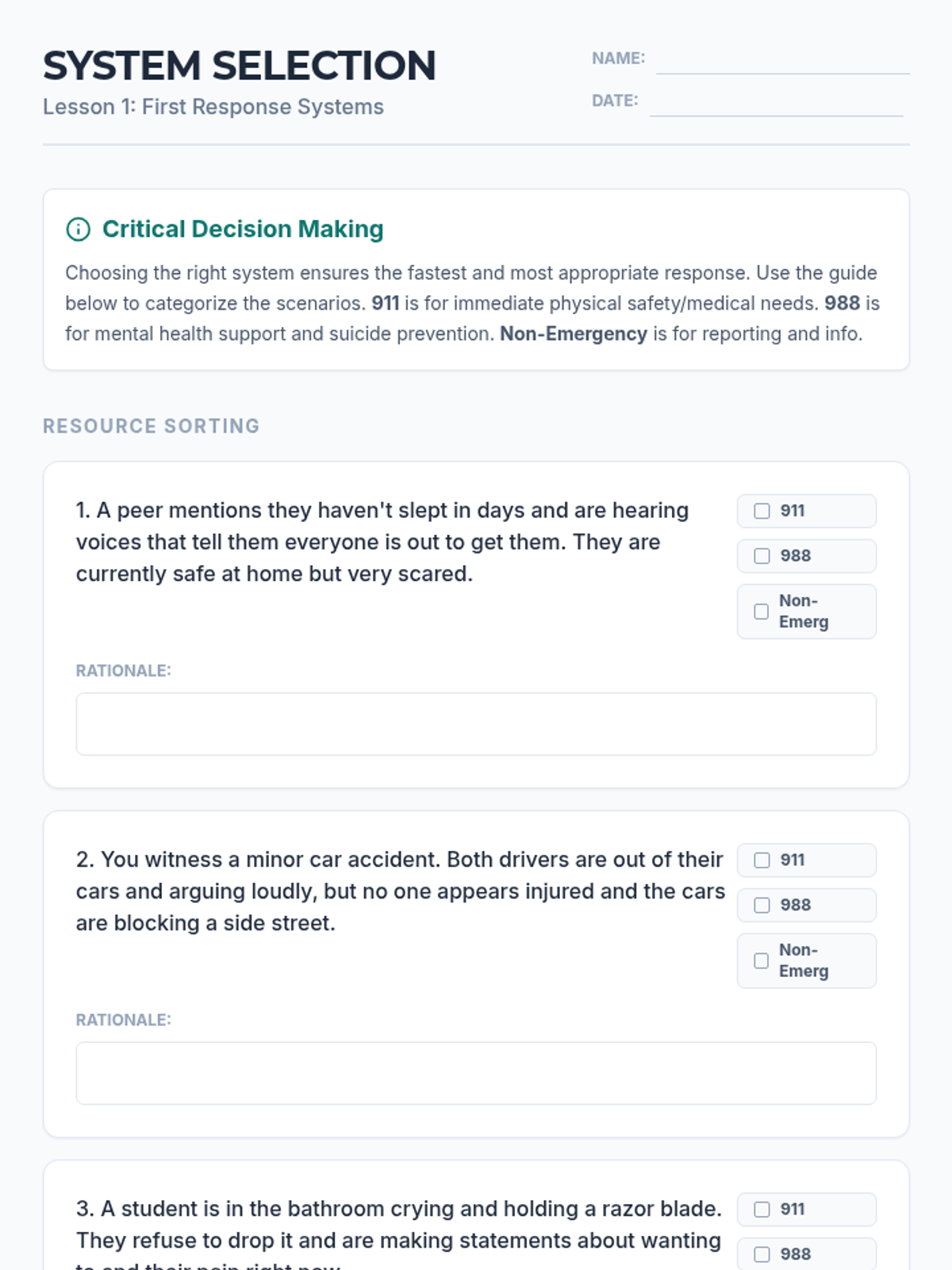
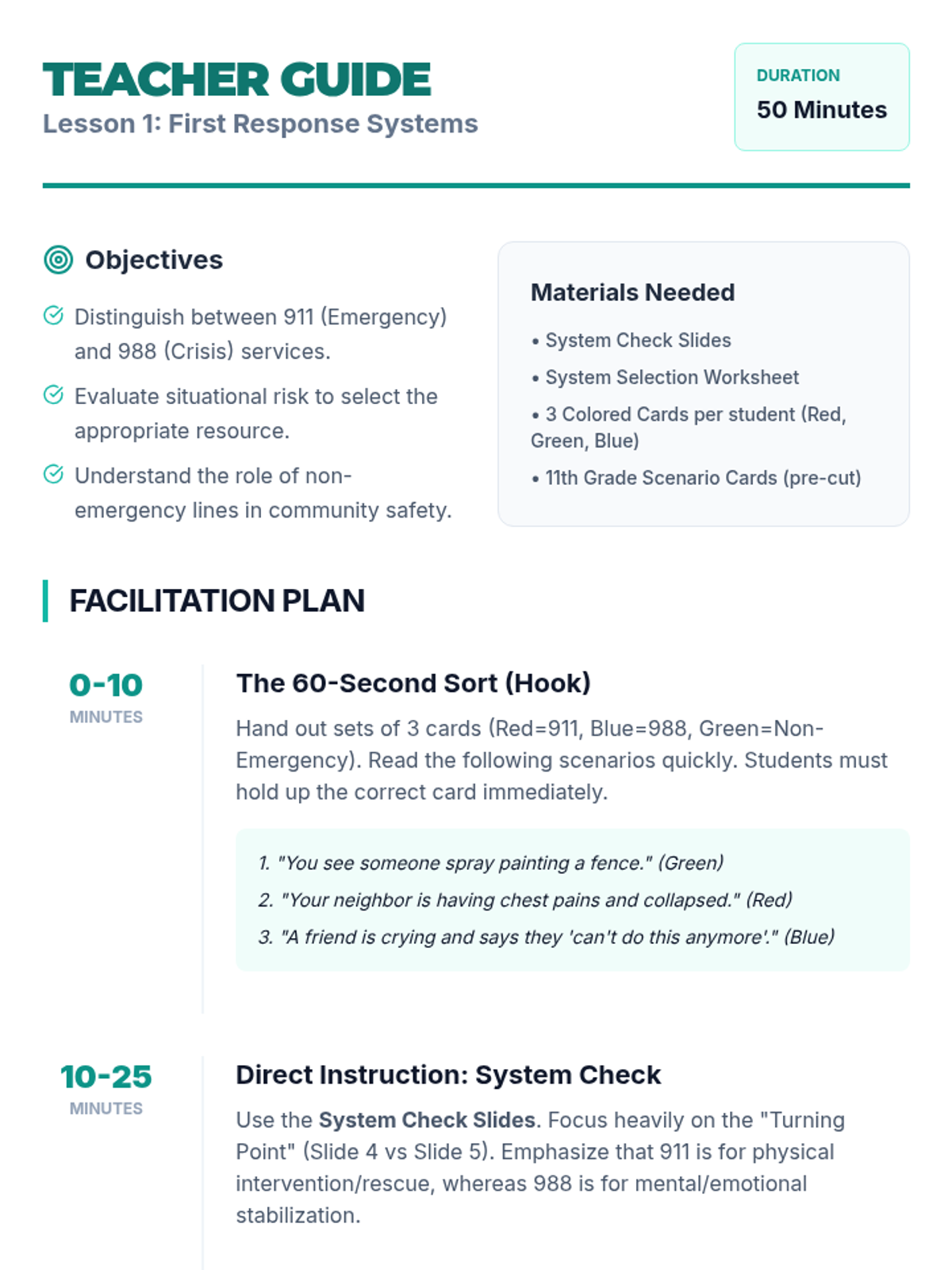
This sequence guides 11th-grade students through the logistical and procedural aspects of crisis intervention. Students learn to distinguish between 911 and 988, understand hotline intake protocols, navigate the ethics of confidentiality, explore specialized digital tools, and practice referring peers to appropriate professional resources.
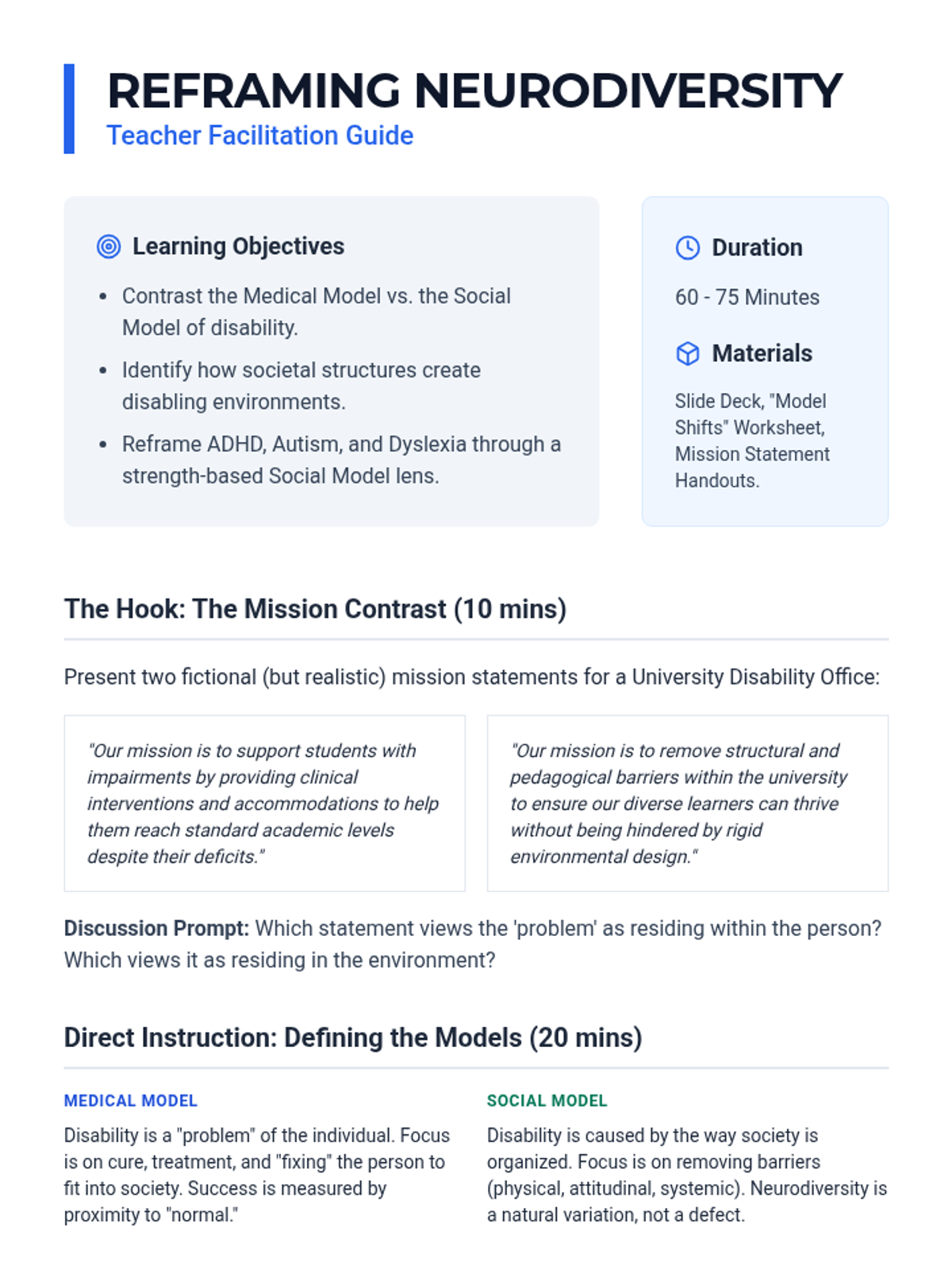
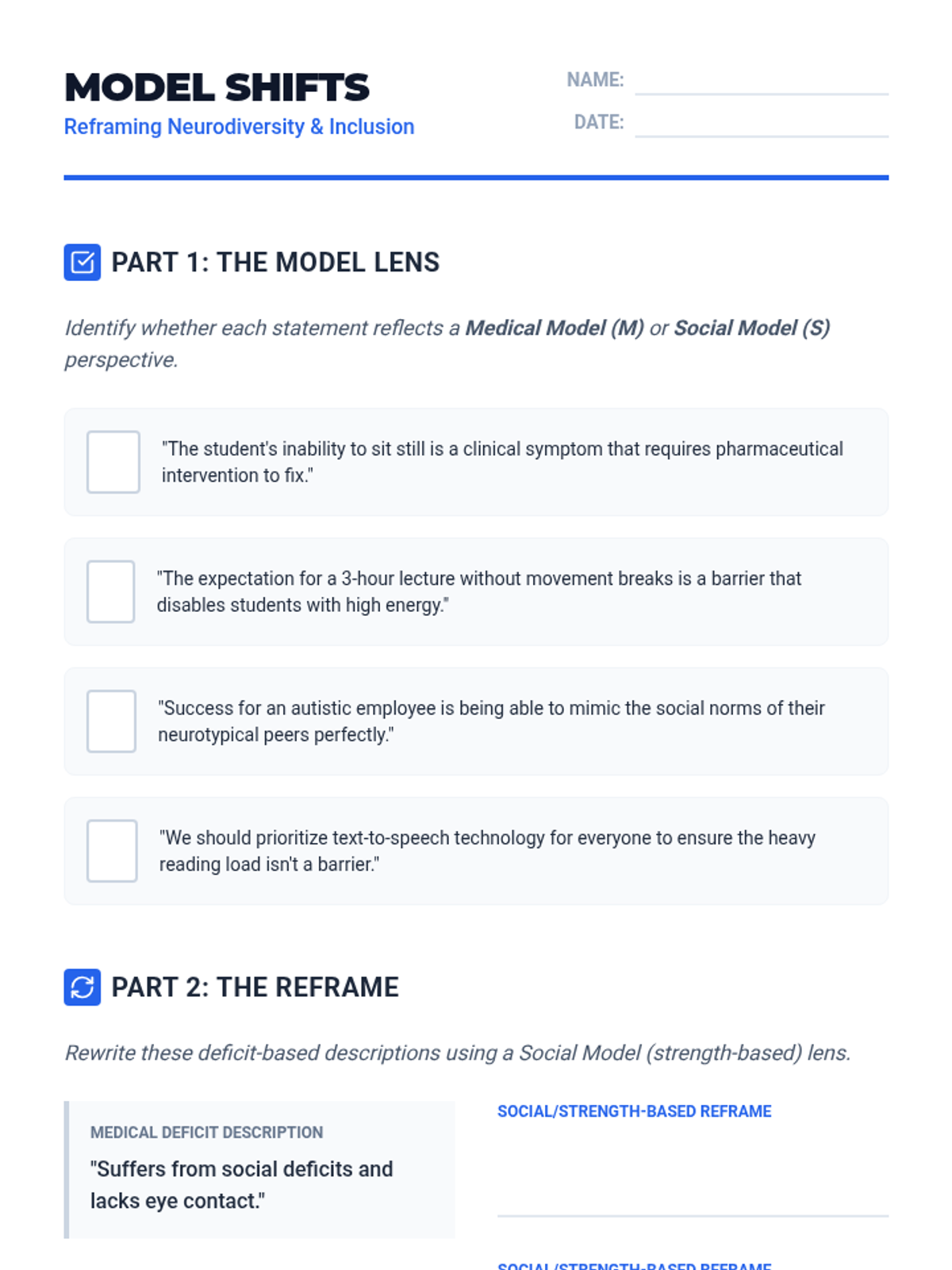
This sequence explores neurodiversity through the Social Model of disability, challenging traditional norms of professionalism and designing inclusive environments. Students will move from theoretical understanding to practical application in organizational policy and advocacy.
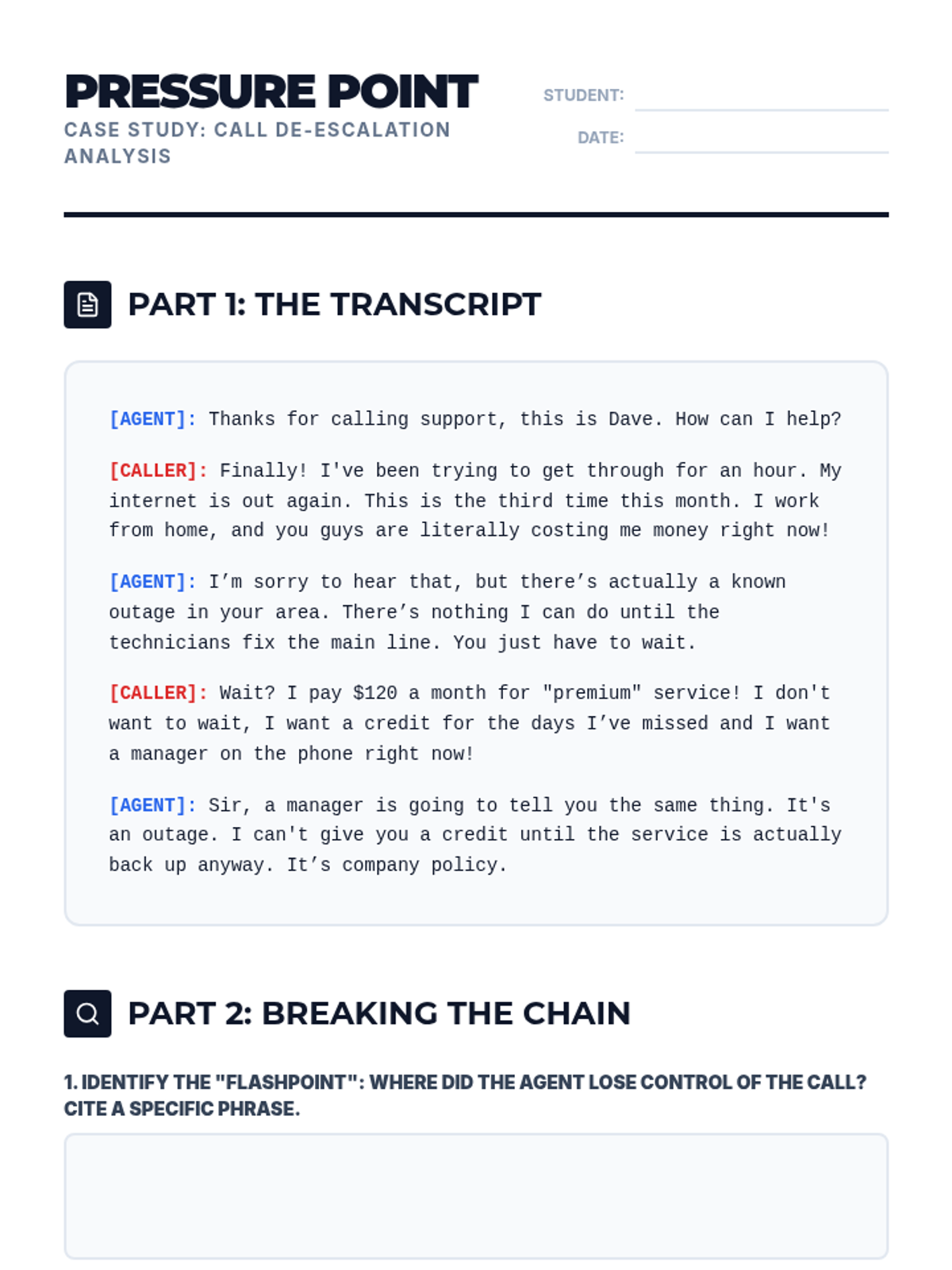
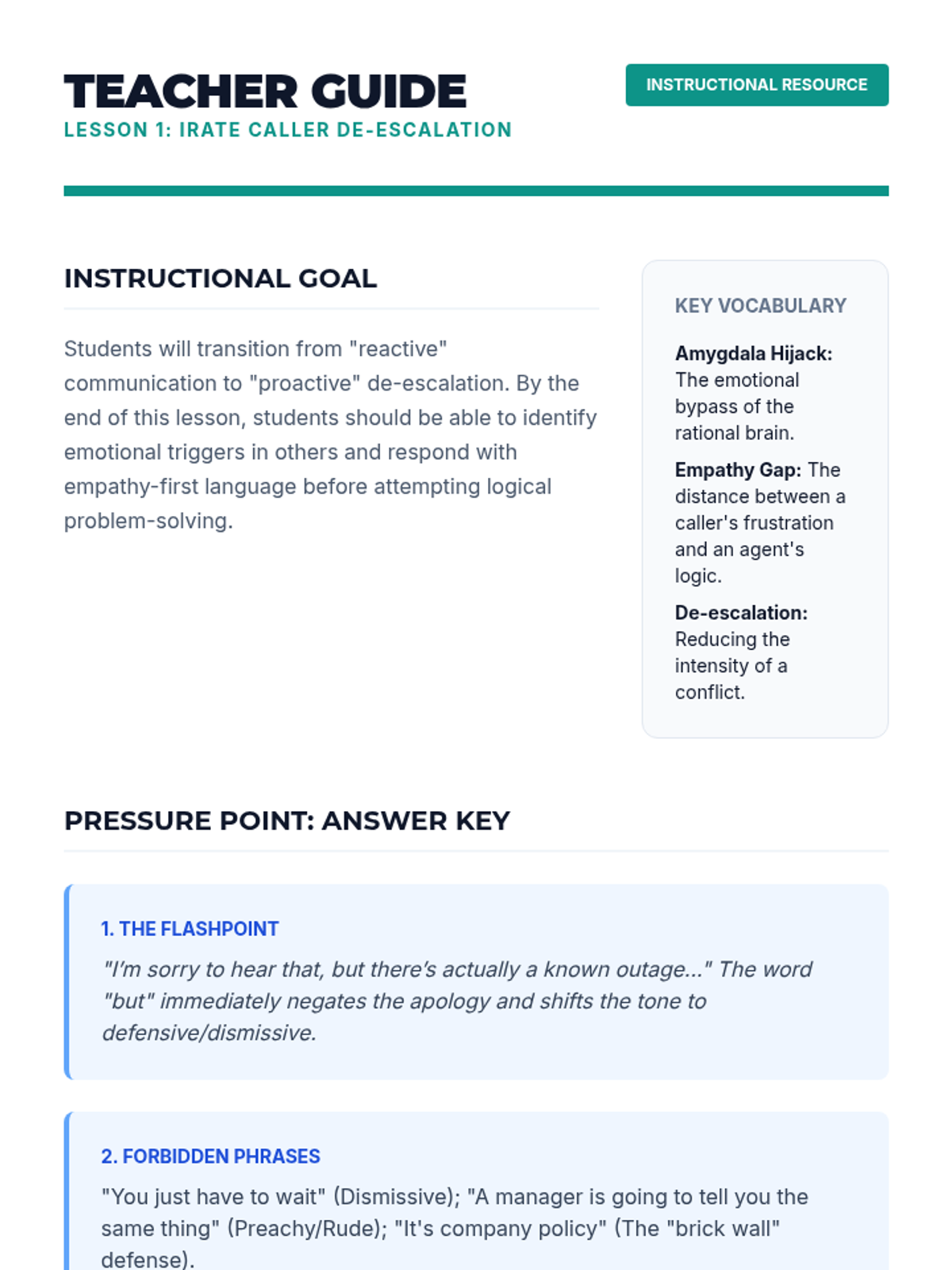
An advanced series for 11th graders focusing on high-stakes phone communication. Students master de-escalation, seamless transfers, intercultural clarity, and professional improvisation to handle conflict and ambiguity with composure.
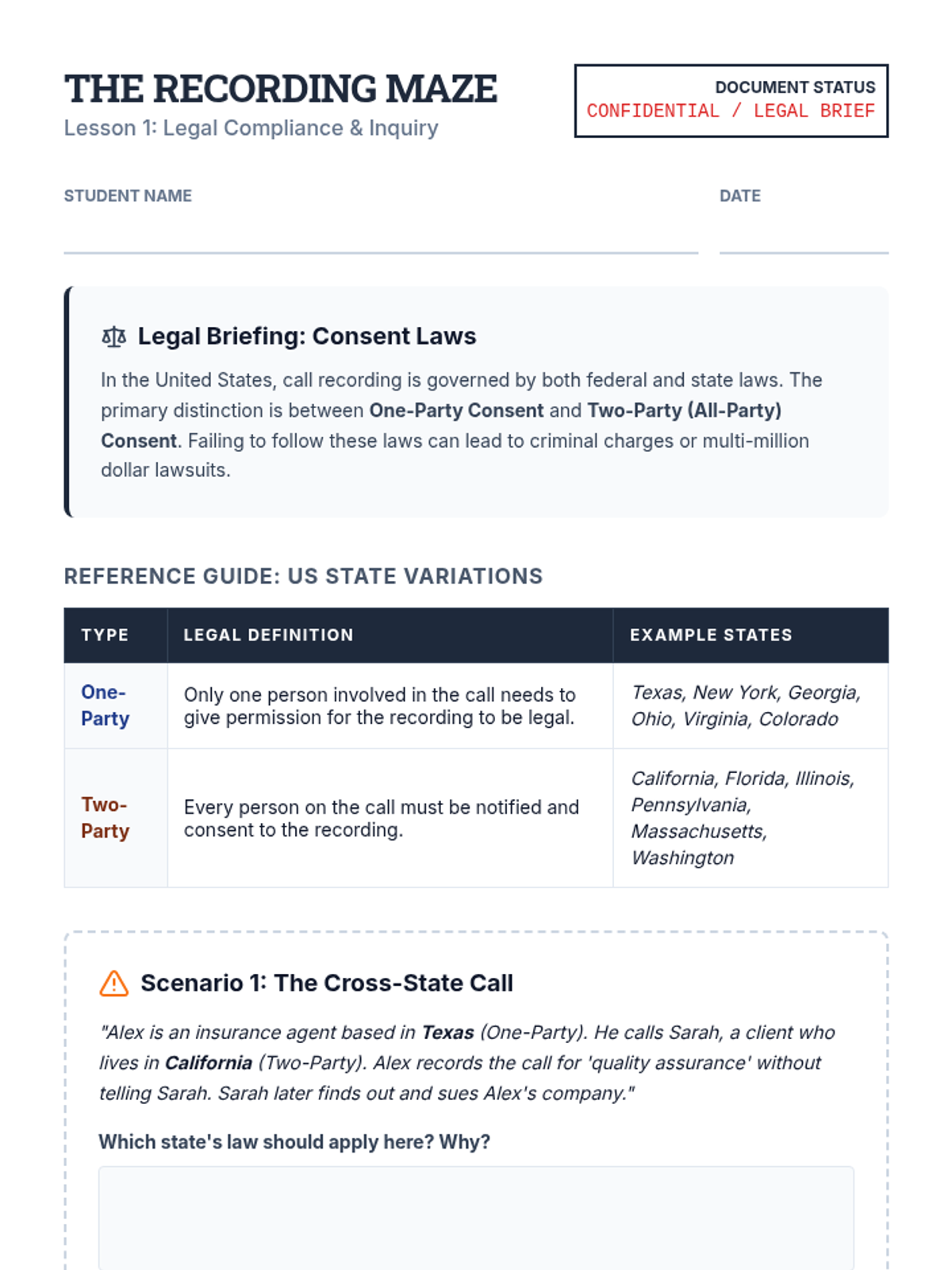
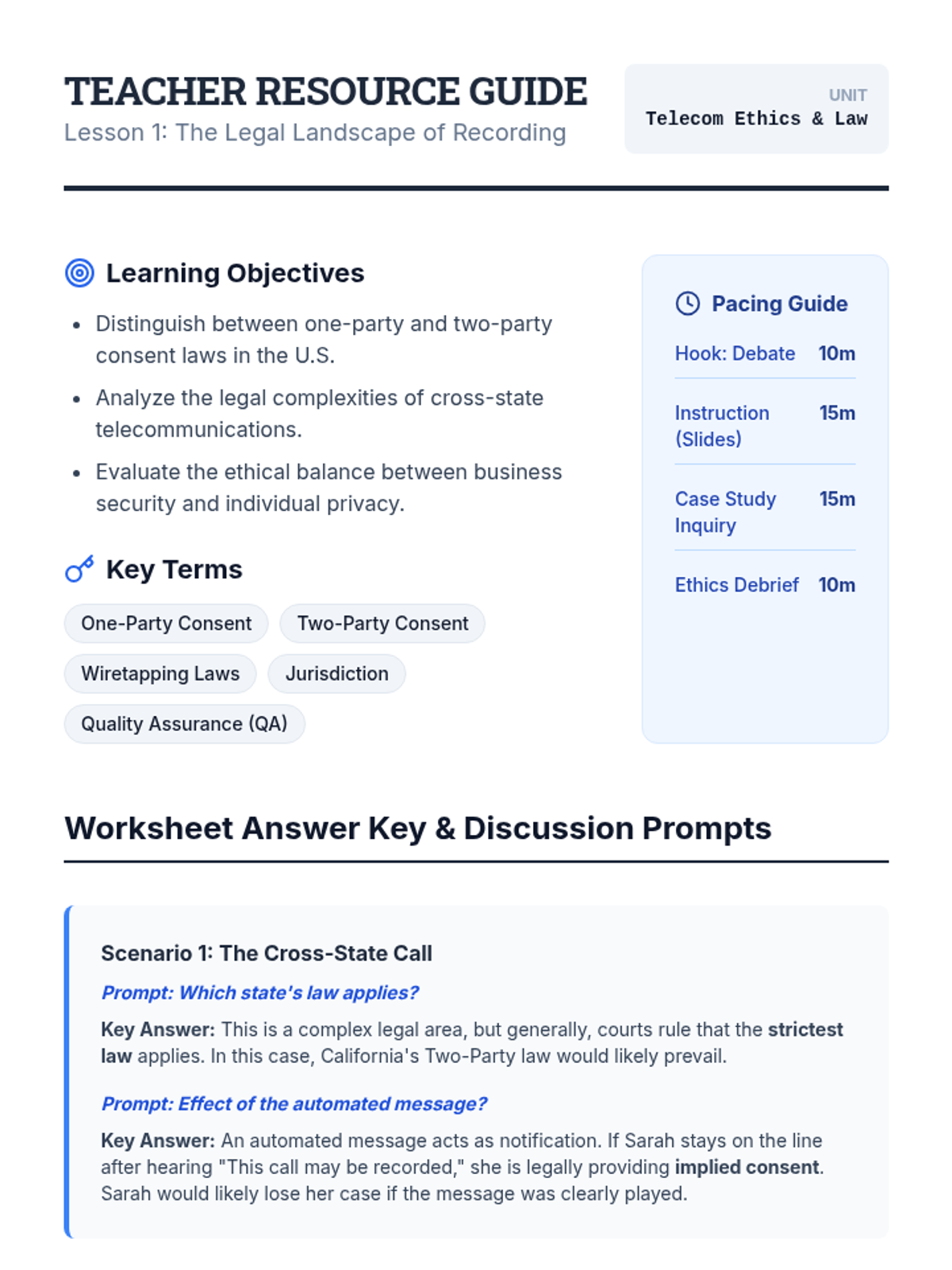
This inquiry-based sequence examines the legal, ethical, and reputation-based consequences of telephonic communication, moving from privacy laws to developing a personal code of ethics for the workplace.
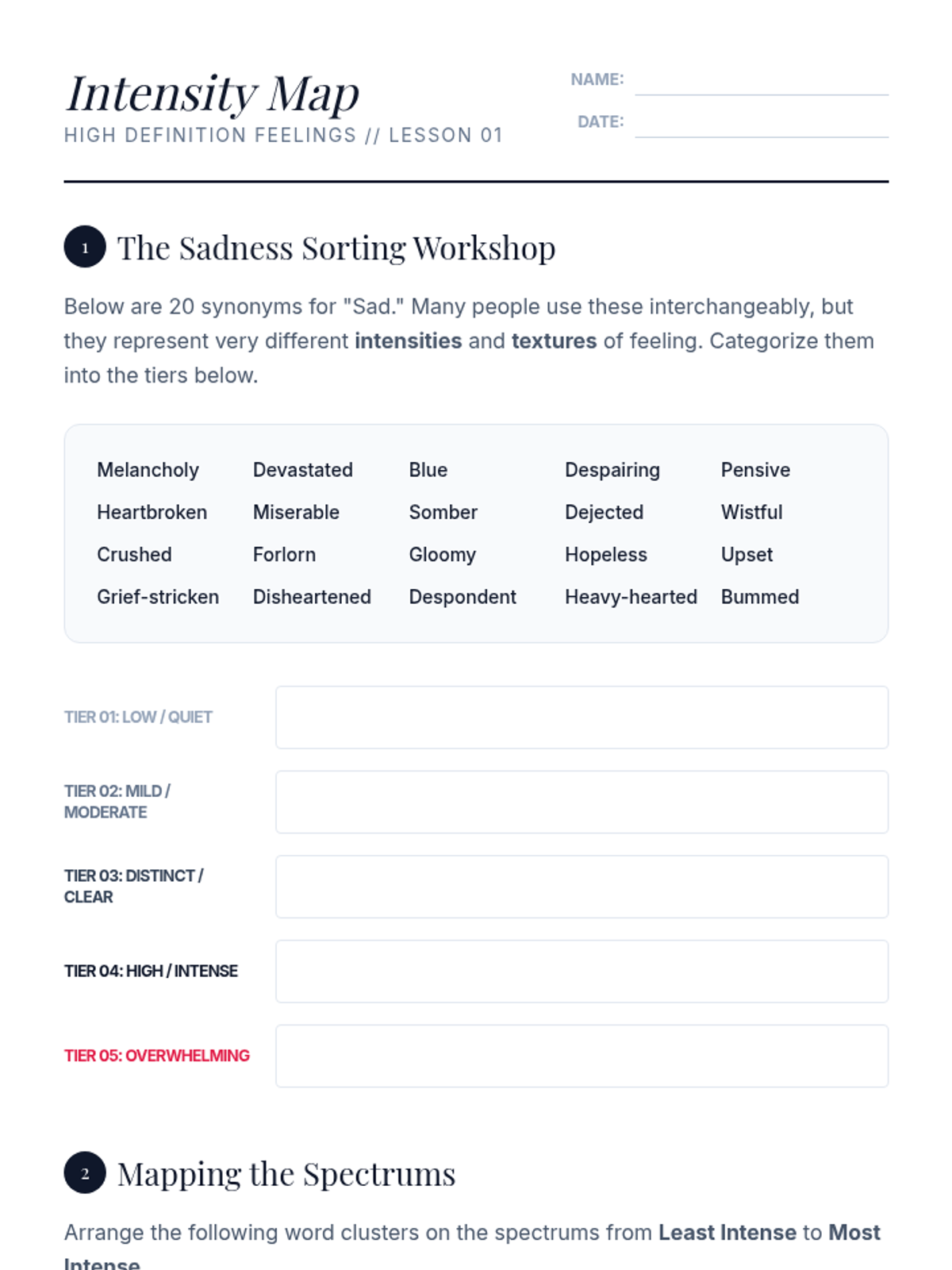
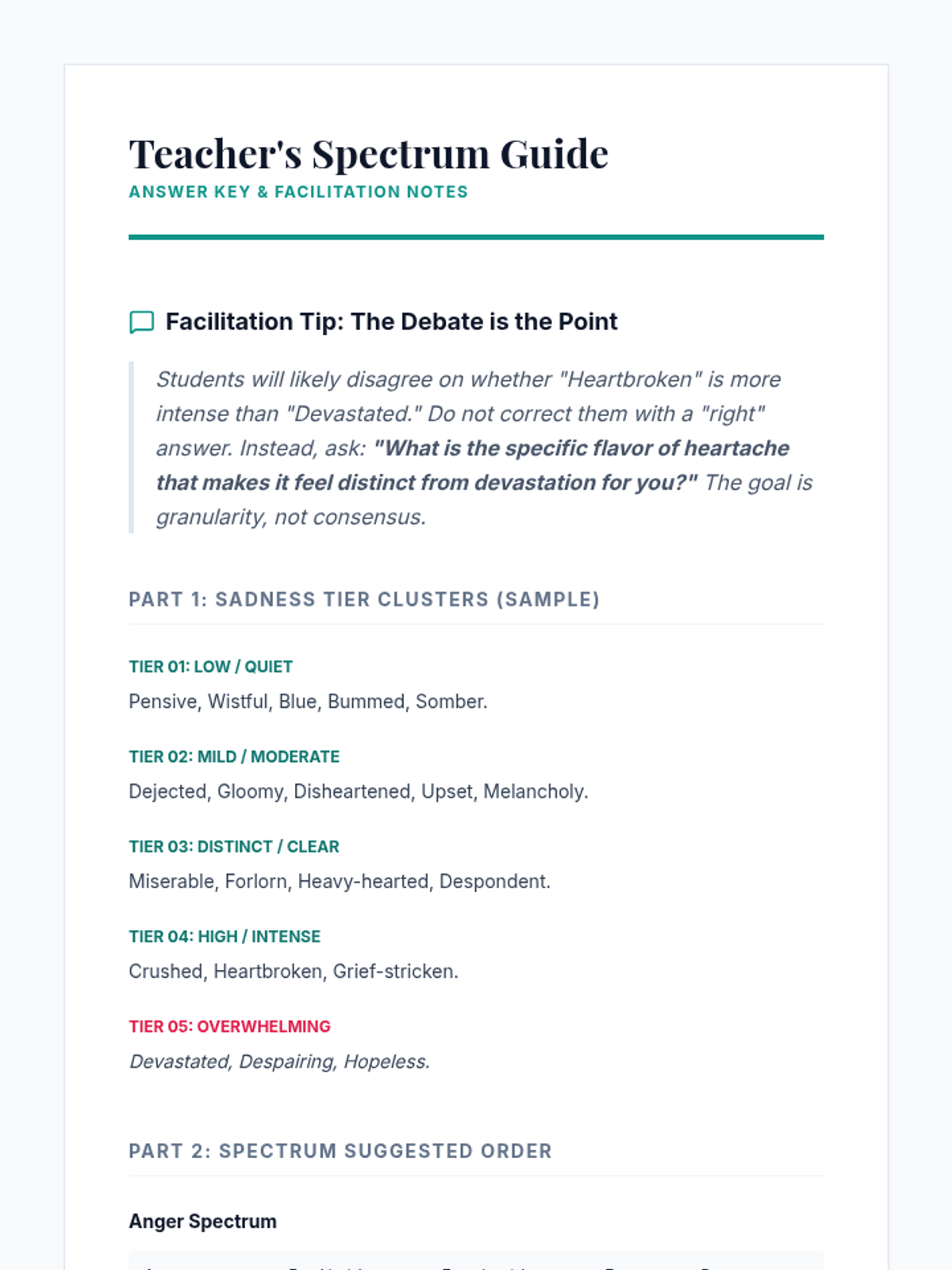
This sequence explores emotional granularity as a critical life skill for 11th-grade students. By moving from broad emotional categories to precise vocabulary, students learn to identify, differentiate, and communicate complex internal states, leveraging 'affect labeling' to improve emotional regulation and interpersonal relationships.
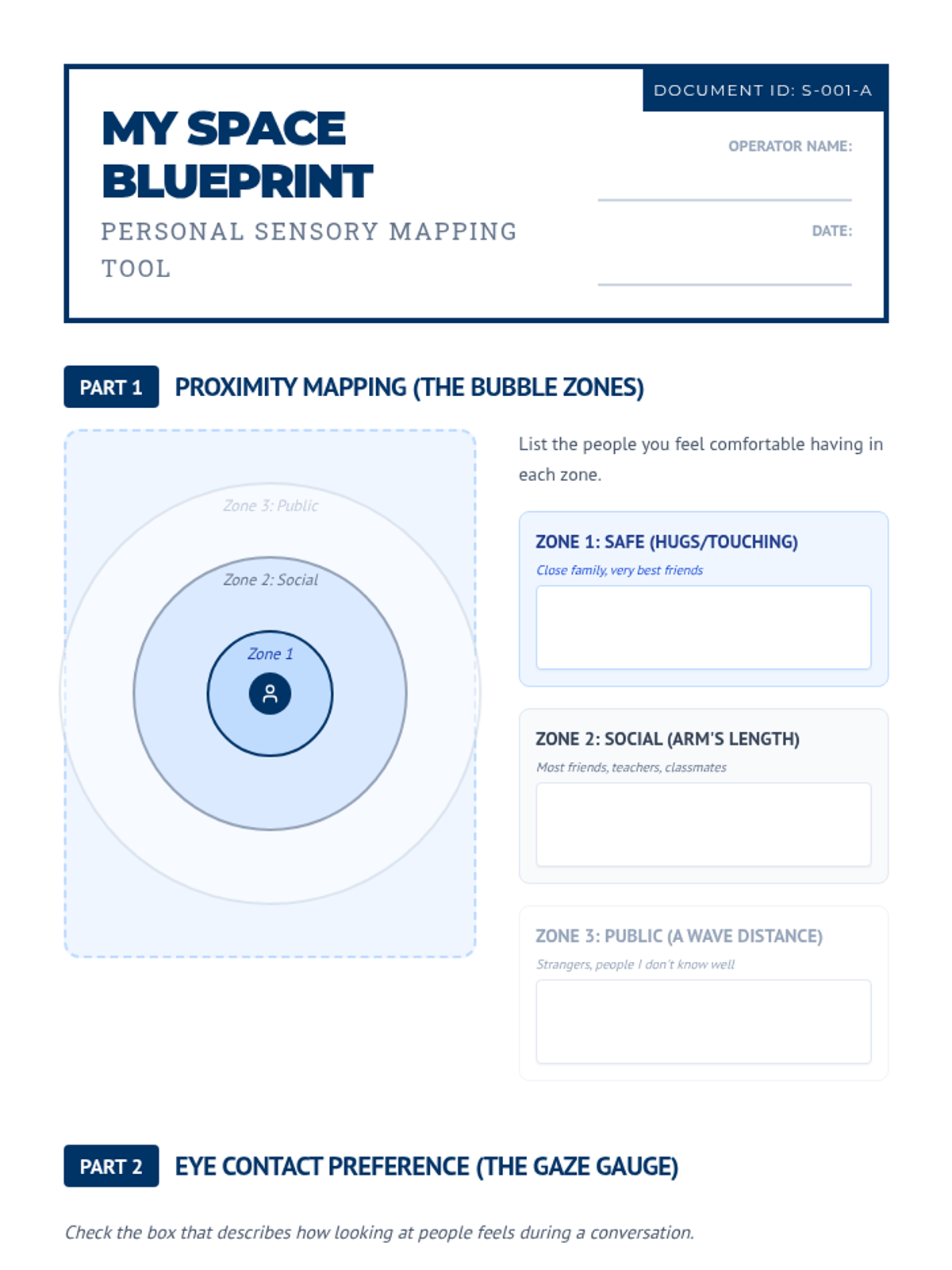
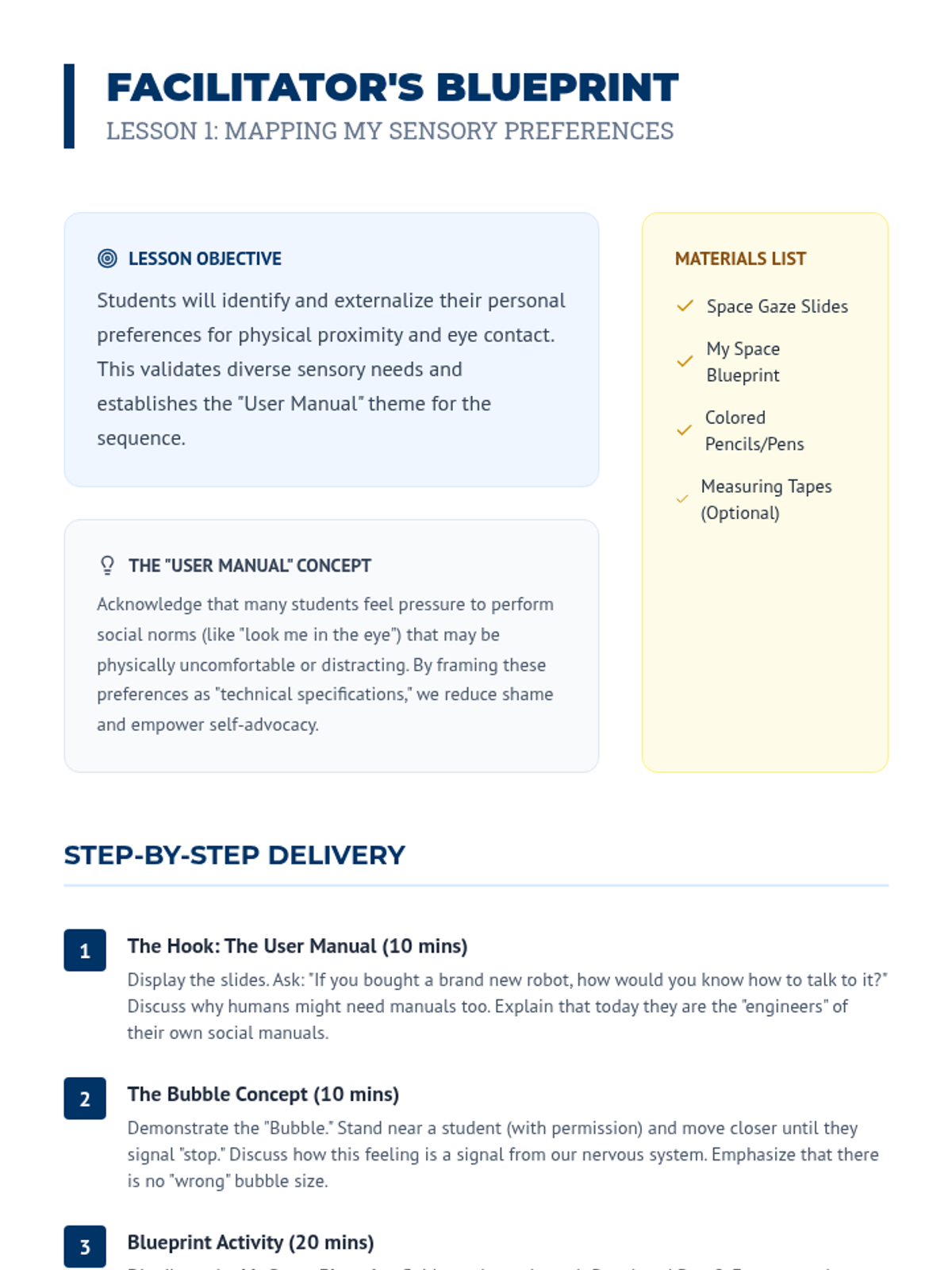
A neurodiversity-affirming sequence for 6th graders to explore their personal space needs and eye contact preferences. Students learn to advocate for their own boundaries while respecting the diverse sensory and cultural needs of others through a 'User Manual' theme.
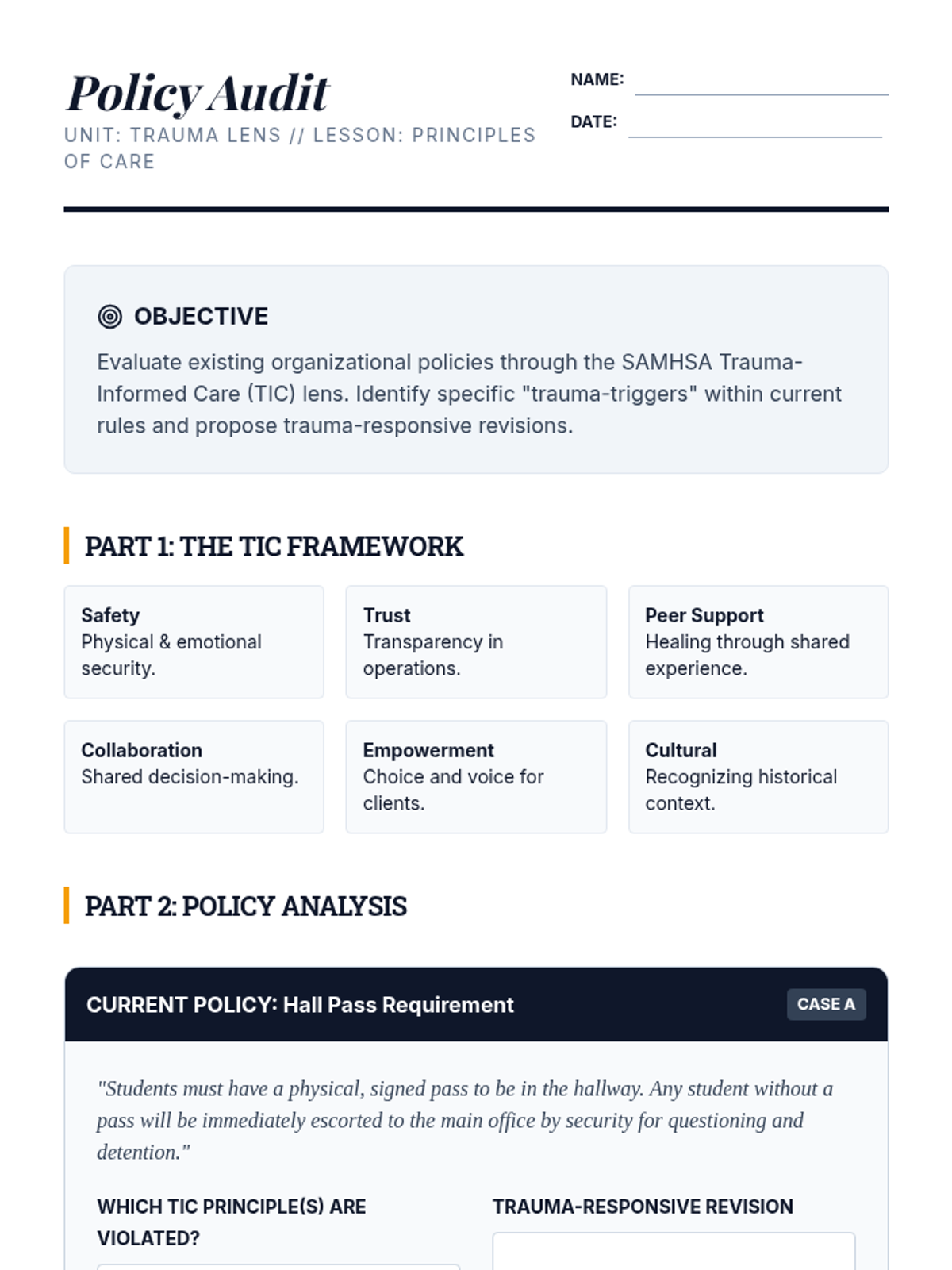
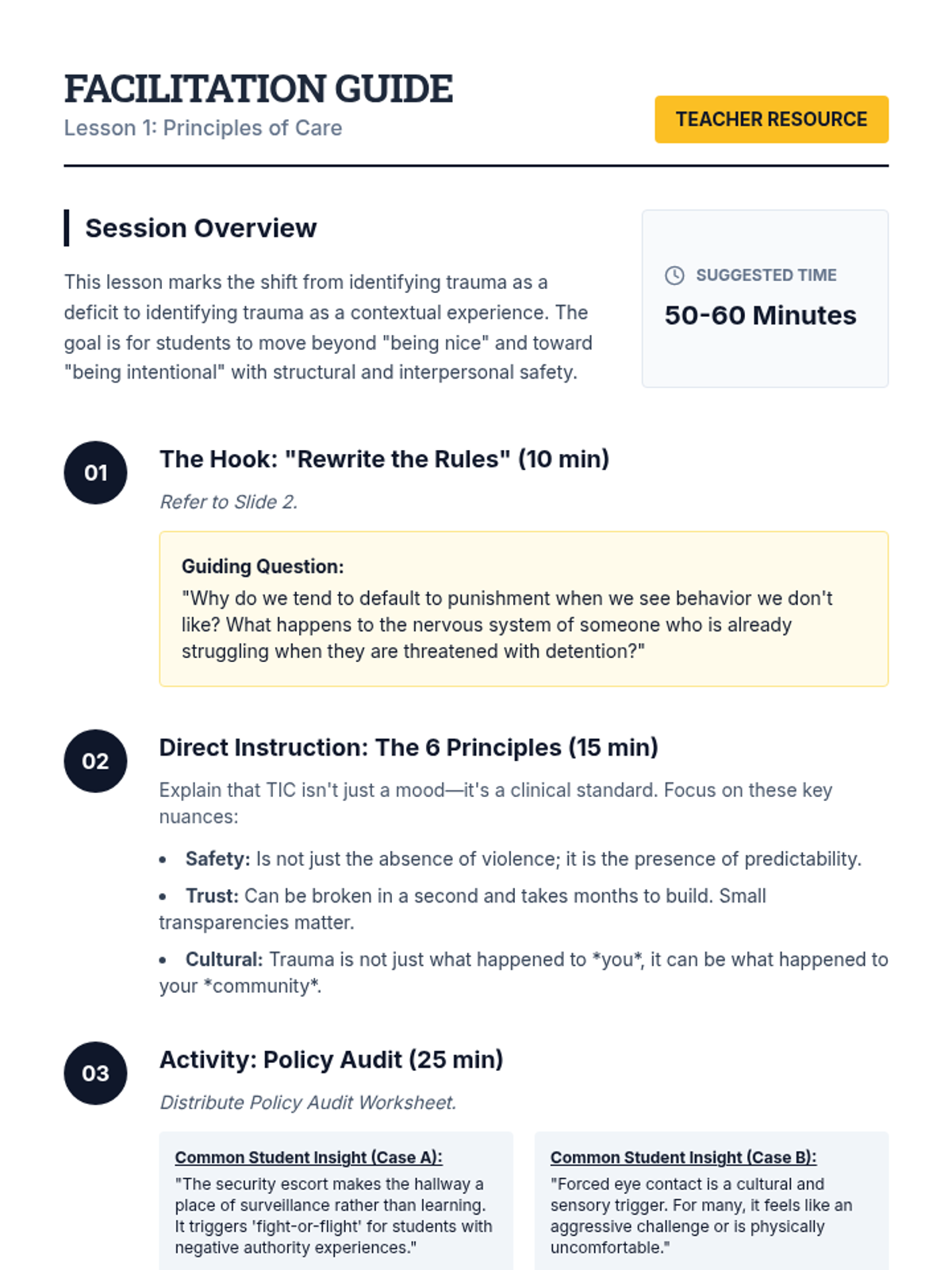
A comprehensive unit for 11th-grade students exploring the principles of Trauma-Informed Care (TIC), de-escalation strategies, provider wellness, and cultural competency. Students transition from theoretical understanding to clinical application through simulations and policy analysis.
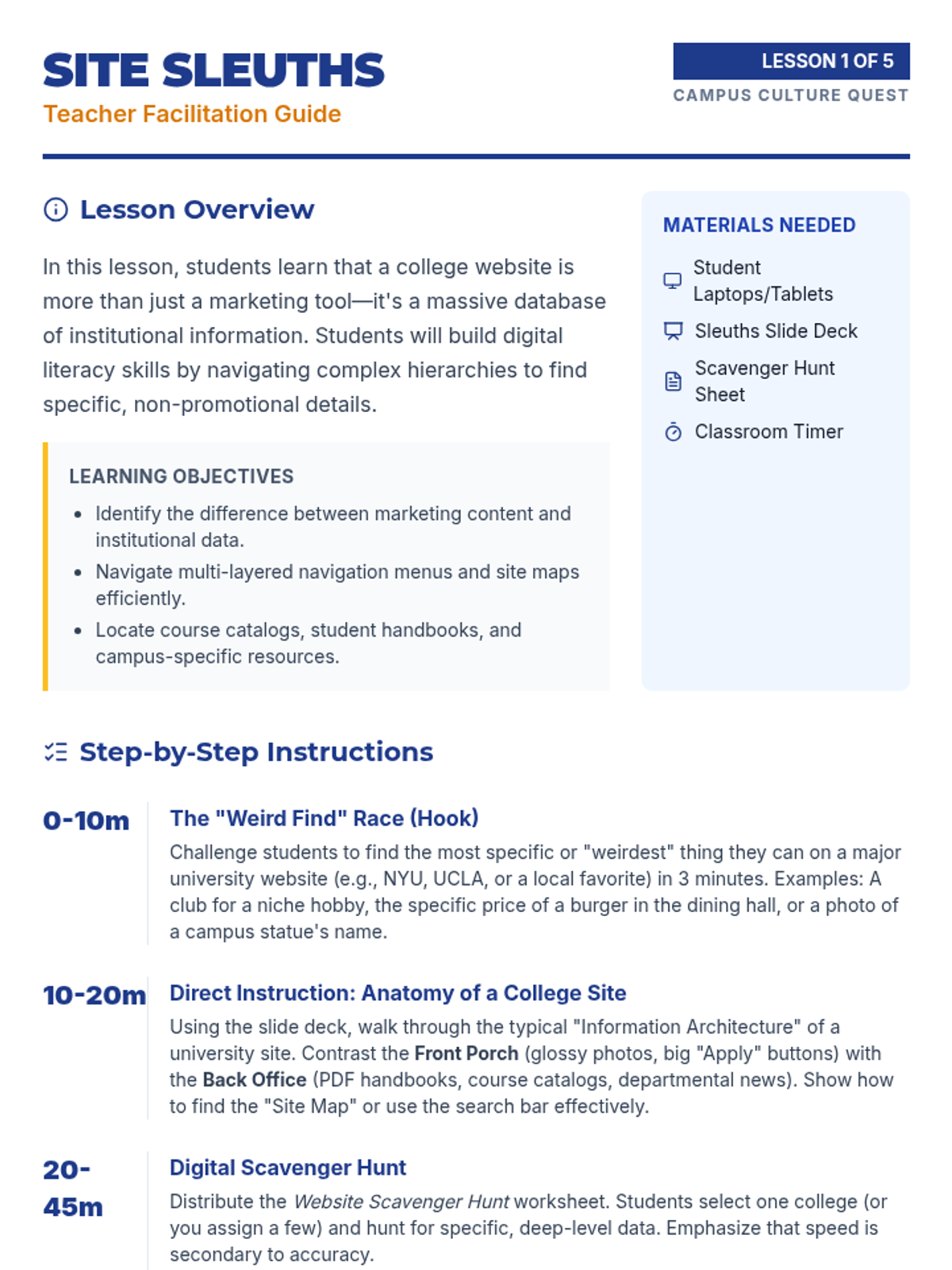
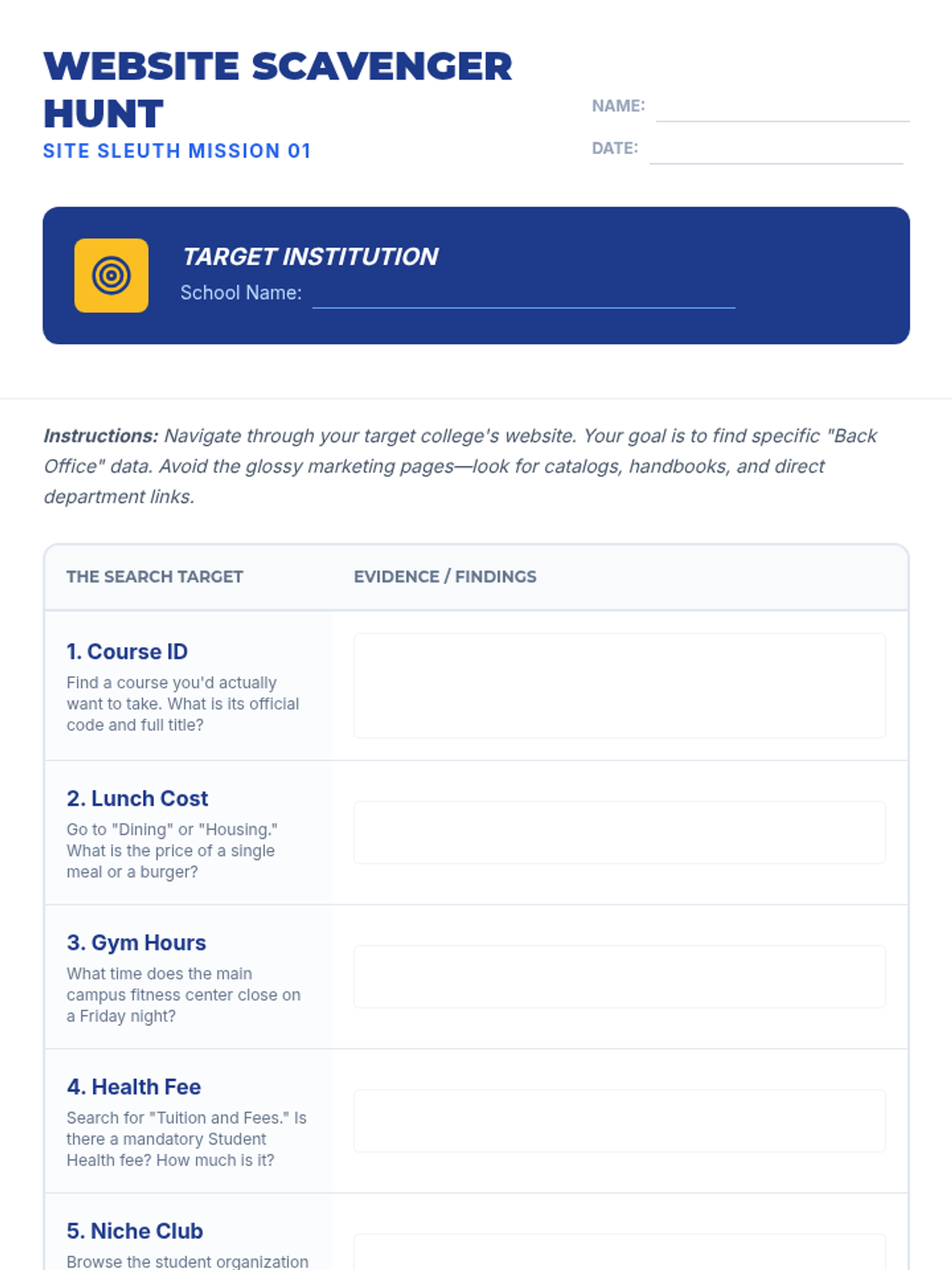
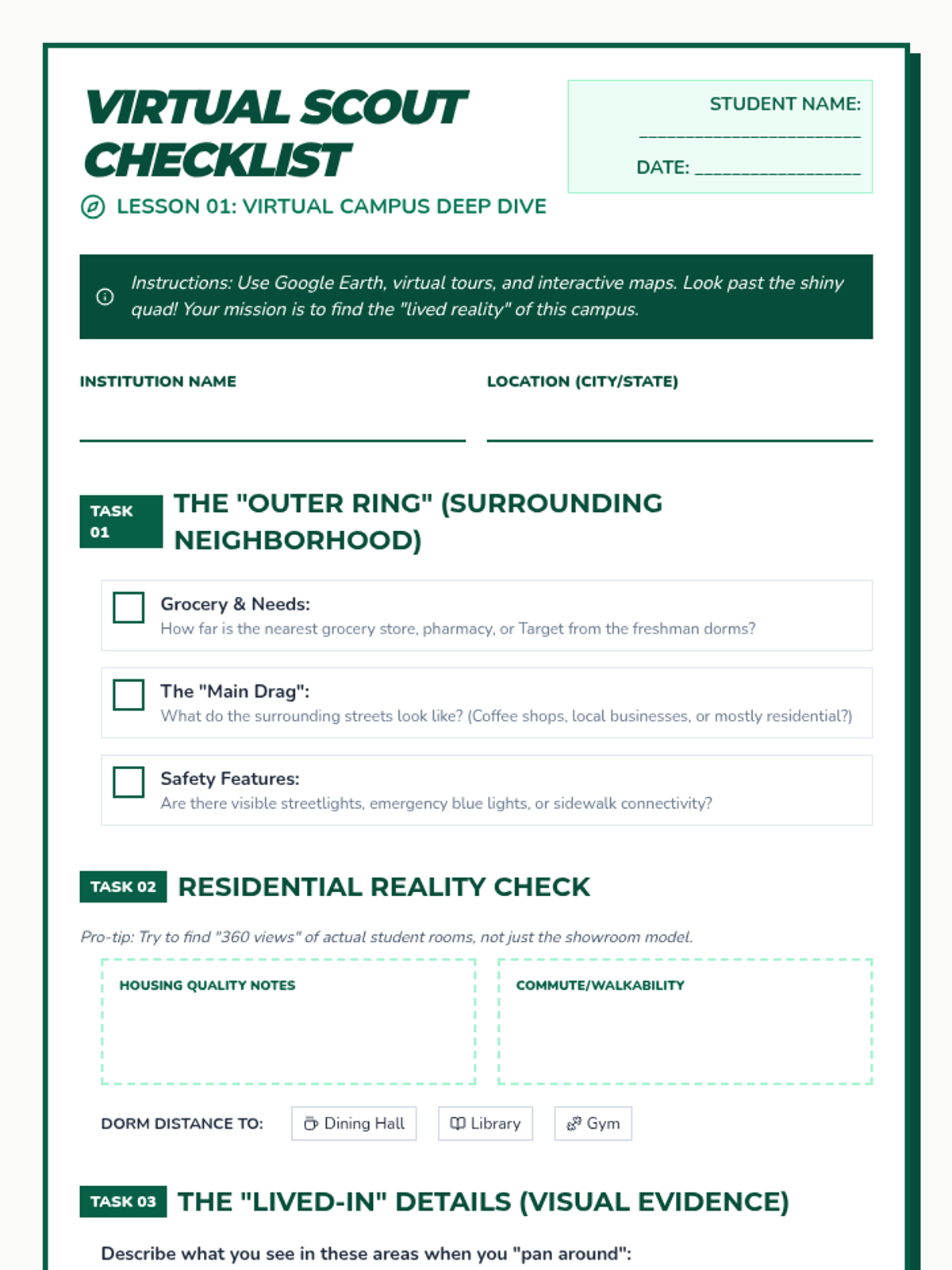
A comprehensive exploration of college campus culture and student resources, teaching 9th-grade students how to look beyond marketing materials to find authentic community information. Students develop digital literacy skills to navigate complex university websites, evaluate virtual tours, and investigate support systems.
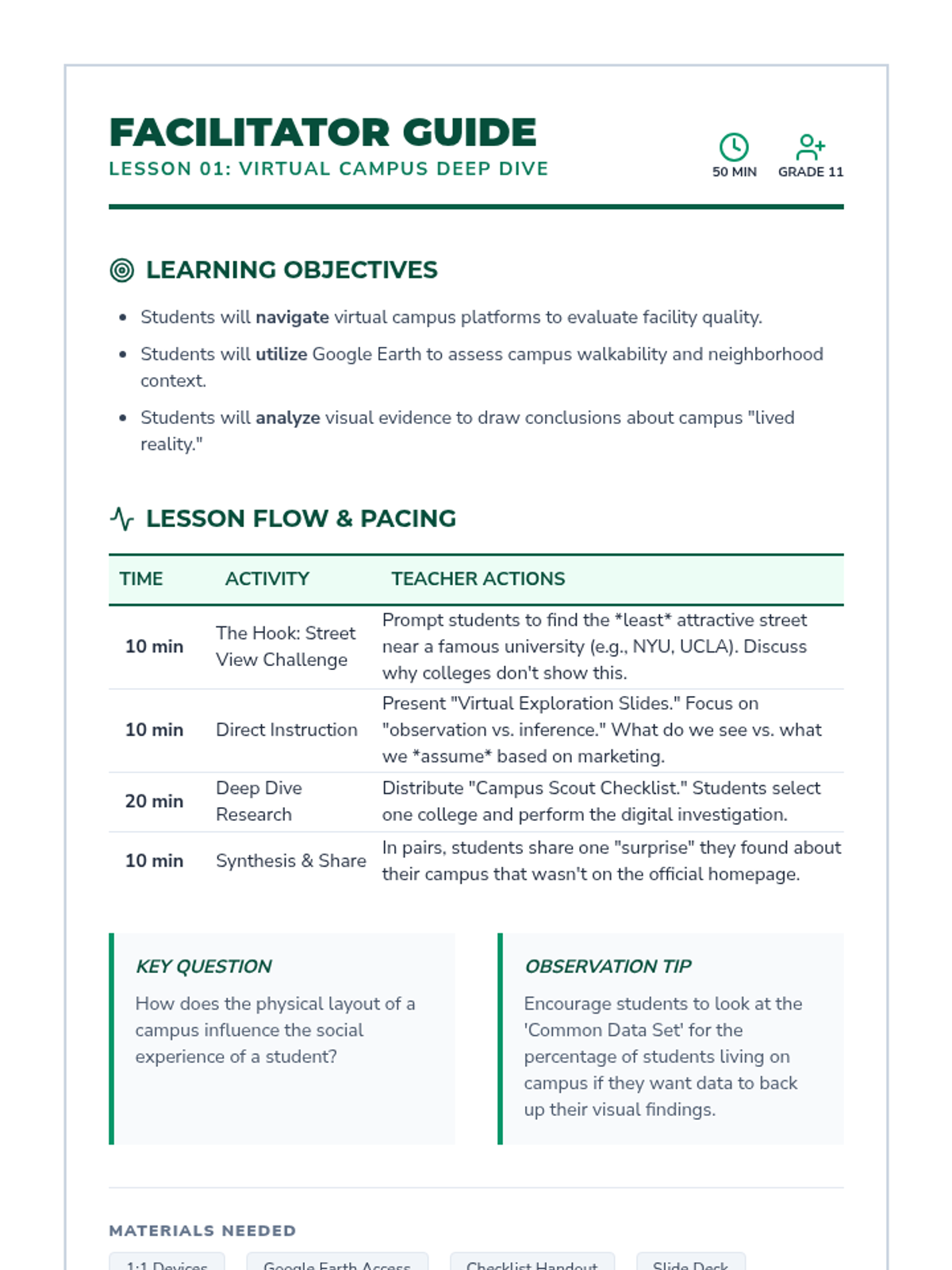
This sequence guides 11th-grade students through a qualitative evaluation of college campus culture and support systems. Students transition from surface-level marketing to deep-dive research using virtual tools, student media, and demographic data to determine authentic 'cultural fit'.
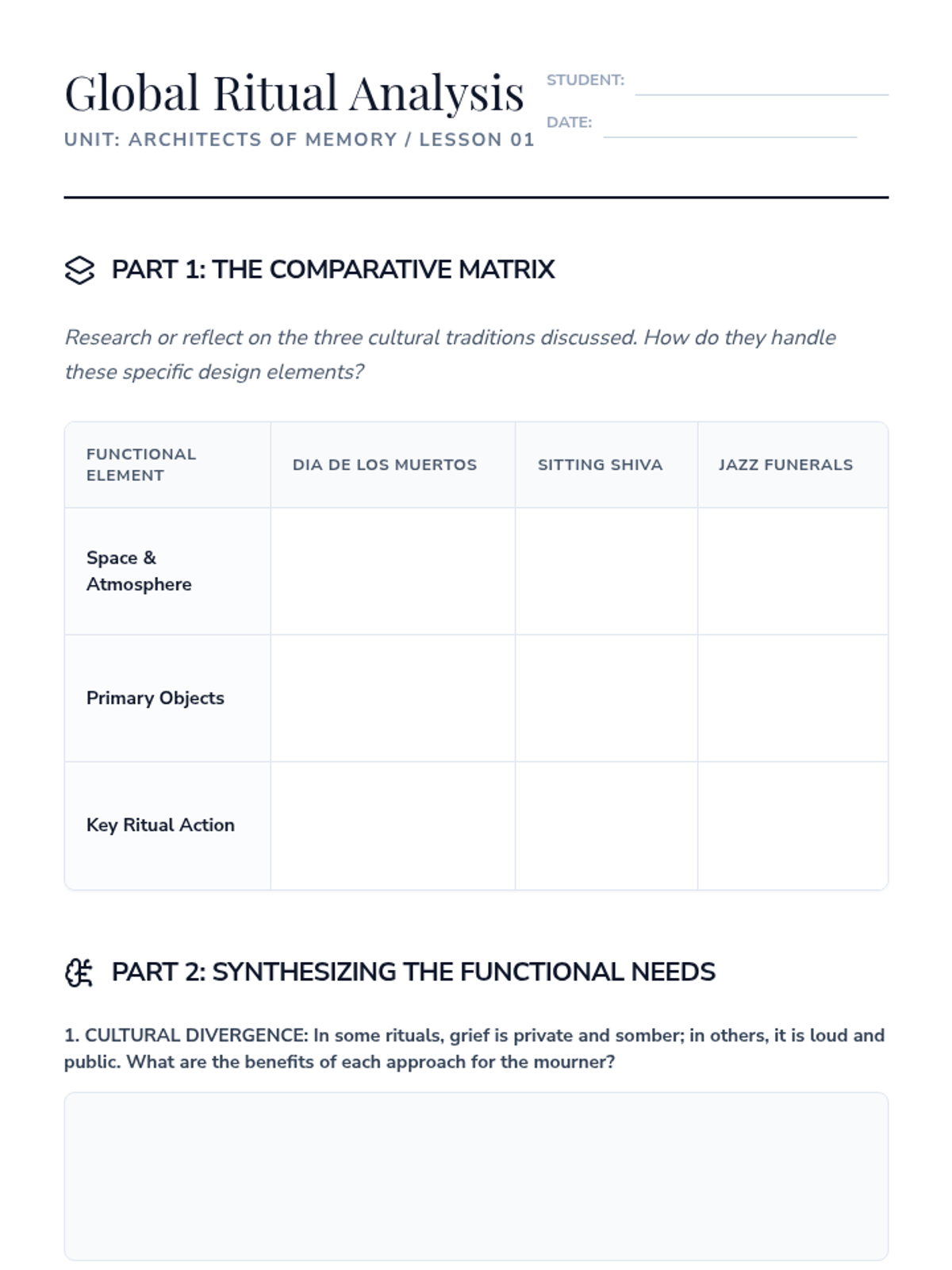
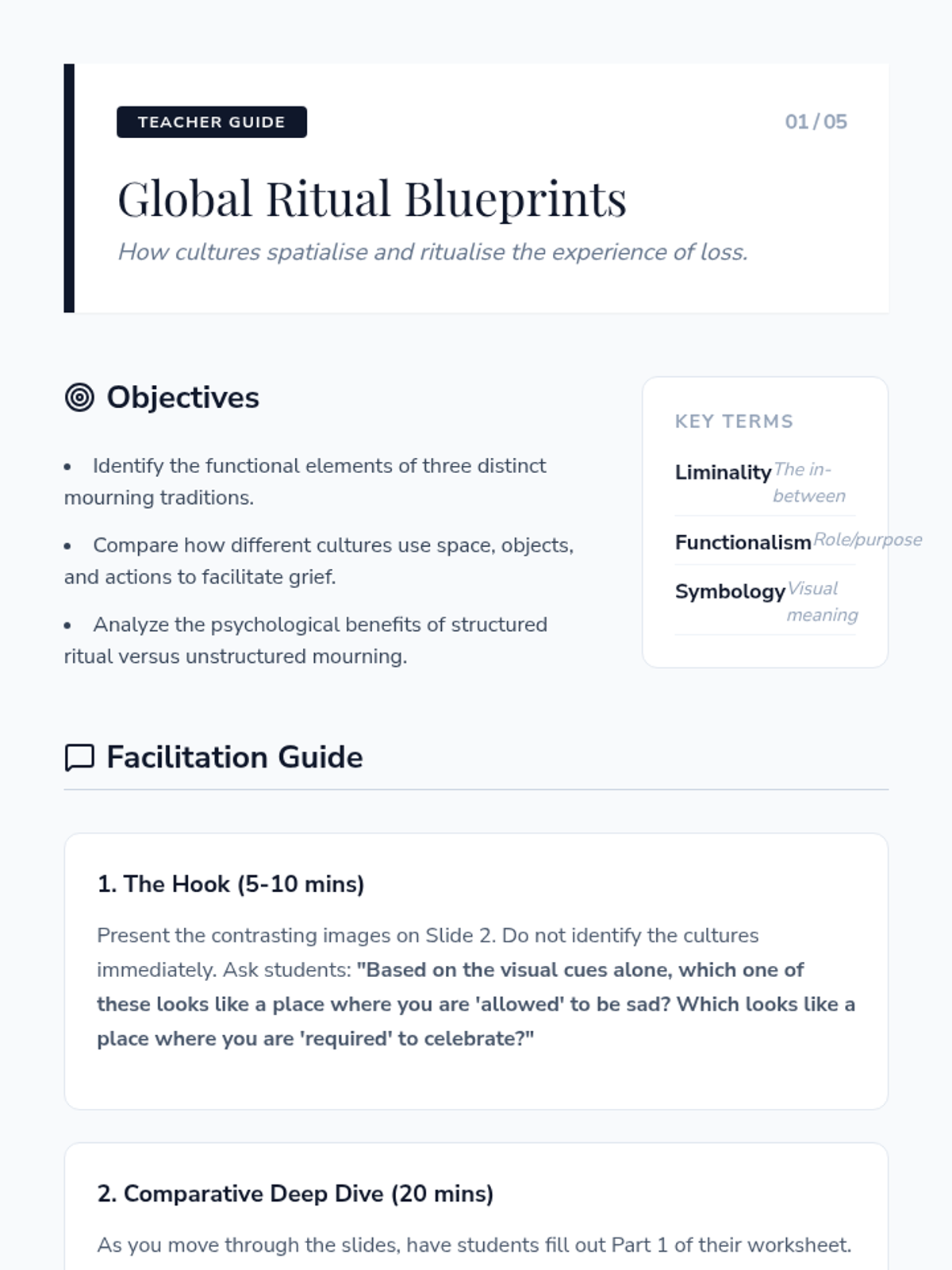
A design-focused exploration of grief and loss, where students study global mourning traditions and apply design thinking to create personal rituals and commemorative objects. This sequence helps 11th-grade students externalize internal emotional experiences through physical design and structured ceremony.
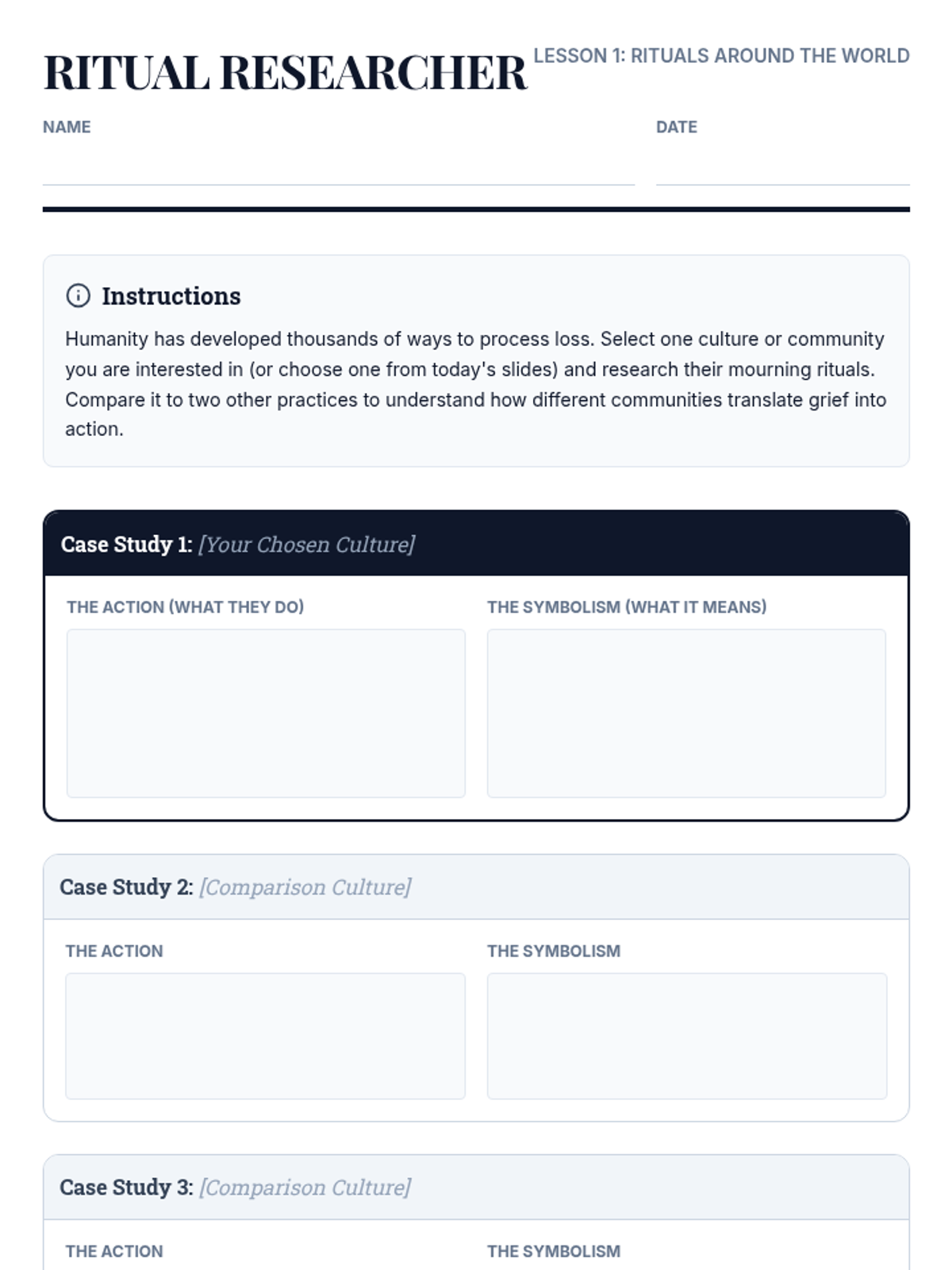
This sequence explores the sociological and anthropological aspects of mourning, rituals, and memorials. Students move from analyzing global cultural practices to designing their own commemorative tributes, using design thinking to process the concept of loss.
This sequence explores the anthropological and psychological functions of mourning rituals. Students analyze cultural practices, explore the concept of impermanence, and design their own secular rituals to navigate personal transitions and losses.
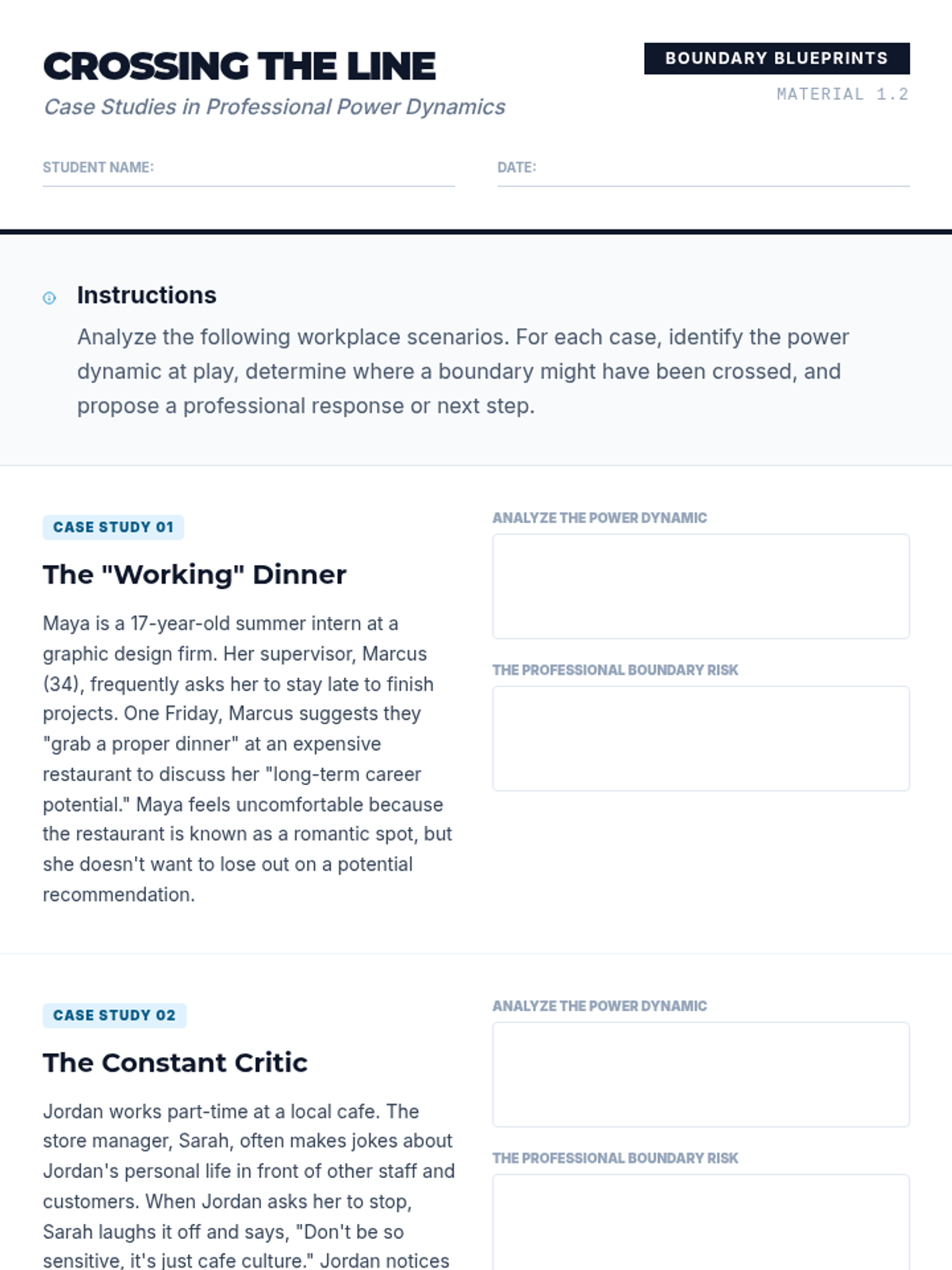
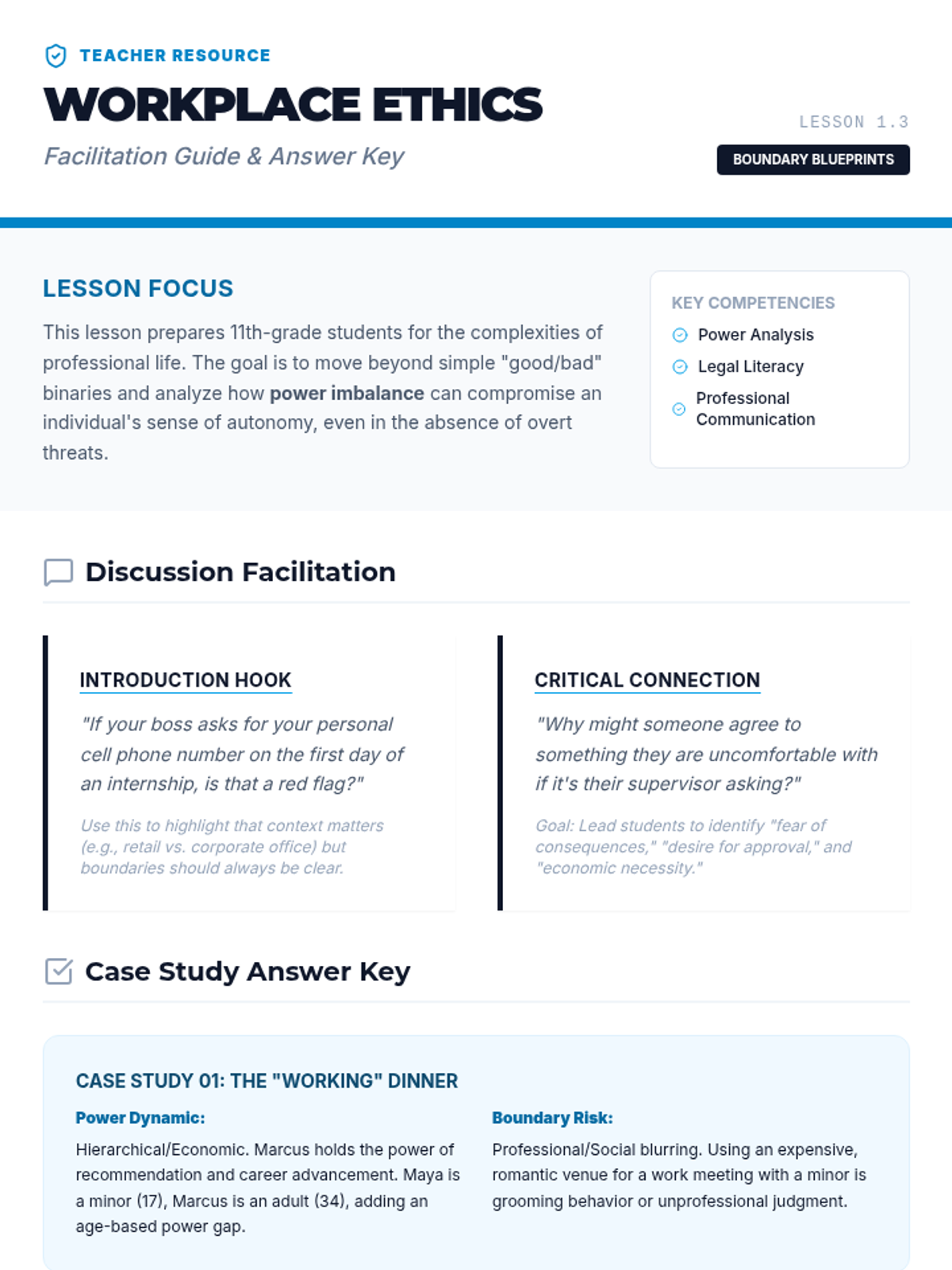
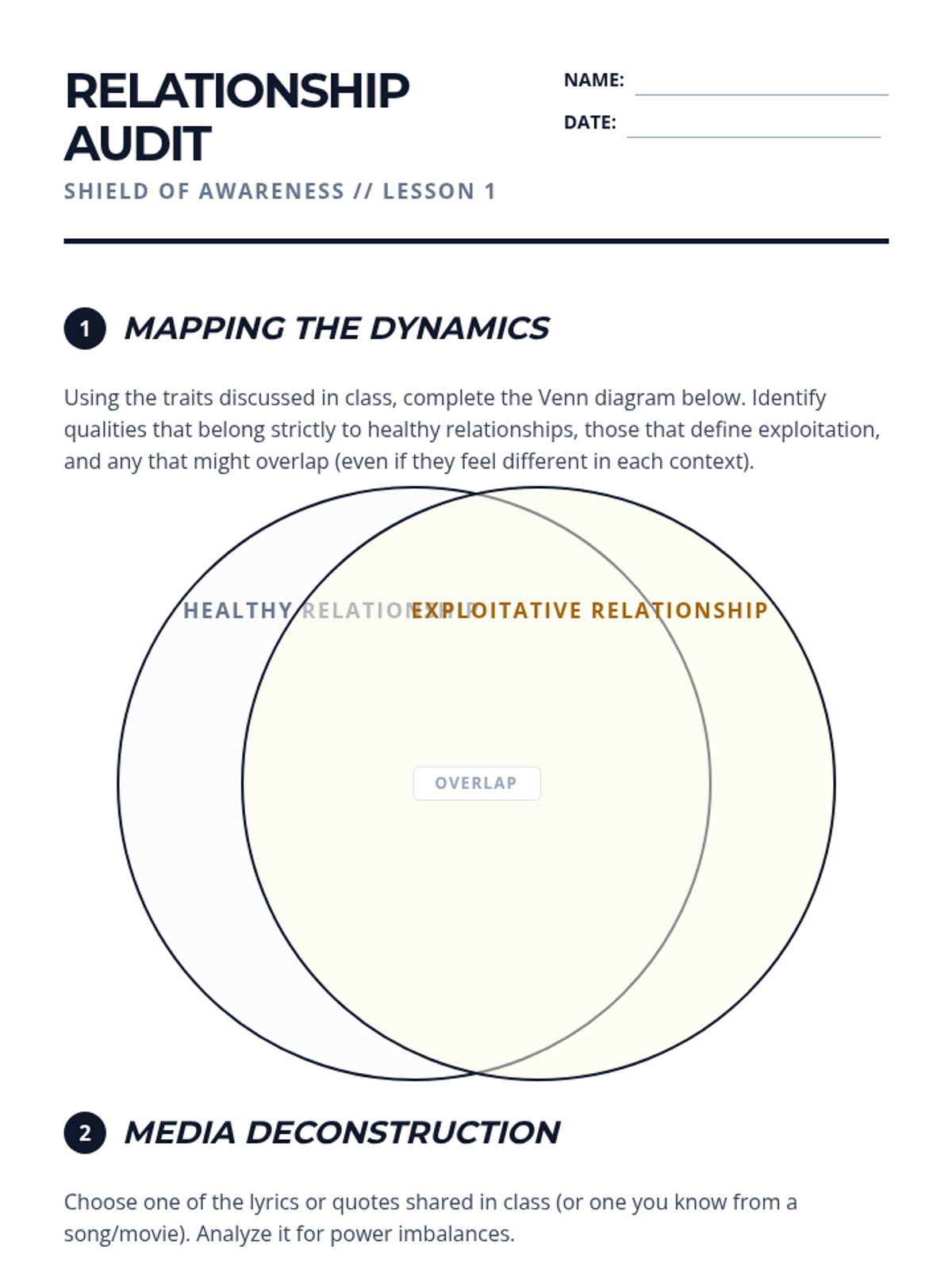
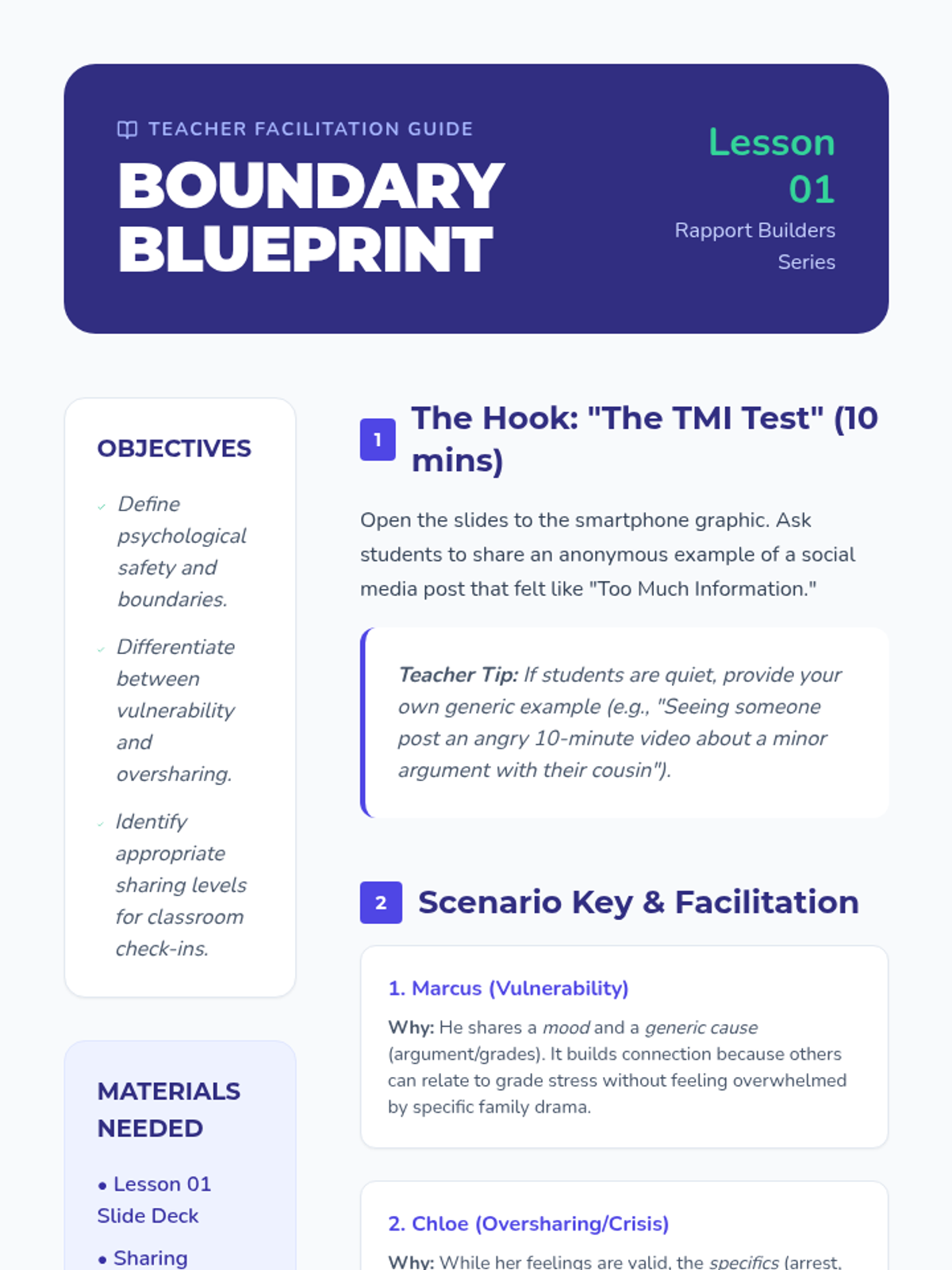
An analytical exploration of personal boundaries for 11th-grade students, focusing on power dynamics, digital ethics, legal consent, and cultural perspectives. Students develop a personal framework for navigating complex social and professional environments.
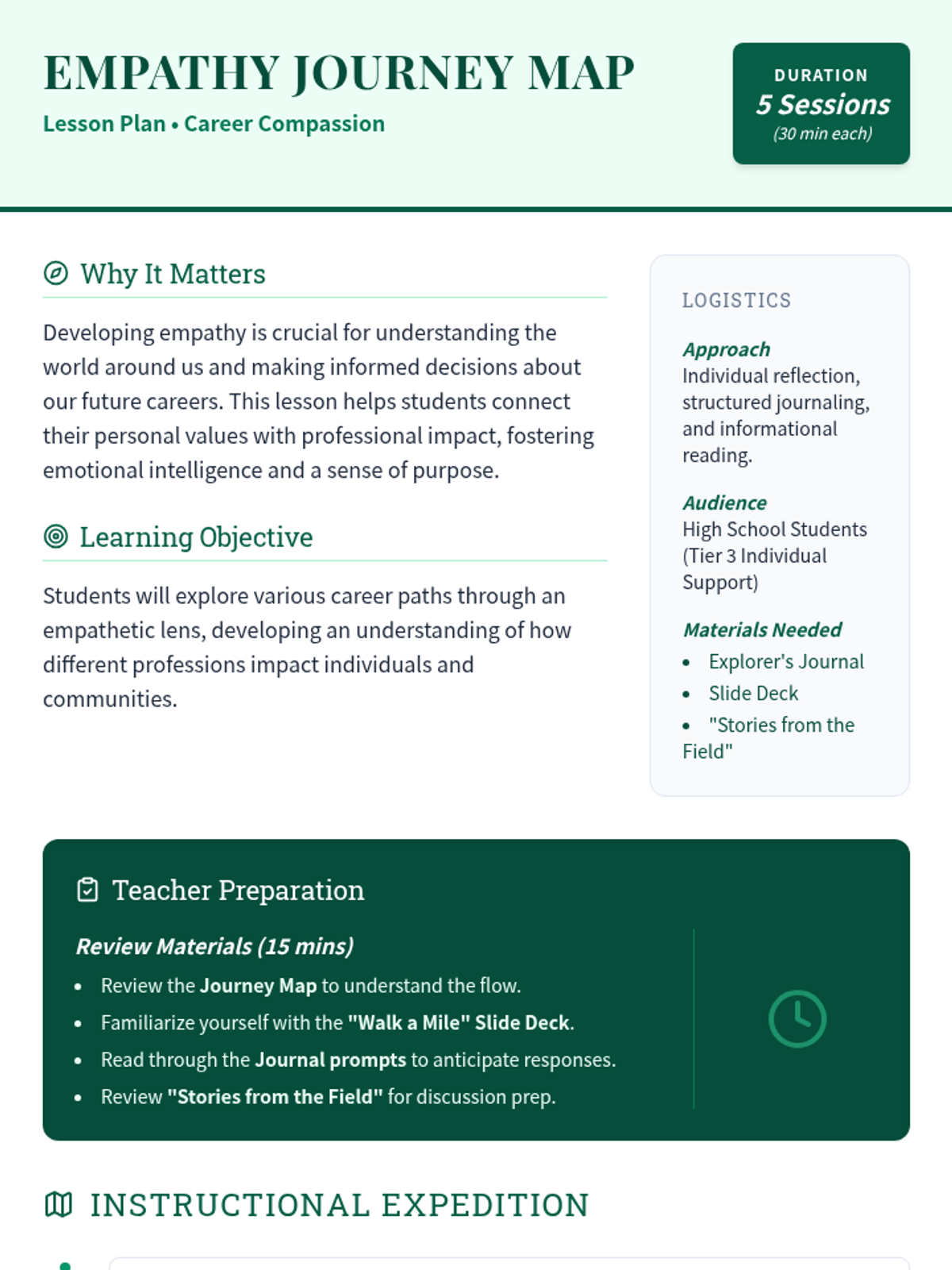
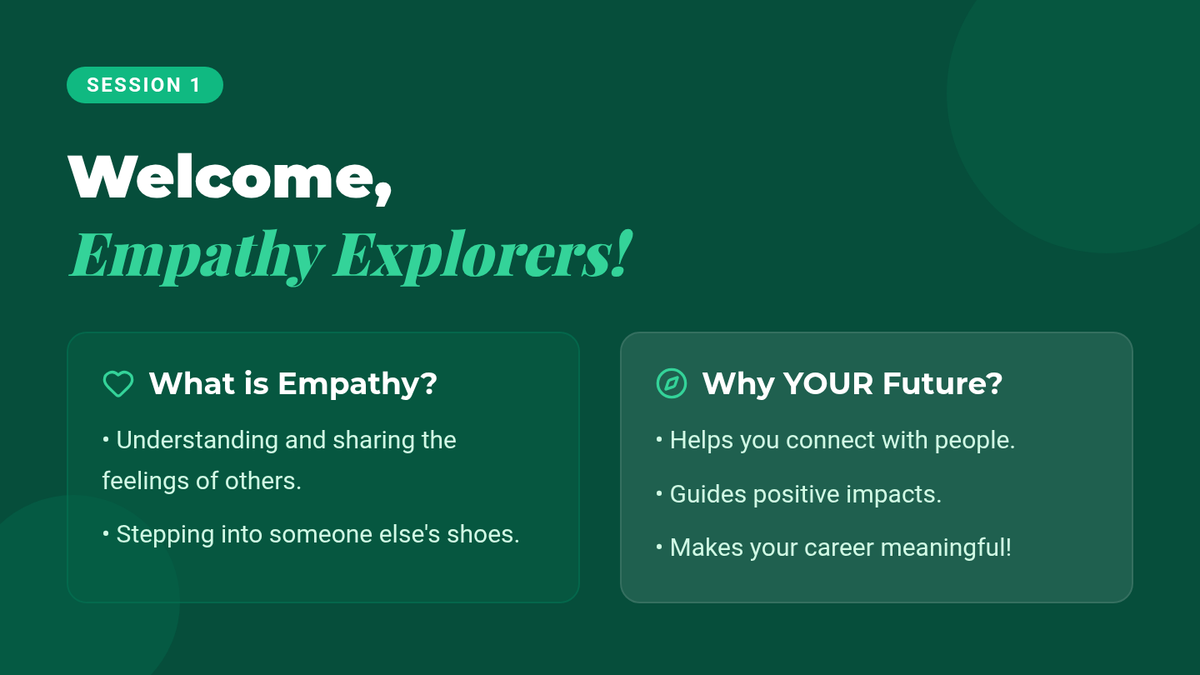
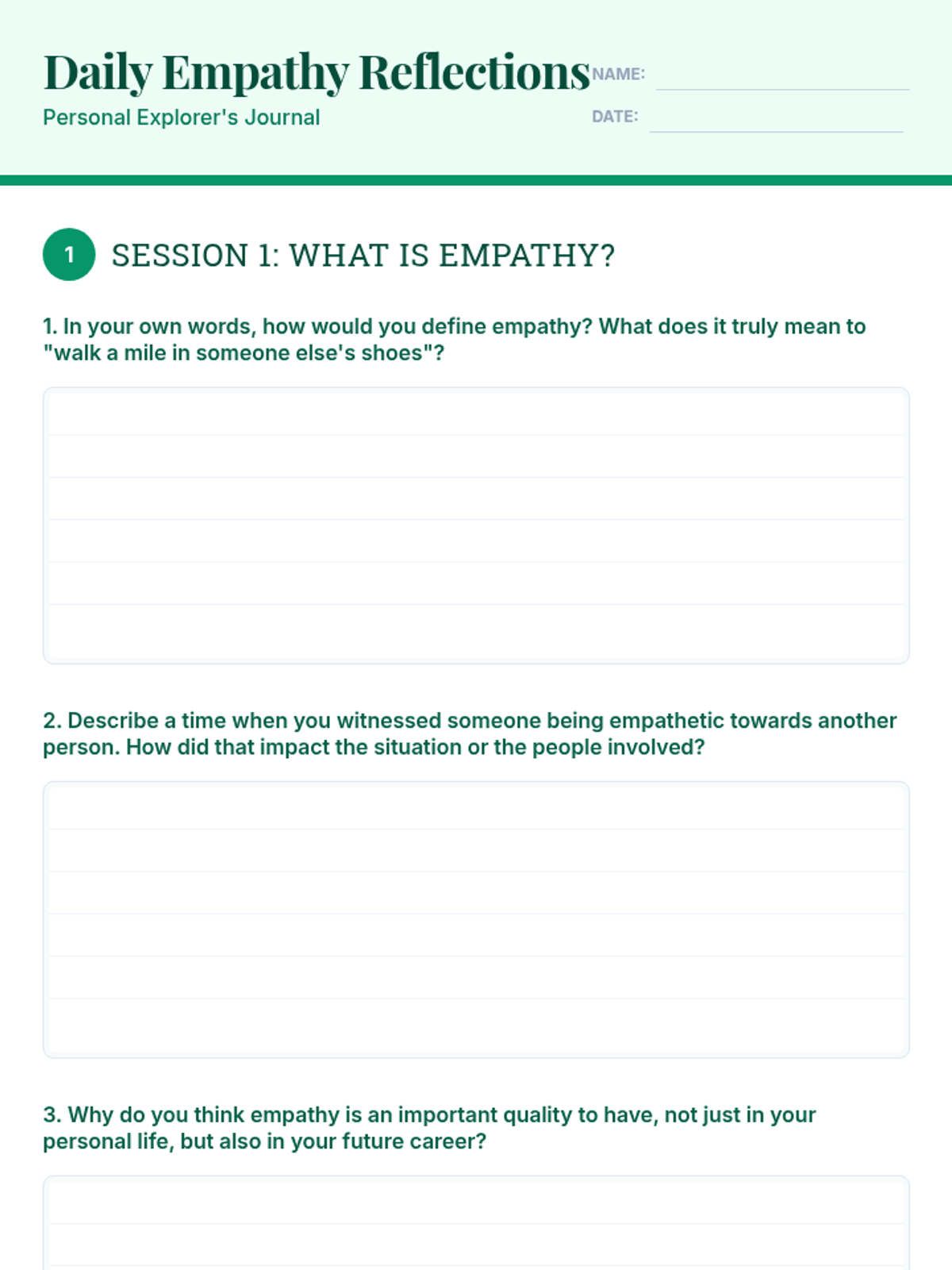
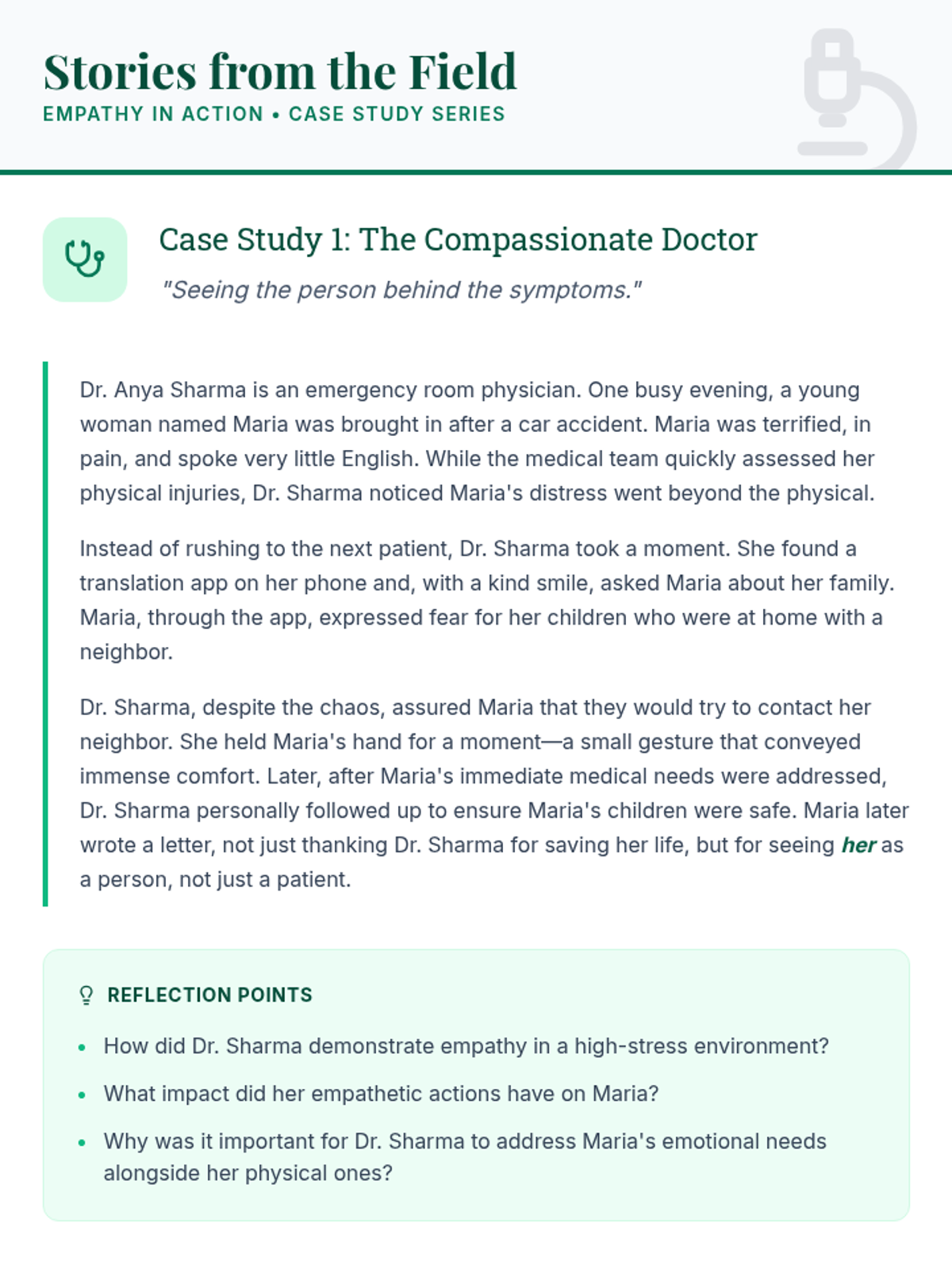
A 5-session exploration for high school students to discover career paths through the lens of empathy and professional impact.
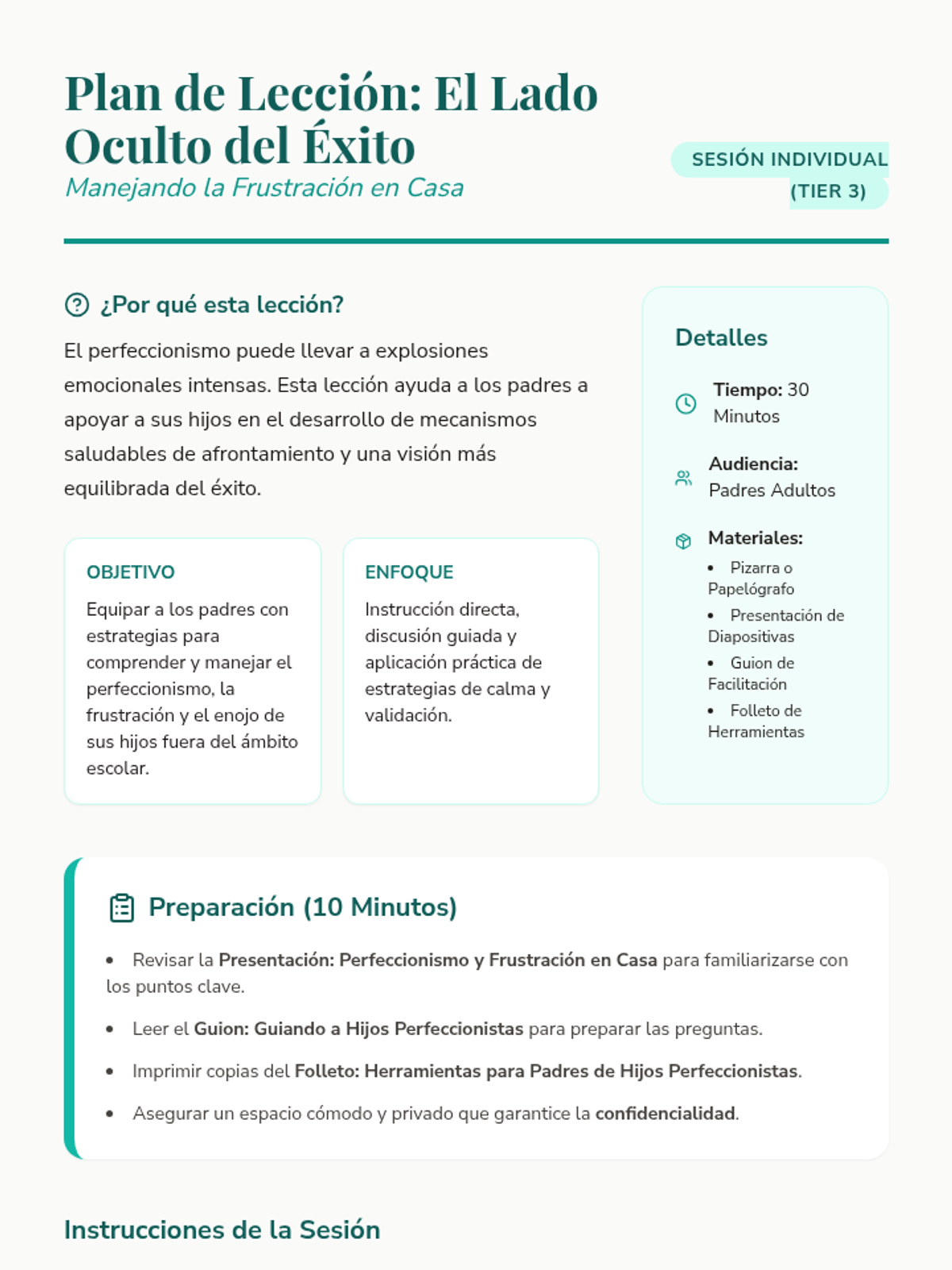
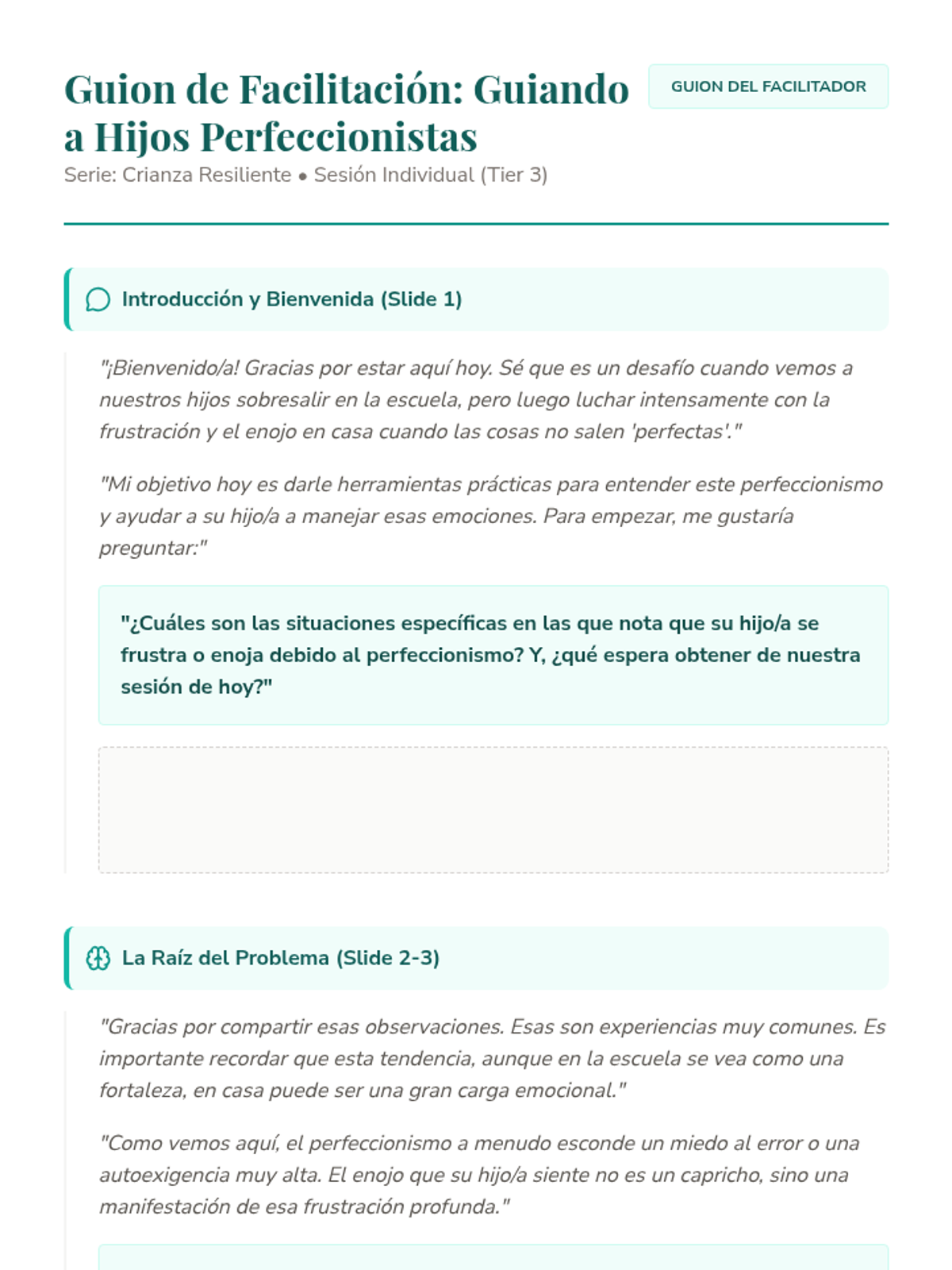
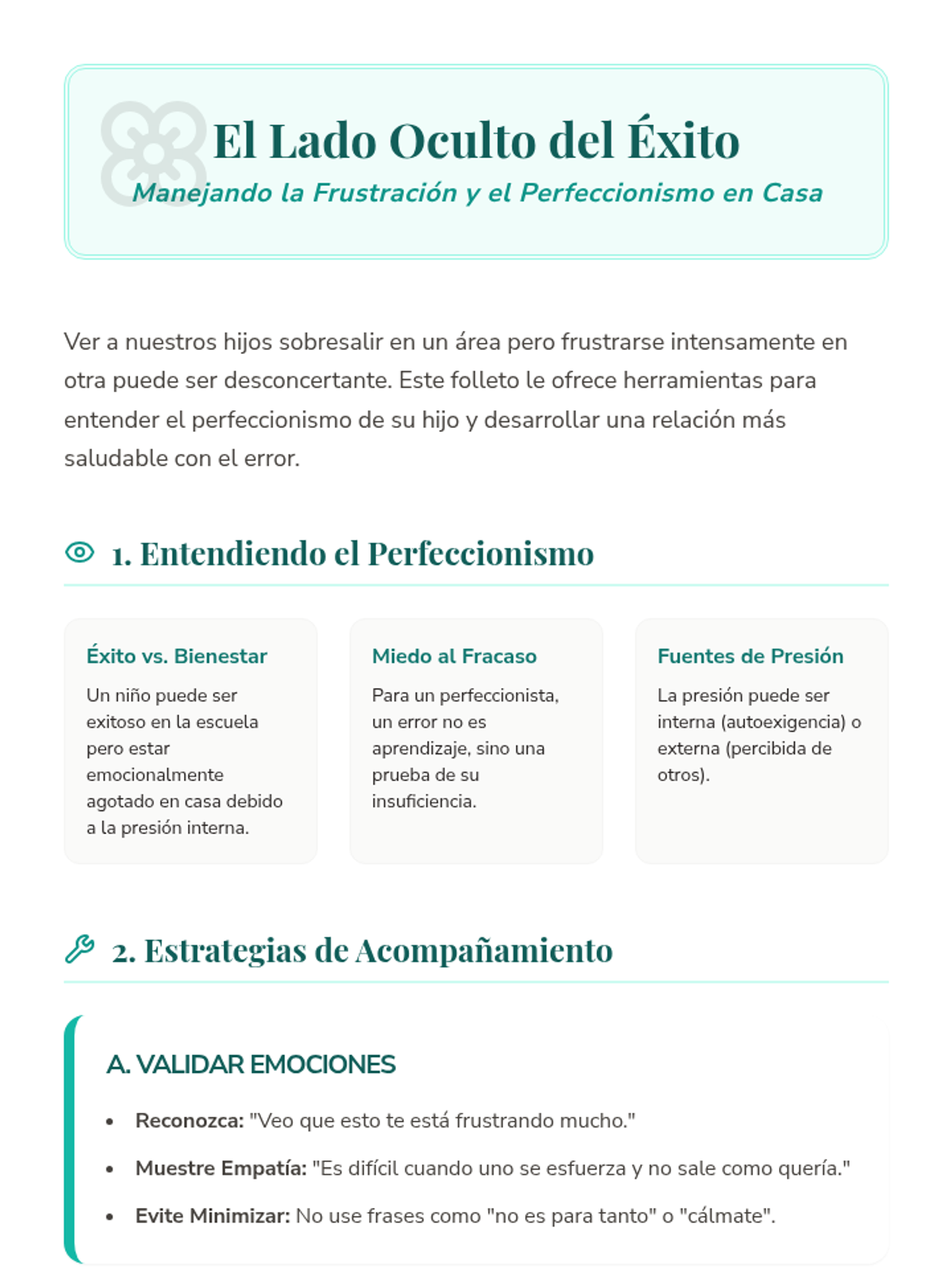
Una serie de sesiones de apoyo individual para padres que enfrentan desafíos específicos en la crianza, desde el perfeccionismo y el TDAH hasta la inmigración y el autocuidado. Cada lección proporciona herramientas prácticas y un espacio de validación emocional.
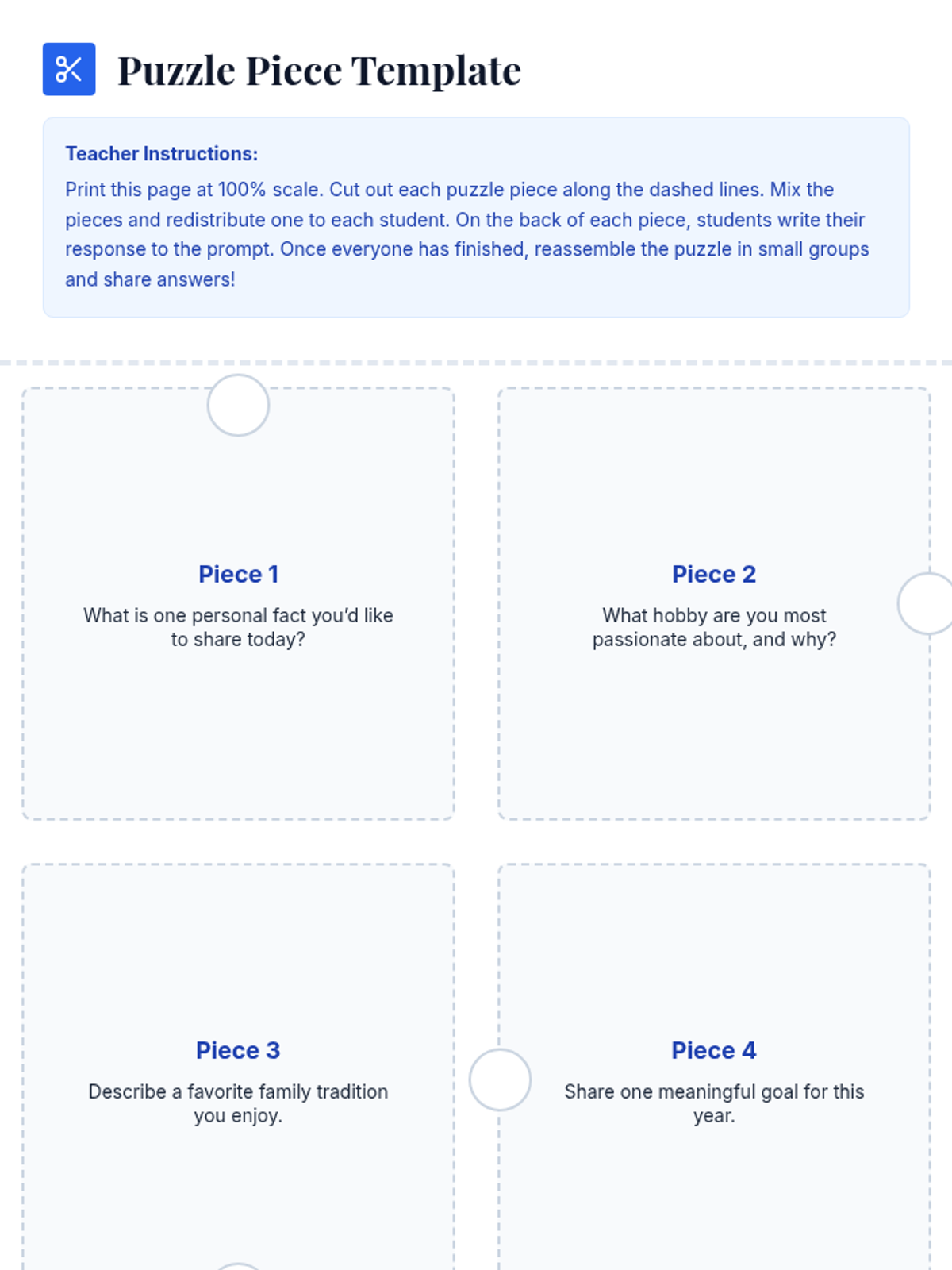
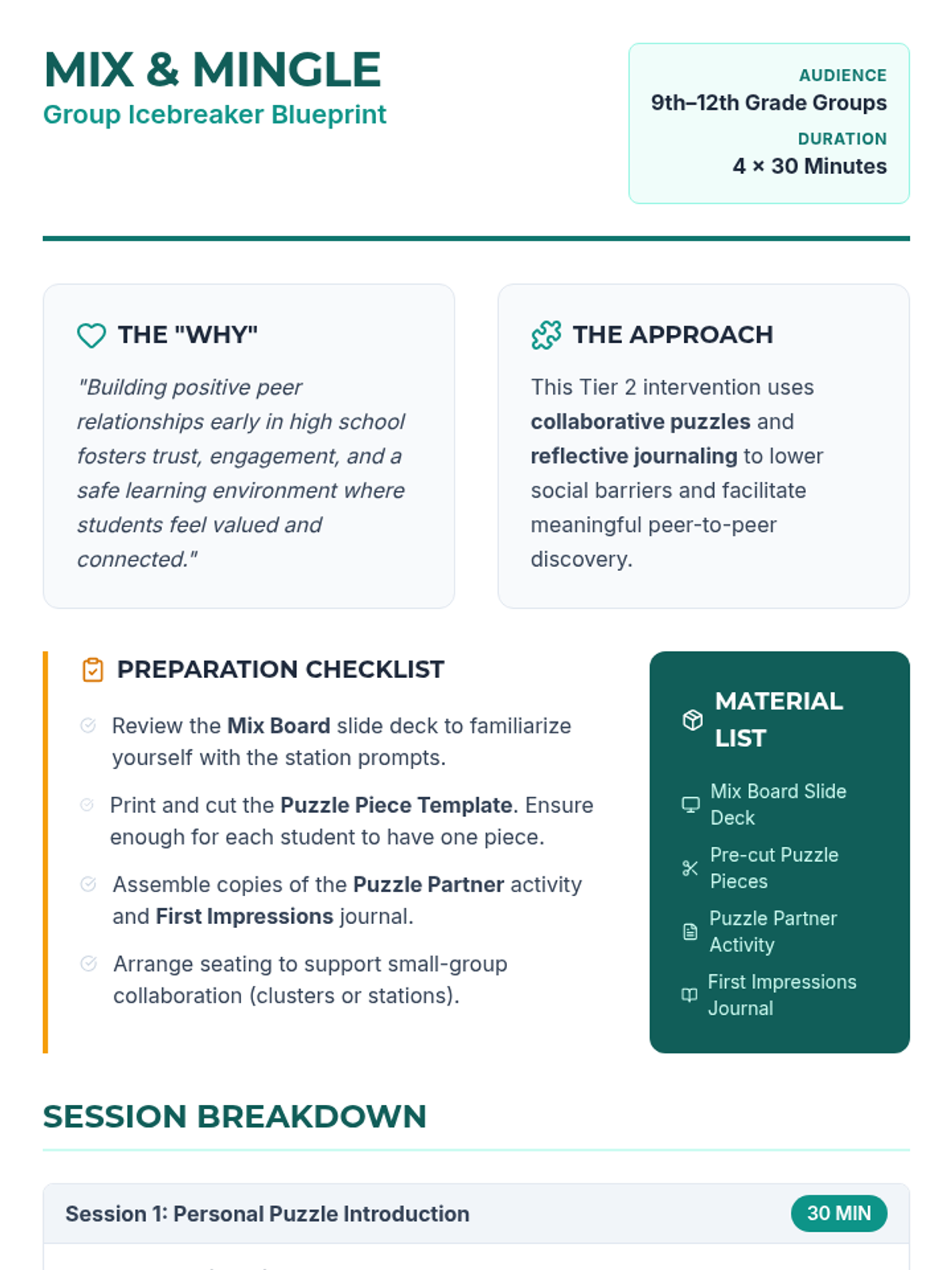
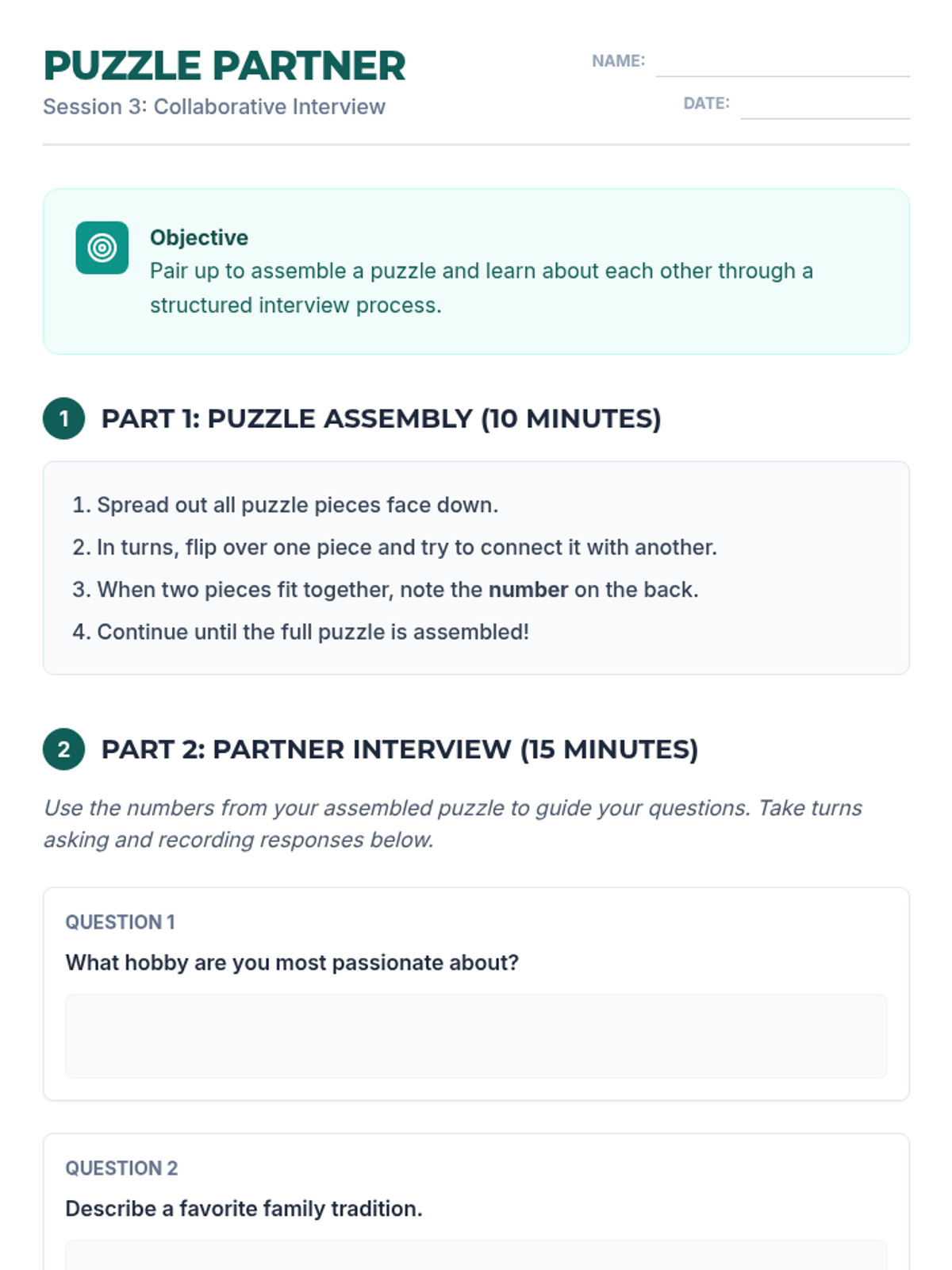
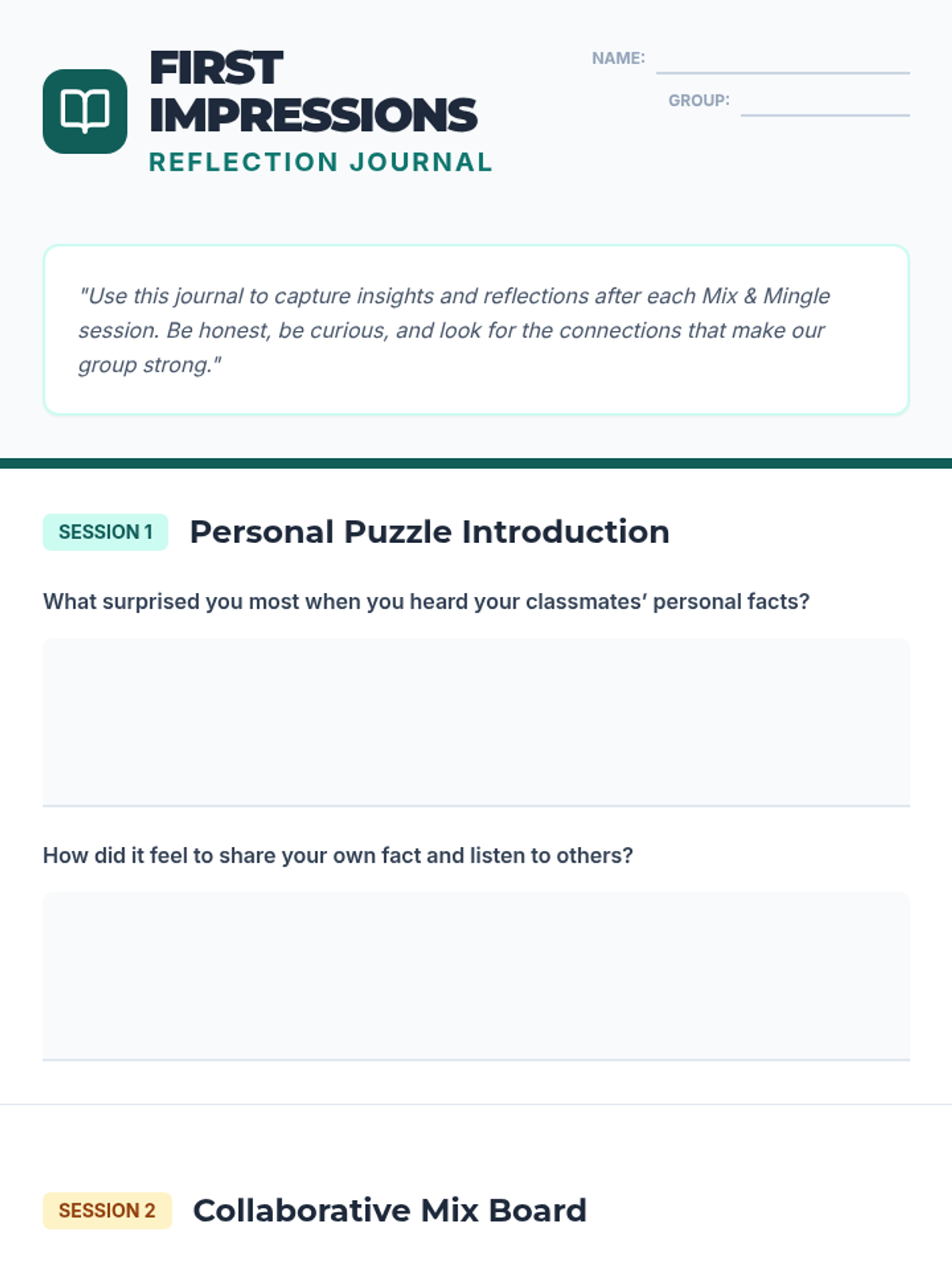
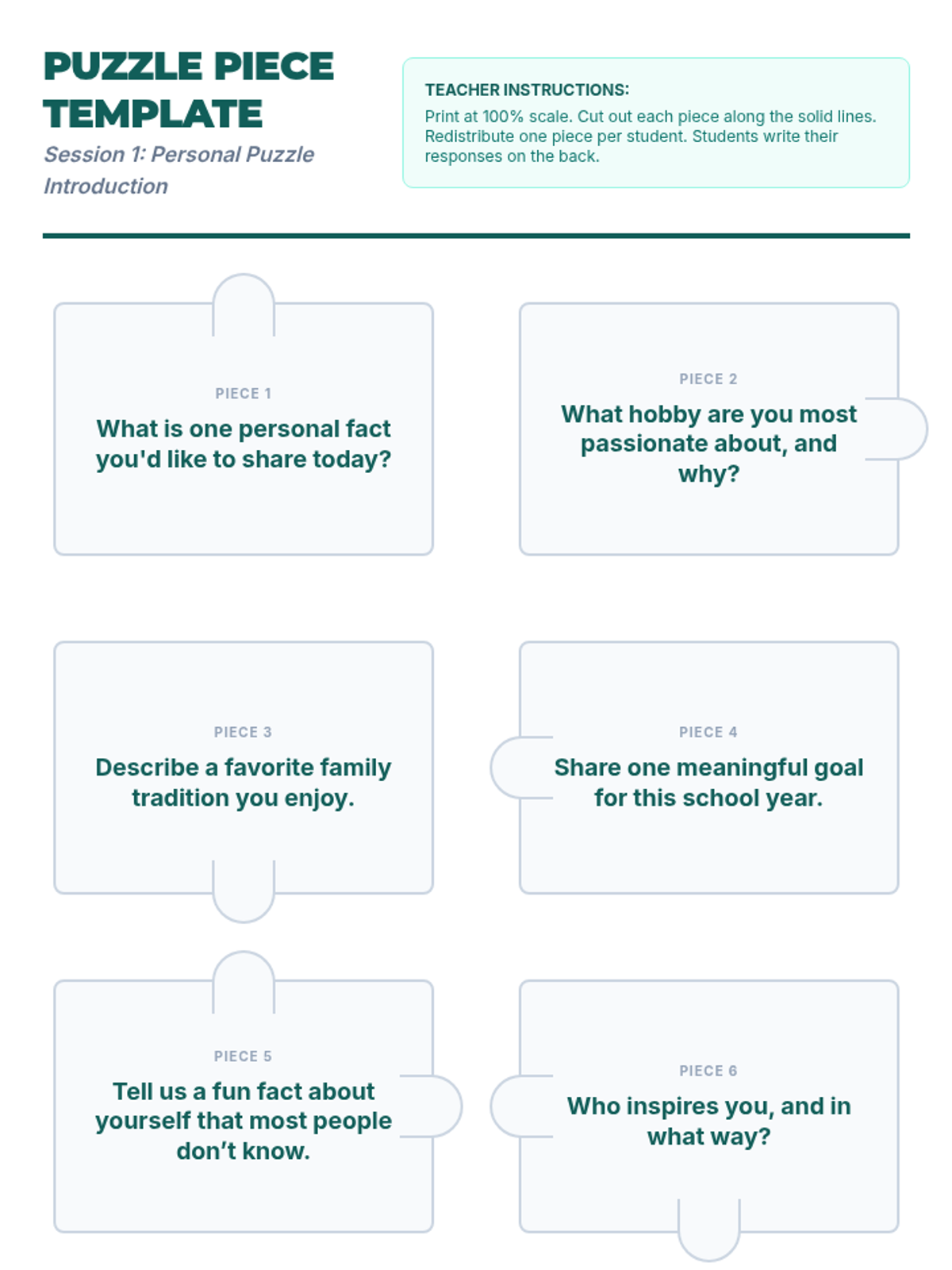
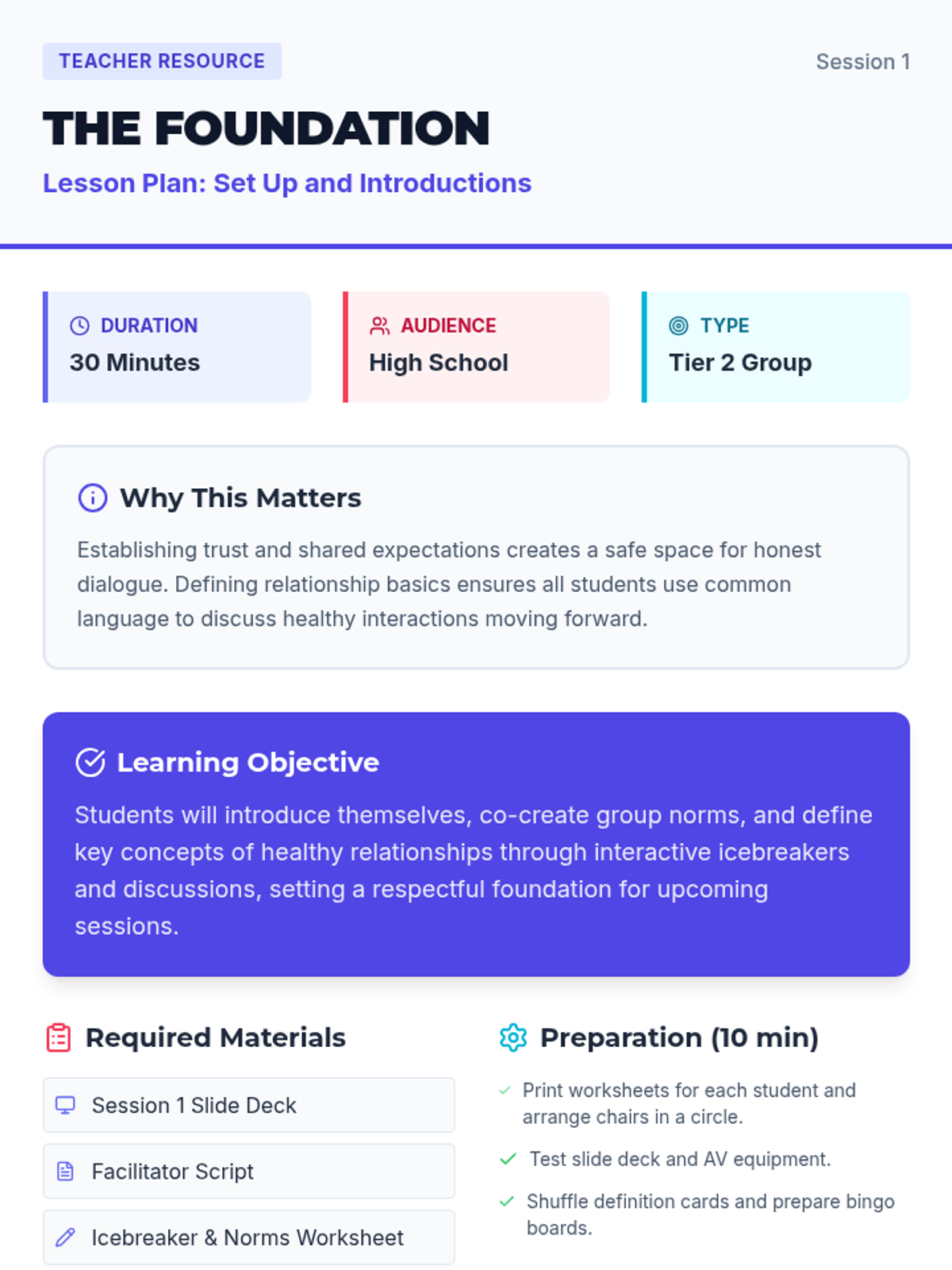
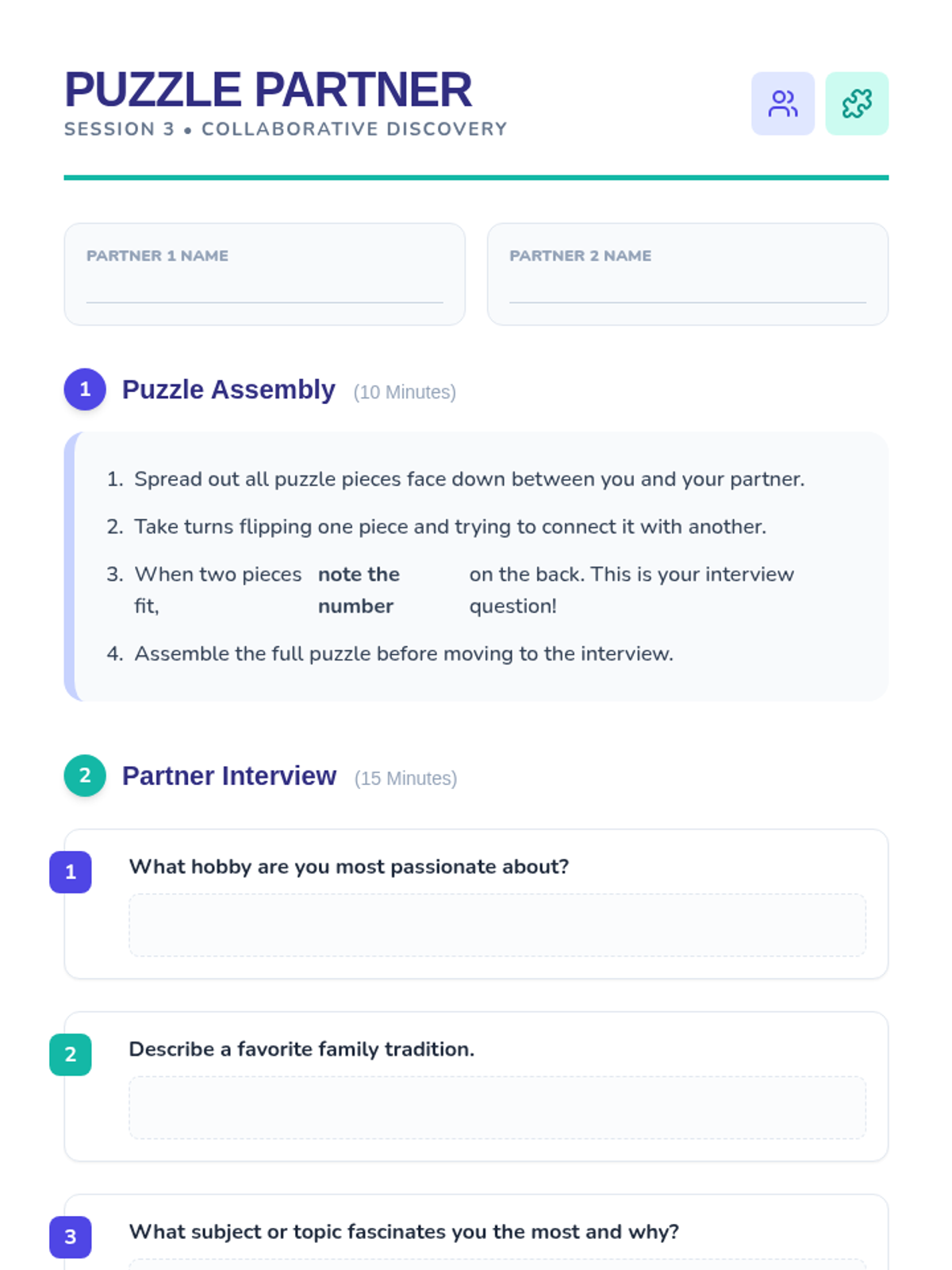
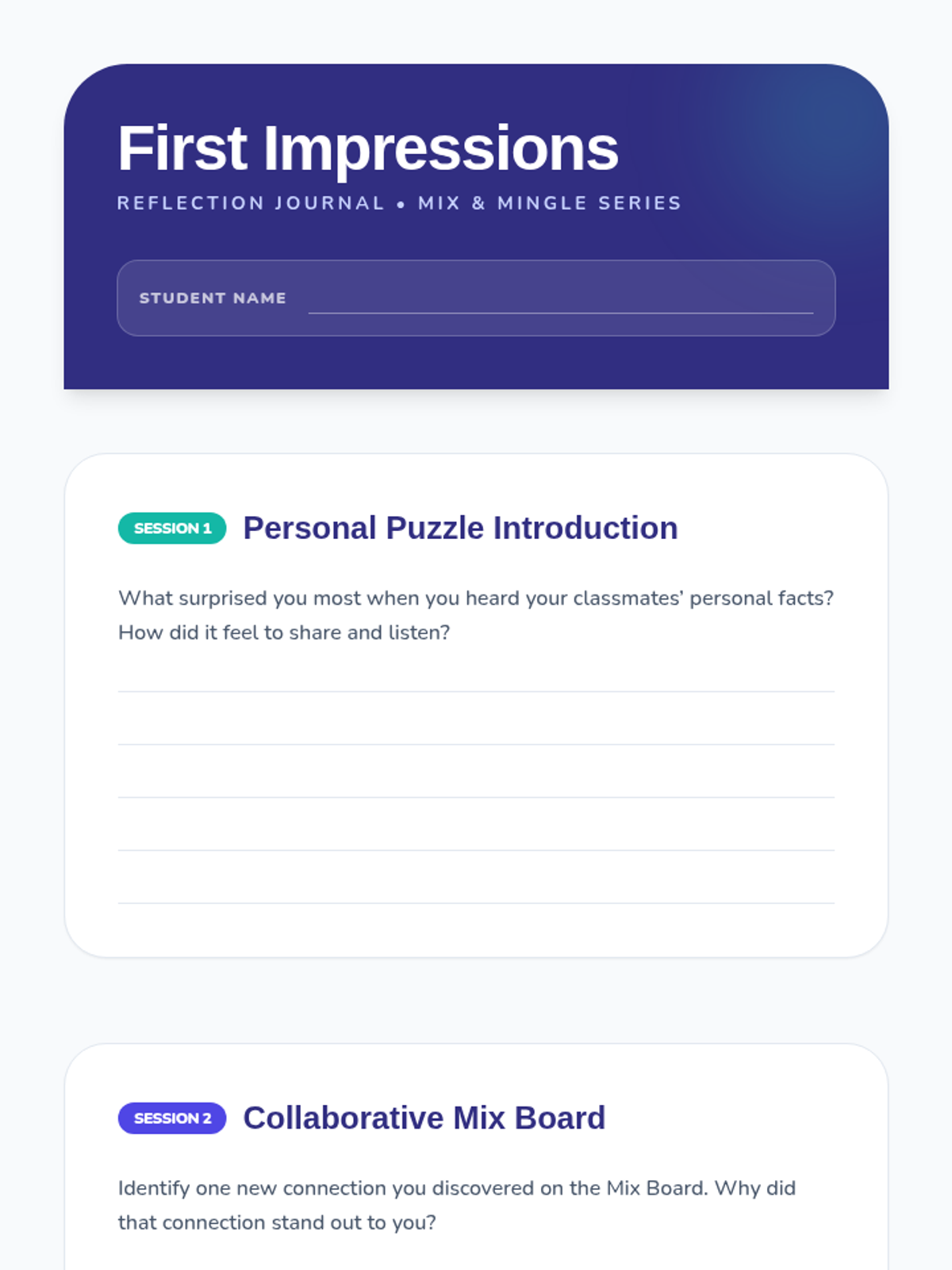
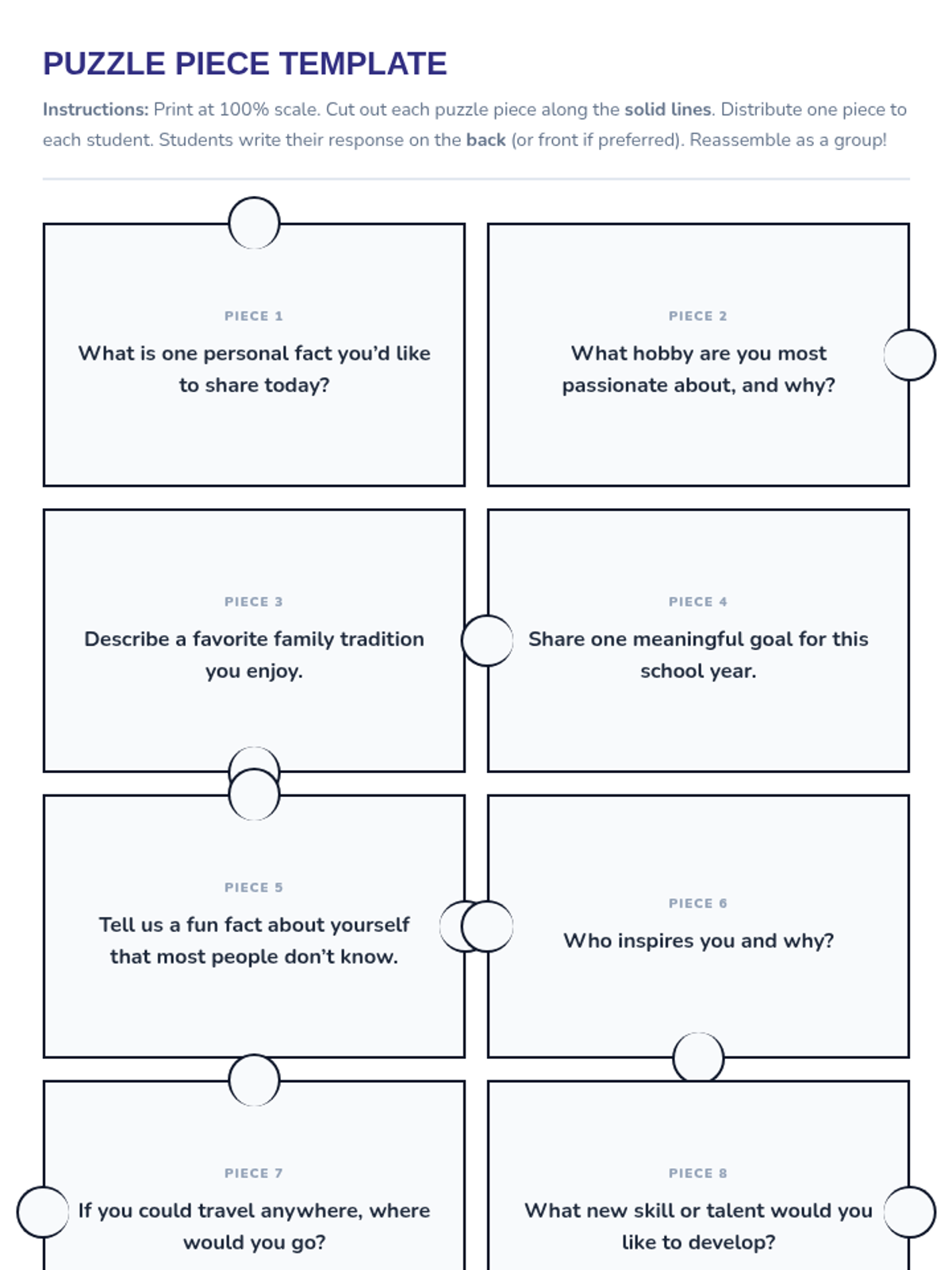
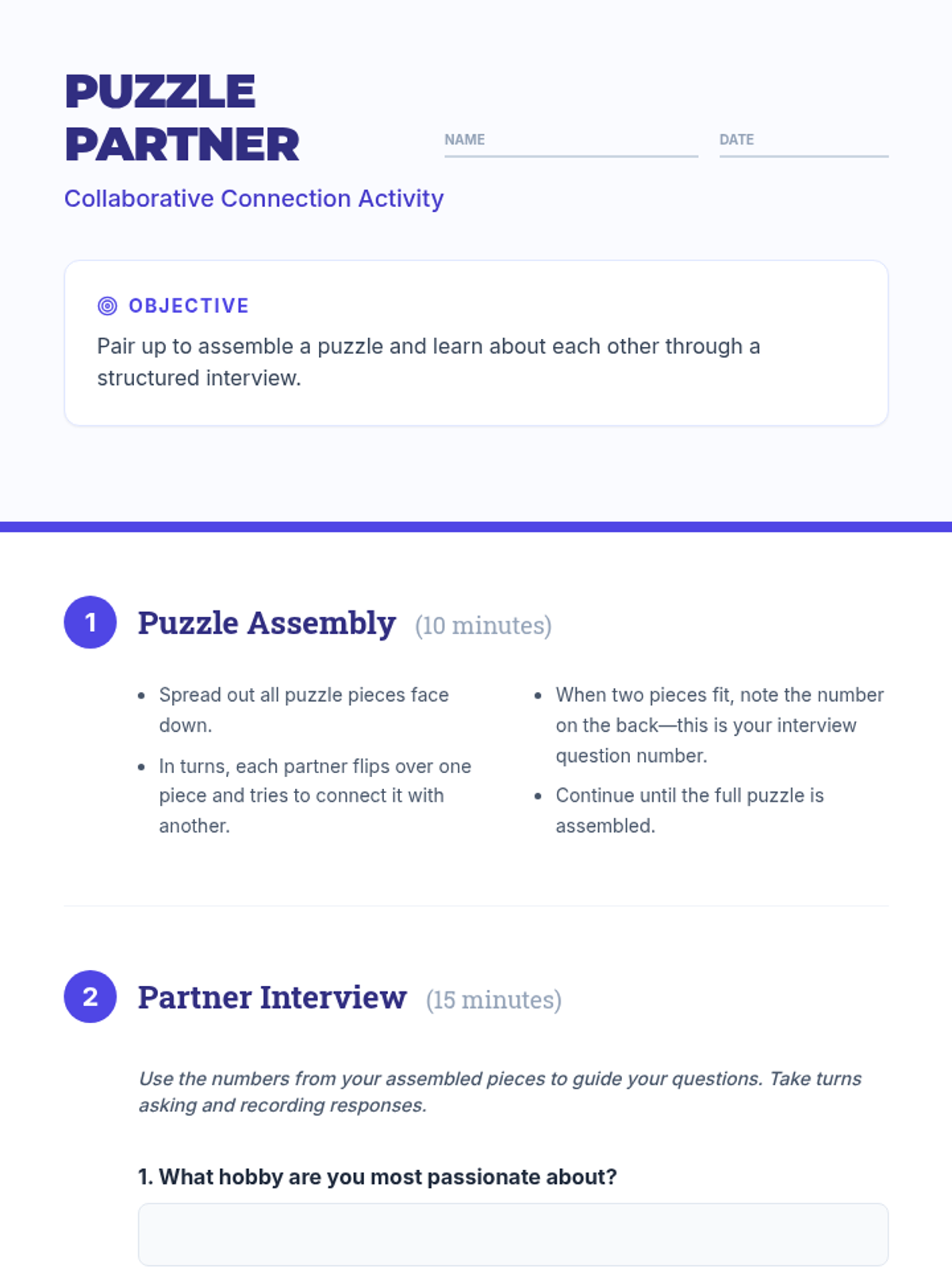
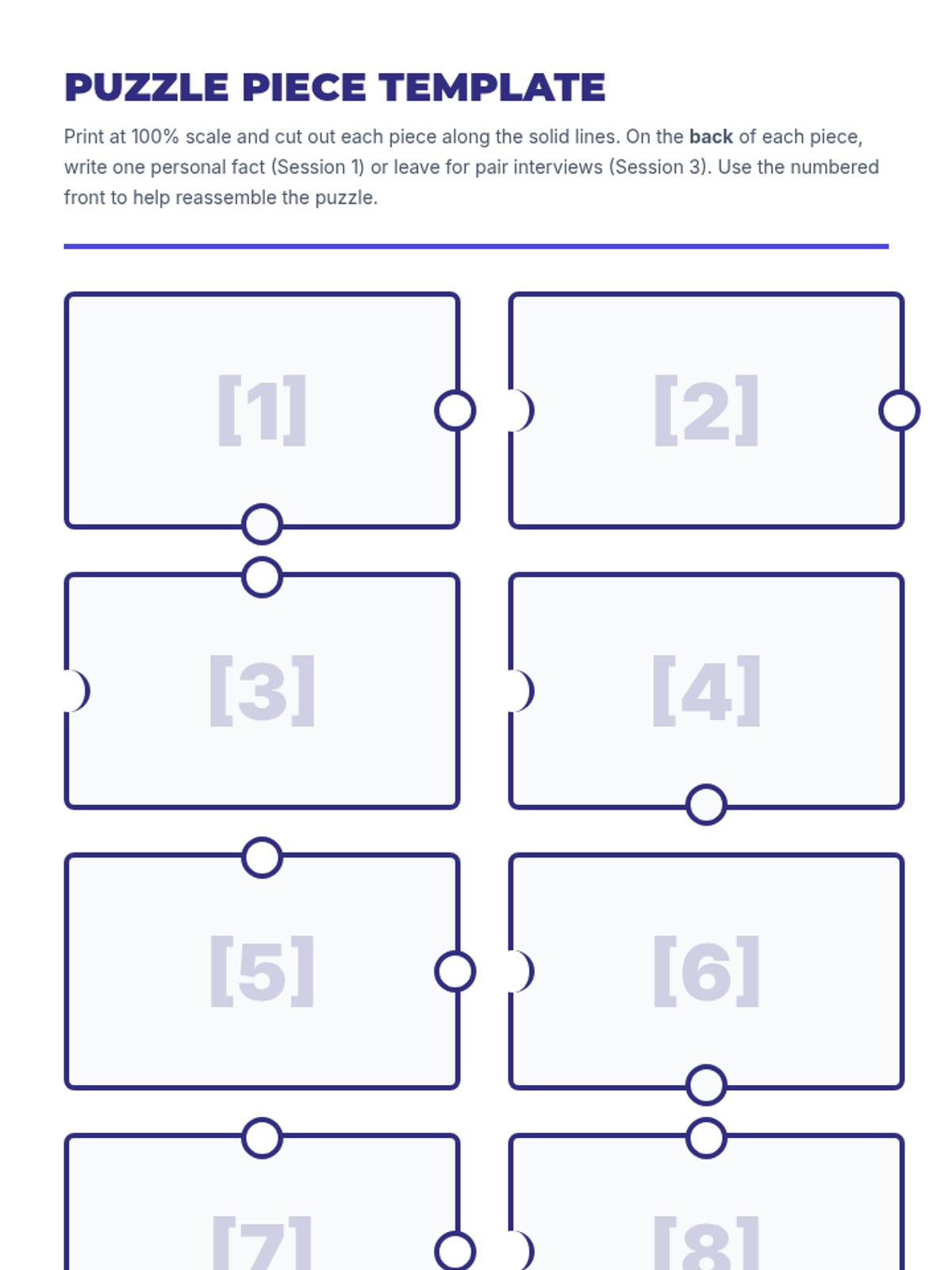
A four-part small-group icebreaker sequence designed for high schoolers to build social skills and community through collaborative puzzles and reflective journaling.
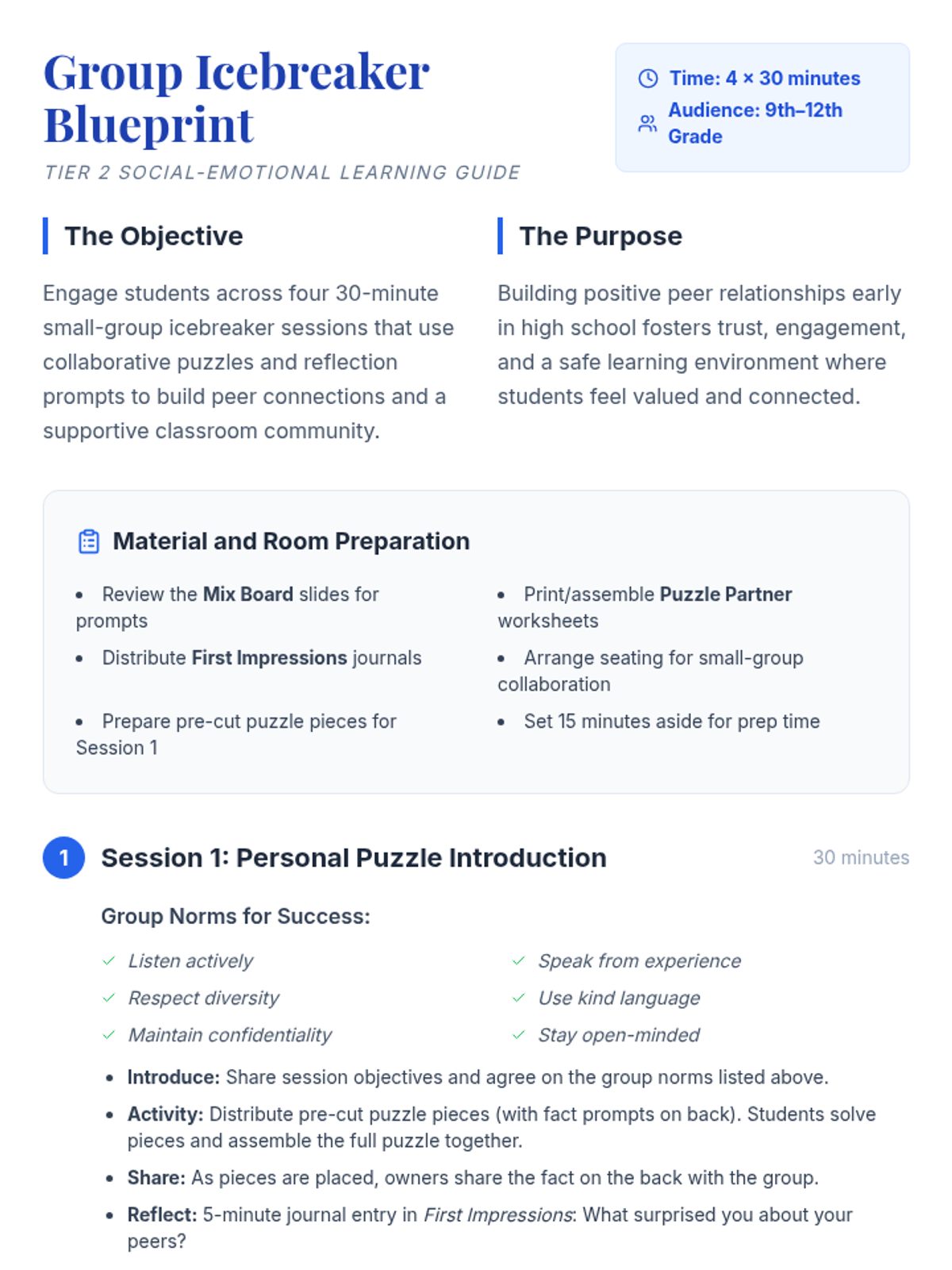
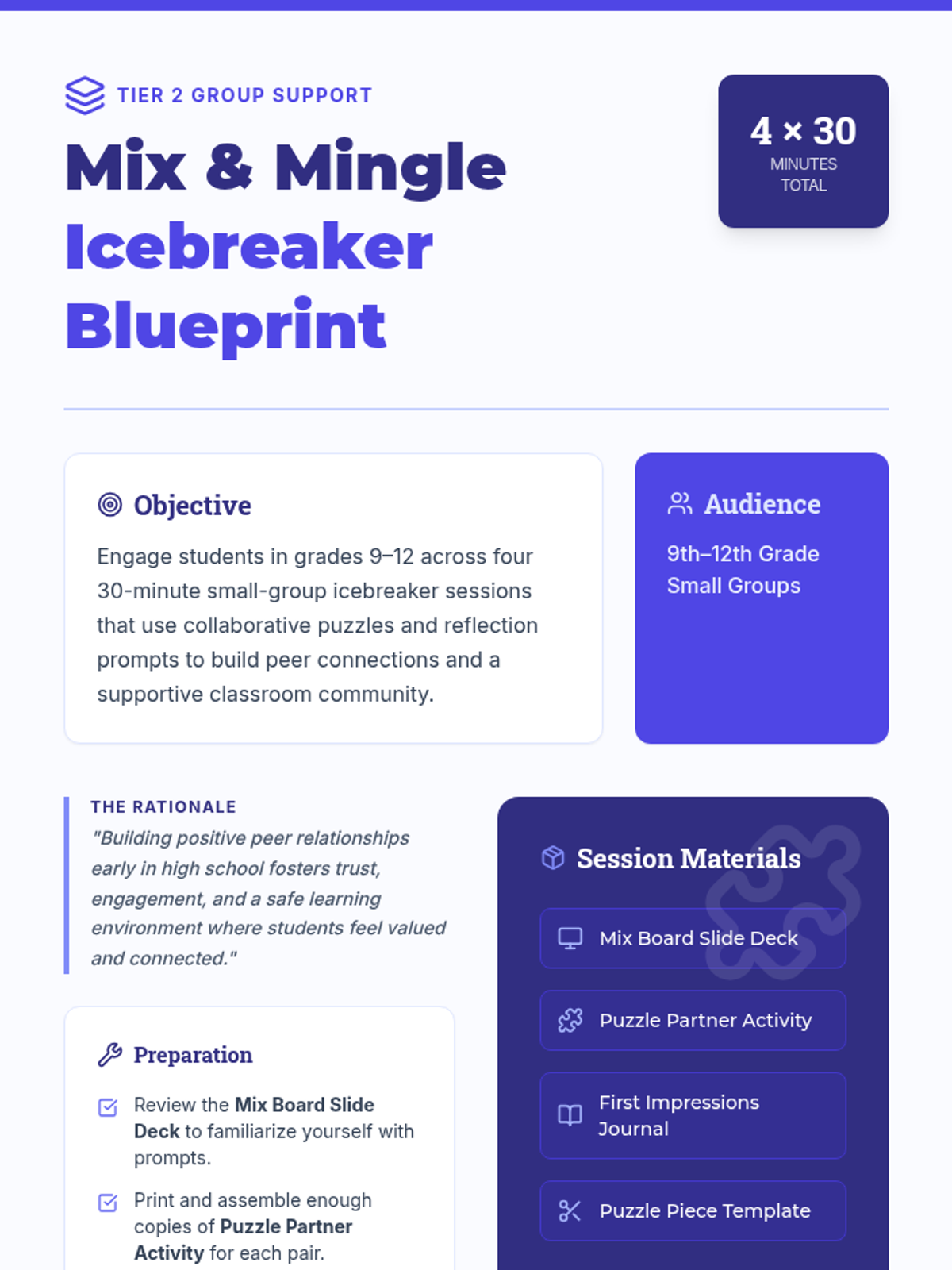
A four-session Tier 2 small-group icebreaker sequence for high school students, using collaborative puzzles and reflective journaling to build a supportive classroom community.
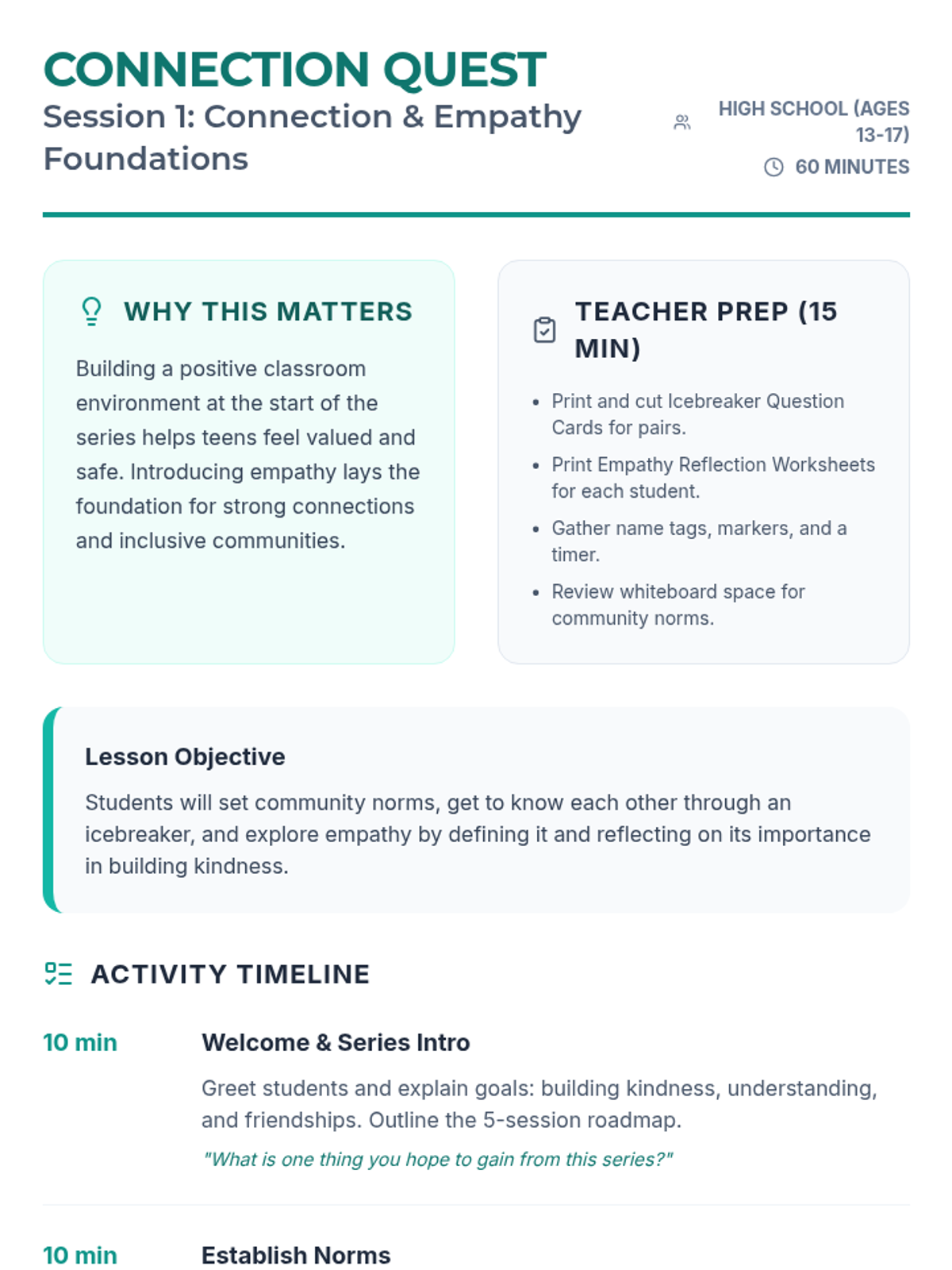
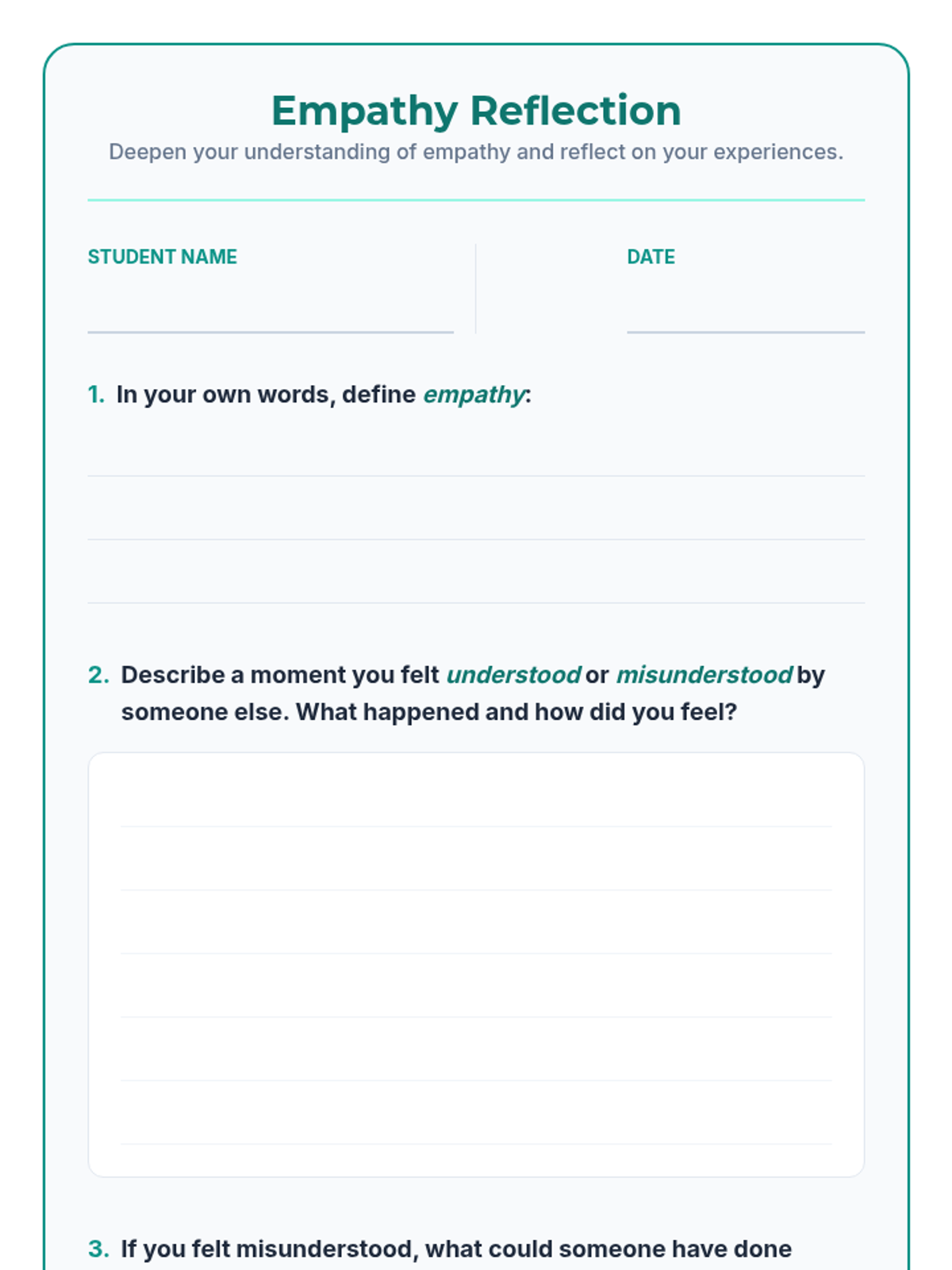
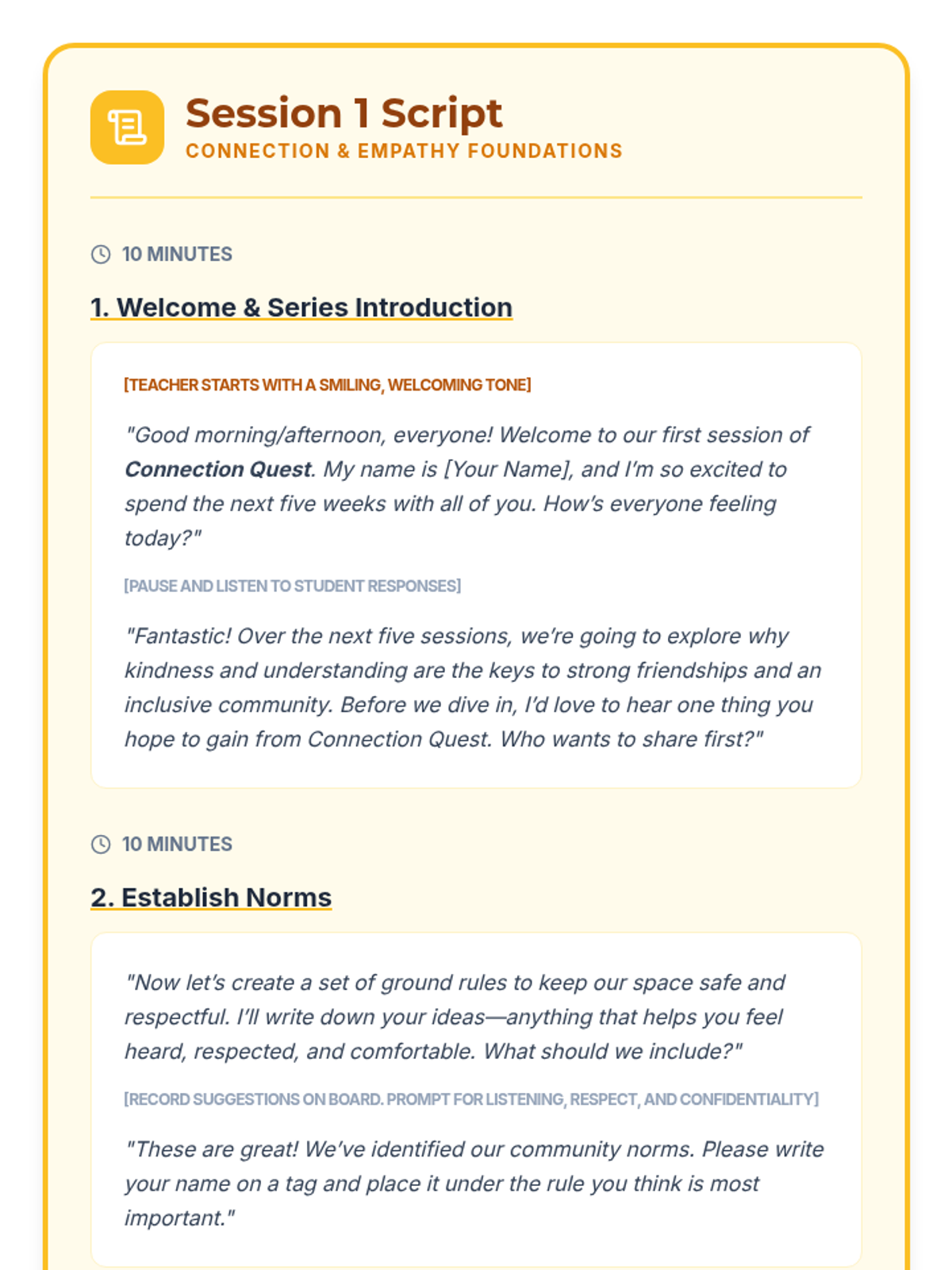
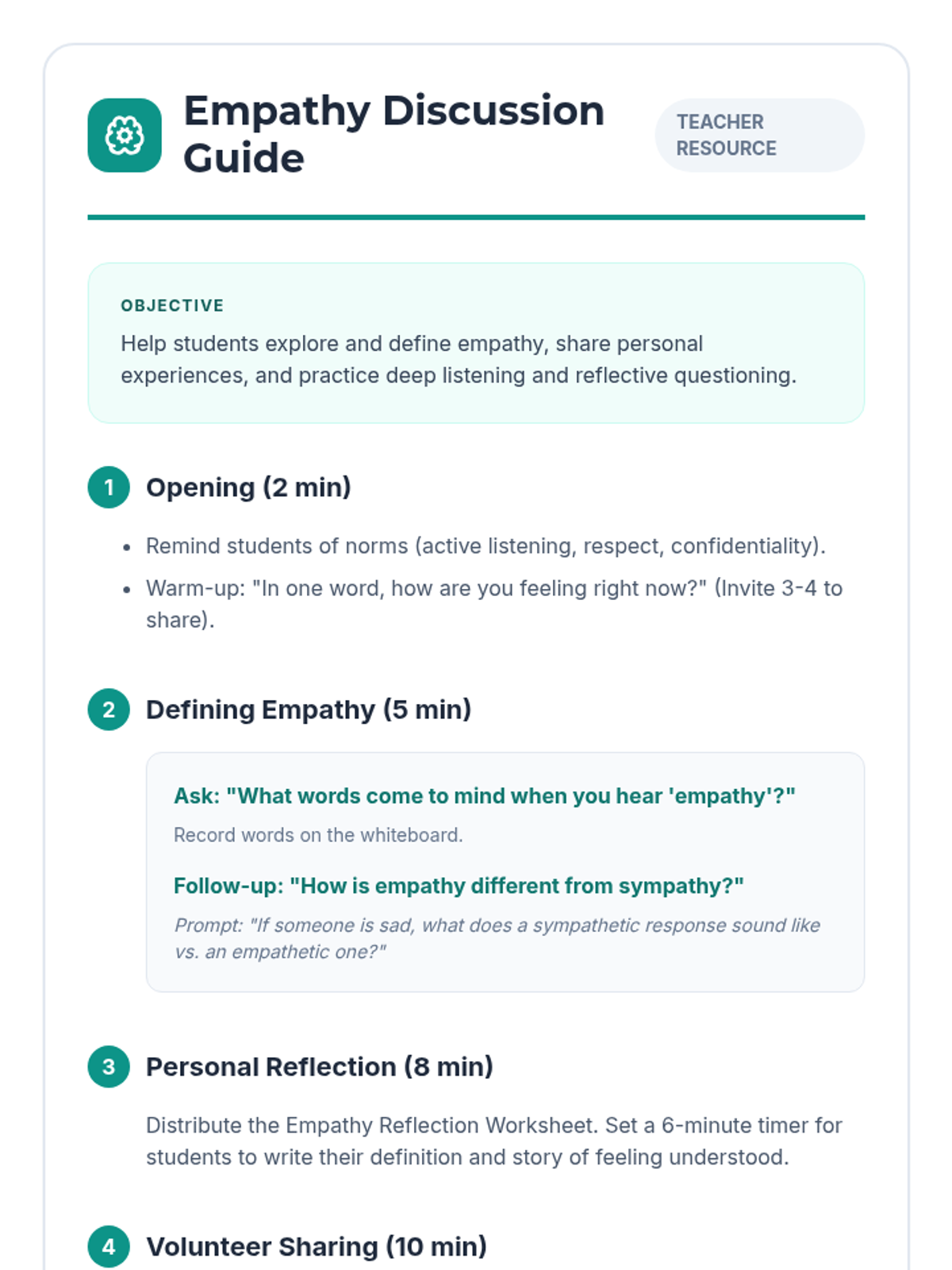
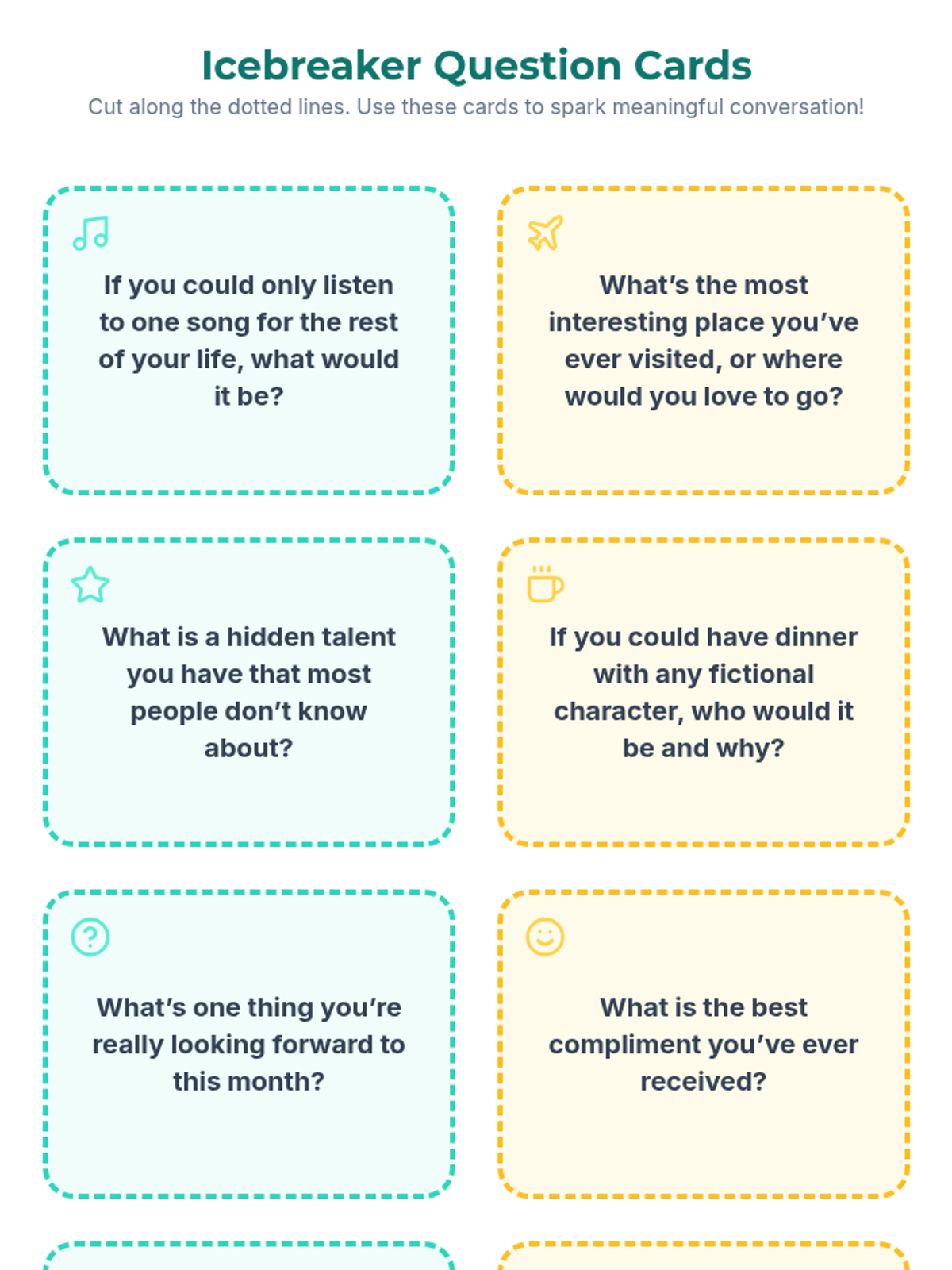
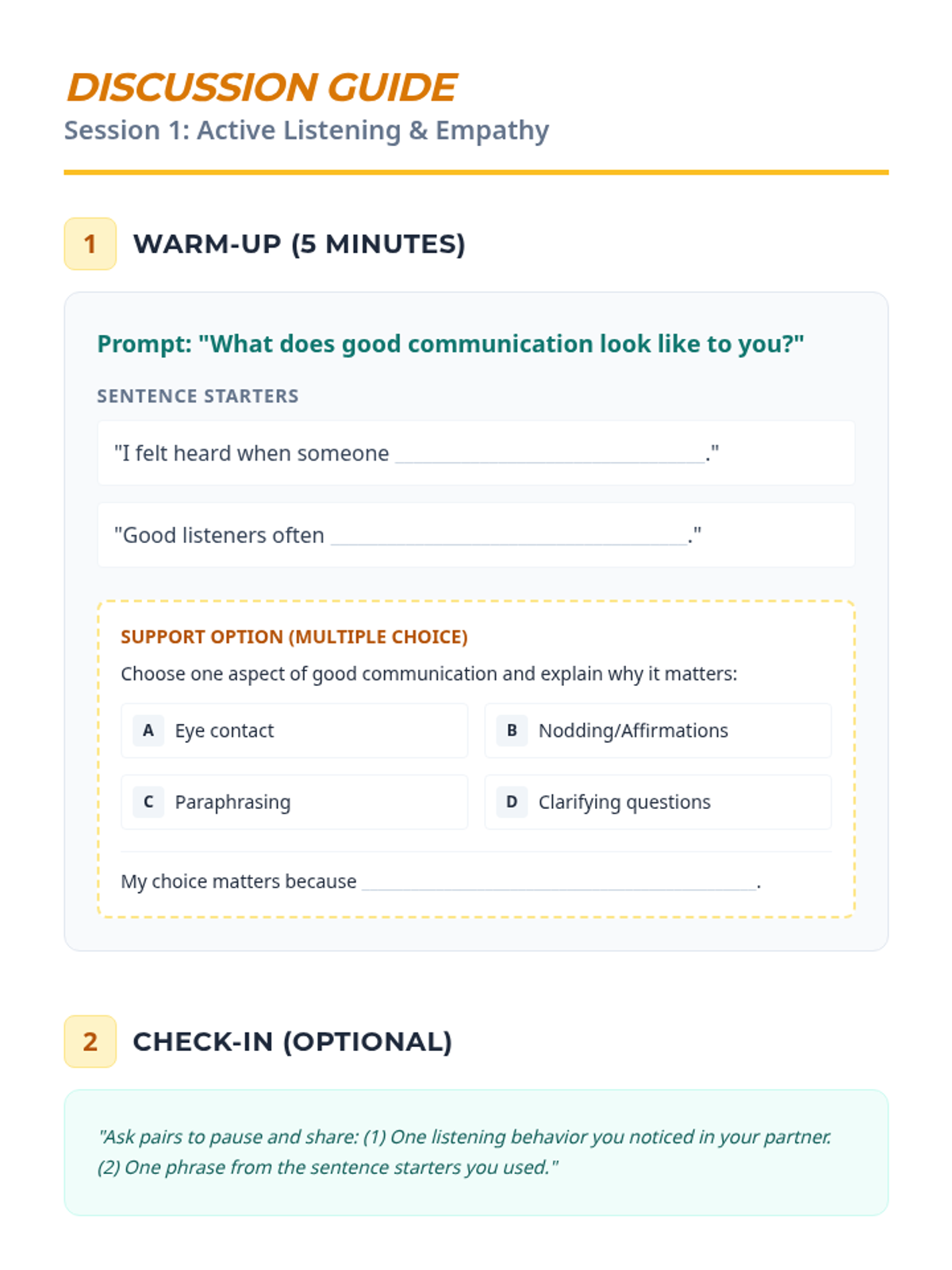
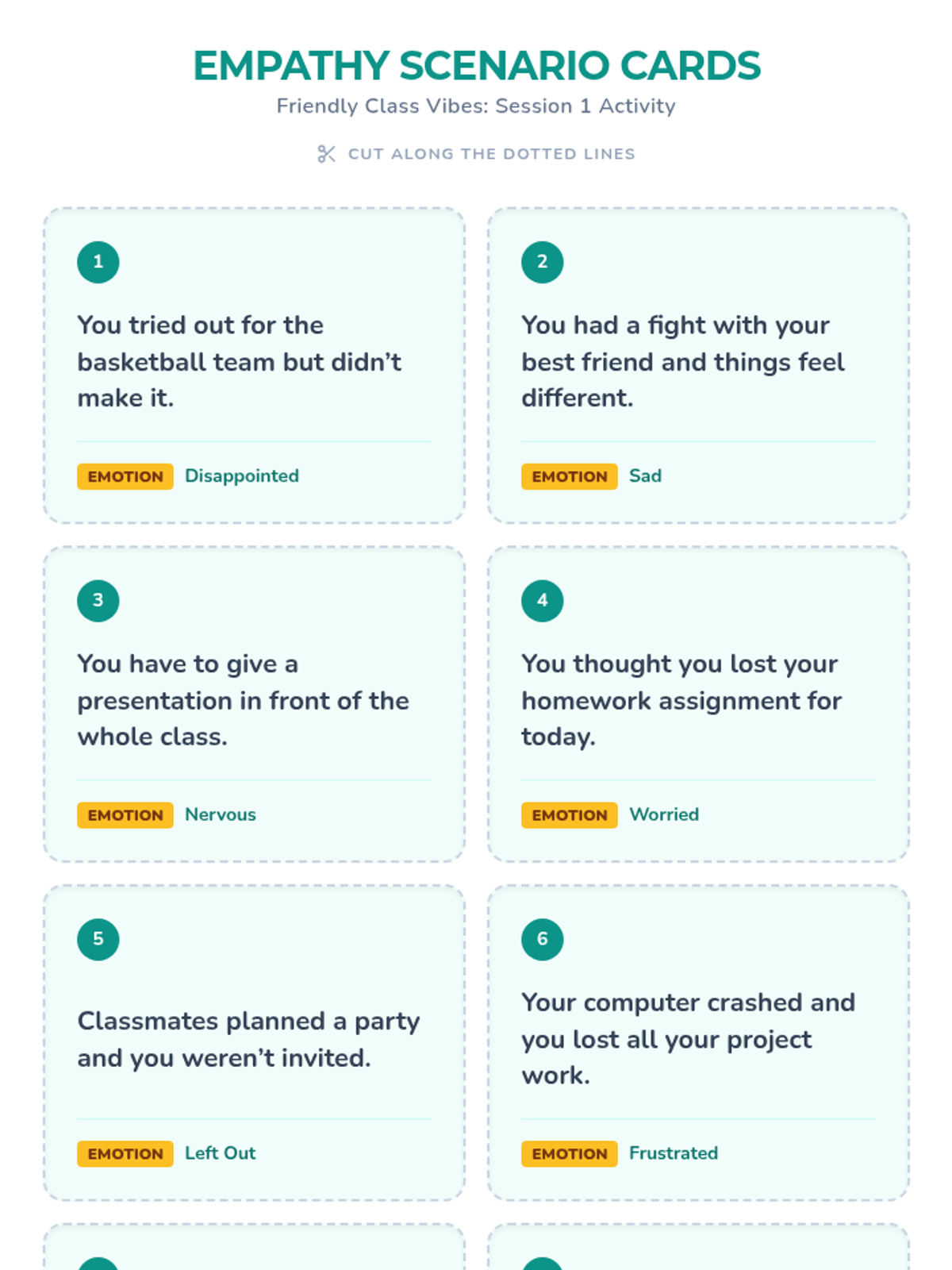
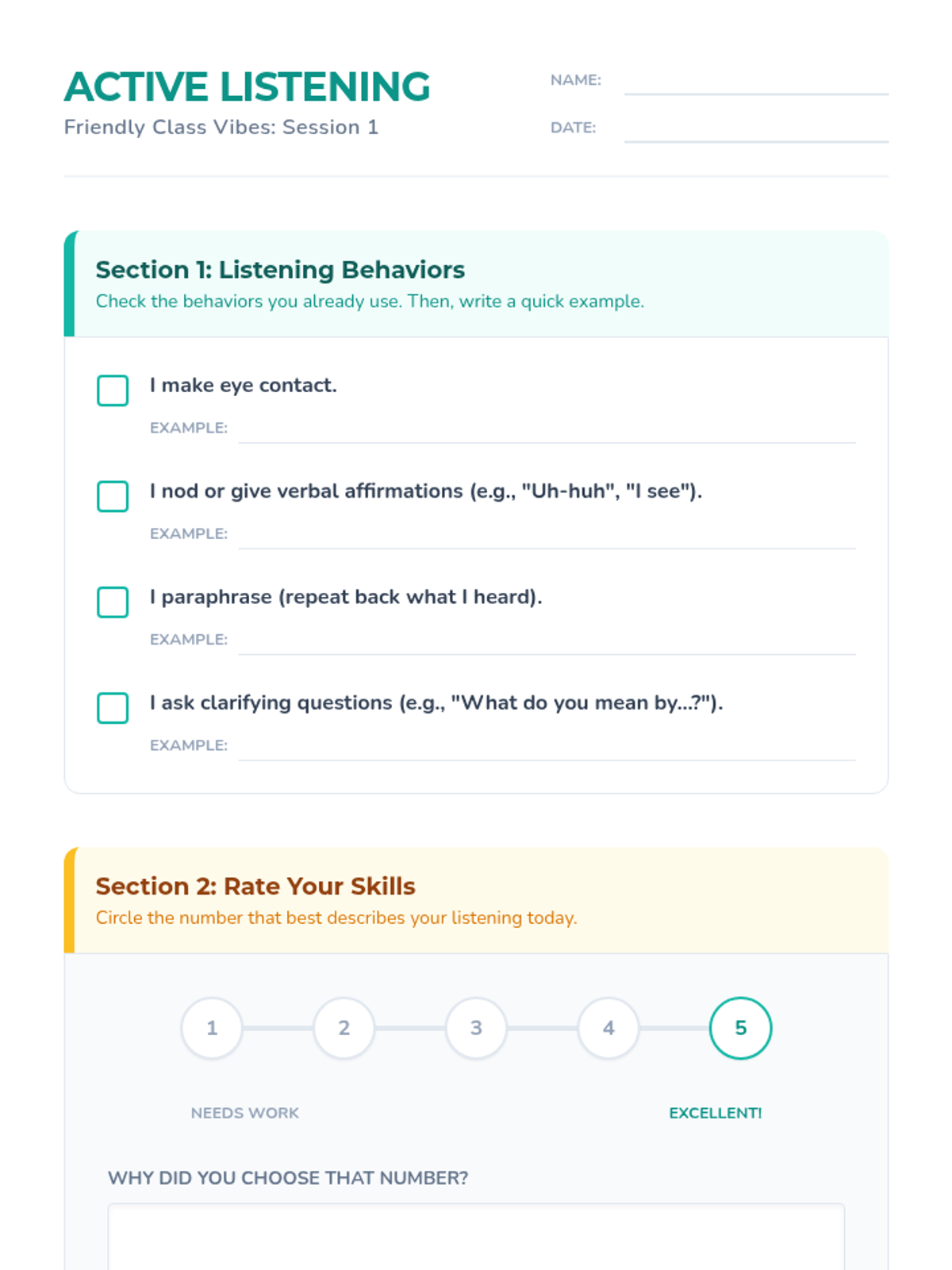
A 5-session social-emotional learning series for teens that explores empathy, active listening, diversity, and community building through interactive activities and reflection.
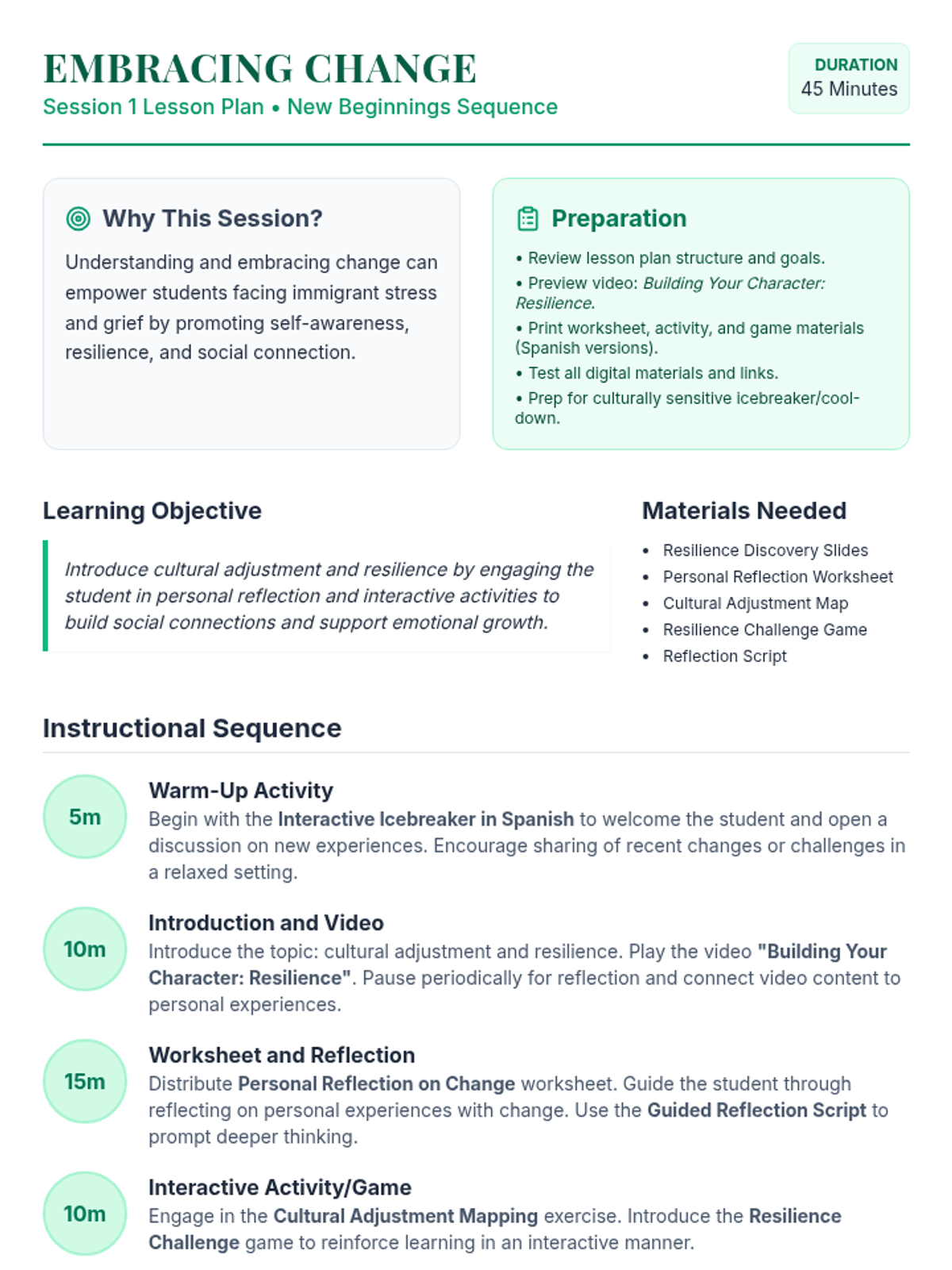
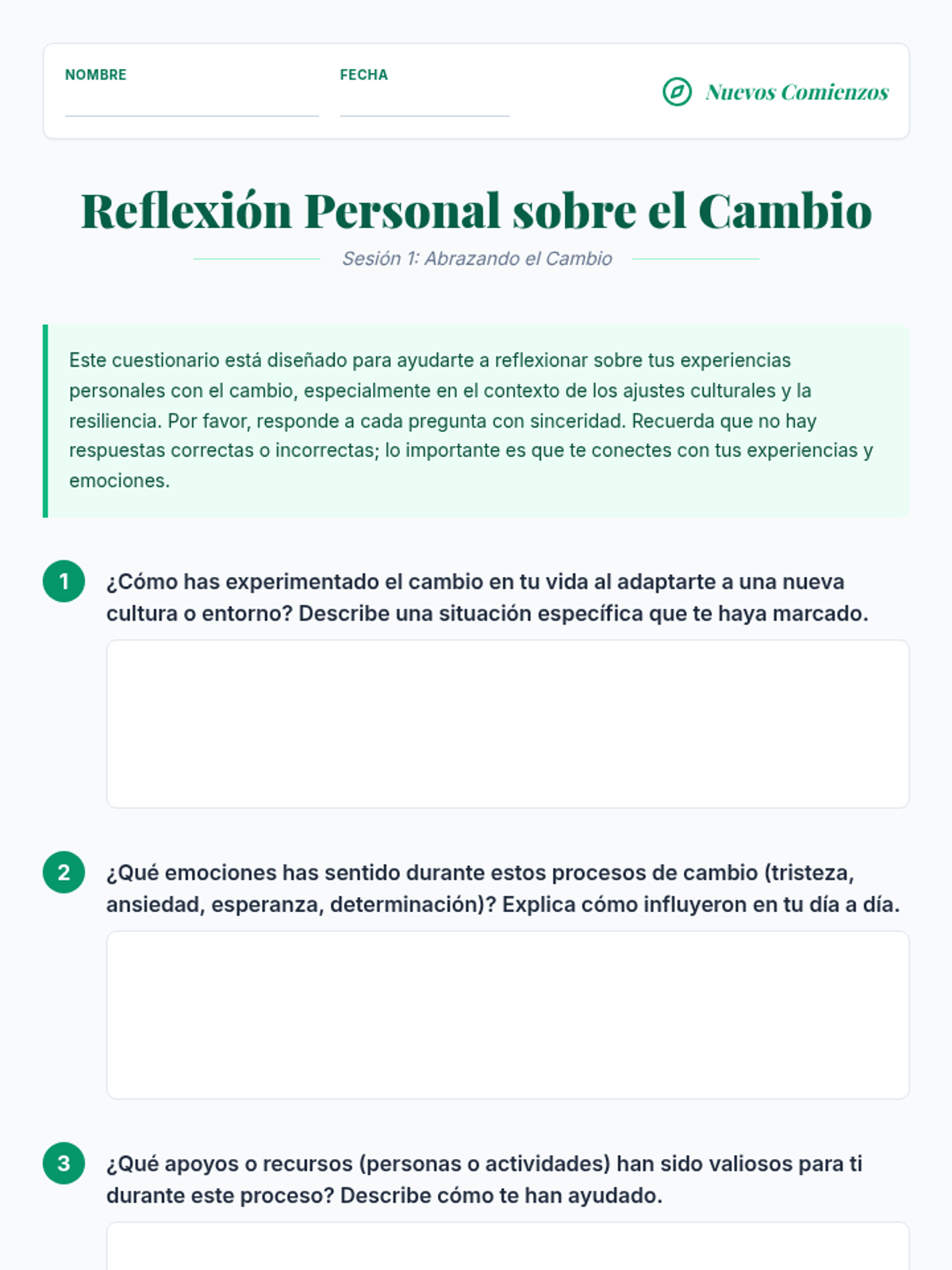
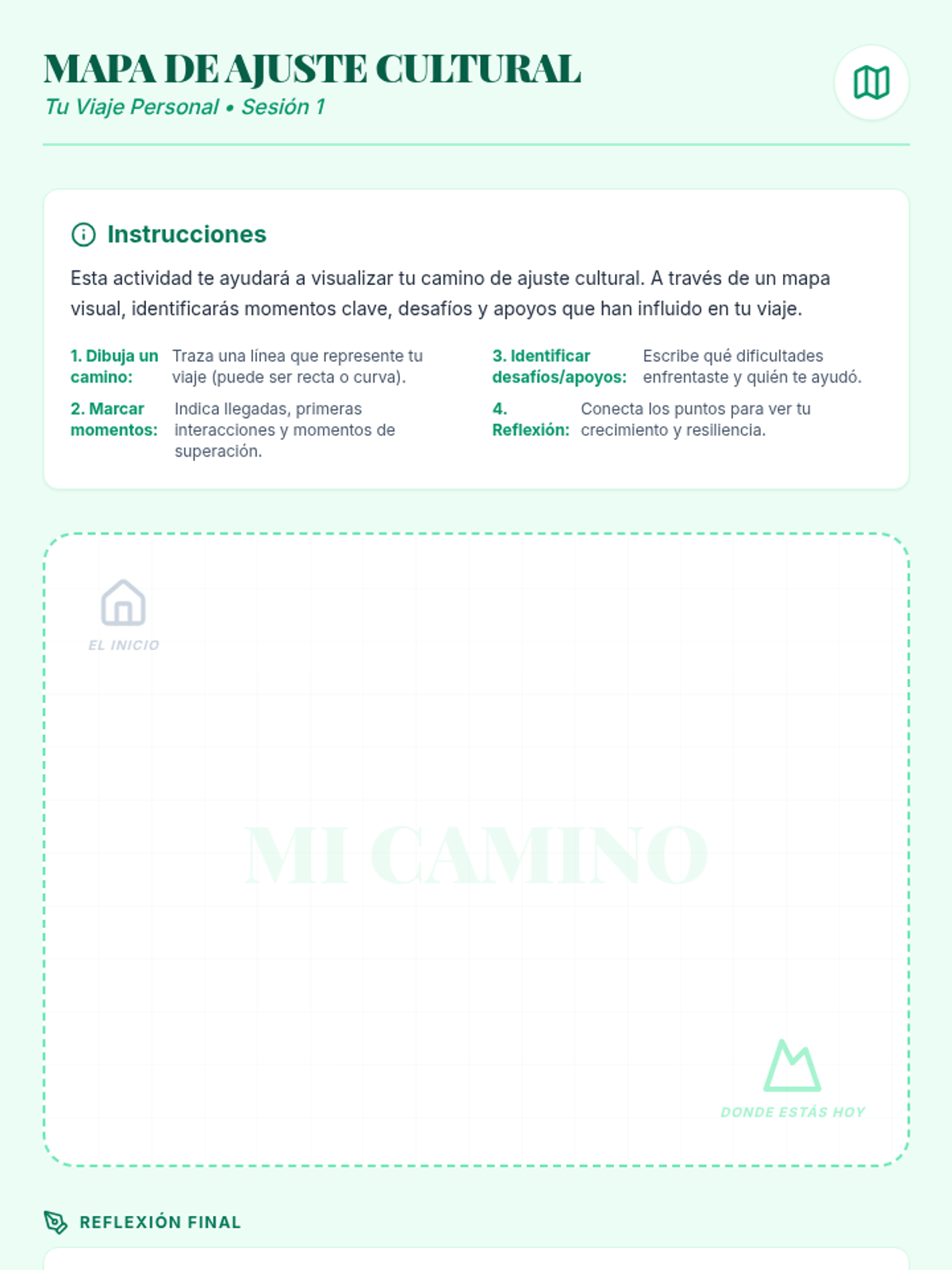
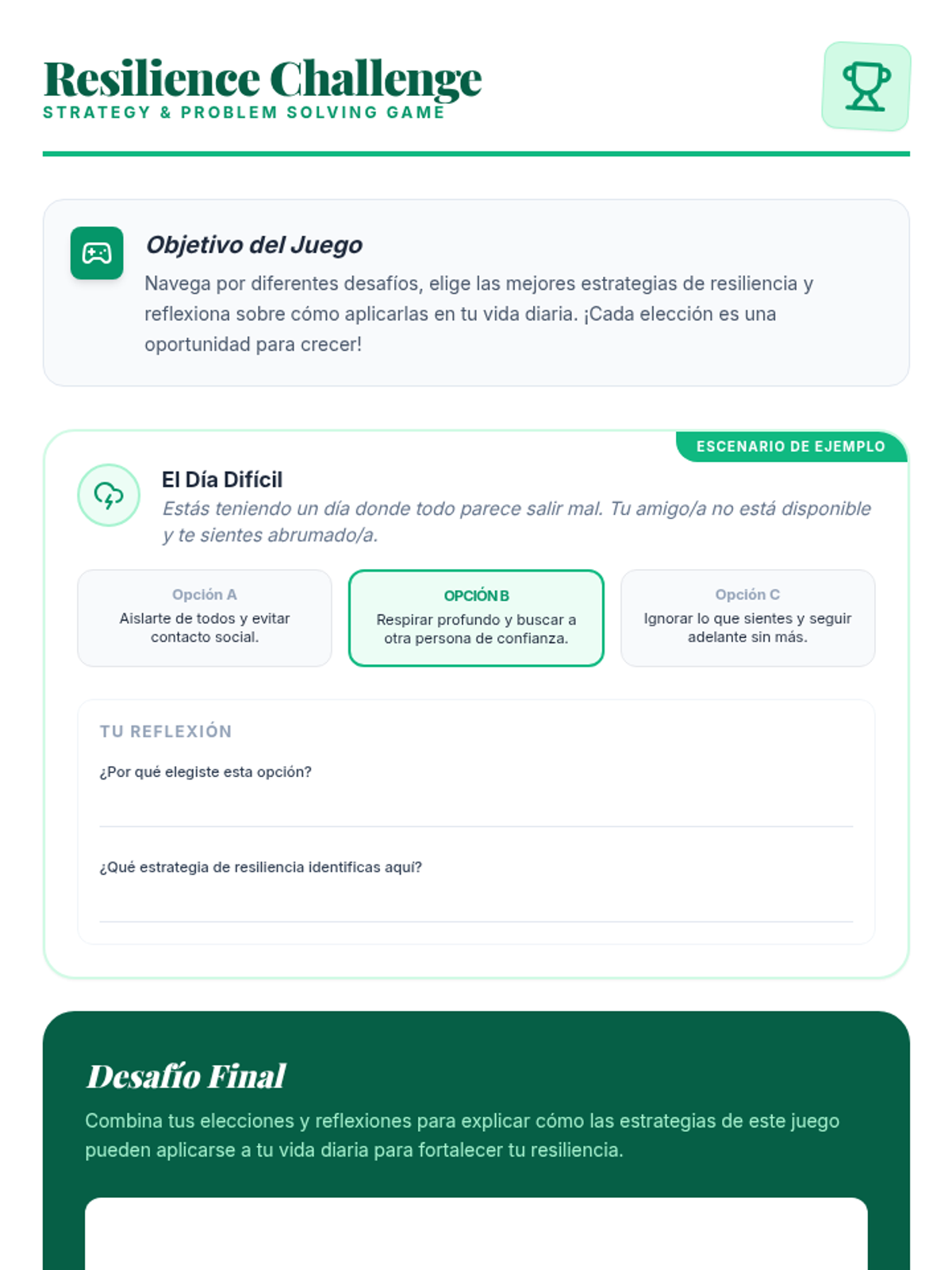
A comprehensive 6-session individual support program for students navigating cultural adjustment, immigrant-related stress, and grief. The sequence focuses on building resilience, honoring cultural identity, and fostering social connections through reflective and interactive activities.
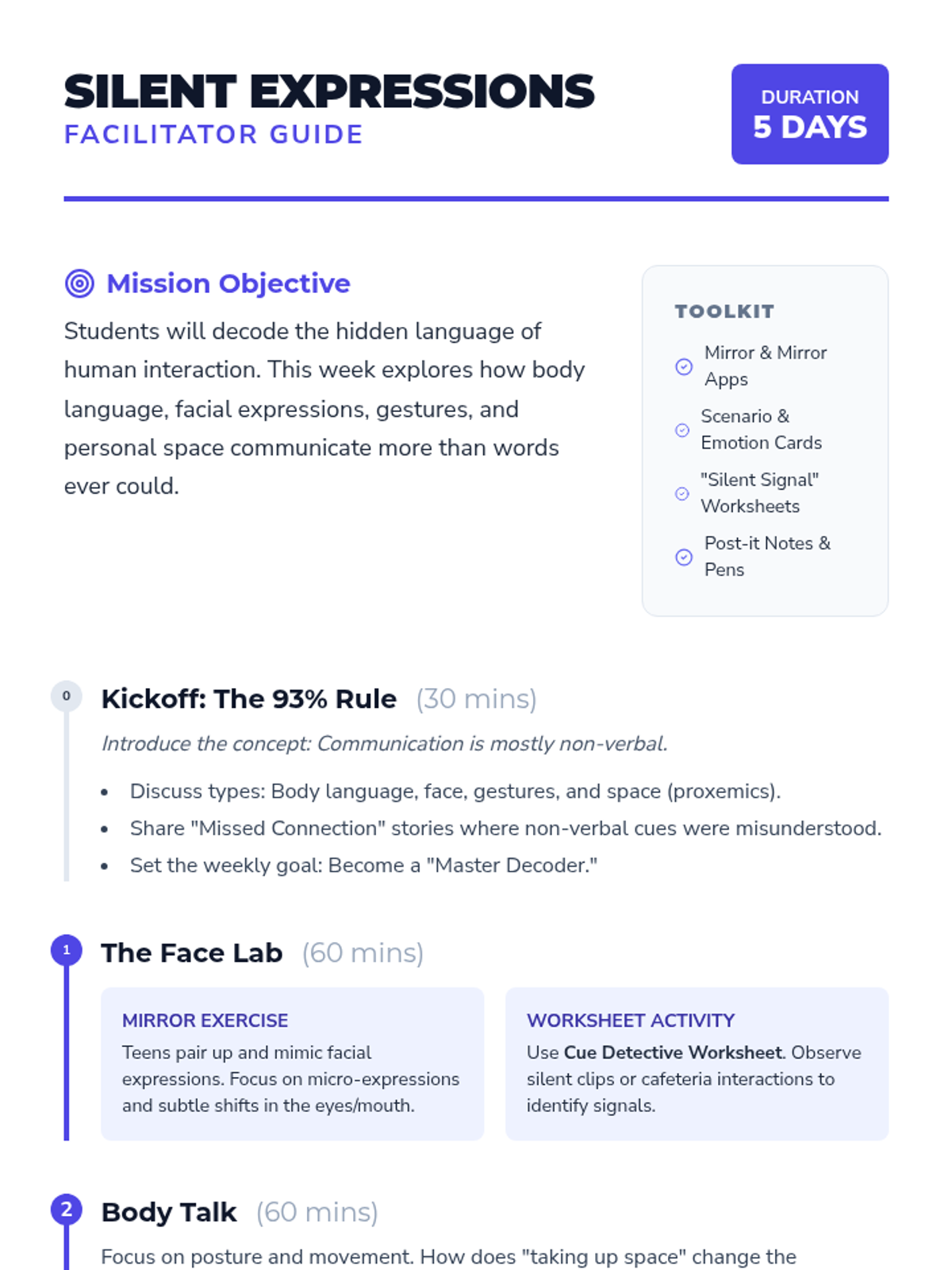
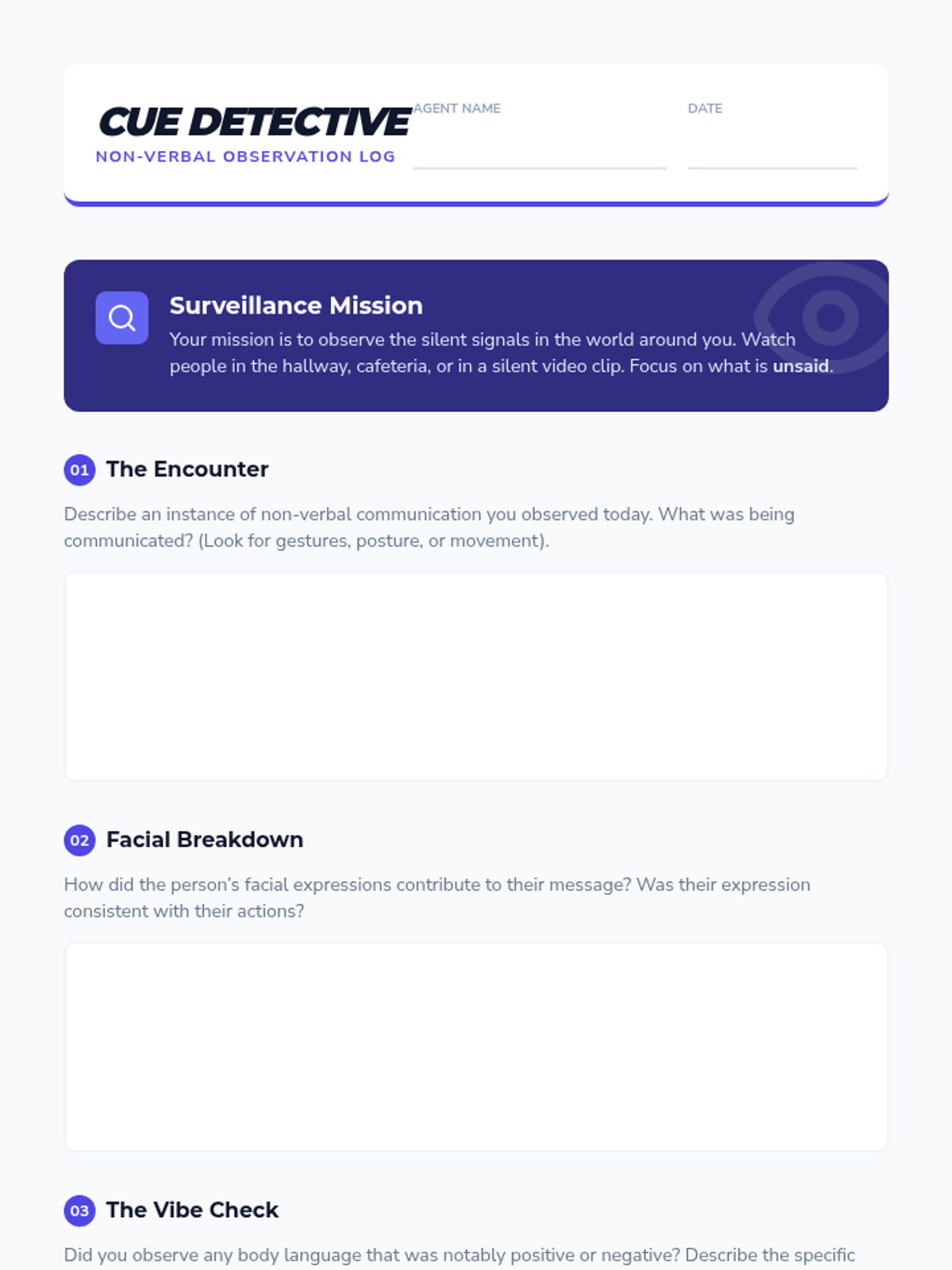
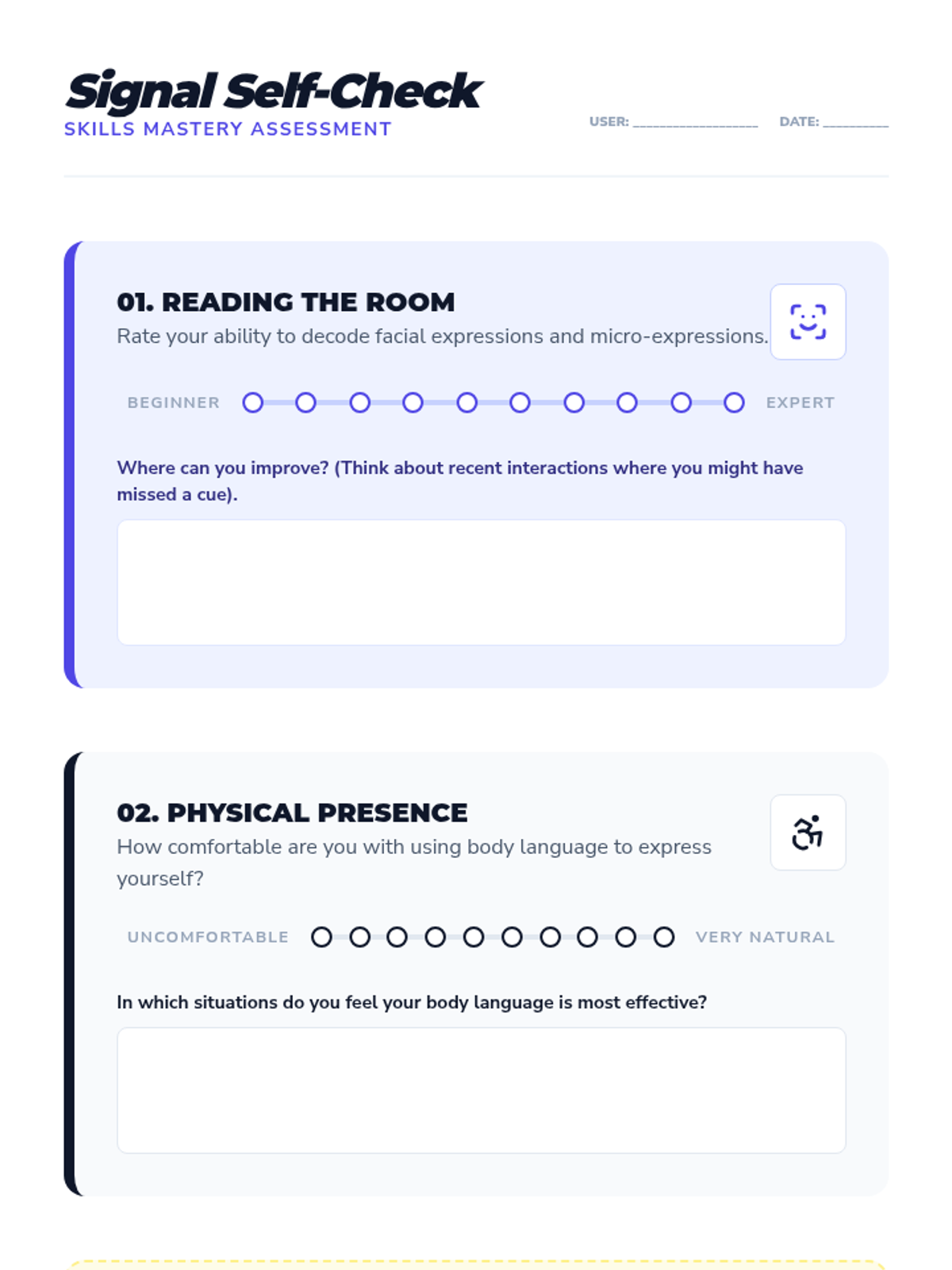
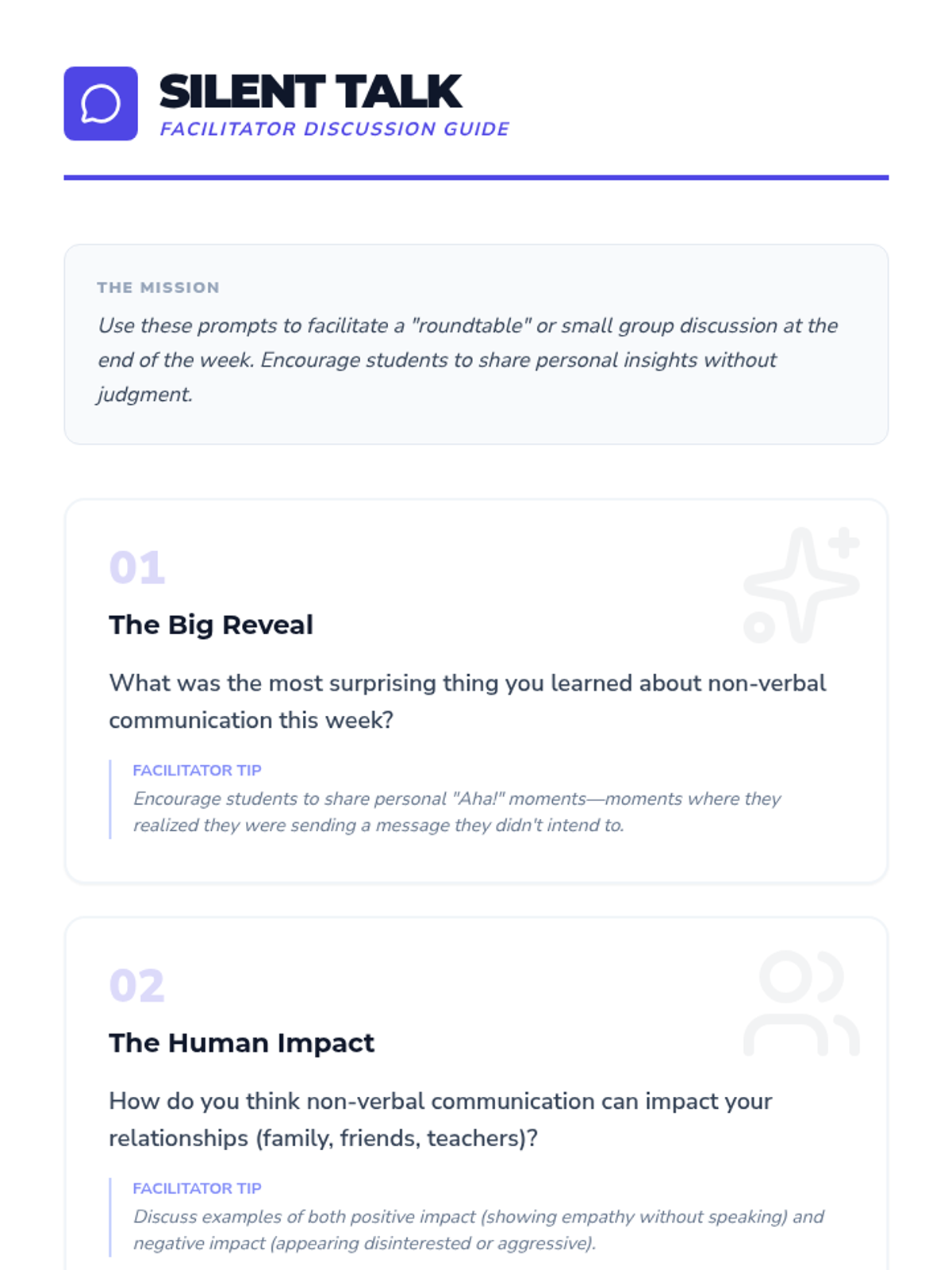
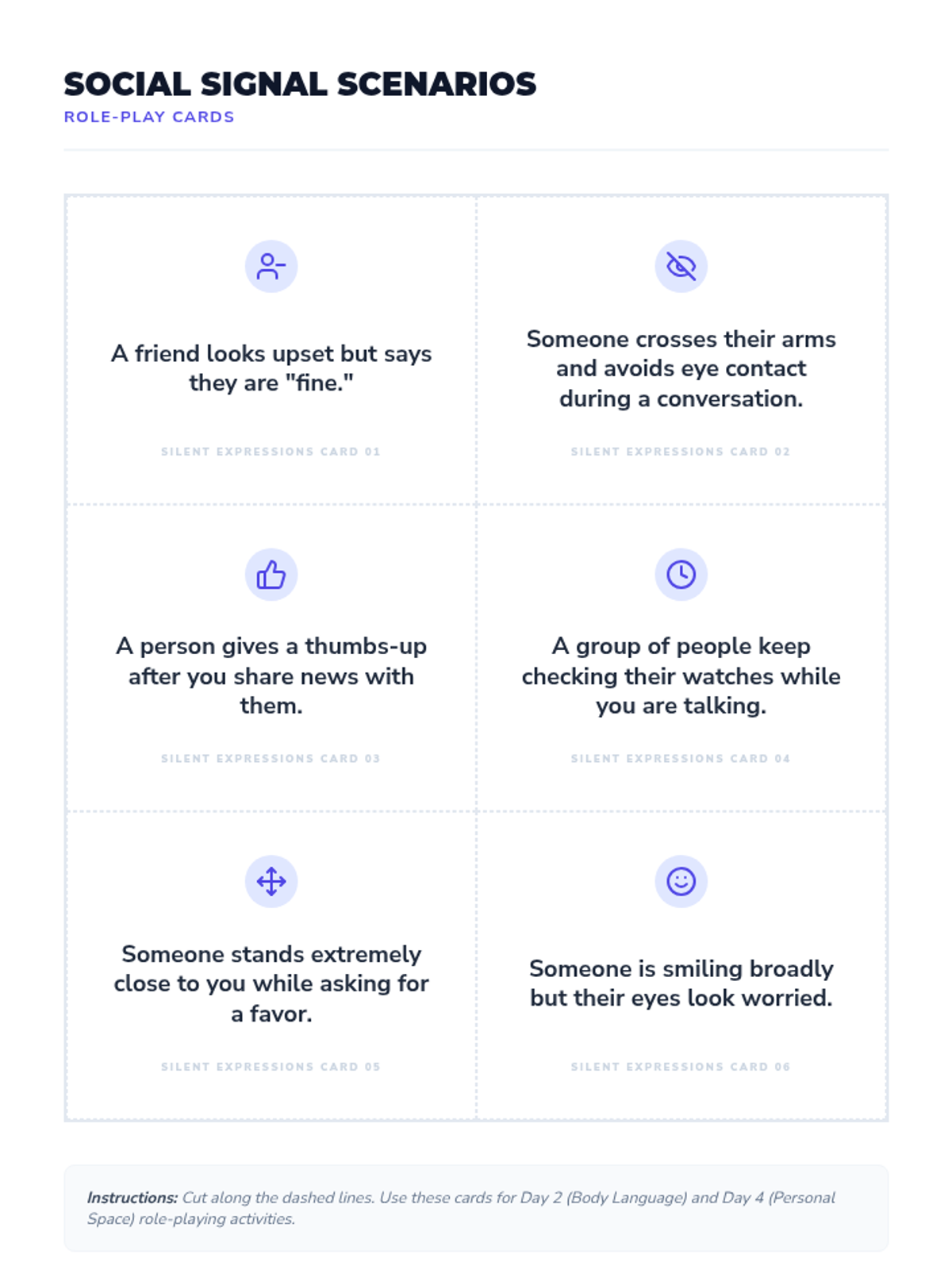
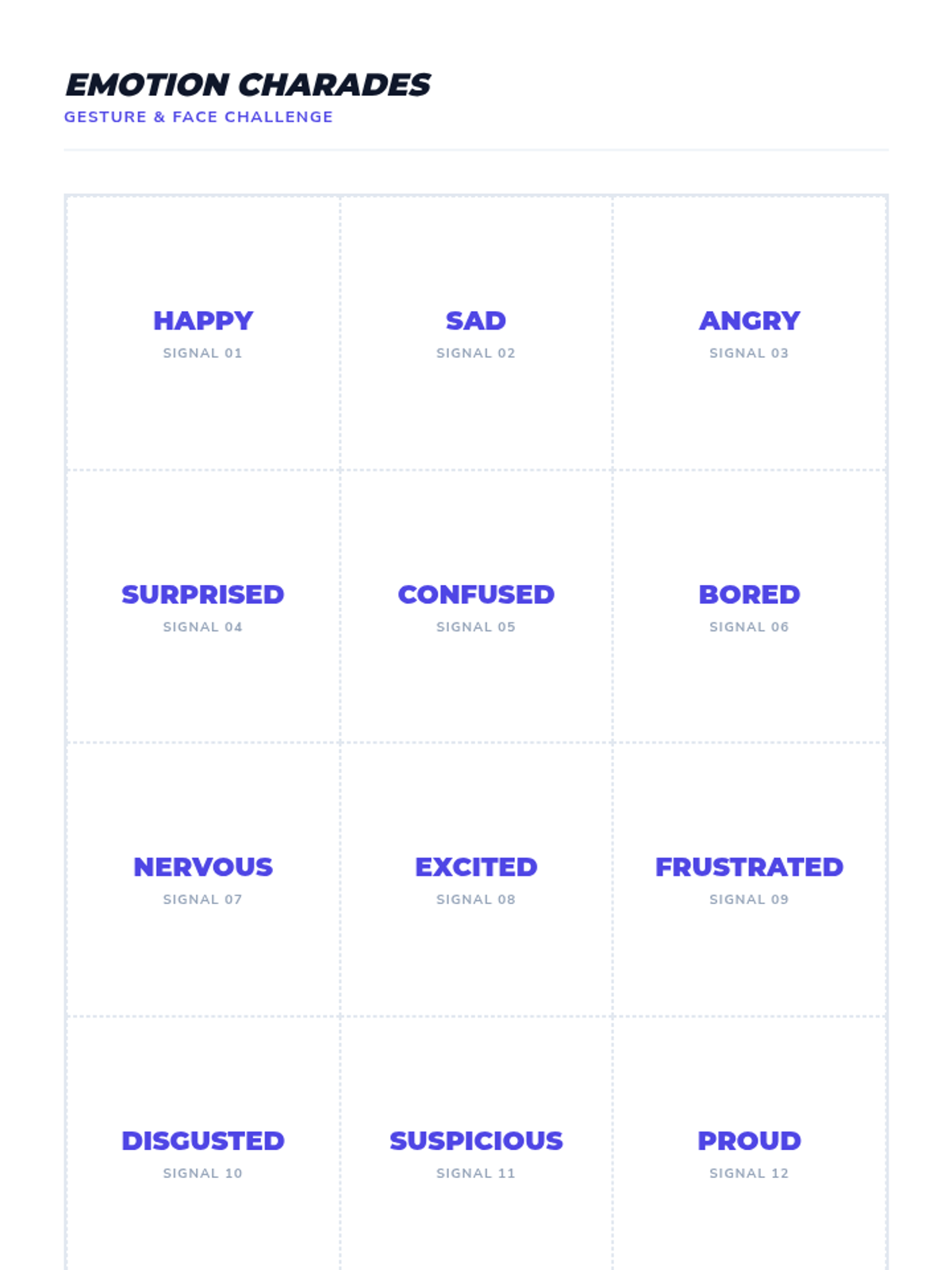
A week-long exploration of non-verbal communication, including body language, facial expressions, and personal space, designed for teens to enhance their social awareness.
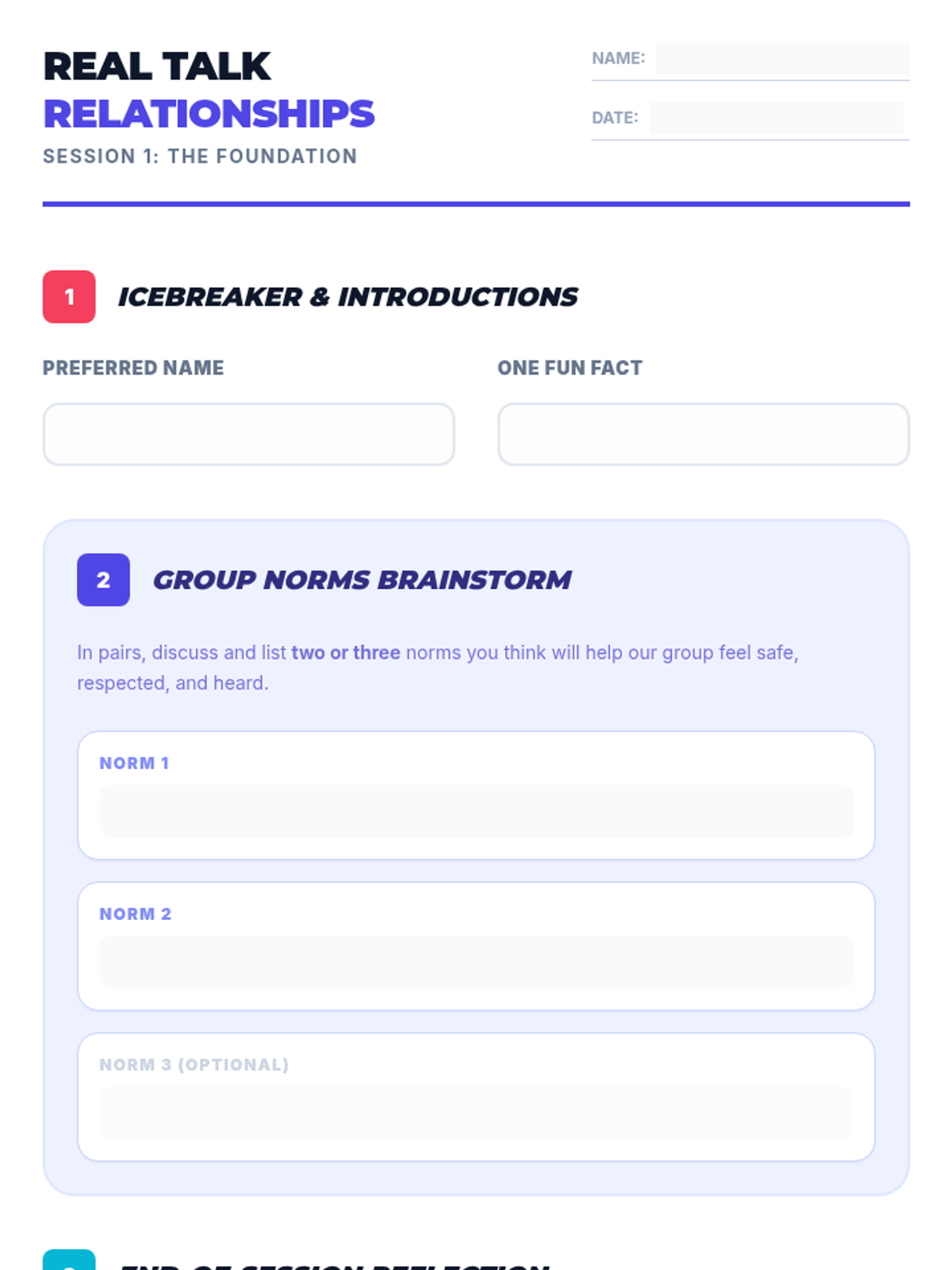
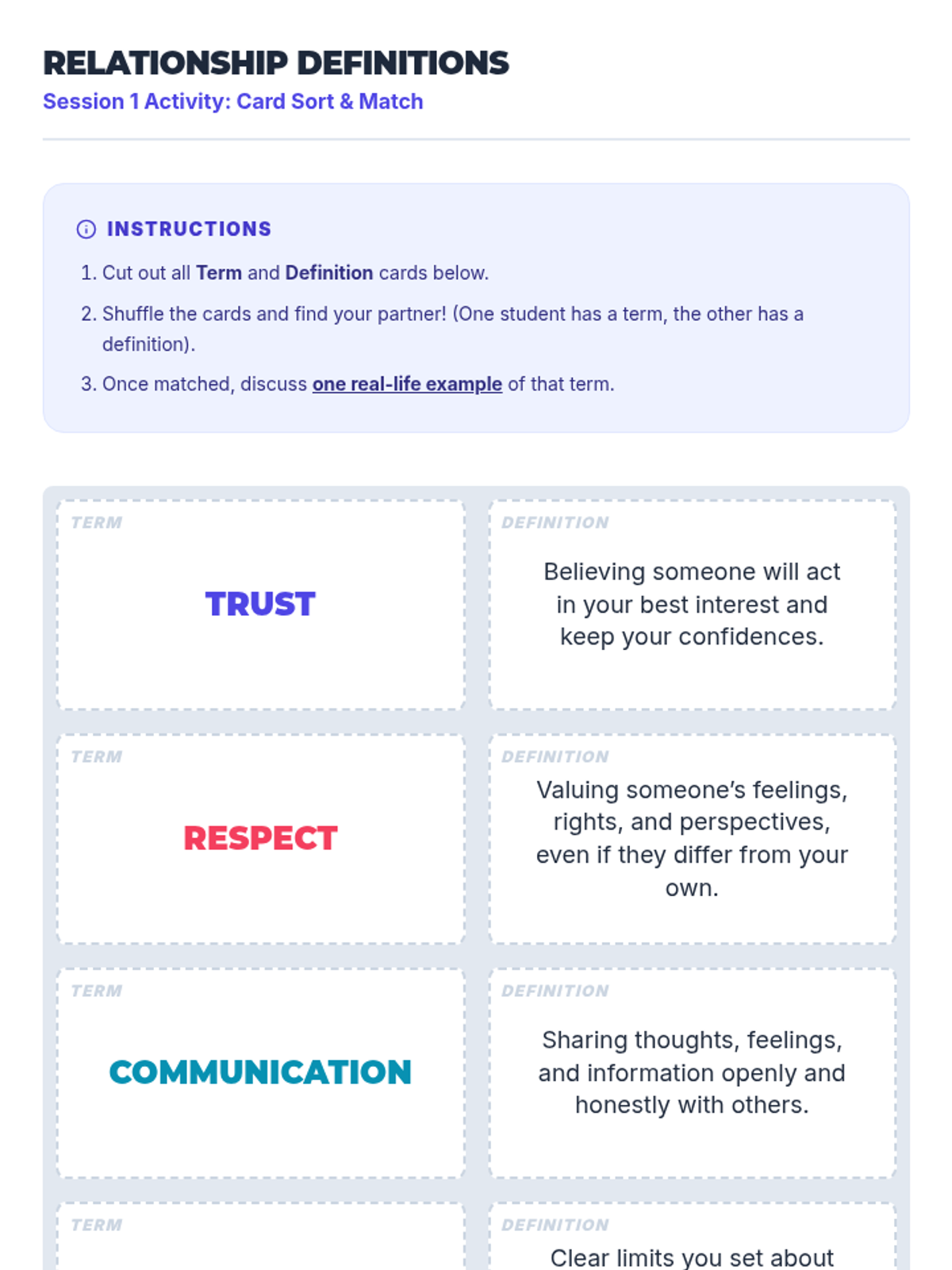
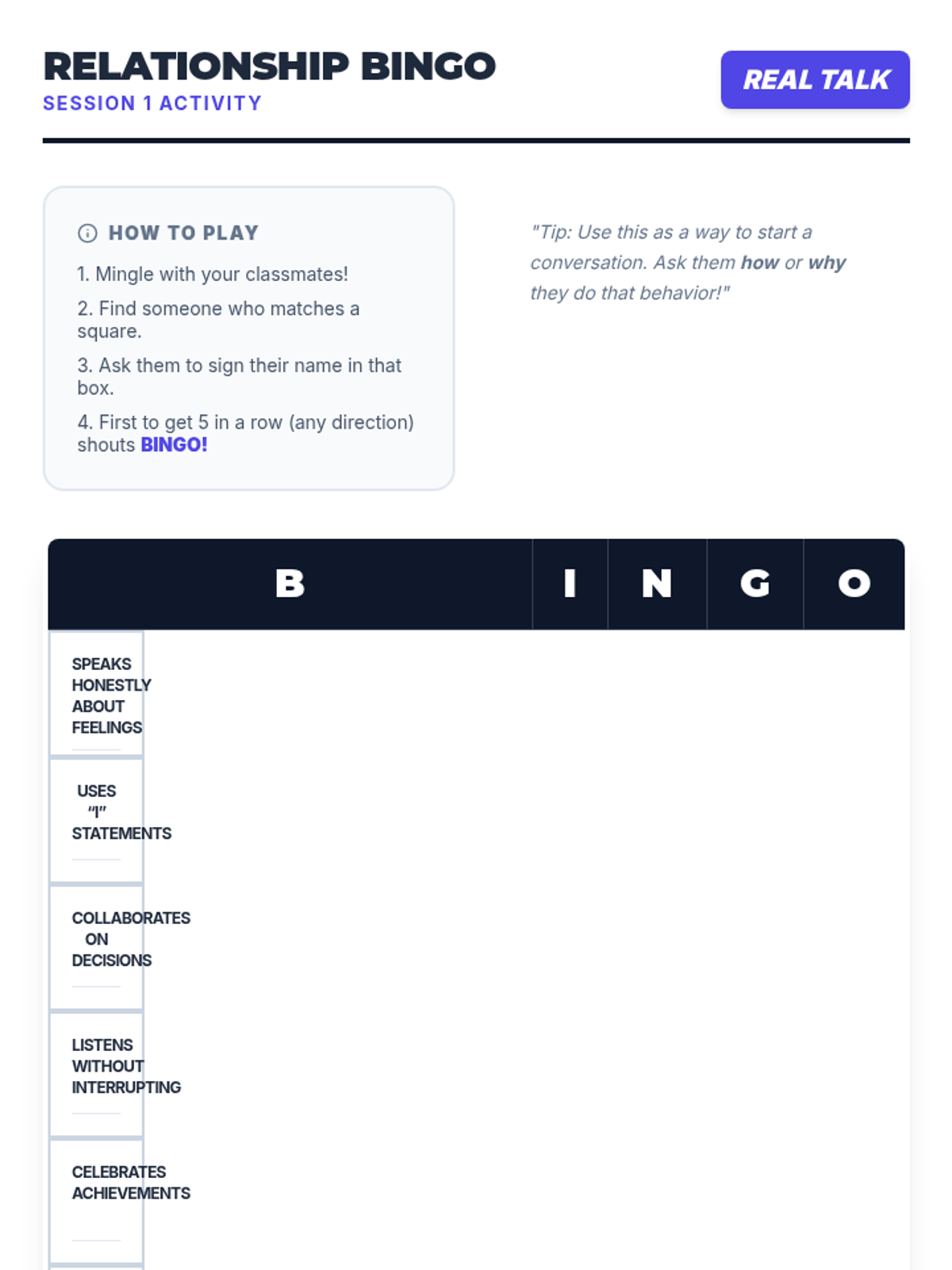
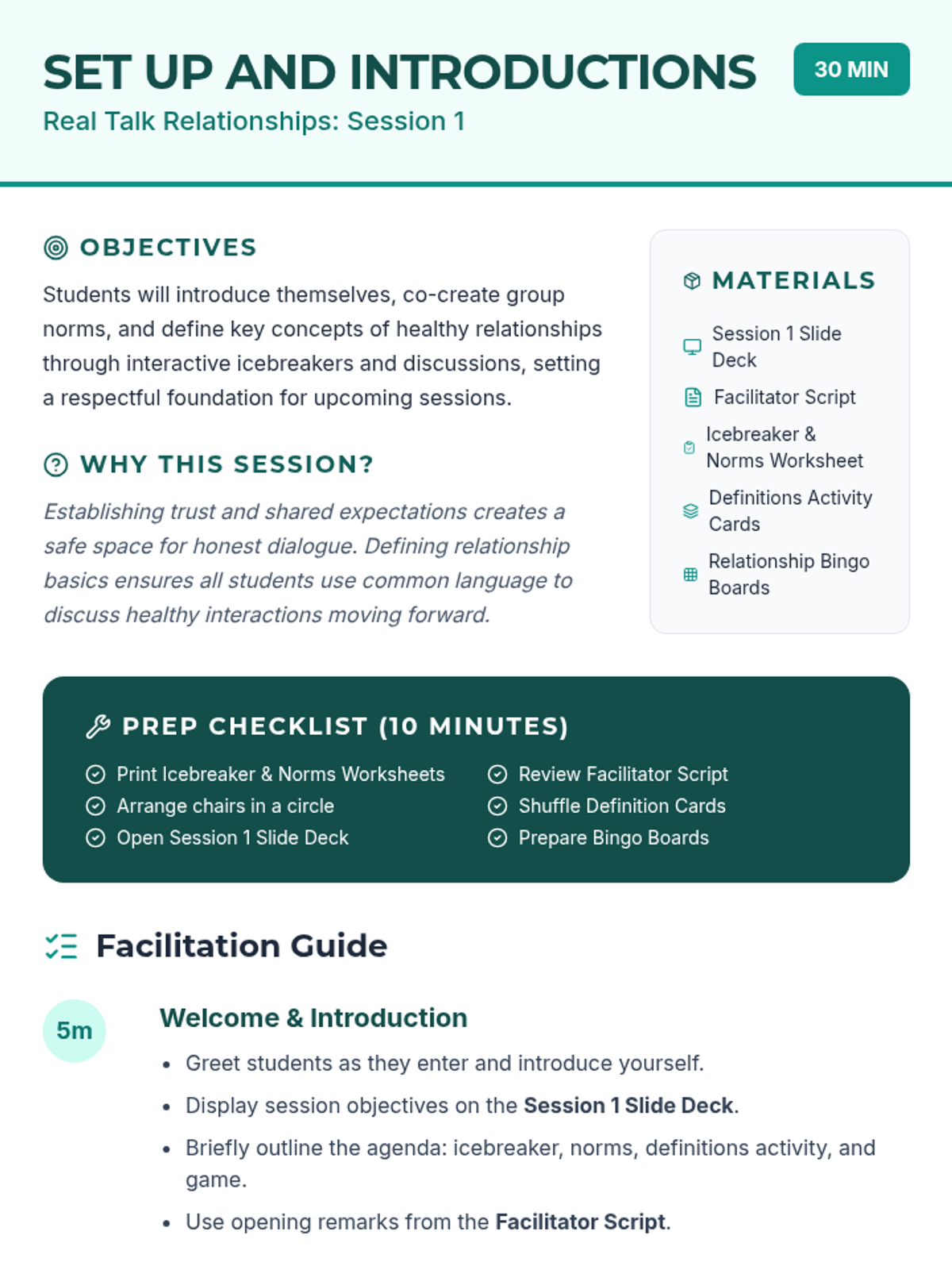
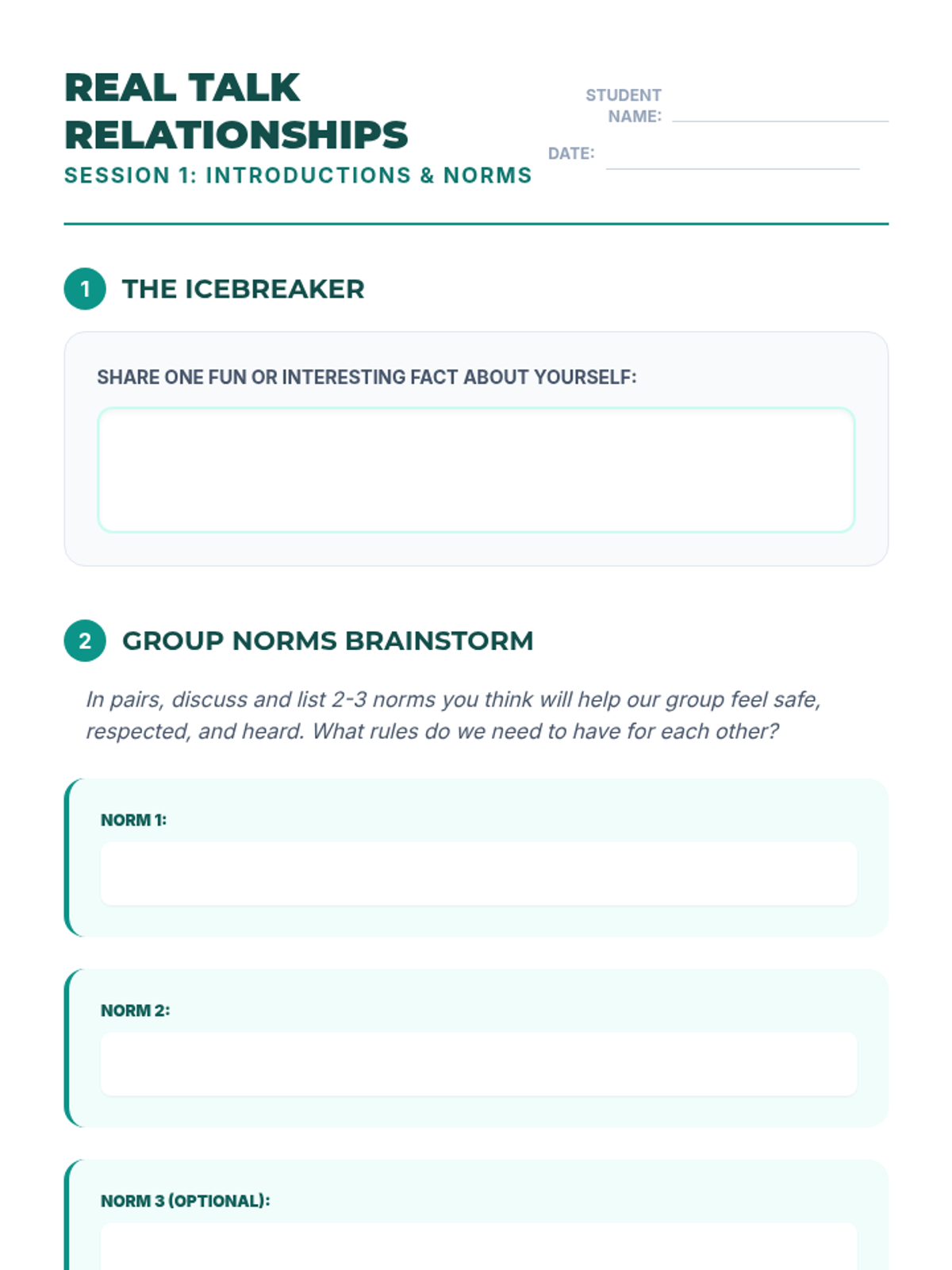
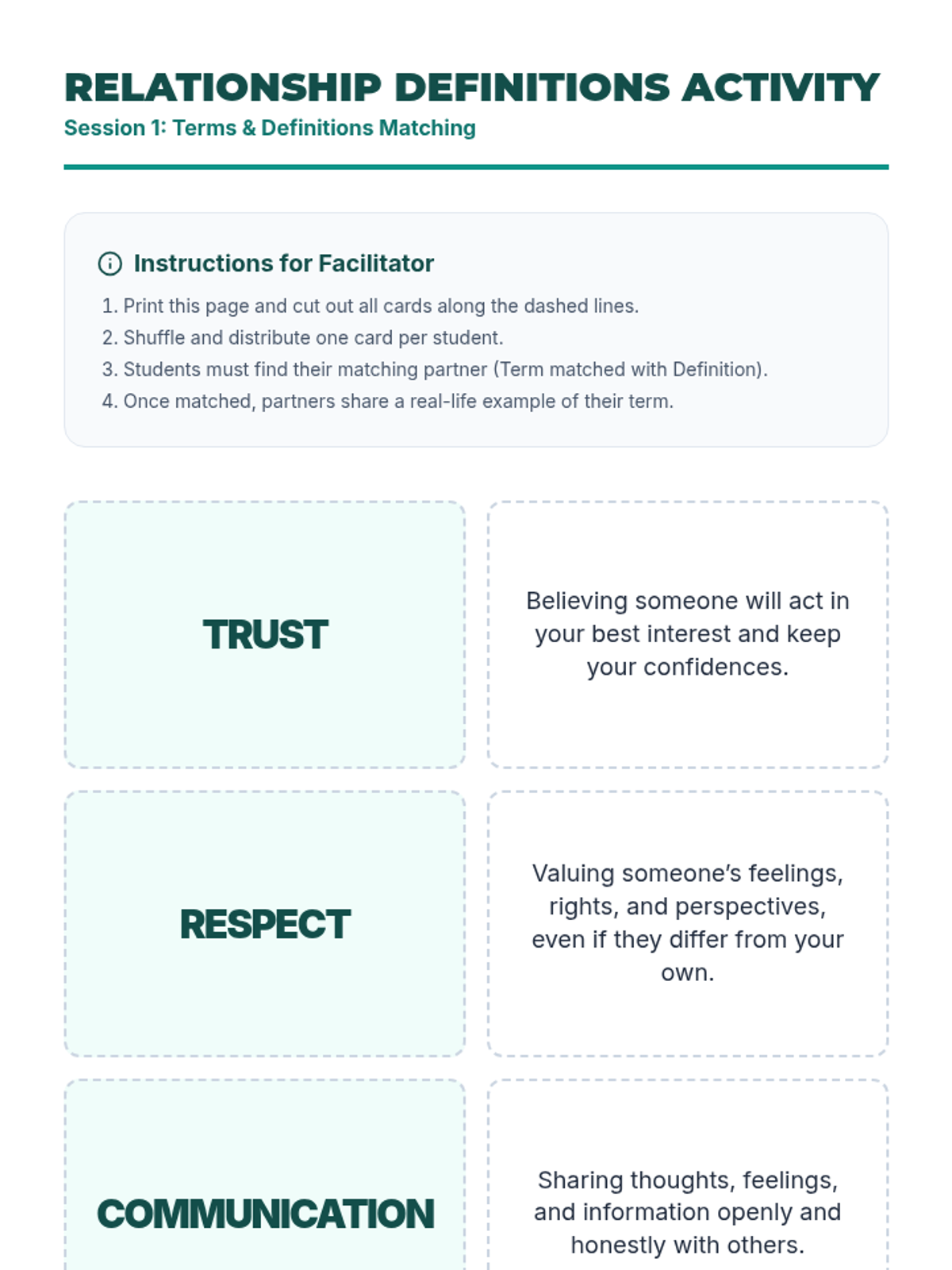
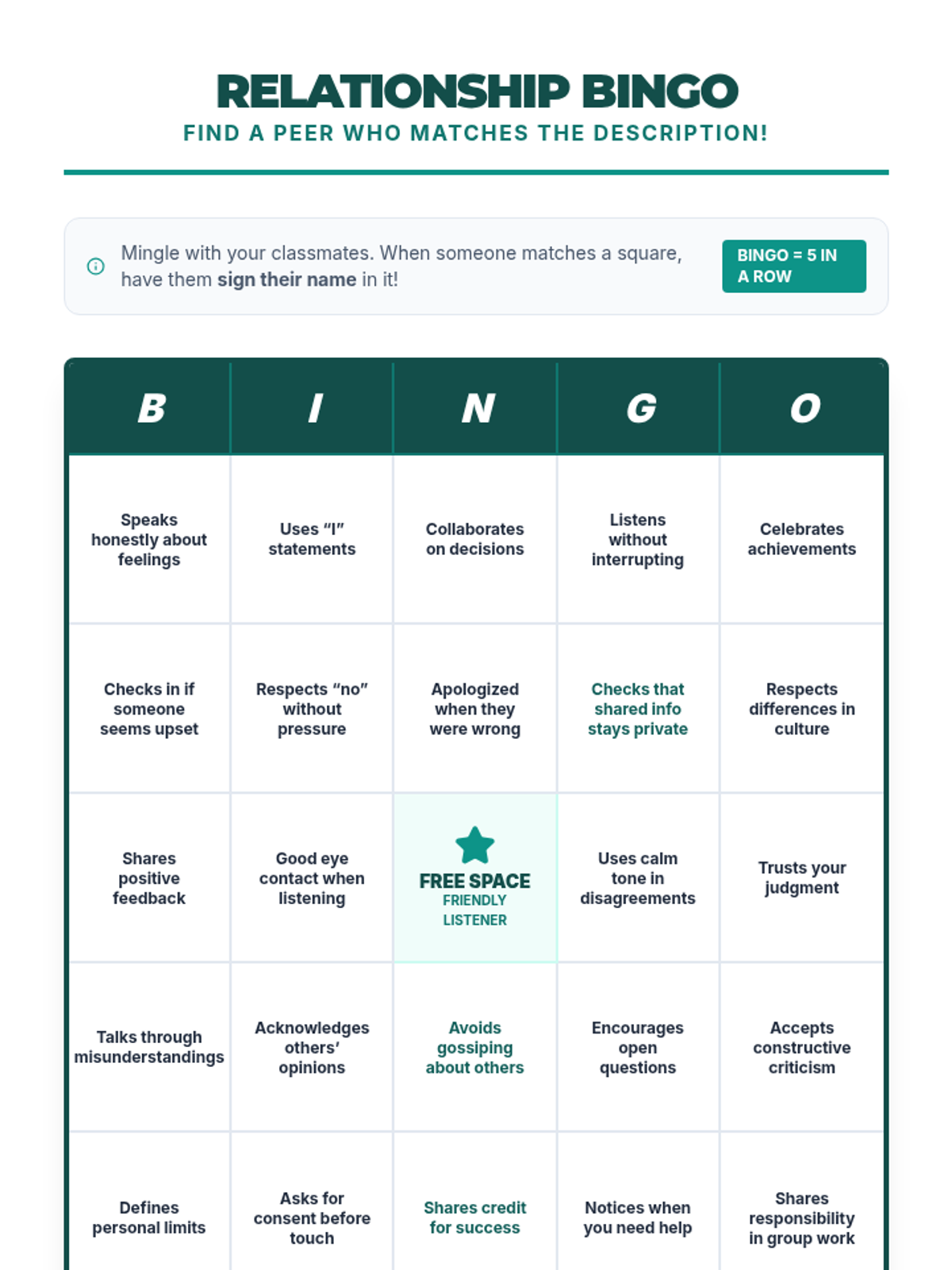
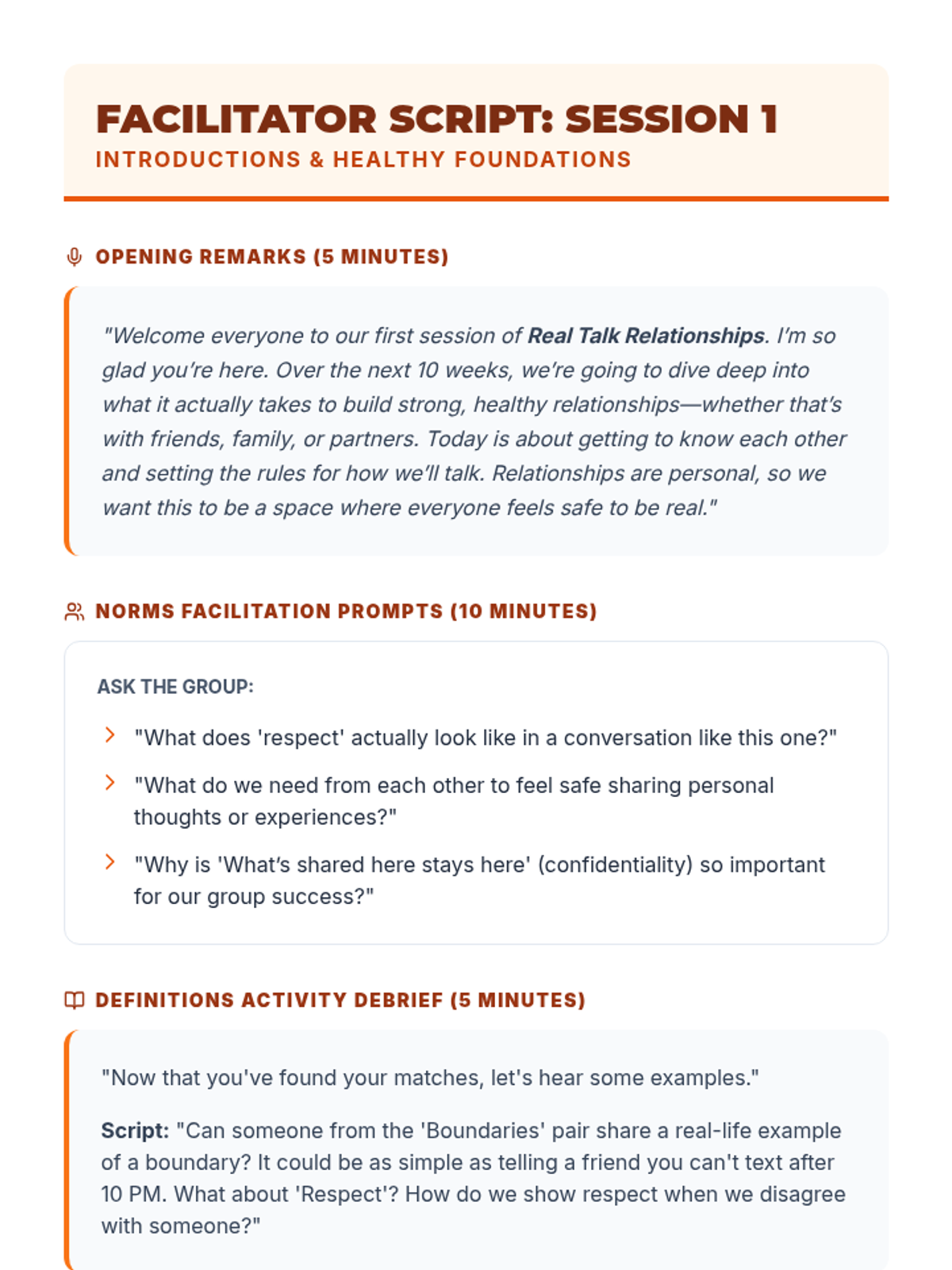
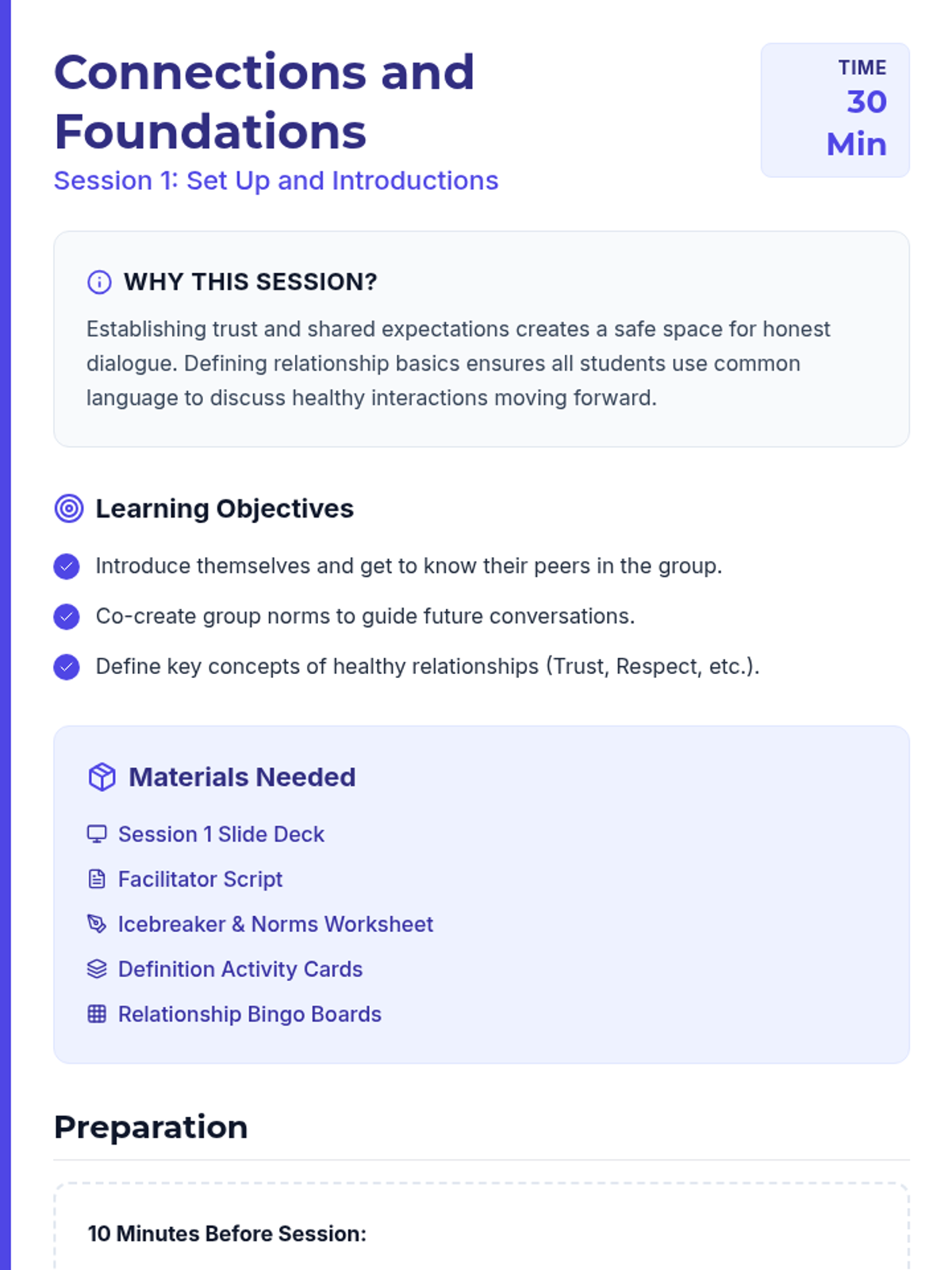
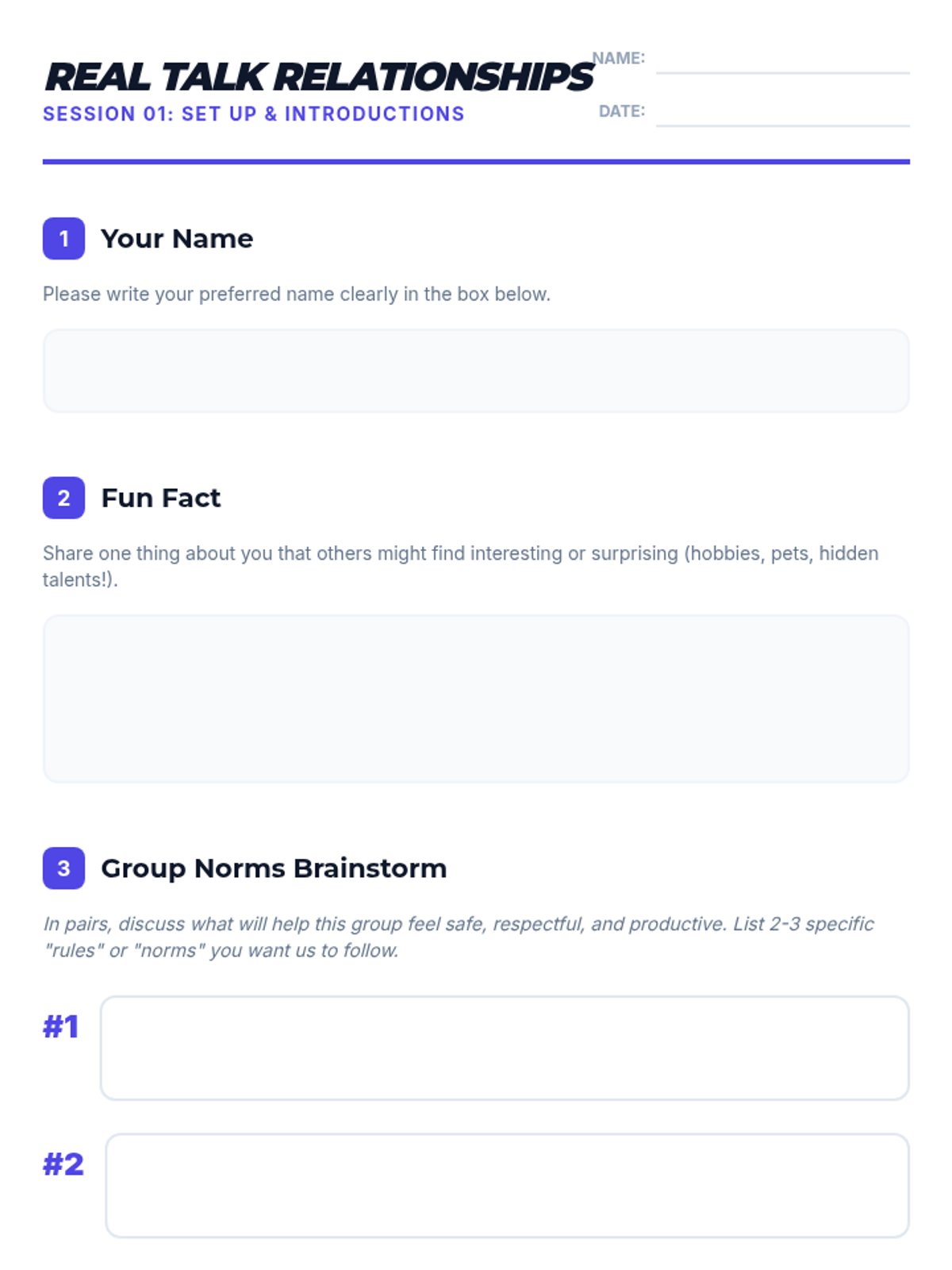
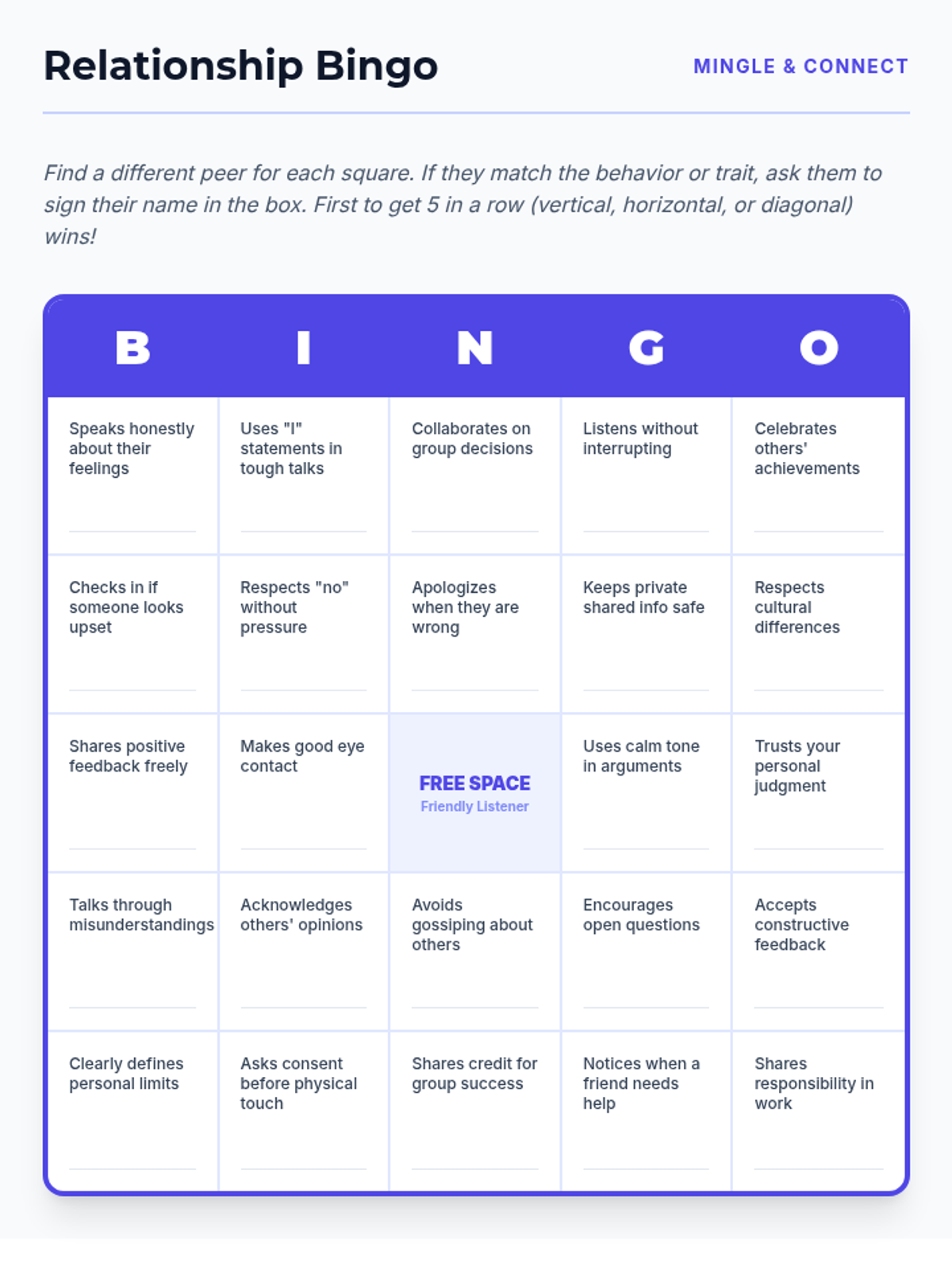
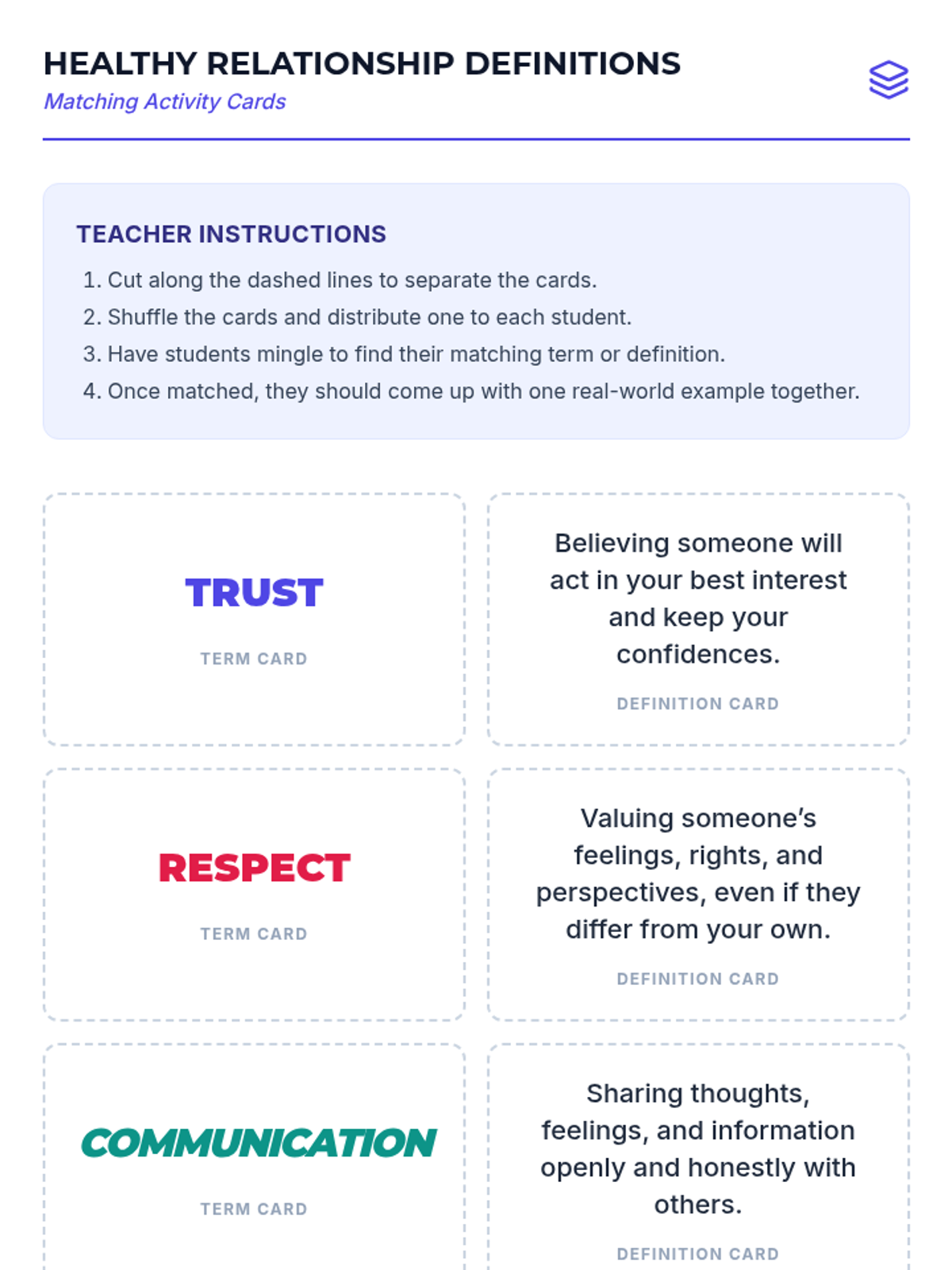
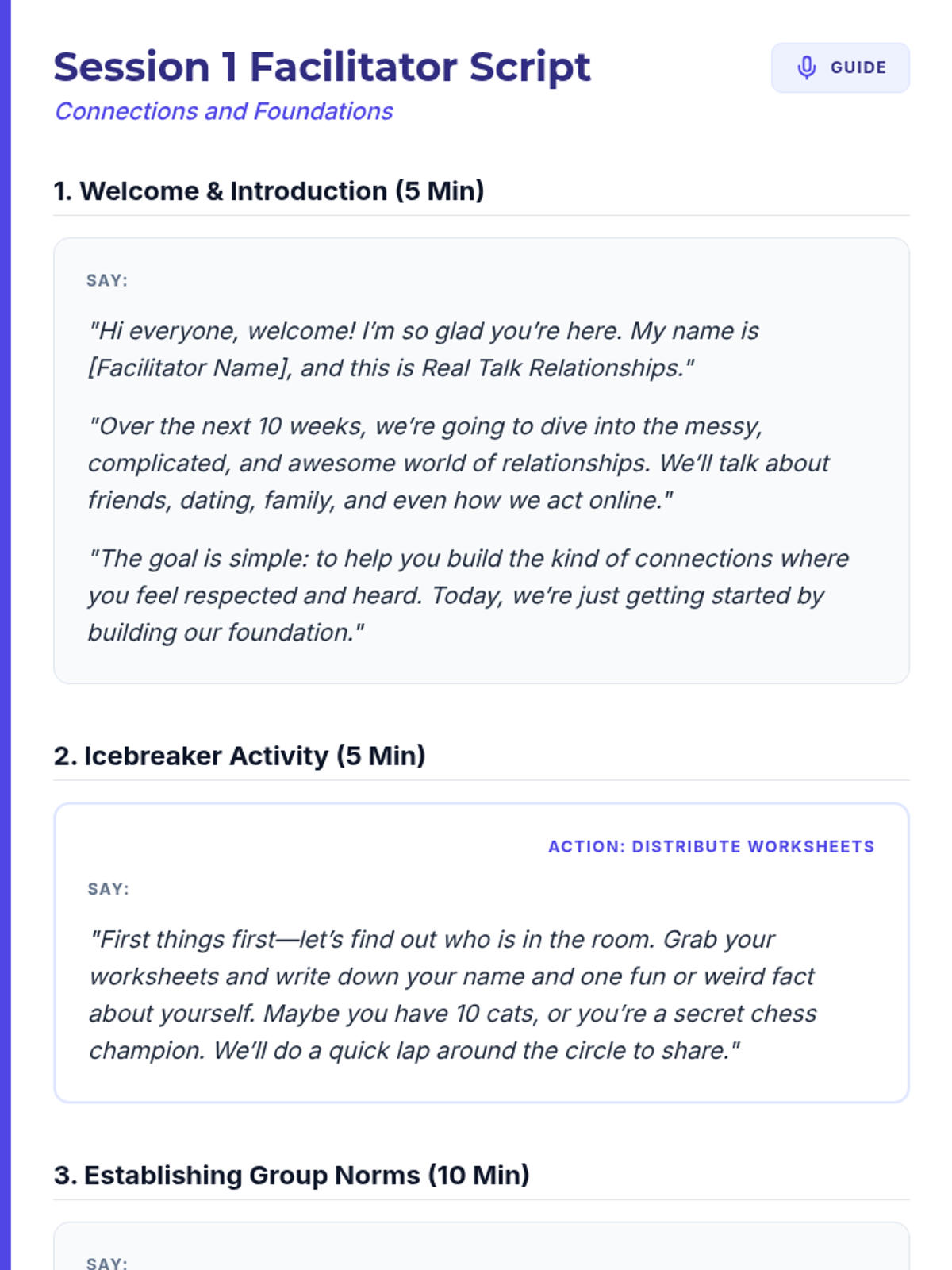
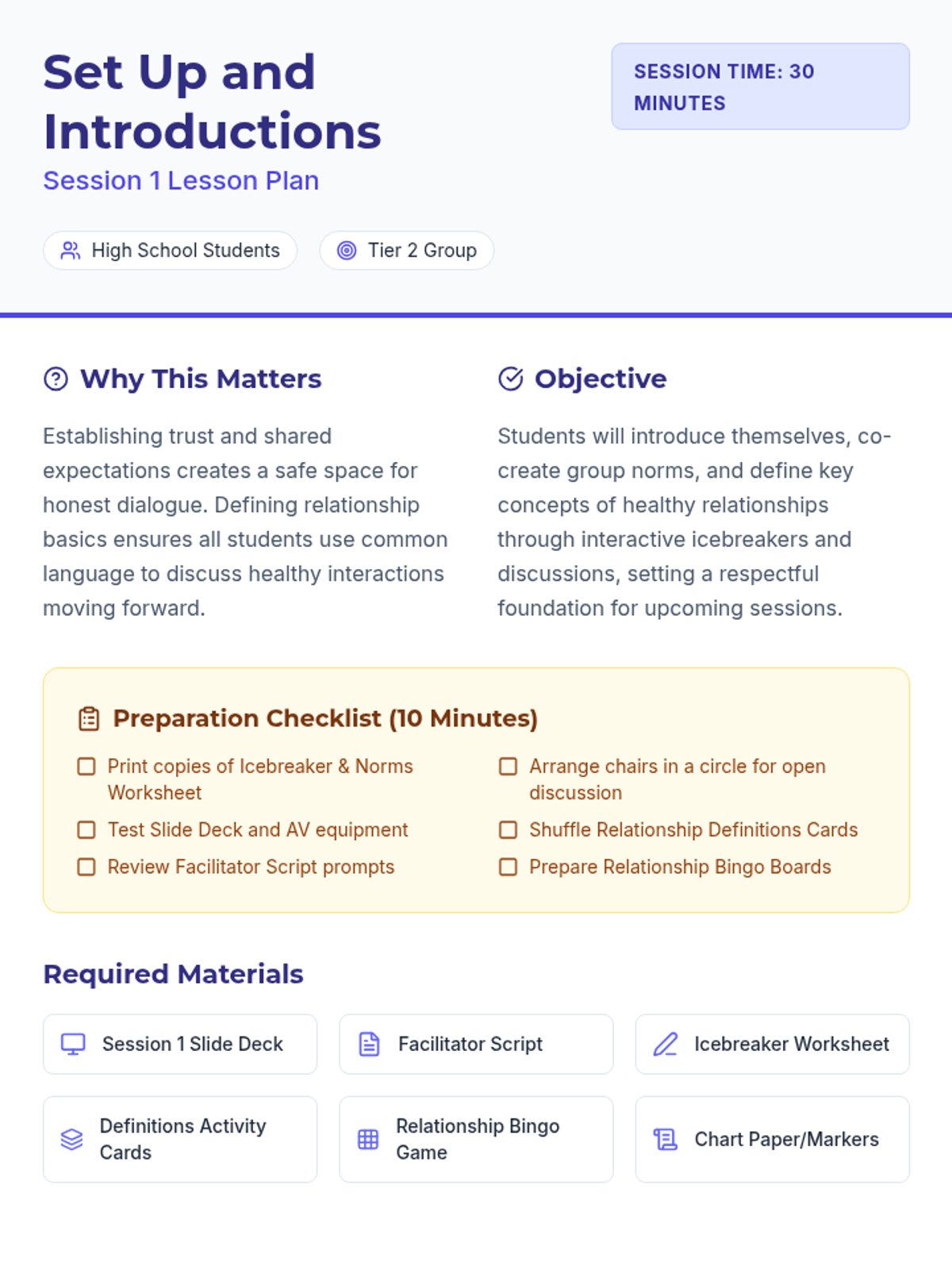
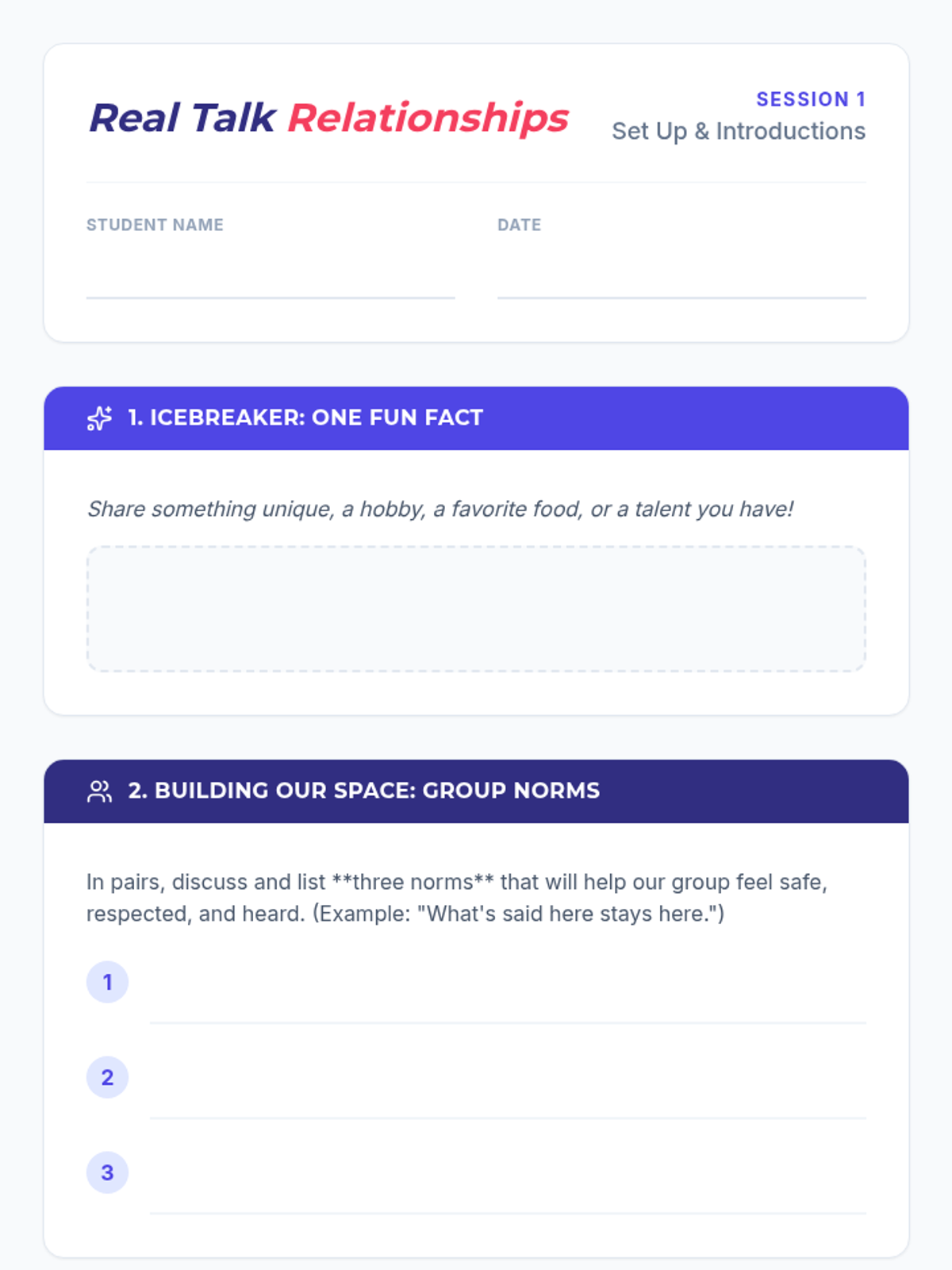
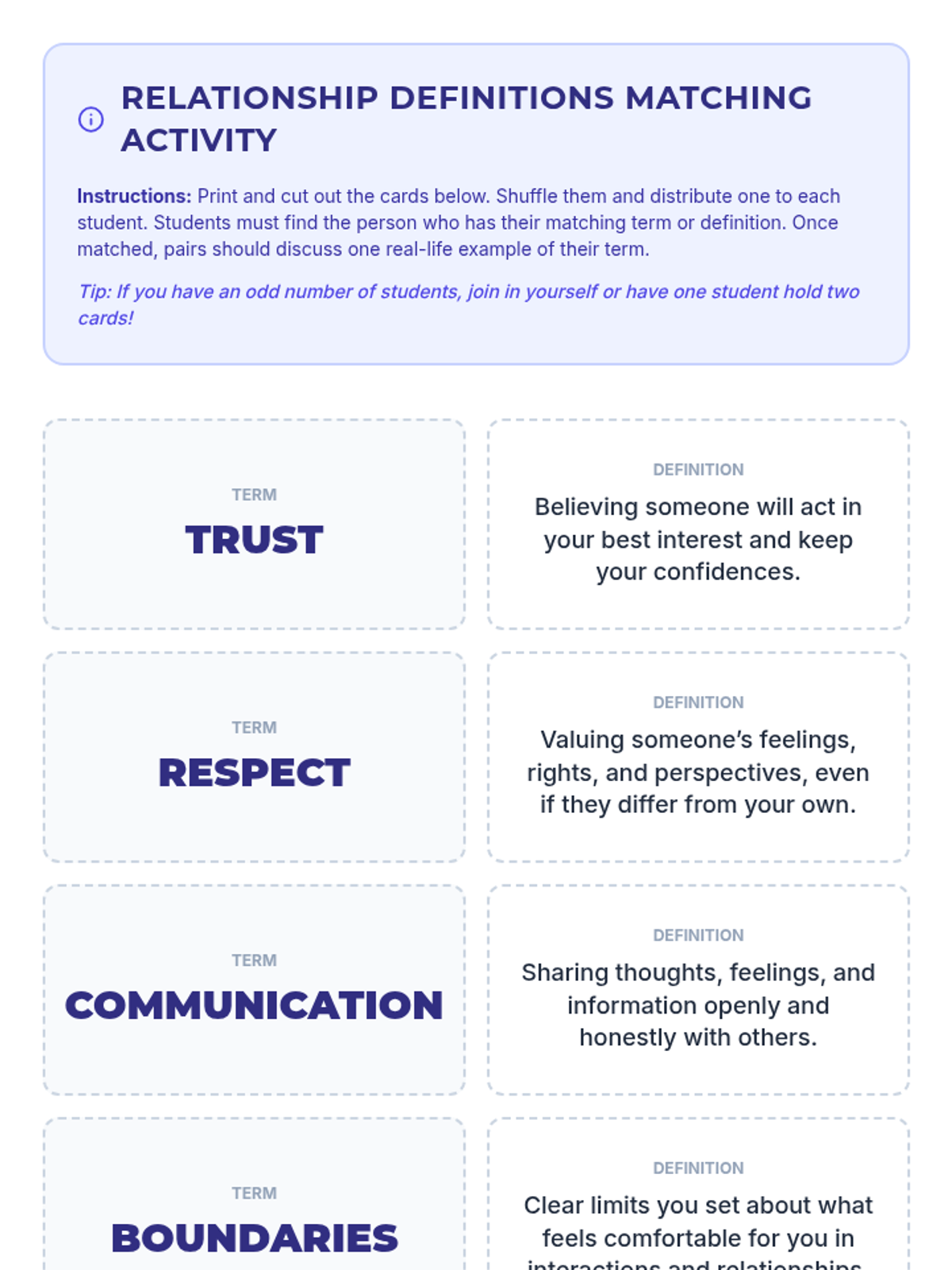
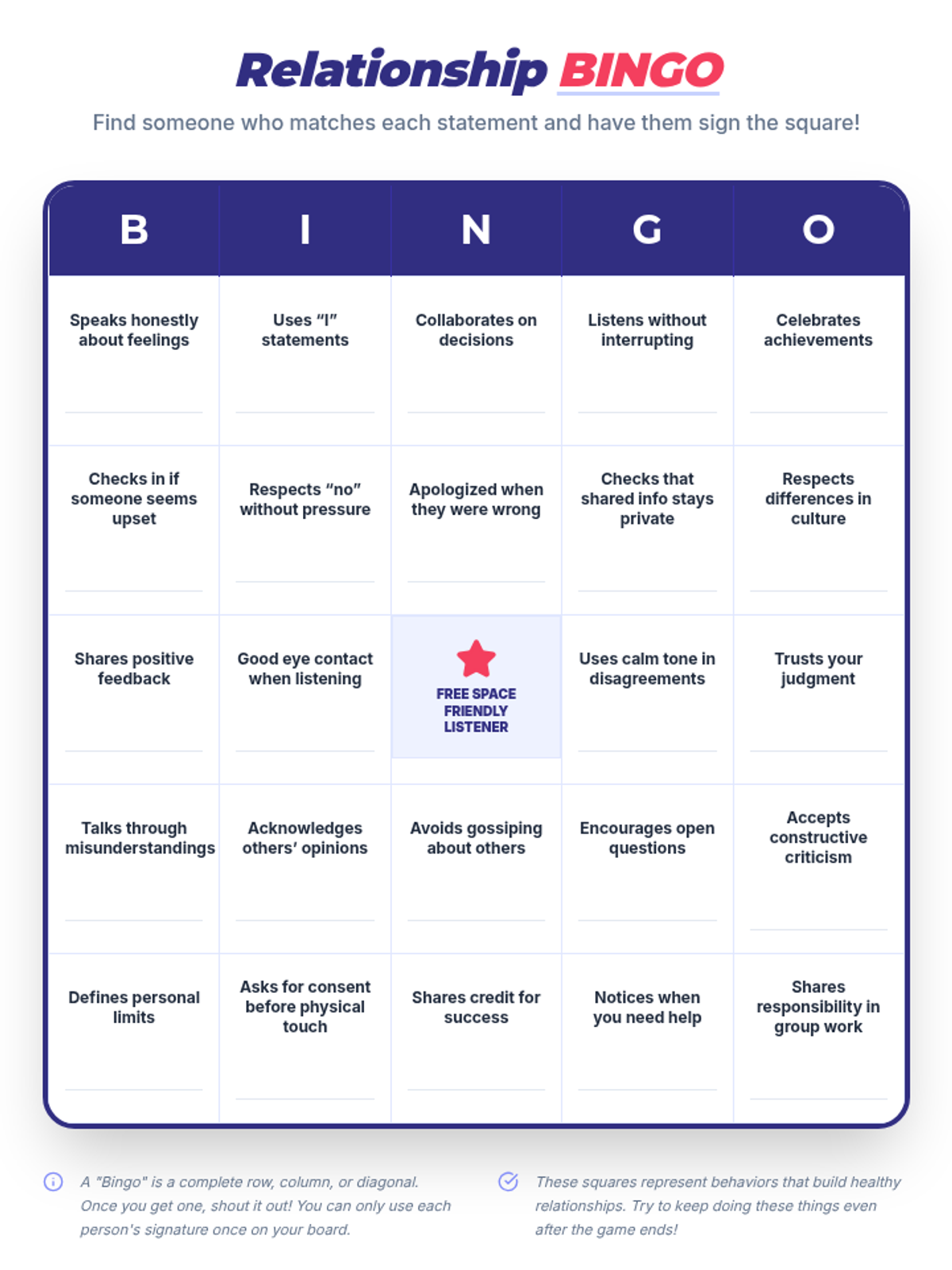
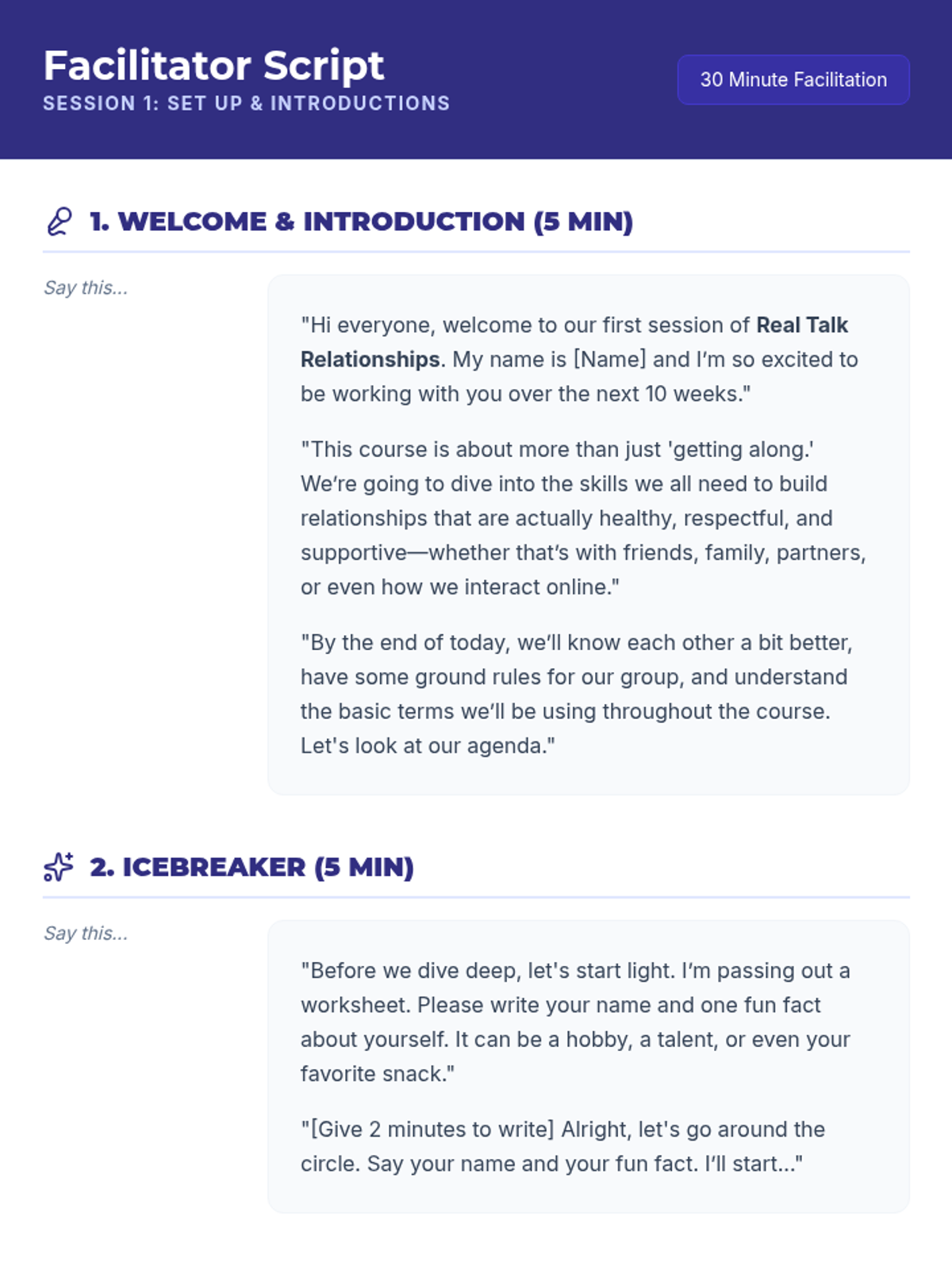
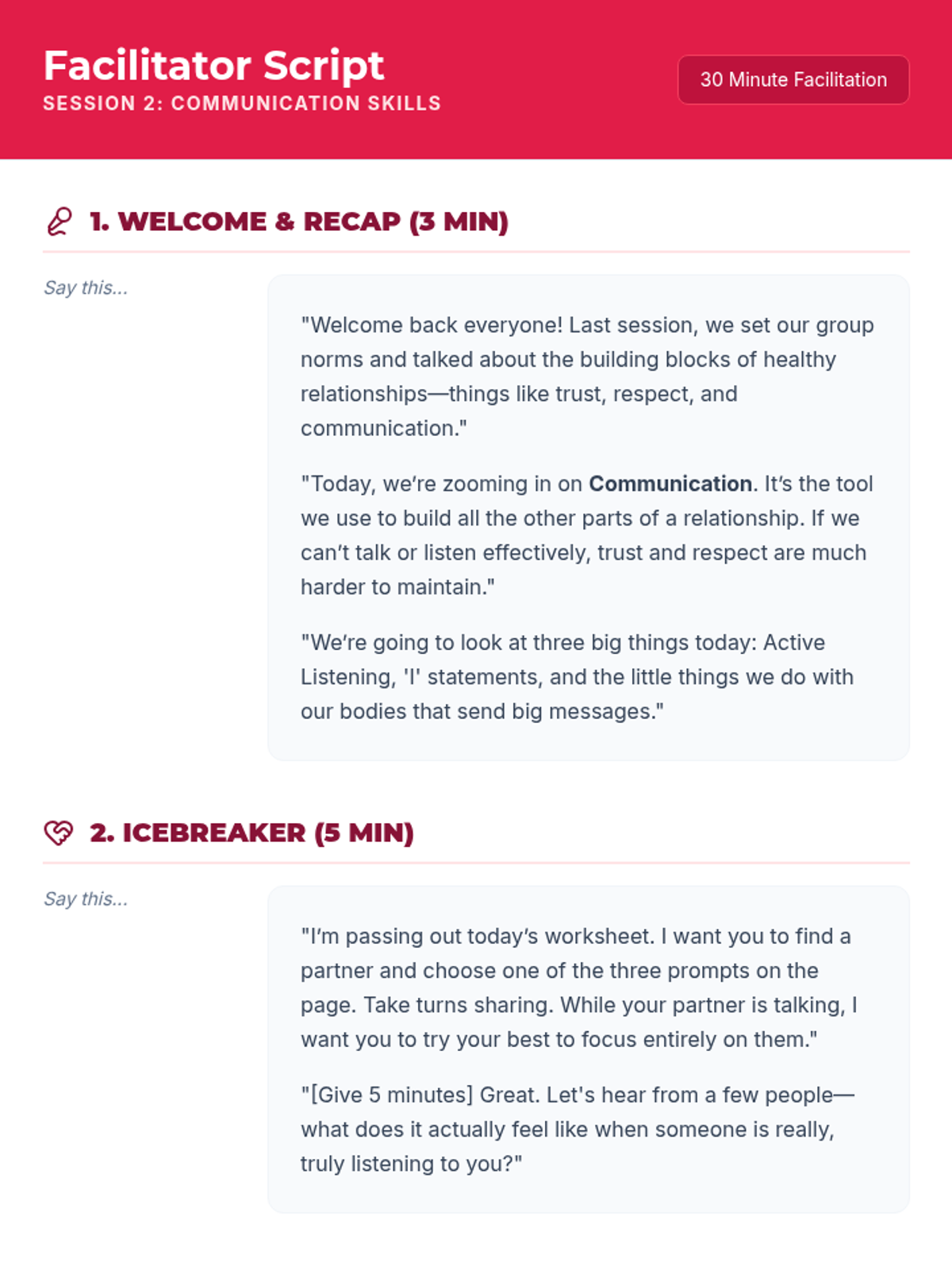
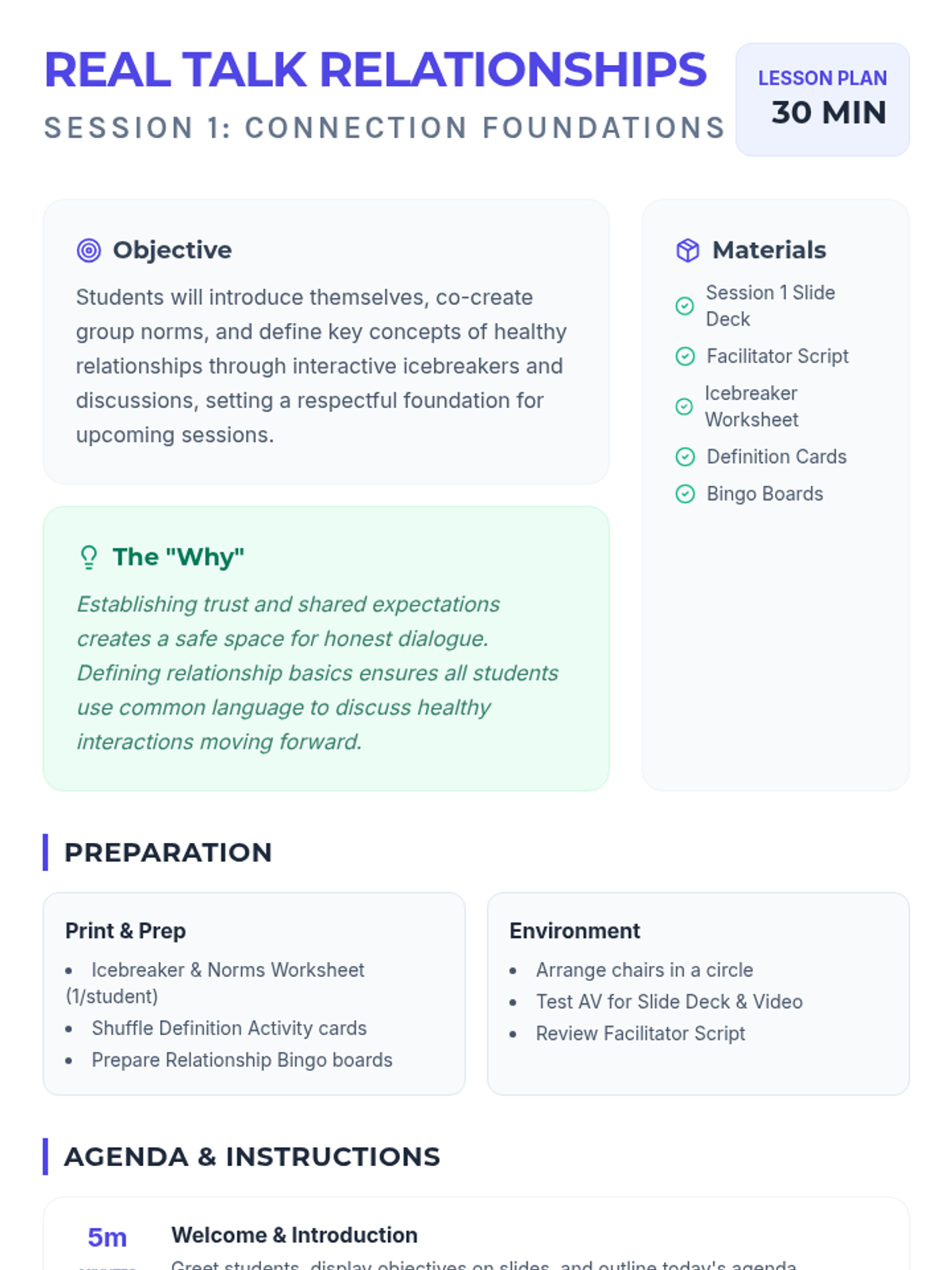
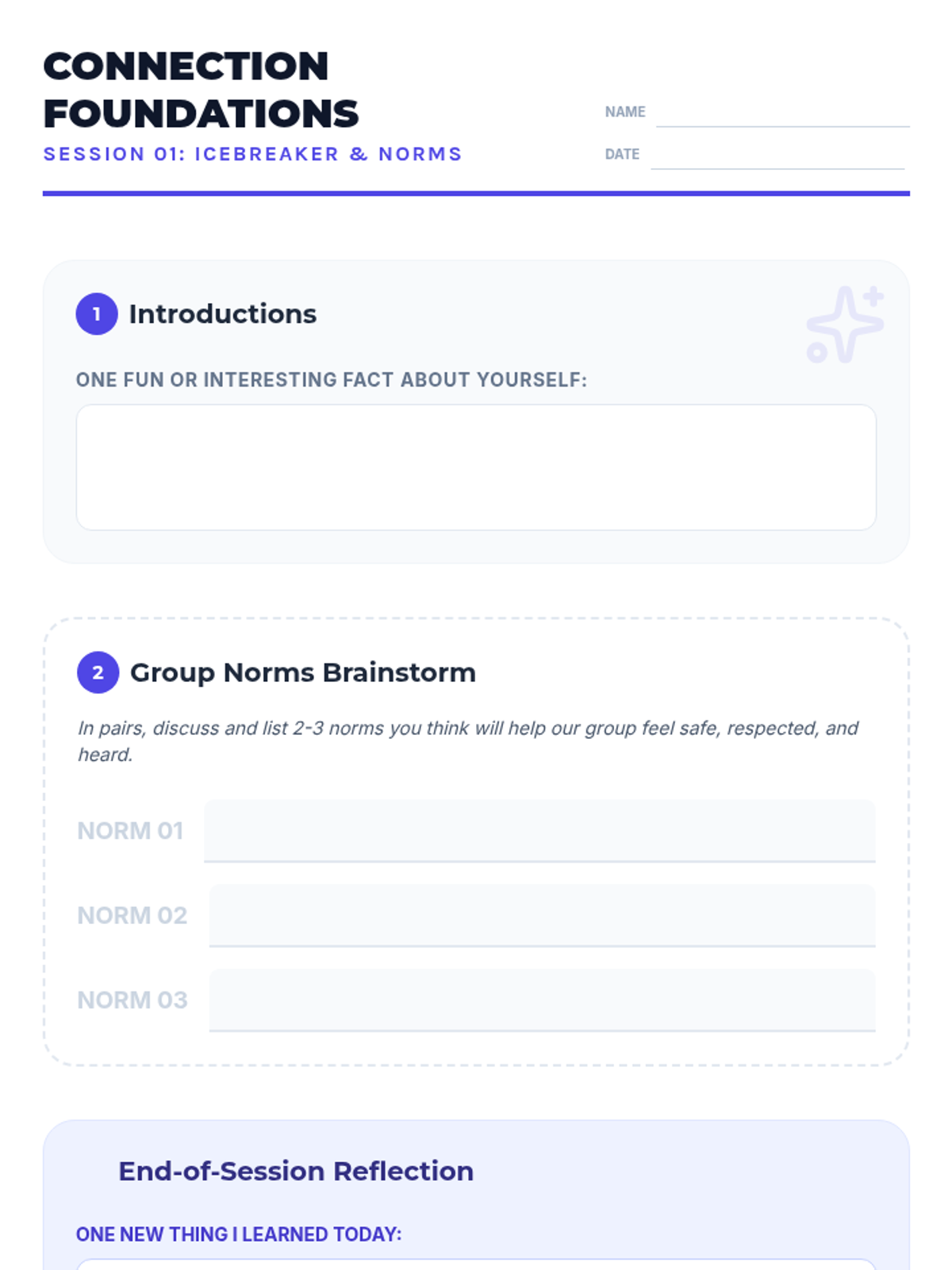
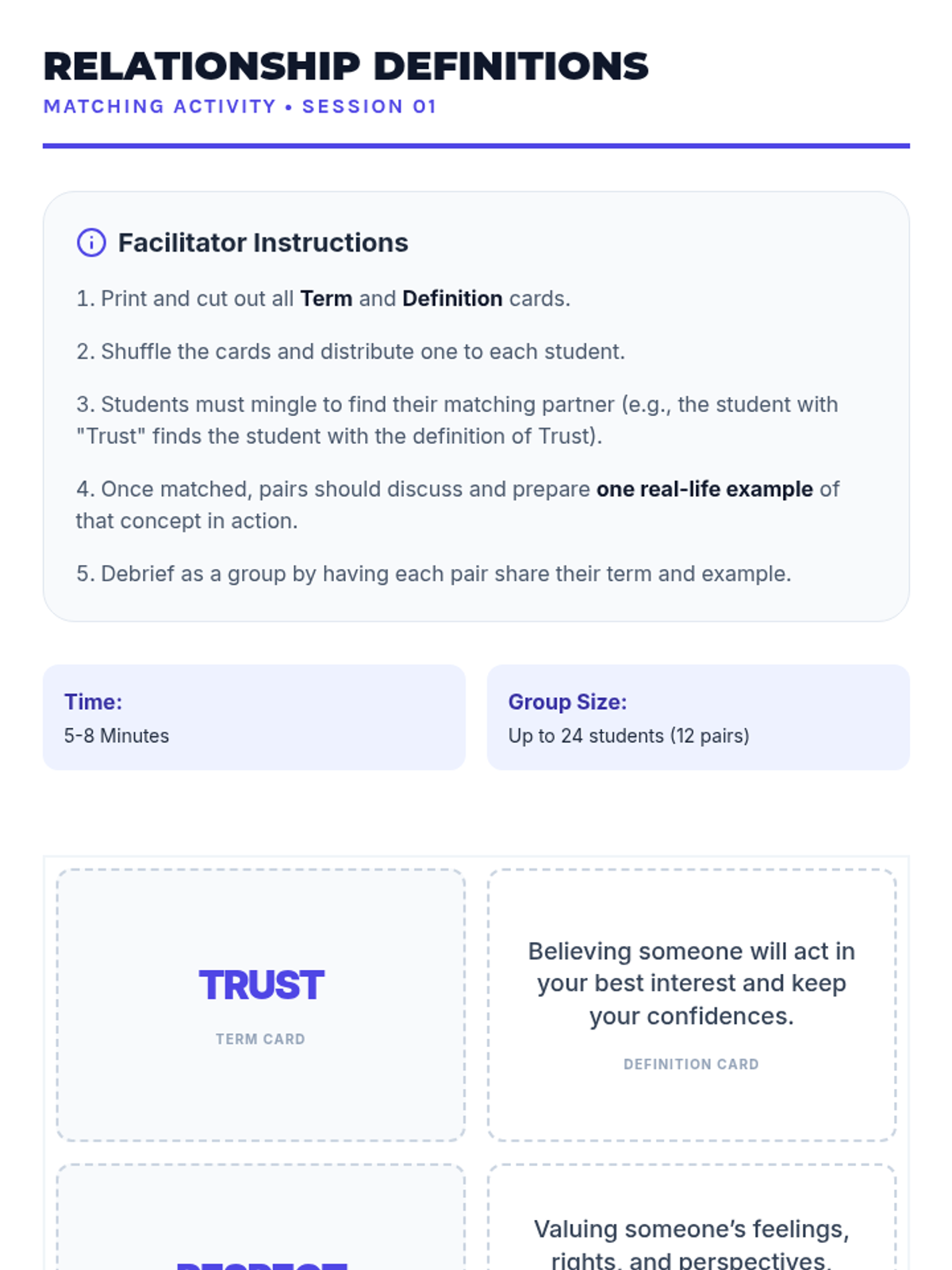
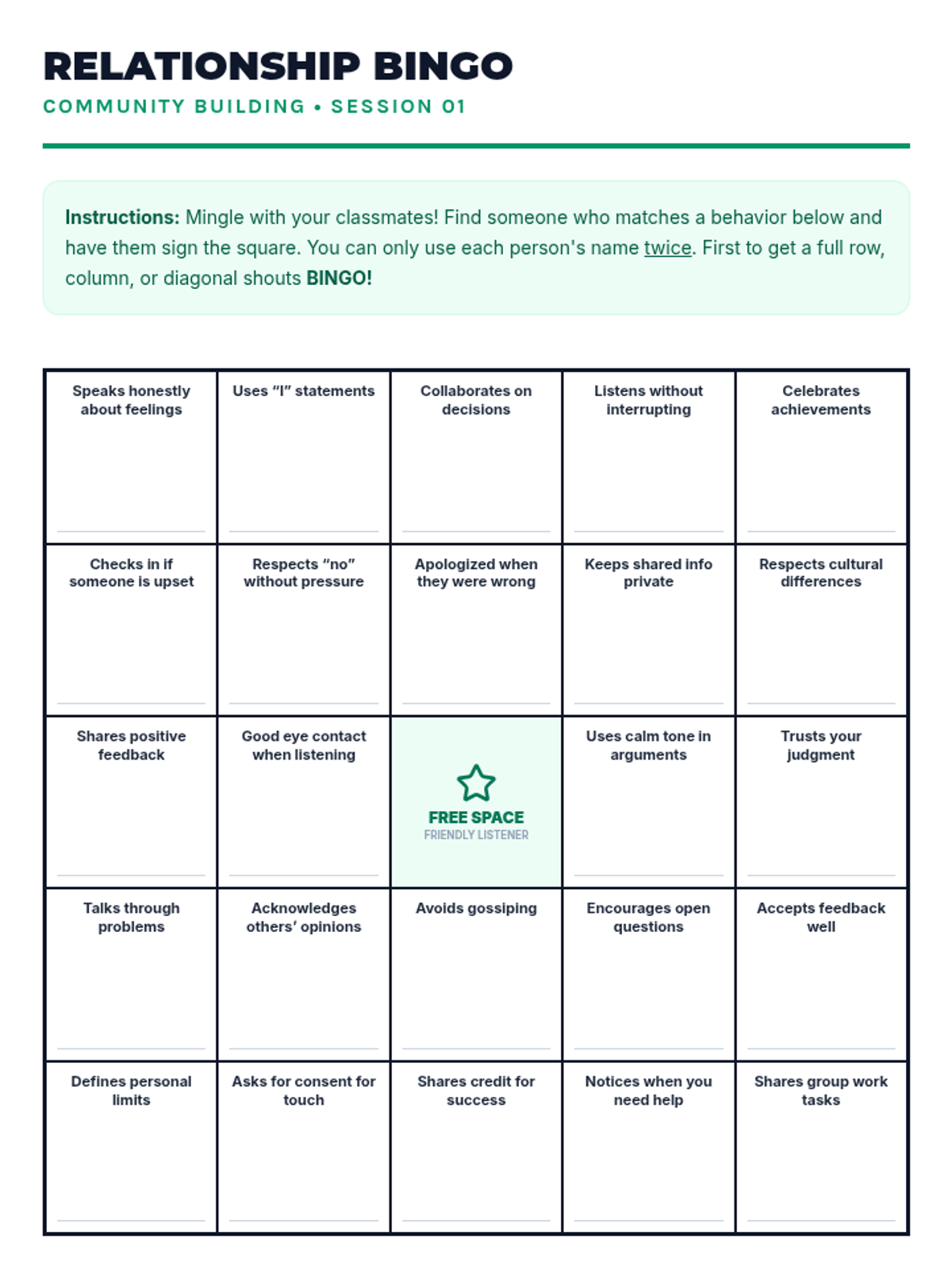
A 10-session course for high school students focused on developing healthy communication, boundaries, and empathy across romantic, platonic, and digital relationships. Students engage in interactive role-plays, games, and reflections to build practical social-emotional skills.
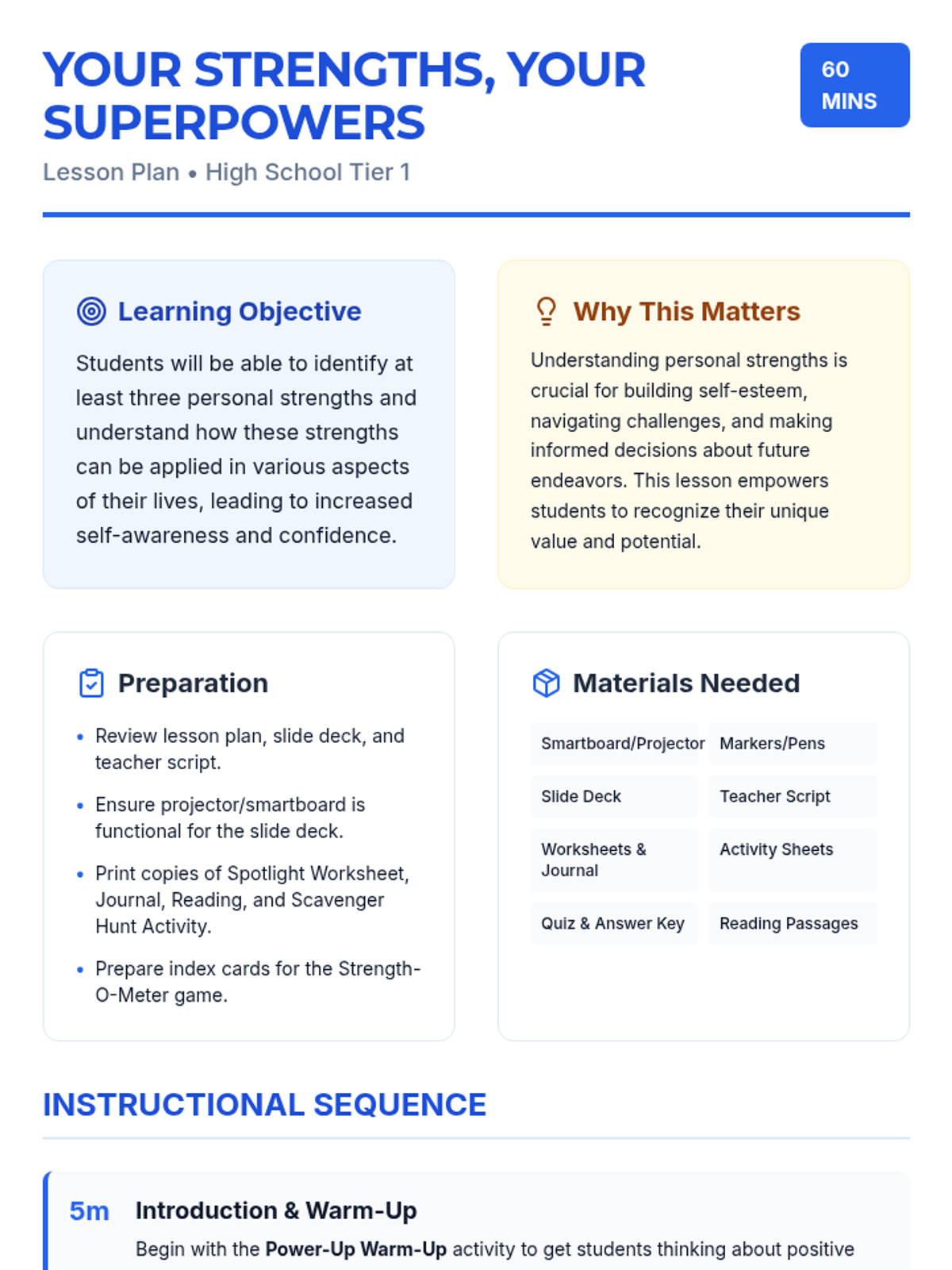
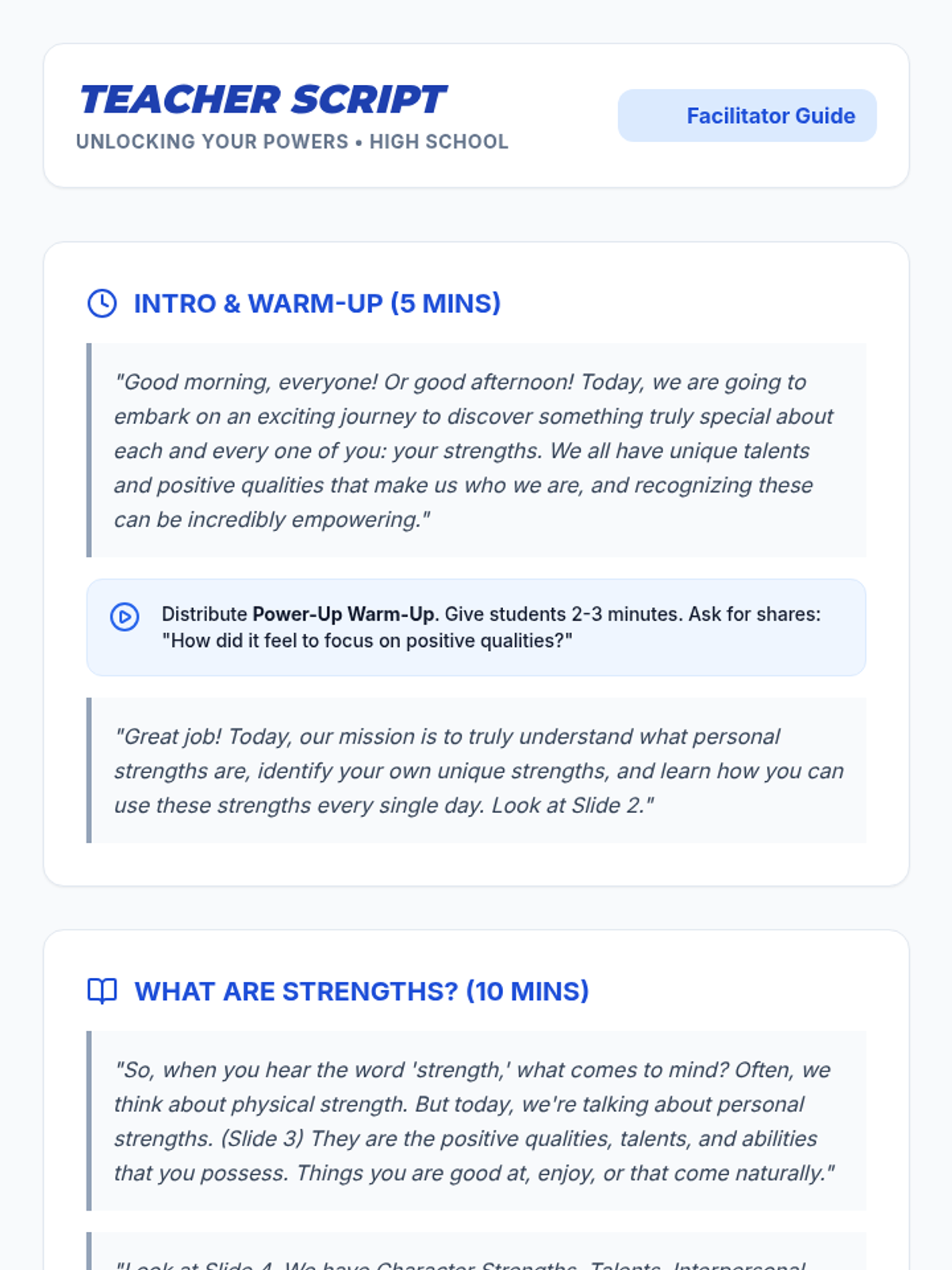
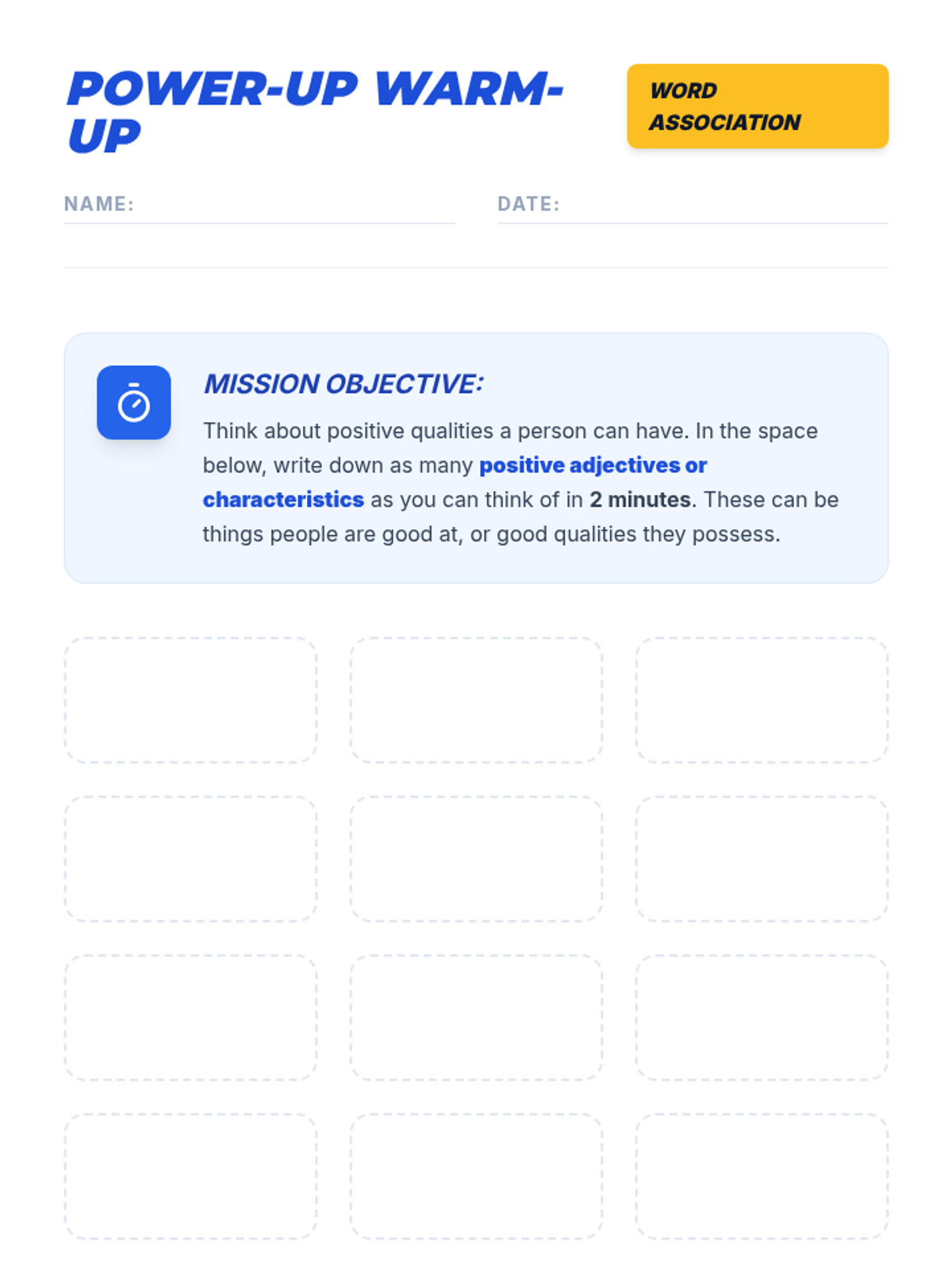
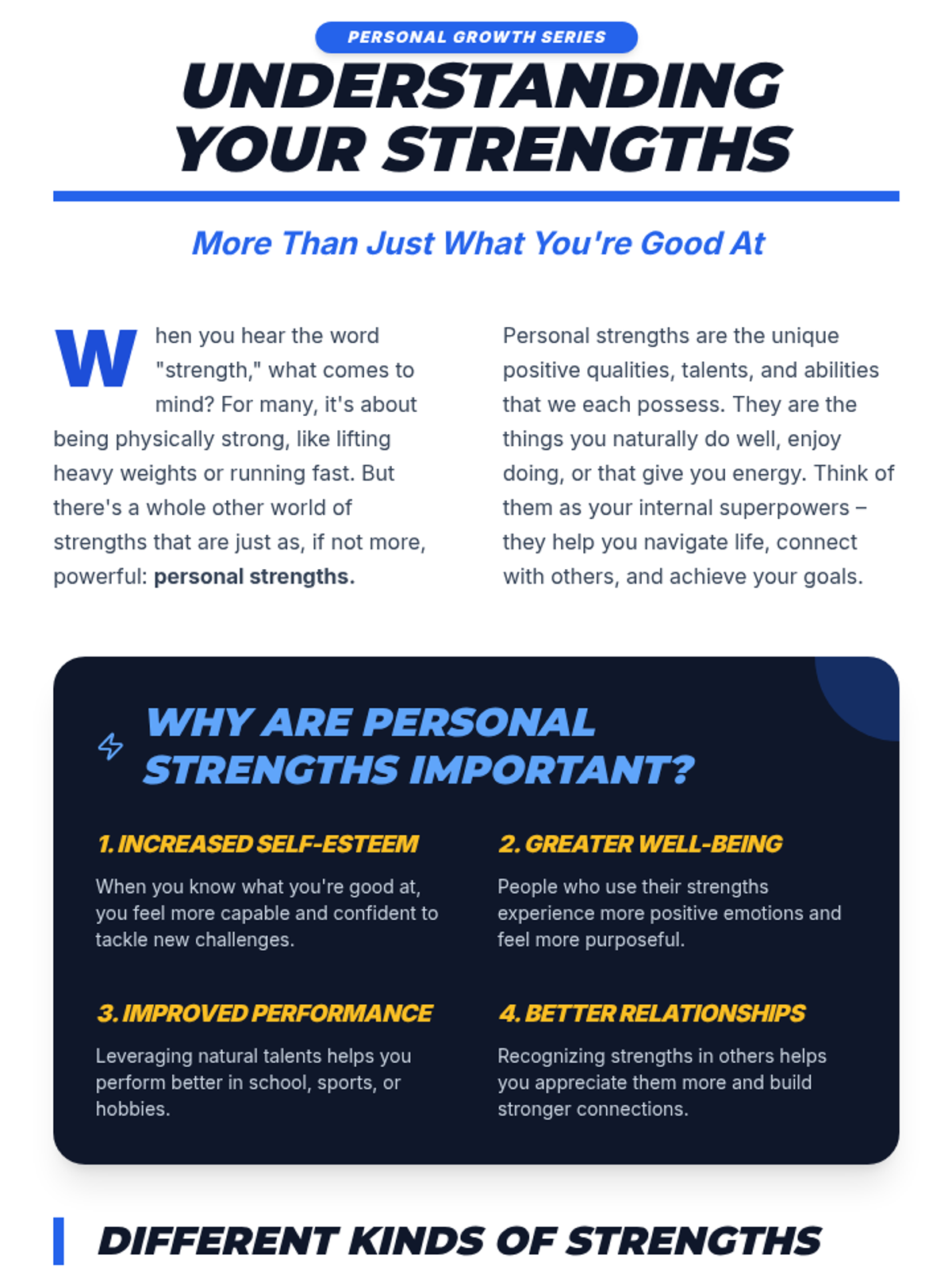
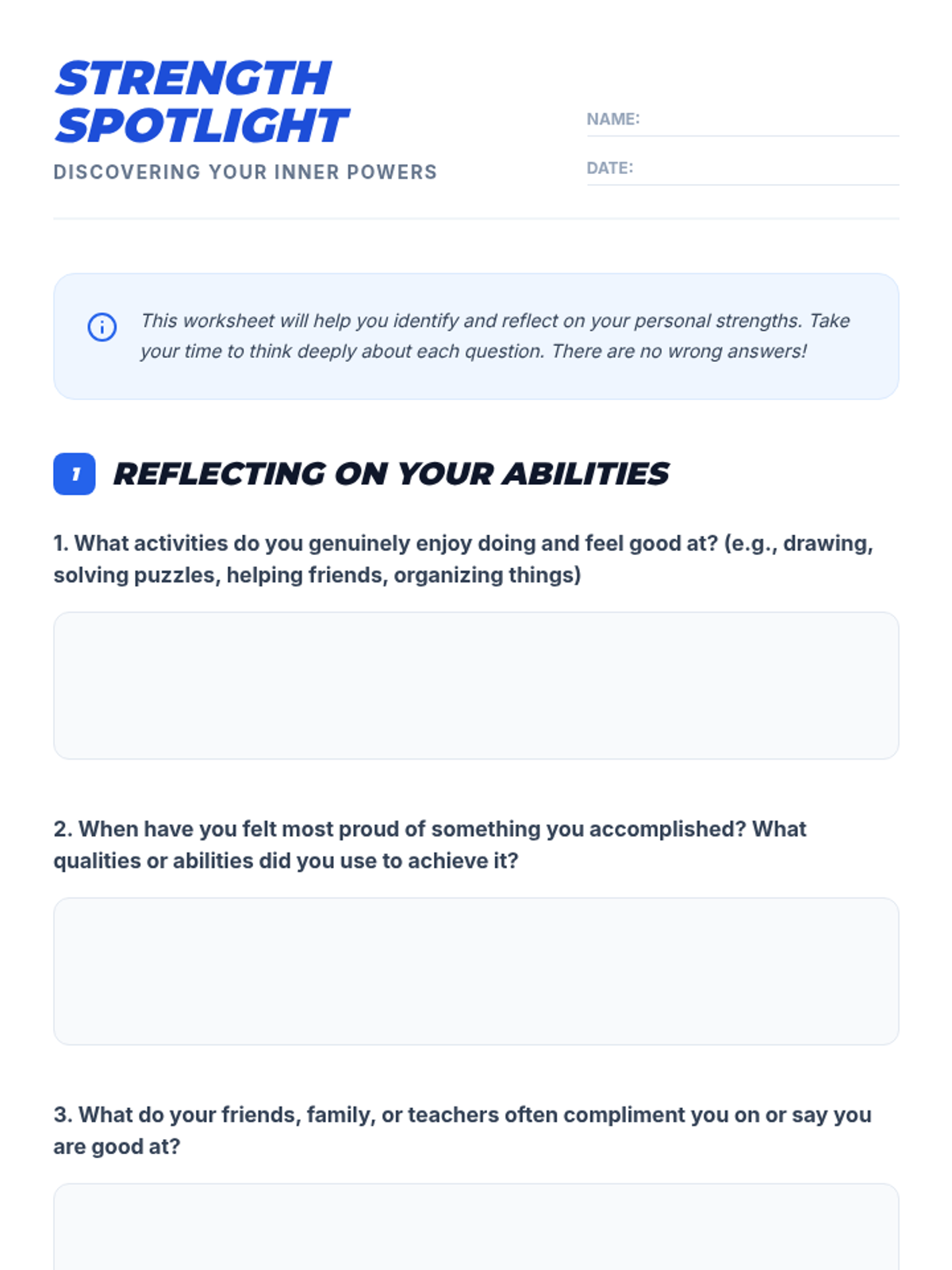
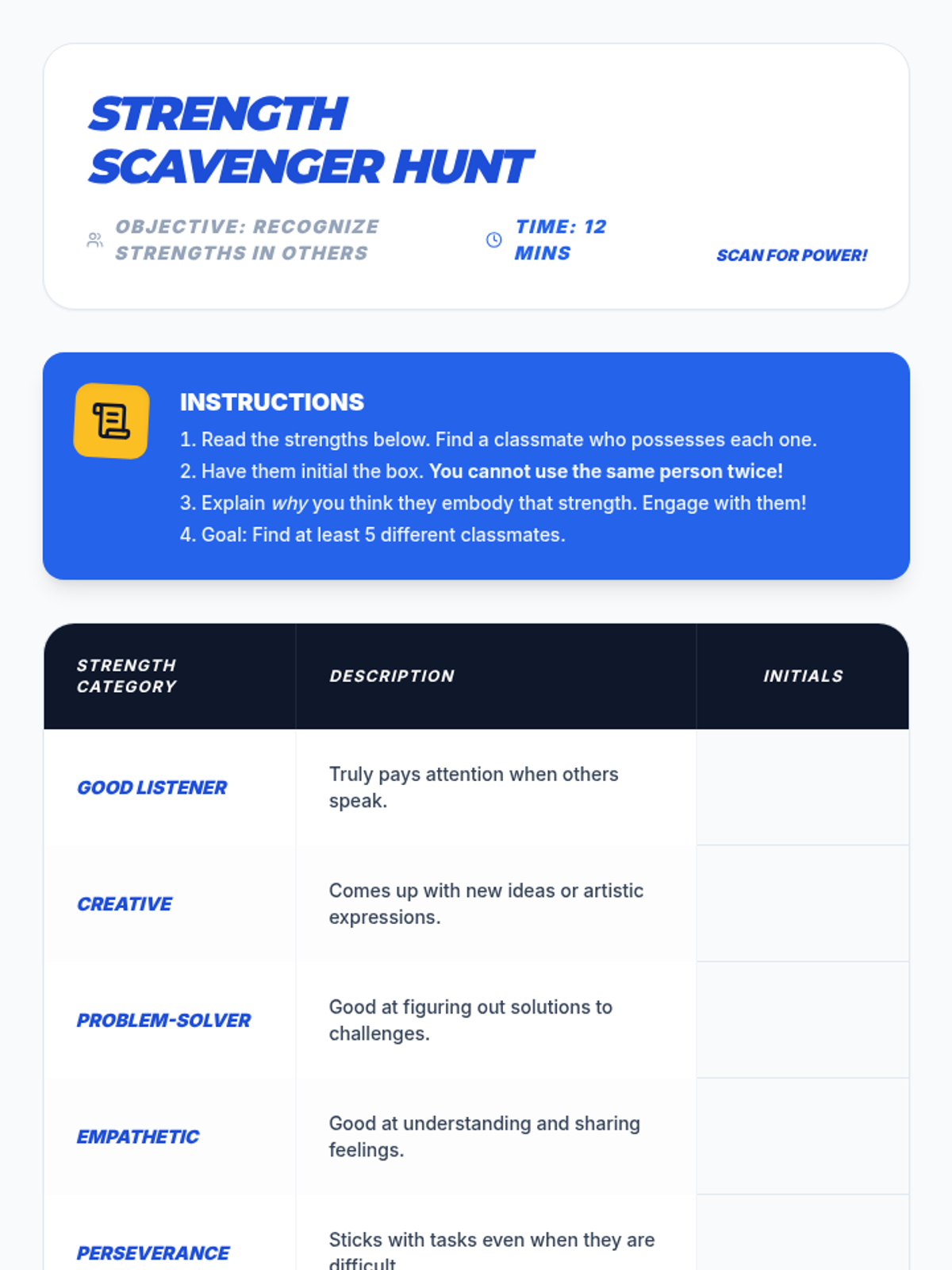
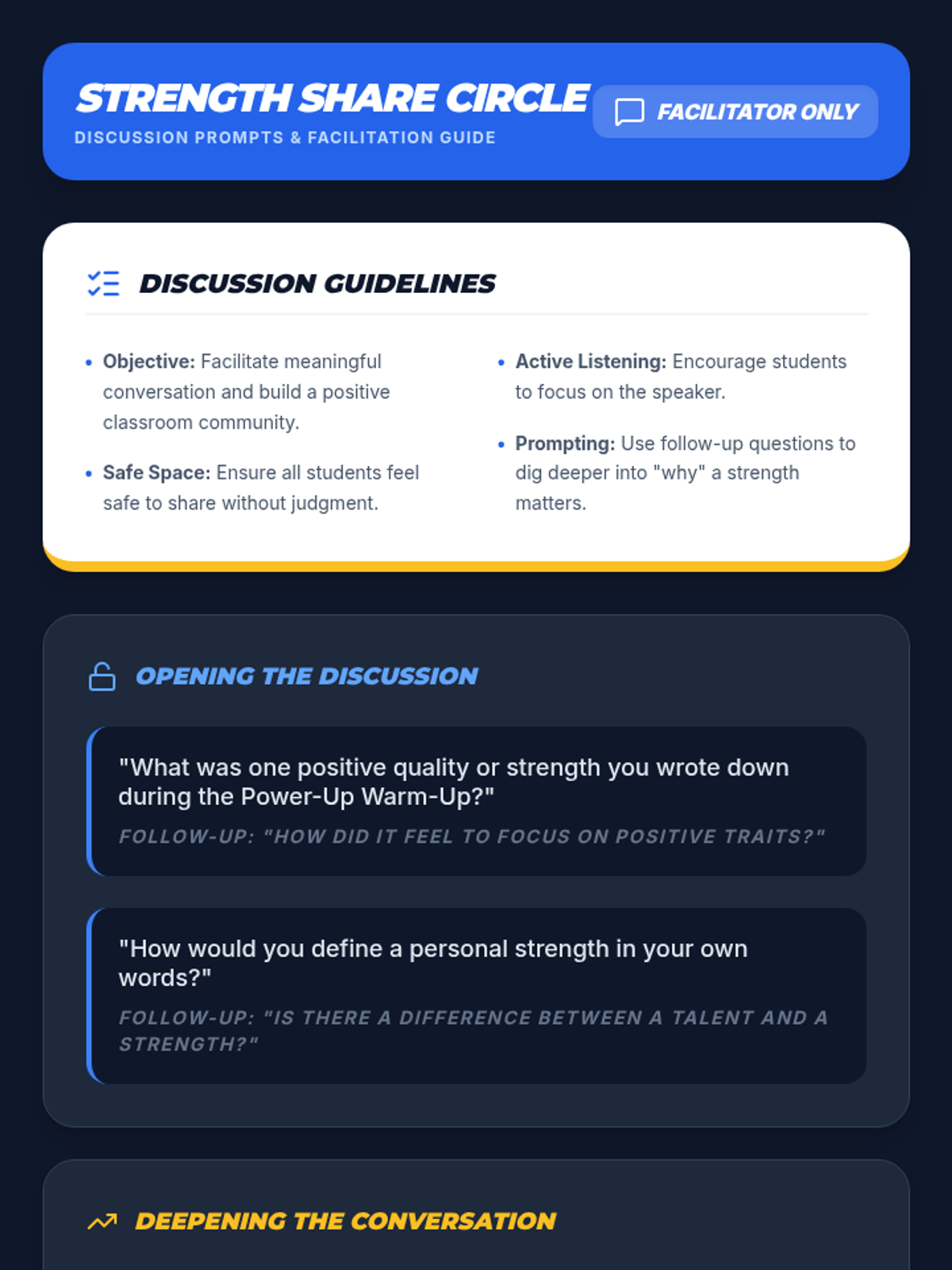
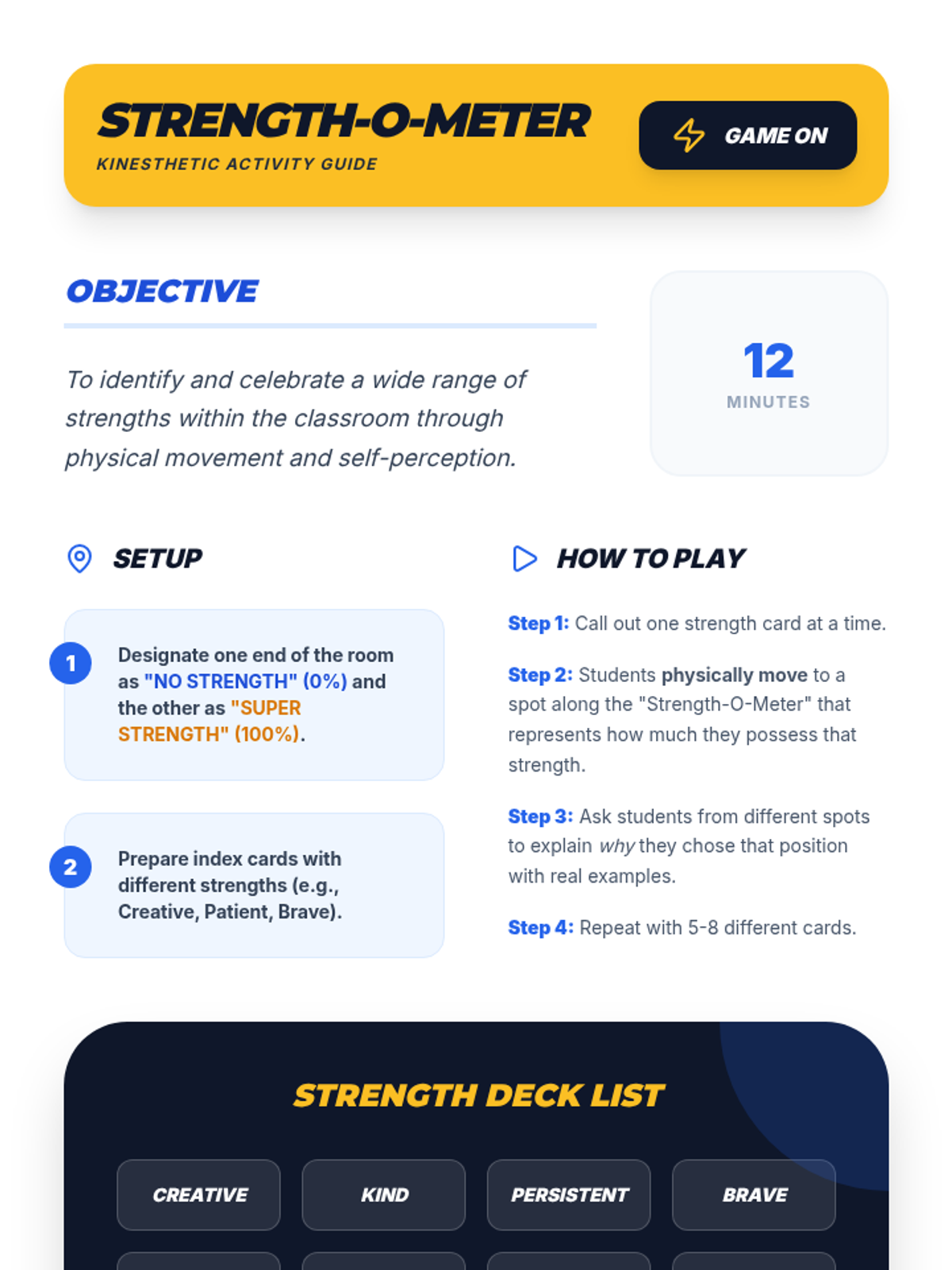
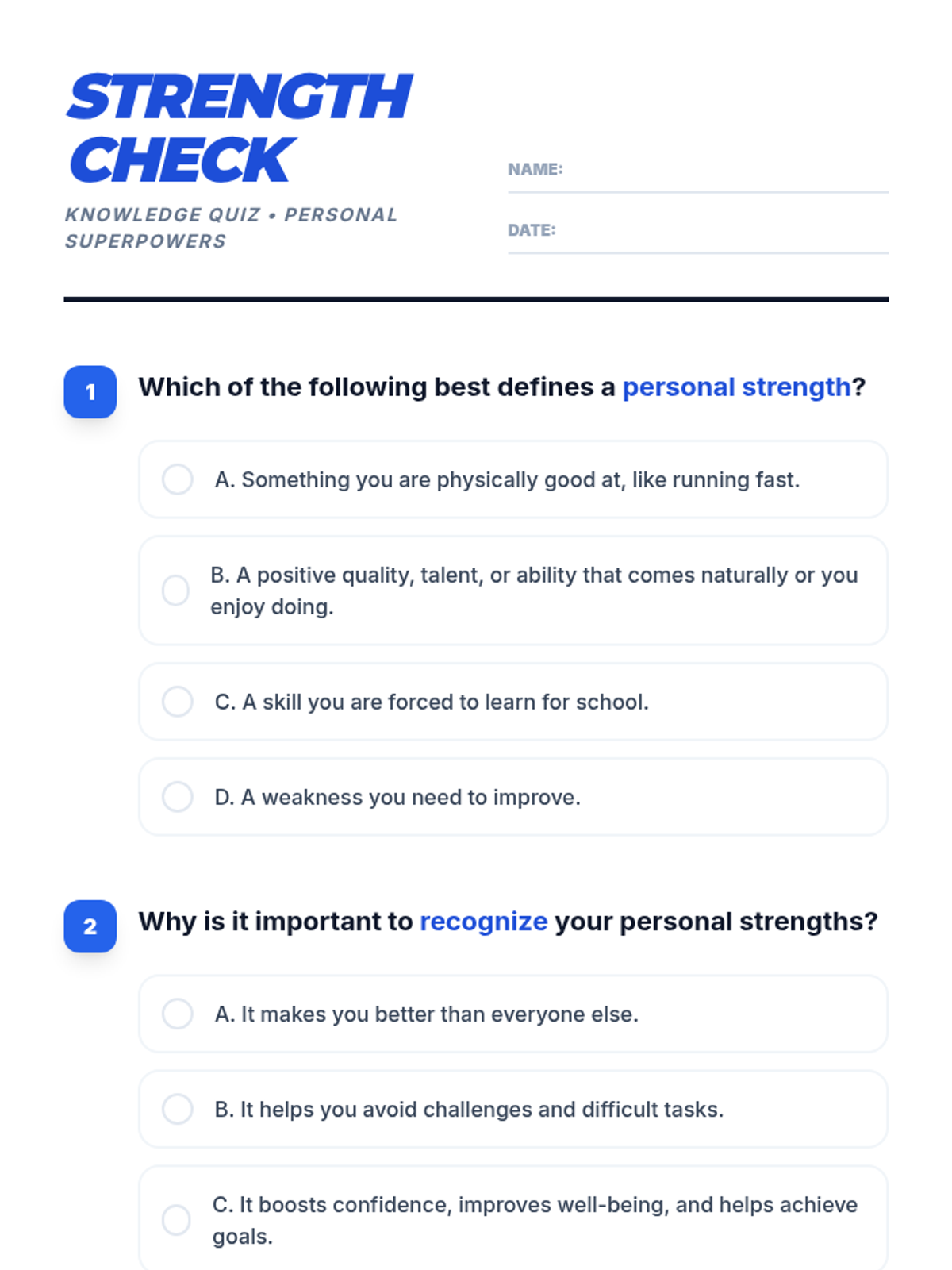
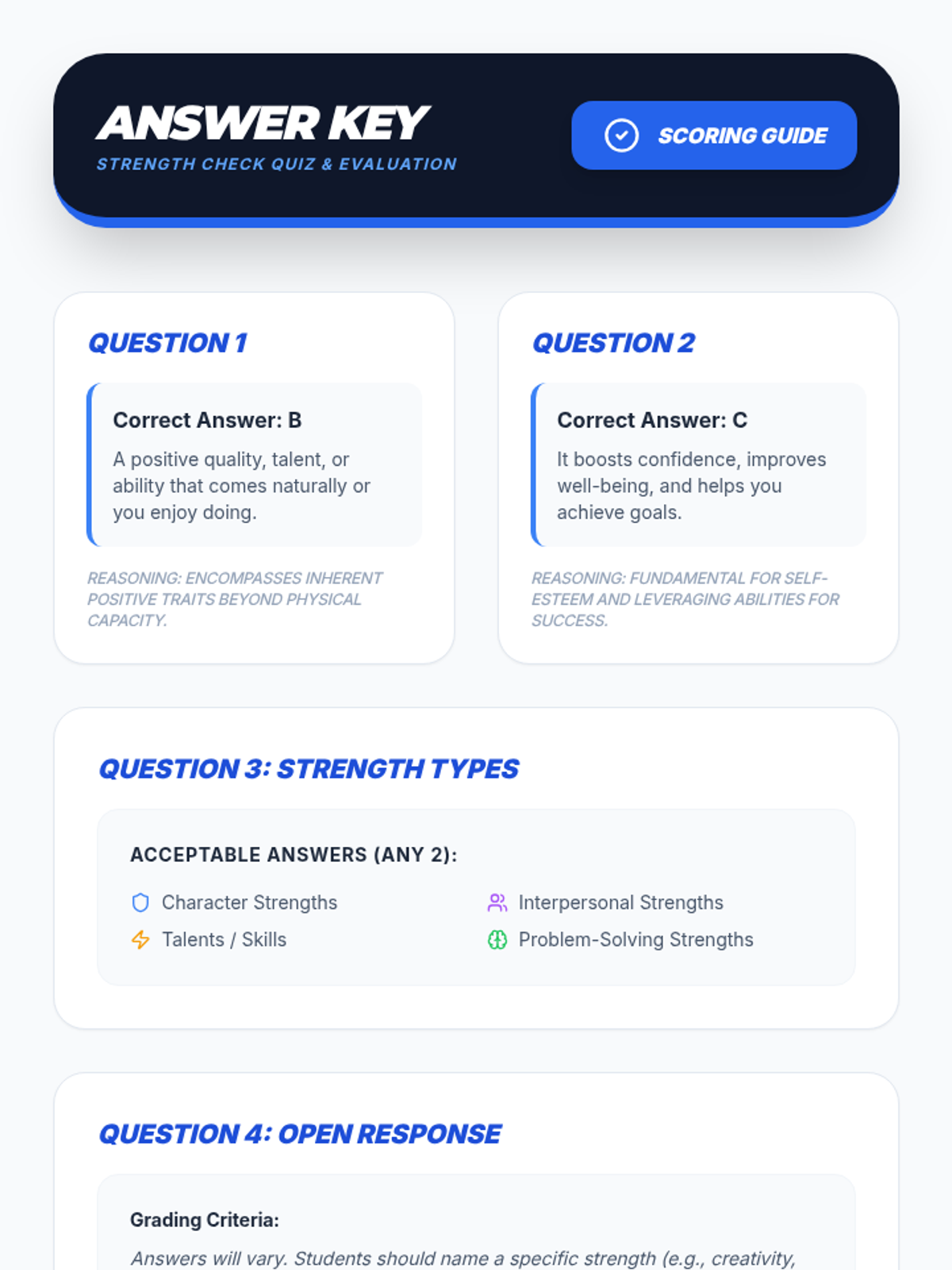
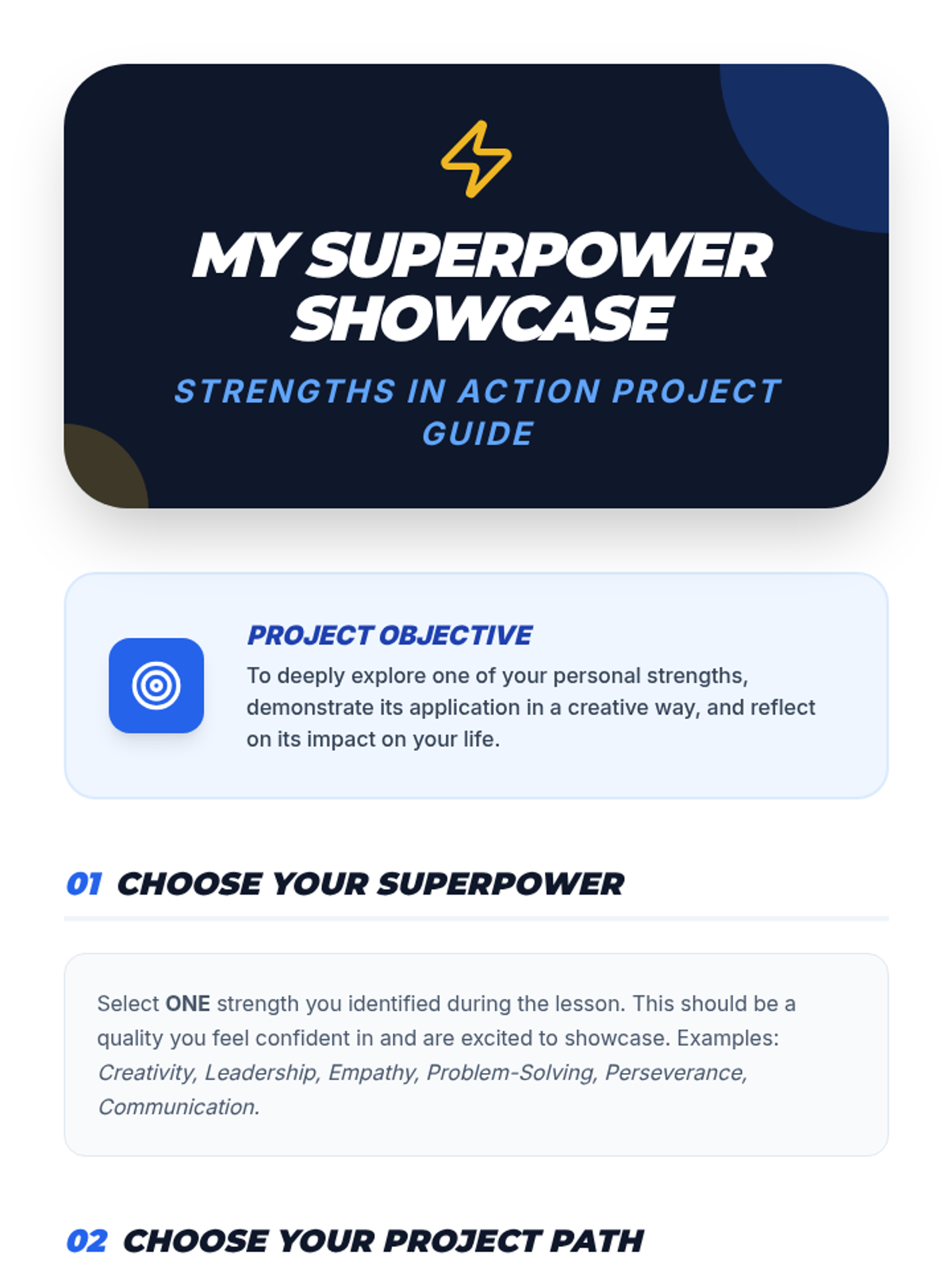
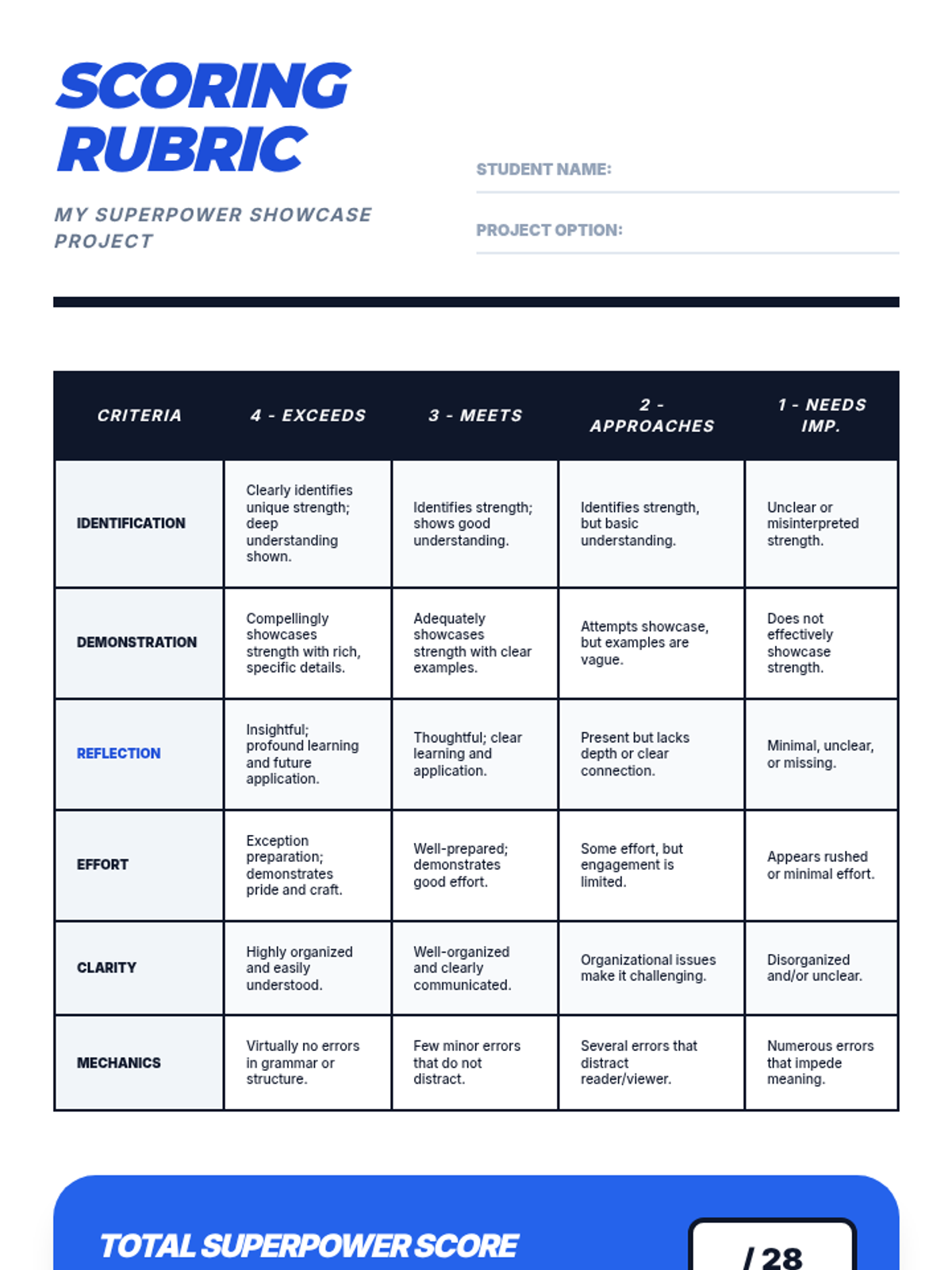
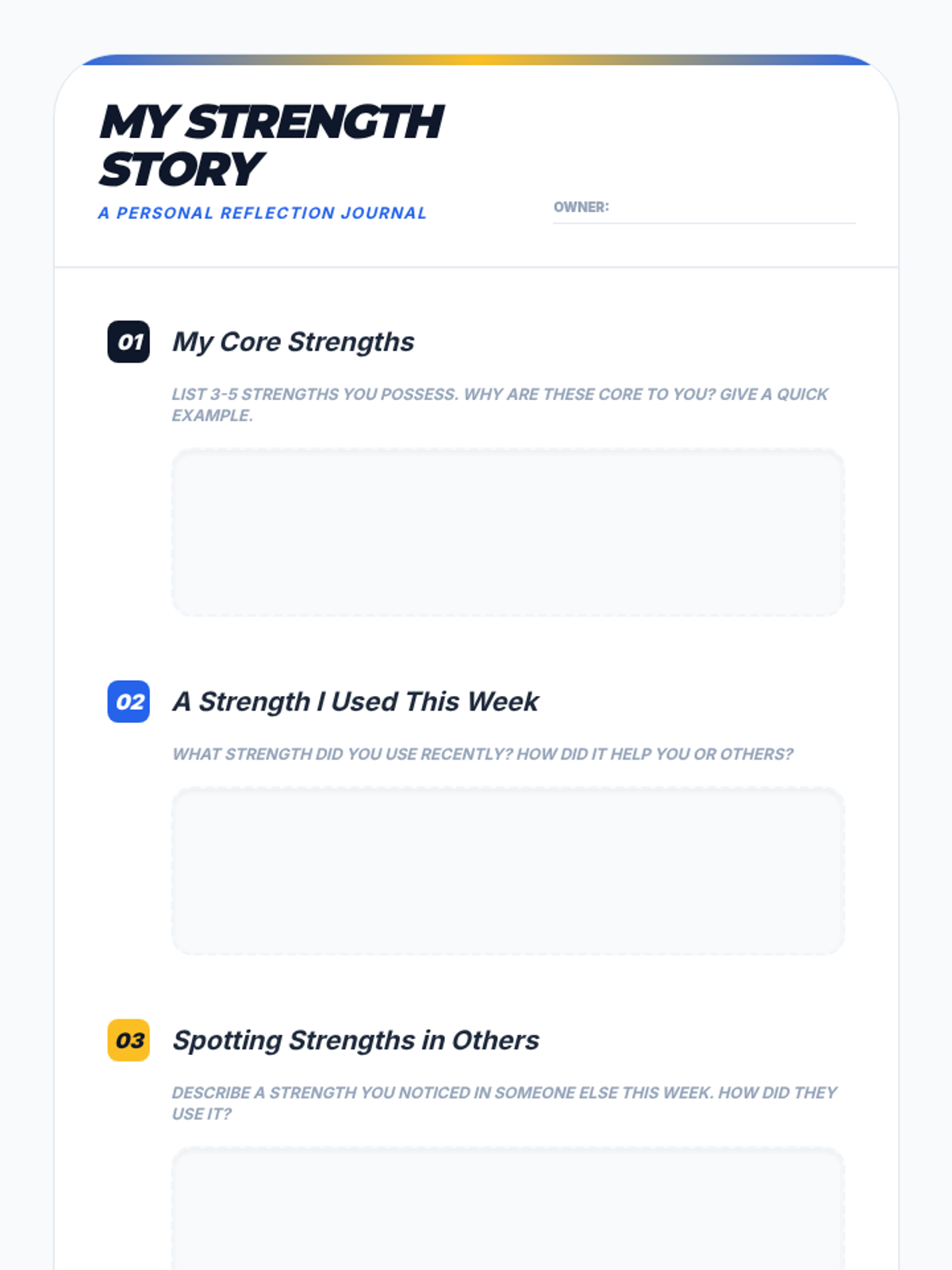
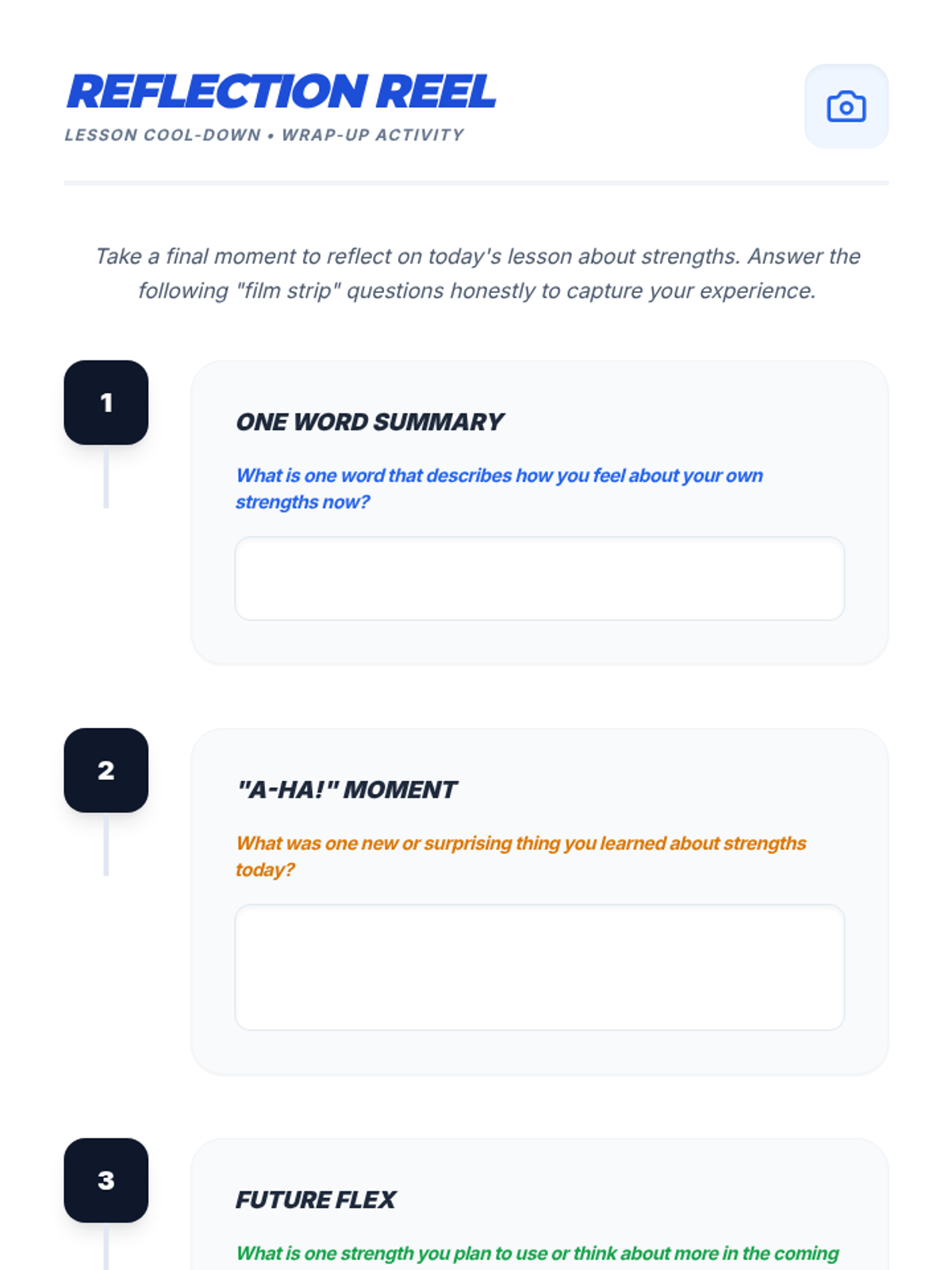
A comprehensive two-part sequence designed for high school students to identify, understand, and leverage their personal strengths. Through interactive activities, self-reflection, and collaborative discussion, students discover their 'inner superpowers' to boost confidence and academic success.
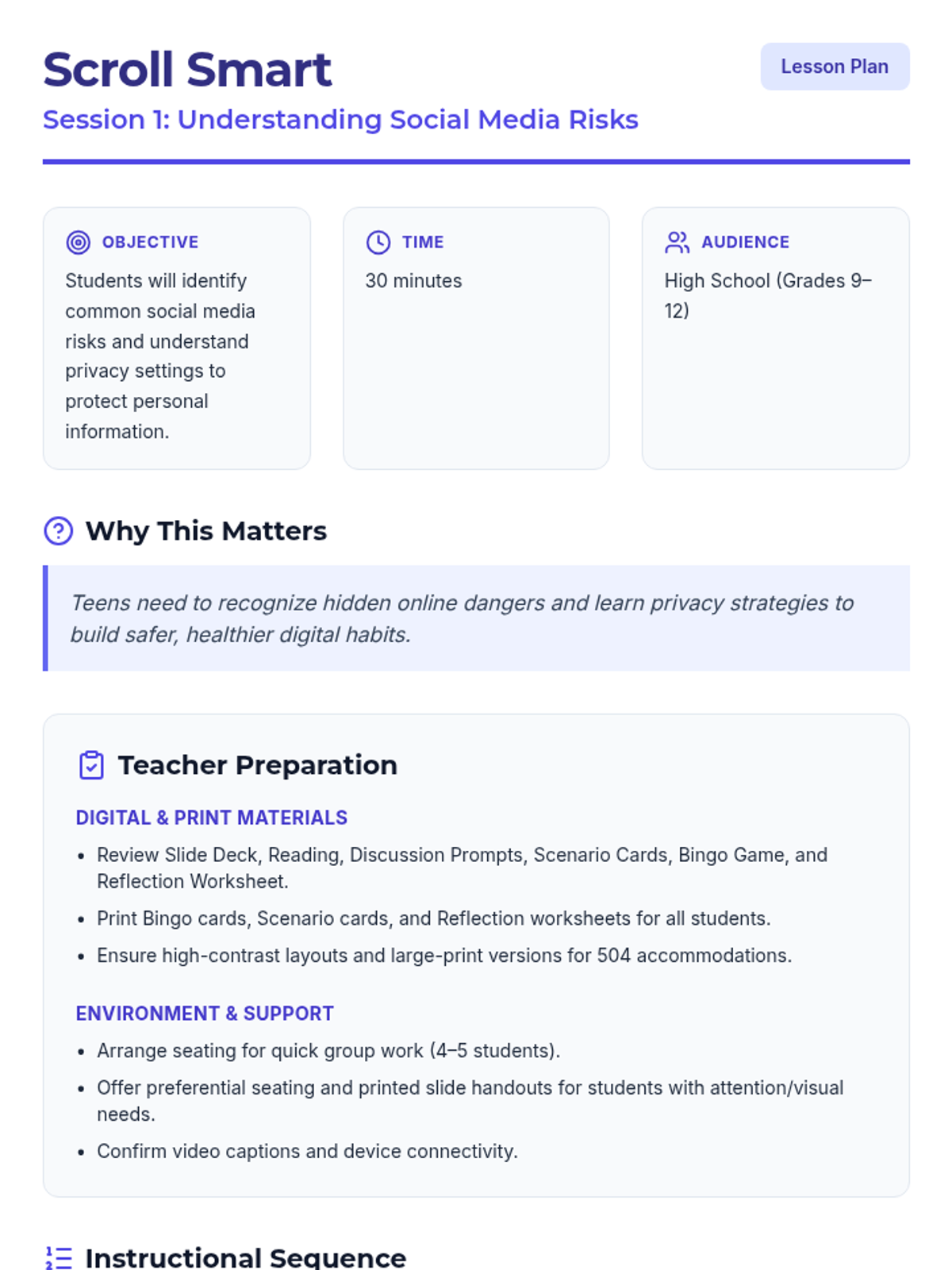
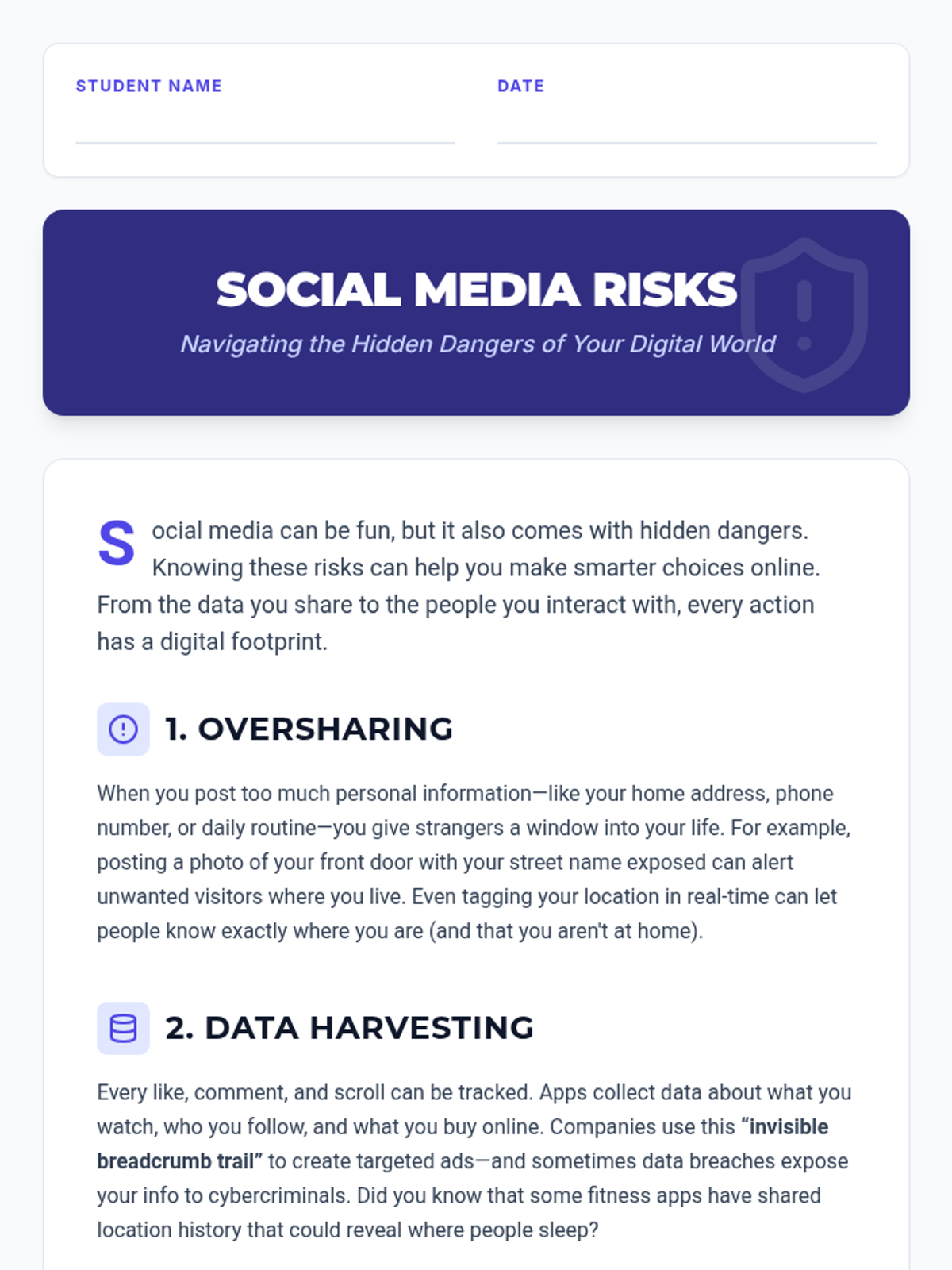
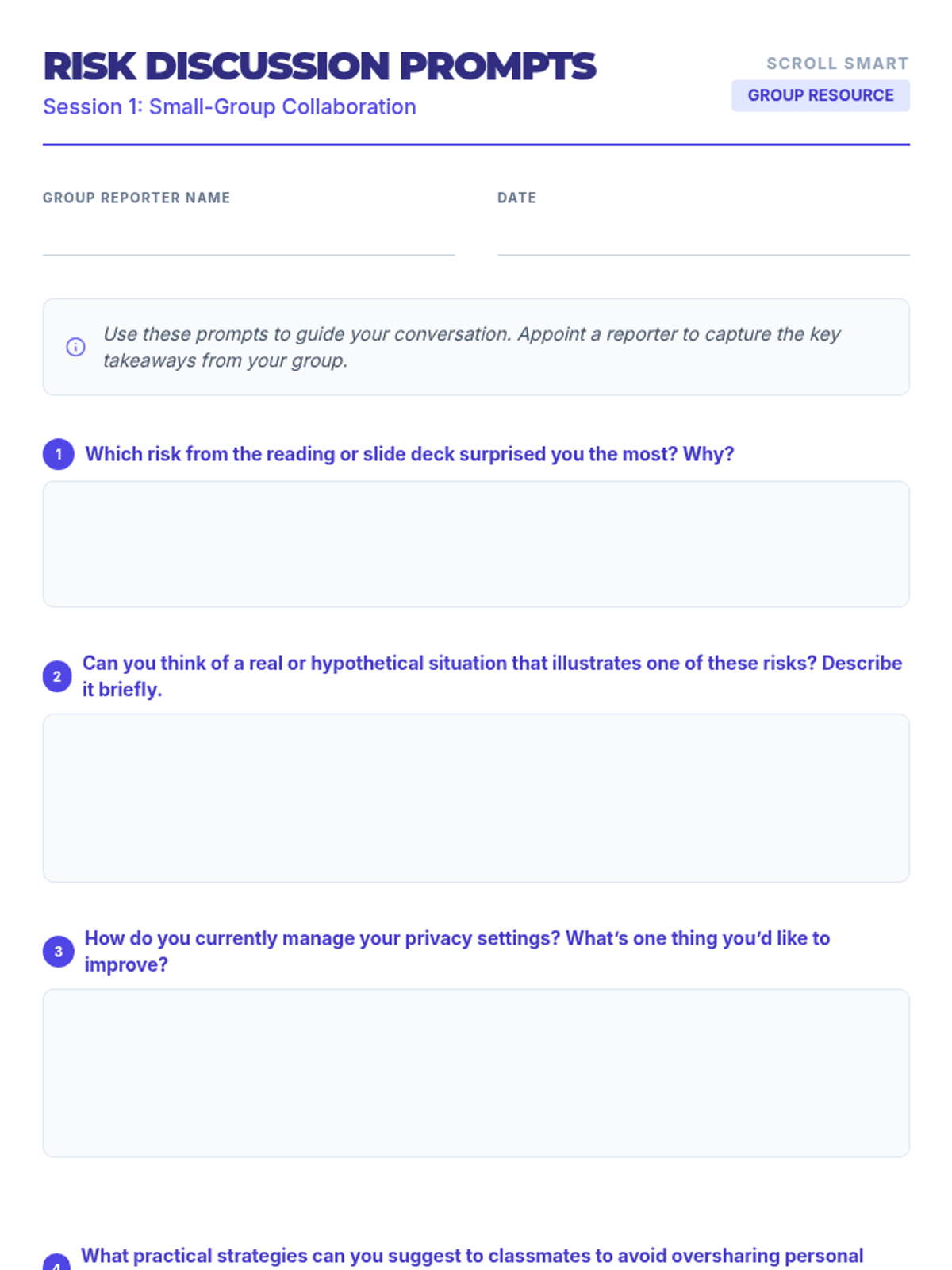
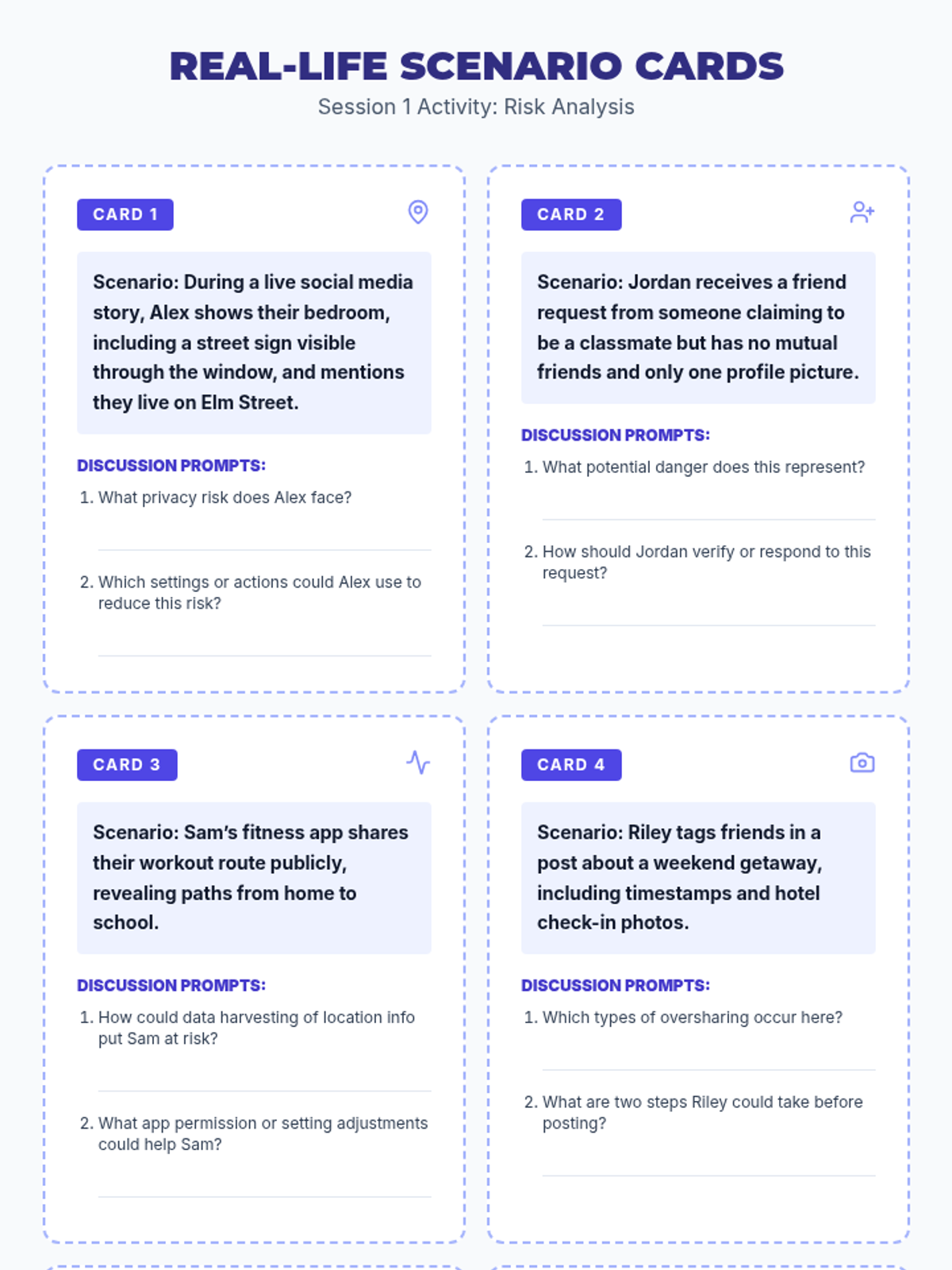
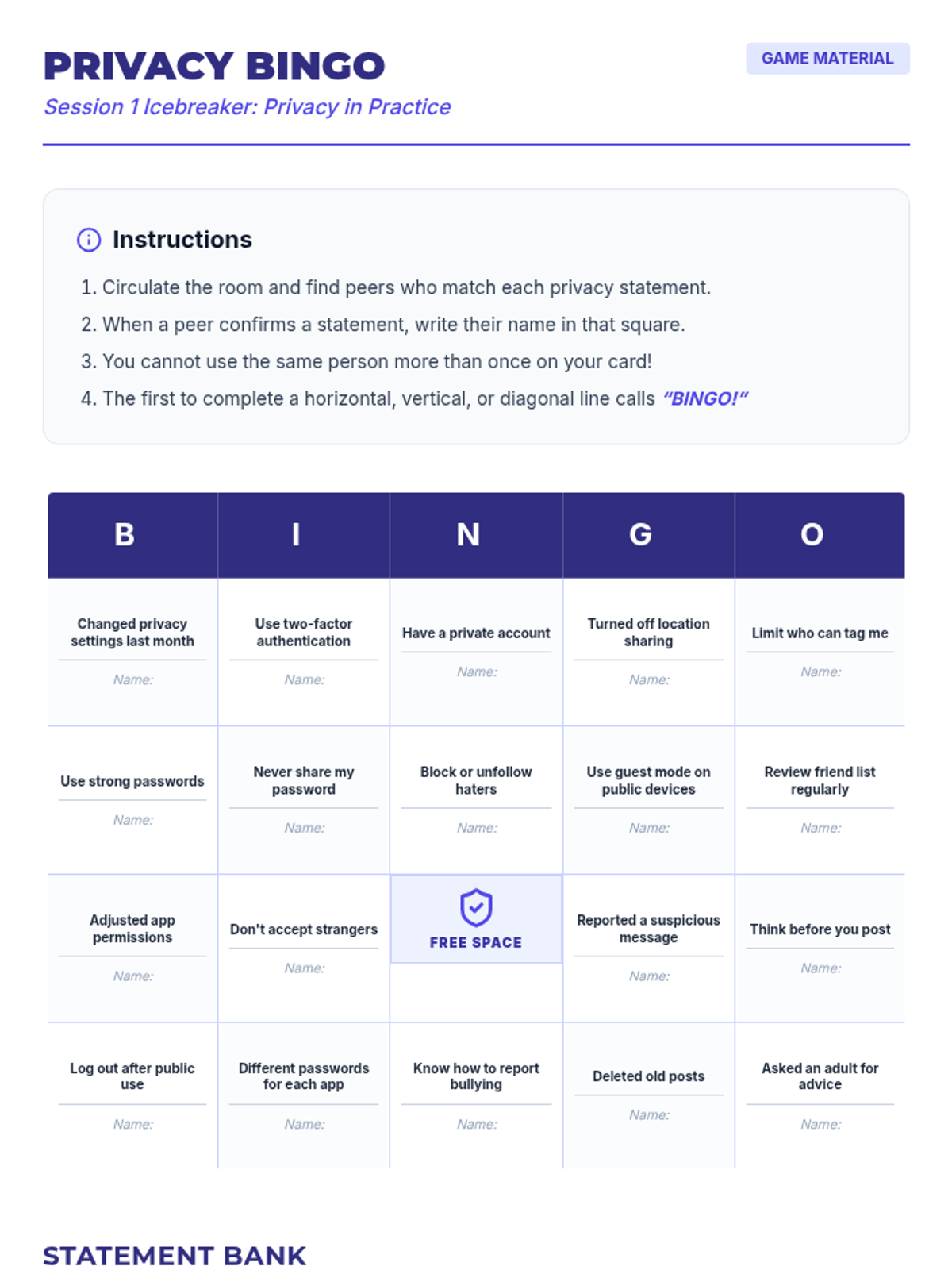
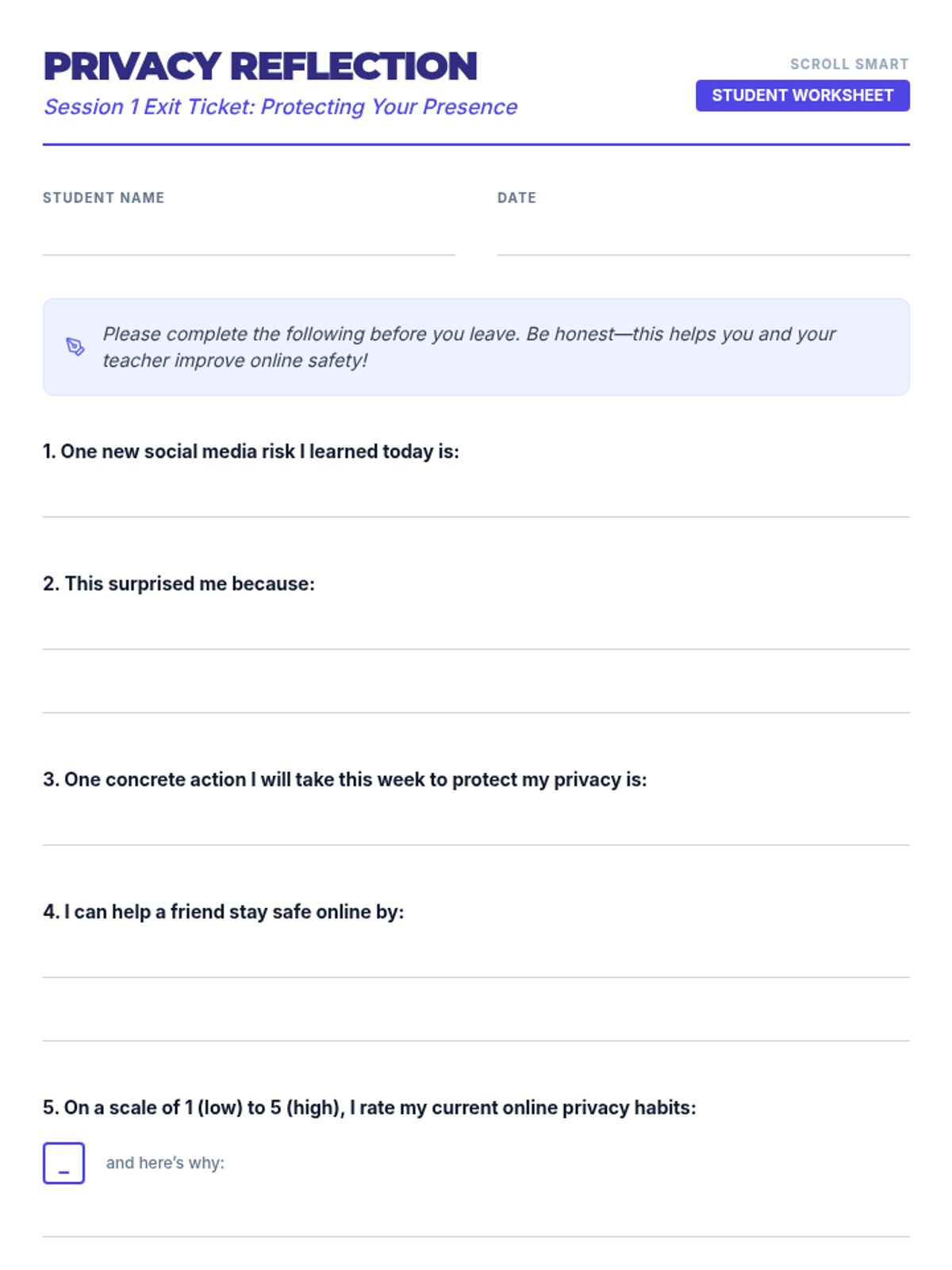
A two-session lesson sequence for high school students focused on recognizing social media risks, protecting privacy, and fostering positive digital communities through interactive games, scenarios, and reflections.
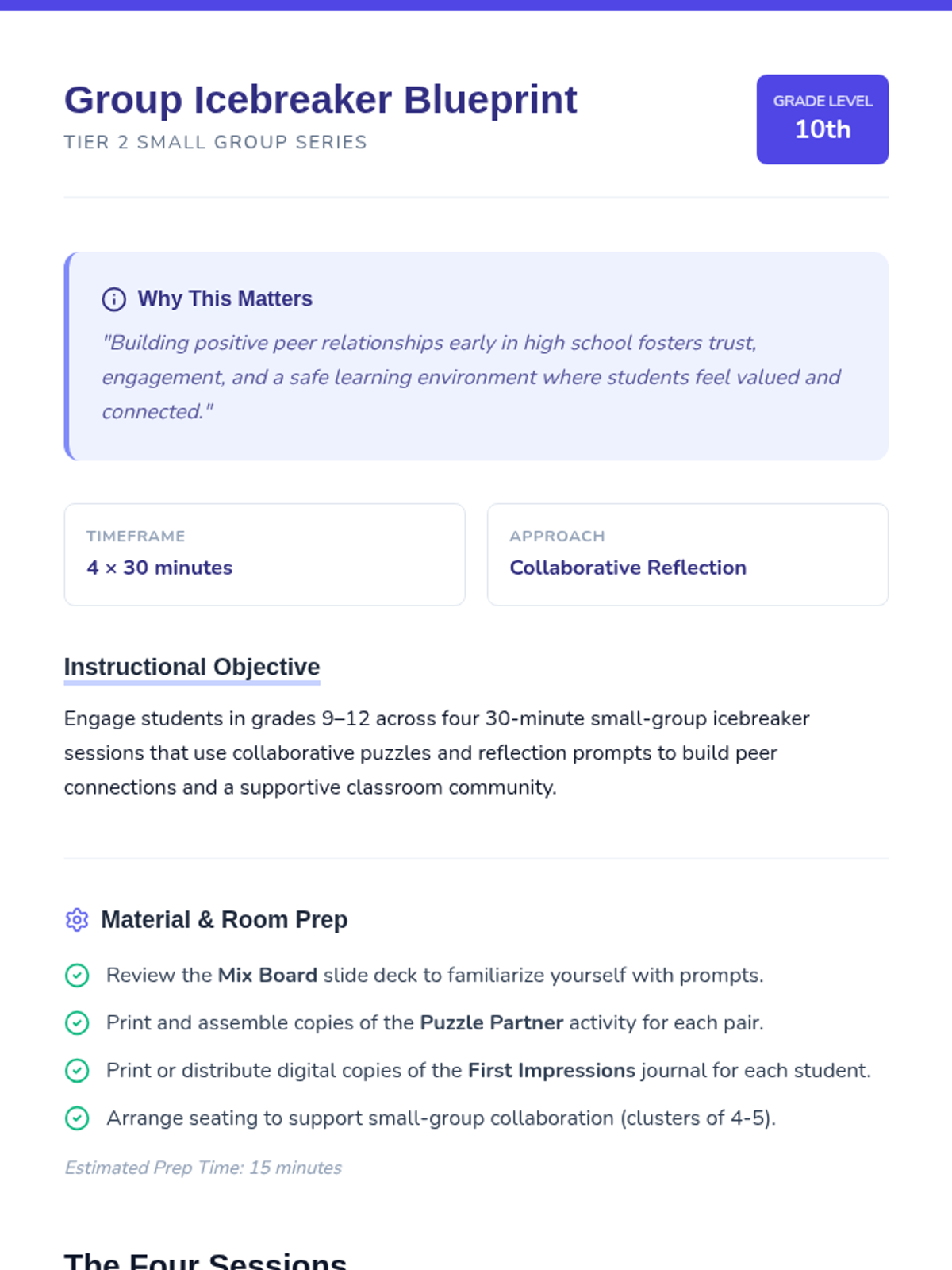
A four-session Tier 2 small group sequence designed to foster peer connections through collaborative puzzles and structured reflection. 10th grade students build social skills and classroom community through shared activities and deep conversation.
A four-part series of 30-minute small-group sessions designed to build trust and community among high school students through collaborative puzzles and reflection.
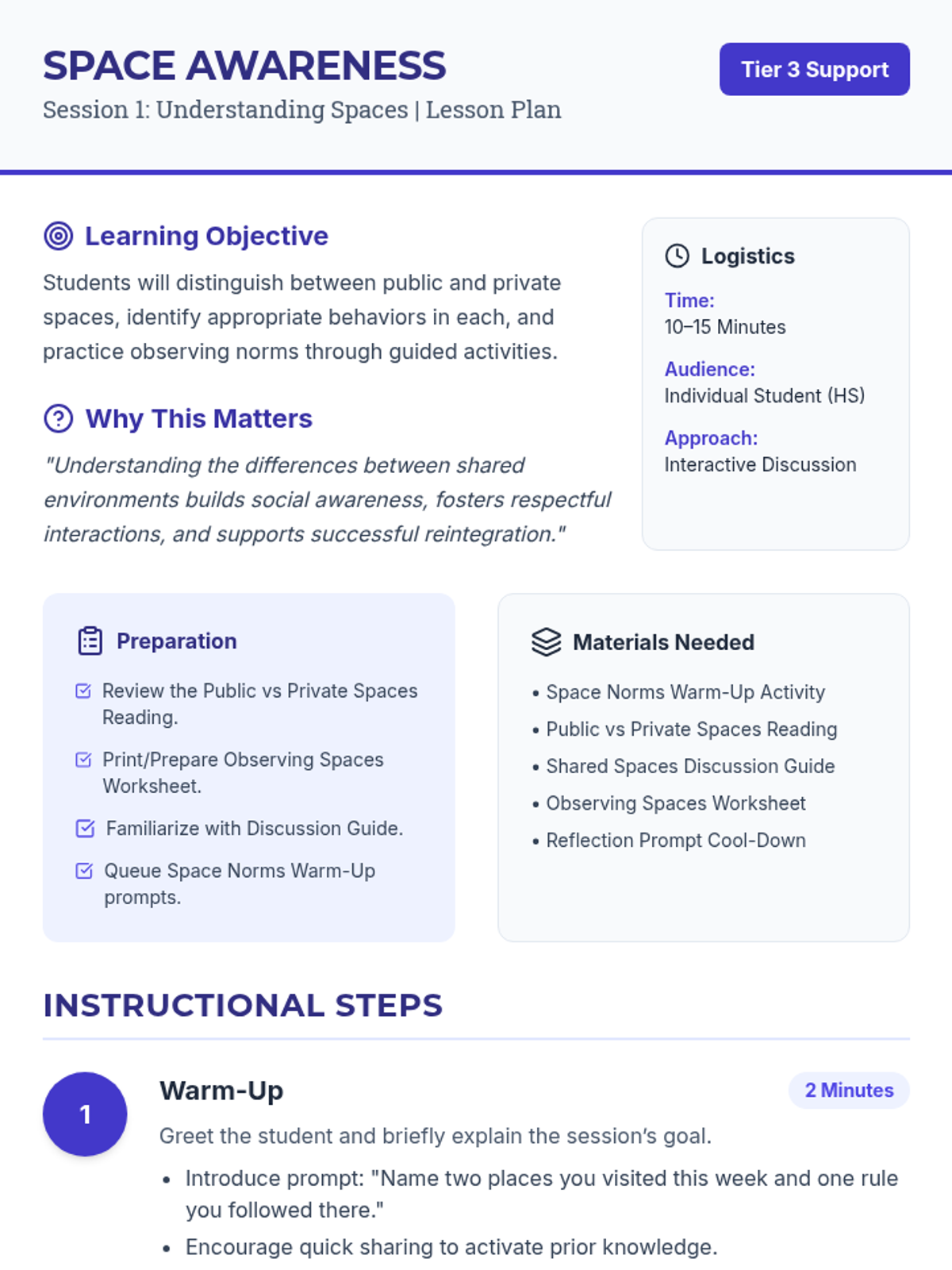
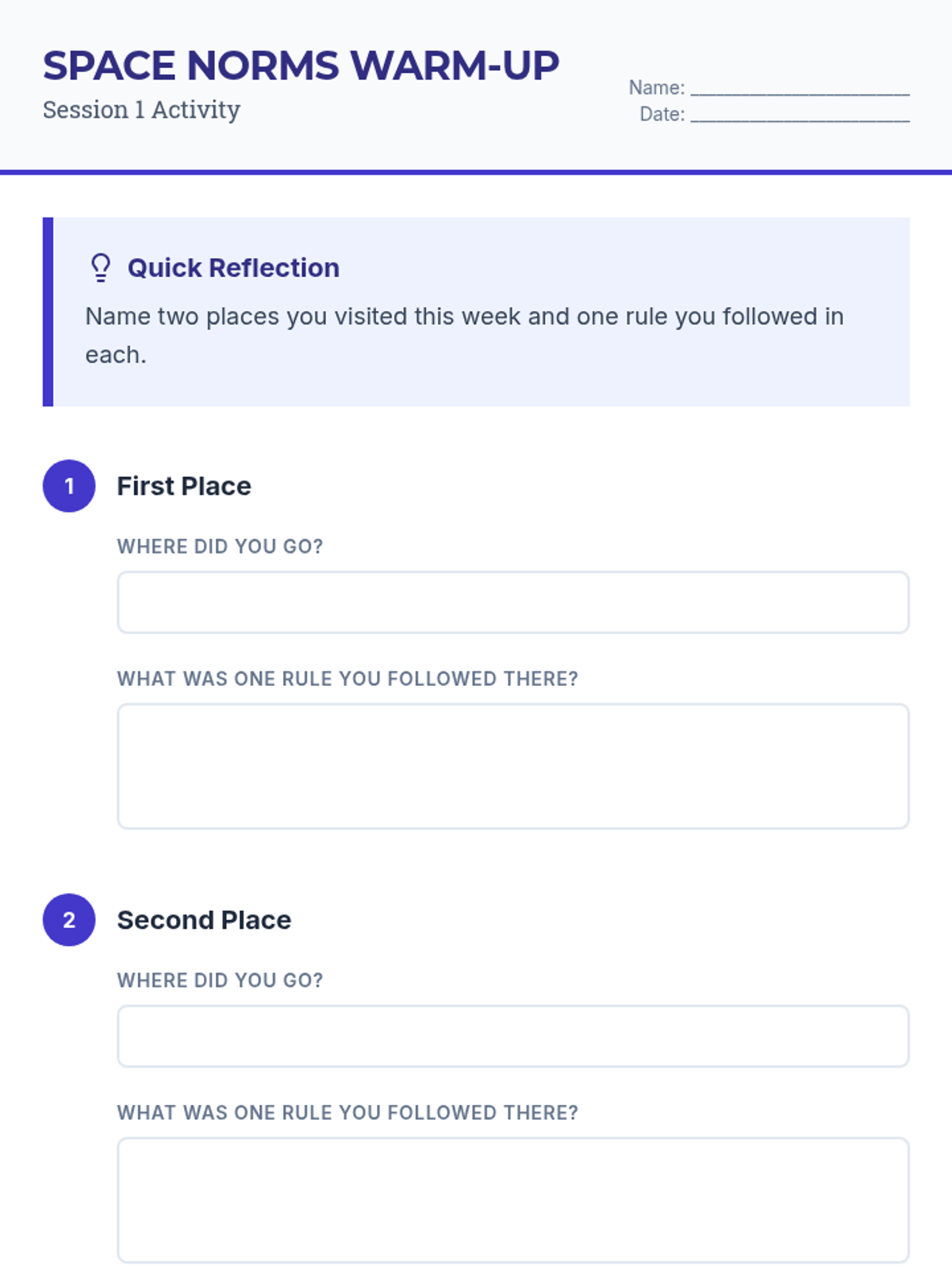
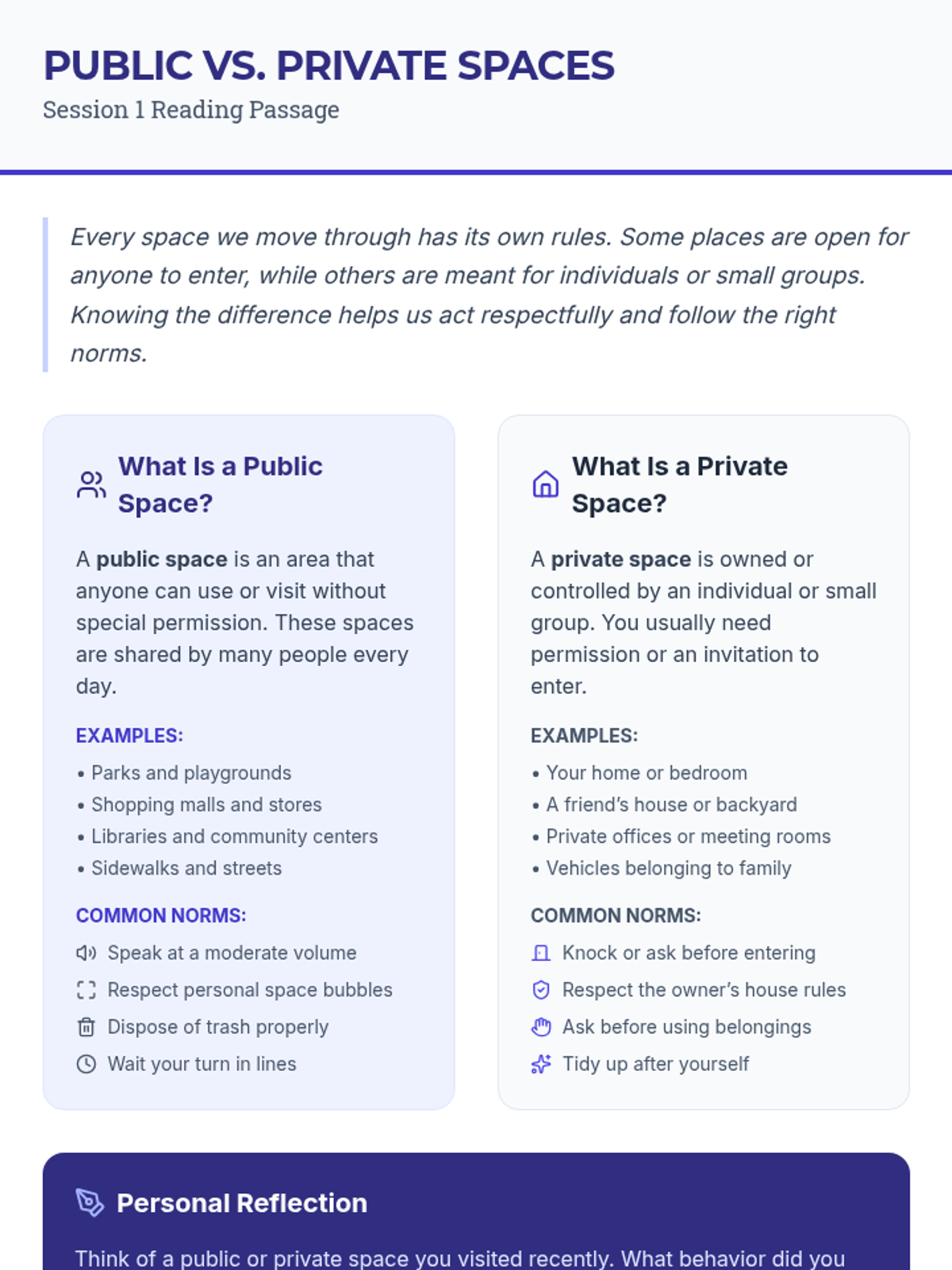
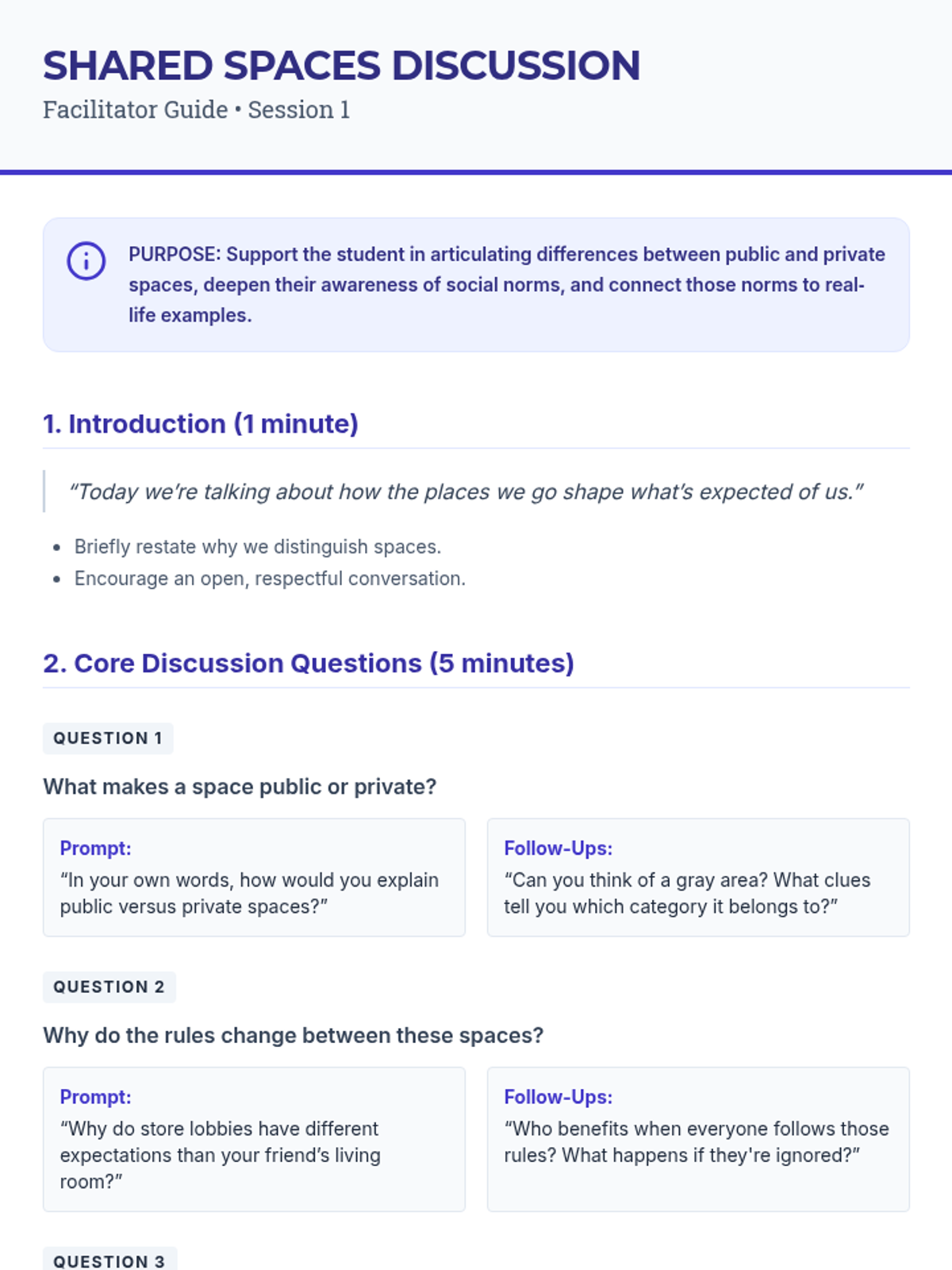
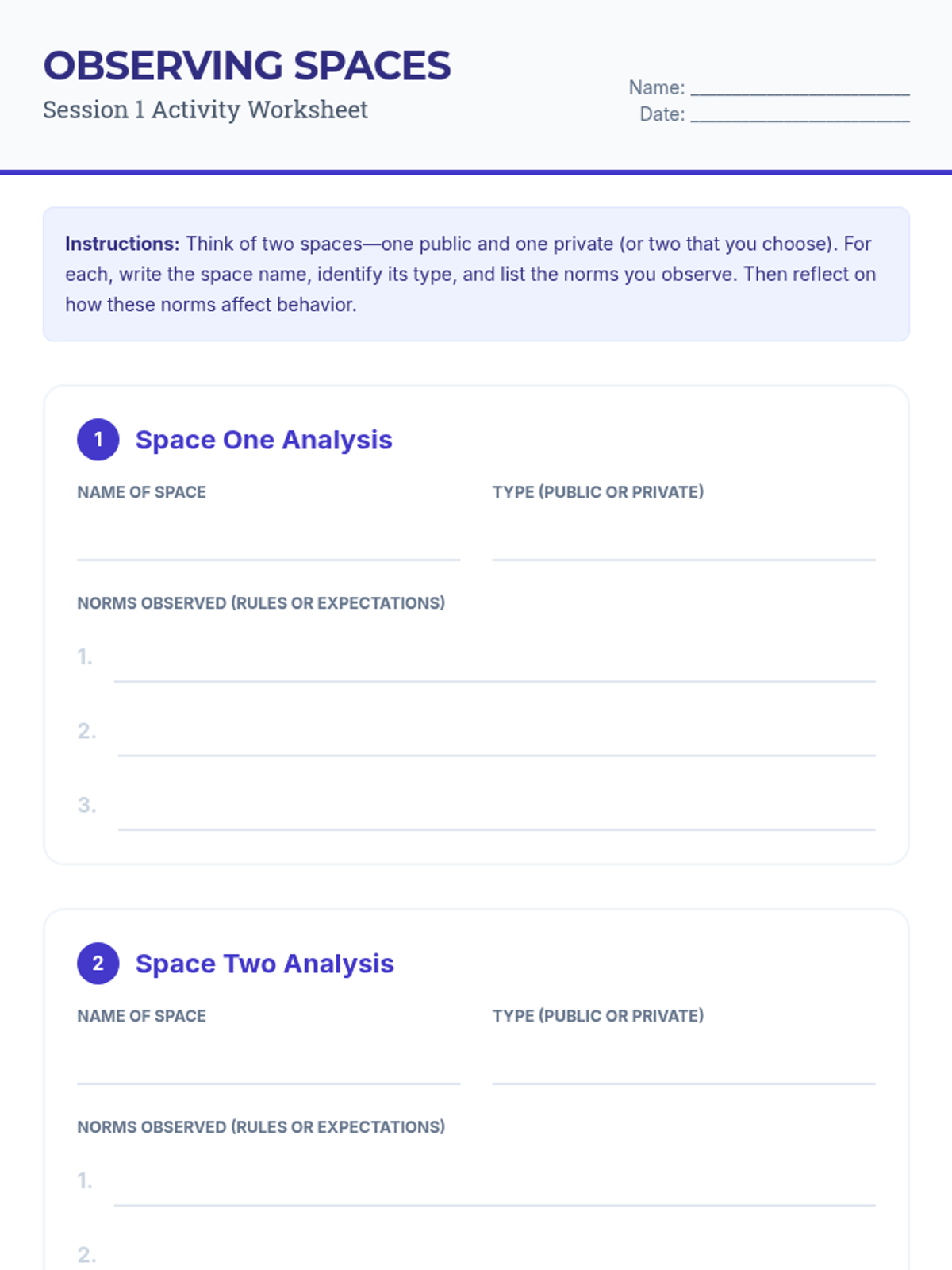
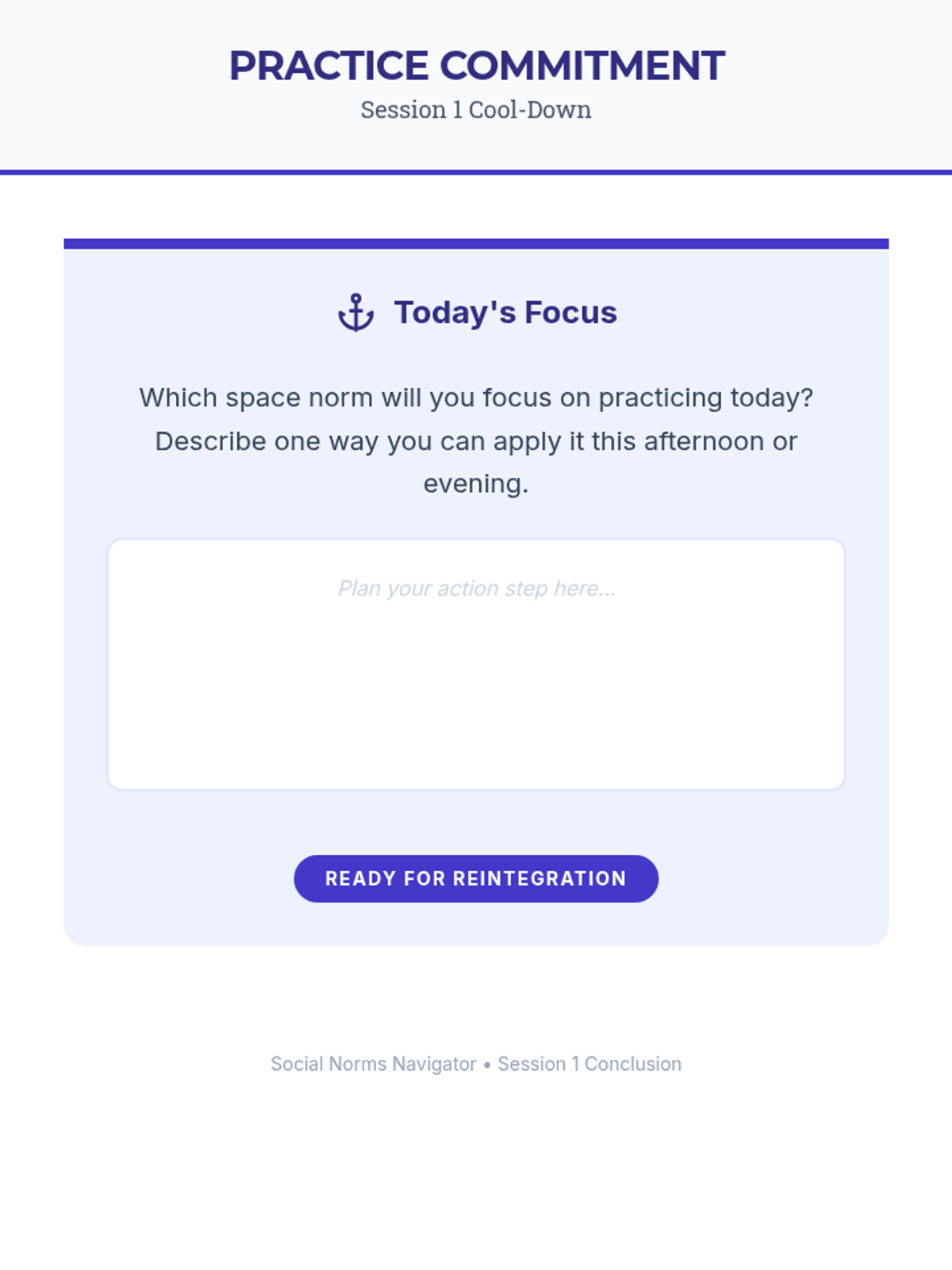
A targeted intervention sequence helping students navigate societal expectations and environment-specific behaviors for successful social reintegration.
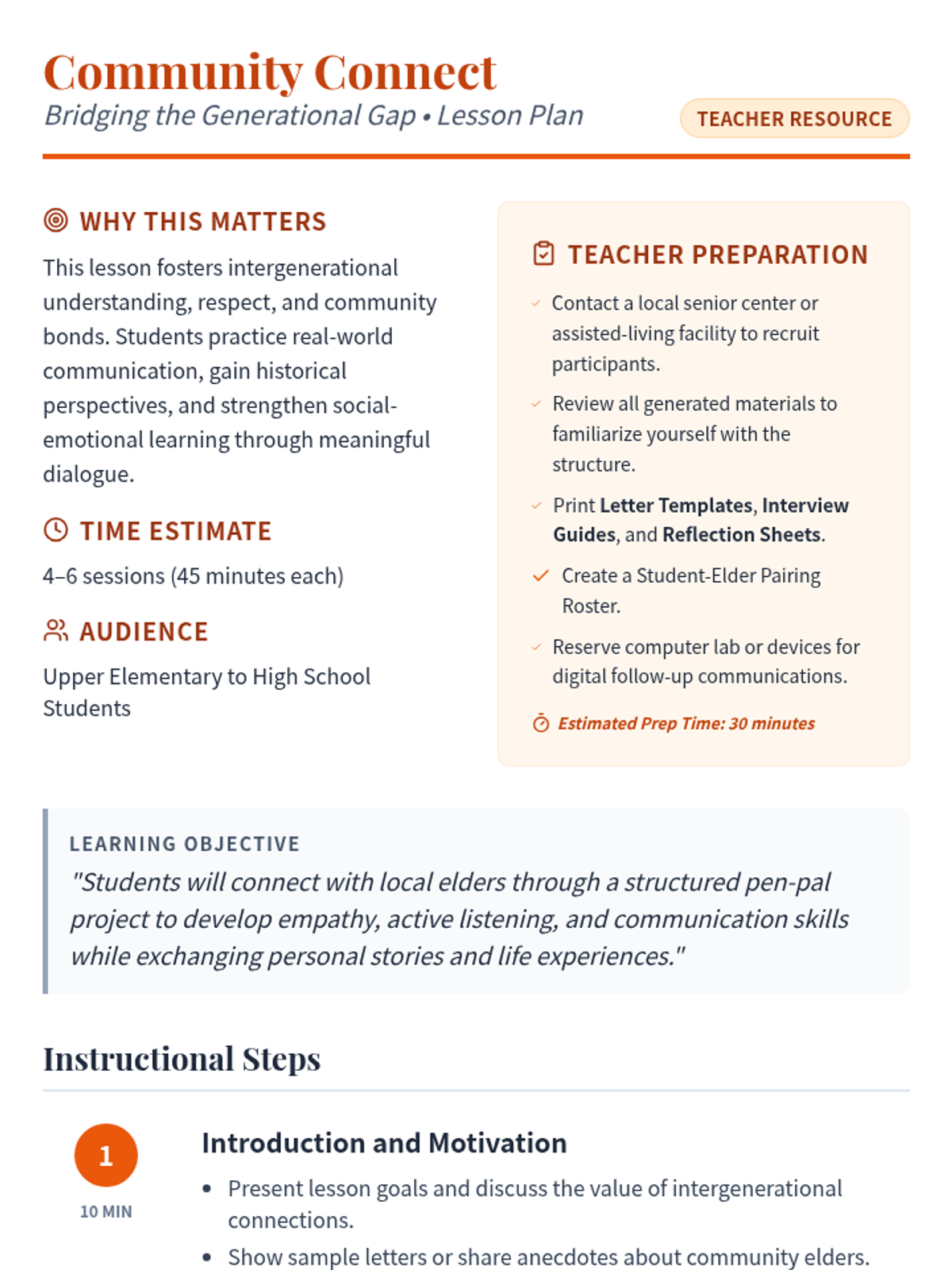
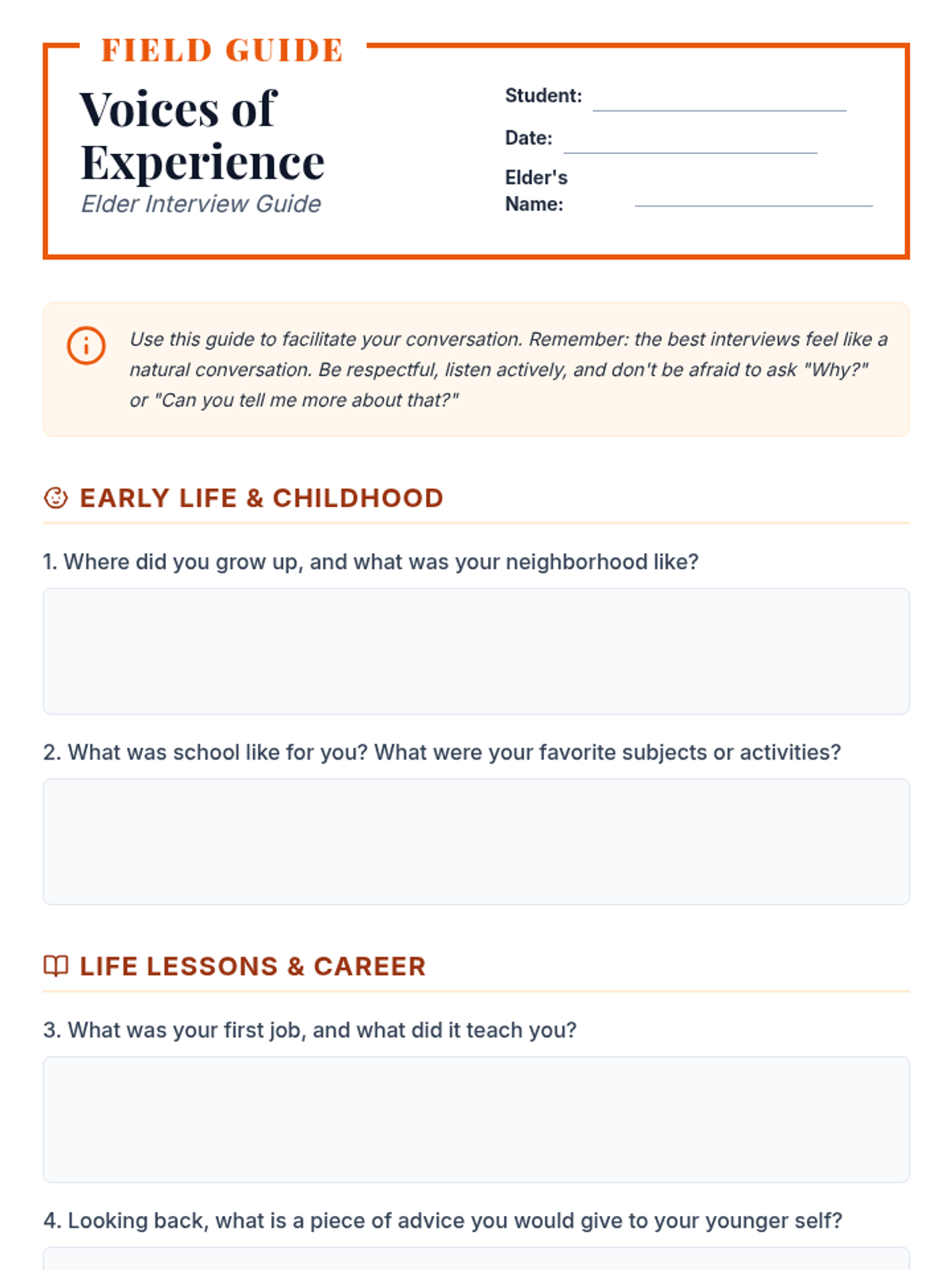
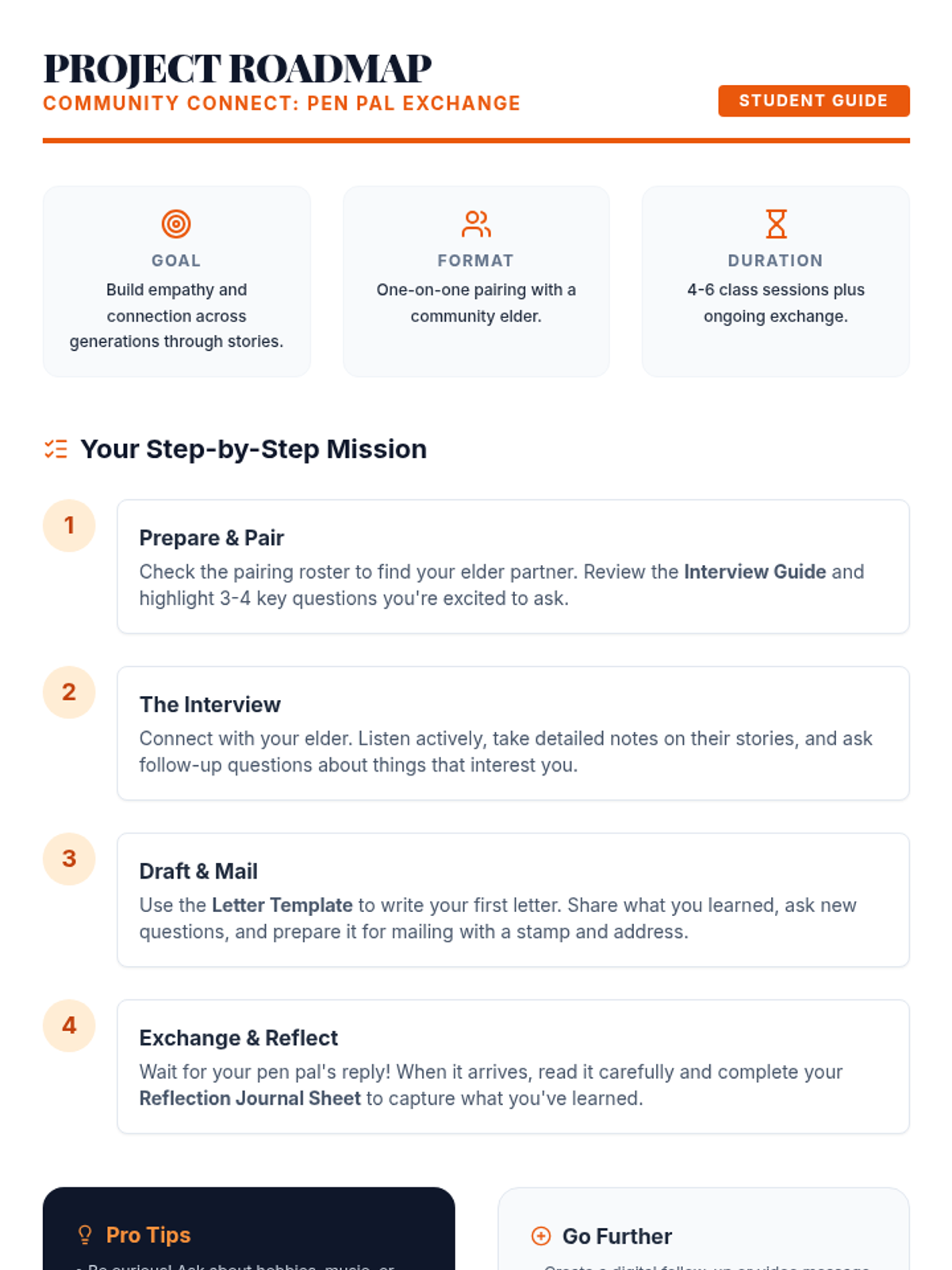
A multi-session project where students connect with local elders through interviews and letter writing, fostering empathy and intergenerational understanding.
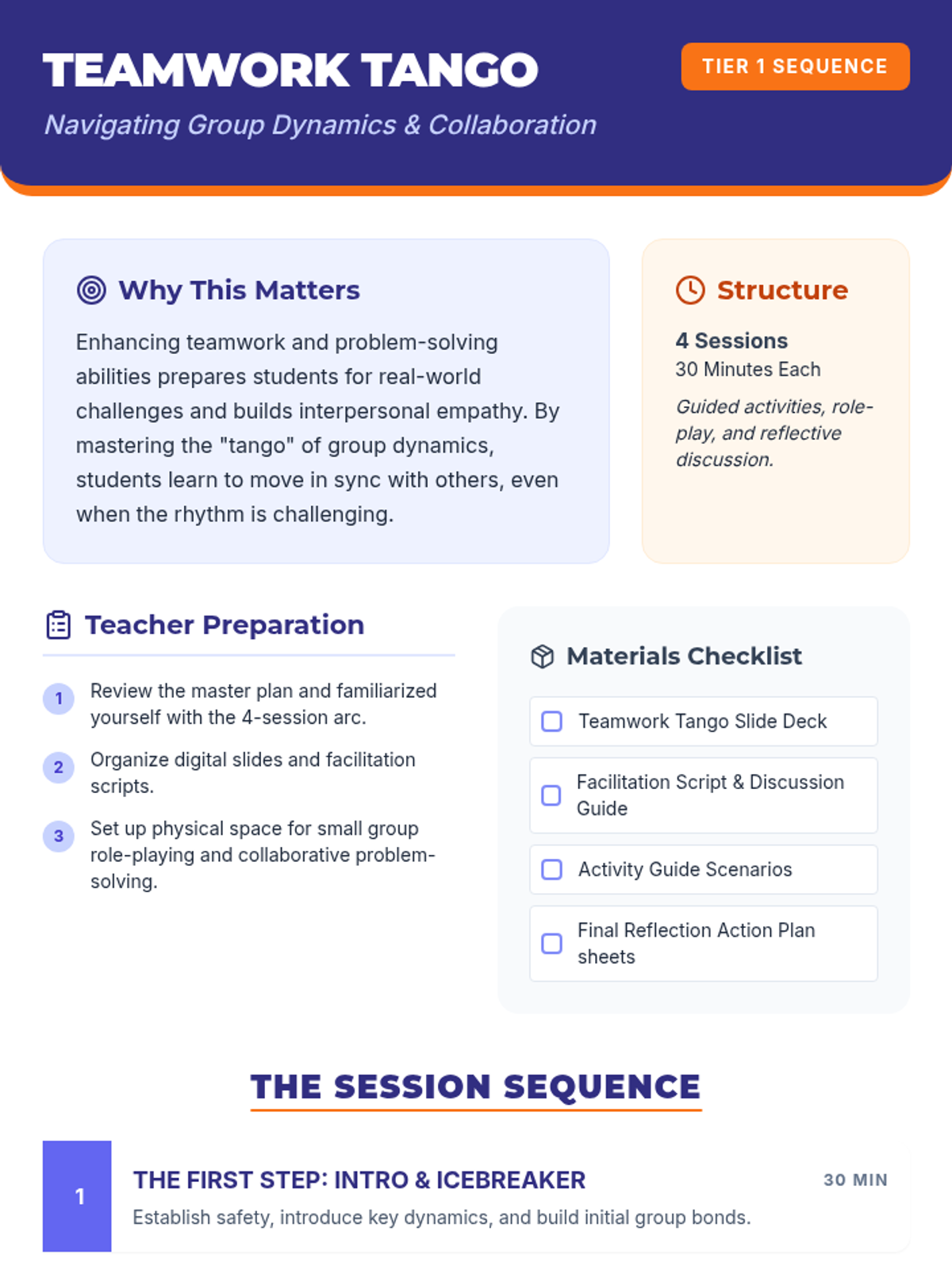
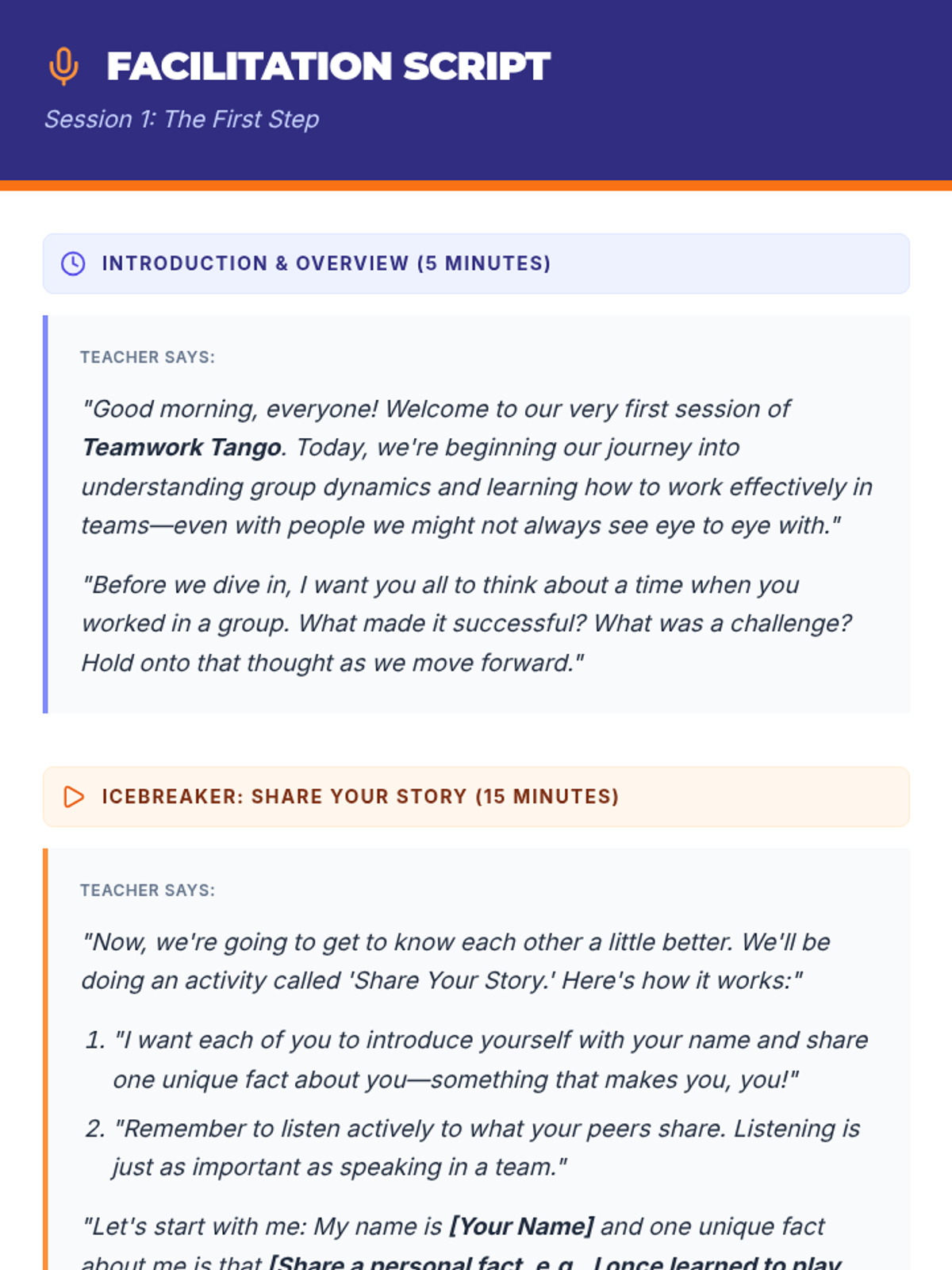
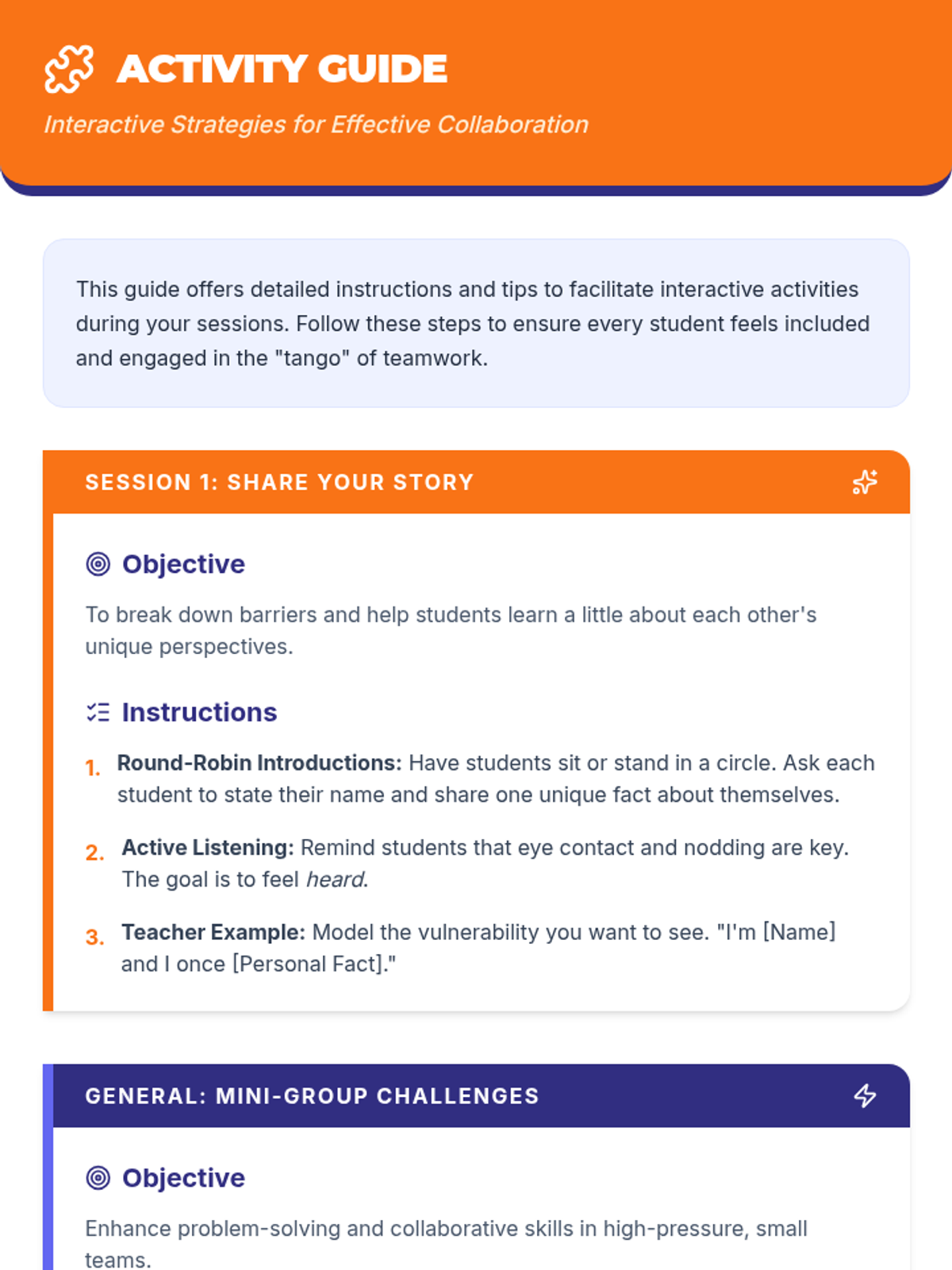
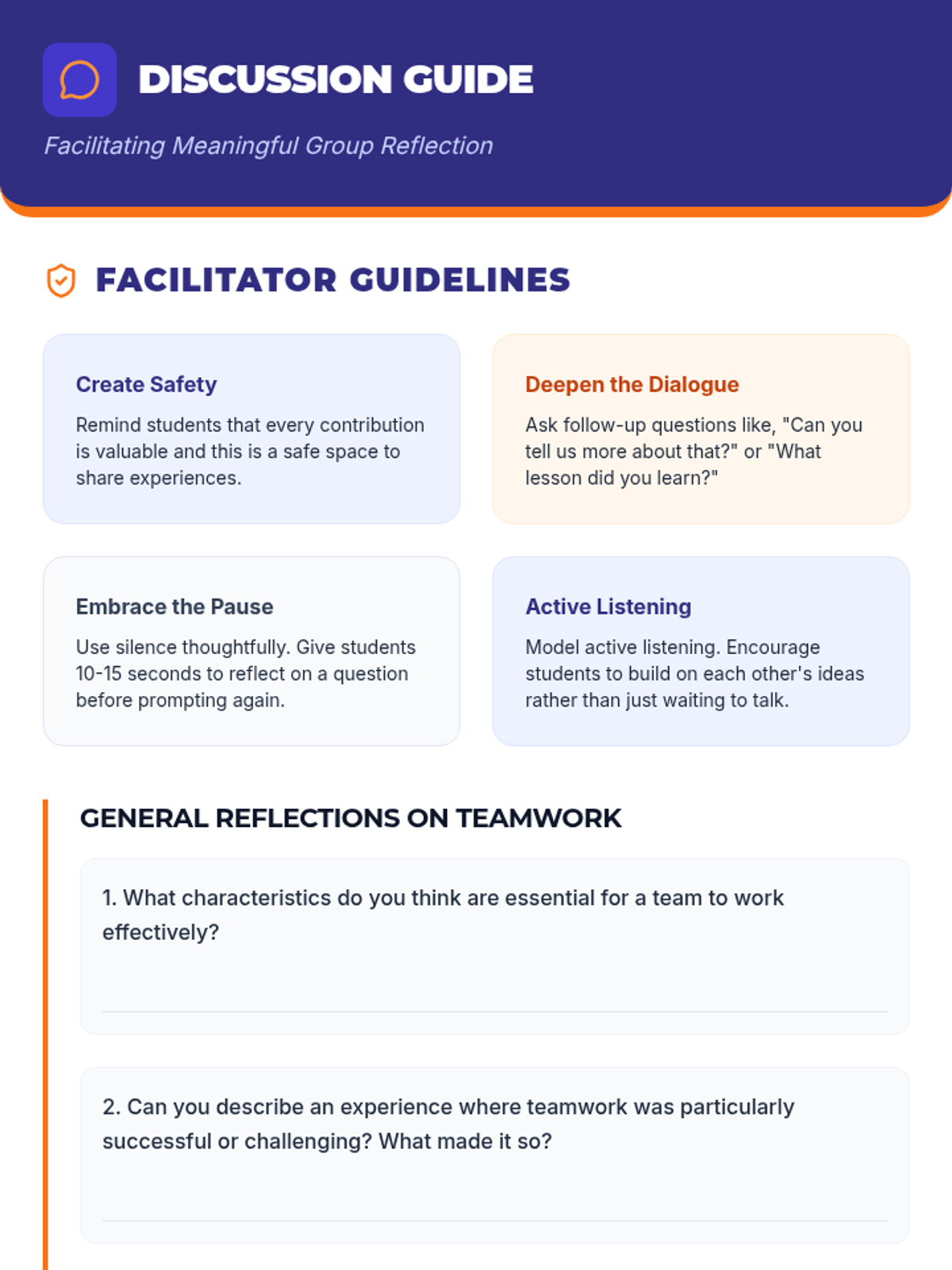
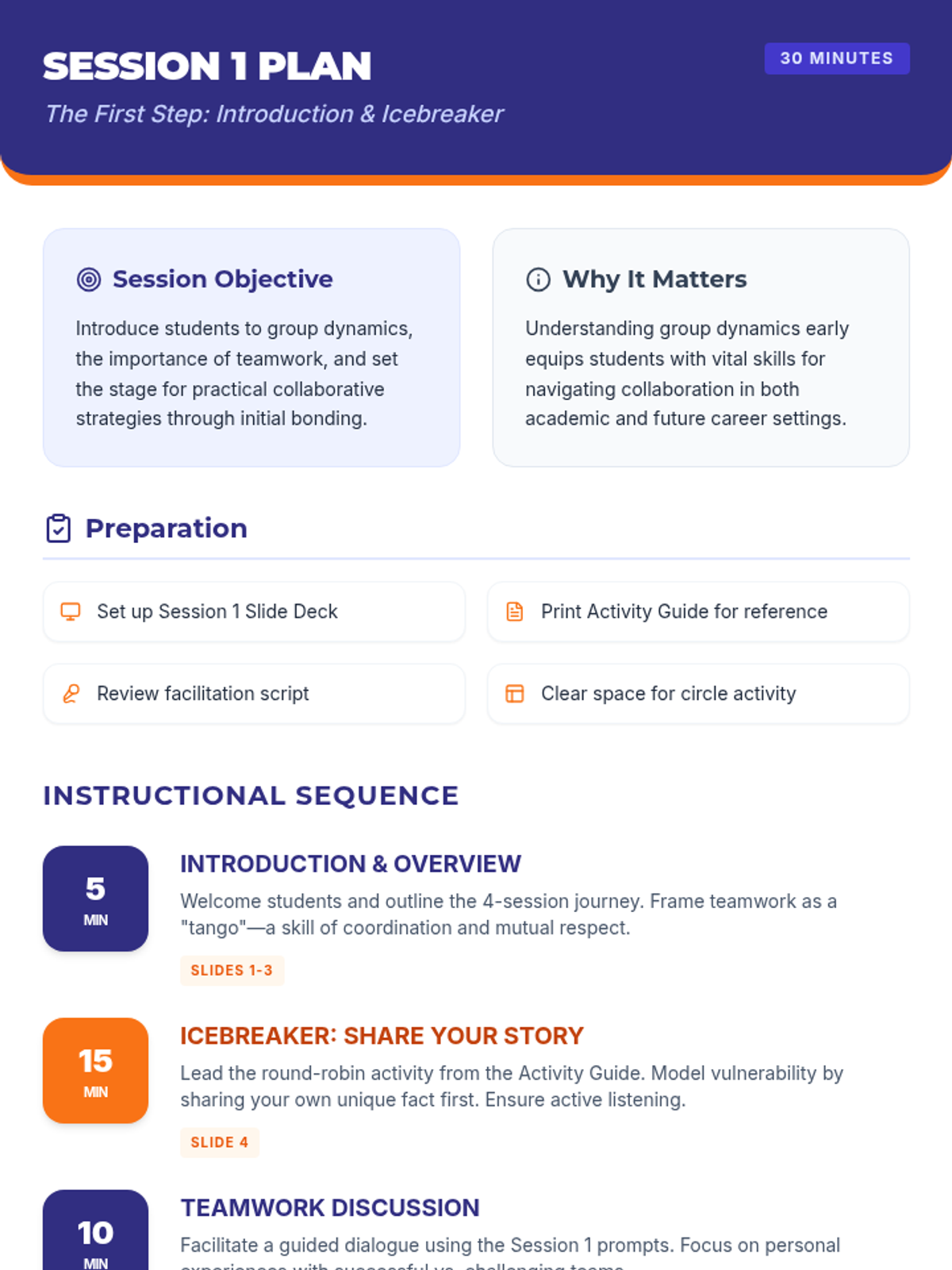
A 4-session sequence for 11th graders focusing on developing group dynamics skills, empathy, and effective collaboration strategies for academic and career success.
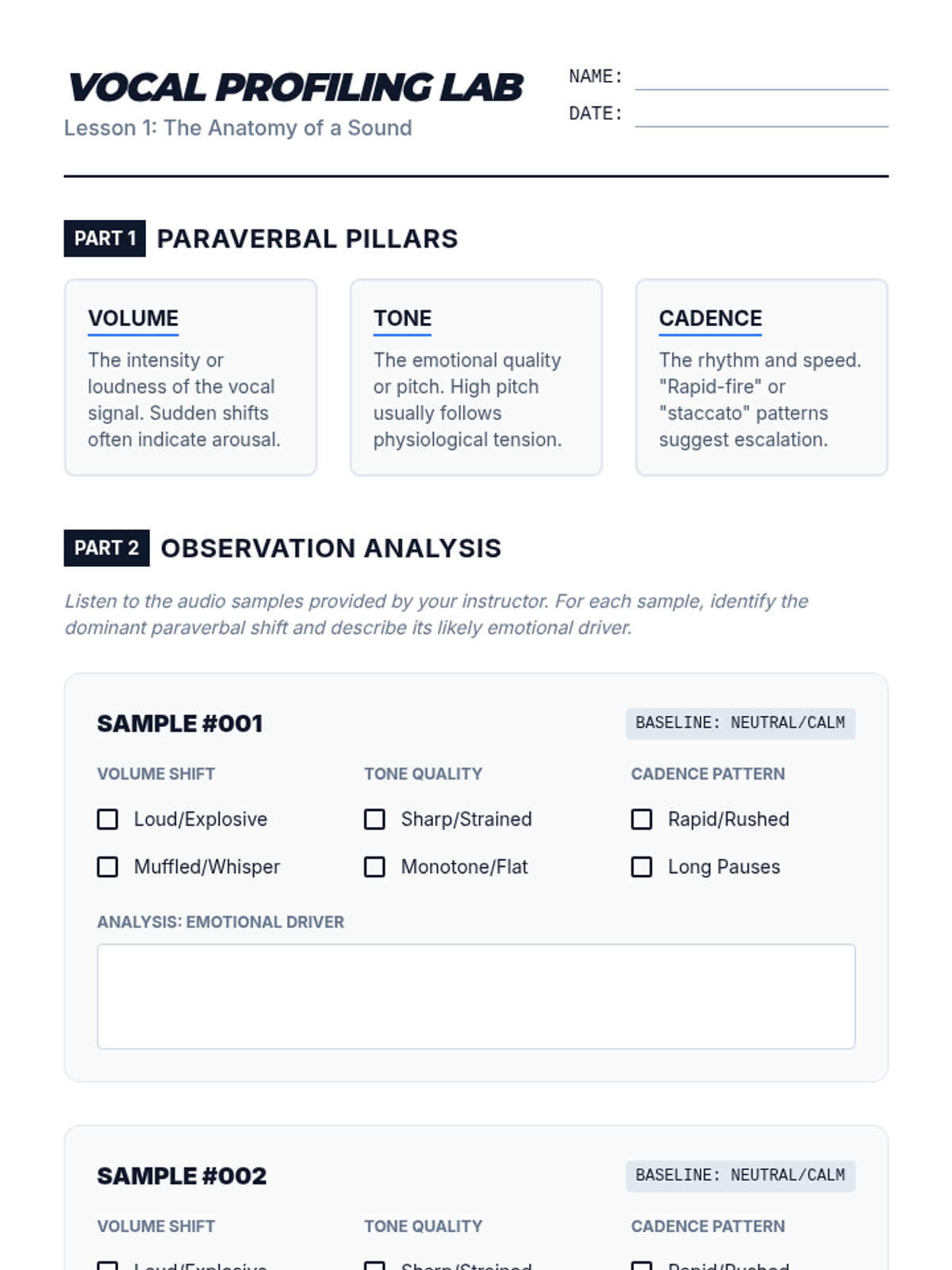
A comprehensive 11th-grade sequence focusing on auditory and paraverbal warning signs of behavioral escalation. Students learn to analyze tone, volume, cadence, and speech patterns to identify emotional states and prevent conflict.
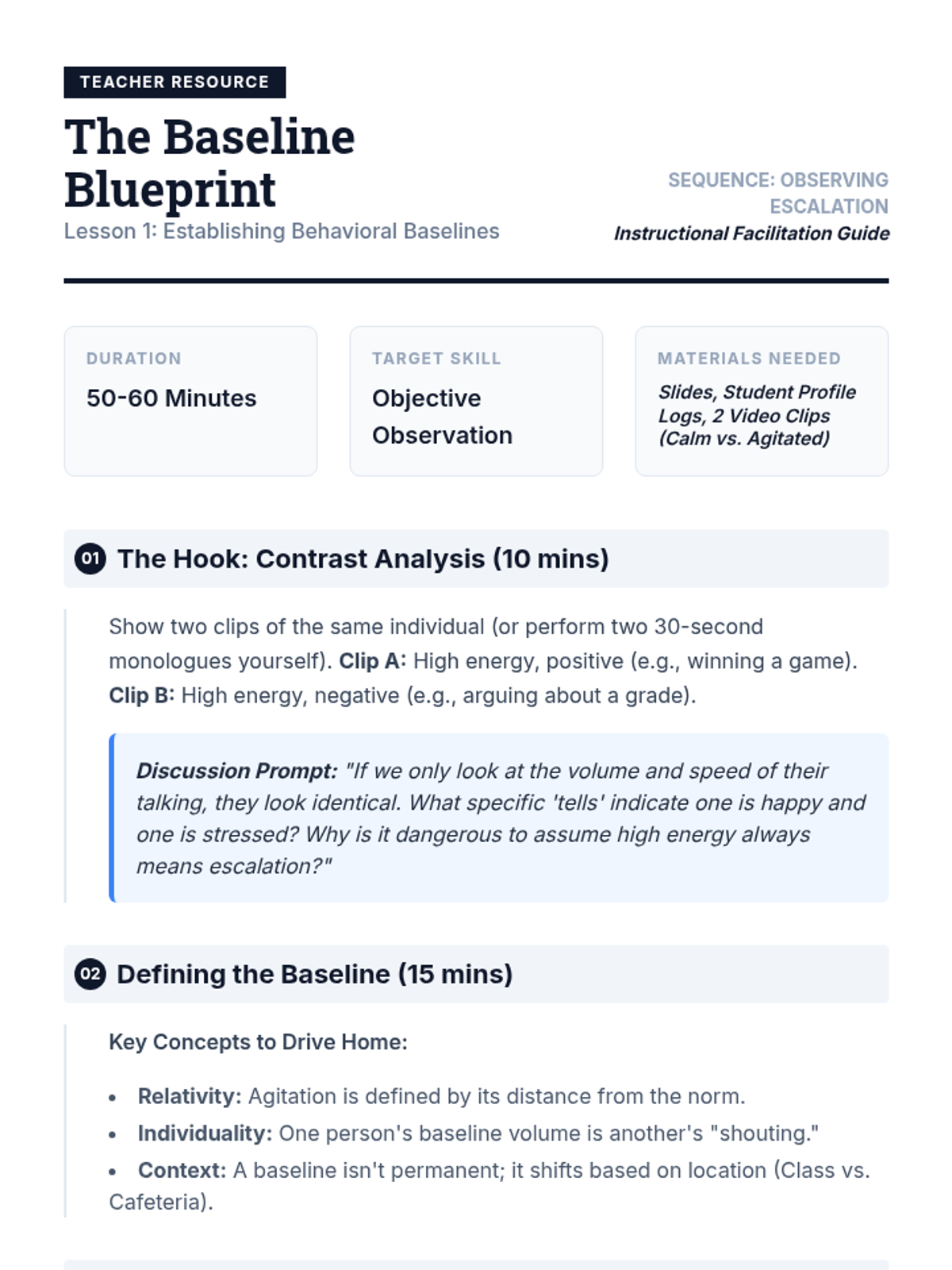
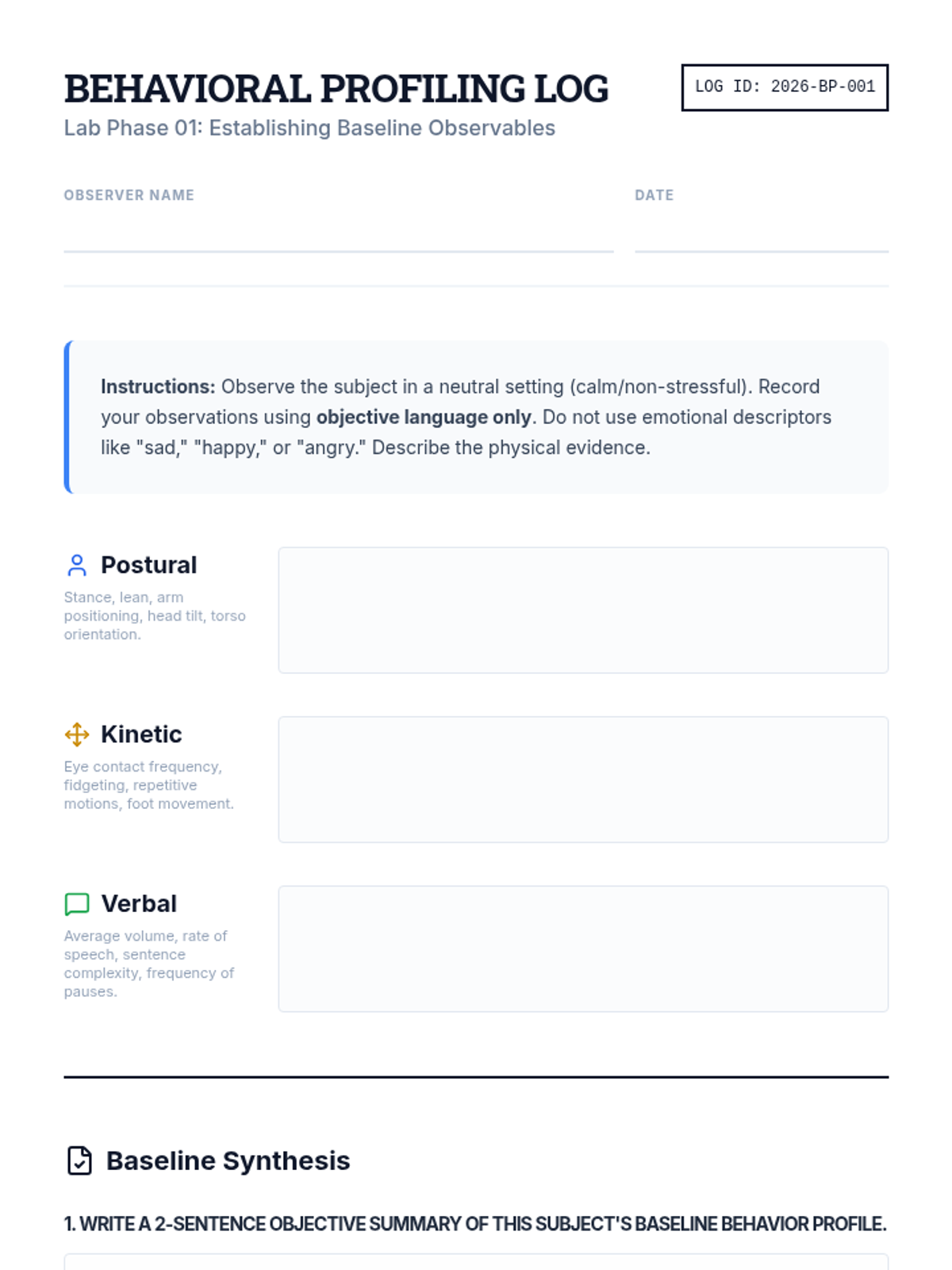
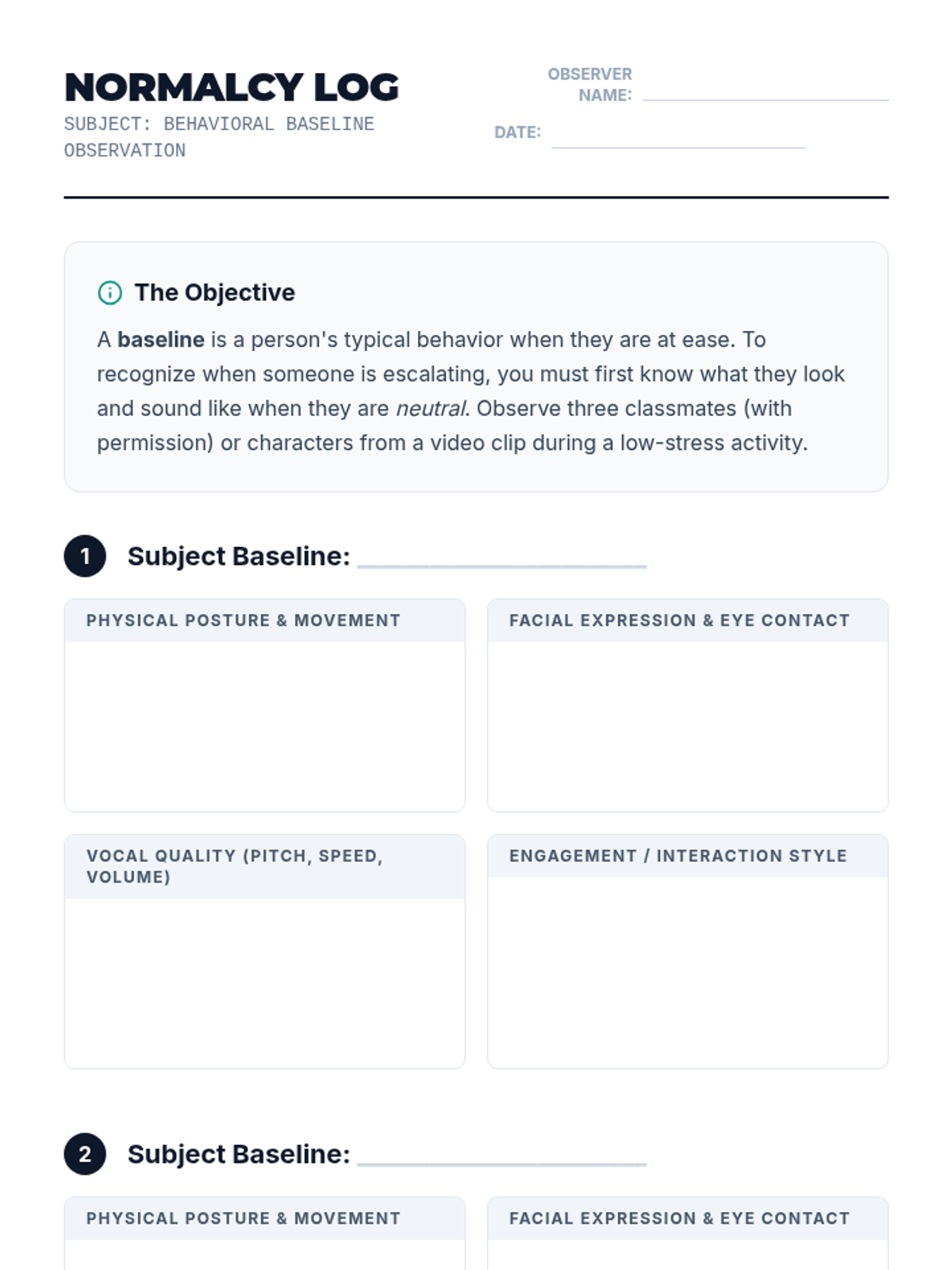
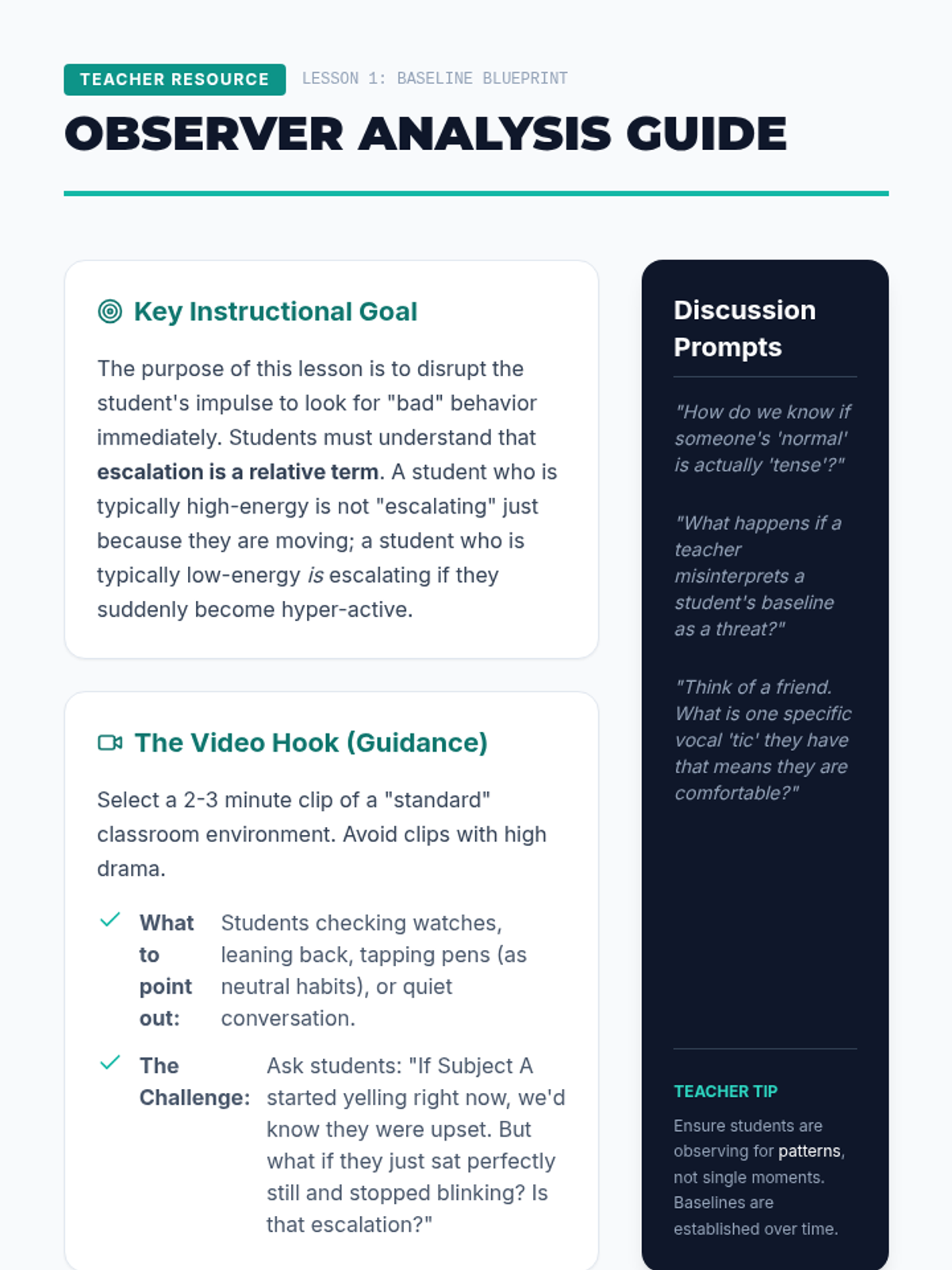
This sequence teaches 11th-grade students how to observe and document behavioral baselines and non-verbal escalation cues. Students move from identifying neutral behaviors to recognizing subtle kinetic and facial indicators of stress to prevent conflict through early observation.
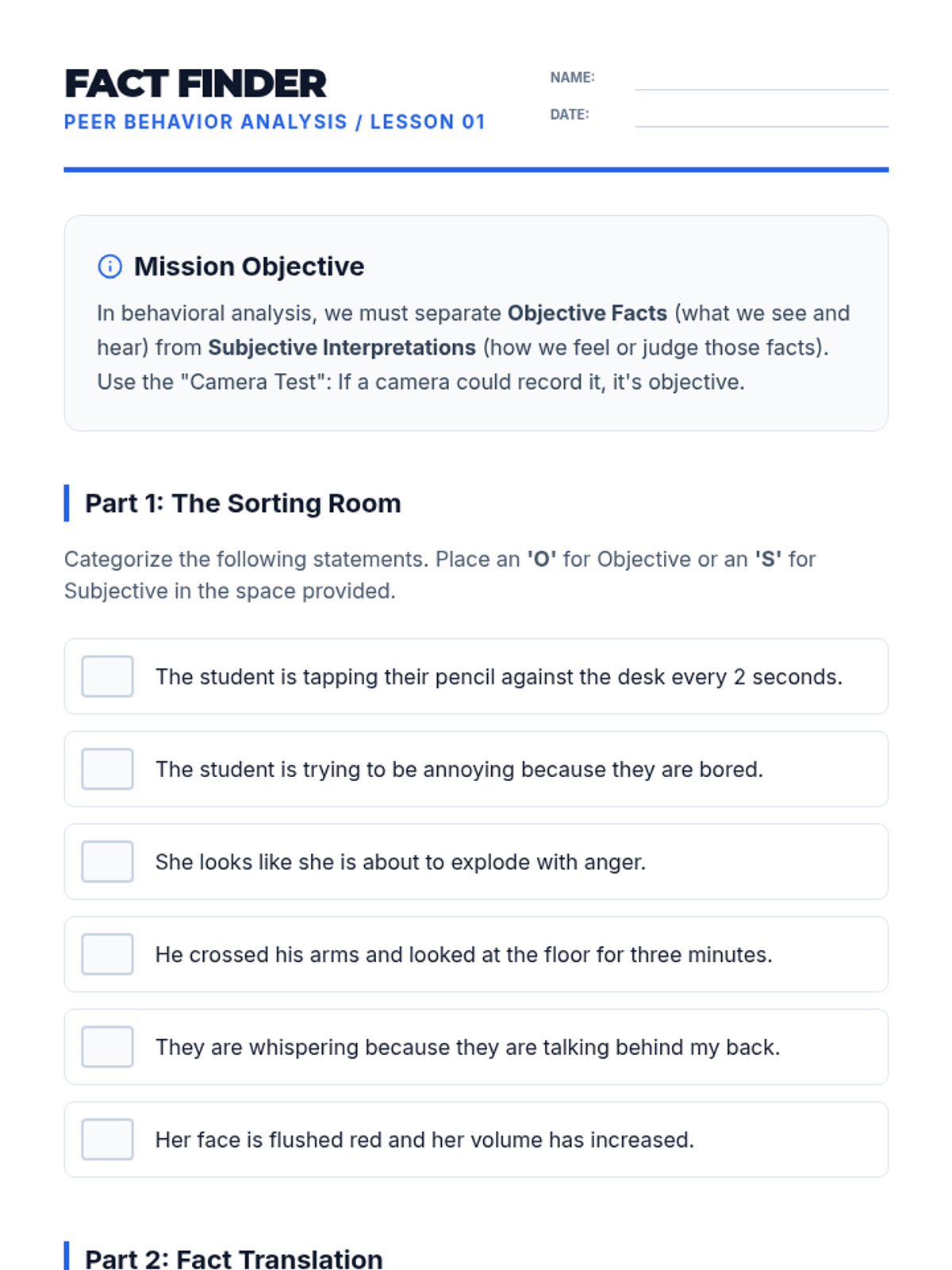
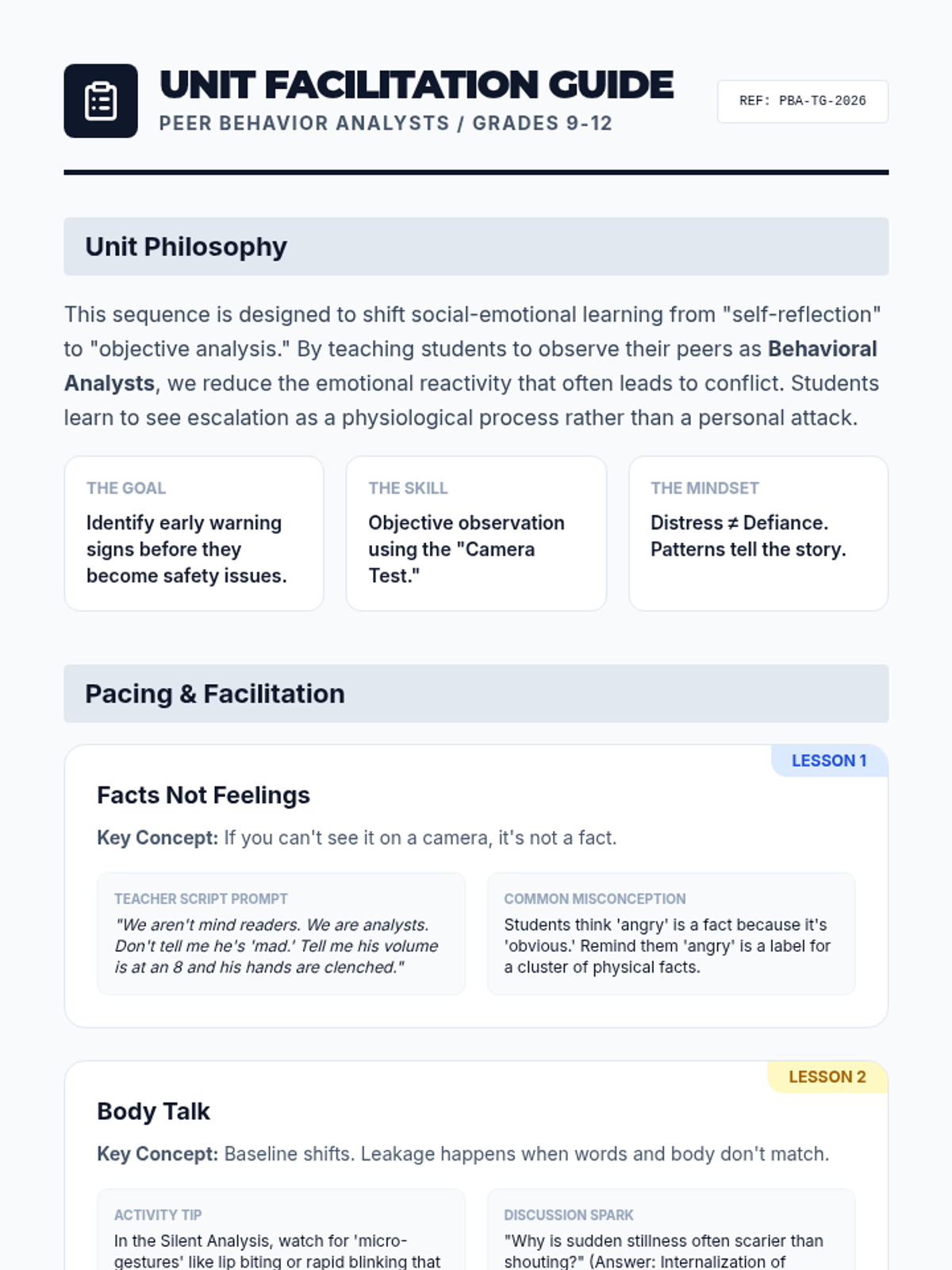
A 5-lesson sequence for 9th-grade students focused on developing social awareness and safety by identifying peer behavioral shifts and escalation warning signs through objective observation and non-verbal analysis.
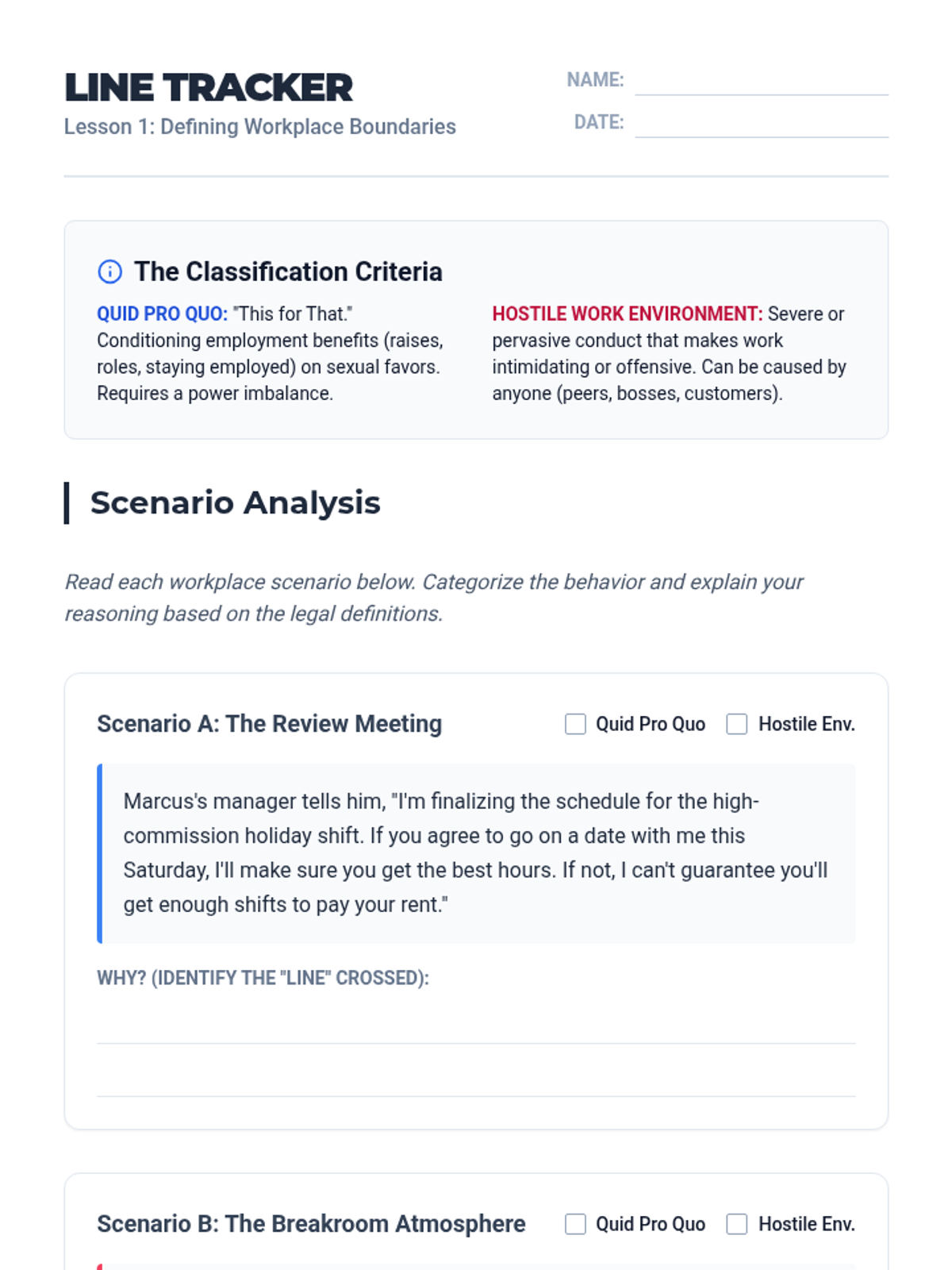
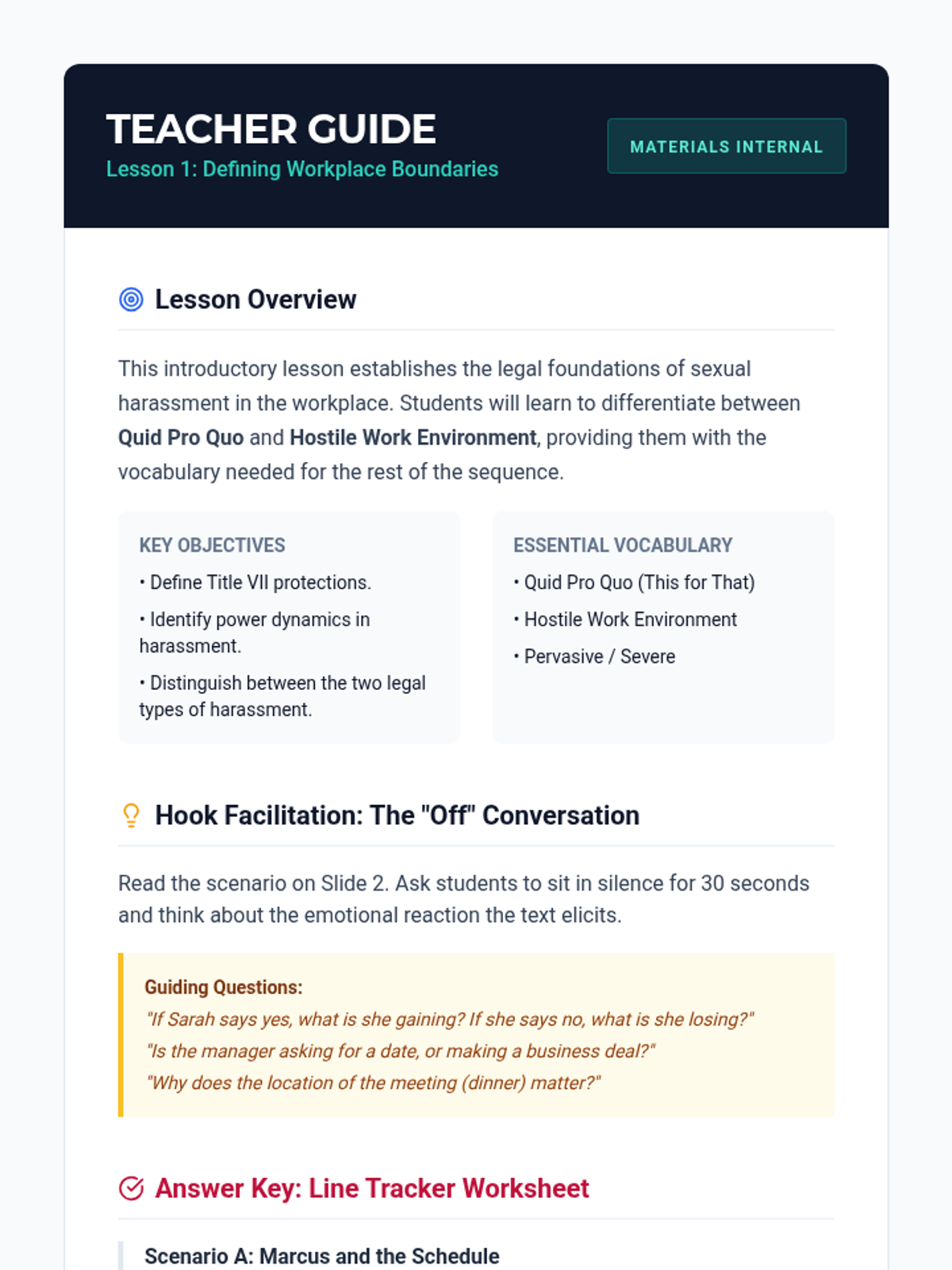
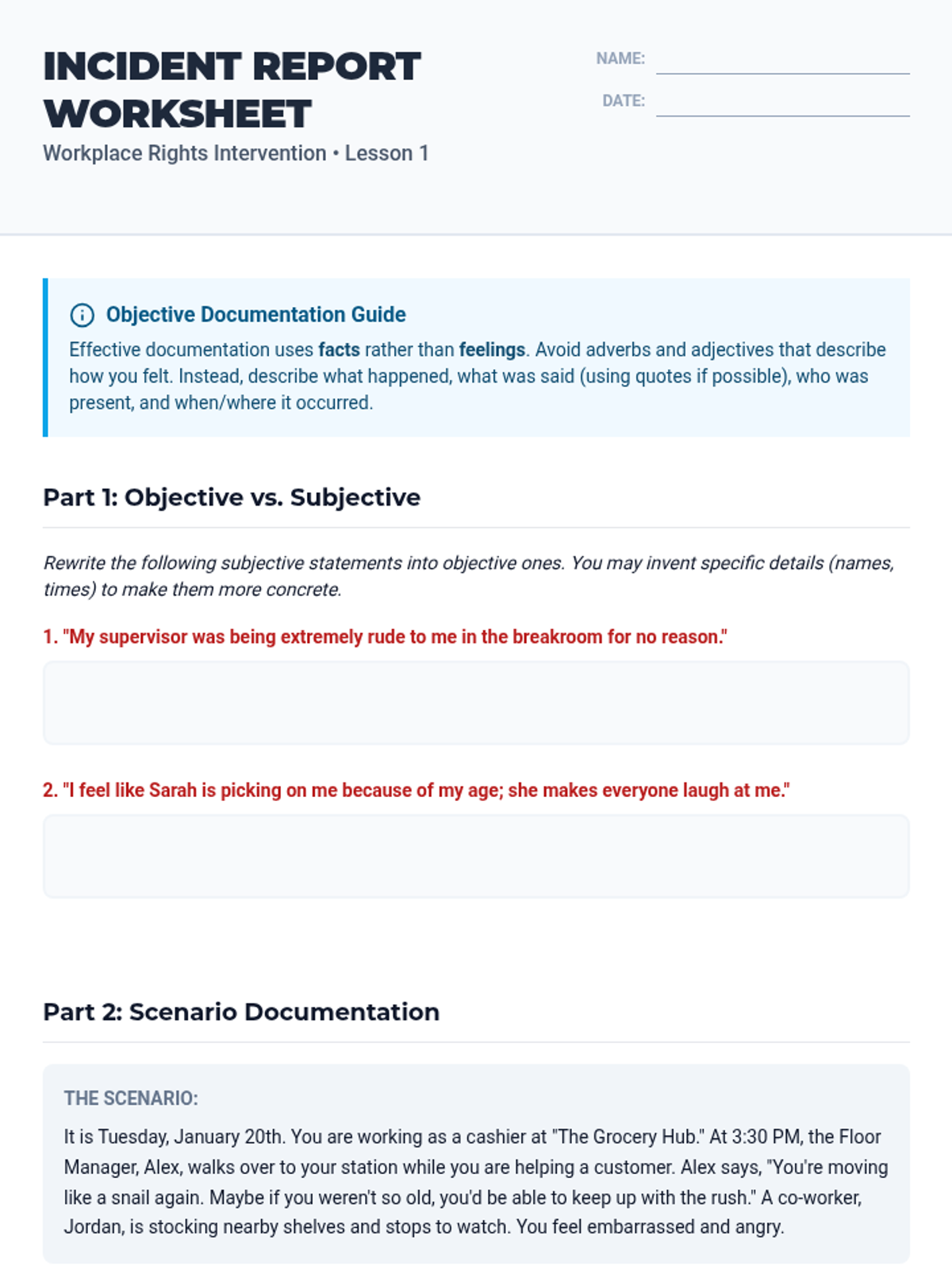
A comprehensive sequence for 9th-grade students exploring the legal definitions, impacts, and identification of sexual harassment and hostile work environments in the professional world. Students move from basic legal definitions to nuanced evaluations of intent versus impact and digital professional conduct.
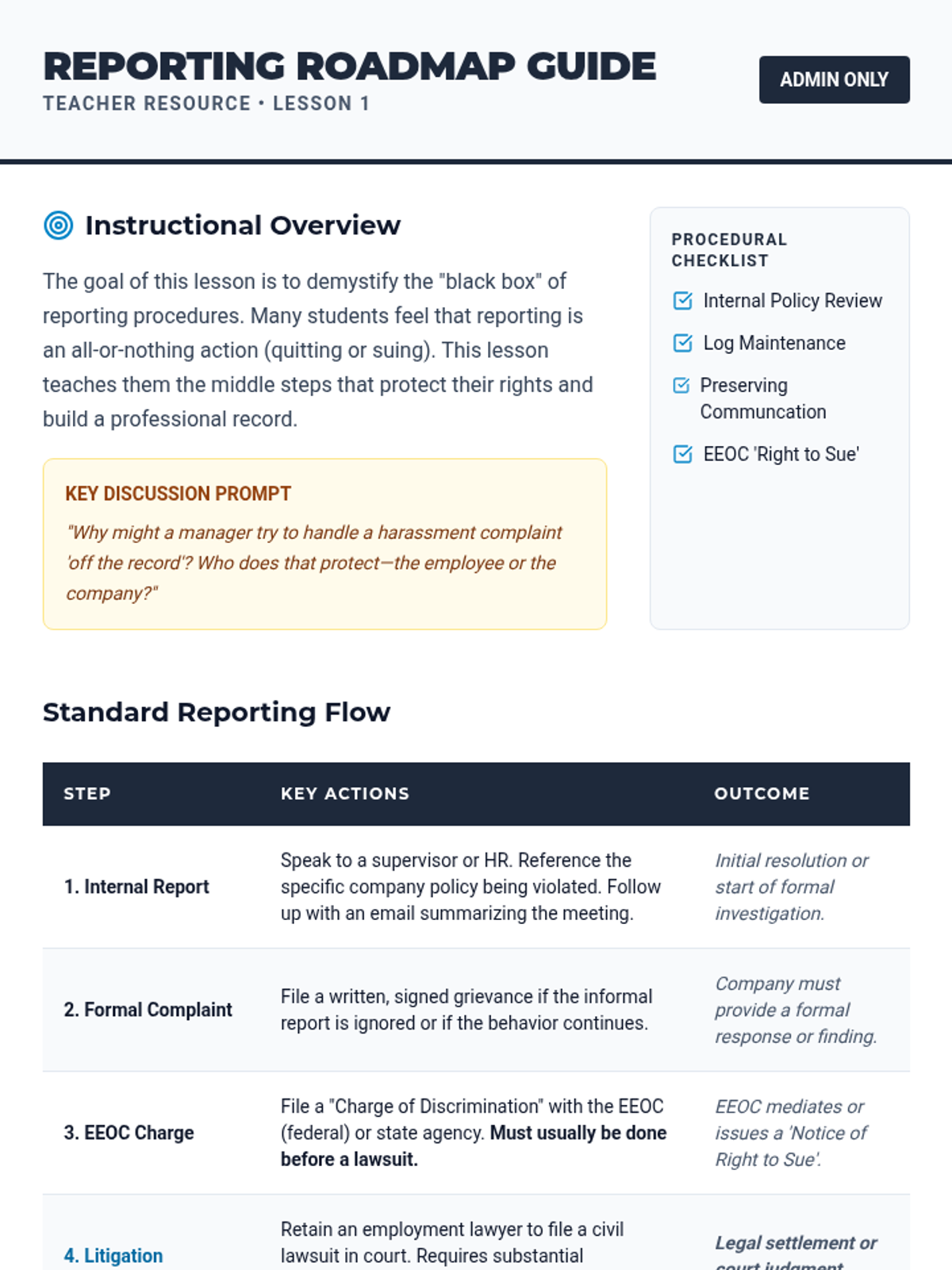
This sequence shifts from identification to action, equipping students with the tools to report misconduct and intervene safely. Students learn the formal mechanisms for reporting discrimination, protections against retaliation, and the '4 Ds' of bystander intervention.
This sequence guides students through identifying physiological and behavioral warning signs of distress, focusing on establishing baselines, mapping internal stress responses, and analyzing external kinetic and vocal shifts to prevent crisis.
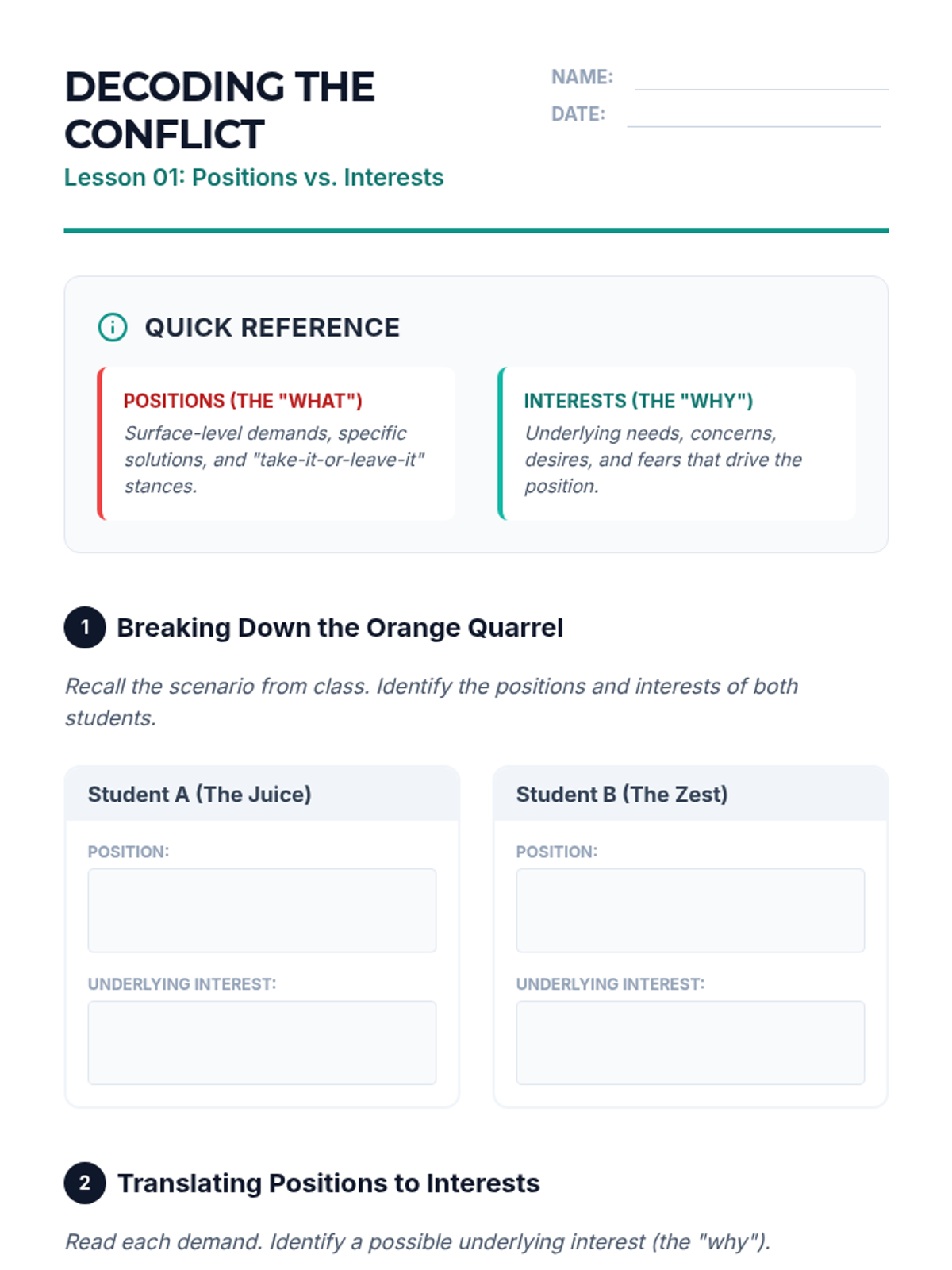
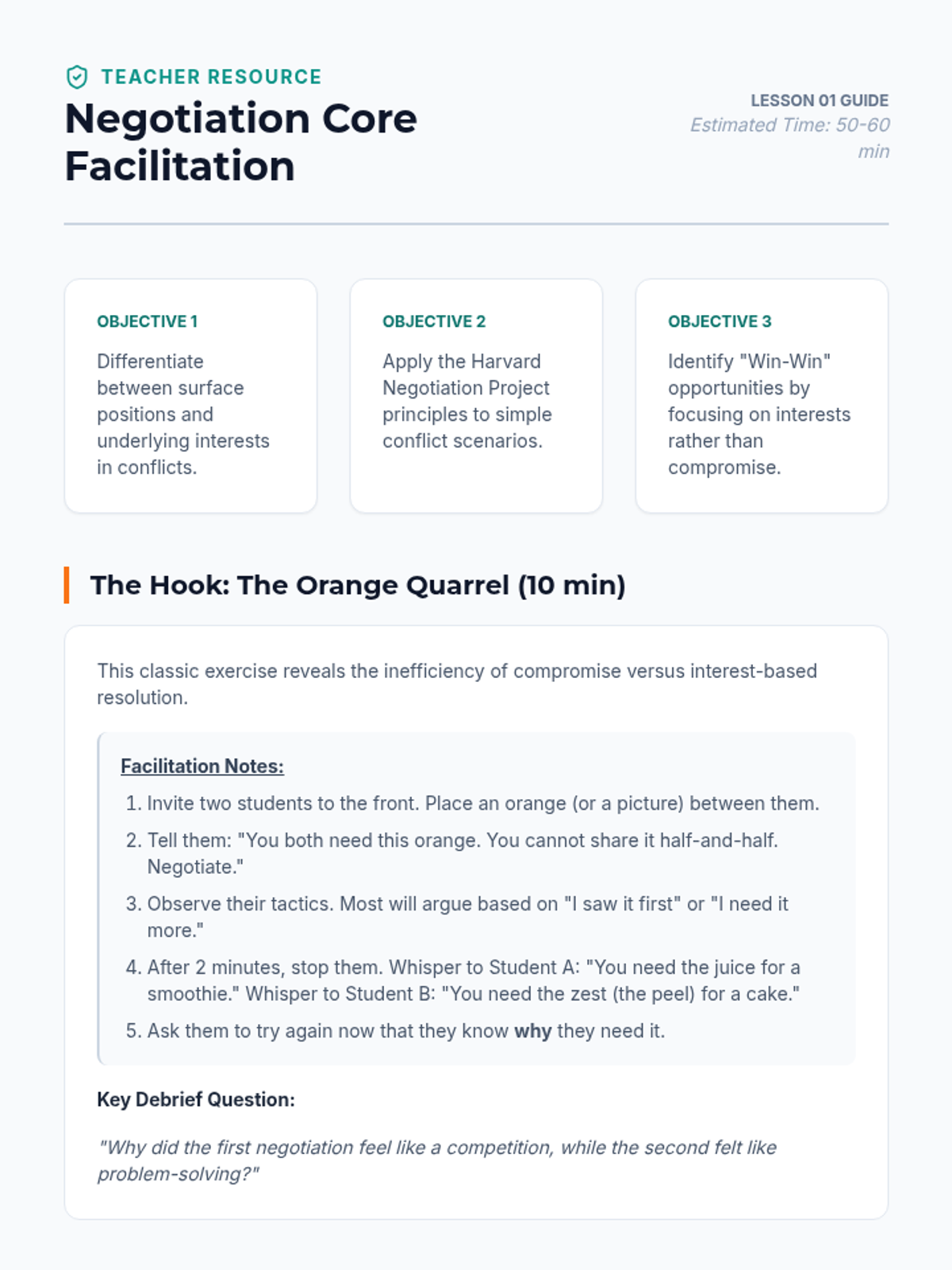
A comprehensive high school unit on interest-based negotiation and formal mediation. Students move from understanding individual interests to facilitating multi-party resolutions using the Harvard Negotiation Project framework and professional mediation stages.
This sequence explores the psychology of group dynamics and community care. Students learn to recognize burnout, offer effective support, and advocate for cultures where requesting breaks is normalized and valued.
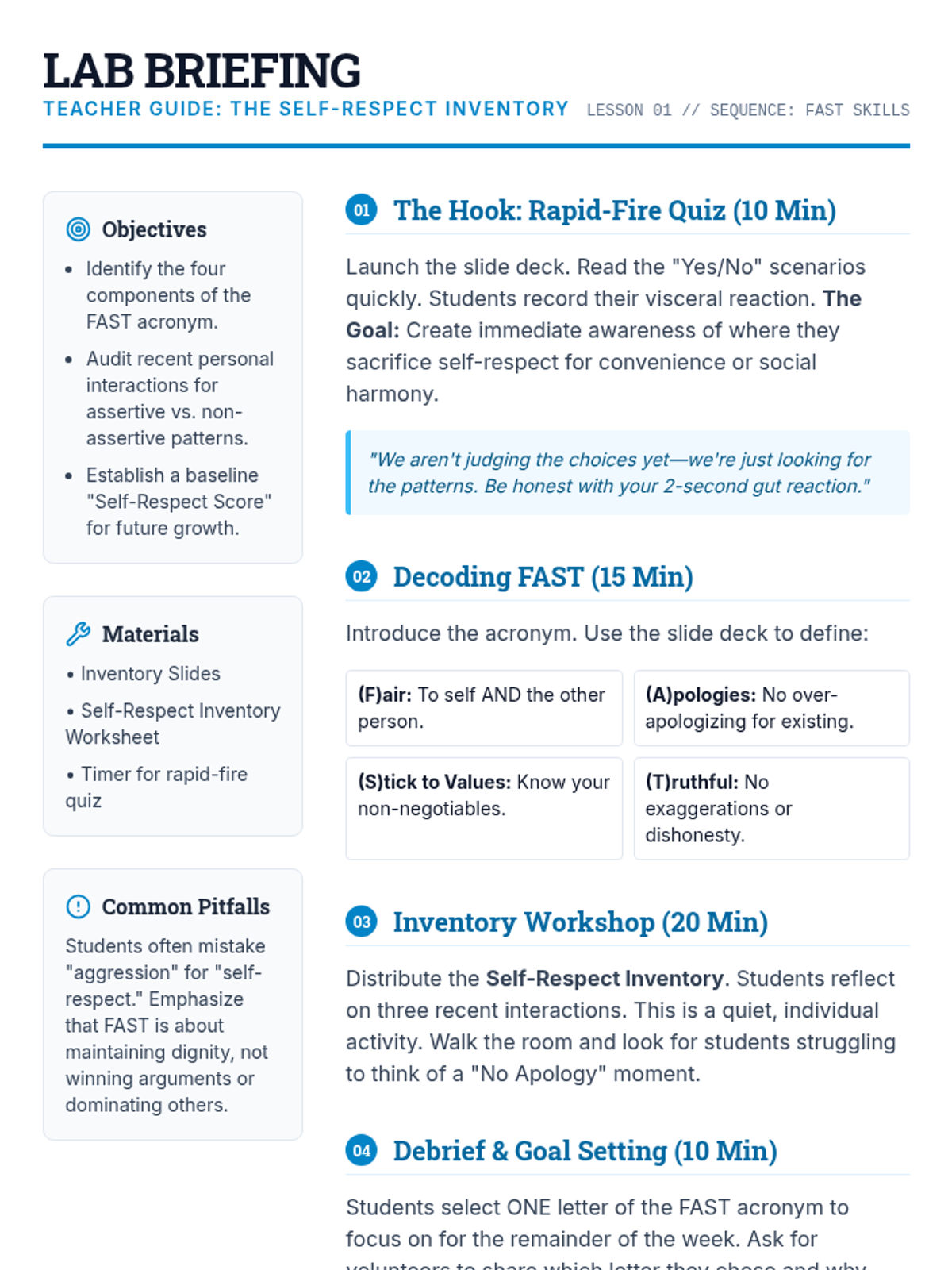
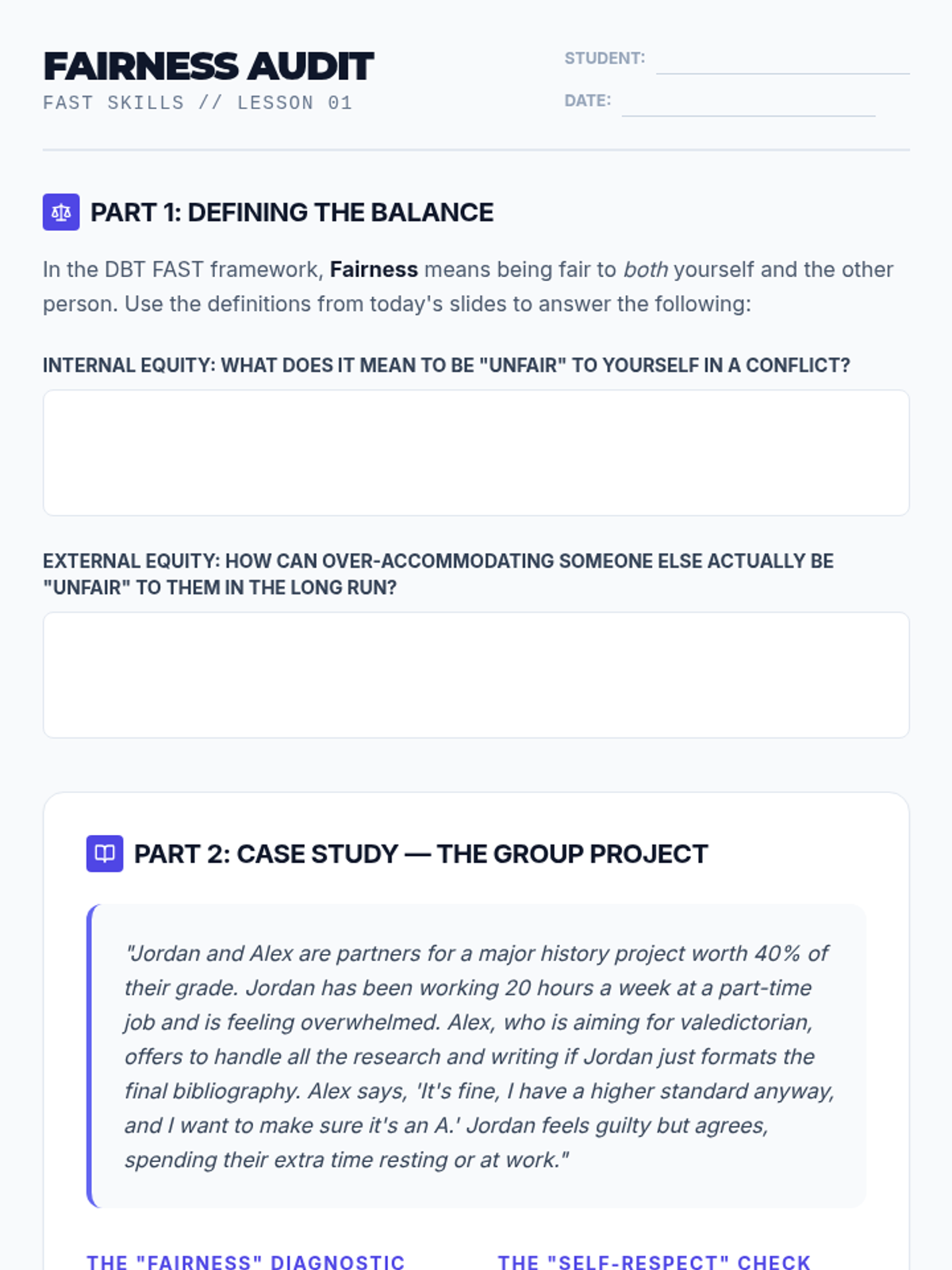
A high-school level interpersonal communications lab focused on the FAST acronym (Fair, No Apologies, Stick to Values, Truthful). Students transition from self-reflection to active behavioral rehearsal to build 'muscle memory' for self-respecting communication.
A comprehensive 11th-grade sequence deconstructing the DBT FAST framework. Students analyze psychological principles of self-respect through case studies, sociolinguistic analysis, and values audits to master interpersonal integrity.
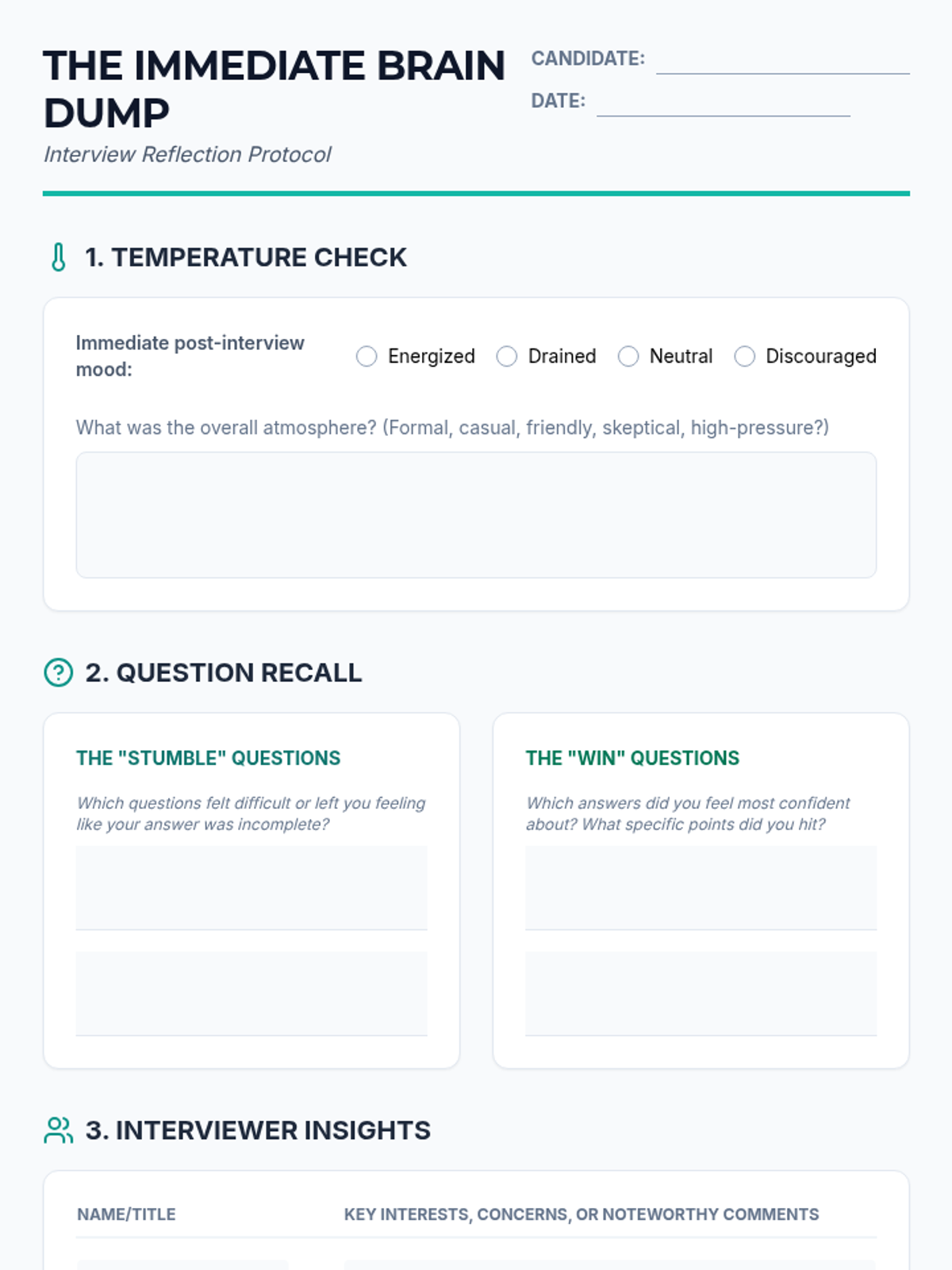
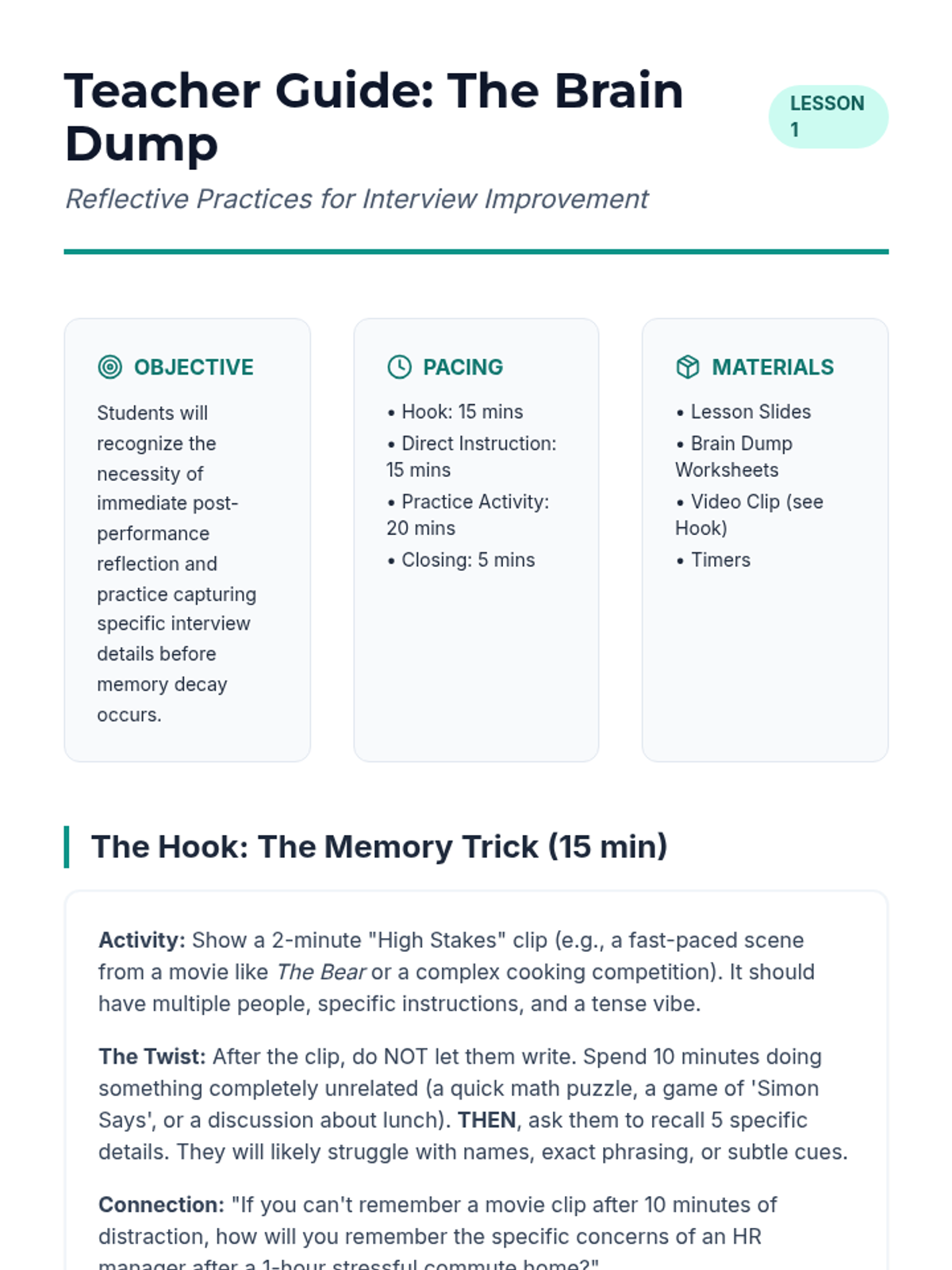
This inquiry-based sequence focuses on self-assessment and continuous improvement in the interview process. Students will develop habits for immediate post-interview reflection, analyze performance gaps, learn to process feedback with a growth mindset, and create actionable plans for professional growth.
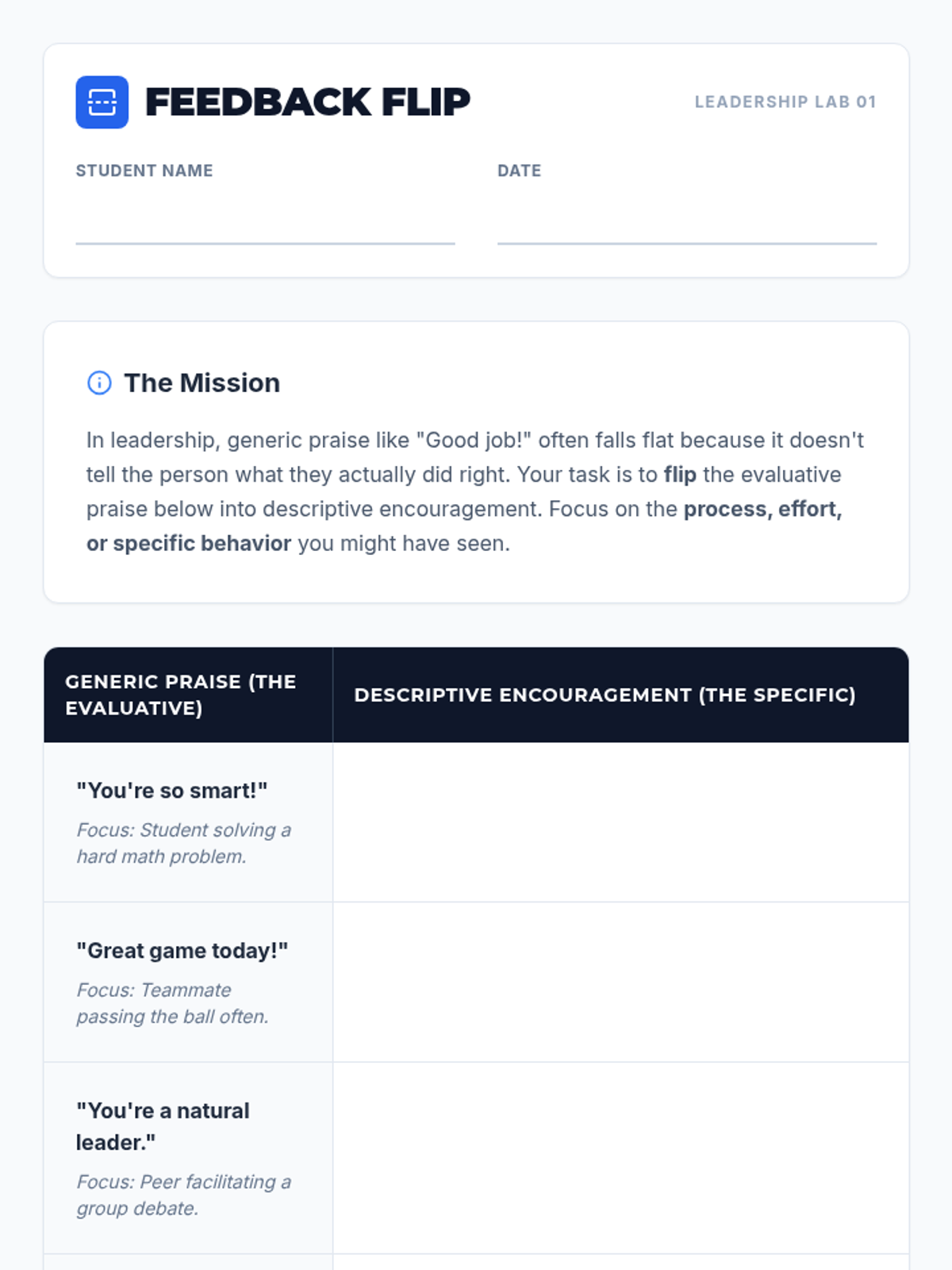
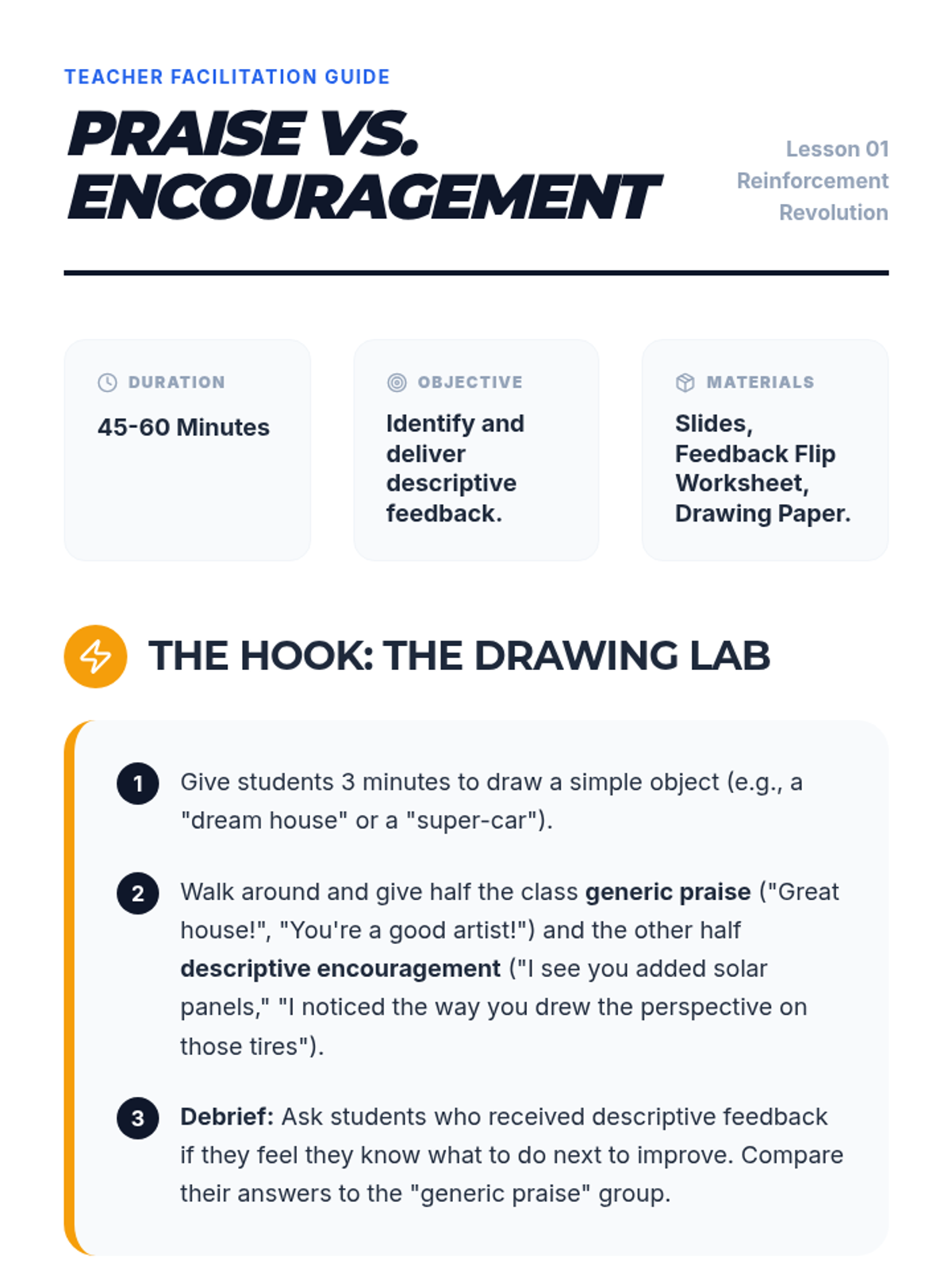
This sequence explores the interpersonal application of positive reinforcement in leadership, coaching, and mentoring contexts. Students examine how leaders influence group culture and individual performance through specific praise and recognition systems.
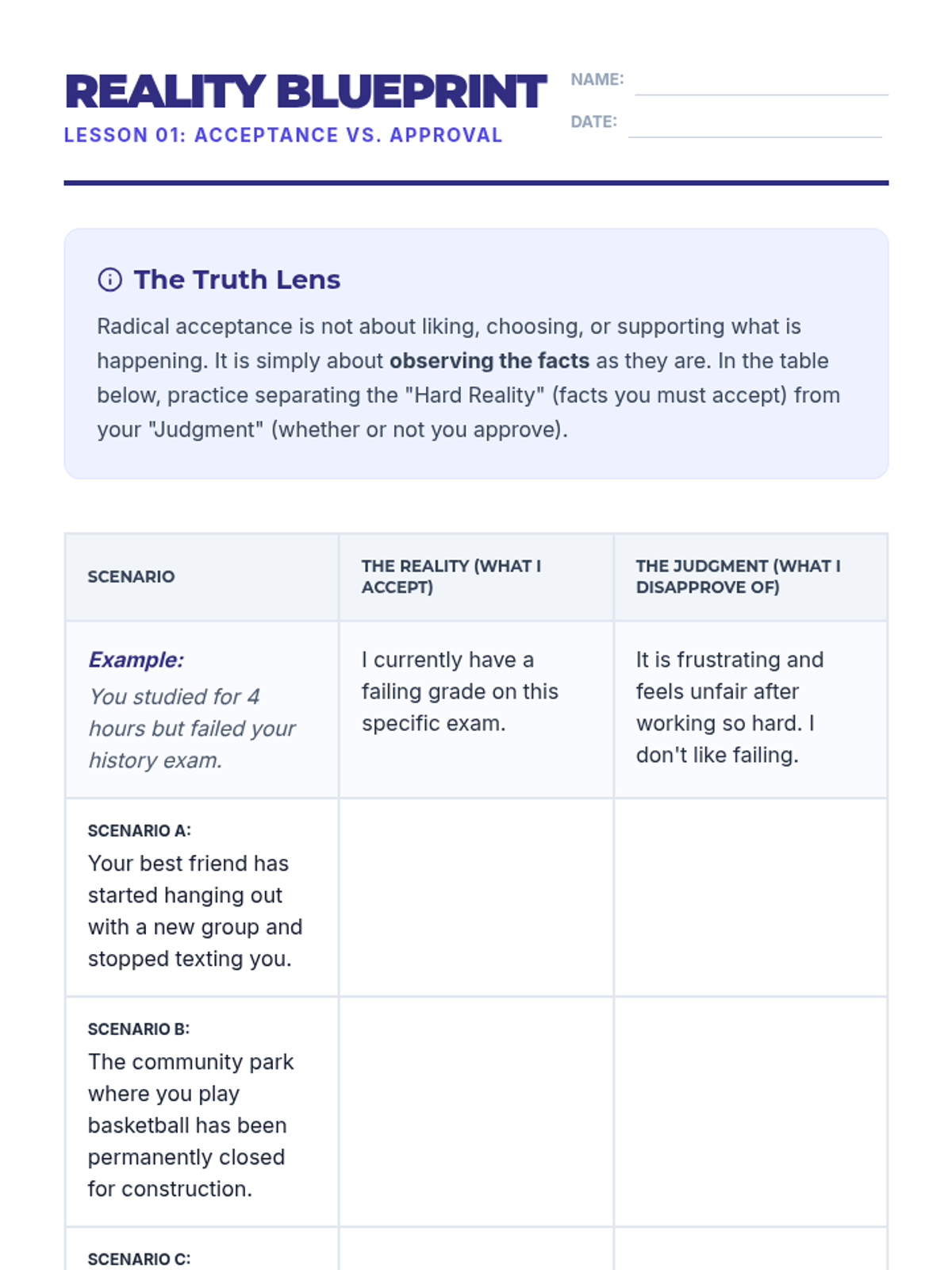
This sequence explores the psychological concept of Radical Acceptance, teaching students to distinguish between acceptance and approval. Students will analyze case studies, relationship dynamics, and civic advocacy to understand how acknowledging reality is the first step toward effective change.
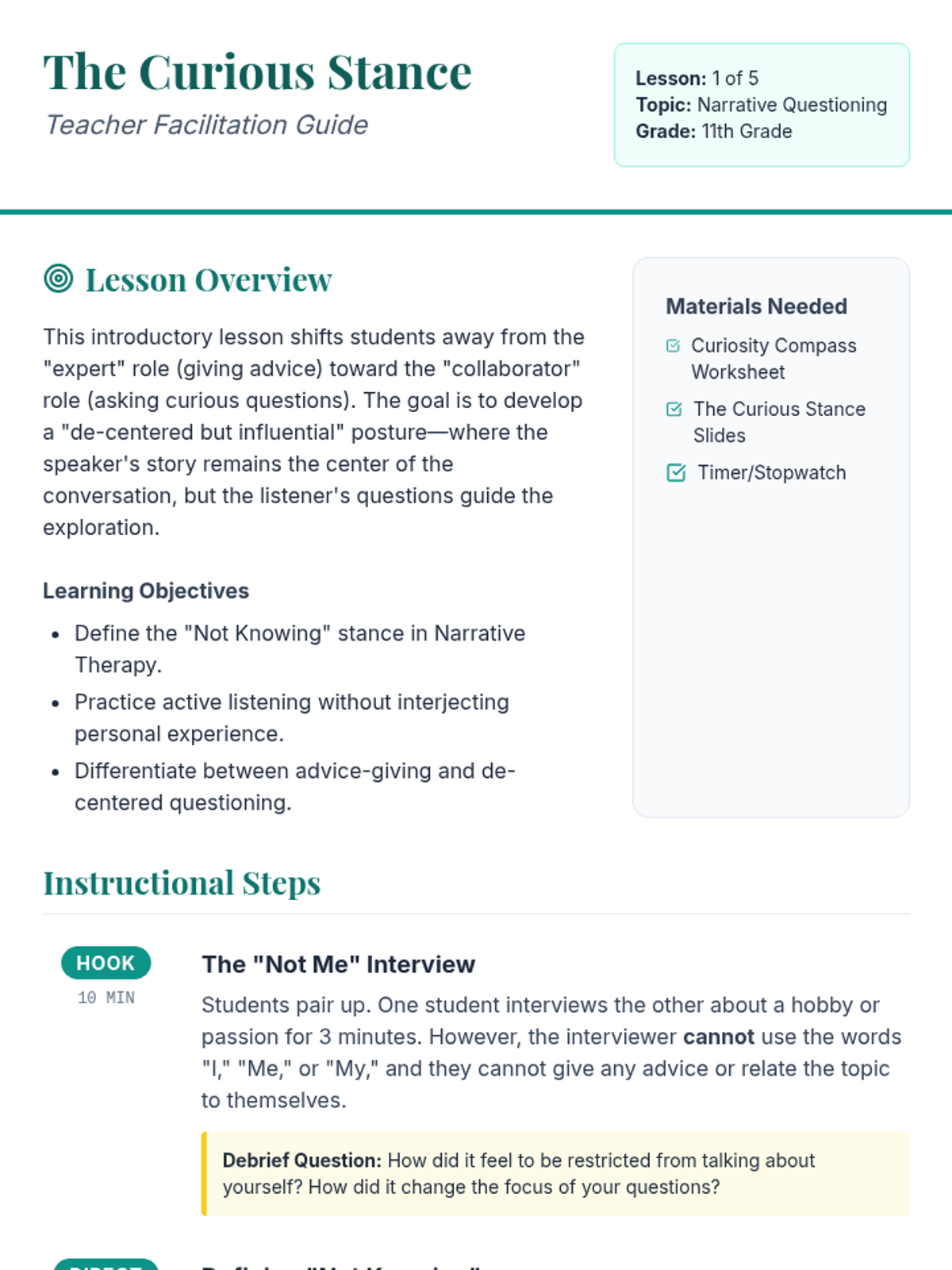
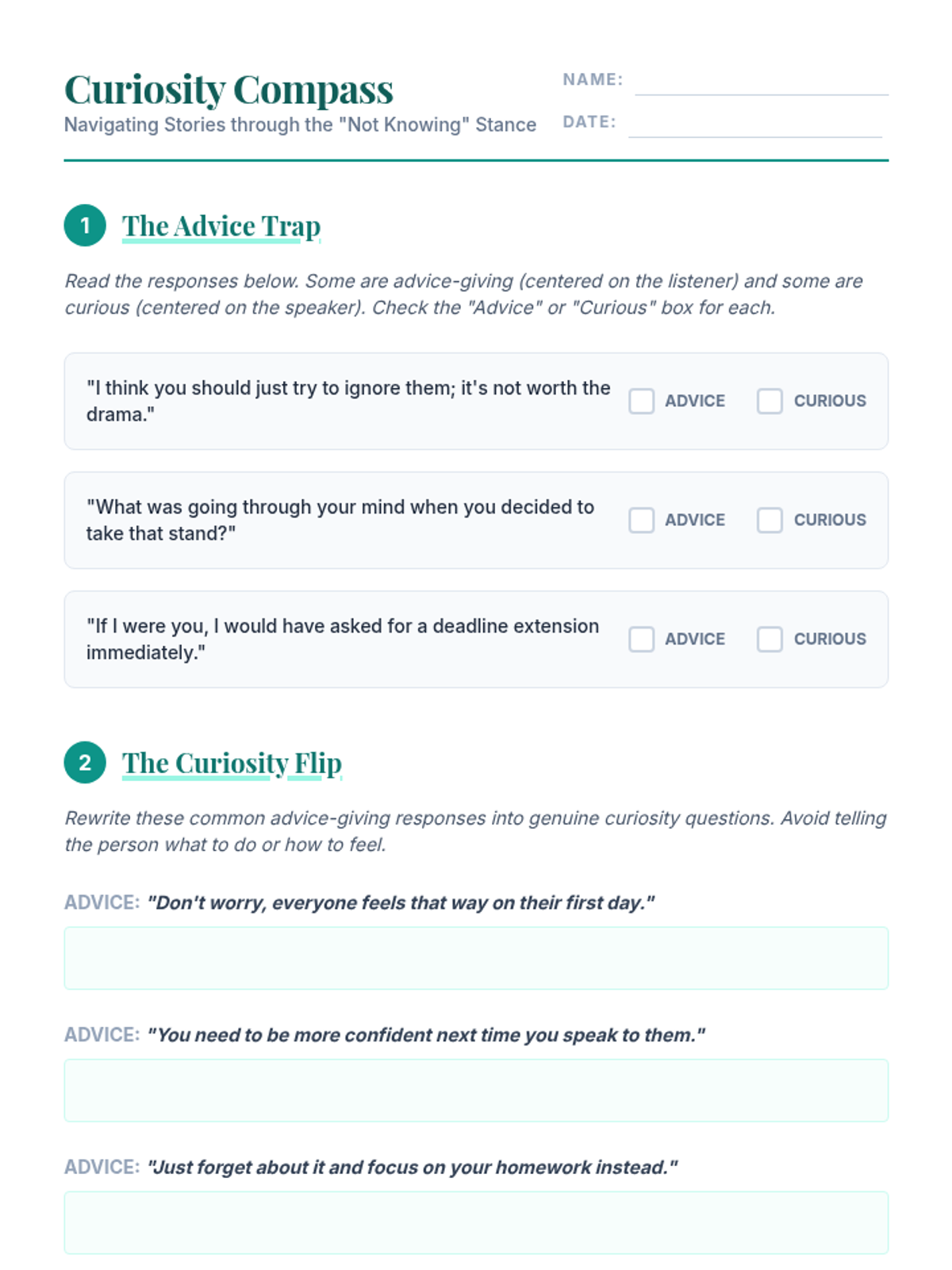
A comprehensive sequence for 11th-grade students to master Narrative Therapy questioning techniques, focusing on the de-centered stance, Landscape of Action/Consciousness, and Outsider Witness protocols. Students develop interpersonal skills to help peers uncover hidden strengths and resilience in their own life stories.
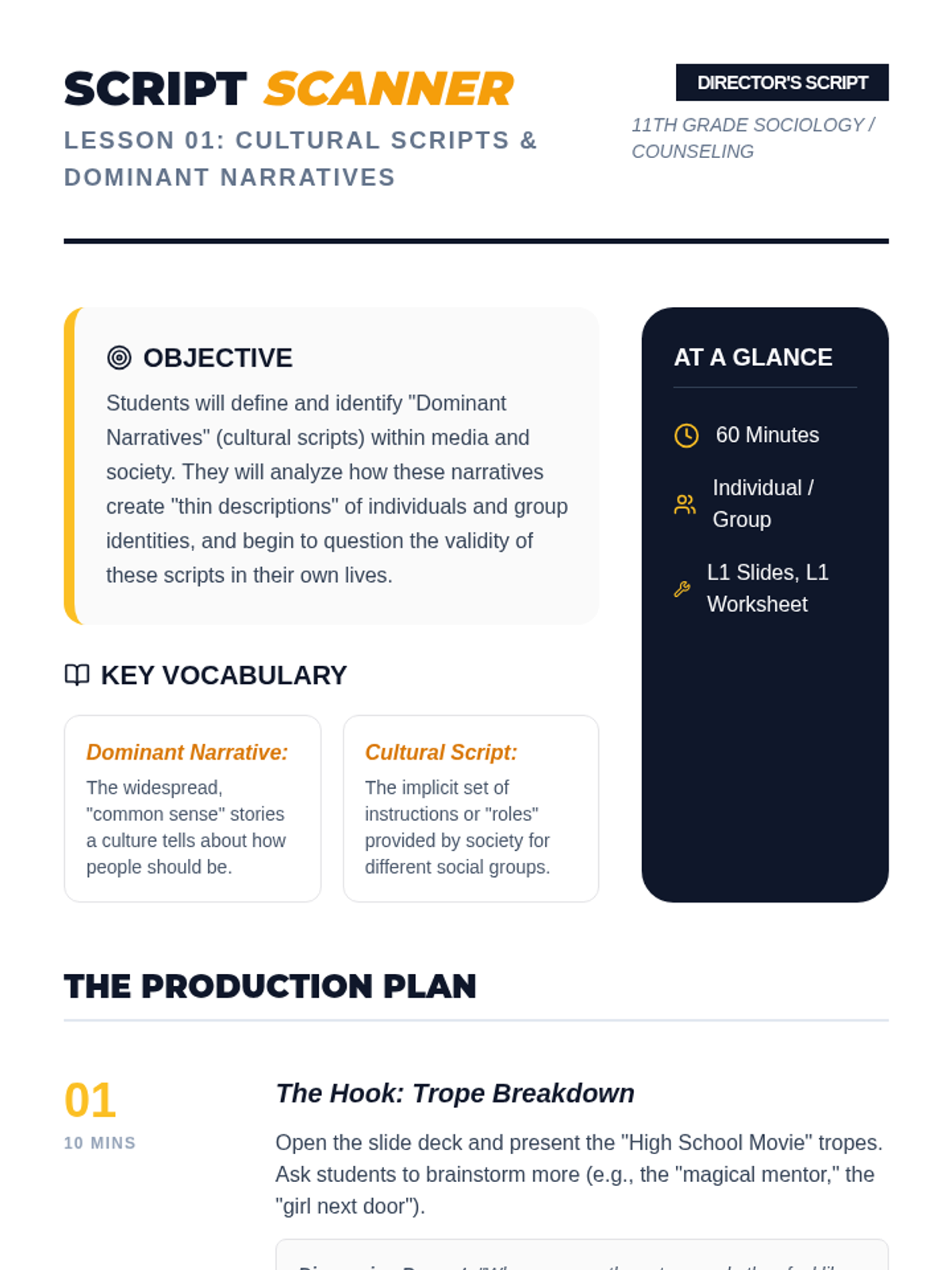
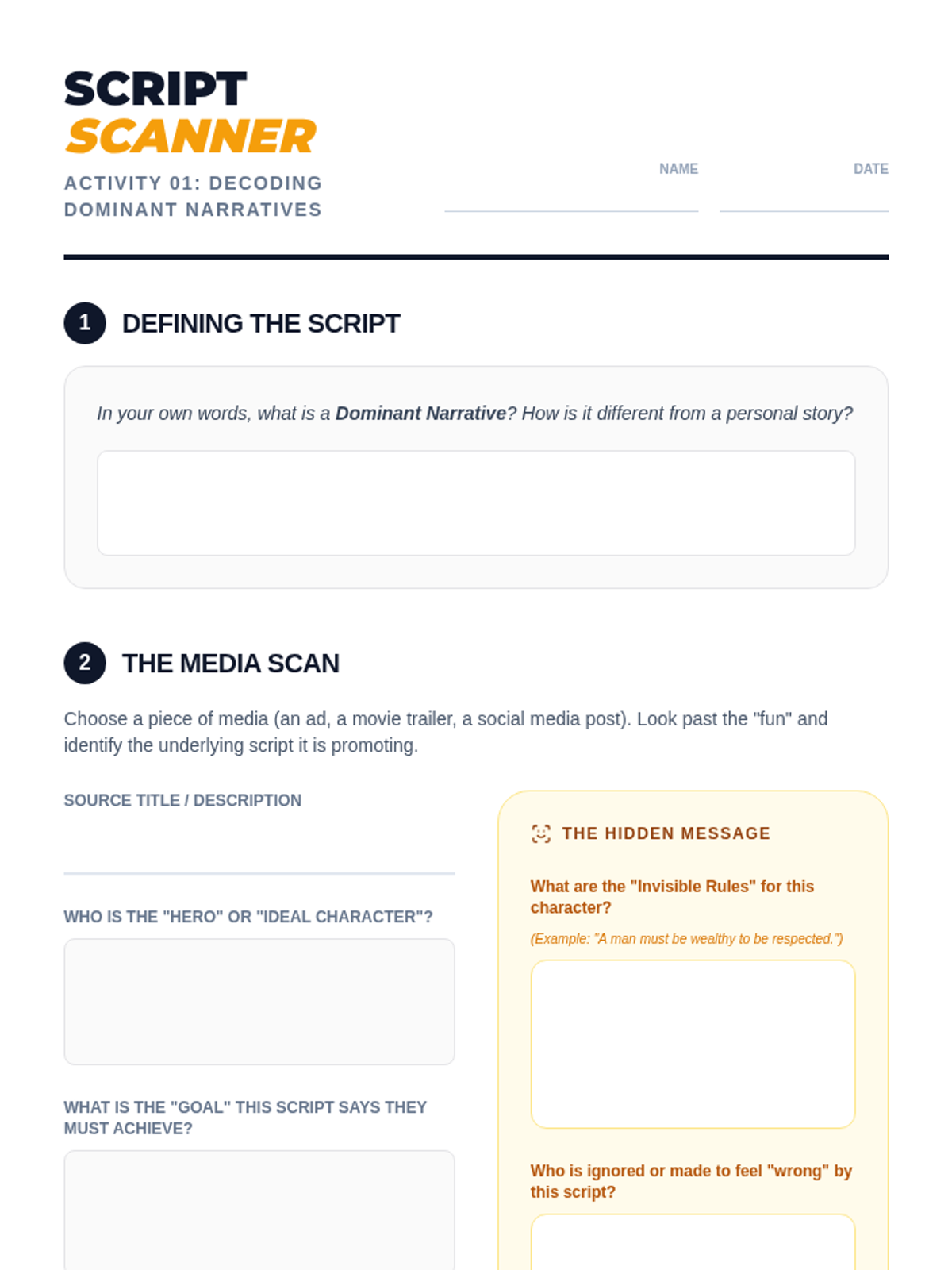
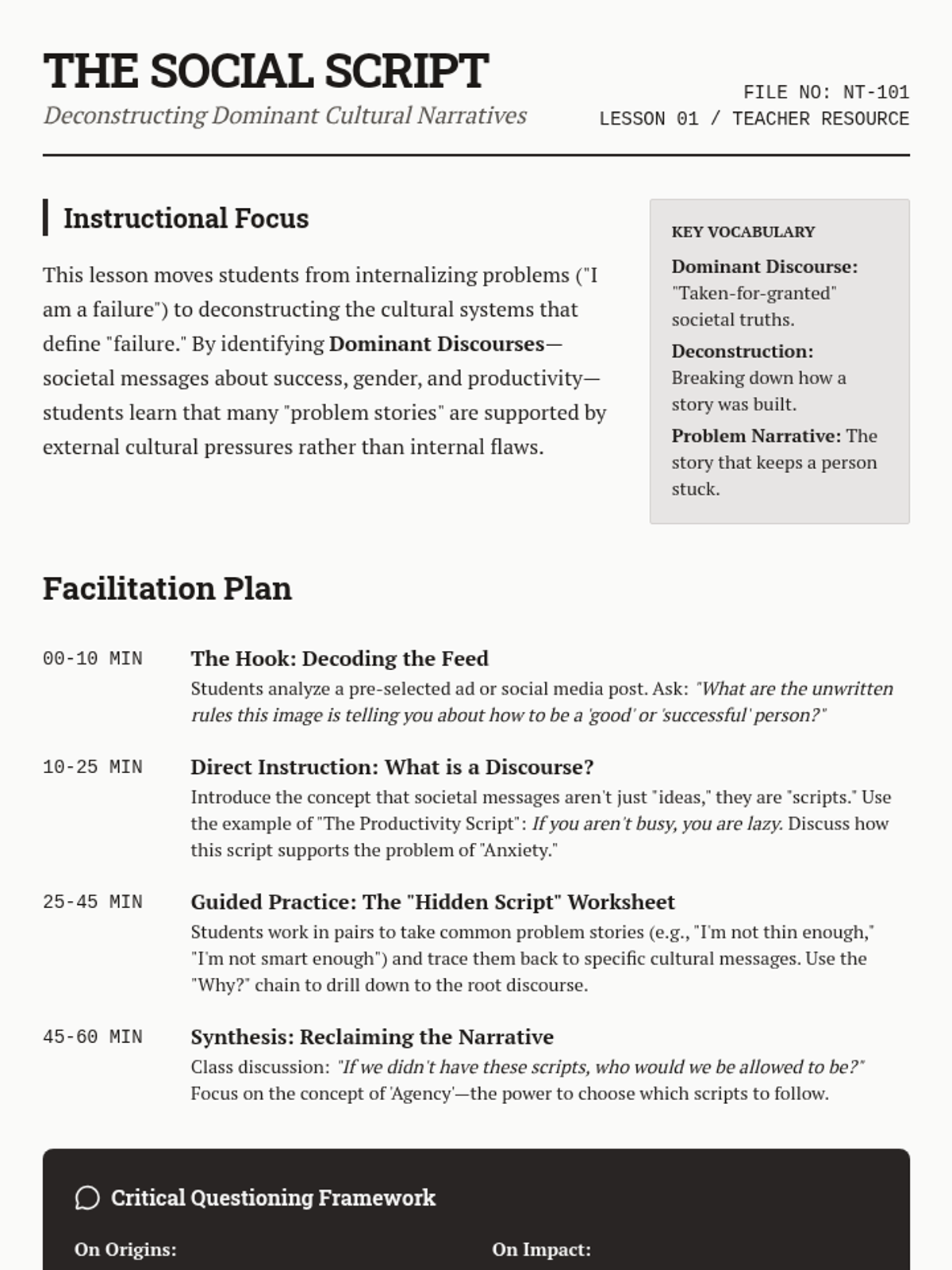
A 5-lesson sequence for 11th-grade students focused on narrative therapy concepts applied to sociology. Students learn to identify dominant societal narratives, deconstruct 'thin' descriptions, and identify 'unique outcomes' to build alternative, empowering storylines.
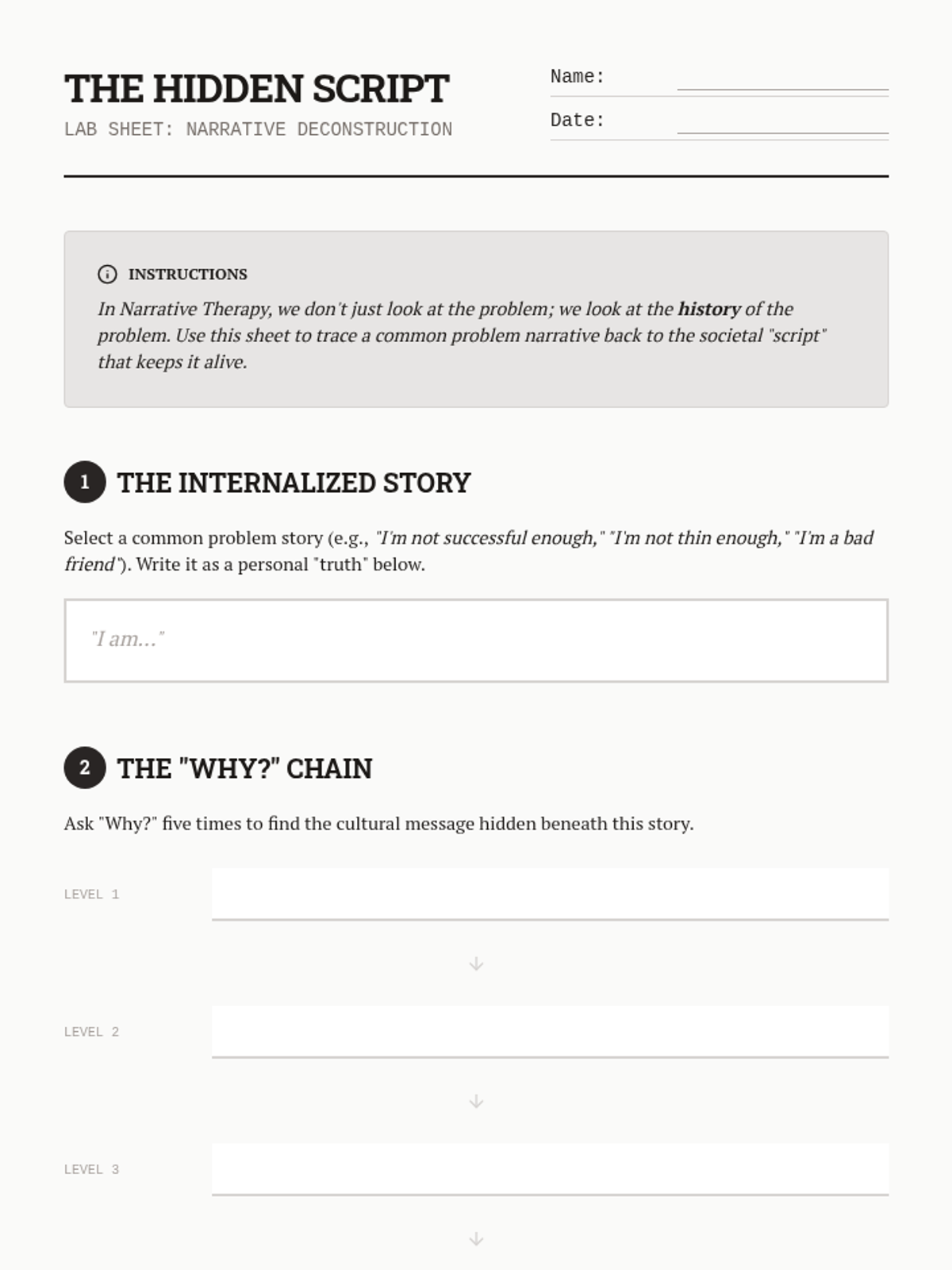
This sequence explores how societal narratives shape personal identity. Students learn to deconstruct dominant cultural 'scripts', utilize Narrative Therapy frameworks like the Landscape of Action/Identity, and practice Outsider Witnessing to formalize new, preferred stories of agency and resilience.
This action-oriented sequence empowers students with the knowledge and skills to act if they suspect trafficking. Moving beyond awareness, students learn the specific protocols for reporting, the importance of bystander intervention, and how to access local and national resources.
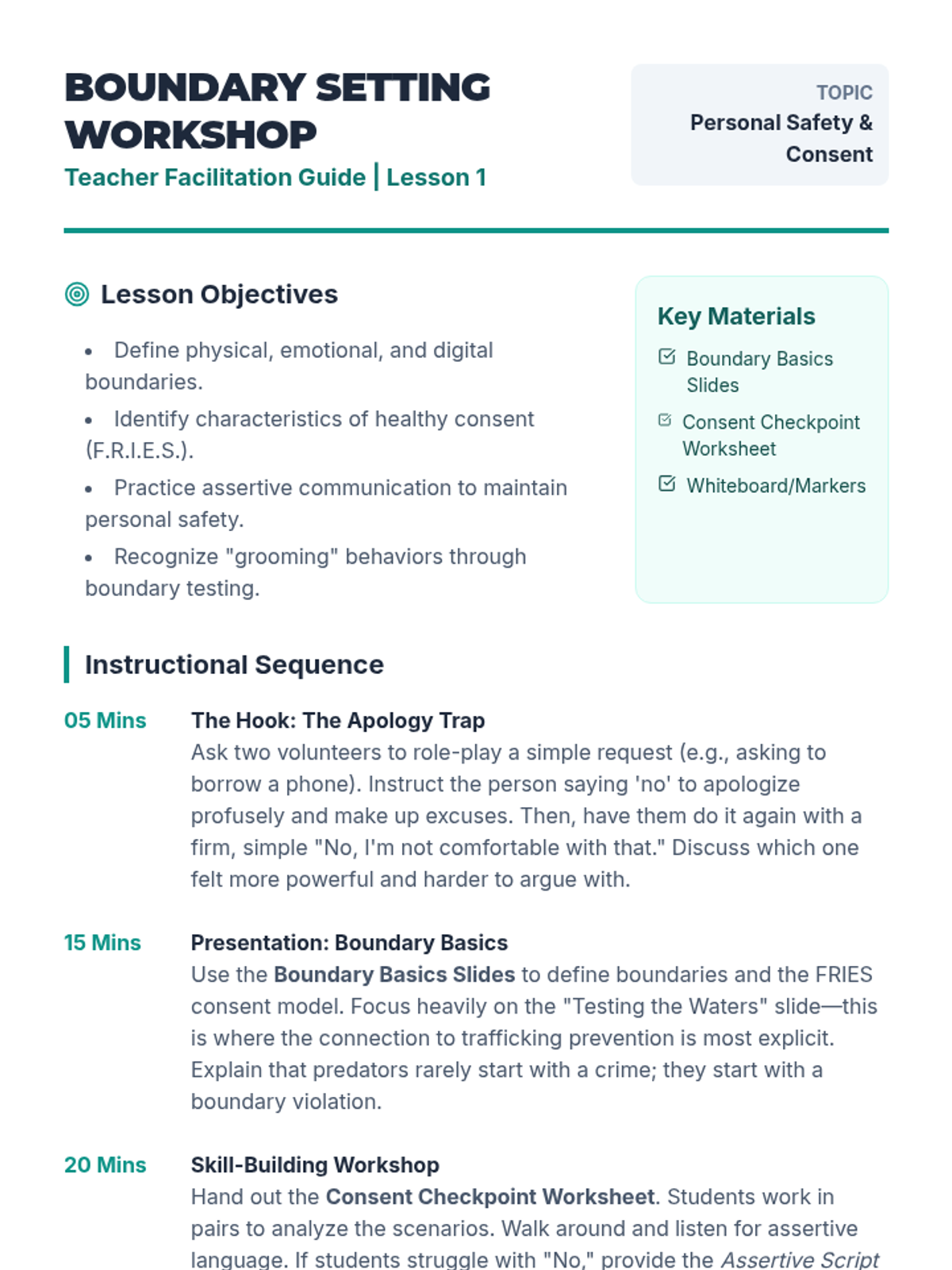
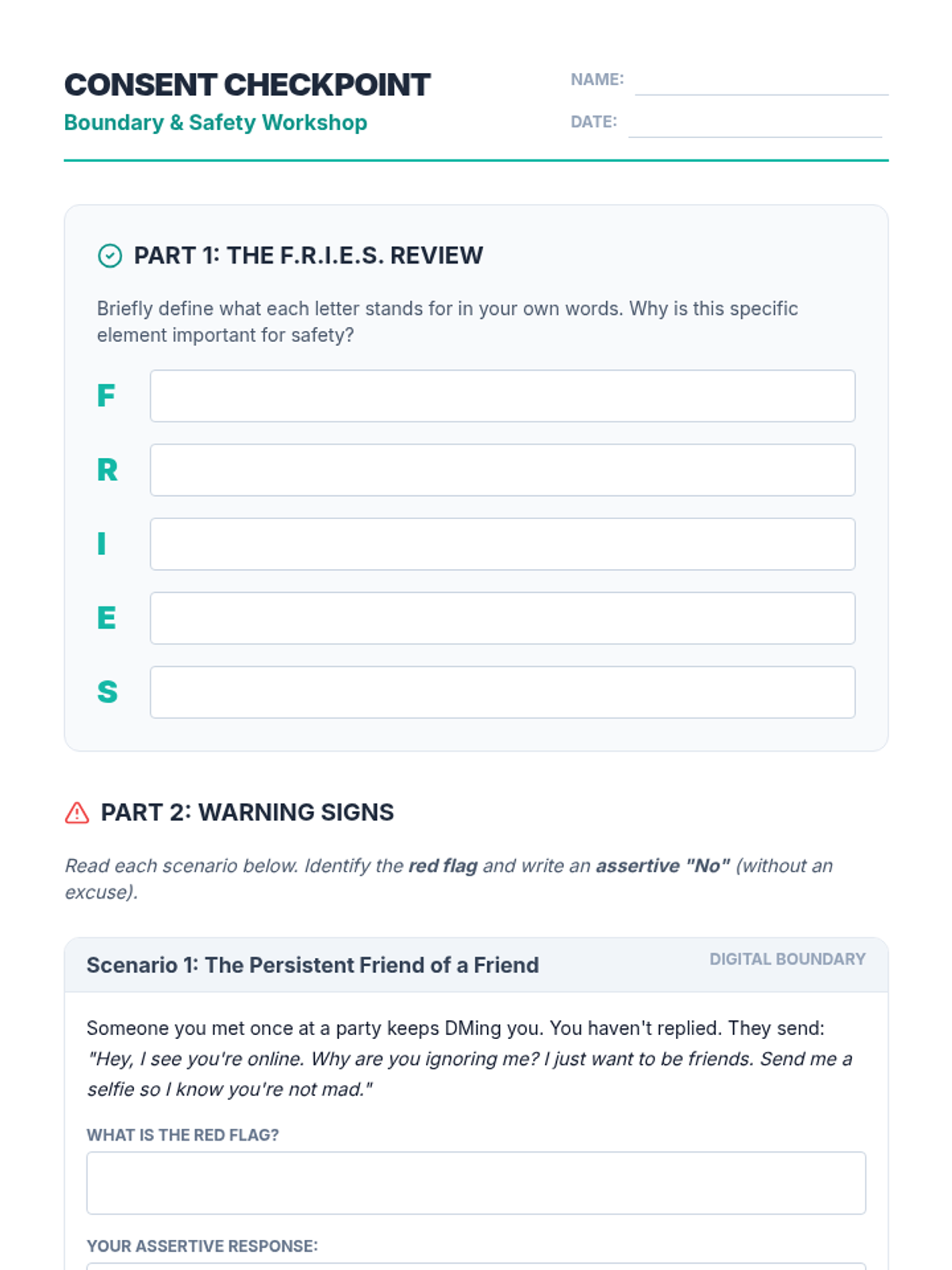
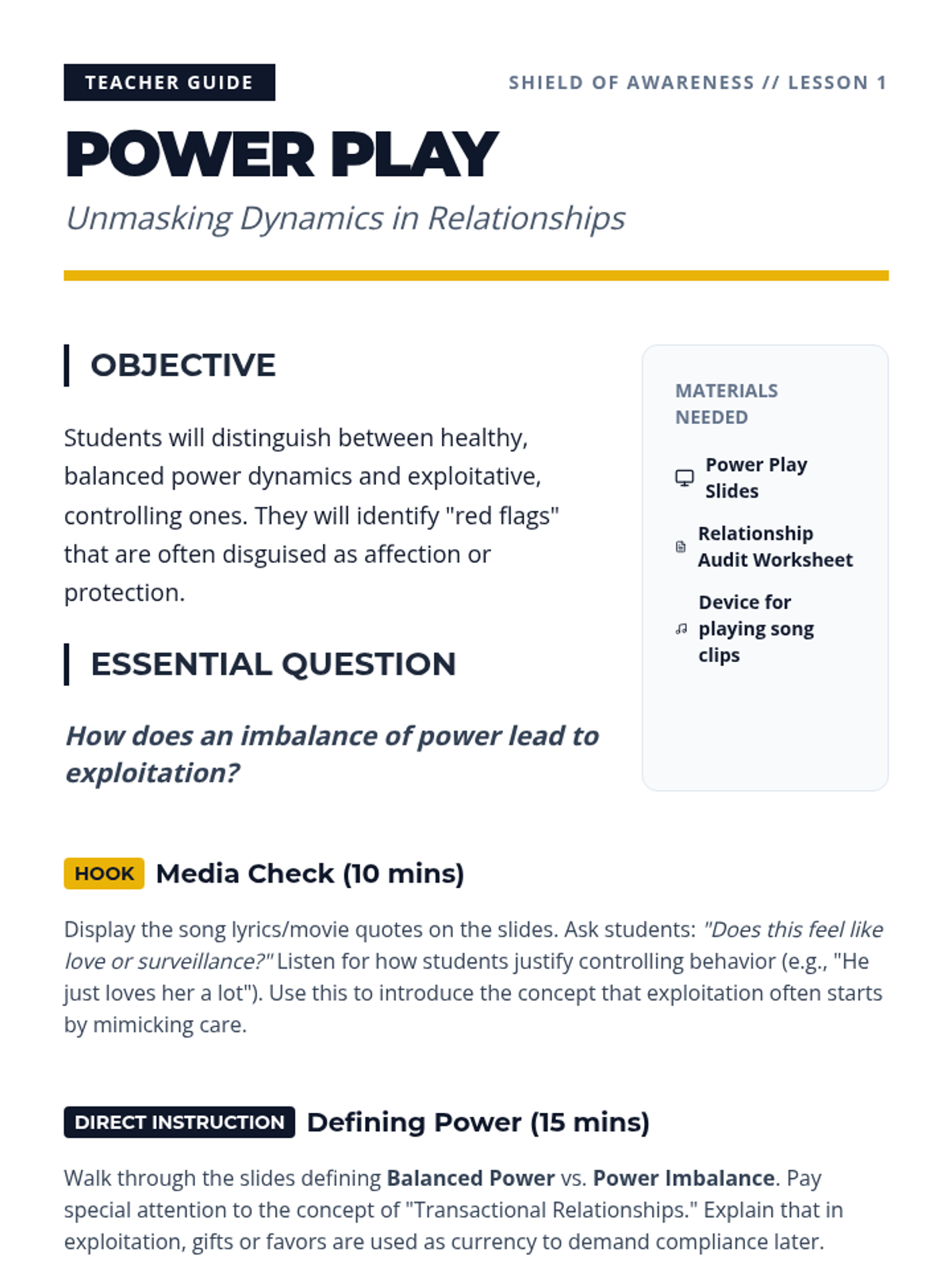
This sequence addresses the interpersonal dynamics of trafficking, focusing on healthy boundaries and the specific 'Romeo' or 'Boyfriend' coercion tactics often used against teens. Students will engage in workshops to practice assertiveness and recognize the difference between affection and control.
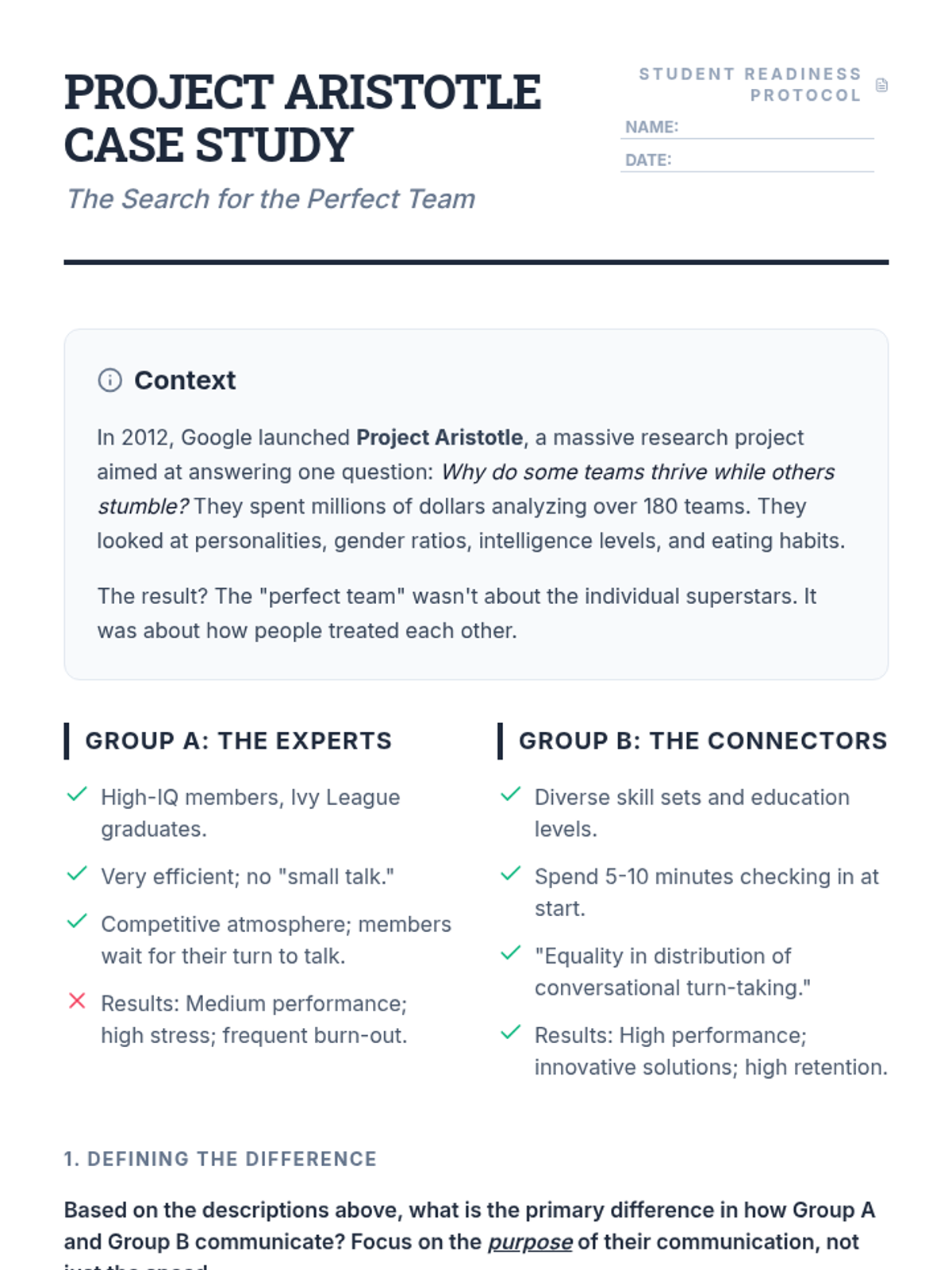
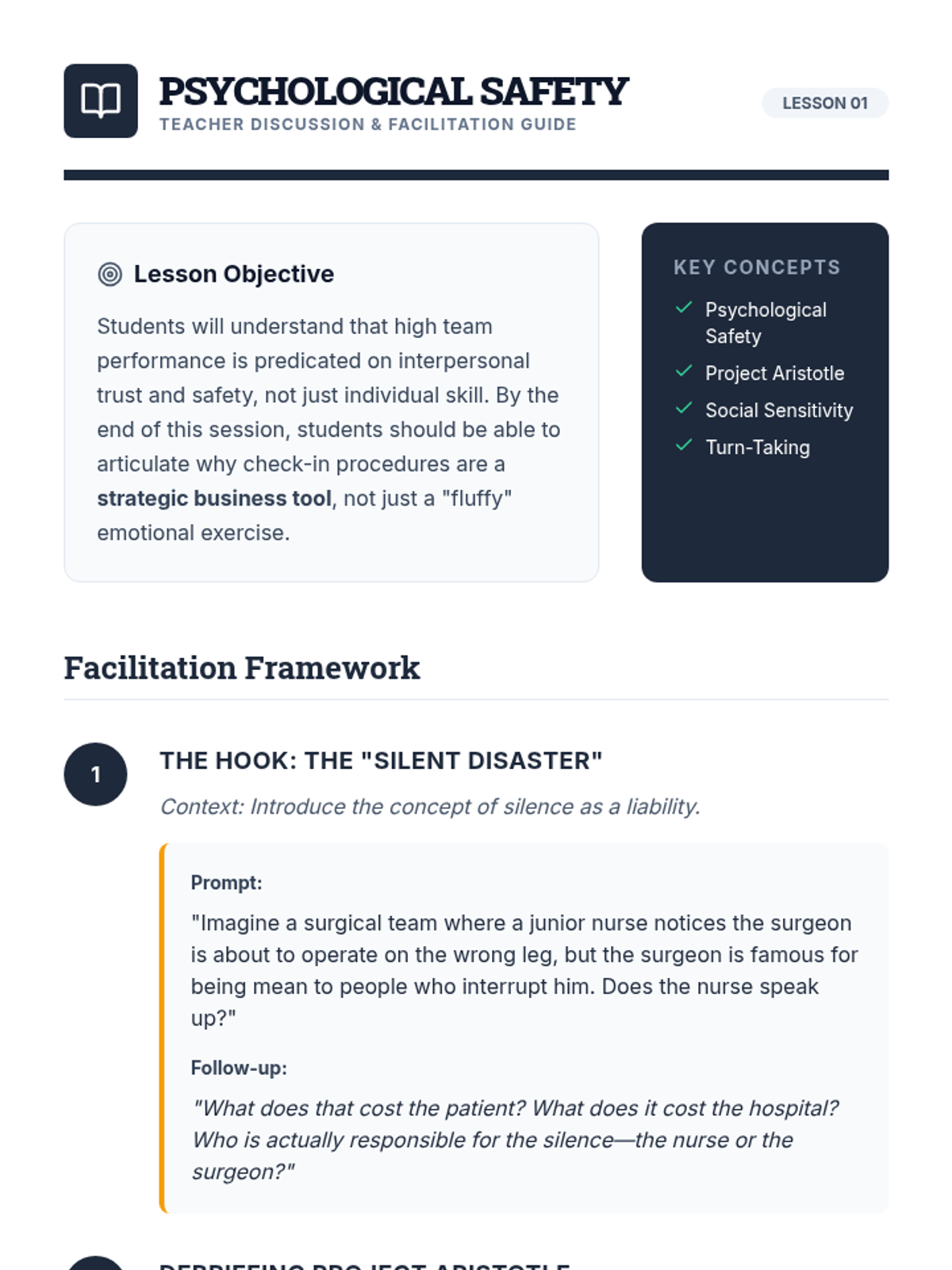
This sequence frames daily check-ins as a professional leadership and team management competency. Students explore psychological safety, real-world professional stand-ups, and facilitation techniques to design their own 'Readiness Protocols' for teams.
A 10-session course for high school students focused on building and maintaining healthy romantic, platonic, and digital relationships through communication, boundaries, and empathy.
A 10-session comprehensive course for high school students focused on building healthy romantic, platonic, and digital relationships through communication, boundaries, and empathy.
A 10-session course for high school students focused on building and maintaining healthy relationships through communication, boundaries, and empathy.
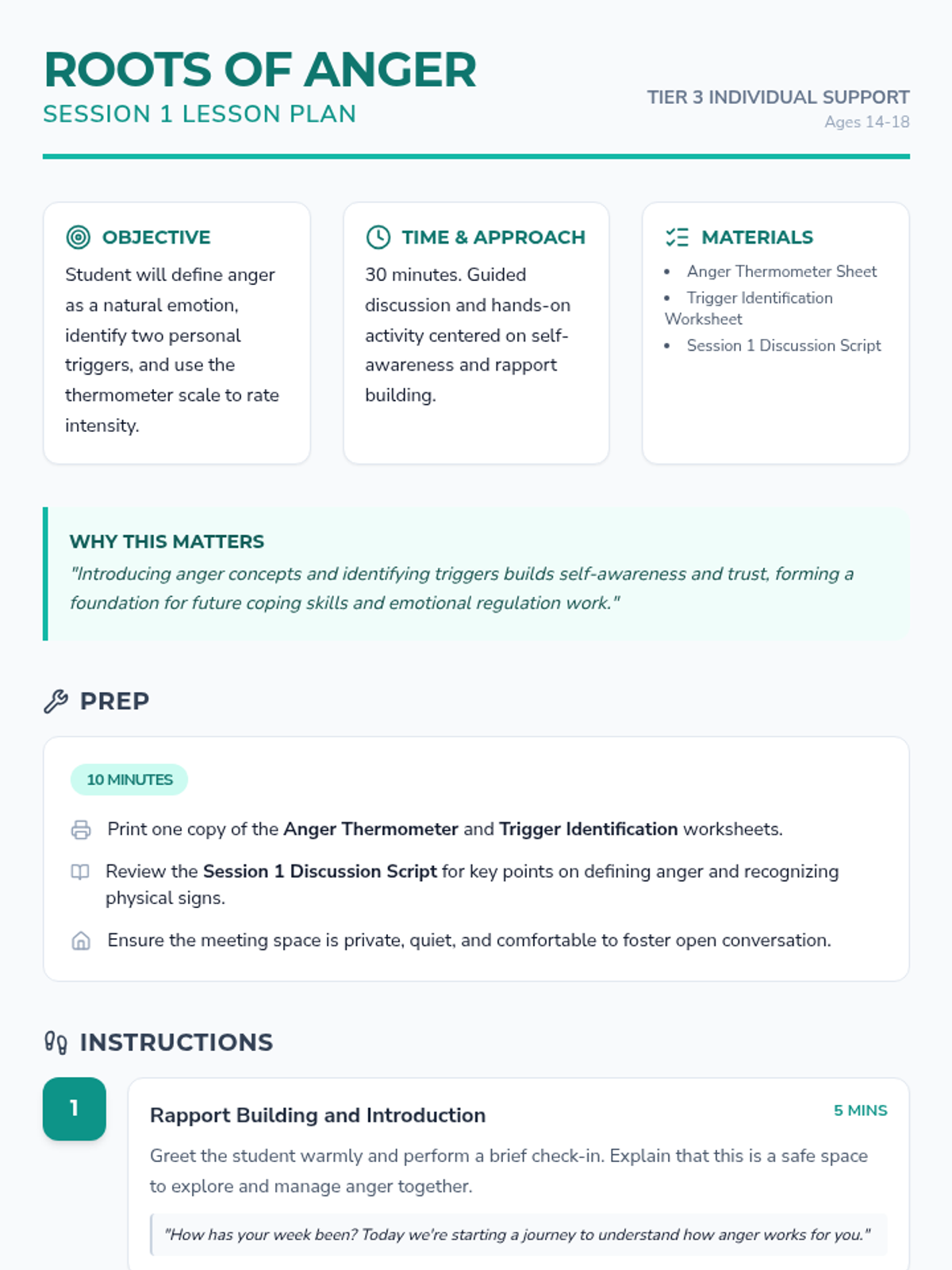
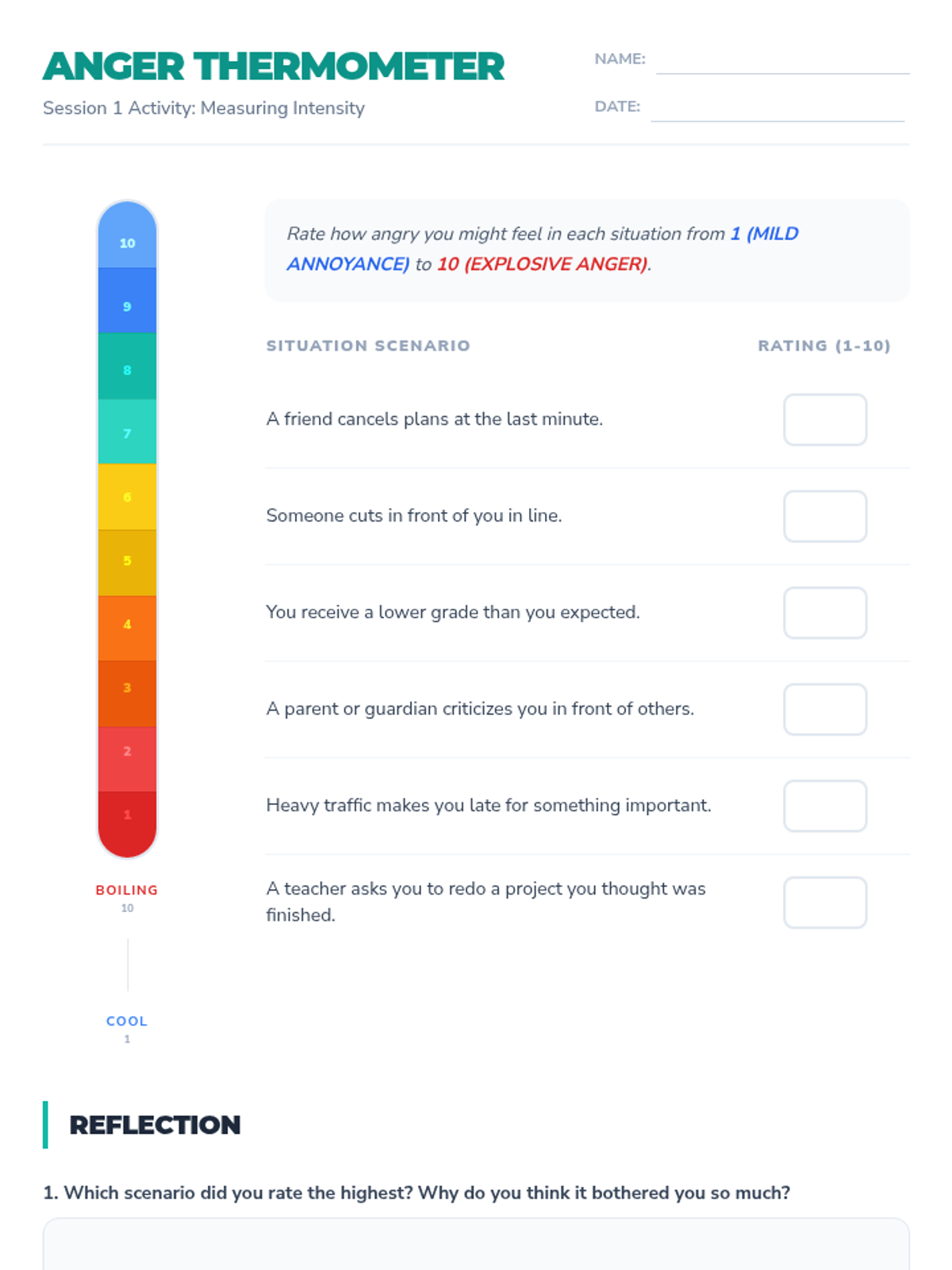
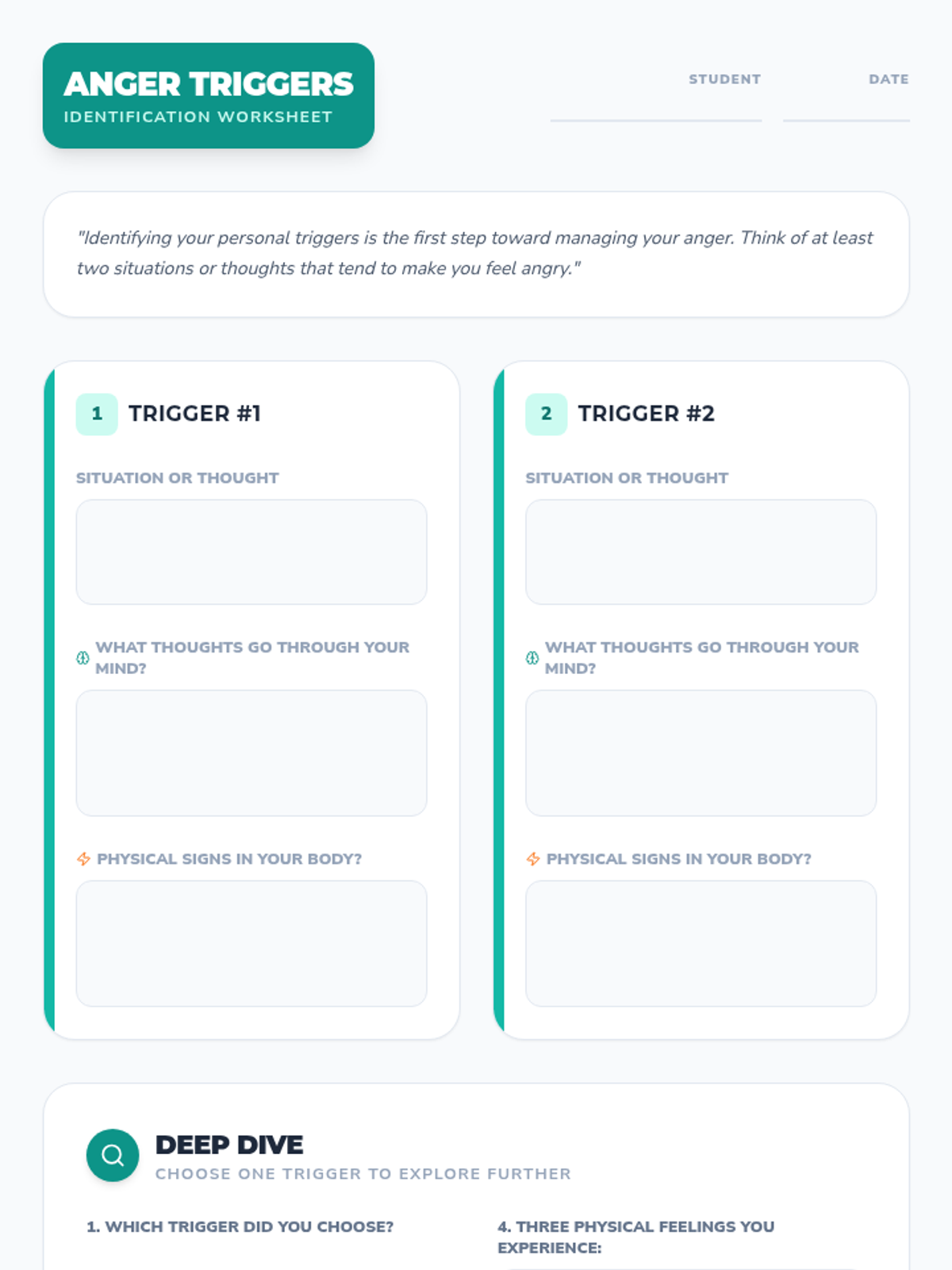
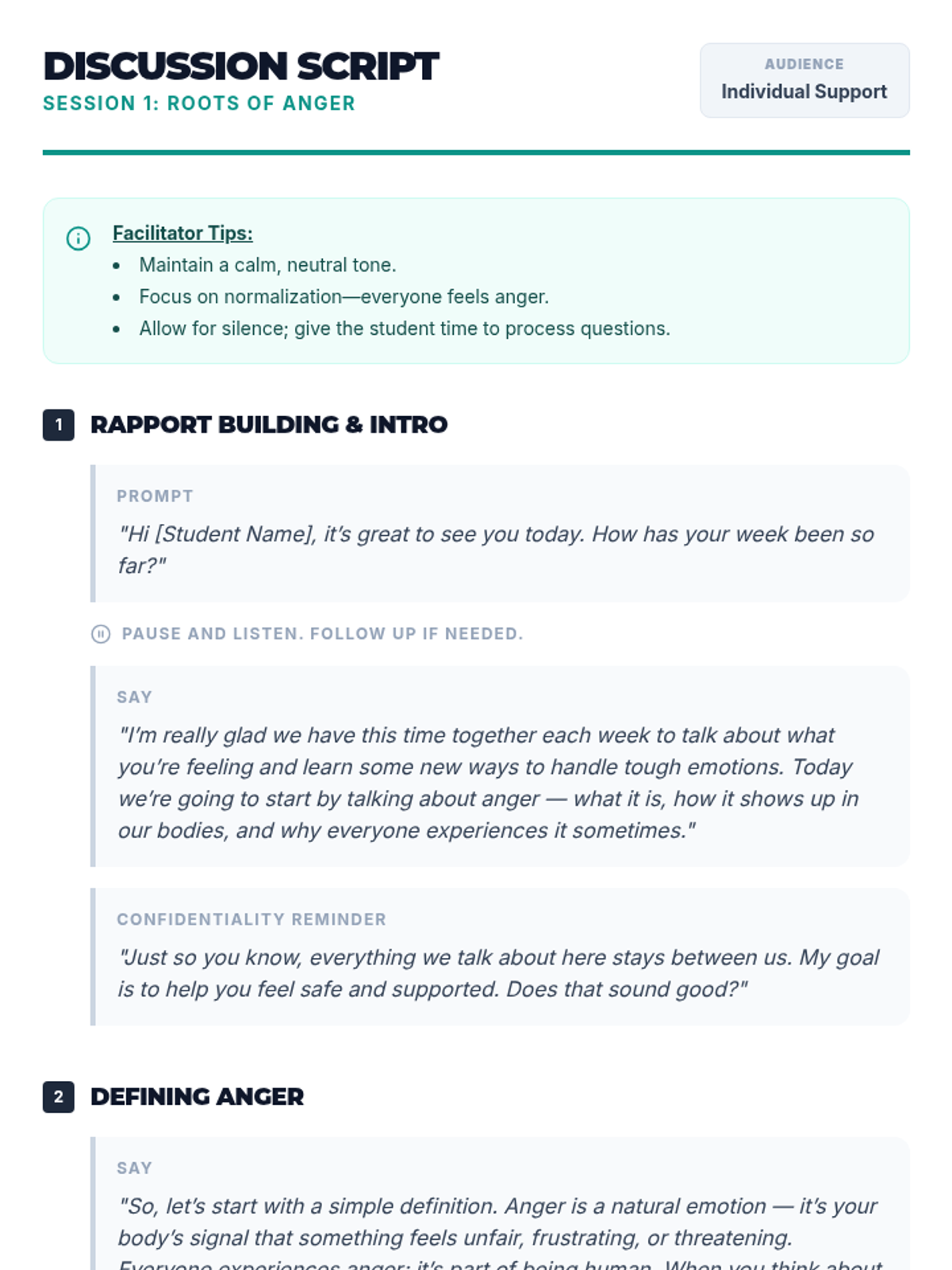
A six-session individual support plan for a 16-year-old student to understand anger, learn psychoeducation about emotions, and practice effective coping skills. This Tier 3 plan combines guided discussions, targeted activities, and worksheets to build self-awareness and regulation.
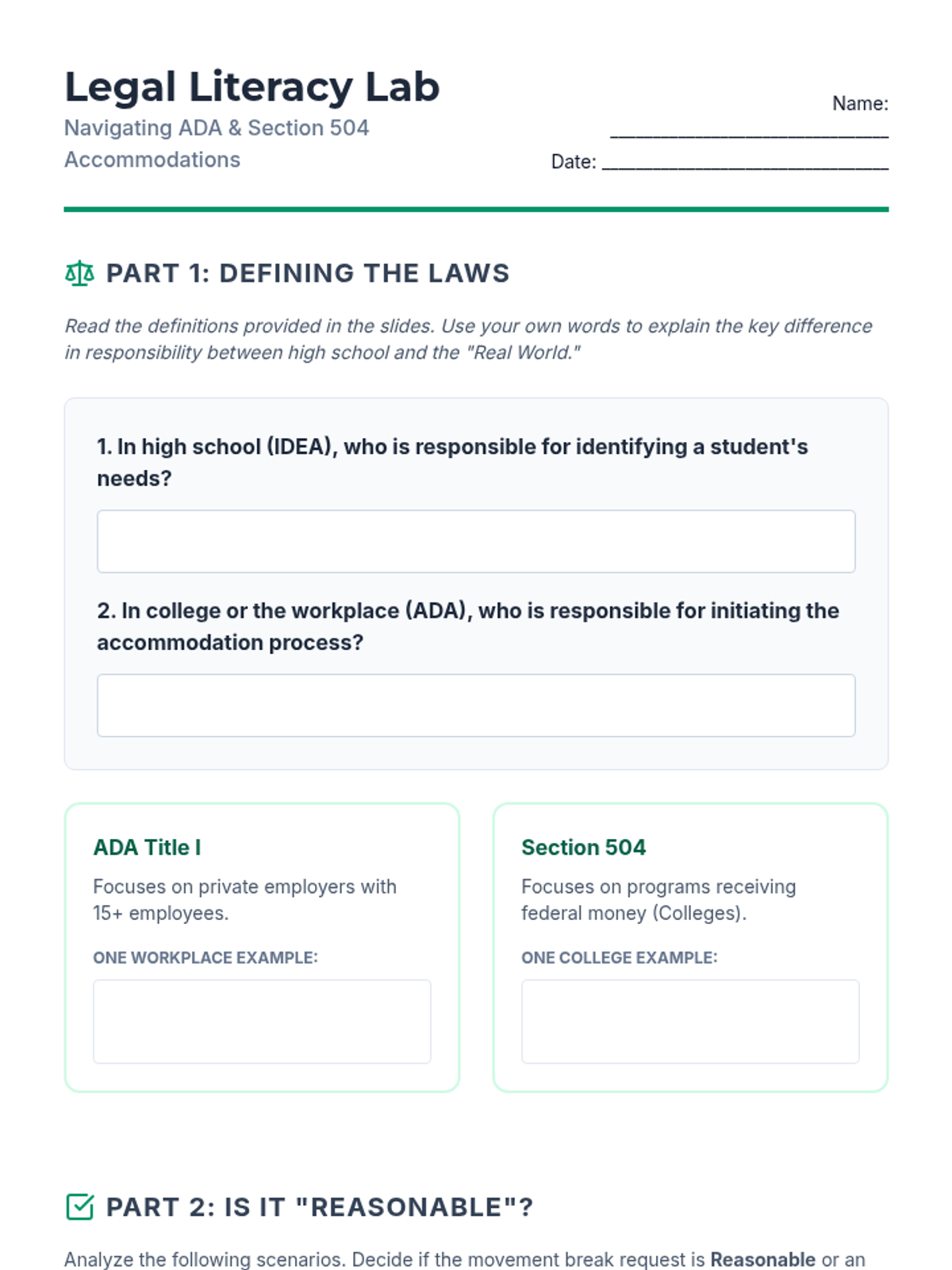
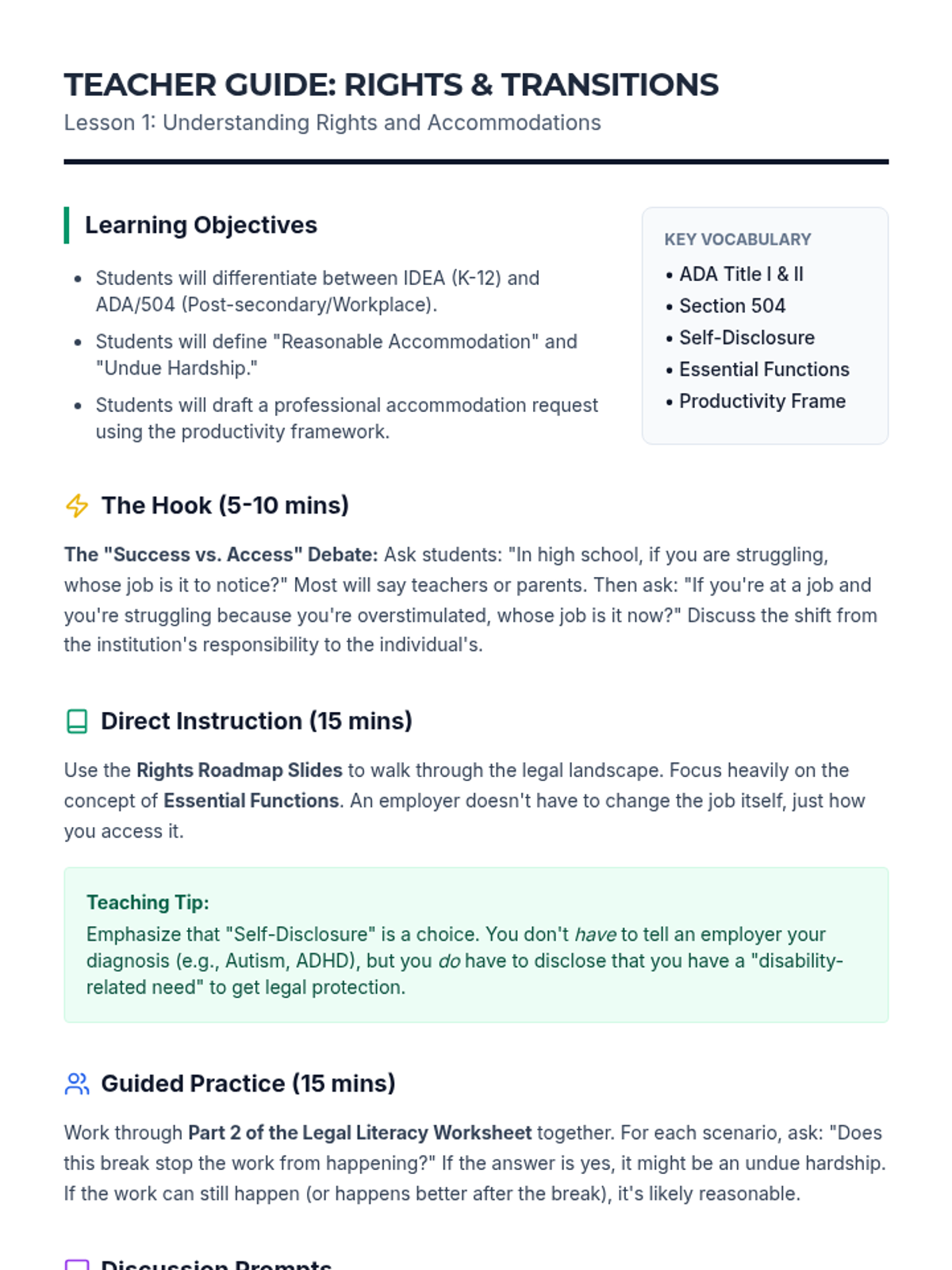
This sequence prepares 11th-grade students to advocate for their sensory and movement needs in post-secondary and professional environments. It covers legal rights under the ADA, professional communication skills, situational awareness, and the development of a personal regulation plan for workplace success.
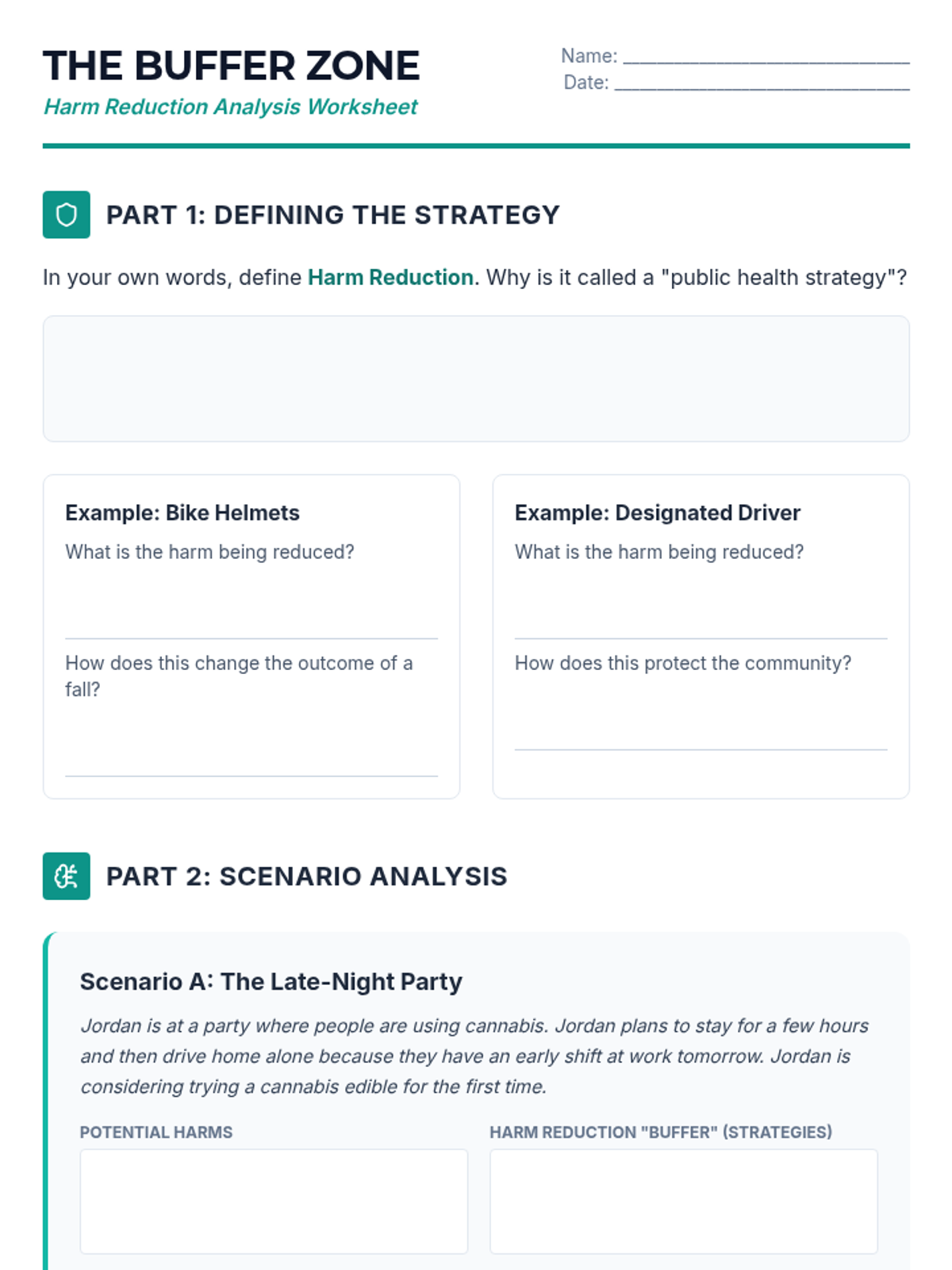
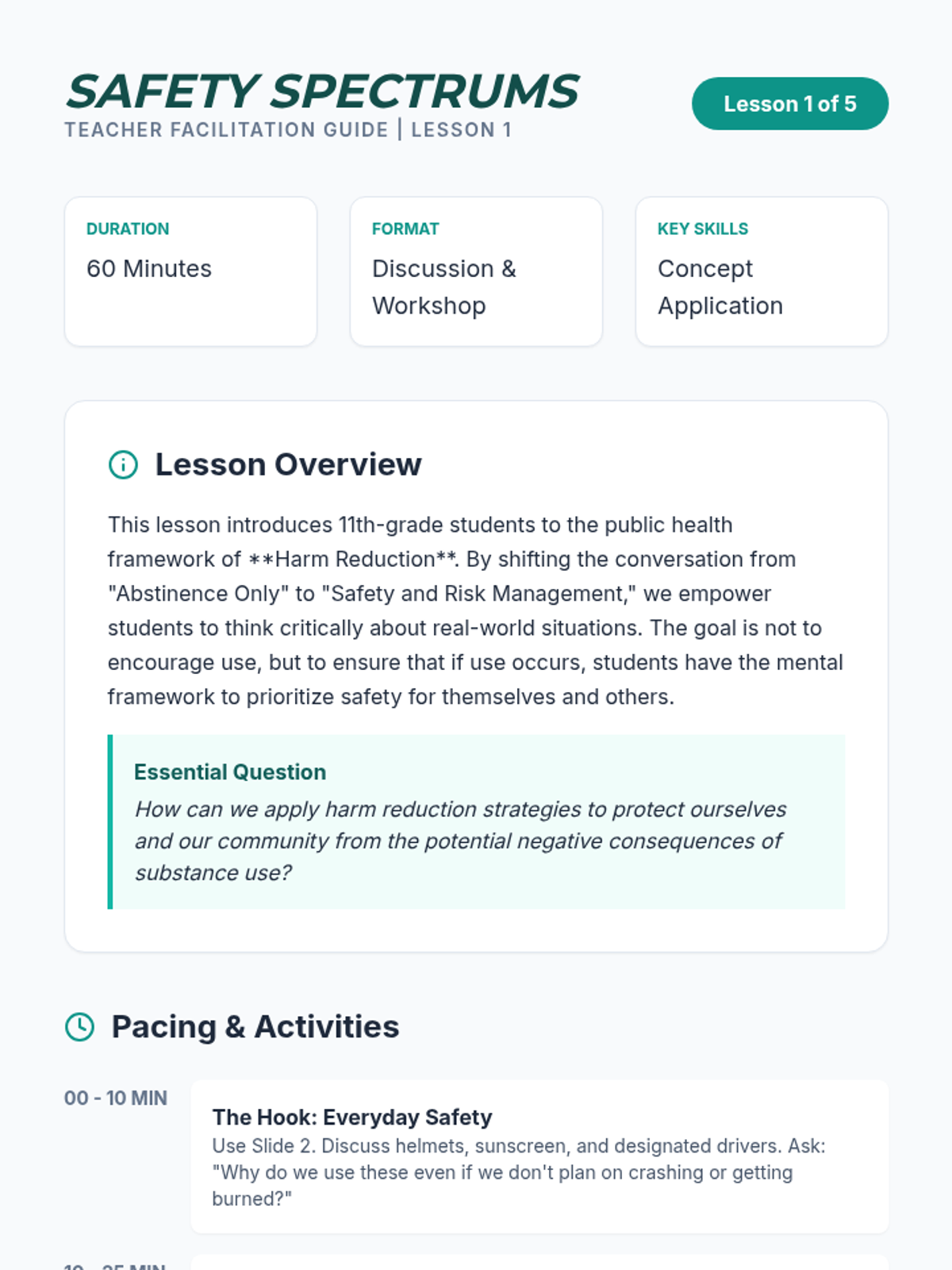
A harm reduction-focused sequence for 11th-grade students exploring cannabis awareness, responsible decision-making, and community safety. Students move from understanding public health strategies to creating their own safety campaigns.
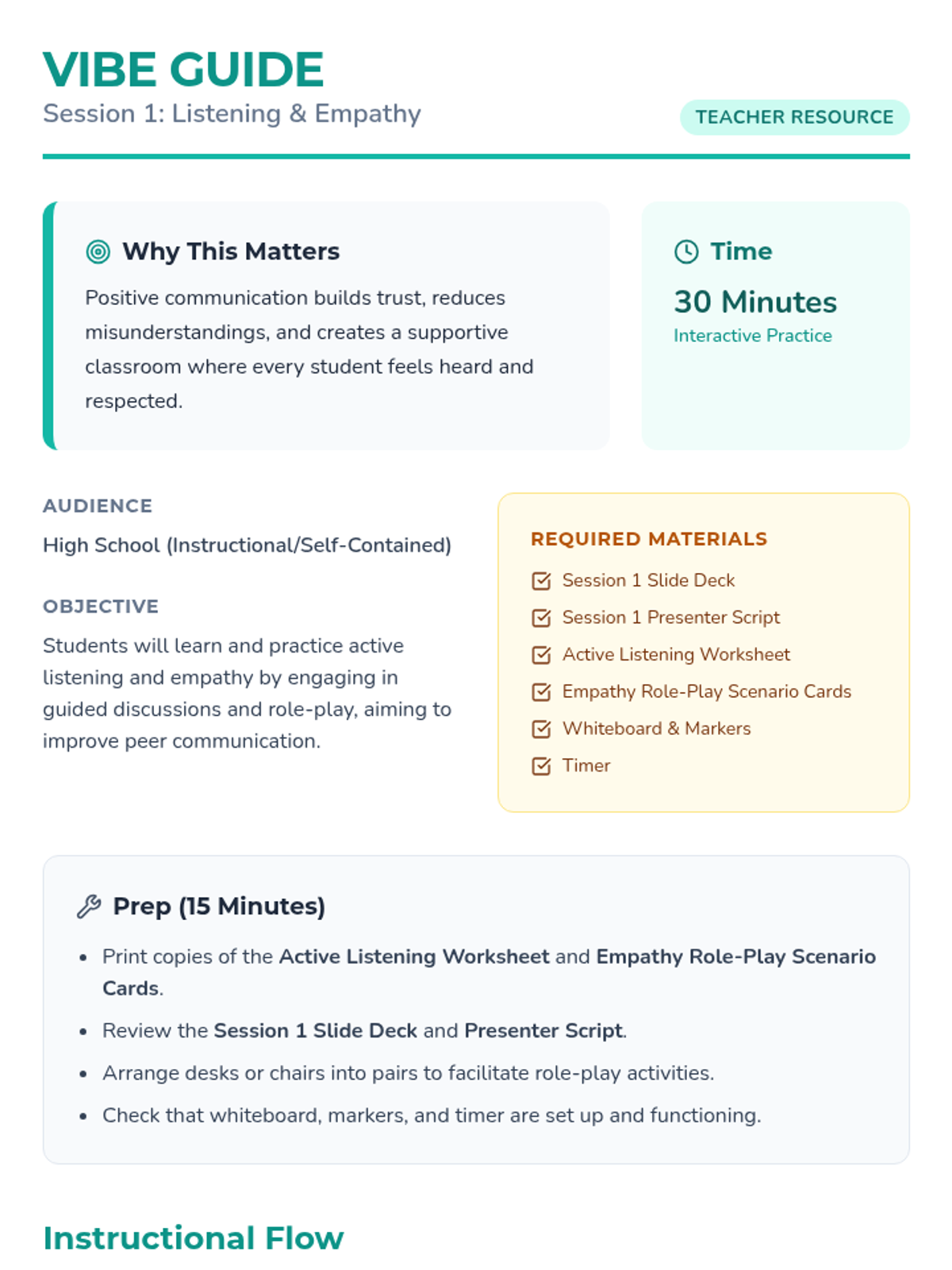
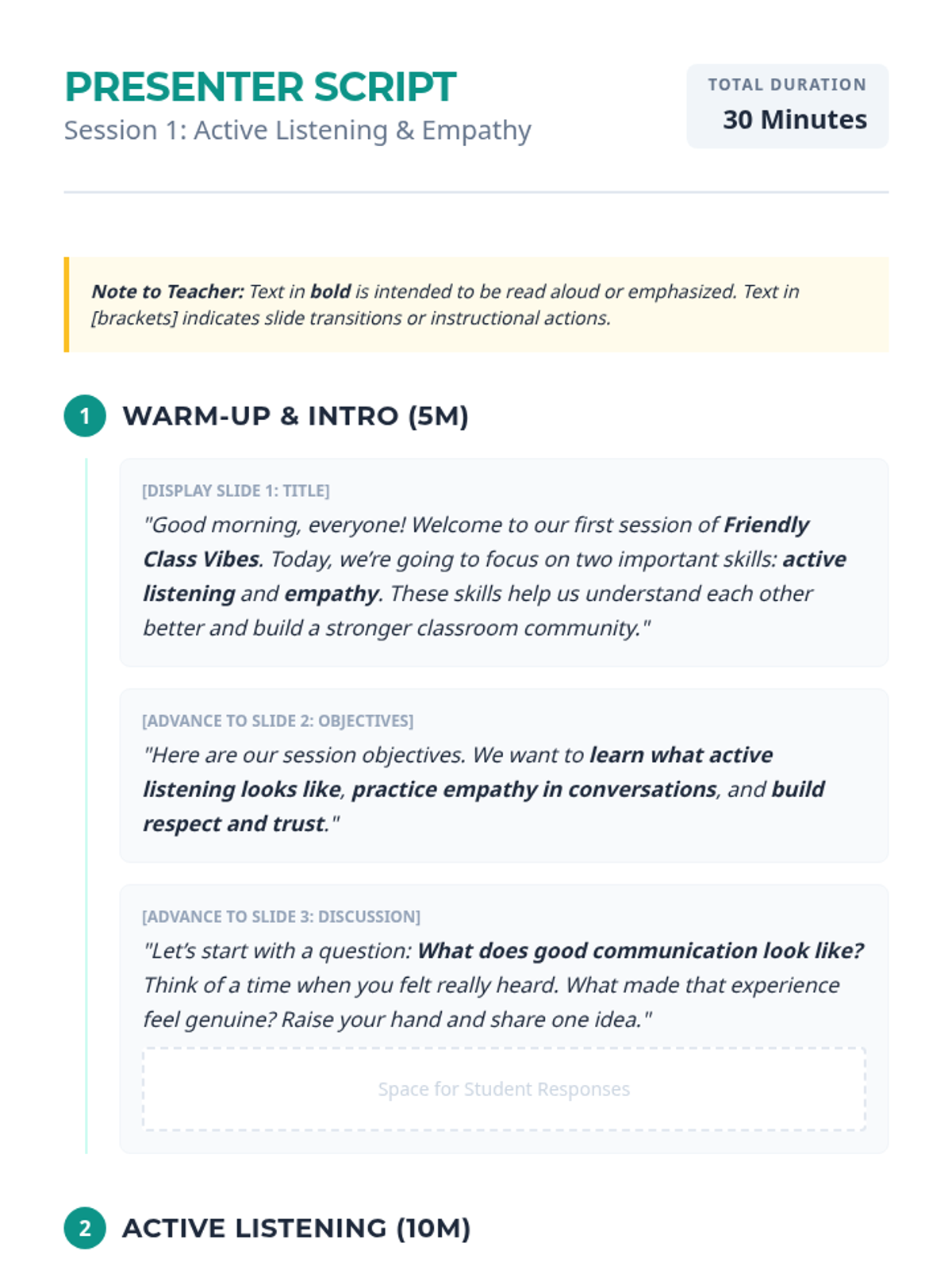
A two-session sequence designed for high school students in instructional settings to develop positive peer engagement strategies. Students practice active listening, empathy, and respectful feedback through interactive activities and role-play.
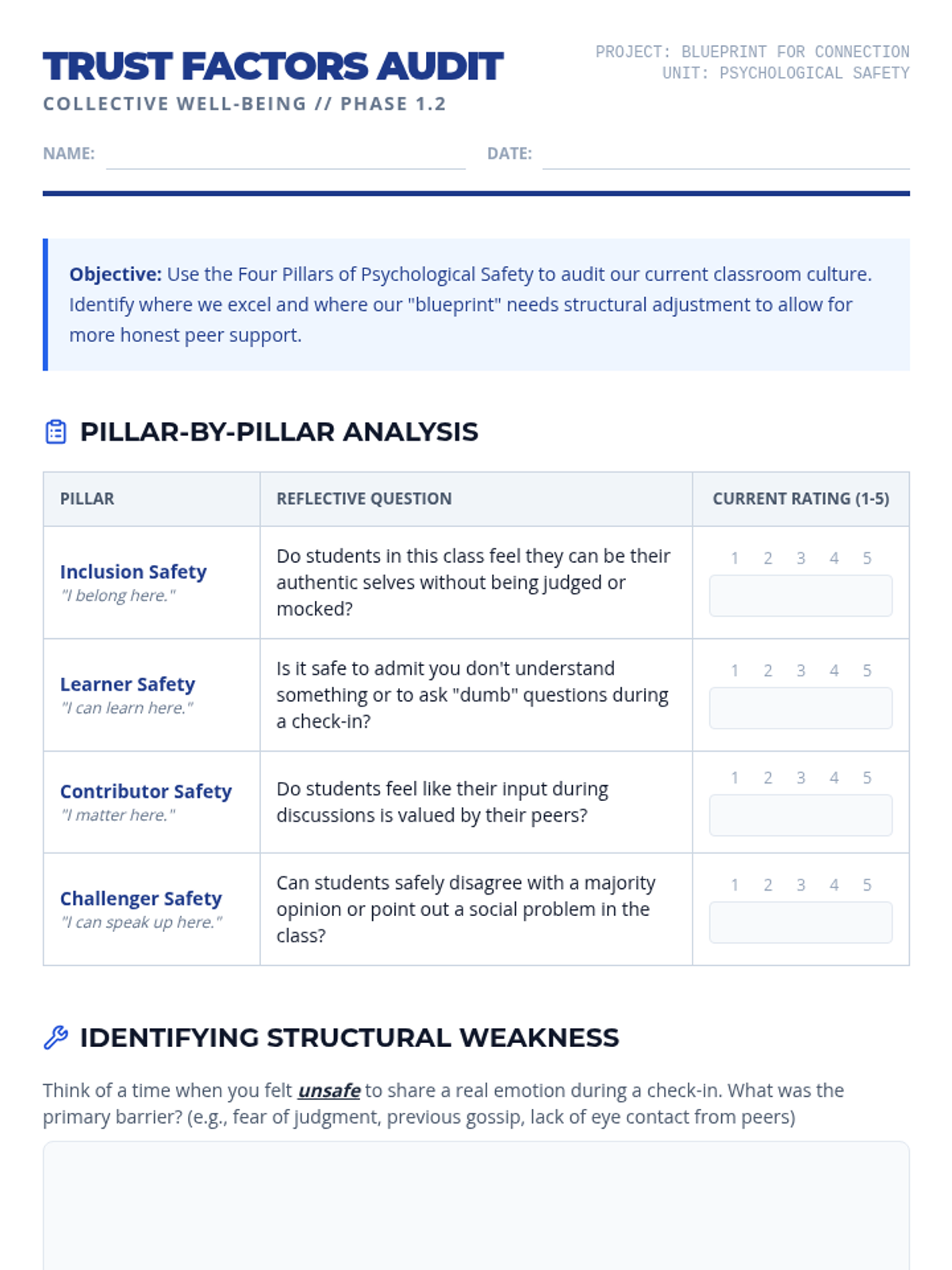
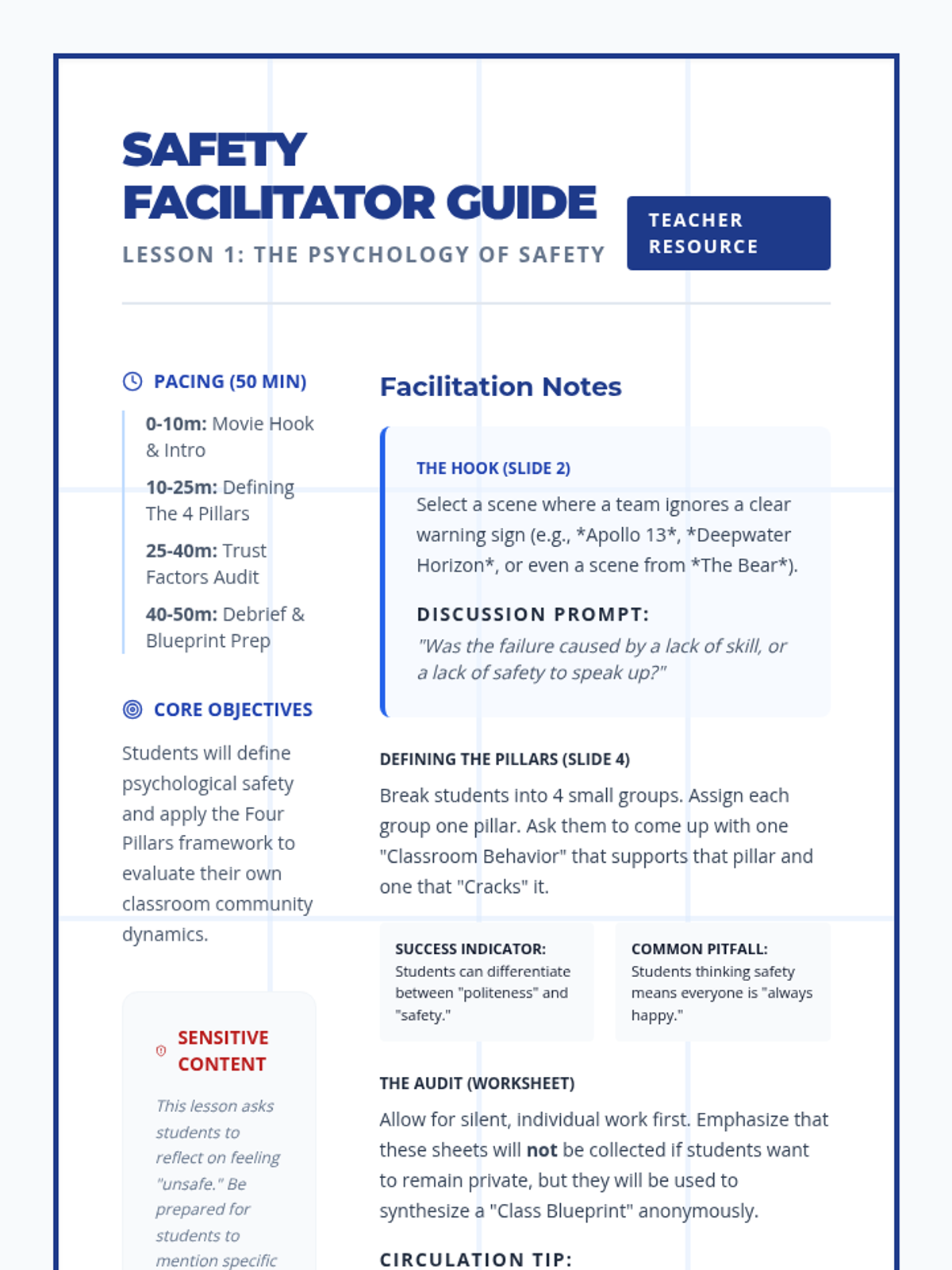
This sequence shifts the focus from individual introspection to collective well-being and leadership. Students learn to facilitate check-ins for others, developing empathy and active listening skills required for leadership roles. The arc explores the psychology of psychological safety, how to spot distress in peers, and how to build a supportive community culture. Students move from participants to facilitators, eventually leading community circles or peer support groups.
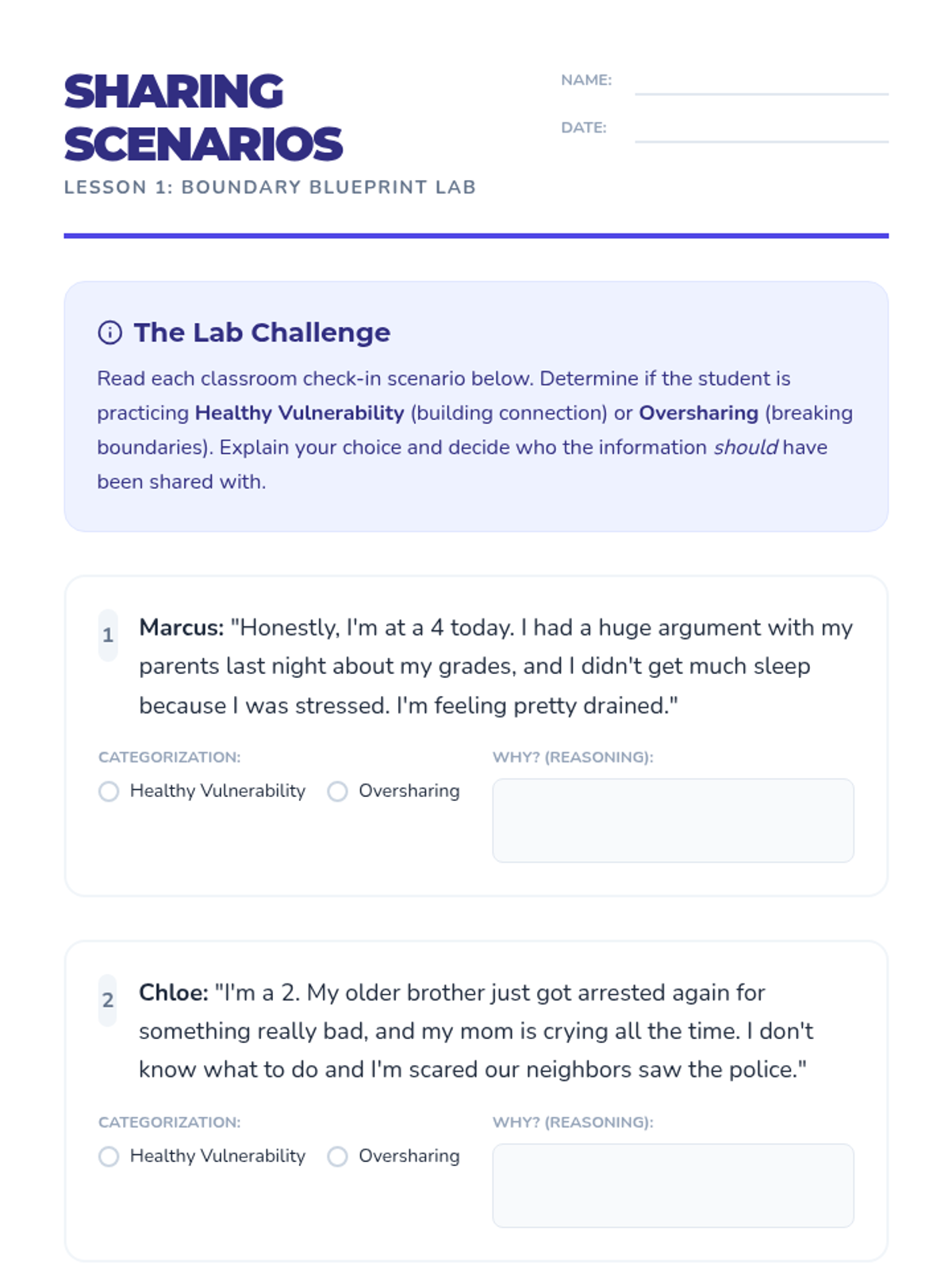
A 5-lesson sequence for 9th graders focusing on social-emotional check-in procedures, boundary setting, active listening, and peer leadership to build a supportive classroom community.
A 10-session course for high school students exploring healthy relationship skills including communication, boundaries, empathy, and conflict resolution across platonic, romantic, and digital contexts.
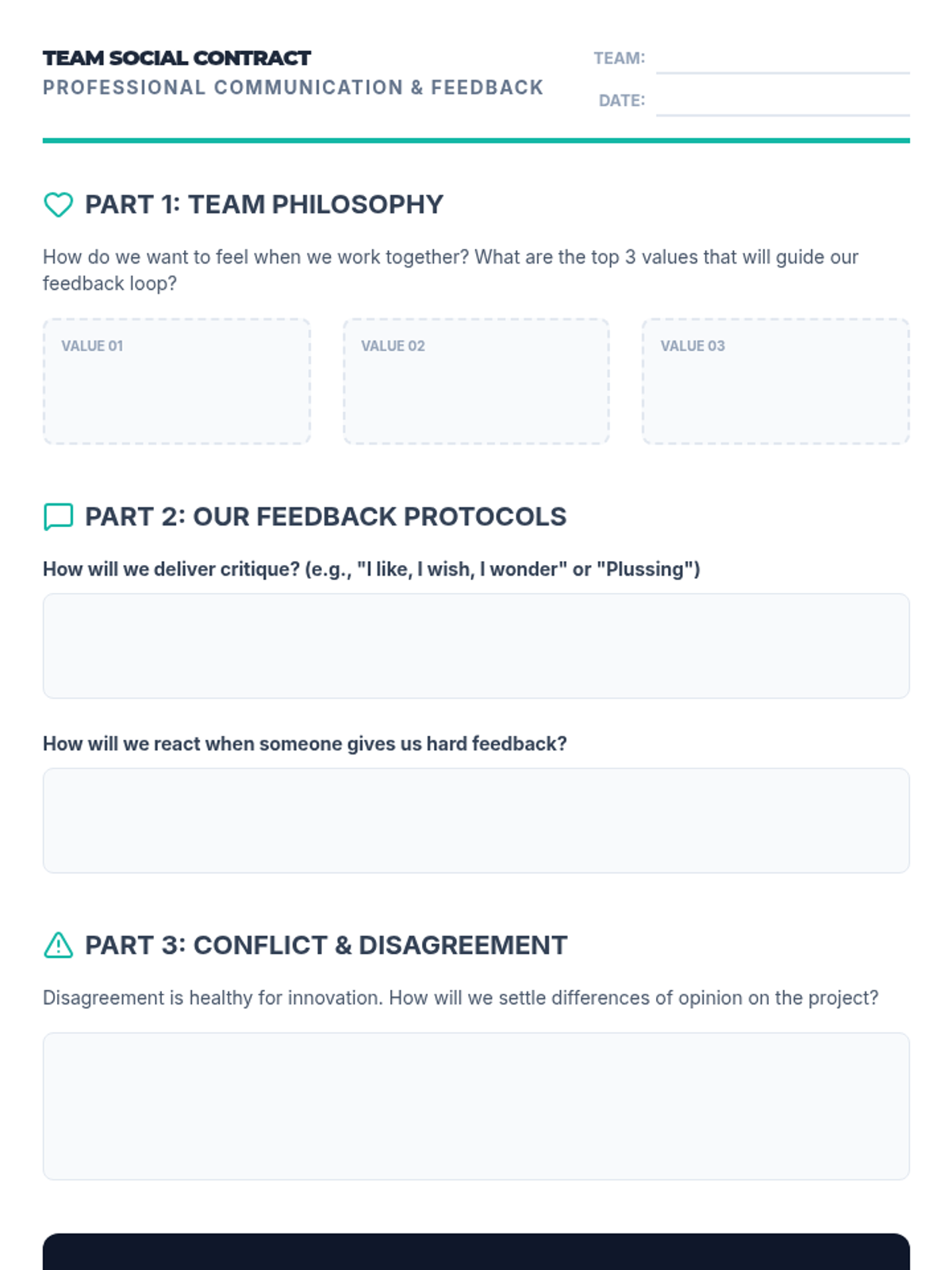
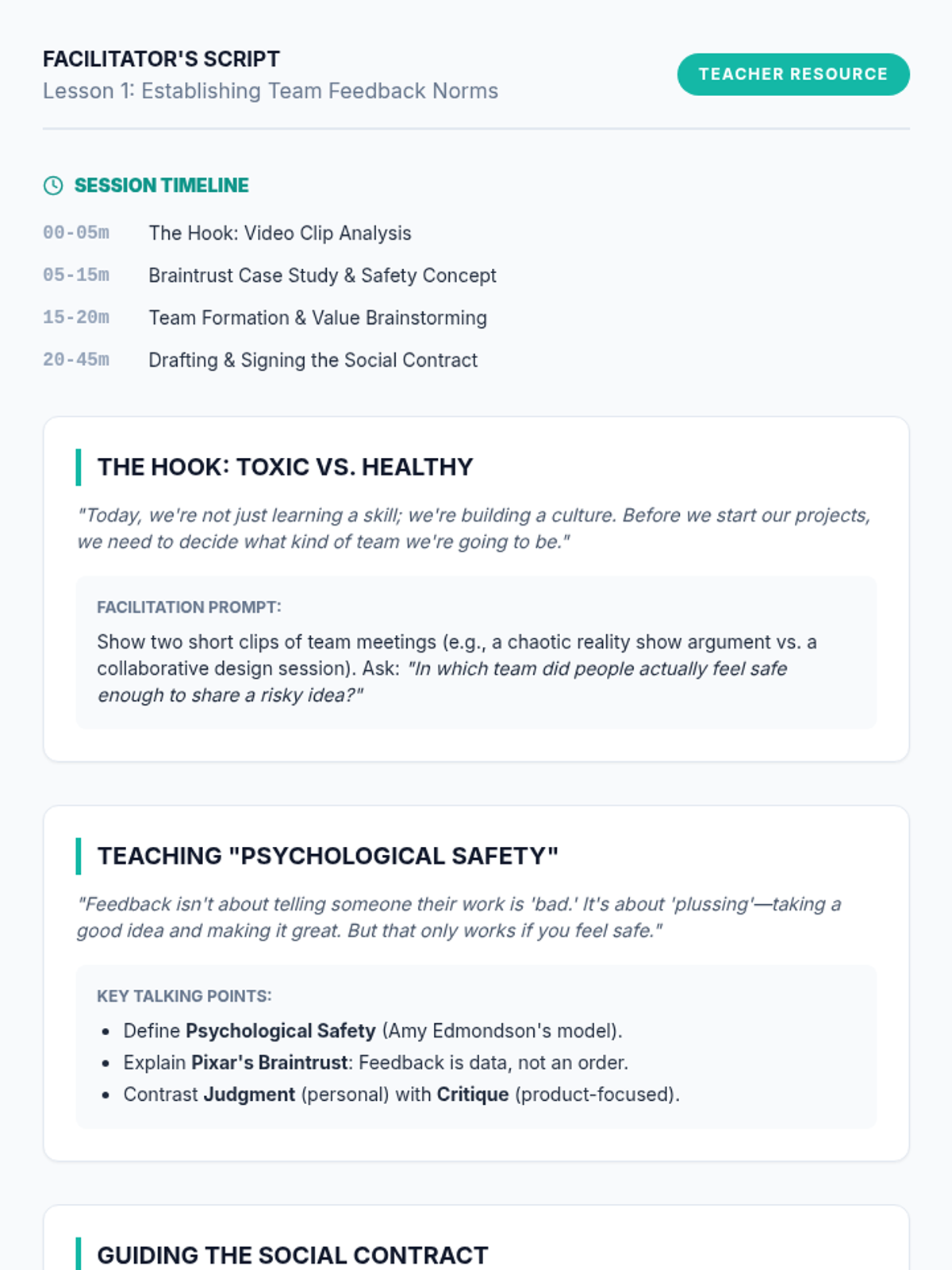
This project-based sequence teaches students the iterative cycle of constructive feedback within a collaborative design environment. Students develop social contracts, engage in rapid prototyping, observe fishbowl critiques, and document their growth through change logs and retrospectives.
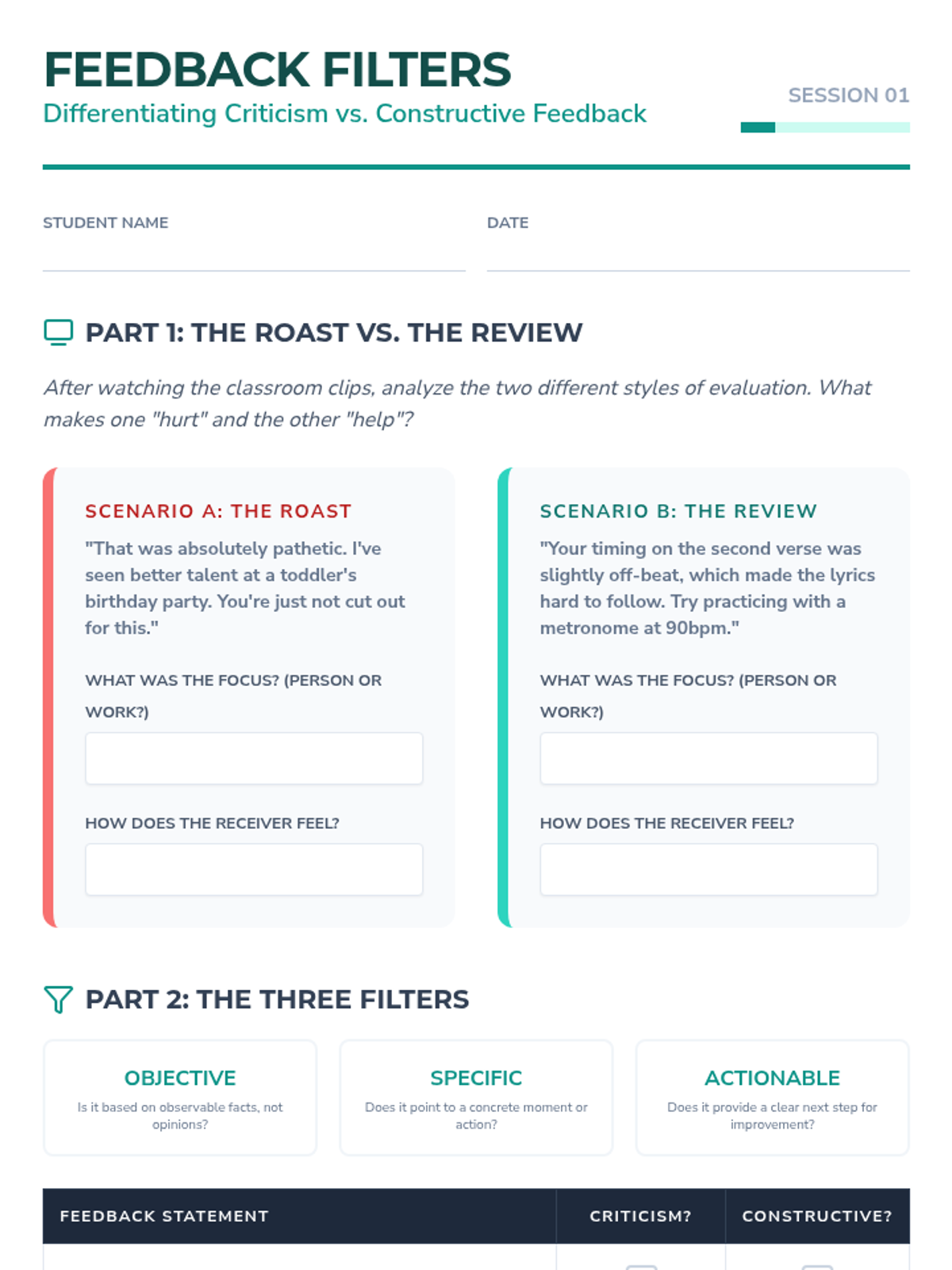
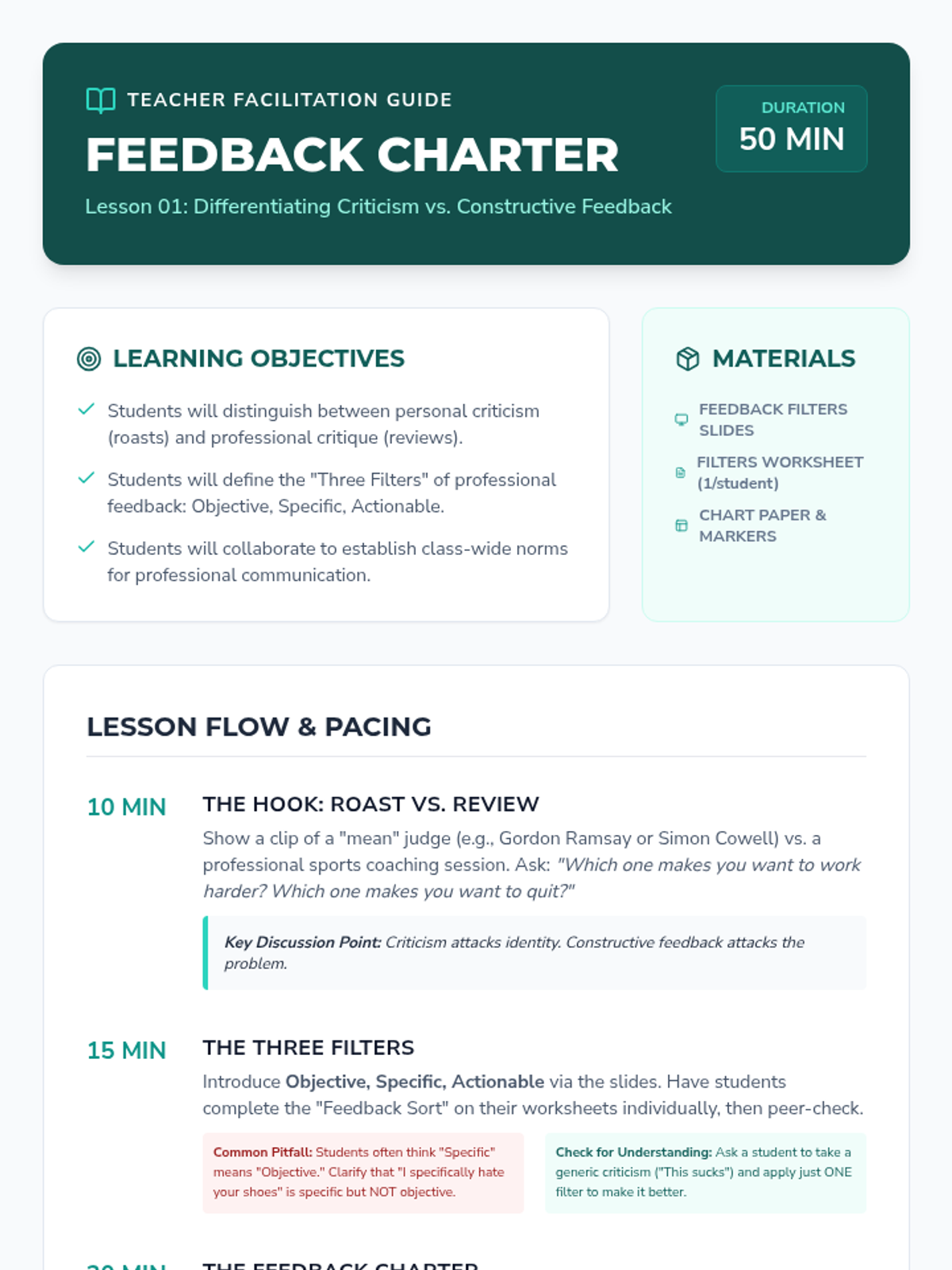
This sequence immerses students in the professional mechanics of giving and receiving evaluations, moving beyond simple peer review into workplace readiness. Students learn to differentiate personal criticism from professional critique, use the Situation-Behavior-Impact (SBI) model, and practice emotional regulation during performance simulations.
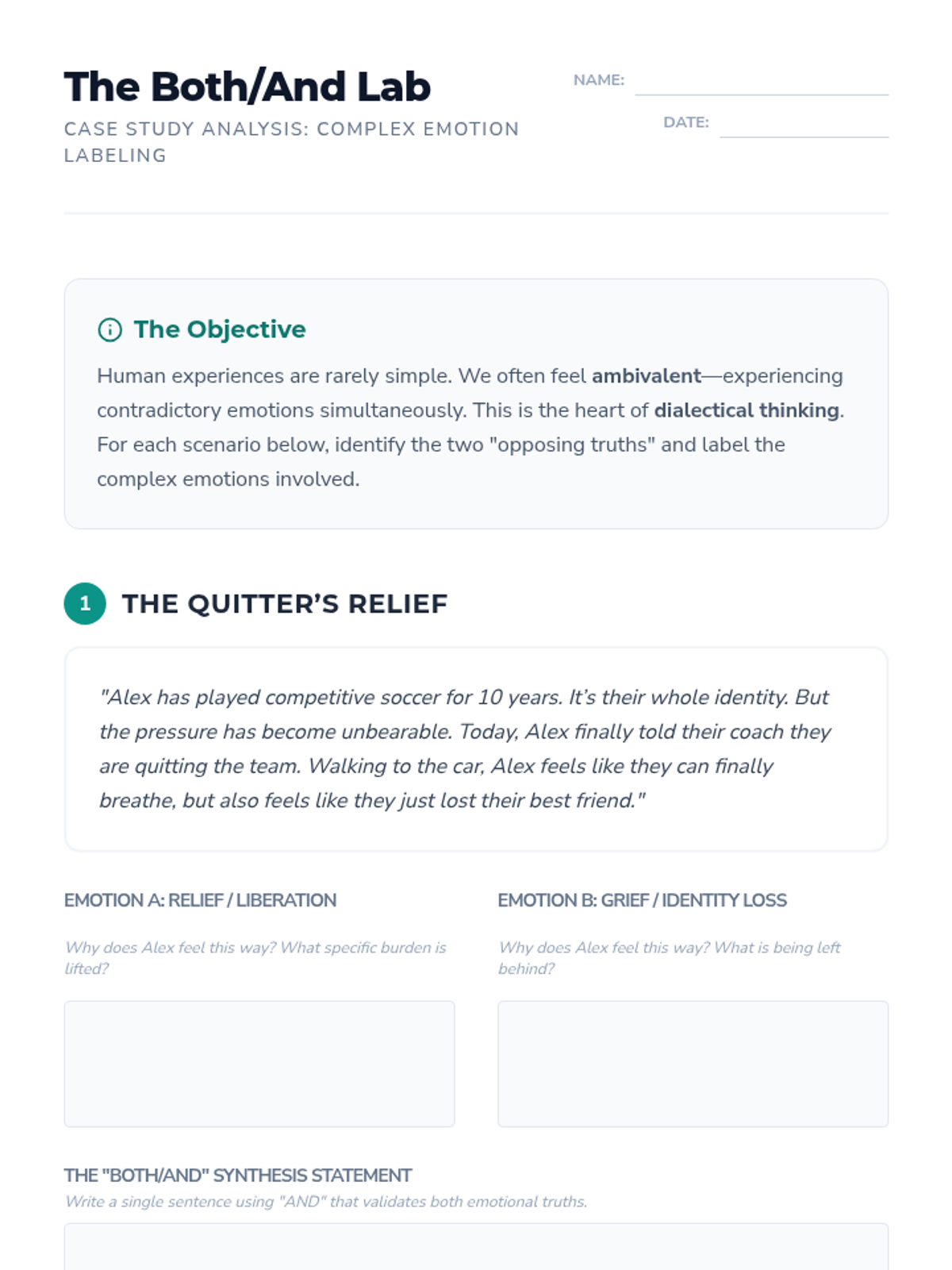
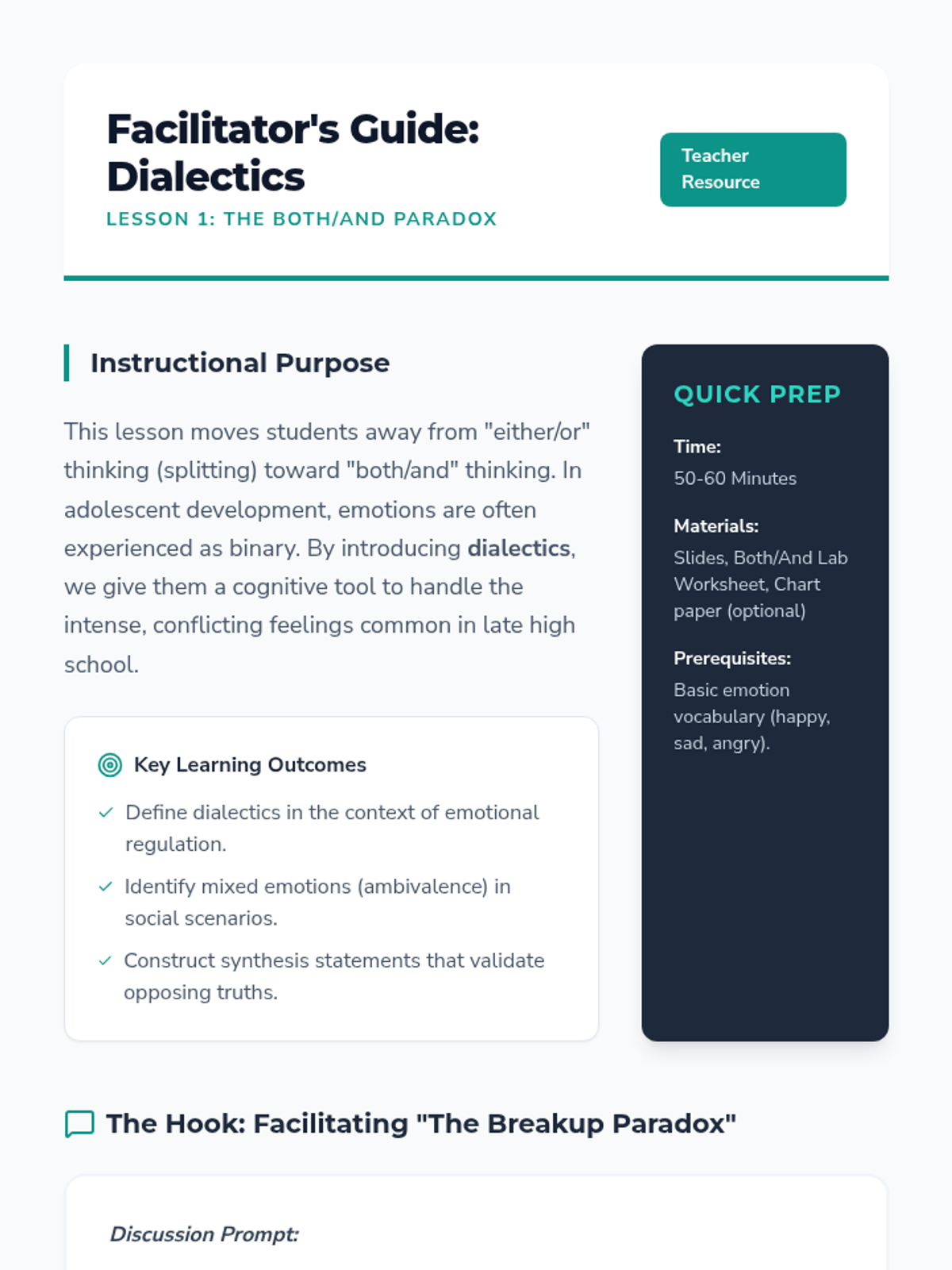
A comprehensive unit for 11th-grade students focusing on complex emotion labeling through dialectical thinking, case studies of imposter syndrome, empathy gap analysis, and transition-related emotions. Students develop sophisticated perspective-taking and conflict-resolution skills by moving beyond surface-level labels to identify mixed emotional states.
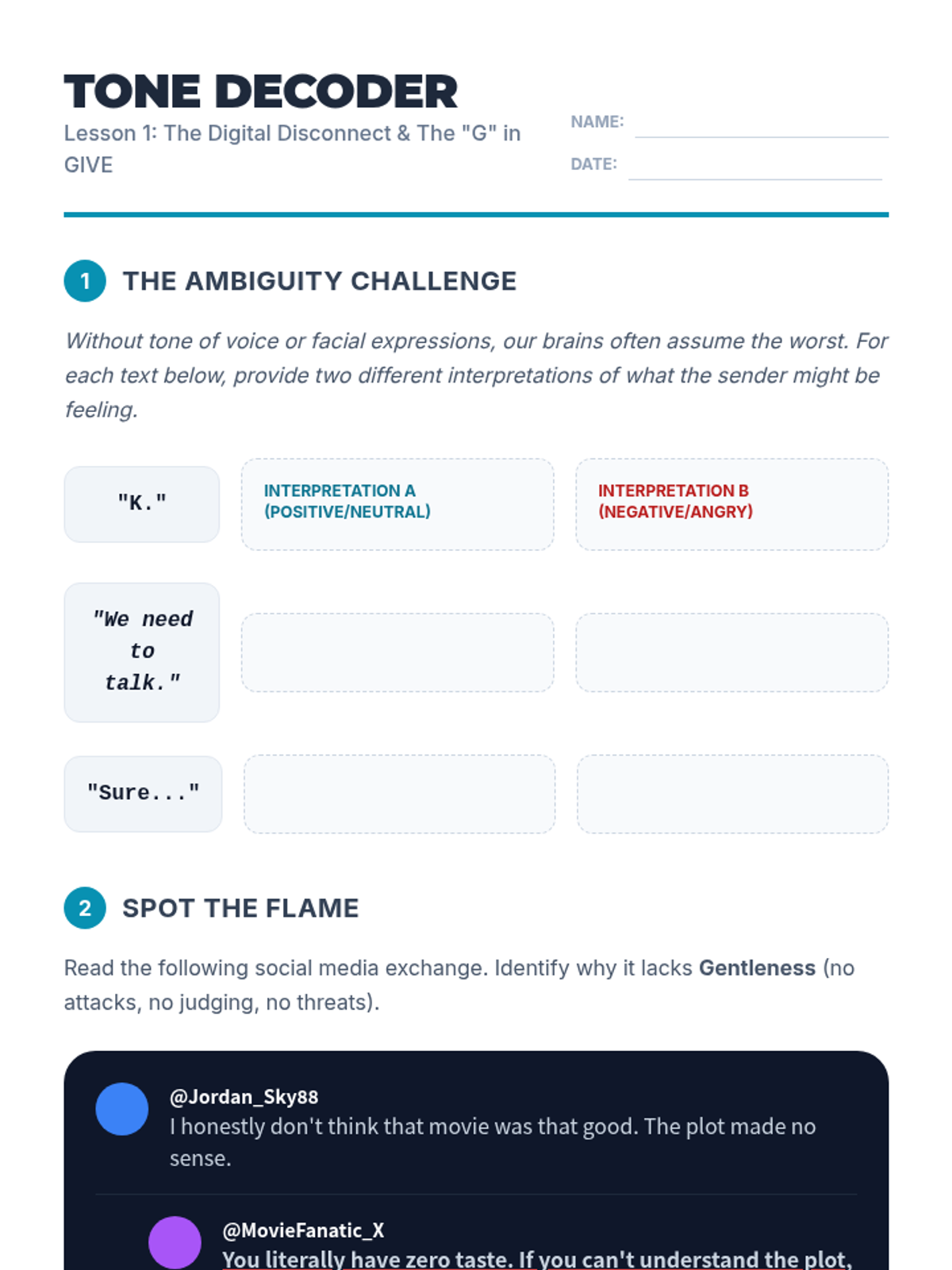
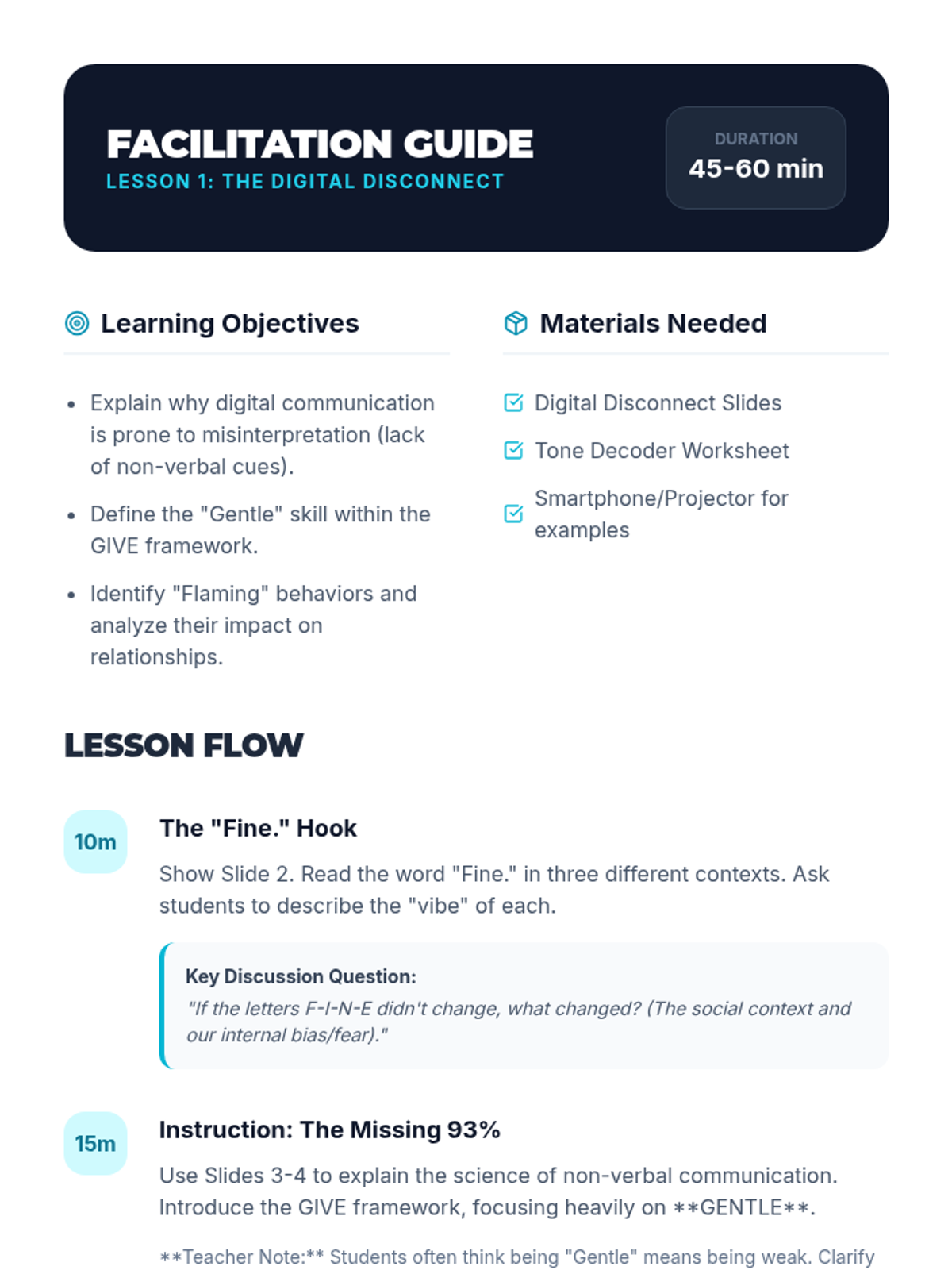
This sequence explores the application of DBT's GIVE skills (Gentle, Interested, Validate, Easy manner) in digital environments. Students will analyze digital miscommunication and learn to translate empathy and validation into text, emojis, and social media interactions.
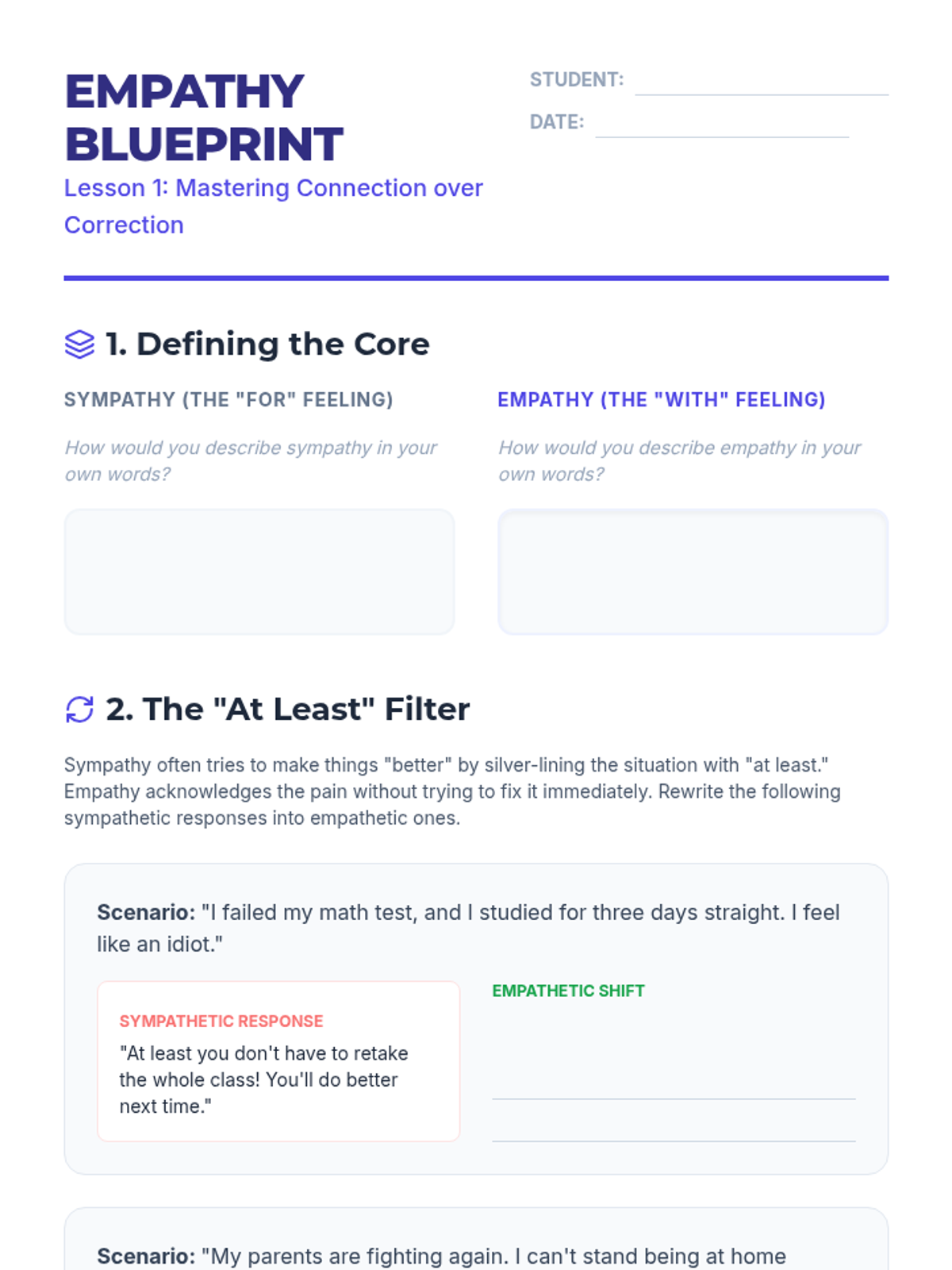
This sequence uses a workshop model to explore empathy and validation, helping students move from surface-level listening to mastering the six levels of validation and 'validating the invalid.' Students build emotional intelligence to de-escalate conflict and strengthen relationships.
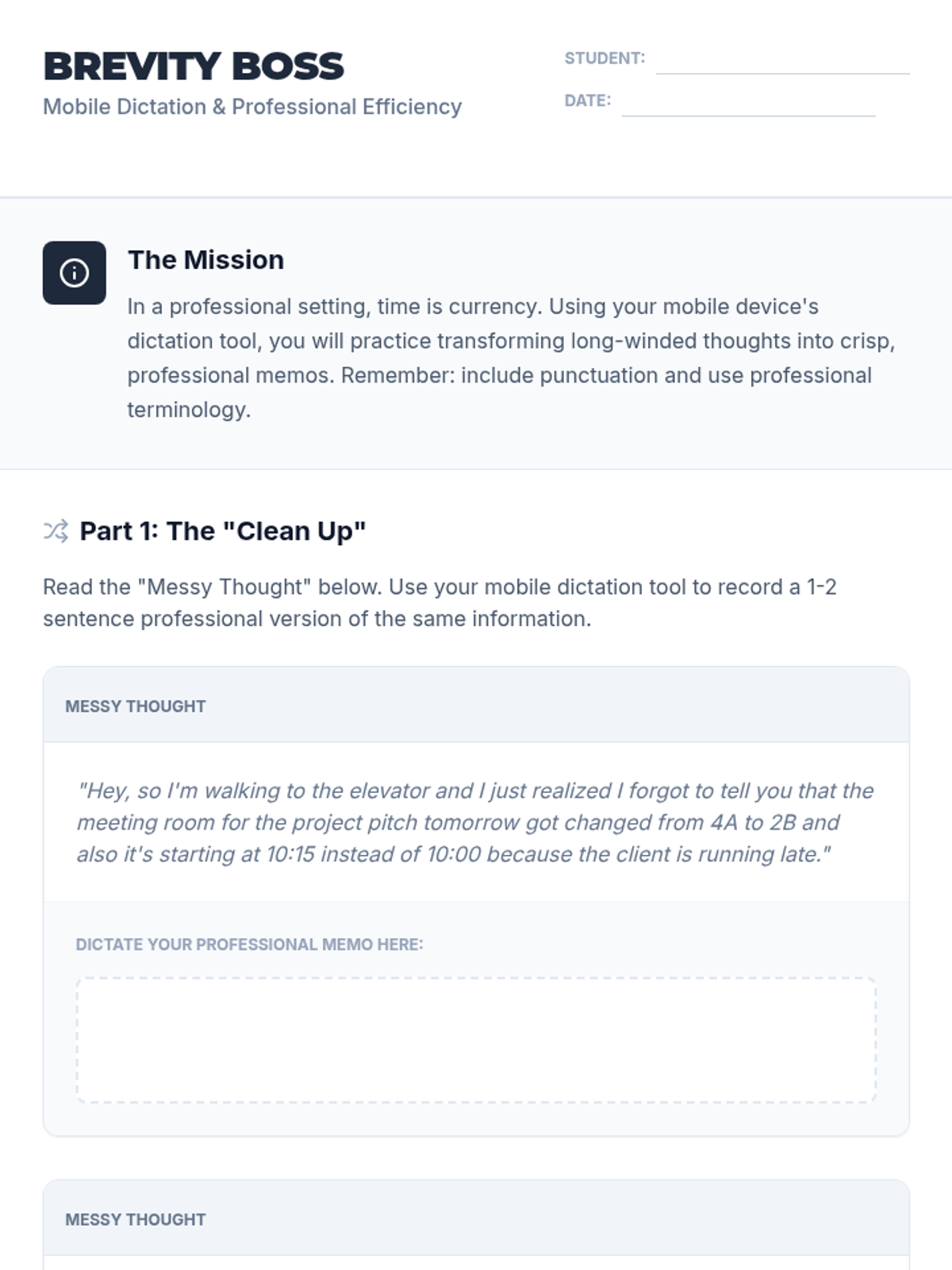
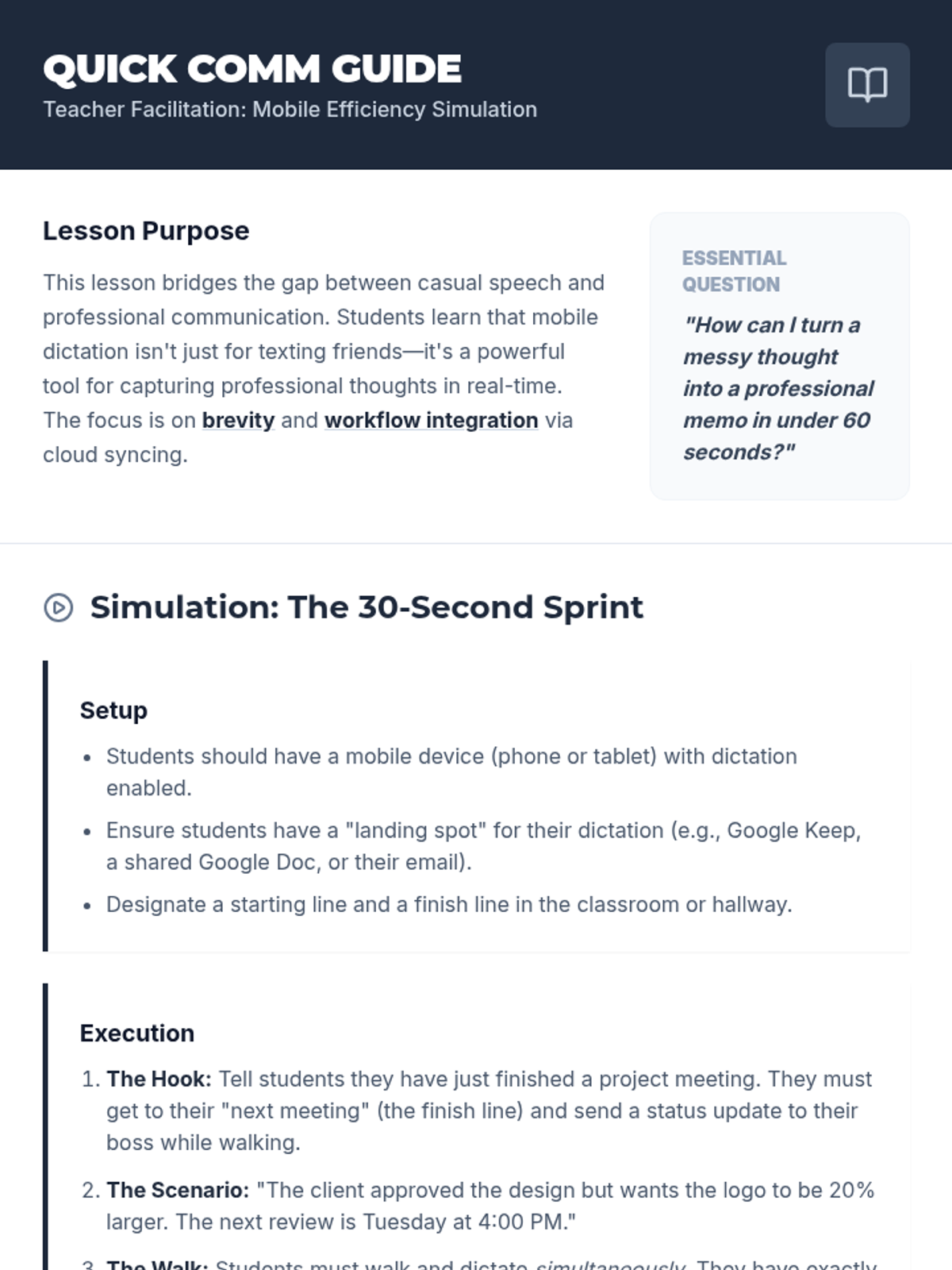
This sequence prepares 11th-grade students to use speech recognition dictation in professional and higher education settings. It focuses on workplace efficiency, professional tone, social awareness in shared spaces, self-advocacy for accommodations under the ADA, and technical troubleshooting to foster independence.
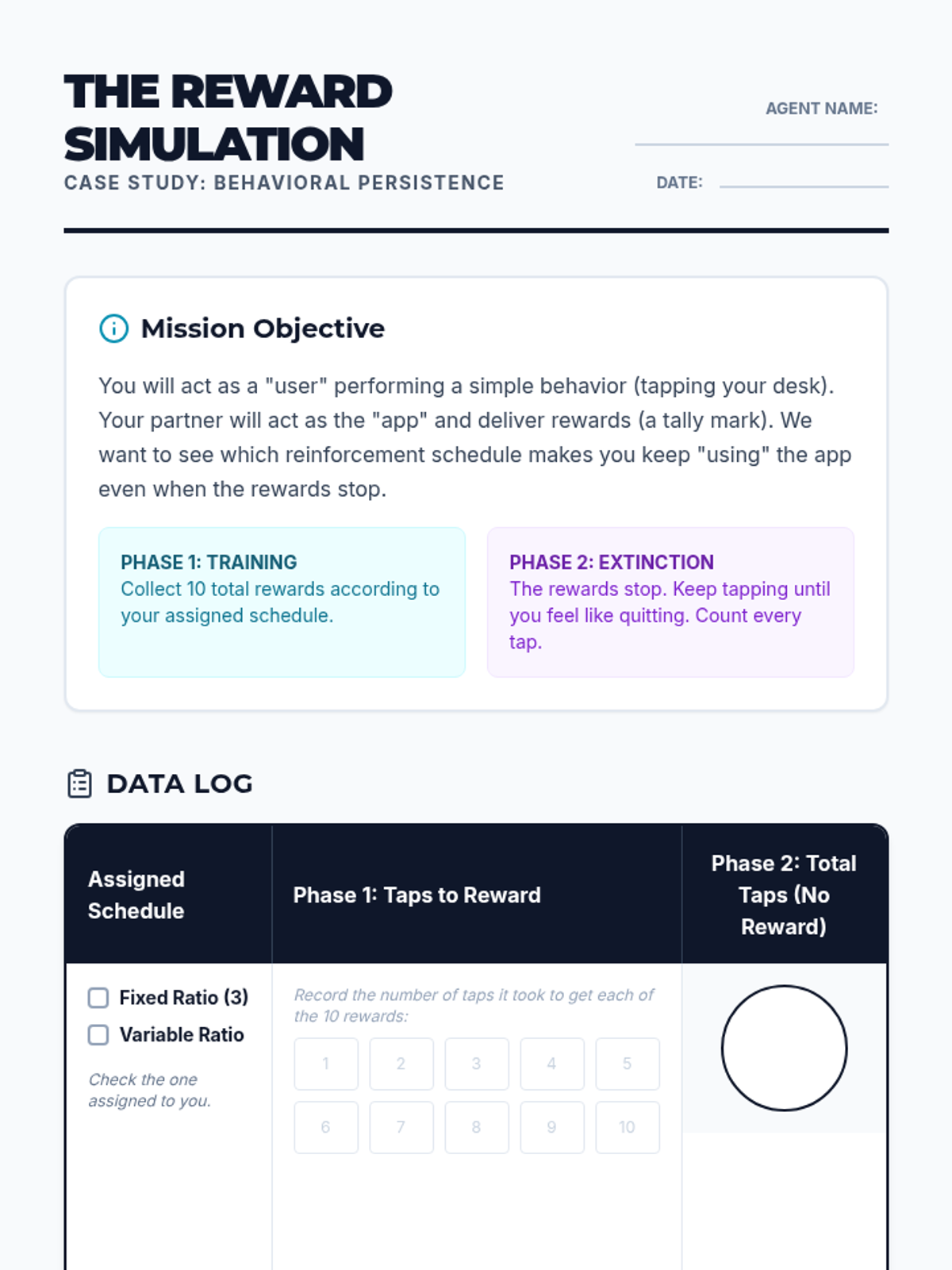
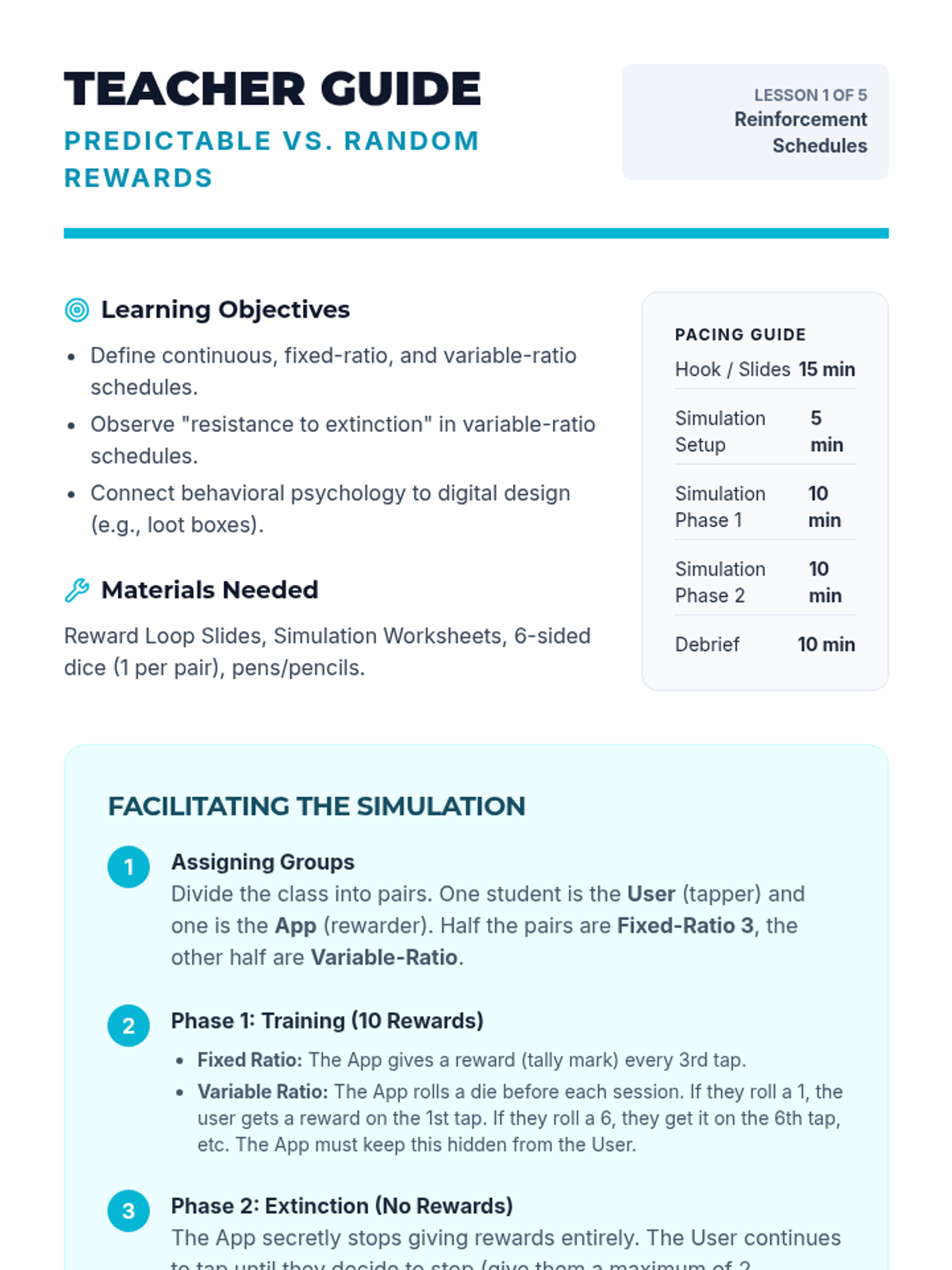
A 5-lesson sequence exploring how technology uses schedules of reinforcement (fixed and variable) to drive engagement. Students analyze gamification, social media mechanics, and ethical design to build digital literacy.
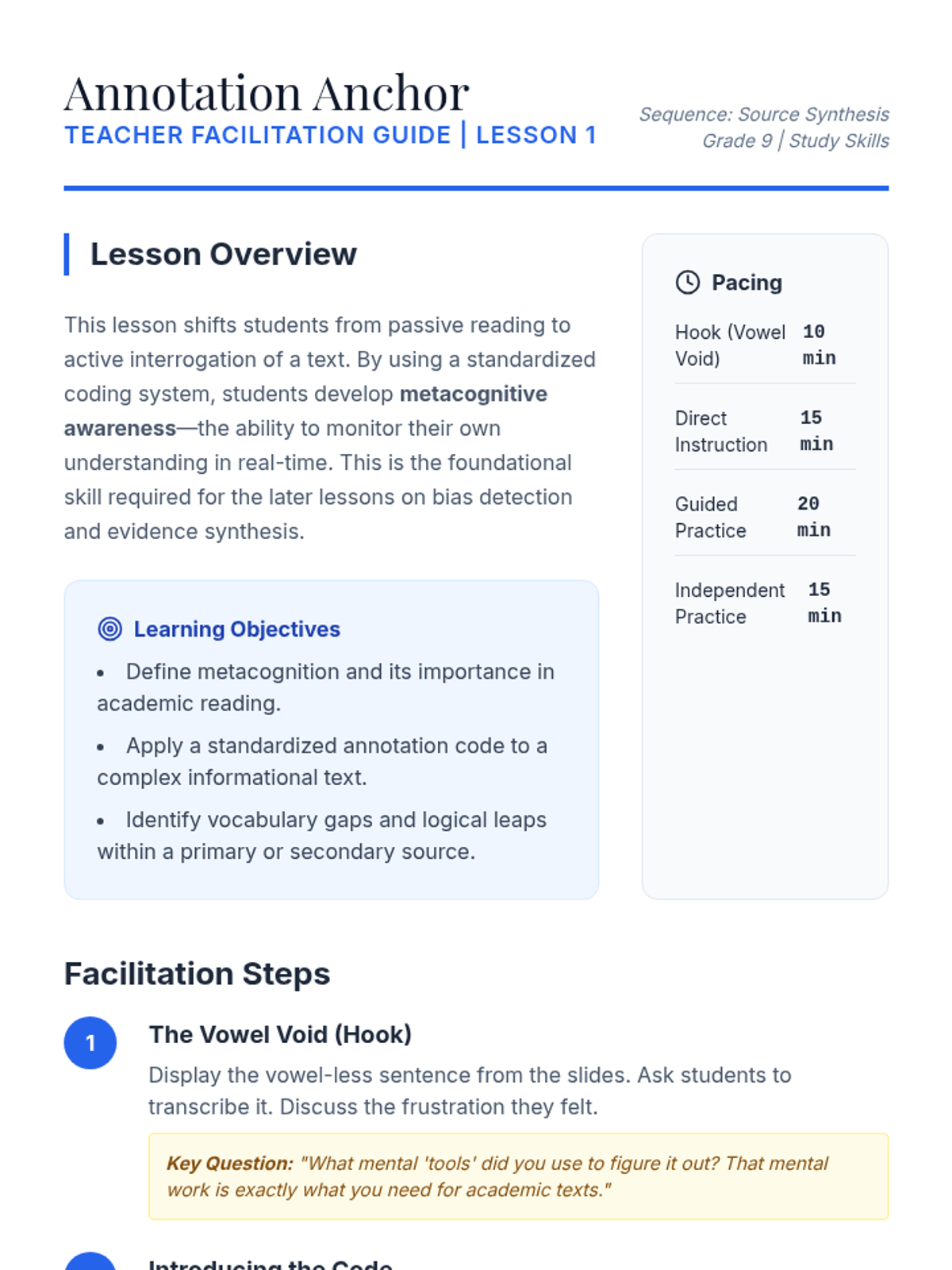
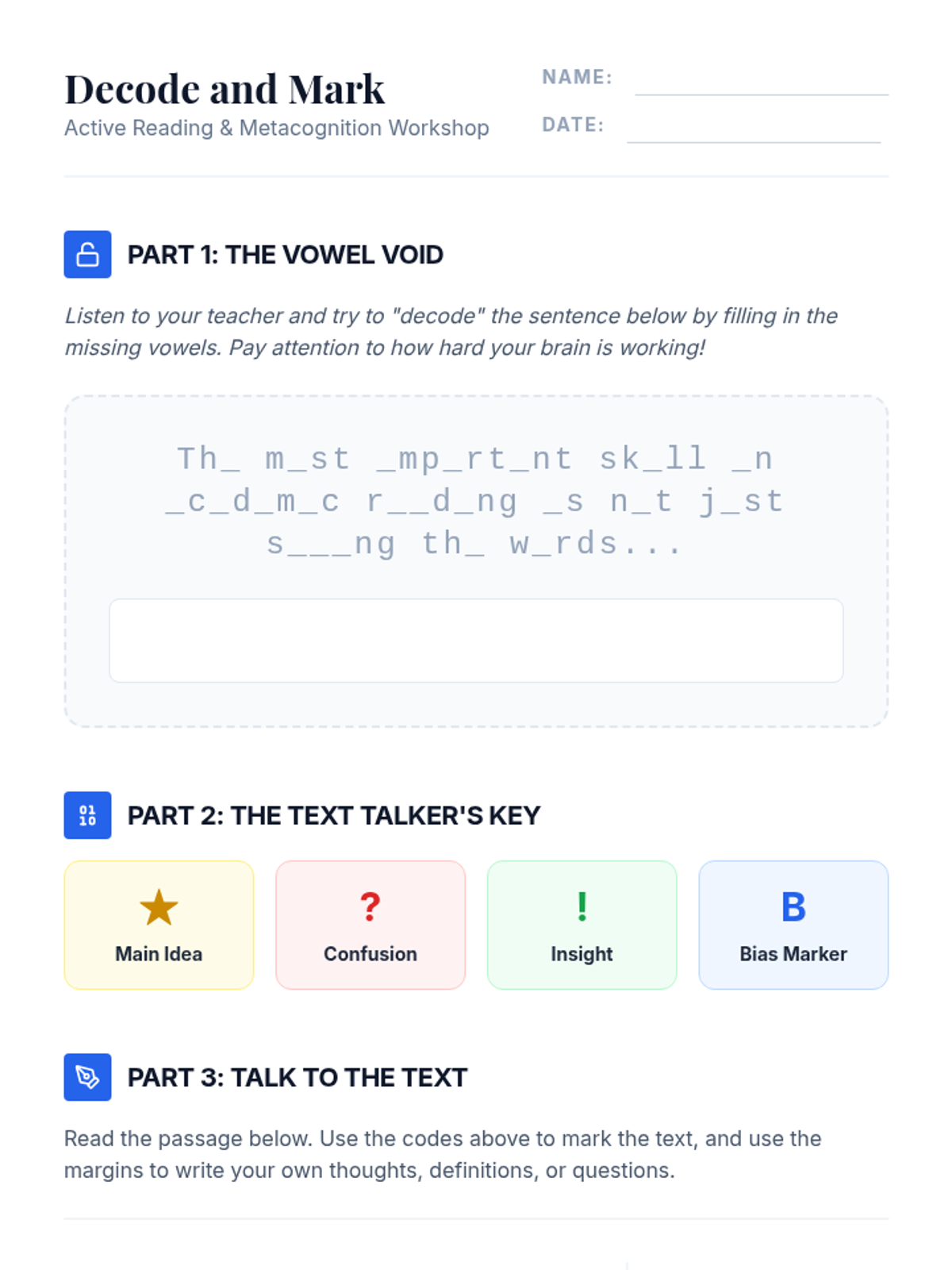
A comprehensive 9th-grade sequence focused on teaching students how to move from active reading and annotation to synthesizing information from multiple academic sources. Students will explore bias, comparative analysis, and academic integrity to produce a final synthesized written response.
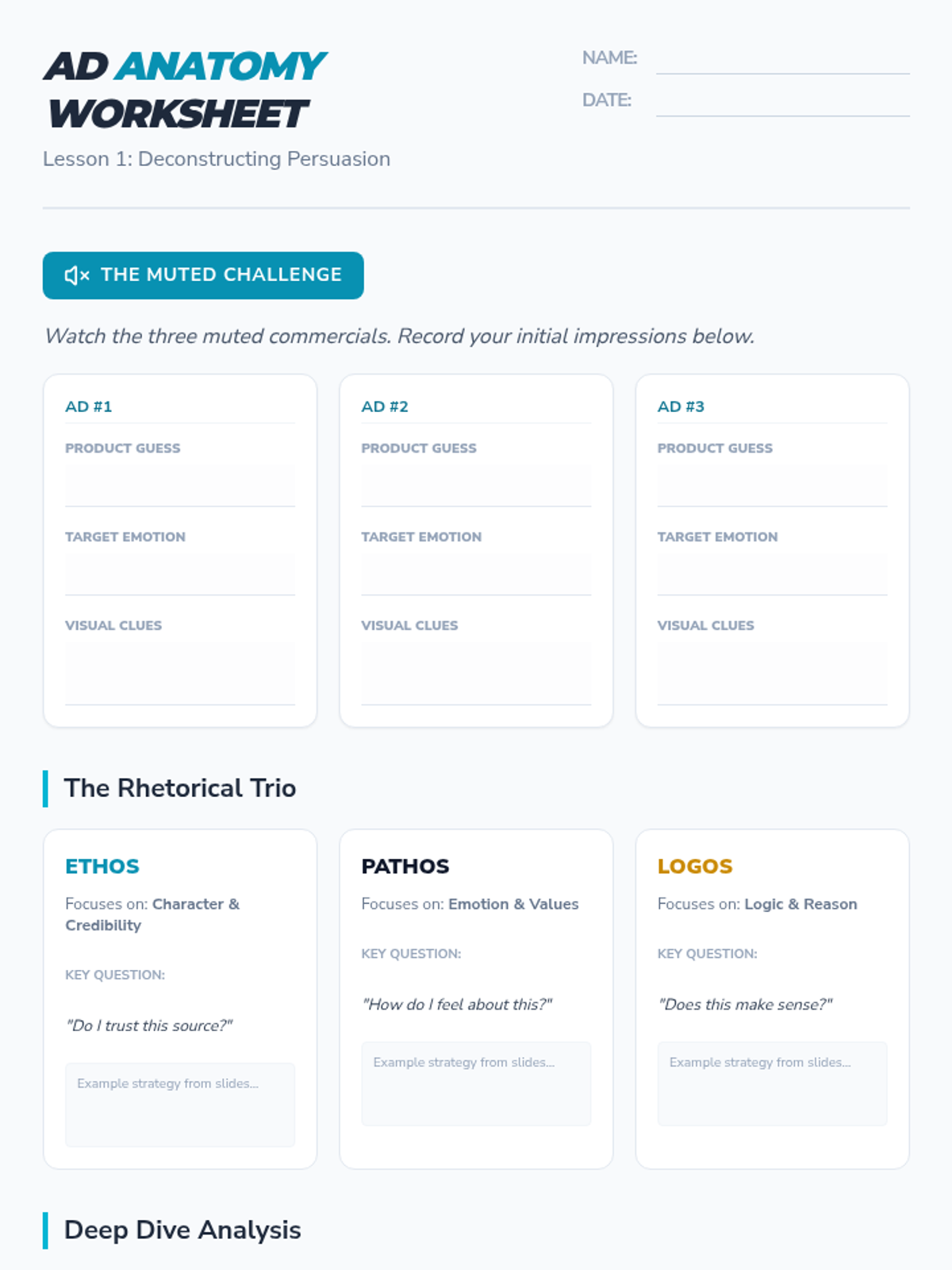
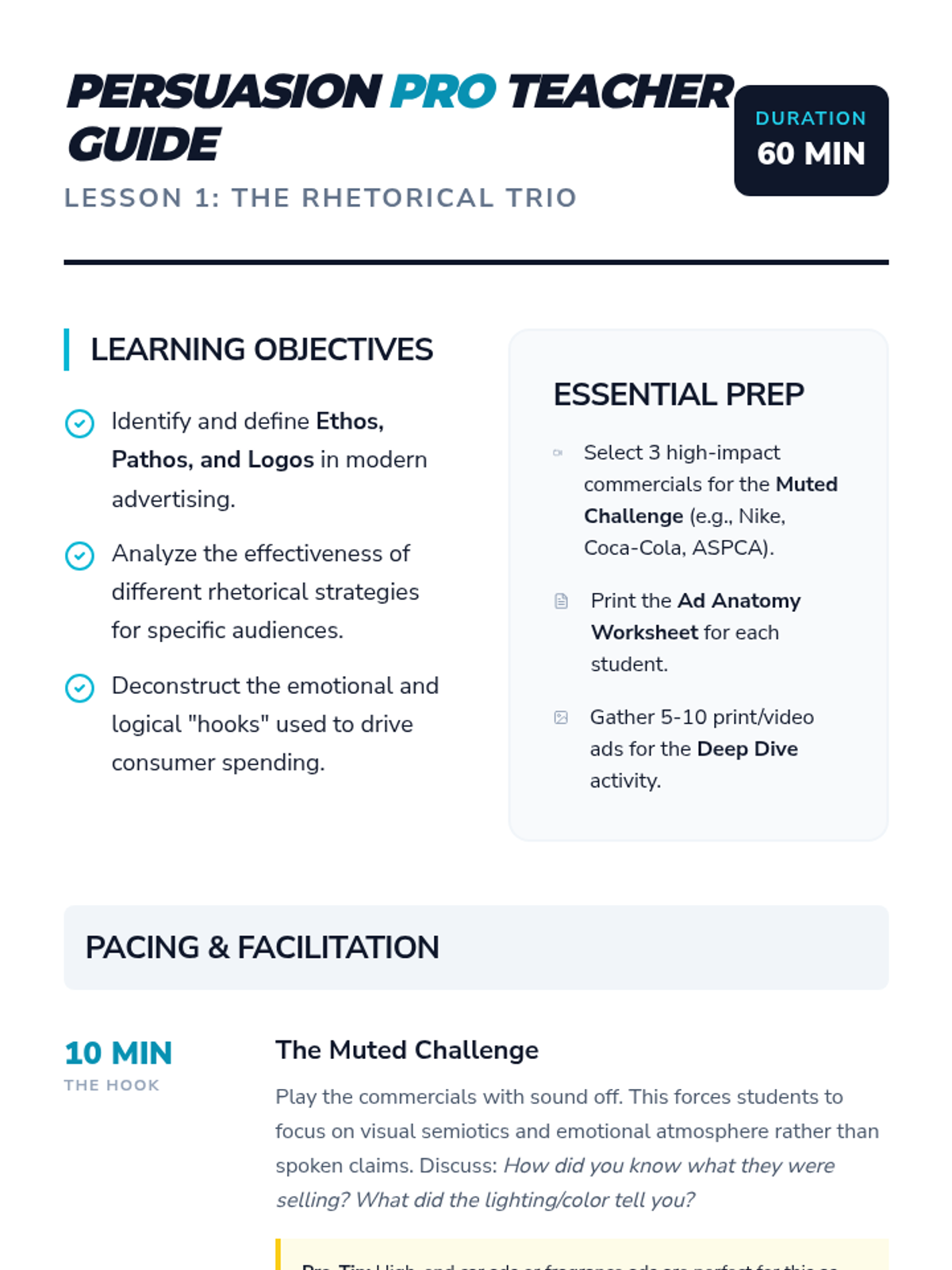
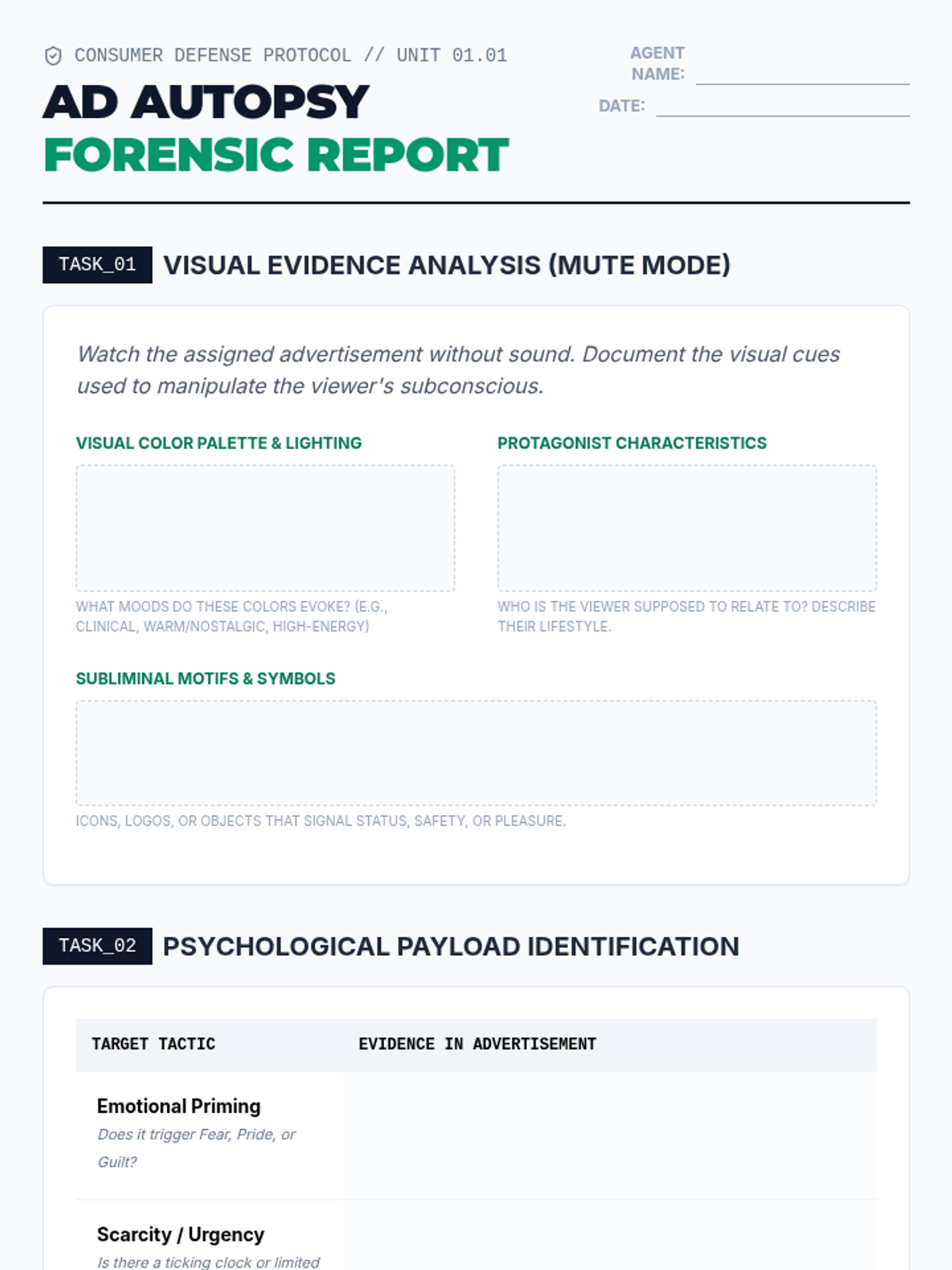
A comprehensive 10th-grade unit exploring media literacy, behavioral economics, and digital citizenship through the lens of advertising. Students move from identifying rhetorical appeals to deconstructing complex digital marketing ecosystems, culminating in a counter-advertising project.
A high-school level sequence exploring the psychological and digital mechanisms of modern advertising. Students learn to identify neuromarketing, algorithmic targeting, influencer tactics, and dark patterns to develop critical consumer autonomy.
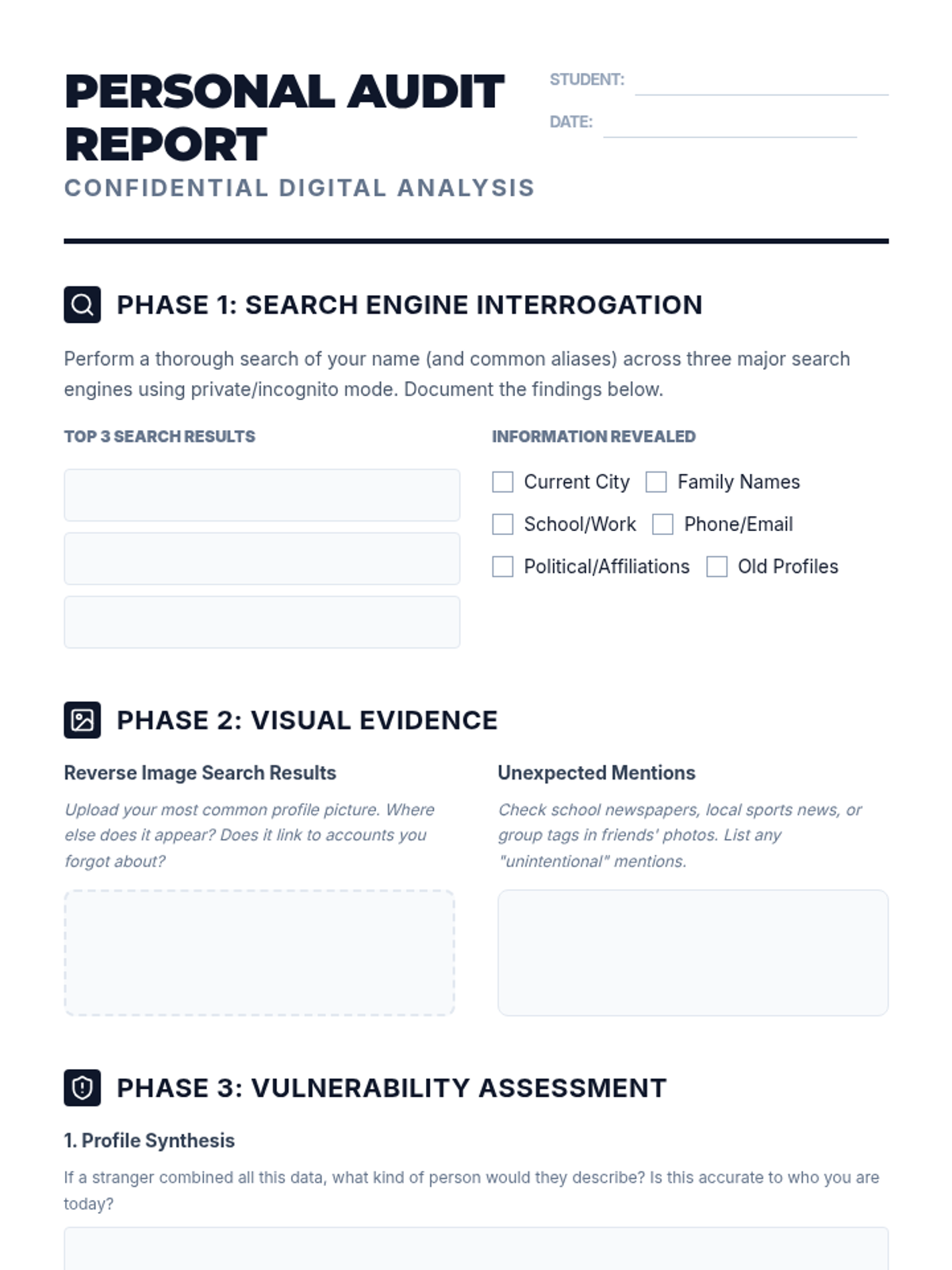
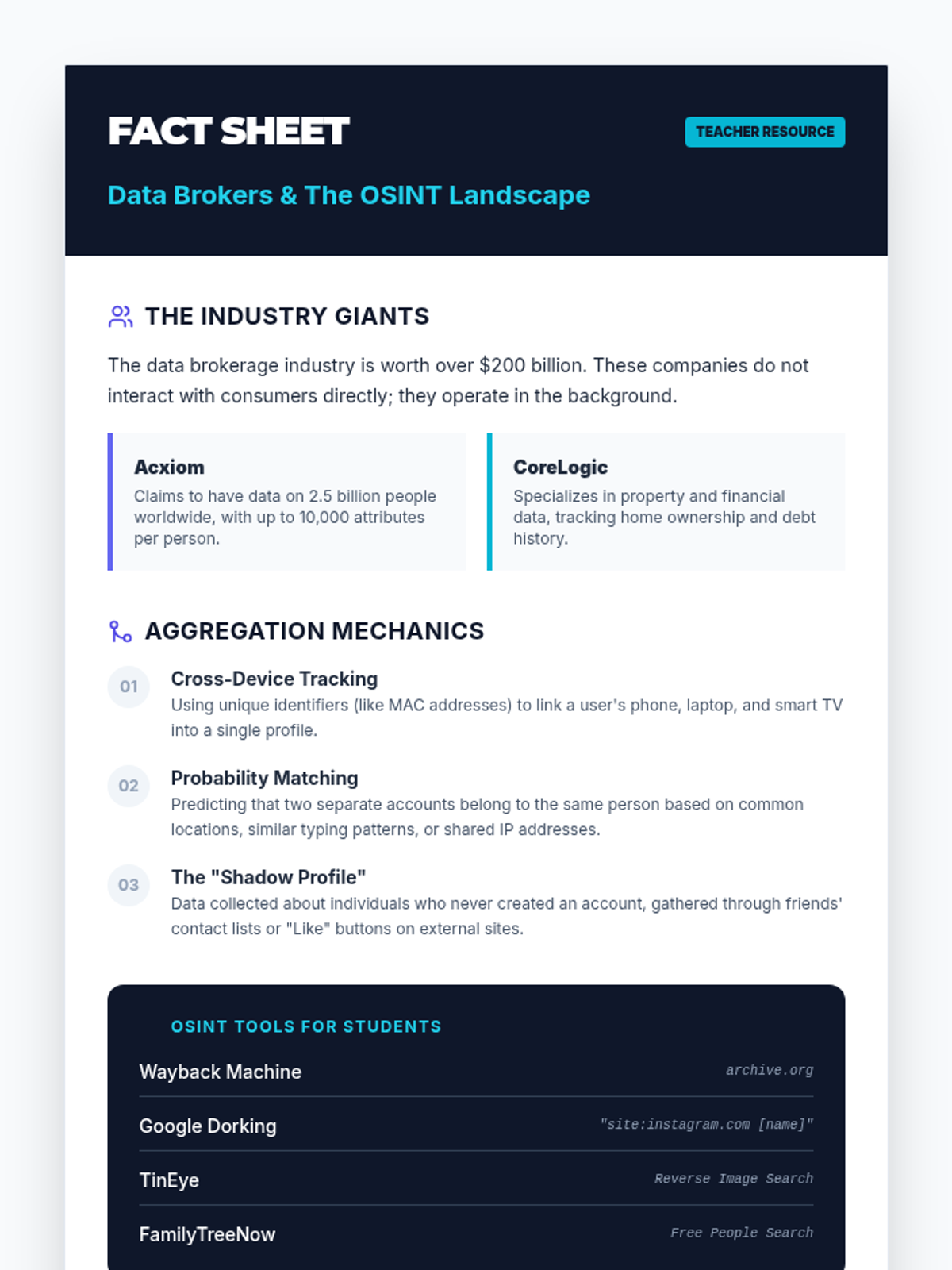
A comprehensive 11th-grade sequence on digital reputation, legal safety, and strategic online branding. Students transition from basic safety to professional asset management, exploring data aggregation, legal liabilities, social engineering, and algorithmic influence.
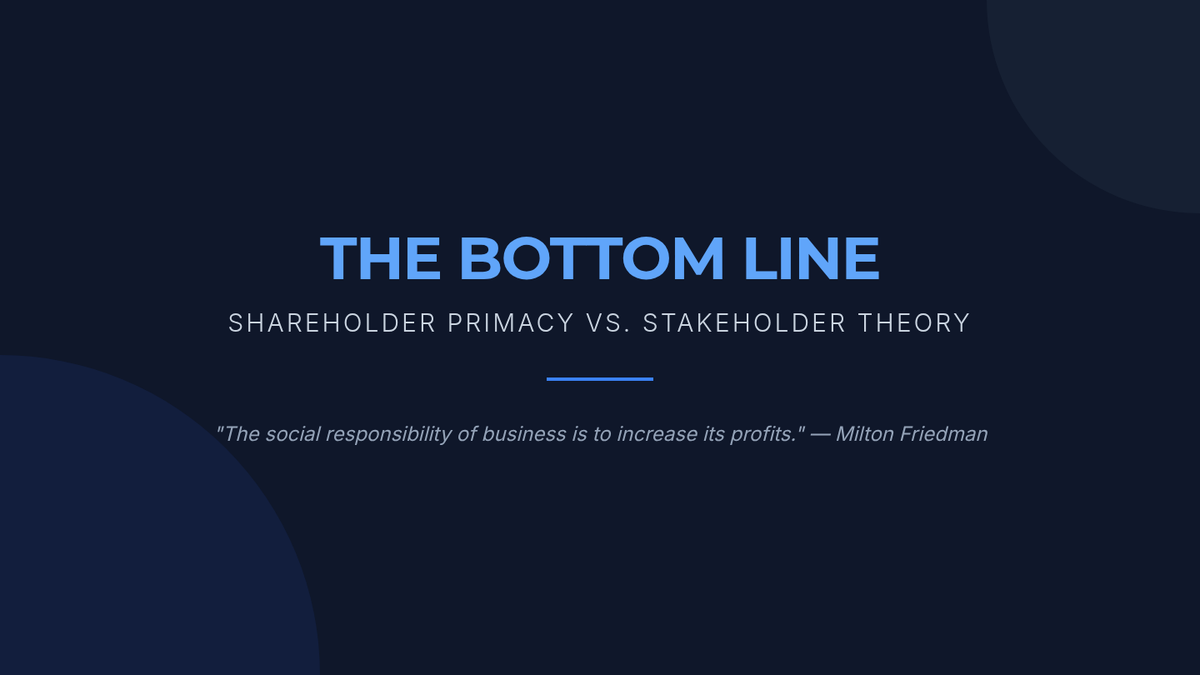
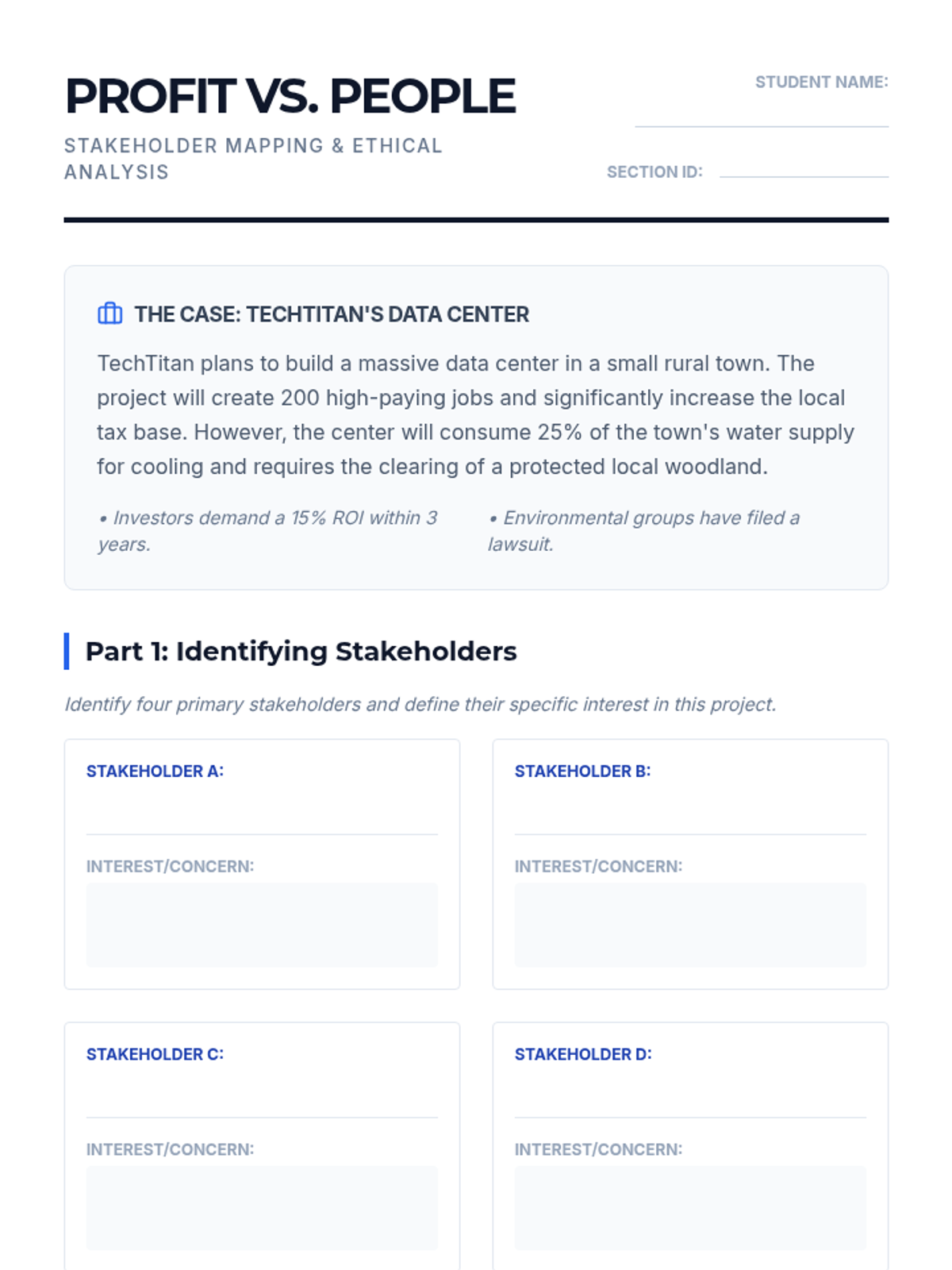
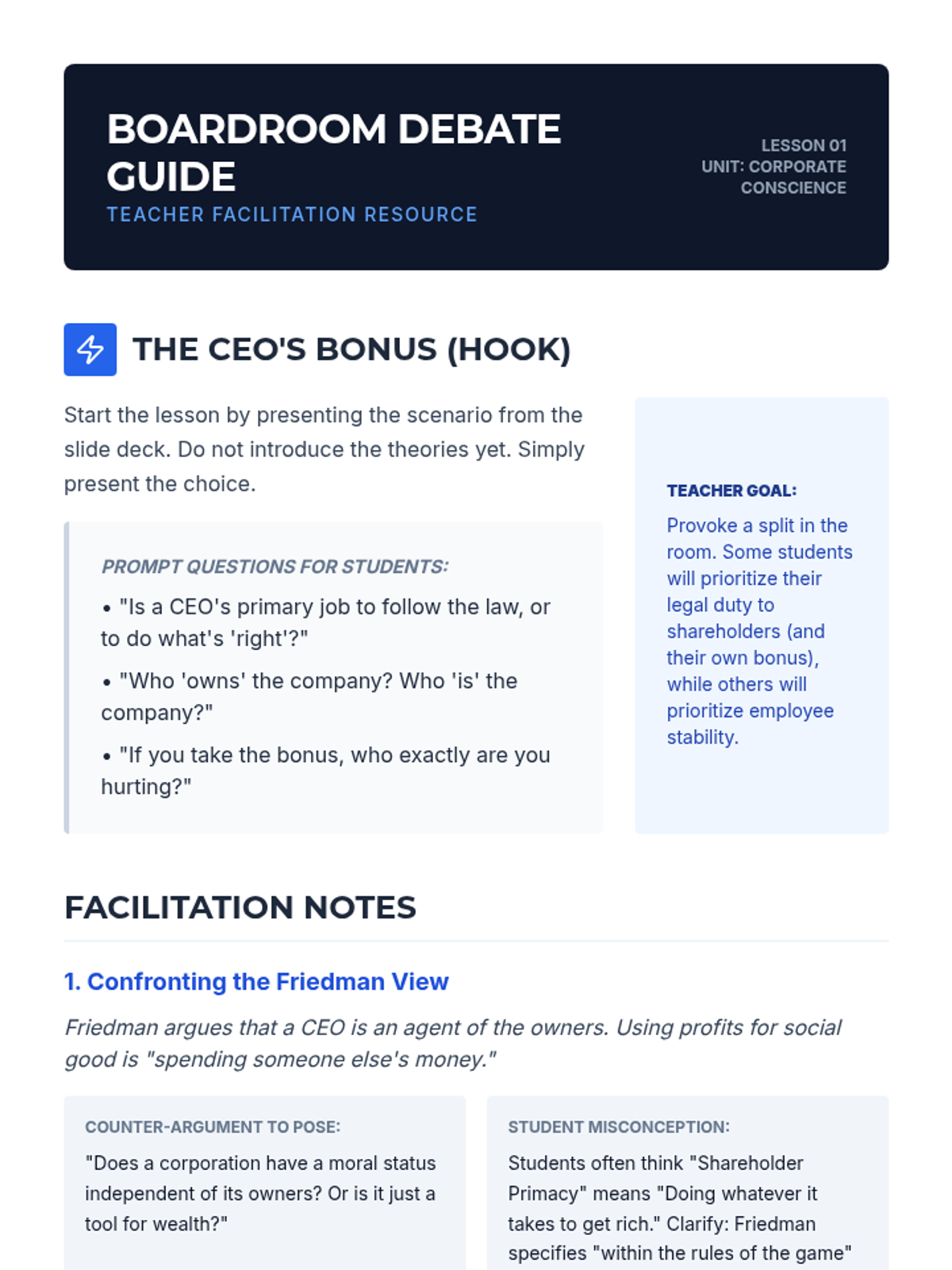
This sequence explores the ethical complexities of professional and corporate environments, focusing on the tension between profit and moral obligation. Students analyze shareholder vs. stakeholder theories, corporate scandals, and the ethics of whistleblowing, culminating in a two-part crisis management simulation.
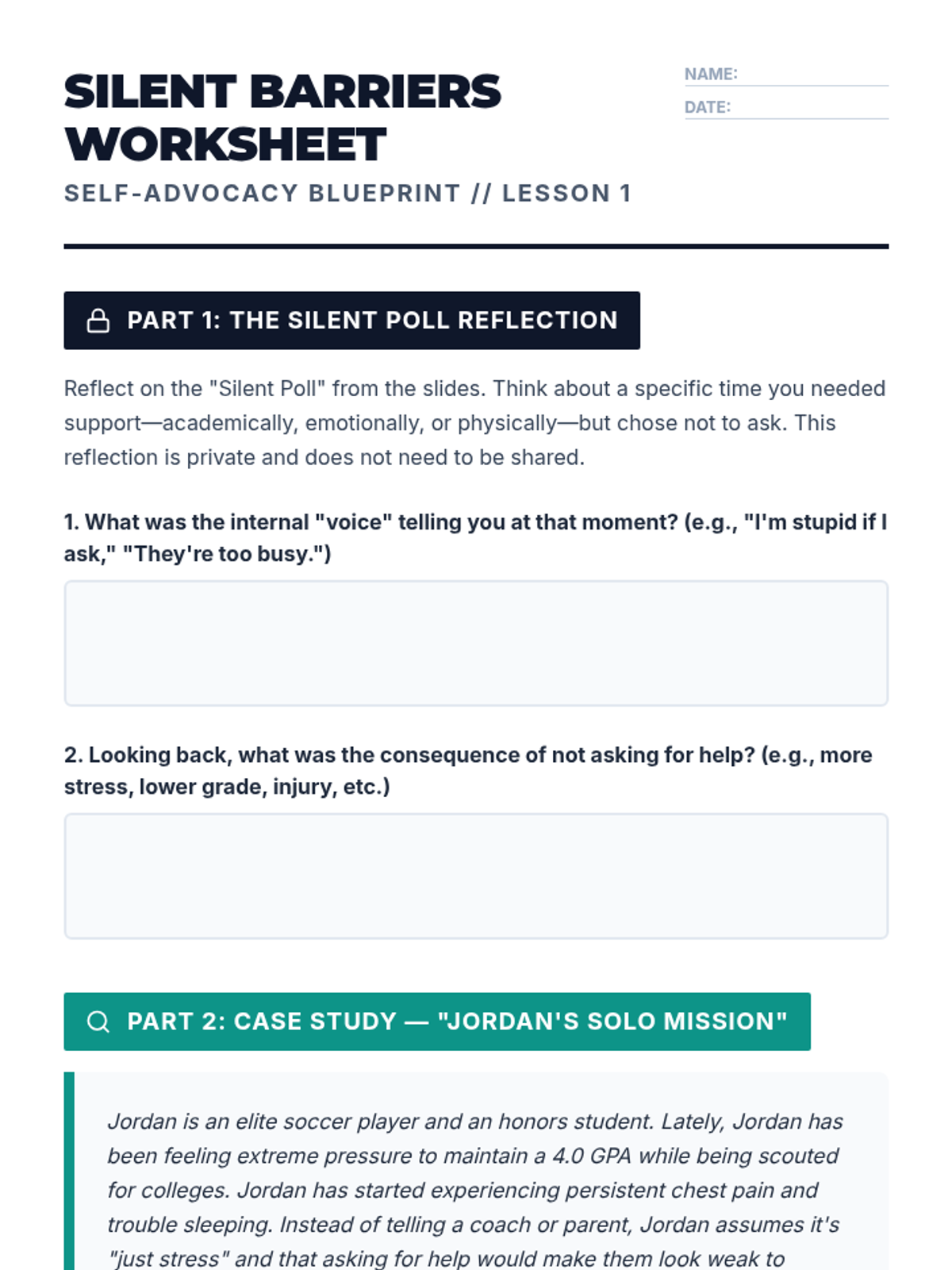
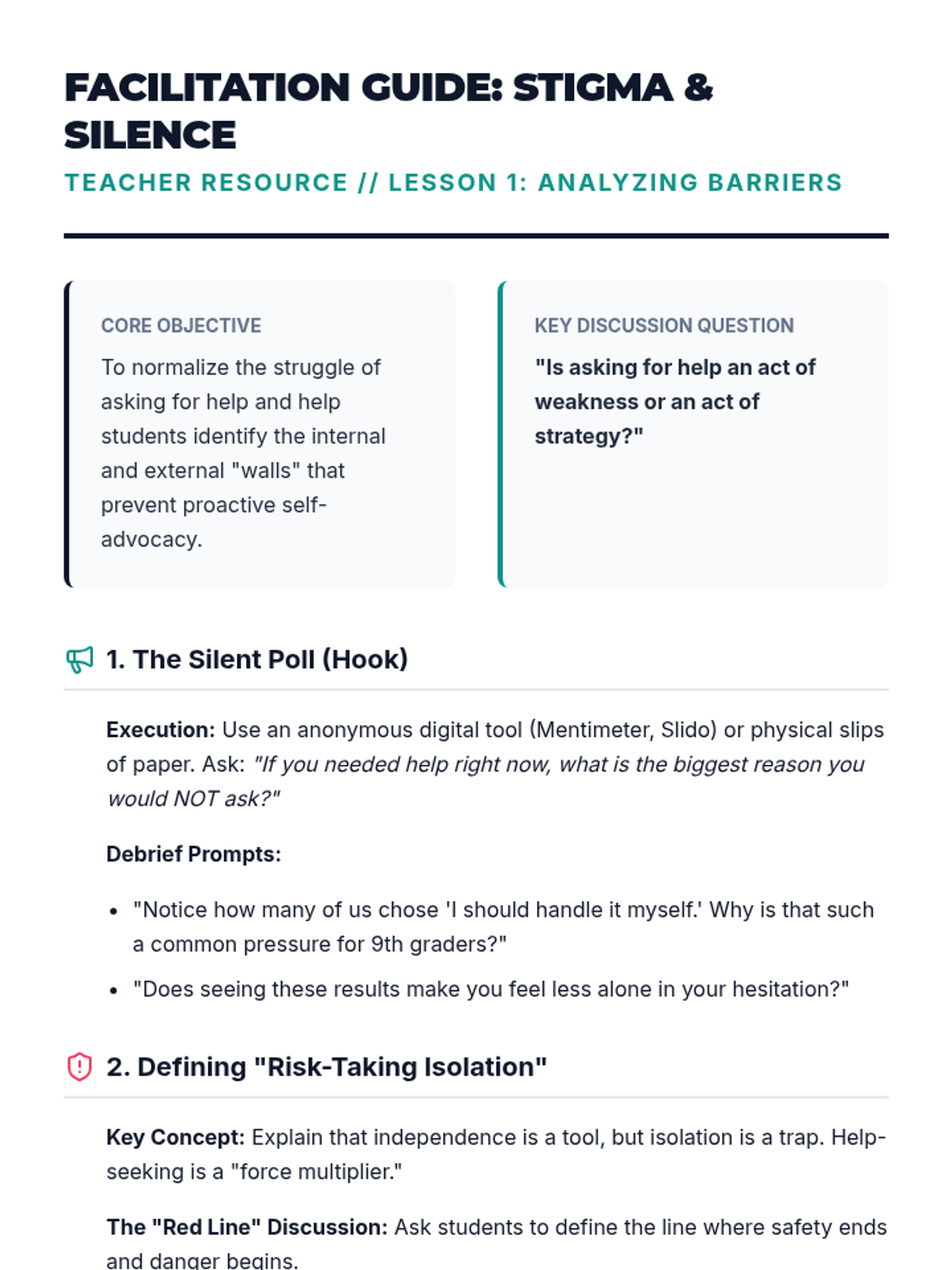
A comprehensive 5-lesson sequence for 9th-grade students focused on overcoming barriers to help-seeking, mapping support networks, mastering assertive communication, navigating healthcare systems, and establishing healthy personal boundaries.
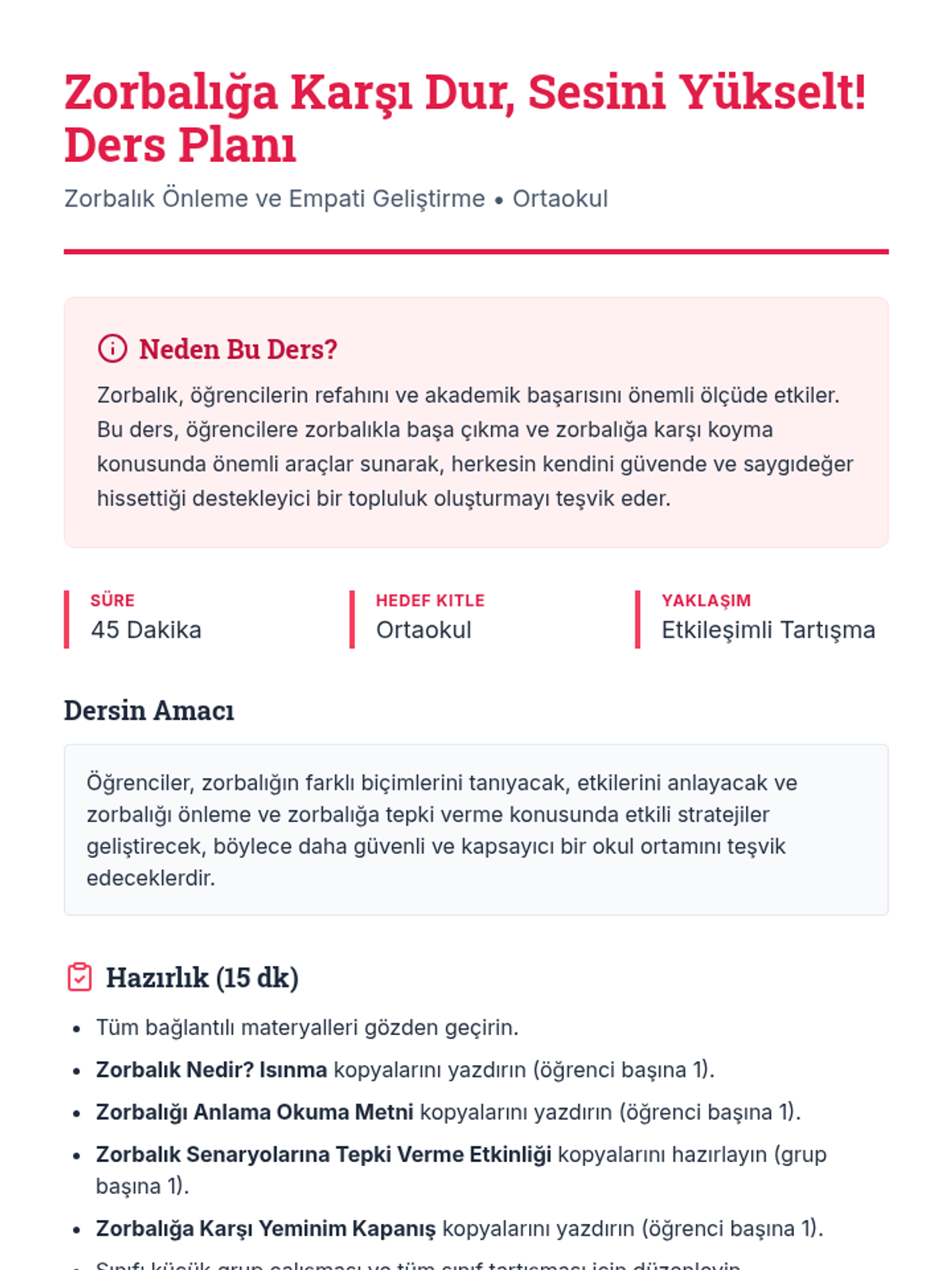
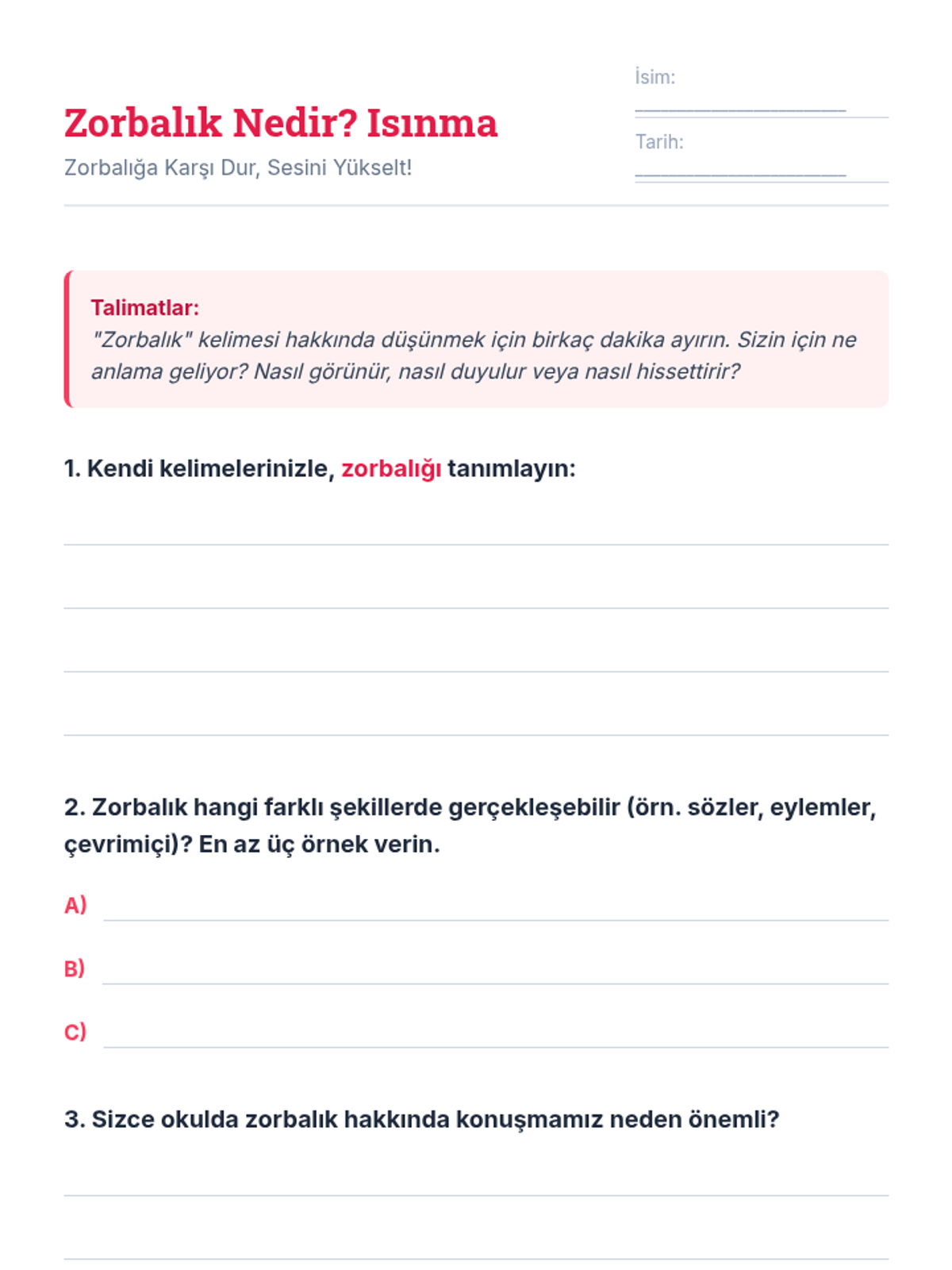
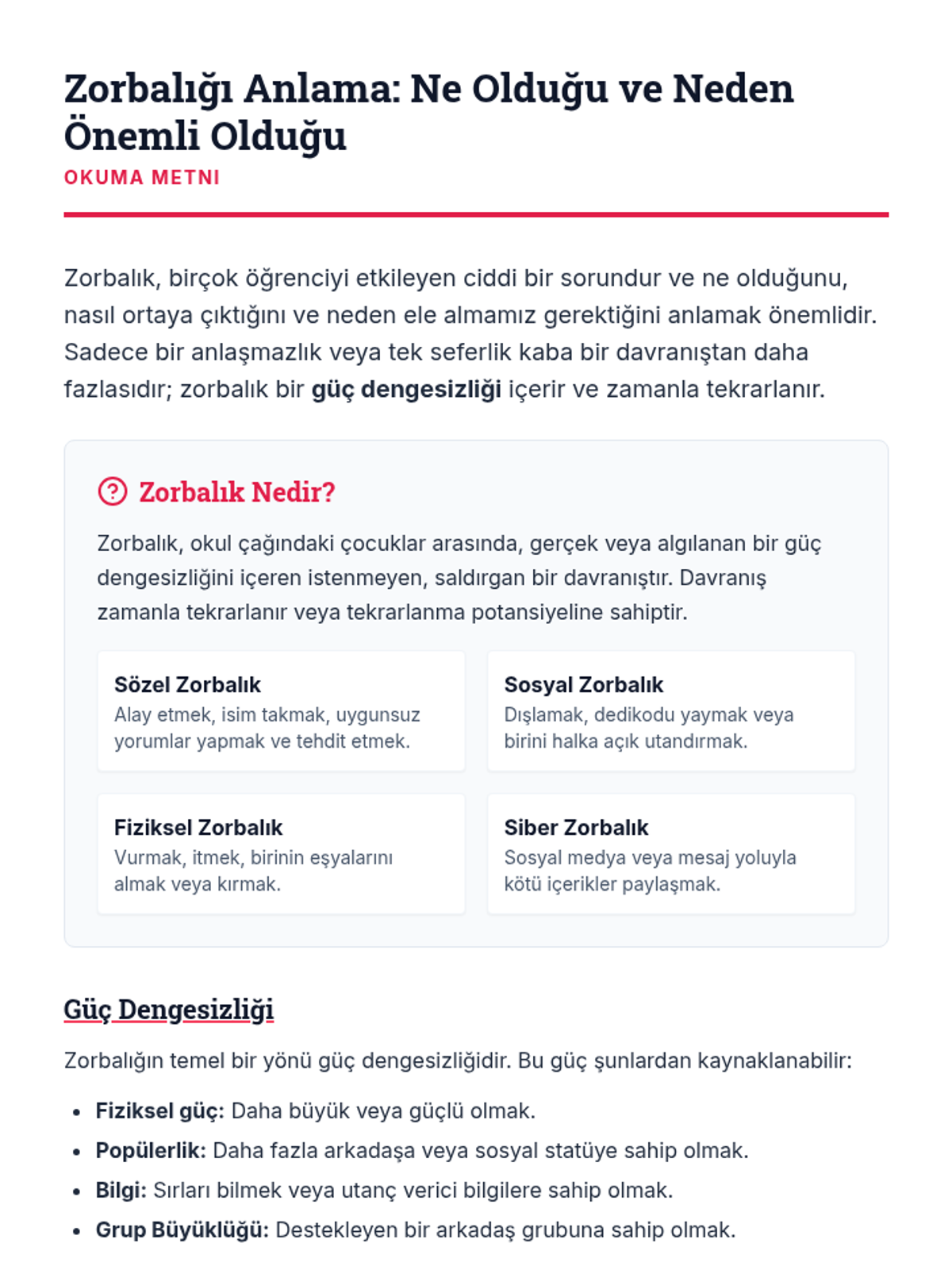
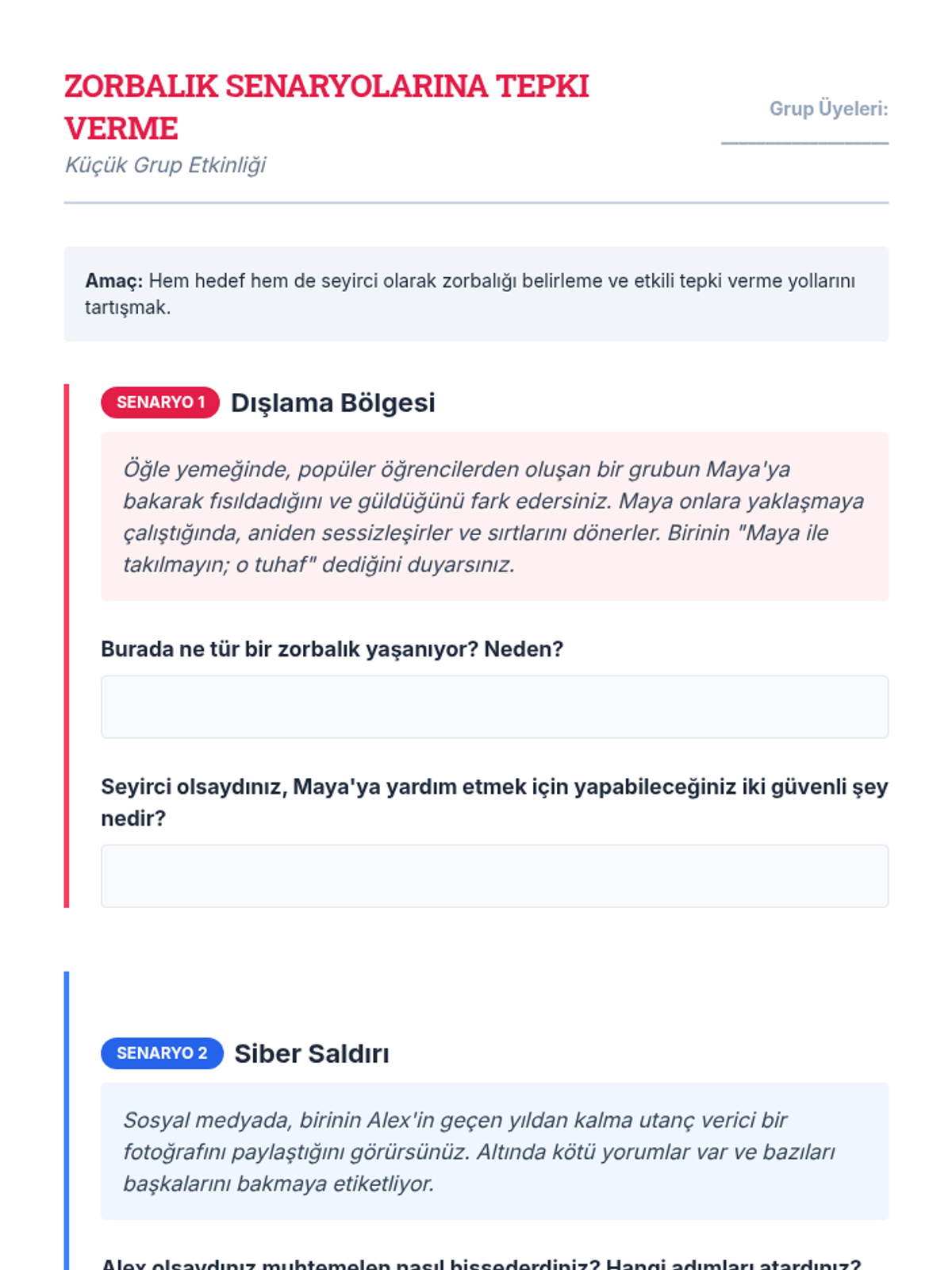
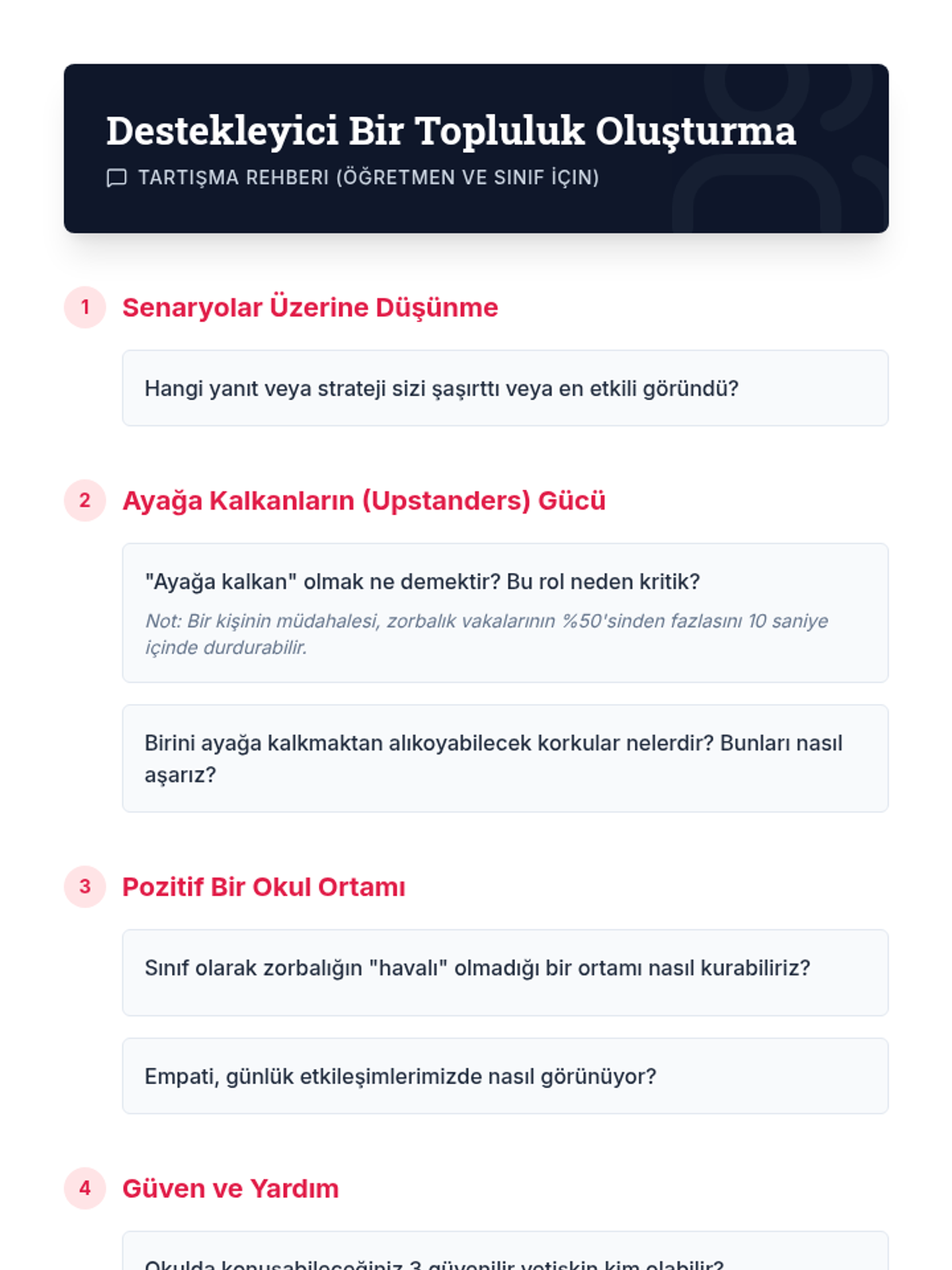
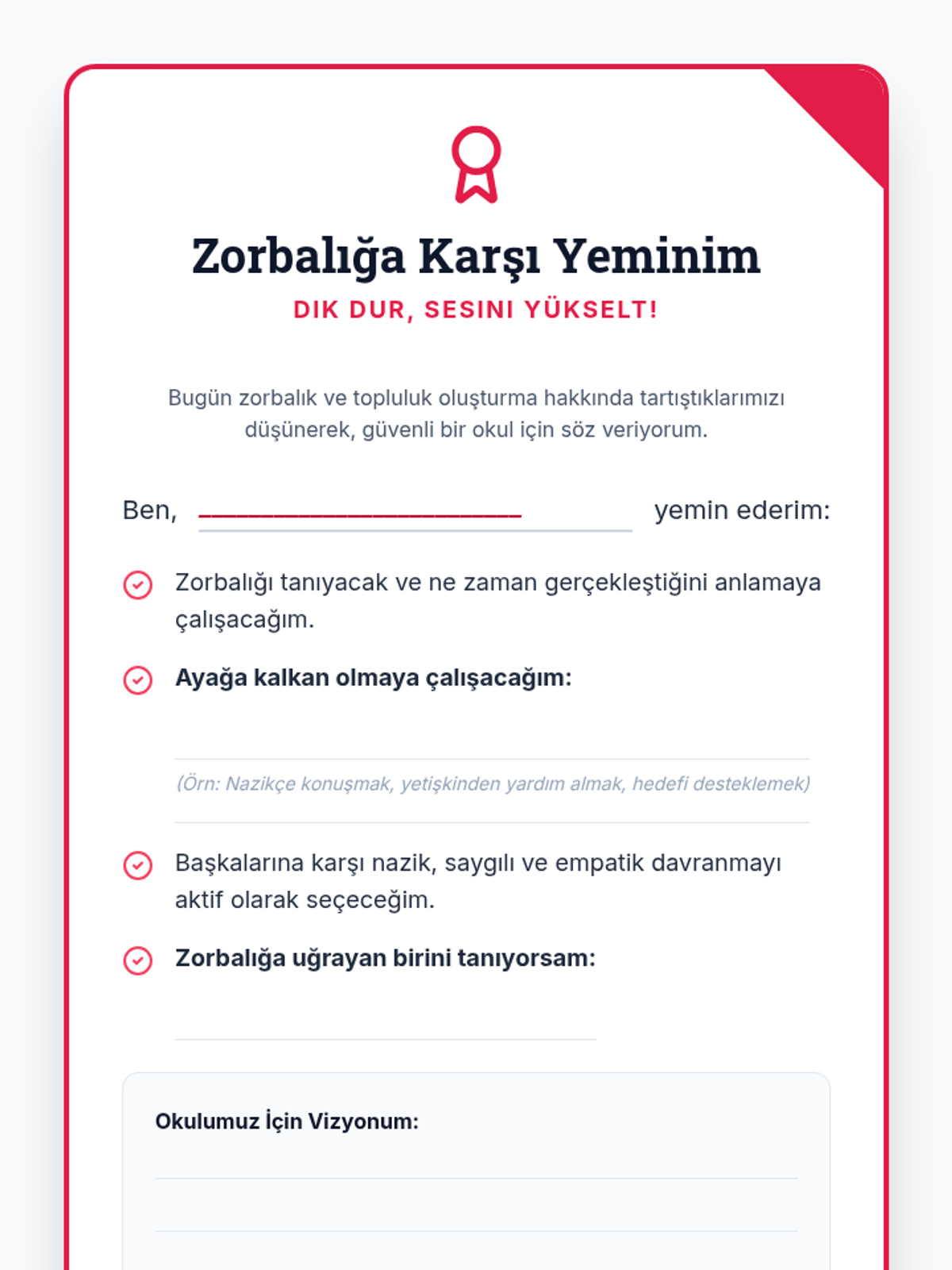
A comprehensive 3-part sequence for middle and high school students focused on bullying prevention, collaborative classroom management, and emotional literacy. Students will develop empathy, establish shared values, and learn to identify and express their emotions effectively.
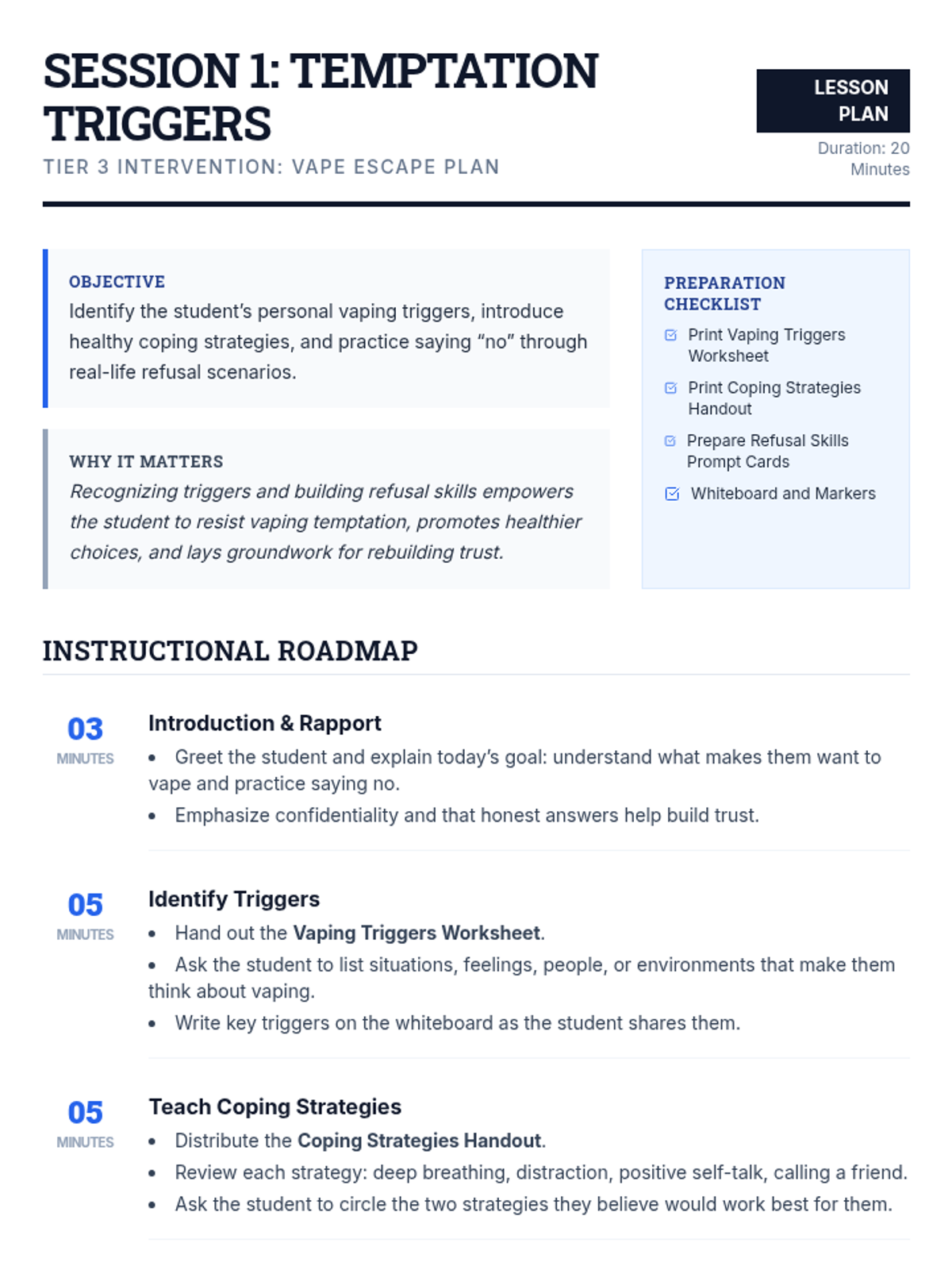
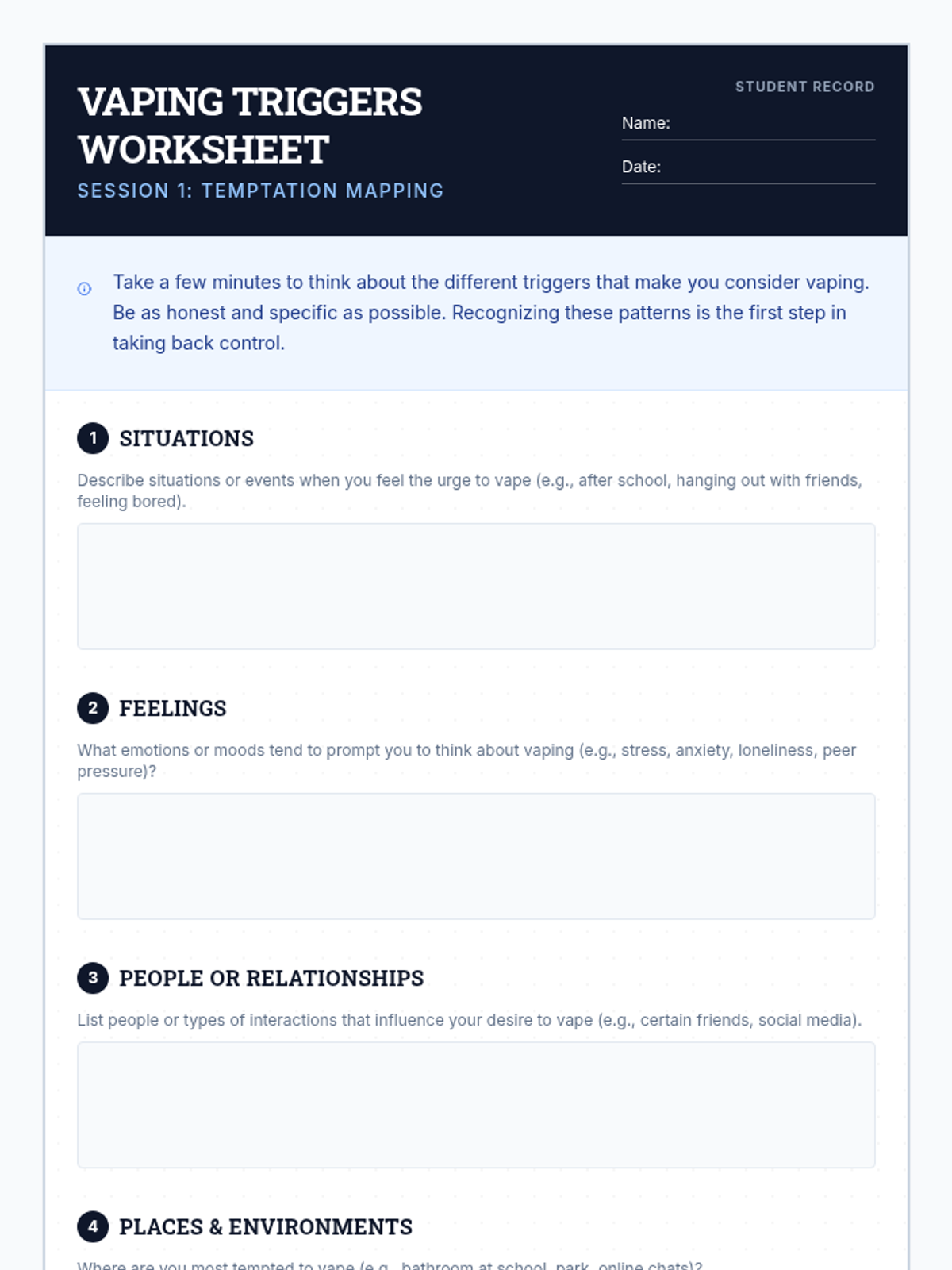
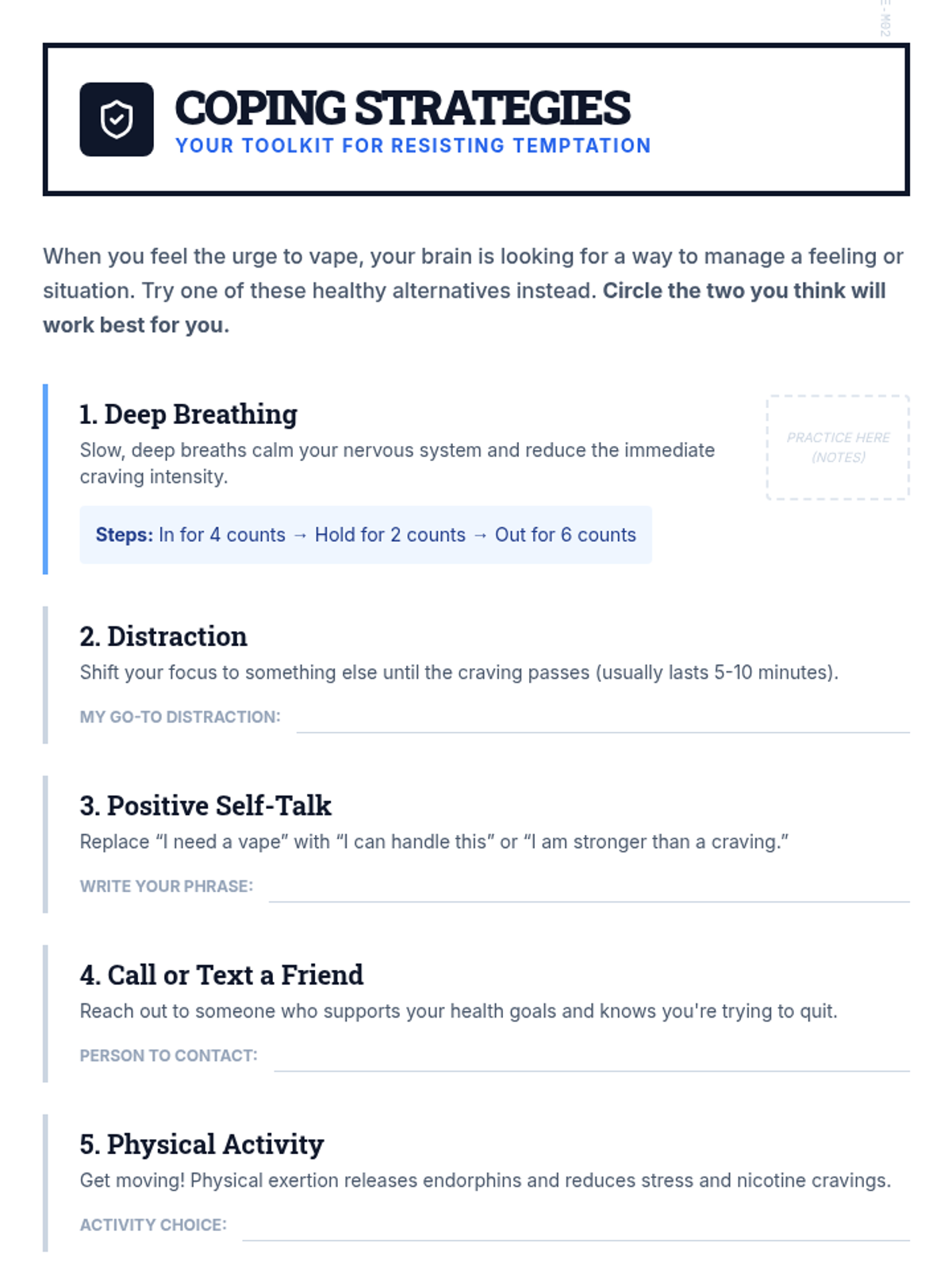
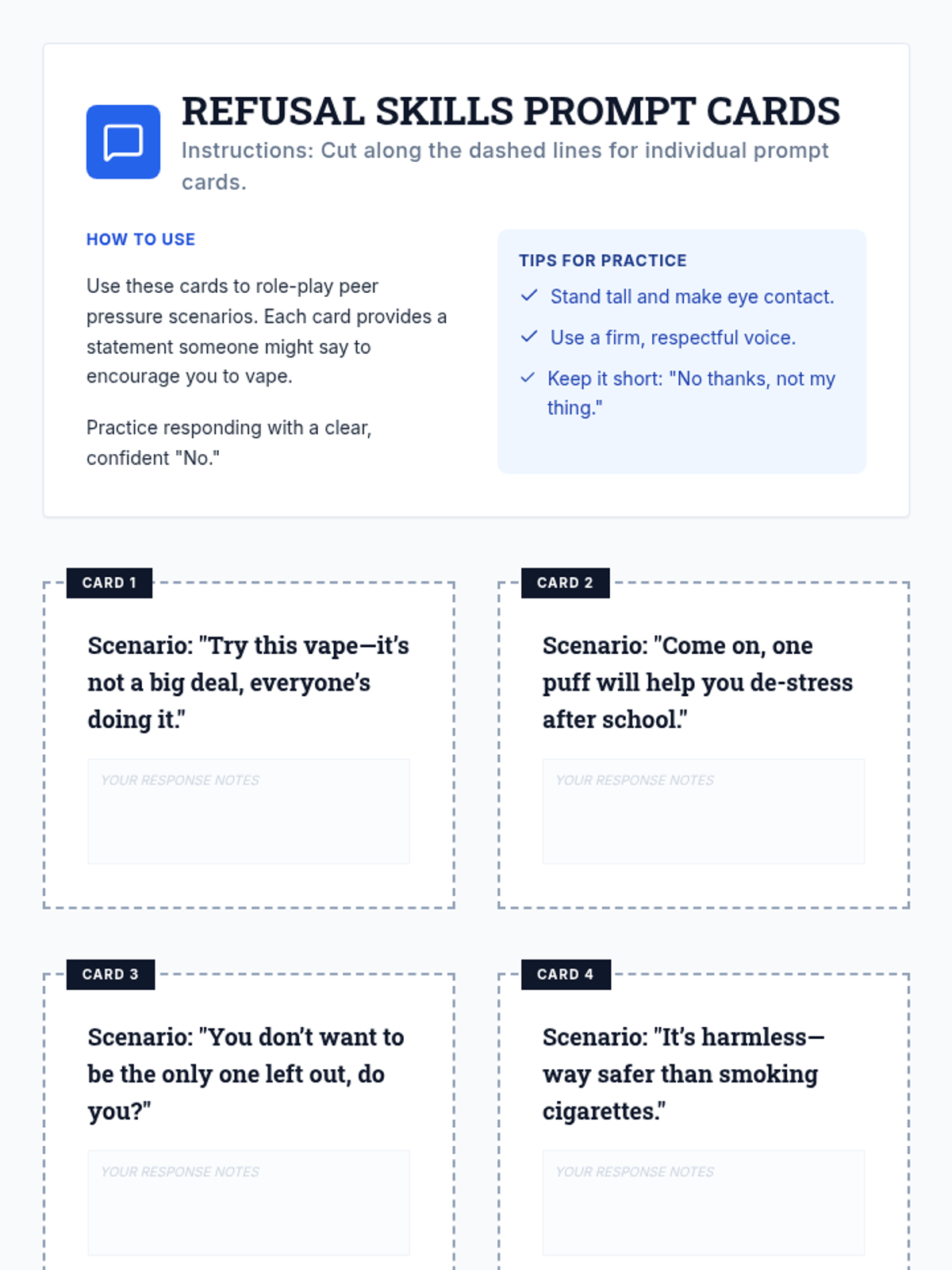
A two-session individualized intervention sequence for high school students returning from suspension. It focuses on identifying vaping triggers, developing refusal skills, recognizing manipulation, and rebuilding trust through honesty.
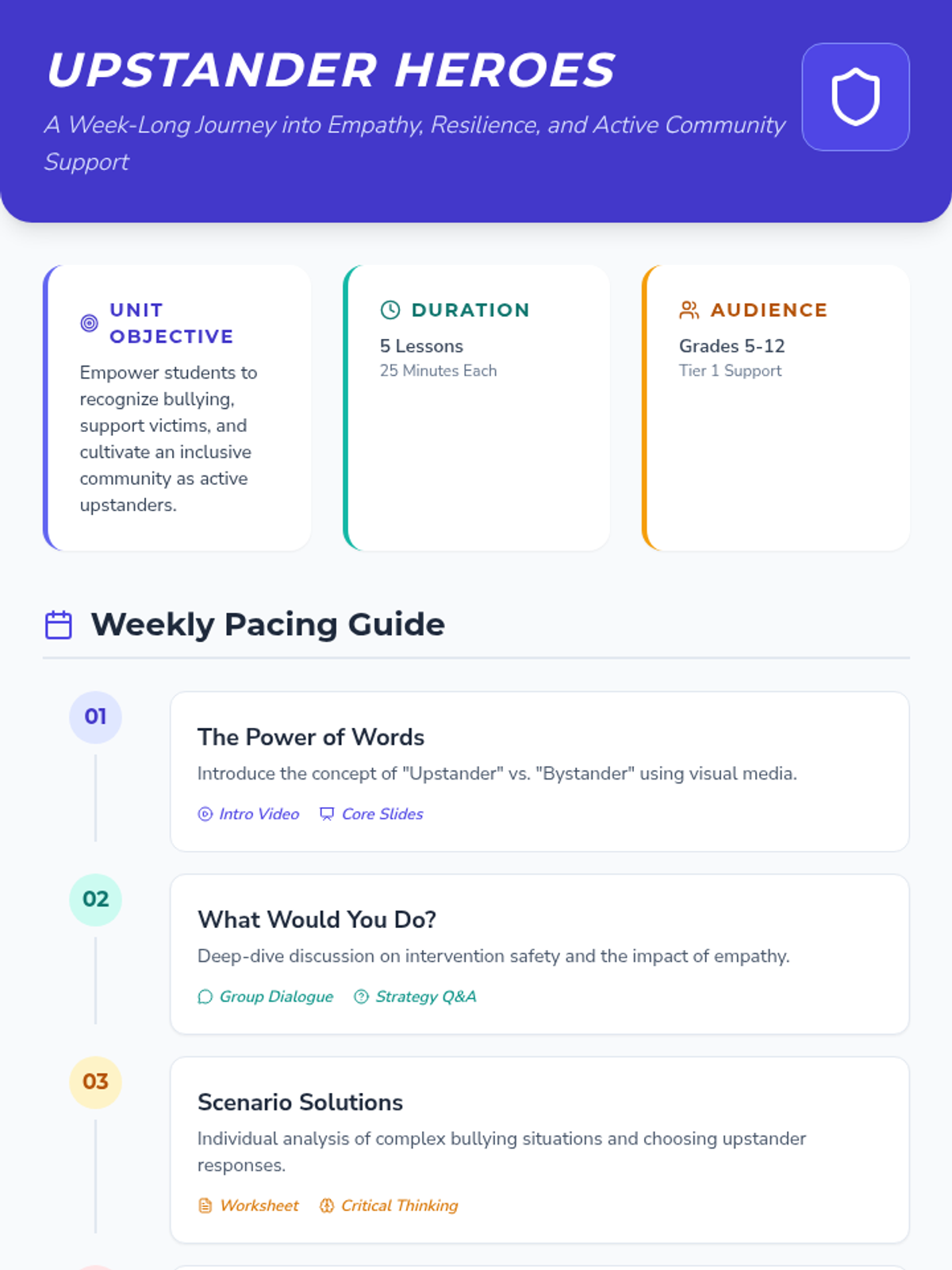
A comprehensive week-long unit designed to empower students to recognize bullying, support victims, and foster an inclusive community as active upstanders.