Functional behavior assessment, data tracking, and de-escalation strategies for managing classroom conduct. Addresses positive reinforcement, token economies, and individualized behavior contracts to support student self-regulation.
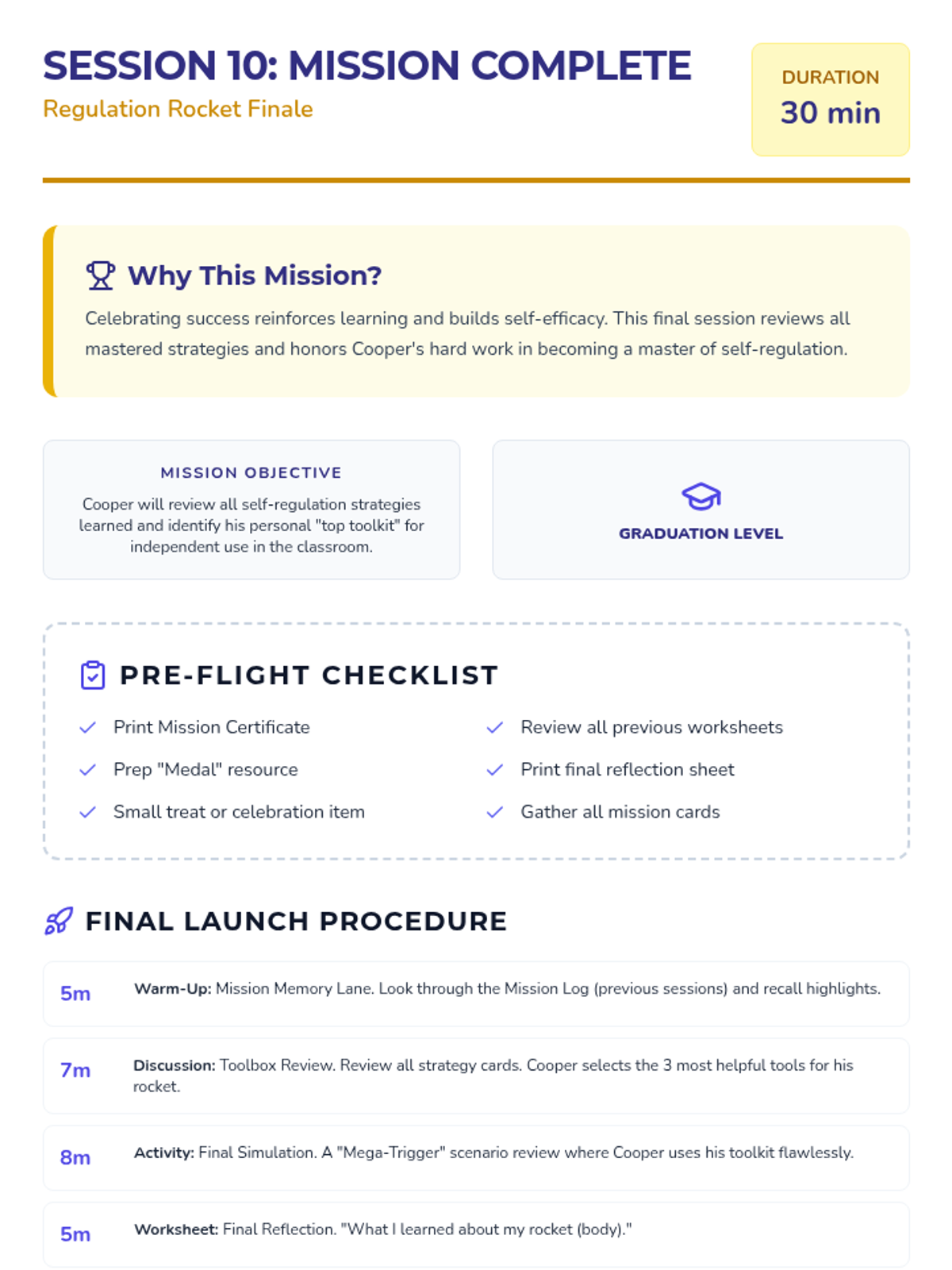
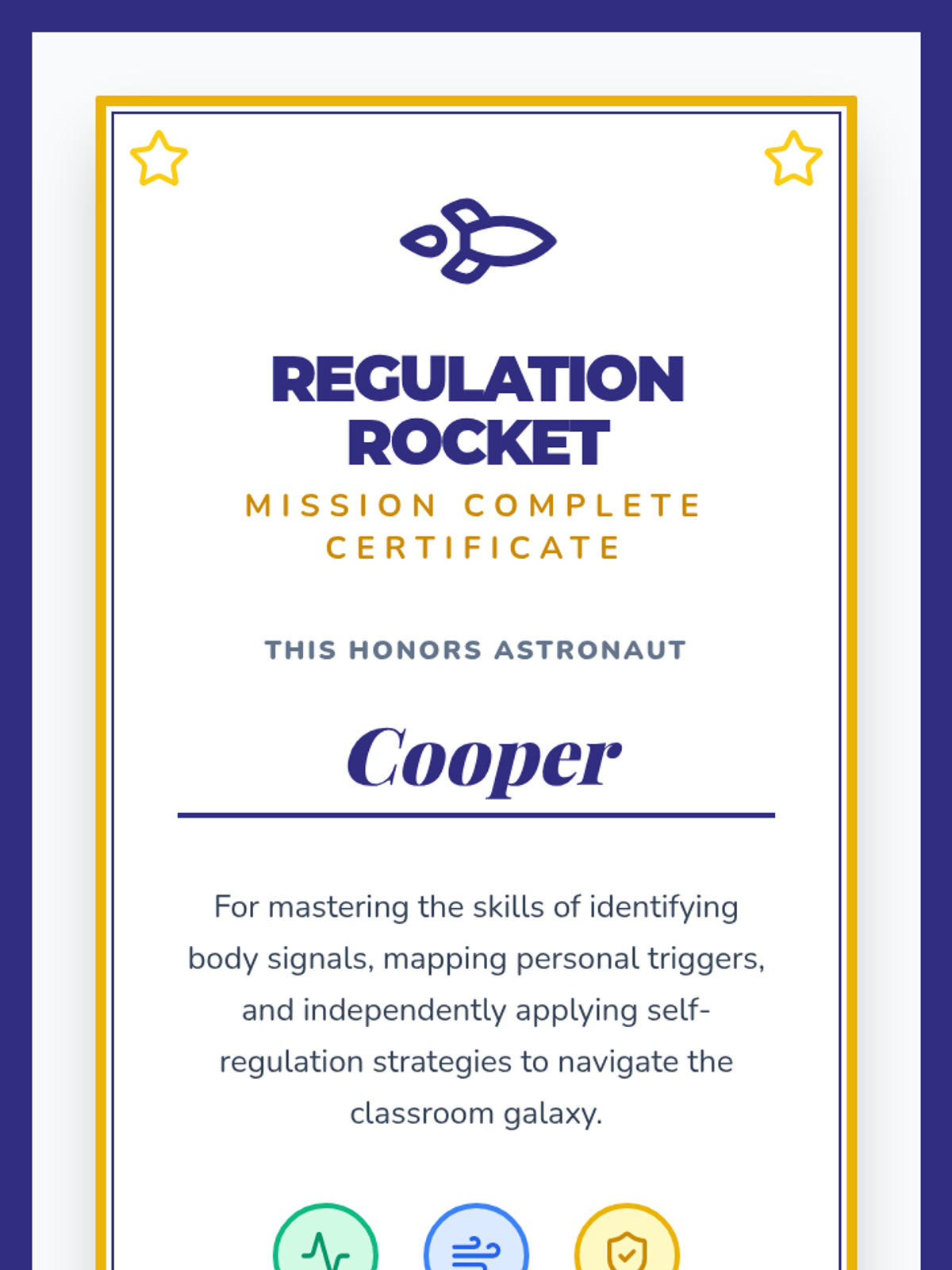
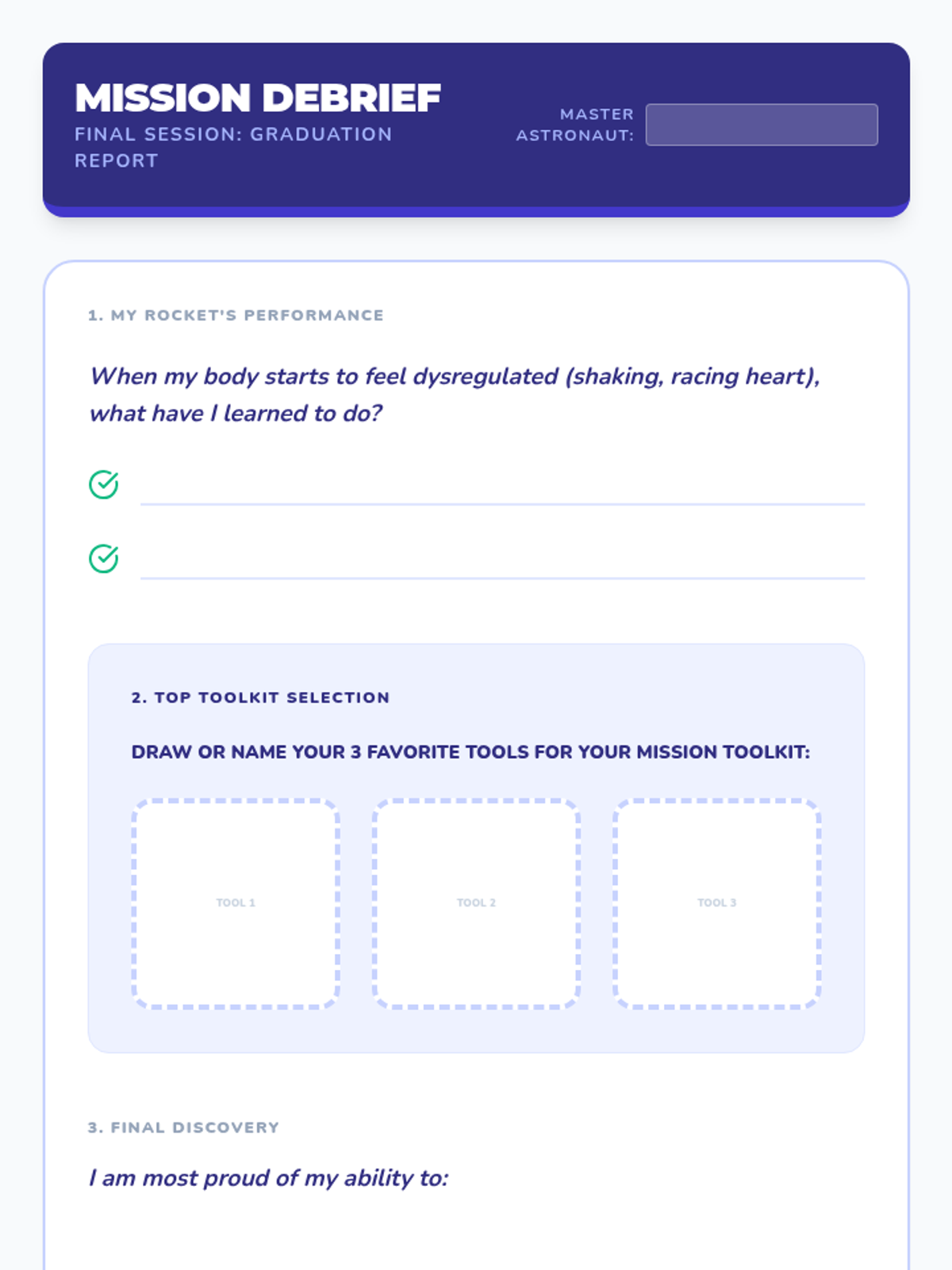
Reviewing all strategies and celebrating the successful mission.
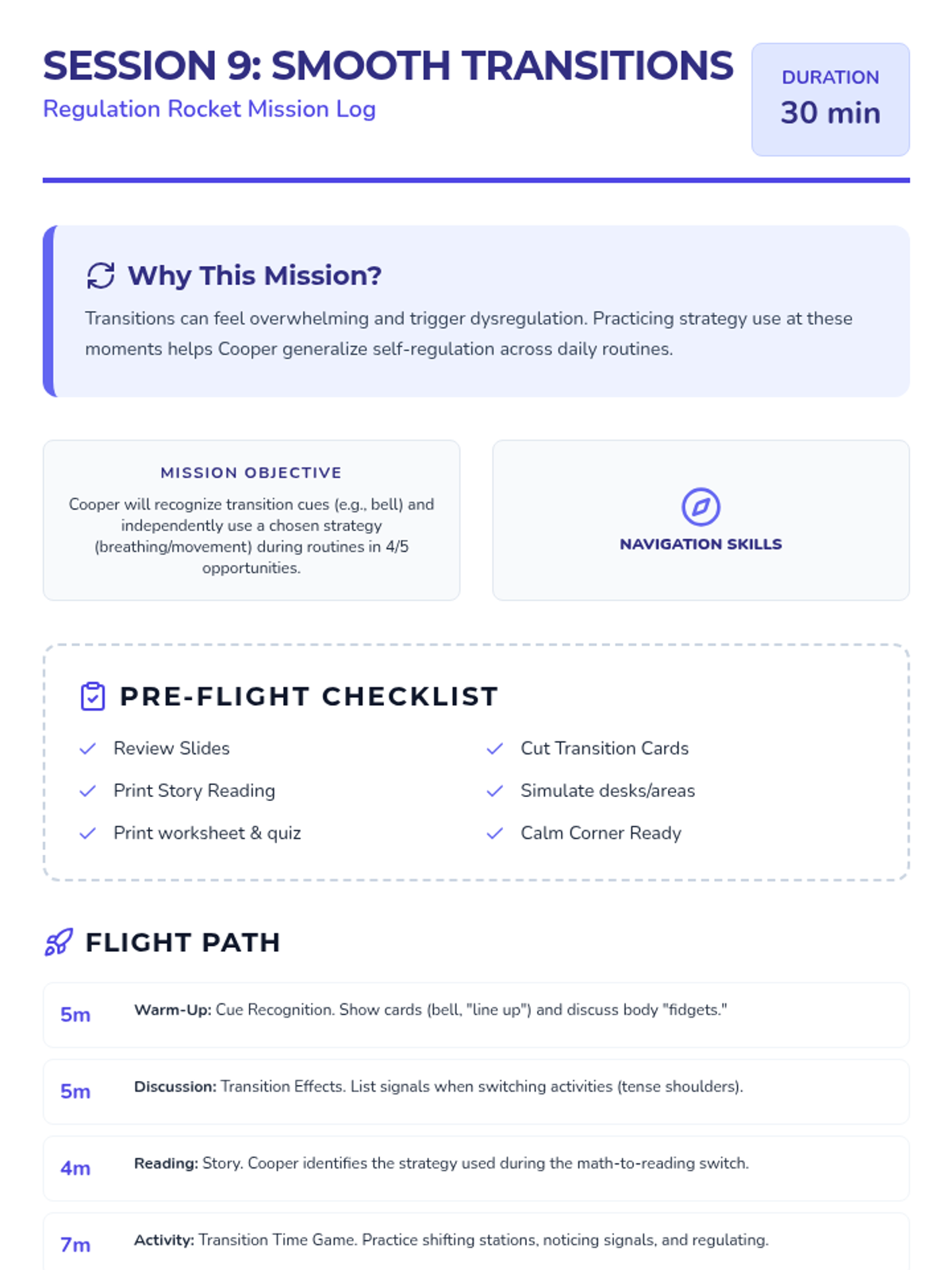
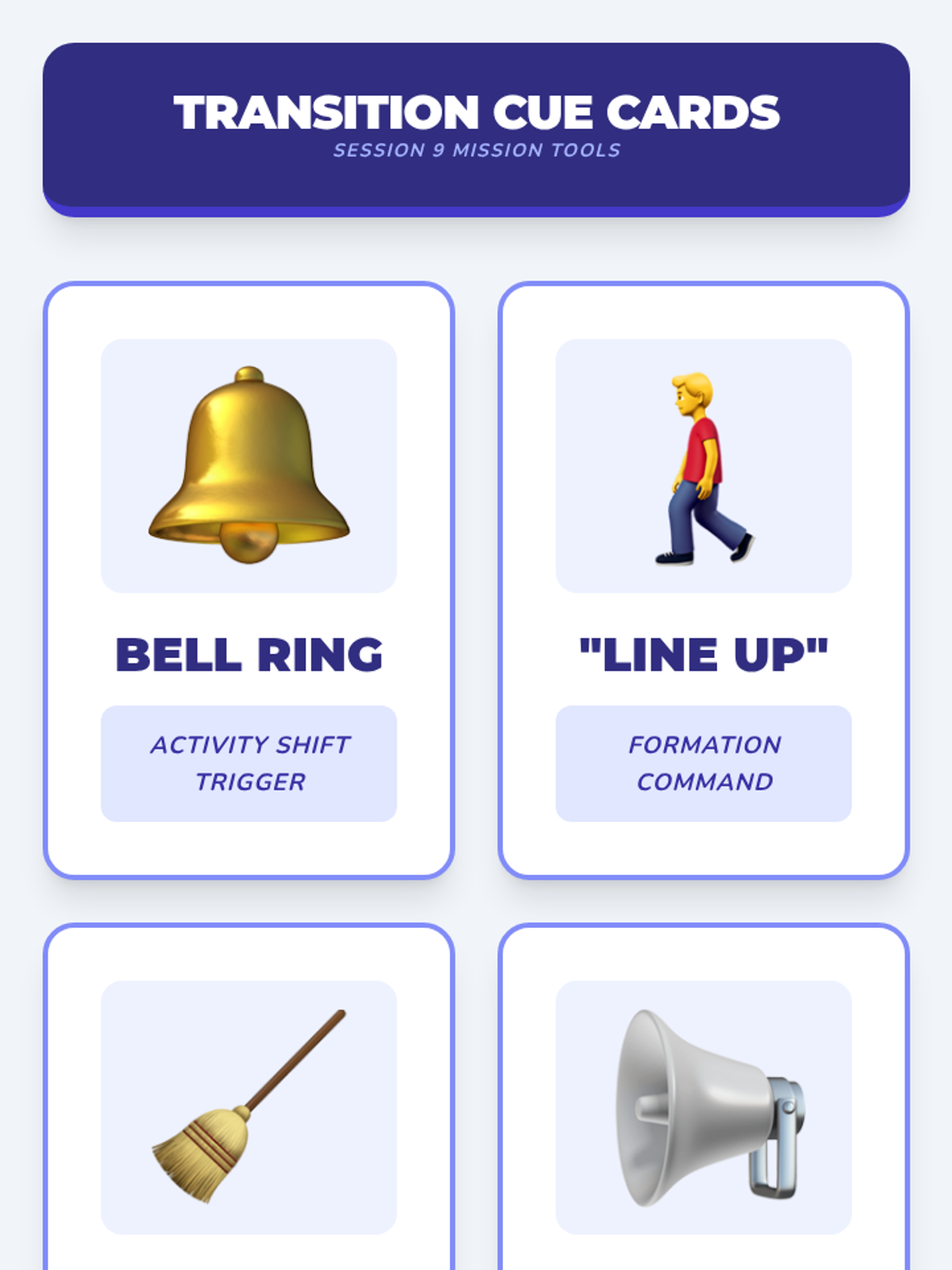
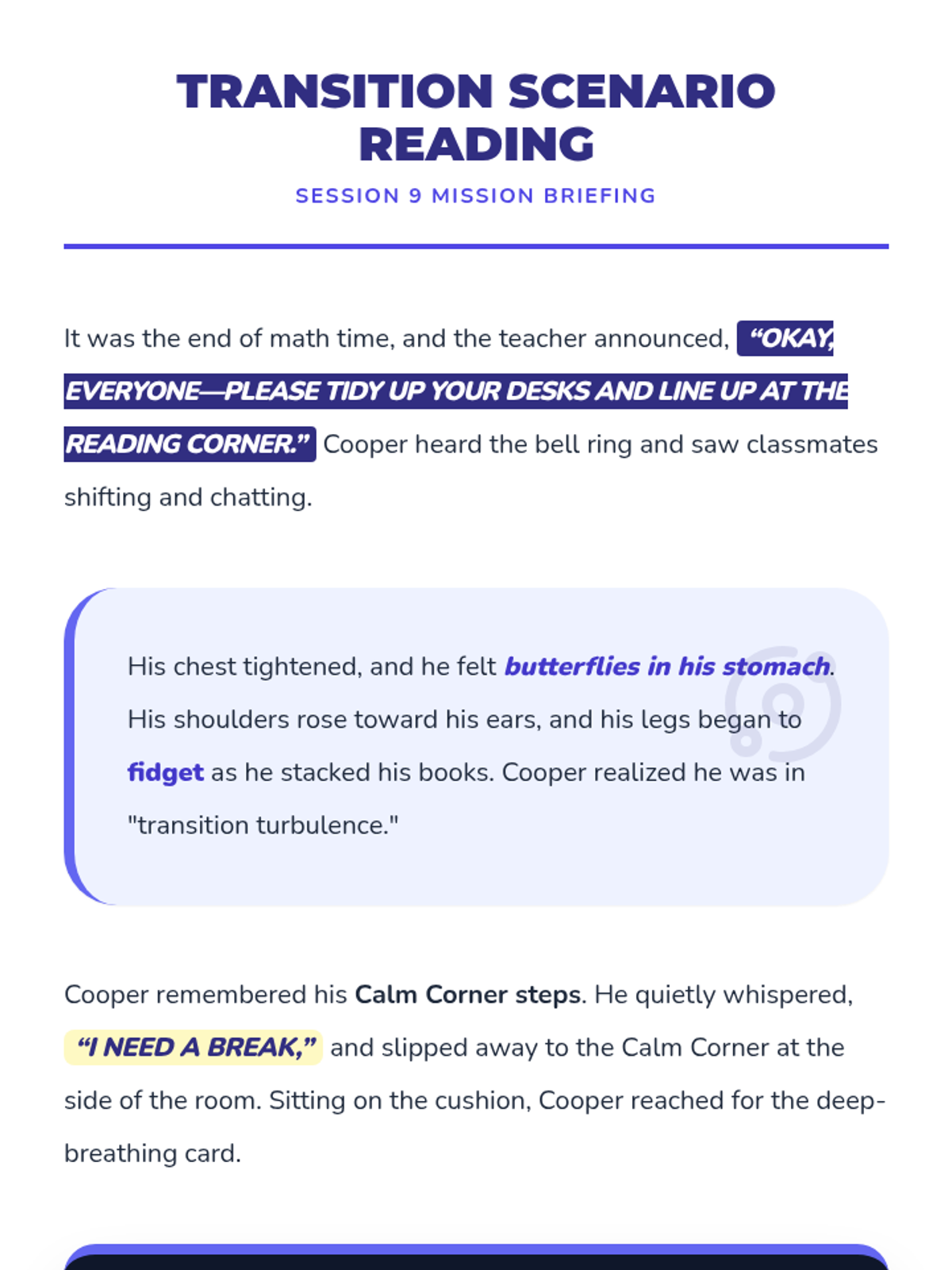
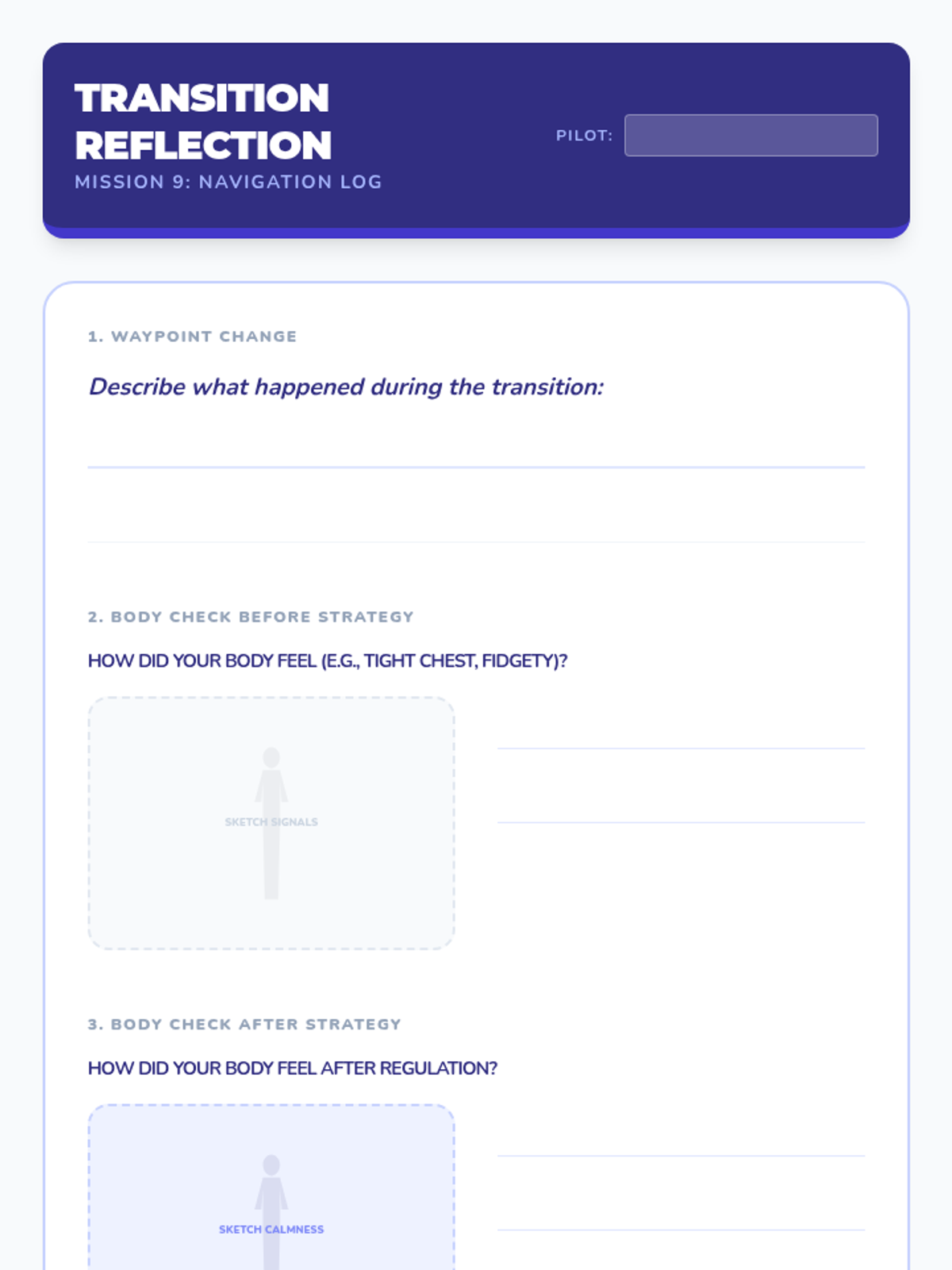
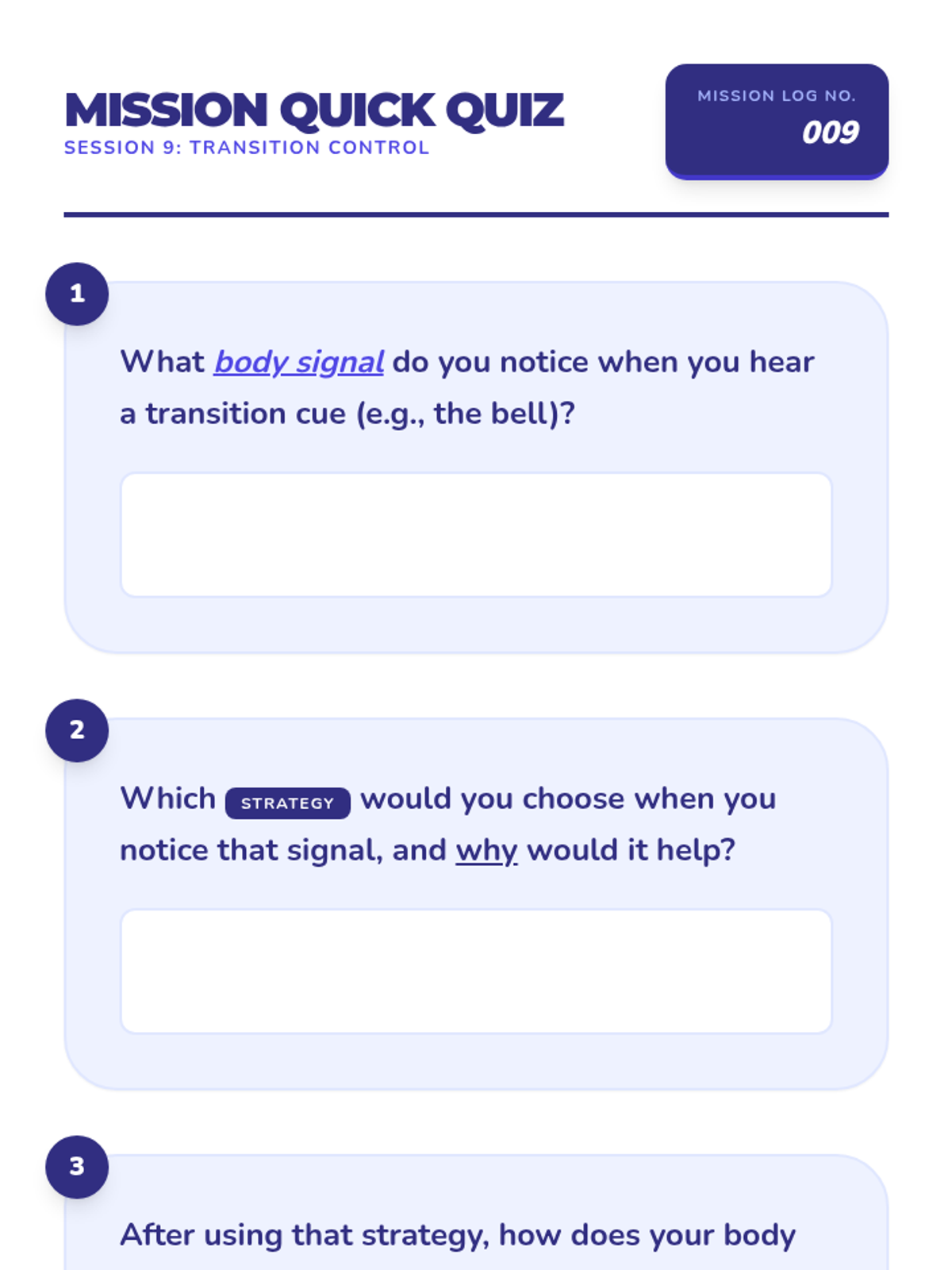
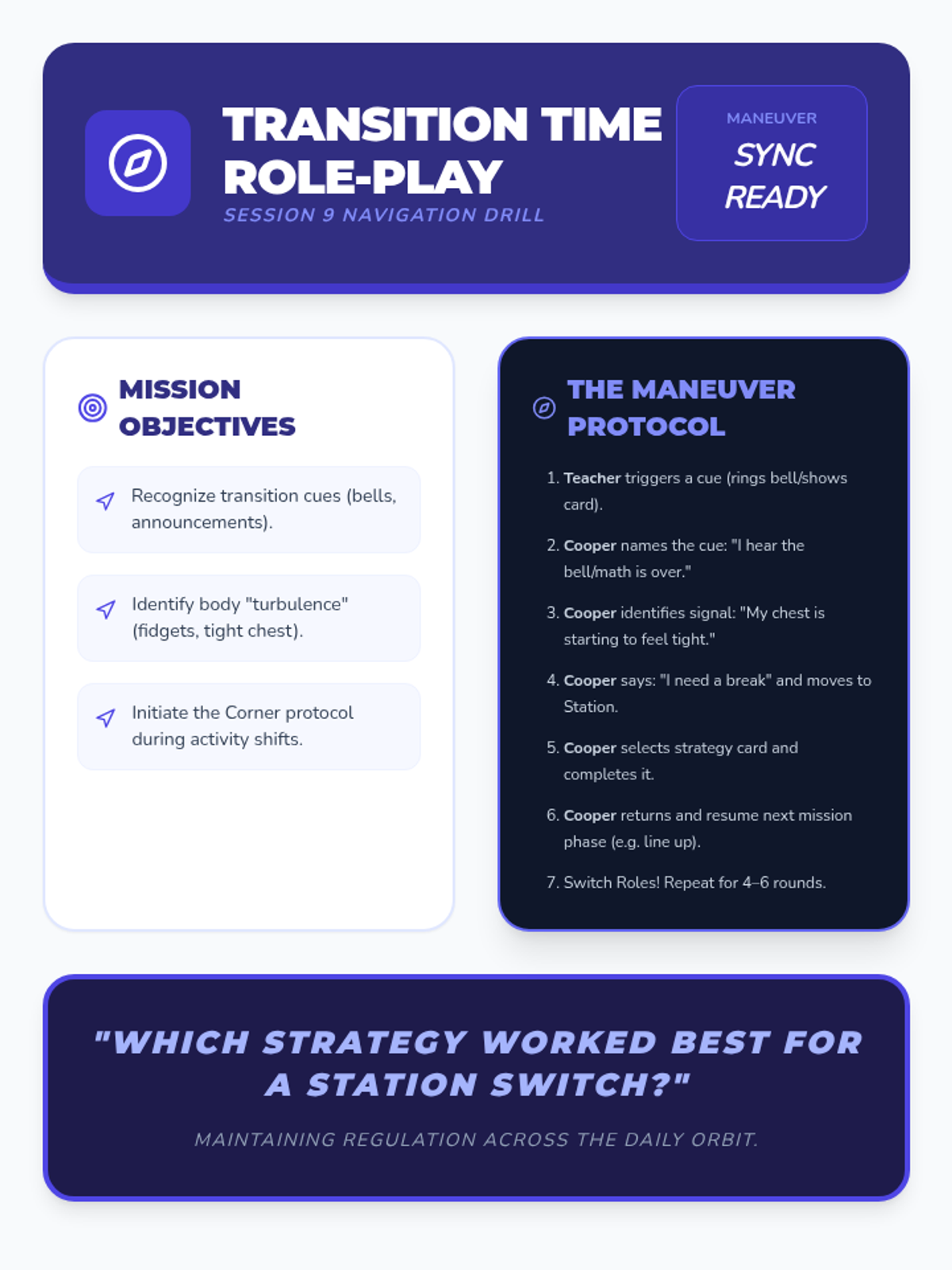
Maintaining regulation during routine classroom changes.
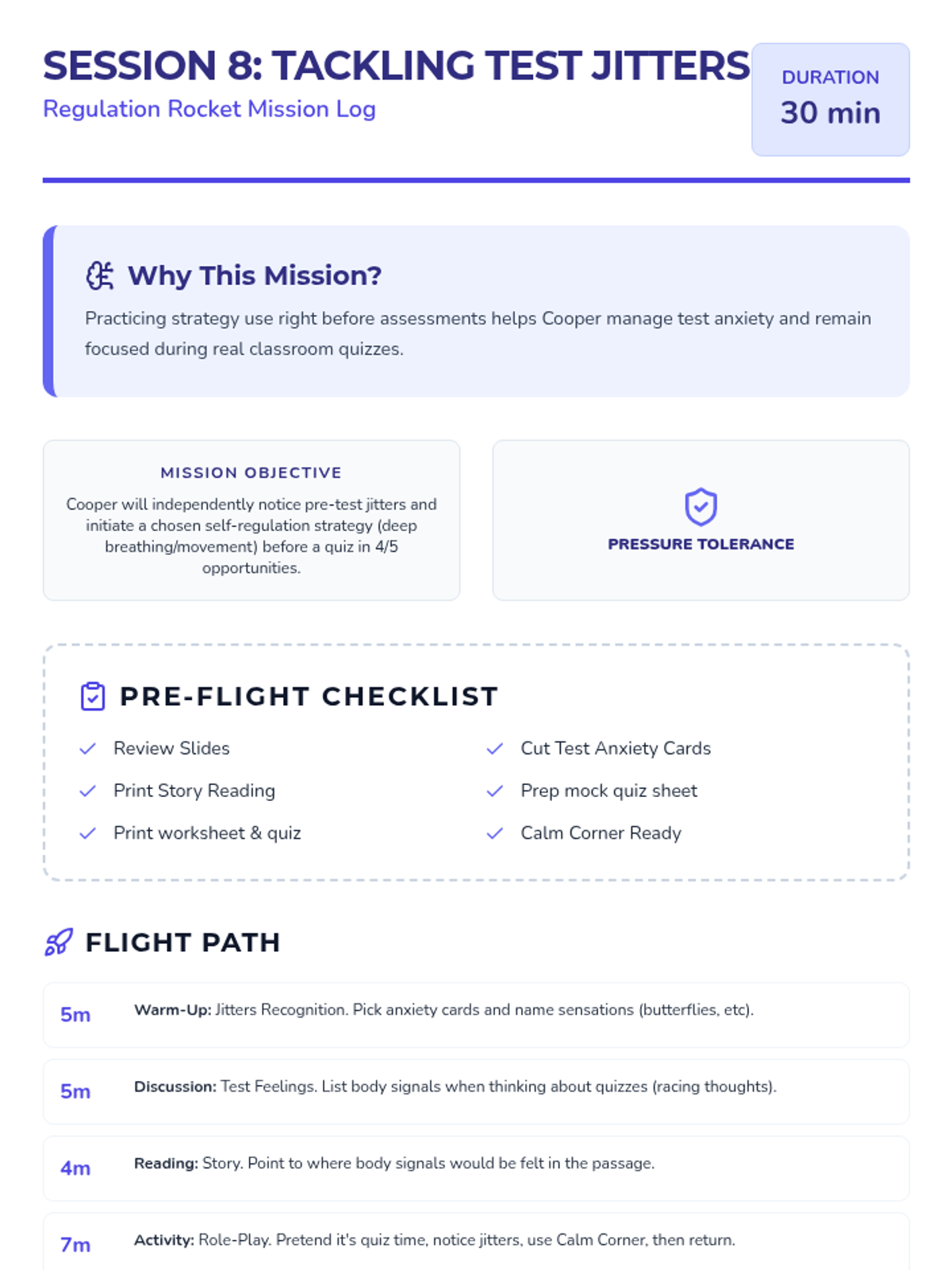
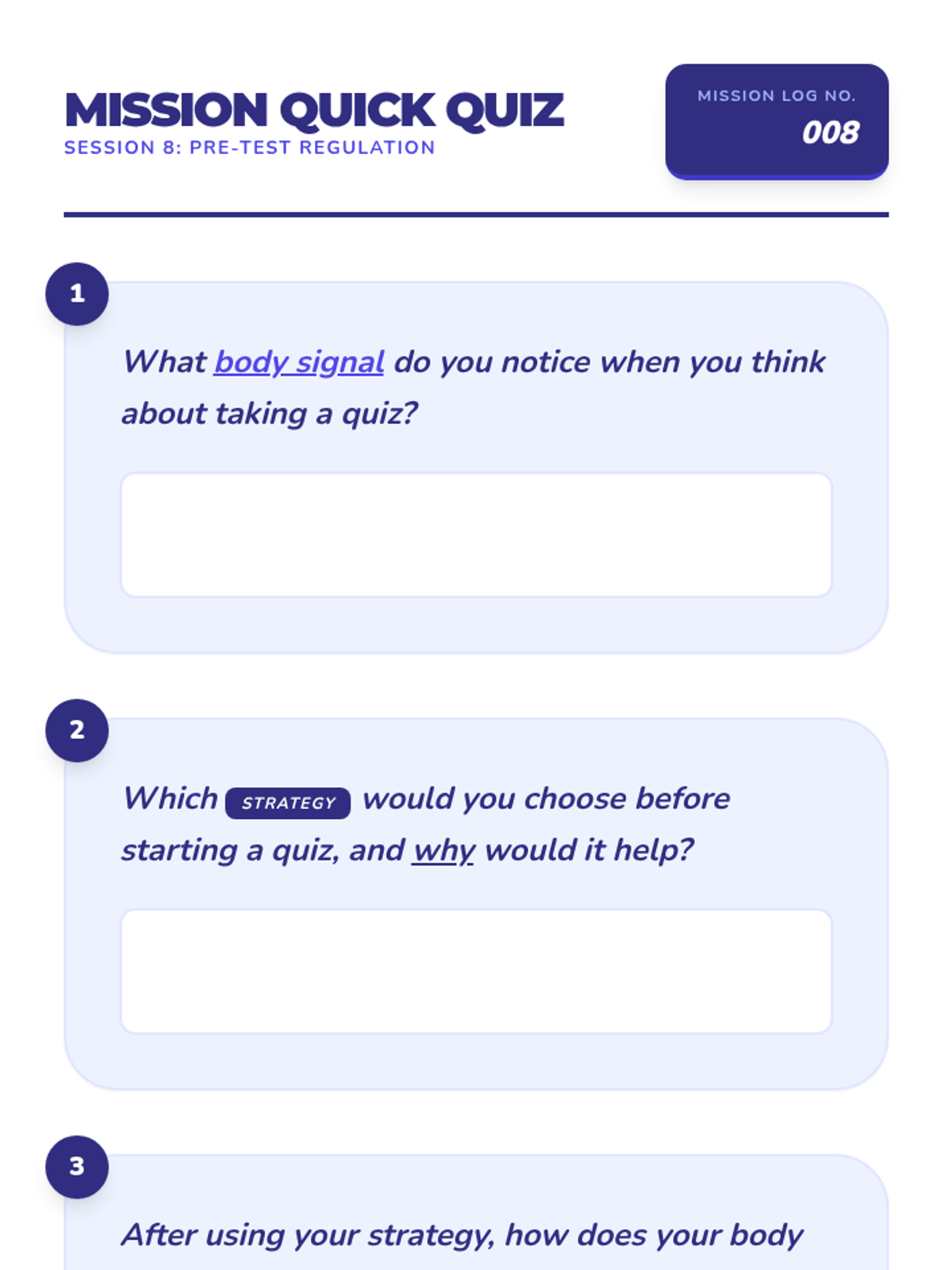
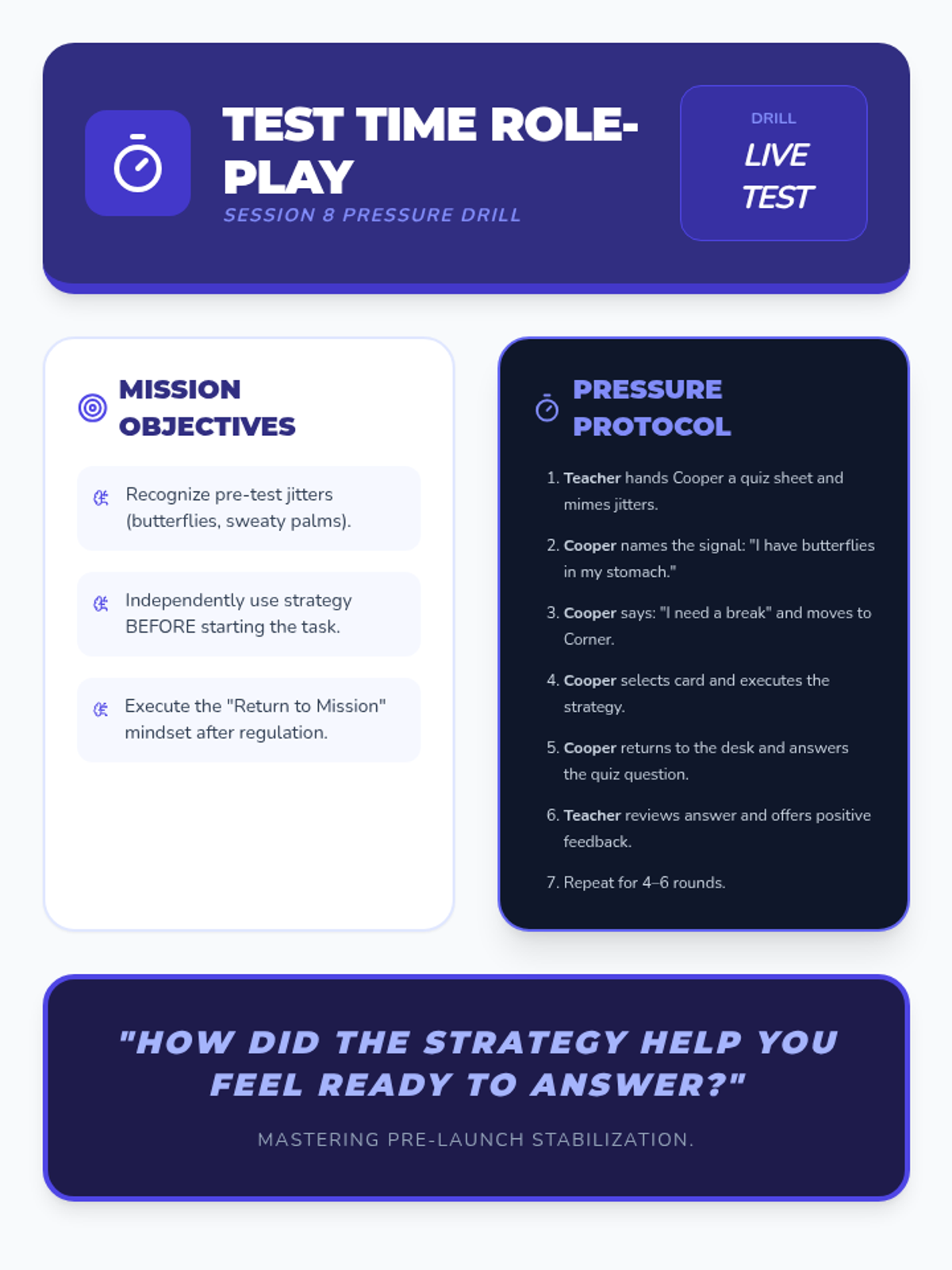
Applying coping skills to manage anxiety before assessments.
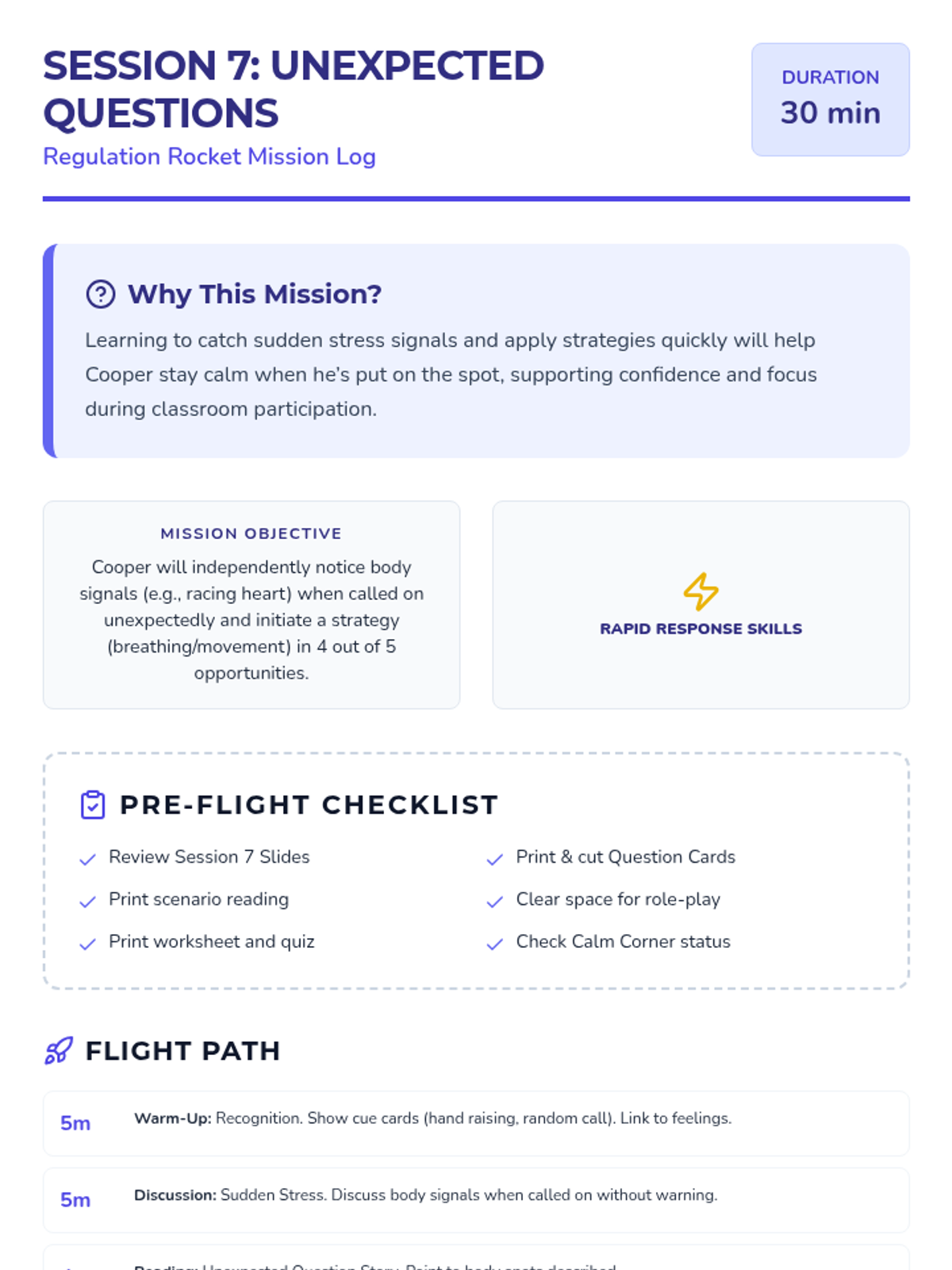
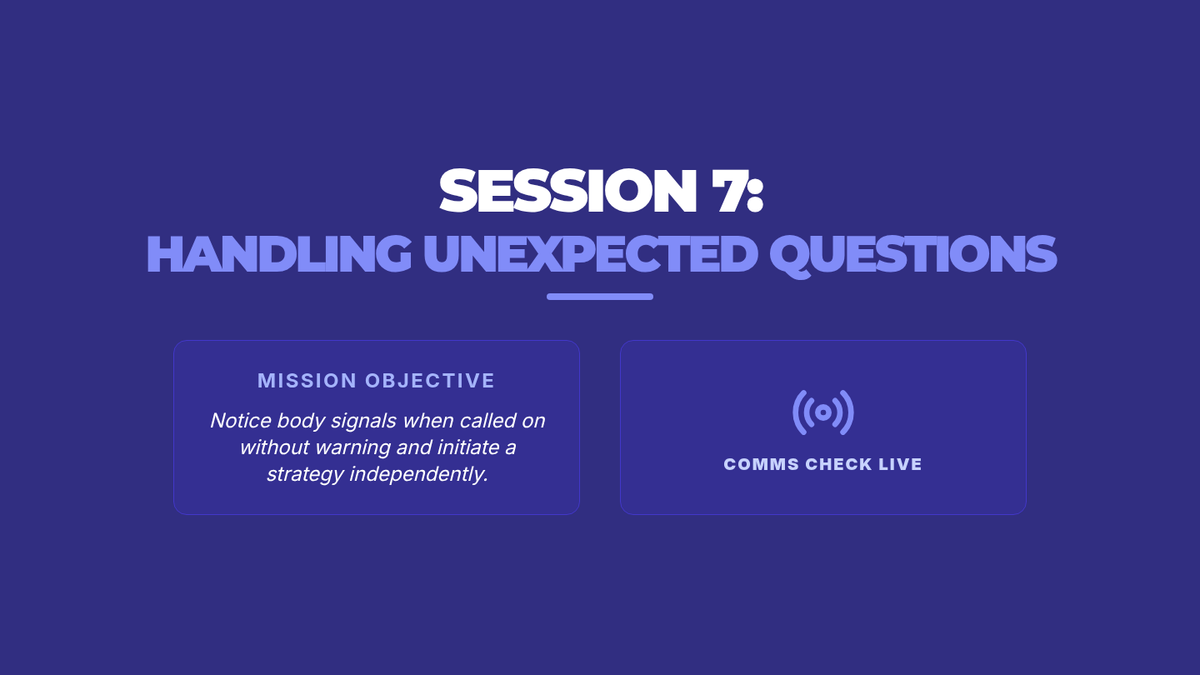
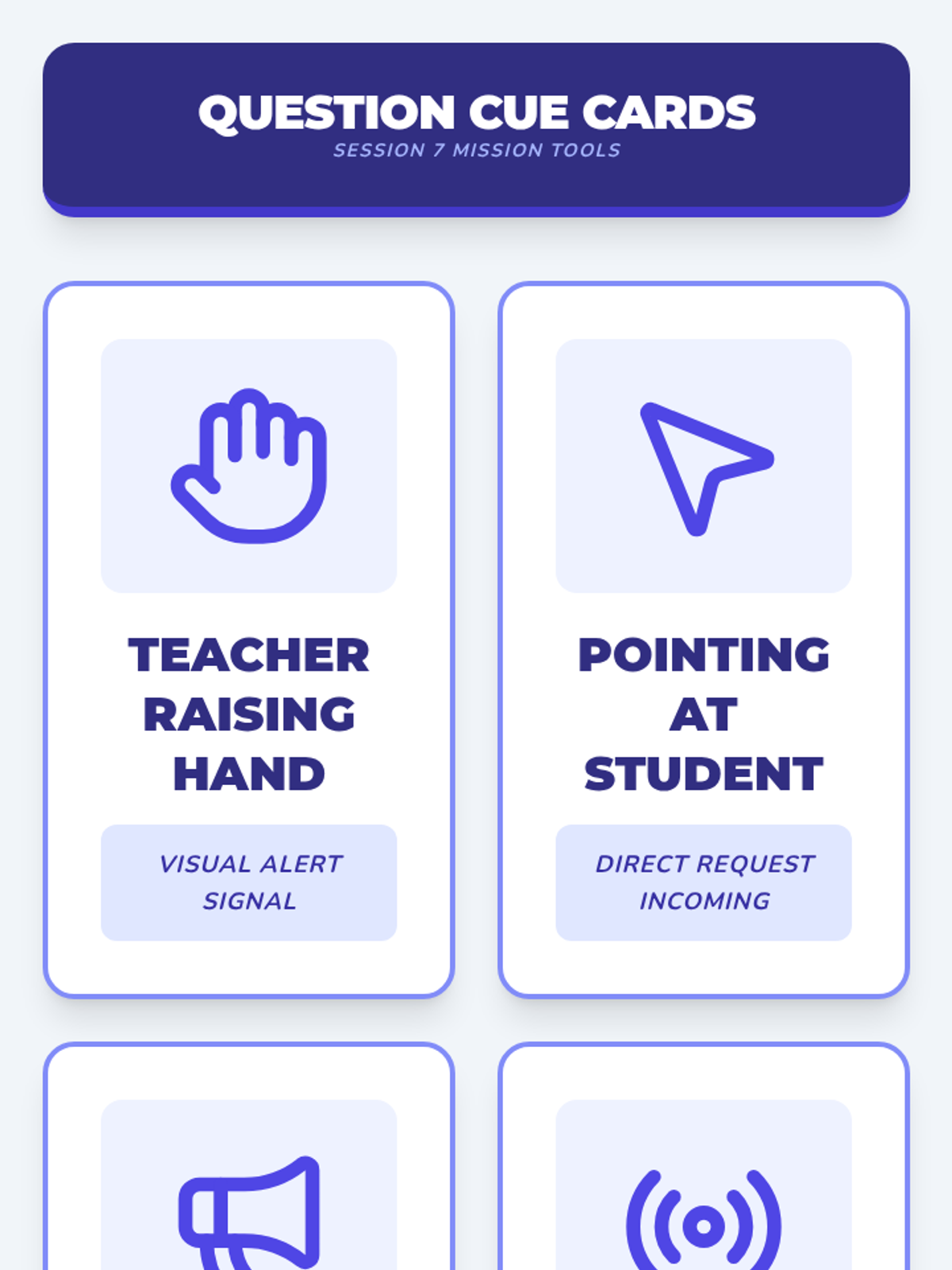
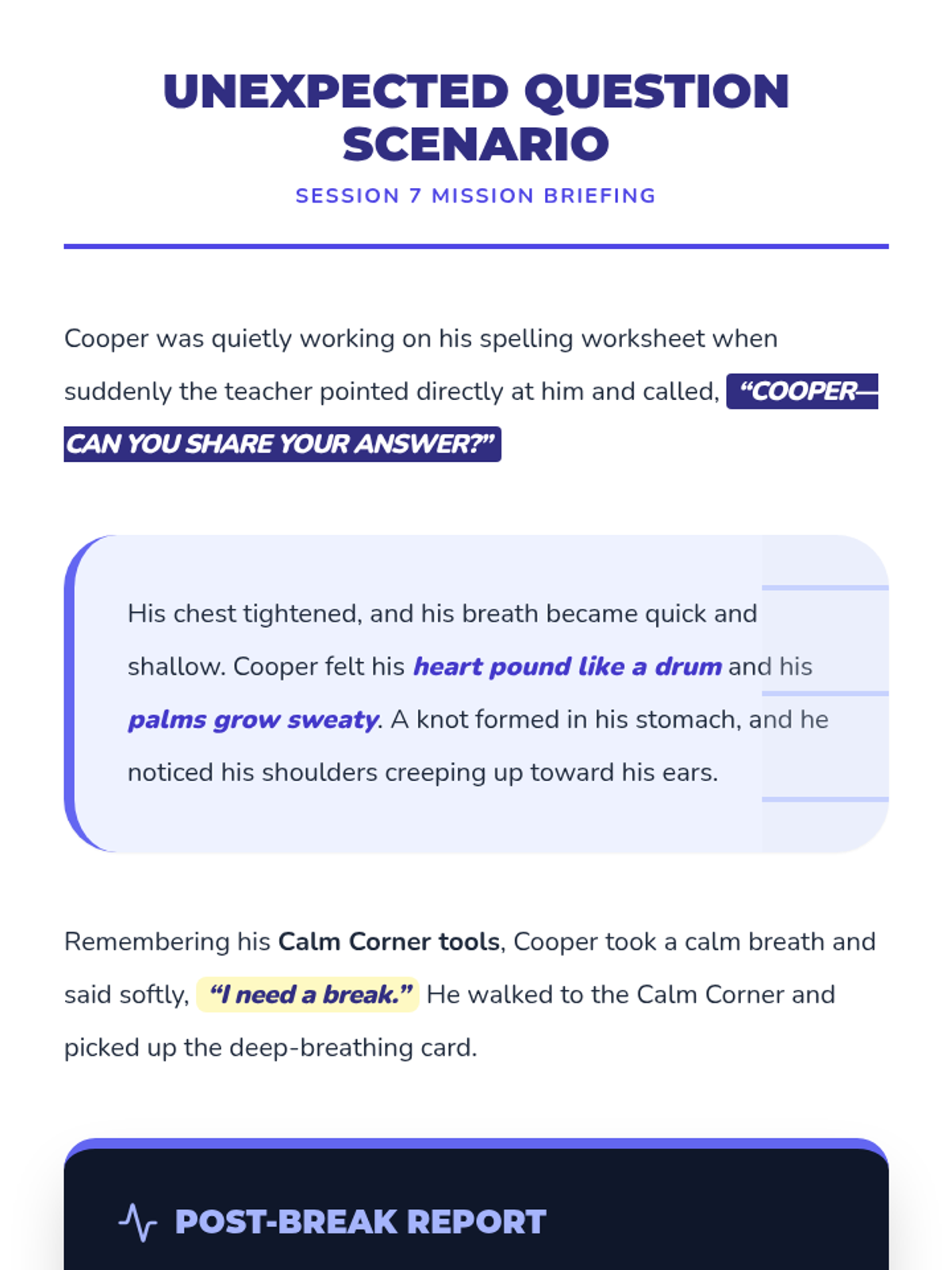
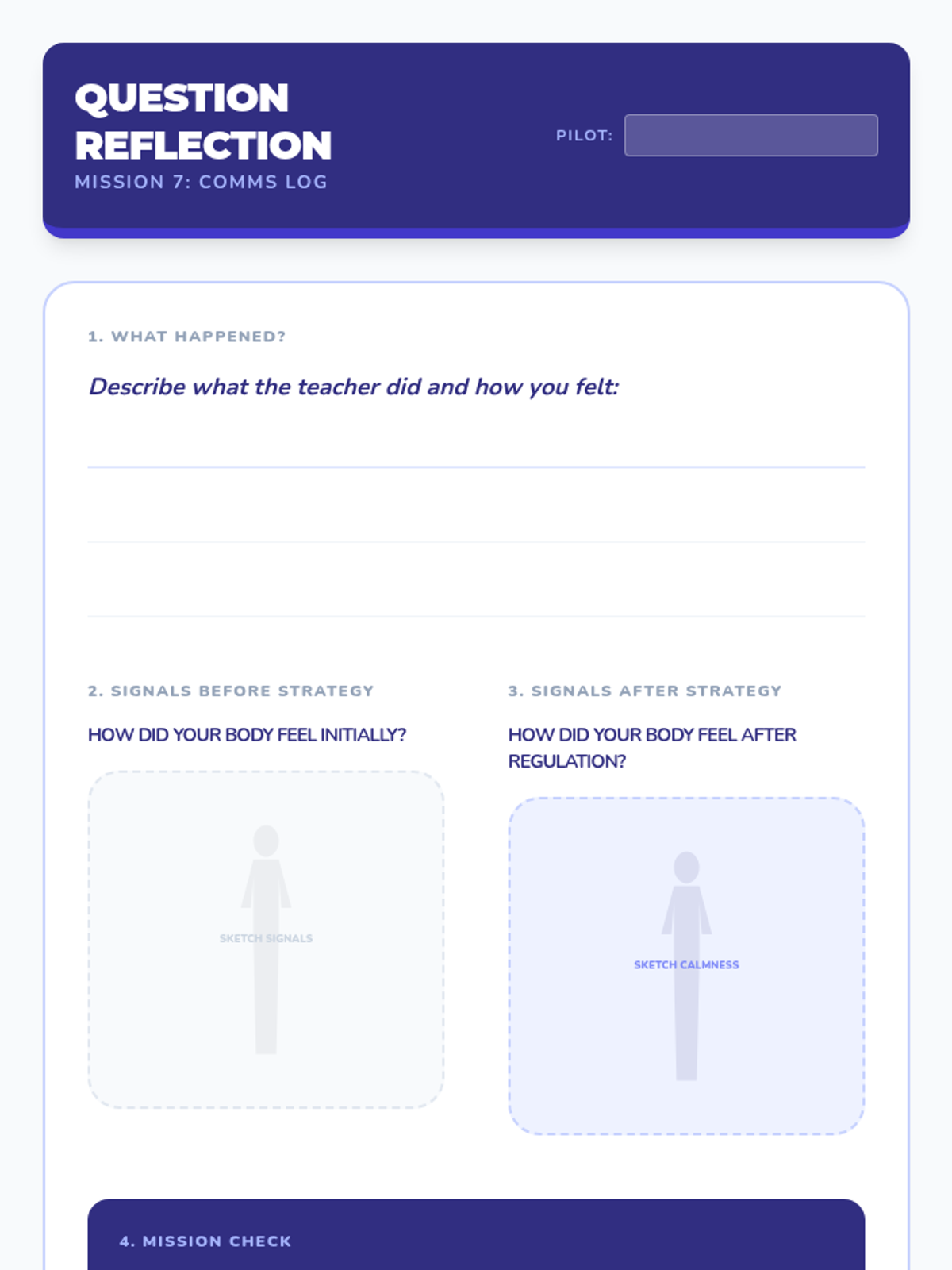
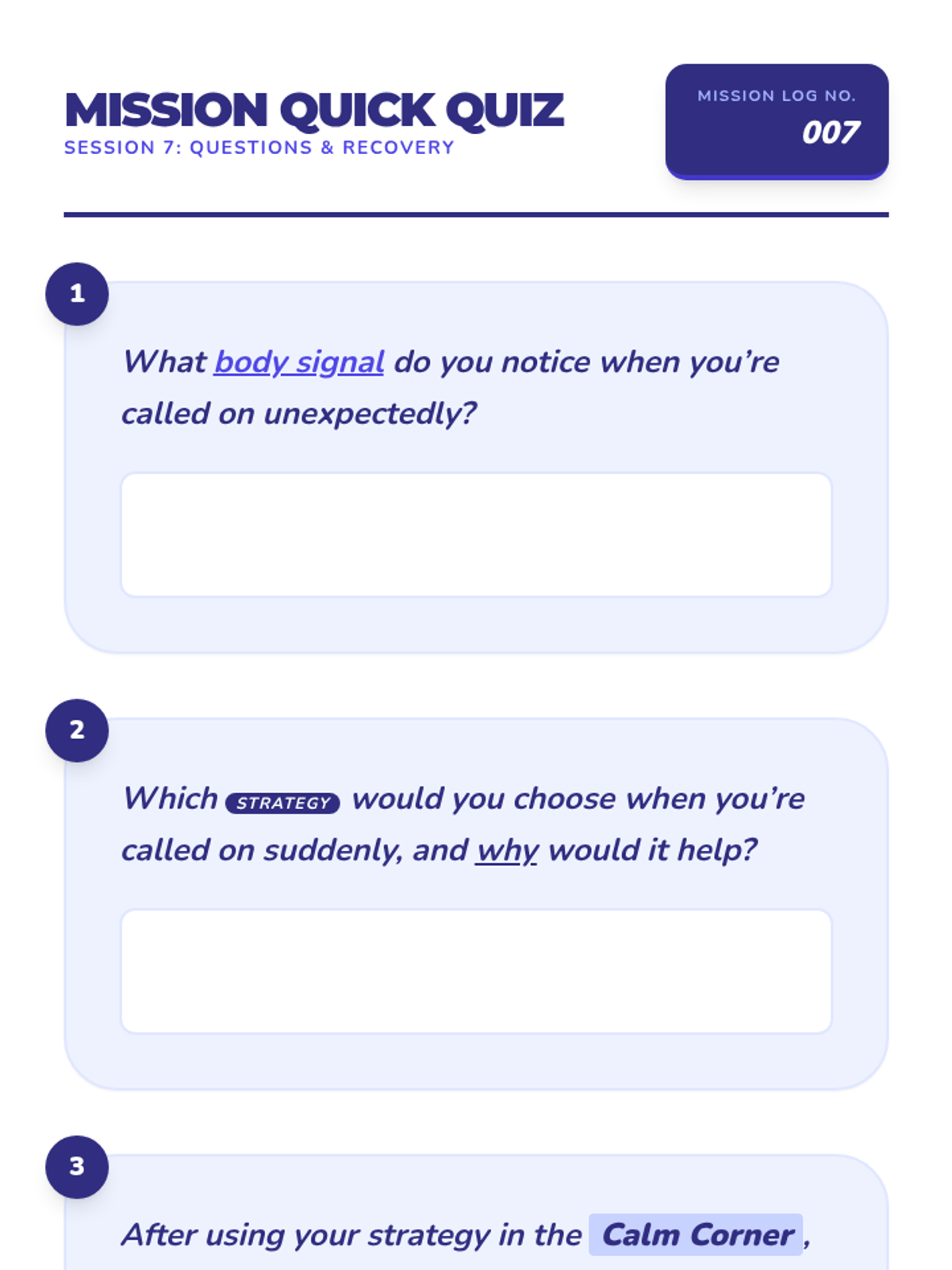
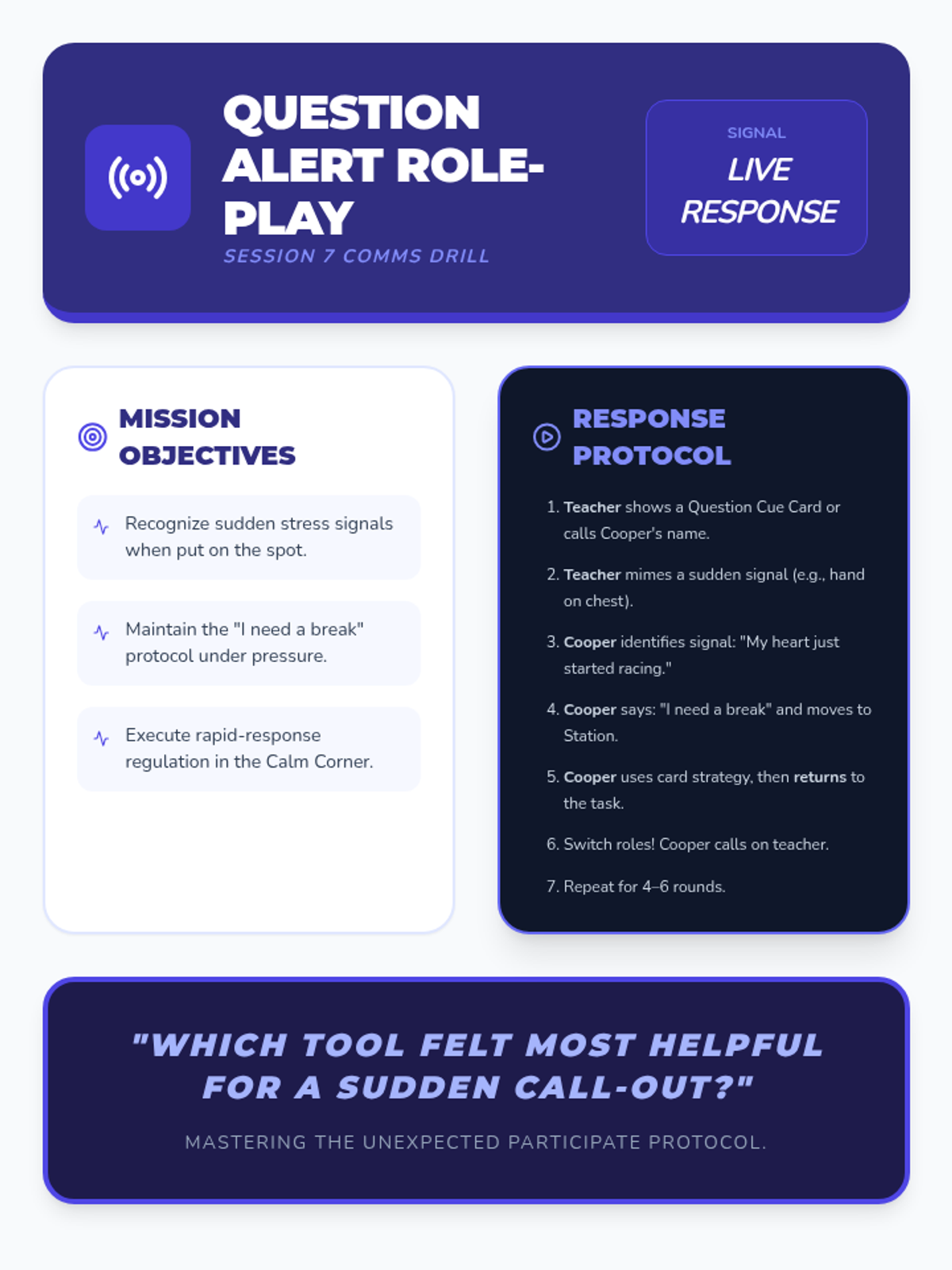
Managing the stress of being called on unexpectedly.
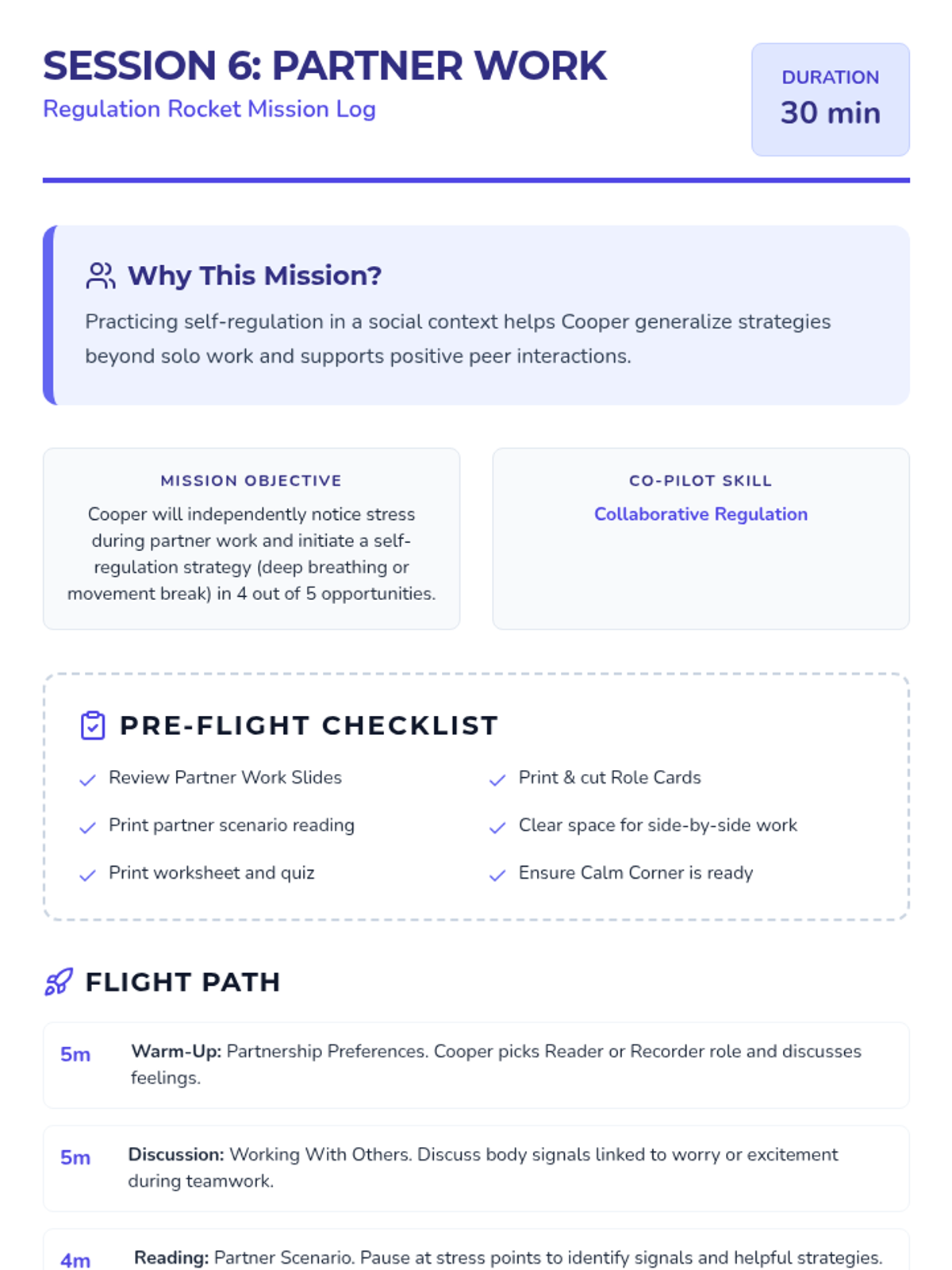
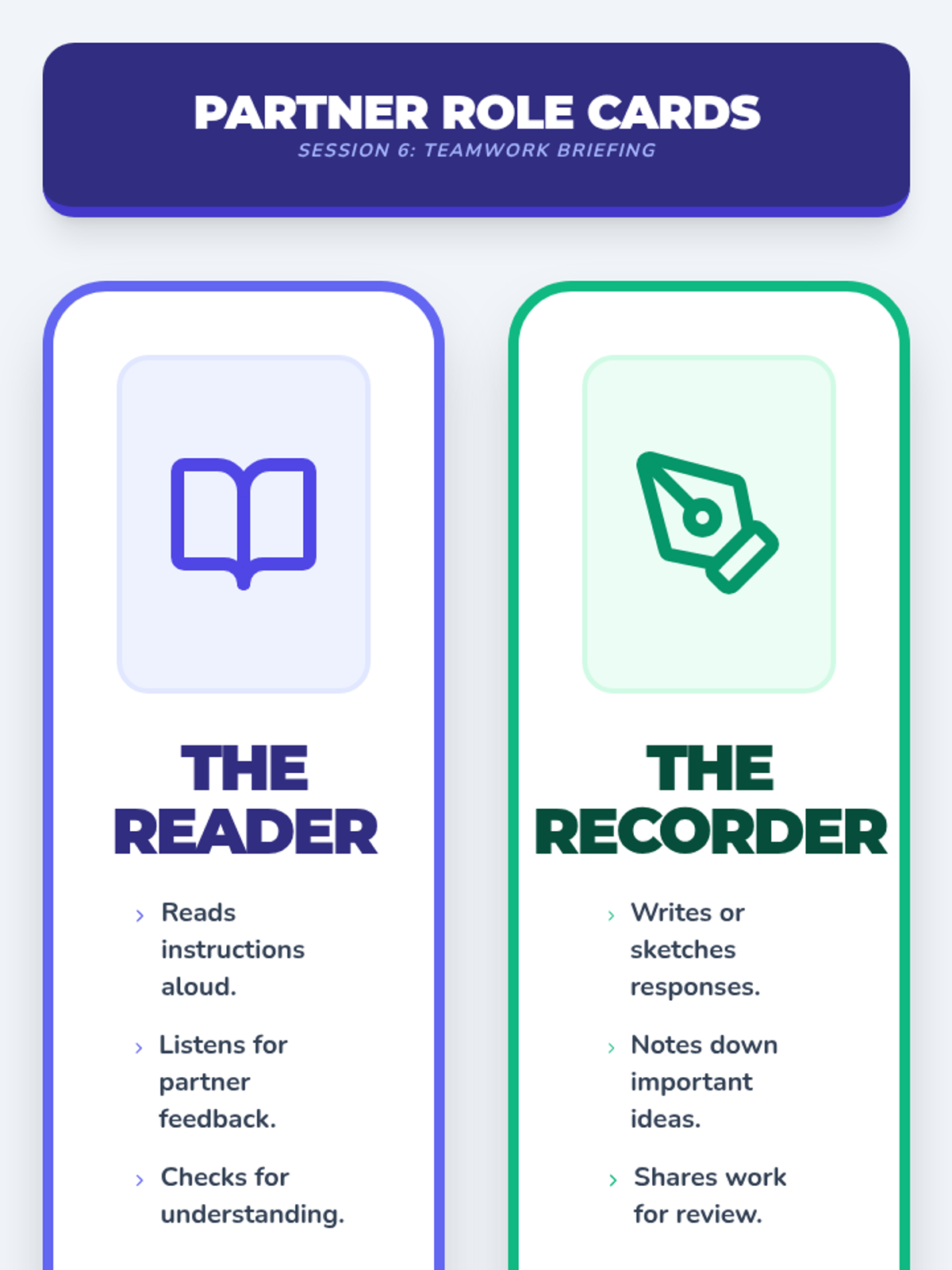
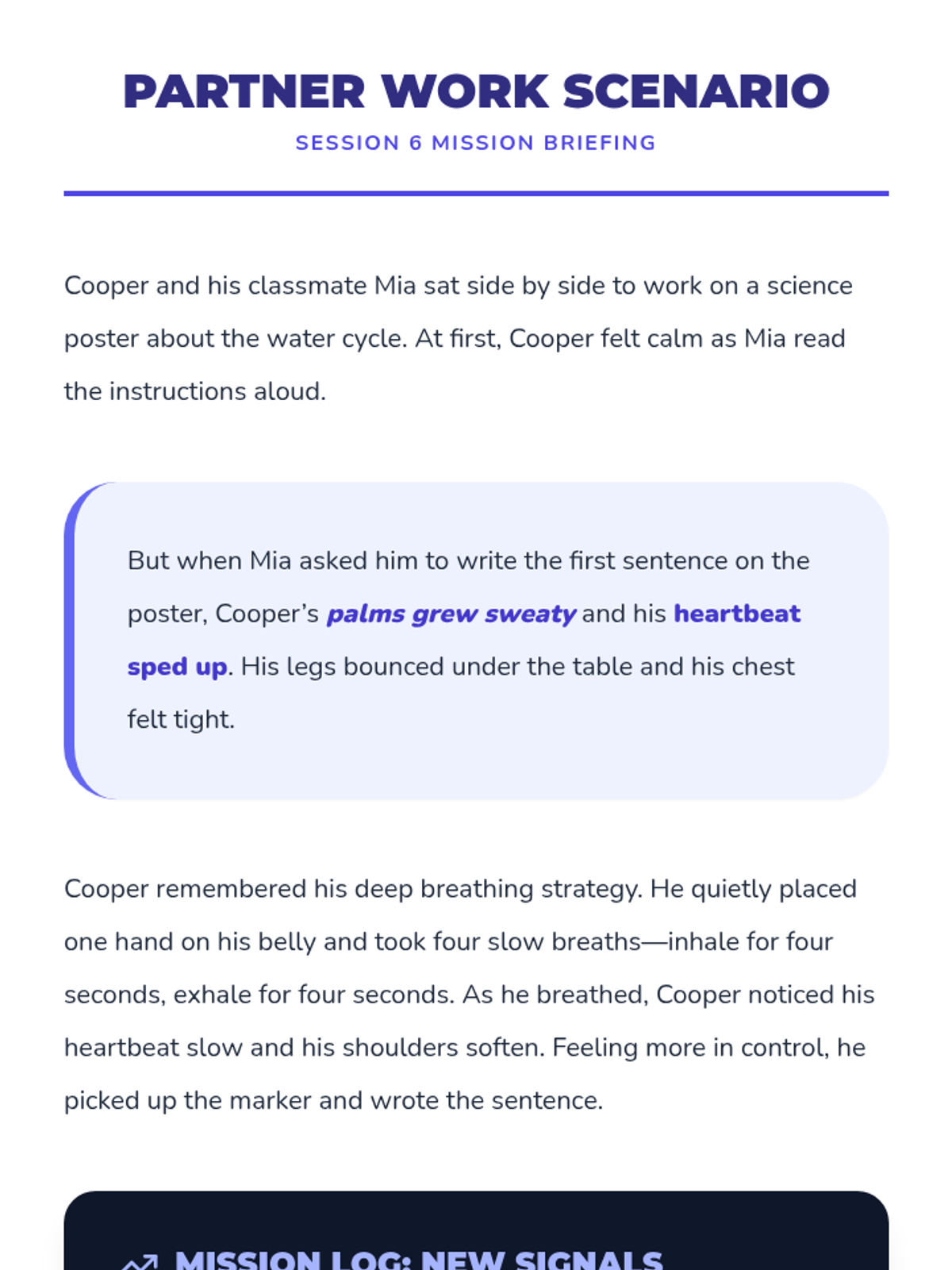
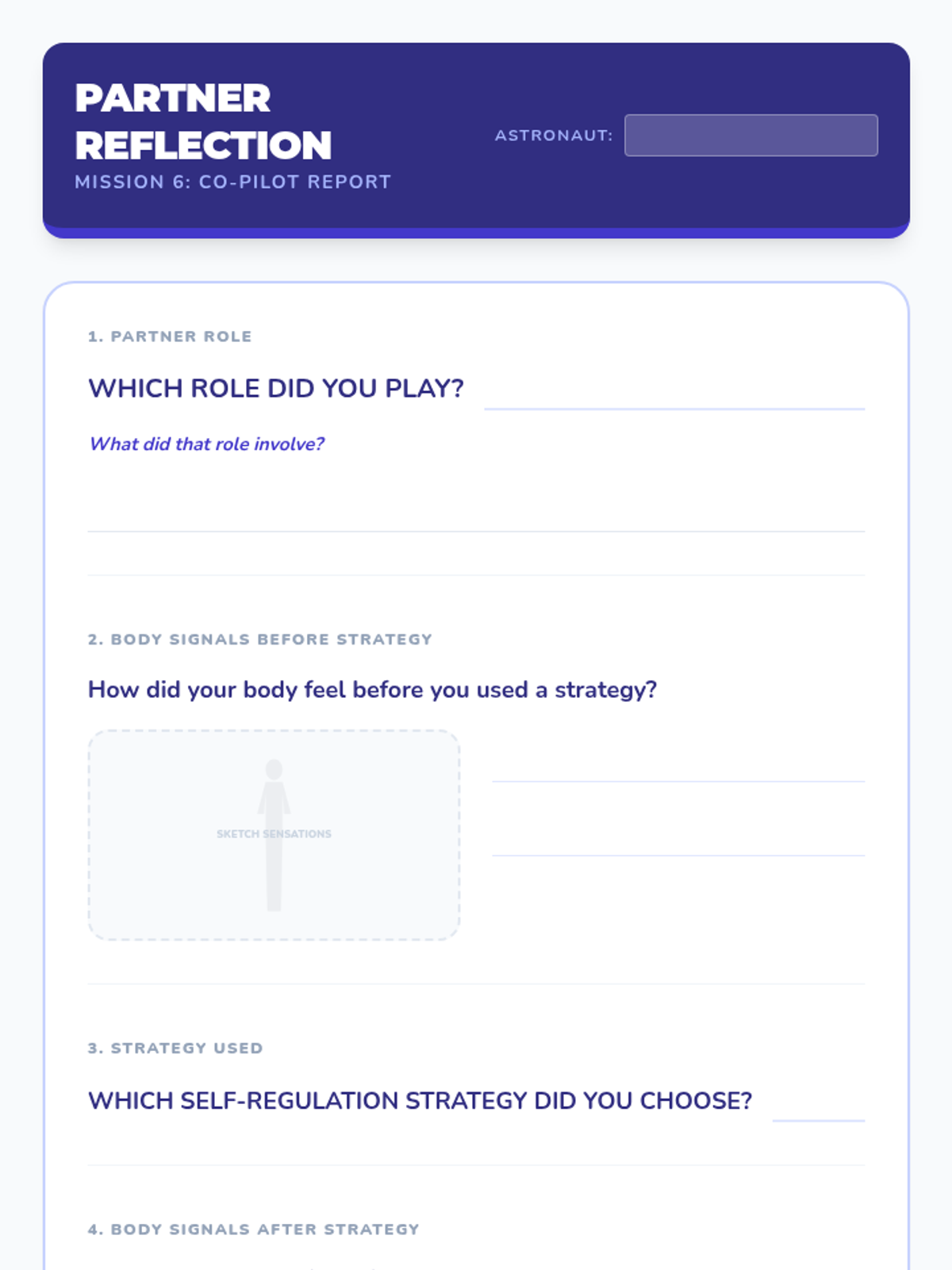
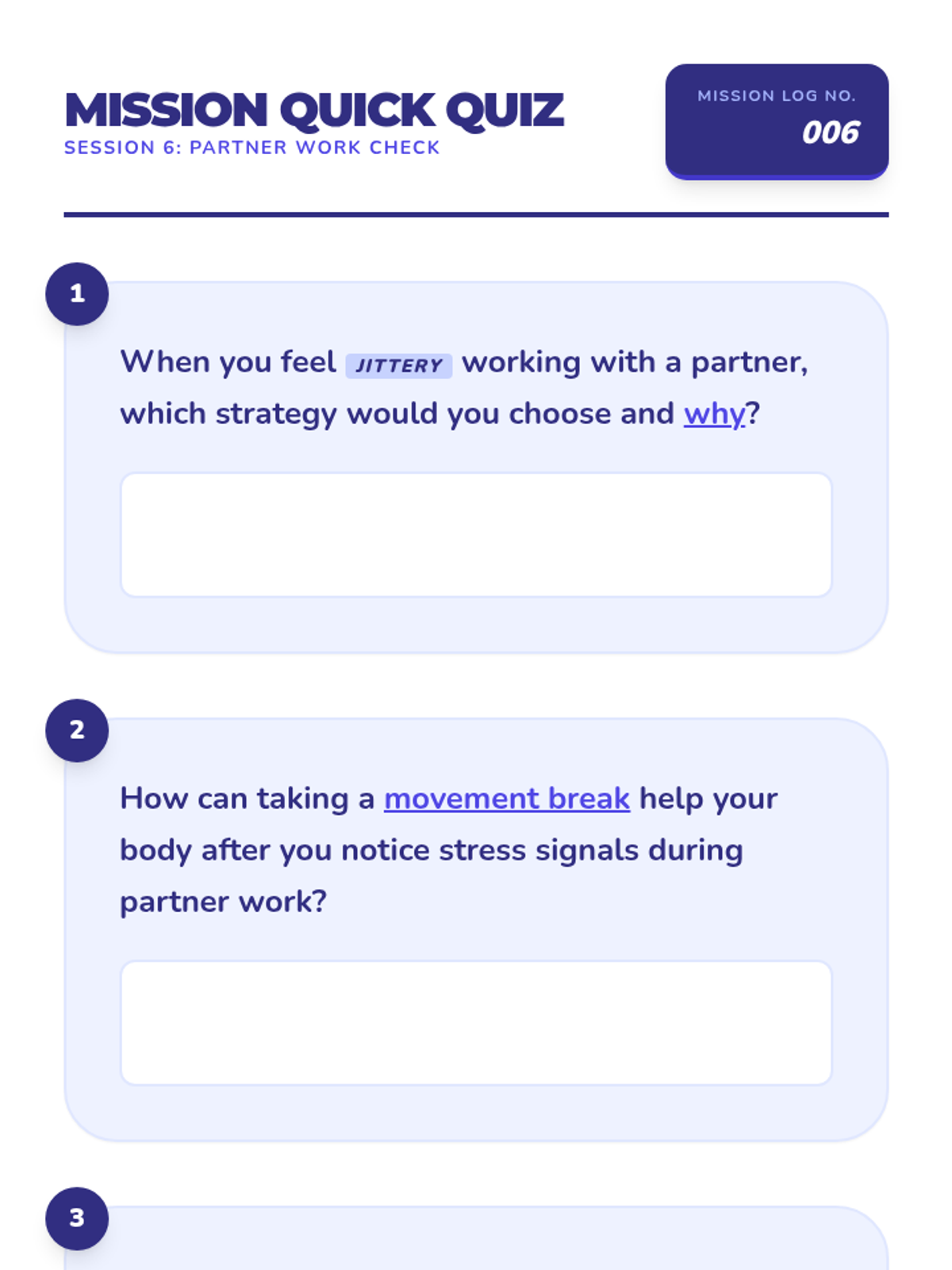
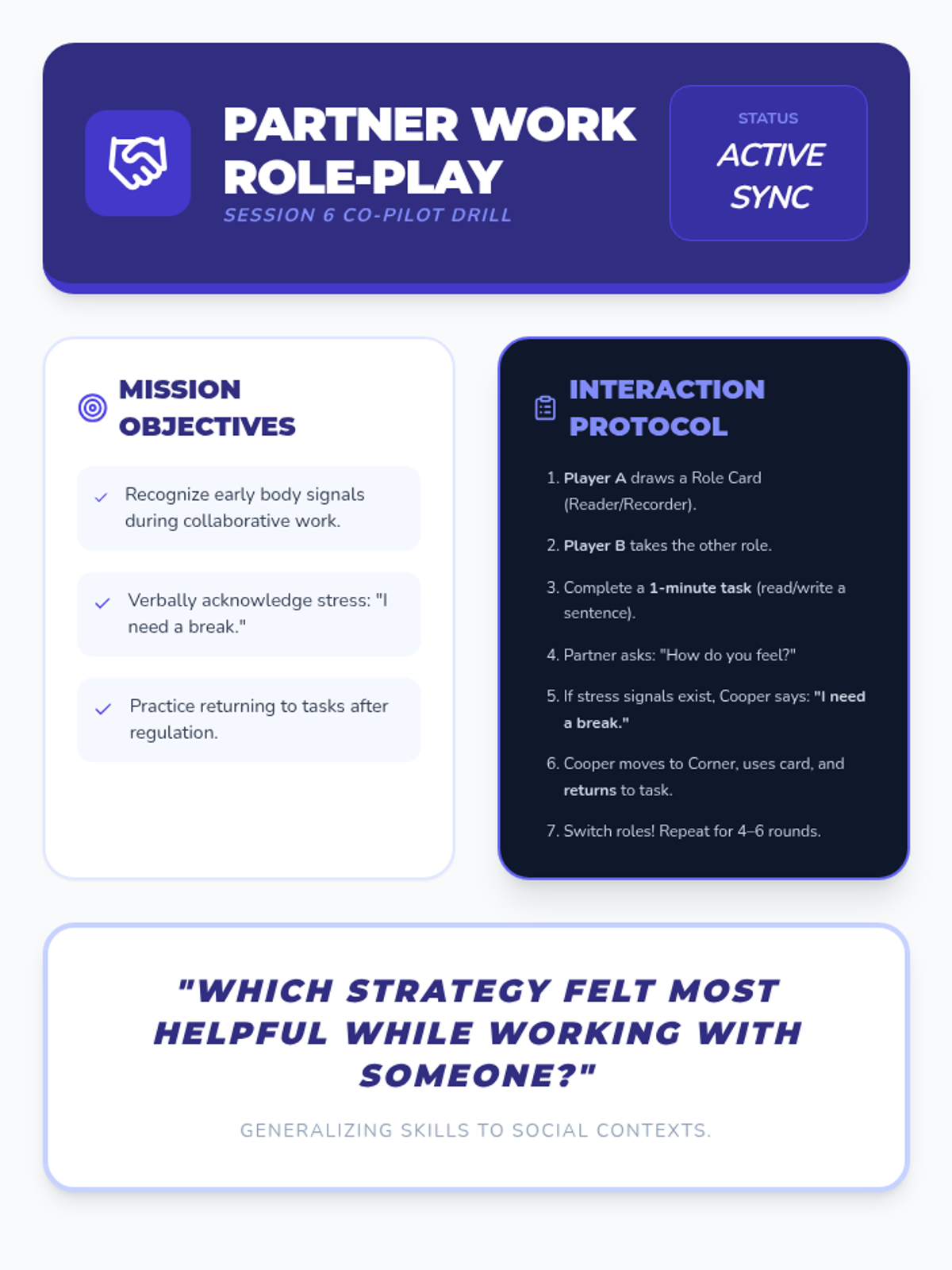
Using self-regulation skills during collaborative social activities.
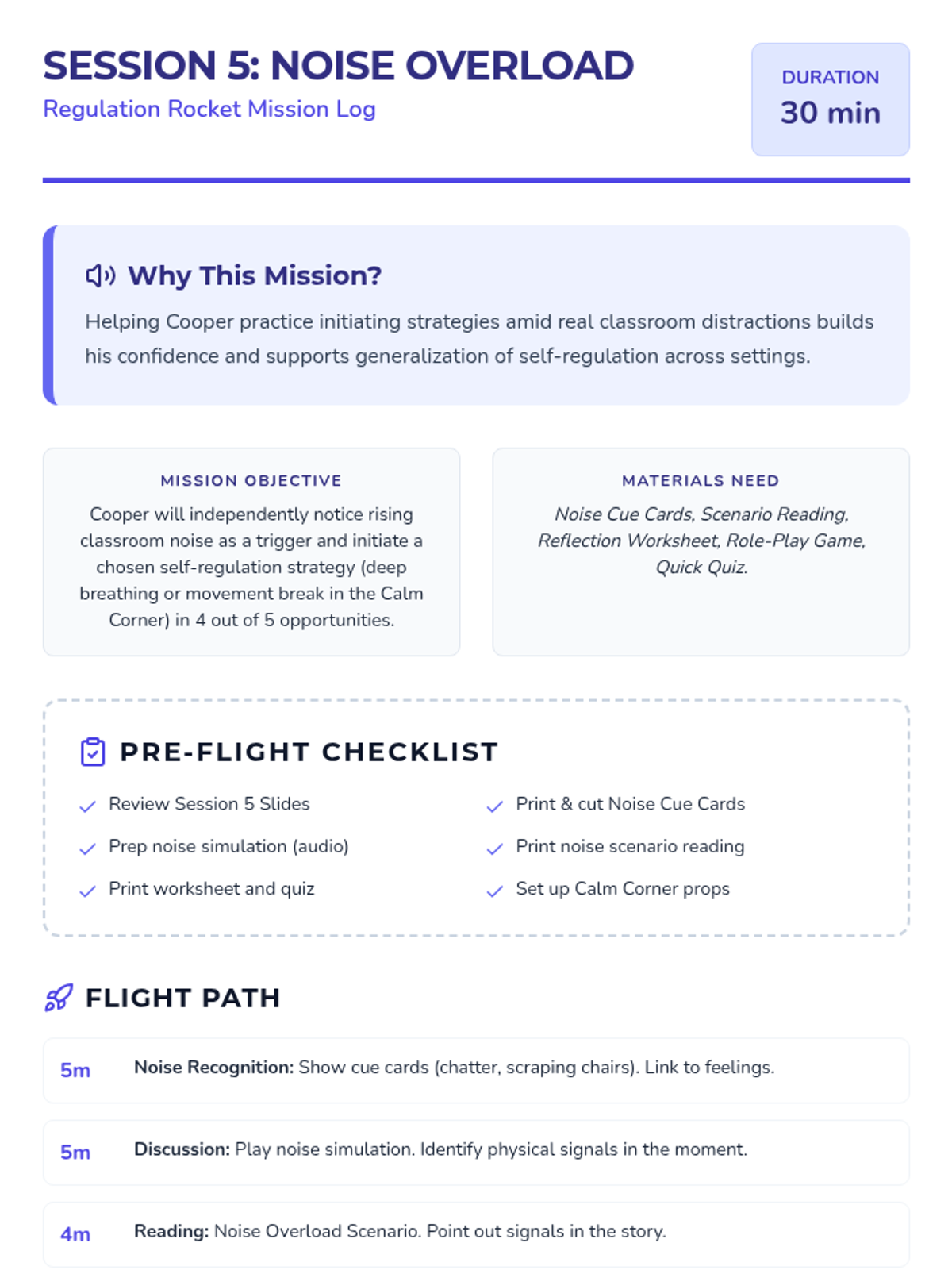
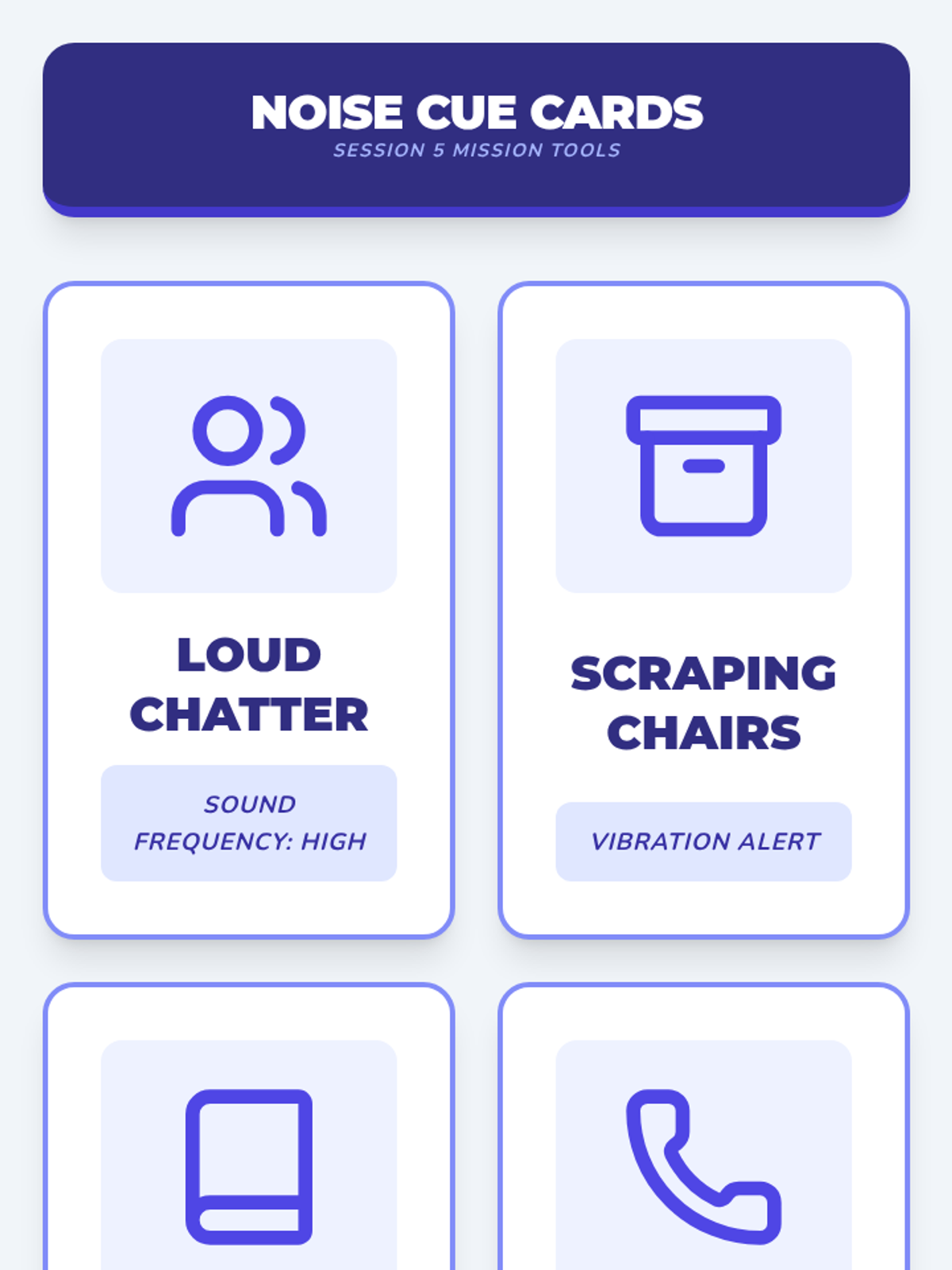
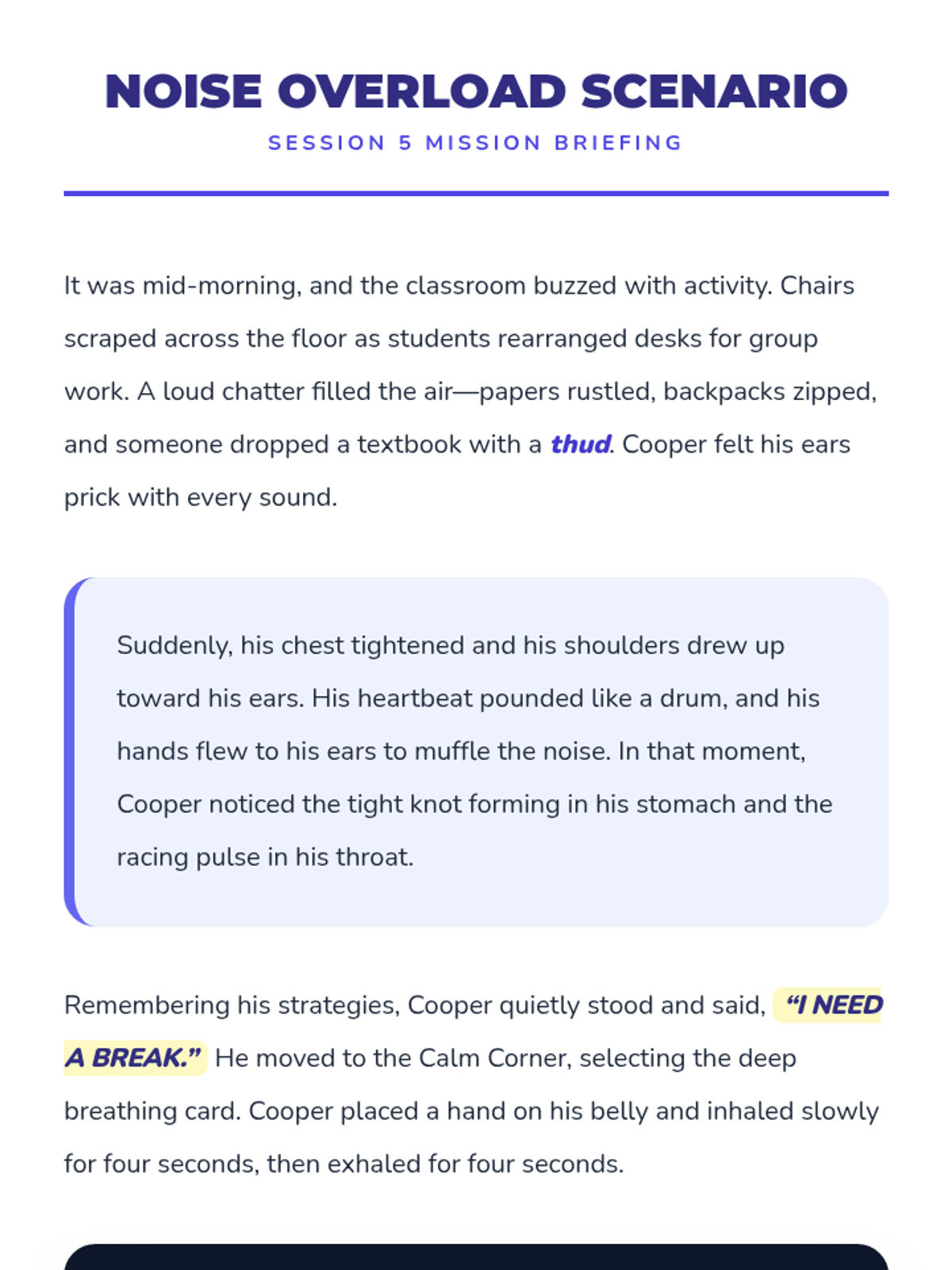
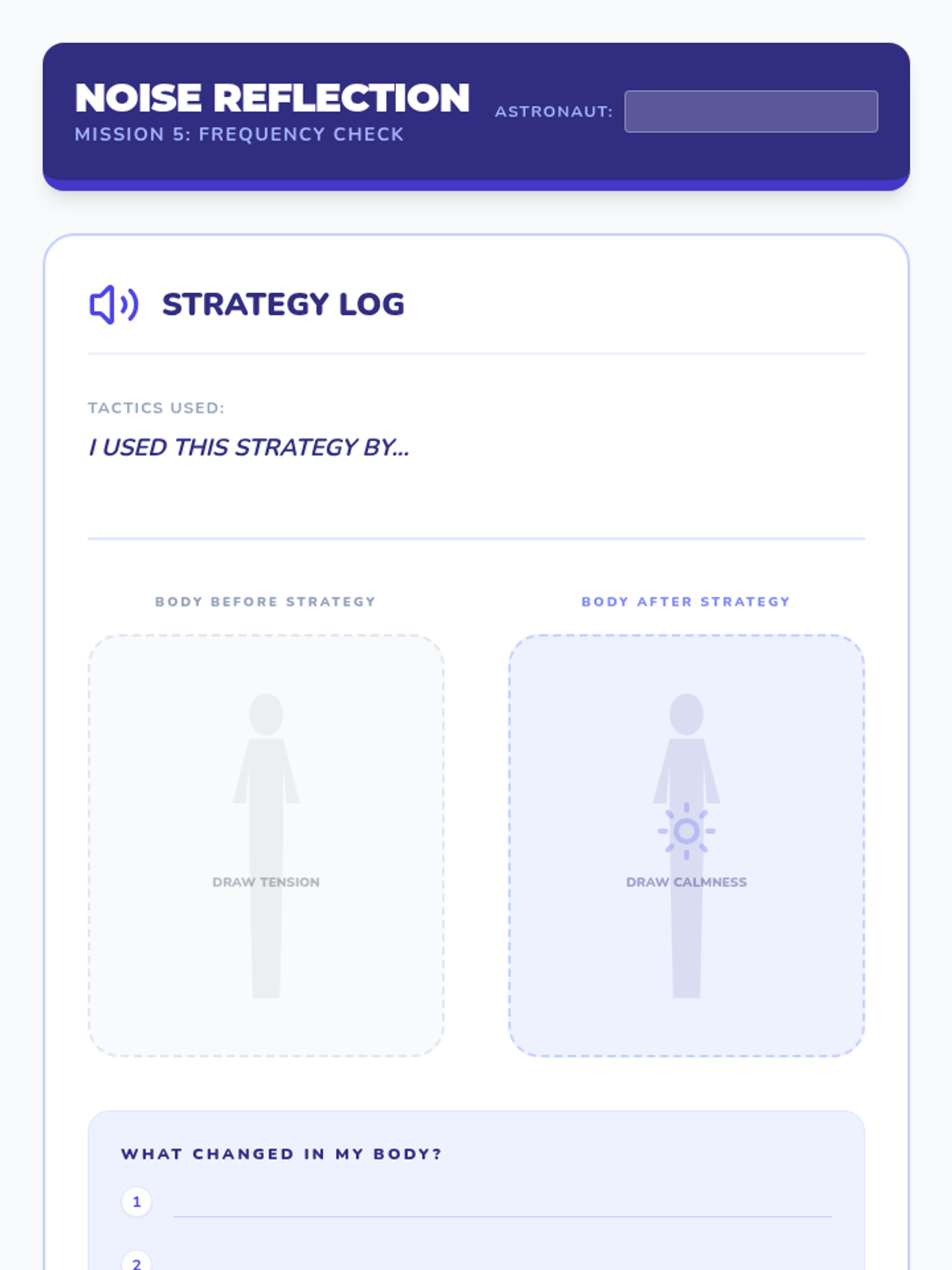
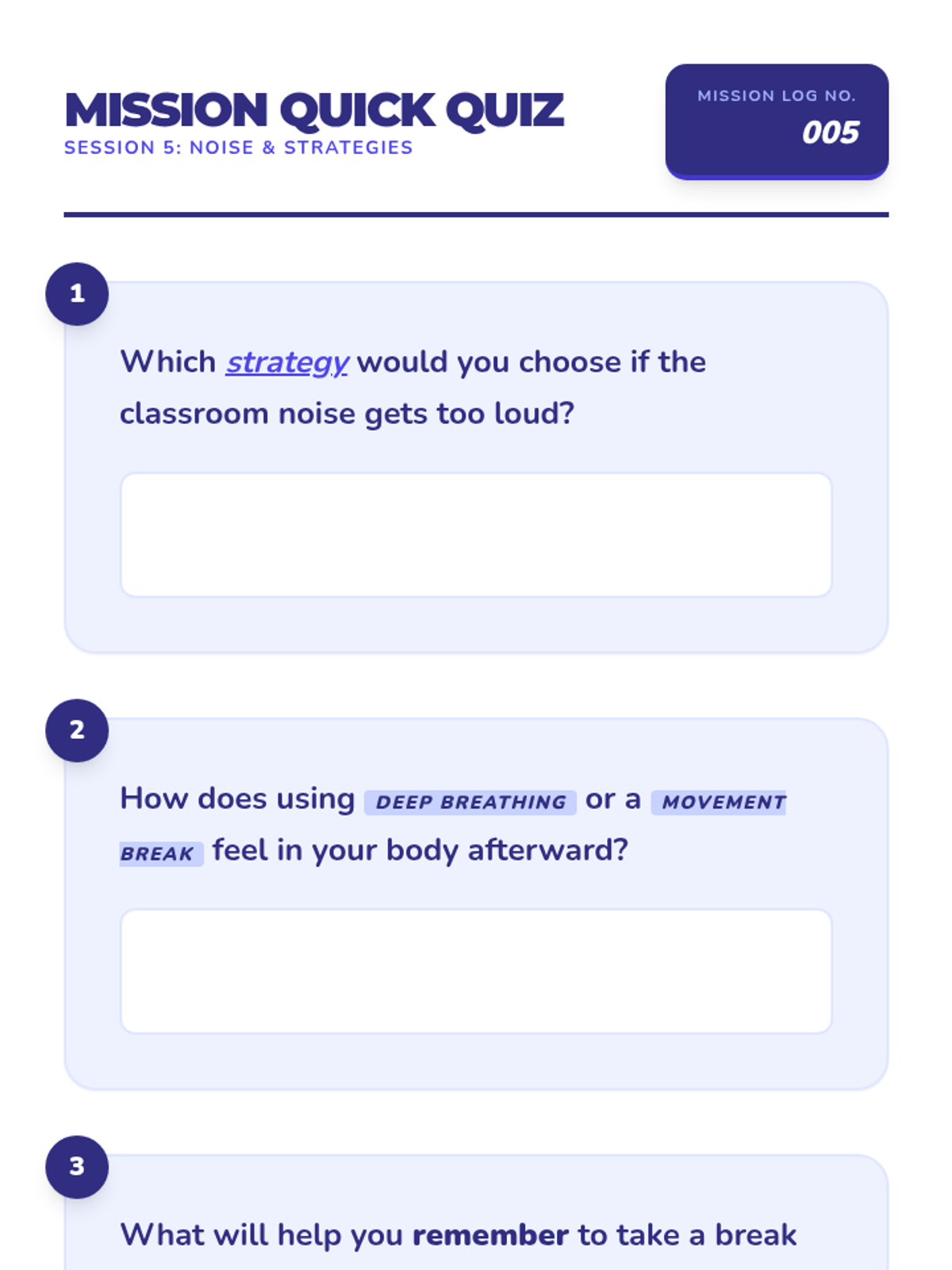
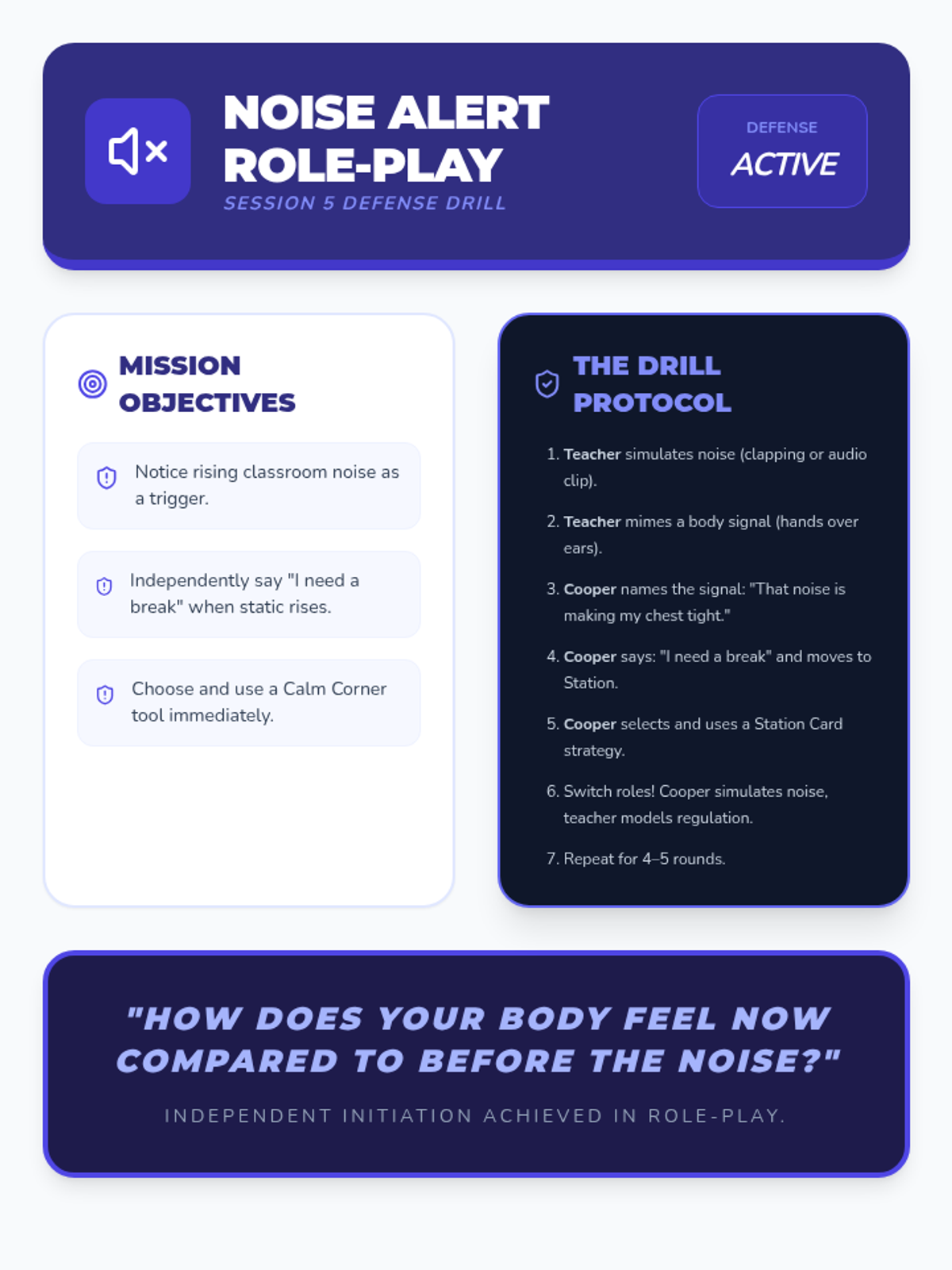
Applying strategies specifically to classroom noise triggers.
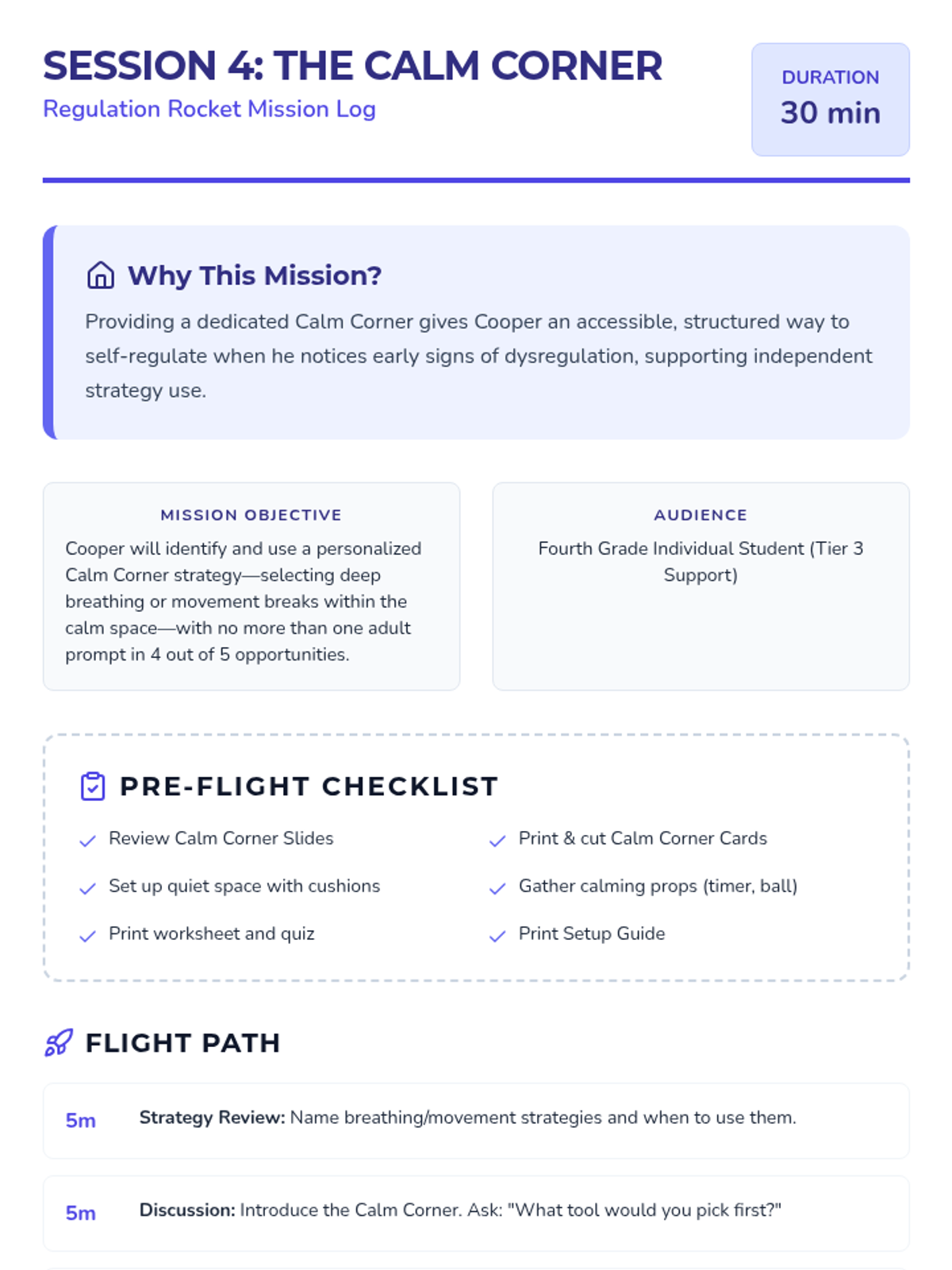
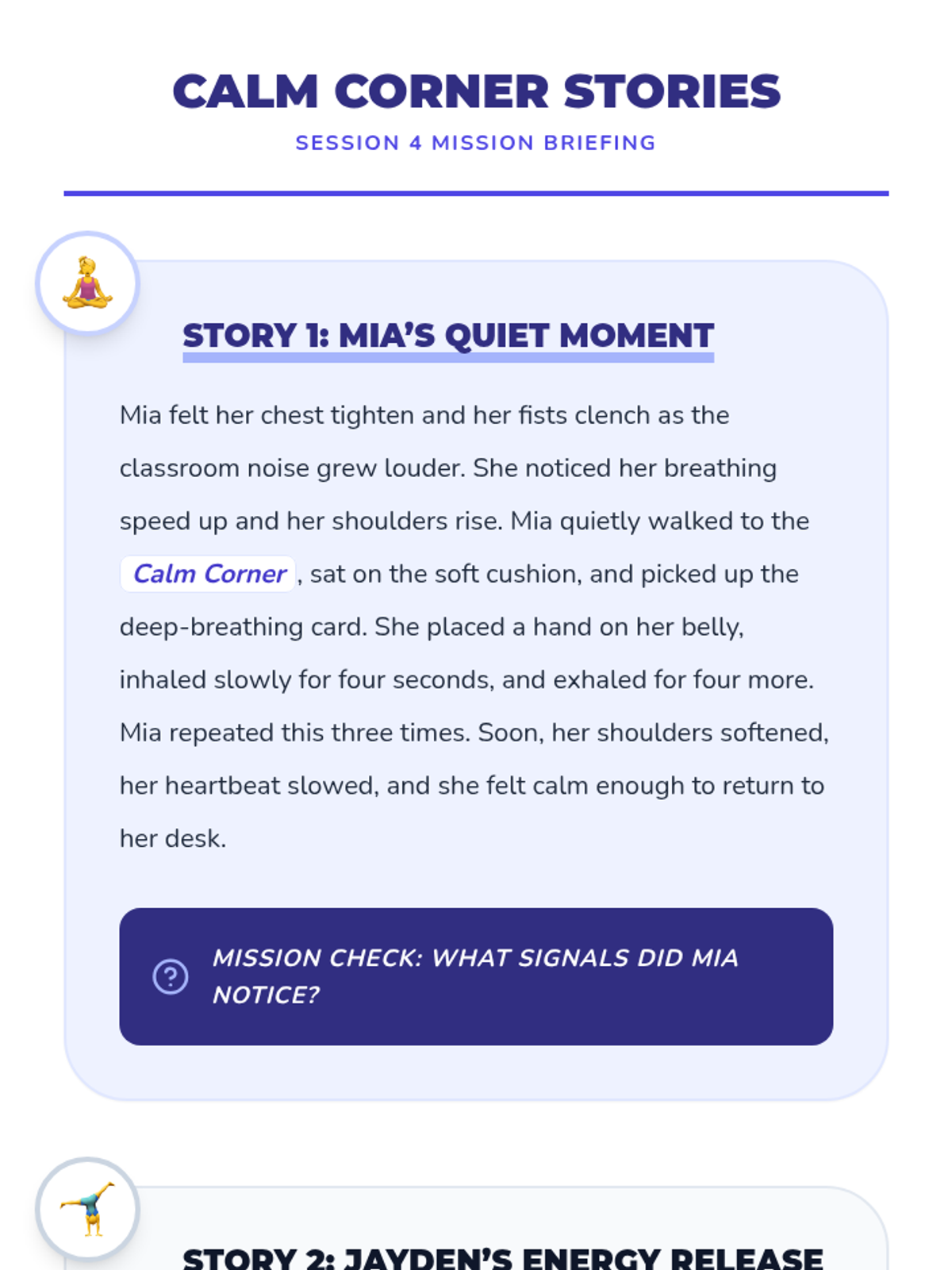
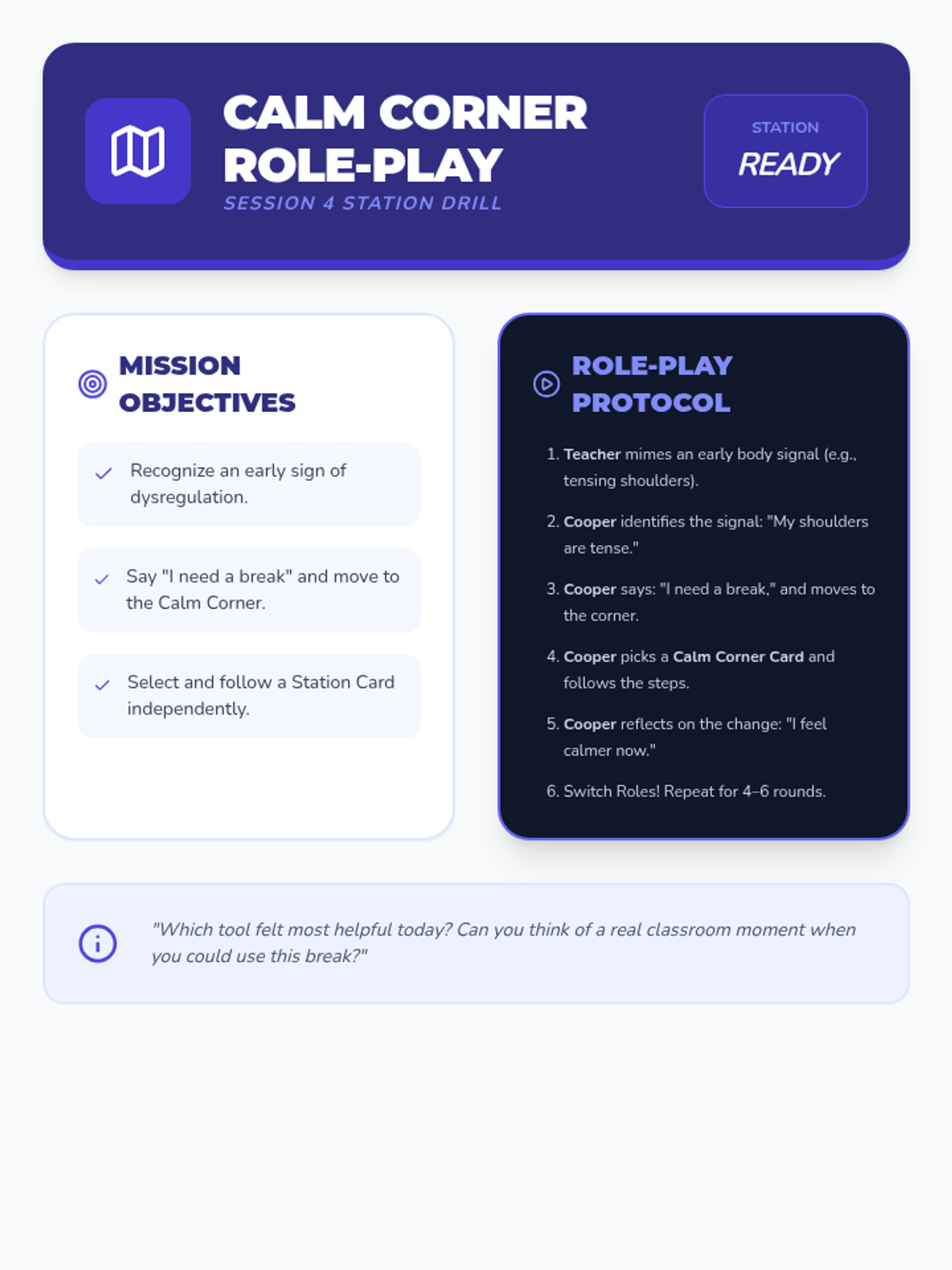
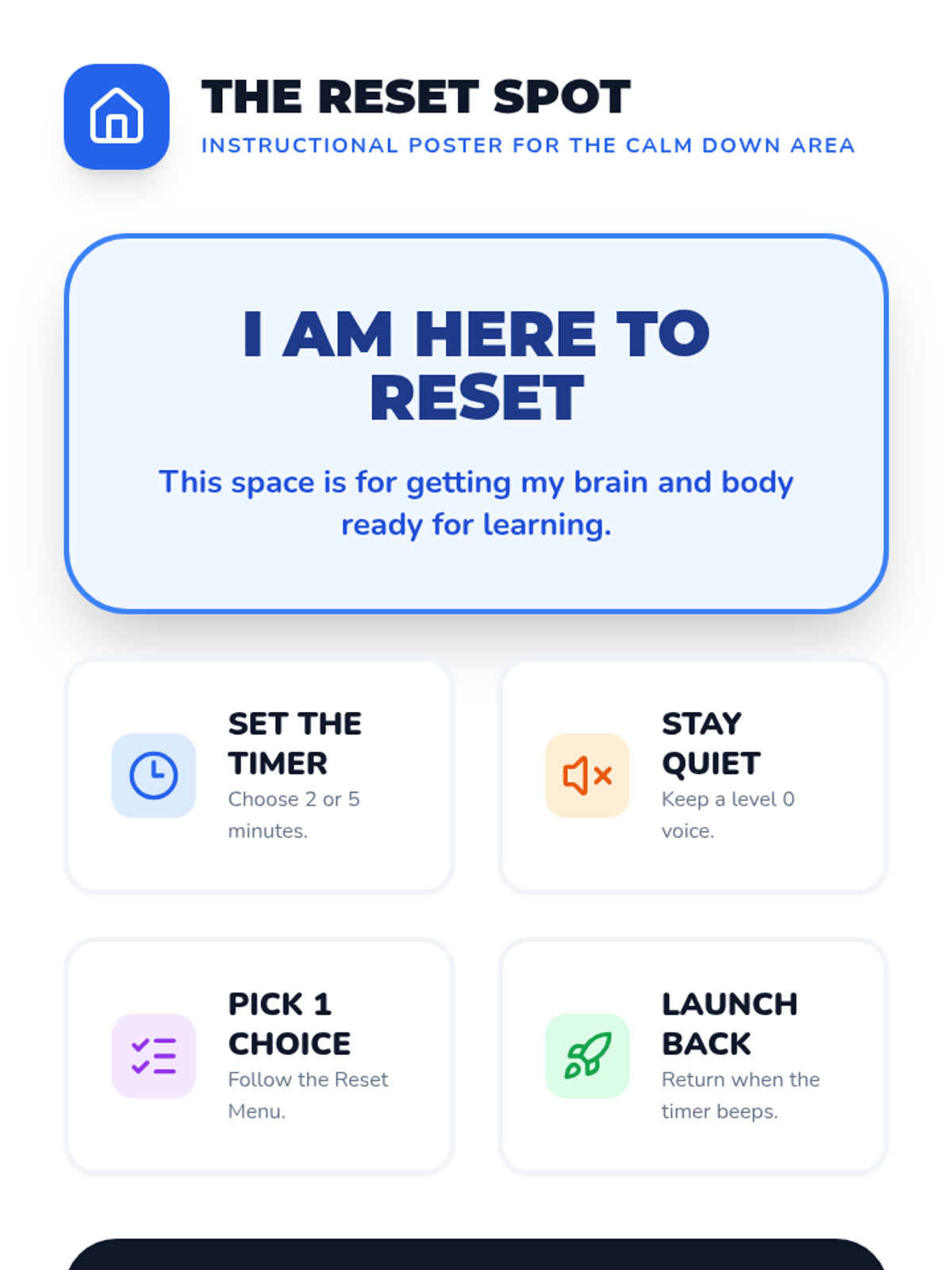
Setting up and utilizing a designated space for self-regulation.
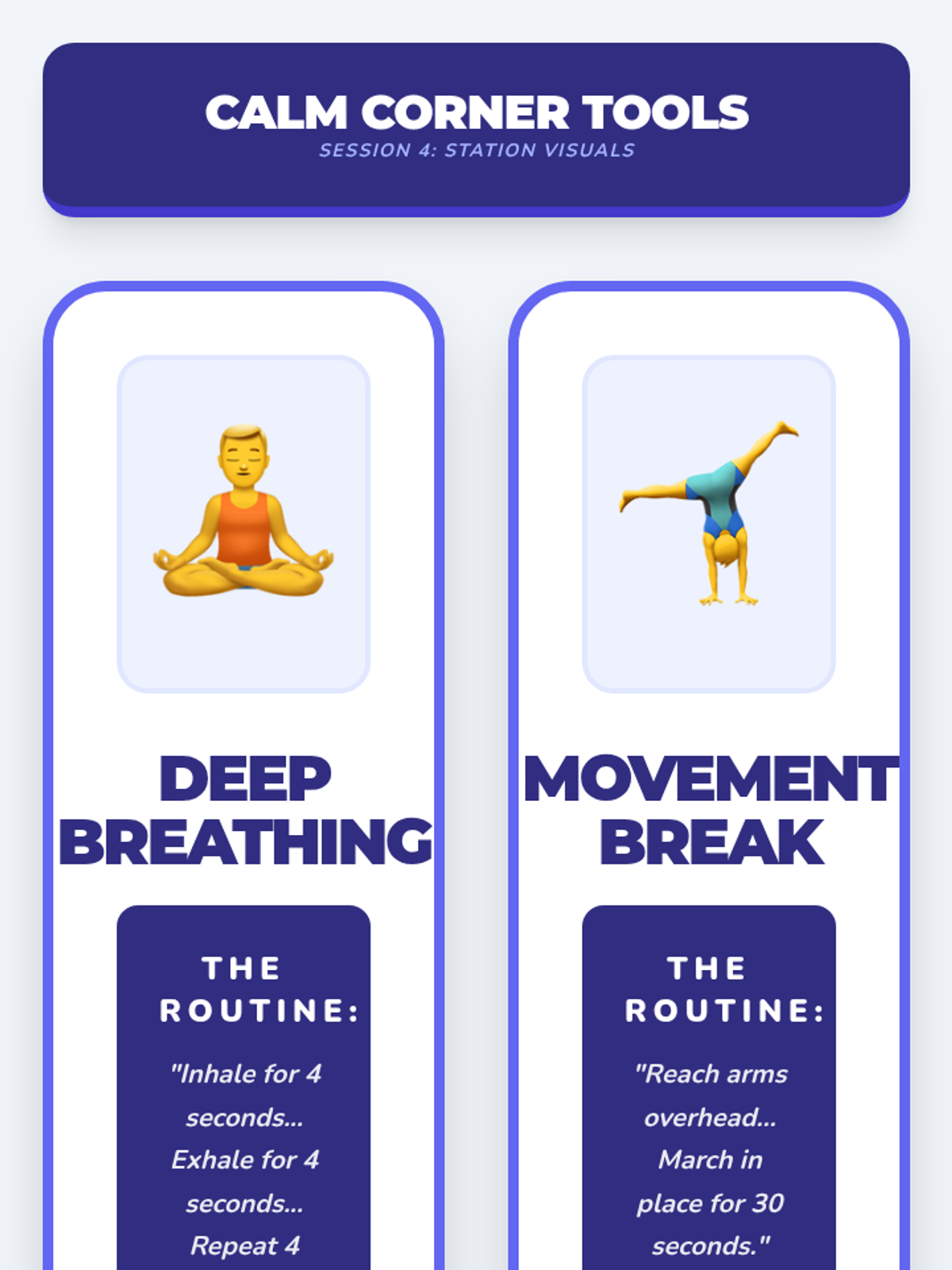
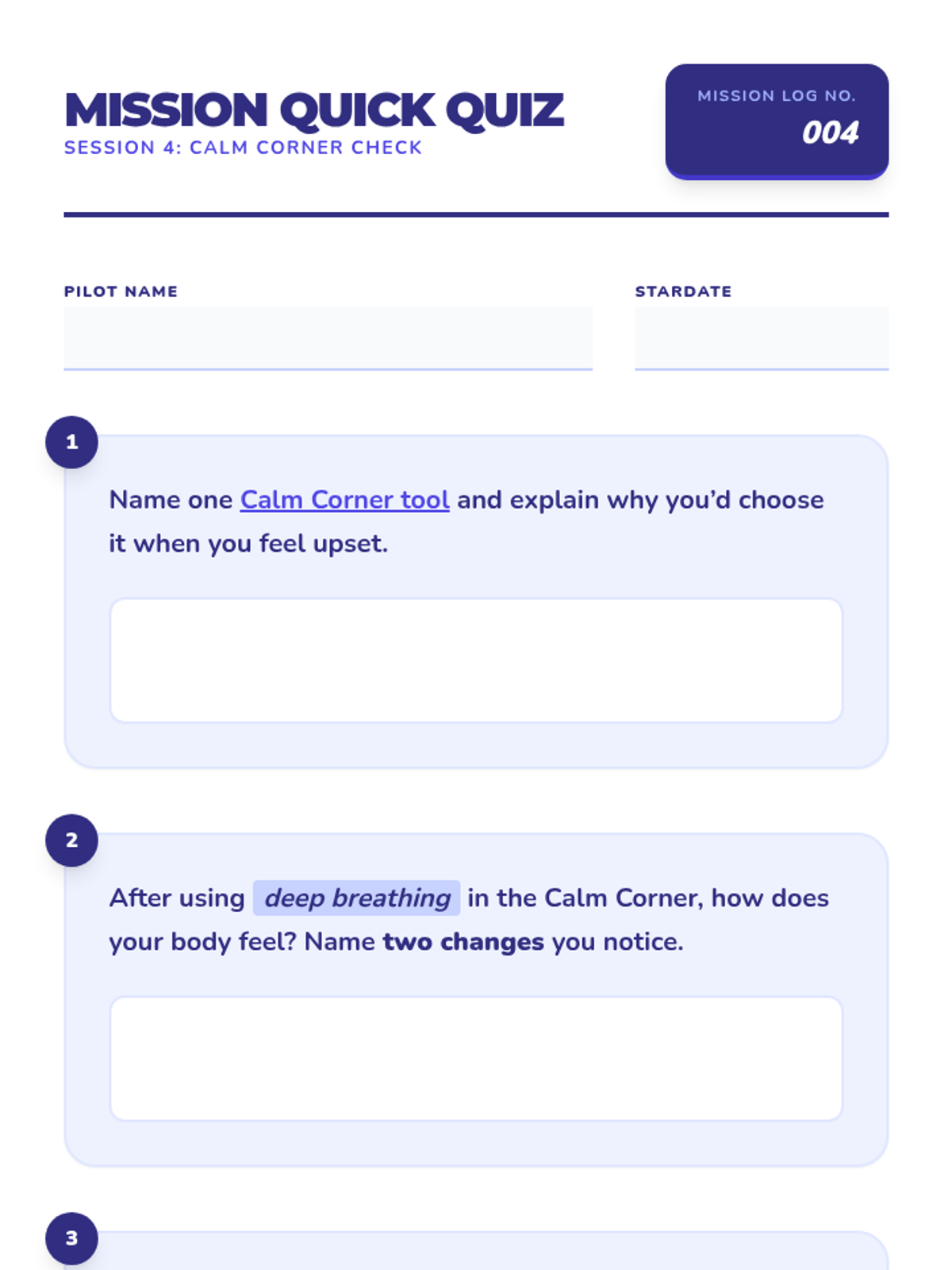
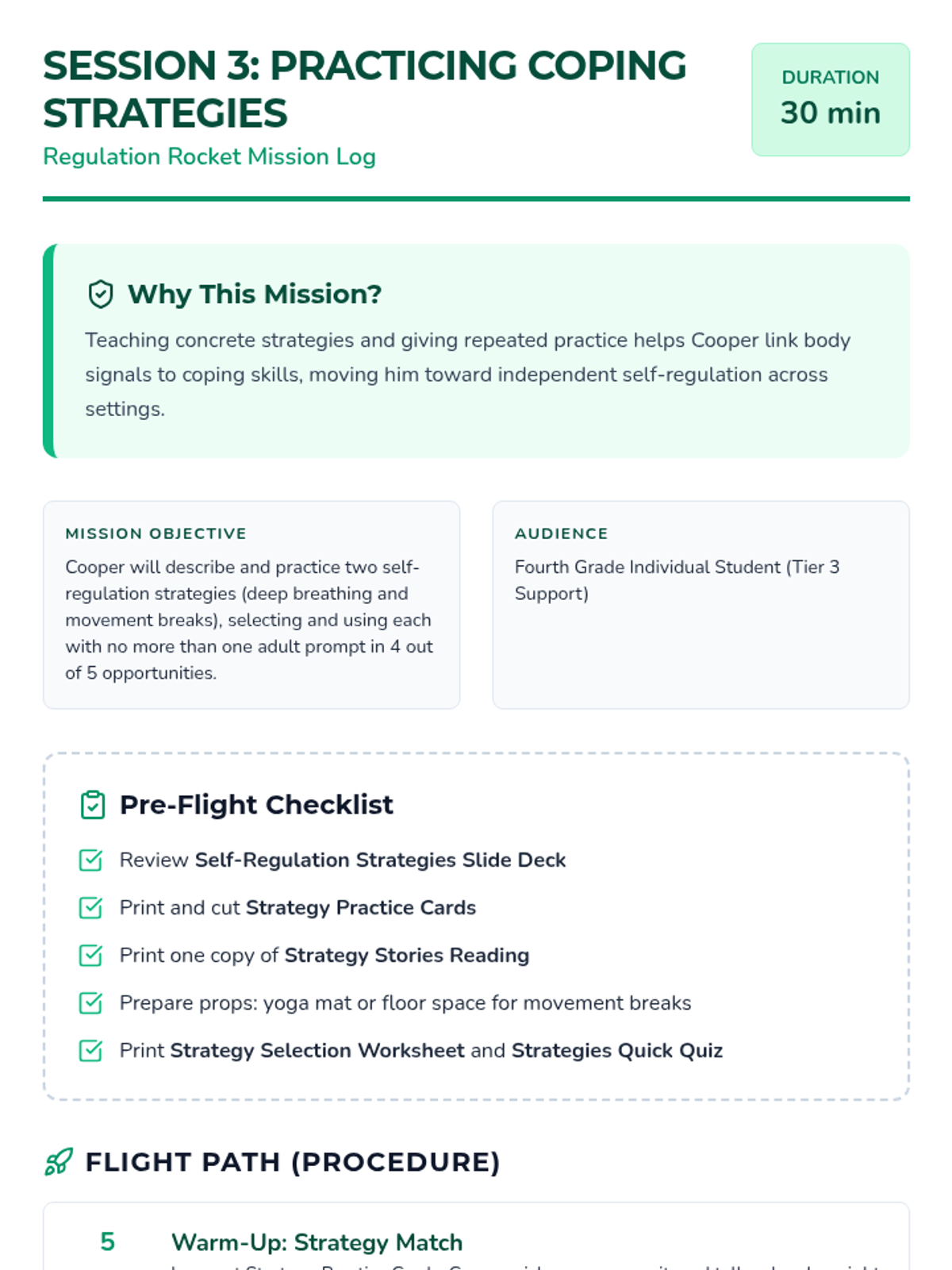
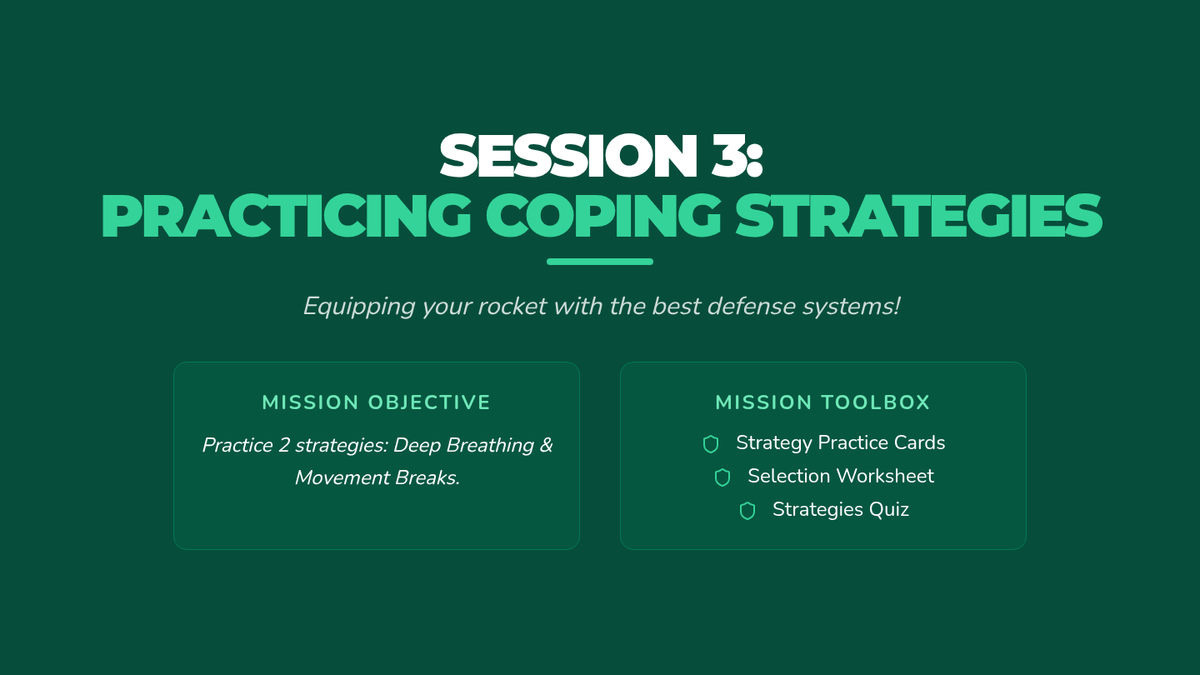
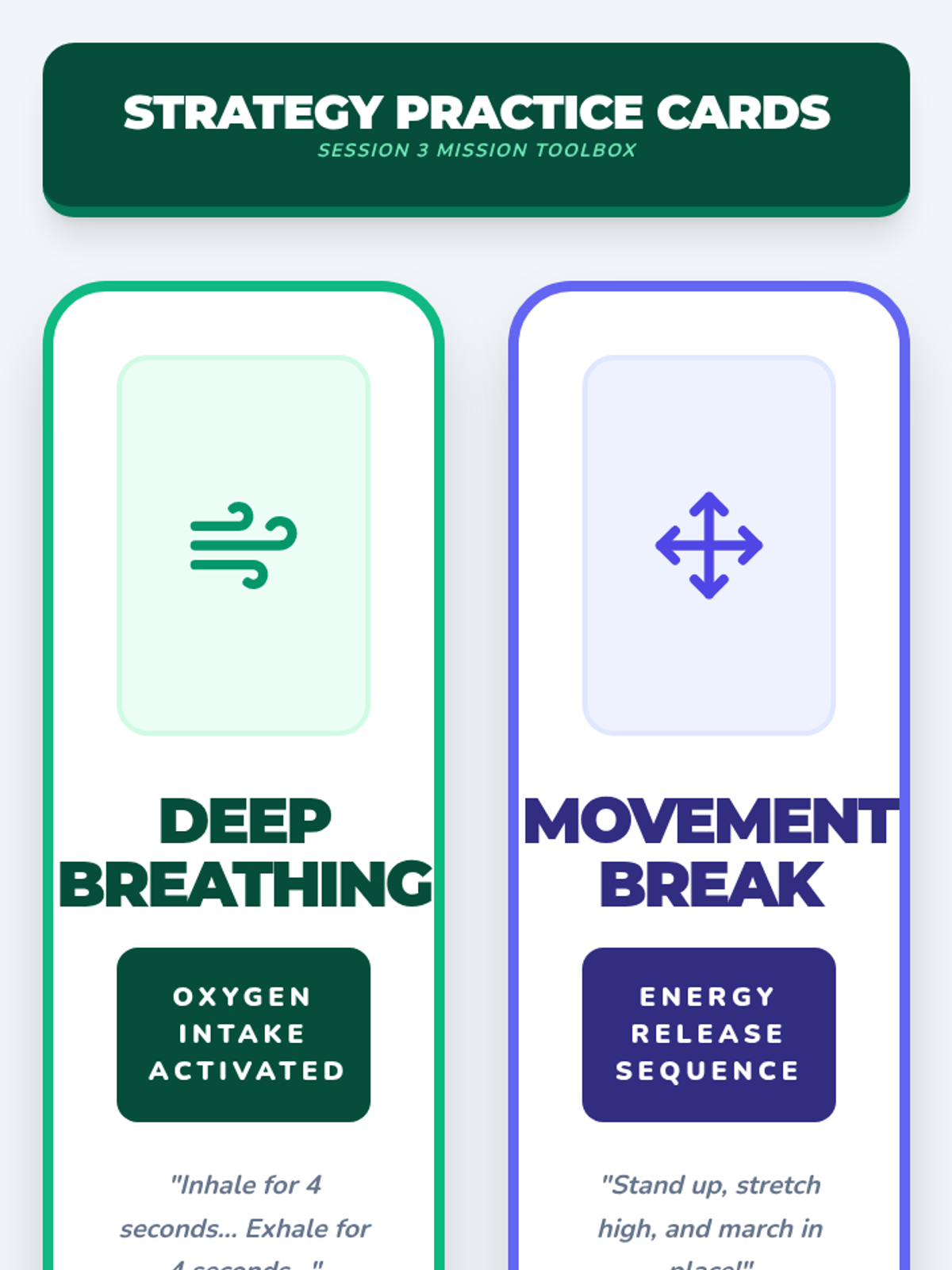
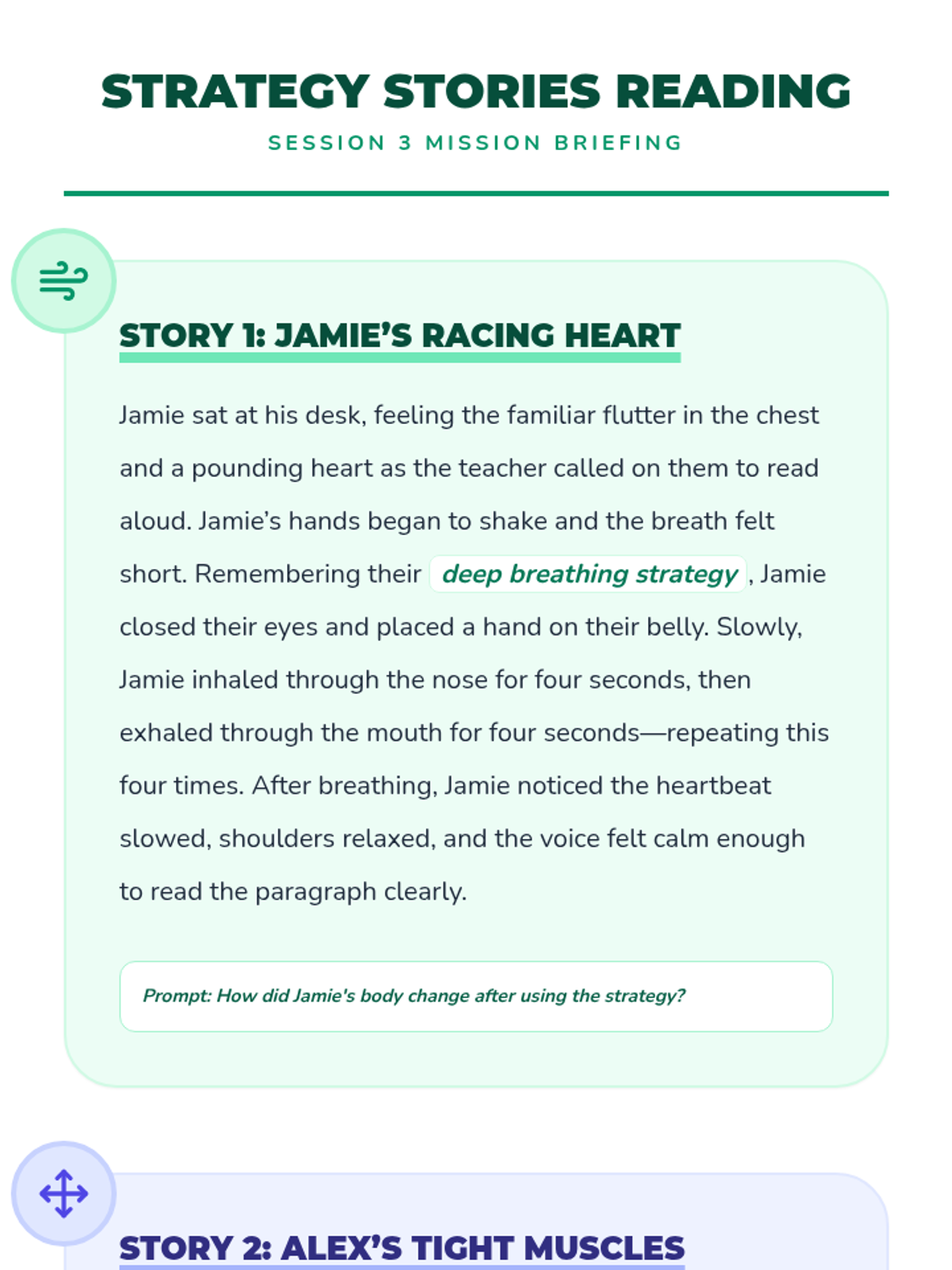
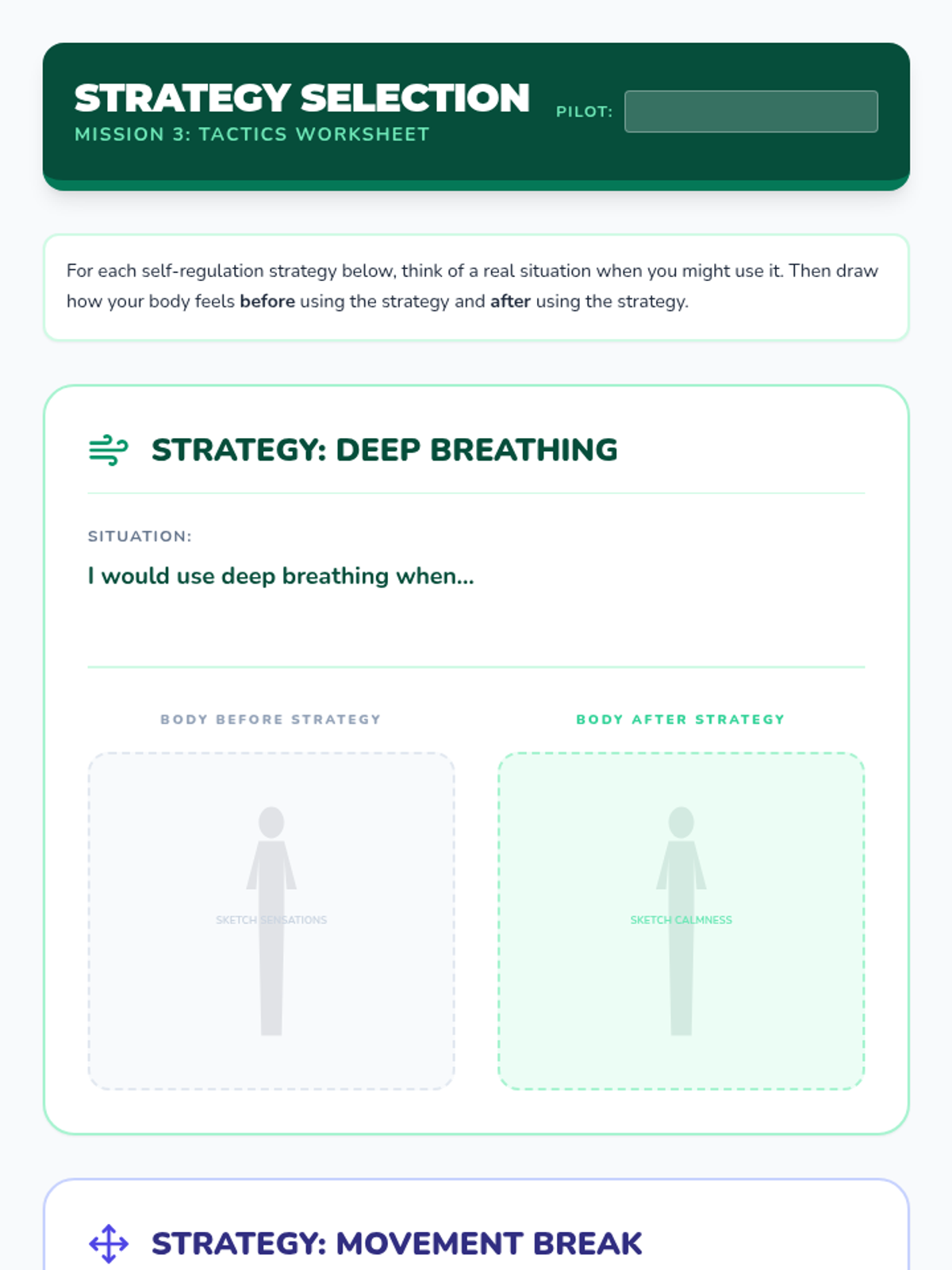
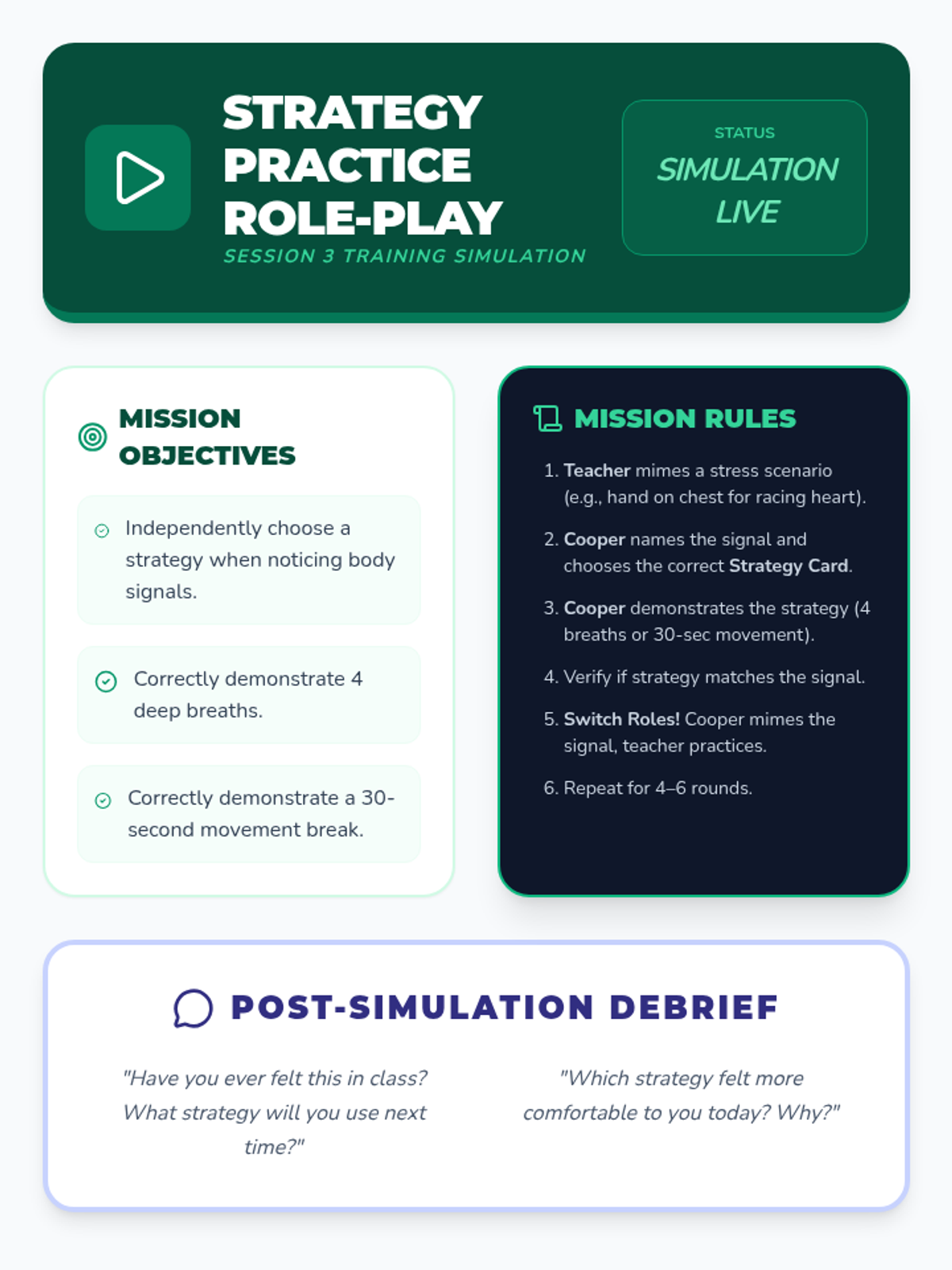
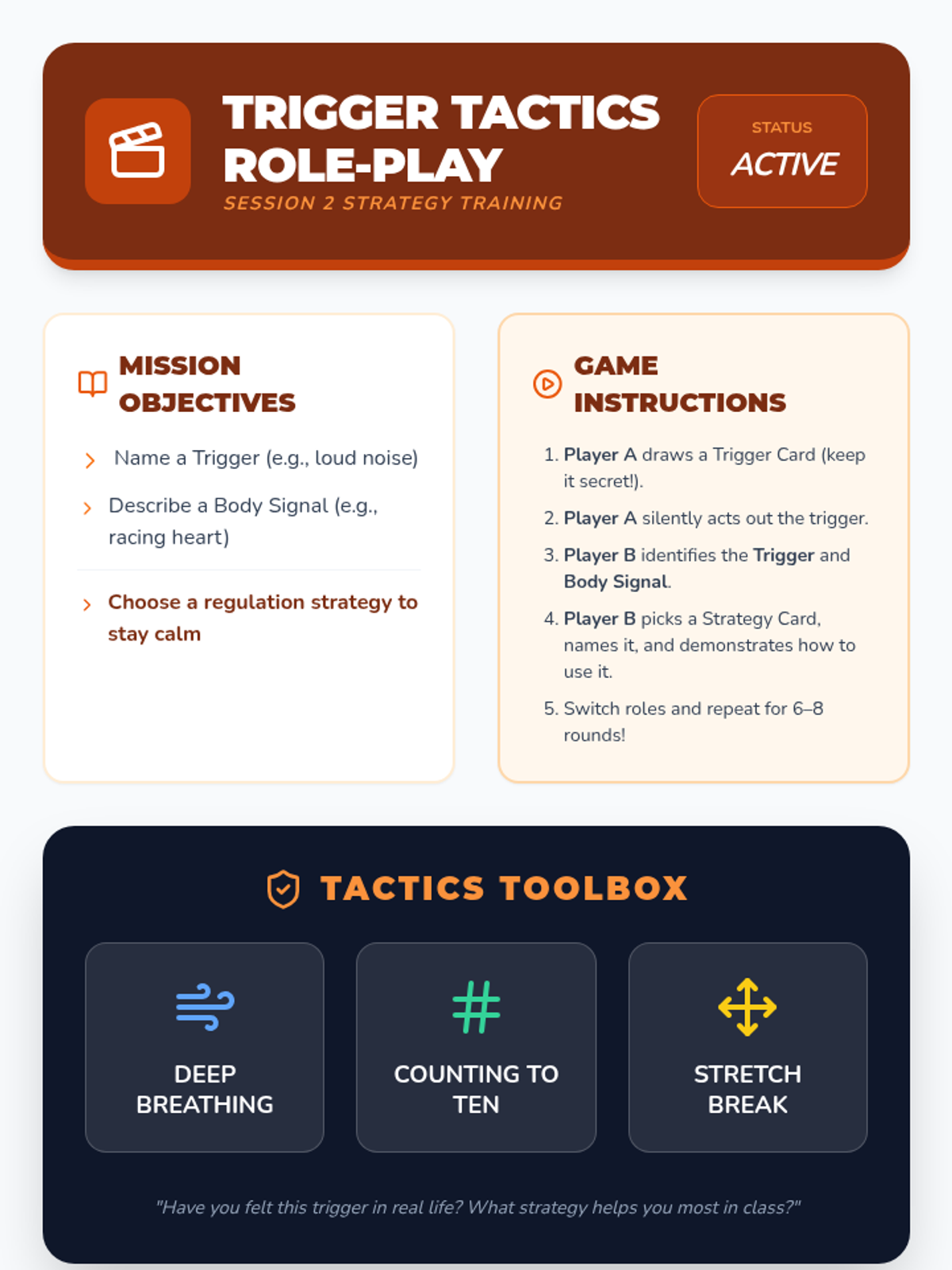
Learning and practicing concrete strategies like deep breathing and movement breaks.
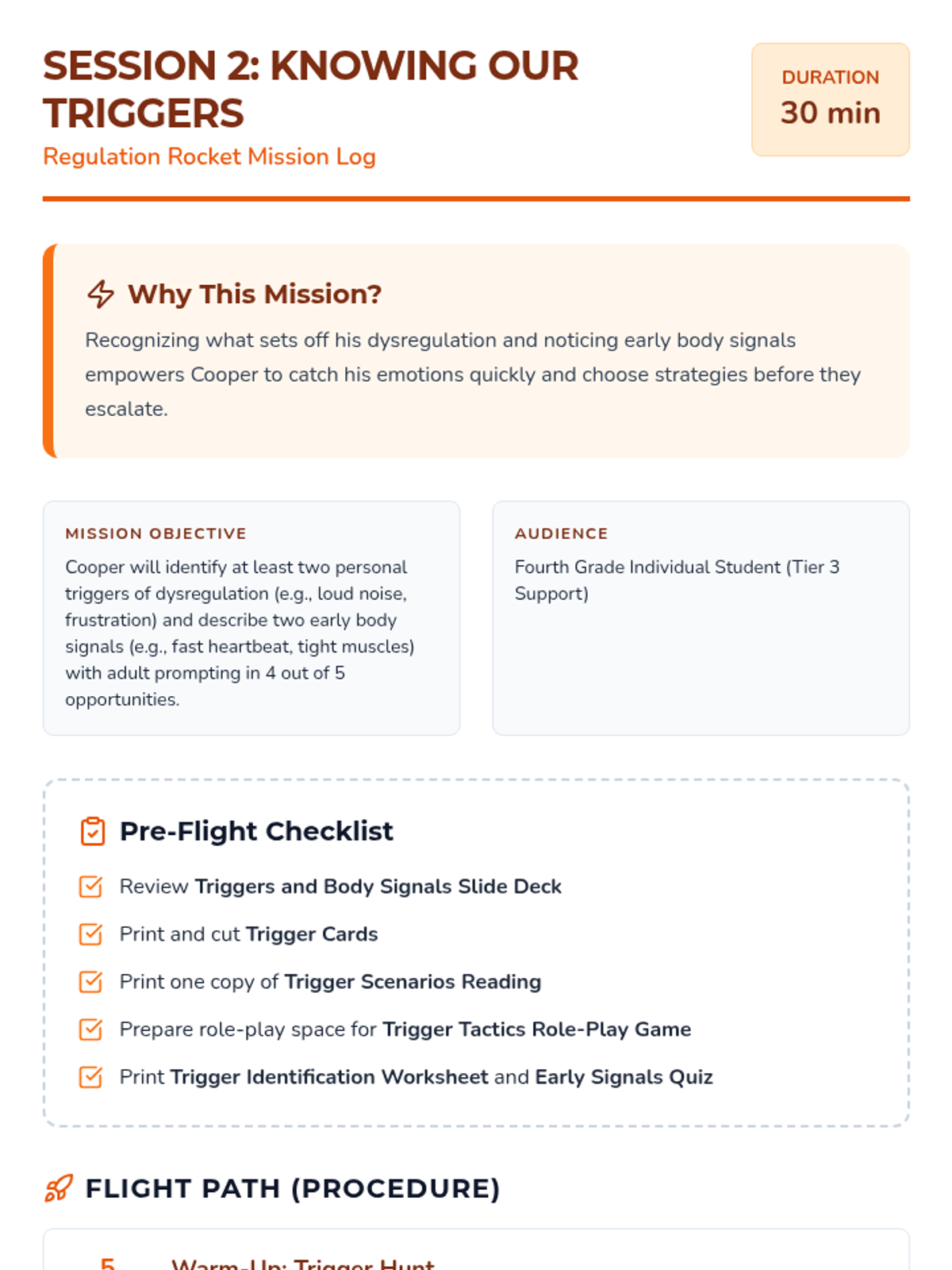
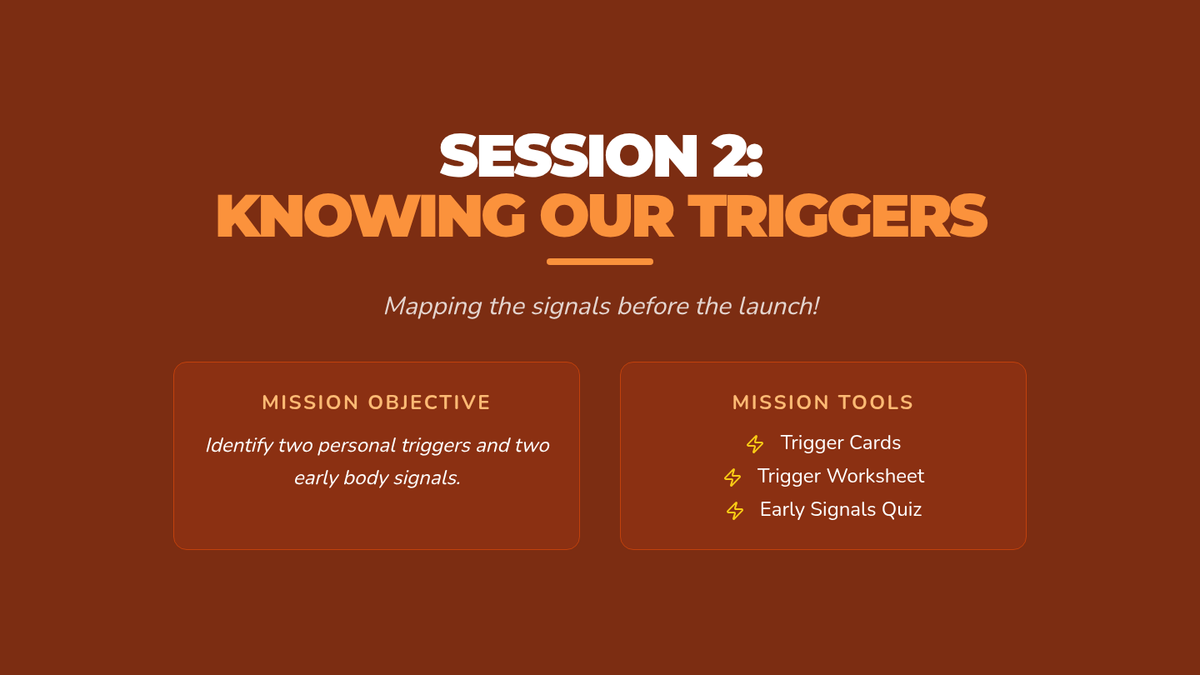
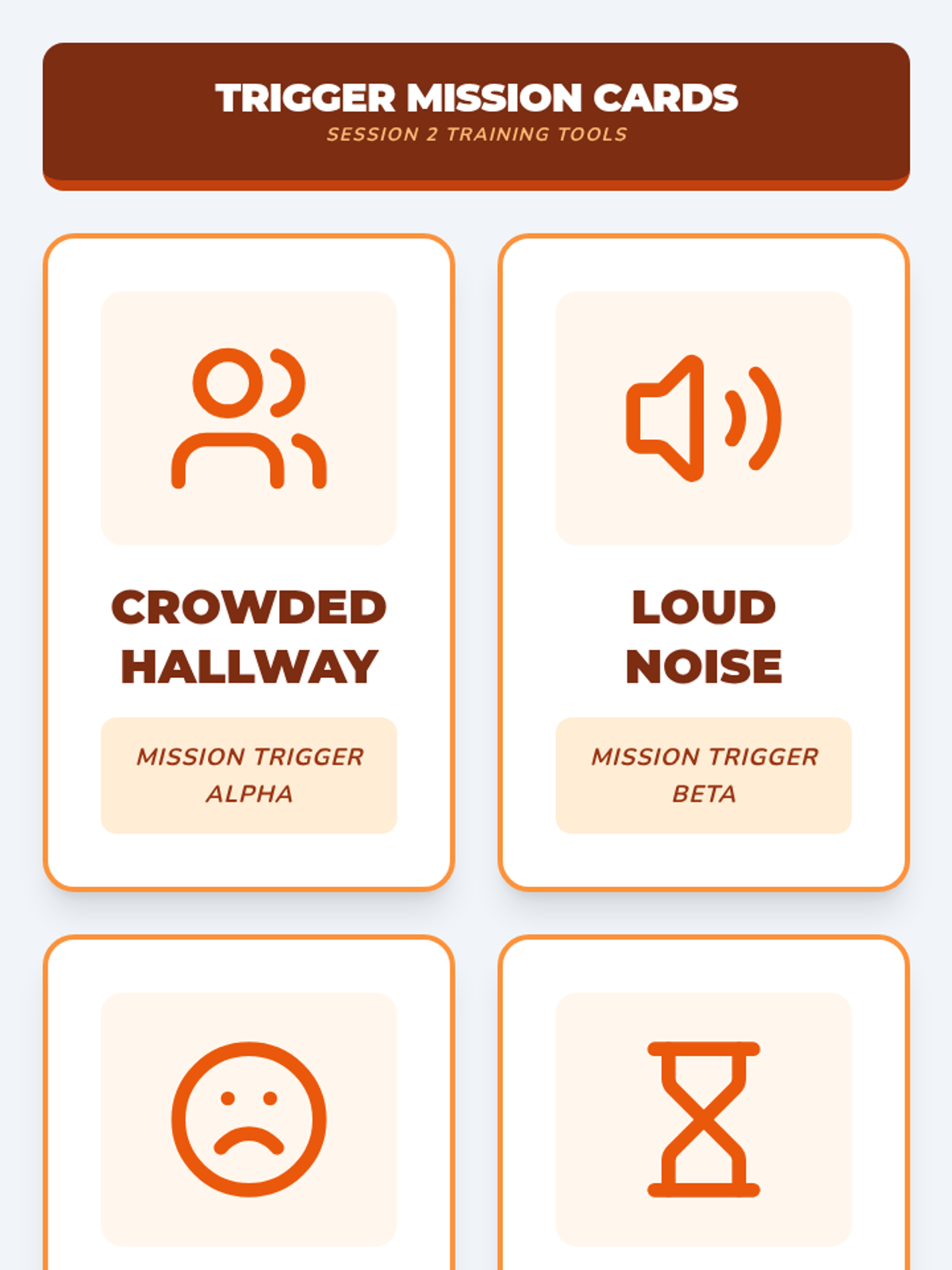
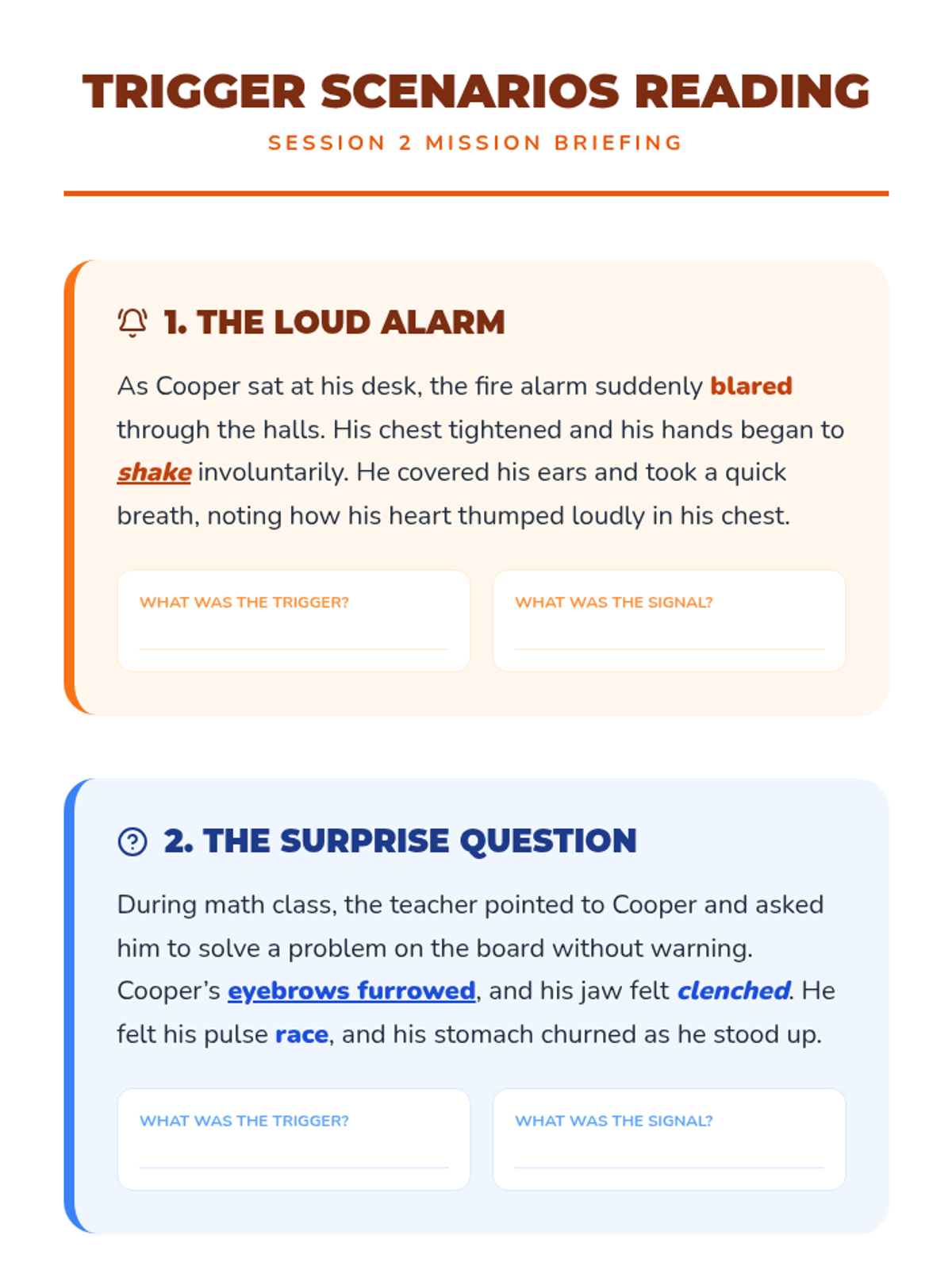
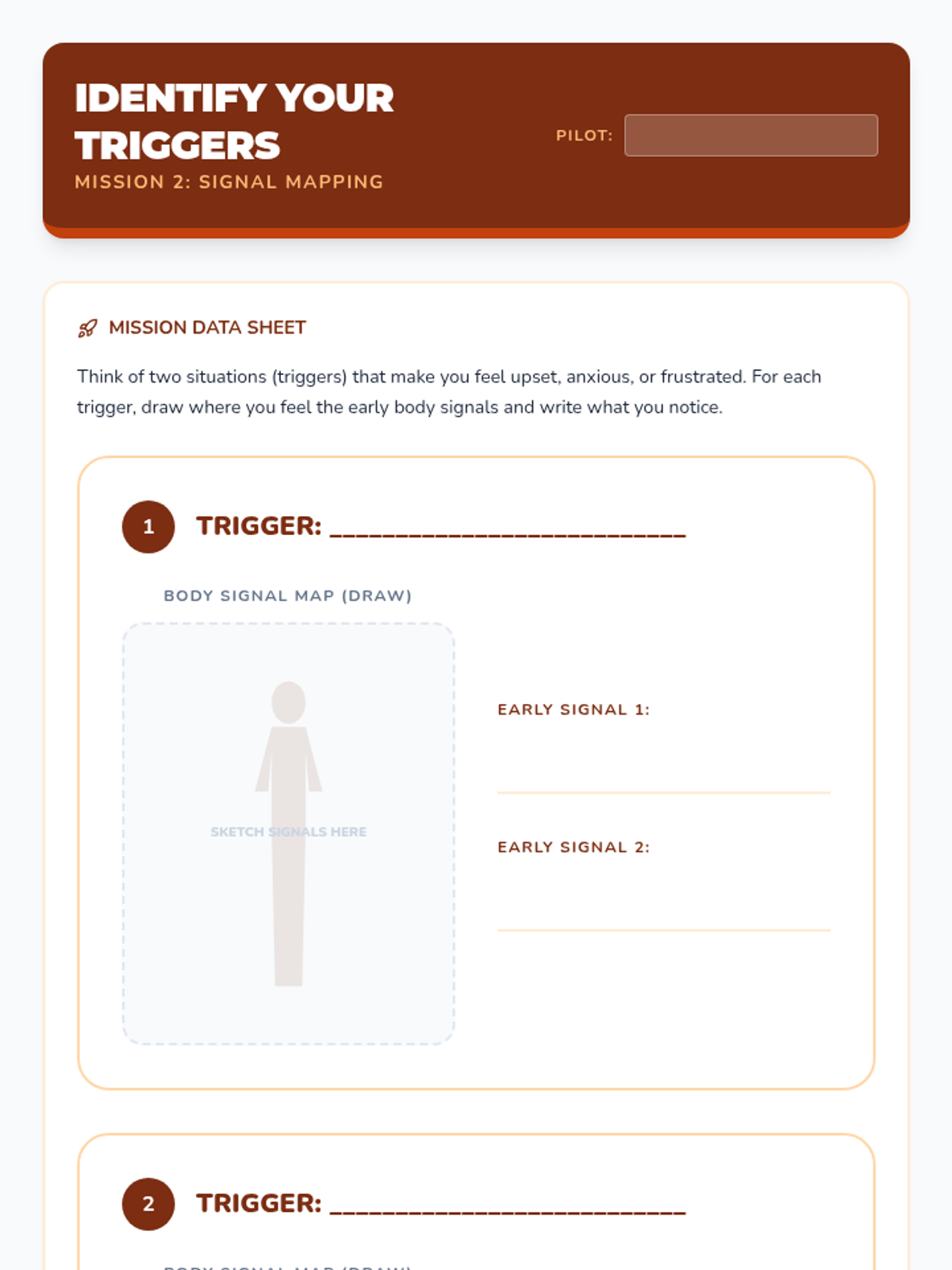
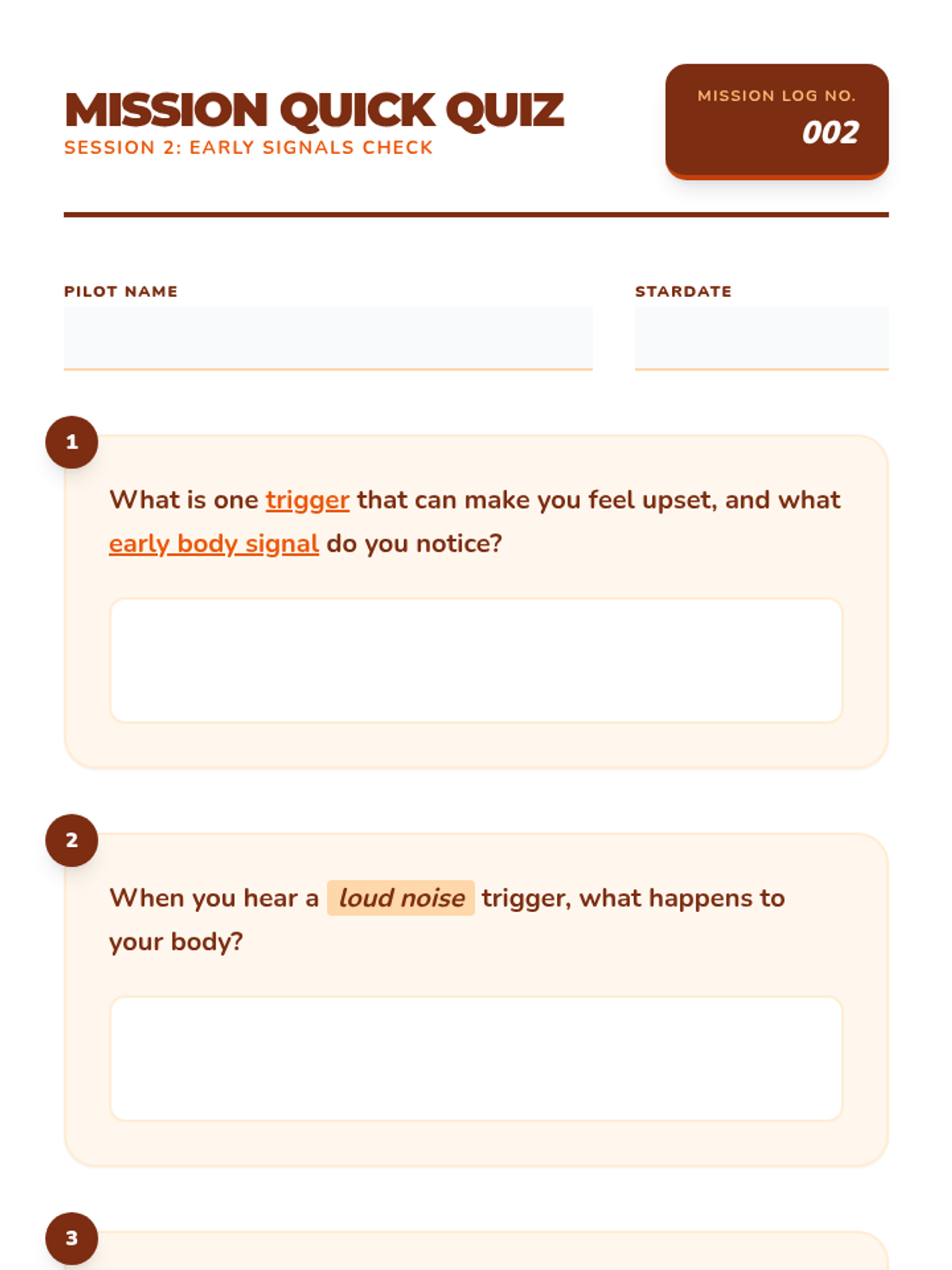
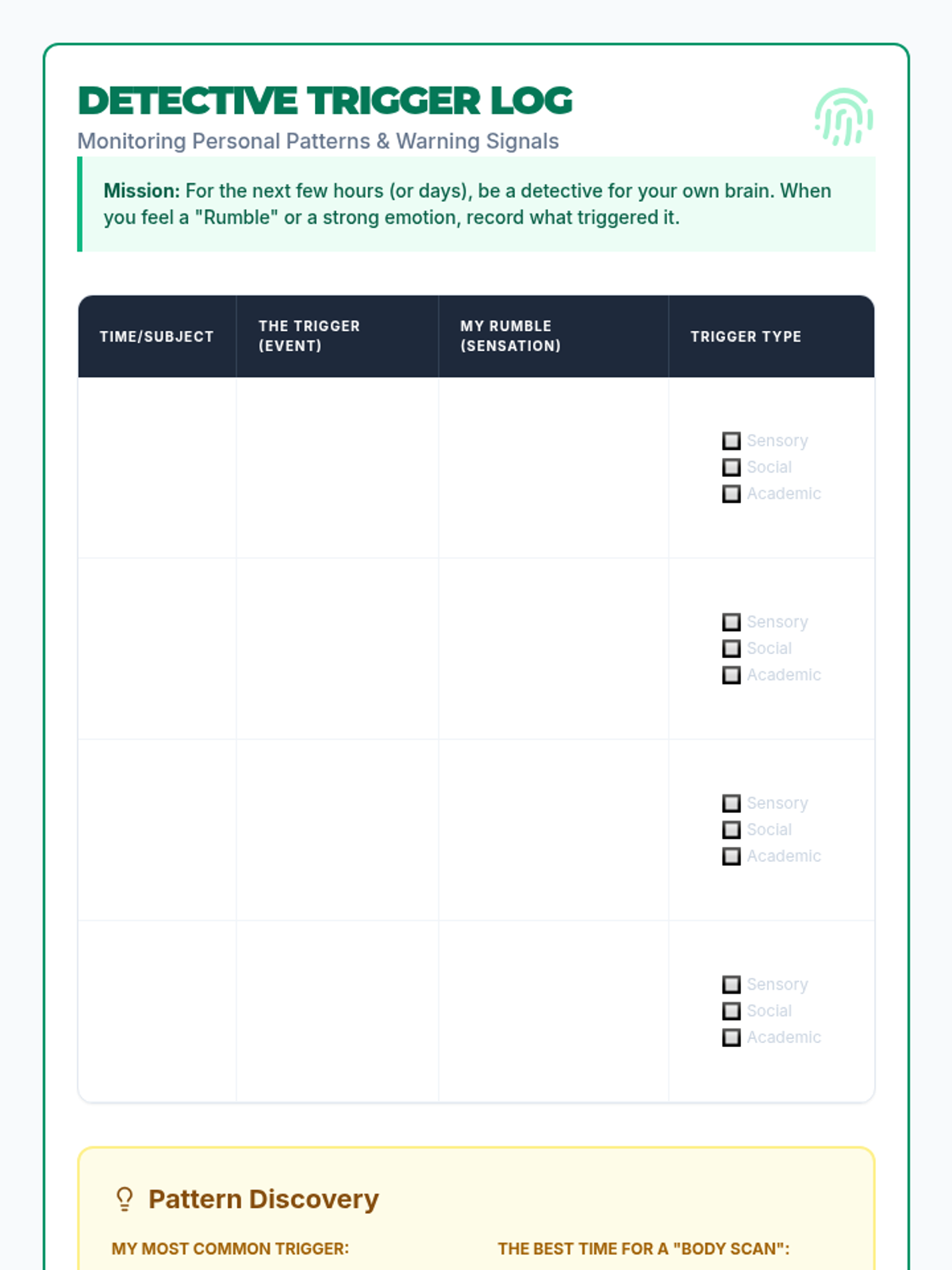
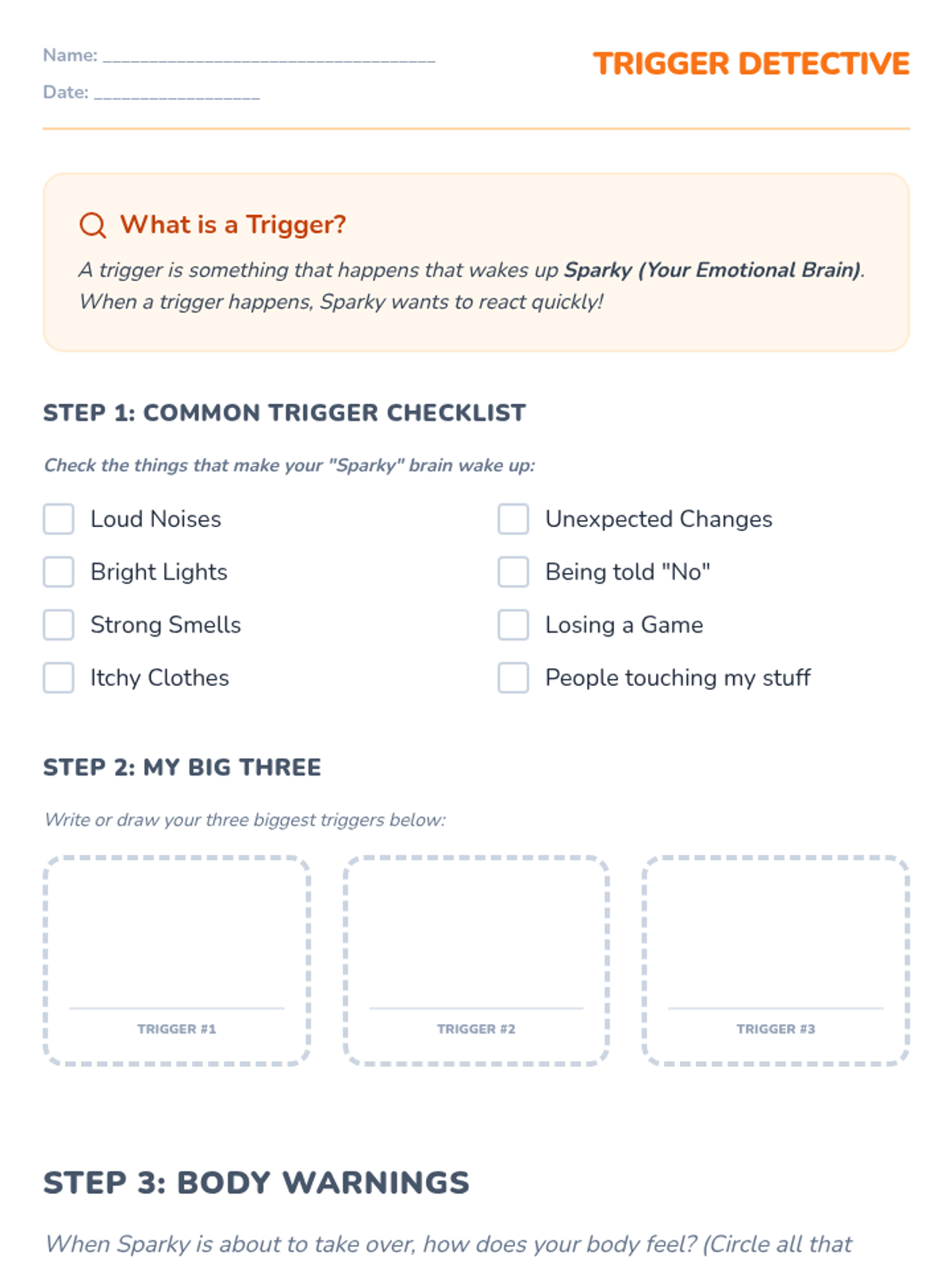
Identifying personal triggers and mapping them to early body signals.
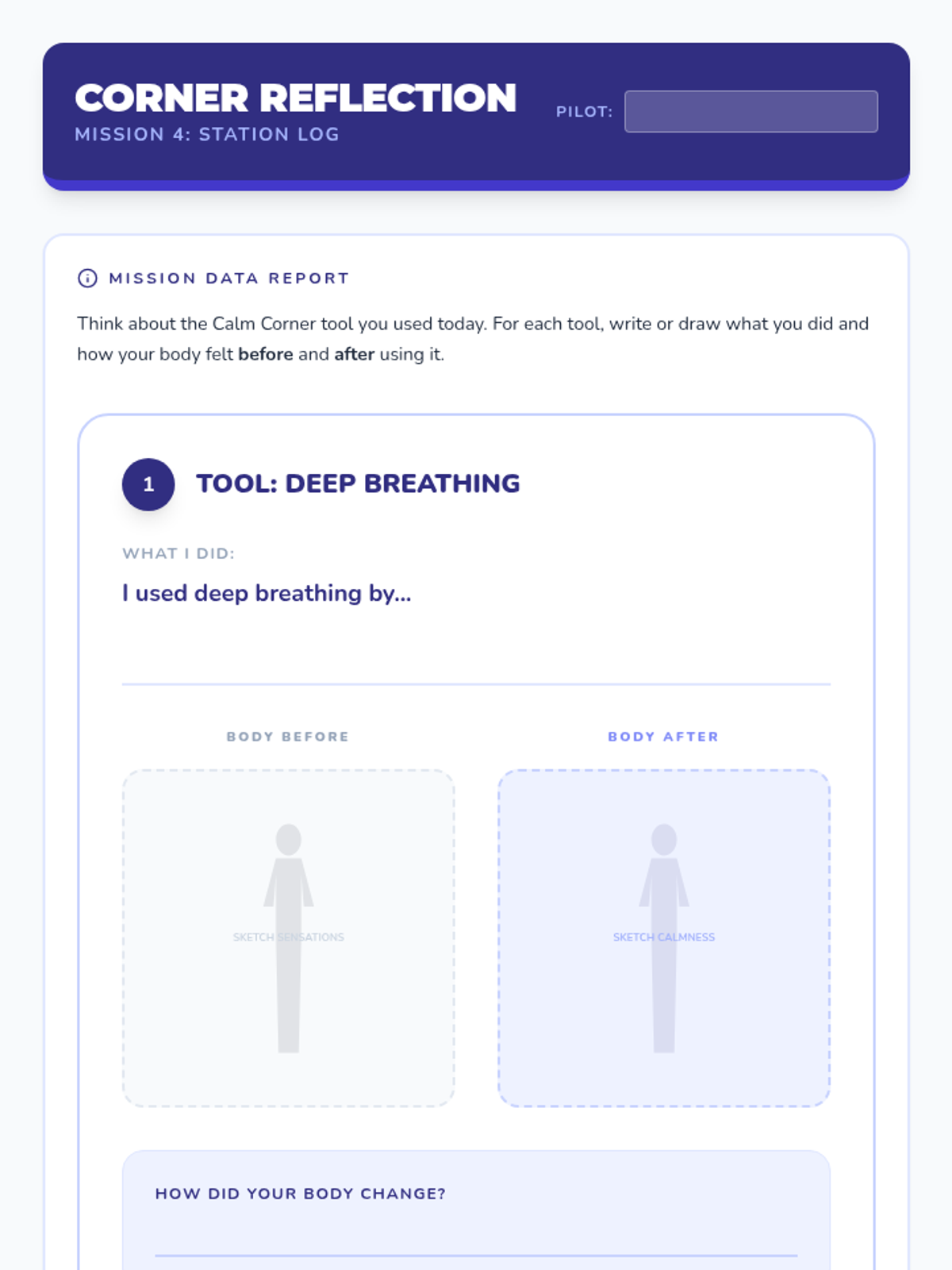
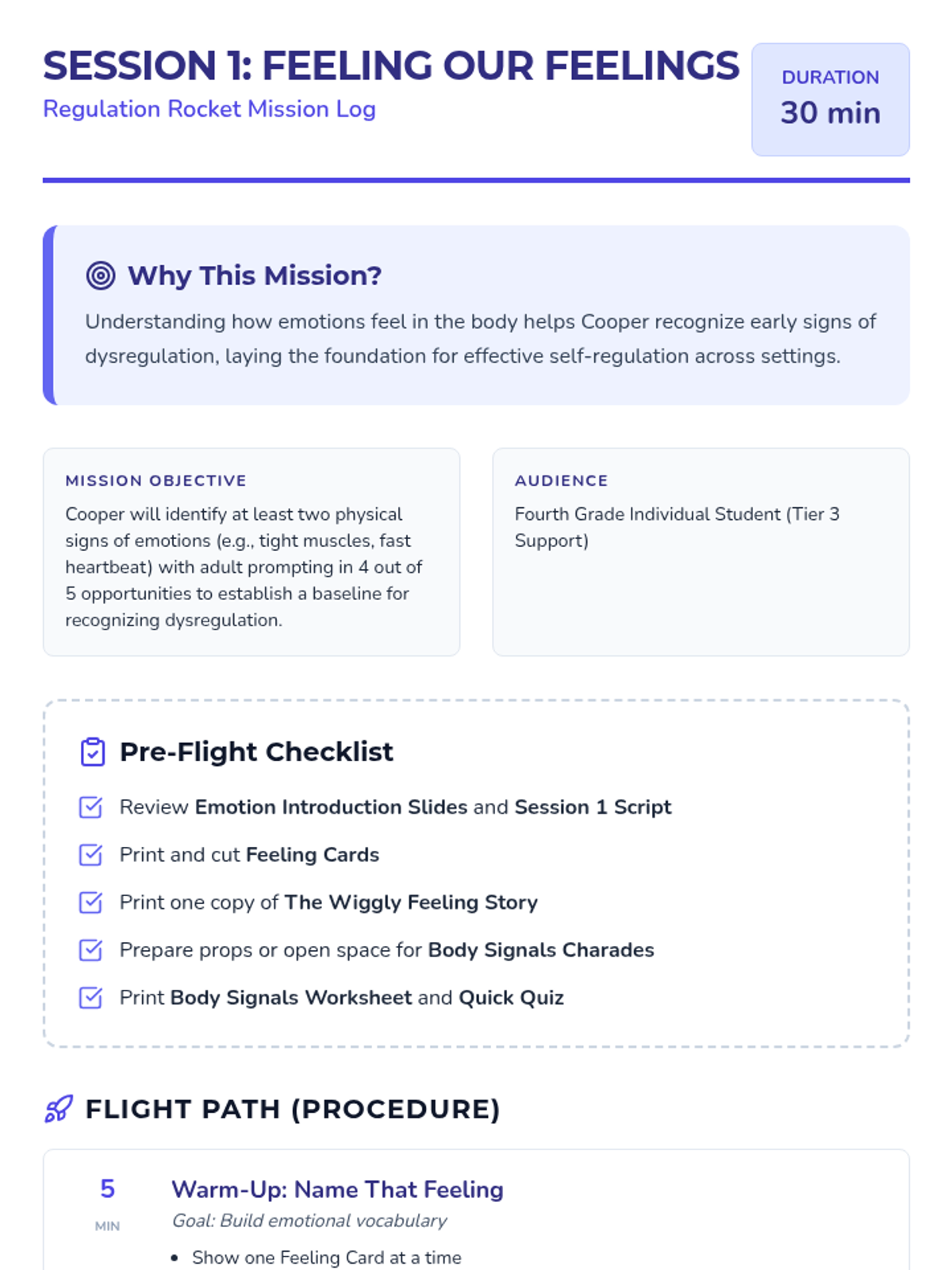
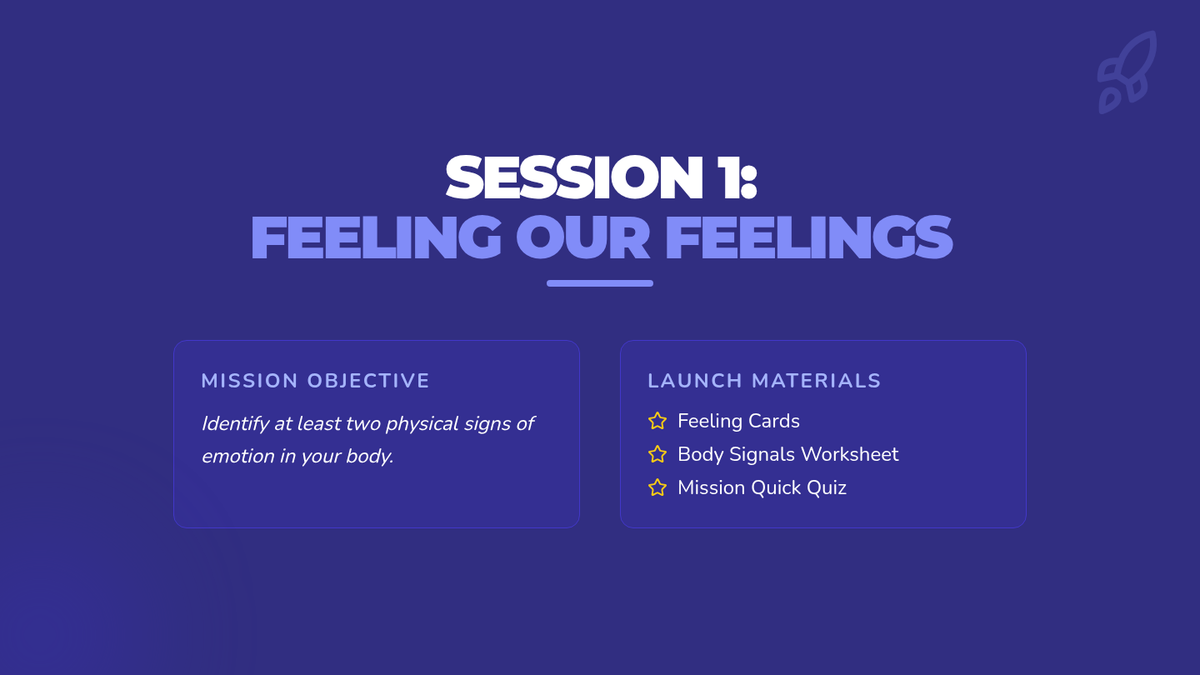
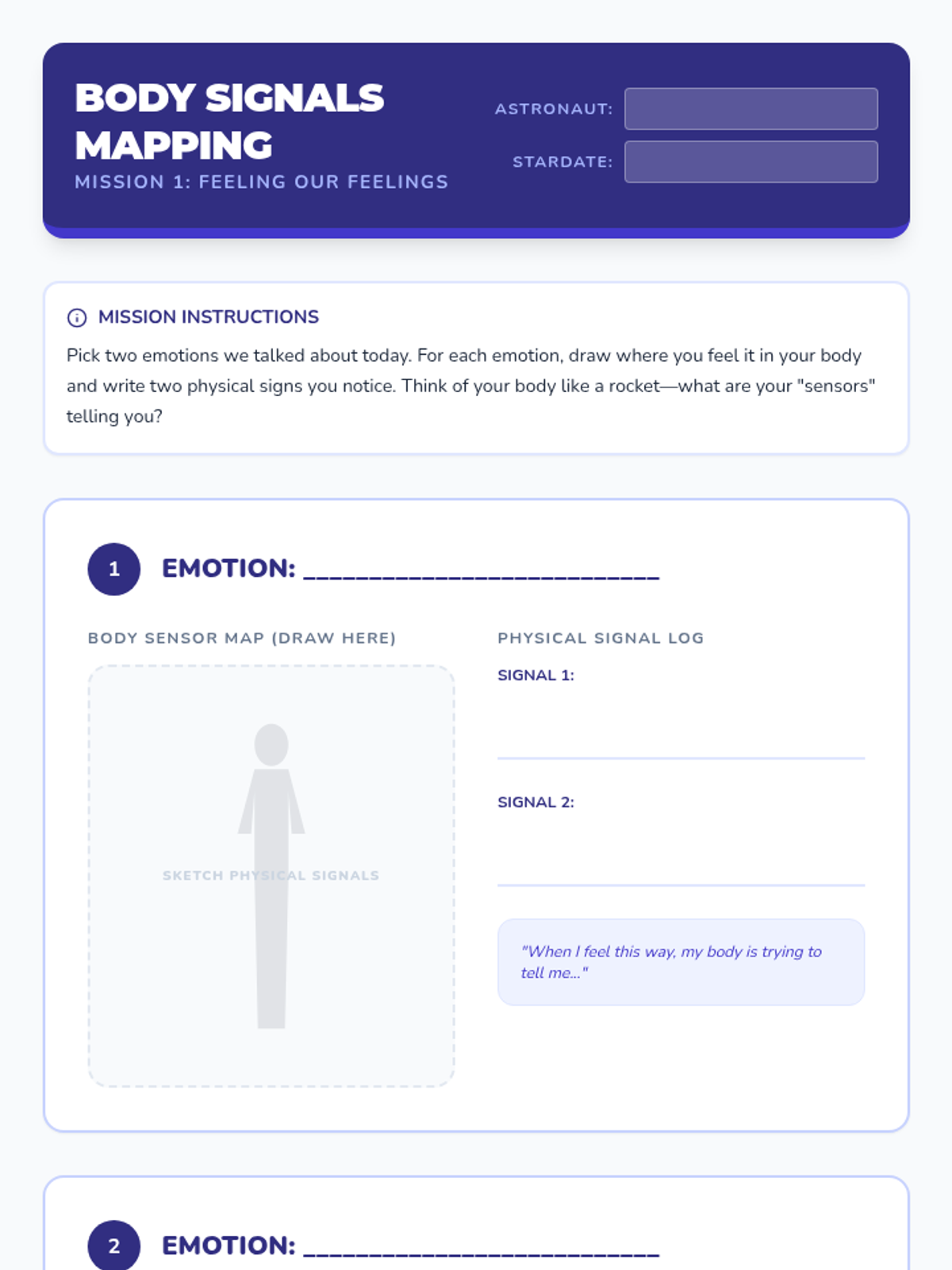
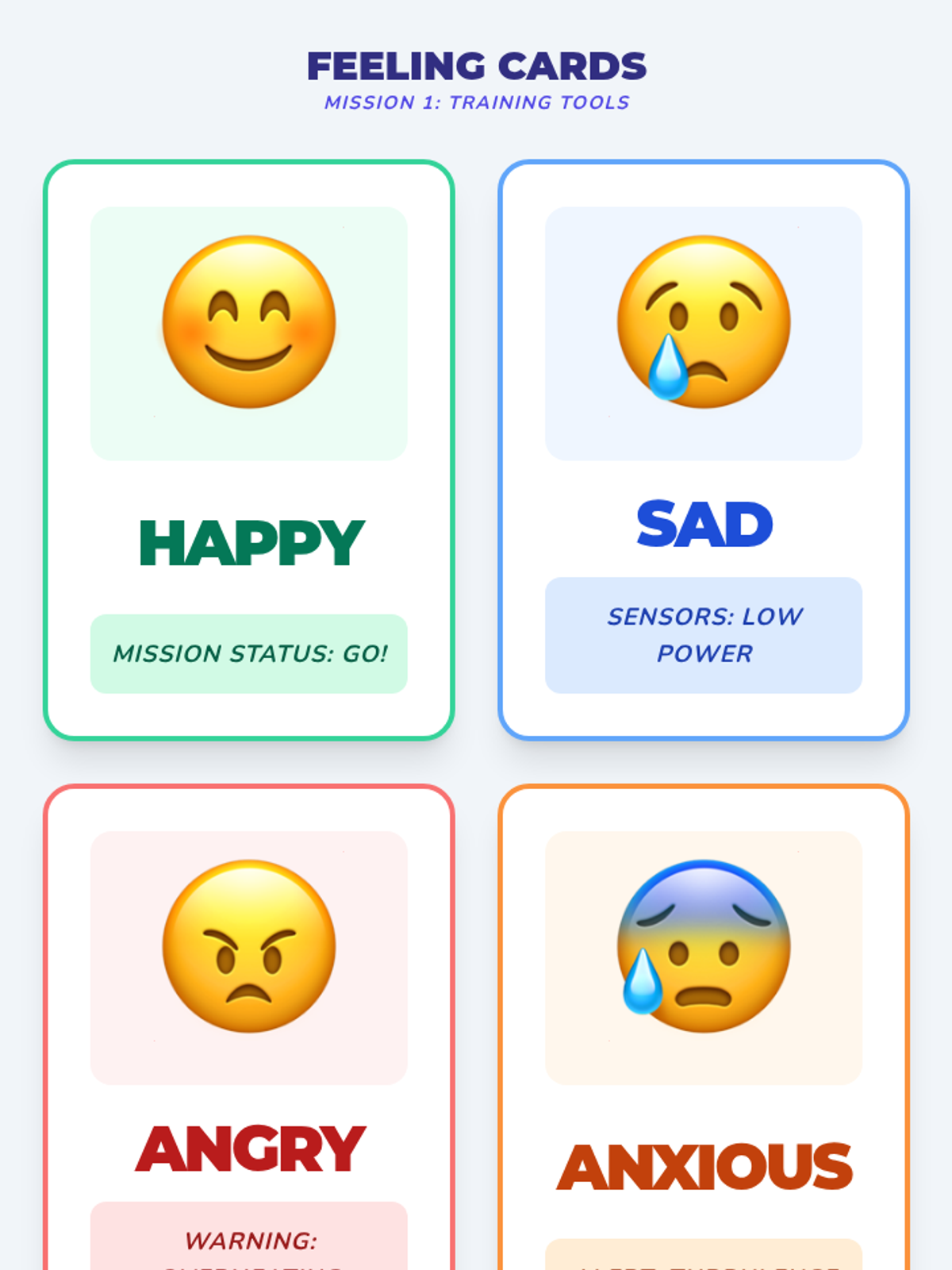
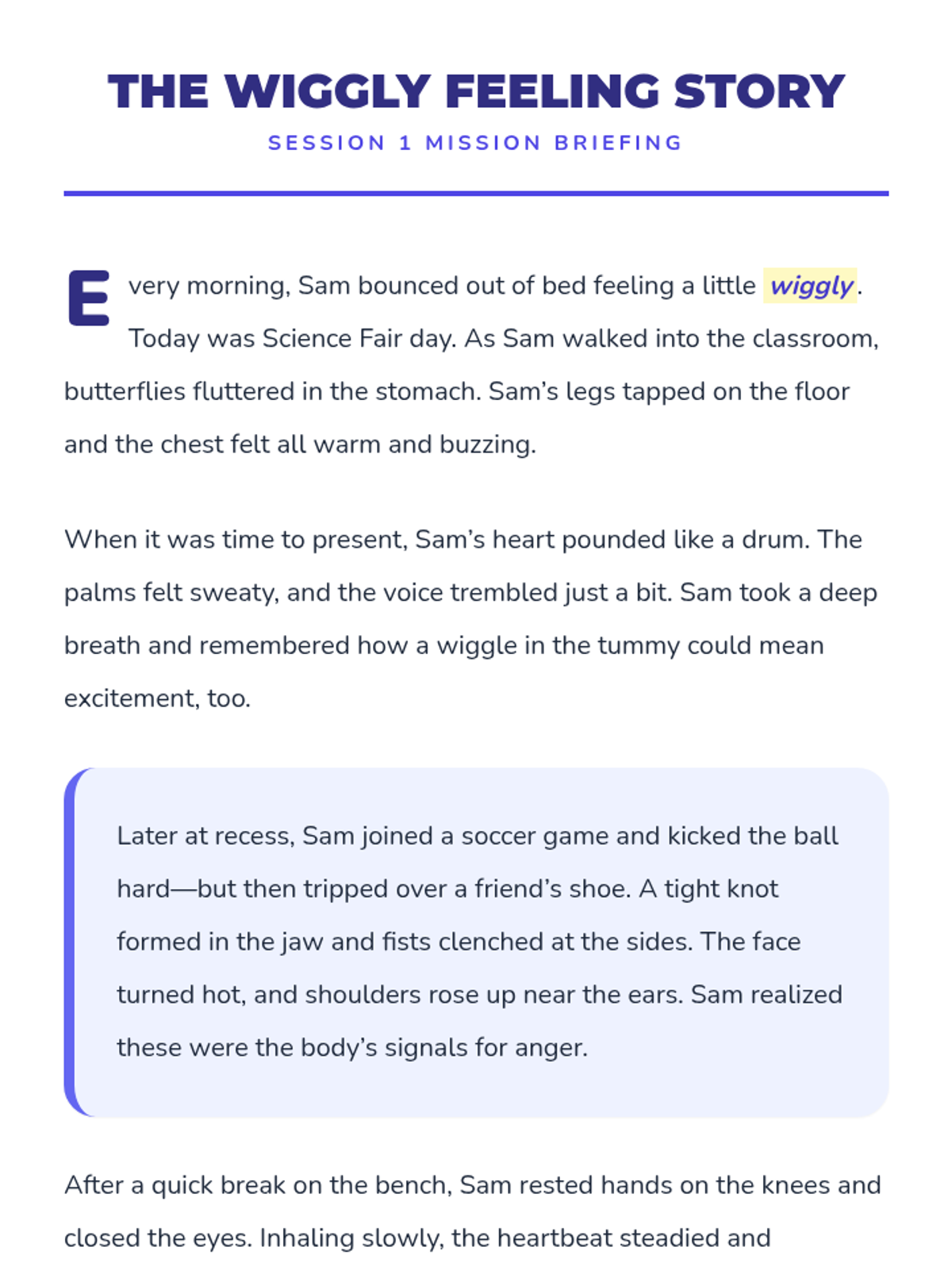
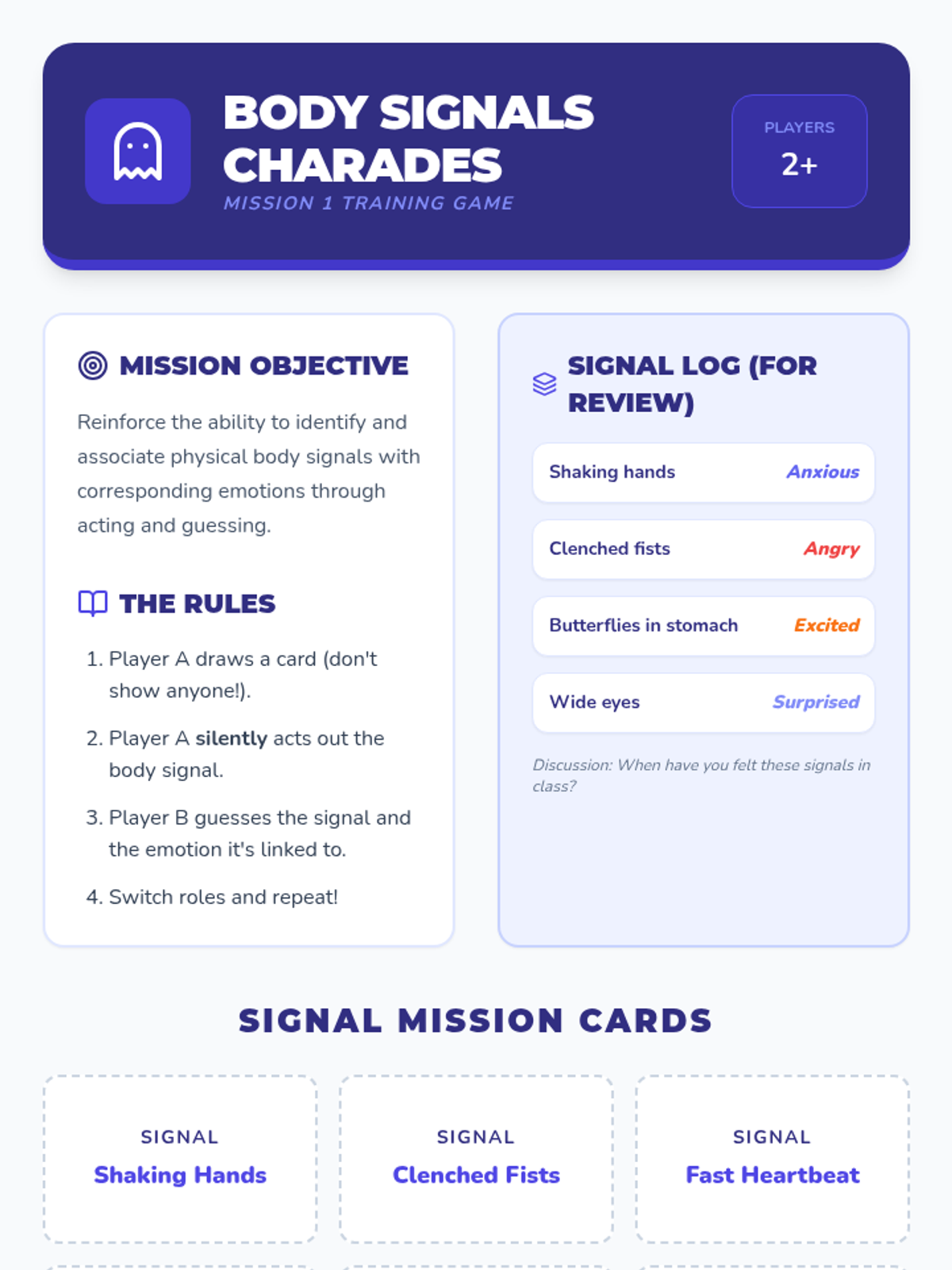
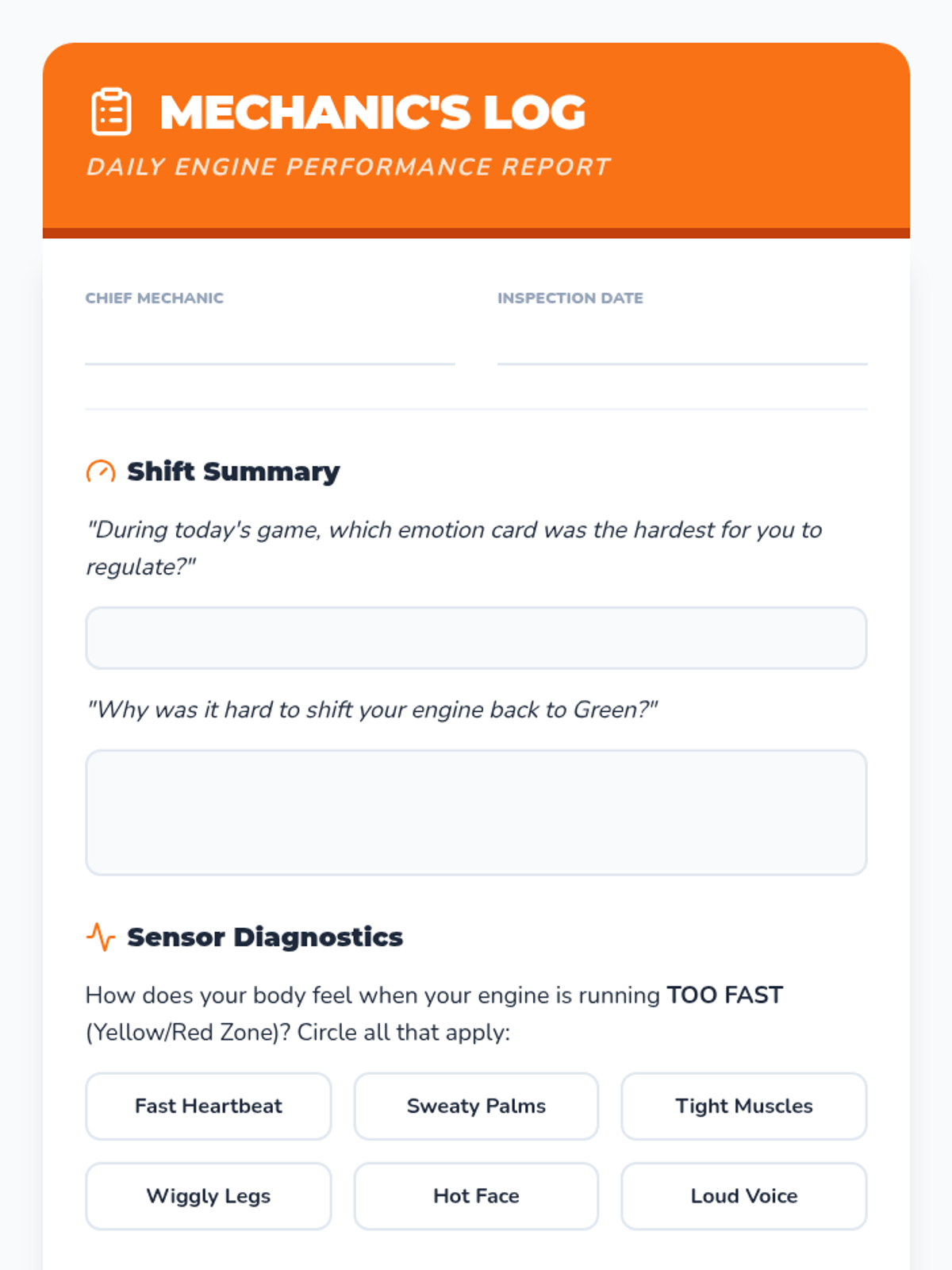
Introducing physical sensations of emotions to help recognize early signs of dysregulation.
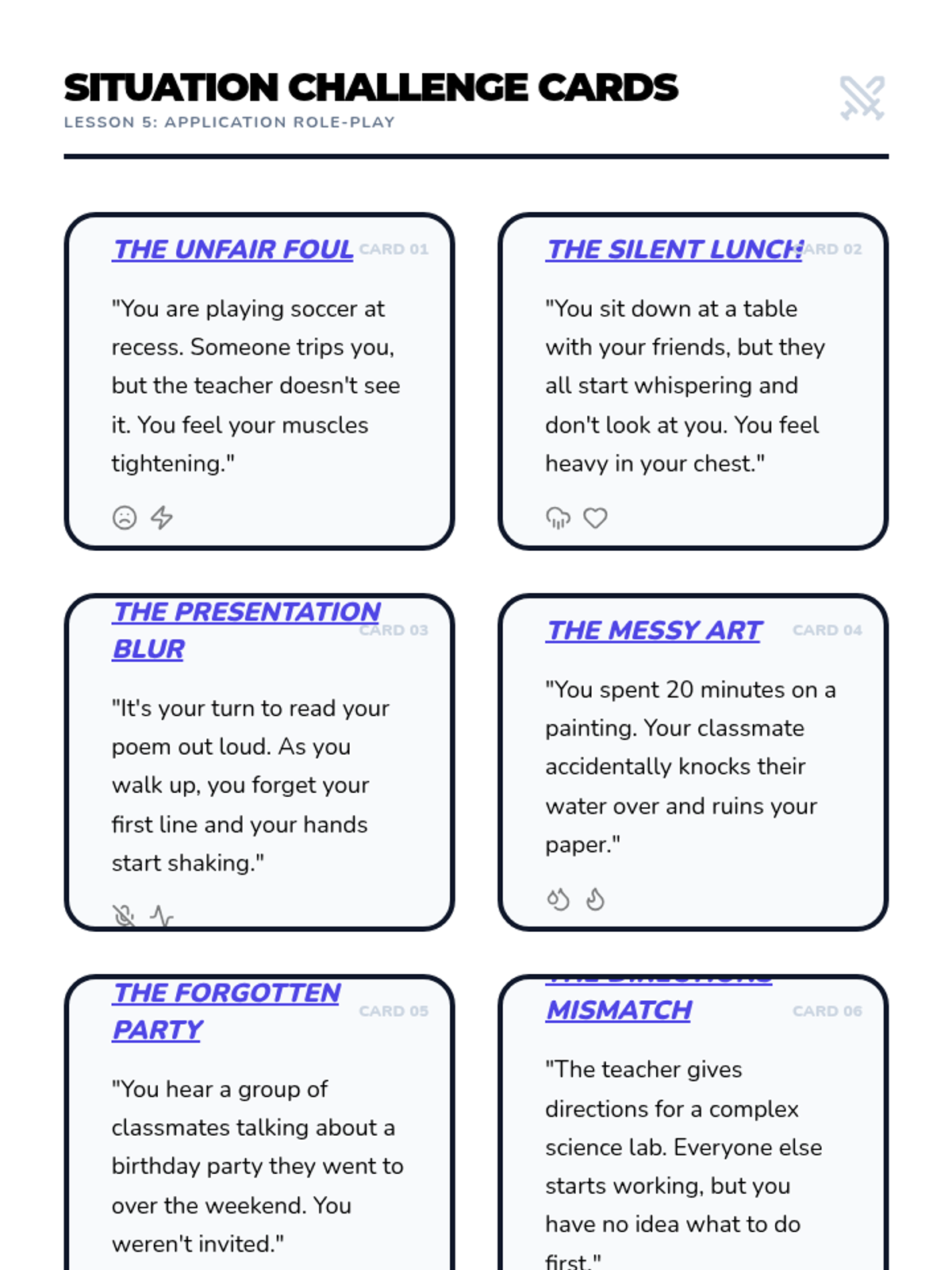
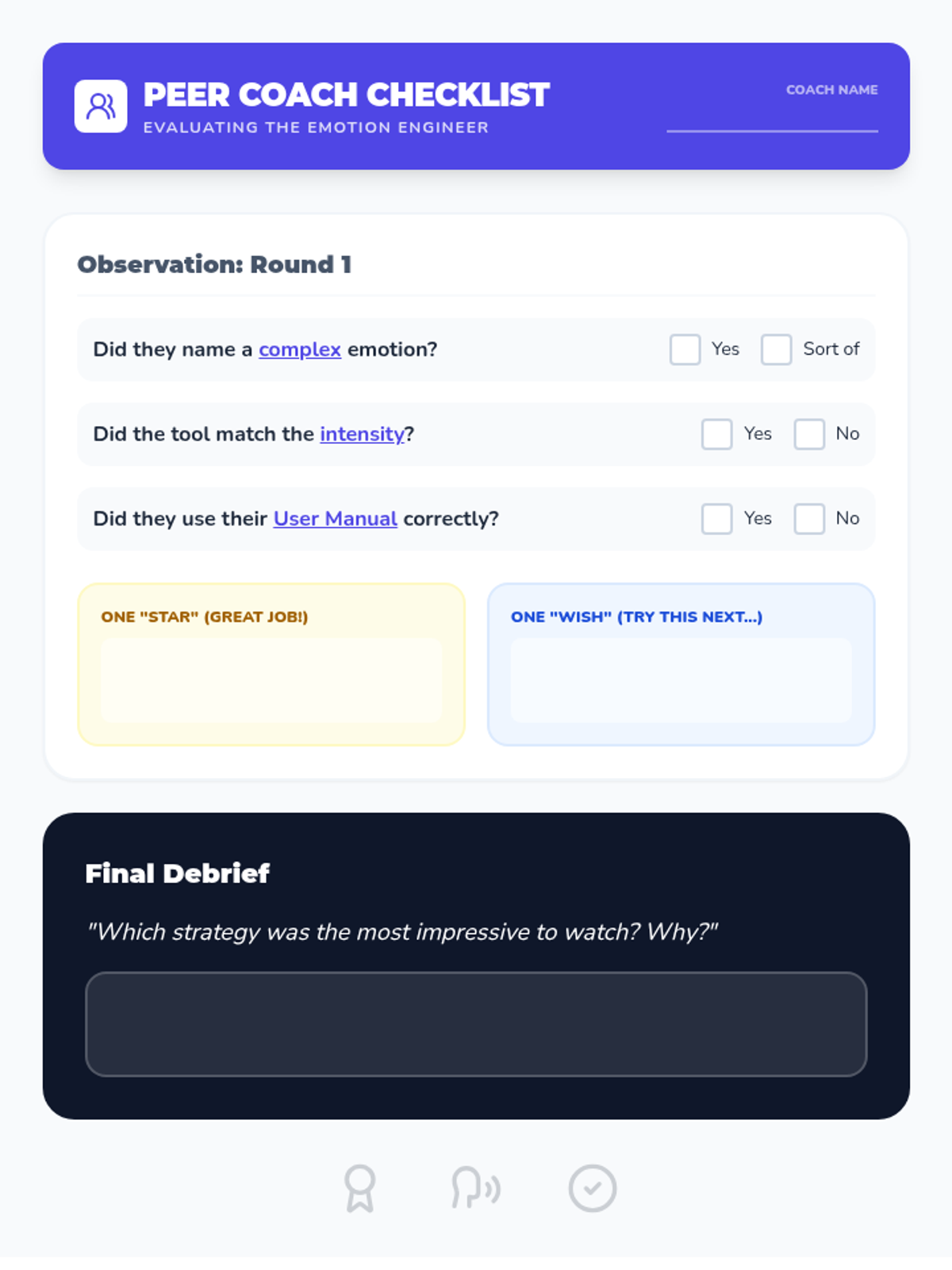
Students apply their knowledge through role-play scenarios, practicing labeling emotions and implementing regulation strategies in real-time.
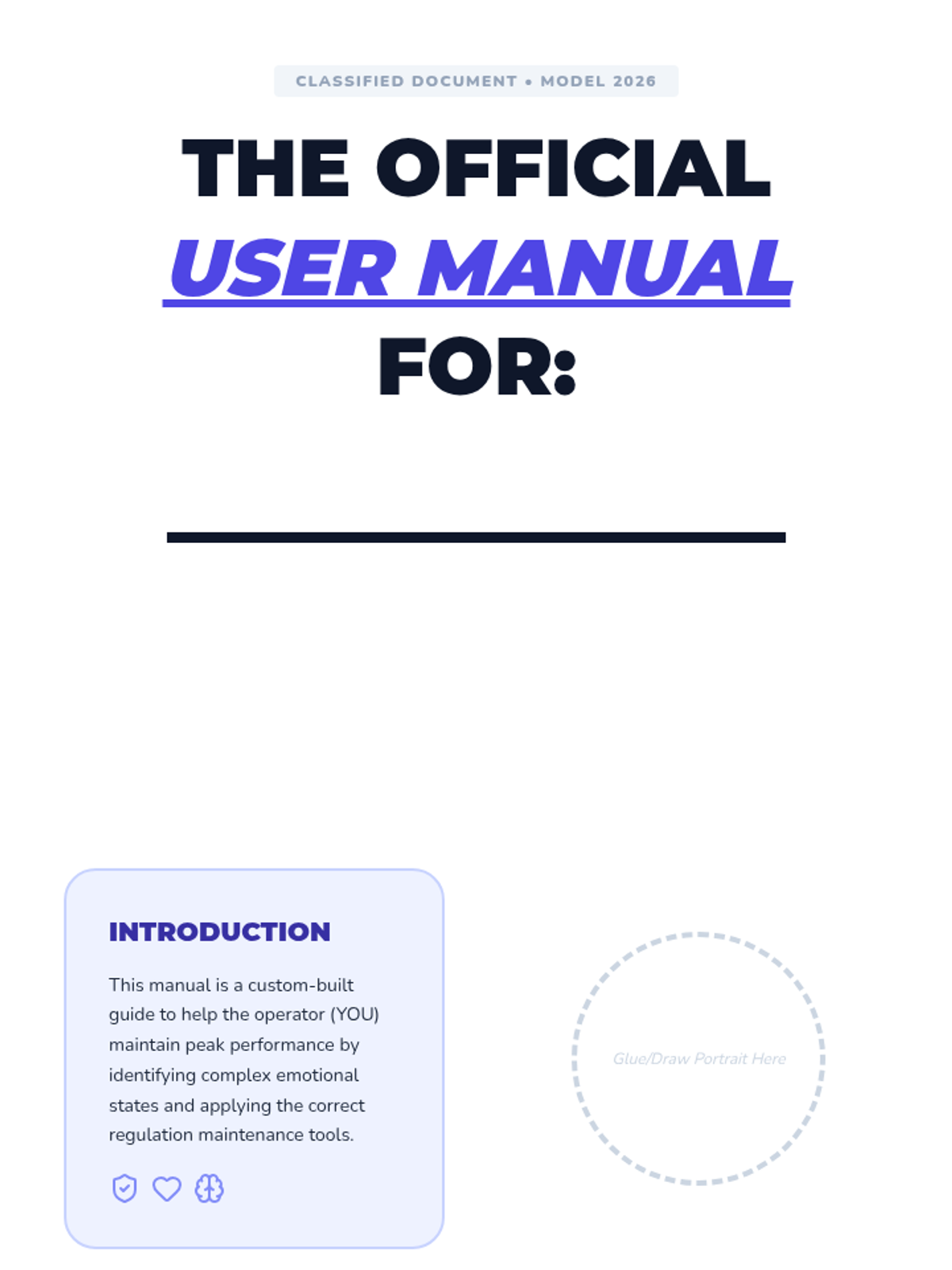
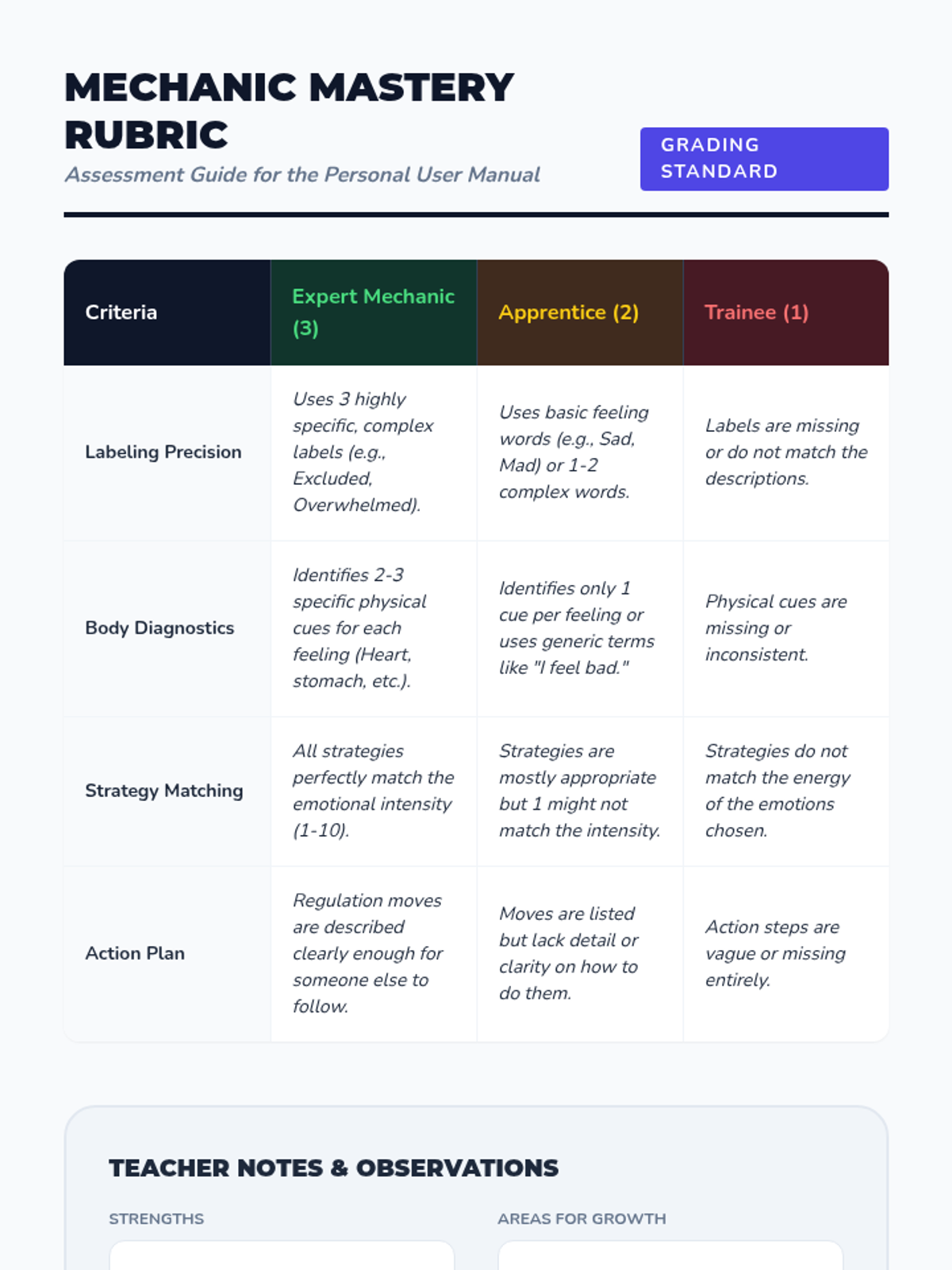
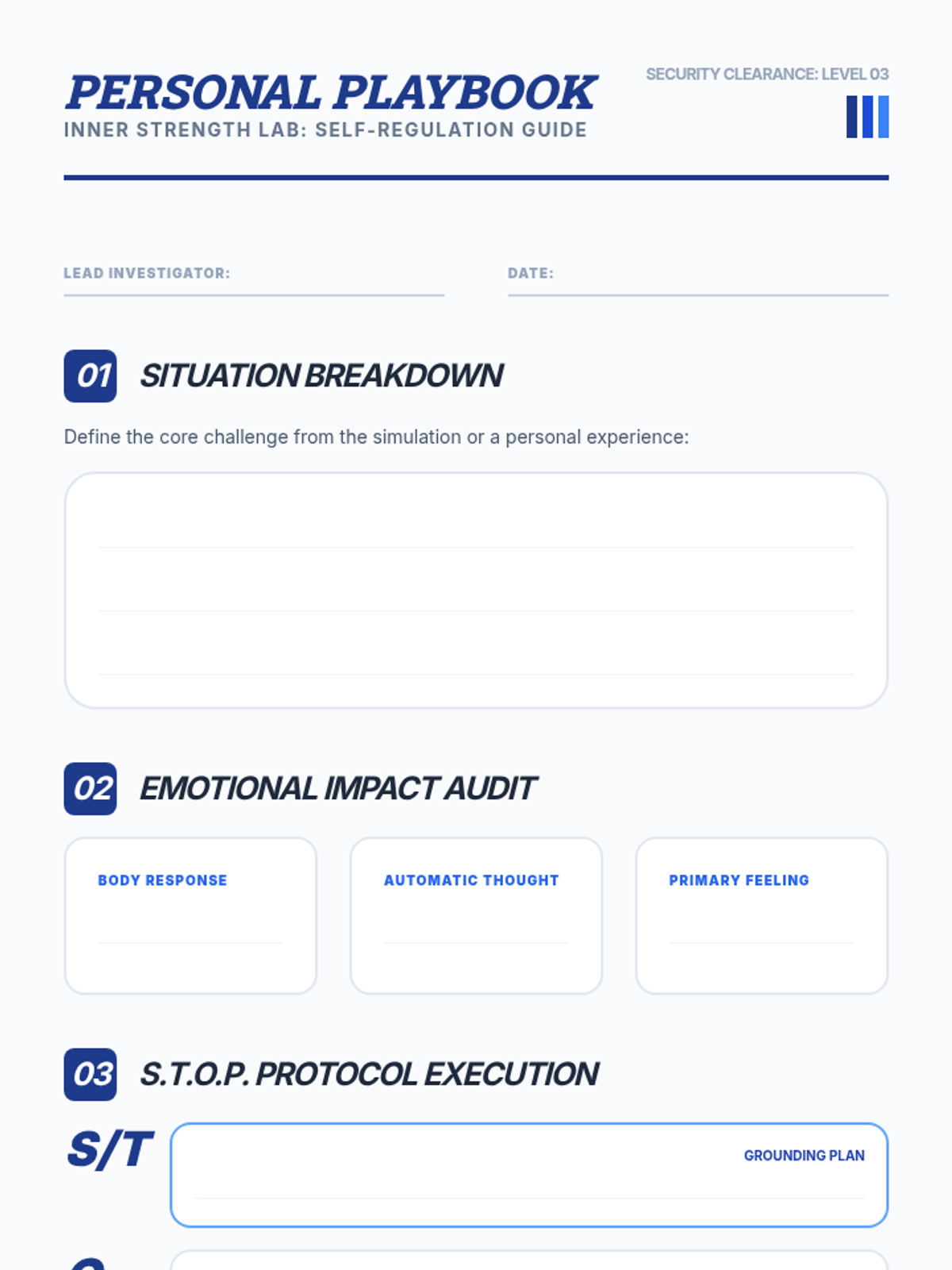
Students synthesize their learning into a personalized 'User Manual' that identifies their triggers, body cues, and effective strategies for their most common emotions.
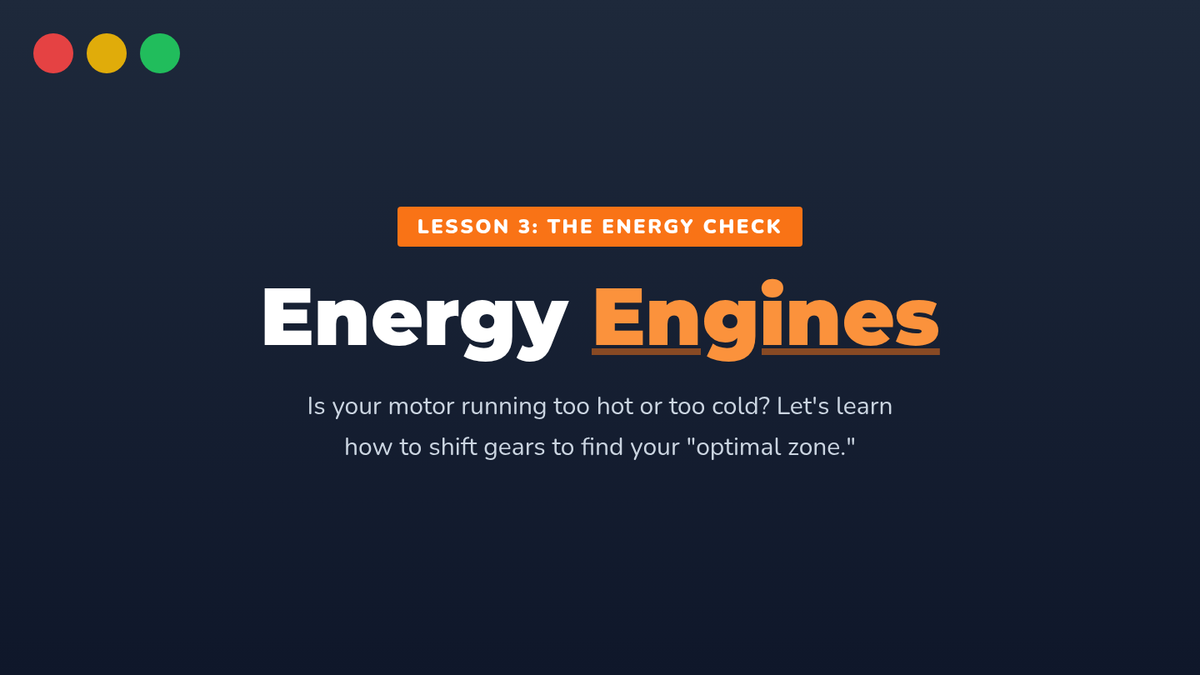
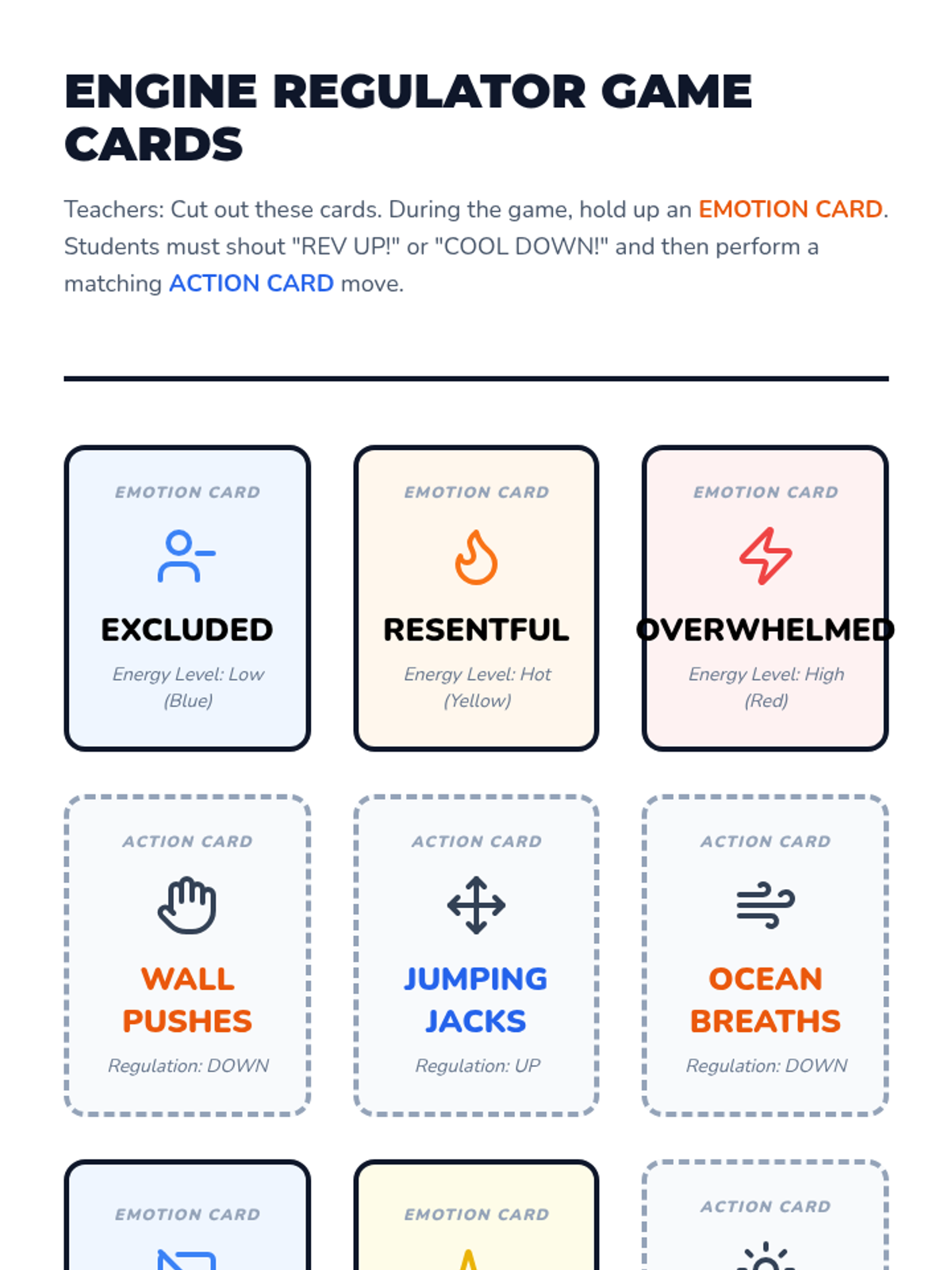
Students learn to identify if an emotion requires 'up-regulation' (increasing energy) or 'down-regulation' (calming down) to return to a balanced state.
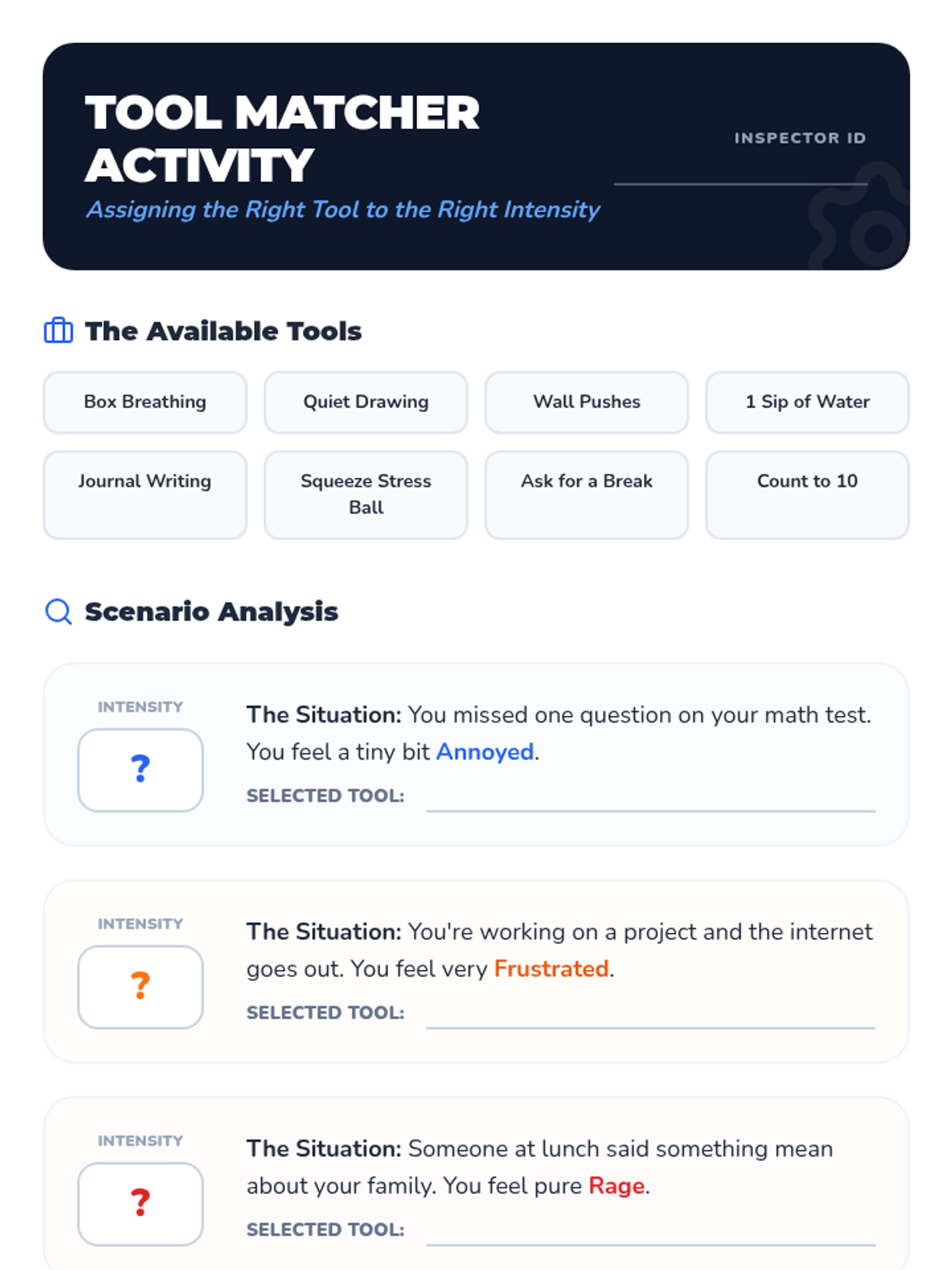
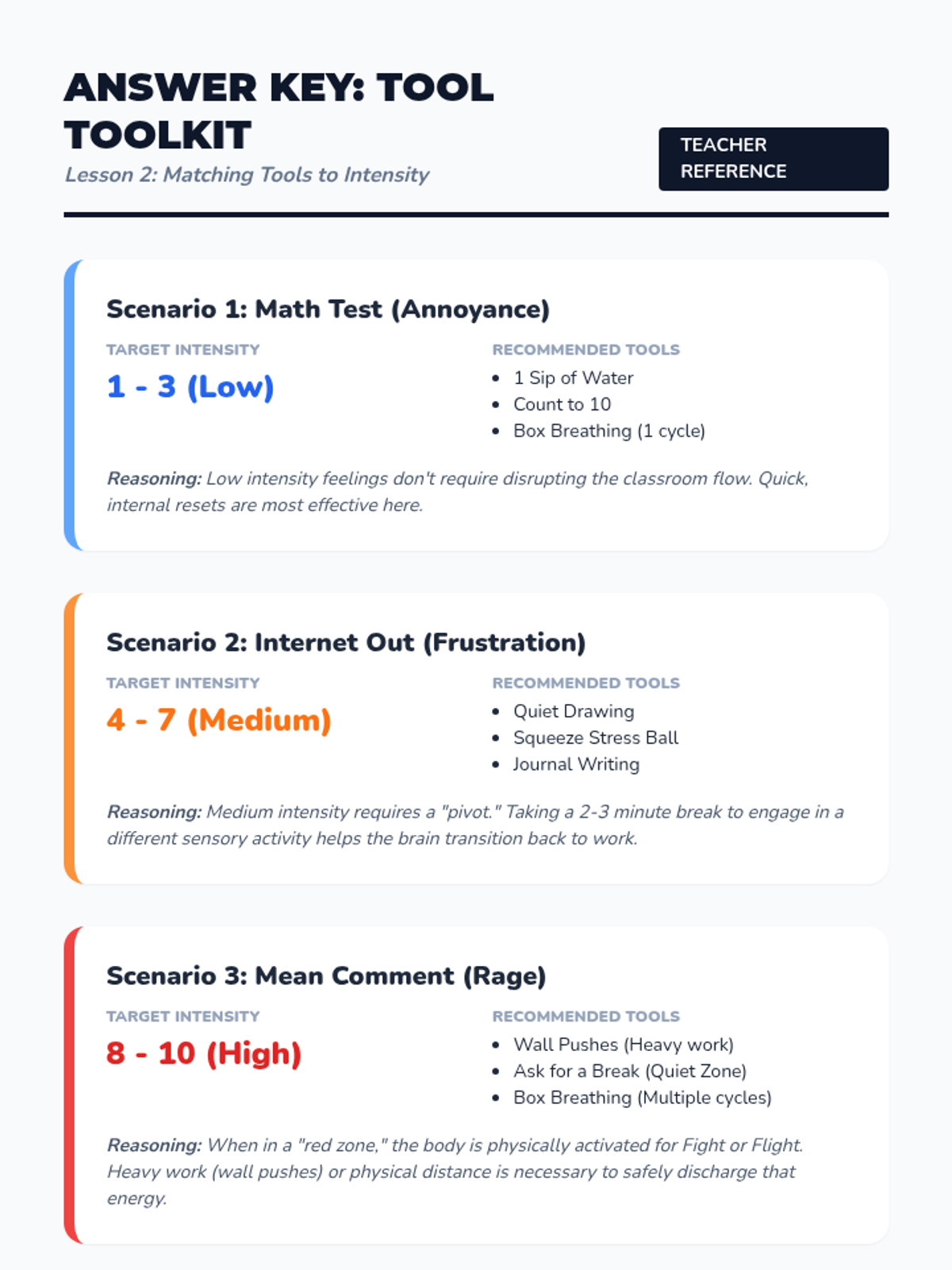
Students categorize coping strategies based on emotional intensity, learning that different 'tools' are required for different levels of feelings.
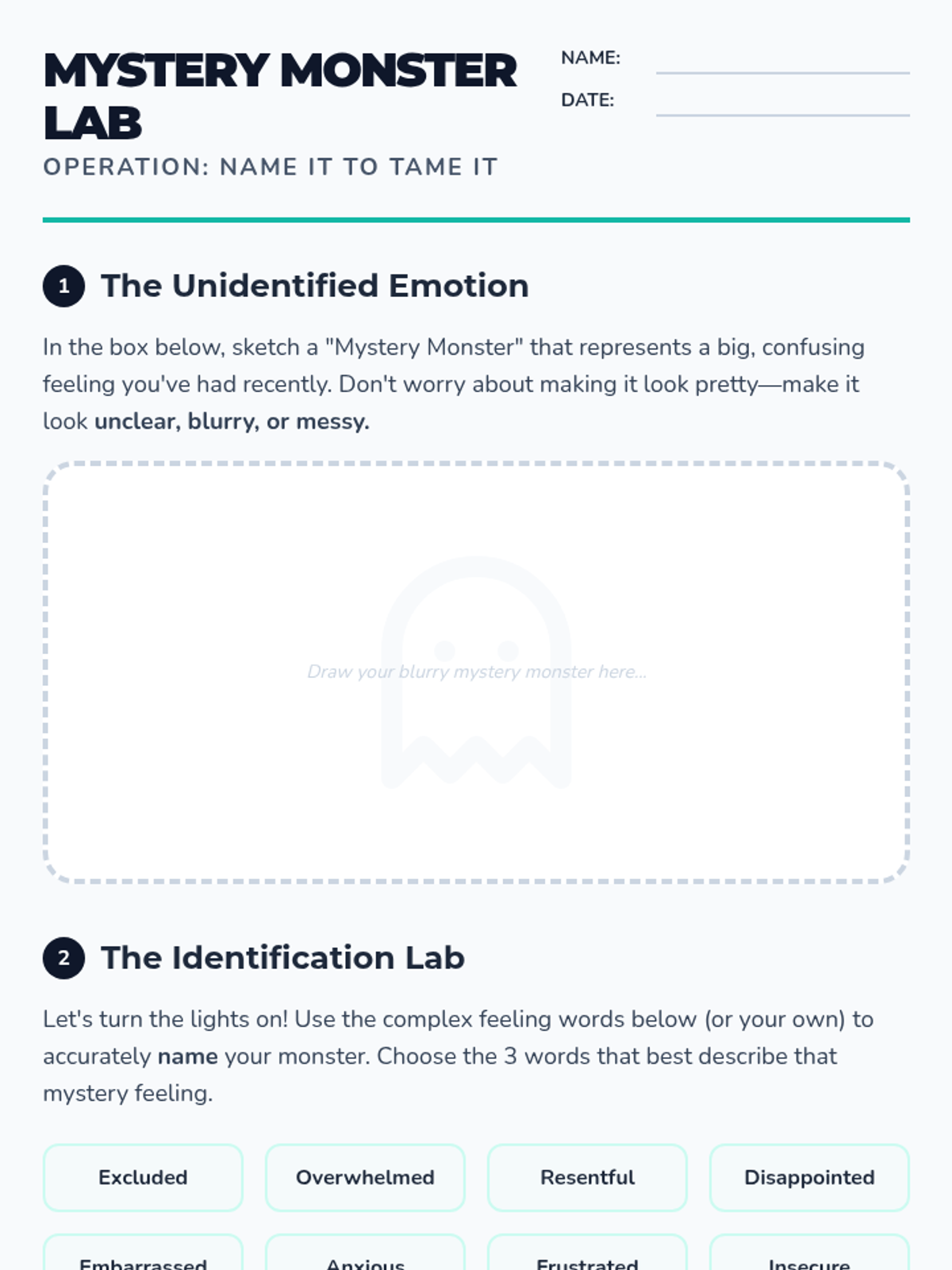
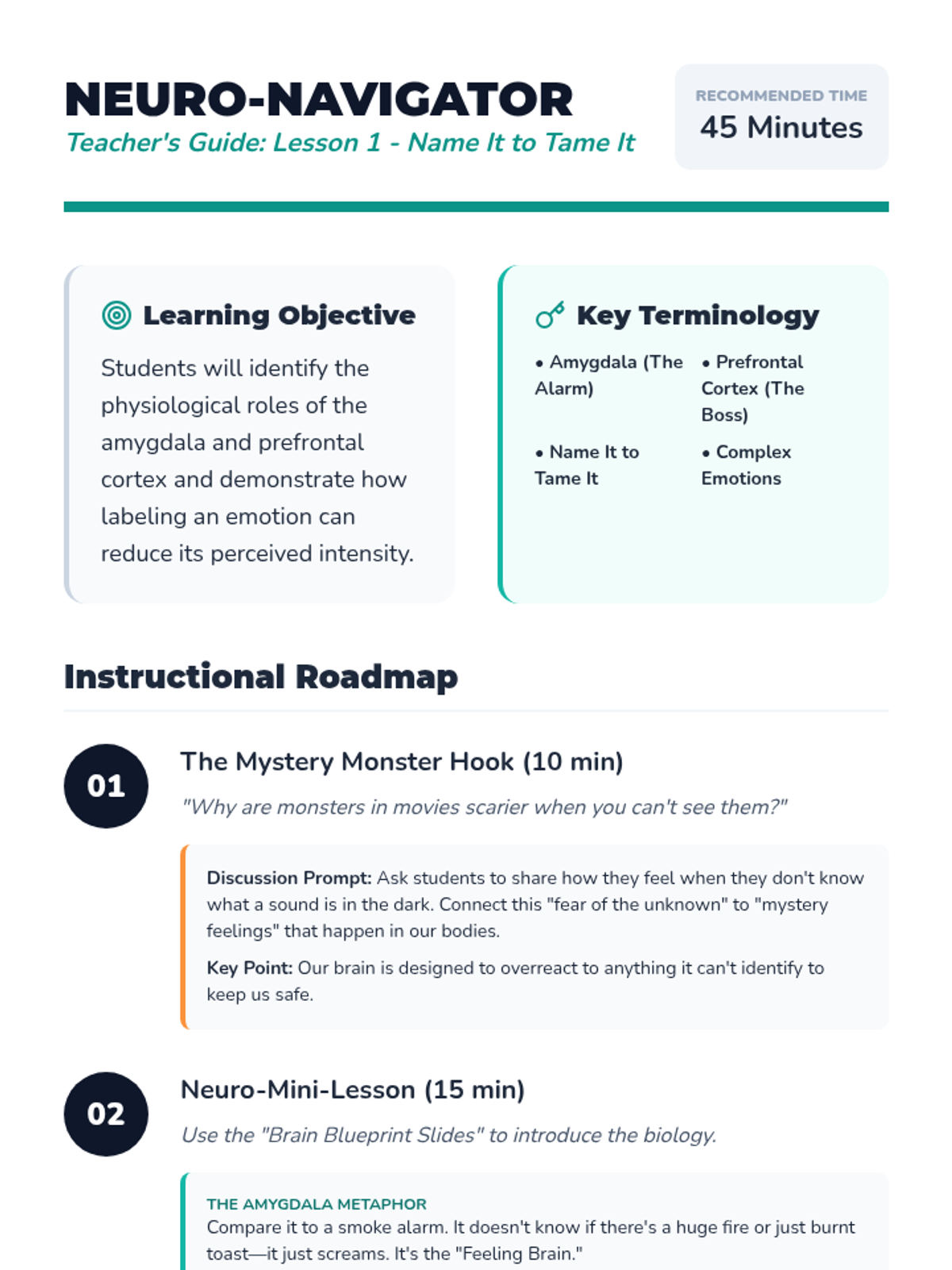
Students explore the neuroscience concept that labeling an emotion reduces its intensity by connecting the amygdala to the prefrontal cortex.
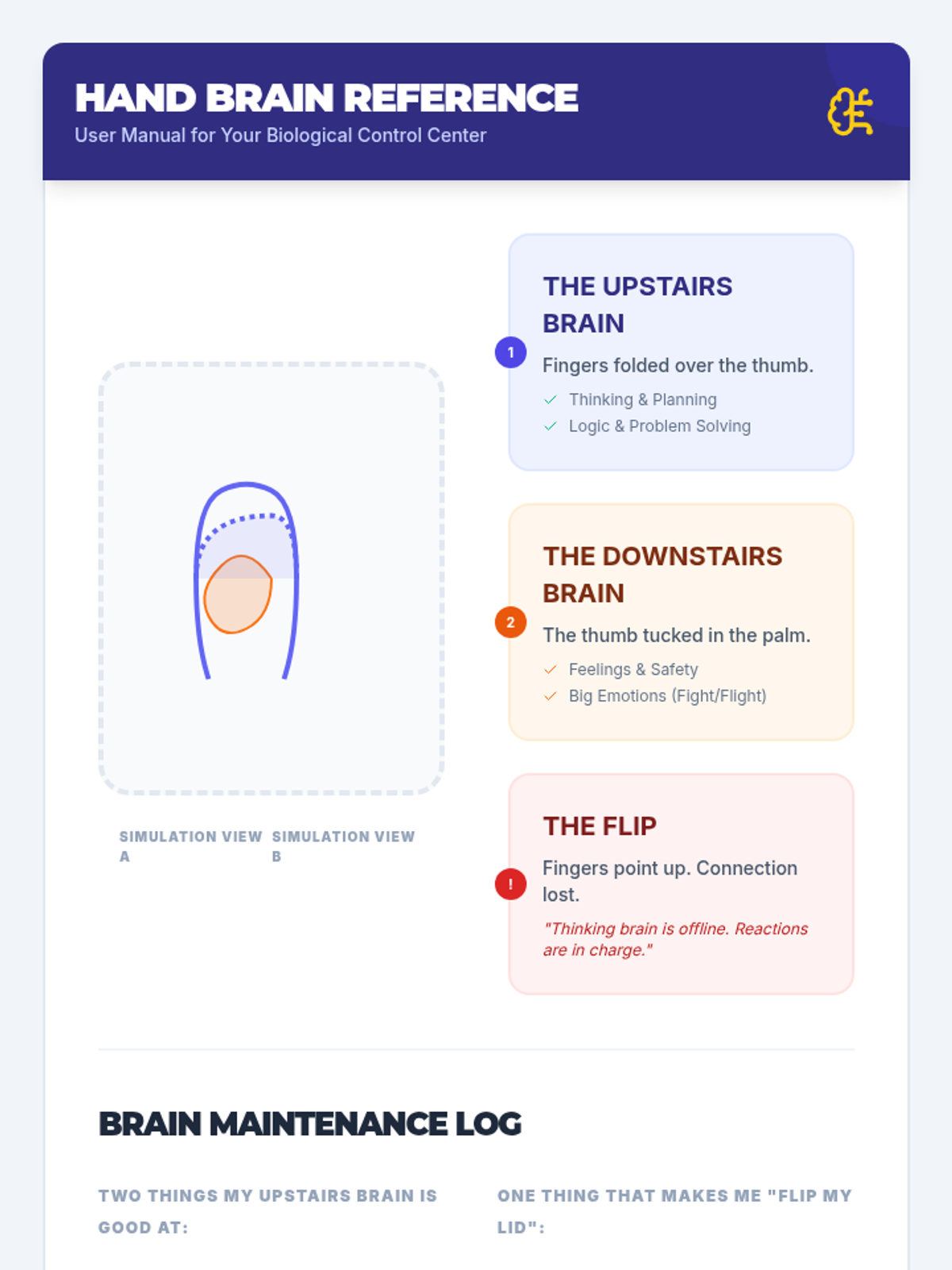
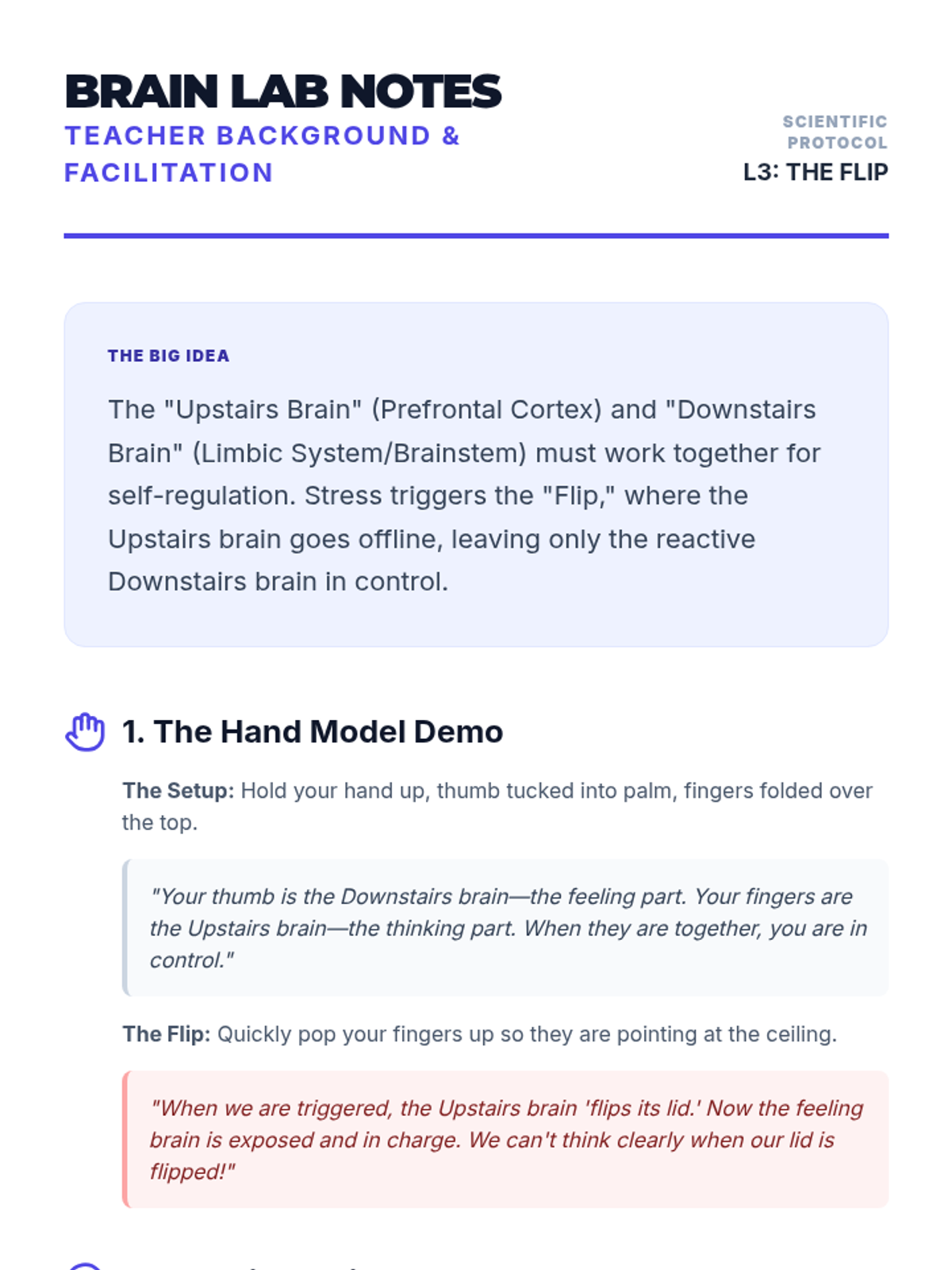
Students learn about the 'upstairs' and 'downstairs' brain to understand the biological basis of emotional dysregulation and the importance of early recognition.
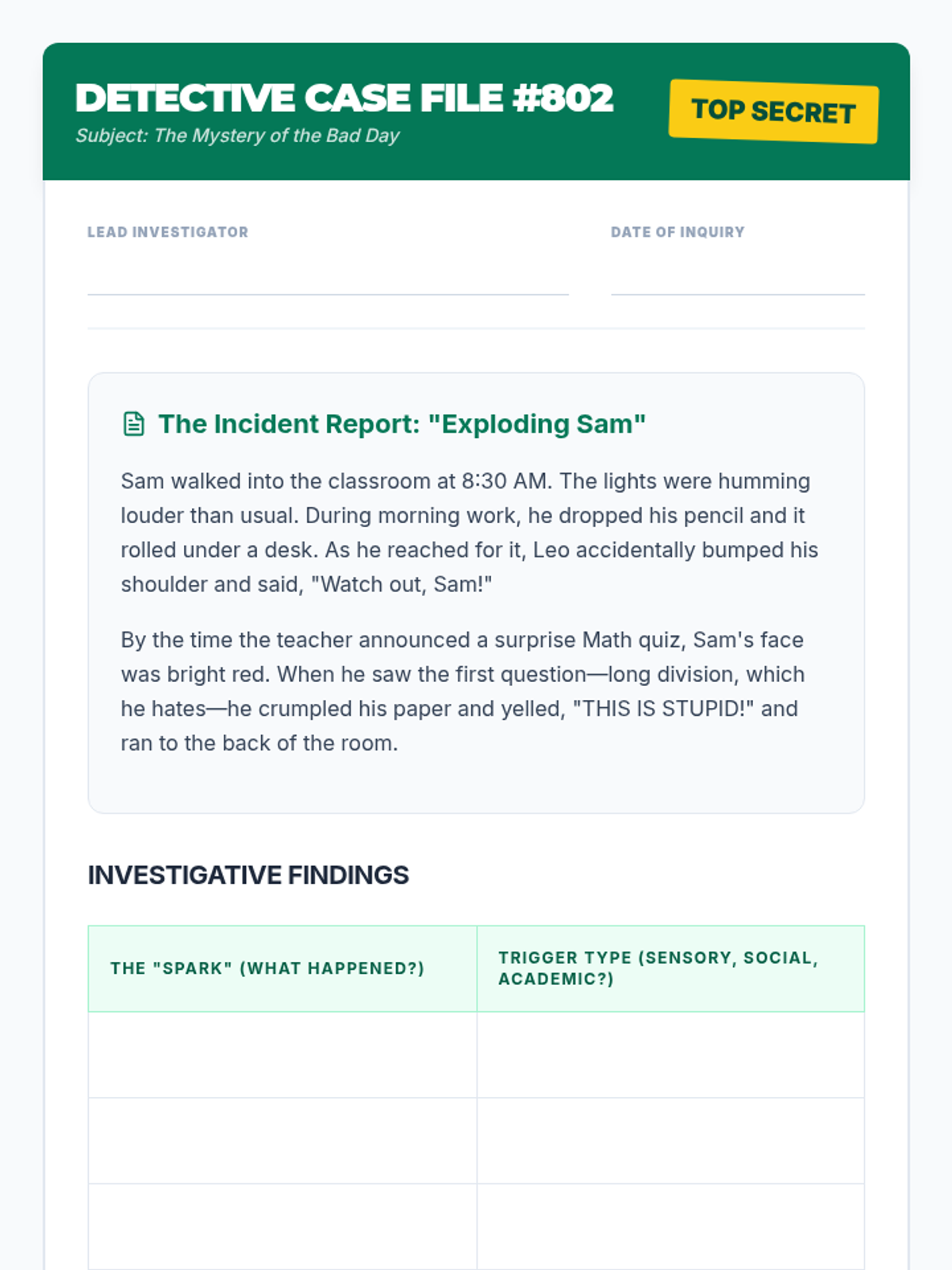
Students investigate external factors that cause stress, categorizing them into sensory, social, or academic triggers while analyzing patterns.
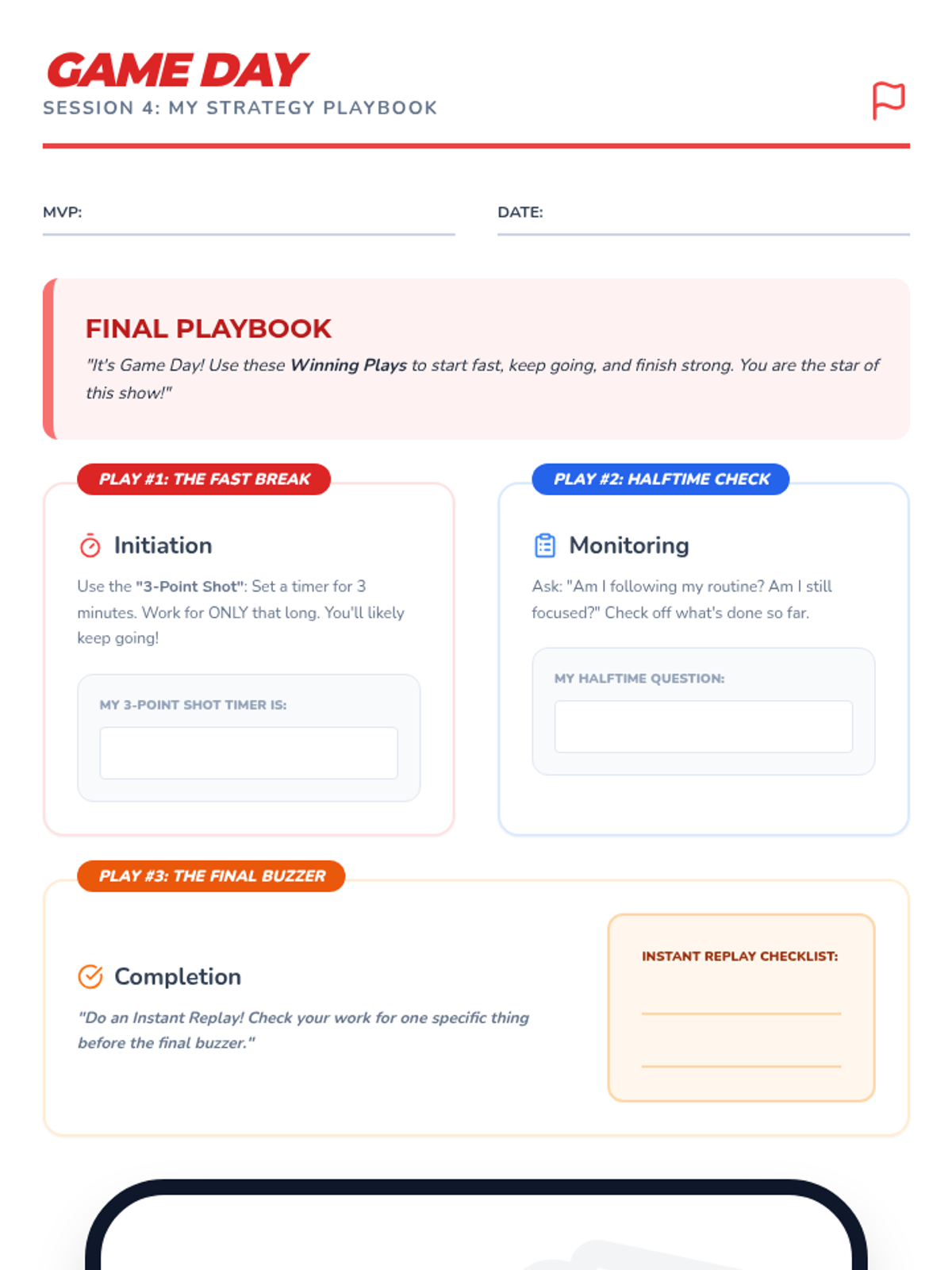
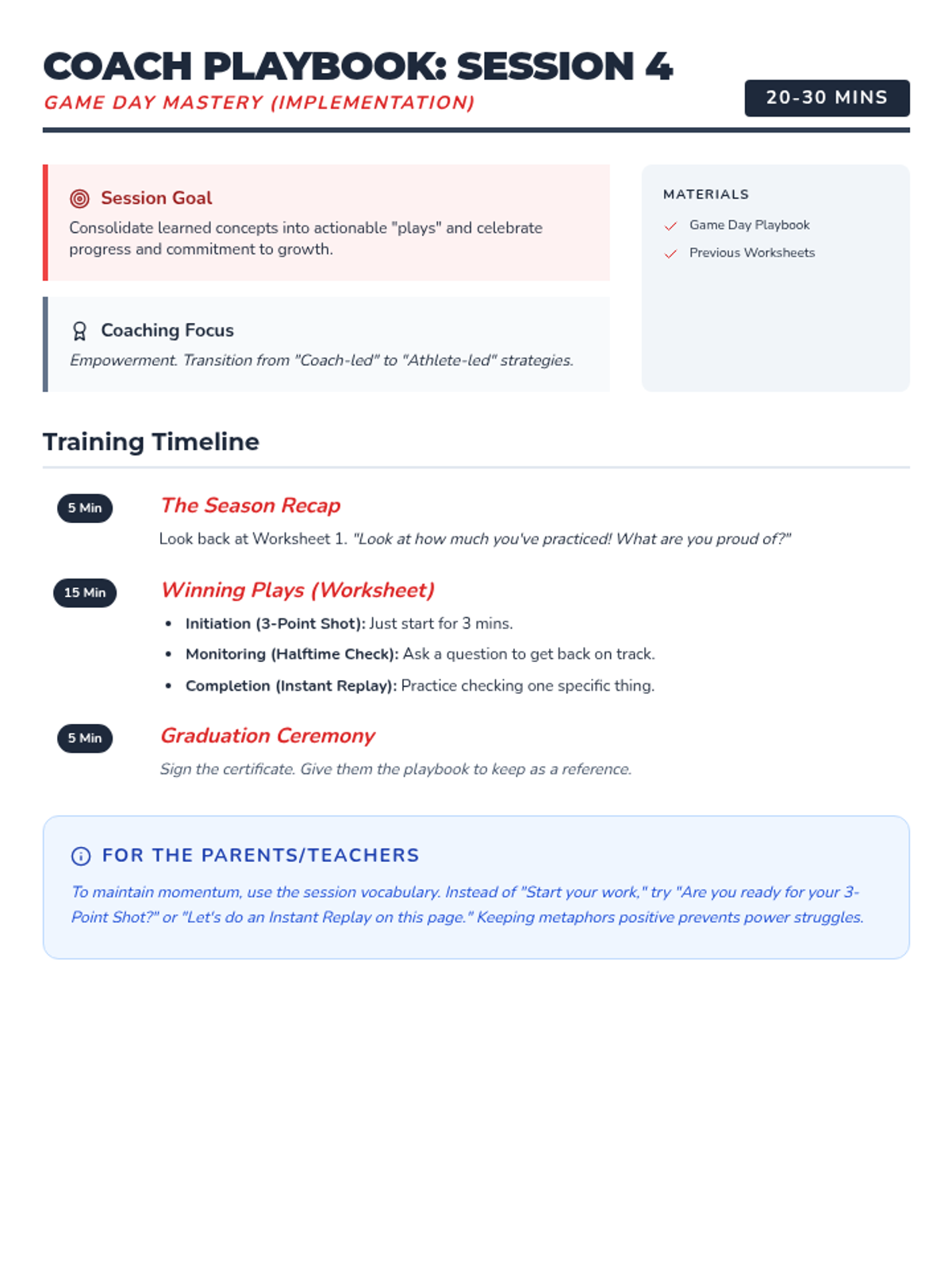
Students learn and practice specific strategies for task initiation, self-monitoring, and independence to finish their 'game' strong.
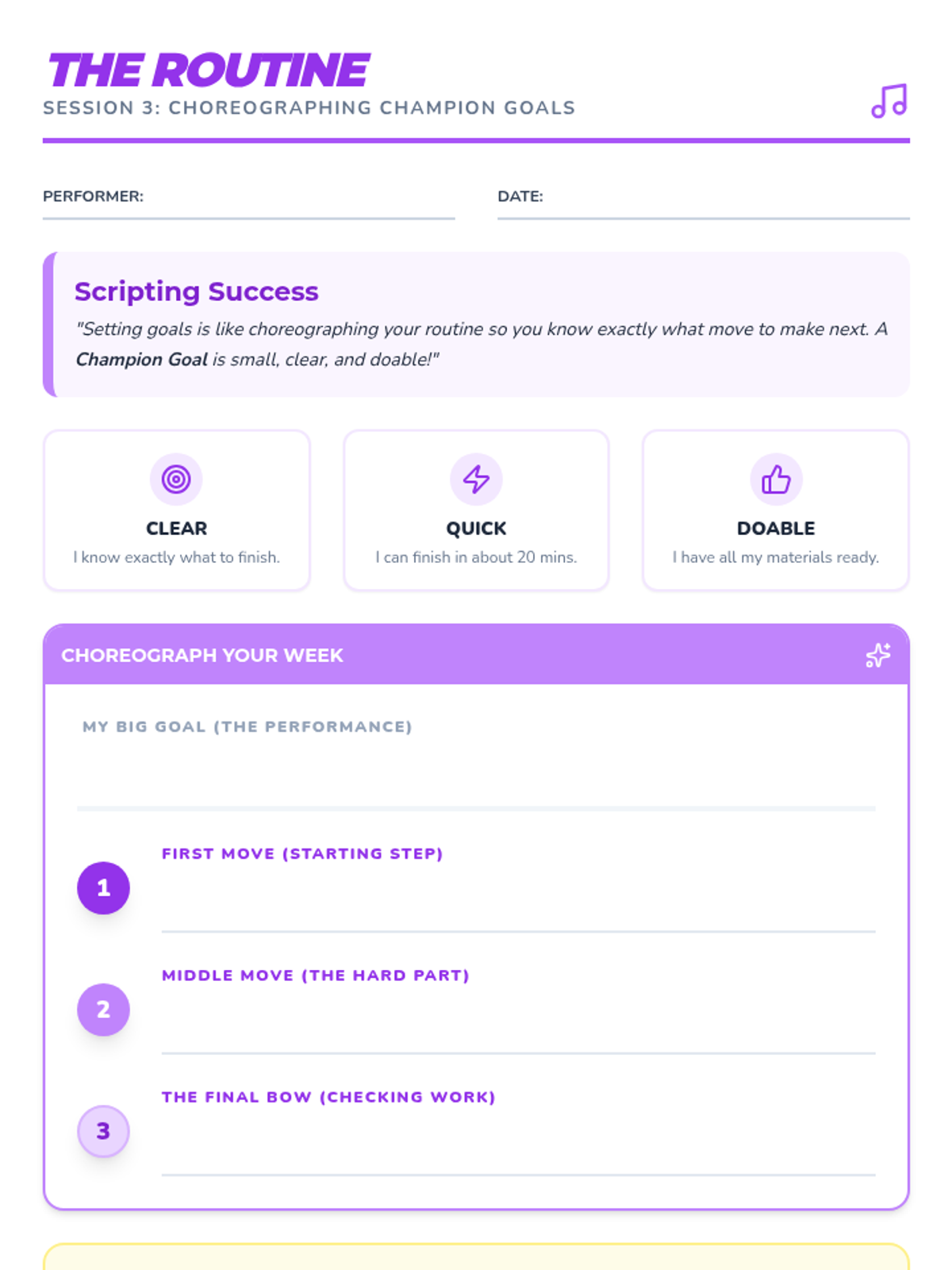
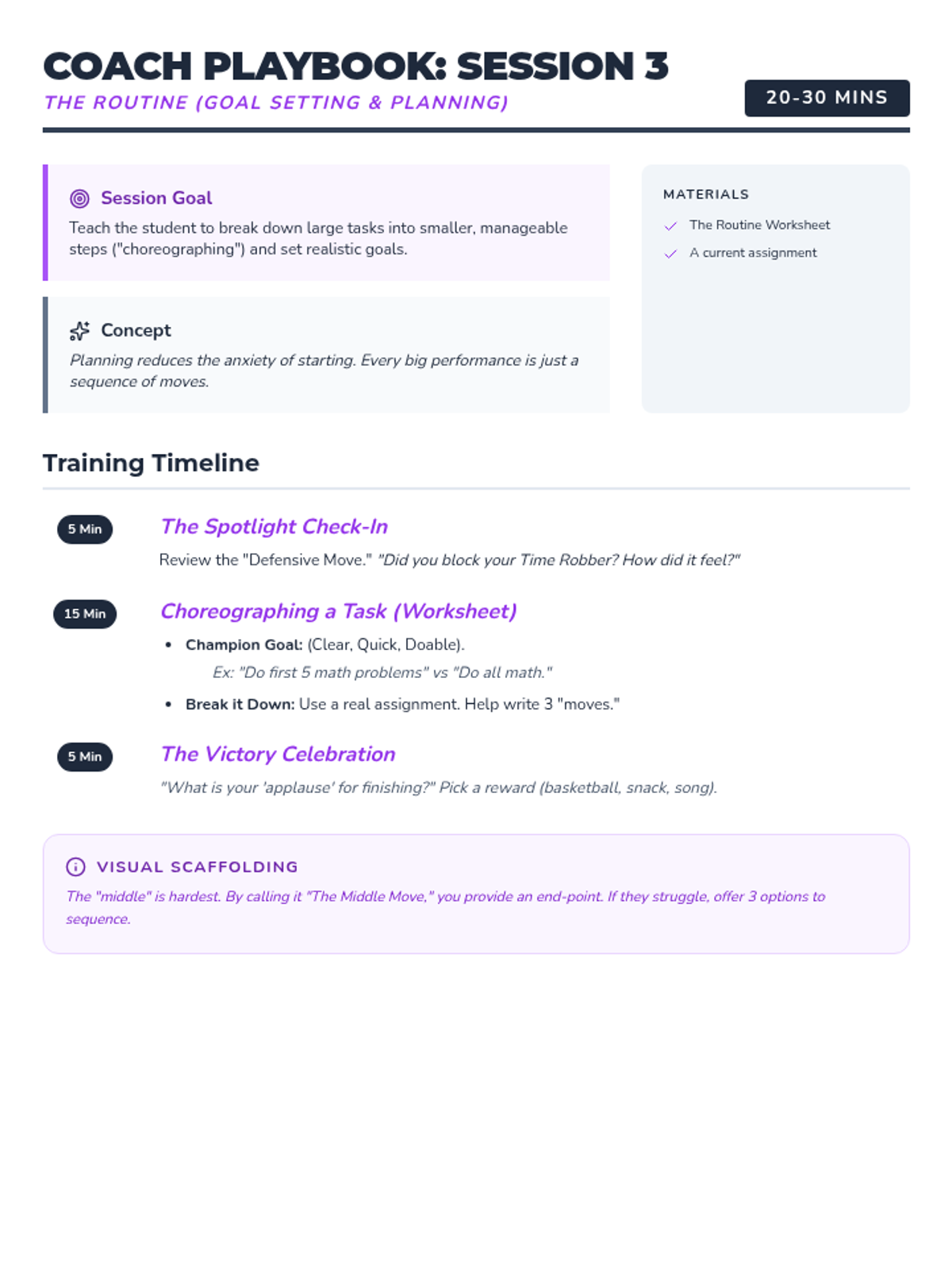
Students learn to choreograph their success by setting specific, manageable goals using dance and theater metaphors.
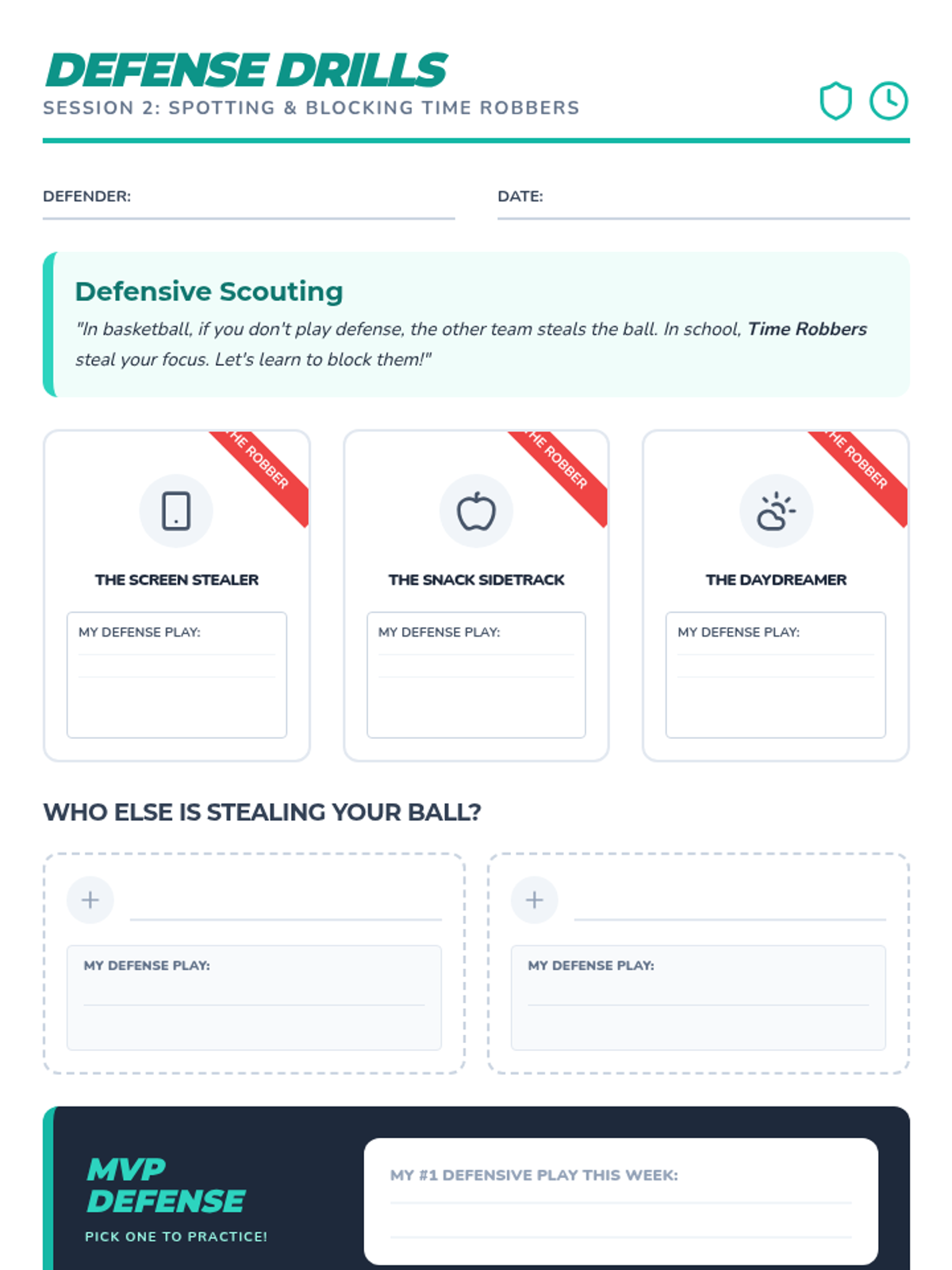
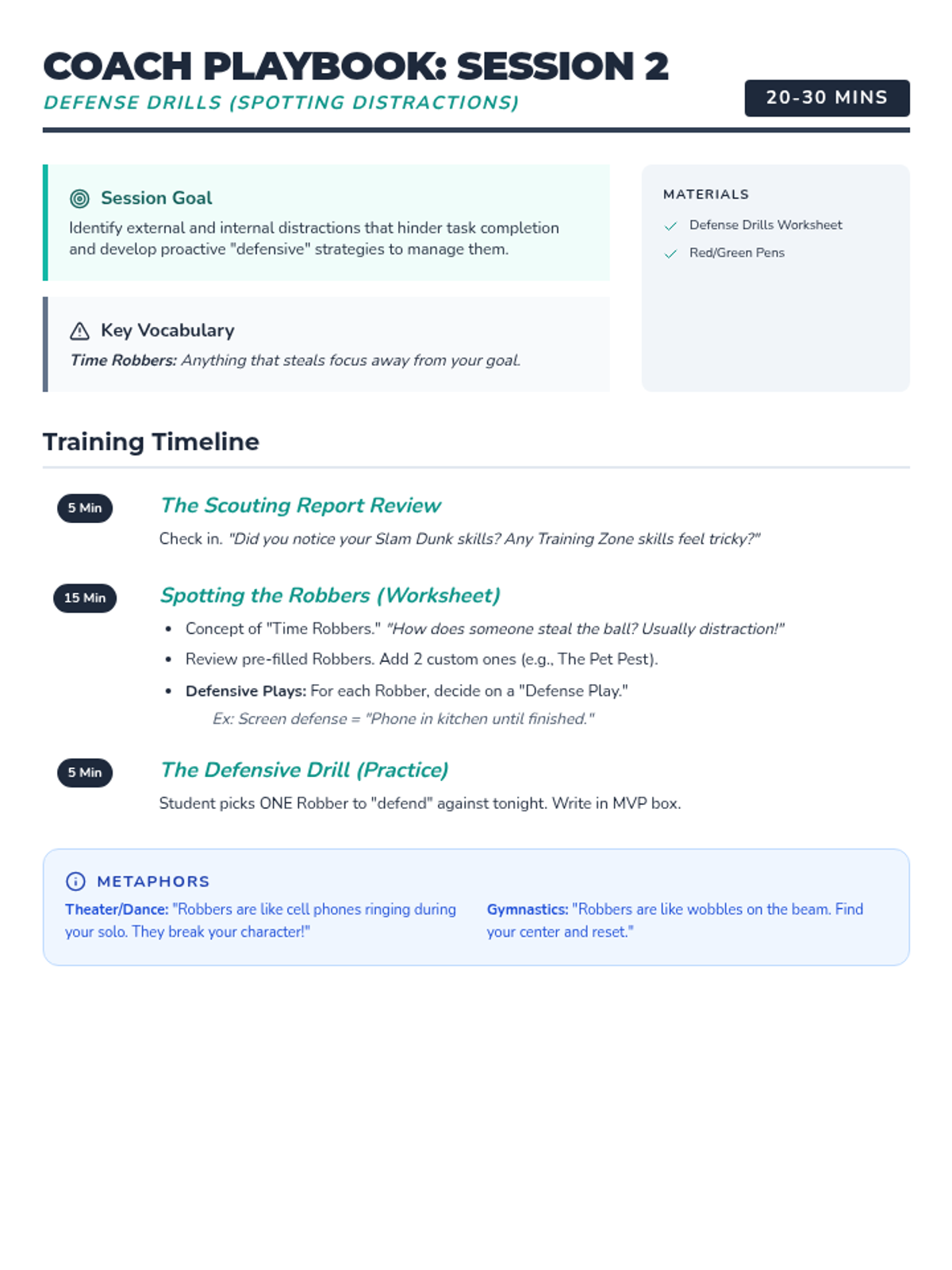
Students identify 'Time Robbers' (distractions) that interfere with work completion and develop defensive strategies to stay on task.
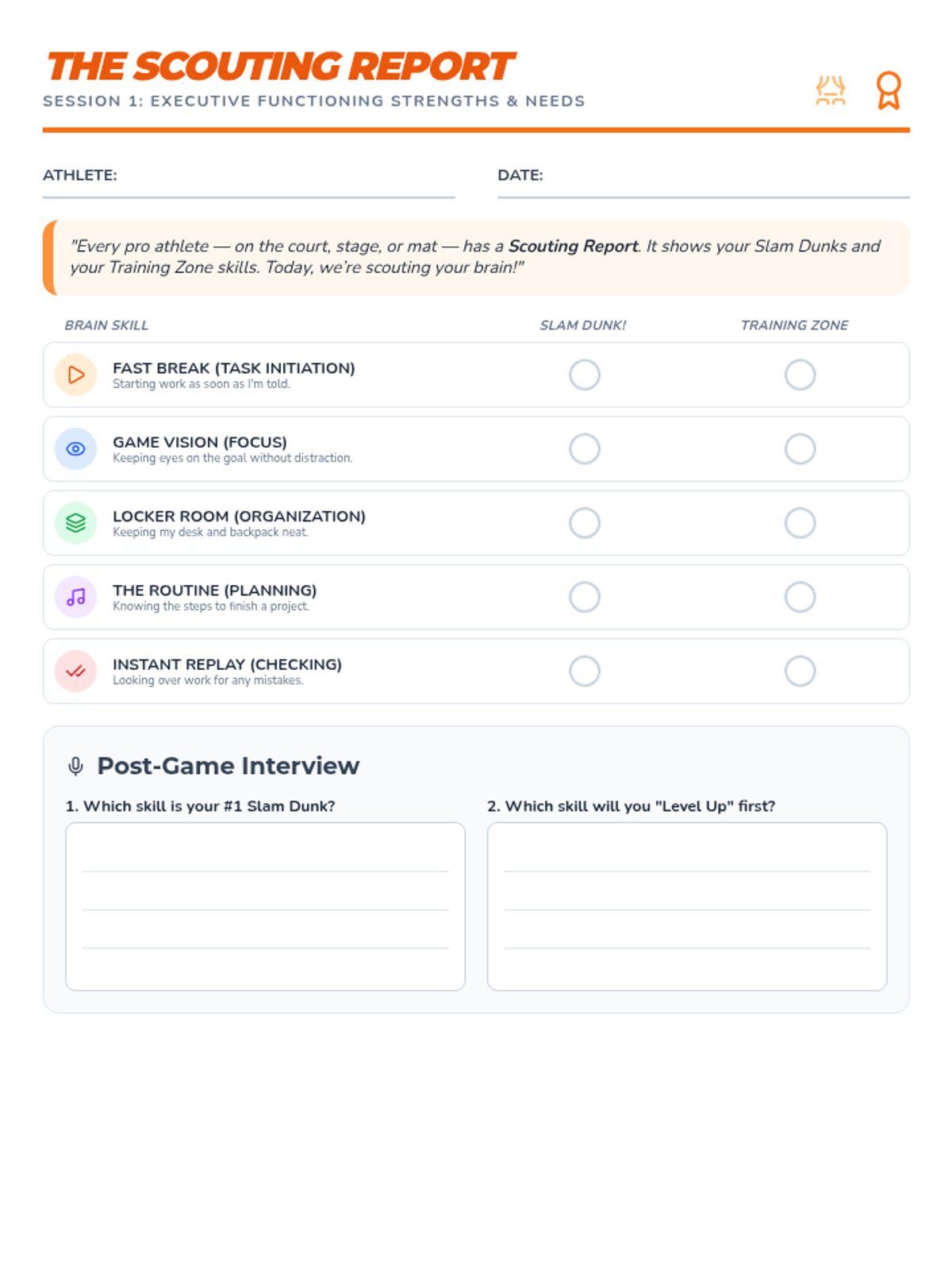
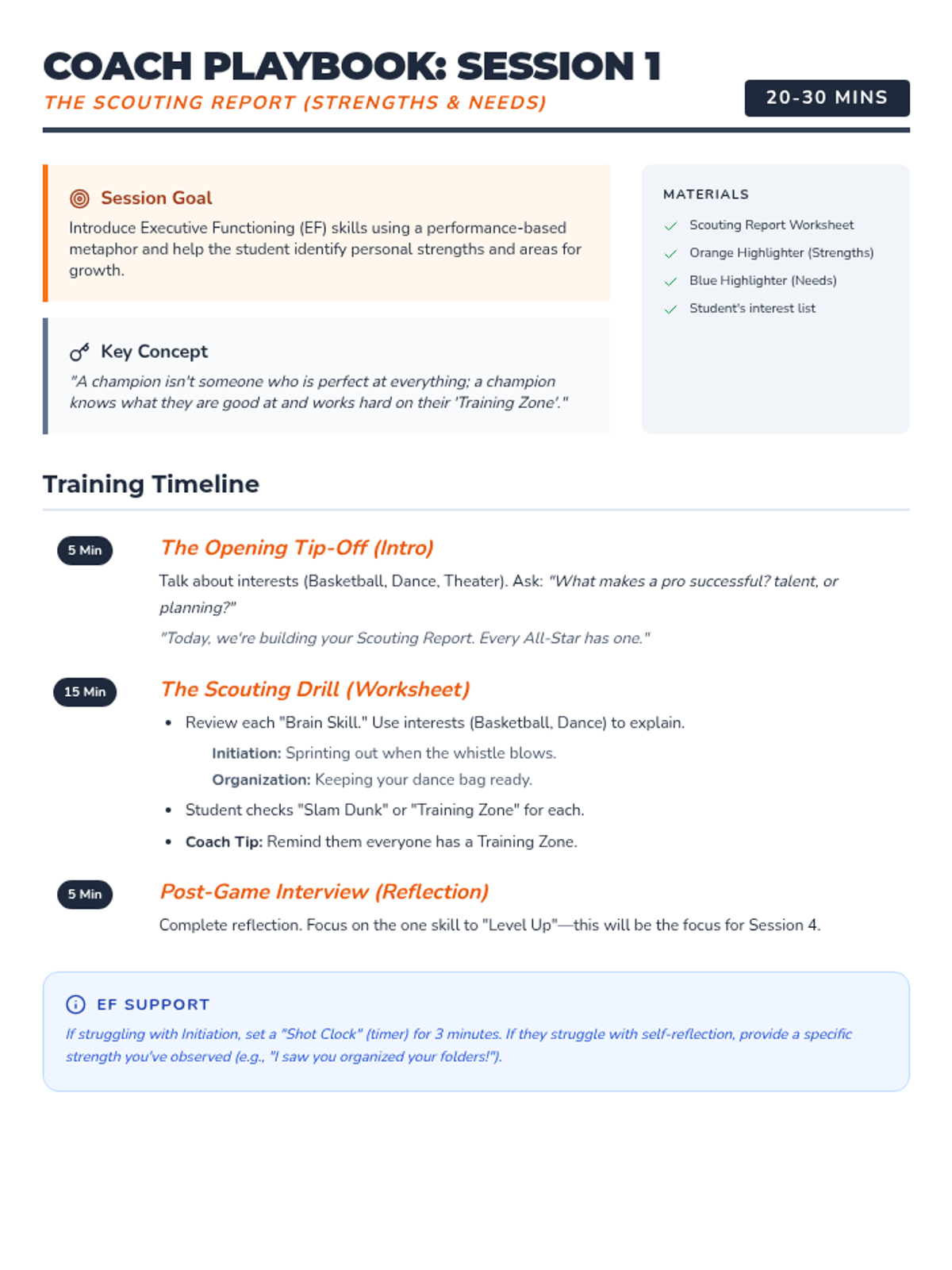
Students identify their executive functioning 'stats' by recognizing their strengths and areas for growth using a 'Scouting Report' metaphor.
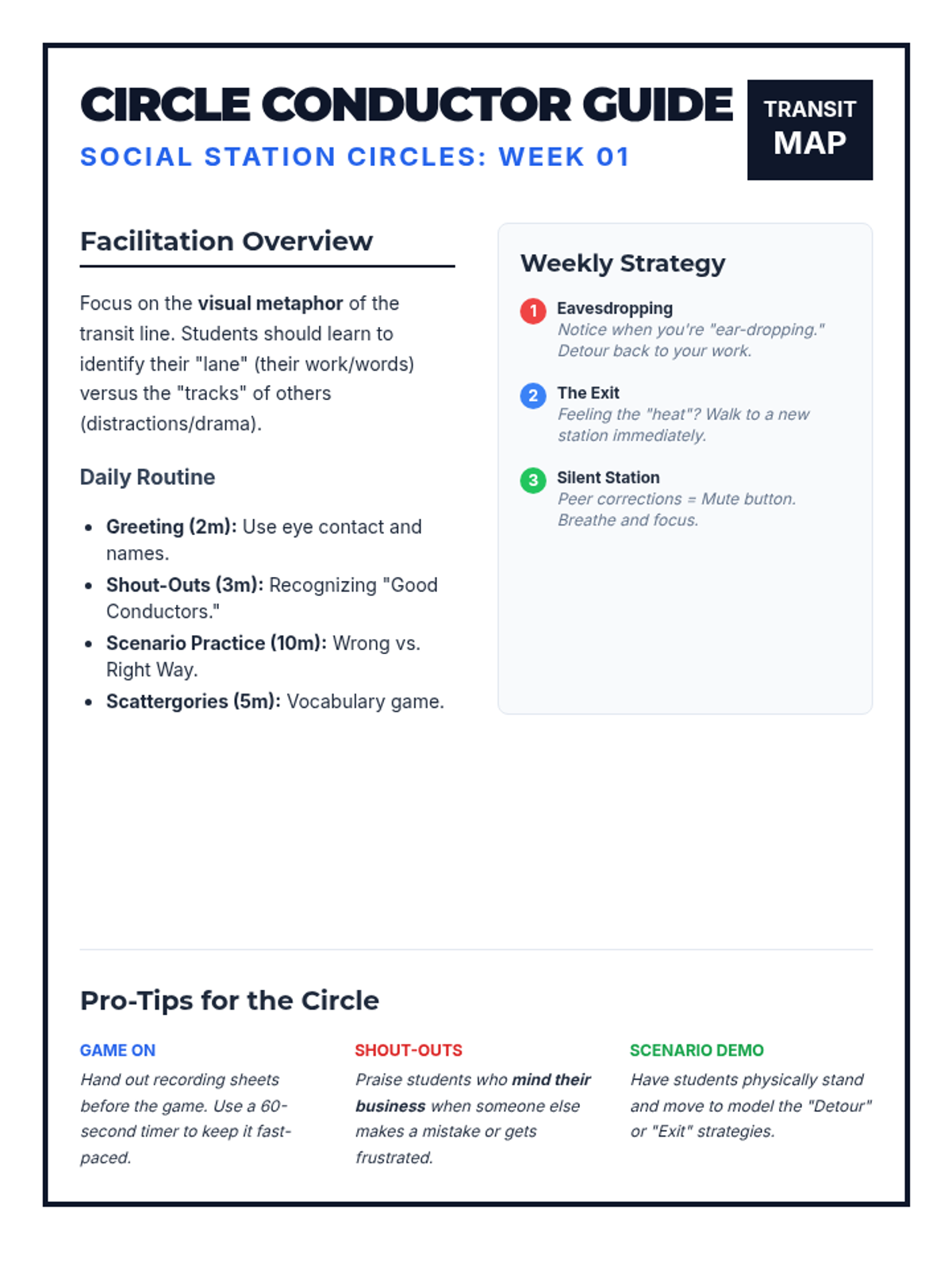
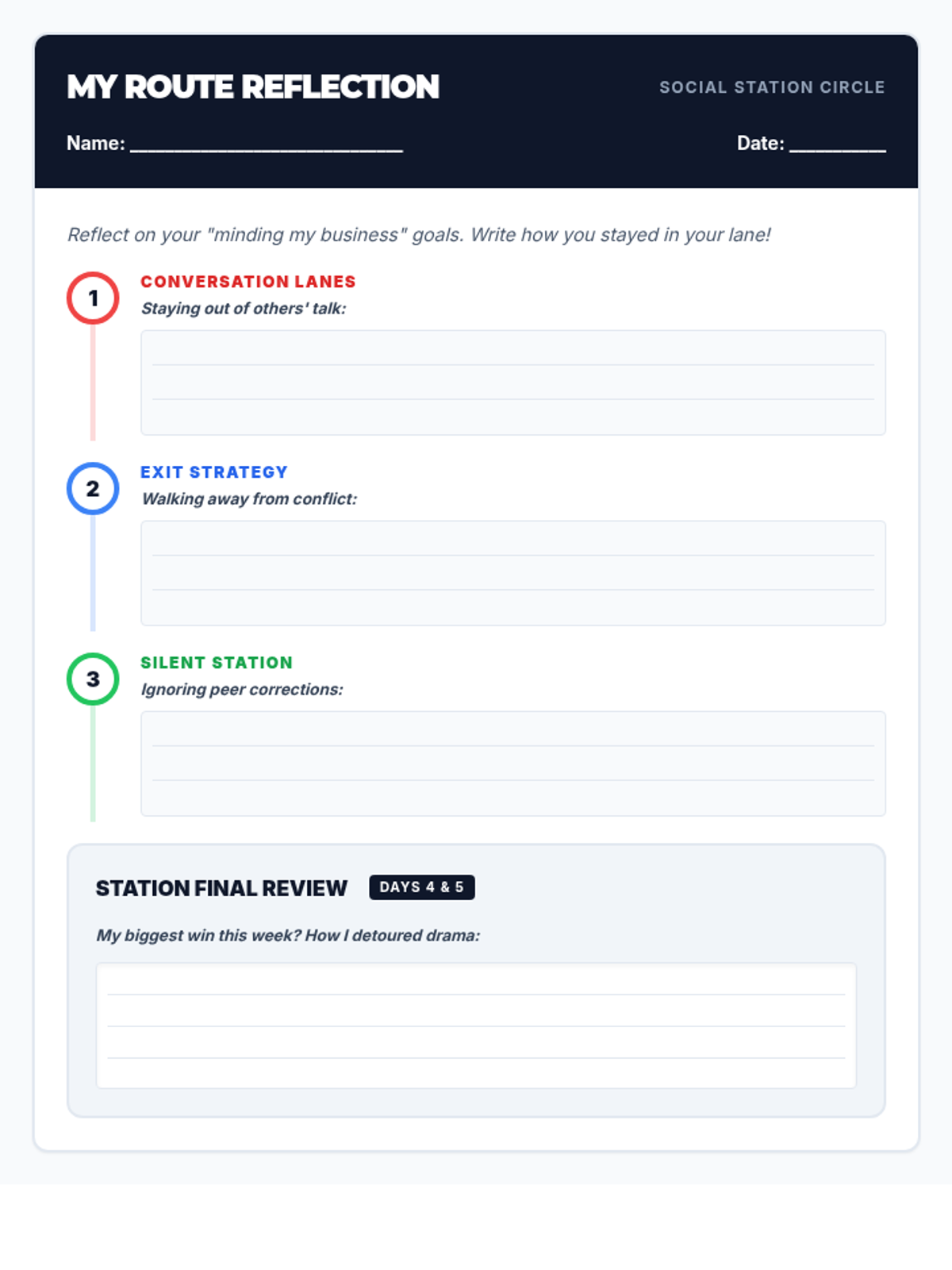
Day 5 covers staying focused and not contributing to classroom distractions.
Day 4 teaches students how to avoid drama and rumors by taking a 'detour'.
Day 3 addresses how to ignore peer corrections and focus on one's own work.
Day 2 focuses on the 'exit strategy' for walking away from rising conflict.
Day 1 focuses on staying out of others' conversations and 'ear-dropping' awareness.
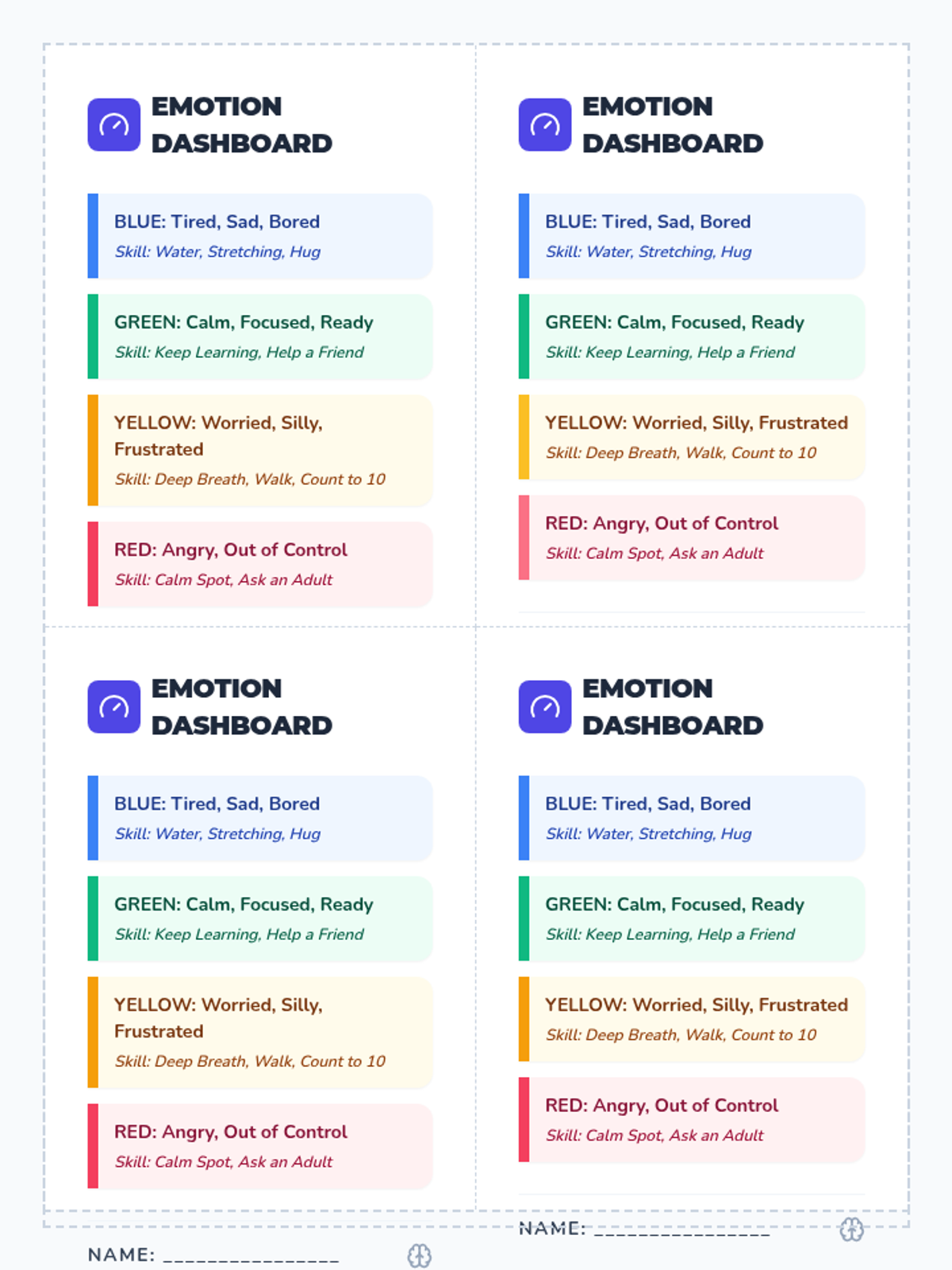
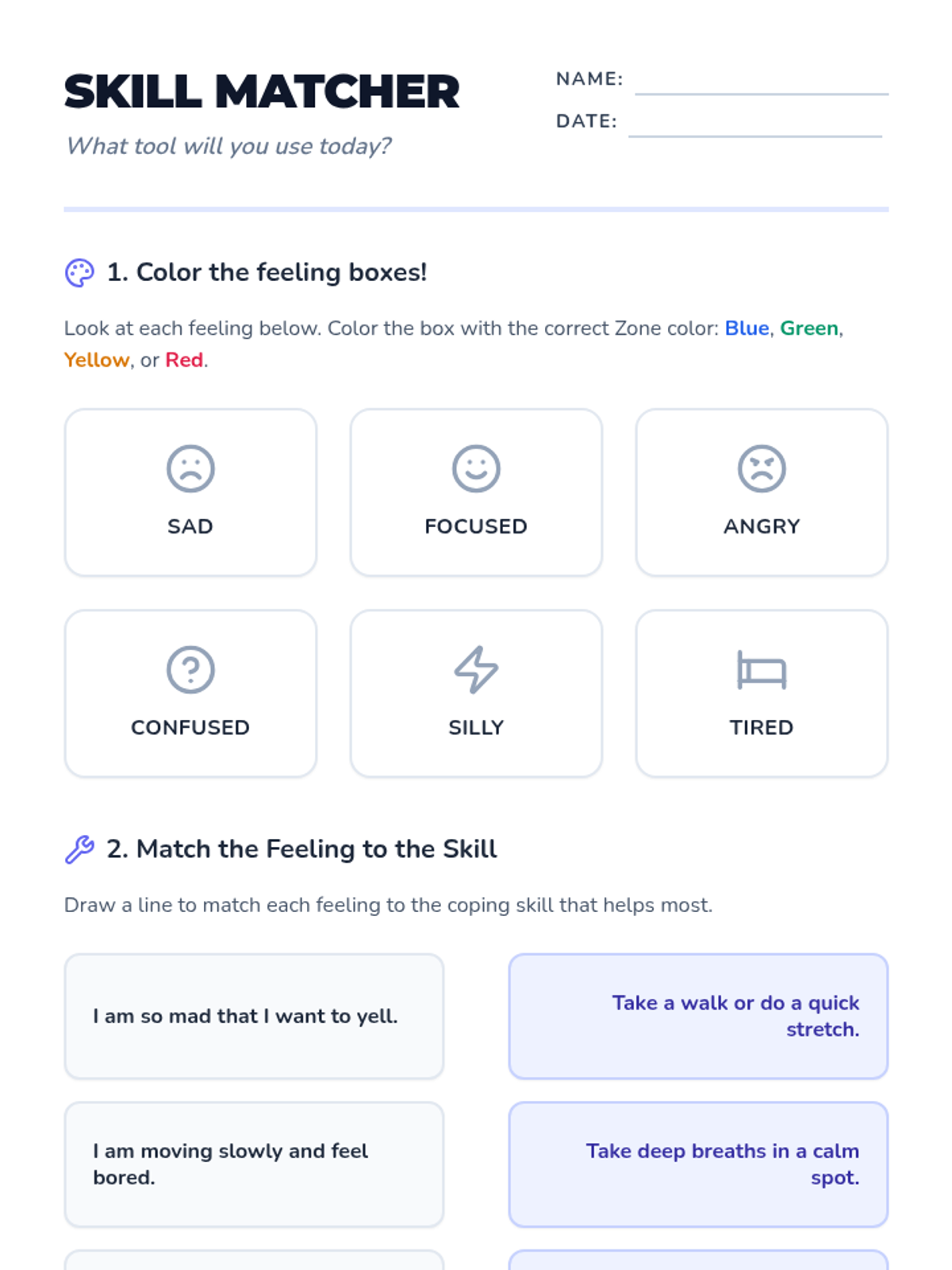
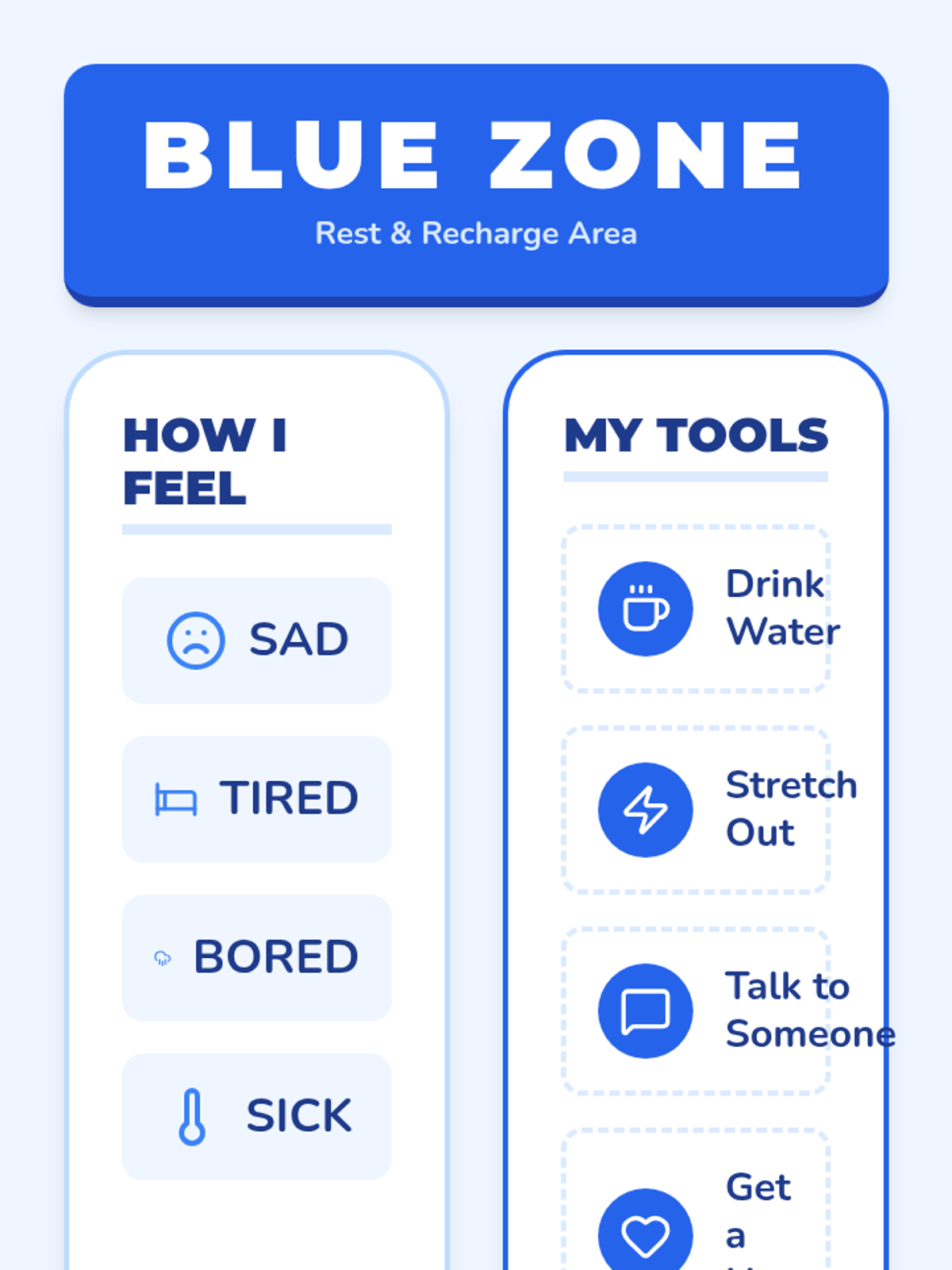
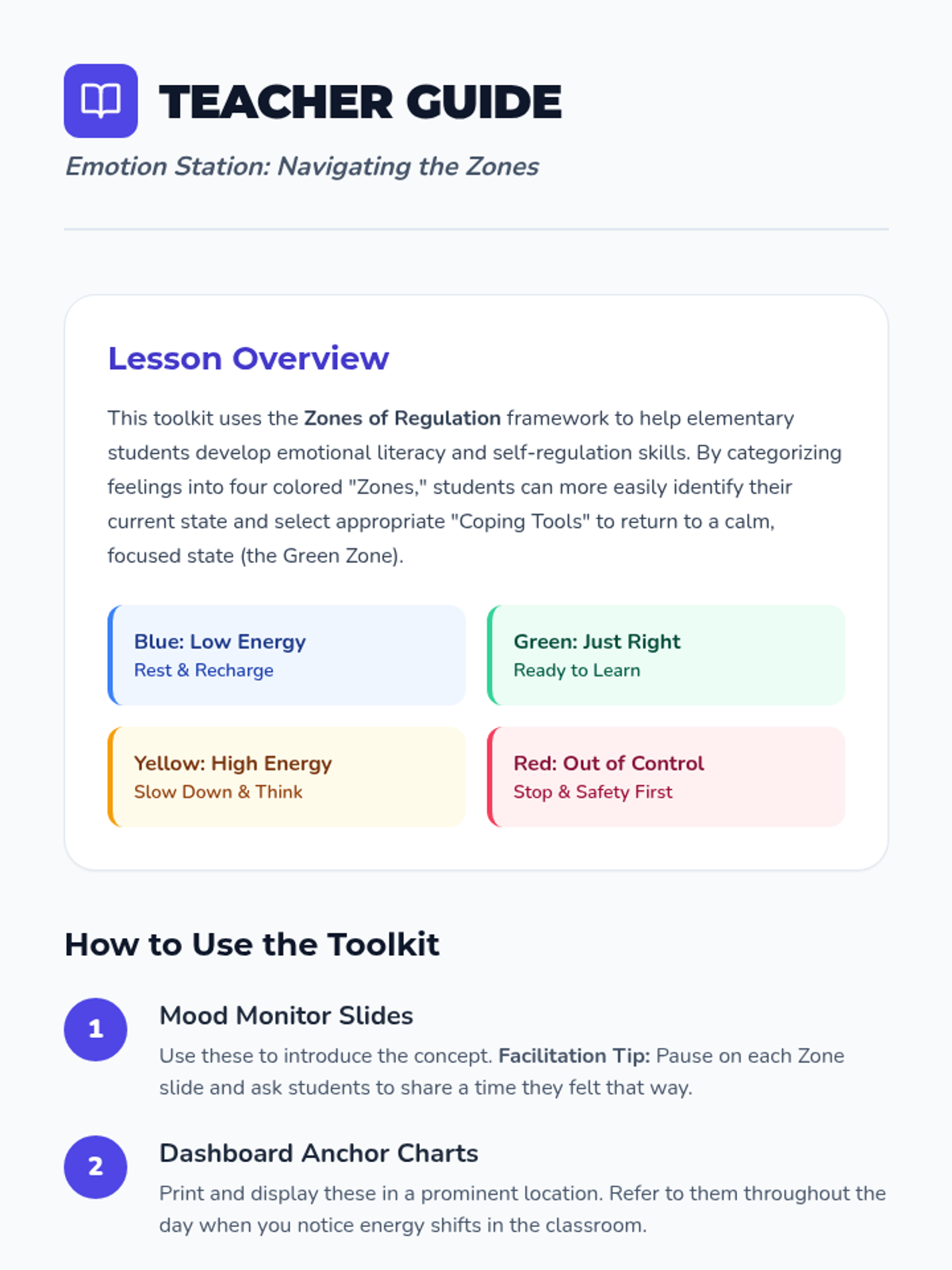
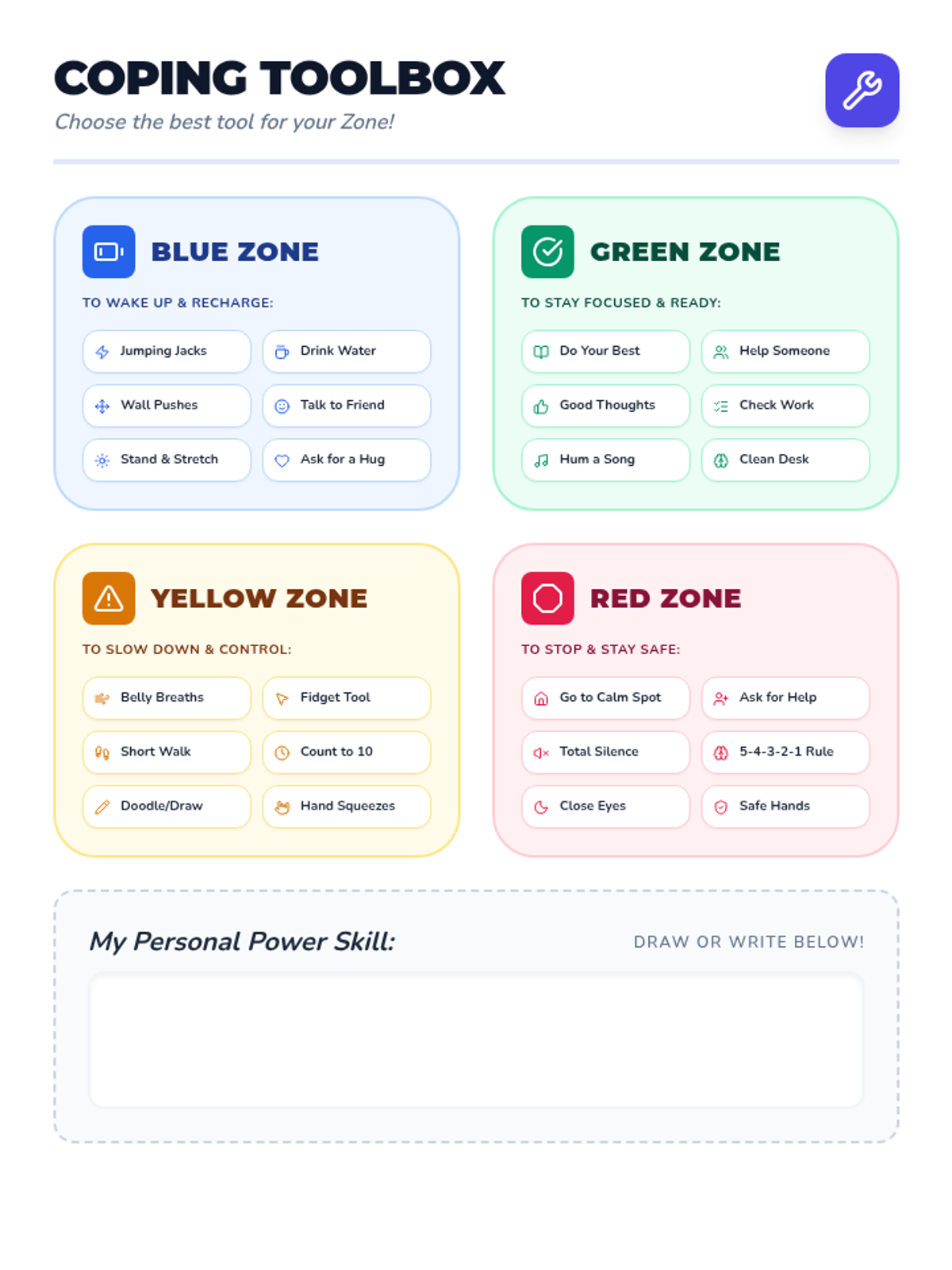
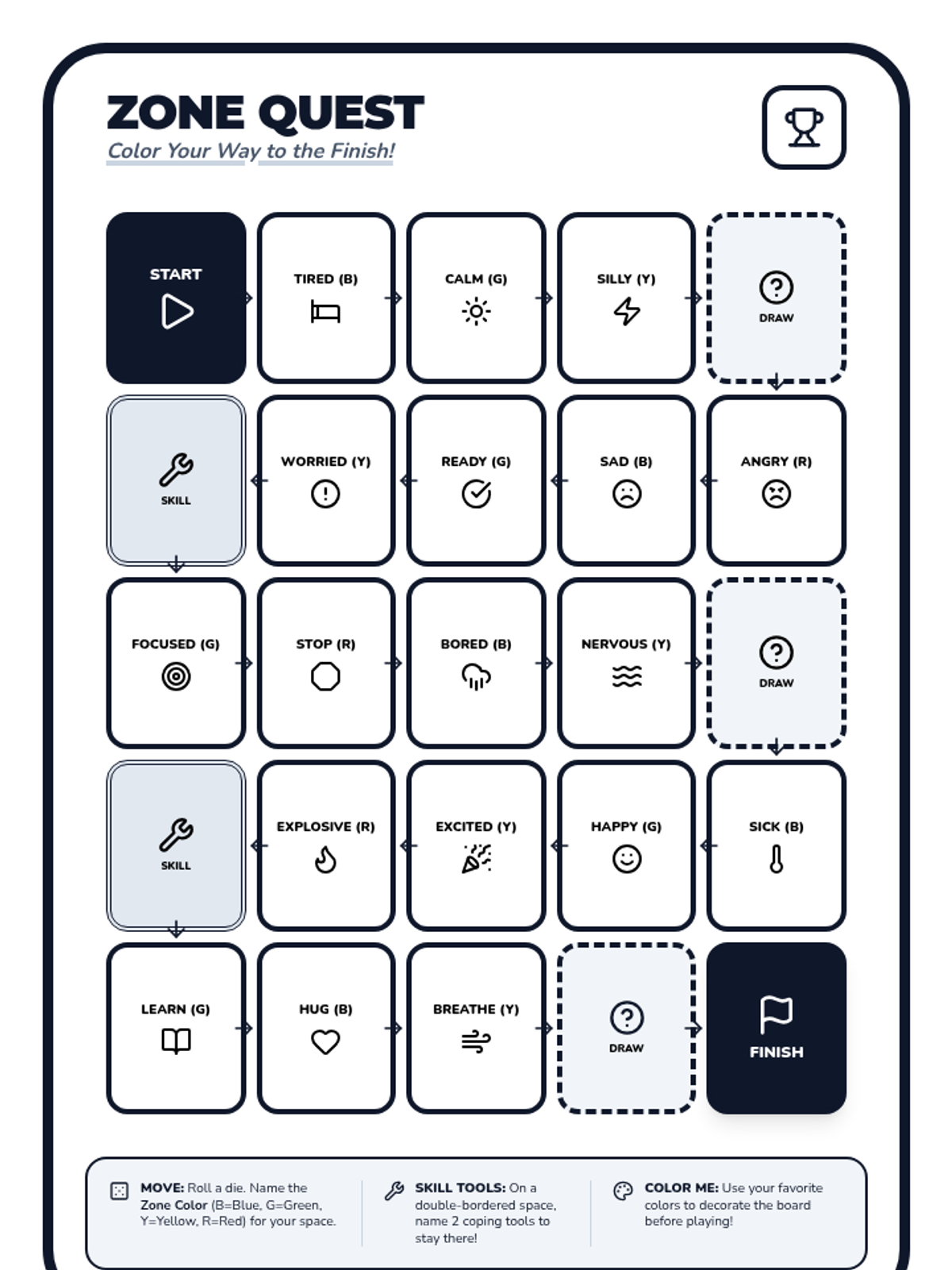
A comprehensive toolkit to help elementary students identify their emotional state using the Zones of Regulation framework and select appropriate coping strategies for each zone.
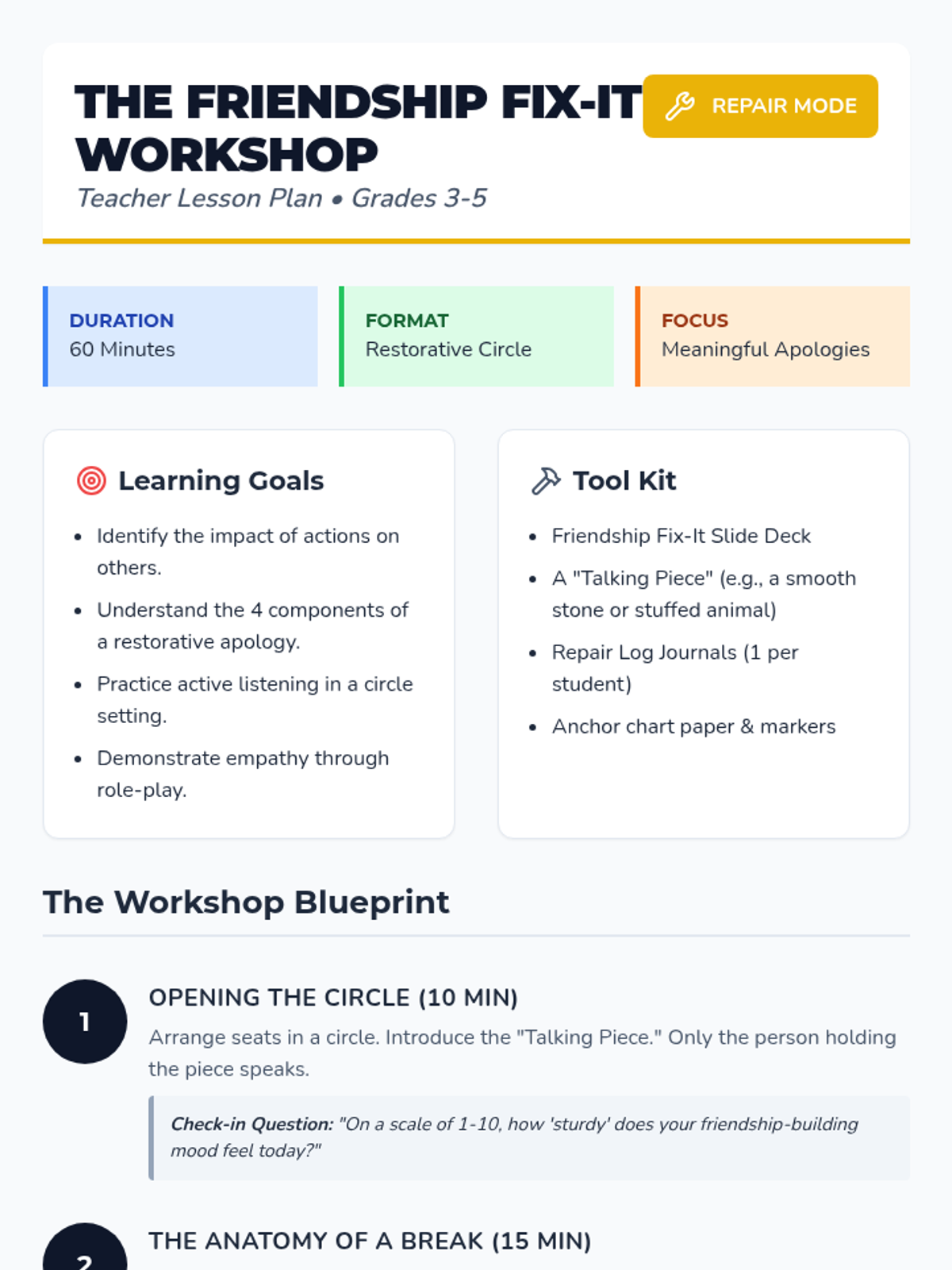
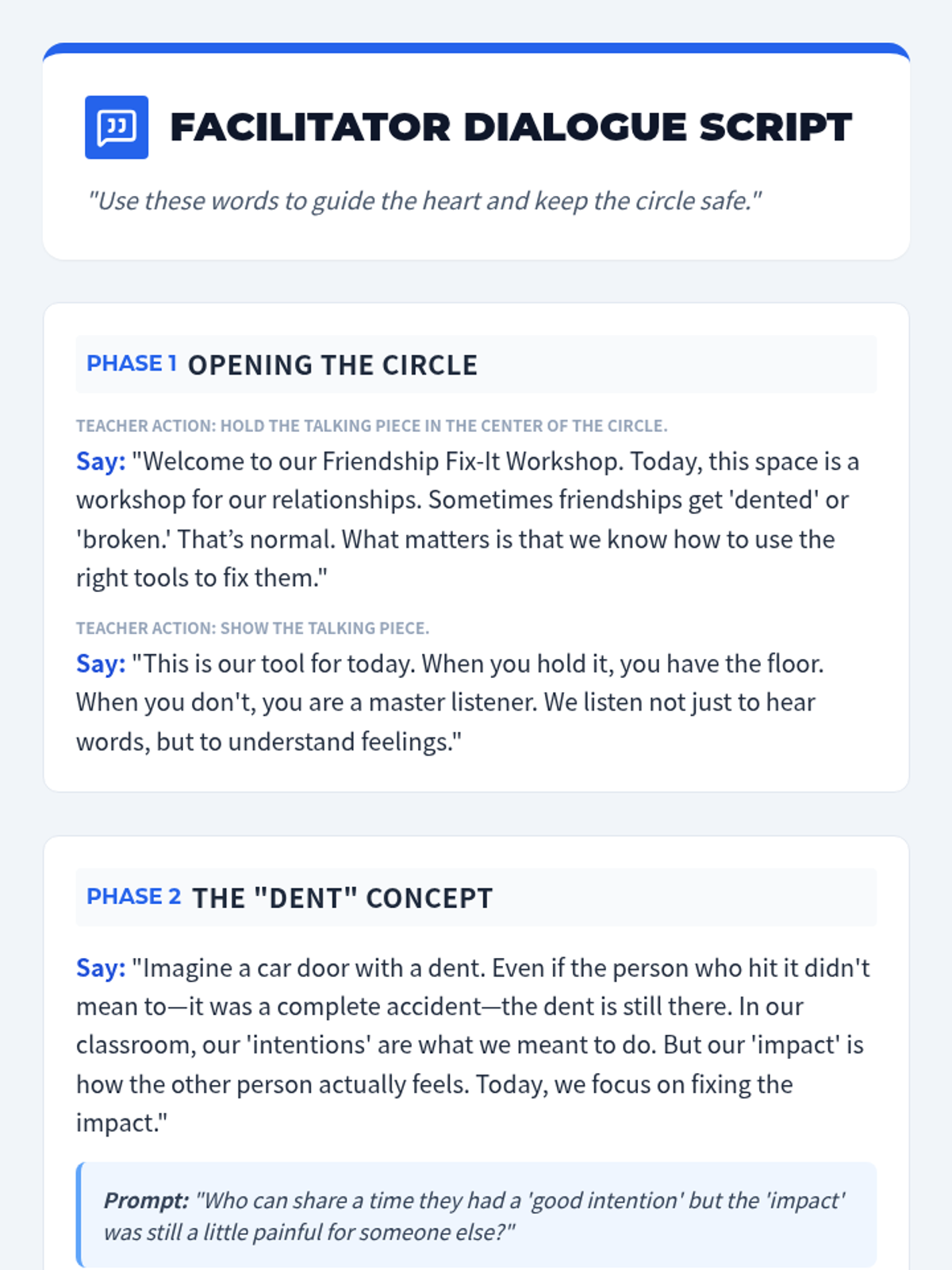
A restorative justice workshop for grades 3-5 focusing on conflict resolution through restorative circles and the art of the 4-part apology. Students learn to 'repair' relationships using practical social-emotional tools.
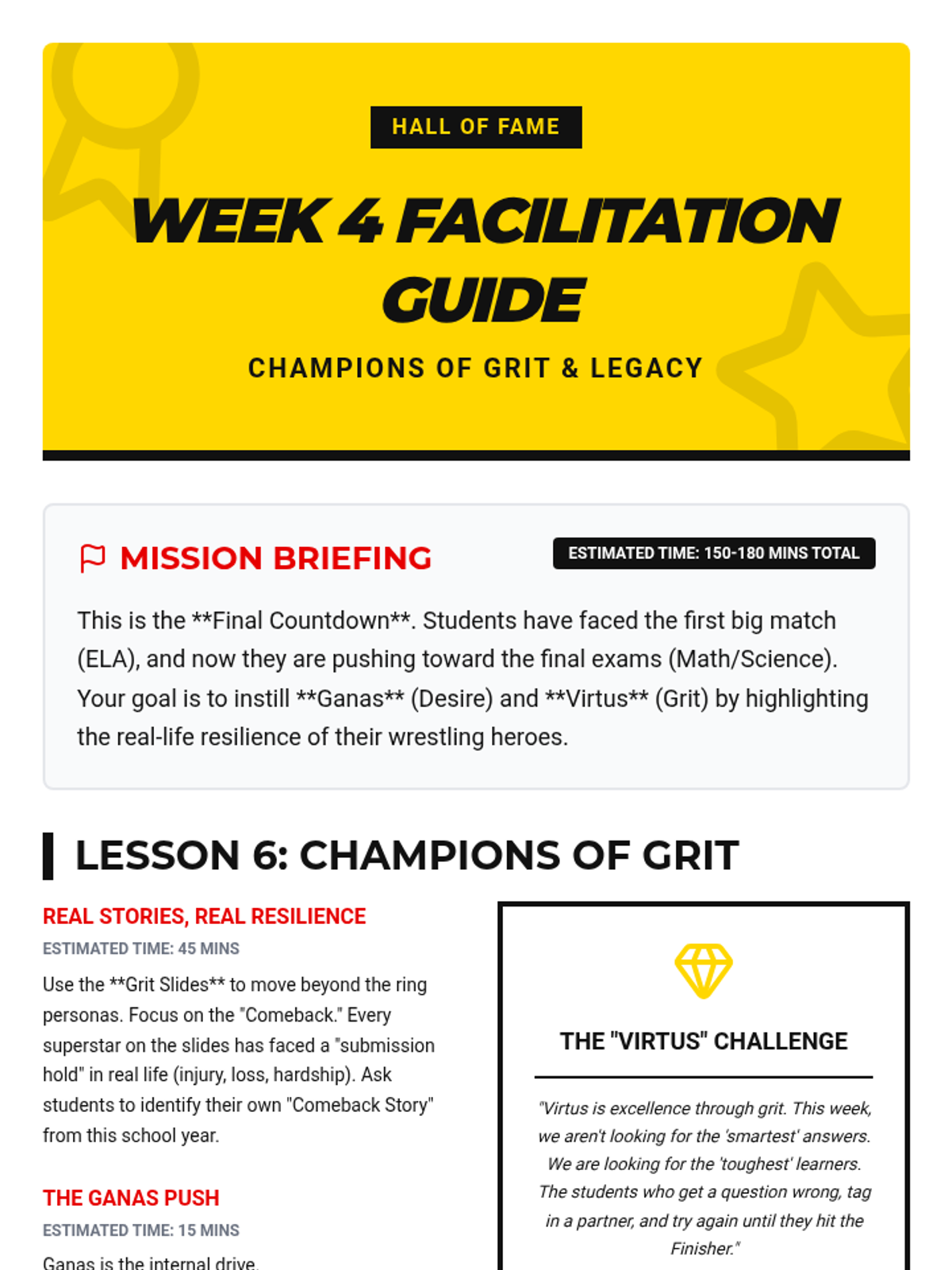
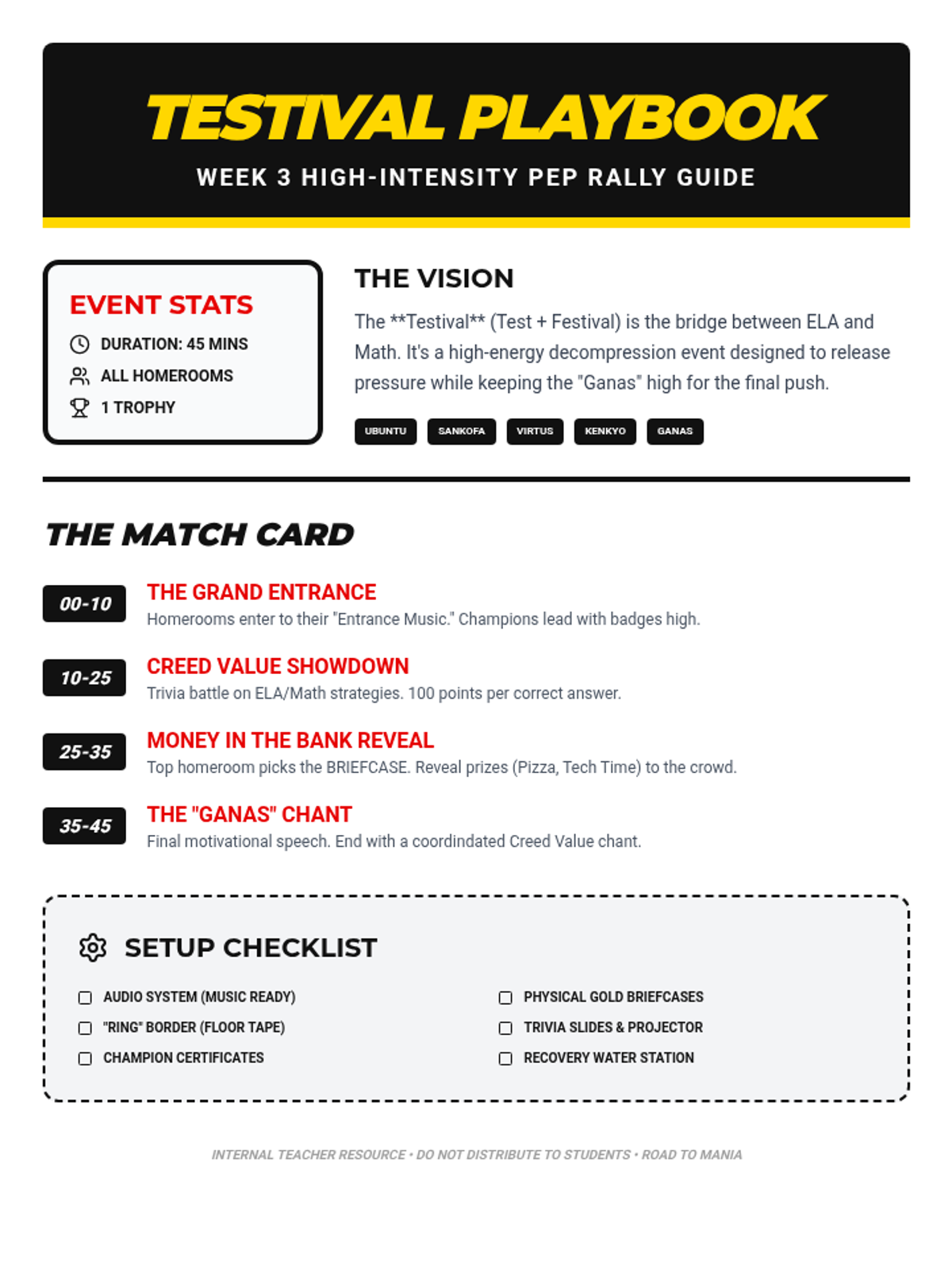
Examining real-life challenges faced by WWE stars to inspire resilience, grit, and the 'Ganas' required for the final push.
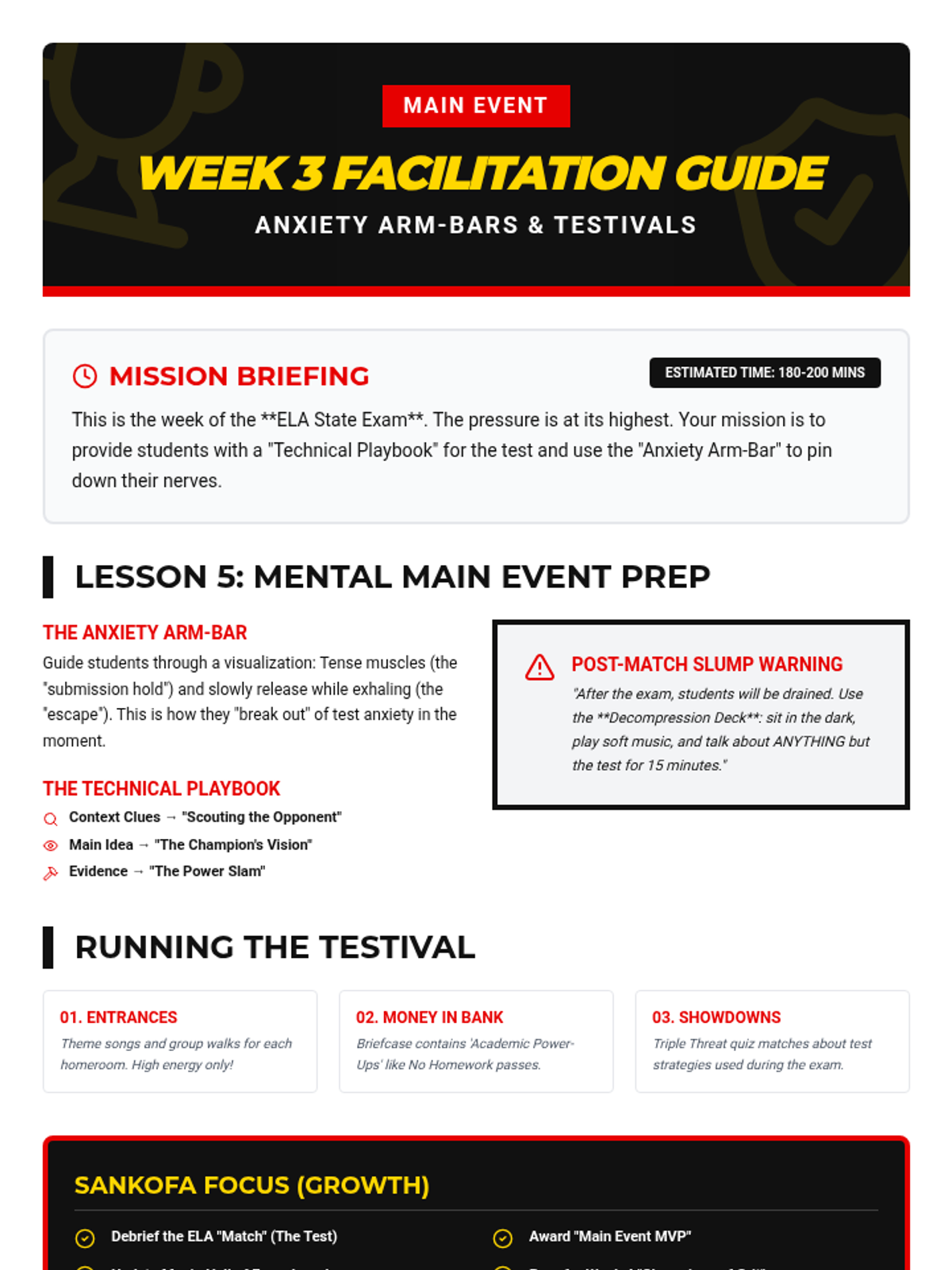
Addressing test anxiety and ELA state exam preparation, including decompression strategies to stay 'main event' ready.
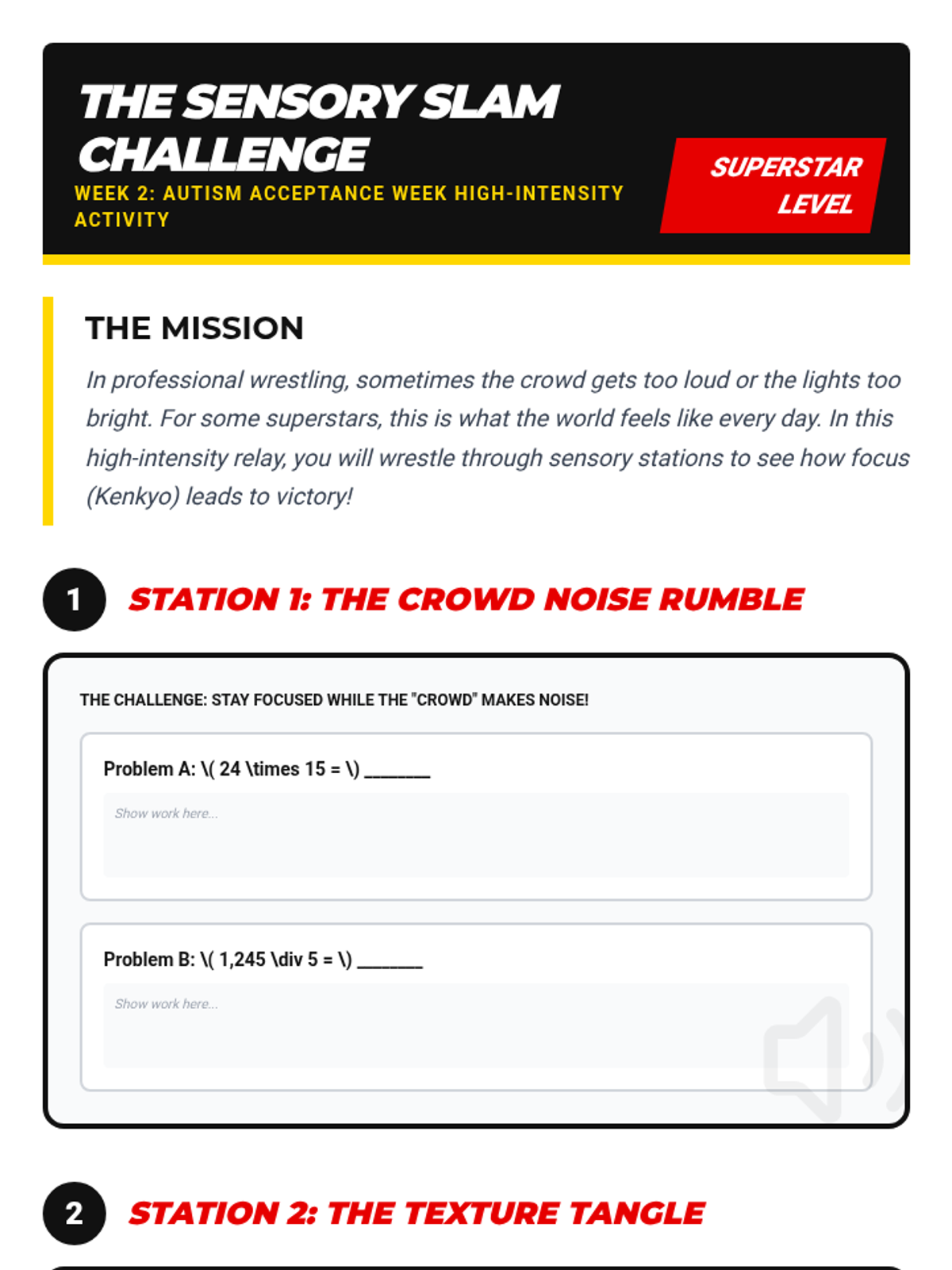
A high-energy activity focusing on inclusivity and celebrating different ways of thinking and 'wrestling' with challenges.
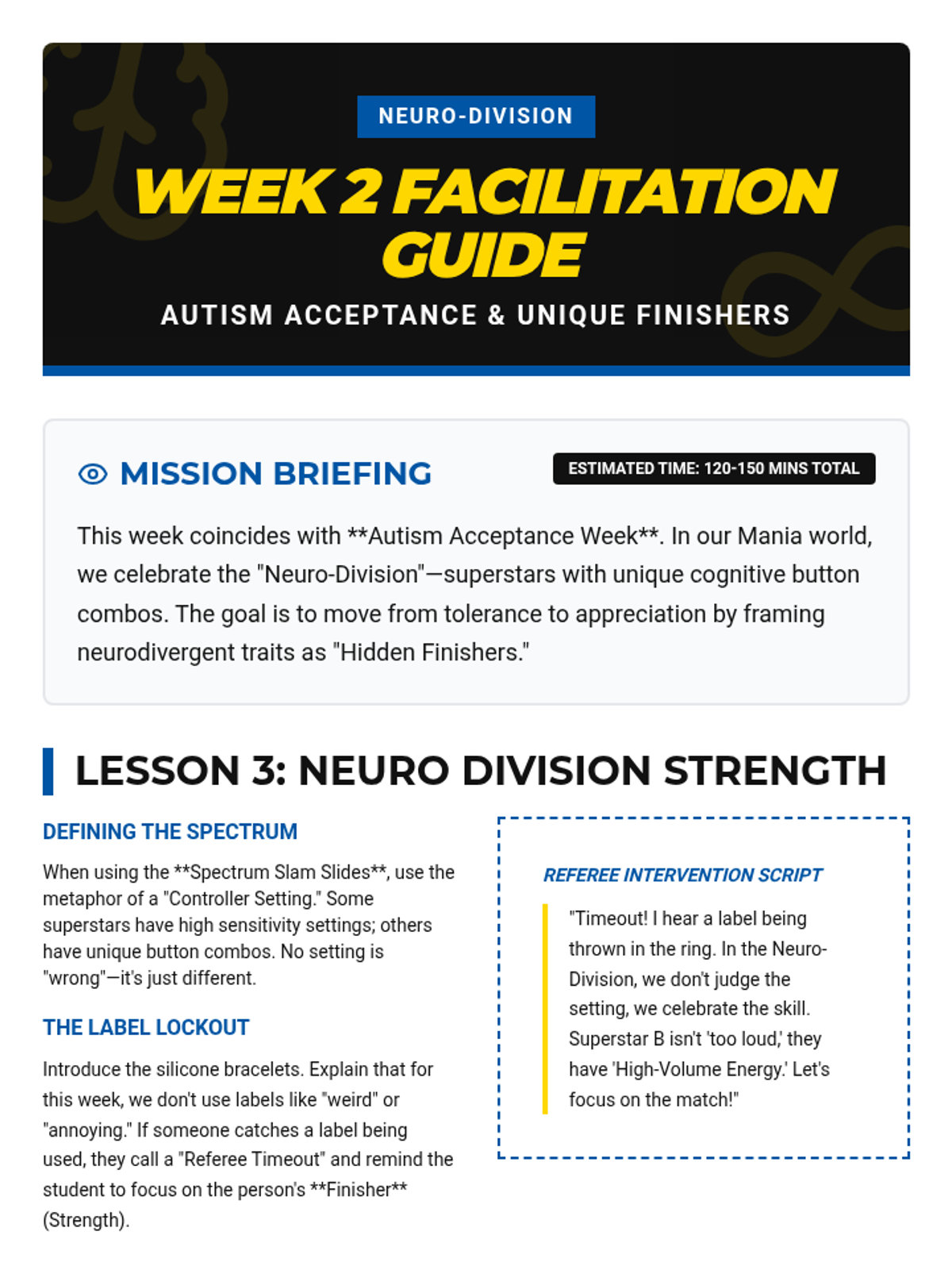
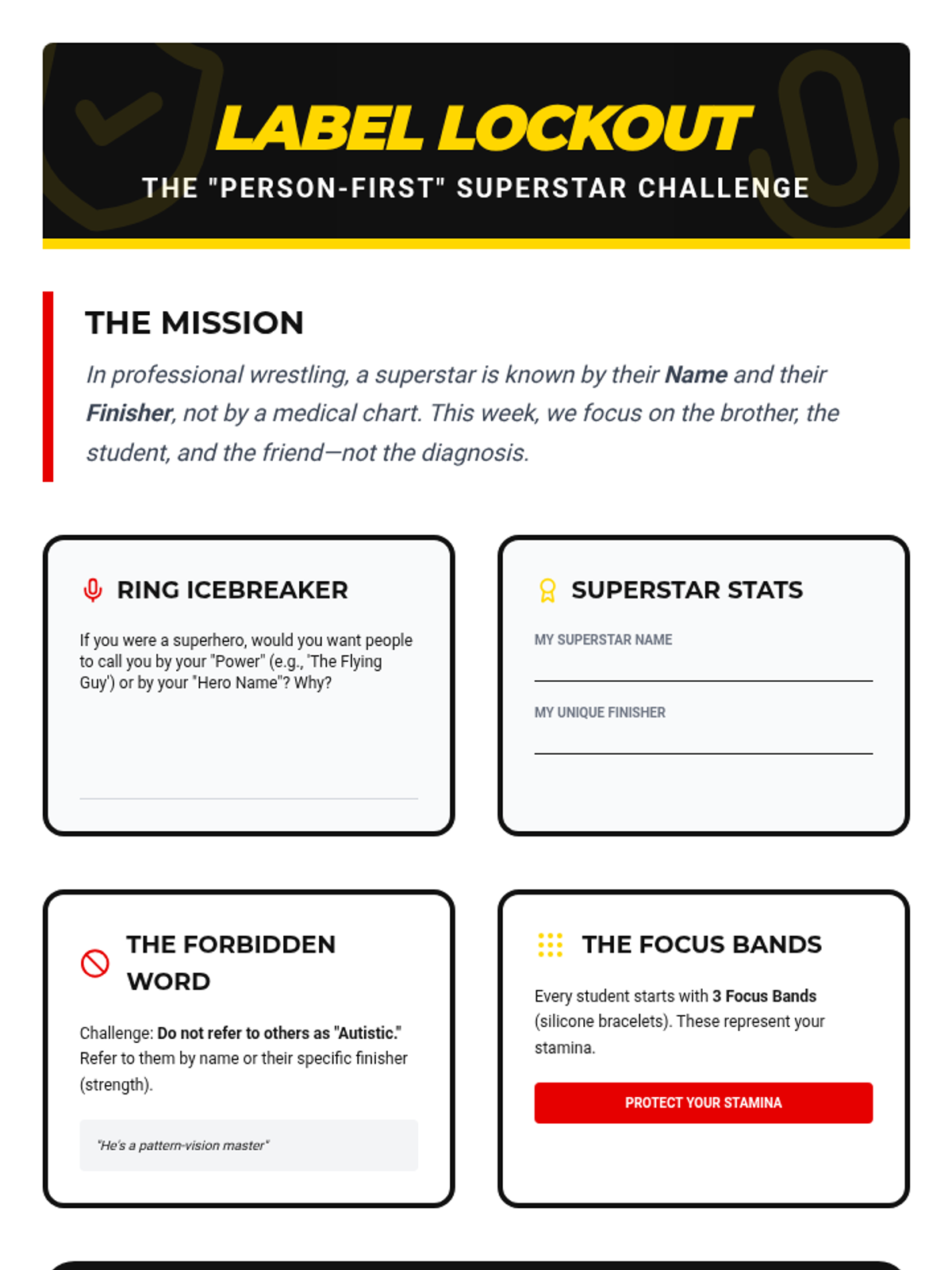
The first of two activities celebrating Autism Acceptance Week, highlighting the unique 'finishers' and strengths of neurodivergent individuals.
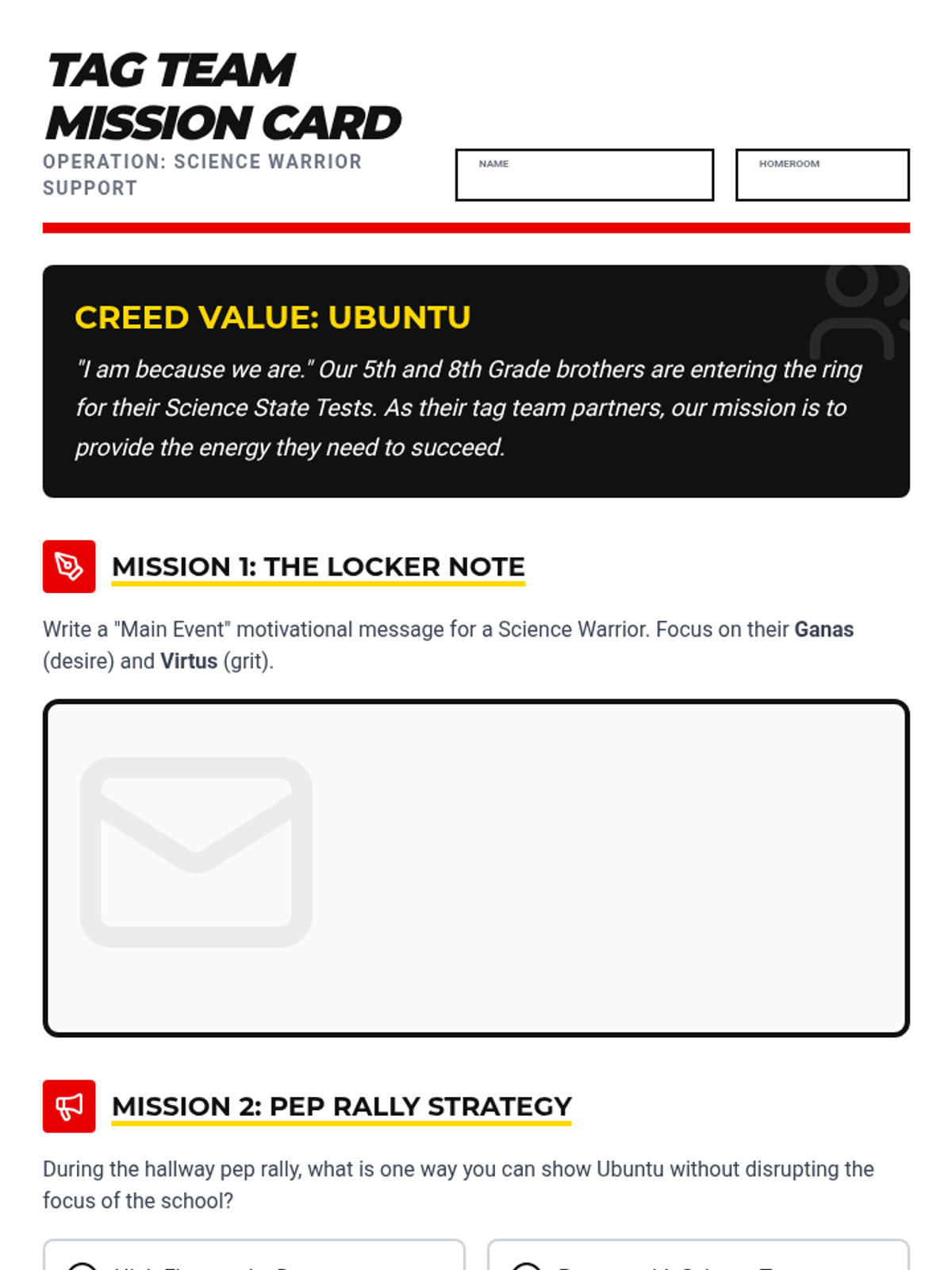
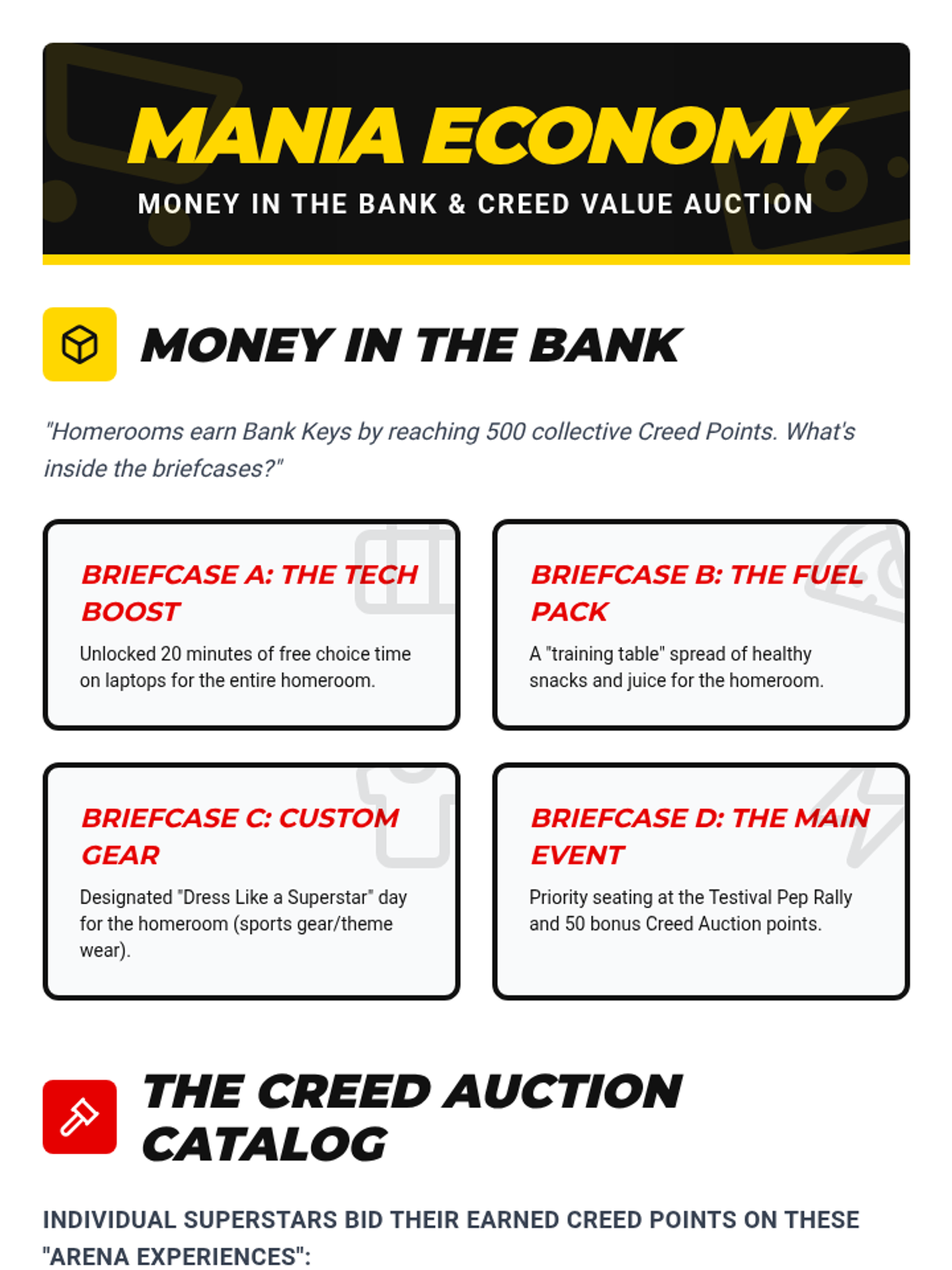
Focus on the Creed Value of Ubuntu and brotherhood, preparing students to support their peers during science test pep rallies.
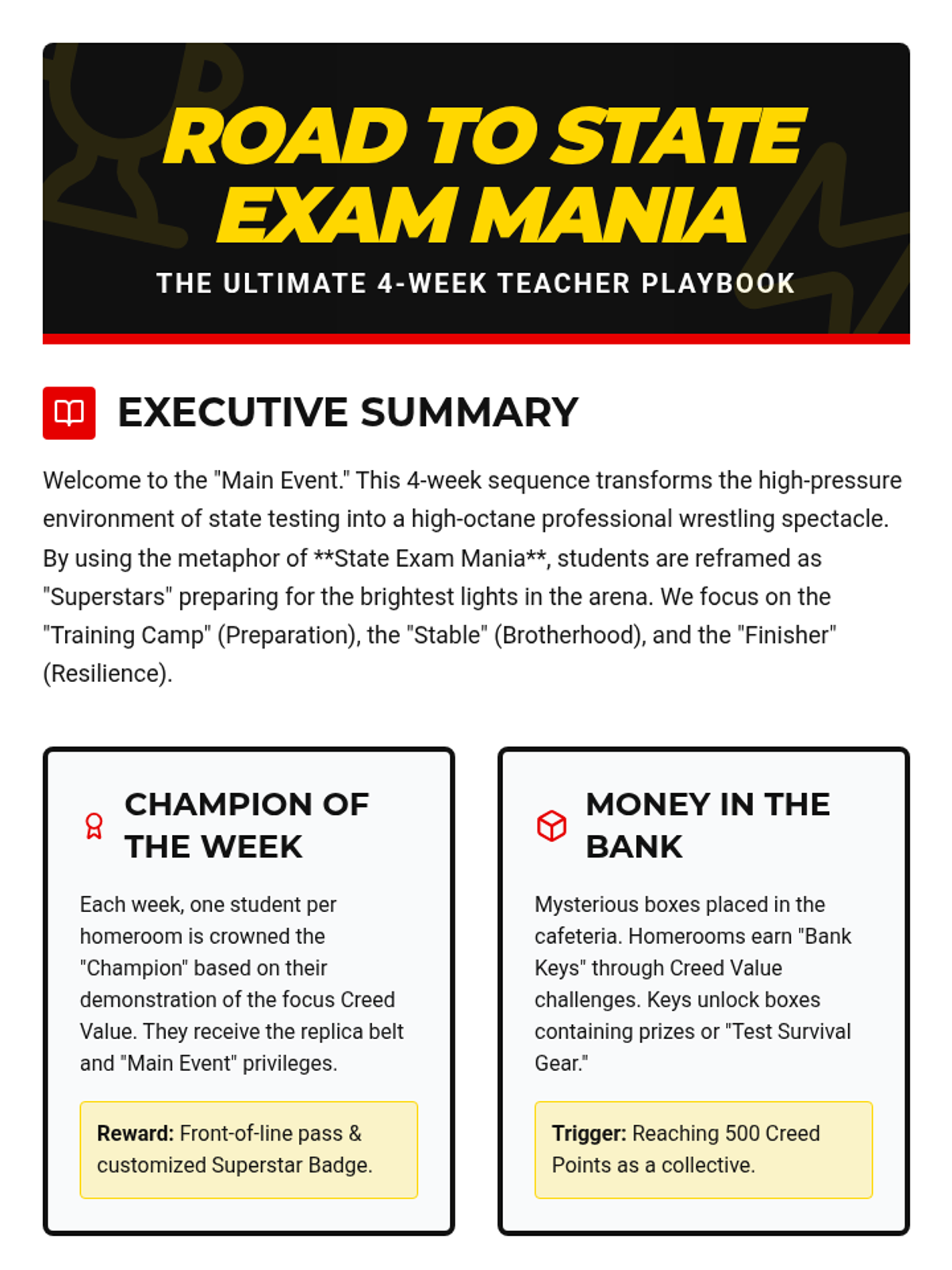
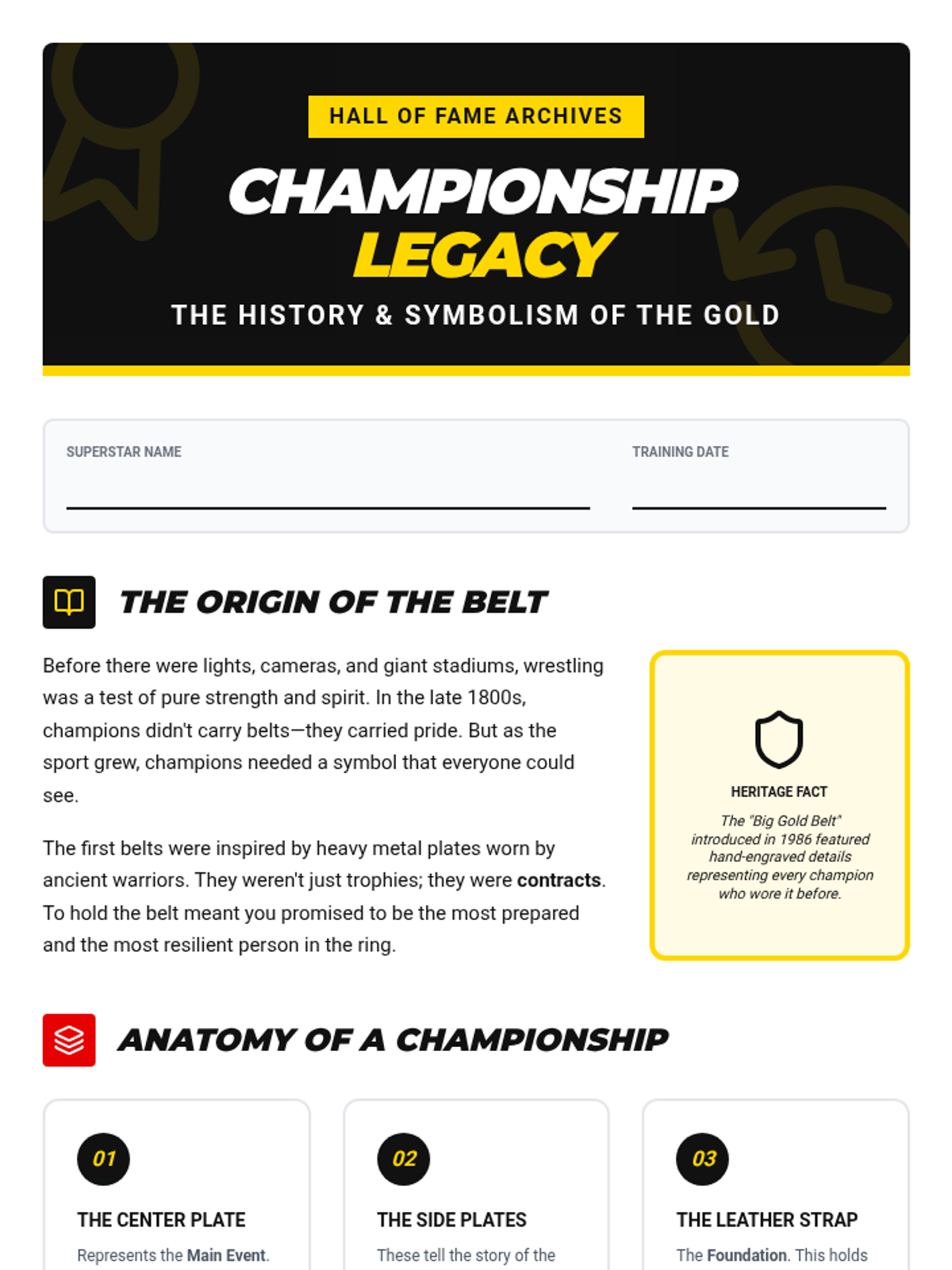
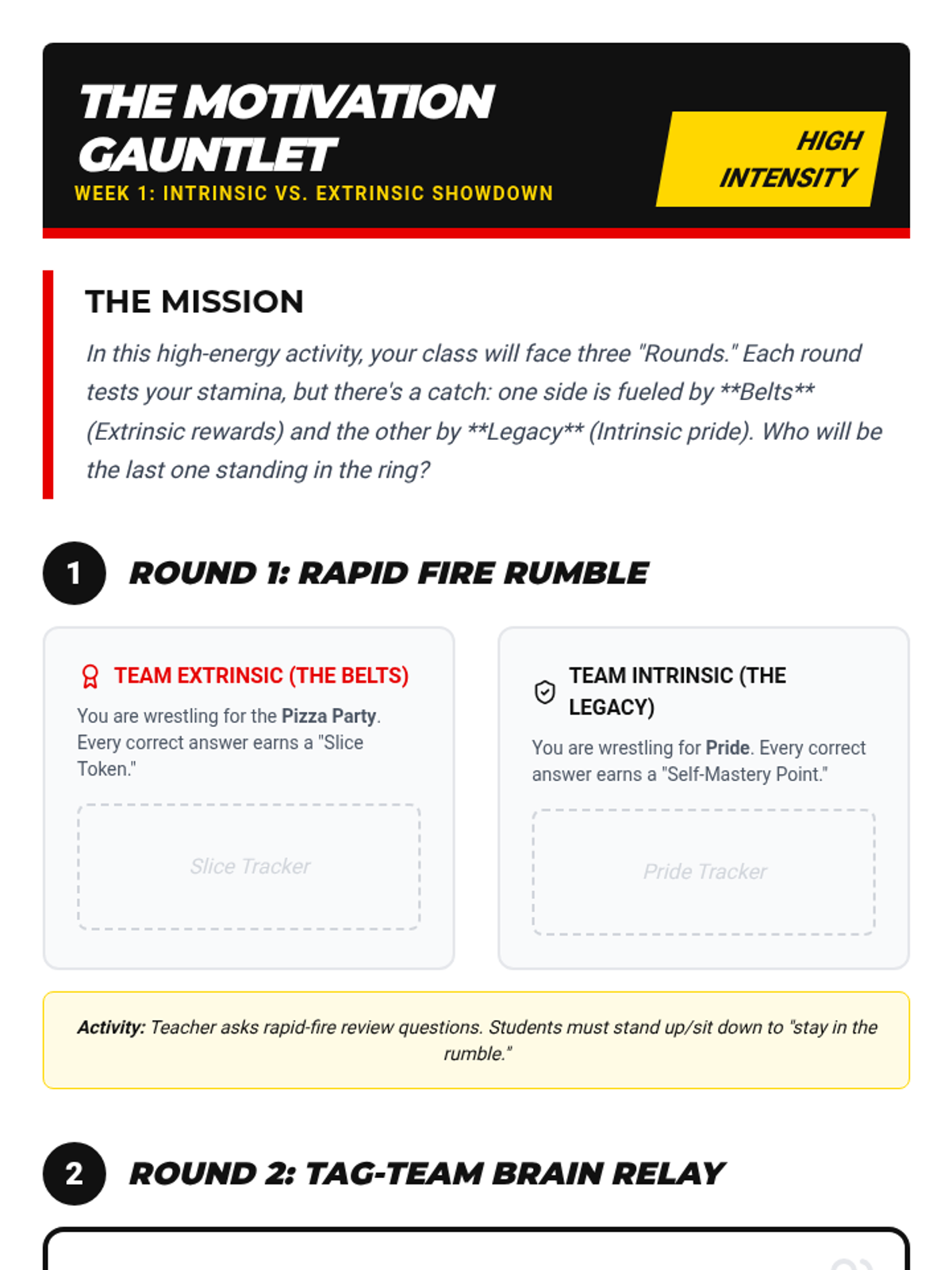
Introduce the 'State Exam Mania' theme, focusing on the difference between intrinsic and extrinsic motivation using the metaphor of championship belts vs. personal legacy.
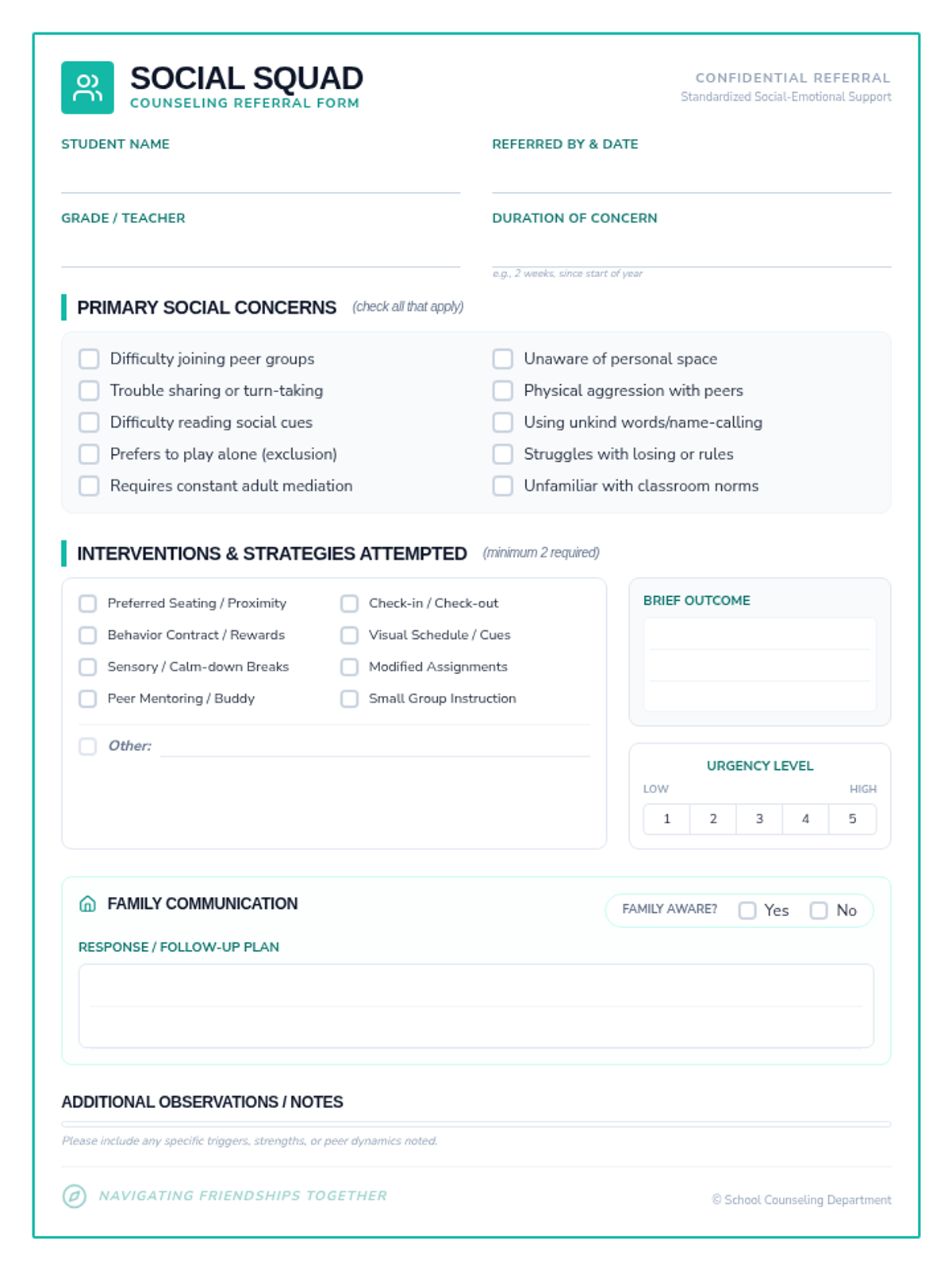
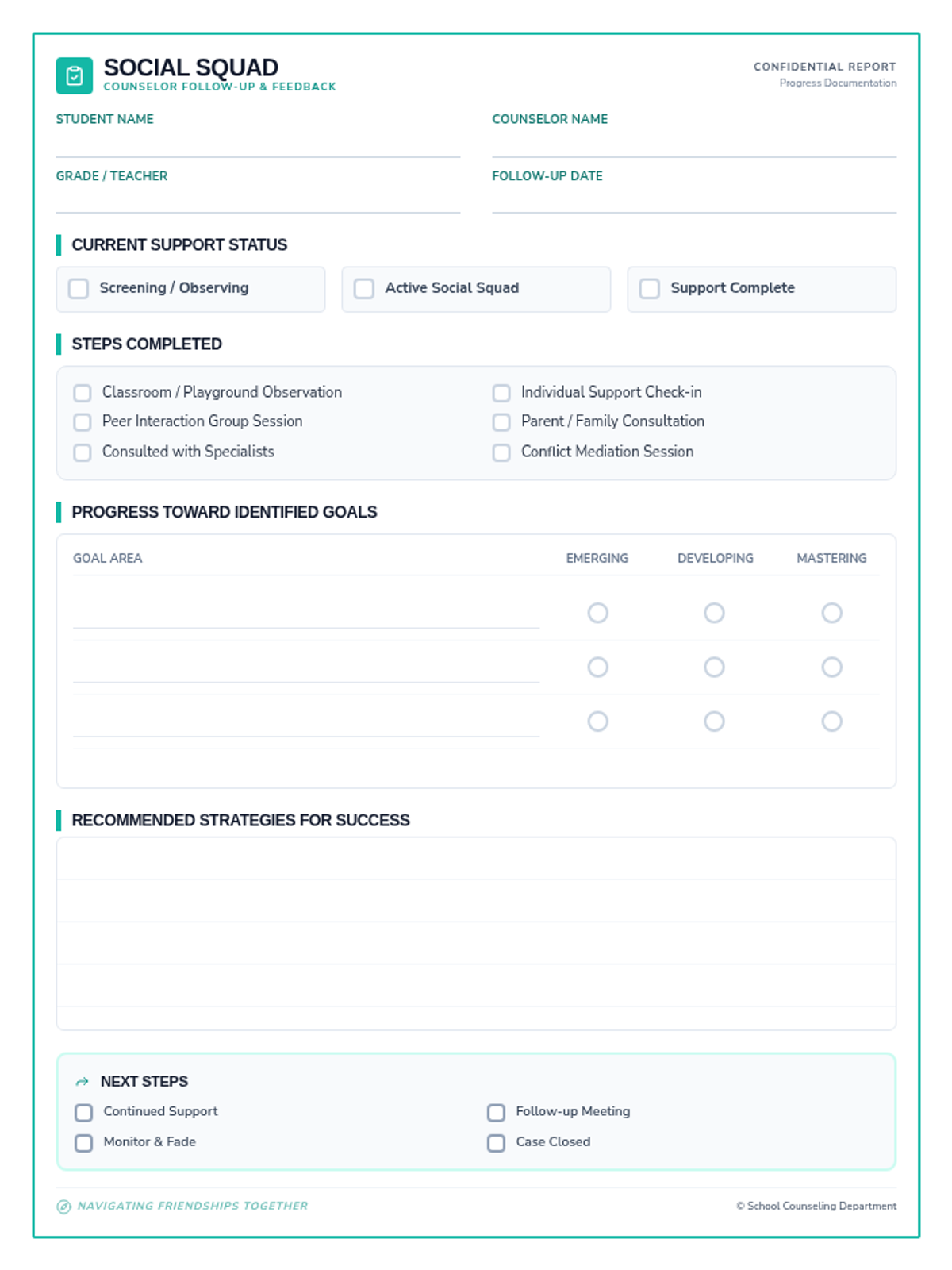
A suite of professional school counseling forms for managing student referrals, tracking progress, and providing feedback to teachers and families.
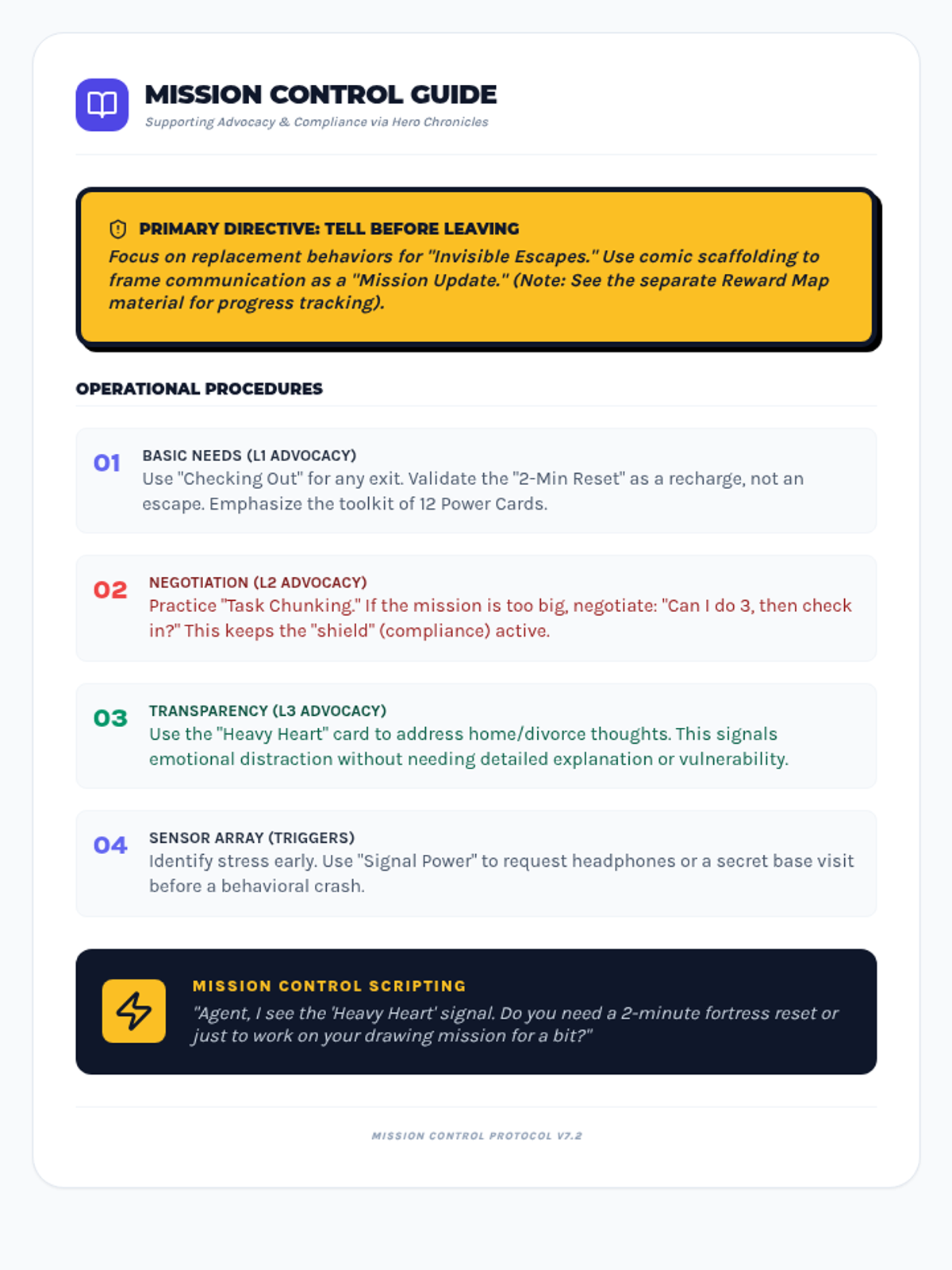
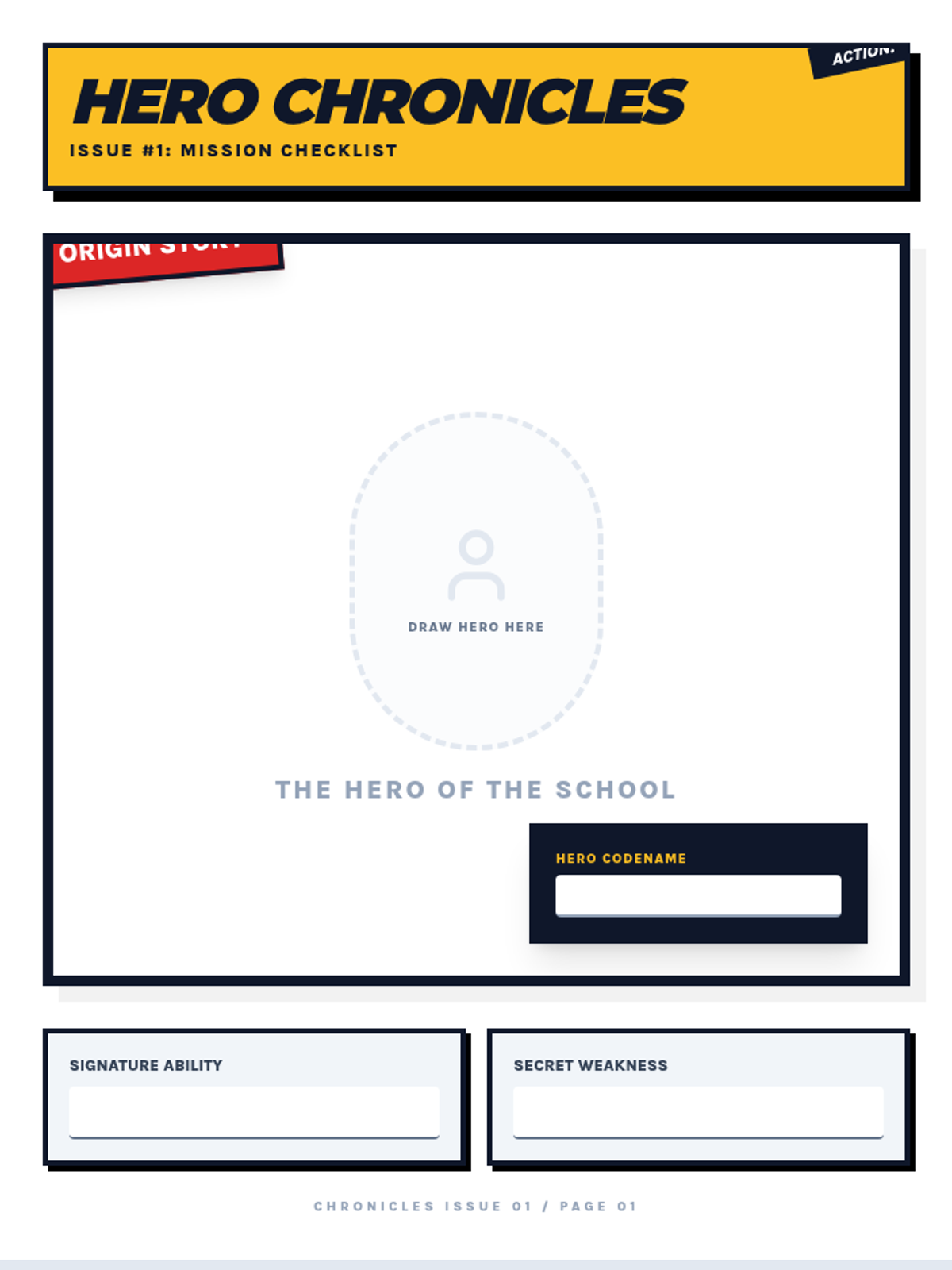
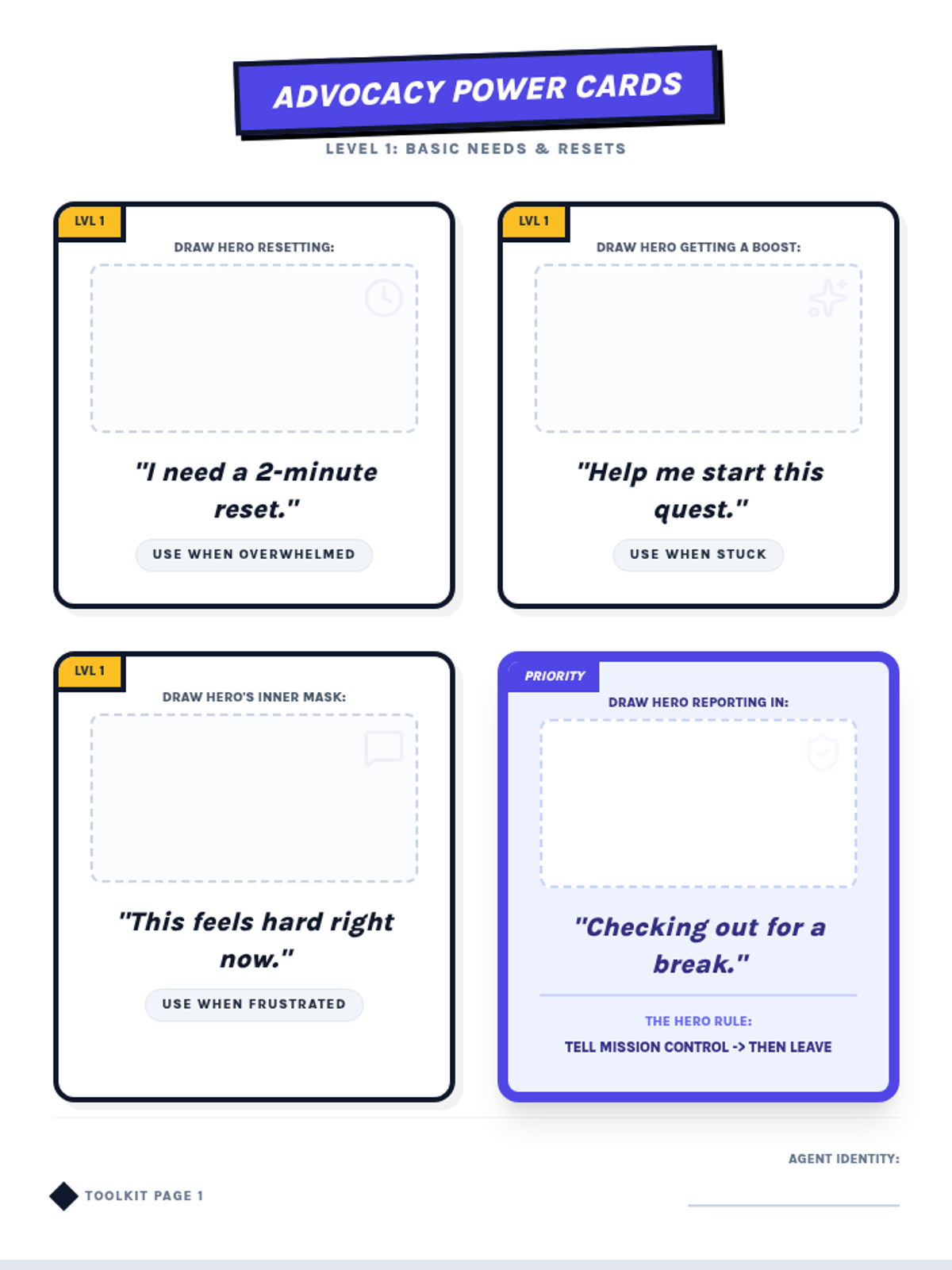
A creative character-design approach to building self-advocacy, task completion, and emotional expression for students who struggle with compliance or sharing feelings.
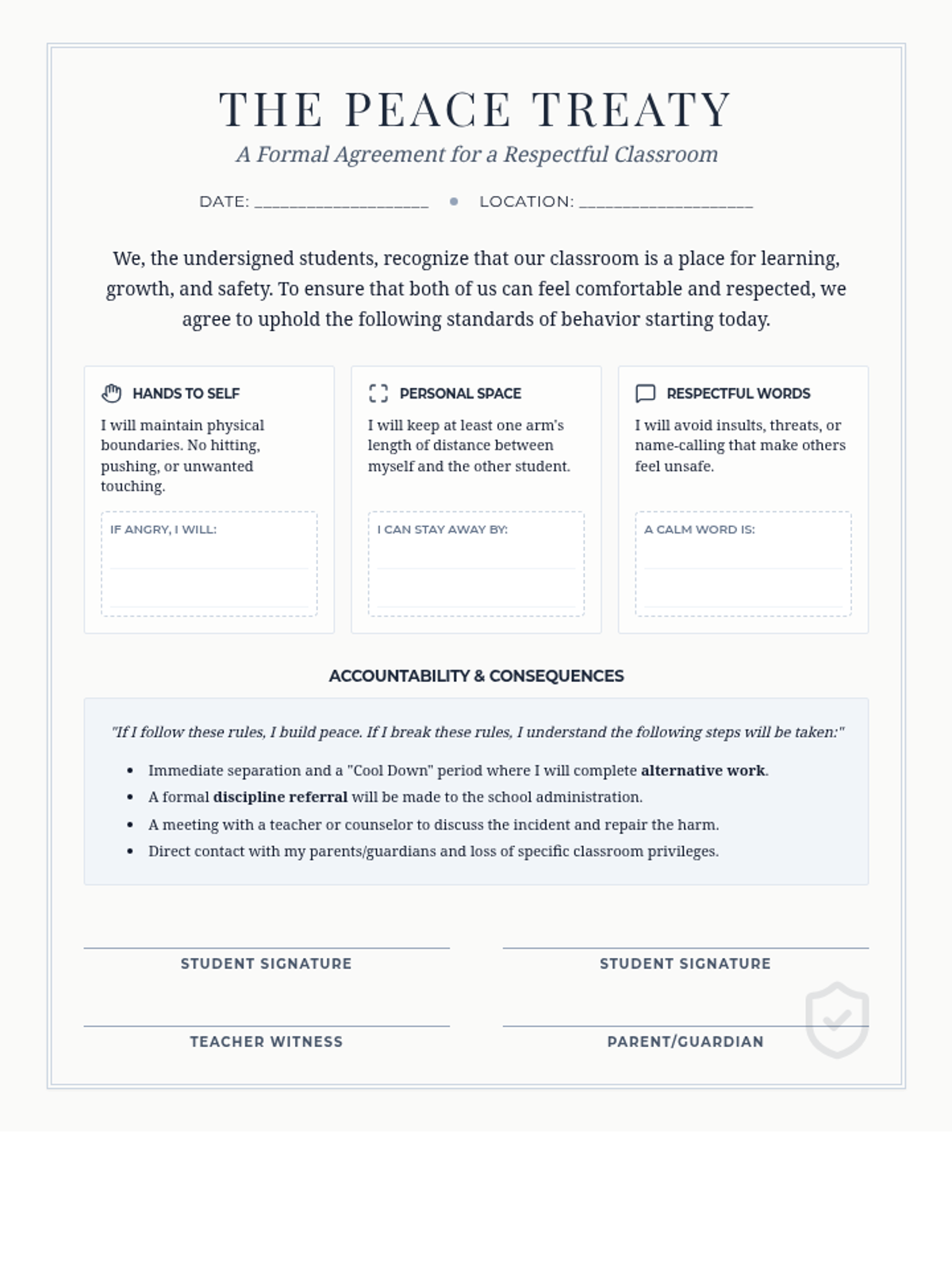
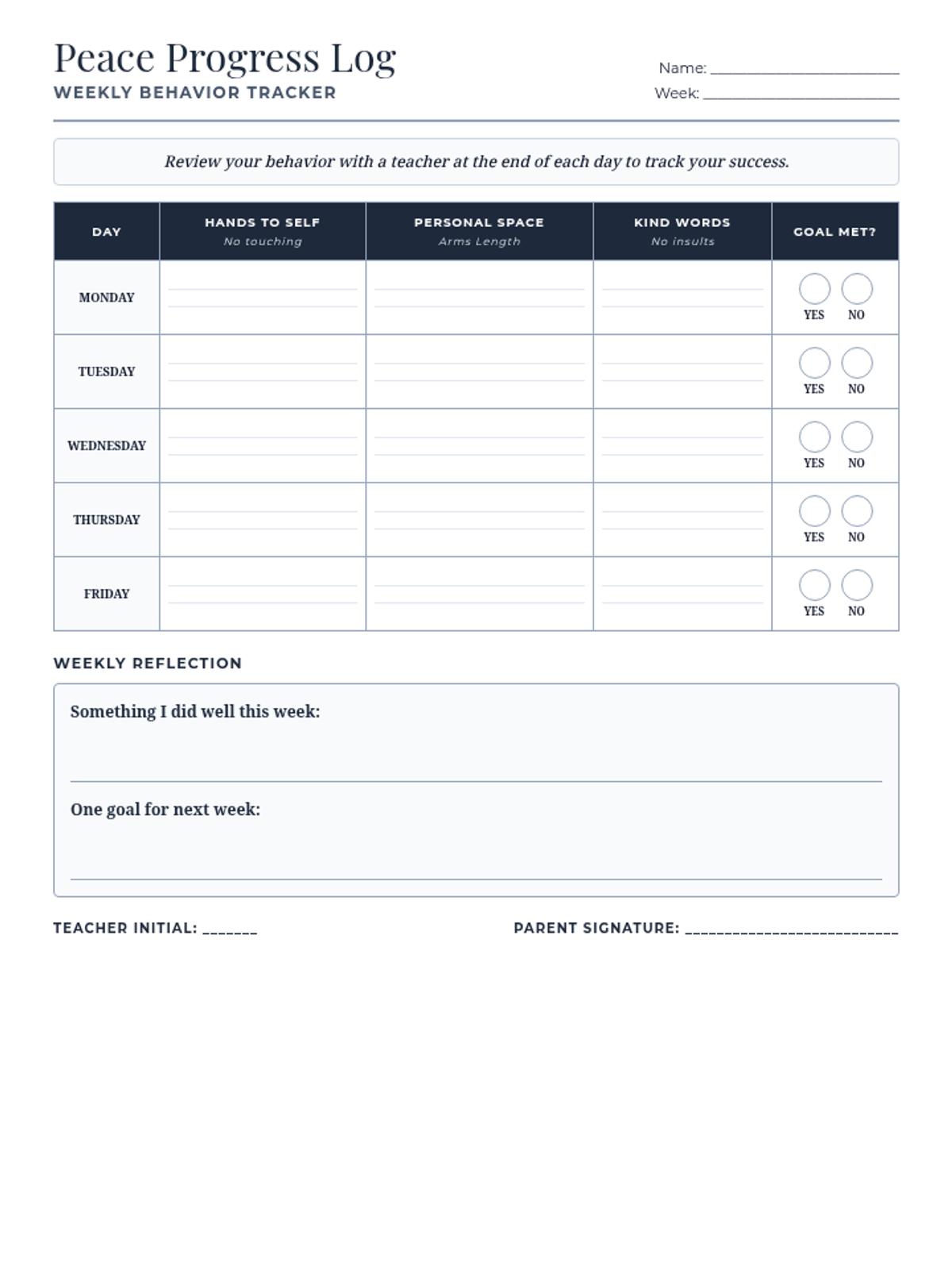
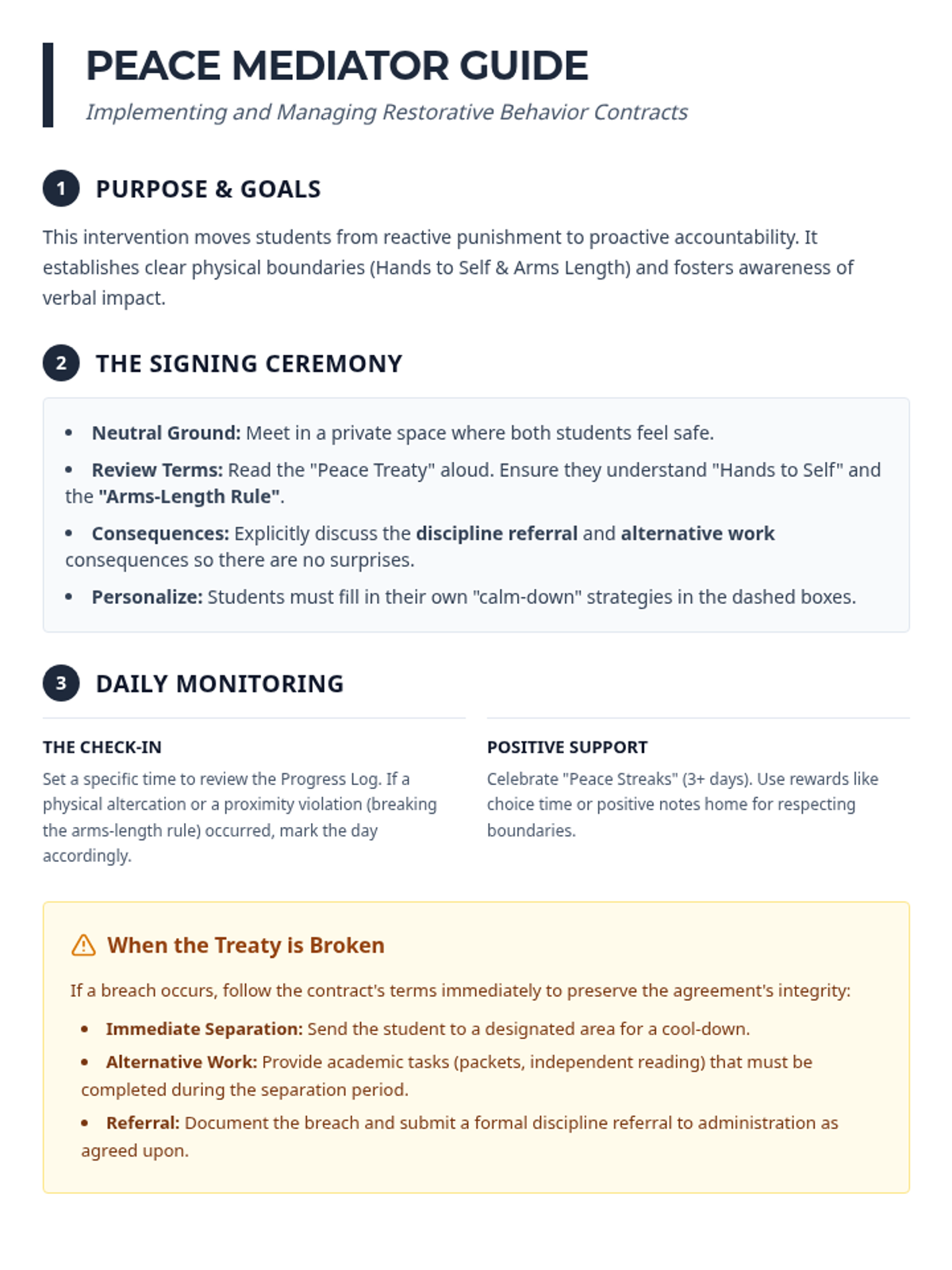
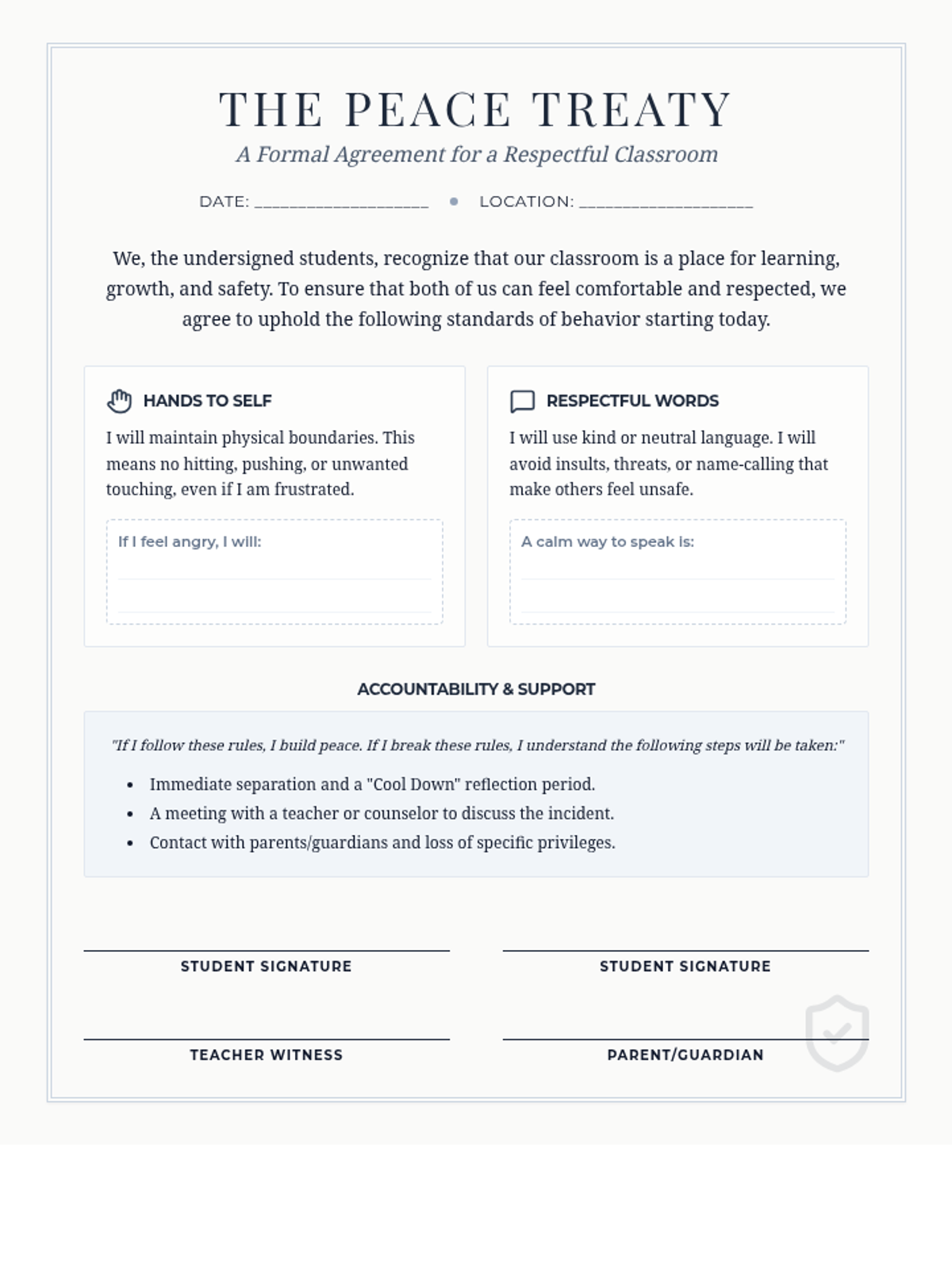
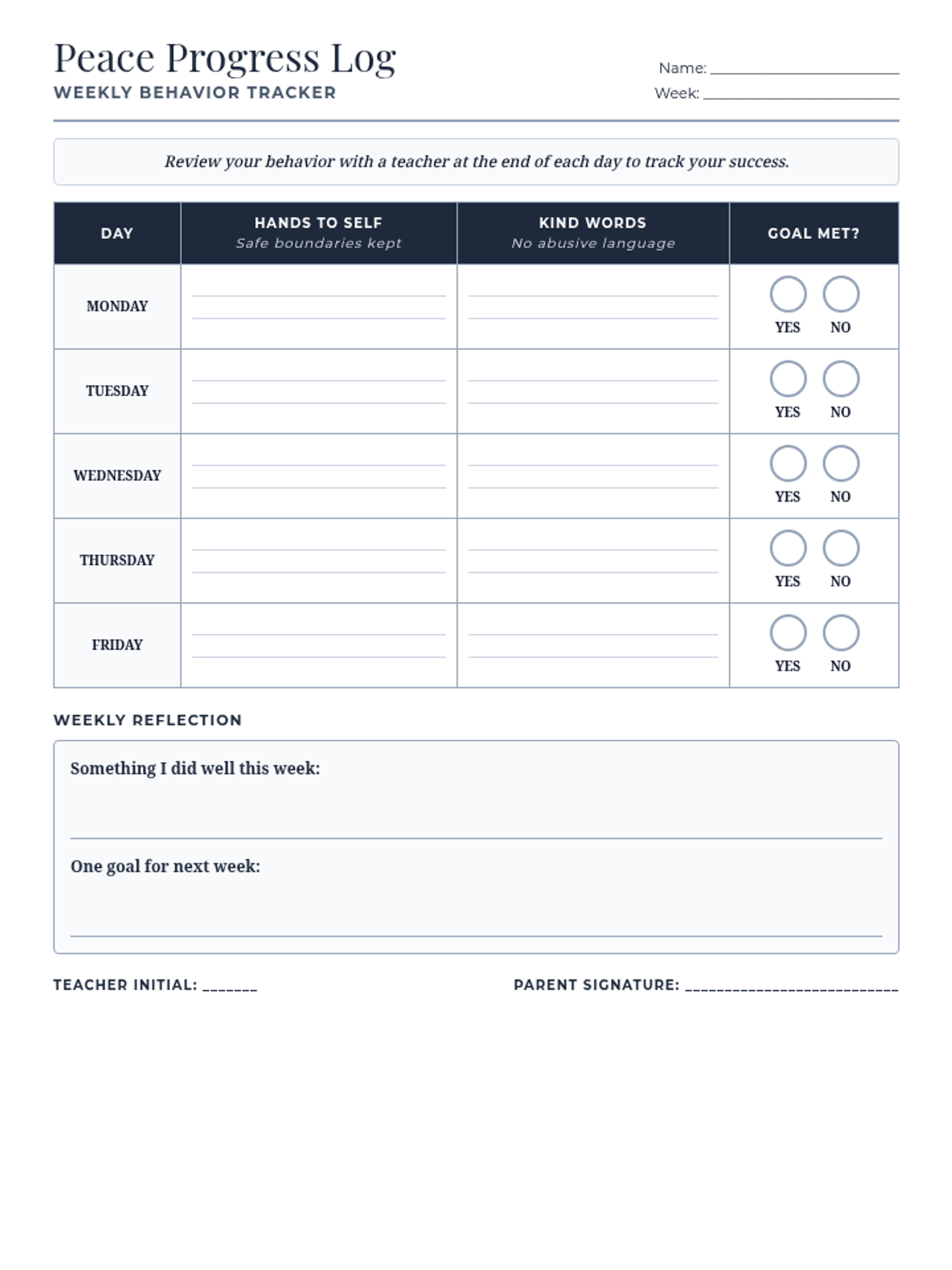
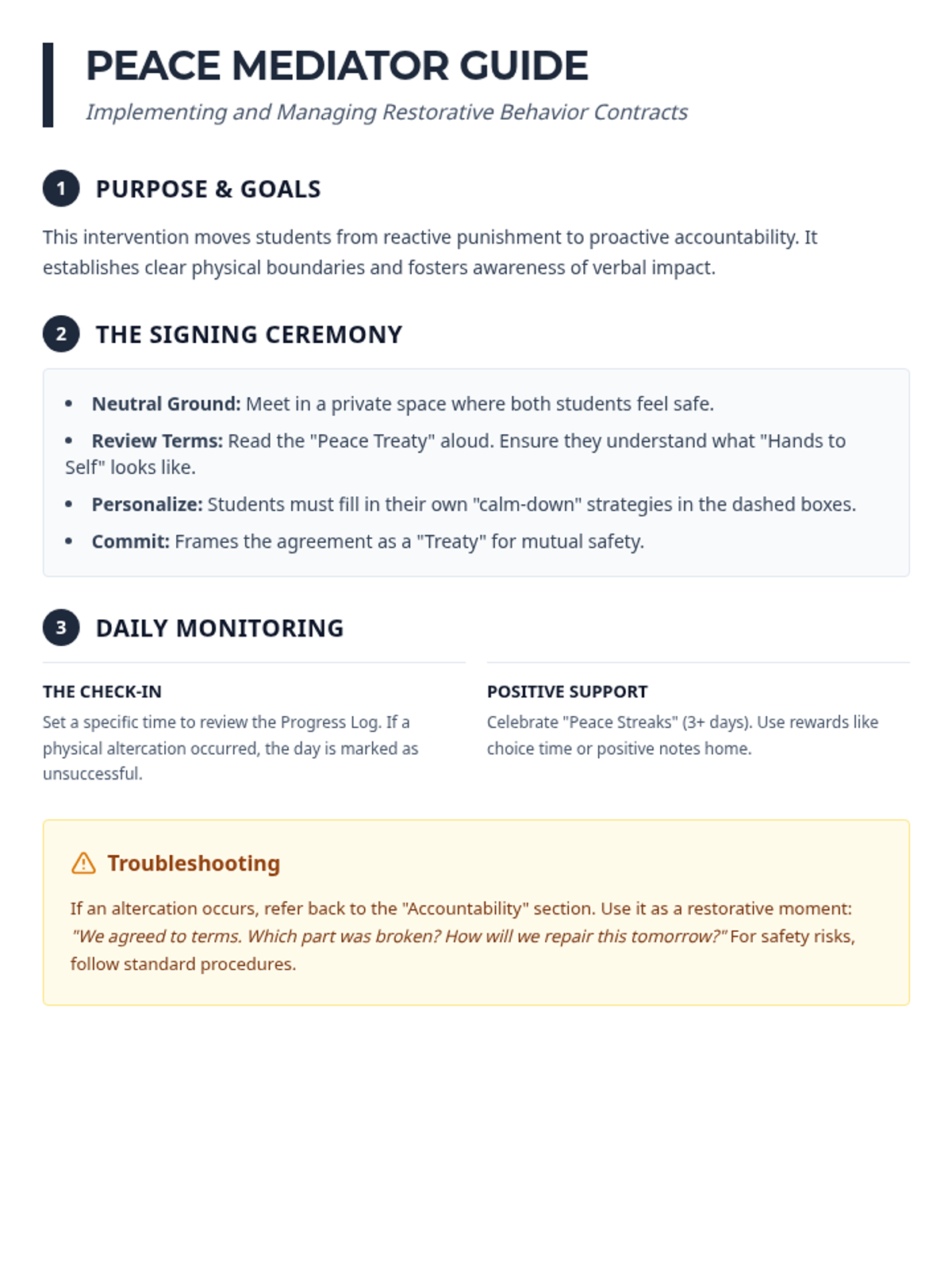
A restorative behavioral intervention focused on resolving physical conflict and verbal aggression through a formal behavior contract and daily progress tracking.
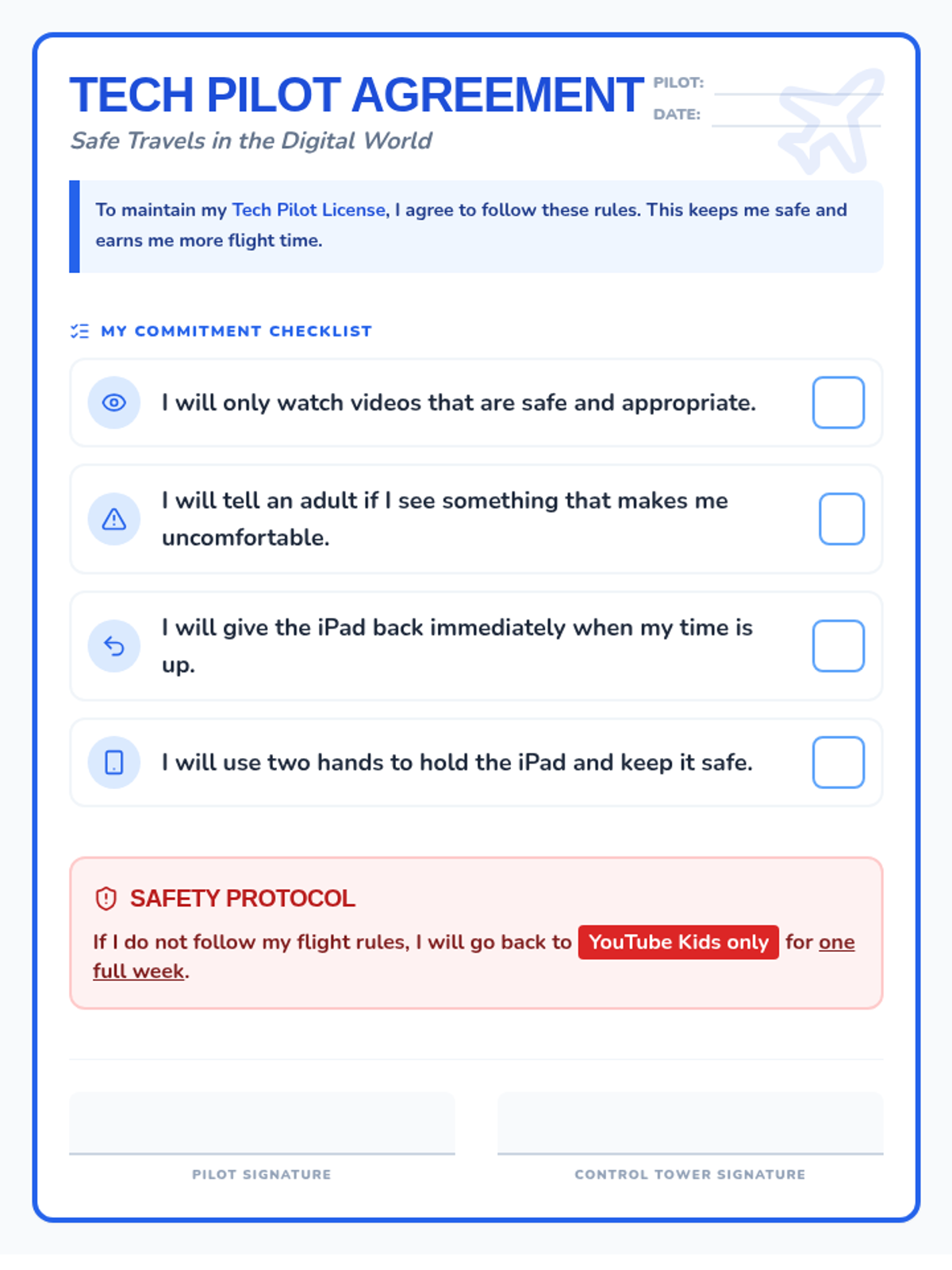
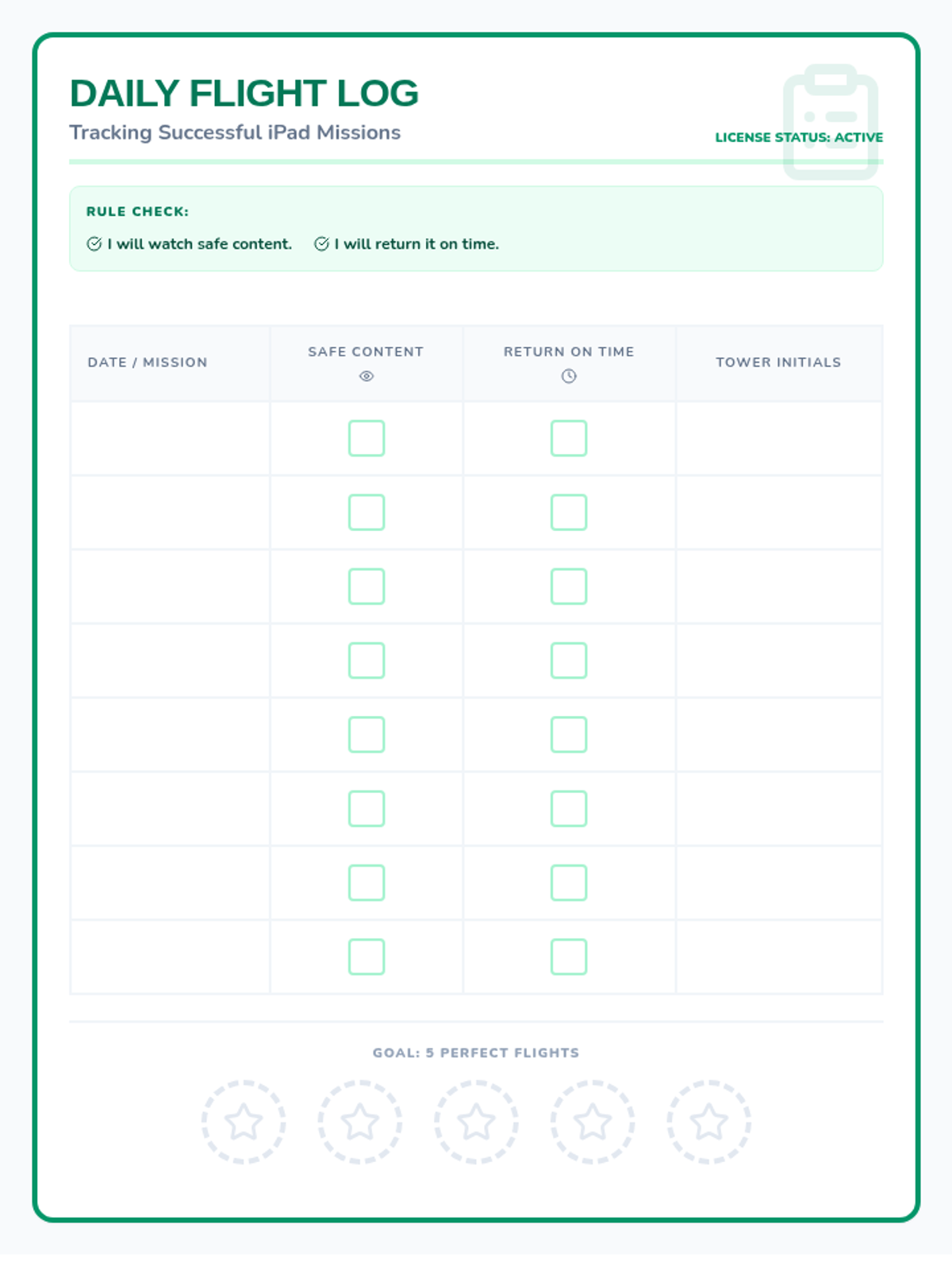
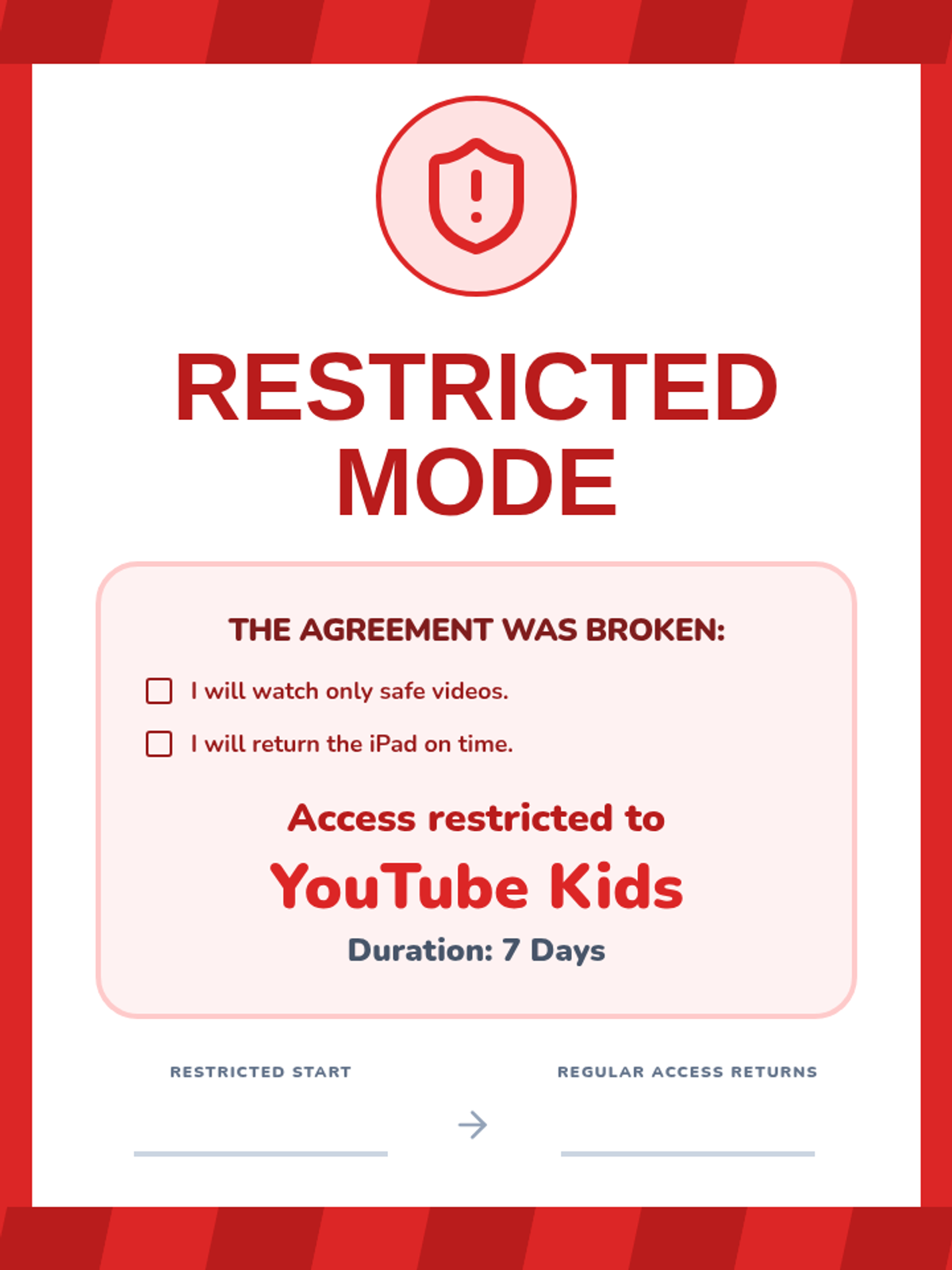
A lesson focused on establishing clear boundaries and accountability for iPad and YouTube usage, using a 'Tech Pilot' theme to frame digital responsibility.
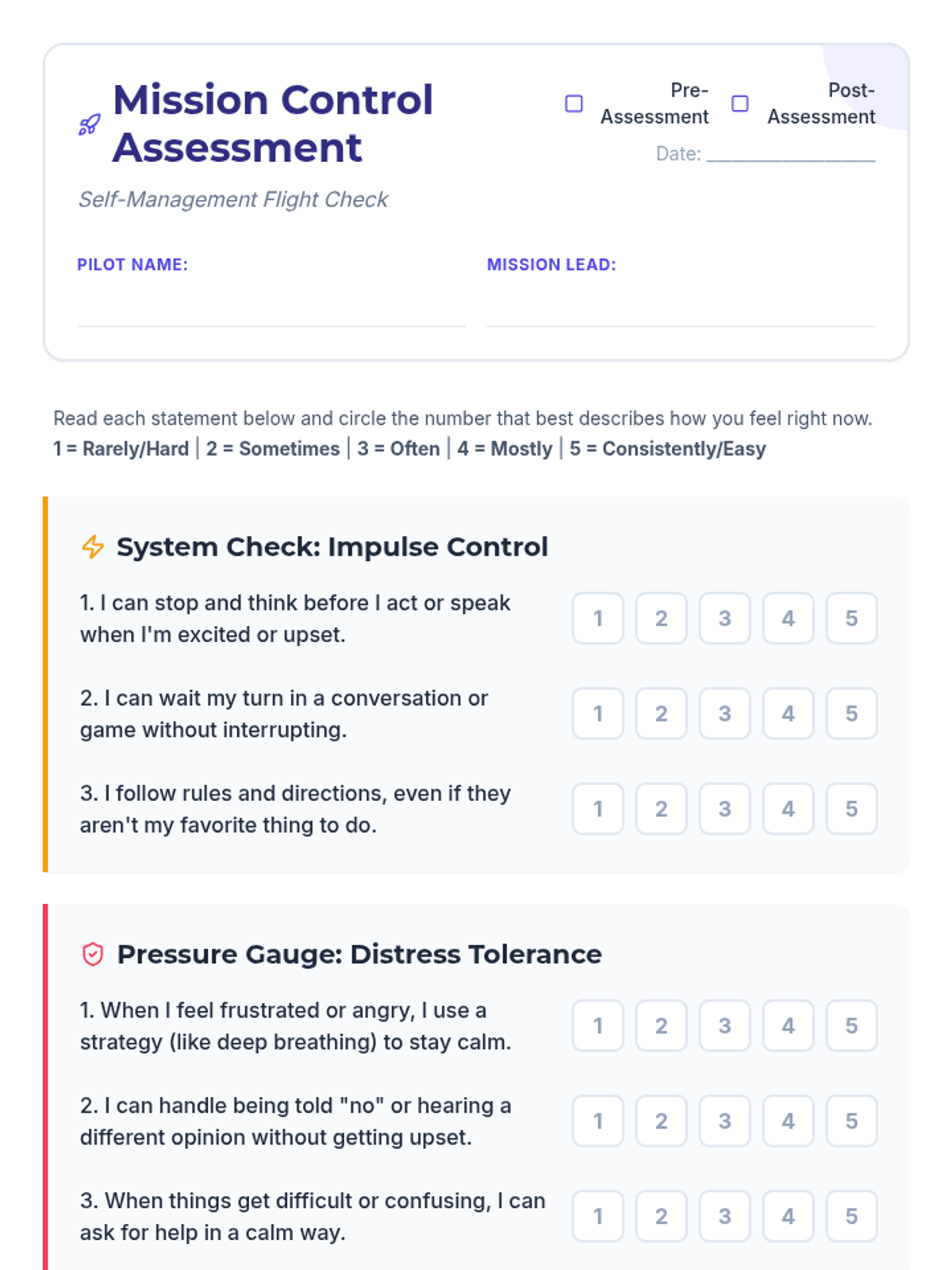
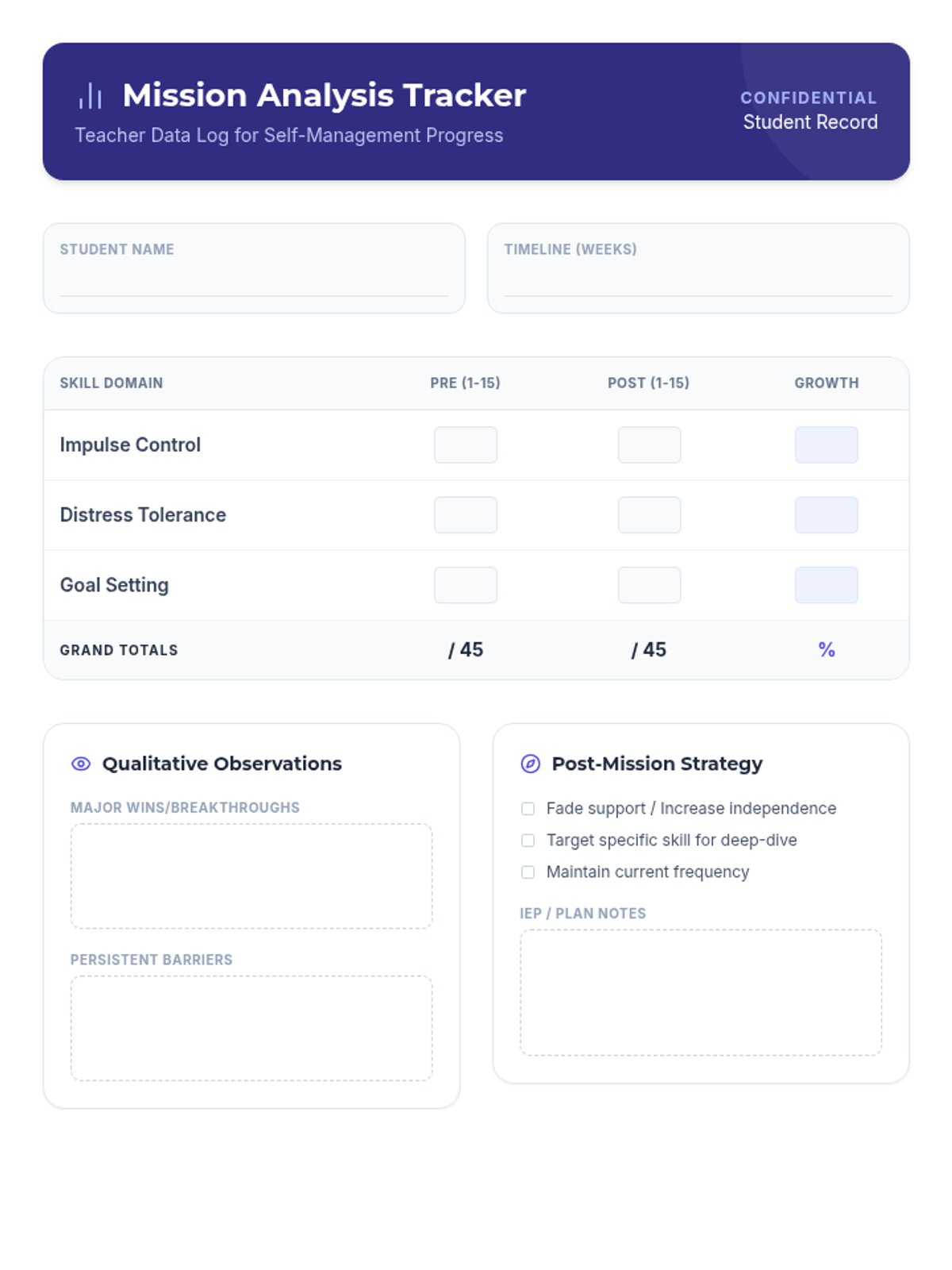
A self-management toolkit focused on impulse control, distress tolerance, and goal setting, designed for 1-1 student support.
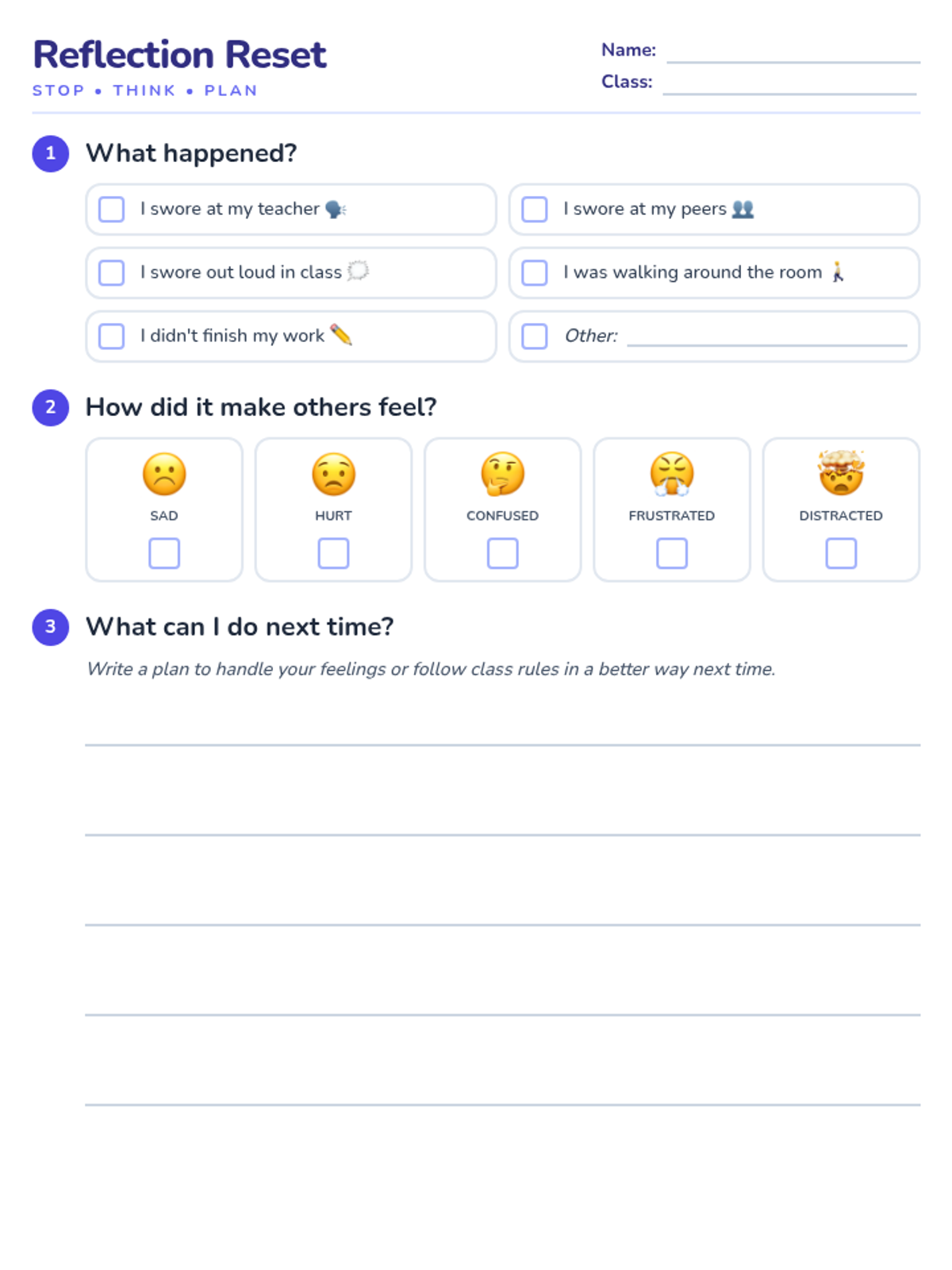
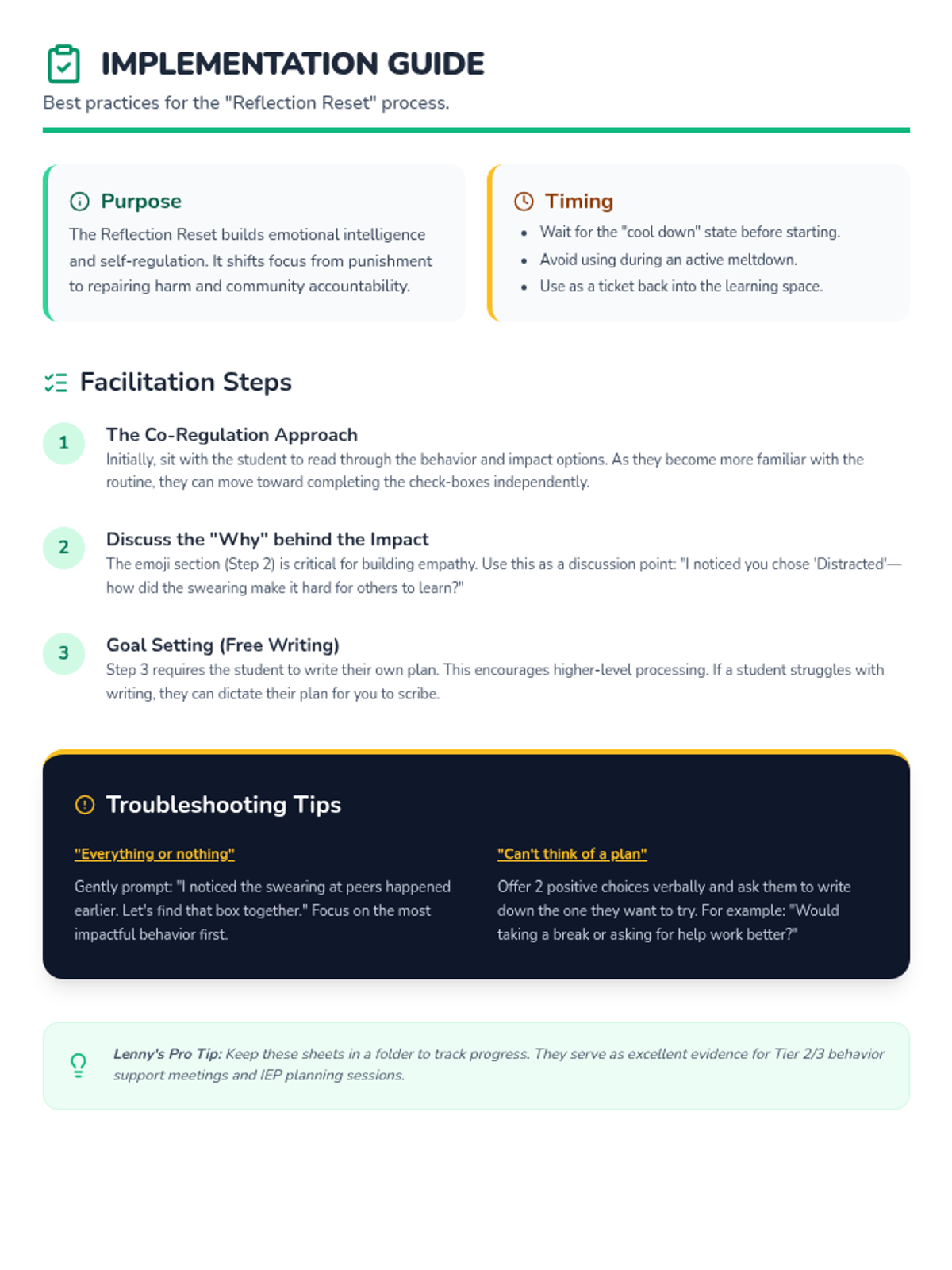
A set of resources designed to help students process behavioral incidents through reflection, identifying impact, and planning better choices.
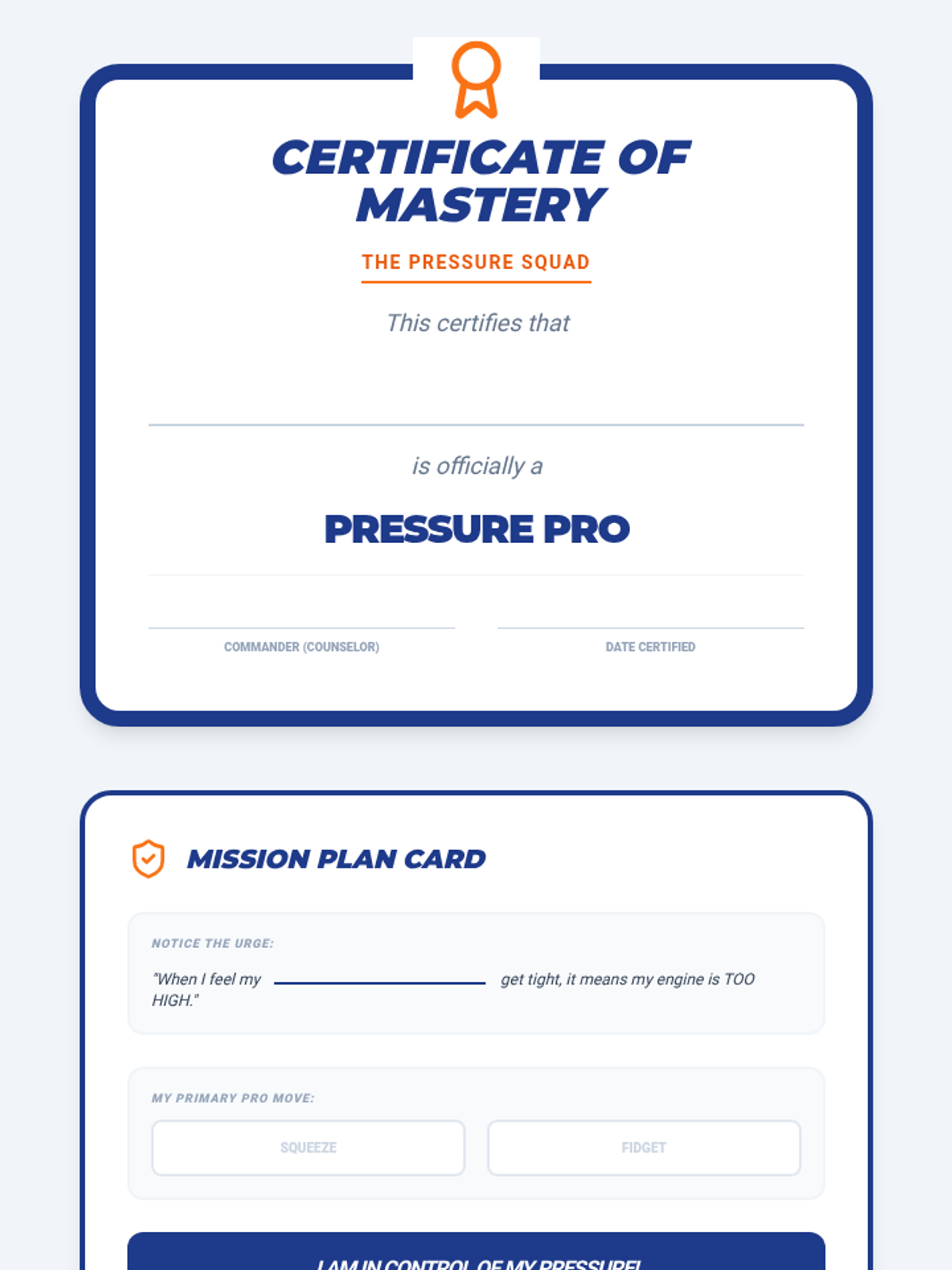
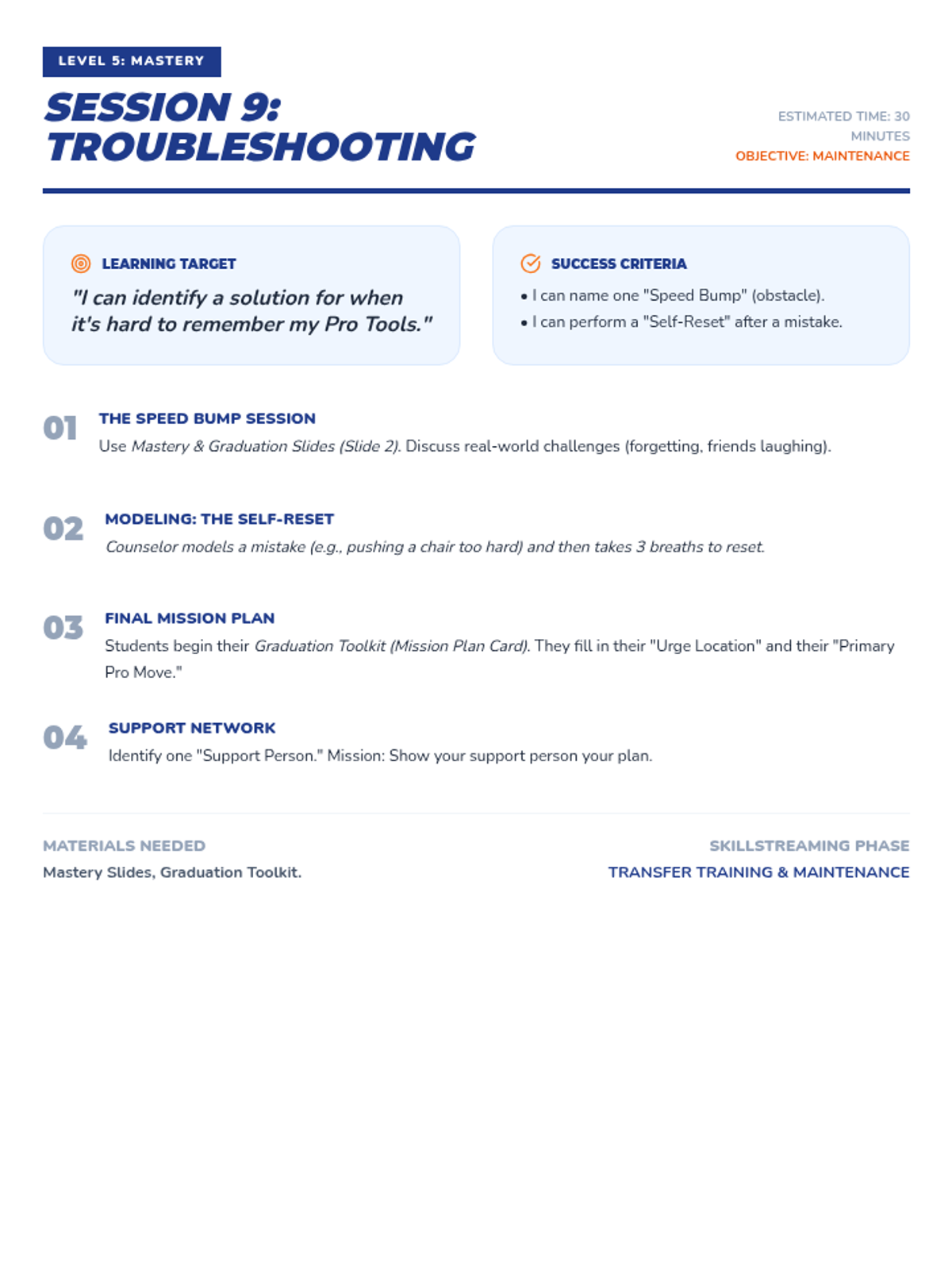
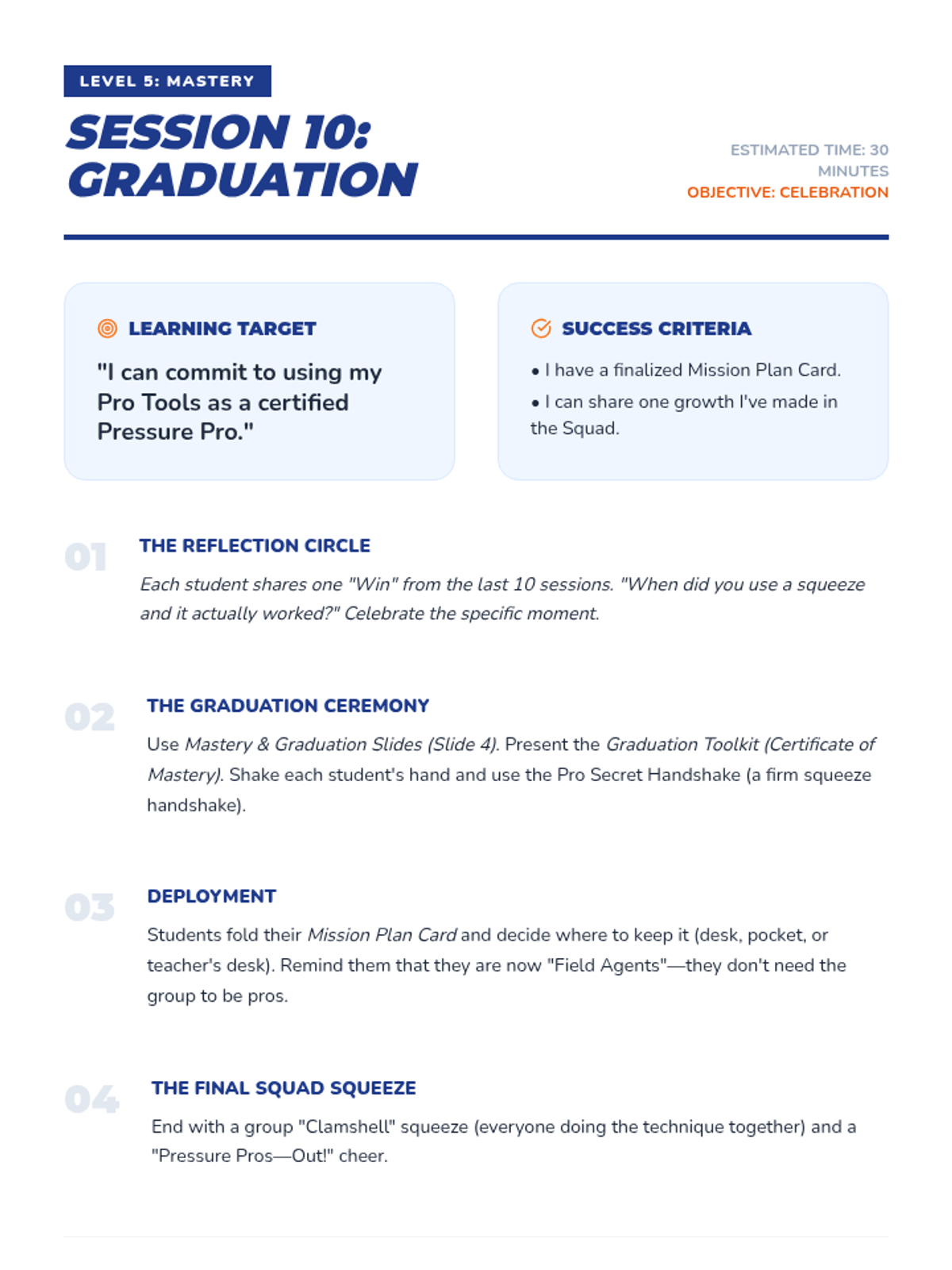
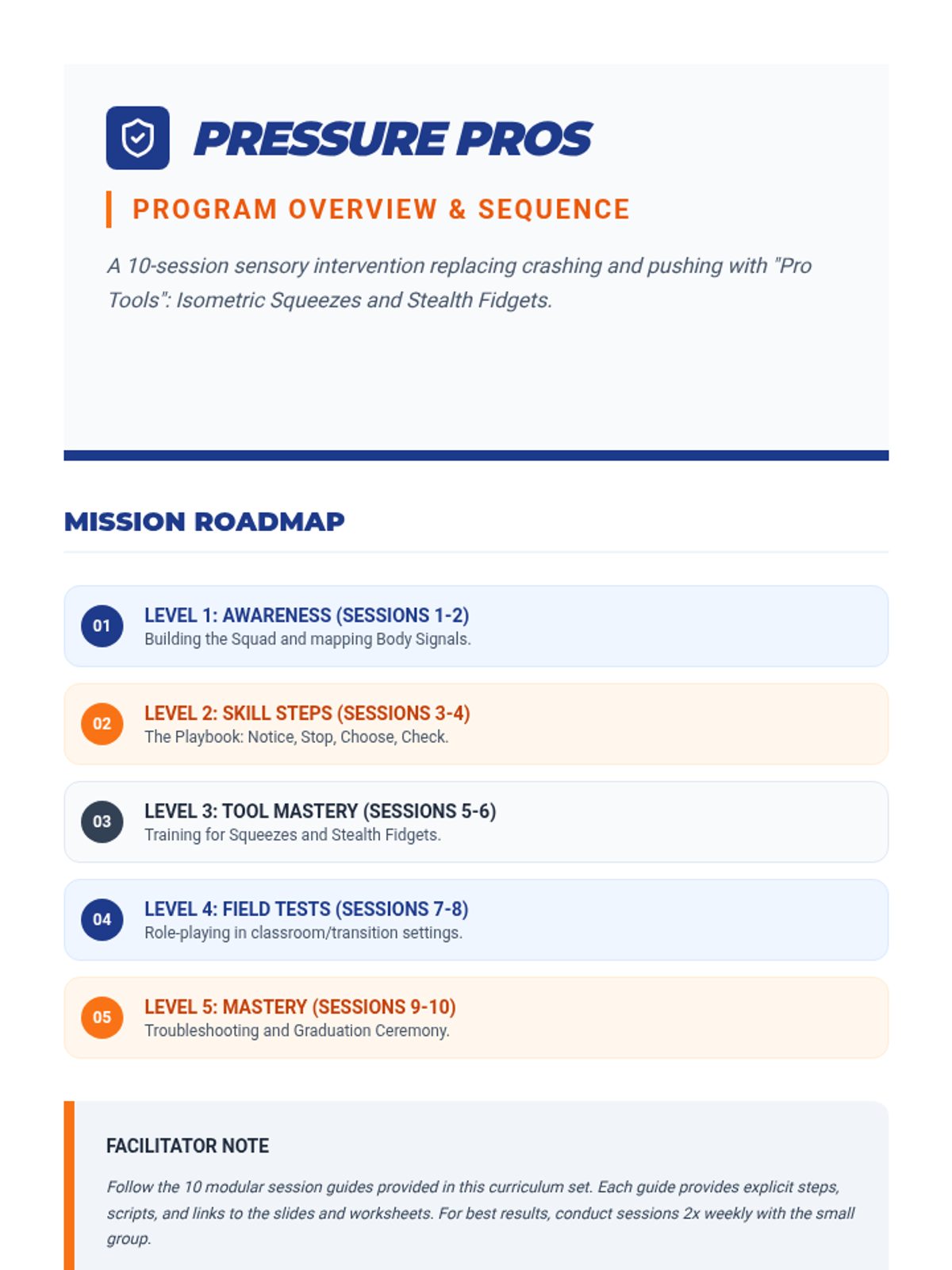
Troubleshooting challenges and finalizing individual regulation plans. Sessions 9 and 10 focus on maintenance, generalization, and graduation.
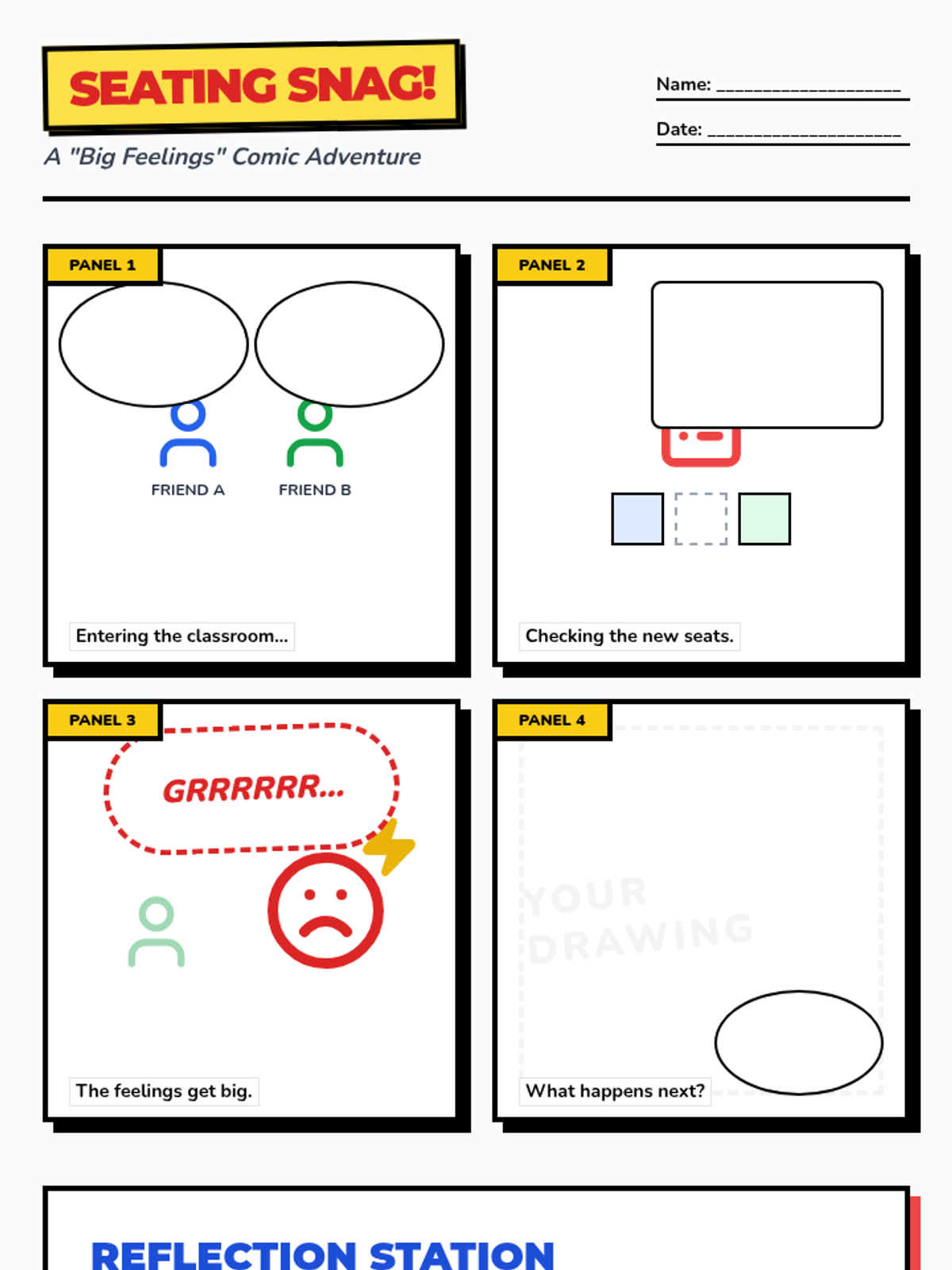
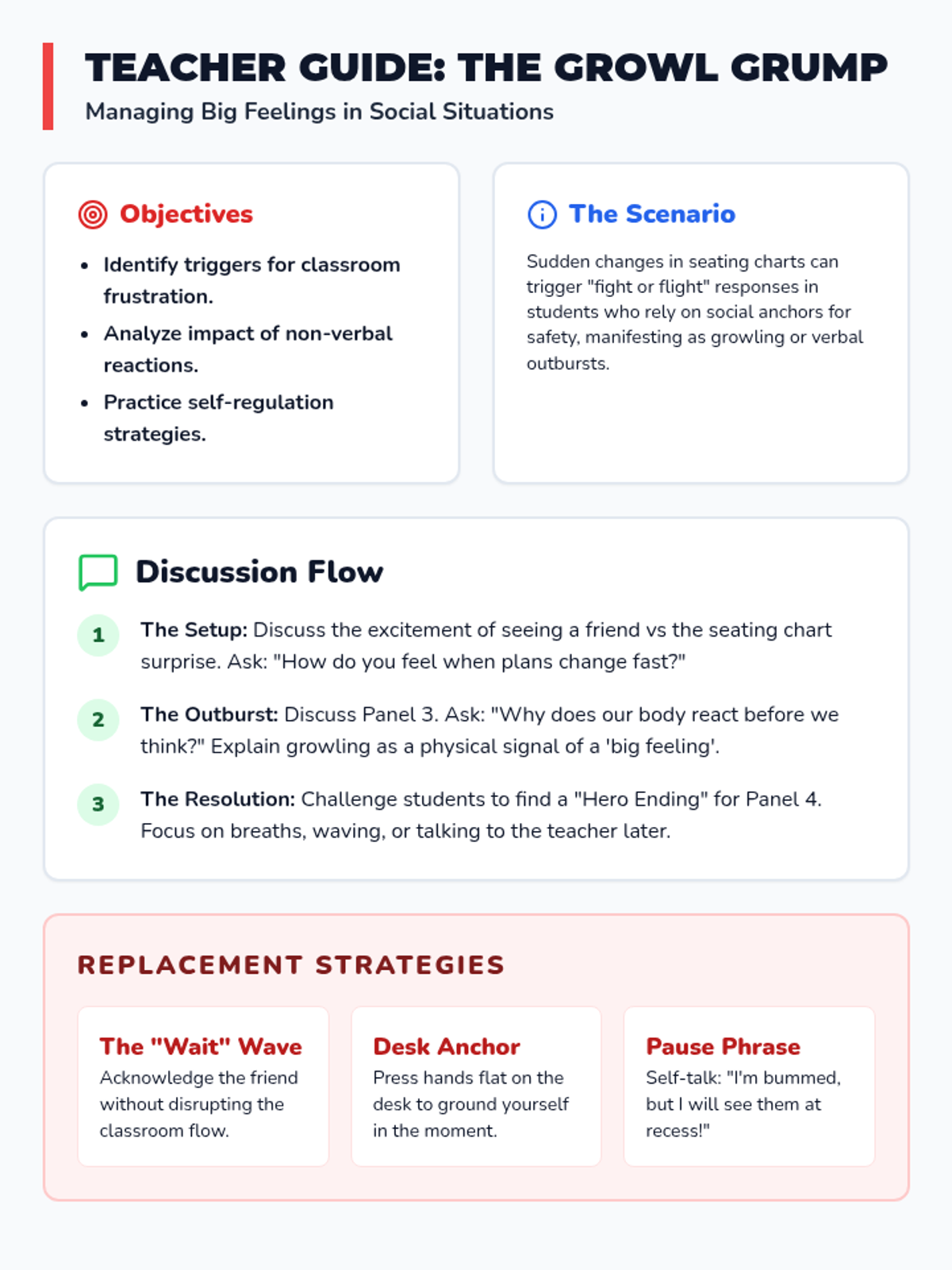
A social-emotional learning lesson focusing on identifying and managing frustration when things don't go as planned in the classroom, using a comic strip scenario.
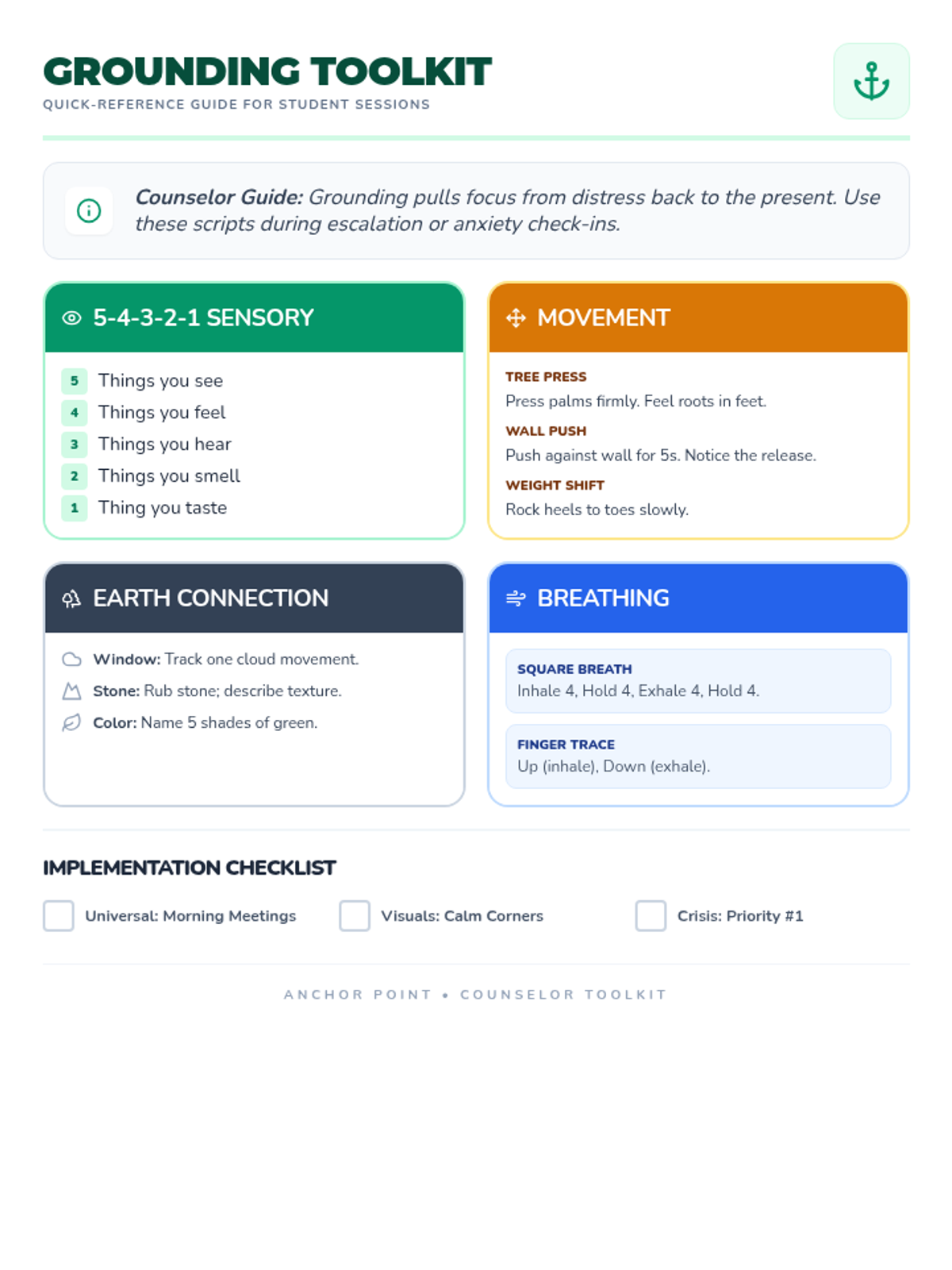
A comprehensive training session for school counselors on teaching effective grounding techniques to students, focusing on sensory, movement, nature-based, and breathing strategies.
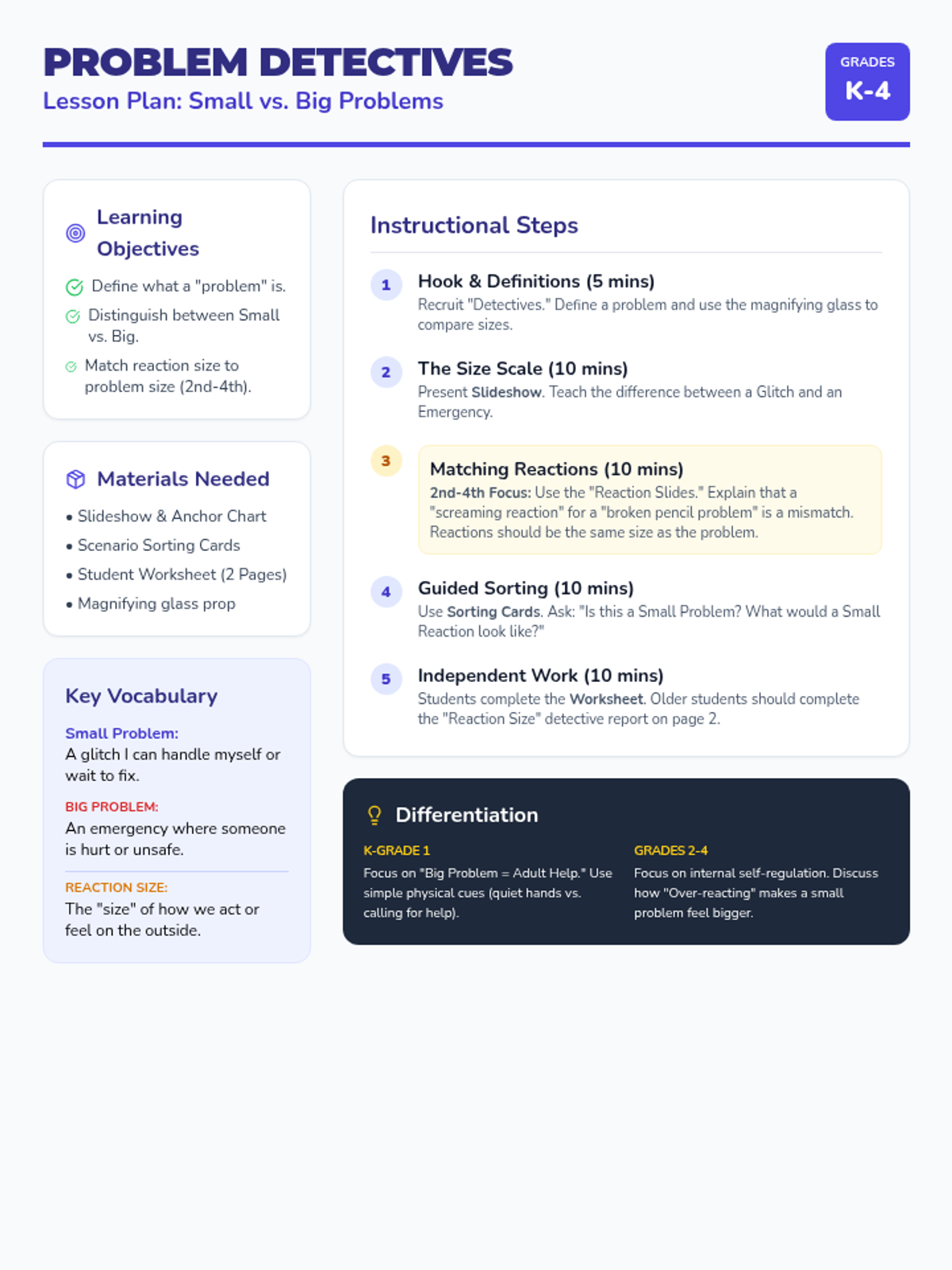
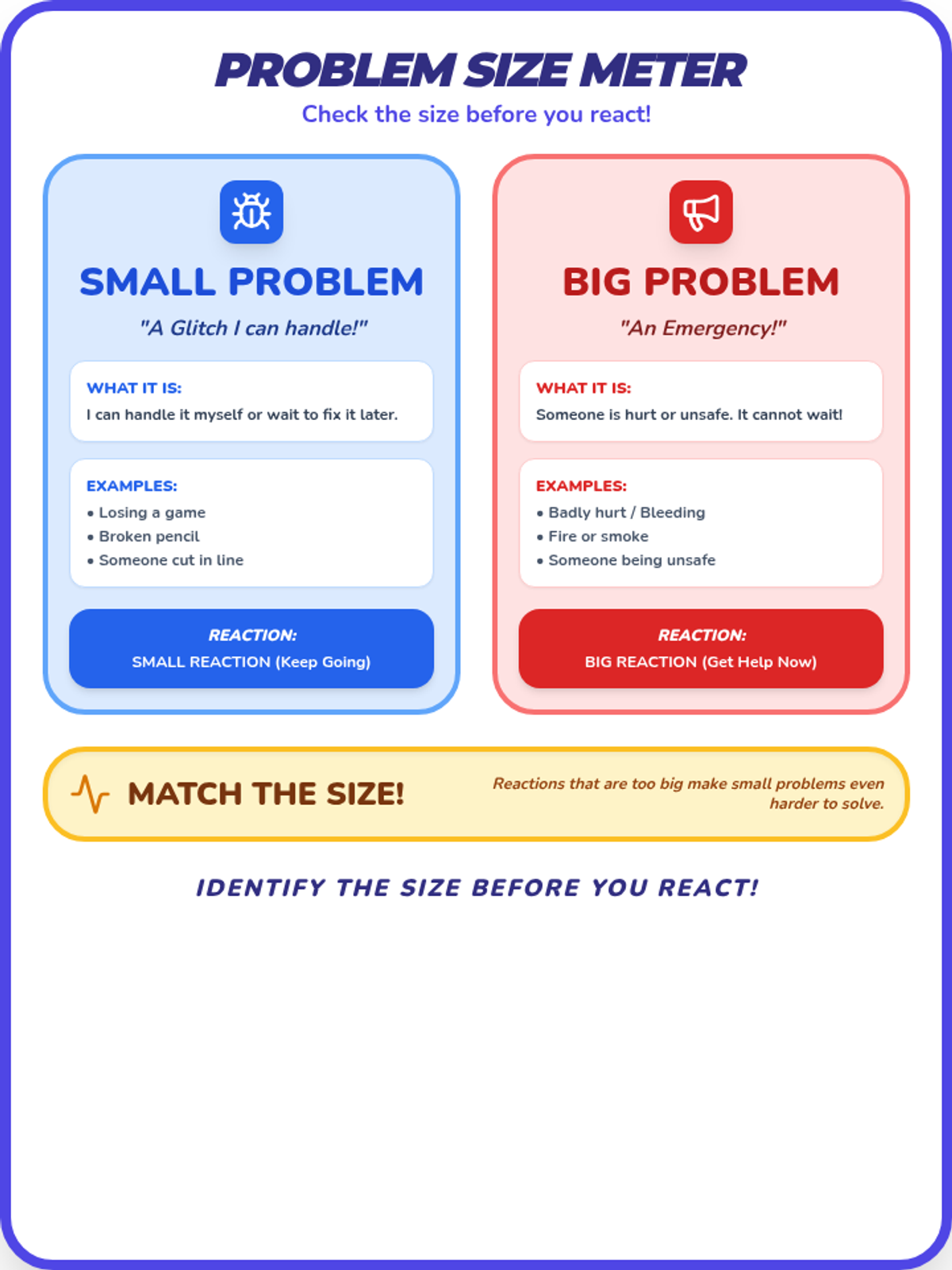
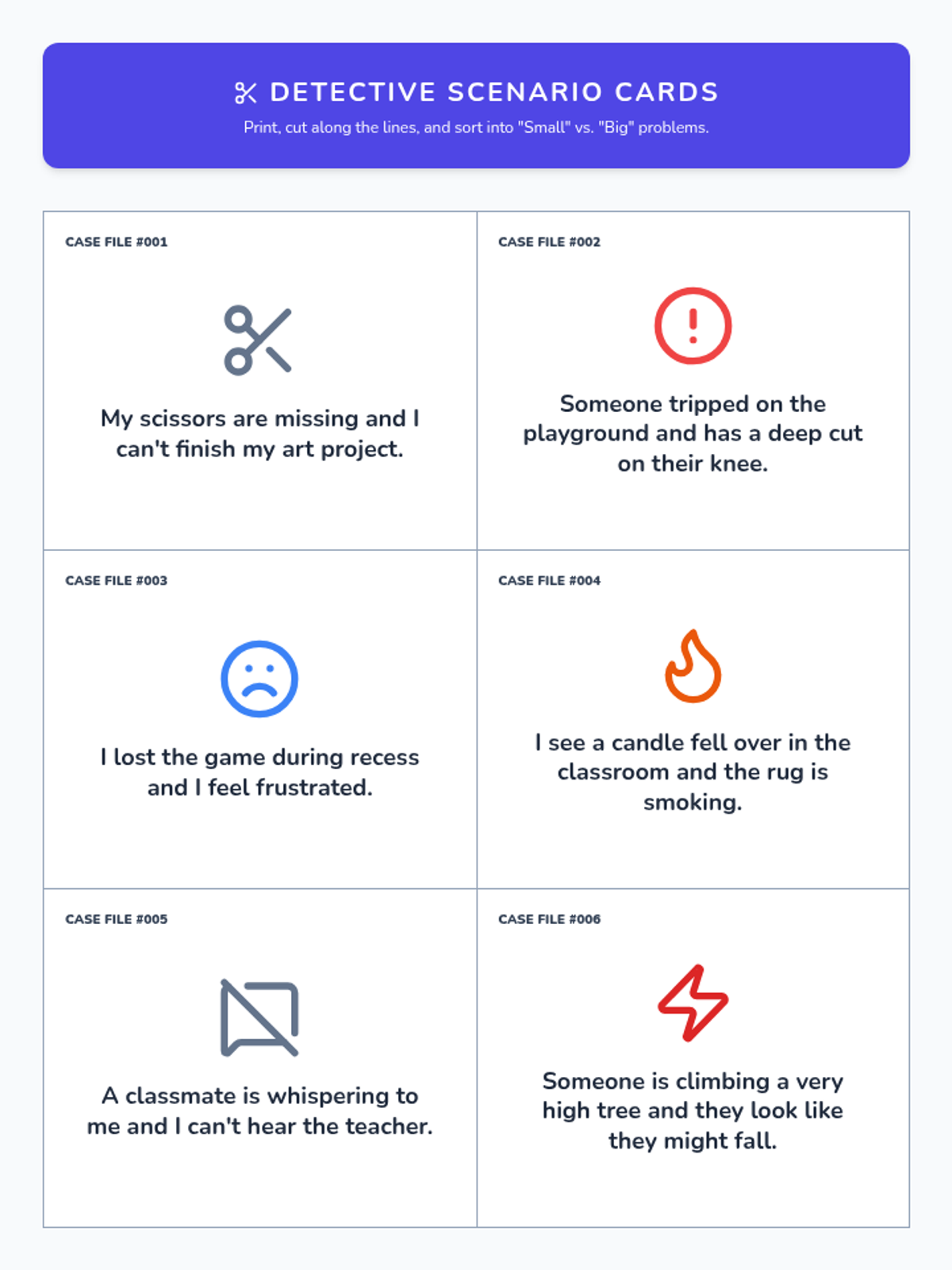
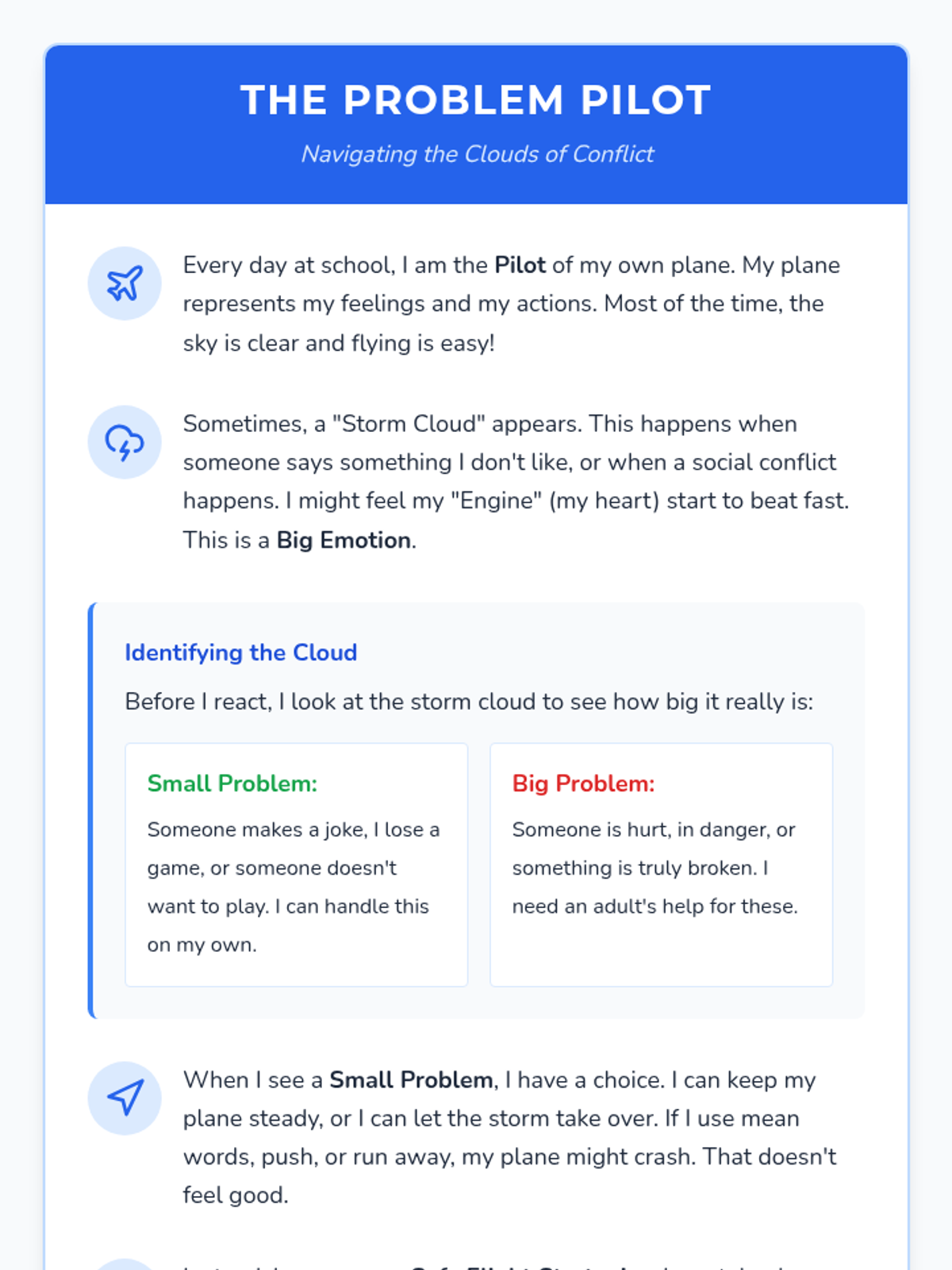
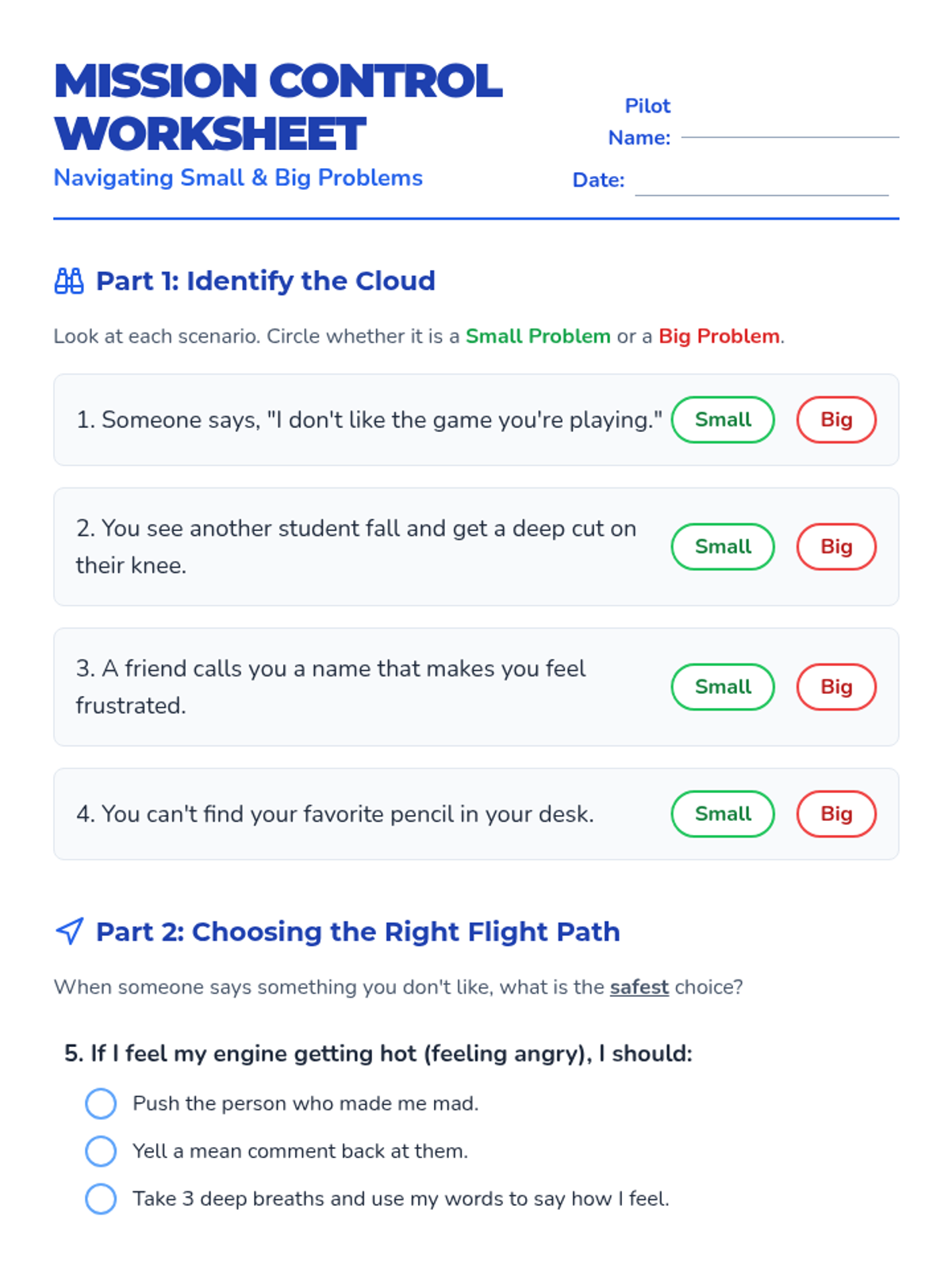
A lesson designed for K-4 students to distinguish between small problems they can handle independently and big problems that require immediate adult assistance. Students will learn to identify the 'size' of a problem to choose the appropriate reaction and coping strategy.
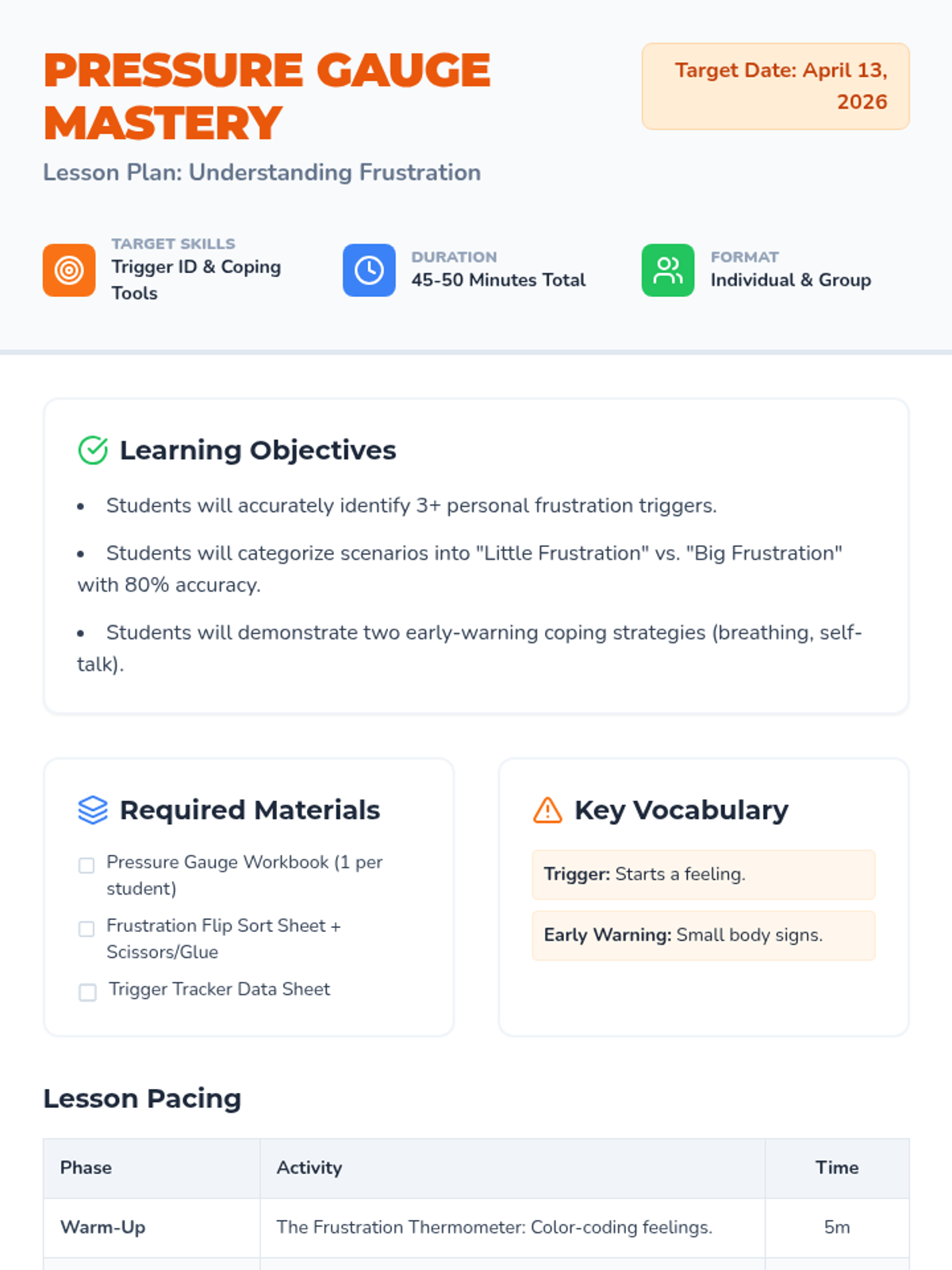
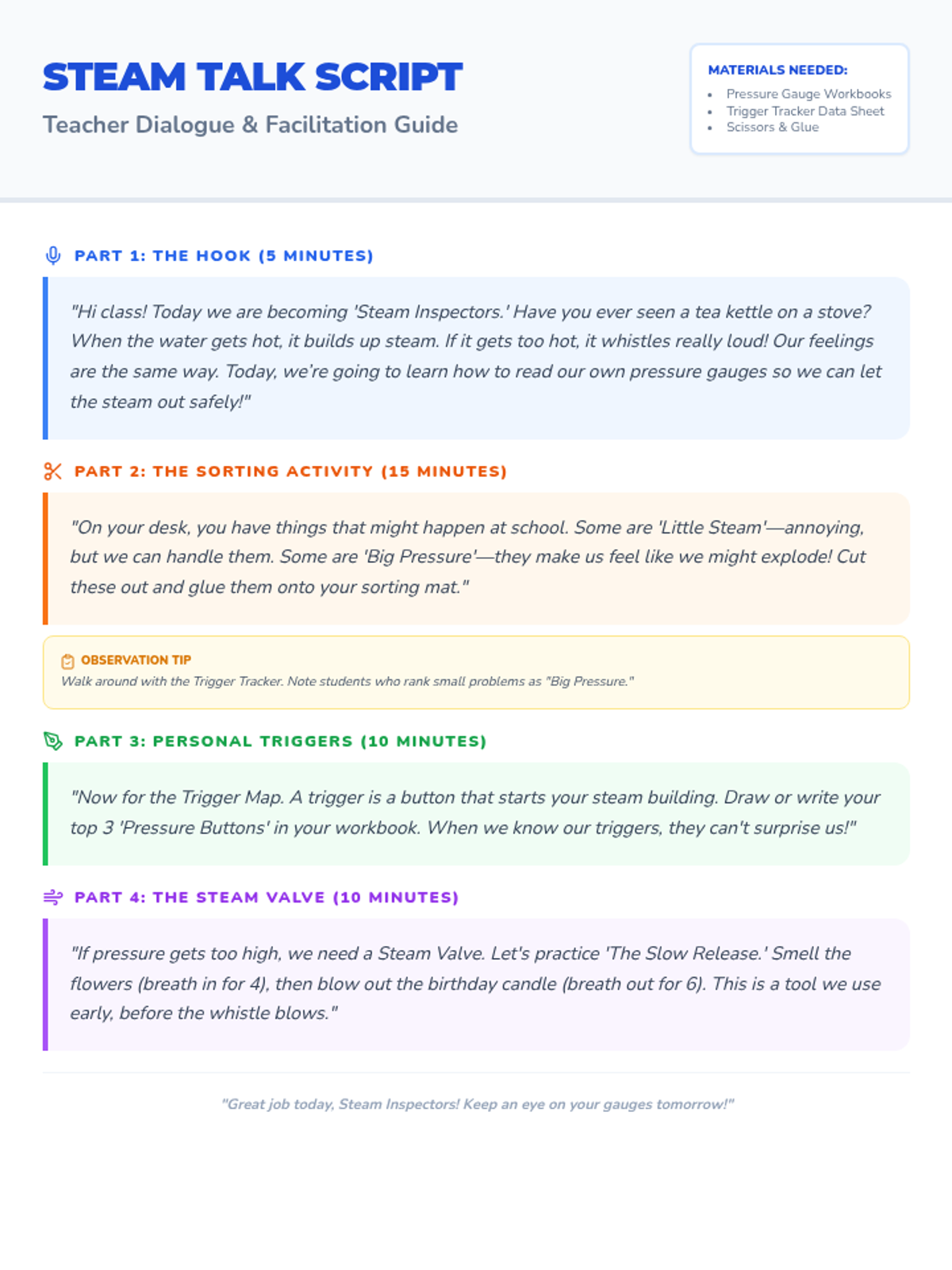
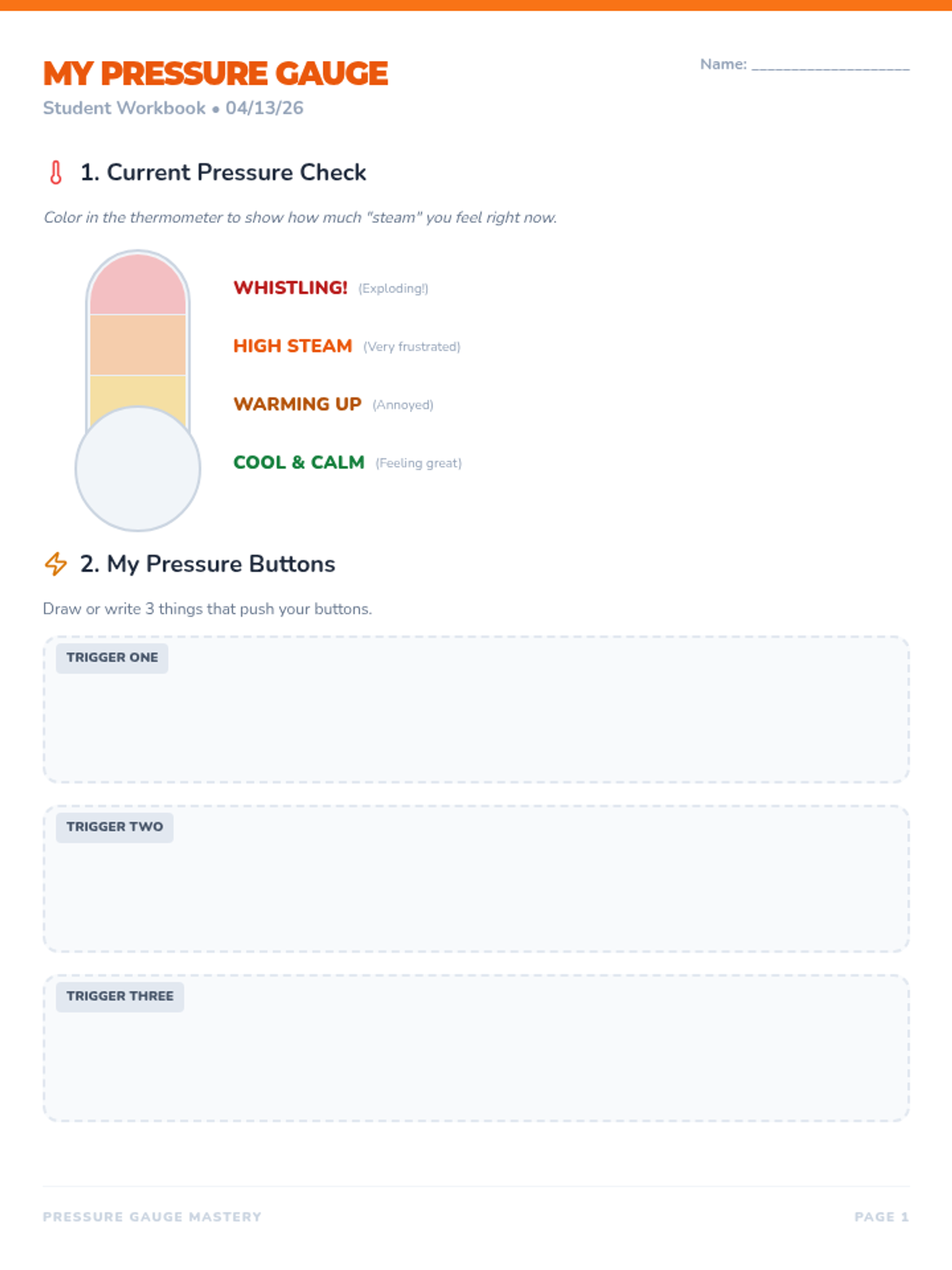
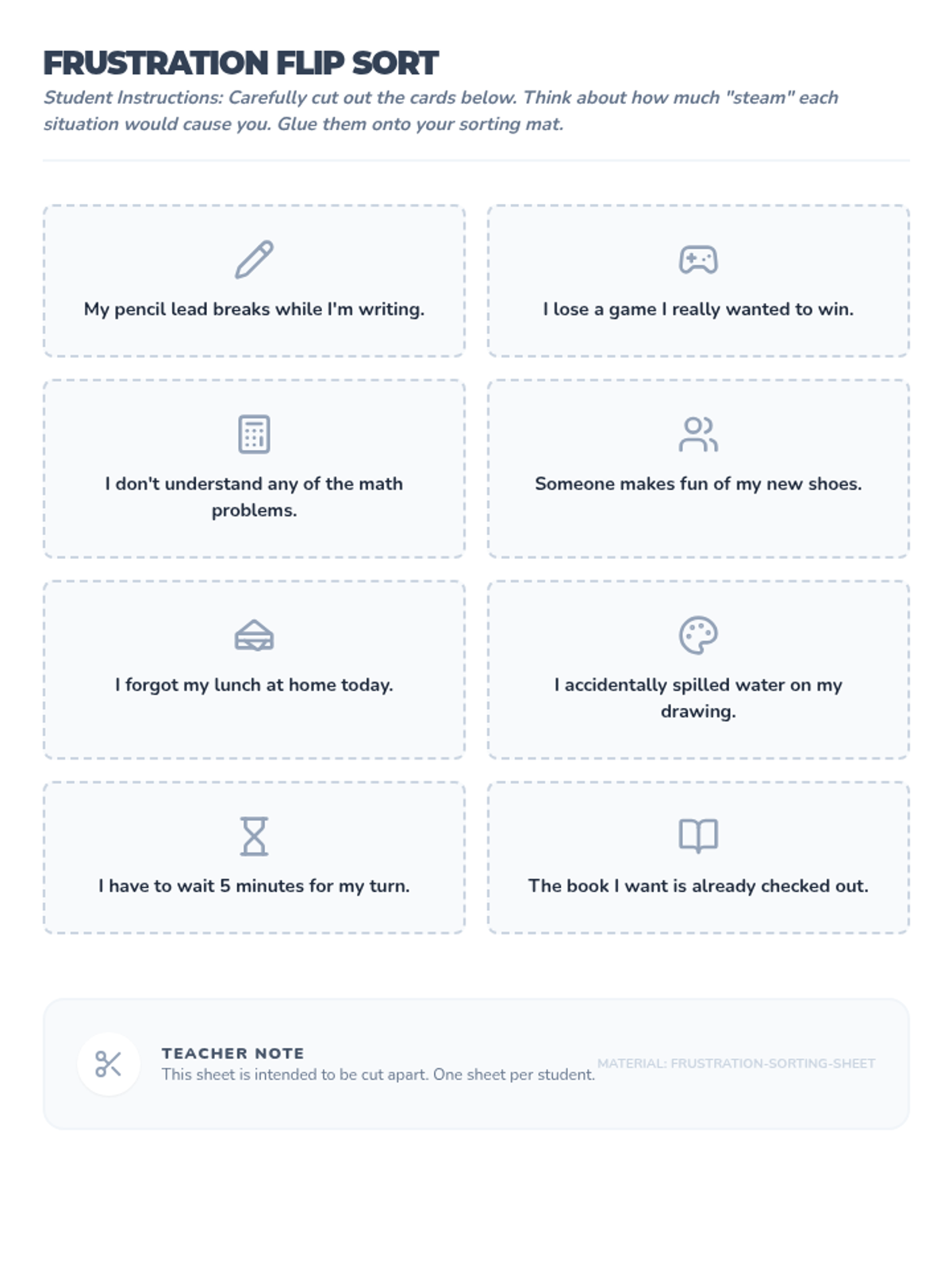
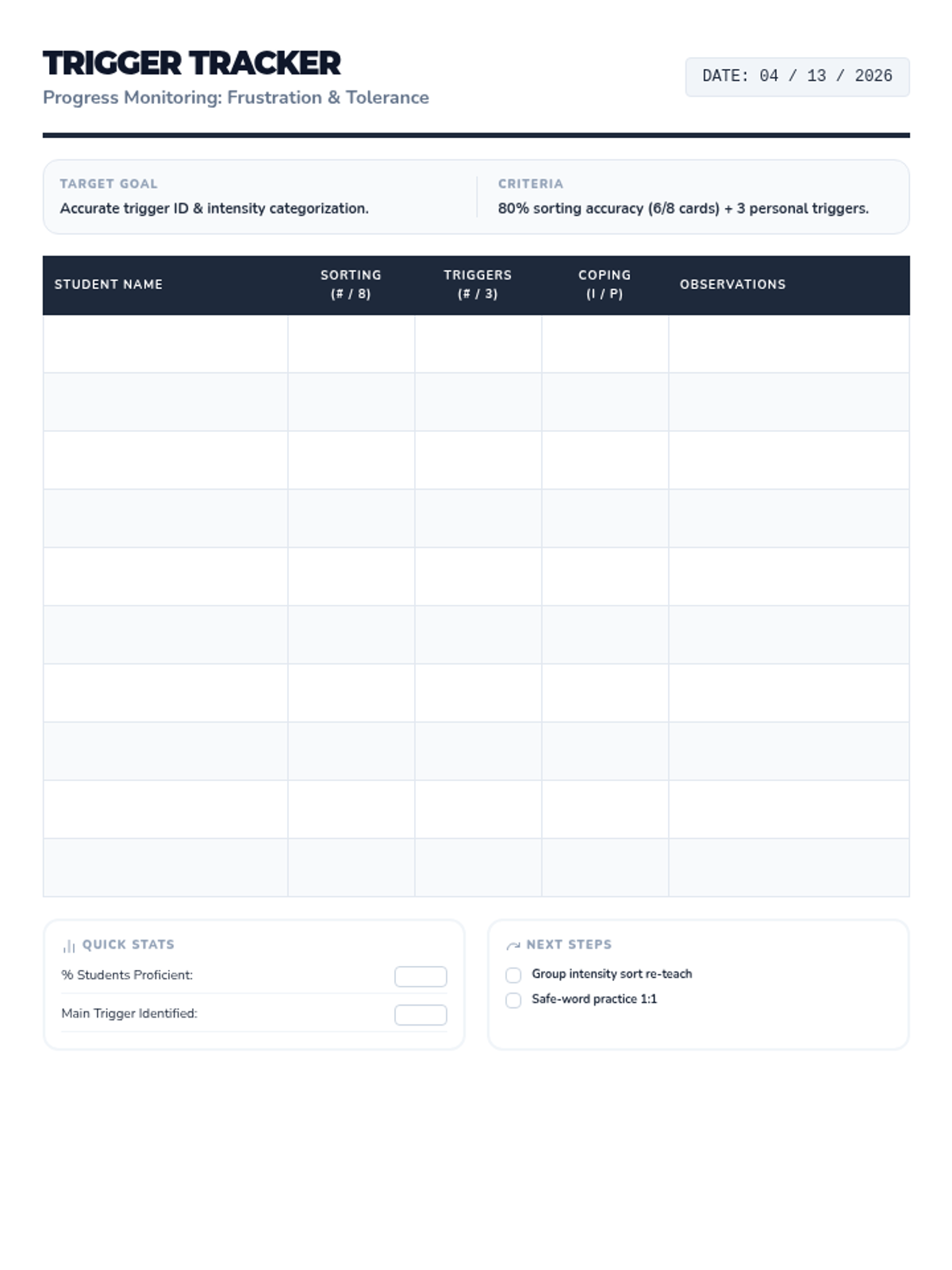
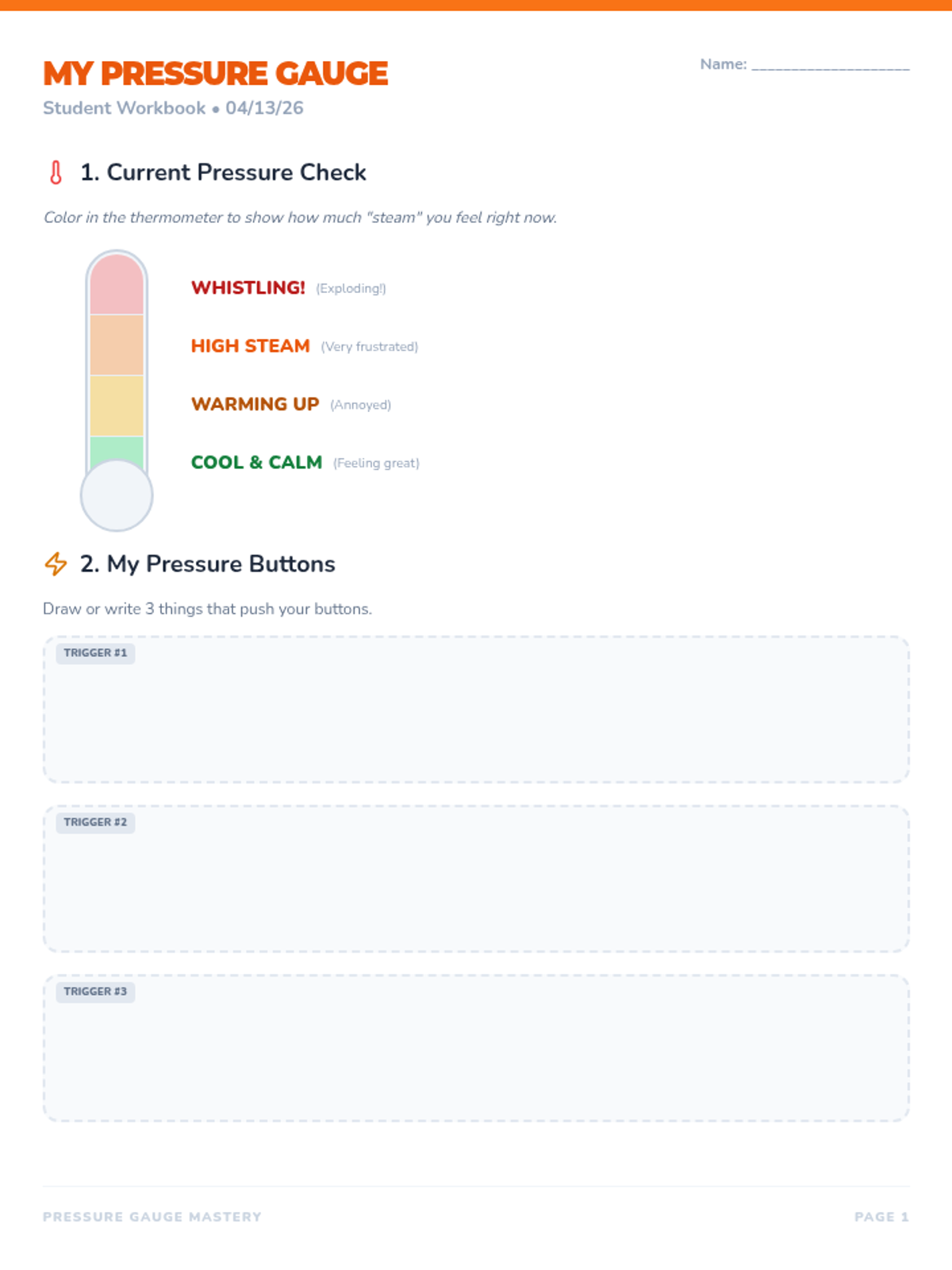
A comprehensive lesson on identifying frustration triggers and developing early-intervention coping strategies. Students learn to categorize frustration levels and match them with appropriate tools to maintain emotional regulation.
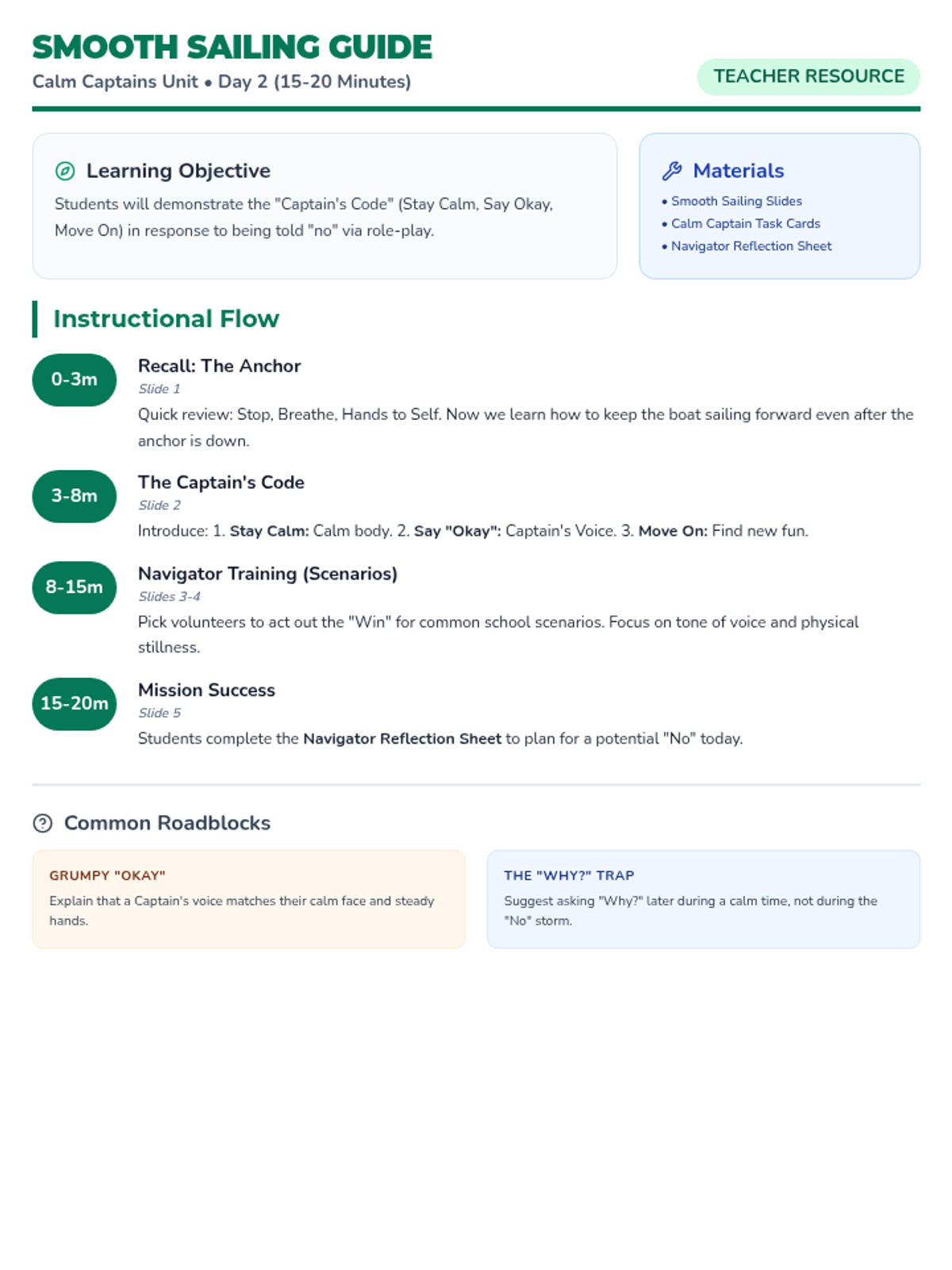
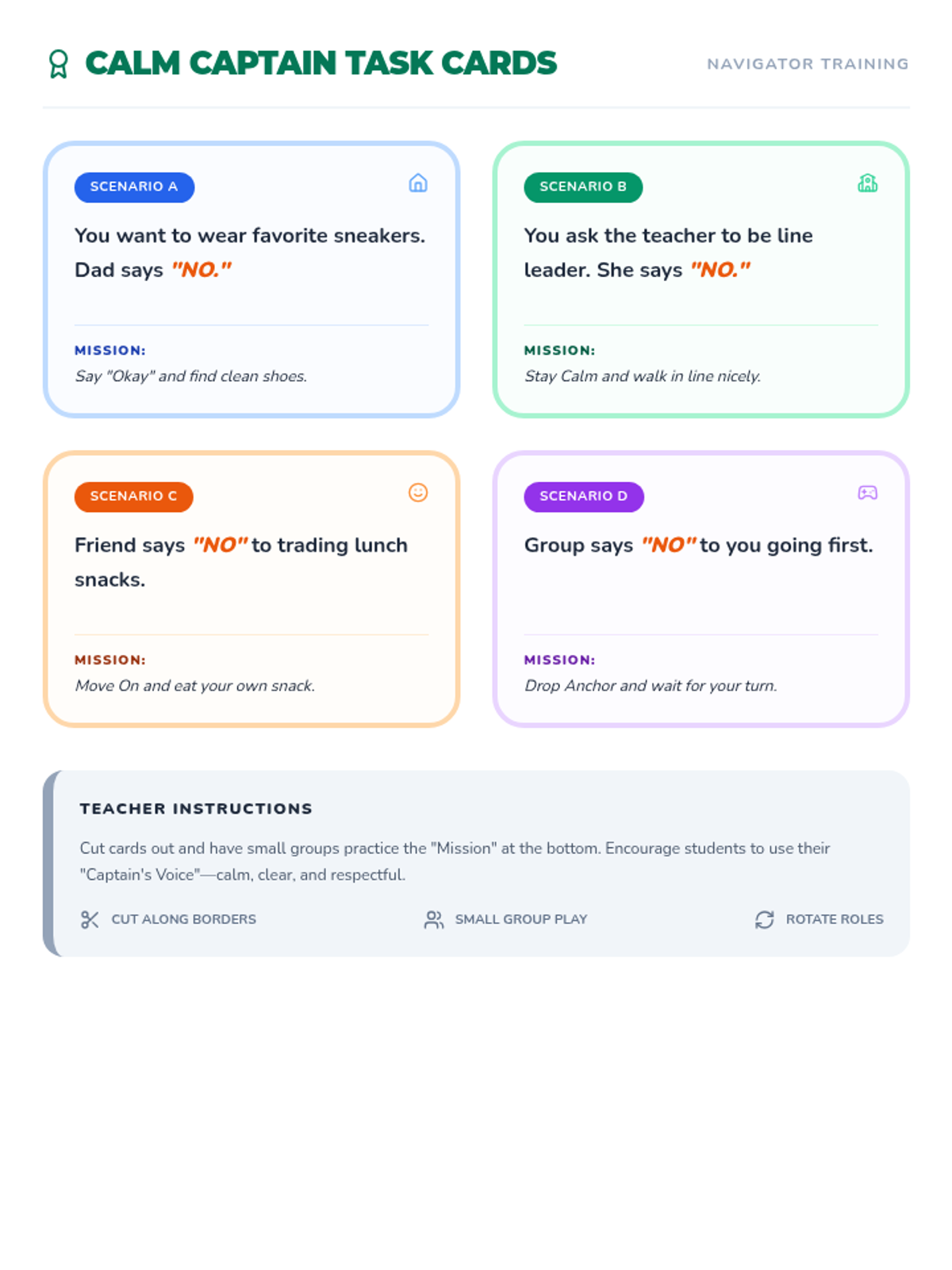
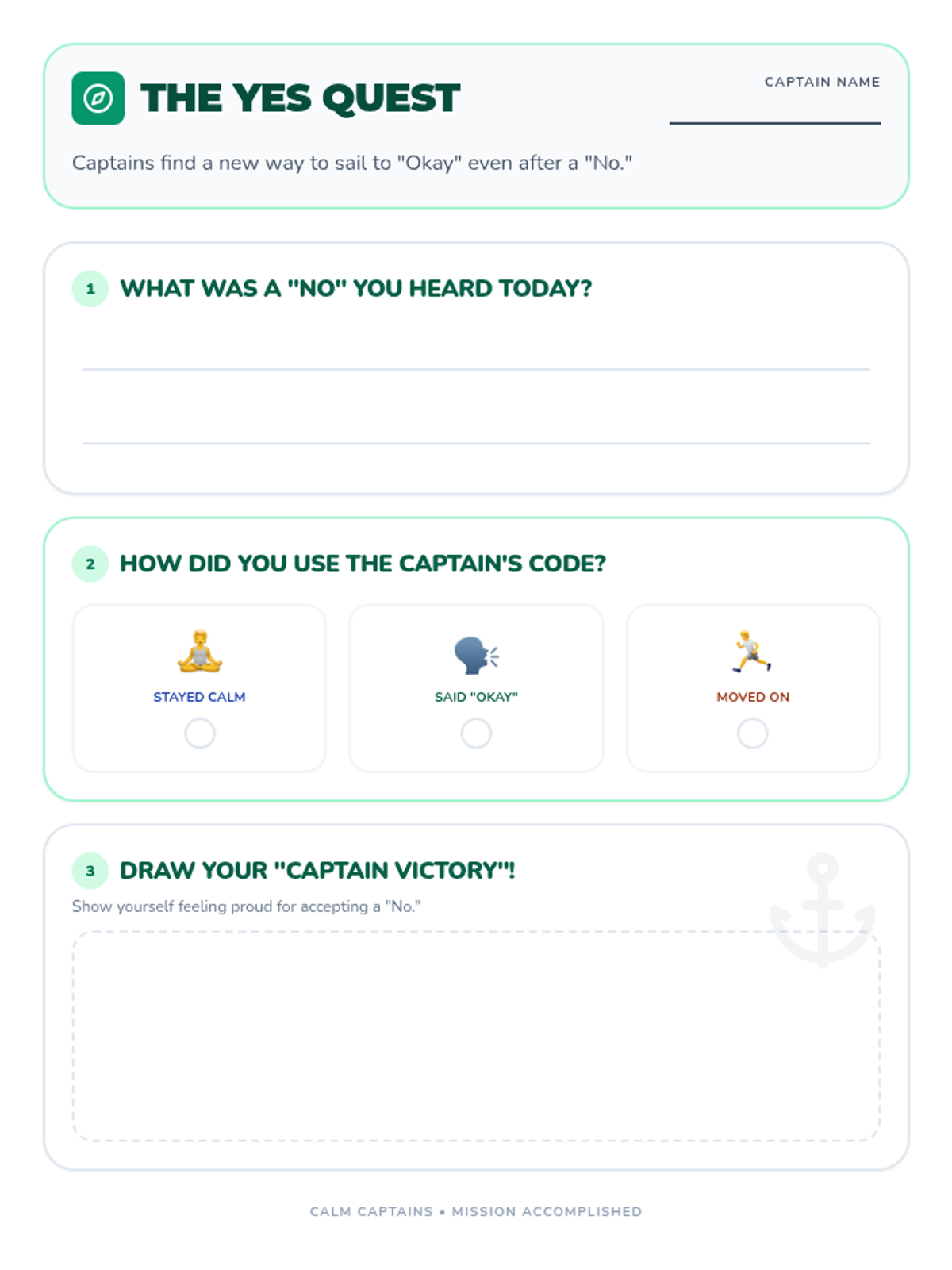
Students practice three specific strategies for accepting "no" (Stay Calm, Say Okay, Move On) through role-play and reflective activities.
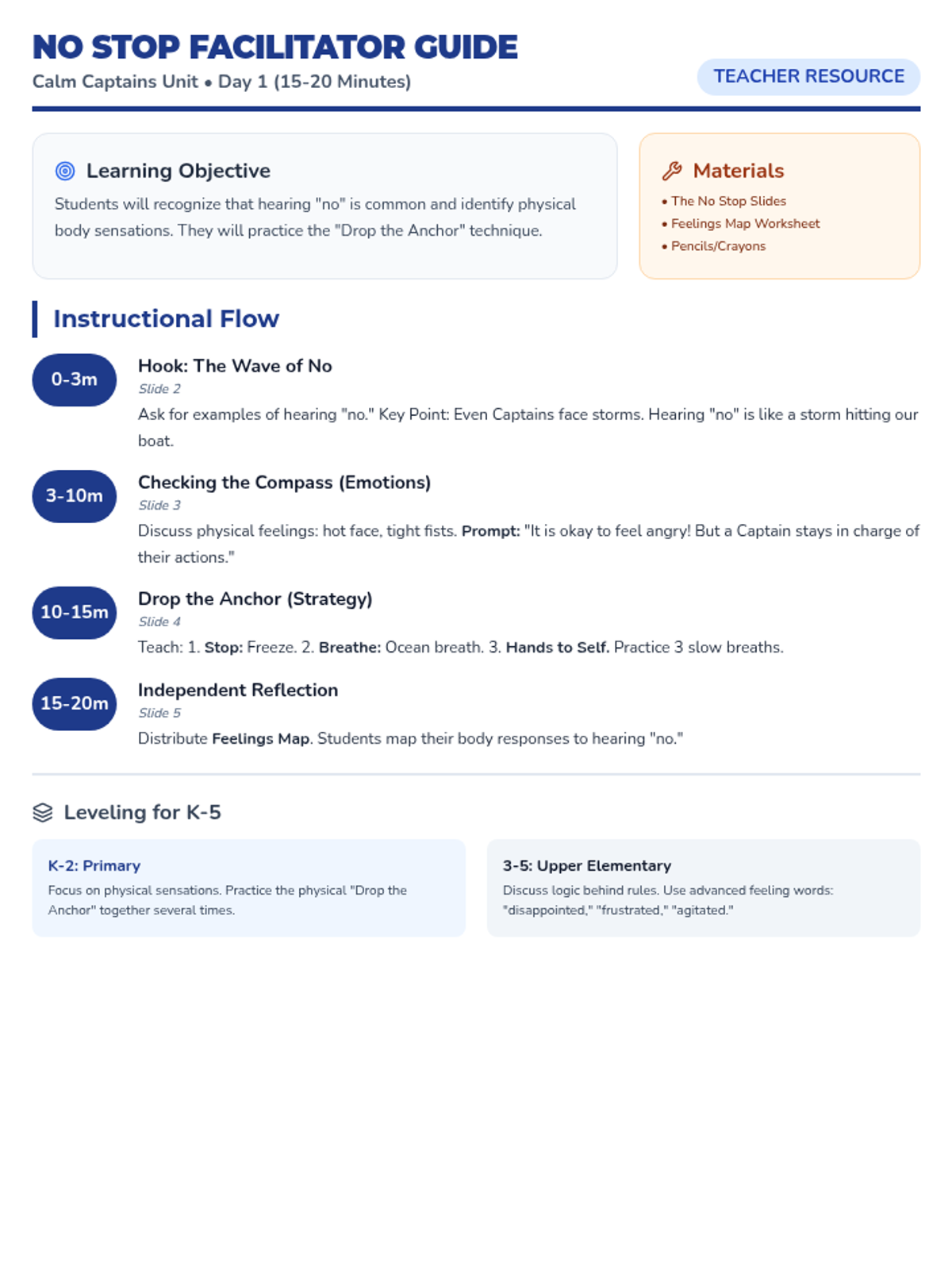
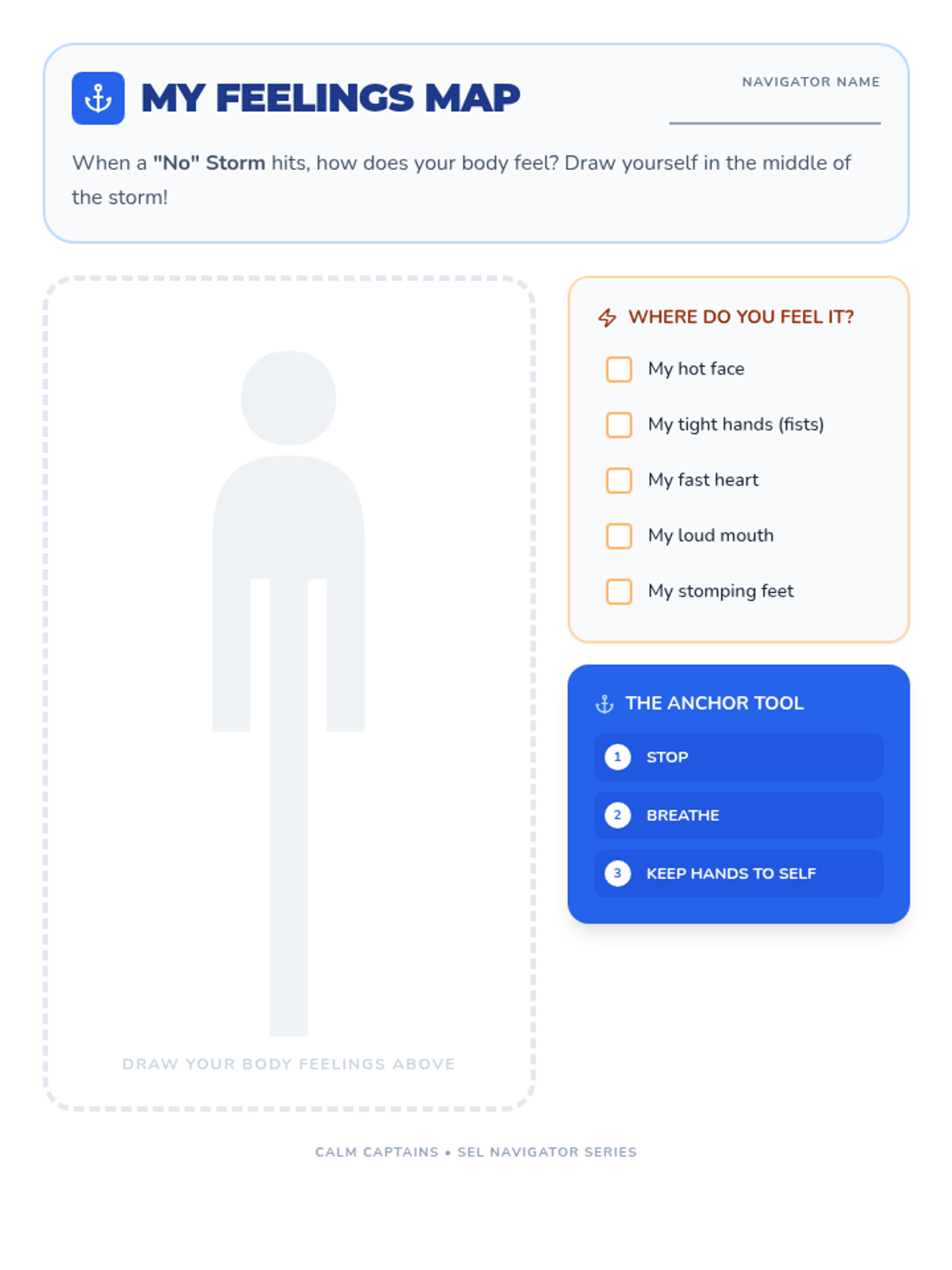
Students identify that hearing "no" is a common experience and explore the feelings that arise when they don't get what they want. They learn the 'Stop and Breathe' technique.
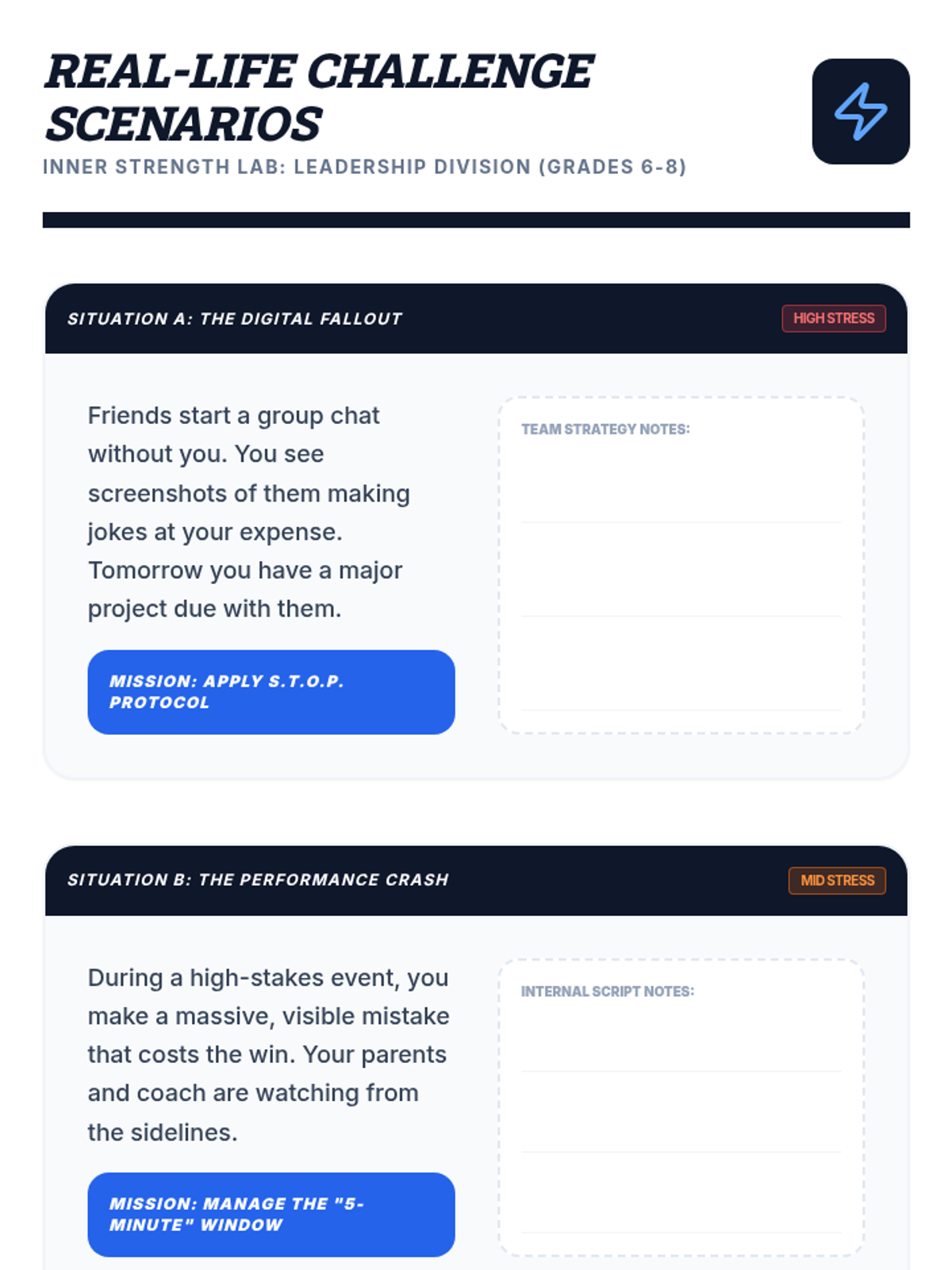
Equips middle schoolers (6th-8th) with strategies to handle complex social dynamics and personal setbacks using realistic role-play scenarios.
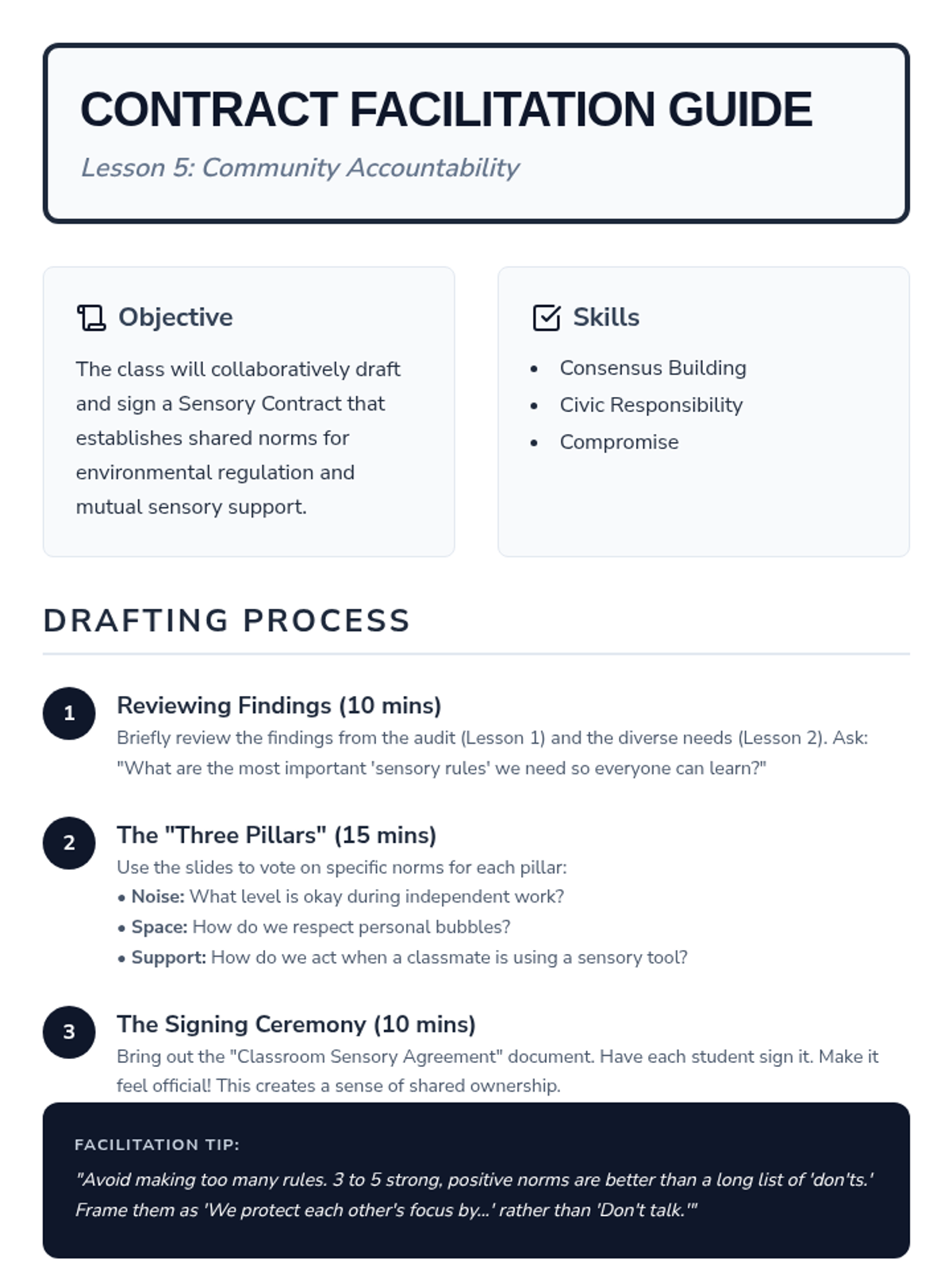
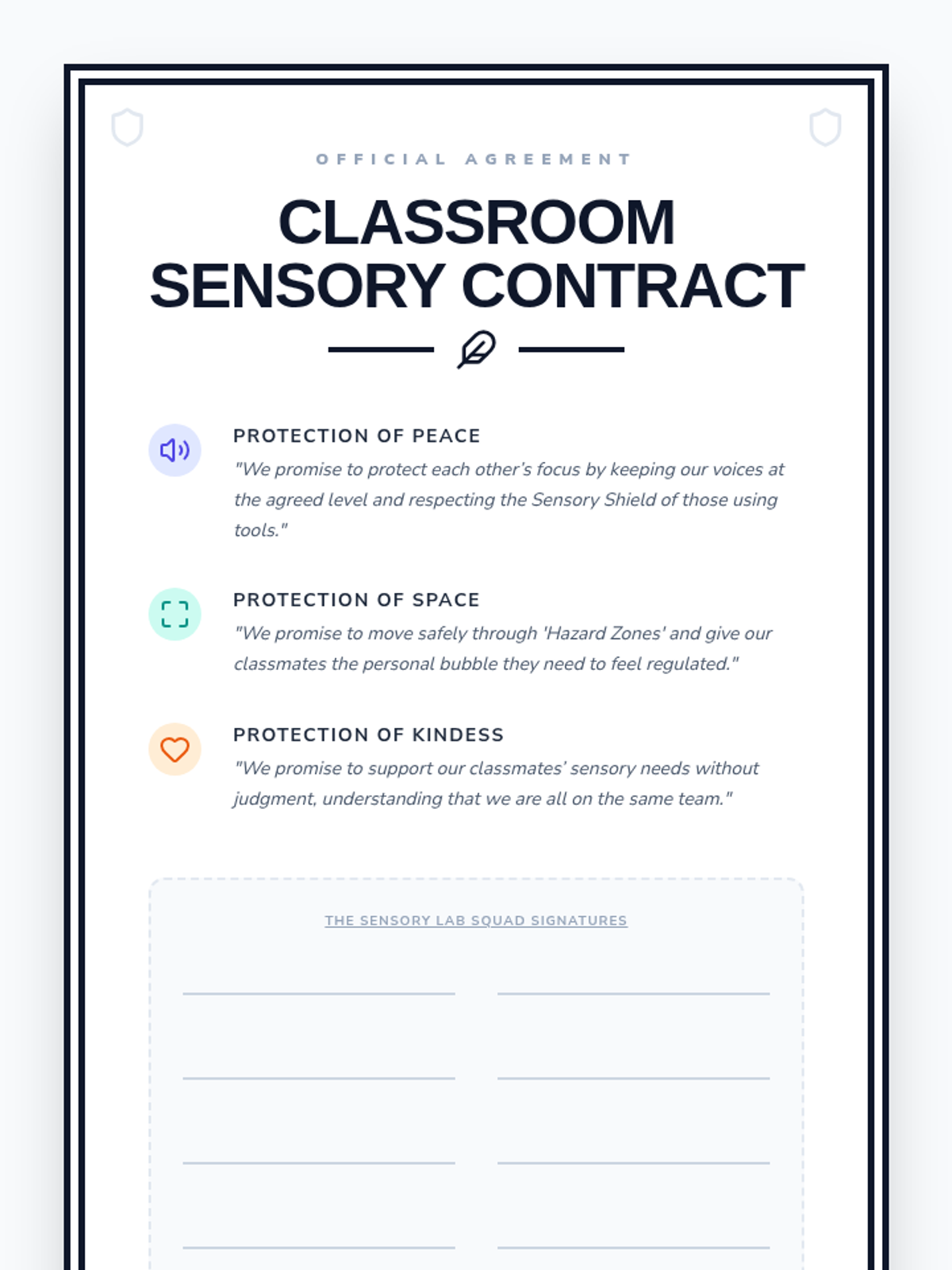
The sequence culminates in the creation of a shared classroom agreement that establishes norms for noise, space, and sensory support.
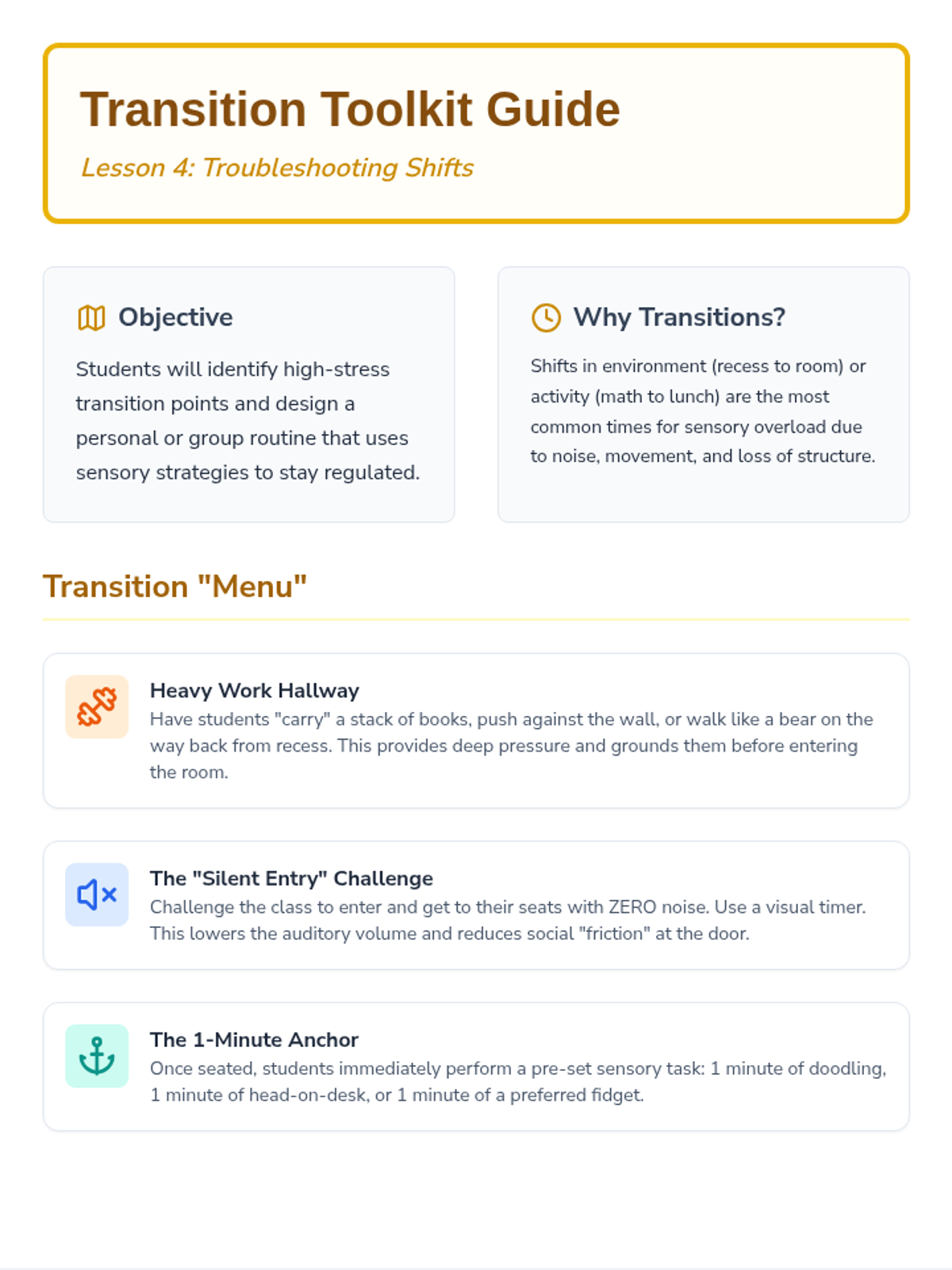
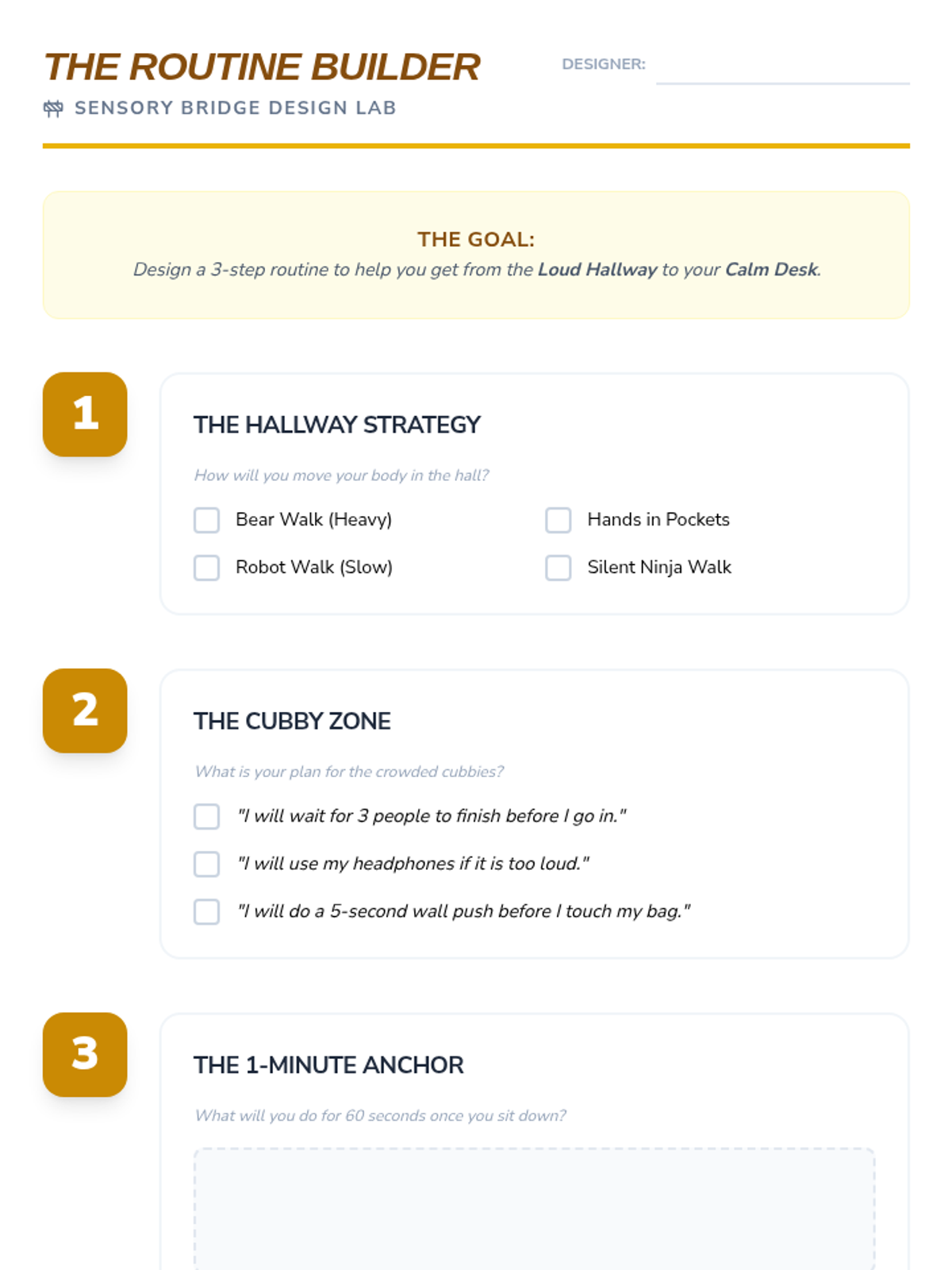
Students identify high-stress transition times and brainstorm proactive routines to maintain sensory regulation when moving between activities.
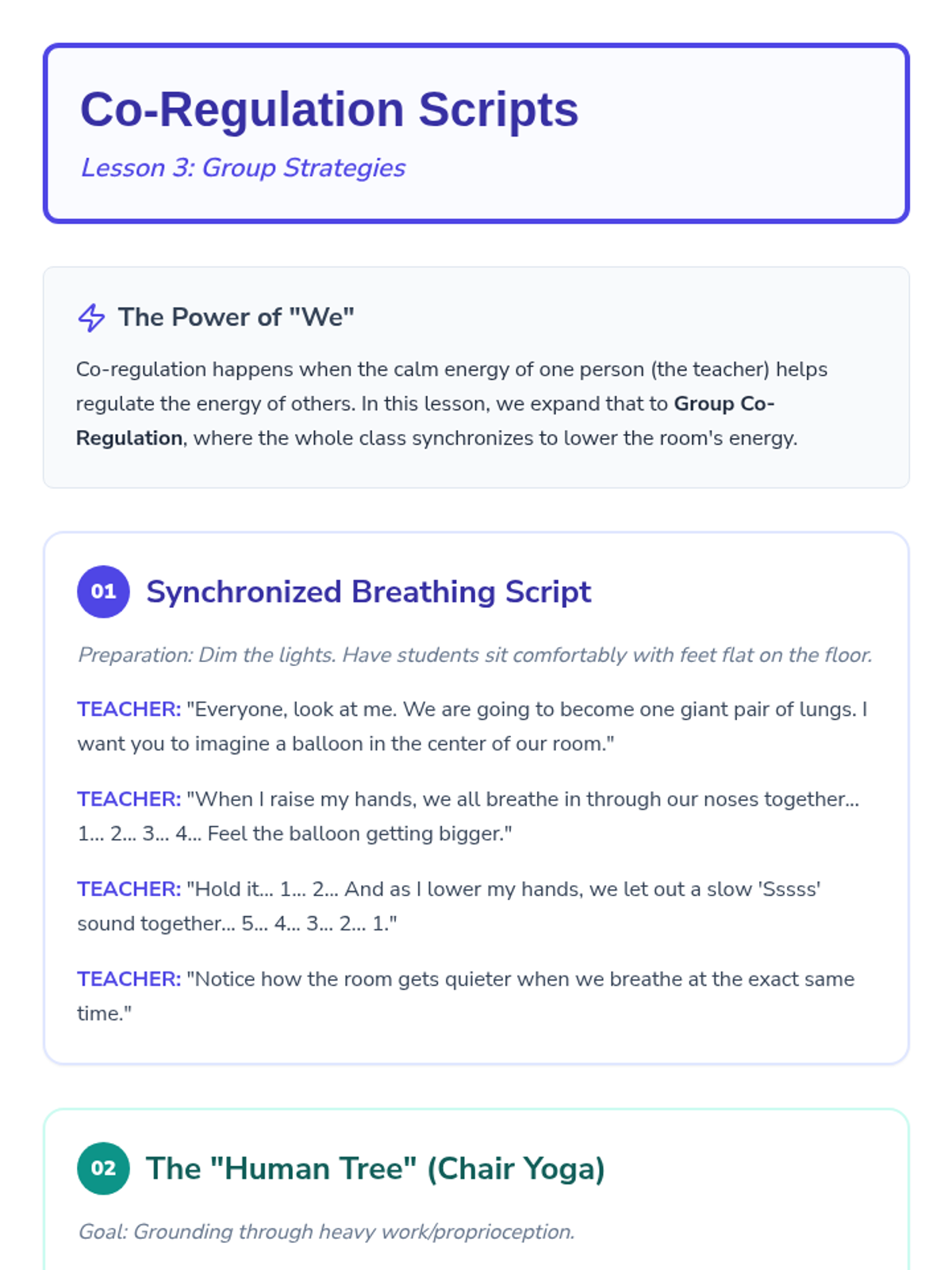
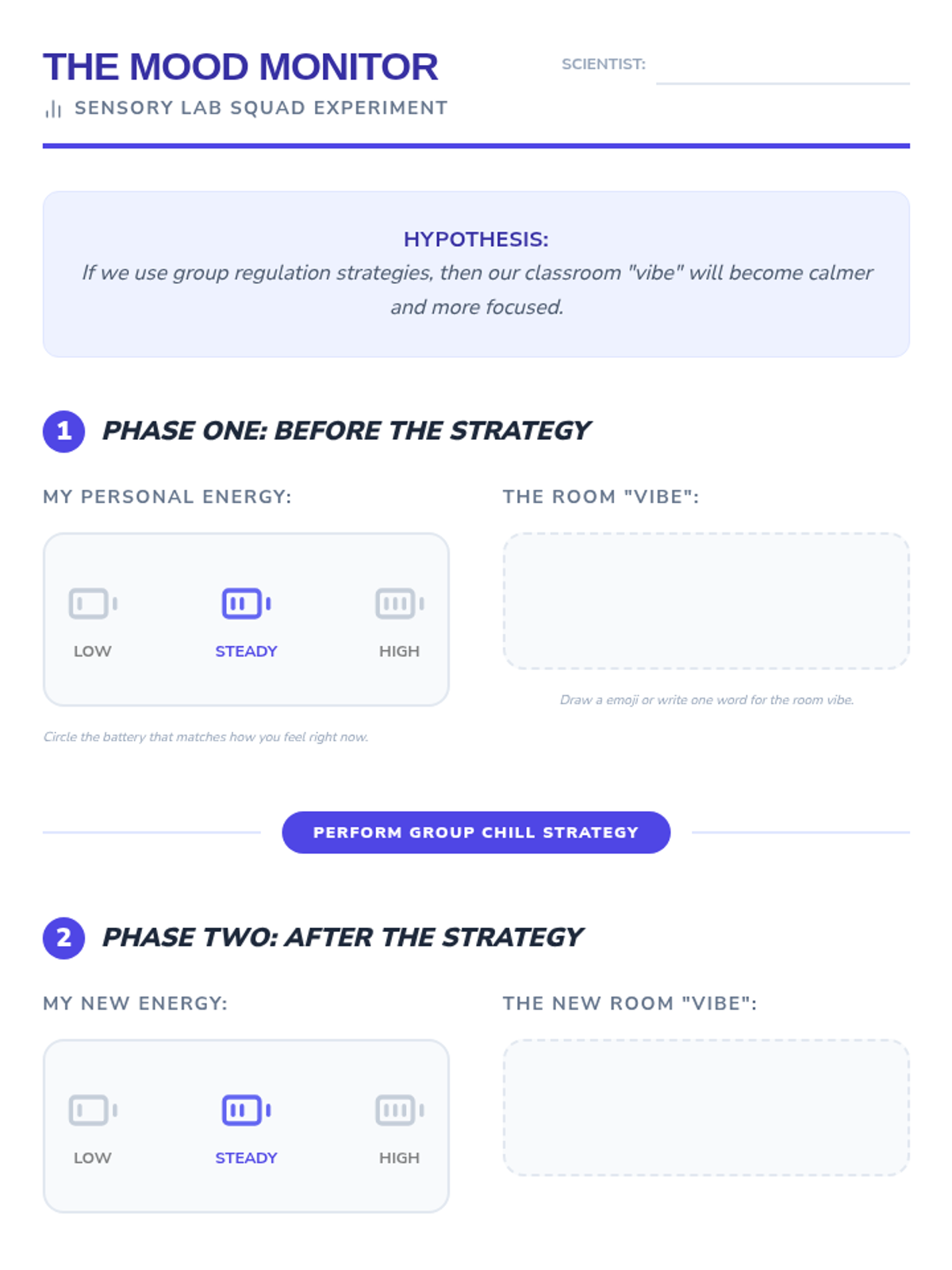
The class practices whole-group regulation techniques like synchronized breathing and chair yoga to understand how collective action affects the energy of the room.
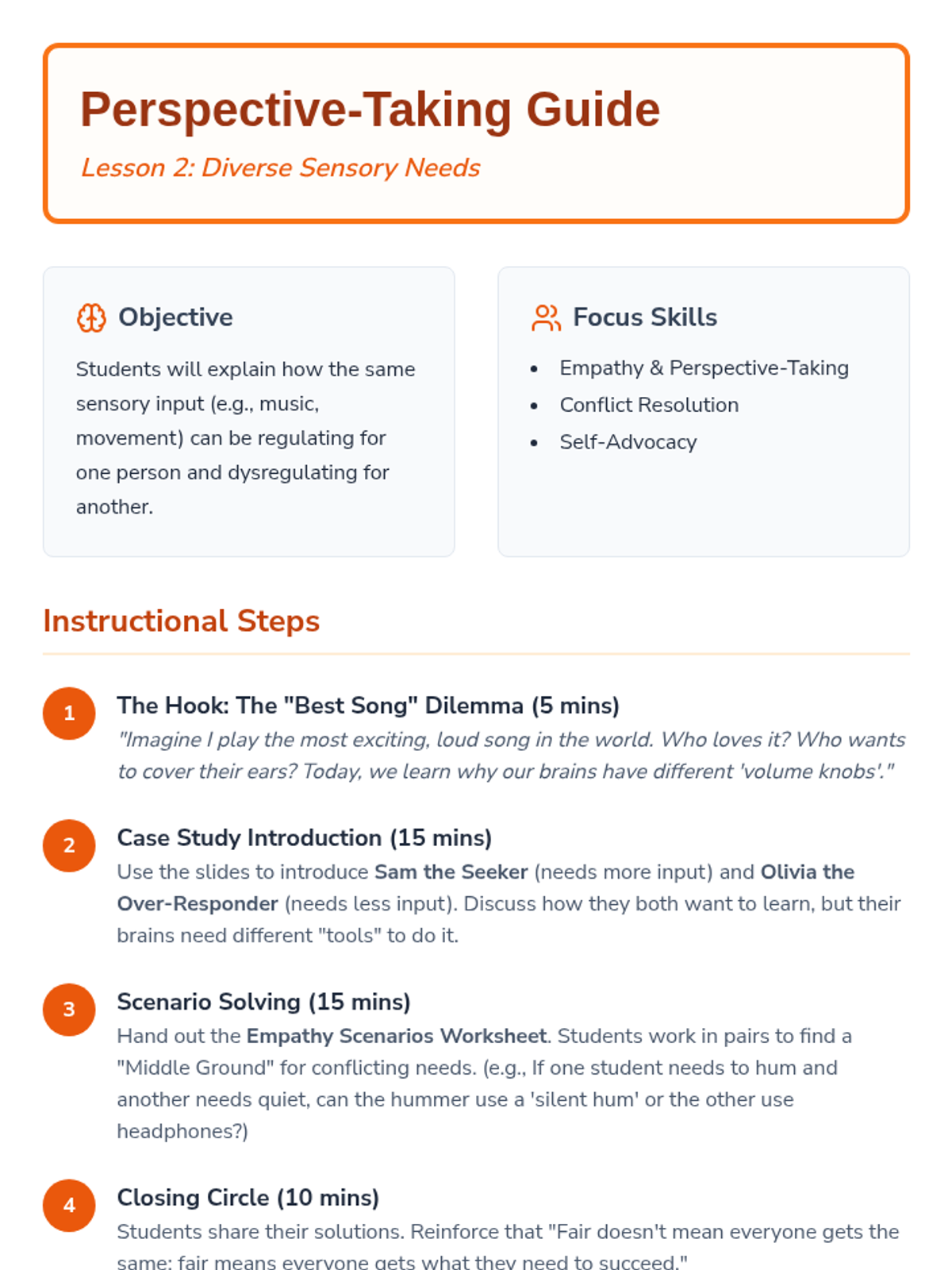
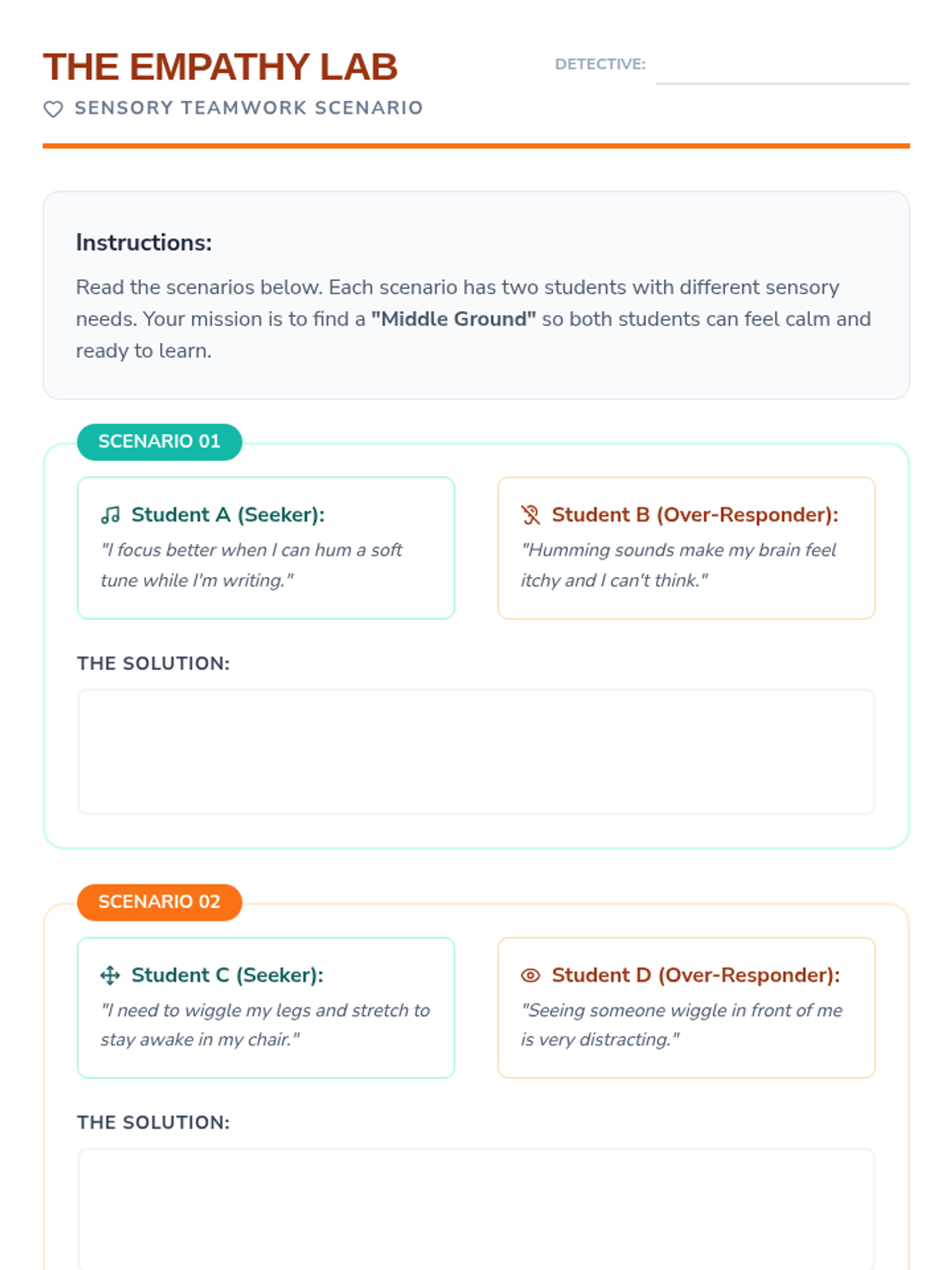
Students explore how sensory preferences vary between individuals and practice perspective-taking to understand and respect classmates' different needs.
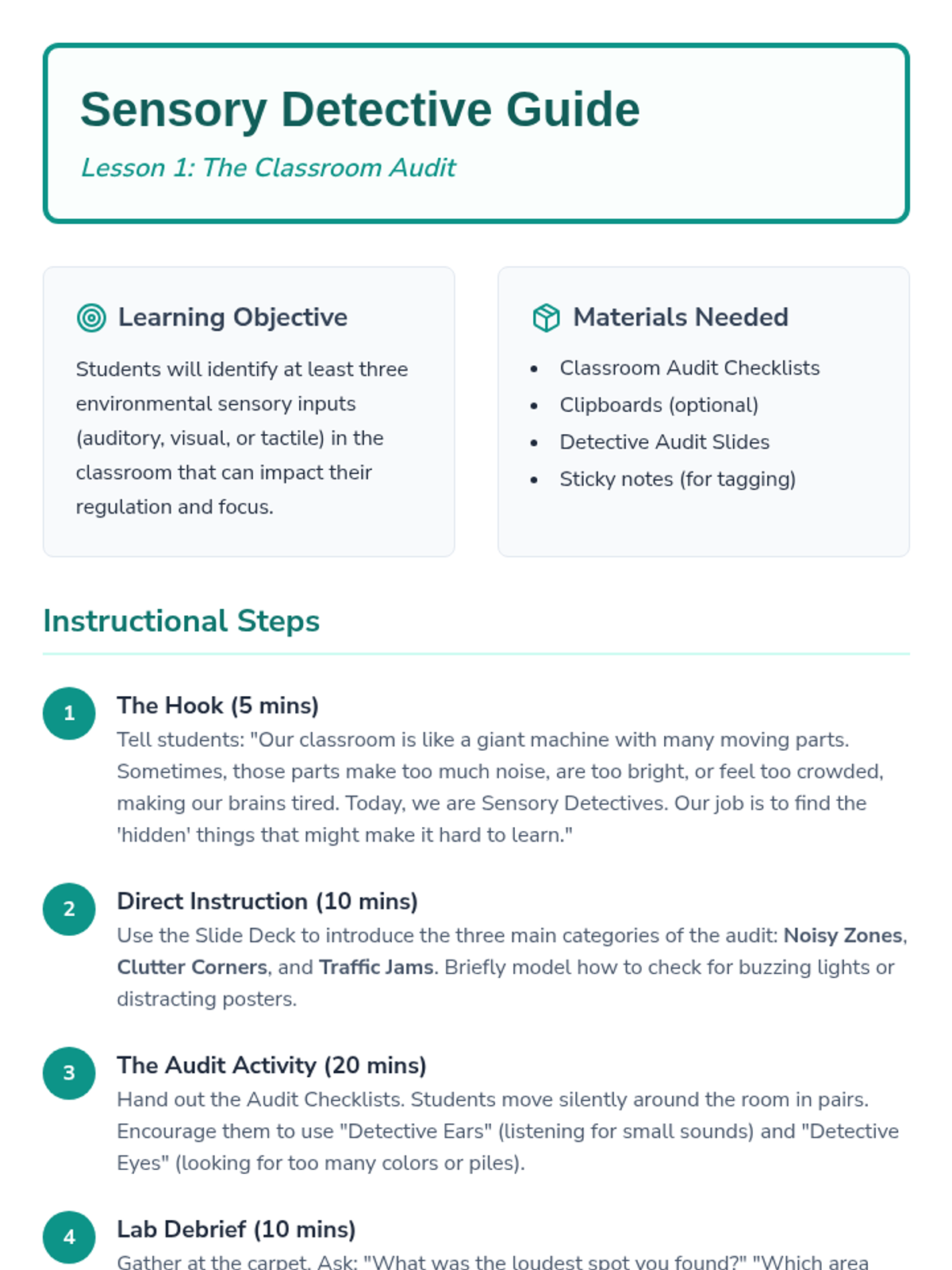
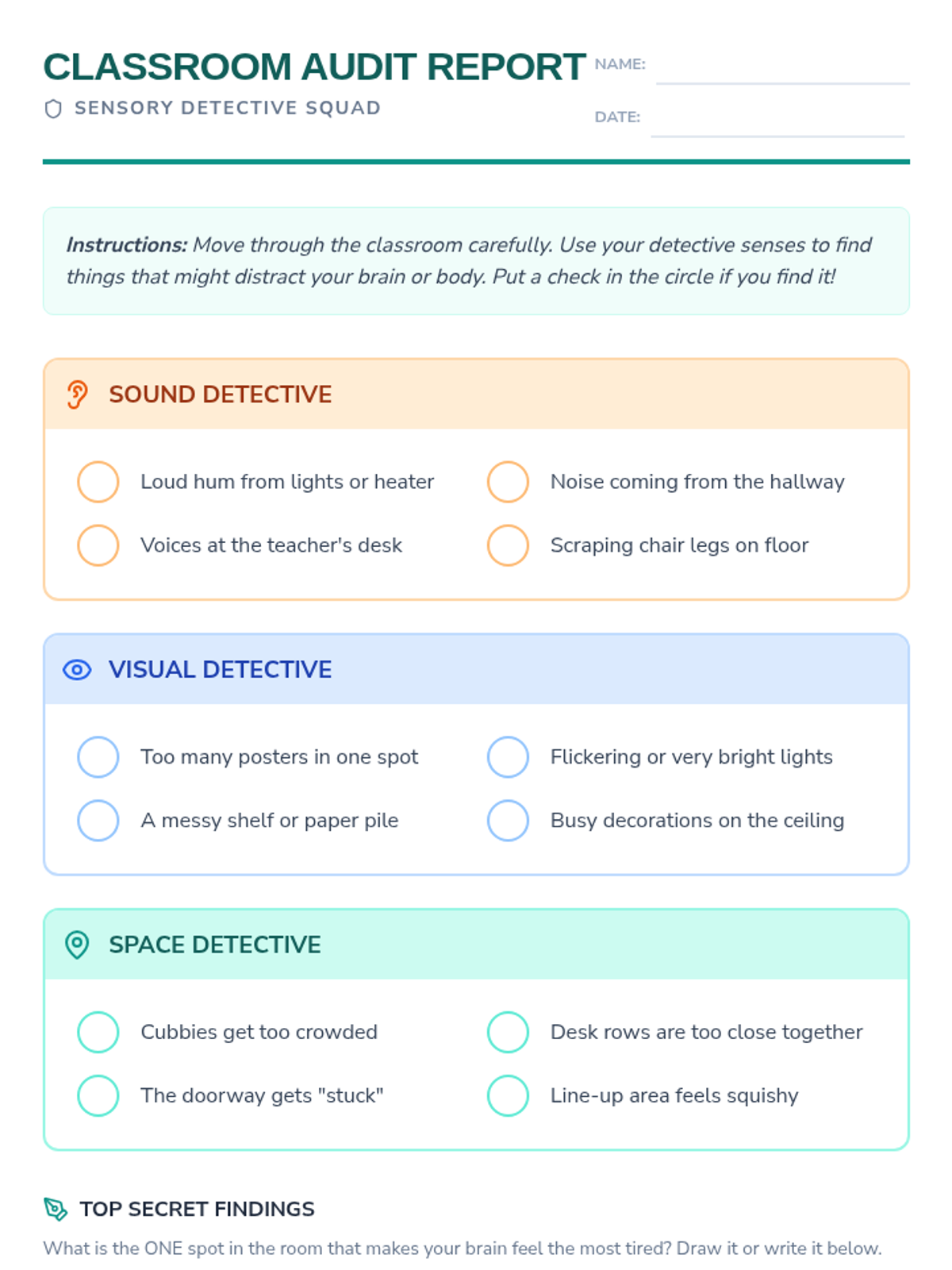
Students conduct a hands-on audit of their classroom to identify environmental sensory triggers and discuss how these factors impact their ability to focus and stay calm.
A restorative behavioral intervention focused on resolving physical conflict and verbal aggression between two students through a formal agreement and daily tracking.
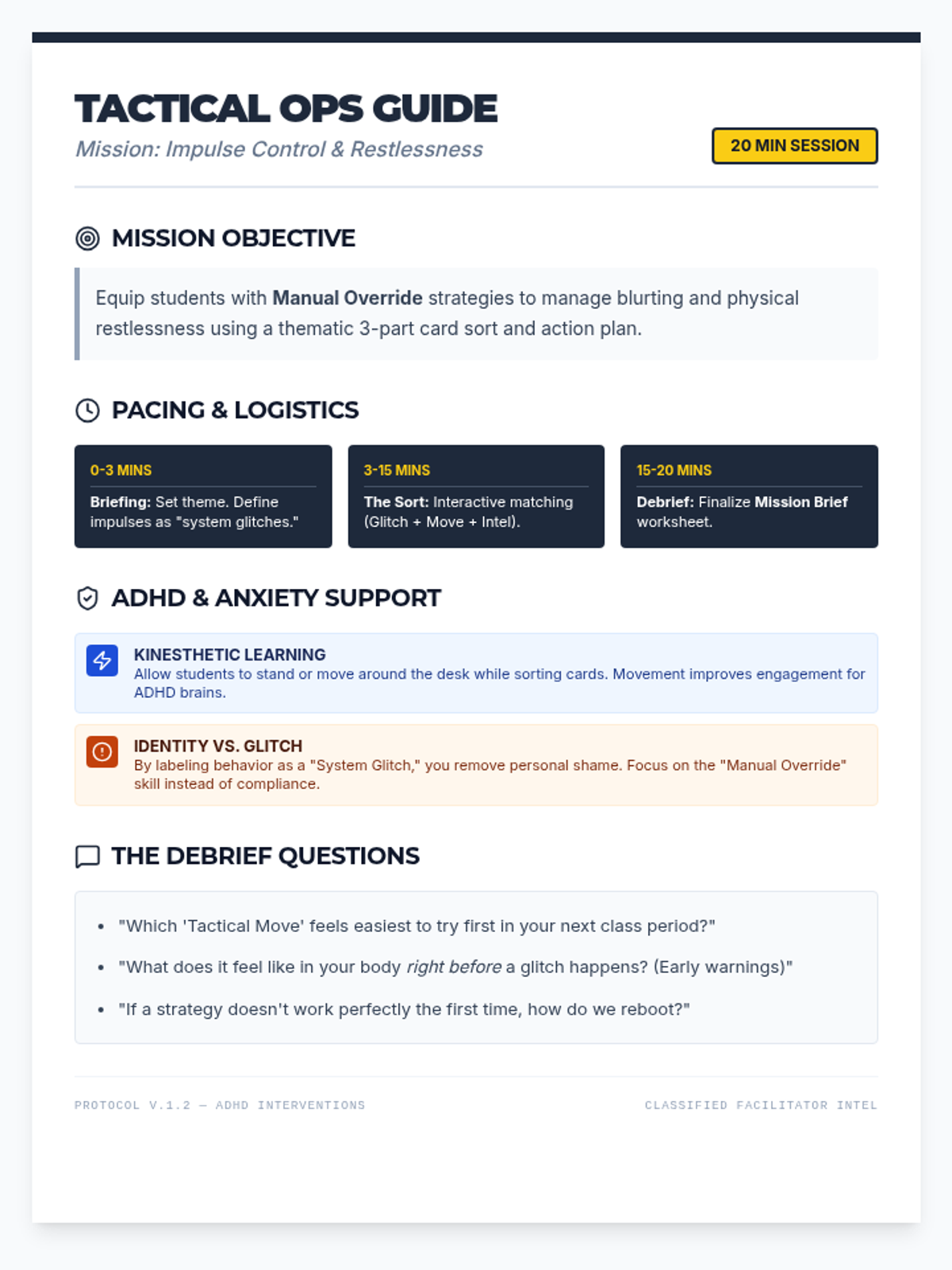
A high-energy, hockey-themed 20-minute intervention for impulse control. This lesson frames self-regulation as elite athletic discipline, transforming disruptive behaviors into 'penalties' and self-management strategies into 'pro moves' used by team captains.
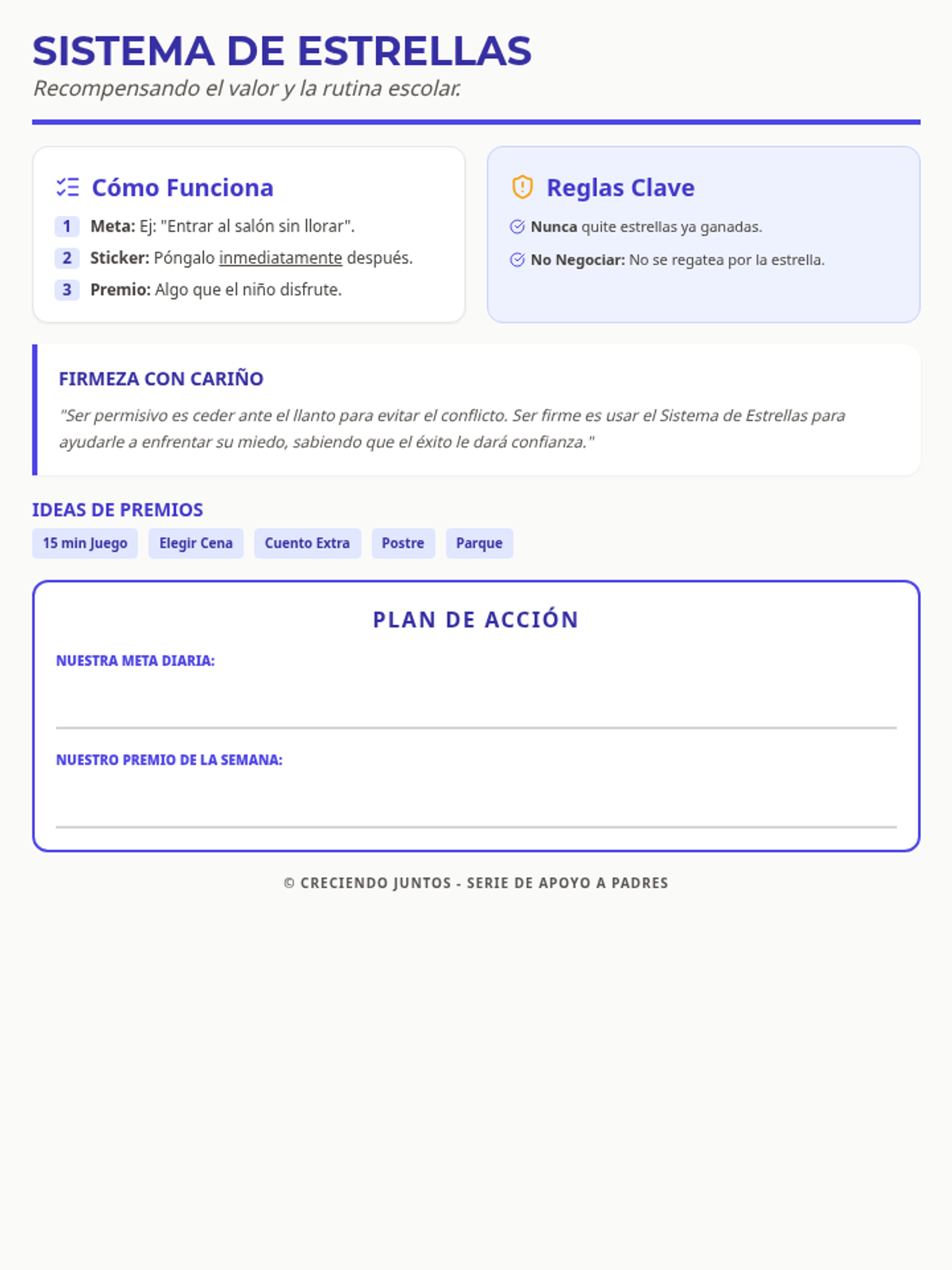
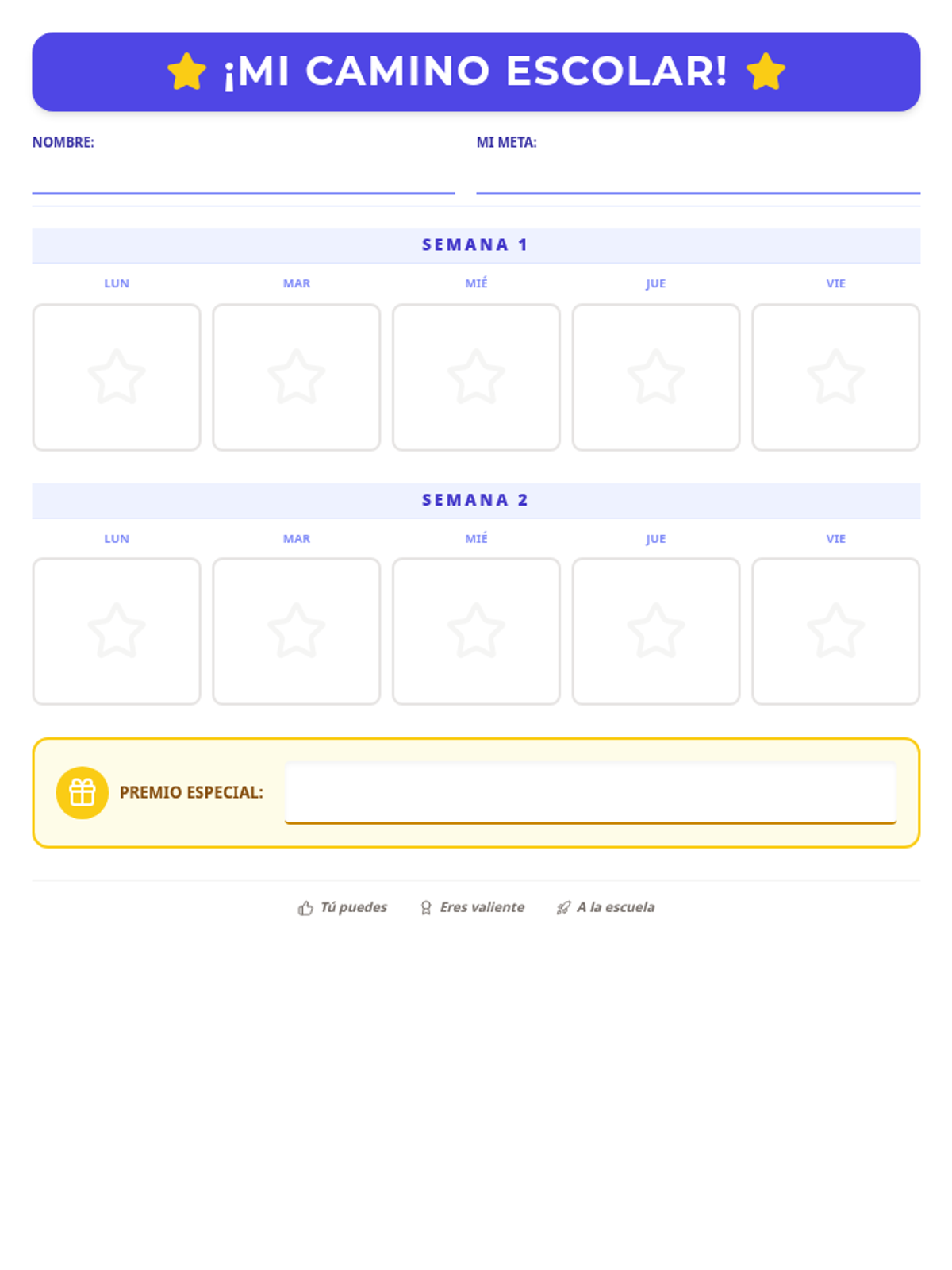
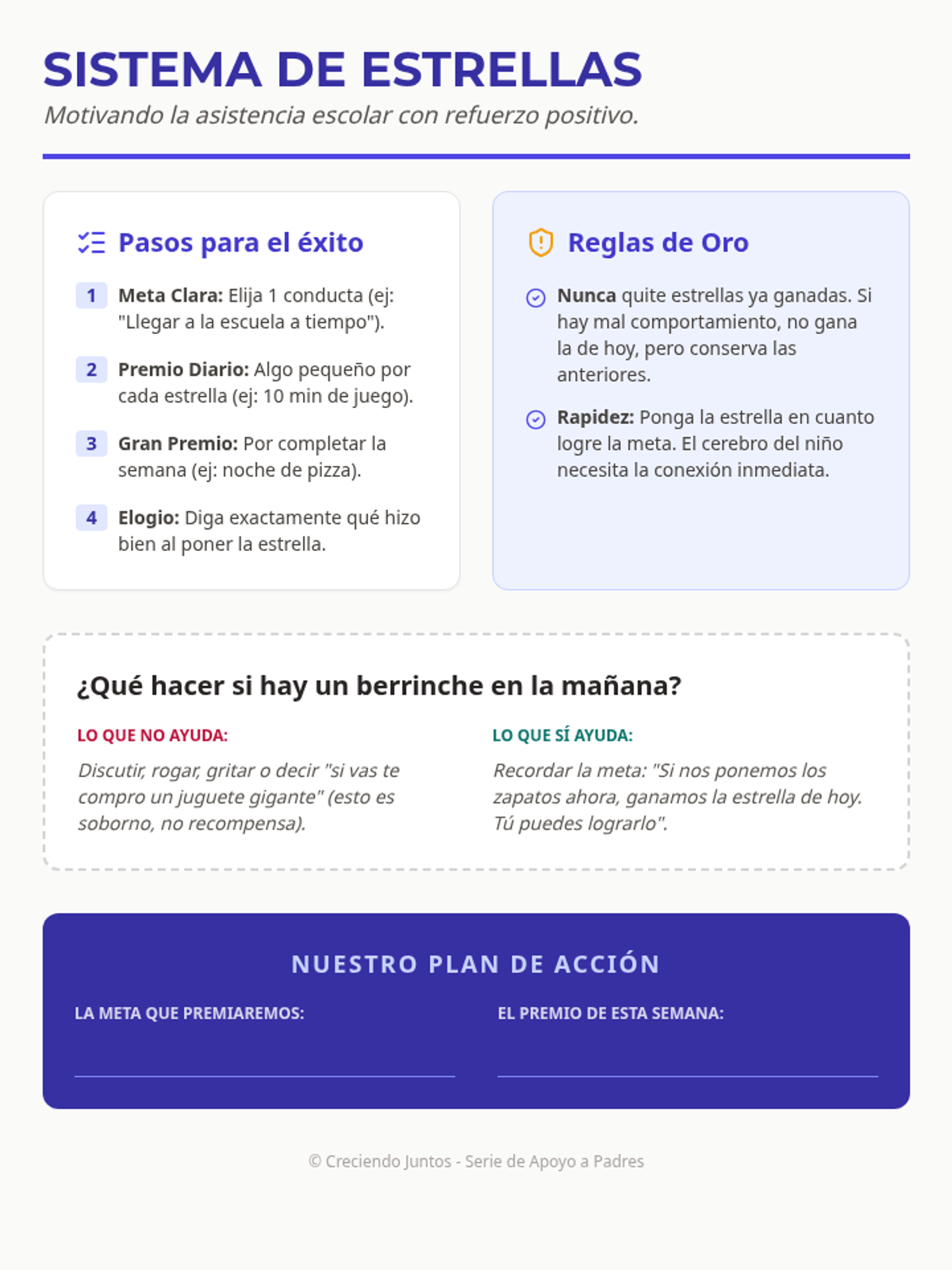
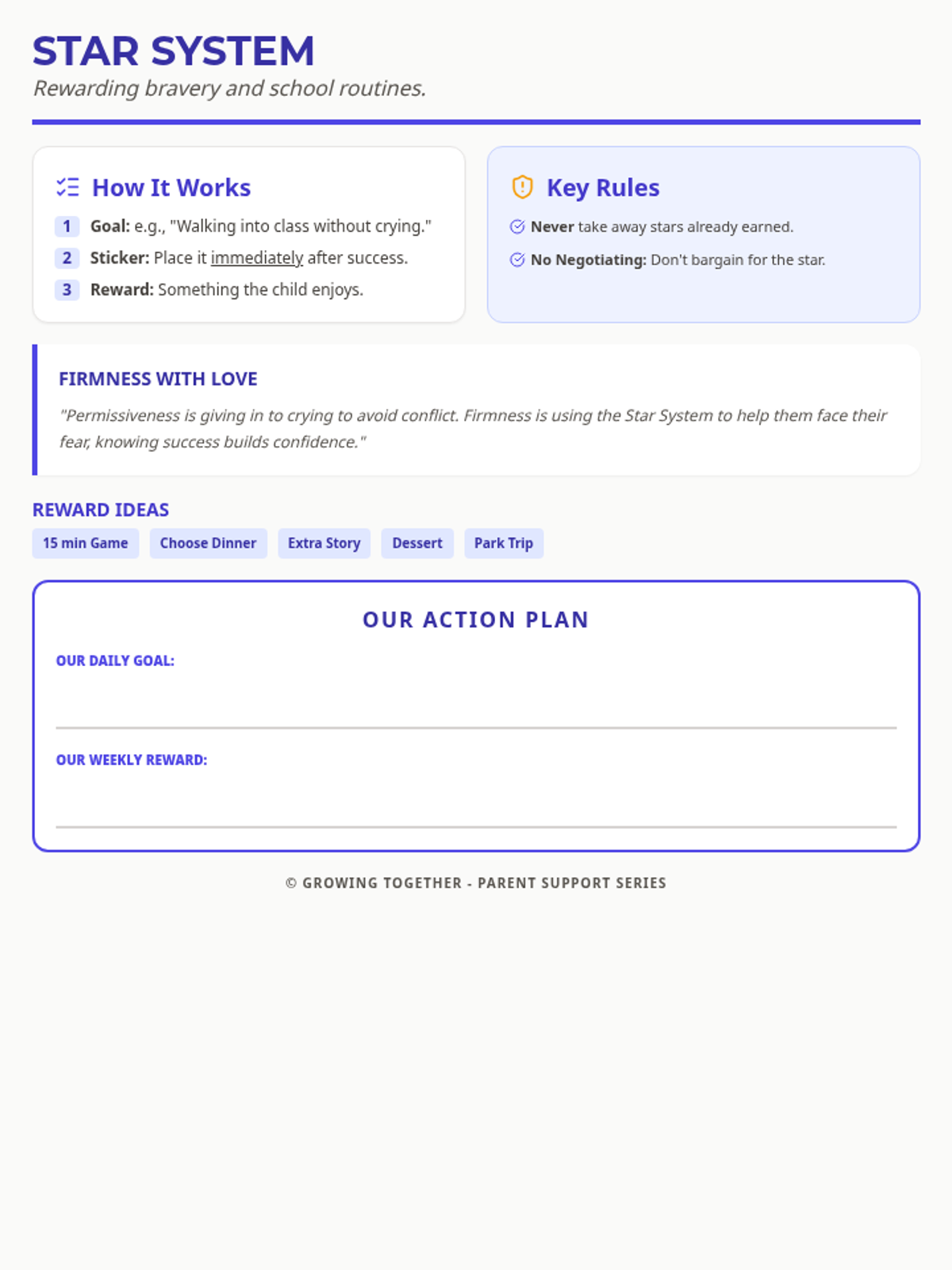
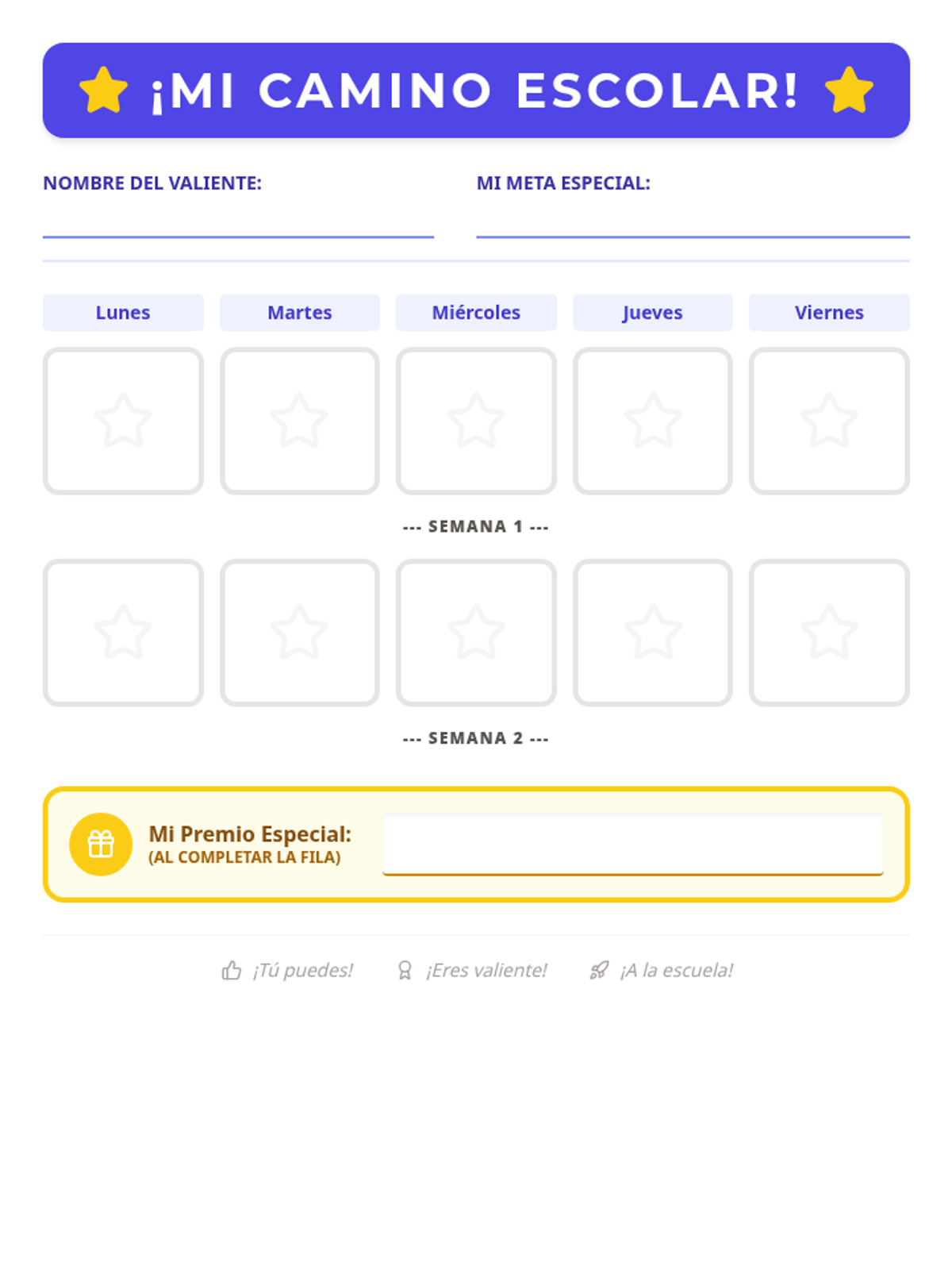
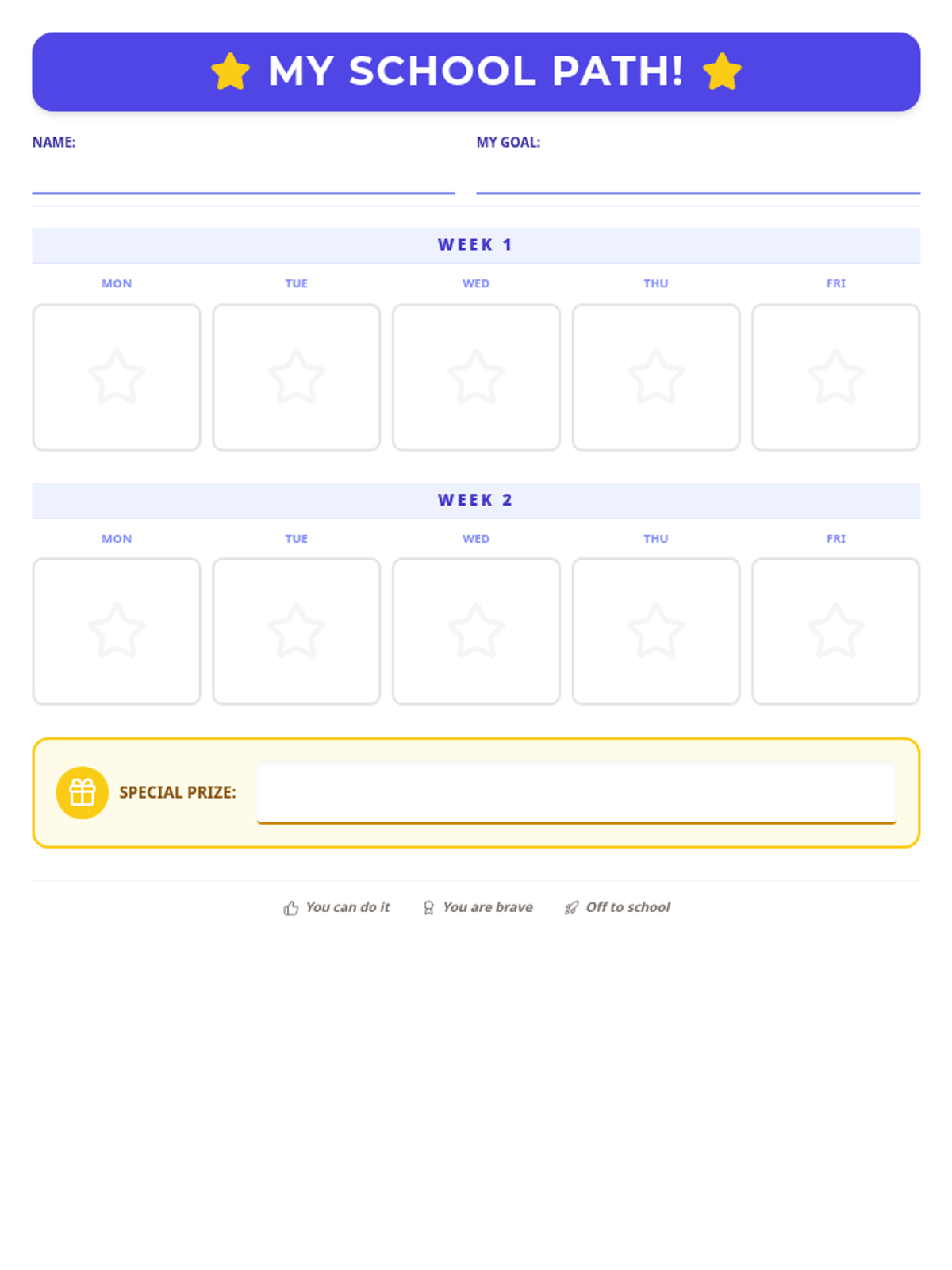
Practical steps for setting up a sticker chart system to reward school attendance and morning routines.
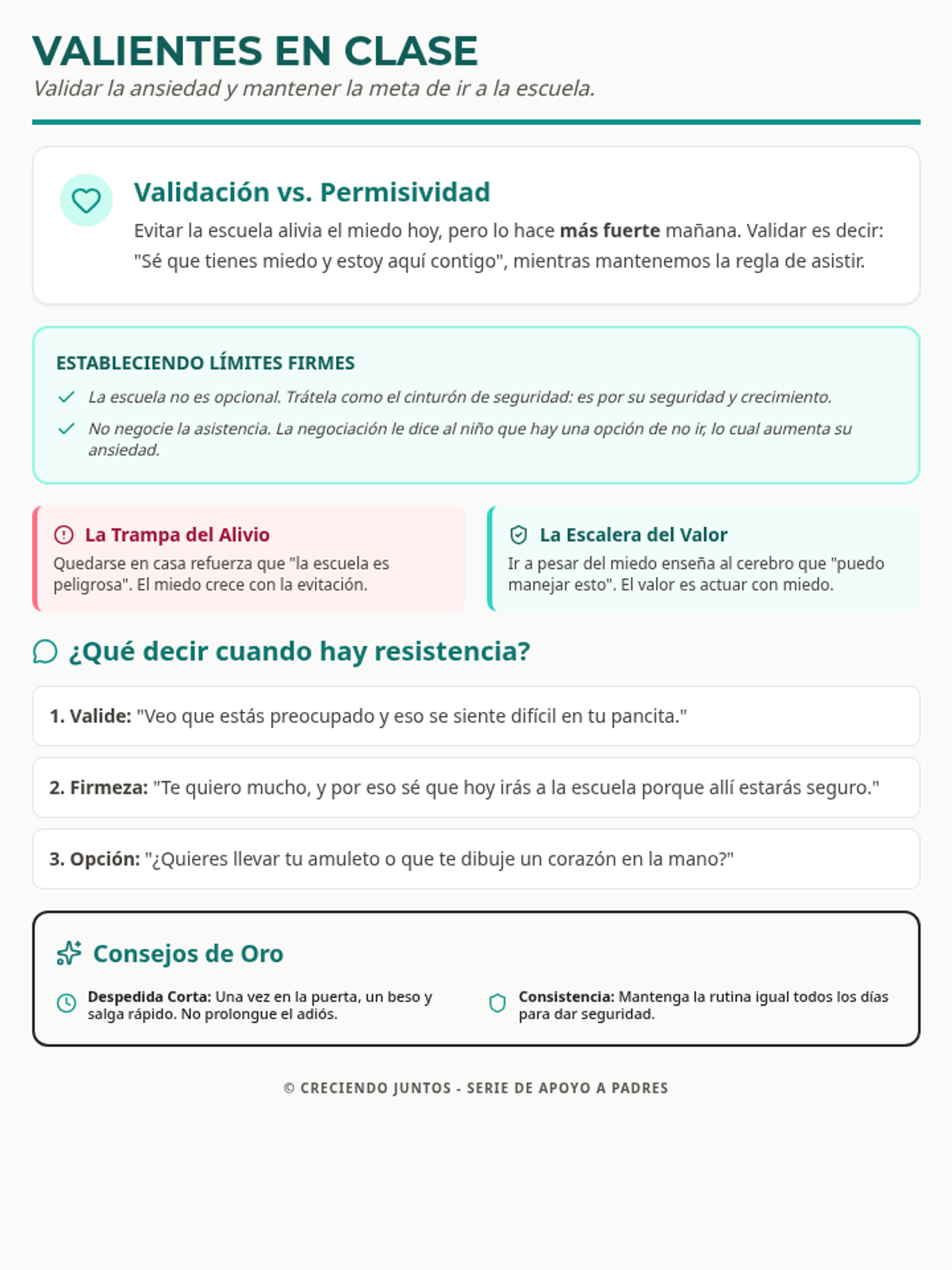
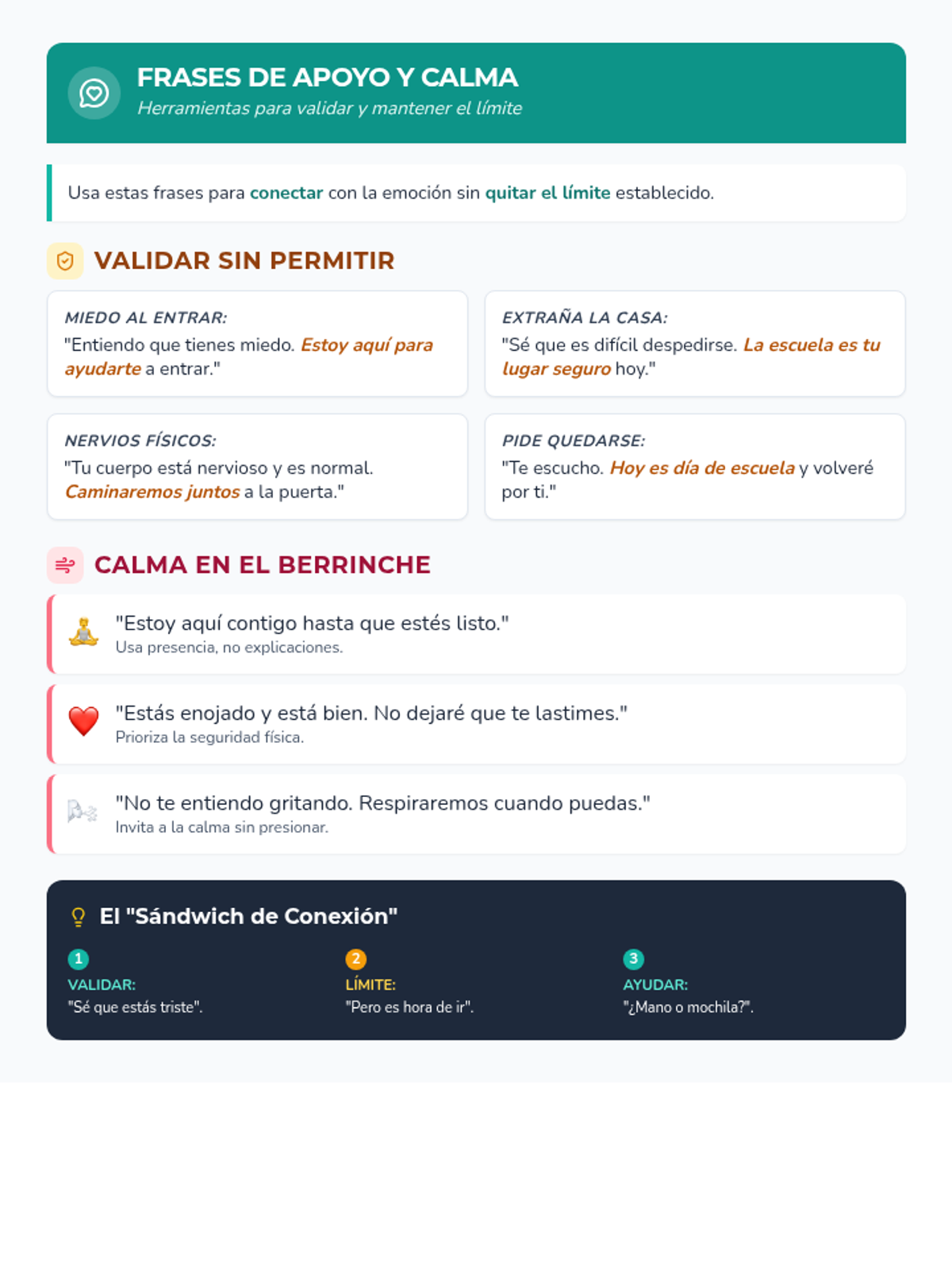
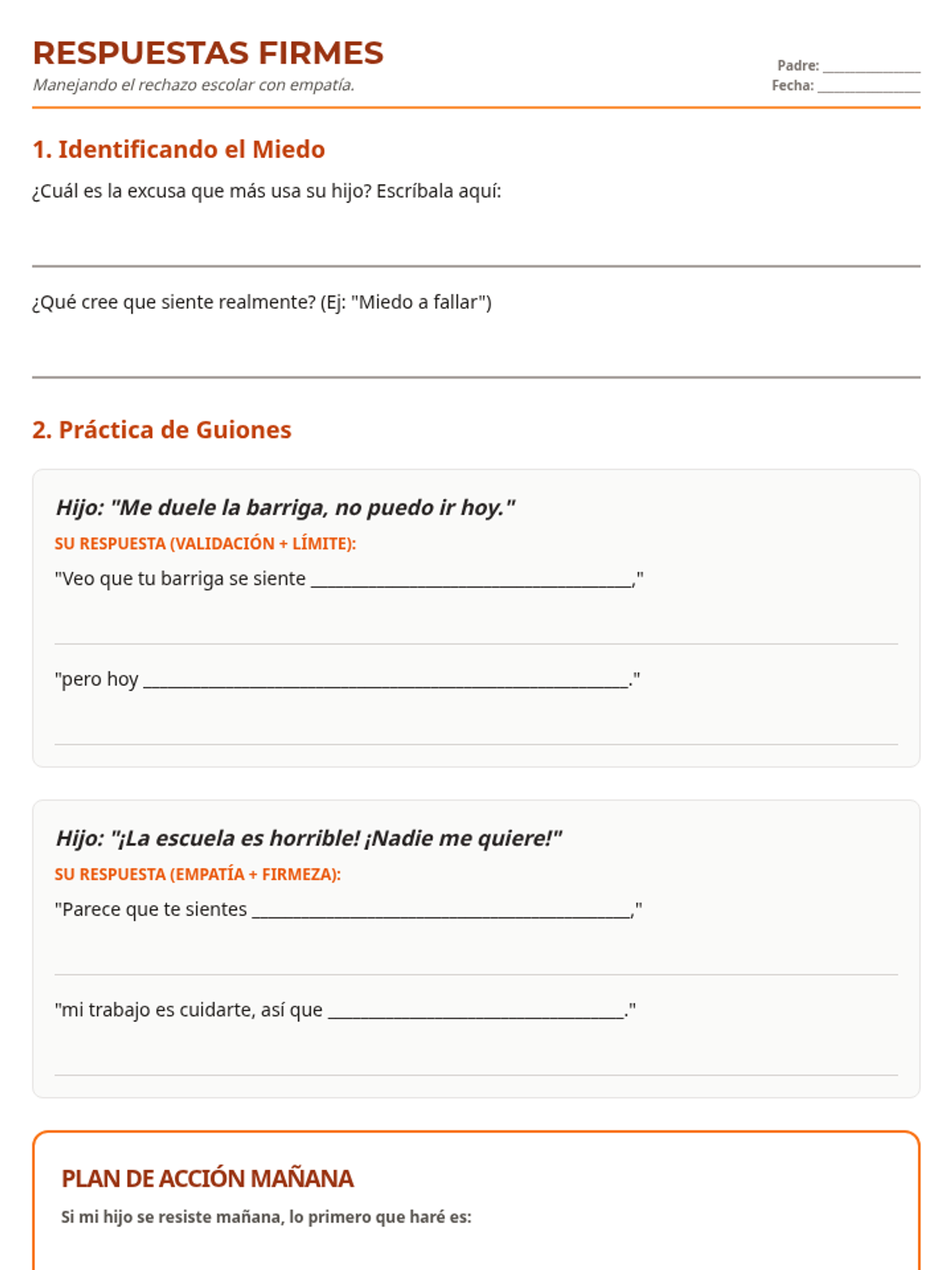
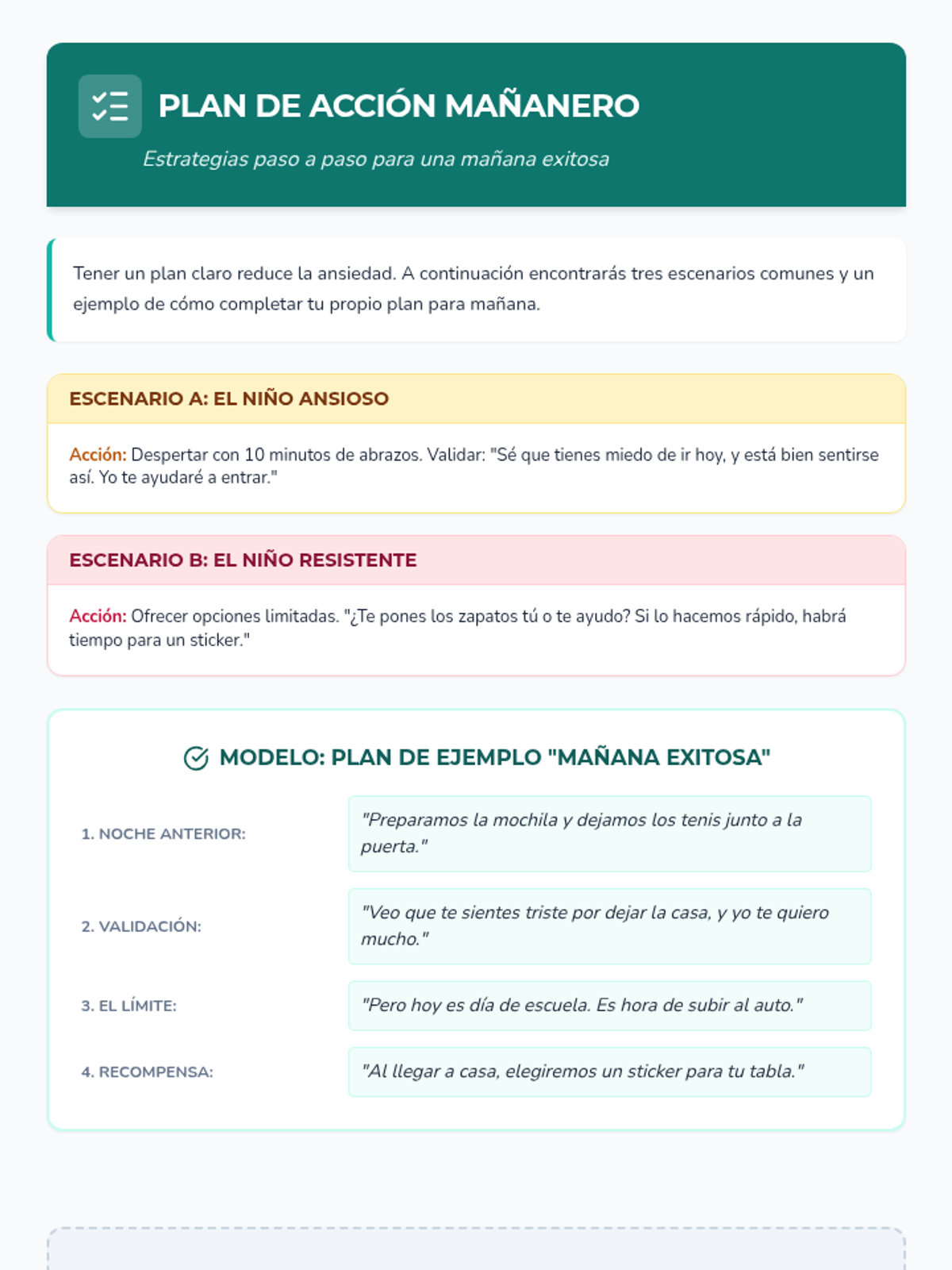
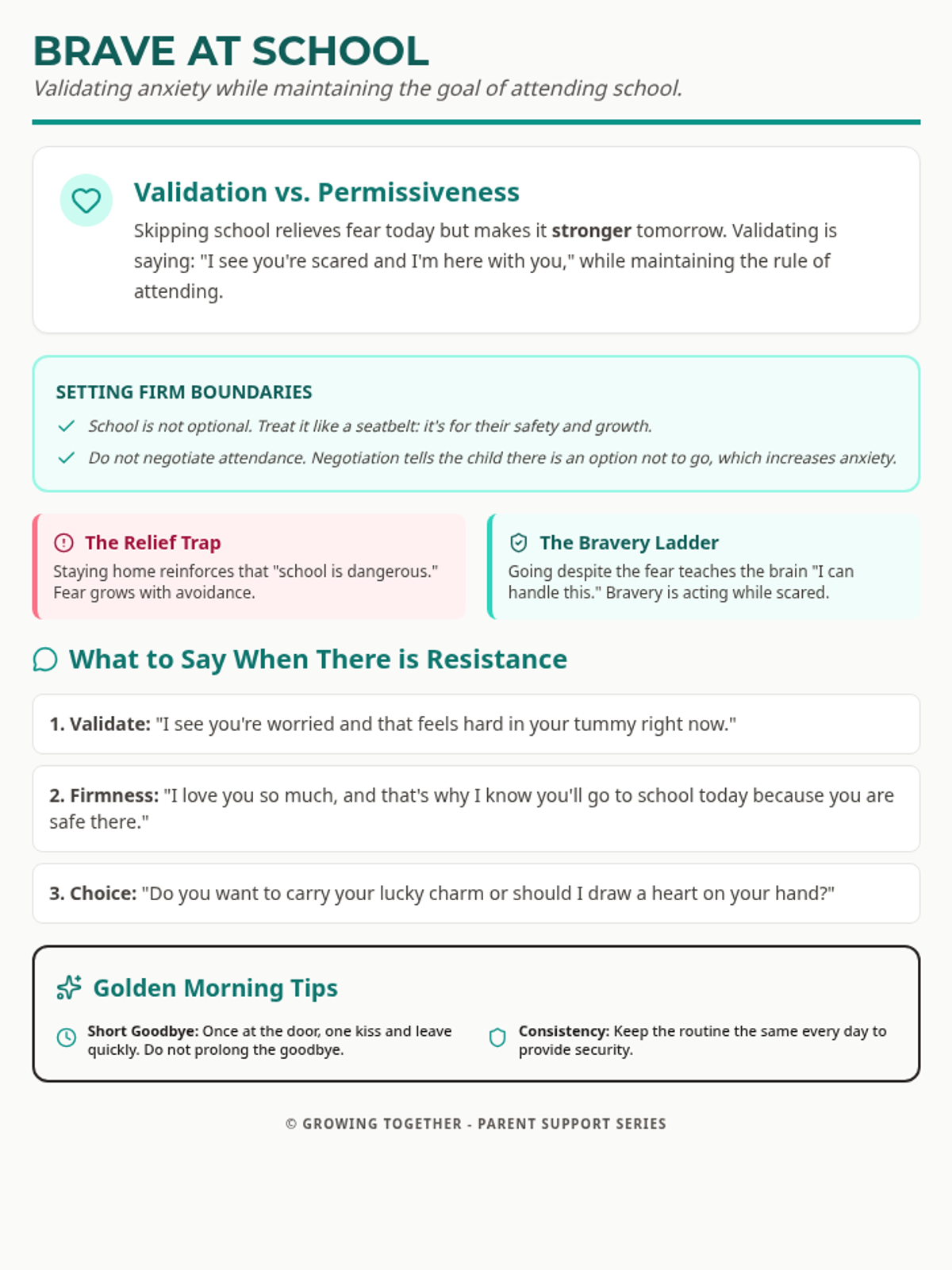
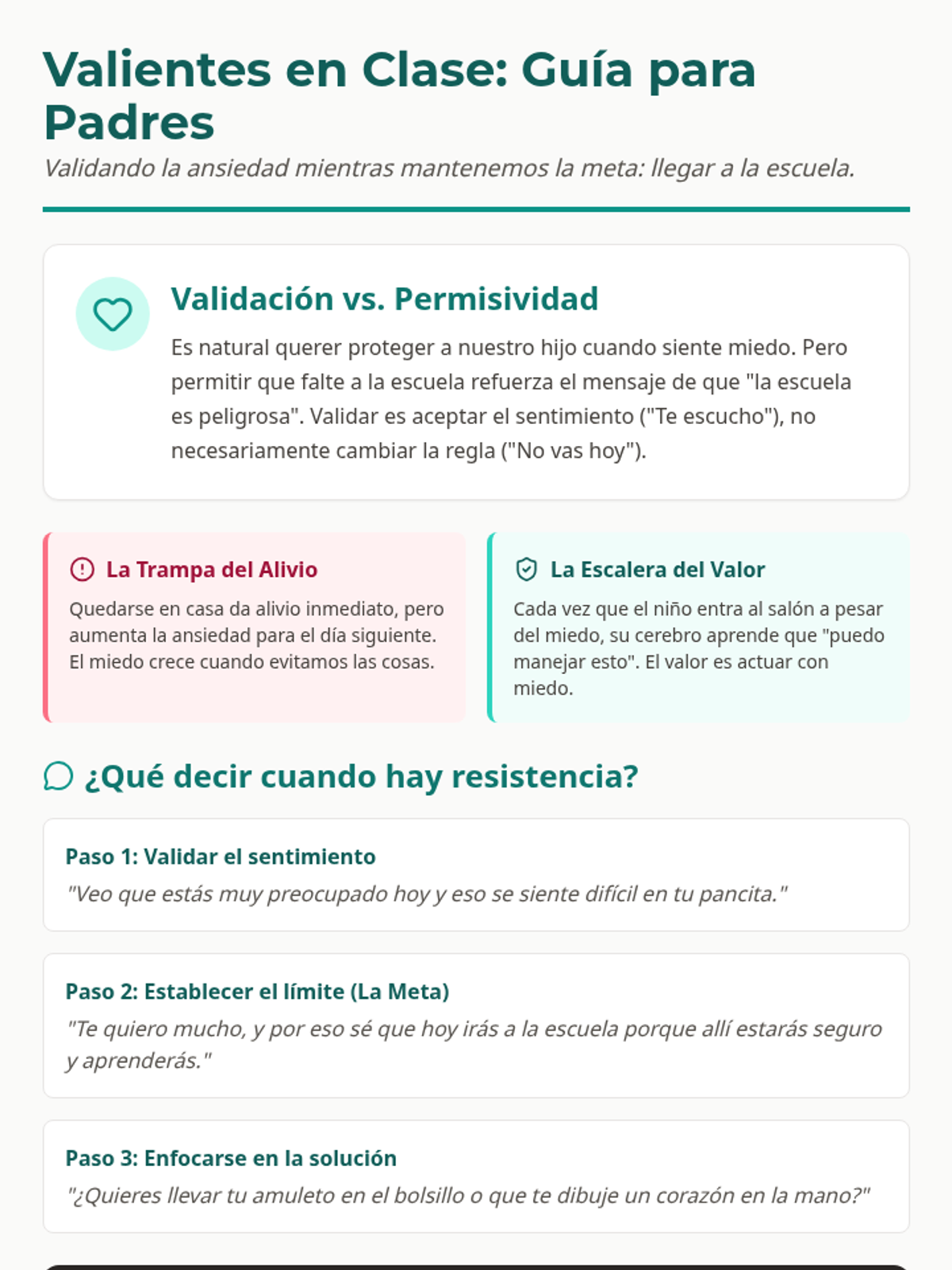
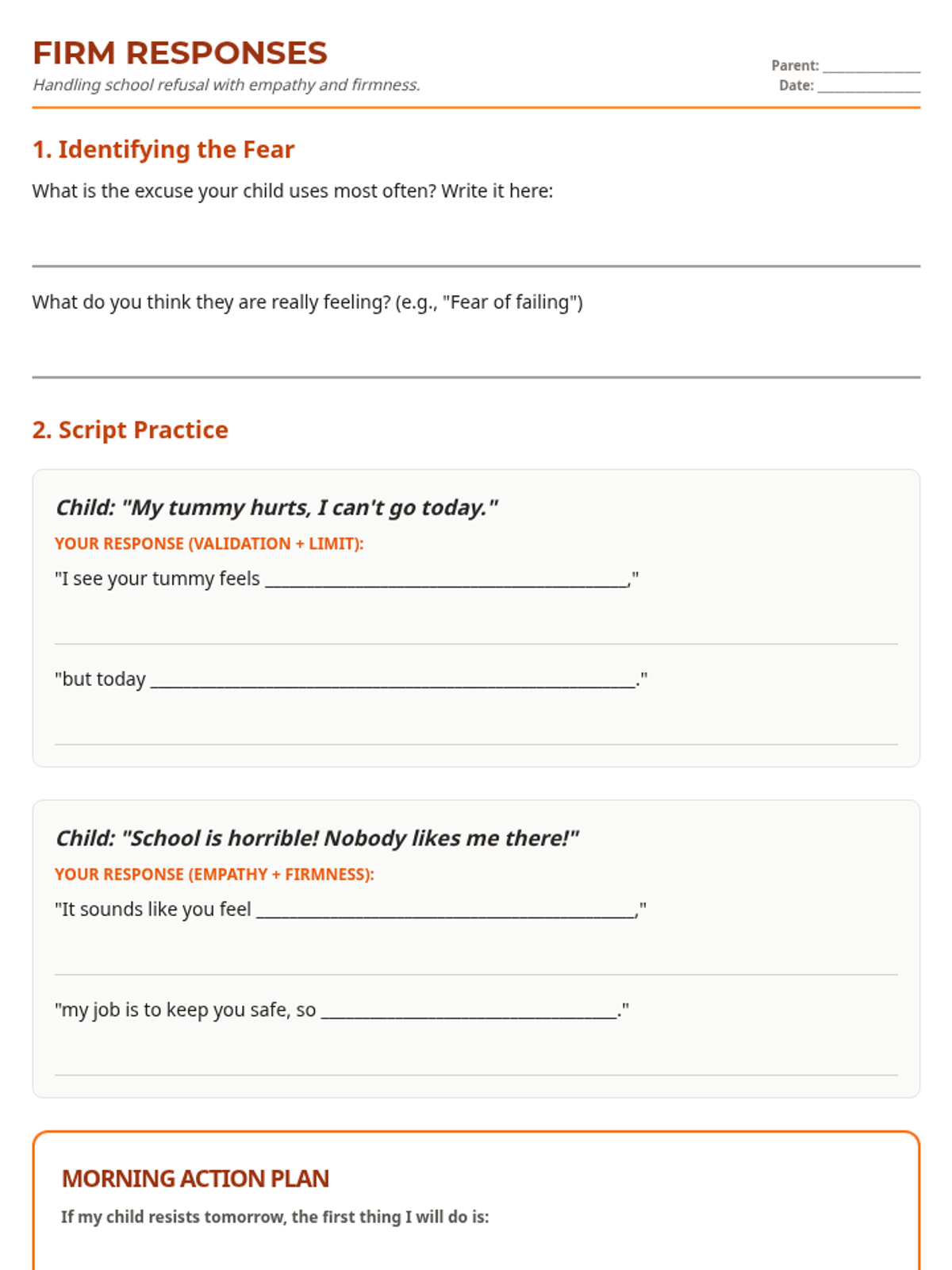
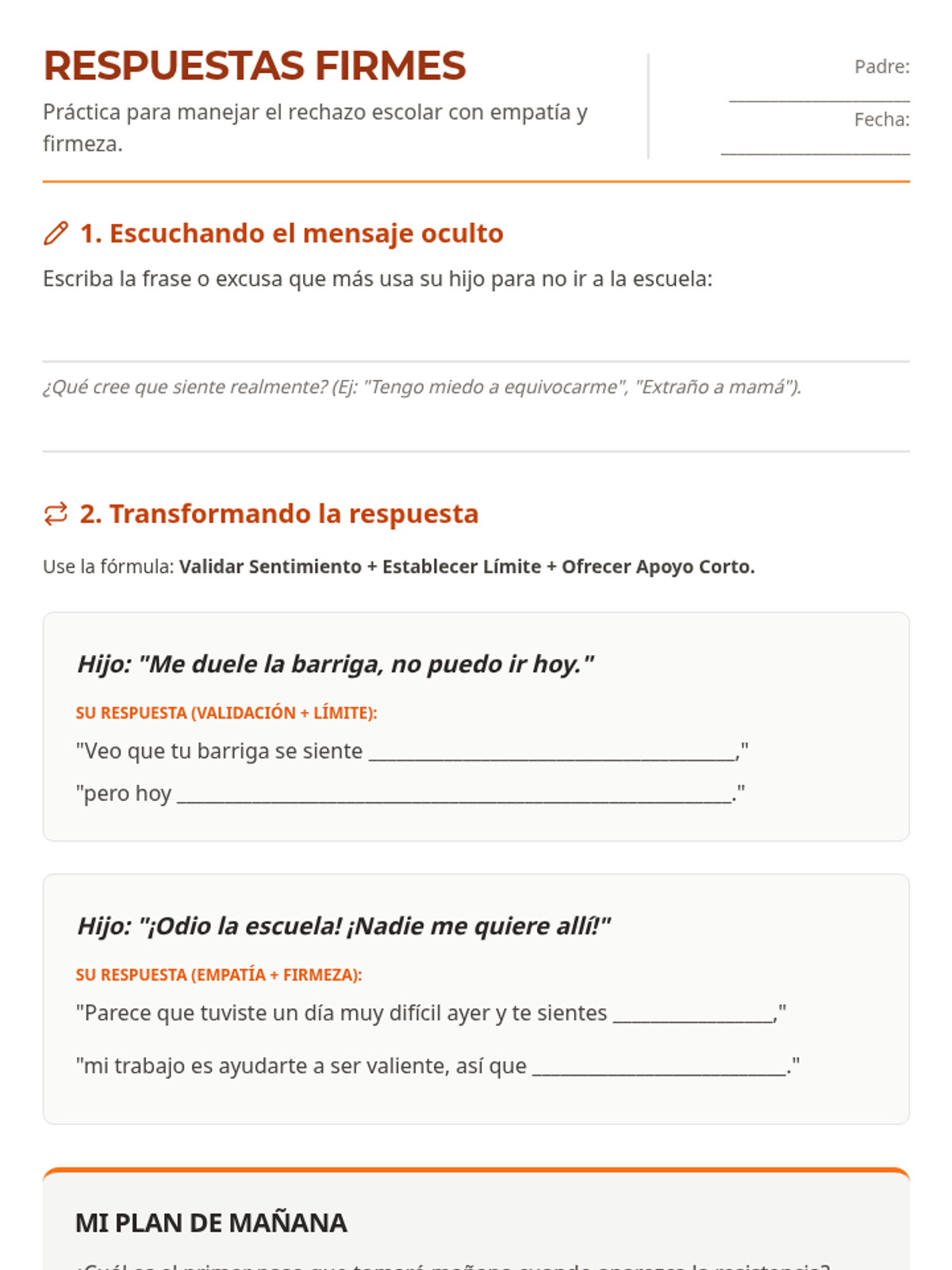
Strategies for parents to validate their child's school anxiety while maintaining firm boundaries regarding attendance.
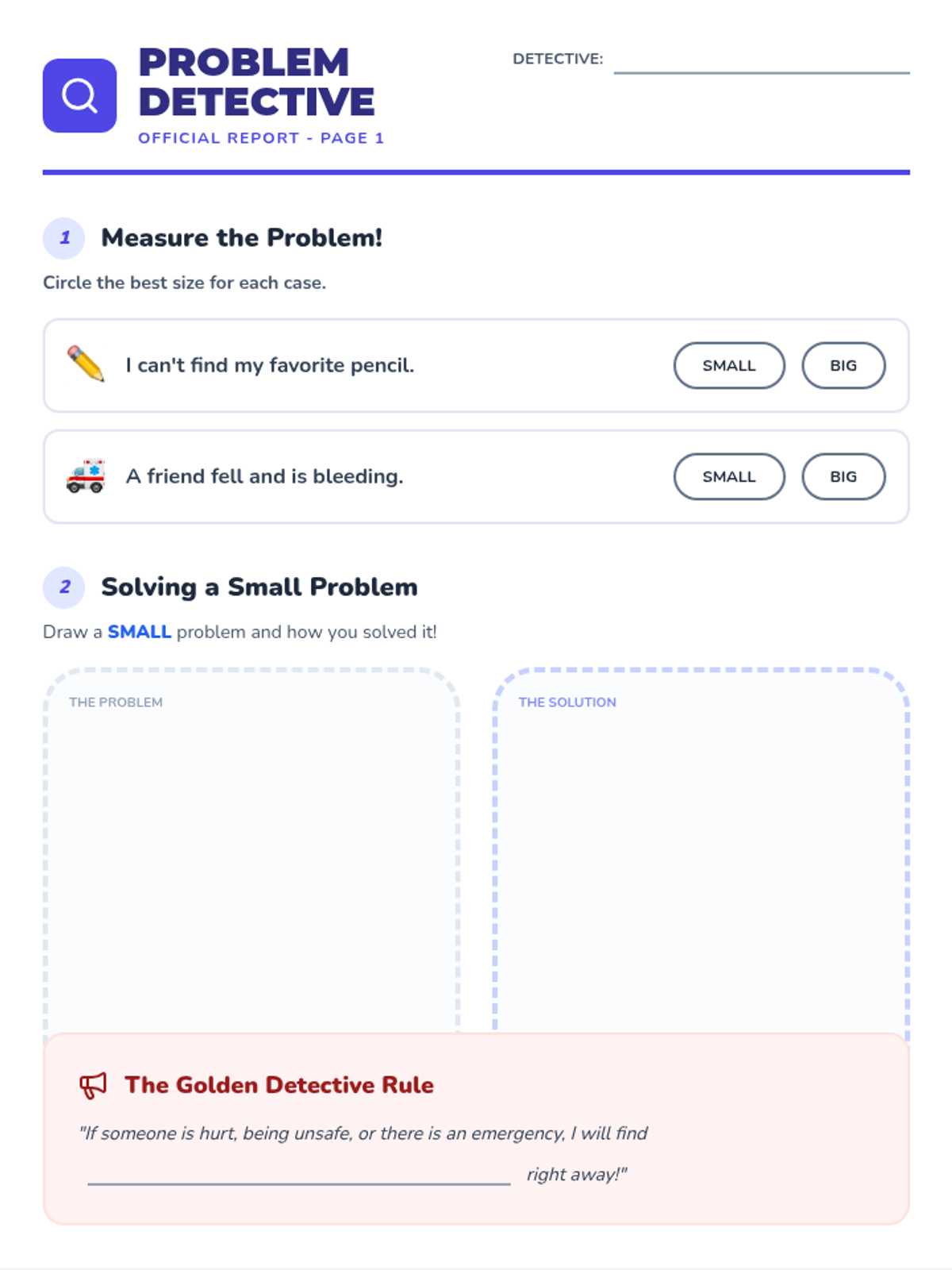
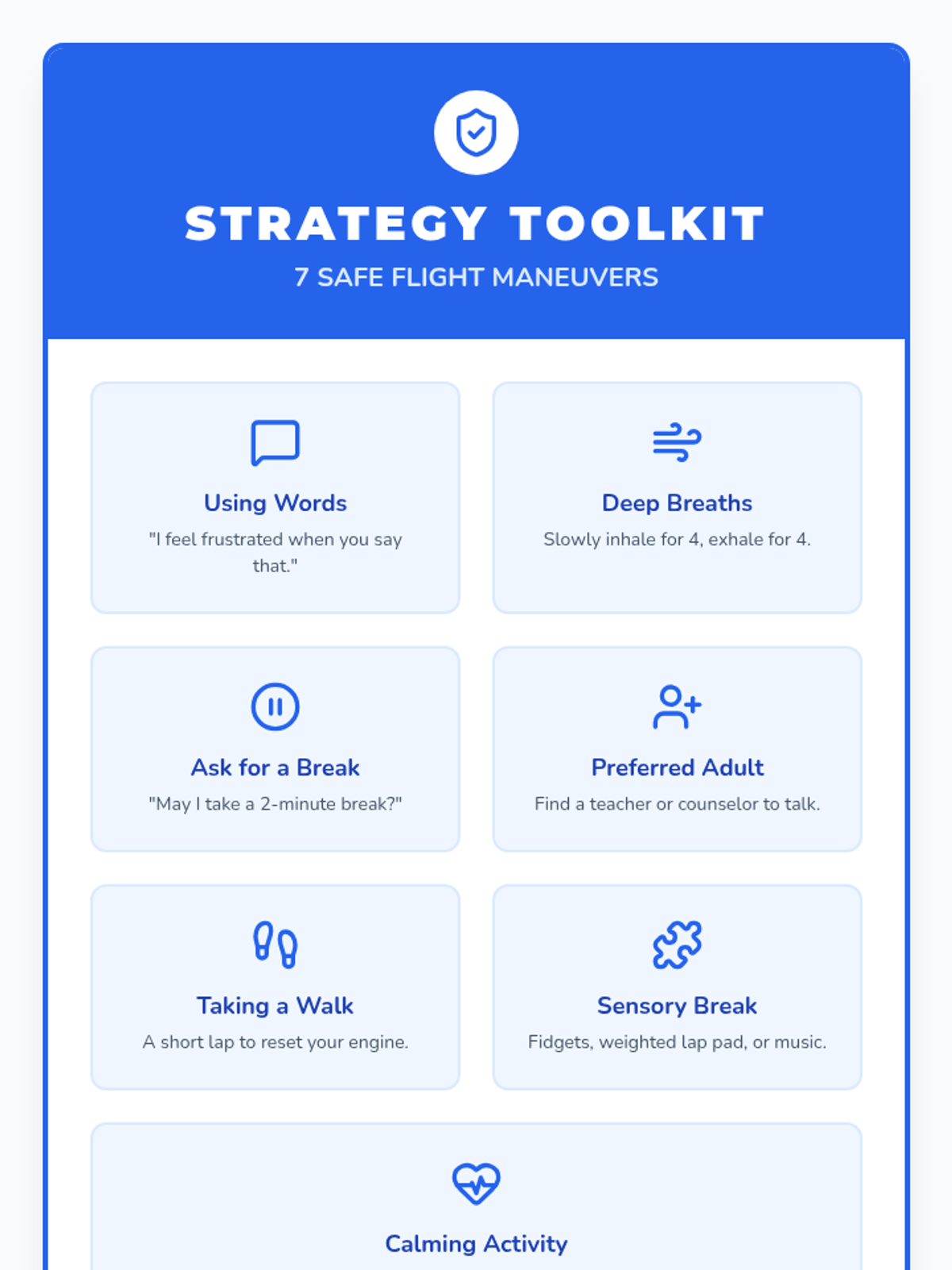
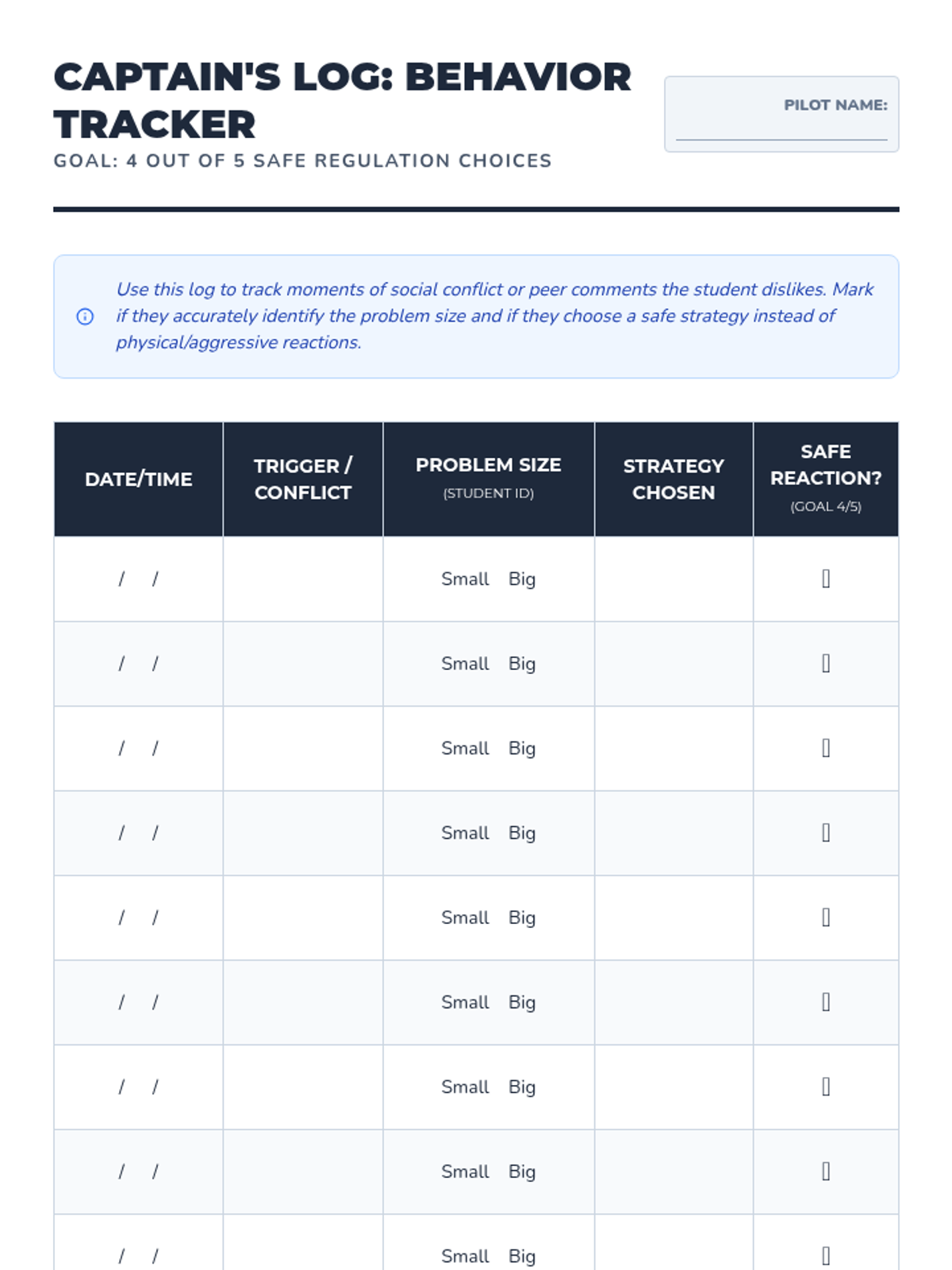
A lesson designed to help students distinguish between Small and Big Problems and choose safe regulation strategies instead of physical reactions. It includes a social story, practice worksheet, and strategy reference guide.
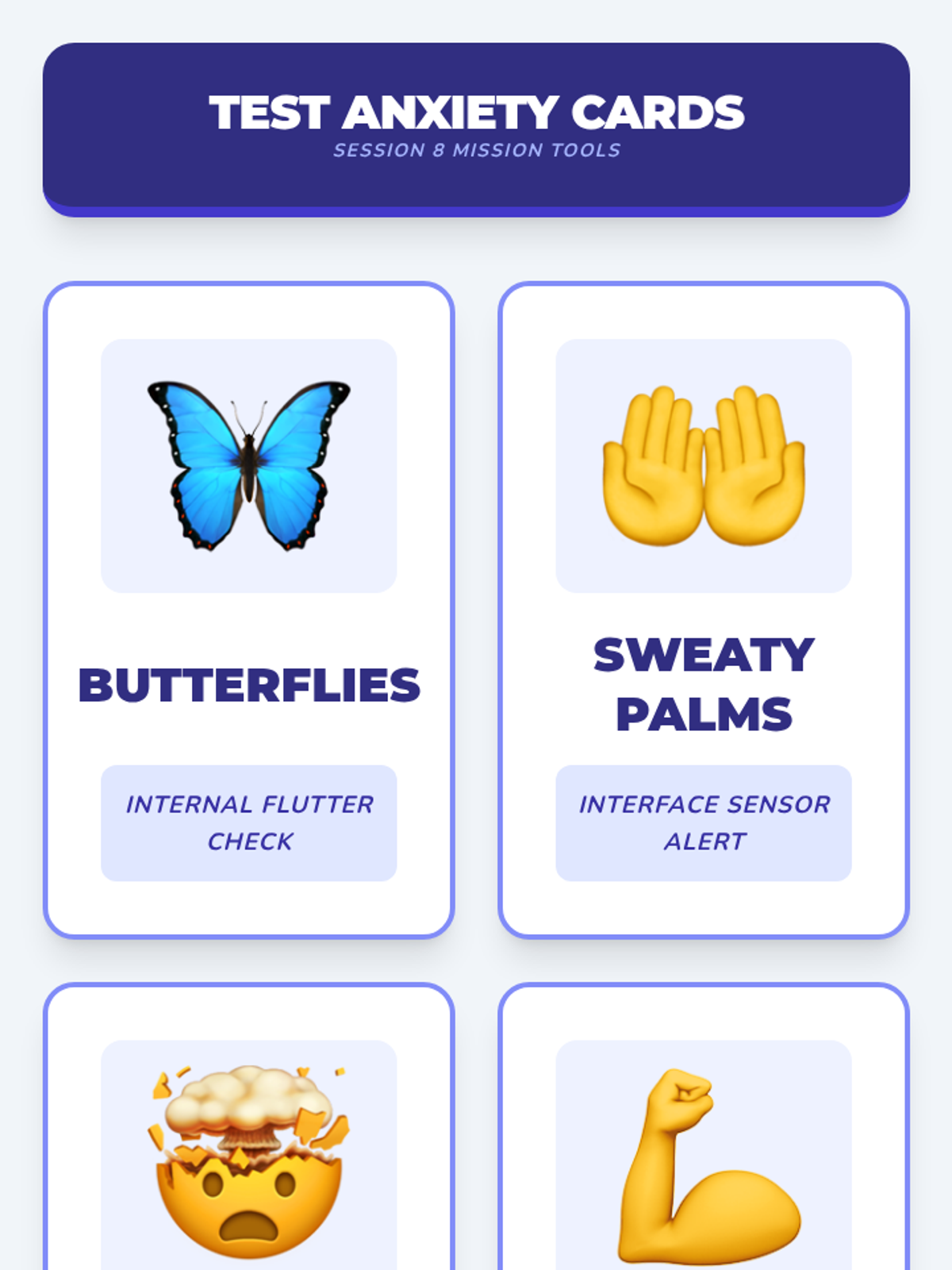
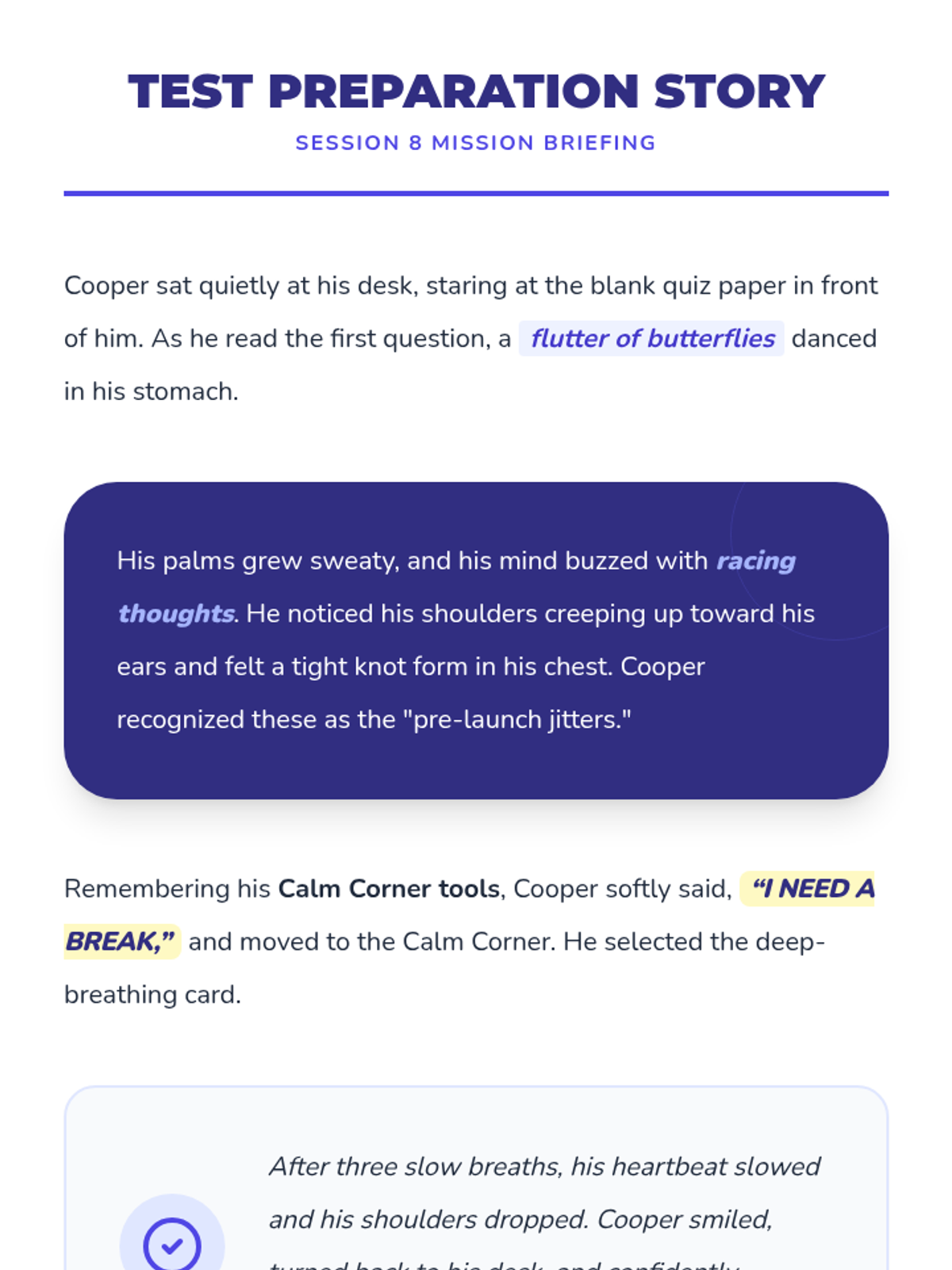
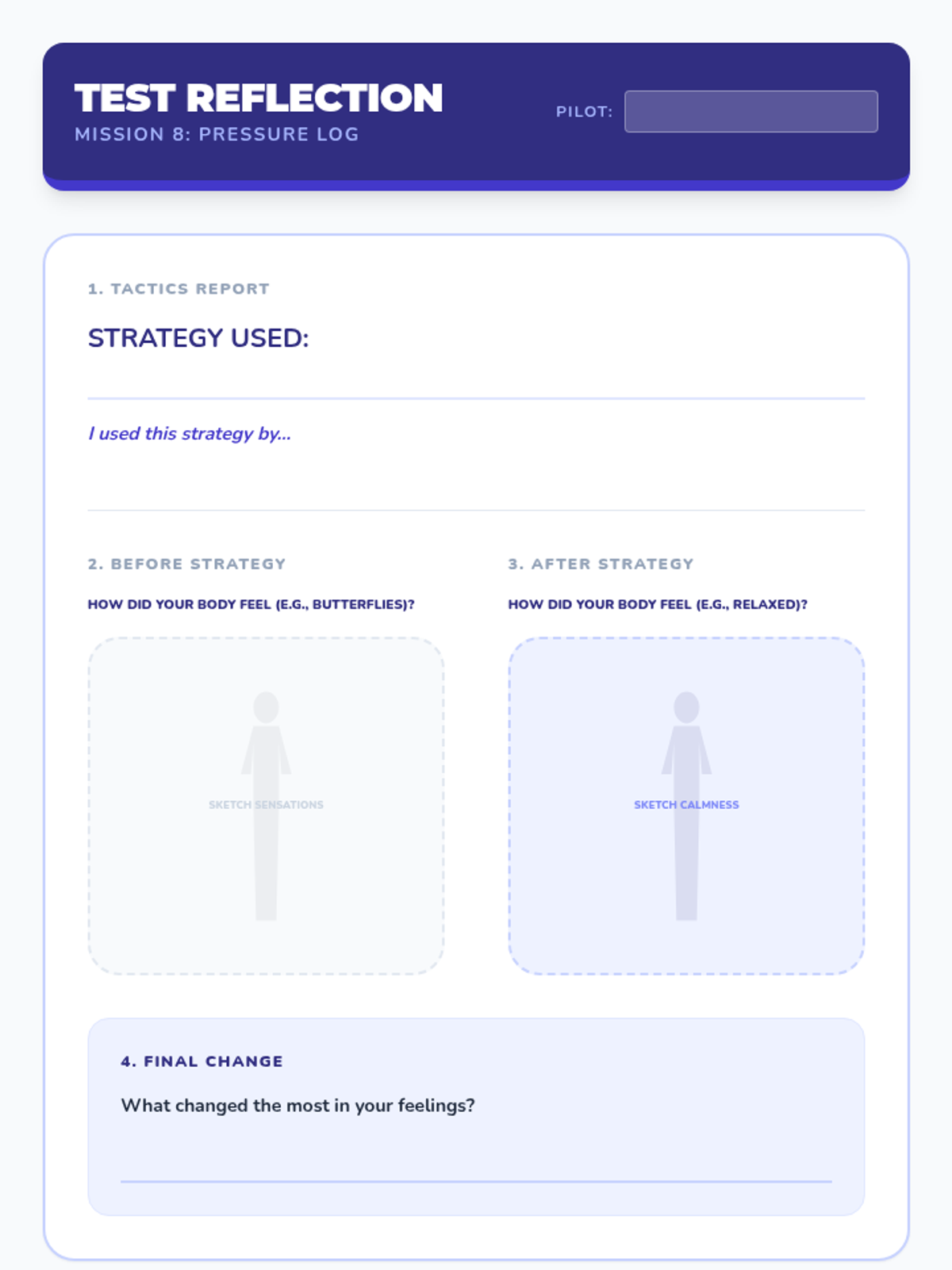
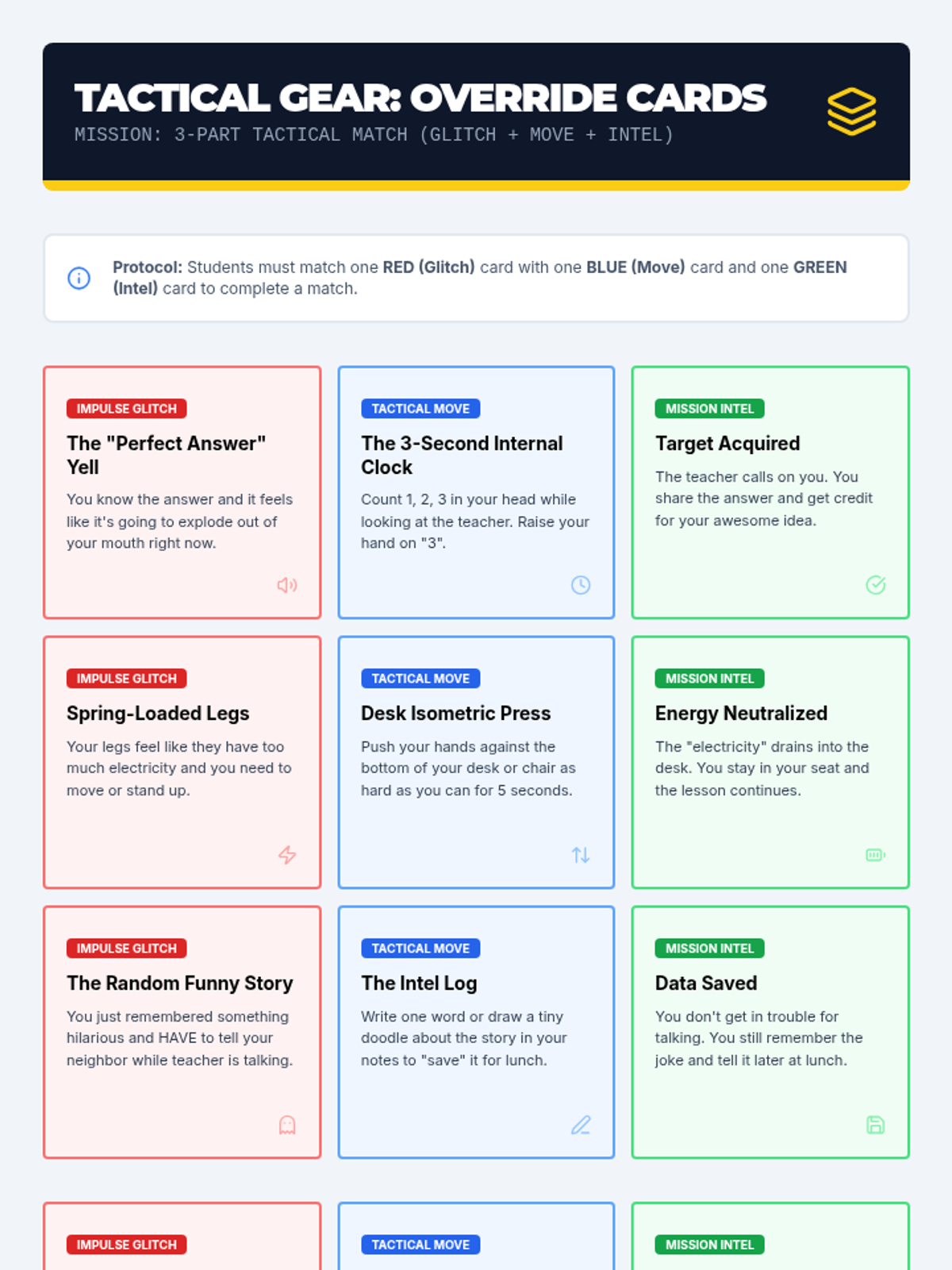
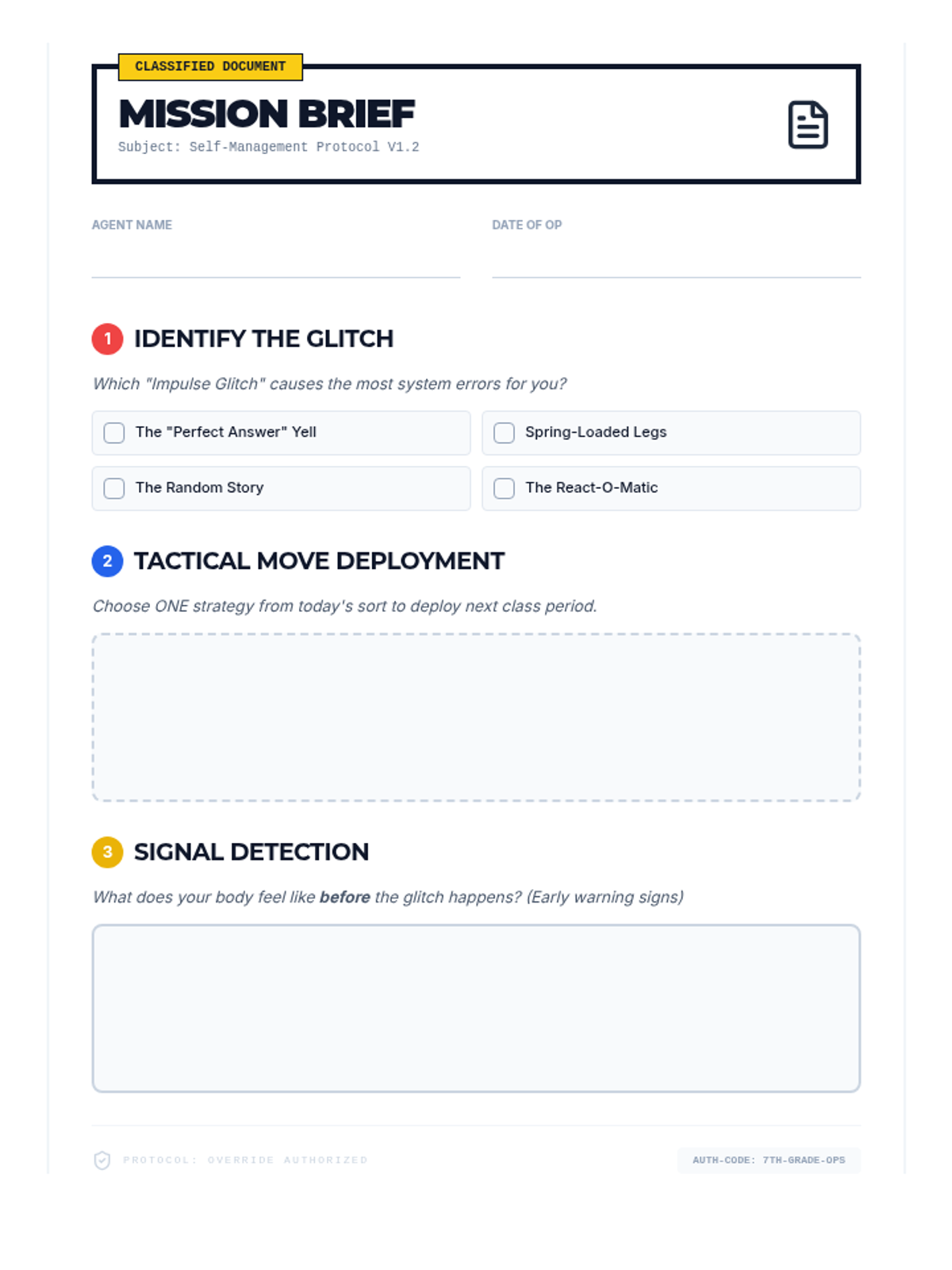
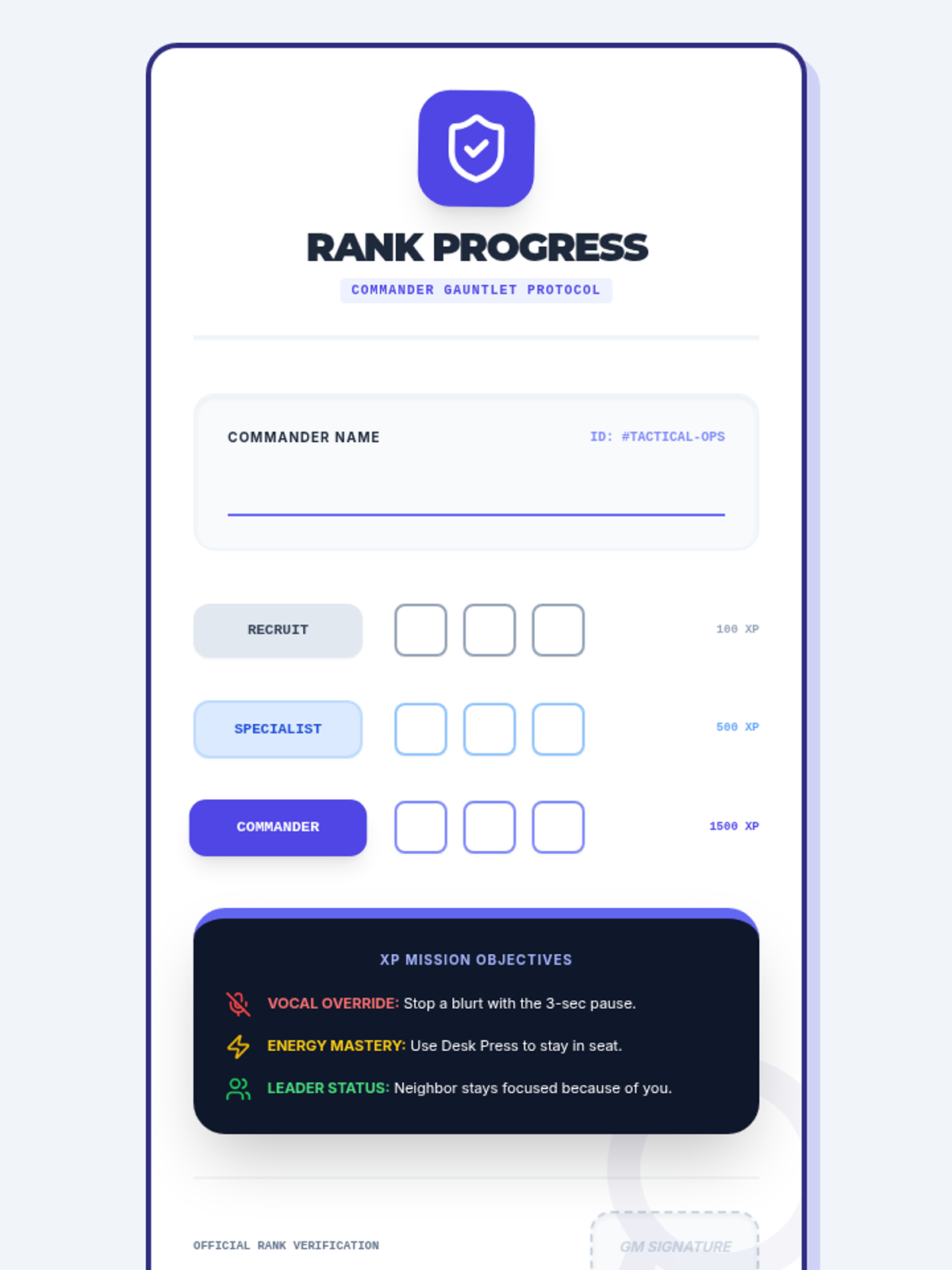
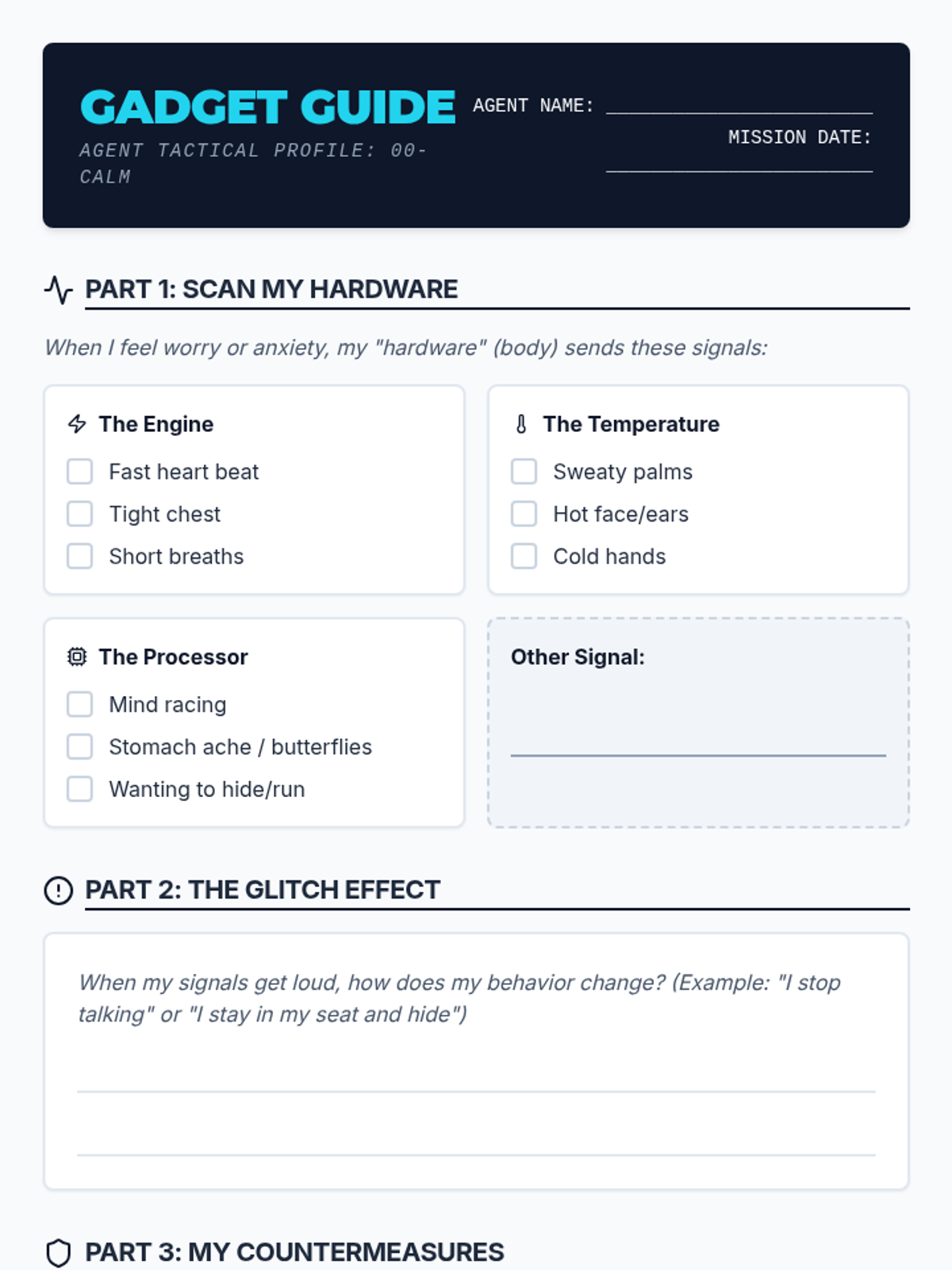
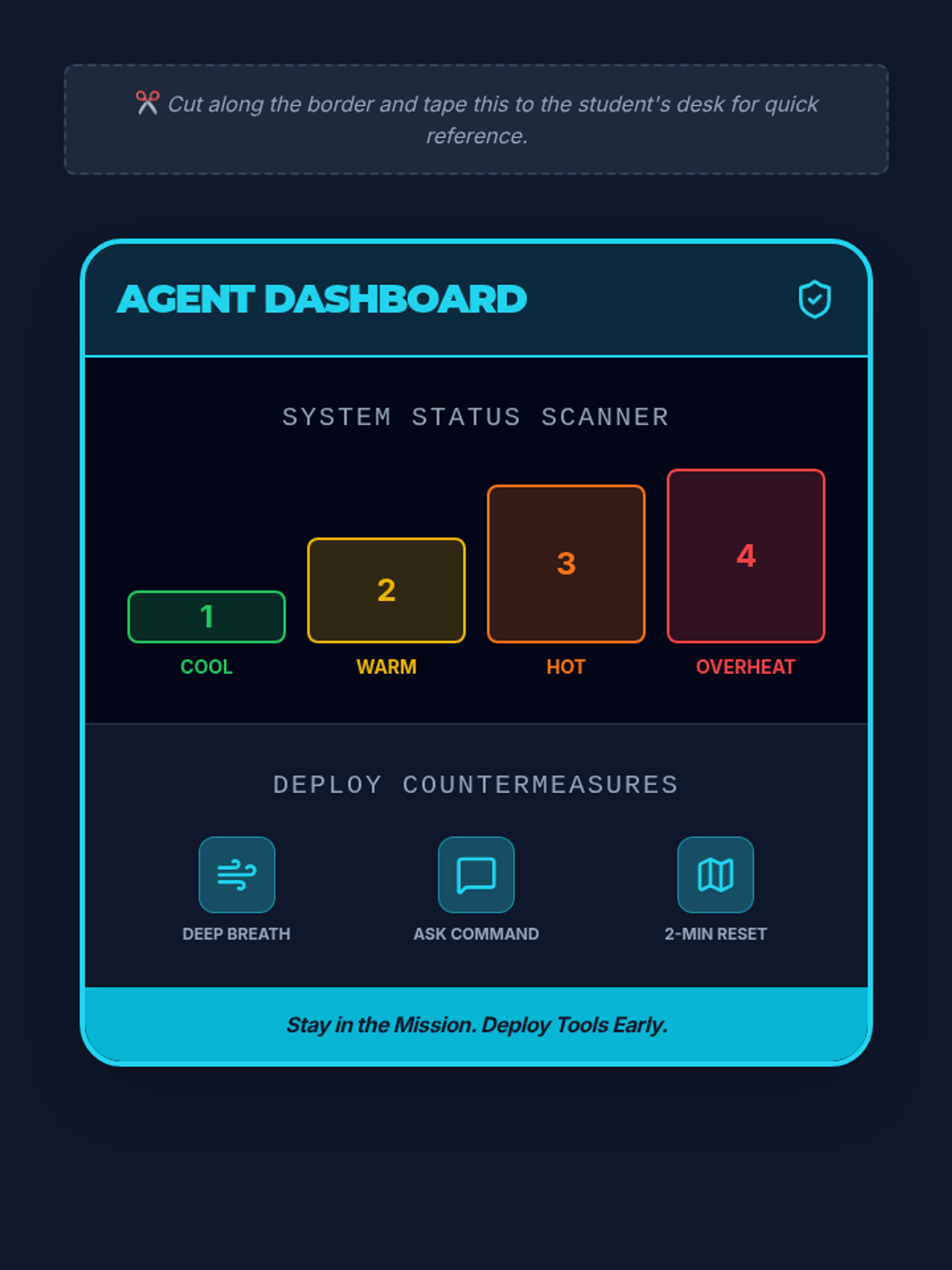
A social-emotional lesson focused on identifying internal signals of anxiety and selecting appropriate self-regulation tools. Students will learn to recognize 'glitches' in their system and deploy 'countermeasures' to stay on track.
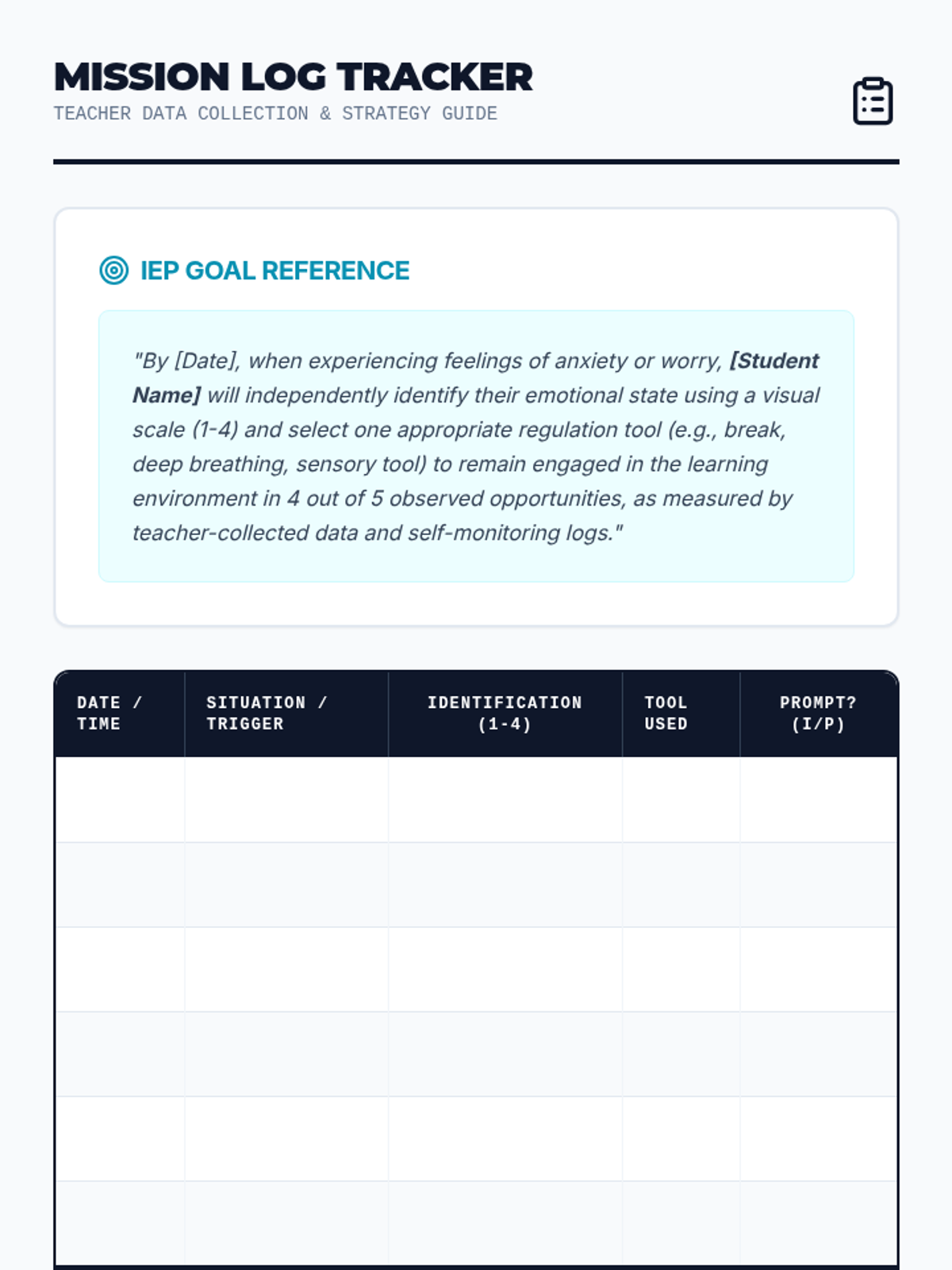
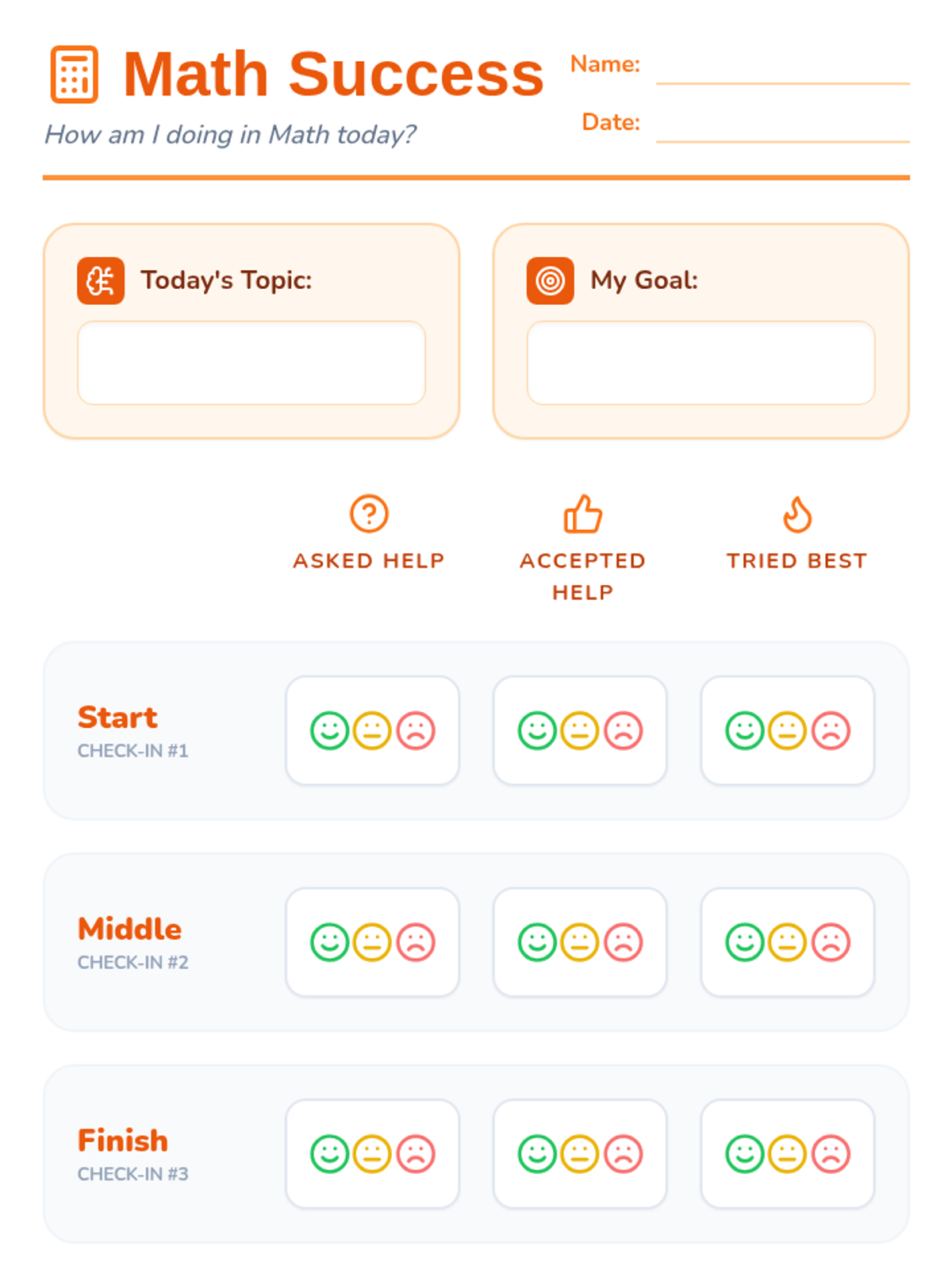
A resource to help students self-monitor their behavior and effort during a single learning session.
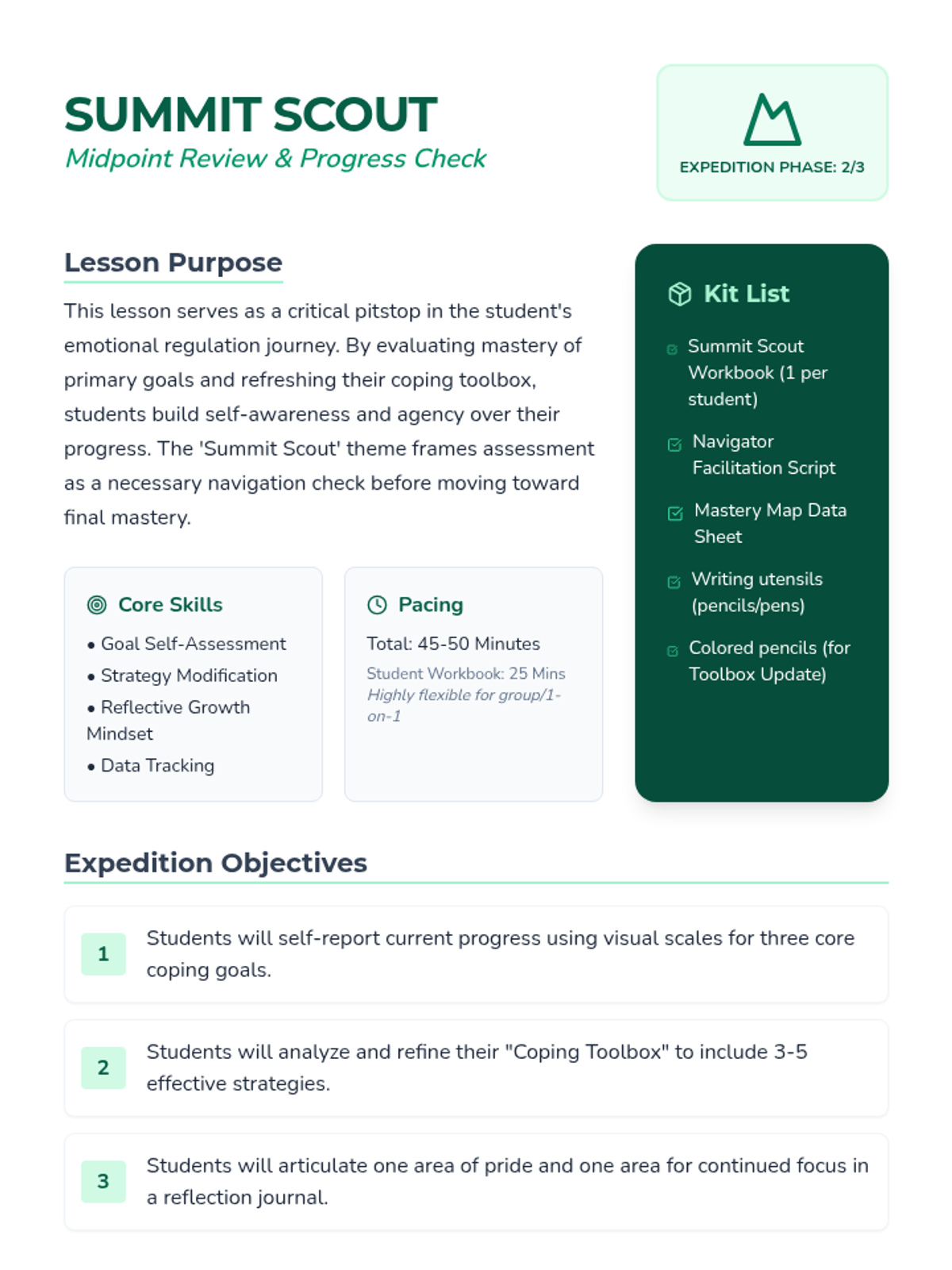
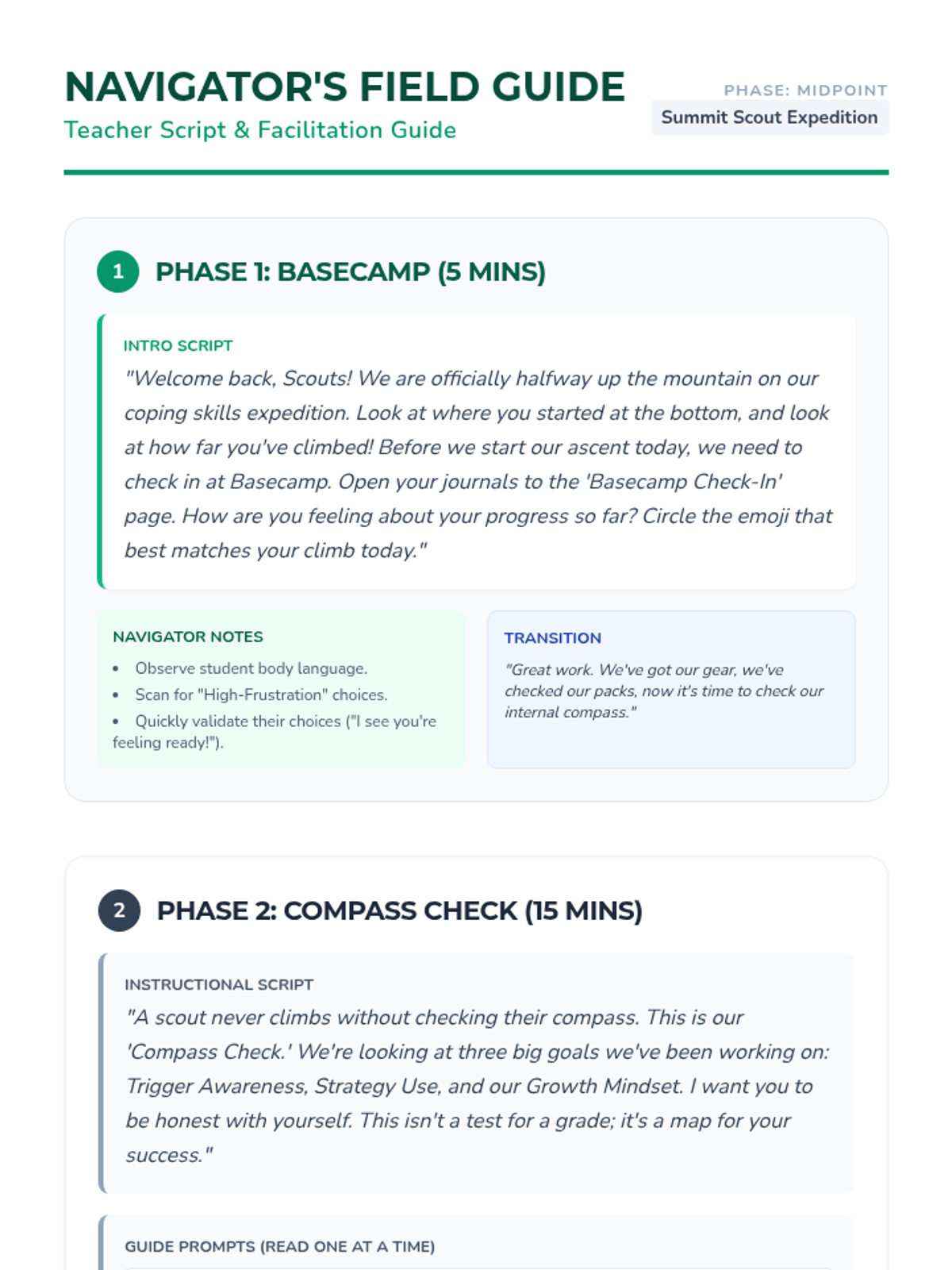
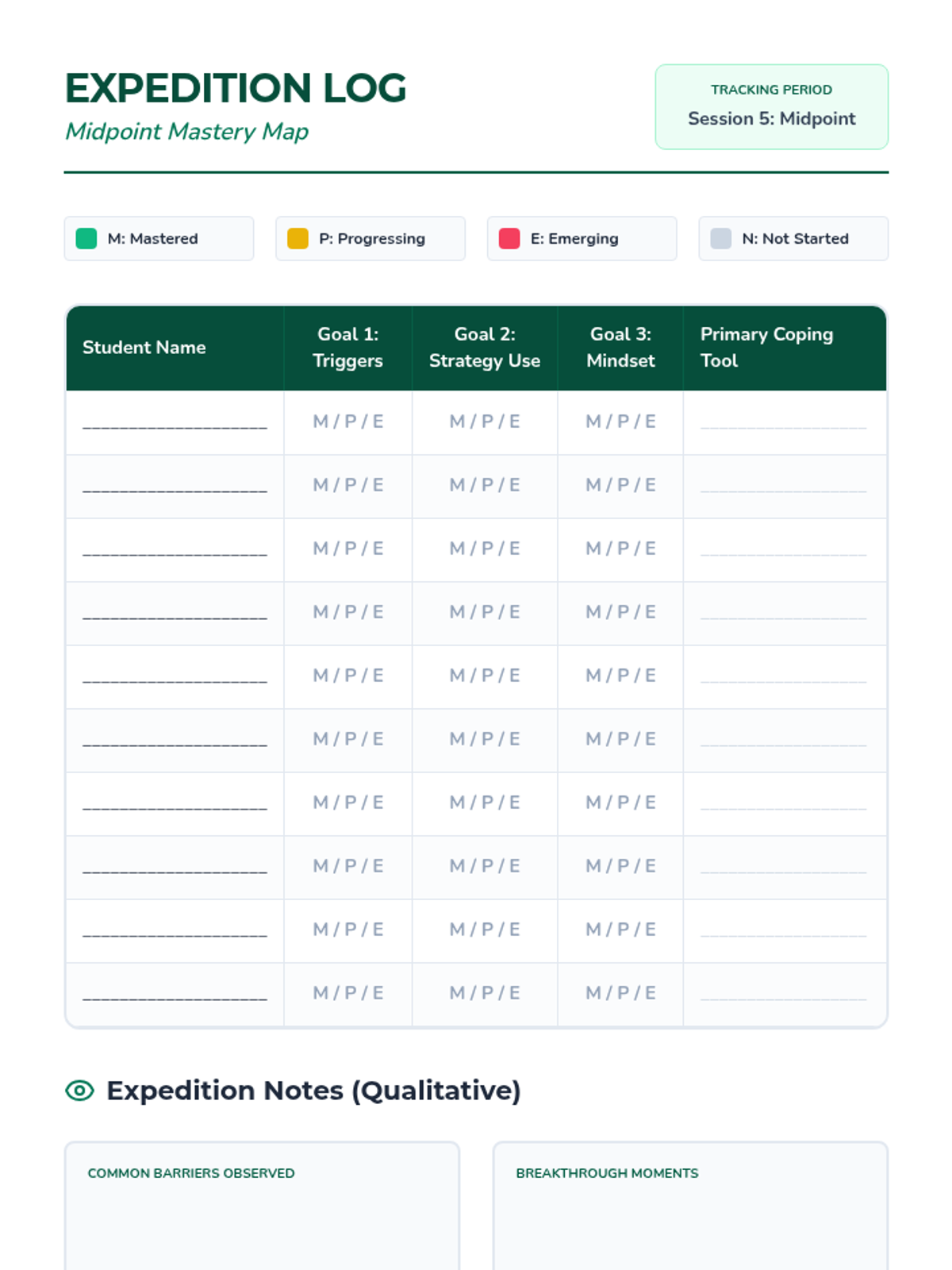
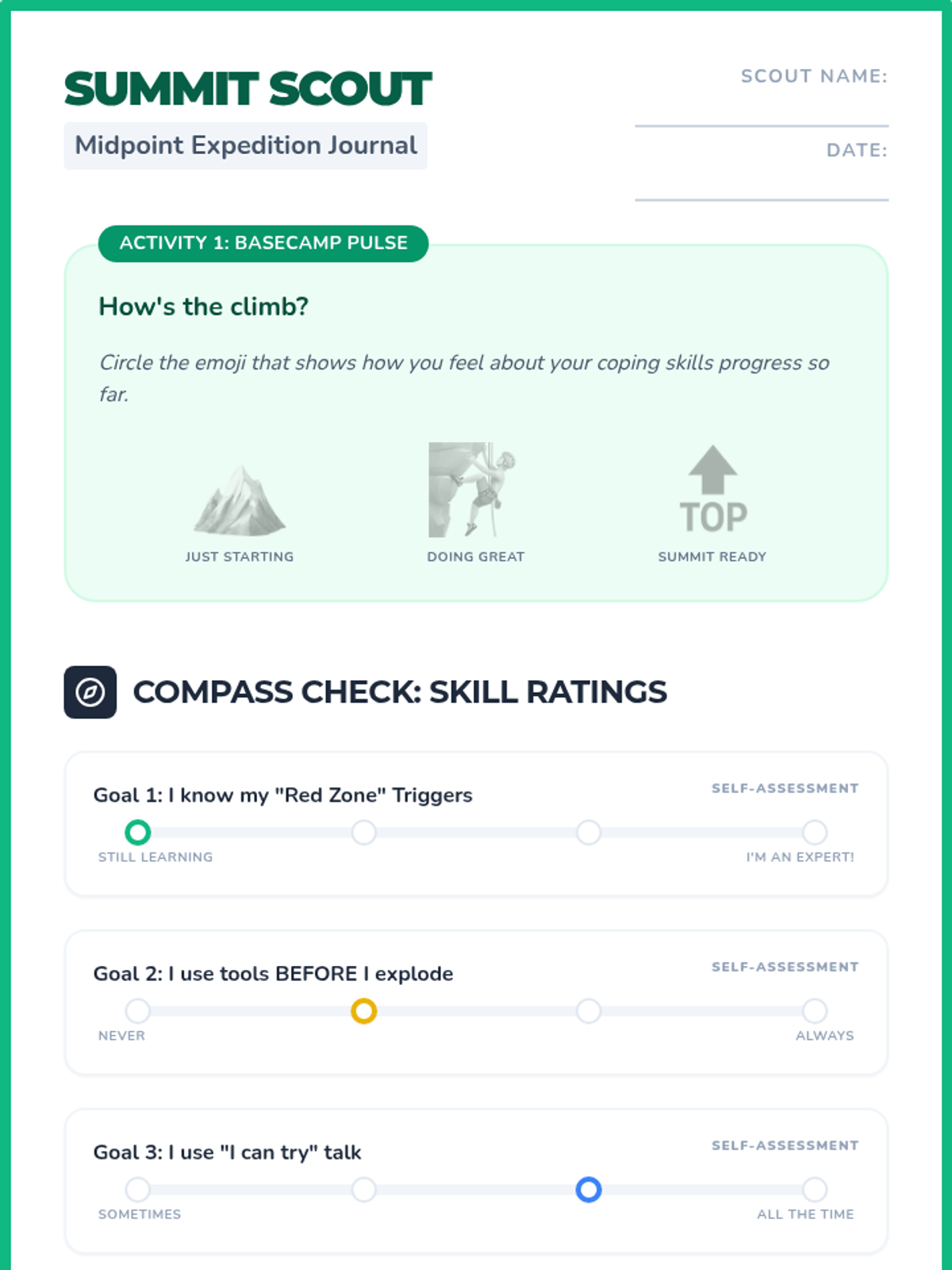
A midpoint review lesson designed to help students assess their progress in coping skills, update their personal strategies, and reflect on their growth. Using a 'Summit Scout' expedition theme, students evaluate their mastery of three core goals and refine their personal coping toolbox.
Reviewing all steps and setting a long-term goal for classroom independence.
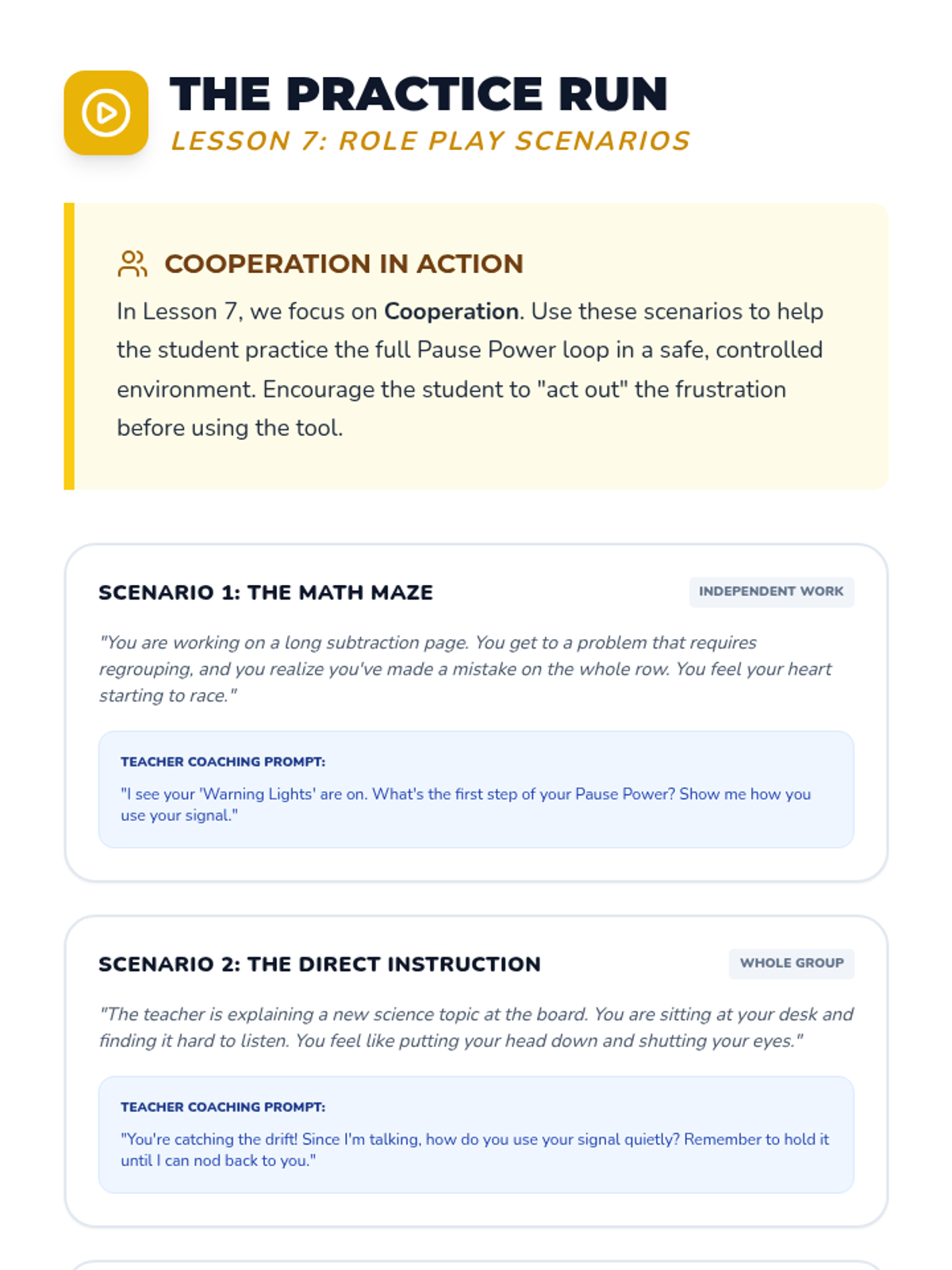
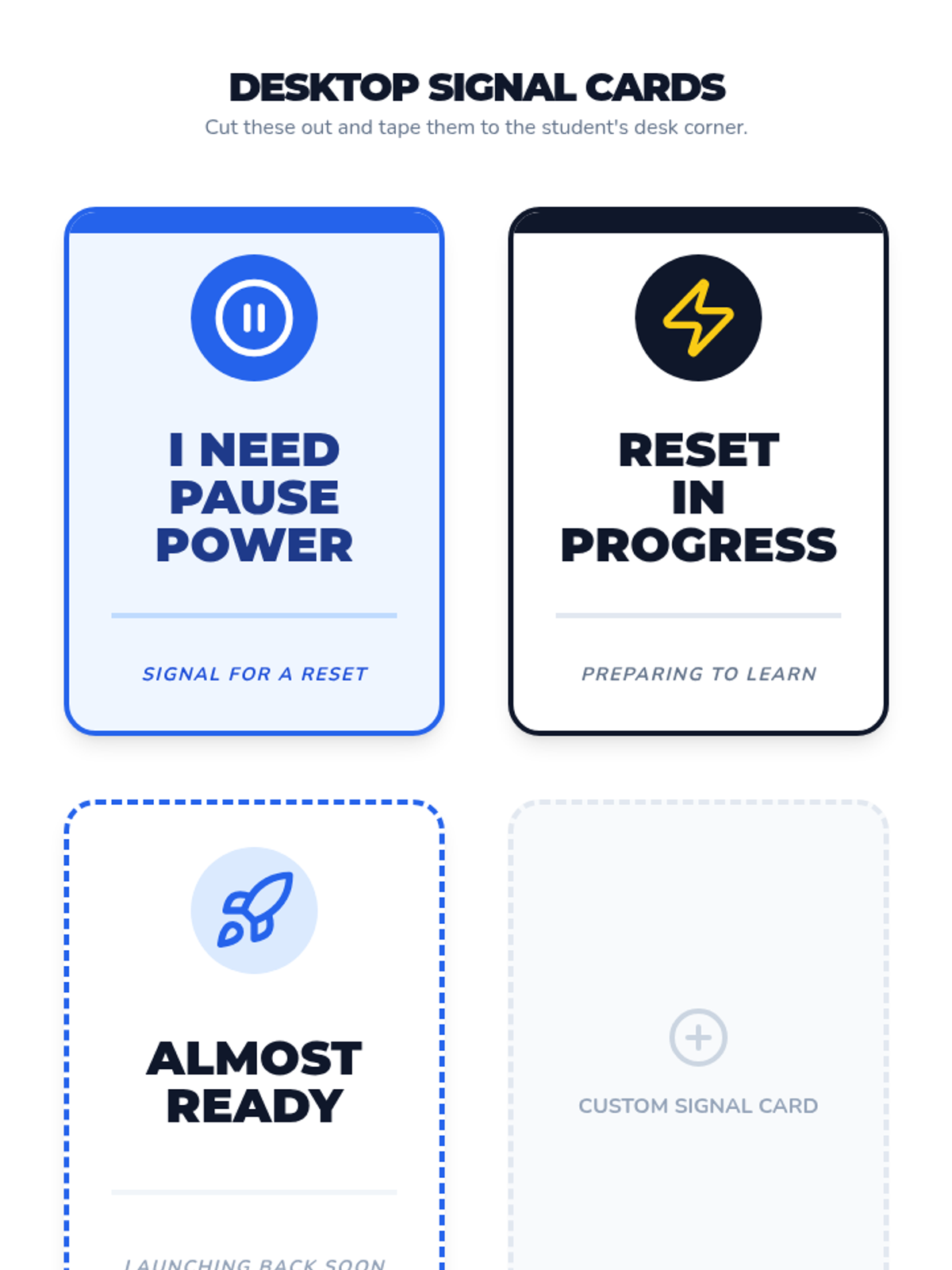
Practicing 'Pause Power' in controlled classroom situations.
Understanding how charting success leads to 'Power Rewards' (bonus break time).
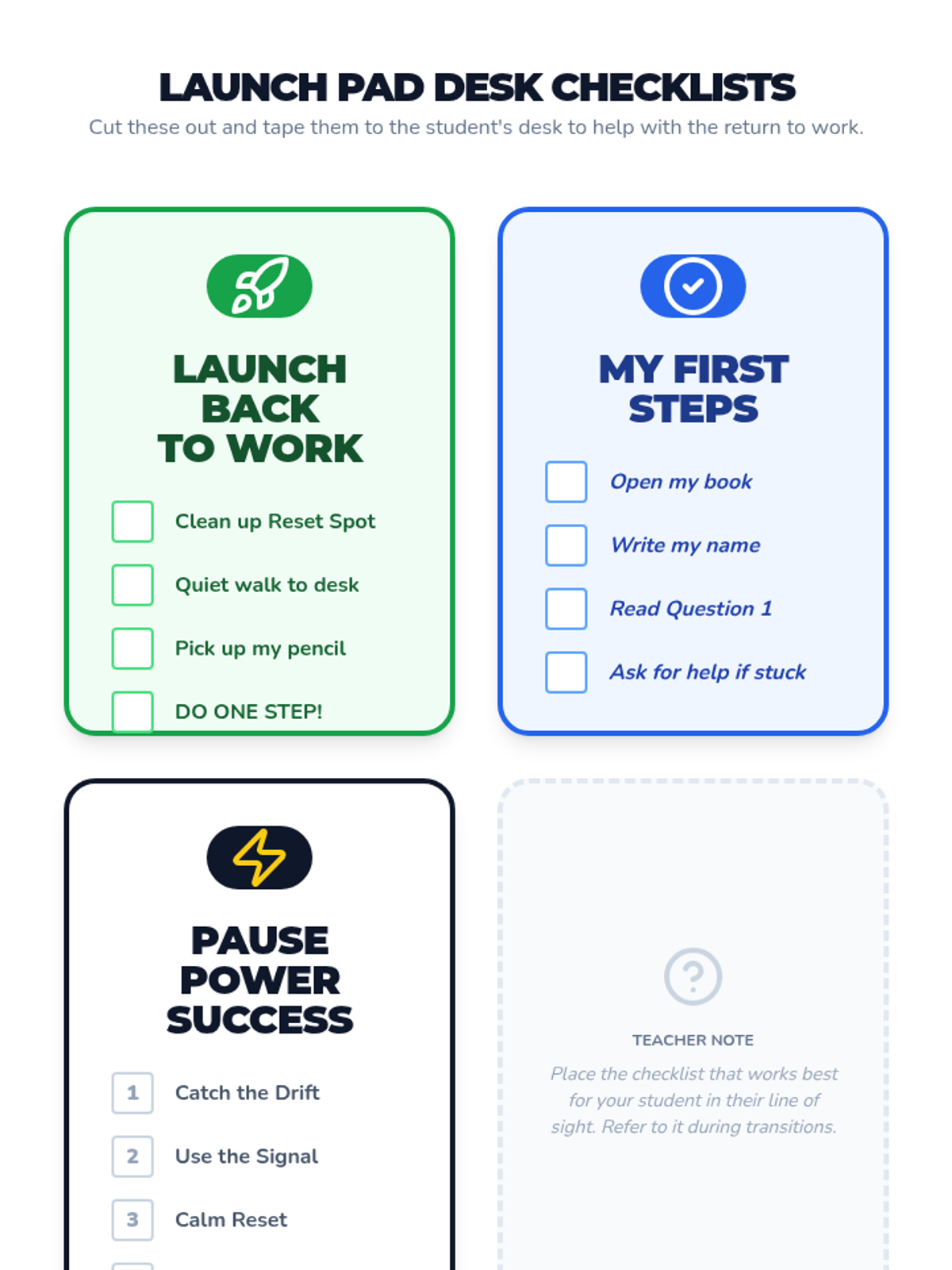
Preparing to transition back to academic work and re-entering the classroom flow.
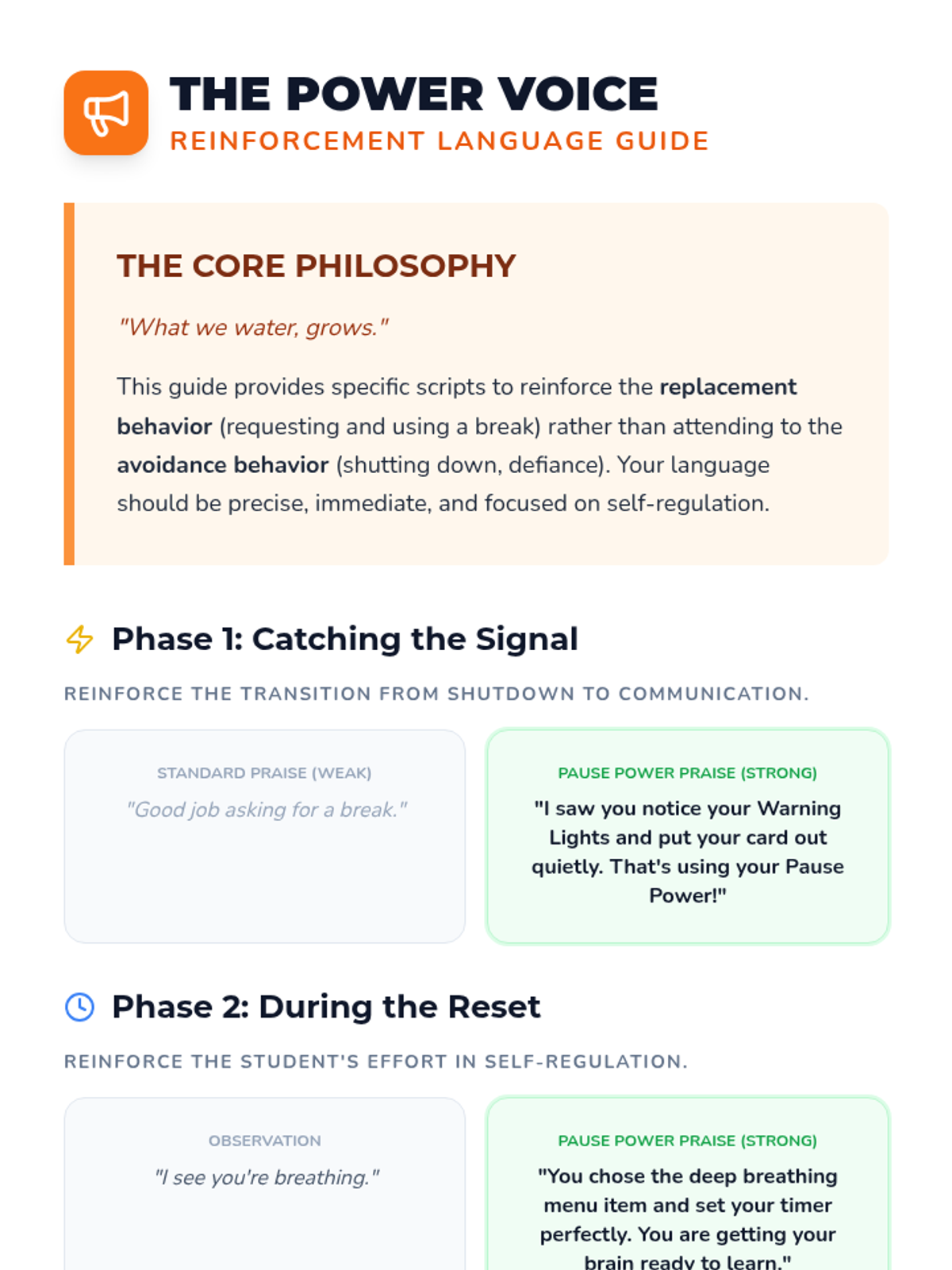
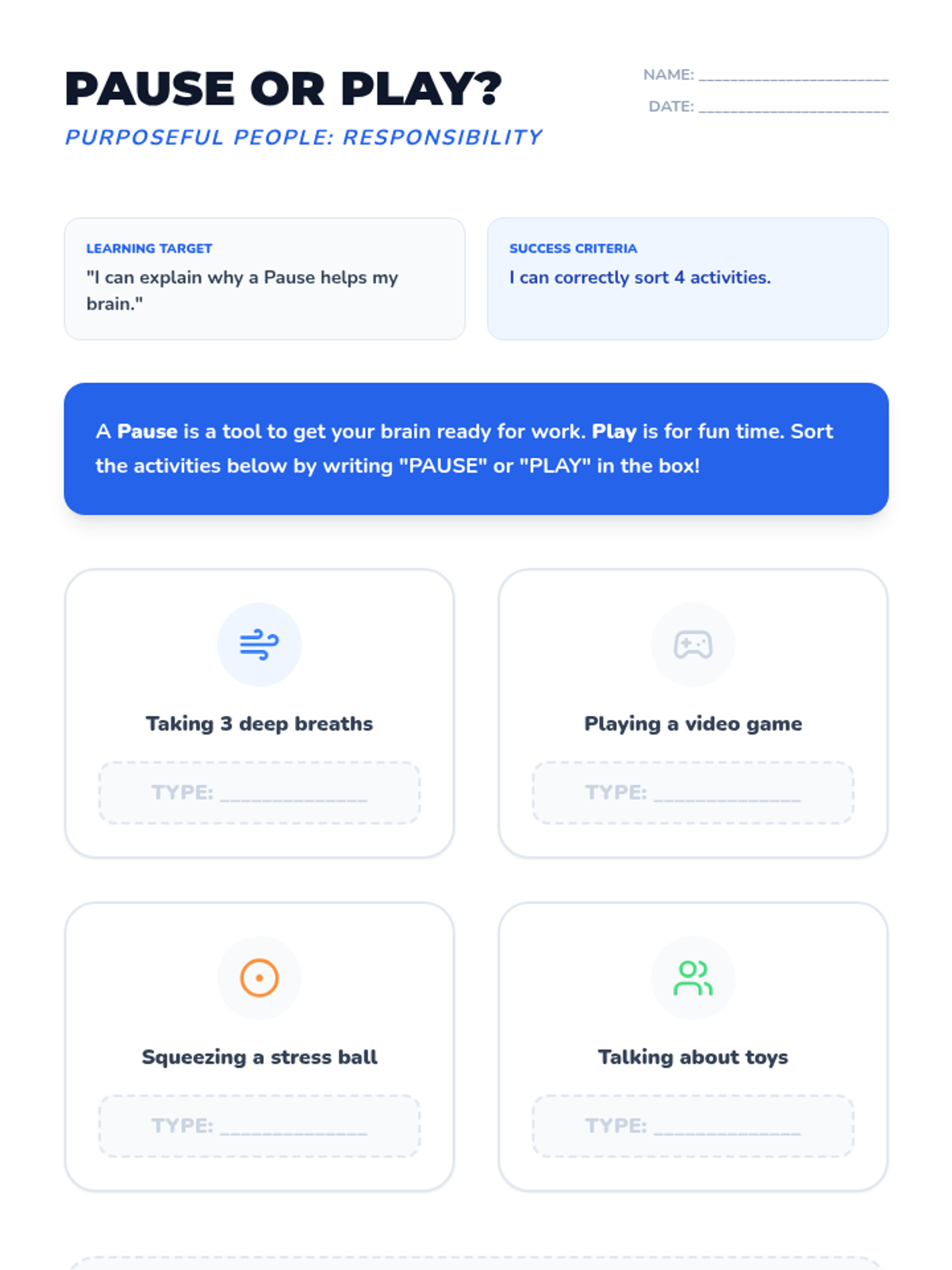
Activities during the 'Pause' that lead to regaining self-control and readiness to learn.
The mechanics of requesting a break through verbal and non-verbal cues.
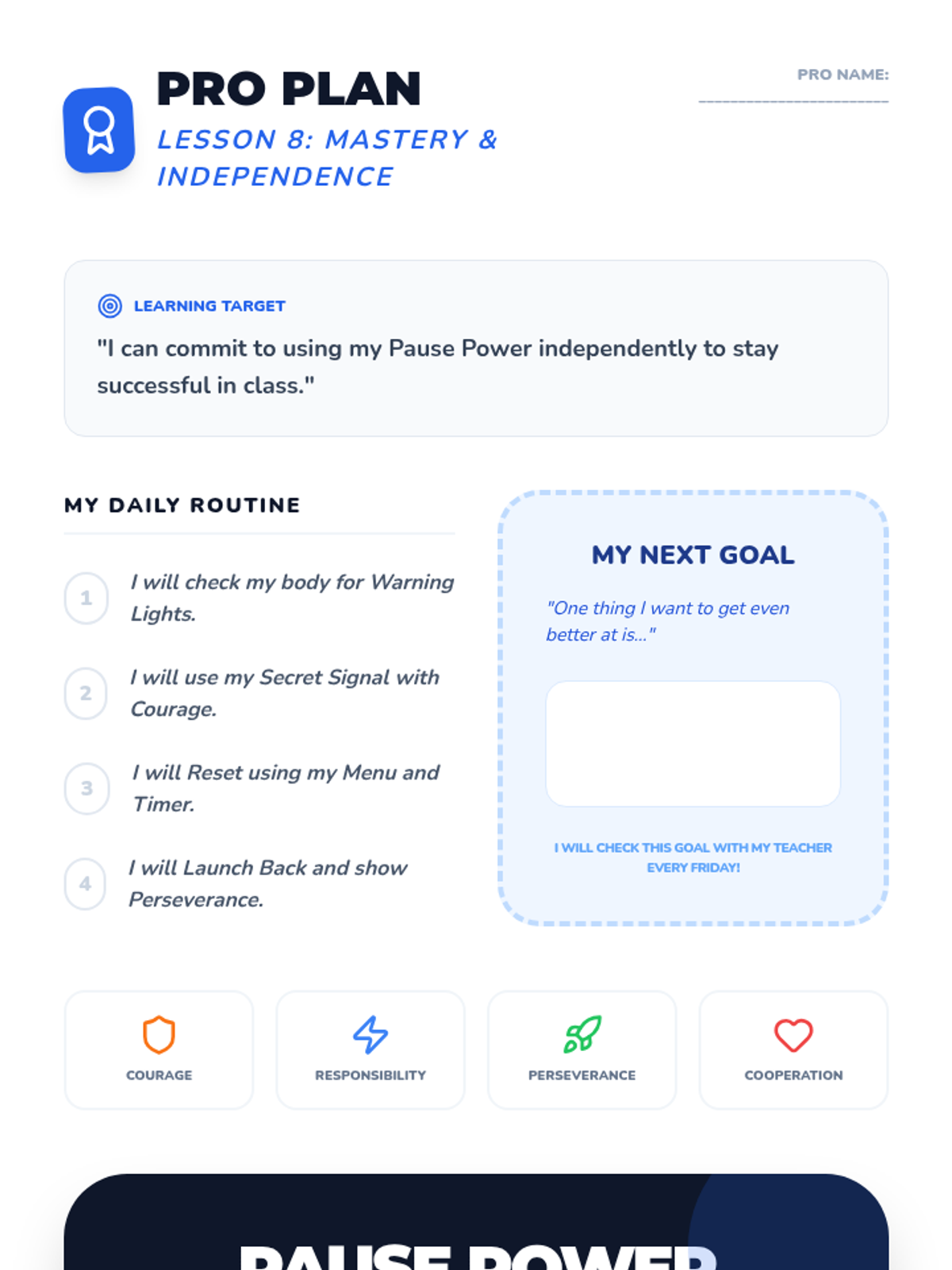
Understanding what a 'Pause Power' break is, its purpose (self-control, not just escape), and how it works.
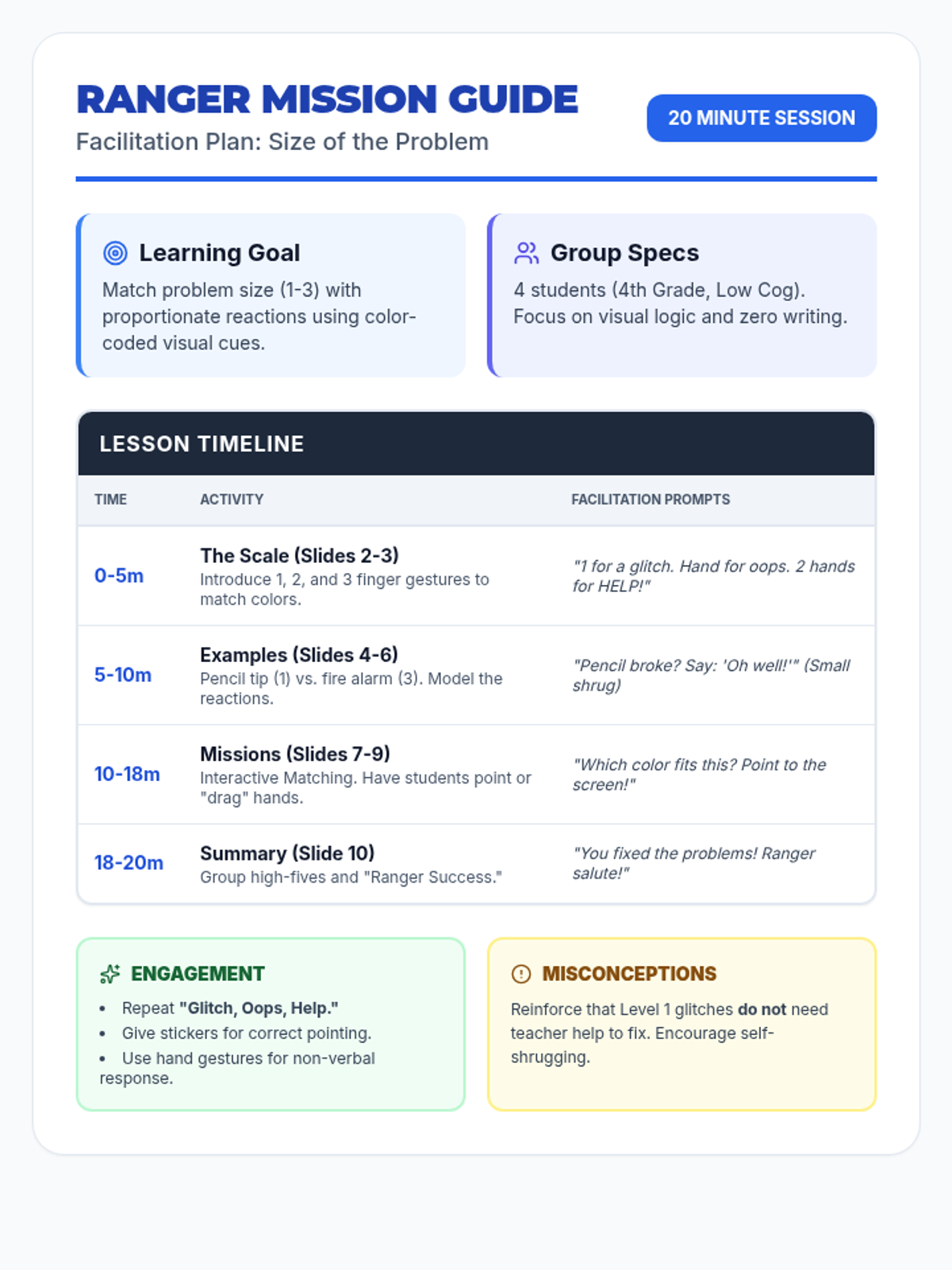
A social-emotional learning lesson for 4th-grade students with low cognitive abilities to identify the size of everyday problems and match them with appropriate emotional reactions using a simple 3-point scale.
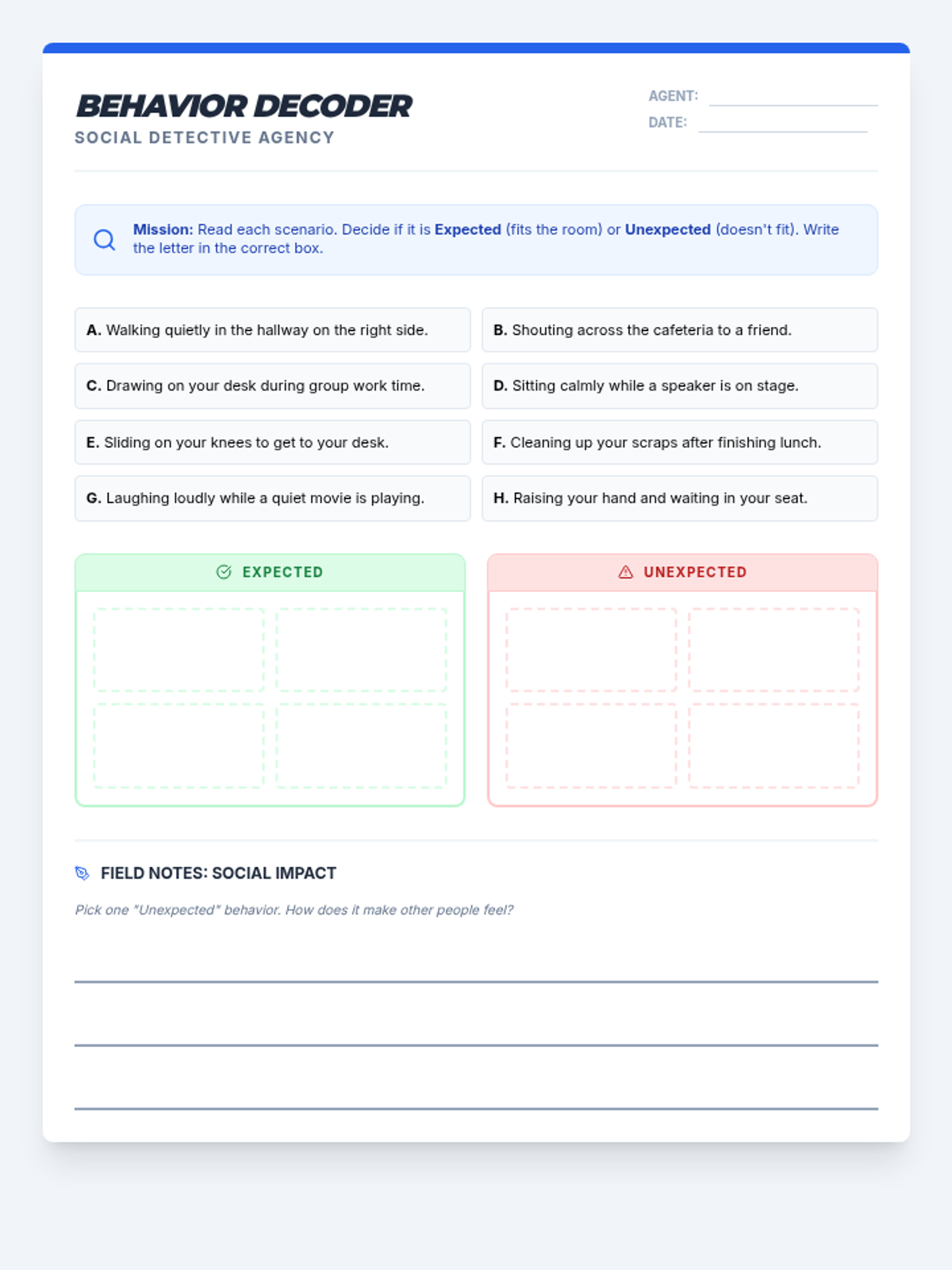
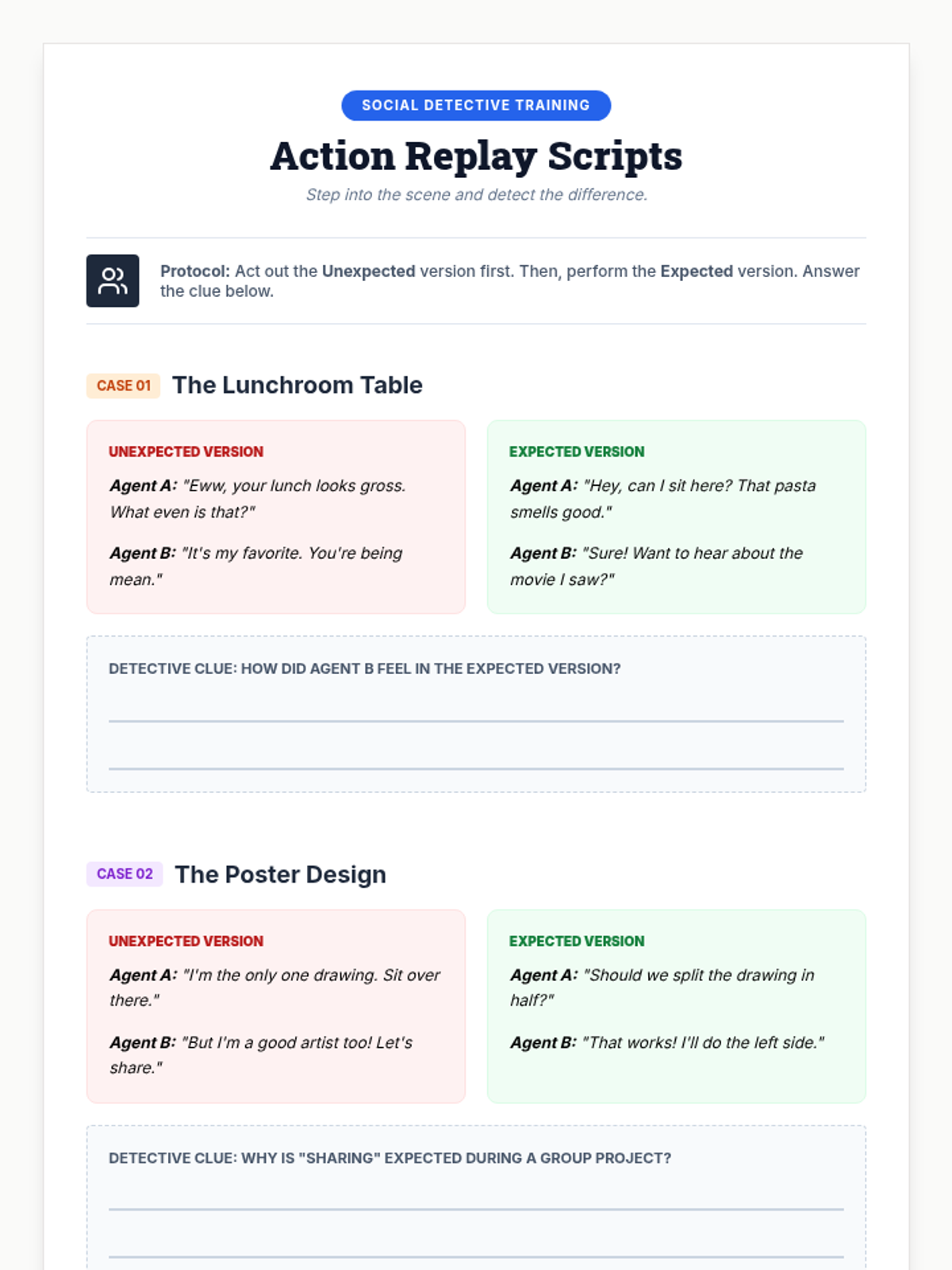
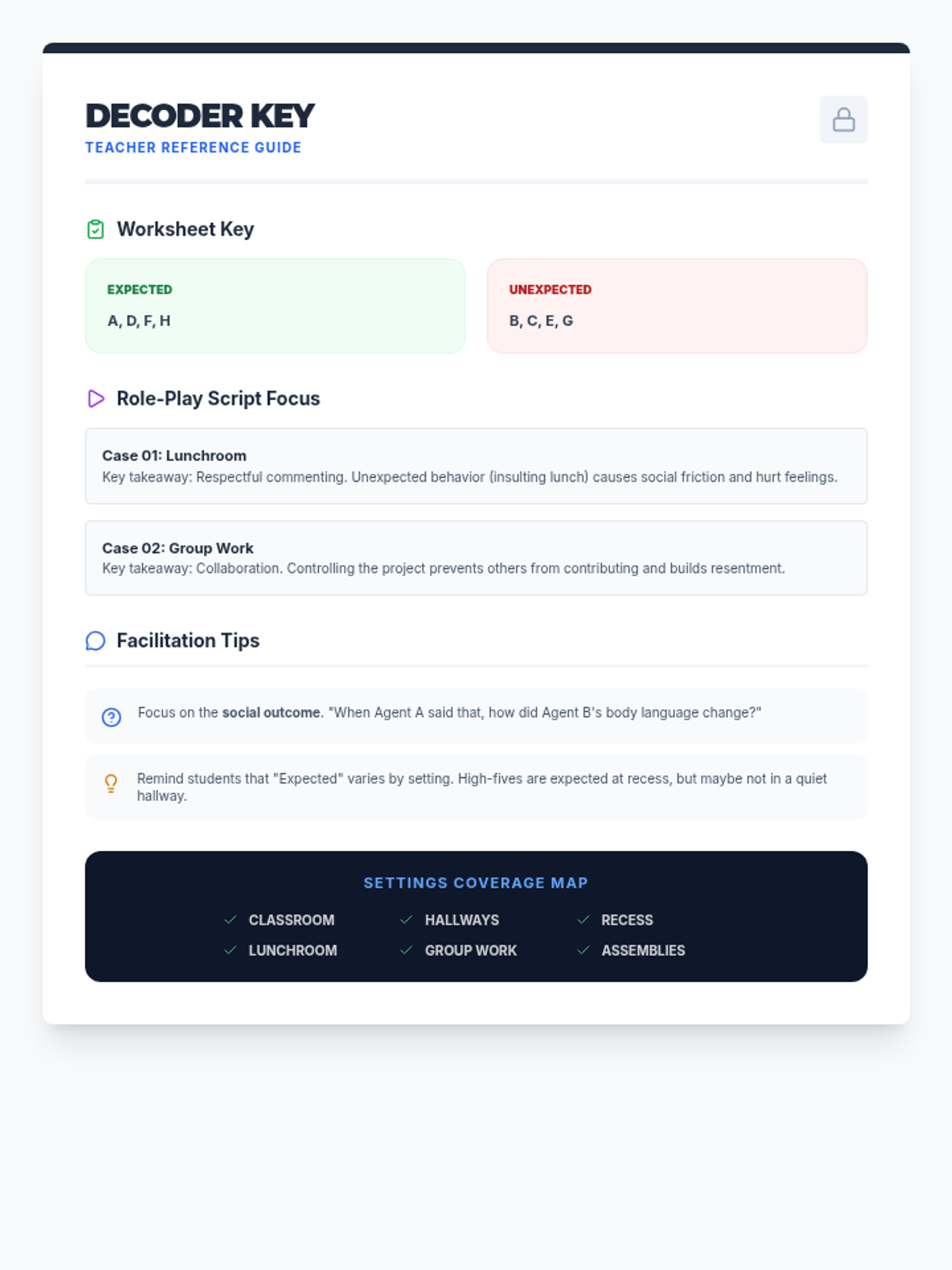
A social-emotional learning lesson where students become 'Social Detectives' to identify expected and unexpected behaviors across various school settings including the classroom, lunchroom, and assemblies.
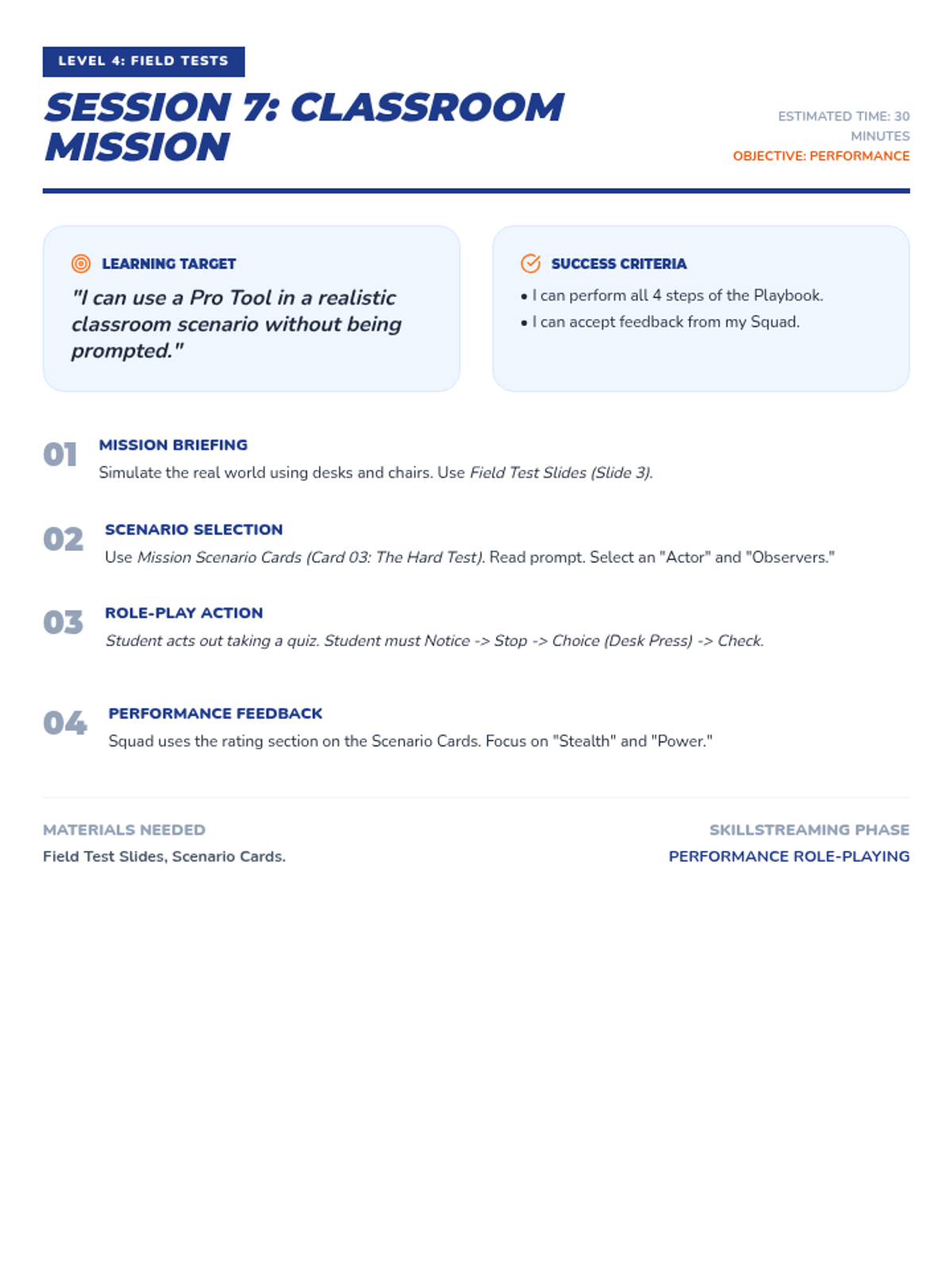
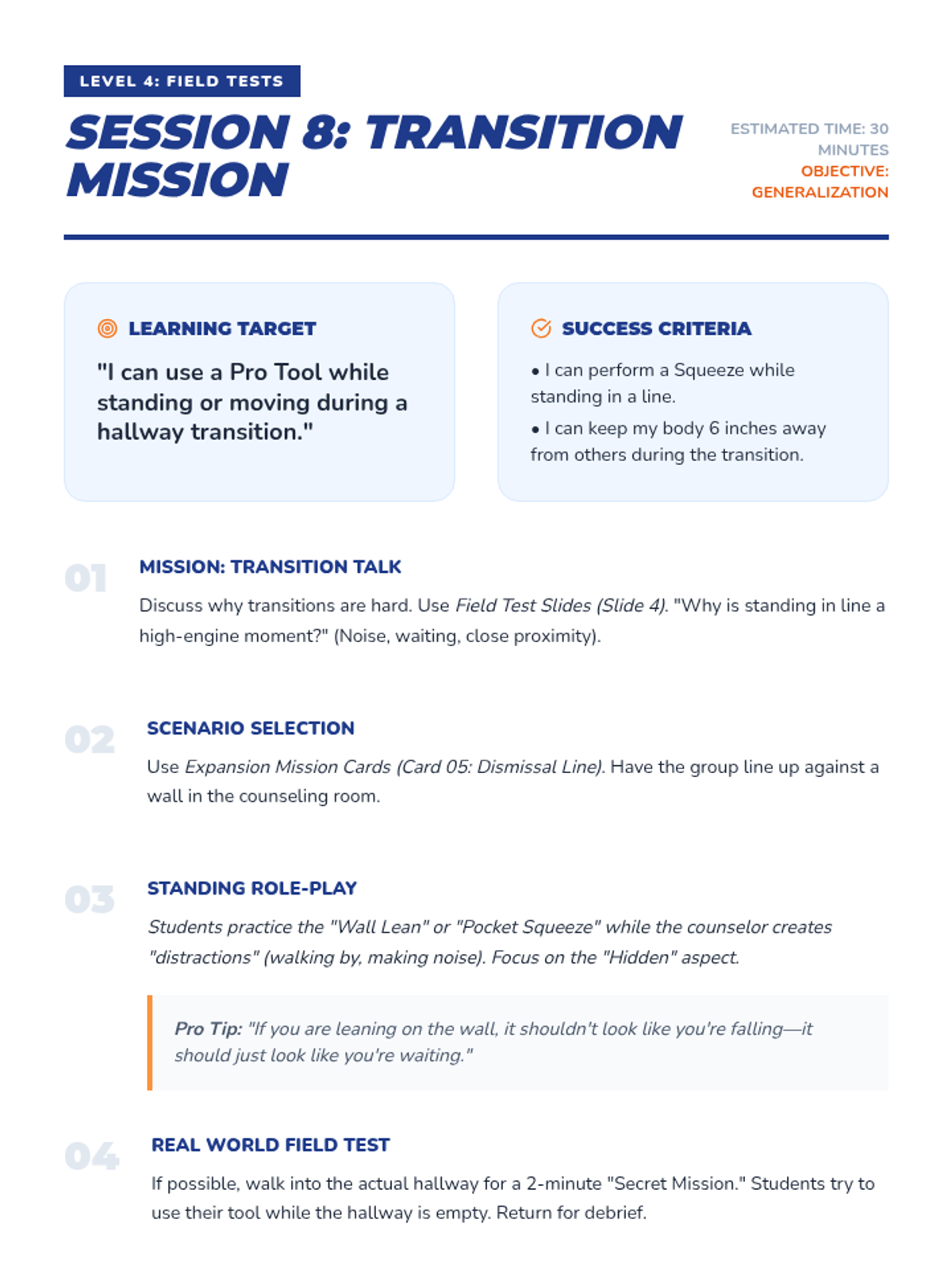
Applying the skills to real-world scenarios through intensive role-playing and performance feedback. Sessions 7 and 8 focus on classroom and transition environments.
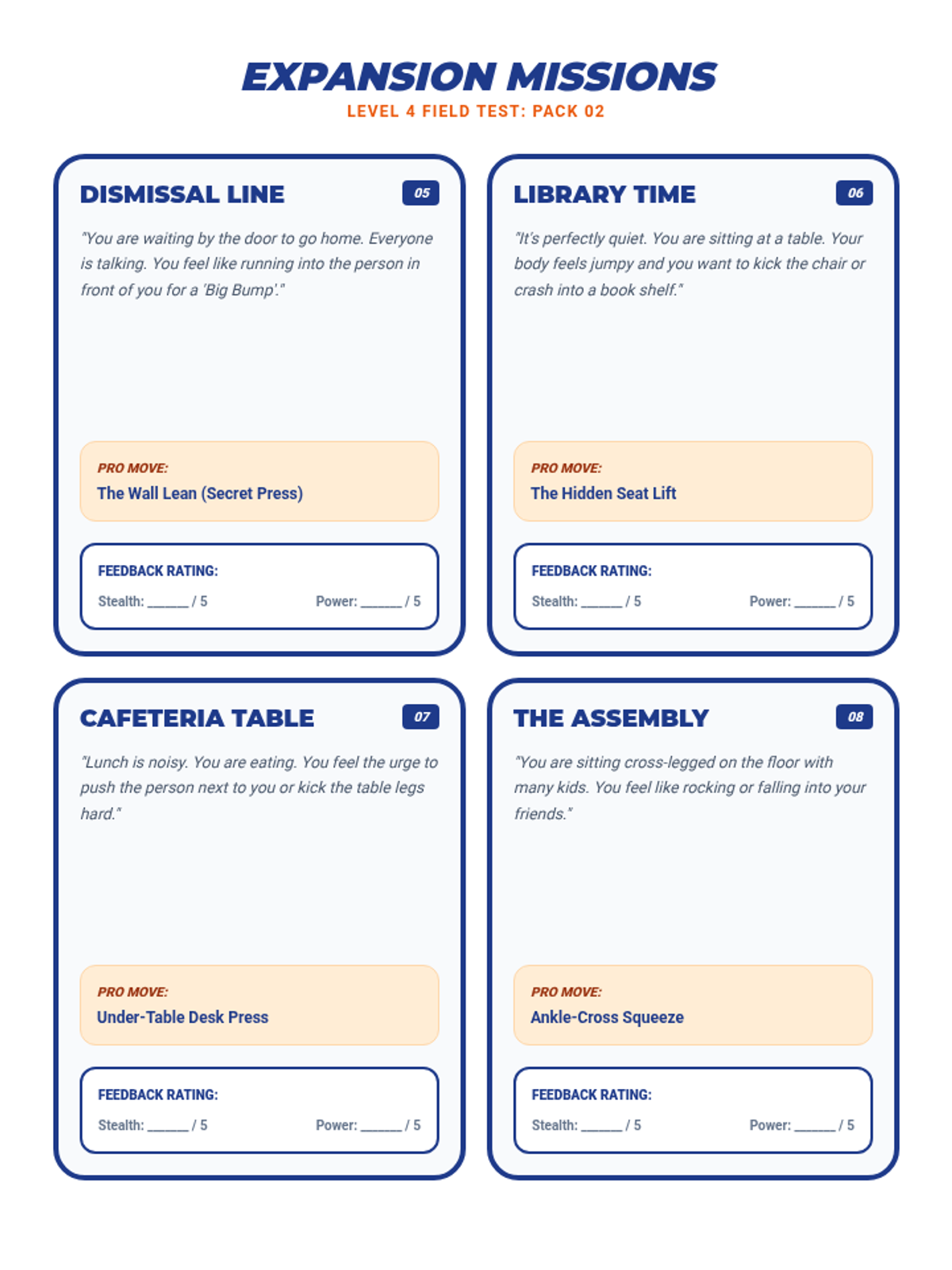
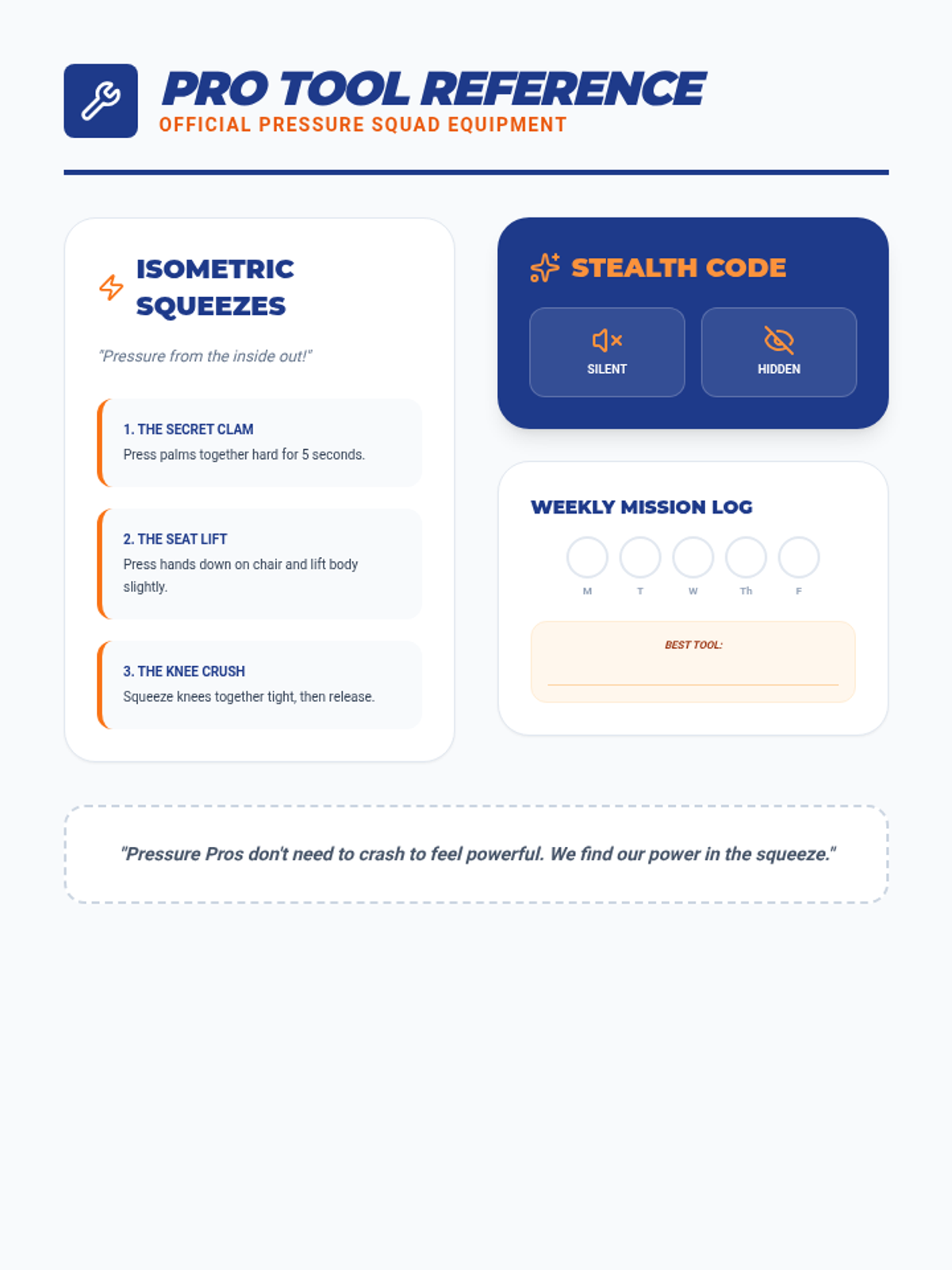
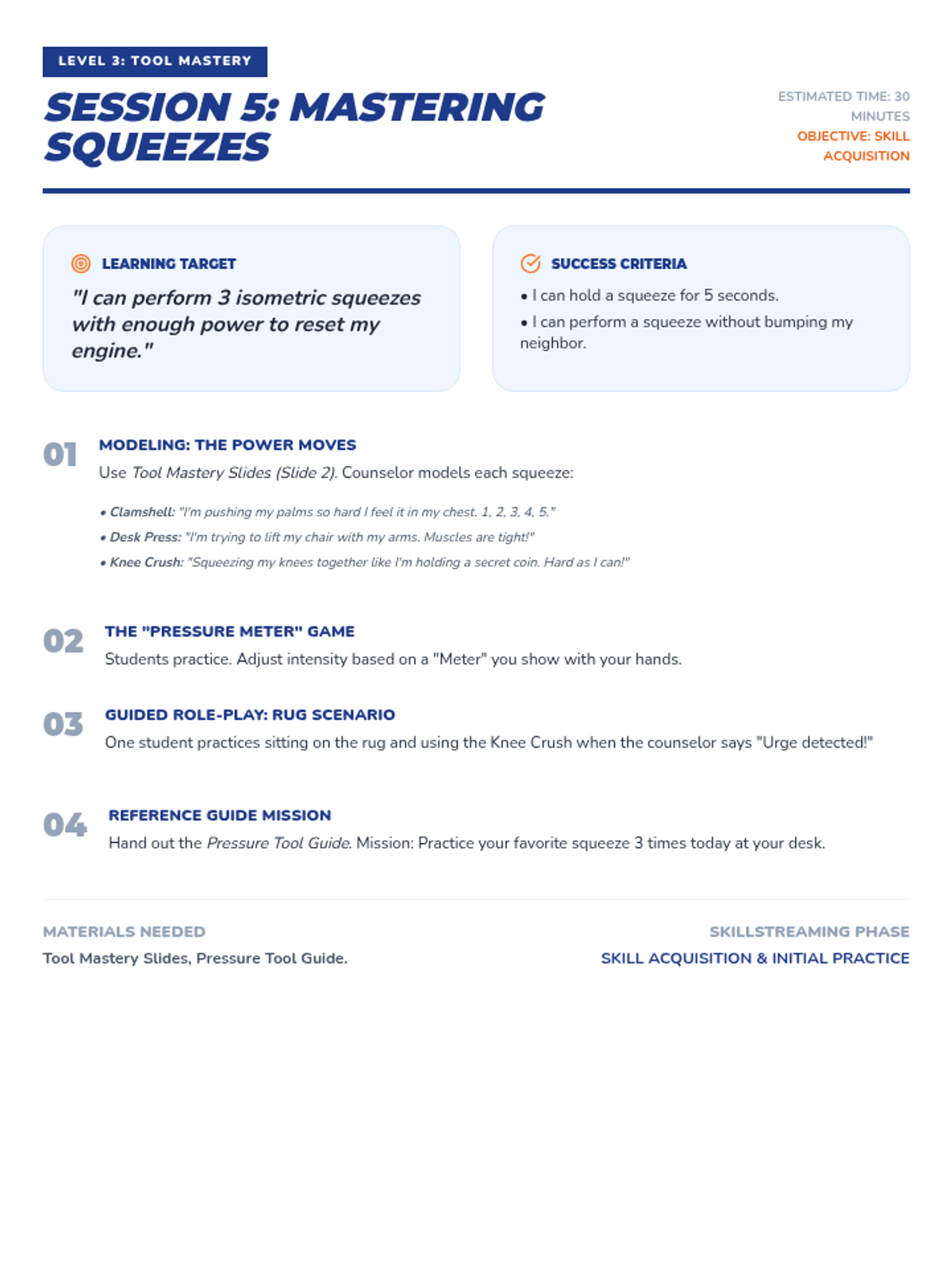
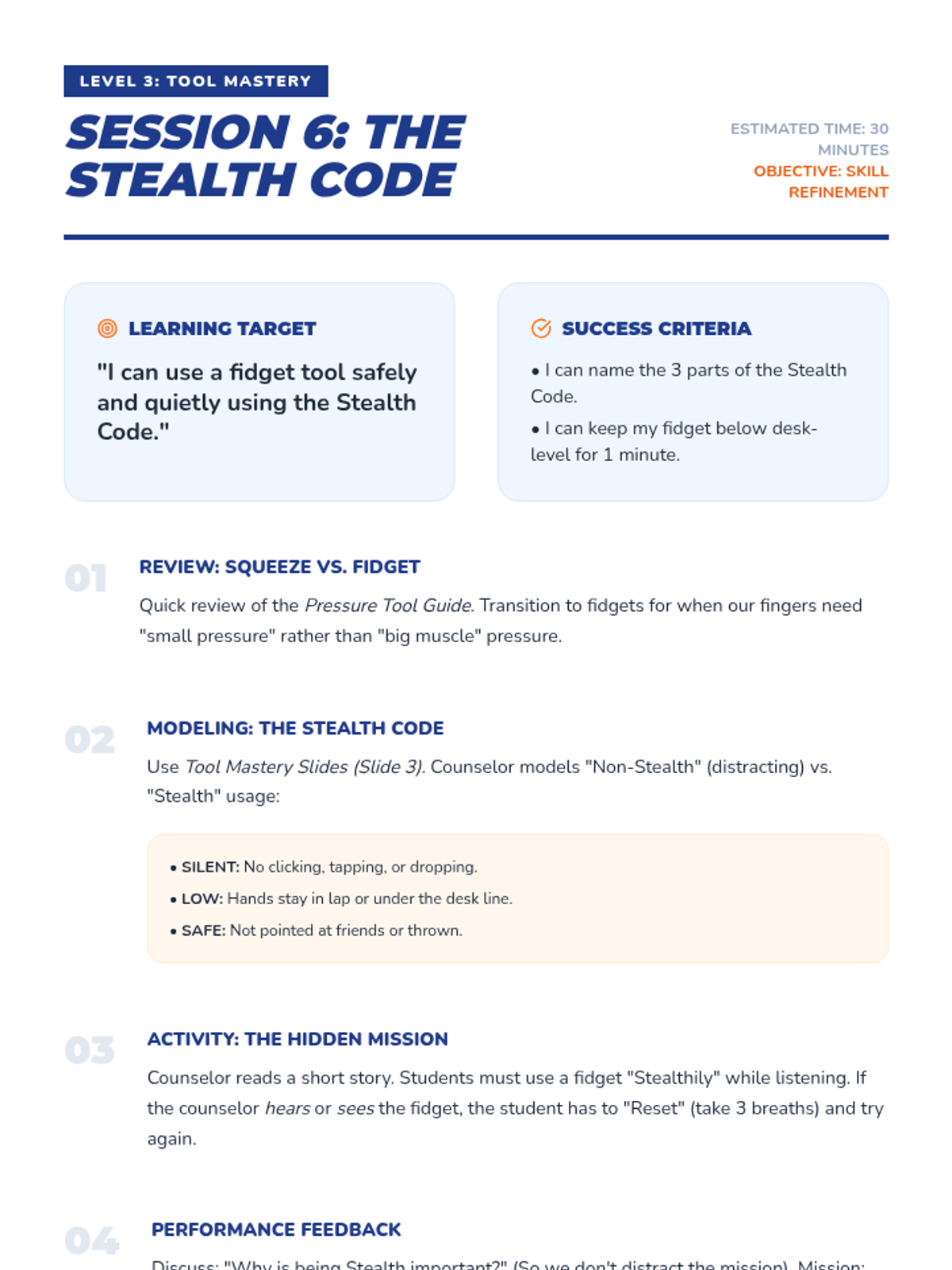
Focused practice on the replacement behaviors: isometric muscle squeezes and appropriate fidget use. Sessions 5 and 6 provide structured modeling and initial role-playing.
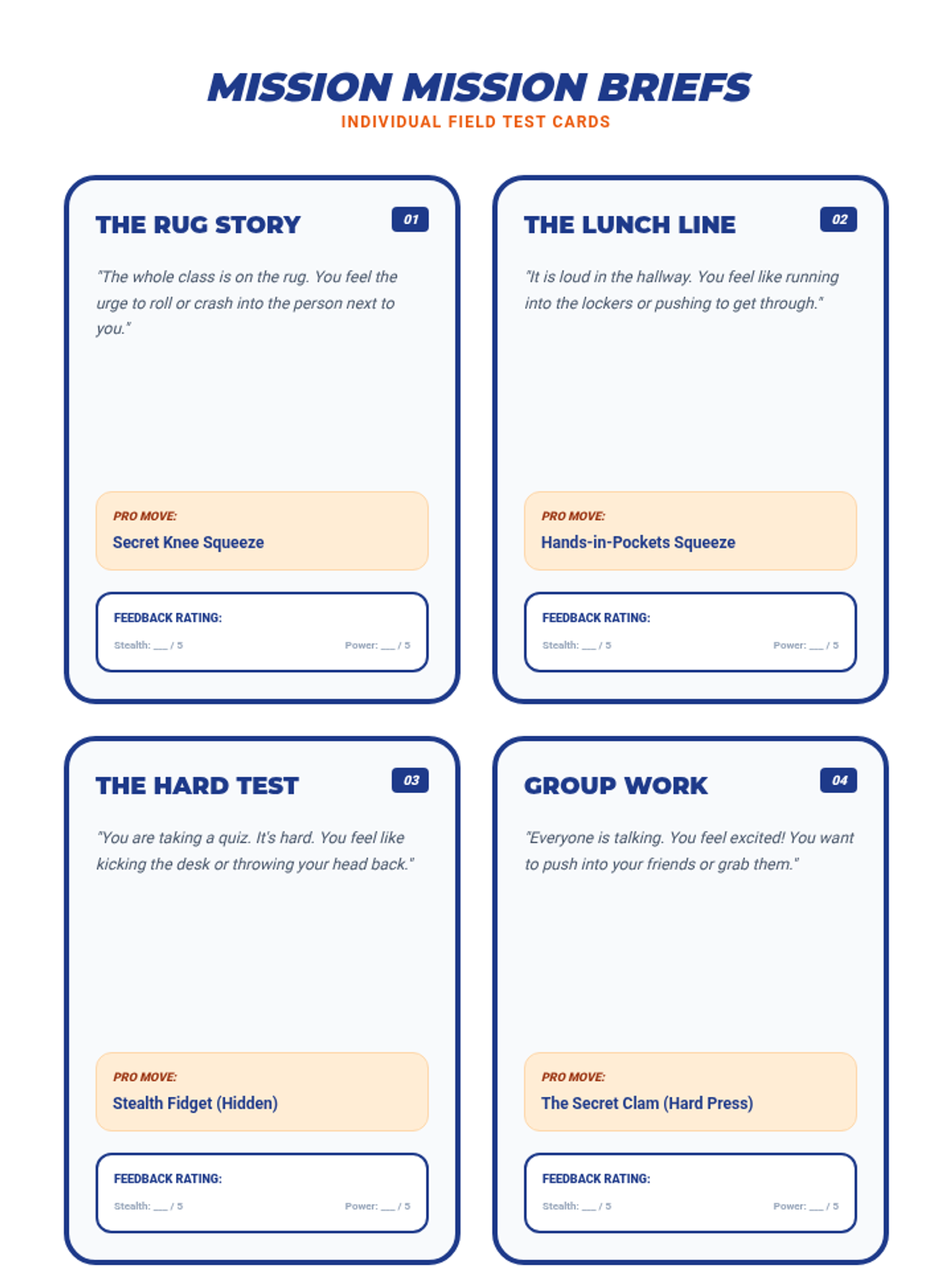
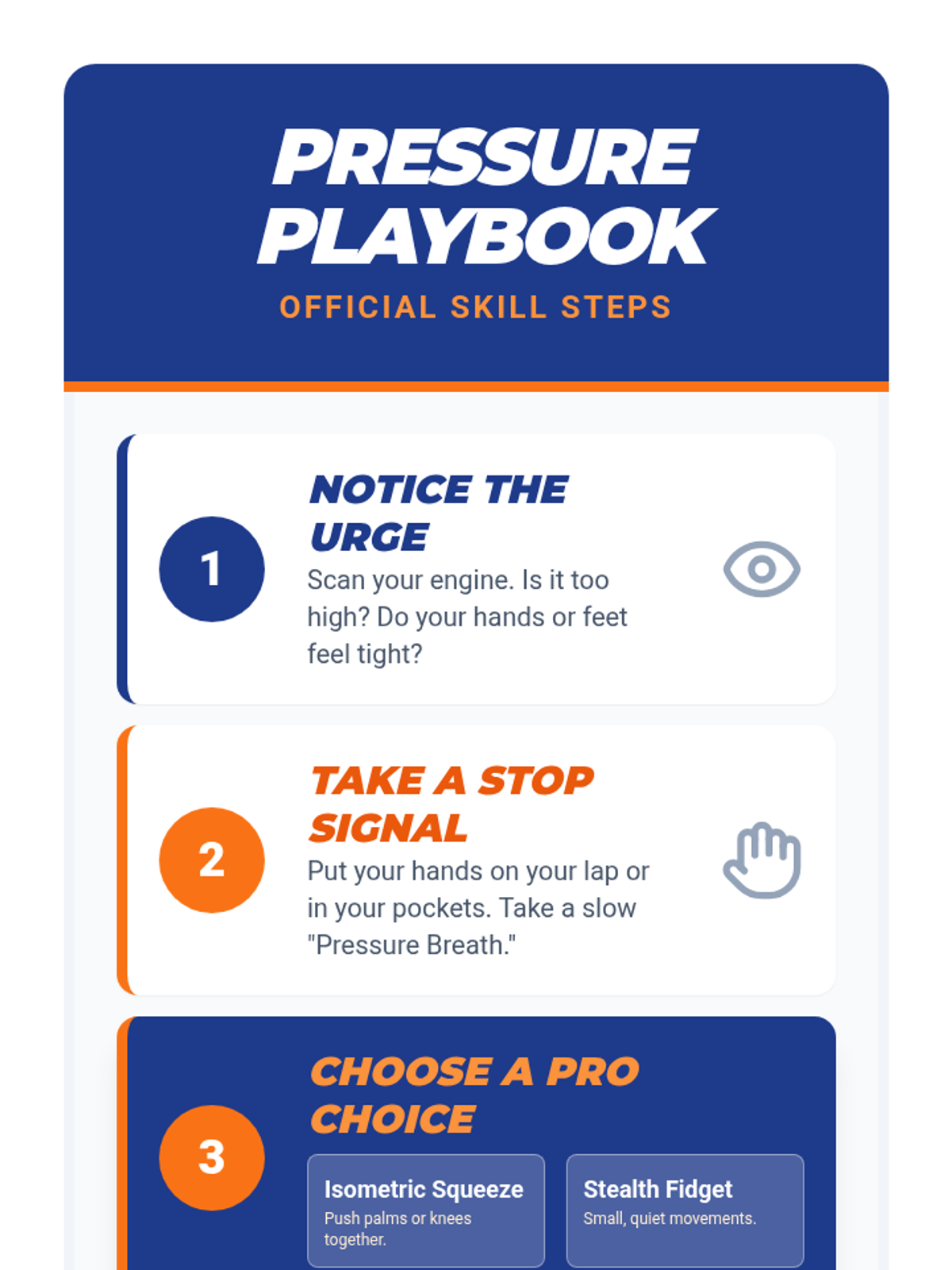
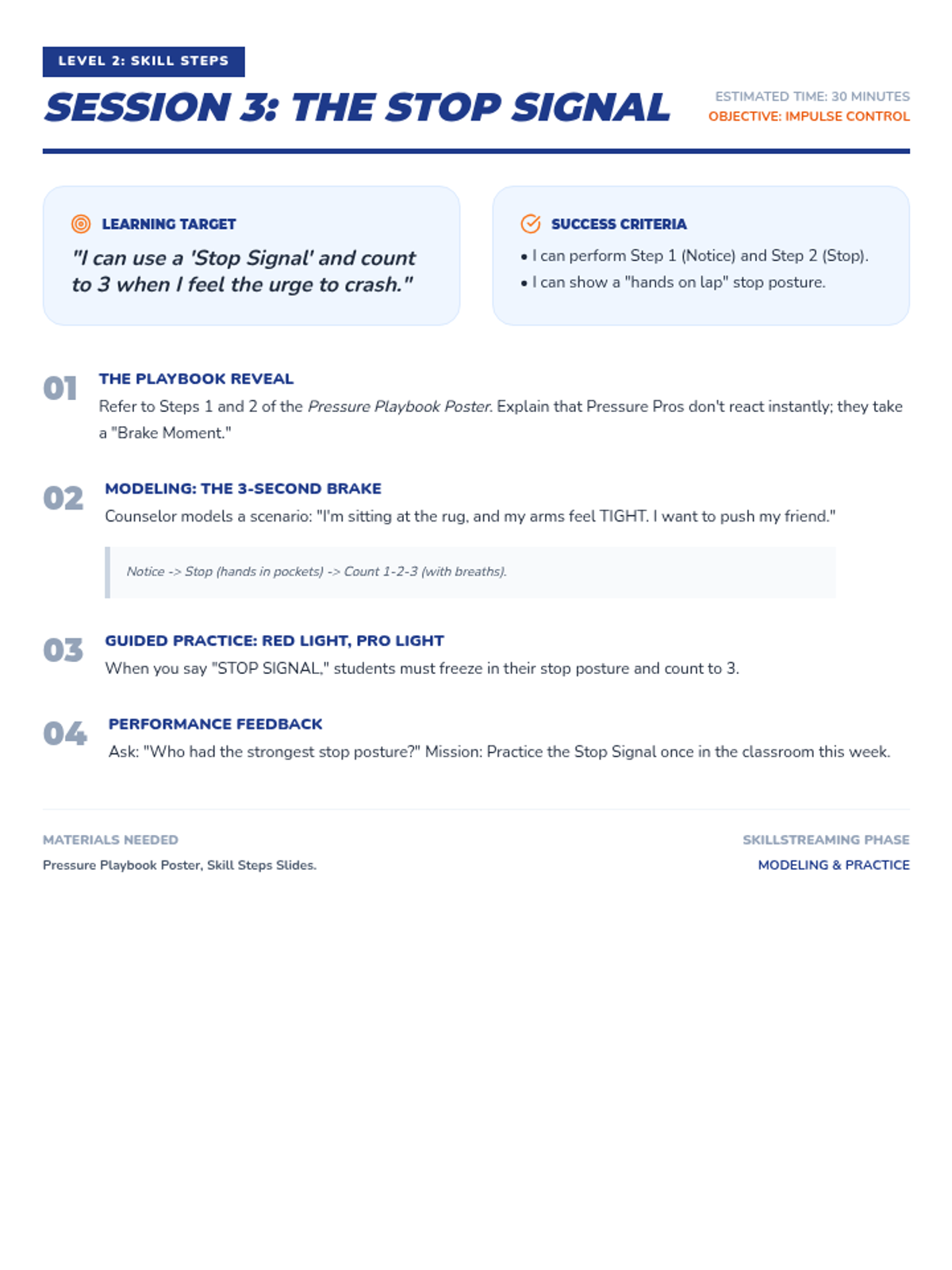
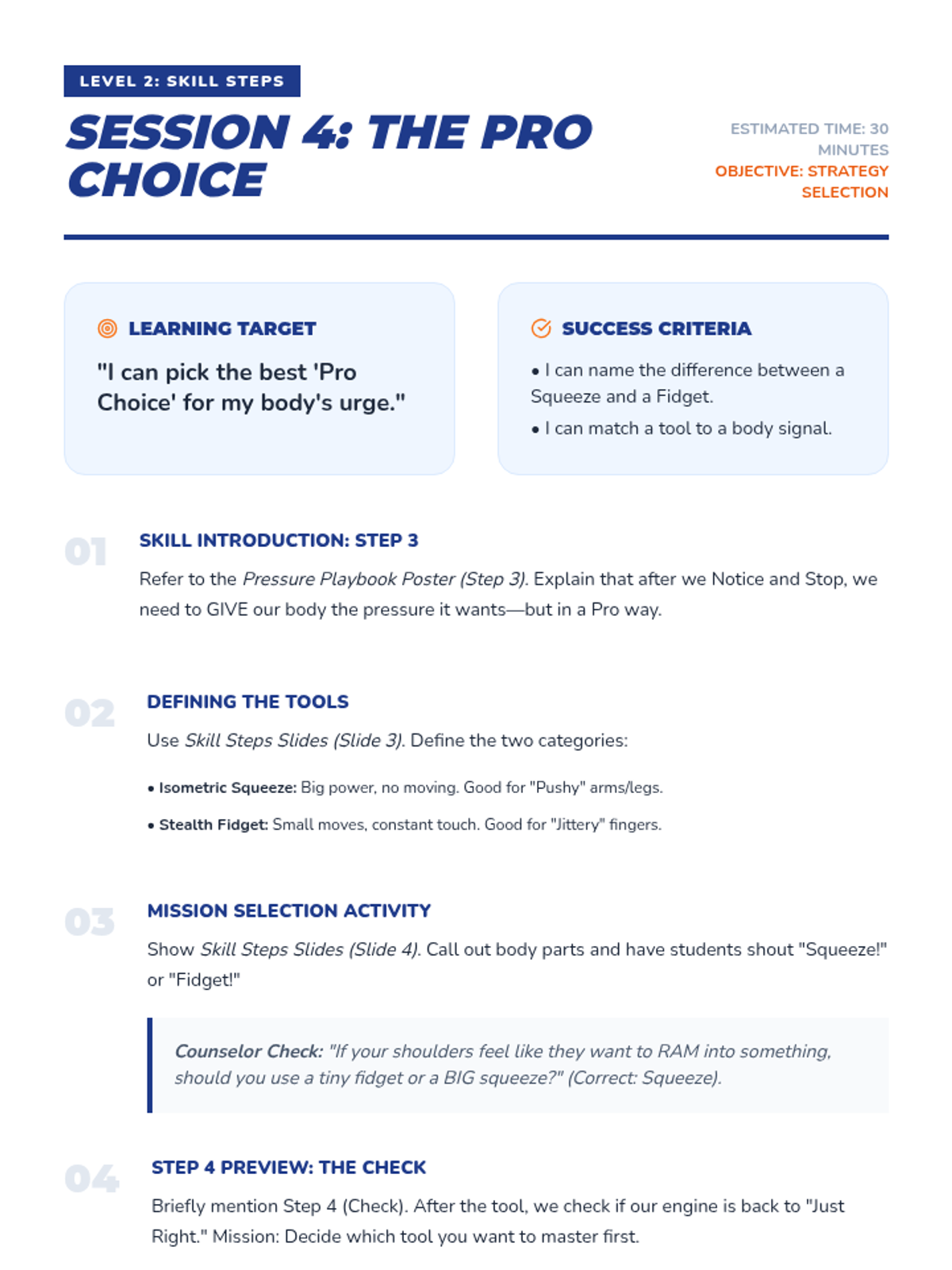
Introduction of the specific SkillStreaming steps for self-regulation and selecting functionally equivalent replacement behaviors. Sessions 3 and 4 focus on the 'Stop Signal' and 'Pro Choice'.
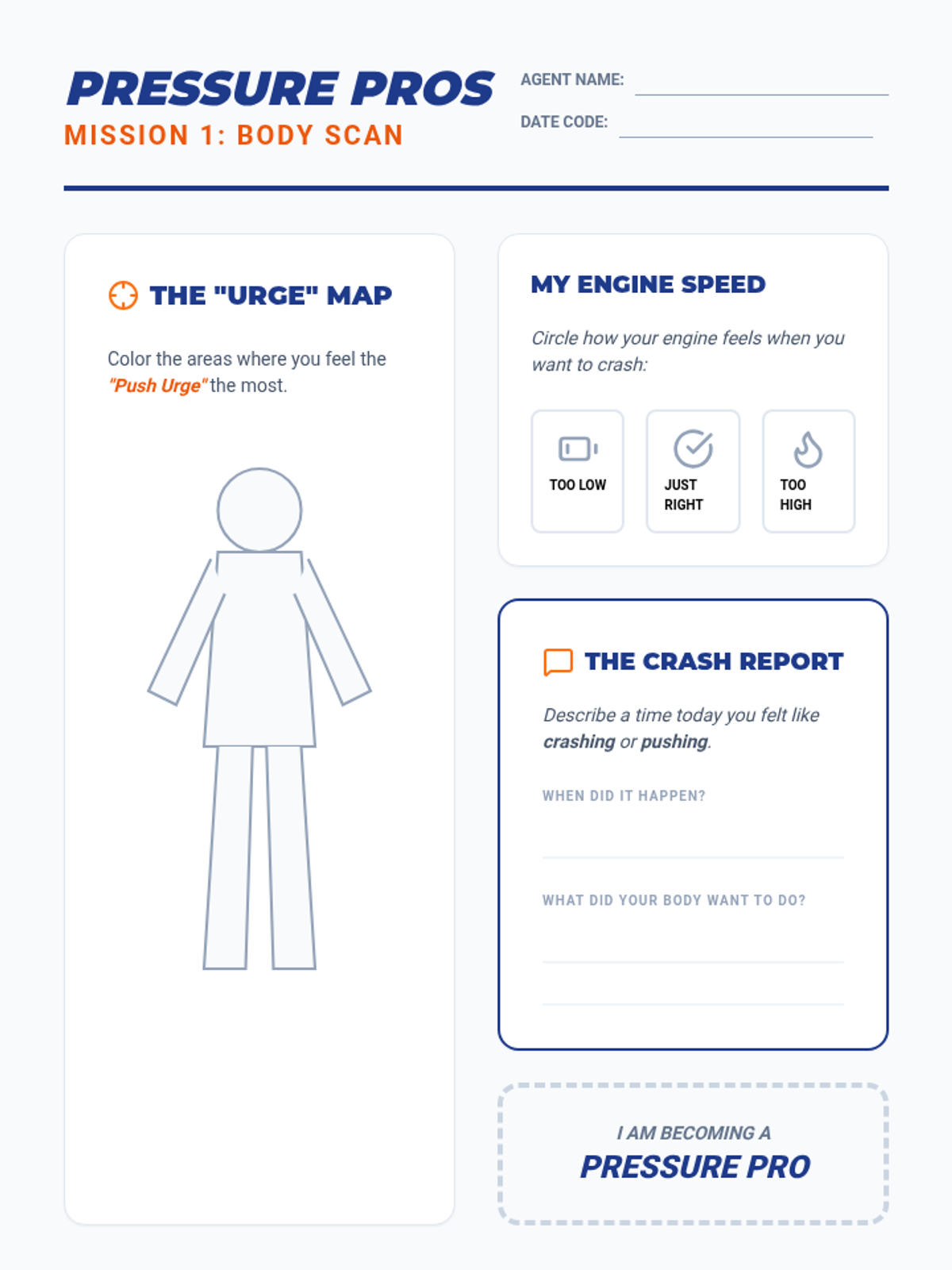
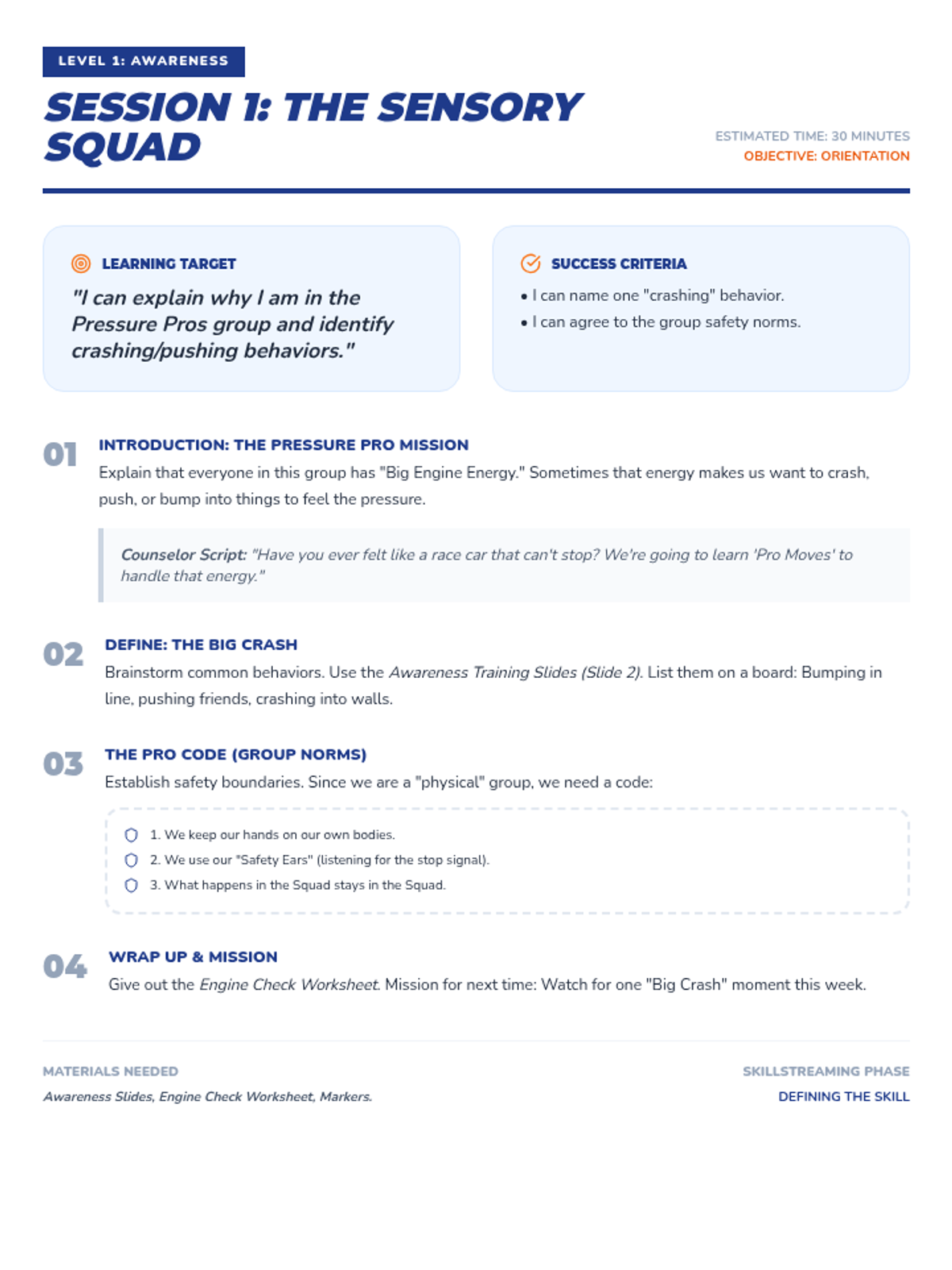
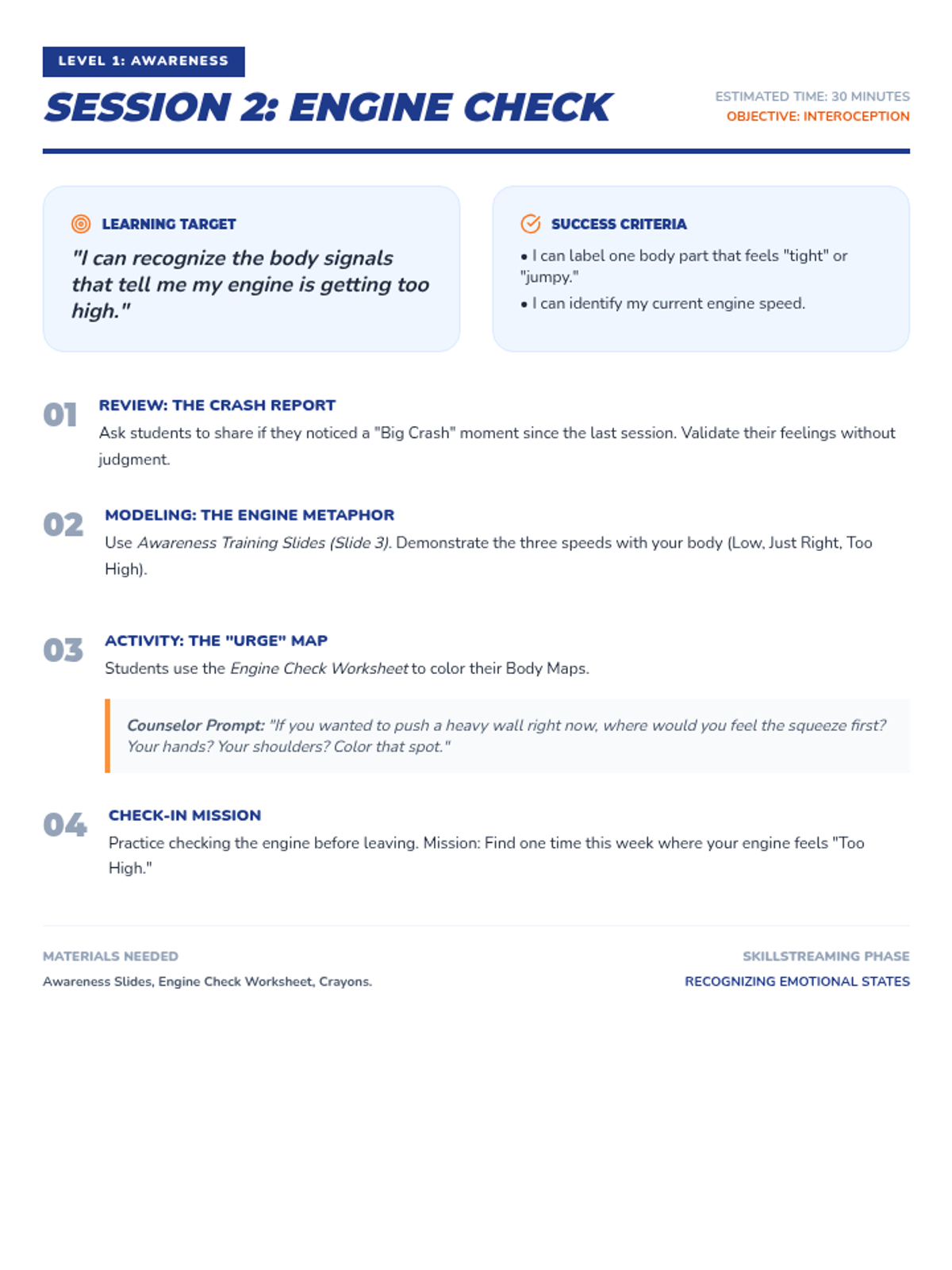
Introduction to the sensory seeking behaviors and building awareness of the internal 'urge' to crash or push. Sessions 1 and 2 focus on defining the group purpose and identifying body signals.
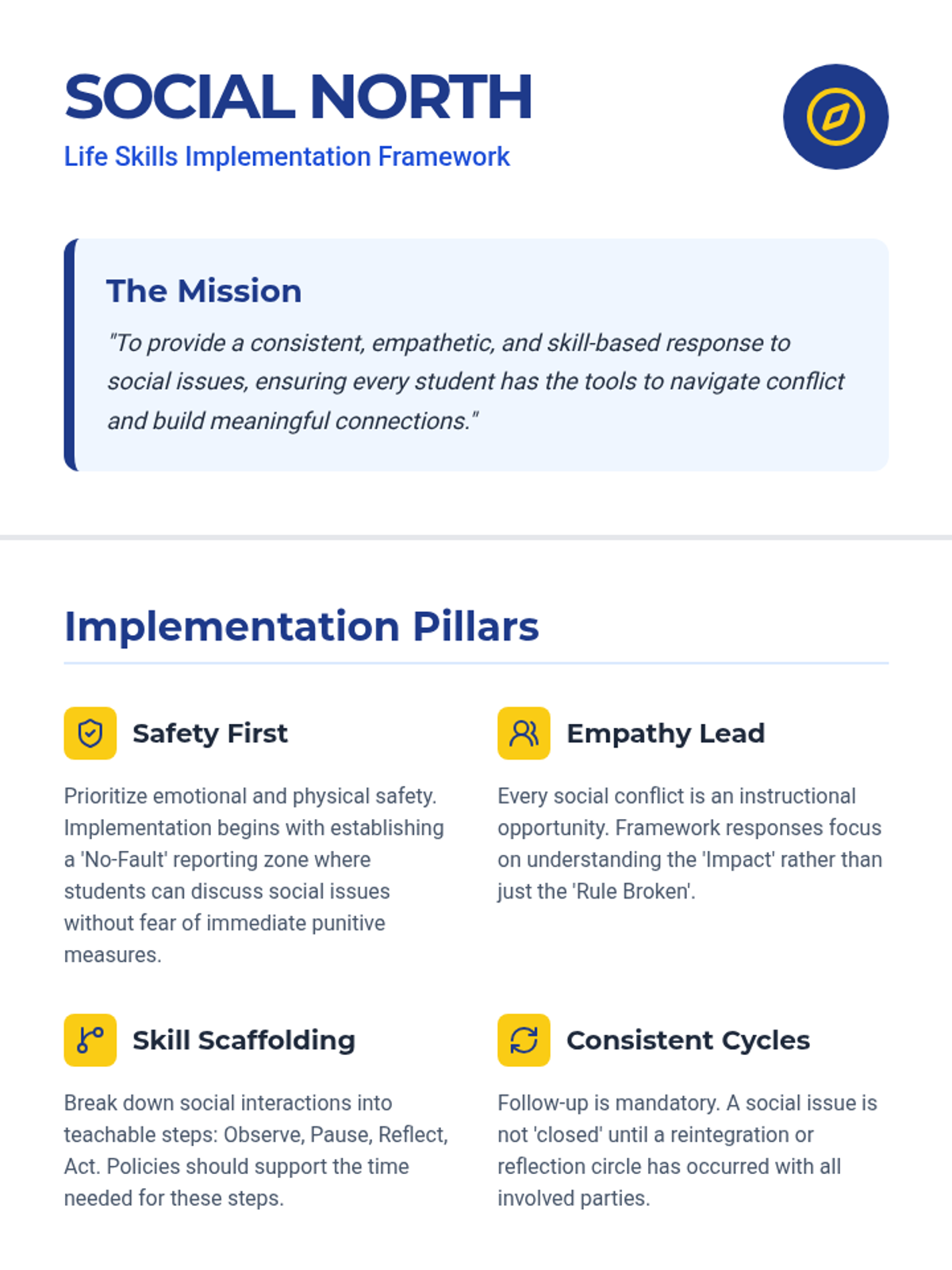
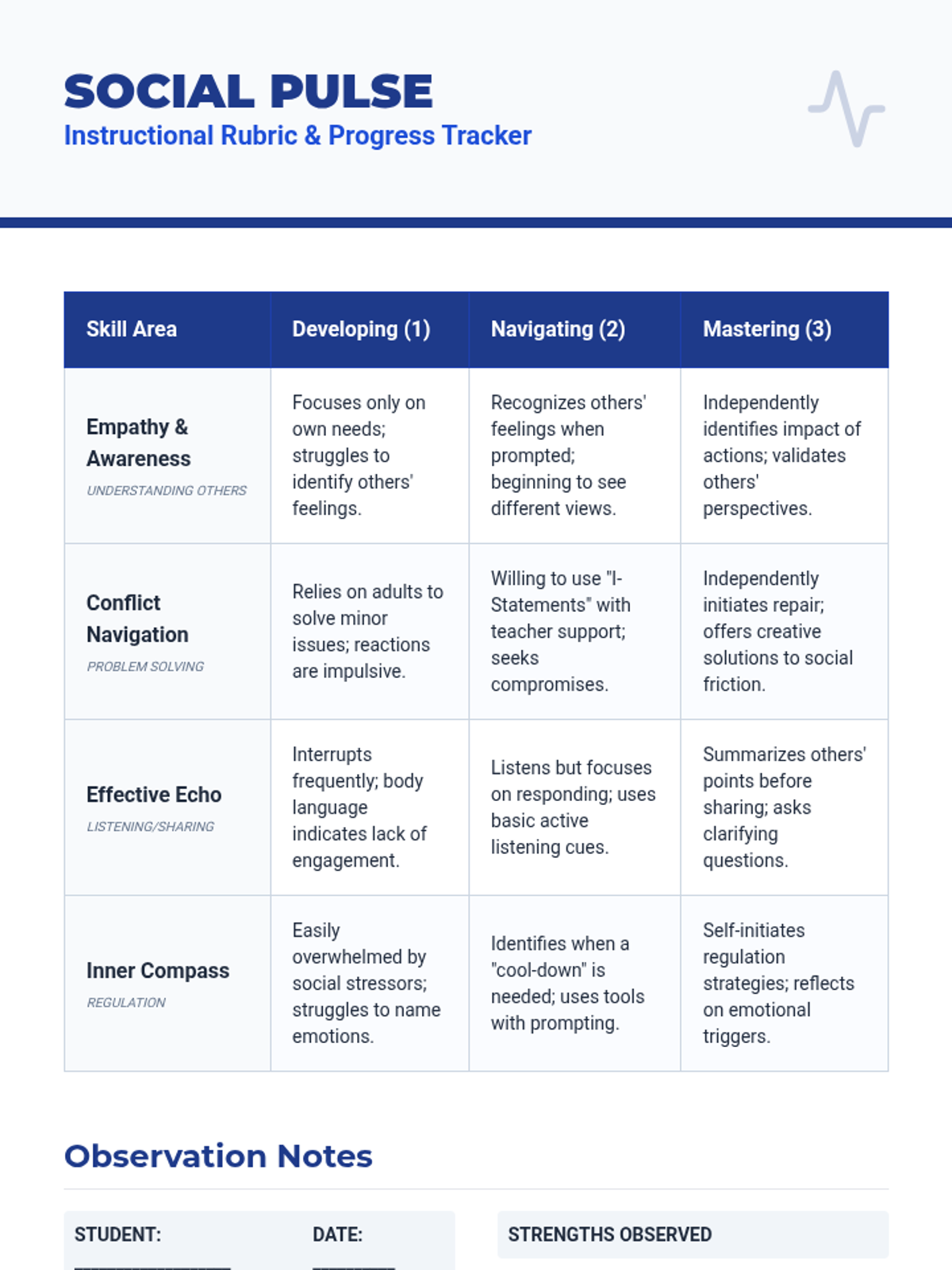
The foundational implementation of the Social Compass program, covering policy, instructional assessment, and team training.
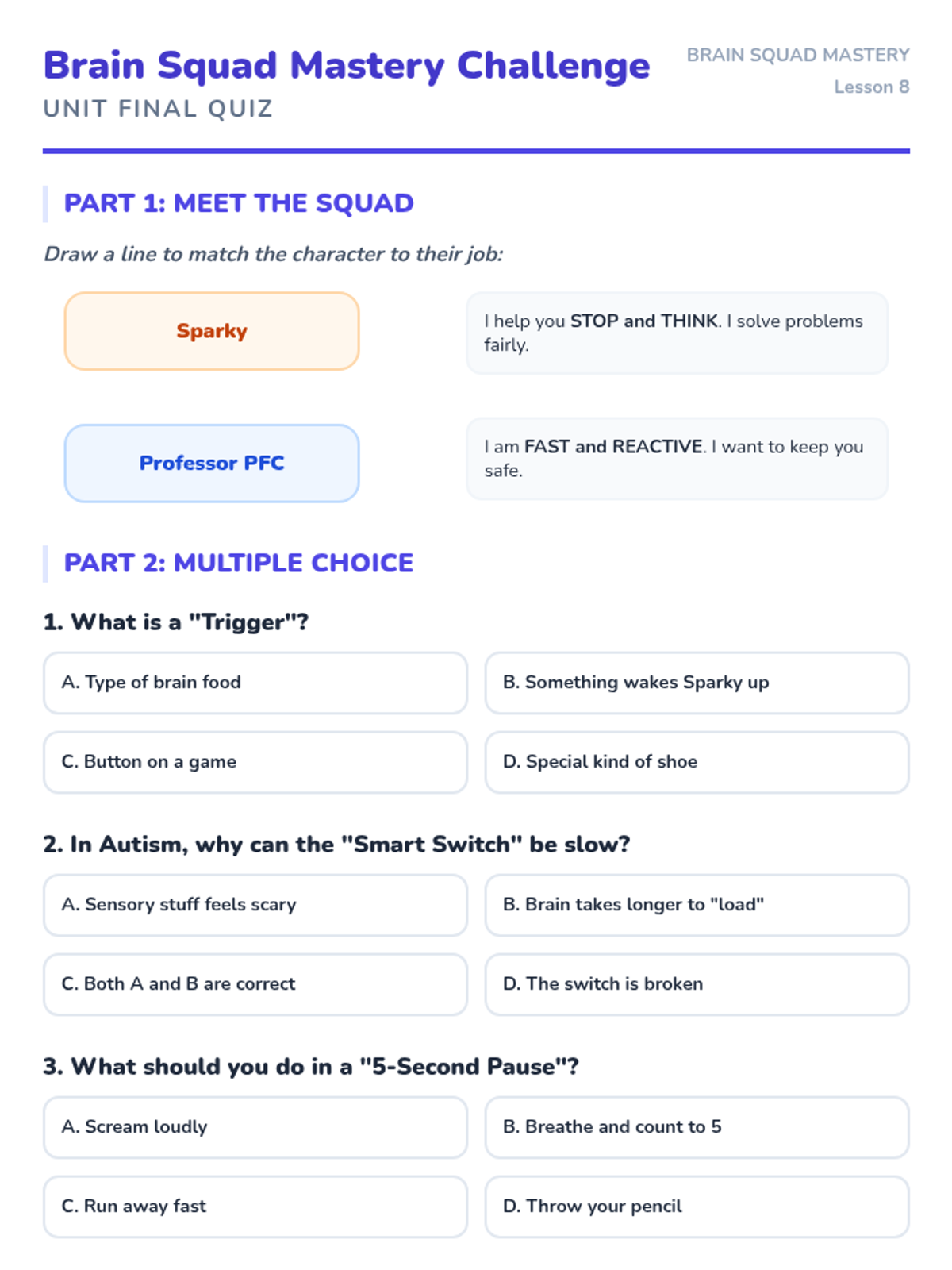
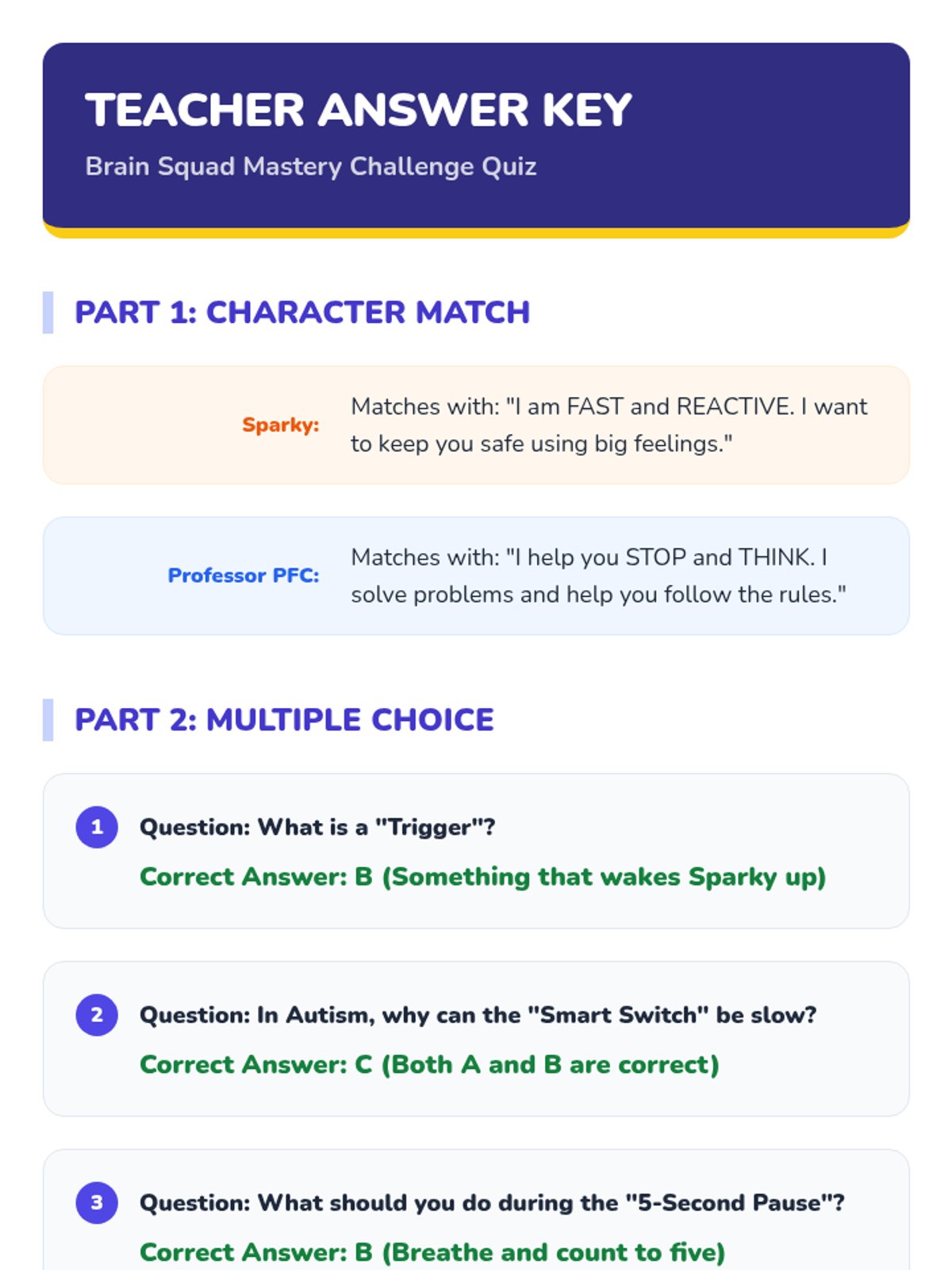
Reviewing unit concepts through a final quiz and celebrating mastery of brain squad strategies.
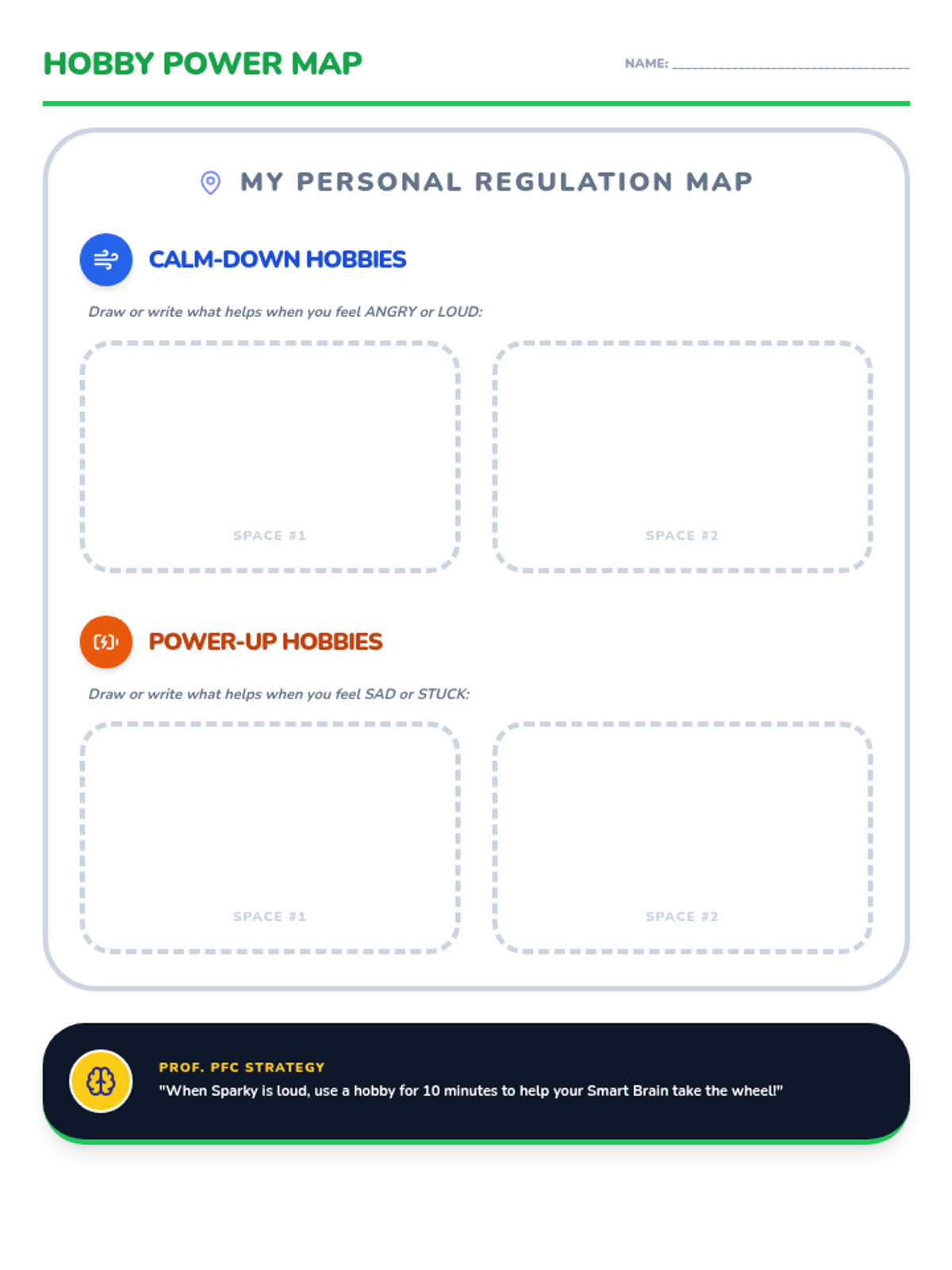
Discovering personal hobbies and interests that act as tools for emotional regulation and positive expression.
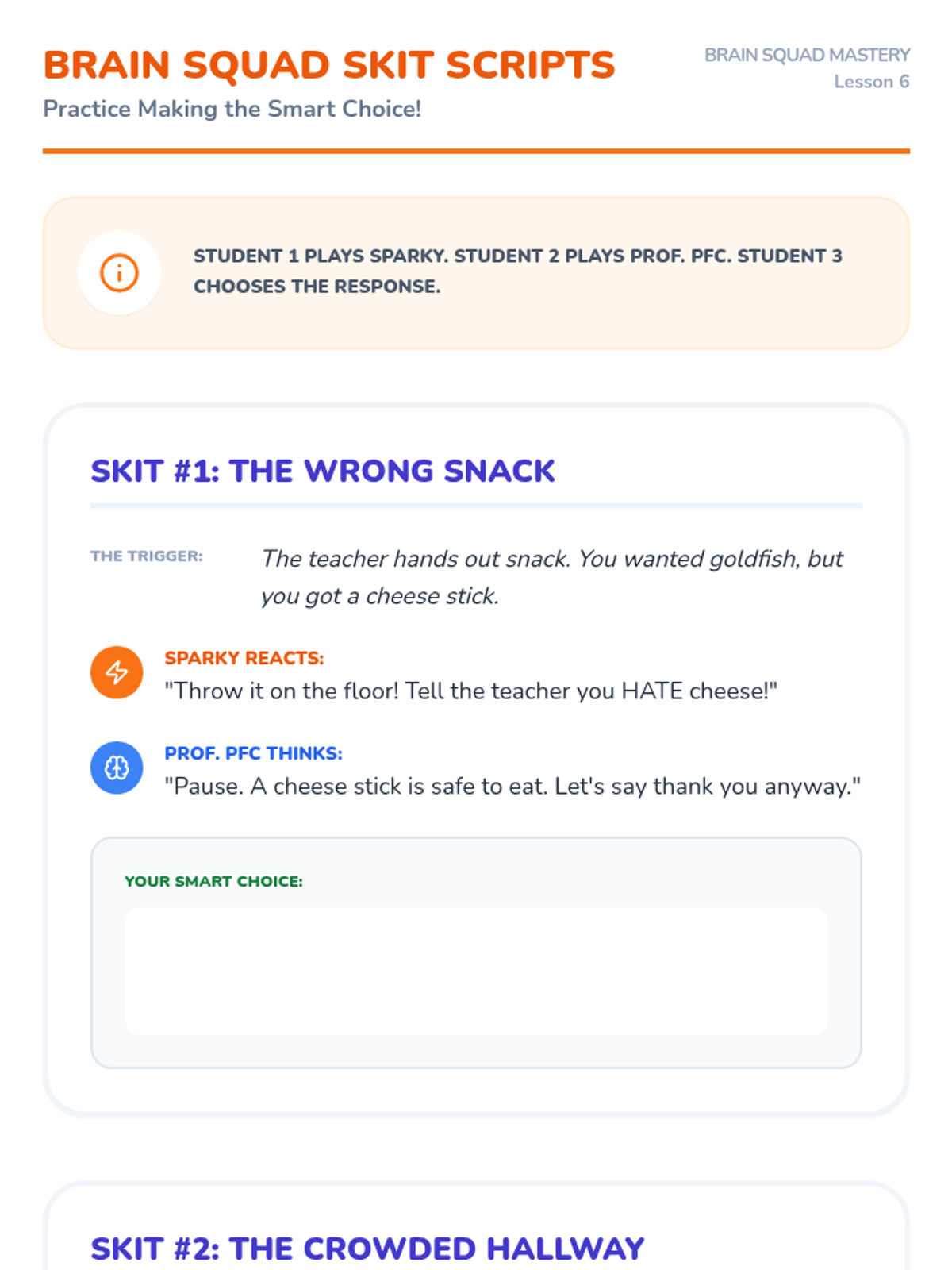
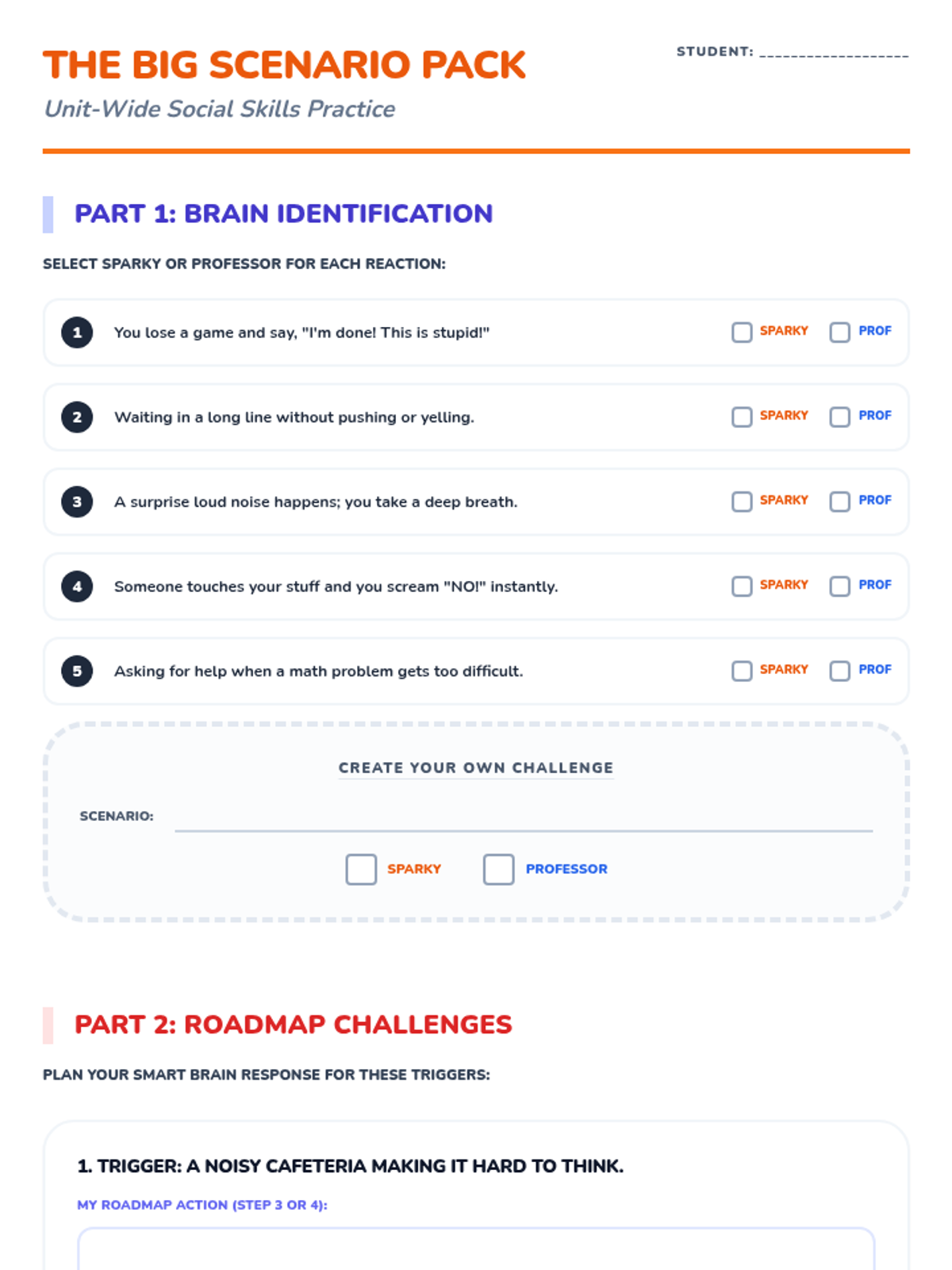
Applying brain squad concepts to real-world scenarios through skits and 'What Would You Do?' games.
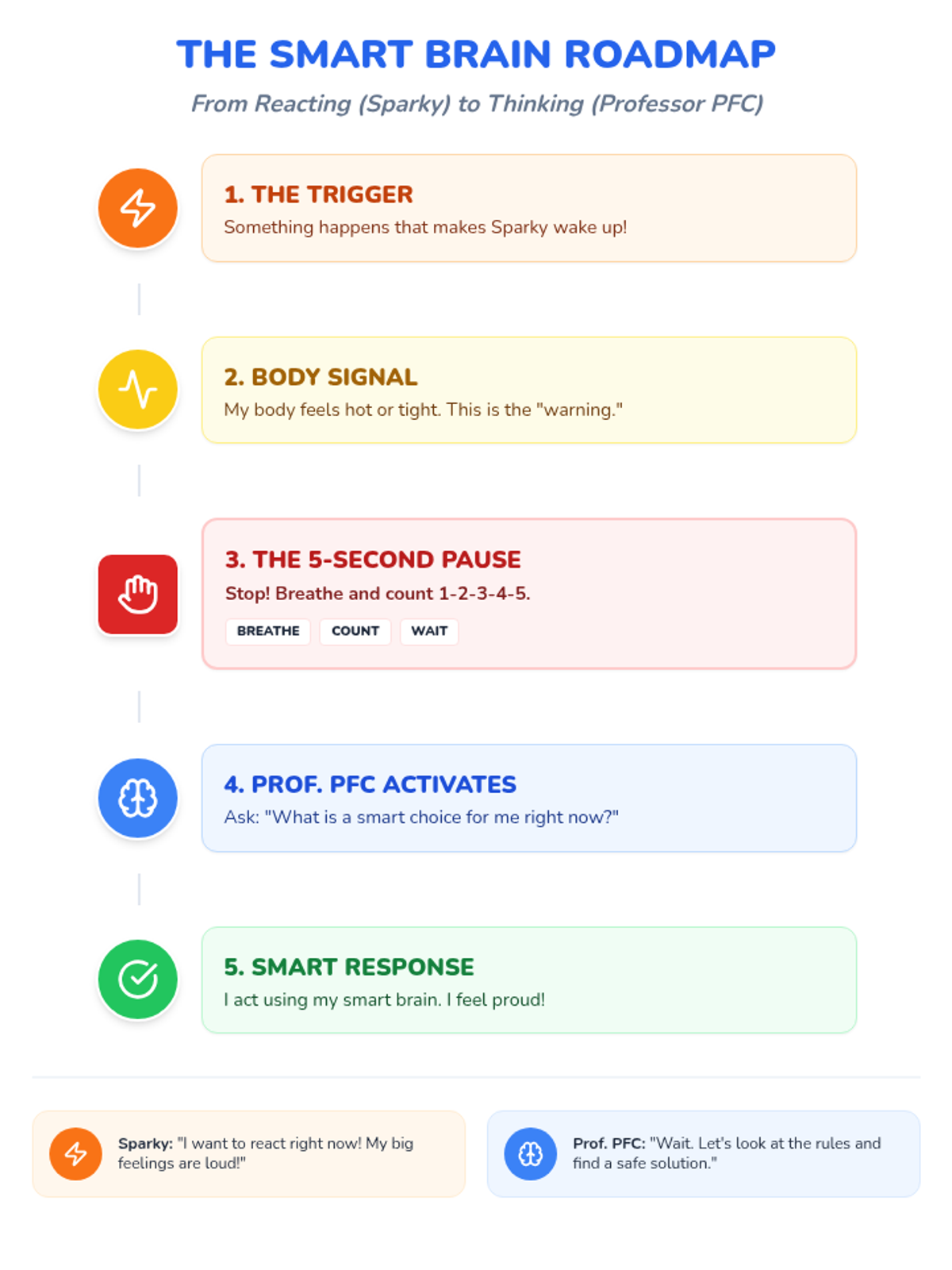
Using a visual flowchart to guide students through the process of moving from a trigger to a smart brain response.
Understanding the 'flipped lid' concept and the difference between immediate reactions and thoughtful responses.
Identifying personal and environmental triggers that activate the emotional brain.