Budgeting, saving, and investment strategies alongside practical skills for managing credit, taxes, and banking. Addresses insurance needs, employment income, and major purchase decisions to support comprehensive long-term financial planning.
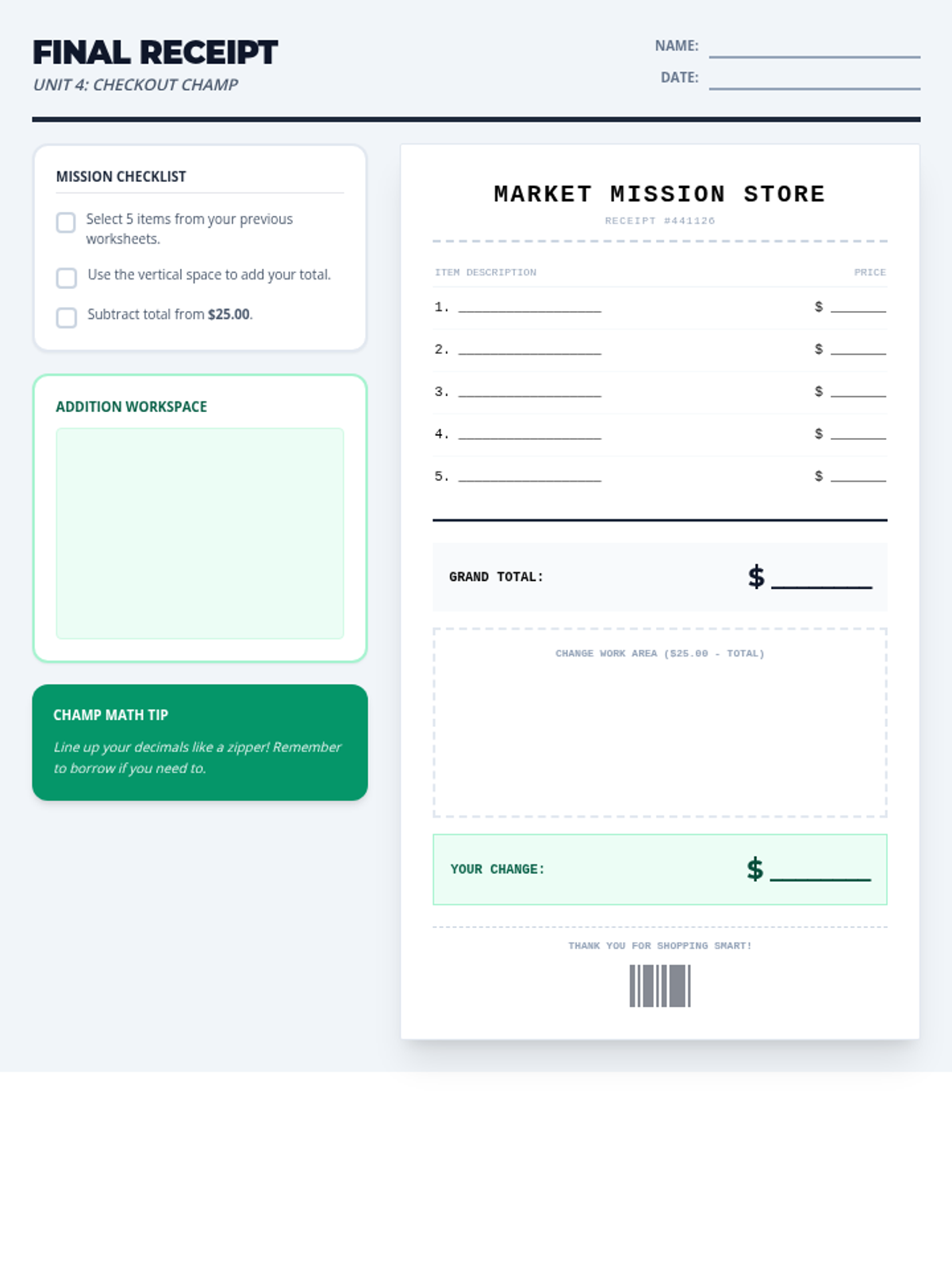
Finalizing a grocery purchase, calculating totals, and determining change while staying under budget.
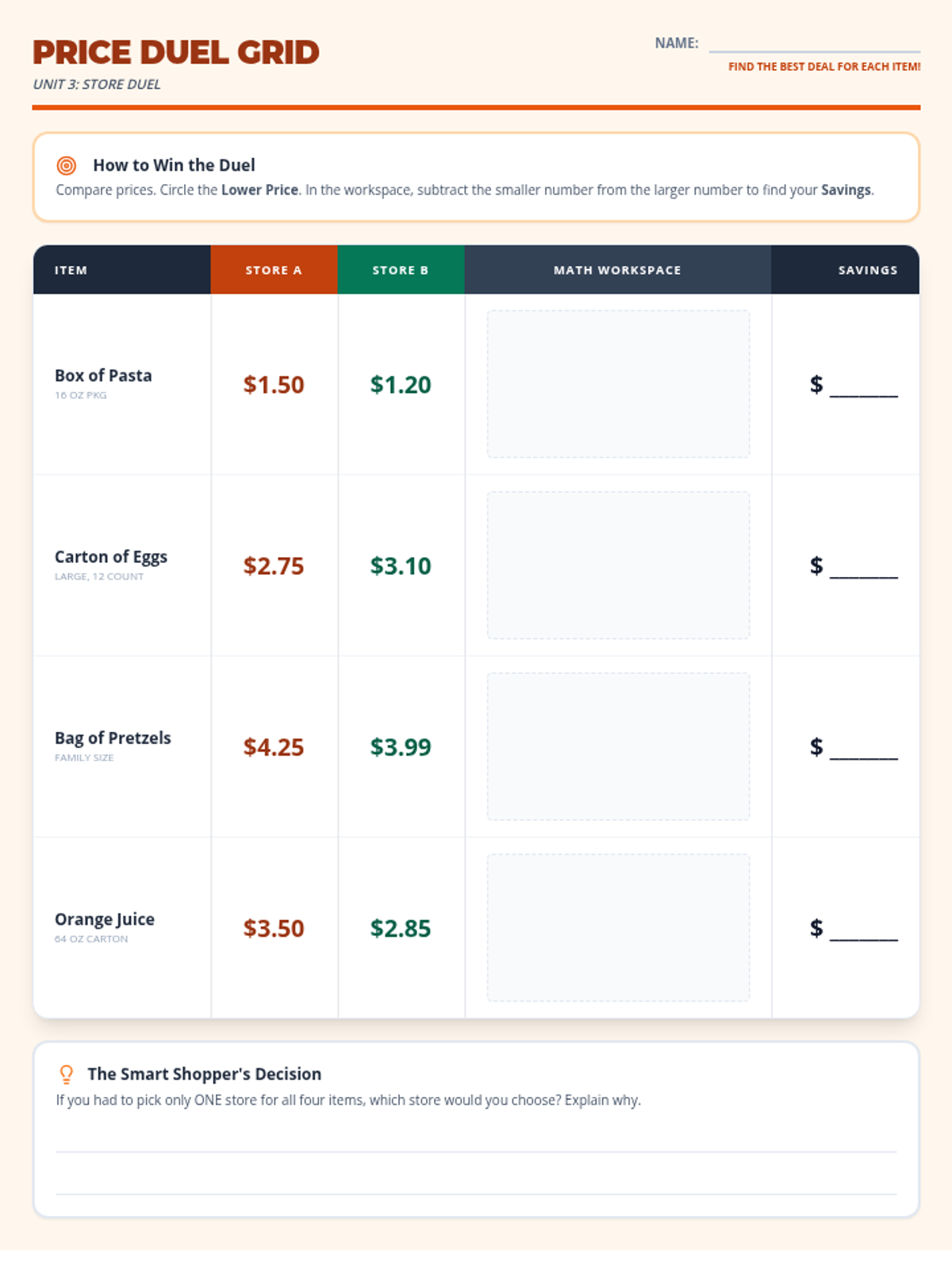
Comparing prices between two different stores to find the best deals on common household items.
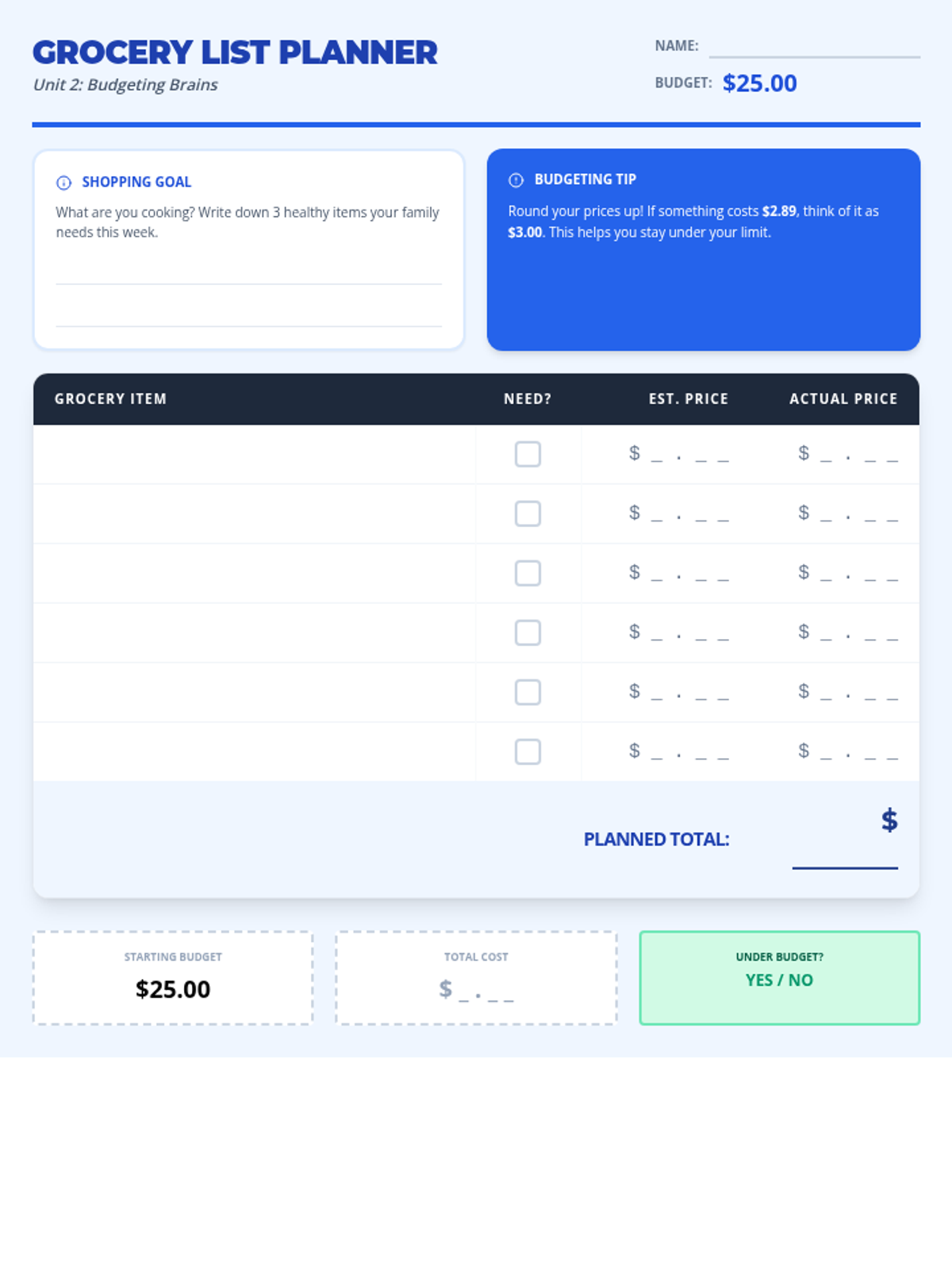
Setting a budget and prioritizing items on a grocery list using estimation and decimal addition.
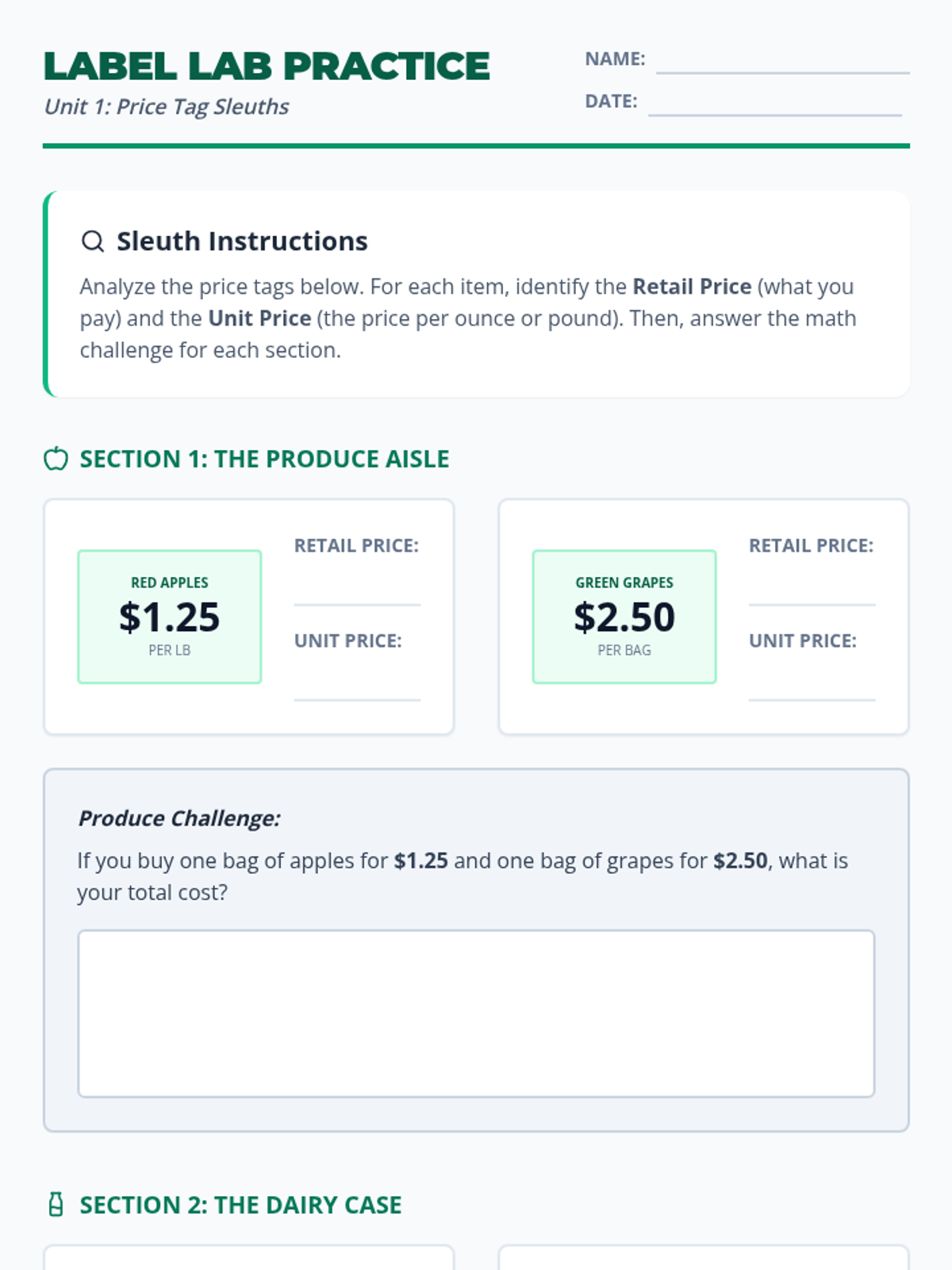
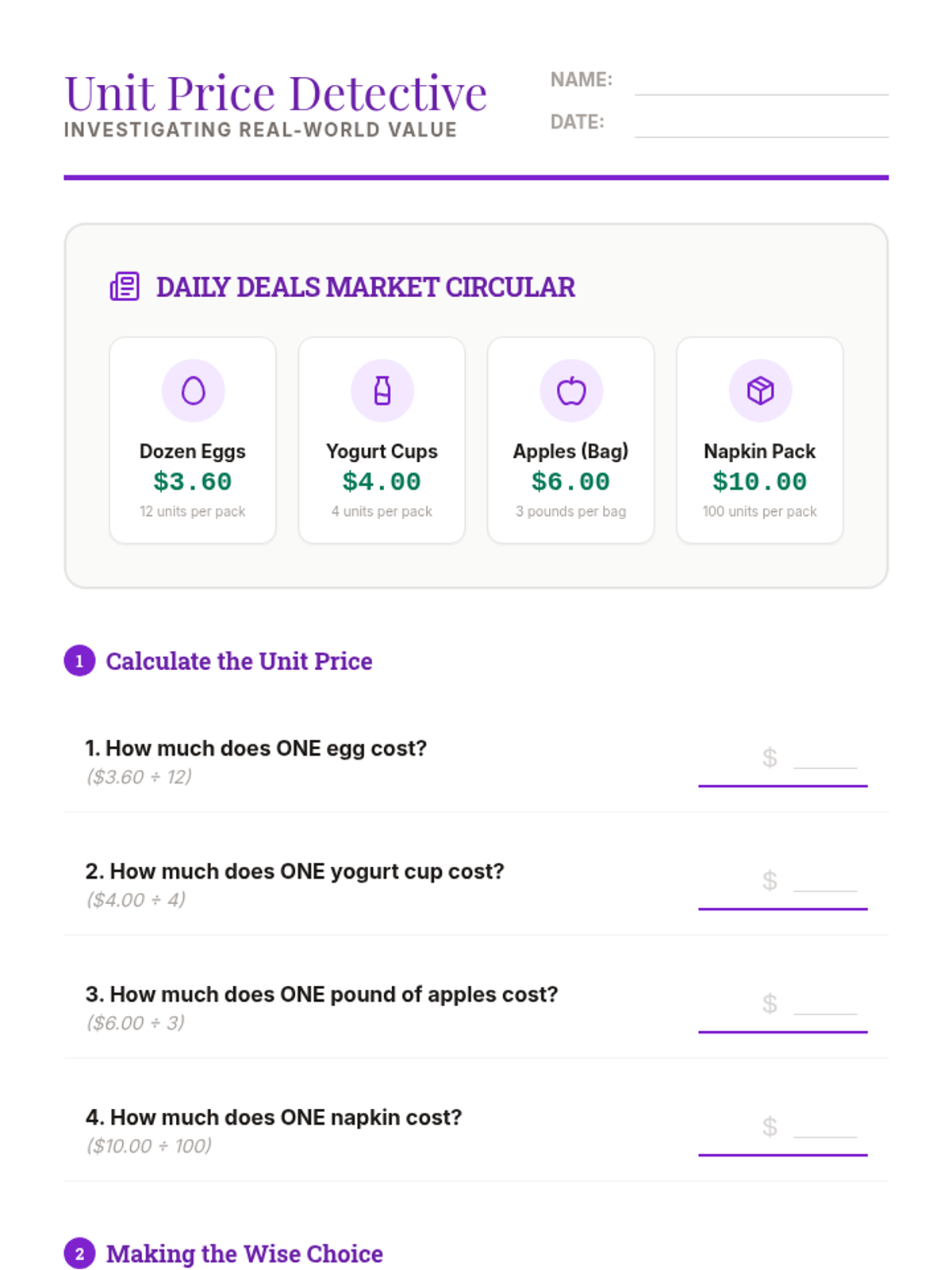
Introduction to reading price labels, identifying unit prices, and understanding the 'detective' work of grocery shopping.
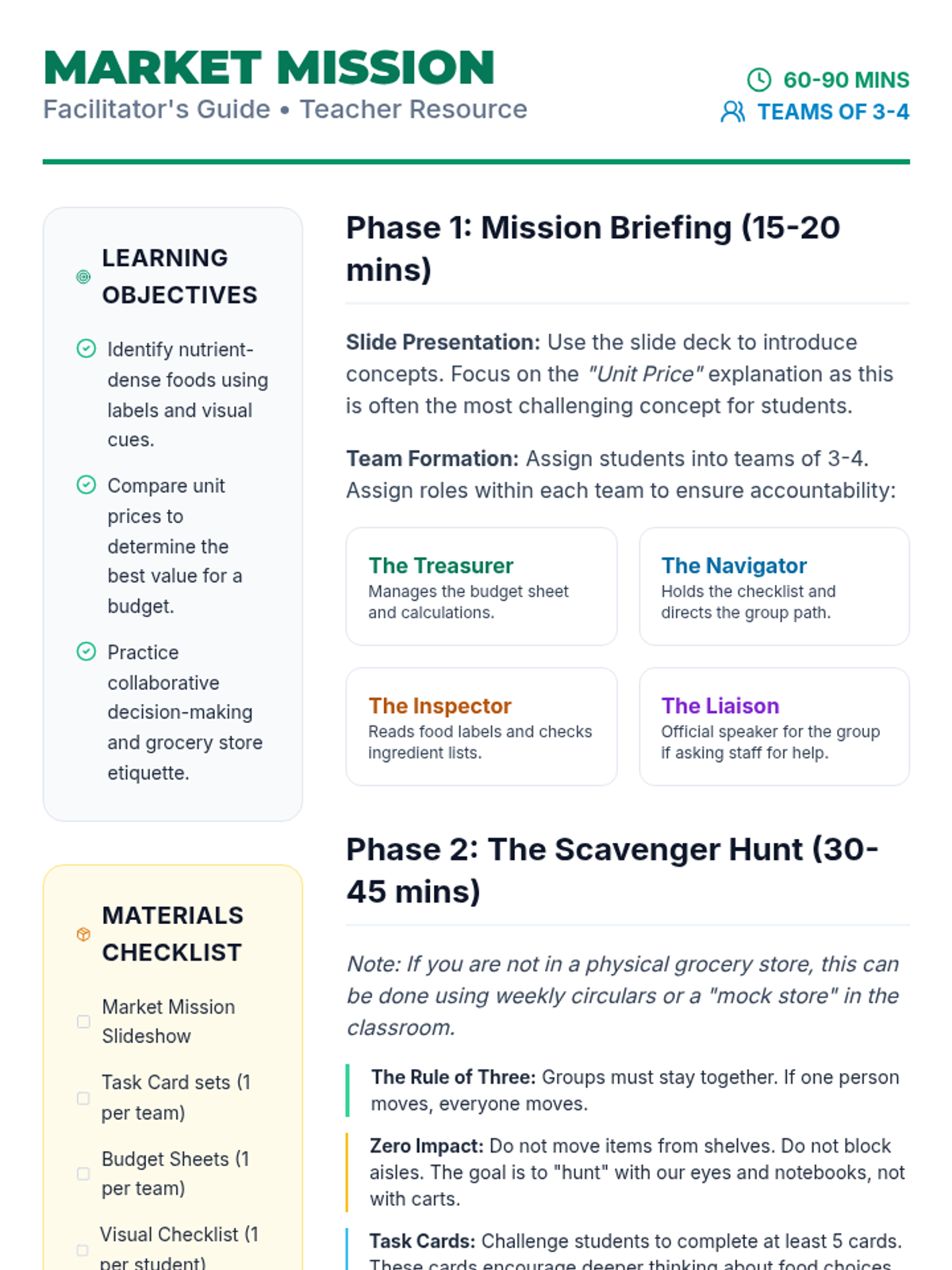
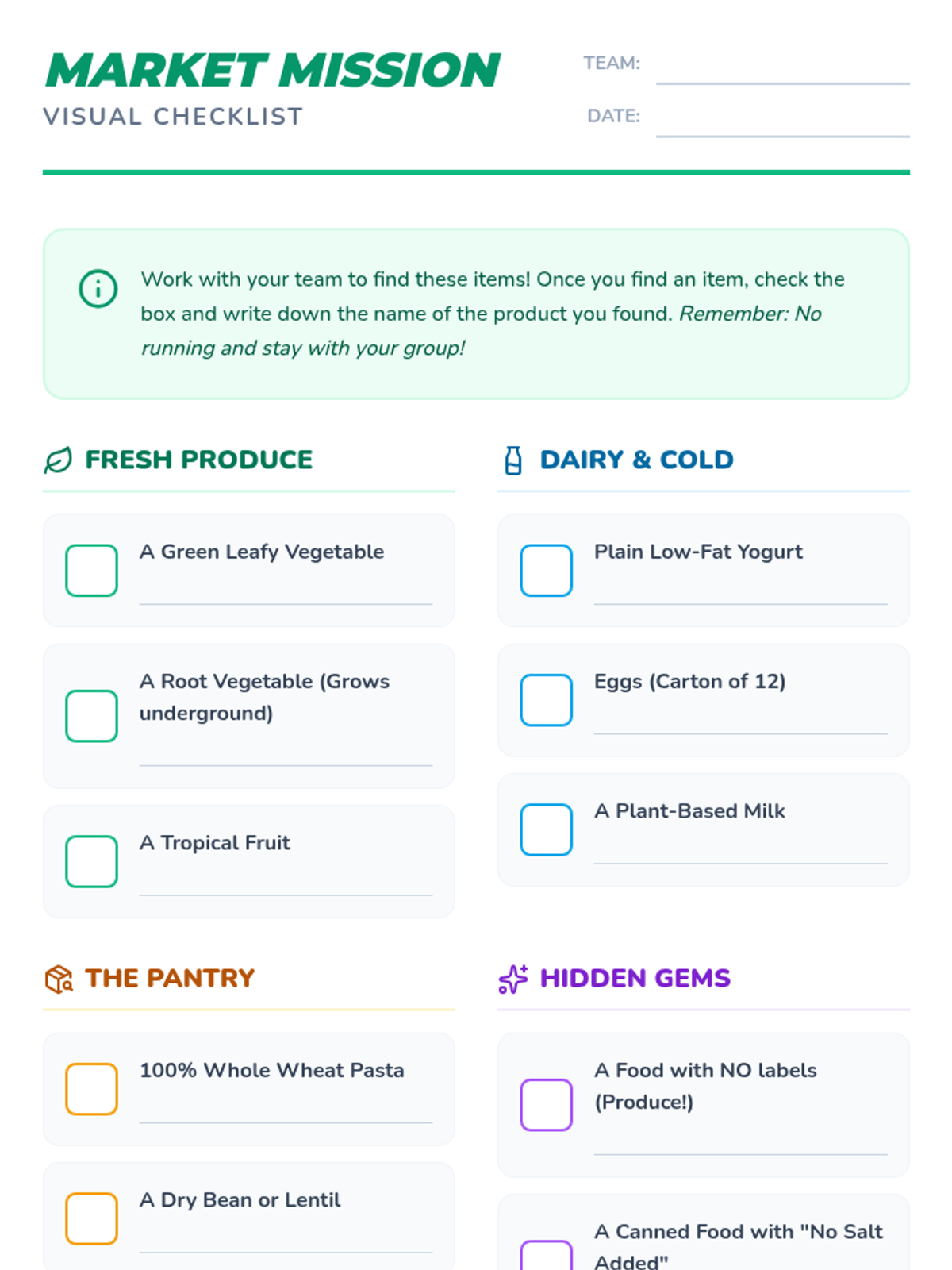
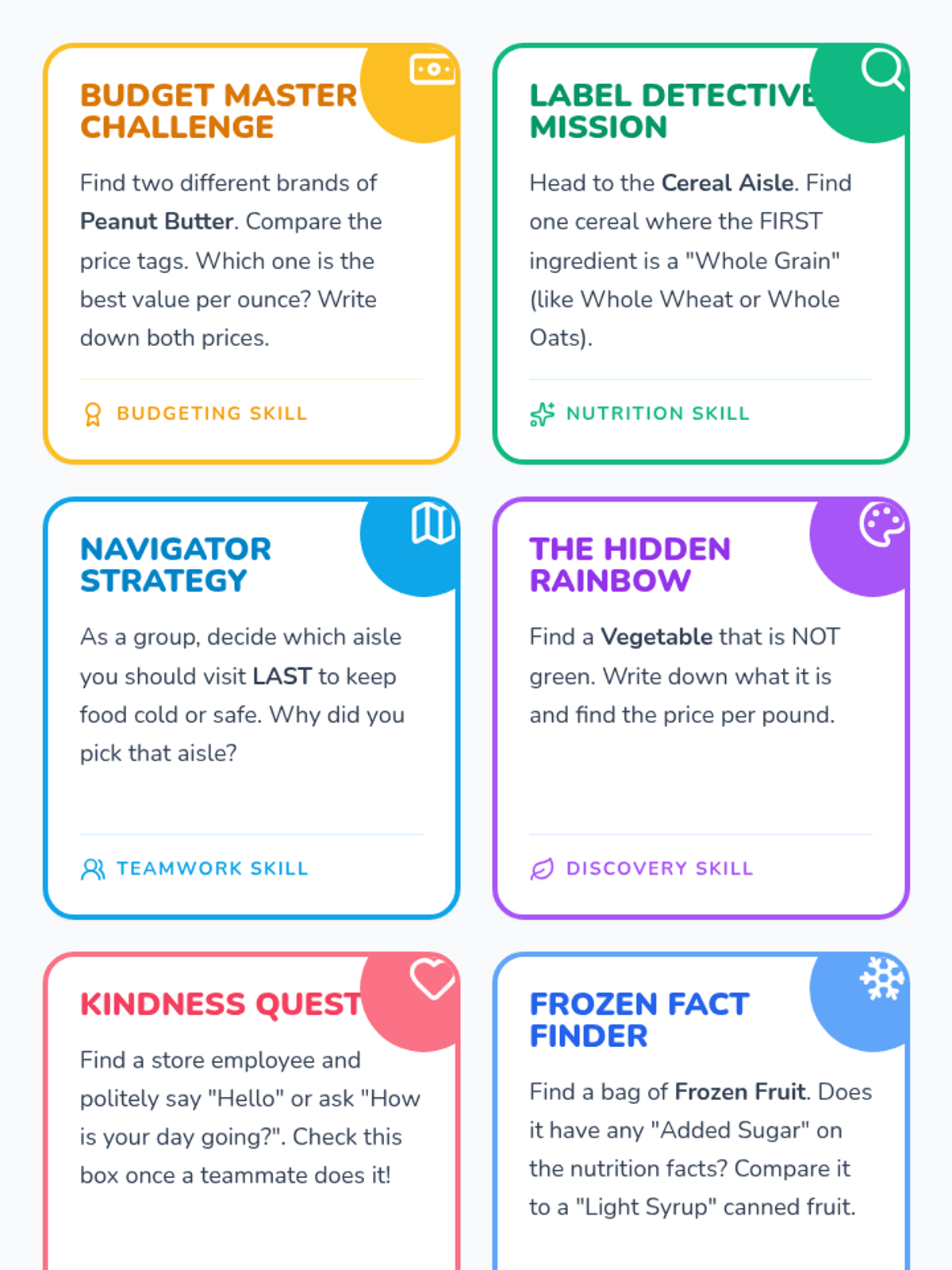
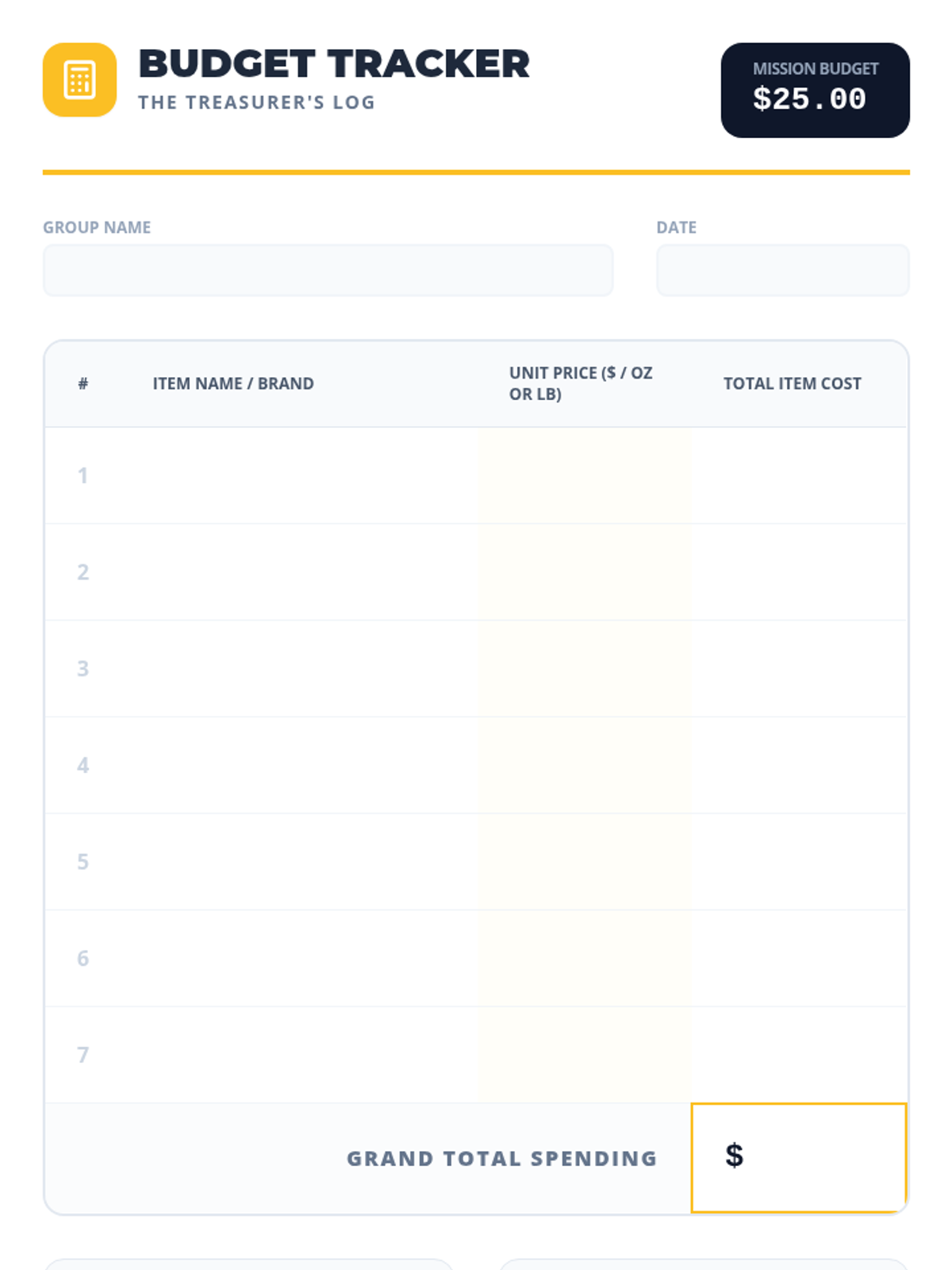
A group-building scavenger hunt where students work in teams to identify healthy foods, manage a budget, and practice social skills in a real-world grocery setting.
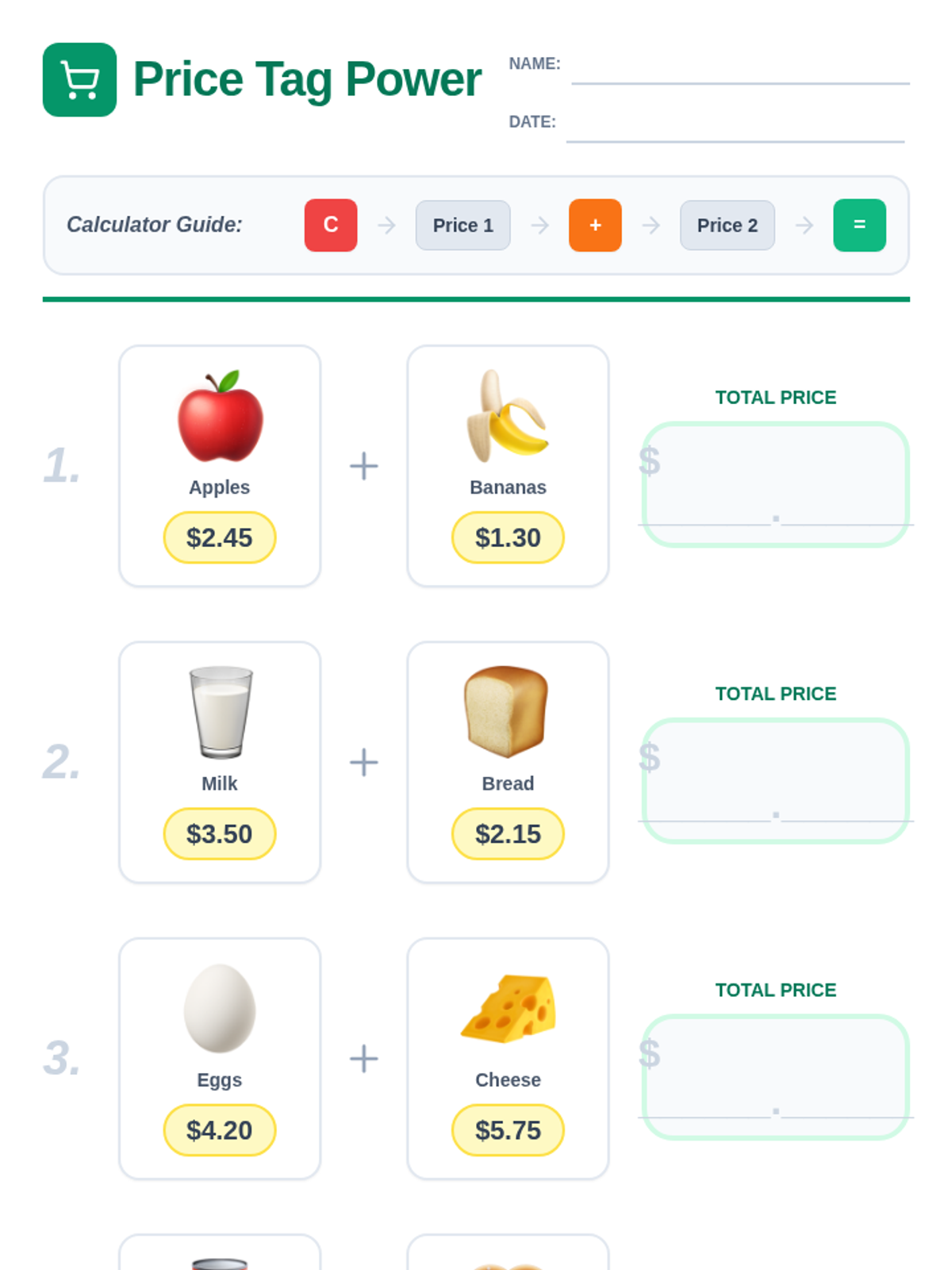
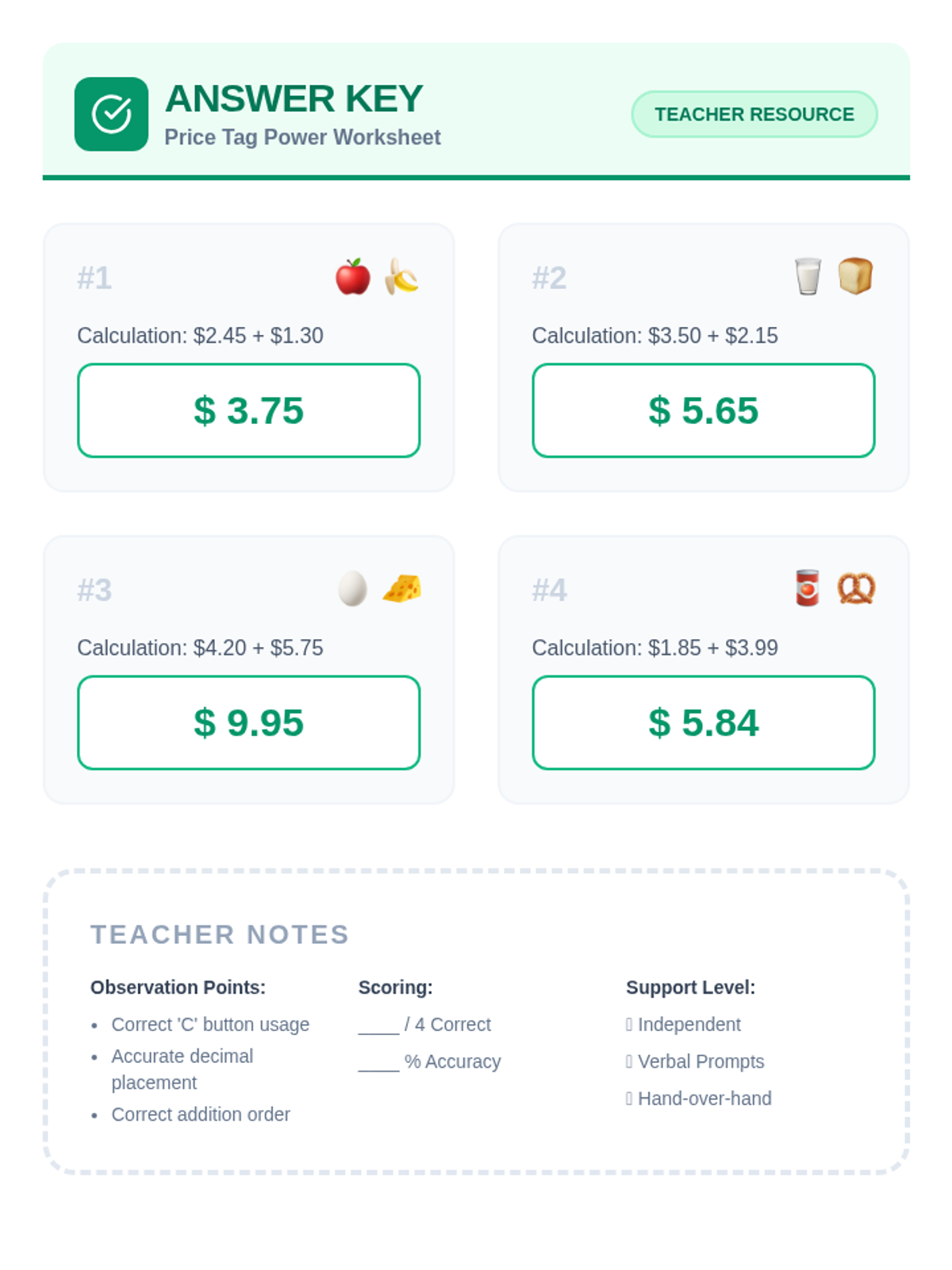
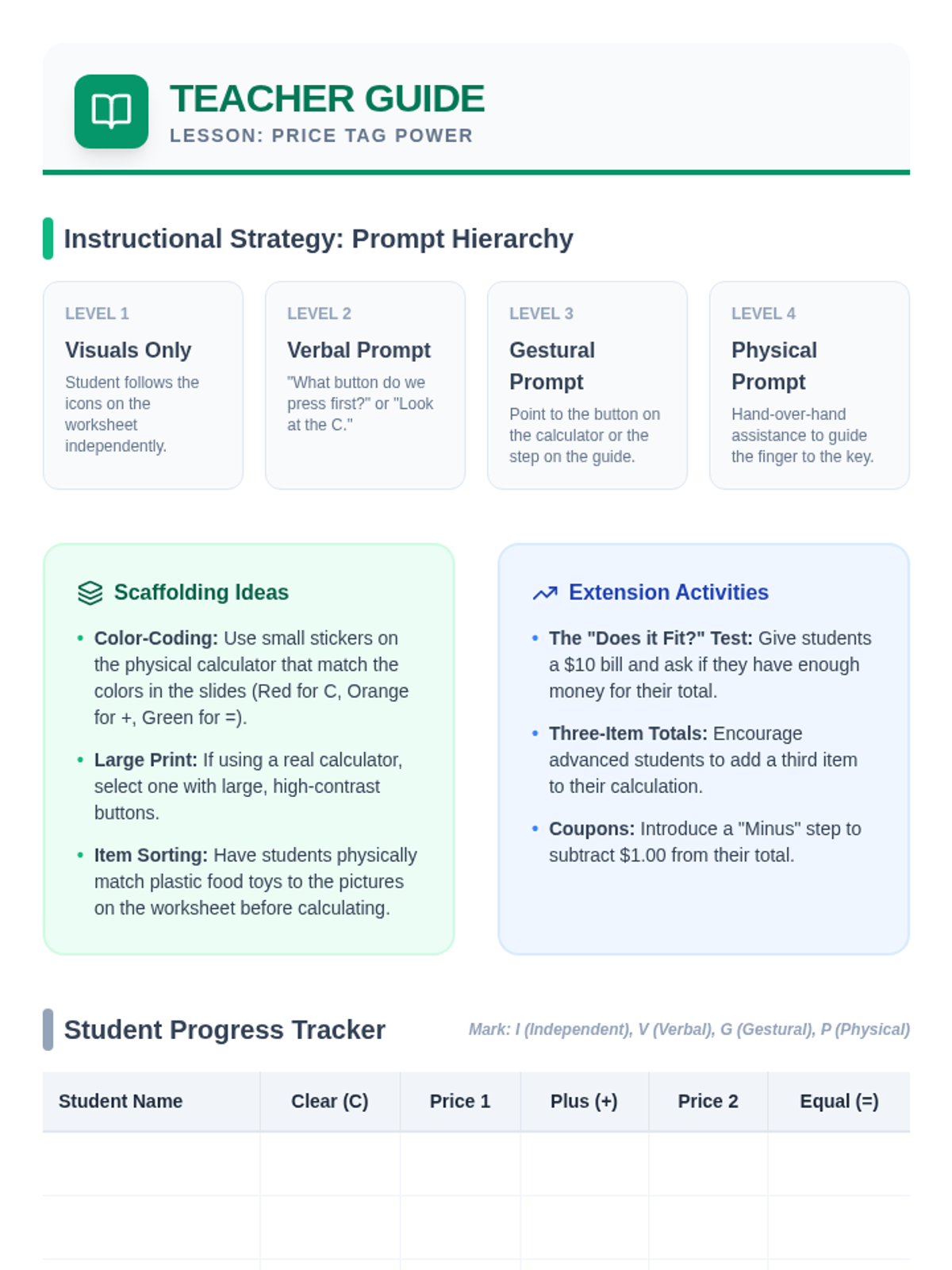
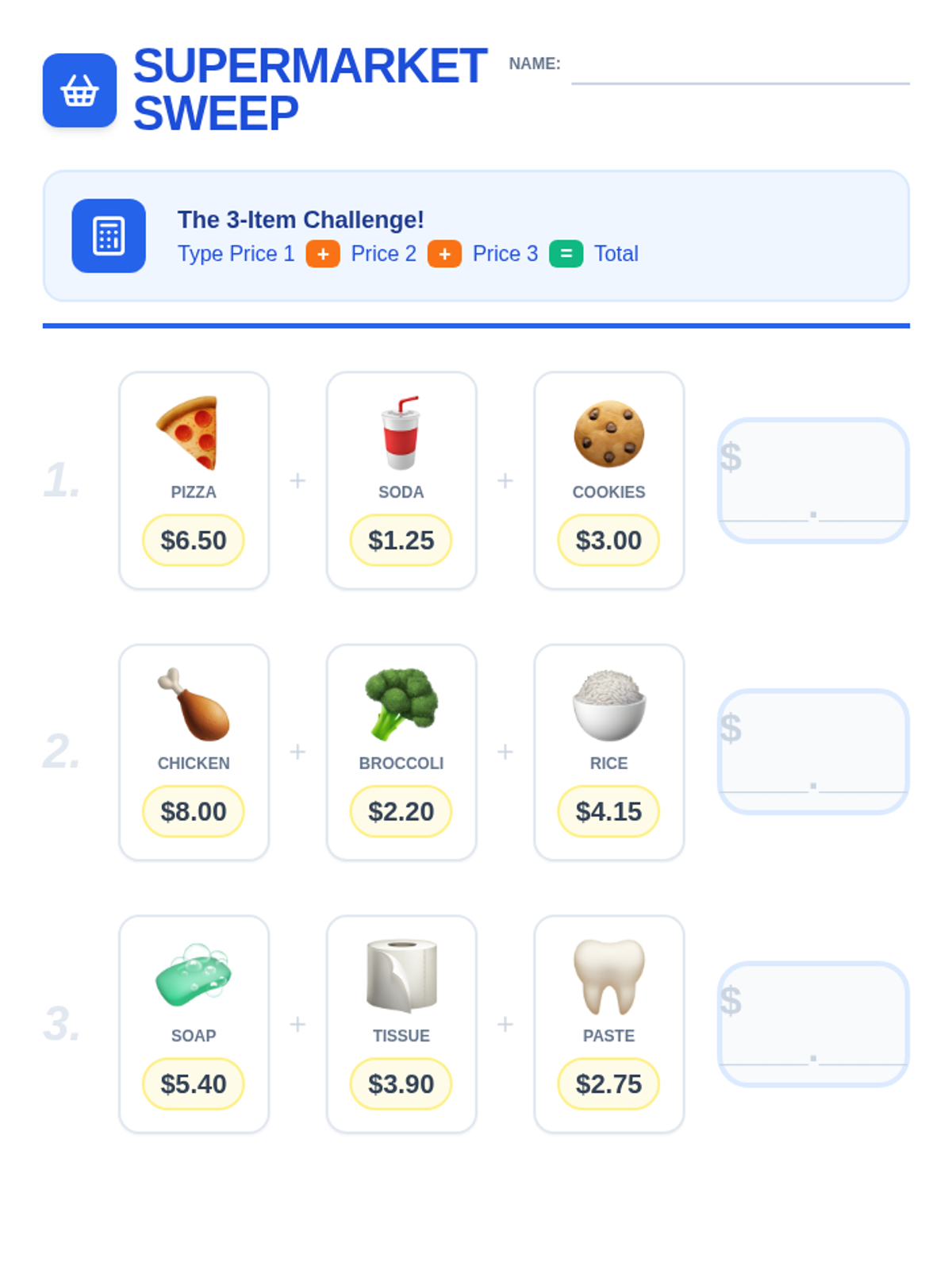
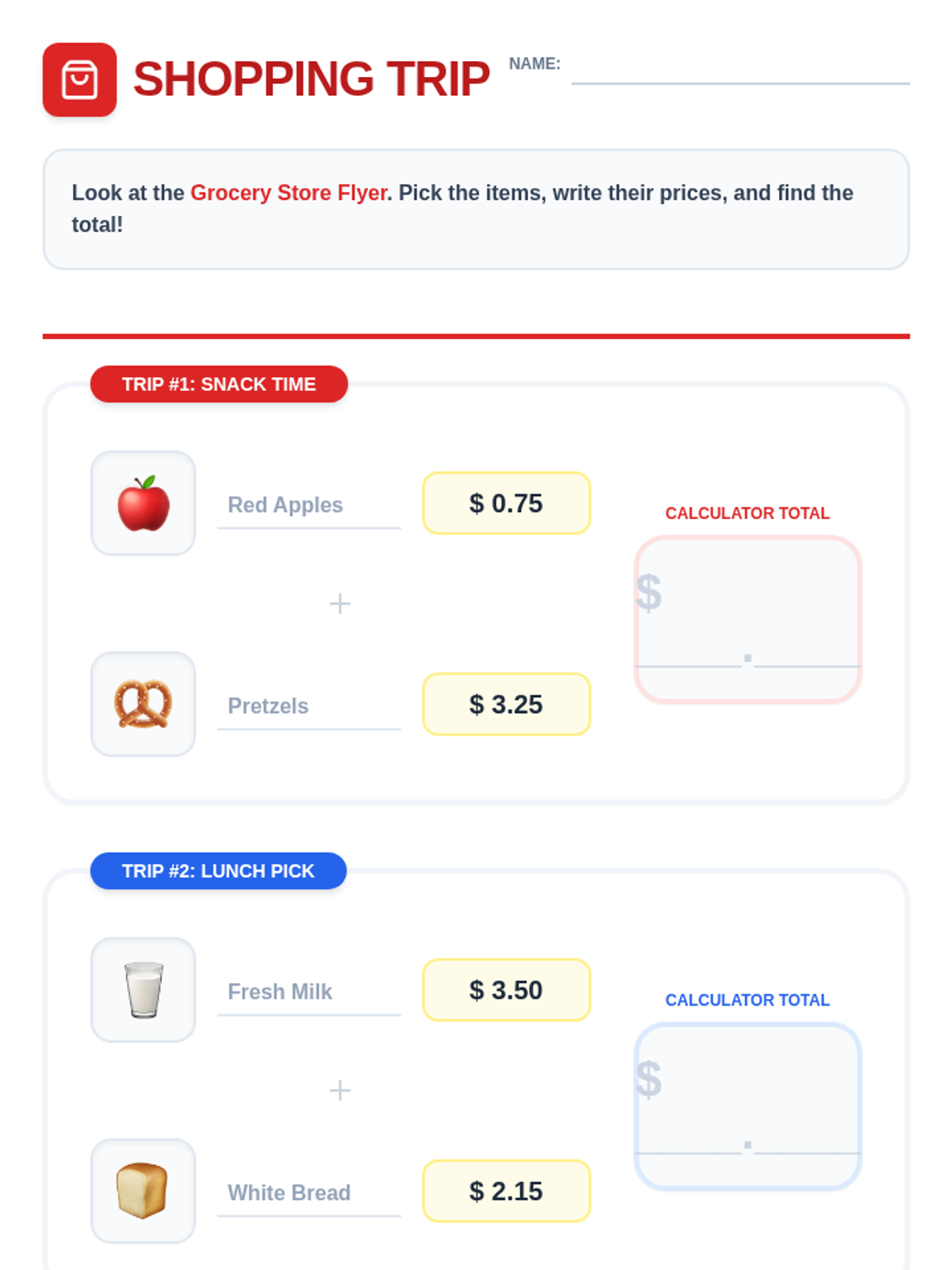
Students learn to use a calculator to add up the prices of grocery items, following a visual step-by-step guide to ensure accuracy in a real-world shopping scenario.
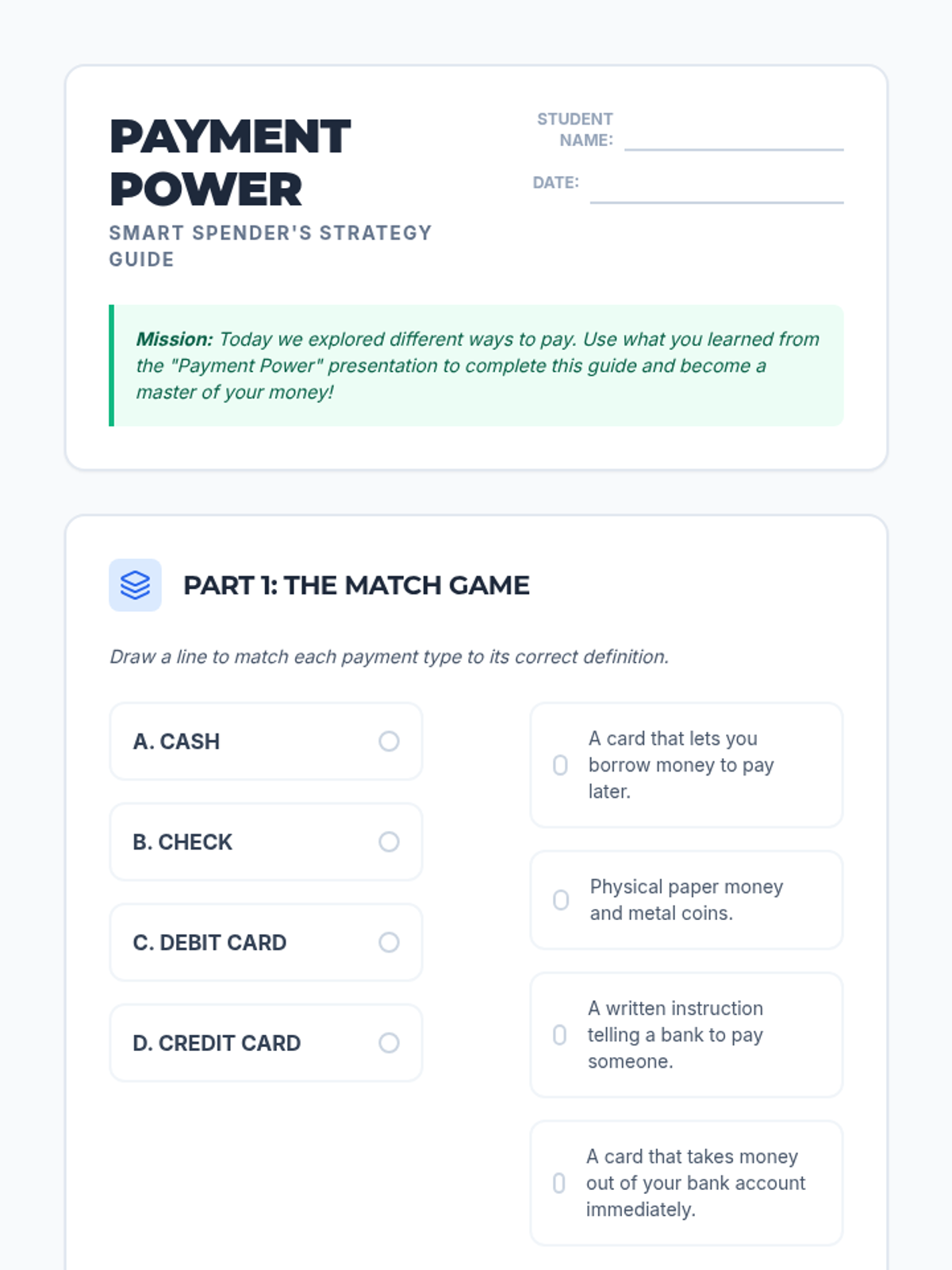
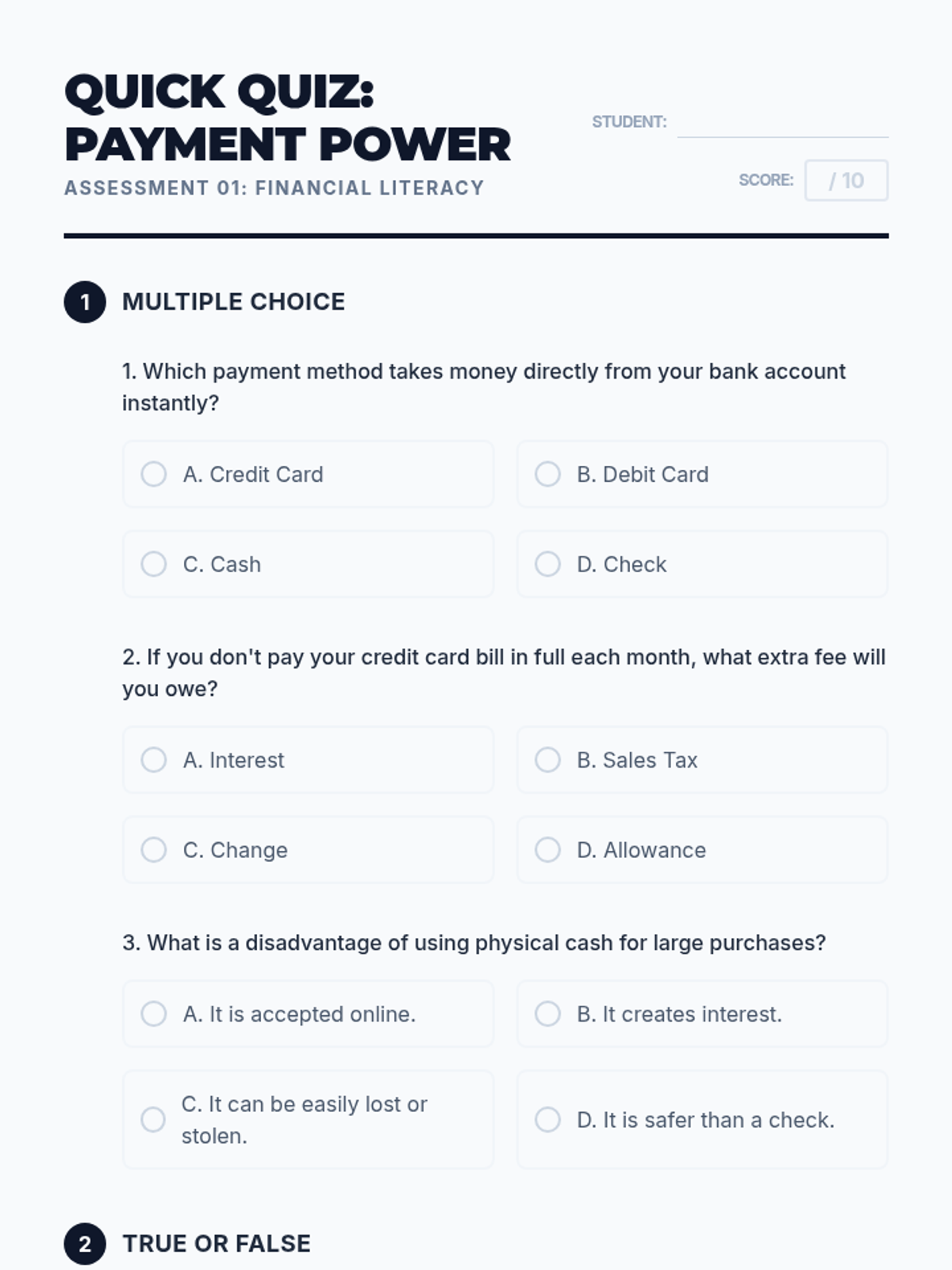
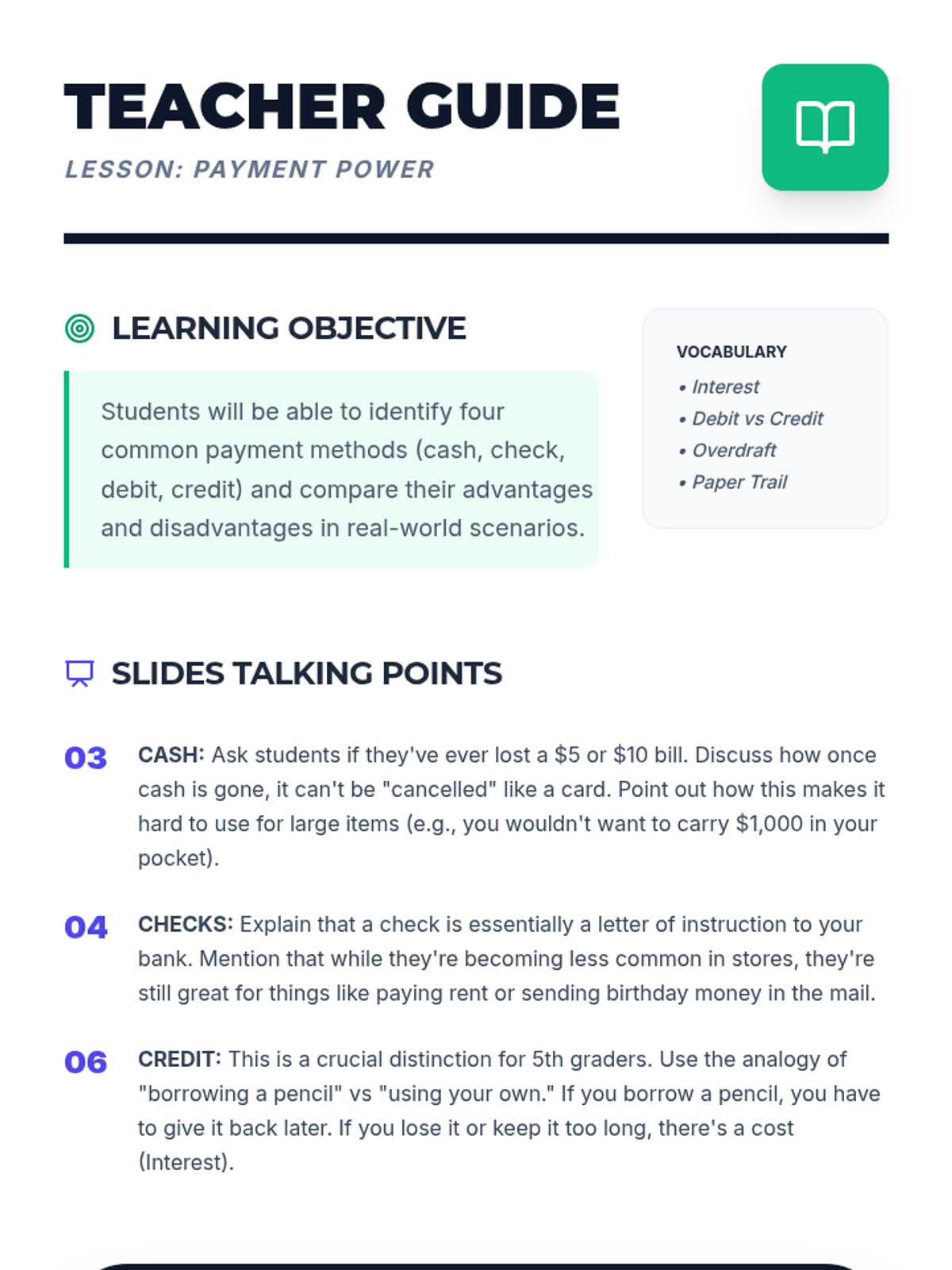
A comprehensive introduction to various payment methods, including cash, checks, debit cards, and credit cards. Students will explore the advantages and disadvantages of each to make informed financial decisions.
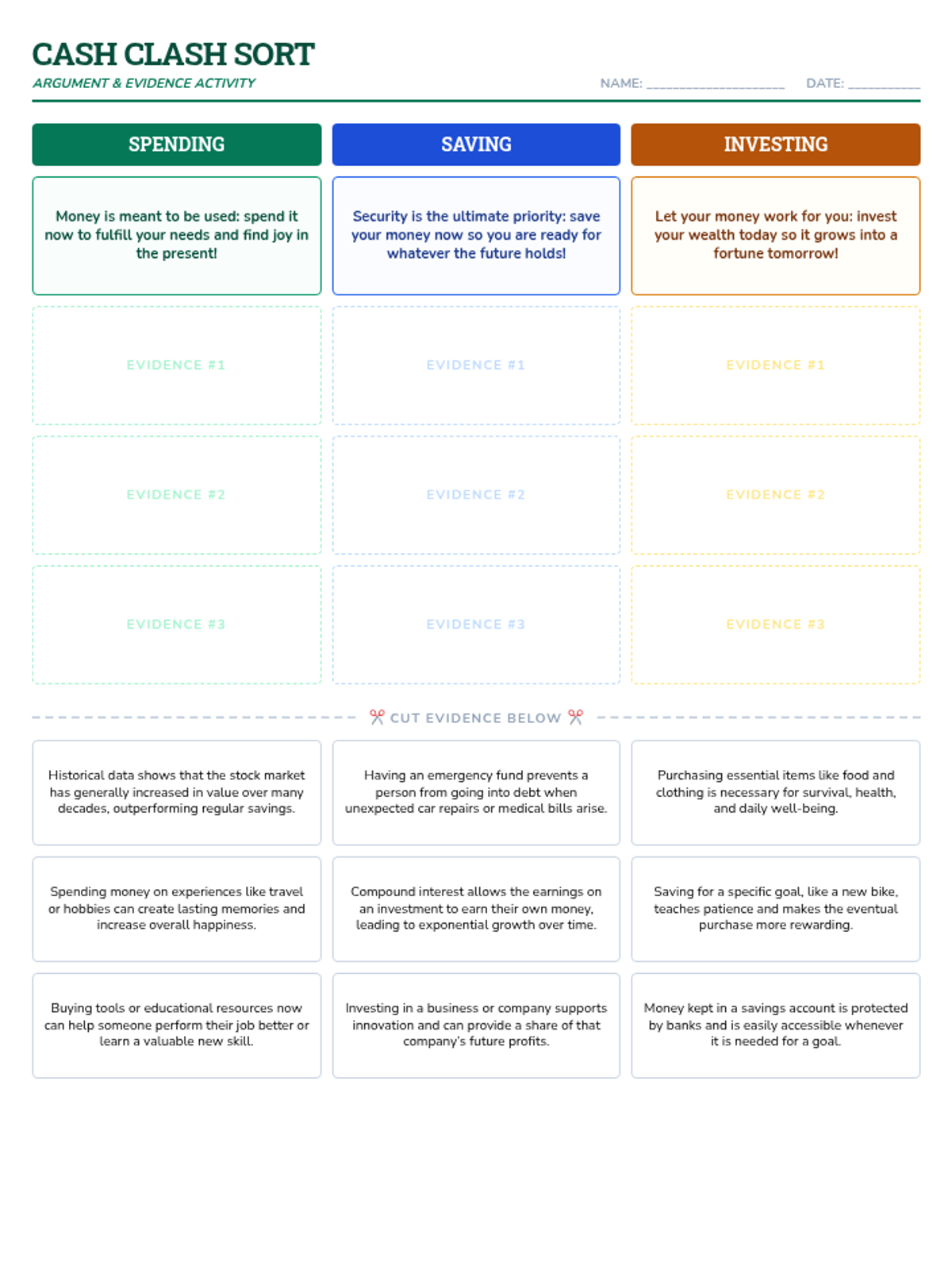
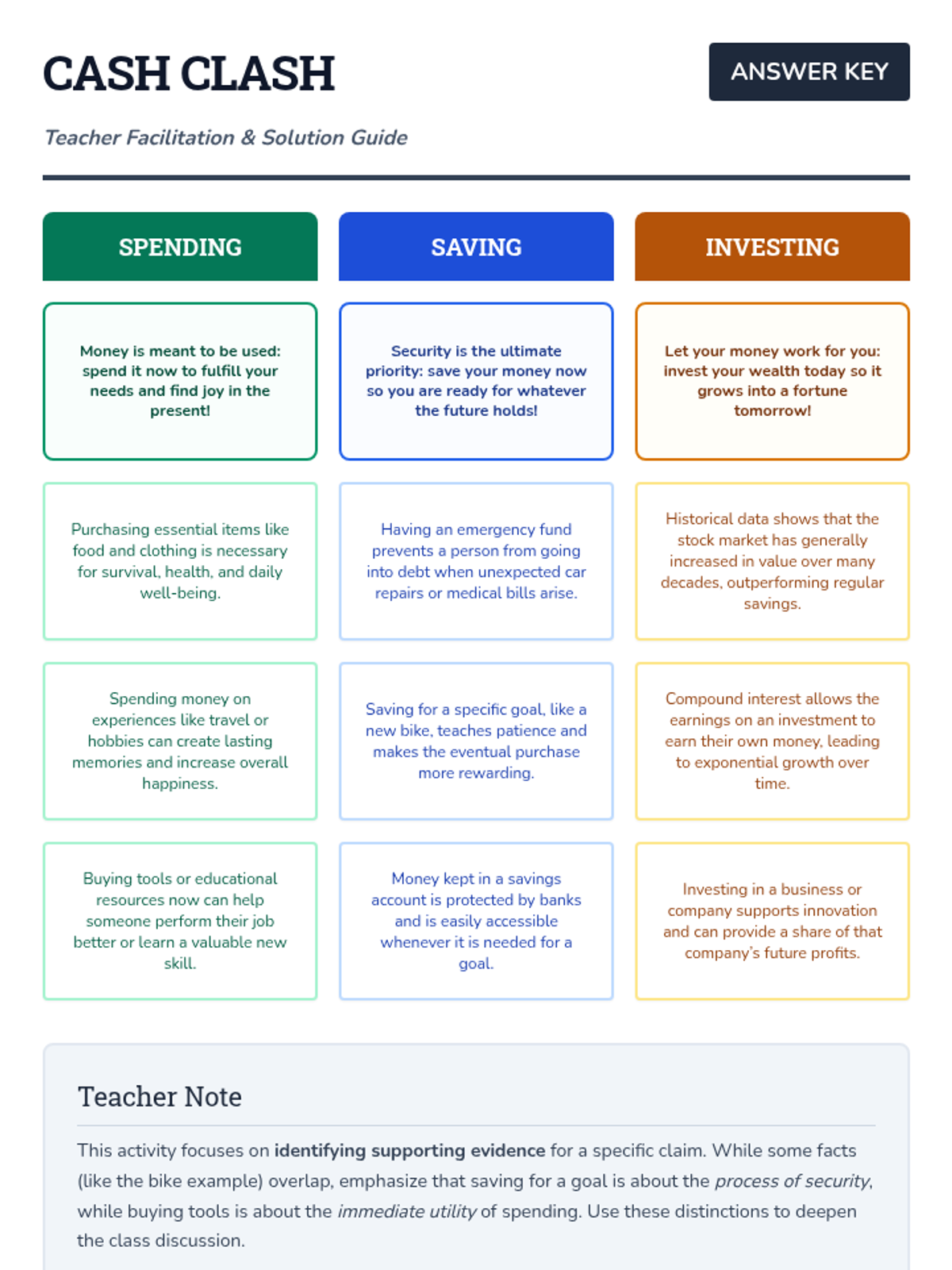
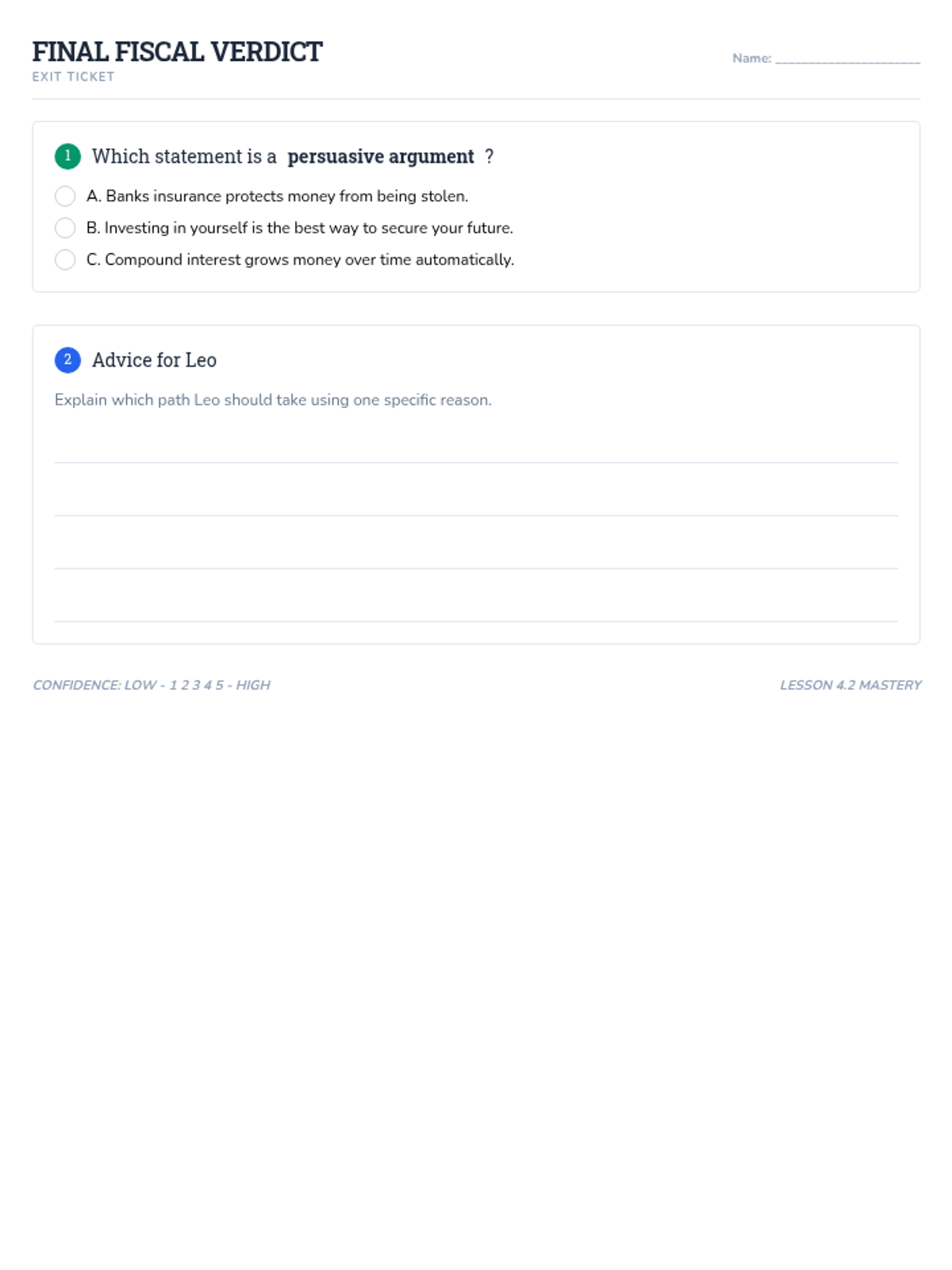
In this activity, students will evaluate the different ways to handle money—spending, saving, and investing—by matching persuasive arguments with supporting evidence. Students will practice identifying claims and the reasoning that backs them up within a financial literacy context.
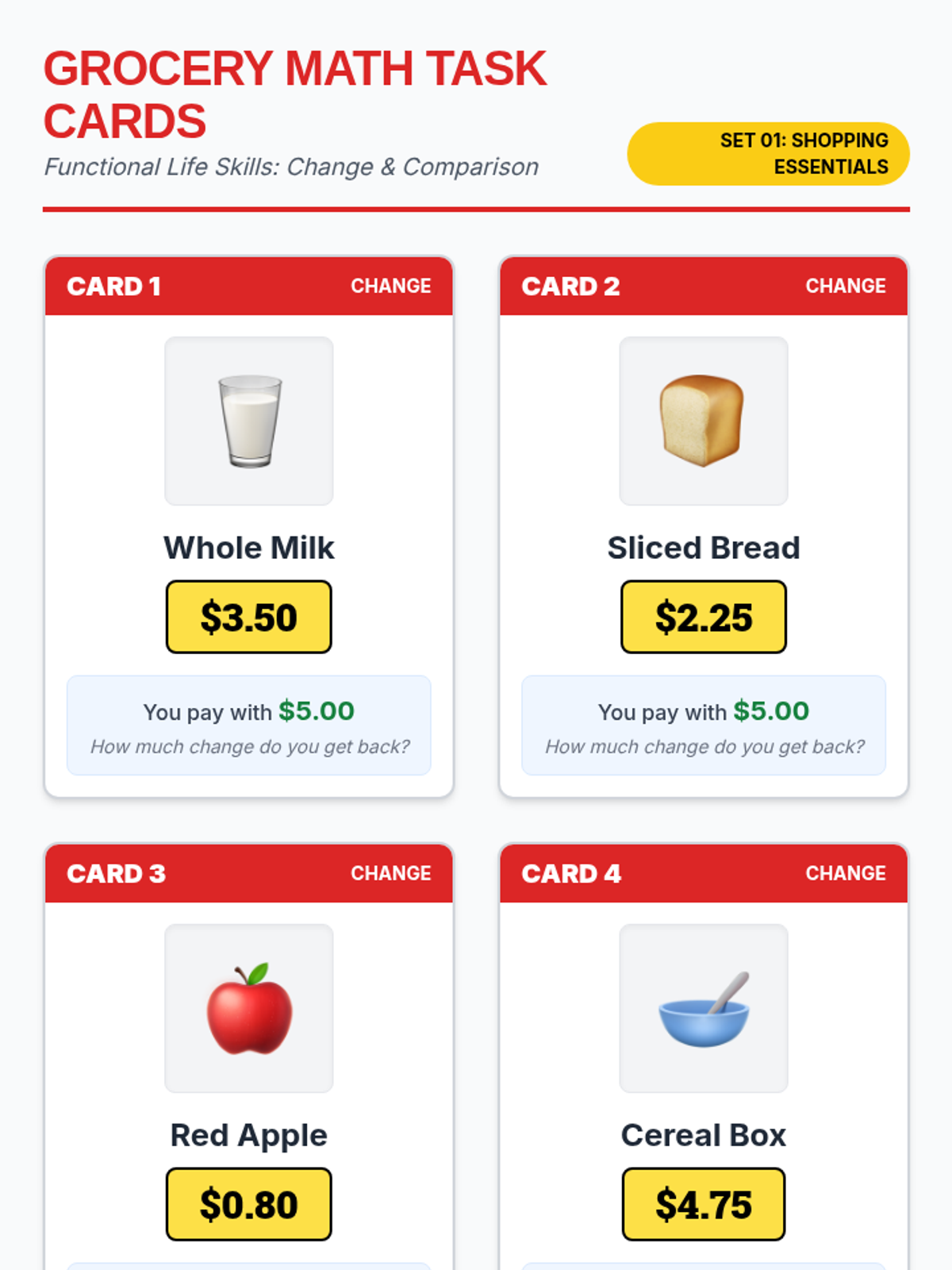
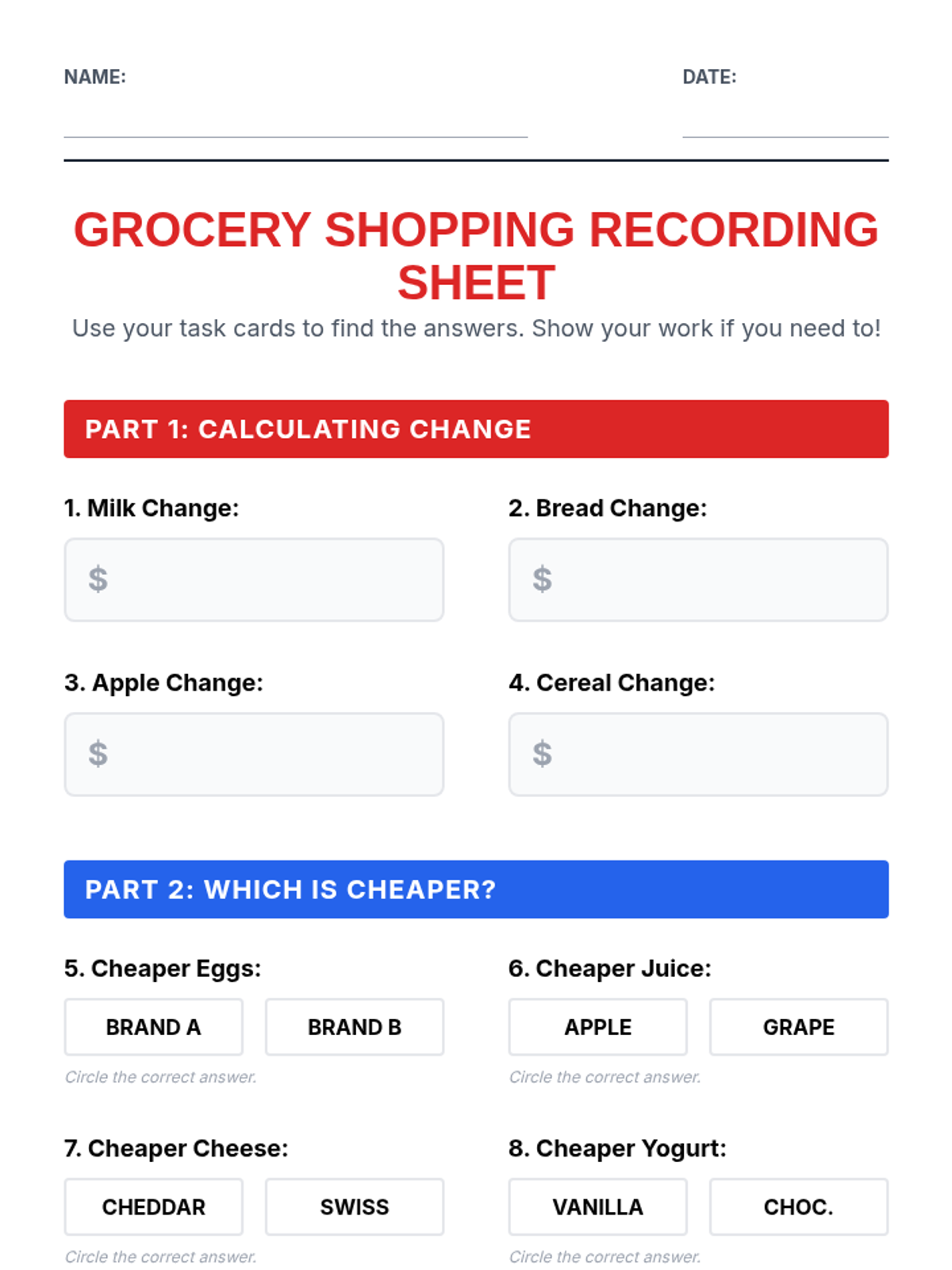
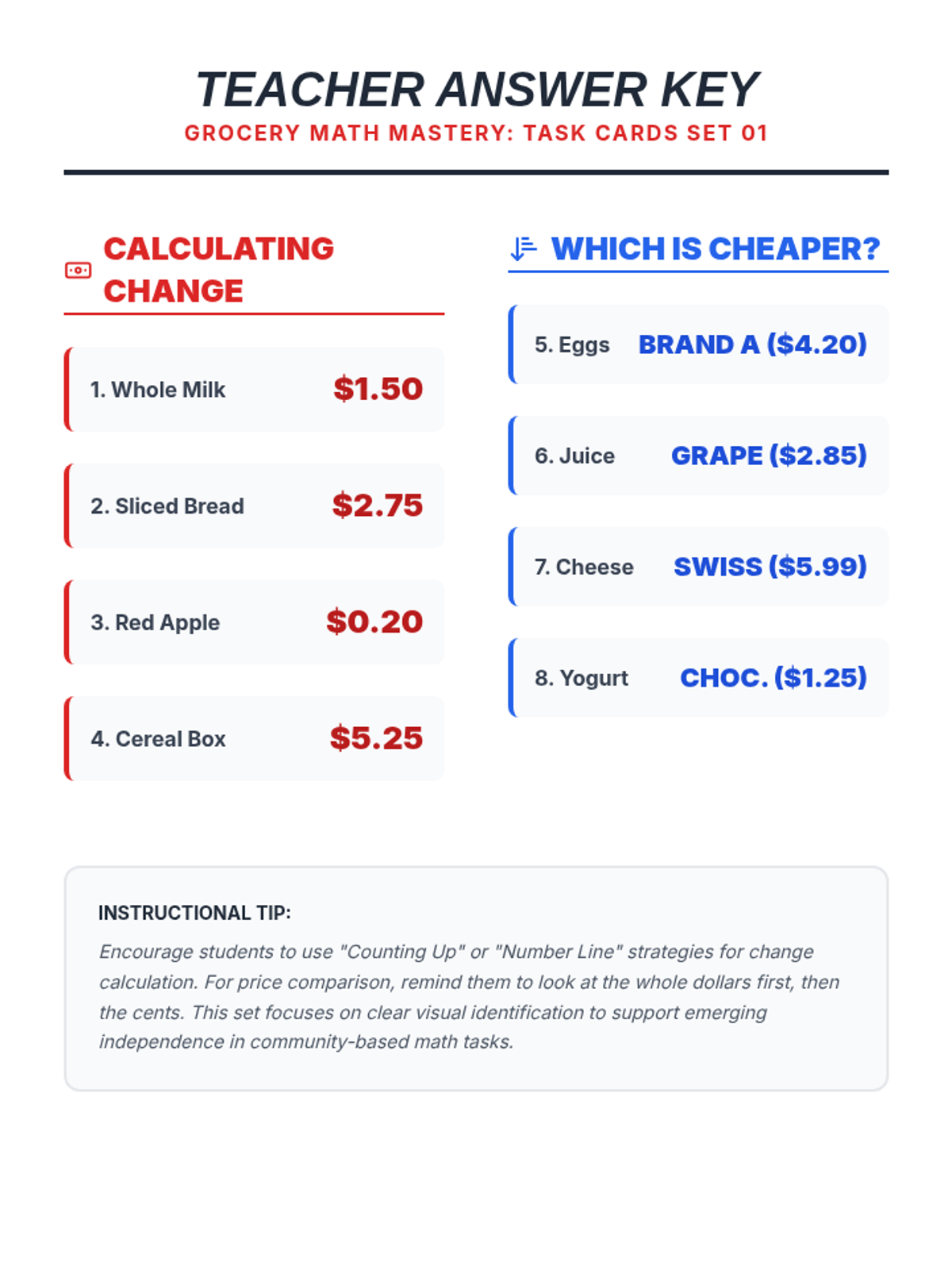
A practical math lesson focused on real-world shopping skills, specifically calculating change and comparing prices of grocery items.
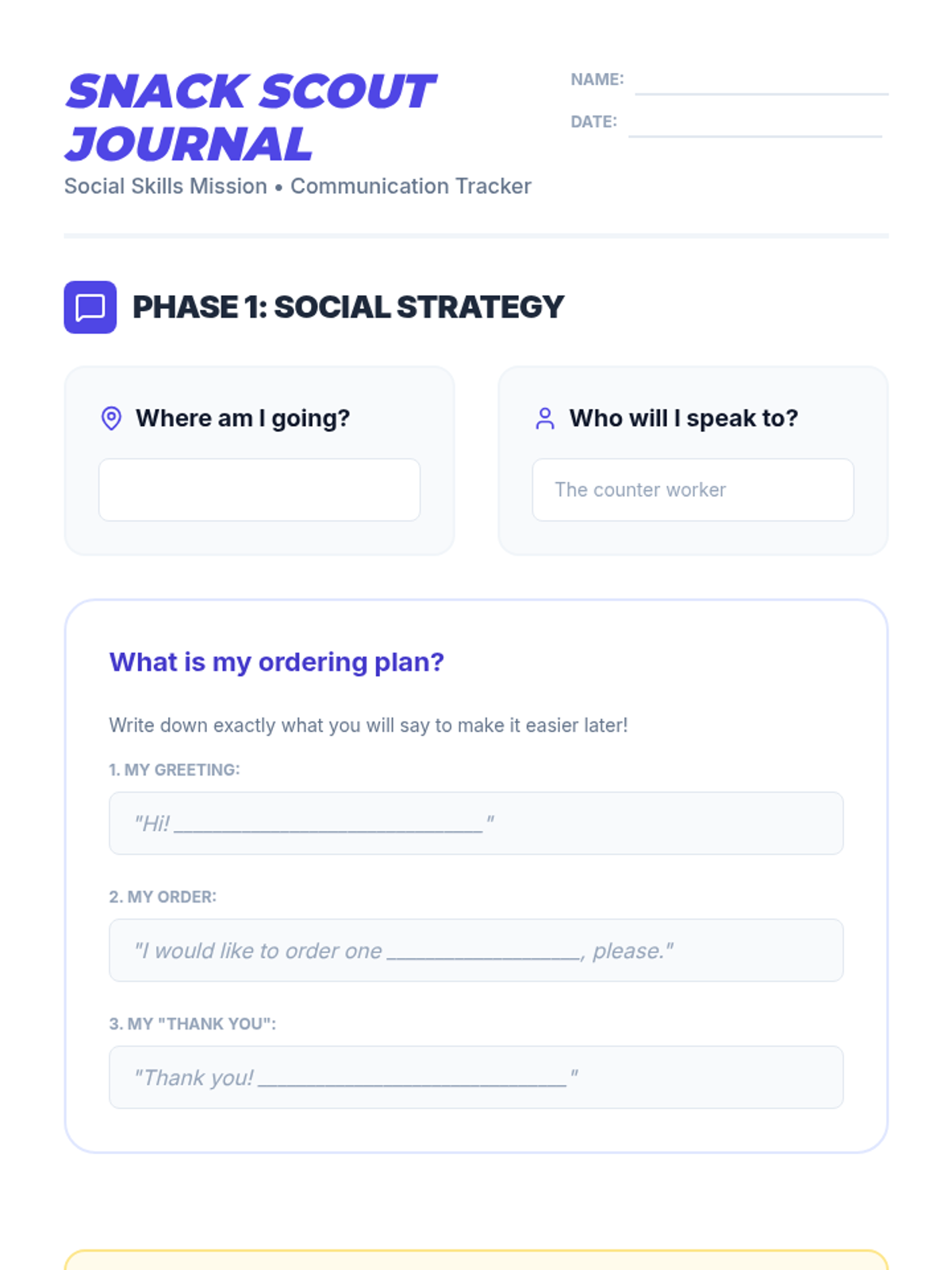
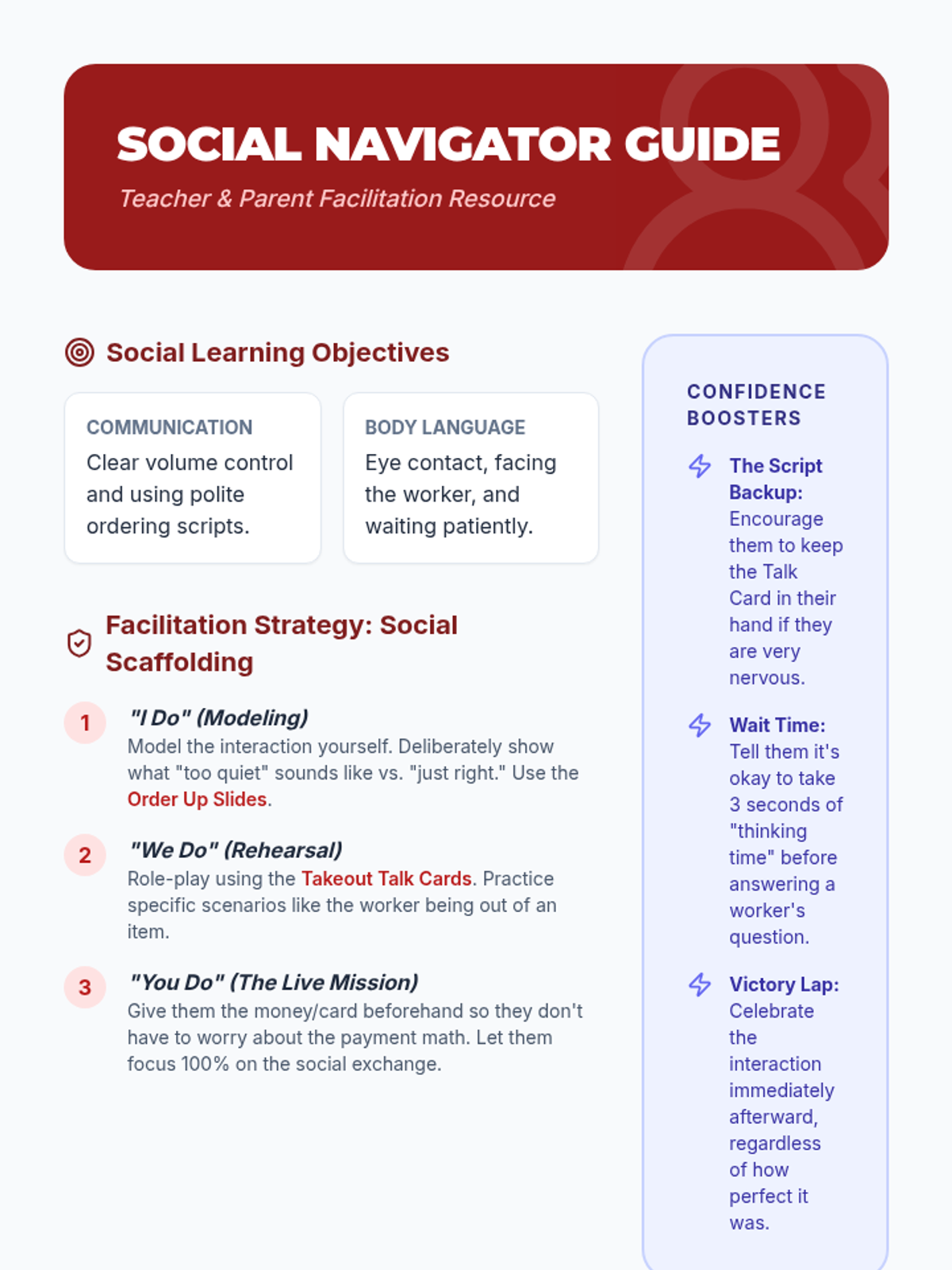
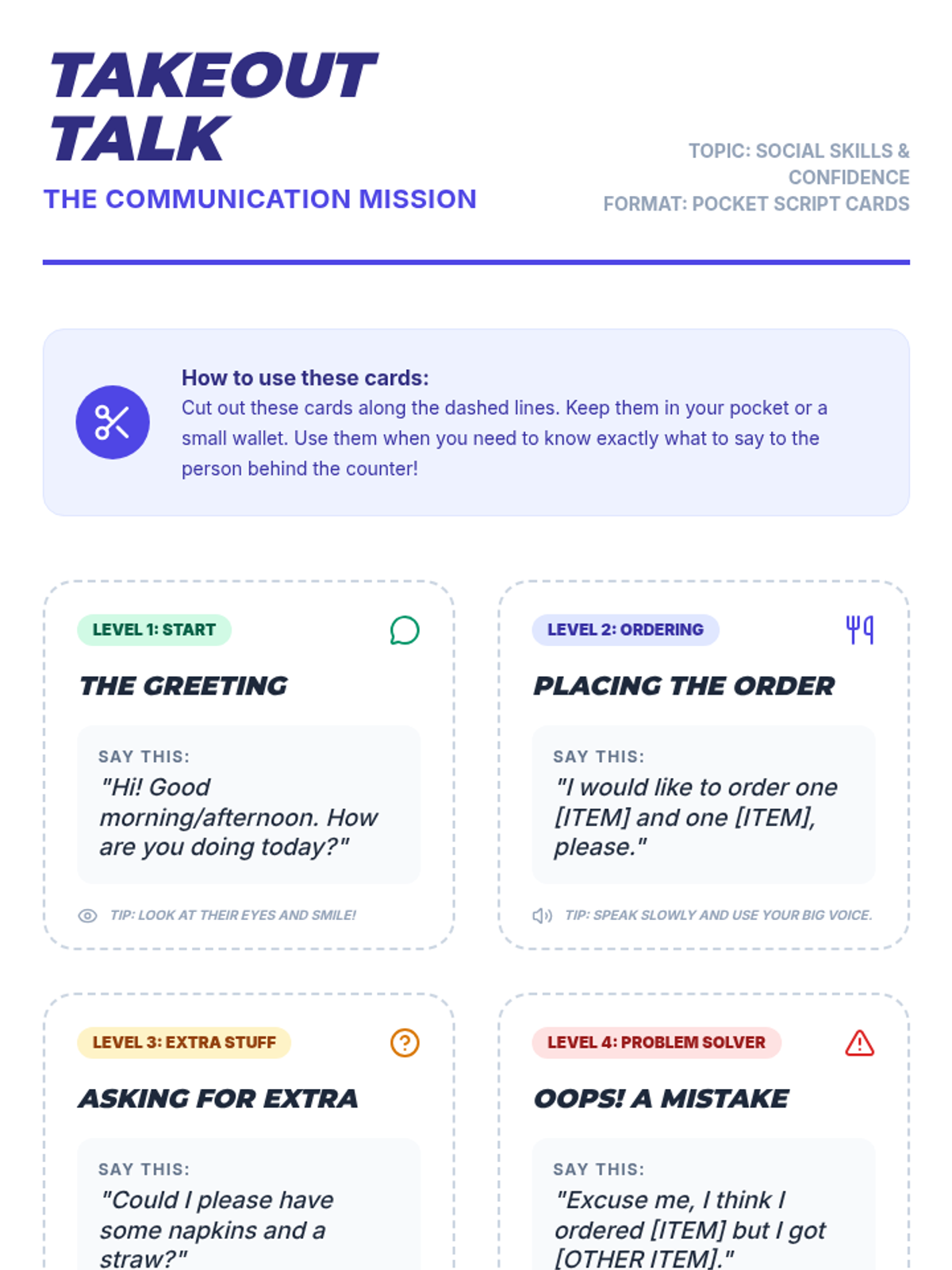
A practical lesson focused on the real-world social skills of ordering food, communicating with workers, and navigating a public restaurant space with confidence.
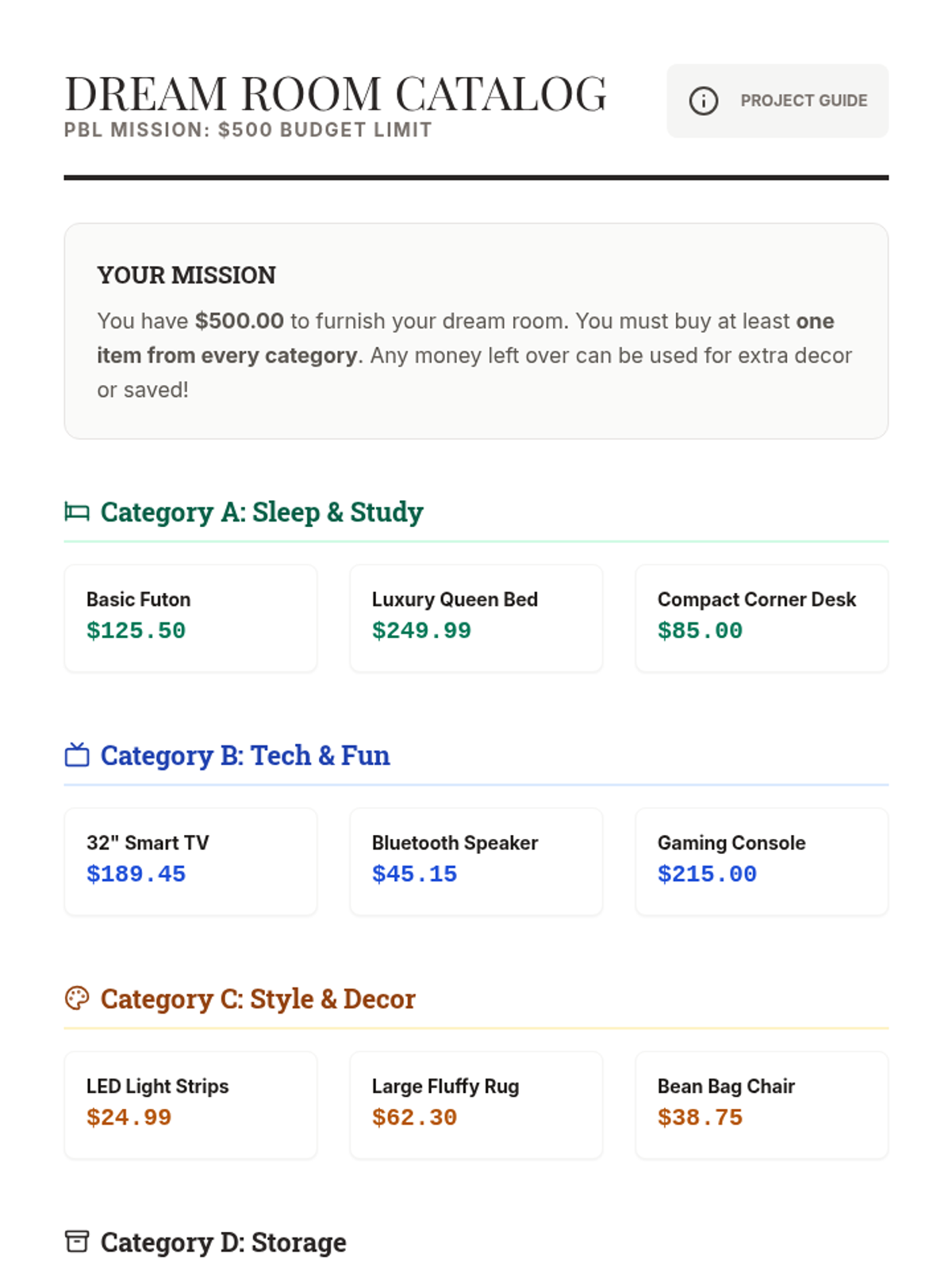
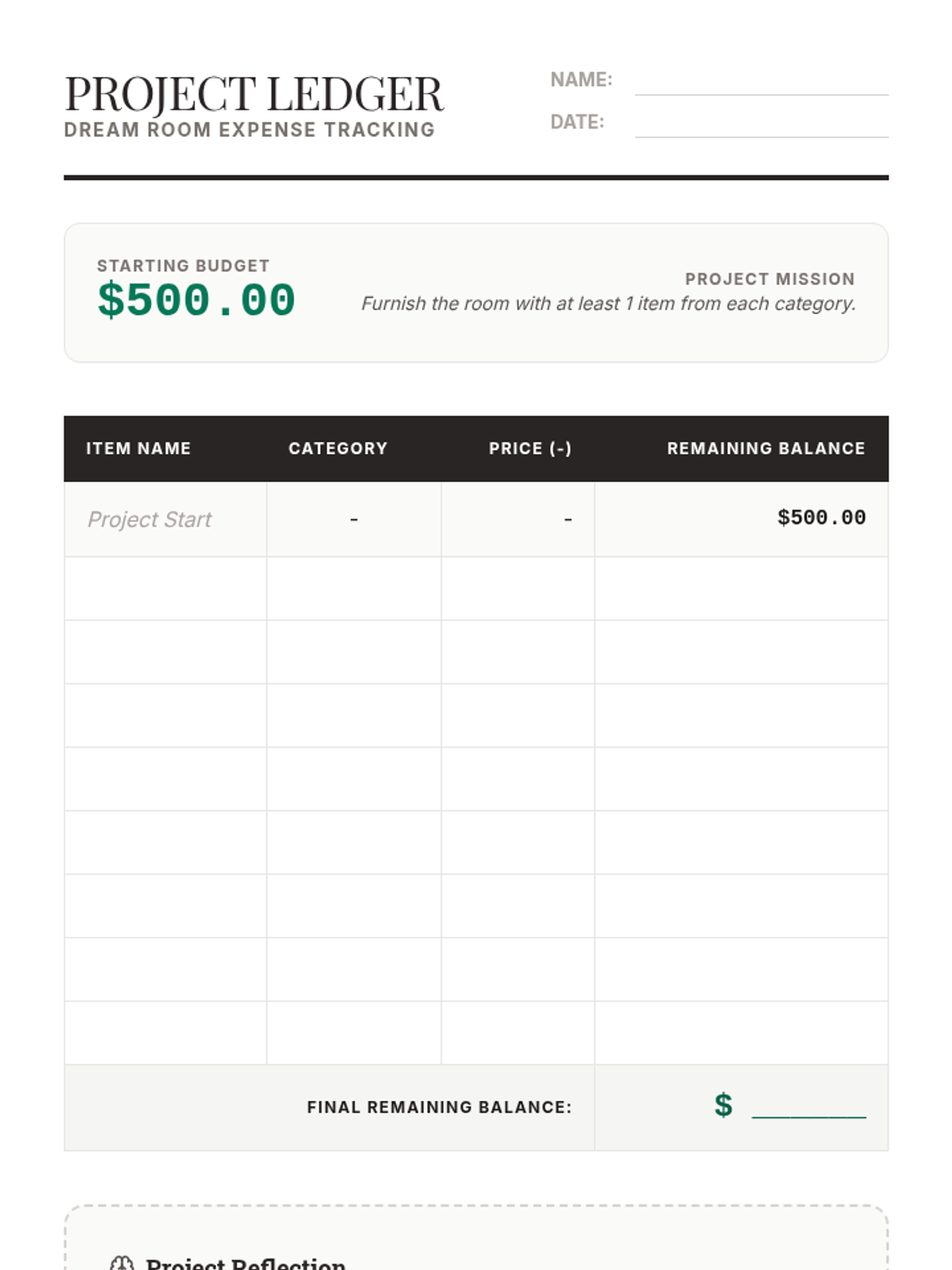
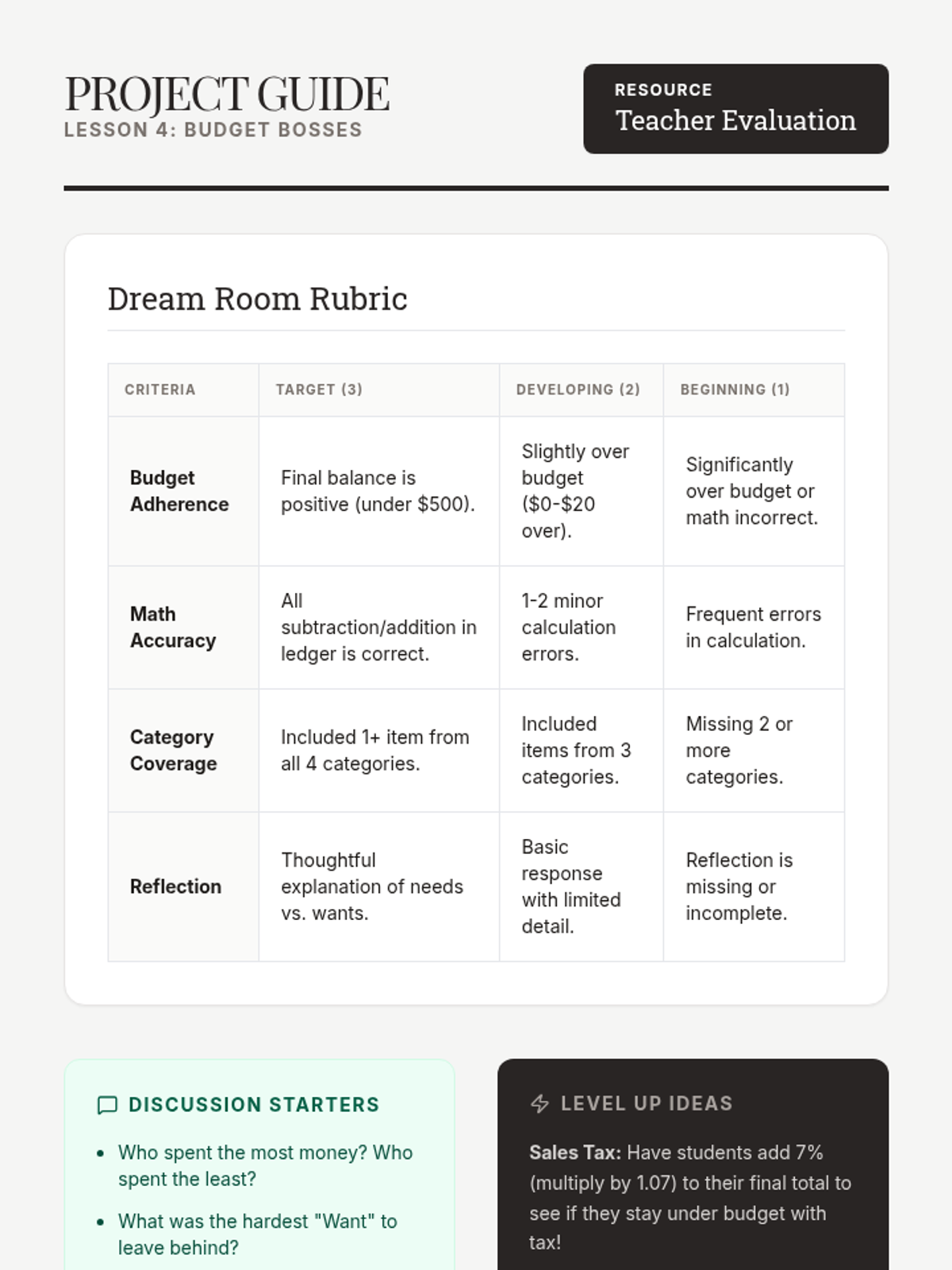
Students apply all their money skills in a project-based learning activity where they must design a 'Dream Room' while staying within a strict budget. They practice balancing needs versus wants and tracking expenses accurately.
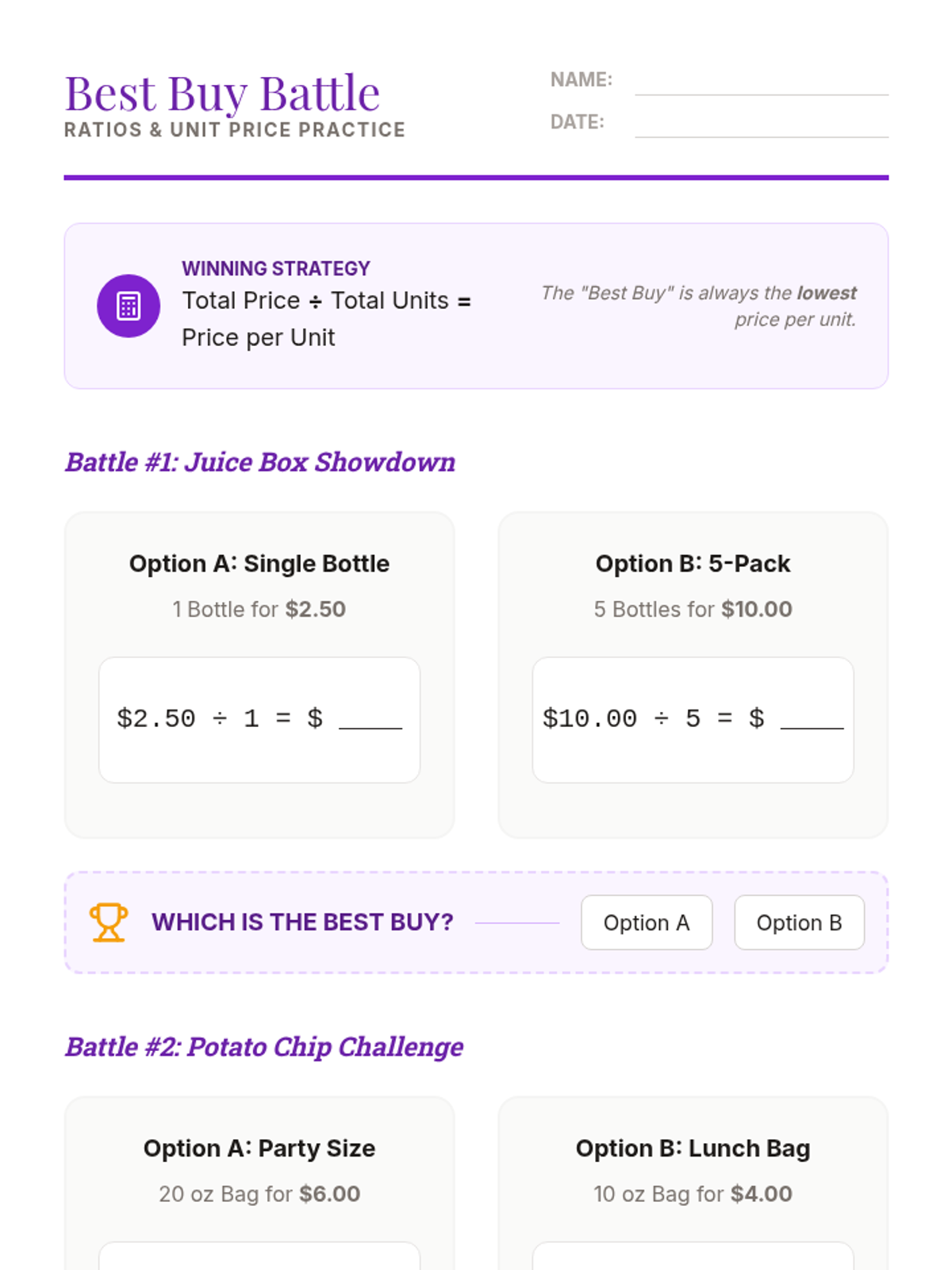
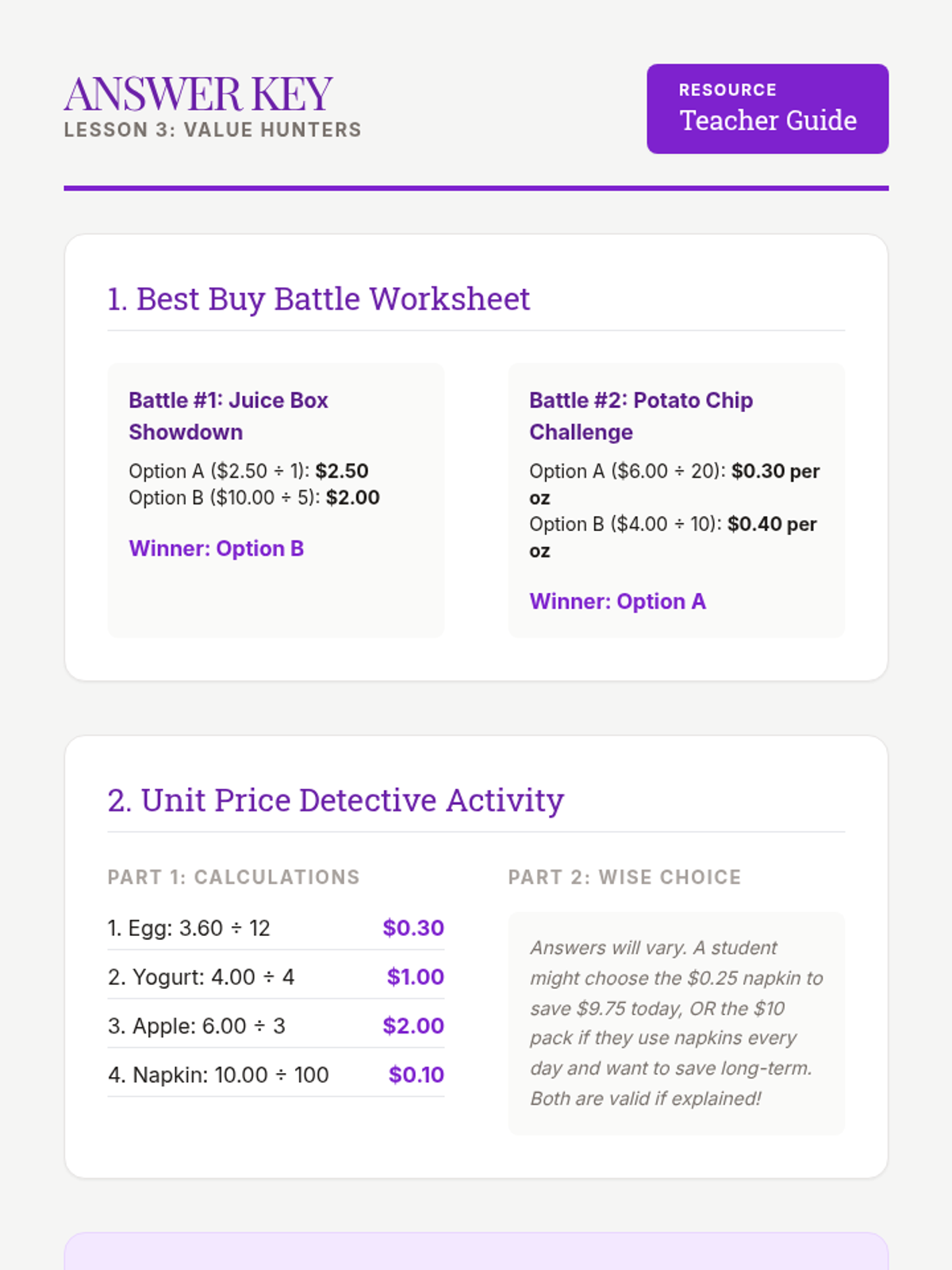
Introduces the concept of unit prices and ratios. Students learn how to compare products of different sizes to find the best value, applying division skills to real-world shopping decisions.
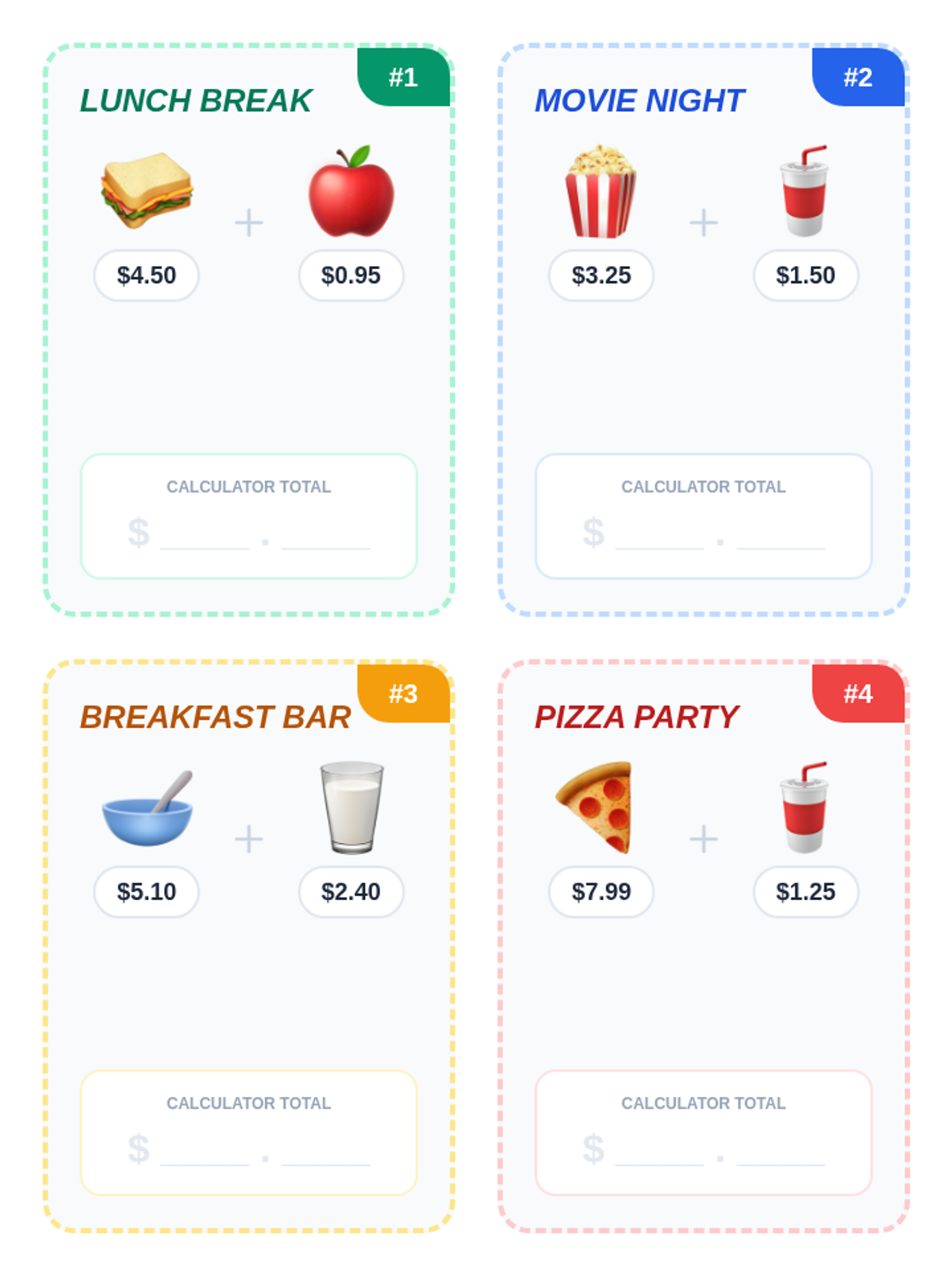
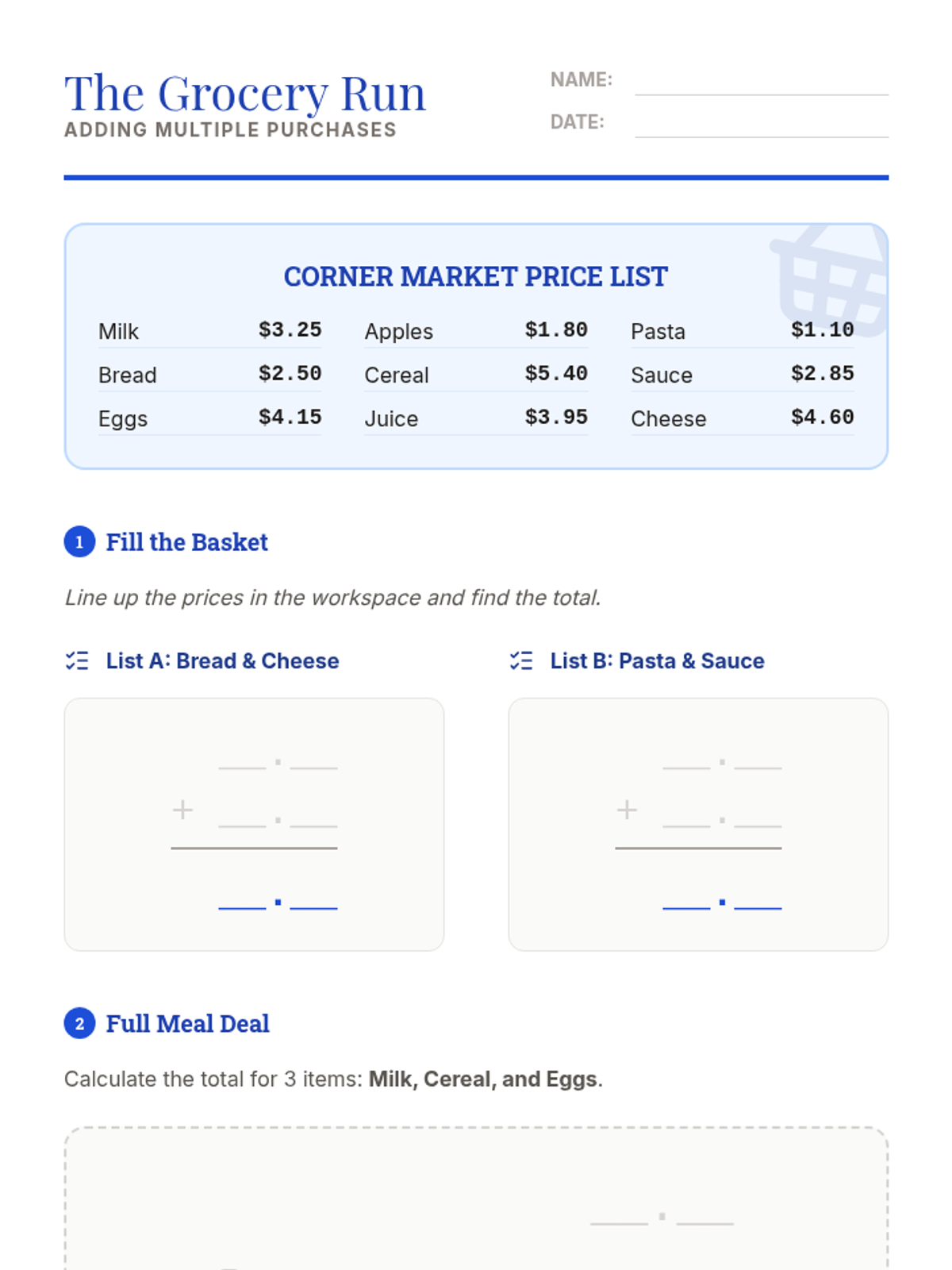
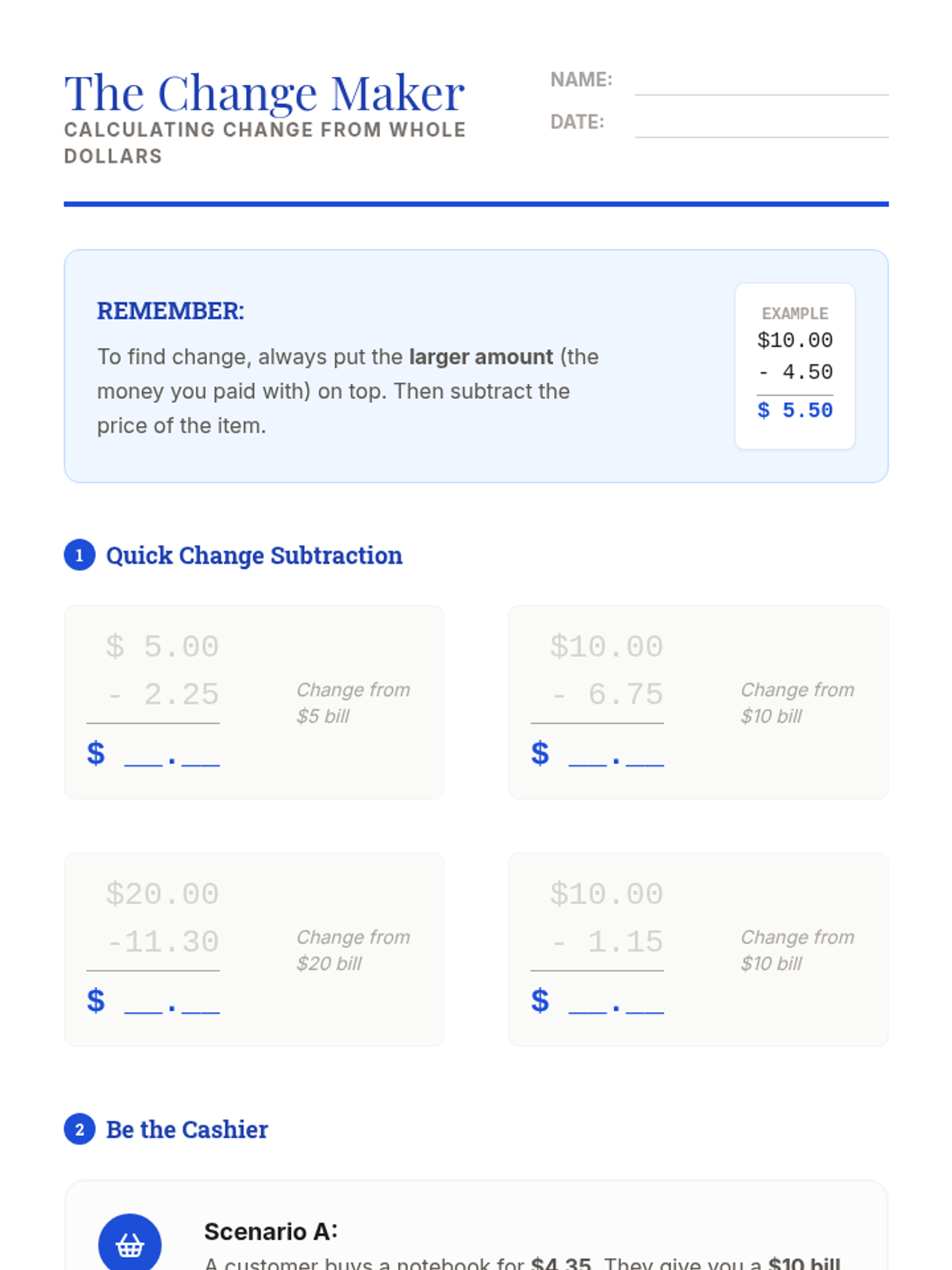
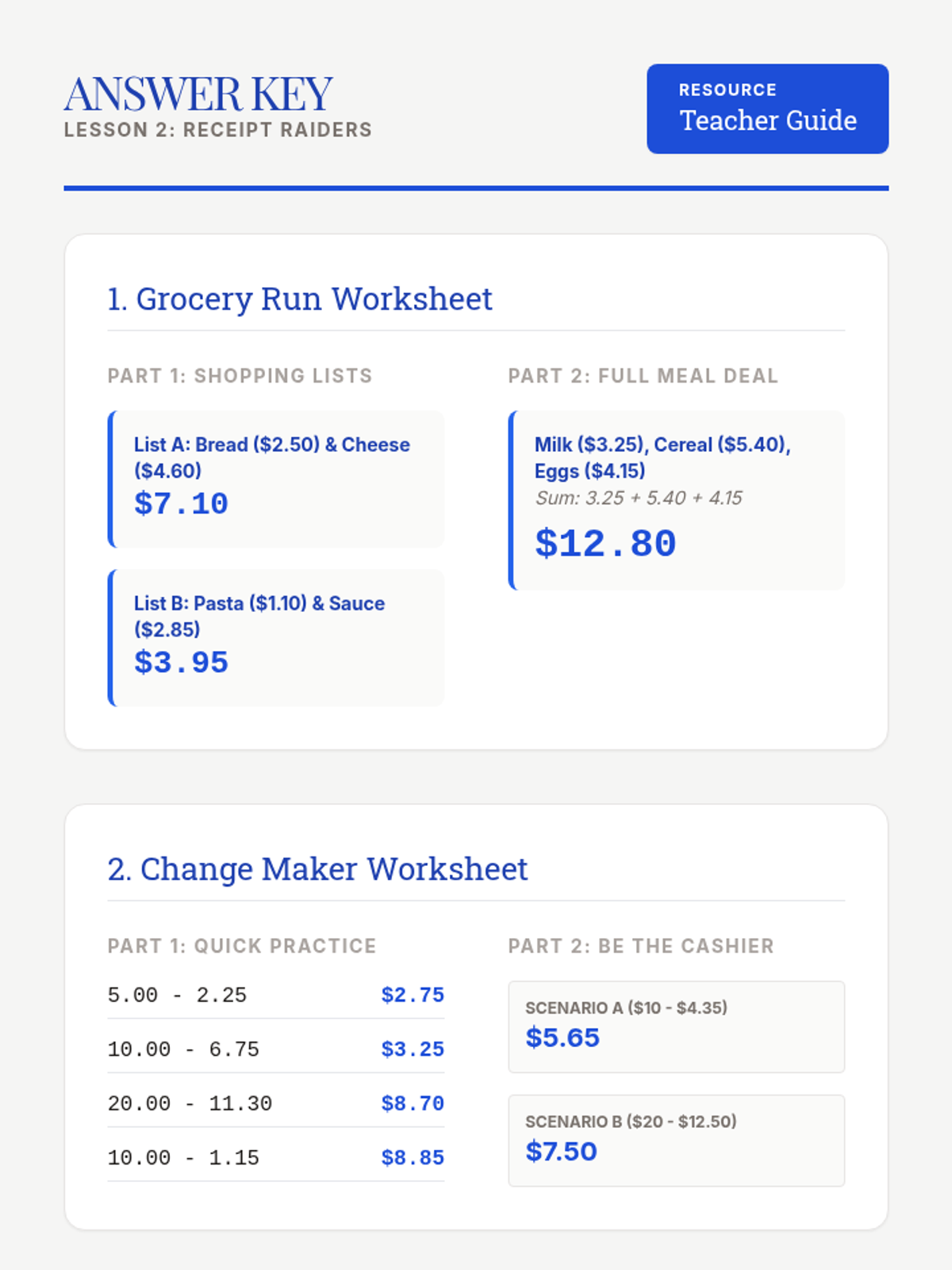
Focuses on the mechanics of adding multiple items with decimals and calculating the resulting change. Students practice column addition and subtraction using realistic receipt formats.
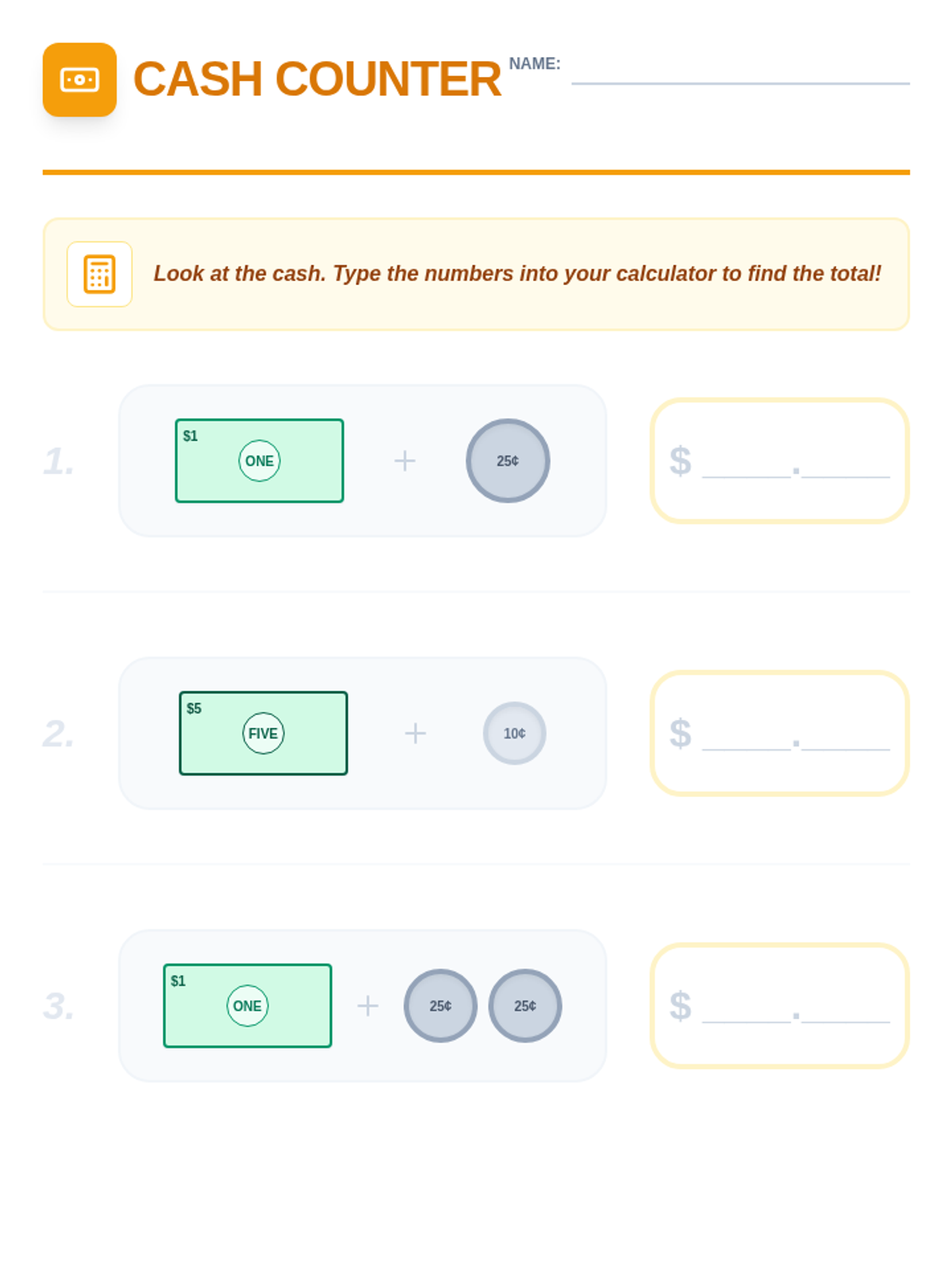
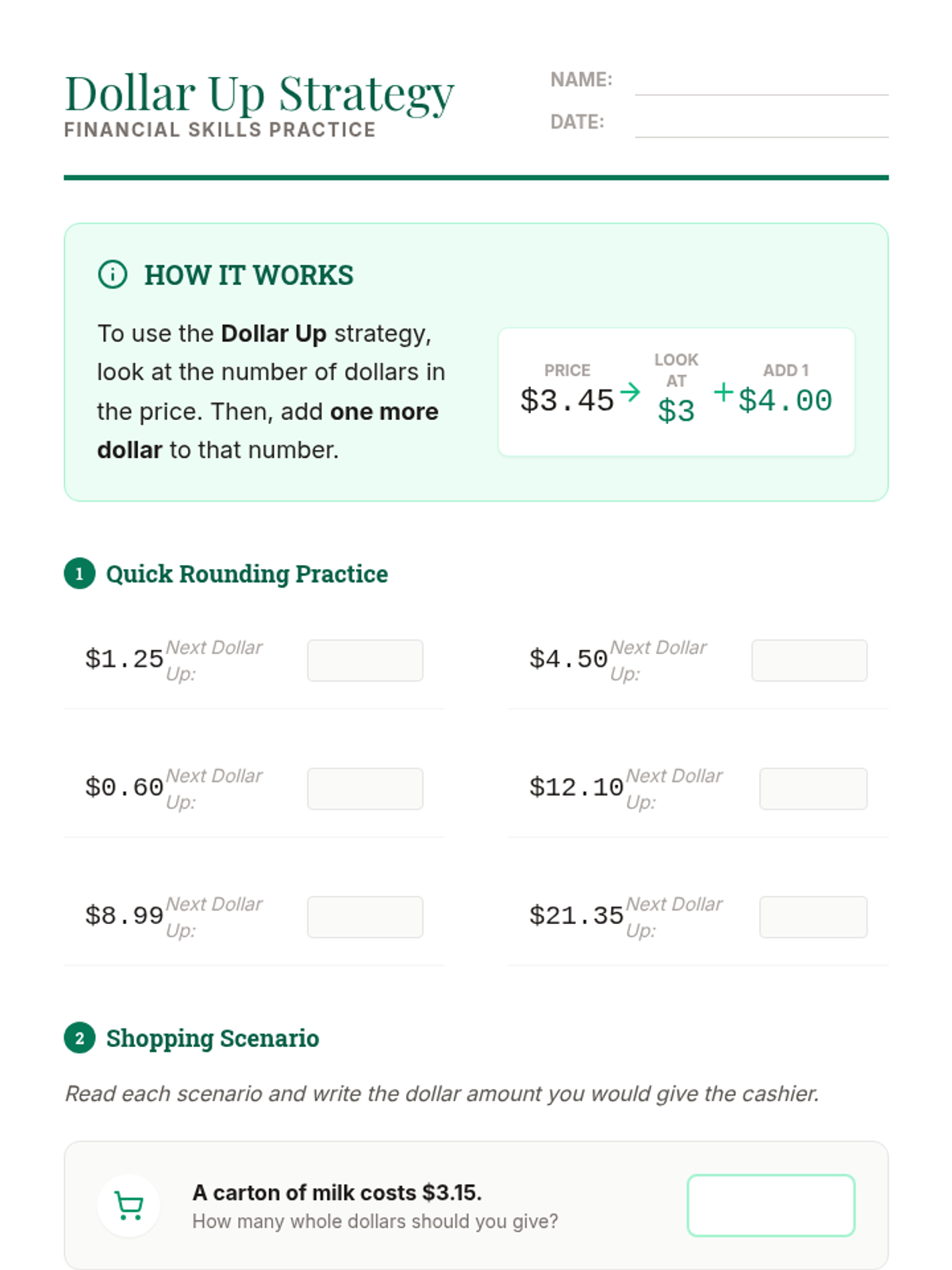
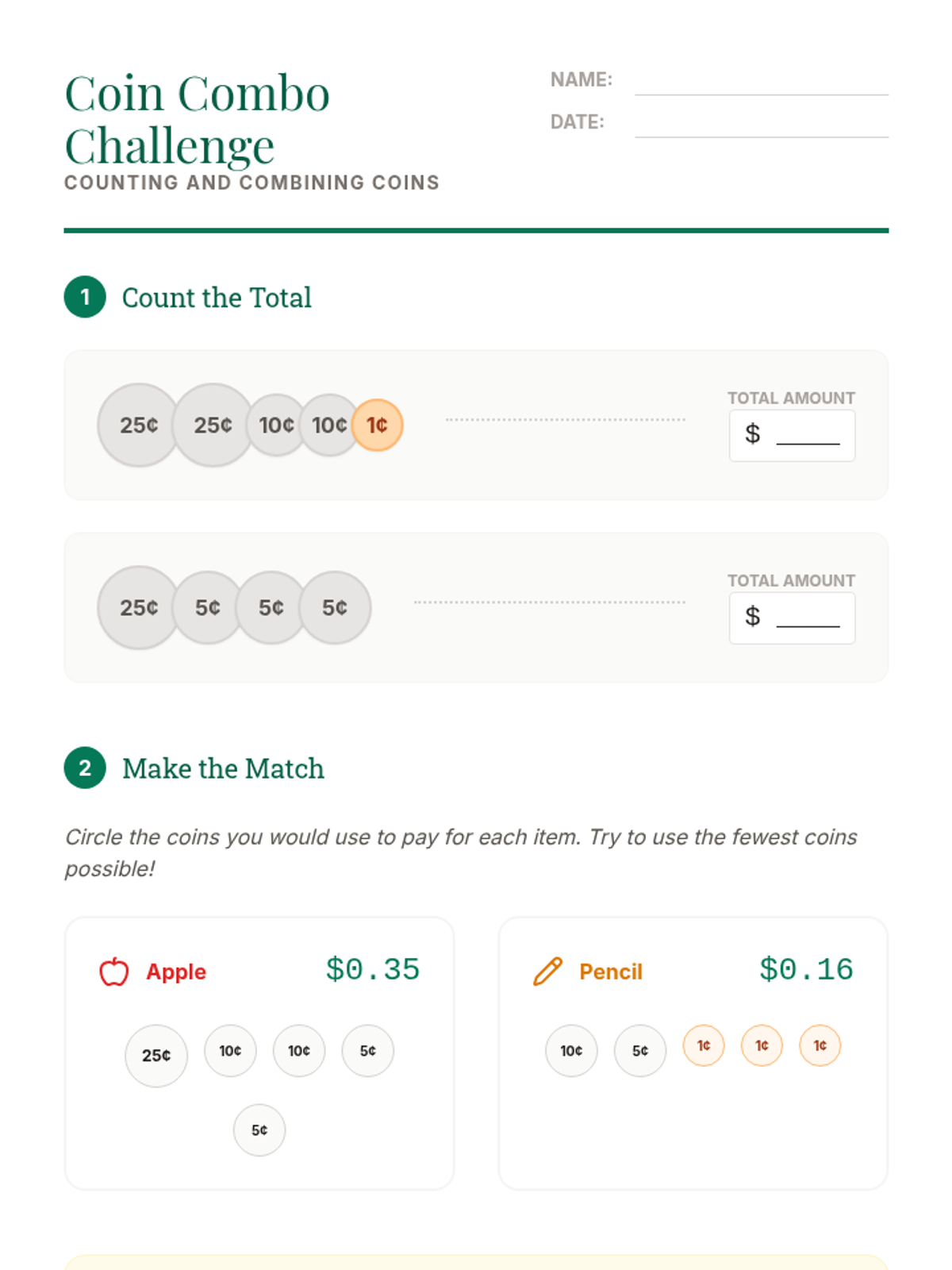
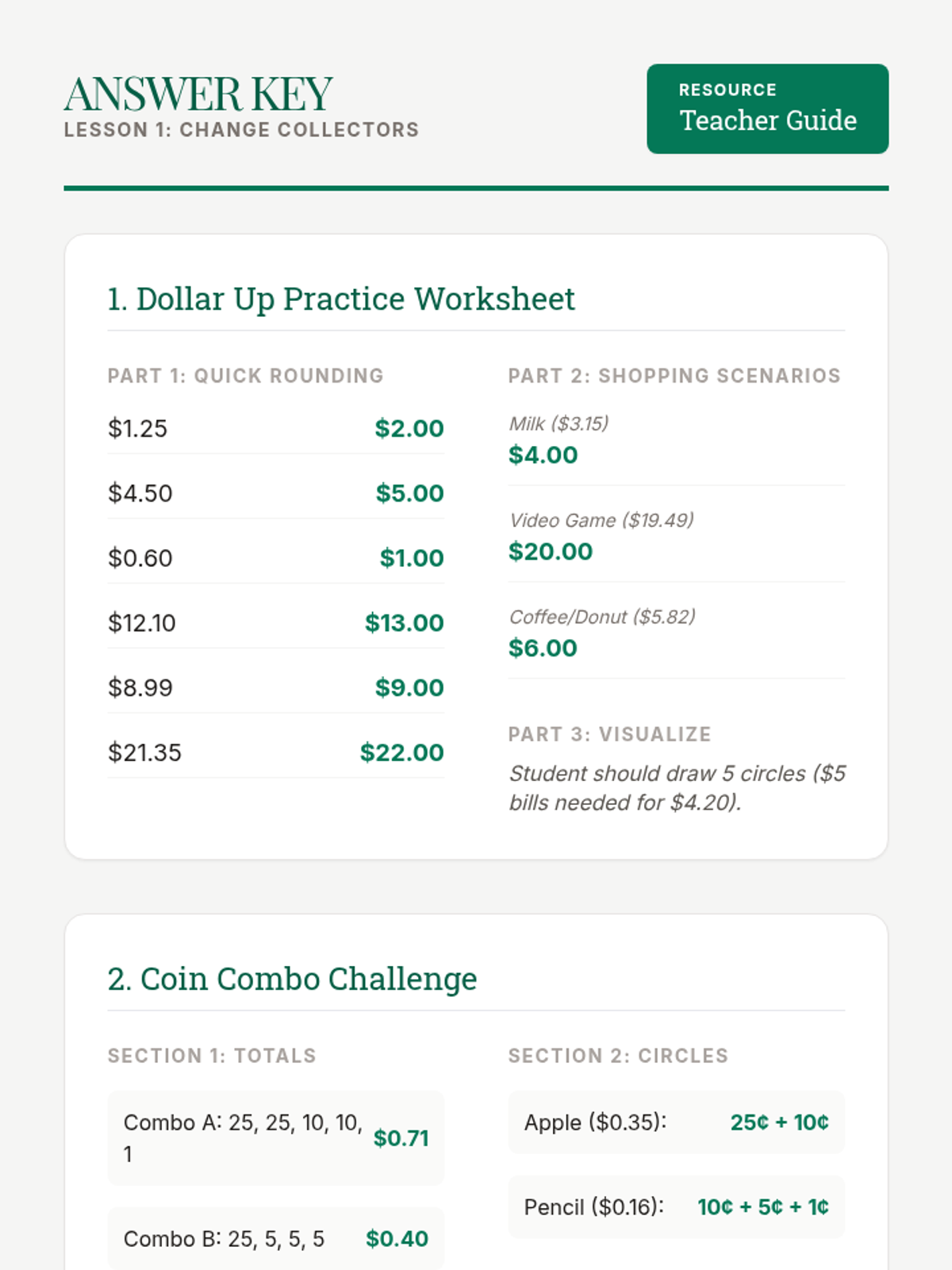
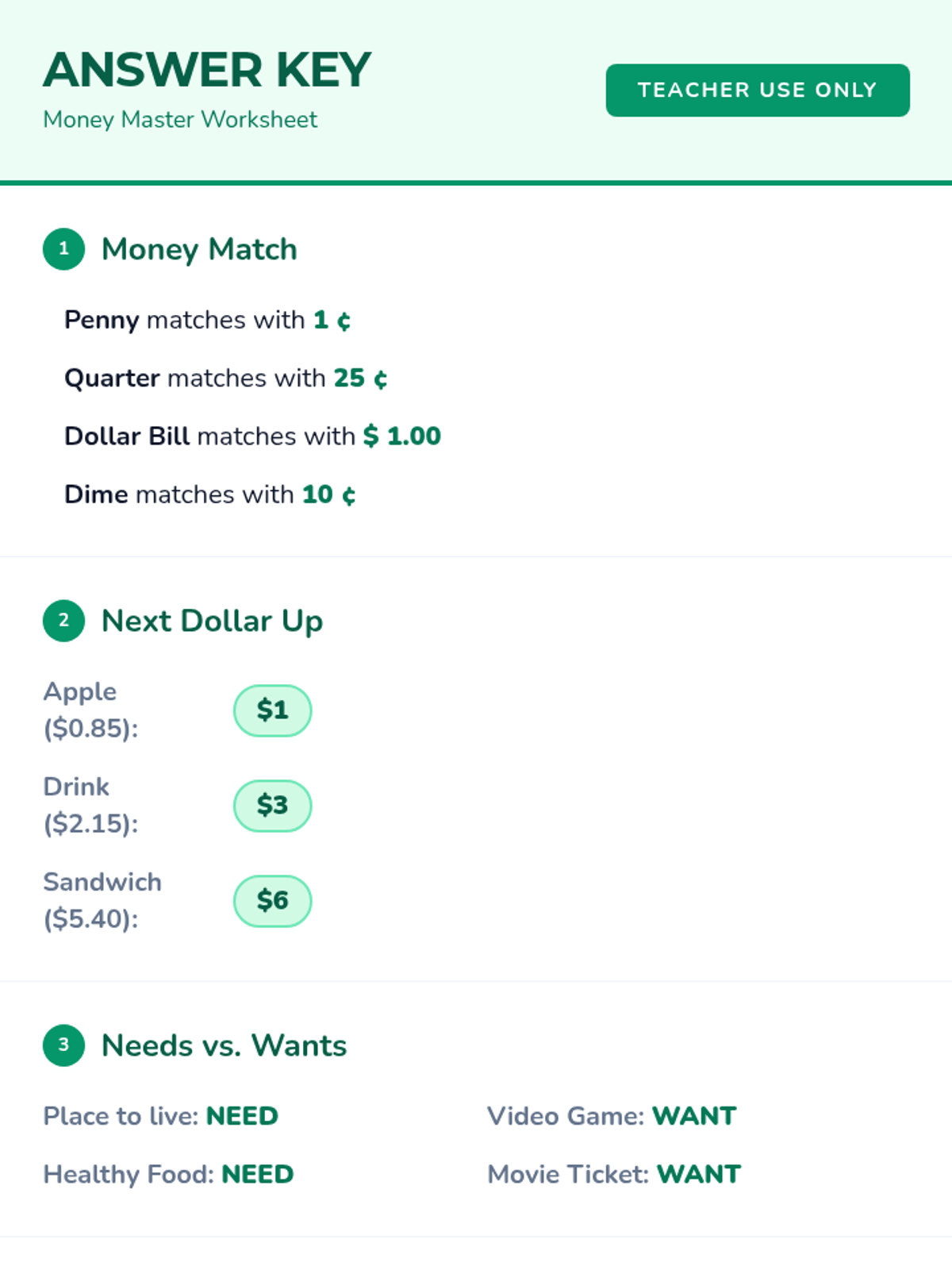
Focuses on identifying and counting coin combinations and mastering the 'next dollar up' strategy for independent shopping. Students practice rounding prices to ensure they have enough cash for purchases.
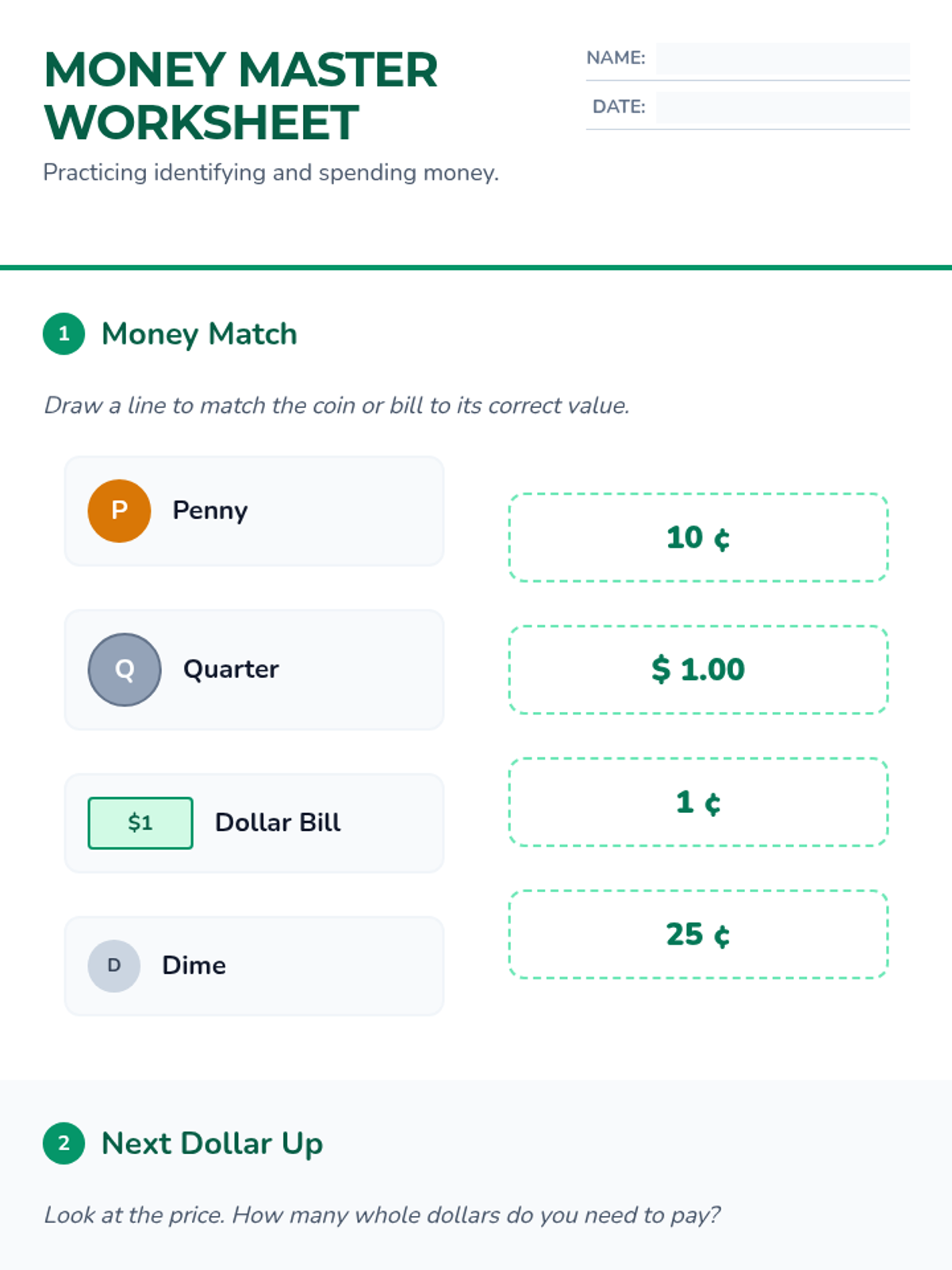
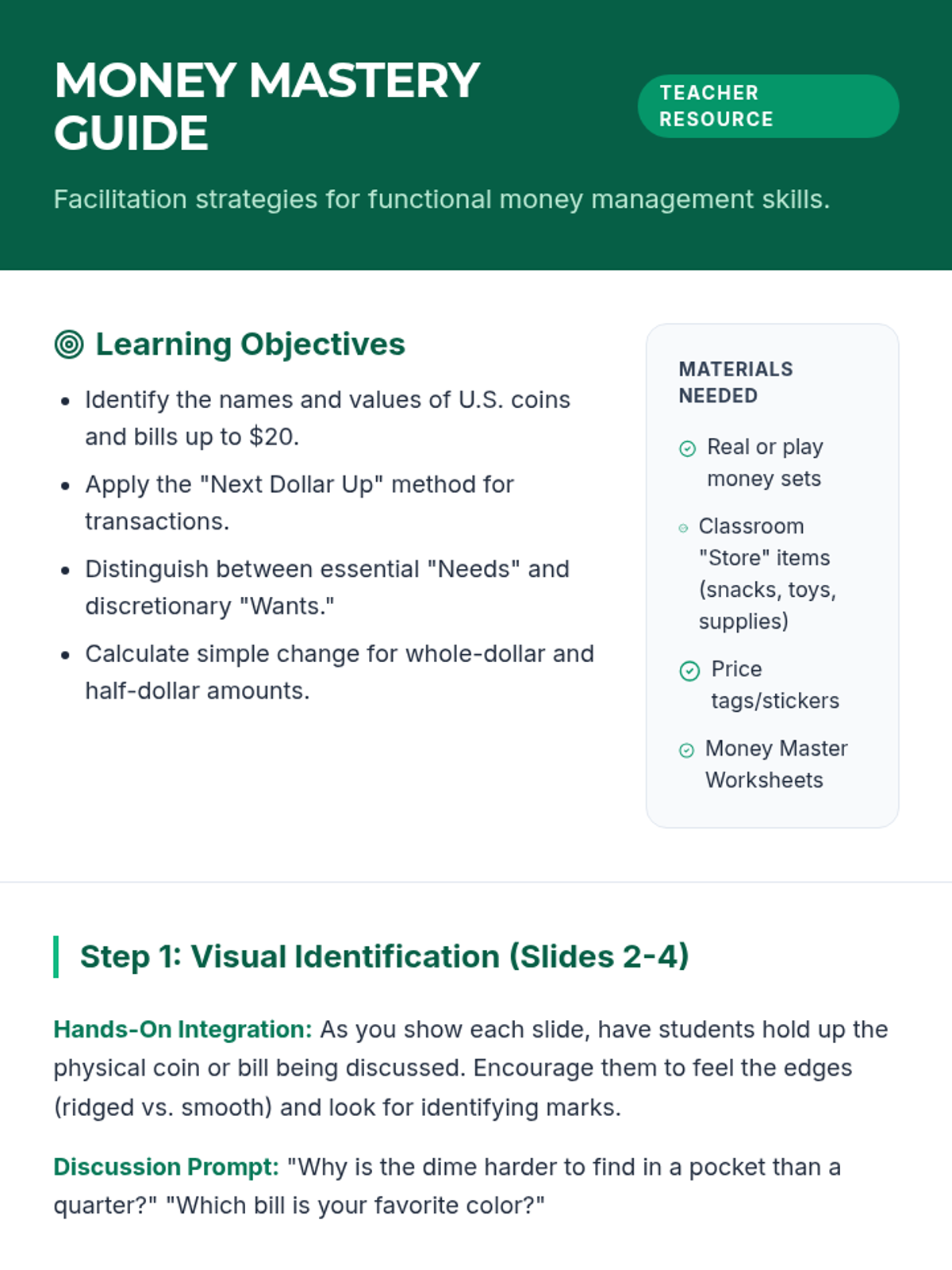
A functional life skills lesson focused on identifying currency, making simple change, and basic budgeting for independent living.
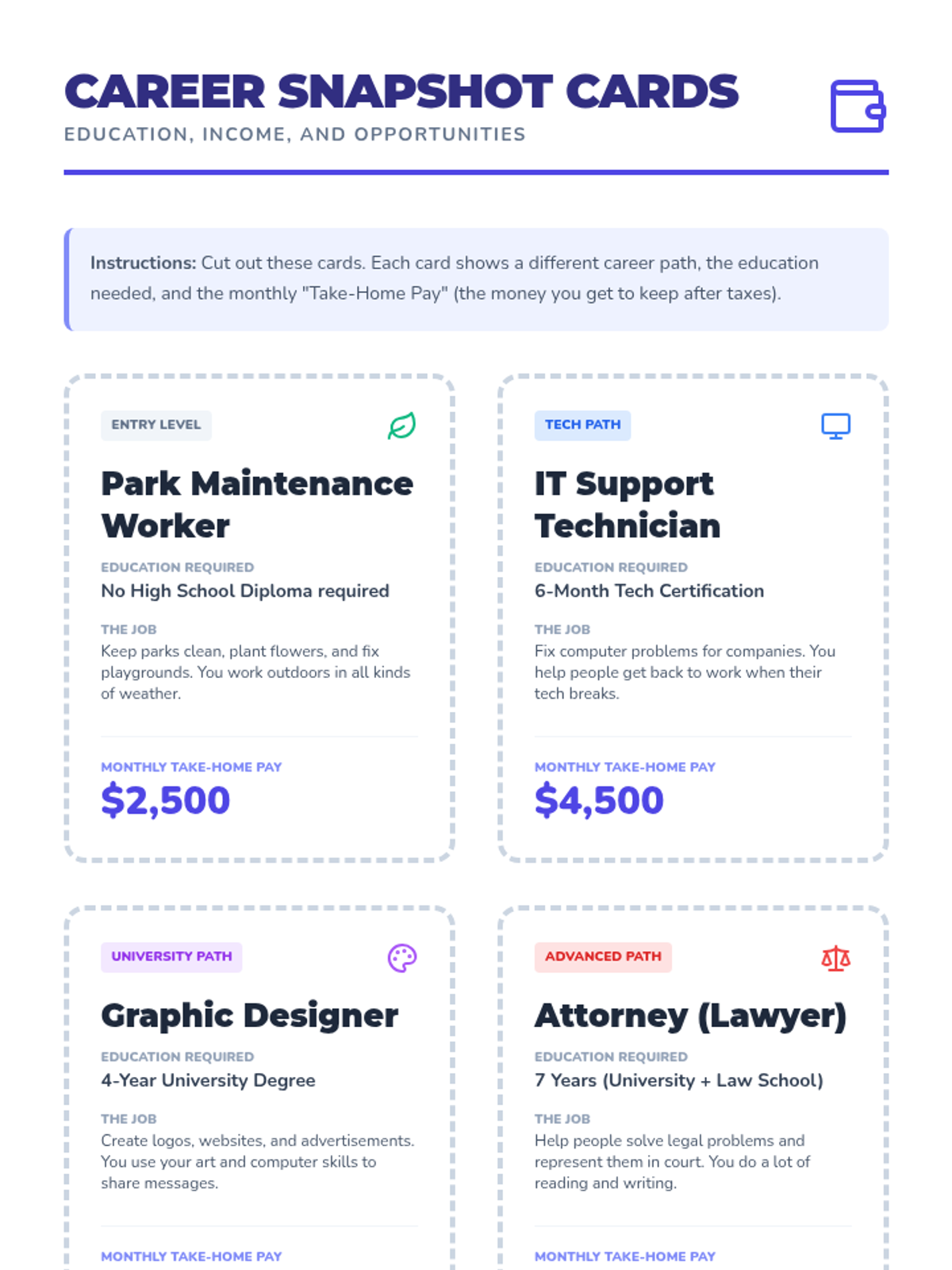
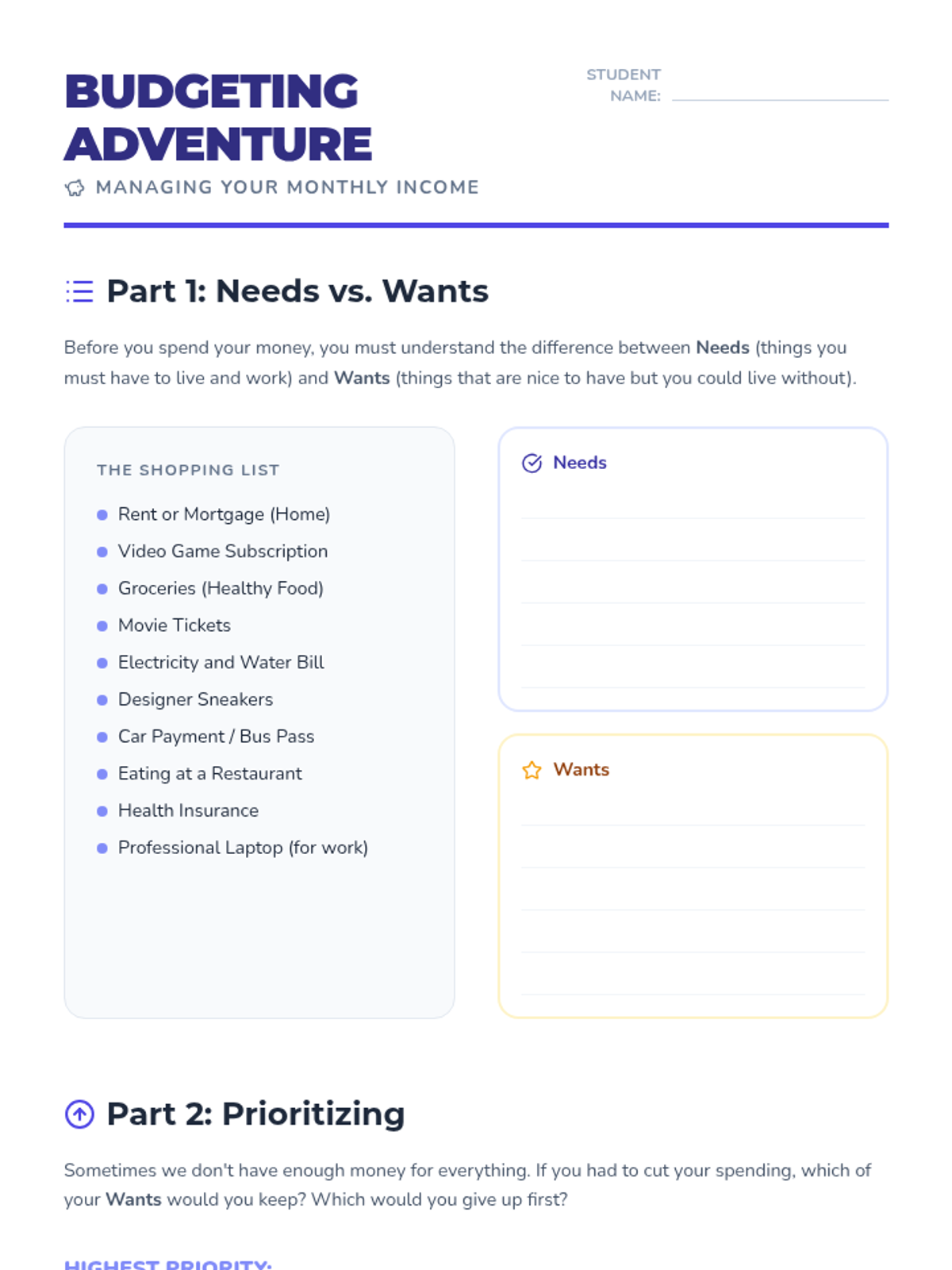
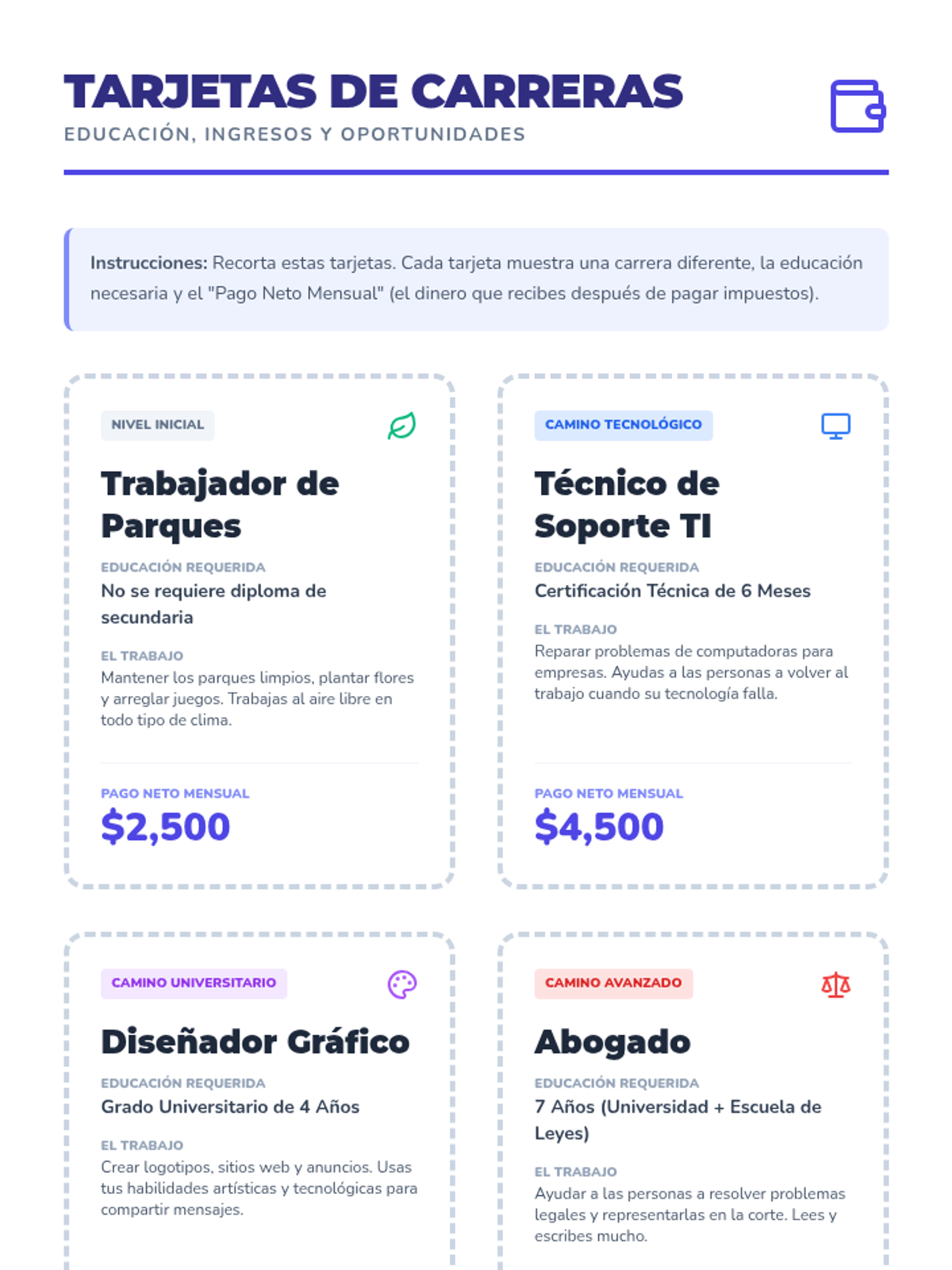
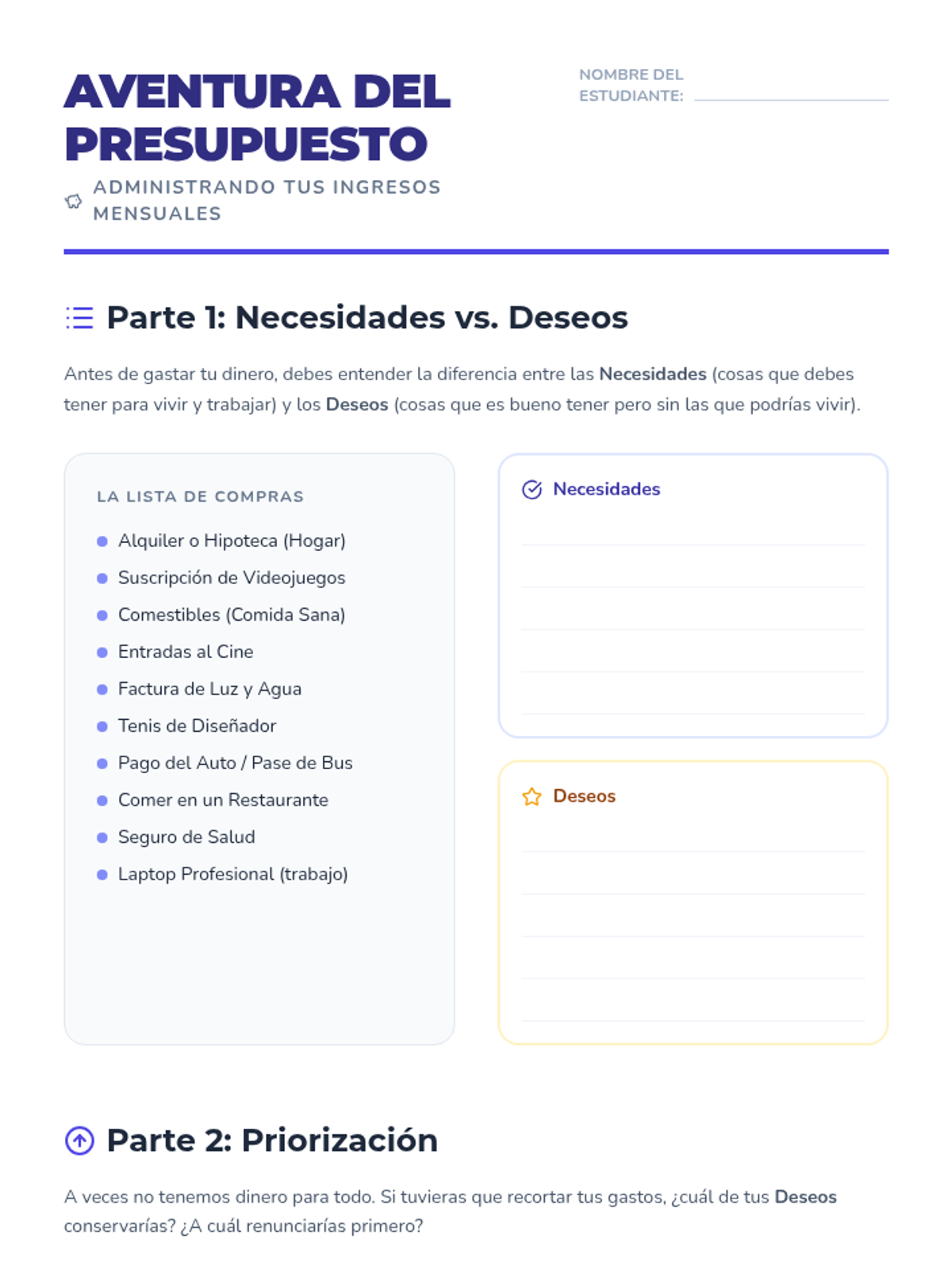
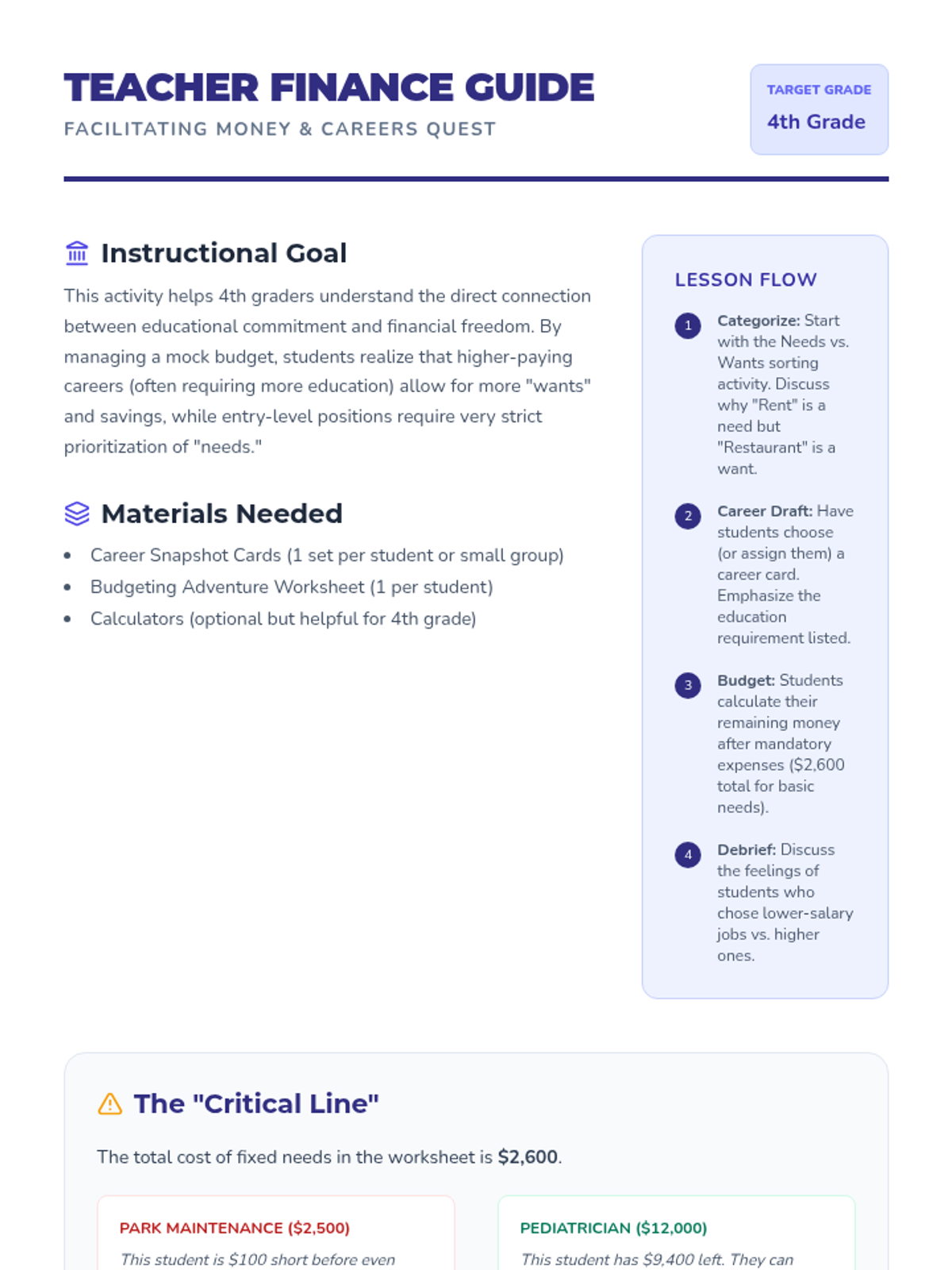
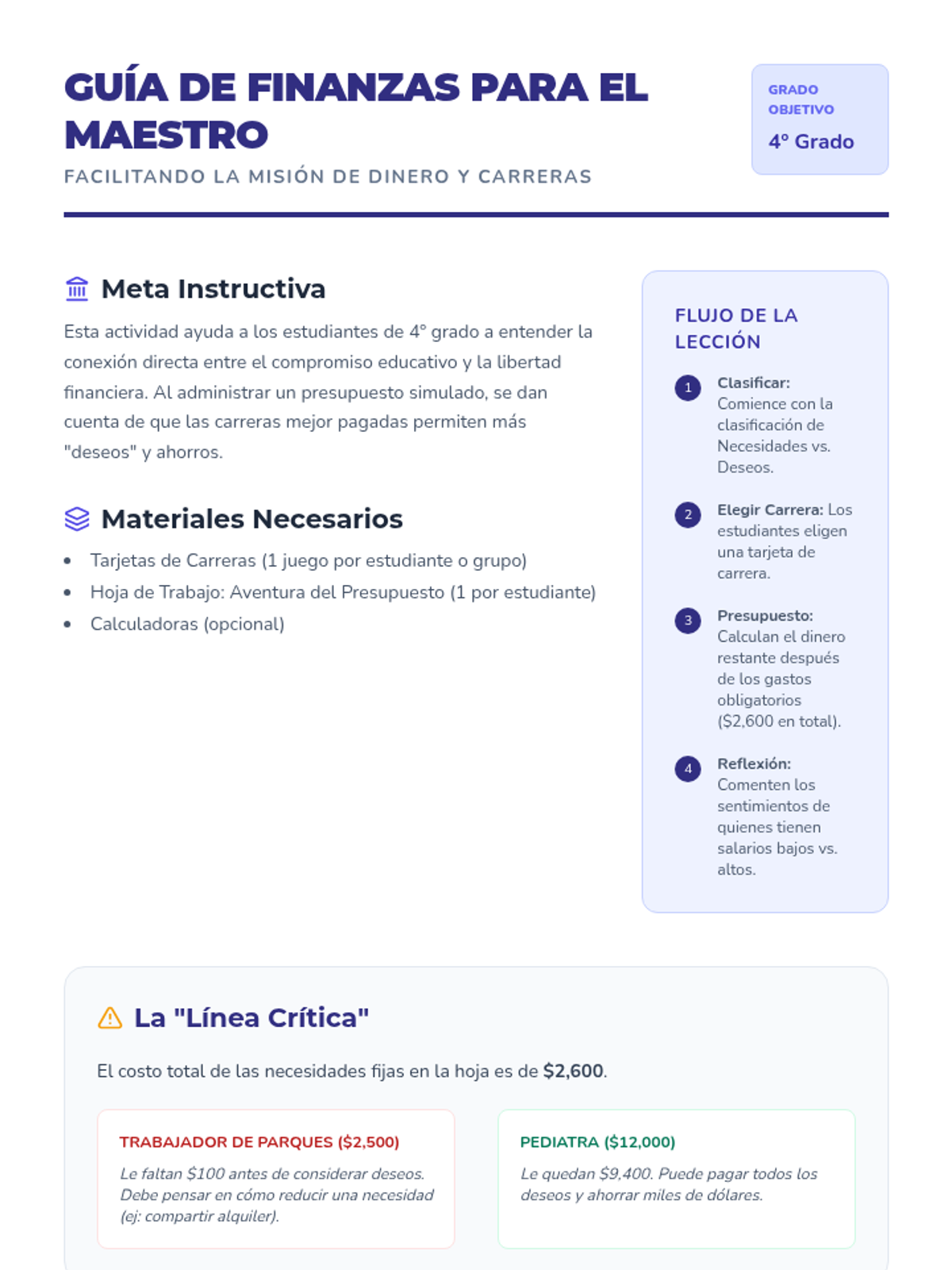
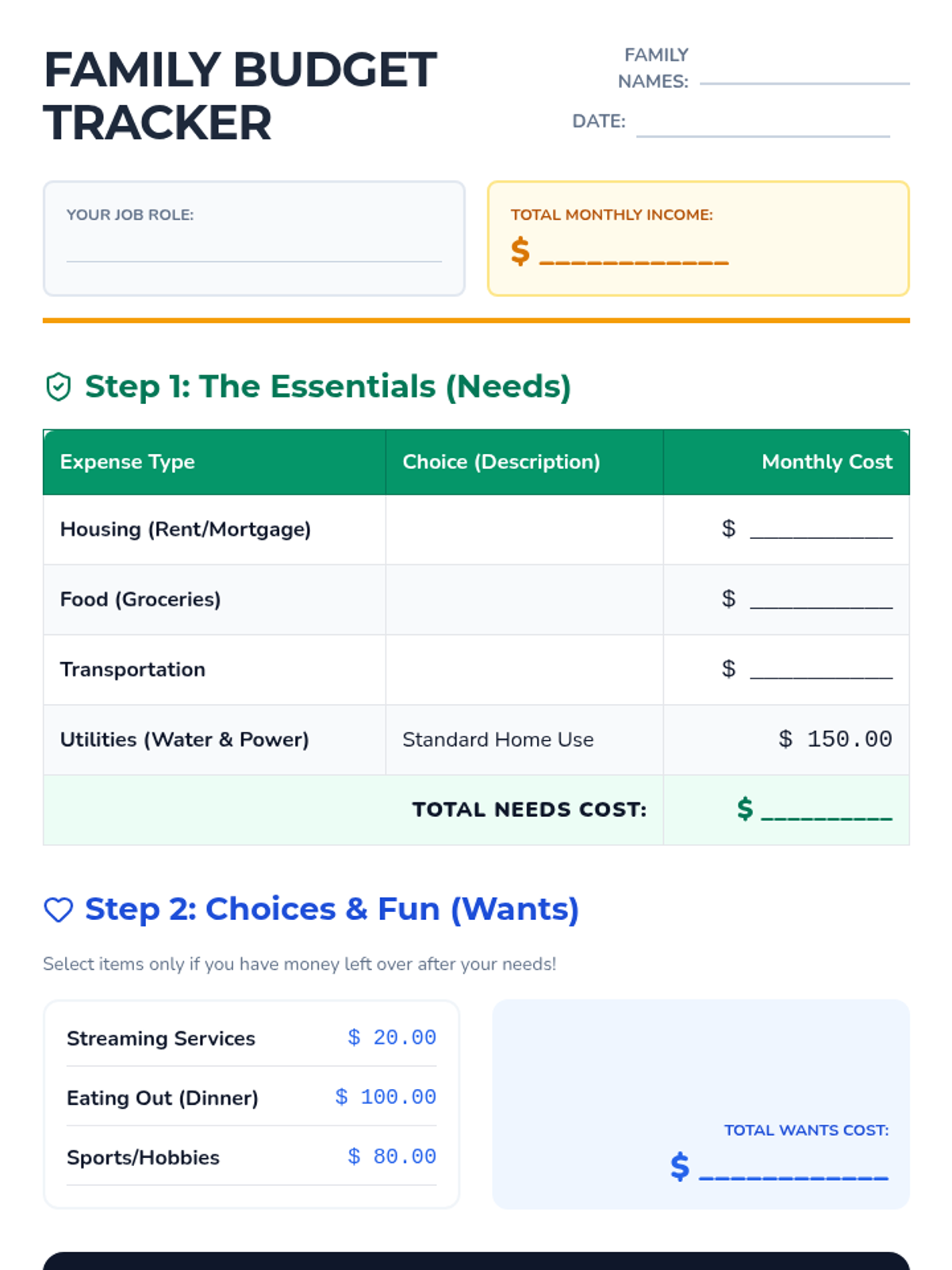
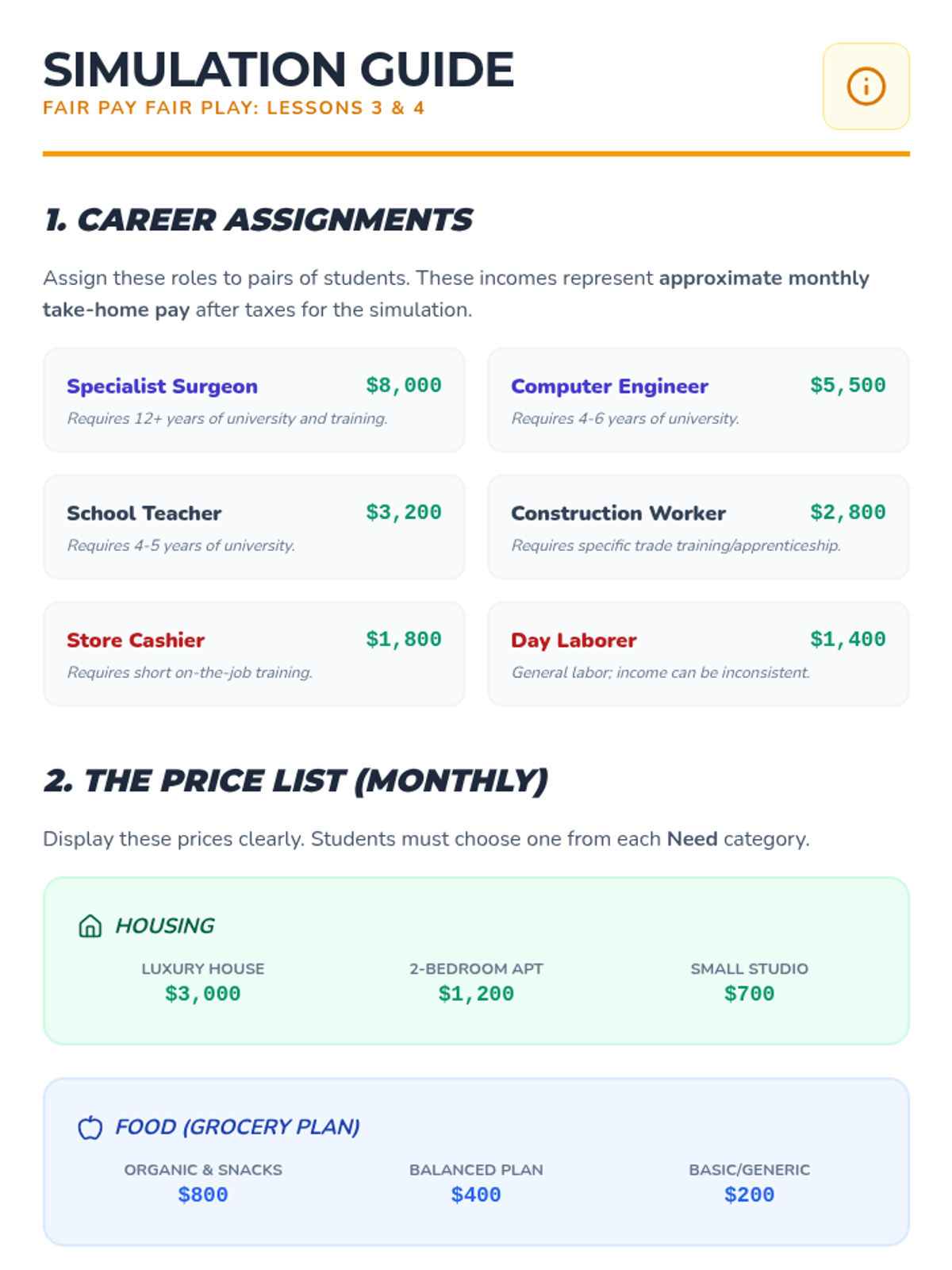
Students explore the relationship between education, career choice, and income through a hands-on budgeting activity. 4th graders learn to prioritize needs versus wants while managing a monthly budget based on real-world career salaries.
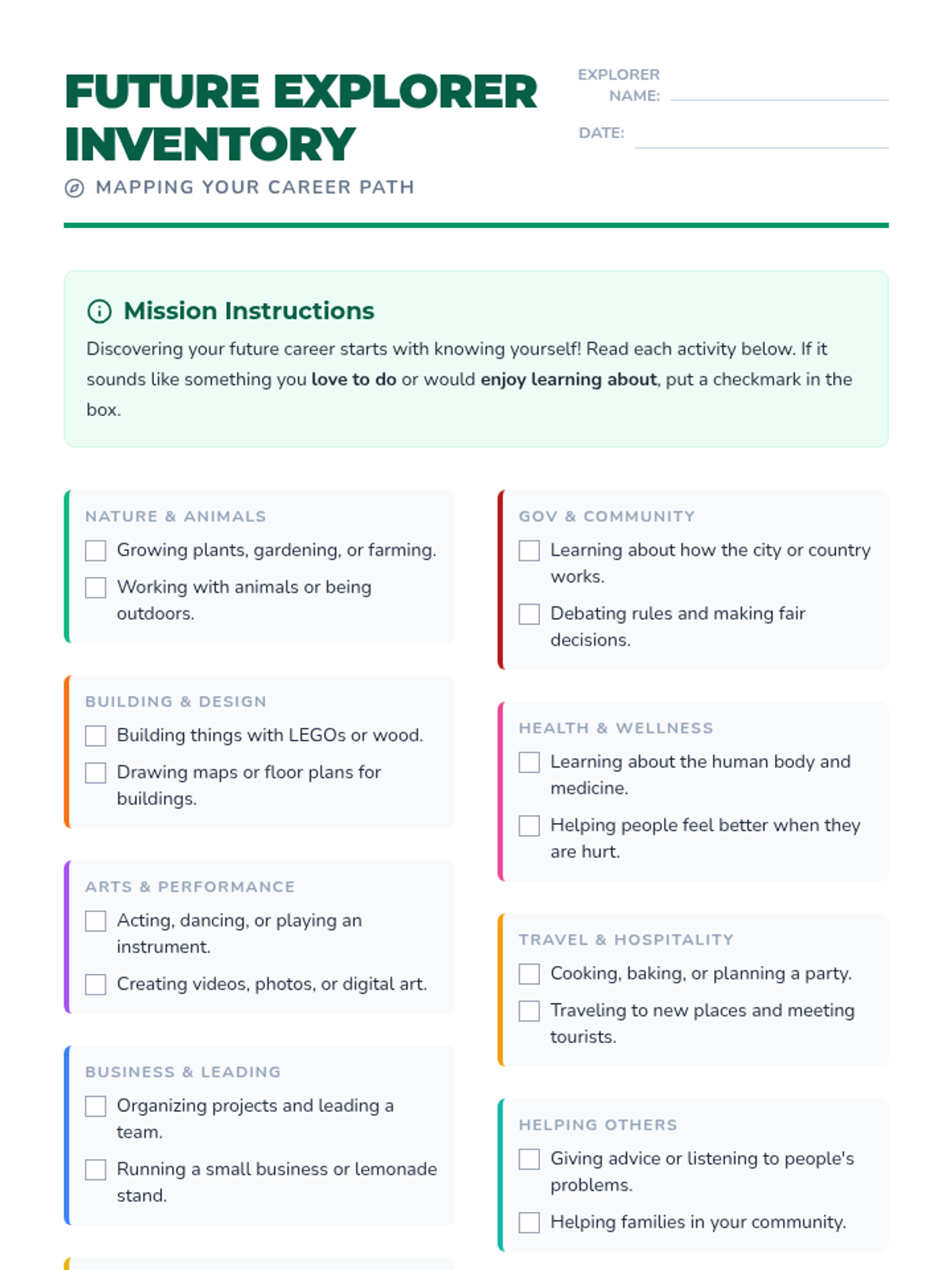
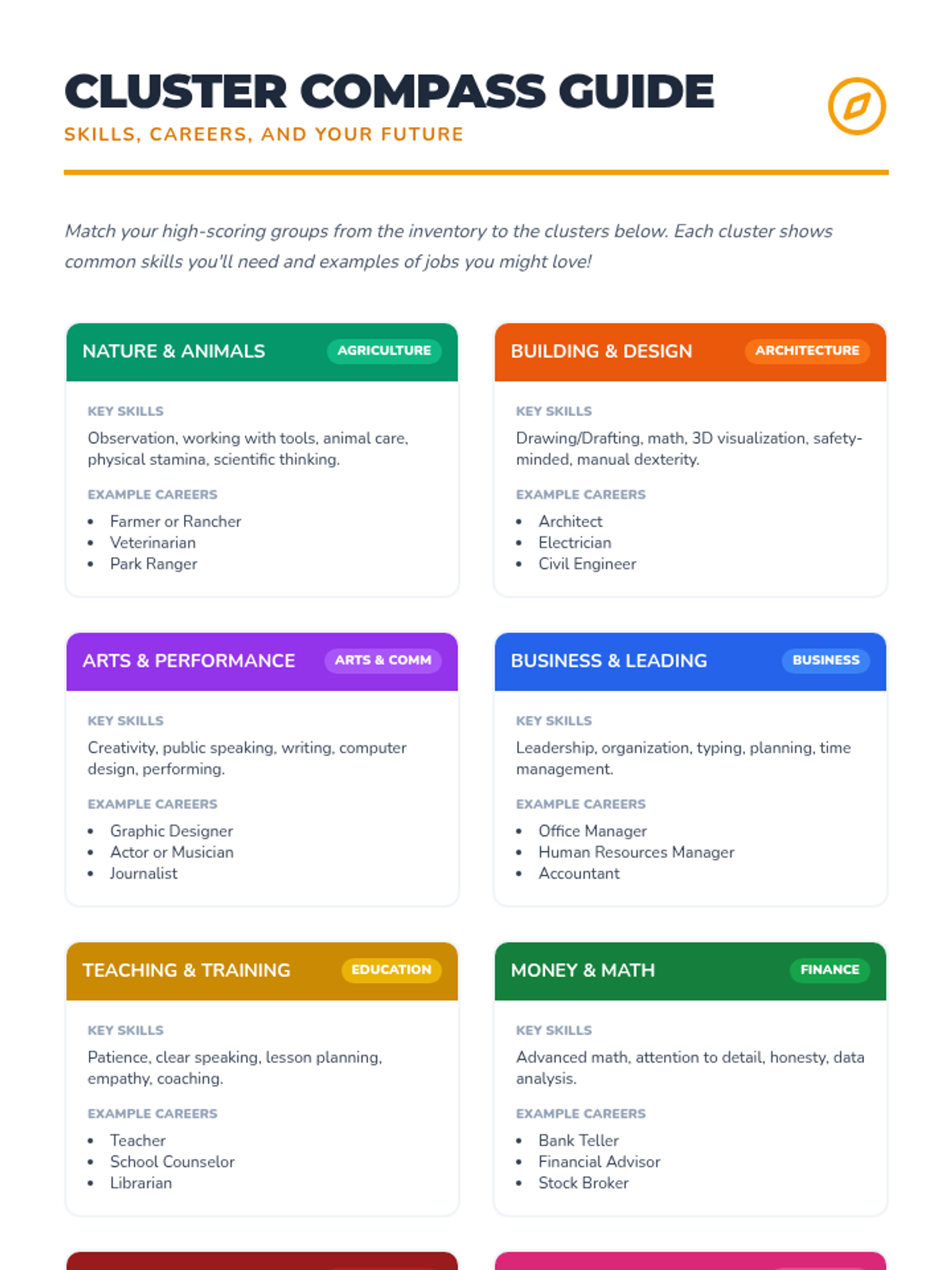
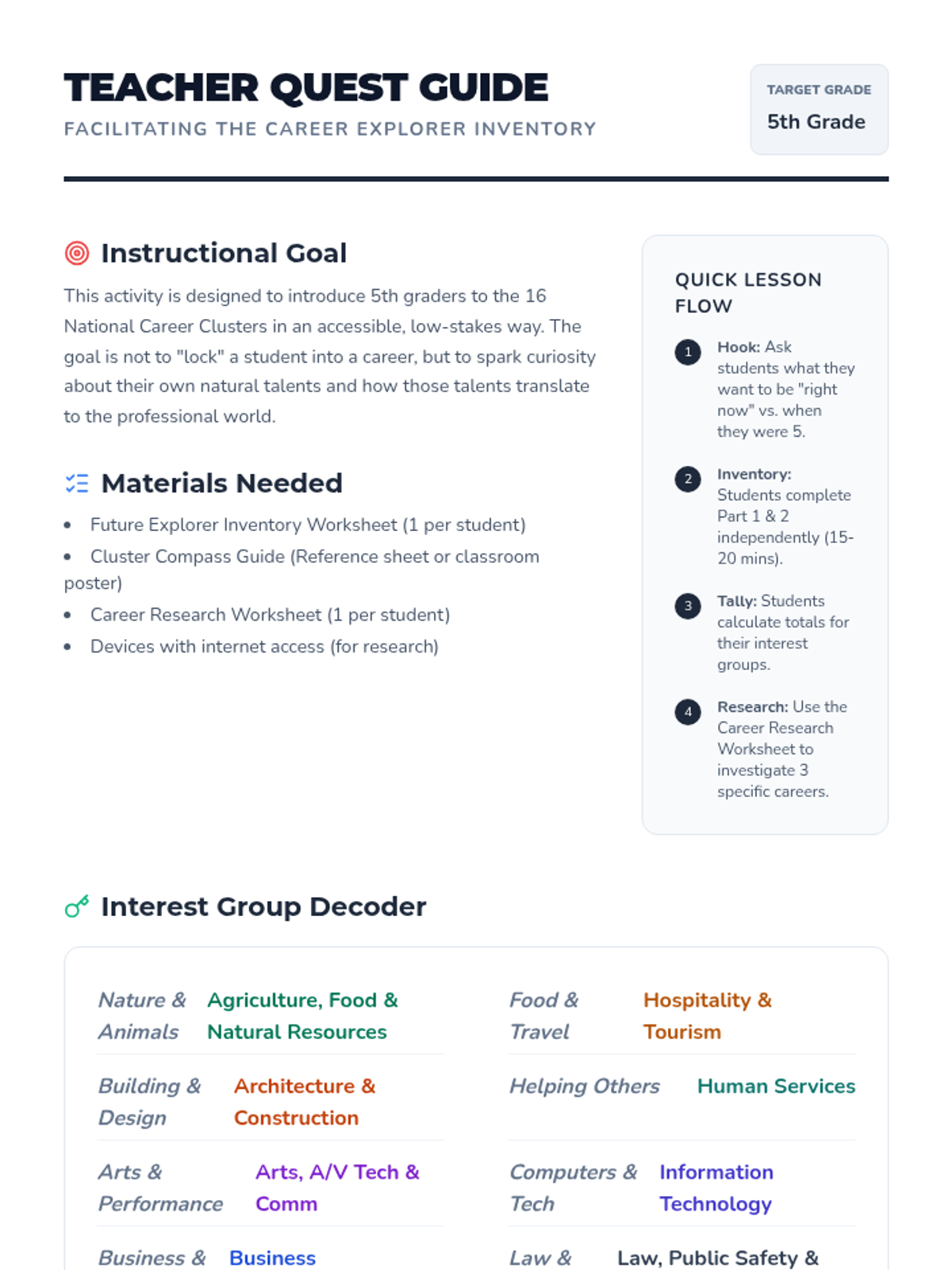
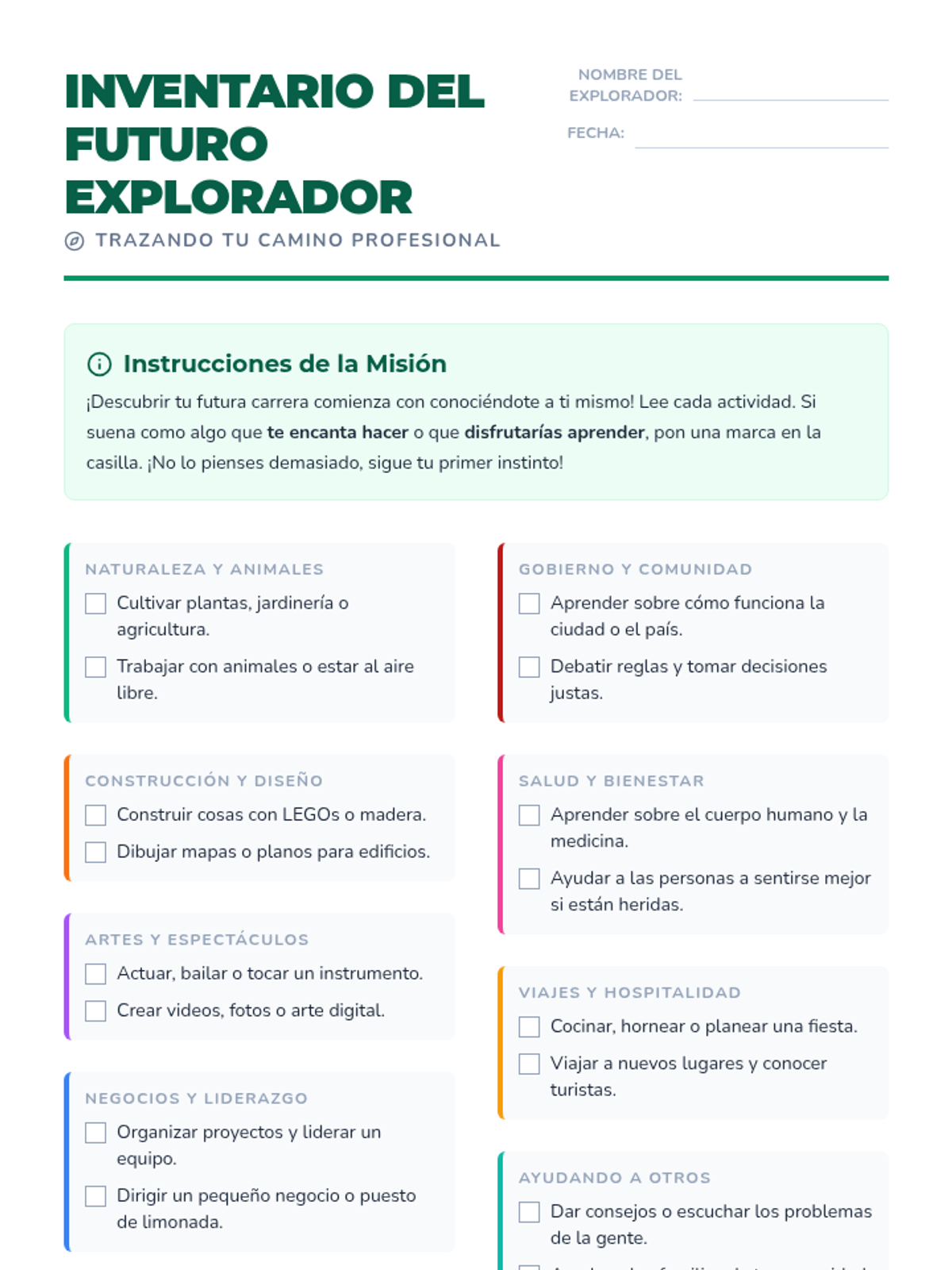
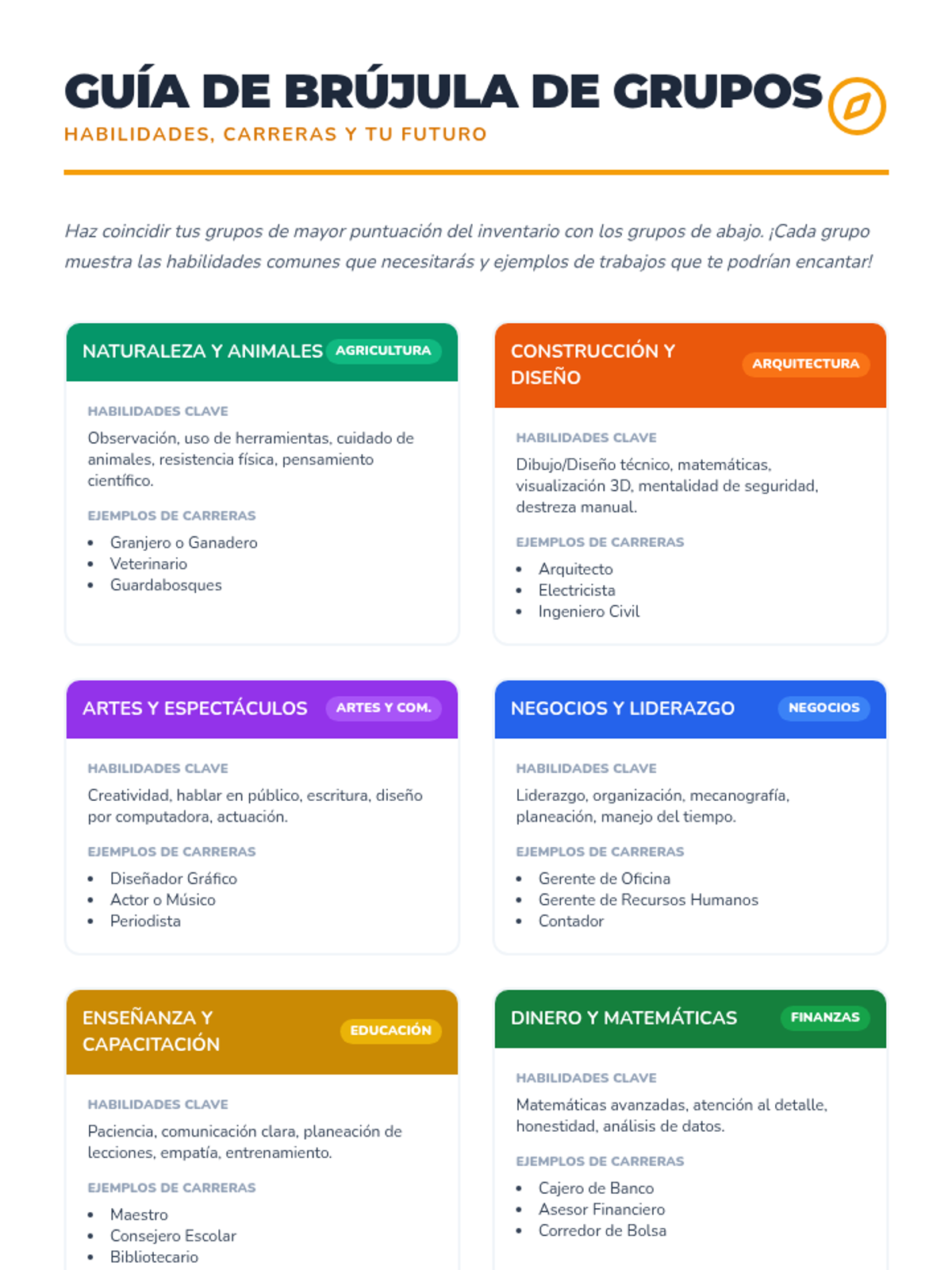
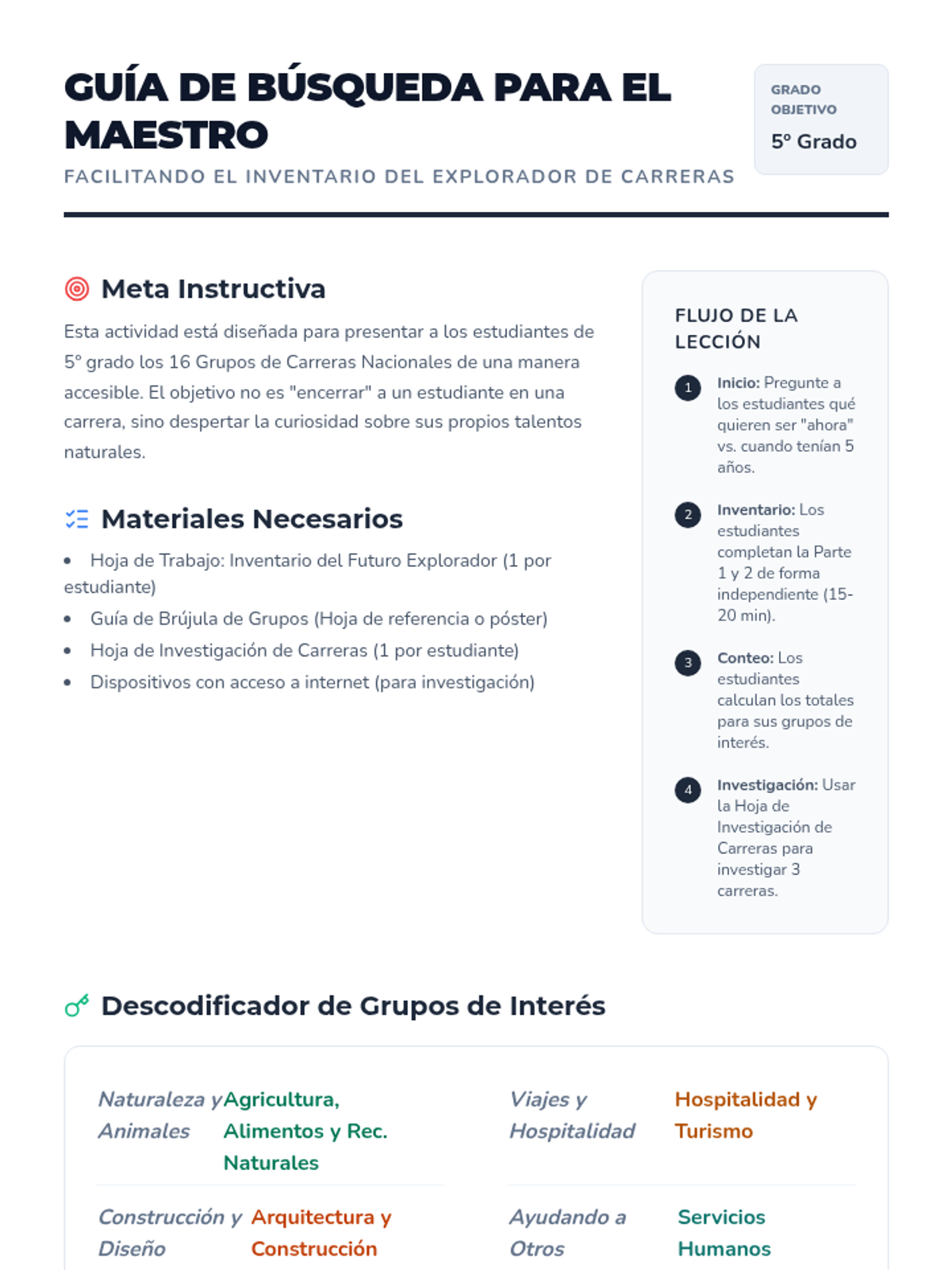
A comprehensive career exploration lesson where 5th-grade students discover their interests and skills through an inventory aligned with the 16 National Career Clusters. Students will identify their top career paths and learn about the specific skills required for different professional fields.
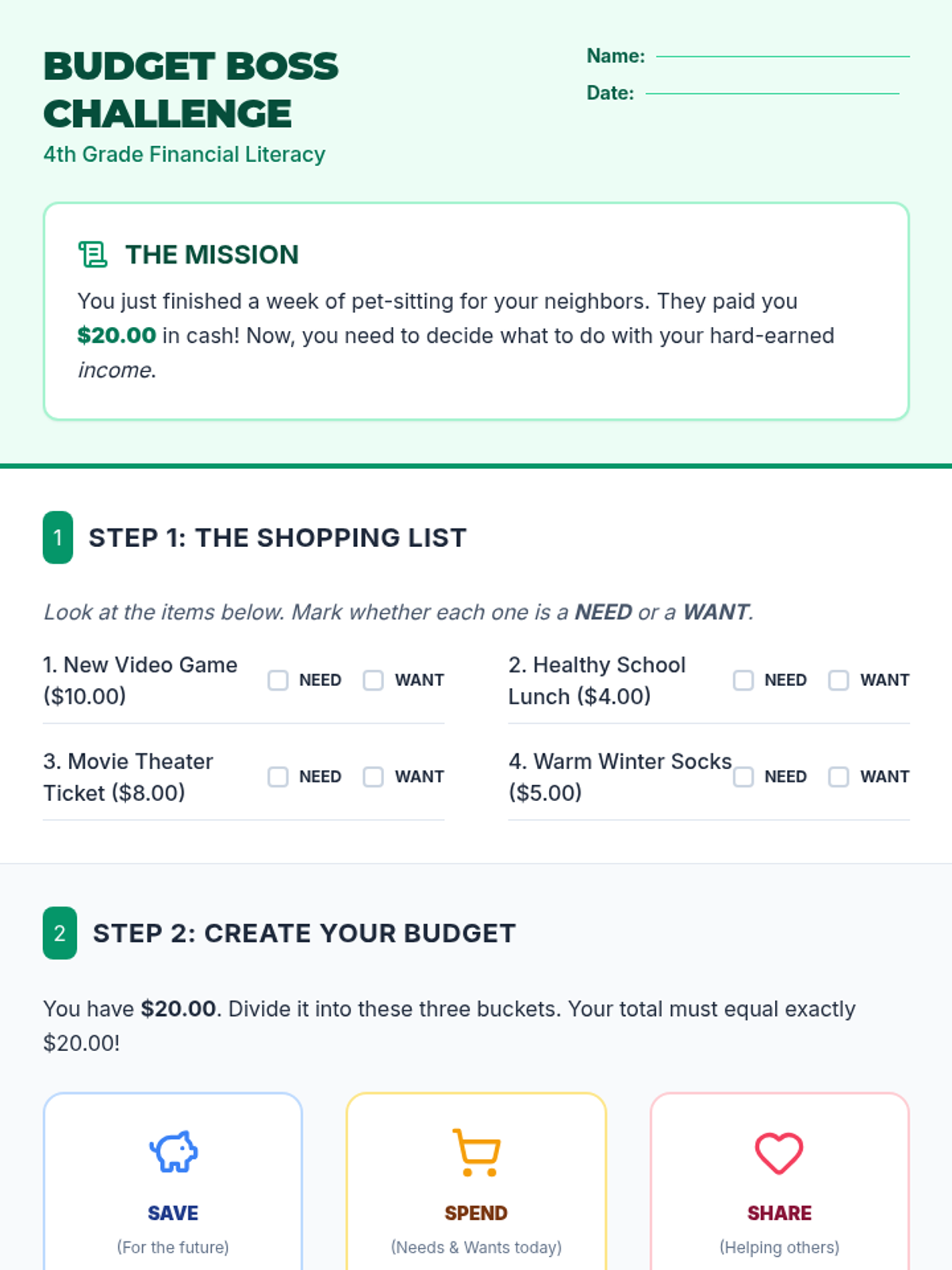
An introductory lesson on personal finance for 4th graders, focusing on earning, spending, saving, and the basics of budgeting through real-world scenarios.
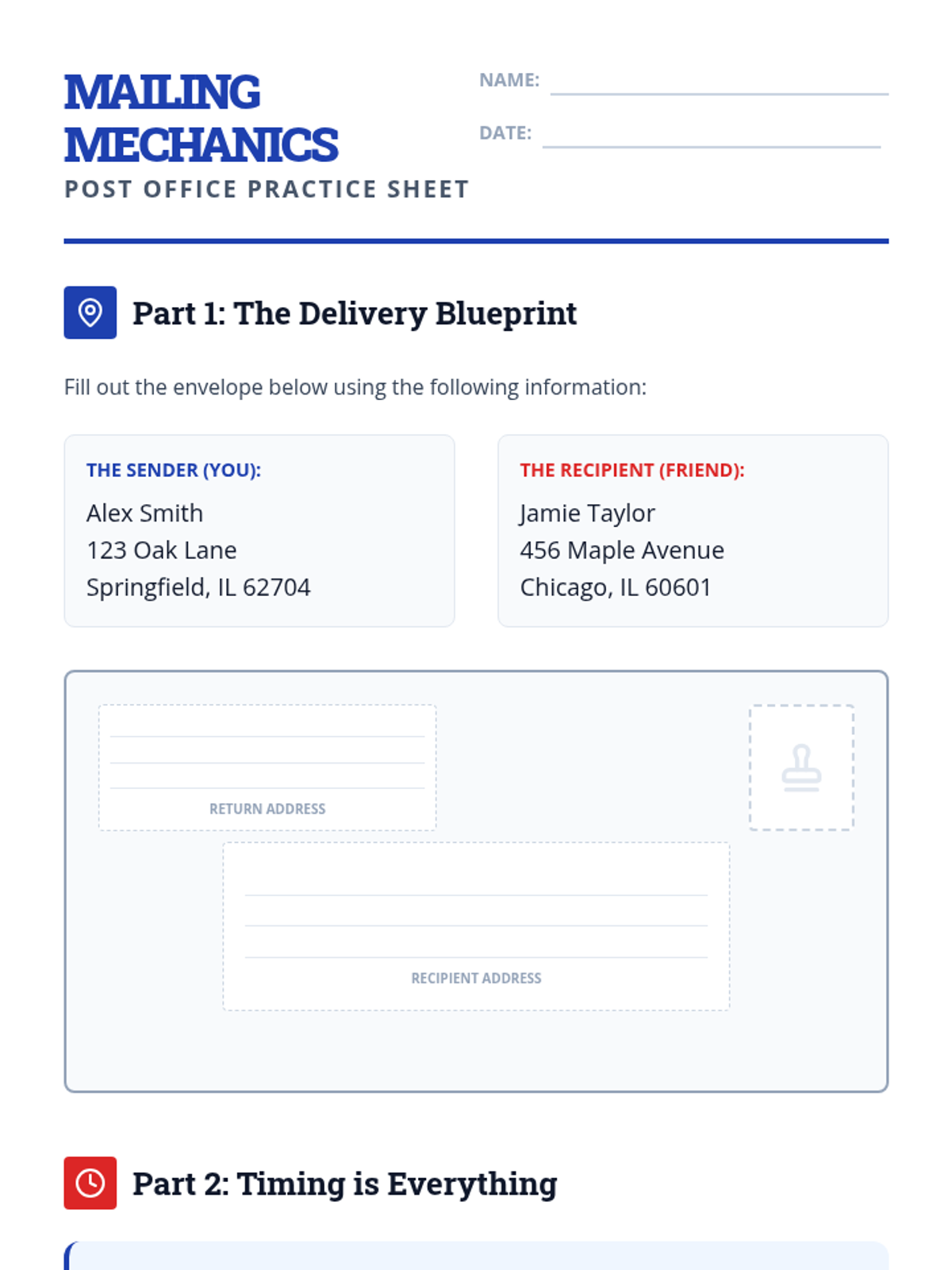
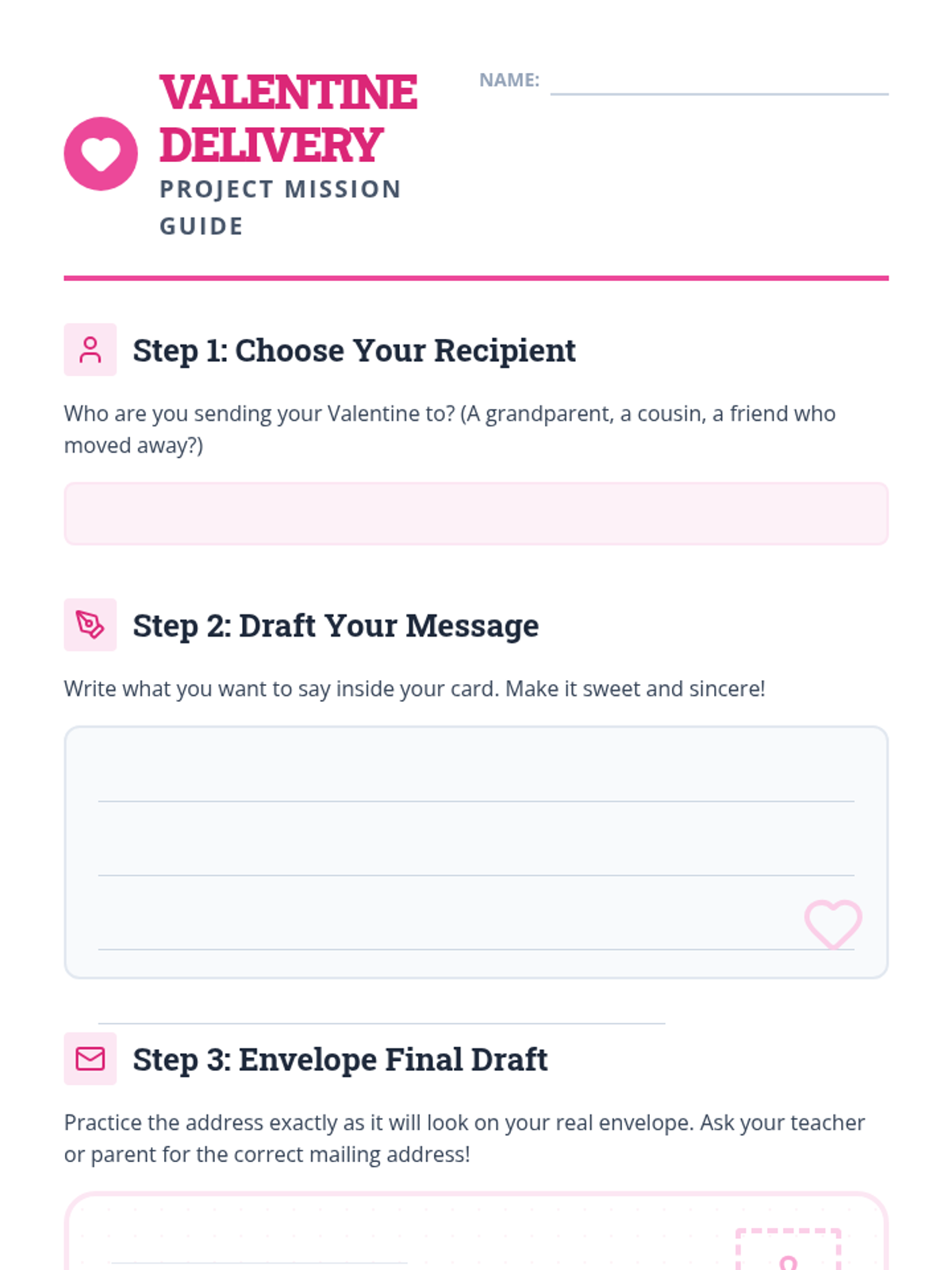
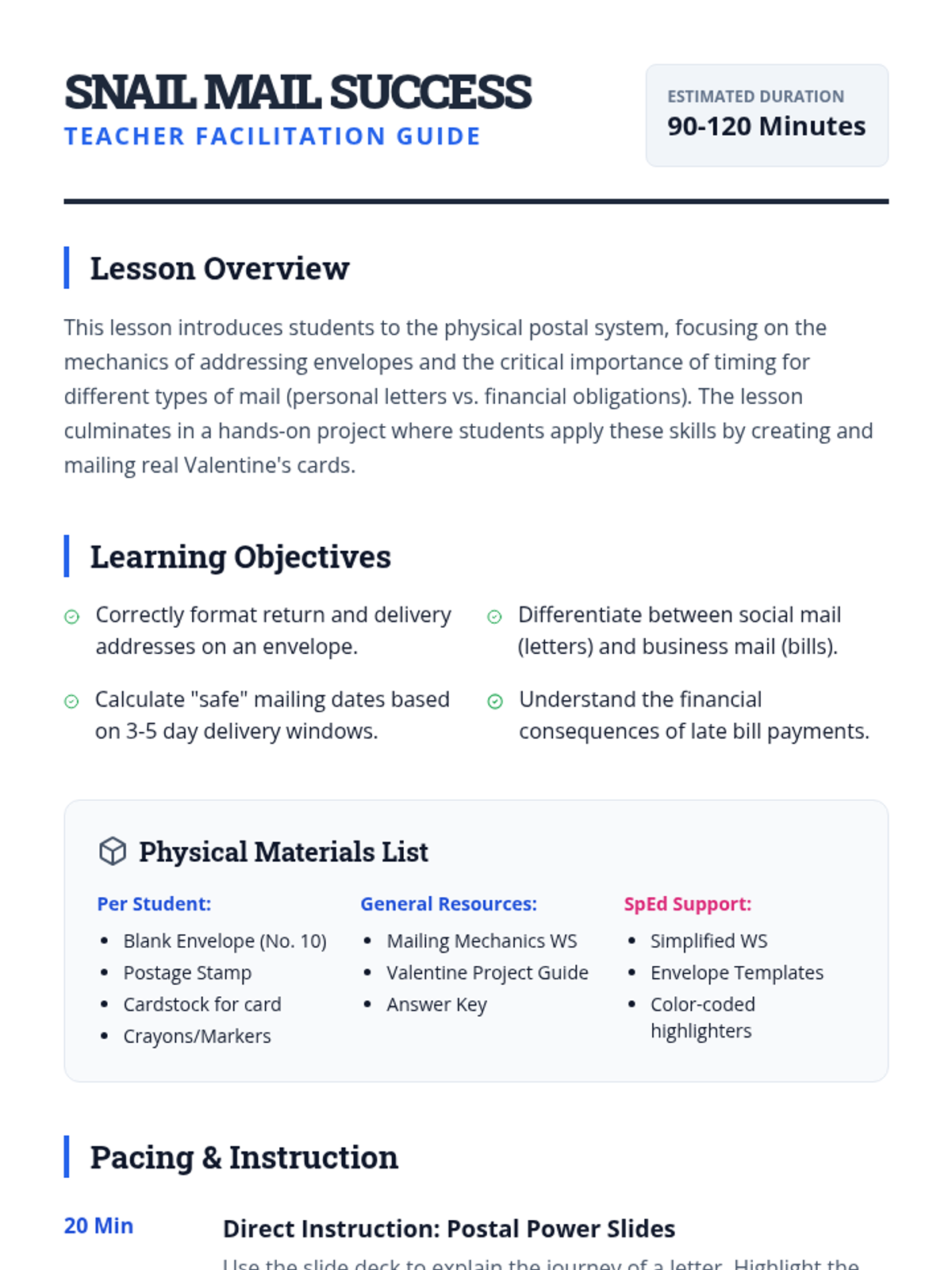
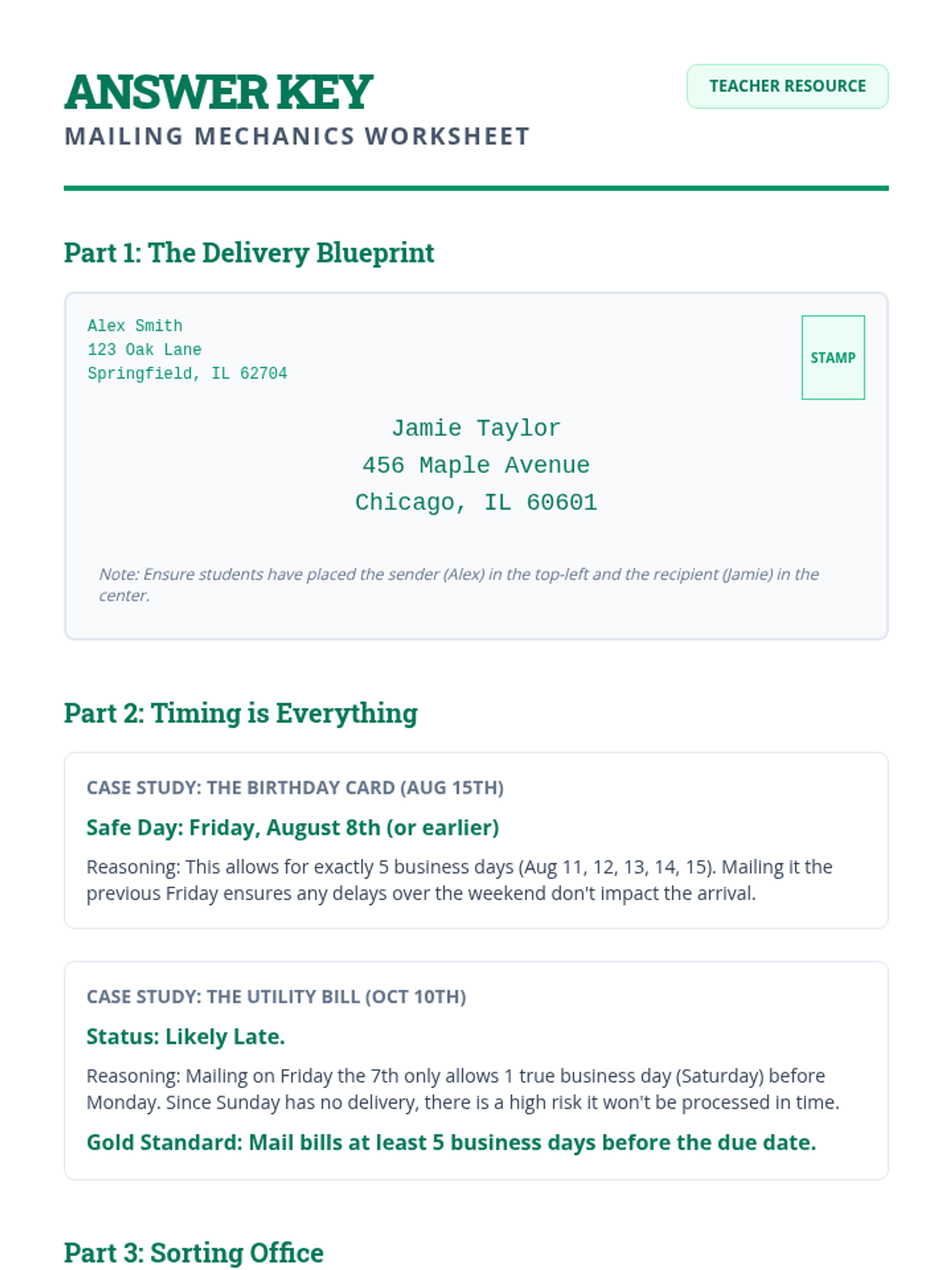
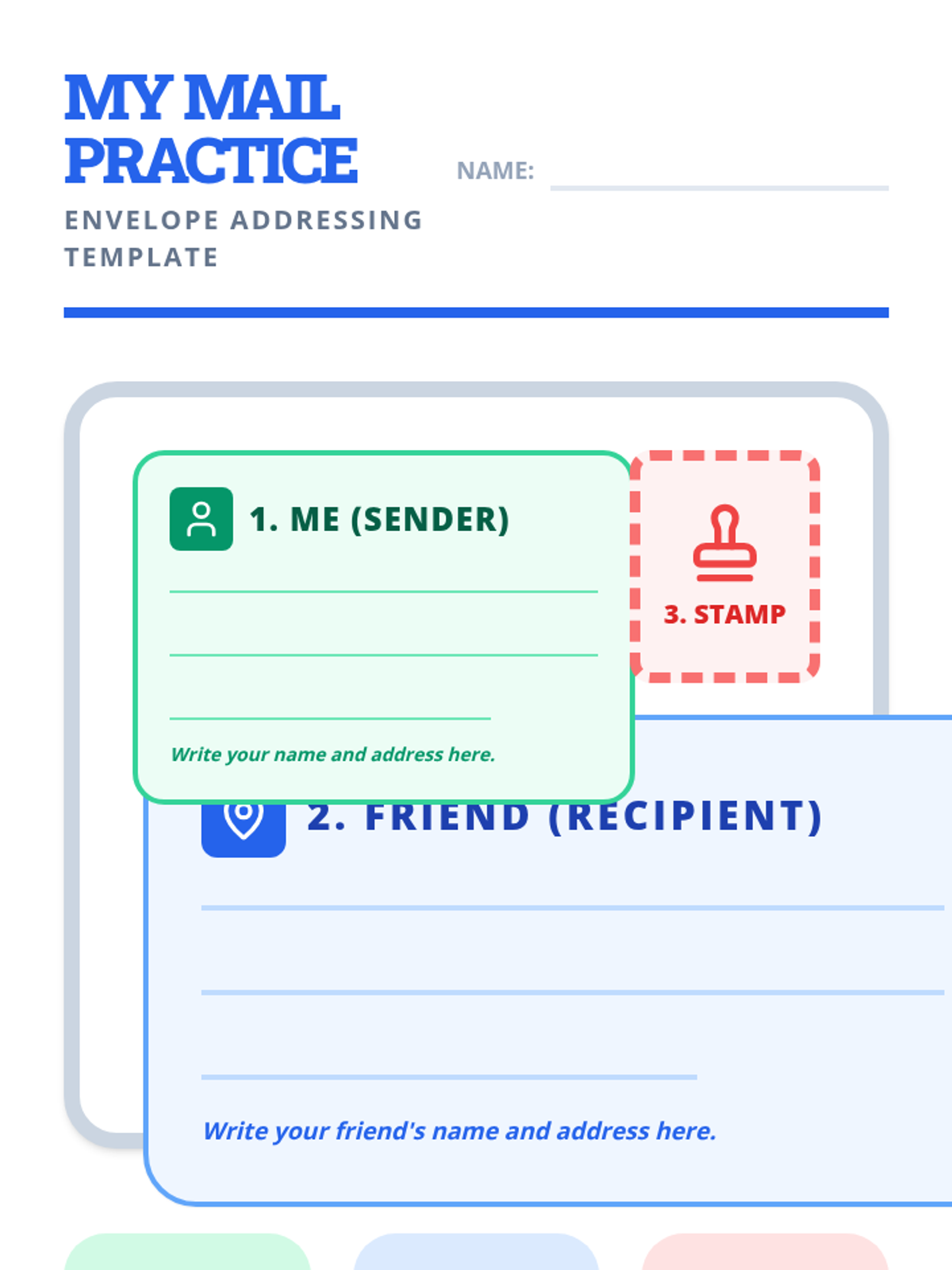
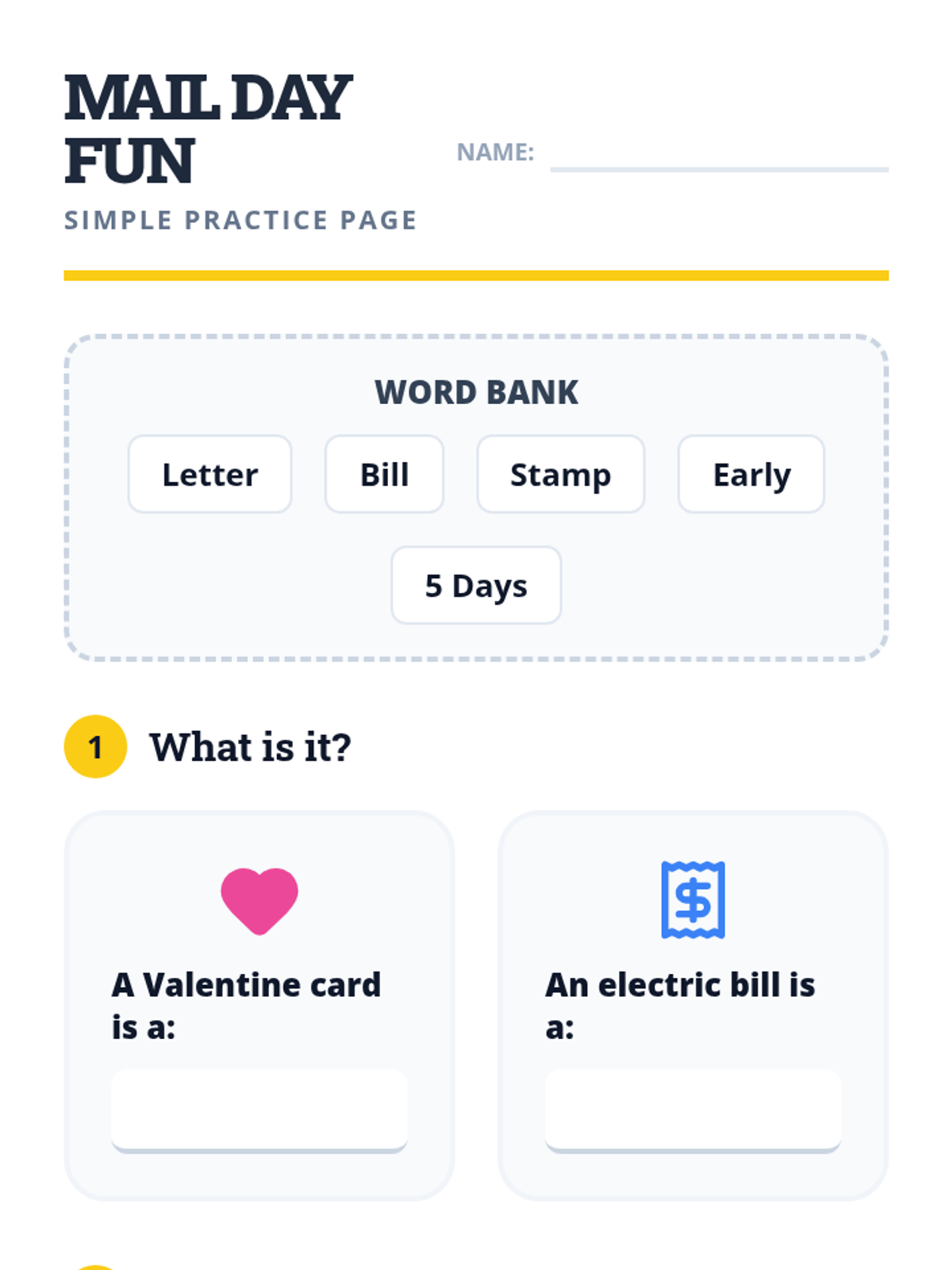
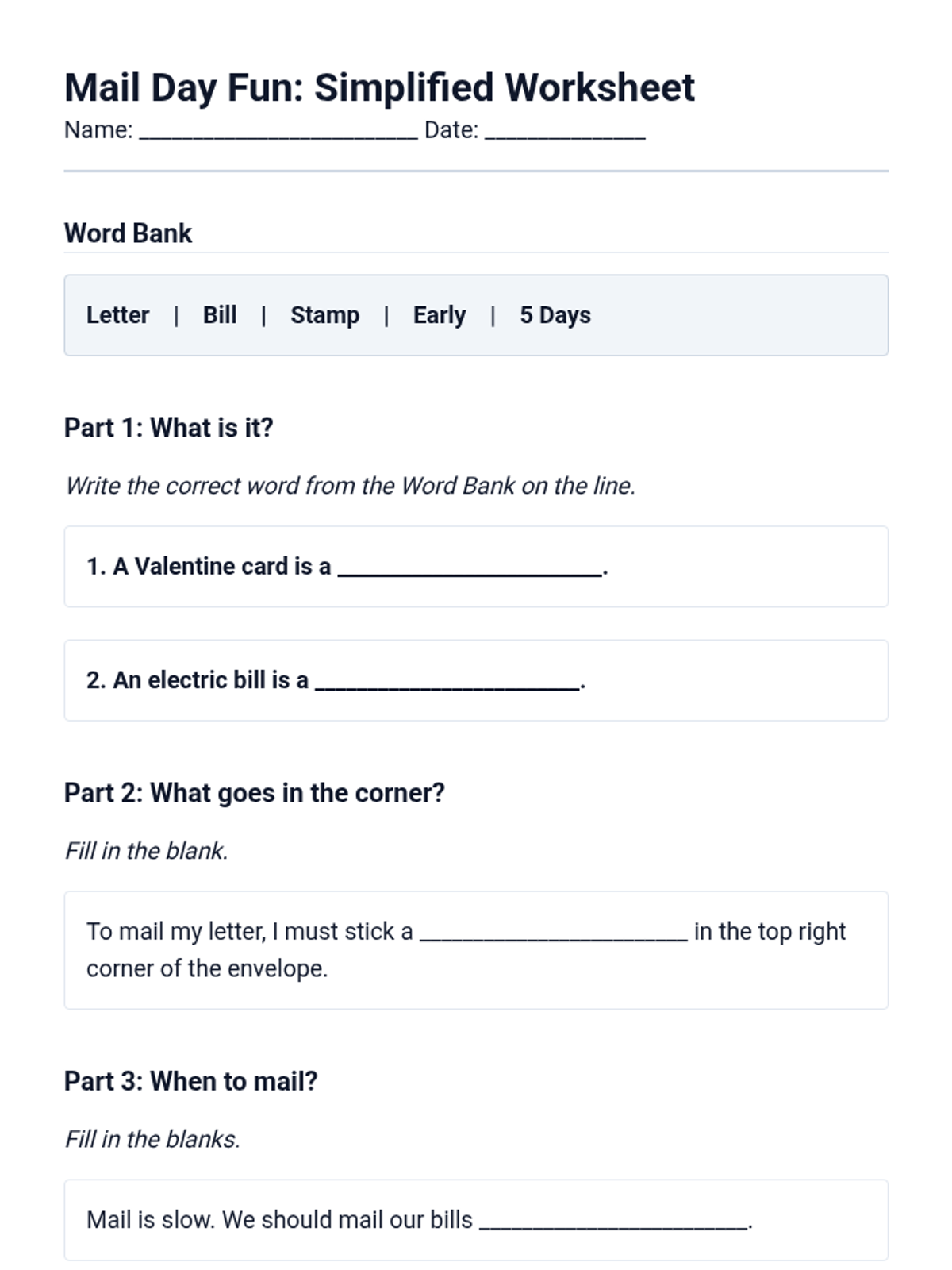
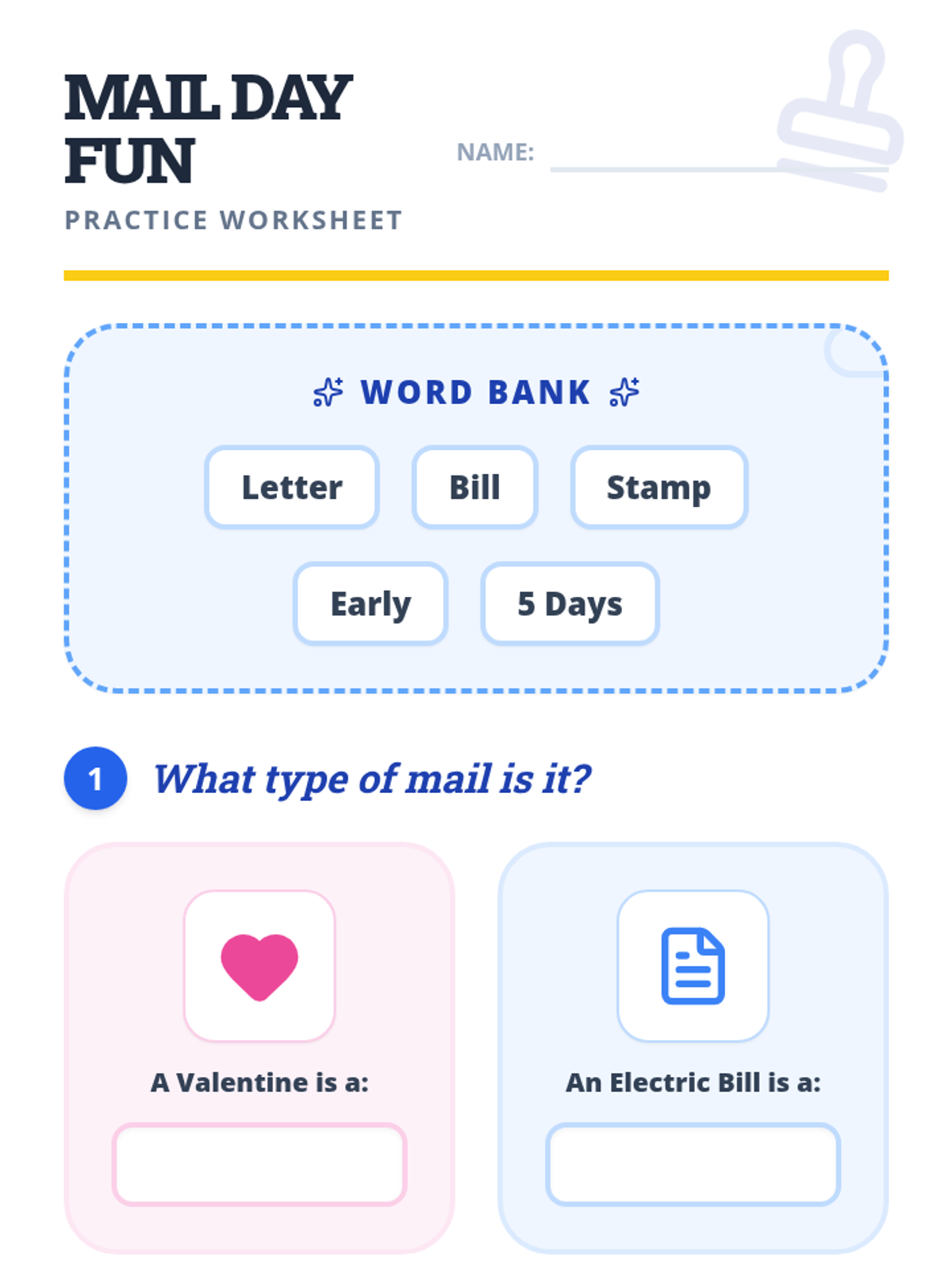
A comprehensive lesson teaching students the mechanics of sending mail, the etiquette of timing for letters and bills, and a hands-on Valentine's Day mailing project.
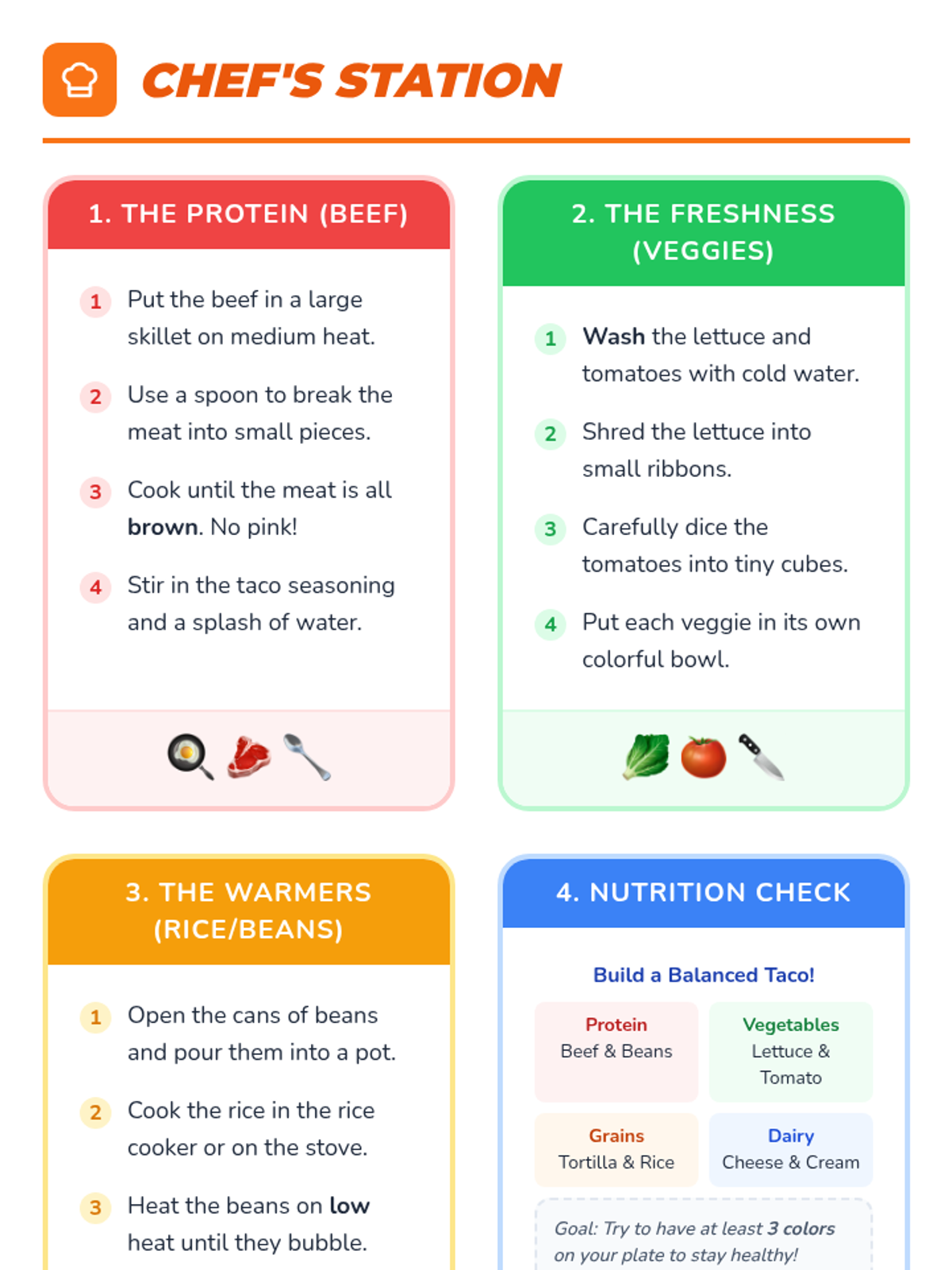
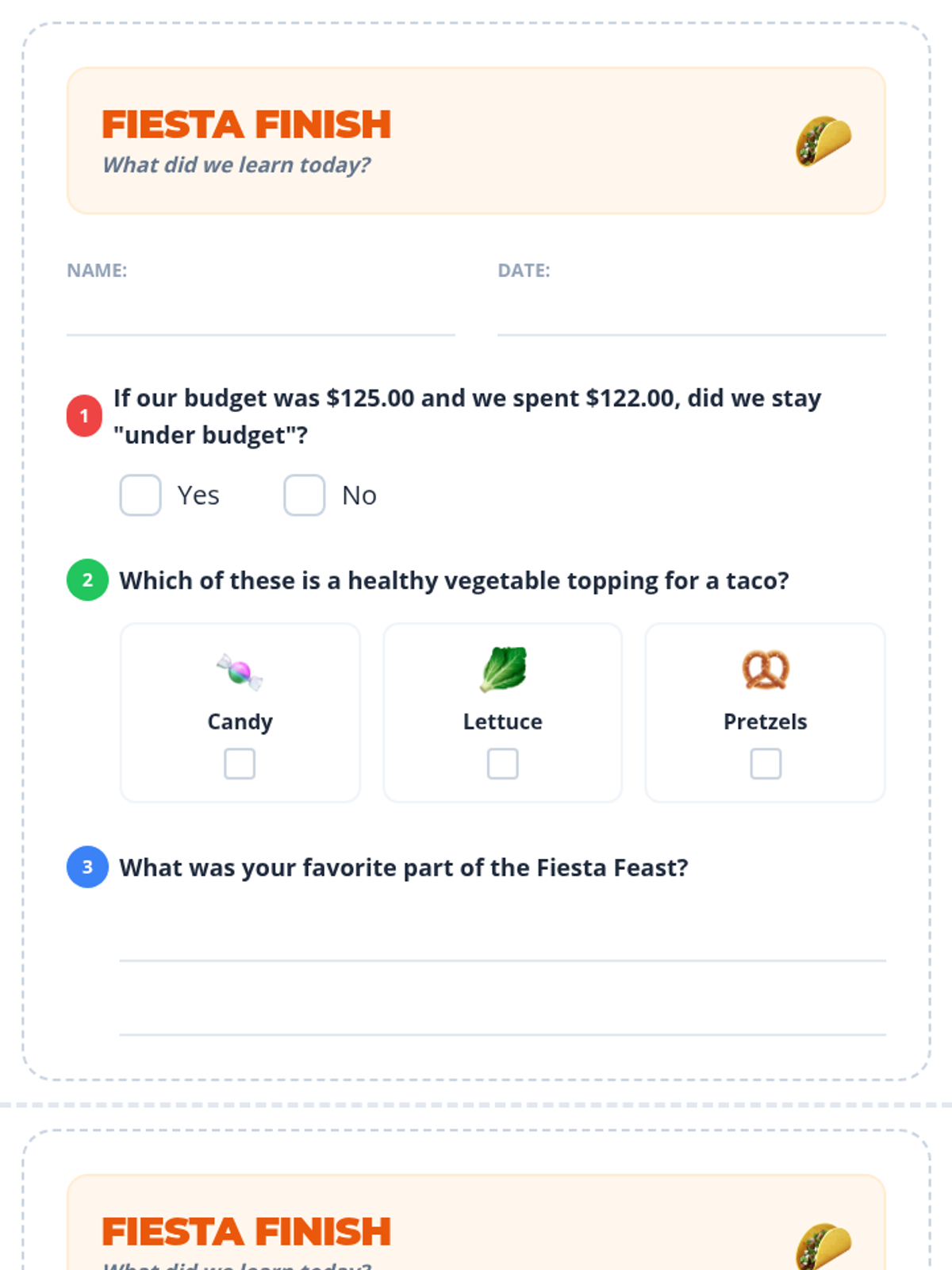
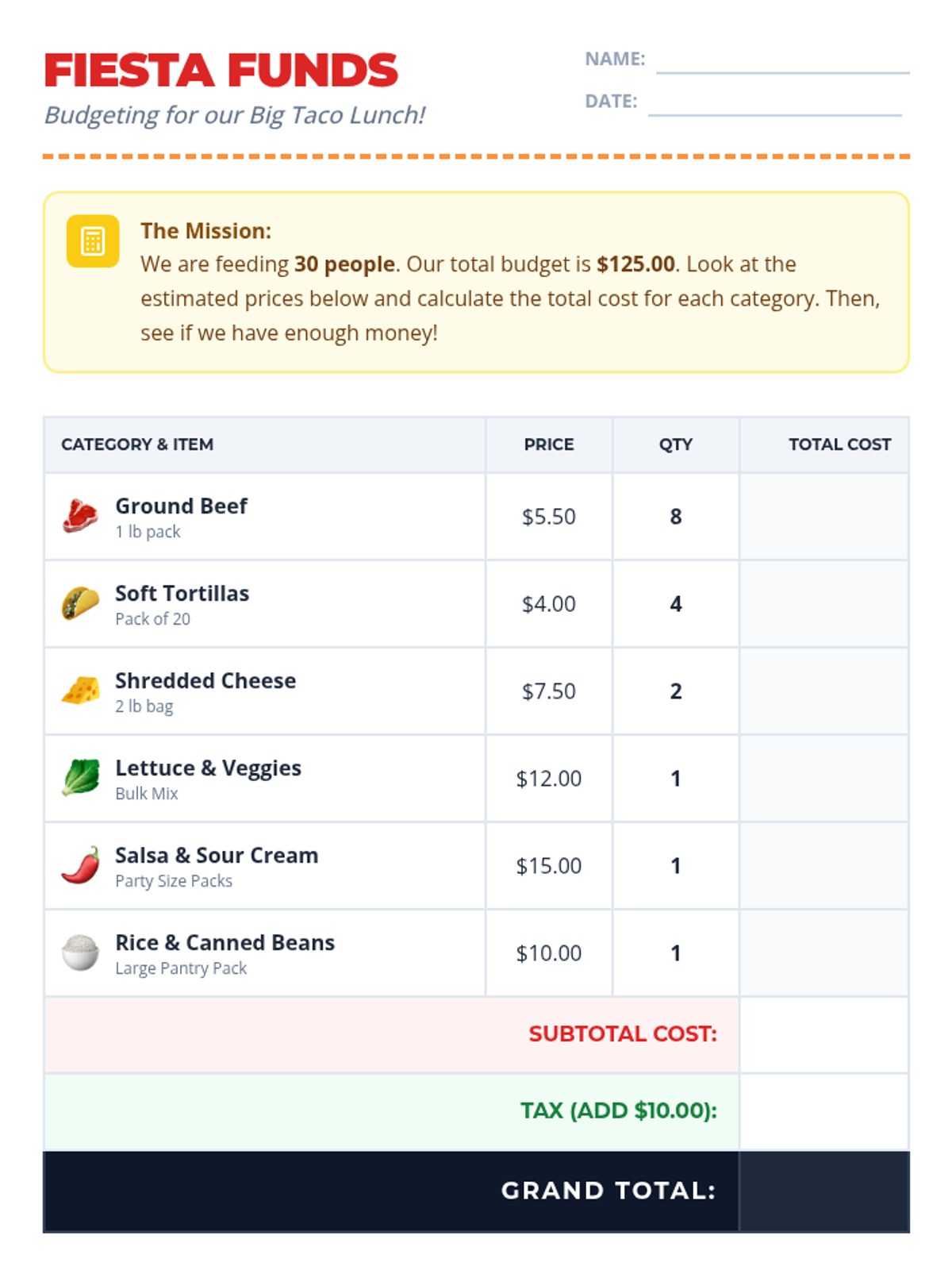
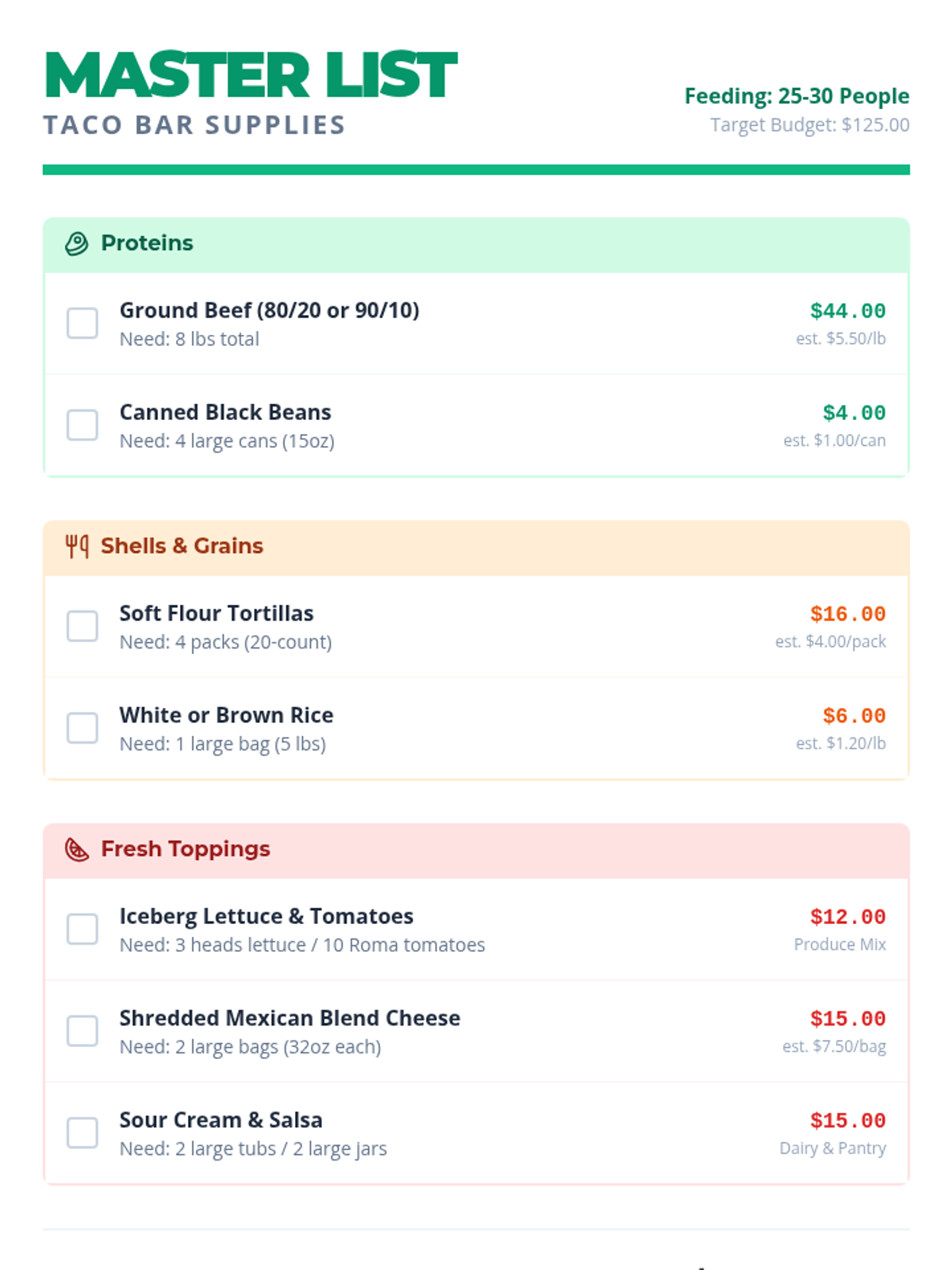
Focuses on food preparation and nutrition. Students follow visual recipes to prepare taco ingredients and identify healthy food groups.
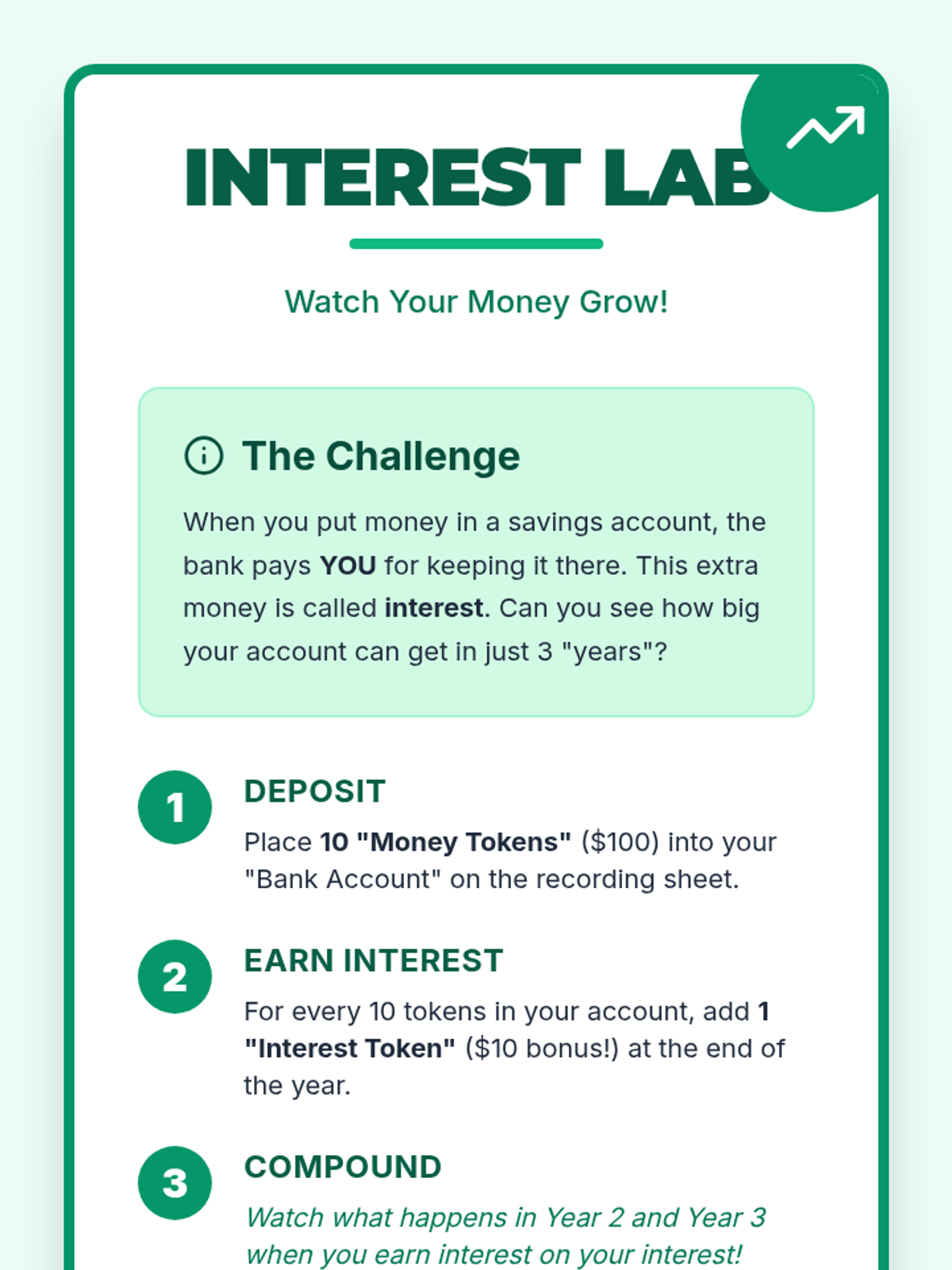
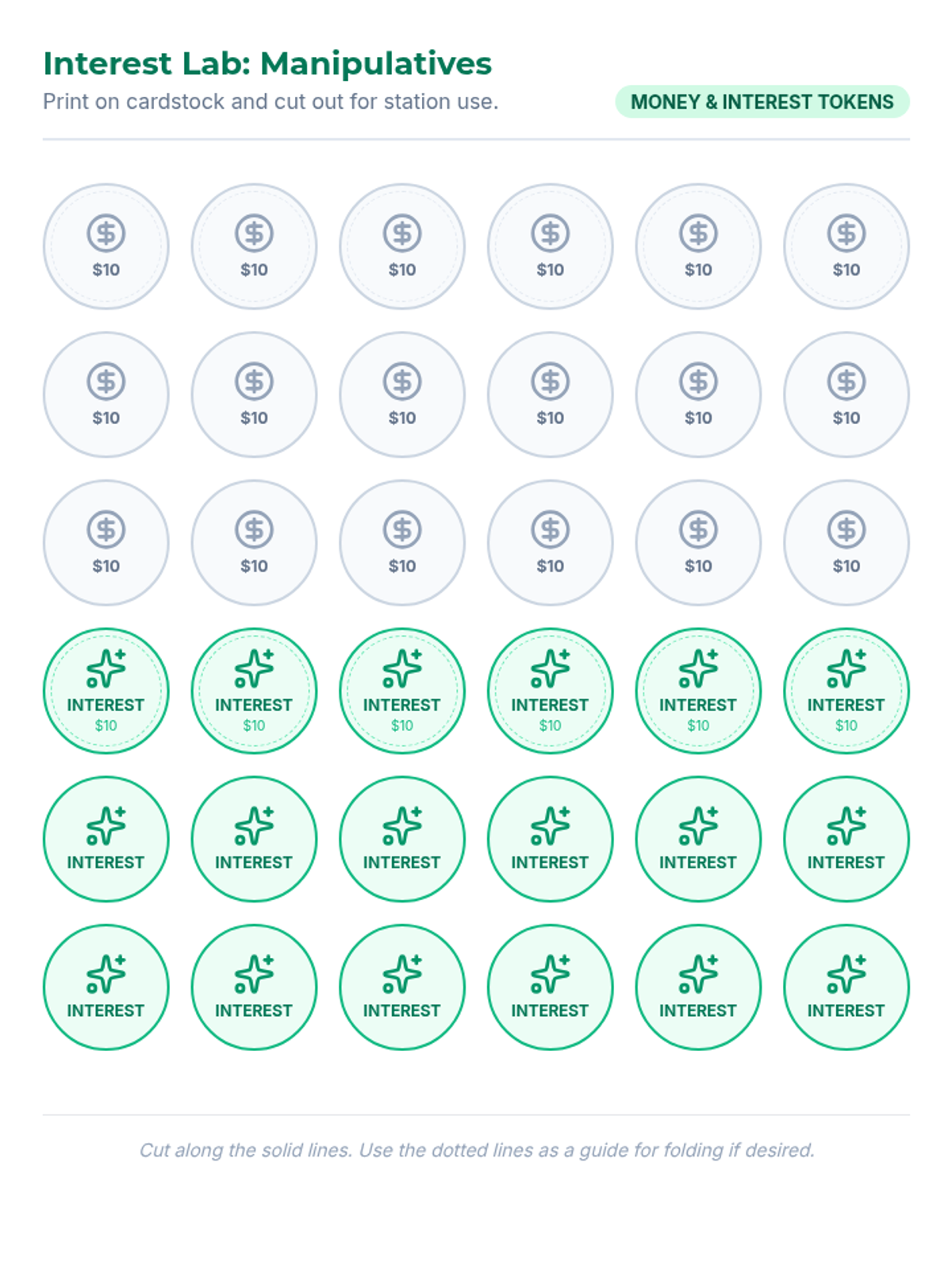
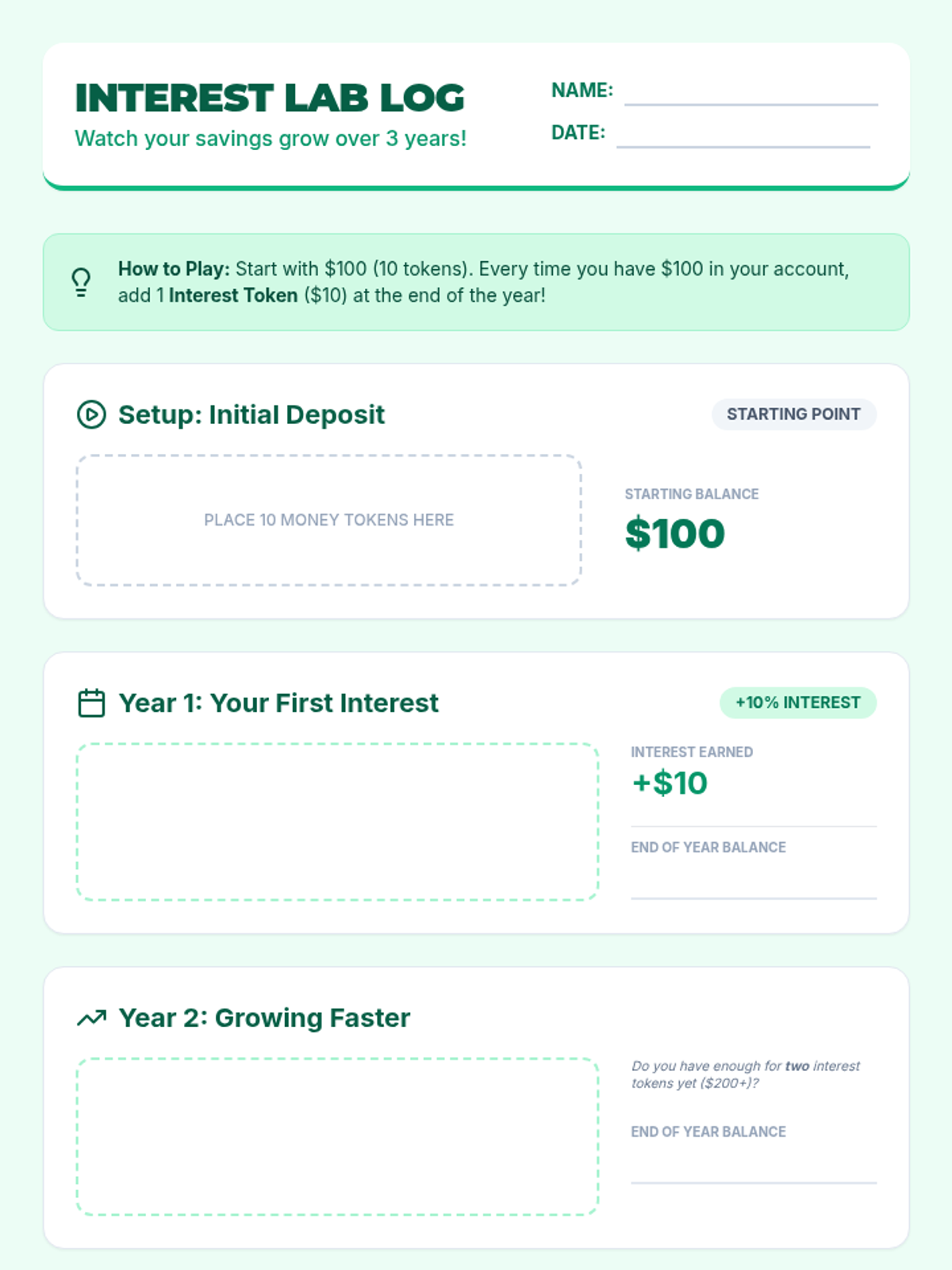
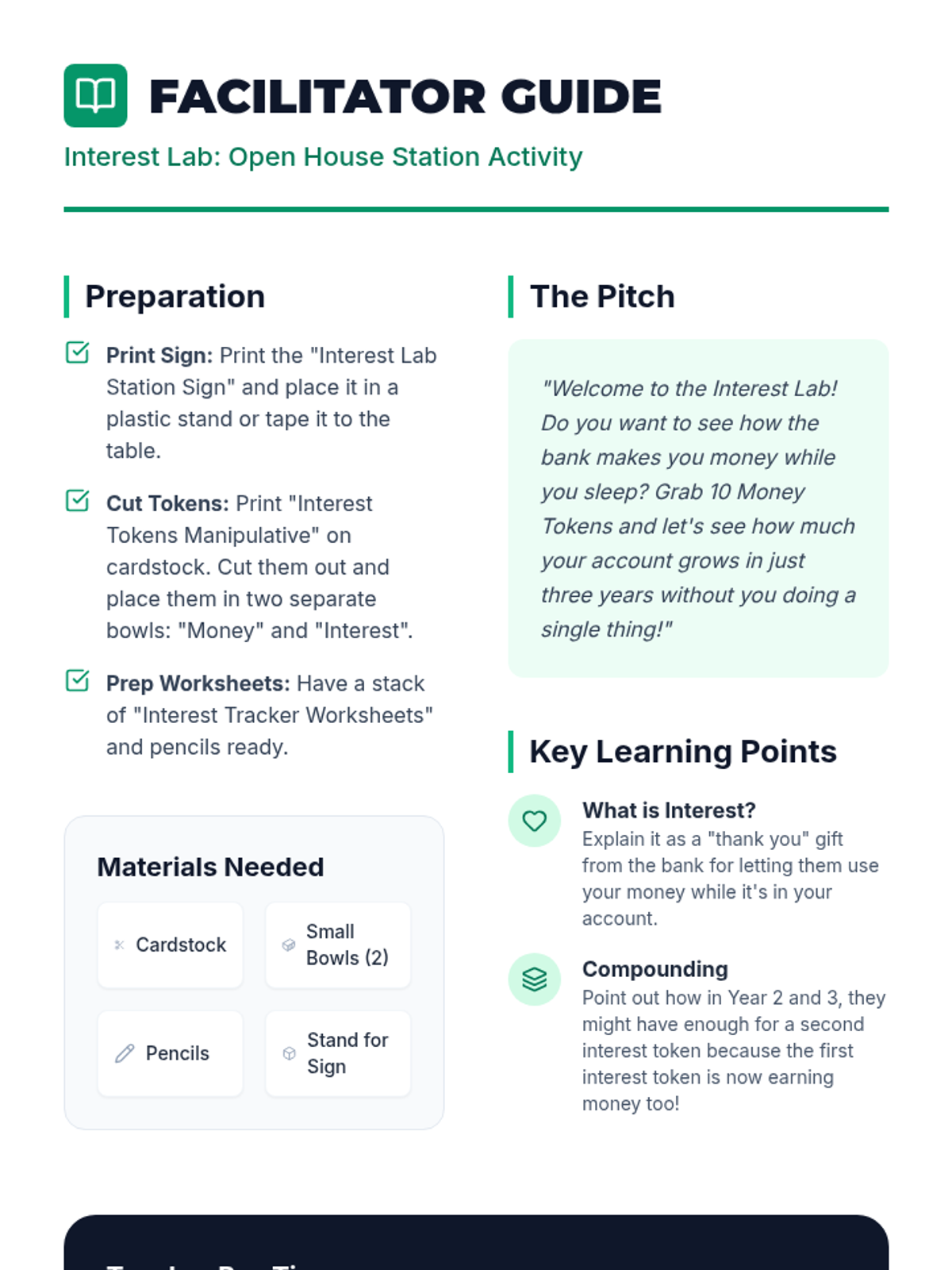
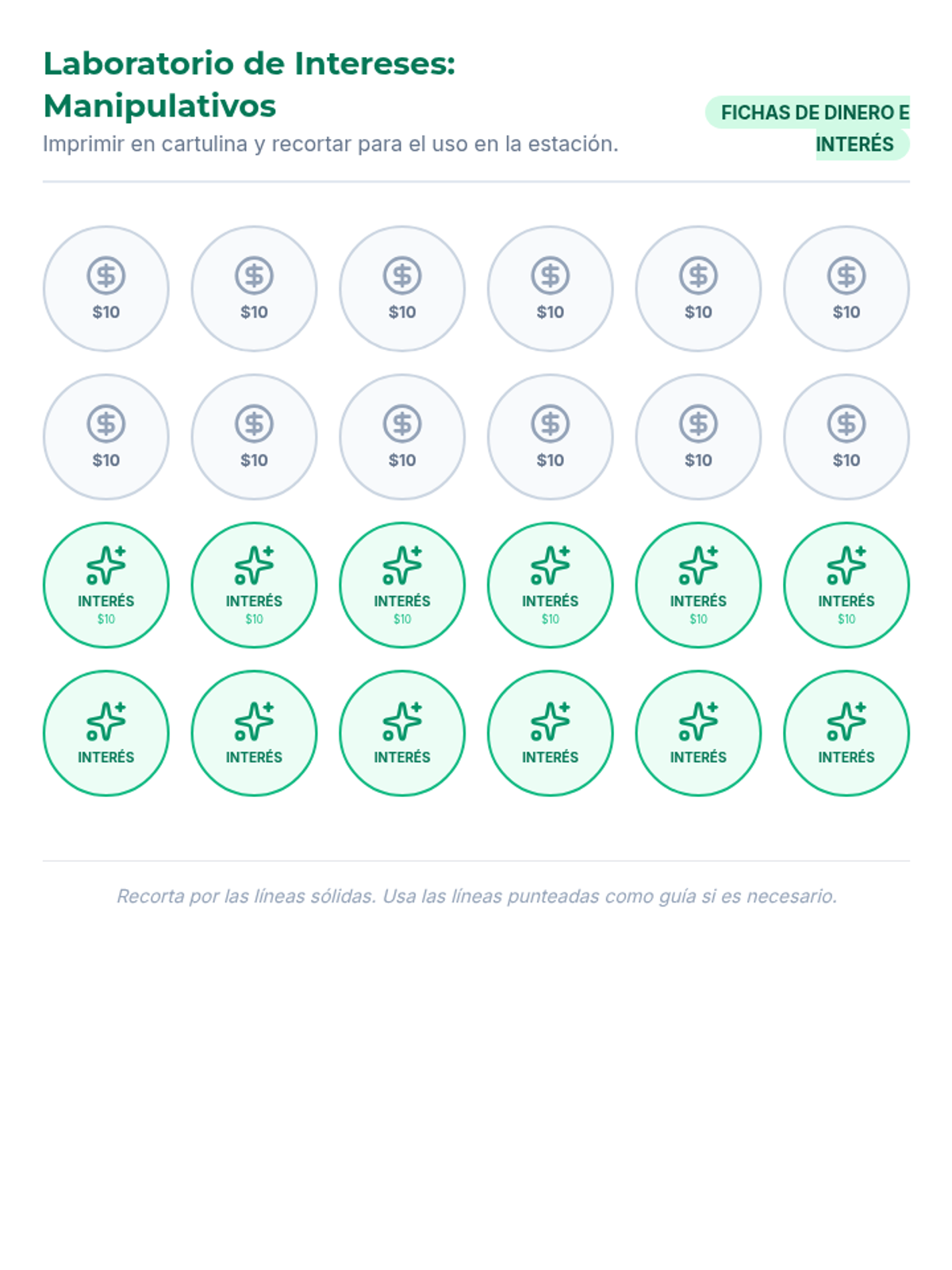
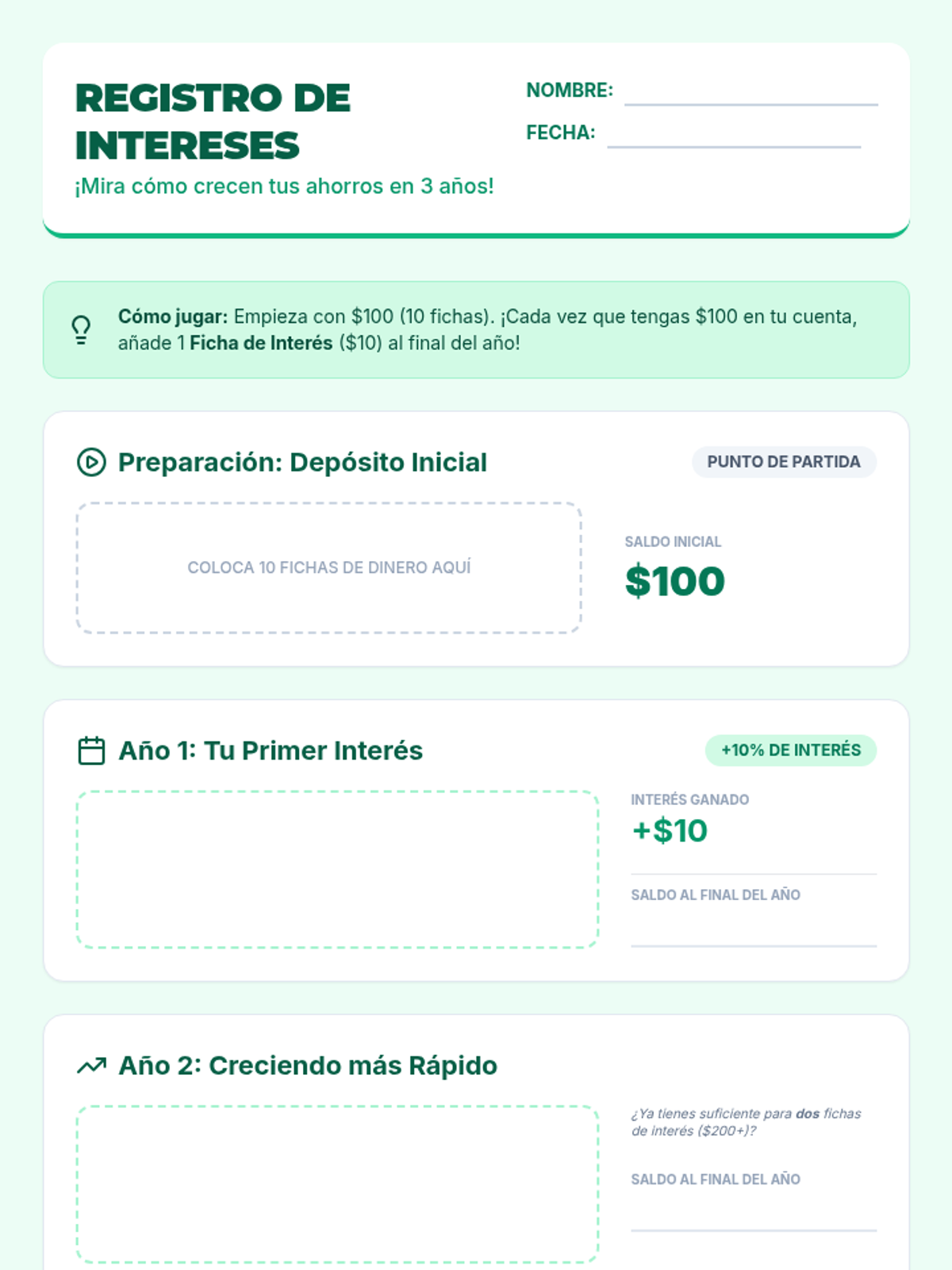
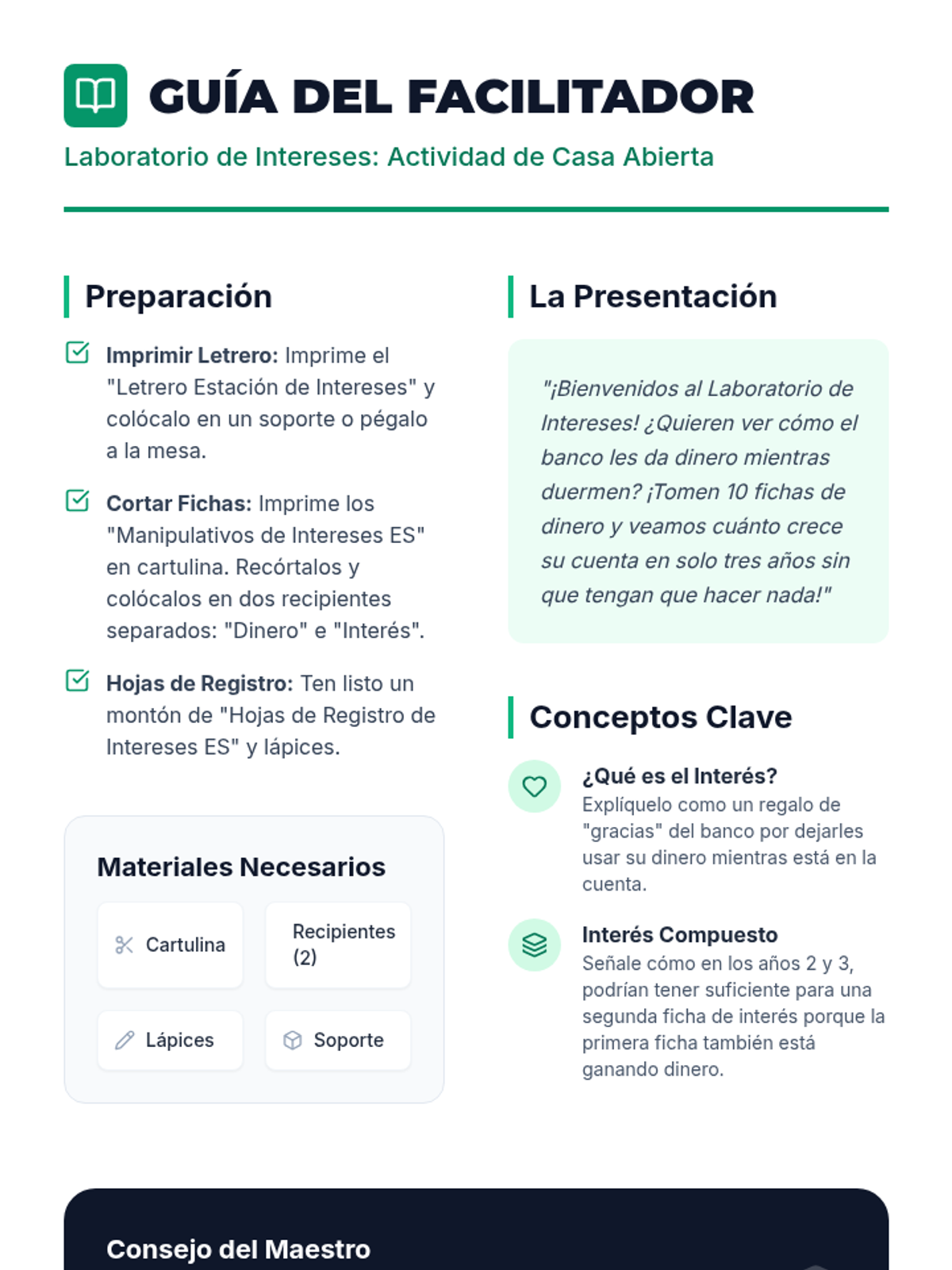
A hands-on station activity designed for an Open House where students and parents explore how bank interest helps money grow over time using printable manipulatives.
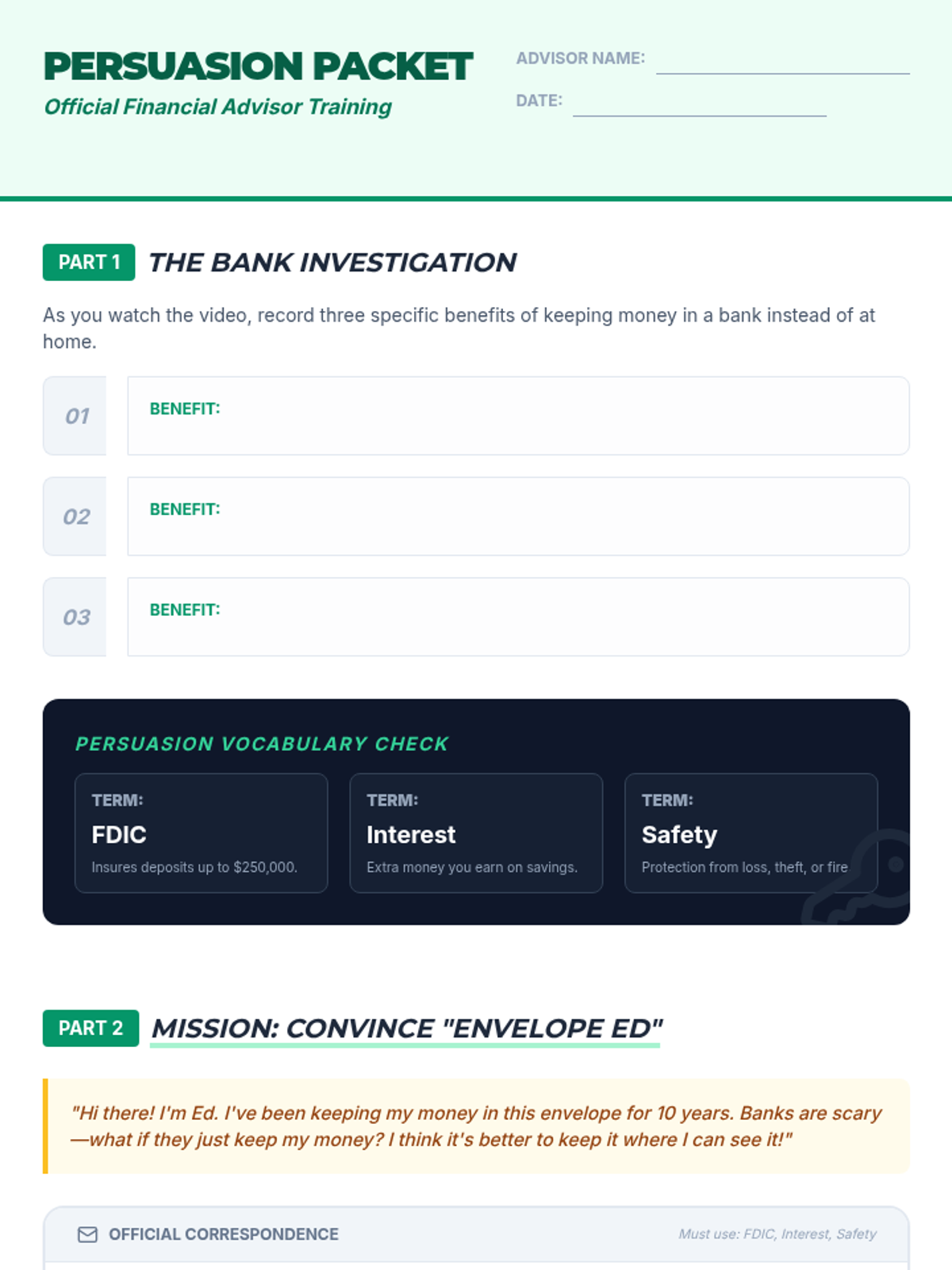
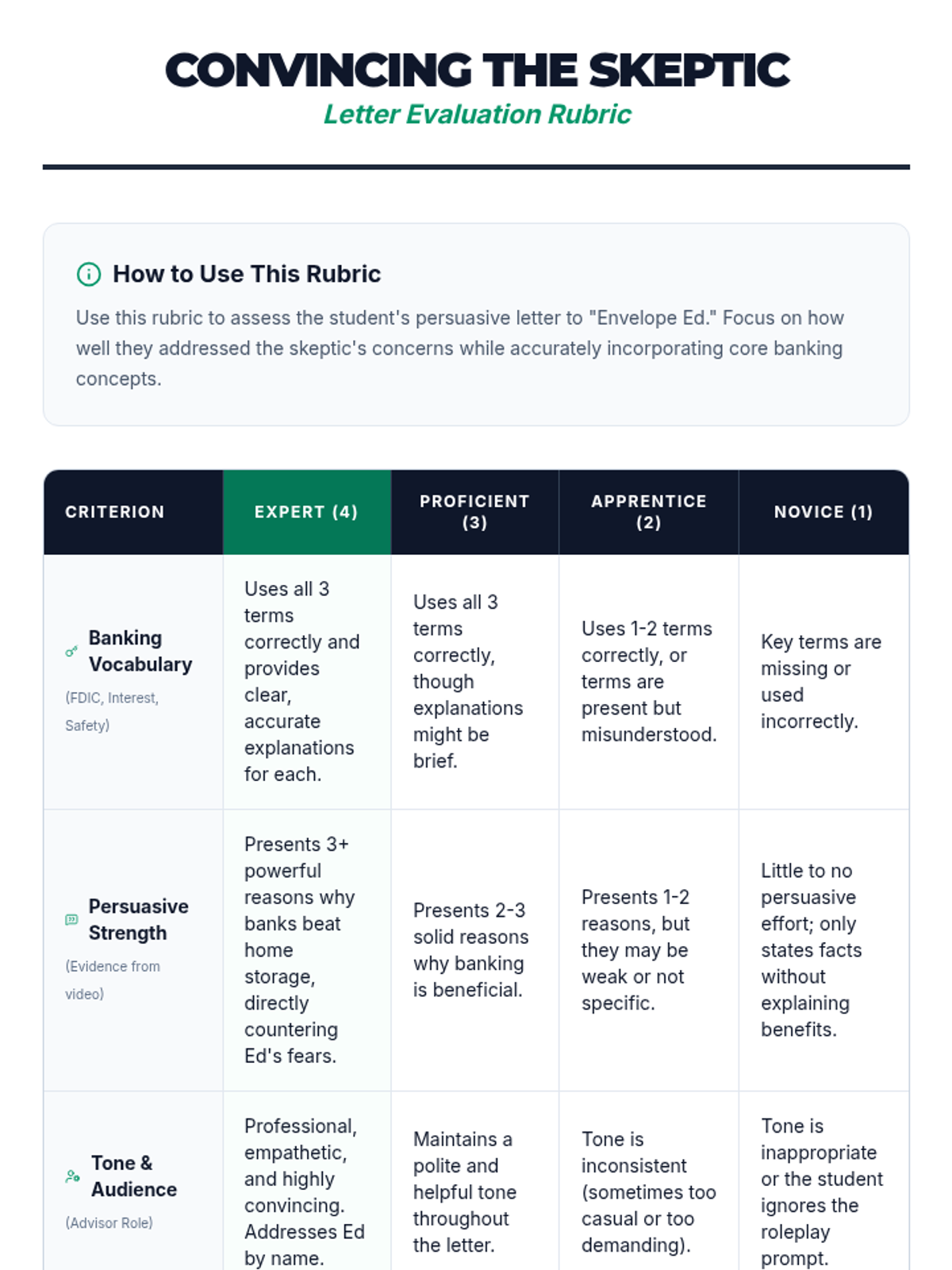
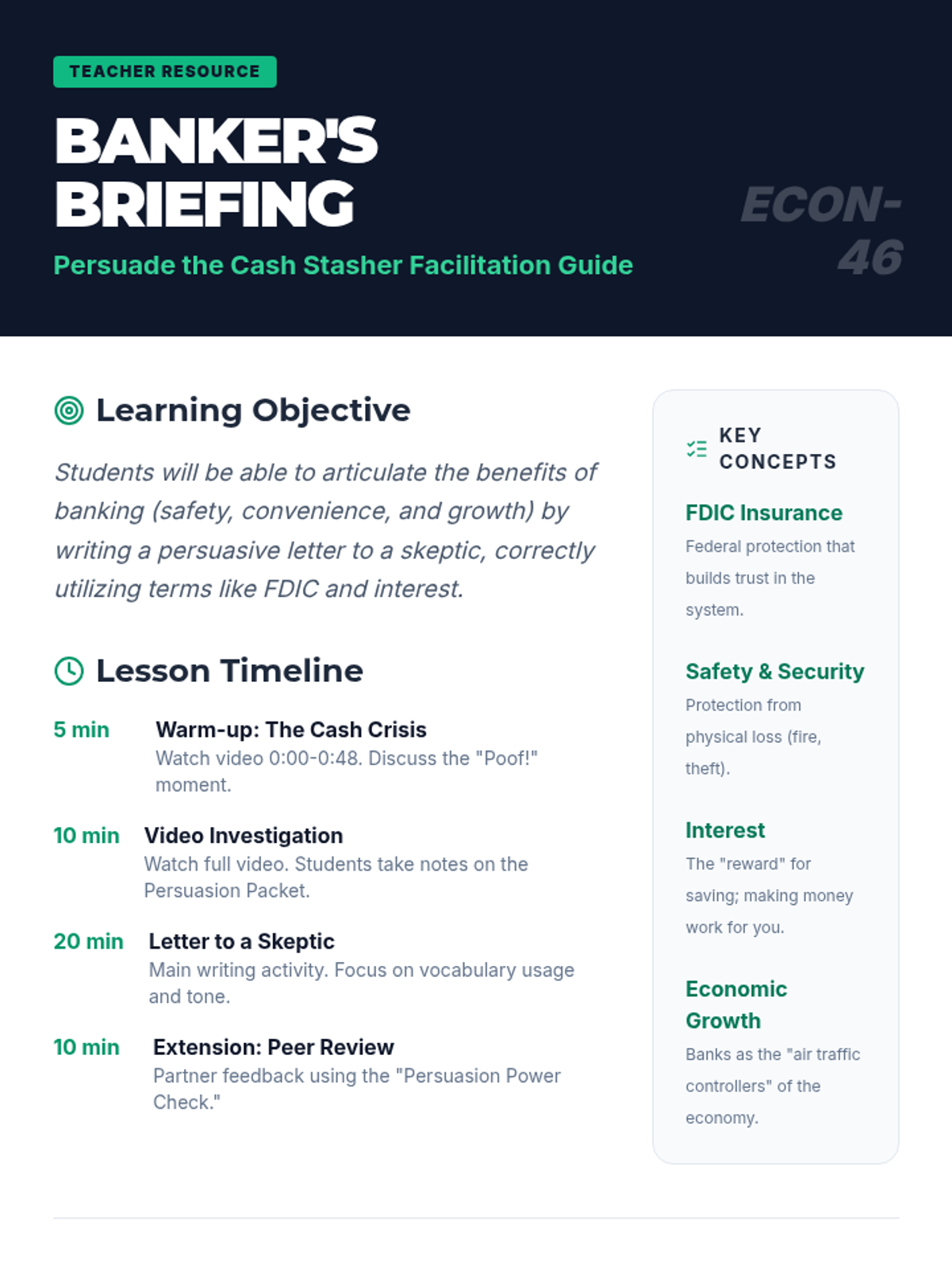
A financial literacy lesson where students learn the benefits of banking and practice persuasive writing by convincing a 'cash stasher' to open a bank account. Students explore concepts like FDIC insurance, interest, and economic growth through a video-based exploration and roleplay activity.
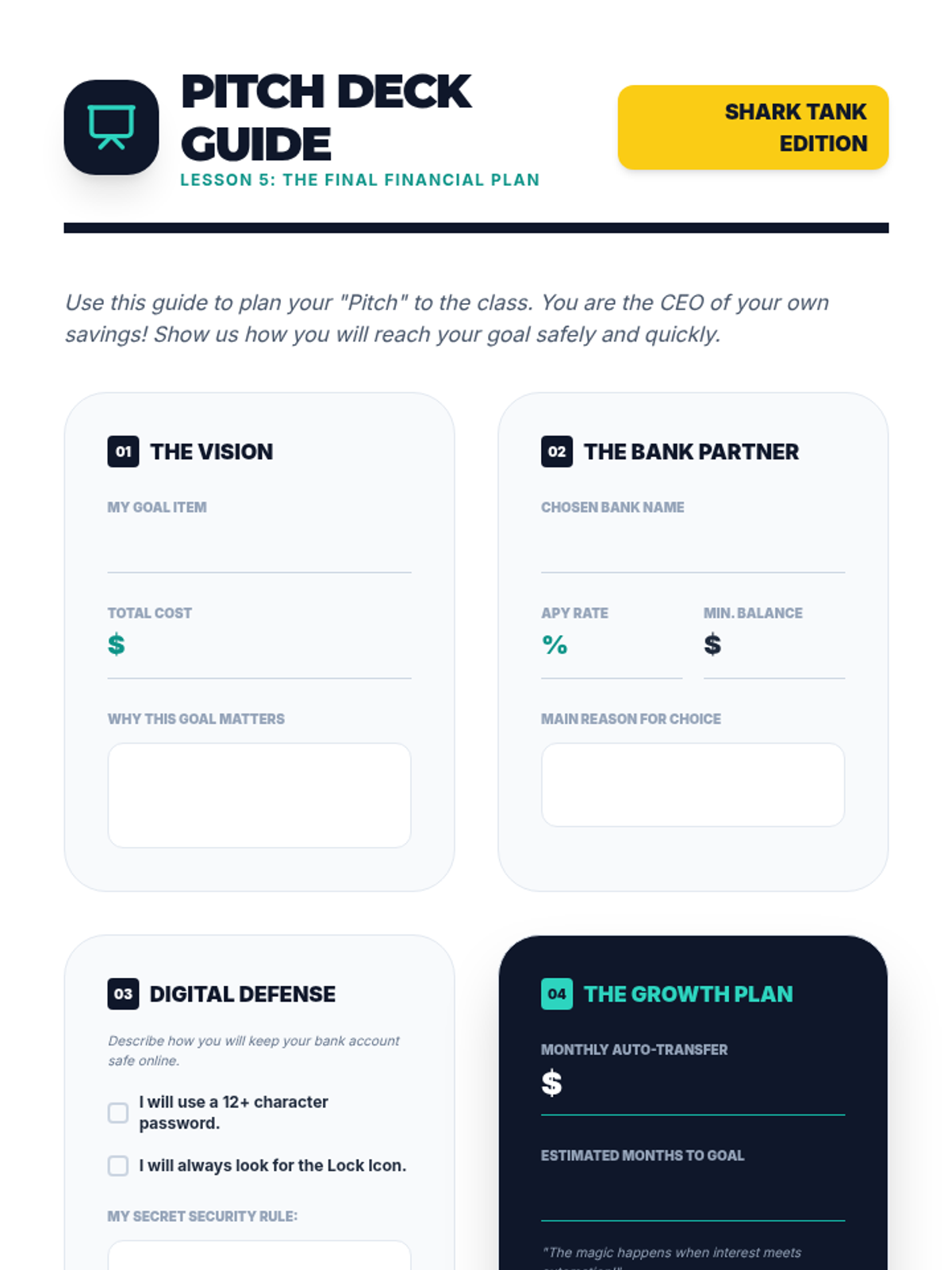
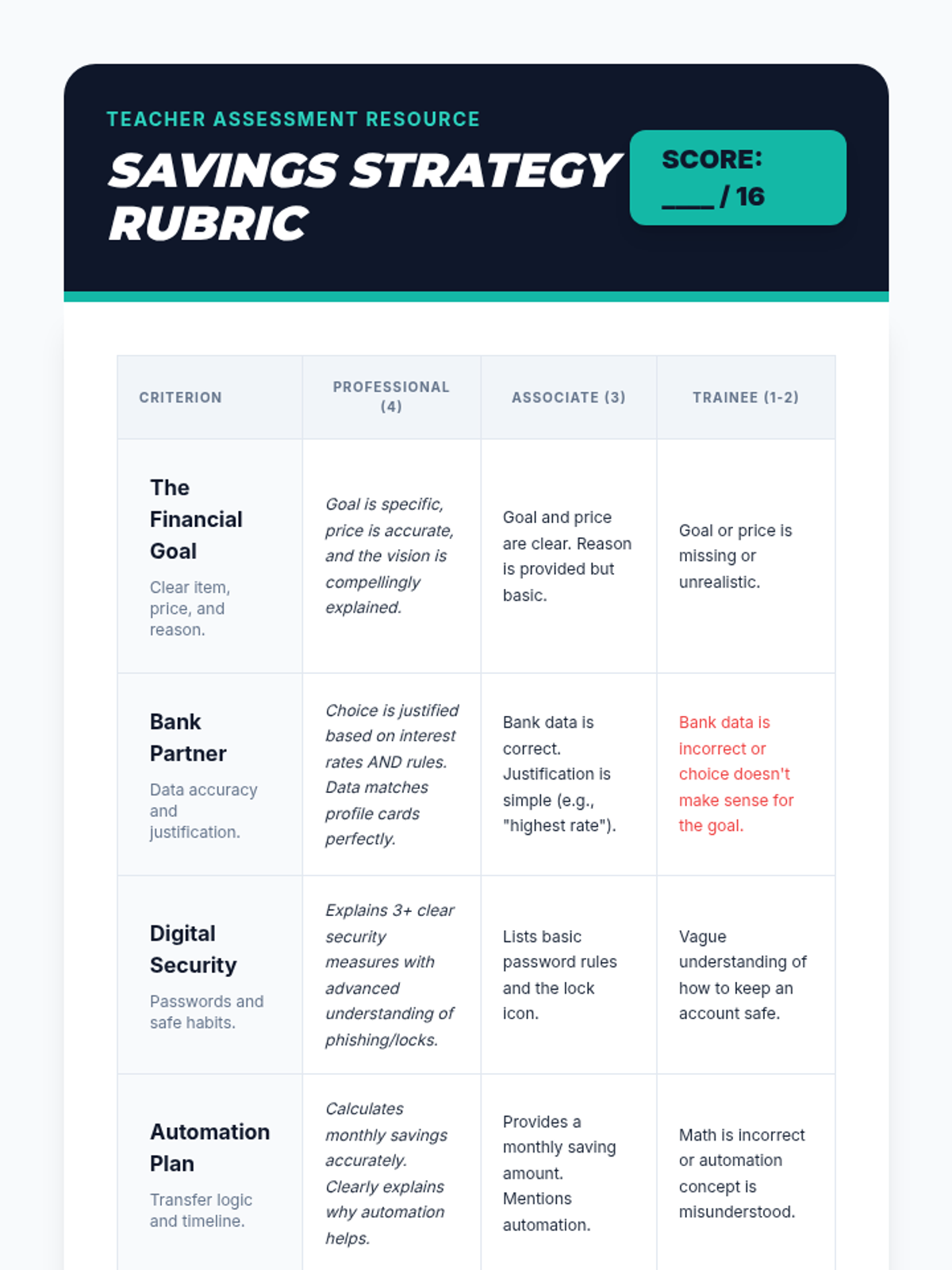
As a final project, students synthesize their learning by creating a 'Pitch Deck' for a savings plan. They present which bank they chose, their interest rate, their savings schedule, and their security measures for online banking.
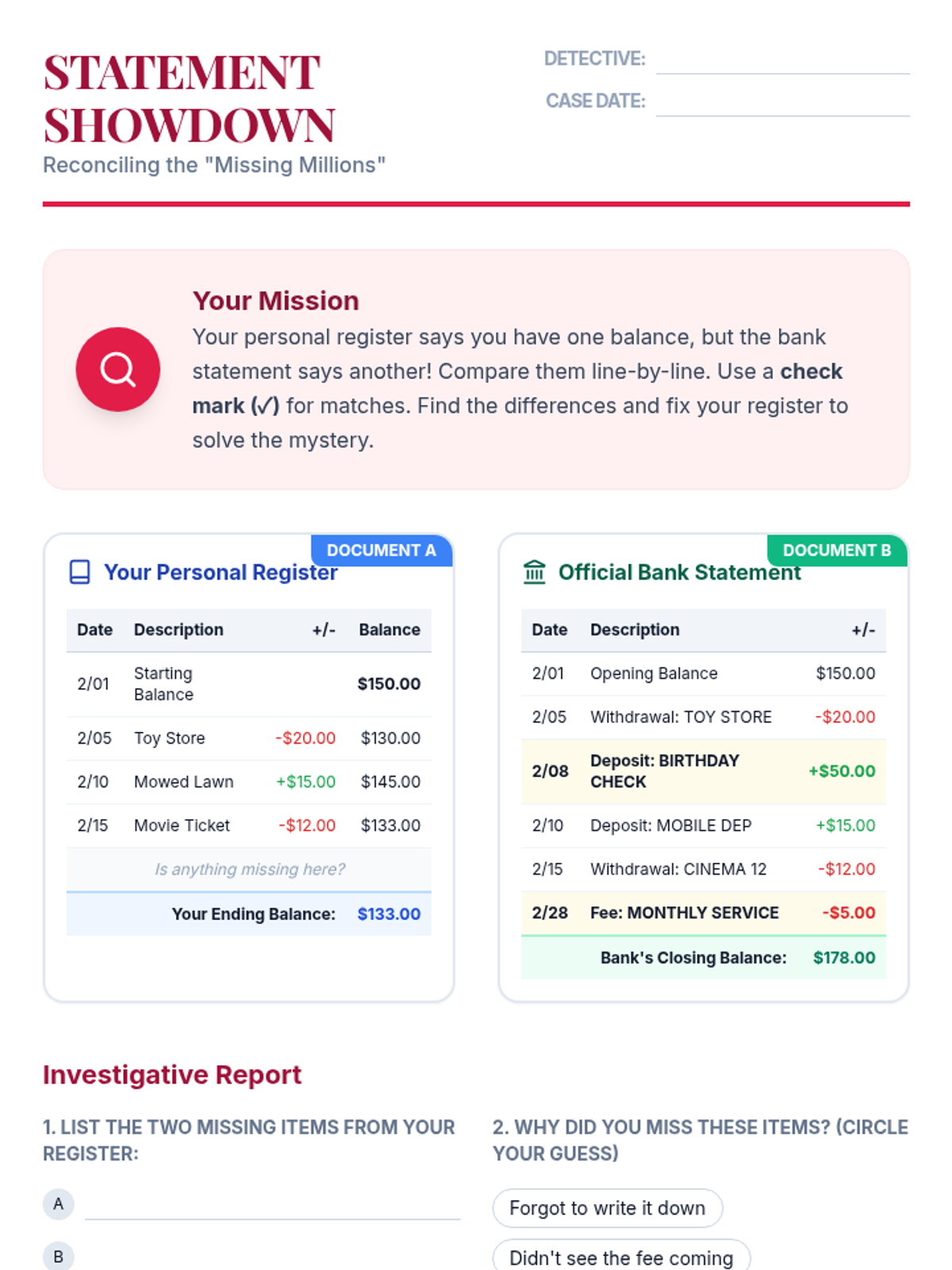
Students reconcile a monthly bank statement against their personal register to identify errors and ensure their records match the bank's data.
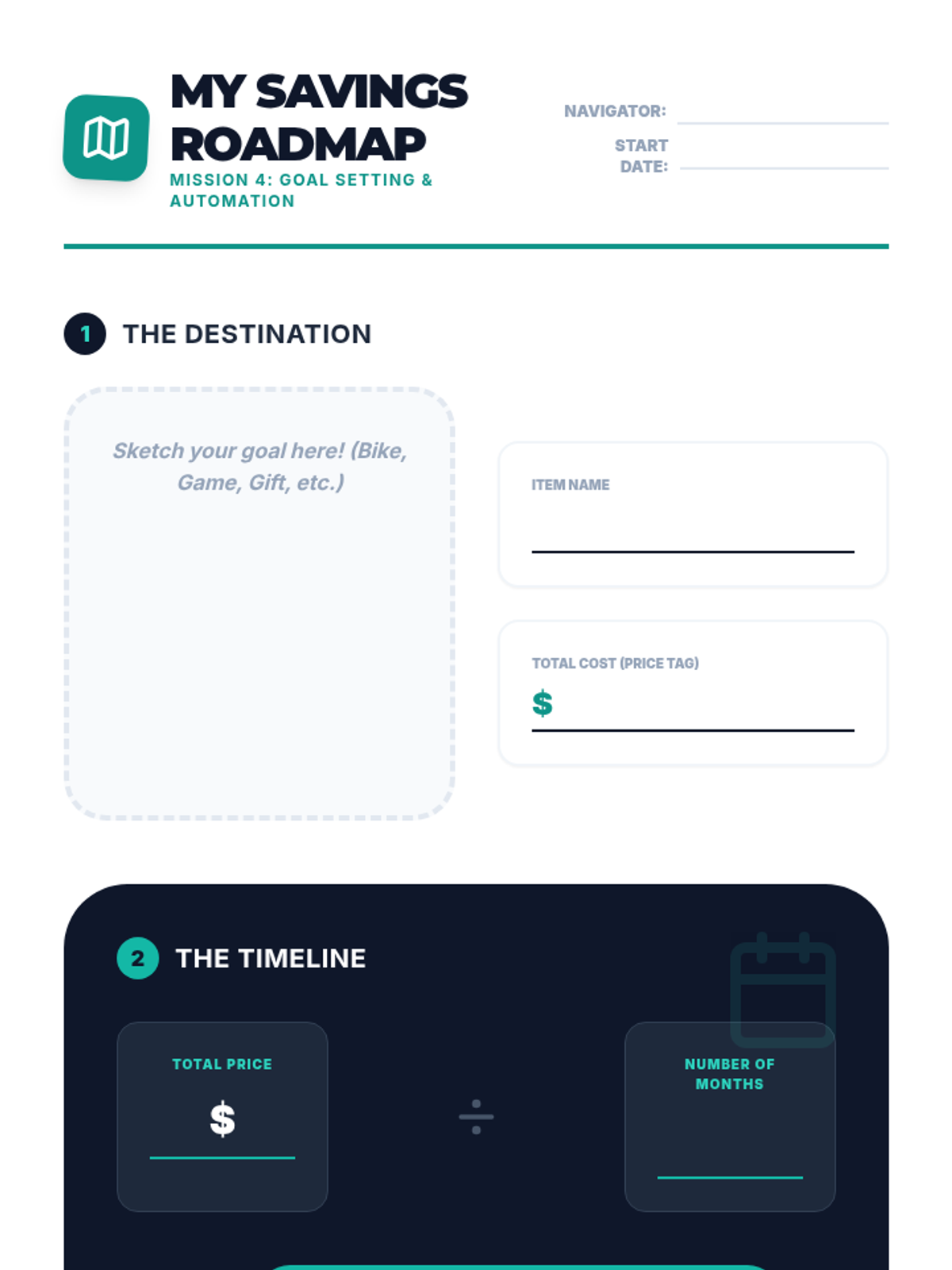
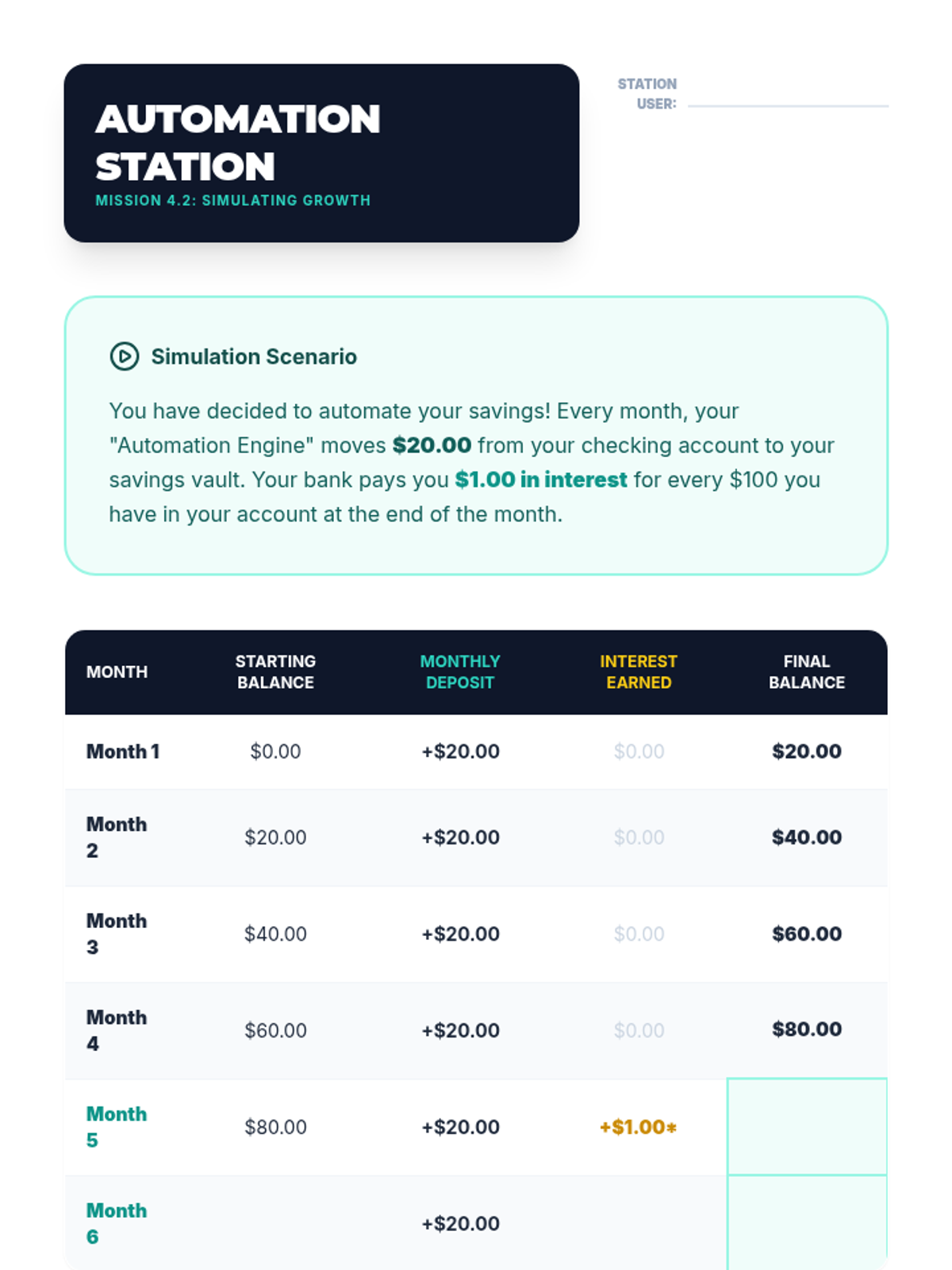
Students define a financial goal (e.g., buying a bike) and create a plan that involves automated monthly transfers from checking to savings. They visualize the timeline for achieving their goal.
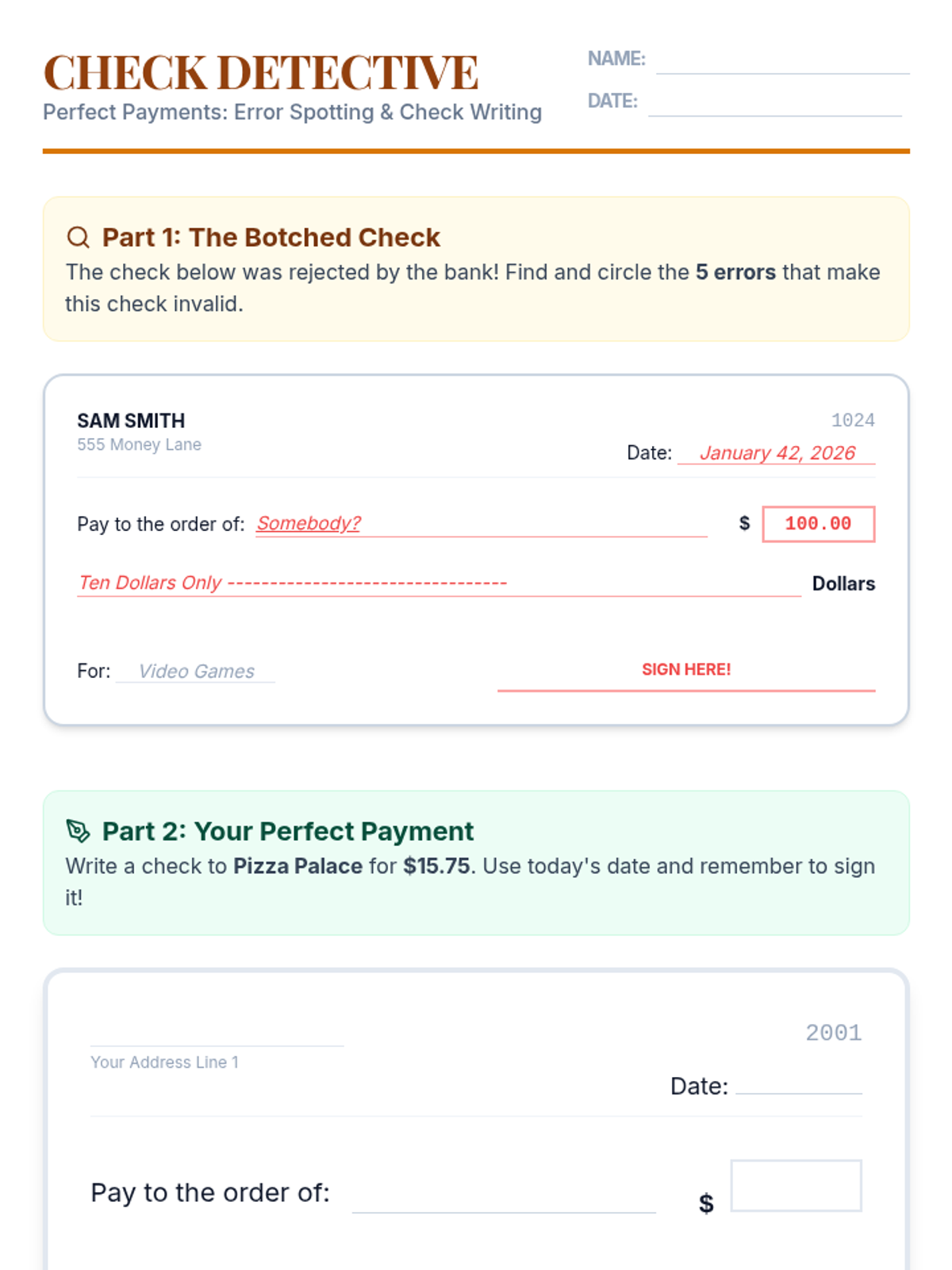
Students master the mechanics of filling out paper checks and authorizing digital transfers, focusing on accuracy and legal requirements.
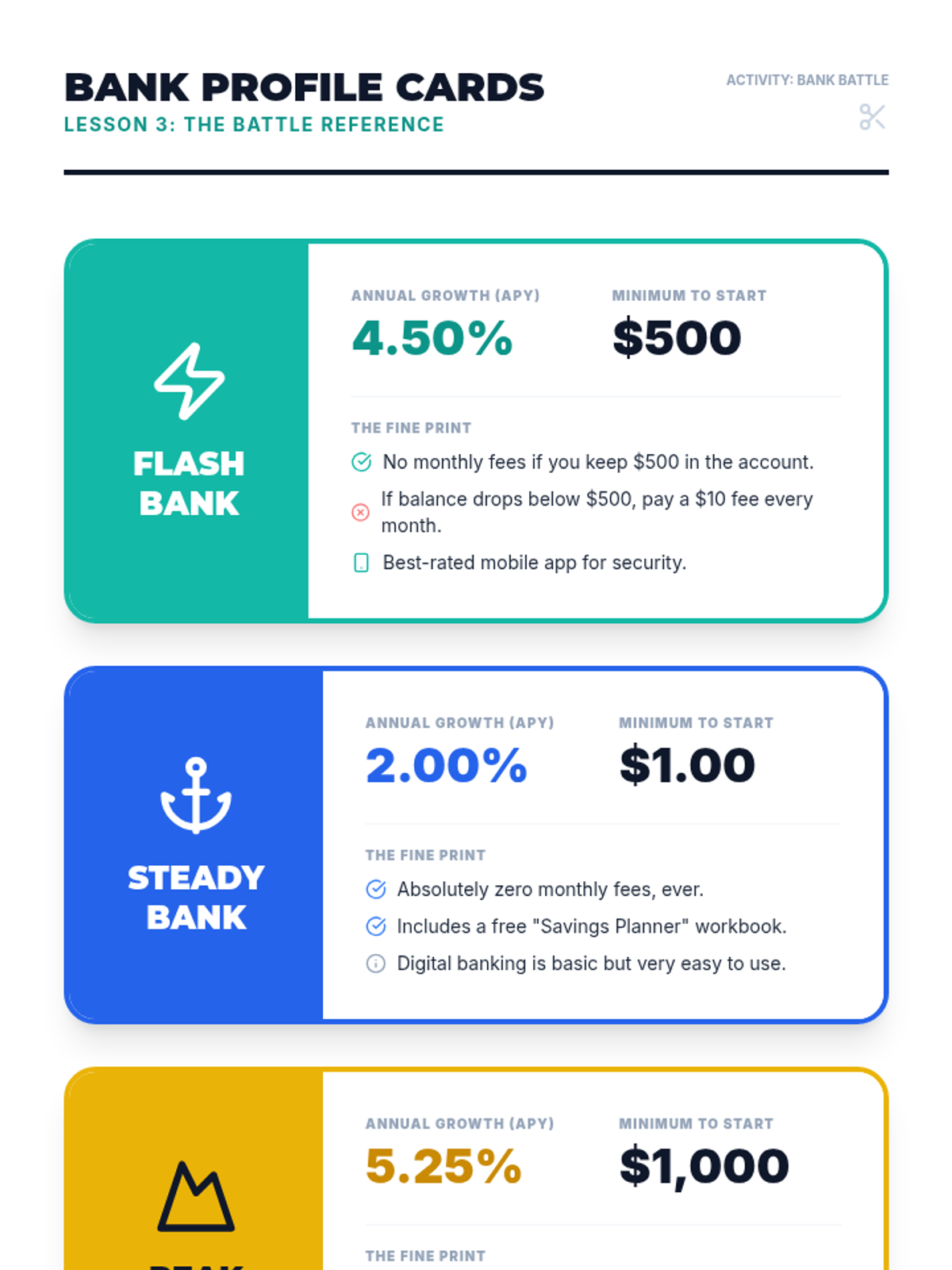
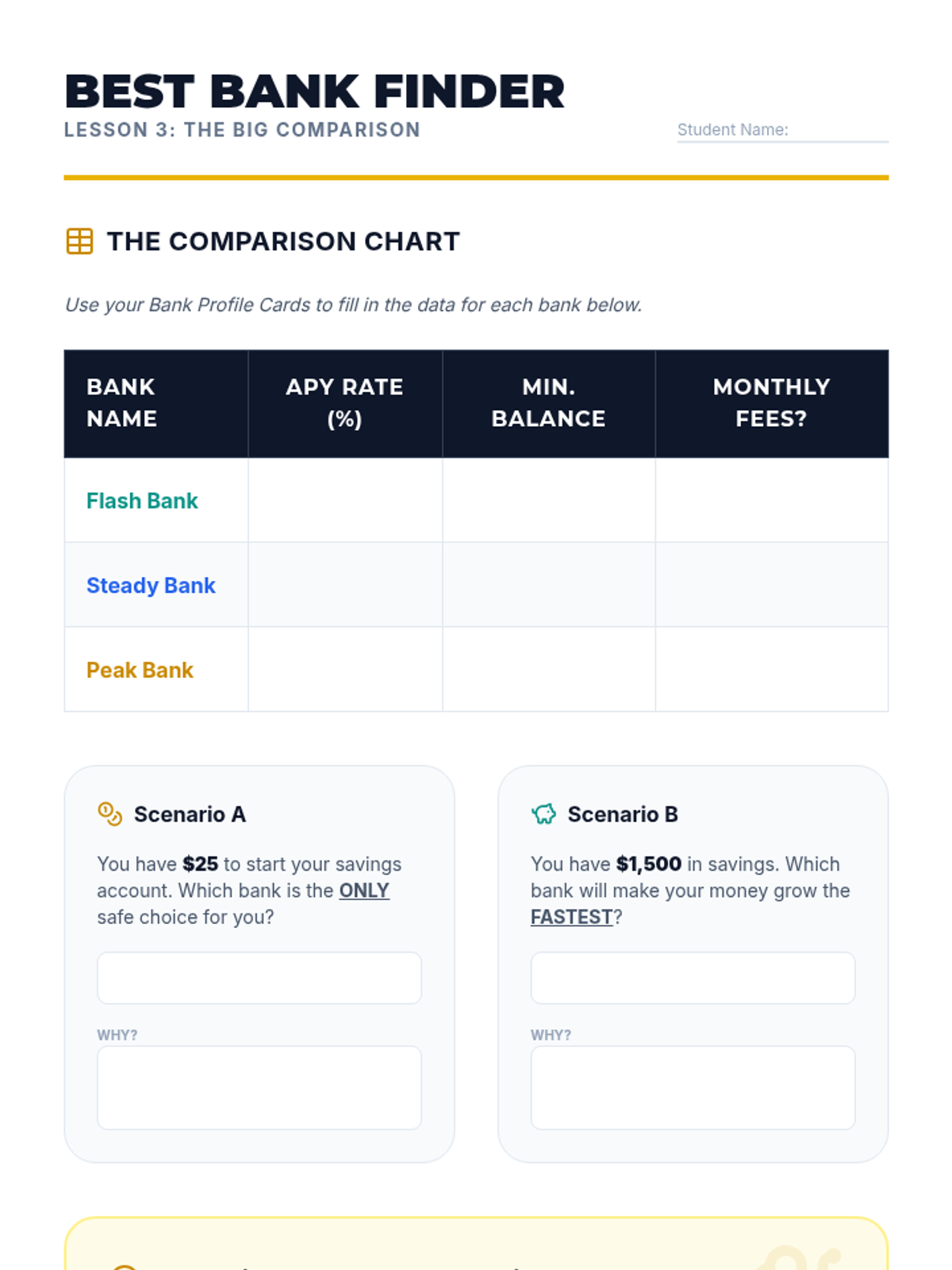
Students research different (fictional) bank offers, comparing interest rates (APY) and requirements. They learn that not all savings accounts are the same and that a higher interest rate can make a significant difference over time.
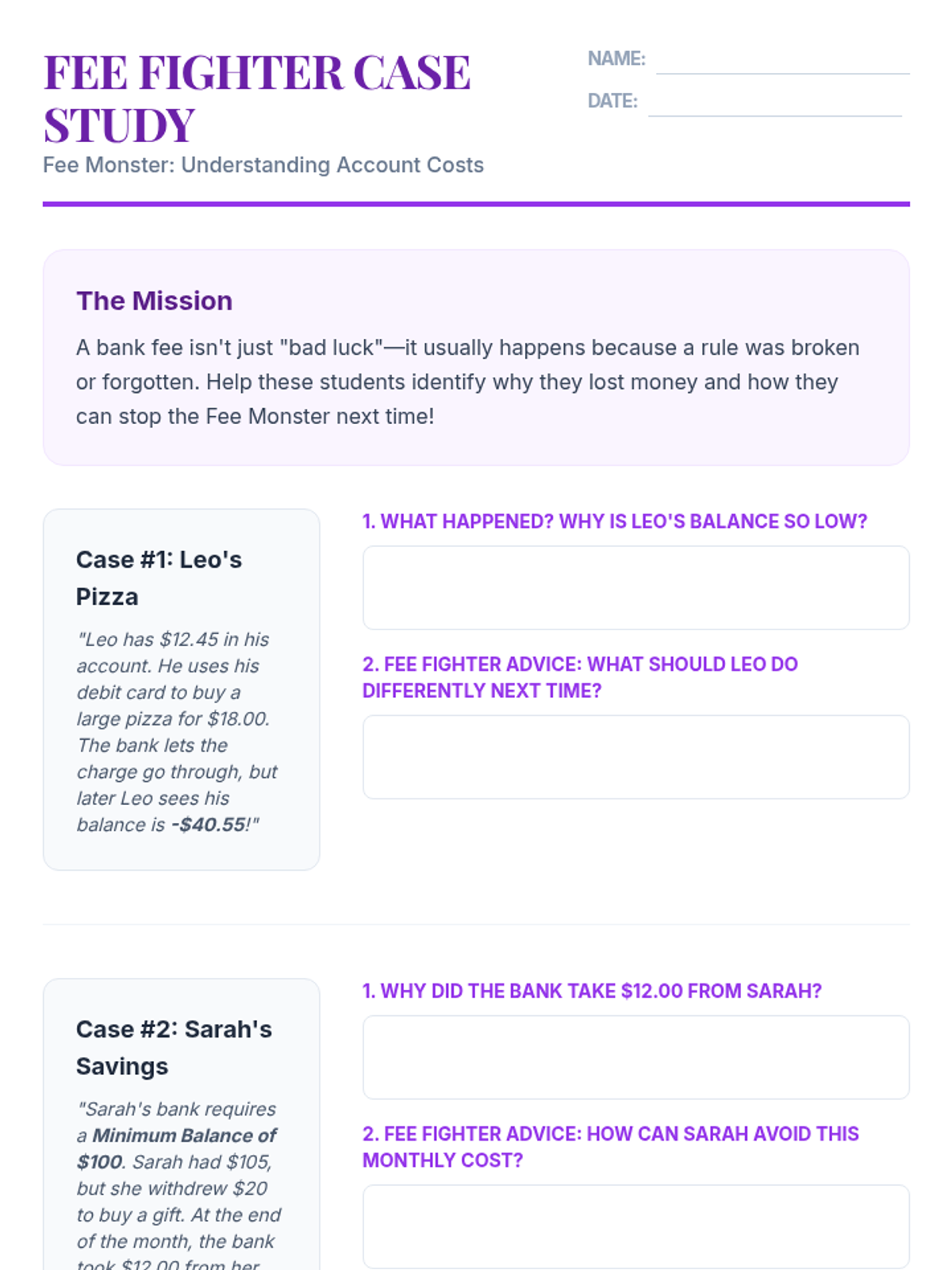
Students analyze scenarios involving maintenance fees, overdraft penalties, and minimum balance requirements to understand the costs of banking.
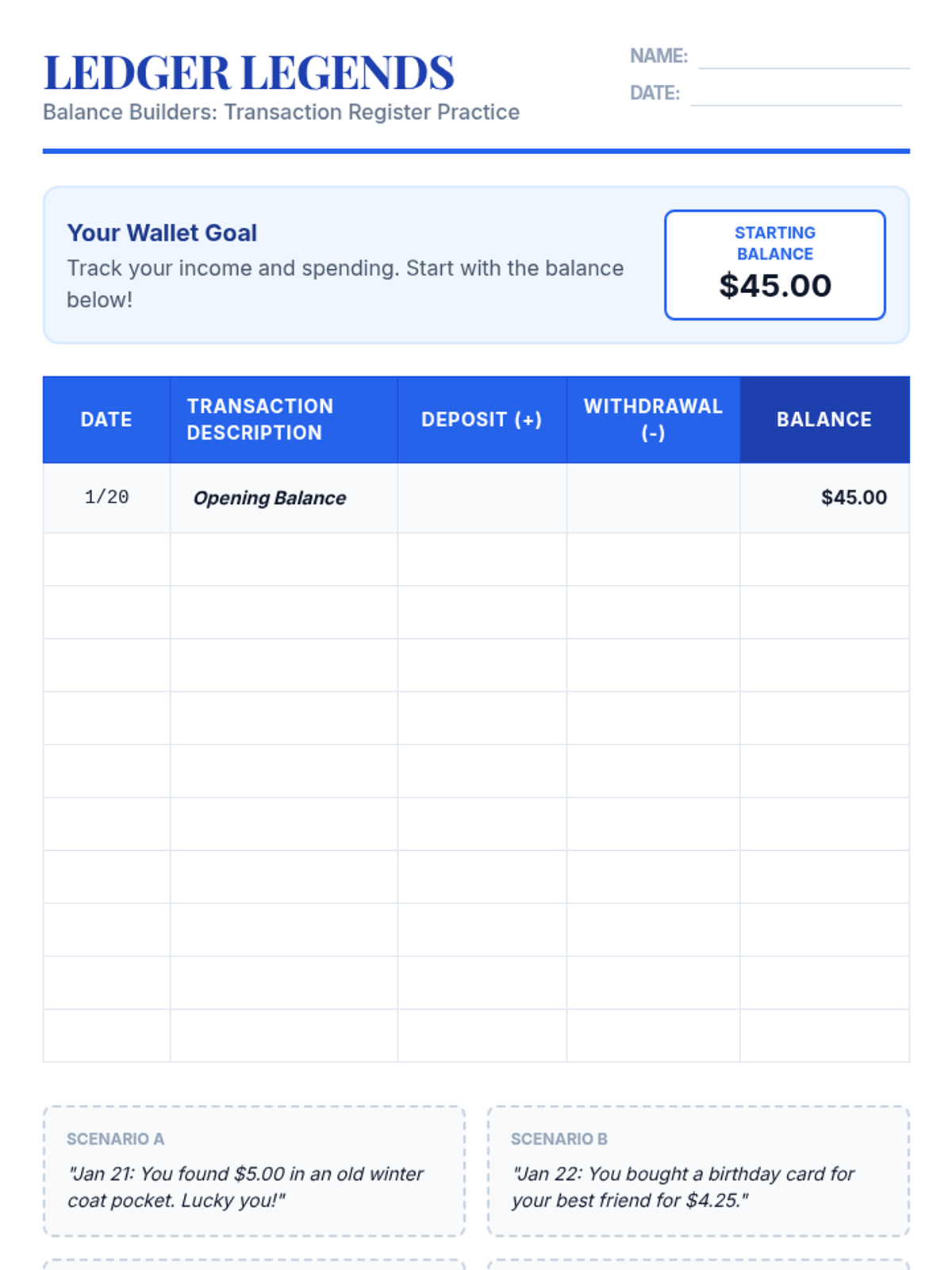
Students learn to use a transaction register to record deposits and withdrawals, practicing the arithmetic of maintaining a running balance.
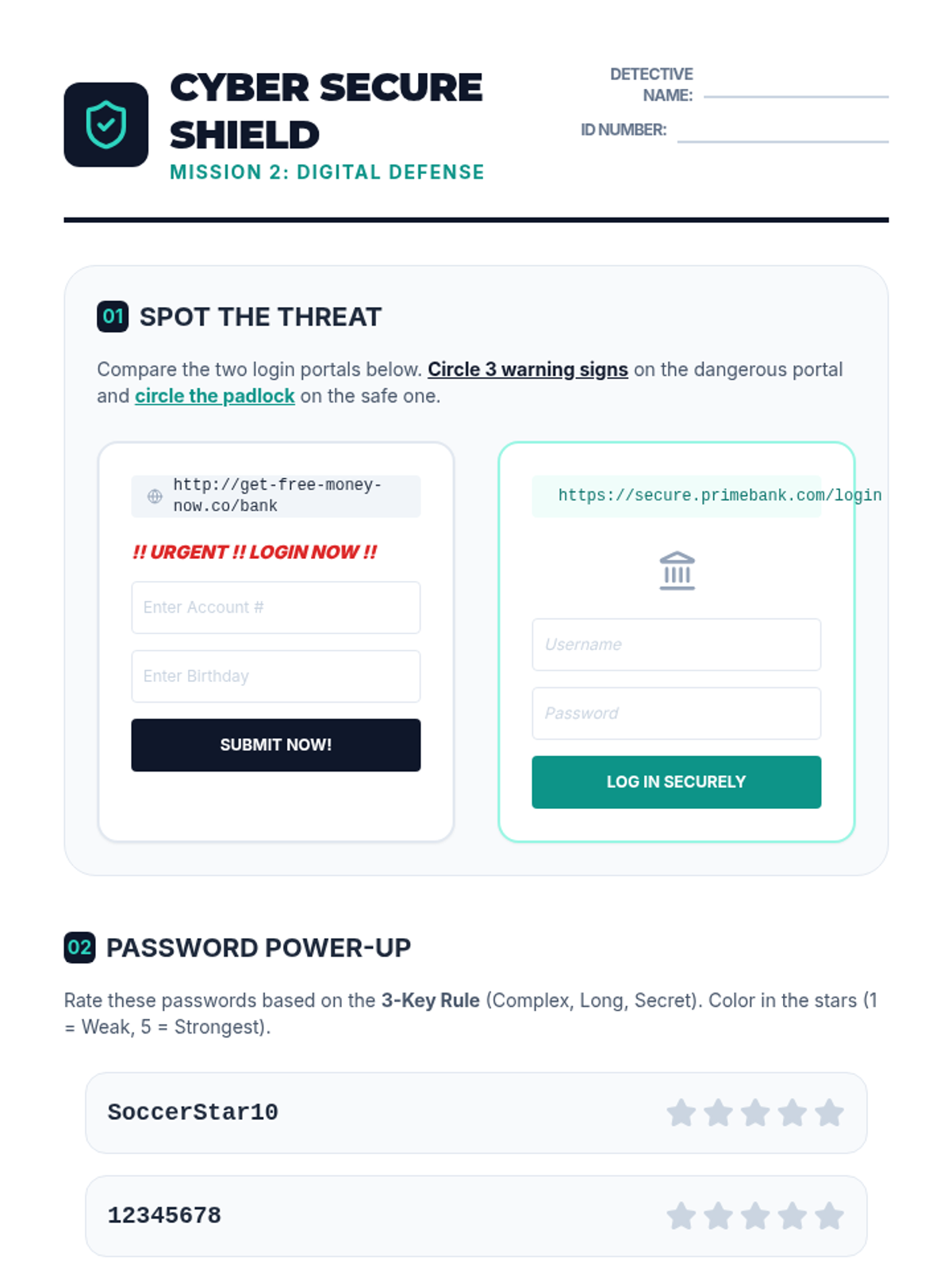
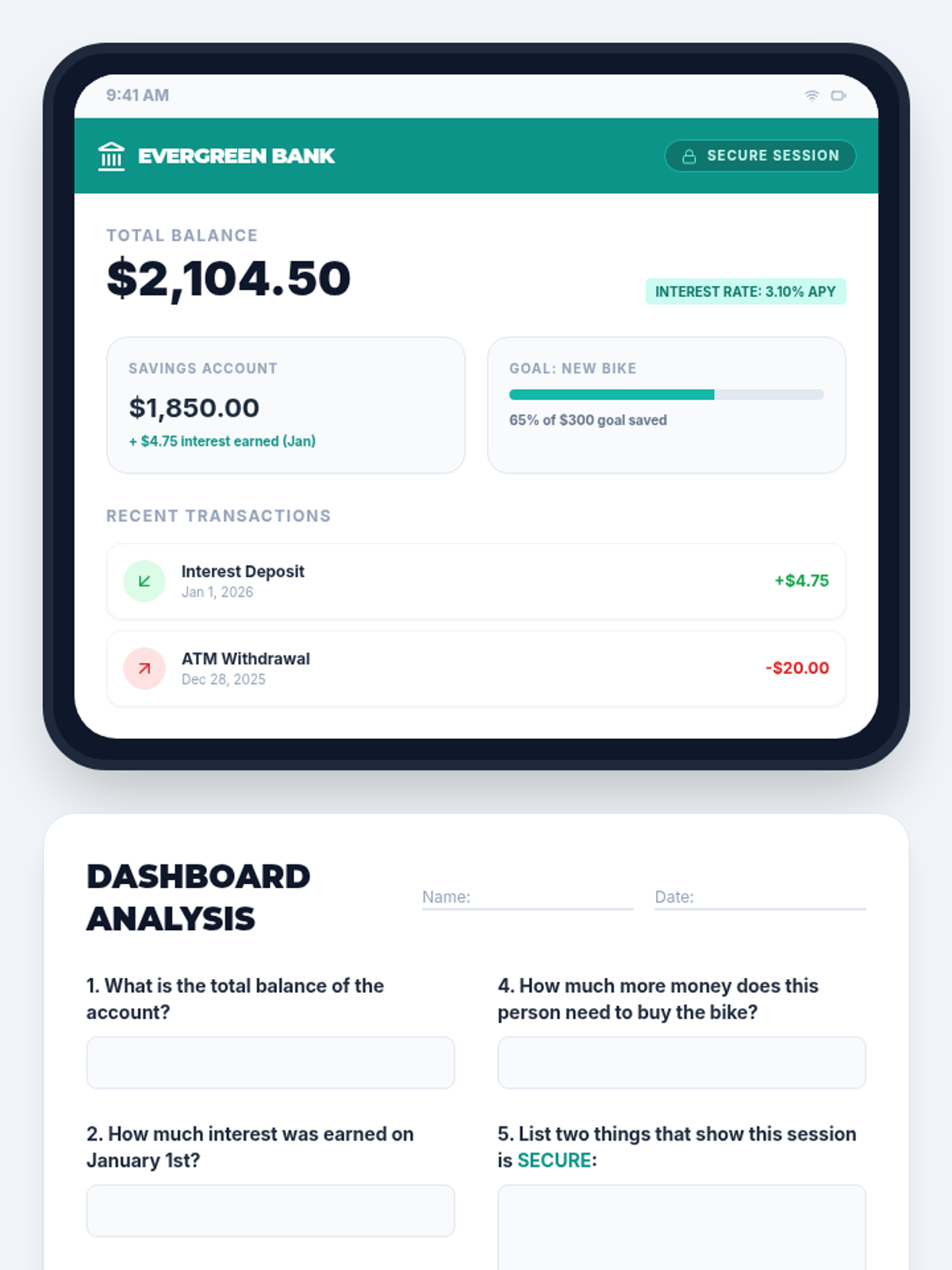
Using a safe, simulated tablet interface, students learn to navigate an online banking dashboard. They identify key security features like passwords and secure connections, and practice reading digital summaries of their accounts.
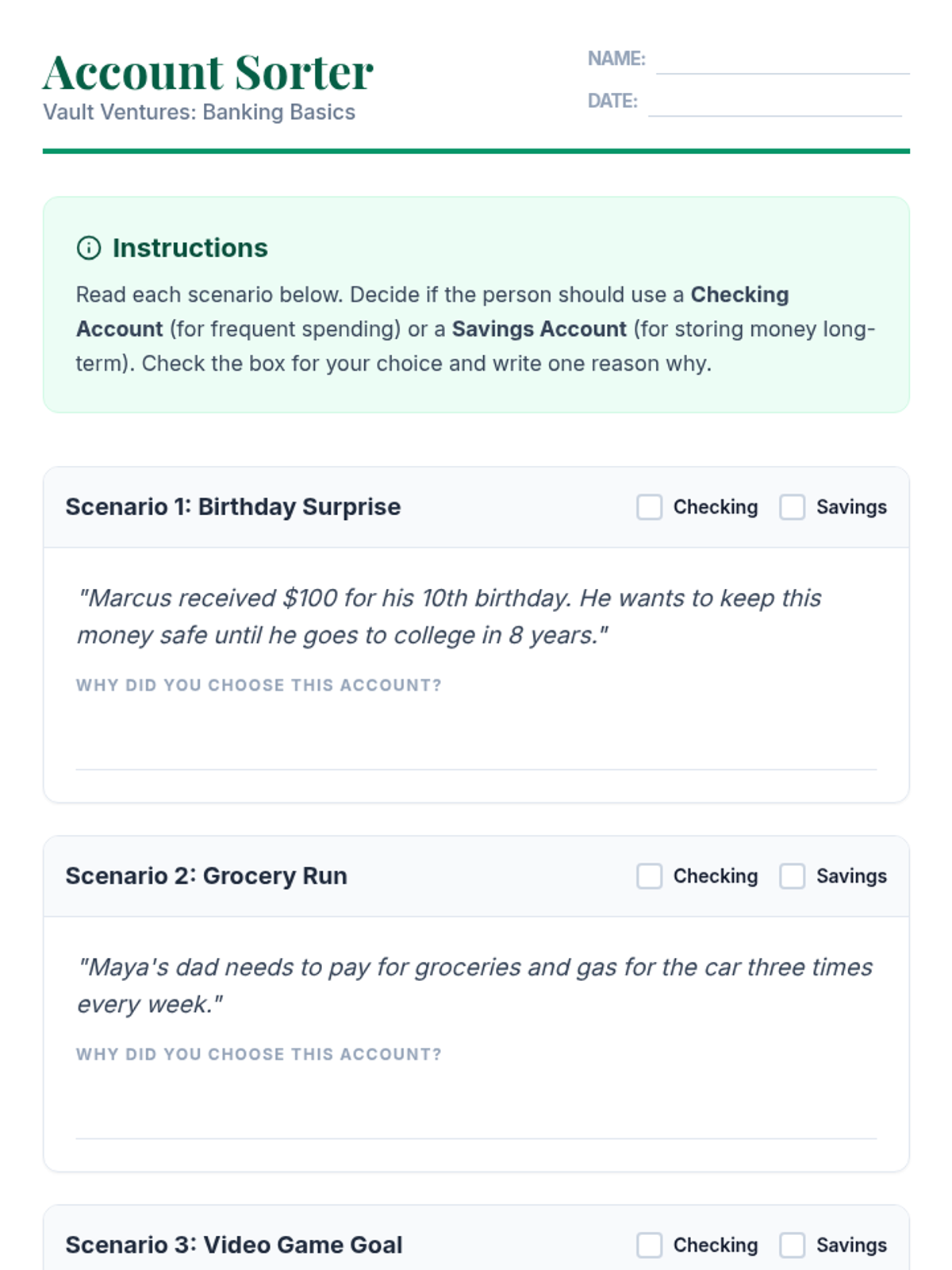
Students explore the primary function of banks as secure institutions and differentiate between checking (spending) and savings (storing) accounts.
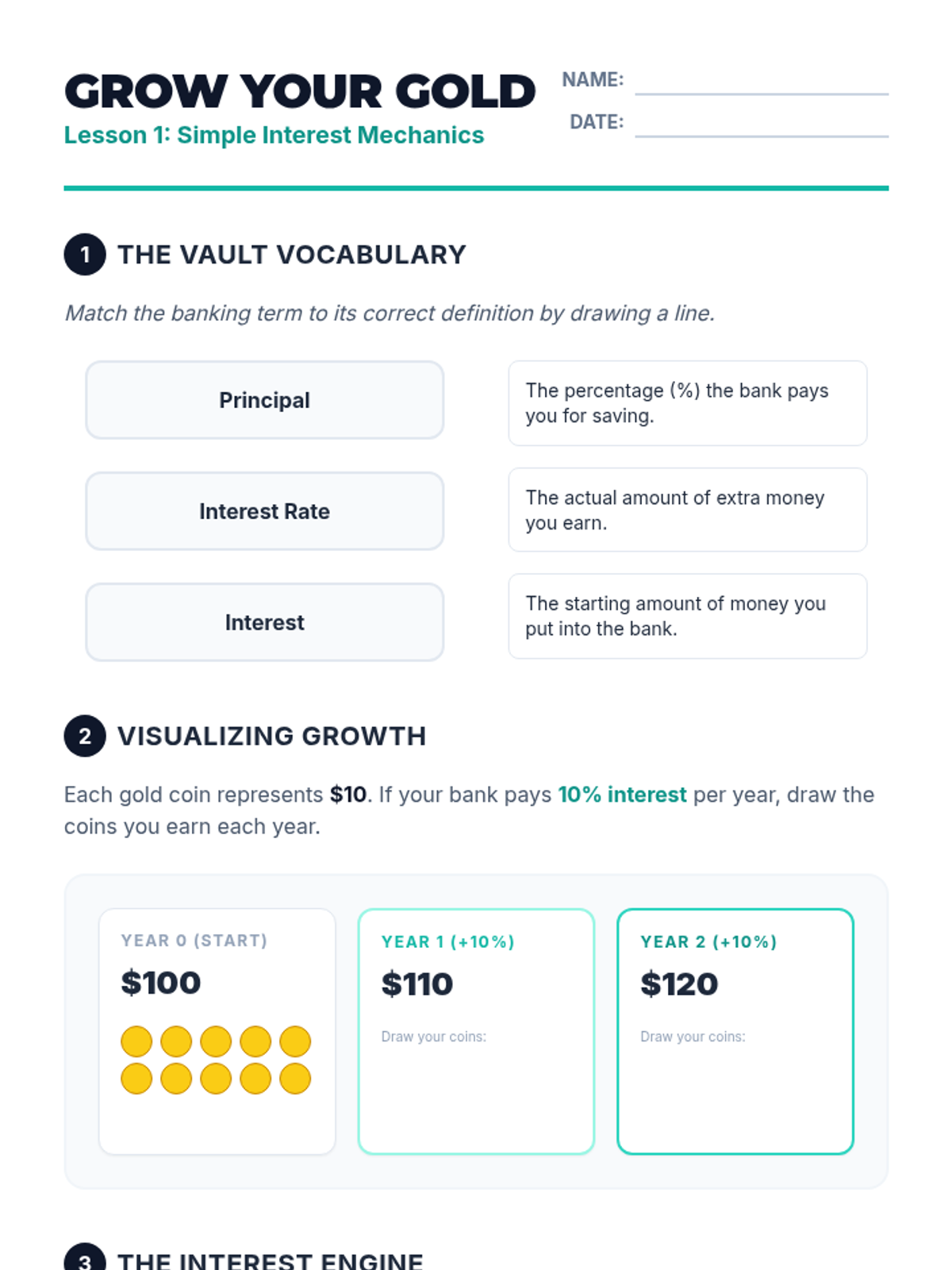
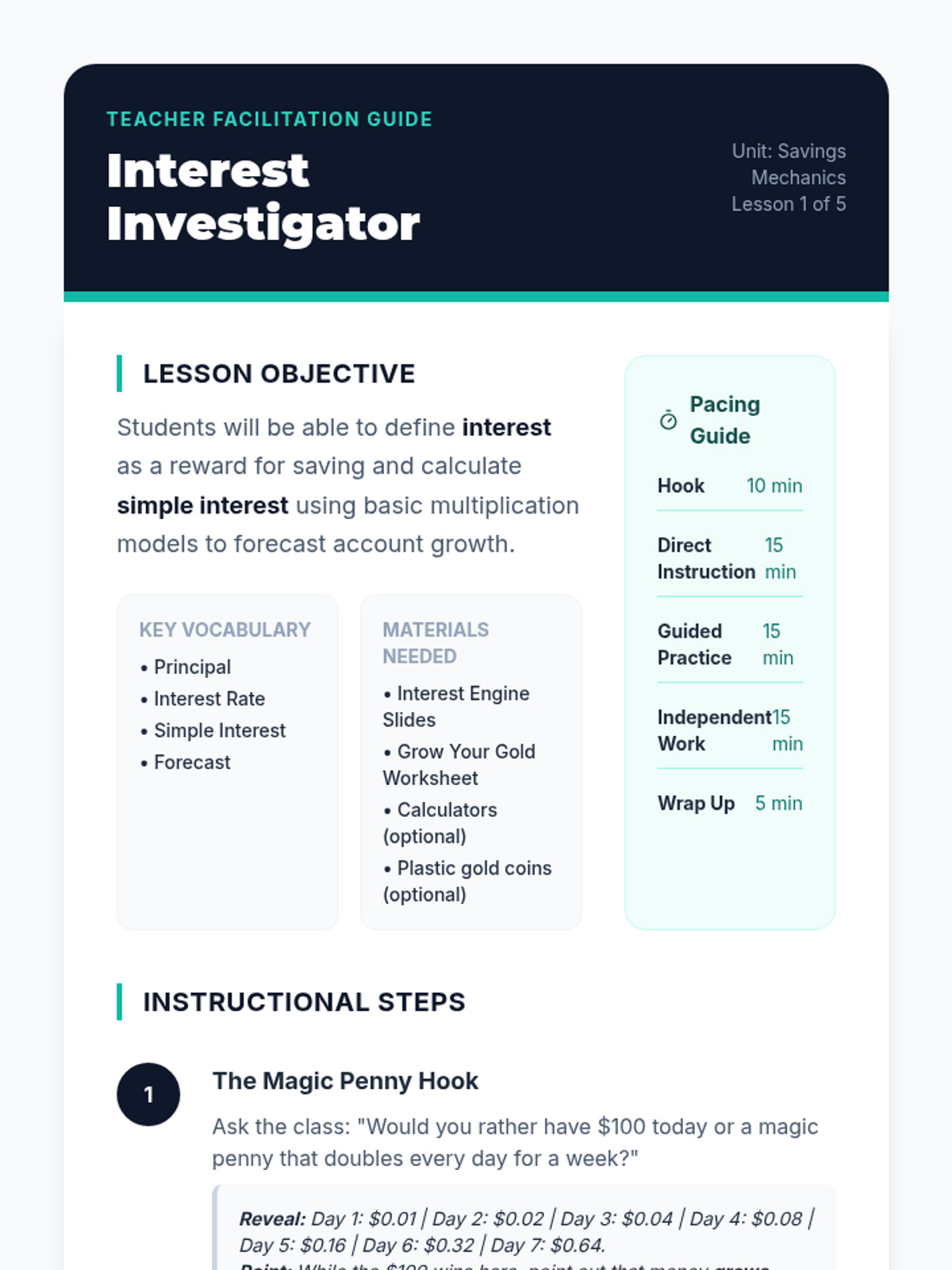
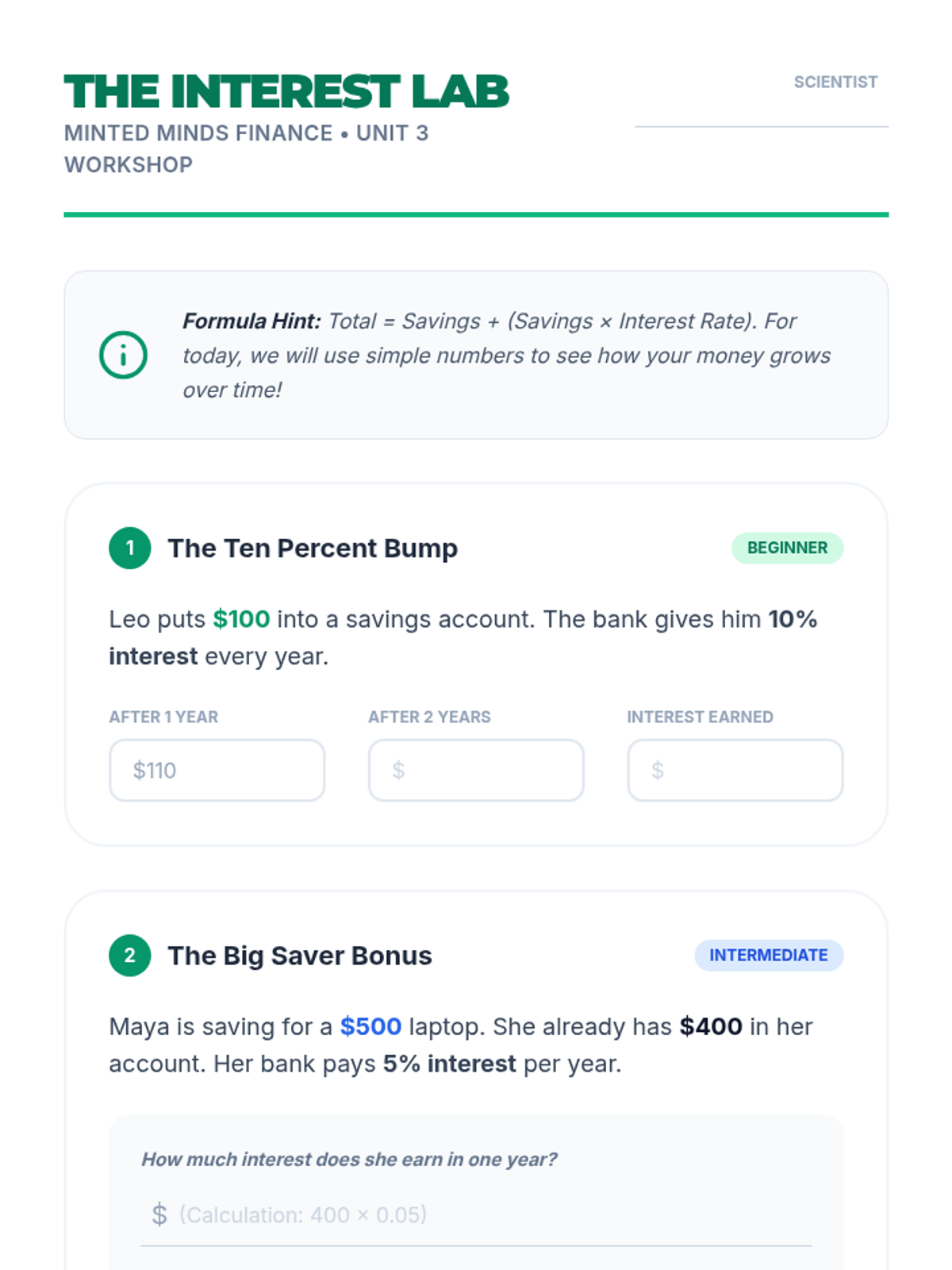
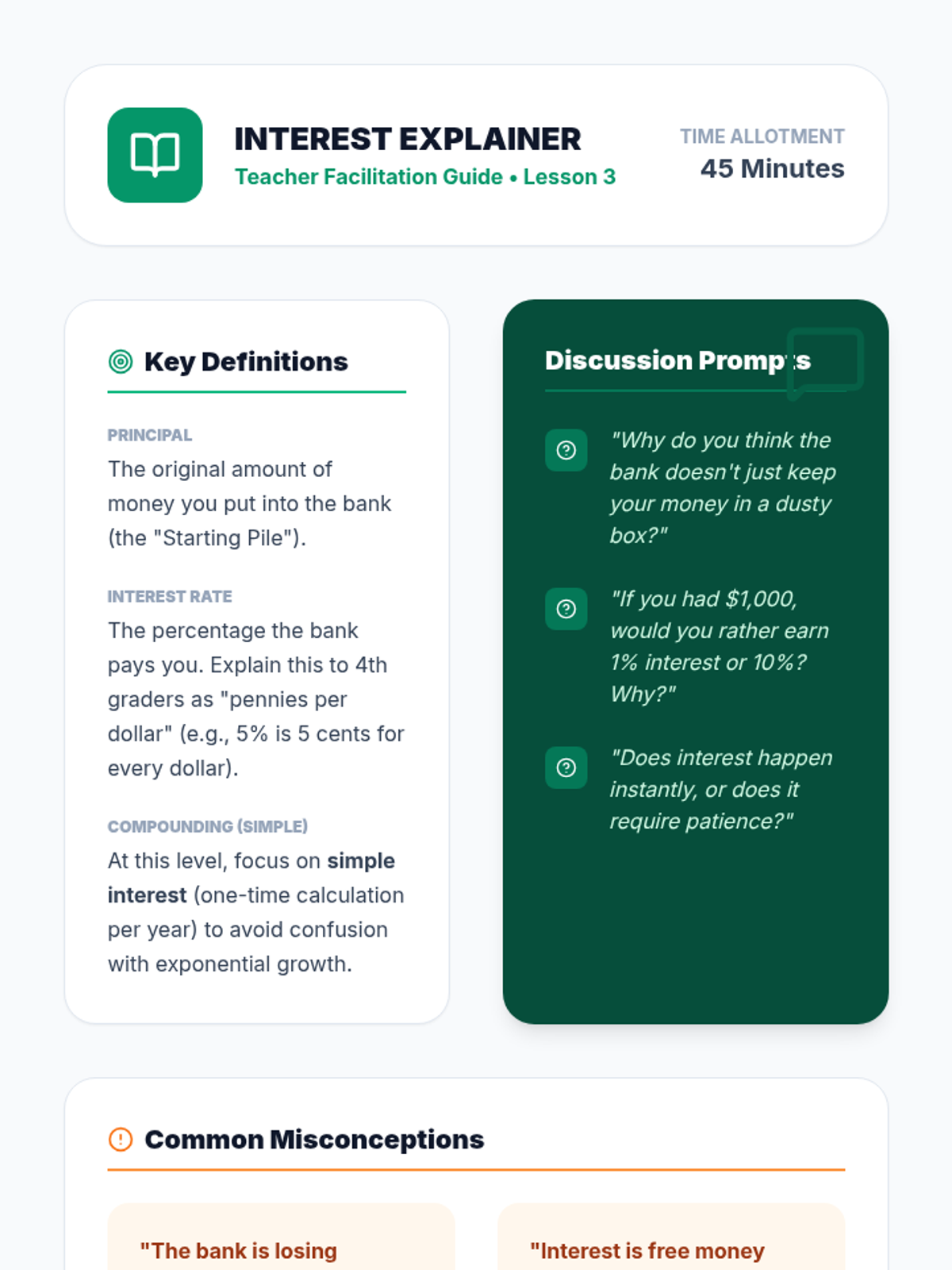
Students are introduced to the concept of interest as a reward banks pay for keeping money in a savings account. Using simple visual models and counters, they calculate simple interest over short periods to see how balances grow without additional deposits.
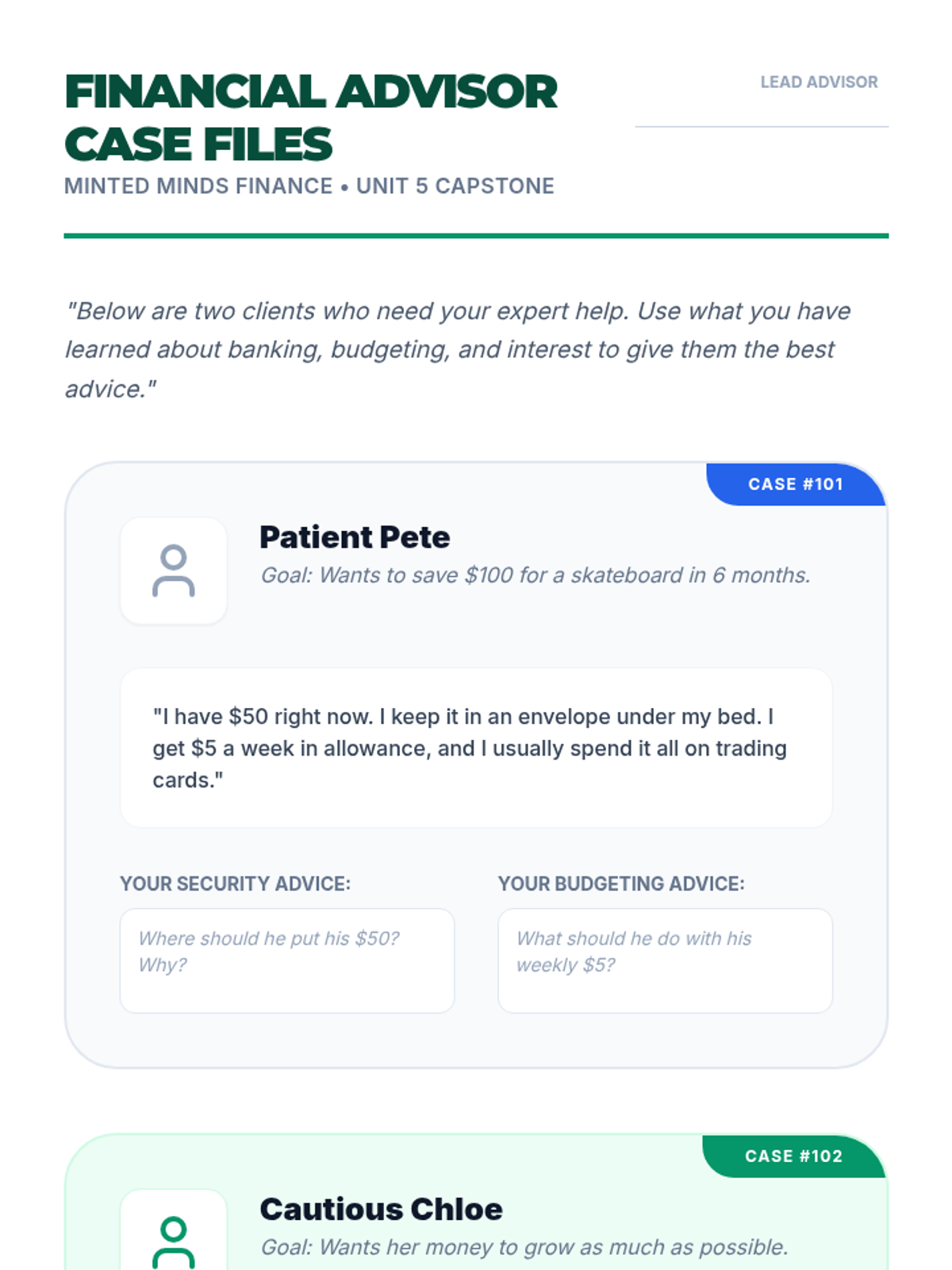
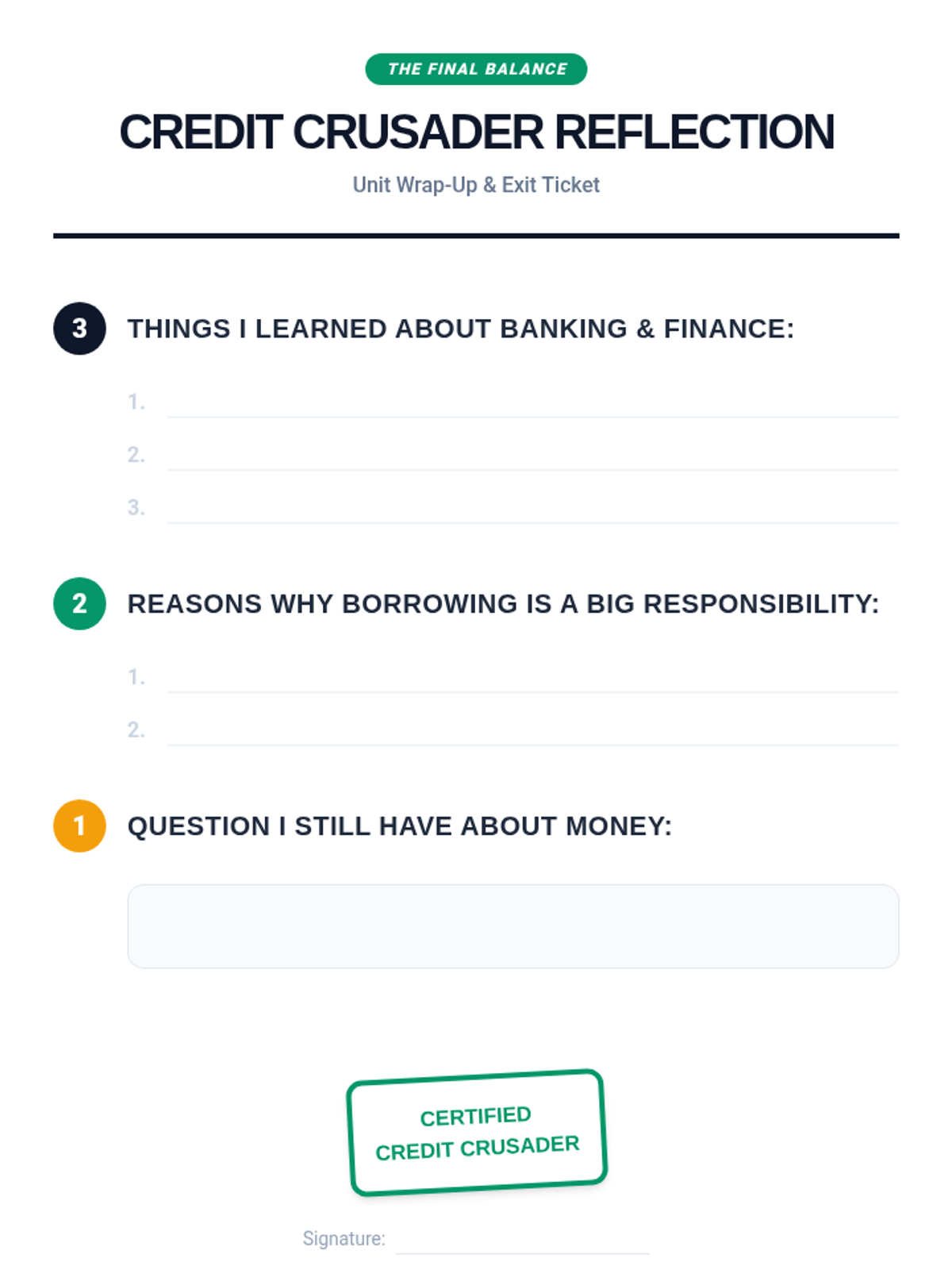
A culminating lesson where students analyze saver profiles and provide financial advice to reinforce healthy saving habits.
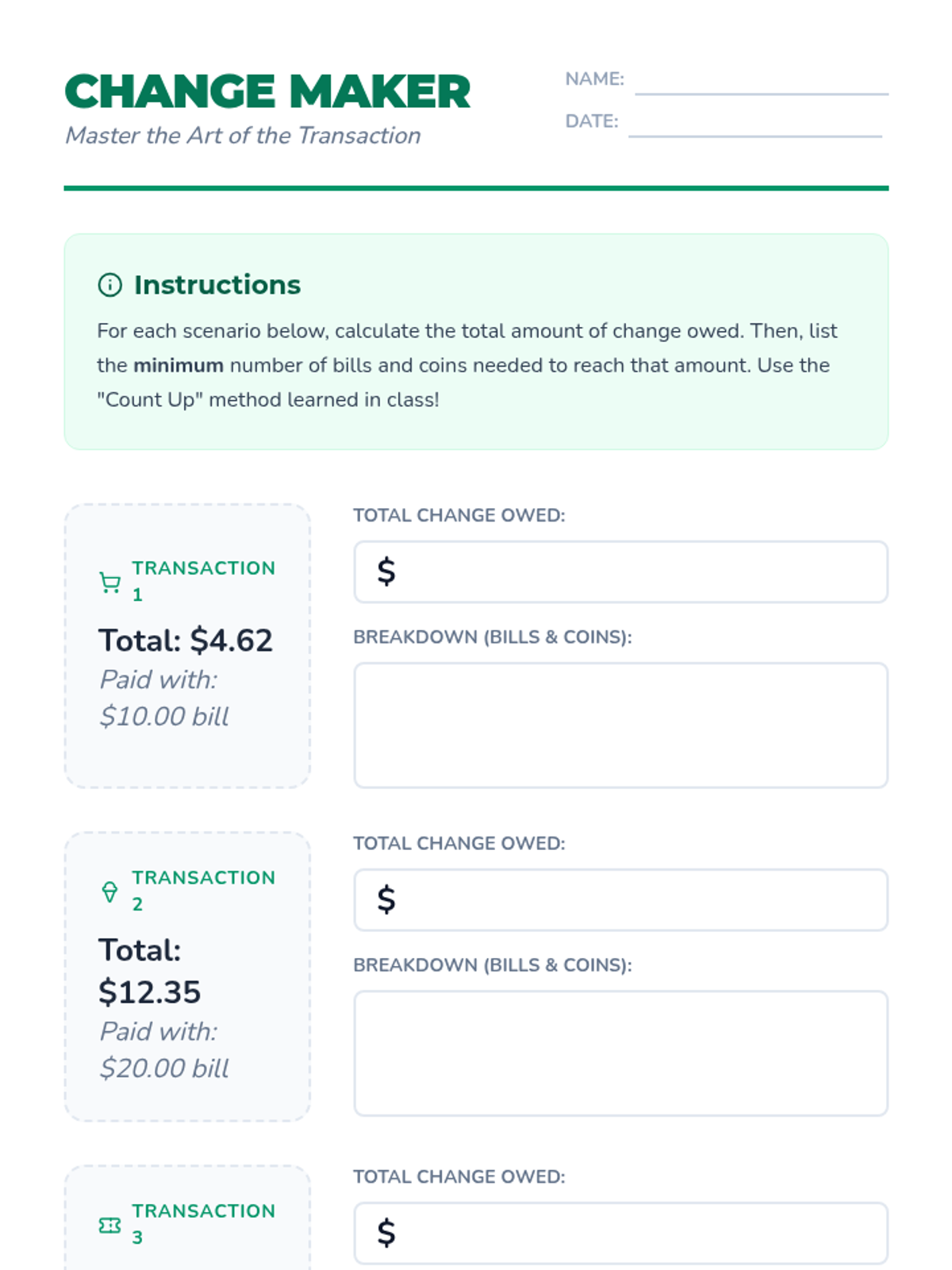
A comprehensive lesson designed to help students master the art of counting change and develop foundational money management skills like budgeting, tracking expenses, and saving.
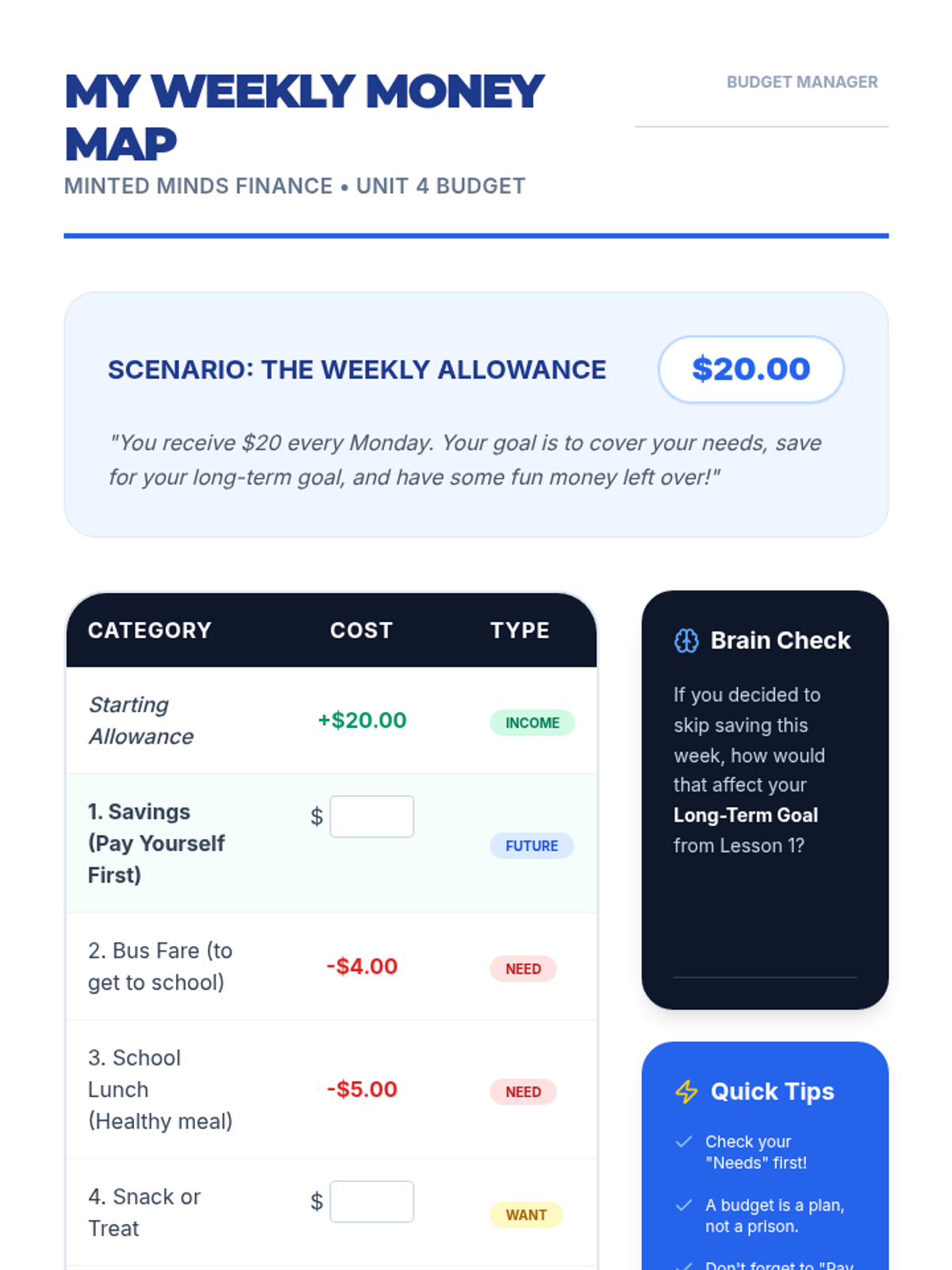
Students build their first personal budget using a fictional allowance, prioritizing 'paying themselves first' through savings.
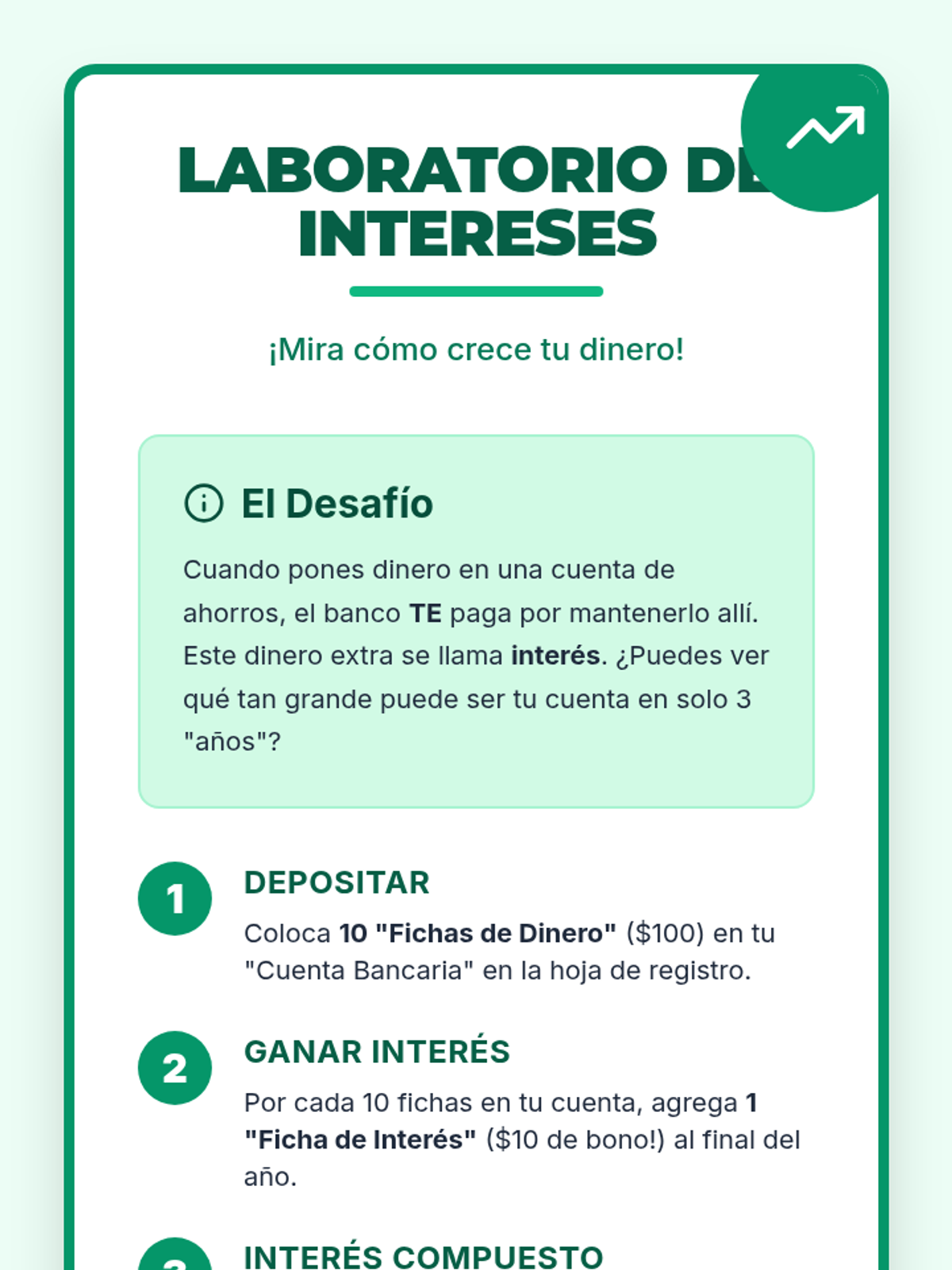
Students learn how interest acts as a reward for saving money in a bank and practice simple calculations of interest growth.
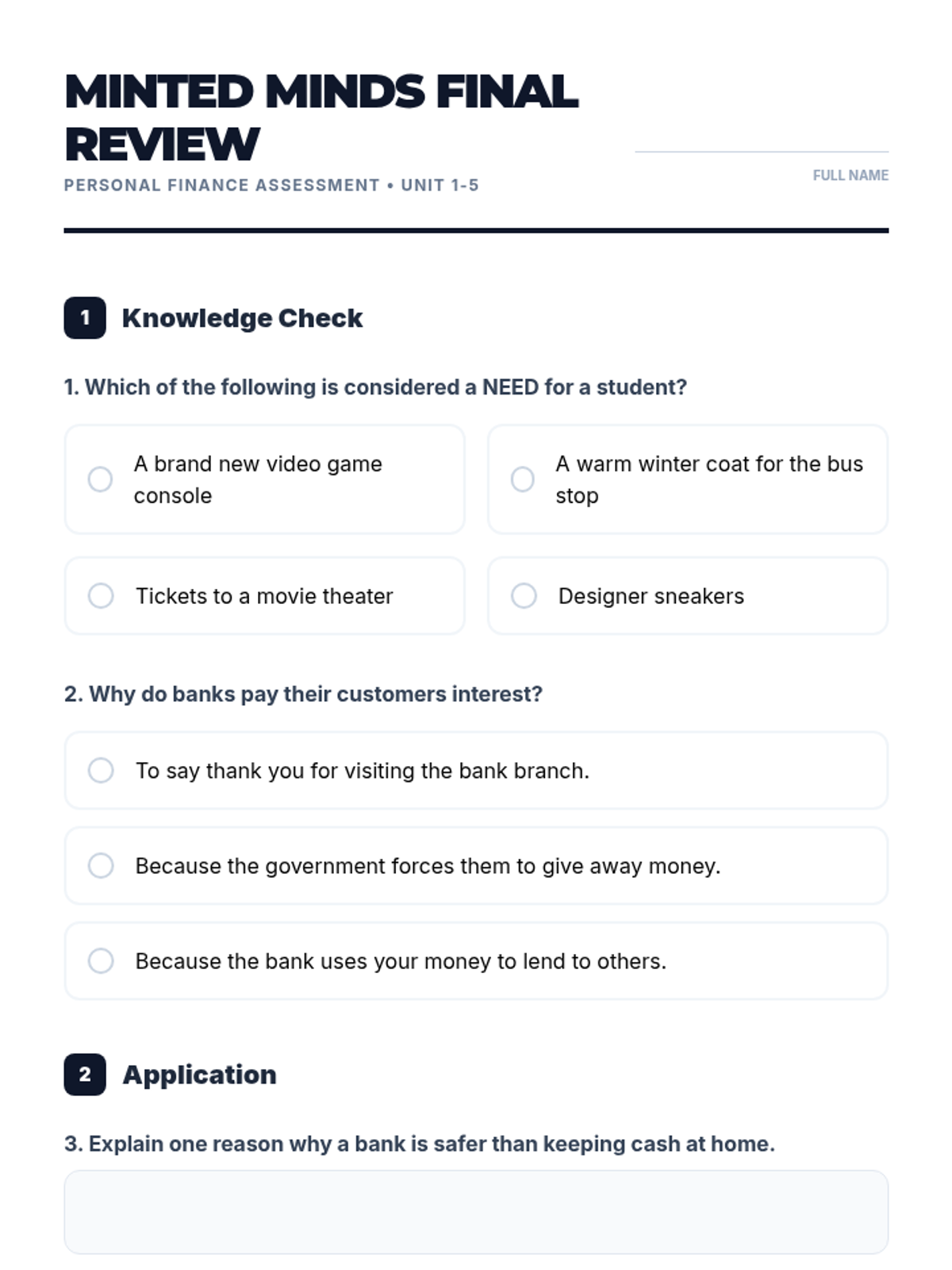
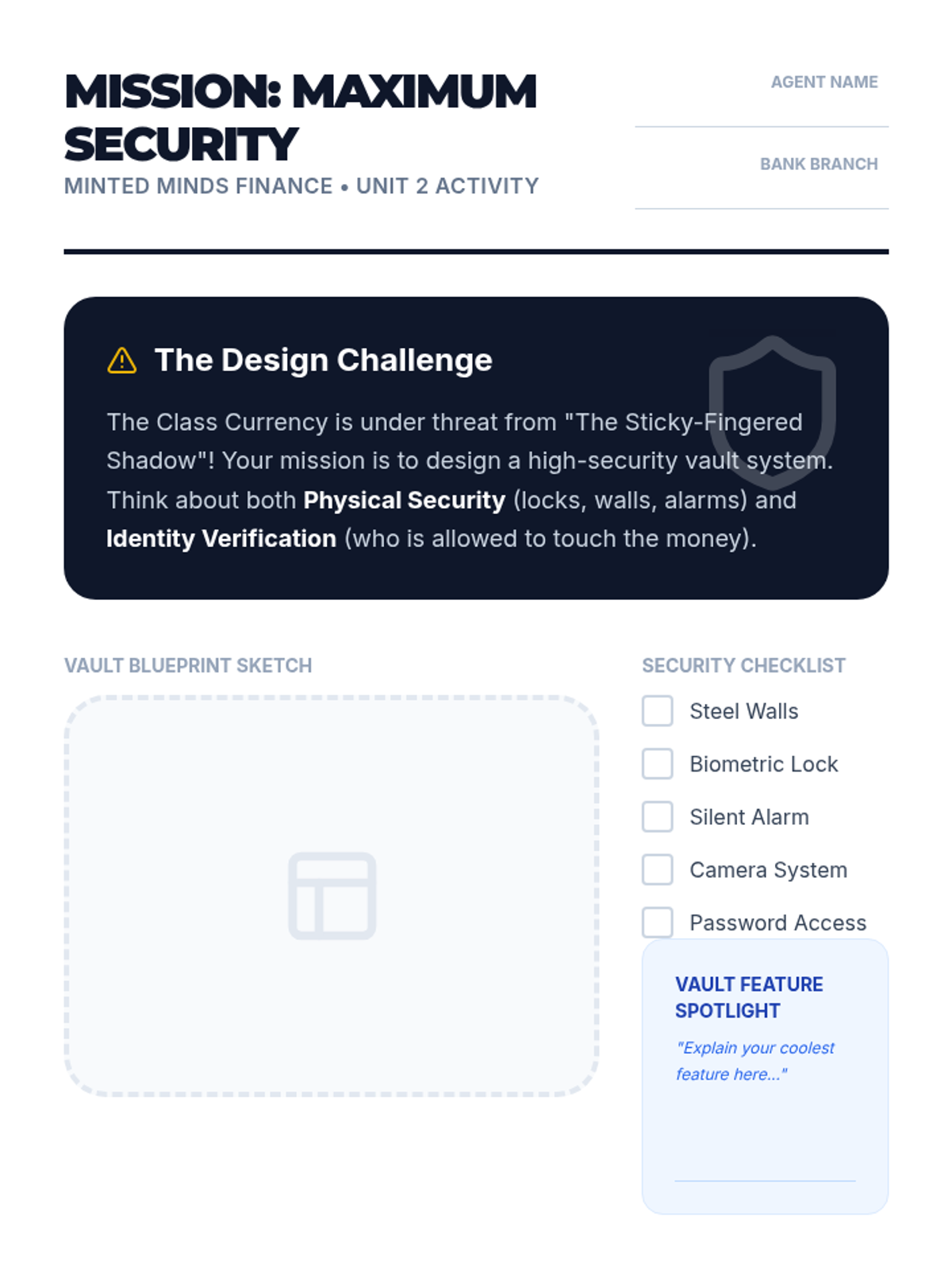
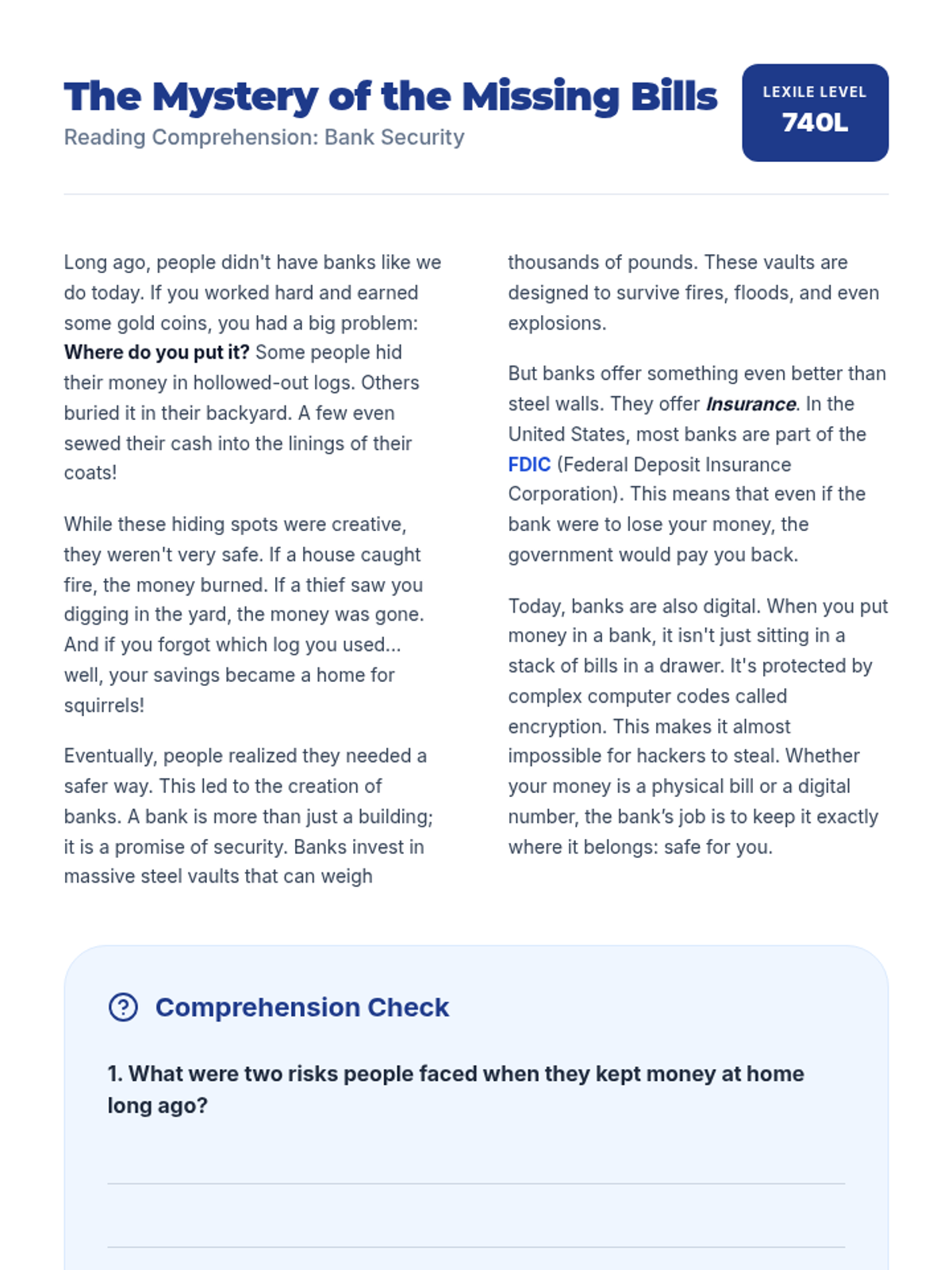
An exploration of why banks are safer than keeping money at home, focusing on physical security and the role of financial institutions.
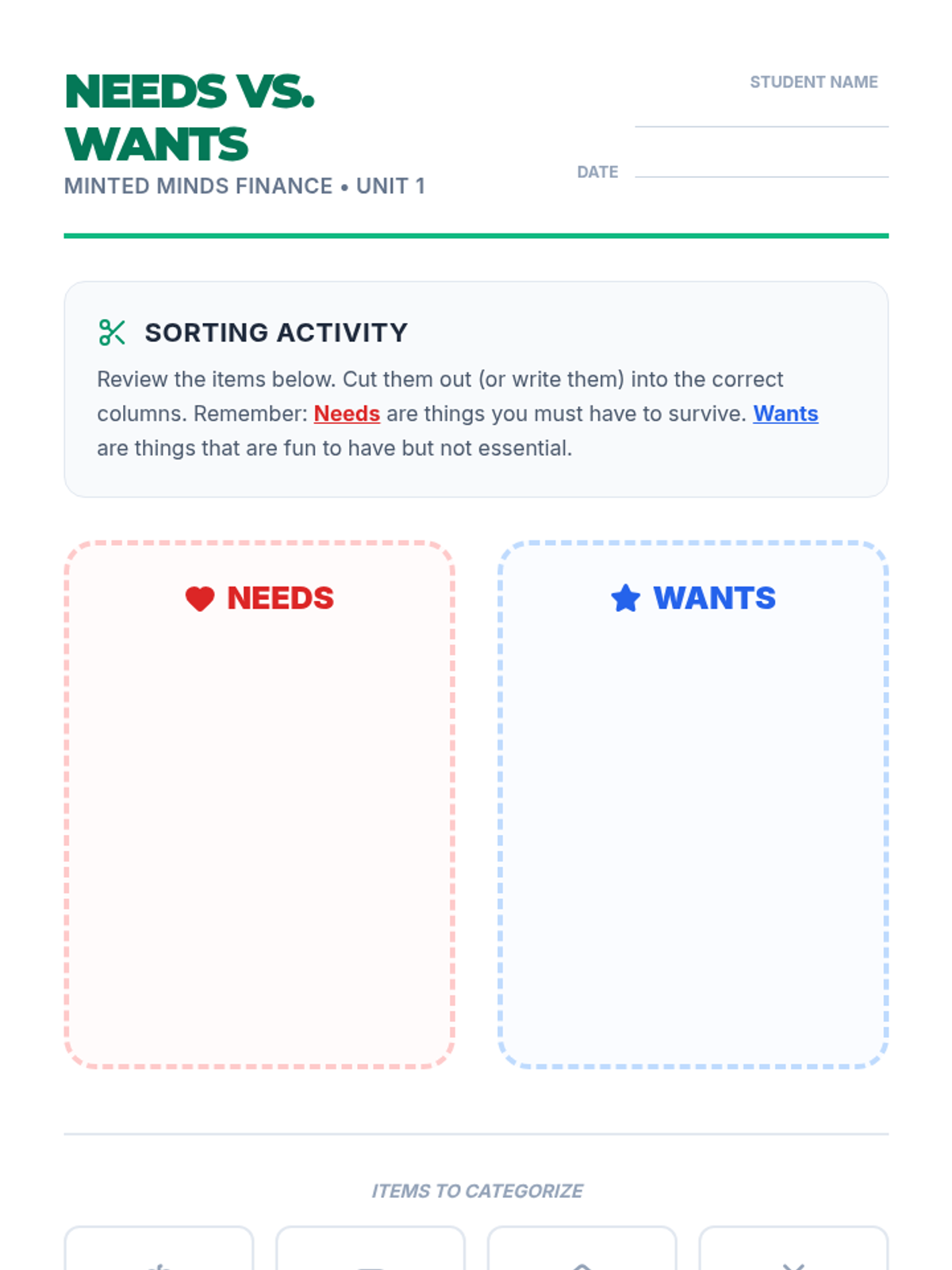
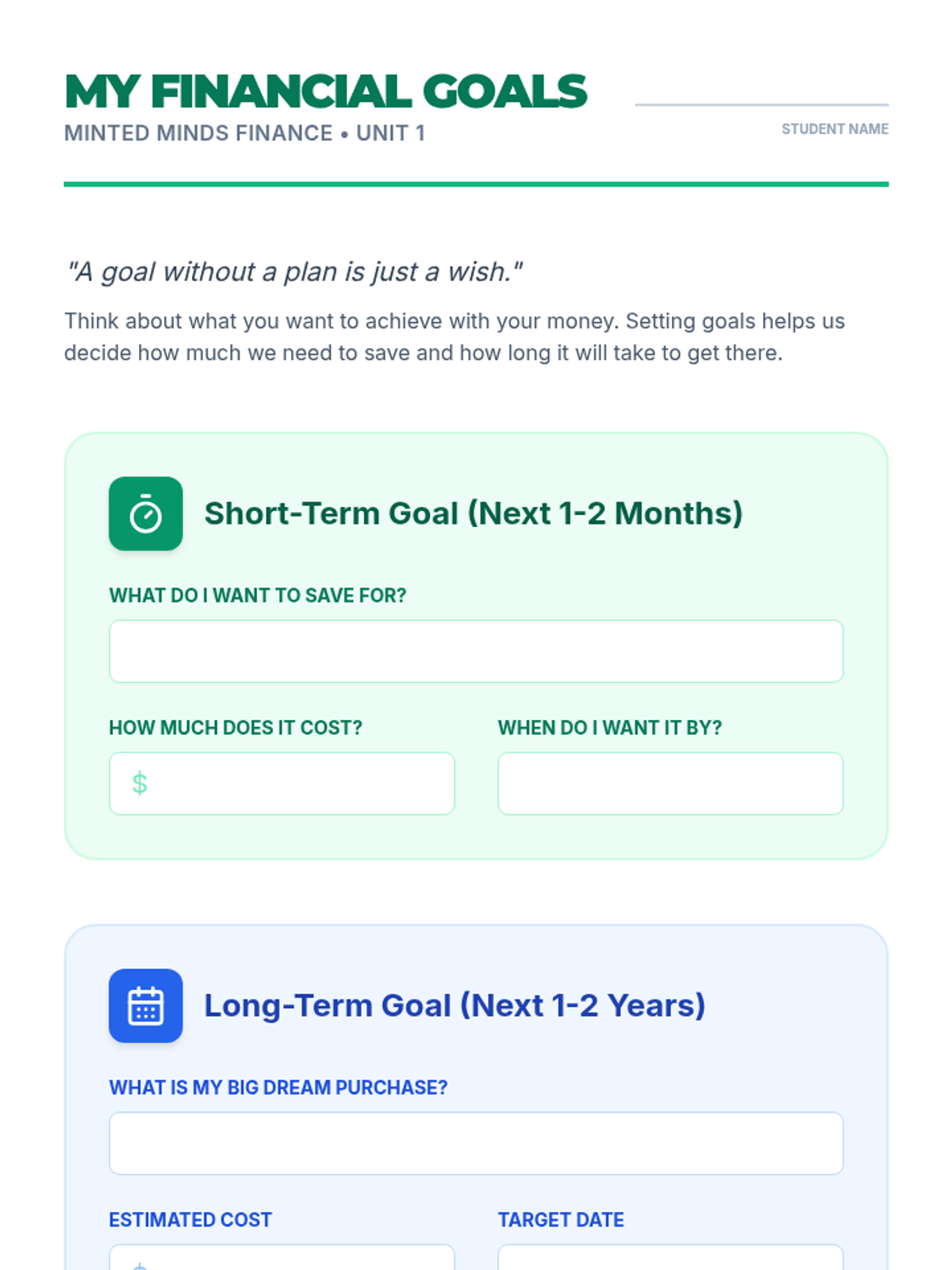
Students define and distinguish between needs and wants while learning to set clear short-term and long-term financial goals.
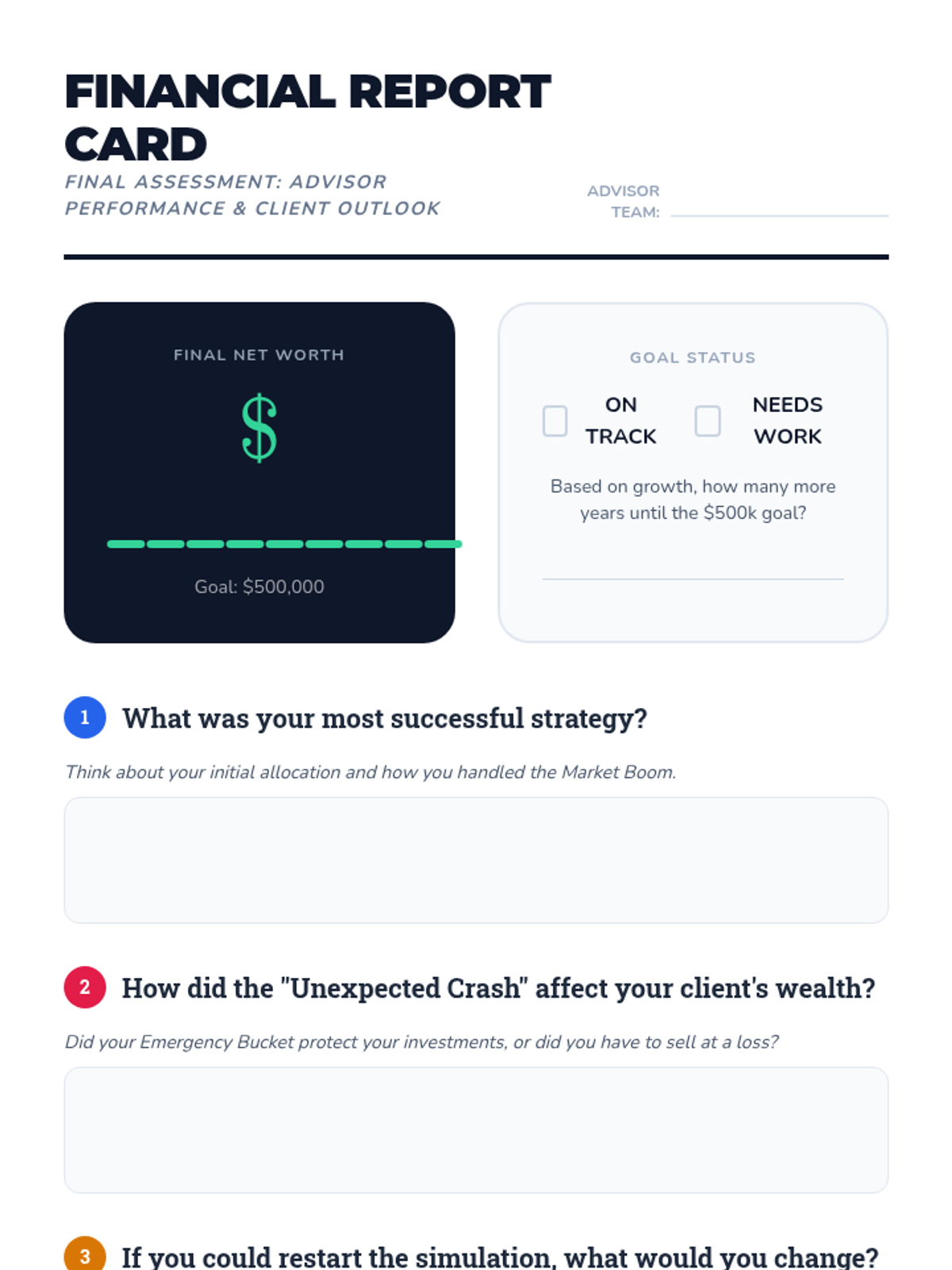
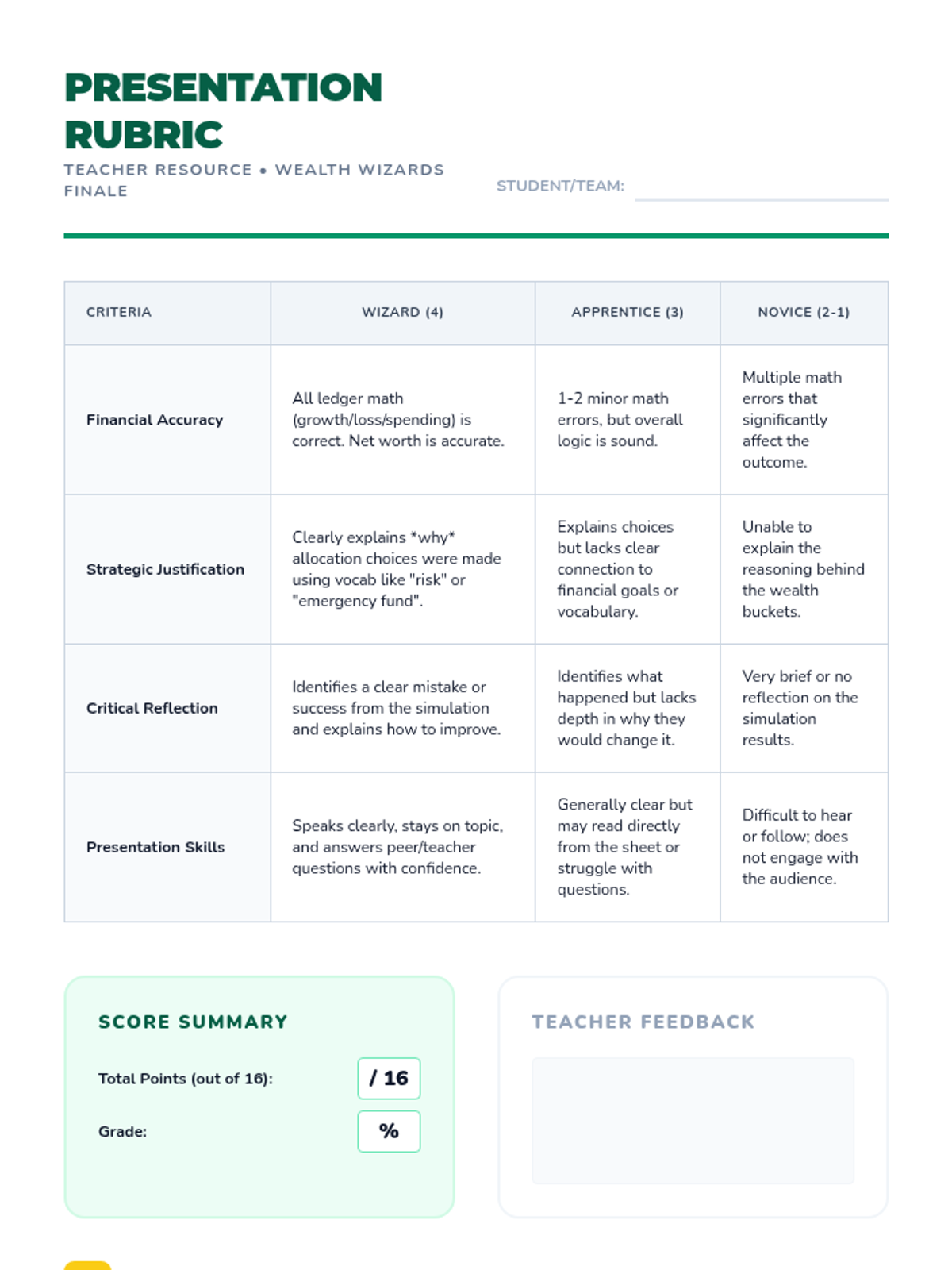
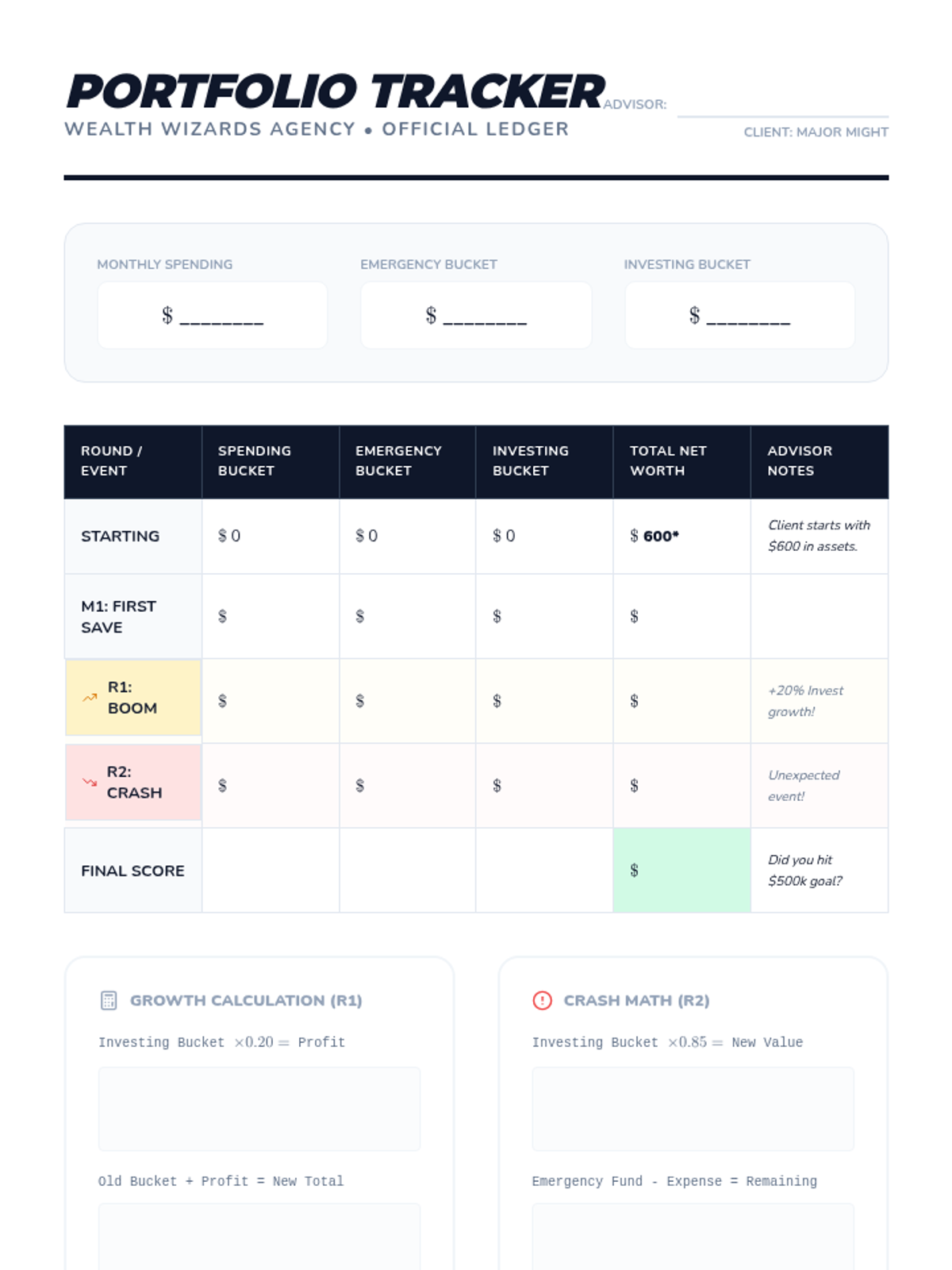
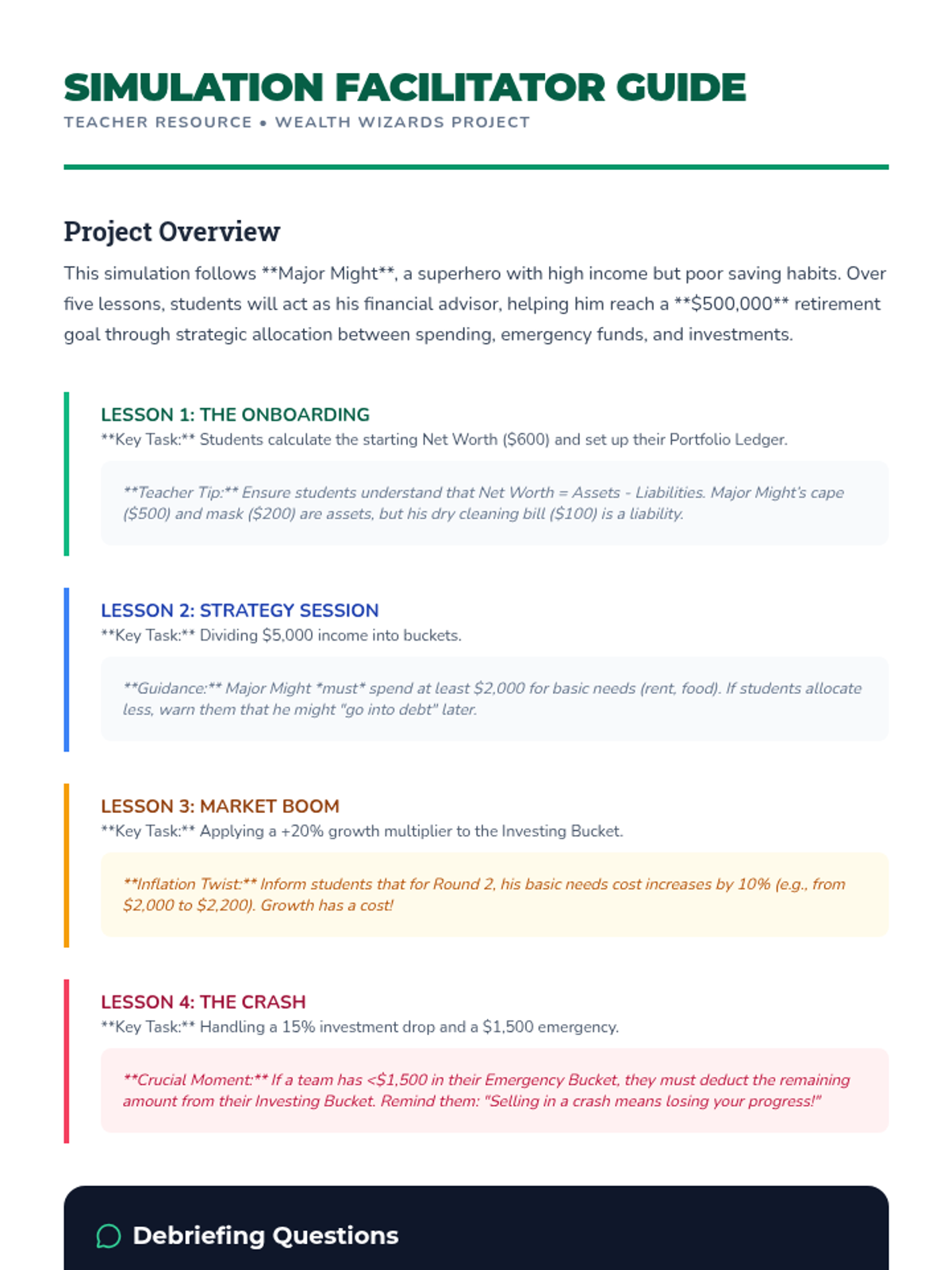
Students finalize their simulation ledgers and present a 'Future Outlook' report for their client. They reflect on what went right, what went wrong, and how the combination of saving, emergency funds, and investing affected the final outcome.
A 'Life Event' card is drawn (e.g., medical bill or job loss) combined with a market dip. Students must determine if their Emergency Fund is sufficient or if they need to sell investments at a loss. This reinforces the protective role of liquid savings and asset allocation.
The teacher introduces a 'Market Boom' event where investments grow, but inflation rises. Students calculate the new value of their character's portfolio and discuss the temptation to spend profits vs reinvesting.
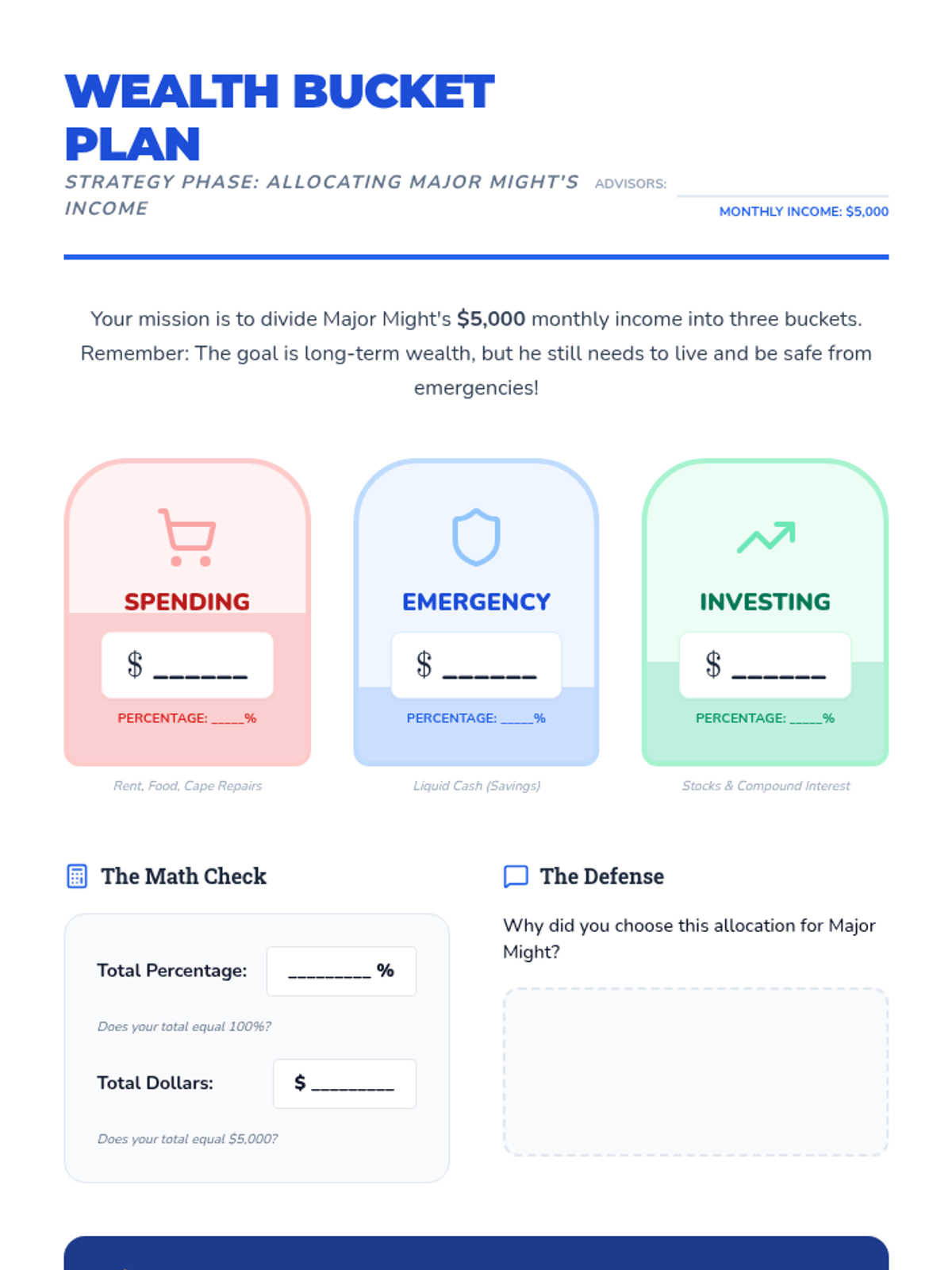
Student teams decide how to split their character's monthly income between spending, an emergency fund, and investments. They must justify their percentages based on the character's goals. They create a visual 'Wealth Bucket' plan for the character.
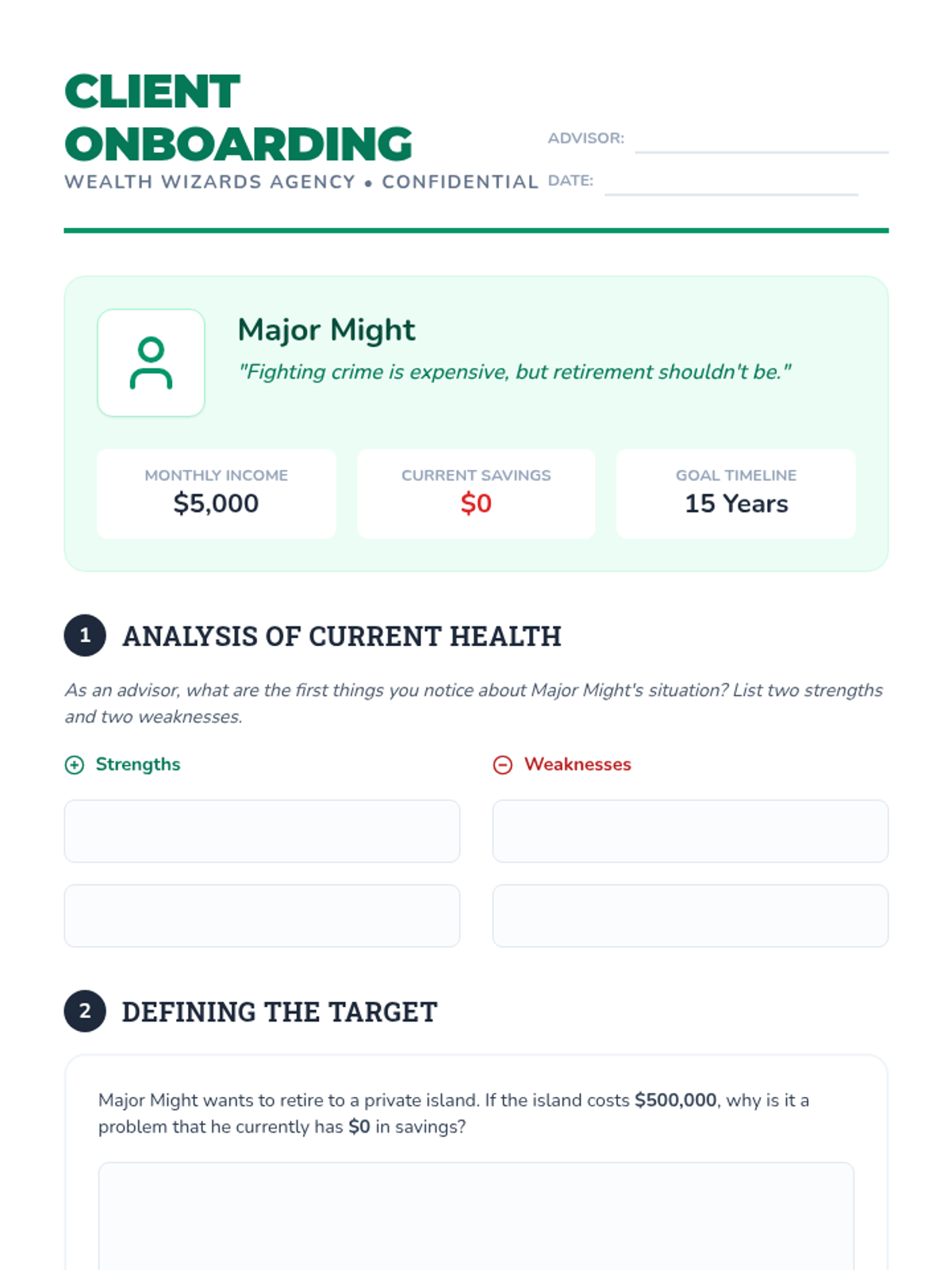
Students are introduced to their roles as financial advisors. They meet their fictional clients, analyze their current financial standing, and set up the tracking systems for the simulation.
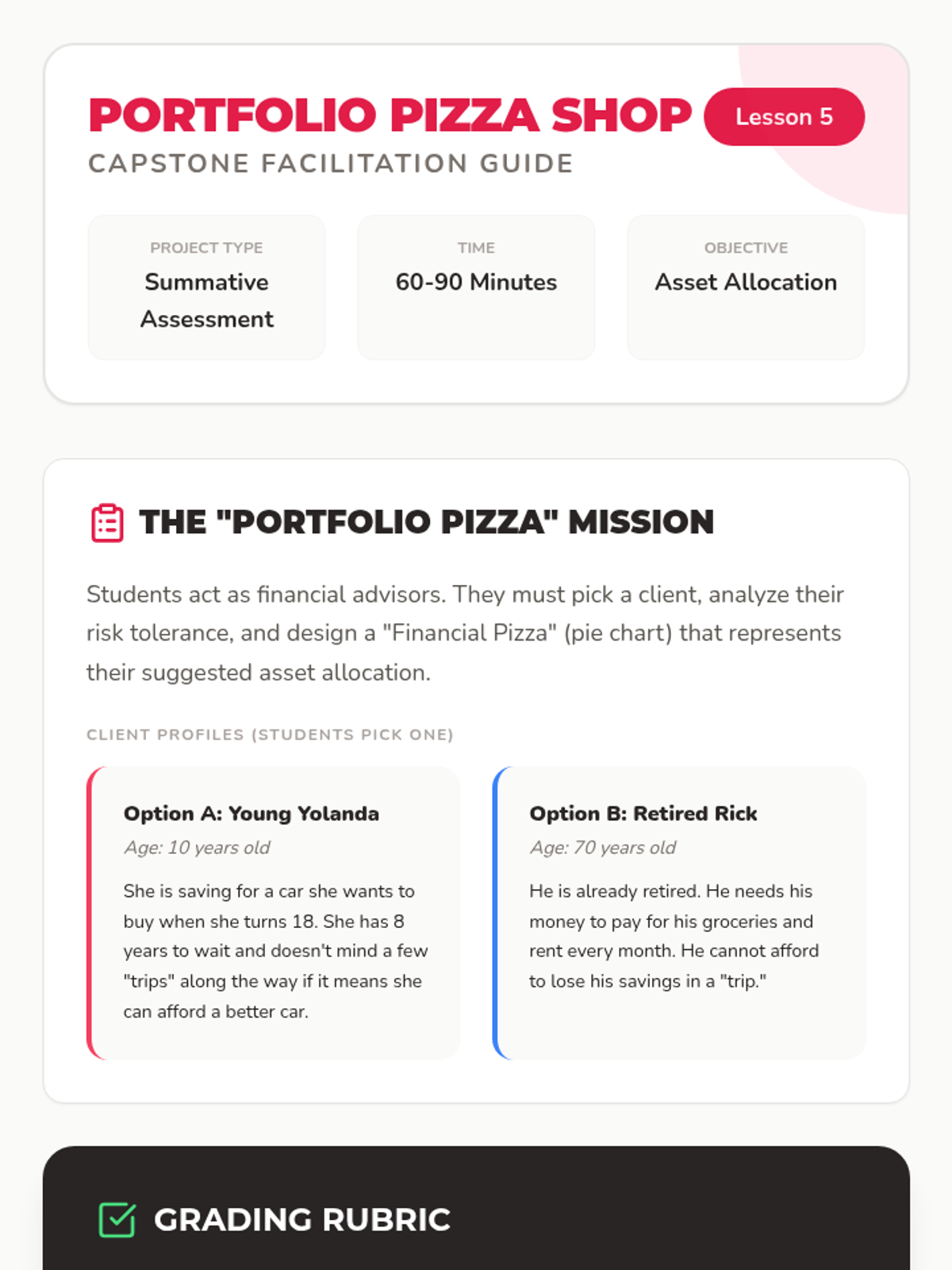
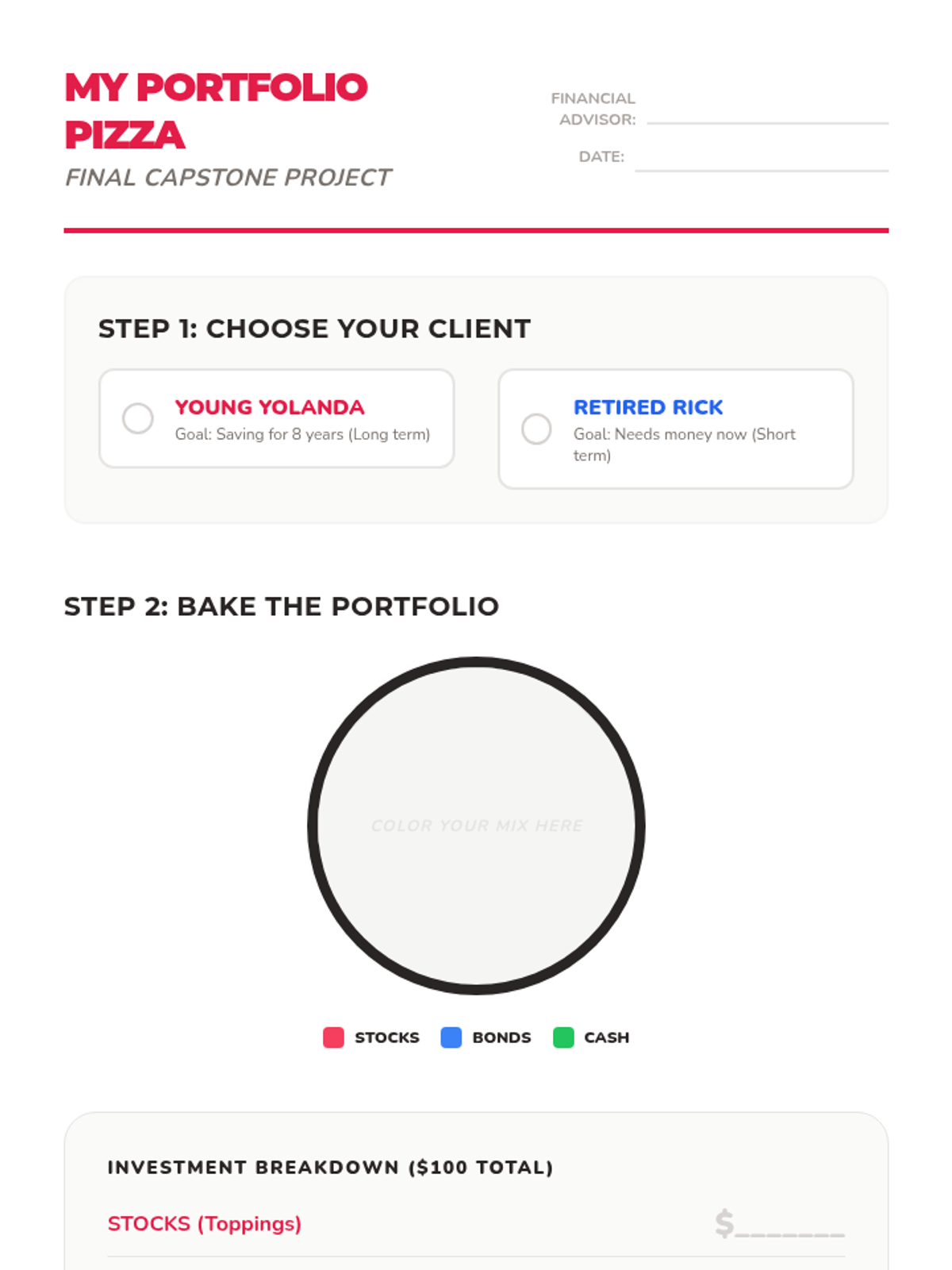
In this capstone project, students apply their knowledge to design a balanced asset allocation (a 'Pizza Portfolio') based on specific financial goals and risk tolerances.
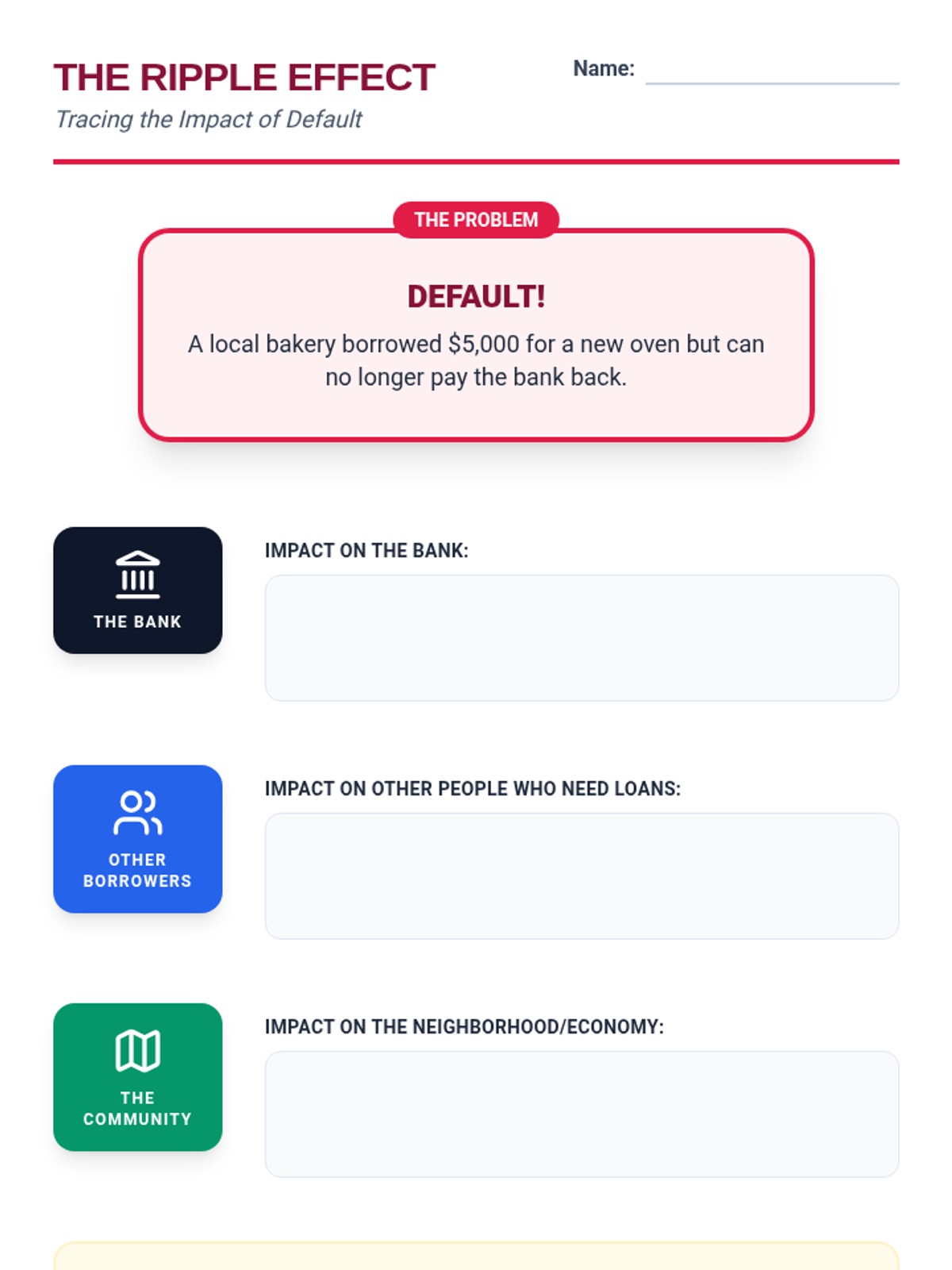
Students analyze the consequences of loan default, including collateral and the impact on the banking system's stability.
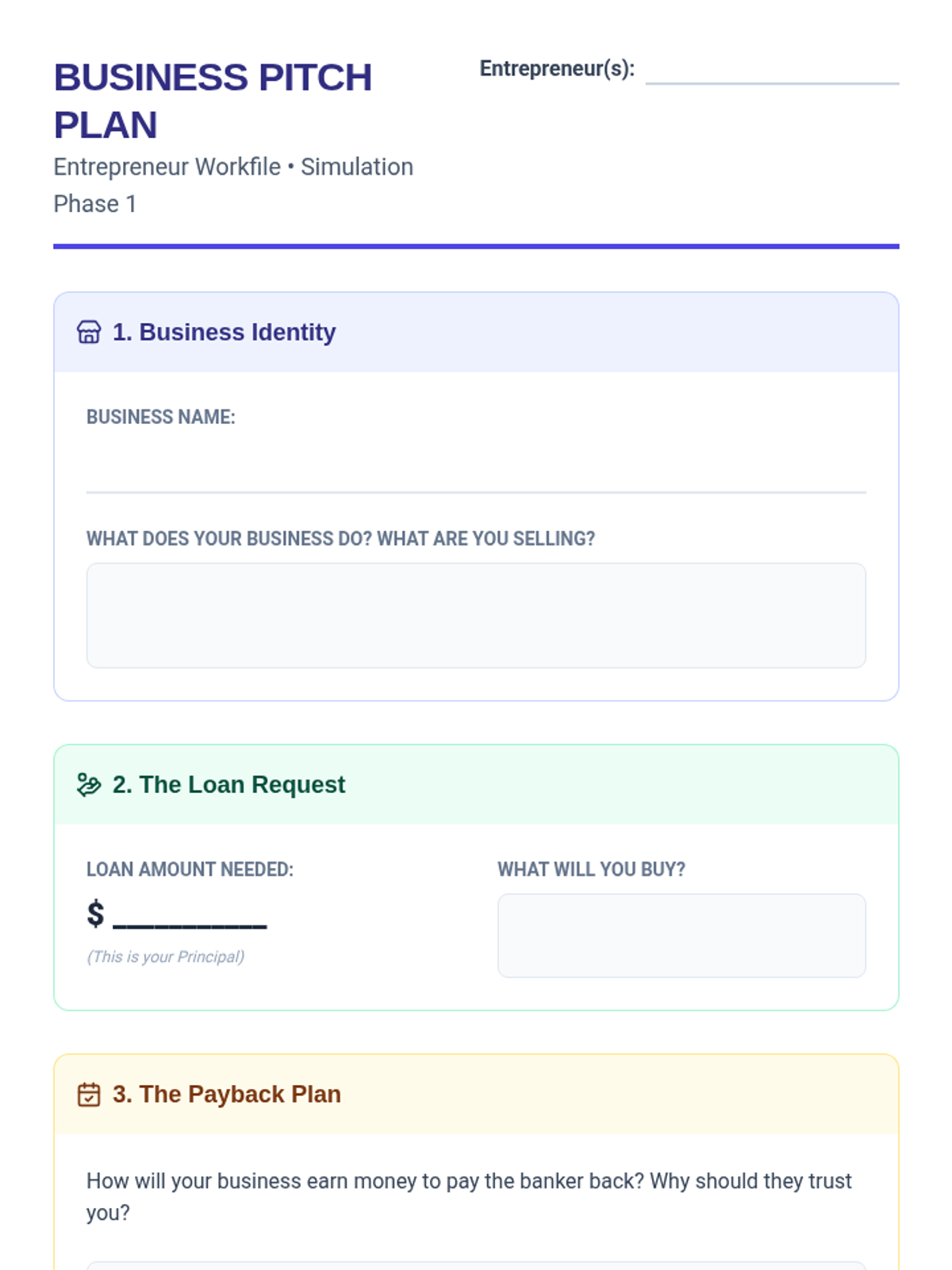
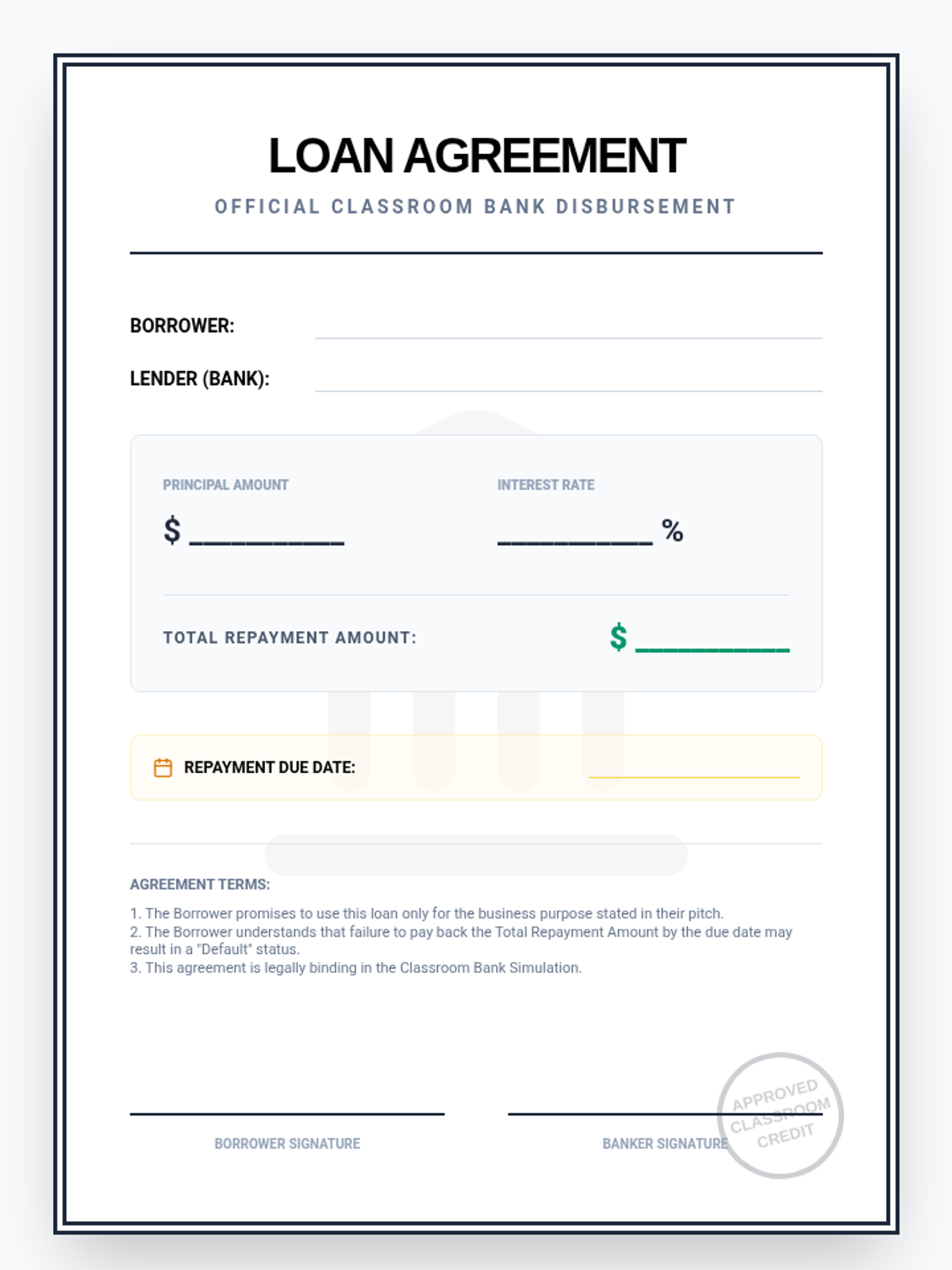
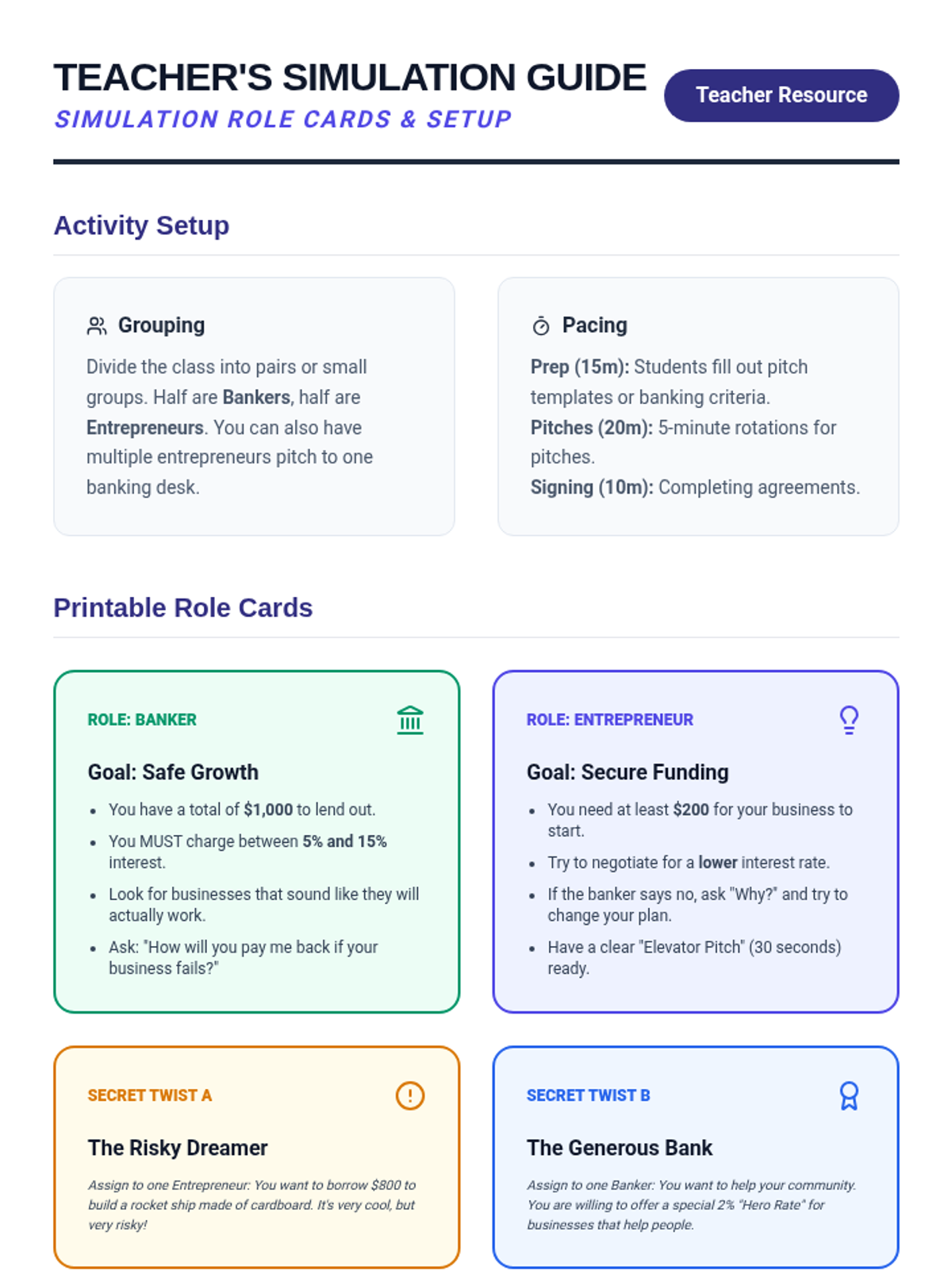
An immersive simulation where students role-play as entrepreneurs pitching business ideas and bankers setting loan terms.
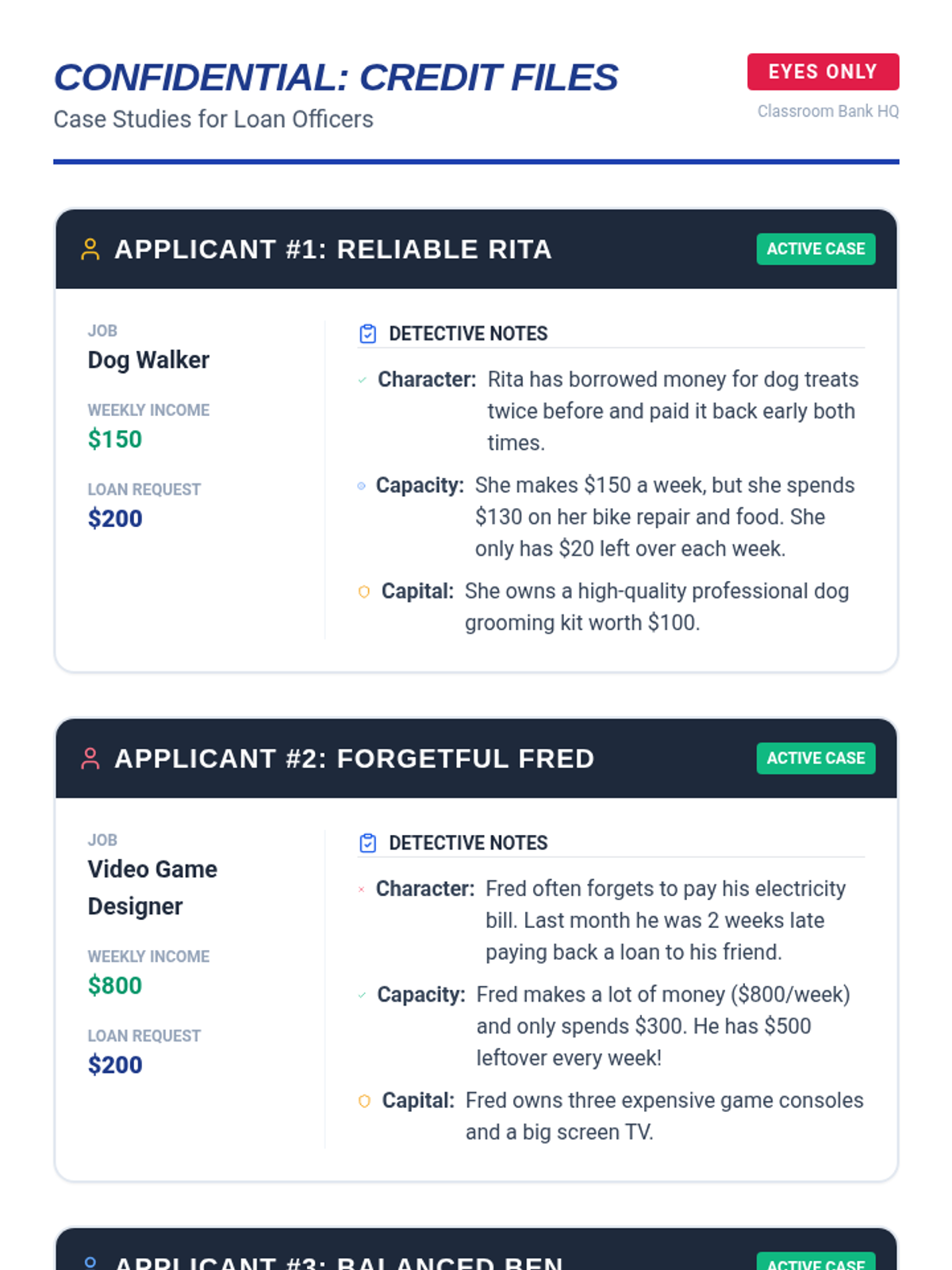
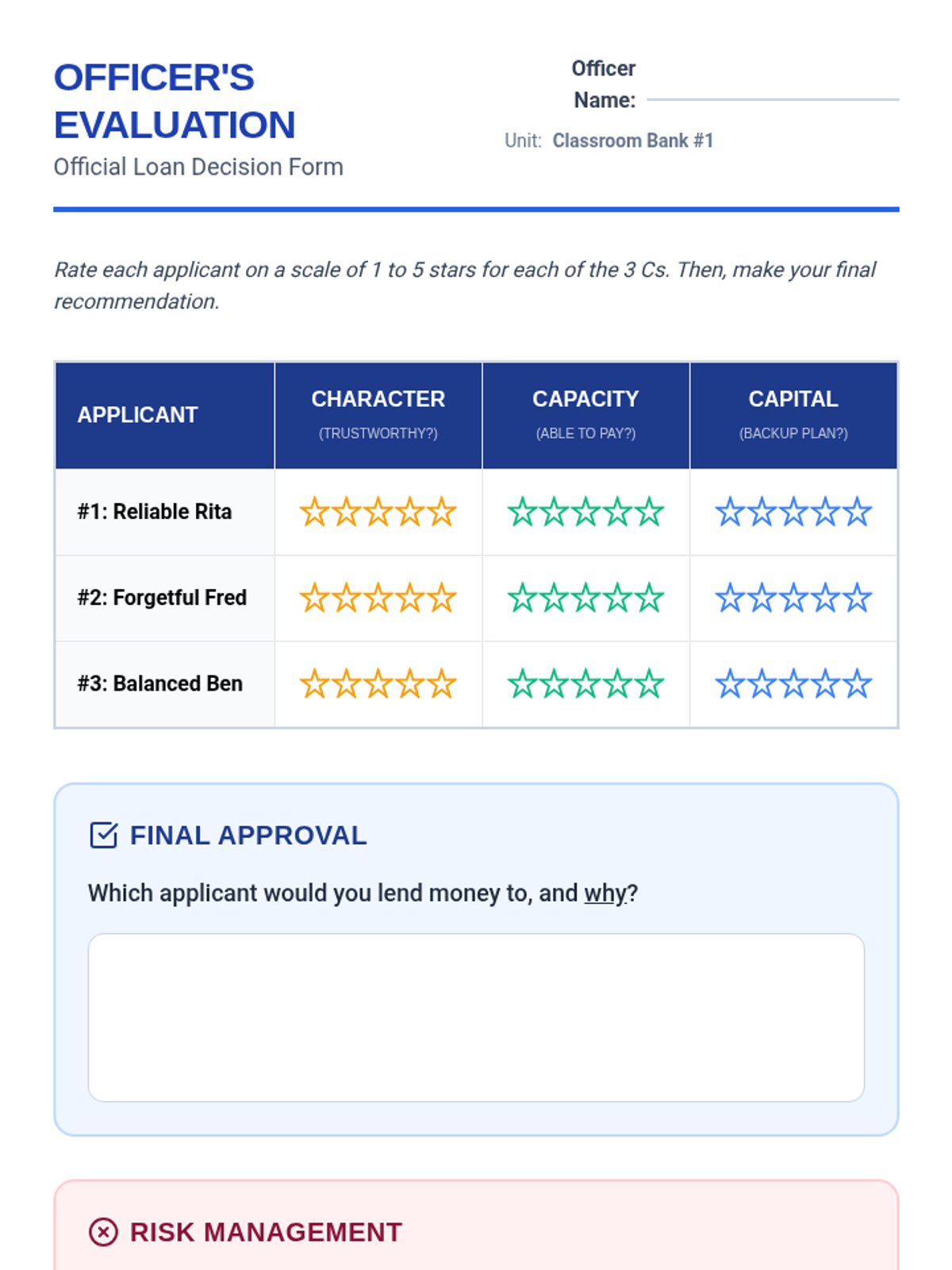
Students act as loan officers to evaluate fictional credit reports, applying the 'Three Cs' (Character, Capacity, Capital) to determine risk.
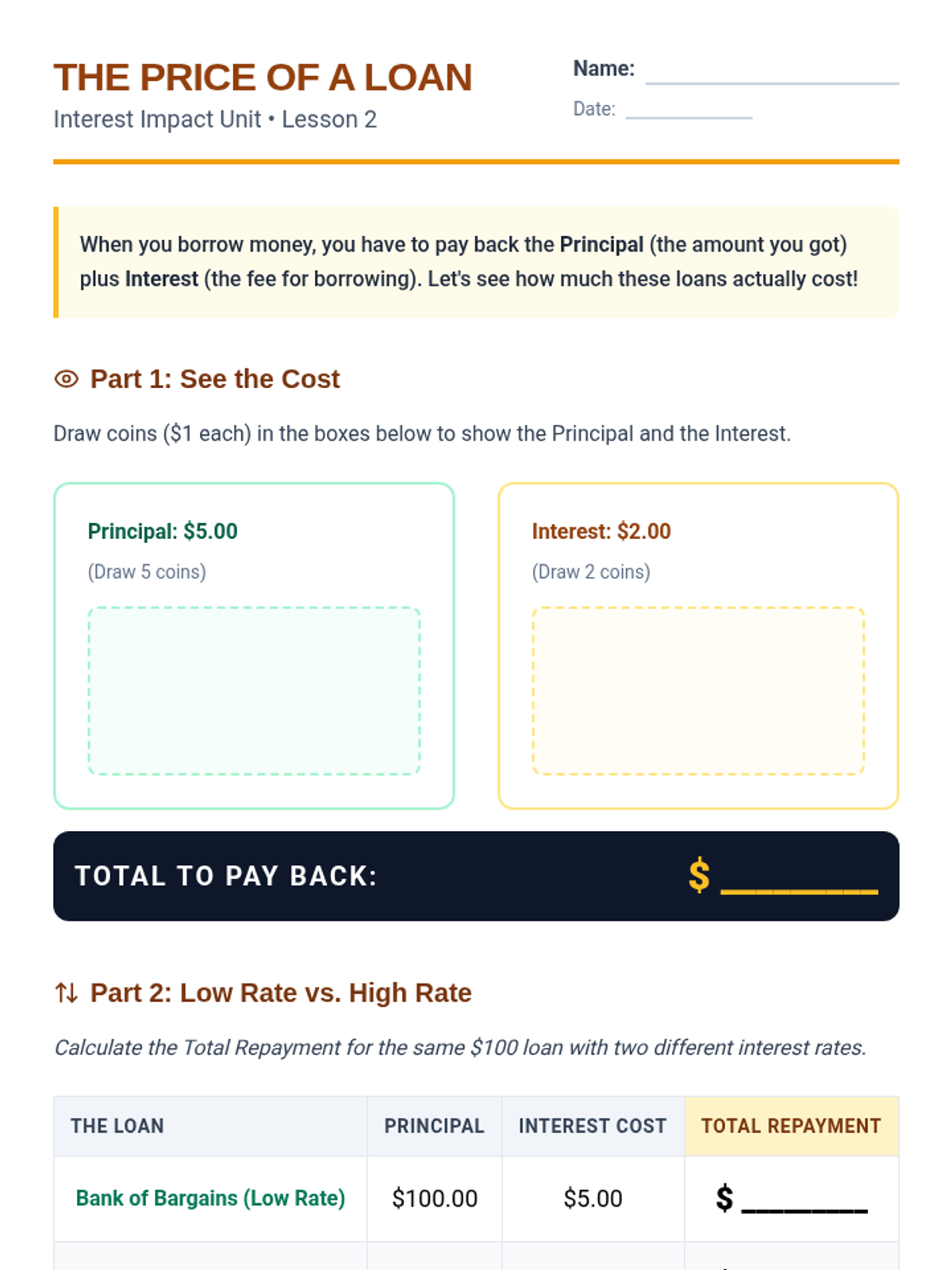
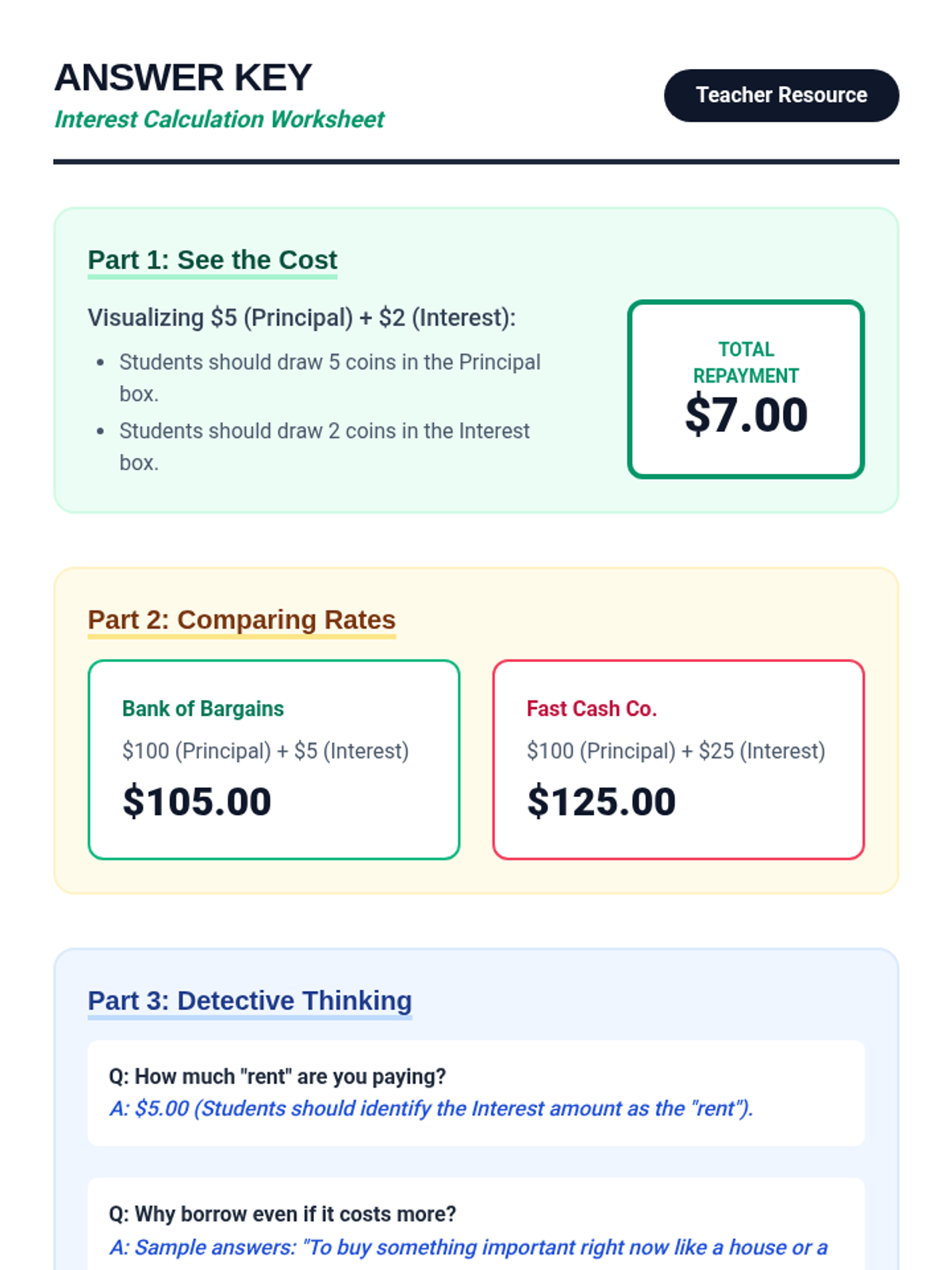
Through manipulatives and visual aids, students explore how interest makes borrowing expensive and compare low vs. high interest rates.
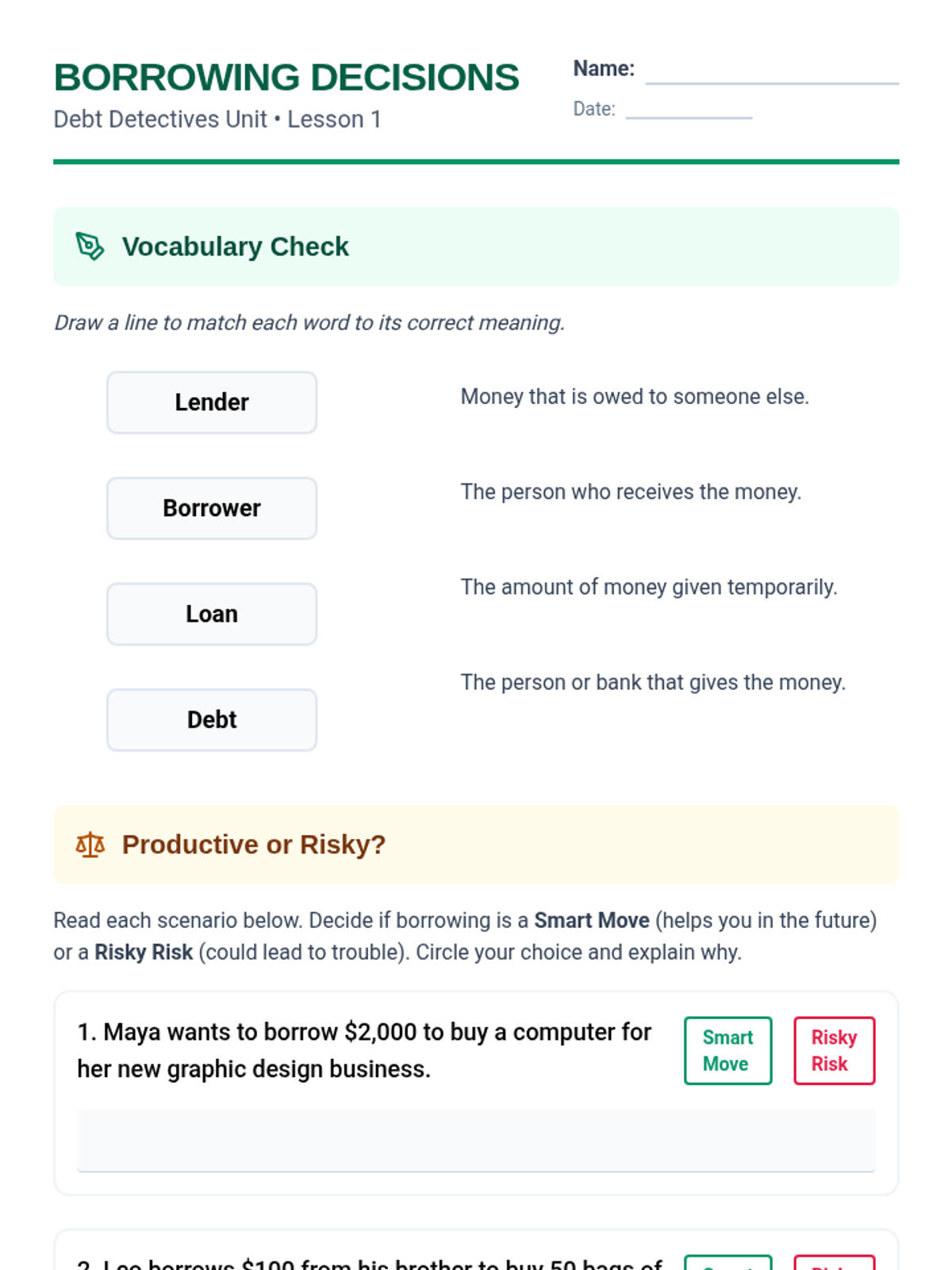
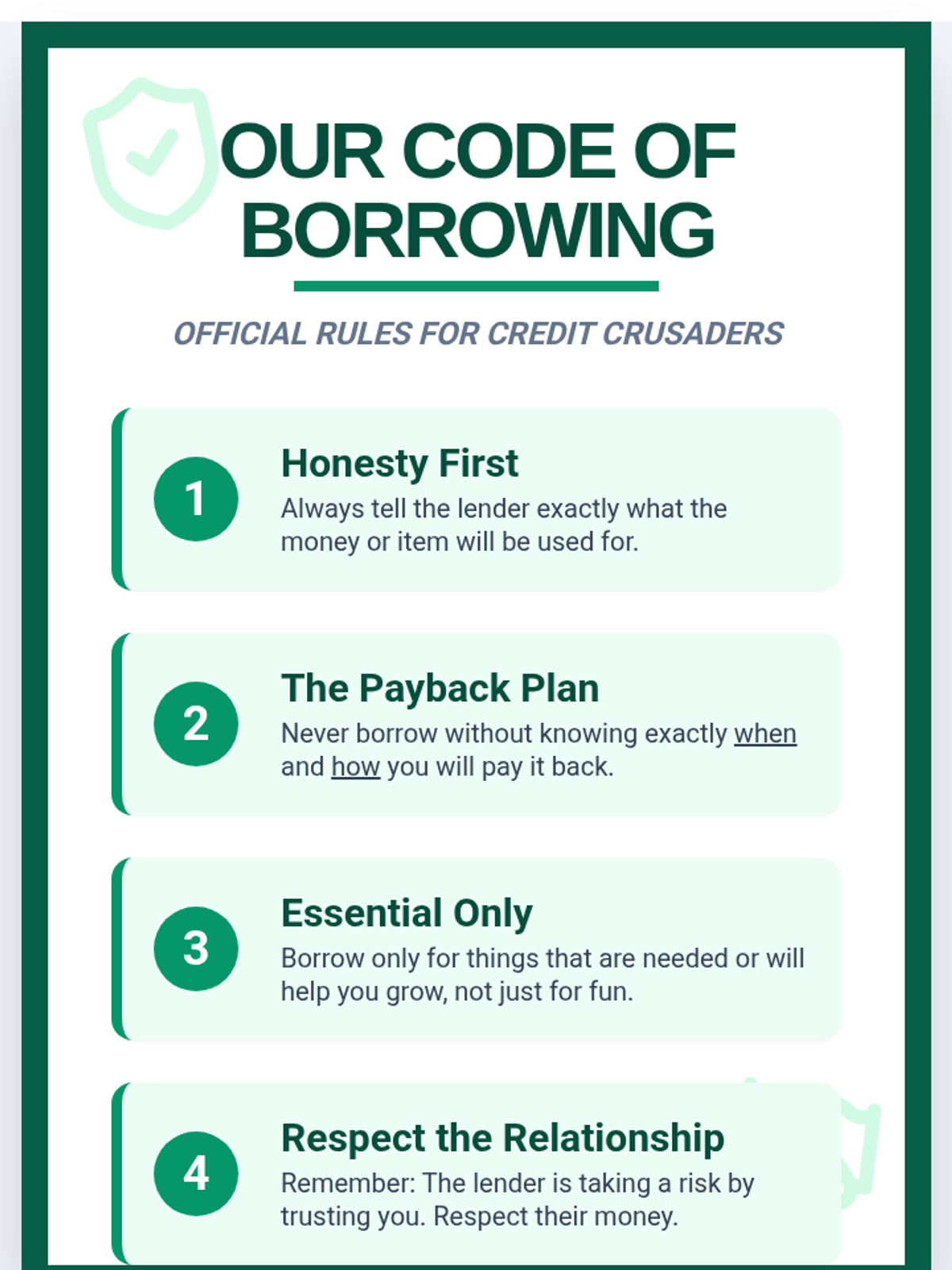
Students define lender, borrower, loan, and debt through scenarios, distinguishing between productive and risky borrowing to create a classroom 'Code of Borrowing'.
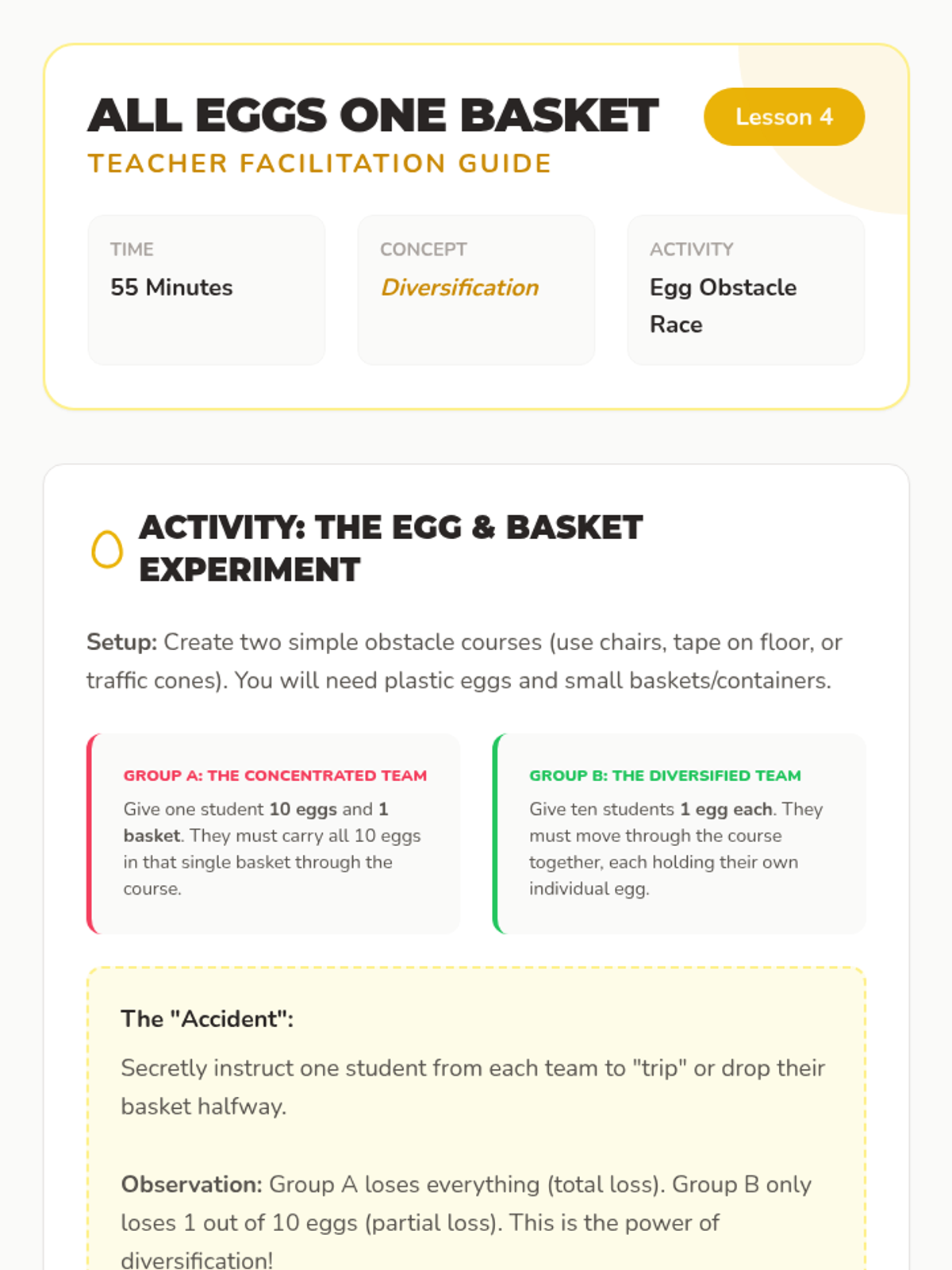
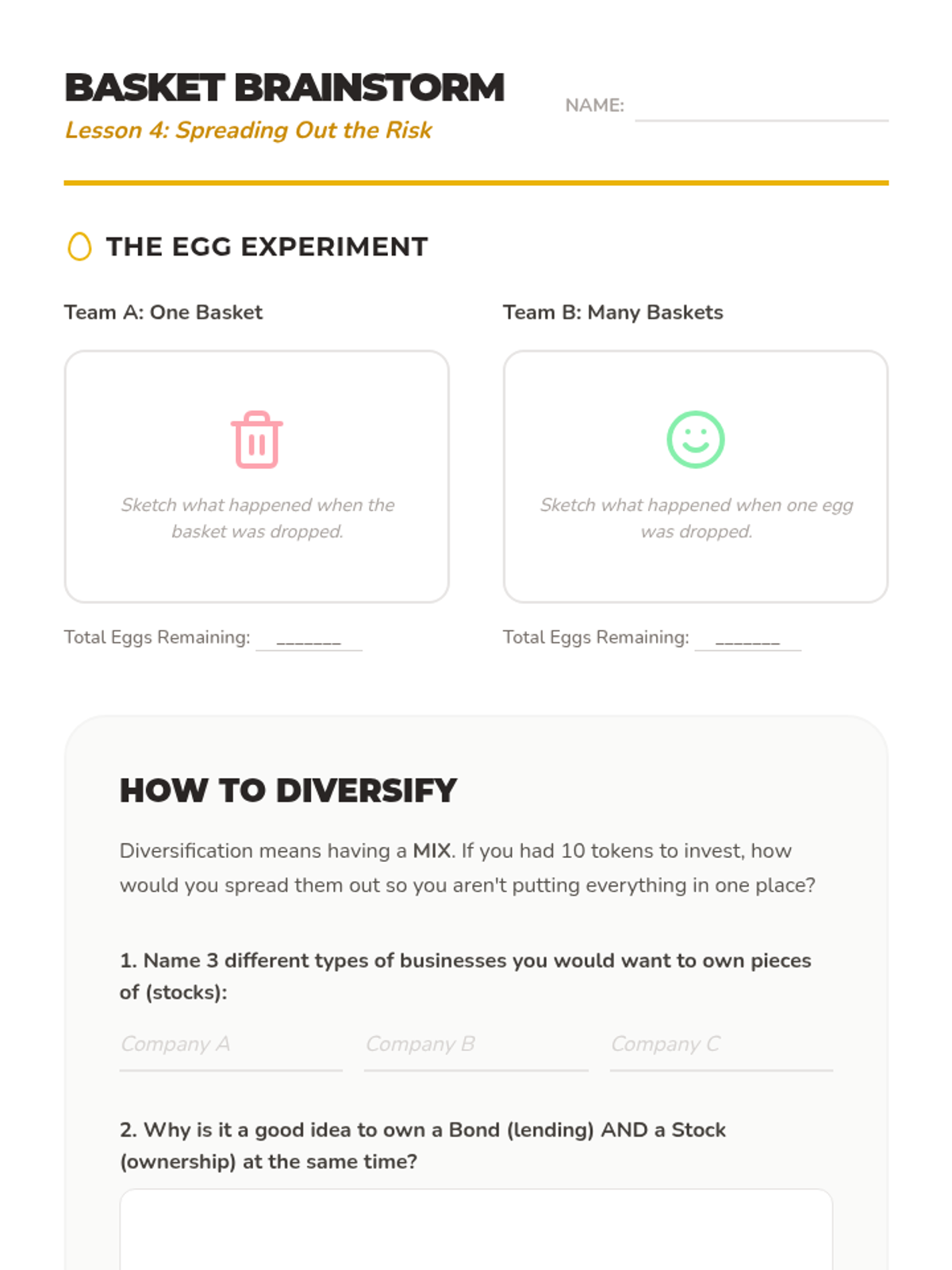
Through a physical metaphor of carrying eggs, students discover diversification and how spreading investments across different 'baskets' reduces risk.
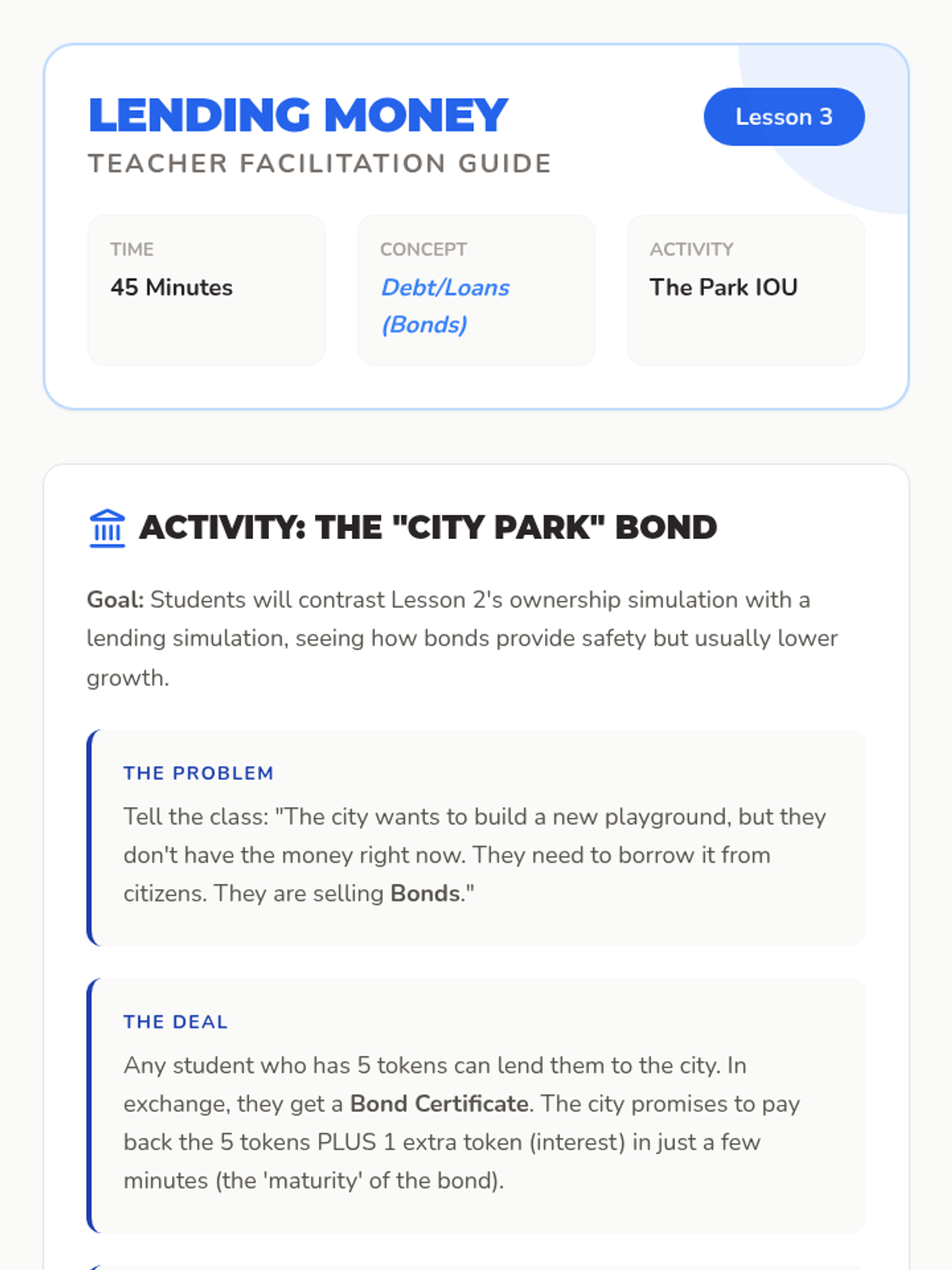
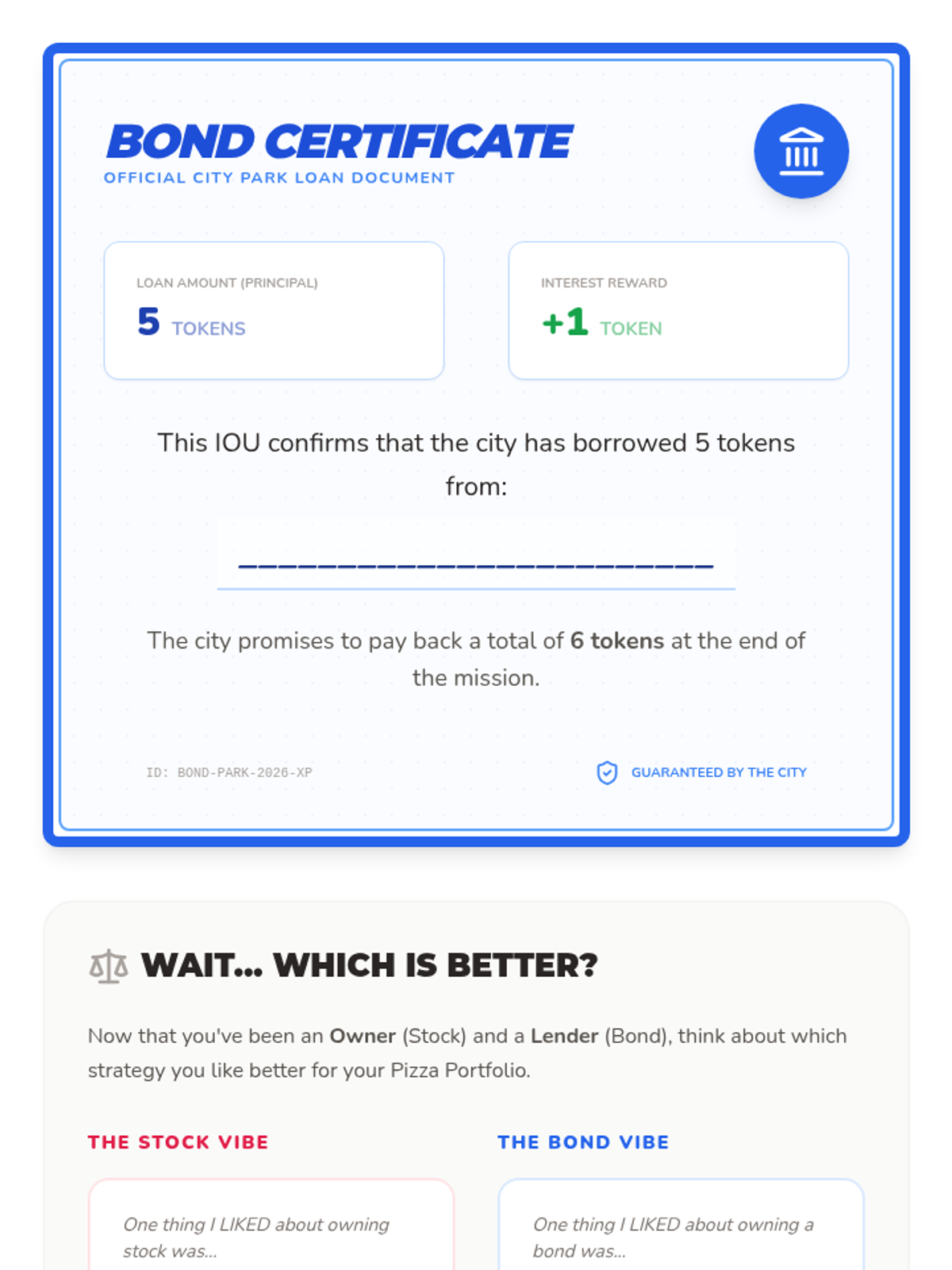
Students contrast ownership with lending by exploring bonds as loans to the government, understanding the trade-off between safety and growth.
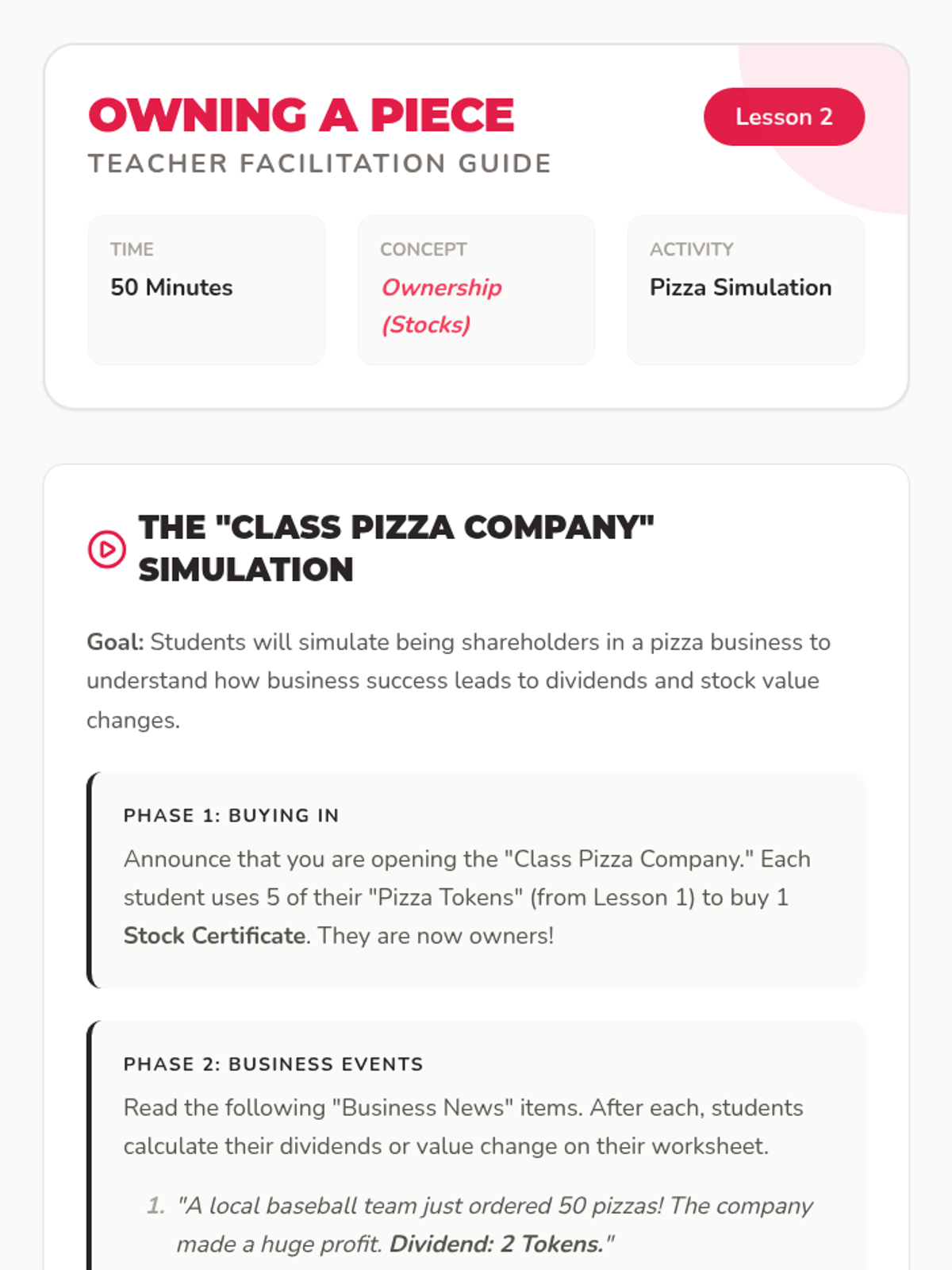
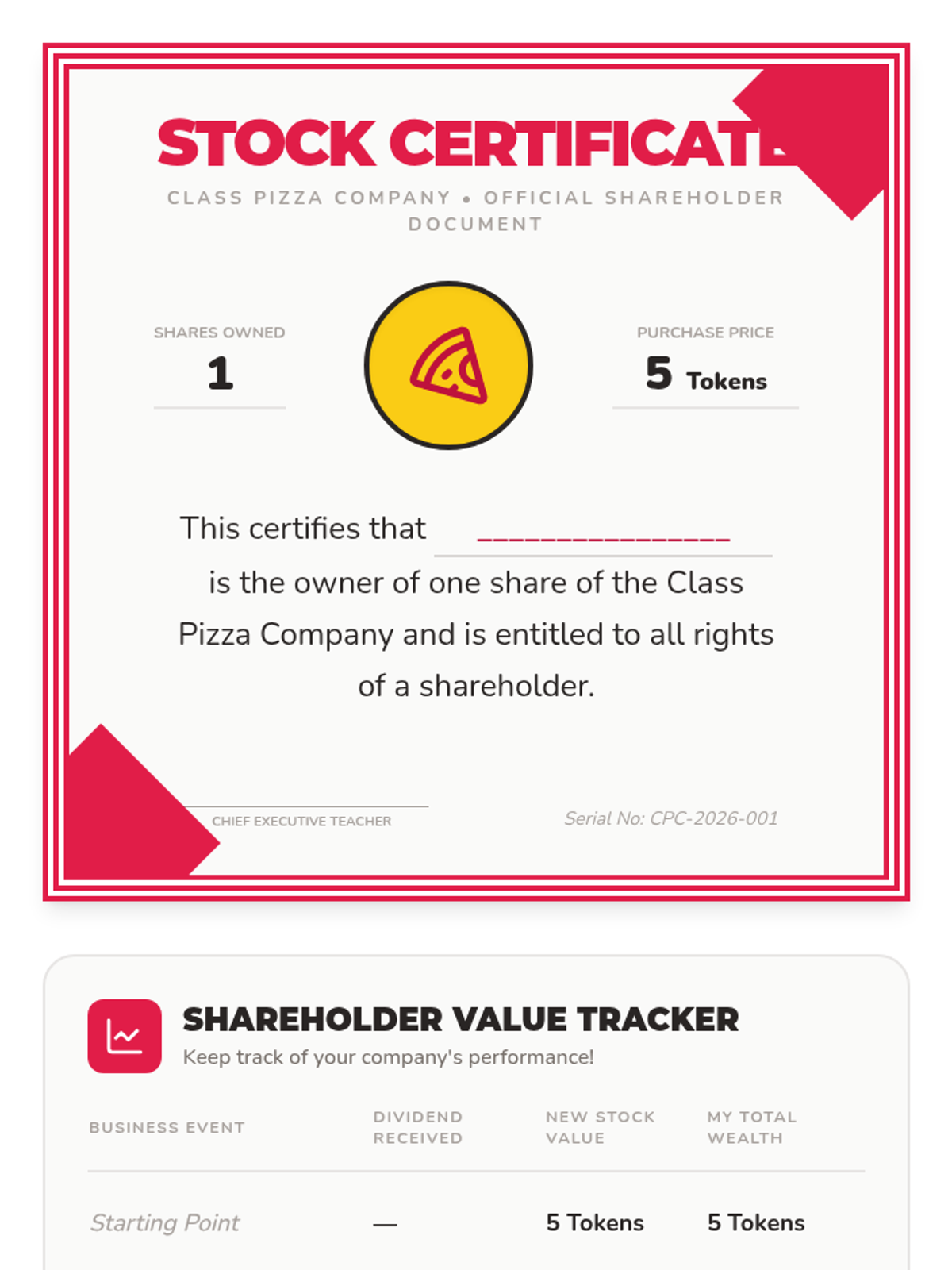
An introduction to stock ownership where students become 'shareholders' in the Class Pizza Company, learning how profits and business performance affect value.
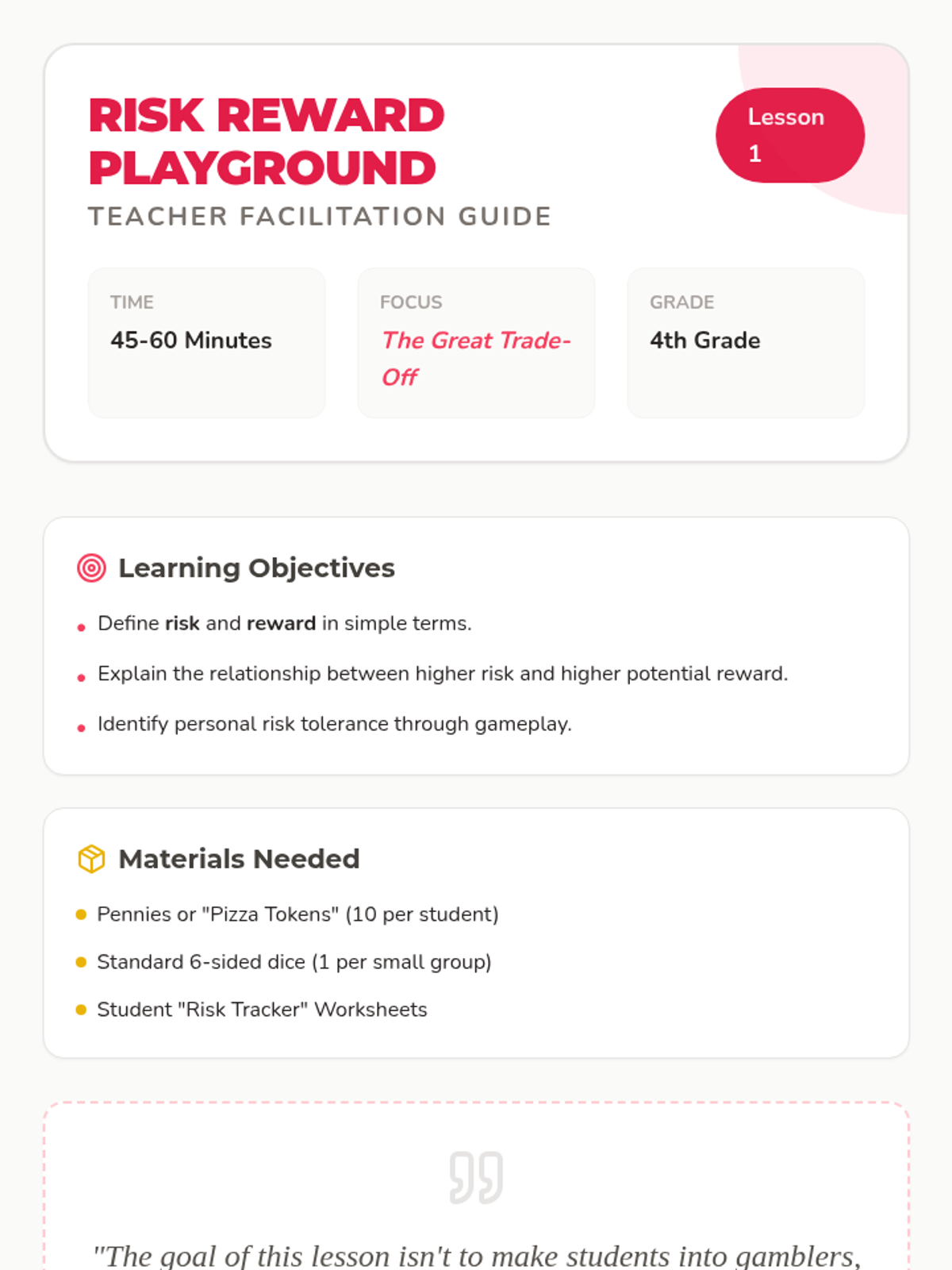
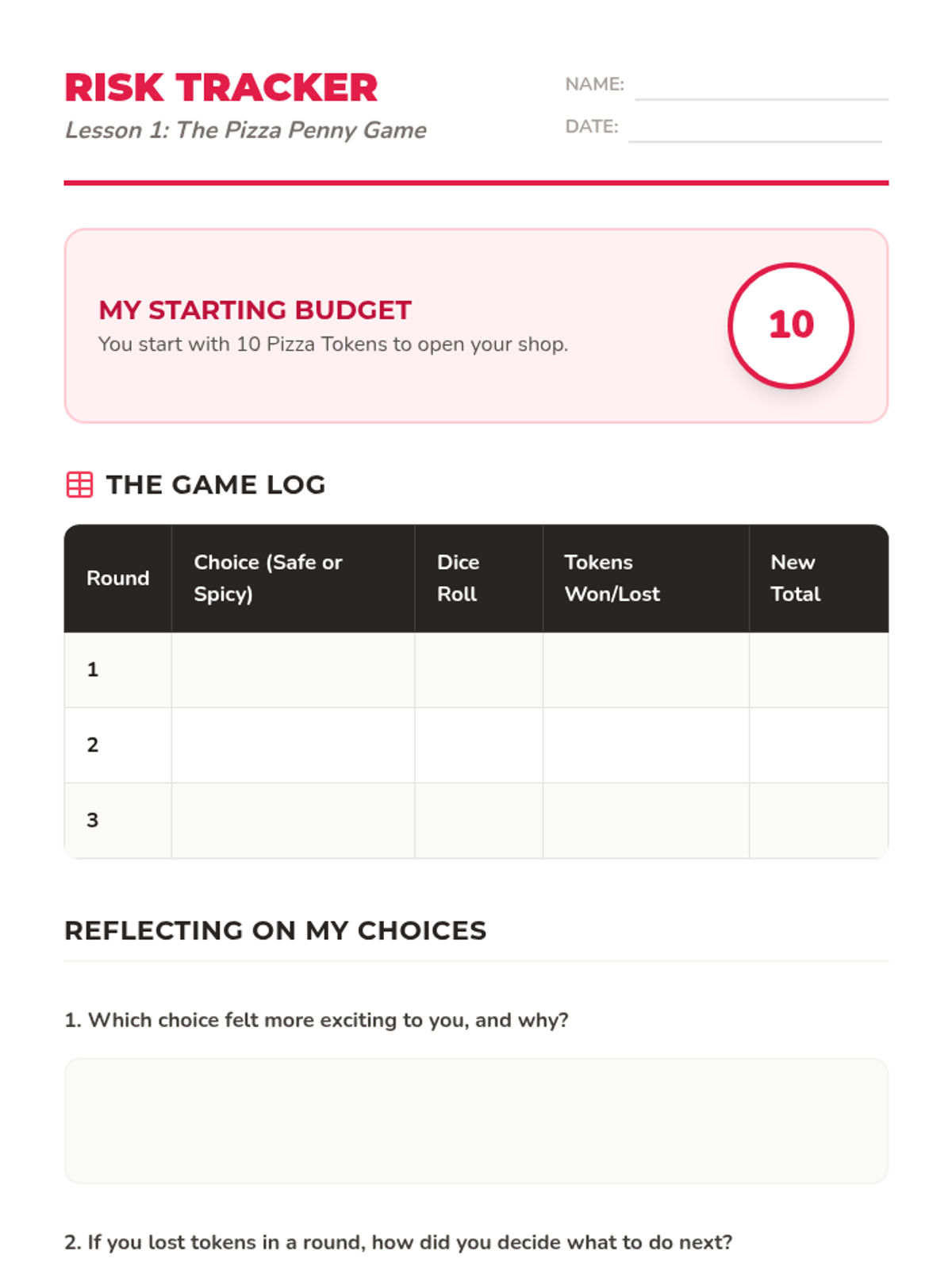
Students explore the emotional and logical link between risk and potential reward through interactive games of chance, establishing the foundation for investment decision-making.
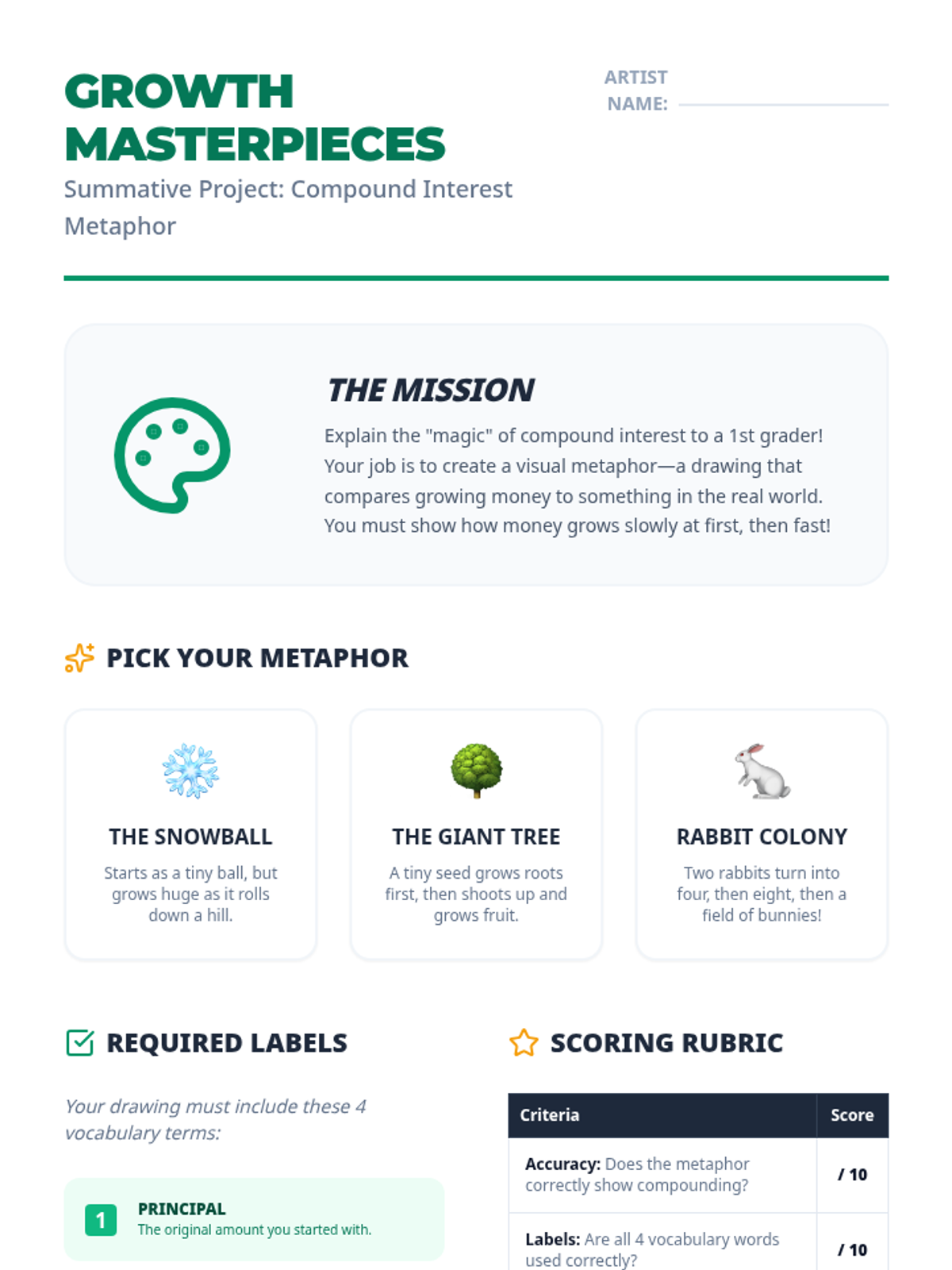
As a summative project, students create visual metaphors (like snowballs or growing trees) to explain compound interest, principal, and time to a younger audience.
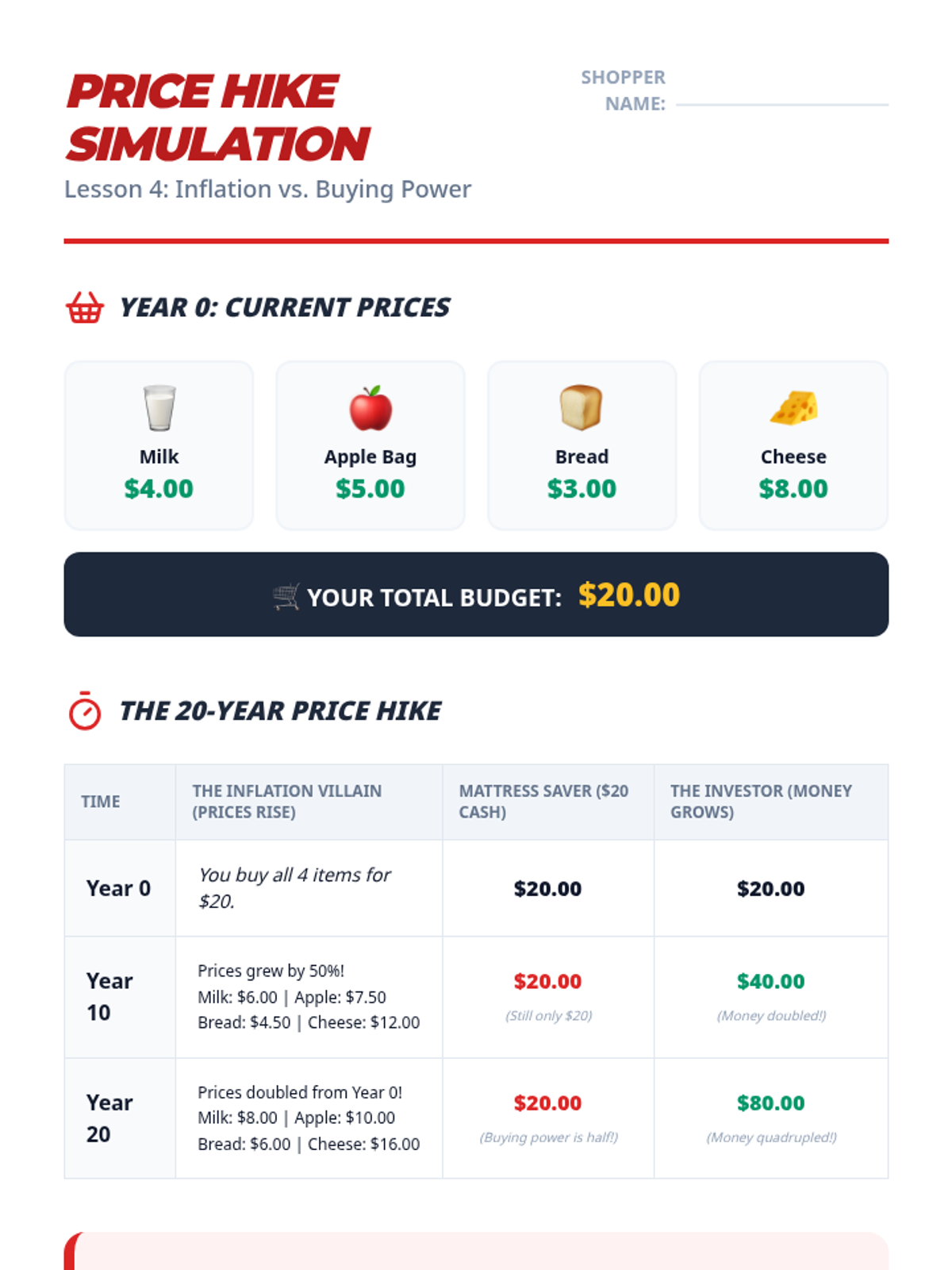
Students participate in a 'grocery store' simulation to understand how inflation reduces buying power over time and why investing is necessary to stay ahead of rising costs.
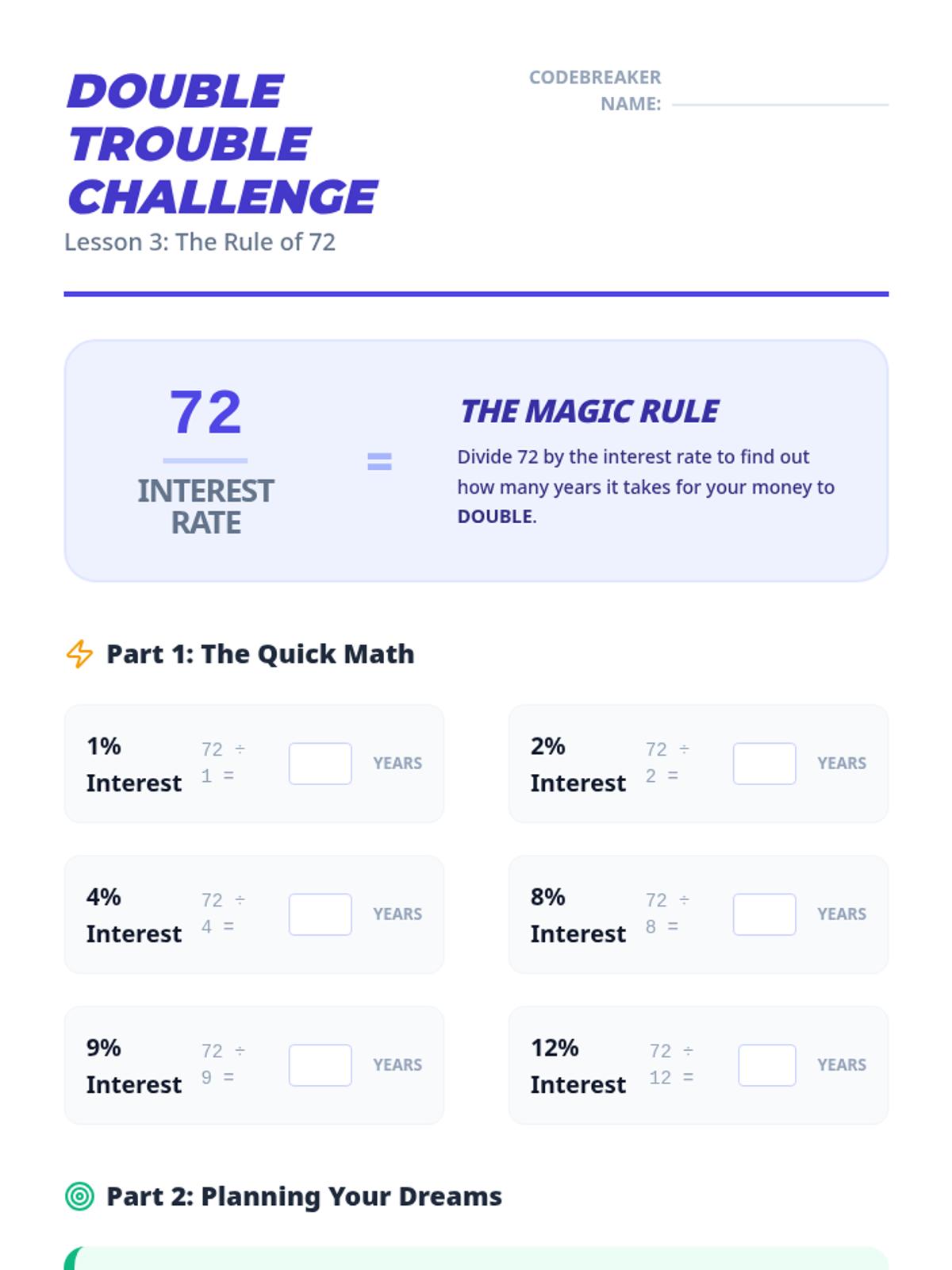
Students learn the Rule of 72 as a mental math shortcut to estimate how long it takes for money to double at different interest rates, applying their math skills to financial goals.
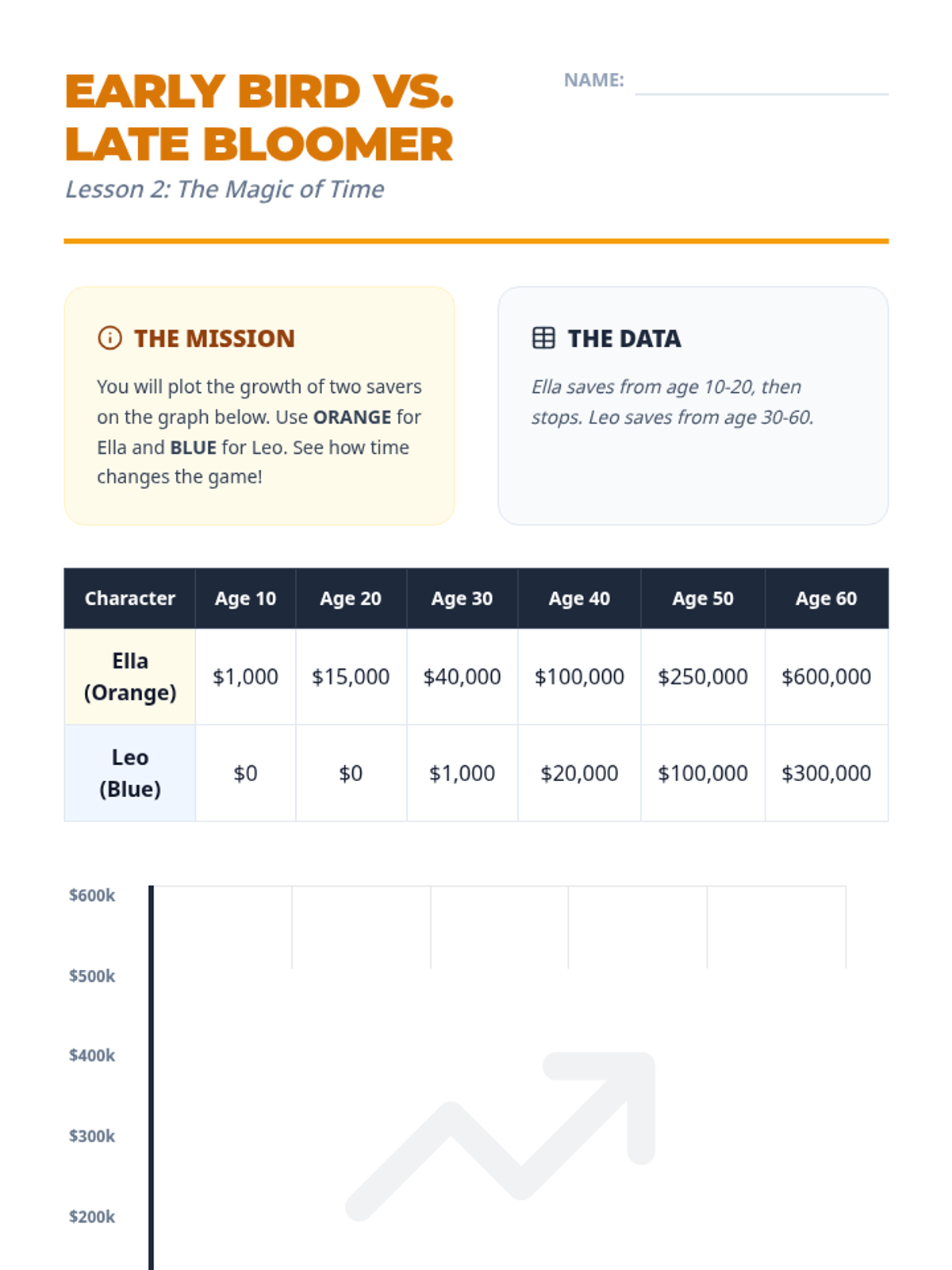
Through a comparative graphing activity, students explore the impact of time on investing, discovering why starting early is more powerful than saving larger amounts later in life.
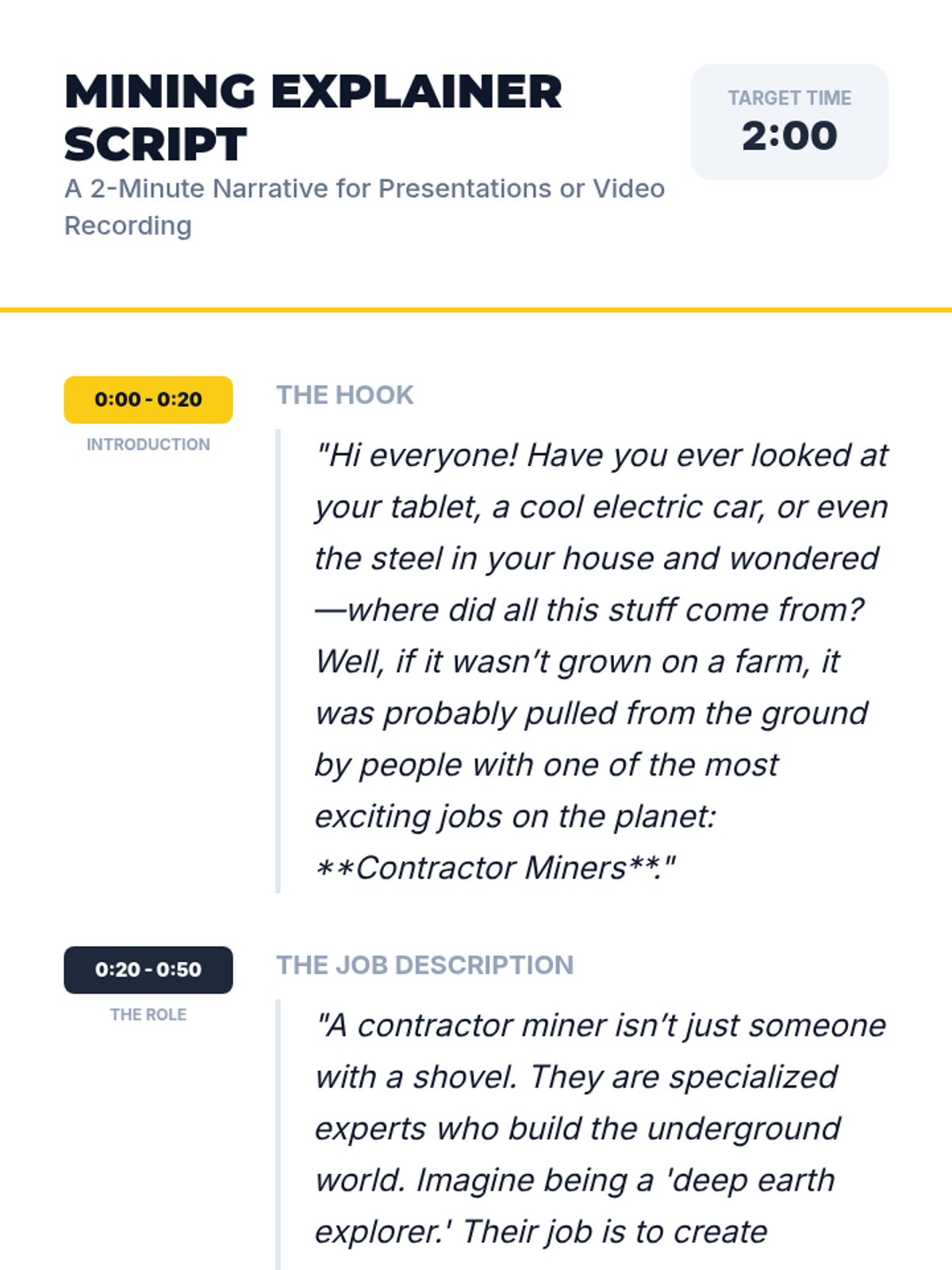
An introduction to the world of professional mining, focusing on the roles, skills, and daily life of contractor miners who work deep underground.
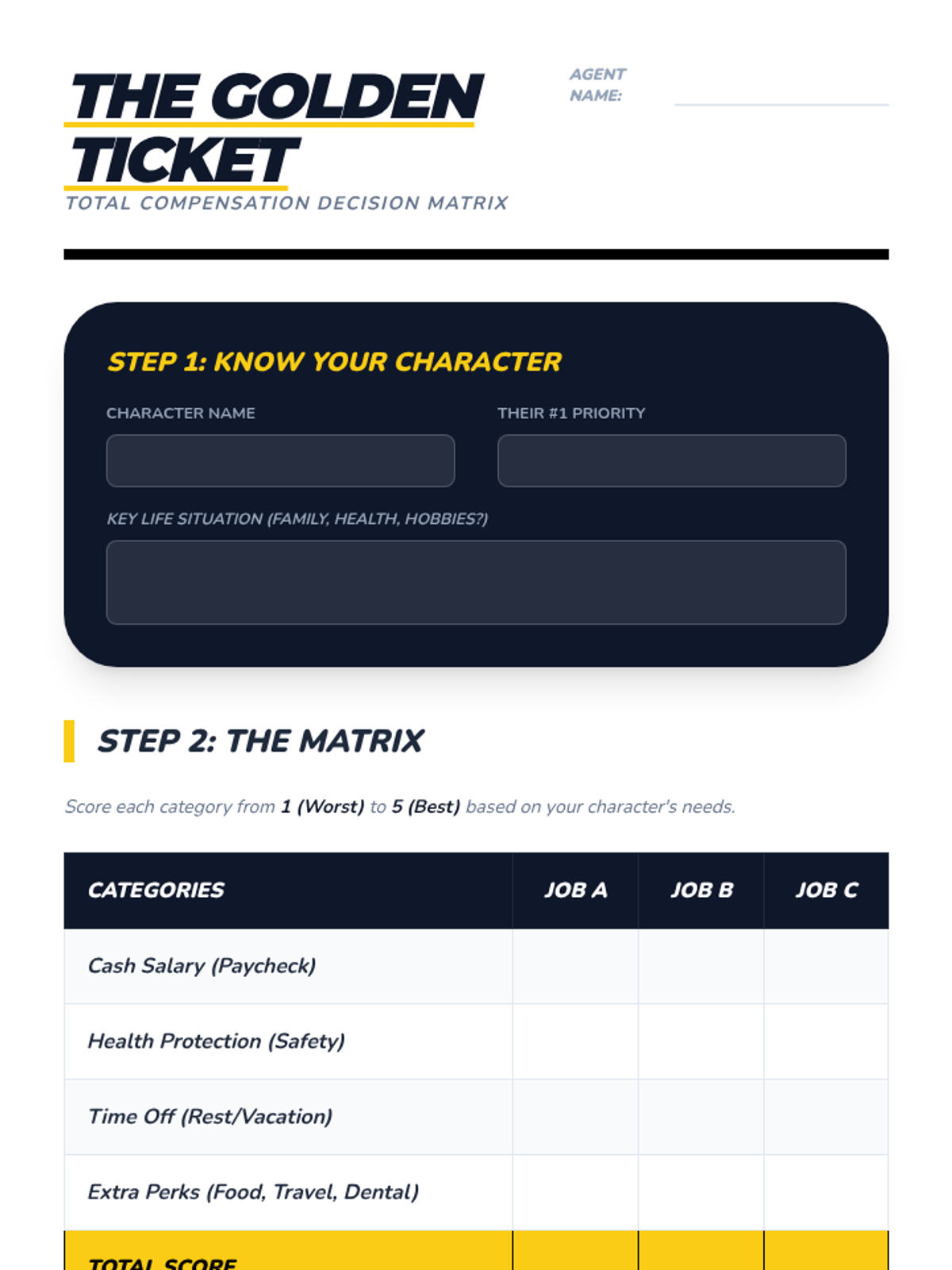
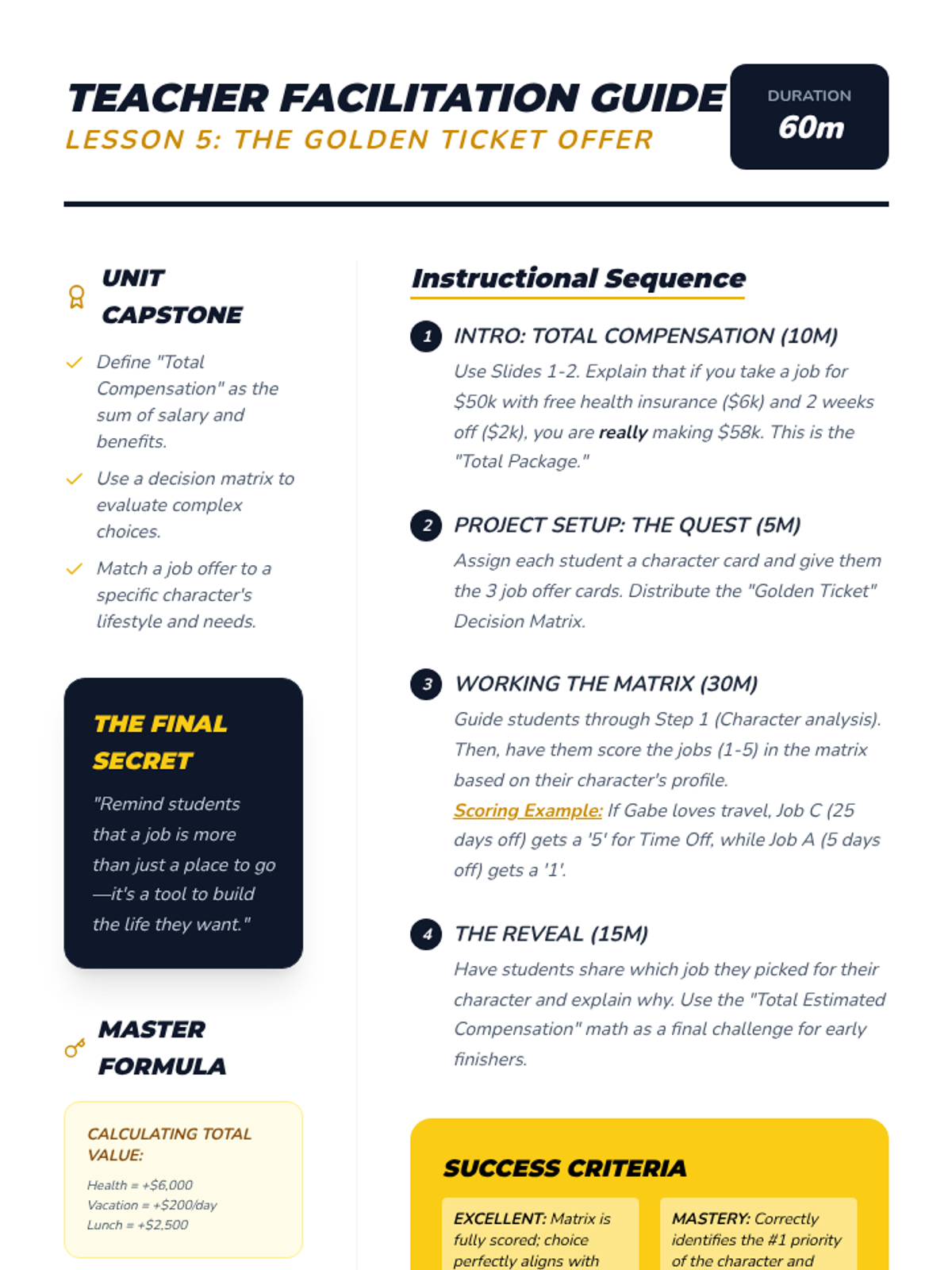
Students use a decision matrix to select a job based on a character profile, calculating total compensation value.
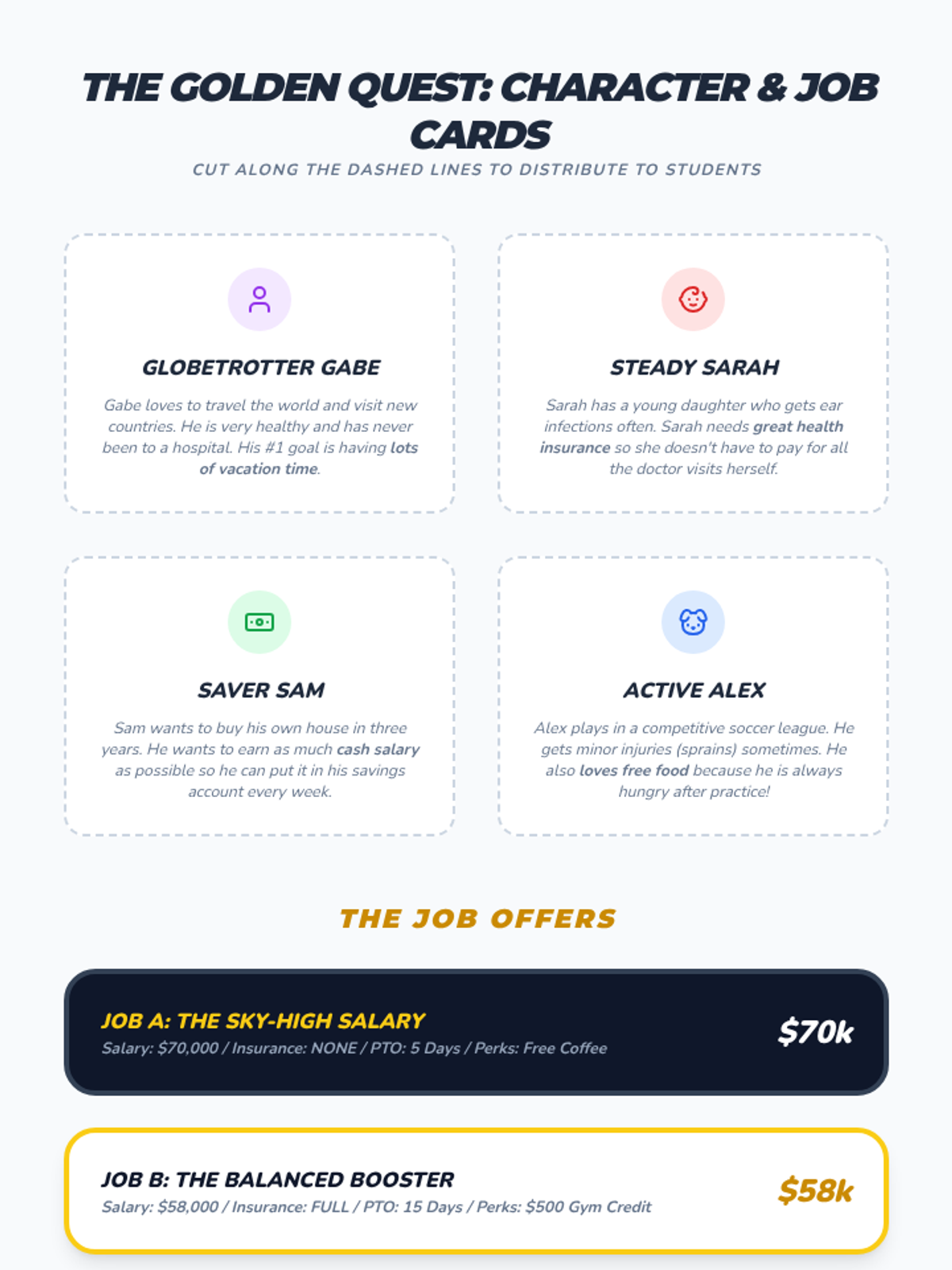
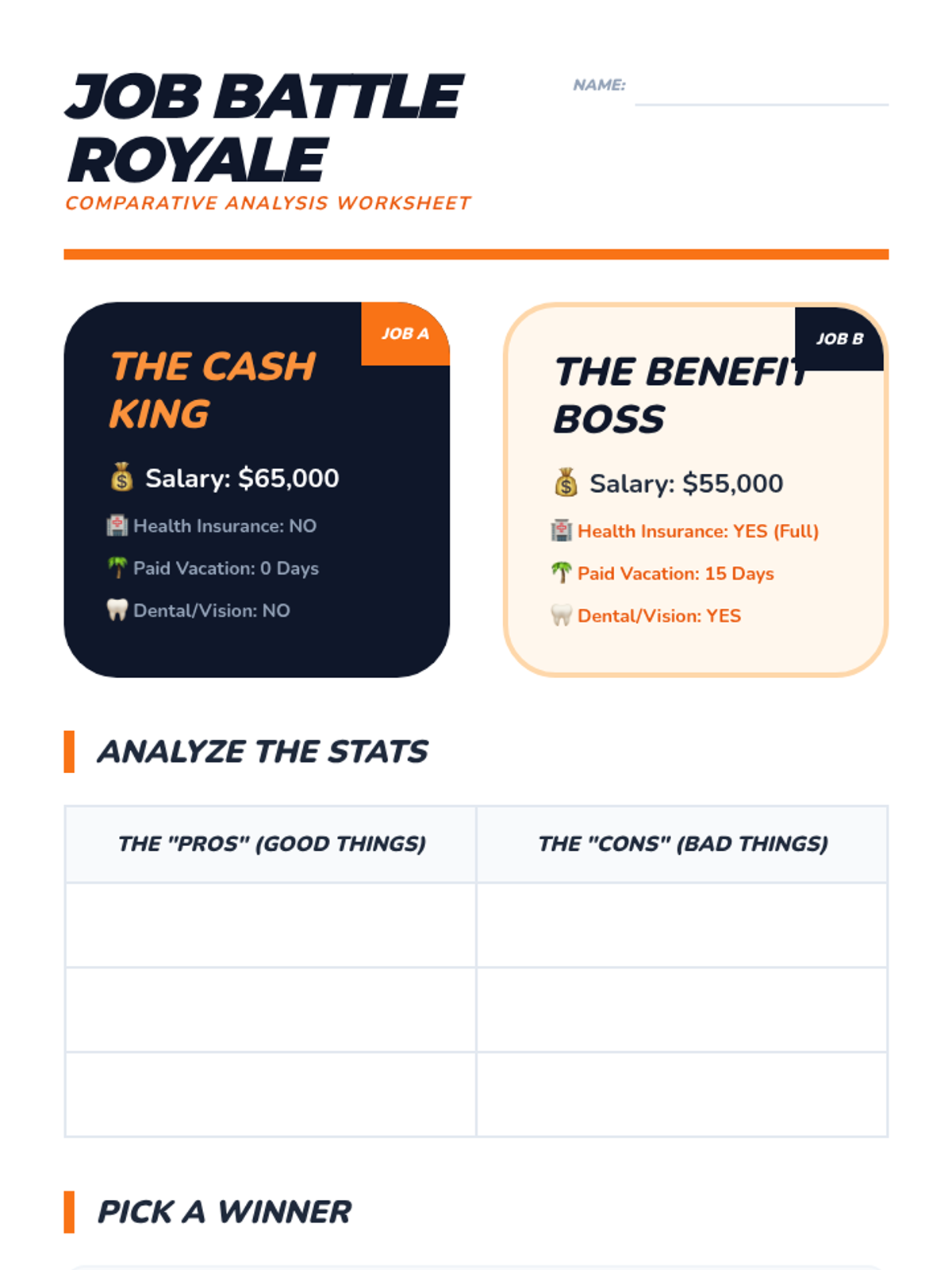
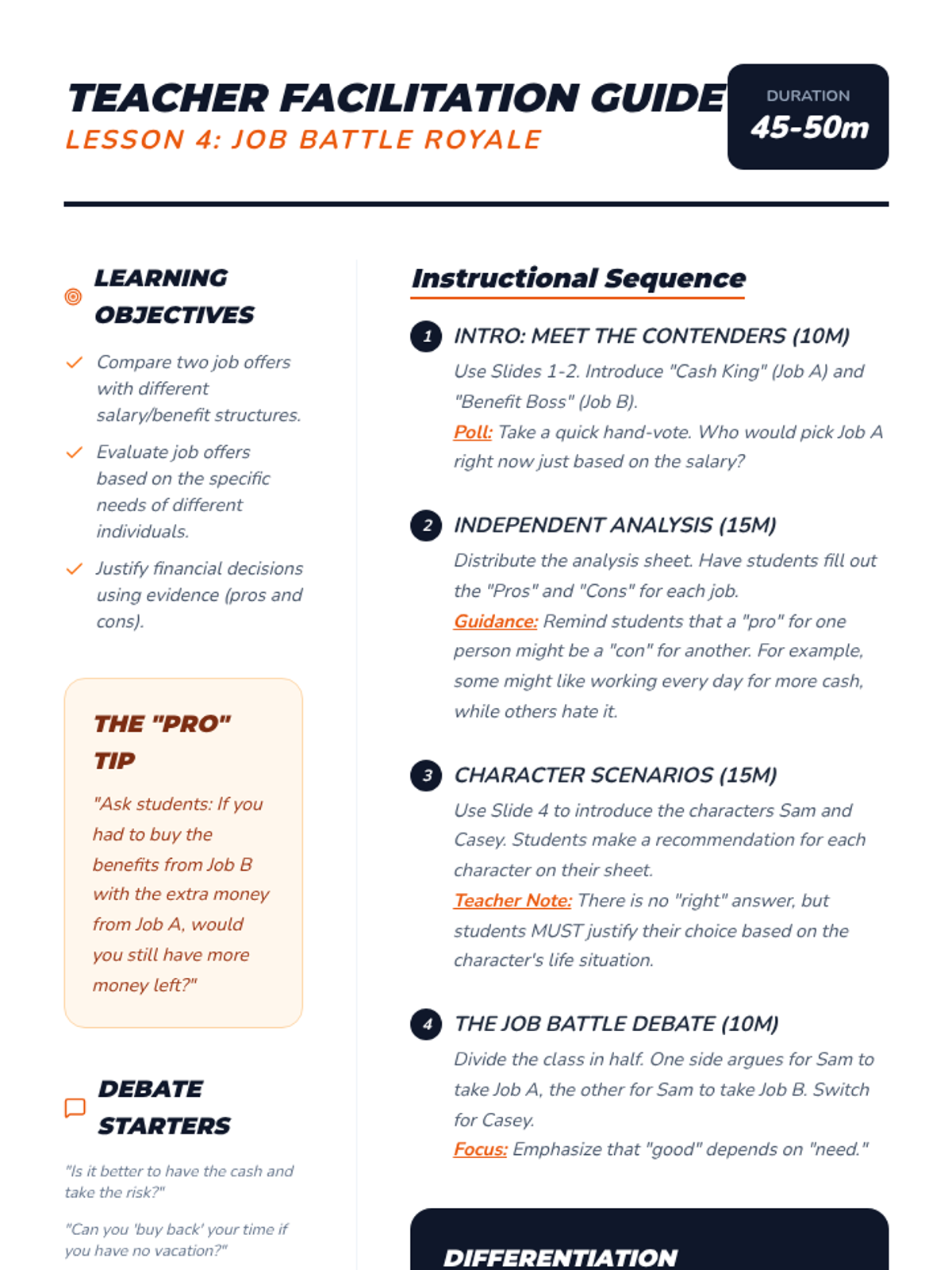
Students compare fictional job offers with different balances of salary and benefits for various life situations.
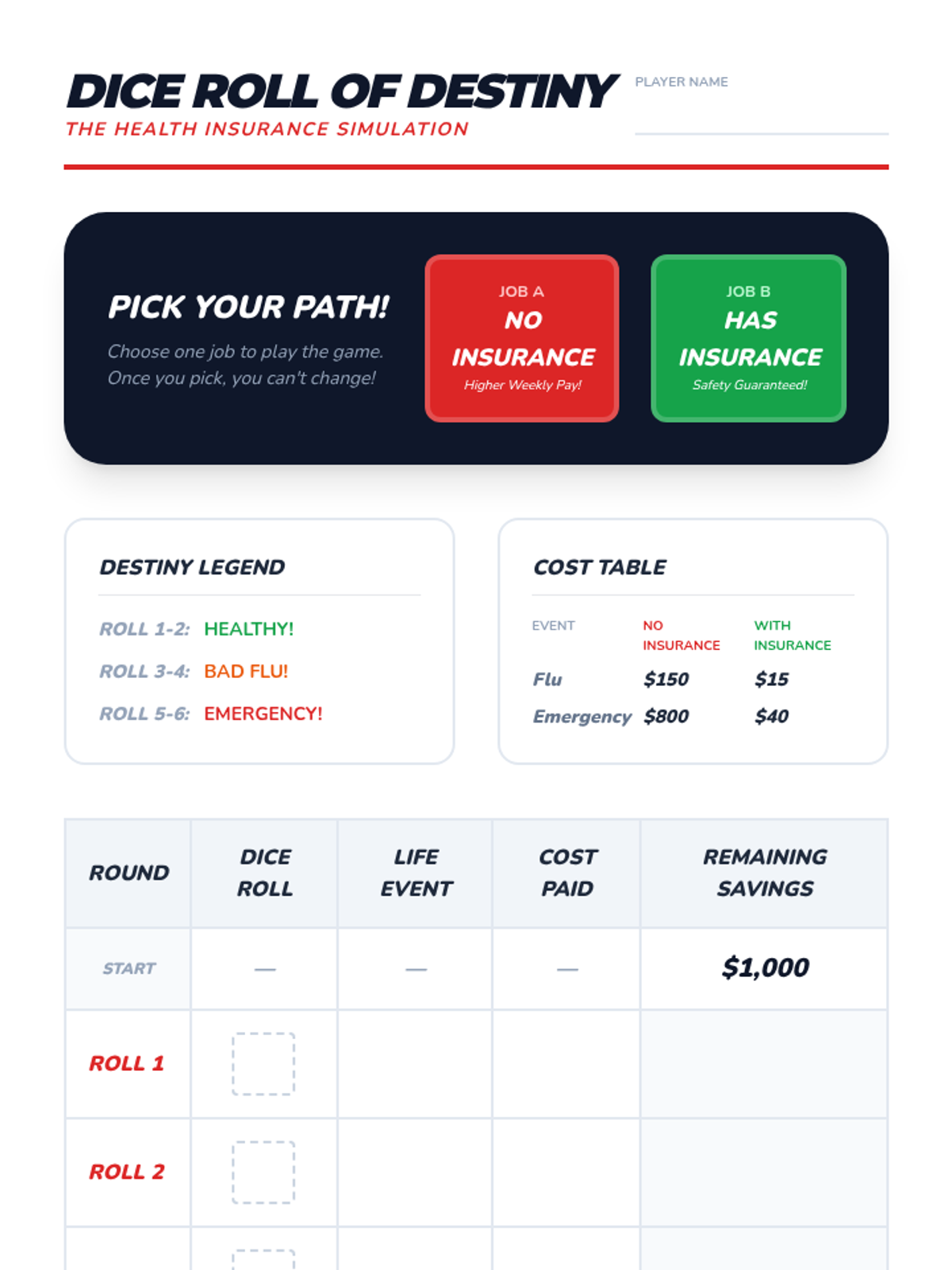
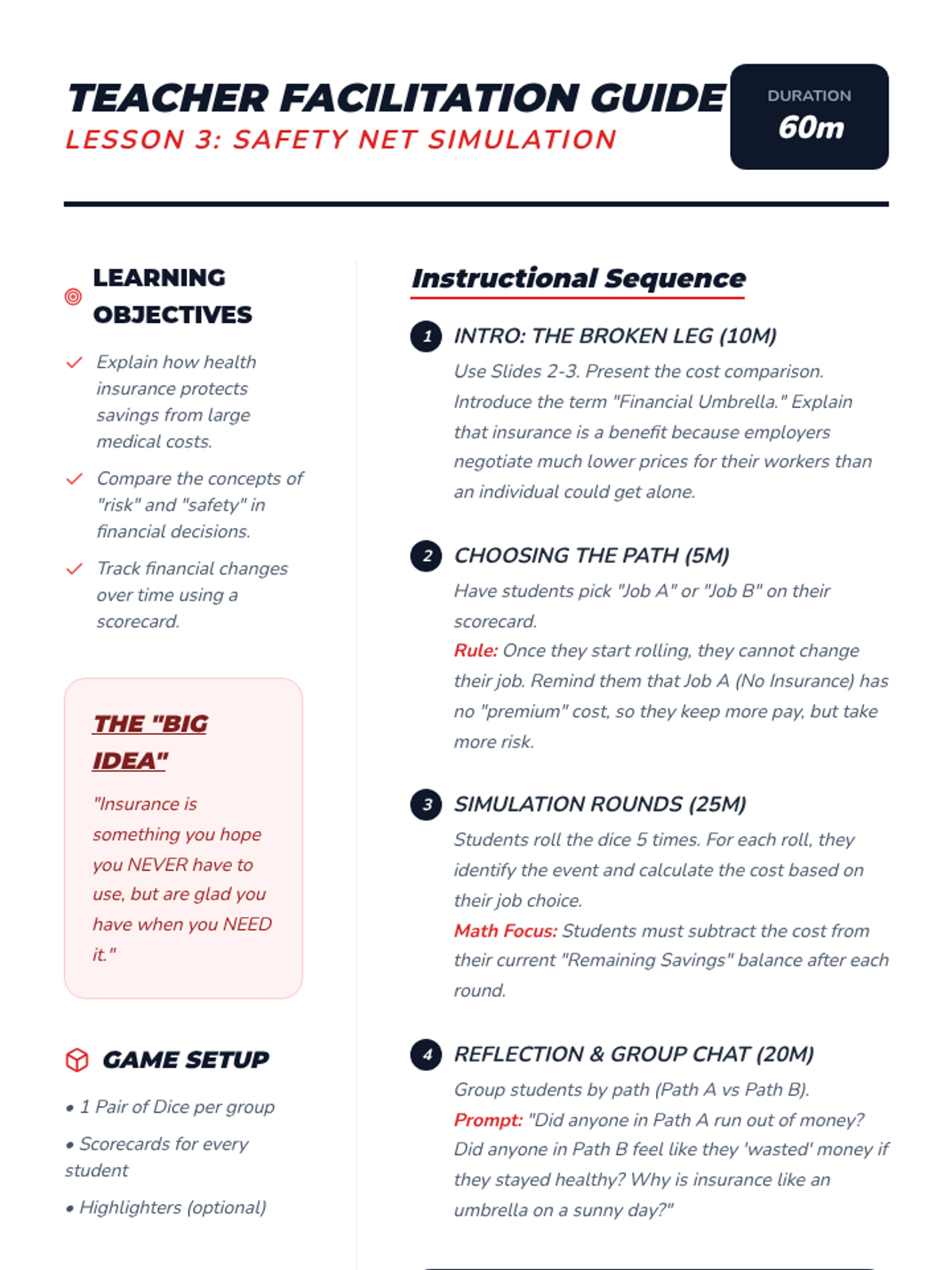
A simulation game where students see how medical costs impact savings and compare being insured vs. uninsured.
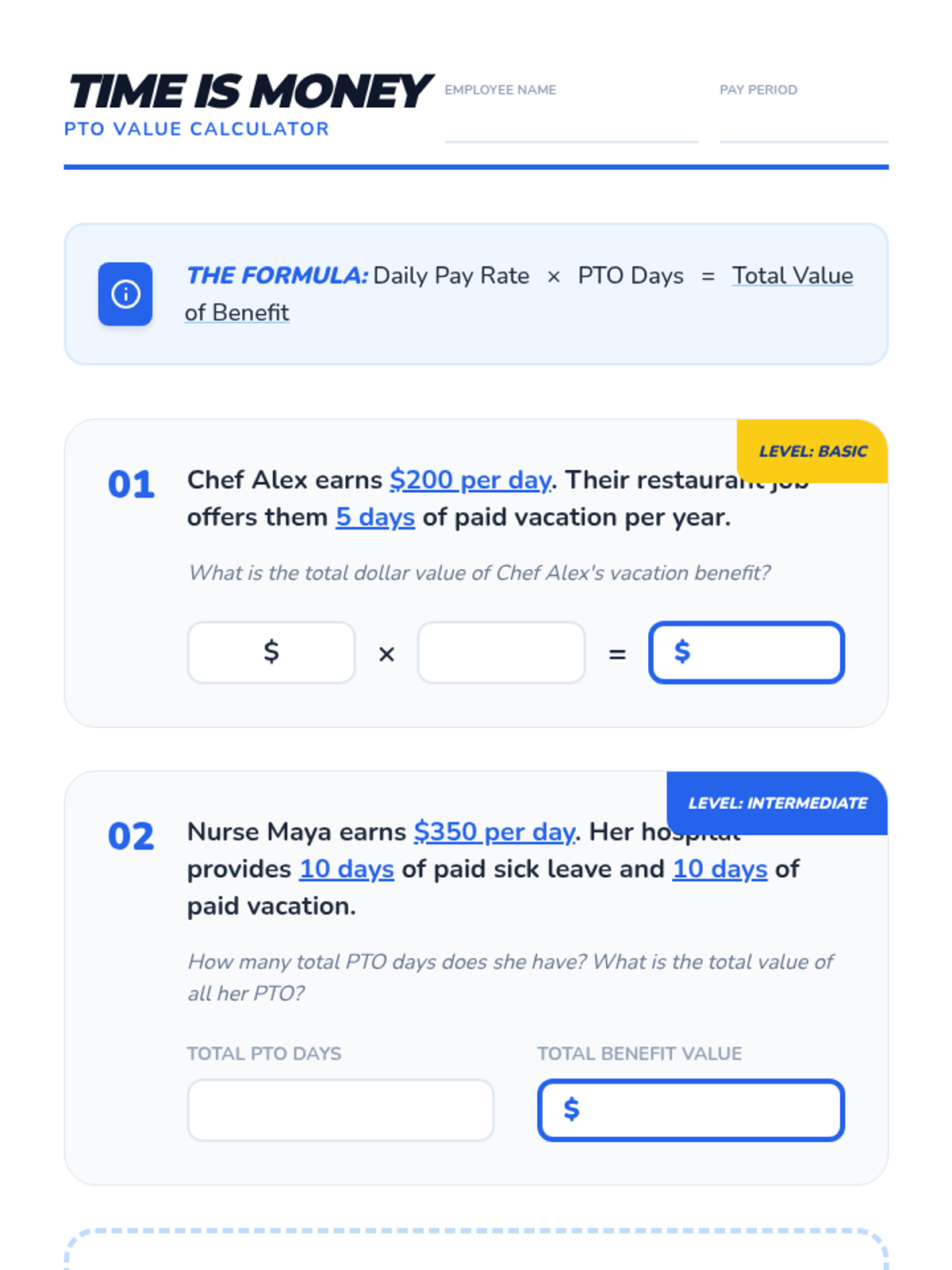
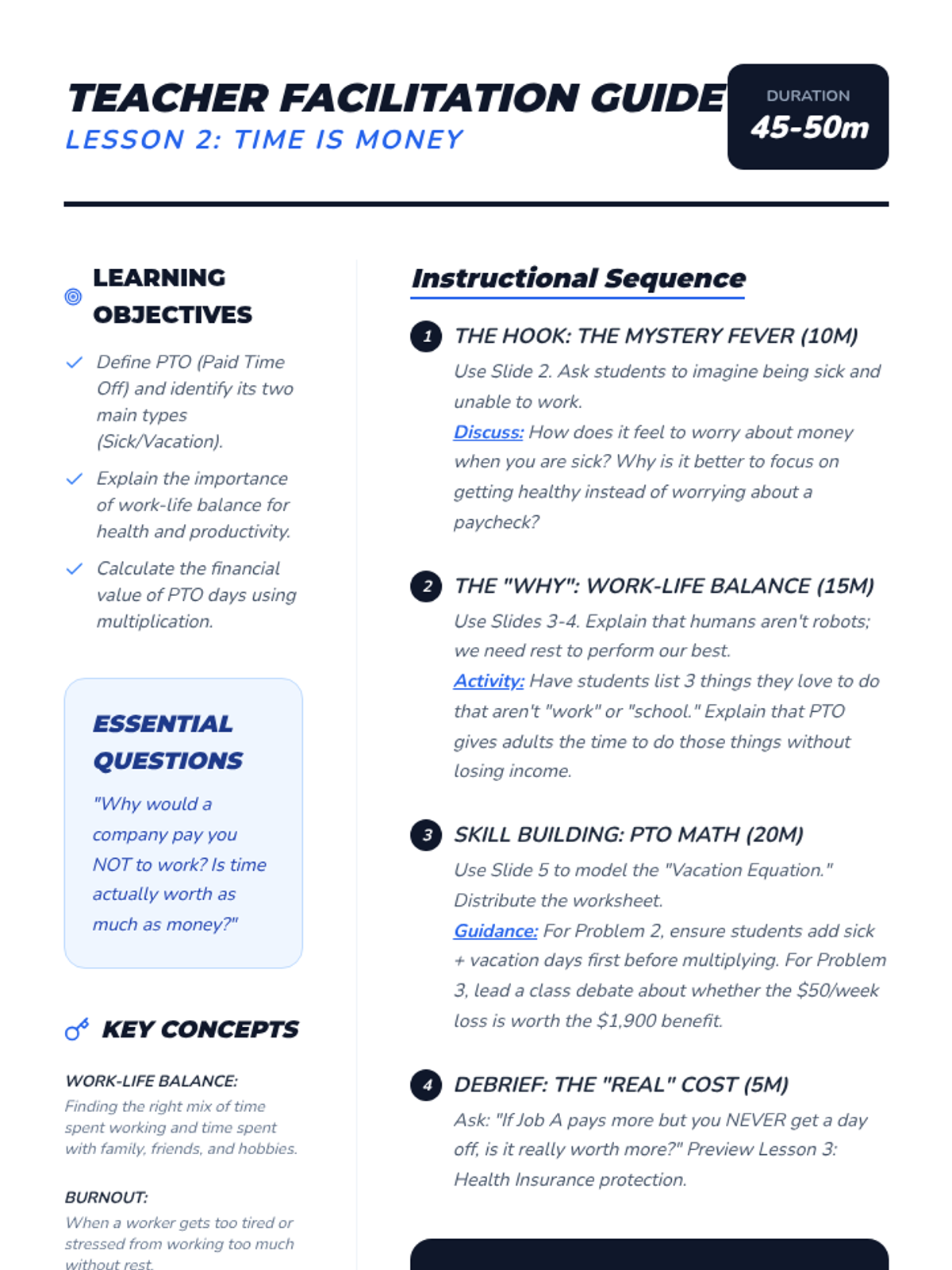
Students discuss work-life balance and the concept of getting paid while not working, calculating the value of PTO through word problems.
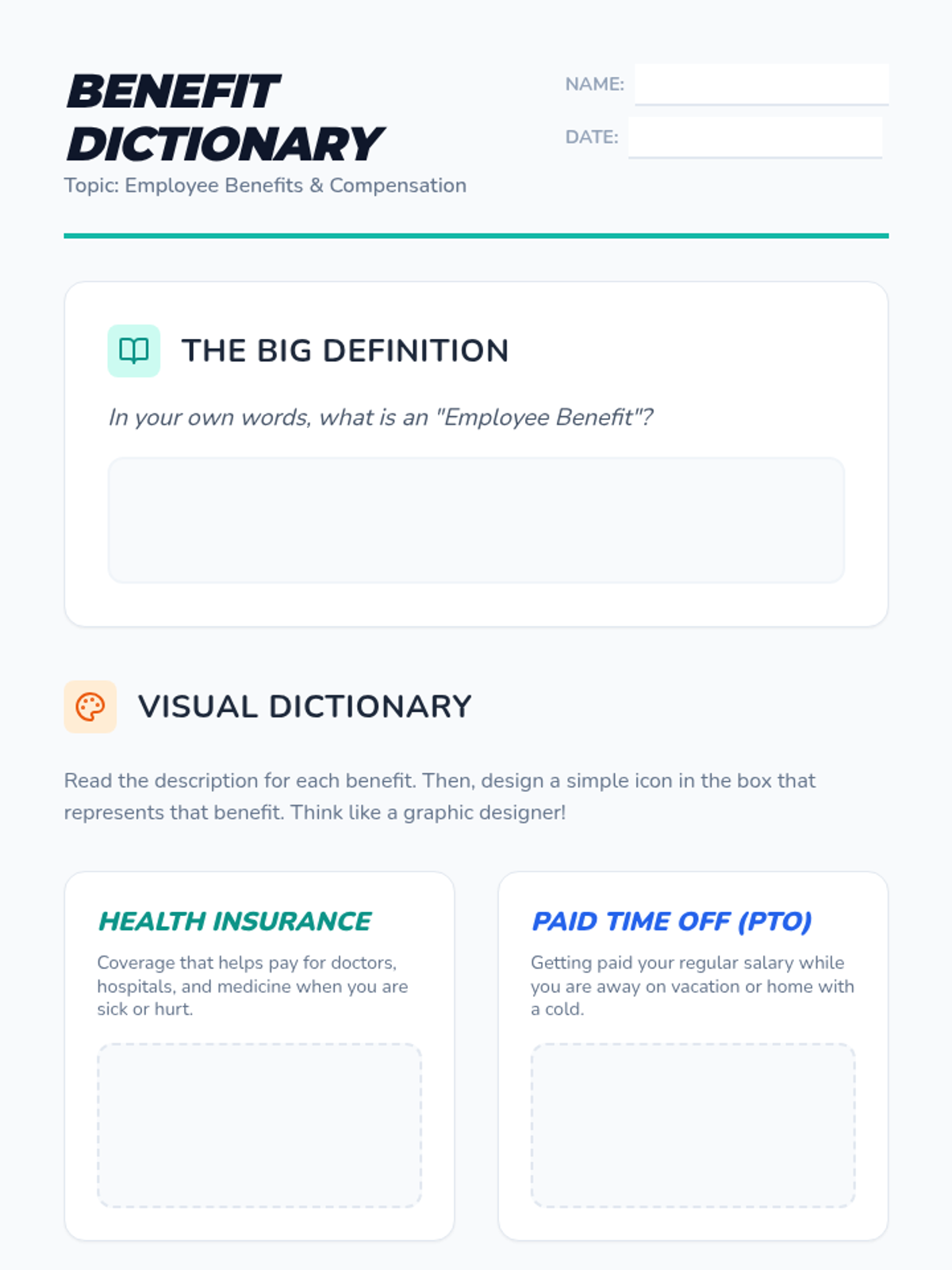
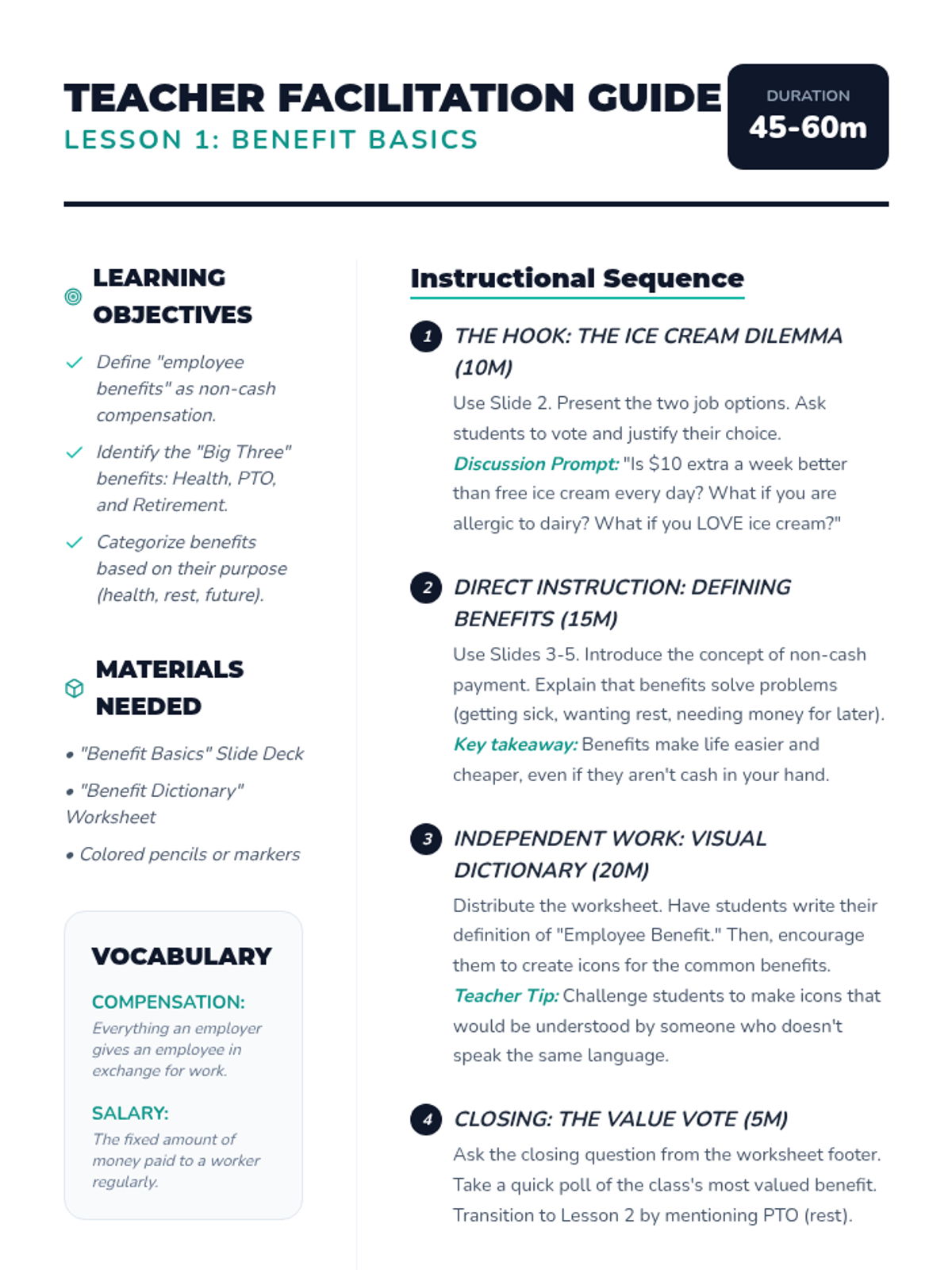
Students define 'benefits' as forms of payment that aren't cash and explore common benefits like health insurance, dental plans, and retirement savings.
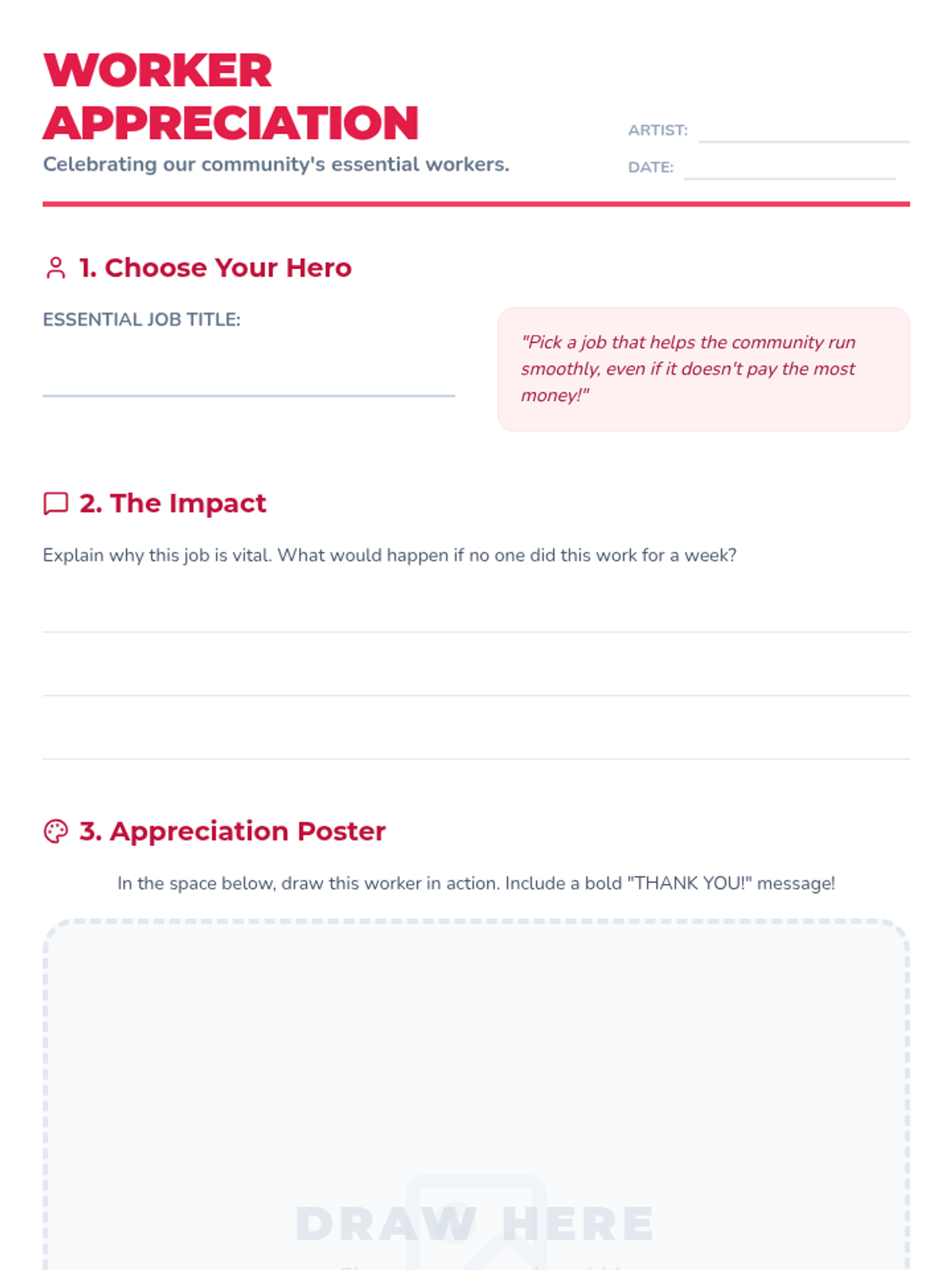
Students discuss the importance of essential workers who may not earn high wages but are vital to the community. They create appreciation projects for various workers.
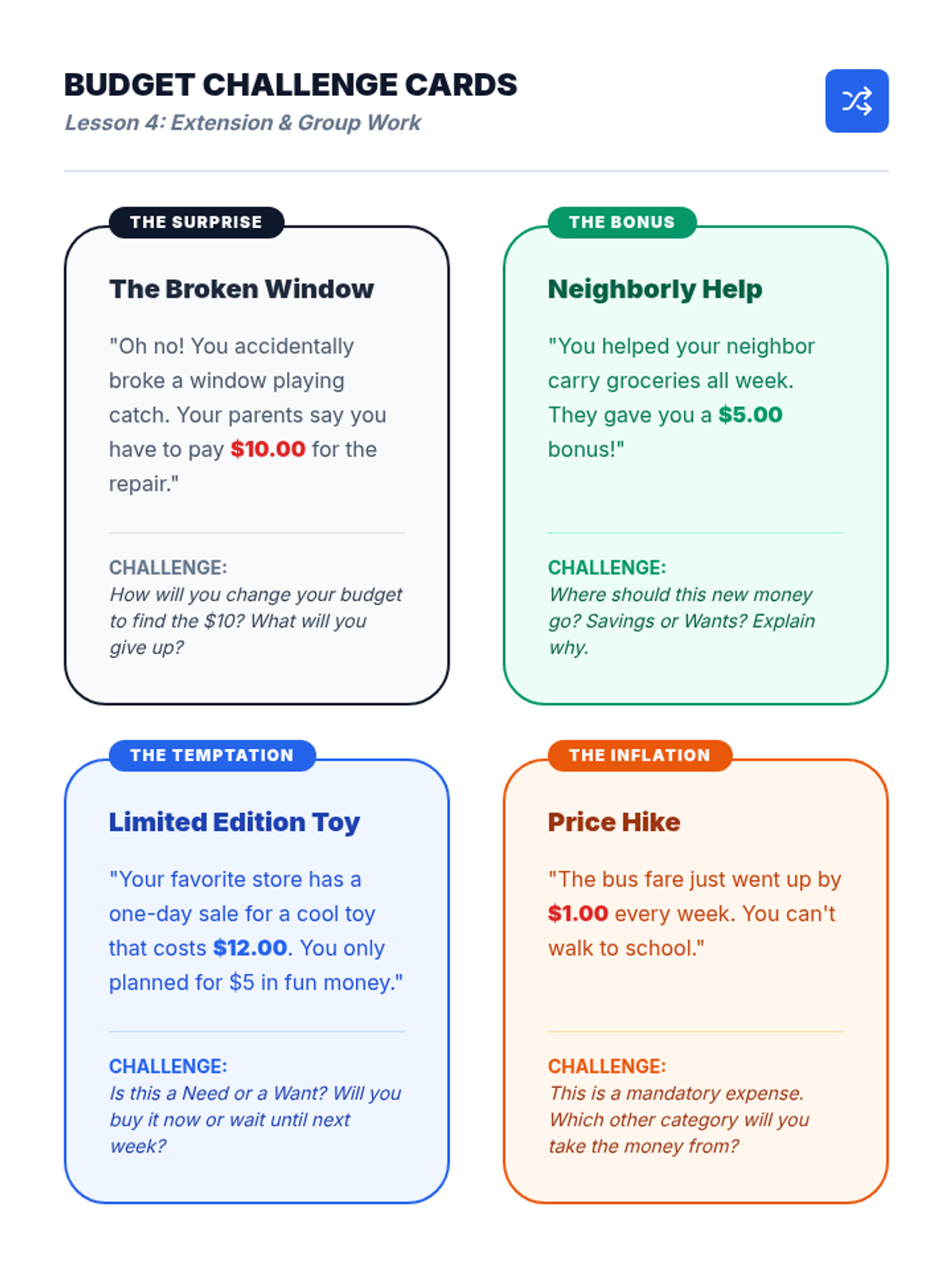
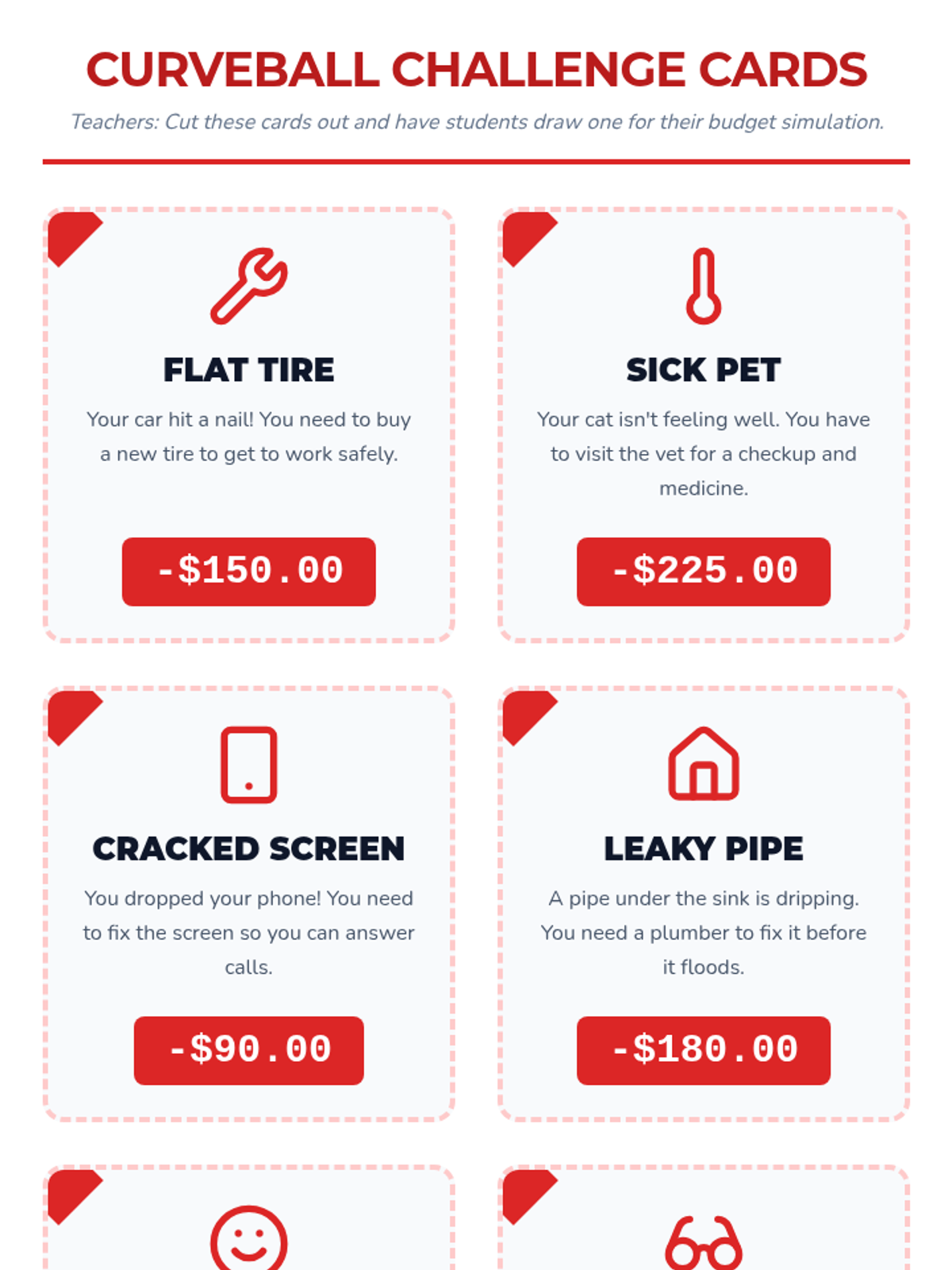
Students face unexpected expenses within their budget simulation. They discuss how having savings or higher income makes solving these problems easier.
Working in pairs, students are assigned a fictional monthly income based on a specific job. They must allocate funds to cover housing, food, and clothing.
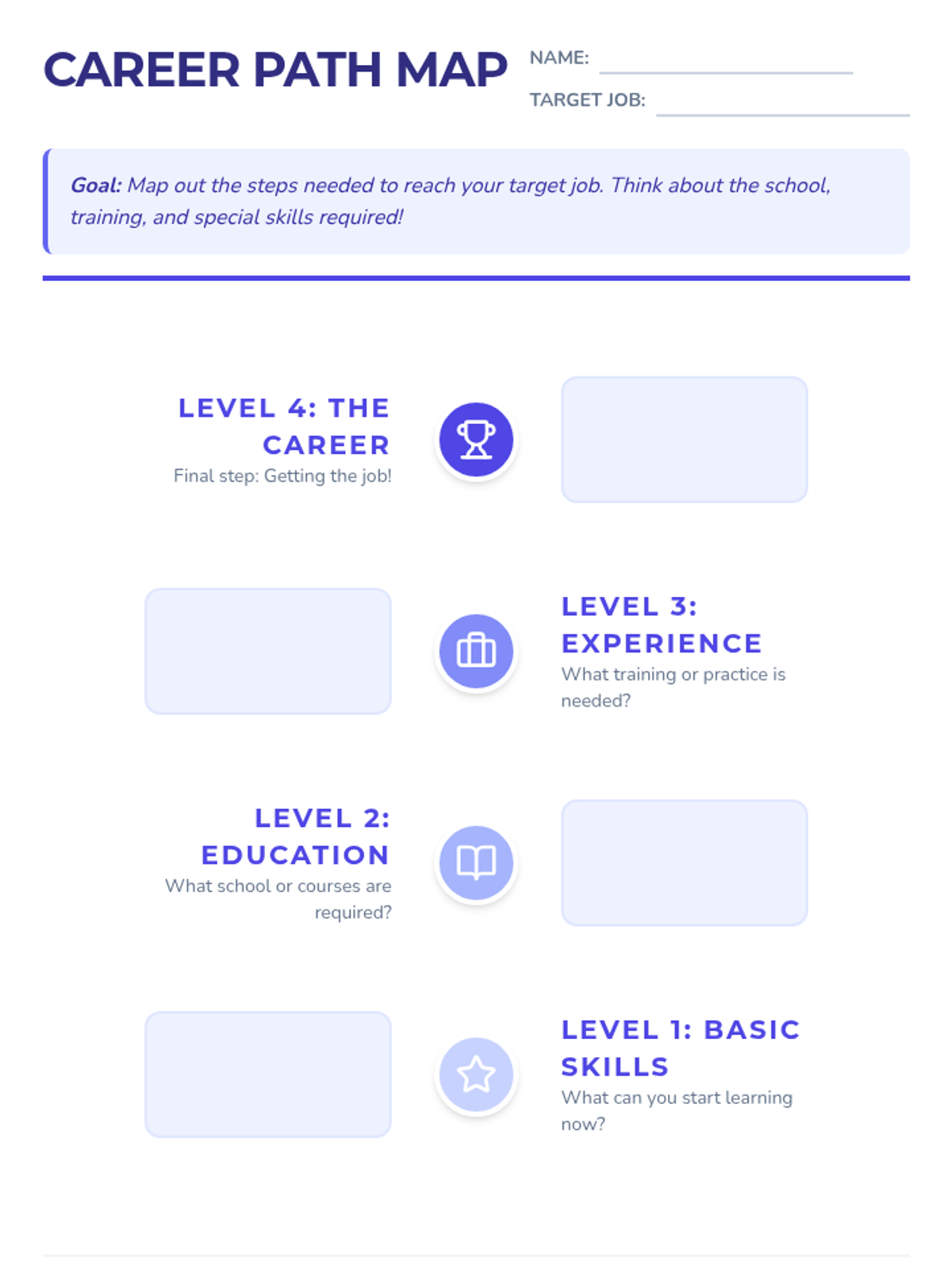
Students investigate the training required for different careers to understand one reason for wage differences. They create a 'career path' map showing the steps needed to acquire specific jobs.
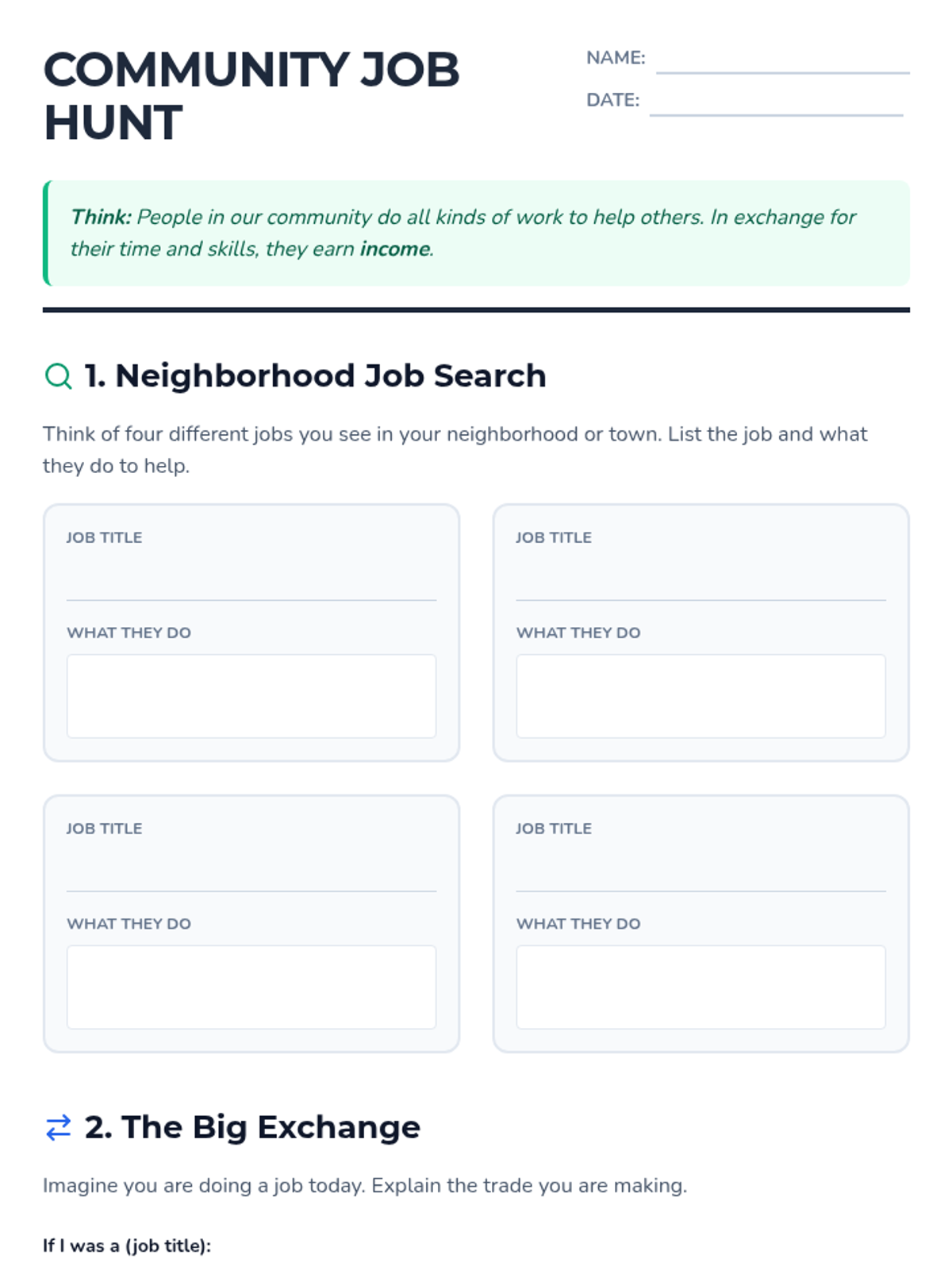
Students explore how people earn money through different jobs and the concept of income as an exchange for labor.
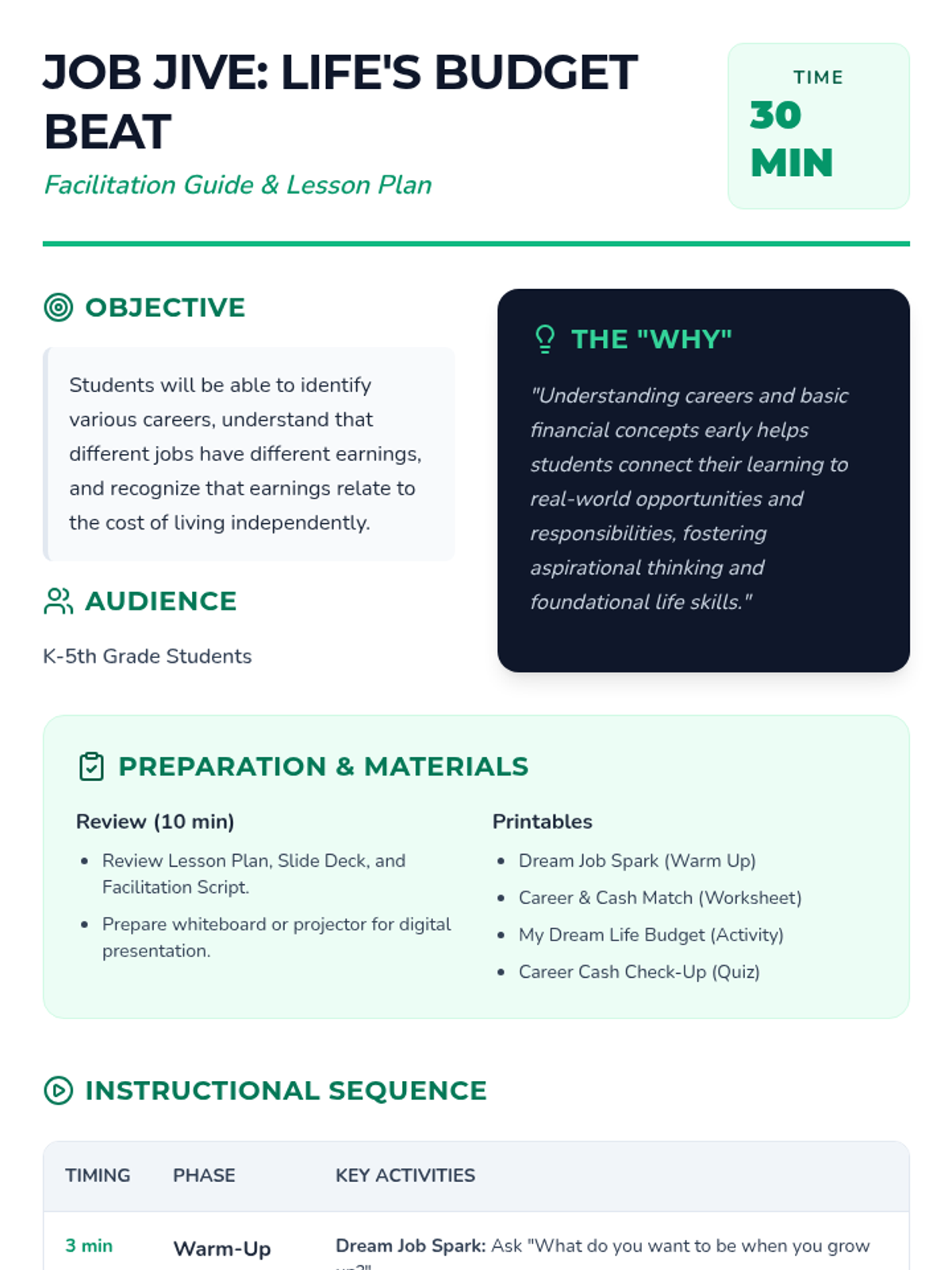
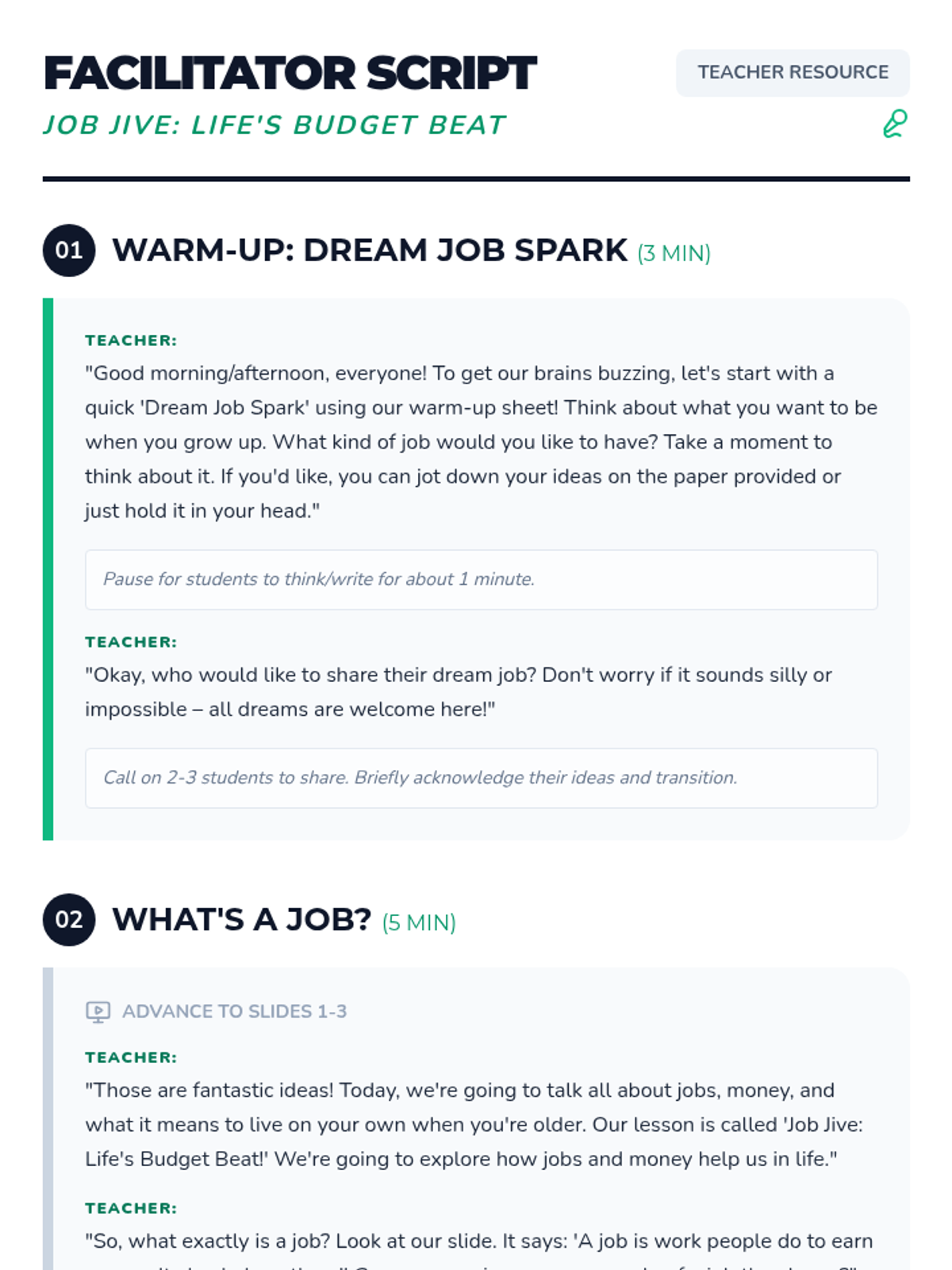
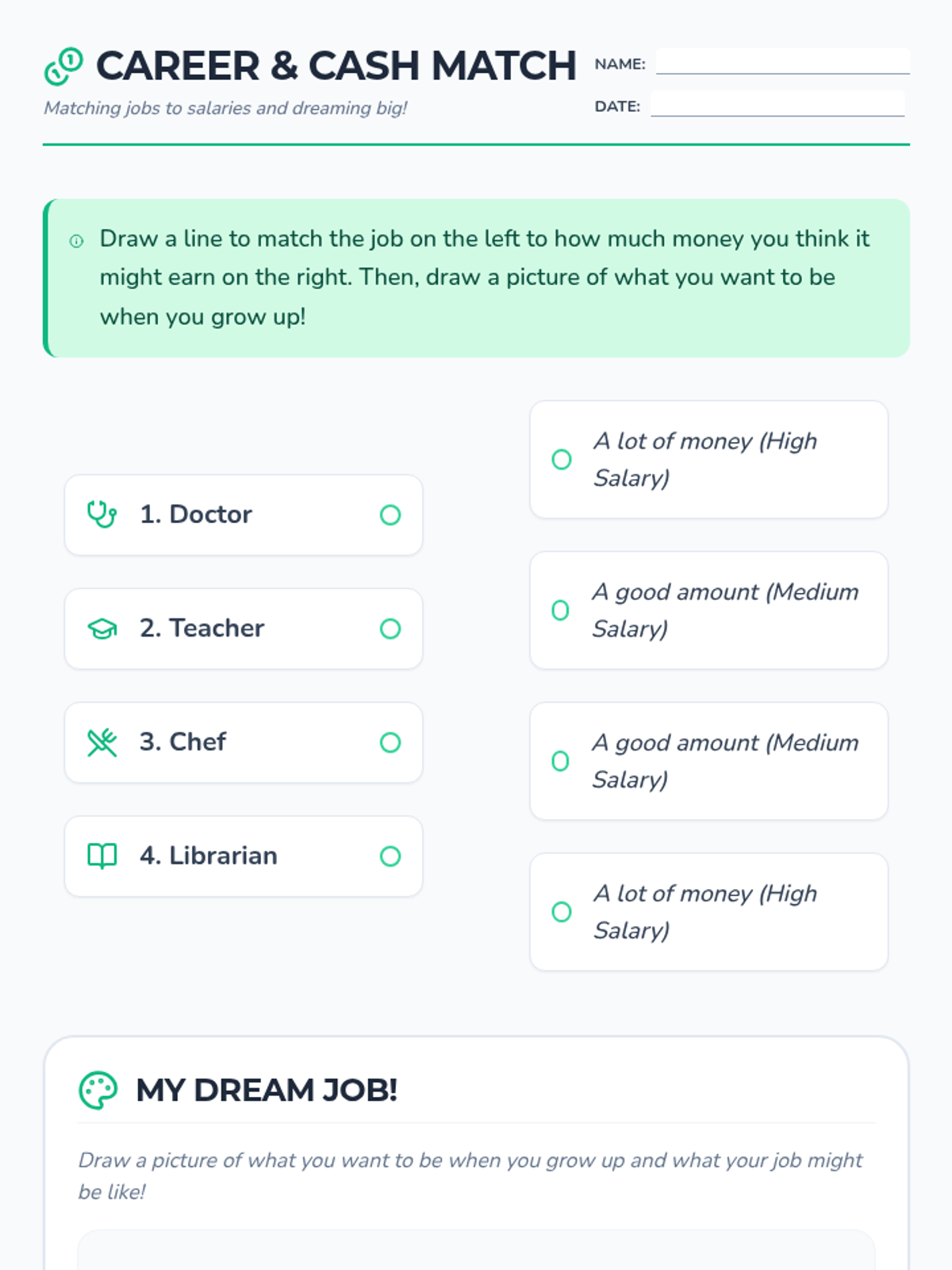
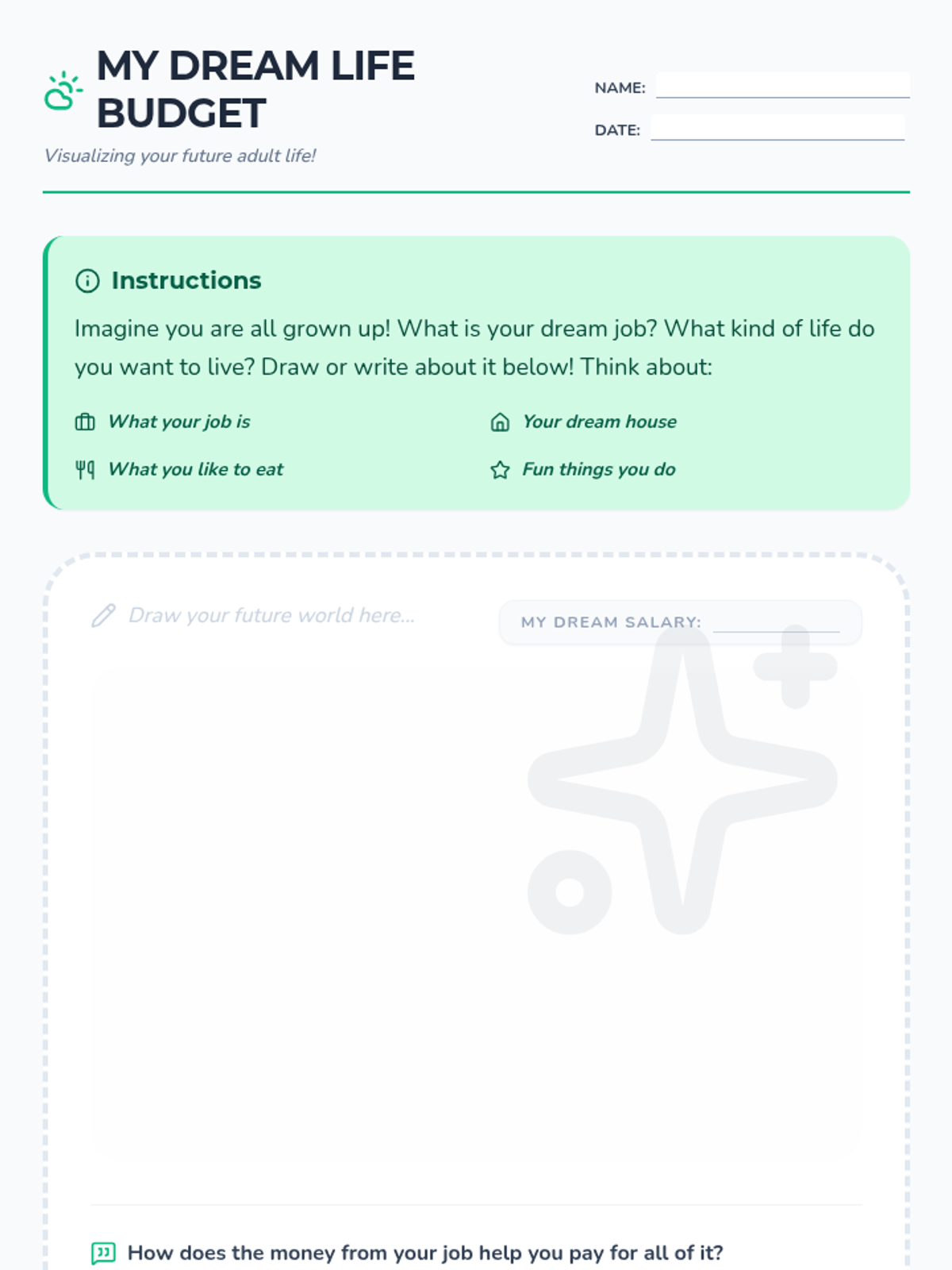
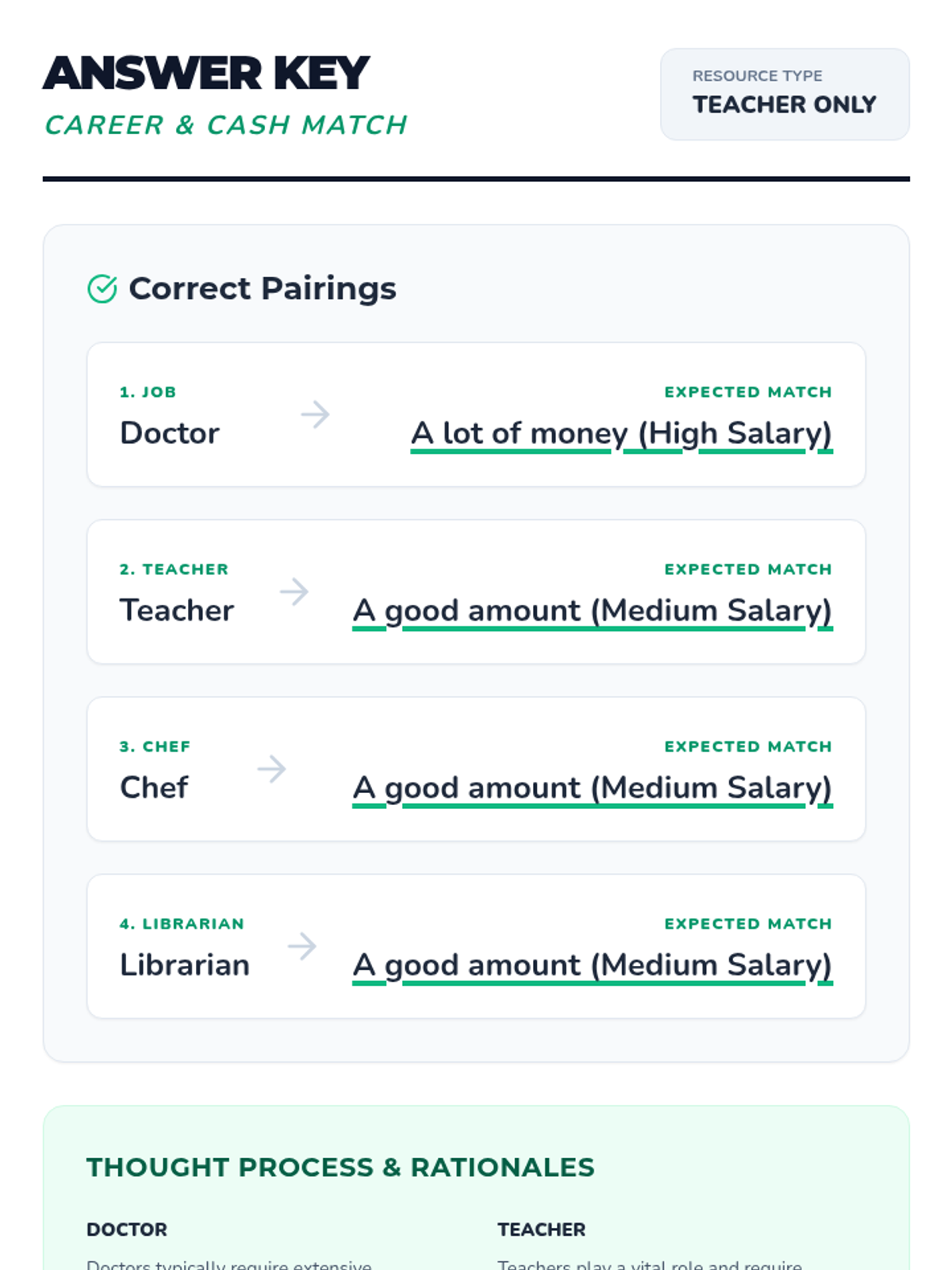
A 30-minute lesson introducing K-5th grade students to careers, salaries, and the cost of living independently through interactive discussion and budget-themed activities.
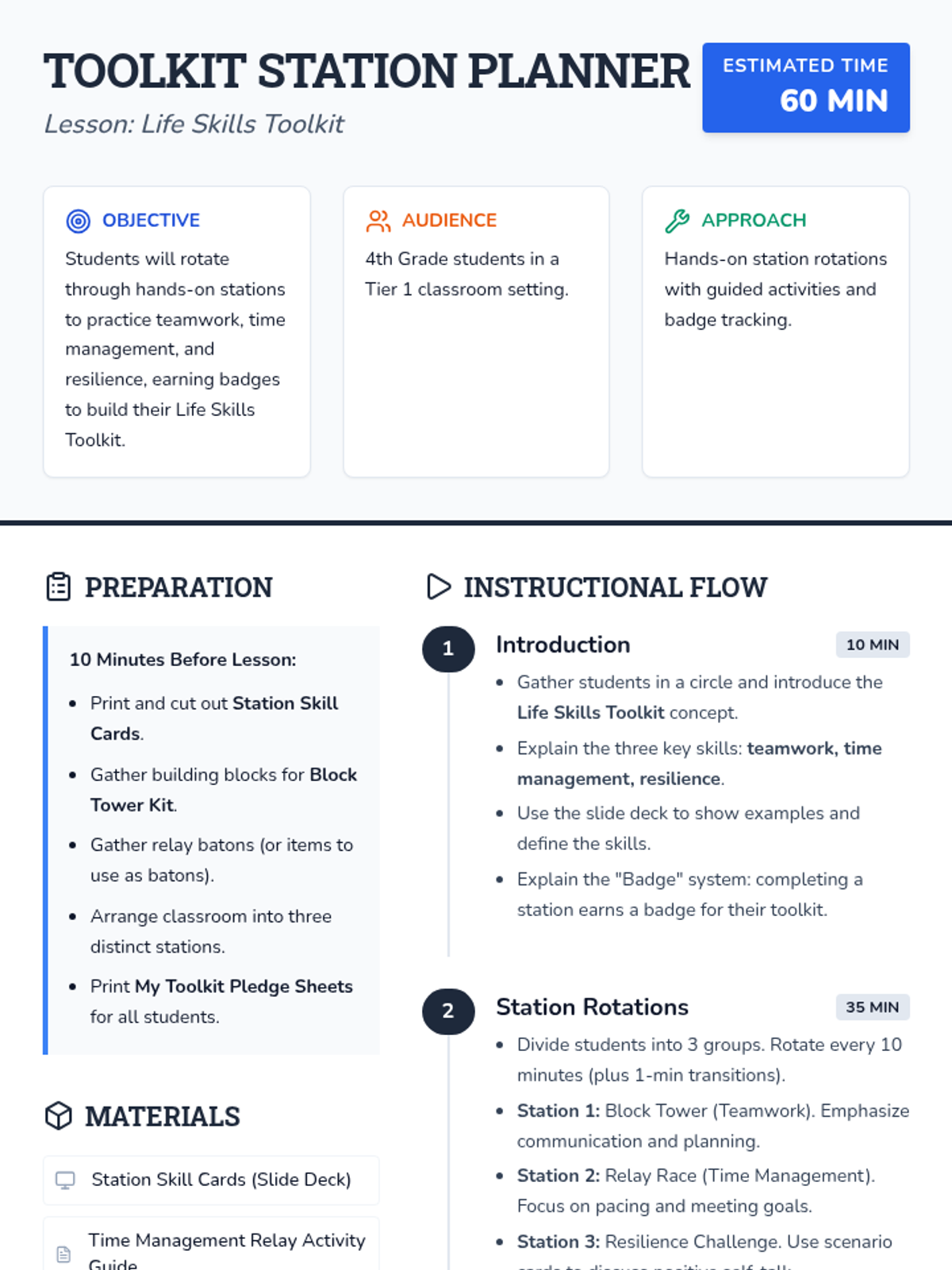
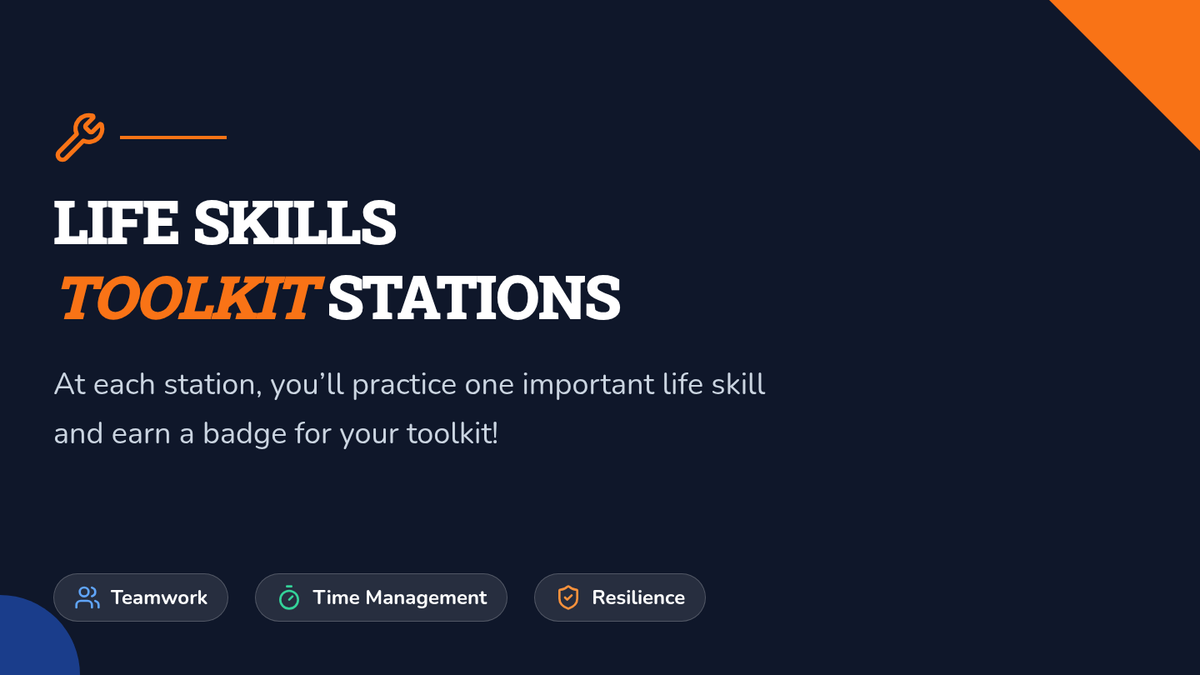
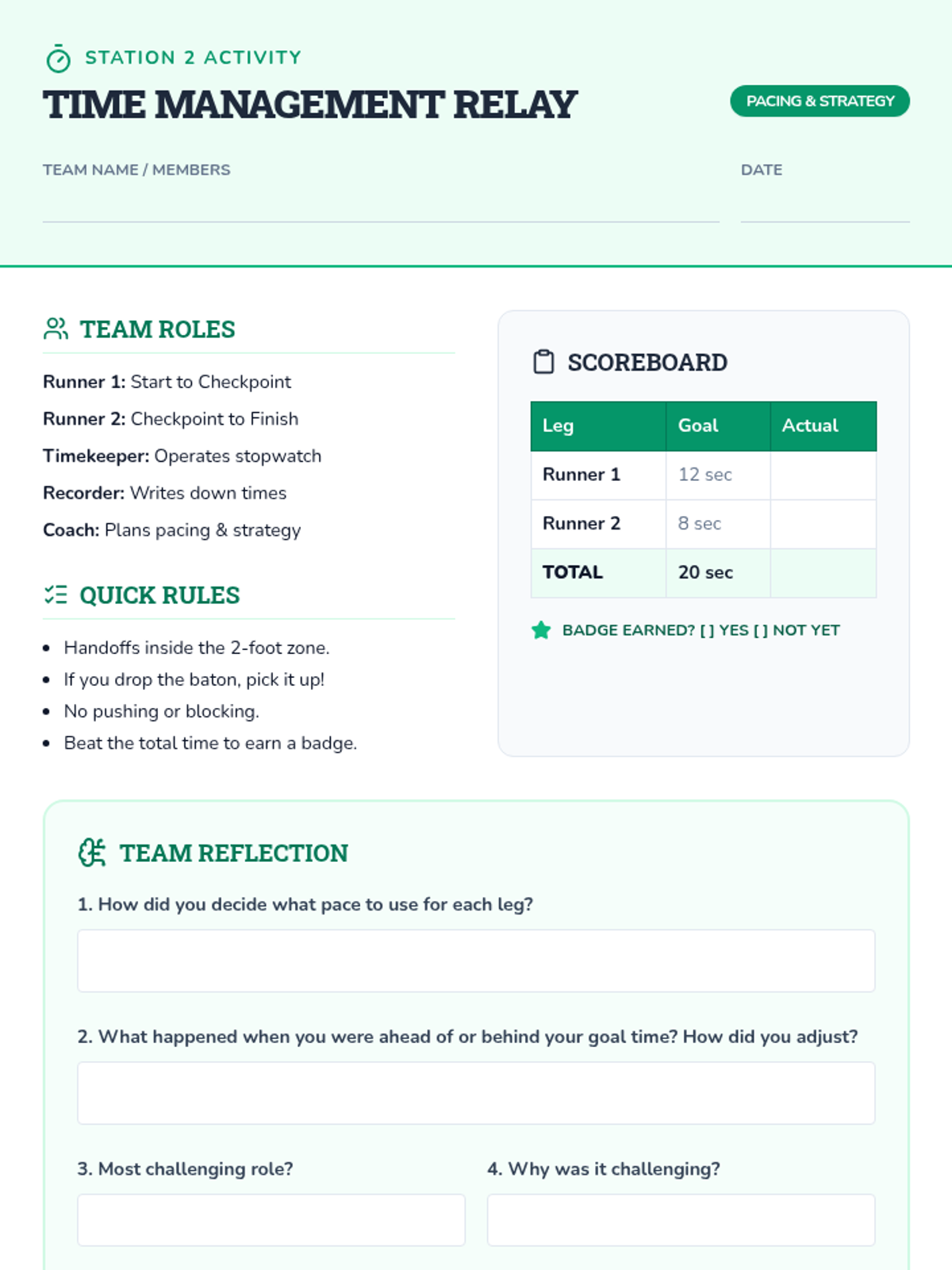
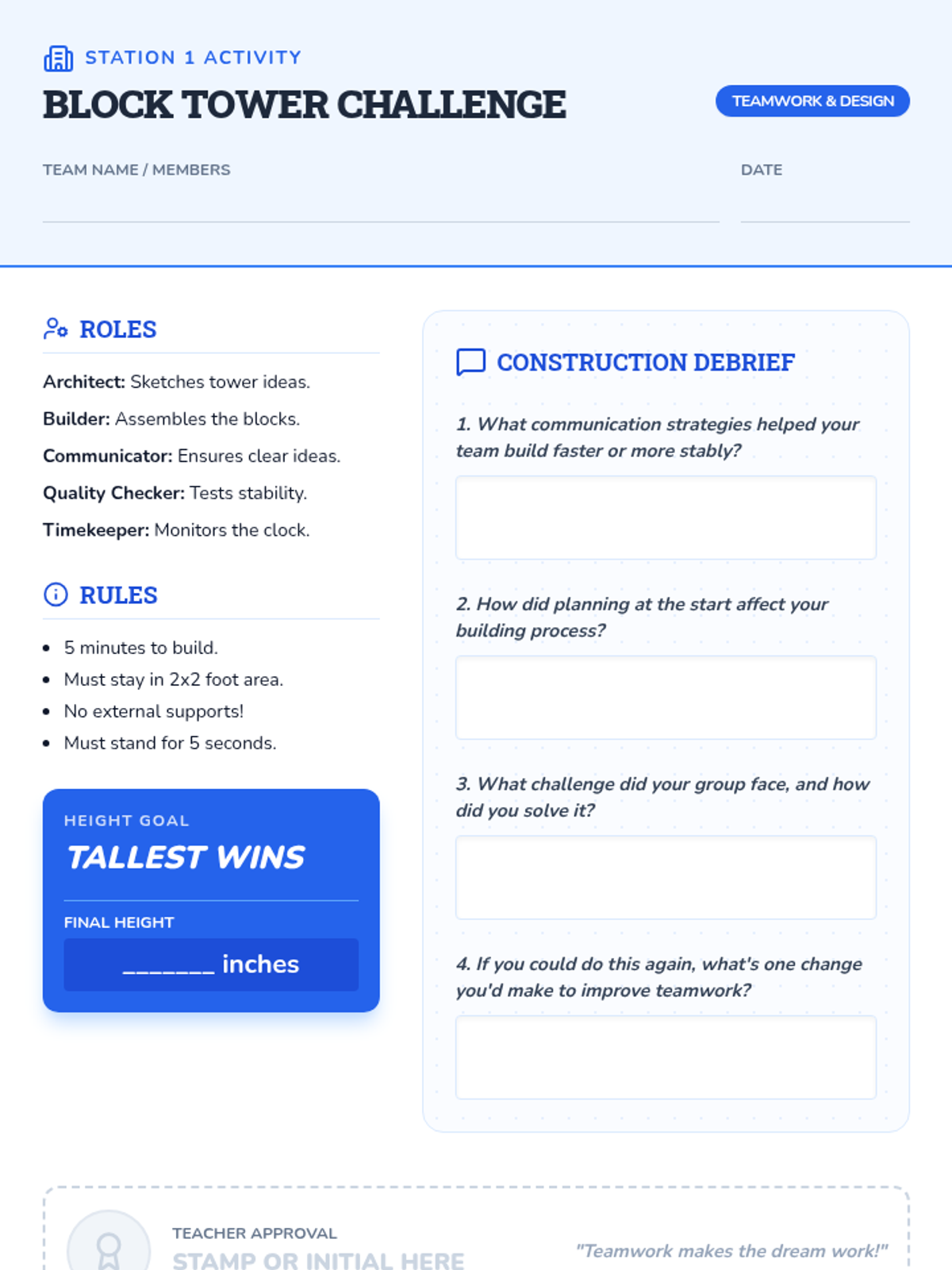
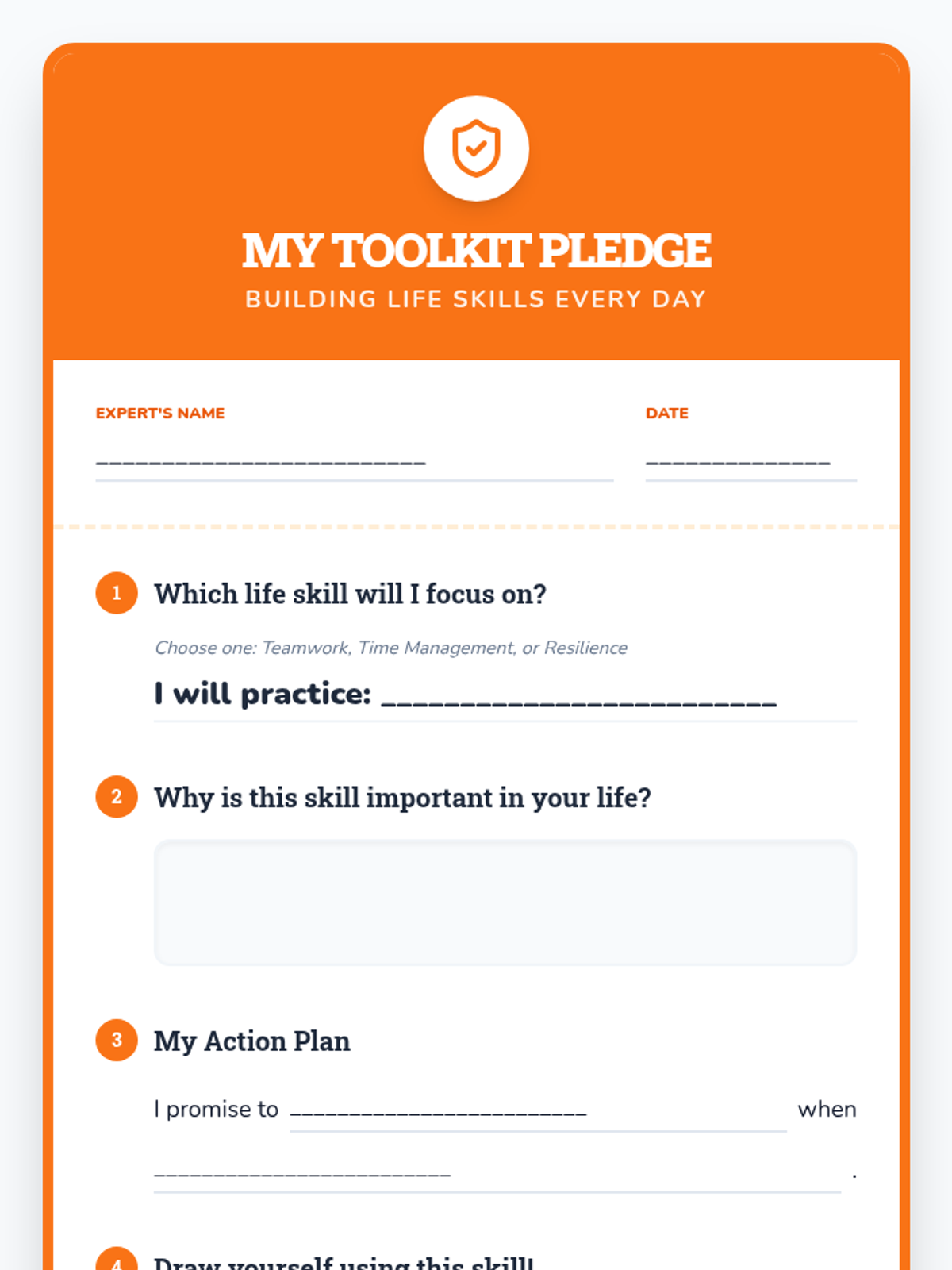
A toolkit concept where students collect essential life skills like teamwork, time management, and resilience through hands-on stations. This engaging, 60-minute lesson for 4th graders fosters critical career and life skills in a Tier 1 classroom setting.
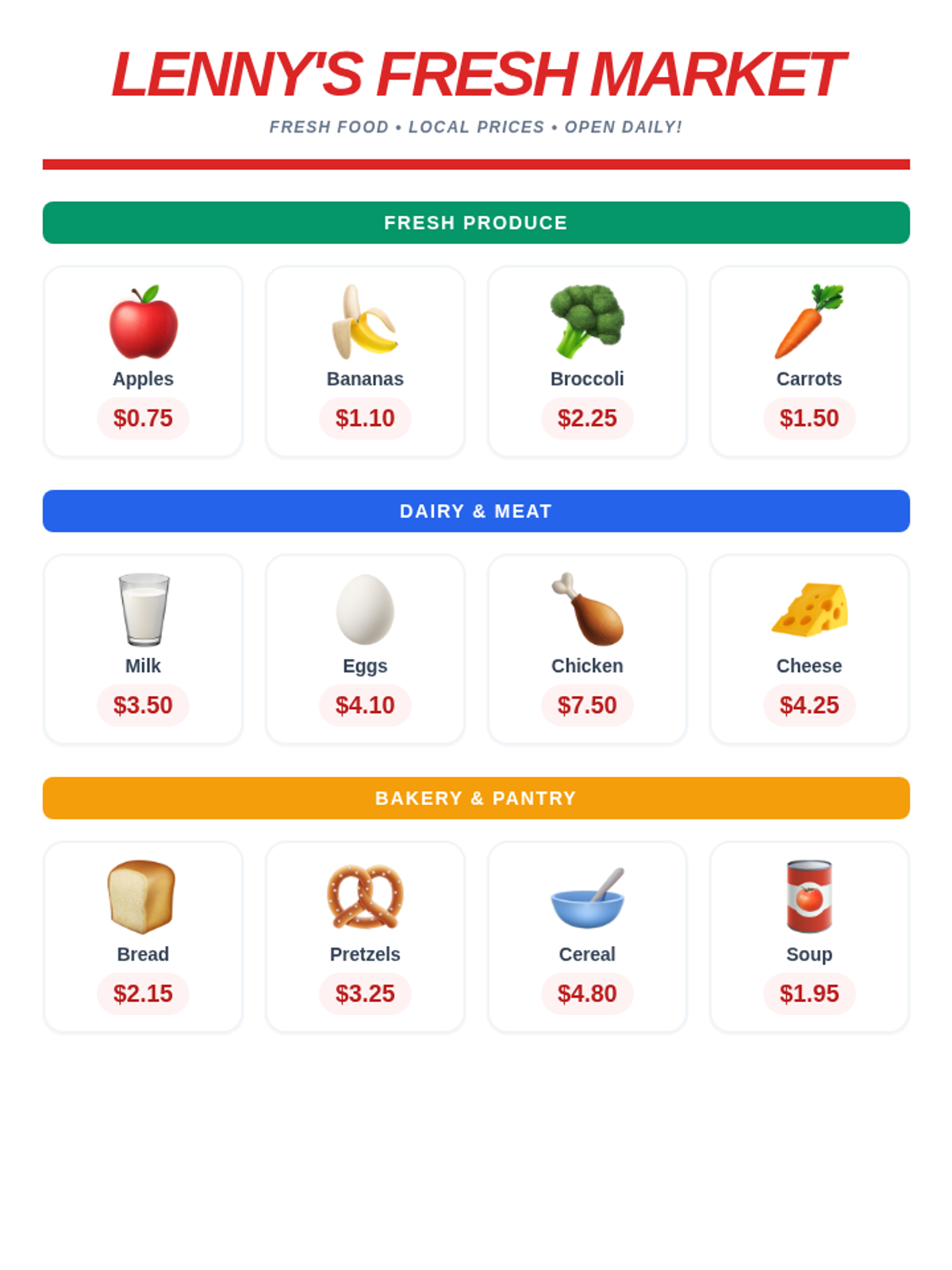
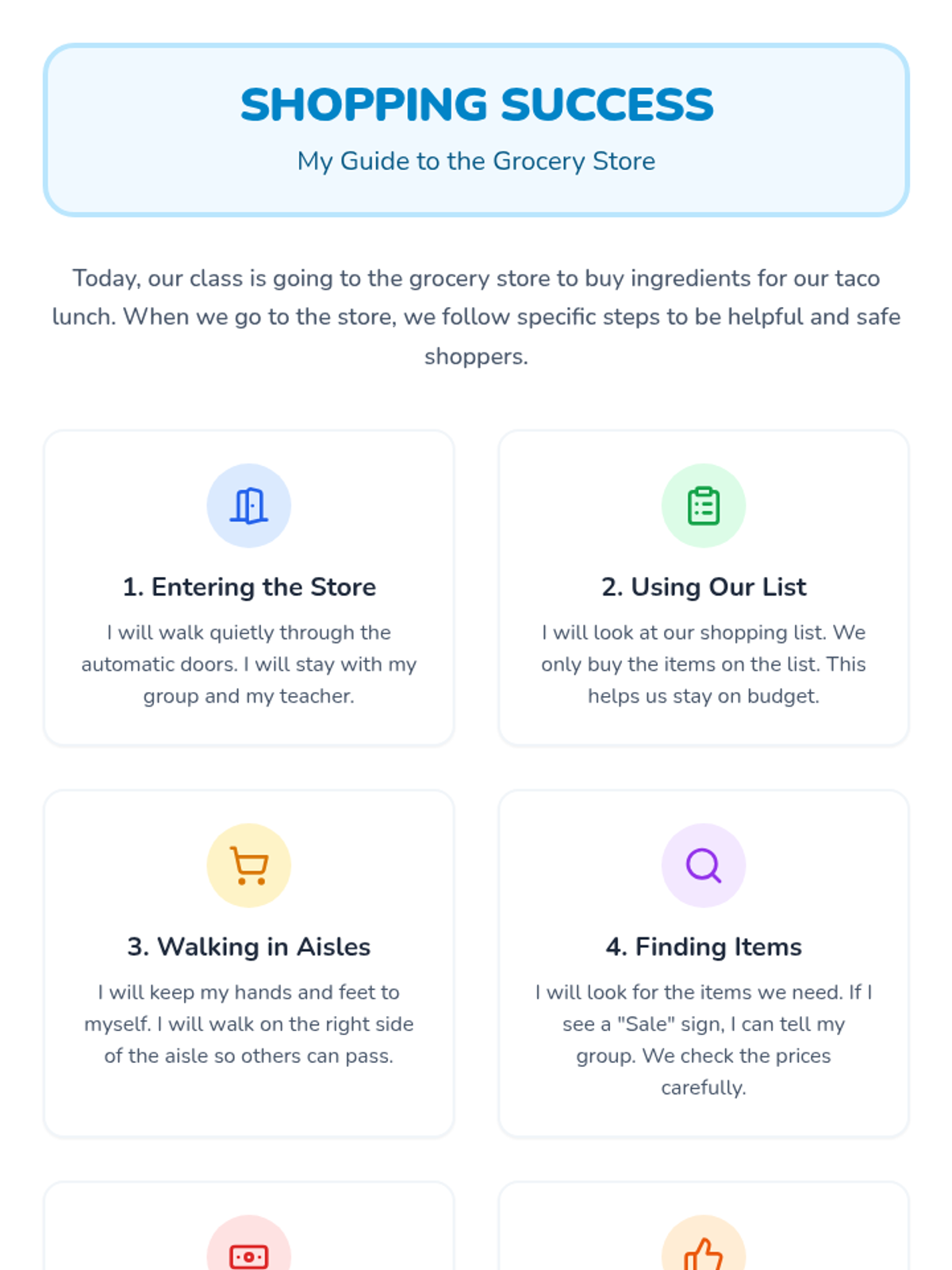
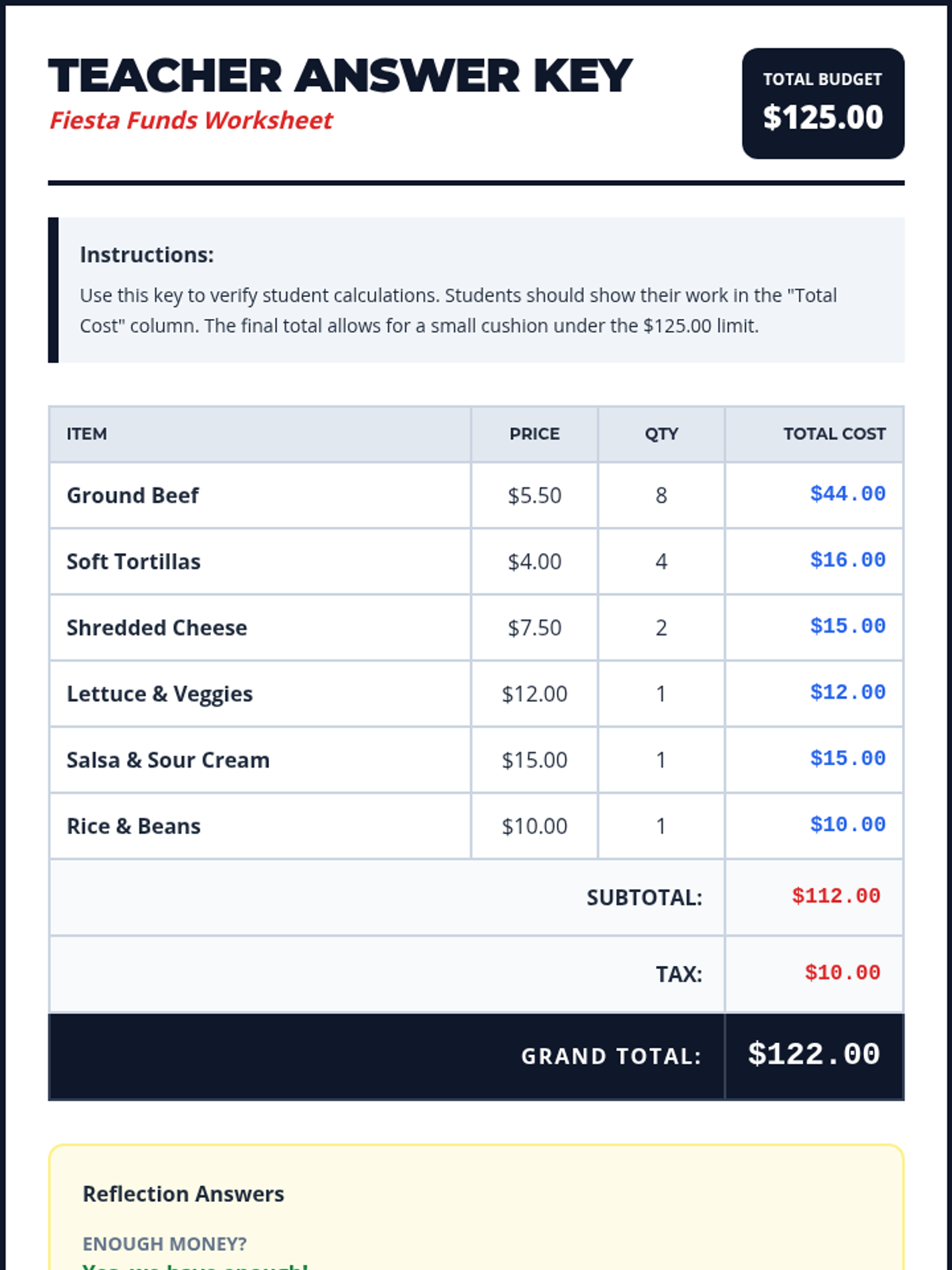
Focuses on the financial and social aspects of grocery shopping. Students calculate costs, manage a budget, and learn the social expectations of visiting a store.
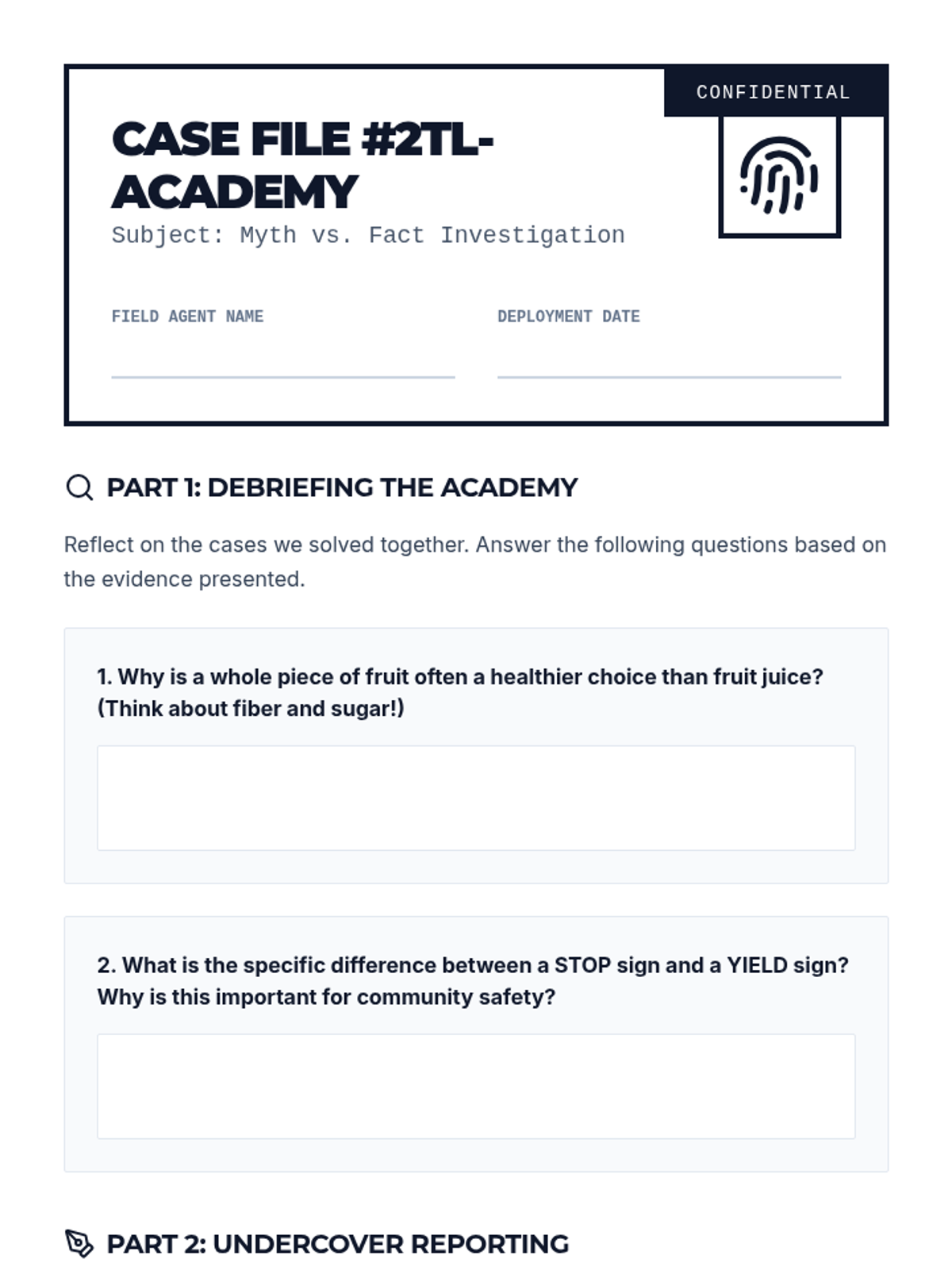
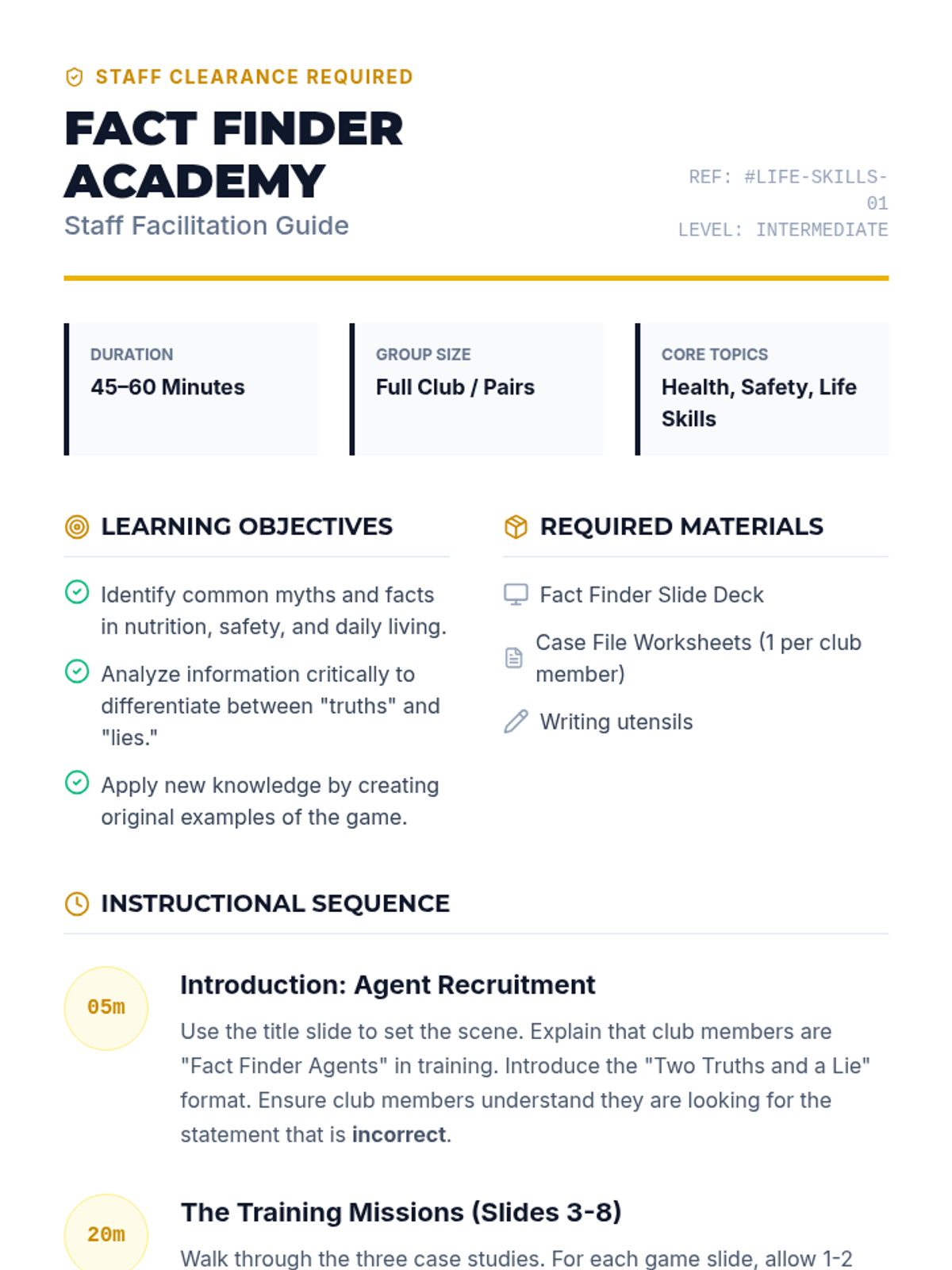
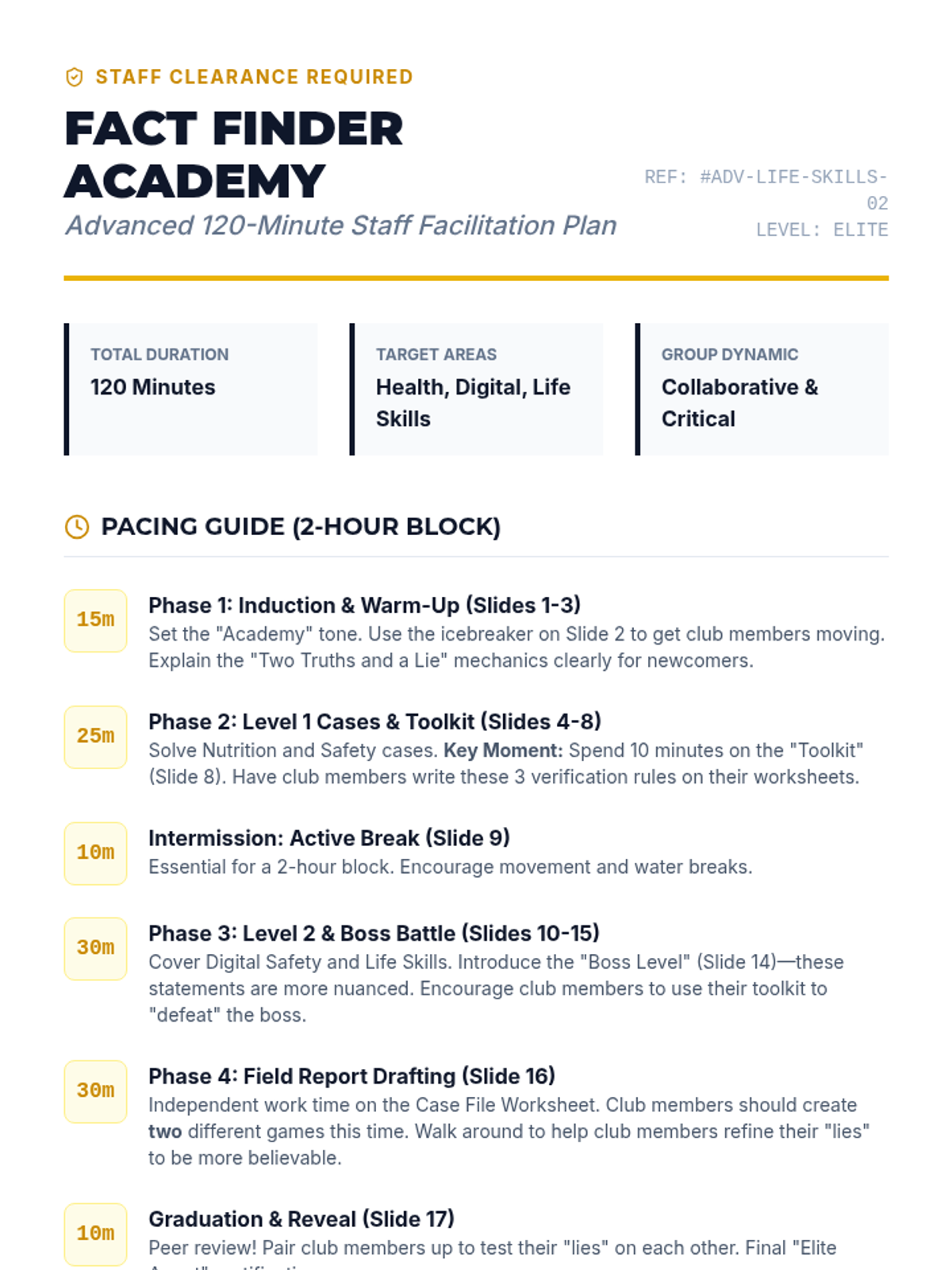
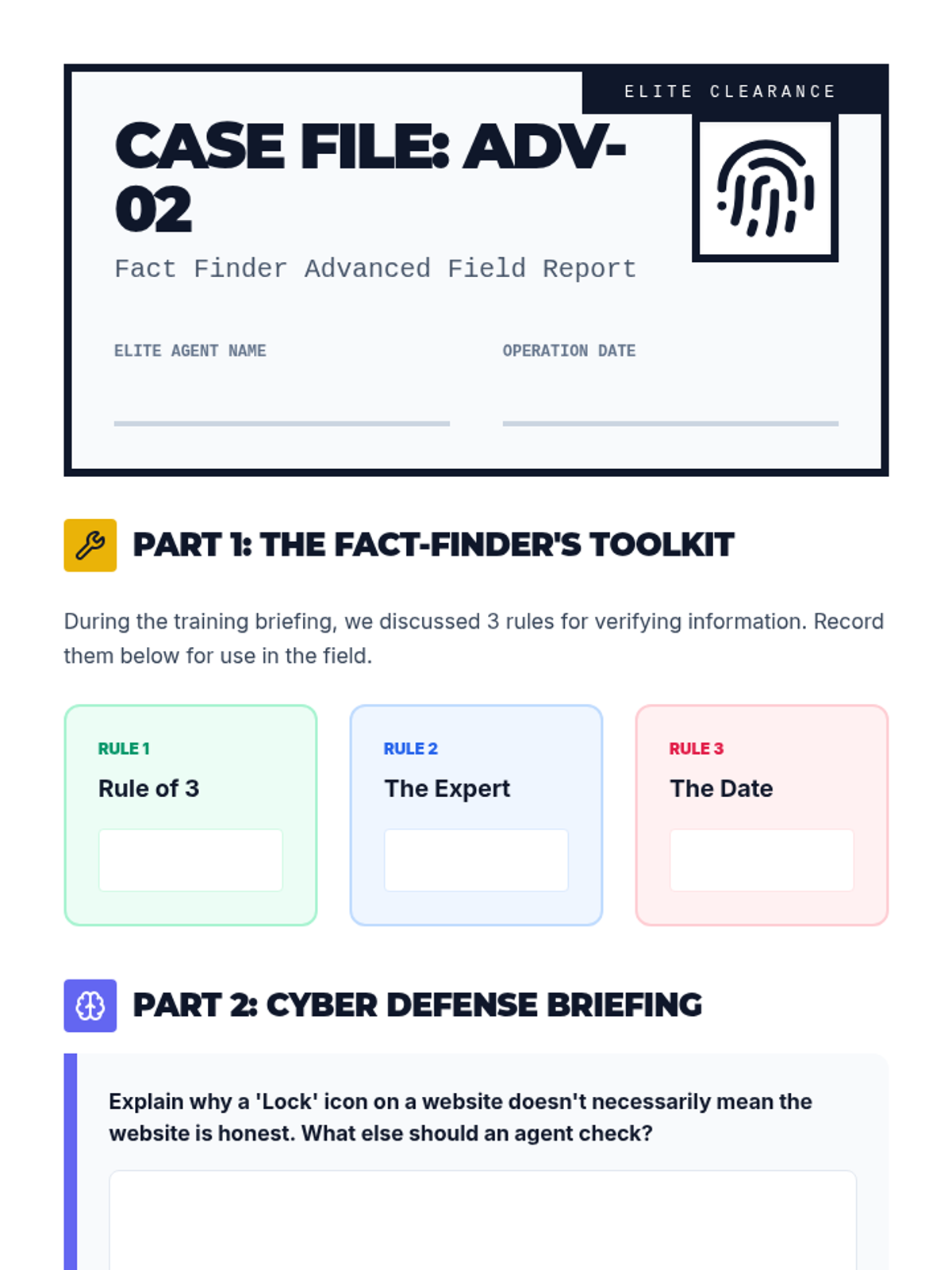
A fun, interactive game-based lesson where club members learn about healthy eating, community safety, and daily living skills by playing Two Truths and a Lie. Club members will act as 'Fact Finders' to identify myths and facts in these key life areas.
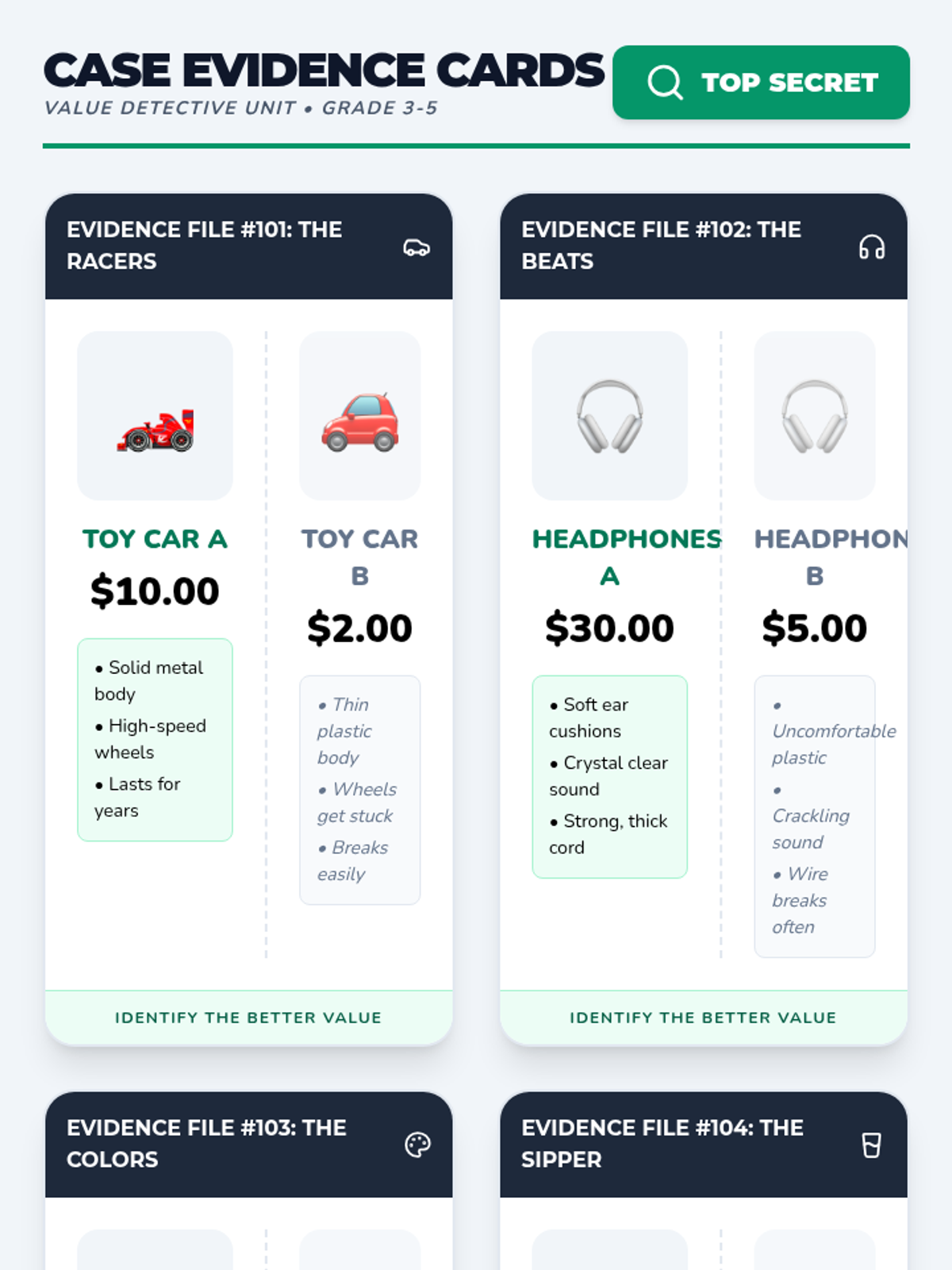
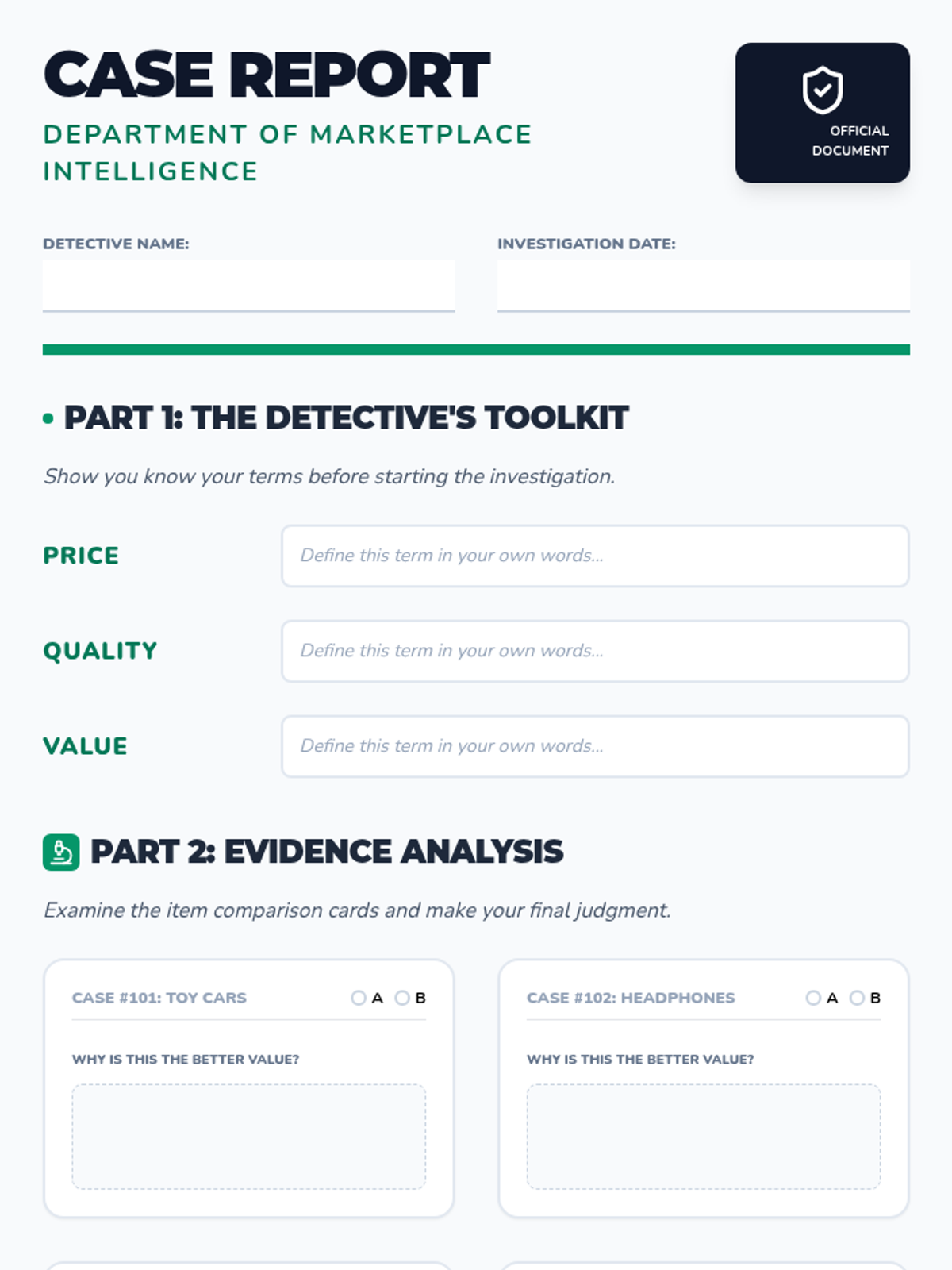
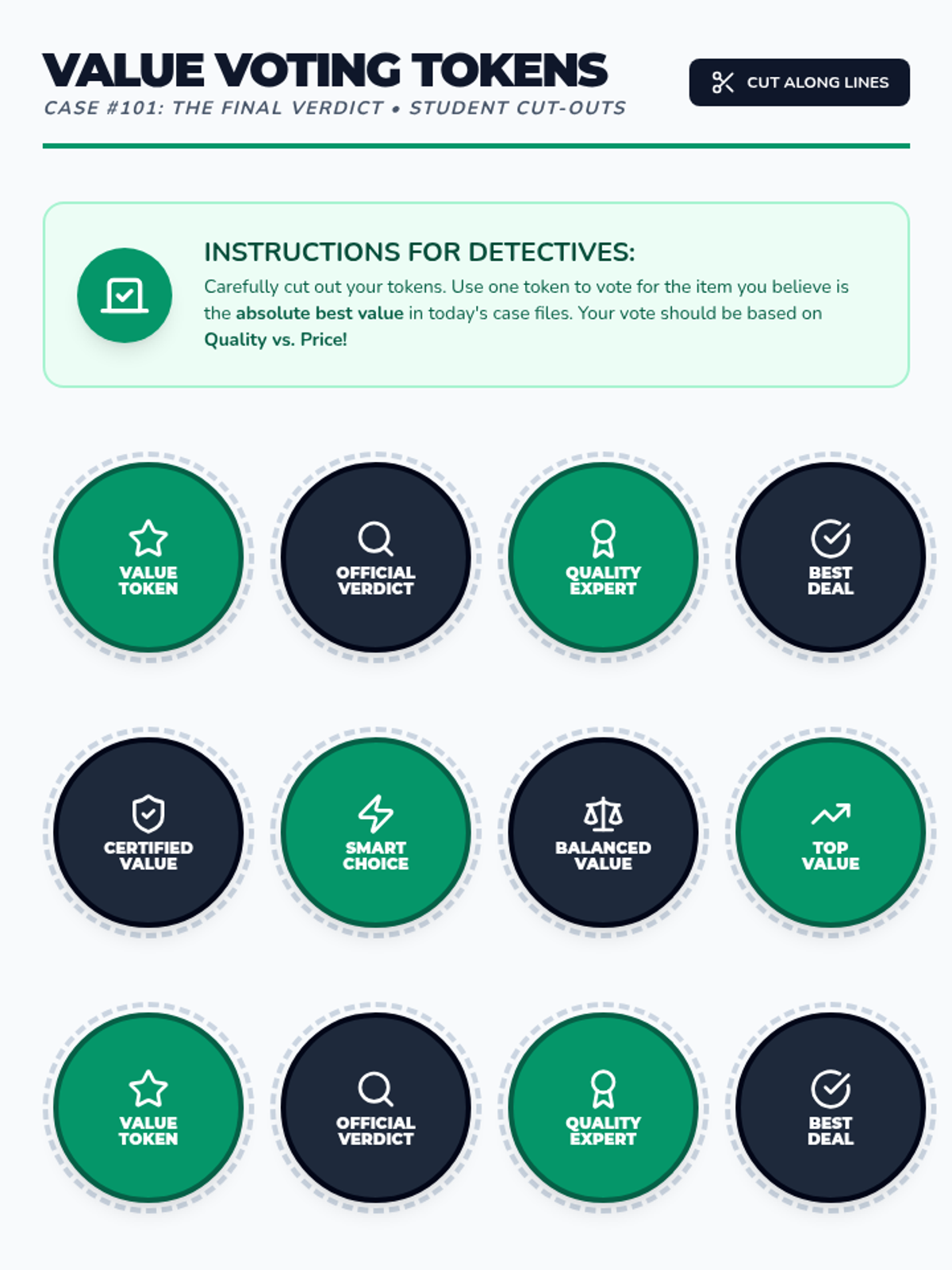
Students become 'Value Detectives' to distinguish between price and value, learning that the cheapest option isn't always the best deal. The lesson uses a specific video segment to define quality and value, followed by a hands-on item comparison activity.