Budgeting, saving, and investment strategies alongside practical skills for managing credit, taxes, and banking. Addresses insurance needs, employment income, and major purchase decisions to support comprehensive long-term financial planning.
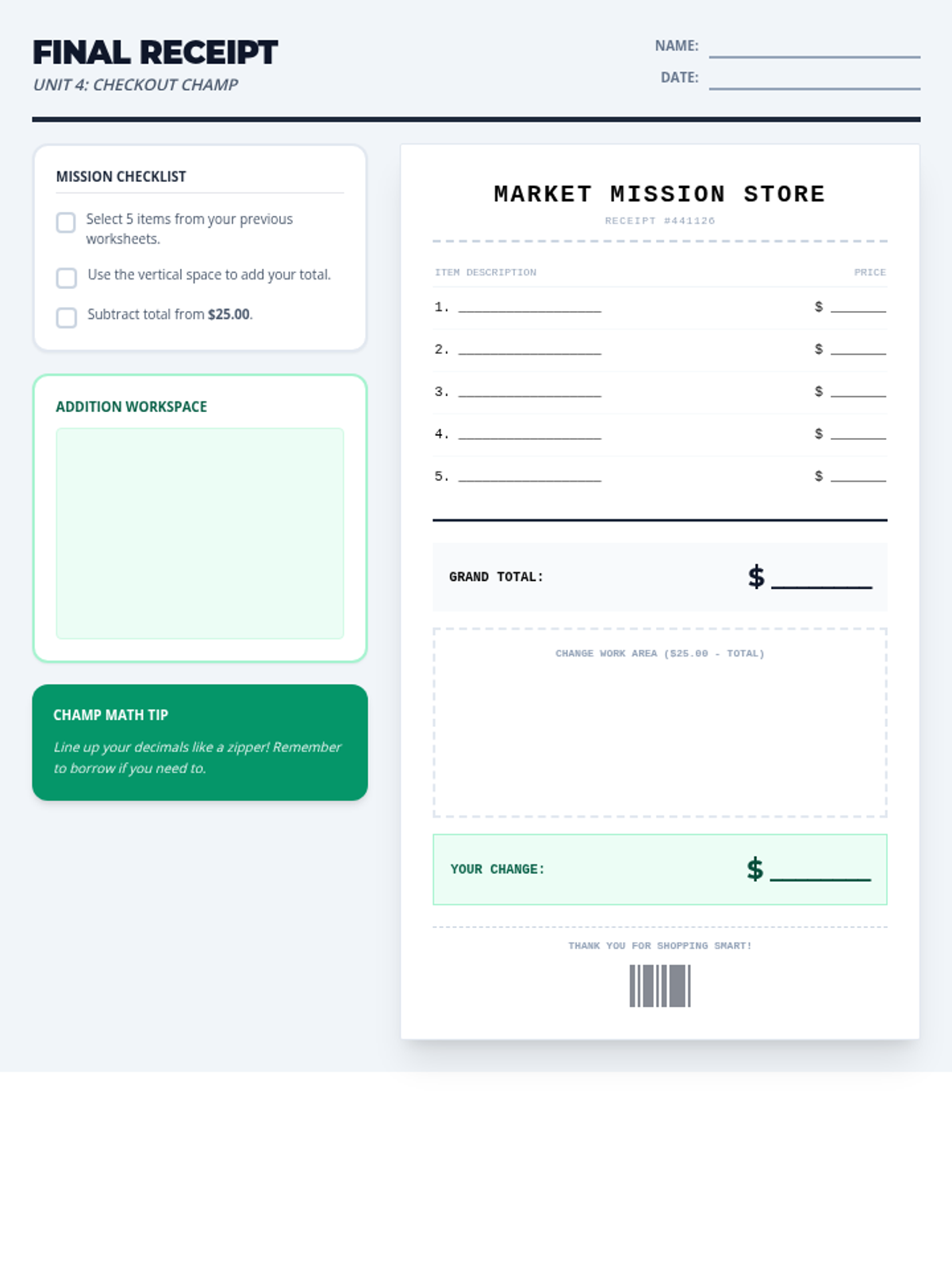
A final project worksheet for Lesson 4 that simulates a grocery receipt, where students calculate their final total and determine their remaining change from a $25 budget. Revised to fix page breaks, formatting, and added addition workspace.
Concluding slide deck for Lesson 4, guiding students through the final checkout process. Revised to fix a minor typo in the success checklist.
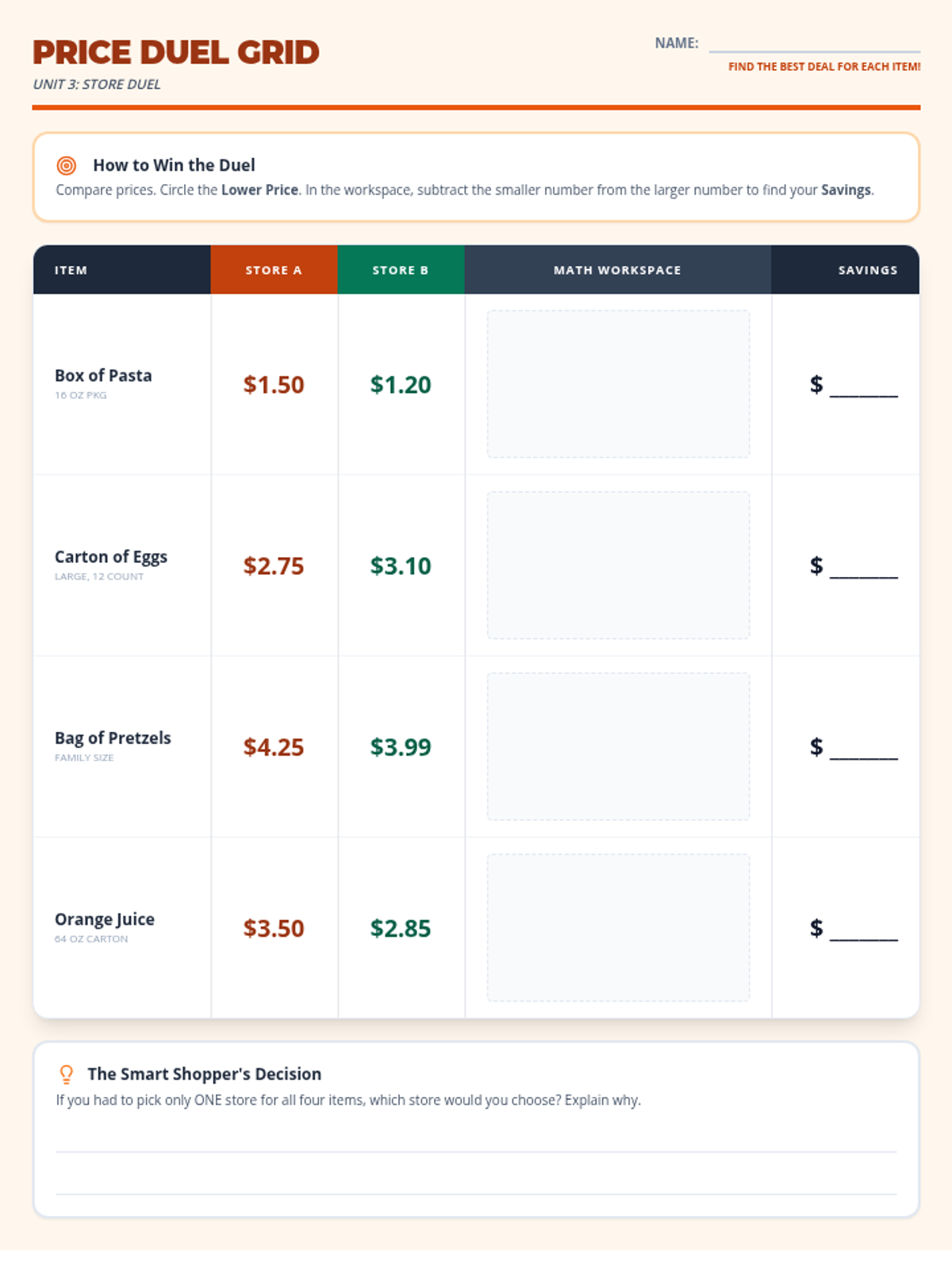
A comparison grid for Lesson 3 where students compare prices for the same items at two different stores and calculate the savings. Revised to fix layout, workspace size, and column logic.
Slide deck for Lesson 3 focusing on price comparison strategies, identifying the best deals, and reviewing decimal subtraction.
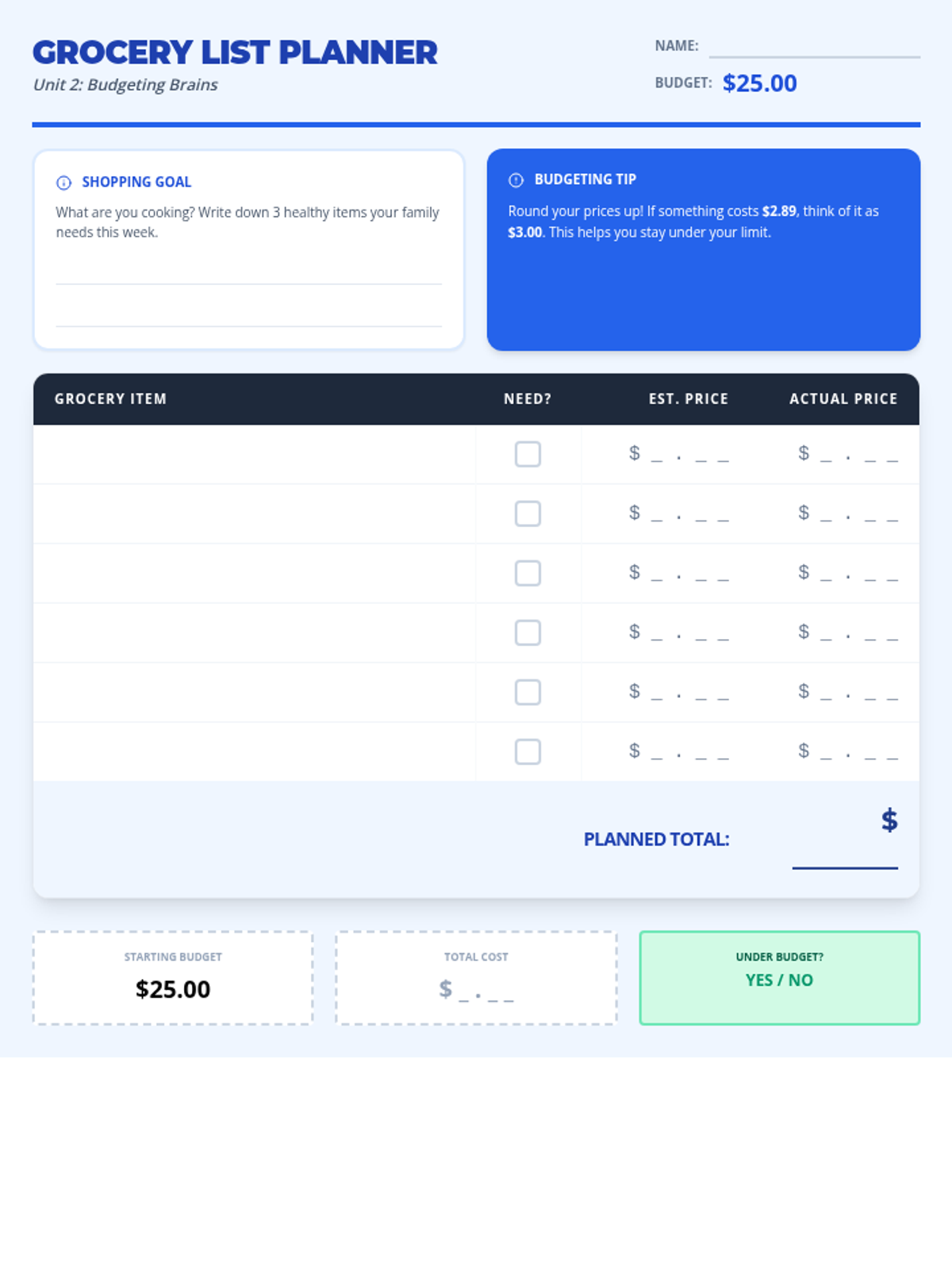
A graphic organizer for Lesson 2 that helps students plan a shopping trip, estimate costs, and track whether items are 'needs' or 'wants' while staying within a $25 budget. Revised to fix page breaks and formatting.
Slide deck for Lesson 2 focusing on budgeting basics, identifying needs vs. wants, and planning a shopping trip within a $25 limit.
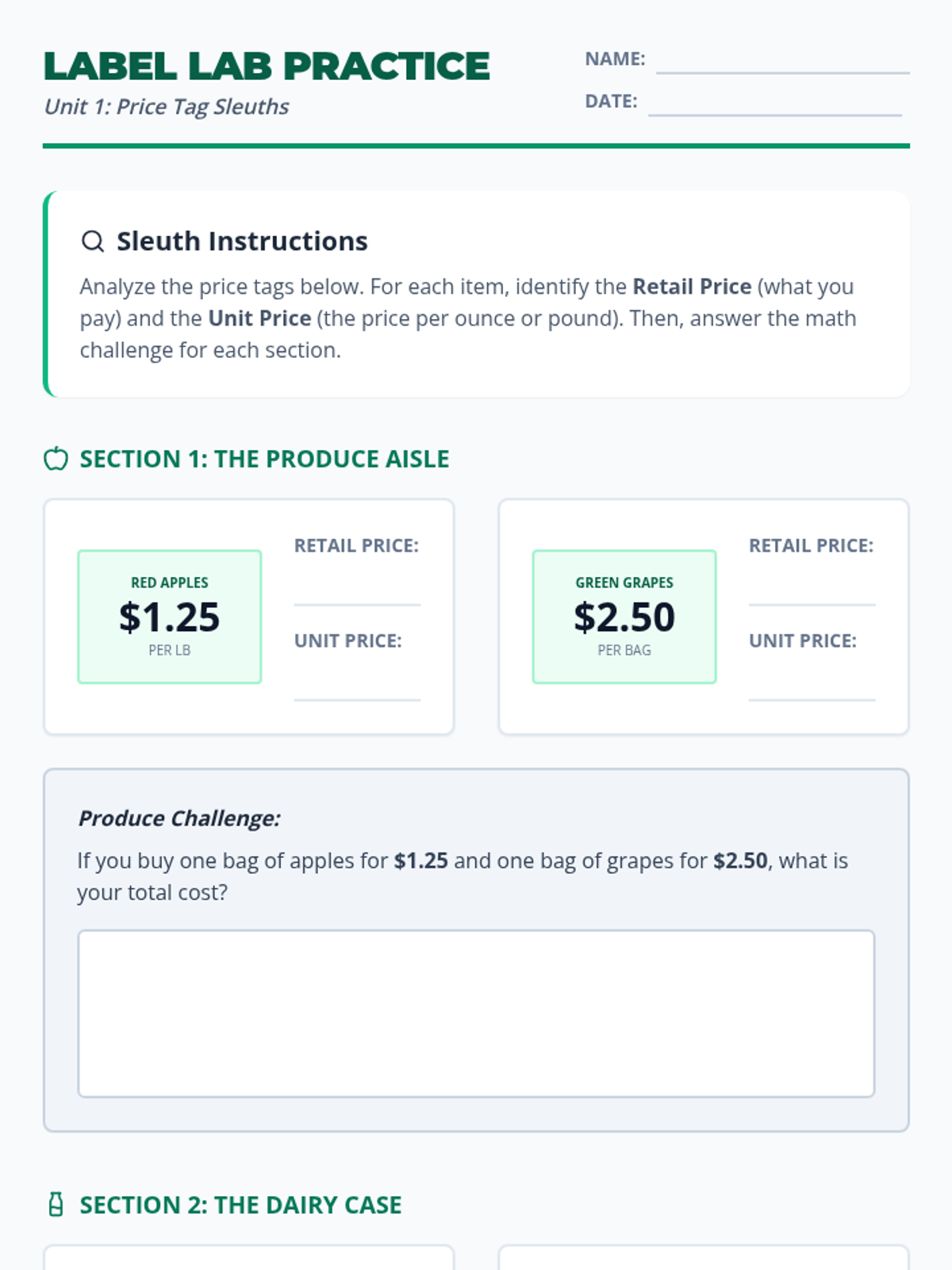
A practice worksheet for Lesson 1 where students identify retail and unit prices from visual tags and perform basic decimal addition/subtraction. Revised to fix page break and formatting issues.
An introductory slide deck for Lesson 1 that teaches students how to read grocery price labels and the basics of unit pricing.
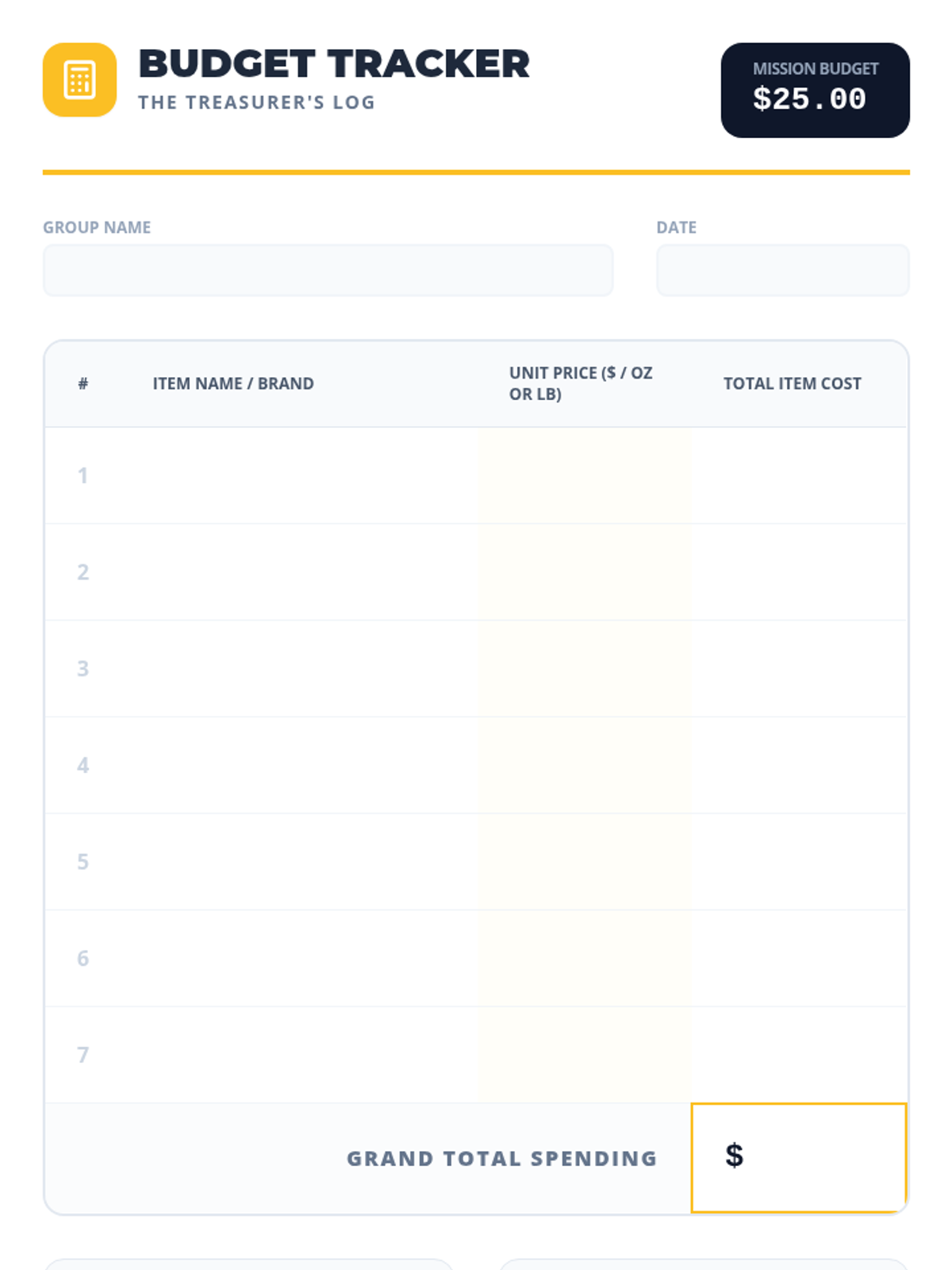
A specialized tracking sheet for the team 'Treasurer' to log grocery items, record unit prices, and calculate total spending within a $25 budget.
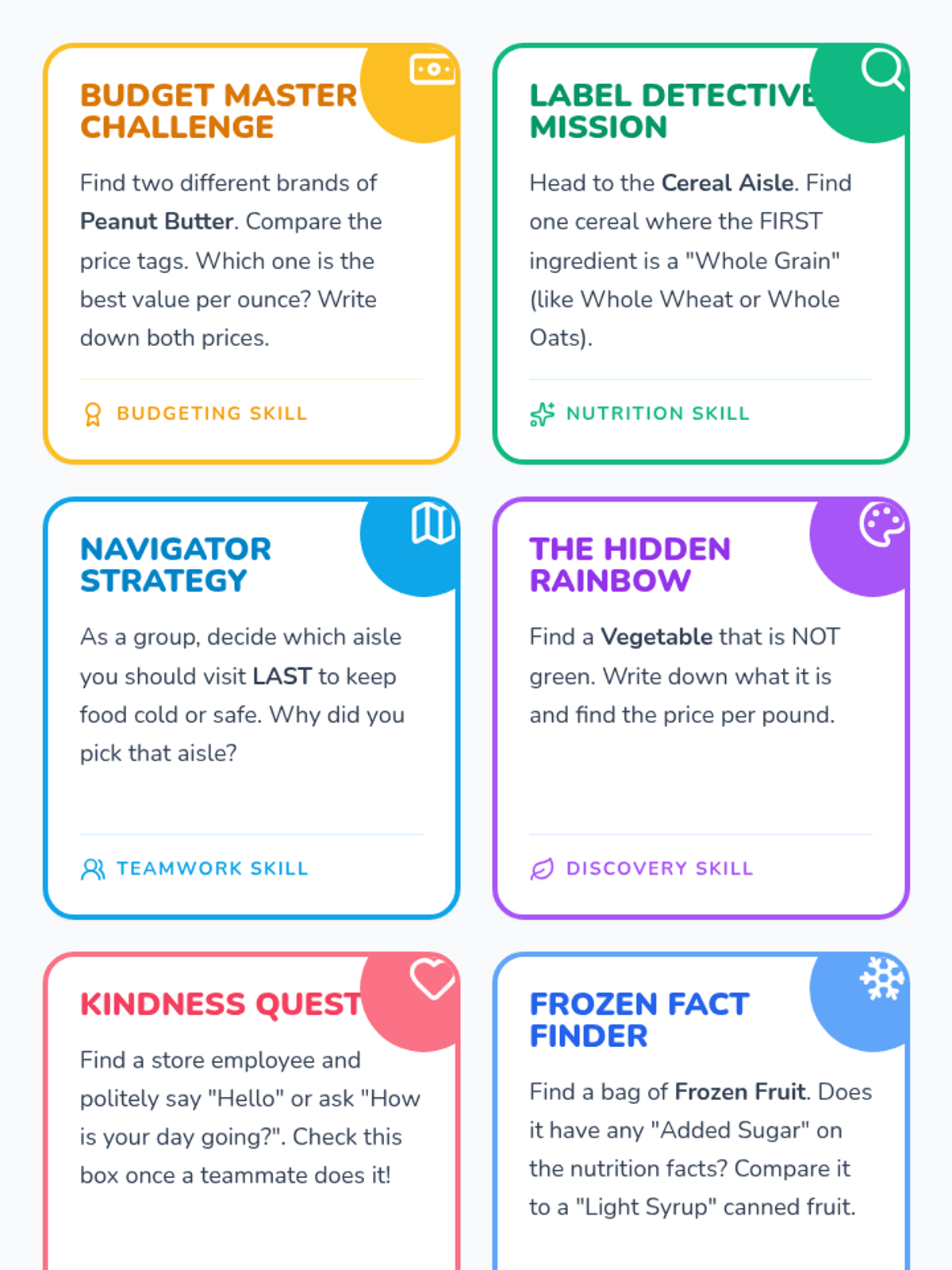
A set of 6 printable task cards that challenge student teams to perform specific missions involving nutrition, budgeting, and social skills in an online setting.
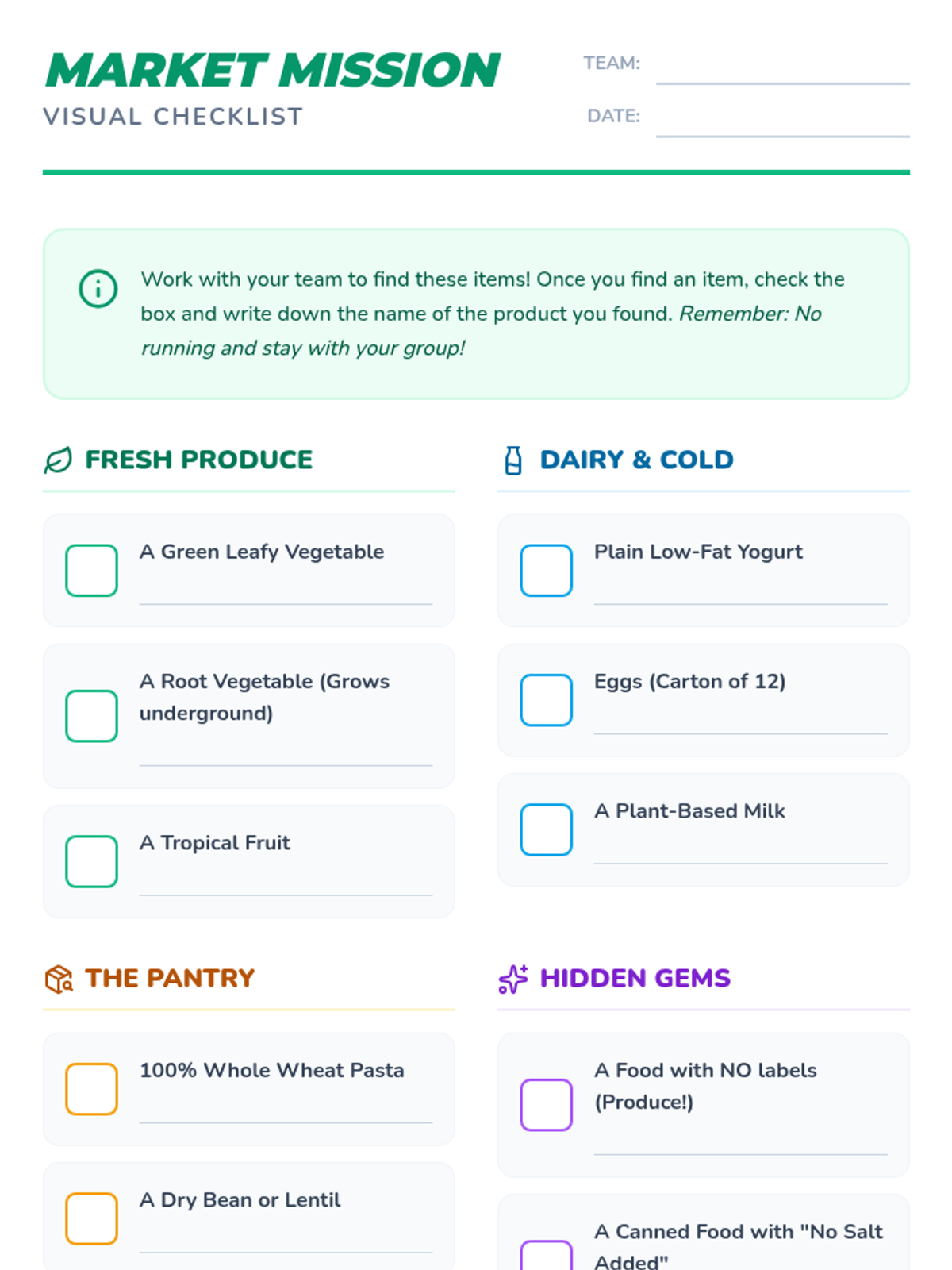
A visual checklist with icons and checkboxes for students to identify healthy grocery items across various departments.
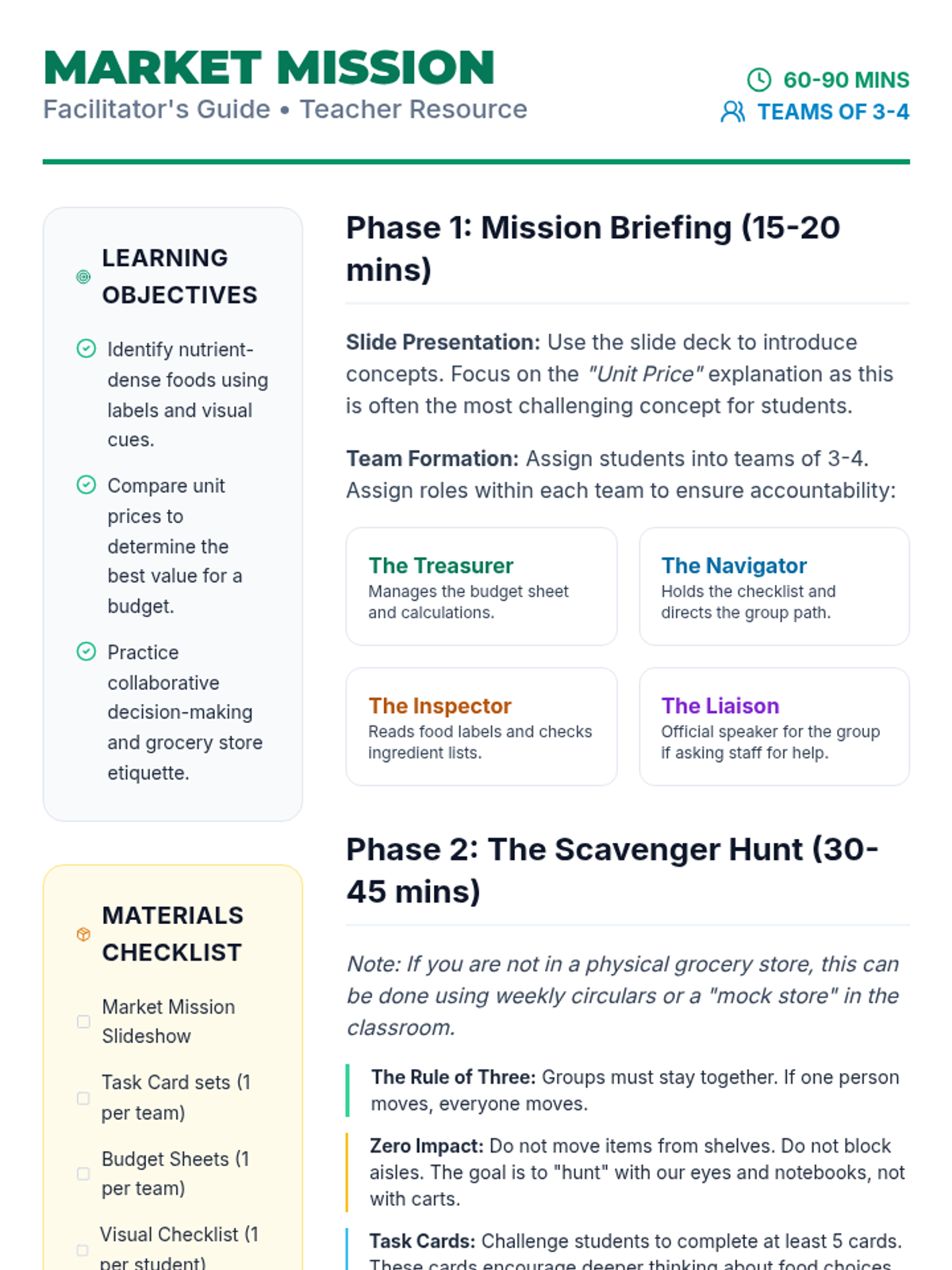
A comprehensive guide for teachers and facilitators to lead the Market Mission online scavenger hunt, including learning objectives, team roles, and debrief questions.
A vibrant, visual slide deck that introduces the Market Mission online scavenger hunt, covering digital searching tips, budgeting basics, and online teamwork expectations.
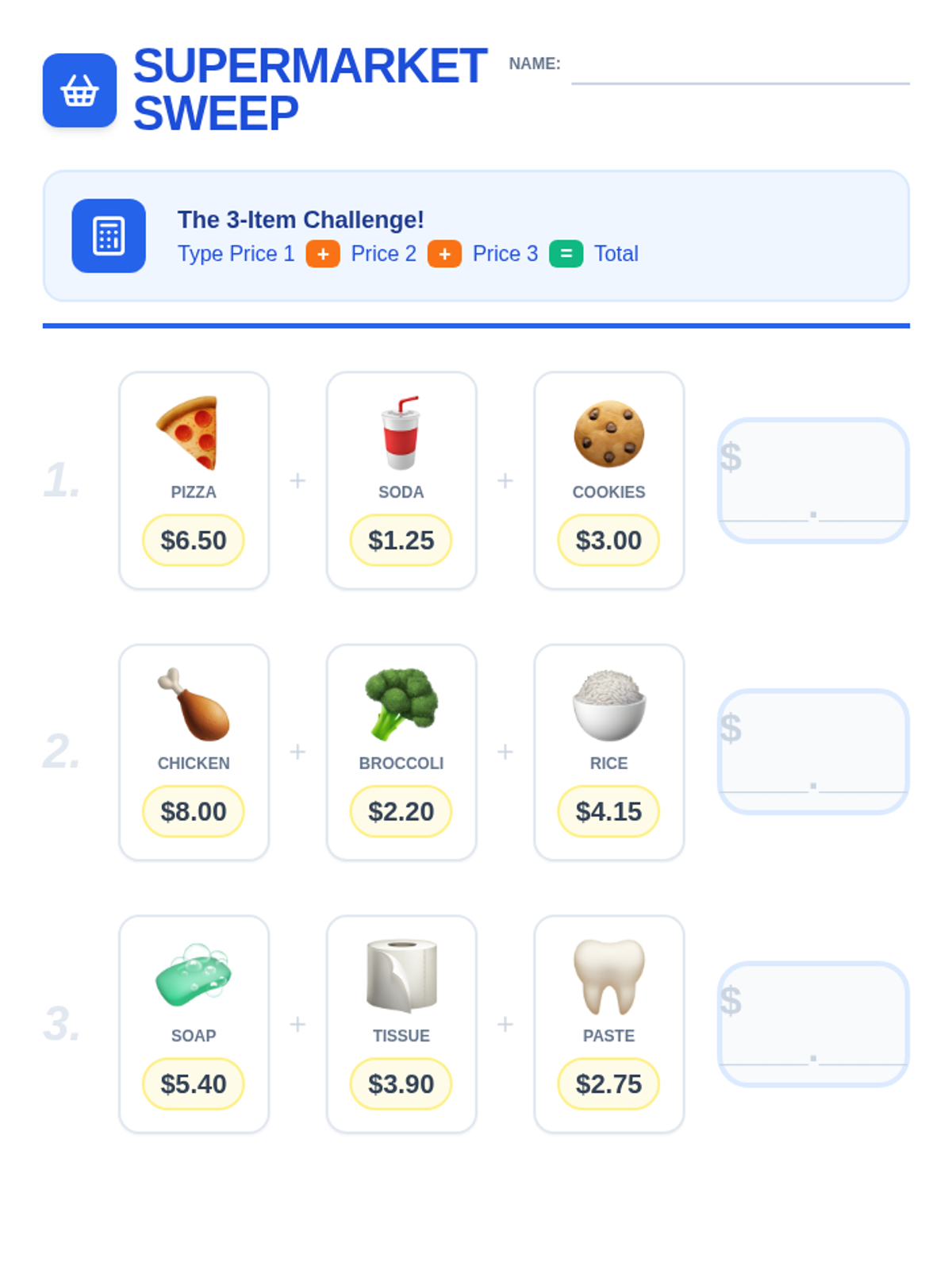
An expanded two-page worksheet featuring 6 problems for adding three grocery prices using a calculator, maintaining clear visual supports.
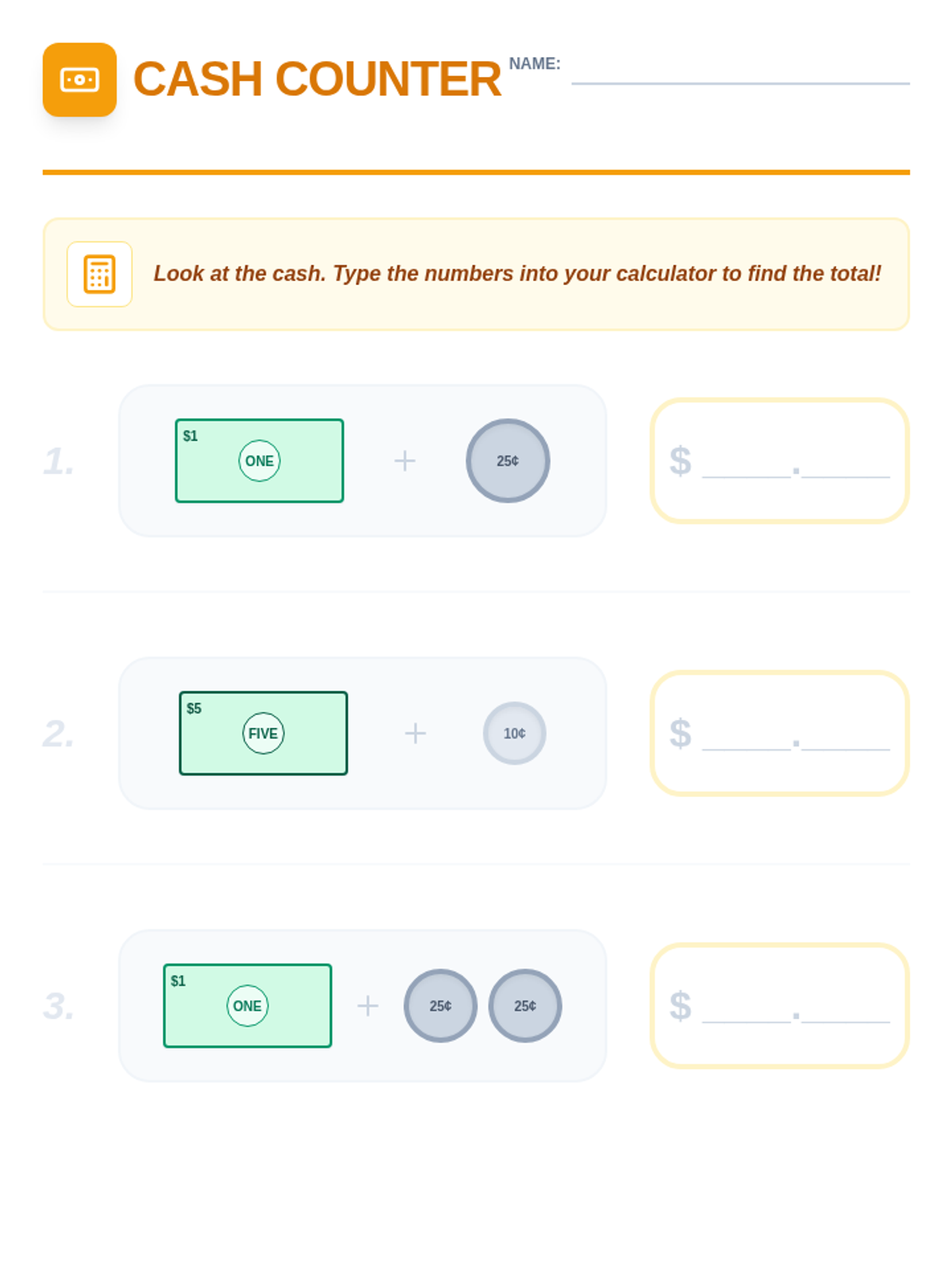
An expanded two-page worksheet featuring realistic CSS-rendered bills and coins for students to identify and add using a calculator.
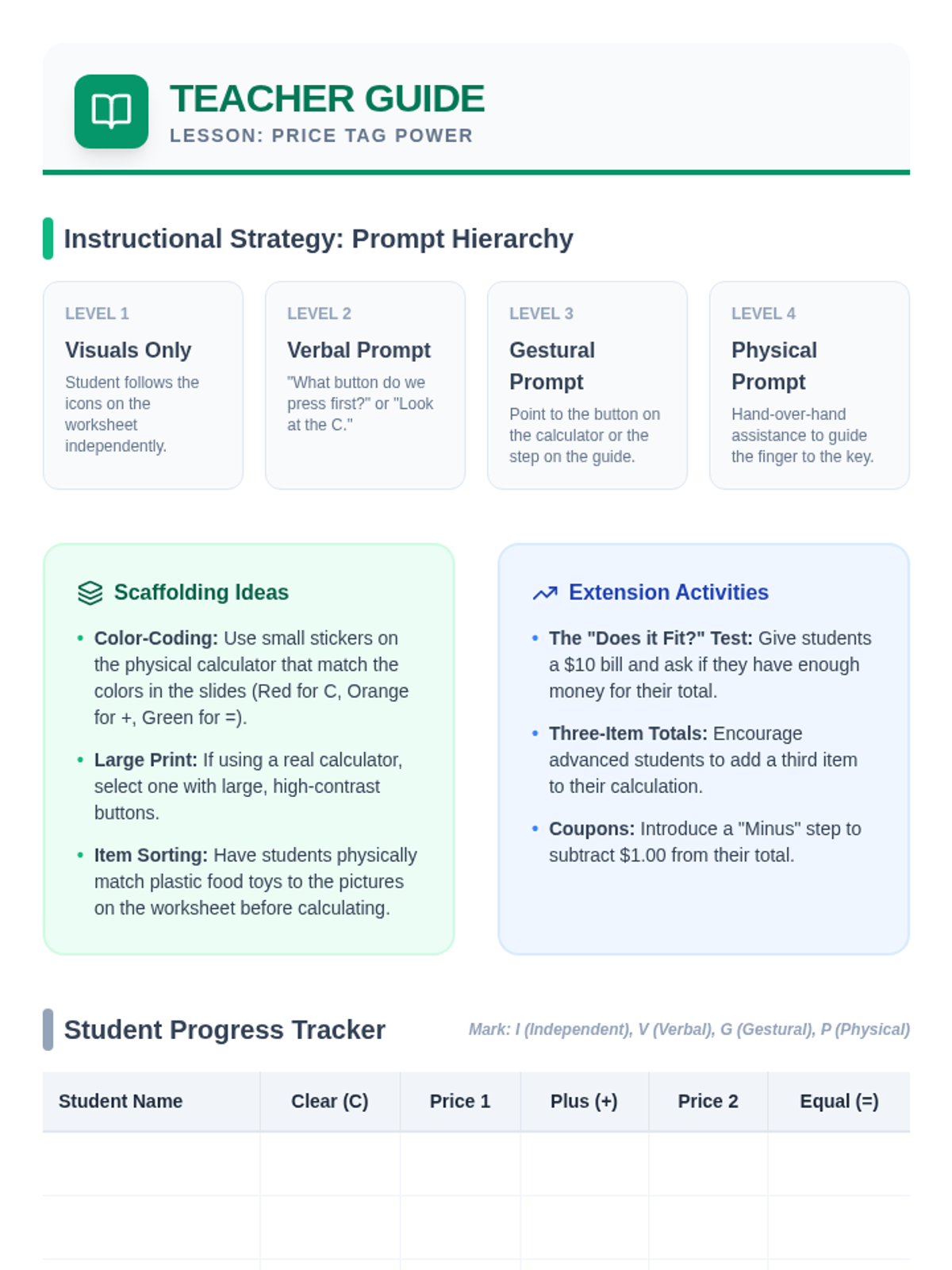
A teacher guide providing strategies for instruction, differentiation tips, and a data-tracking template for the Price Tag Power lesson.
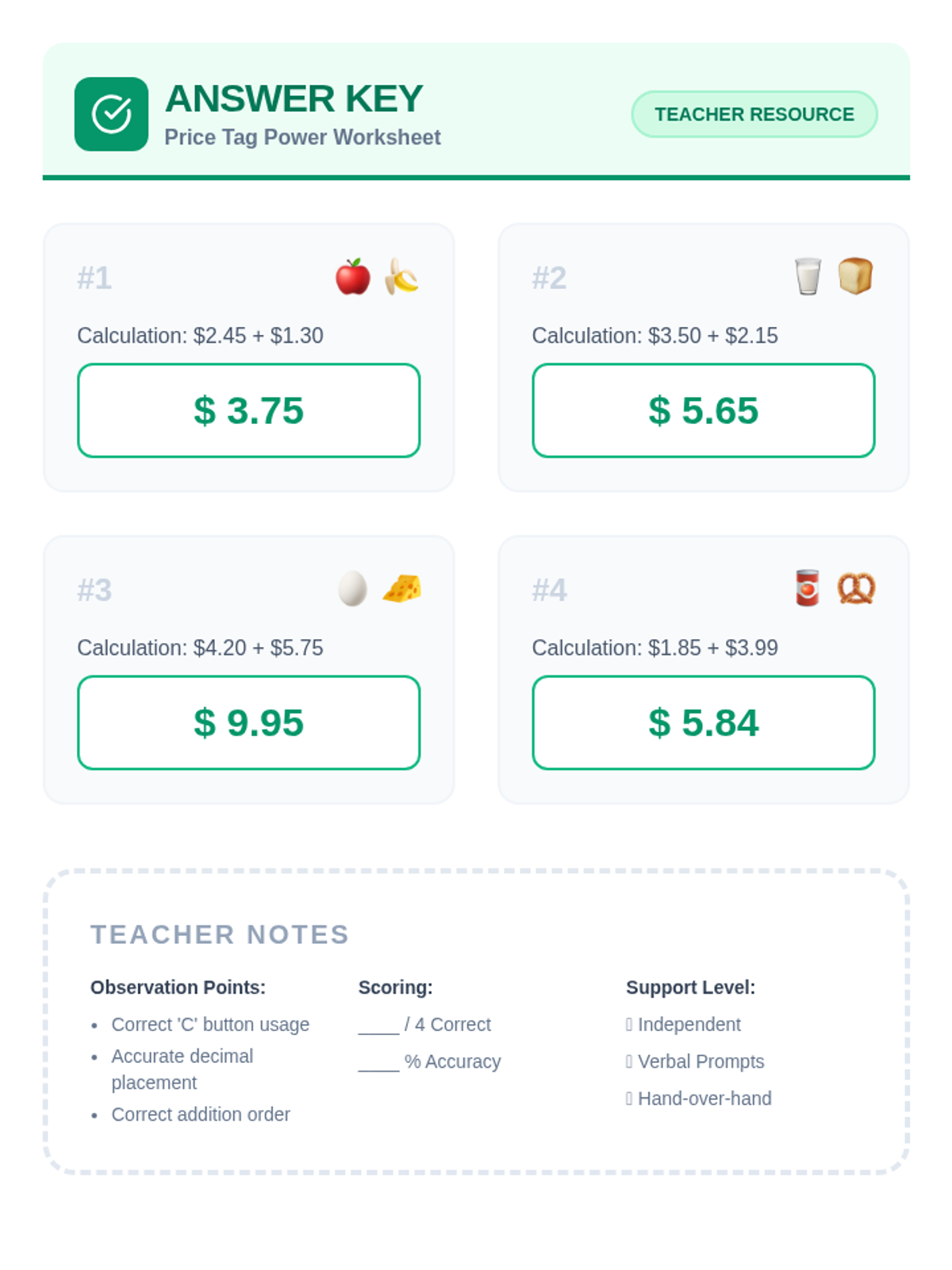
An answer key for the Price Tag Power Worksheet, including calculation breakdowns and a teacher observation checklist.
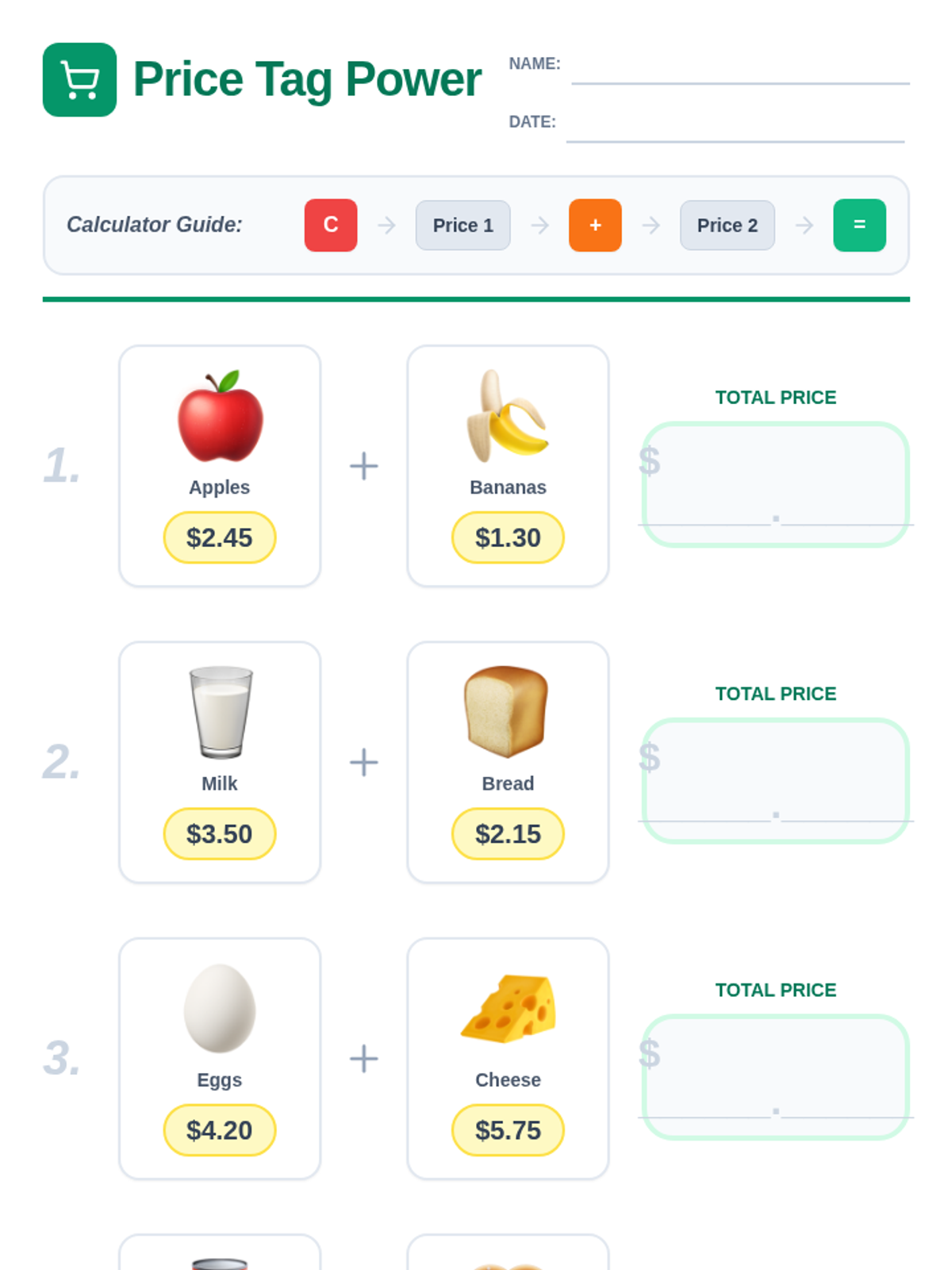
A student worksheet for practicing adding two grocery prices using a calculator, featuring clear price tags and a visual calculator guide.
Interactive slides introducing the step-by-step process of using a calculator to add prices, featuring clear visual cues and color-coded buttons.
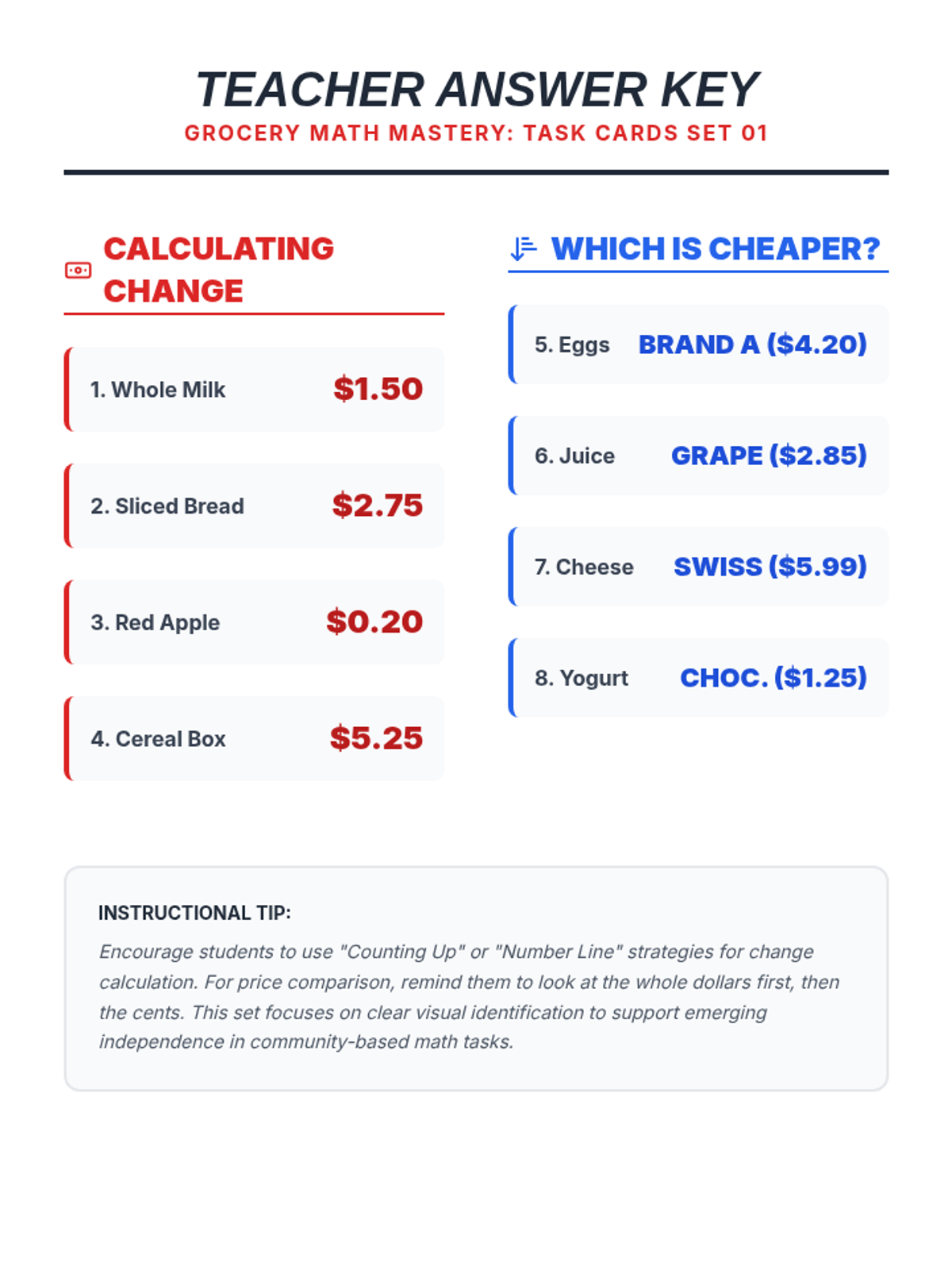
An answer key for the Grocery Task Cards, providing quick-reference solutions for the change calculation and price comparison problems. Includes a small section with instructional tips for teachers.
A comprehensive set of modular panels for a career fair poster board about Contractor Mining, featuring earnings, skills, a daily schedule, and pros/cons designed for elementary students. This version has significantly reduced font sizes and spacing to ensure all content fits comfortably within standard page margins for printing.
A comprehensive set of modular panels for a career fair poster board about Contractor Mining, featuring earnings, skills, a daily schedule, and pros/cons designed for elementary students. Font sizes have been adjusted to be significantly smaller for a better fit on the page.
A comprehensive set of modular panels for a career fair poster board about Contractor Mining, featuring earnings, skills, a daily schedule, and pros/cons designed for elementary students. Font sizes have been adjusted for optimal fit.
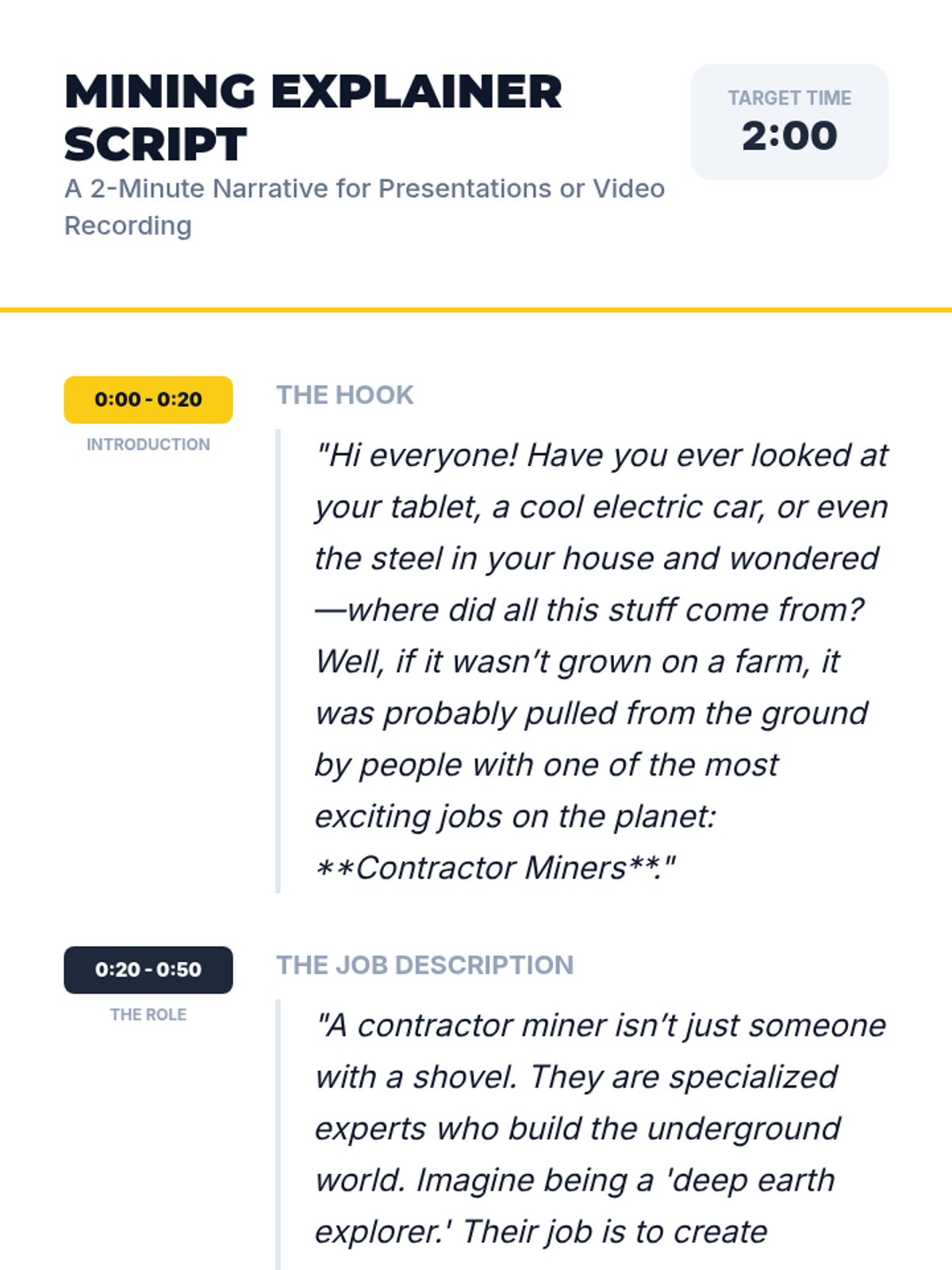
A professional 2-minute script for a career fair presentation or video, tailored for elementary students to explain the world of contractor mining.
A visual presentation for students that explains what contractor miners do, the giant machines they use, and why mining is essential for our modern world. Includes real photos of the work site and a miner.
A comprehensive set of modular panels for a career fair poster board about Contractor Mining, featuring earnings, skills, a daily schedule, and pros/cons designed for elementary students.
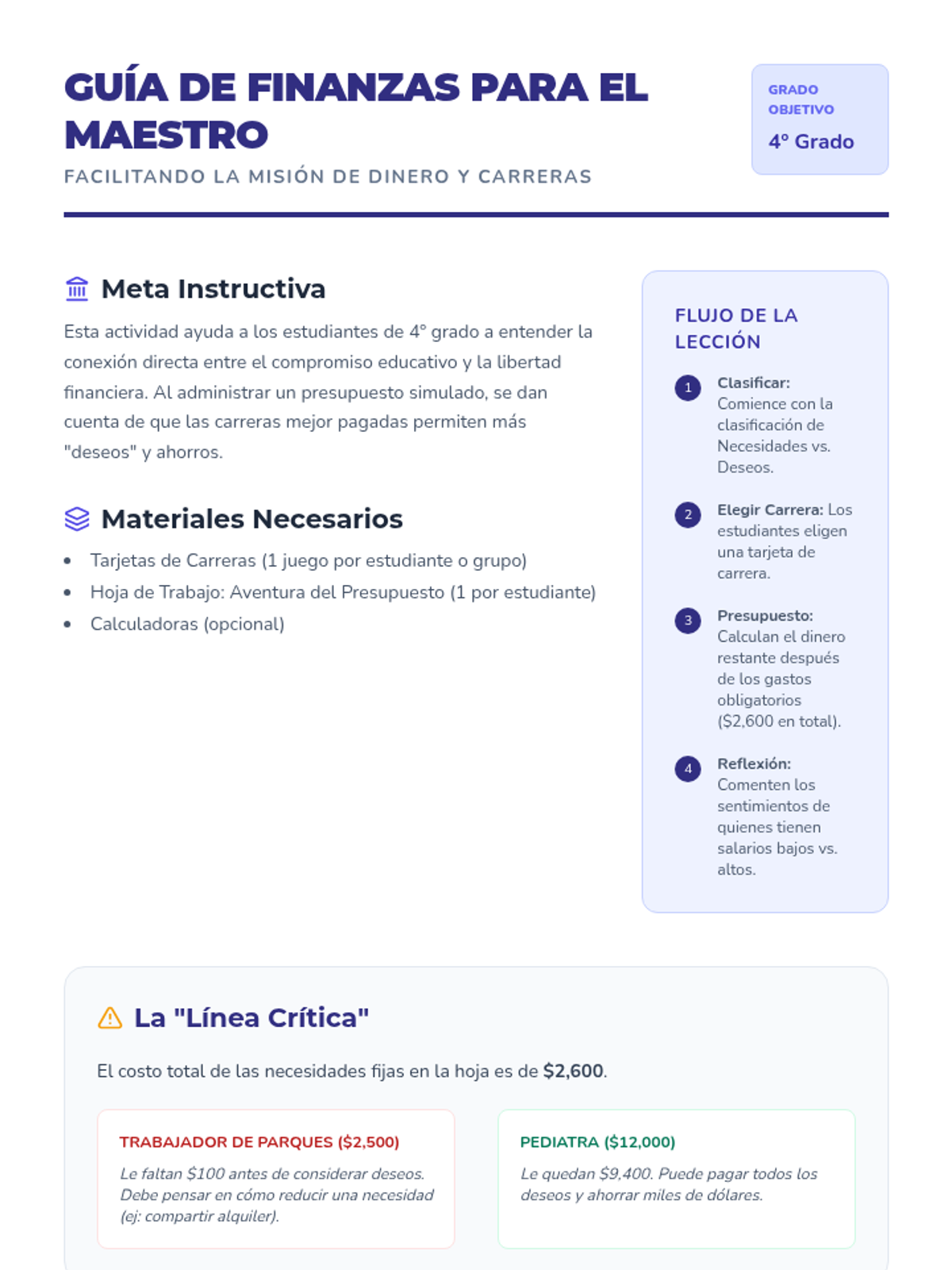
Versión en español de la guía para el maestro de finanzas de 4º grado. Incluye el flujo de la lección y puntos clave para la discusión del presupuesto.
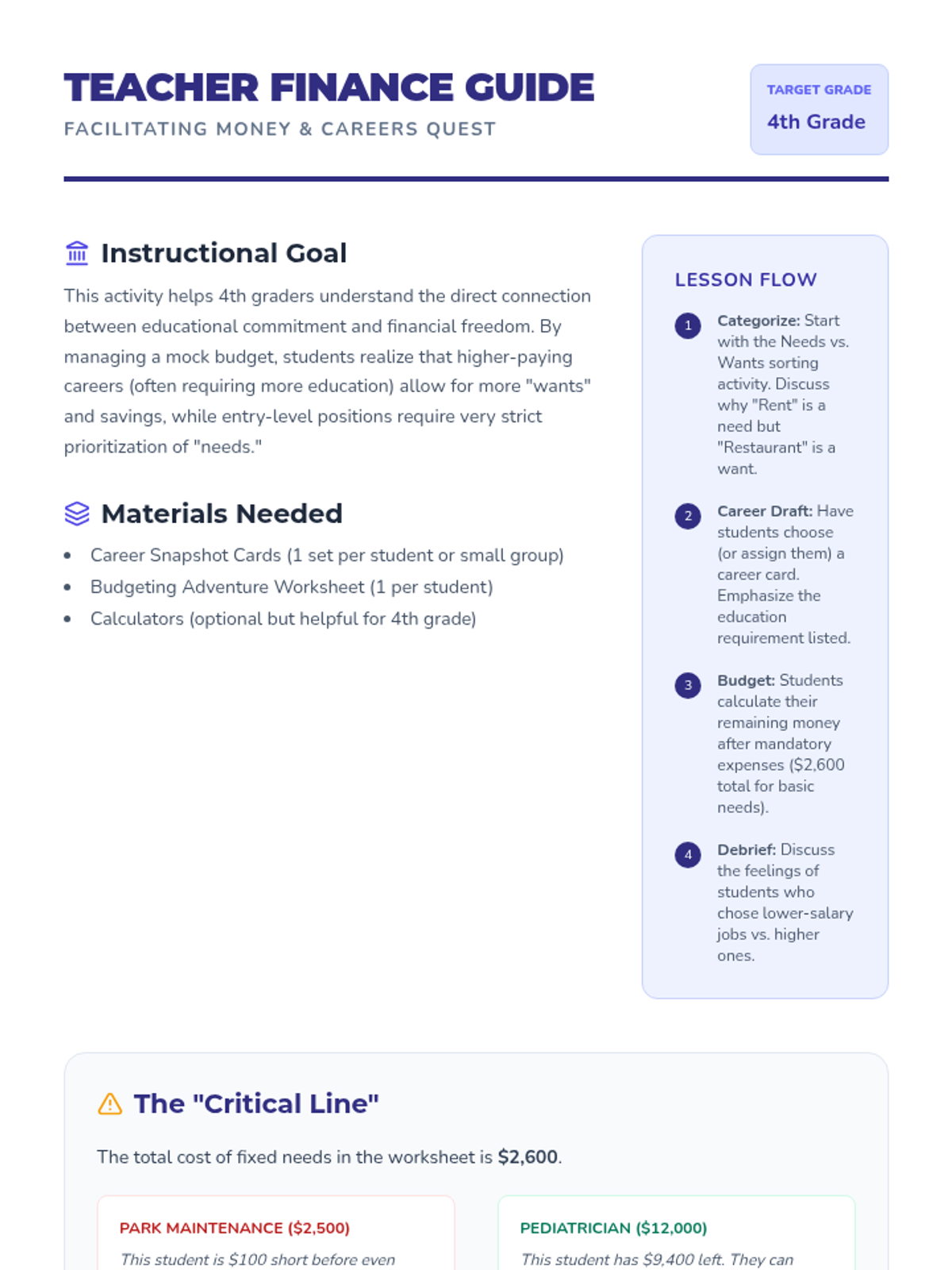
Teacher facilitation guide for the 4th-grade Money and Careers Quest. Includes lesson flow, critical budget analysis, and discussion prompts.
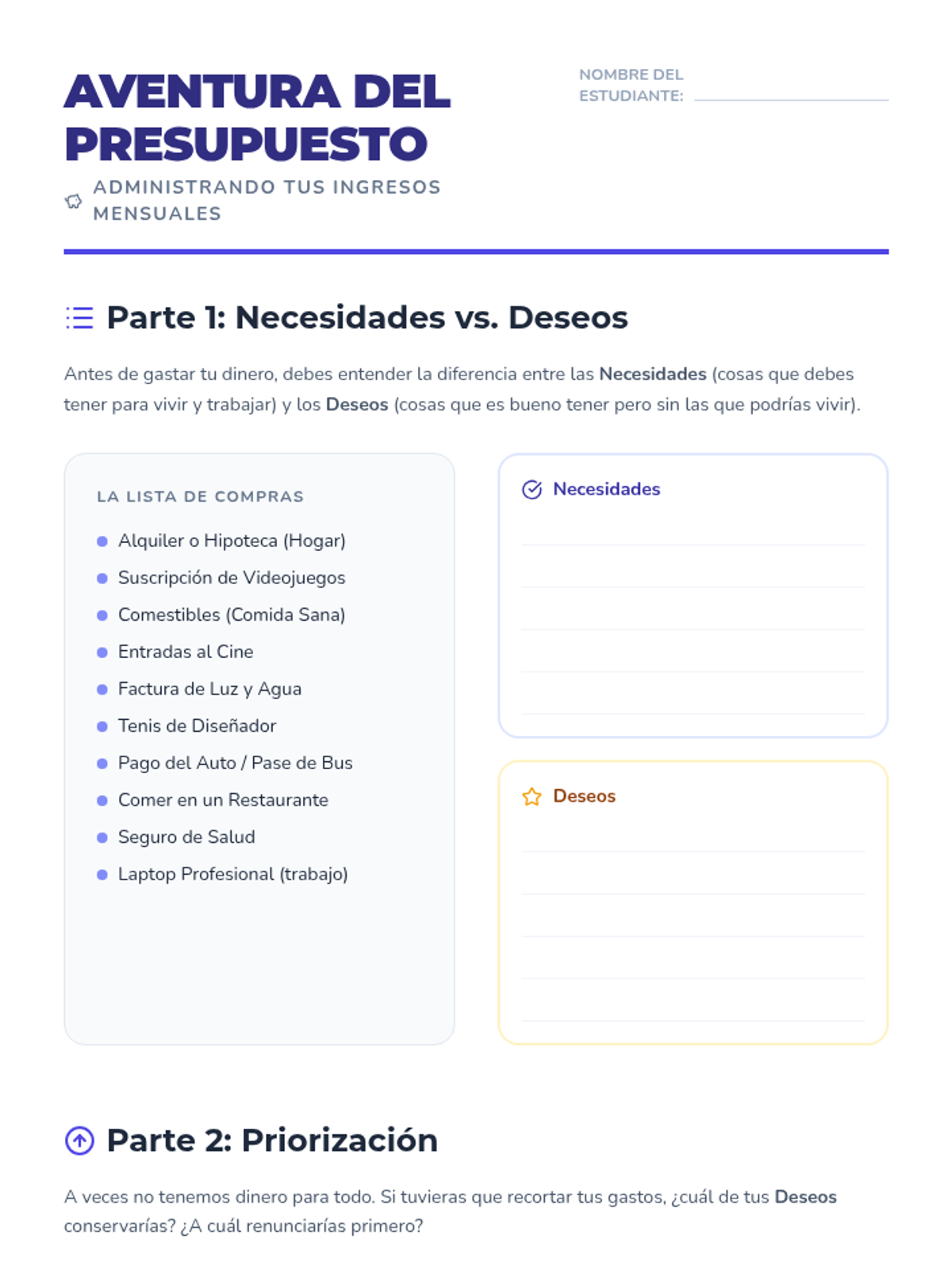
Hoja de trabajo de presupuesto para estudiantes de 4º grado. Incluye clasificación de Necesidades vs. Deseos y cálculos presupuestarios.
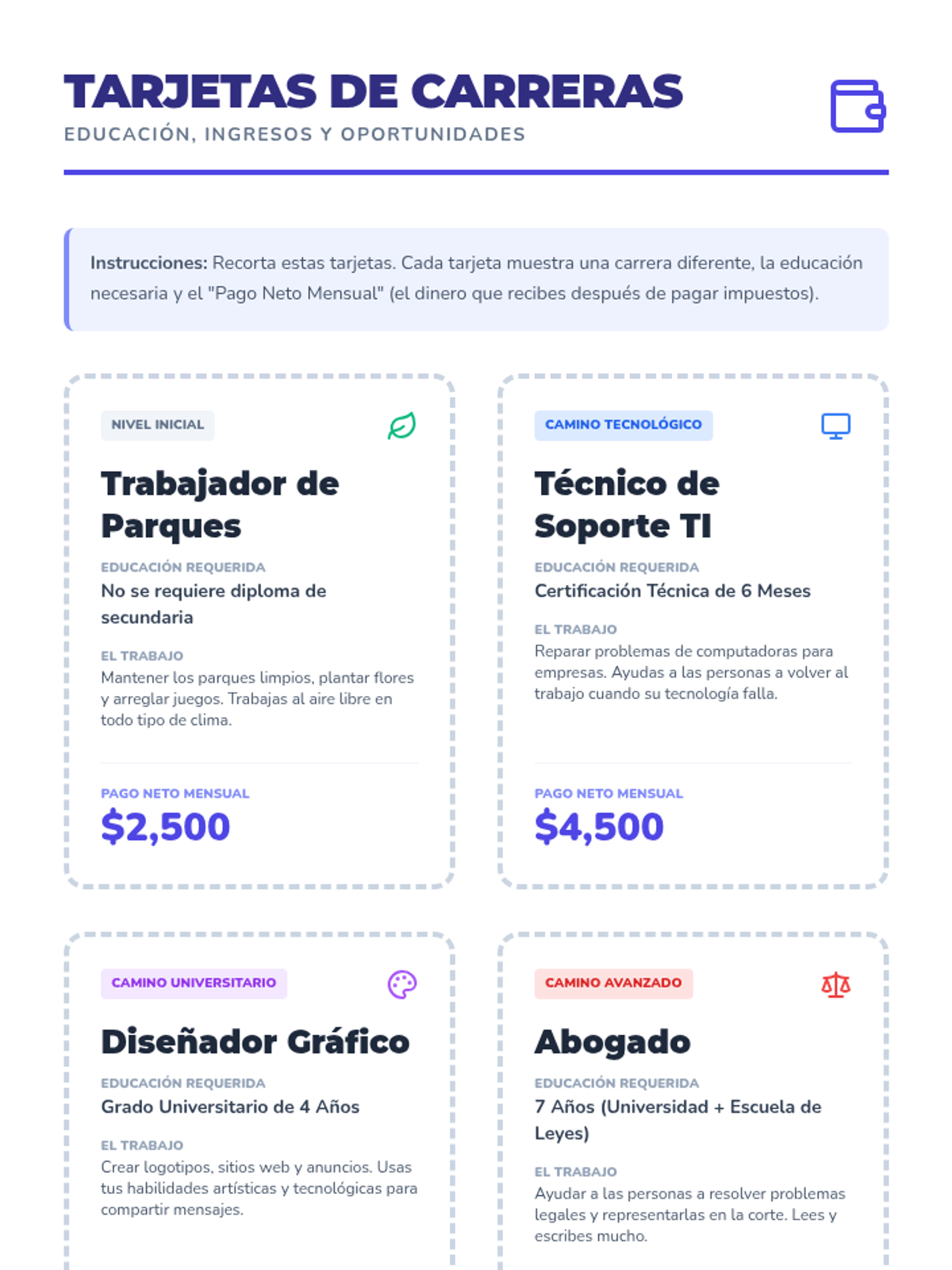
Cinco tarjetas de carreras para una actividad de presupuesto de 4º grado. Cada tarjeta muestra un trabajo con diferentes requisitos educativos y salario mensual.
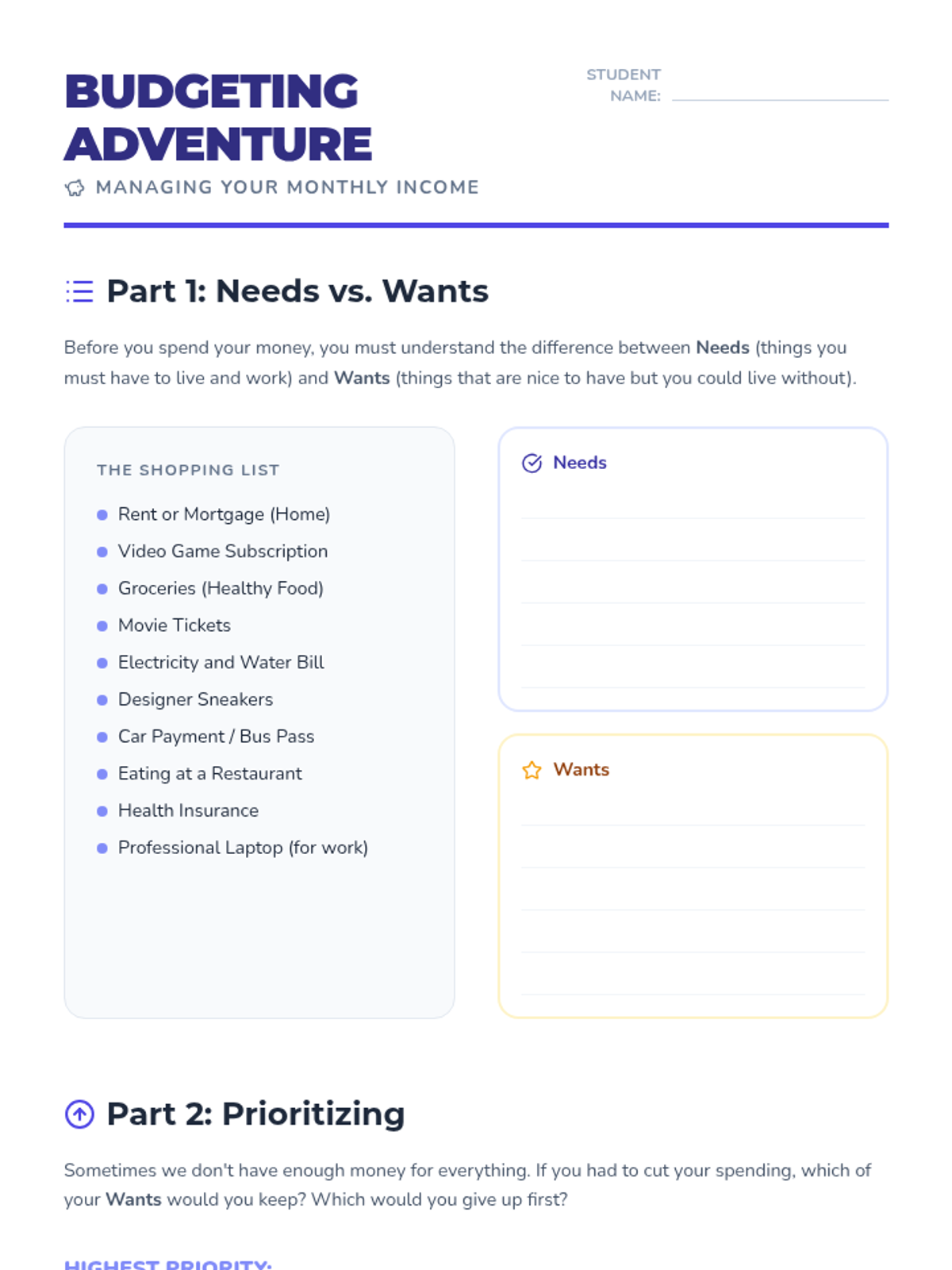
A two-page budgeting worksheet for 4th-grade students. It covers Needs vs. Wants categorization, prioritization of spending, and a monthly budget calculation based on a chosen career salary.
Five career snapshot cards designed for a 4th-grade budgeting activity. Each card features a job with varying educational requirements (from no HS diploma to graduate degrees) and realistic monthly take-home pay.
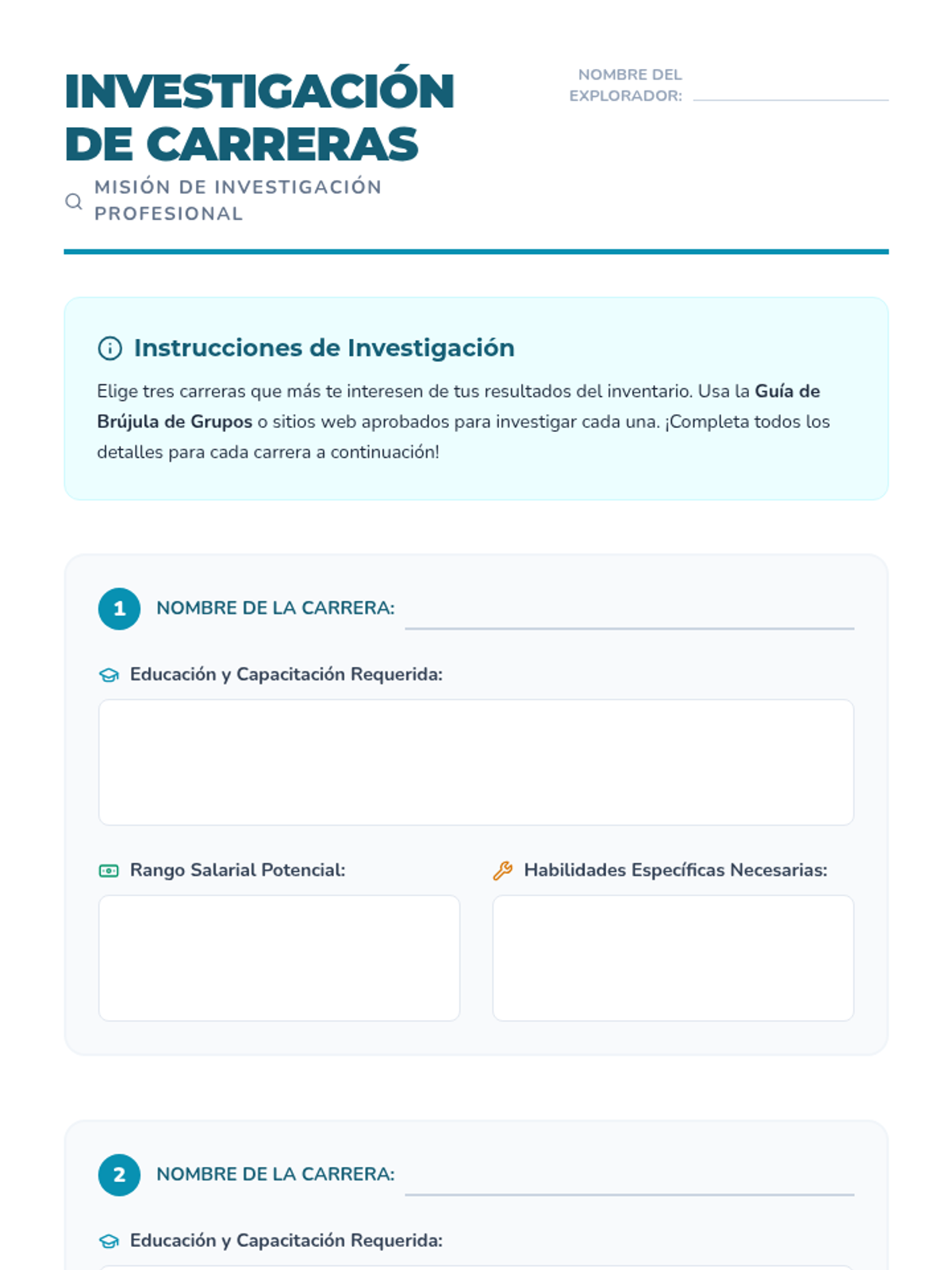
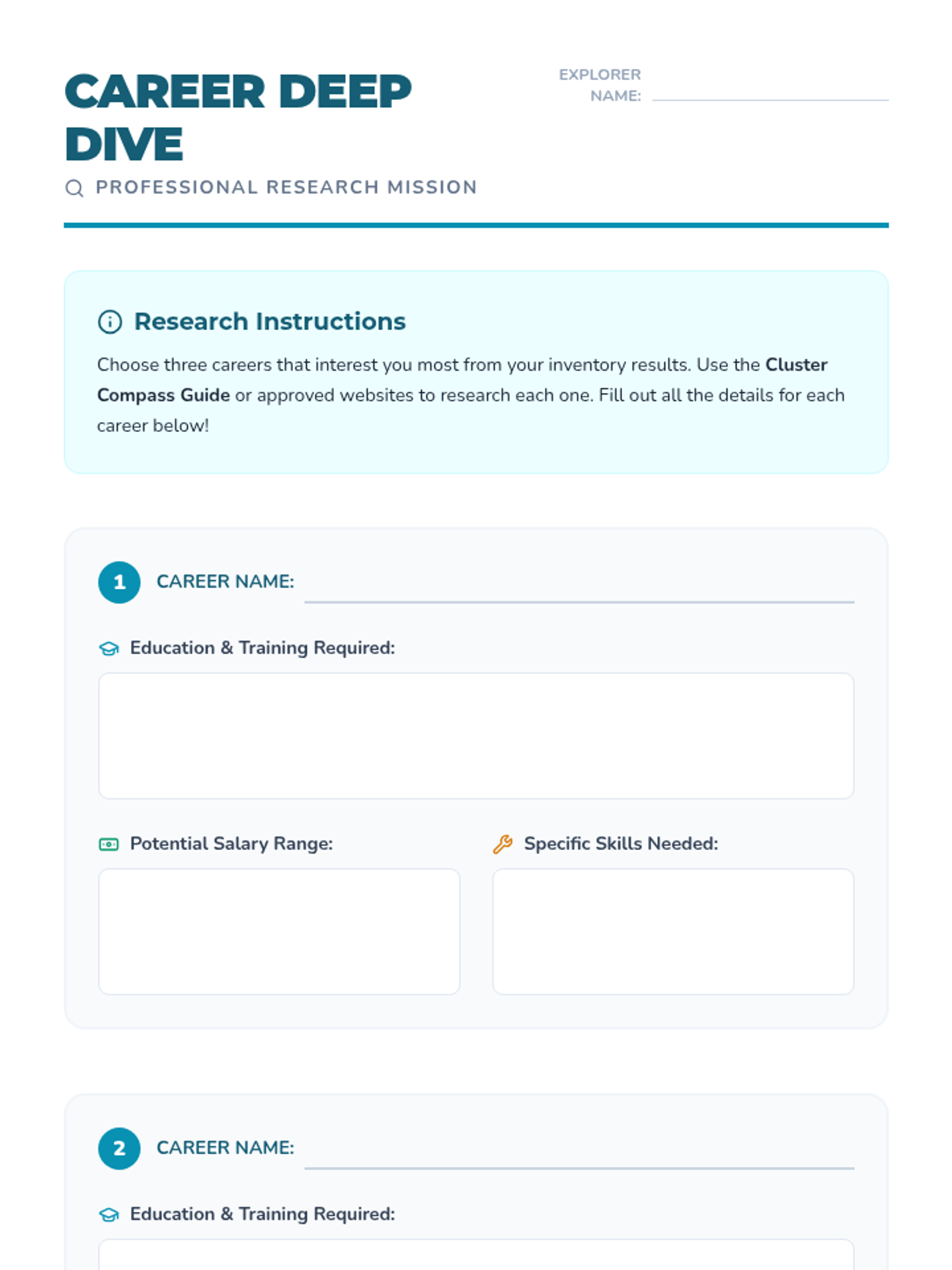
Versión en español de la hoja de investigación de carreras. Los estudiantes investigan educación, salario y habilidades para tres carreras diferentes.
A two-page career research worksheet where students investigate three specific careers. For each career, students research required education, potential salary, and necessary skills.
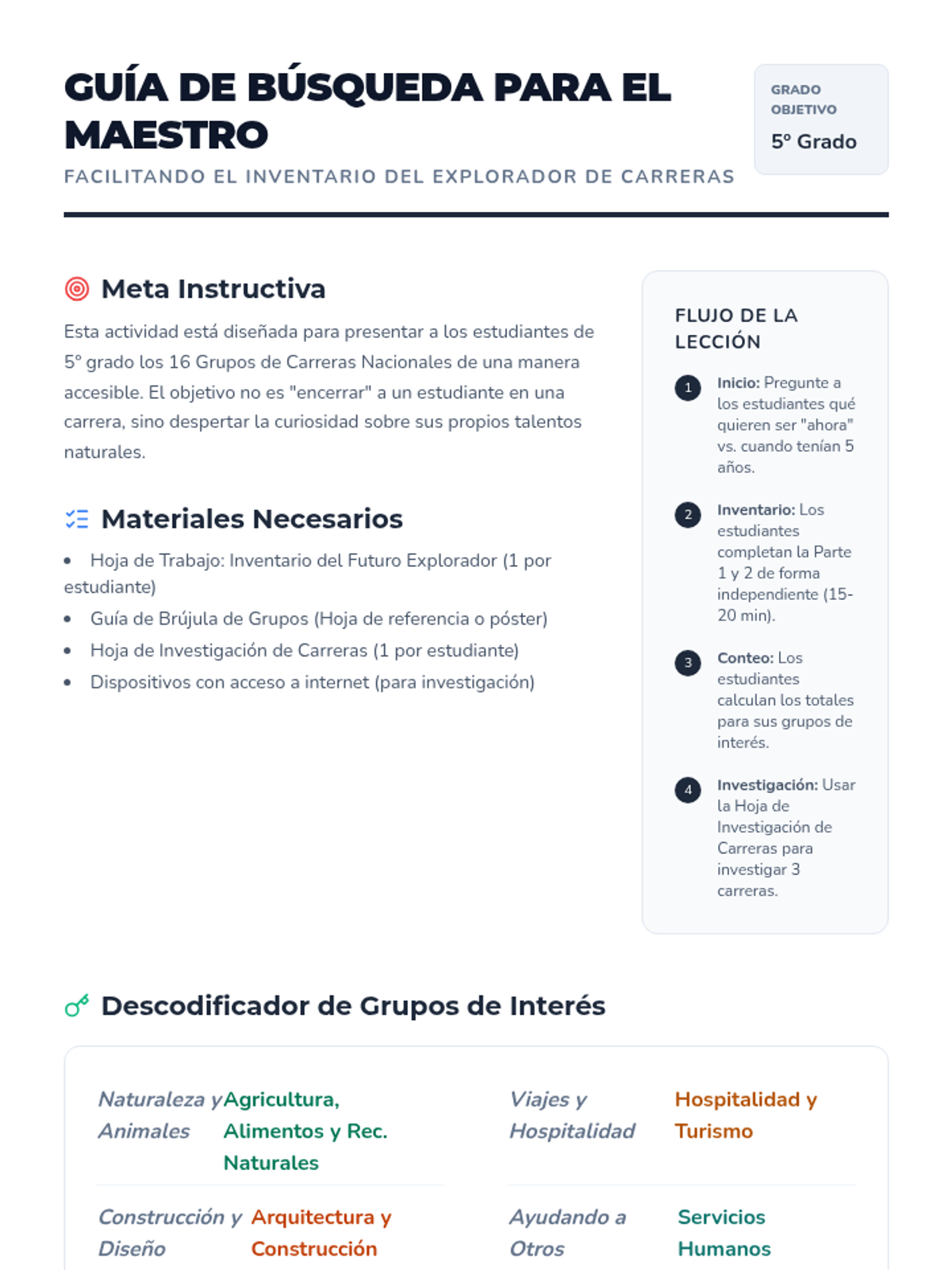
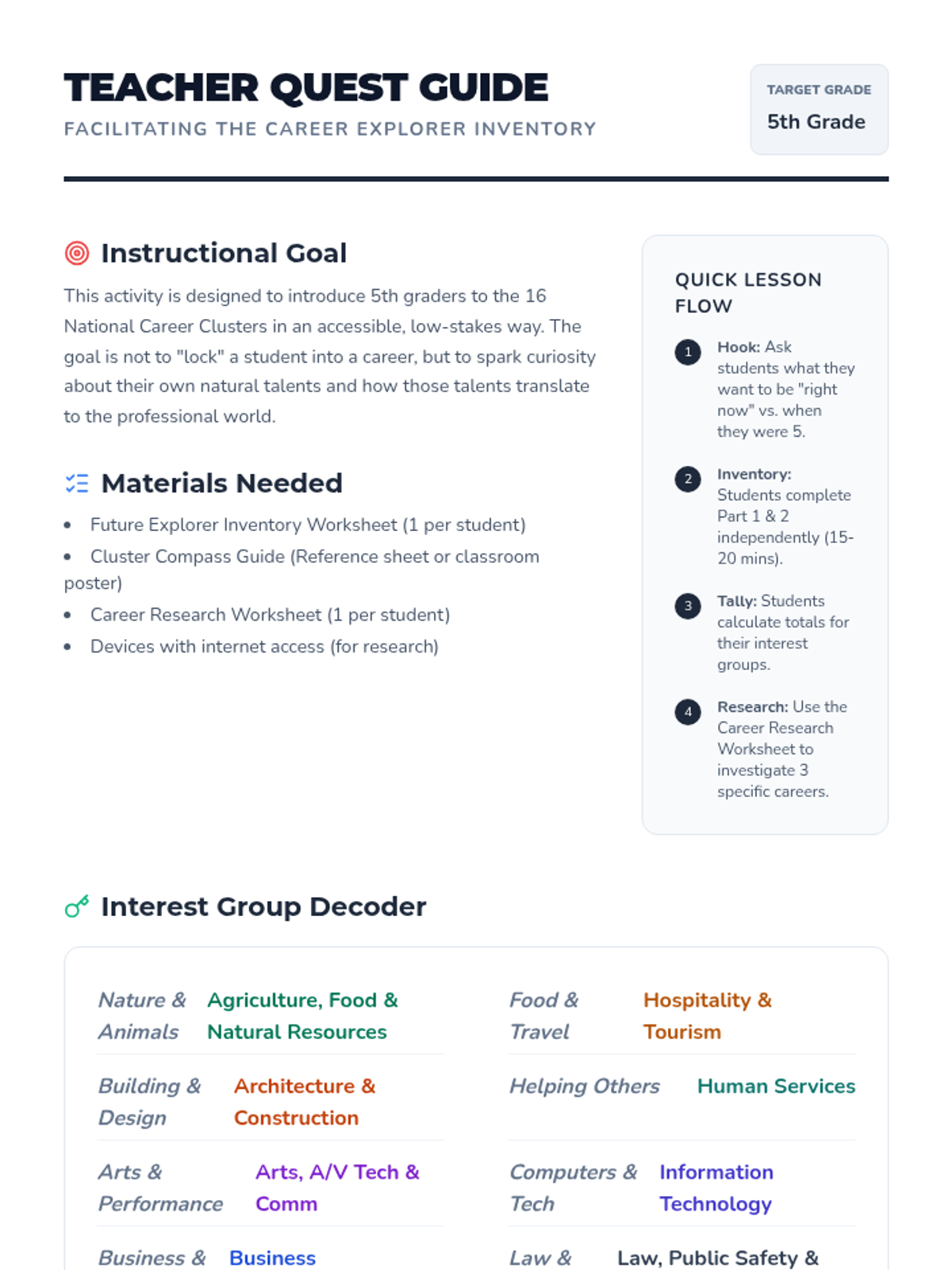
Guía para el maestro en español para la lección de Búsqueda de Carreras. Incluye el descodificador de los nombres de los grupos de interés y los 16 Grupos de Carreras Nacionales.
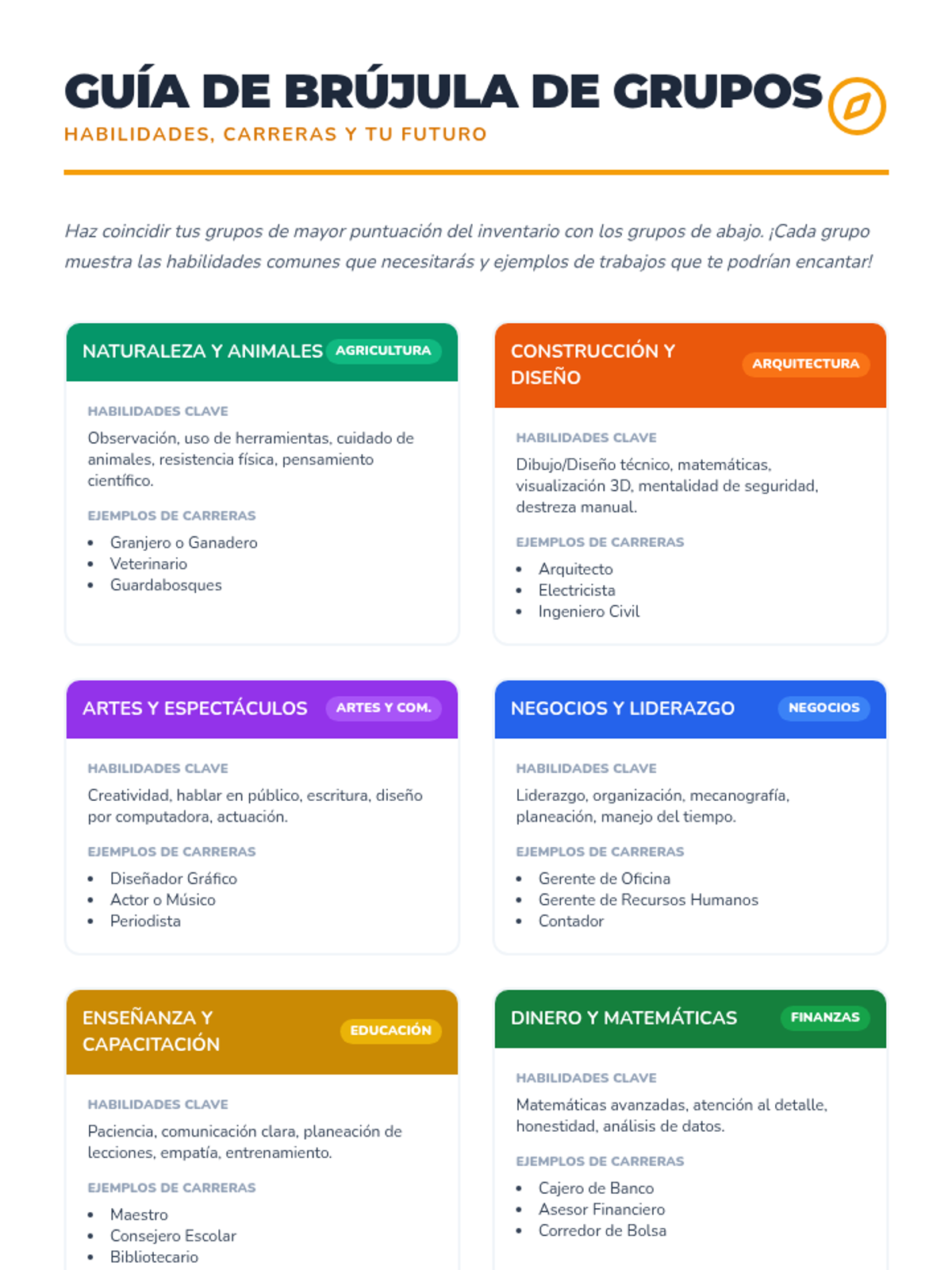
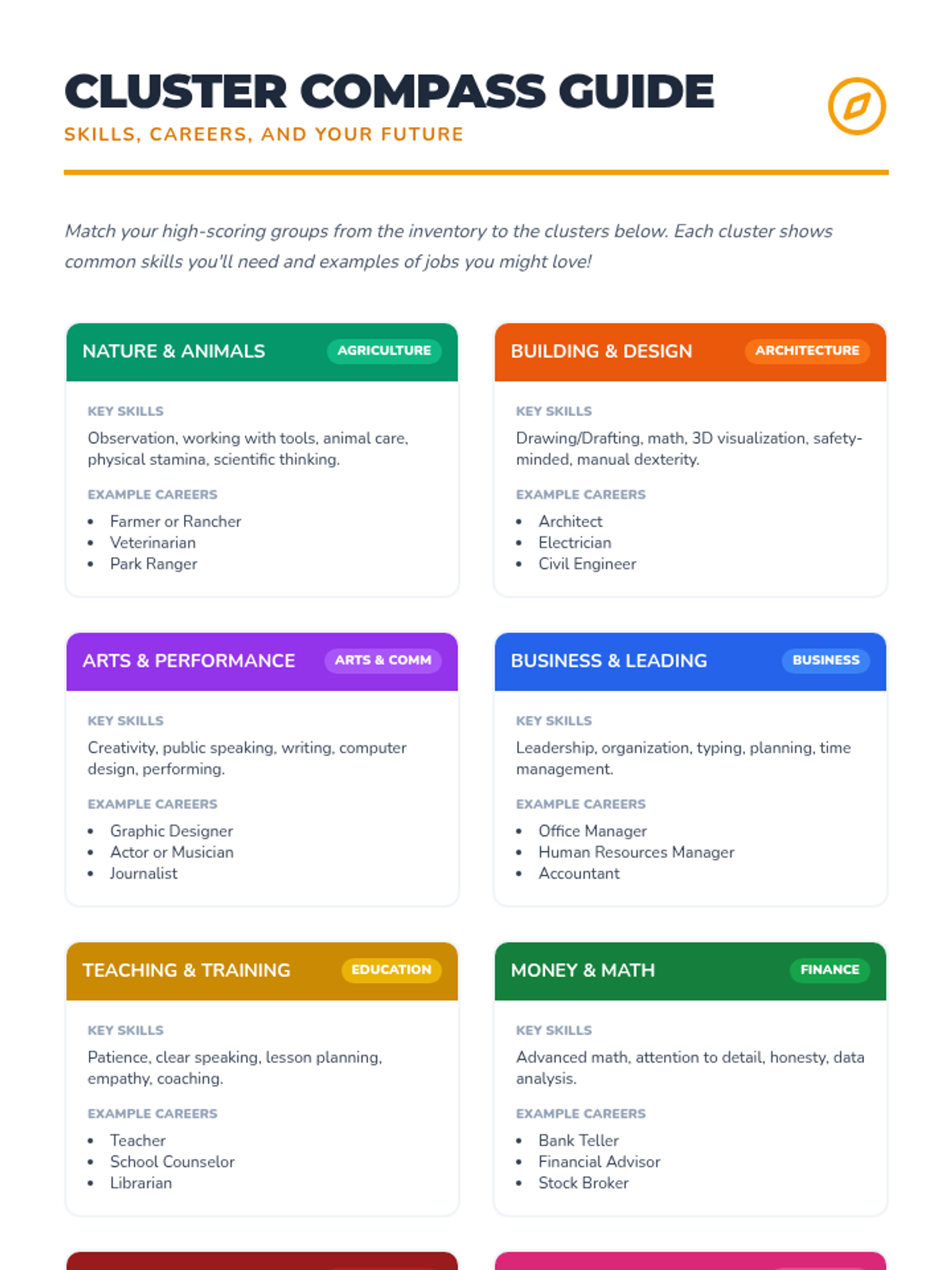
Guía de referencia estudiantil actualizada en español que asigna los nombres descriptivos de los grupos a los 16 Grupos de Carreras Nacionales.
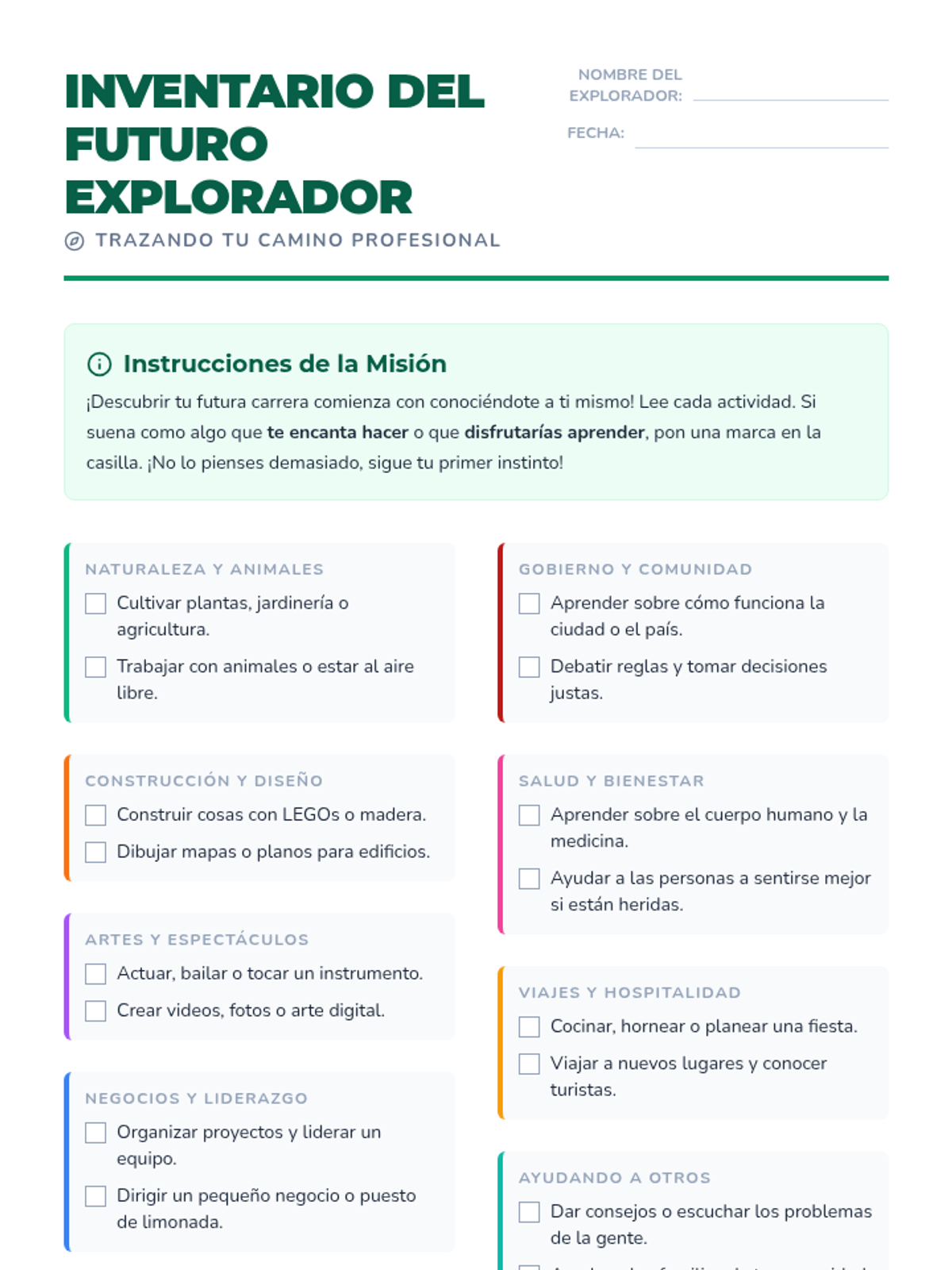
Versión en español del inventario de intereses profesionales de tres páginas para estudiantes de 5º grado. Incluye nombres descriptivos de grupos alineados con el contenido de los grupos de carreras.
Updated teacher guide for the Career Quest lesson. It includes the revised interest group names and scoring decoder for the 16 National Career Clusters.
Updated two-page student reference guide that maps the updated descriptive inventory group names to the 16 National Career Clusters.
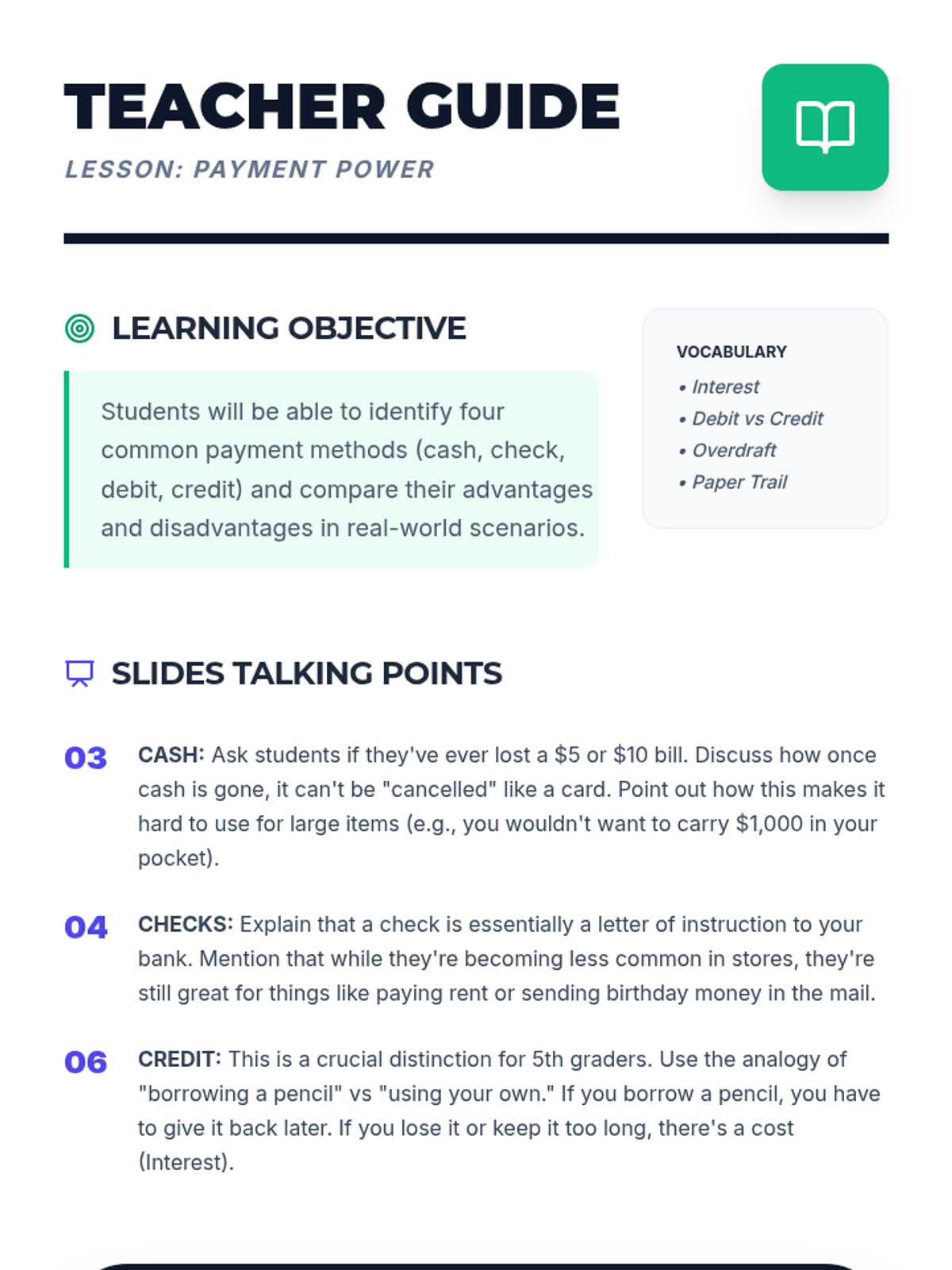
A teacher-facing resource that provides a lesson summary, learning objectives, presentation talking points, and comprehensive answer keys for both the worksheet and quiz.
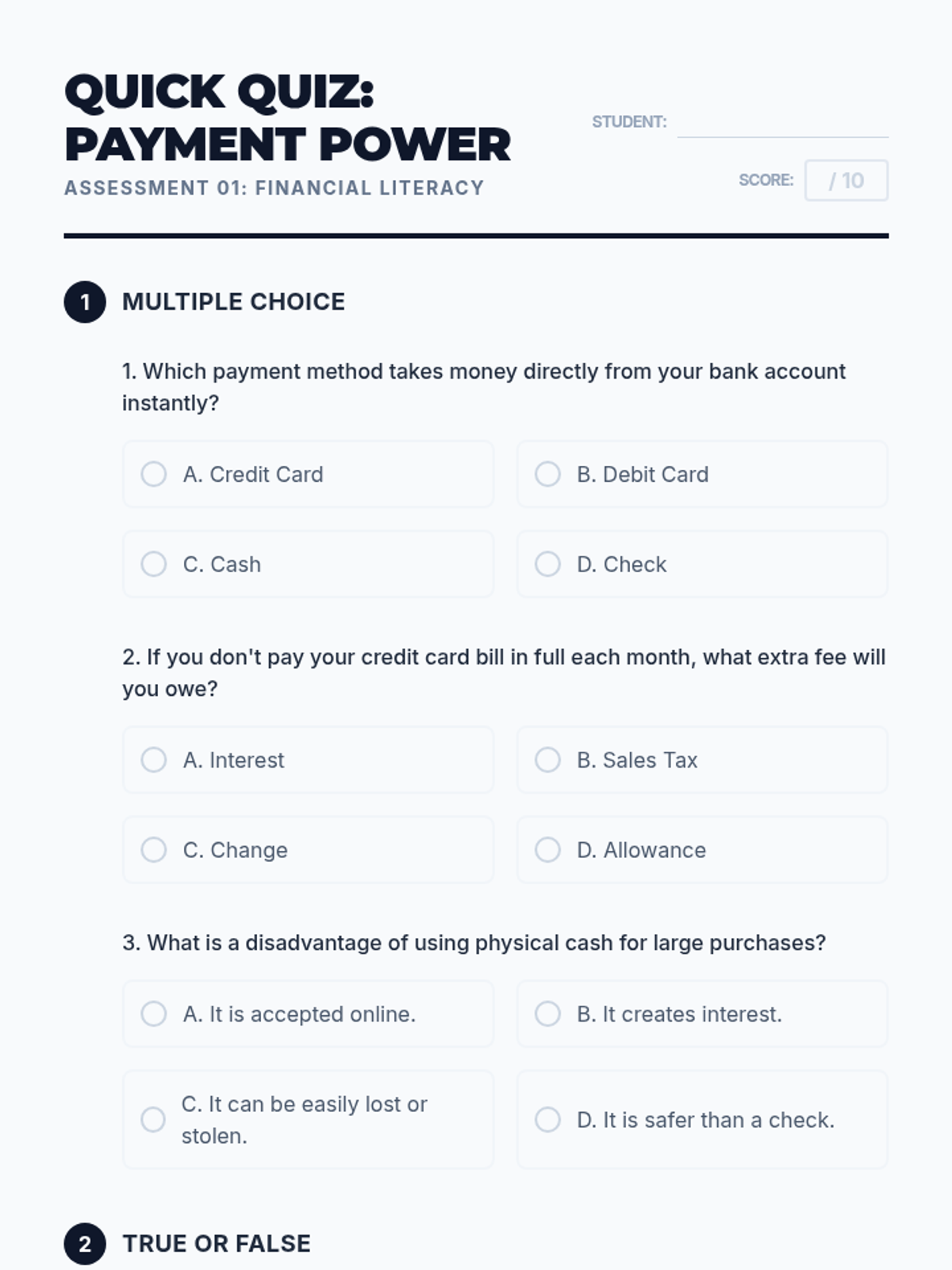
A short quiz to assess student understanding of payment methods. Features multiple-choice questions, true/false statements, and a final decision-making scenario to demonstrate mastery.
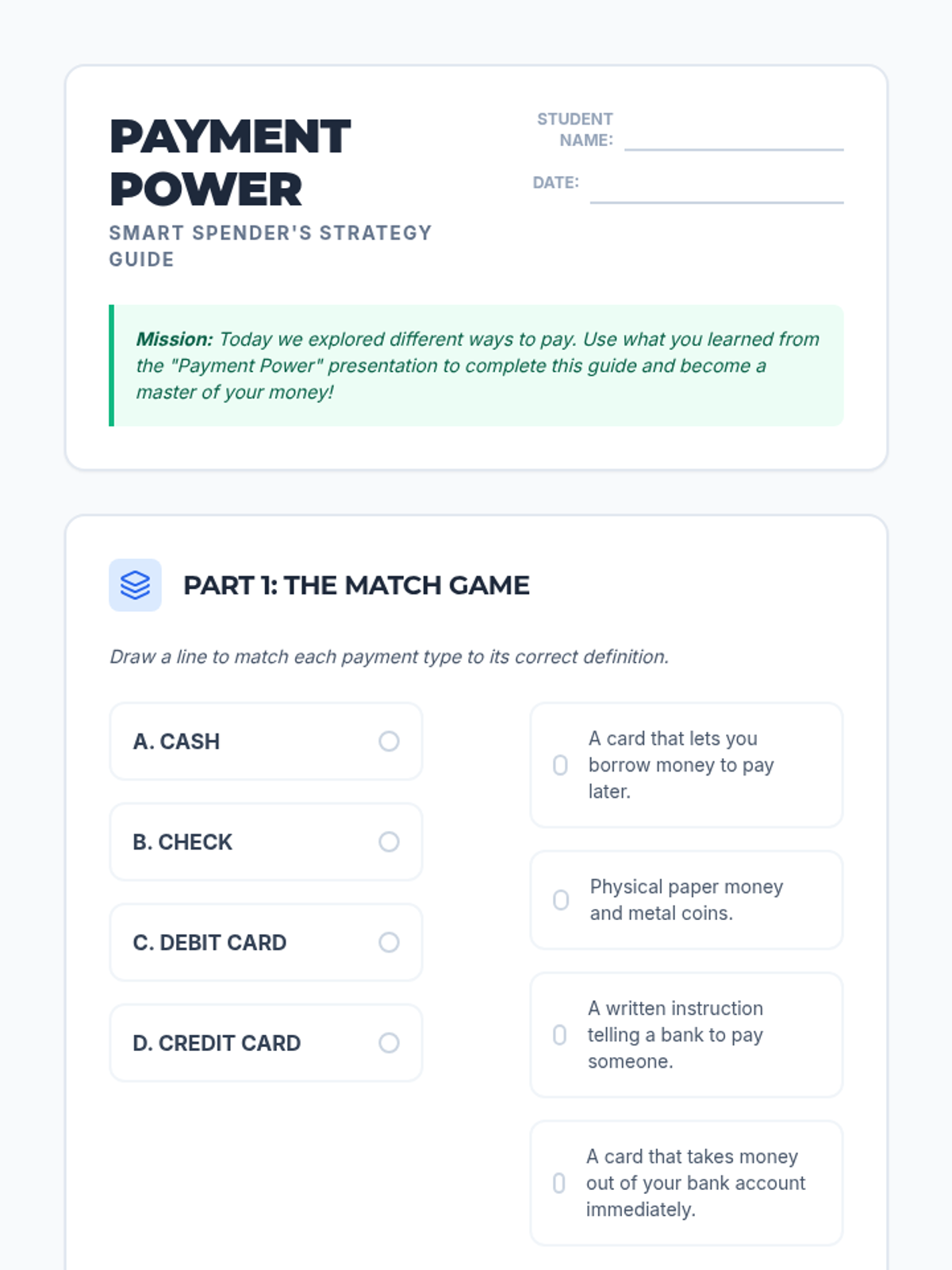
A worksheet designed for students to practice identifying and comparing different payment methods. Includes a definition matching section, a pro/con cloze activity, and scenario-based questions to apply their knowledge.
A comprehensive slide deck introducing cash, checks, credit cards, and debit cards. Each slide highlights the advantages and disadvantages of the payment method, with a final scenario to test understanding.
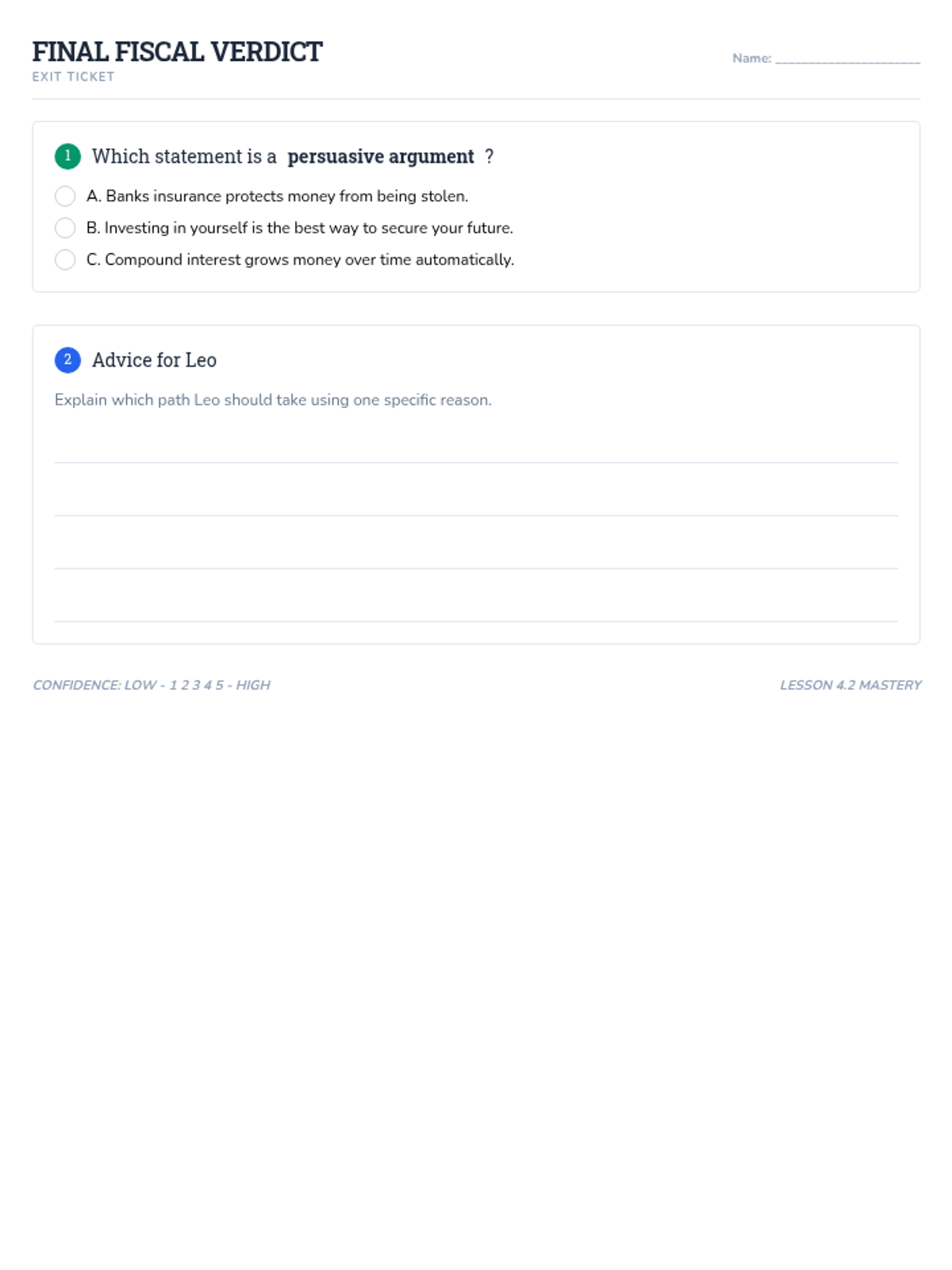
A compact, one-page exit ticket for the Money Moves lesson, featuring streamlined questions and writing space.
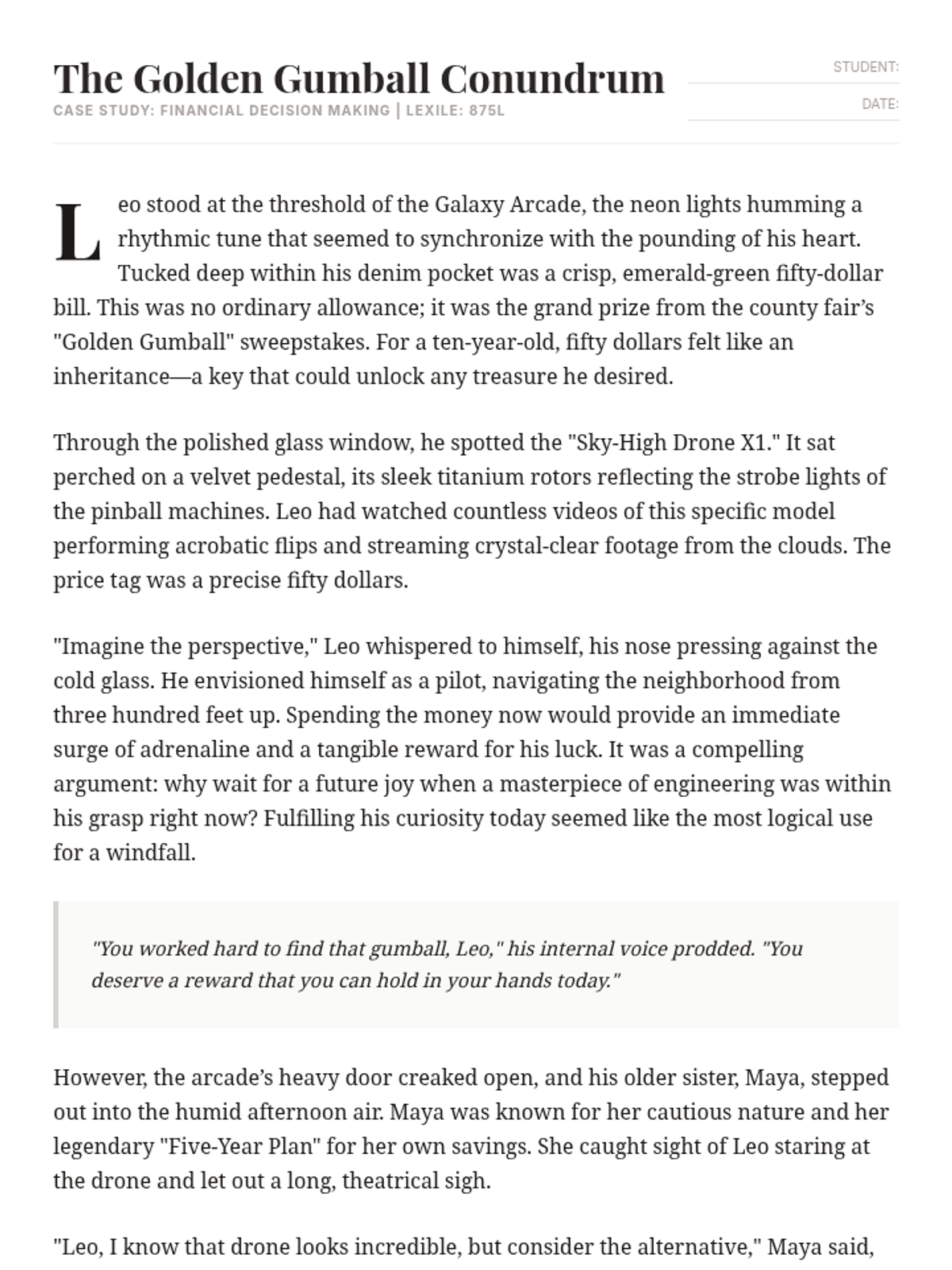
A 2-page Lexile 875 story with a continuous flow and 12pt Times Roman style font. Features an integrated student response area at the end.
A visual presentation to introduce the concepts of spending, saving, and investing, while teaching students how to distinguish between arguments and evidence.
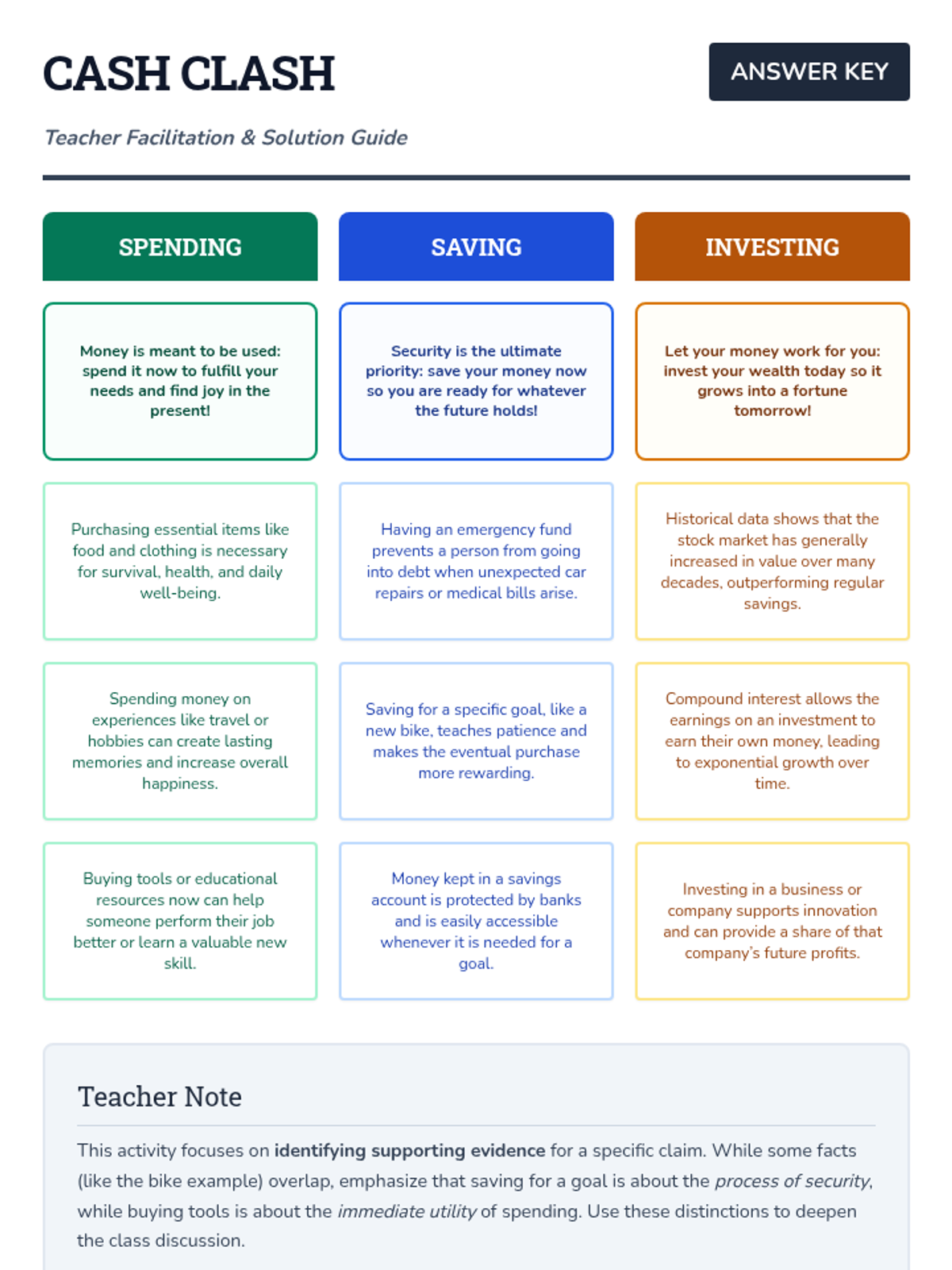
An updated answer key for the Cash Clash Card Sort, displaying the correct matches between claims and evidence with dimensions that match the student handout.
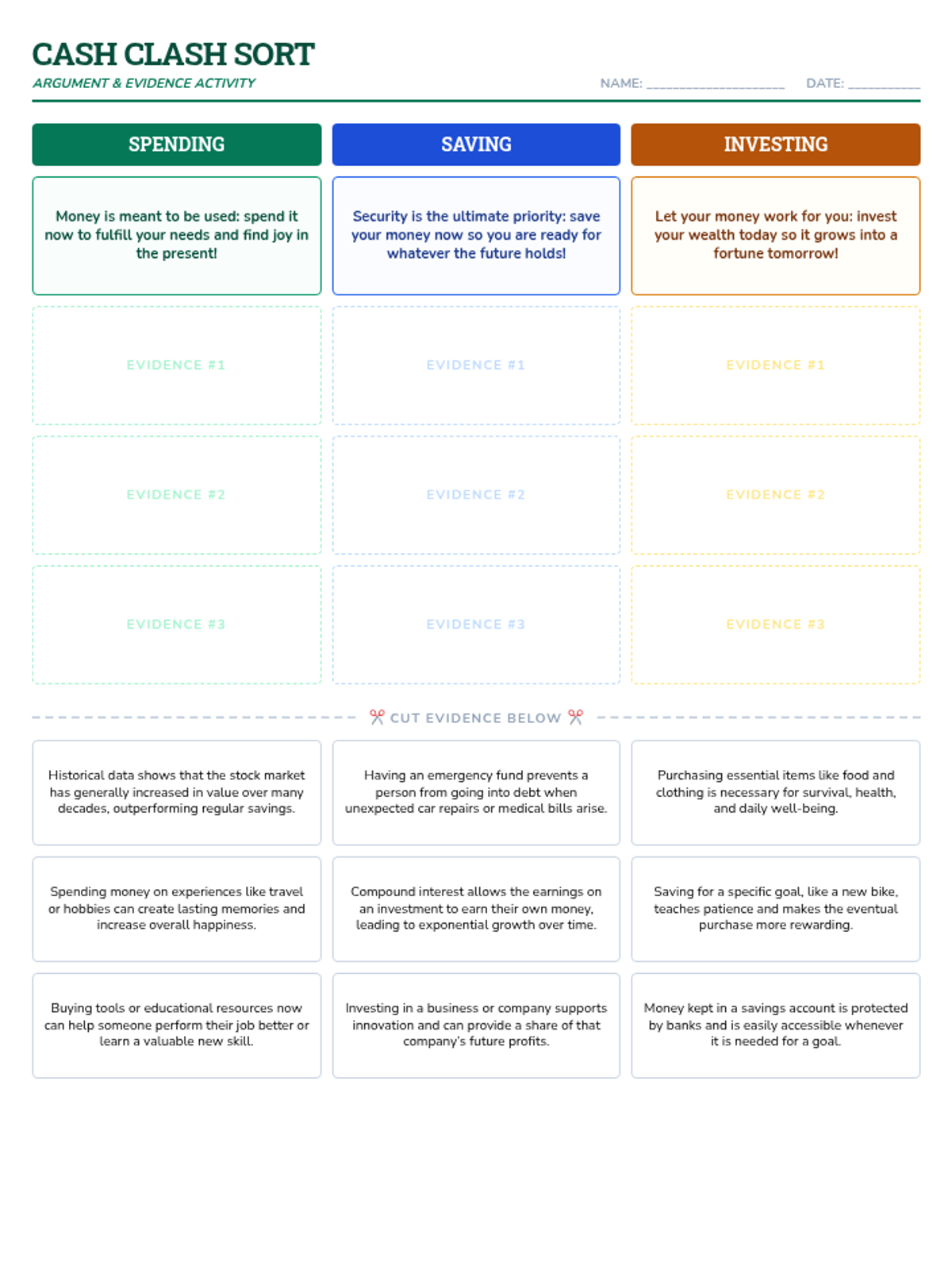
A one-page version of the Cash Clash Card Sort, featuring the sorting board and cut-out evidence cards on a single sheet with a compact header.
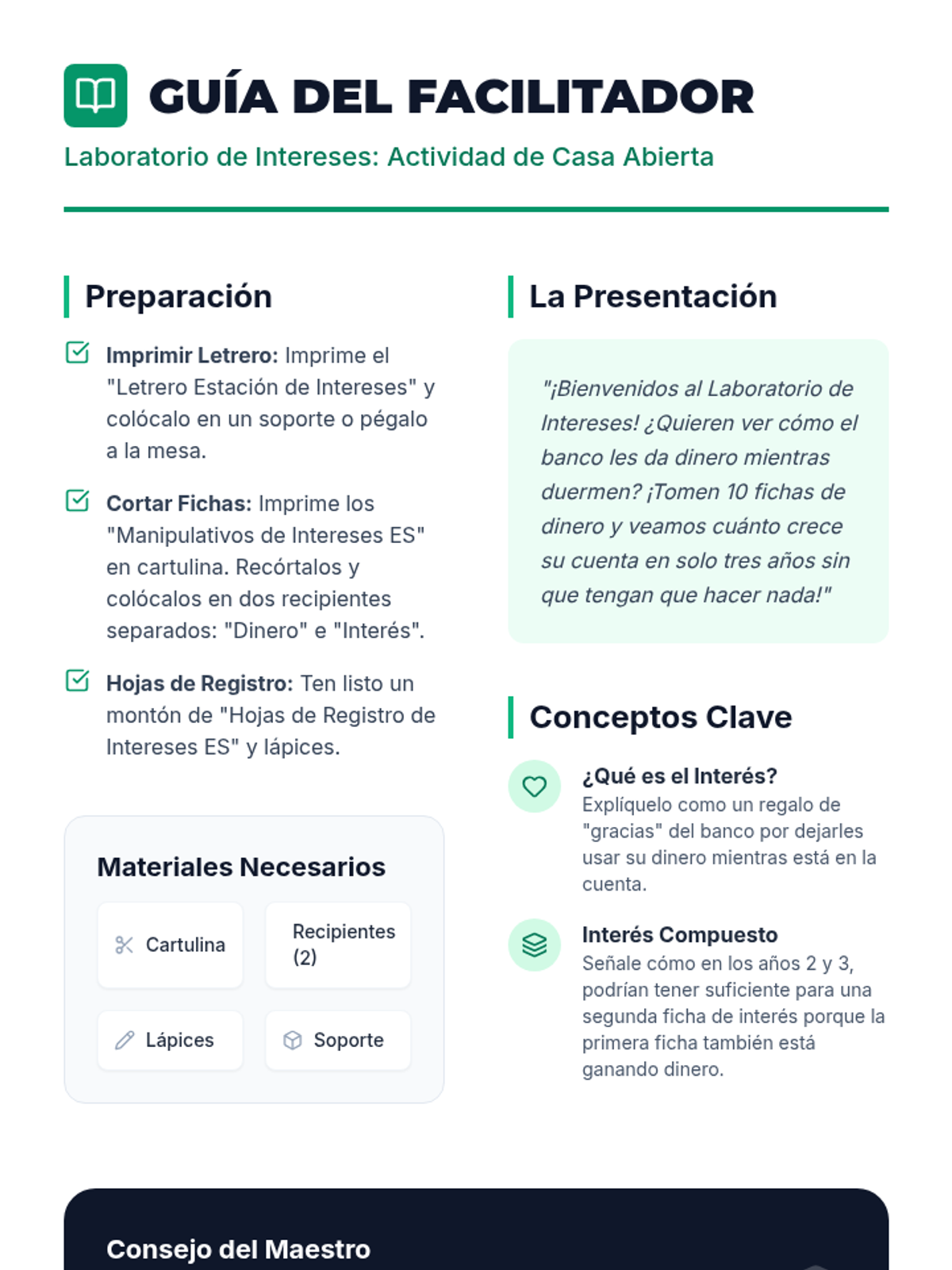
Una guía de facilitación para el maestro o voluntario que dirige la estación del Laboratorio de Intereses. Incluye pasos de preparación, guiones y conceptos clave en español.
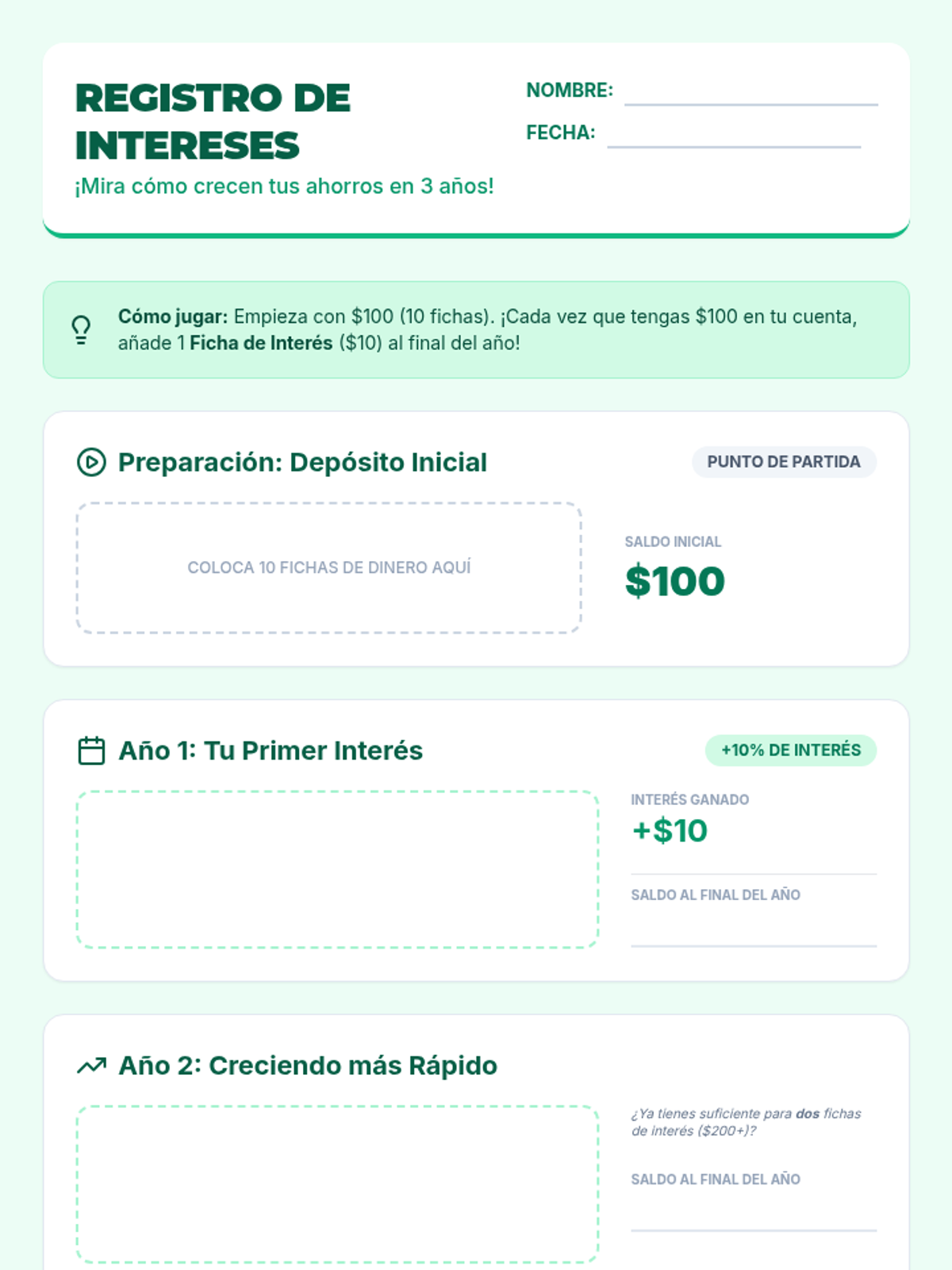
Una hoja de registro práctica para que los estudiantes la usen durante la actividad de la estación. Colocan manipulativos en los cuadros de 'años' y calculan su saldo creciente en español.
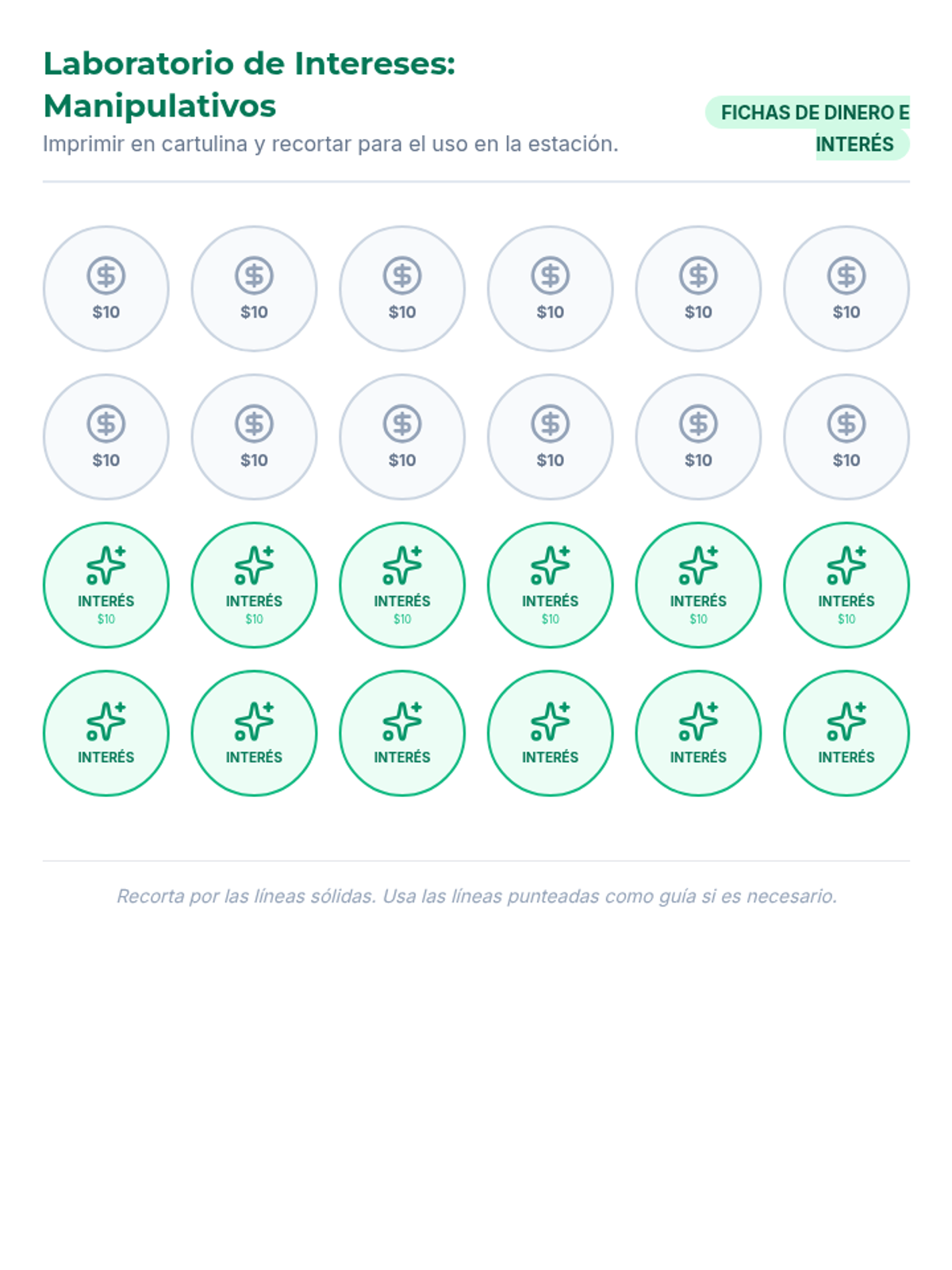
Fichas de dinero e interés imprimibles para la actividad práctica de la estación de cuenta bancaria en español. Incluye fichas base de $10 y fichas especiales de 'Interés'.
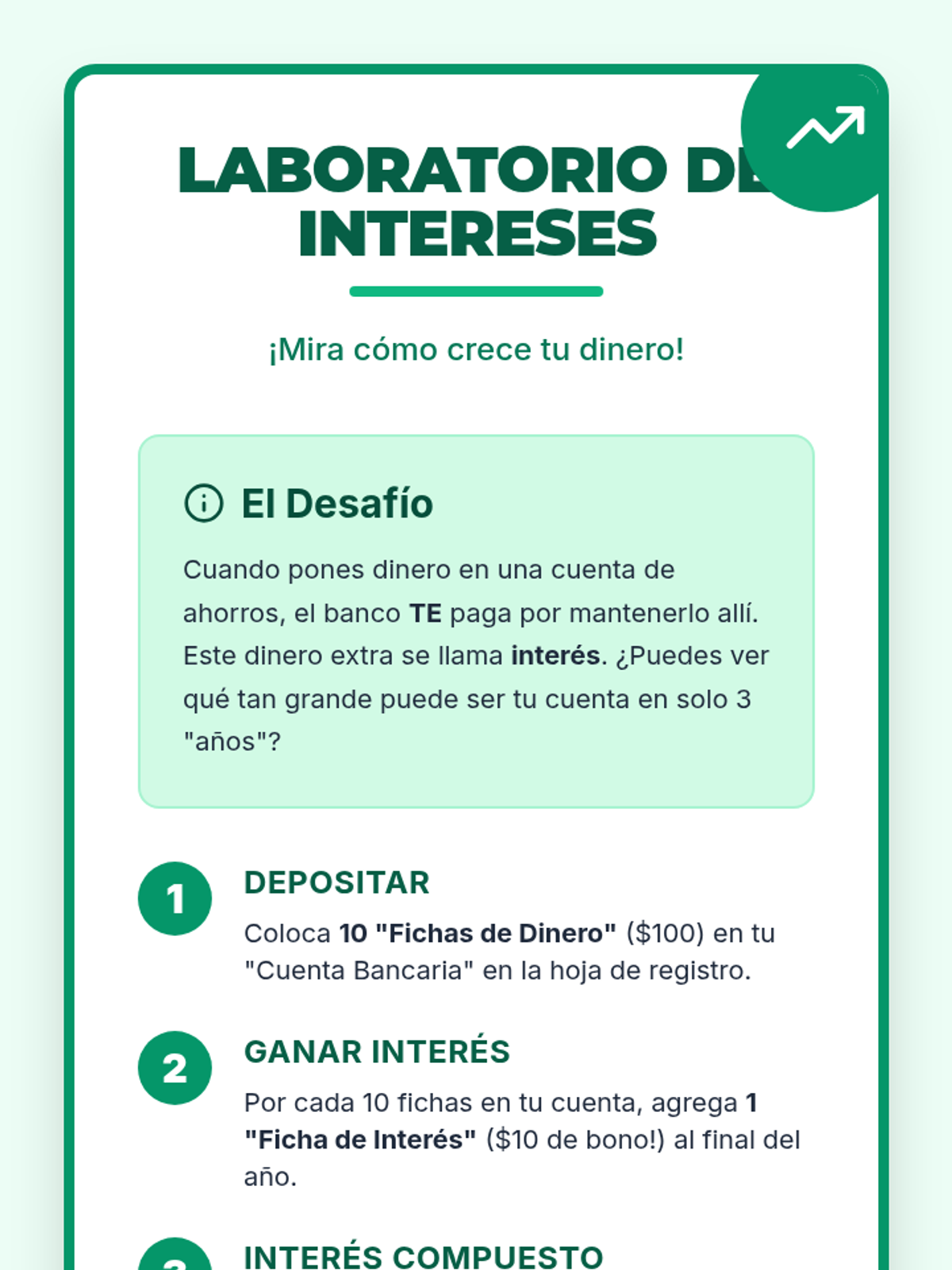
Un letrero de estación grande y vibrante para una actividad de Casa Abierta que explica el concepto de interés bancario y proporciona instrucciones claras para la actividad práctica.
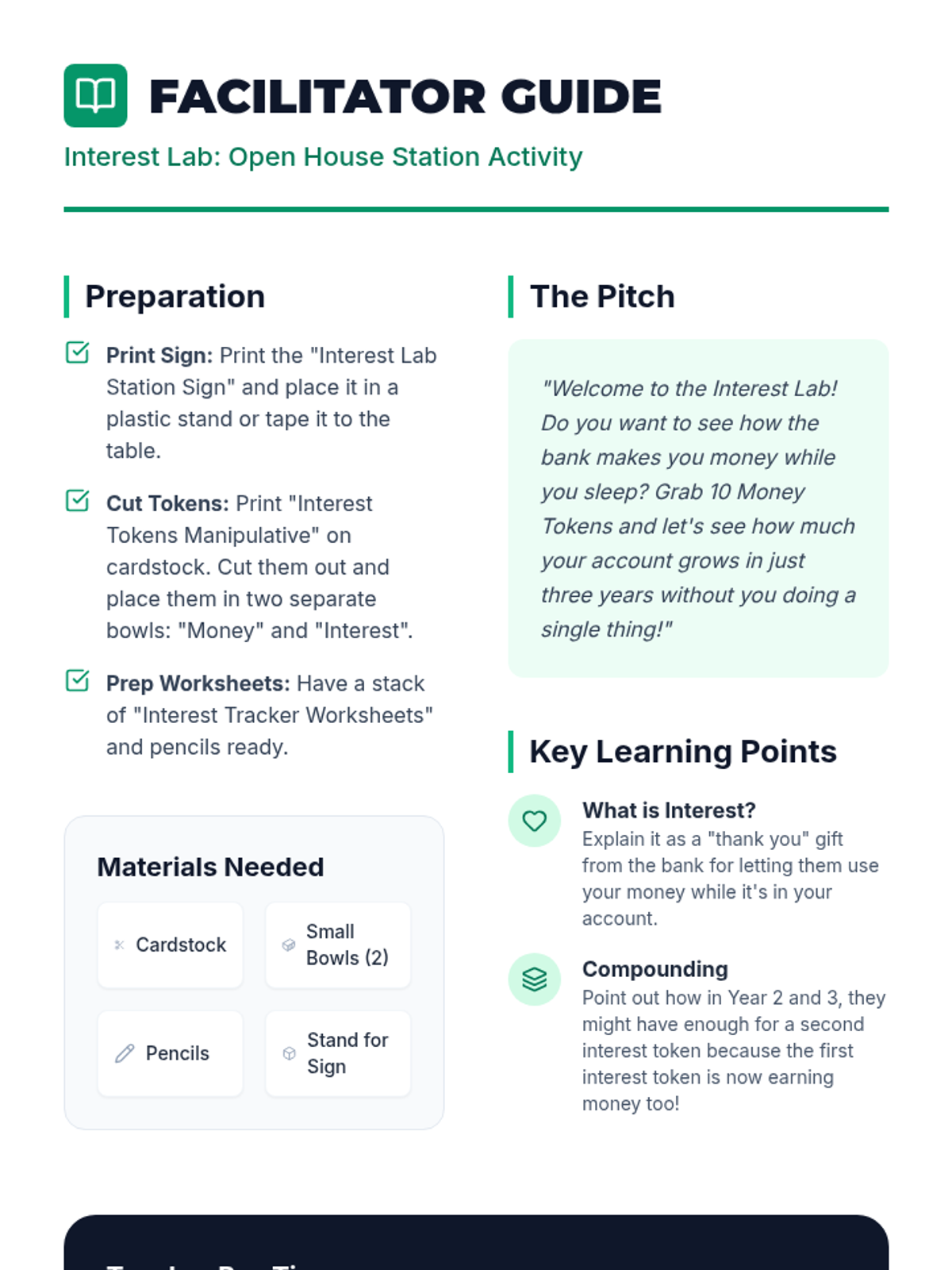
A facilitation guide for the teacher or volunteer running the Interest Lab station at an Open House. Includes prep steps, talk tracks, and key concepts to emphasize.
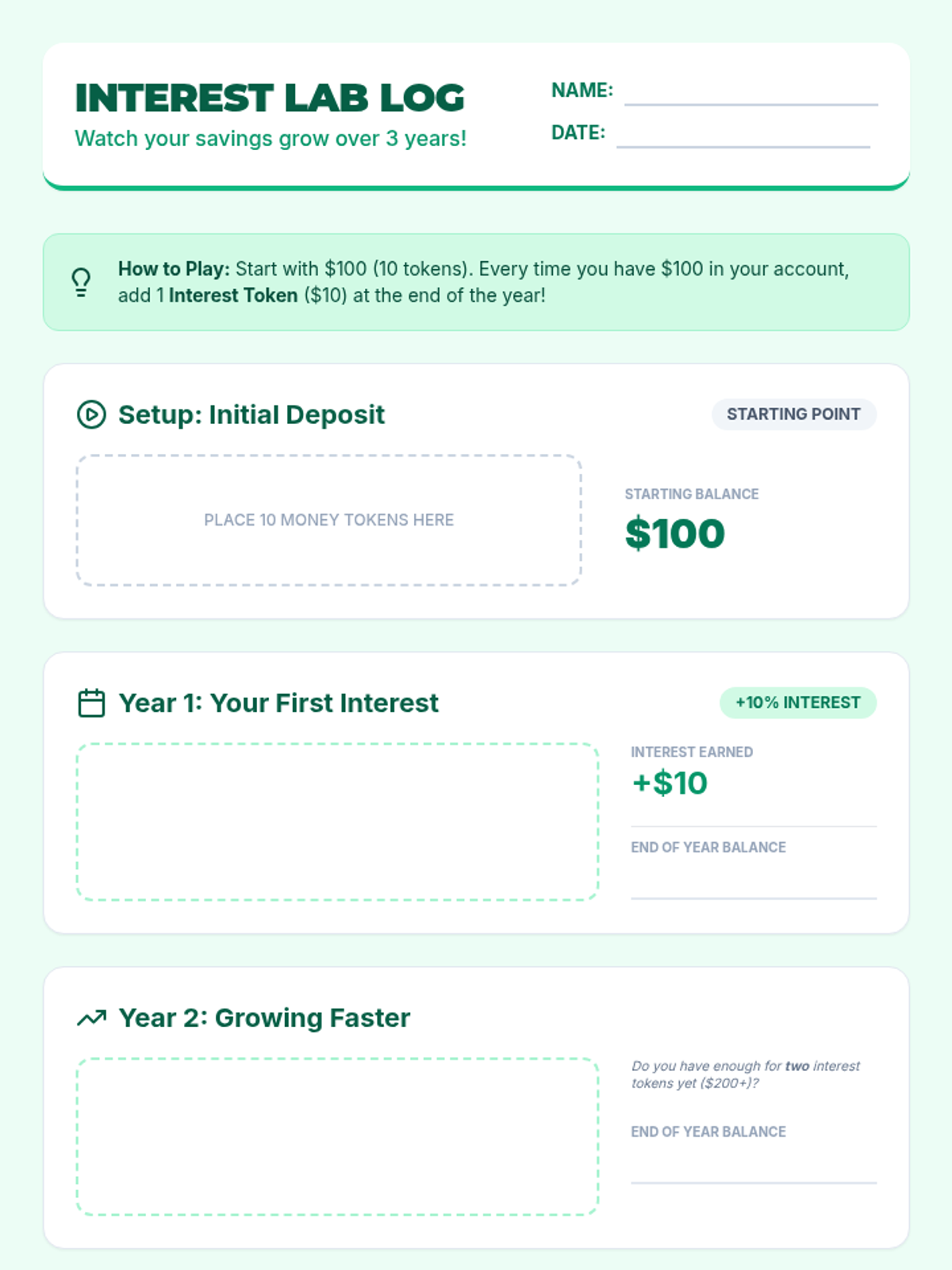
A hands-on recording sheet for students to use during the bank account station activity. They place manipulatives in the 'years' boxes and calculate their growing balance.
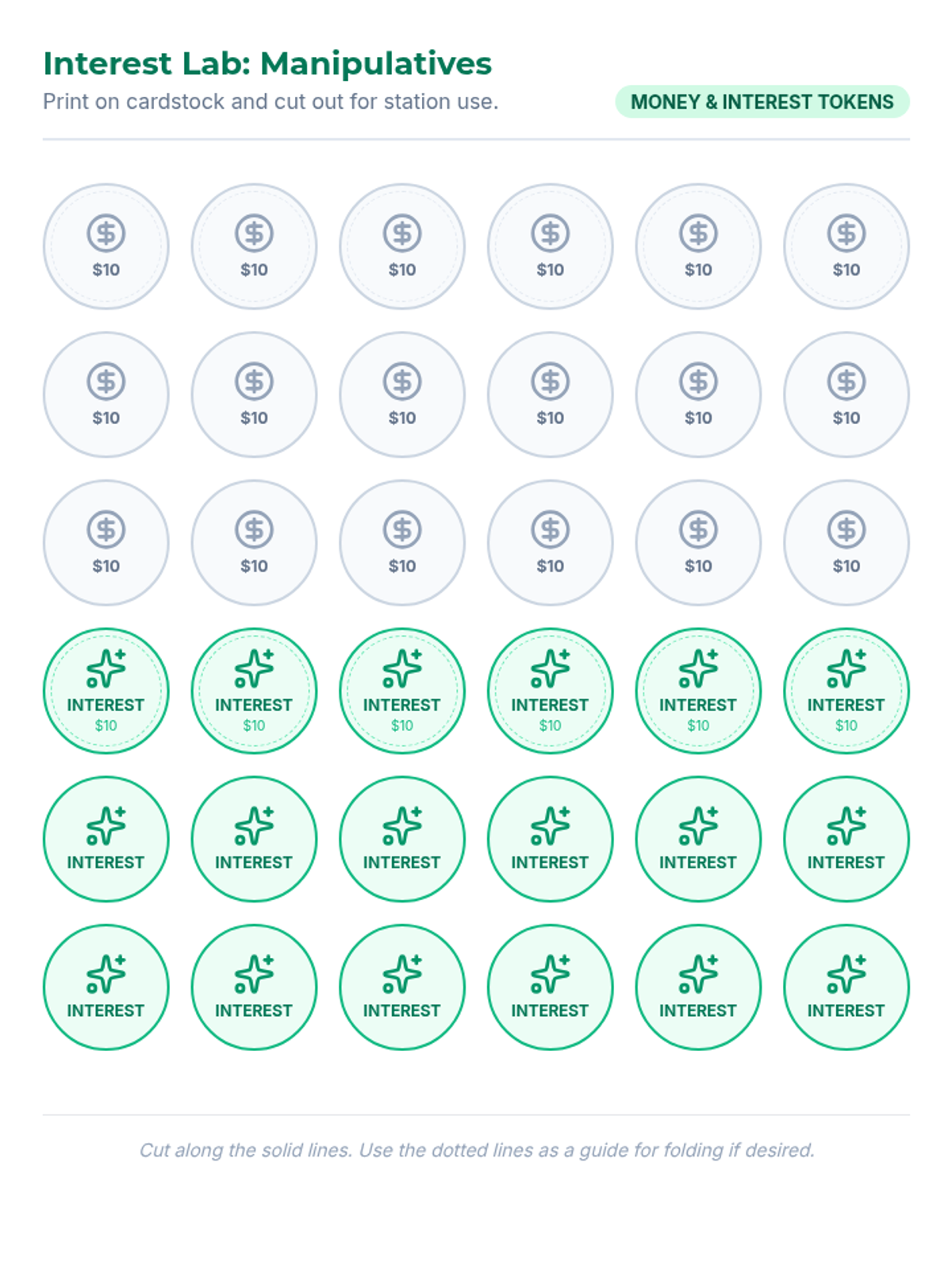
Printable money and interest tokens for the hands-on bank account station activity. Includes $10 base tokens and special 'Interest' tokens.
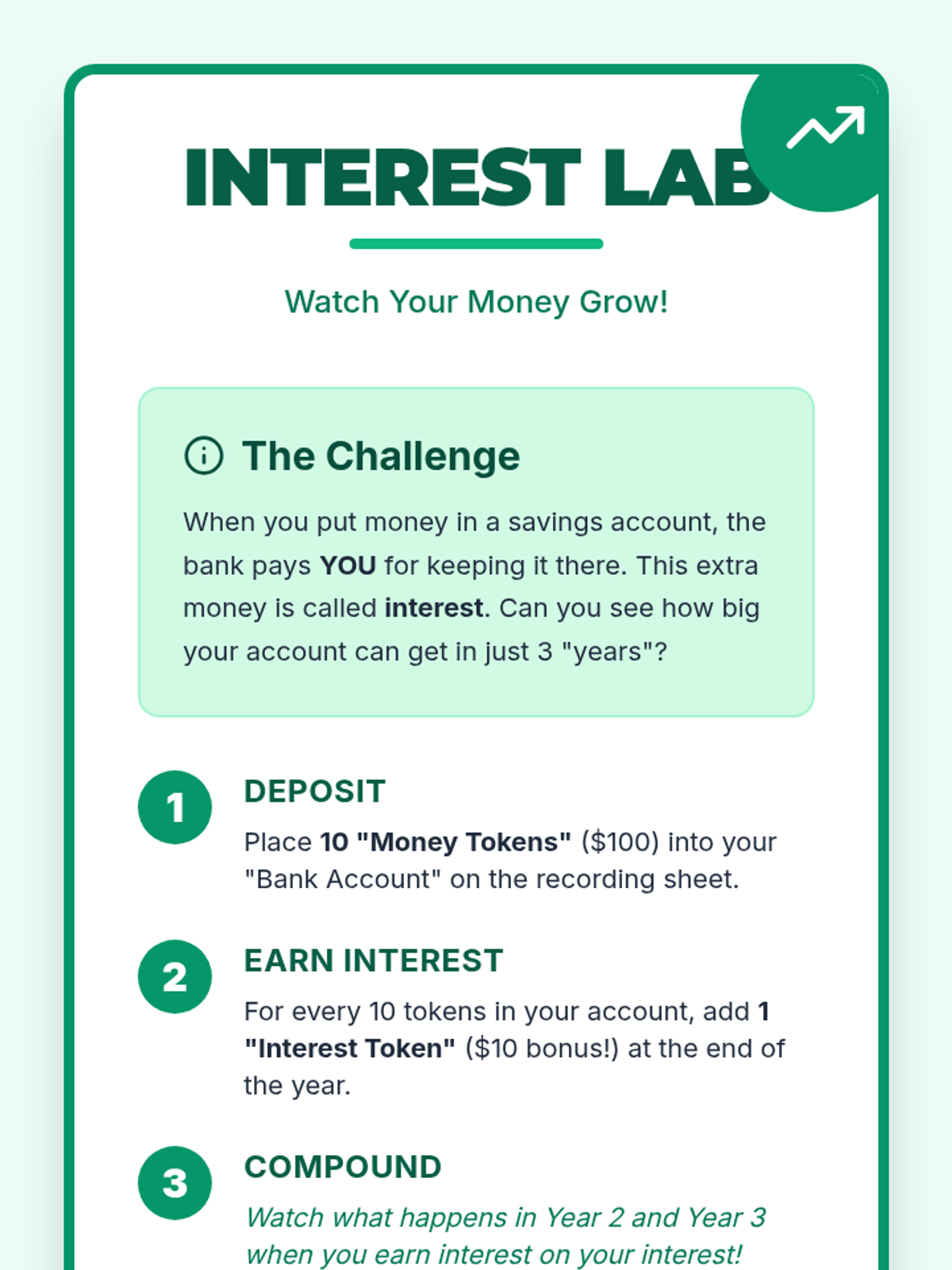
A large, vibrant station sign for an Open House activity that explains the concept of bank interest and provides clear instructions for the hands-on manipulative activity.
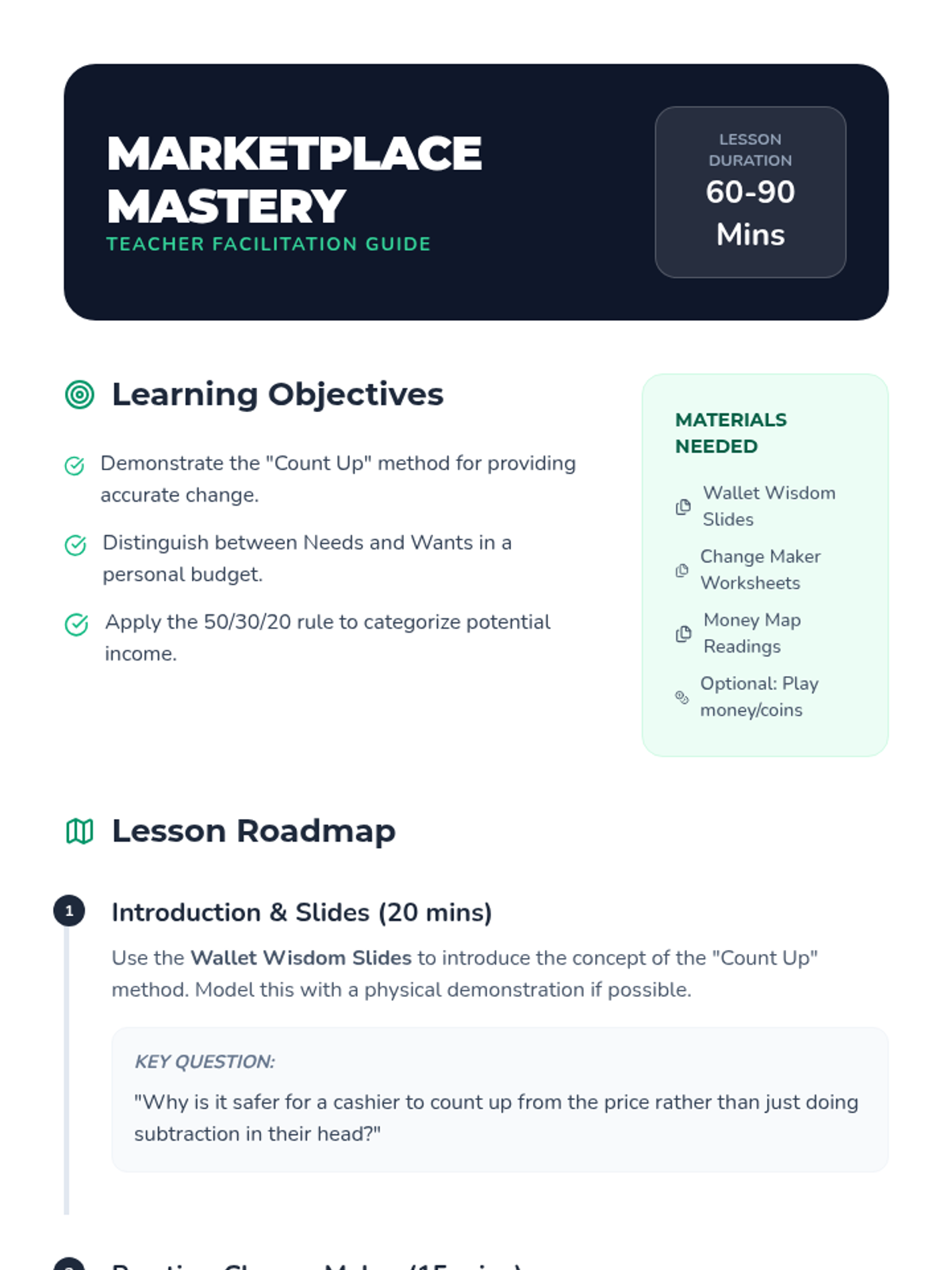
A detailed guide for teachers to facilitate the Wallet Wisdom lesson, including learning objectives, a step-by-step roadmap, discussion tips, and an answer key for the student worksheets.
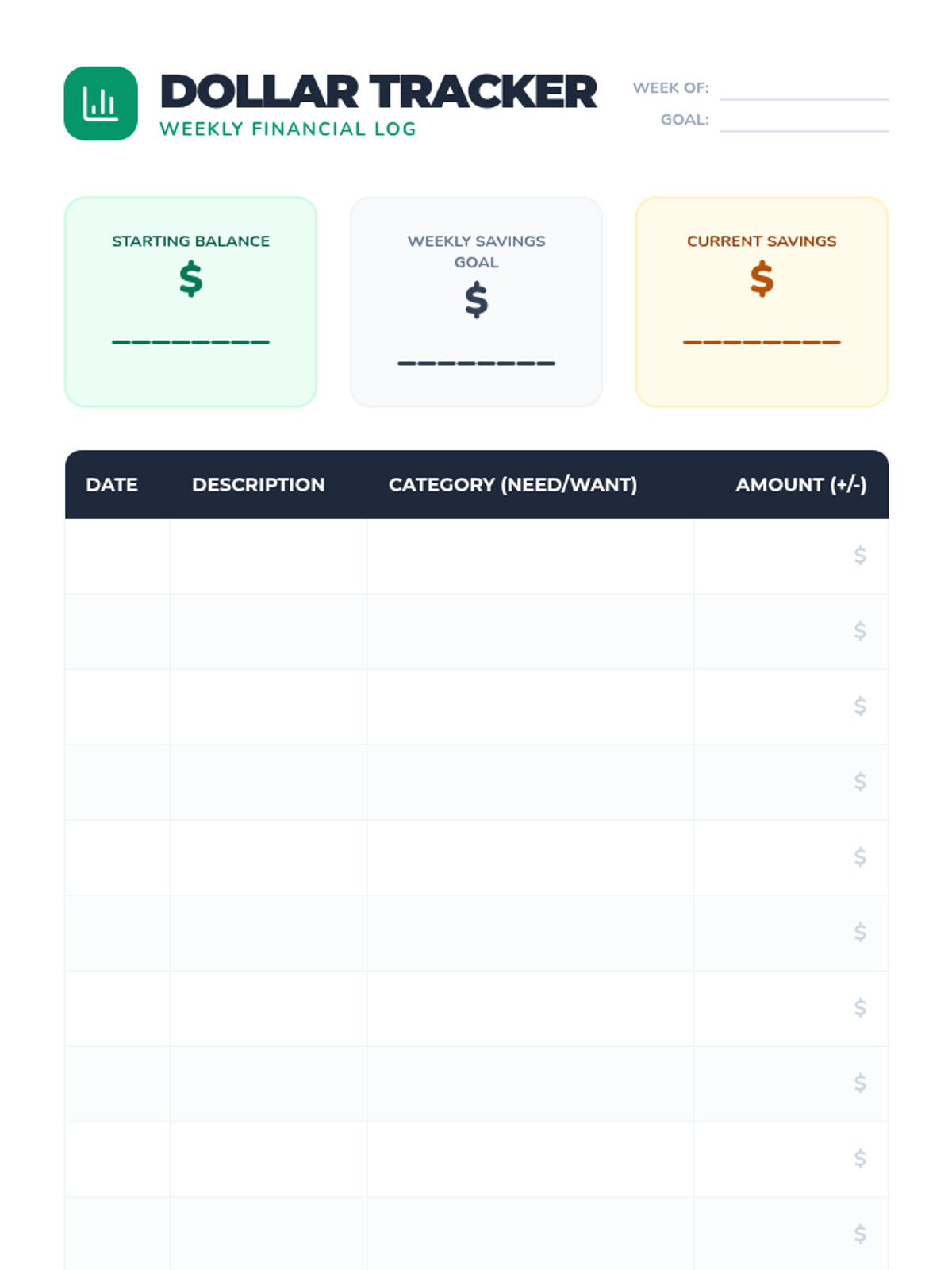
A comprehensive expense tracking worksheet for students to log income and spending over a week, categorize transactions, and calculate their final balance.
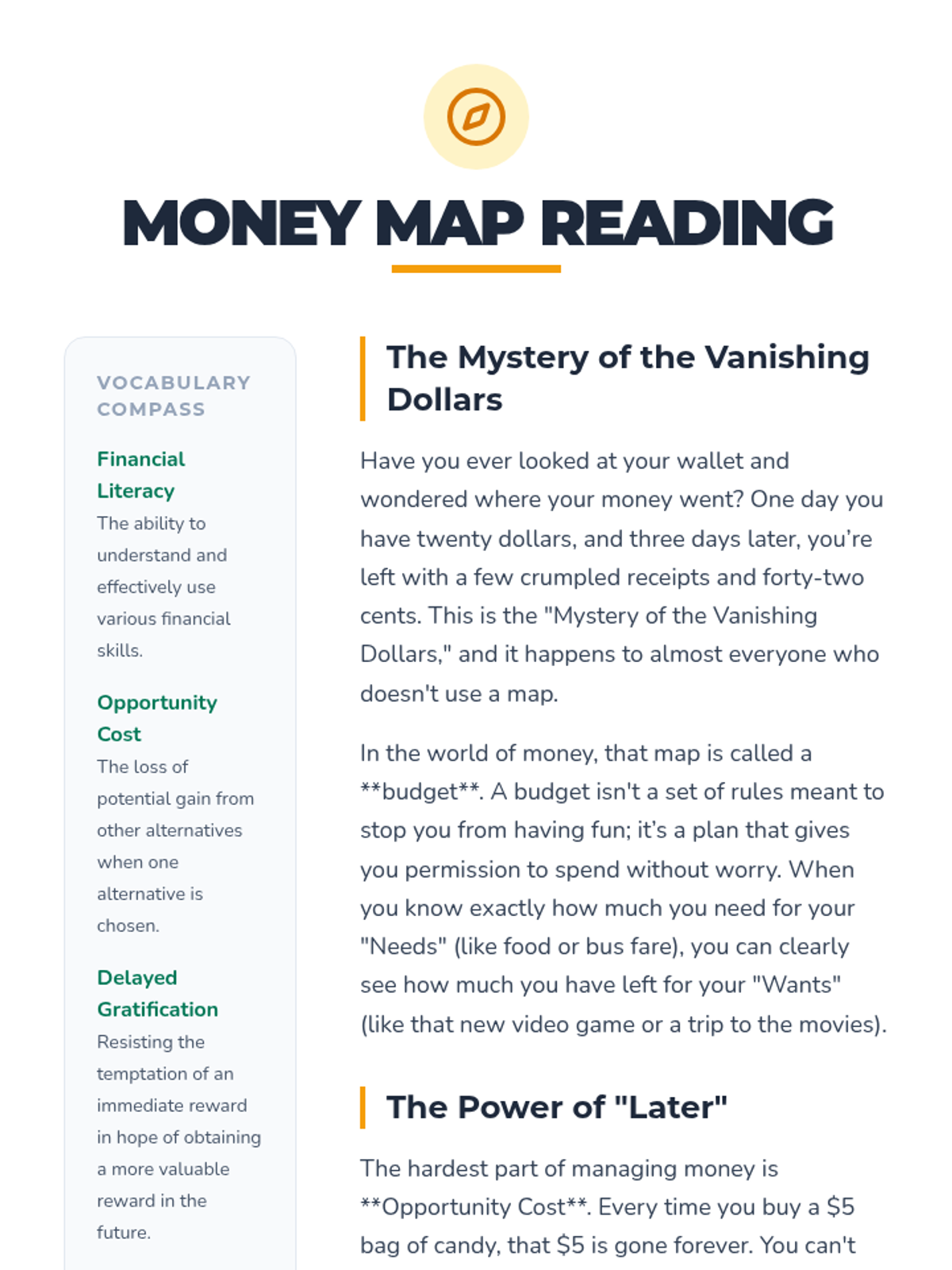
An engaging reading passage about the 'mystery of vanishing dollars' and the importance of budgeting and delayed gratification. Includes vocabulary and structured discussion questions.
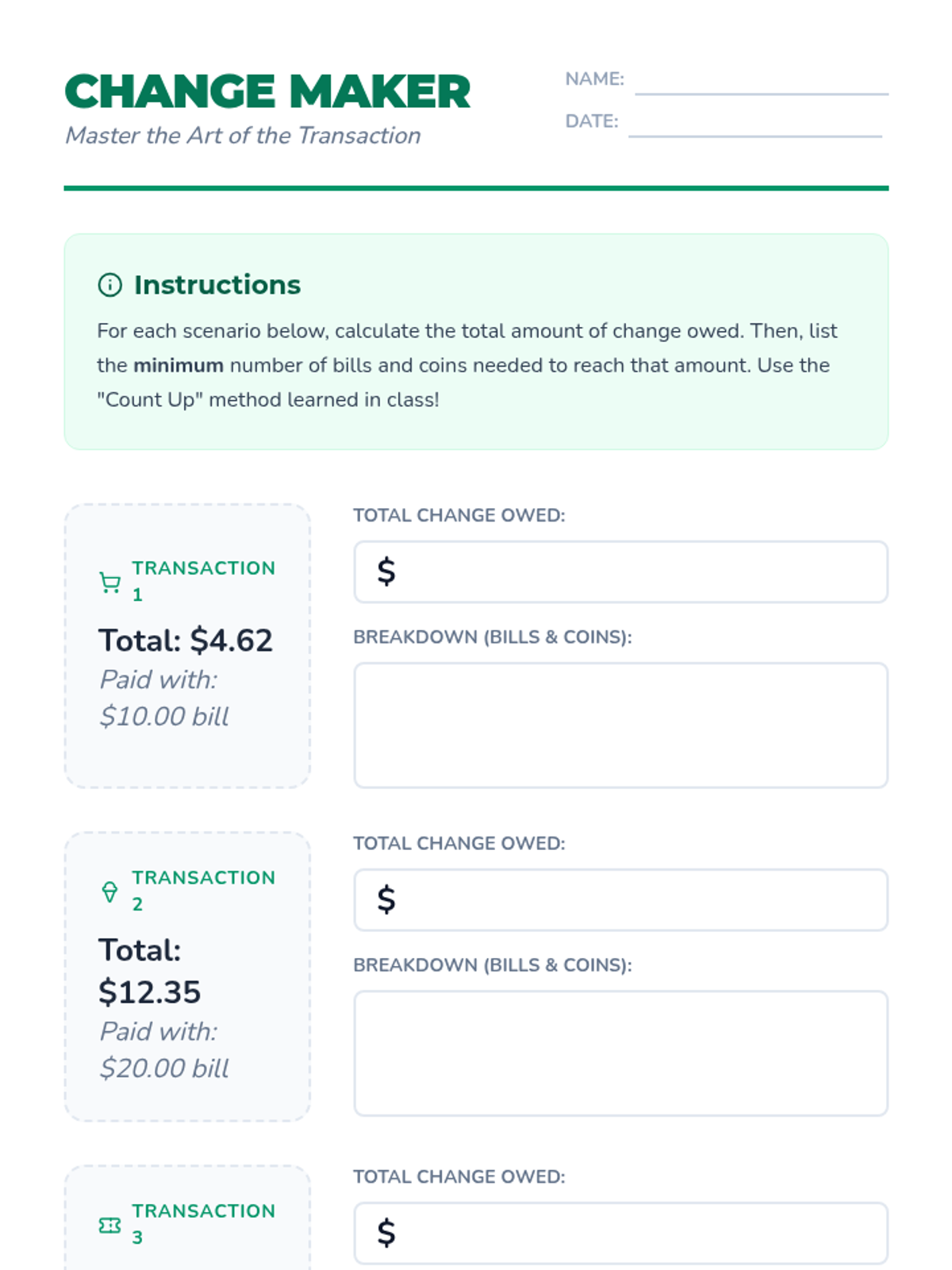
A practice worksheet for calculating change and identifying the breakdown of bills and coins for various transactions. Includes a bonus thinking challenge about advanced cashiering techniques.
A comprehensive slide deck covering the basics of counting change using the 'count up' method, foundational budgeting concepts, and practical savings strategies.
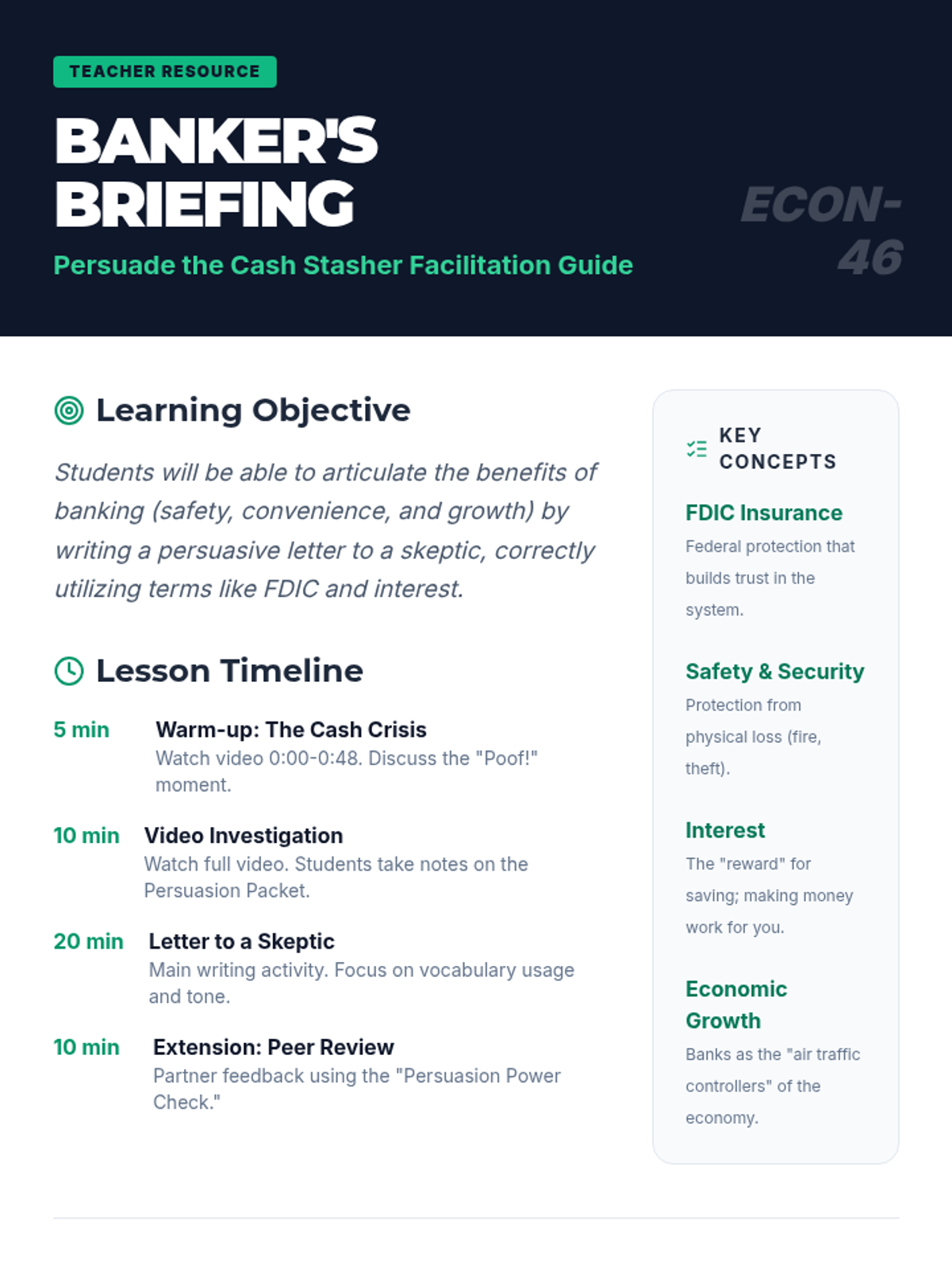
A teacher guide for the 'Persuade the Cash Stasher' lesson. Includes a detailed lesson timeline, key concept summaries, discussion prompts based on video timestamps, common misconceptions, and an answer key for the persuasive letter activity.
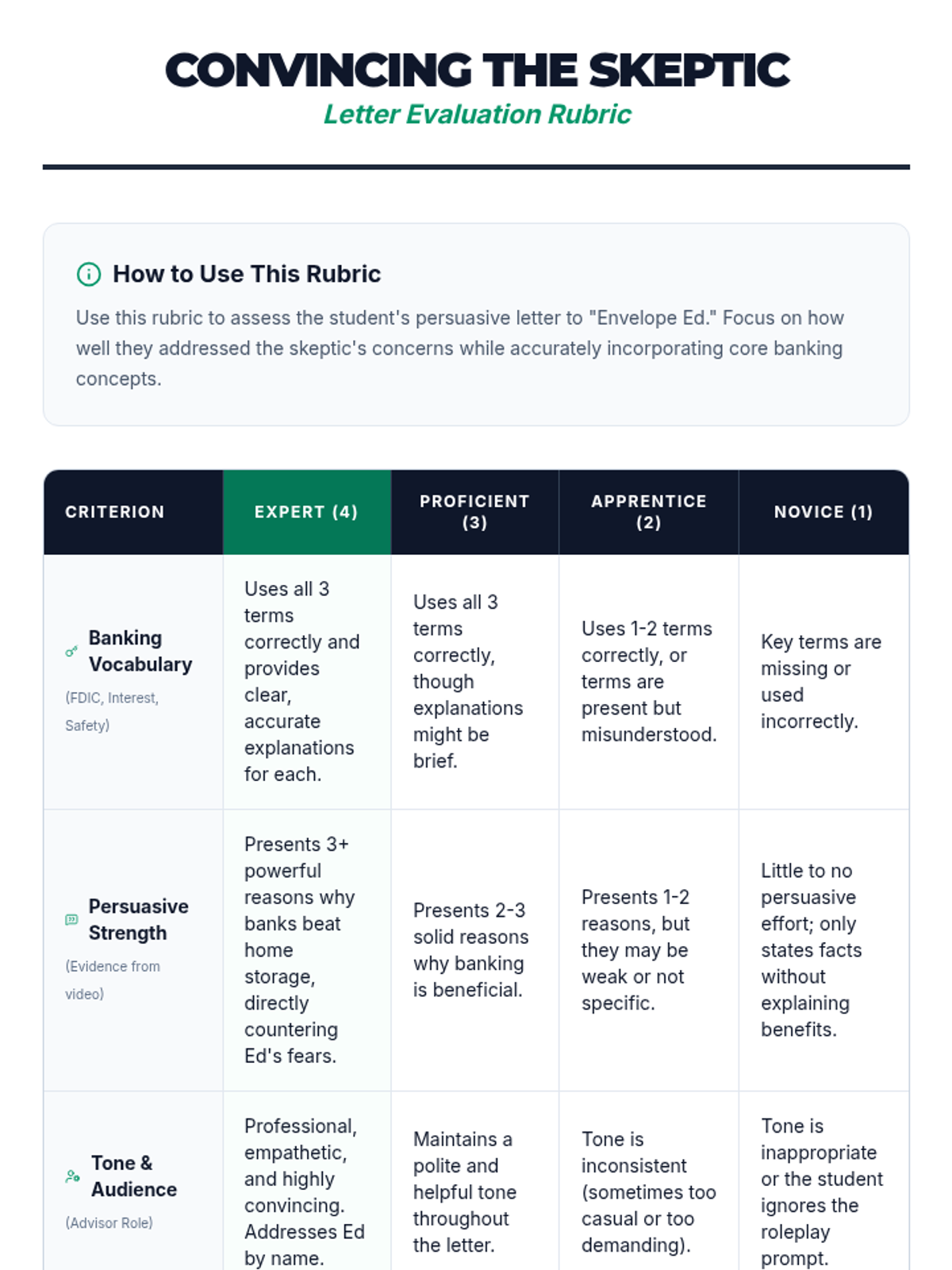
An assessment rubric for evaluating student letters in the 'Persuade the Cash Stasher' lesson. Rates students on their usage of banking vocabulary, persuasive strength, professional tone, and writing conventions using a 4-point scale.
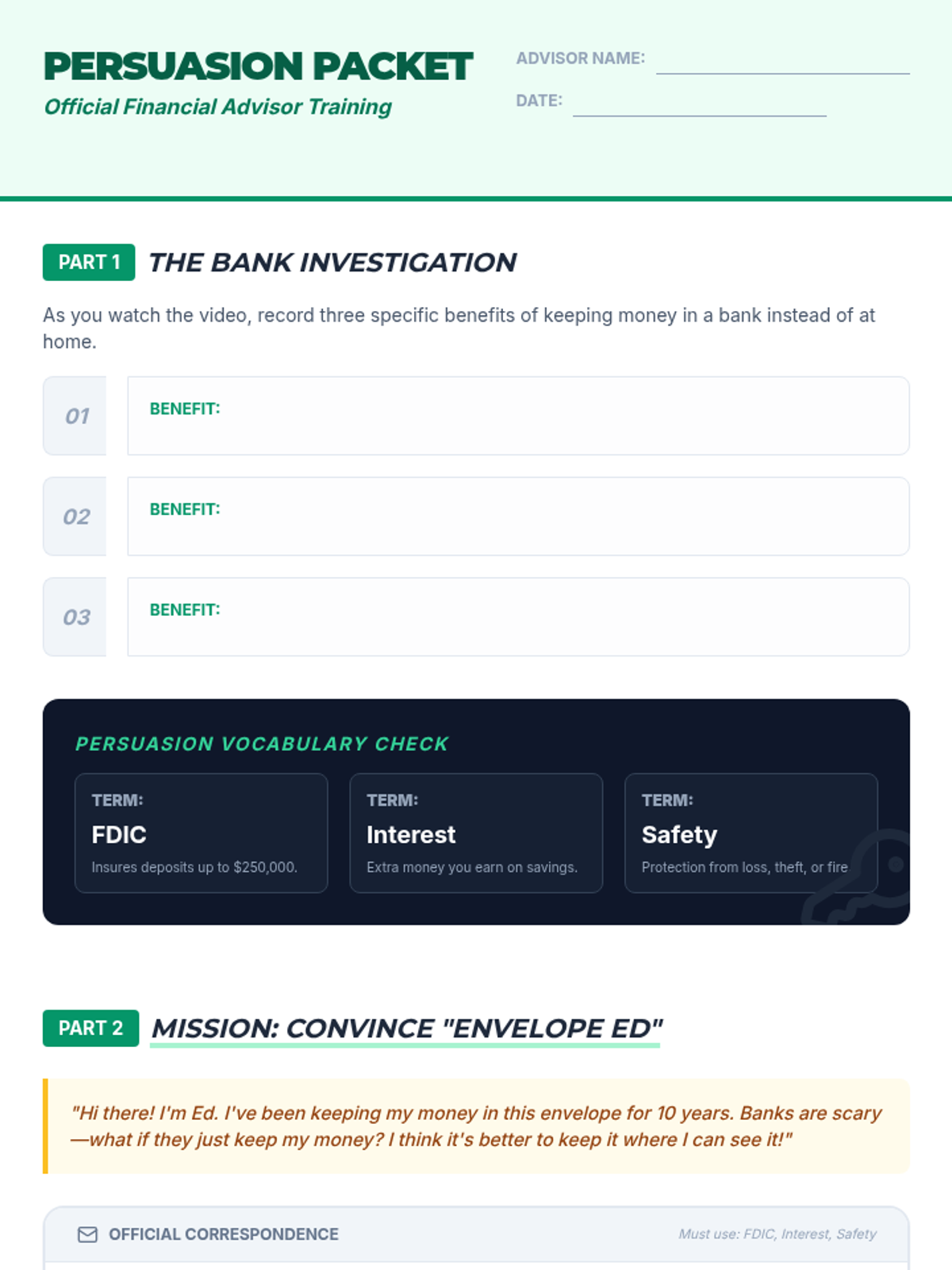
A student worksheet for the 'Persuade the Cash Stasher' lesson. Includes a note-taking section for video benefits, a vocabulary reference for key terms, and a structured letter-writing area for students to roleplay as financial advisors convincing a skeptic.
A comprehensive slide deck for the 'Persuade the Cash Stasher' lesson, including a video hook, vocabulary tools, and the main writing mission. Features high-contrast visuals, clear hierarchy, and embedded YouTube video for a dynamic classroom experience.
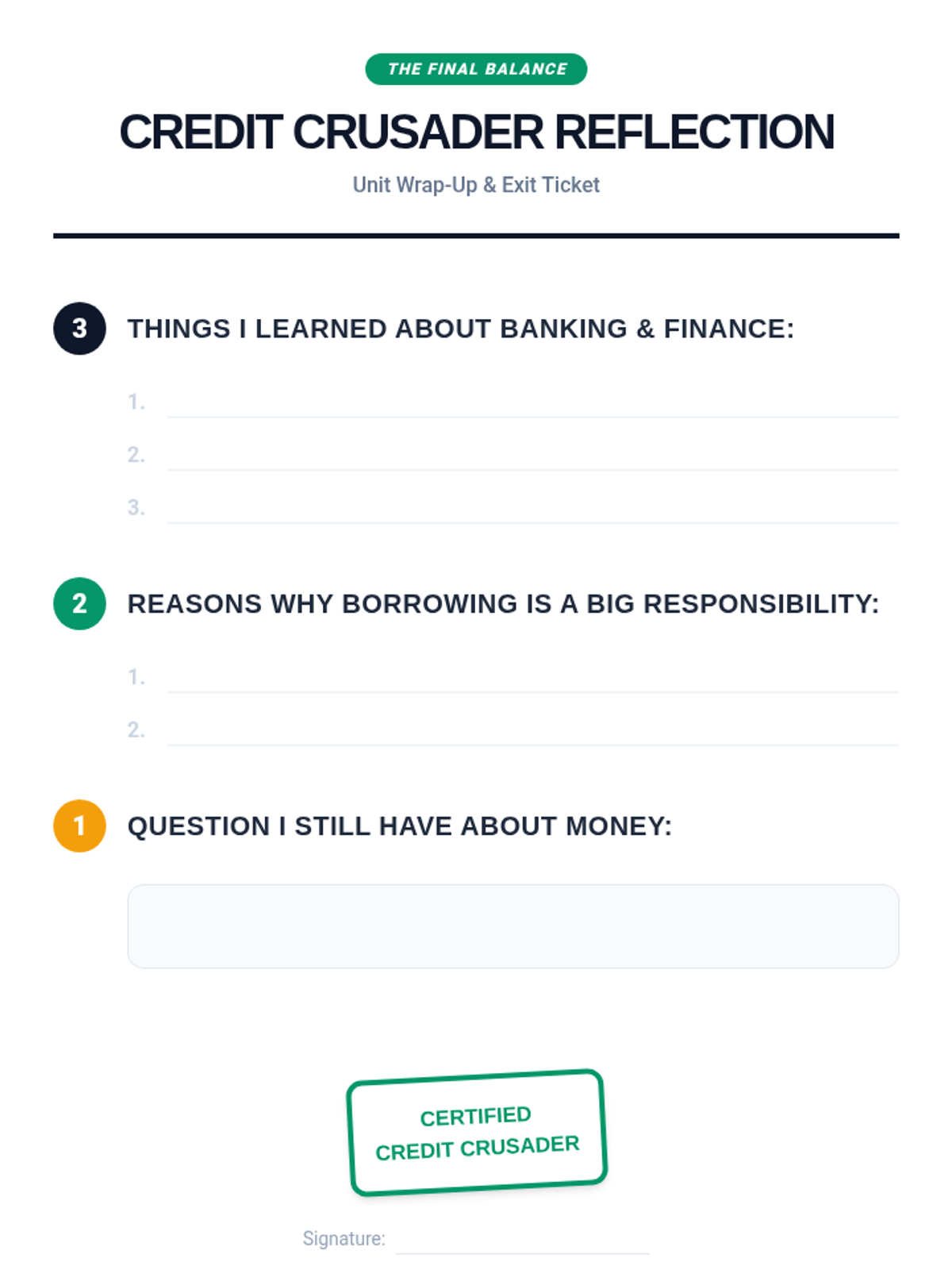
Final reflection exit ticket for the unit, using a 3-2-1 format to assess student understanding and remaining questions.
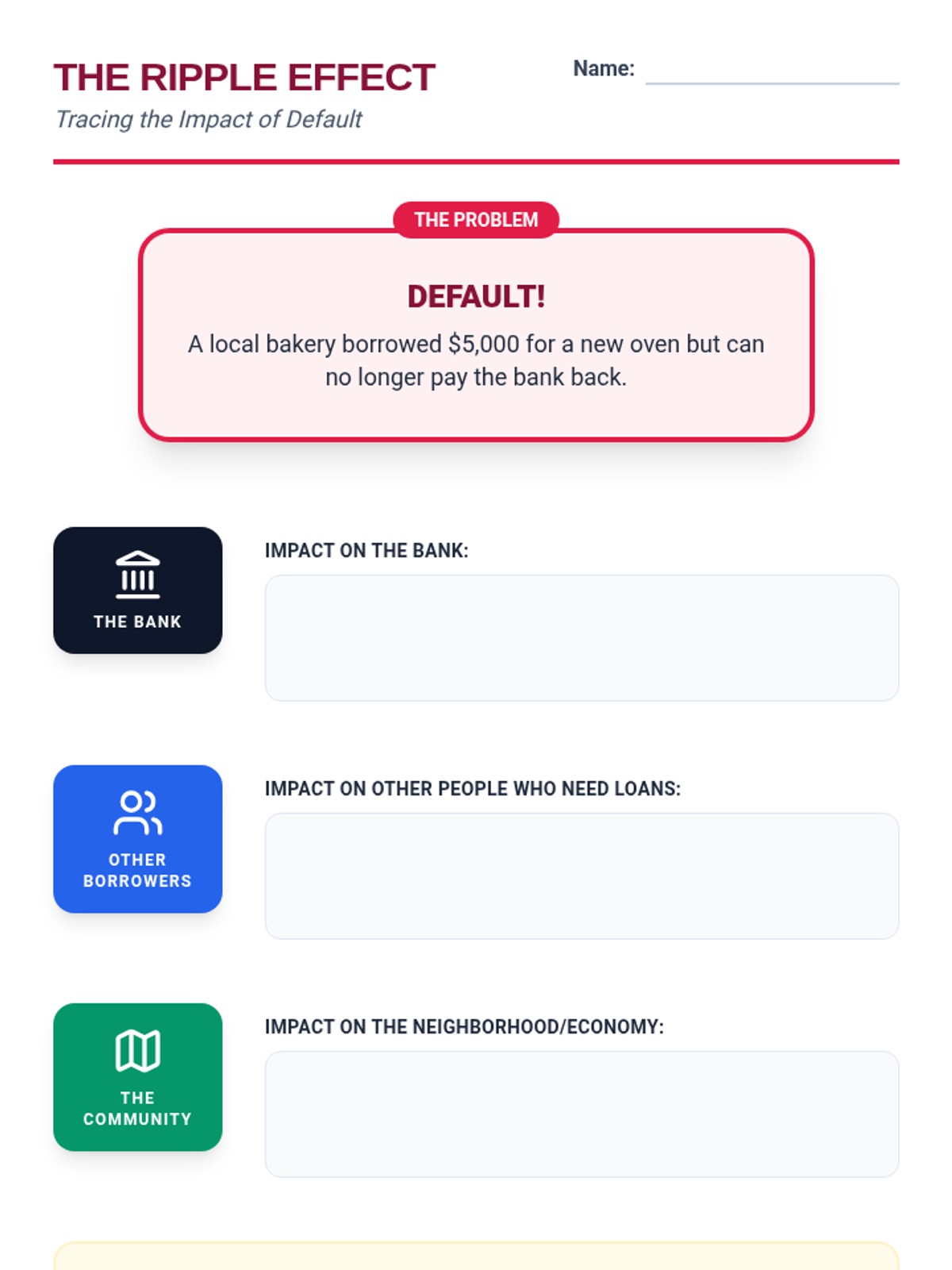
Graphic organizer for students to trace the societal and economic consequences of a loan default across different groups.
Slides for Lesson 5 explaining the concept of default, the role of collateral, and the systemic consequences of unpaid debt.
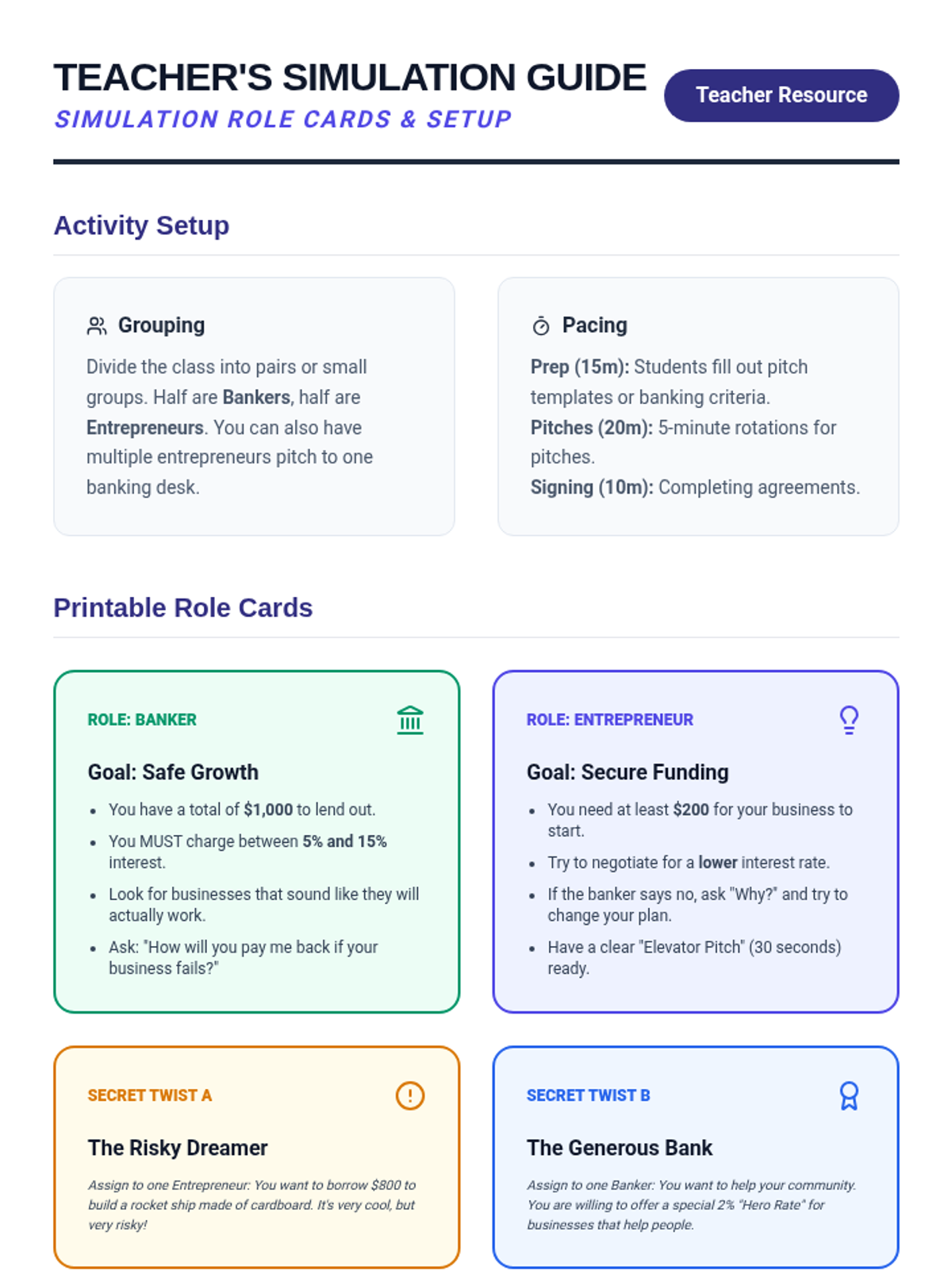
Teacher resource for managing the simulation, including setup instructions, printable role cards with secret twists, and debriefing questions.
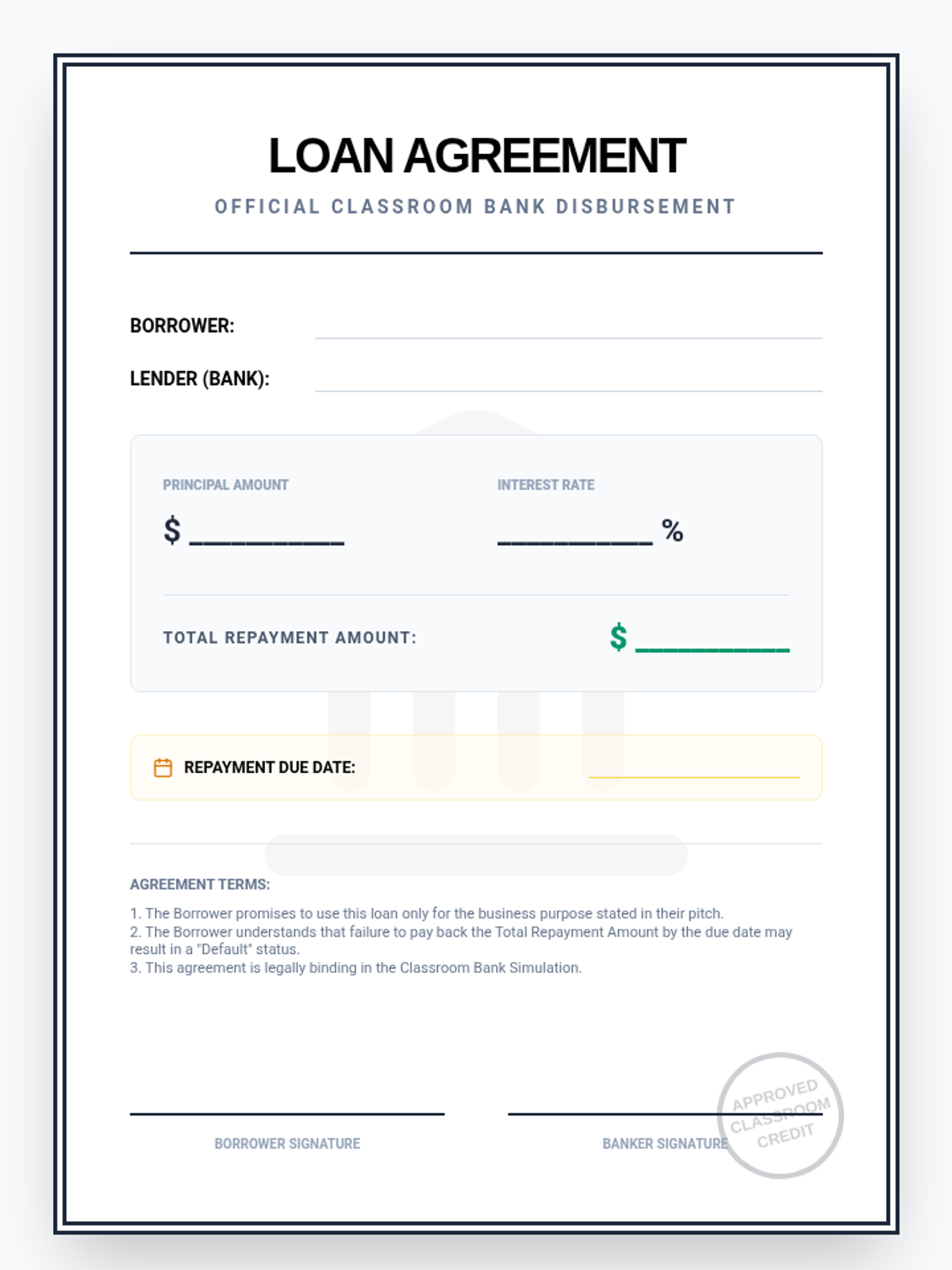
The official loan agreement form to be filled out by bankers and signed by both parties during the simulation.
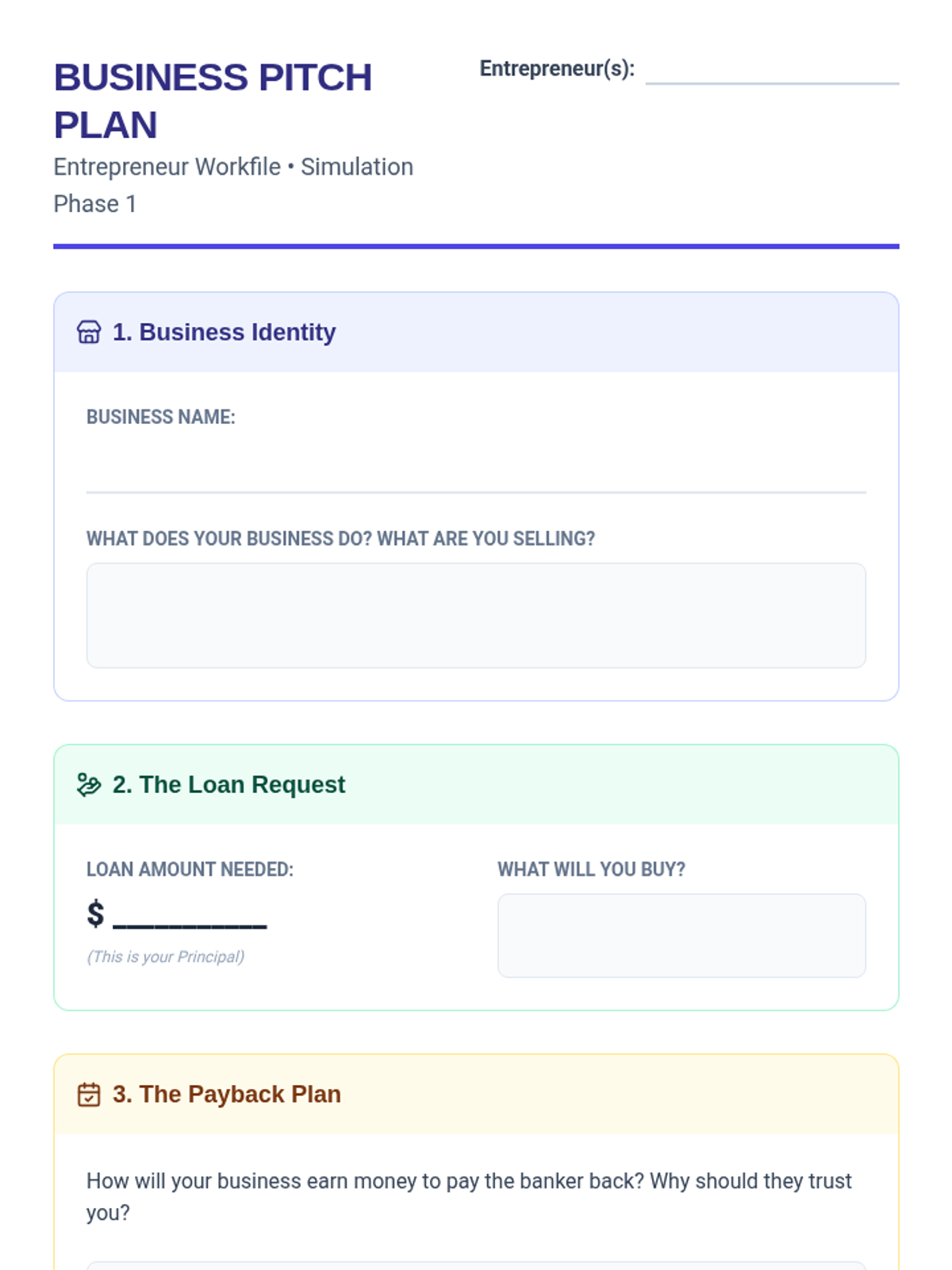
Planning worksheet for students acting as entrepreneurs to define their business idea and loan request before pitching to a banker.
Simulation slides setting the stage for the role-play activity, defining roles for Entrepreneurs and Bankers and providing pitch scripts.
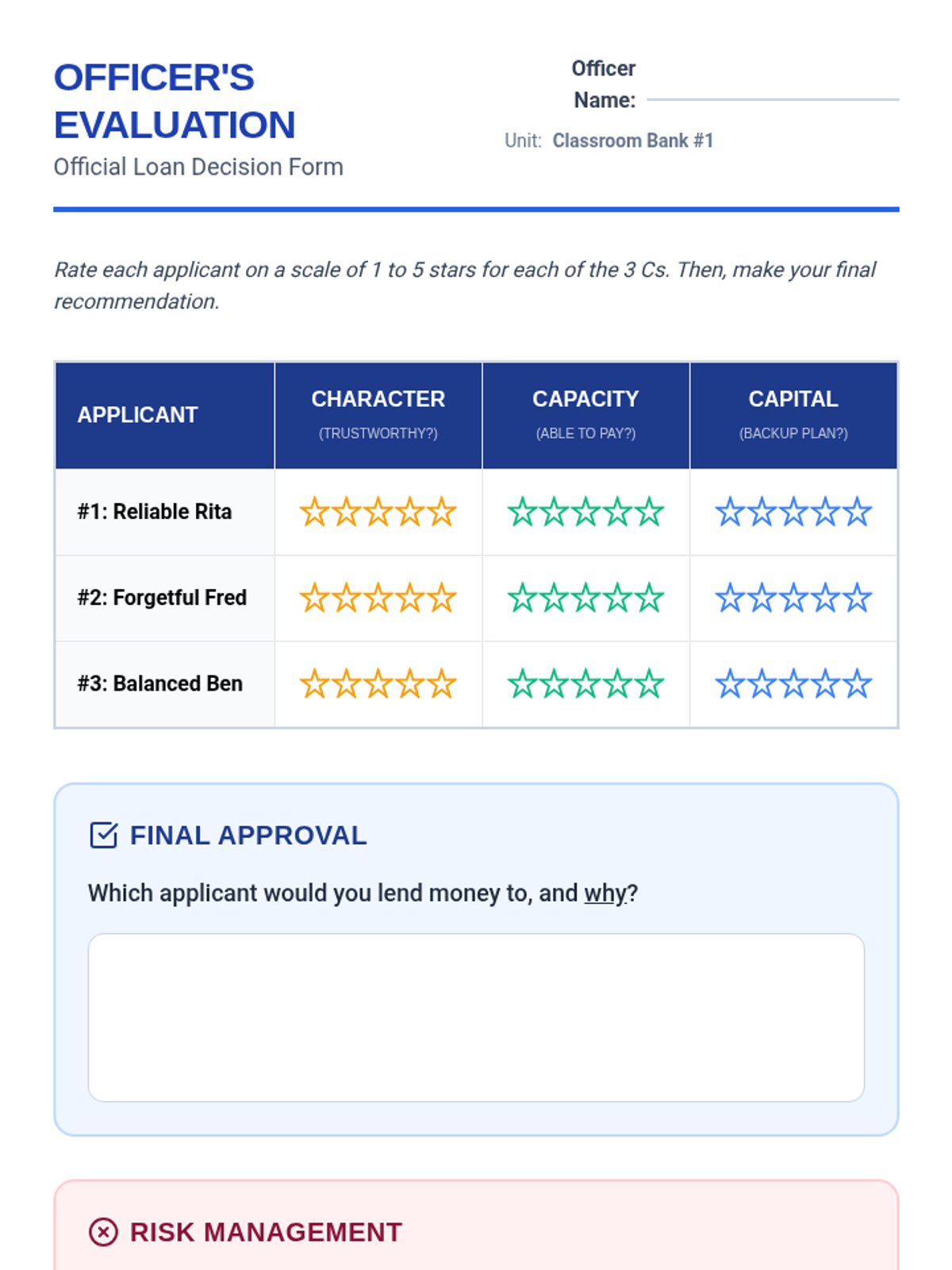
Student worksheet for evaluating loan applicants based on the Case Files, including a rating scale and open-ended decision-making sections.
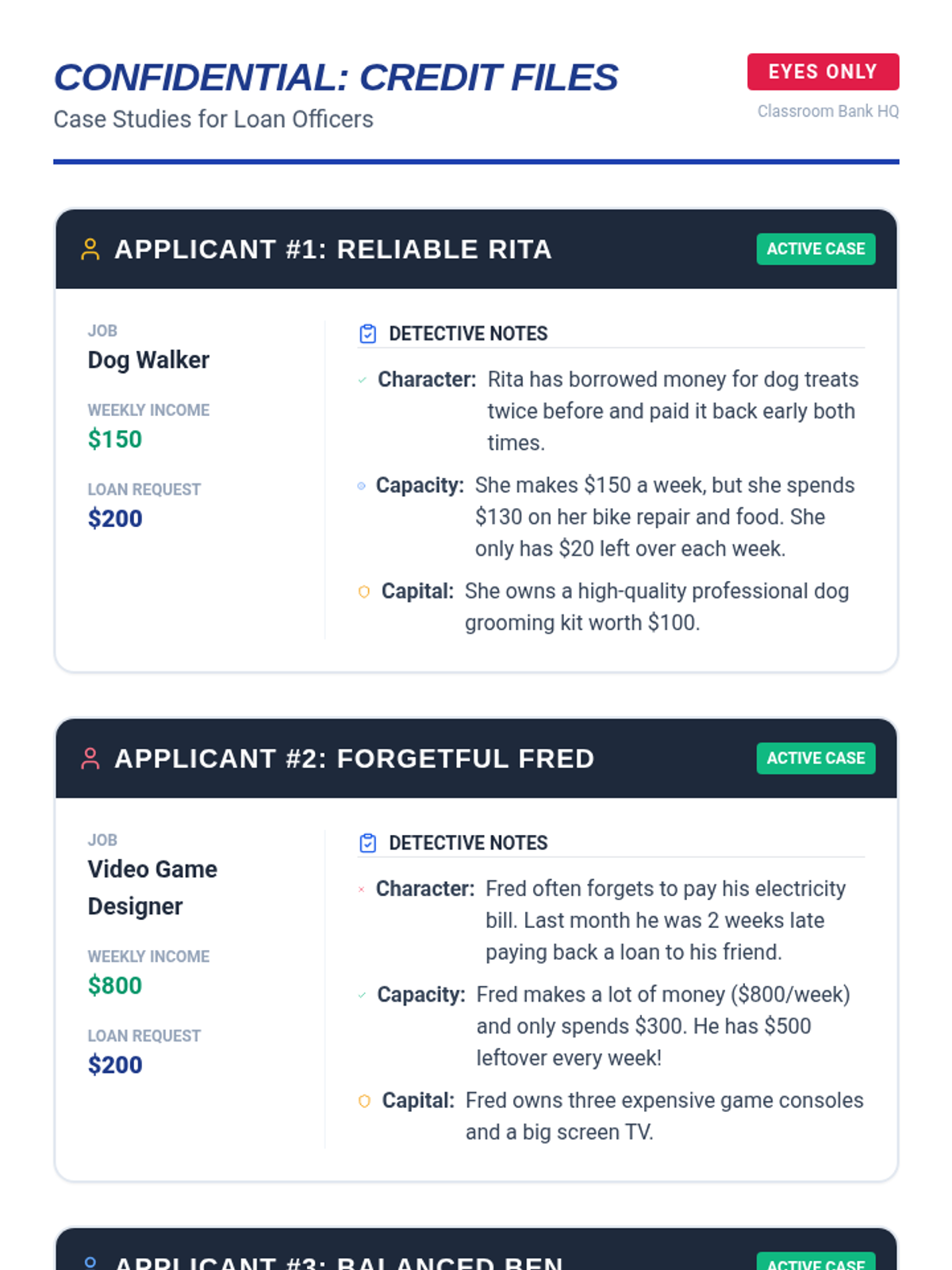
Case studies for students acting as loan officers, featuring three distinct applicant profiles with varying character, capacity, and capital.
Slides for Lesson 3 explaining the Three Cs (Character, Capacity, Capital) in grade-appropriate terms to help students evaluate creditworthiness.
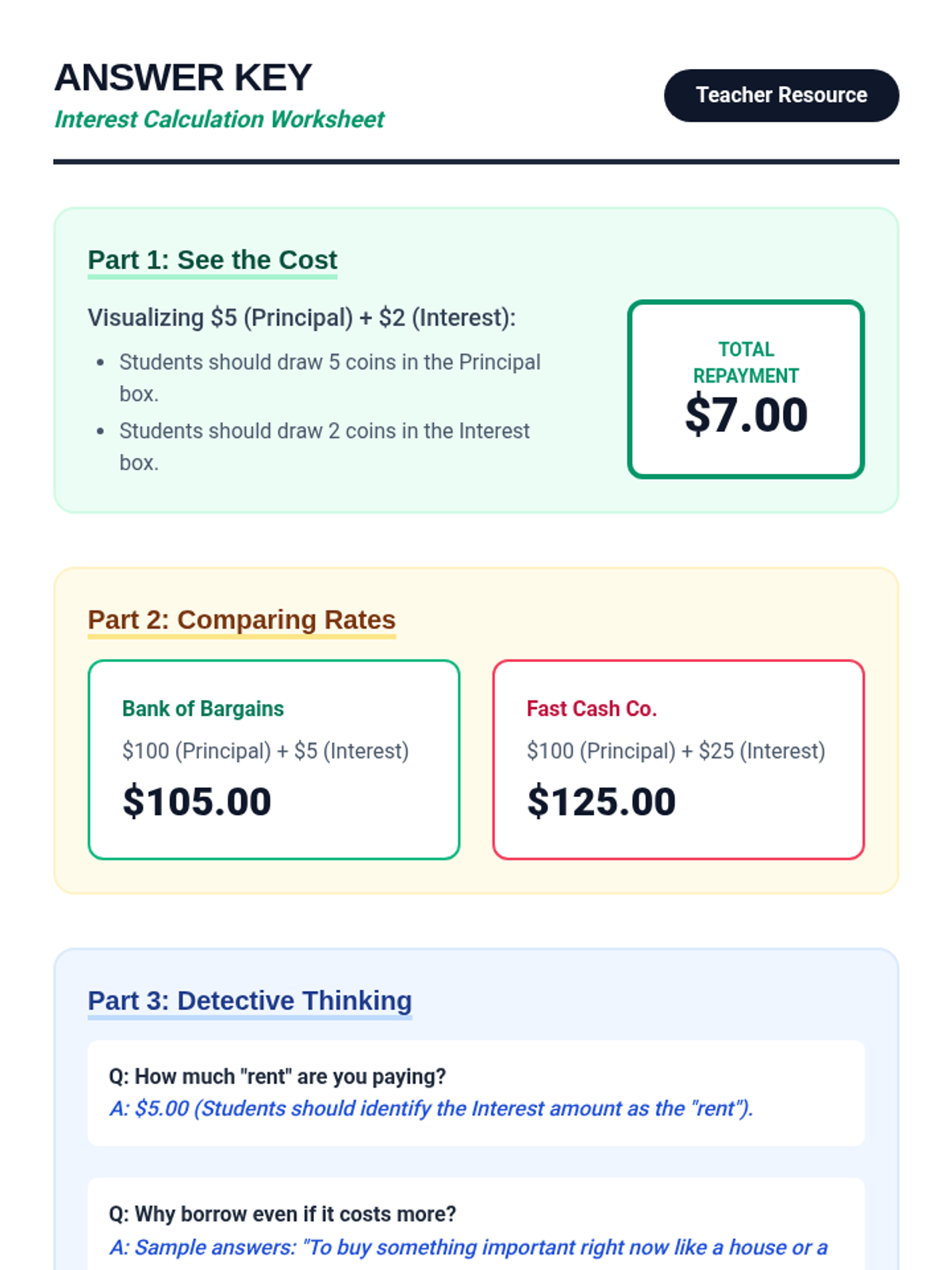
Answer key and teacher guide for the Interest Calculation Worksheet, providing correct calculations and sample reflection responses.
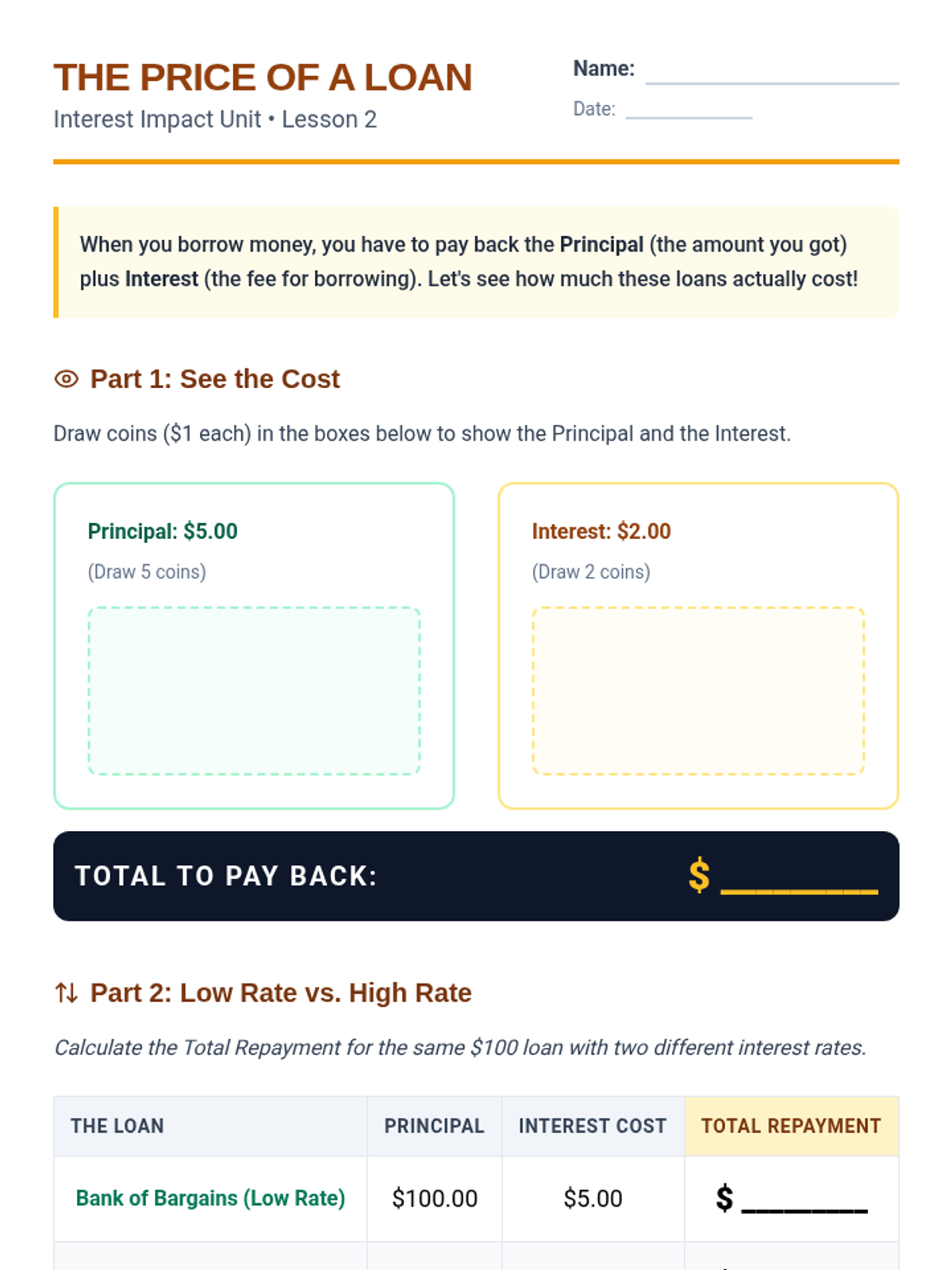
Student worksheet to practice calculating total loan repayment by adding principal and interest, comparing low and high rates.
Slides for Lesson 2 visualising interest as the cost of borrowing and explaining the difference between principal and interest.
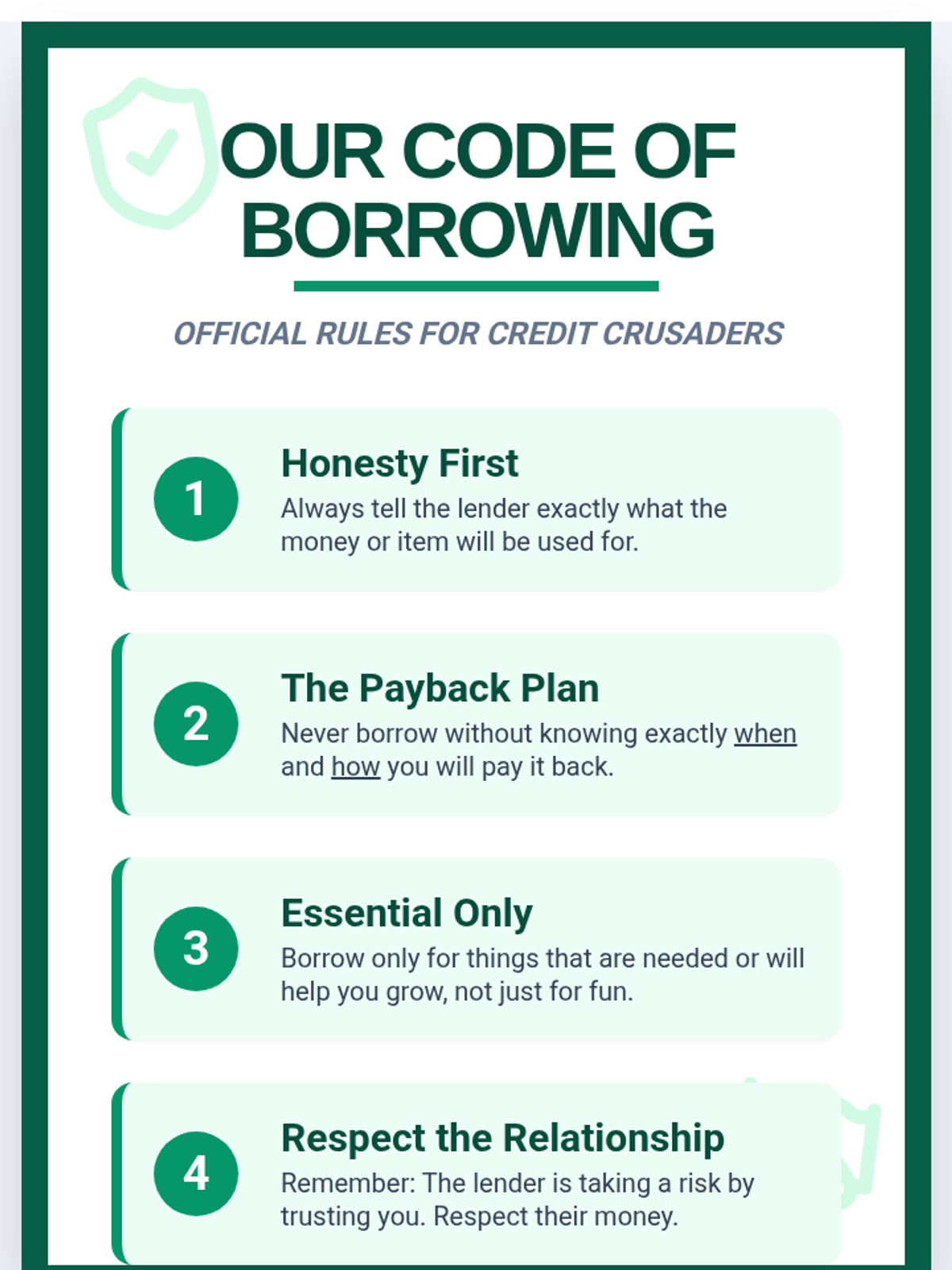
A classroom poster outlining the 'Code of Borrowing' rules for students to sign, establishing ethical guidelines for the banking simulation.
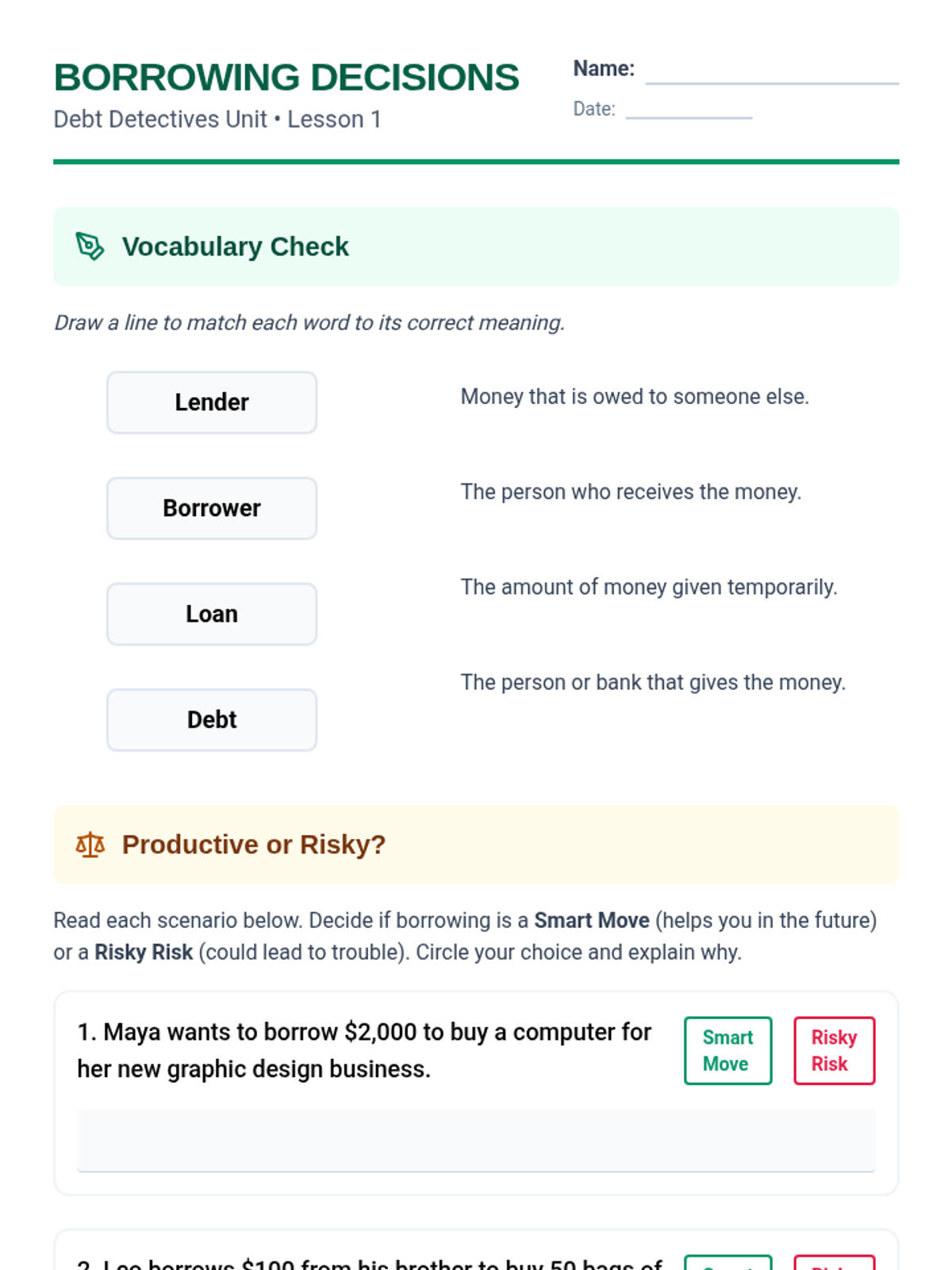
Worksheet for students to practice vocabulary matching and scenario analysis, identifying productive vs. risky borrowing behaviors.
Introductory slides for the banking and finance unit, defining key terms like lender, borrower, loan, and debt, and introducing the concept of productive borrowing.