Empathetic skill development through emotion recognition, cultural diversity appreciation, and bias confrontation. Targets multi-perspective analysis to support respectful interactions and complex social responses.
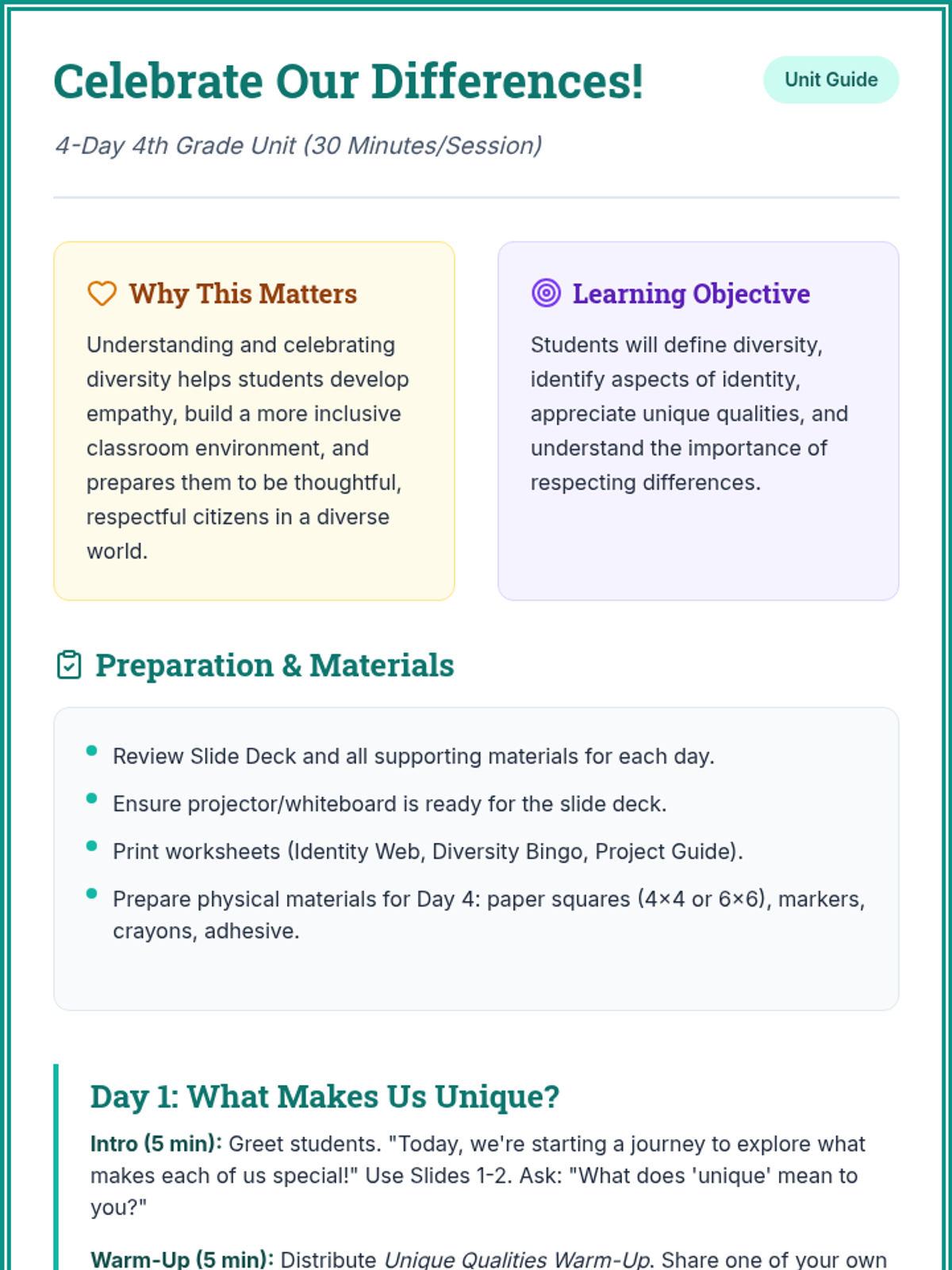
A comprehensive 4-day facilitator guide for the Celebrate Our Differences unit, including preparation steps, learning objectives, and detailed session instructions.
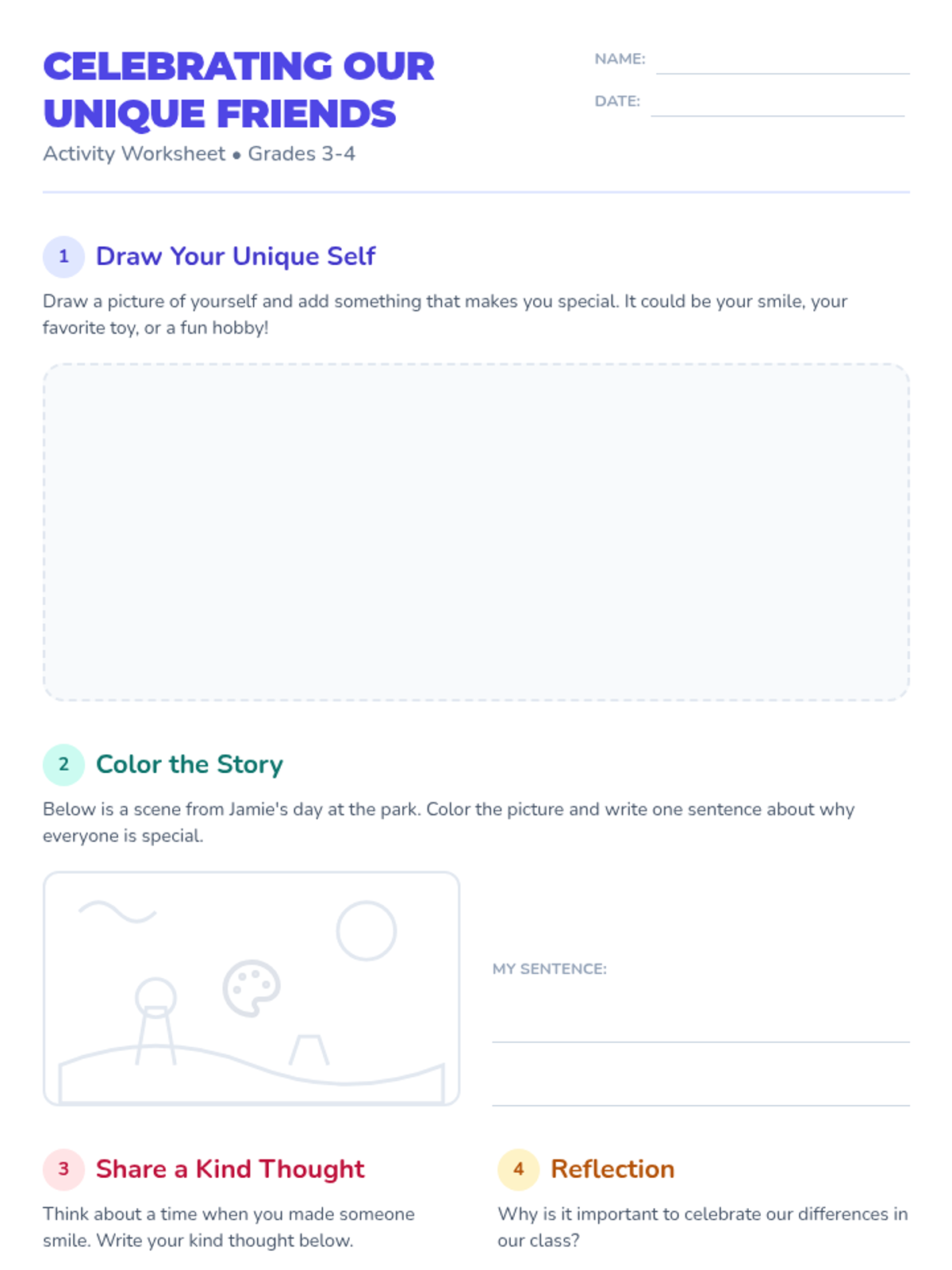
A reflective worksheet for students to celebrate their own uniqueness and practice empathy towards others.
A visual presentation for grades 3 and 4 that guides students through understanding autism, celebrating differences, and practicing empathy.
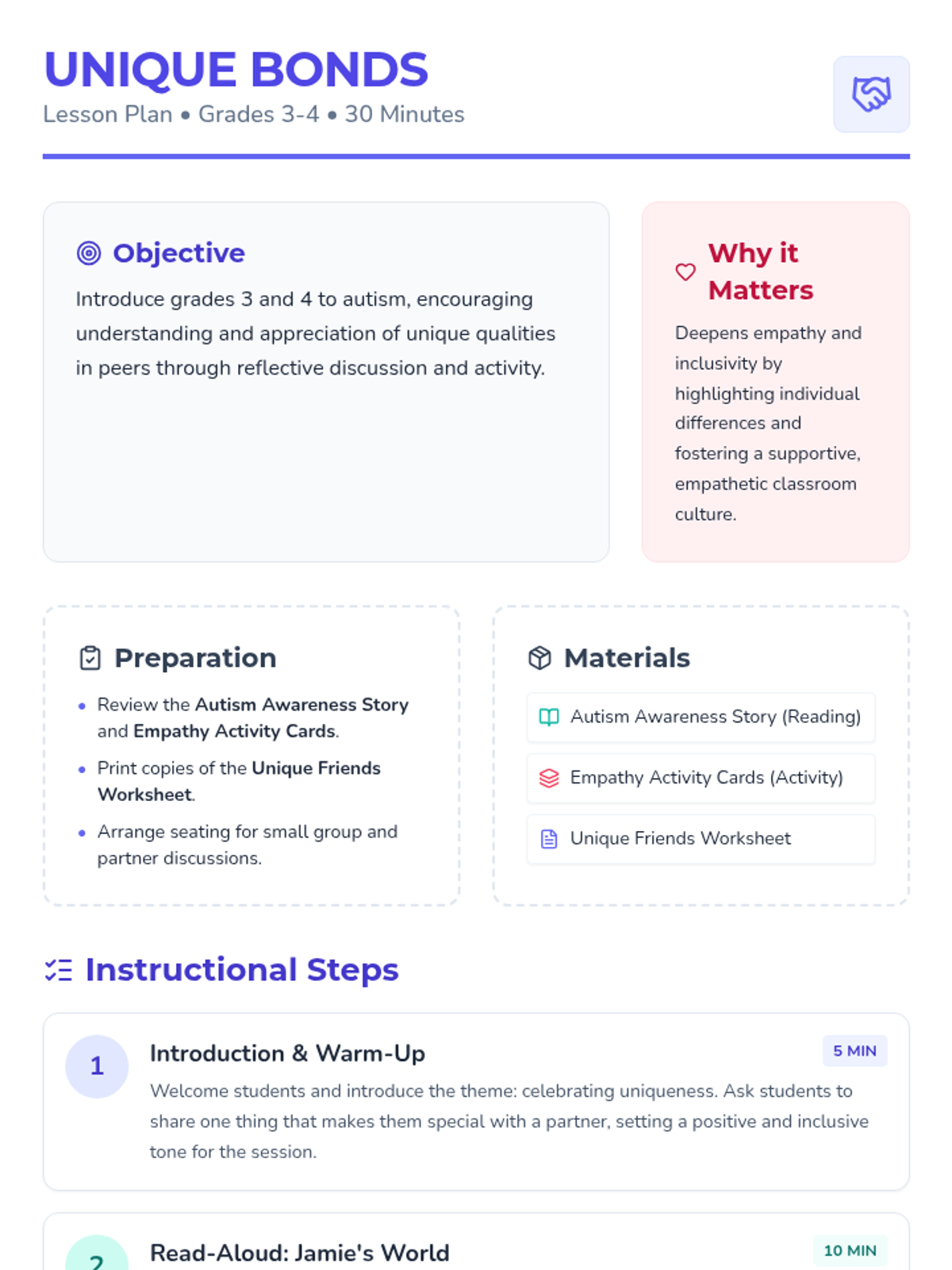
A 30-minute lesson plan for grades 3 and 4 focused on deepening empathy and understanding of autism through discussion and reflection.
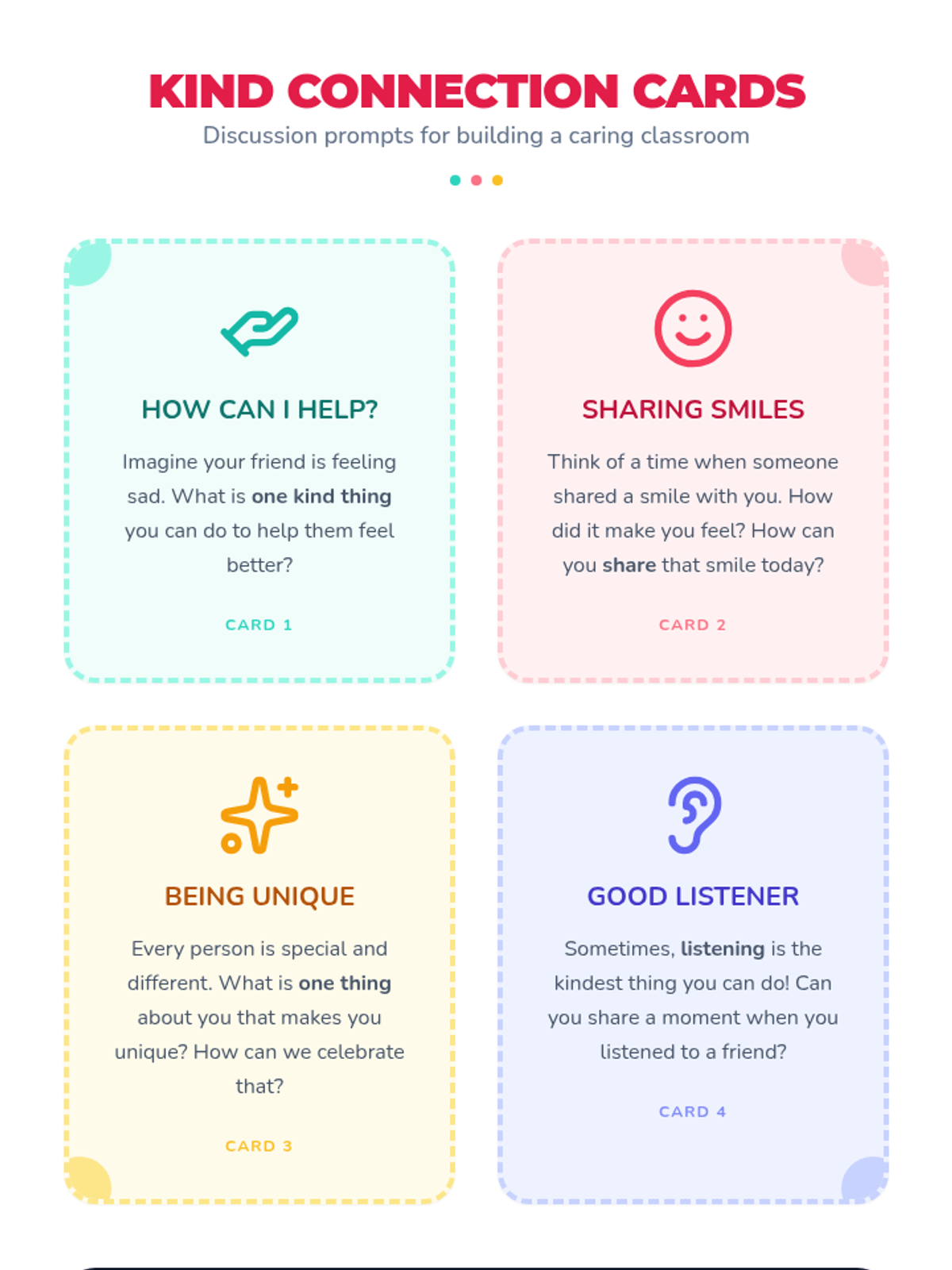
A set of colorful discussion cards designed to help kindergarten students think about kindness, empathy, and celebrating differences.
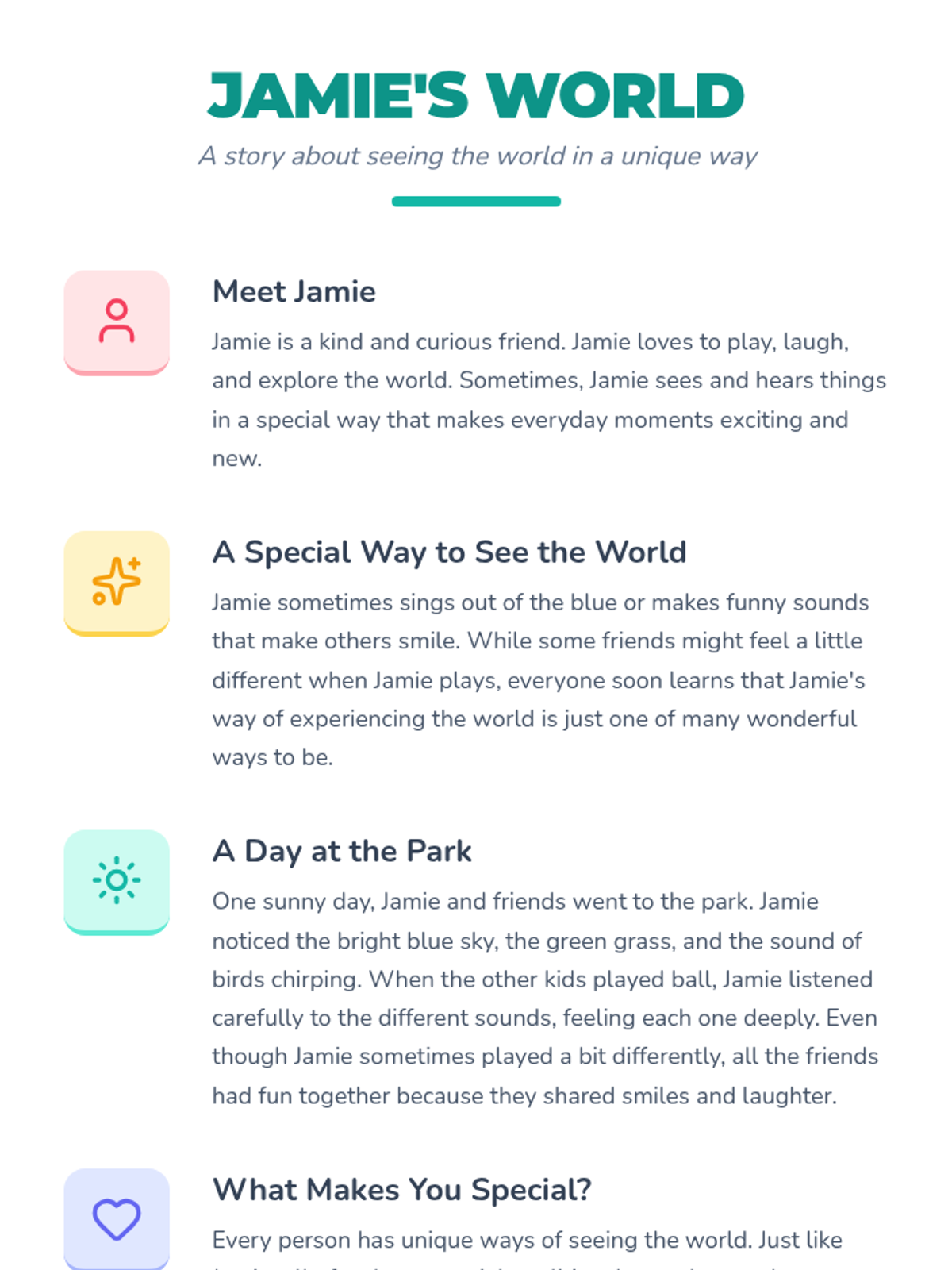
A heartwarming story about Jamie, a friend who sees the world in a unique way, designed to introduce autism and celebrate individual differences.
A colorful and engaging slide deck for kindergarten students to learn about autism awareness and what makes everyone unique.
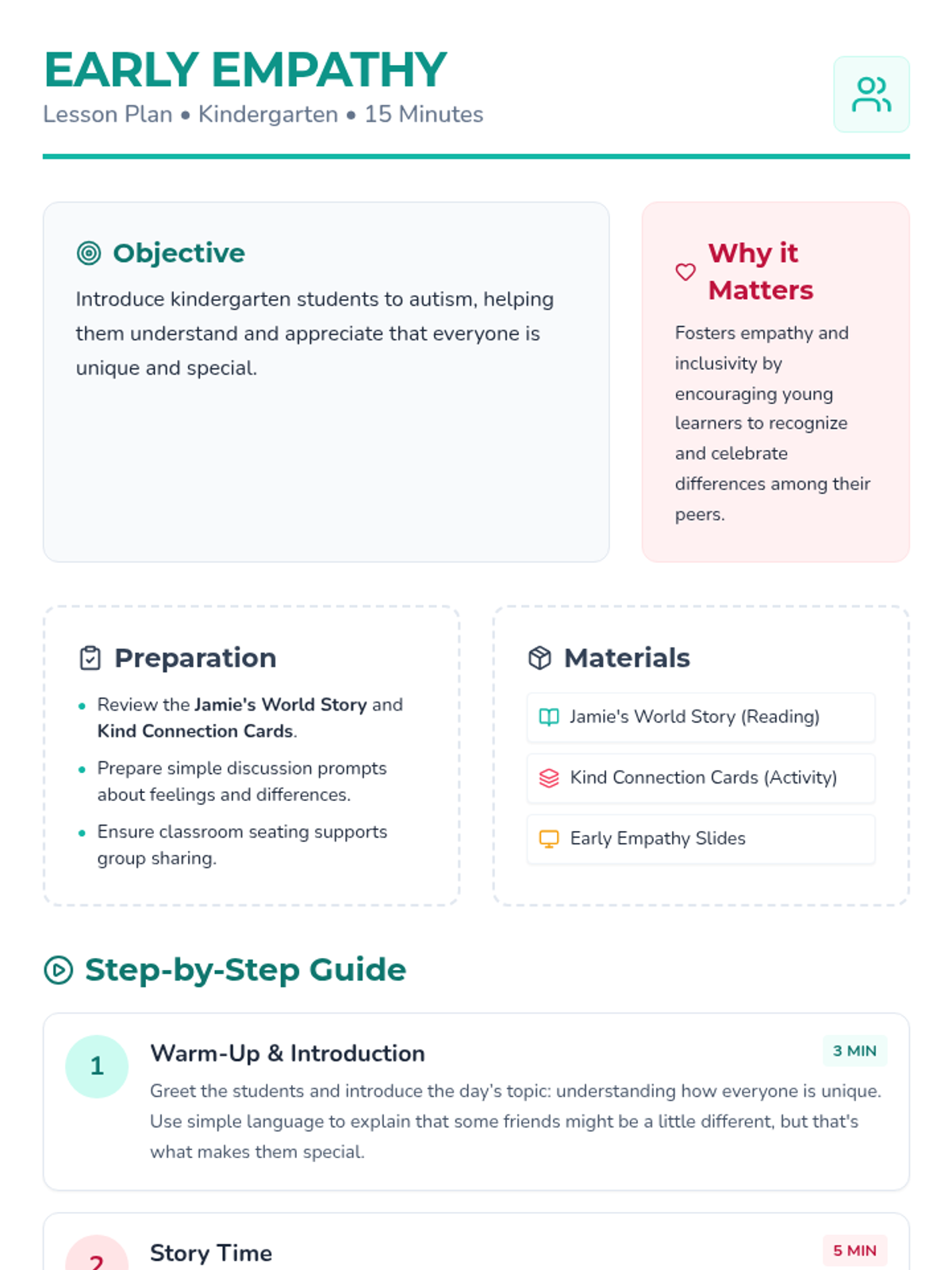
A concise, 15-minute lesson plan for kindergarten teachers to introduce autism awareness through story and discussion.
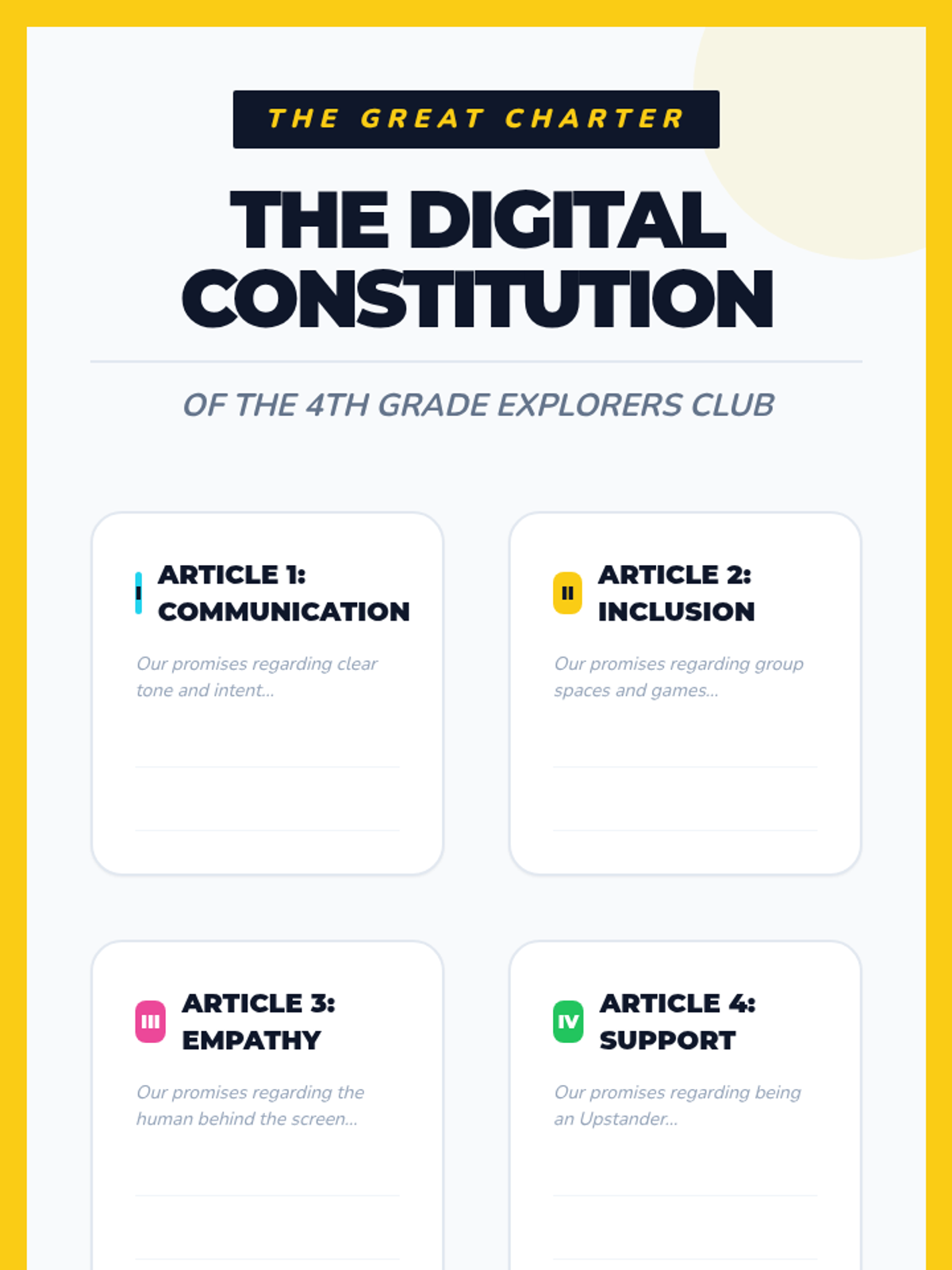
The culminating class document and individual pledge for the Digital Empathy sequence. Includes space for class-drafted articles and an individual commitment signature.
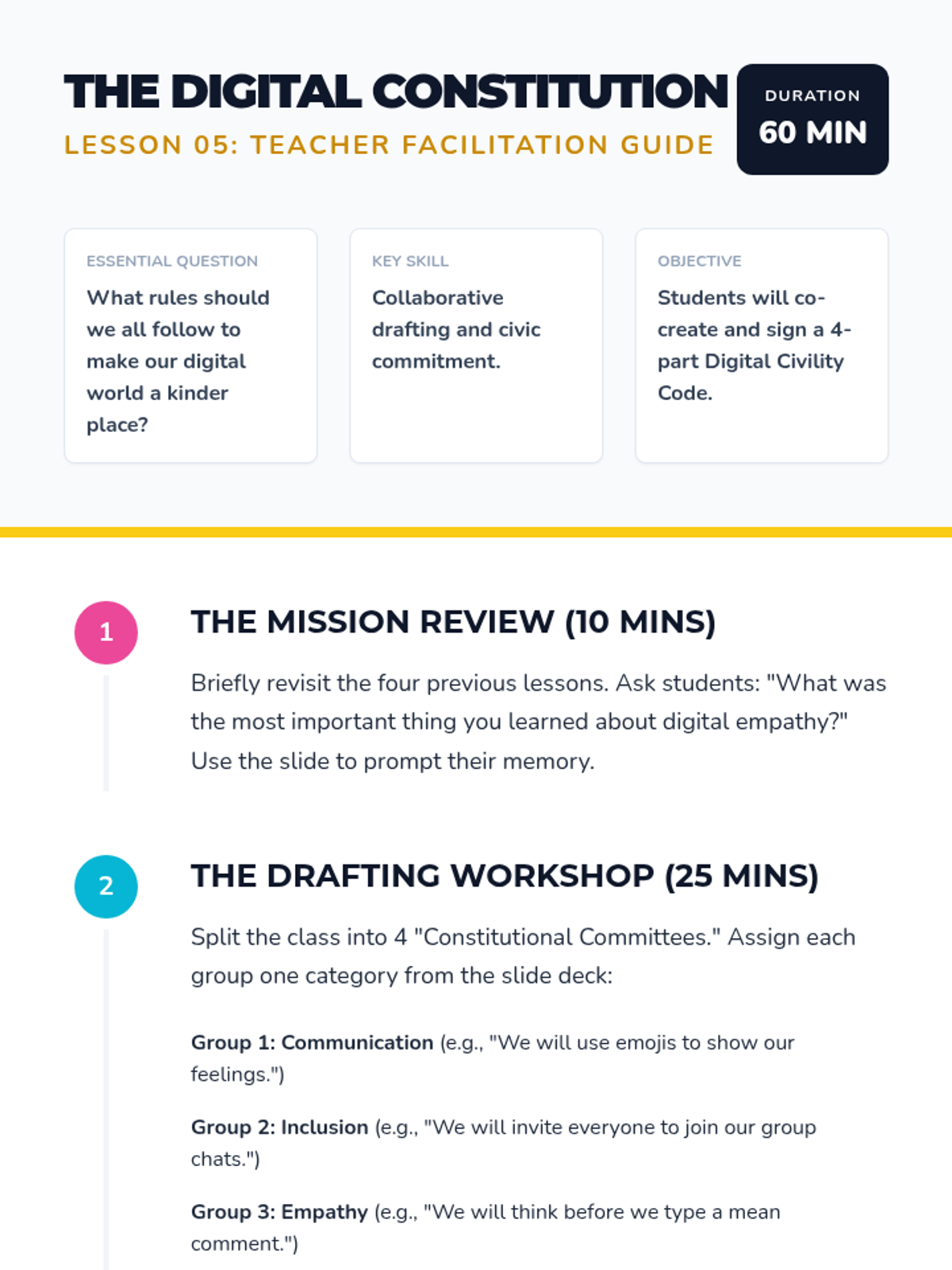
A teacher facilitation guide for Lesson 5: The Digital Constitution. Includes workshop instructions, category prompts, and a guide for the signing ceremony.
A slide deck for Lesson 5: The Digital Constitution. It guides students through the process of reviewing the sequence's themes and collaborating to draft a class digital civility code.
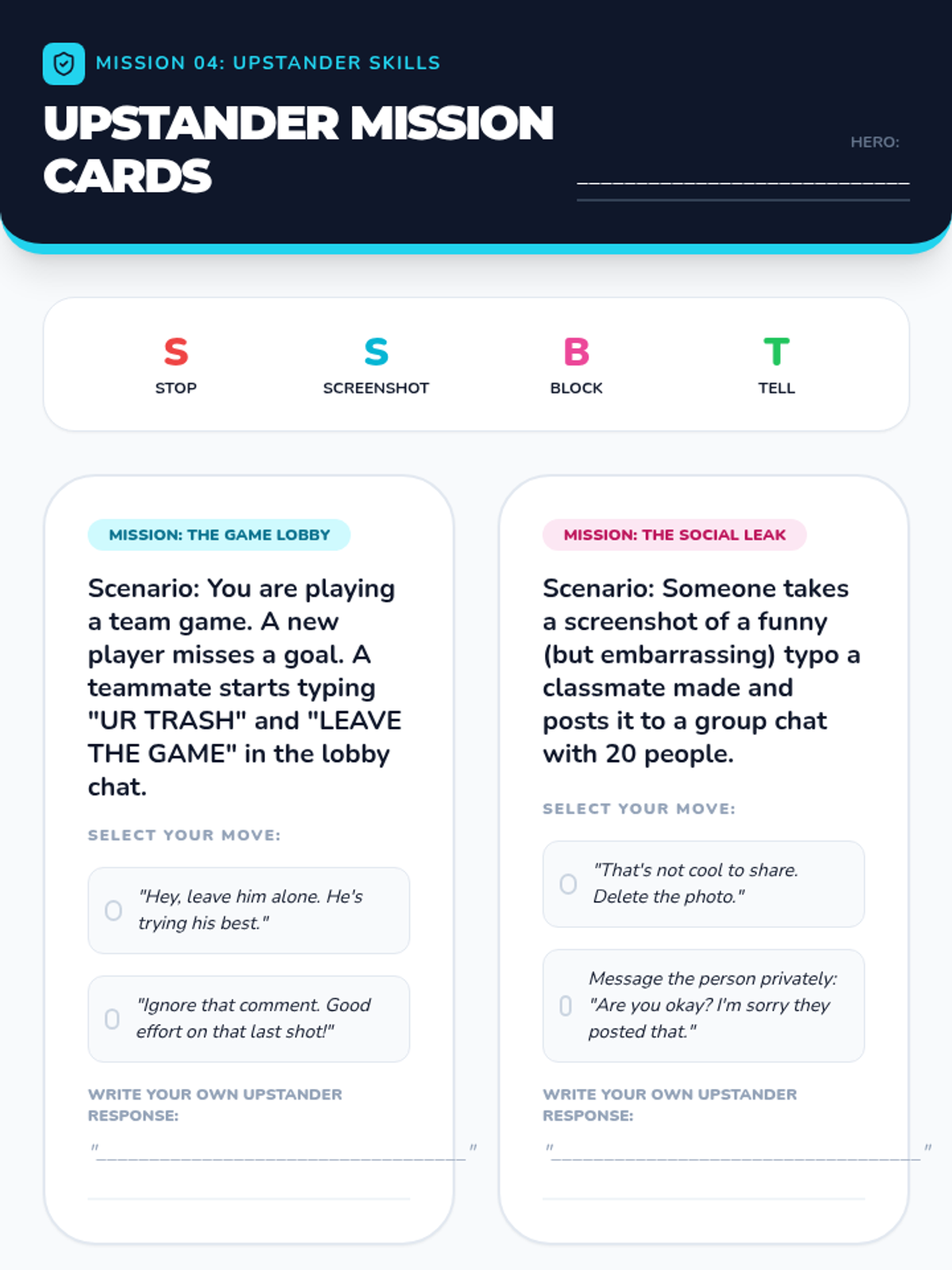
A student activity worksheet for Lesson 4: Power Up Upstanders. Includes simulation scenarios and writing prompts for practicing upstander intervention strategies.
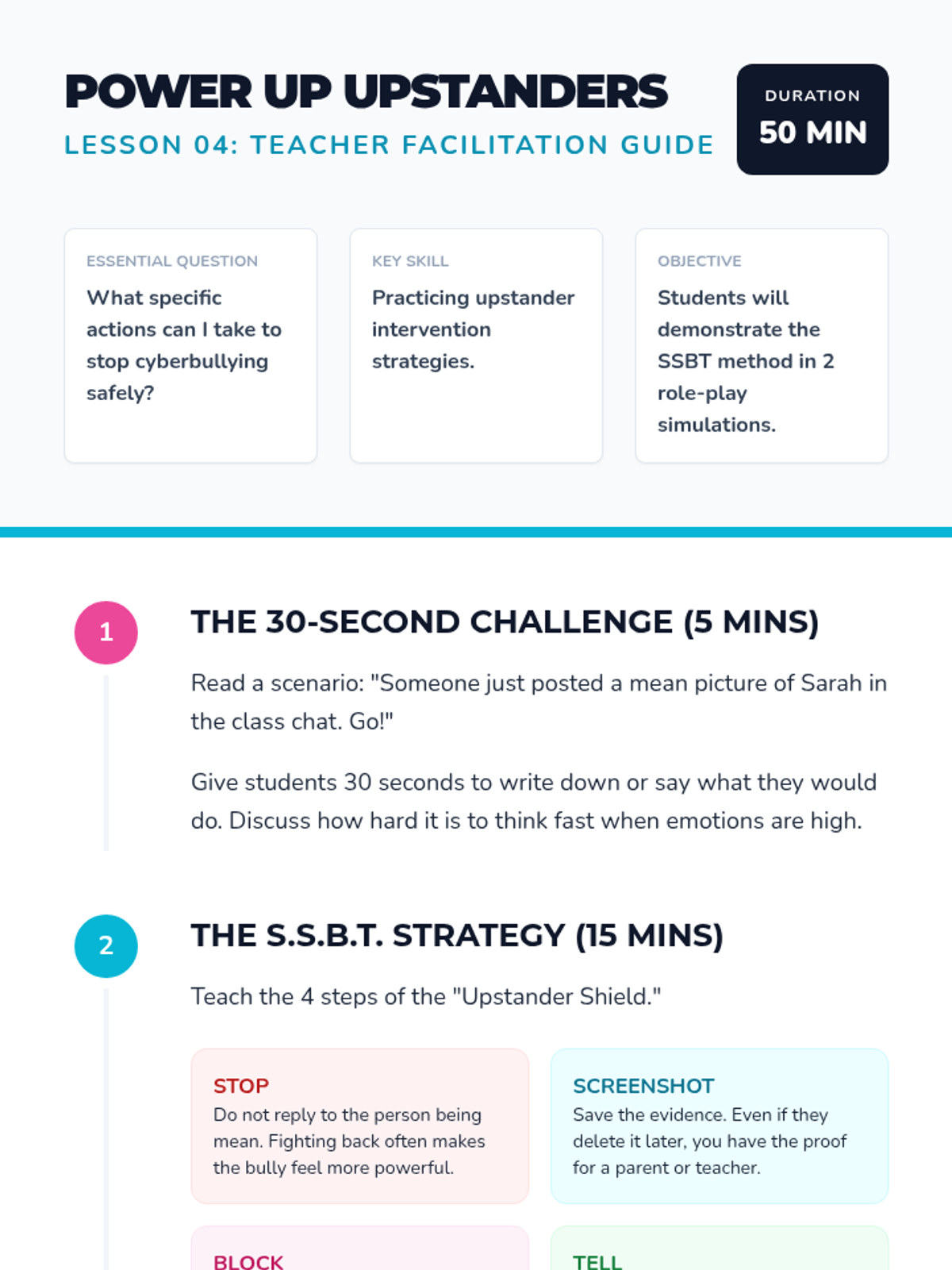
A teacher facilitation guide for Lesson 4: Power Up Upstanders. Includes role-play scenarios, scripts, and a guide for the "Stop, Screenshot, Block, Tell" method.
A slide deck for Lesson 4: Power Up Upstanders. It introduces the 'Stop, Screenshot, Block, Tell' method and provides simulation scenarios for practicing upstander intervention strategies.
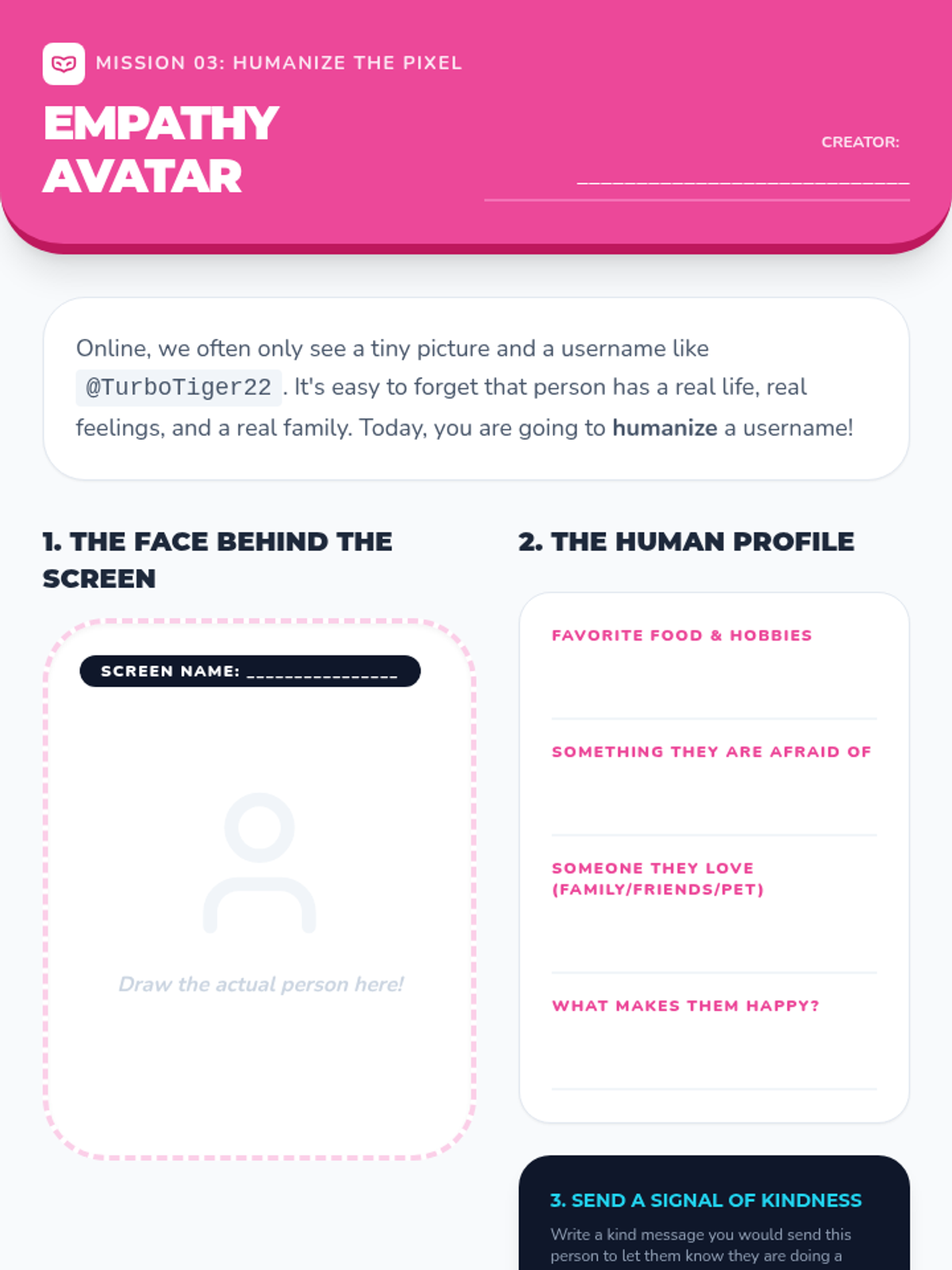
A student activity worksheet for Lesson 3: Behind the Screen. Students create a 'human' profile for a digital username, drawing the person behind the screen and listing their personal interests to foster digital empathy.
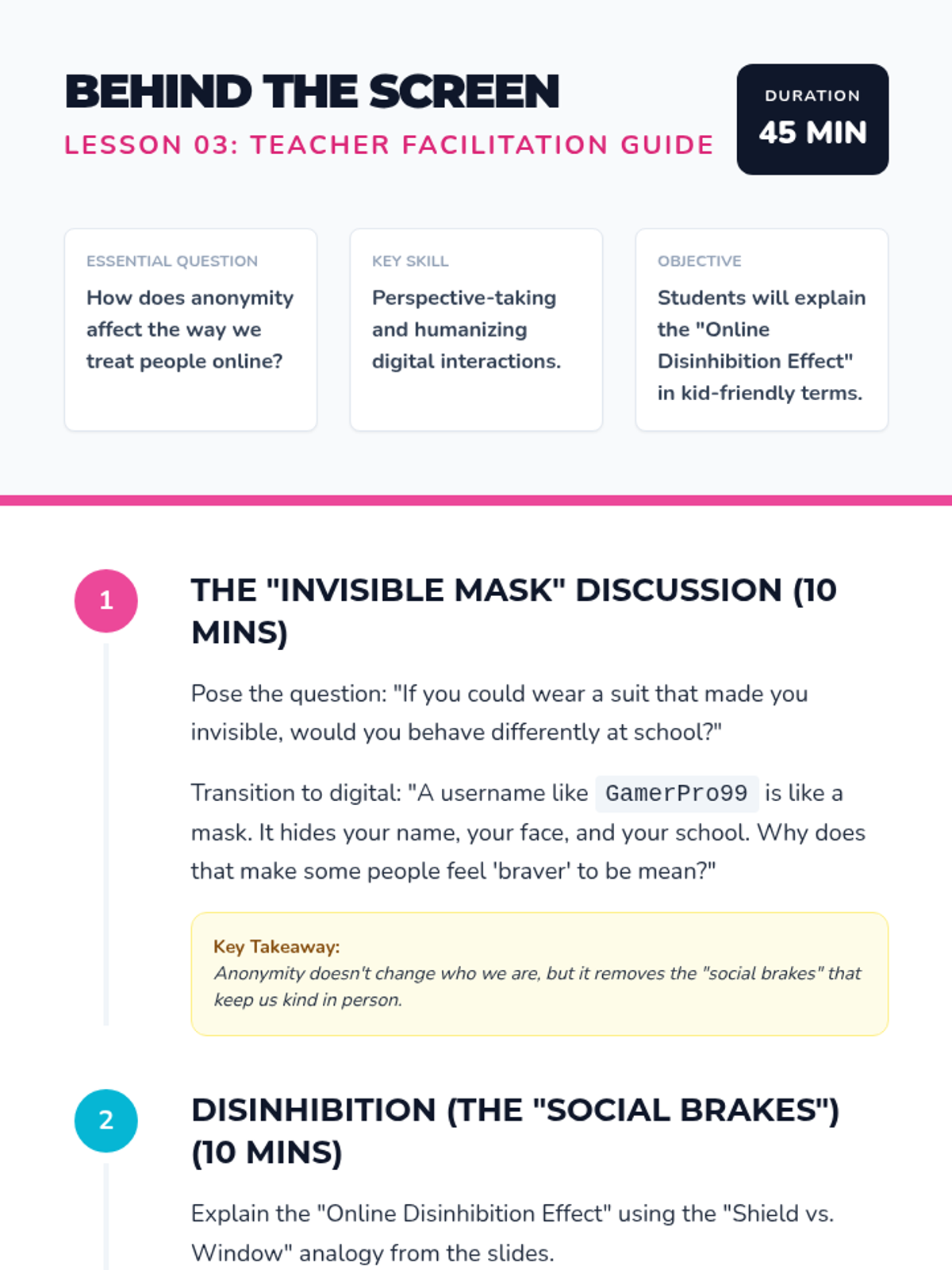
A teacher facilitation guide for Lesson 3: Behind the Screen. Includes discussion prompts for the 'Invisible Mask', explanations of the online disinhibition effect, and activity instructions for the Empathy Avatar worksheet.
A slide deck for Lesson 3: Behind the Screen. It explores the 'online disinhibition effect,' explaining how anonymity affects behavior and introducing the concept of humanizing digital interactions.
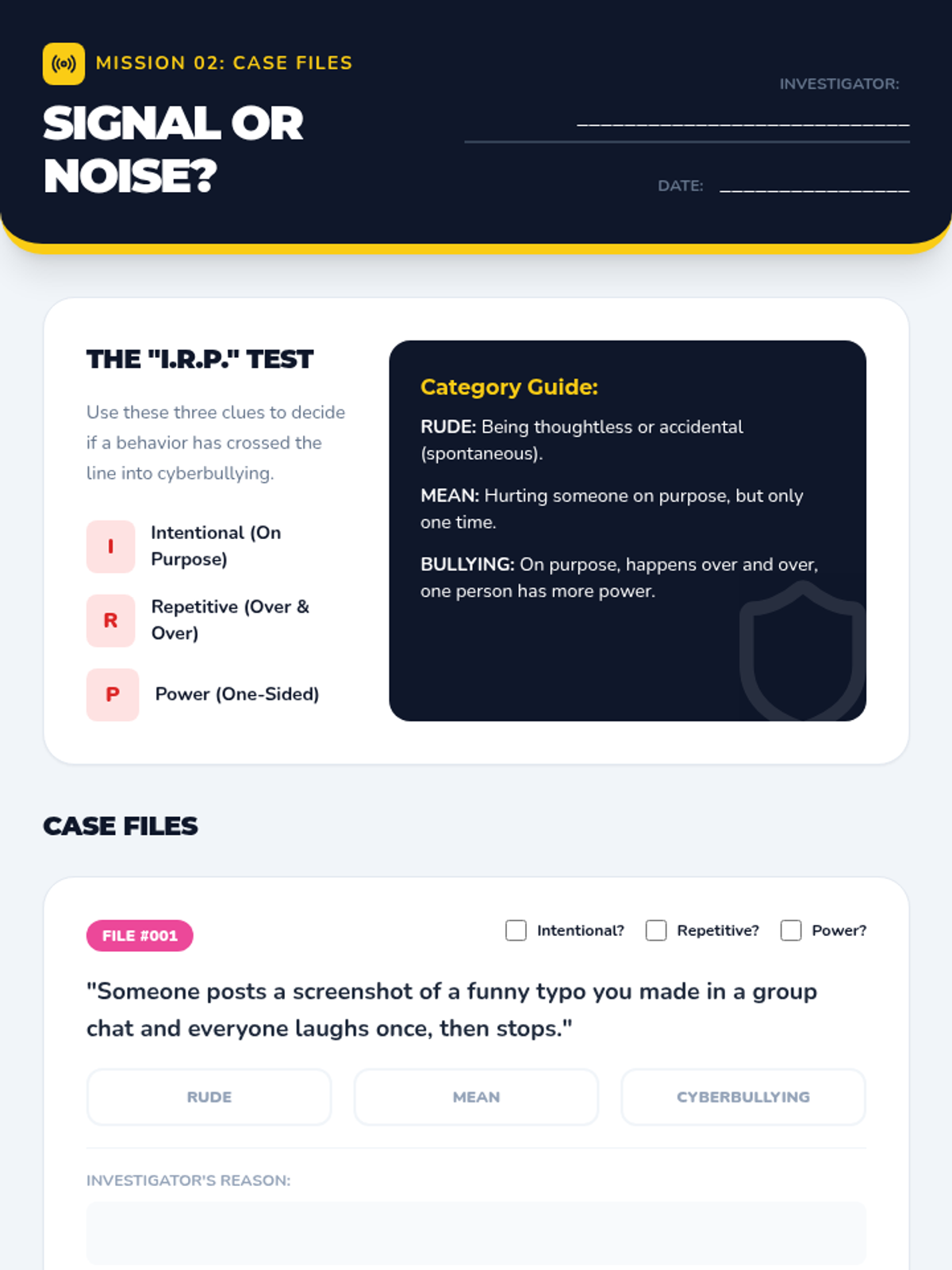
A student worksheet for Lesson 2: Signal or Noise. Students categorize various online scenarios as rude, mean, or bullying by applying the I.R.P. (Intent, Repetition, Power) test.
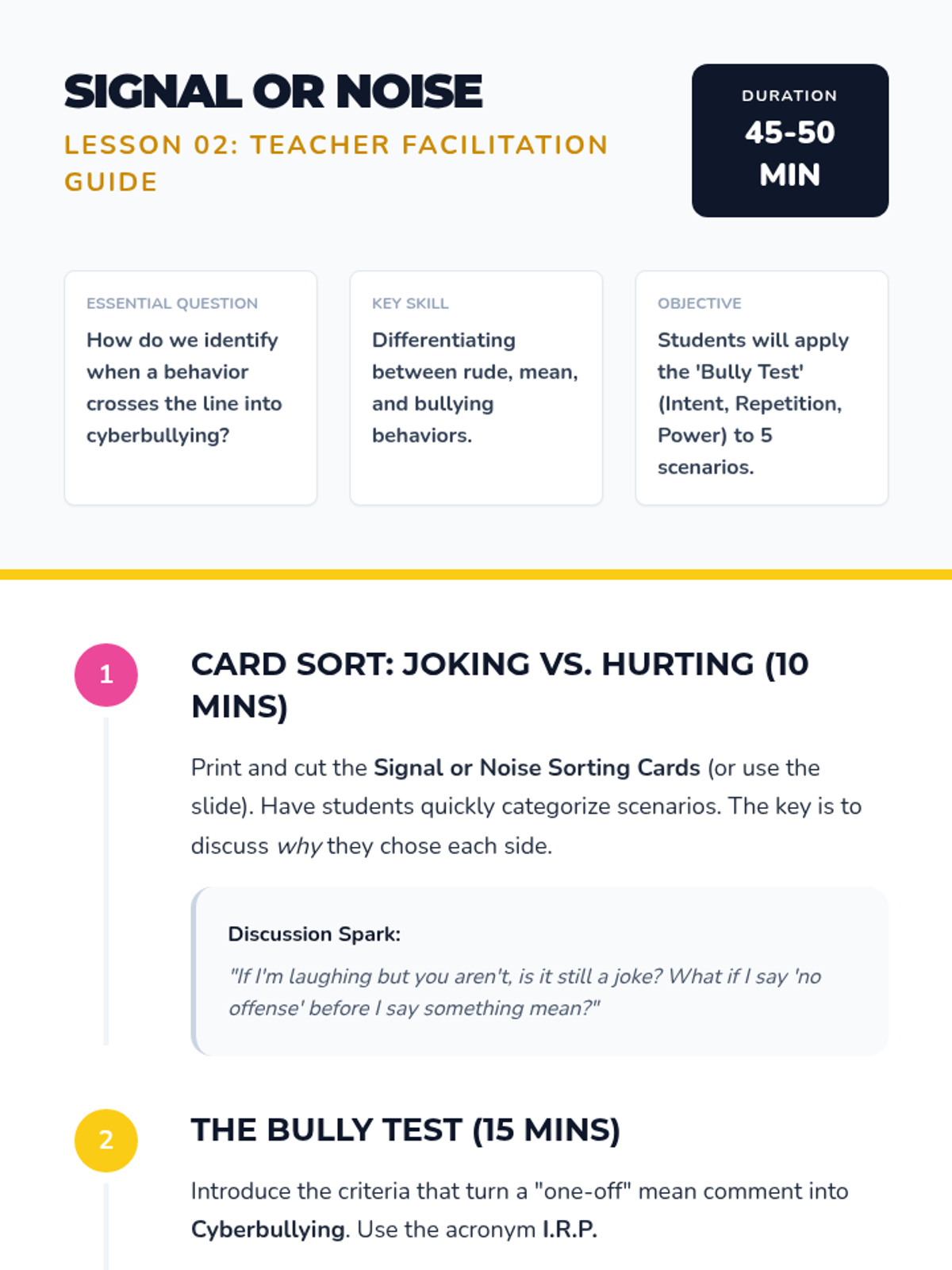
A teacher facilitation guide for Lesson 2: Signal or Noise. Includes definitions of Rude, Mean, and Bullying, the I.R.P. criteria, and a worksheet answer key.
A slide deck for Lesson 2: Signal or Noise. It defines rude, mean, and bullying behaviors and introduces the 'Bully Test' criteria (Intent, Repetition, Power Imbalance).
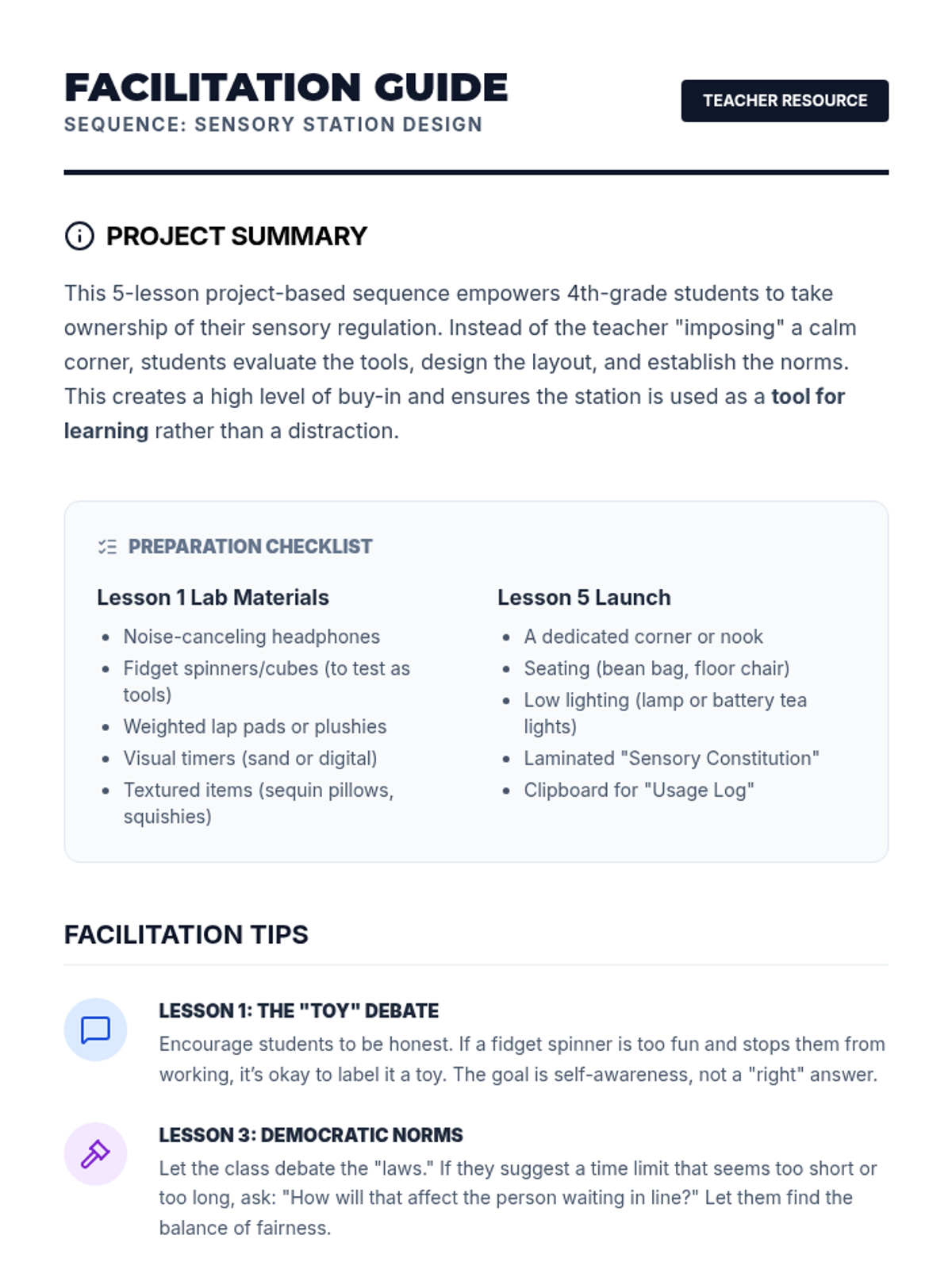
Facilitation guide for teachers, covering pacing, material setup, and pedagogical tips for the Sensory Station Design project.
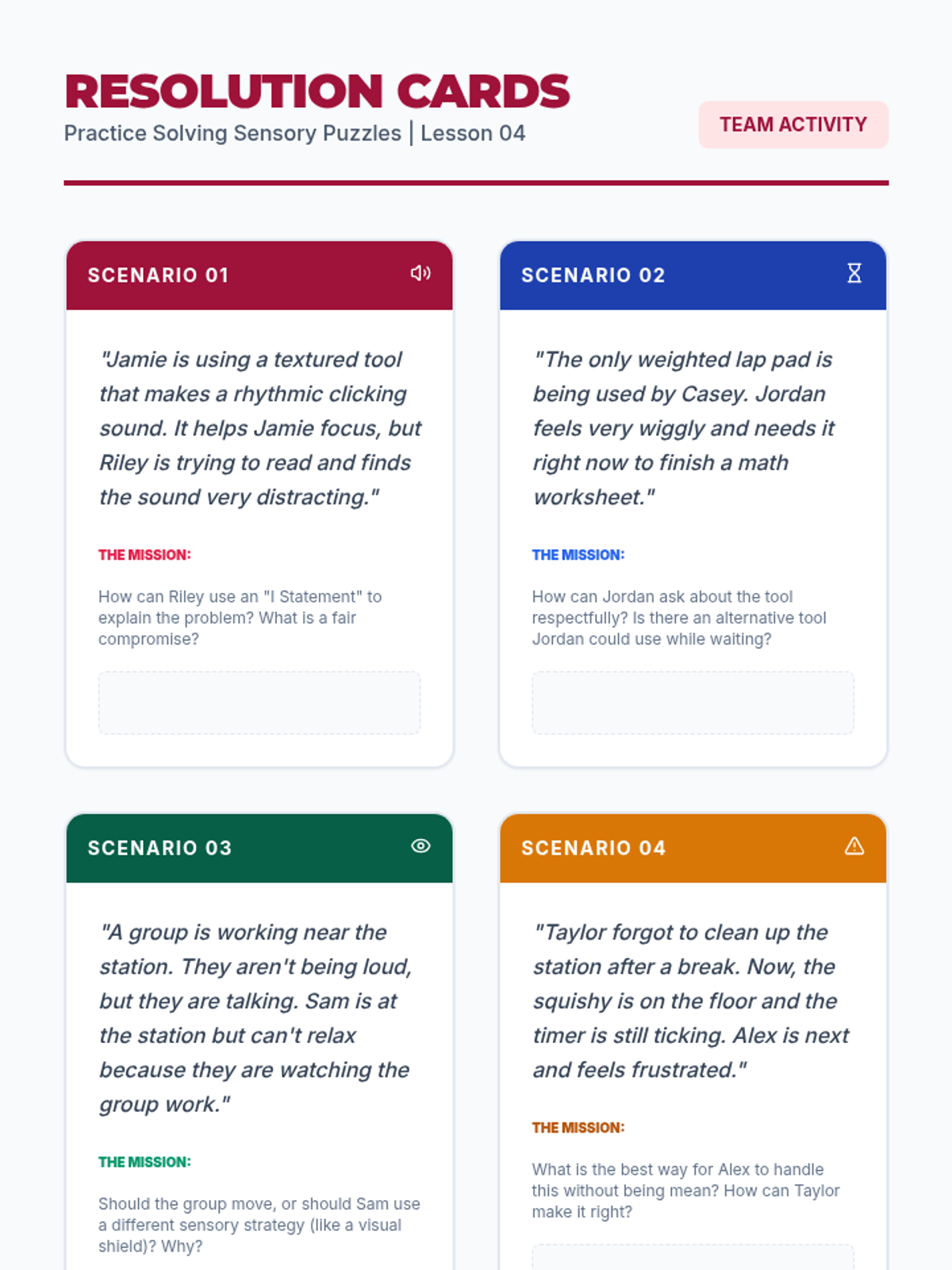
Scenario-based conflict resolution cards for Lesson 4, helping students practice resolving common sensory-related social issues.
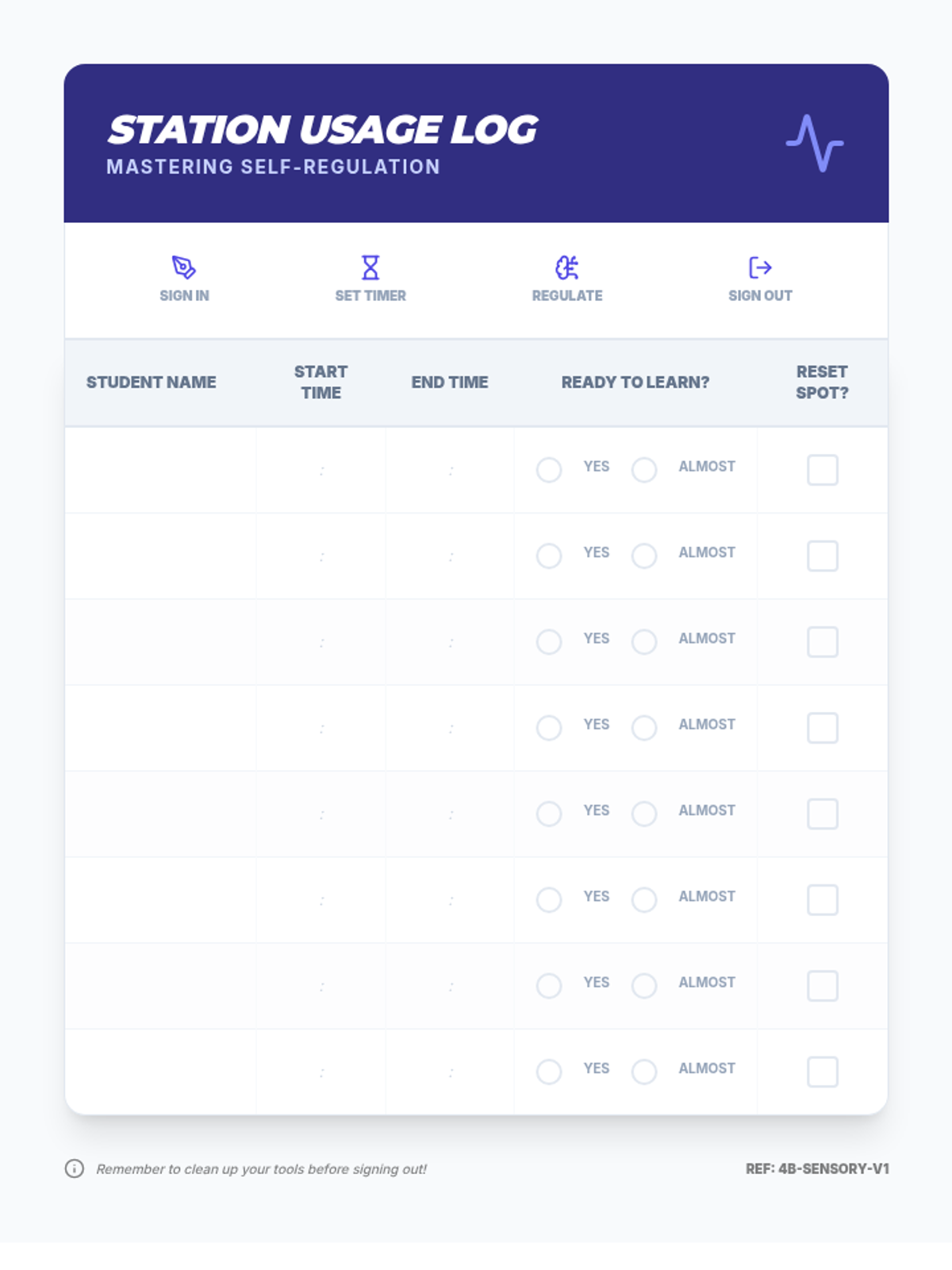
Daily usage log for students to sign in and out of the sensory station, including a quick check-in on their readiness to learn.
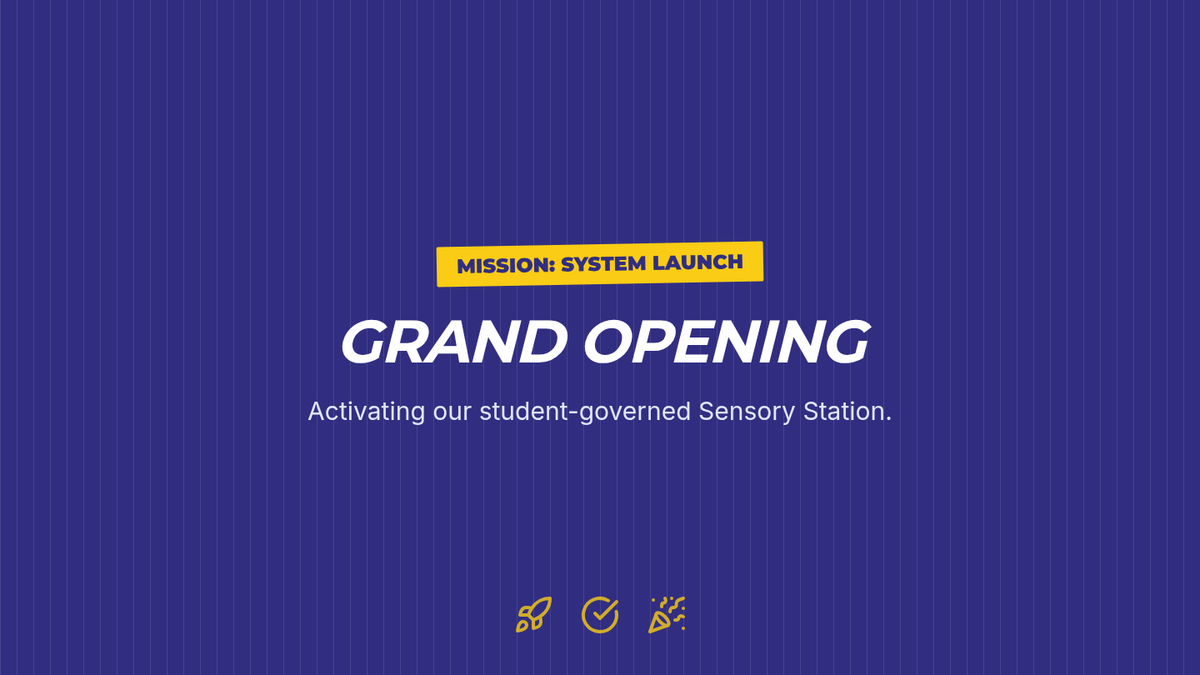
Introductory slides for Lesson 5, guiding students through the dry run procedure and celebrating the official launch of the sensory station.
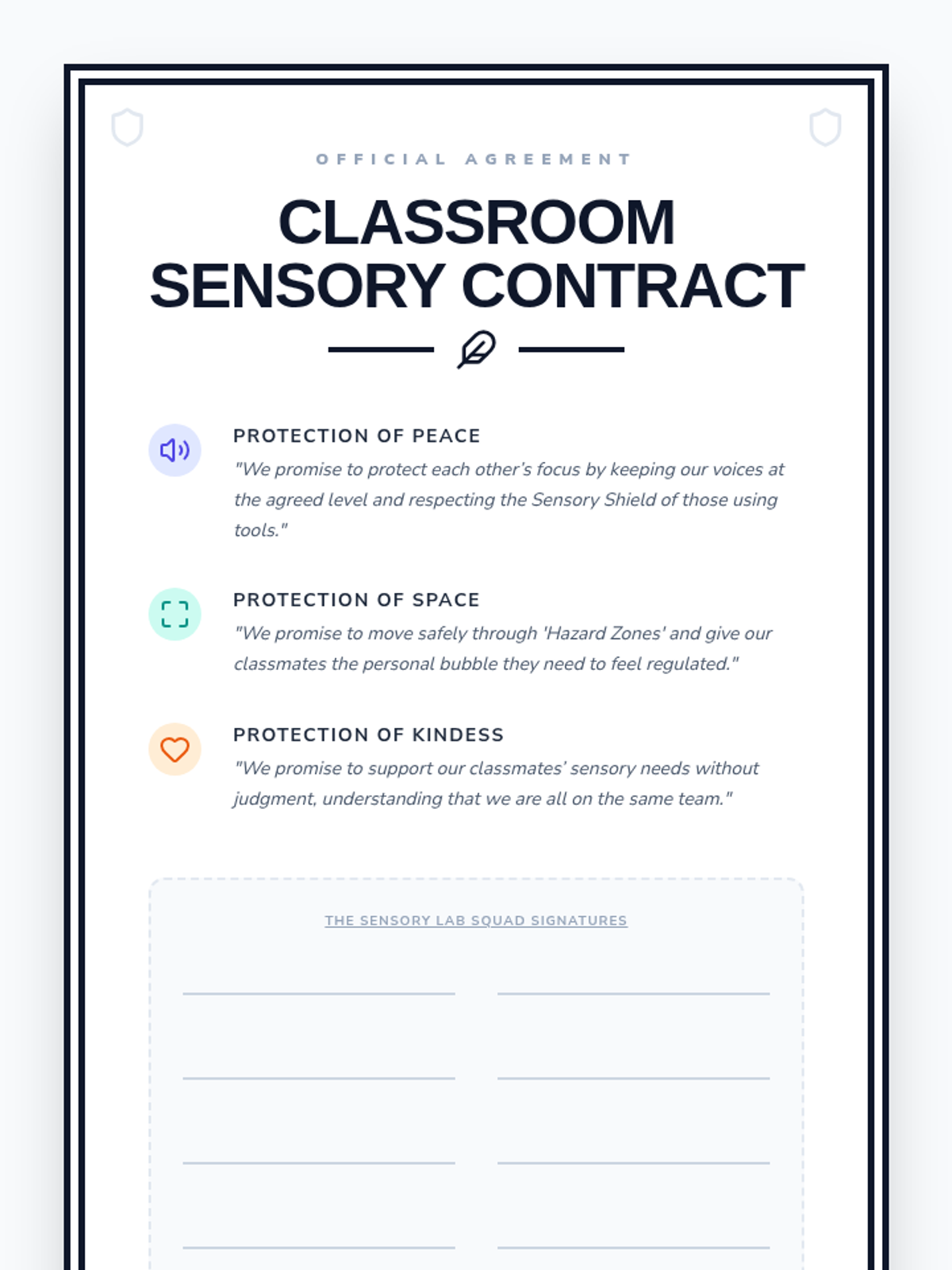
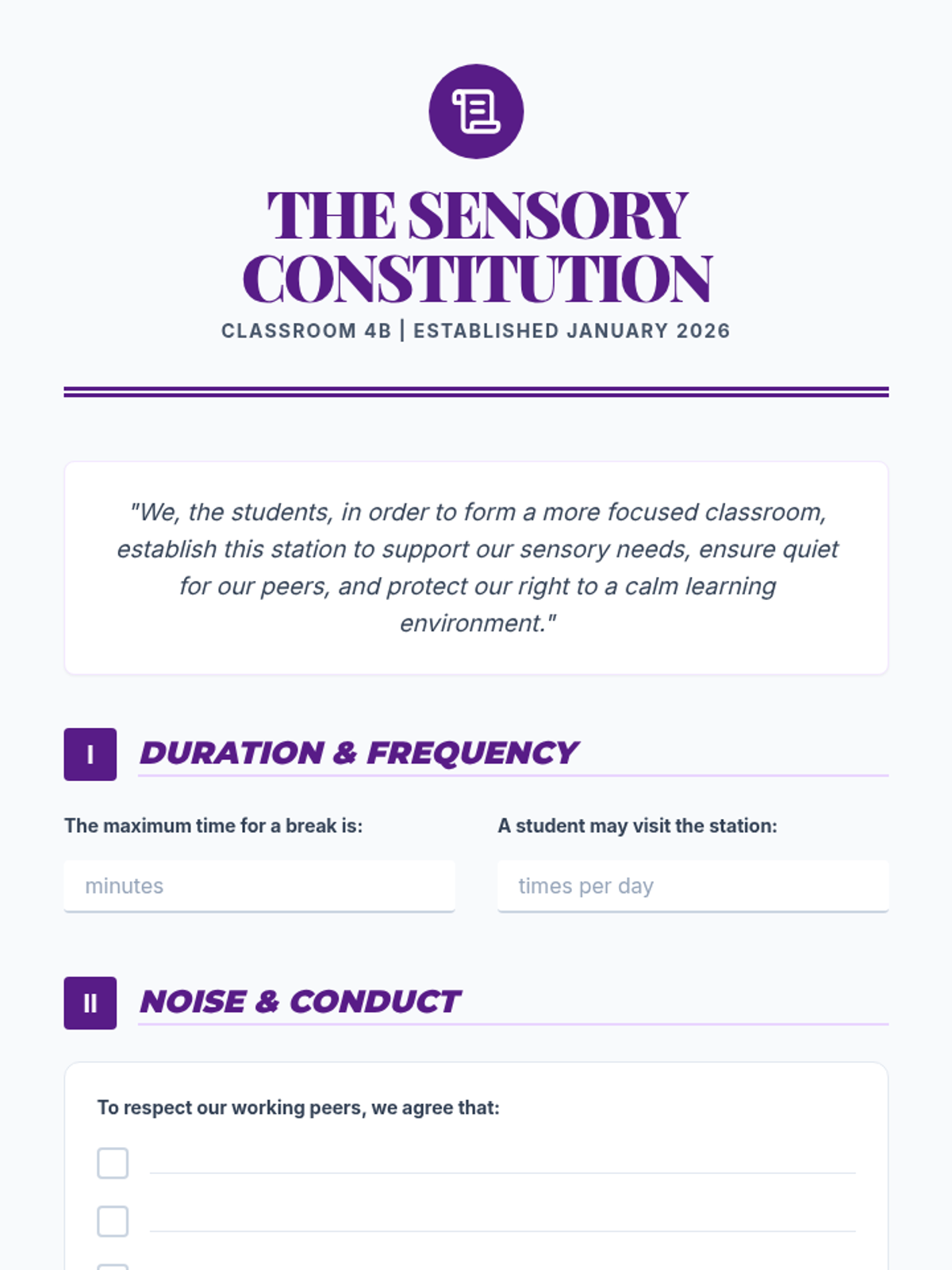
A formal classroom agreement document that establishes shared norms for noise, space, and sensory support, intended for all students to sign.
Slides for Lesson 5 consolidating learning into a classroom agreement on noise, space, and sensory support.
Introductory slides for Lesson 4, focusing on respecting differences in sensory needs and introducing conflict resolution strategies.
Collaborative drafting sheet for Lesson 3, where the class establishes the "laws" and norms for using the sensory station.
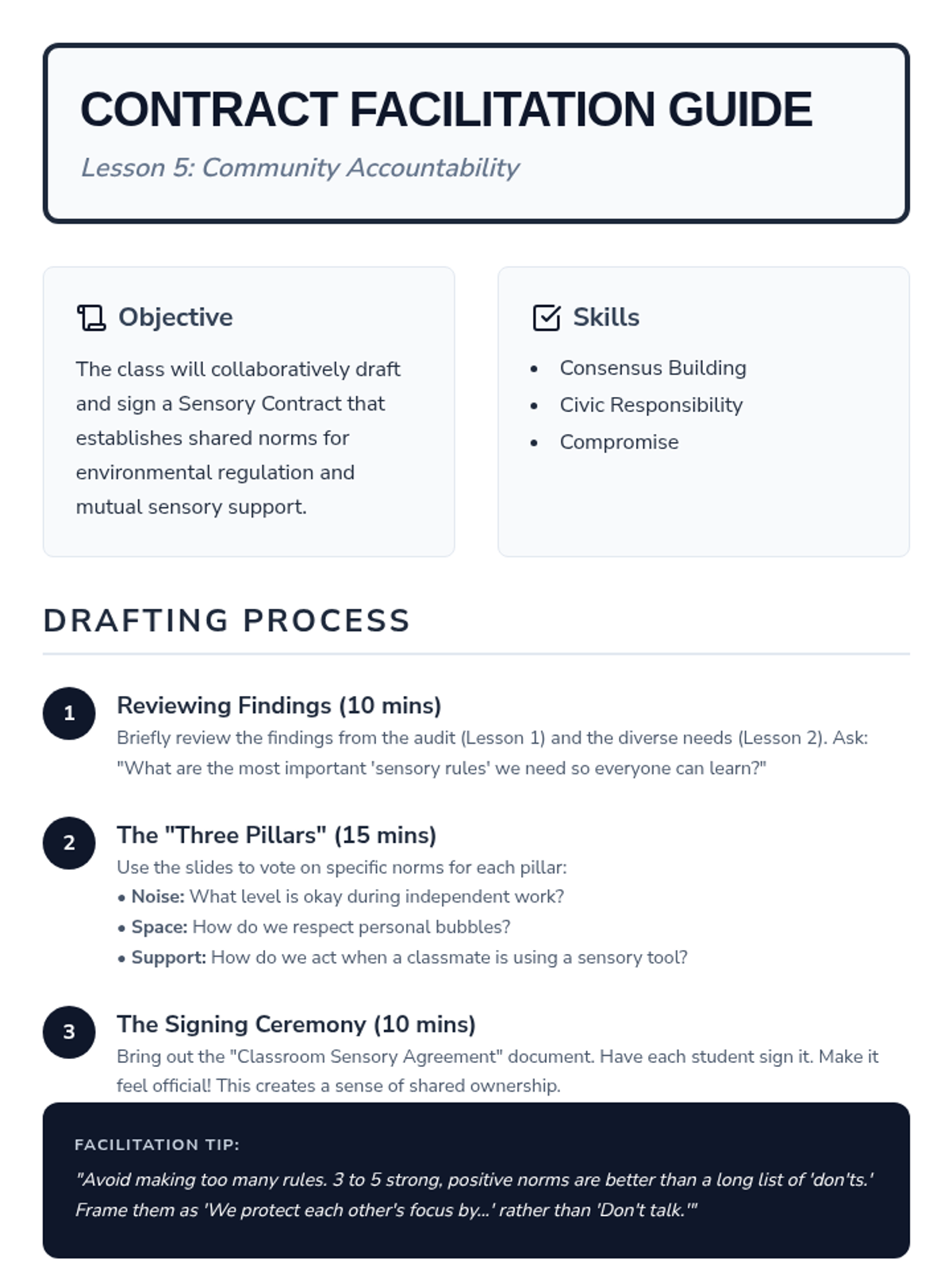
A teacher guide for the Classroom Sensory Contract lesson, featuring strategies for consensus building, signing ceremonies, and ongoing contract maintenance.
Introductory slides for Lesson 3, focusing on the need for norms and leading students through hypothetical scenarios to justify rules.
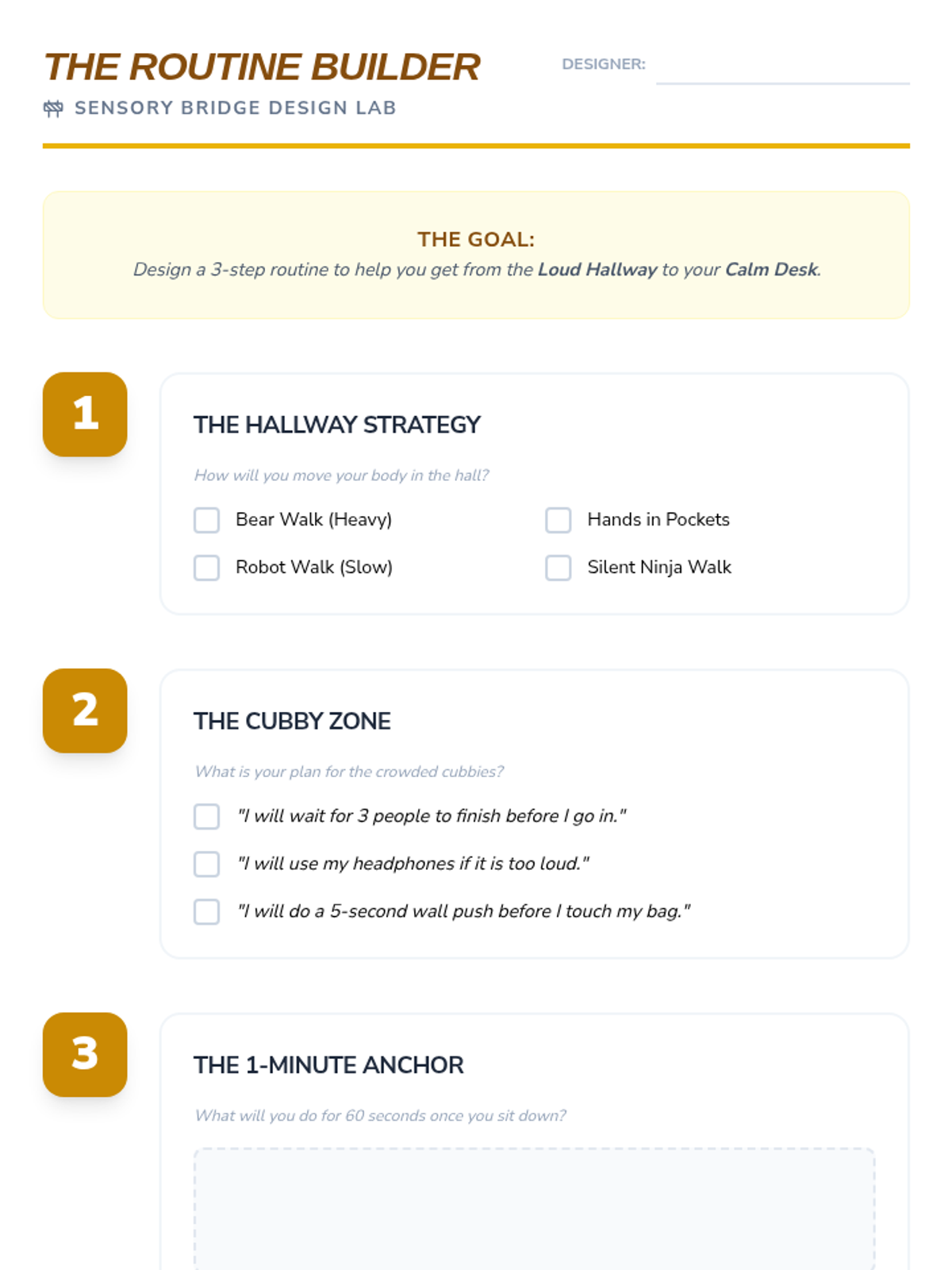
A student worksheet for building a personalized 3-step transition routine using sensory strategies.
Slides for Lesson 4 exploring the "Transition Bridge" concept and identifying sensory hazards during class changes.
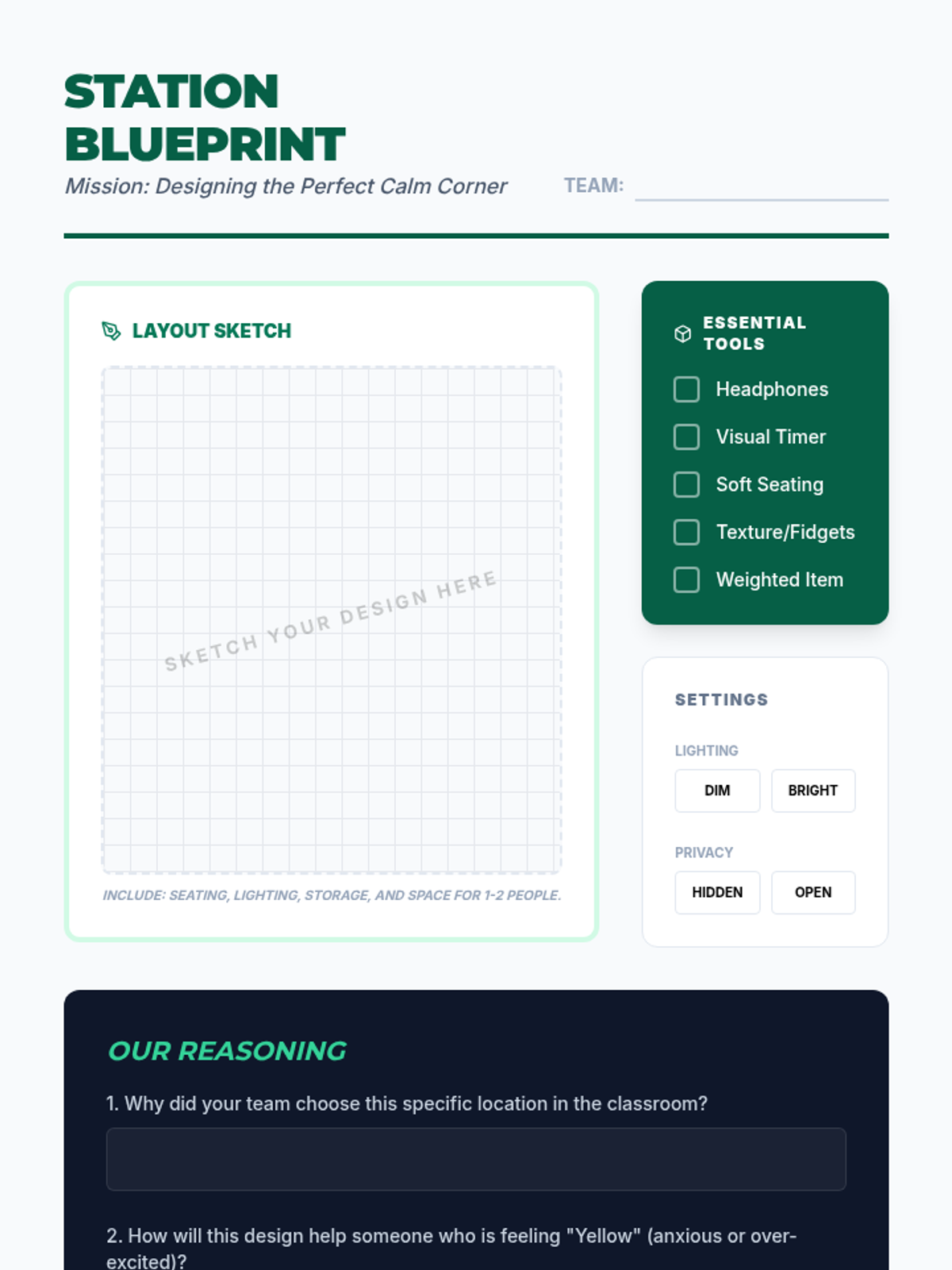
Blueprint planning sheet for Lesson 2, where students design the physical layout of the classroom sensory station.
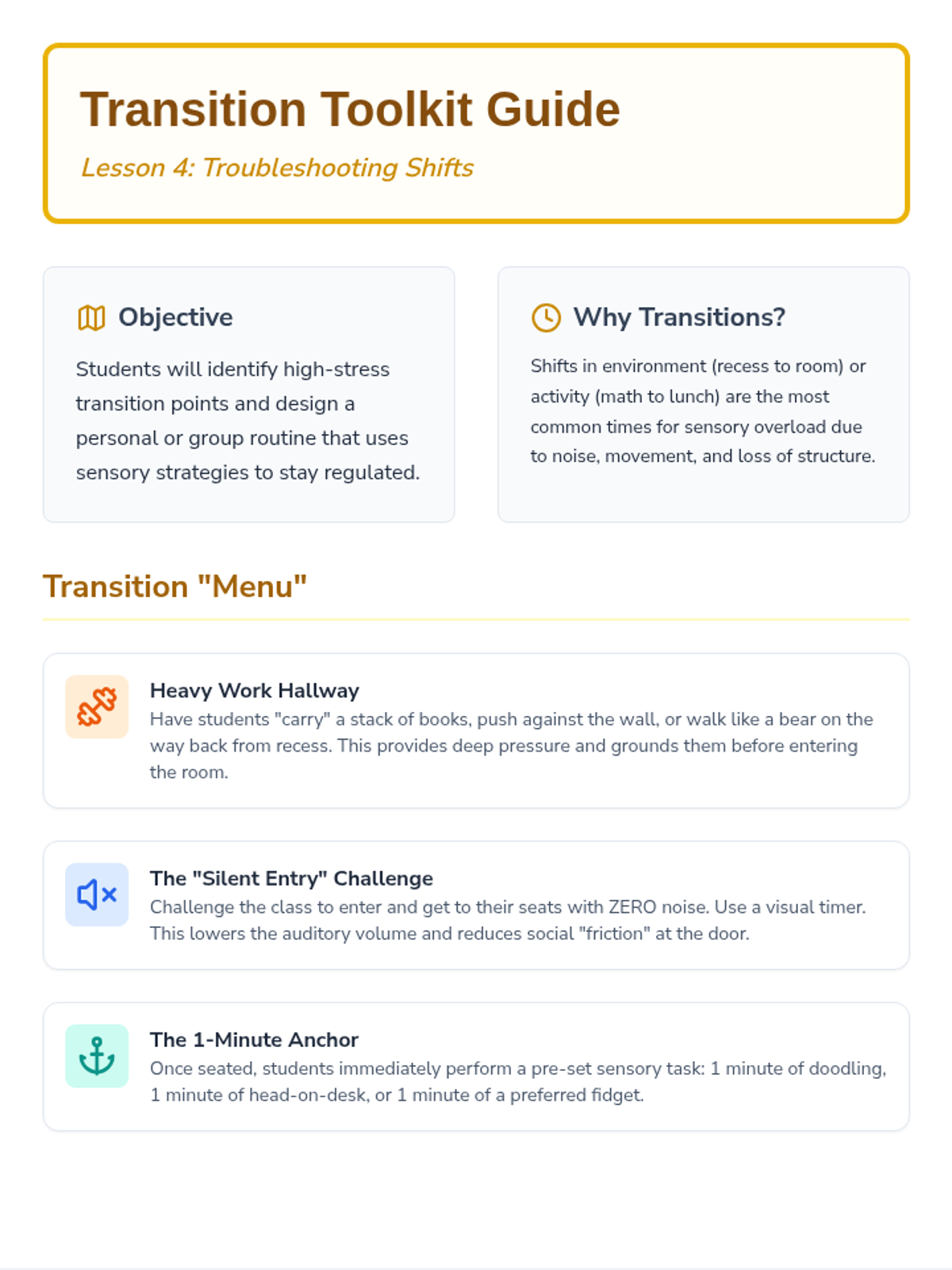
A teacher guide for the Transition Troubleshooting lesson, featuring specific strategies like "Heavy Work Hallway" and "The Buffer Zone".
Introductory slides for Lesson 2, guiding students through the considerations for designing a classroom sensory space.
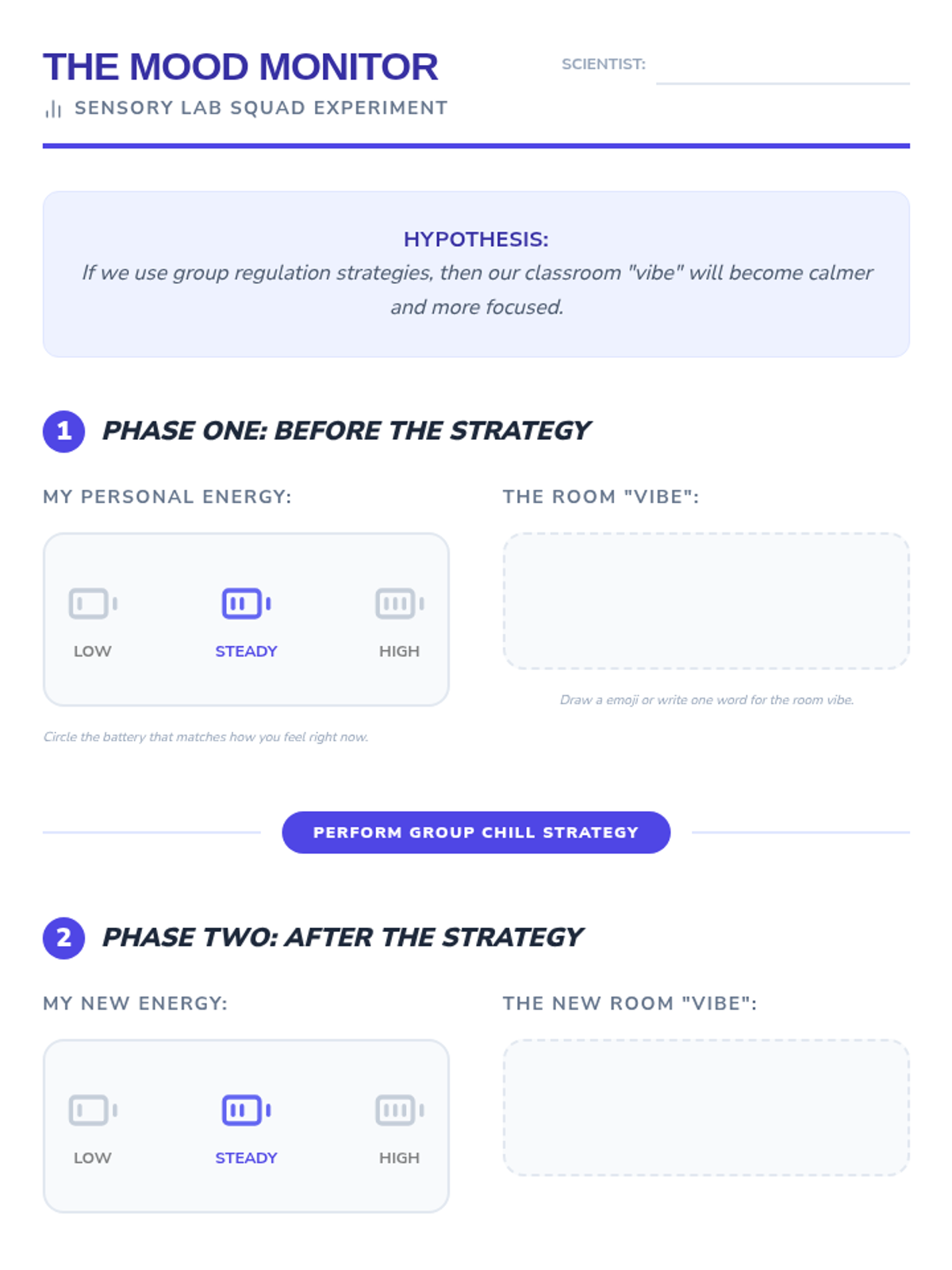
A student data sheet for tracking personal energy and classroom "vibe" before and after group regulation exercises.
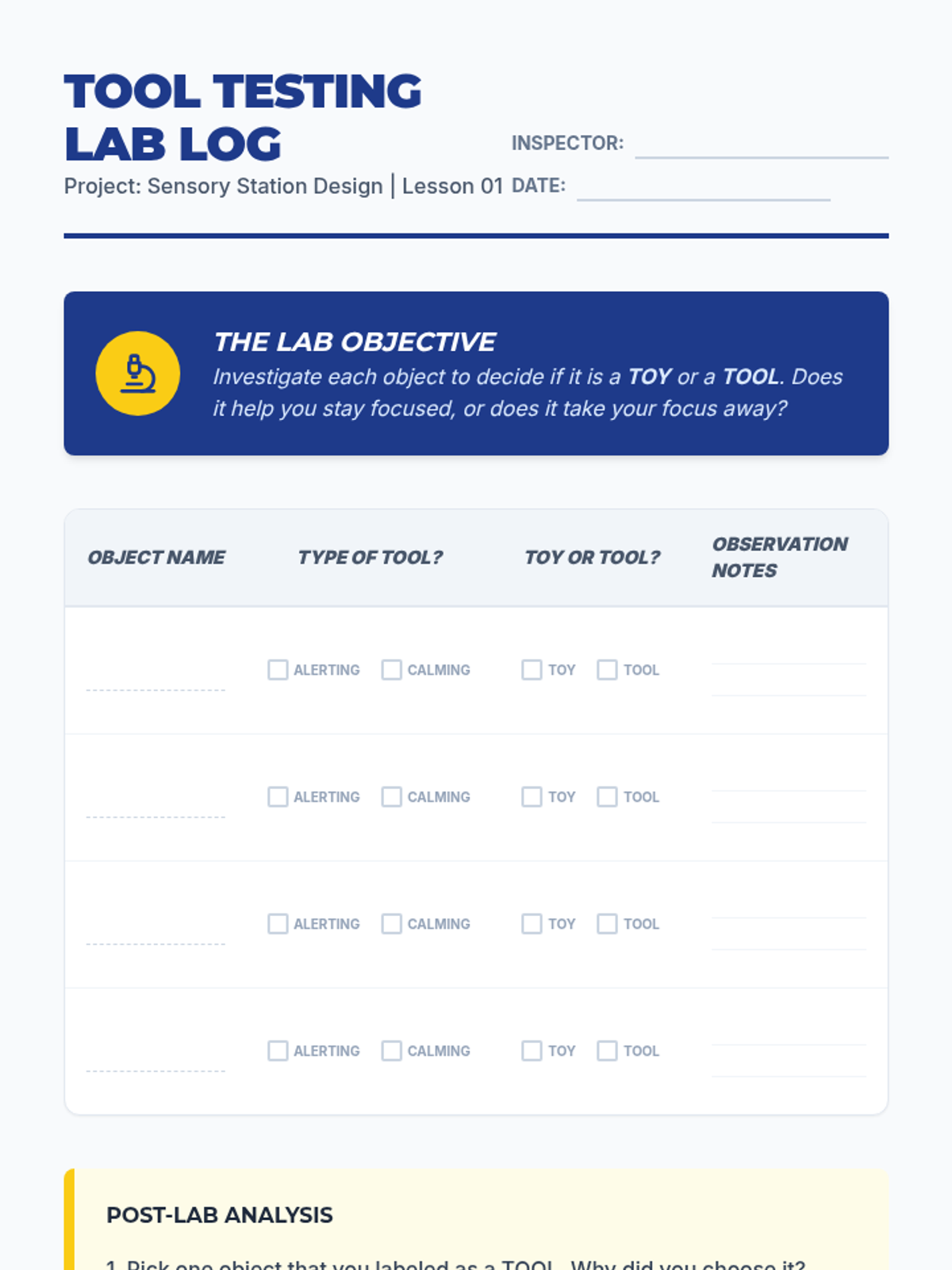
Student lab sheet for evaluating sensory items as toys or tools during Lesson 1.
Slides for Lesson 3 introducing collective regulation, "The Group Chill," and explaining the science of co-regulation and heavy work.
Introductory slide deck for Lesson 1, covering the definitions of toys vs. tools and the concept of alerting vs. calming sensory inputs.
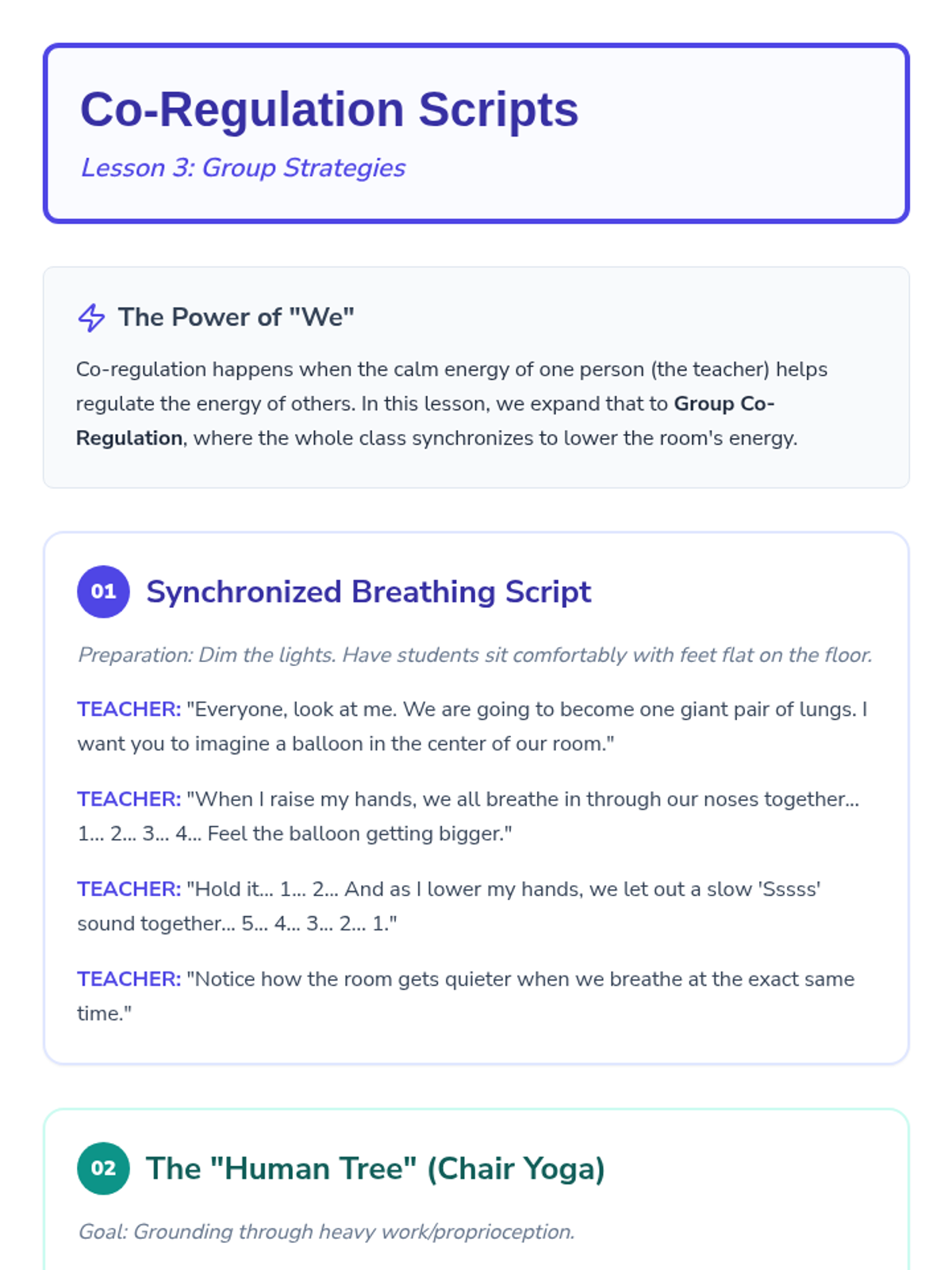
Teacher-facing co-regulation scripts and facilitation tips for synchronized breathing and chair yoga exercises.
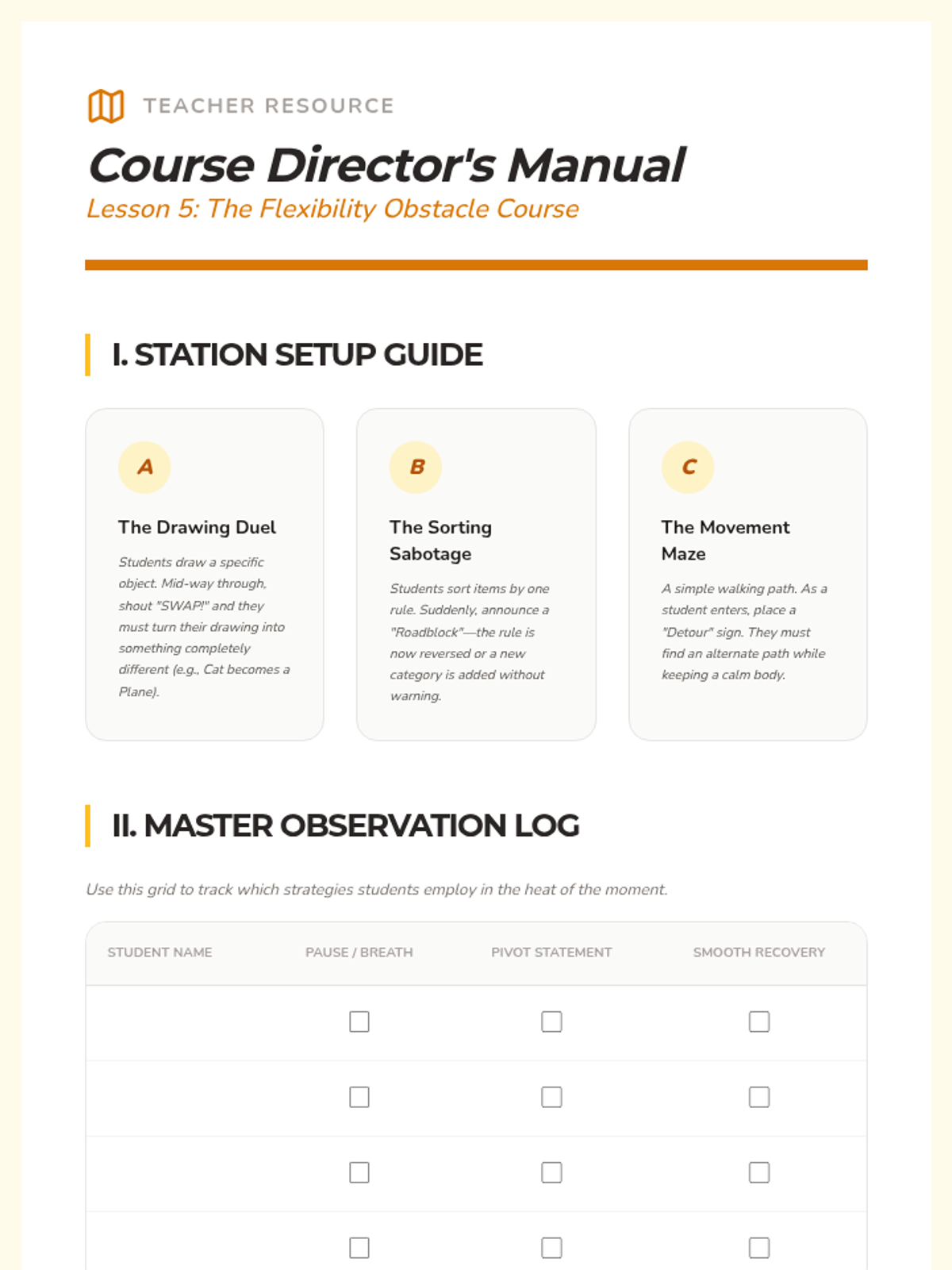
Teacher guide for Lesson 5 including station setup instructions, observational checklists for tracking student strategy use, and crisis management tips for the obstacle course.
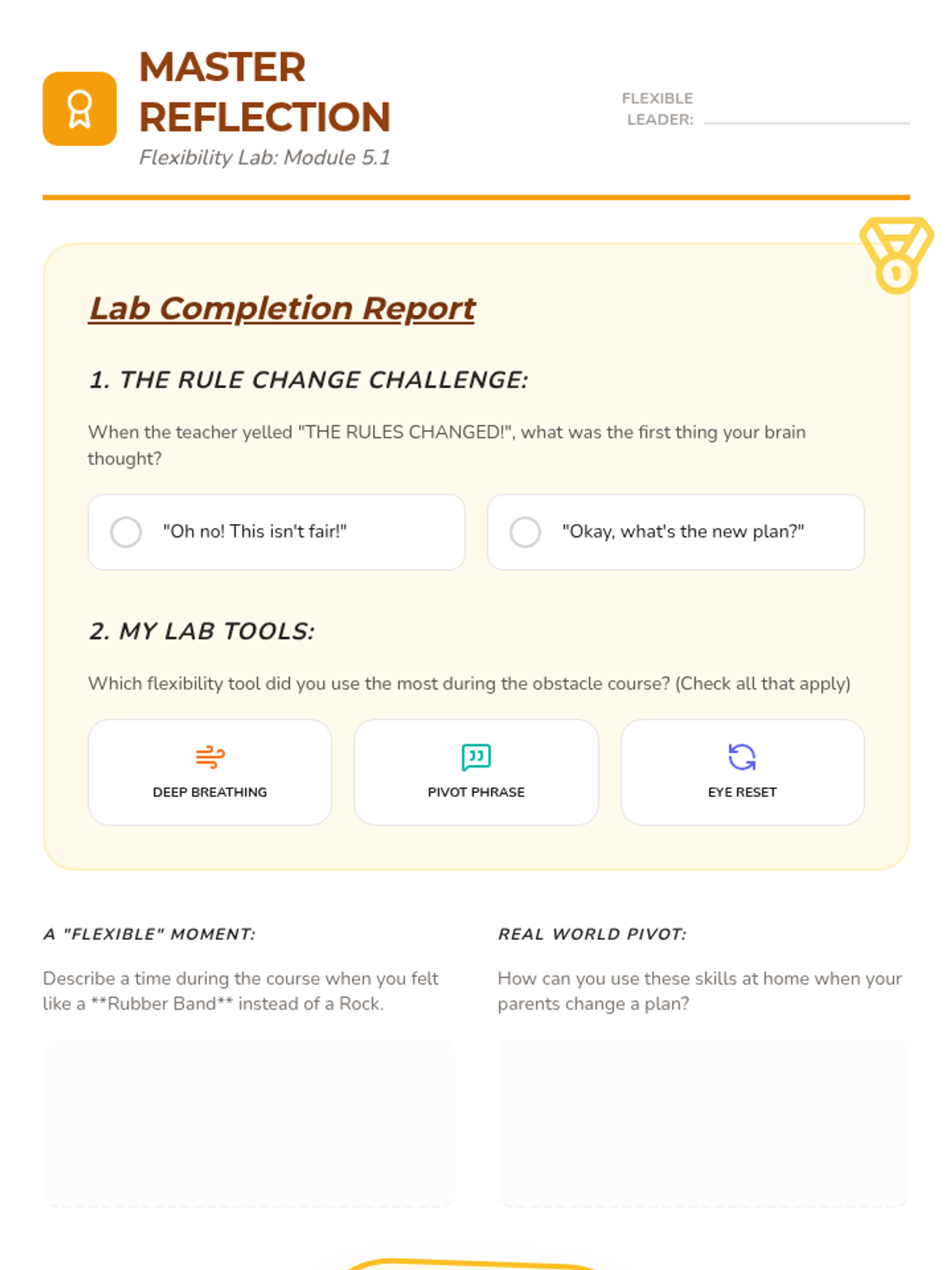
A reflection sheet for students to complete after the flexibility obstacle course, identifying the strategies they used and planning for real-world application.
Slides for the final culminating lesson introducing the 'Flexibility Obstacle Course'. Outlines expectations and types of dynamic challenges students will face.
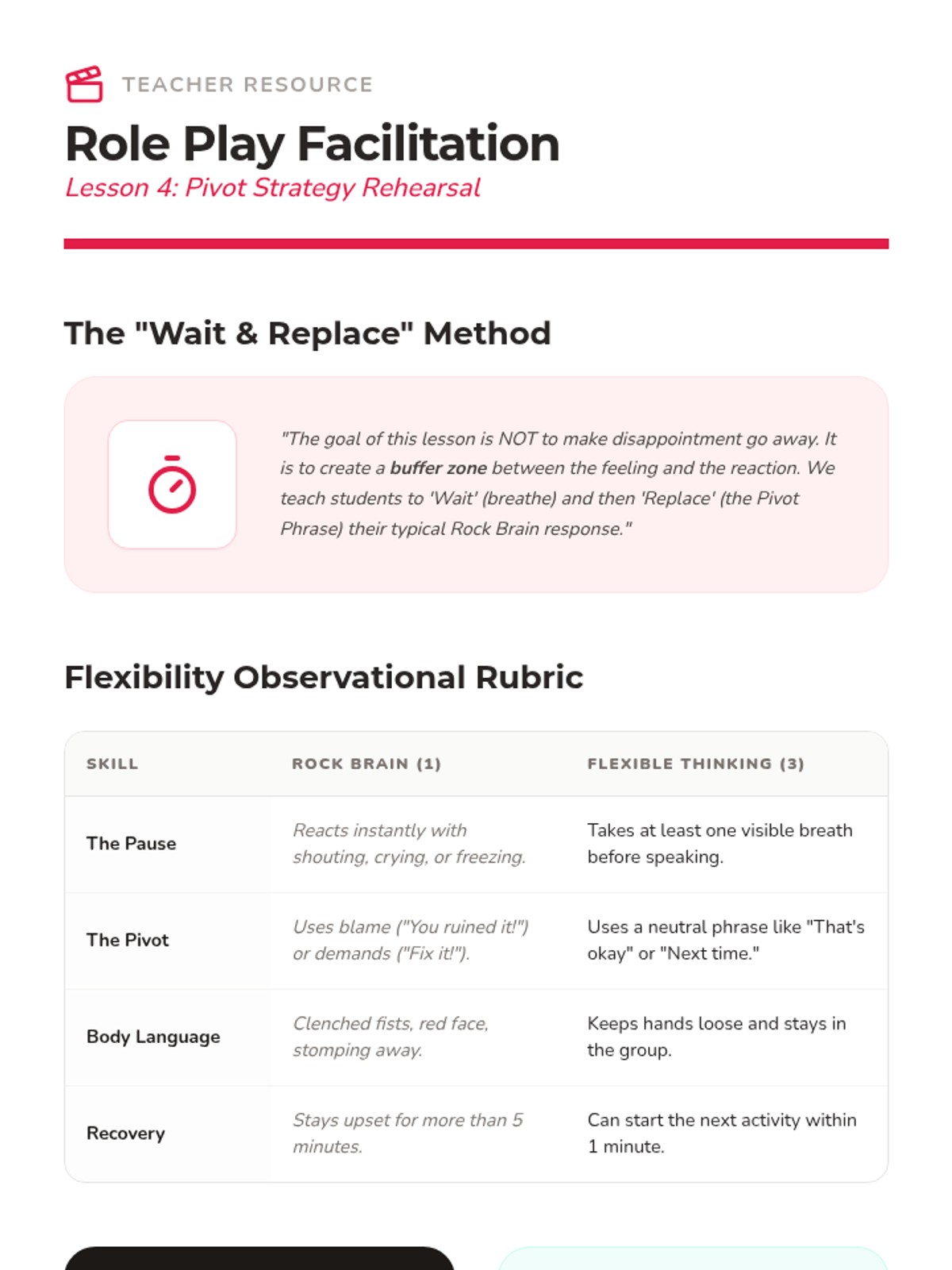
Teacher guide for Lesson 4 on role-playing disappointment, including a 'Wait & Replace' strategy guide and an observational rubric for assessing student progress.
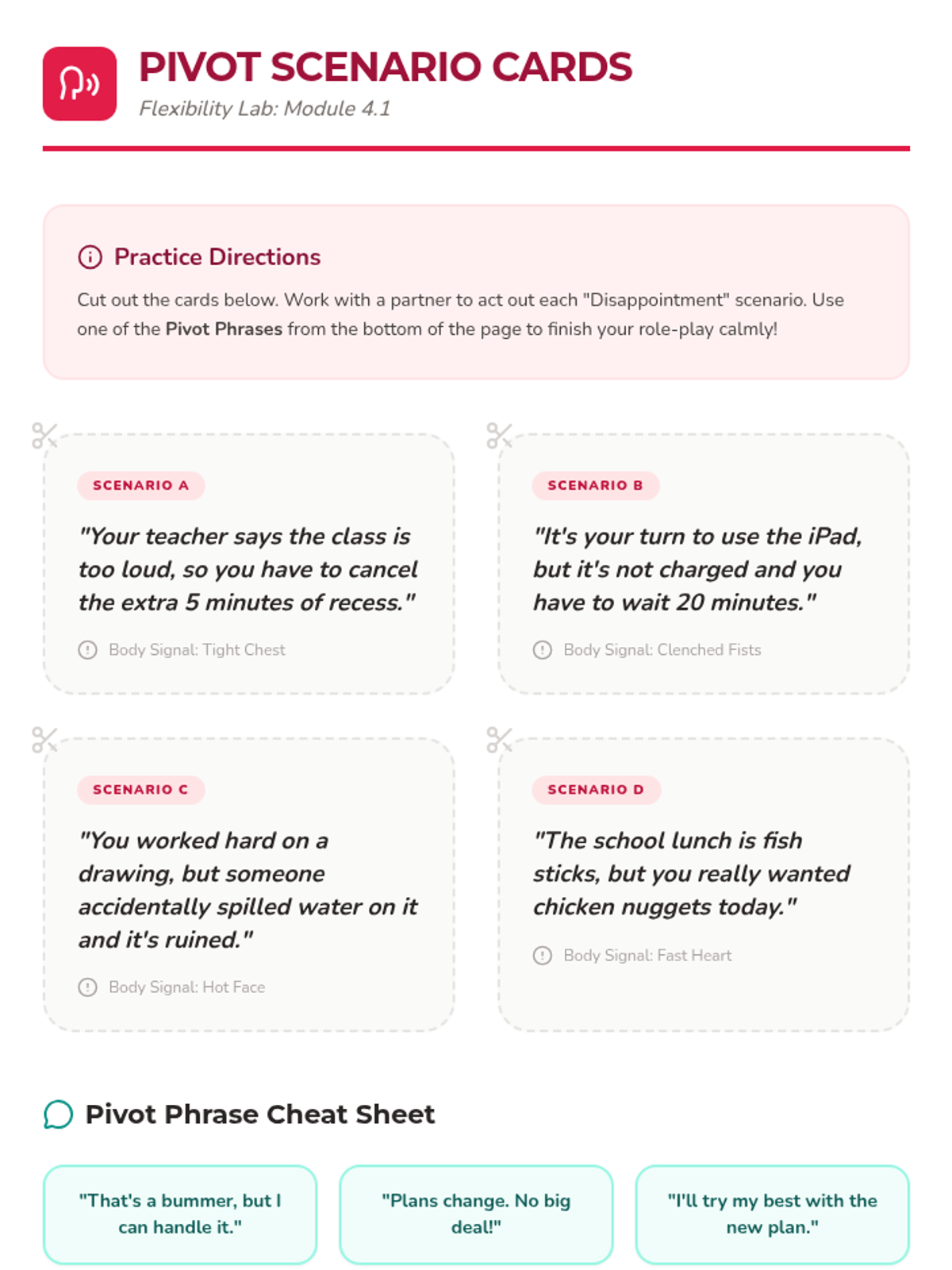
Student role-play cards featuring disappointing scenarios and a 'Cheat Sheet' of pivot phrases for practicing calm reactions.
Slides for the fourth lesson on role-playing disappointment. Introduces 'Pivot Statements' and the 4-step process for handling plan changes calmly.
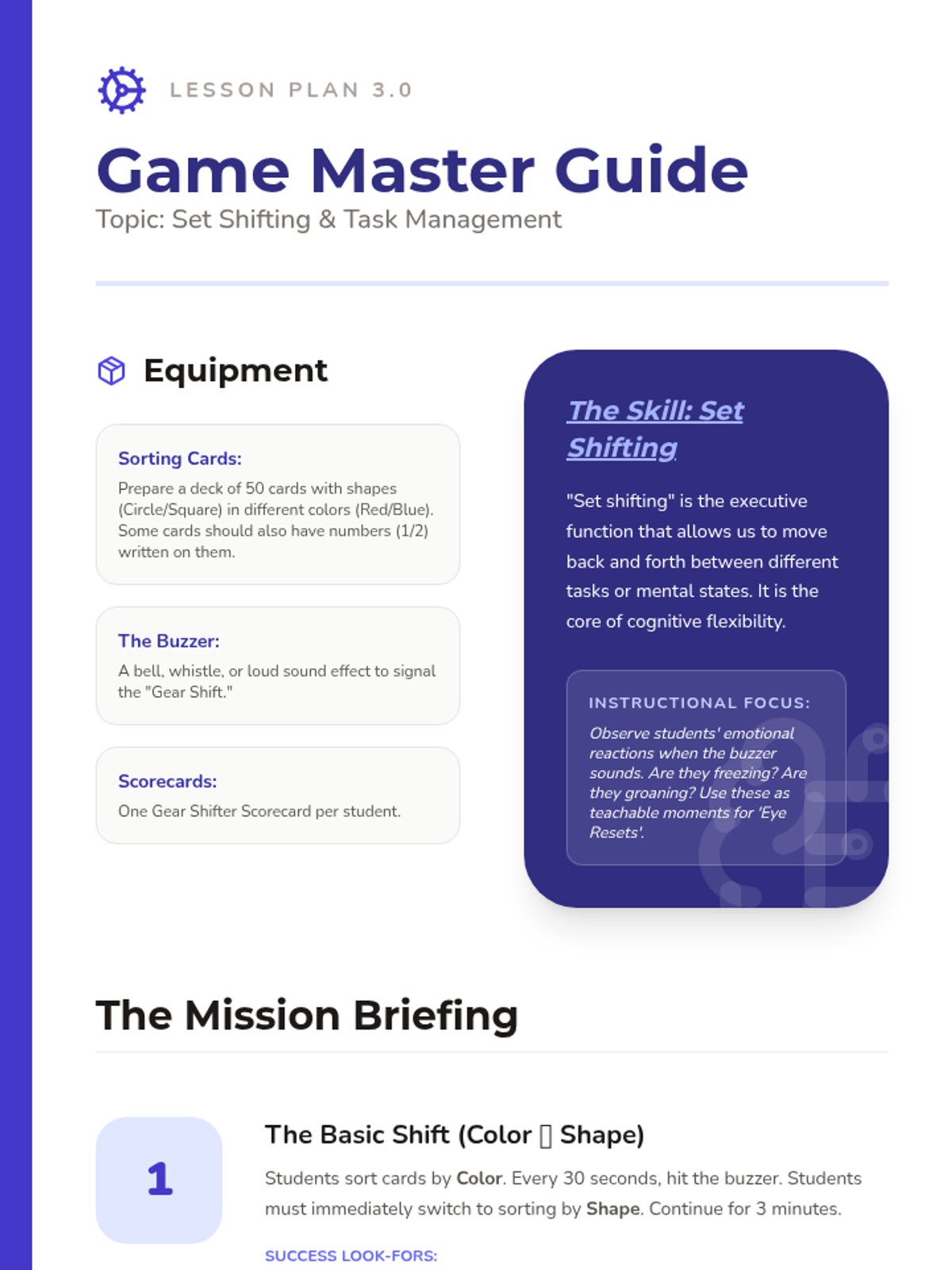
Teacher guide for the third lesson focusing on the 'Gear Shifter Game', including sorting task rules, set shifting background, and debrief prompts.
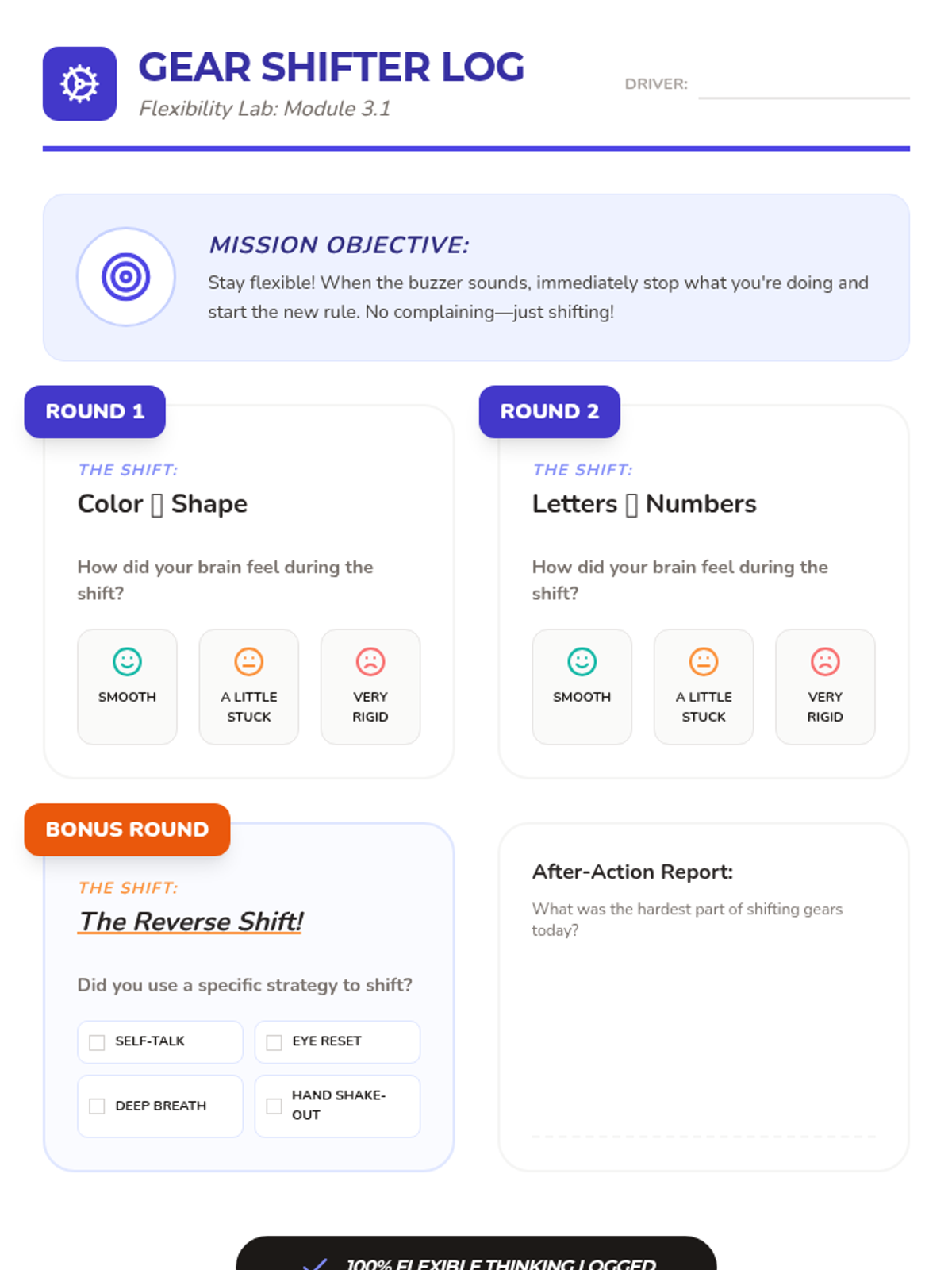
A scorecard for the Gear Shifter Game where students track their success in task-switching and identify which strategies helped them 'pivot' most effectively.
Slides for the third lesson focusing on the 'Gear Shifter Game'. Introduces the concept of 'set shifting' and provides strategies for rapid cognitive adjustment.
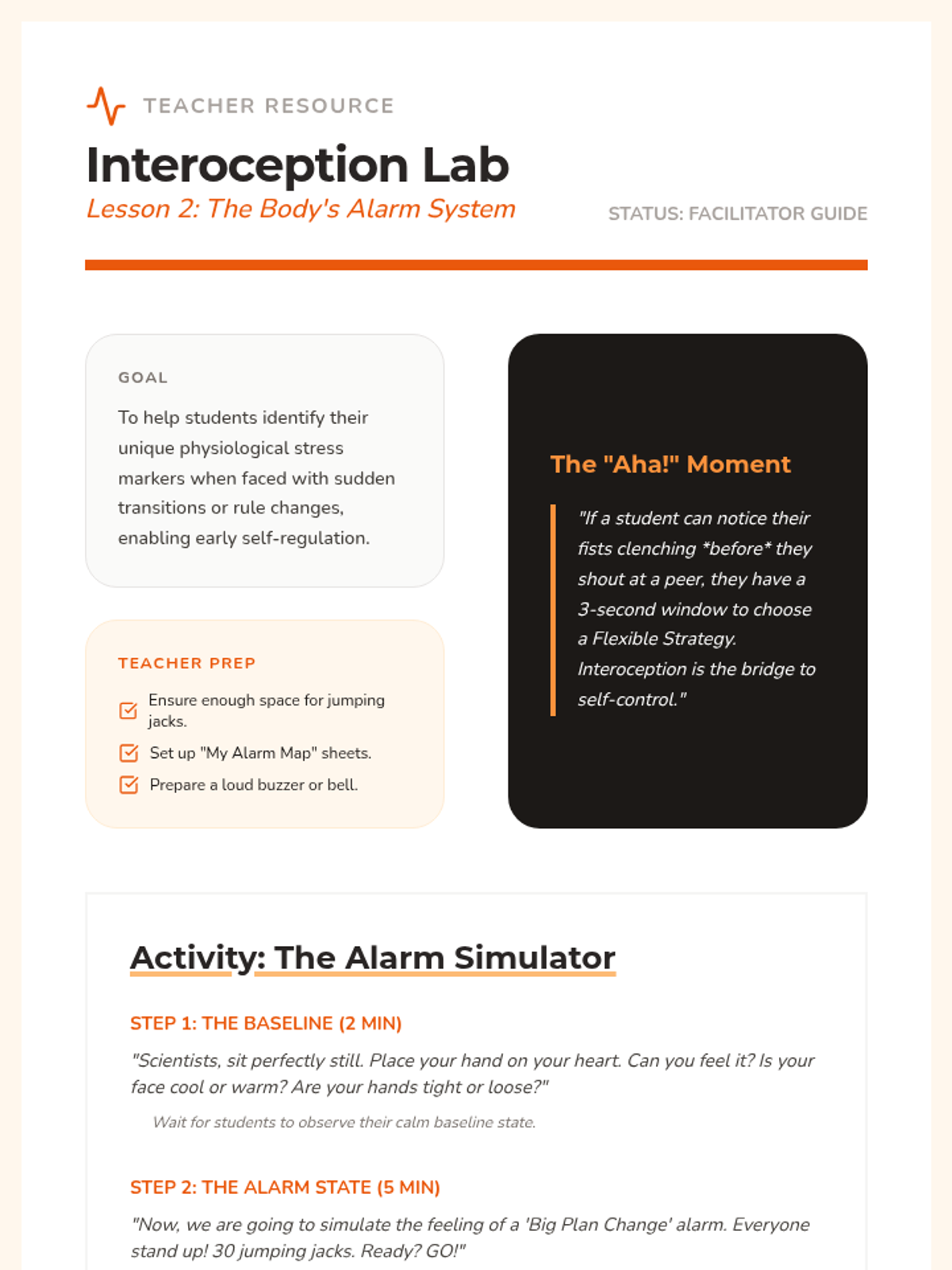
Facilitator guide for Lesson 2, including the 'Alarm Simulator' activity script, interoception discussion prompts, and success criteria.
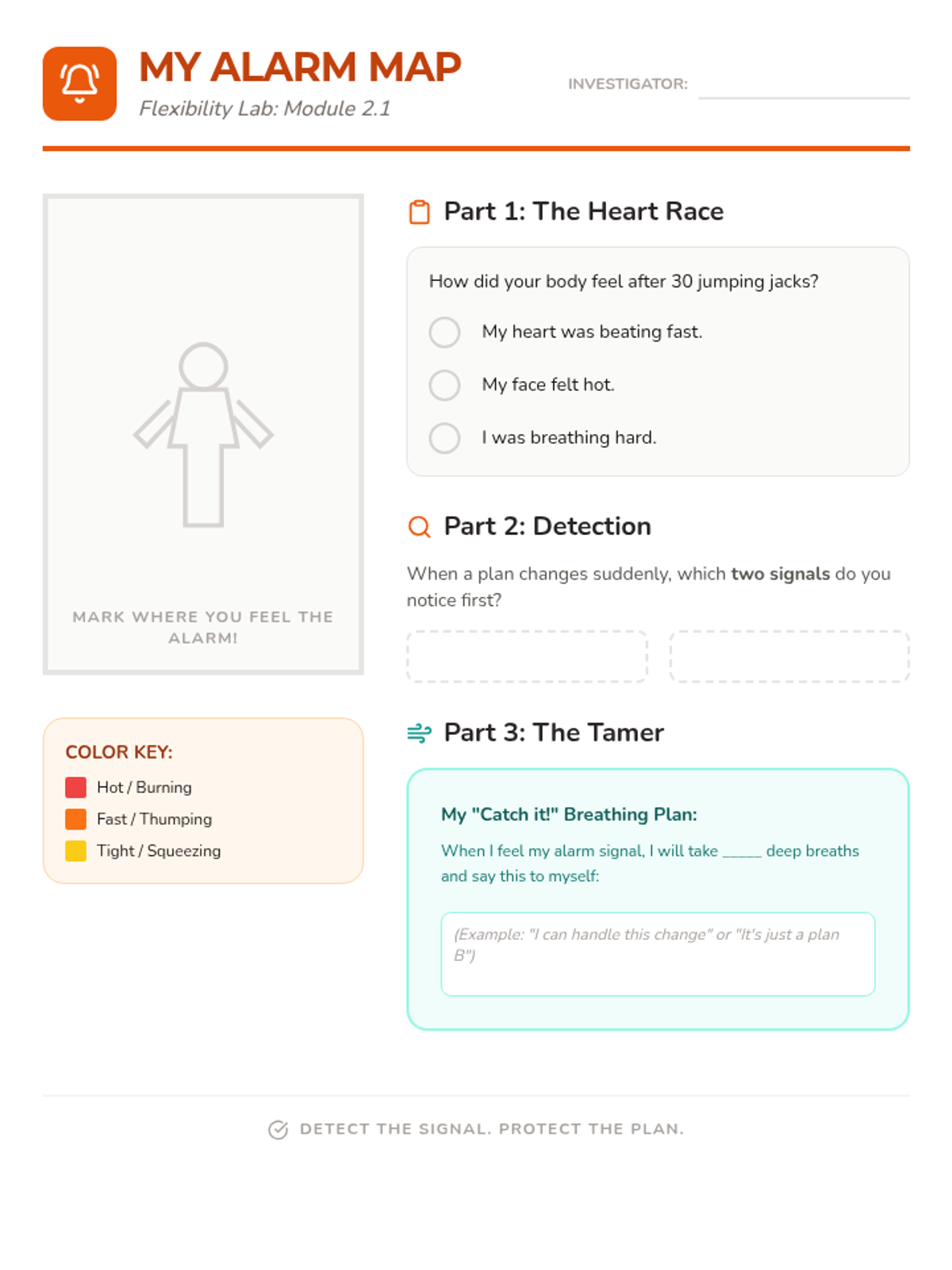
An activity sheet where students map physical stress responses on a body diagram and create a personalized 'Catch it!' breathing plan.
Slides for the second lesson focusing on interoception and the physical warning signs of stress during plan changes. Introduces the 'Catch it!' strategy.
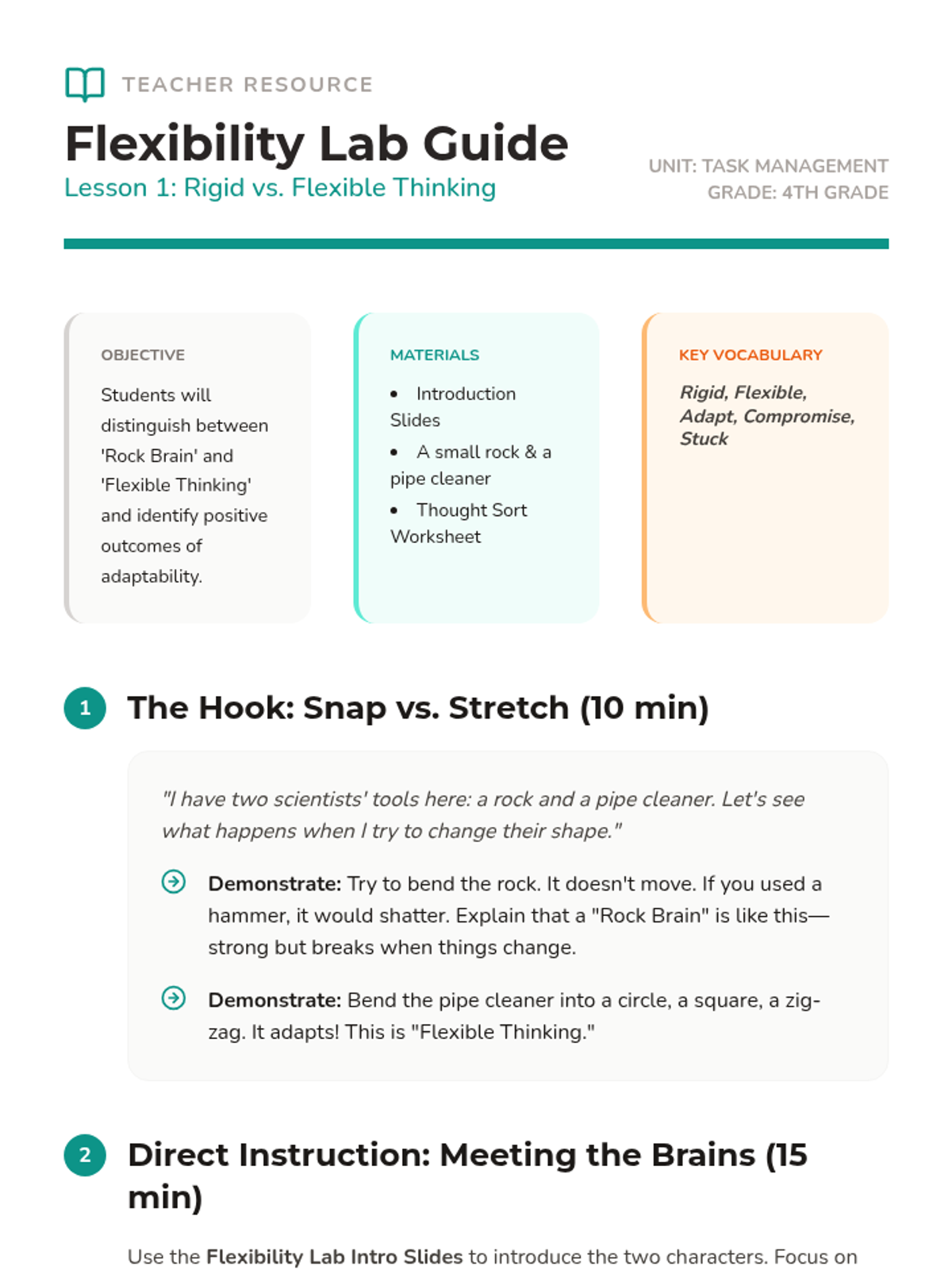
Teacher guide for the first lesson on rigid vs flexible thinking, including hook instructions, discussion prompts, and differentiation strategies.
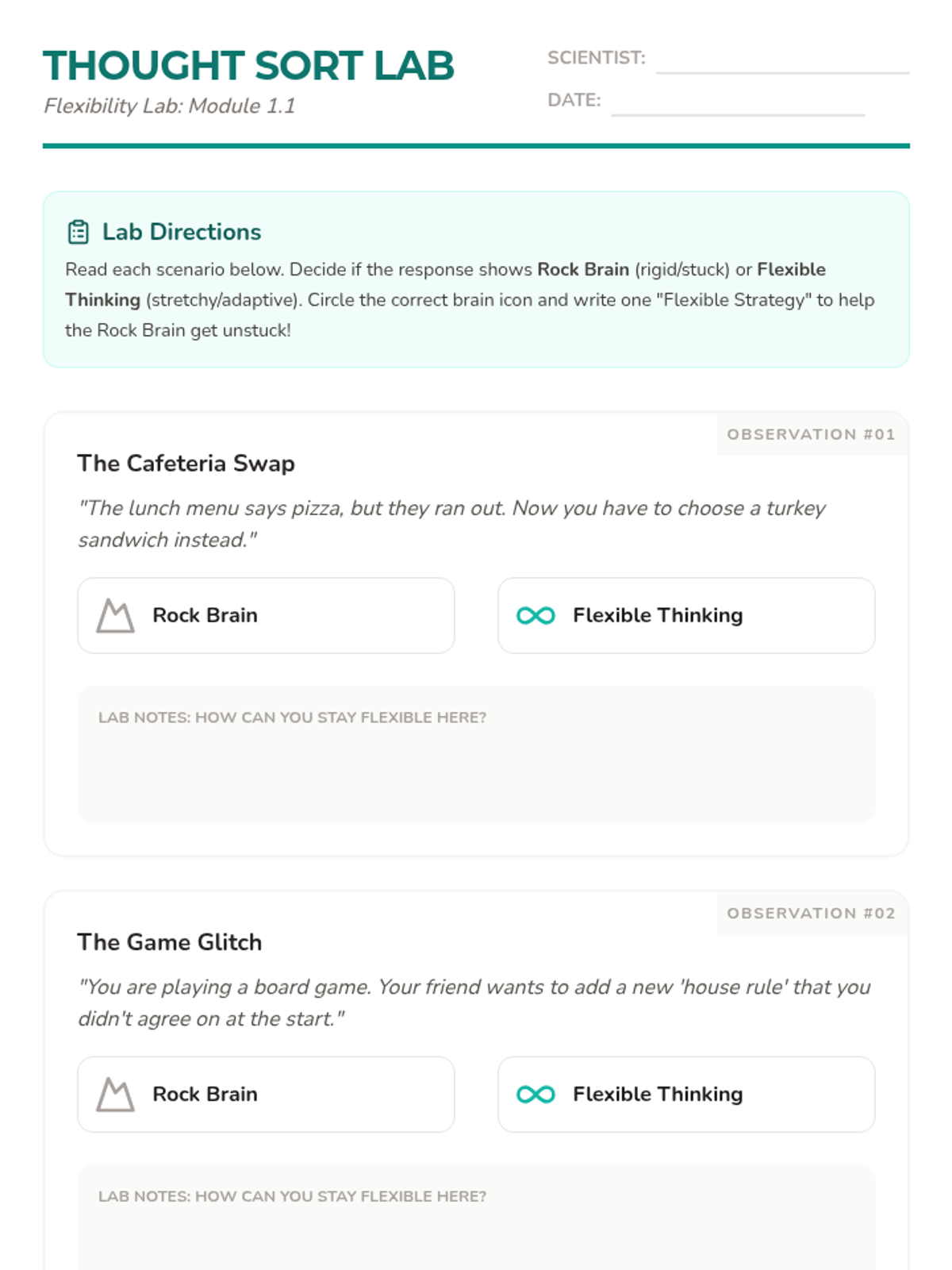
A worksheet where students identify 'Rock Brain' vs 'Flexible Thinking' in specific scenarios and brainstorm adaptive strategies.
Introductory slides for the first lesson on cognitive flexibility, introducing the metaphors of 'Rock Brain' (rigid thinking) and 'Flexible Thinking' (the rubber band). Includes scenarios for student analysis.
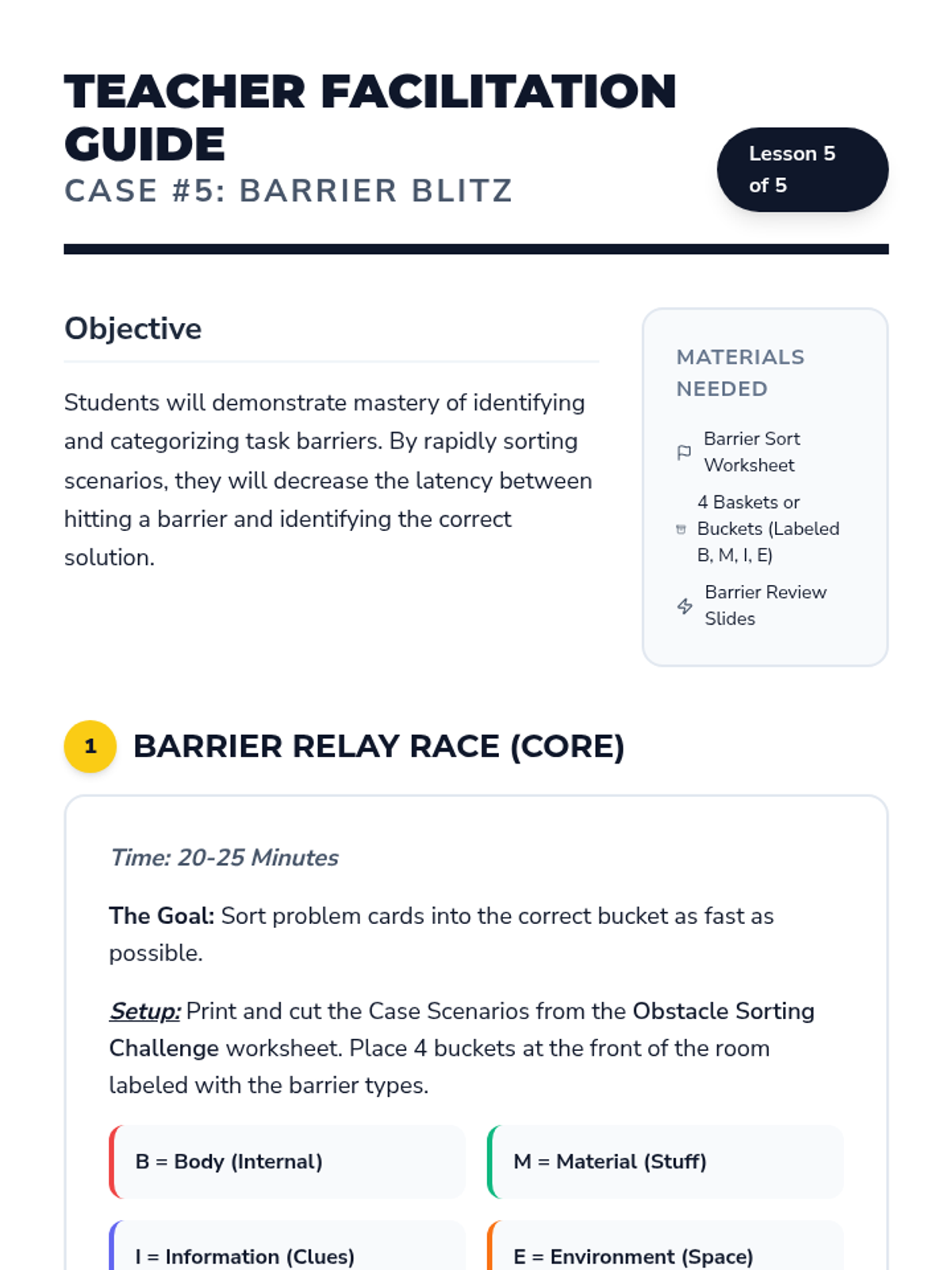
A teacher facilitation guide for Lesson 5, including instructions for the 'Barrier Relay Race' and a unit conclusion.
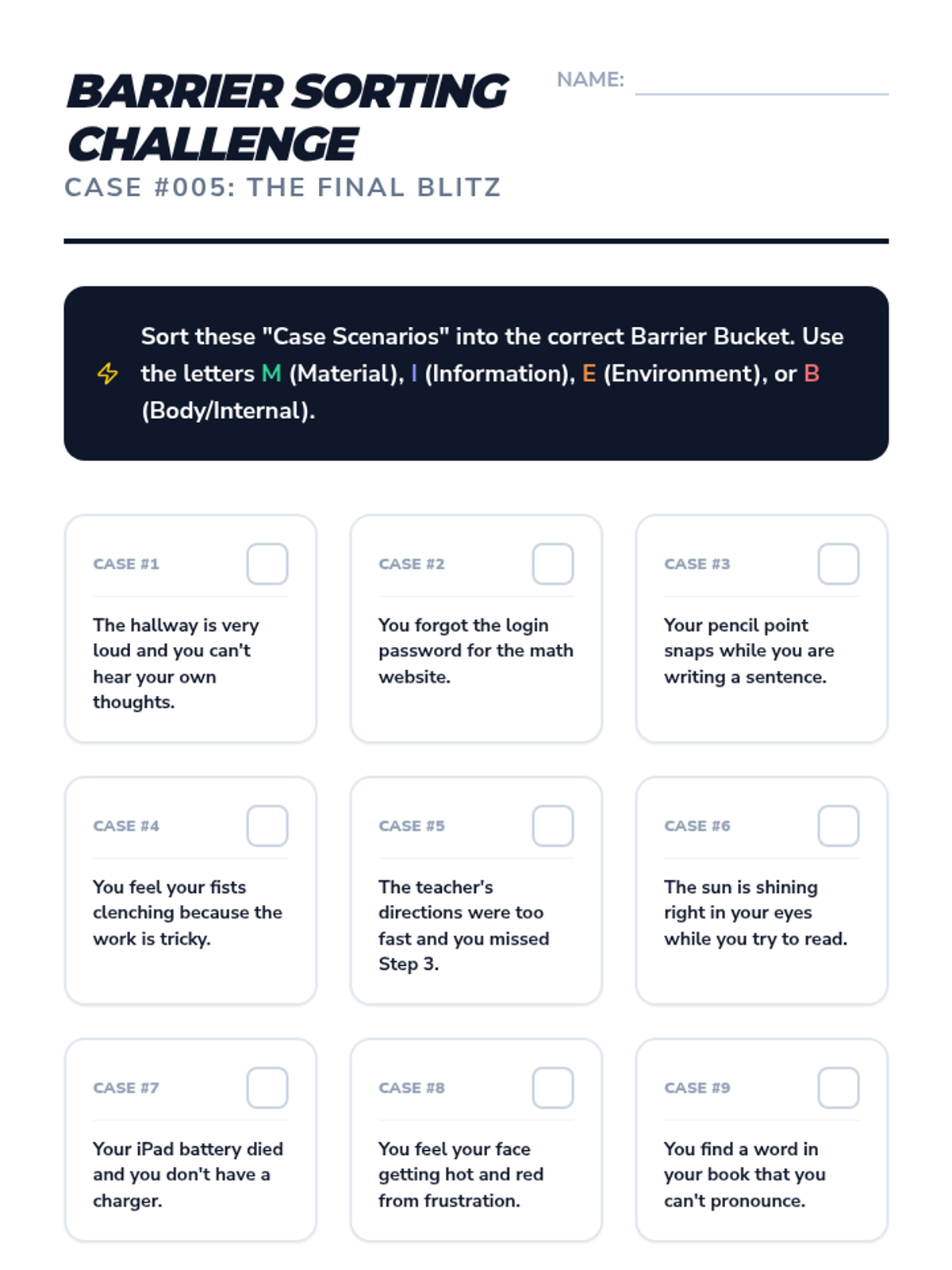
A culminating sorting activity where students categorize various problem scenarios into the four task barrier types.
A culminating slide deck for the 'Barrier Blitz' lesson, reviewing all 4 types of task barriers and preparing students for the final sorting activity.
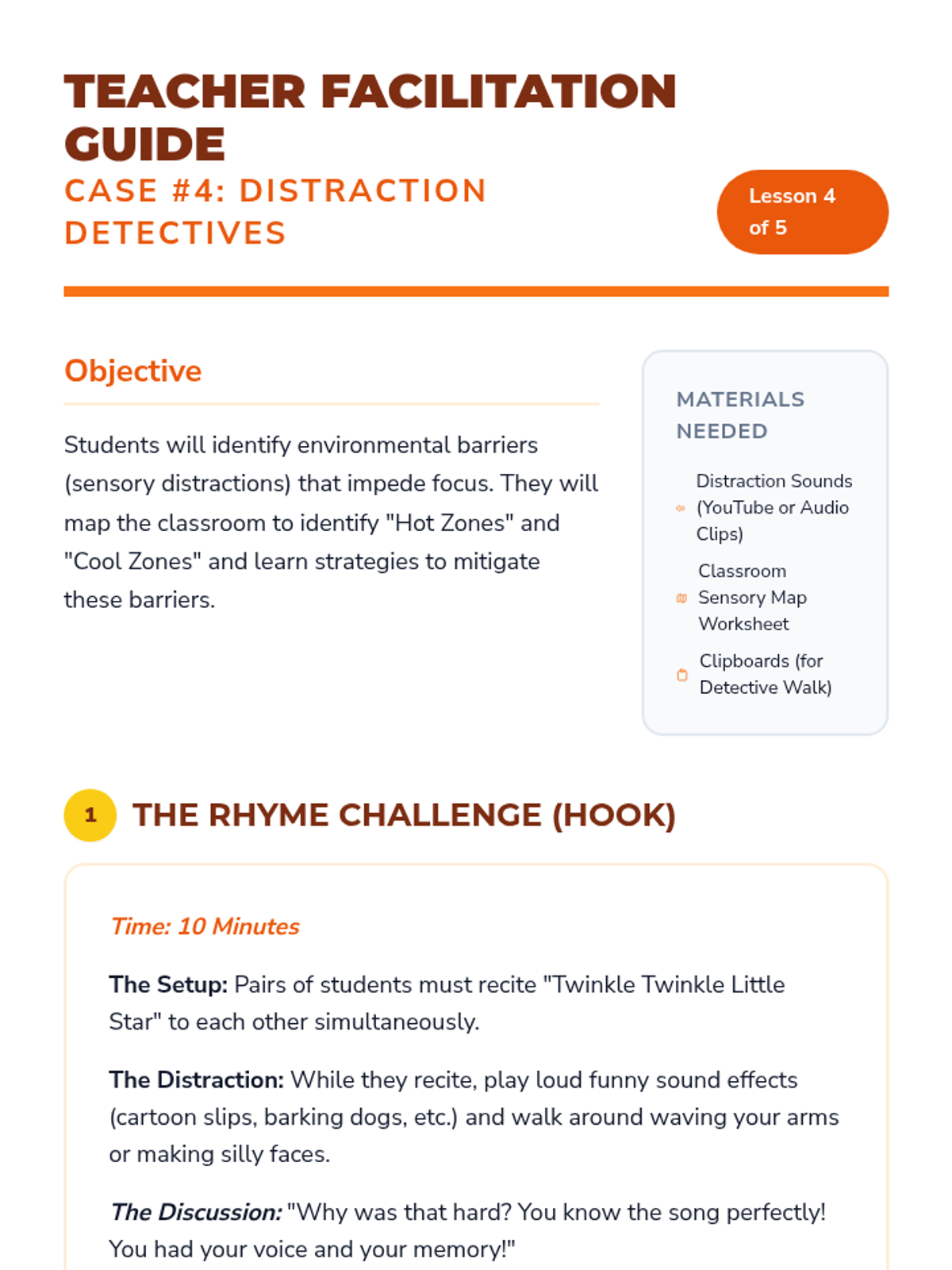
A teacher facilitation guide for Lesson 4, including instructions for the 'Stakeout Walk' and sensory mapping activity.
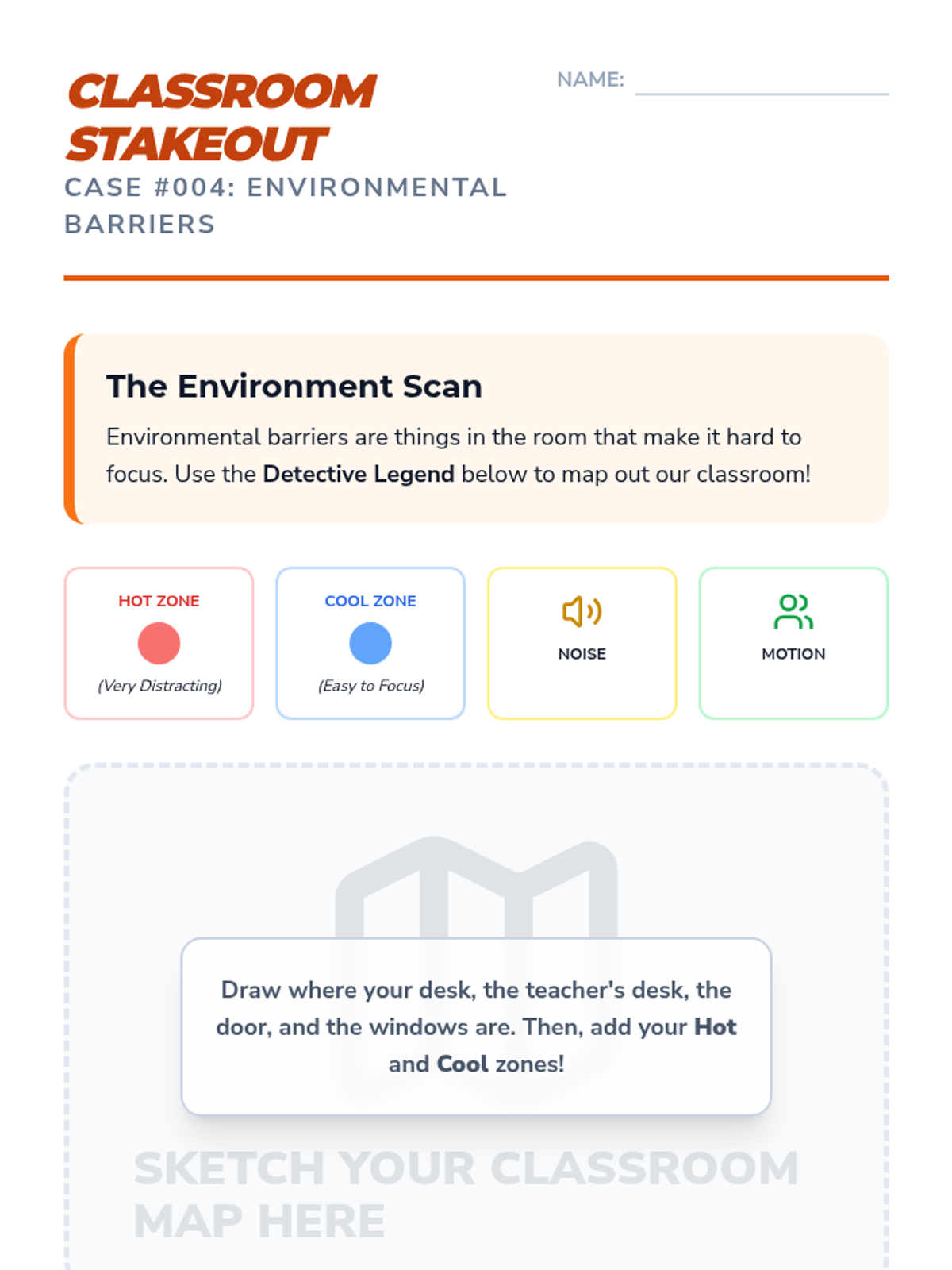
A mapping activity for students to identify 'Hot' and 'Cool' sensory zones in their classroom to manage environmental distractions.
A slide deck for Lesson 4 teaching students about sensory and environmental barriers to focus.
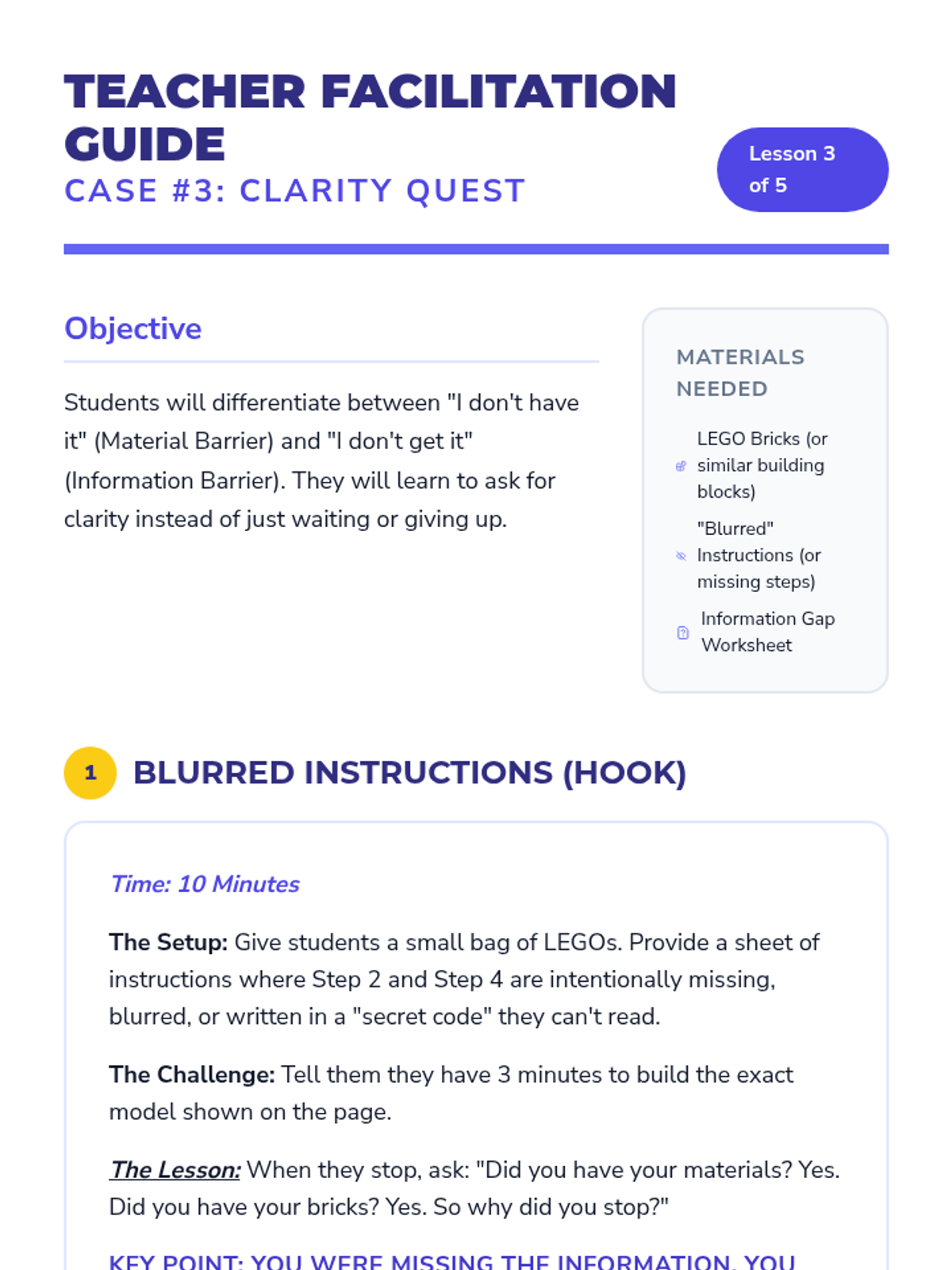
A teacher guide for Lesson 3, including instructions for the LEGO hook and advocacy scripting for students.
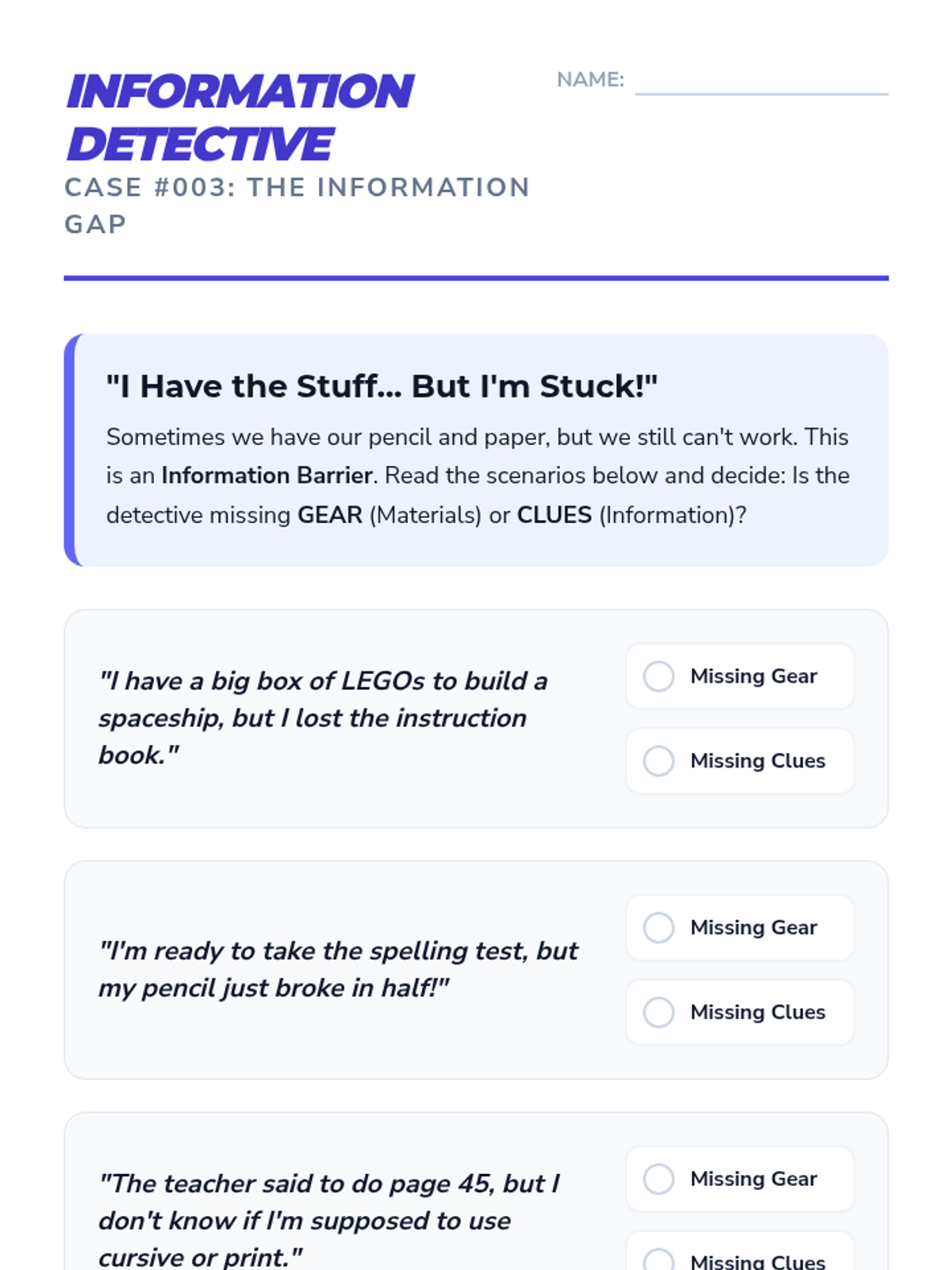
A worksheet for students to identify and differentiate between material barriers and information barriers in various classroom scenarios.
A slide deck teaching students how to identify information and clarity barriers, differentiating between 'I don't have it' and 'I don't get it.'
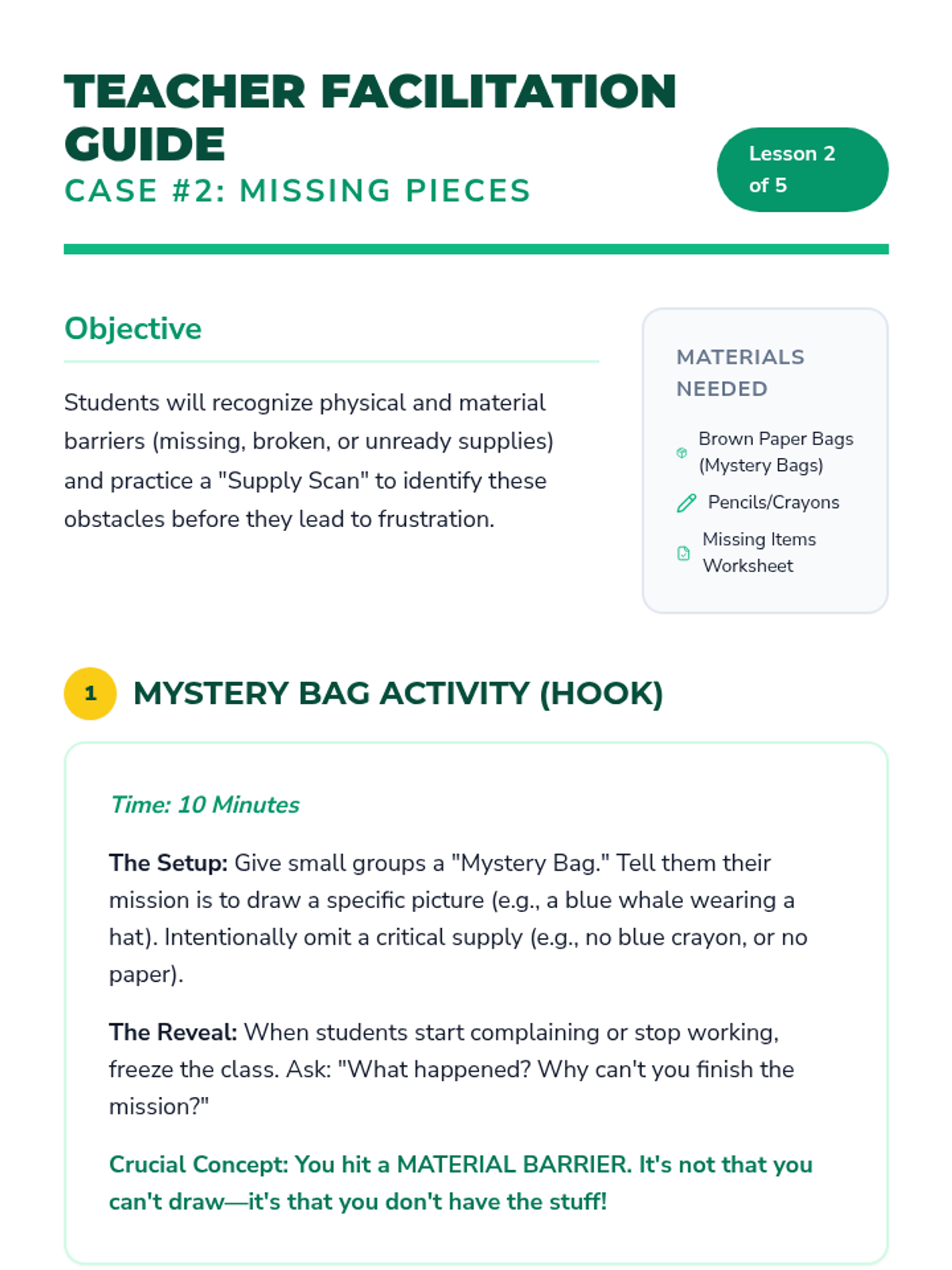
A teacher guide for Lesson 2, including instructions for the 'Mystery Bag' hook and how to facilitate a 'Supply Scan' in the classroom.
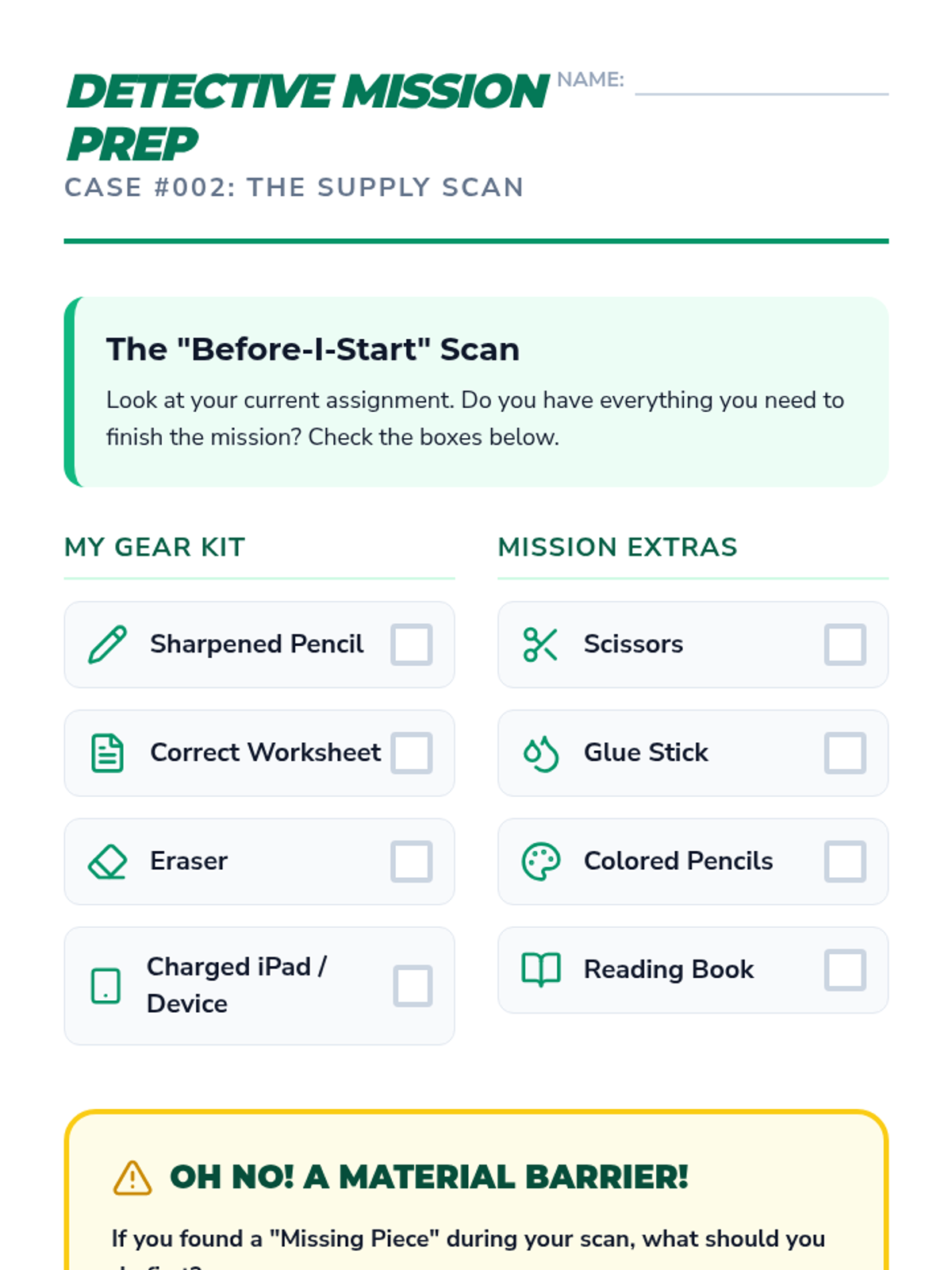
A worksheet for students to perform a 'Supply Scan' and identify physical materials needed for their tasks.
A slide deck teaching students about physical and material barriers, introducing the 'Supply Scan' technique.
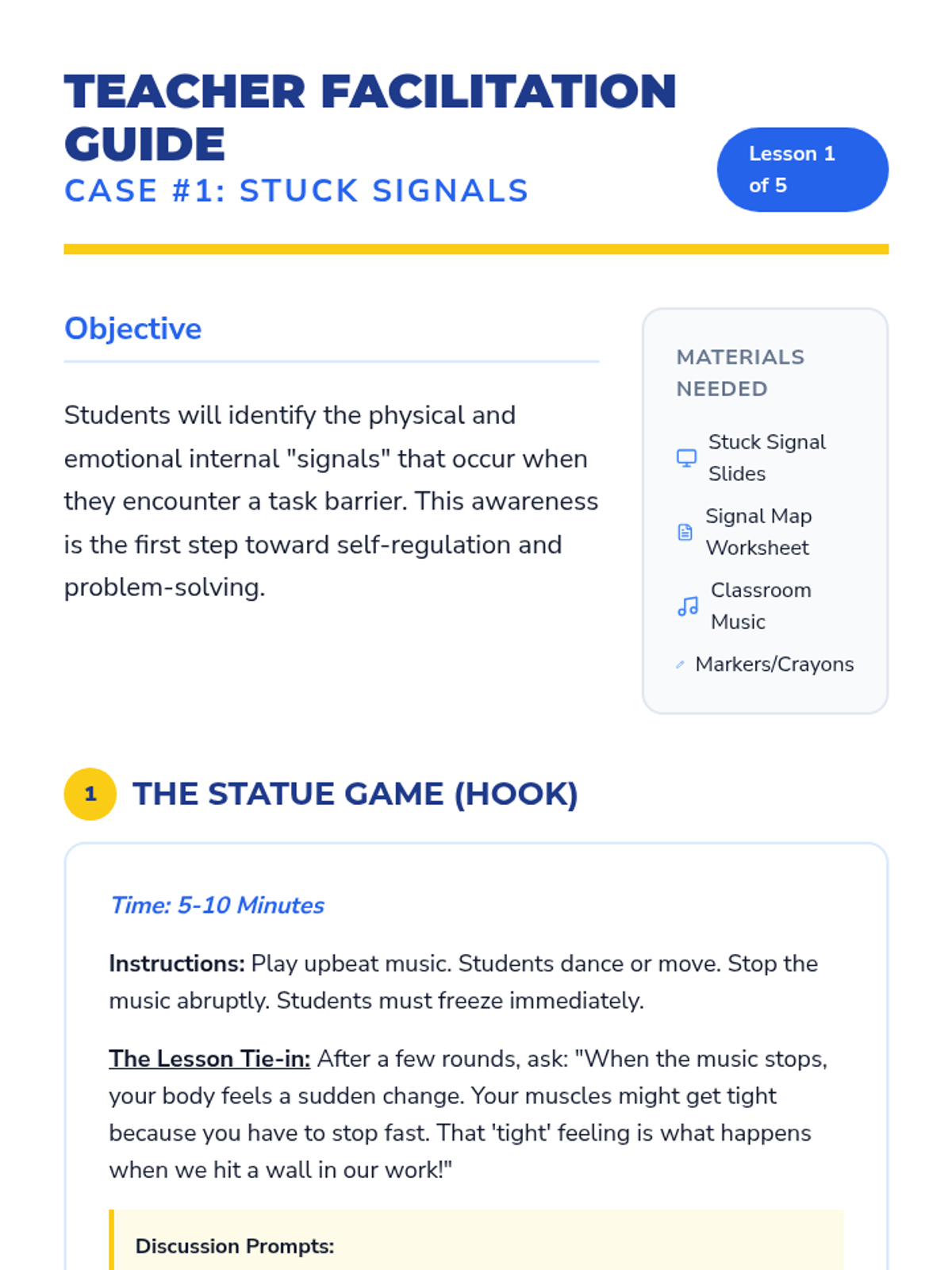
A teacher facilitation guide for Lesson 1, including instructions for the Statue Game hook and the Body Mapping core activity.
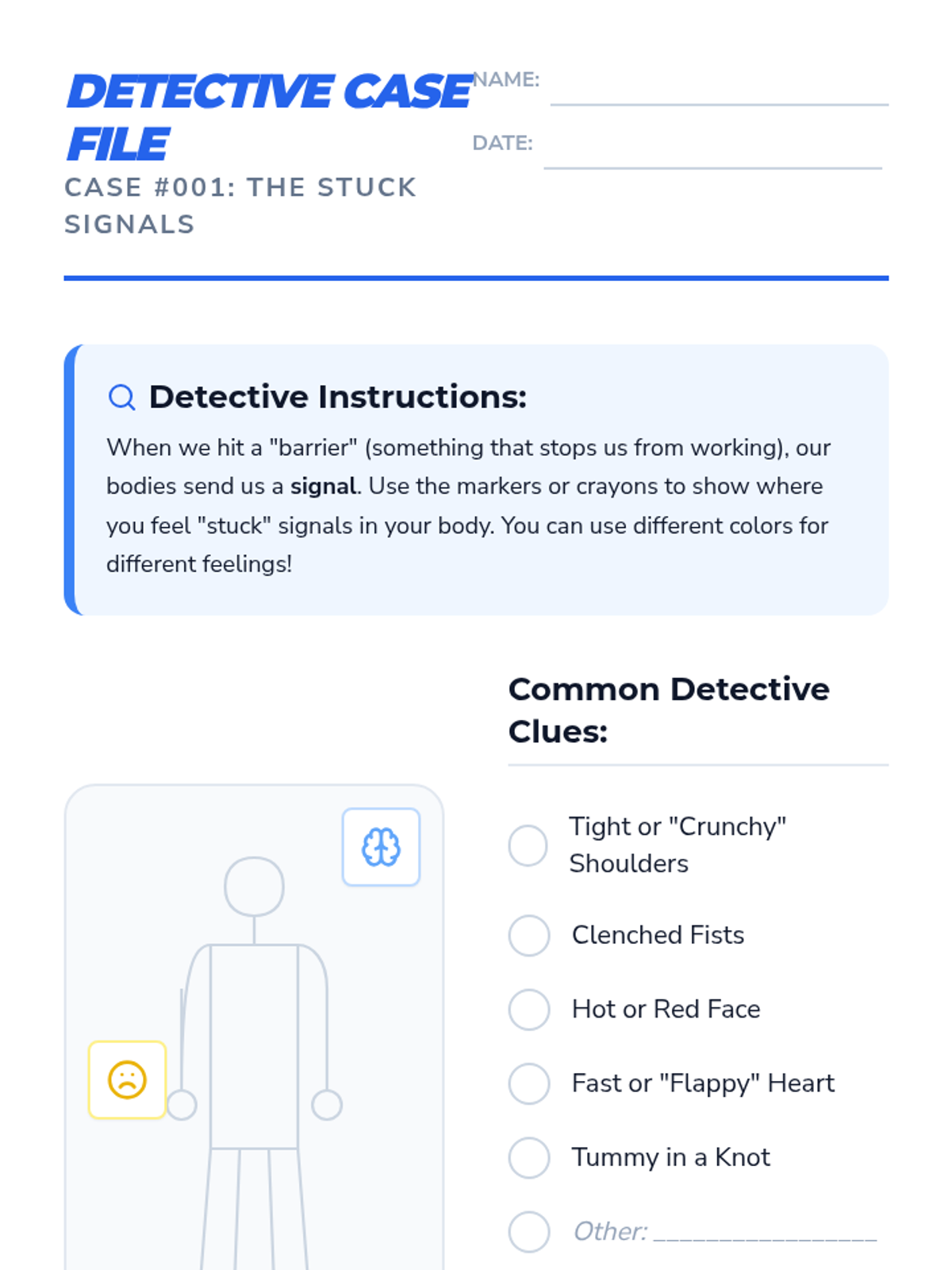
A worksheet for students to identify and map the physical signals of frustration and being 'stuck' in their own bodies.
An introductory slide deck for the 'Stuck Signals' lesson, using a Task Detective theme to help students recognize the physical and emotional sensations of being stuck.
A commemorative award for students who have completed the Bridge Builders sequence, celebrating their advocacy and communication skills.
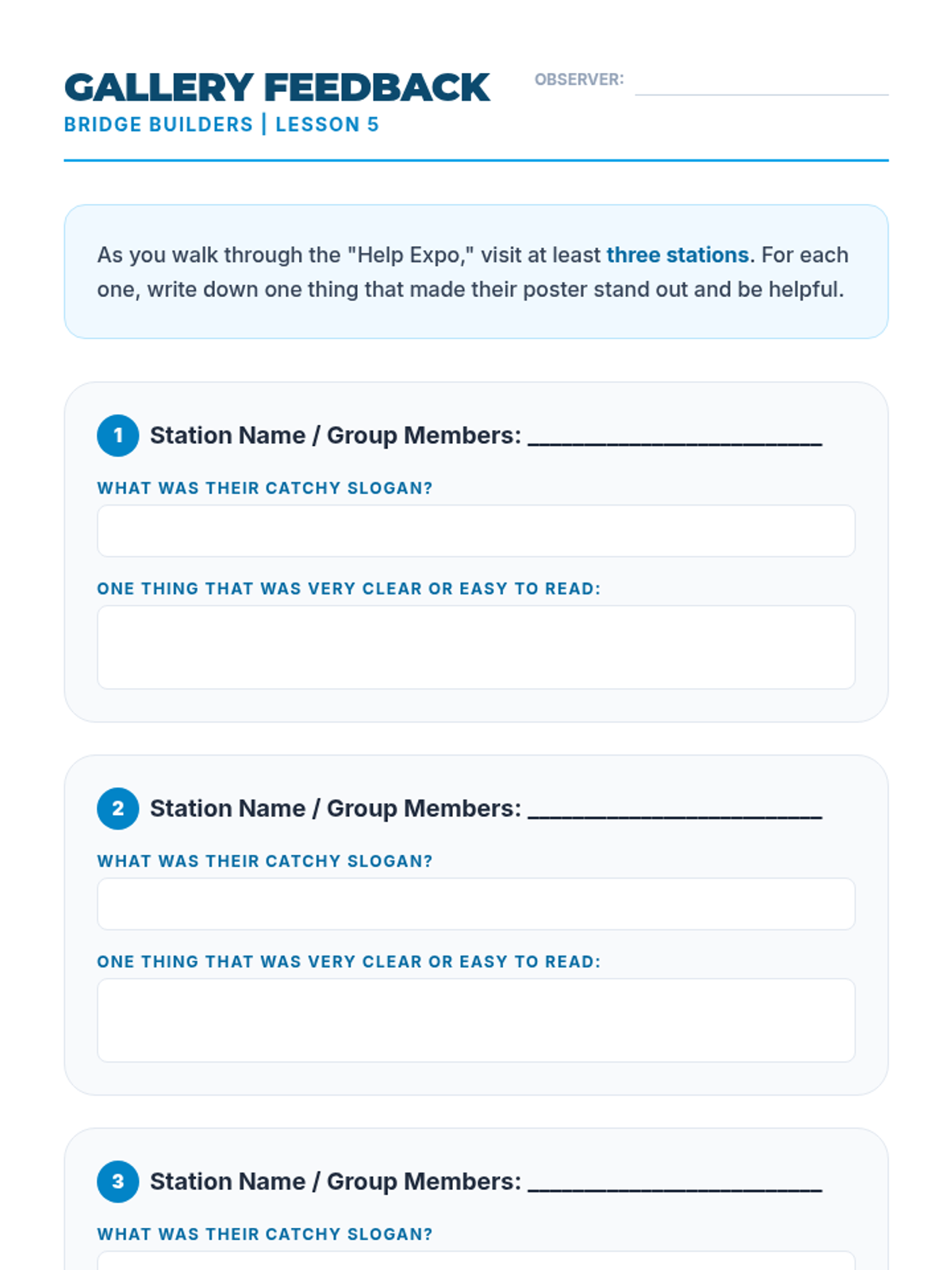
Peer feedback worksheet for the gallery walk in Lesson 5, helping students reflect on their classmates' advocacy projects.
Slides for Lesson 5, teaching presentation tips and station rules for the "Help Expo" gallery walk.
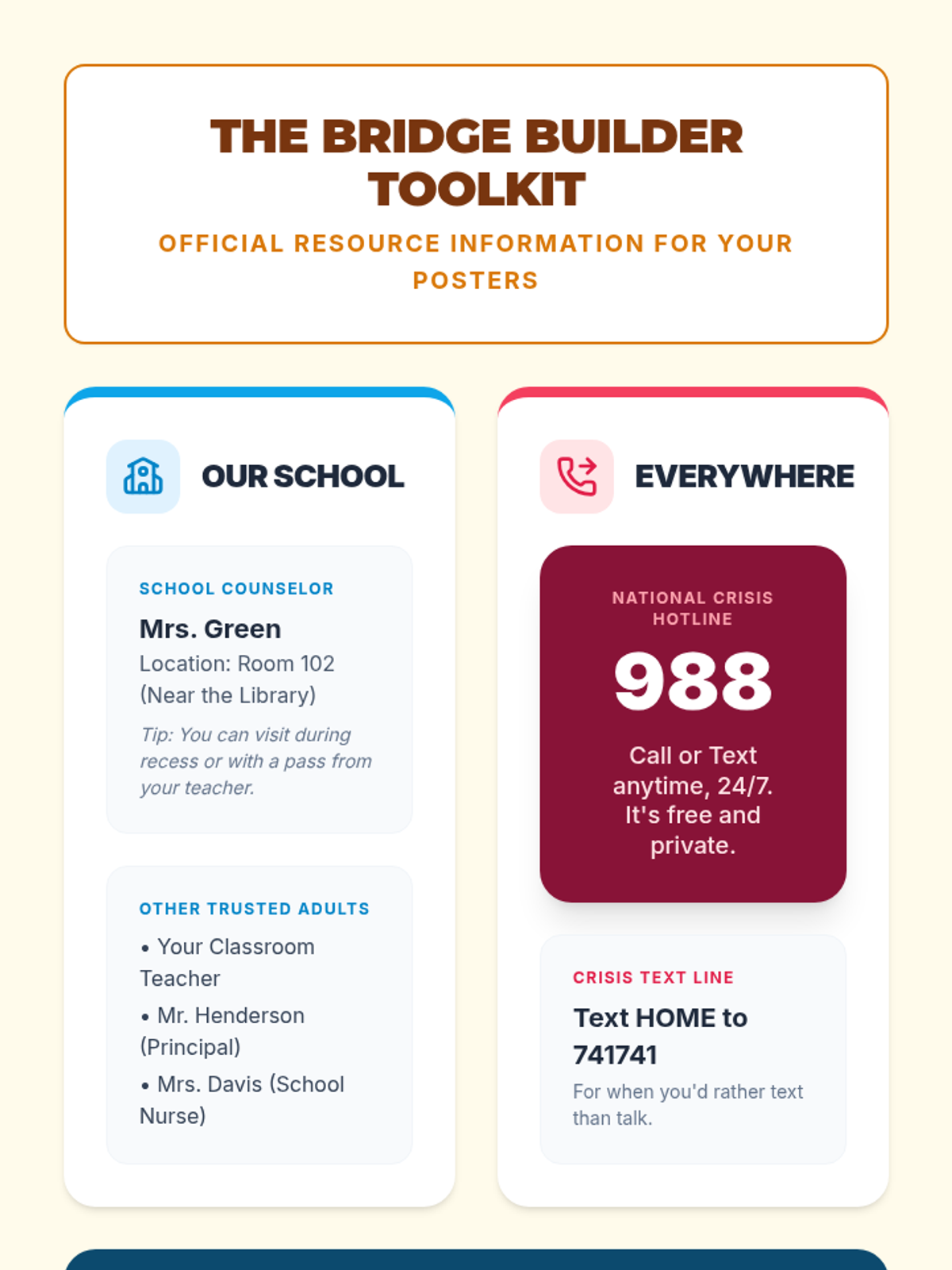
Reference sheet for Lesson 4, providing school and national mental health resource information for students to include on their advocacy posters.
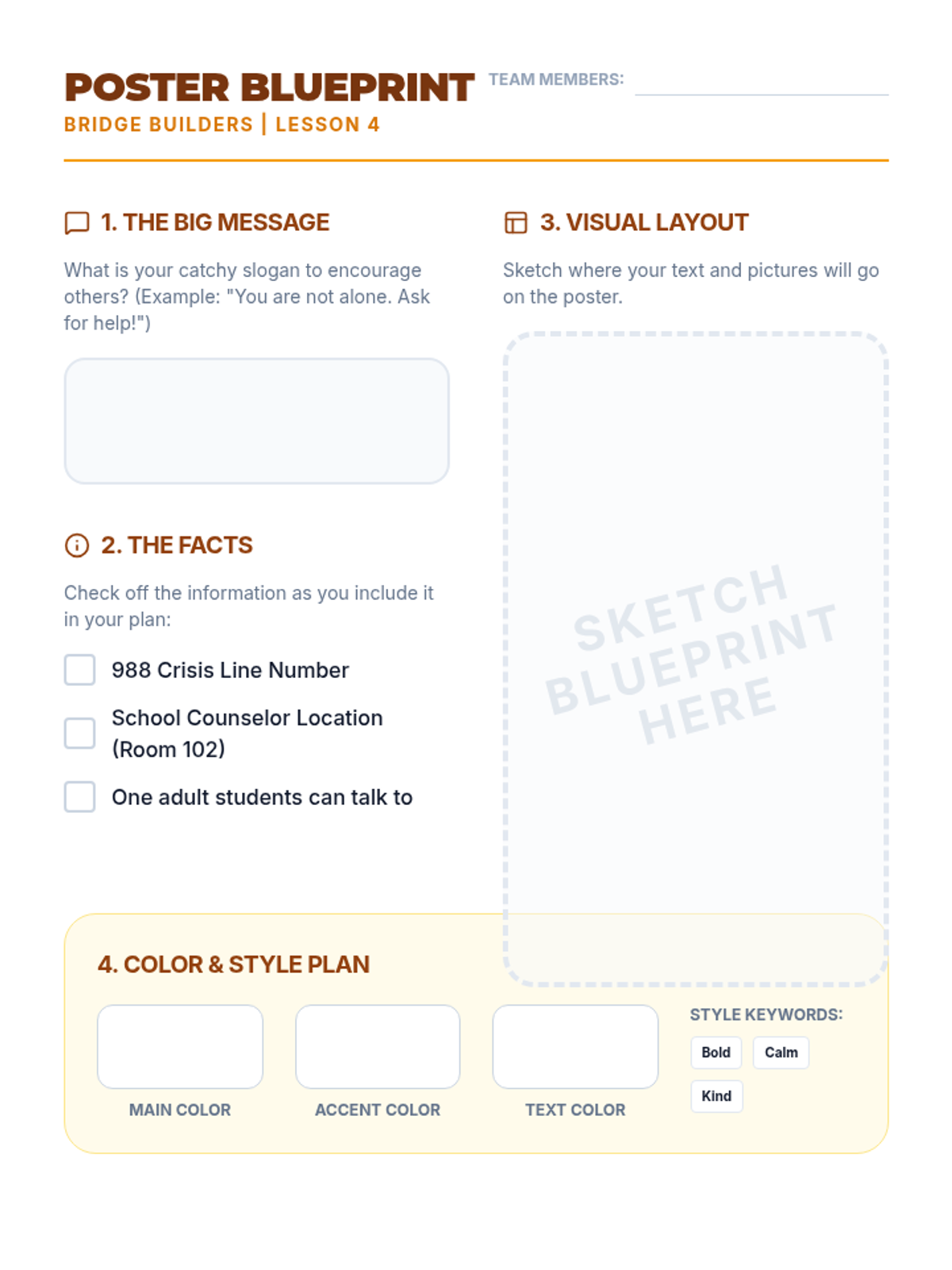
Planning document for Lesson 4, helping student teams brainstorm and sketch their advocacy posters.
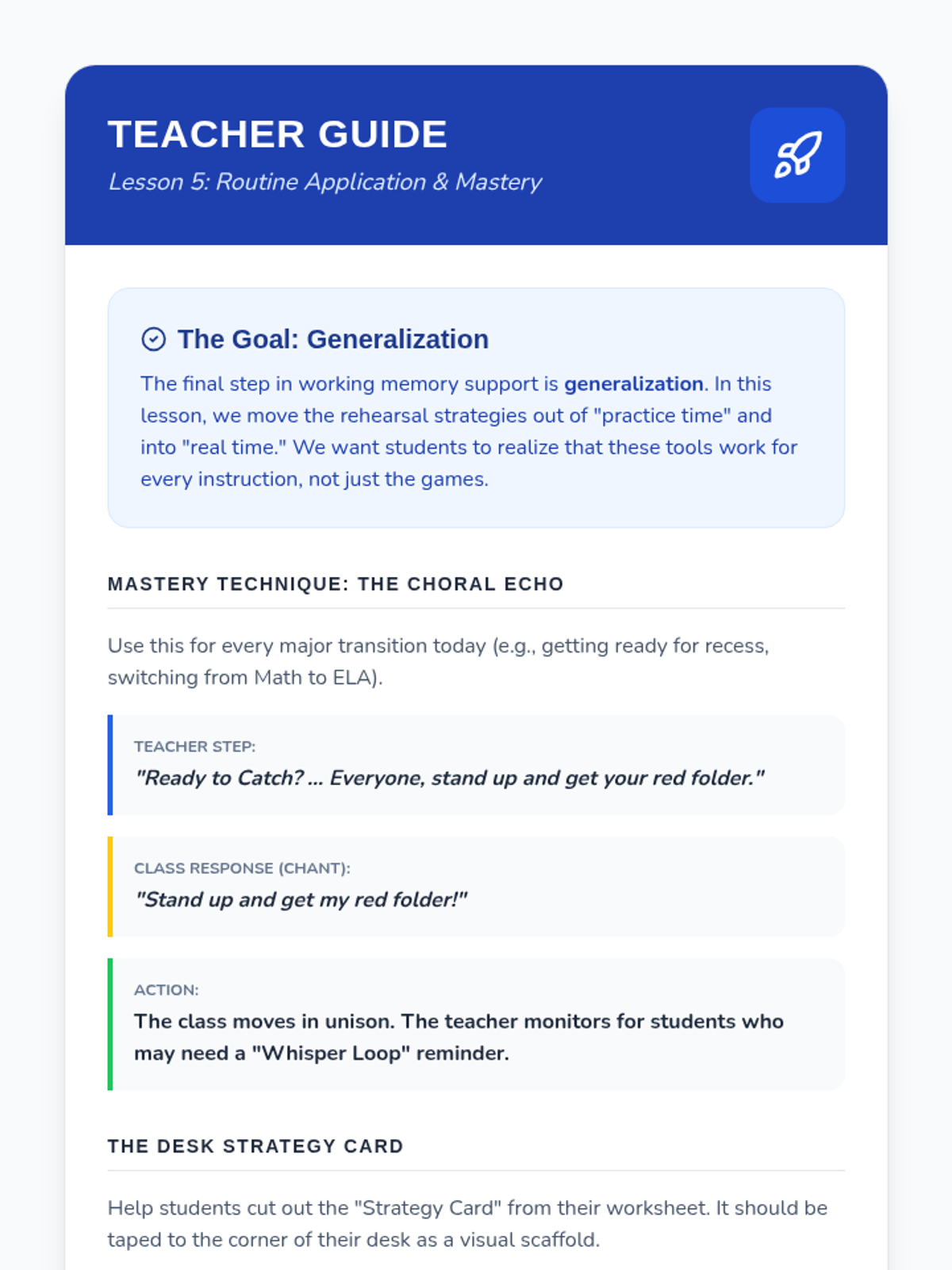
Final teacher guide for the sequence, focusing on choral response techniques, the use of desk-based strategy cards, and informal mastery assessment.
Final slides for the sequence, focusing on graduating the 'Brain Training' skills into everyday classroom routines like cleaning up and transitions.
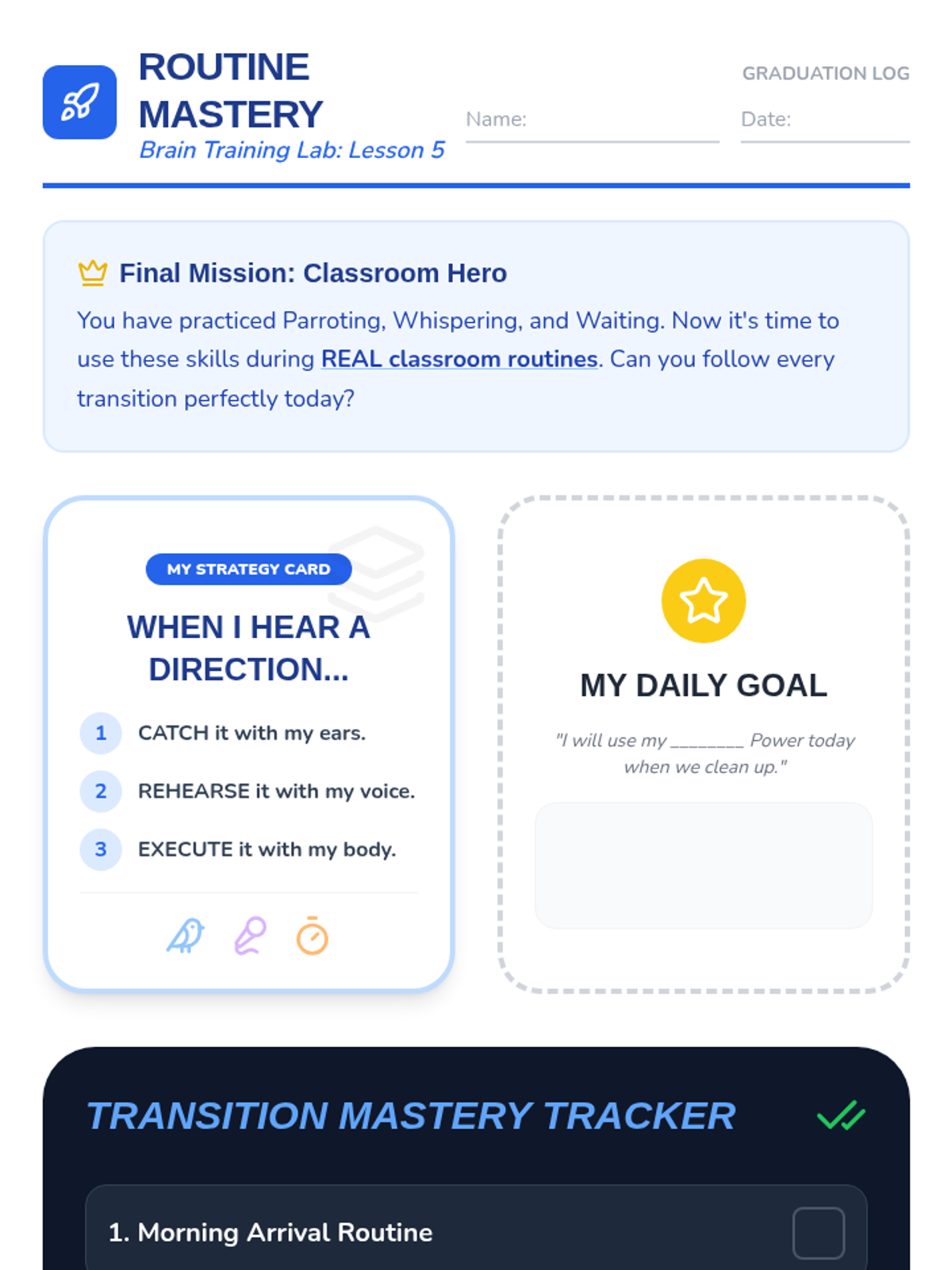
A cumulative resource for Lesson 5 including a strategy desk card and a transition mastery tracker to help students apply verbal rehearsal to real classroom routines.
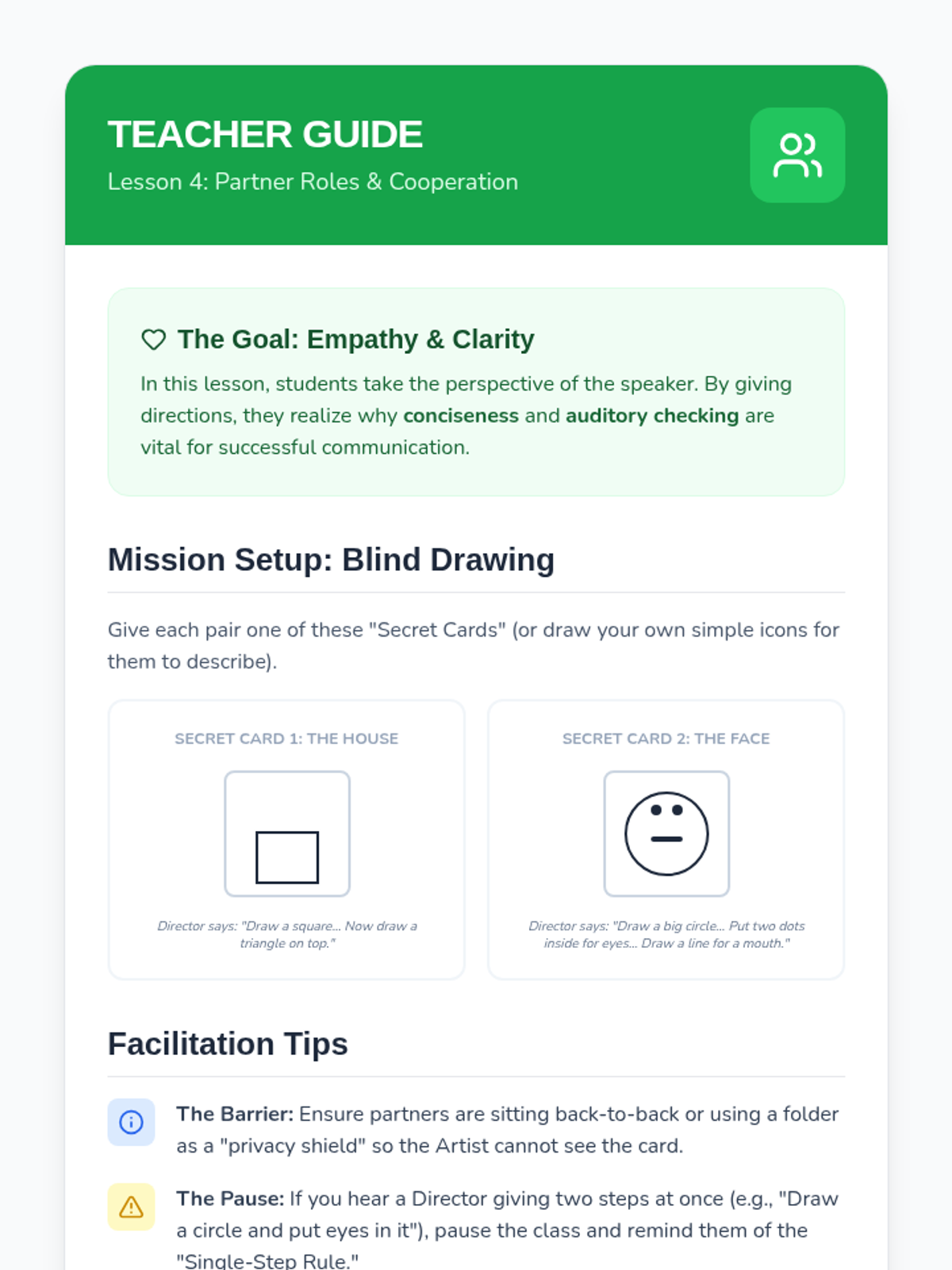
A teacher guide for Lesson 4 including secret cards for the blind drawing activity, facilitation scripts, and peer feedback prompts.
Slides for Lesson 4 facilitating a peer-to-peer communication activity. Introduces the roles of 'Director' and 'Artist' for a collaborative drawing challenge.
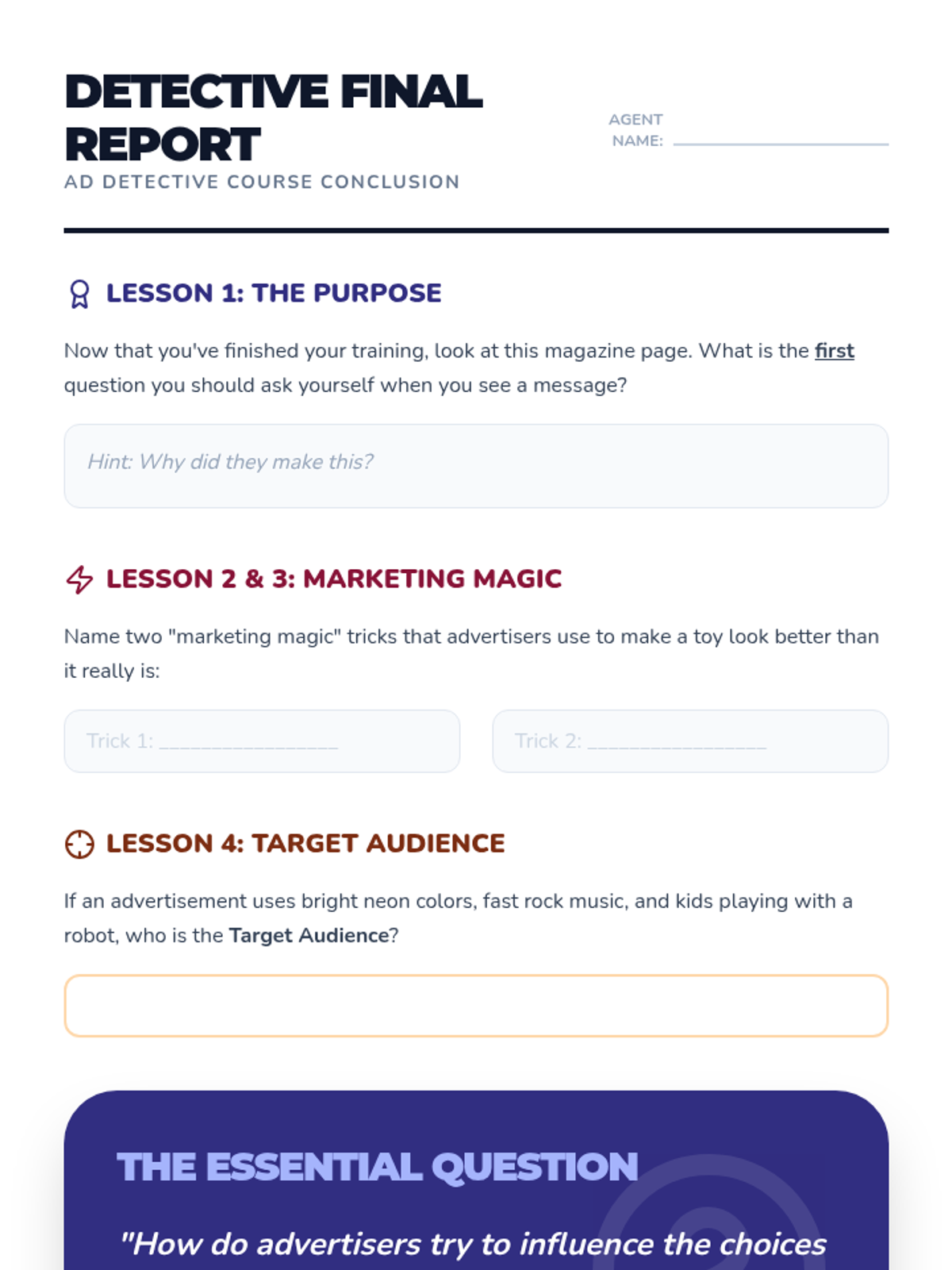
A final reflection and exit ticket for the entire sequence. Students answer questions based on the core concepts of each lesson and respond to the essential question.
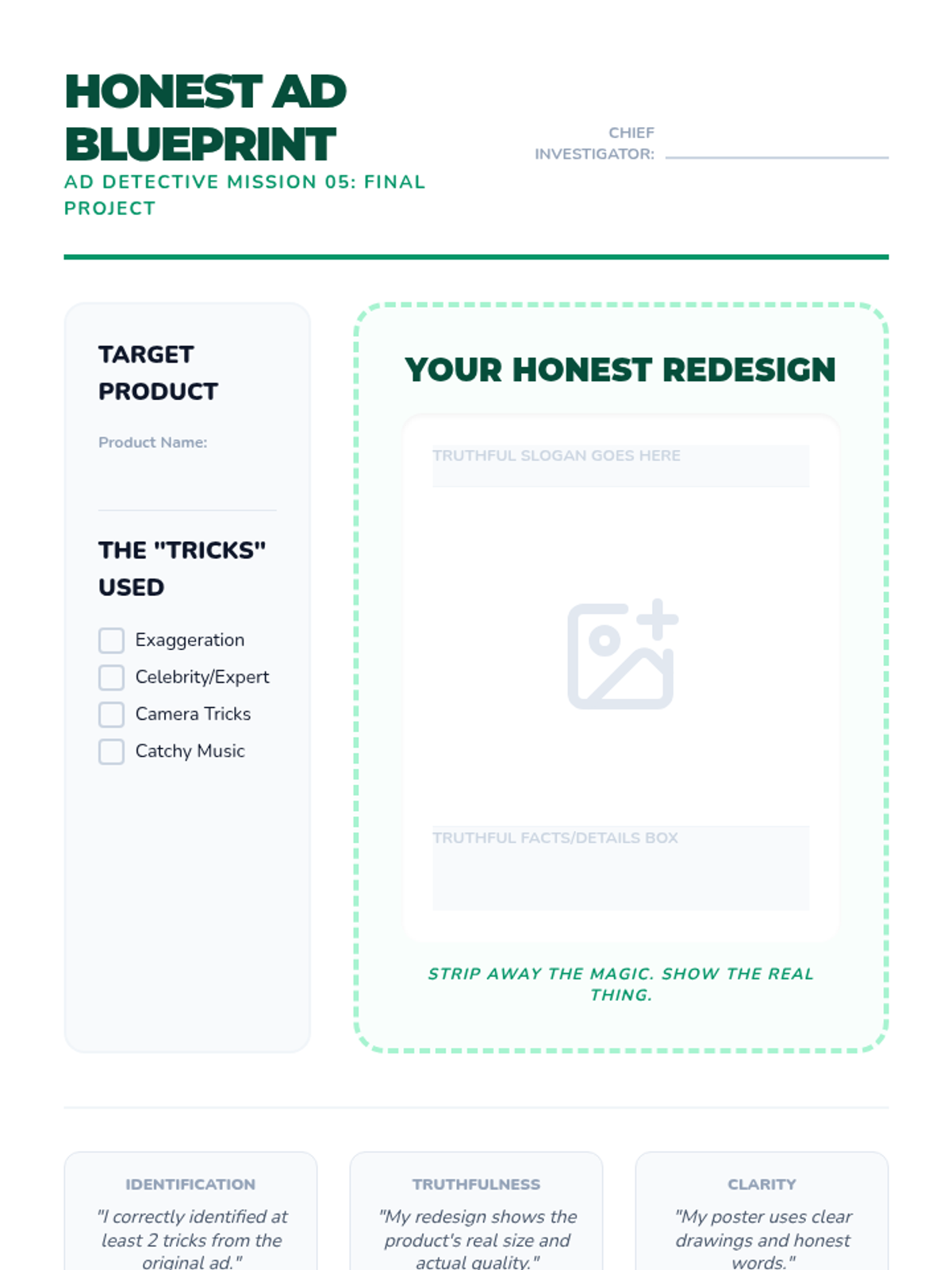
Final project template and rubric for Lesson 5. Students identify marketing tricks in an existing ad and redesign it as an 'Honest Ad' on this worksheet.
Final project slides for Lesson 5. Students are challenged to redesign a misleading advertisement to be 100% truthful, stripping away 'marketing magic'.
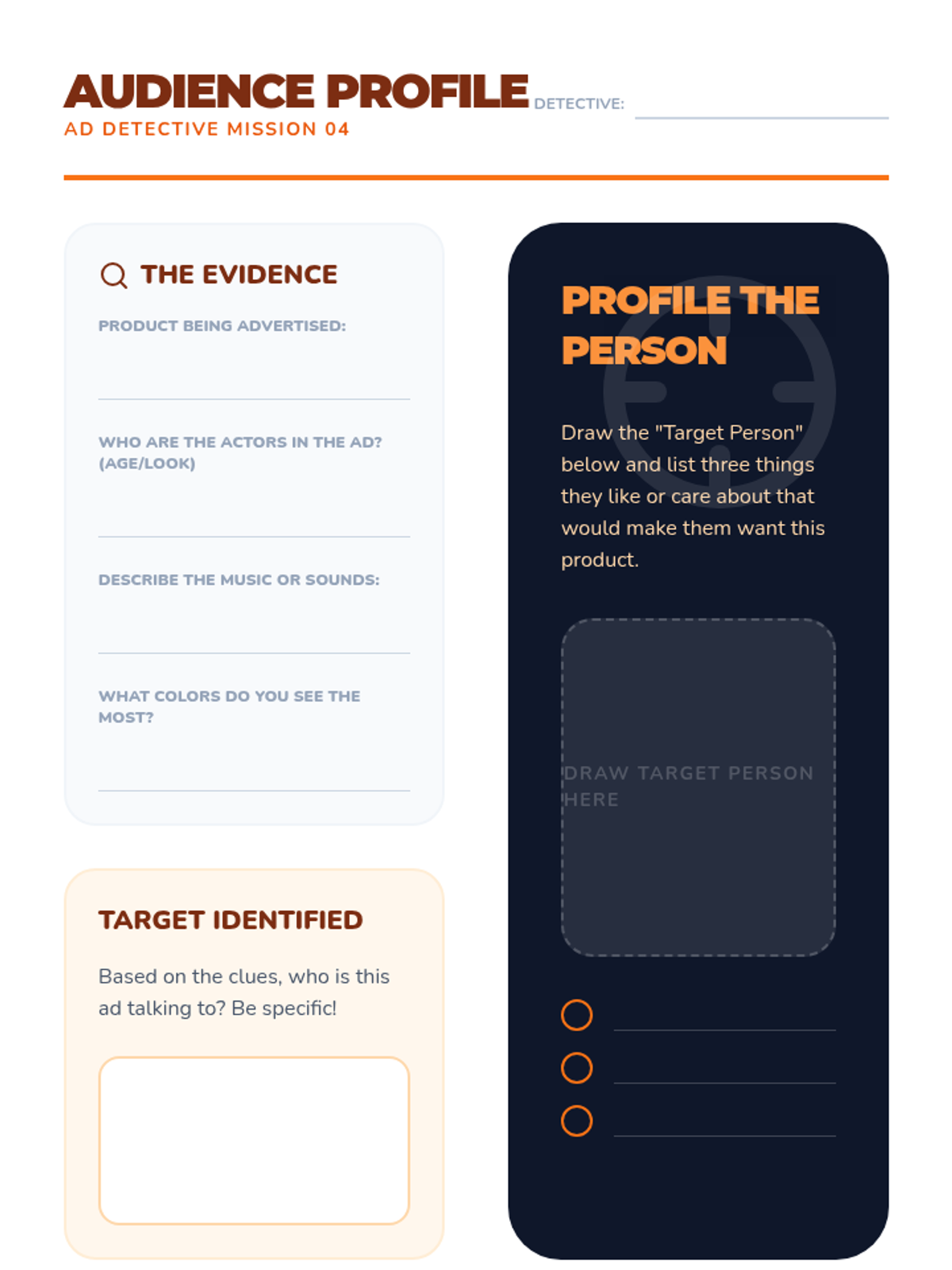
Student worksheet for Lesson 4 where students profile the target audience of a specific advertisement by identifying visual and auditory clues.
Slides for Lesson 4 on identifying target audiences using clues like actors, music, colors, and tone. Features a 'Minivan vs. Video Game' case study.
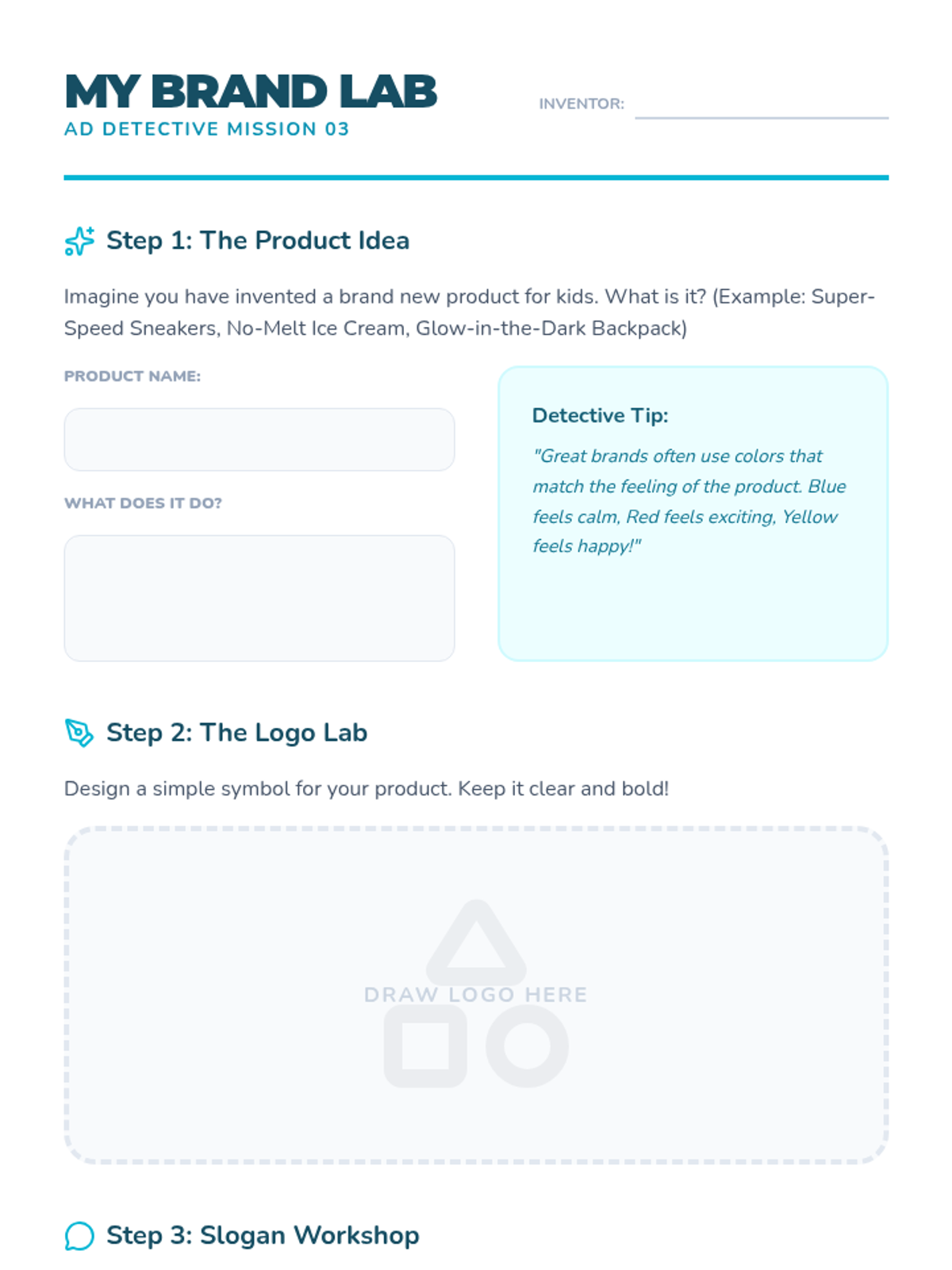
Student worksheet for Lesson 3 where students design their own product logo and slogan, applying branding concepts.
Slides for Lesson 3 exploring the role of logos and slogans in brand recognition and trust. Includes a 'Rapid-Fire Quiz' hook.
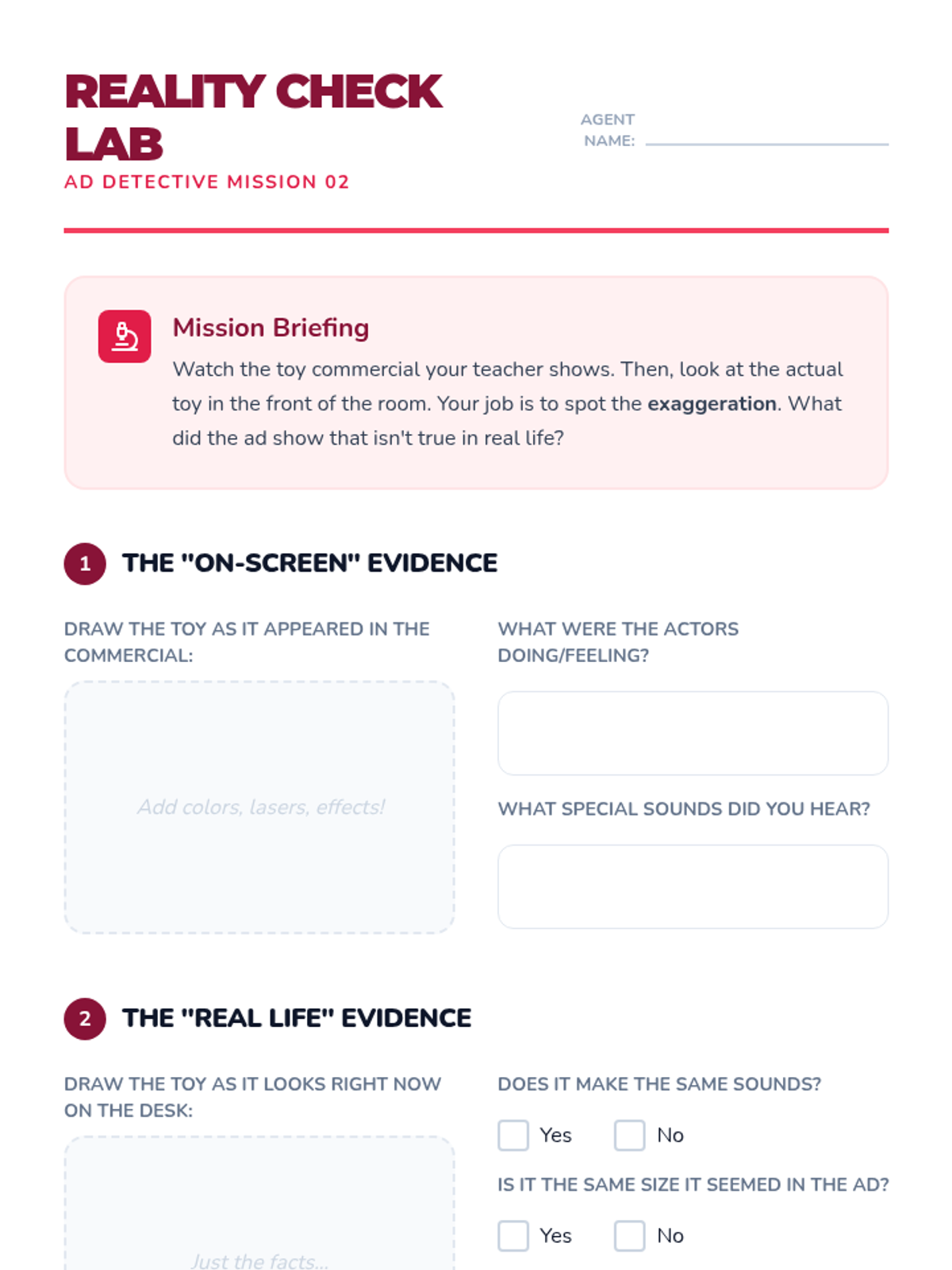
Student activity sheet for 'Reality Check Lab'. Students compare a commercial version of a toy to the real object to identify marketing tricks and exaggeration.
Slides for Lesson 2 focusing on visual and auditory persuasion techniques like lighting, angles, sound effects, and exaggeration in marketing.
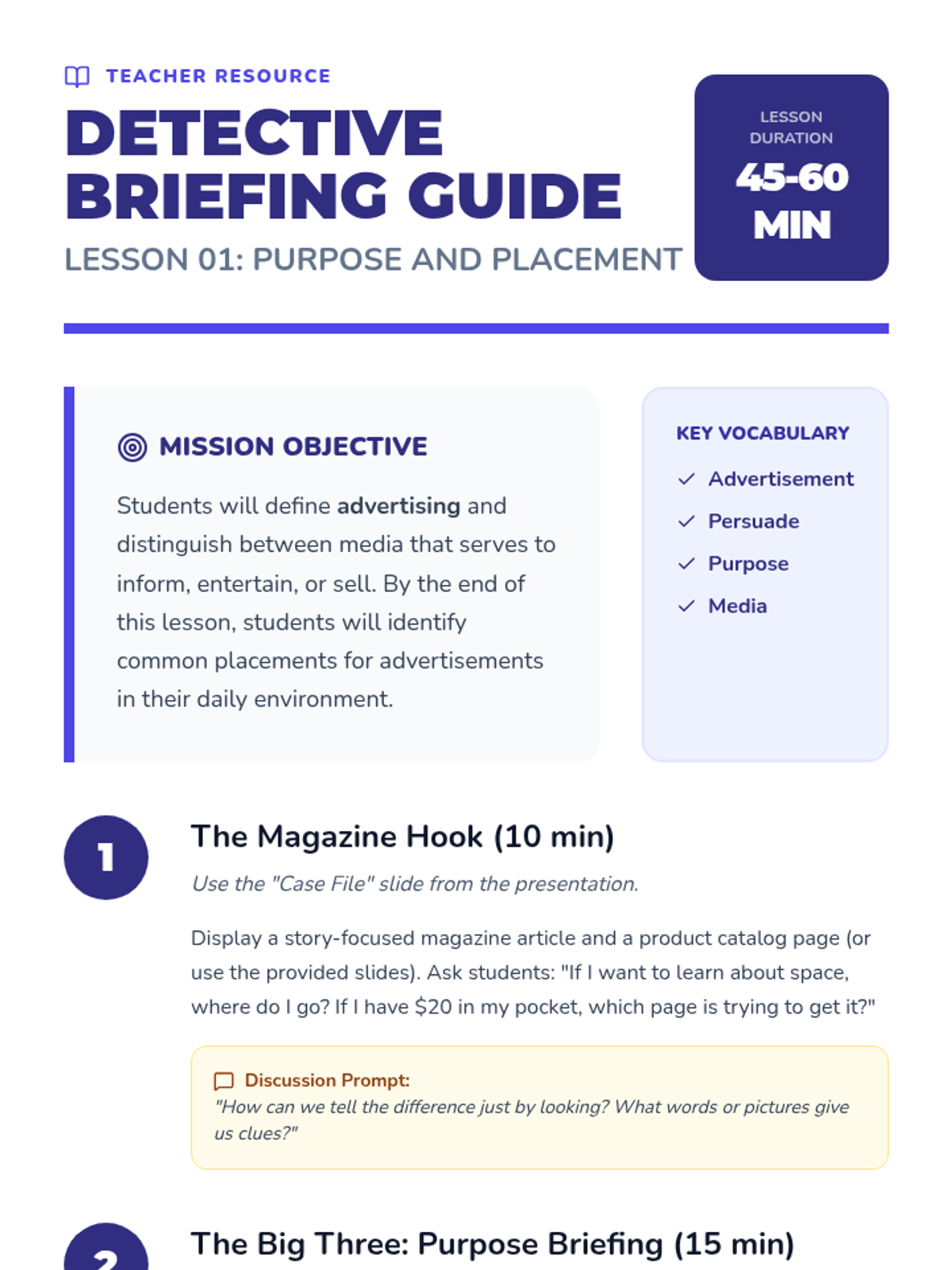
A comprehensive teacher guide for Lesson 1, including objectives, instructional steps, discussion prompts, and vocabulary.
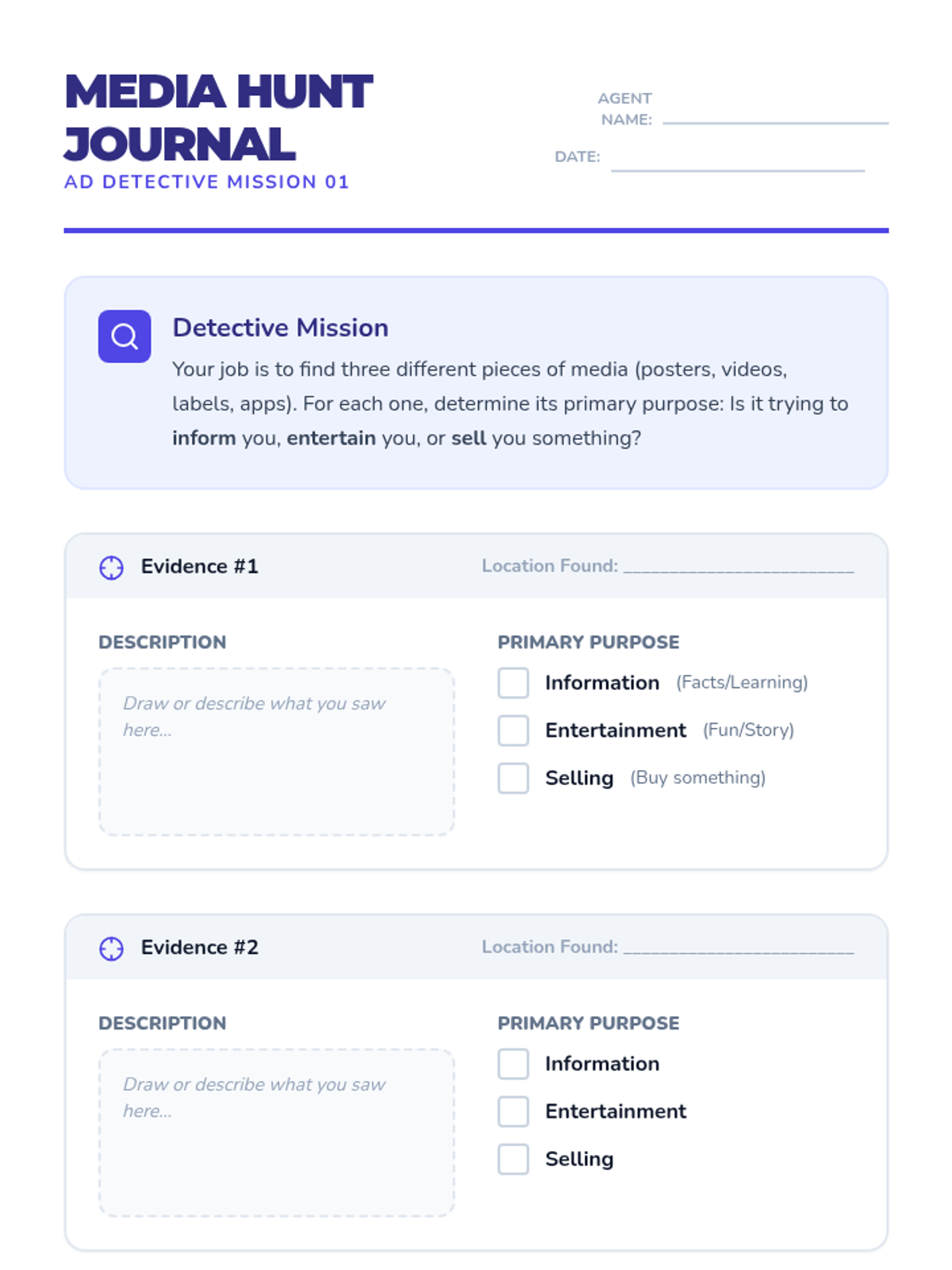
A student worksheet for the 'Media Hunt' activity. Students find and categorize different types of media based on purpose: information, entertainment, or selling.
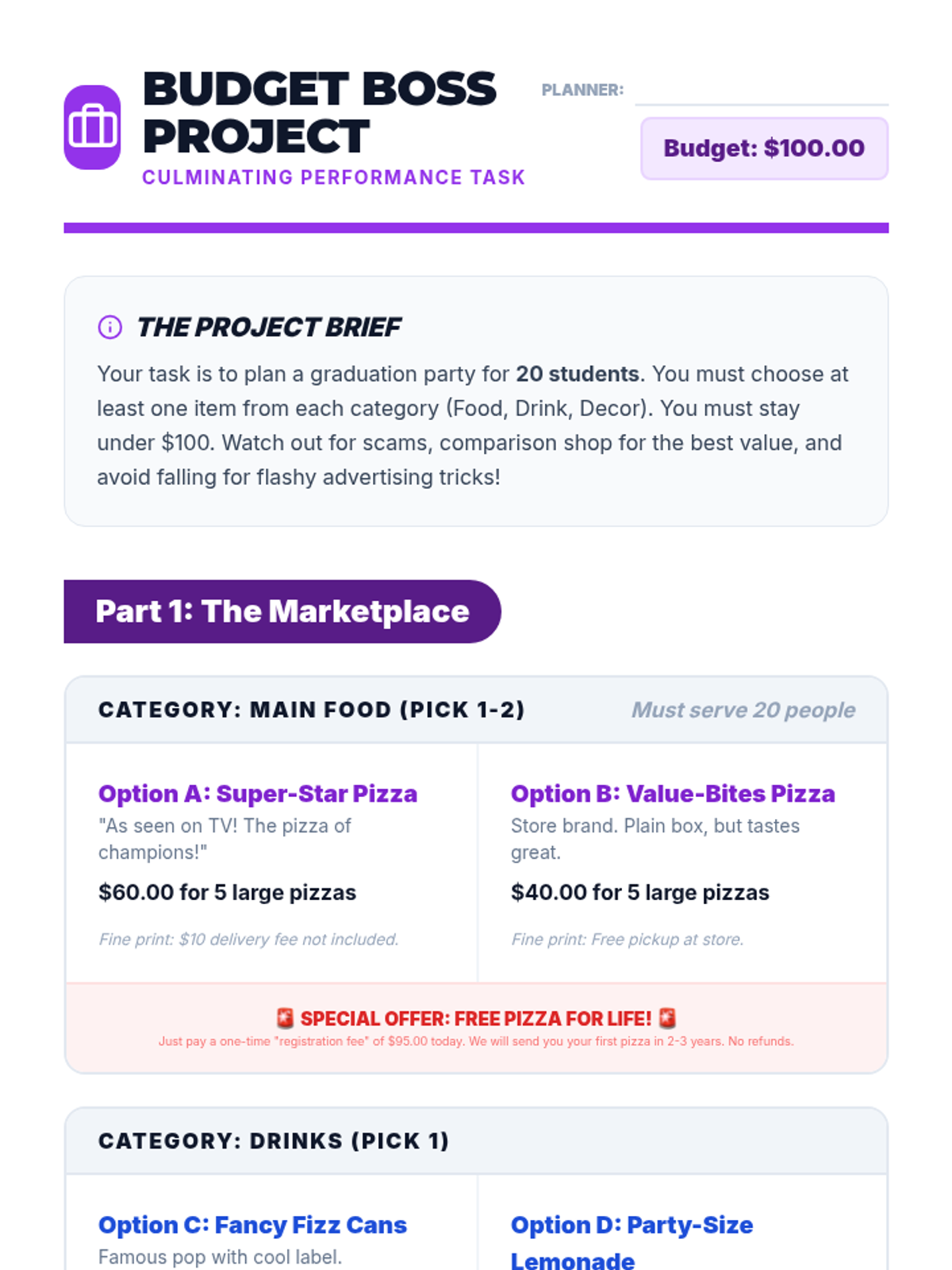
Student project pack for the Lesson 5 final project, including a catalog of choices, a budget tracking sheet, and a justification section for their financial decisions.
Introductory slides for the first lesson on advertising purpose and placement. Introduces the three main types of media: Information, Entertainment, and Selling, with a focus on 'The Media Hunt'.
Introductory slide deck for the Lesson 5 culminating project, providing instructions, a budget tracking example, and strategic tips for the class party planning challenge.
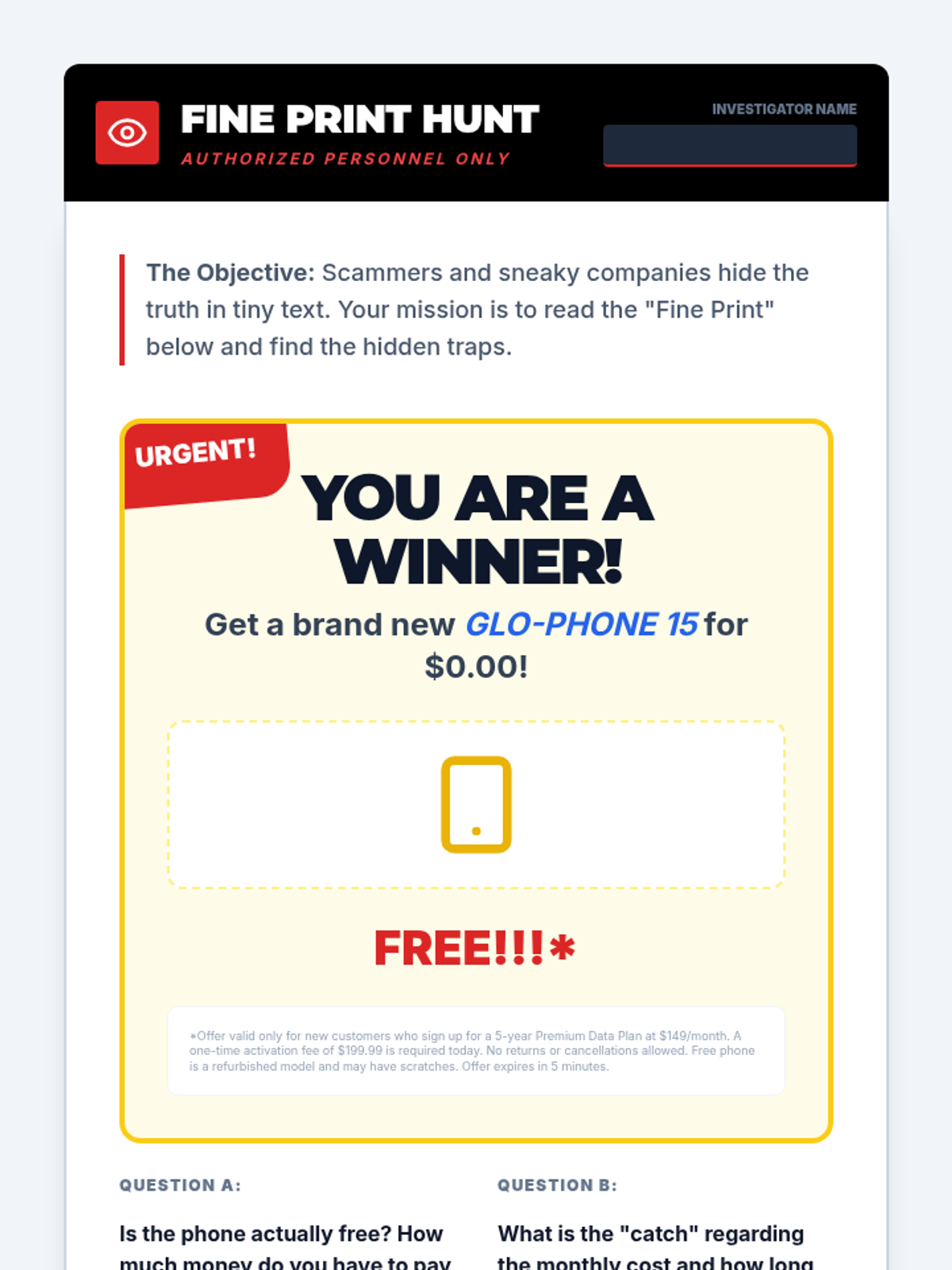
Student activity worksheet for Lesson 4 where students analyze two deceptive advertisements to identify hidden costs and terms in the fine print.
Slide deck for Lesson 4 explaining how to identify red flags in scams, the importance of reading fine print, and basic consumer rights.
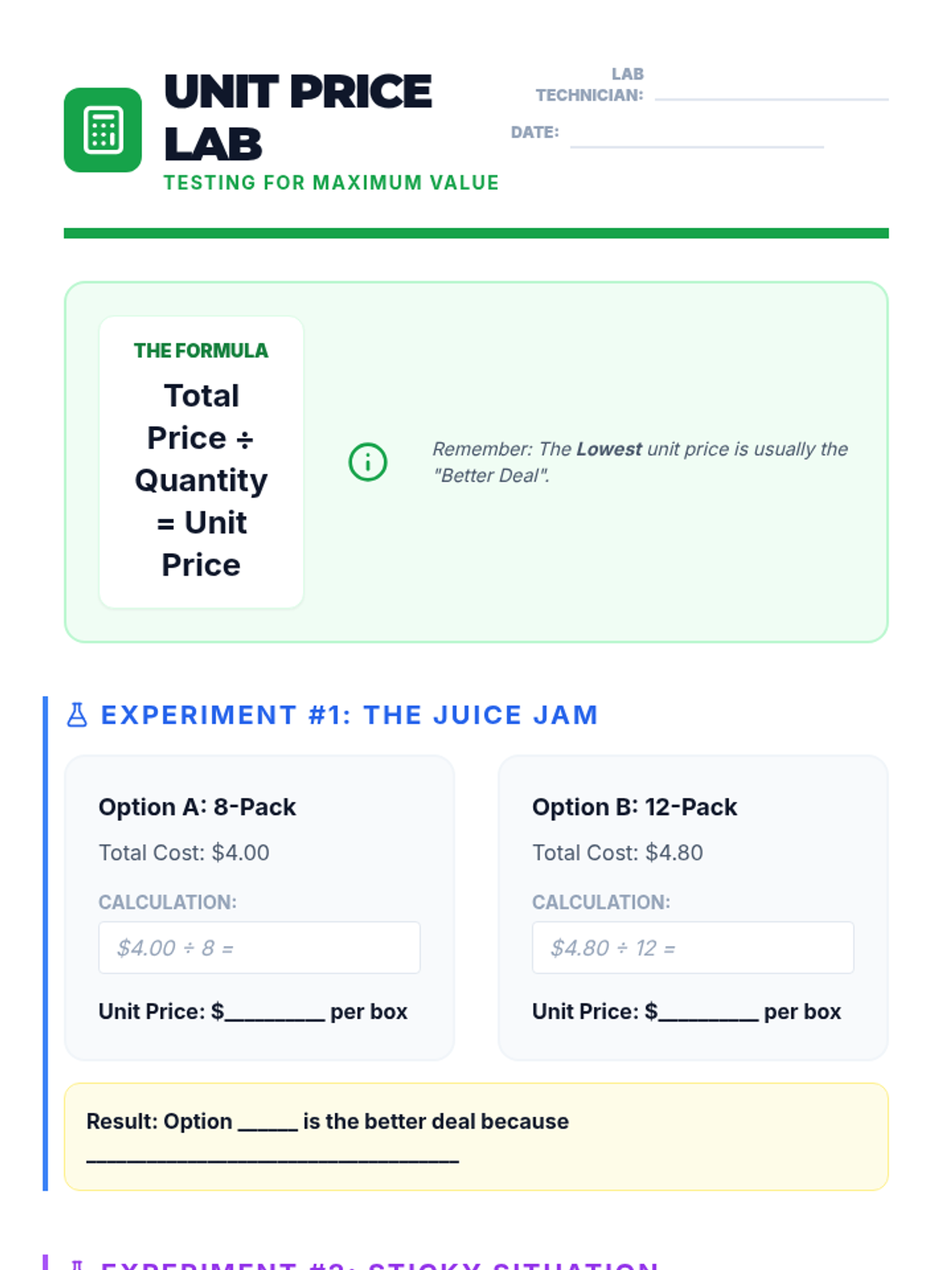
Student practice worksheet for Lesson 3 where students calculate unit prices for juice boxes, glue sticks, and cereal to determine the best financial value.
Slide deck for Lesson 3 explaining how to calculate and compare unit prices using a simple formula, with a focus on value over total cost.
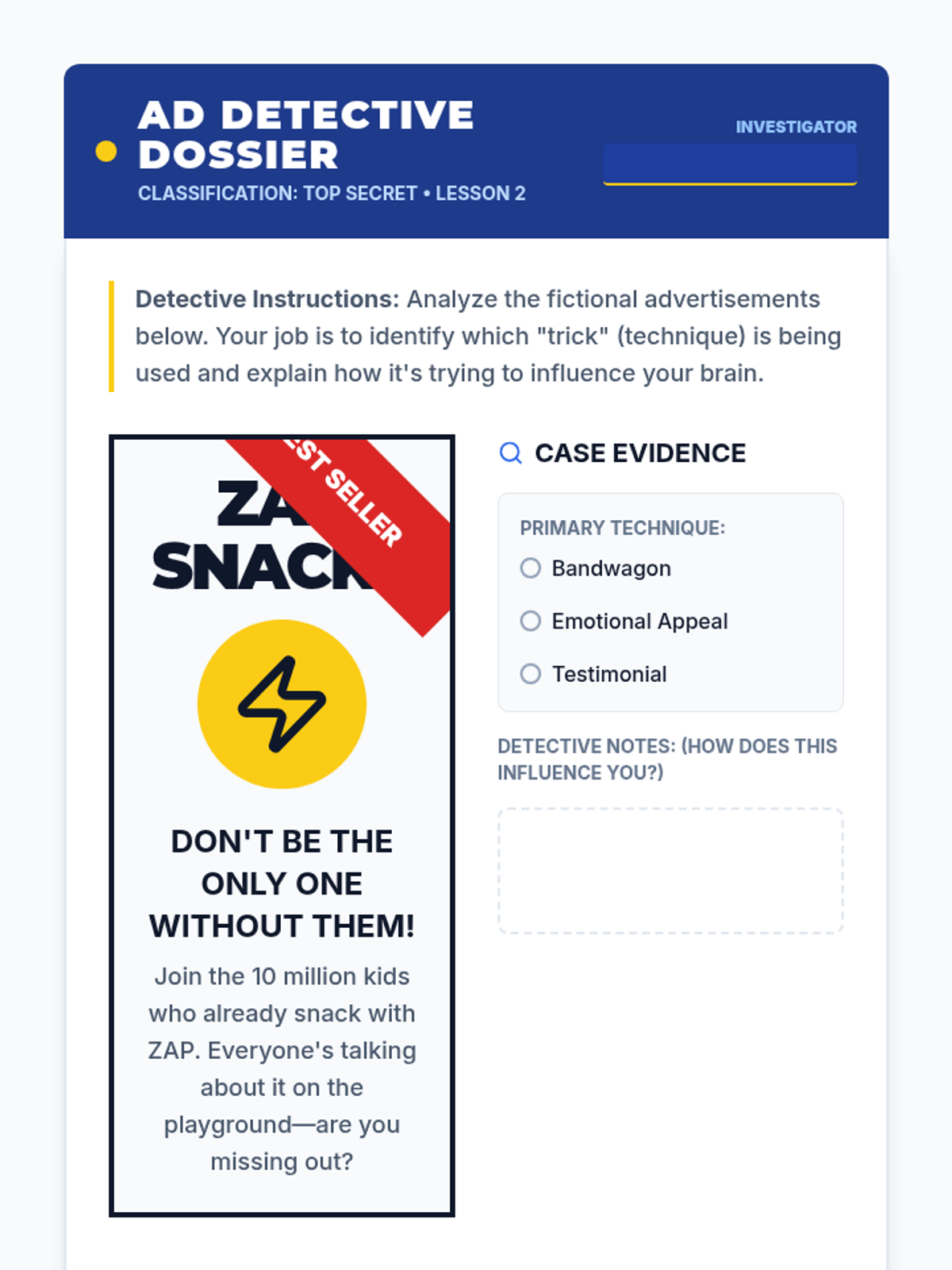
Student activity worksheet for Lesson 2 where students analyze three fictional advertisements to identify and explain persuasive techniques.
Slide deck for Lesson 2 explaining common advertising persuasion techniques: Bandwagon, Emotional Appeal, and Testimonials.