Mindful breathing and body scan meditation techniques integrated with daily self-care routines. Develops strategies for balancing life demands and advocating for personal wellness needs.
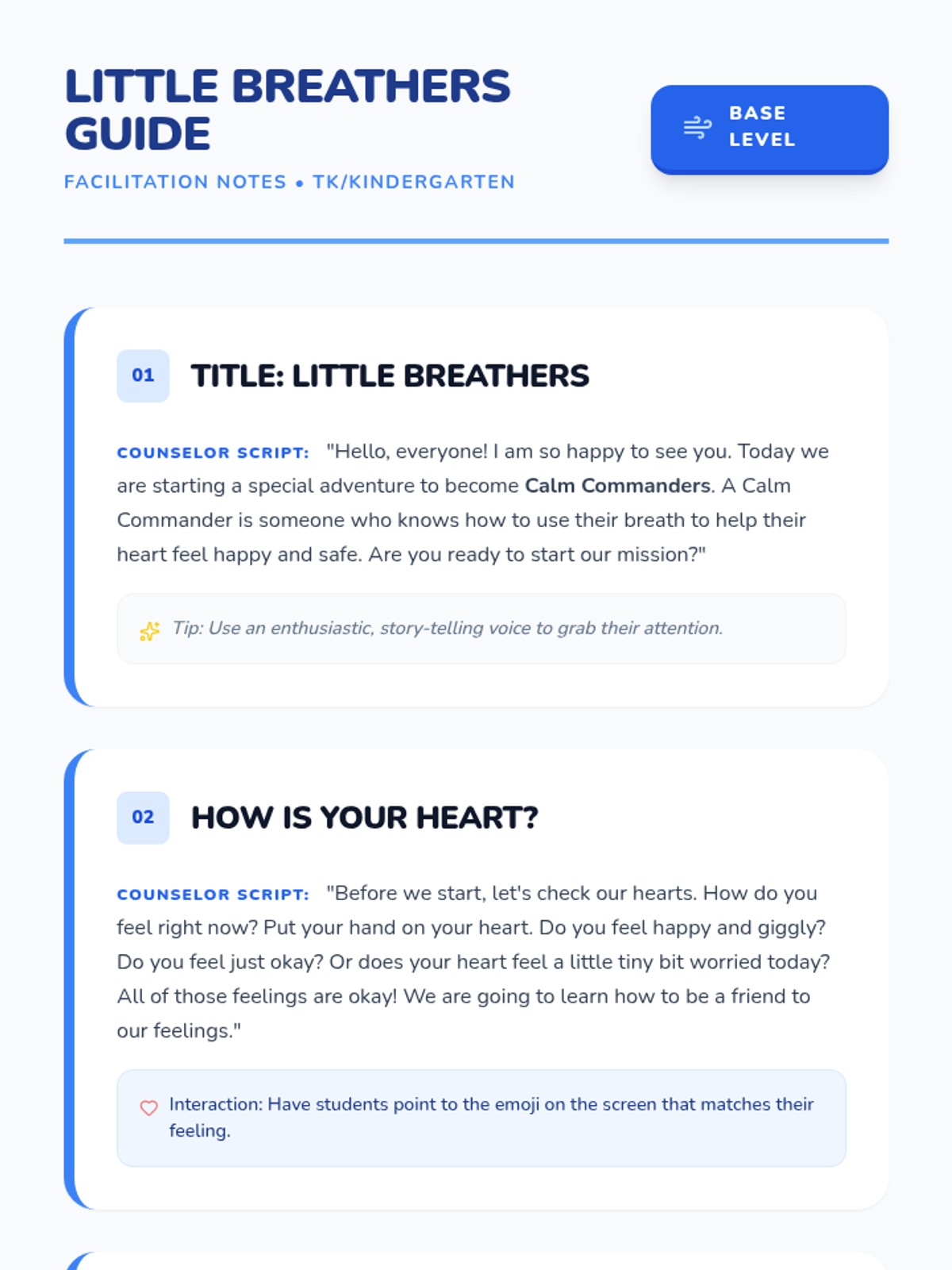
A detailed slide-by-slide facilitation guide for the TK/Kindergarten lesson 'Little Breathers'. Includes simple counselor scripts, child-friendly analogies for stress, and instructions for interactive breathing practice.
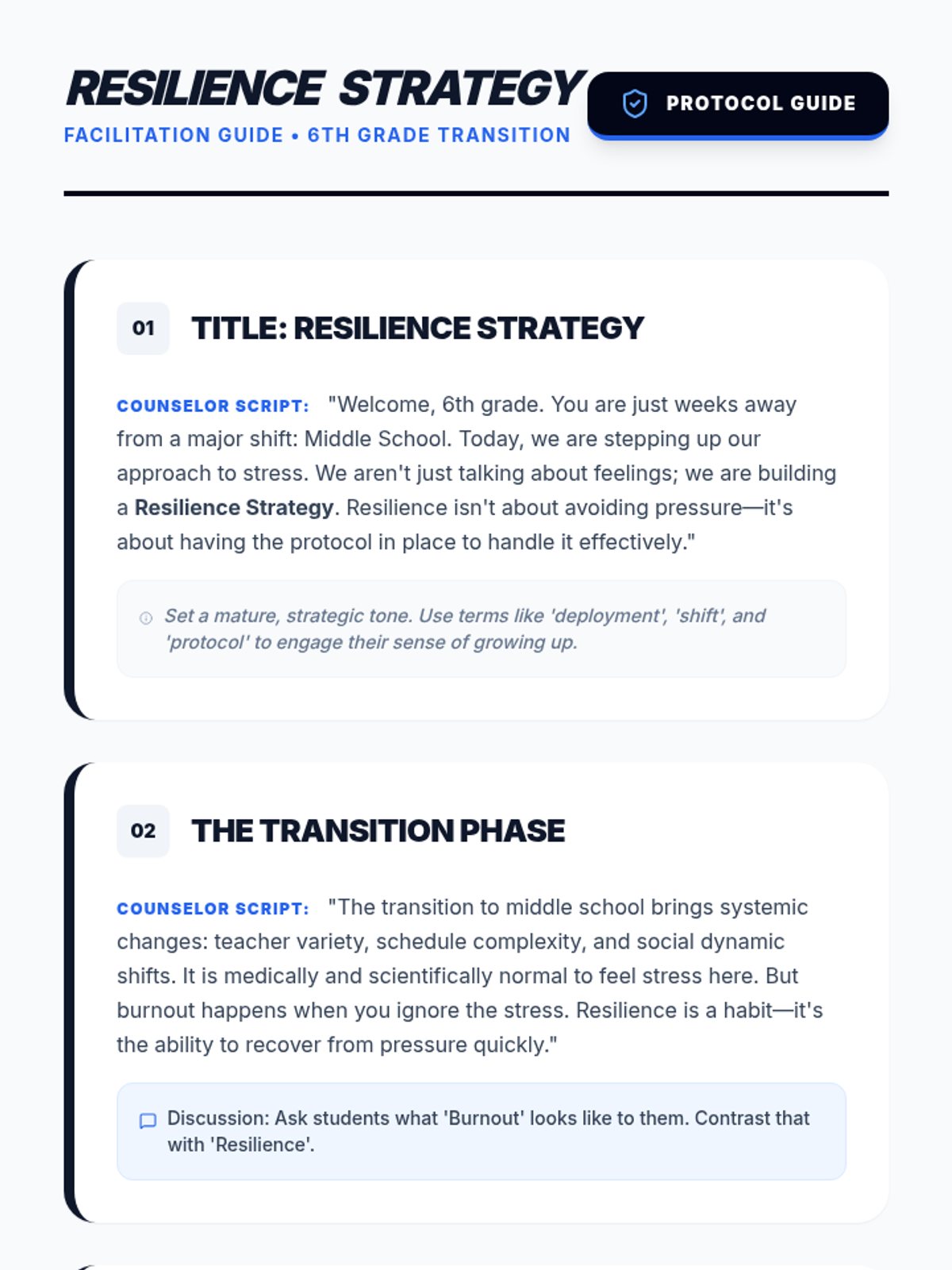
A detailed facilitation guide for the 6th grade 'Resilience Strategy' lesson. Provides scripts, mature analogies for transition stress, and instructions for practicing Box Breathing. Terminology updated for a more sophisticated 6th grade audience.
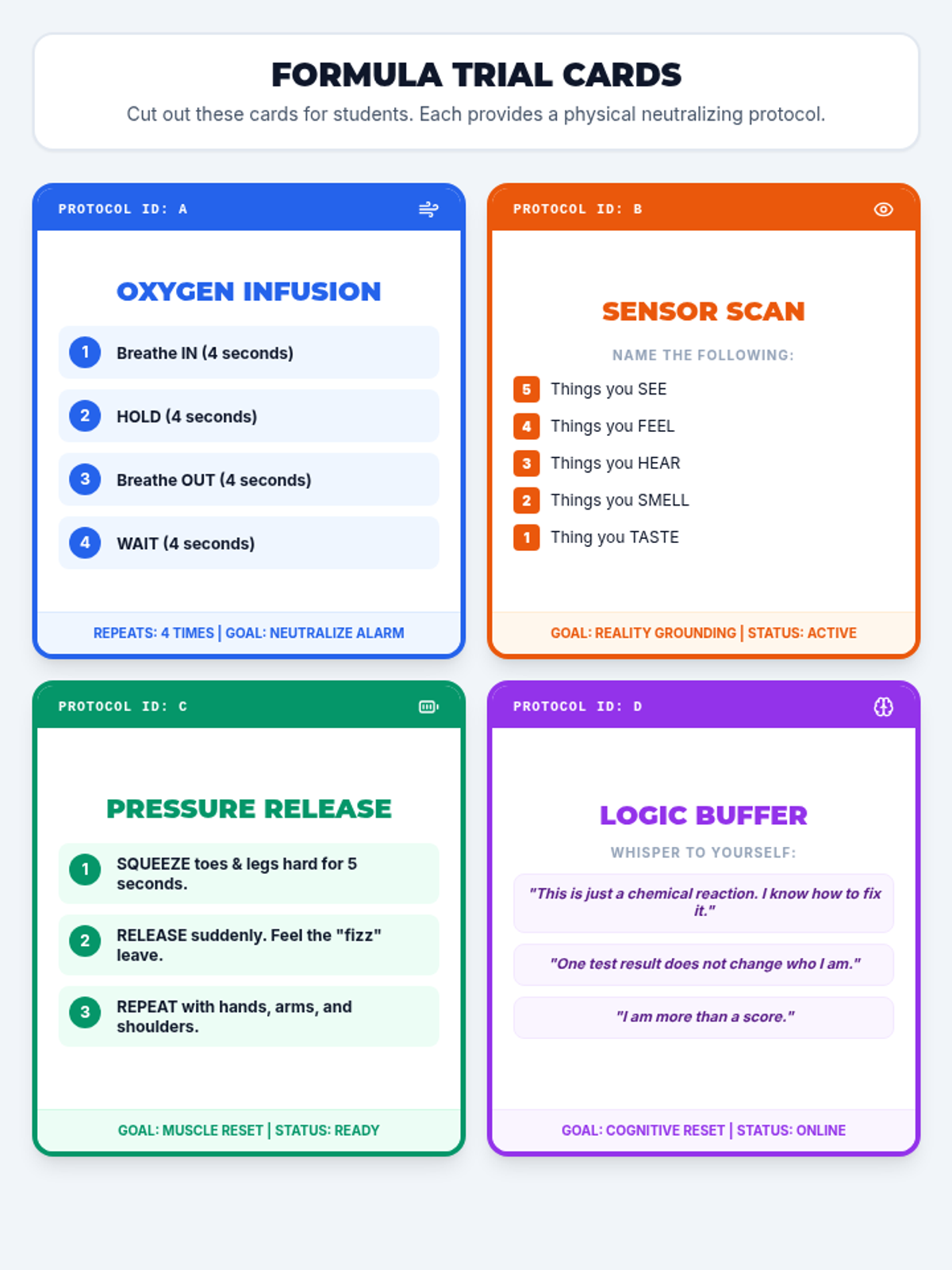
A set of instruction cards for four different physical stress-neutralization formulas, designed to be cut out and used during the Calm Performance Lab activity.
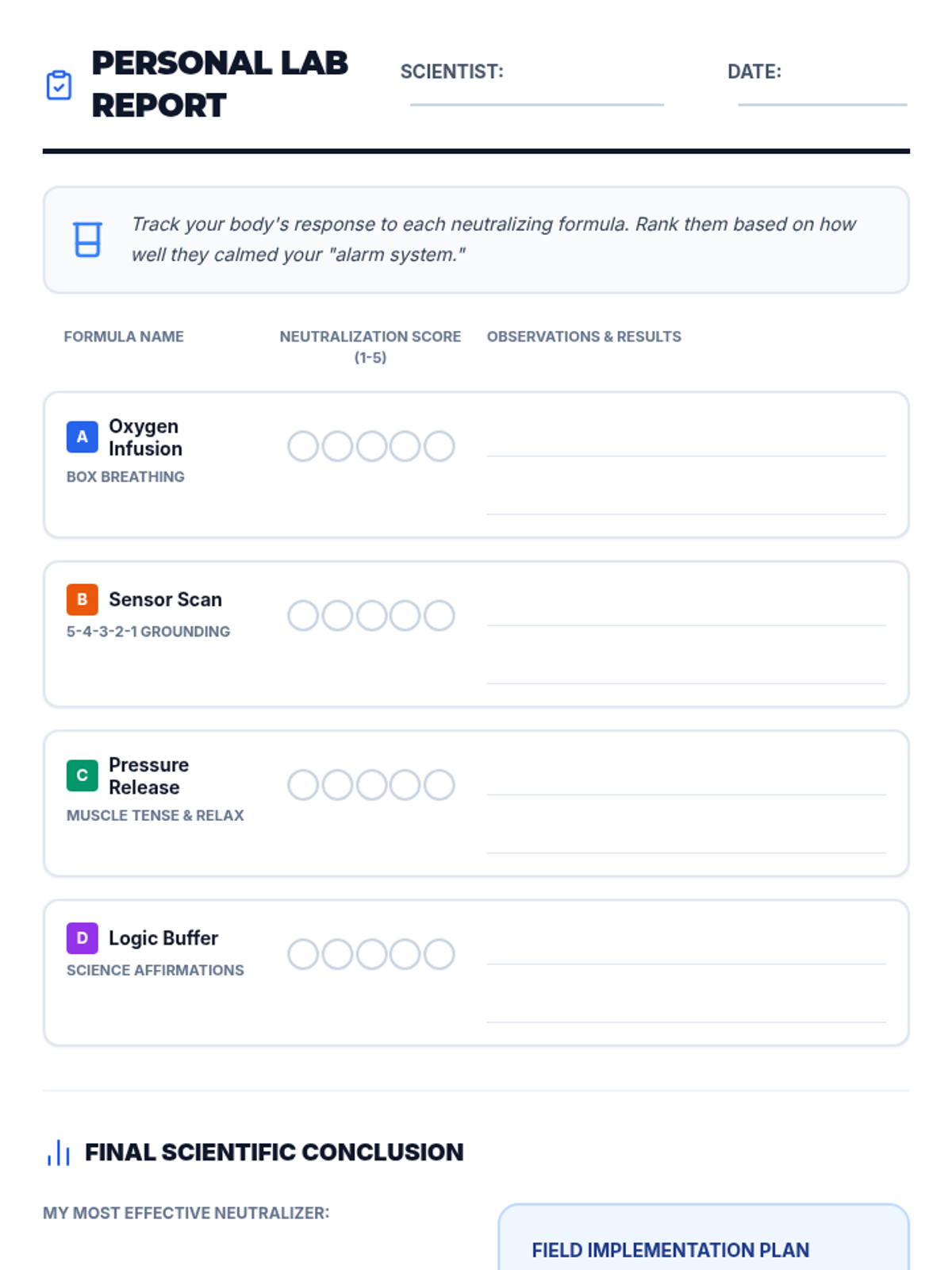
A student-facing worksheet designed as a laboratory report to record reactions to different stress-management formulas and identify personal favorites.
A high-impact slide deck for the Calm Performance Lab, explaining the physiology of stress and the mission to neutralize anxiety through physical techniques.
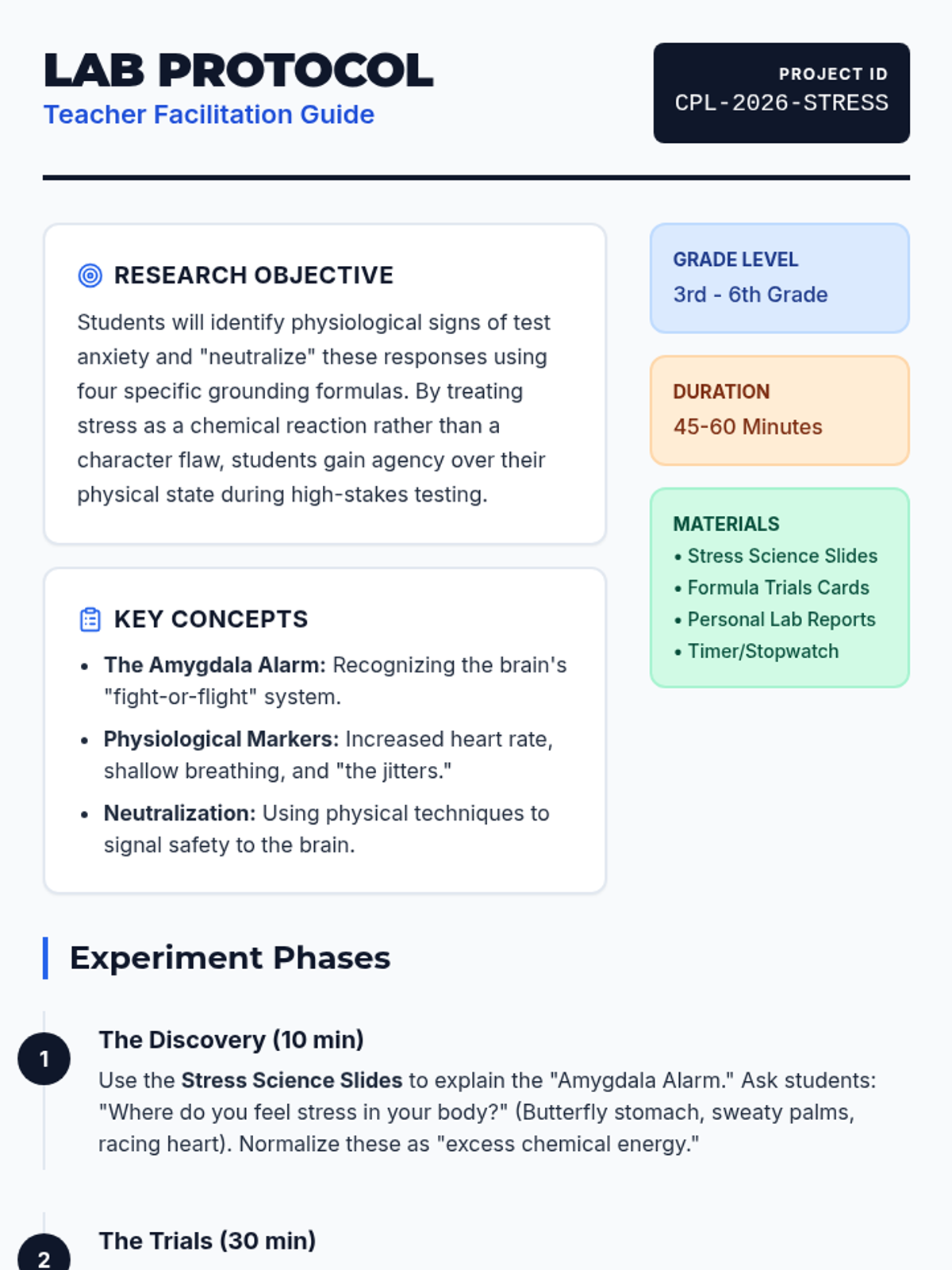
A teacher facilitation guide for the Calm Performance Lab lesson, featuring a laboratory-themed protocol for teaching students stress-management techniques.
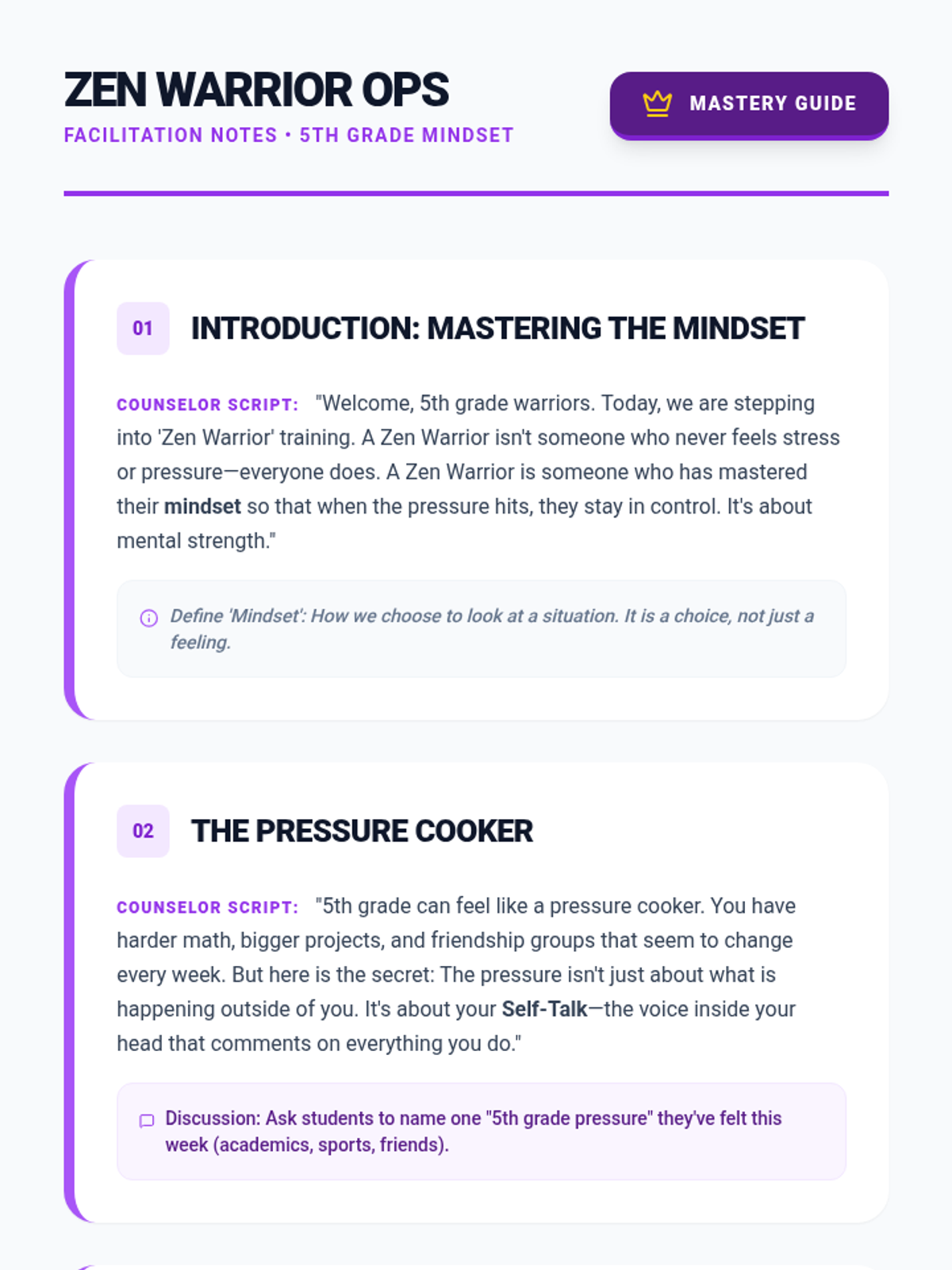
A detailed facilitation guide for the 5th grade 'Zen Warriors' lesson. Includes scripts for explaining 'Thinking Traps', 'The Flip' self-talk technique, and 'The 10-10-10 Rule' for perspective shifting.
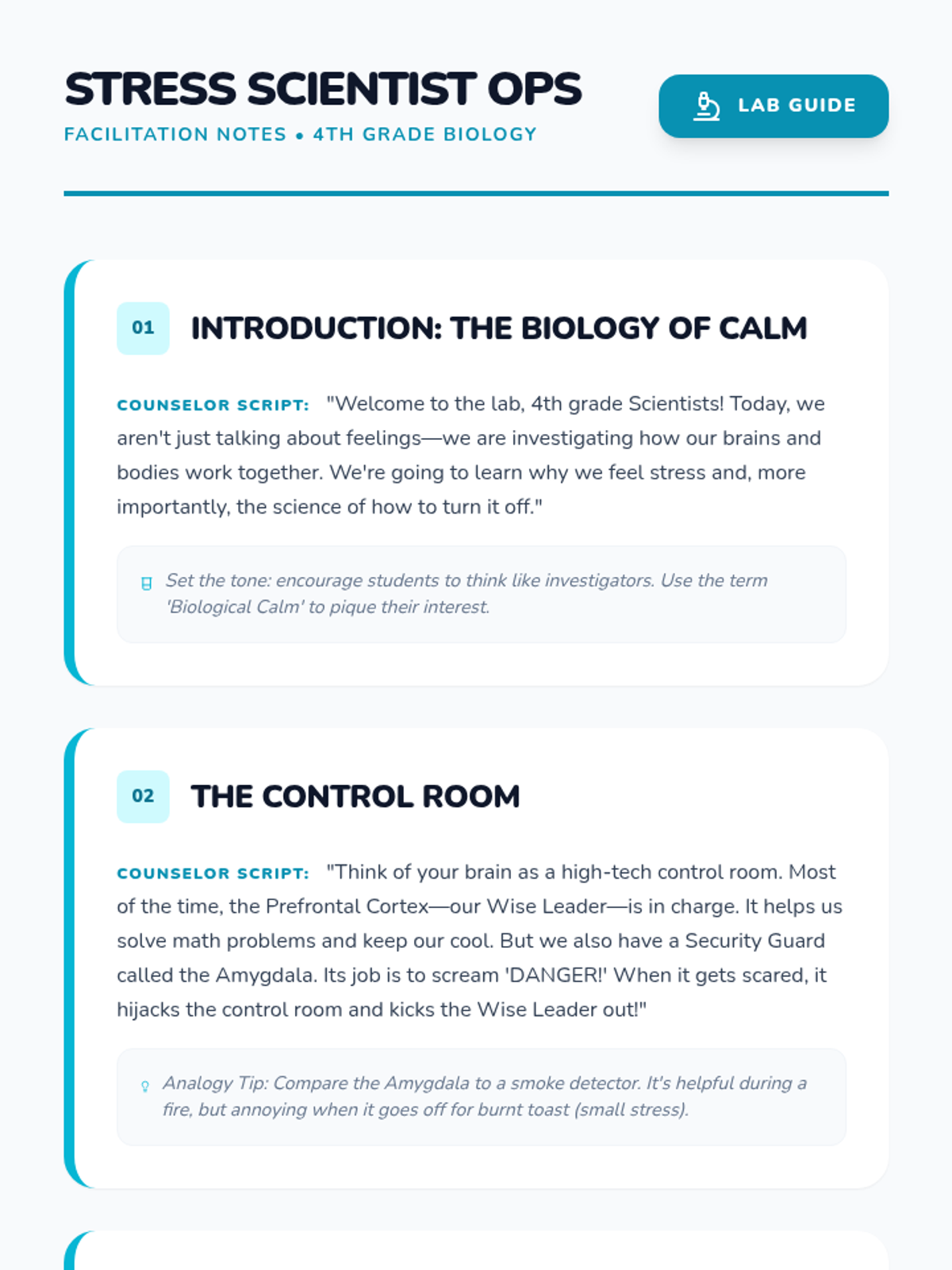
A detailed facilitation guide for the 4th grade 'Stress Scientists' lesson. Includes counselor scripts, biology-themed analogies for brain function, and interactive prompts for the 'Scientific Method' practice.
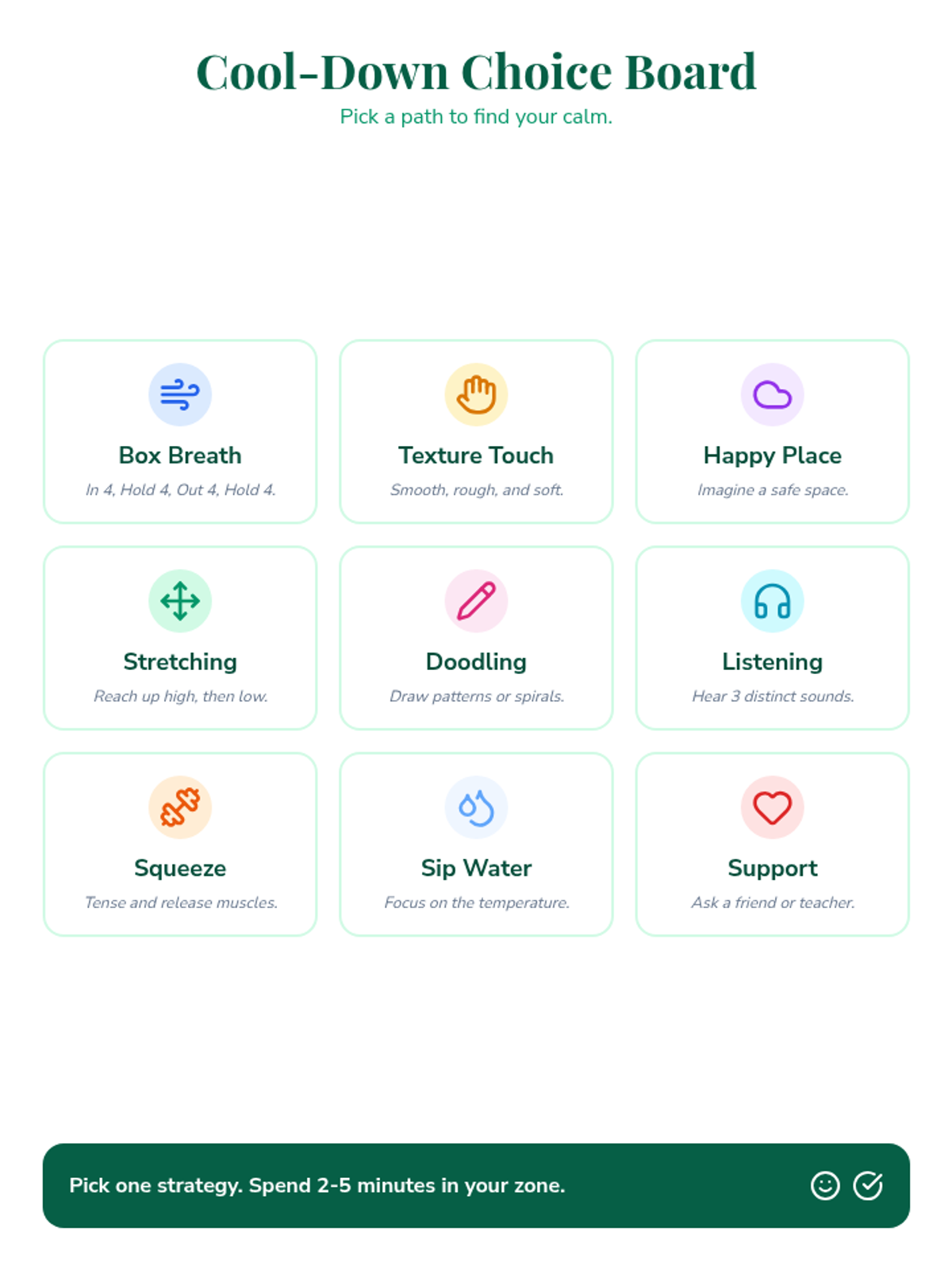
A visual cool-down choice board featuring nine diverse self-regulation strategies including breathing exercises, sensory tasks, and movement breaks.
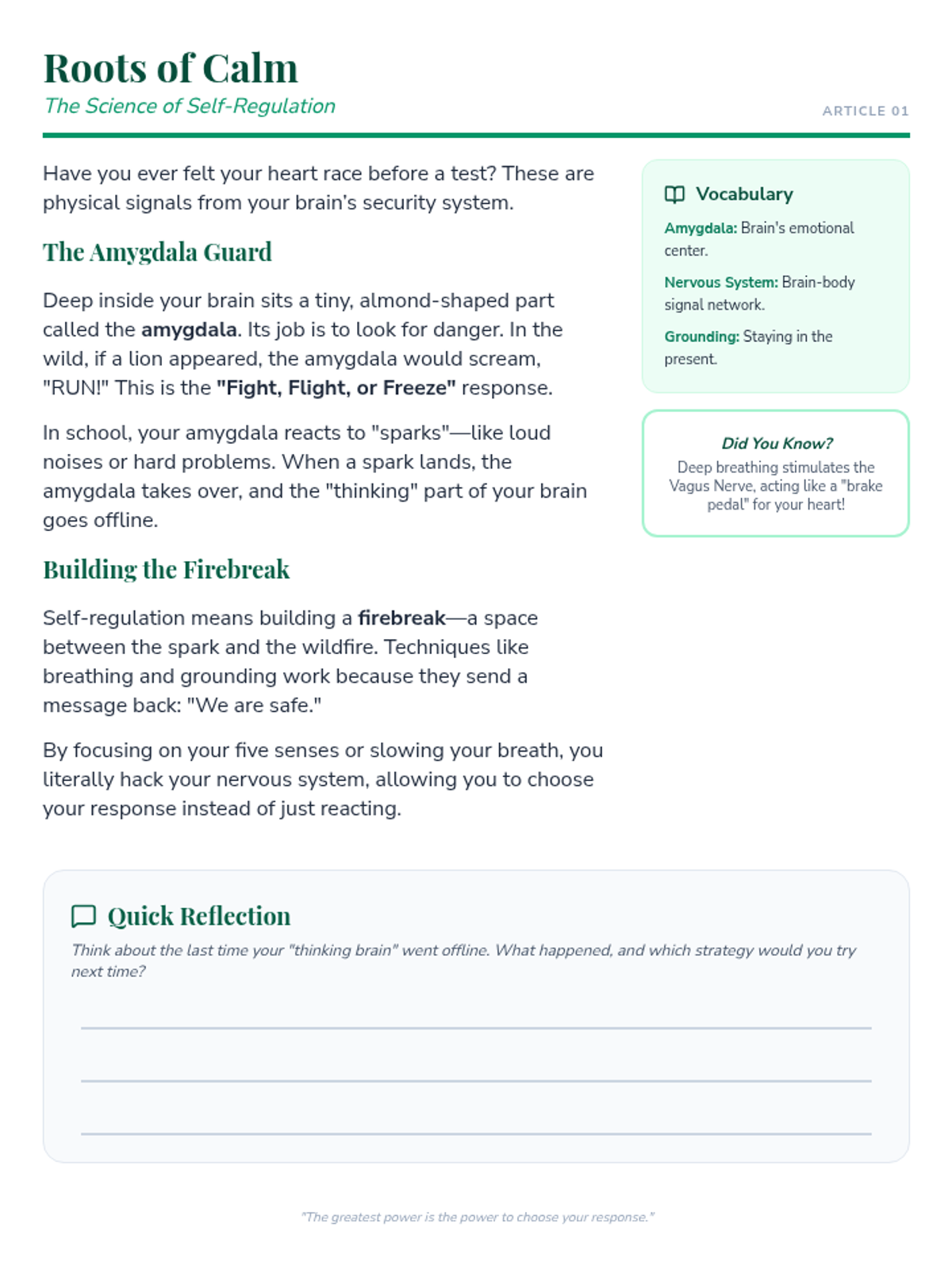
An informational reading passage explaining the science of stress, the role of the amygdala, and how self-regulation techniques like grounding 'hack' the nervous system.
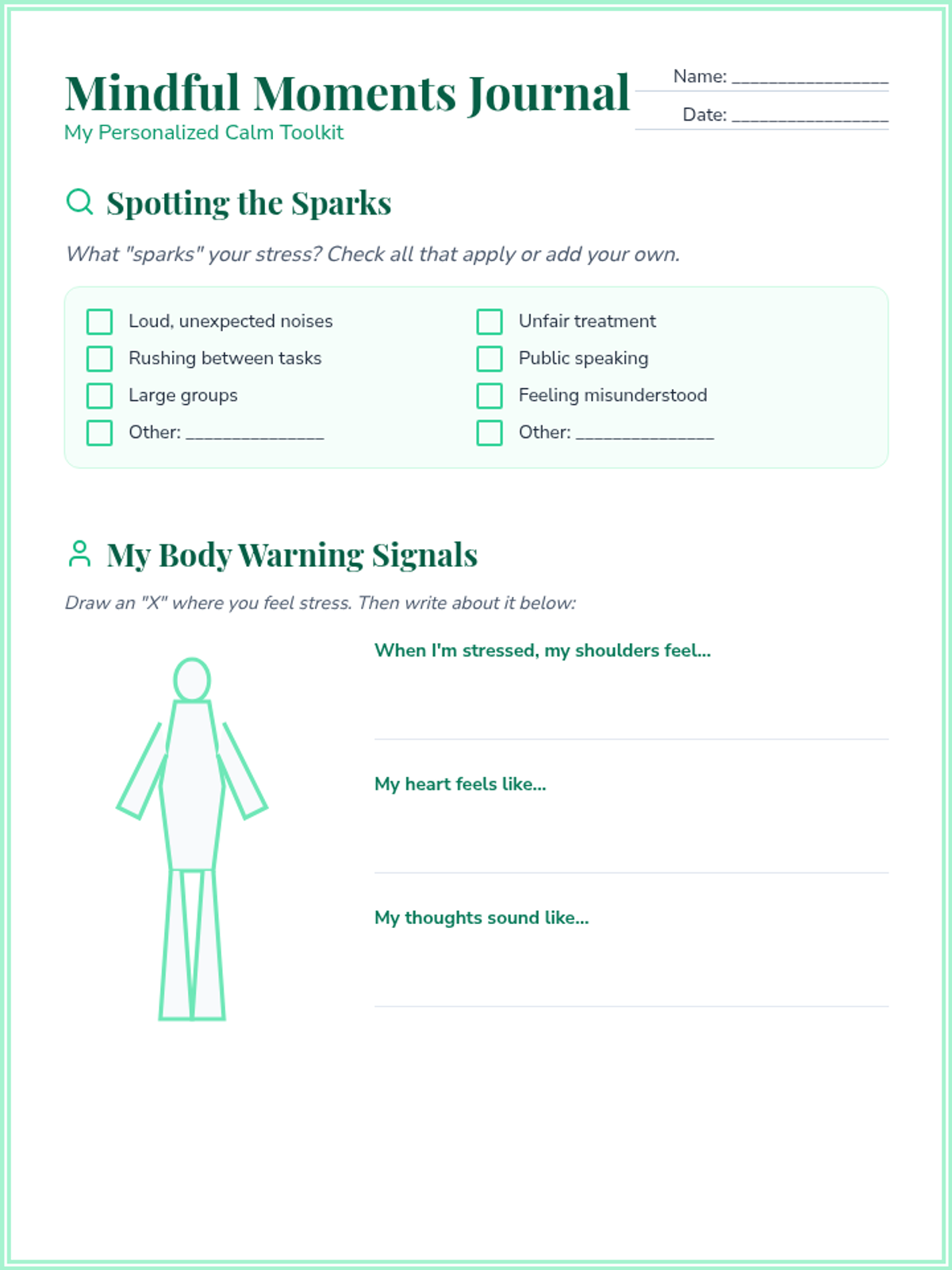
A two-page student journal for identifying stress triggers, mapping physical responses, and building a personalized four-step calm toolkit.
Engaging slides for the Serene Space lesson, introducing the 'amygdala spark' concept, body awareness categories, and the 5-4-3-2-1 grounding technique.
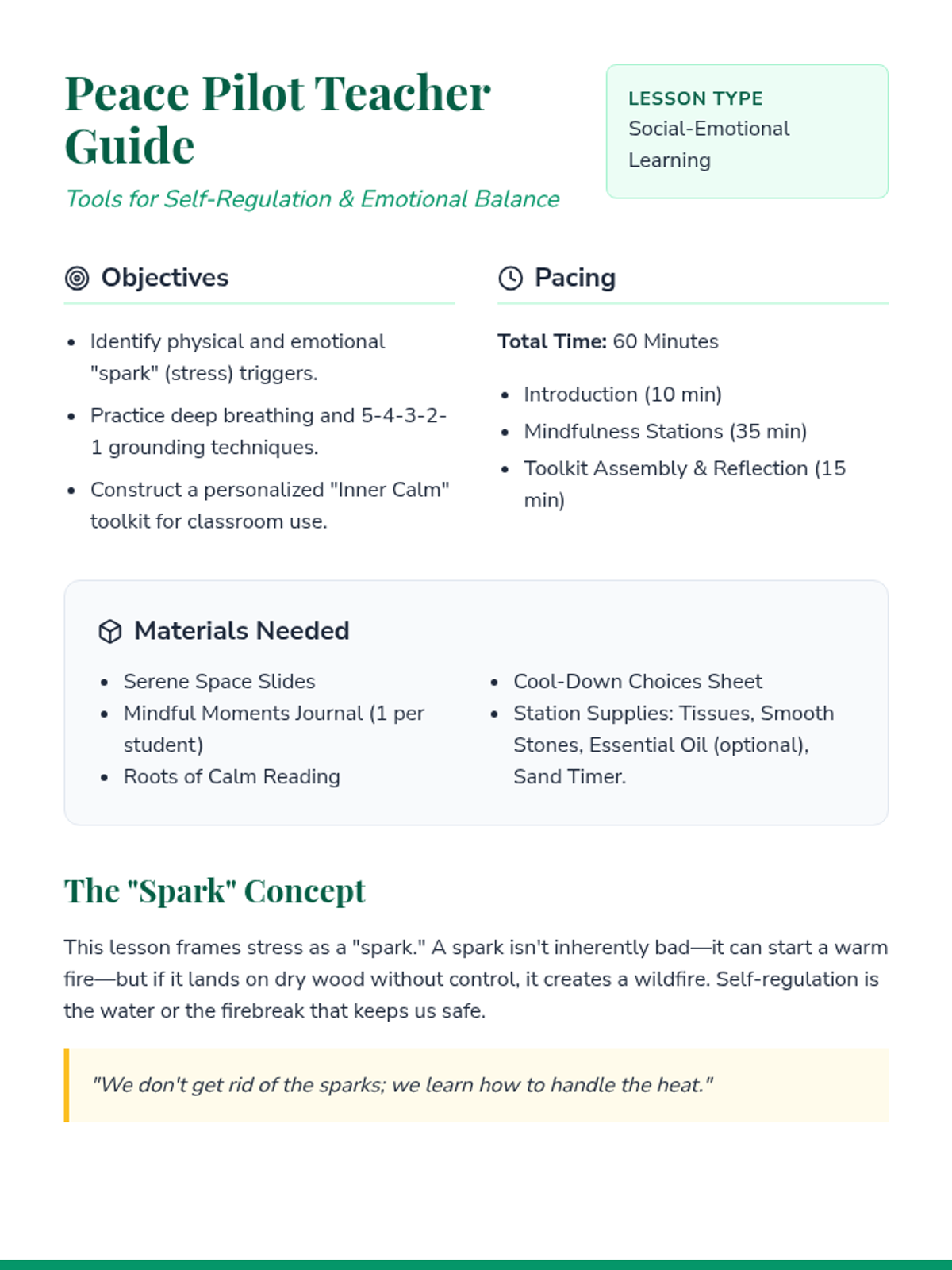
A comprehensive teacher guide for the Inner Calm lesson, featuring the 'spark' concept, station rotation instructions, and facilitation tips for self-regulation.
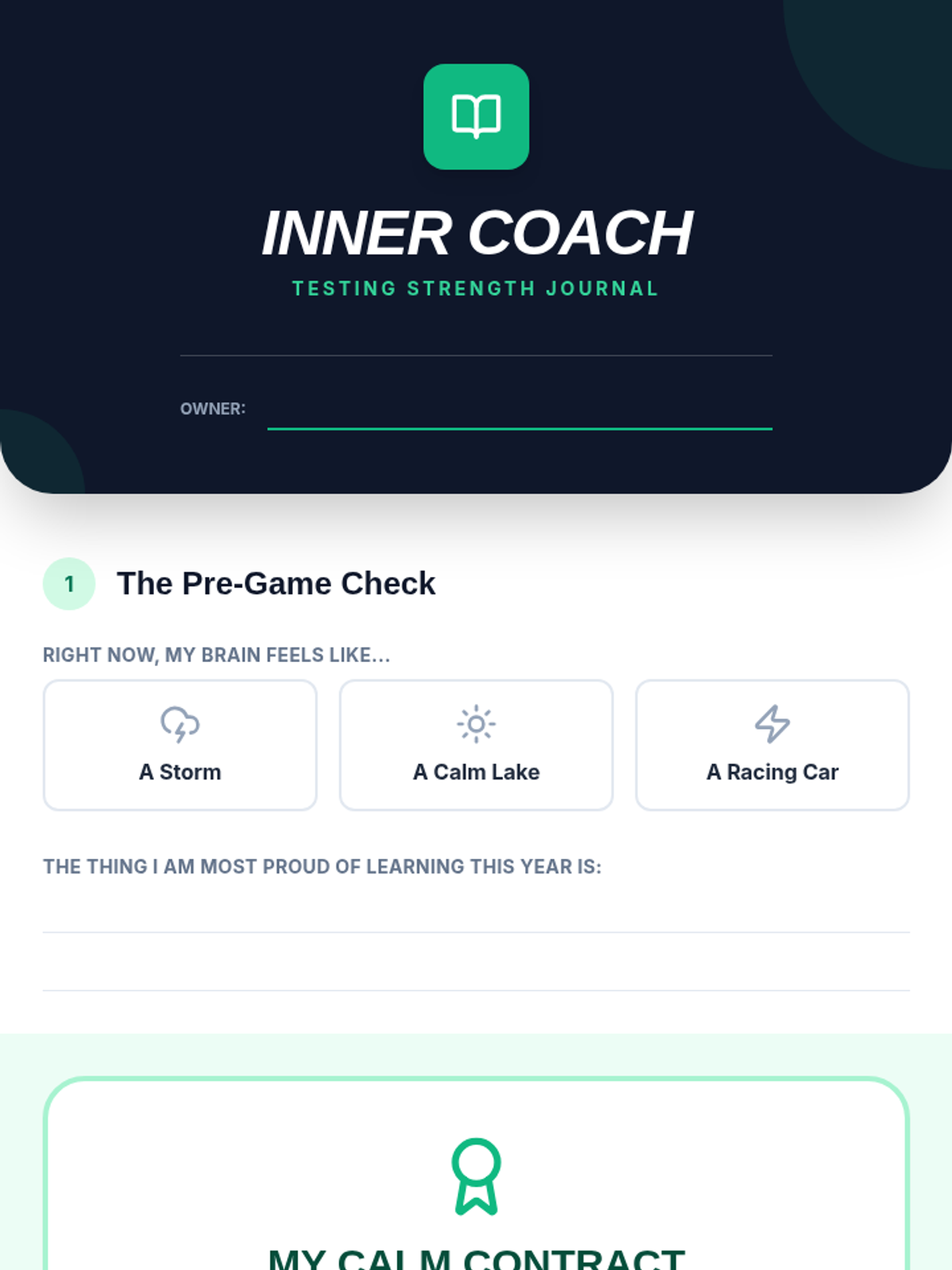
A personal reflection journal for students to document their testing mindset, identify proud moments, and sign a "Calm Contract" commitment.
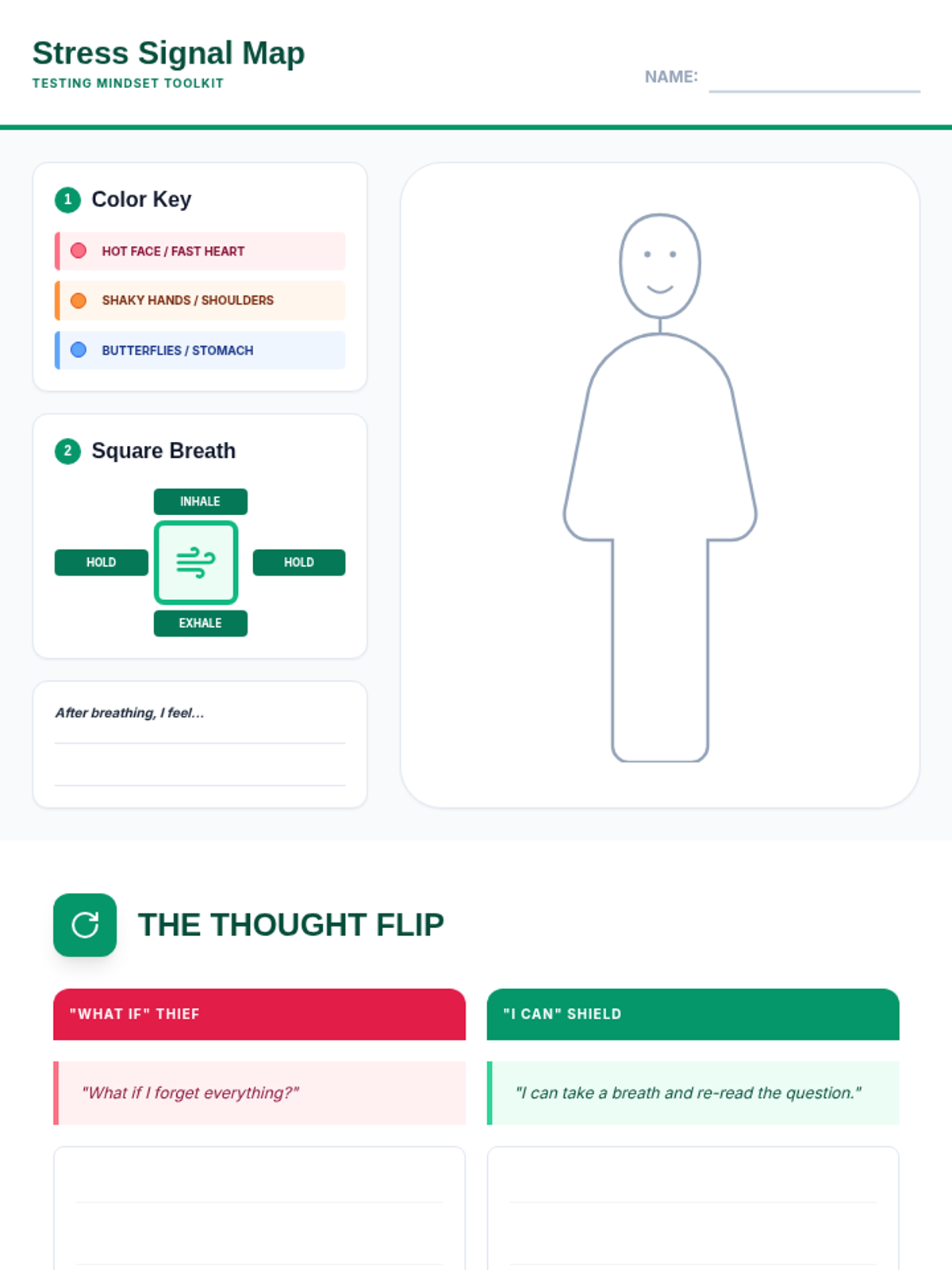
A two-page student worksheet for mapping physical stress cues and practicing the "thought flip" technique to reframe testing anxiety.
A presentation designed to guide students through the Calm Before the STAAR workshop, featuring visual aids for breathing, stress identification, and thought reframing.
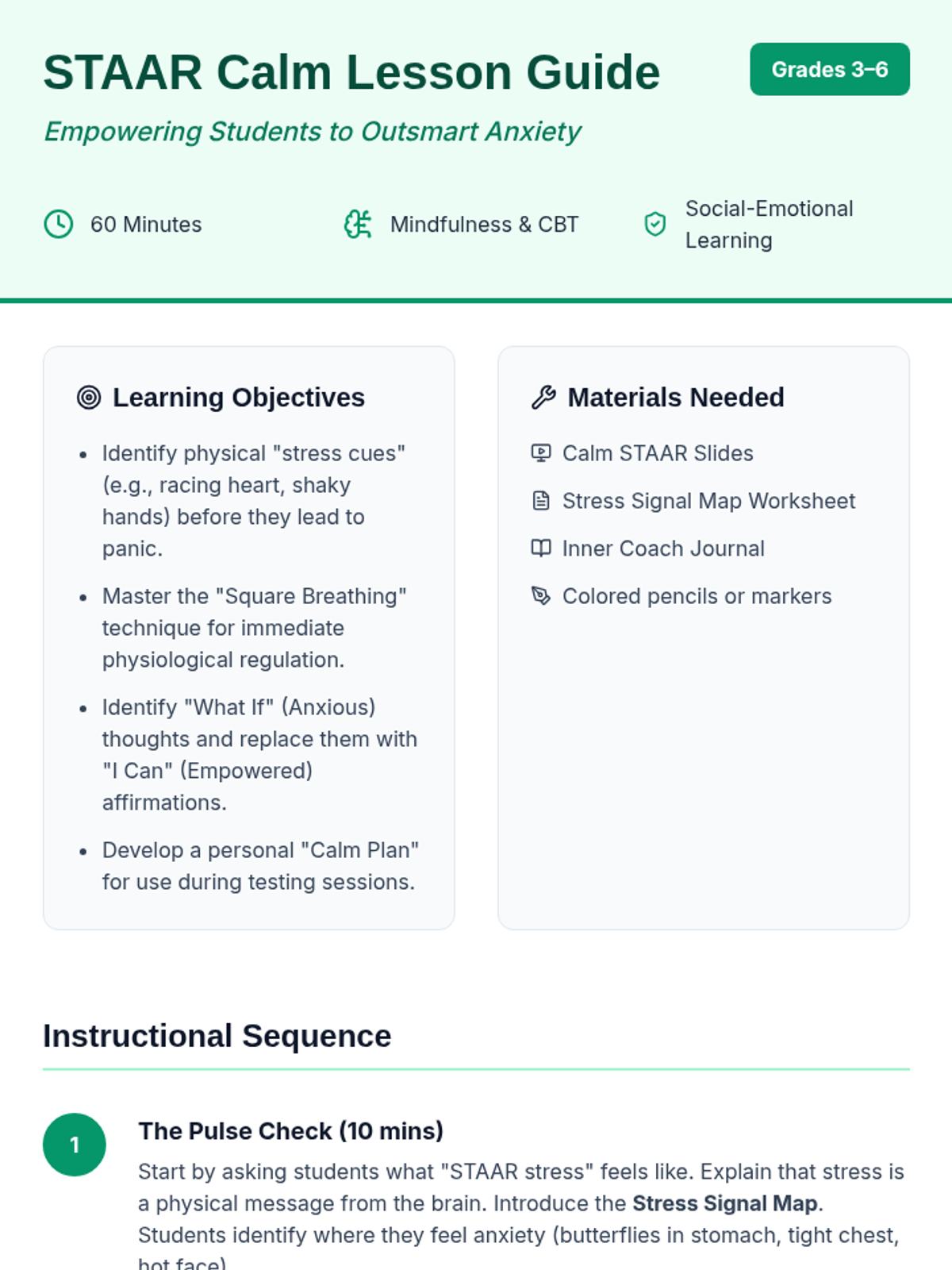
A detailed facilitation guide for teachers to lead the Calm Before the STAAR workshop, including learning objectives, materials, and step-by-step instructions.
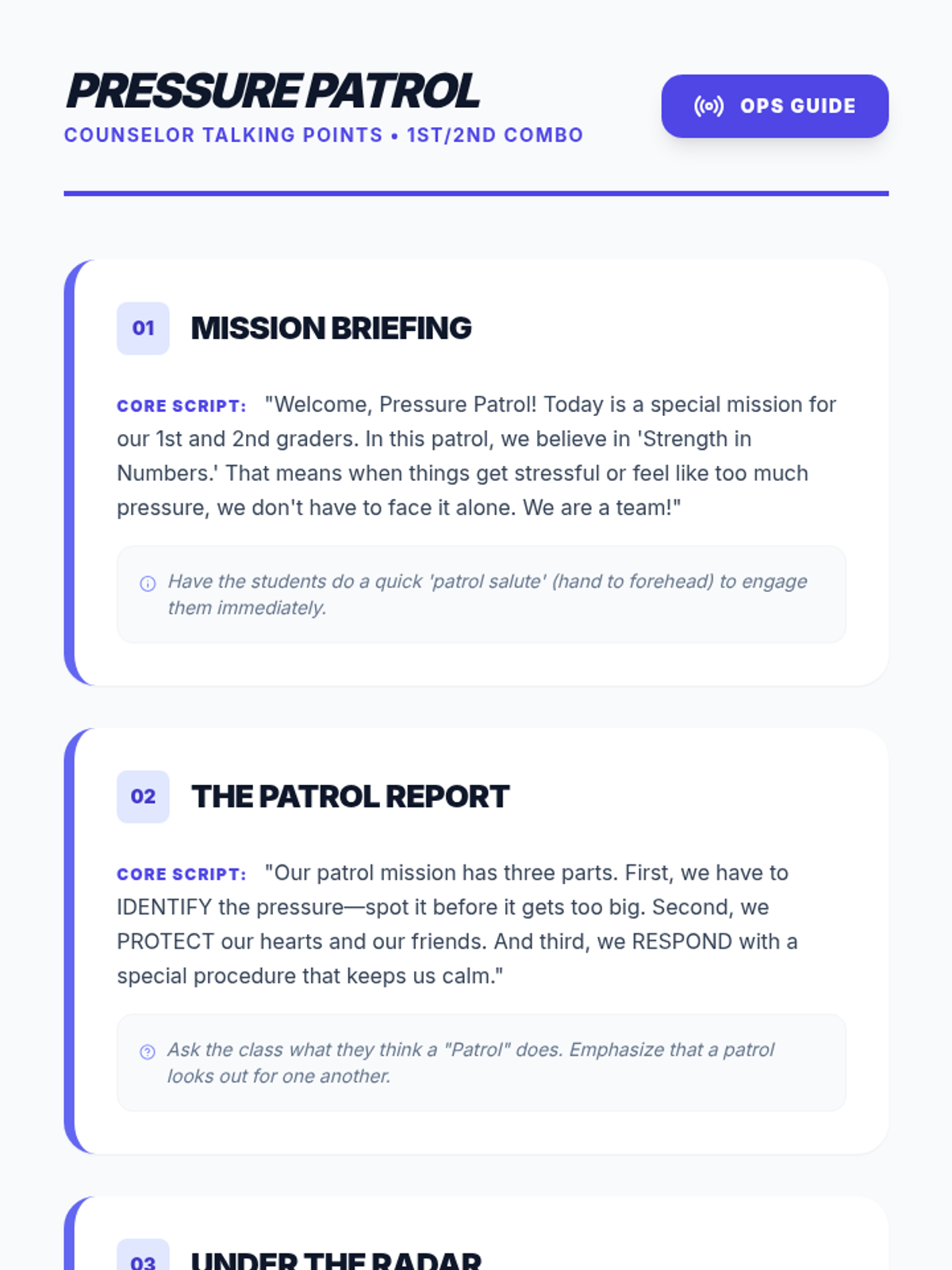
A detailed slide-by-slide facilitation guide for the 1st/2nd grade combo lesson 'Pressure Patrol'. Provides specific counselor scripts, interactive activity prompts, and pedagogical tips for each slide.
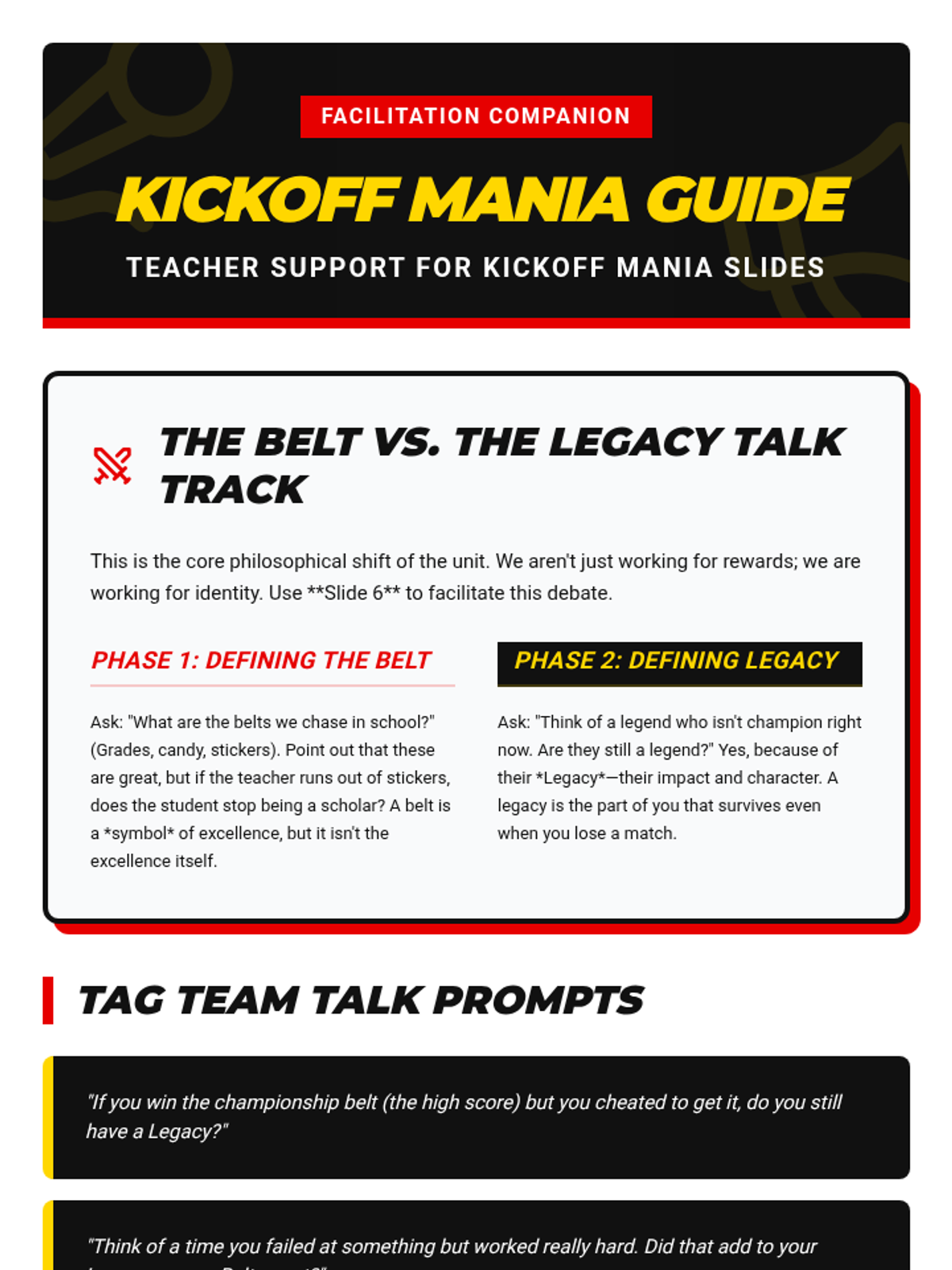
A detailed teacher facilitation companion for the Kickoff Mania slides, providing talk tracks for the 'Belt vs. Legacy' discussion, discussion prompts, and implementation steps for the Ubuntu mission.
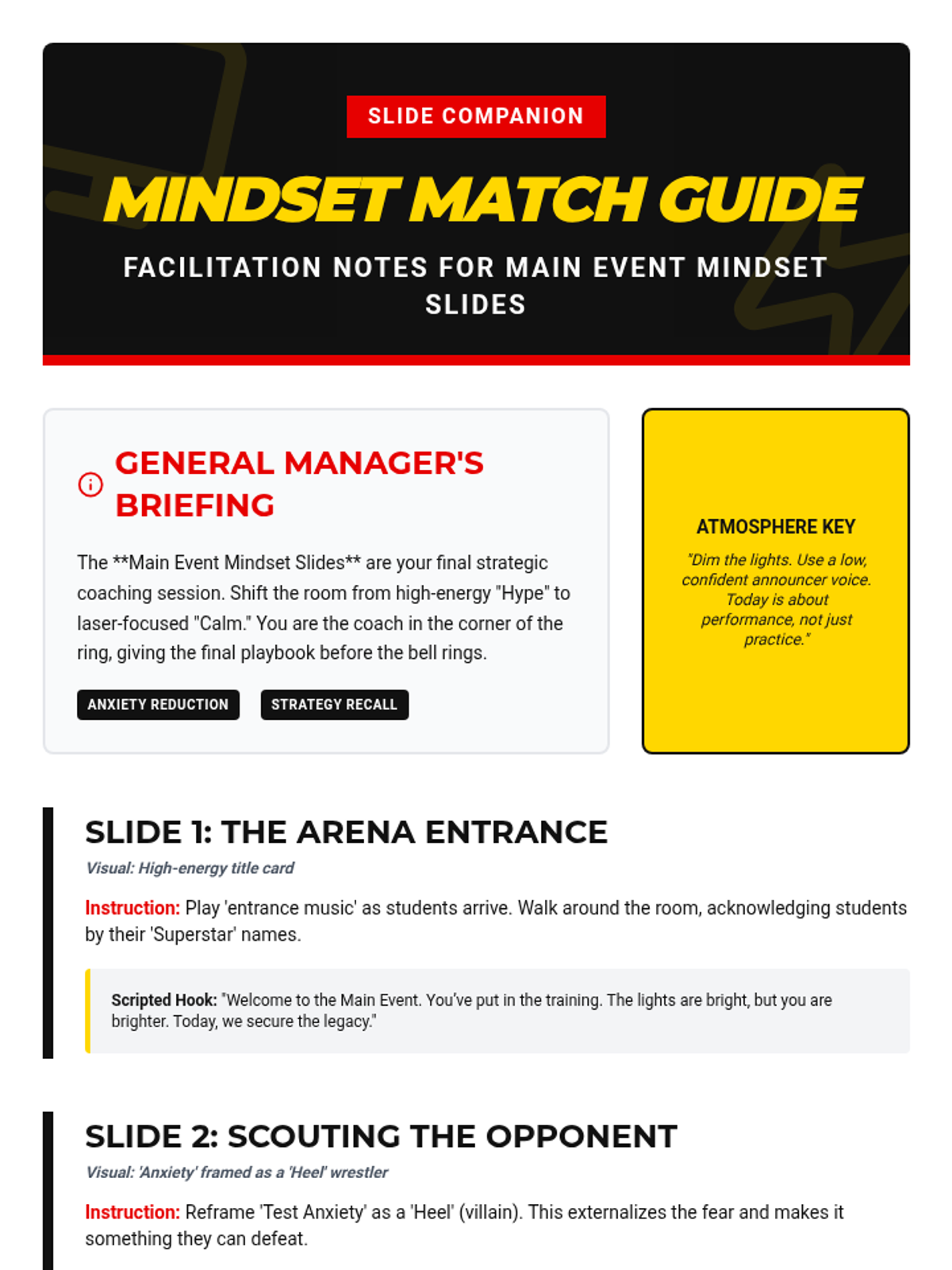
A teacher-facing companion guide for the 'Main Event Mindset' slides, providing slide-by-slide scripts, instructional instructions for managing test anxiety, and post-test decompression strategies.
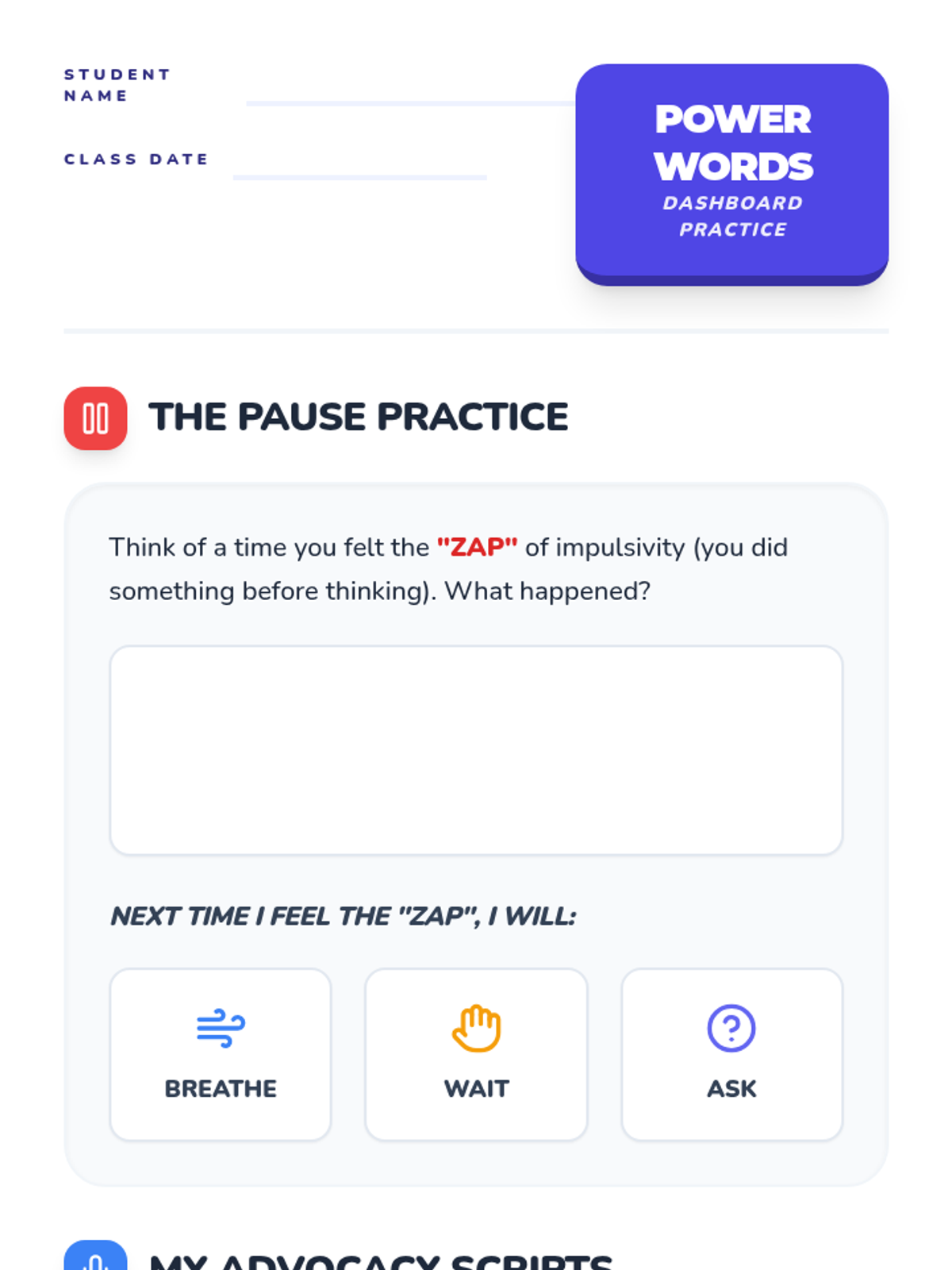
A student-facing worksheet for practicing self-advocacy scripts and reflecting on impulsive behaviors. It includes guided scenarios and creative spaces for students to develop their own 'Power Words'.
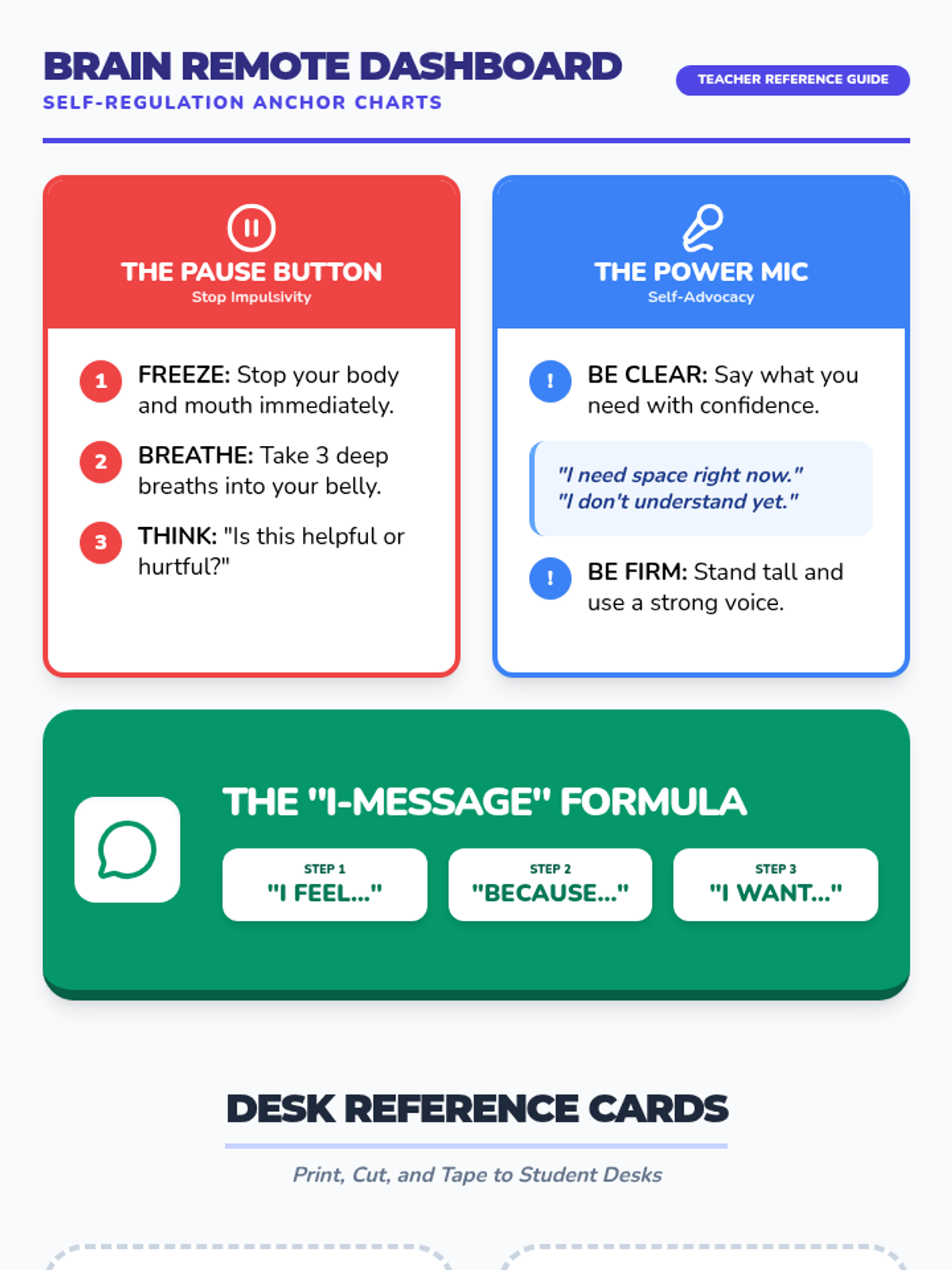
A set of visual anchor charts and desk reference cards featuring the 'Brain Remote' concept. It provides clear, actionable steps for students to manage impulsivity and use self-advocacy language.
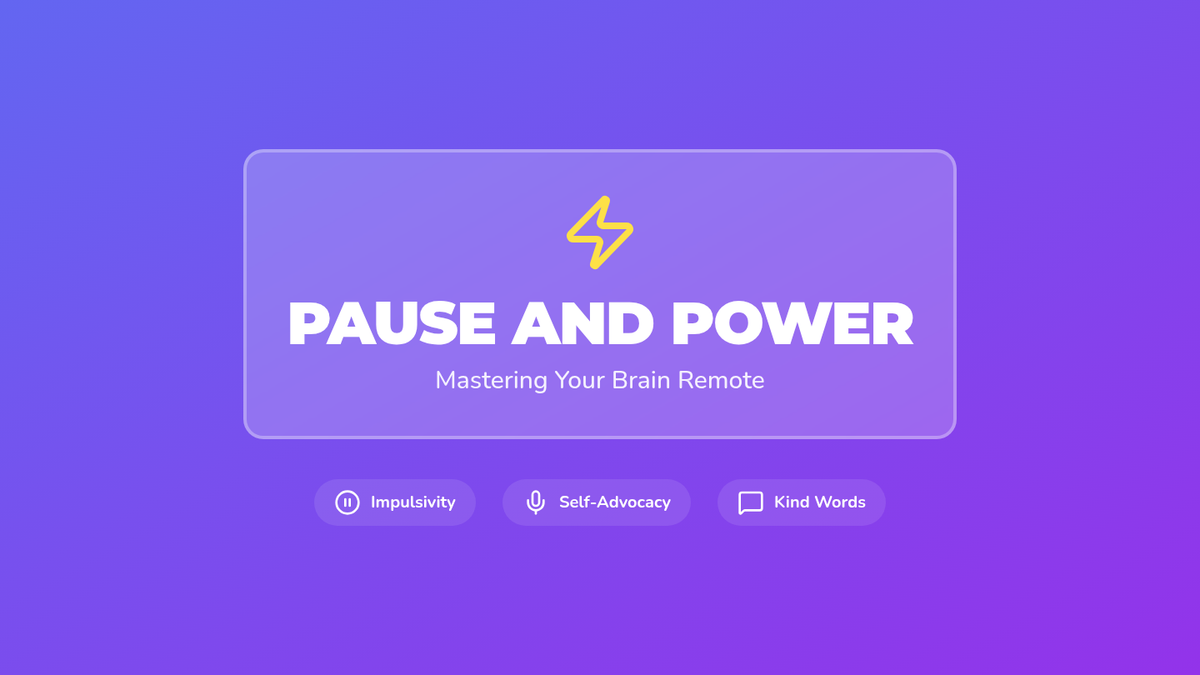
A vibrant, interactive slide deck designed for touchscreen displays. It uses the 'Brain Remote' metaphor to teach impulsivity control, conflict resolution, and self-advocacy through engaging visuals and prompts.
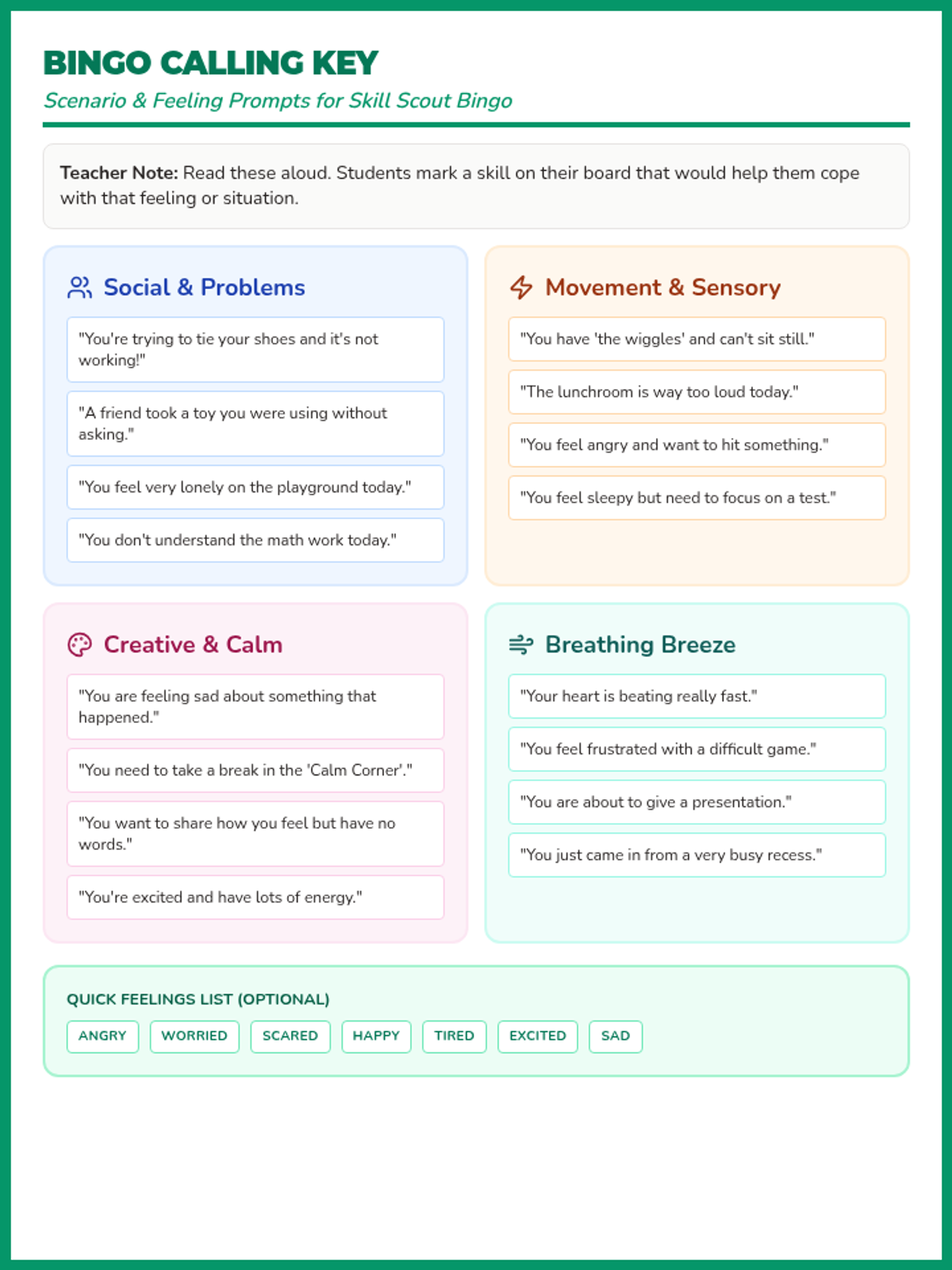
A teacher resource for the Skill Scout Bingo game, featuring various scenario and feeling prompts categorized by coping skill type to facilitate gameplay and discussion.
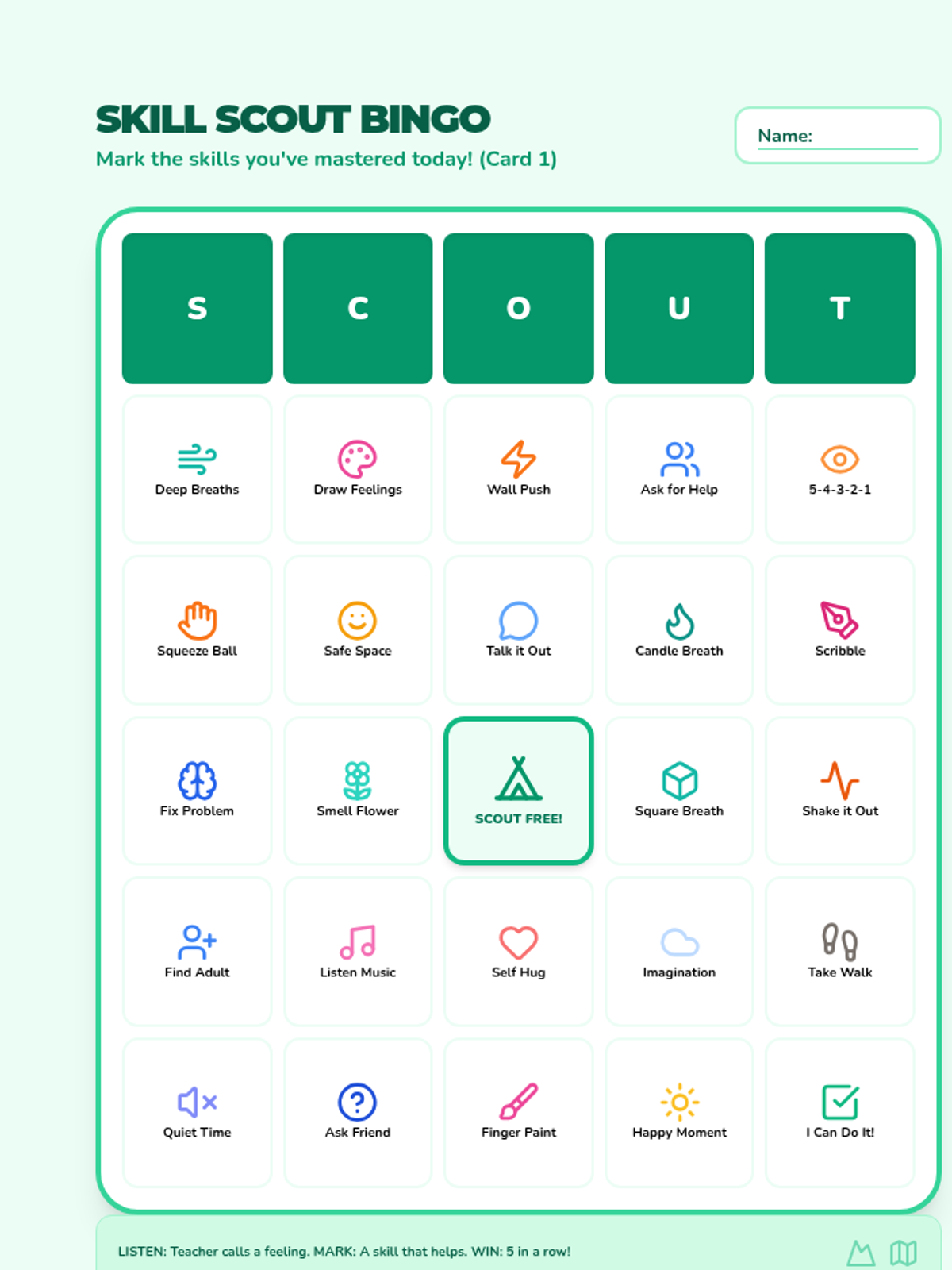
A collection of five unique 5x5 bingo cards featuring various coping skills categorized by movement, breathing, art, and social support. Each card is randomized to allow for group play. Designed for K-4th grade with clear icons and labels.
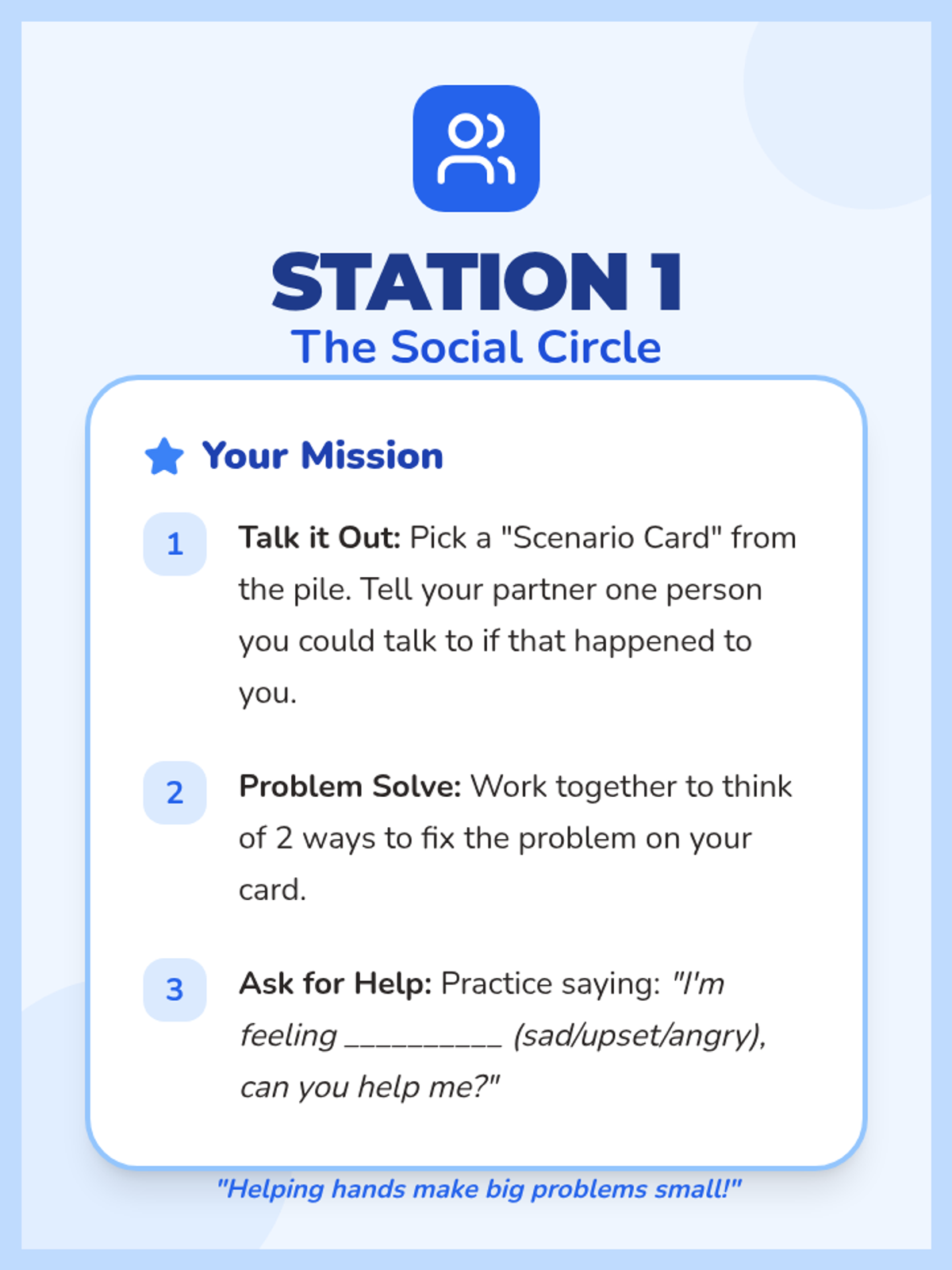
Large-format instruction cards for four coping skills stations: Social Circle (Problem Solving), Movement Grove (Physical/Sensory), Creative Studio (Art), and Breathing Breeze. Each card includes simple, numbered missions and a calming quote.
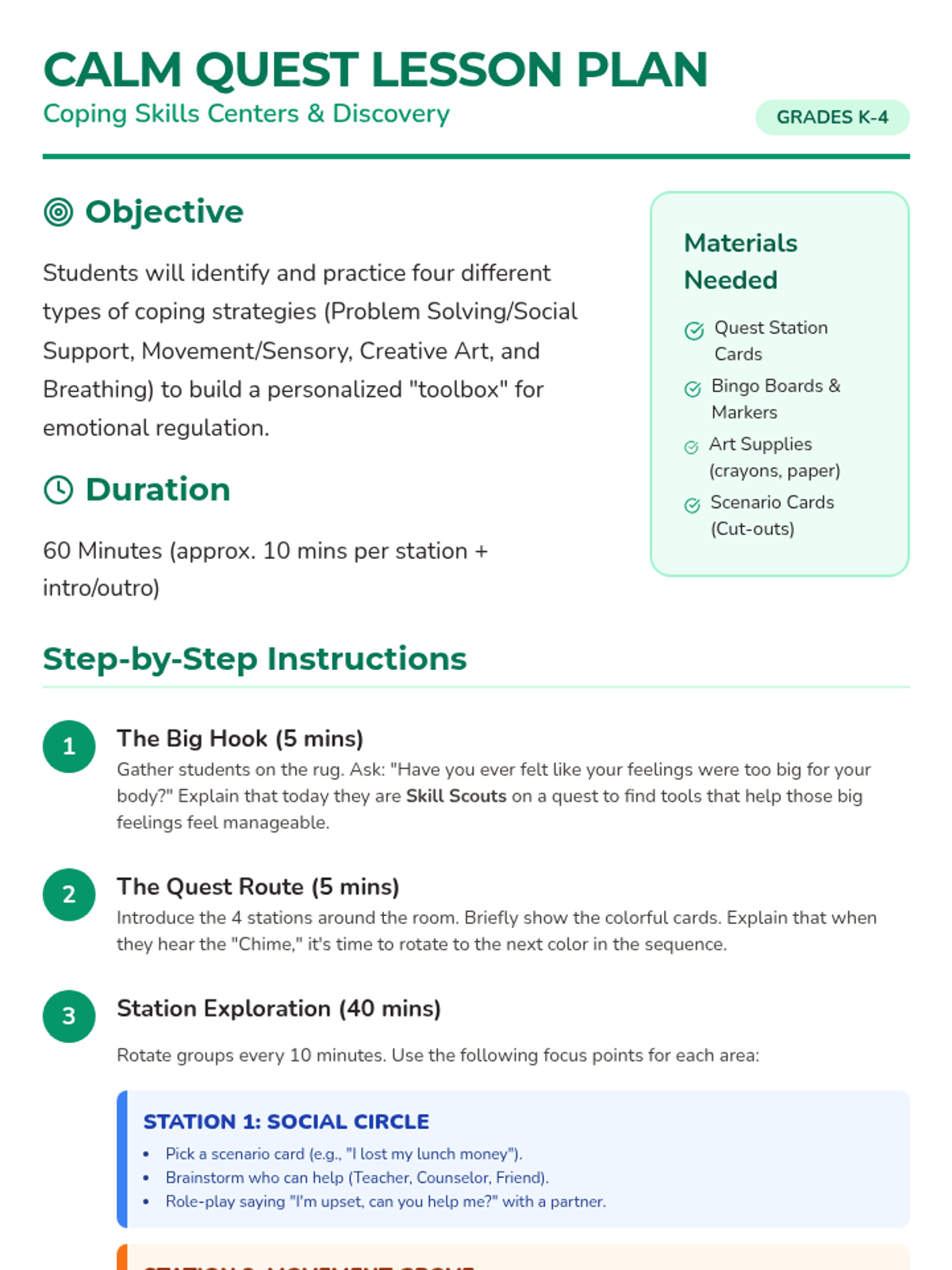
A detailed, step-by-step lesson plan for teachers to facilitate coping skills centers. It includes an overview, required materials, and specific procedures for introduction, rotation, and a concluding bingo game.
Day 5 slides focusing on the transition from awareness to acceptance and the Acceptance Ally pledge. Expanded for a full 15-minute lesson with teacher notes. Revised layout for better PDF rendering of teacher notes. Now with improved spacing and contrast. Now with improved spacing and contrast.
Day 4 slides introducing the 'Inclusion Protocol': Wait, Invite, and Adjust. Now expanded for a full 15-minute lesson with teacher notes. Revised layout for better PDF rendering of teacher notes. Now with improved spacing and contrast.
Day 3 slides focusing on communication diversity, including AAC, body language, and non-traditional listening styles. Expanded for a full 15-minute lesson with teacher notes. Revised layout for better PDF rendering of teacher notes. Now with improved spacing and contrast.
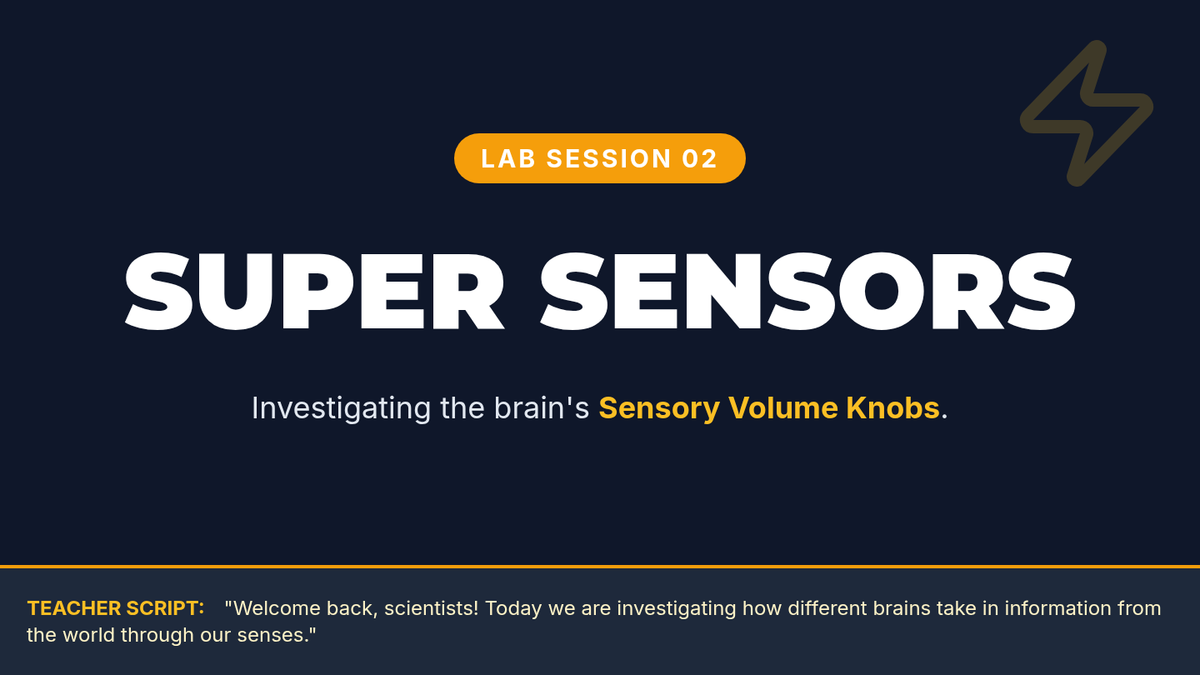
Day 2 slides exploring sensory processing differences and the 'volume knob' analogy for hyper- and hypo-sensitivity. Expanded for a full 15-minute lesson with teacher notes. Revised layout for better PDF rendering of teacher notes.
Day 1 slides focused on introducing the 'Mind Lab' and the concept of Neurodiversity using the fingerprint analogy. Now expanded with teacher notes and more slides for a full 15-minute lesson. Revised layout for better PDF rendering of teacher notes. Now with improved spacing and contrast.
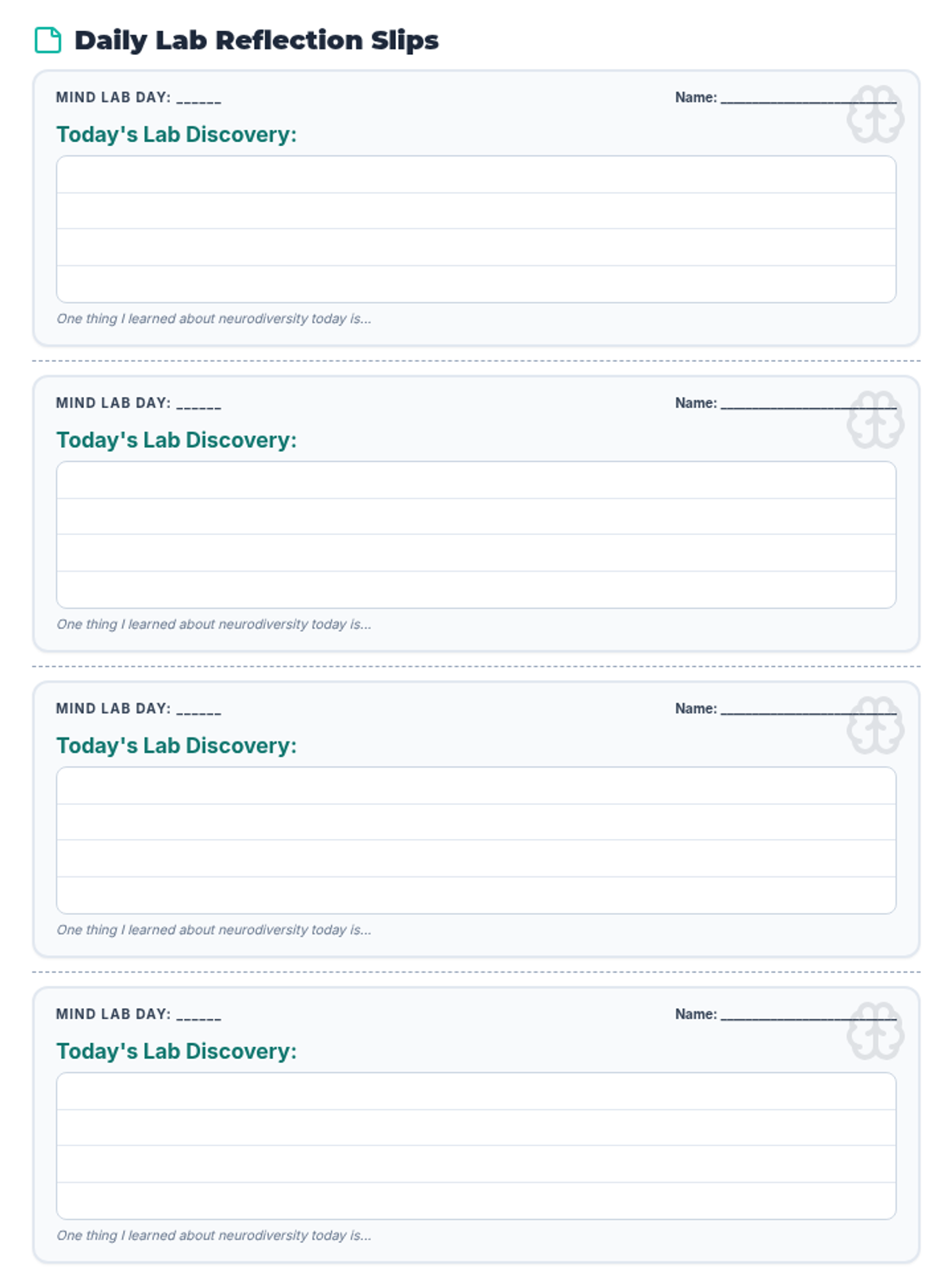
Printable exit tickets for students to record daily 'Lab Discoveries'. Revised for 4 slips per page with improved writing space and contrast.
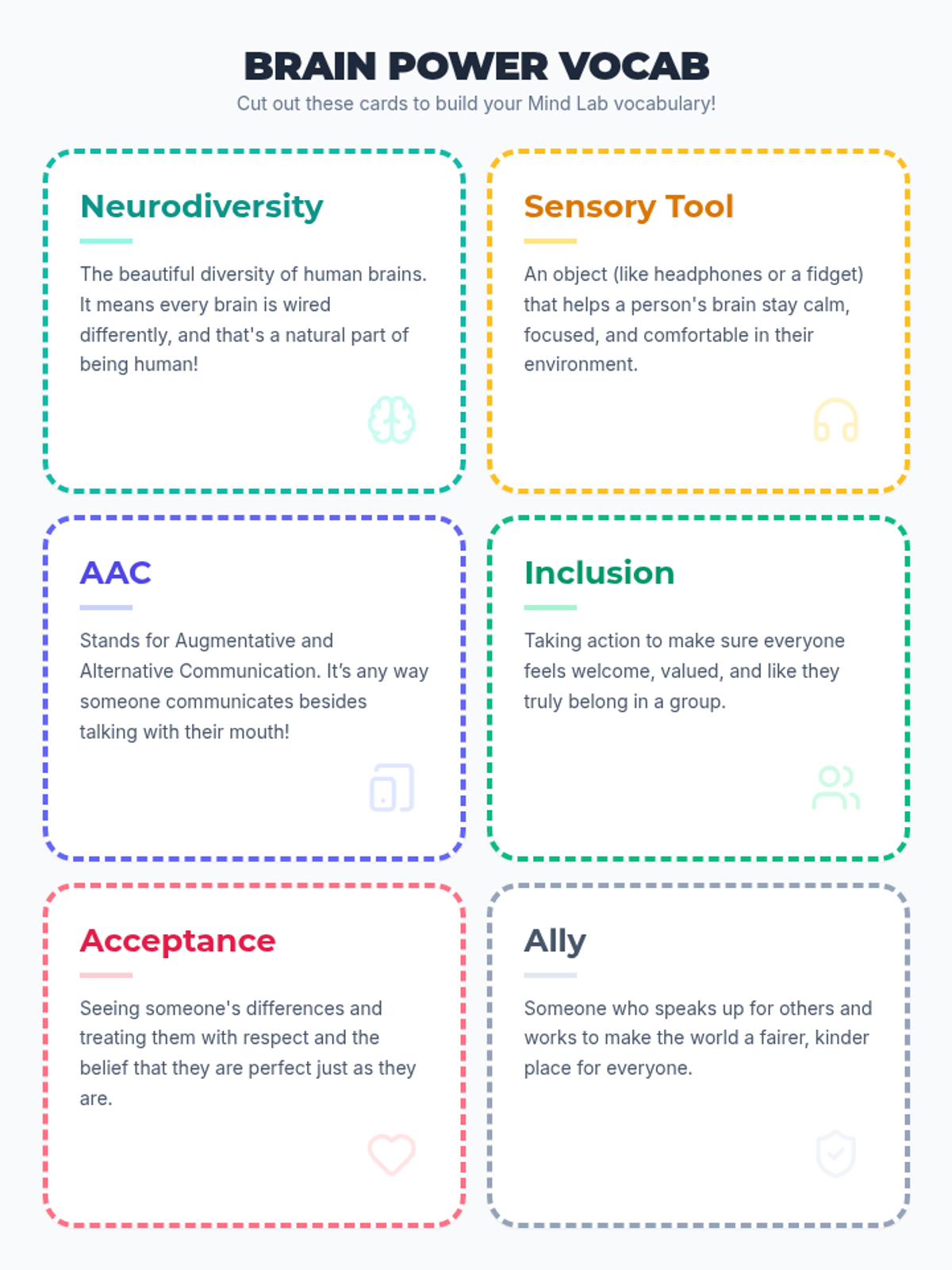
A set of 6 printable vocabulary cards with definitions and icons, designed for 3rd-5th graders to learn key terms related to Autism Acceptance. Revised to fit on a single page.
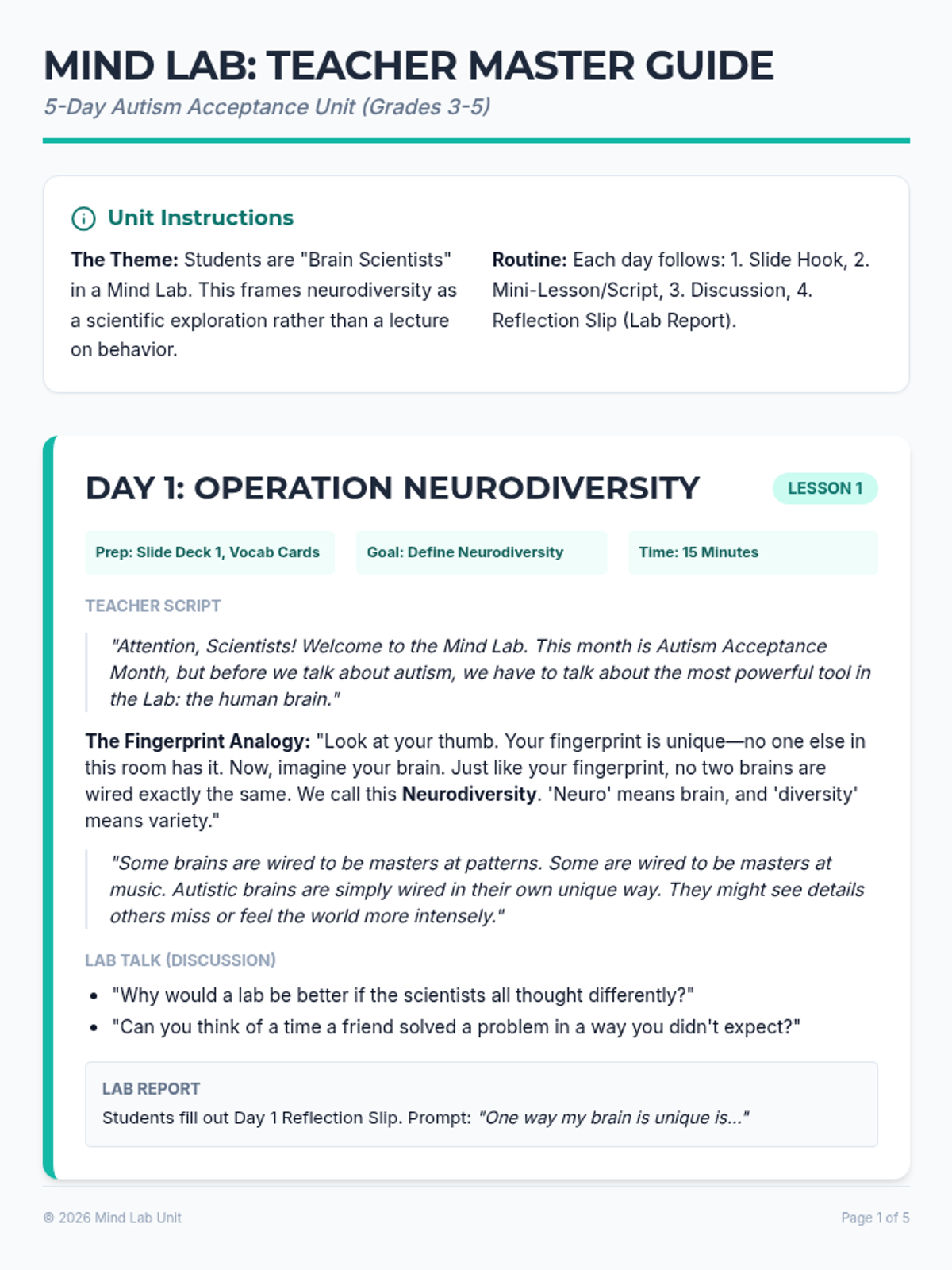
A highly detailed 5-page teacher guide for the Mind Lab unit, featuring day-by-day scripts, discussion prompts, prep checklists, and specific learning objectives for each 15-minute session.
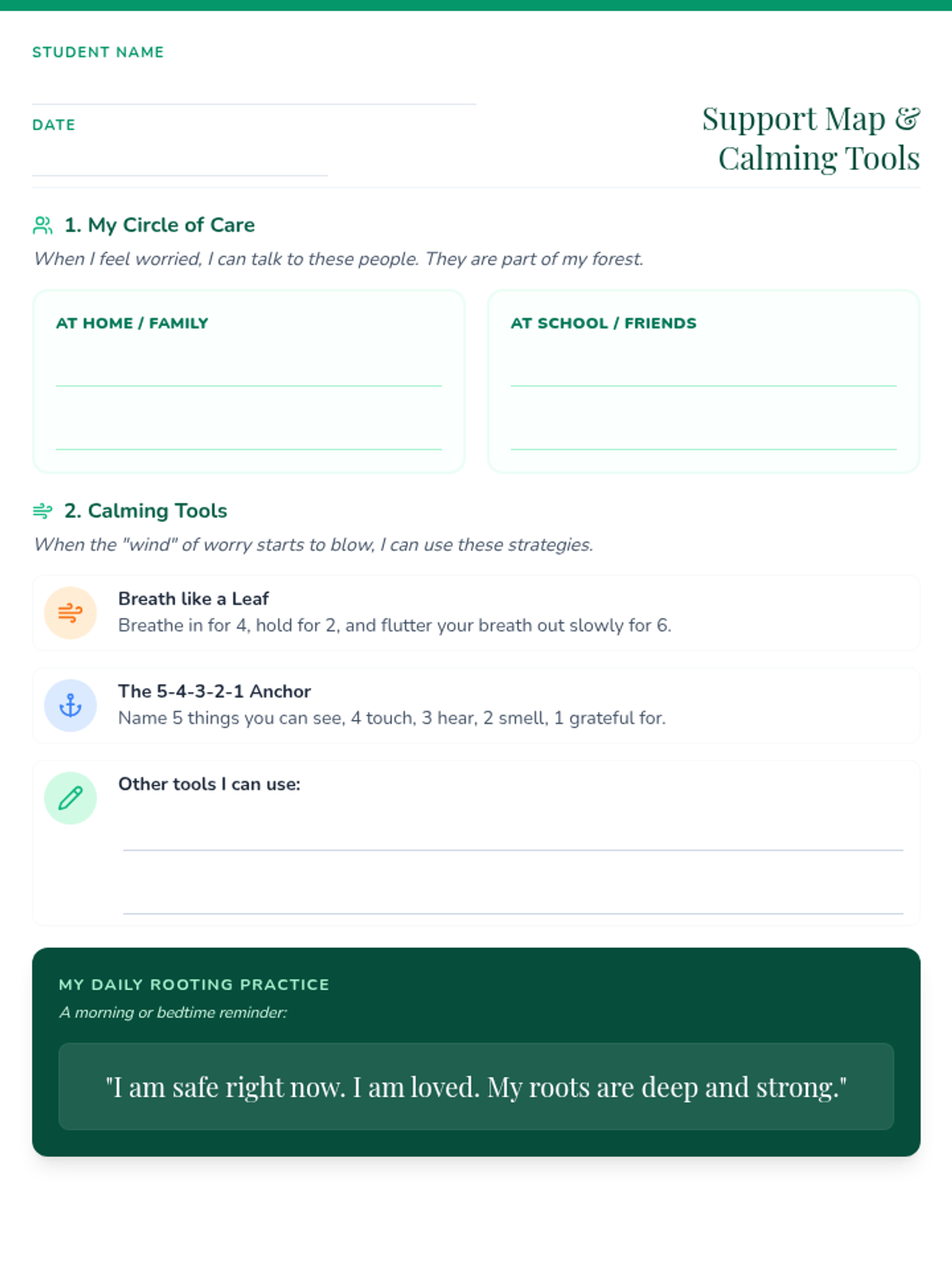
A structured worksheet to help students map their support systems and practice specific anxiety-coping strategies.
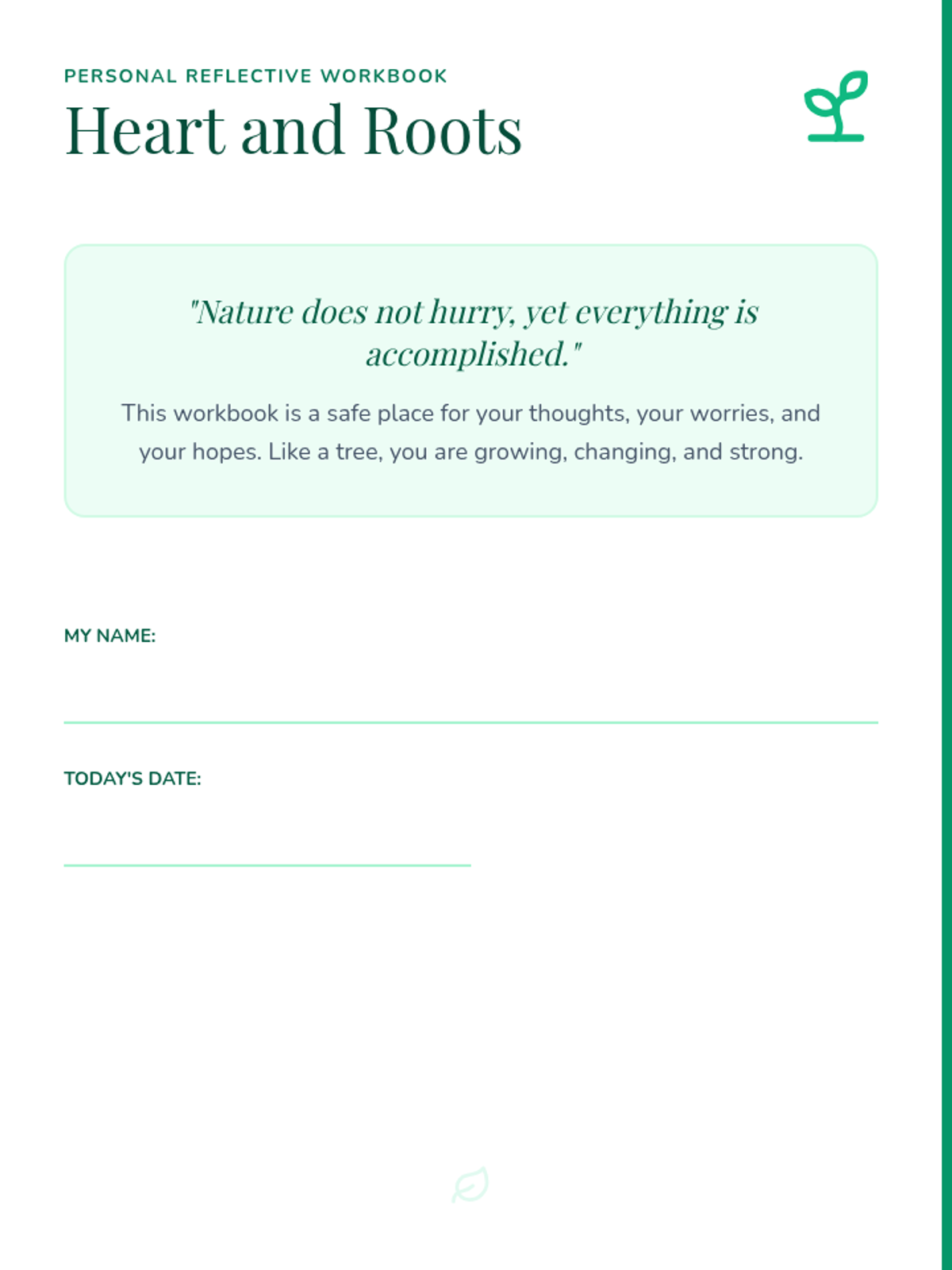
A reflective workbook for students to explore their thoughts on life cycles and create expressive art through a "Memory Tree" activity.
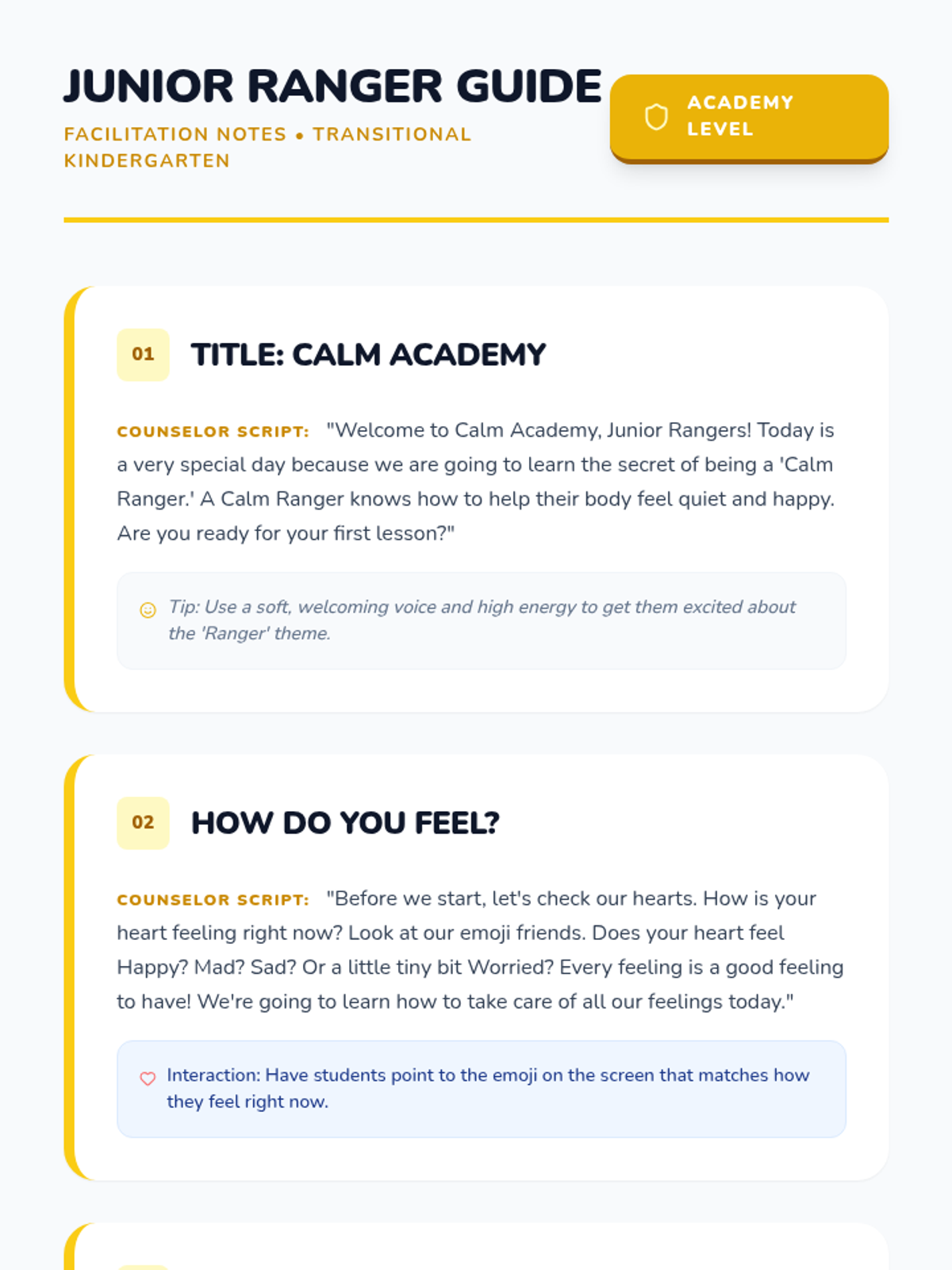
A detailed facilitation guide for the TK lesson 'Foundations of Calm'. Includes scripts for the 'Wiggle & Freeze' activity, Turtle Breathing technique, and the Butterfly Hug demonstration. Updated to match the Academy theme.
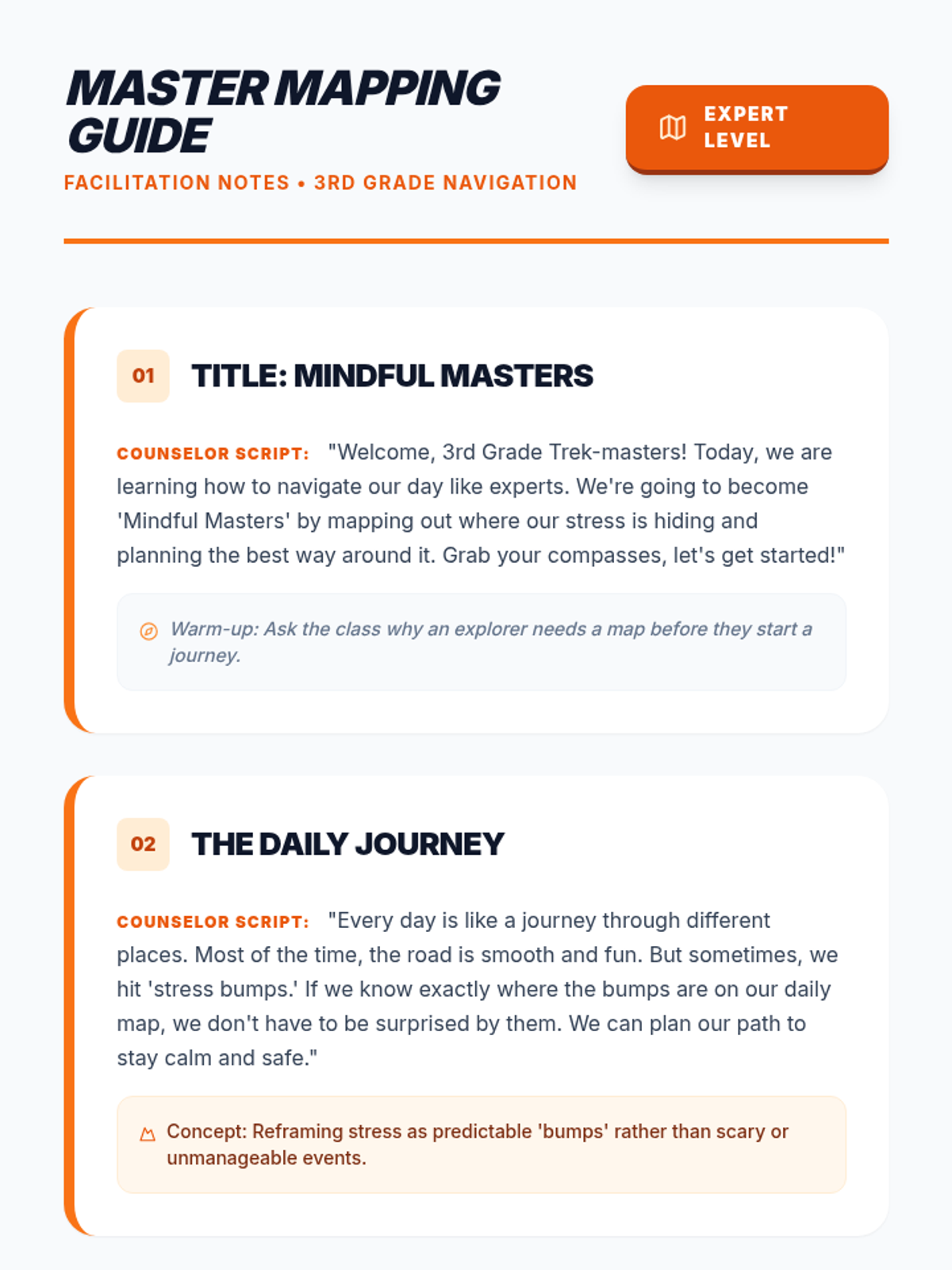
A detailed slide-by-slide facilitation guide for the 3rd grade 'Mindful Masters' lesson. Includes scripts for explaining the 'Observe, Name, Reroute' technique and instructions for the mapping activity.
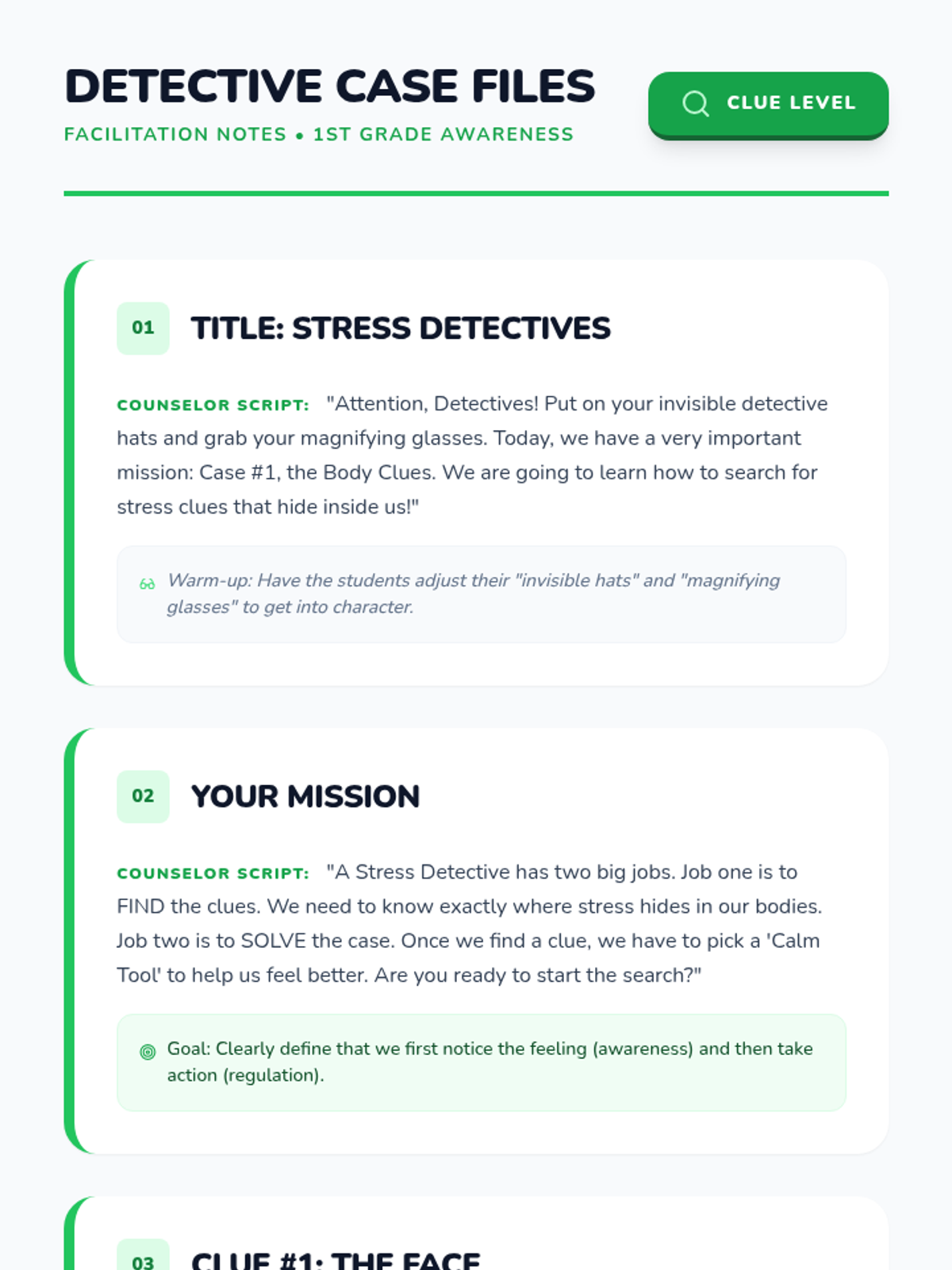
A detailed slide-by-slide facilitation guide for the 1st grade 'Stress Detectives' lesson. Includes scripts for explaining body signals, the 'Stop & Search' technique, and instructions for the Body Signal Search activity.
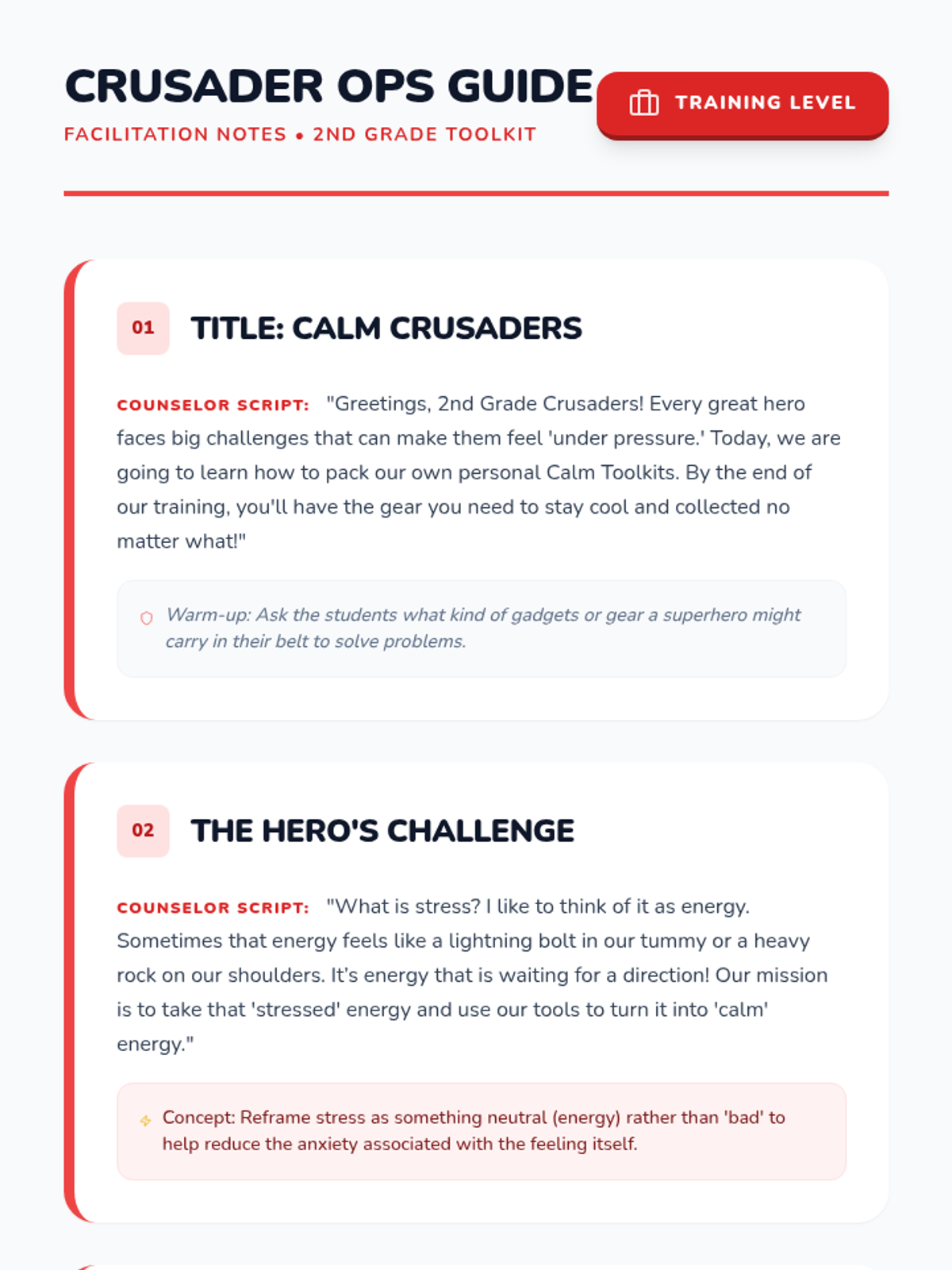
A detailed slide-by-slide facilitation guide for the 2nd grade 'Calm Crusaders' lesson. Includes scripts for explaining the difference between 'Mouse' and 'Elephant' problems and guidance for proactive vs. reactive toolkits.
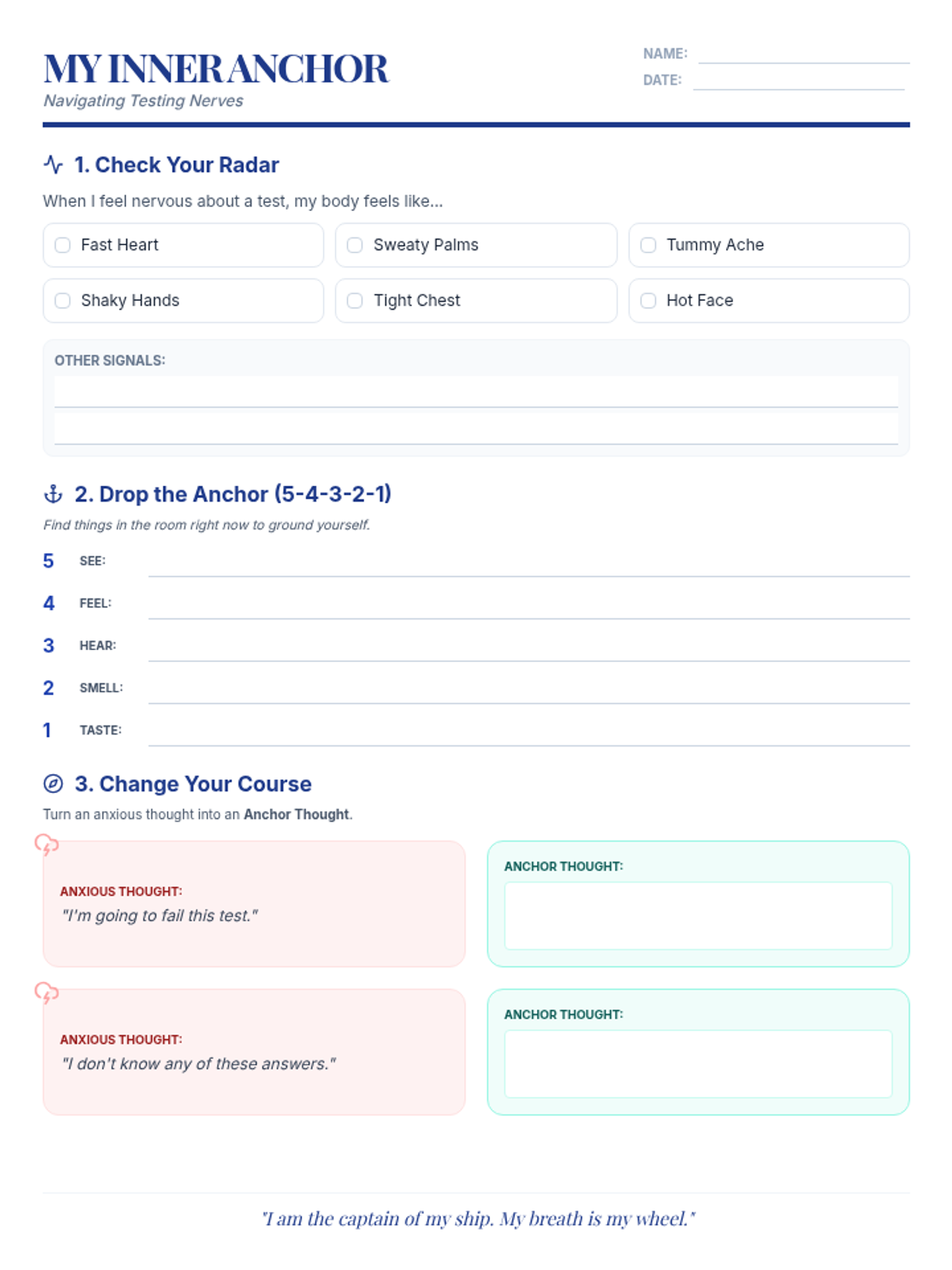
A final consolidated student worksheet that fits perfectly on one page, featuring balanced reframing boxes and darkened grounding lines.
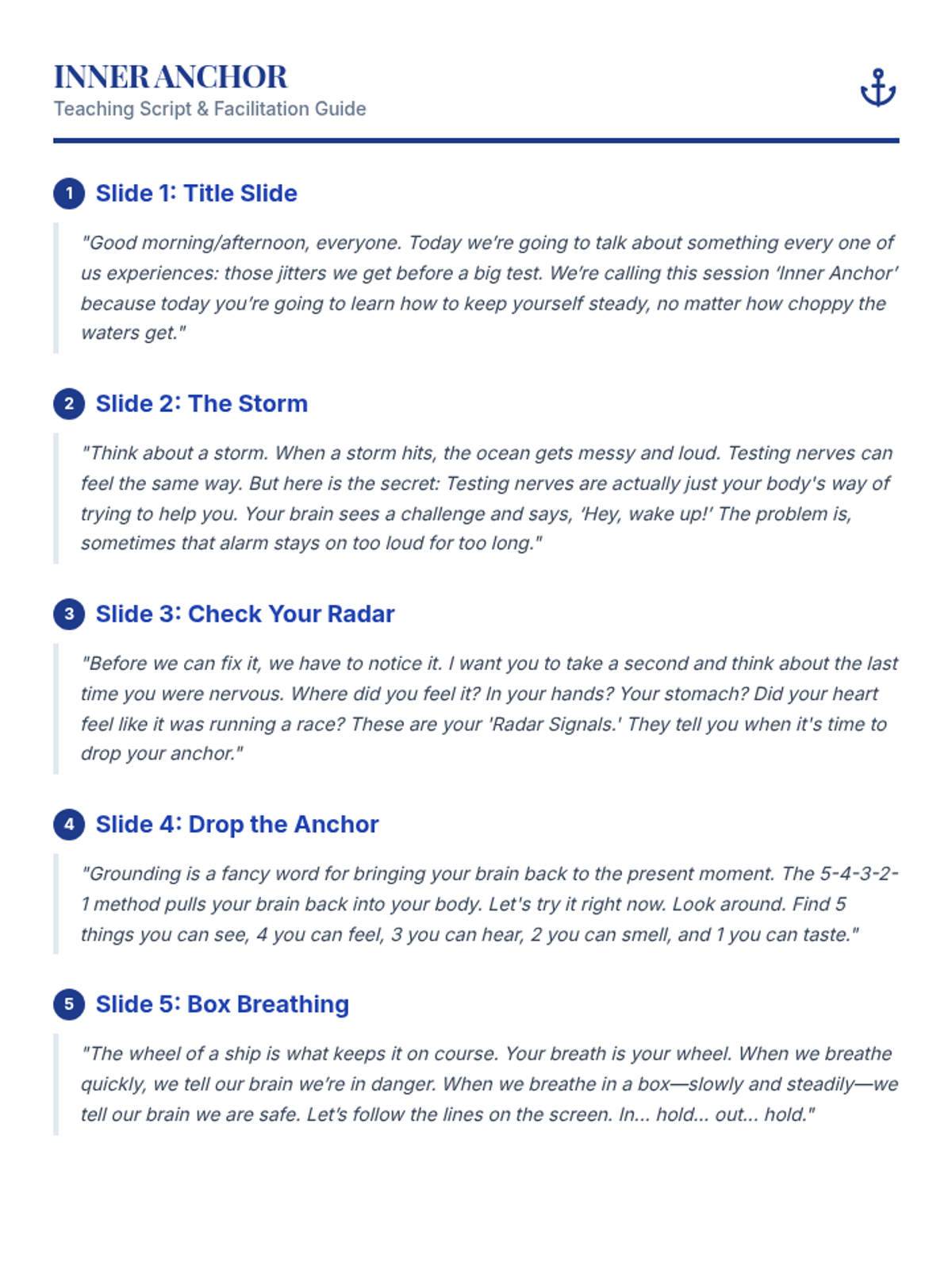
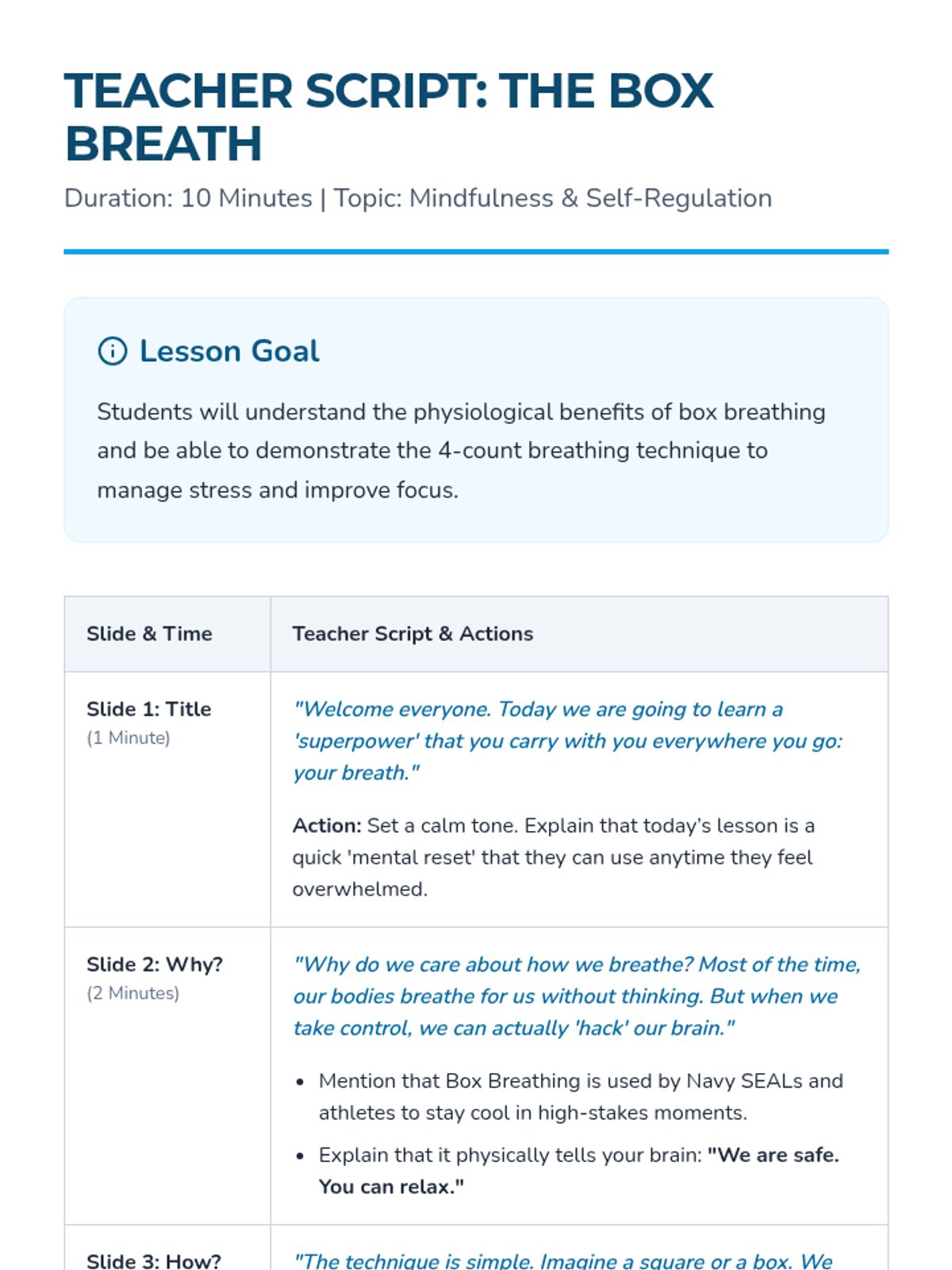
A revised teaching script consolidated into two pages with headers repeated on each page for professional consistency and no awkward splits.
A finalized slide deck with polished text rotation for breathing exercises and improved quote layout.
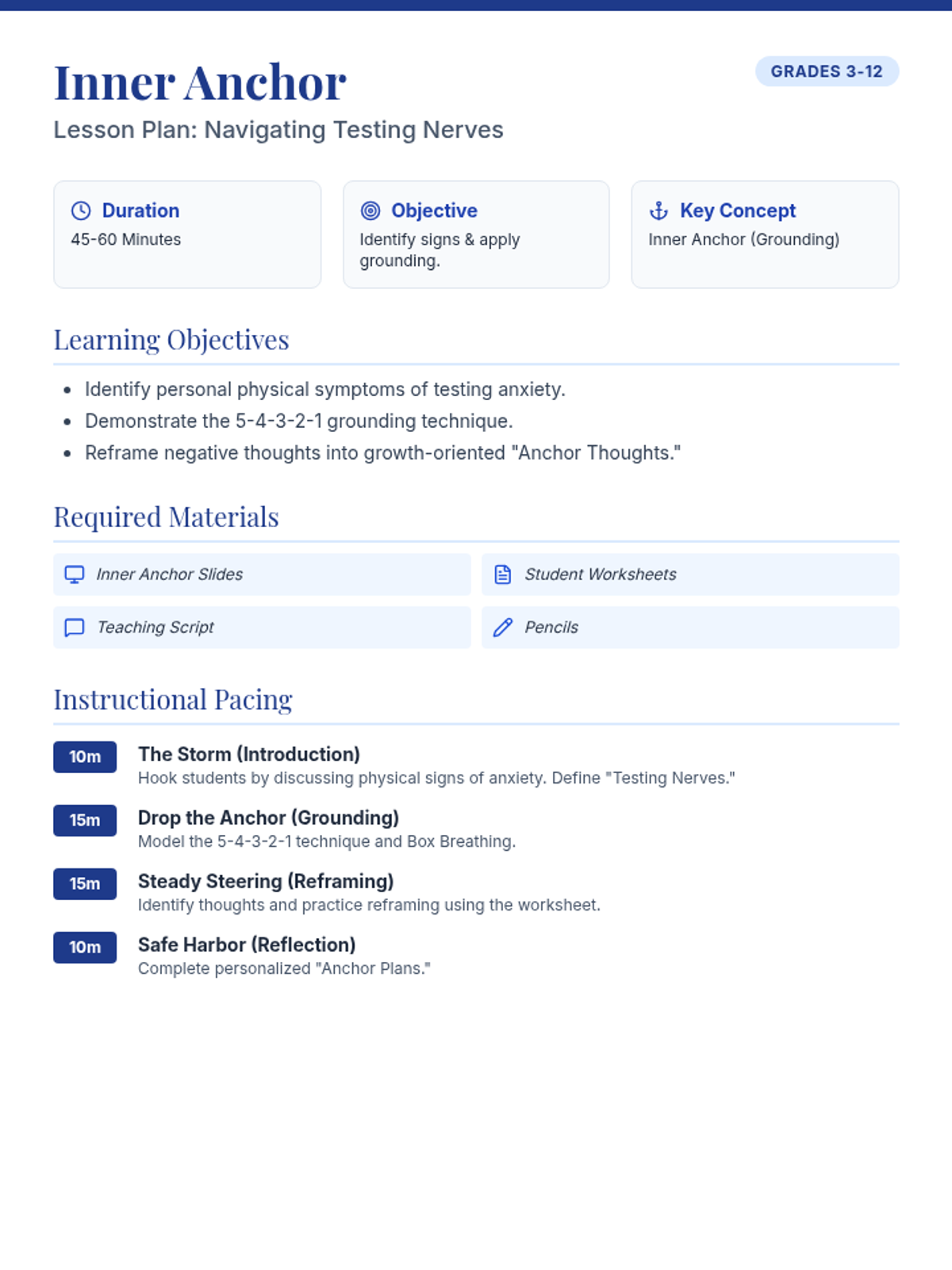
A revised lesson plan for teachers, consolidated into two pages to avoid awkward breaks and improve readability.
A comprehensive teacher script and facilitation guide for a 10-minute box breathing lesson, including pacing, slide-by-slide scripts, and discussion prompts. Revised for better page breaks and includes the video reference.
A 6-slide presentation covering the benefits, technique, and practice of box breathing, including a guided YouTube video. Revised for better contrast and label positioning.
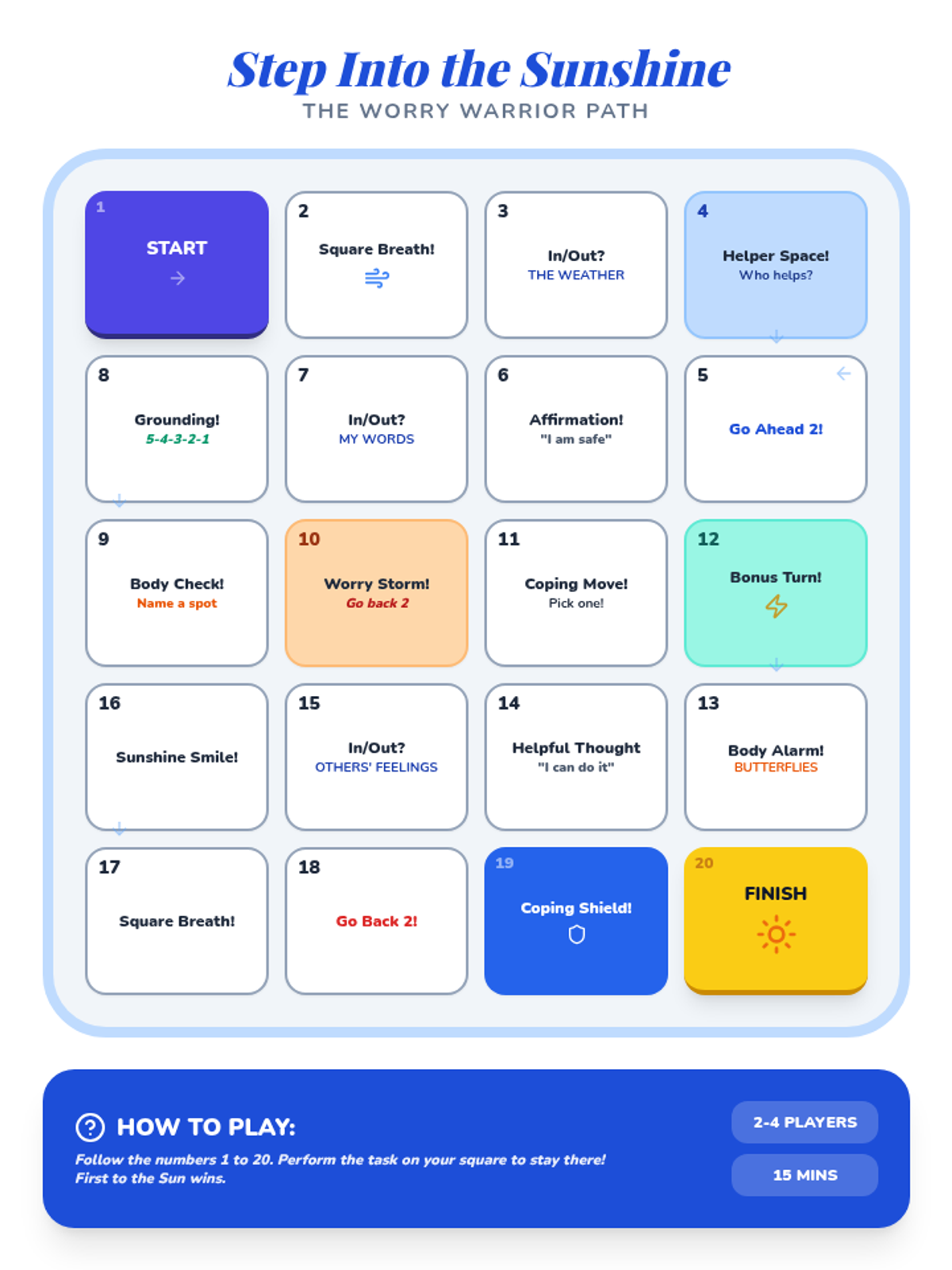
A simple printable board game where students move along a path, practicing coping skills and identifying control scenarios to reach the sunshine. Updated with a clearer path and larger text.
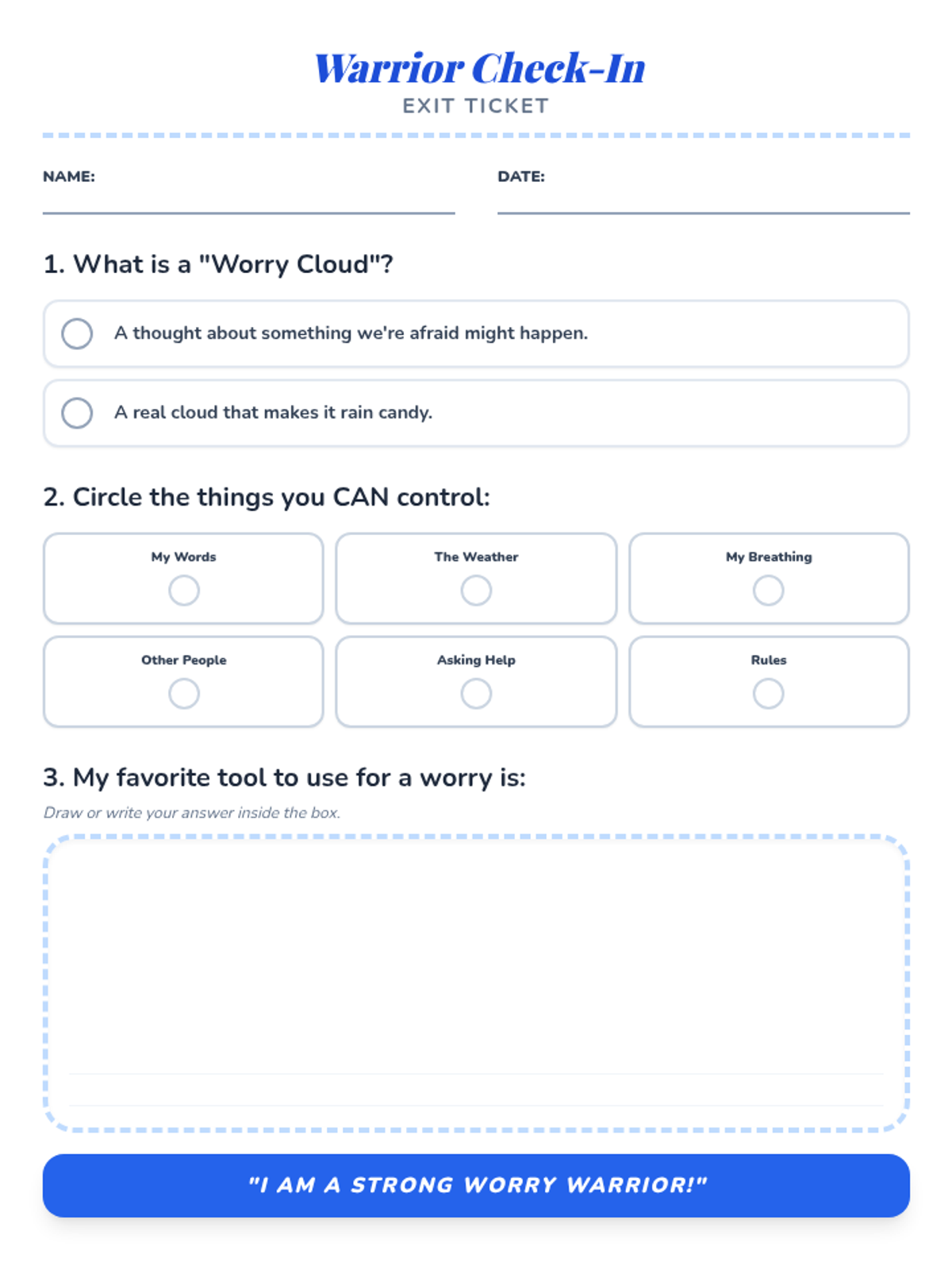
A quick formative assessment exit ticket to check student understanding of worries, the circle of control, and personal coping tools. Updated for uniformity and layout.
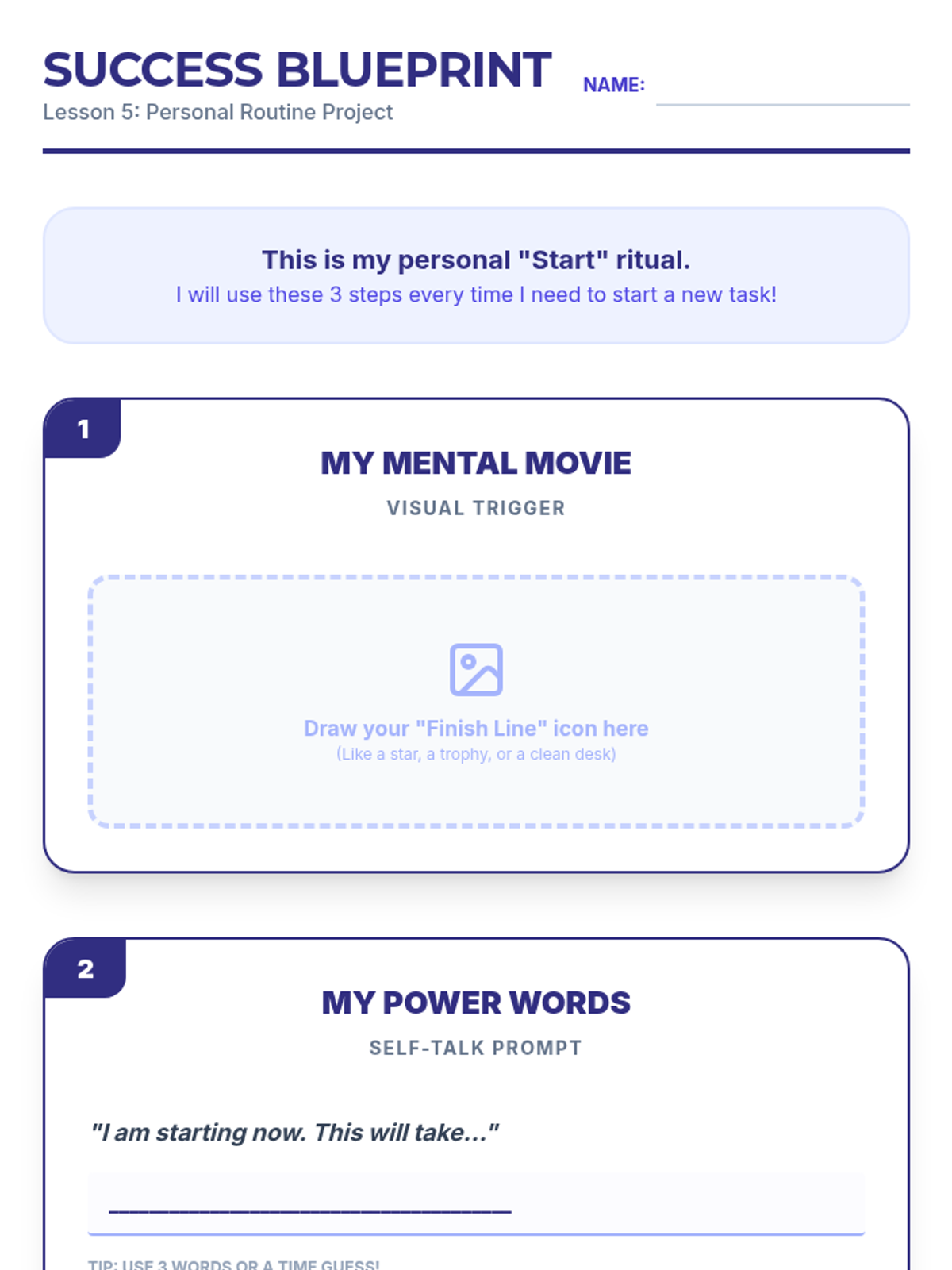
Final project worksheet for Lesson 5, where students synthesize everything they have learned to create a personal three-step 'Success Blueprint' for starting tasks.
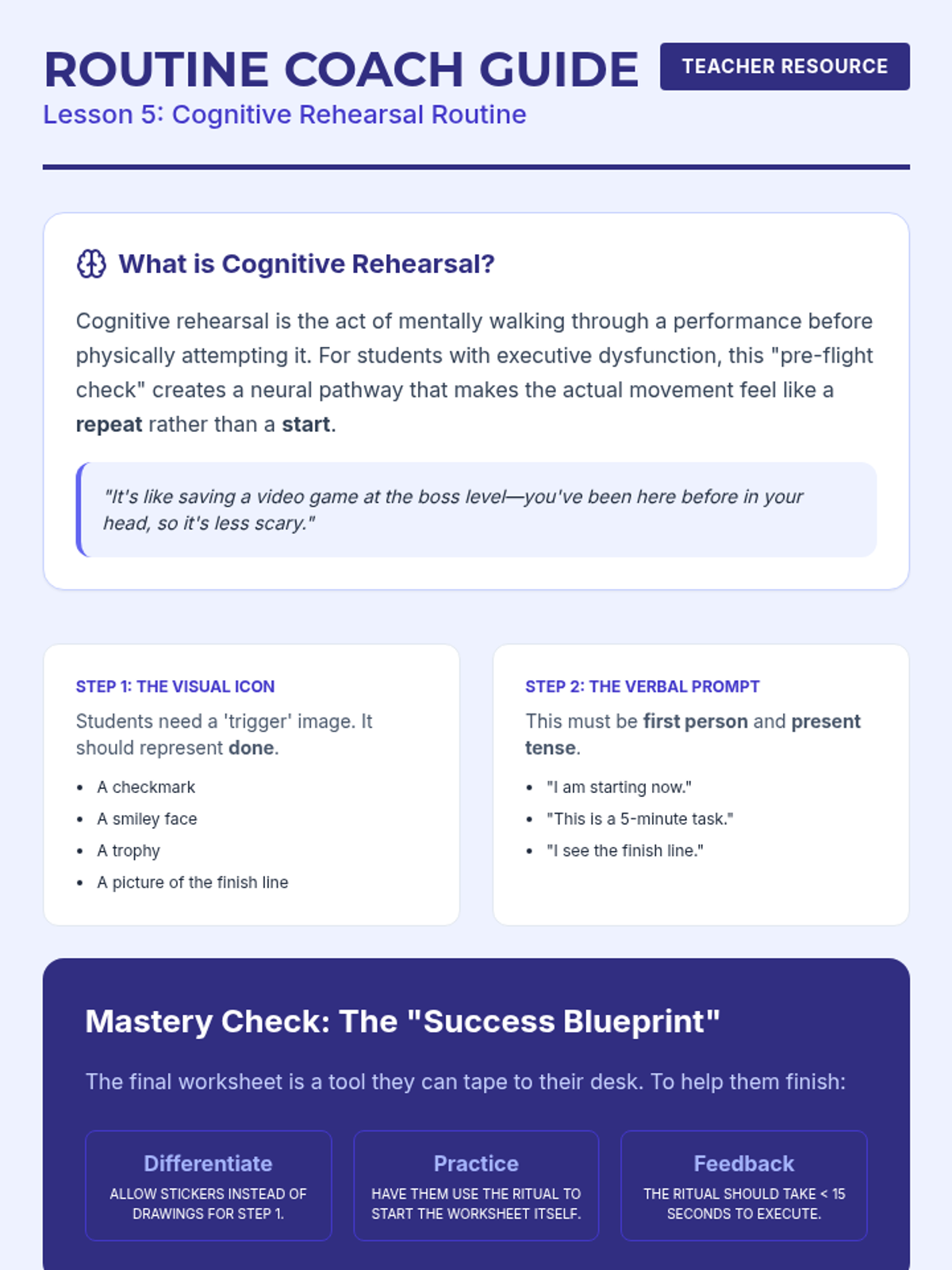
Teacher guide for Lesson 5, focusing on cognitive rehearsal and providing instructions for supporting students as they design their own success rituals.
Slides for Lesson 5, guiding students through the final project of creating their own personal 'Success Ritual' for task initiation.
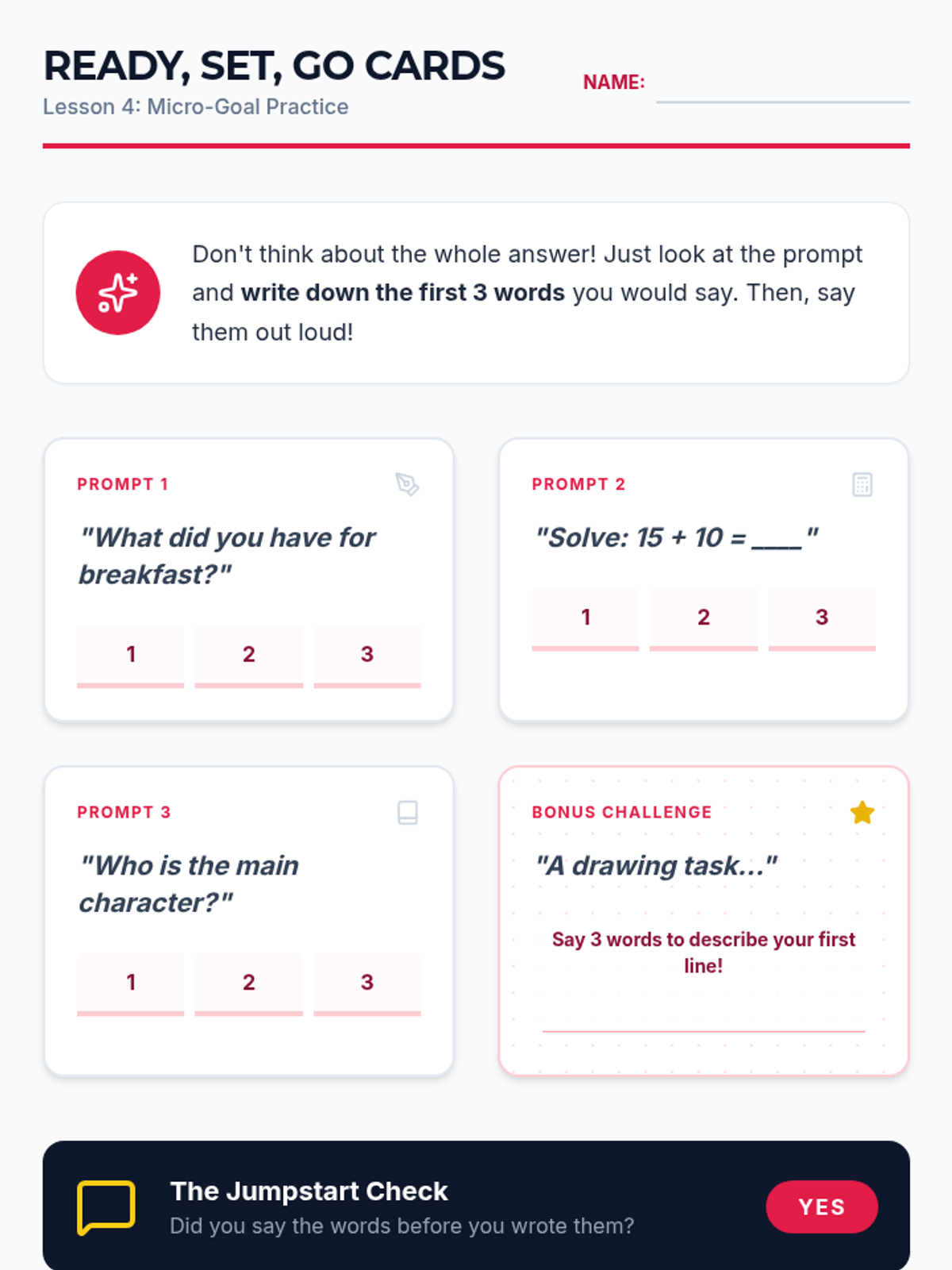
Student practice worksheet for Lesson 4, featuring prompt cards where students practice identifying and writing the first three words of a response.
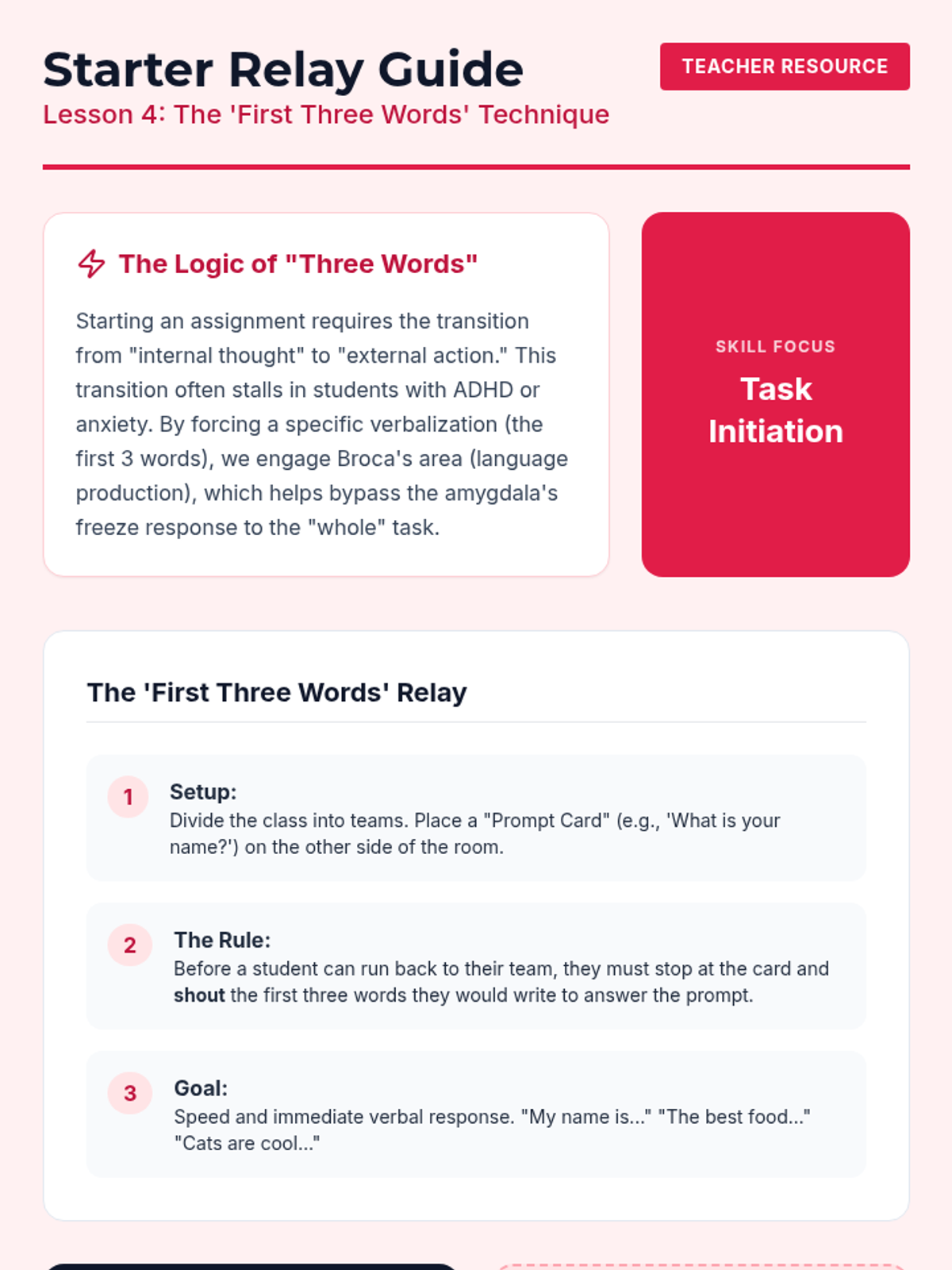
Teacher guide for Lesson 4, explaining the neurological basis for the 'First Three Words' technique and providing instructions for the relay race activity.
Slides for Lesson 4 introducing the 'First Three Words' technique—a micro-goal strategy to break the paralysis of starting a new task.
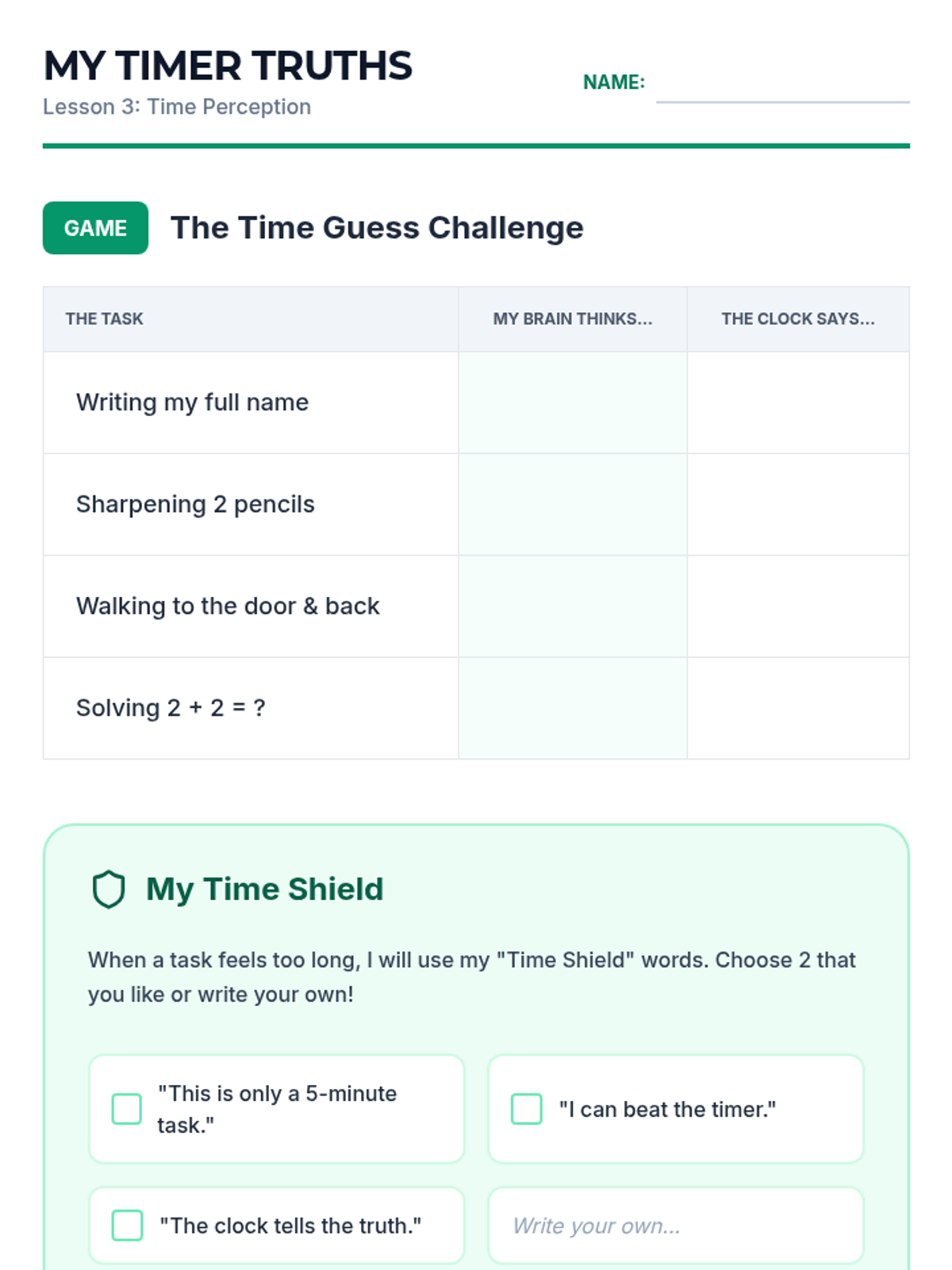
Student worksheet for Lesson 3, where students compare their time predictions with actual results and select self-talk phrases to manage overwhelm.
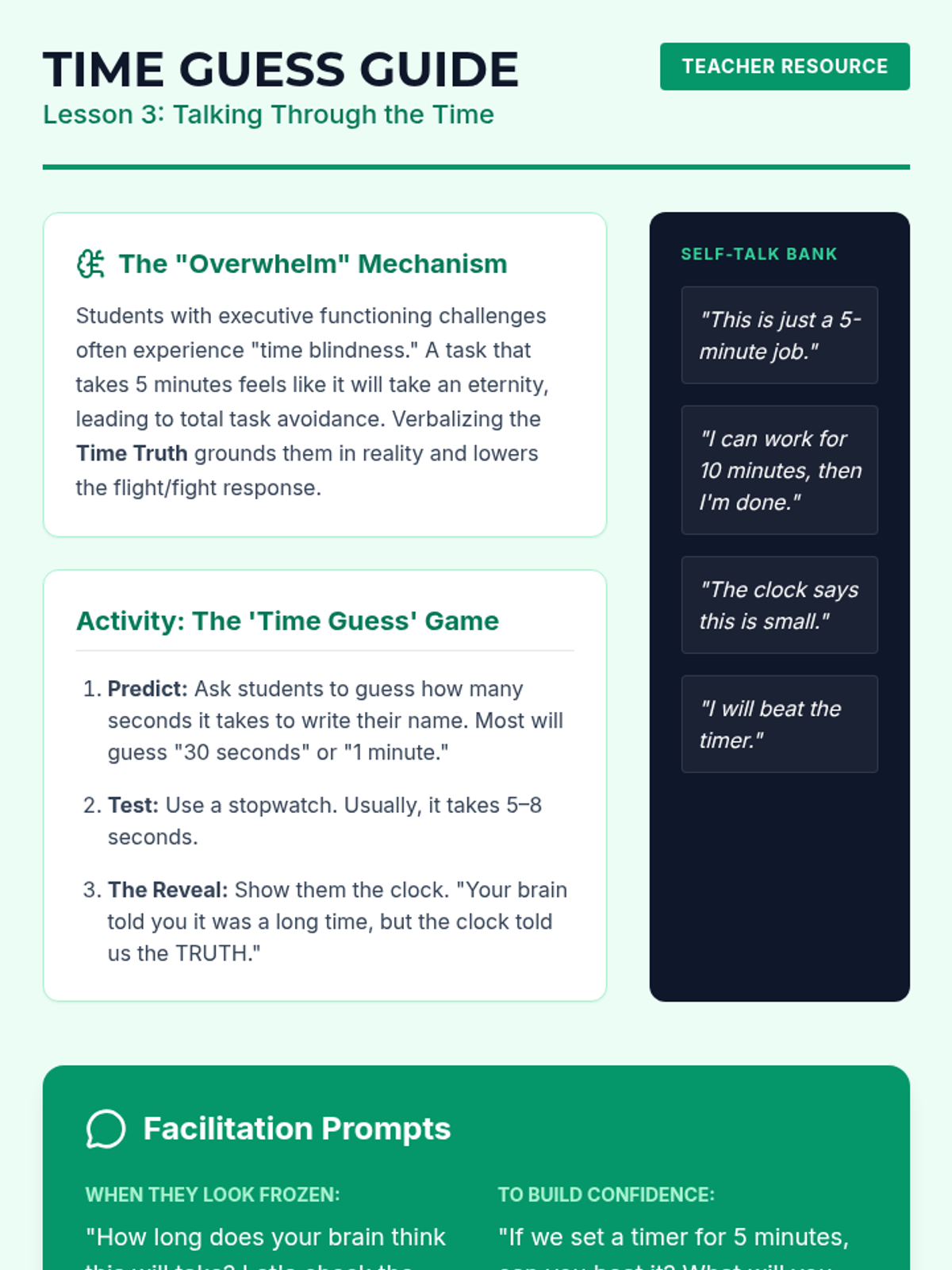
Teacher guide for Lesson 3, focusing on time blindness and providing strategies for using time estimation and self-talk to reduce student anxiety.
Slides for Lesson 3 on time estimation and using calming self-talk to reduce the anxiety of starting long or complex tasks.
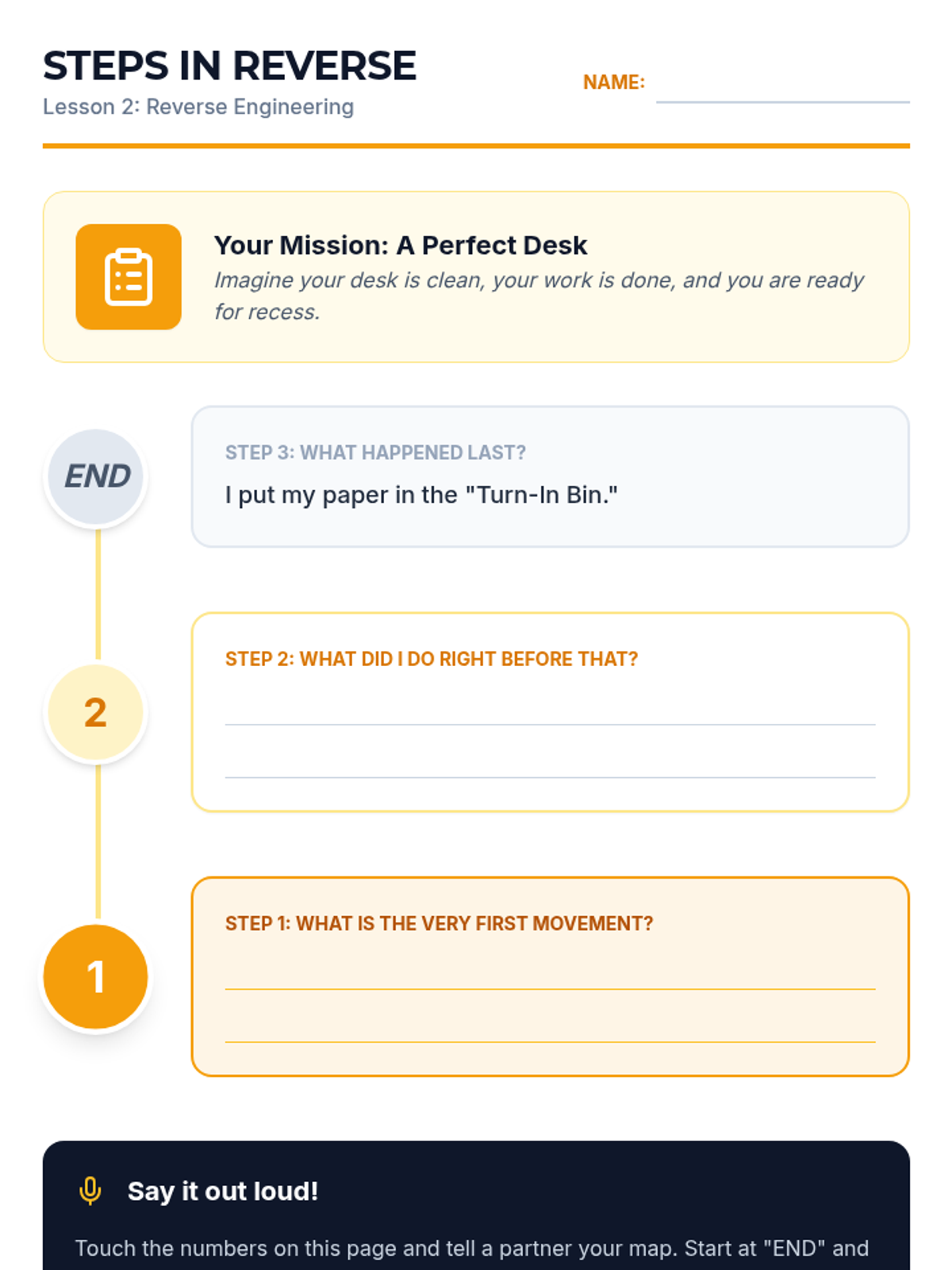
Student worksheet for Lesson 2, guiding students through mapping a task backward from completion to the very first physical movement.
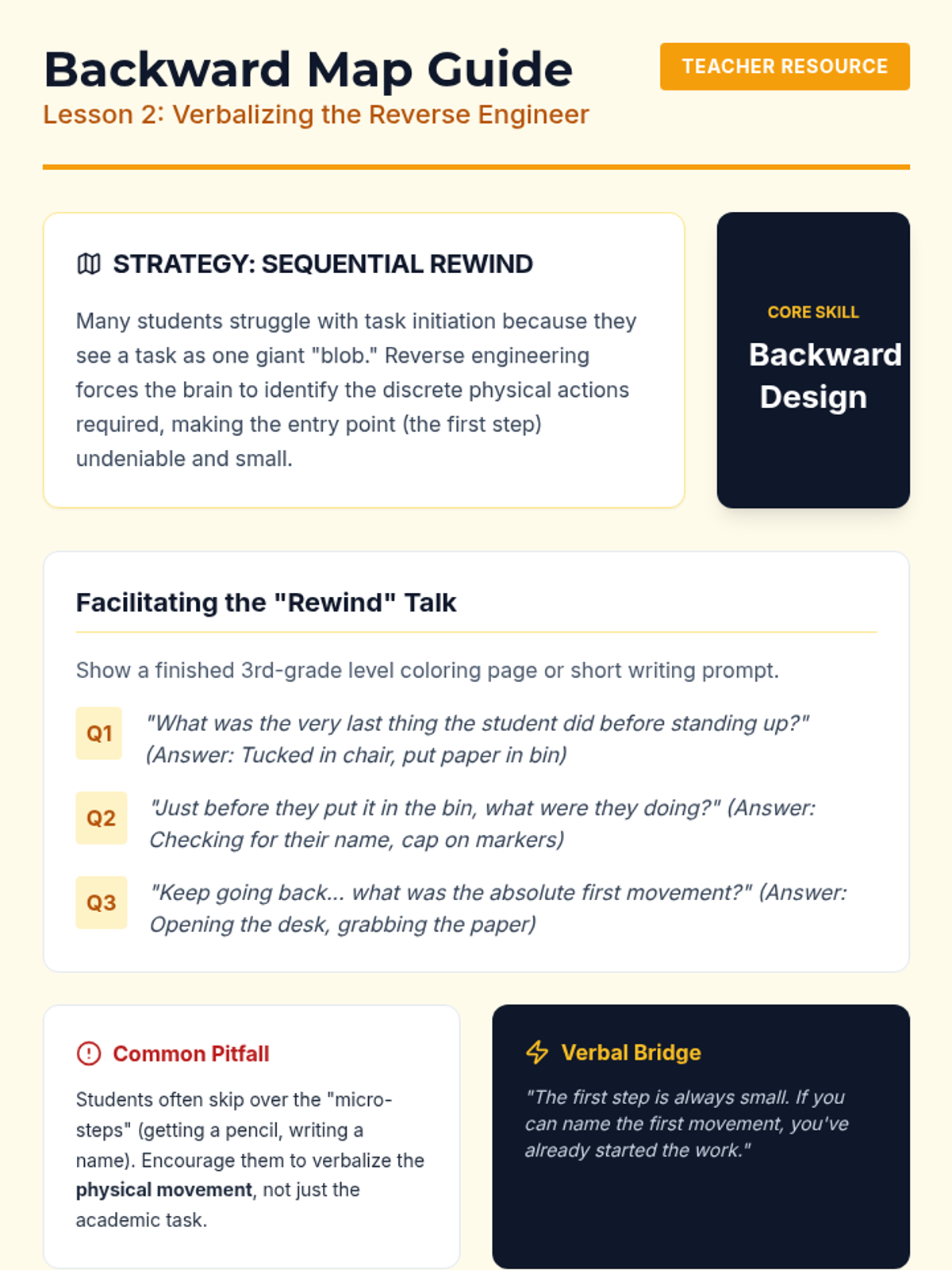
Teacher guide for Lesson 2, outlining the sequential rewind strategy and providing prompts for facilitating backward mapping discussions.
Slides for Lesson 2 focusing on 'Reverse Engineering'—mapping out tasks backward from completion to identify the clear first step.
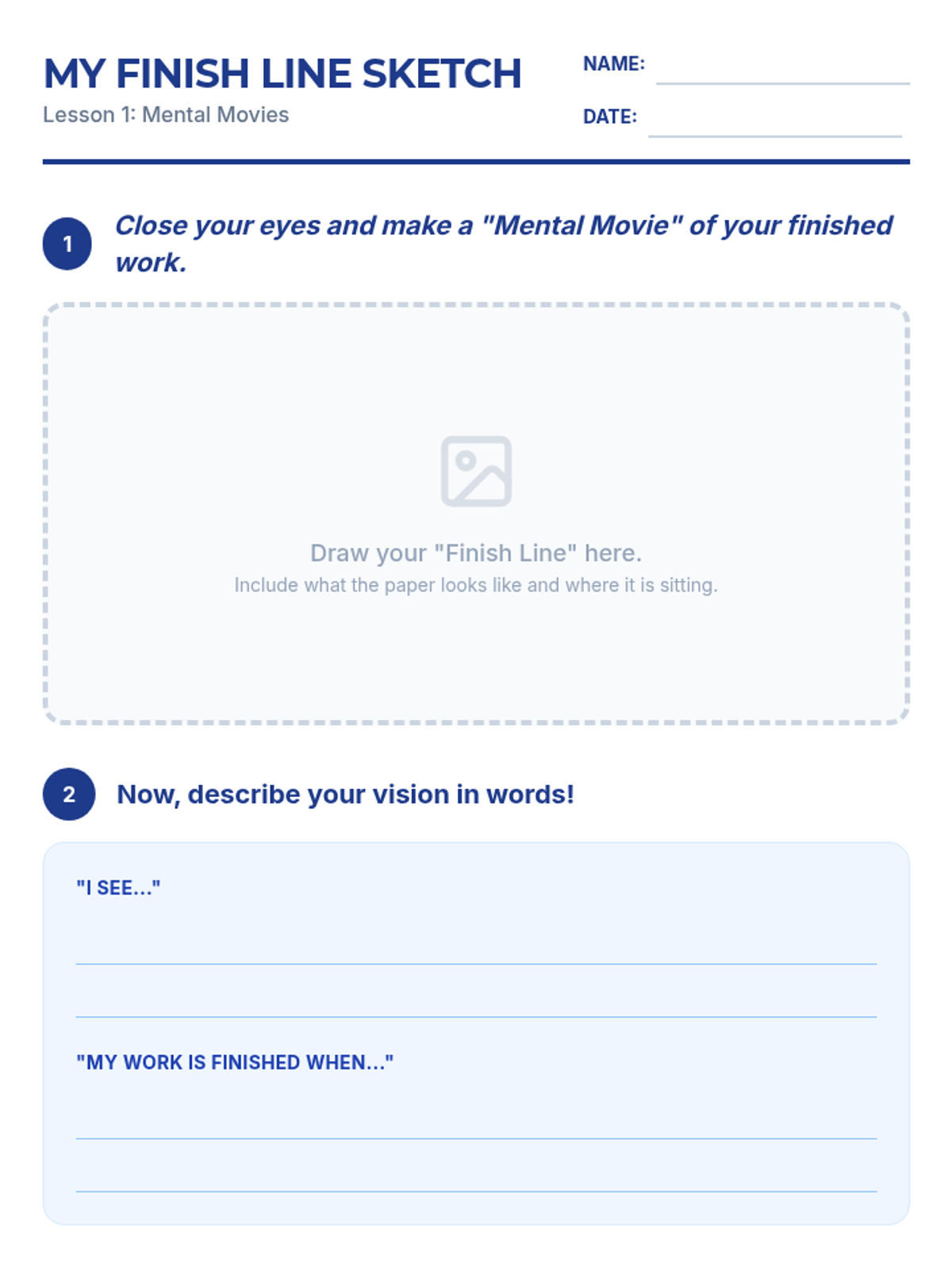
Student worksheet for Lesson 1, where students draw their 'finish line' and describe it using specific sentence starters.
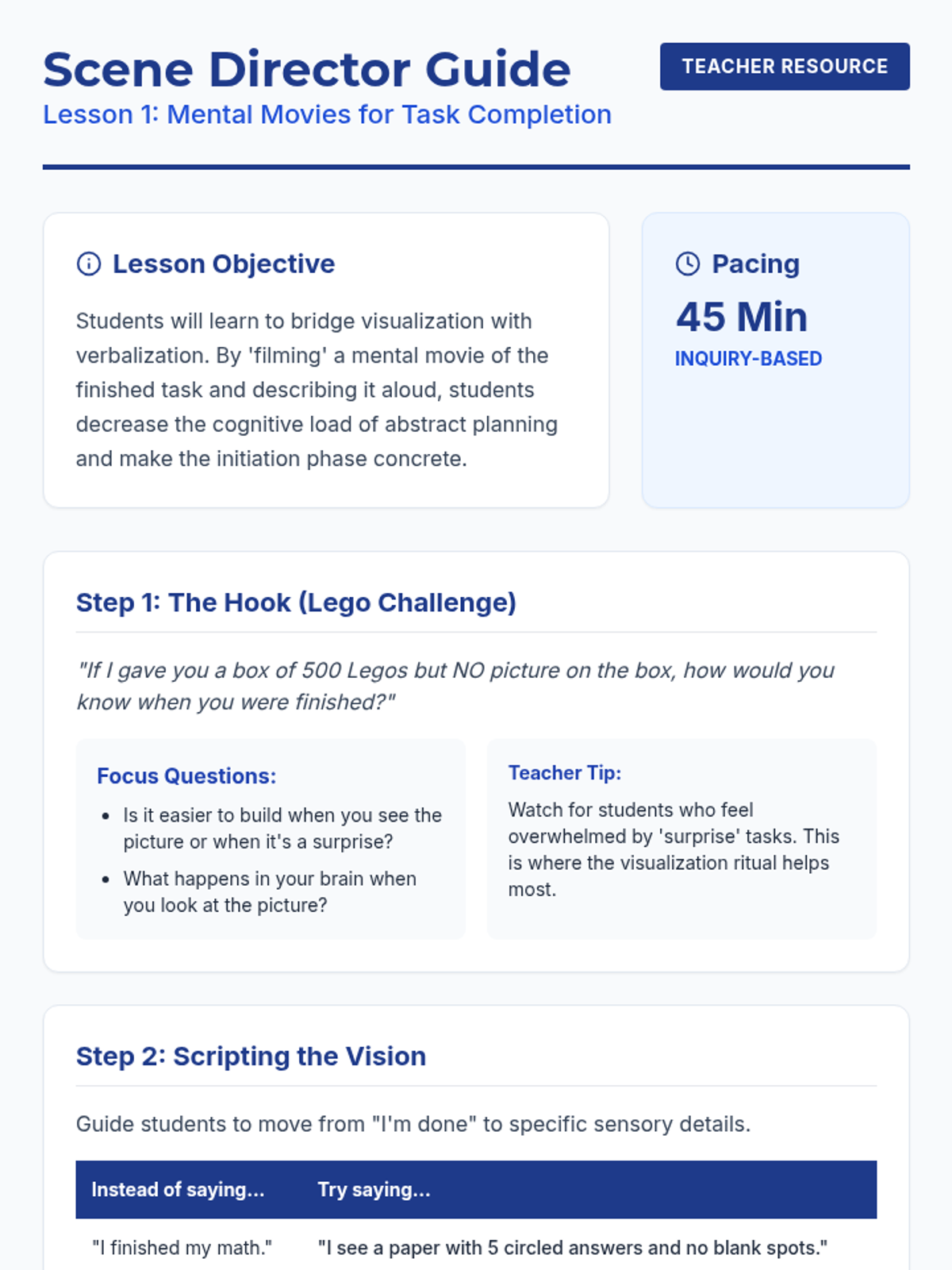
Teacher guide for Lesson 1, providing discussion prompts, focus questions, and scripting examples for teaching mental visualization techniques.
Slides for Lesson 1 introducing the concept of 'Mental Movies'—visualizing the finished state of a task to help with initiation.
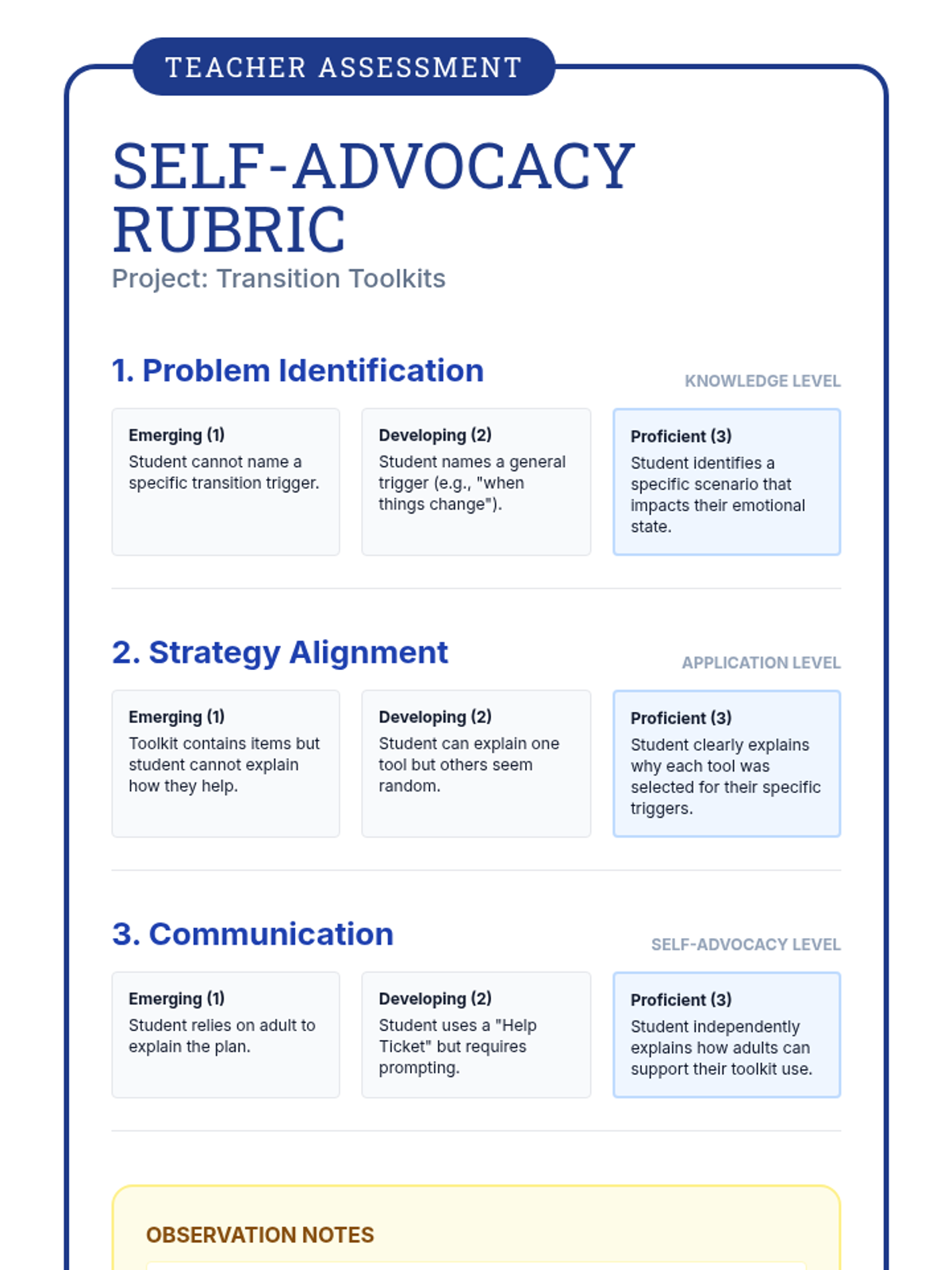
Assessment rubric for evaluating student performance on identifying triggers, selecting strategies, and communicating needs.
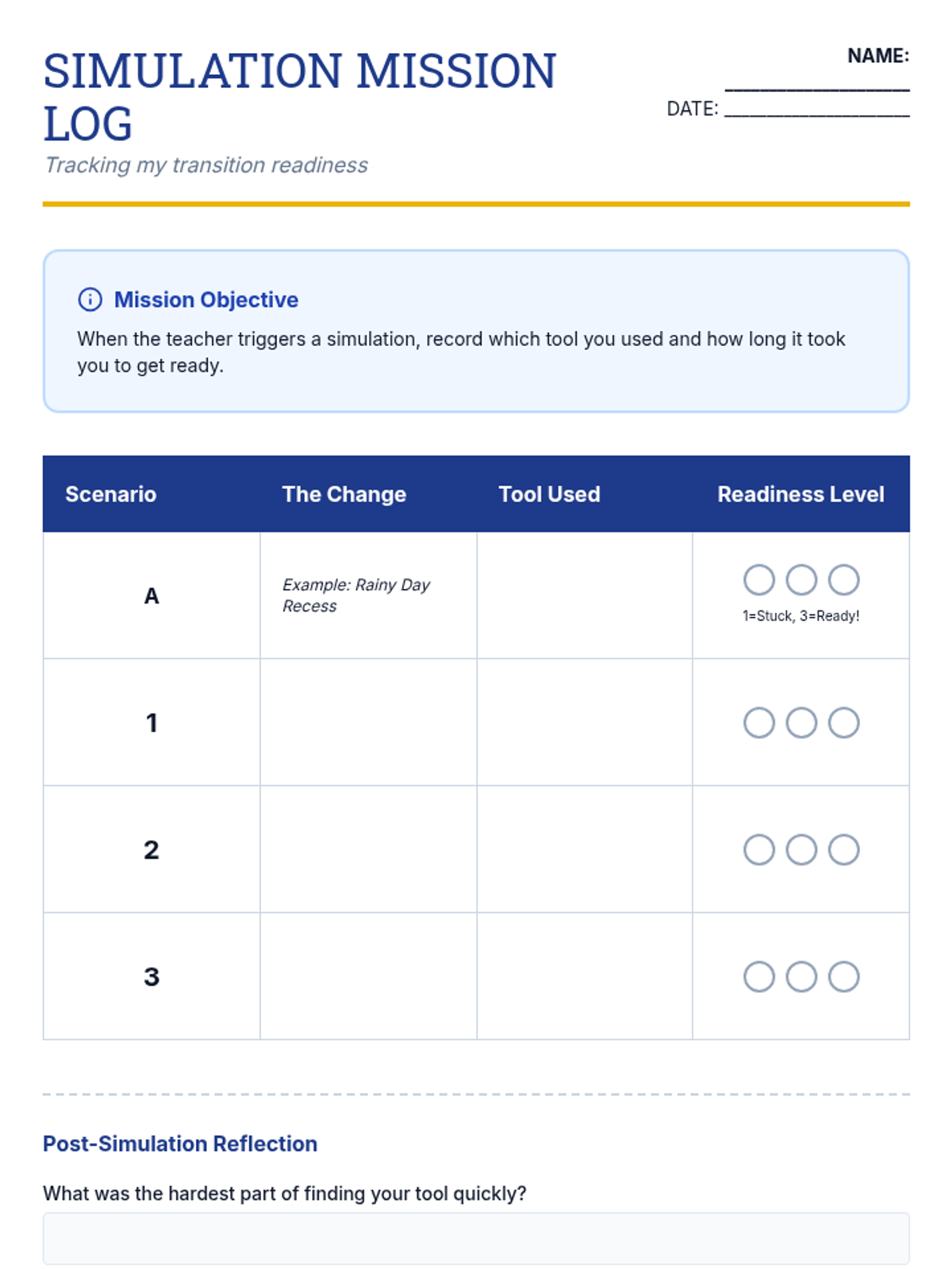
Student tracking sheet for recording outcomes and reflections during the toolkit simulation drills in Lesson 4.
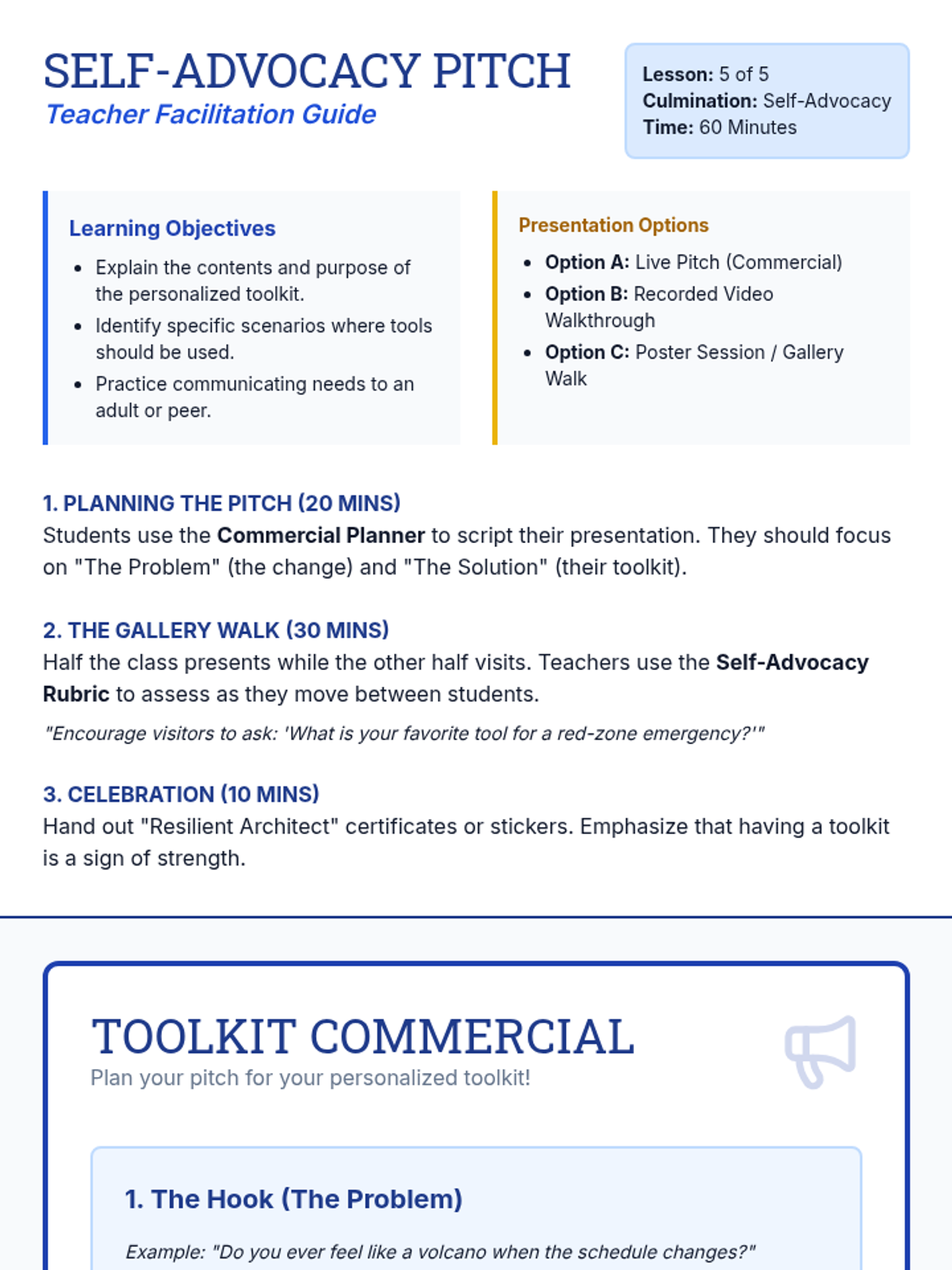
Teacher guide and commercial planning worksheet for the final self-advocacy presentation.
Simulation scenarios and visual cues for the "Toolkit Drill" activity in Lesson 4.
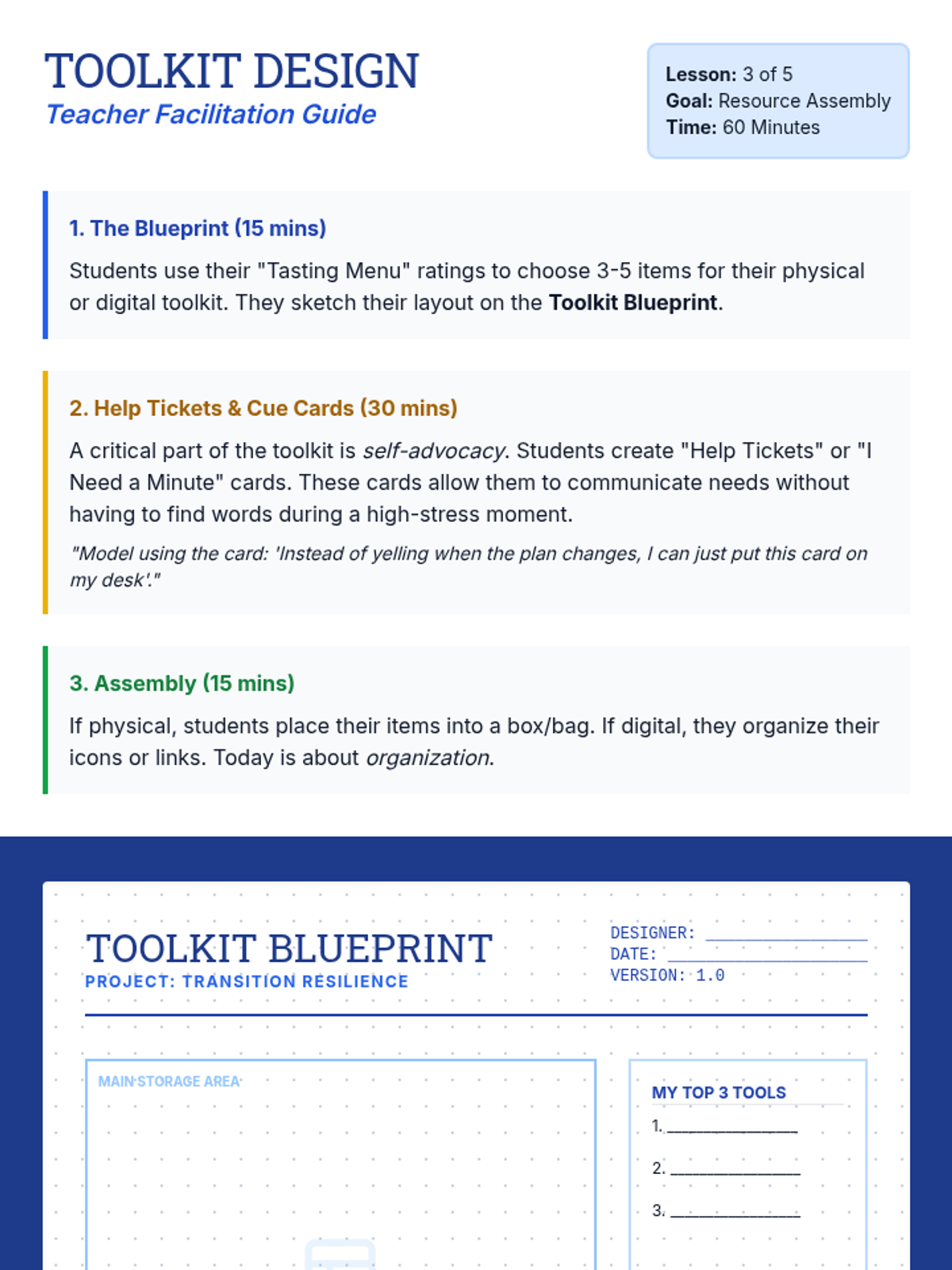
Blueprint worksheet for students to plan and design their personalized transition toolkit and communication cards.
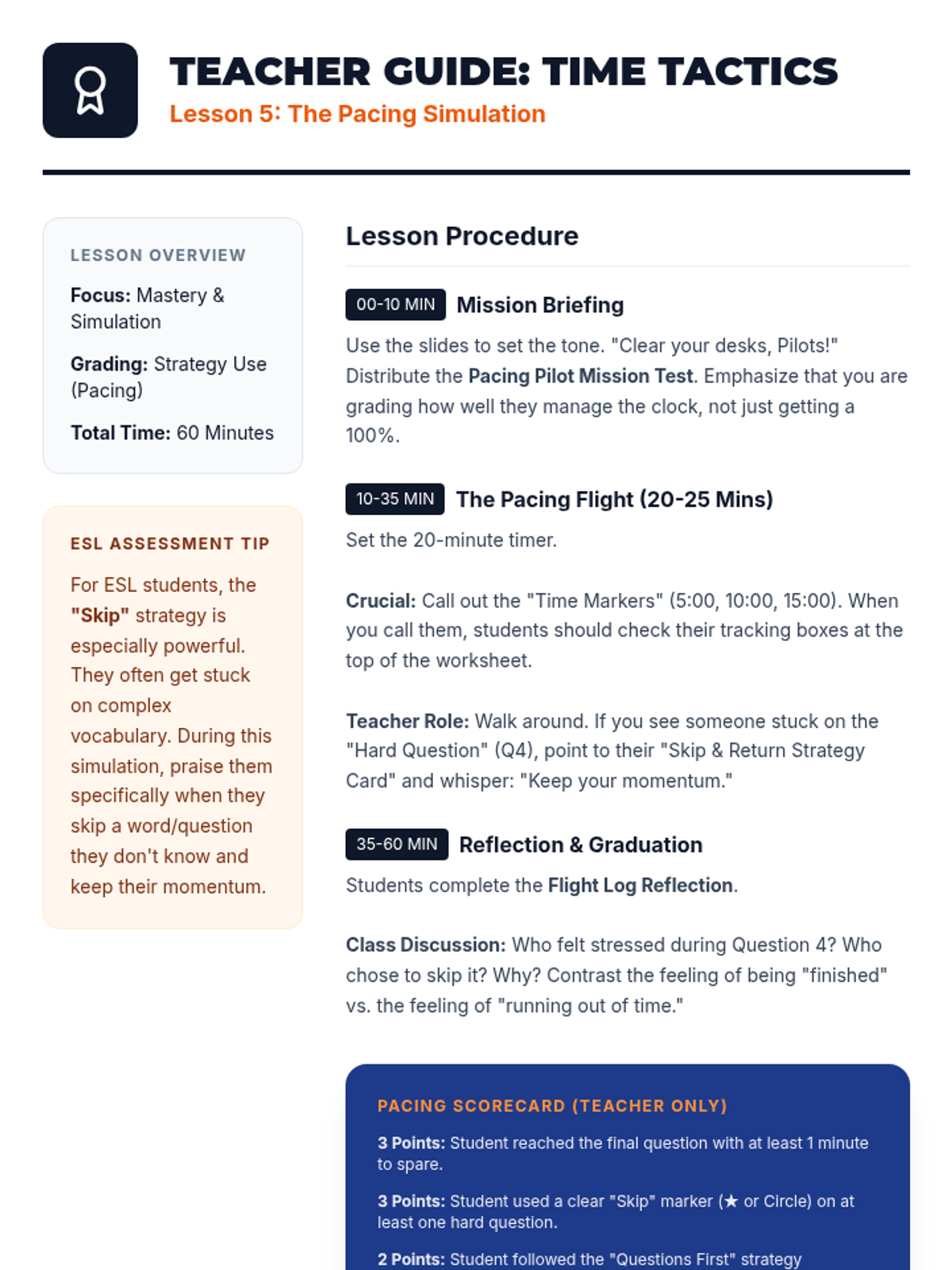
Teacher guidance for the Lesson 5 simulation, including timing calls, teacher observation tips, and a scoring rubric for student pacing behavior.
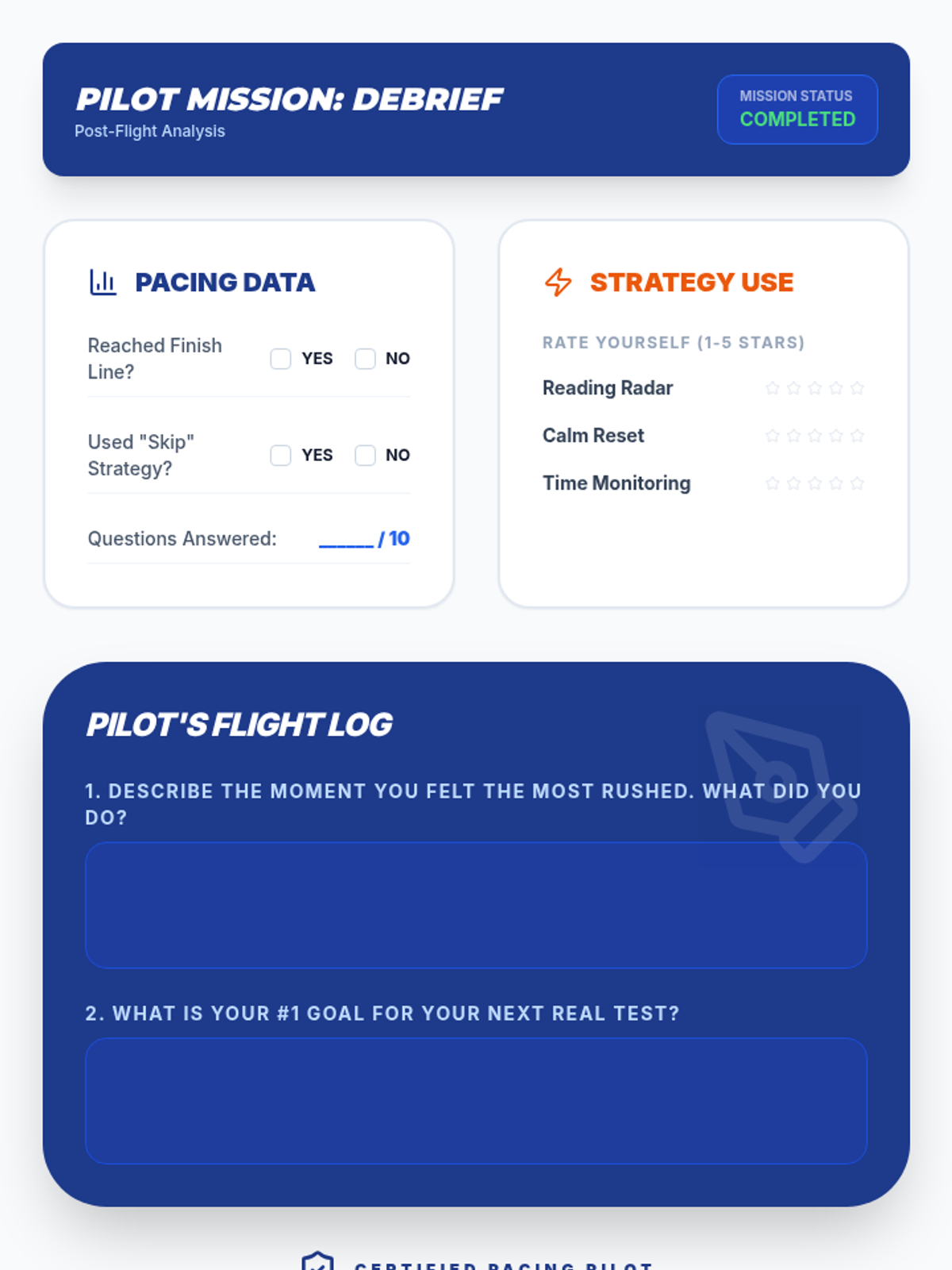
The Lesson 5 reflection and debrief worksheet where students analyze their performance during the simulation and rate their strategy use.
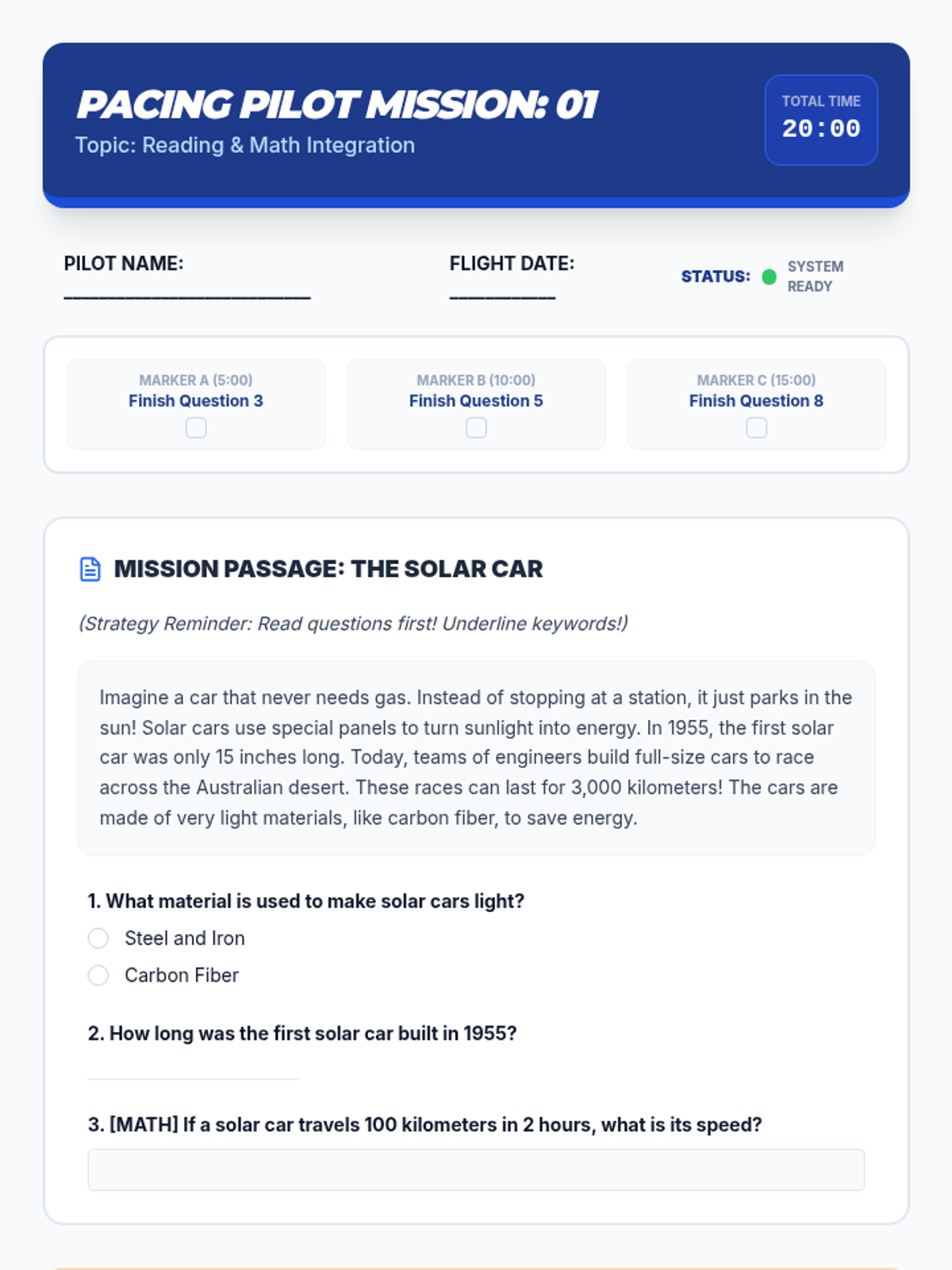
The first page of the Lesson 5 simulation test, designed to test pacing with a passage, integrated math, and a strategically 'hard' question to prompt skipping.
Final slide deck for Lesson 5, featuring the pacing simulation briefing, mission rules, and time markers for the practice test.
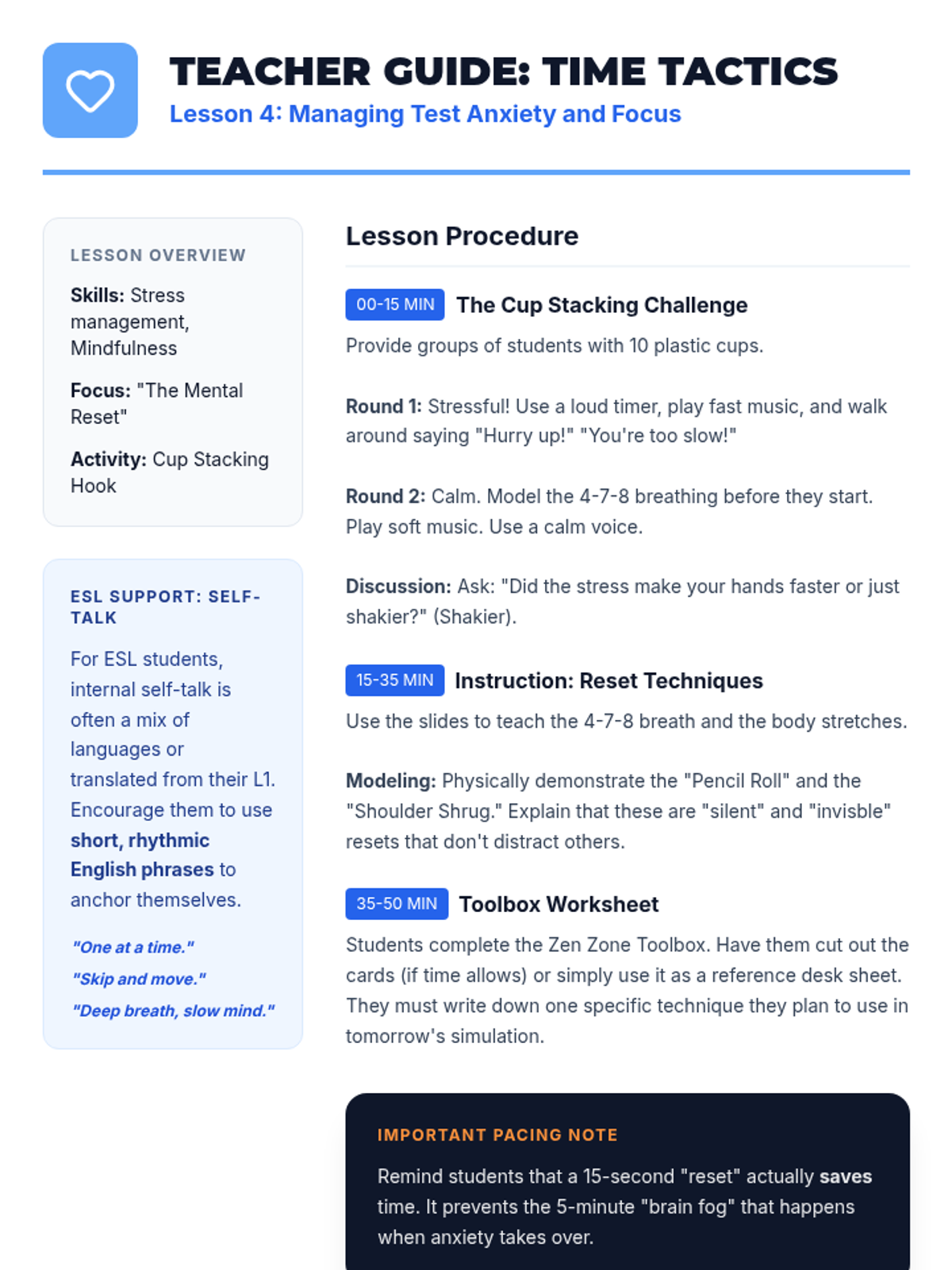
Teacher guidance for Lesson 4, including managing the cup-stacking challenge and modeling reset techniques for ESL students.
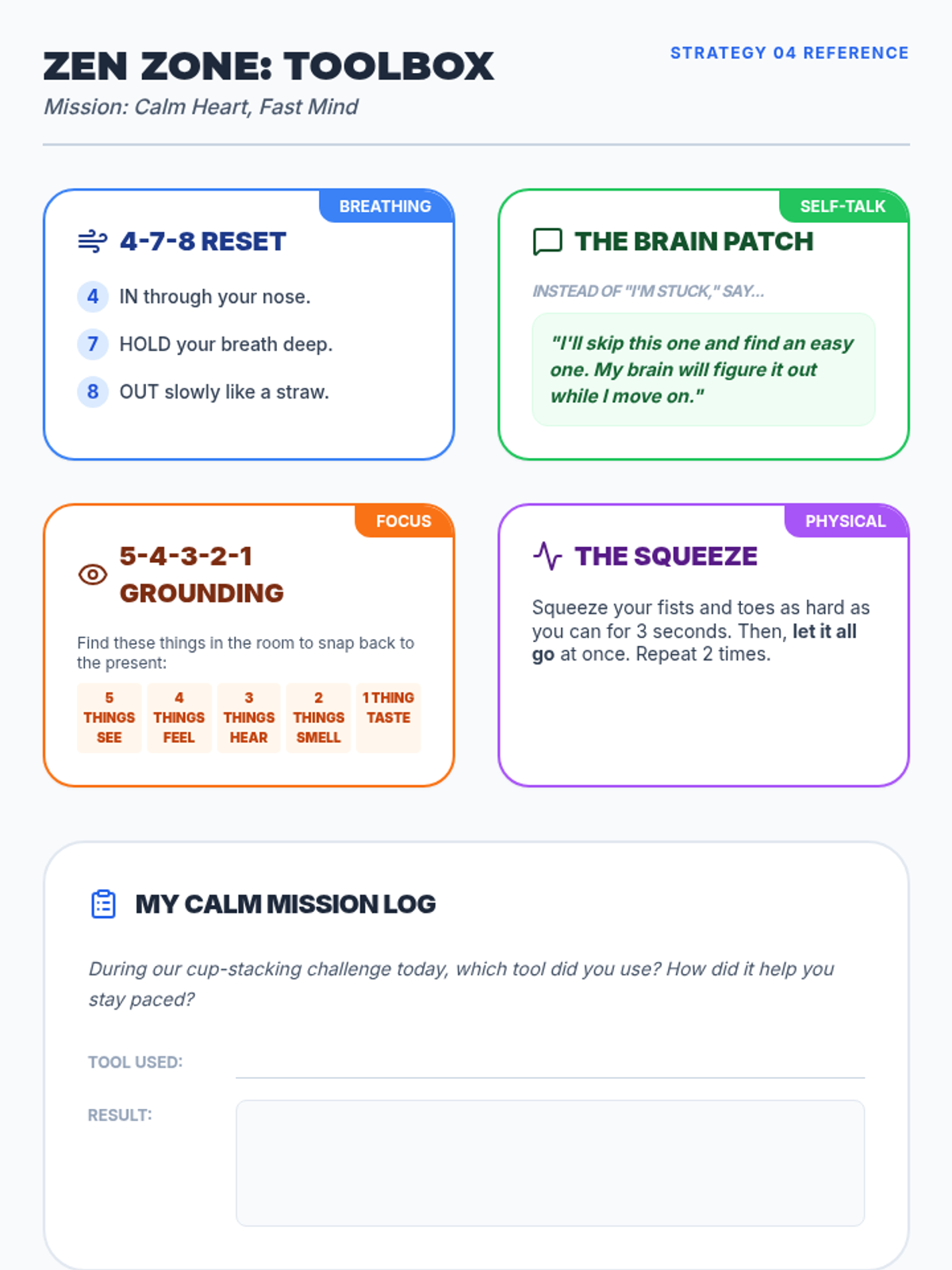
A resource sheet for Lesson 4 with 'Zen Zone' strategy cards (breathing, self-talk, grounding, physical reset) and a practice log for the cup-stacking activity.
Slide deck for Lesson 4 on managing test anxiety, featuring breathing techniques, positive self-talk, and in-seat physical resets.
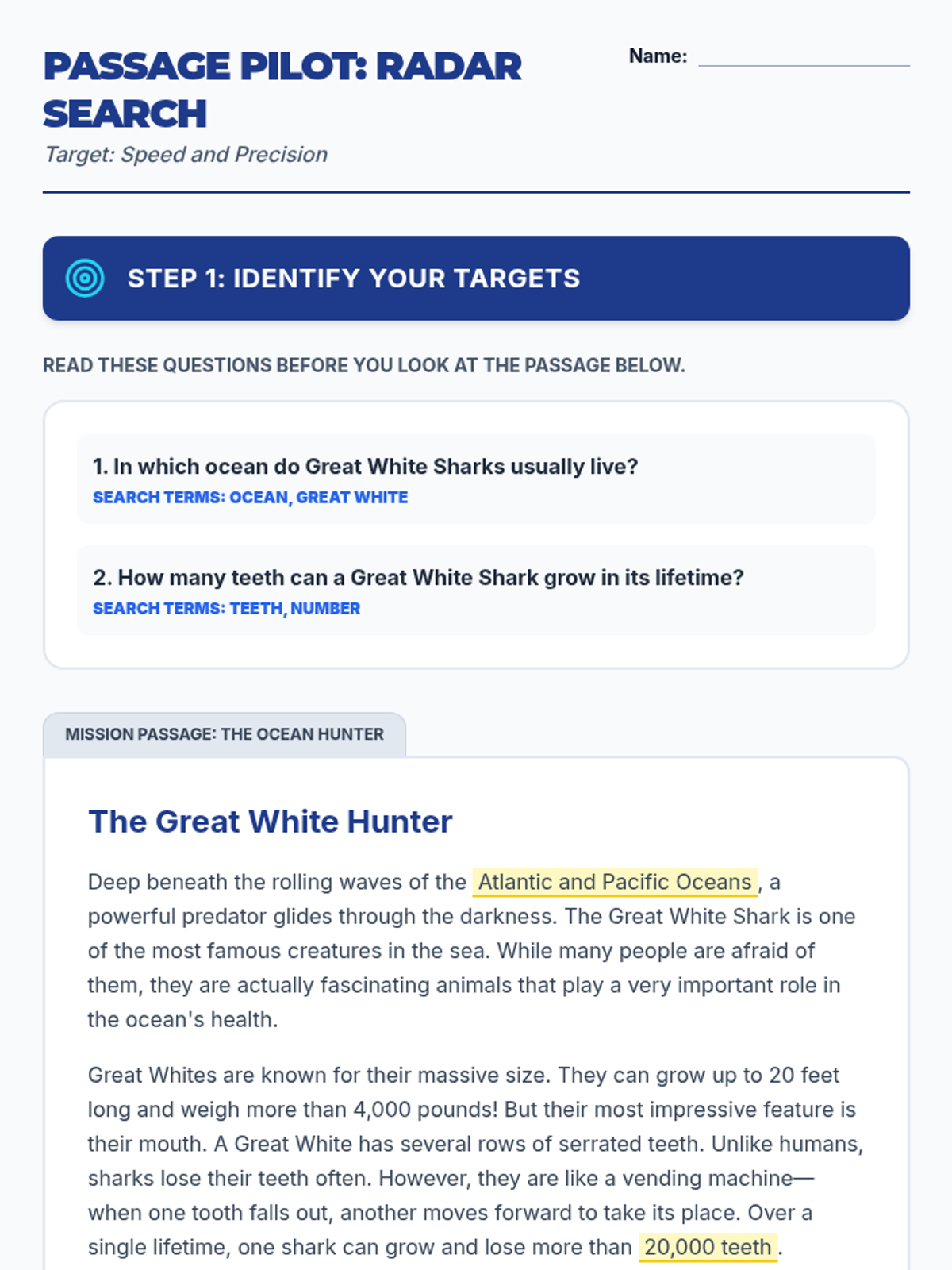
A practice worksheet for Lesson 3 that uses a short passage about sharks to help students practice the 'Questions First' and 'Keyword Search' strategies.
Slide deck for Lesson 3 on handling long passages, teaching the 'Questions First' strategy and skimming techniques to save time.
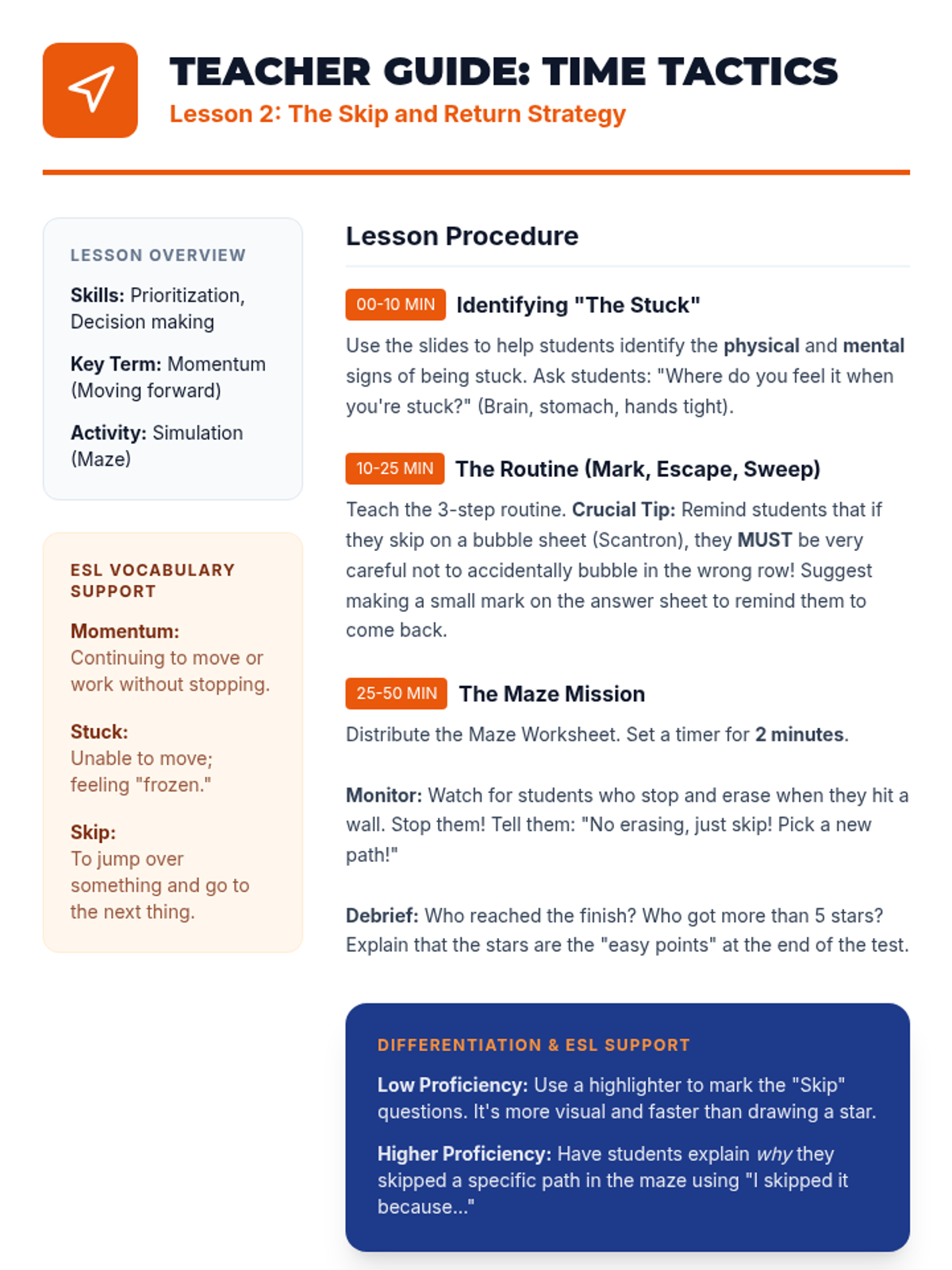
Teacher guidance for Lesson 2, including momentum concepts, ESL vocabulary support, and maze simulation management.
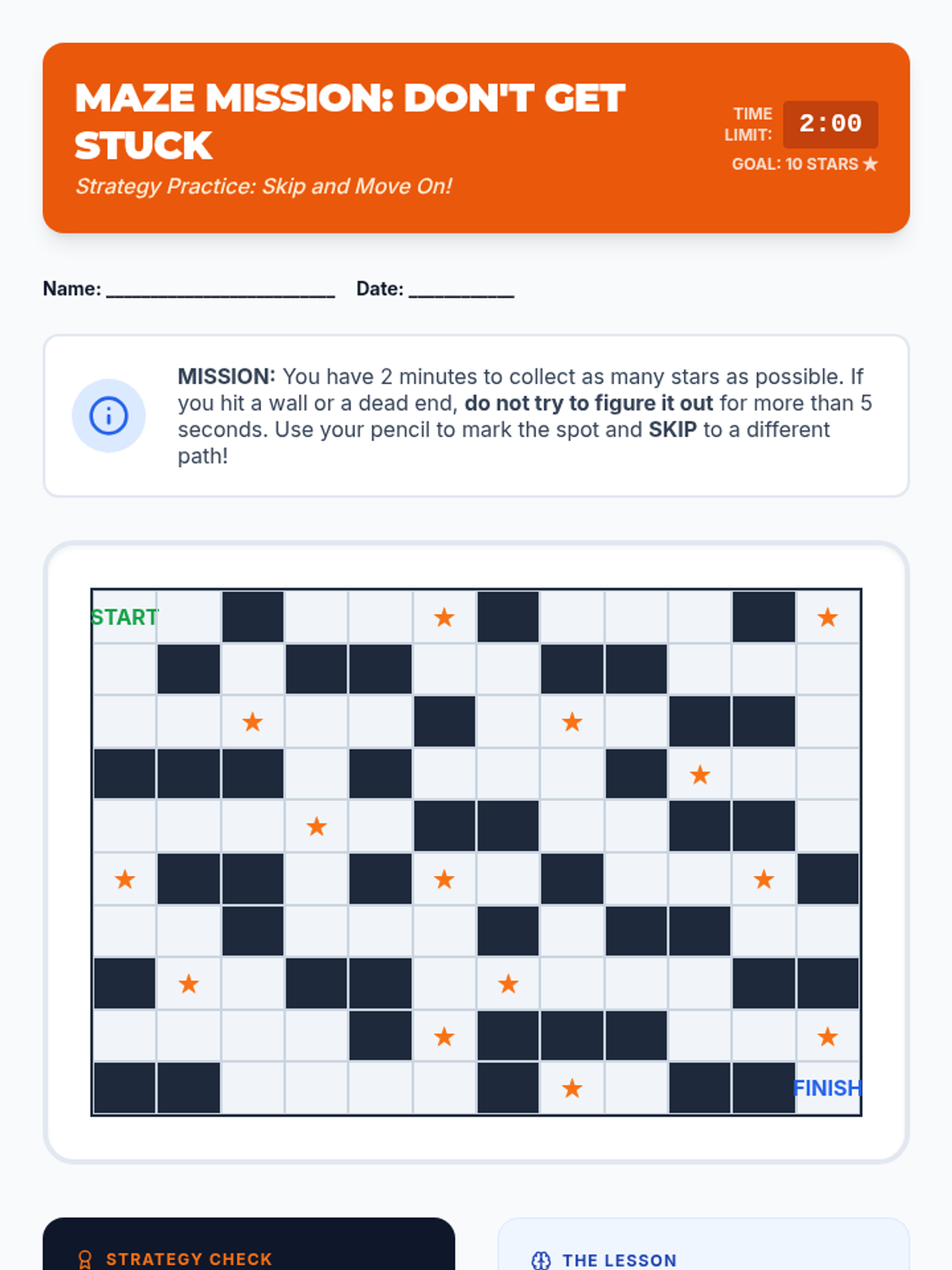
A timed maze activity for Lesson 2 that simulates the 'Skip and Return' strategy by forcing students to avoid dead ends to reach the goal.
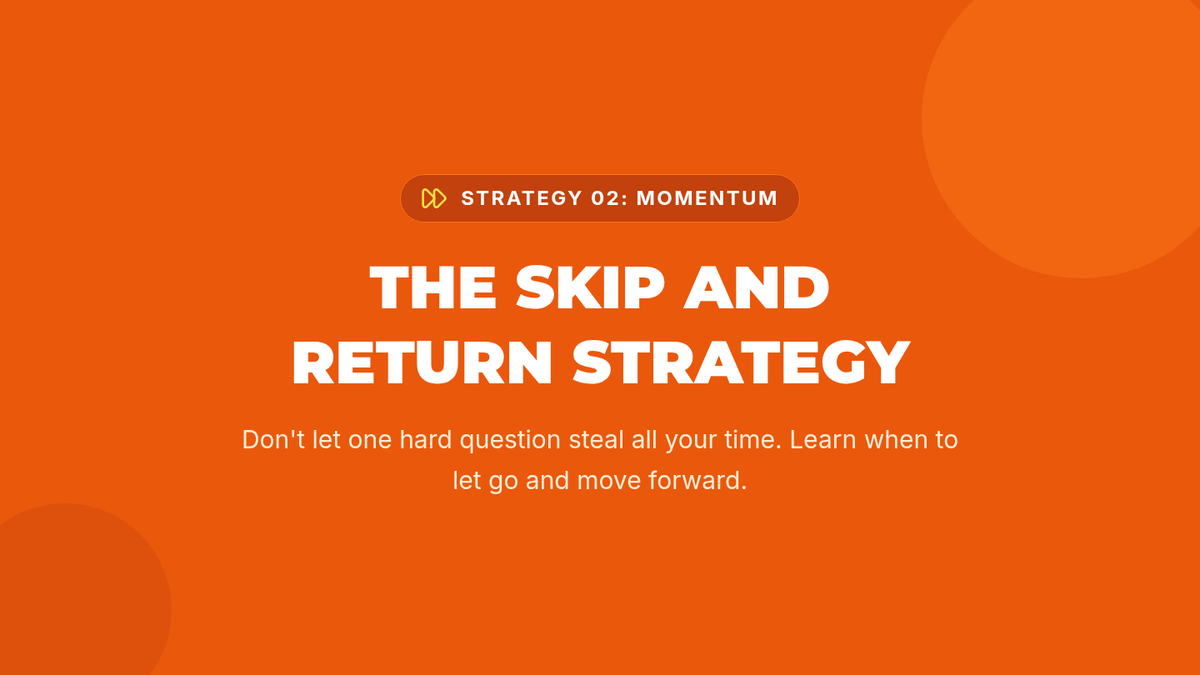
Slide deck for Lesson 2 teaching the 'Skip and Return' strategy, focusing on recognizing when you're stuck and the benefits of skipping.
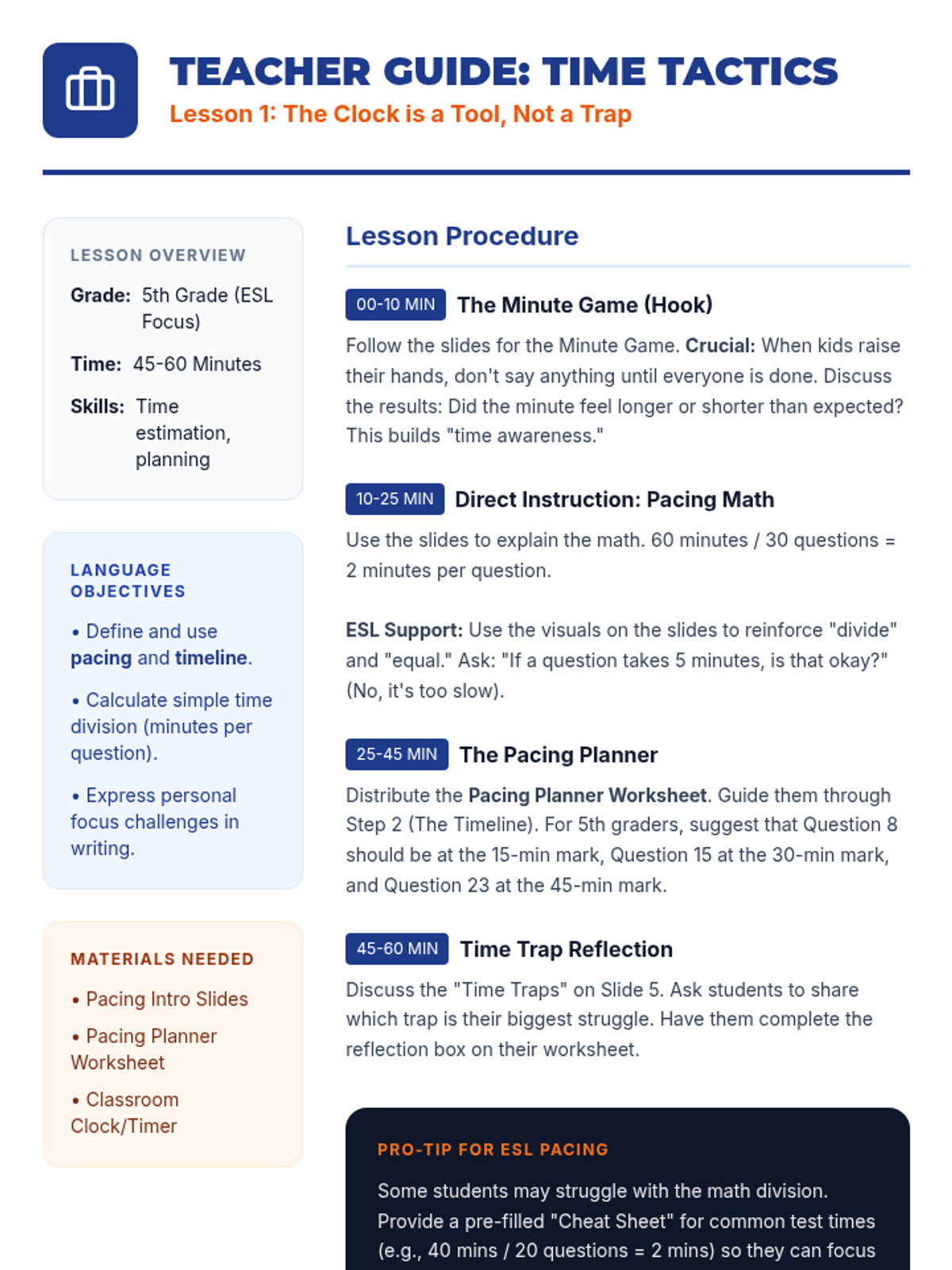
Teacher guidance for Lesson 1, including language objectives, step-by-step procedures, and ESL-specific instructional tips.
Introductory slide deck for Lesson 1 on pacing, featuring the 'Minute Game' hook, the math of pacing, and common time traps.
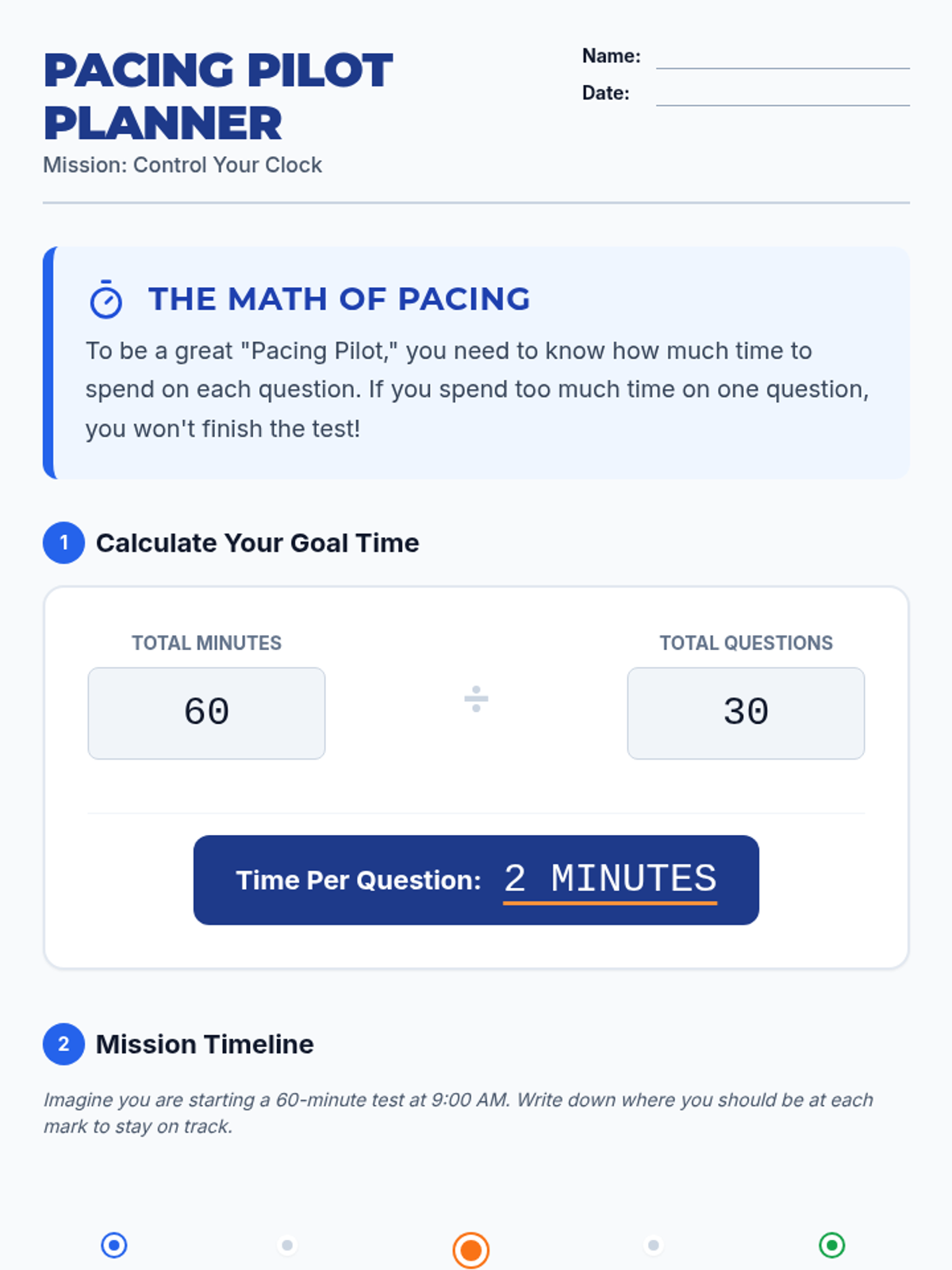
A visual pacing planner worksheet for Lesson 1, helping students calculate time per question and map out a test timeline.