Mindful breathing and body scan meditation techniques integrated with daily self-care routines. Develops strategies for balancing life demands and advocating for personal wellness needs.
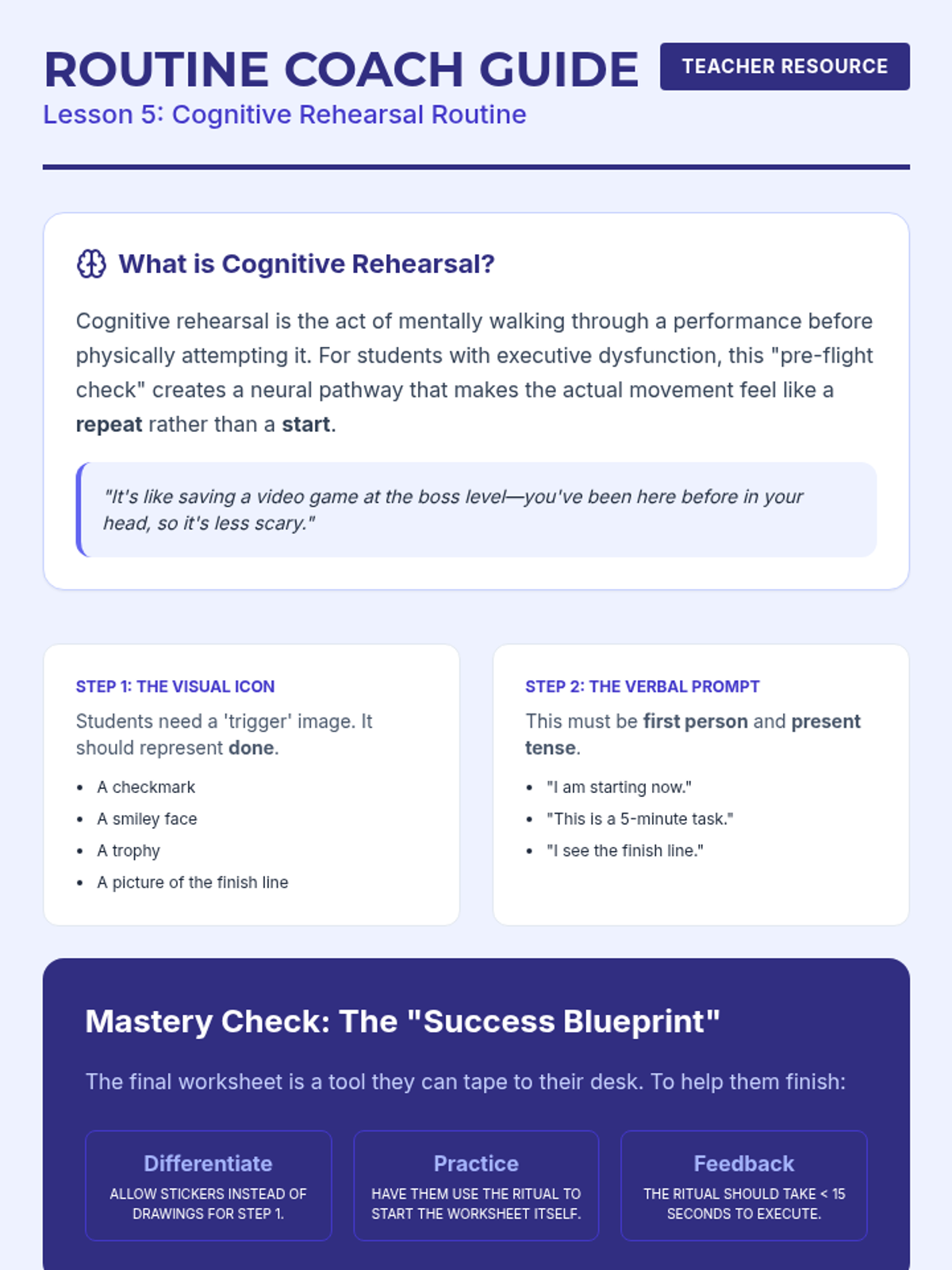
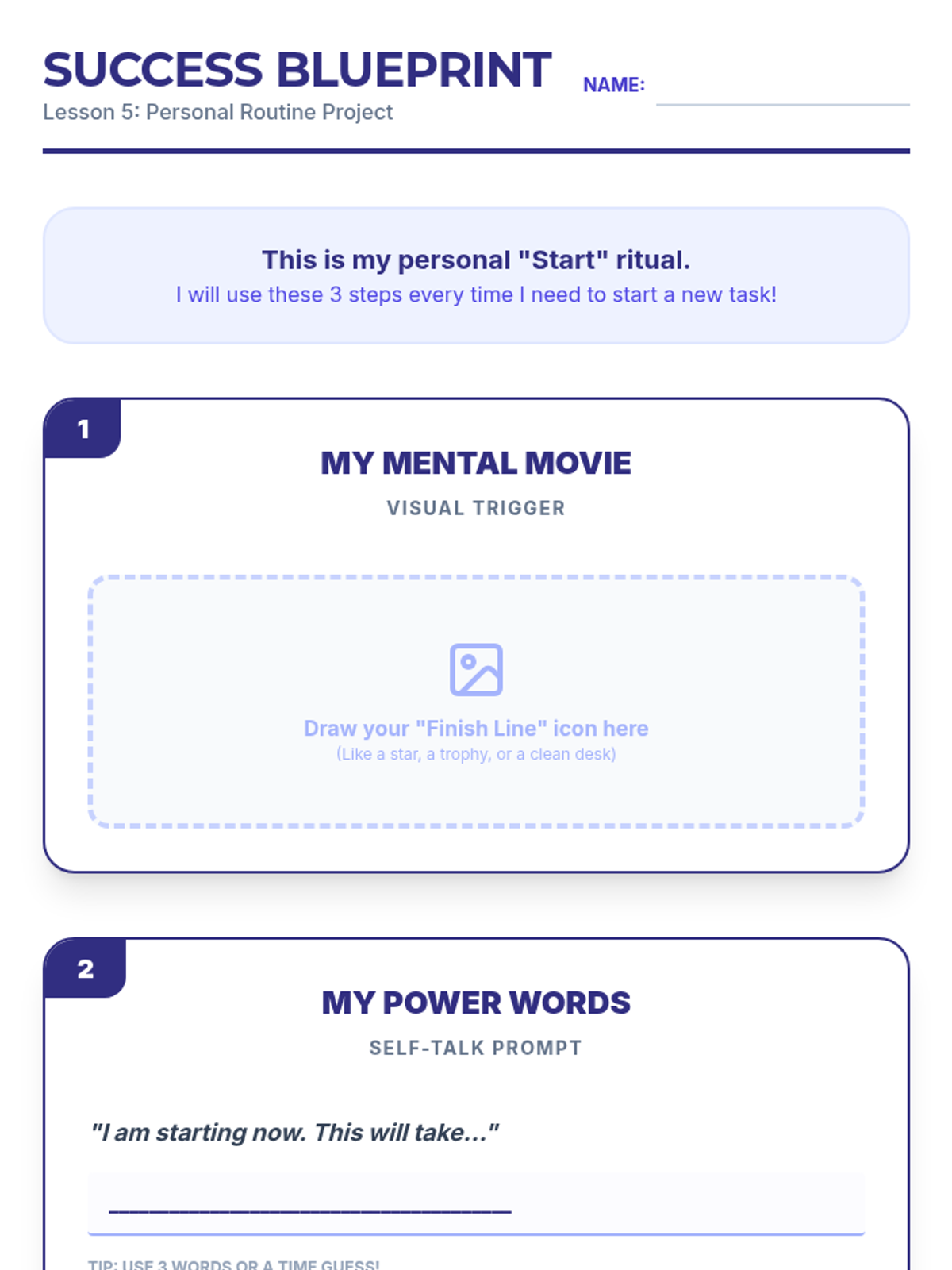
Students create a personal storyboard or checklist that combines a visual icon with a verbal prompt for task initiation.
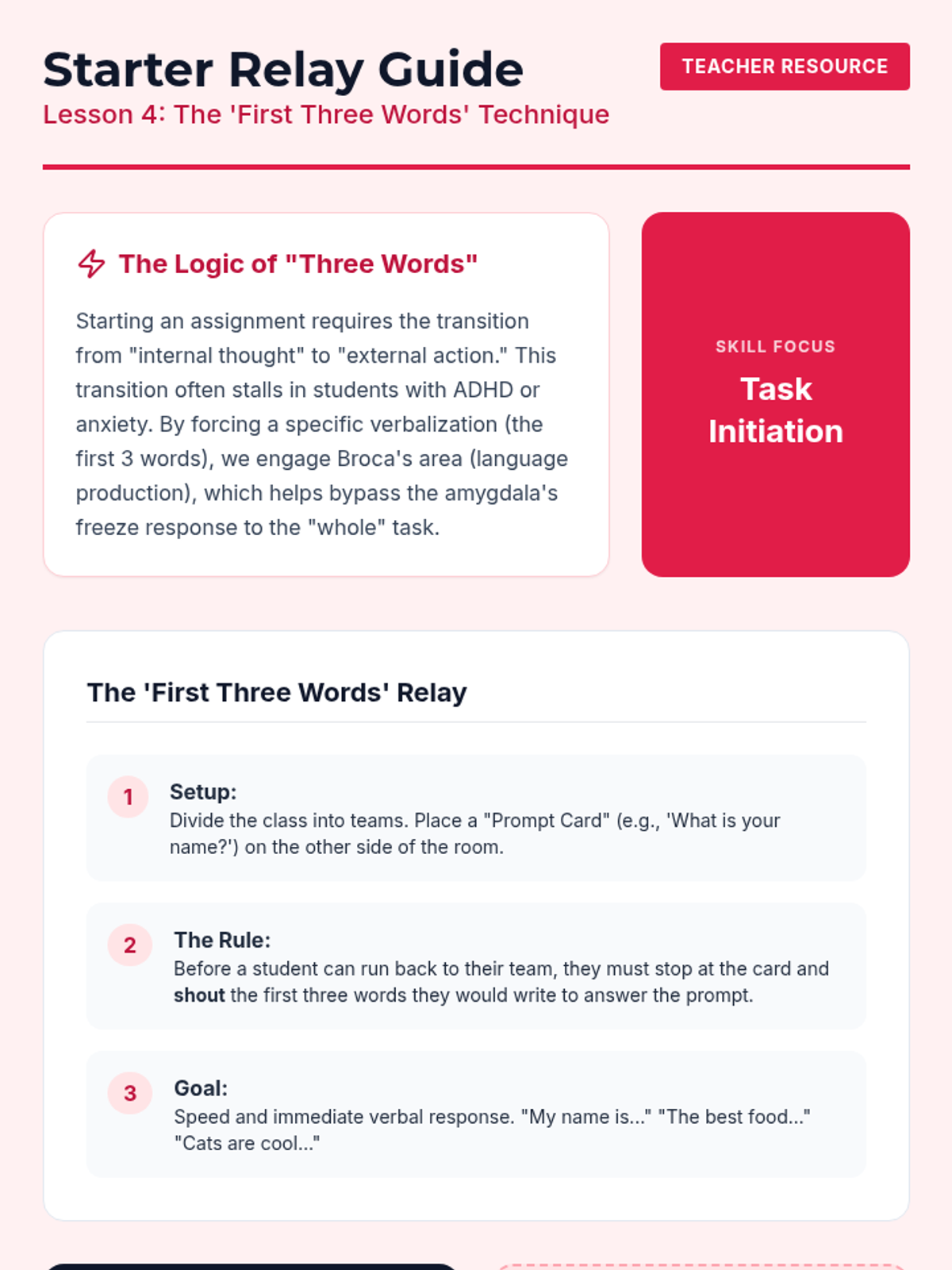
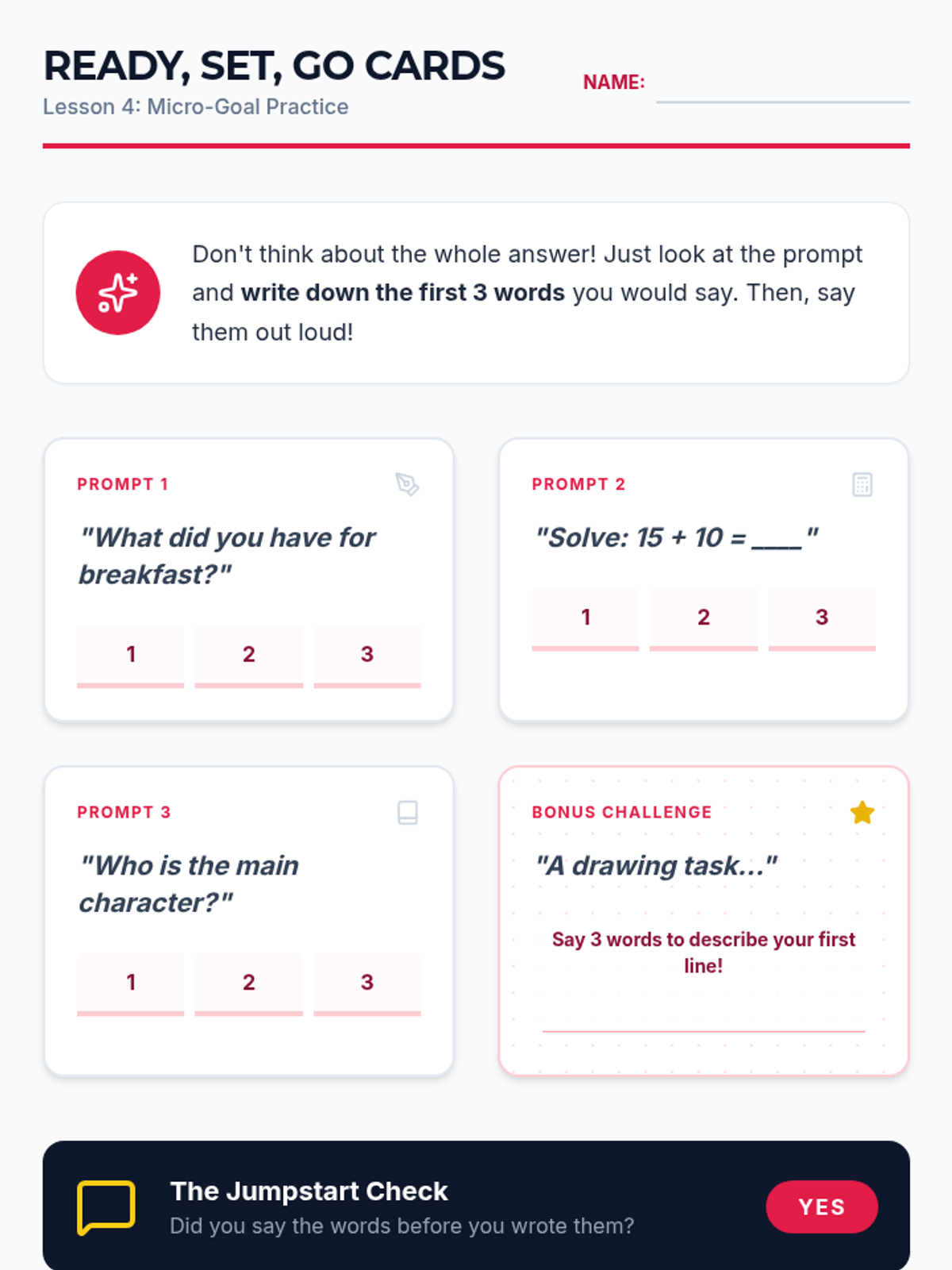
Students learn to identify the first three words of a task to lower the barrier to entry and engage the brain's language center.
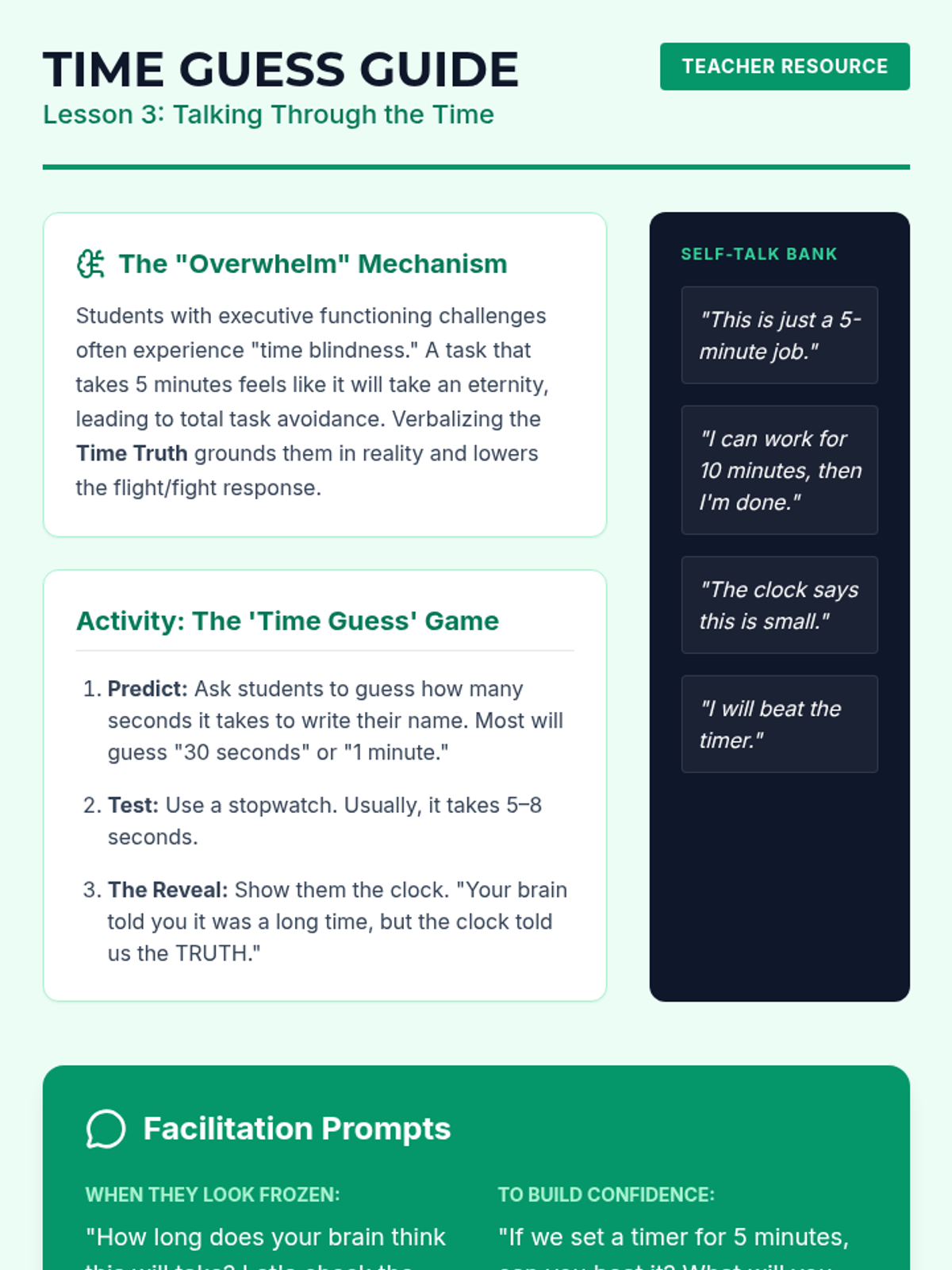
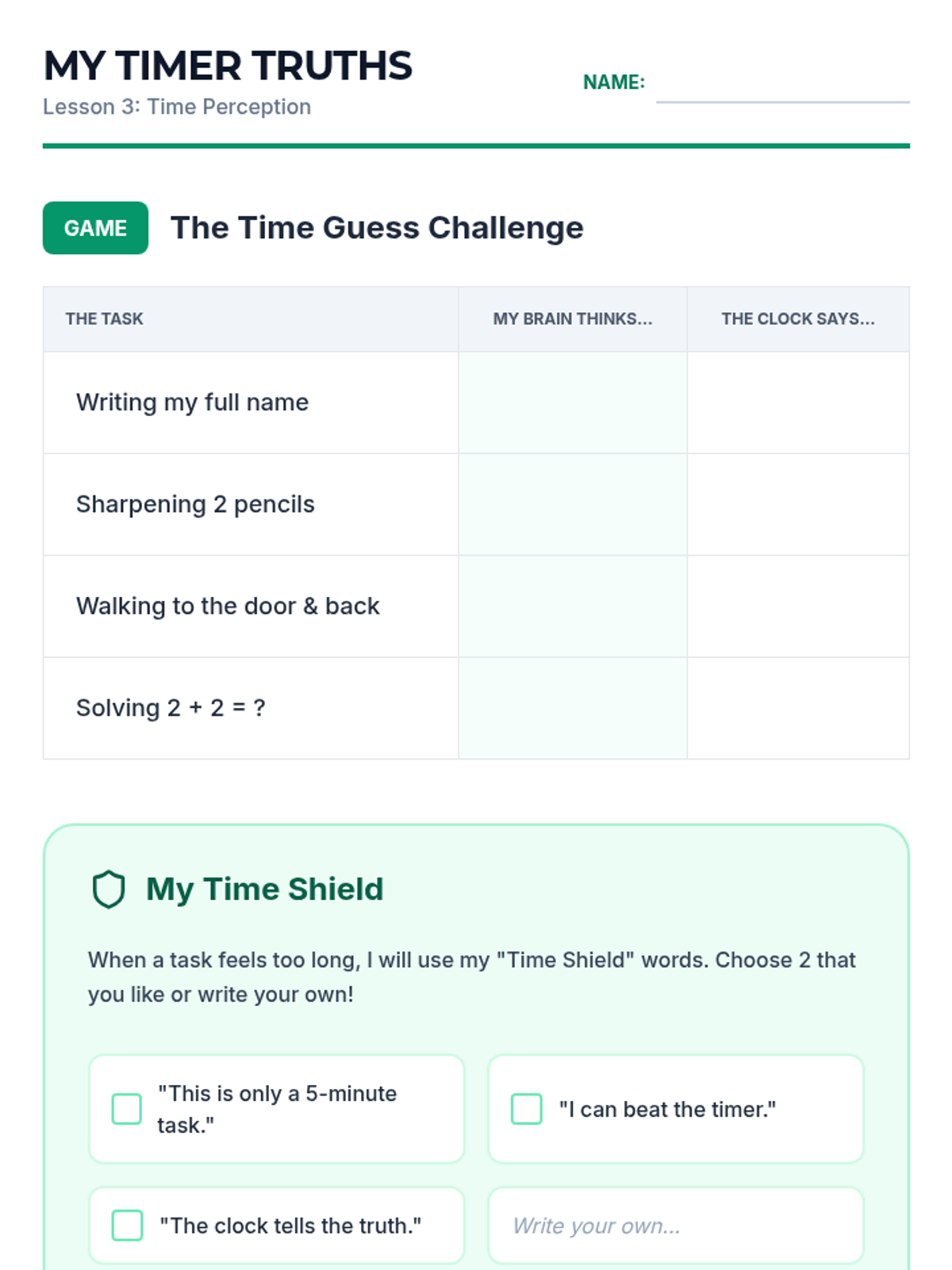
Students learn to estimate time and use verbal reassurance to reduce overwhelm.
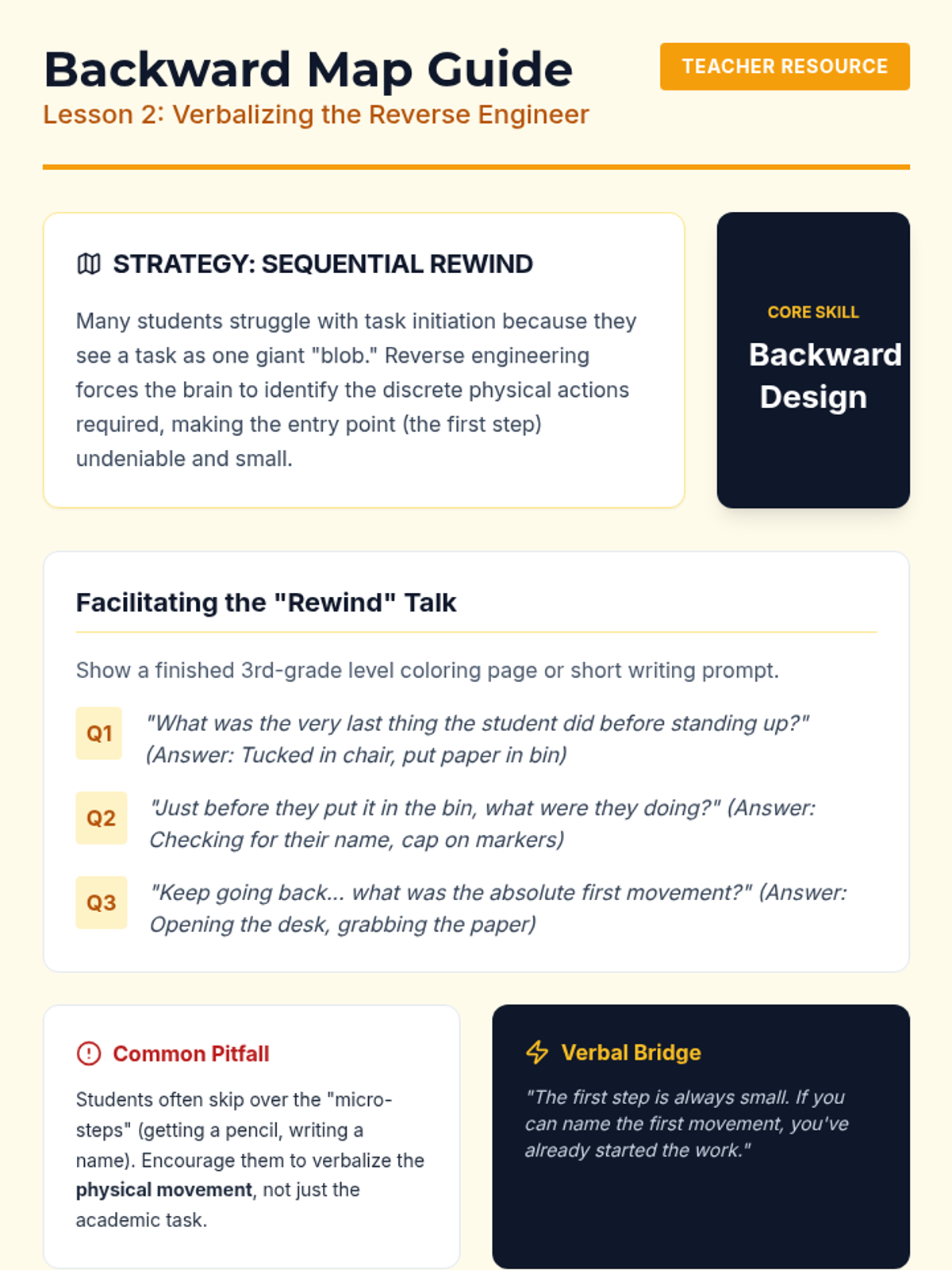
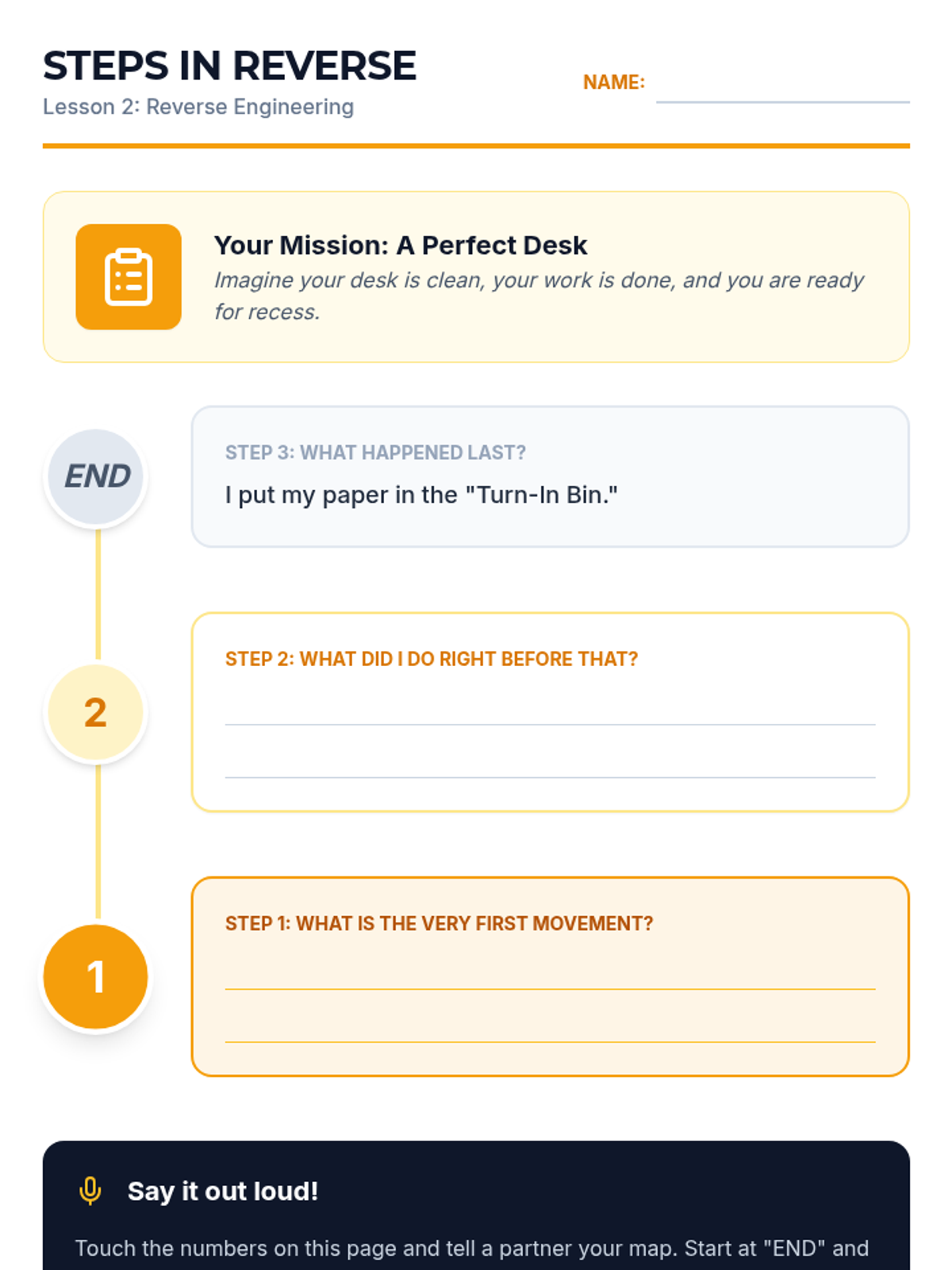
Students talk backward through the steps of a completed sample to make the first step obvious and approachable.
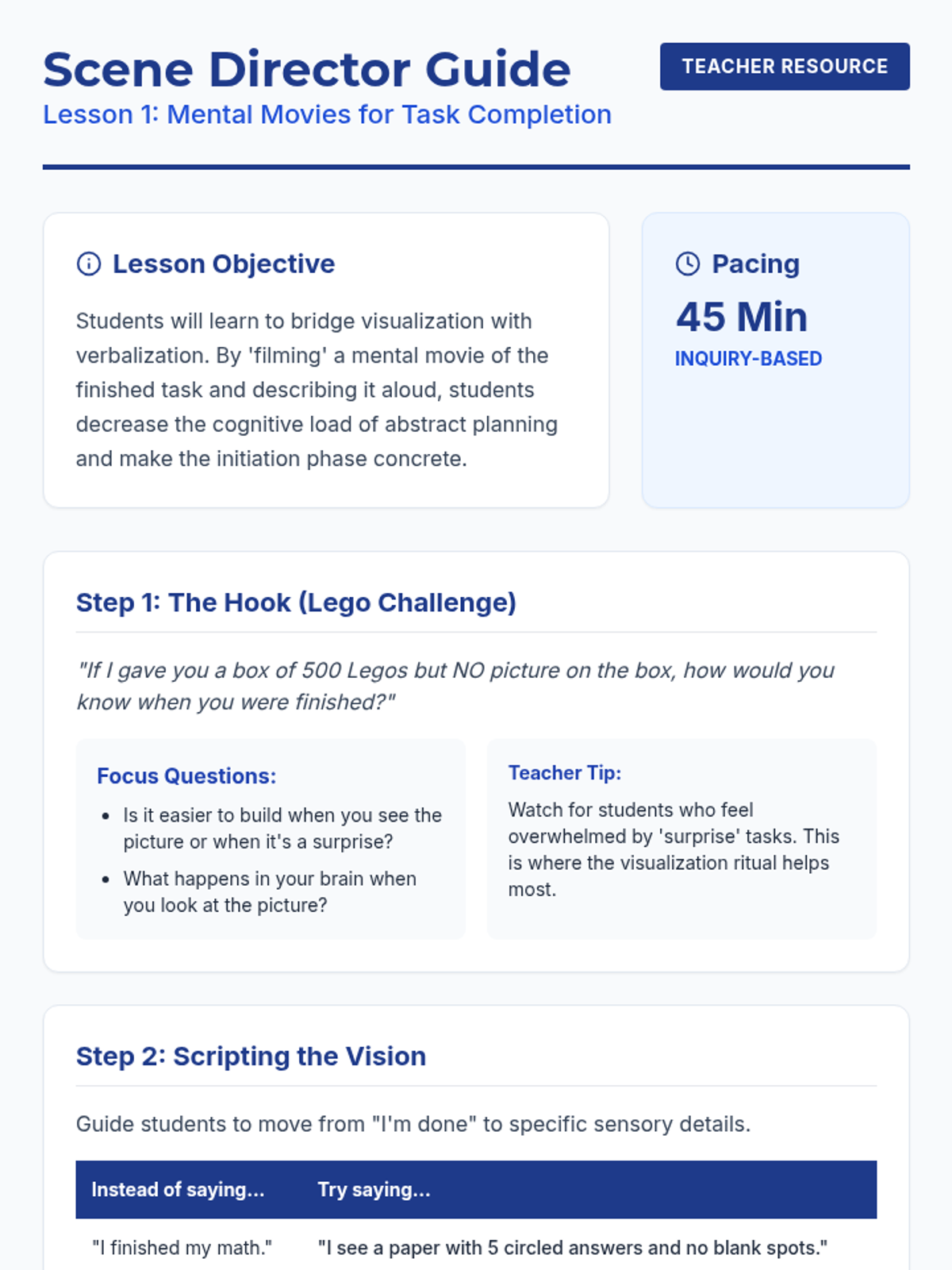
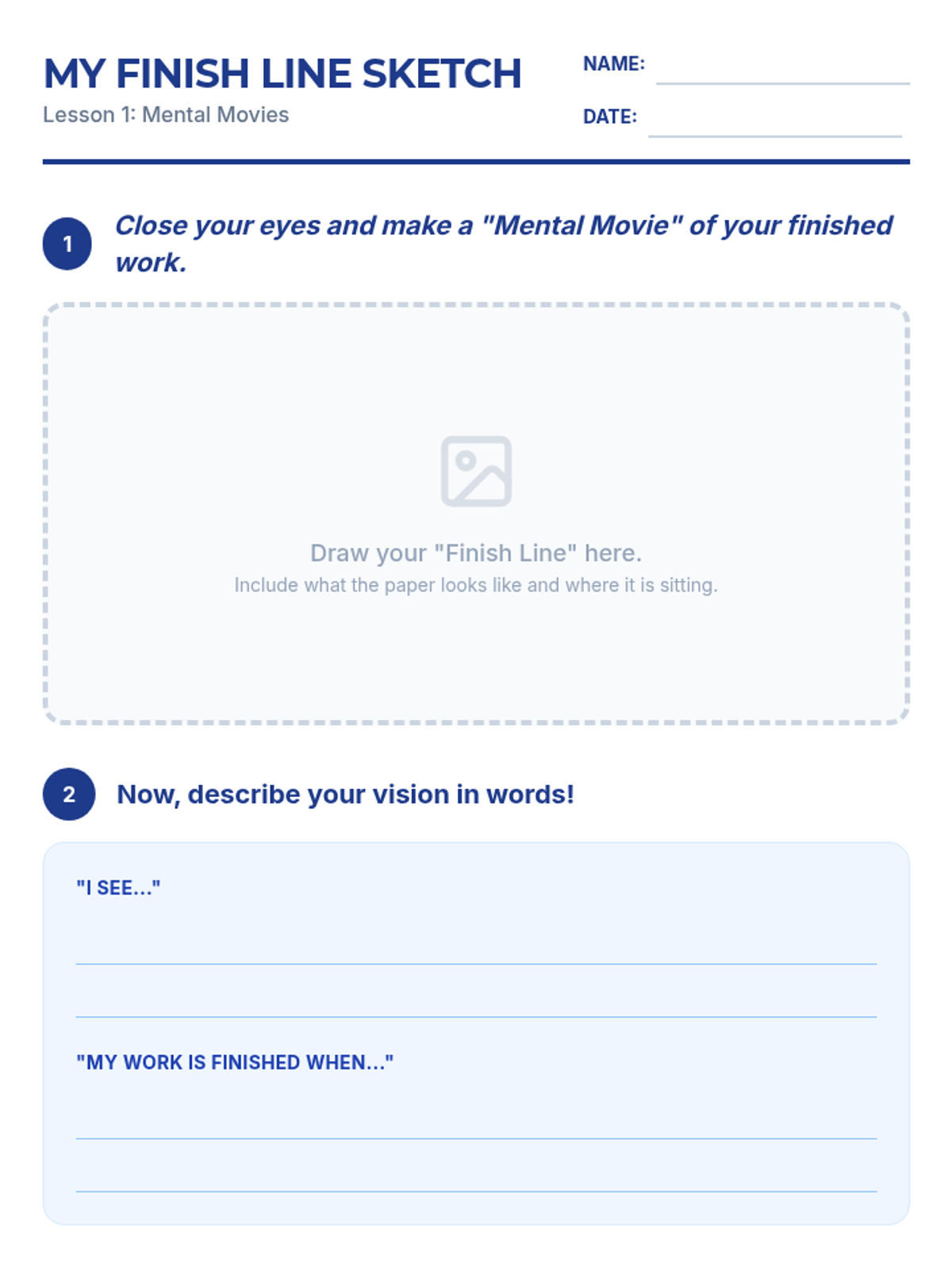
Students practice closing their eyes and creating a detailed mental image of what 'finished' looks like before describing it aloud.
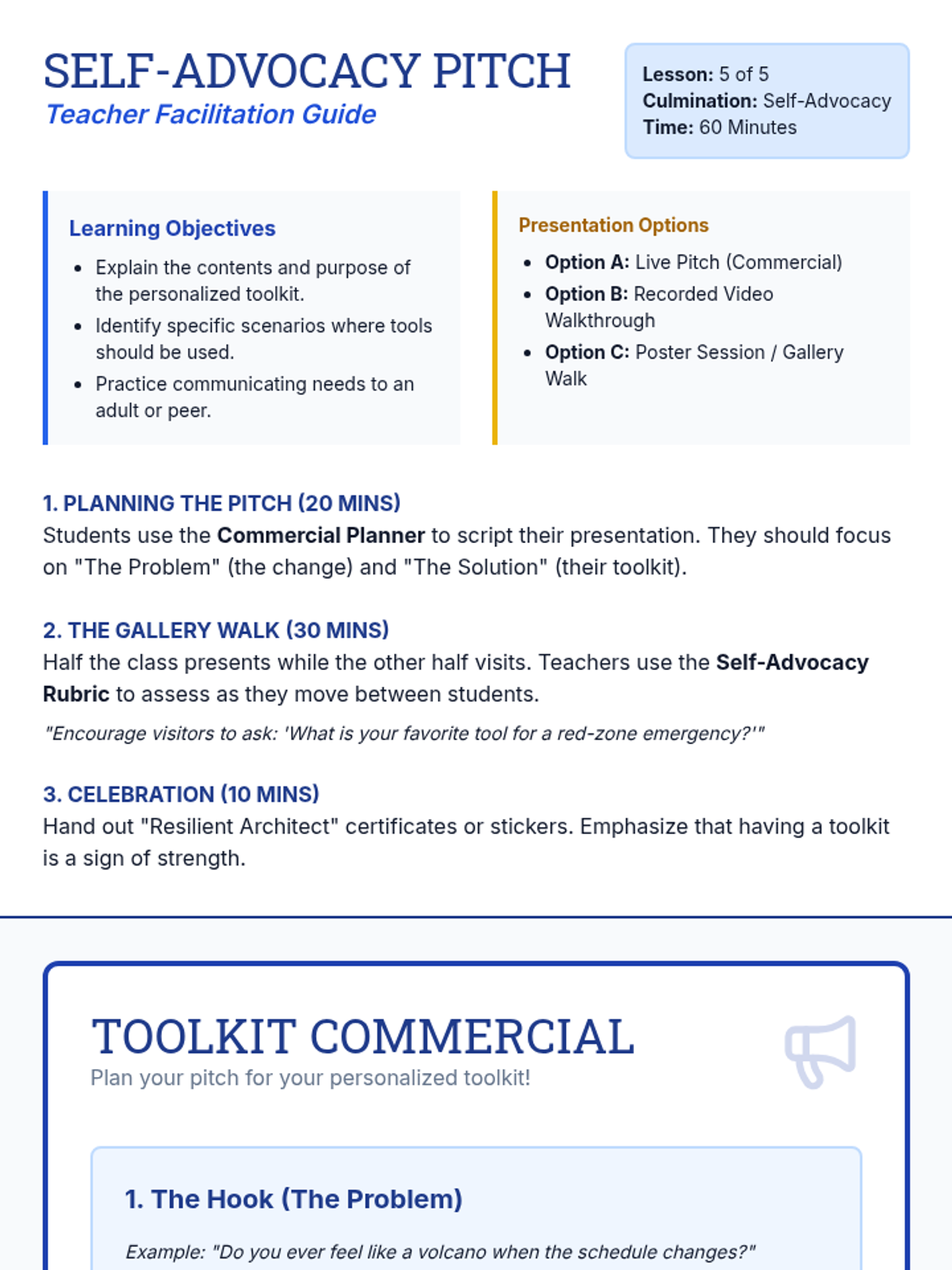
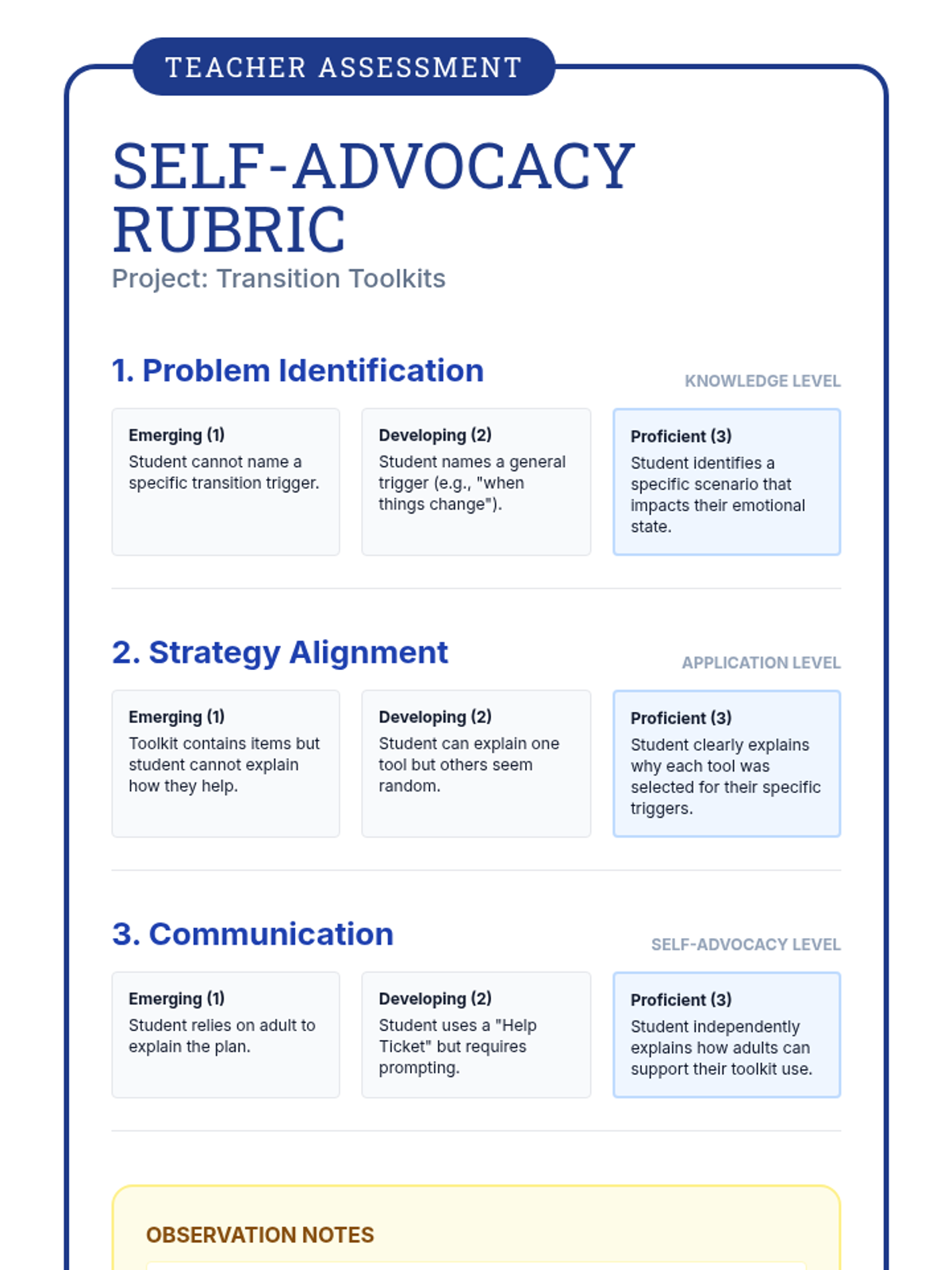
Students present their toolkit to a teacher or peer, explaining what is inside and how it supports their self-advocacy.
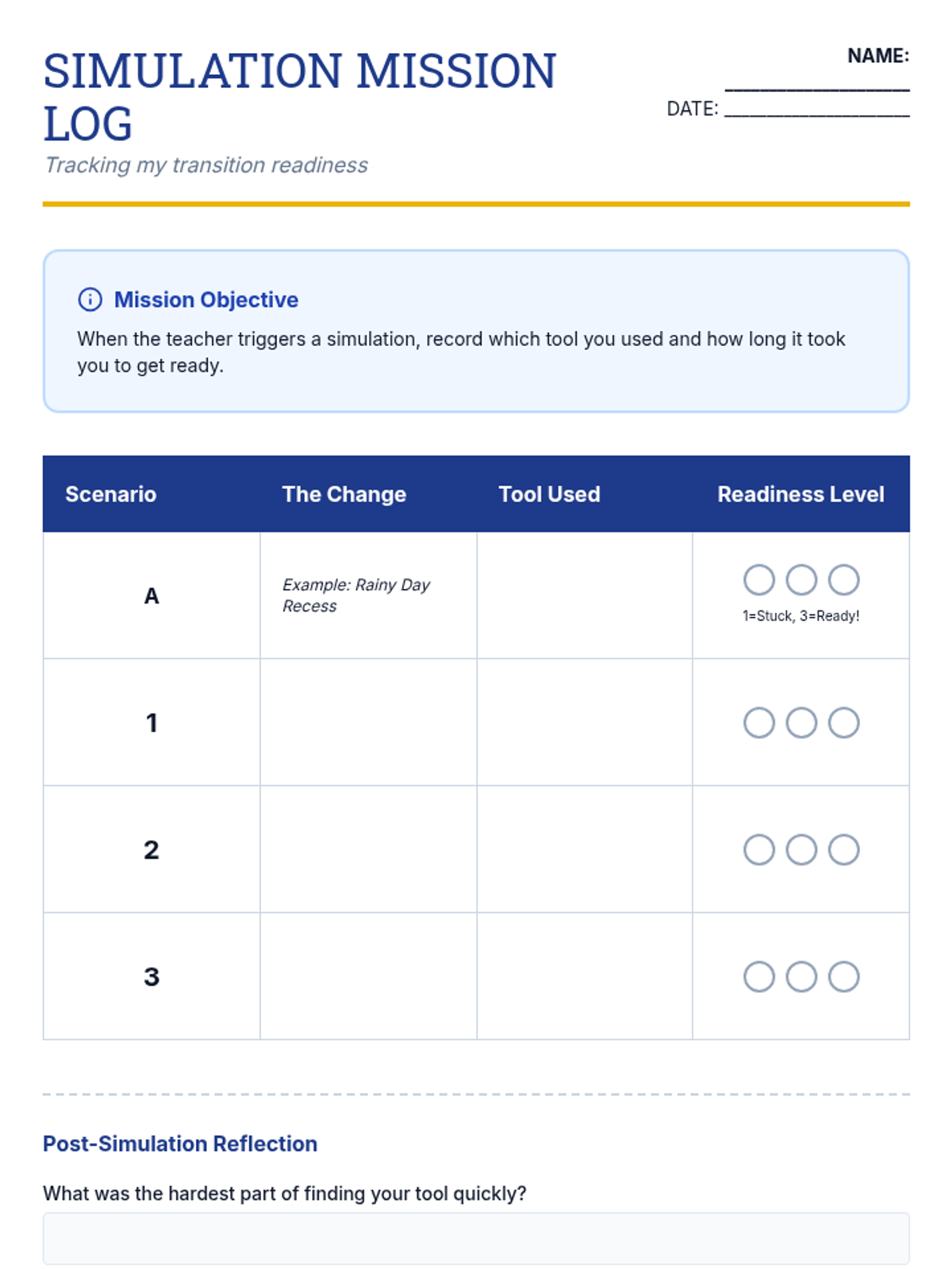
Students participate in a simulated schedule change to practice immediately retrieving and using their toolkit resources.
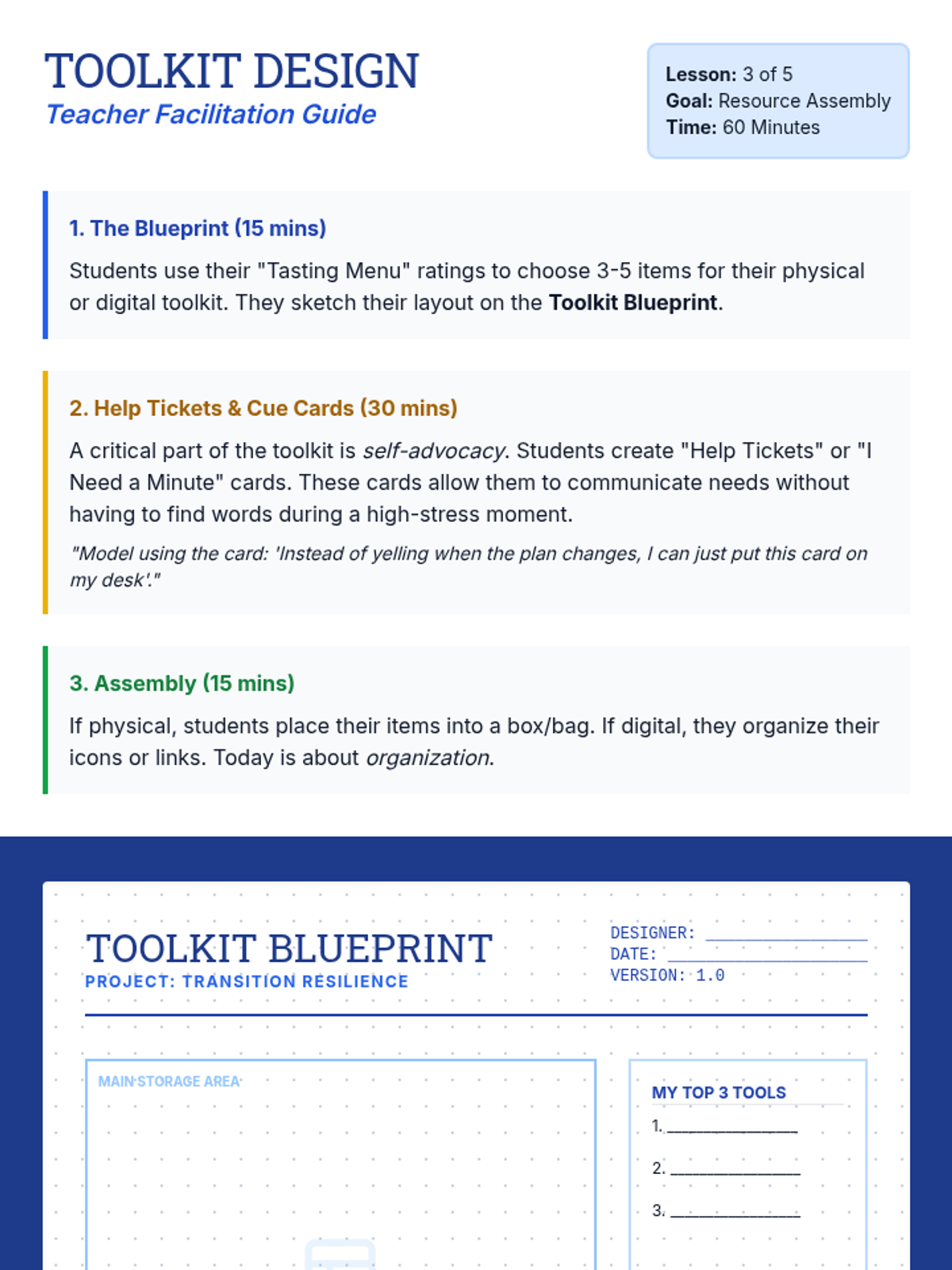
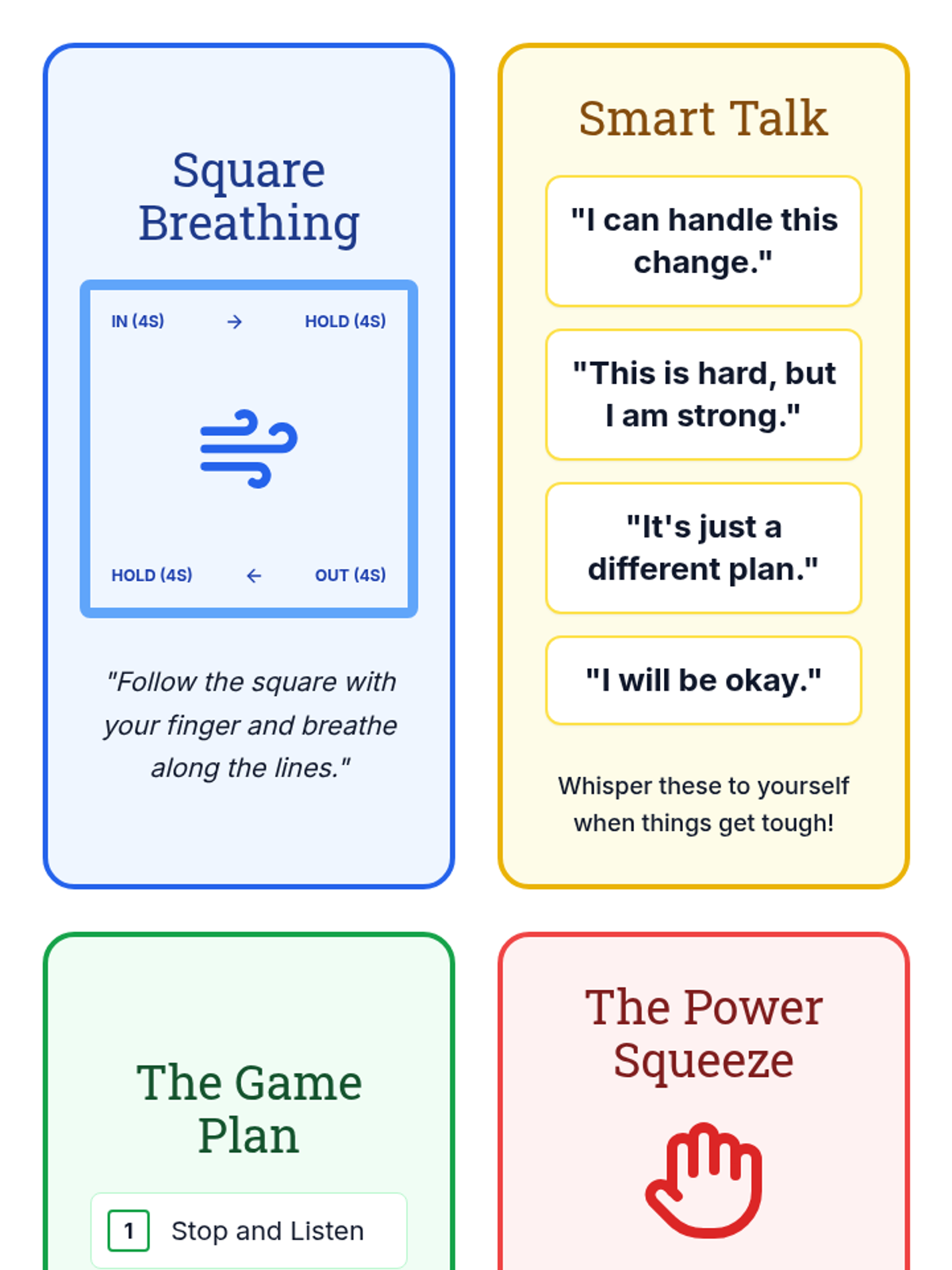
Students select their top strategies and begin assembling their physical or digital toolkit, creating custom cue cards for support.
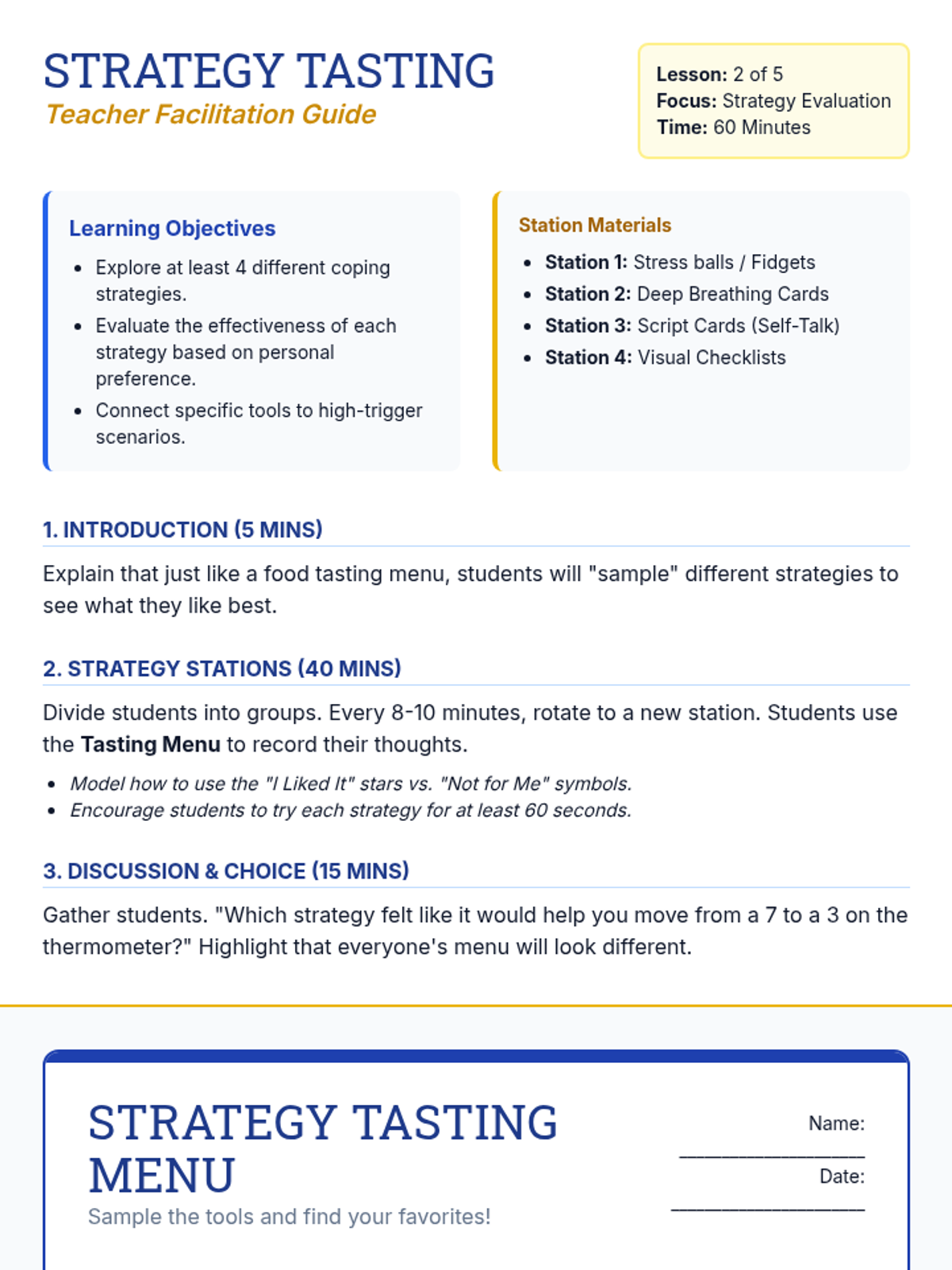
Students rotate through stations to test different coping mechanisms and rate the effectiveness of each strategy for themselves.
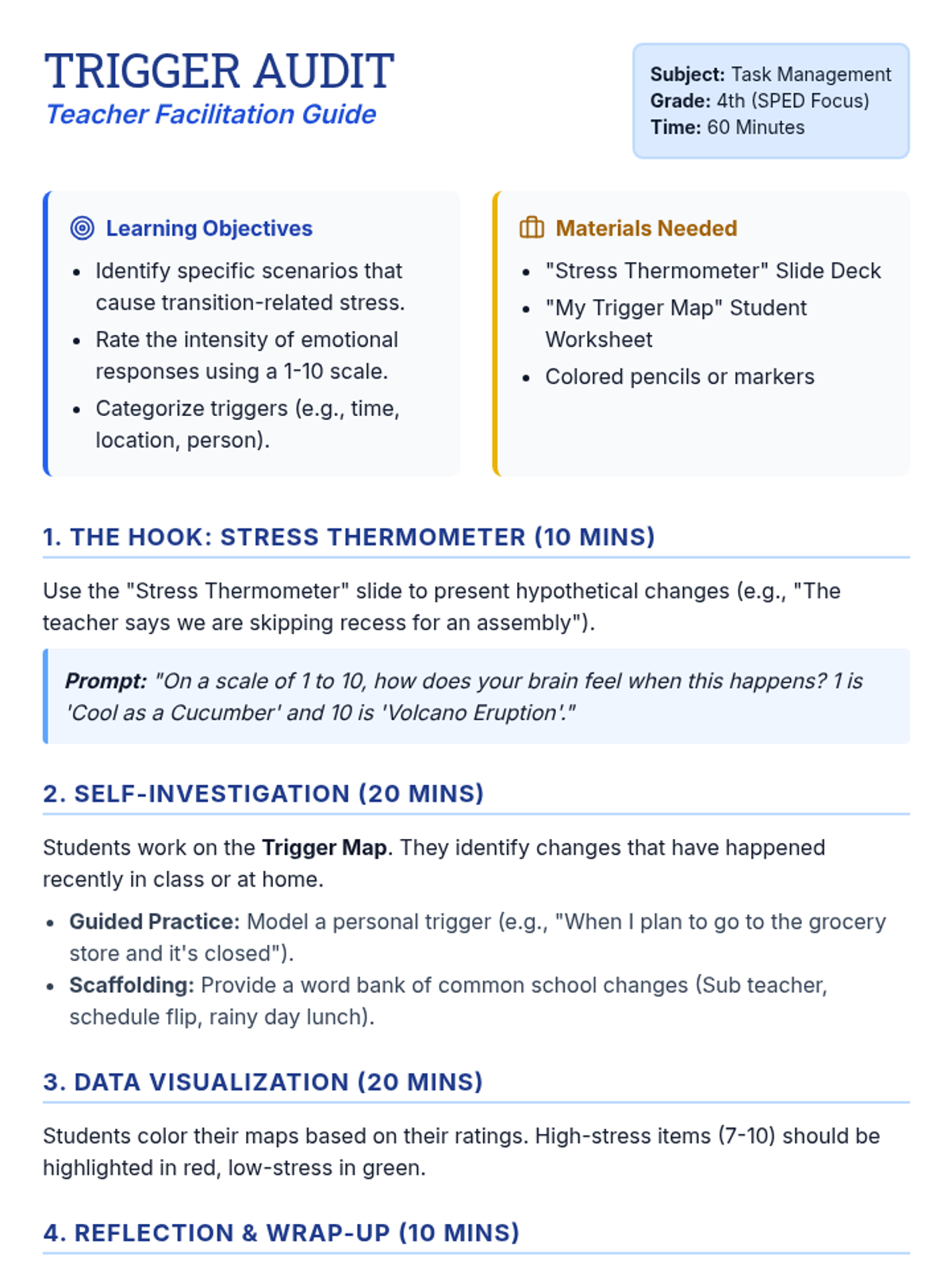
Students investigate their own emotional responses to different types of change, using a 'Stress Thermometer' to identify and map their personal triggers.
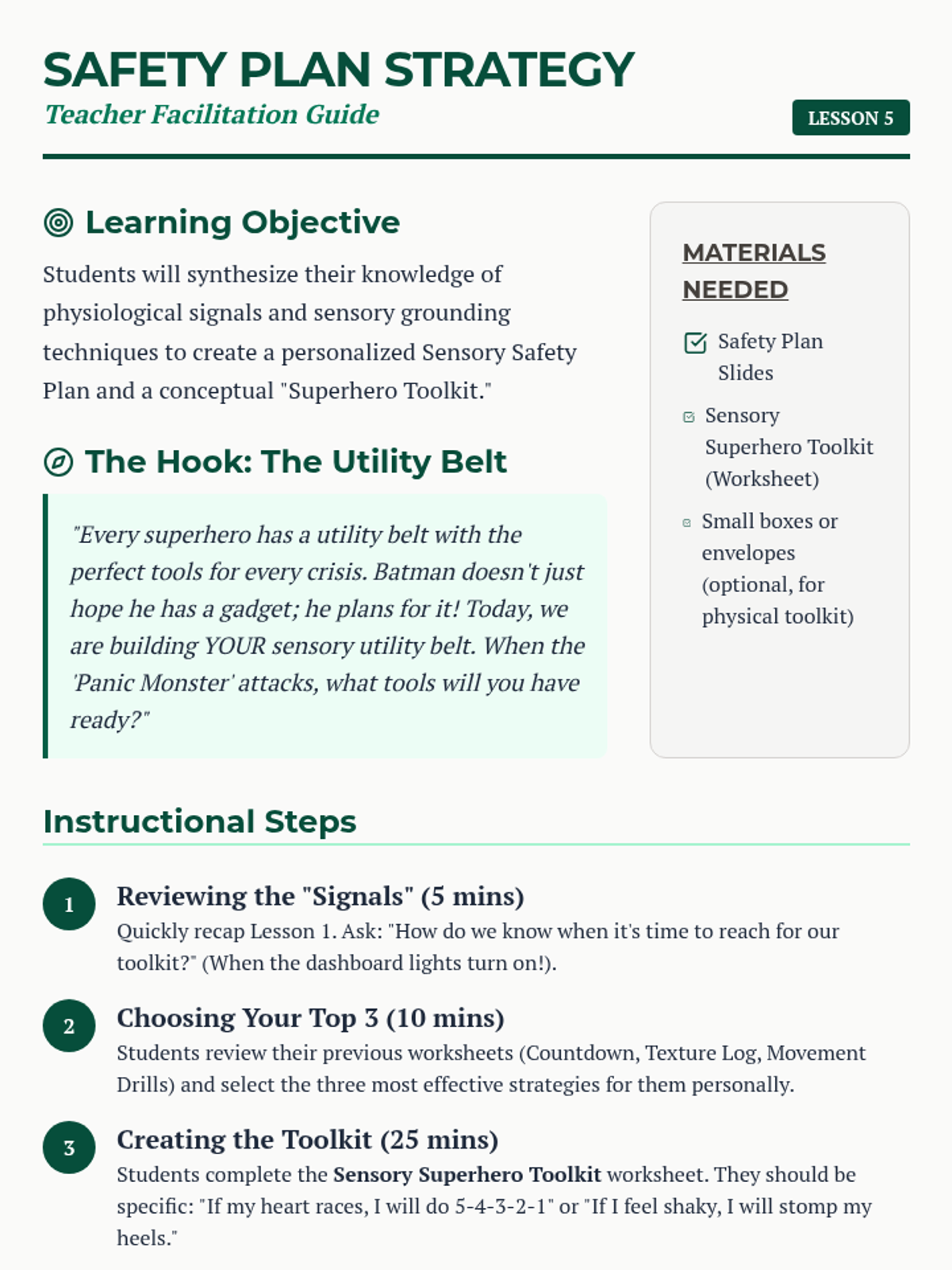
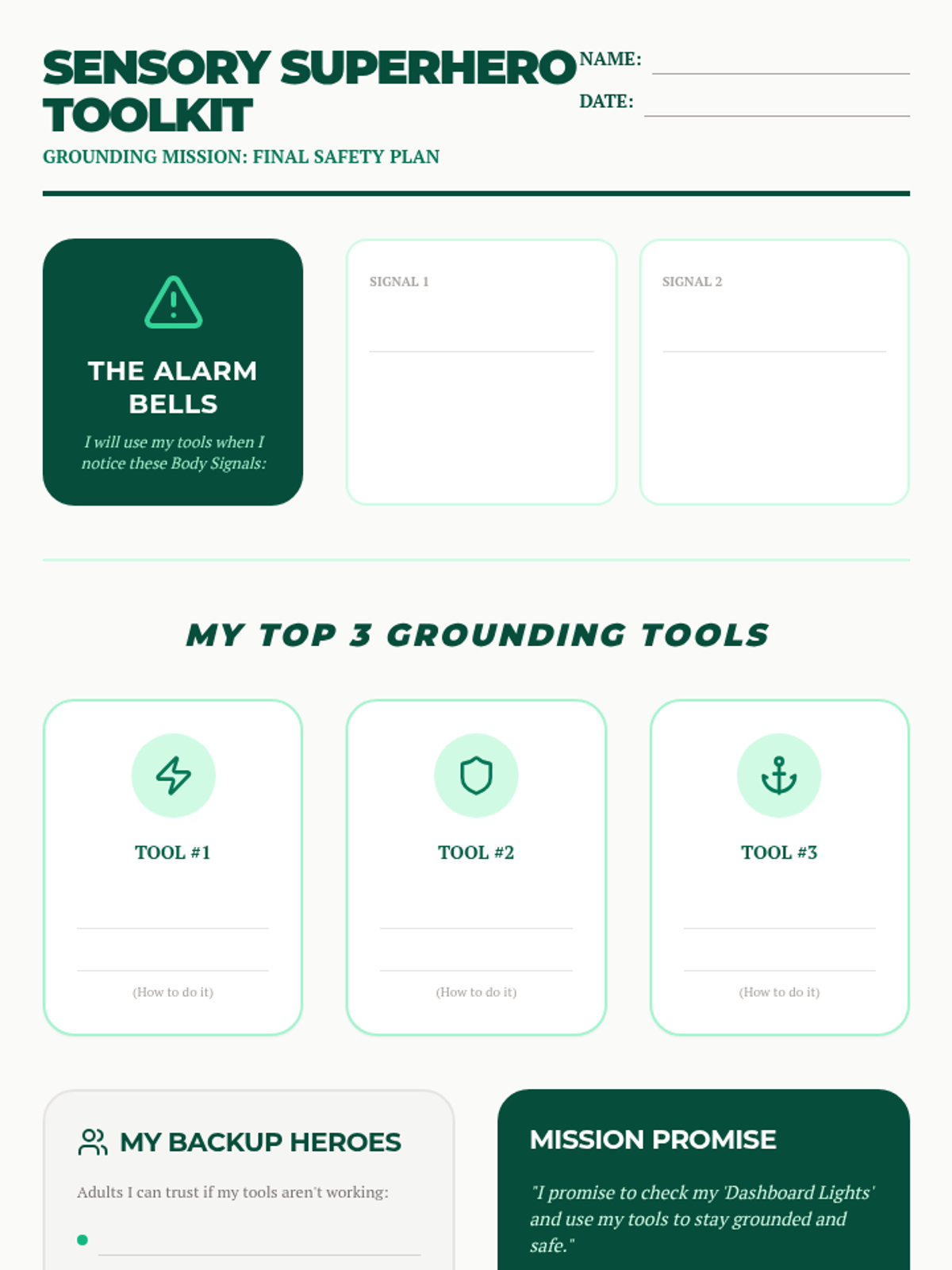
Students synthesize their learning by creating a 'Sensory Safety Plan' and 'Superhero Toolkit' to use during future crises.
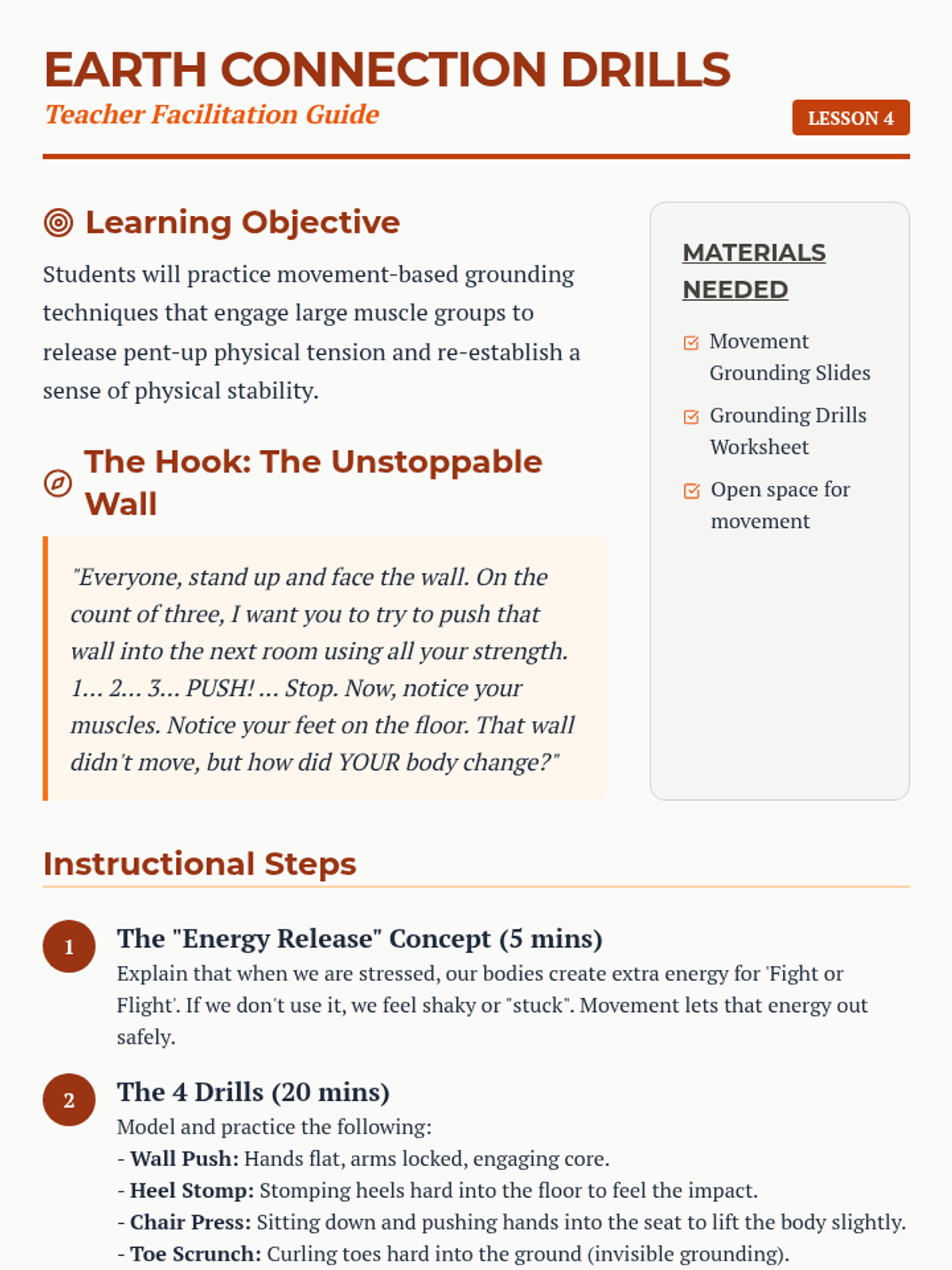
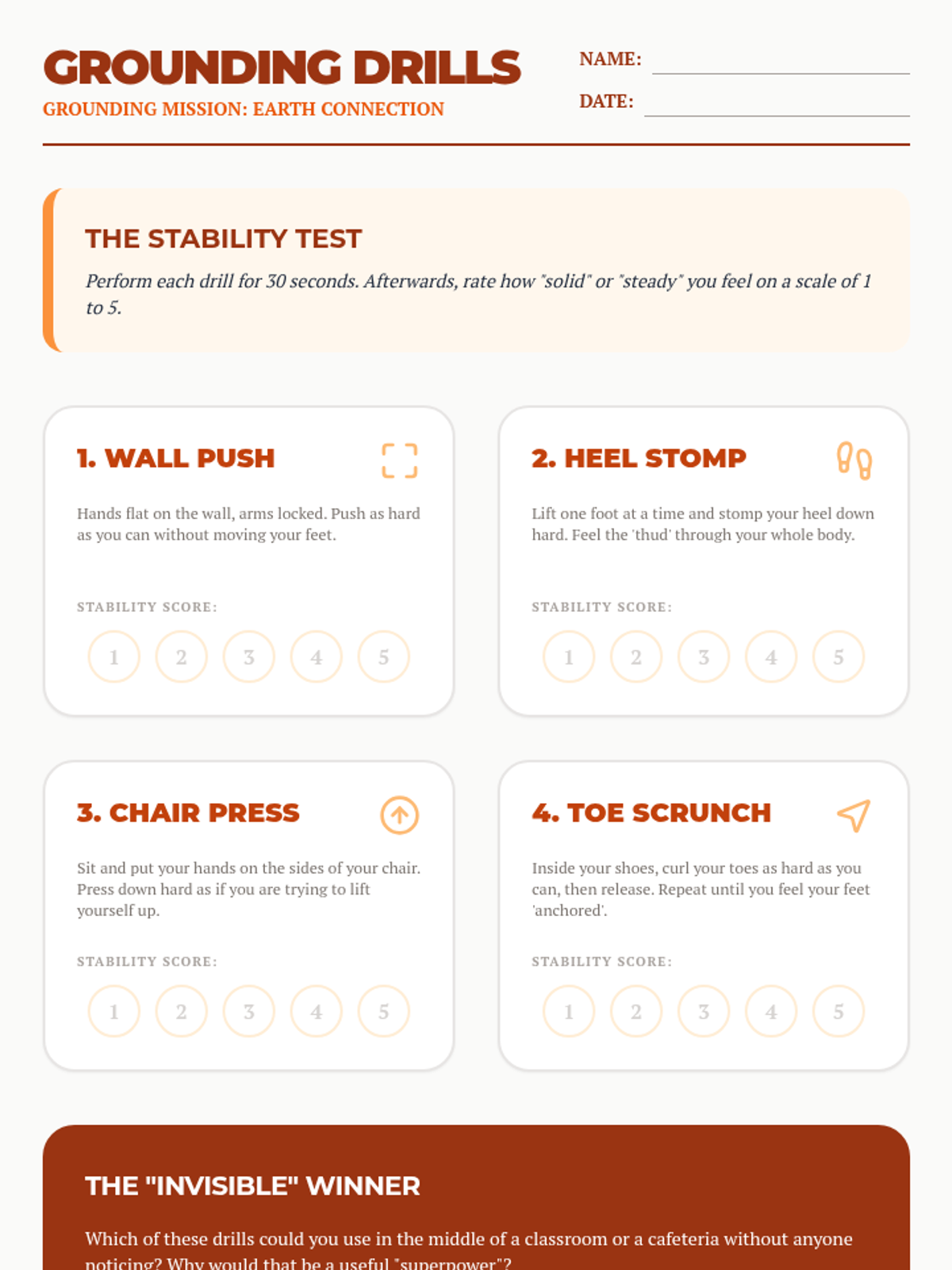
Learning movement-based grounding techniques like pushing against walls and stomping to release physical tension and feel connected to the earth.
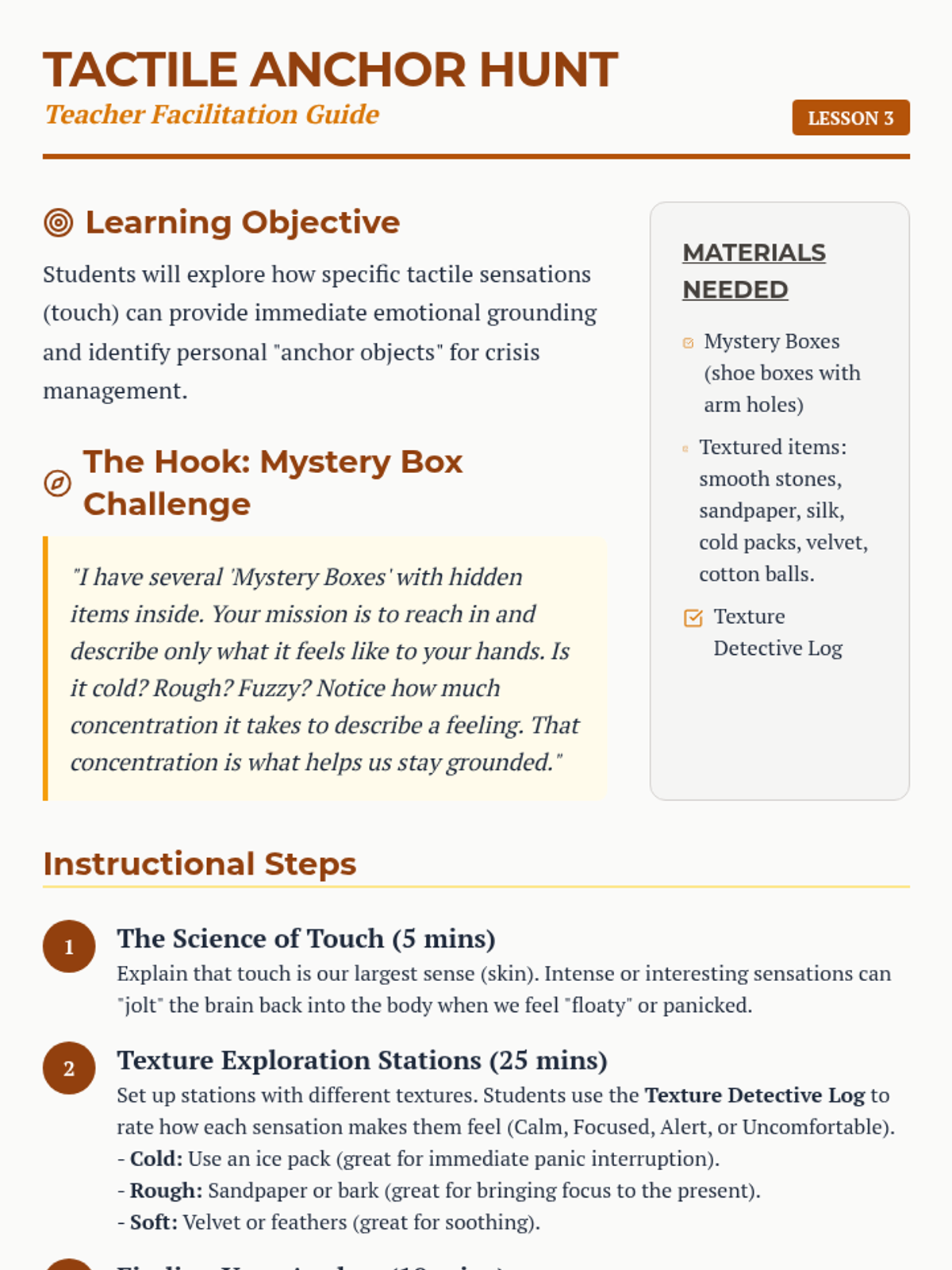
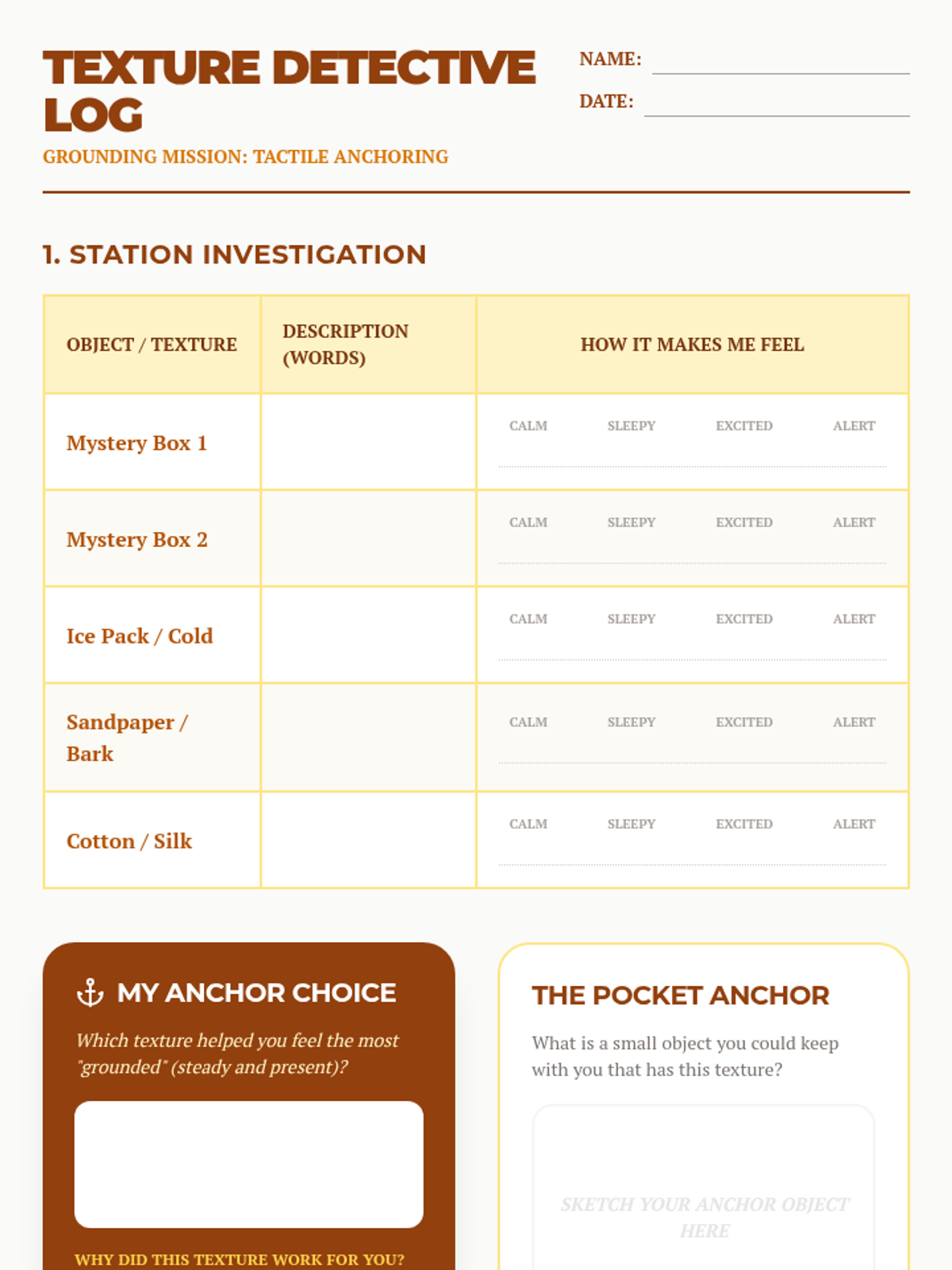
Exploring how tactile sensations and 'grounding objects' can interrupt panic cycles and provide a sense of security.
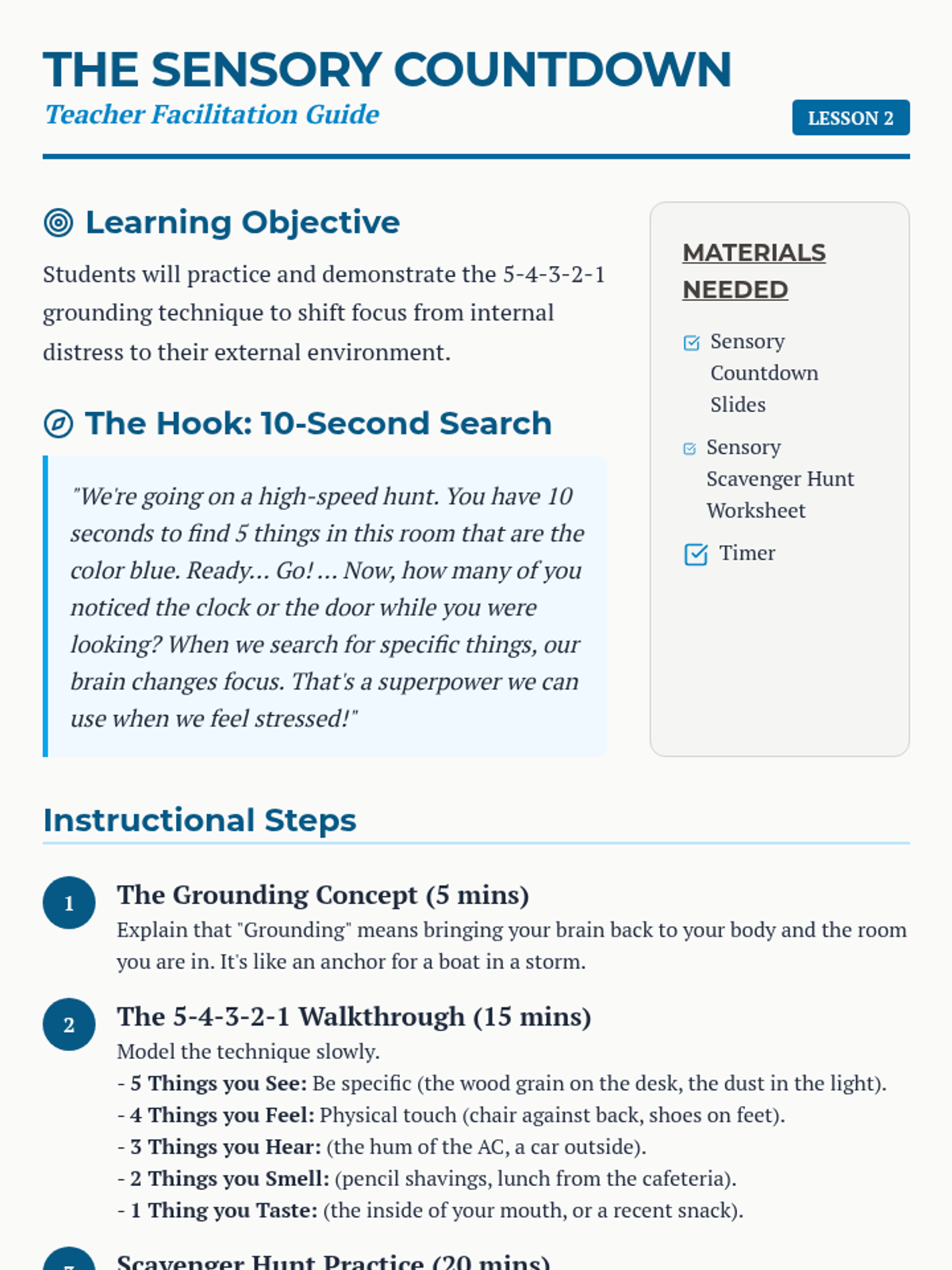
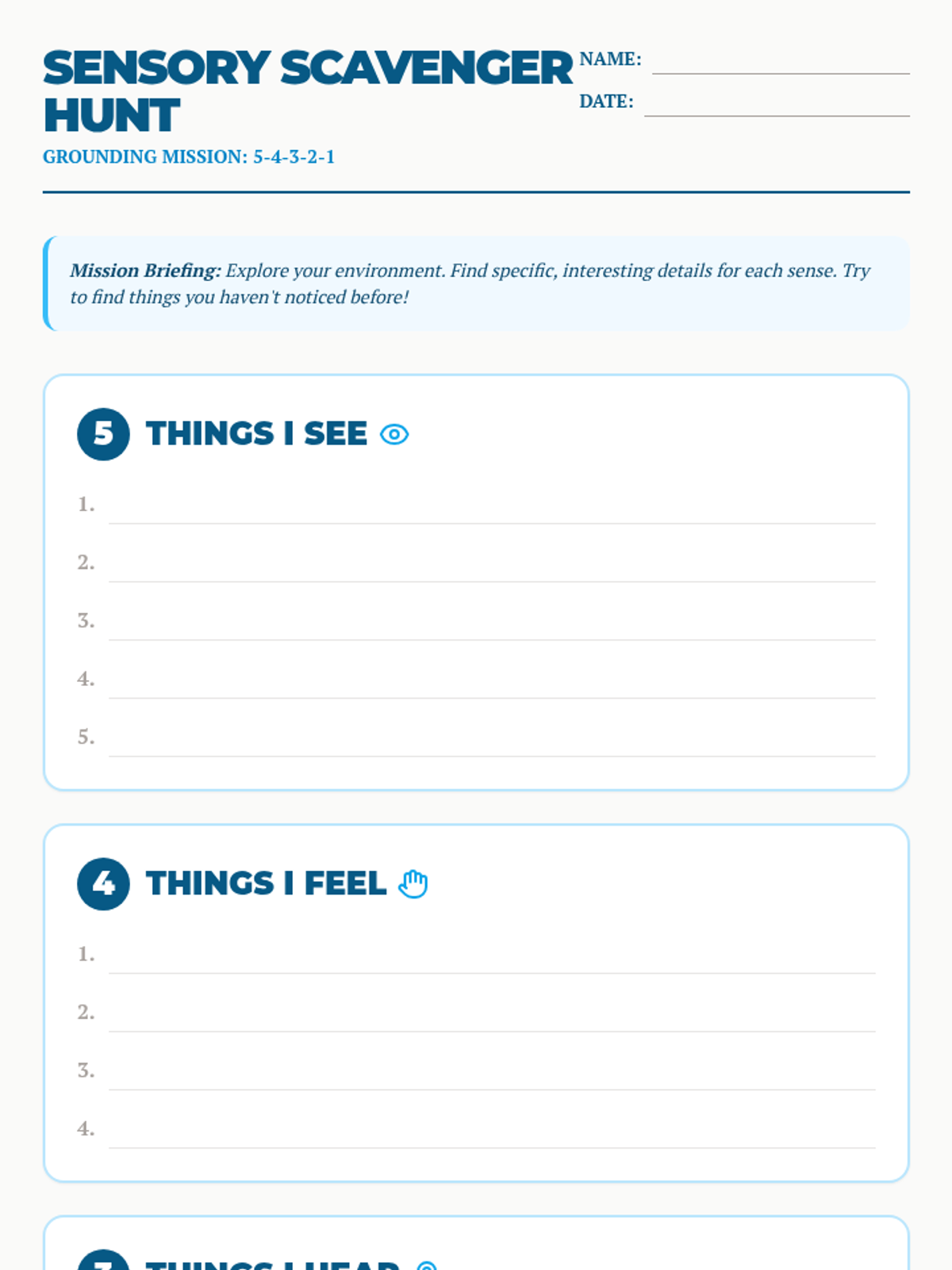
Introduction and practice of the 5-4-3-2-1 sensory grounding method to refocus the mind and body during overwhelming moments.
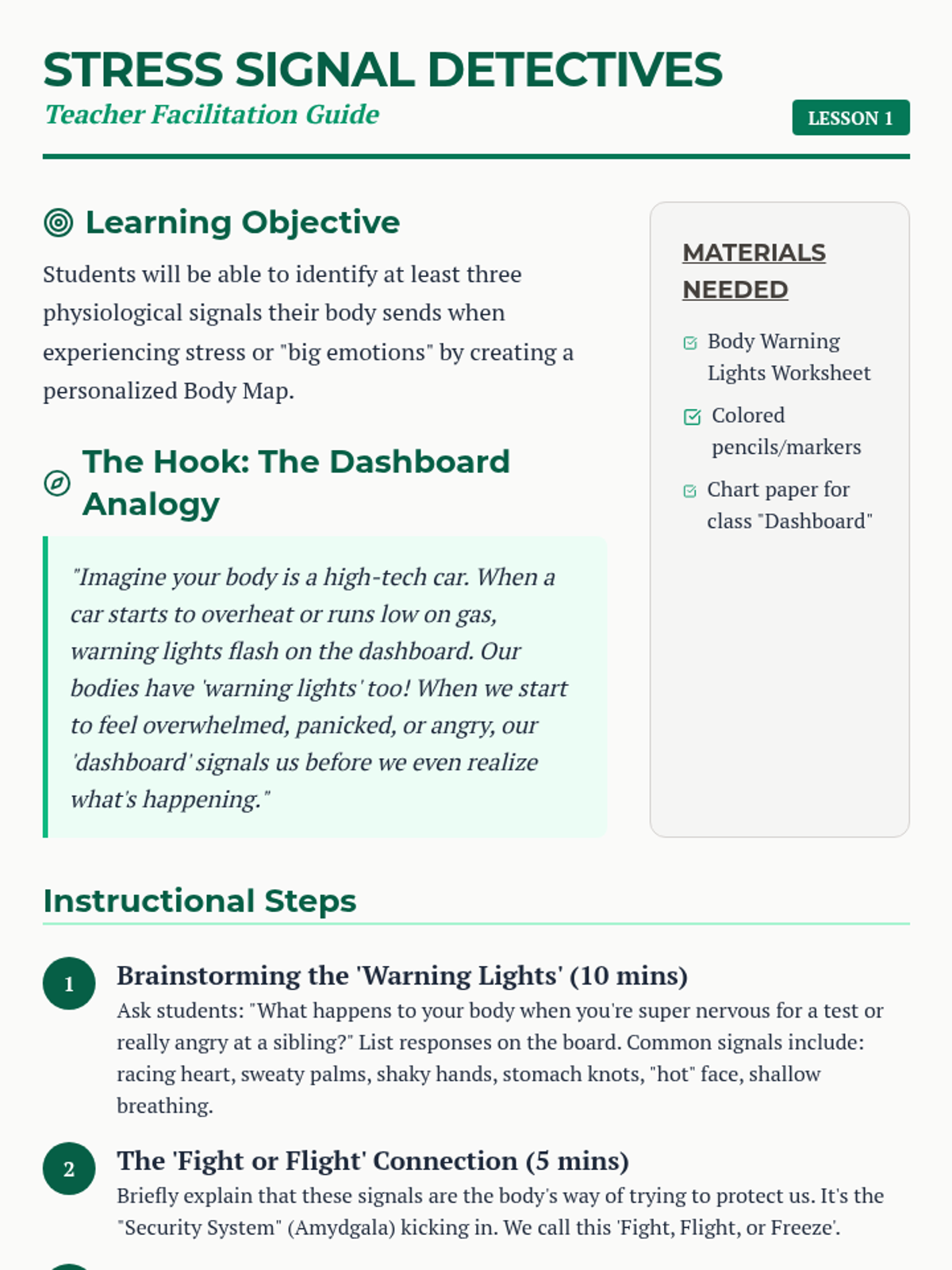
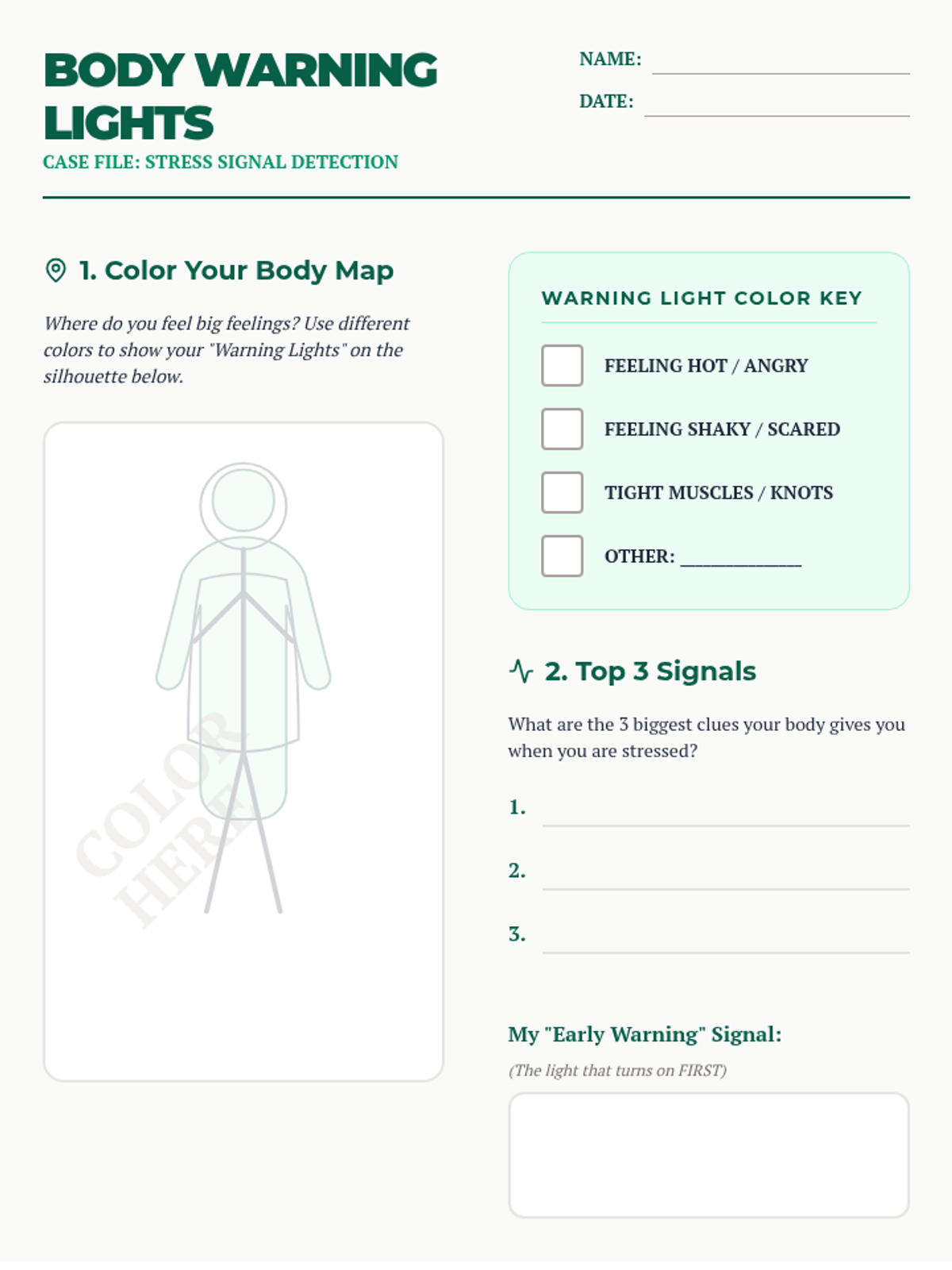
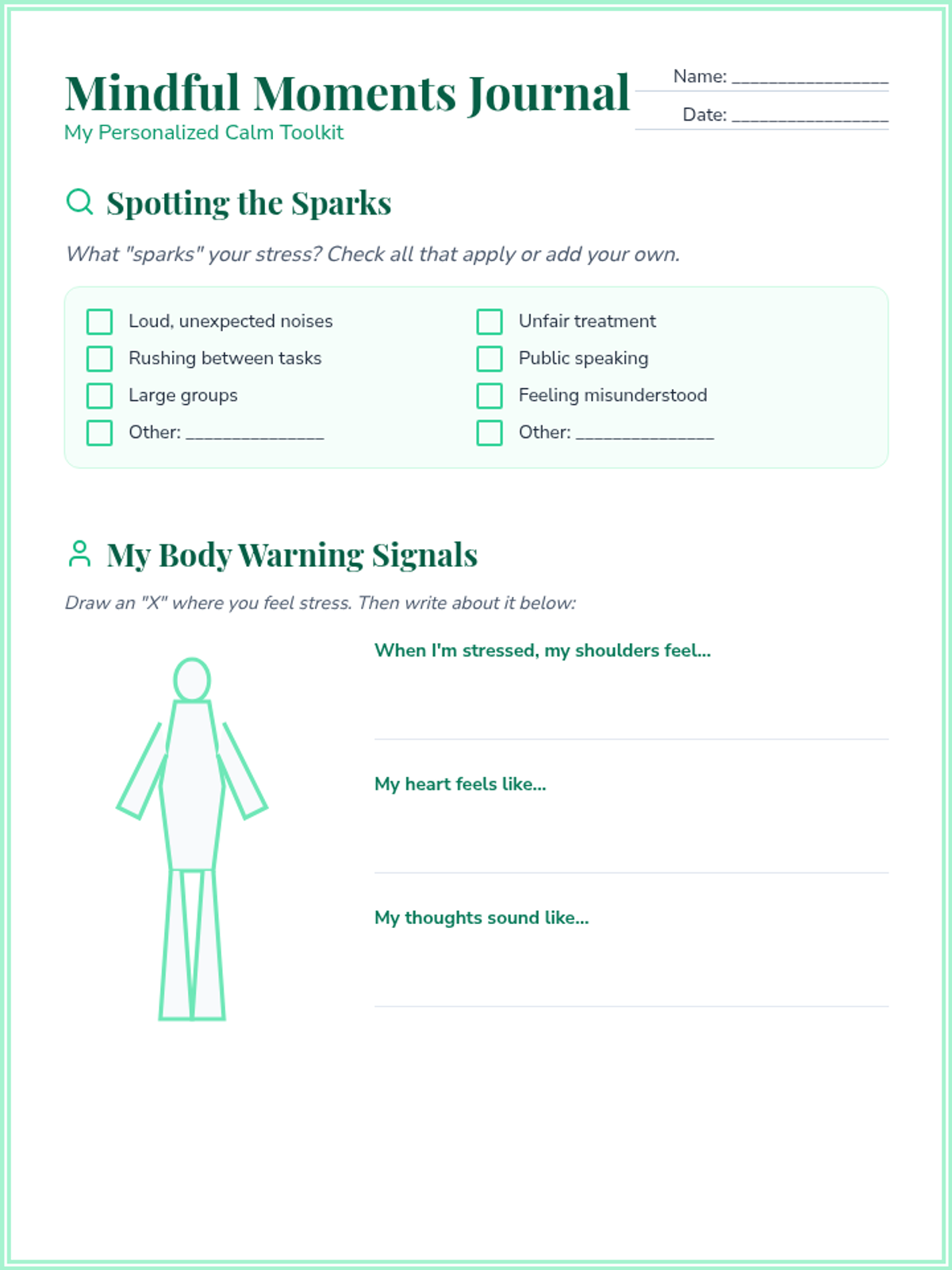
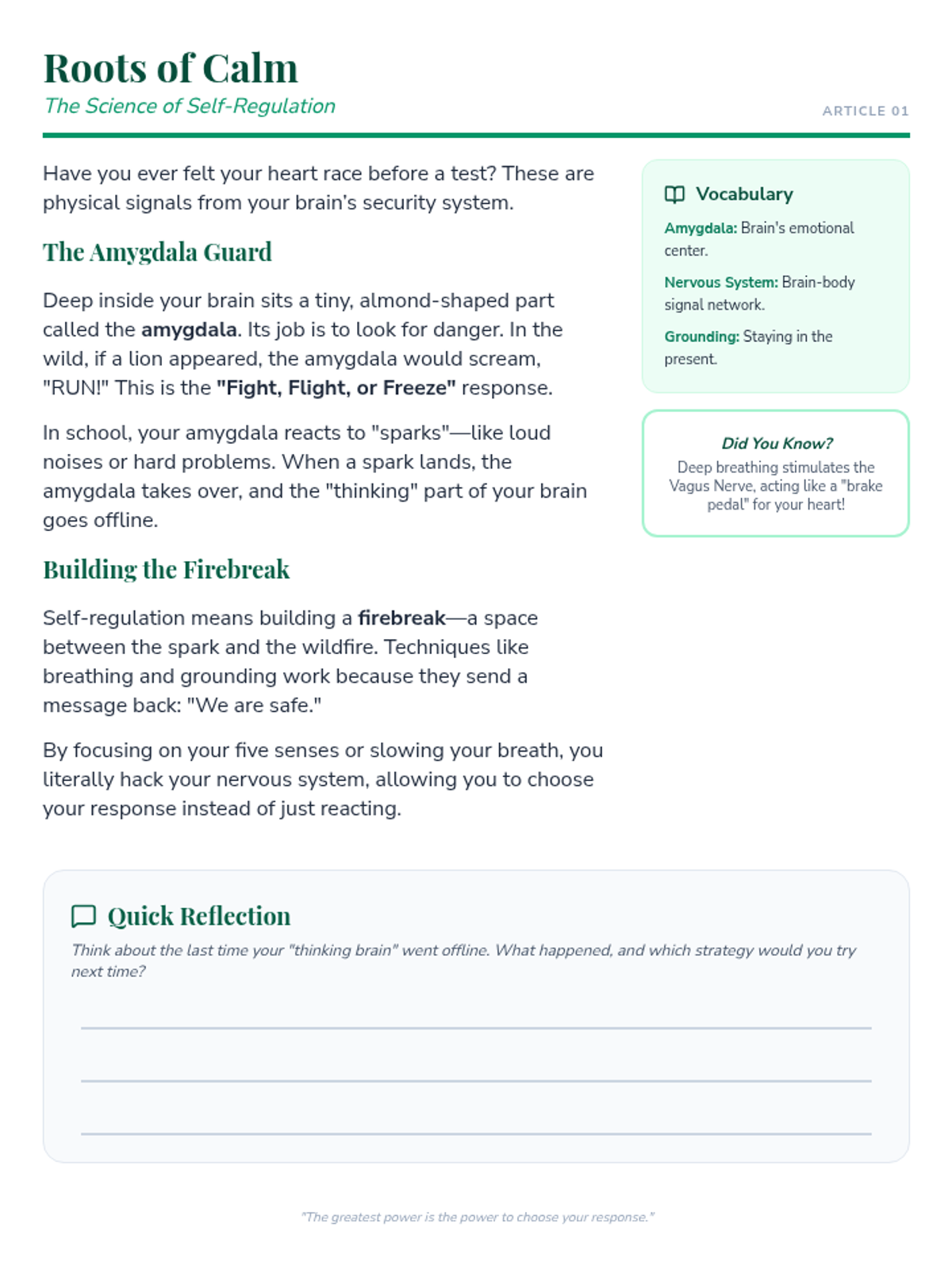
Students explore physical reactions to stress using a 'car dashboard' analogy and create a 'Body Map' to identify their own early warning signals.
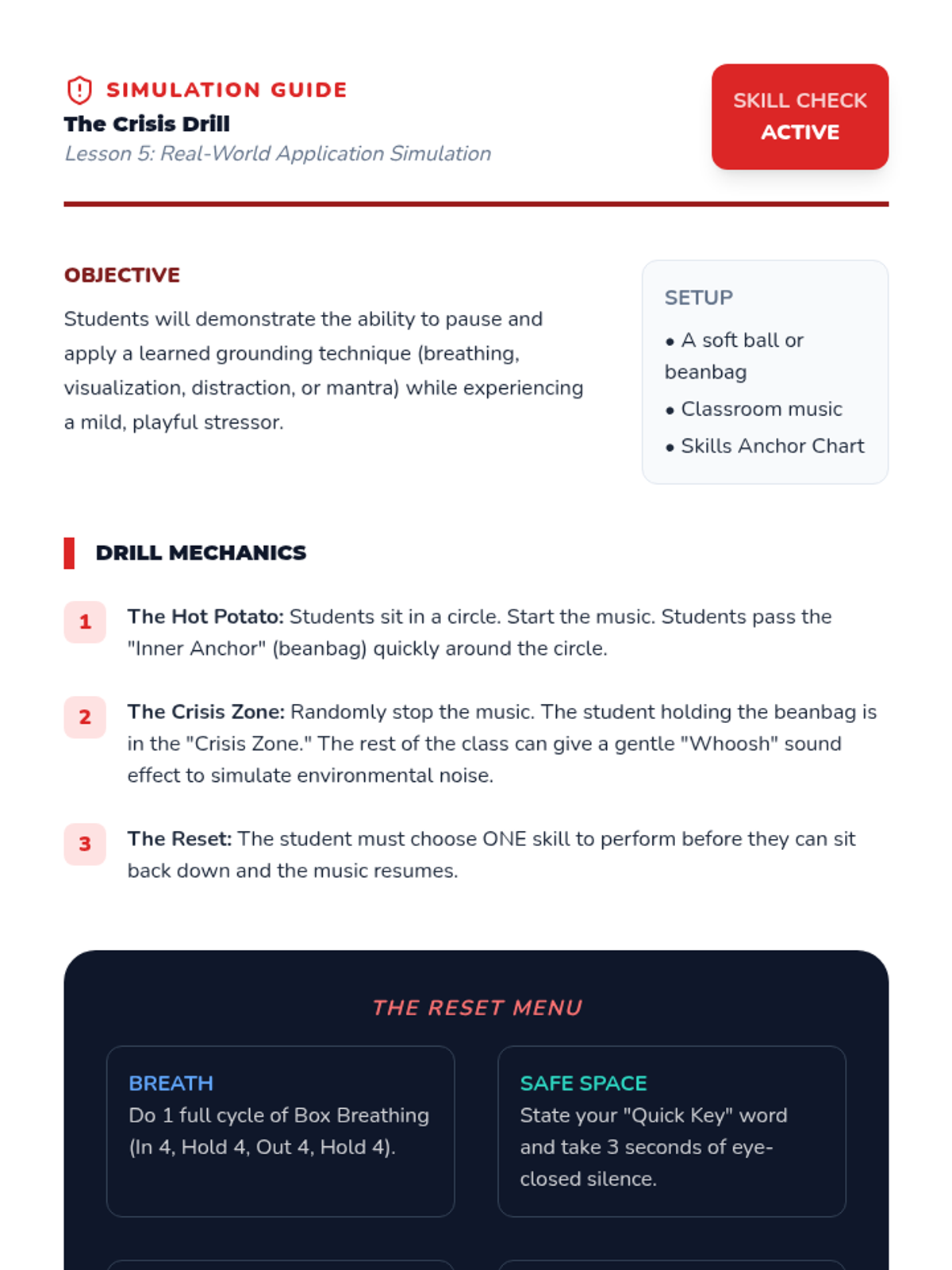
Students participate in a 'Hot Potato' style game that induces mild, fun pressure. They must pause the game to use a breathing or mental technique before passing the item, practicing the application of skills in real-time.
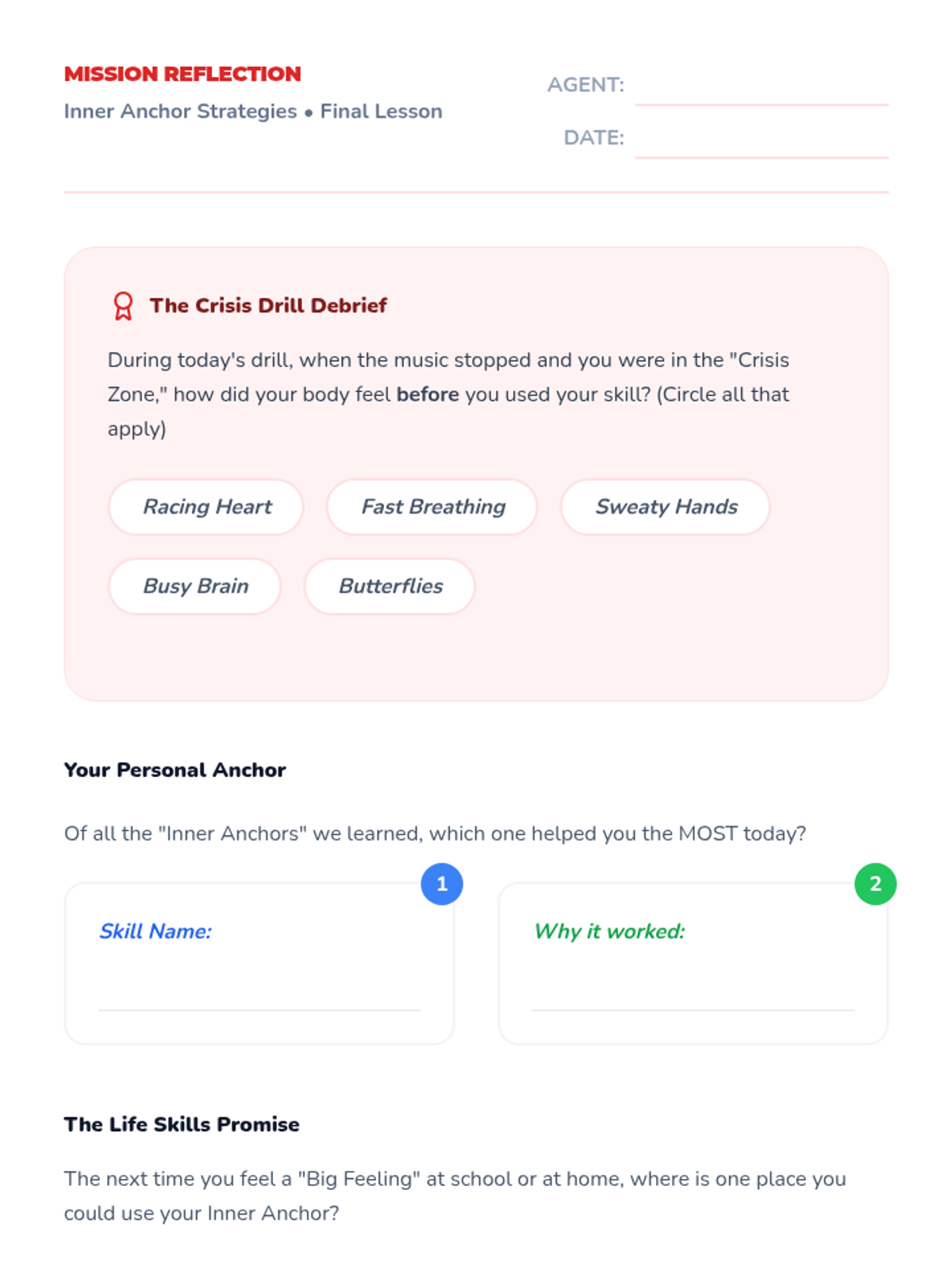
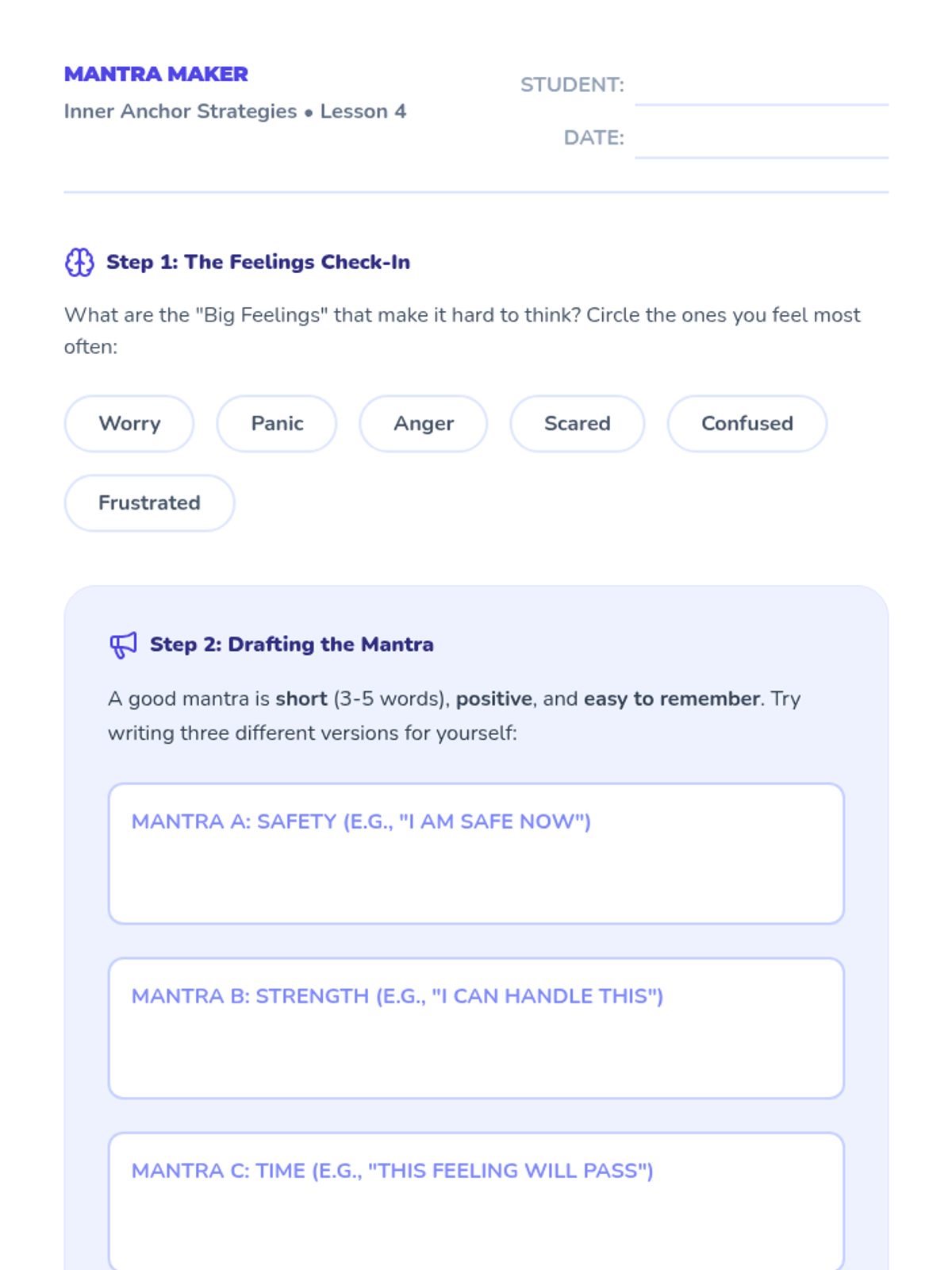
Students analyze the power of self-talk and create short, powerful grounding statements (e.g., 'I am safe,' 'This will pass'). They practice repeating these internal anchors rhythmically to stabilize their thoughts.
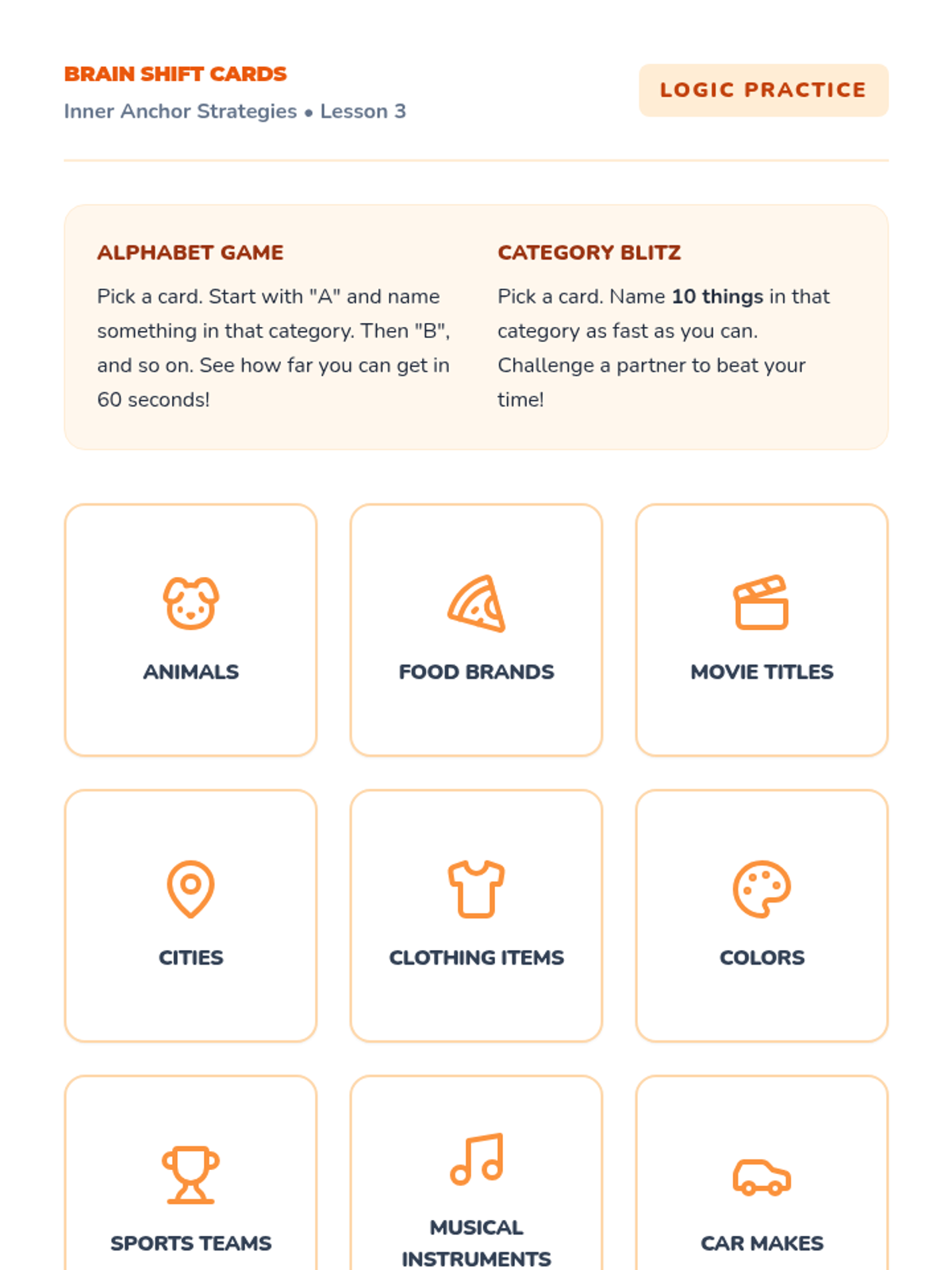
This lesson introduces the 'Categories Game' and 'Alphabet Game' as tools to switch the brain from emotional processing to logical processing. Students play these games in pairs to see how quickly they can shift their thinking.
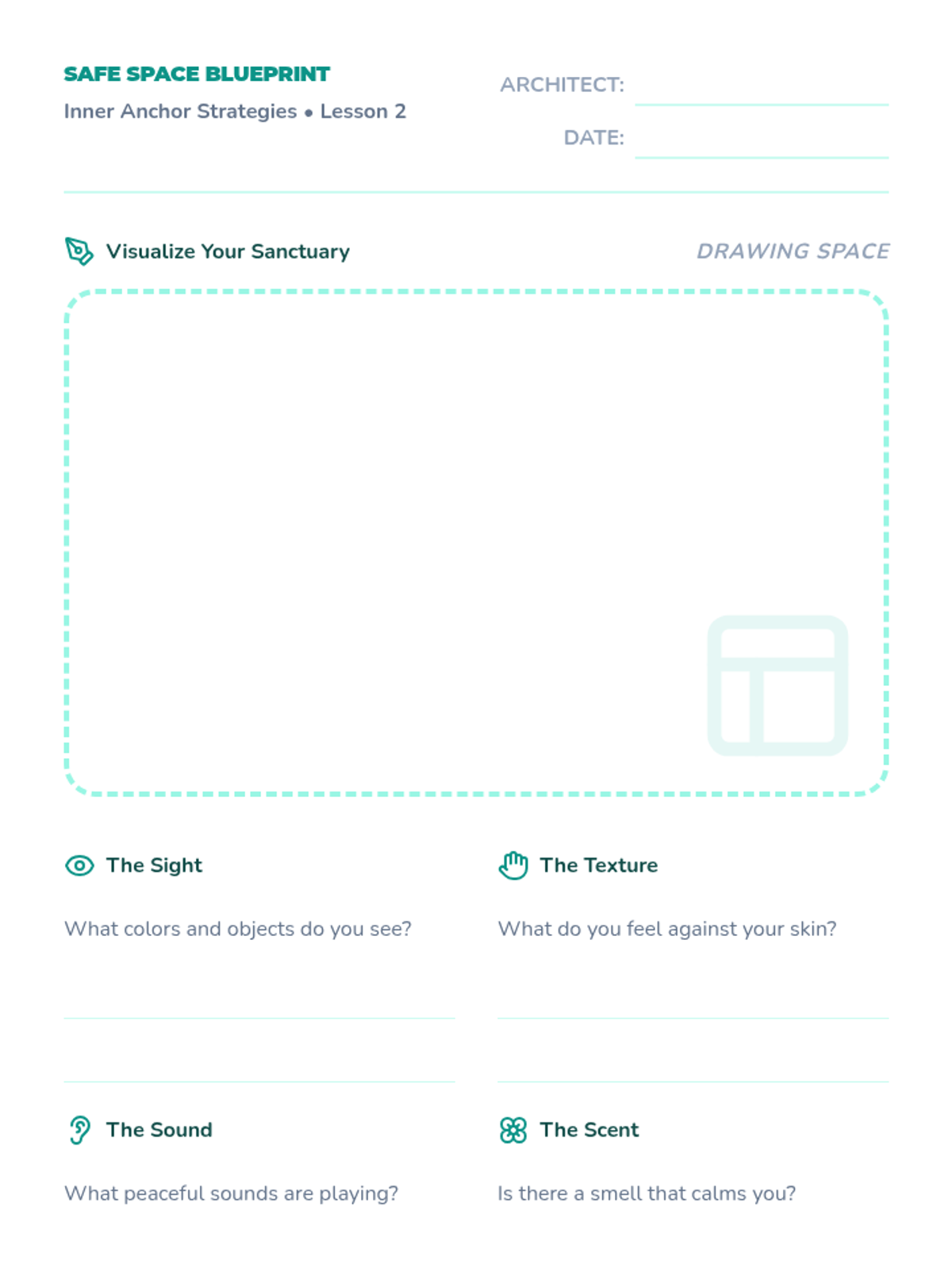
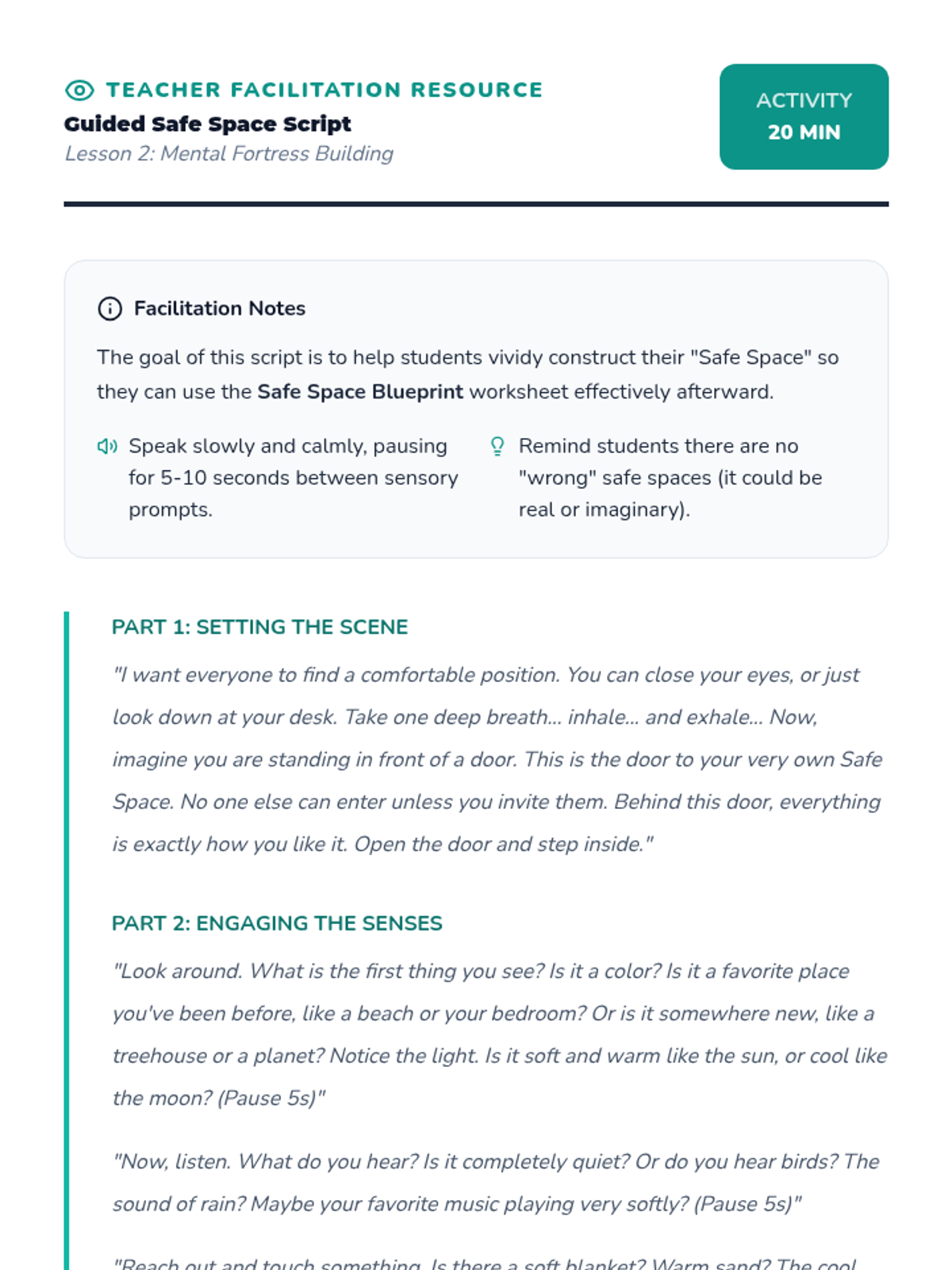
Students practice guided visualization to create a detailed mental image of a safe, calm place. They learn to recall this image vividly, focusing on specific details (colors, sounds, lighting) to mentally remove themselves from a distressing environment.
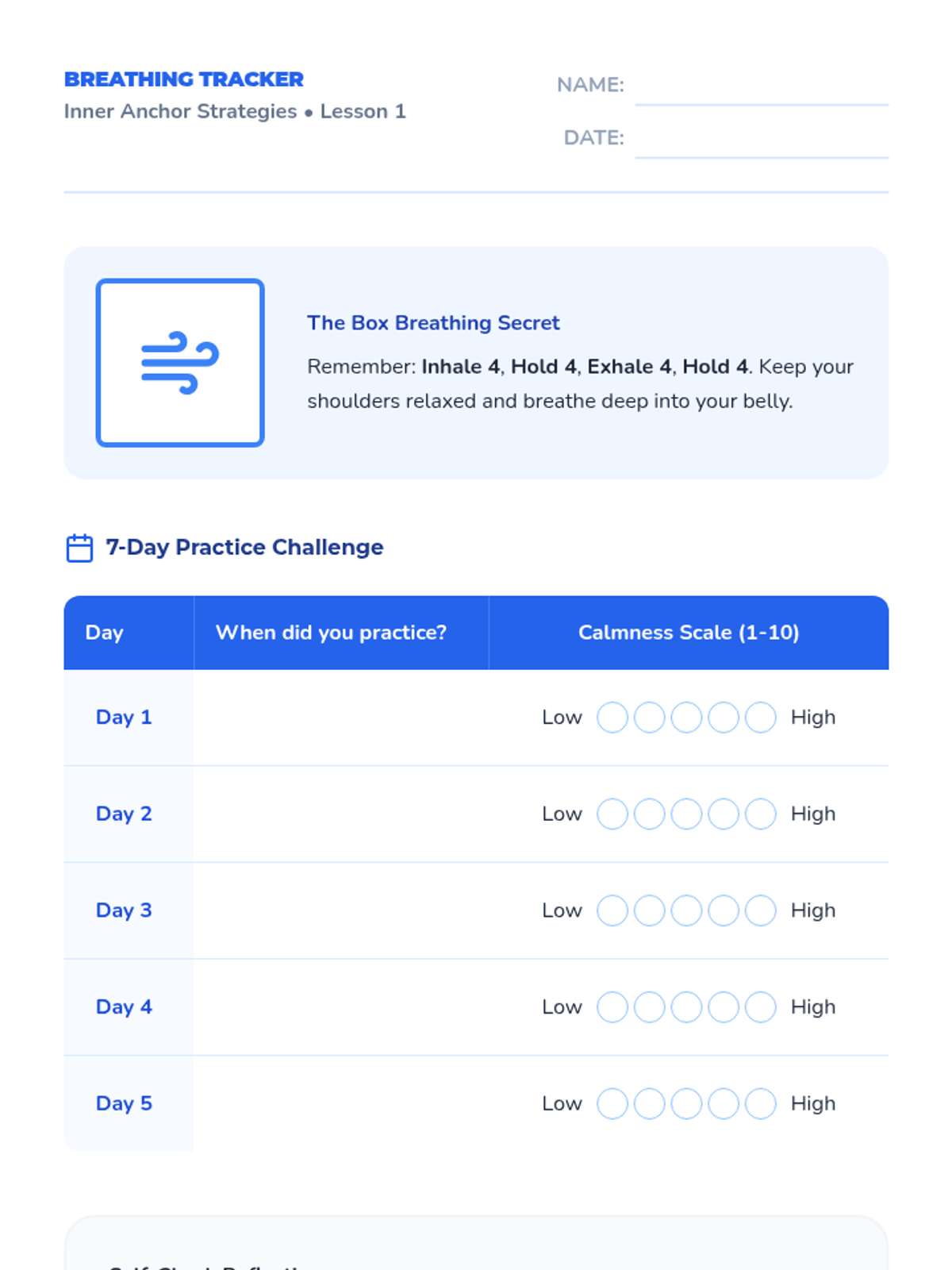
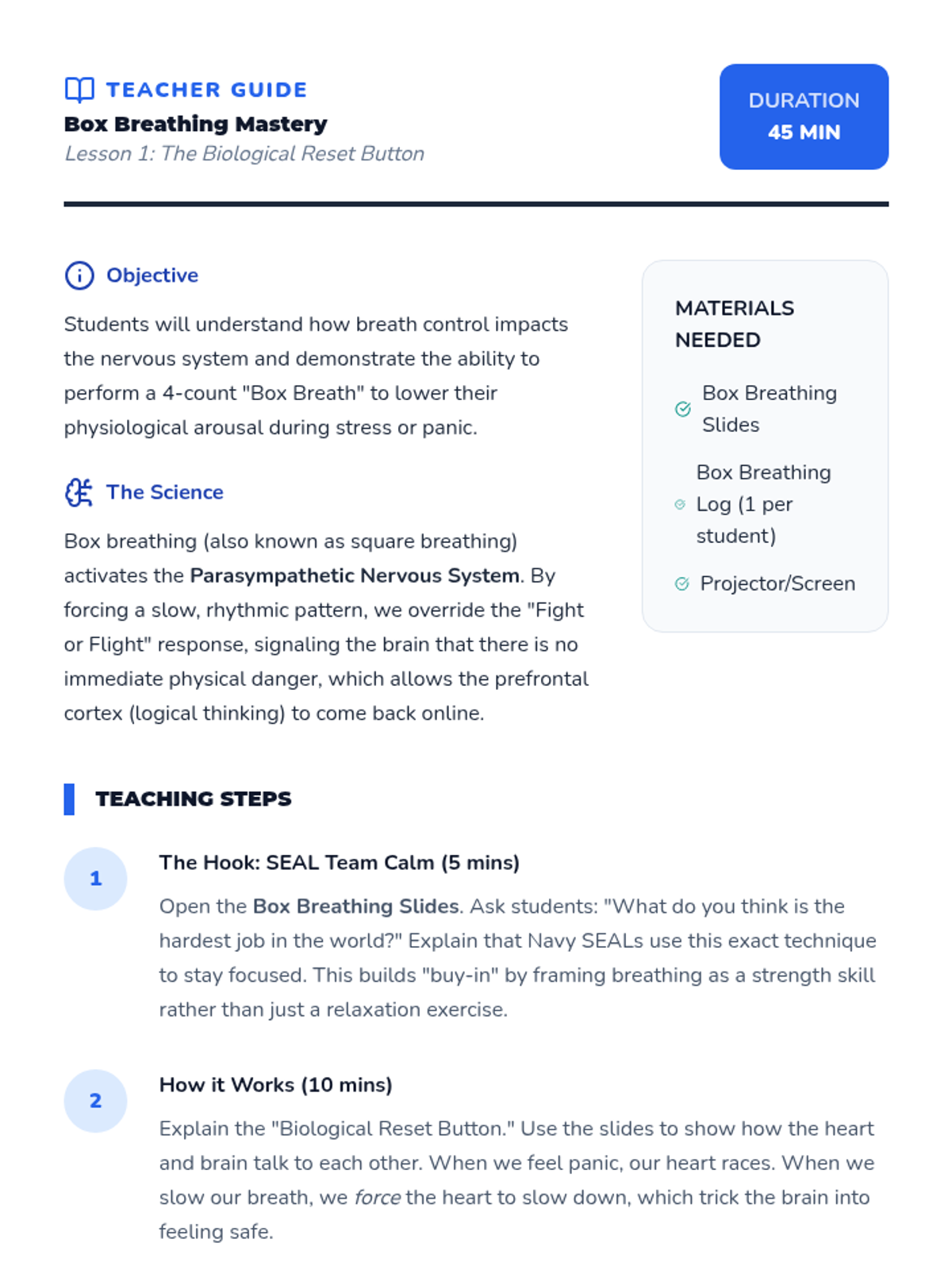
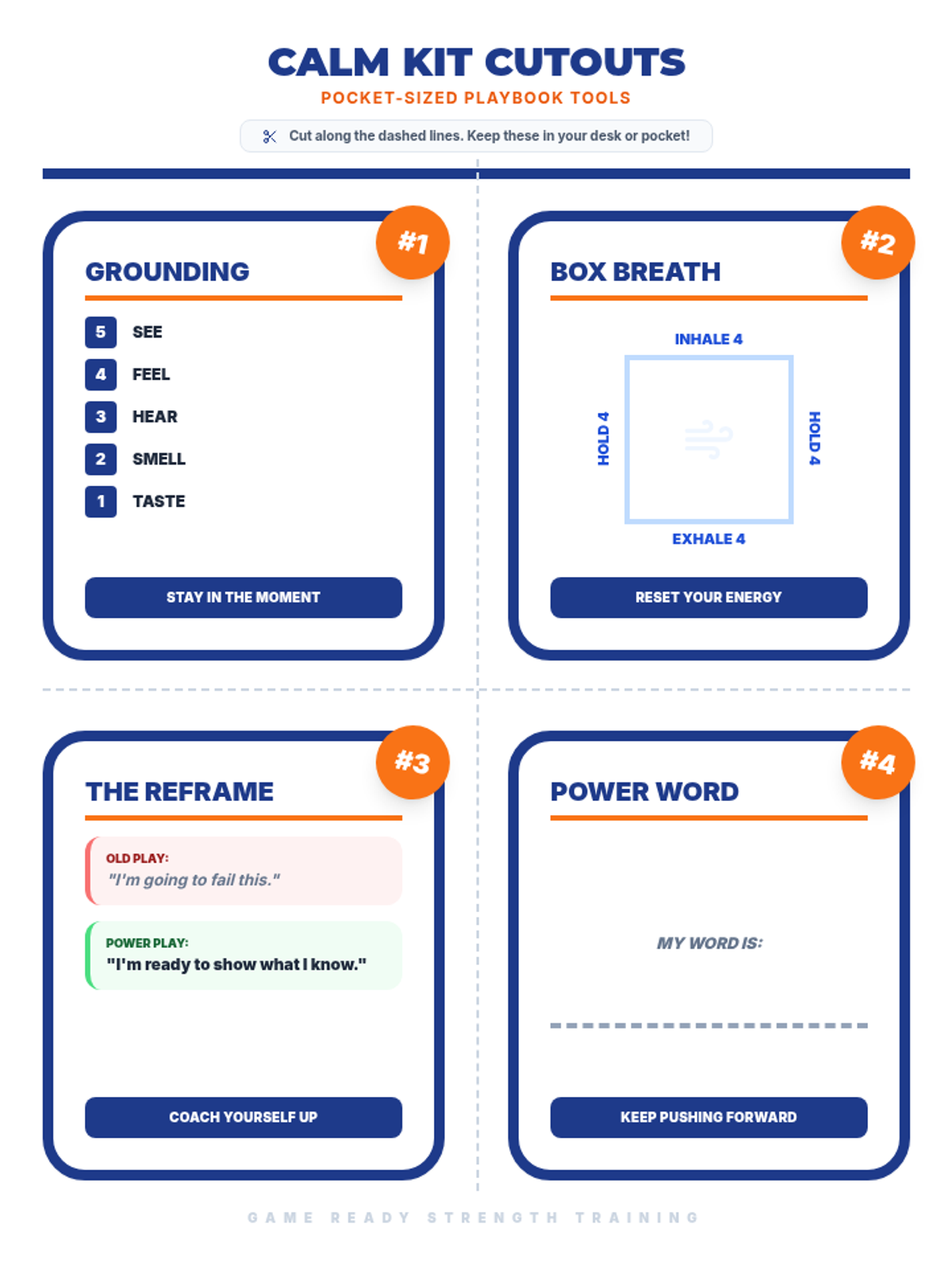
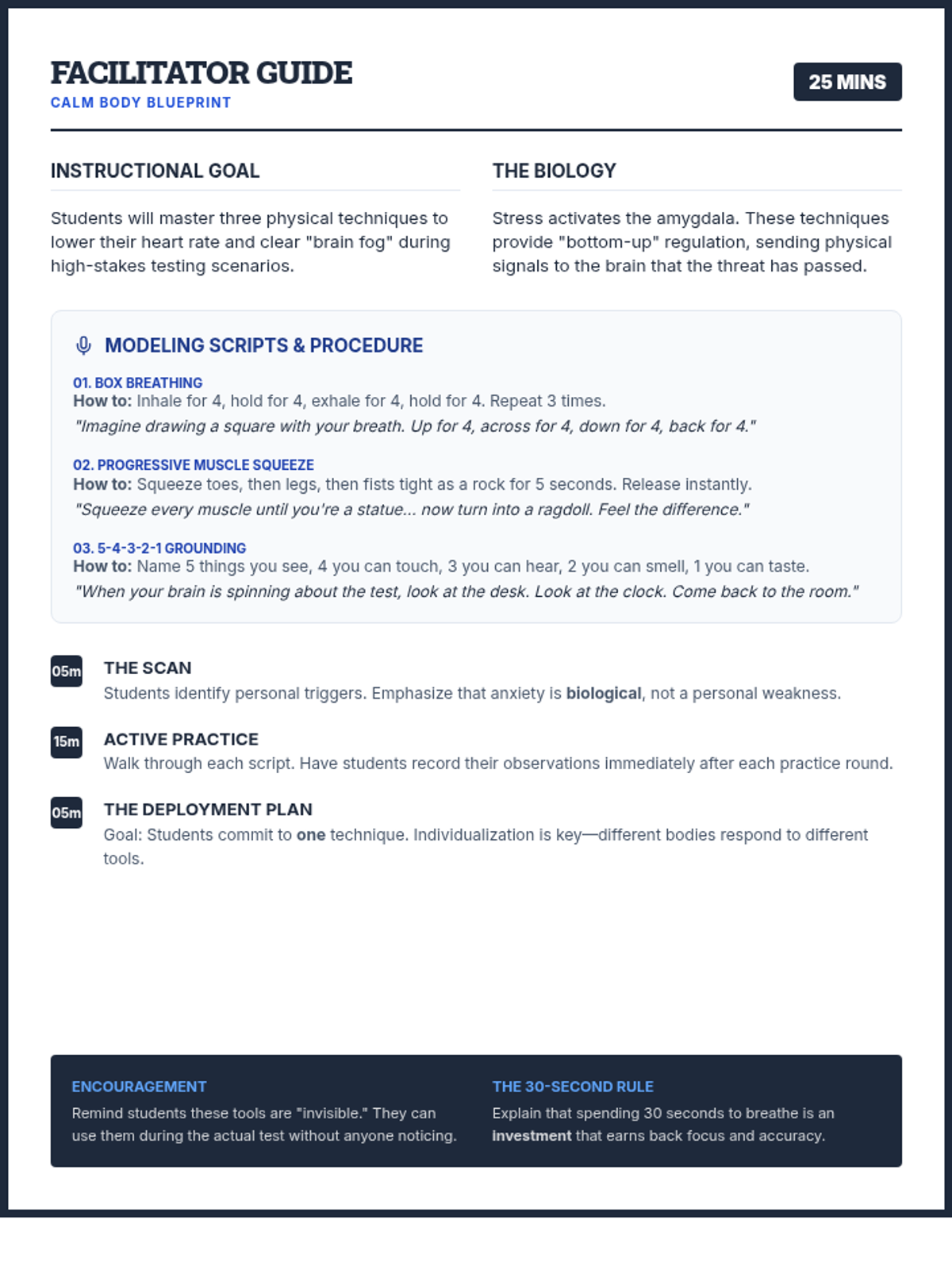
Students learn the mechanics of 'Box Breathing' (inhale 4, hold 4, exhale 4, hold 4) as a biological reset button. They practice this technique using visual aids to pace their breath and lower their heart rate.
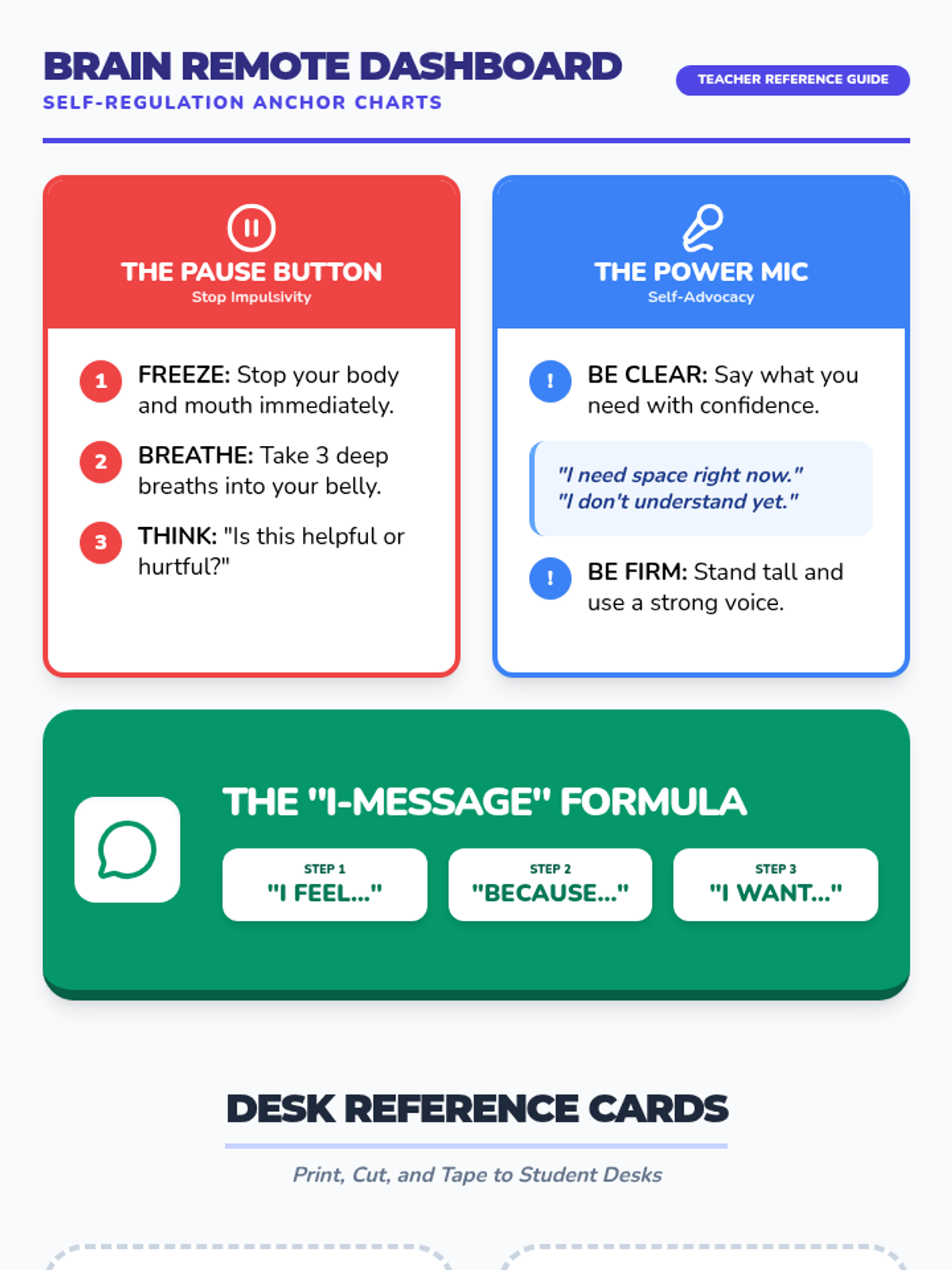
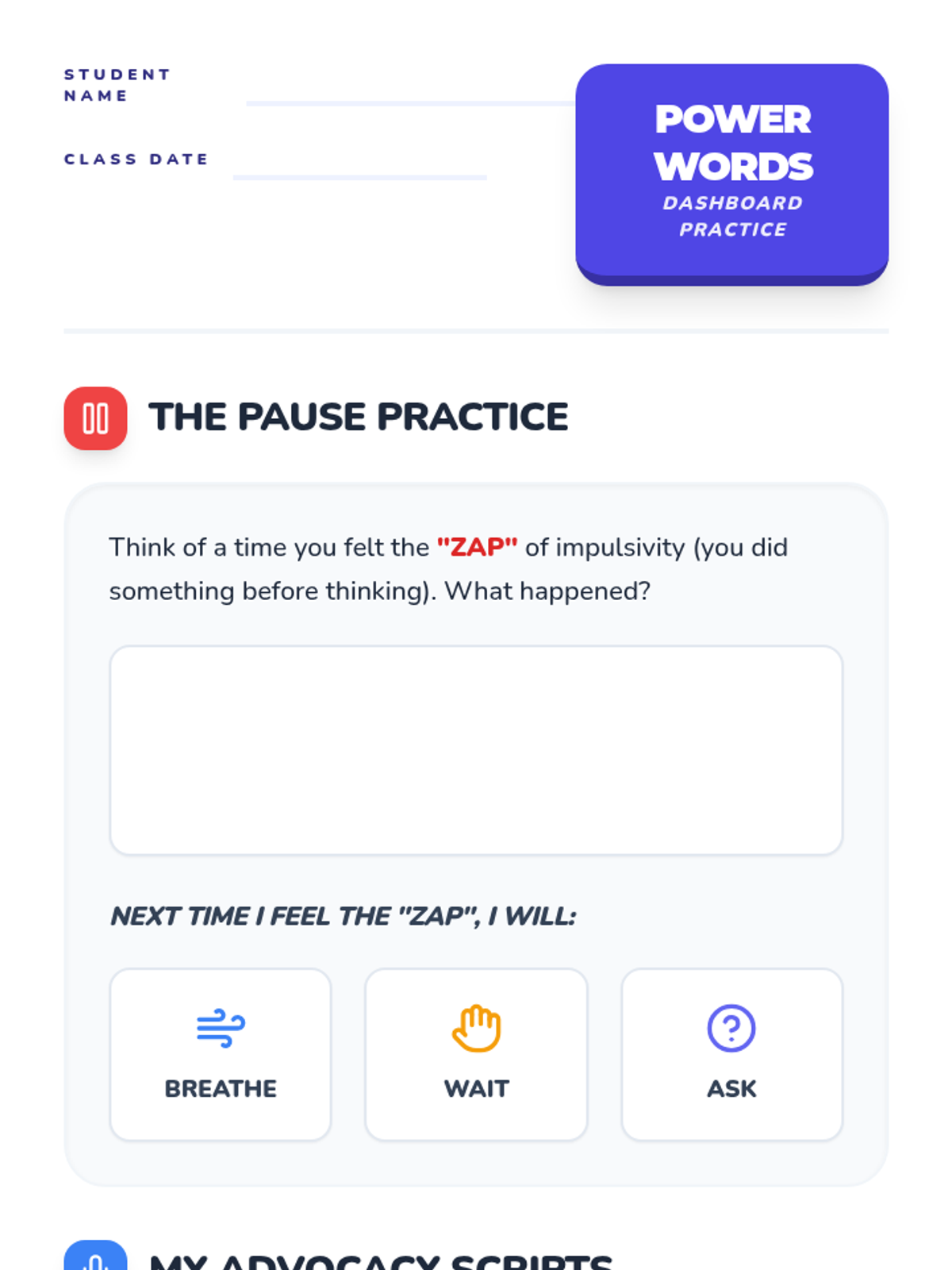
A comprehensive lesson exploring the 'Brain Remote' to manage impulsive urges and use 'Power Words' for self-advocacy and conflict resolution.
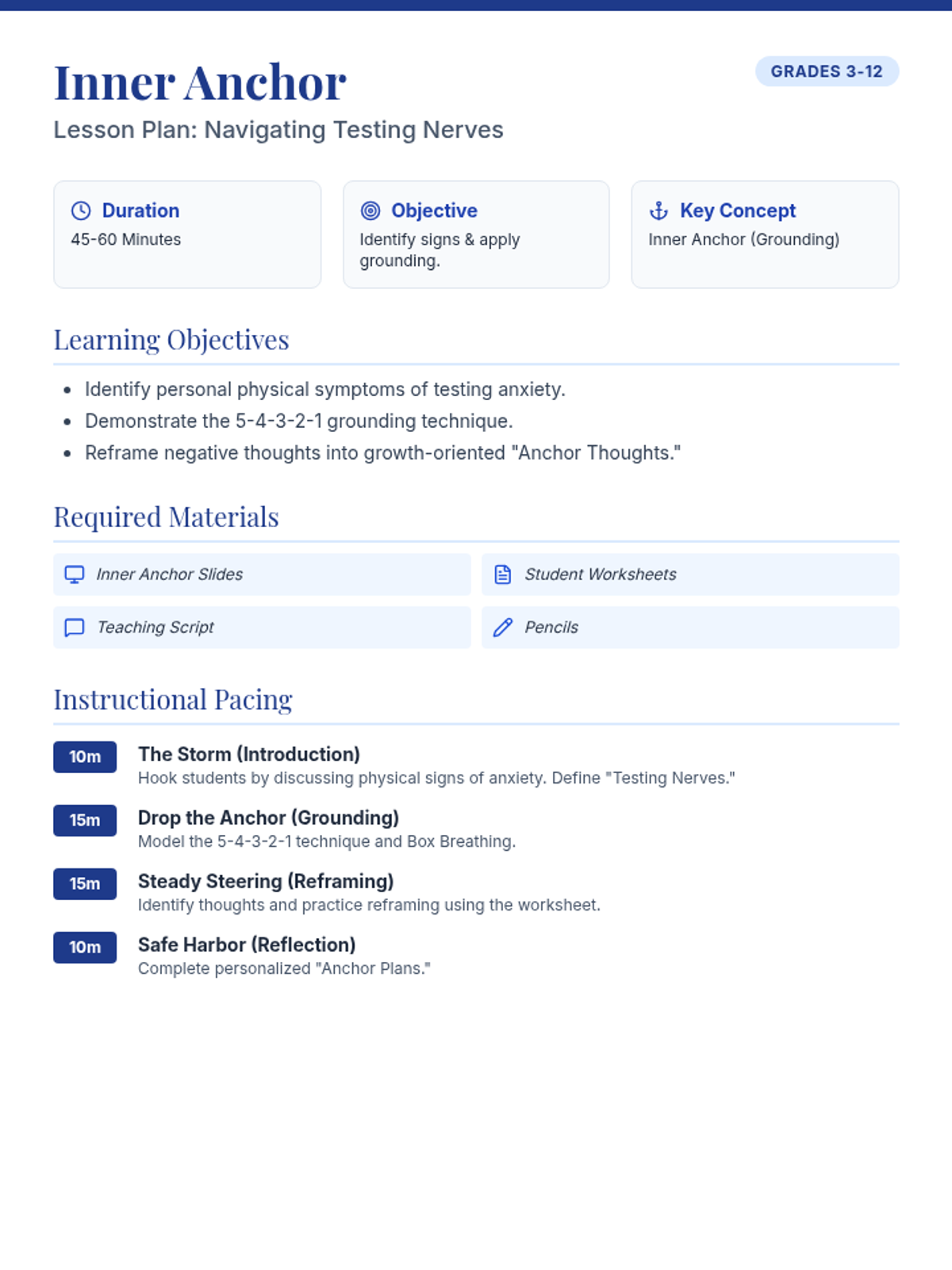
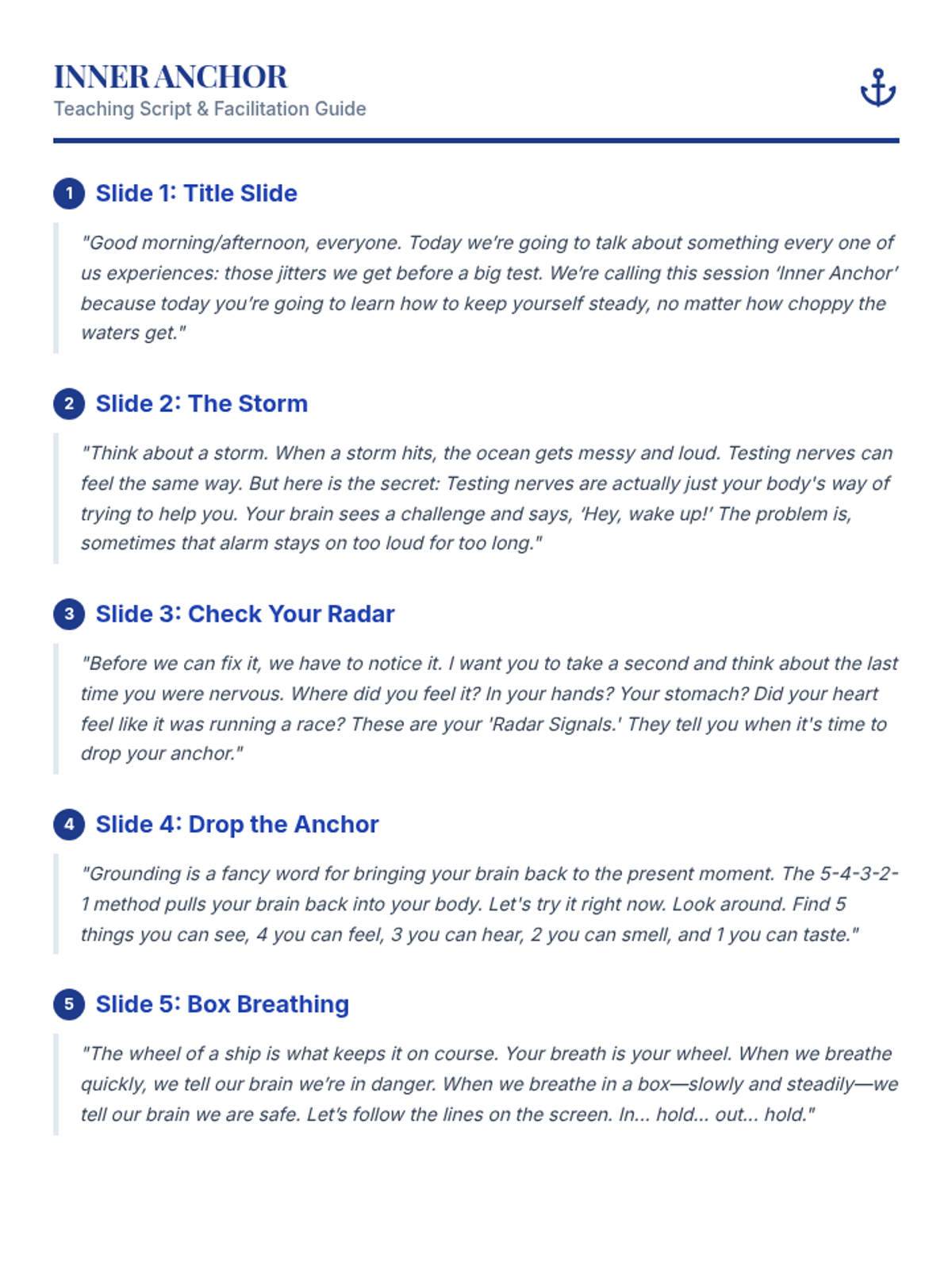
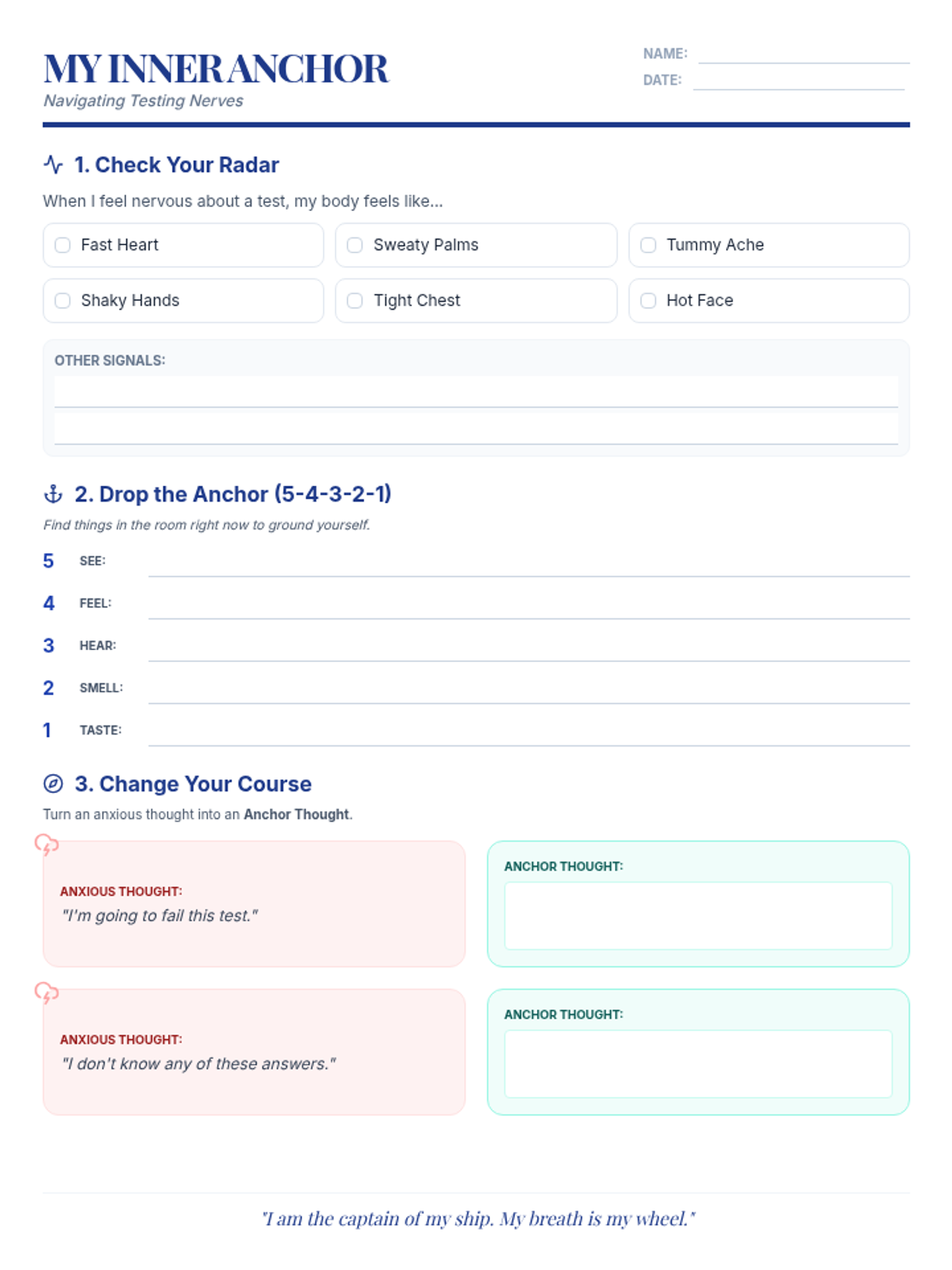
A comprehensive emotional regulation toolkit for students to manage testing anxiety using maritime-themed grounding techniques and cognitive reframing.
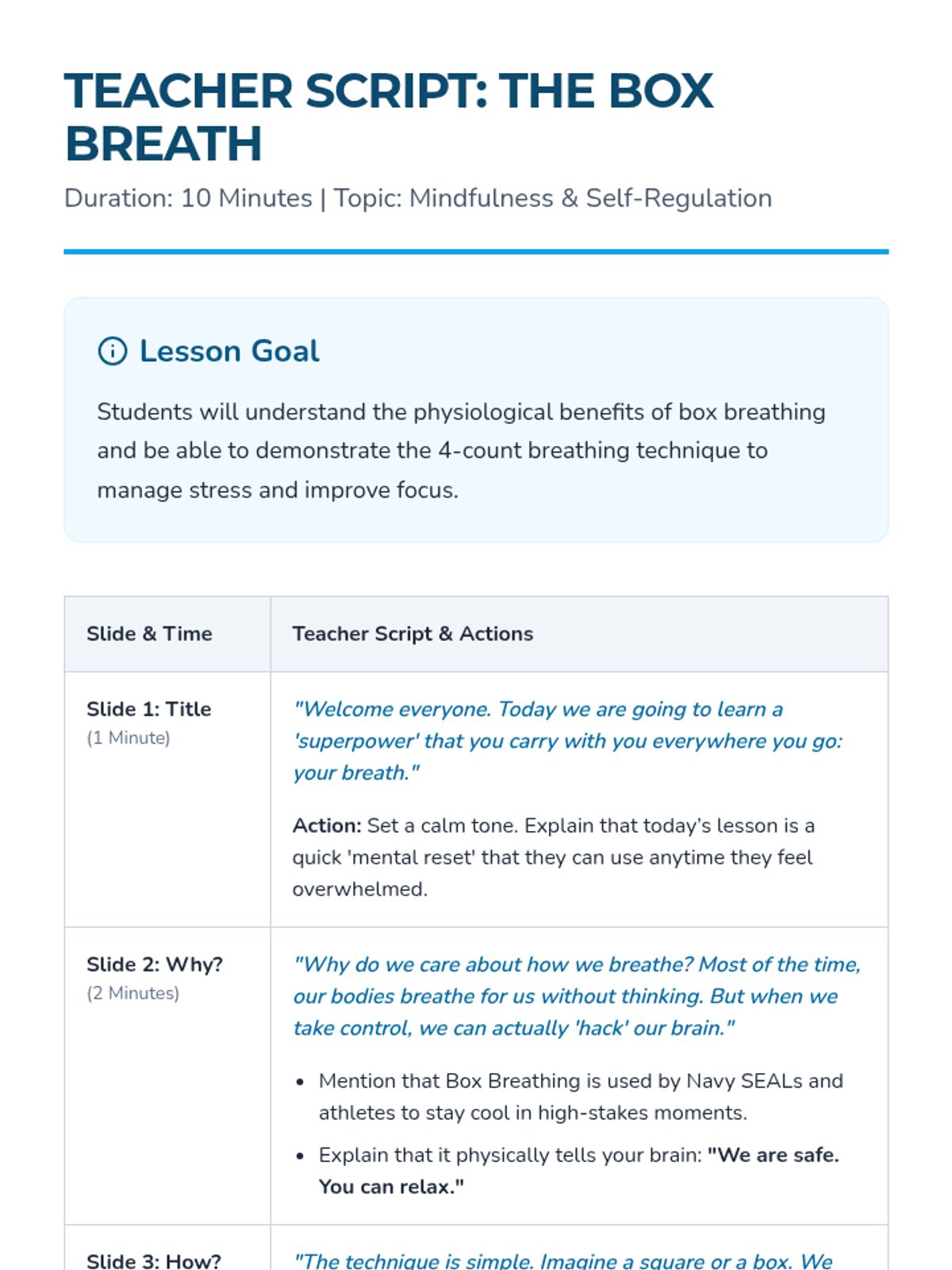
A quick 10-minute introduction to box breathing, a powerful stress-relief technique, featuring a guided video and classroom practice.
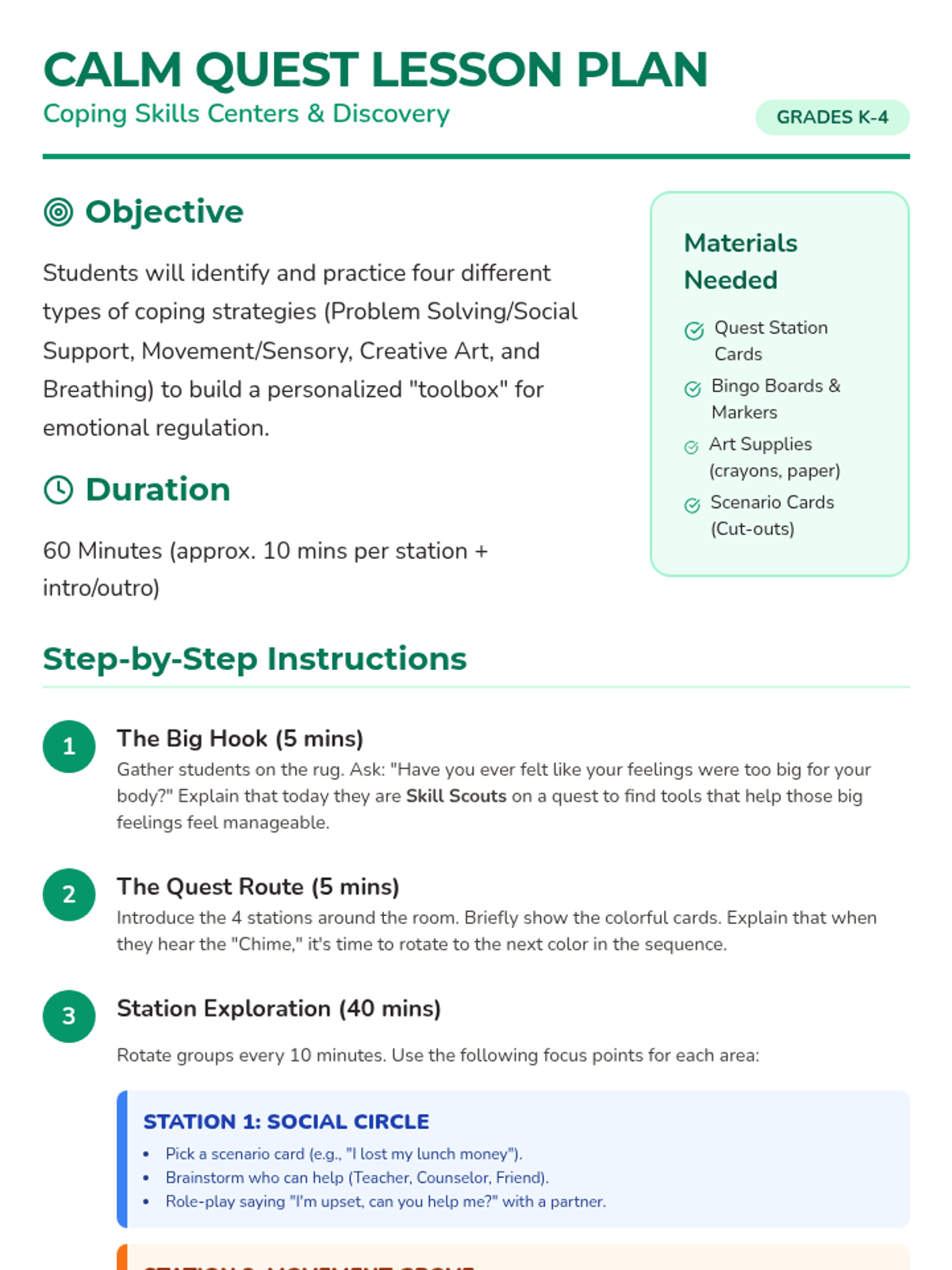
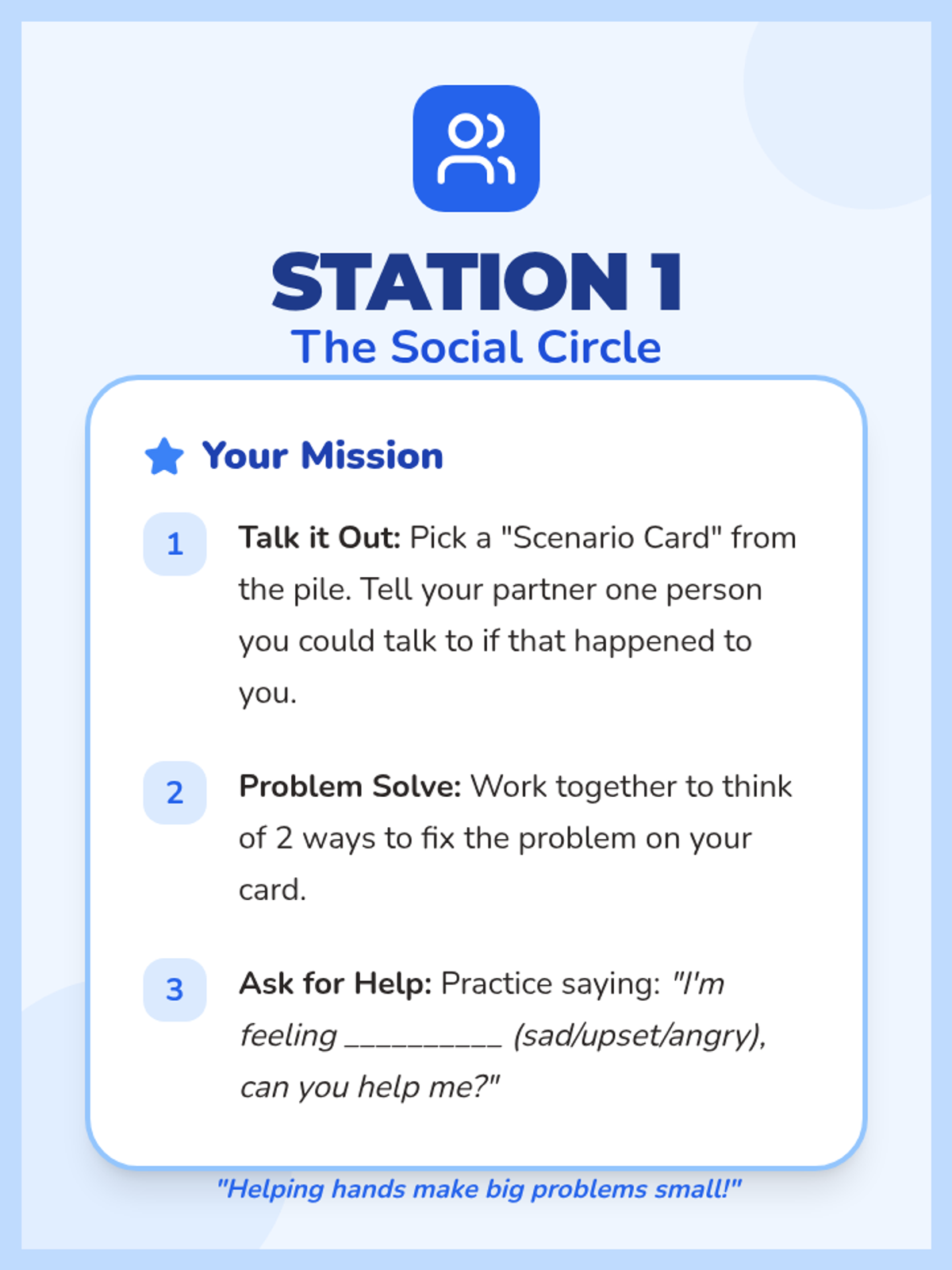
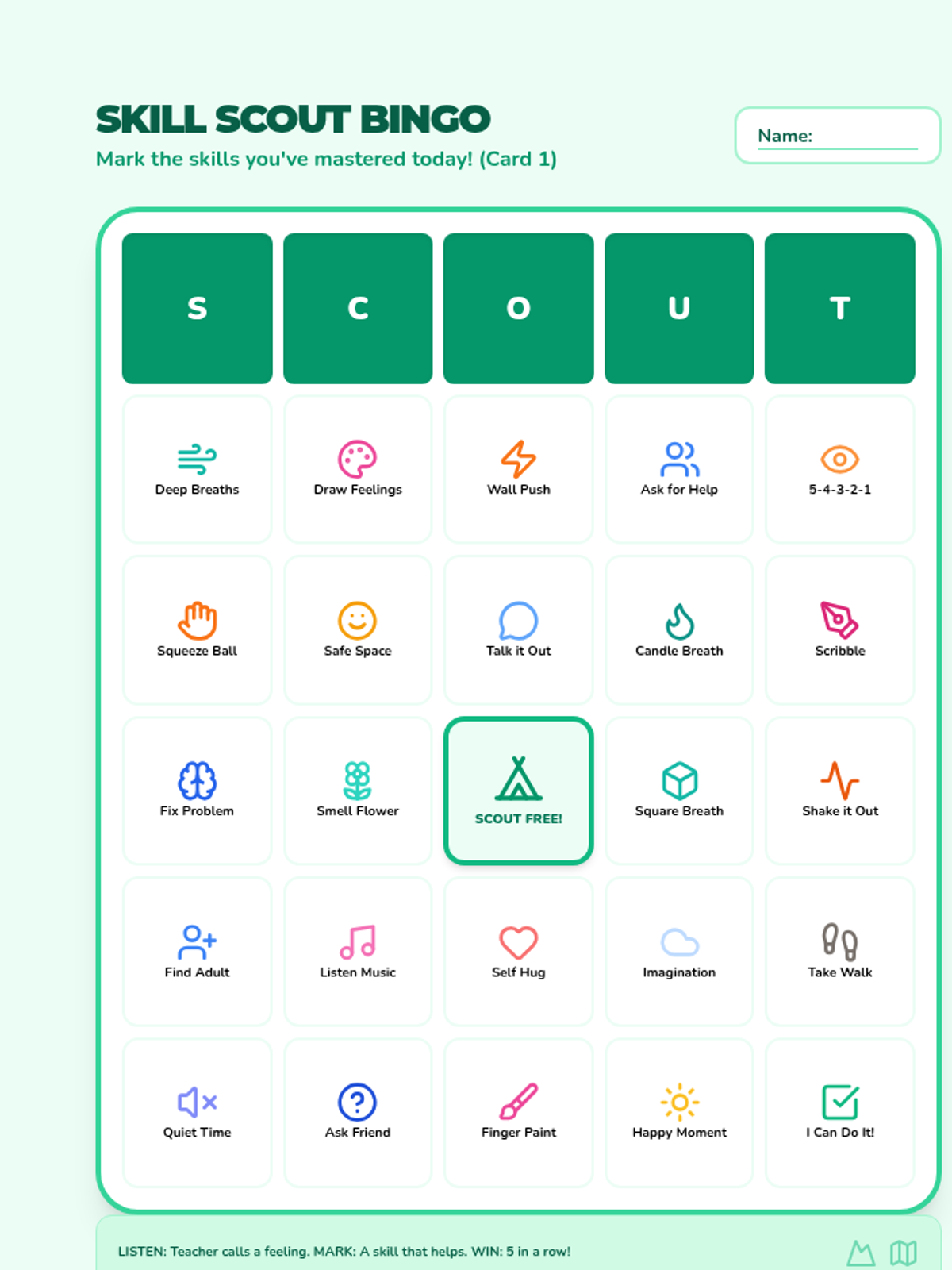
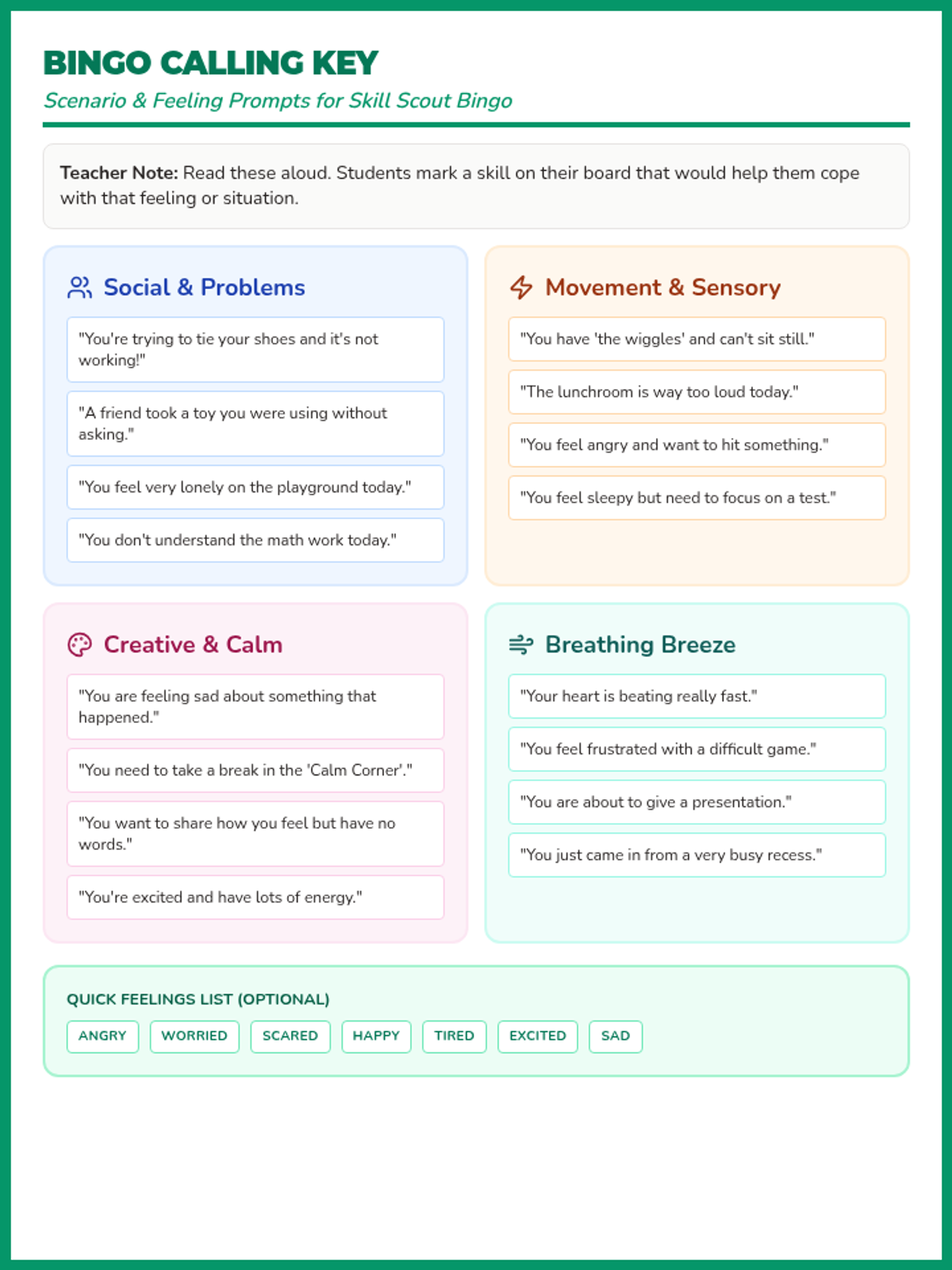
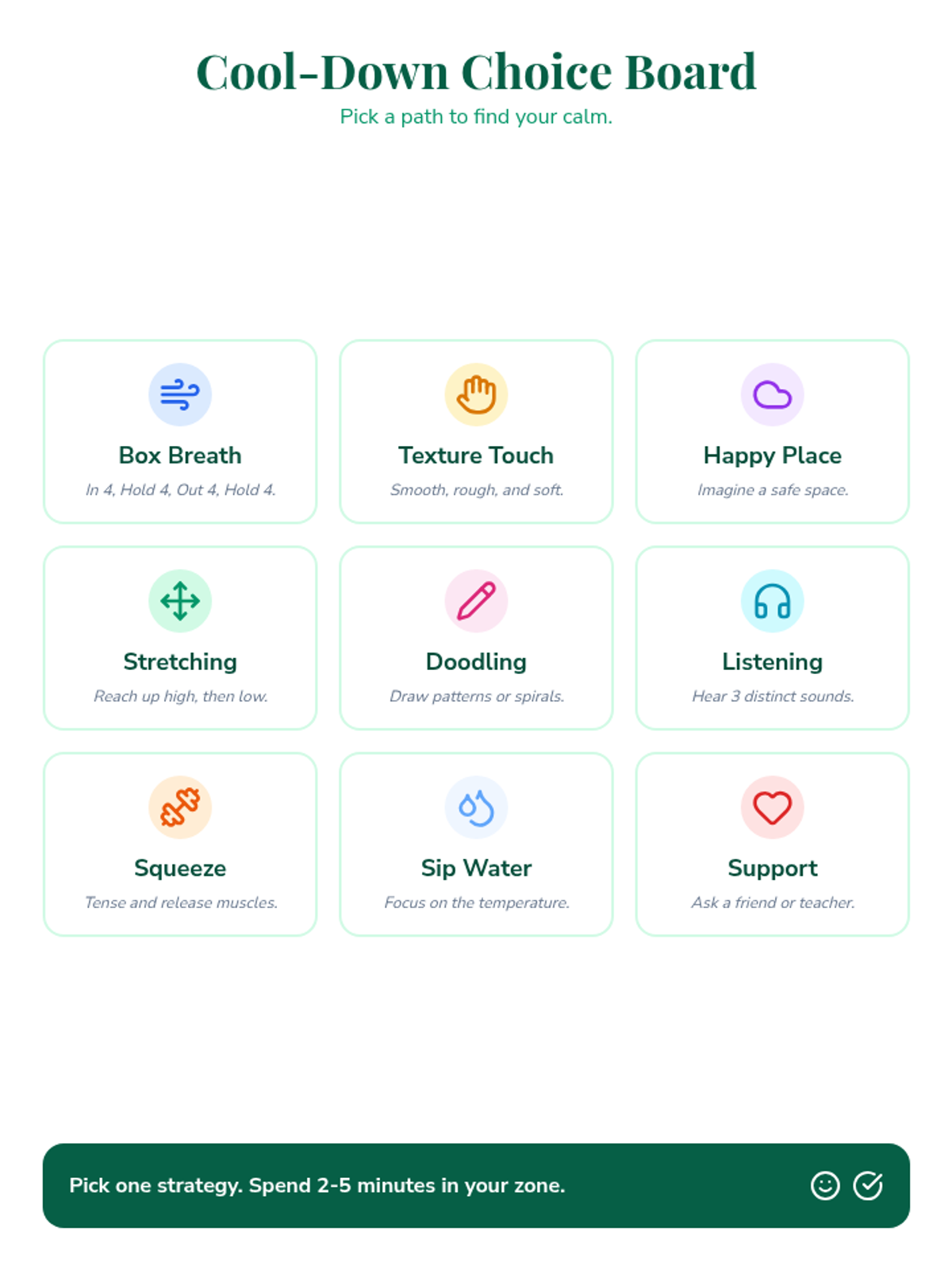
A comprehensive lesson introducing students to various coping strategies through interactive stations and a group bingo game. students will explore problem-solving, movement, art, and breathing techniques to manage their emotions.
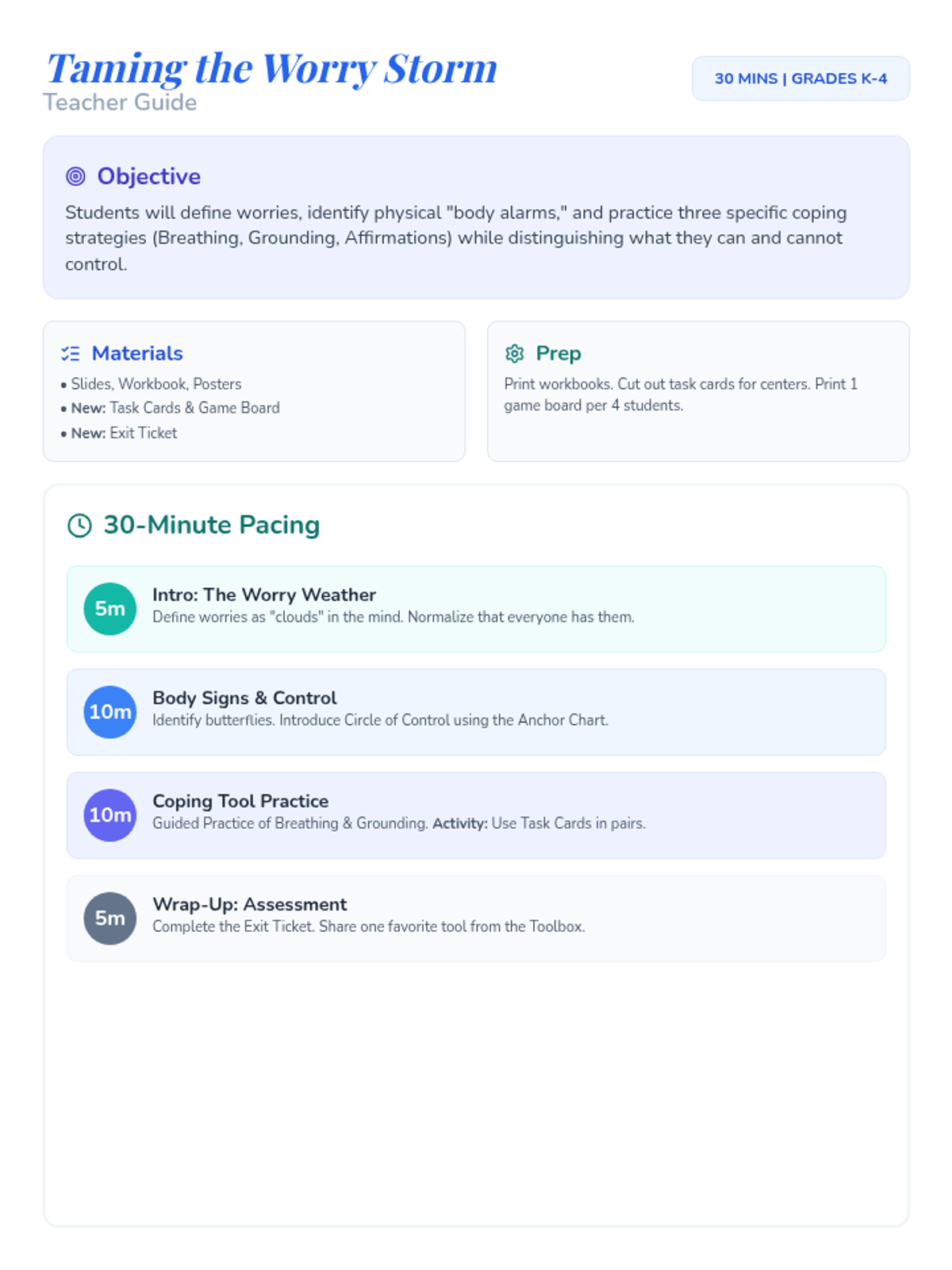
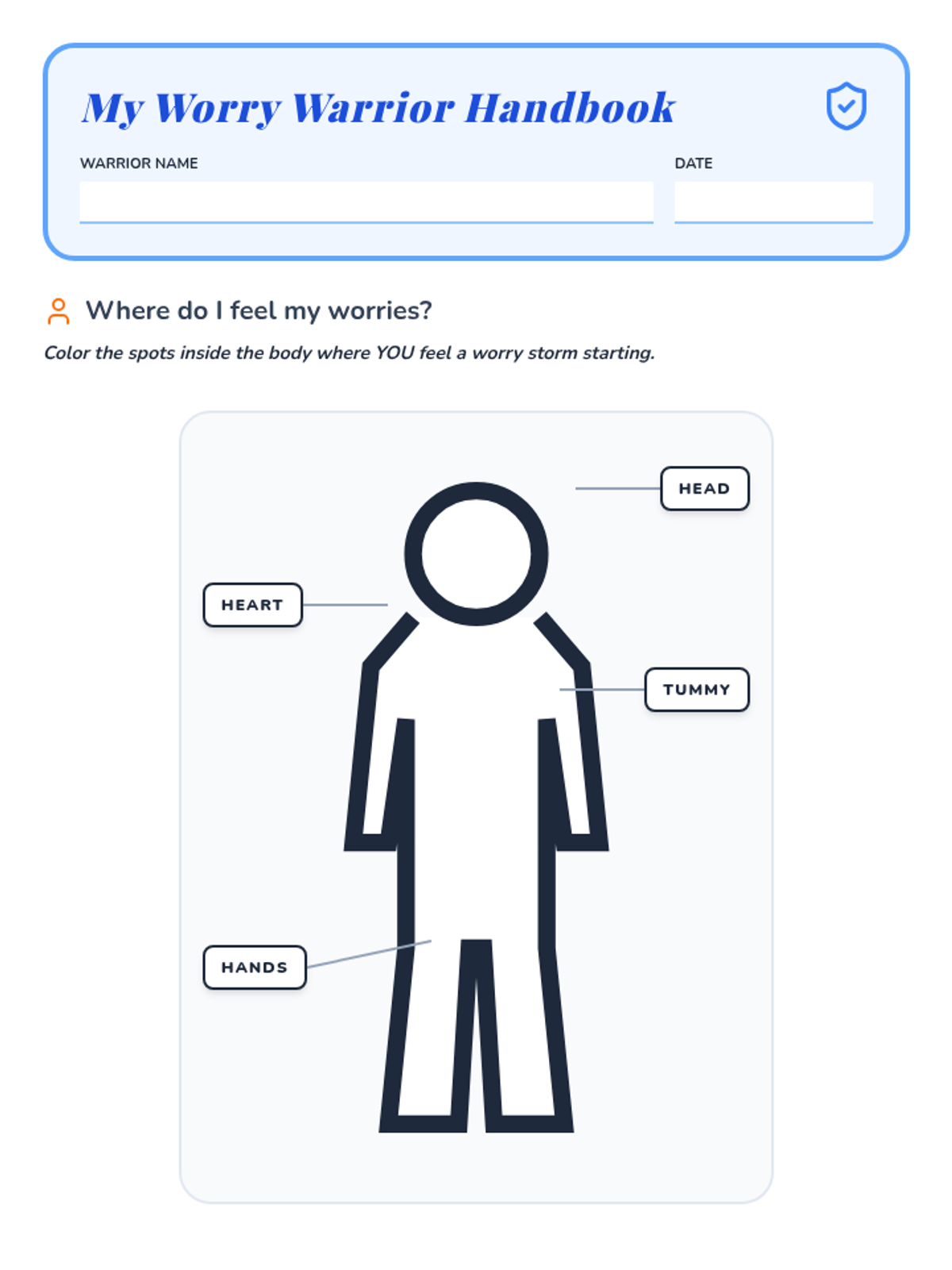
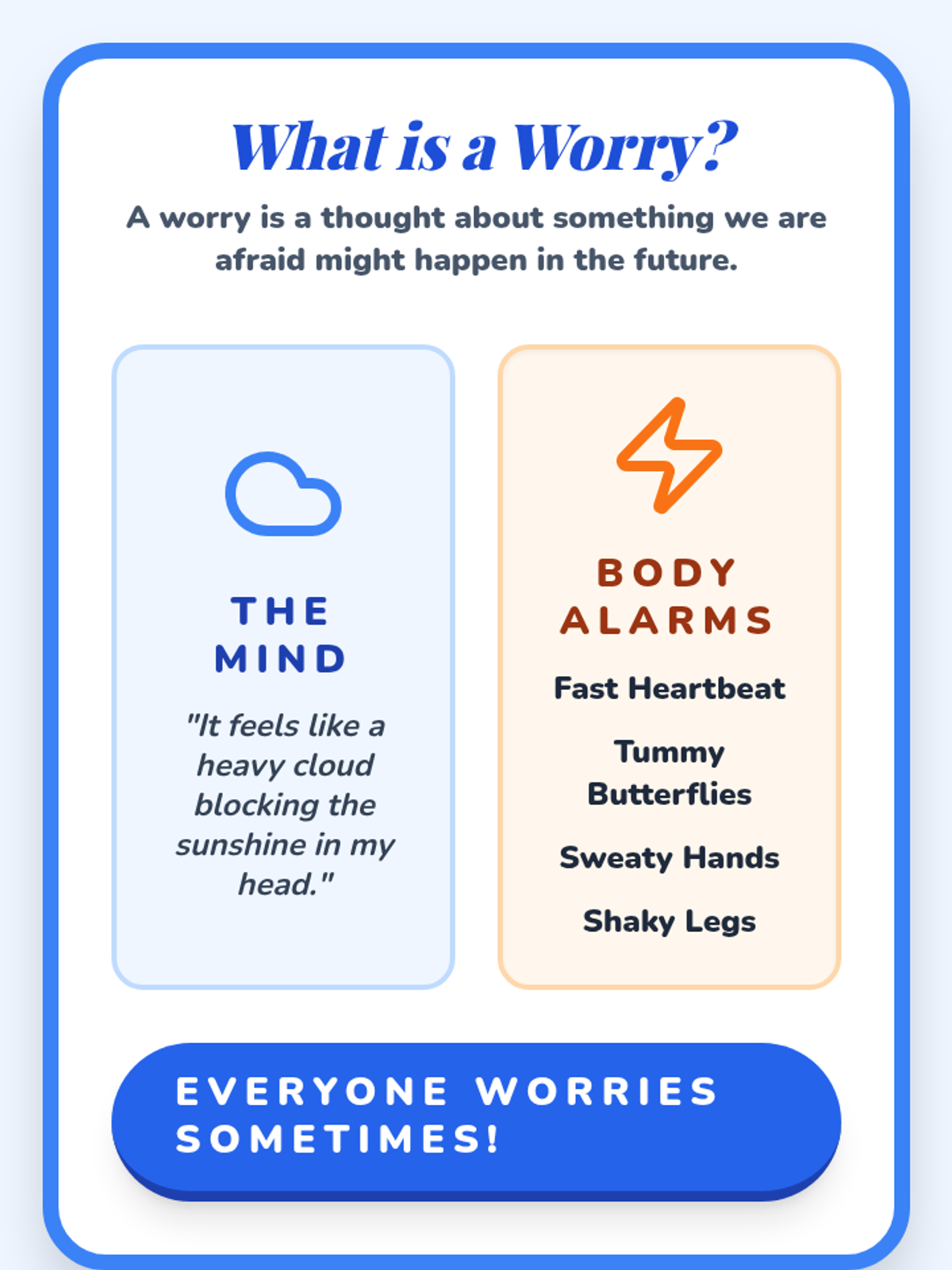
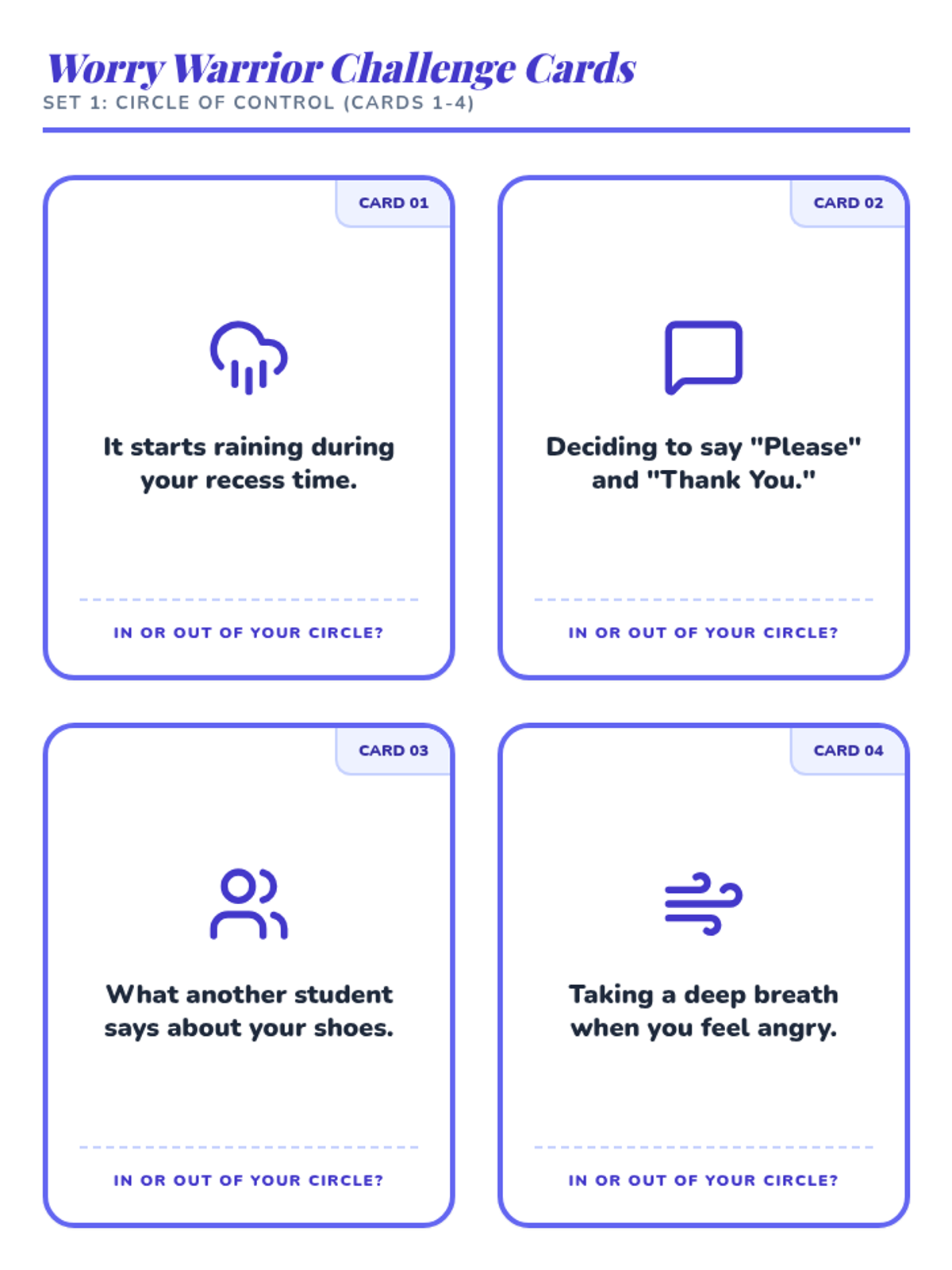
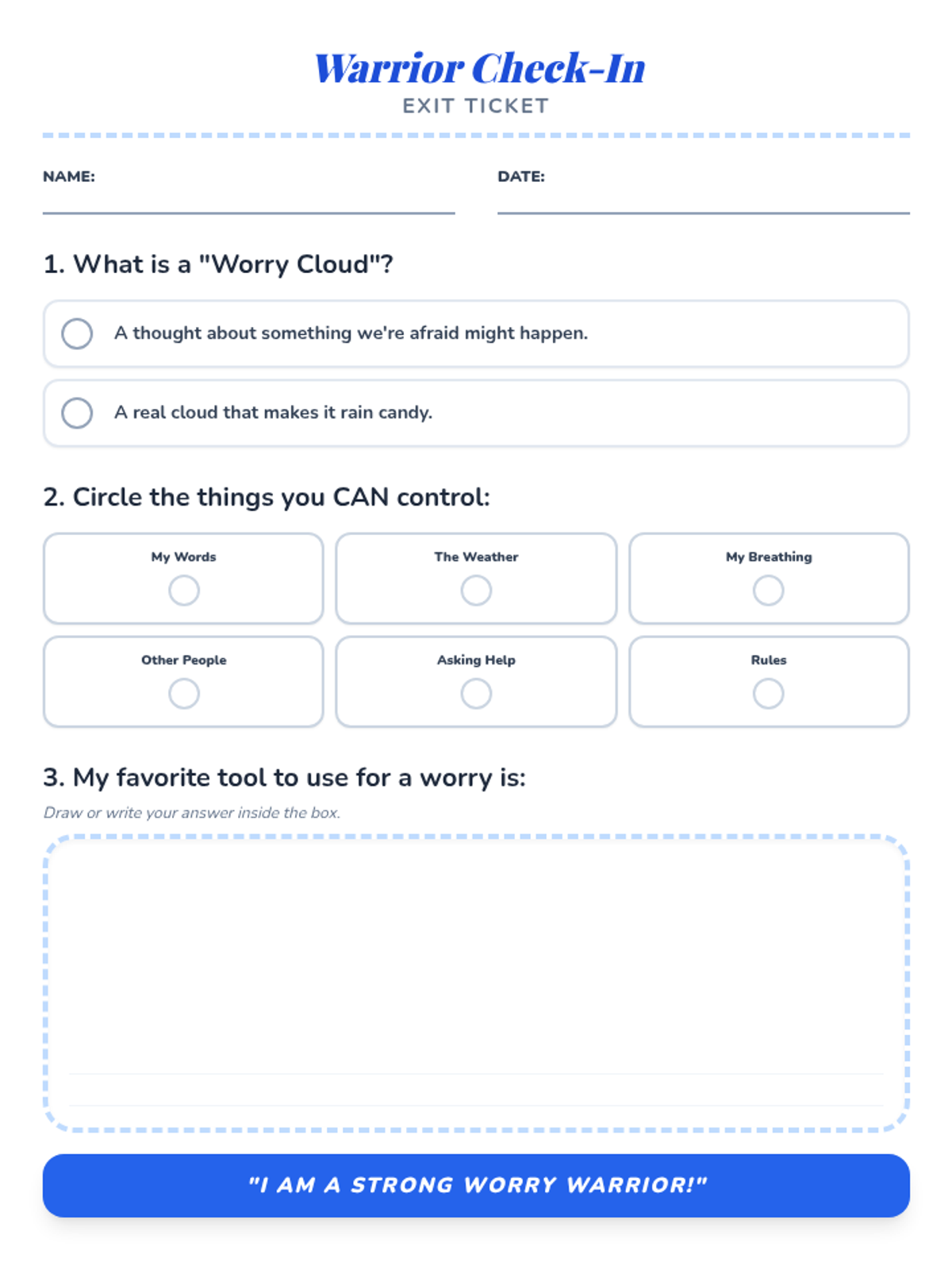
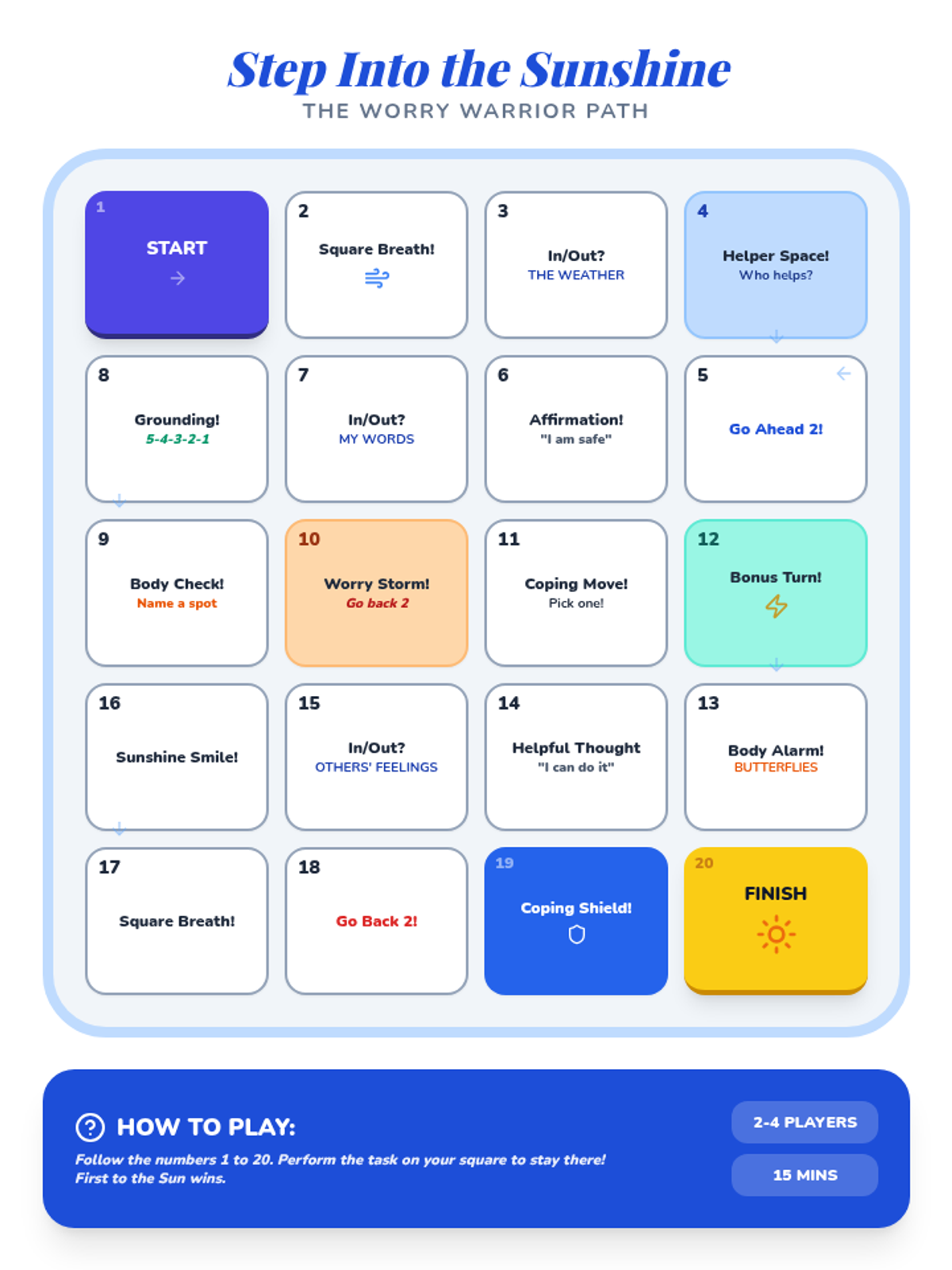
A comprehensive 30-minute lesson designed for grades K-4 to help students understand the nature of worries, recognize physical signs of anxiety, and learn to distinguish between what they can and cannot control. Students will explore practical coping strategies and build a personal 'Coping Toolbox'.
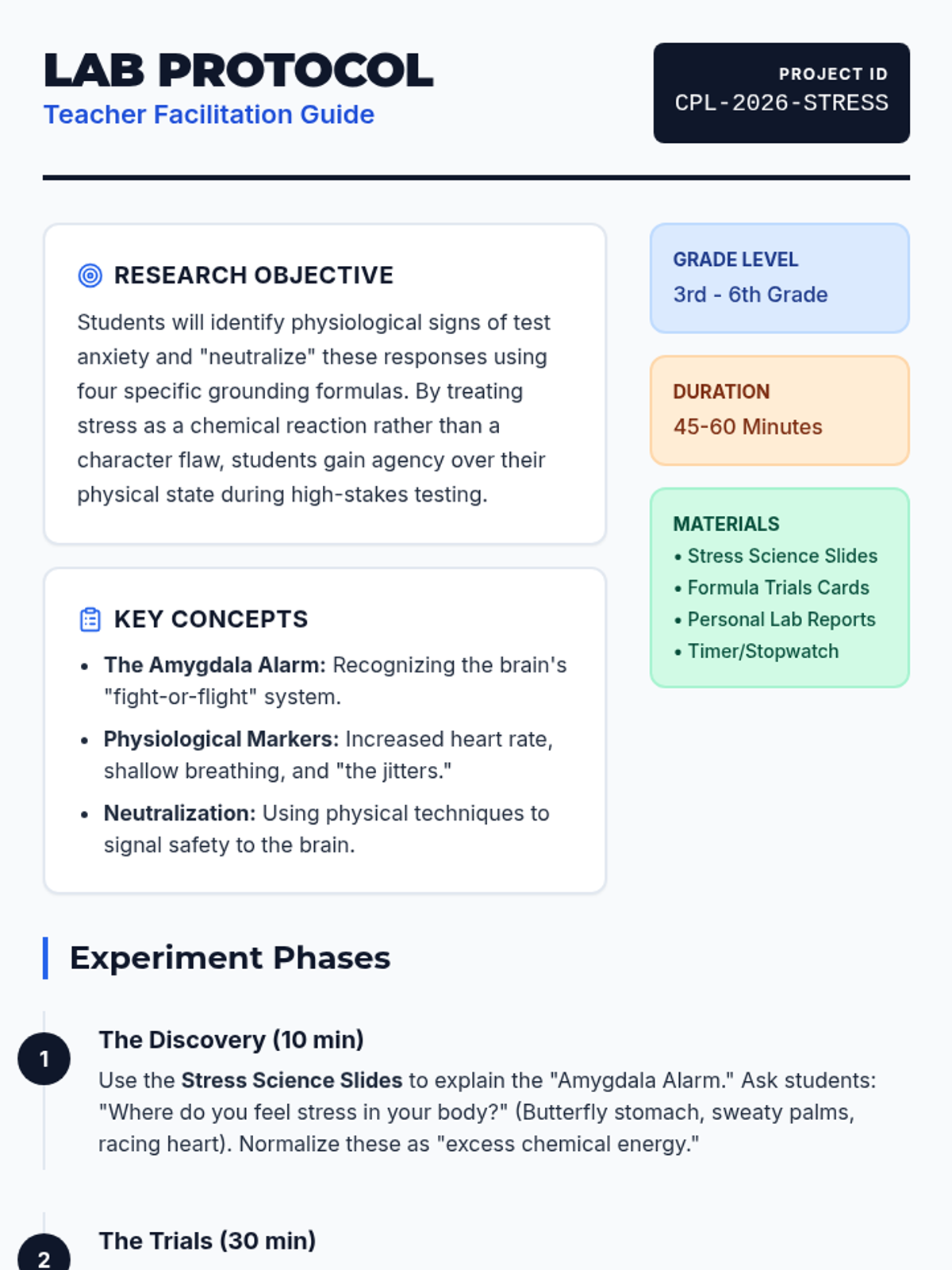
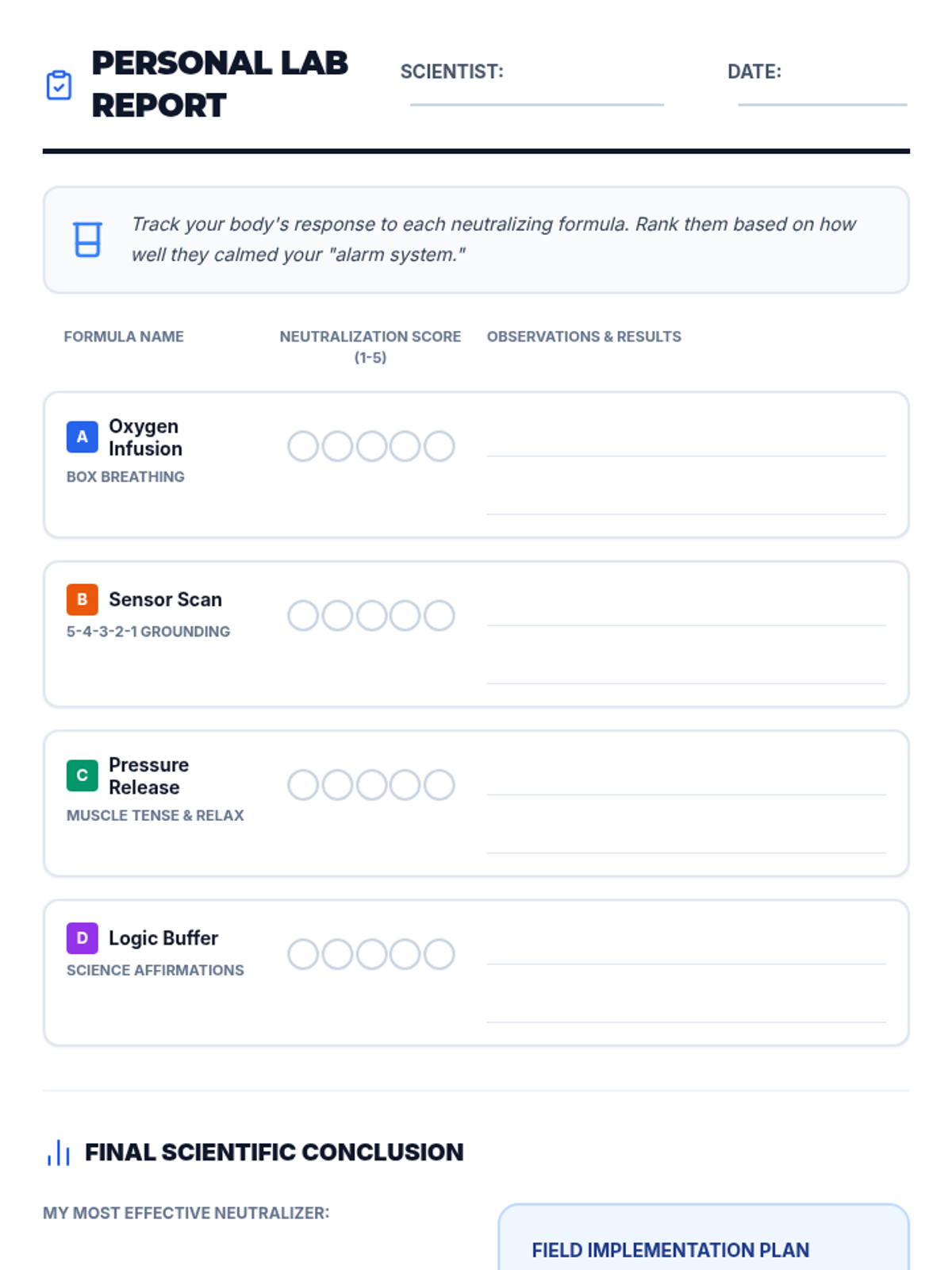
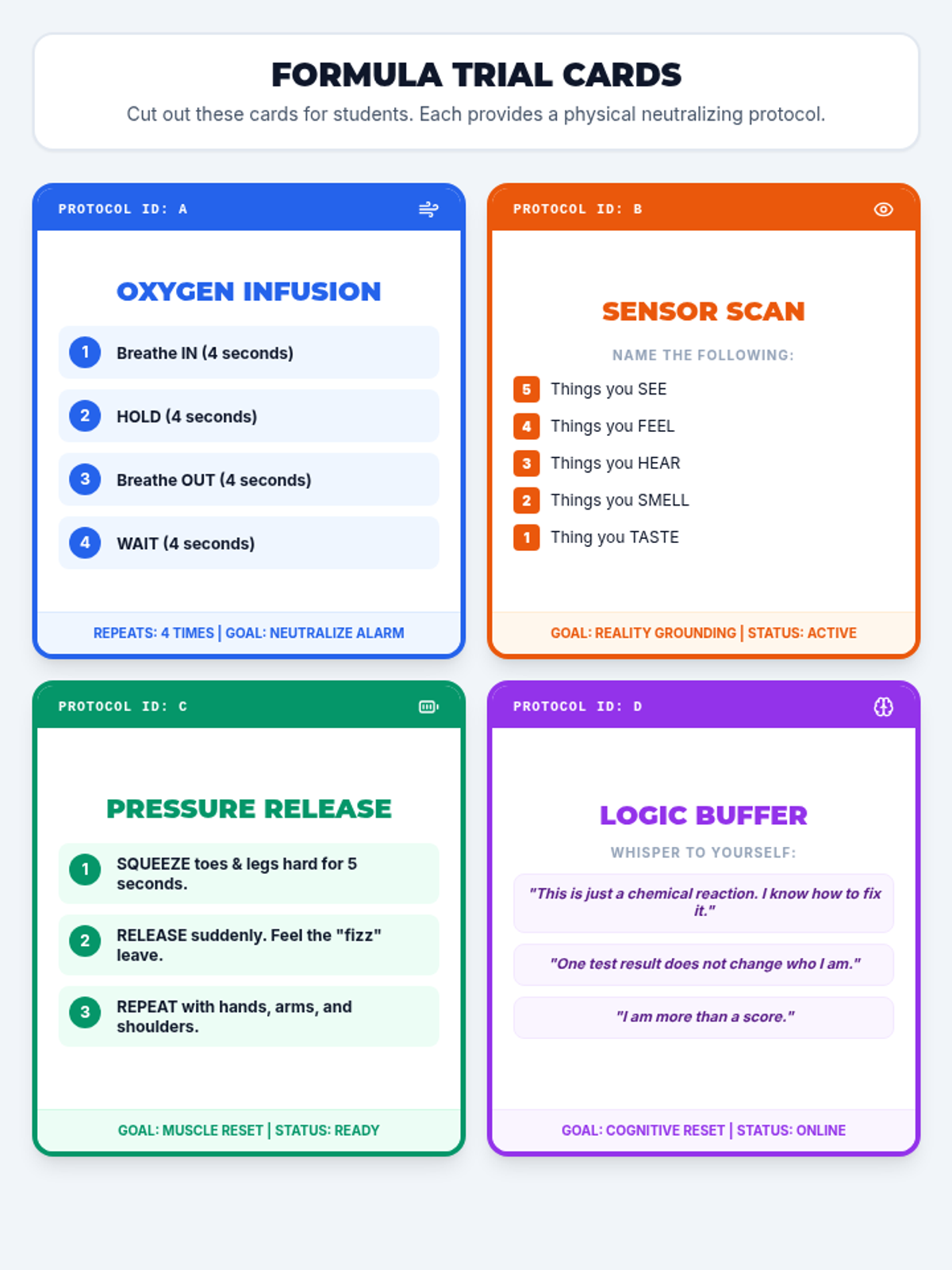
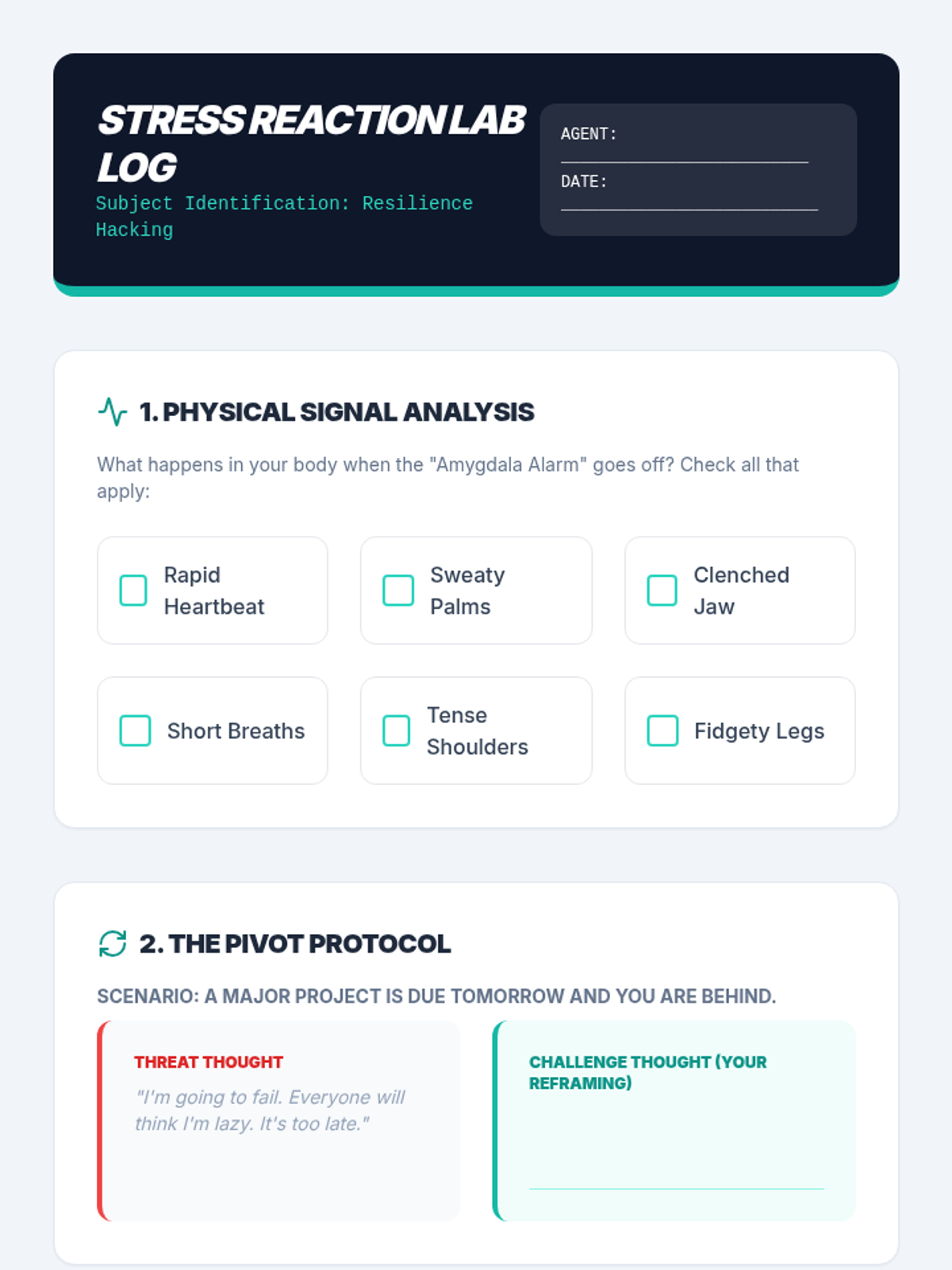
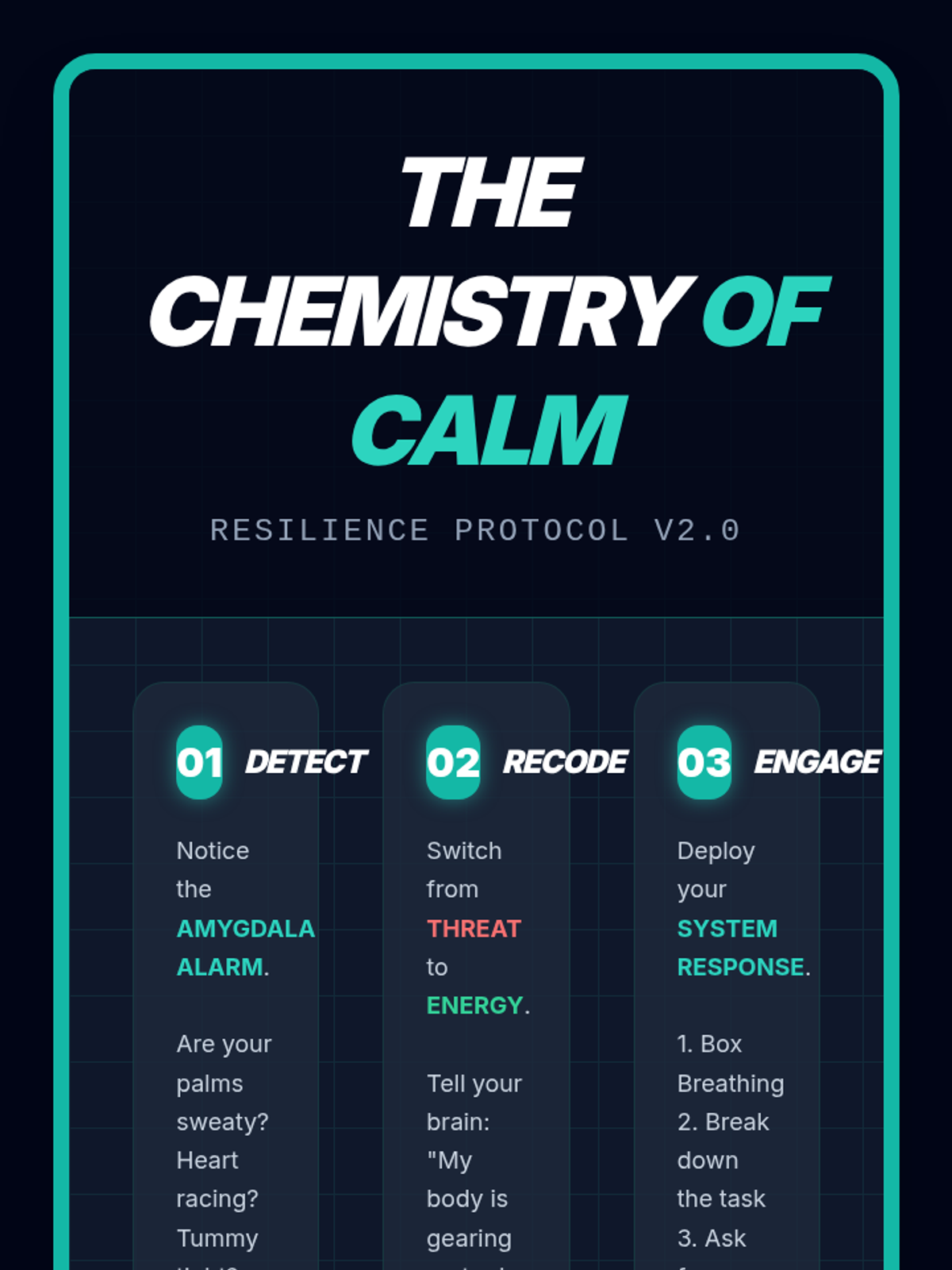
A science-themed lesson that teaches students to manage test anxiety by treating their physical stress responses as laboratory experiments, testing different 'calm-down formulas' to find their personal best stress-neutralizers.
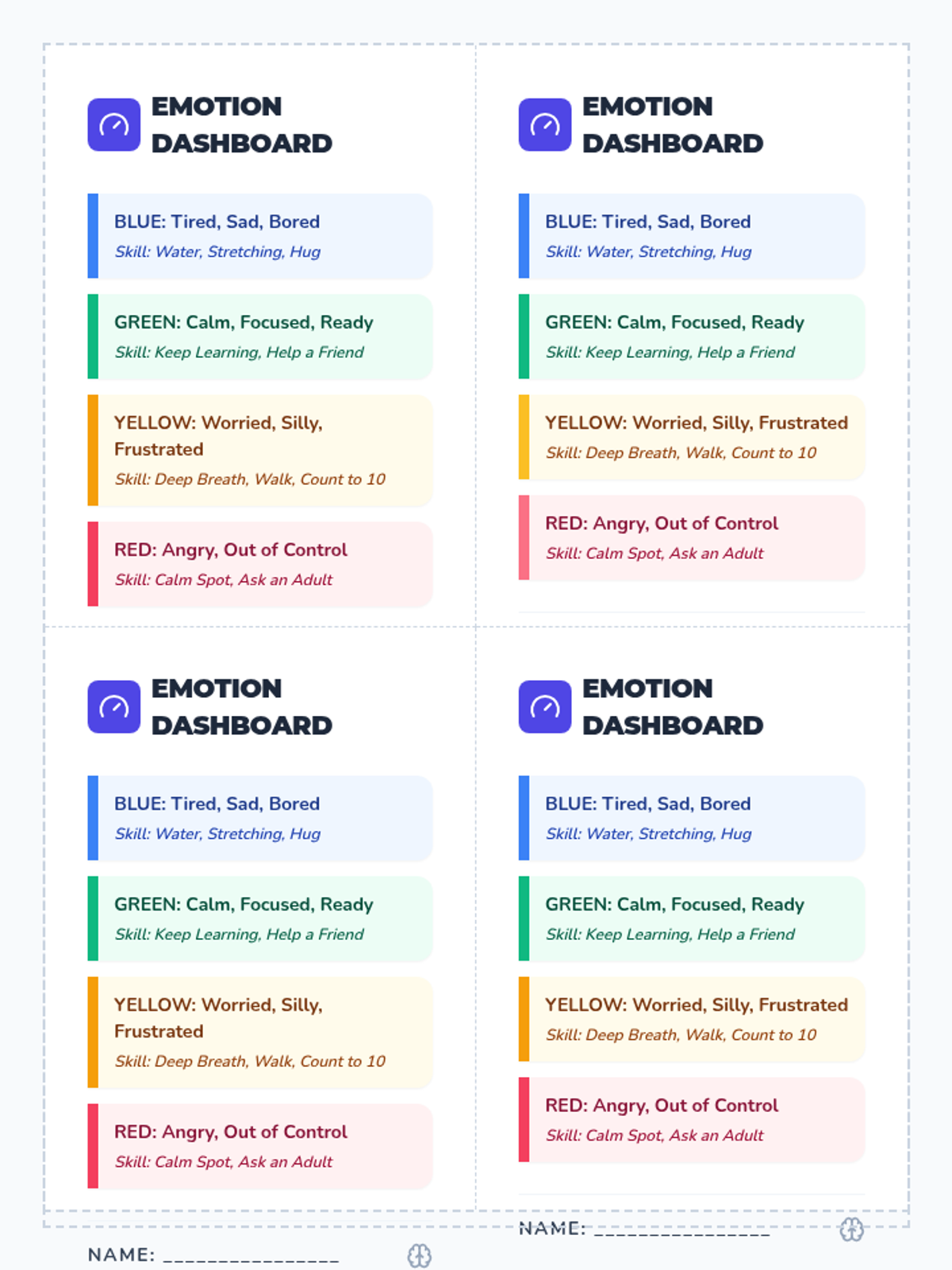
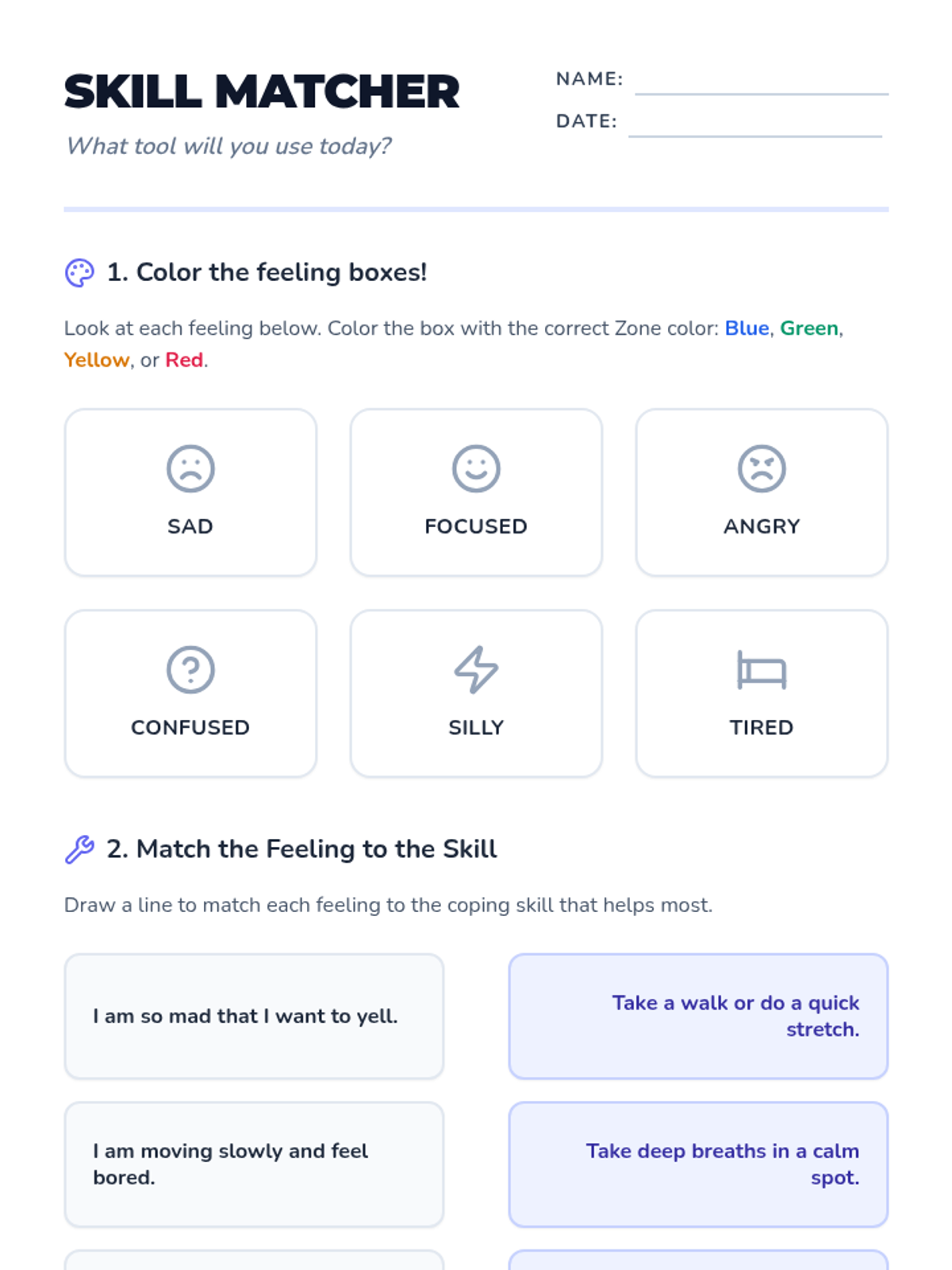
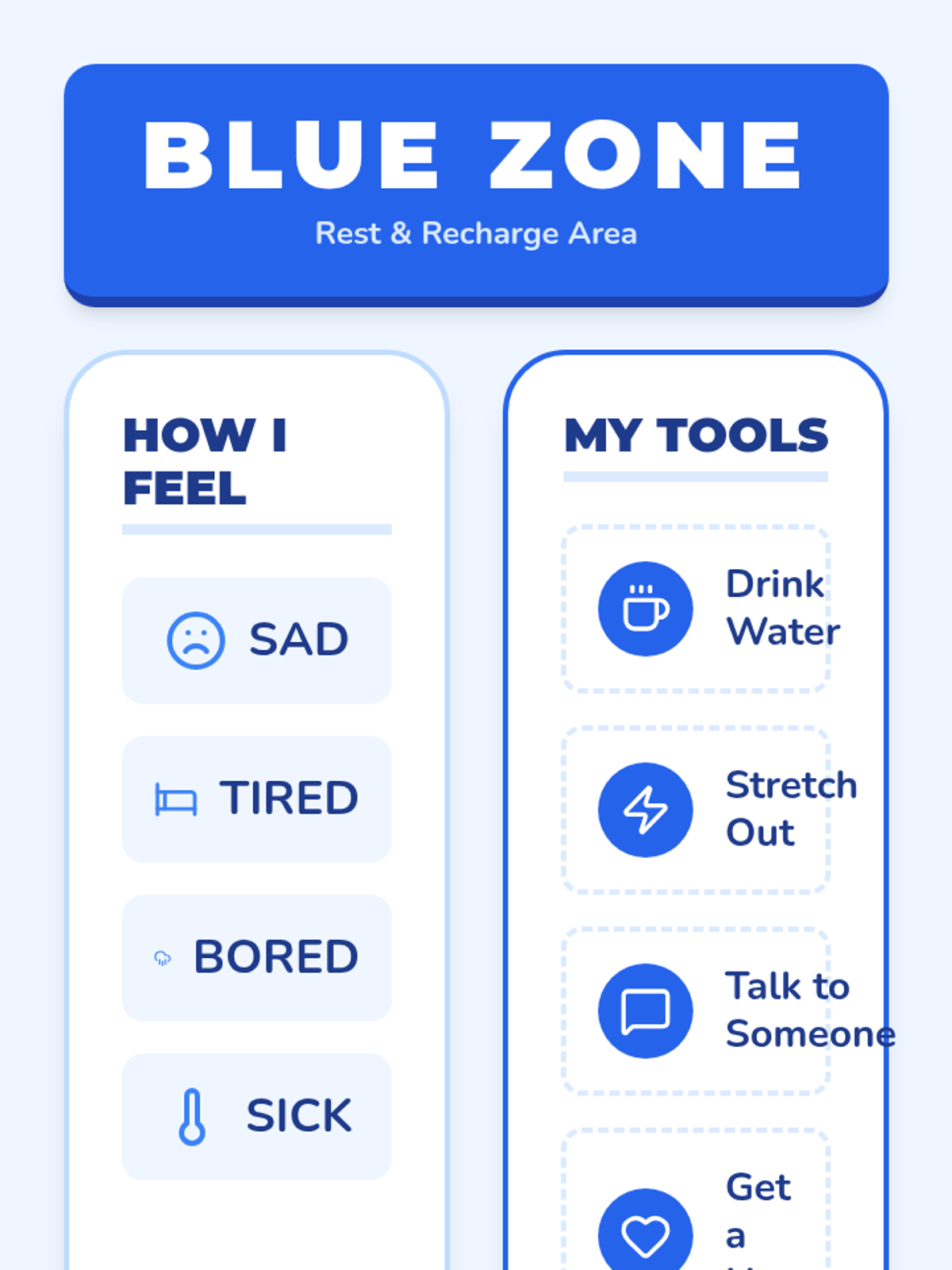
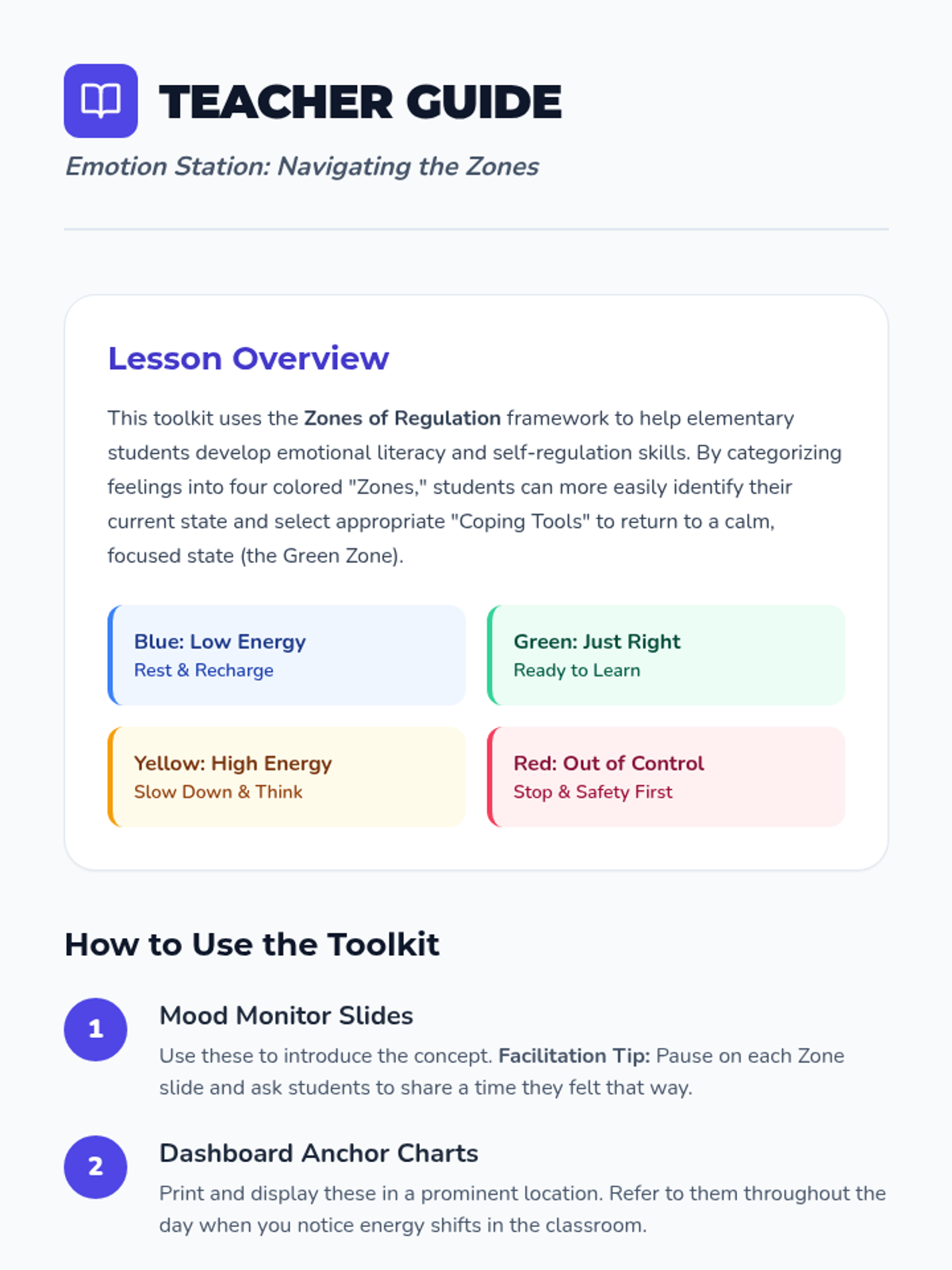
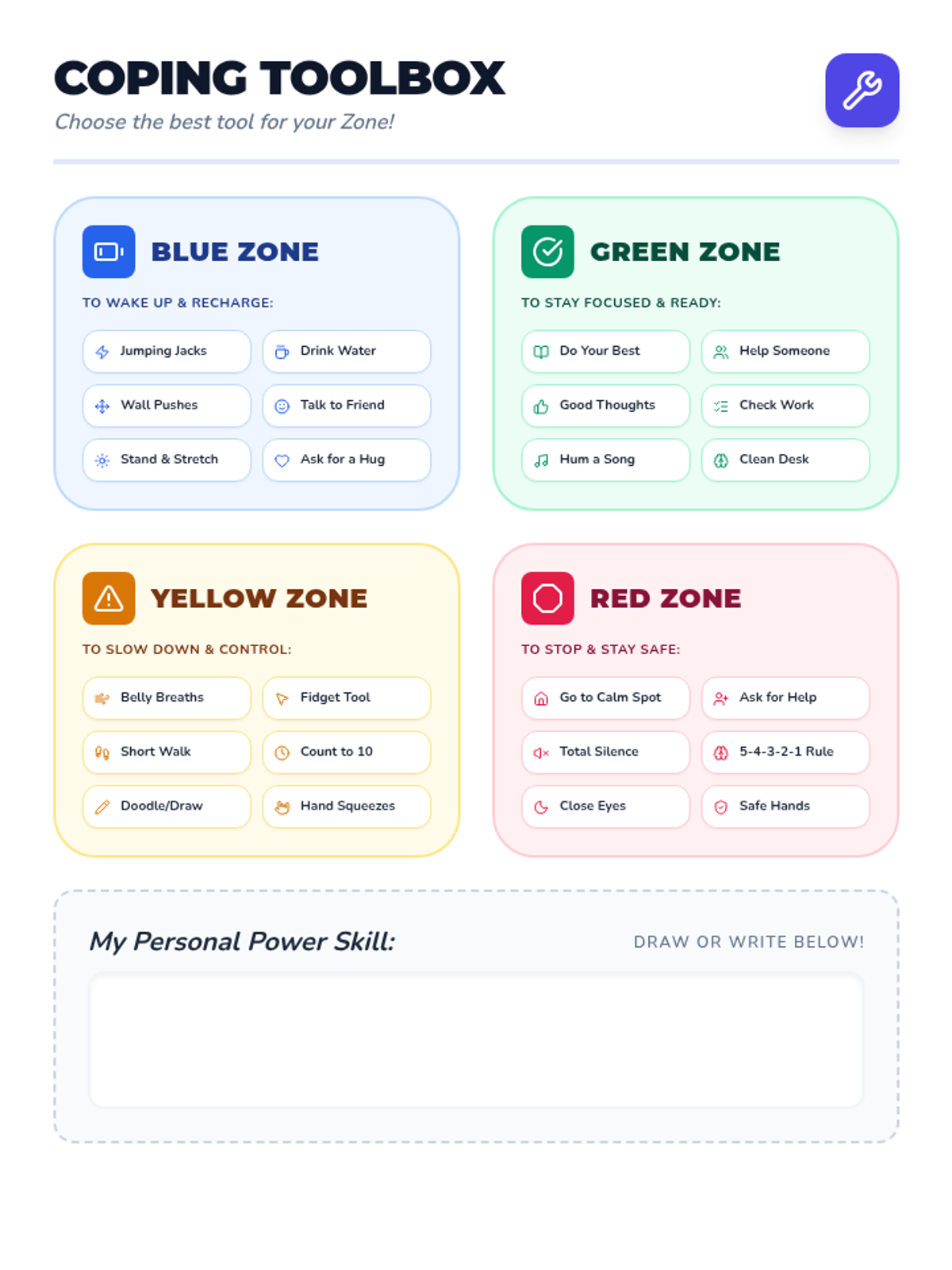
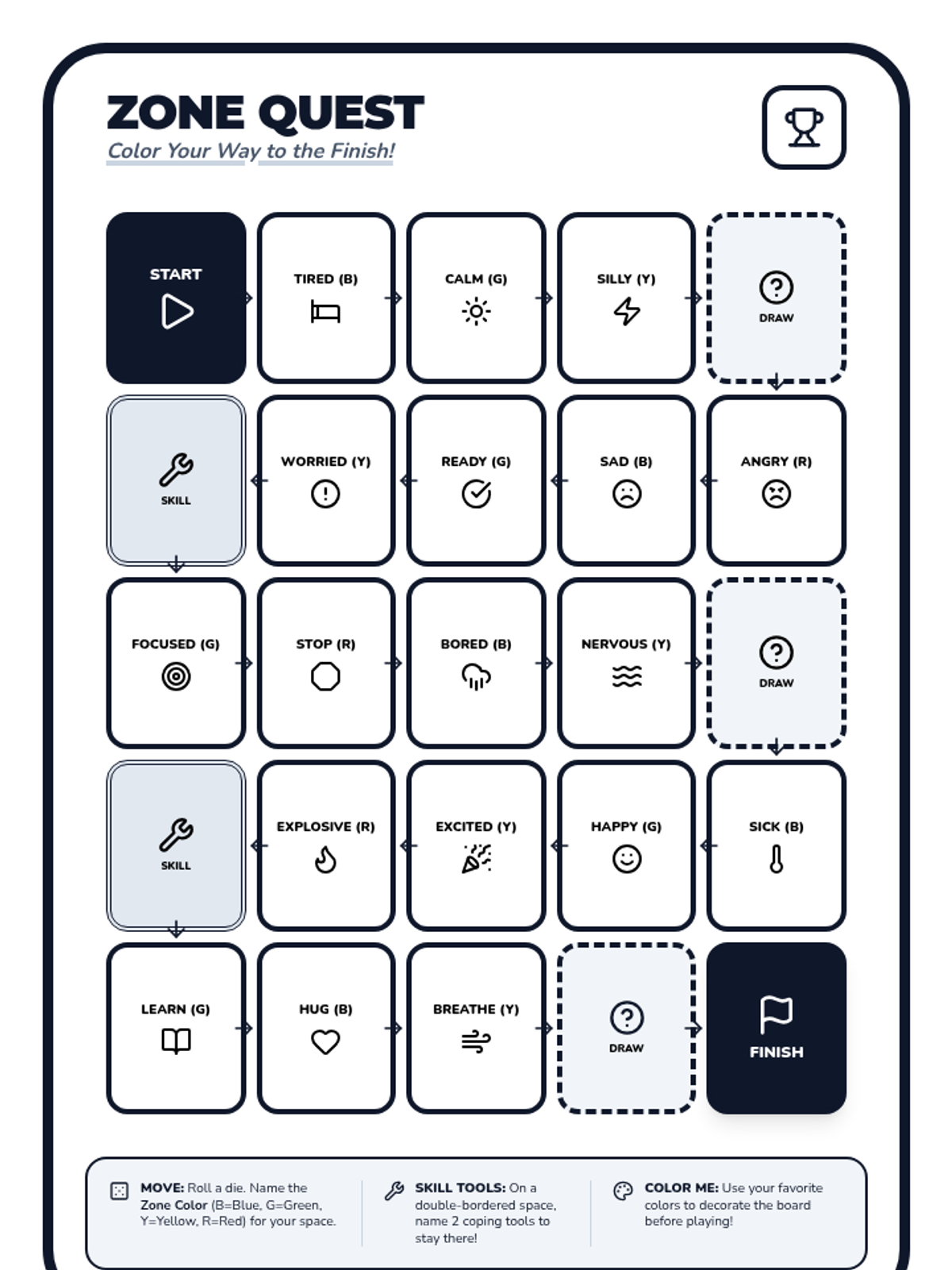
A comprehensive toolkit to help elementary students identify their emotional state using the Zones of Regulation framework and select appropriate coping strategies for each zone.
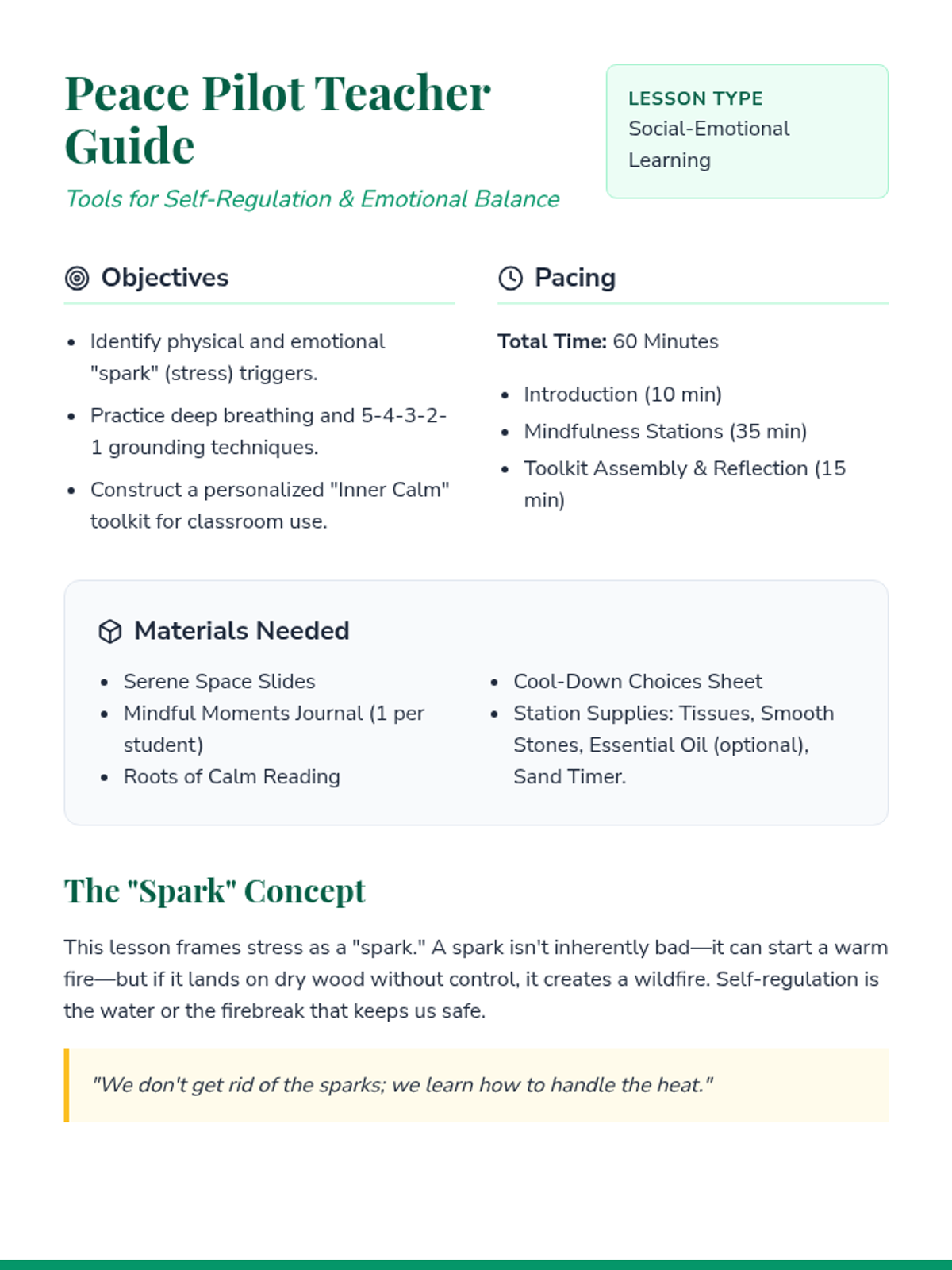
Students explore personal stress triggers and develop a personalized toolkit of mindfulness and grounding strategies through hands-on stations and reflective journaling.
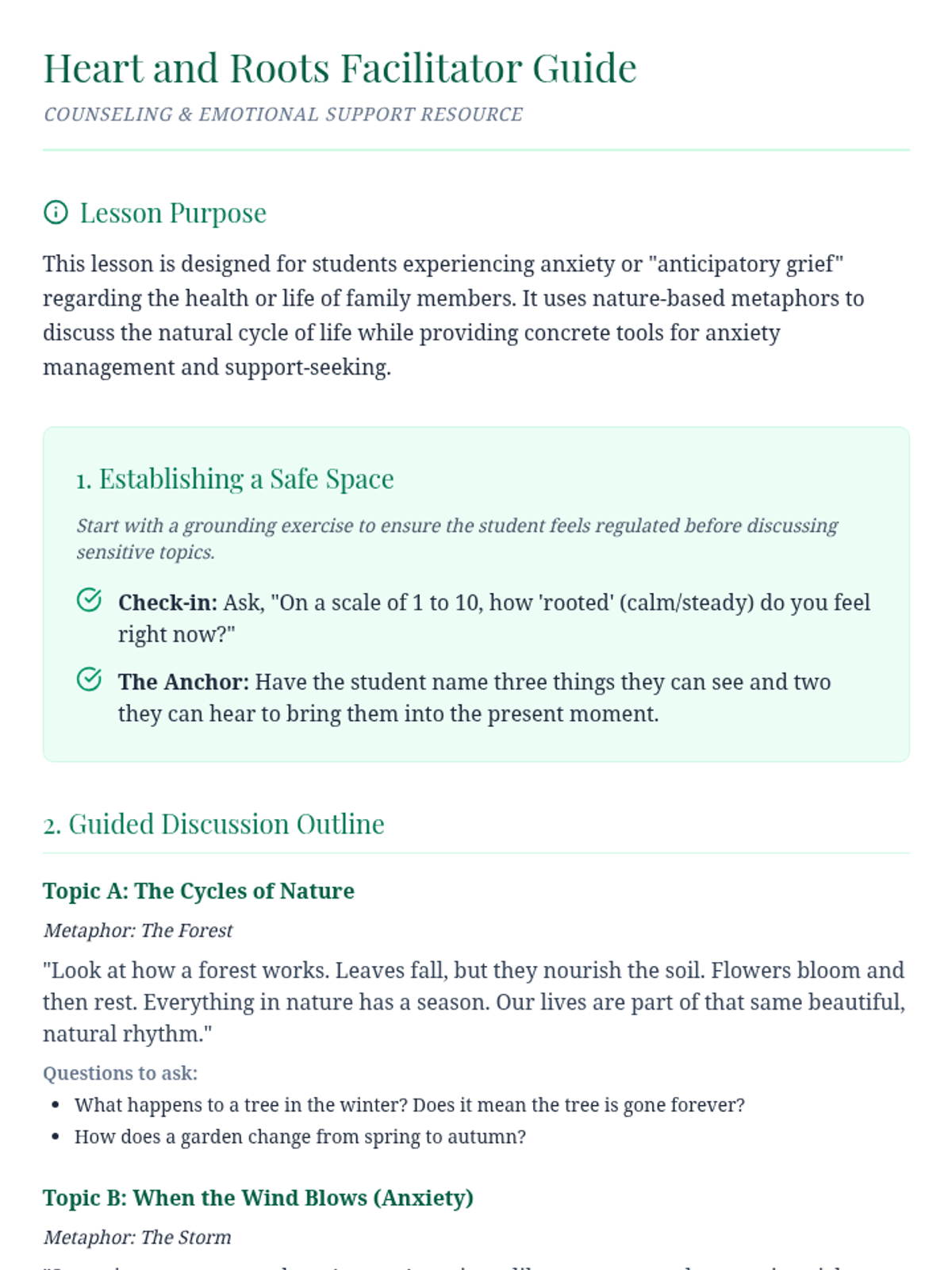
A sensitive and supportive lesson designed to help students navigate anxiety regarding the loss of loved ones through nature metaphors, expressive art, and identifying support systems.
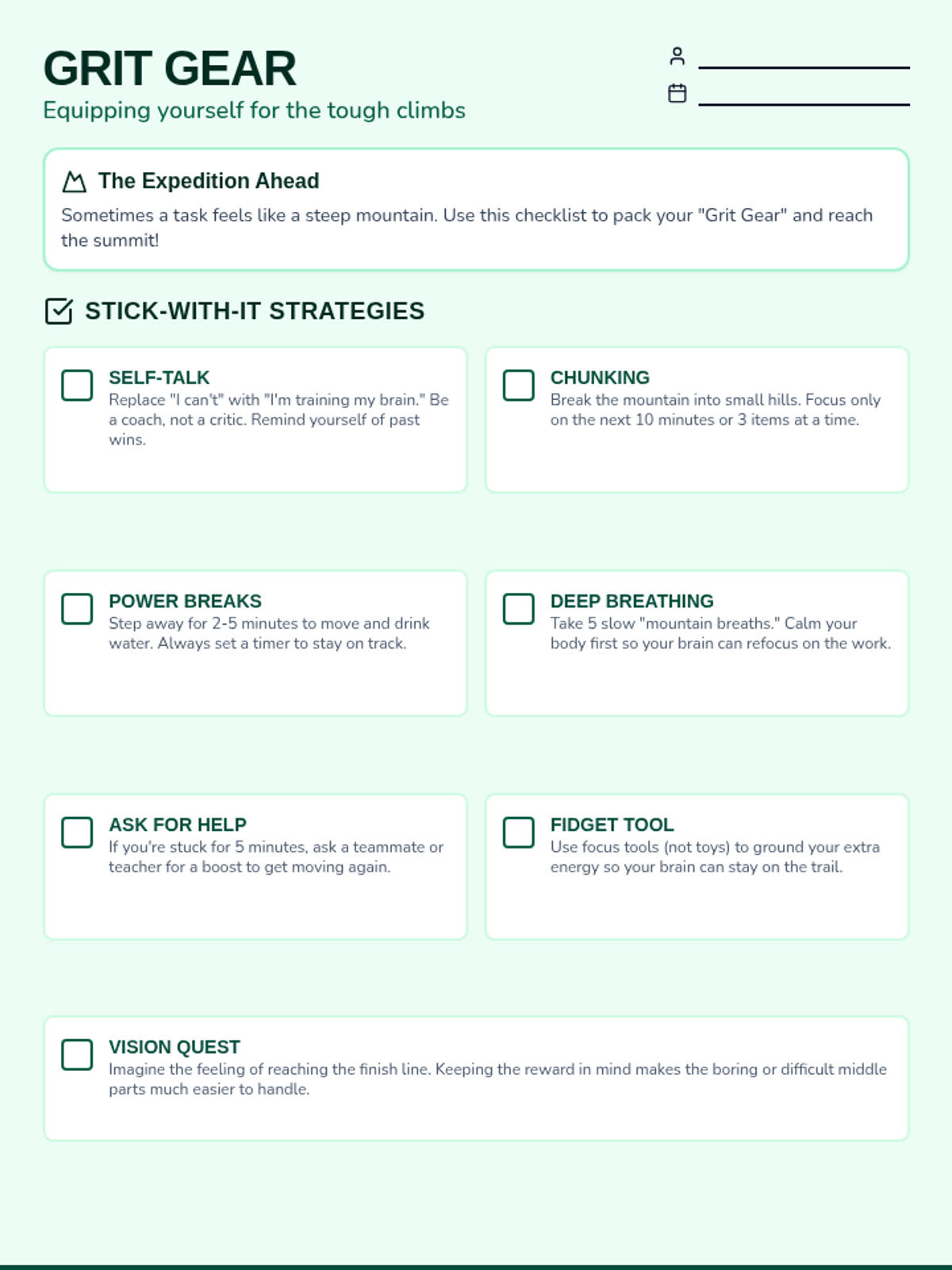
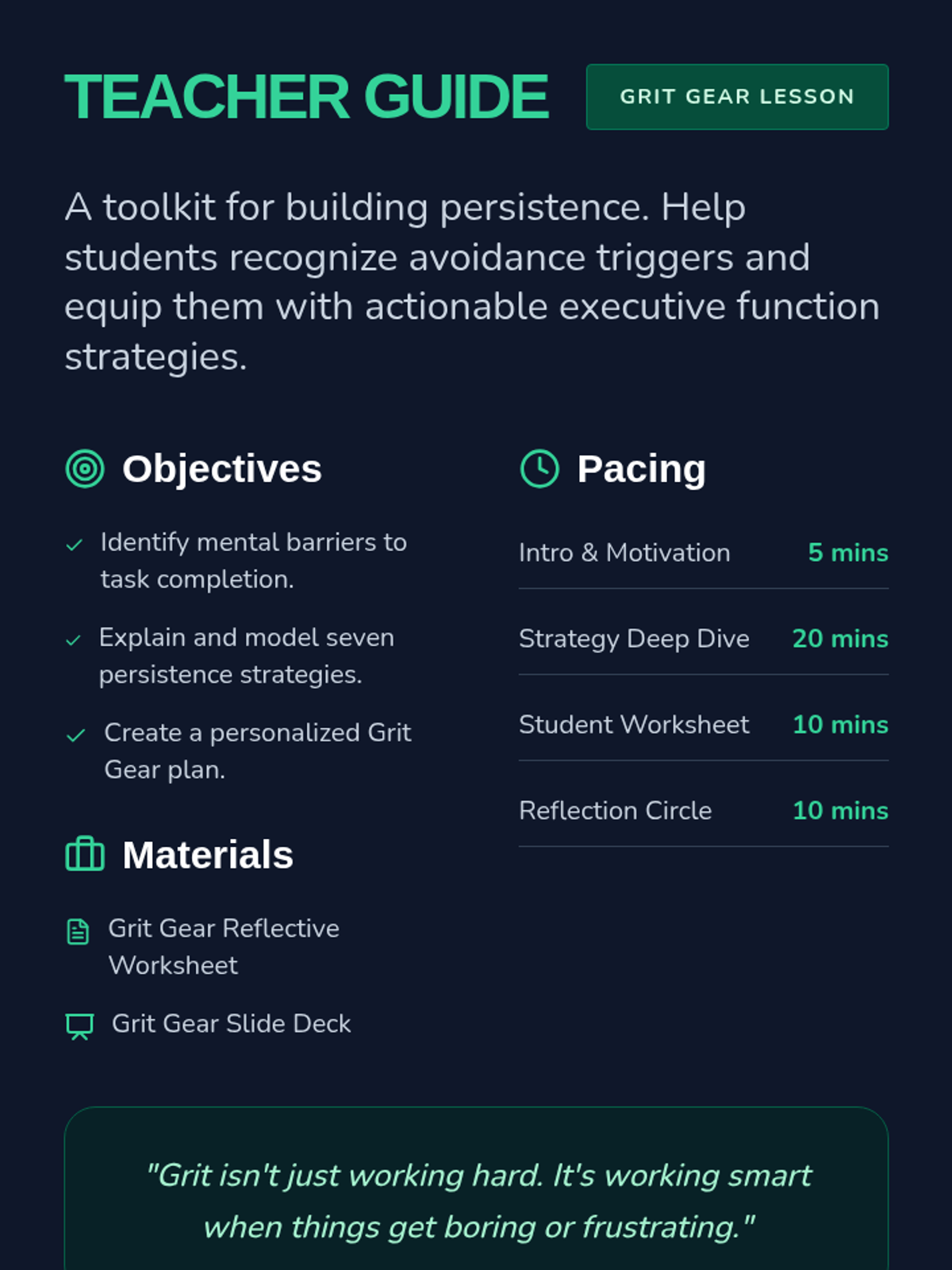
A lesson focused on equipping students with practical strategies to maintain focus and persistence during difficult or monotonous tasks.
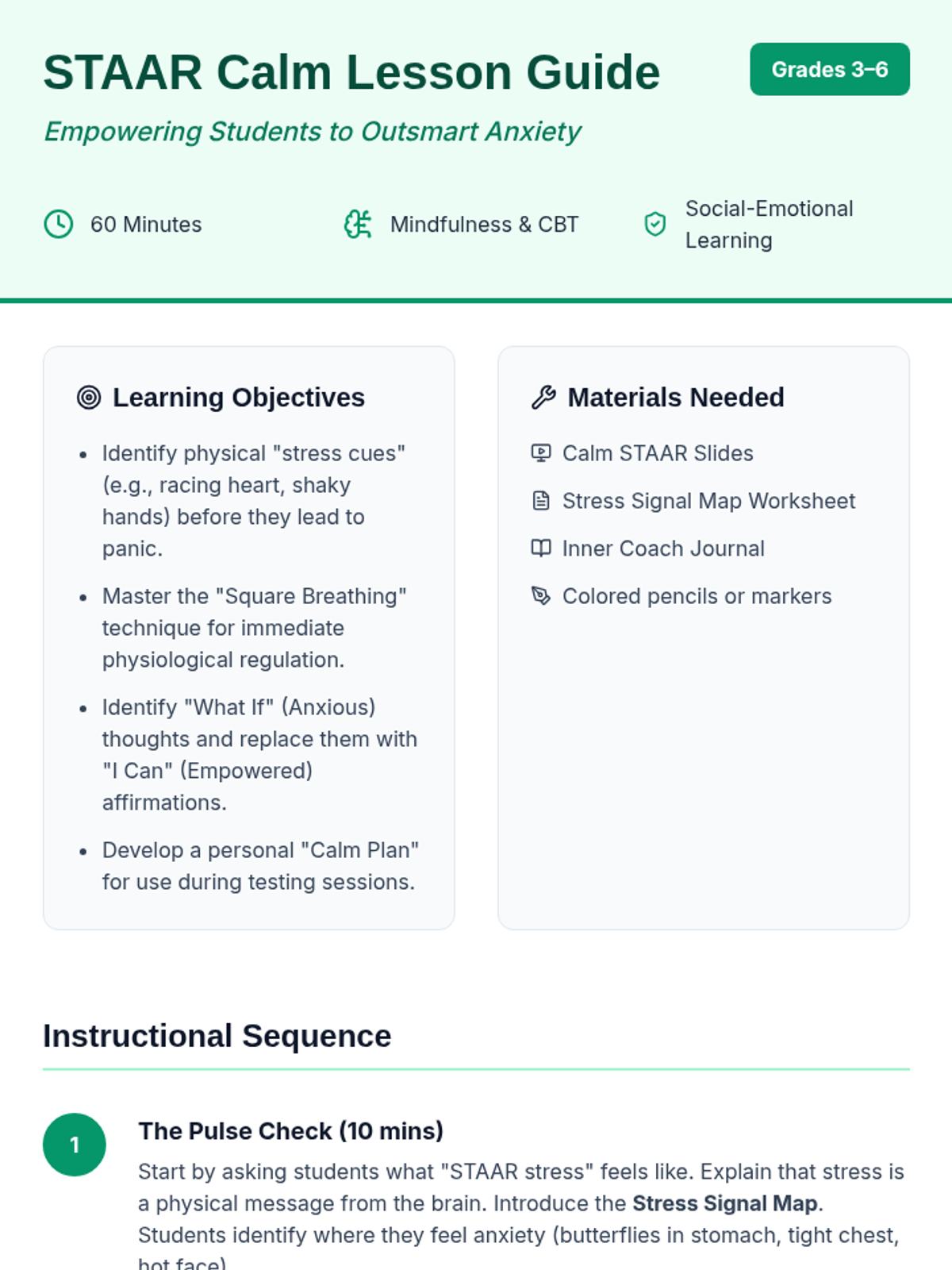
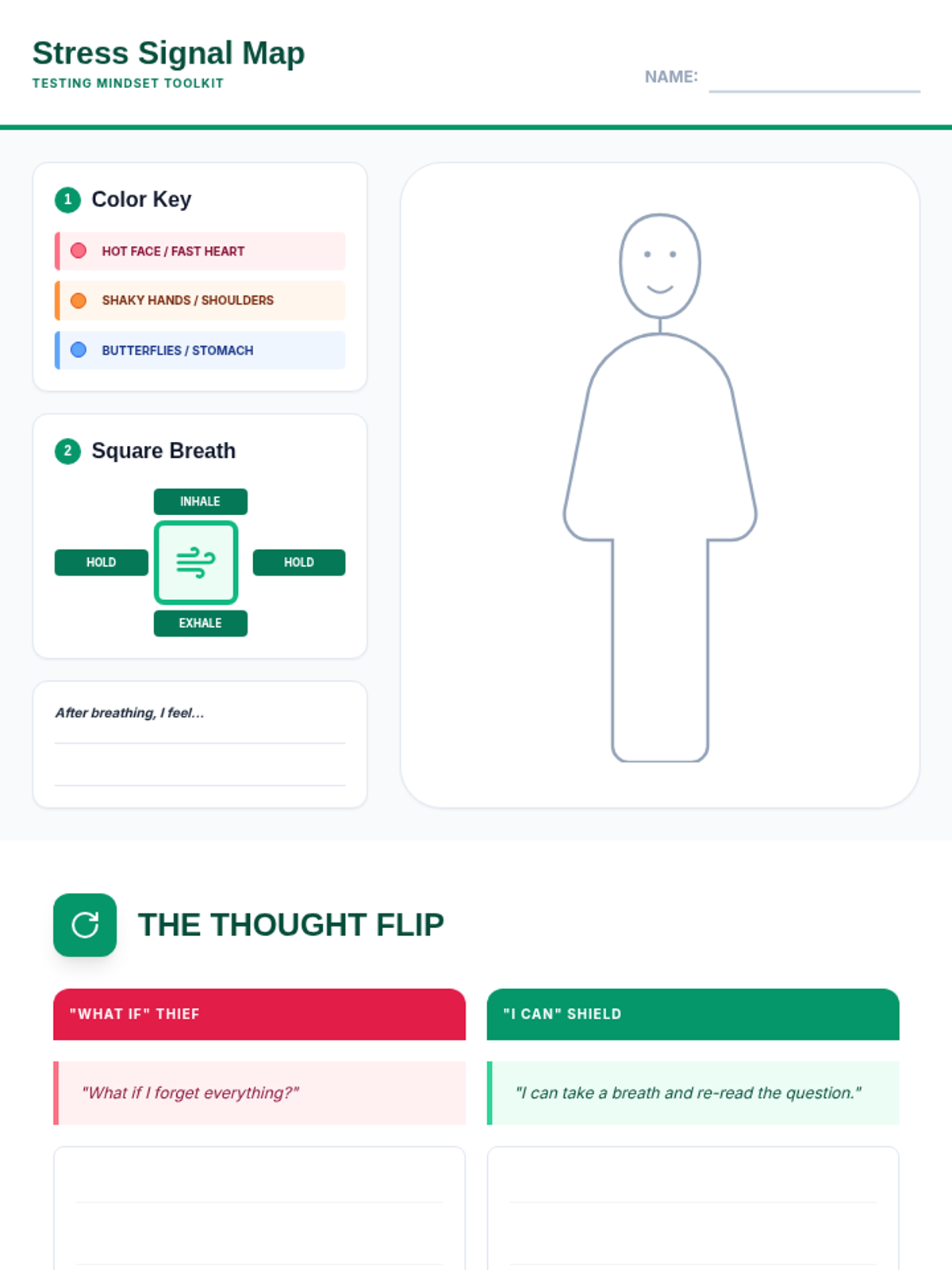
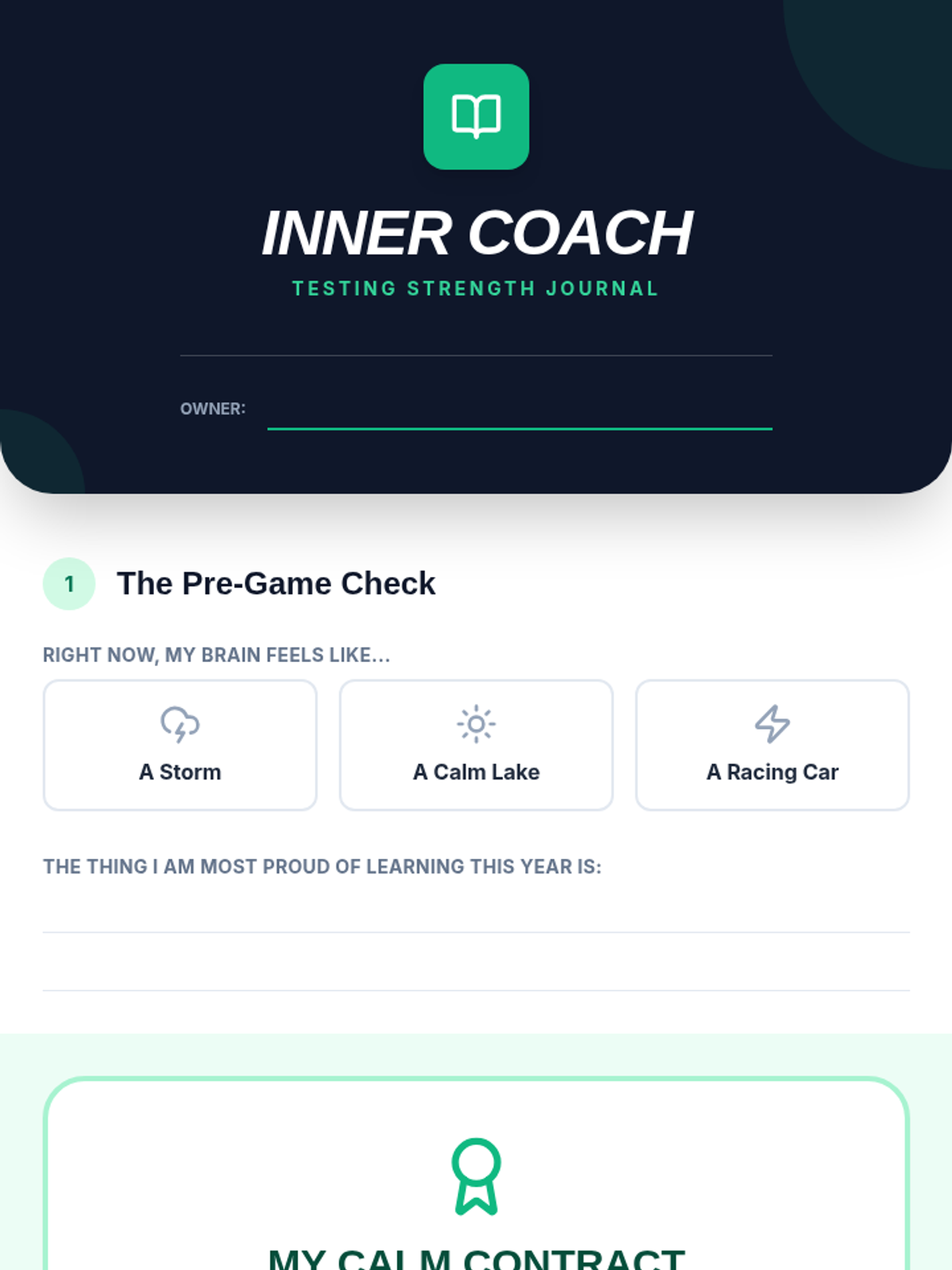
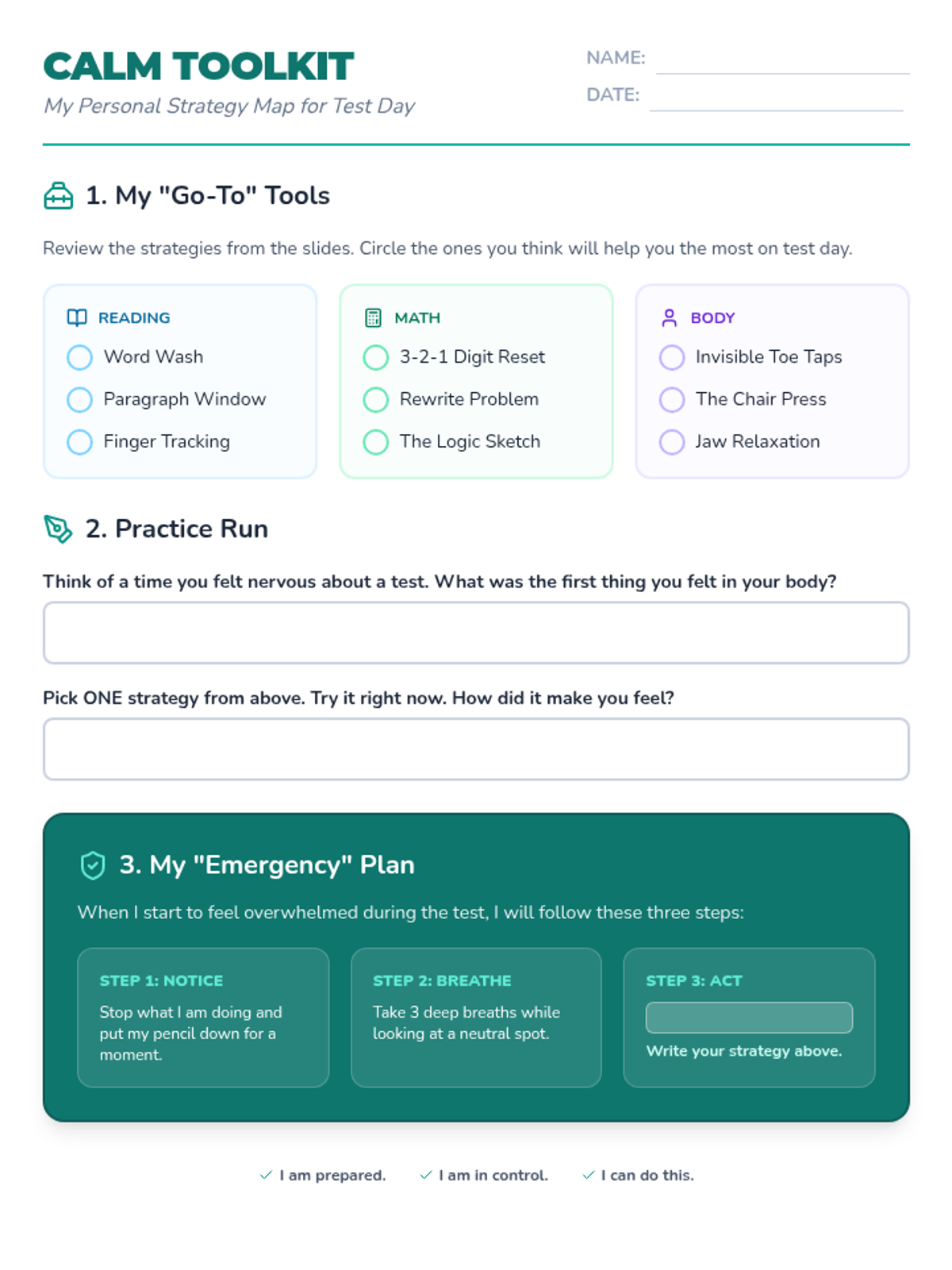
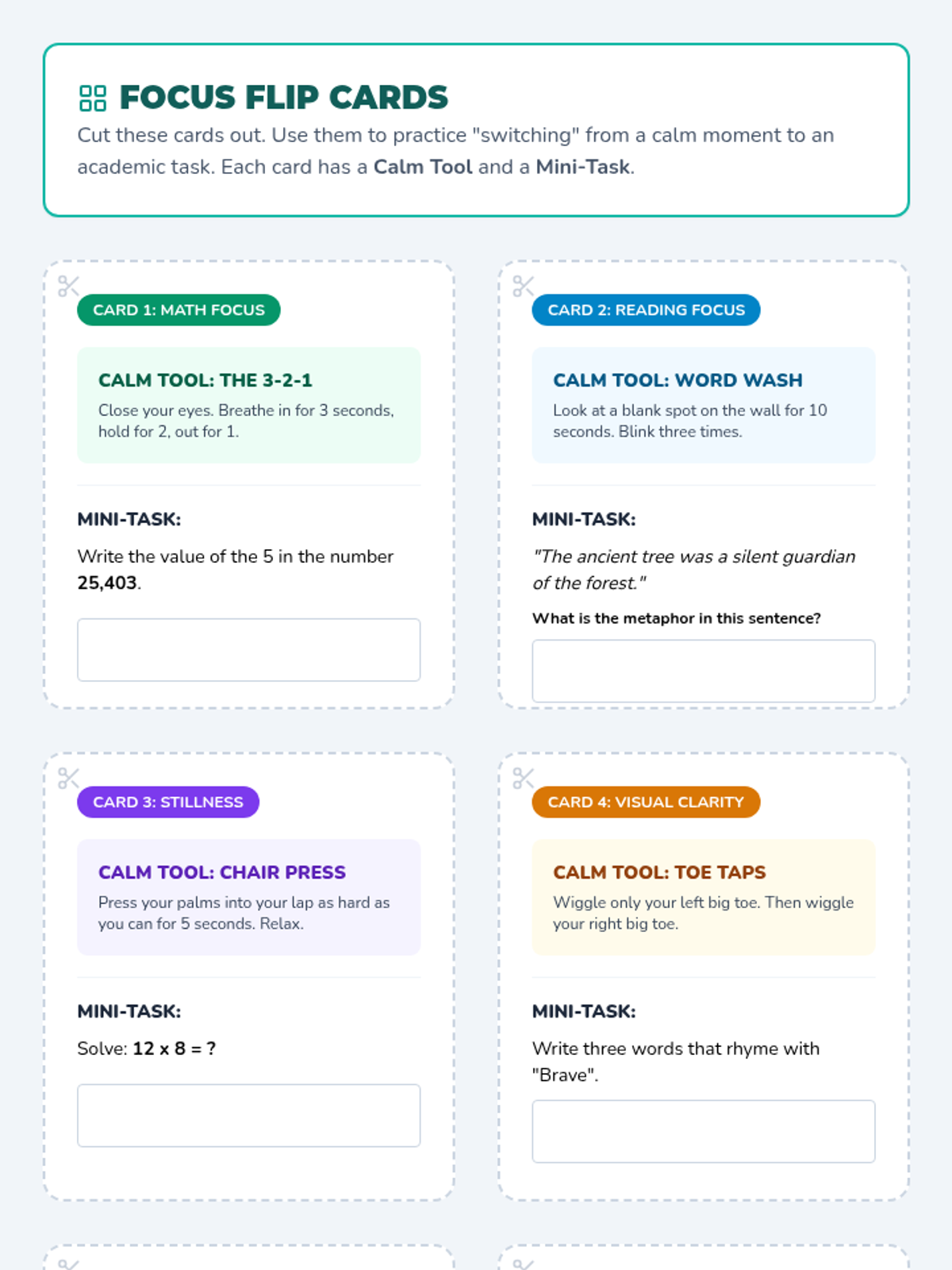
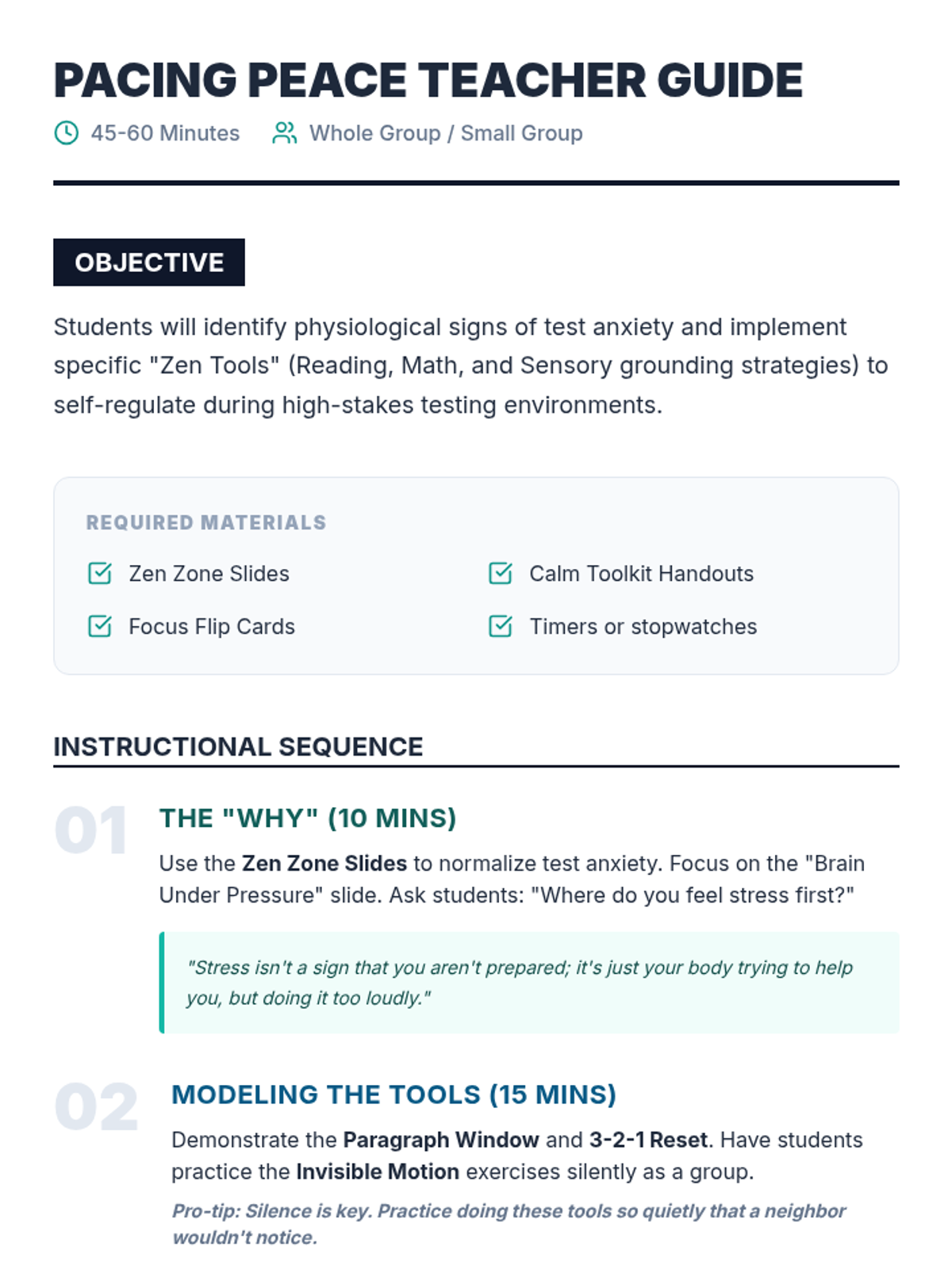
A comprehensive mindfulness workshop designed to equip 3rd-6th grade students with practical tools to manage testing anxiety, focusing on physiological awareness and cognitive reframing.
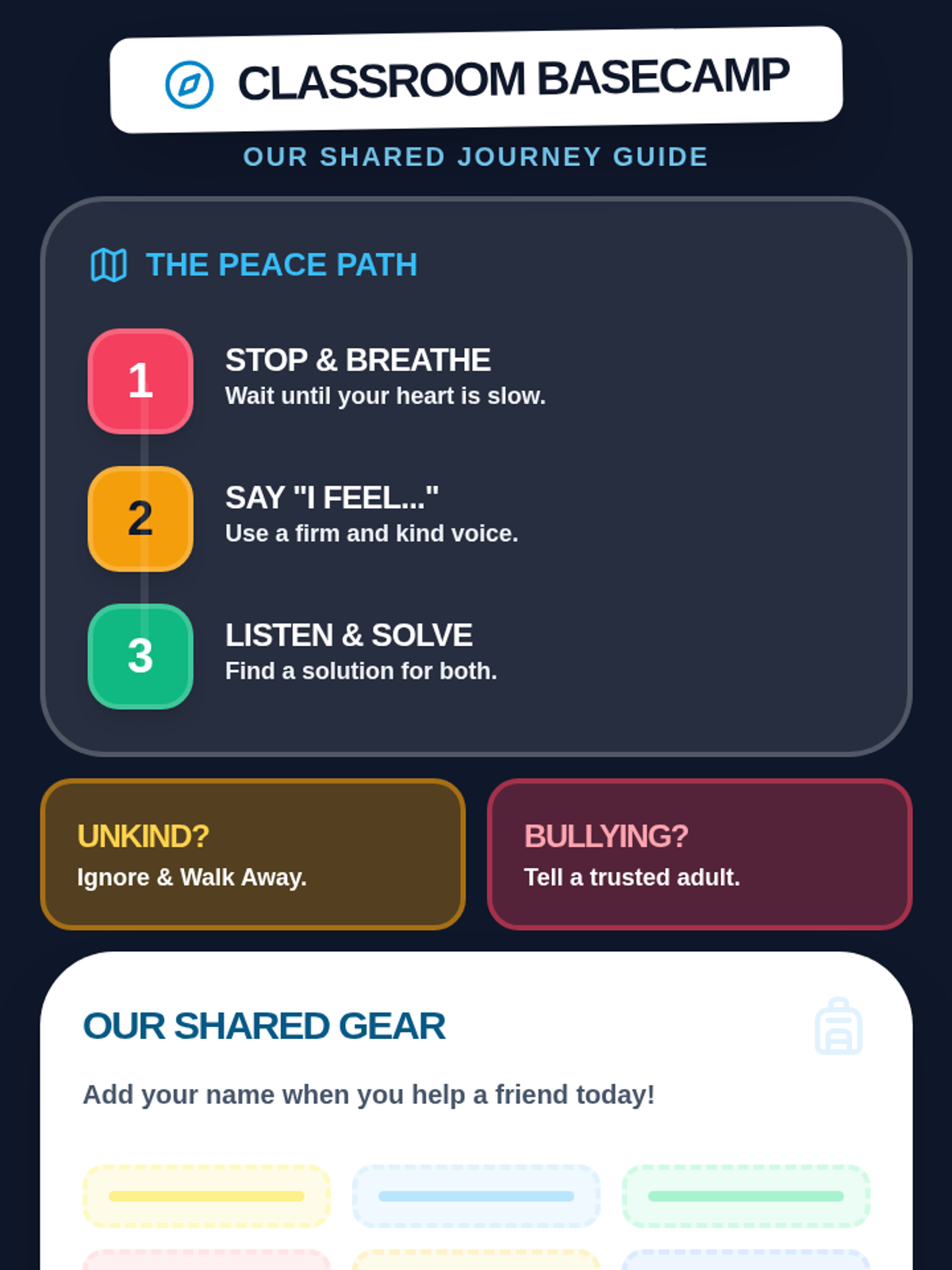
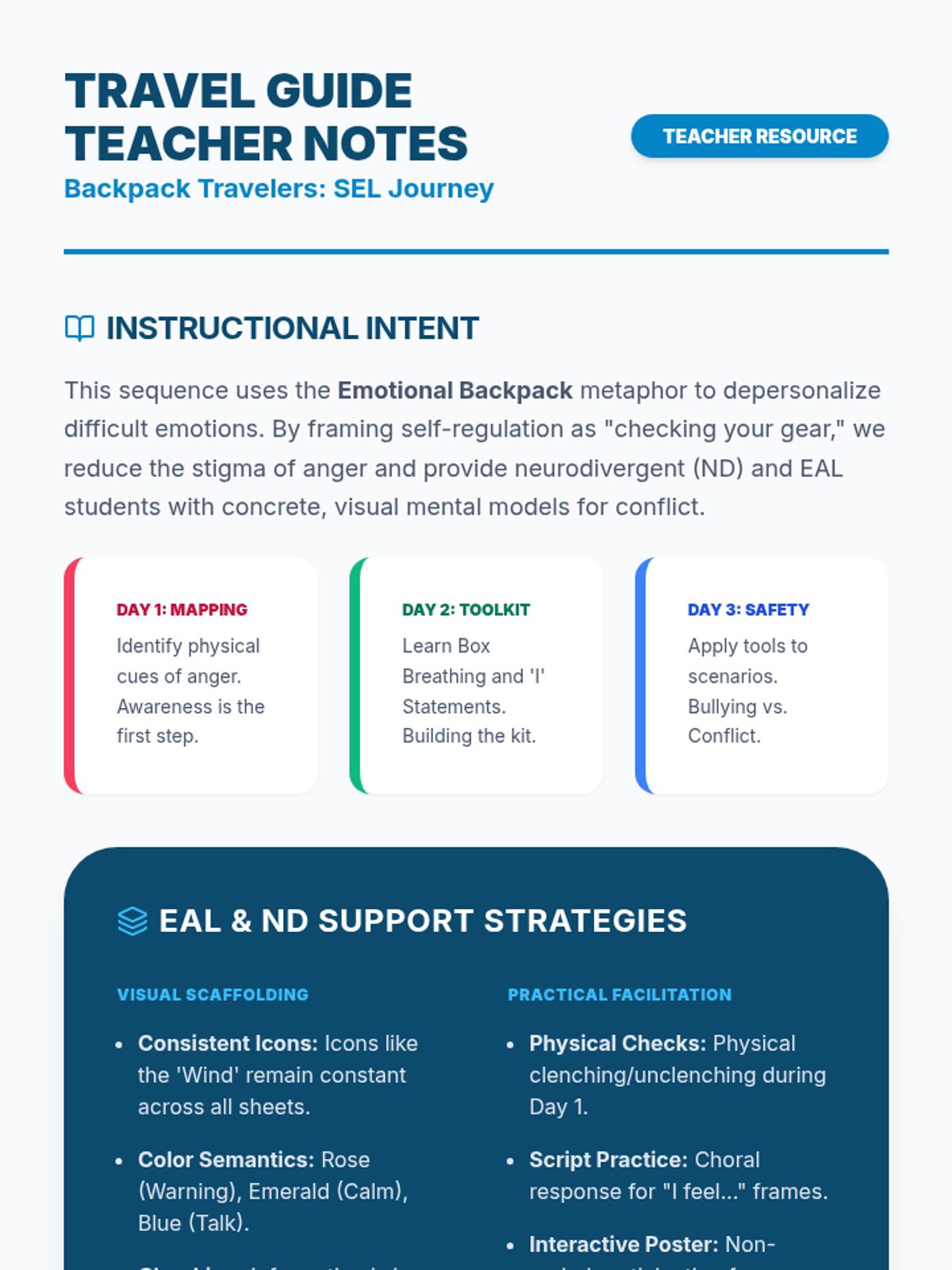
Applies regulation tools to social situations, including conflict resolution steps and handling unkind behavior or bullying.
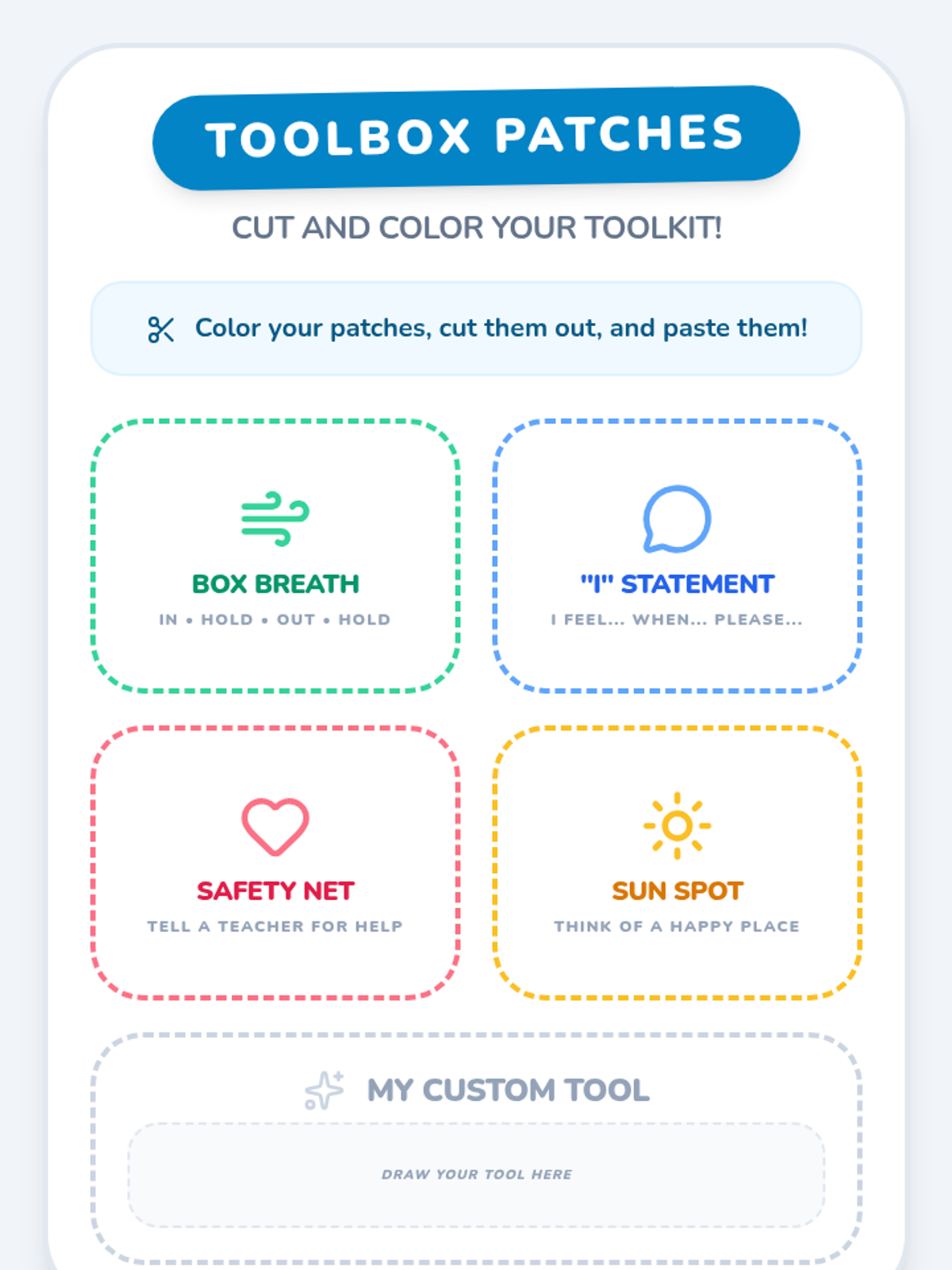
Focuses on practical tools for regulation: deep breathing, mindfulness, and the 'I' Statement tool.
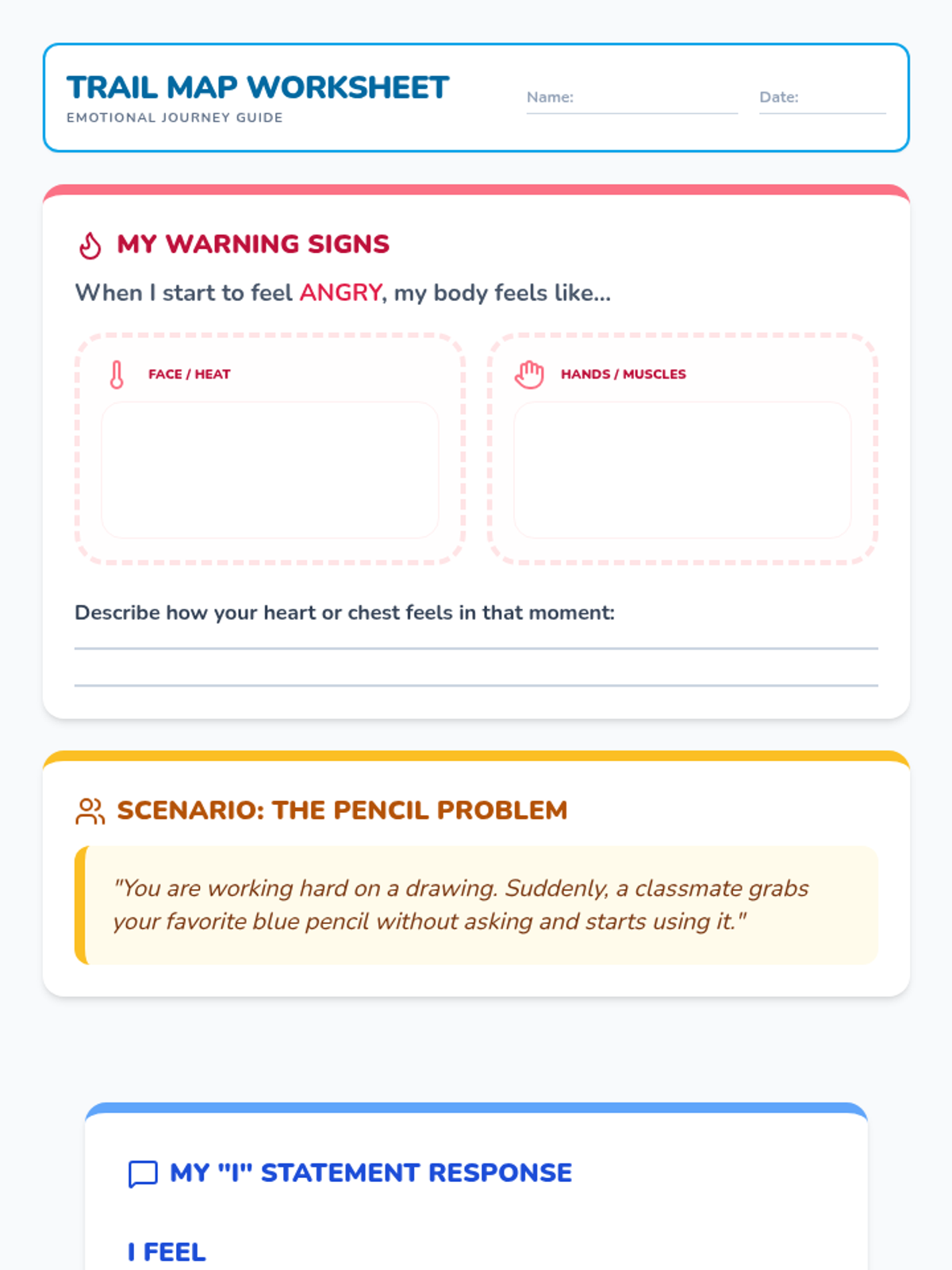
Students learn to identify physical signs of anger and use the 'Emotional Backpack' metaphor to understand that everyone carries feelings.
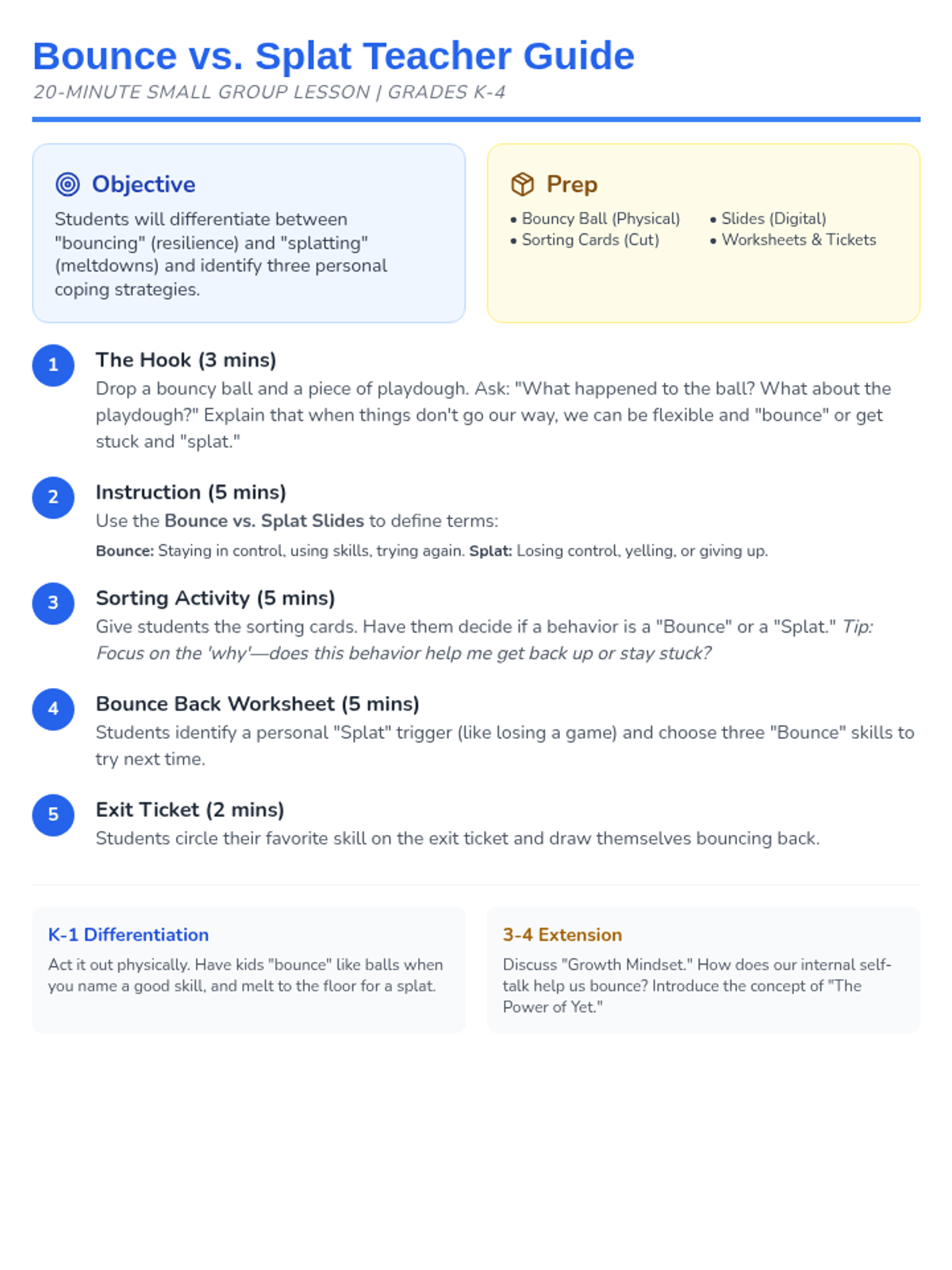
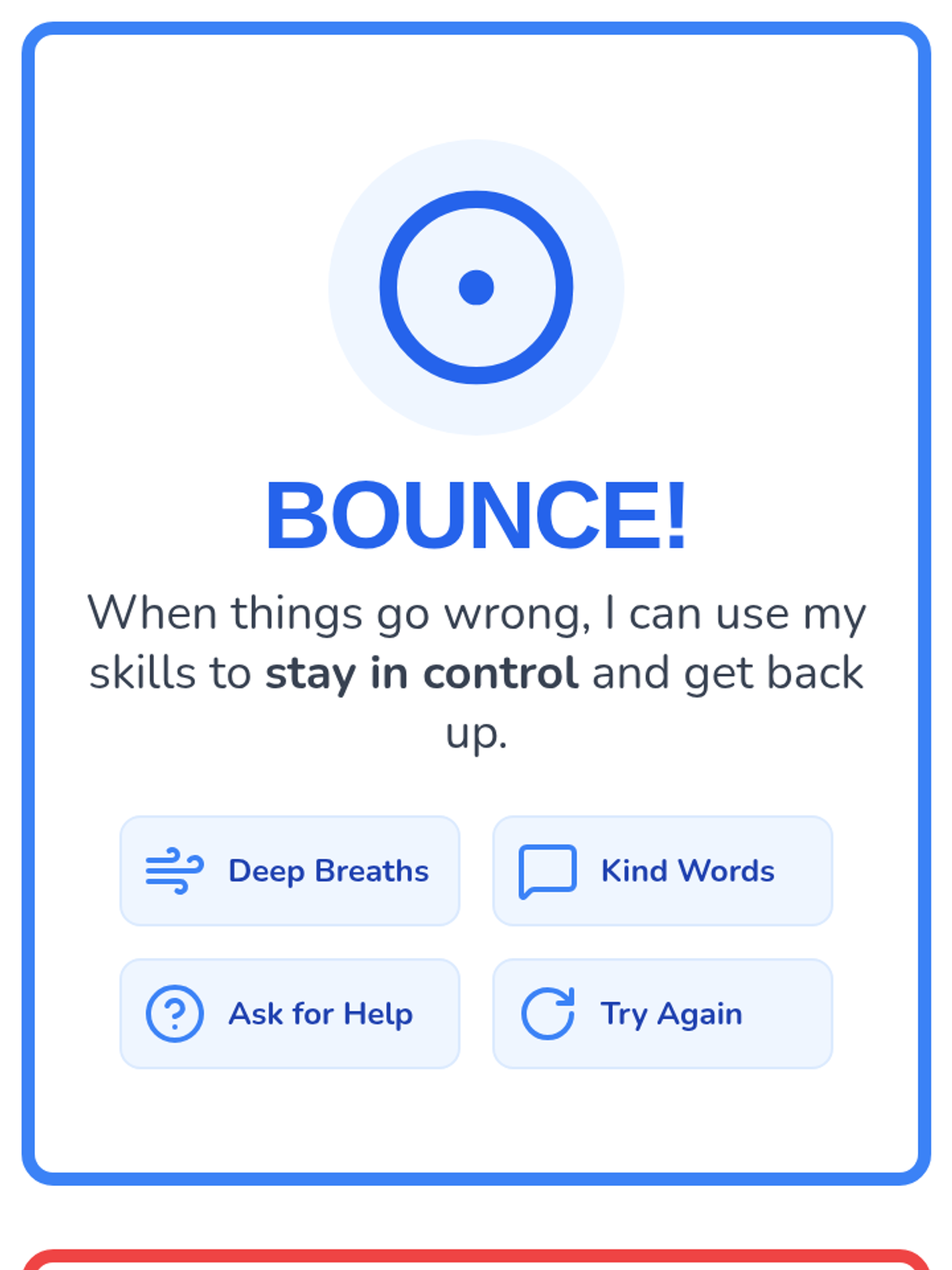
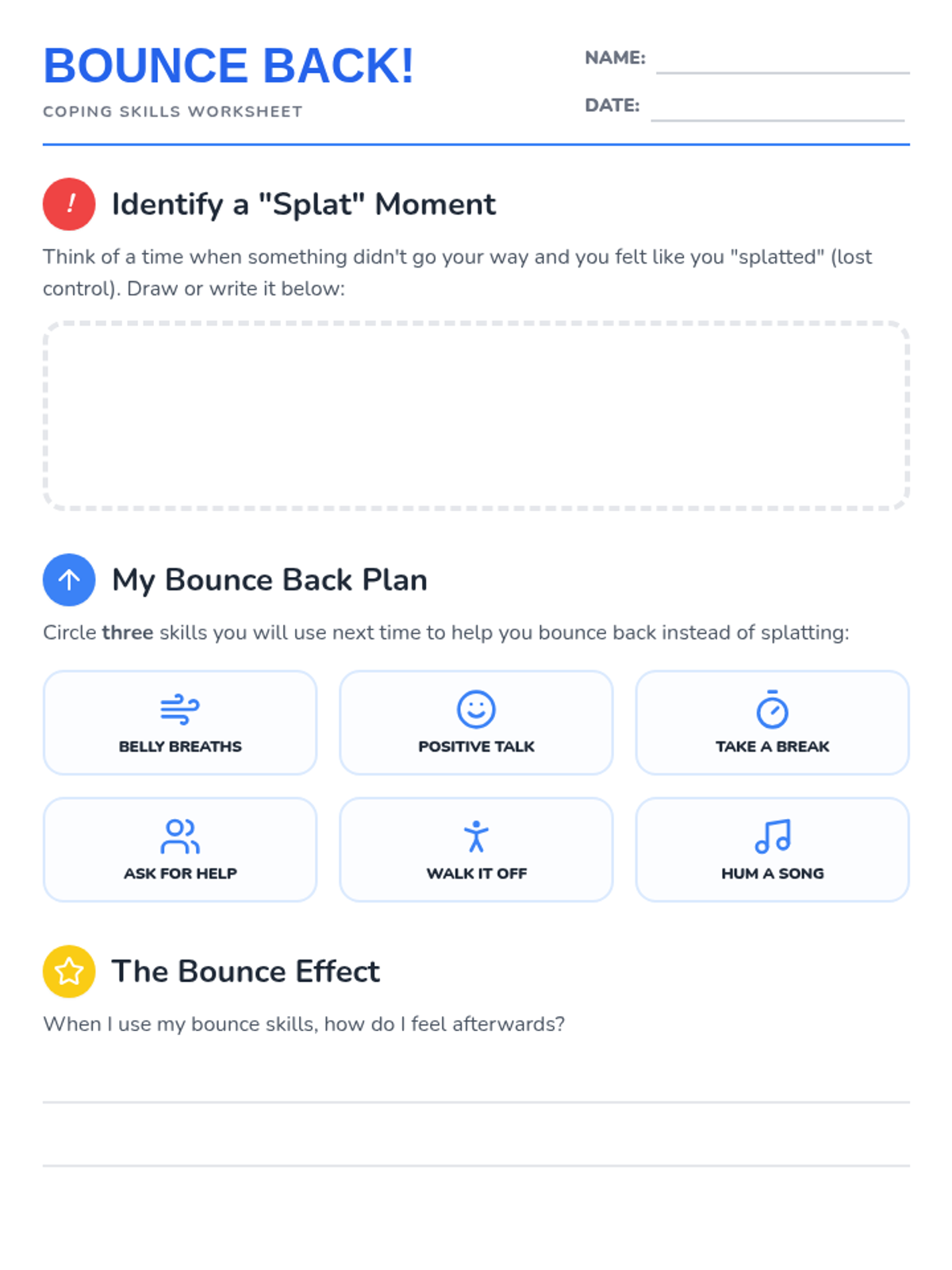
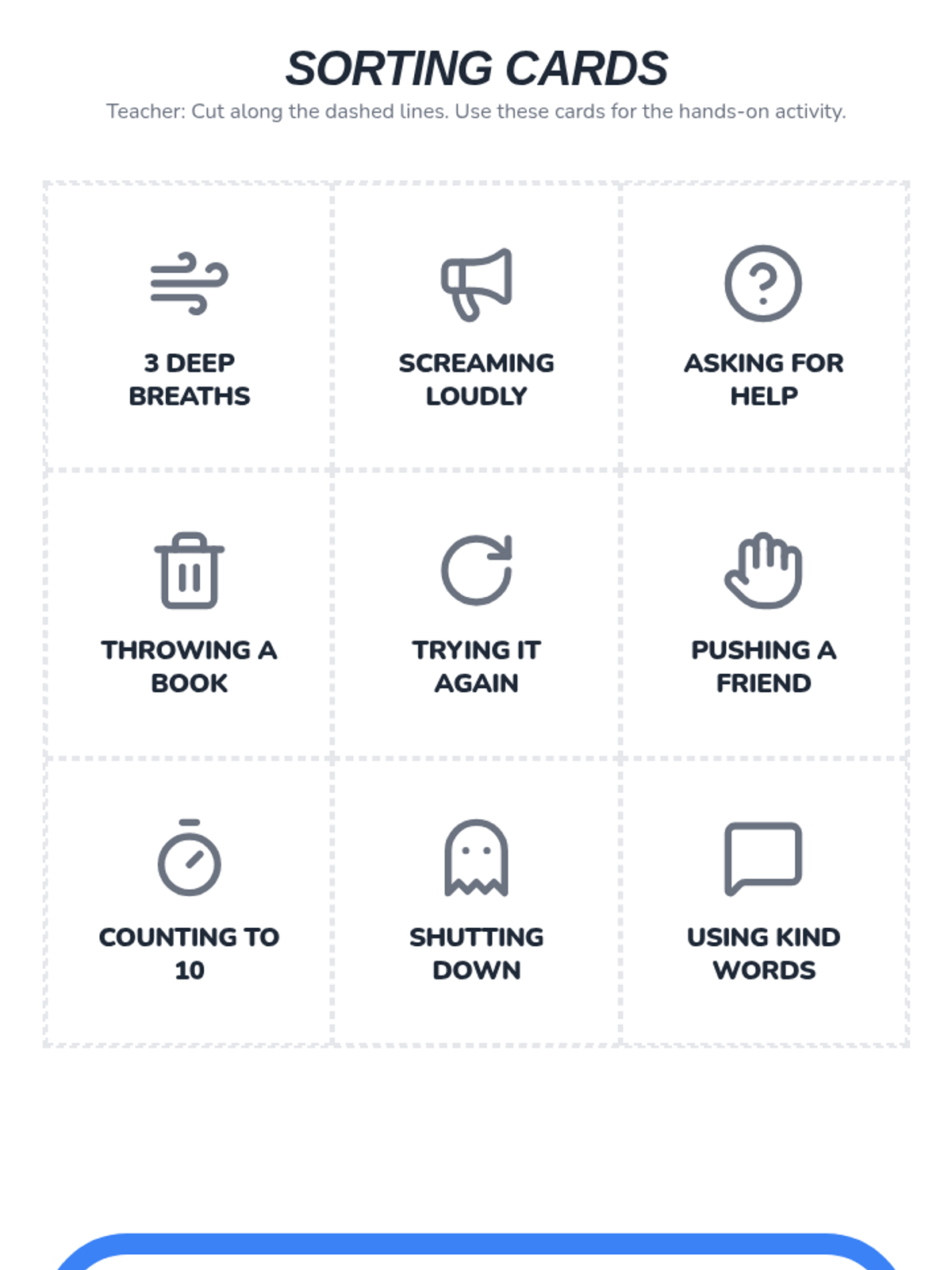
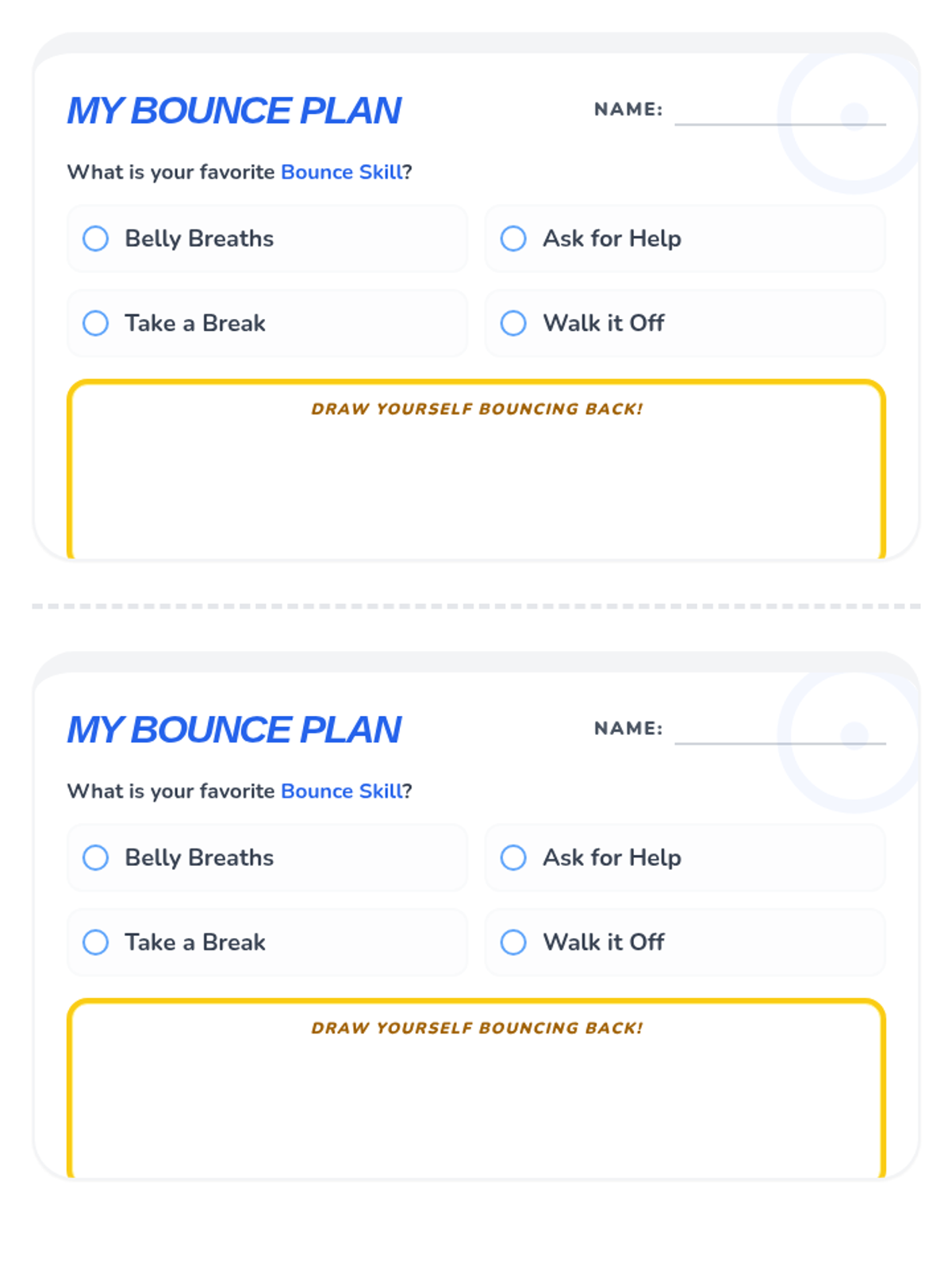
A small group counseling lesson for K-4 students teaching emotional resilience through the Bounce vs. Splat metaphor. Students learn to use coping skills to 'bounce back' from disappointments instead of 'splatting' into a meltdown.
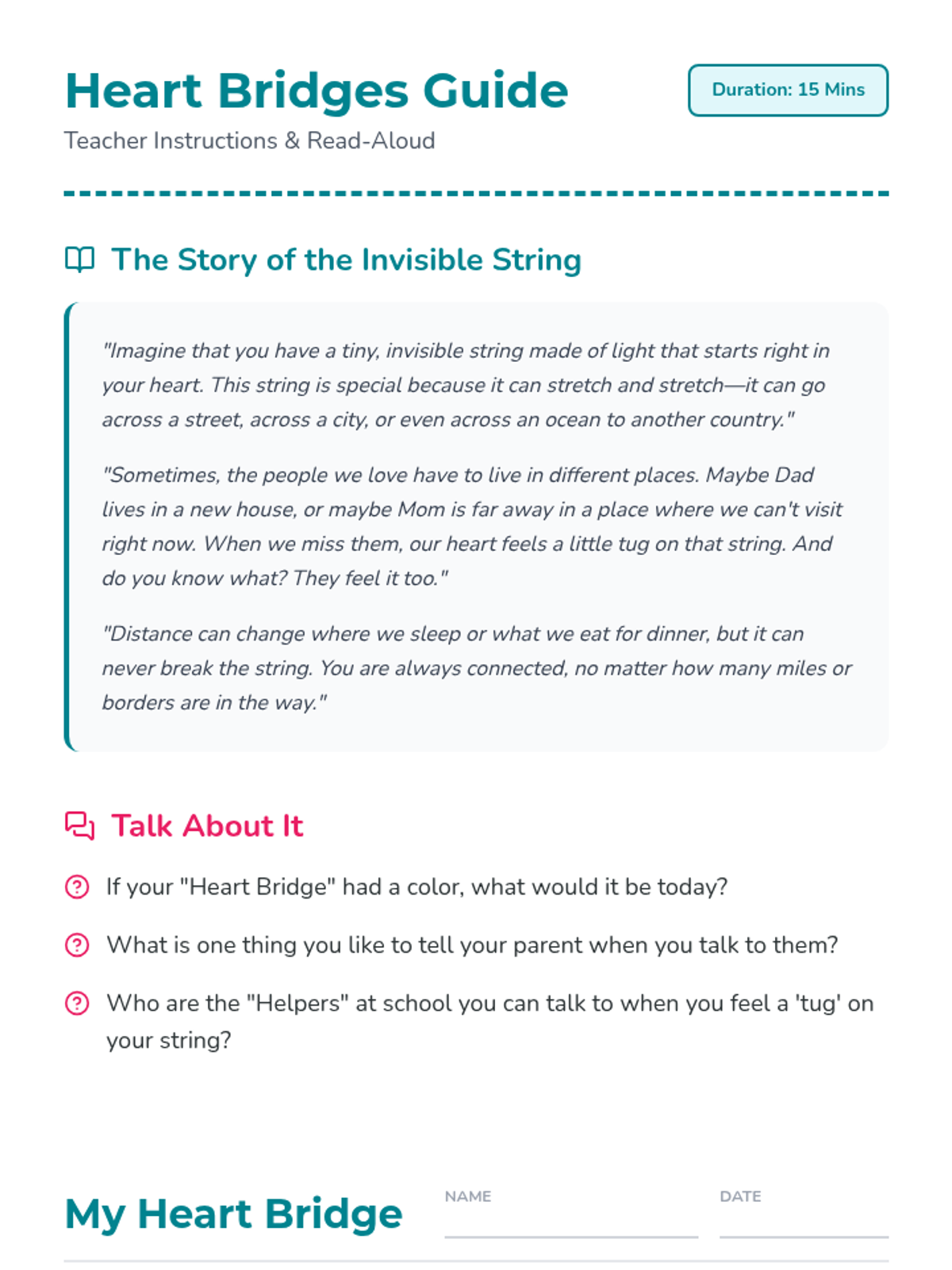
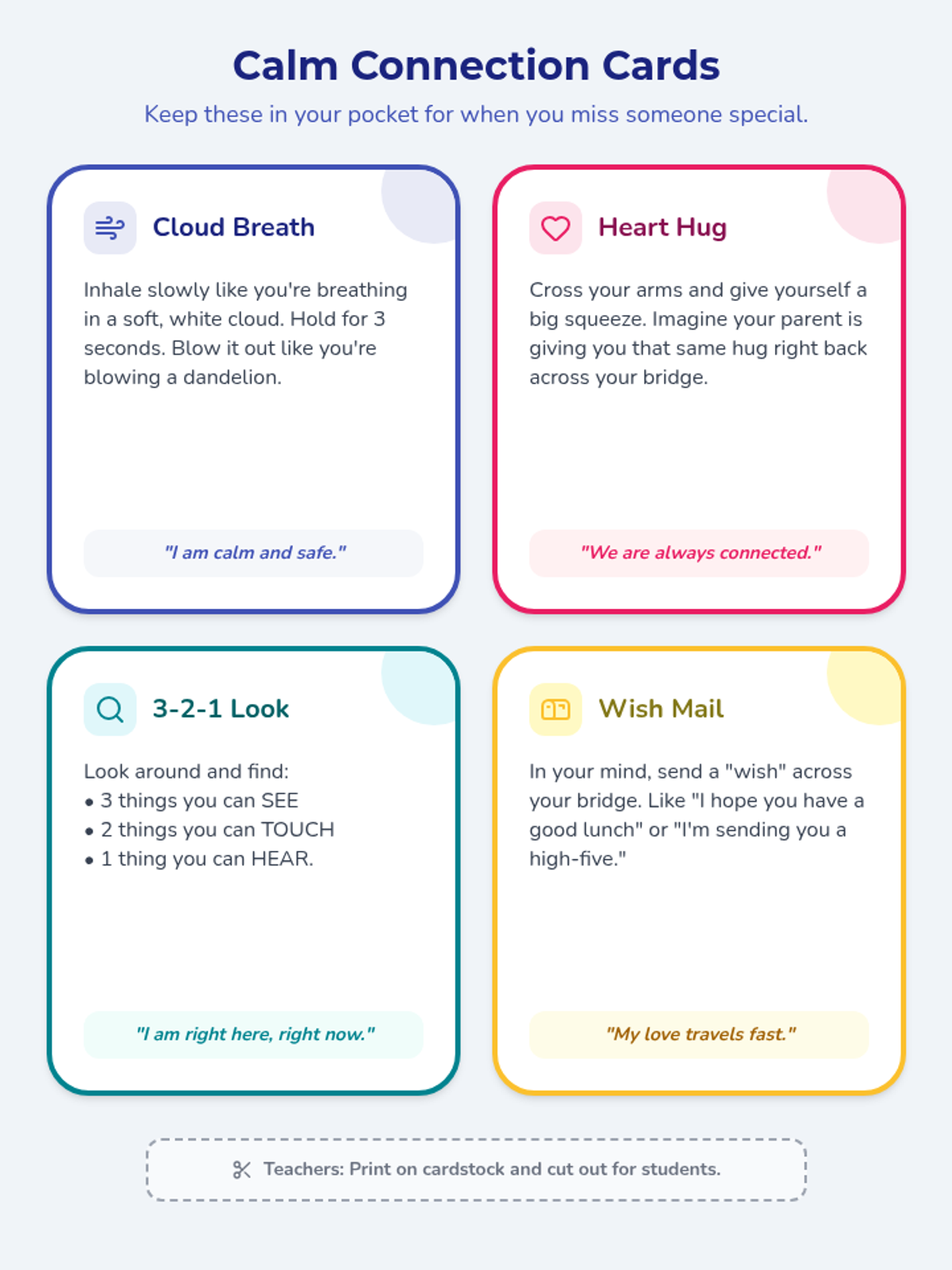
A gentle 15-minute lesson helping children navigate the big feelings of parental separation due to divorce or deportation, focusing on maintaining emotional connections.
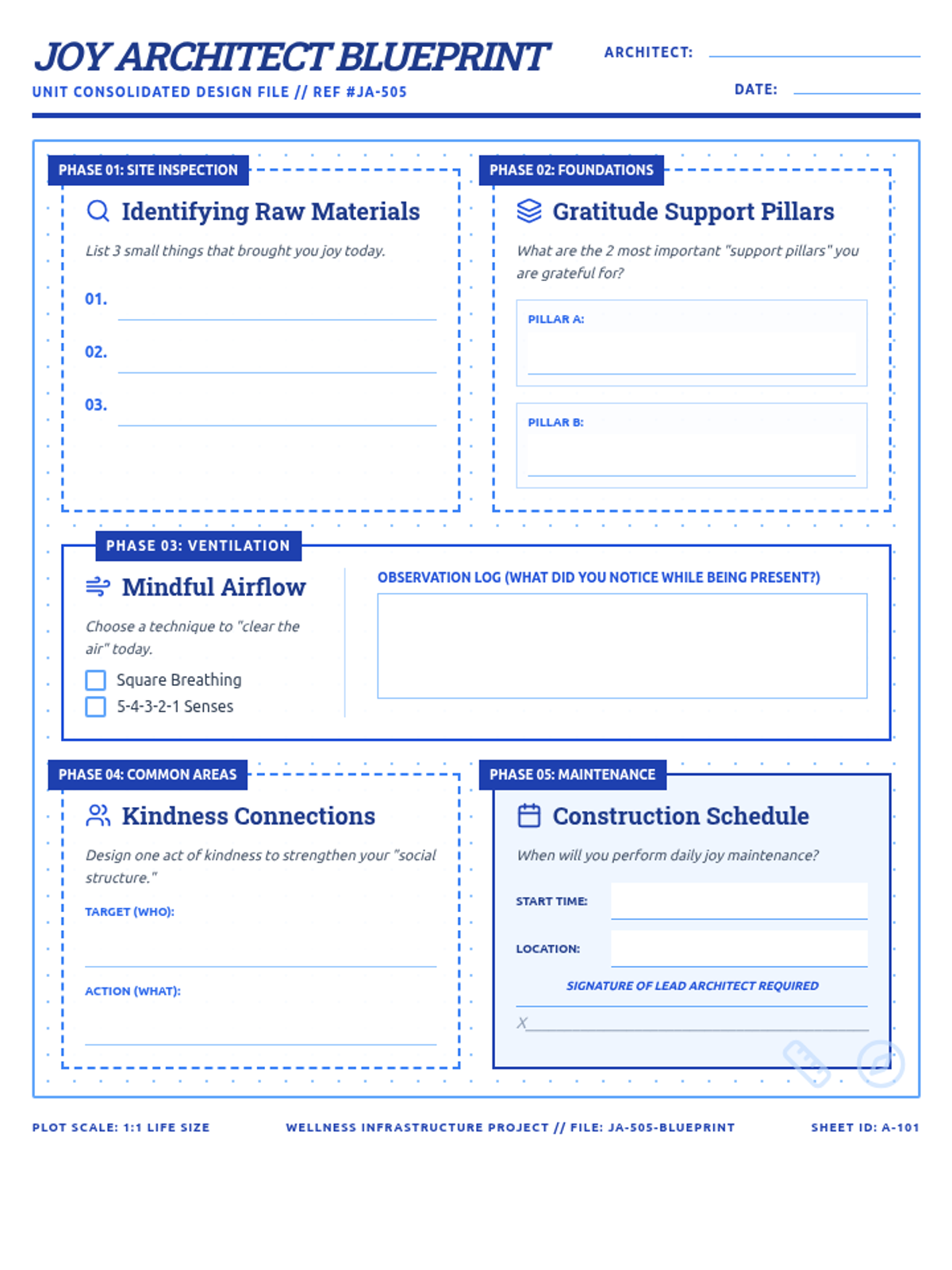
Finalizing the daily routine by creating a 'construction schedule' to keep the joy architecture maintained over time.
A lesson designed to equip students with practical mindfulness and grounding techniques specifically tailored for the stresses of state testing in Reading and Math, plus strategies for managing physical restlessness.
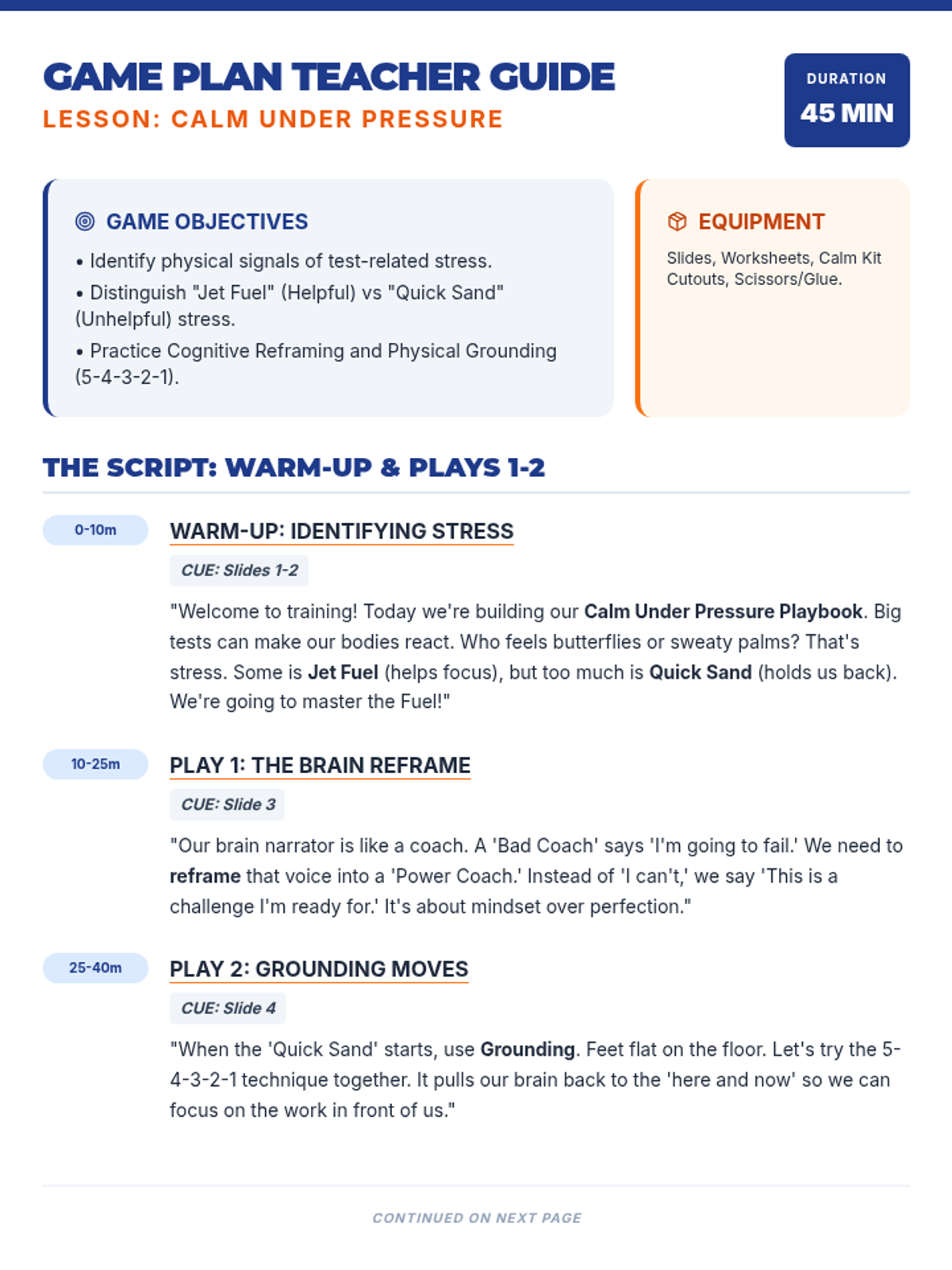
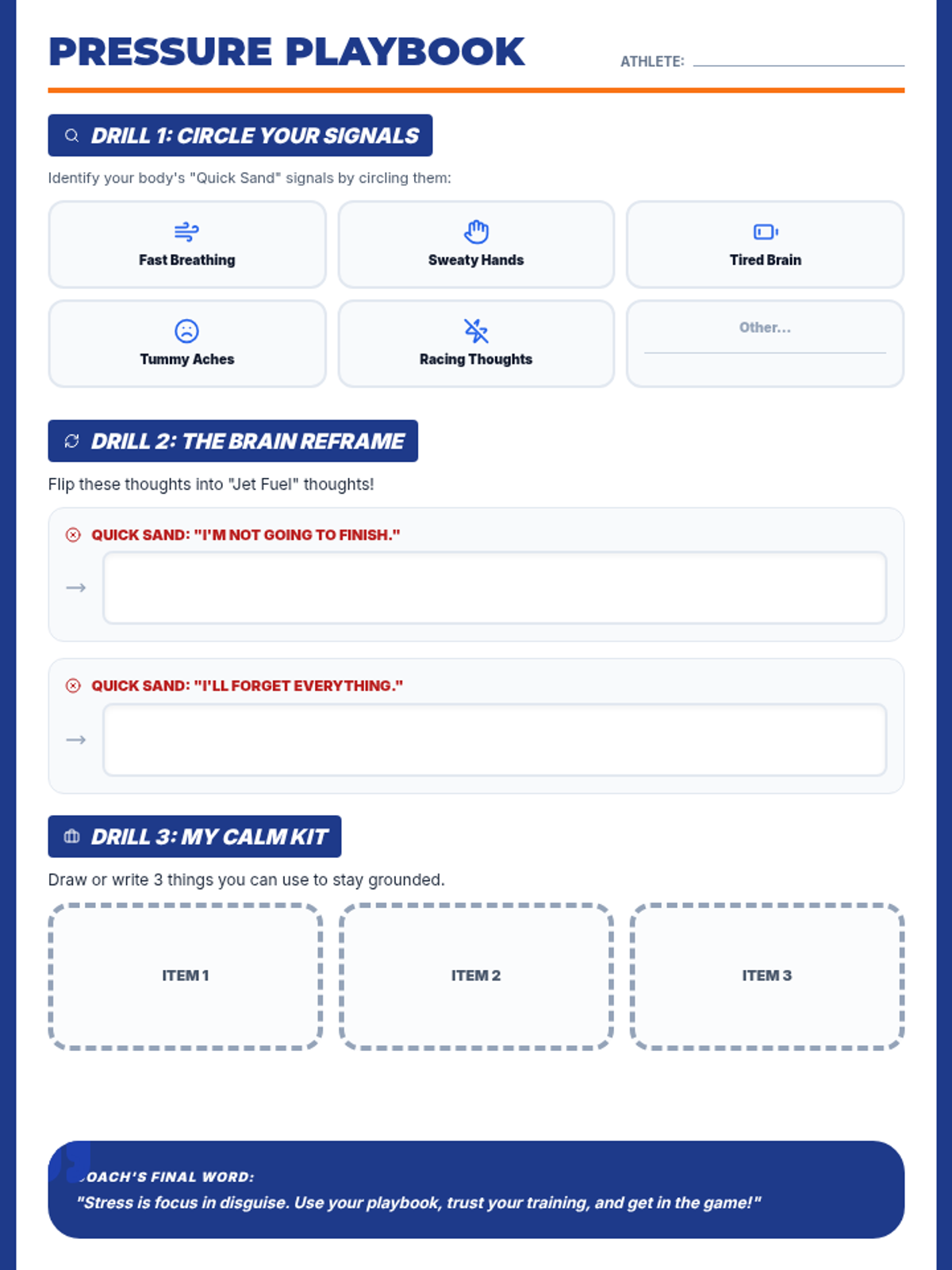
A comprehensive lesson designed to help 4th graders manage test anxiety through cognitive reframing and physical grounding techniques, framed as a sports 'playbook' for success.
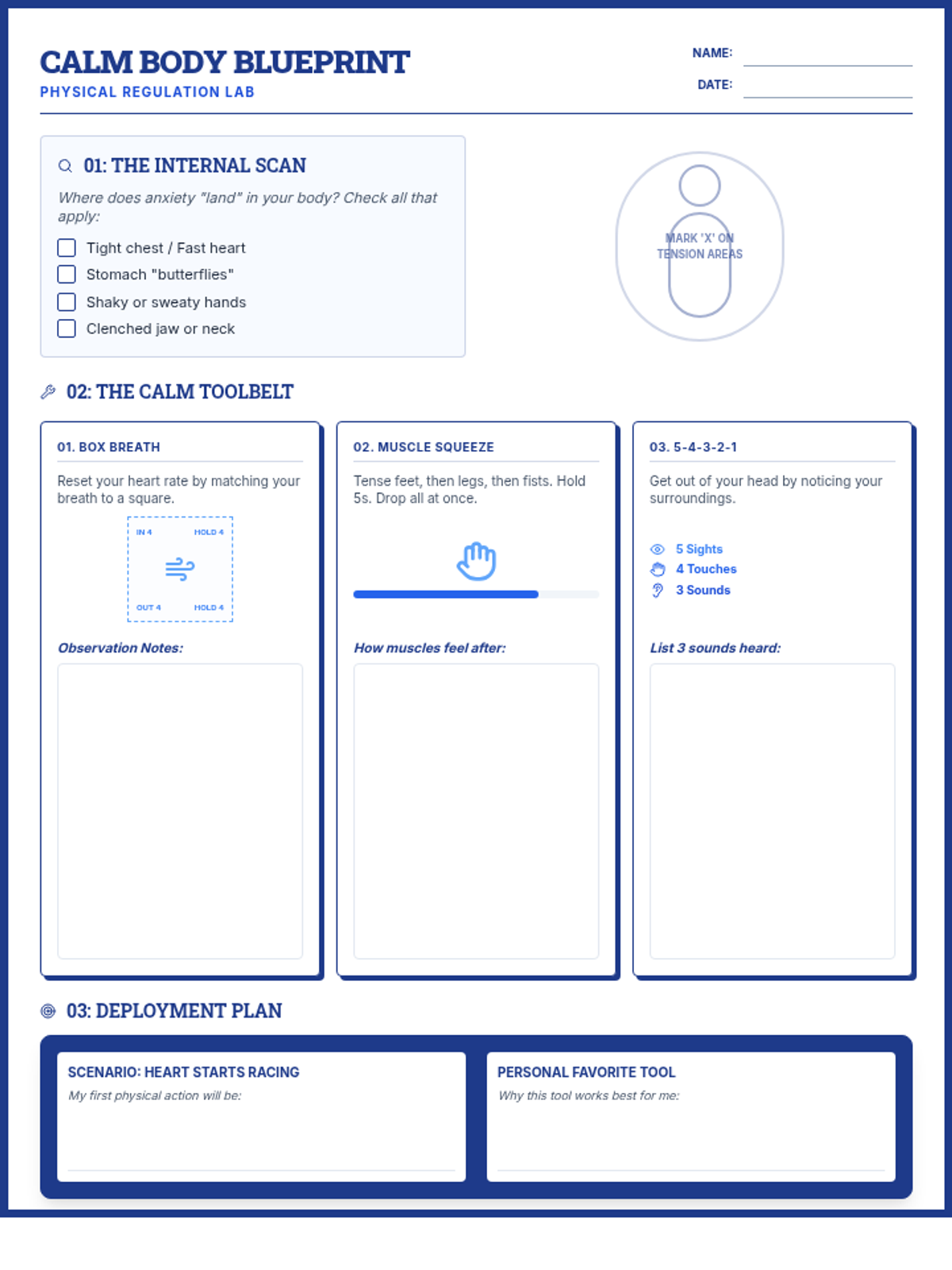
This lesson helps students identify physical symptoms of testing anxiety and practice three concrete physical relaxation techniques: Box Breathing, Progressive Muscle Relaxation, and Grounding.
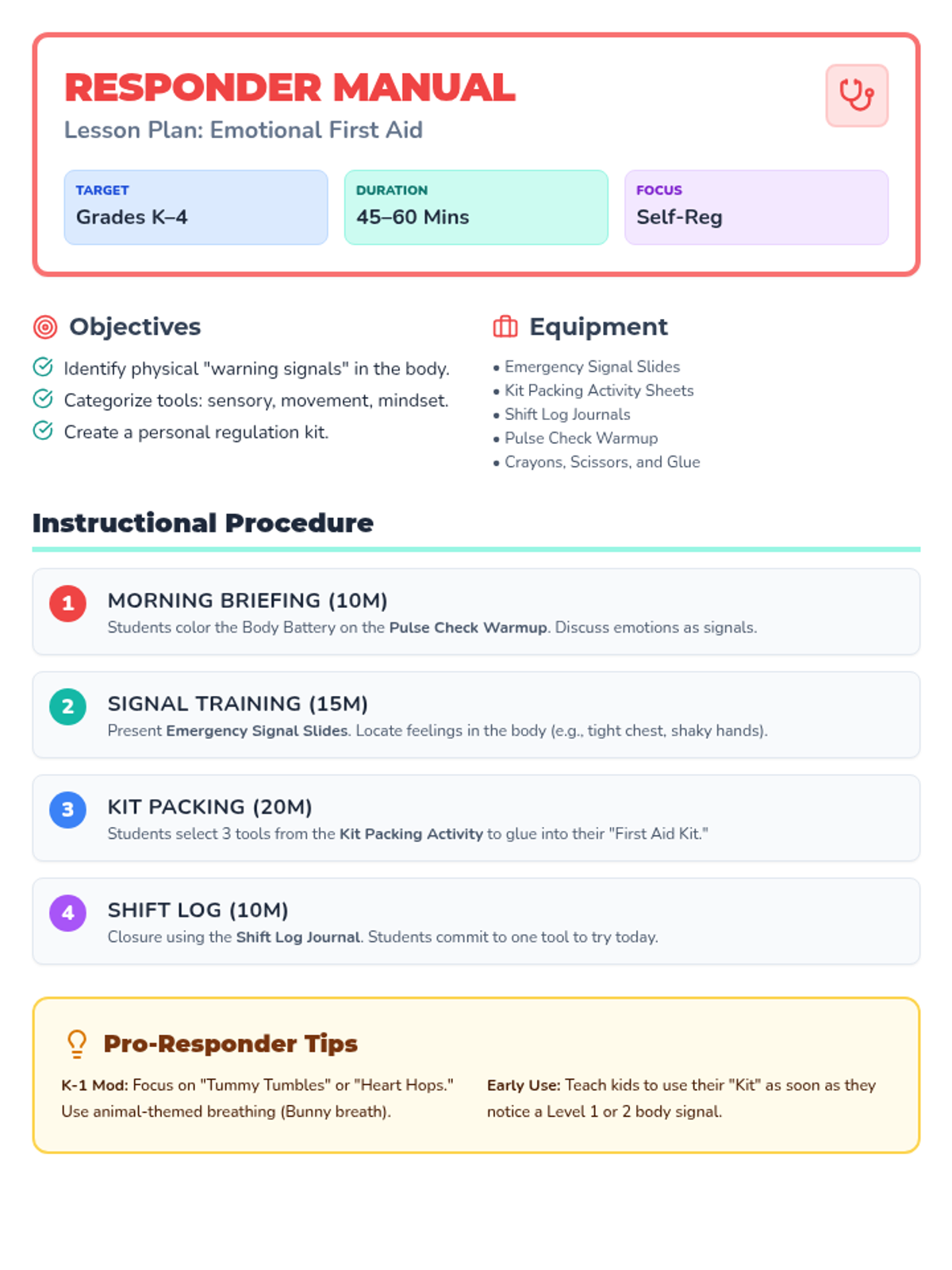
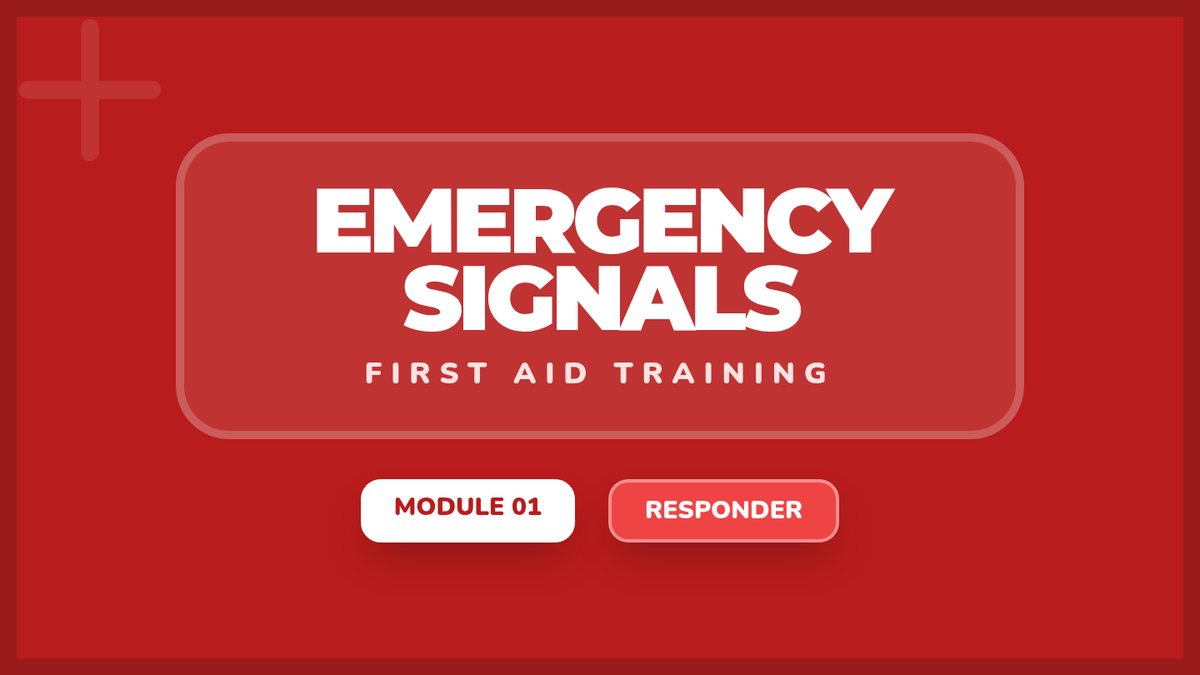
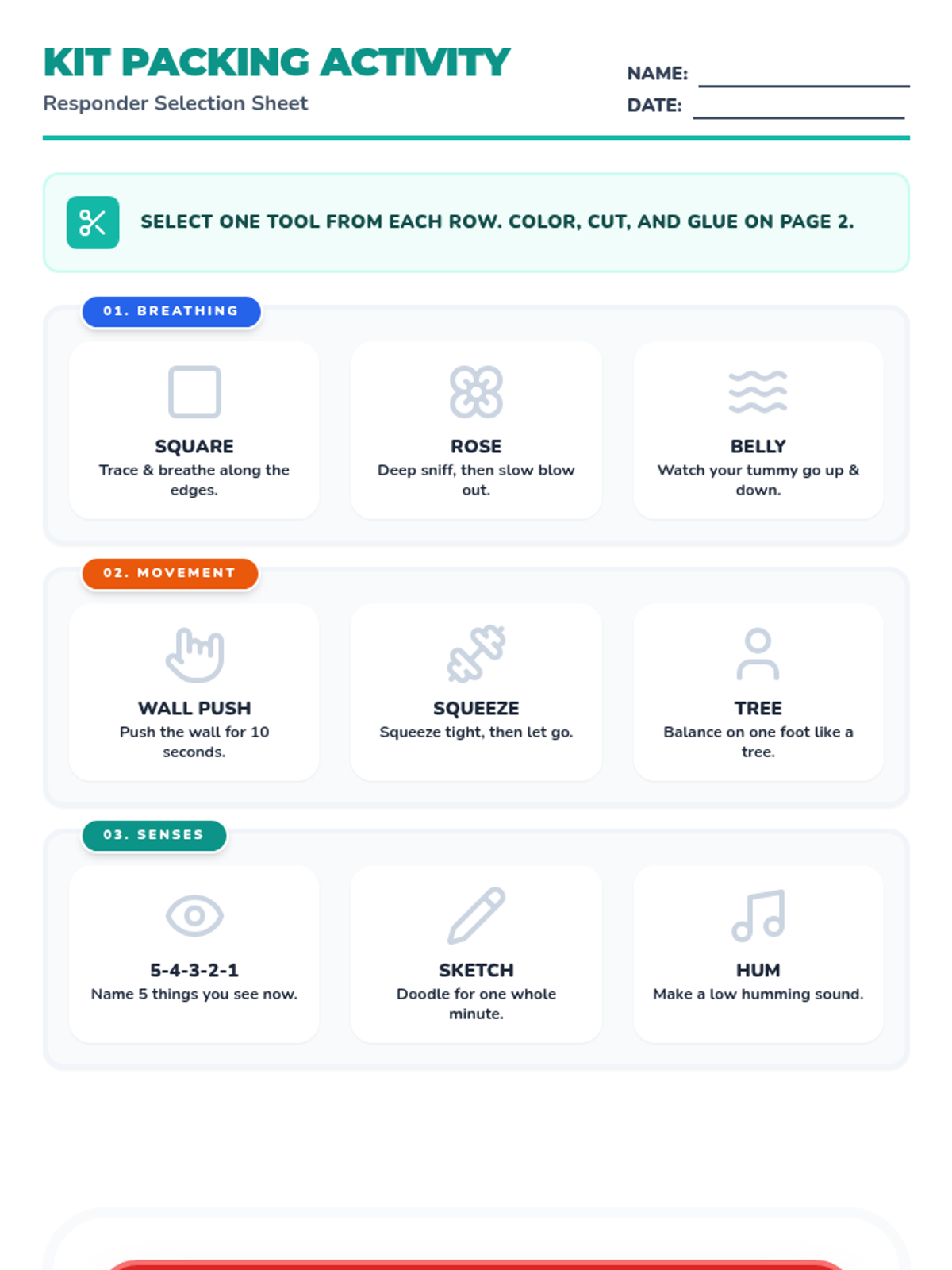
A comprehensive lesson for grades K-4 focused on identifying physical stress signals and building a personal toolkit of coping strategies for emotional regulation.
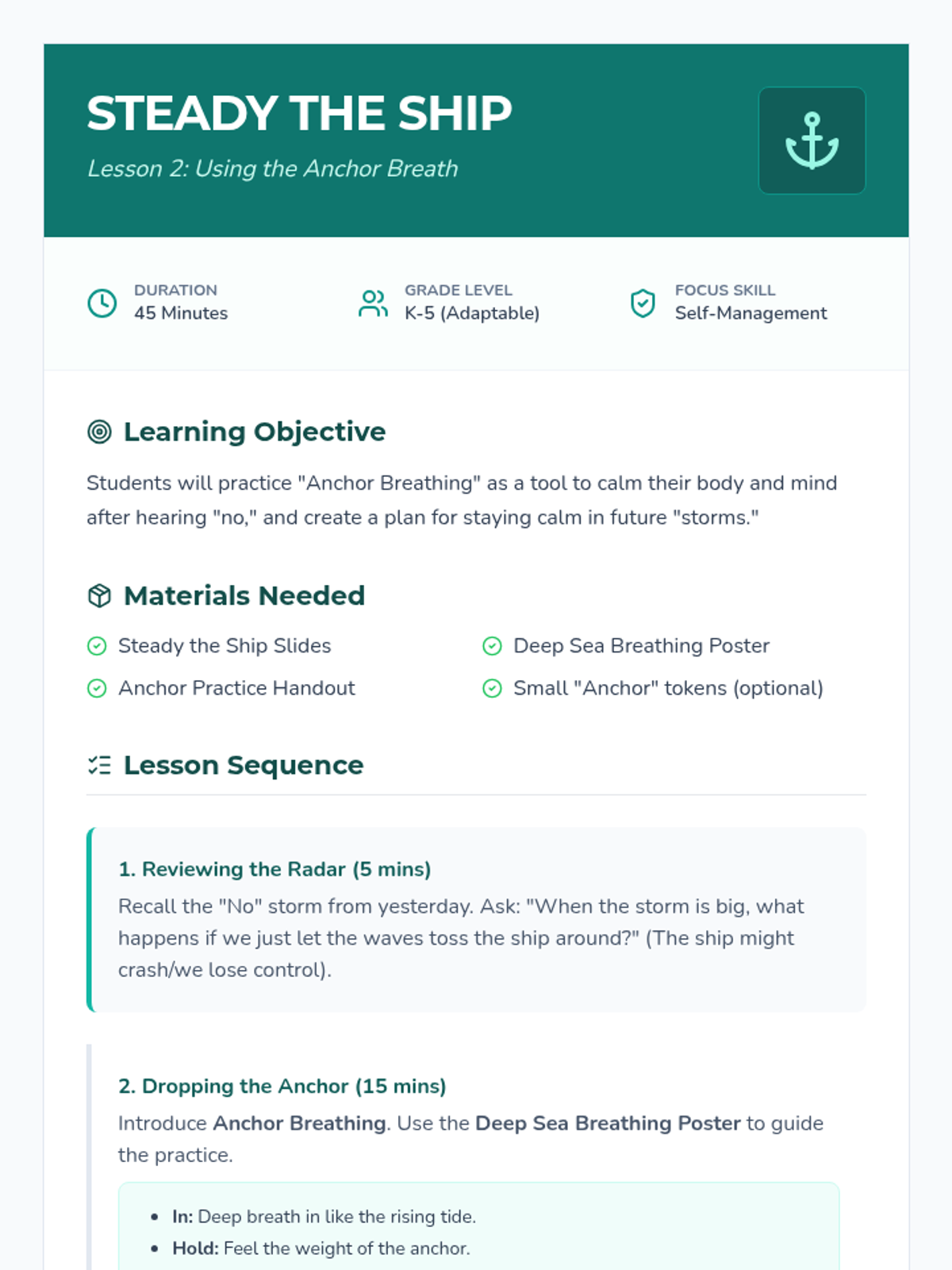
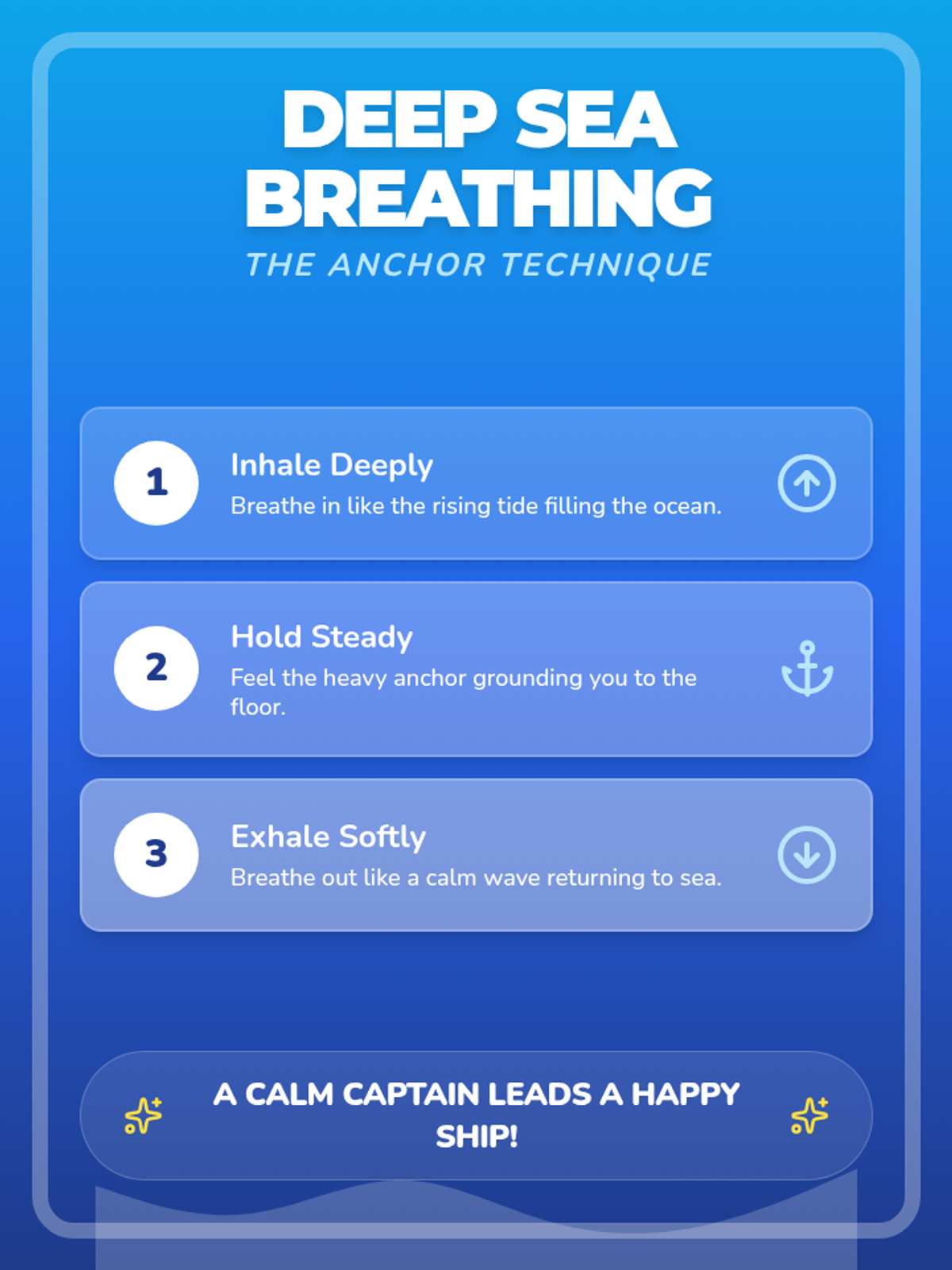
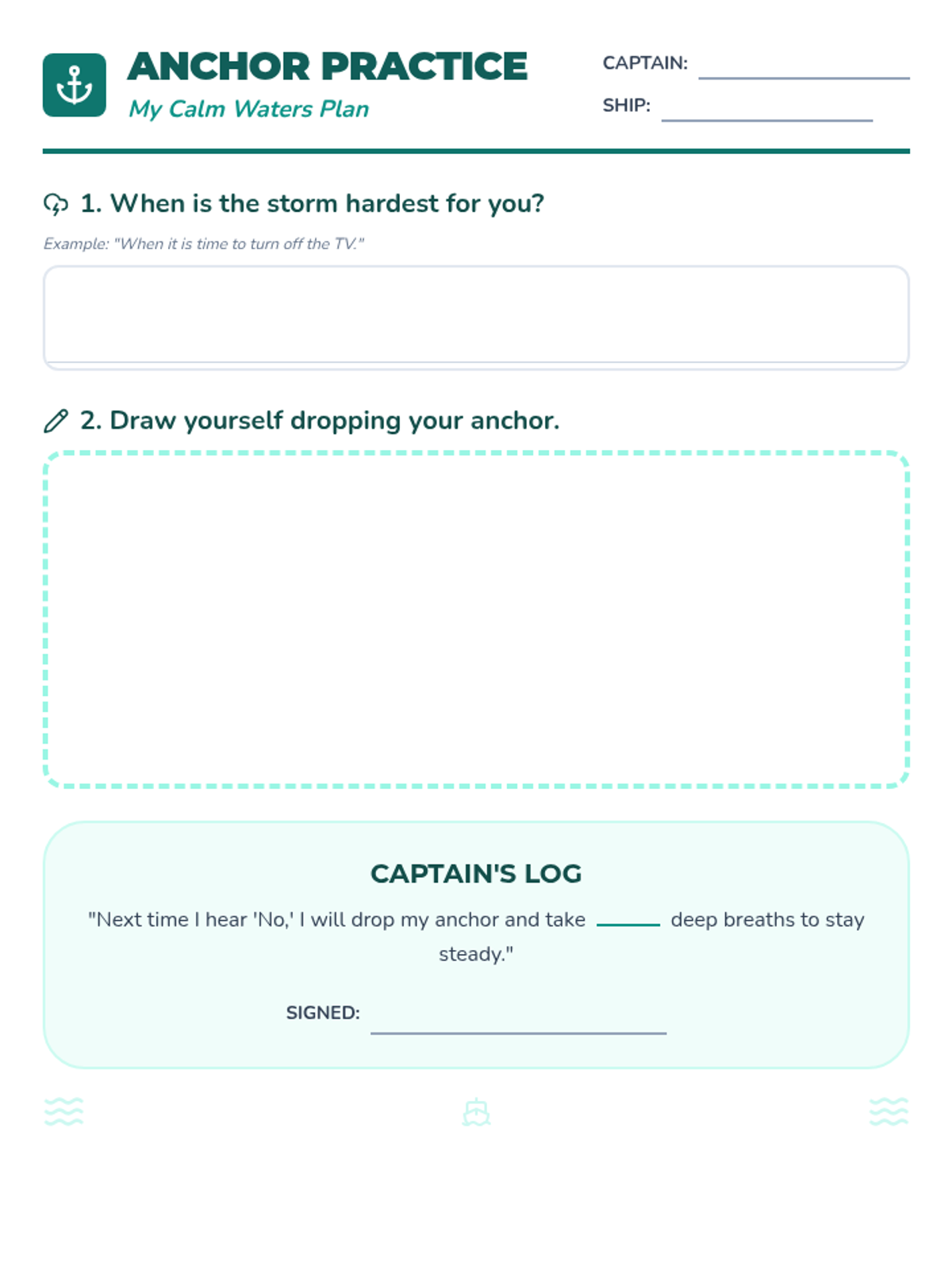
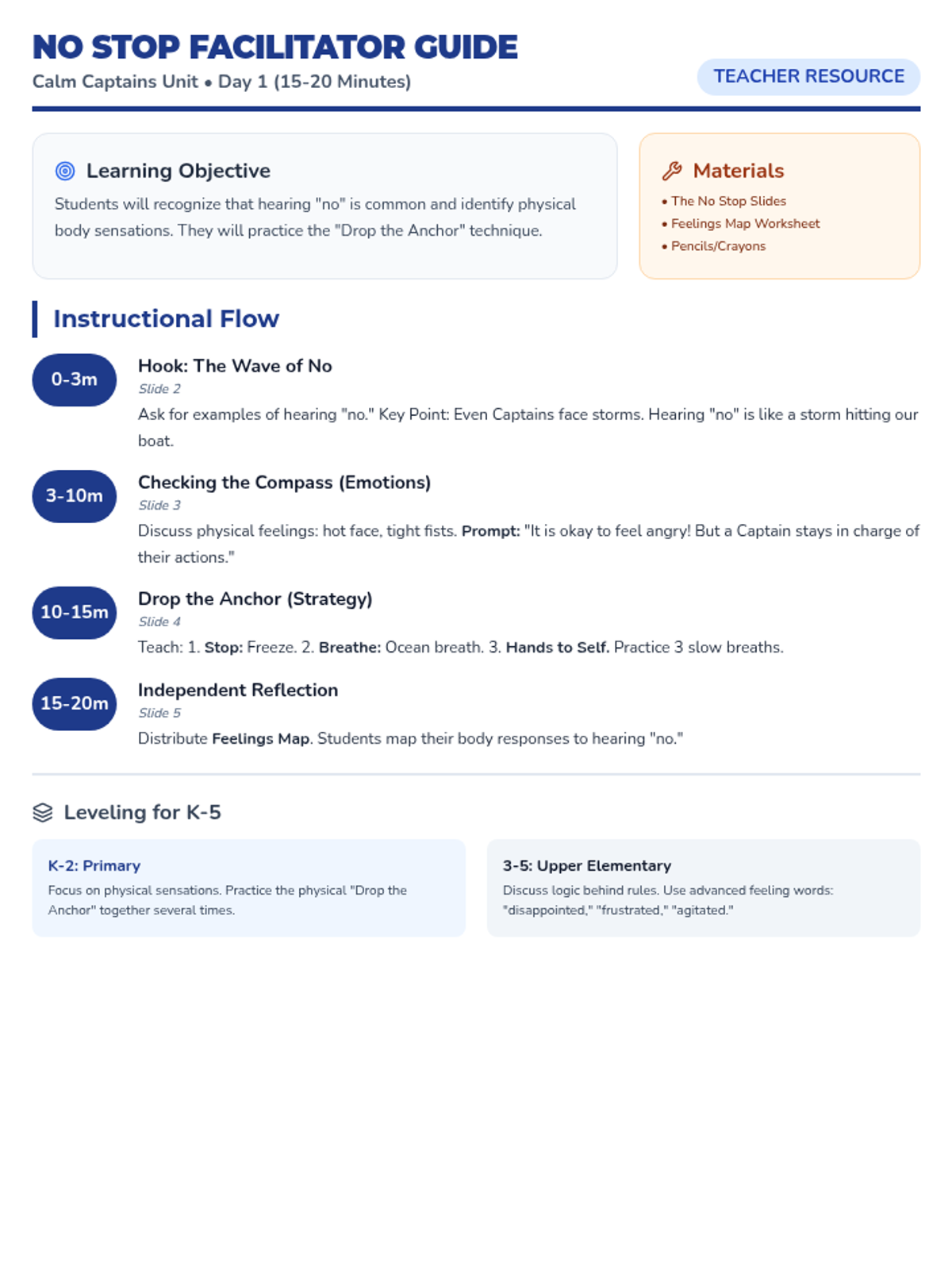
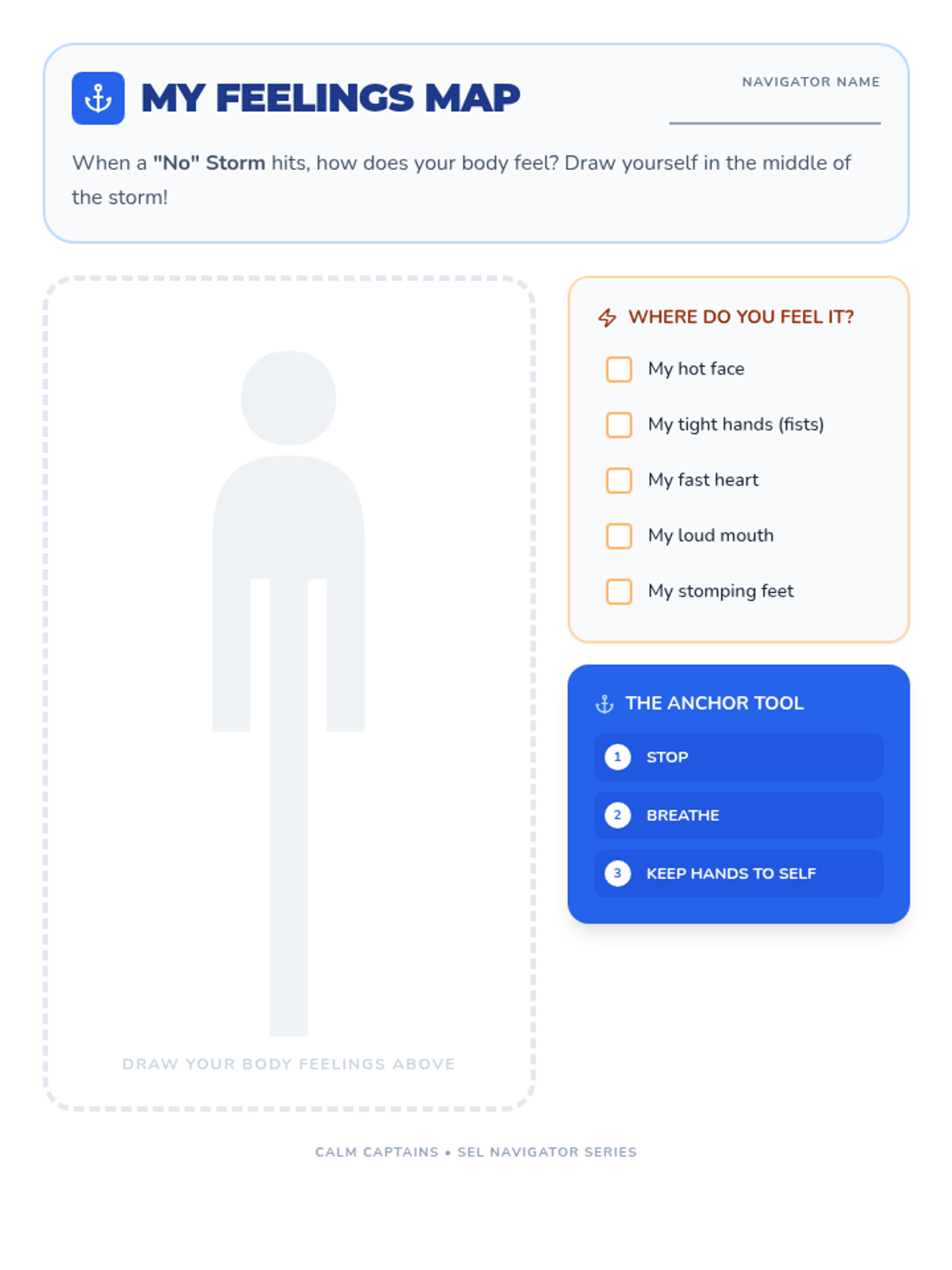
Students learn the 'Anchor Breath' technique to steady their internal ship and navigate back to calm waters after hearing 'no'.
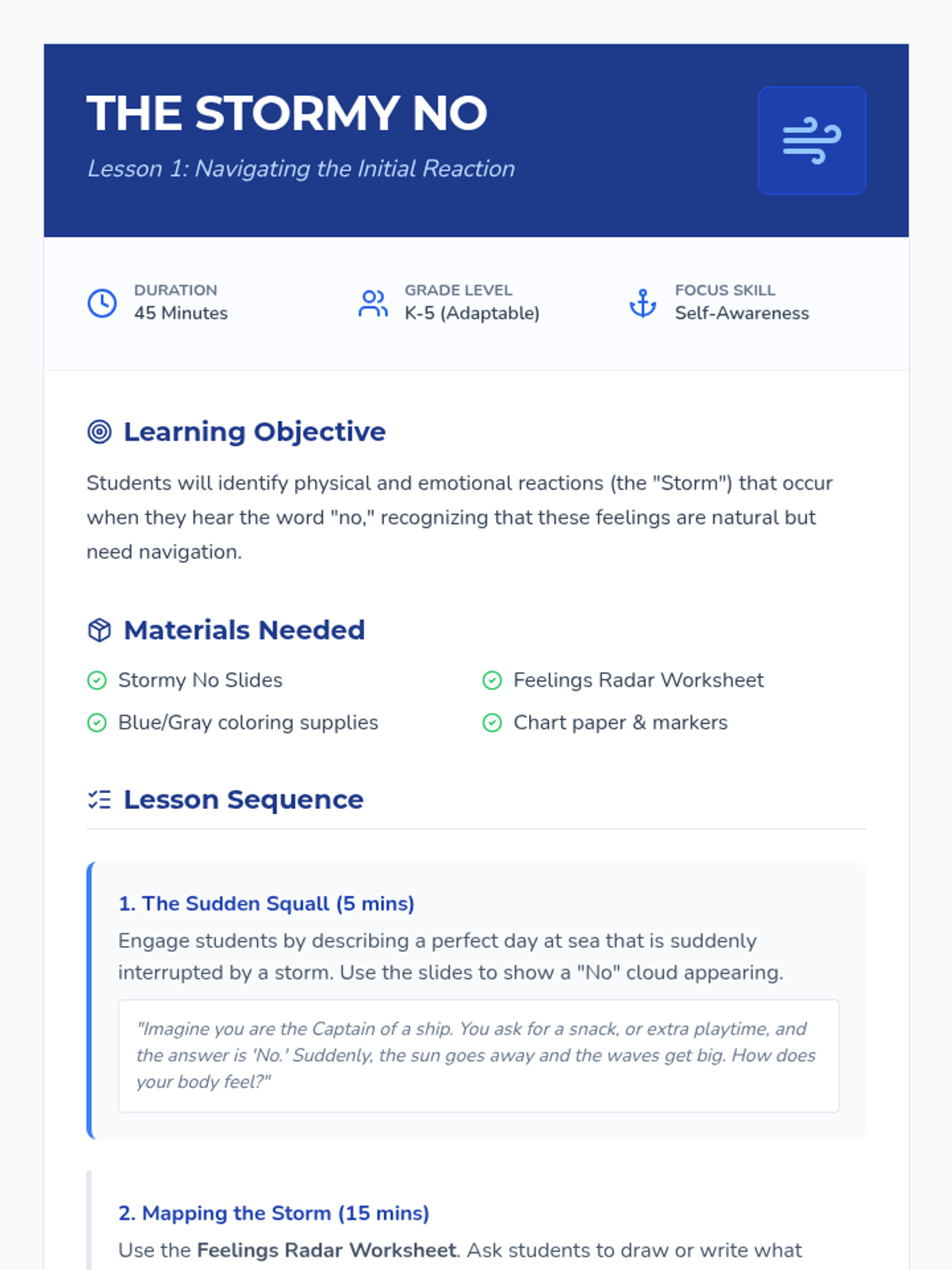
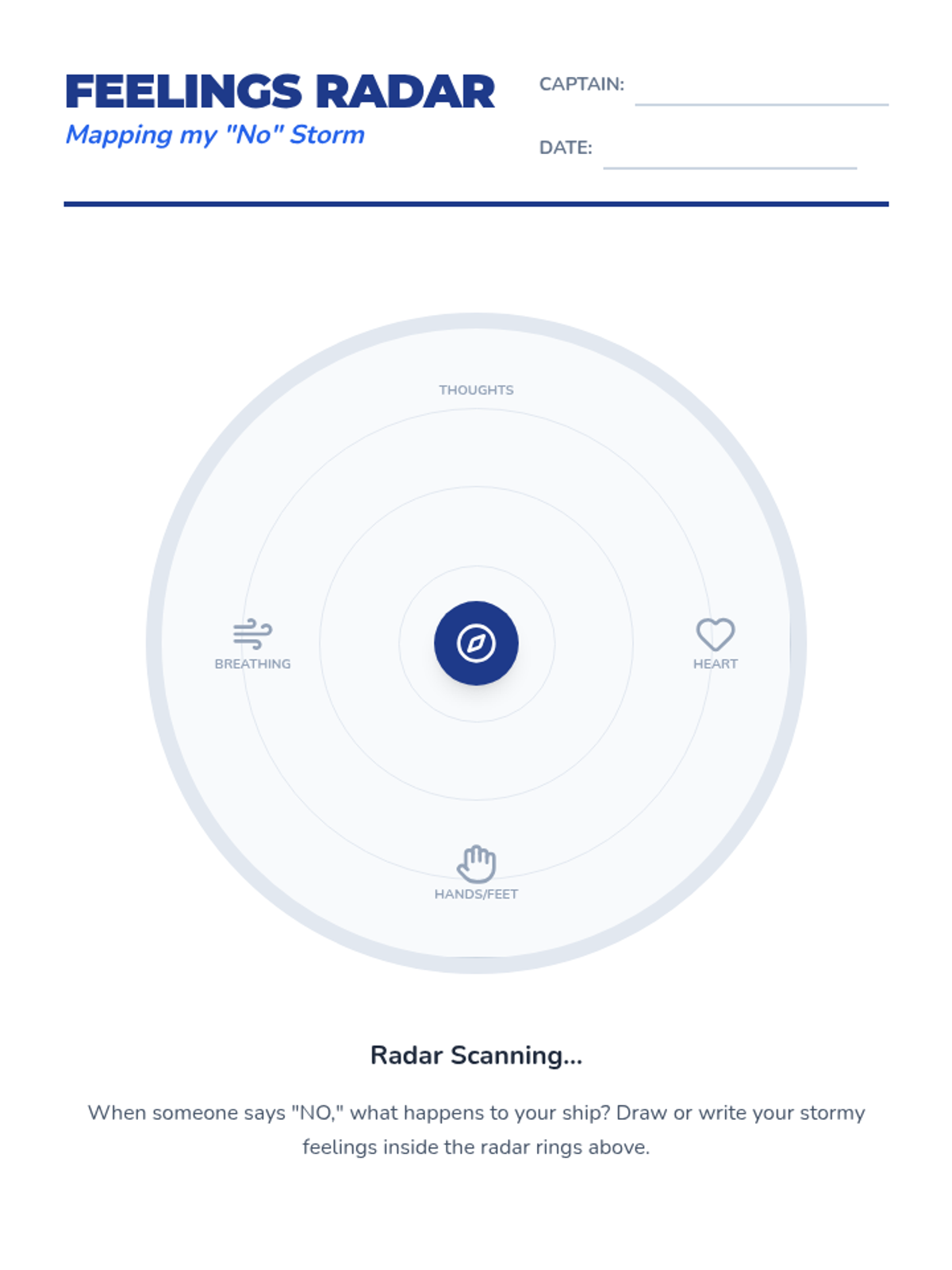
Students identify the physical and emotional 'storms' that occur when they hear the word 'no', using a nautical radar to map their reactions.
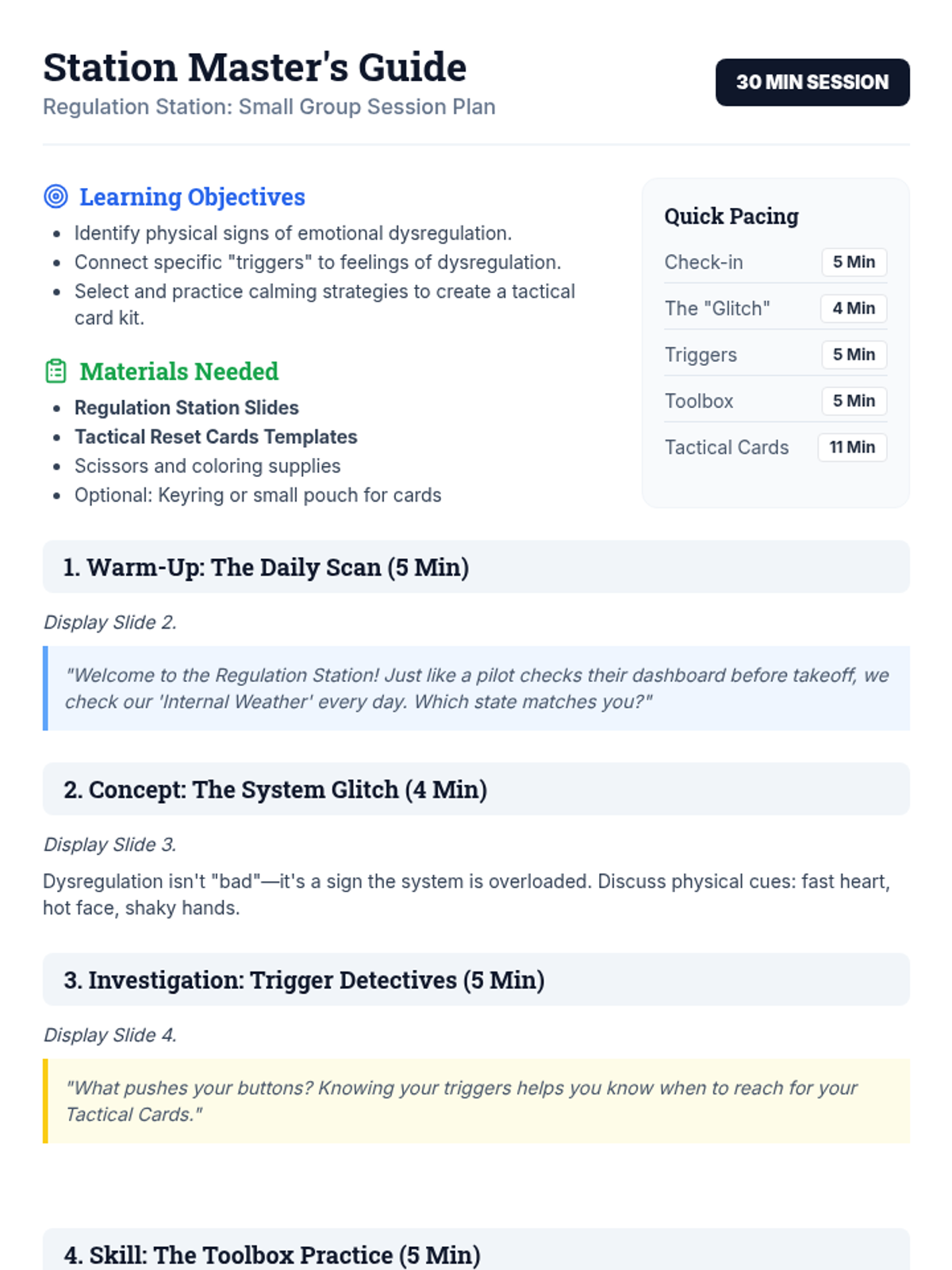
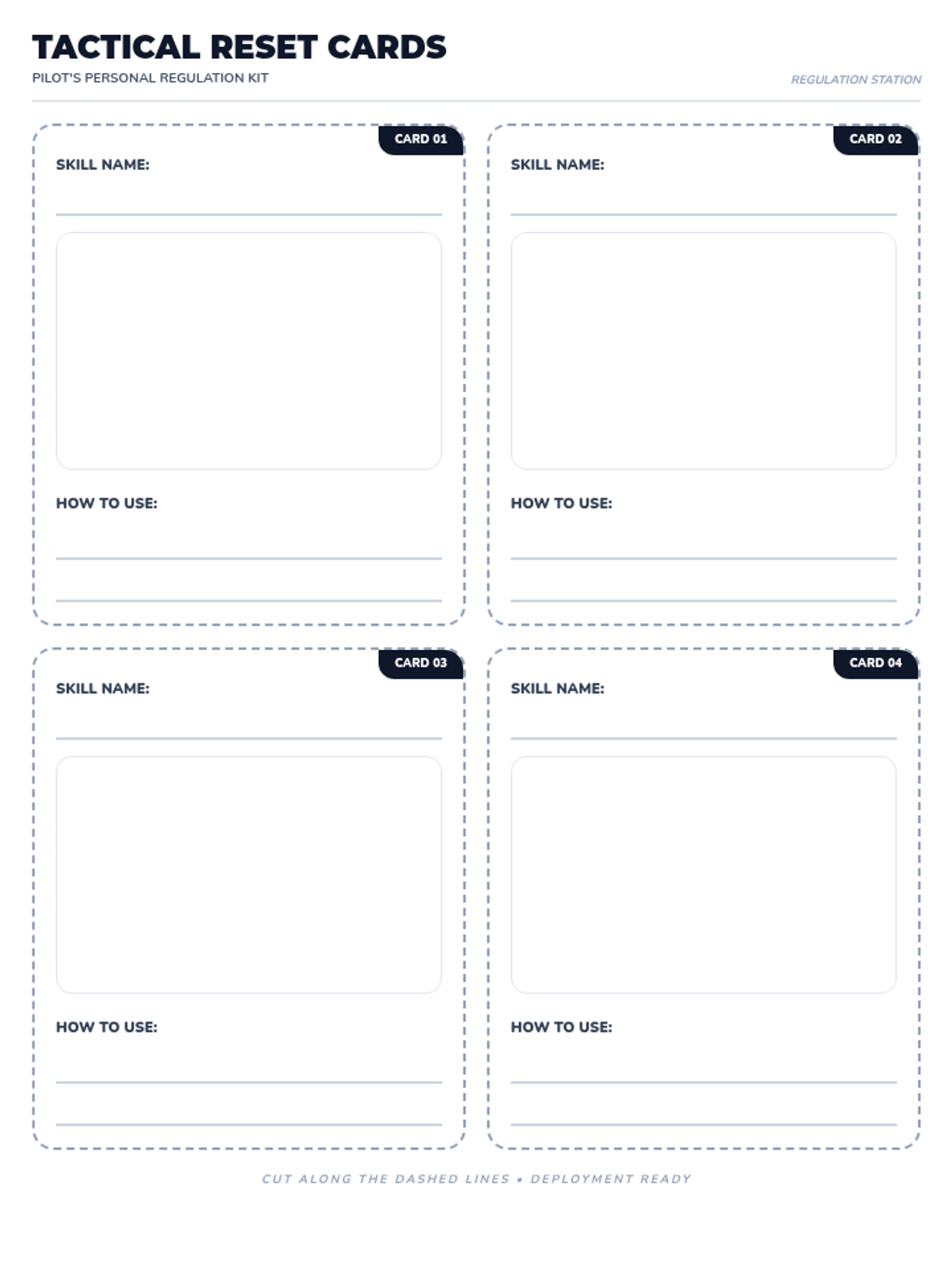
A 30-minute small group counseling session focused on self-regulation. Students will learn to identify their internal states and build a personalized "dashboard" of coping strategies for moments of dysregulation.
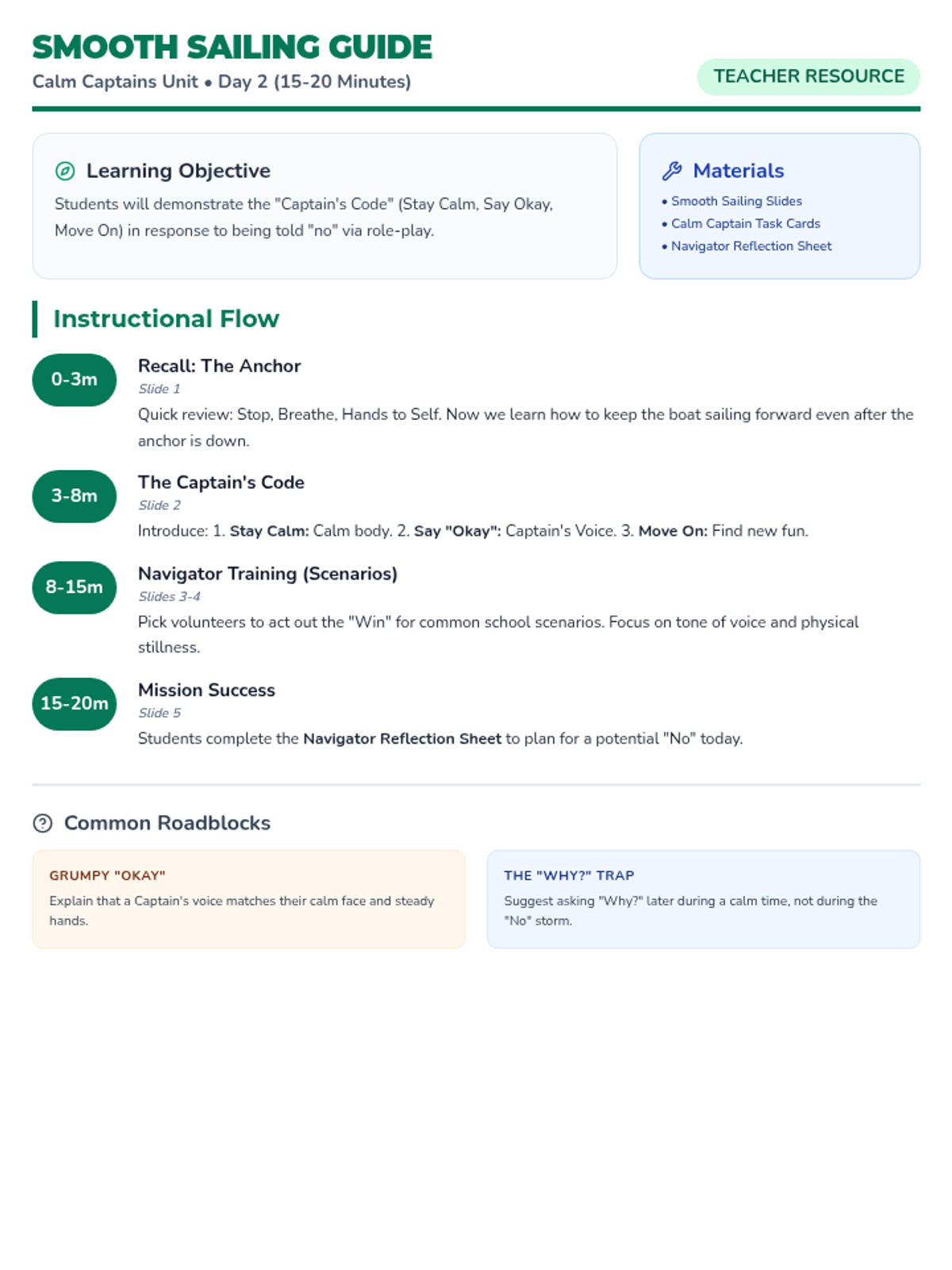
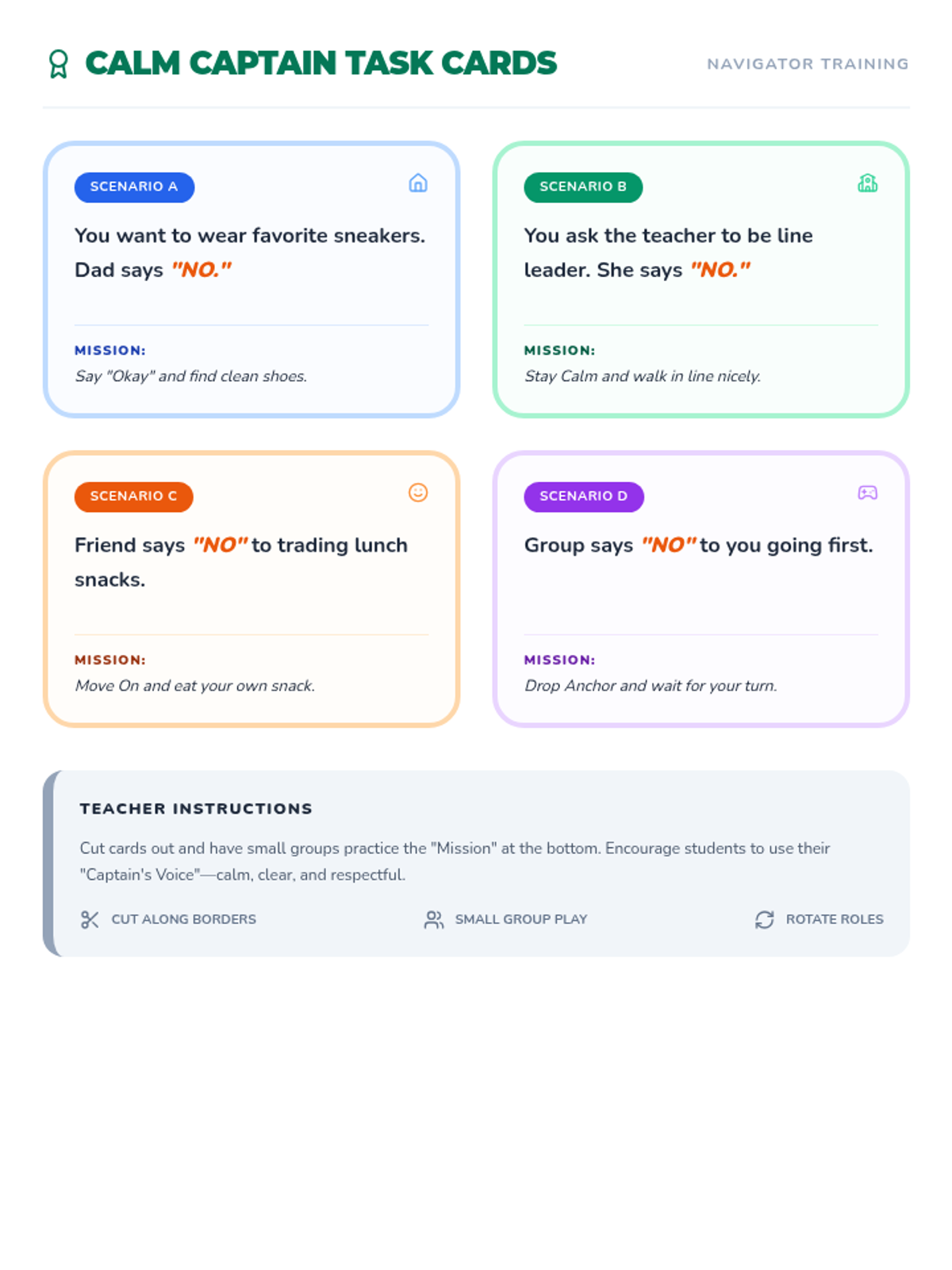
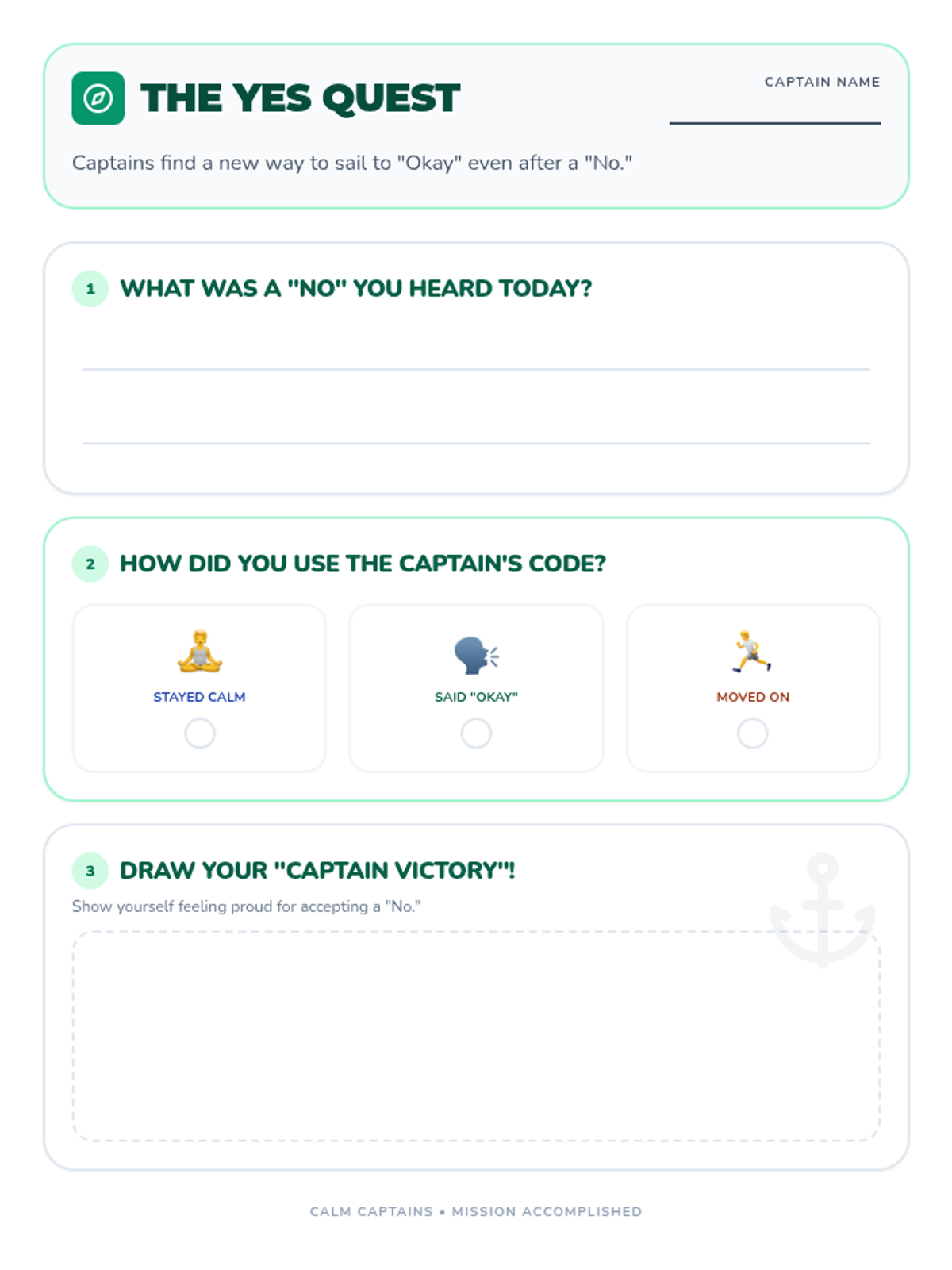
Students practice three specific strategies for accepting "no" (Stay Calm, Say Okay, Move On) through role-play and reflective activities.
Students identify that hearing "no" is a common experience and explore the feelings that arise when they don't get what they want. They learn the 'Stop and Breathe' technique.
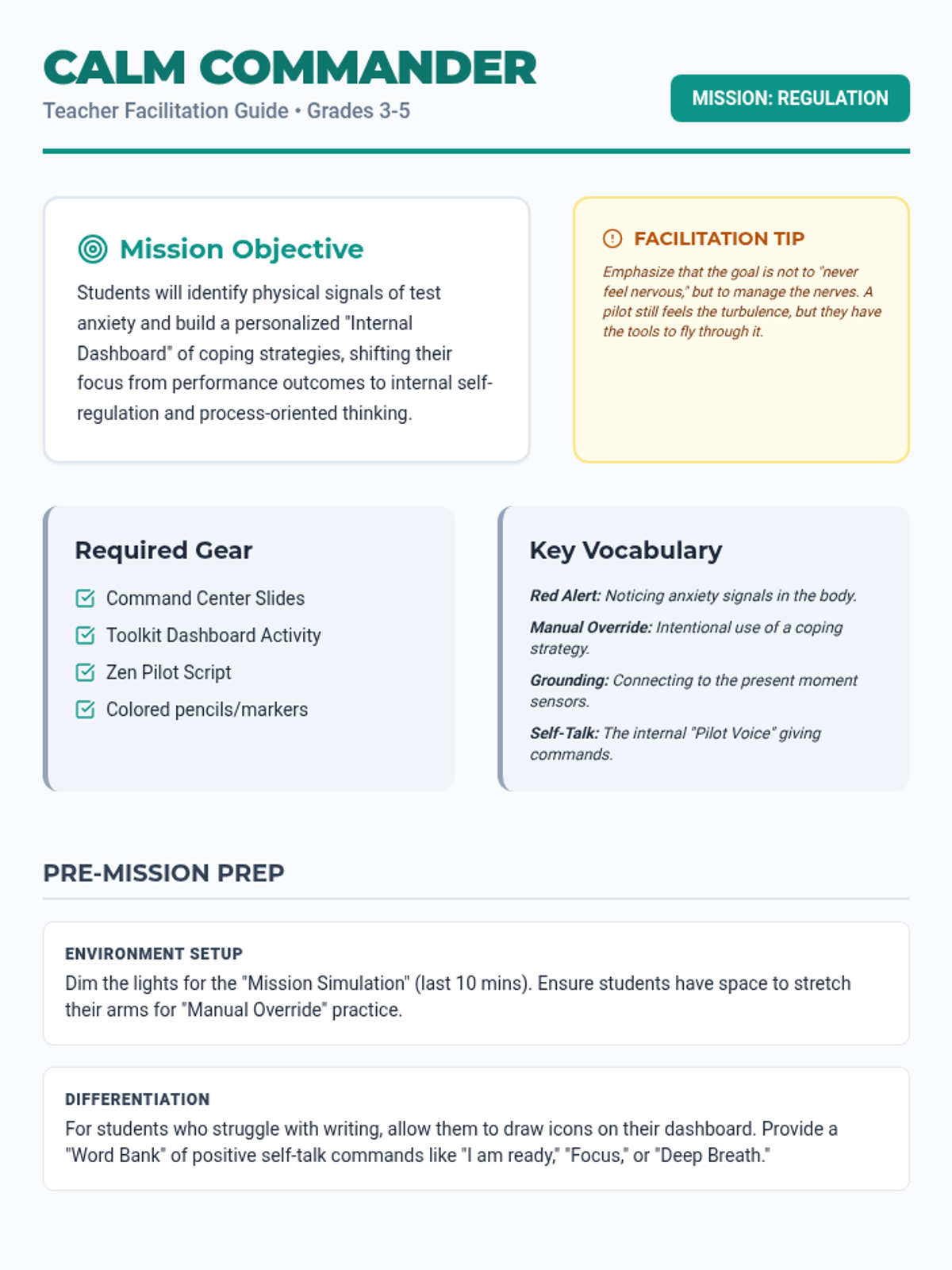
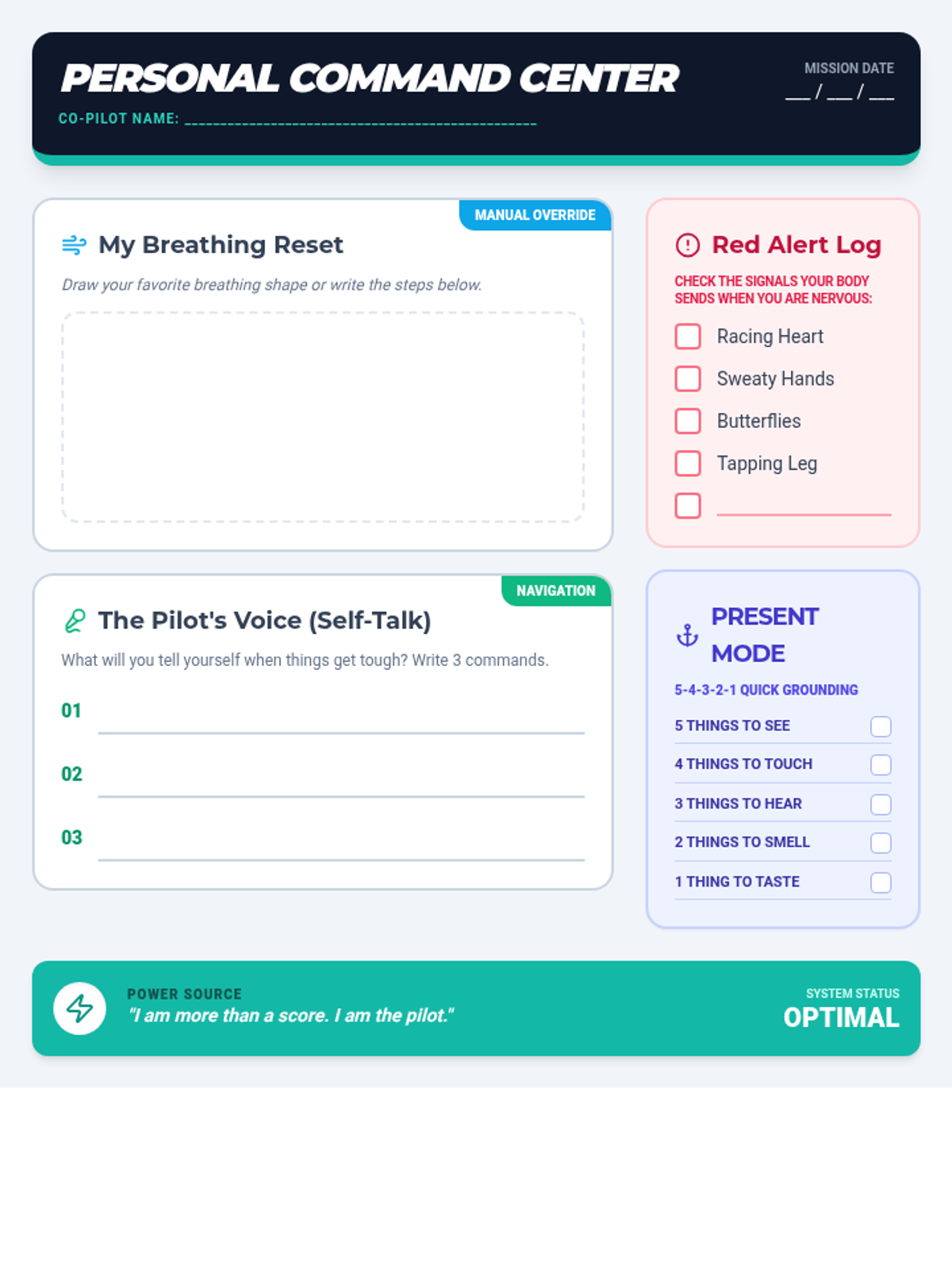
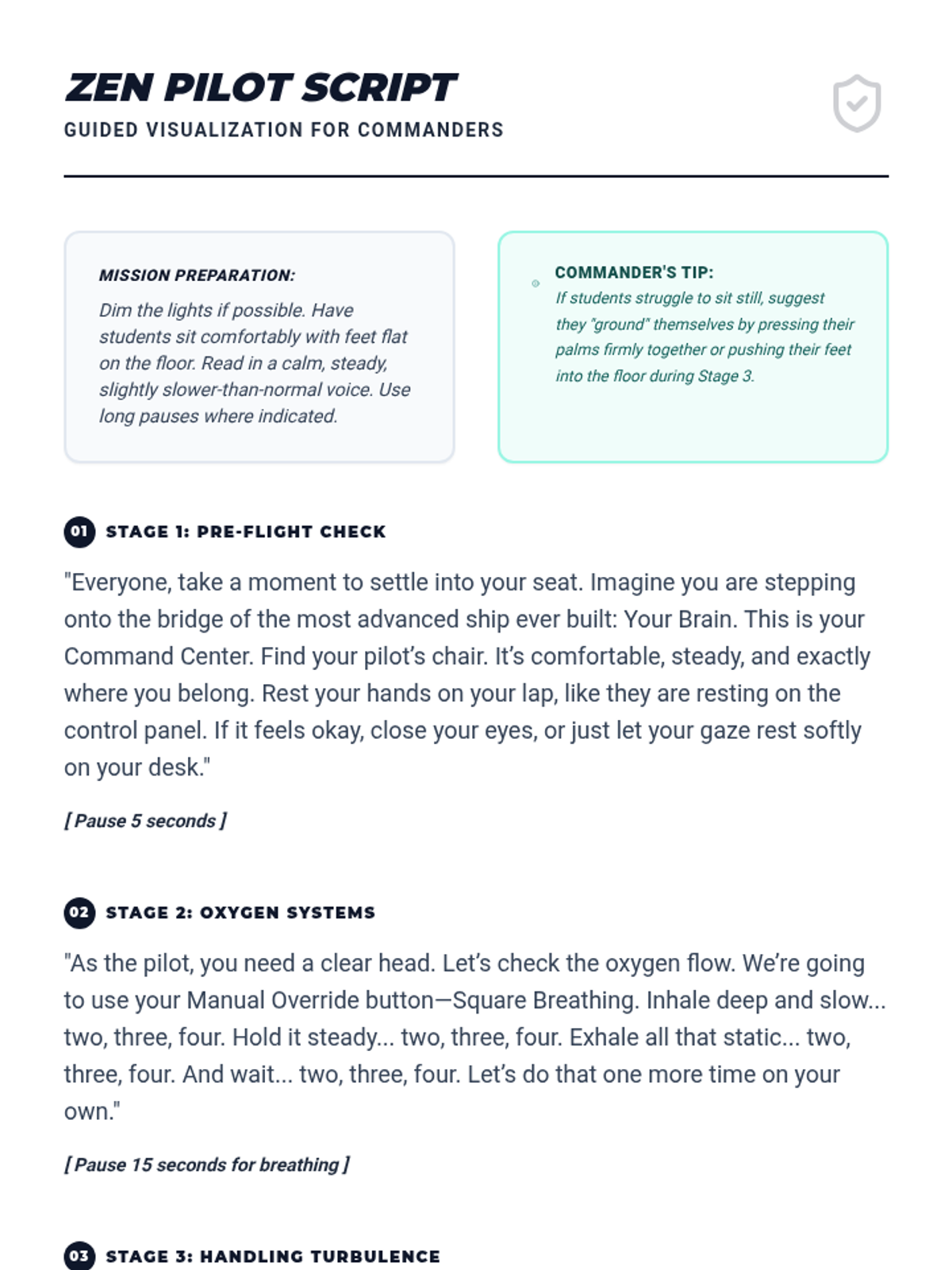
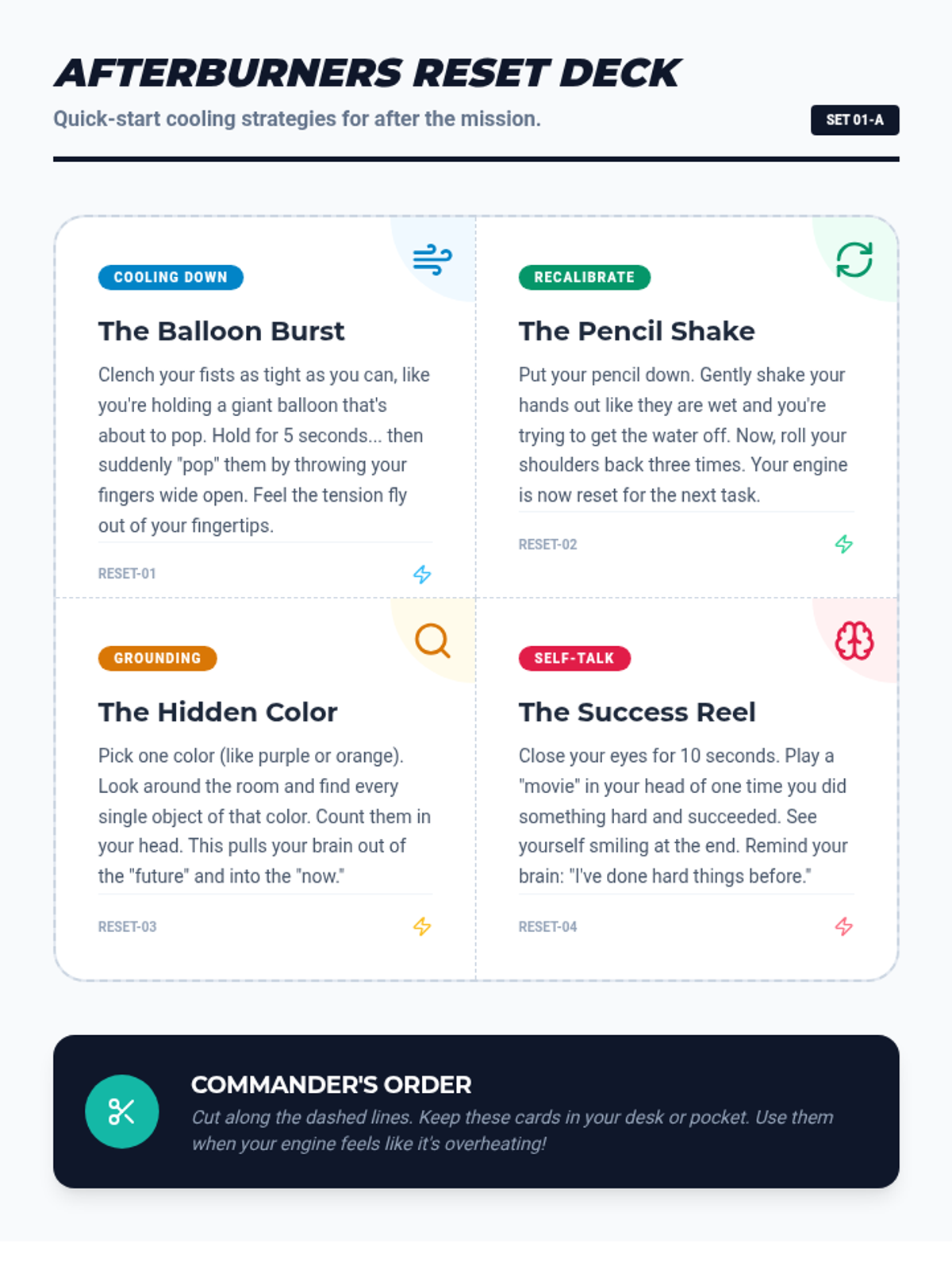
A comprehensive workshop designed to help 3rd-5th graders manage test anxiety through self-regulation and grounding techniques using a 'Command Center' metaphor.
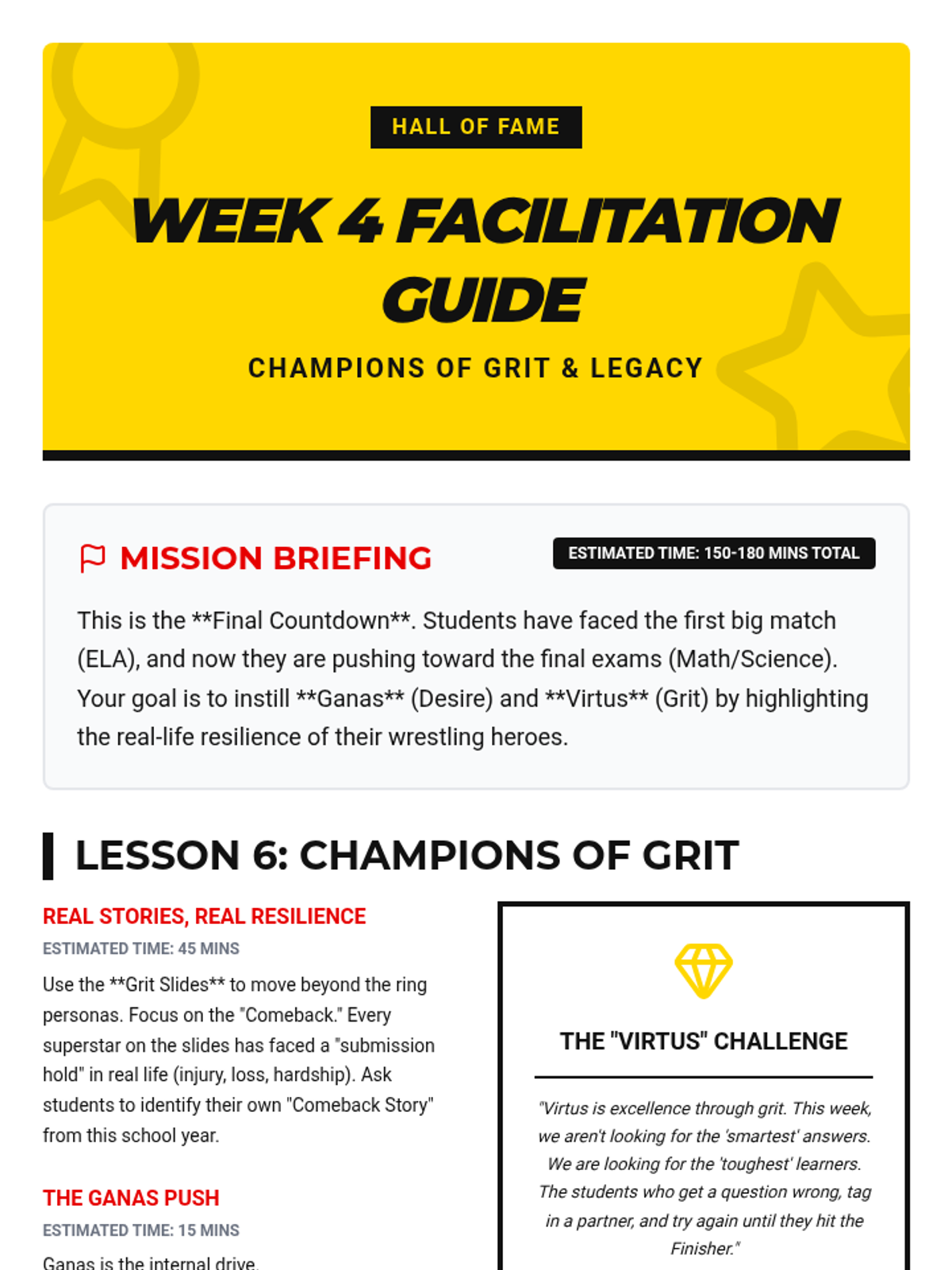
Examining real-life challenges faced by WWE stars to inspire resilience, grit, and the 'Ganas' required for the final push.
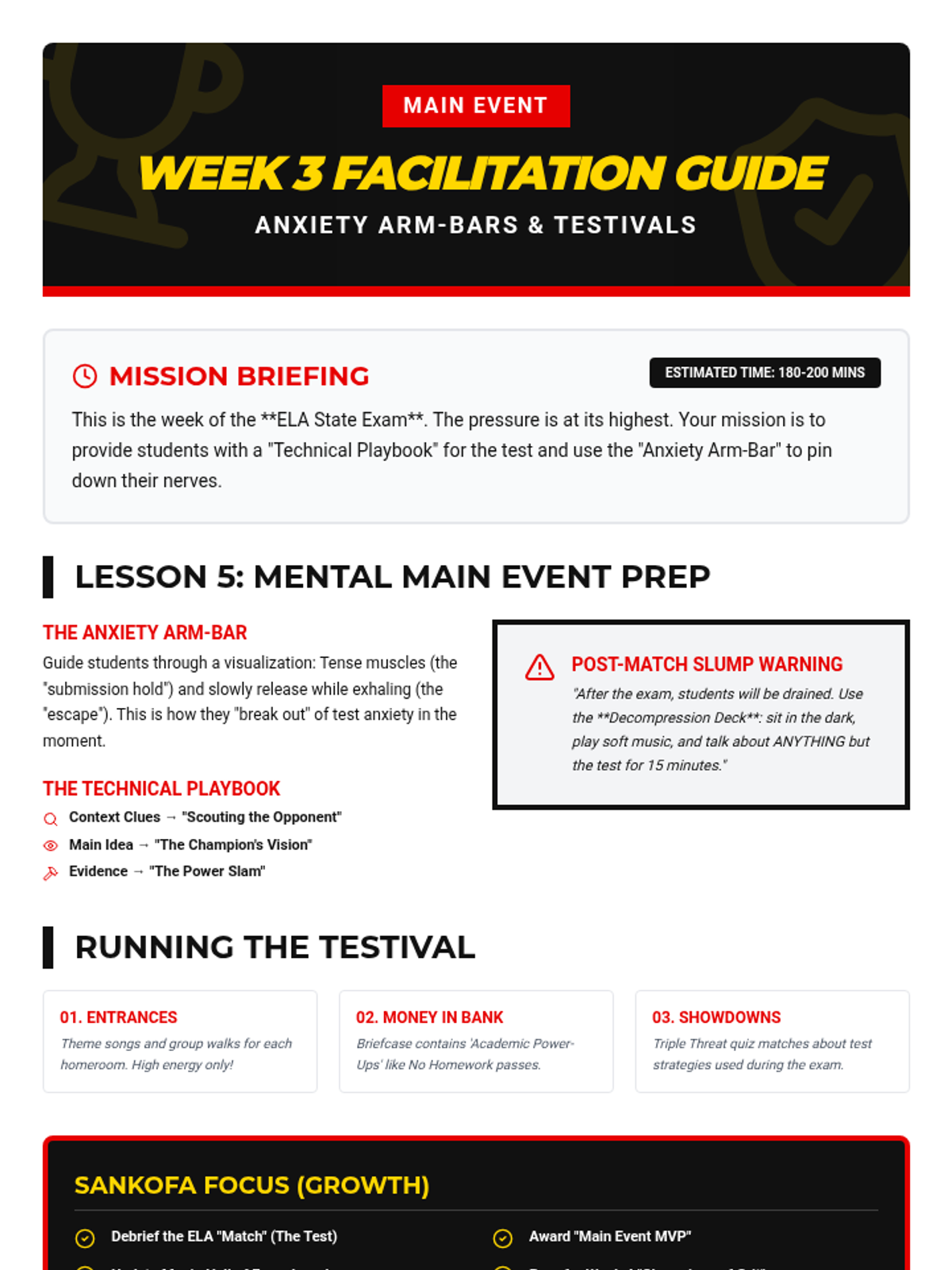
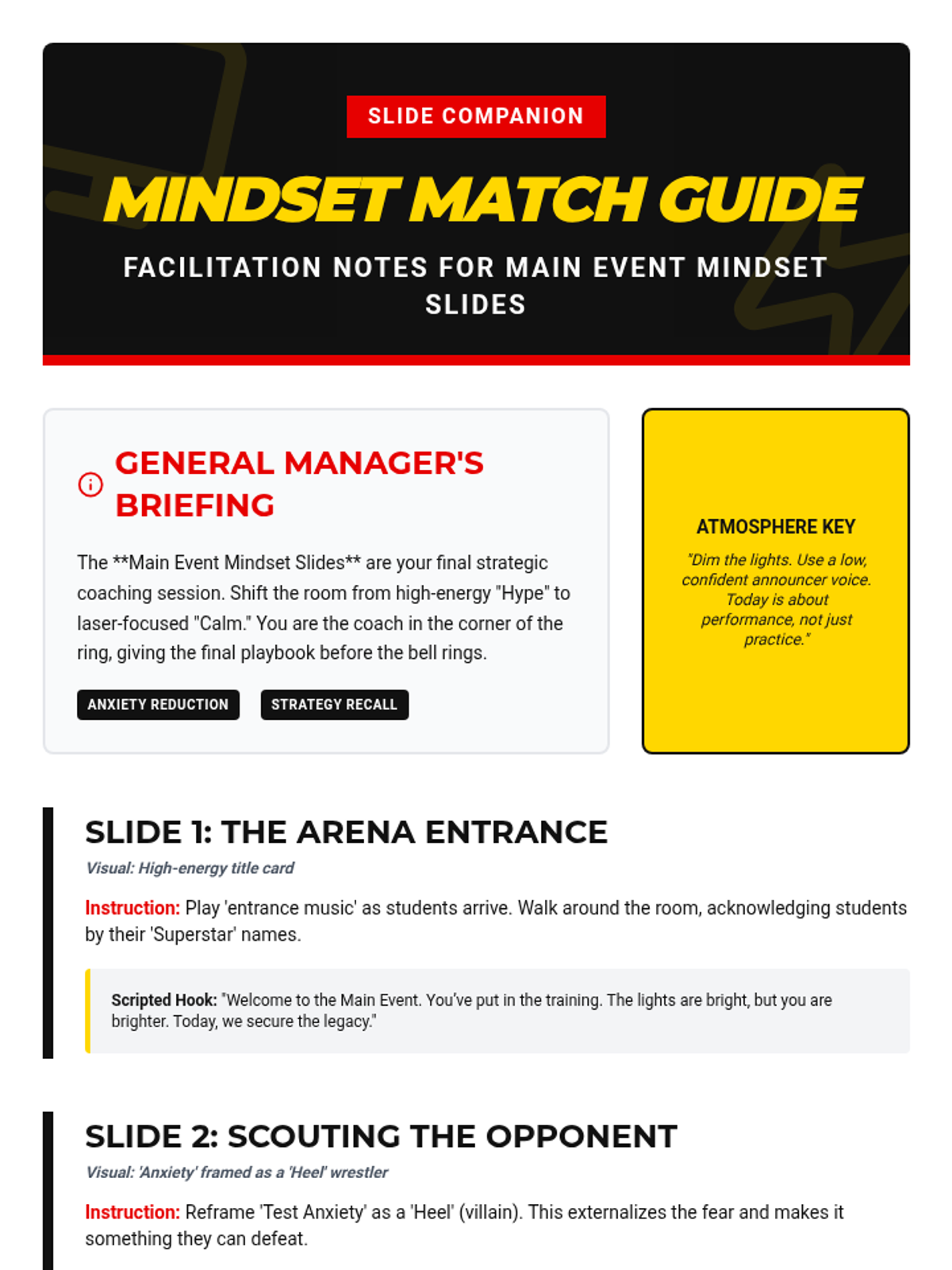
Addressing test anxiety and ELA state exam preparation, including decompression strategies to stay 'main event' ready.
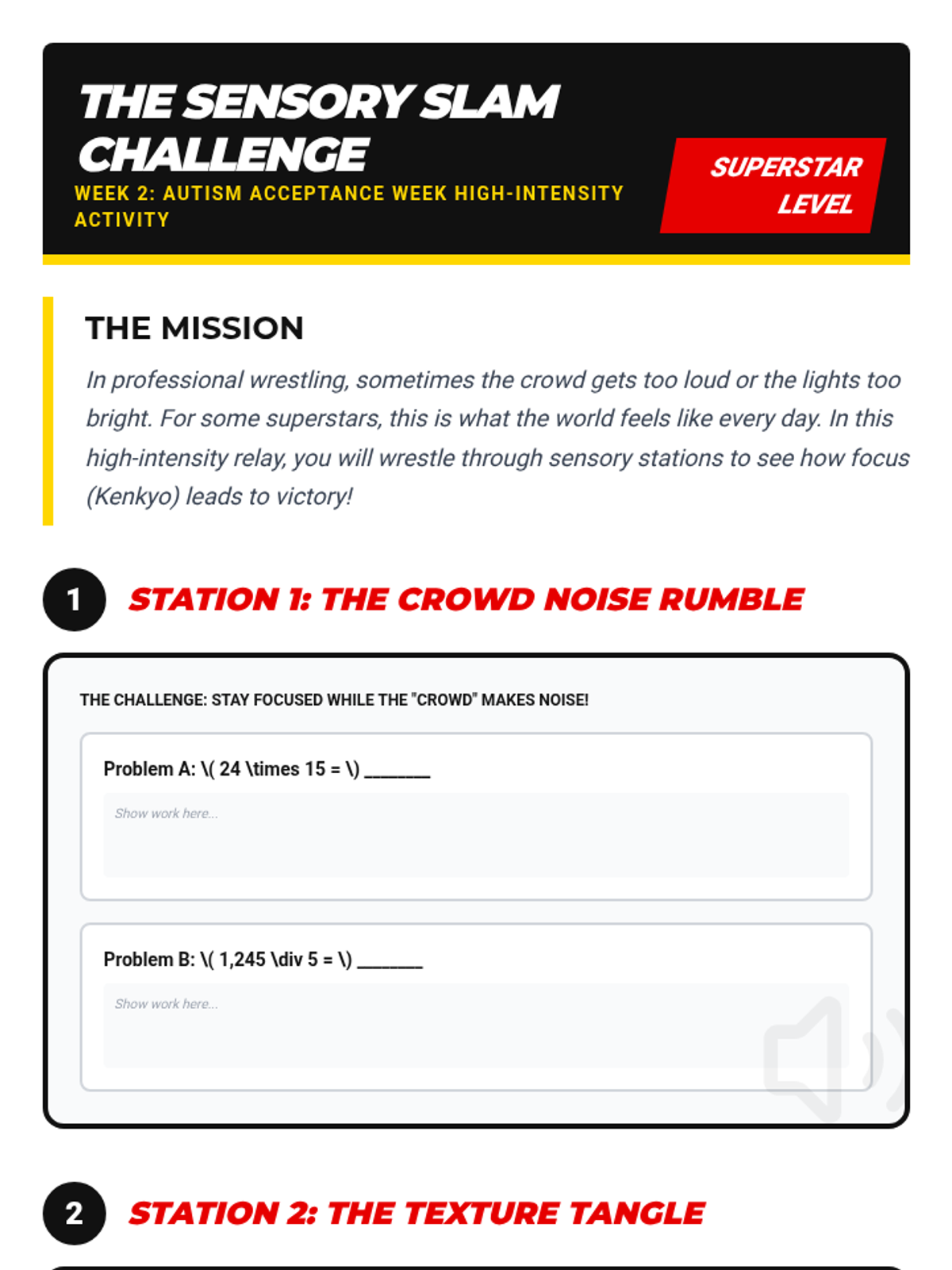
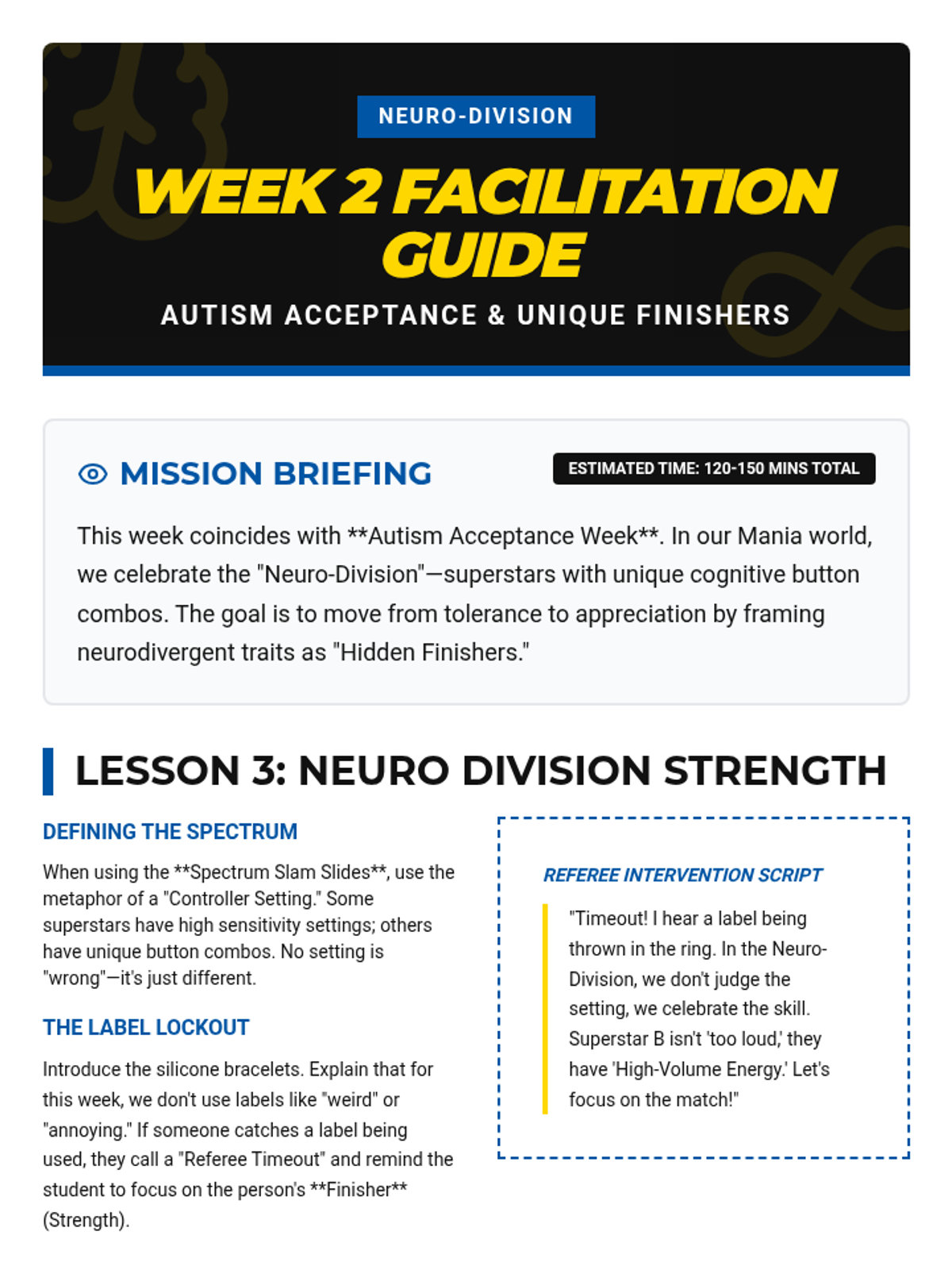
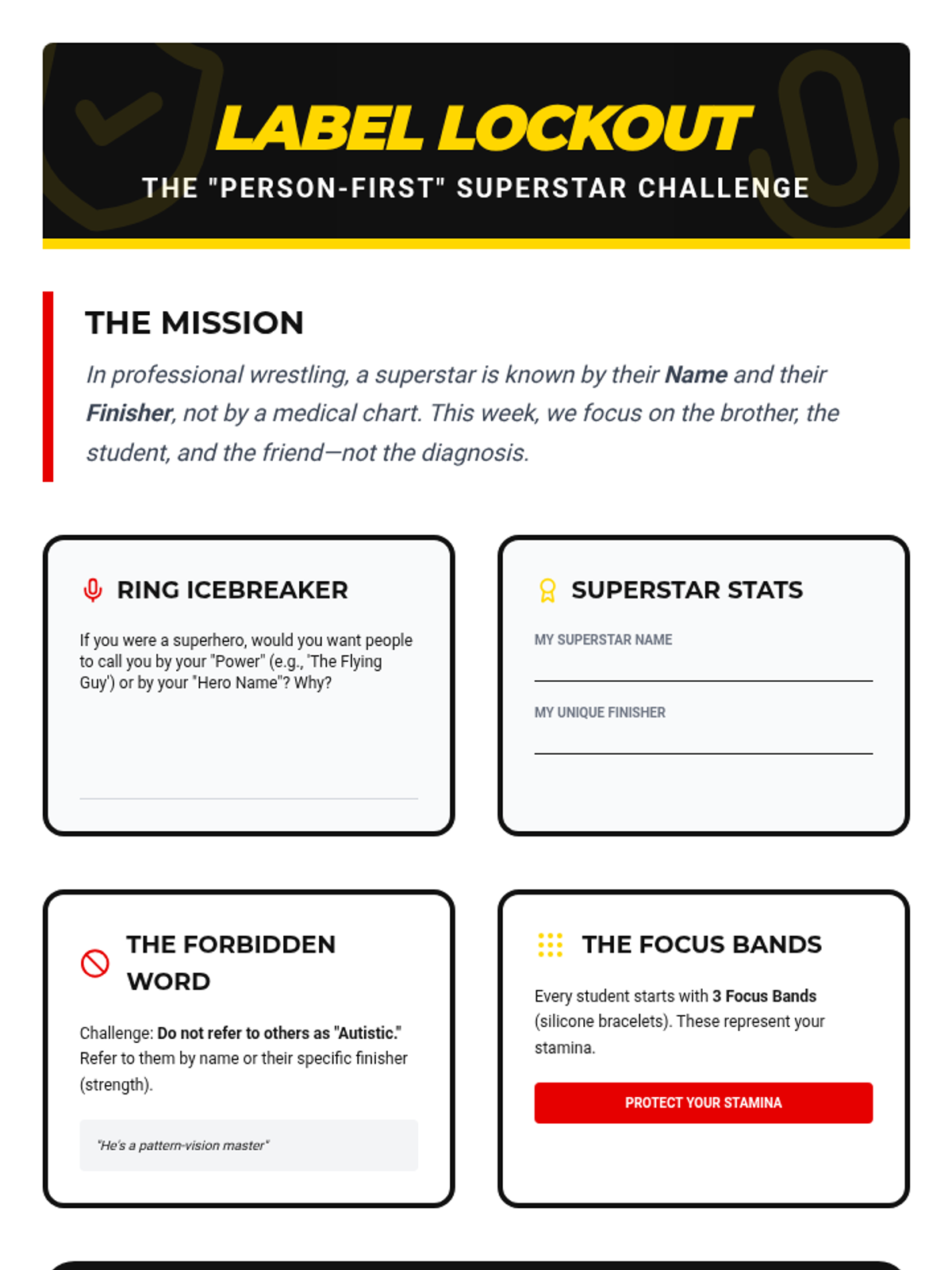
A high-energy activity focusing on inclusivity and celebrating different ways of thinking and 'wrestling' with challenges.
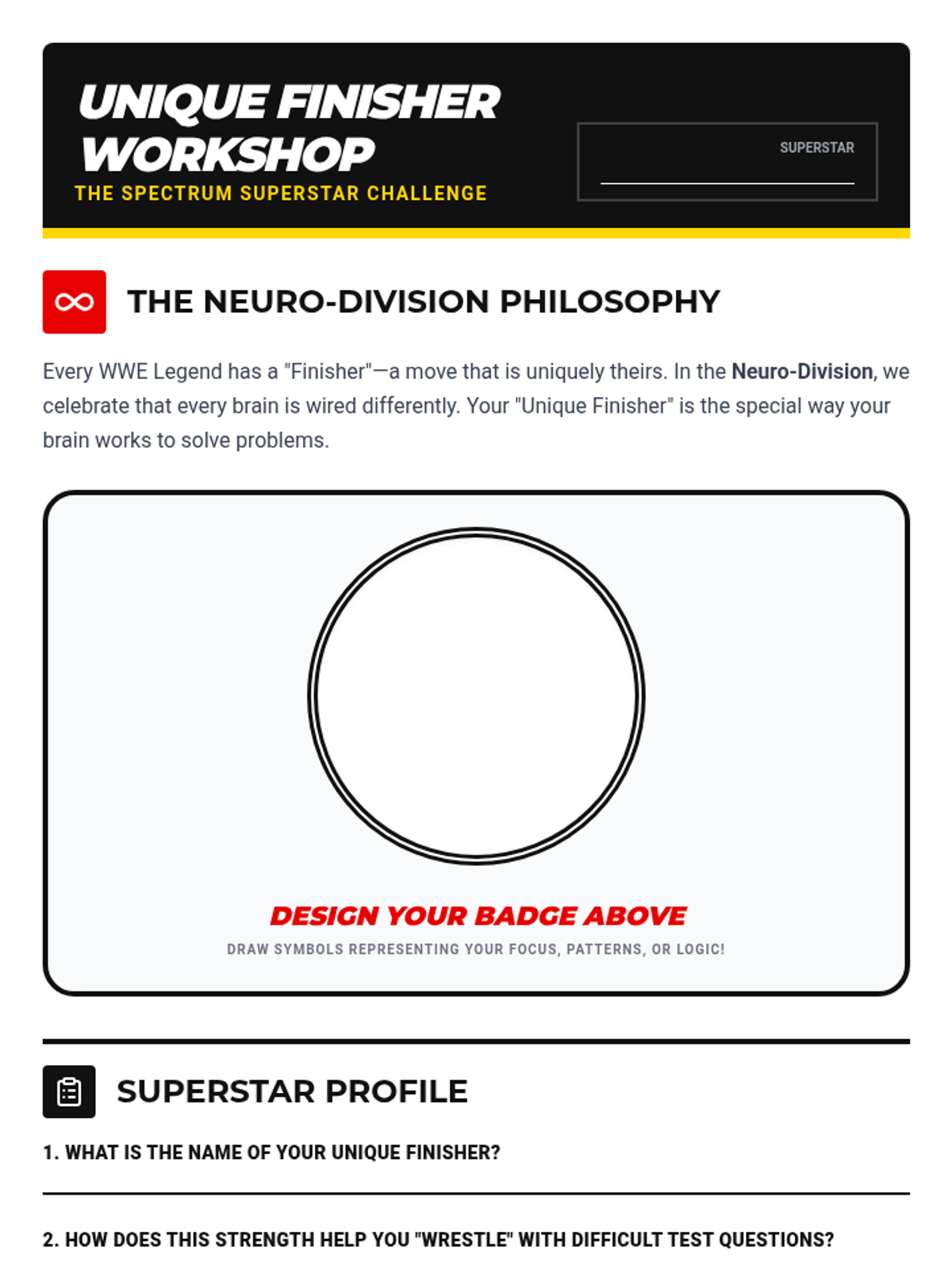
The first of two activities celebrating Autism Acceptance Week, highlighting the unique 'finishers' and strengths of neurodivergent individuals.
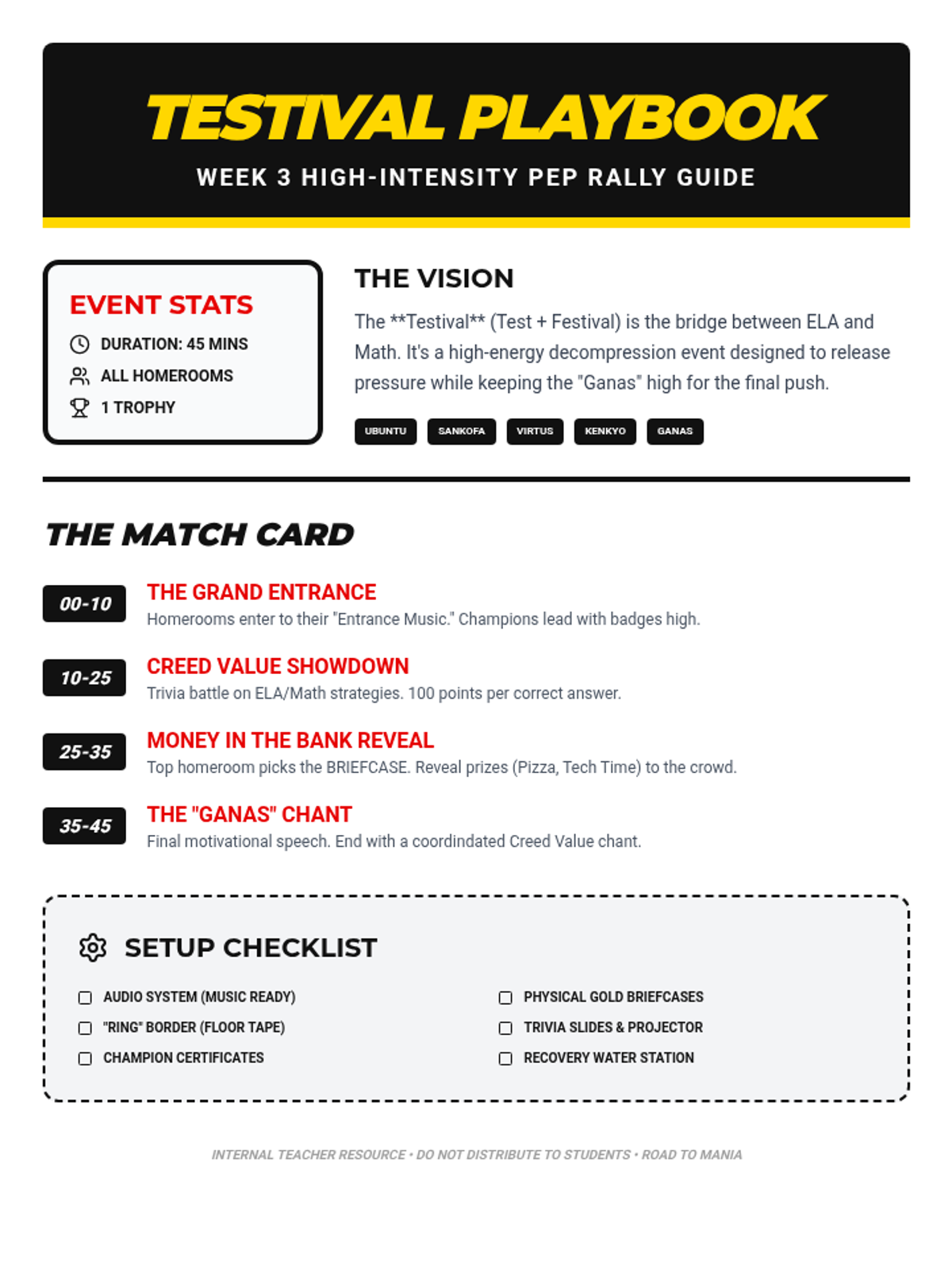
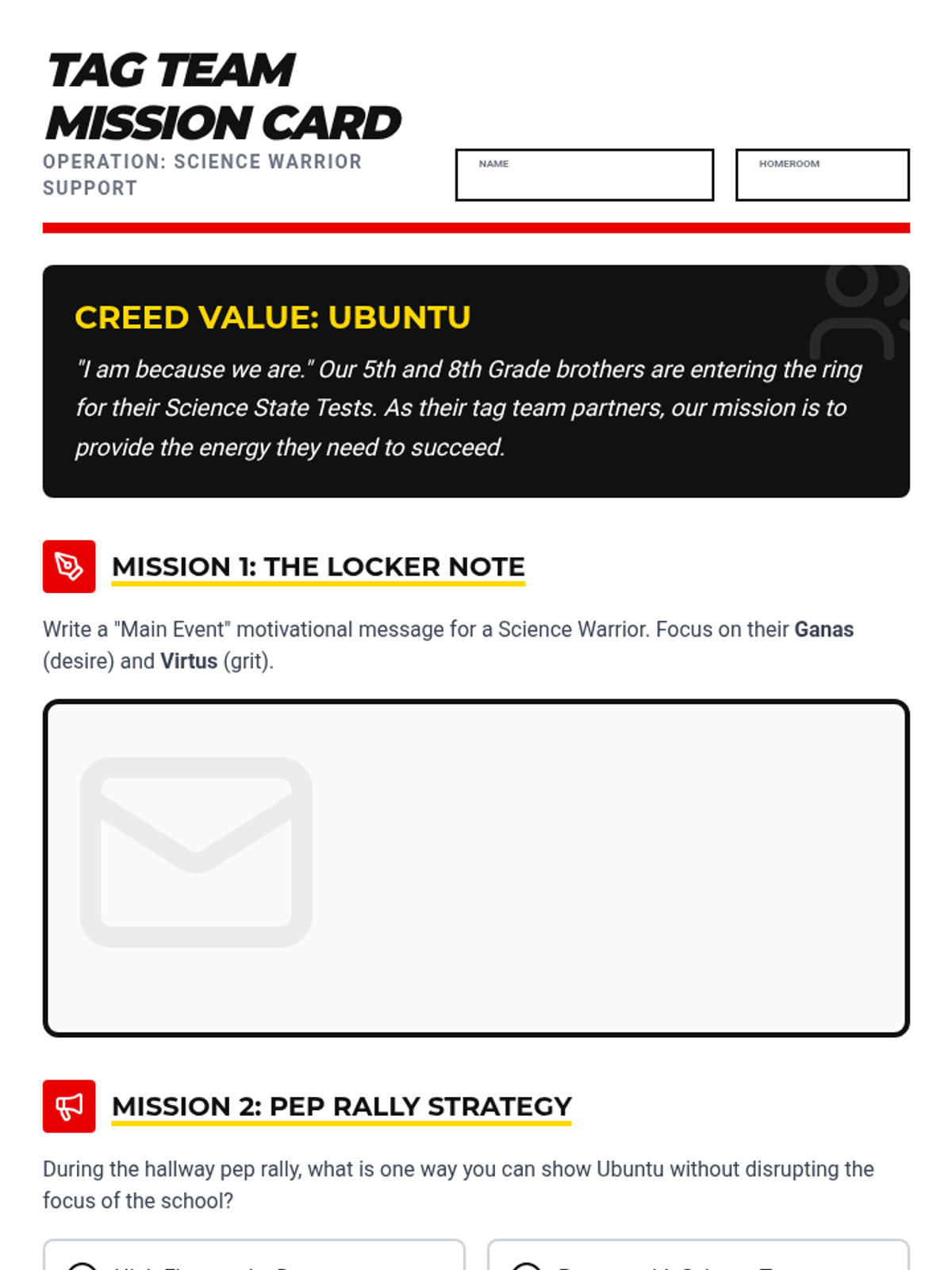
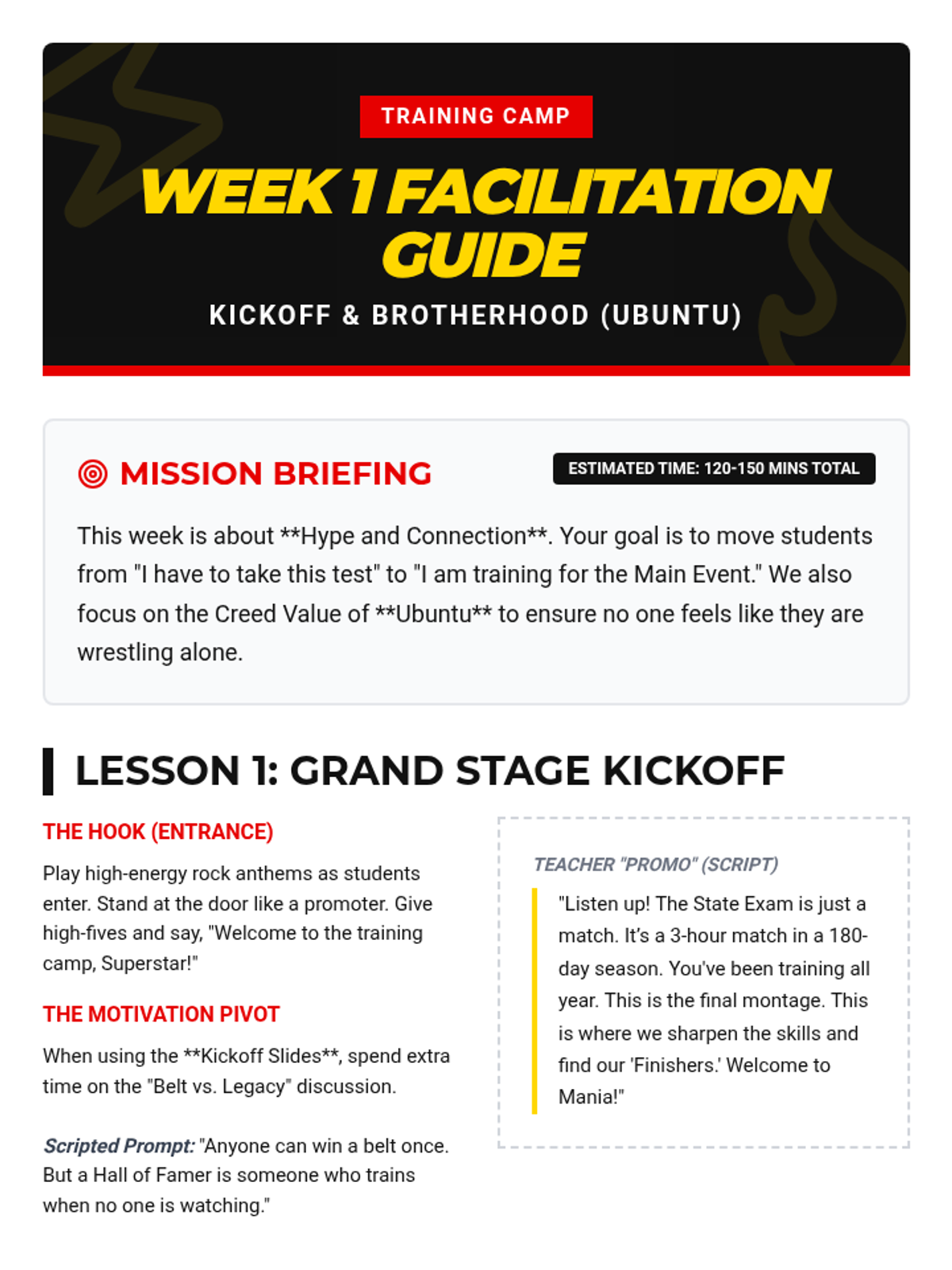
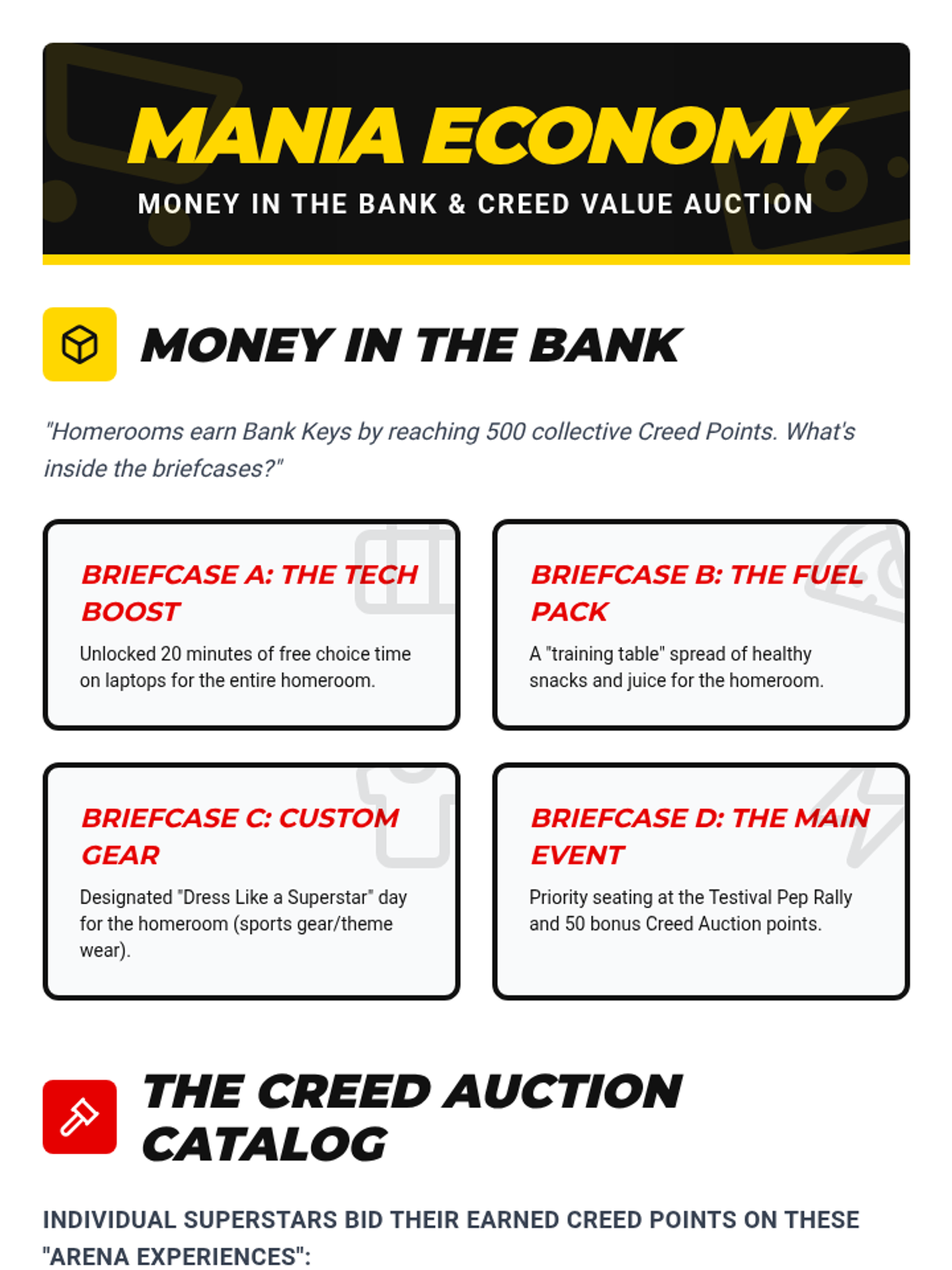
Focus on the Creed Value of Ubuntu and brotherhood, preparing students to support their peers during science test pep rallies.
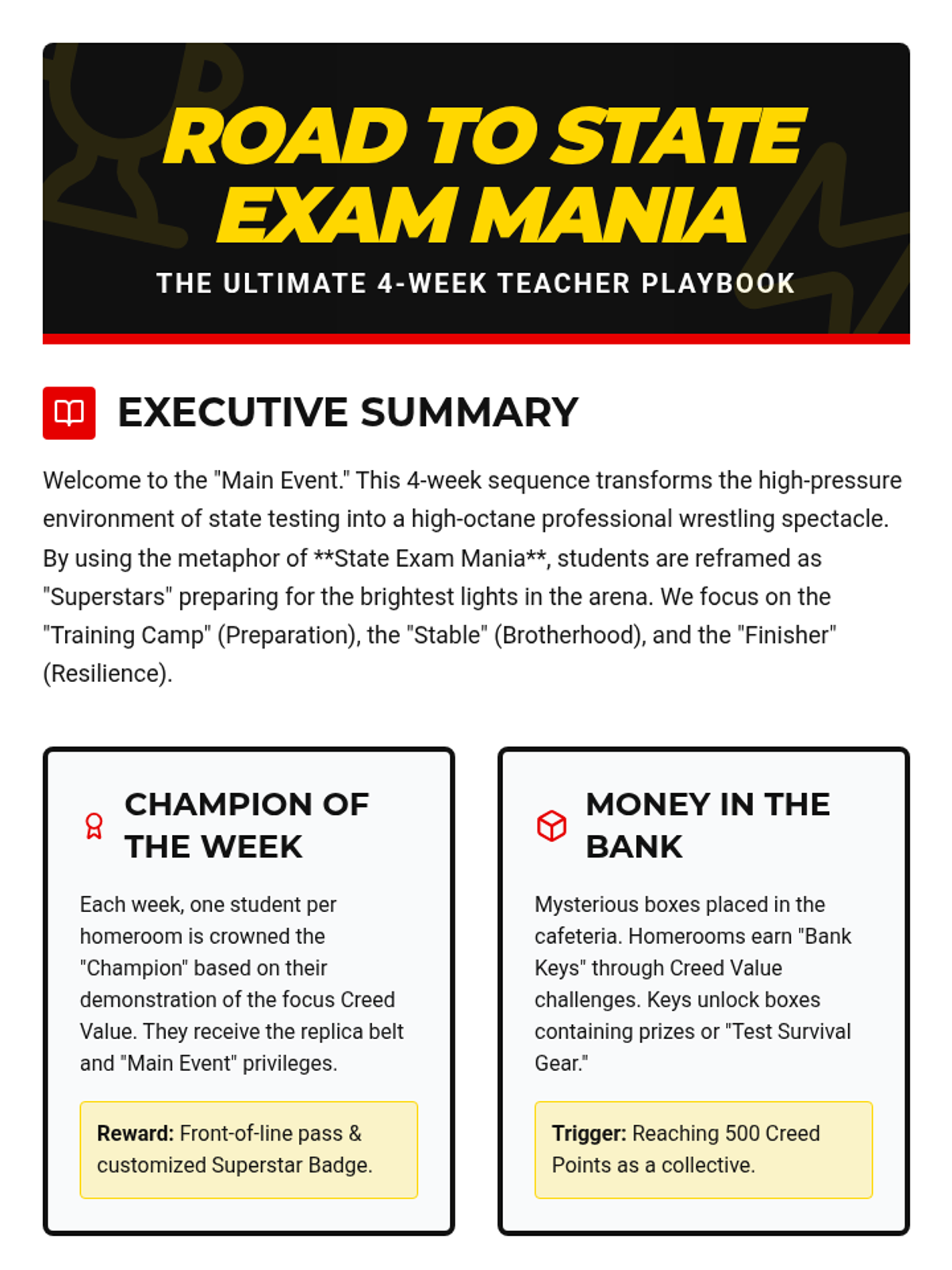
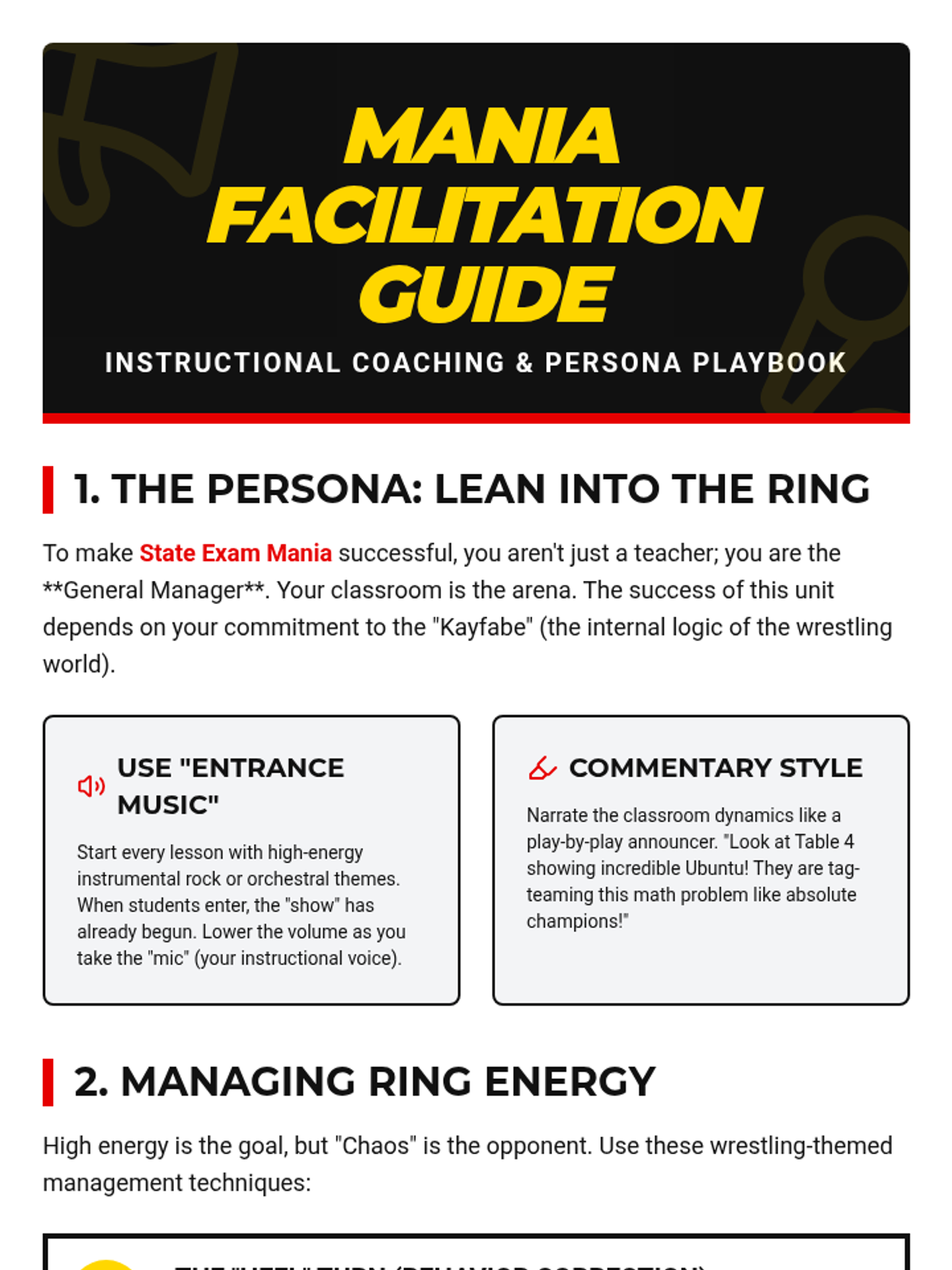
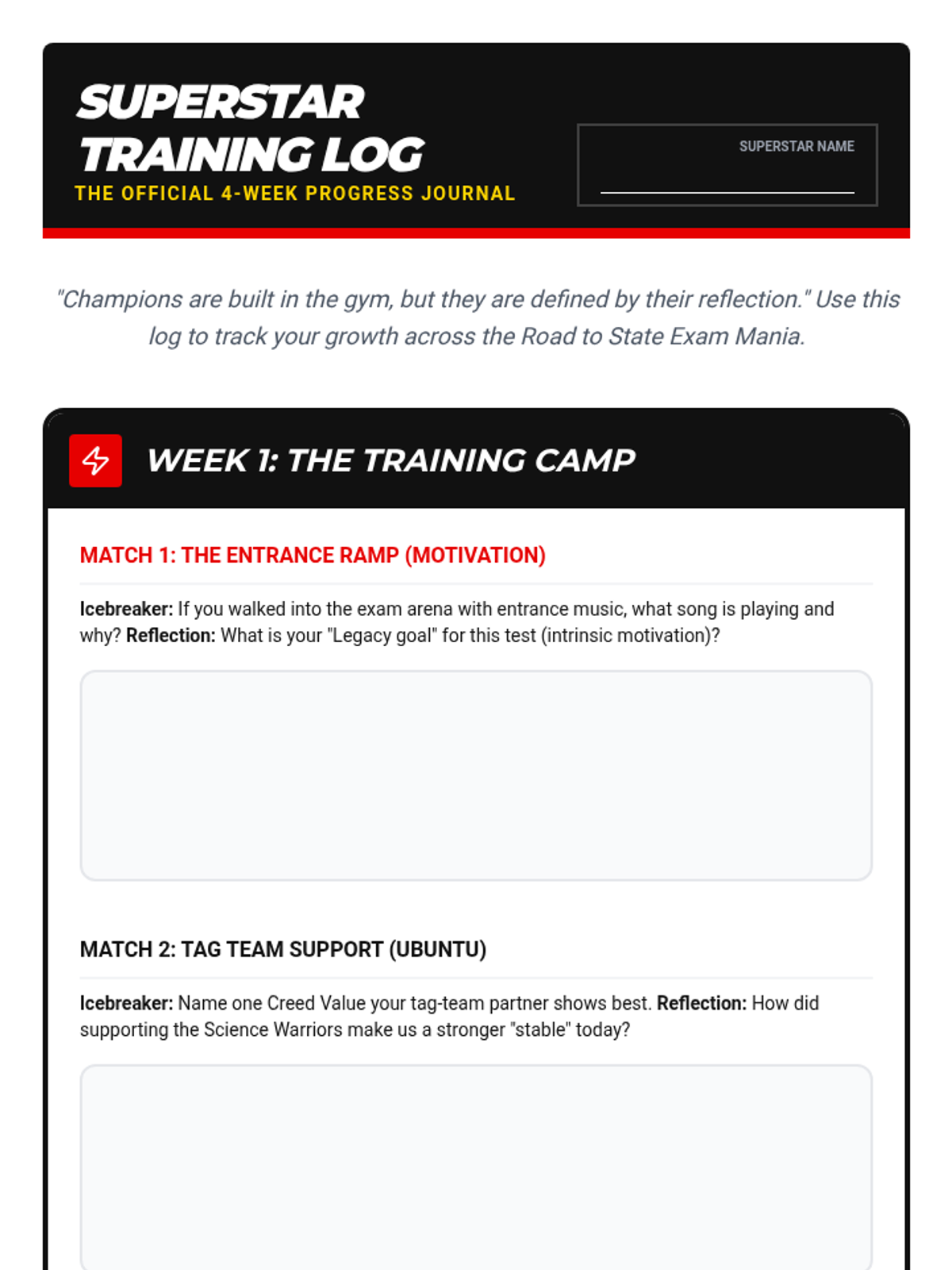
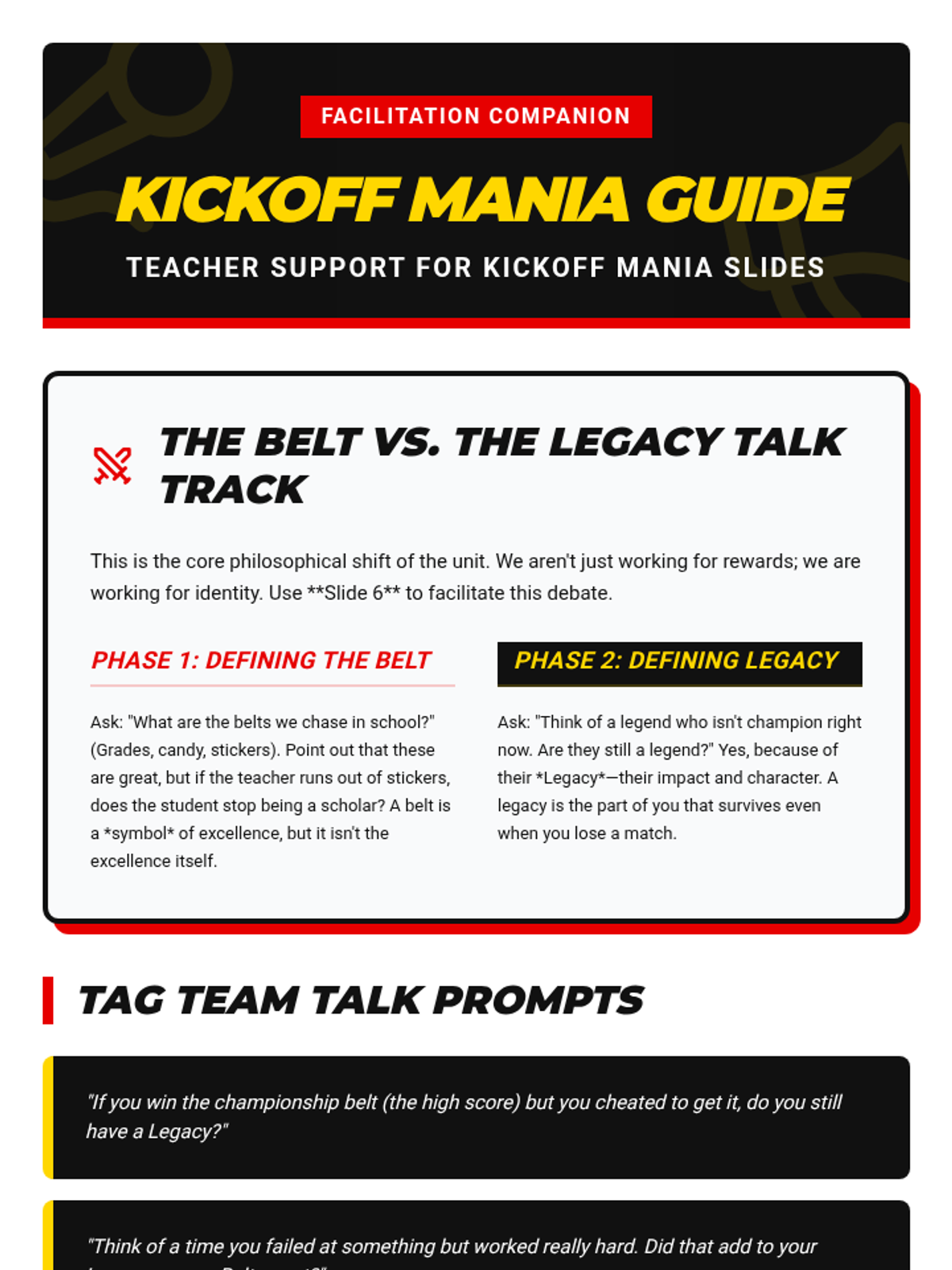
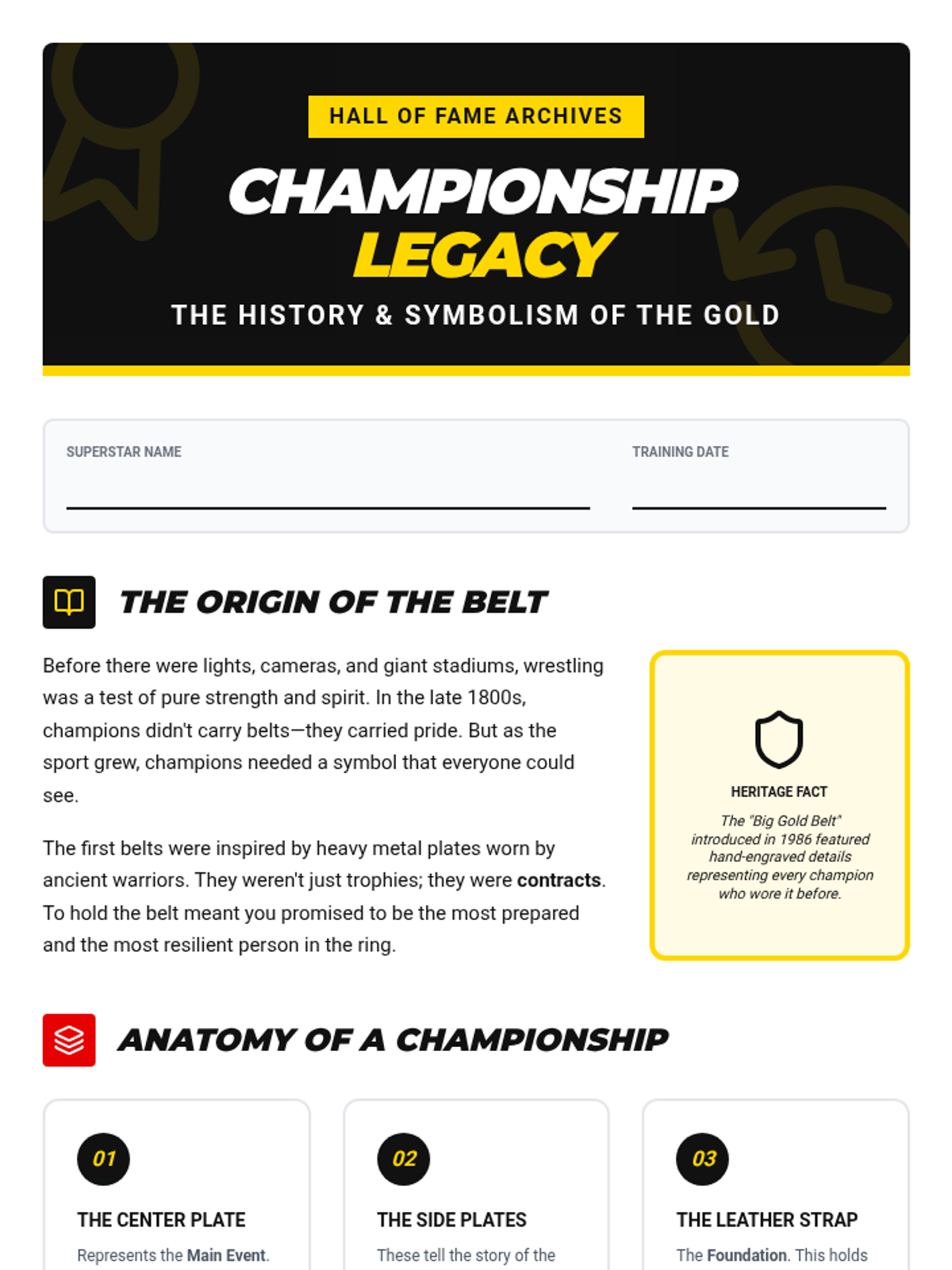
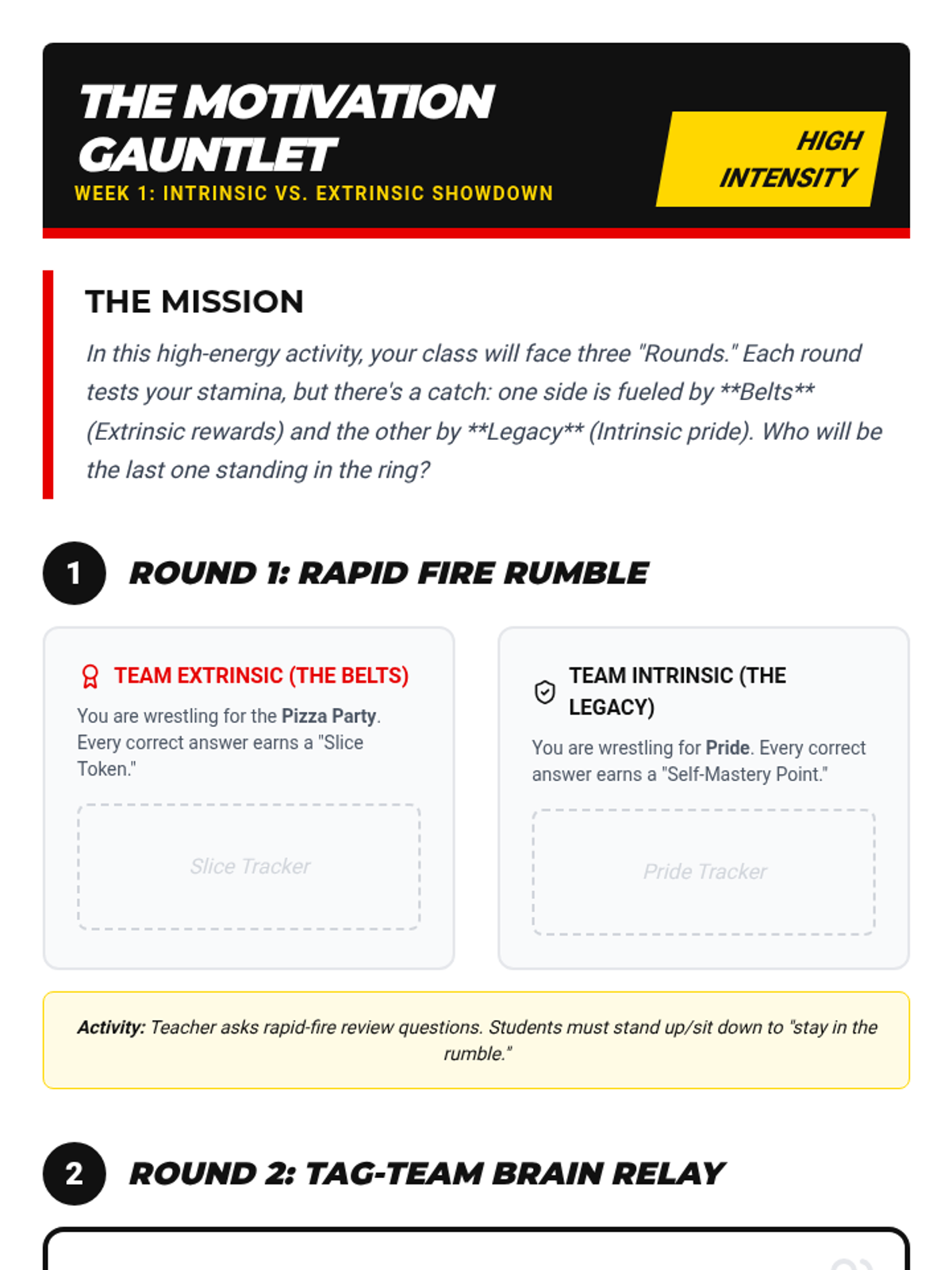
Introduce the 'State Exam Mania' theme, focusing on the difference between intrinsic and extrinsic motivation using the metaphor of championship belts vs. personal legacy.
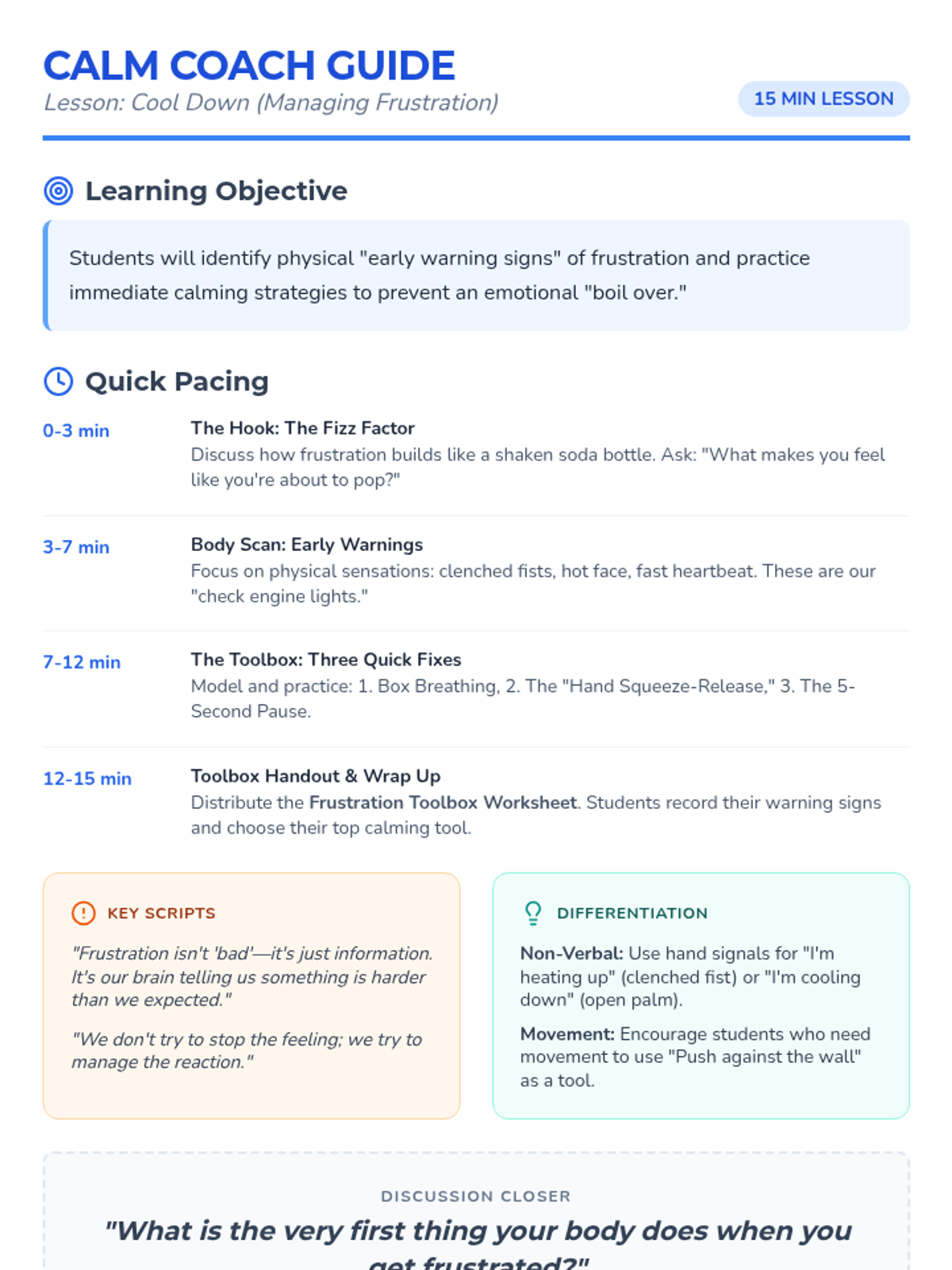
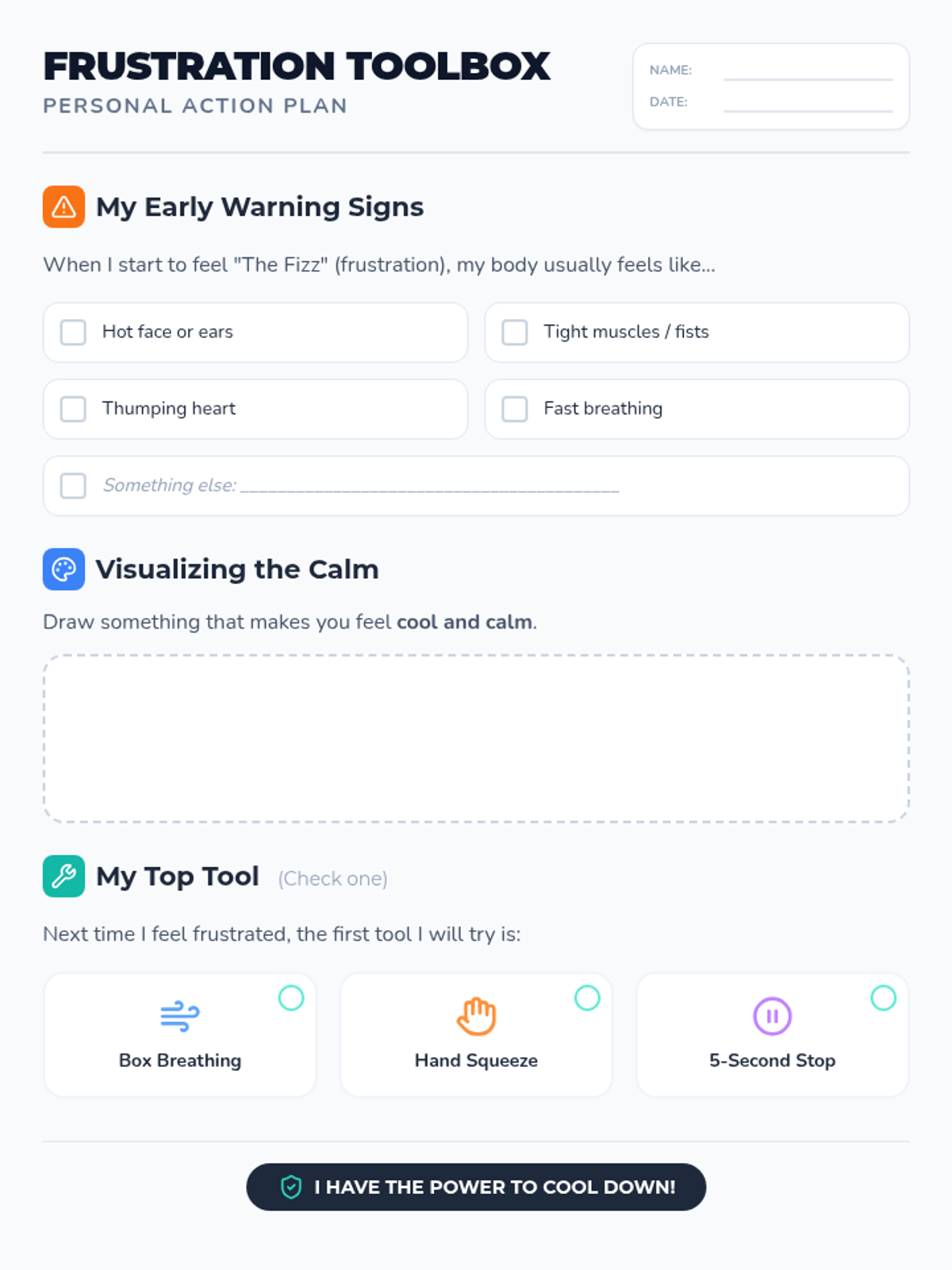
A quick, high-impact 15-minute lesson focused on identifying the physical signs of frustration and implementing immediate 'cool down' strategies. Students learn to recognize their 'boiling point' and build a personal toolbox of calming techniques.
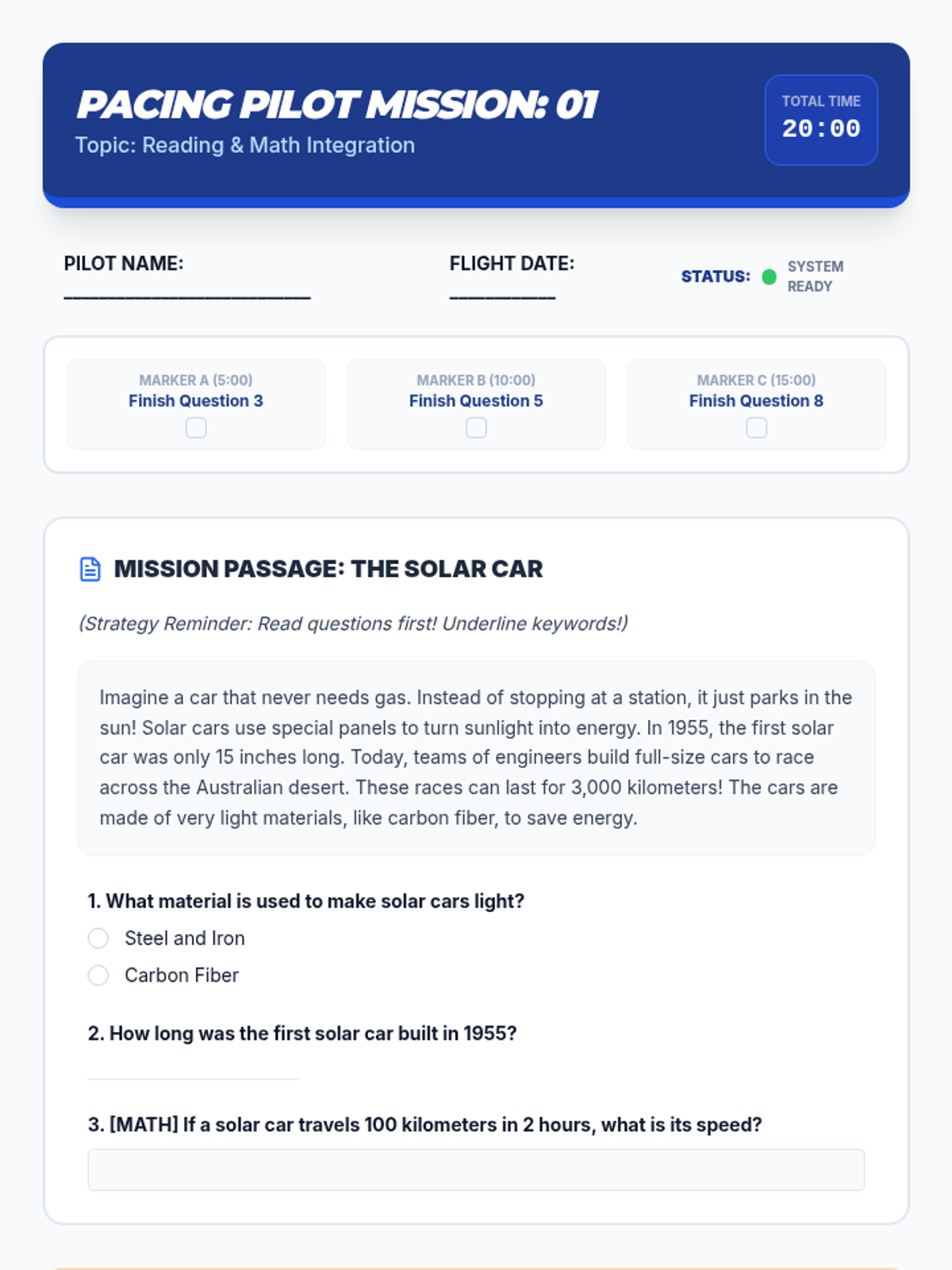
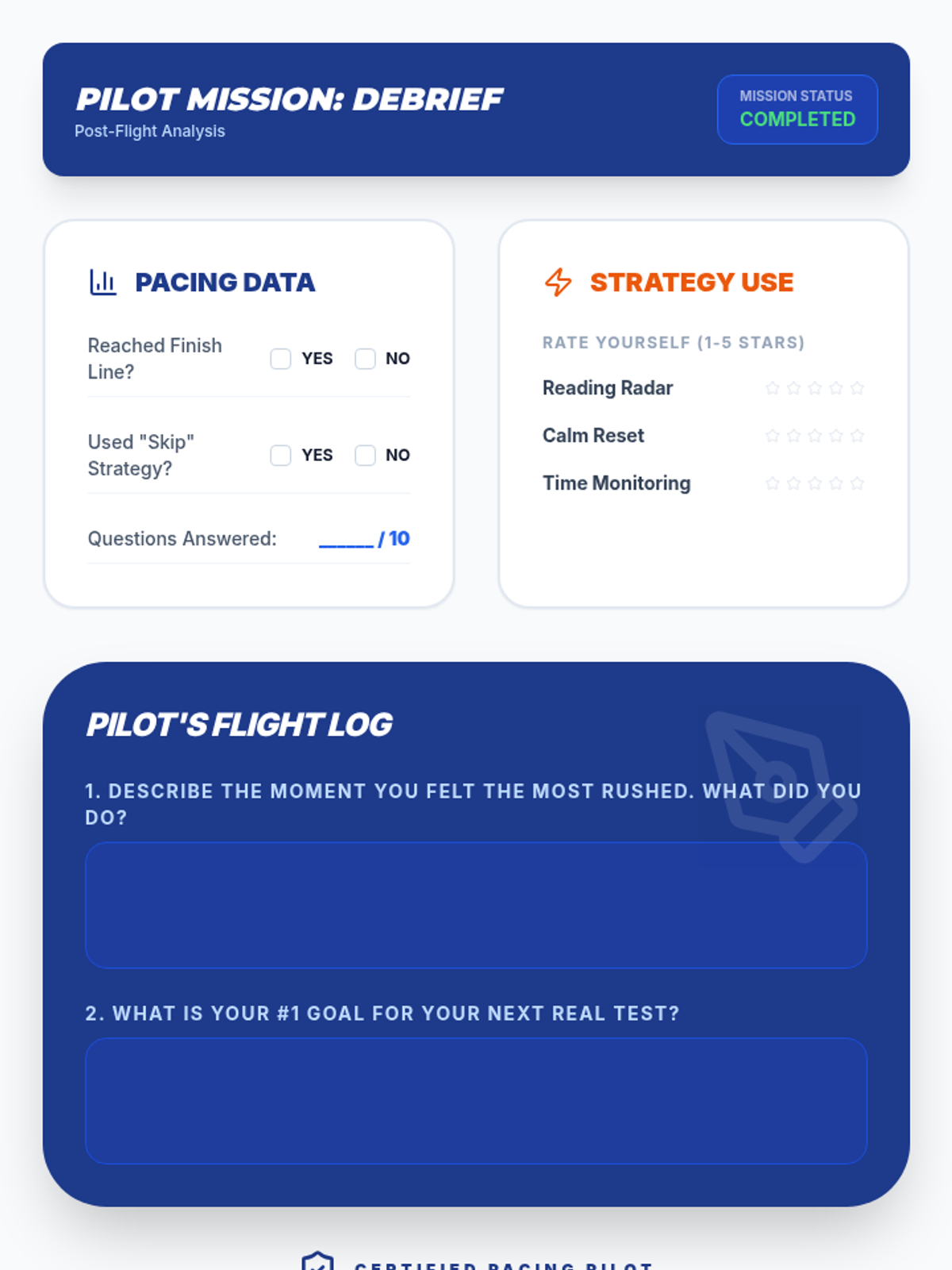
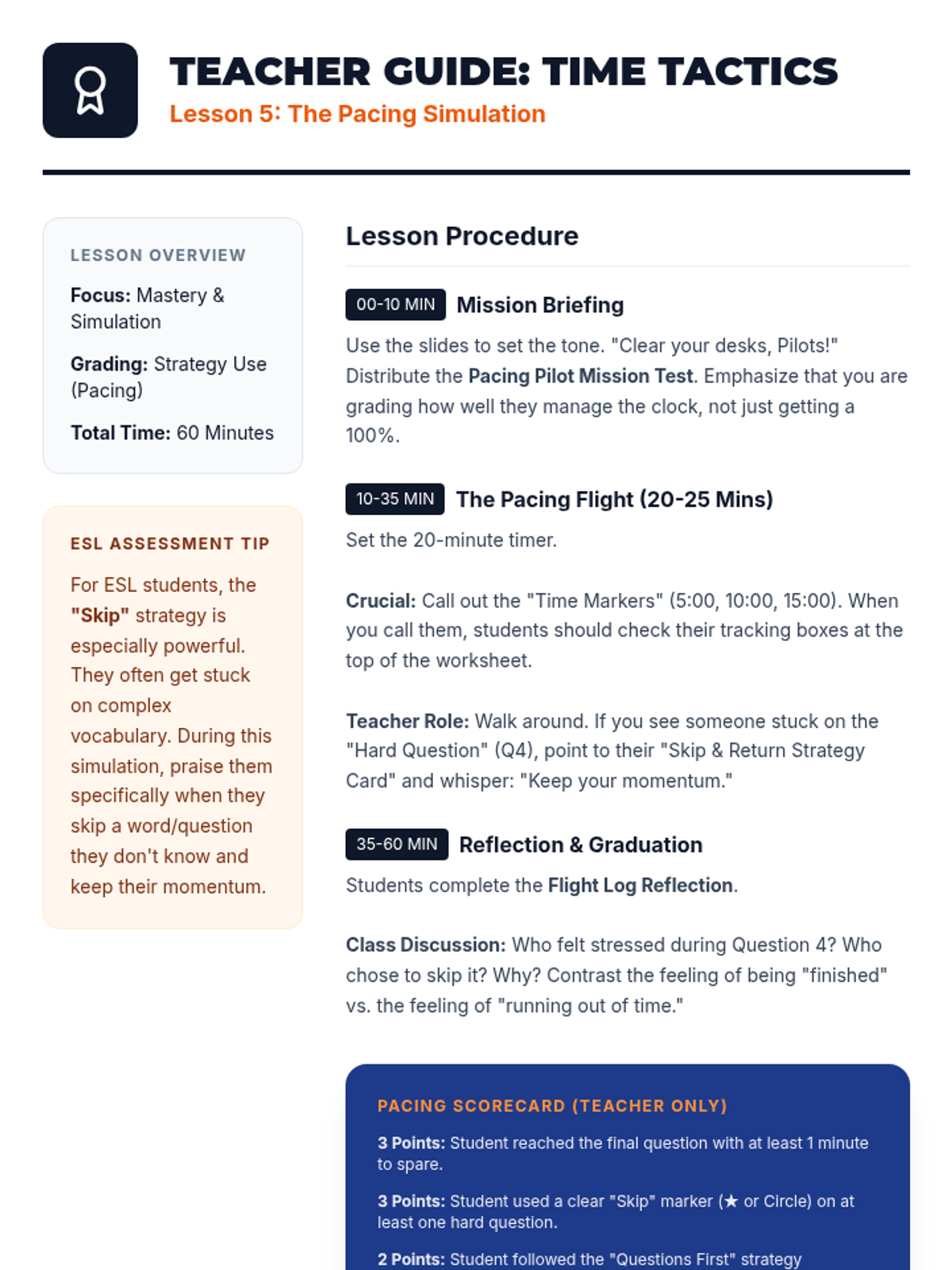
A simulated test session where students are graded on their ability to hit specific pacing markers and reflect on their performance.
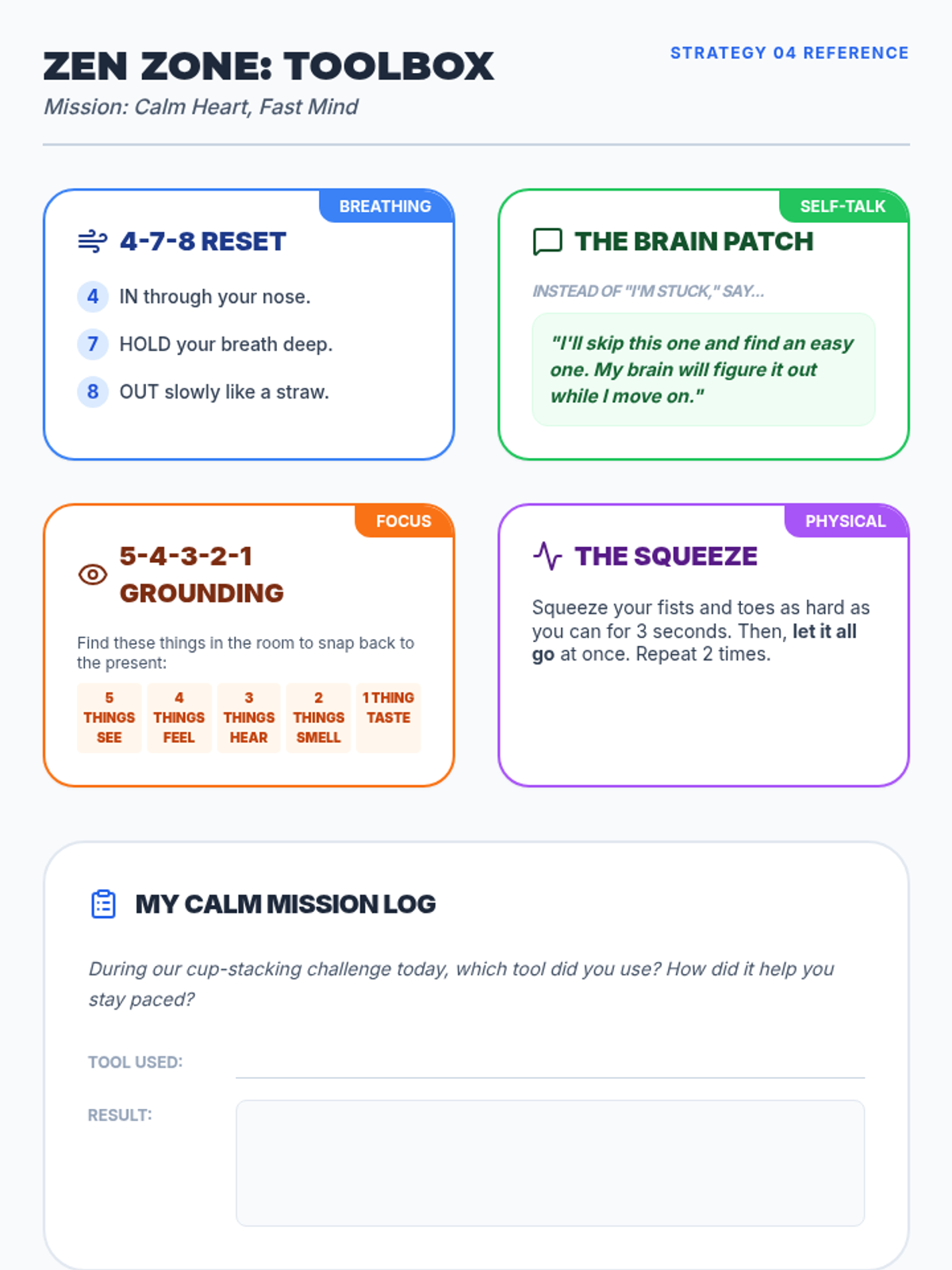
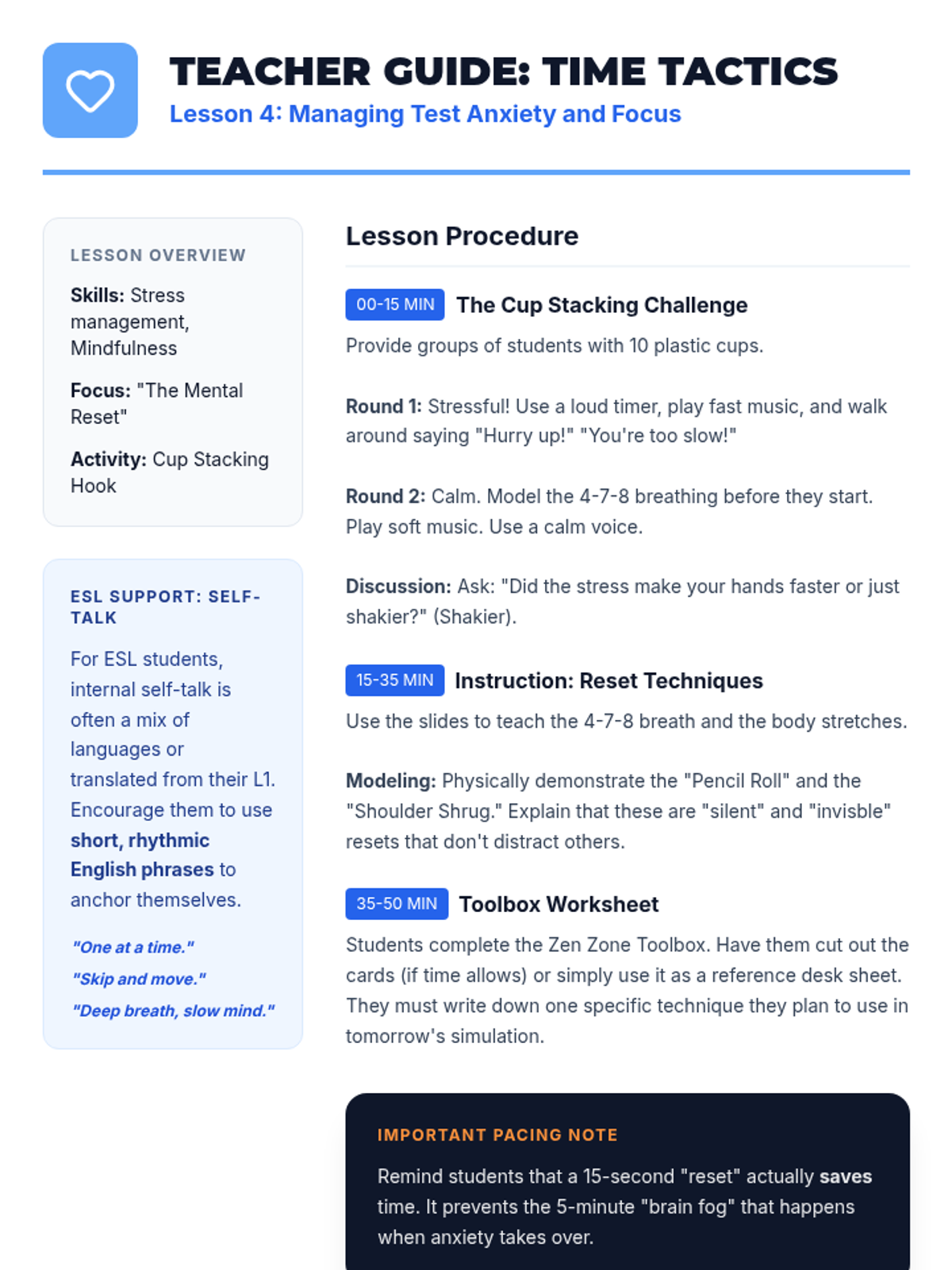
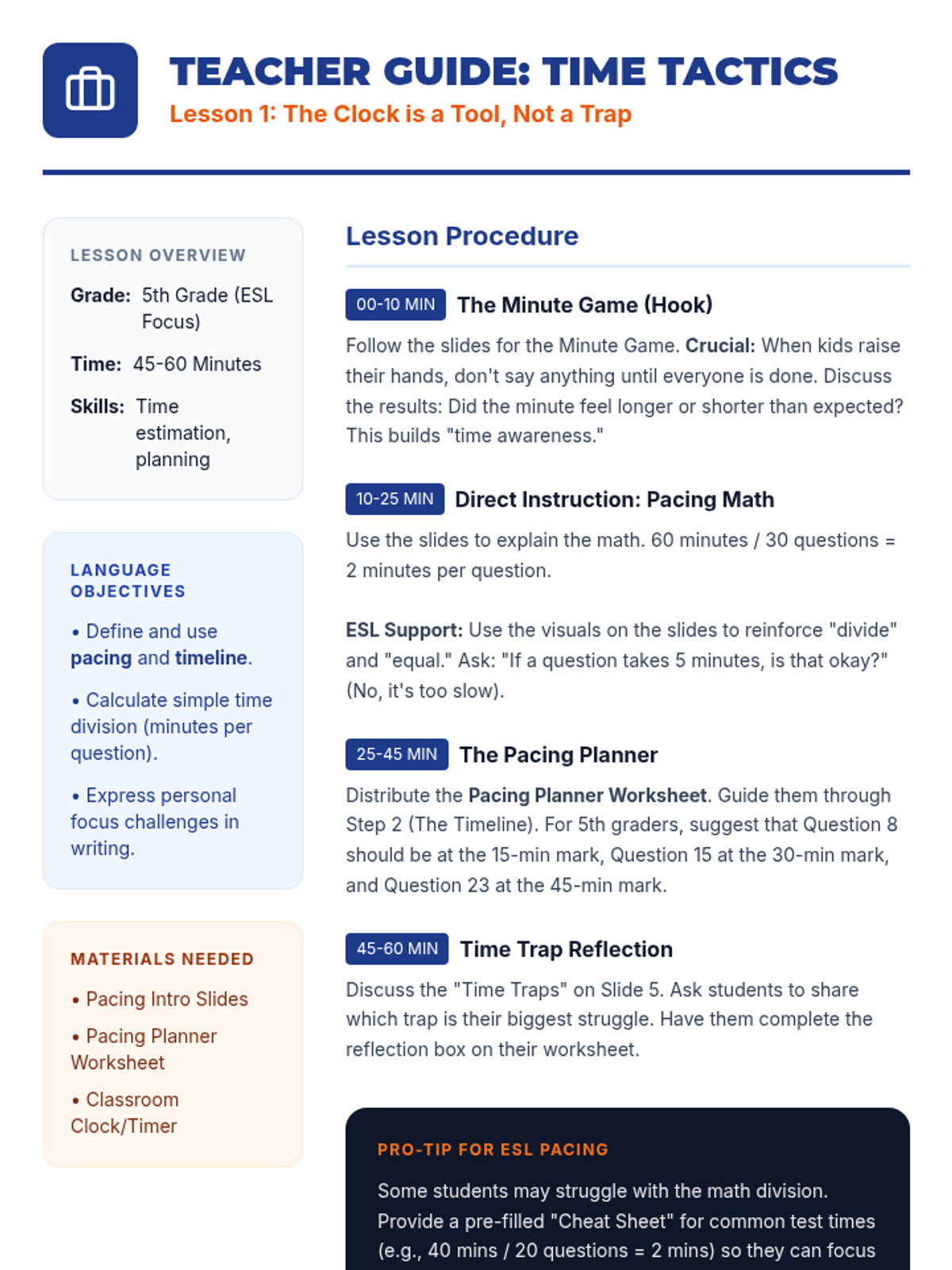
Teaches students physiological and mental reset techniques to stay calm and focused when the clock is ticking.
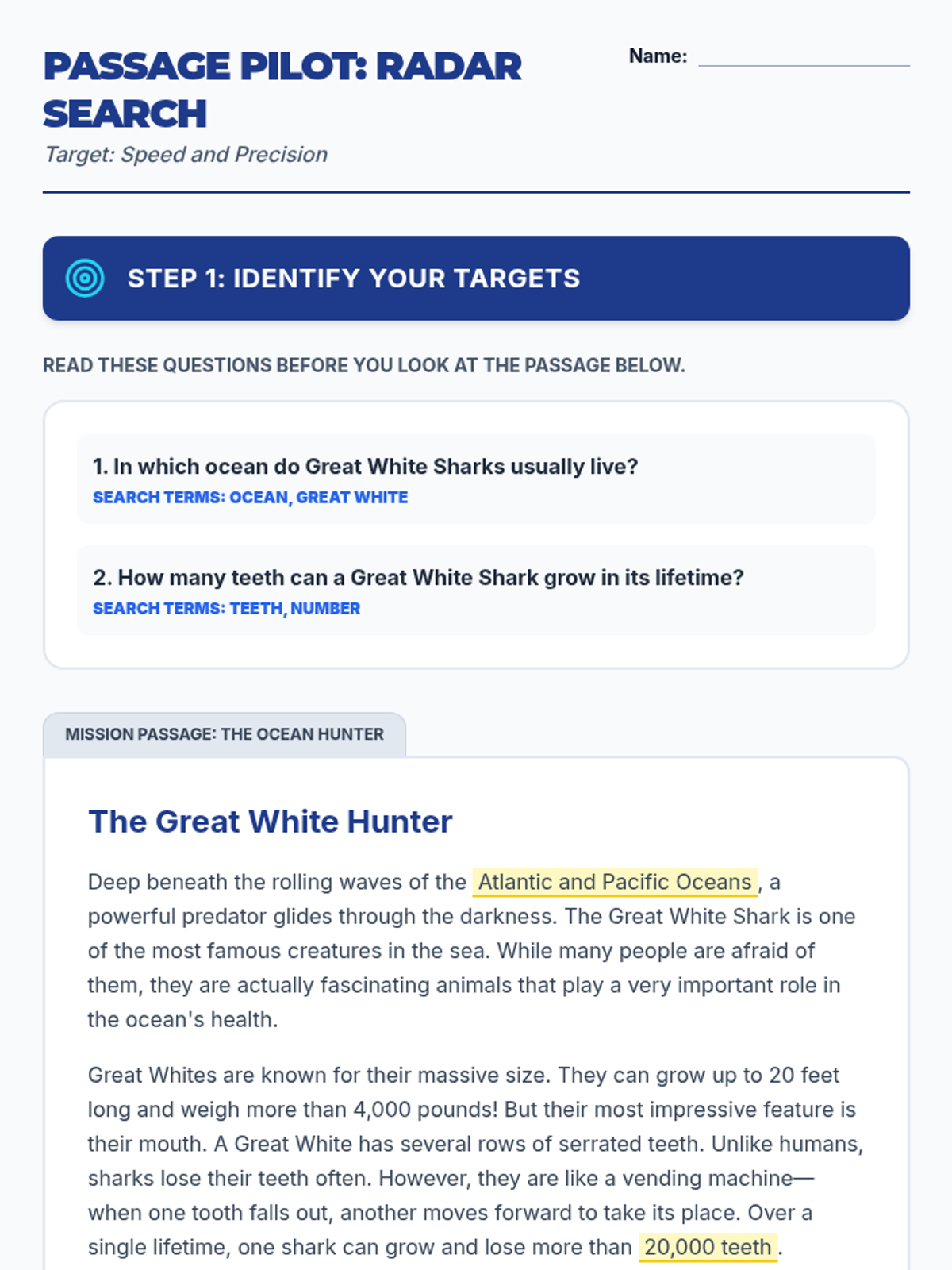
Focuses on reading strategies like 'questions first' to save time and improve focus during long reading comprehension sections.
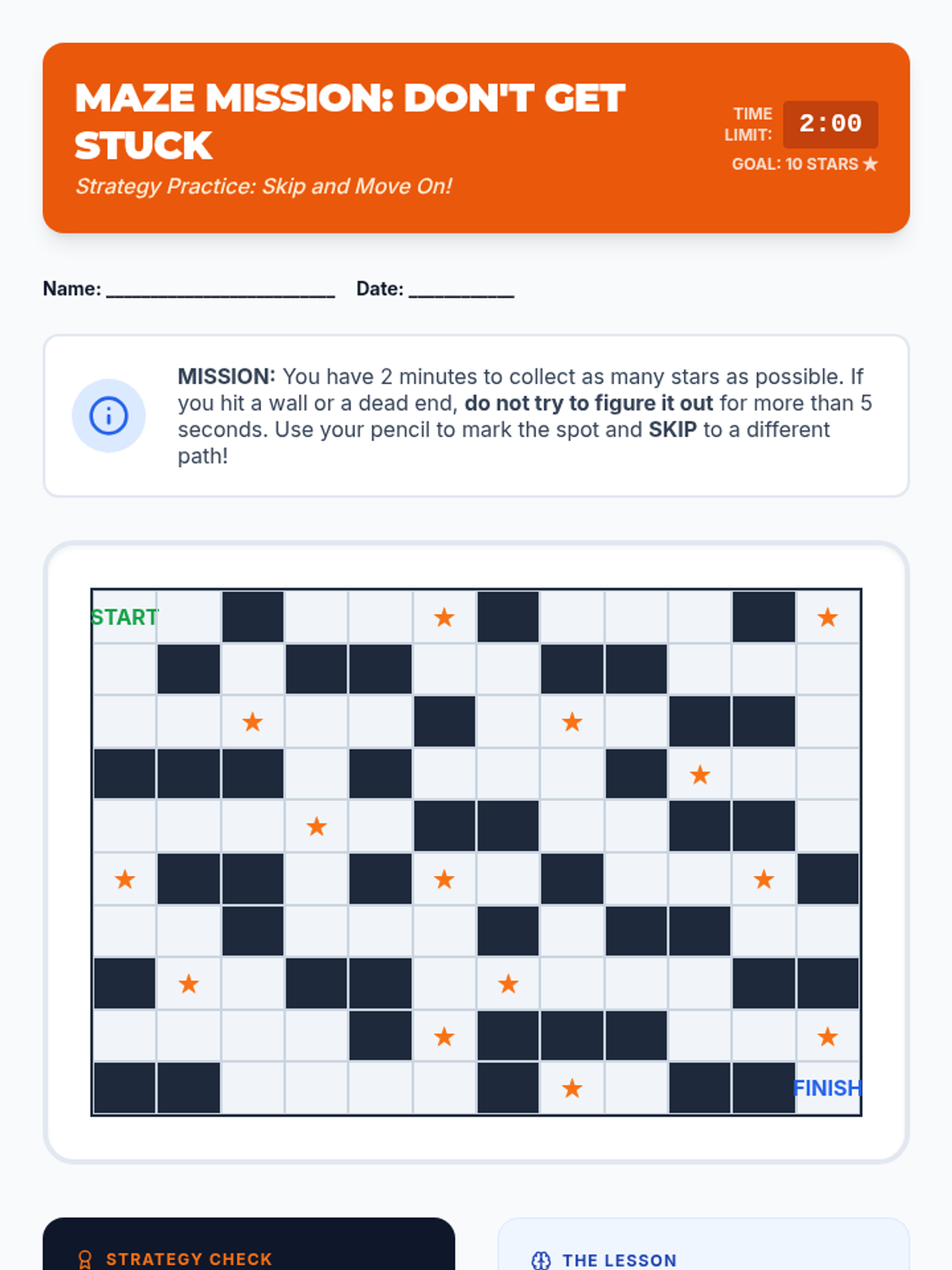
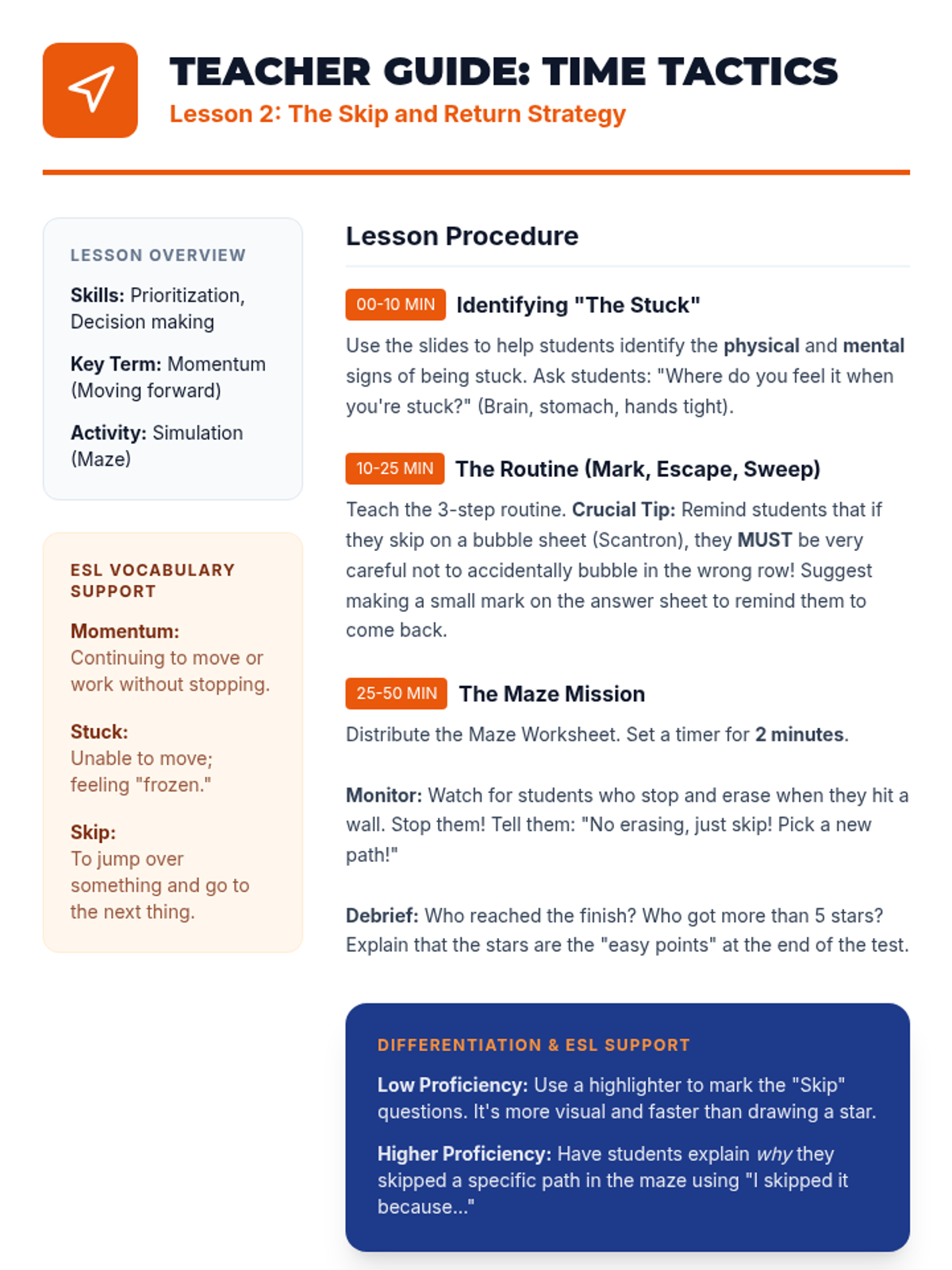
Students practice identifying when they are stuck and learn the 'skip and return' method to maximize their points by answering easy questions first.
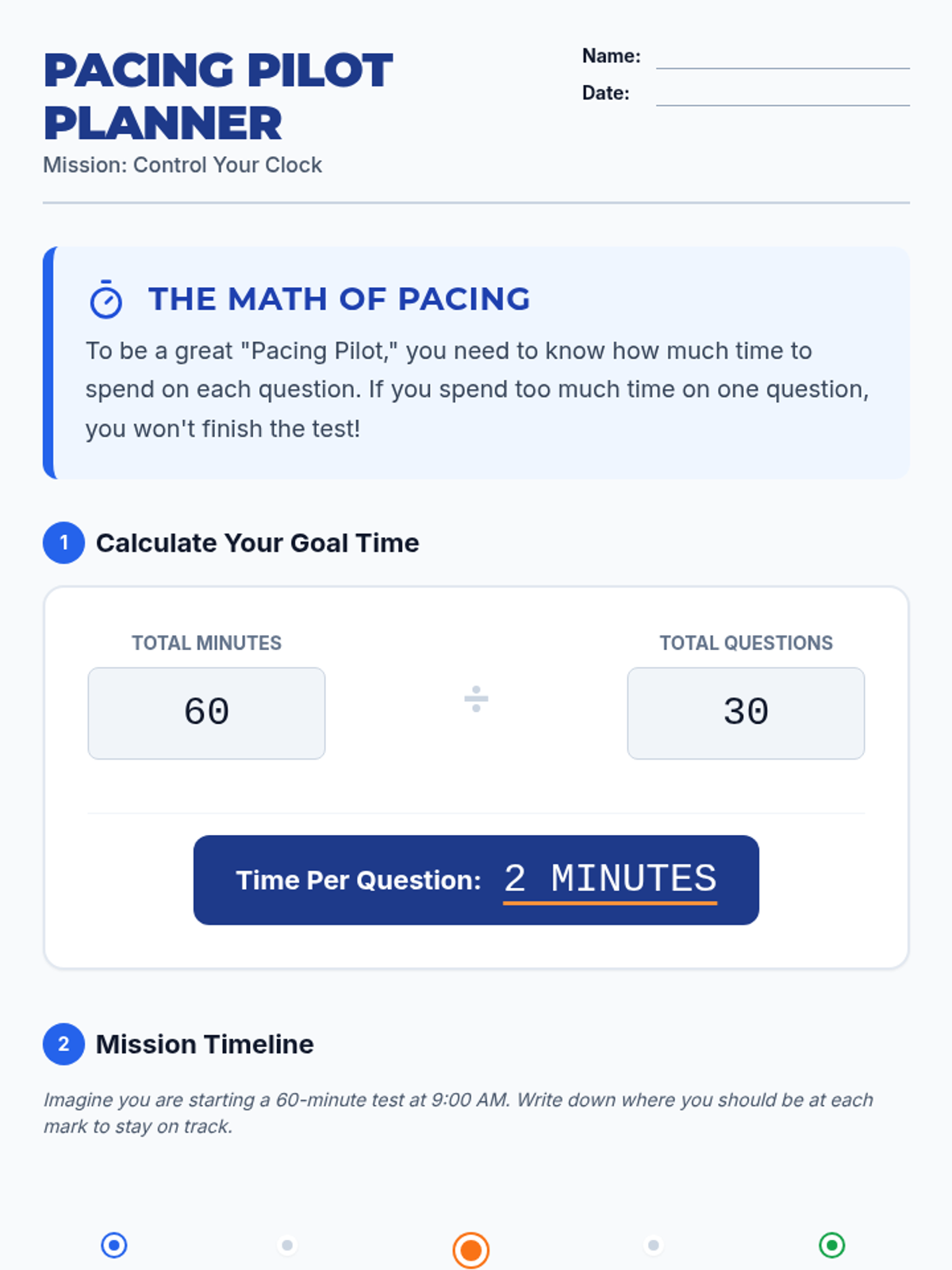
Students learn the basics of pacing by breaking down total test time and creating visual pacing guides to avoid the 'time trap.'
A reflection on what has been learned and a call to action to practice acceptance every day.
Practical skills for including neurodivergent peers in play and conversation, focusing on kindness and patience.
Understanding different communication styles and how to connect with others who may communicate in unique ways.
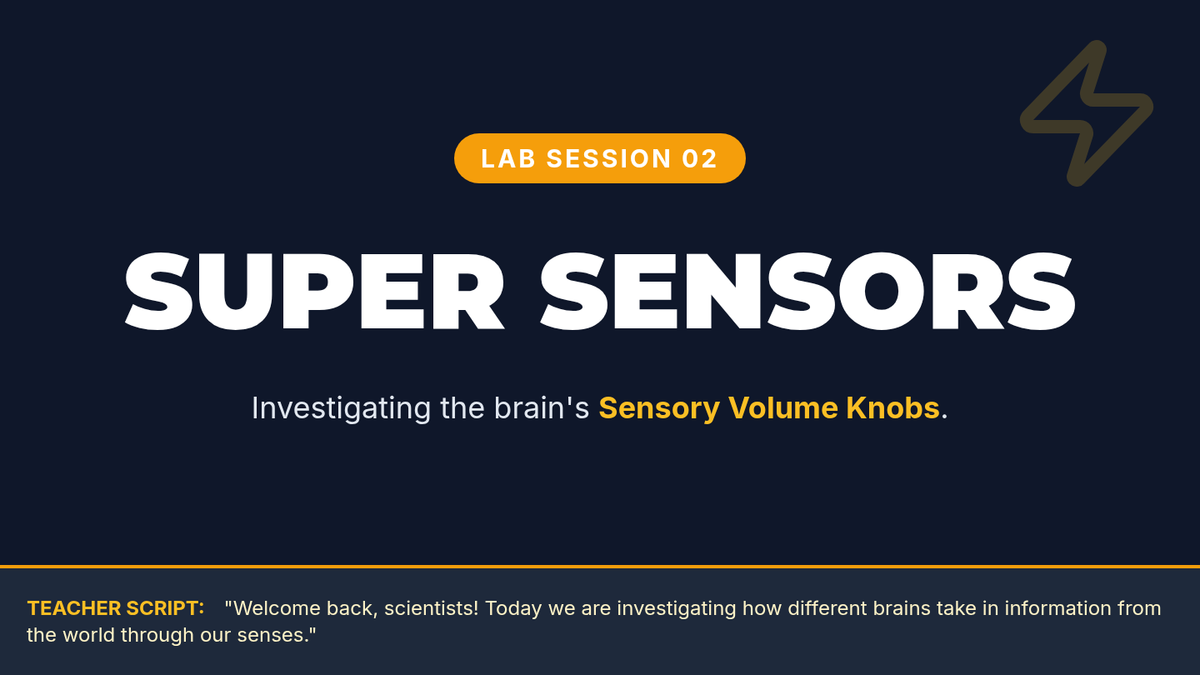
Exploring the five senses and beyond, focusing on how different brains process sensory information and the tools that help.
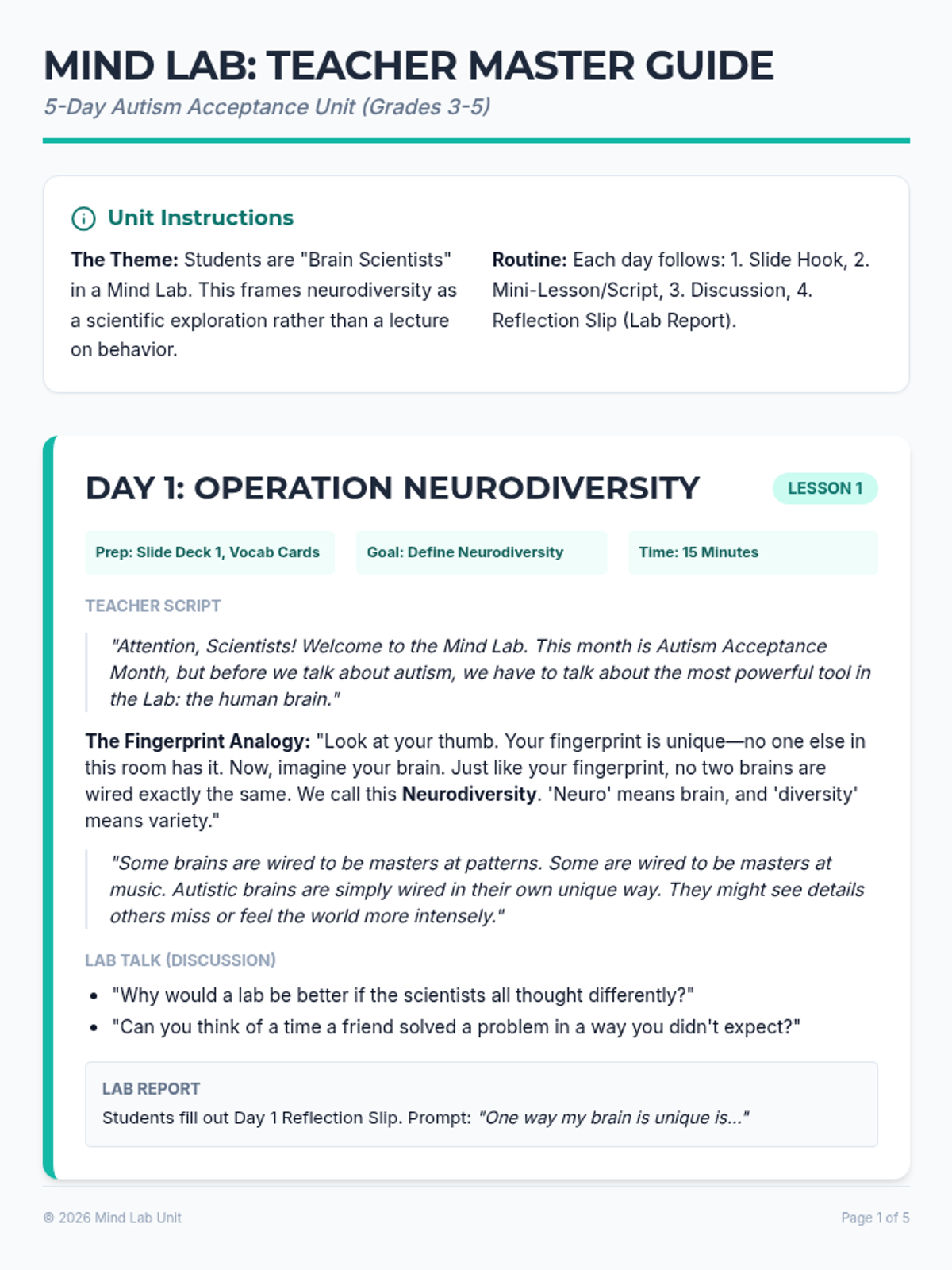
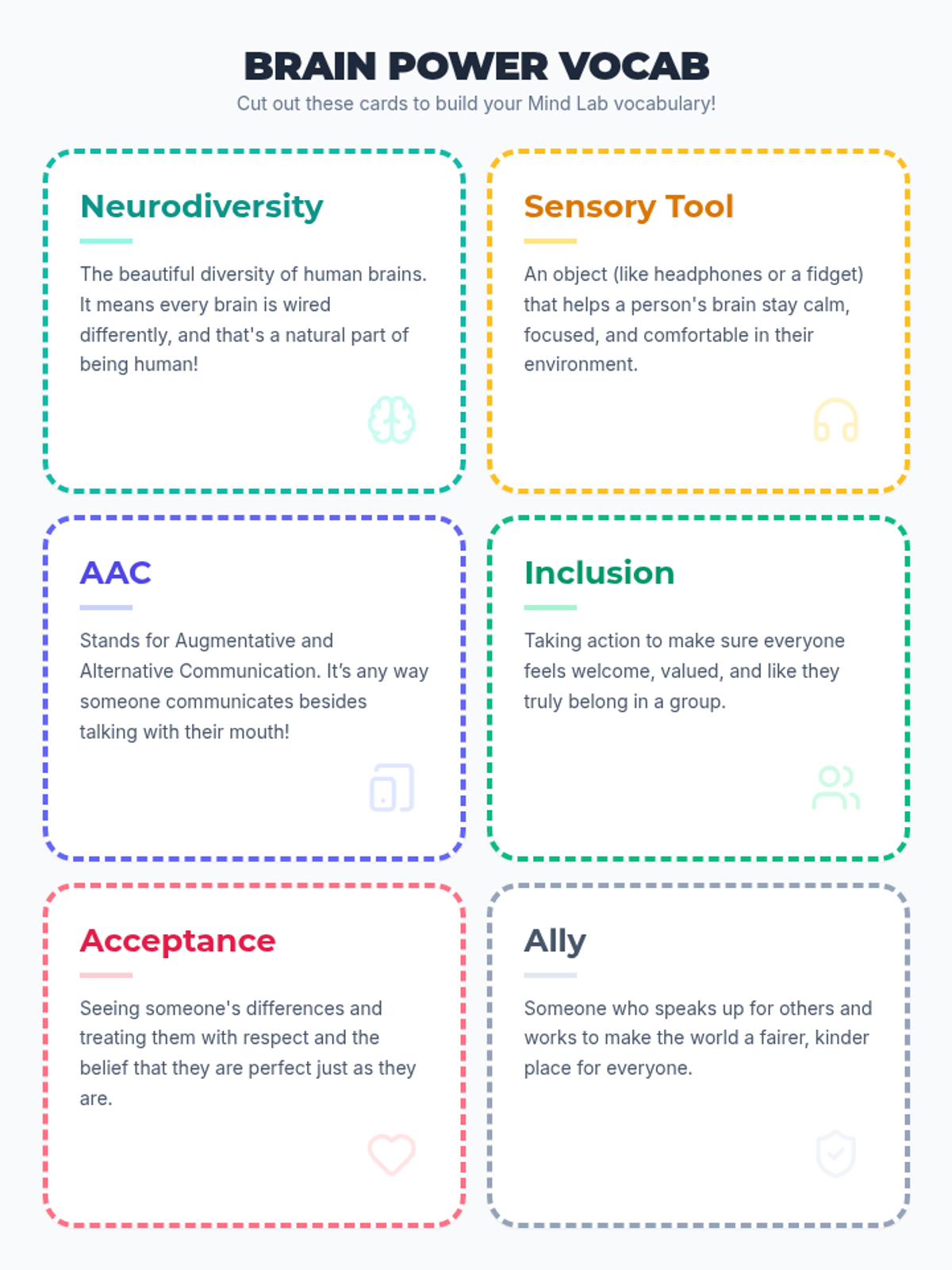
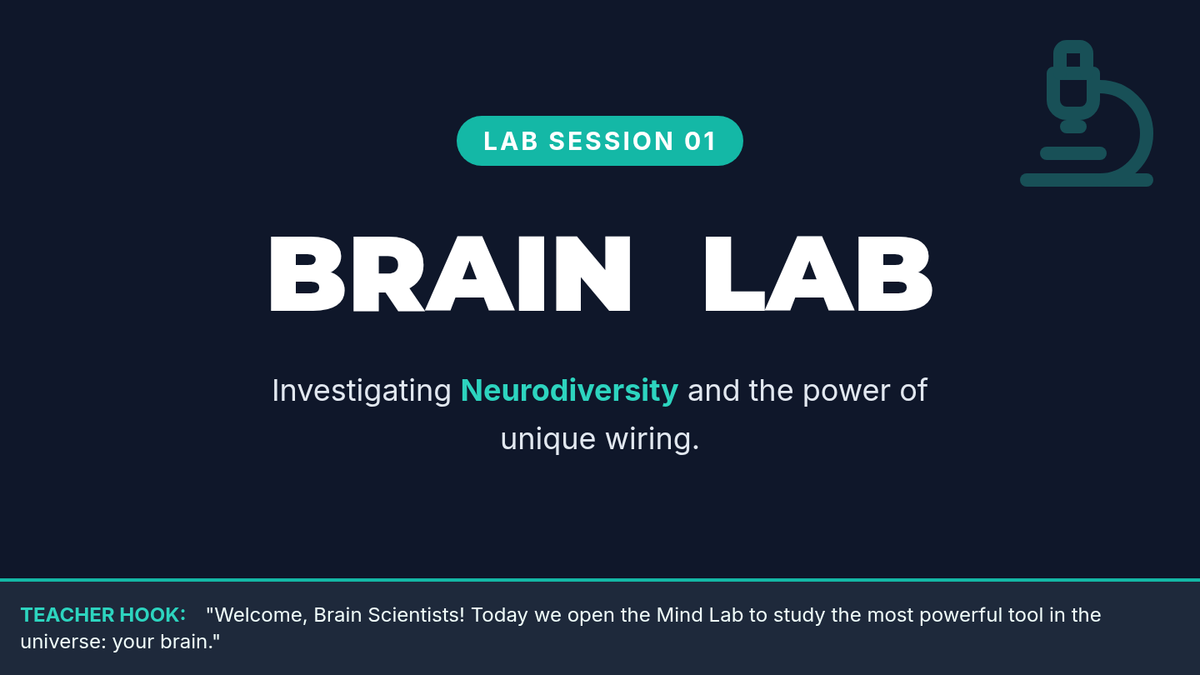
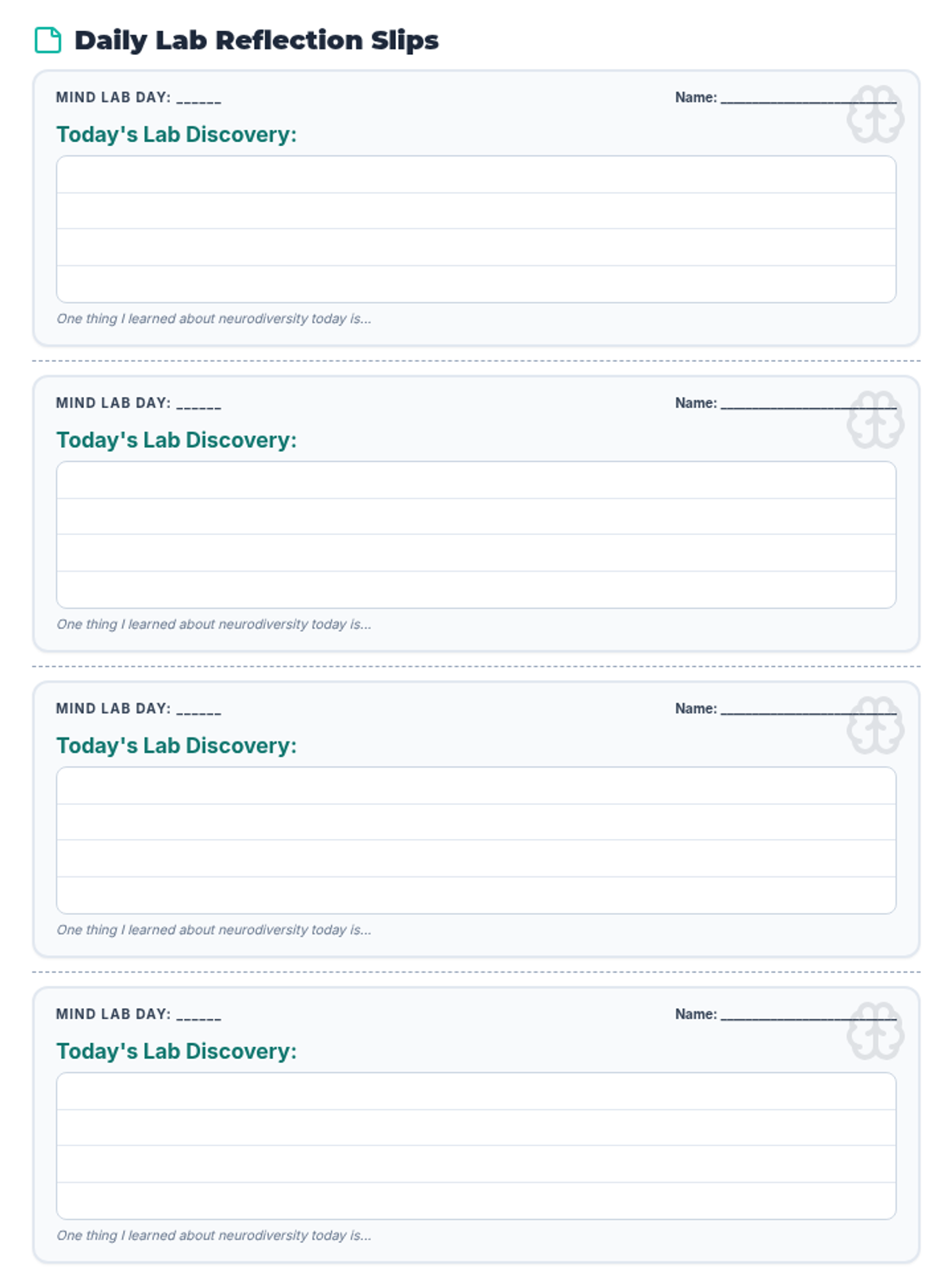
An introduction to neurodiversity, exploring how every brain is unique and wired differently, using the 'Brain Lab' concept.
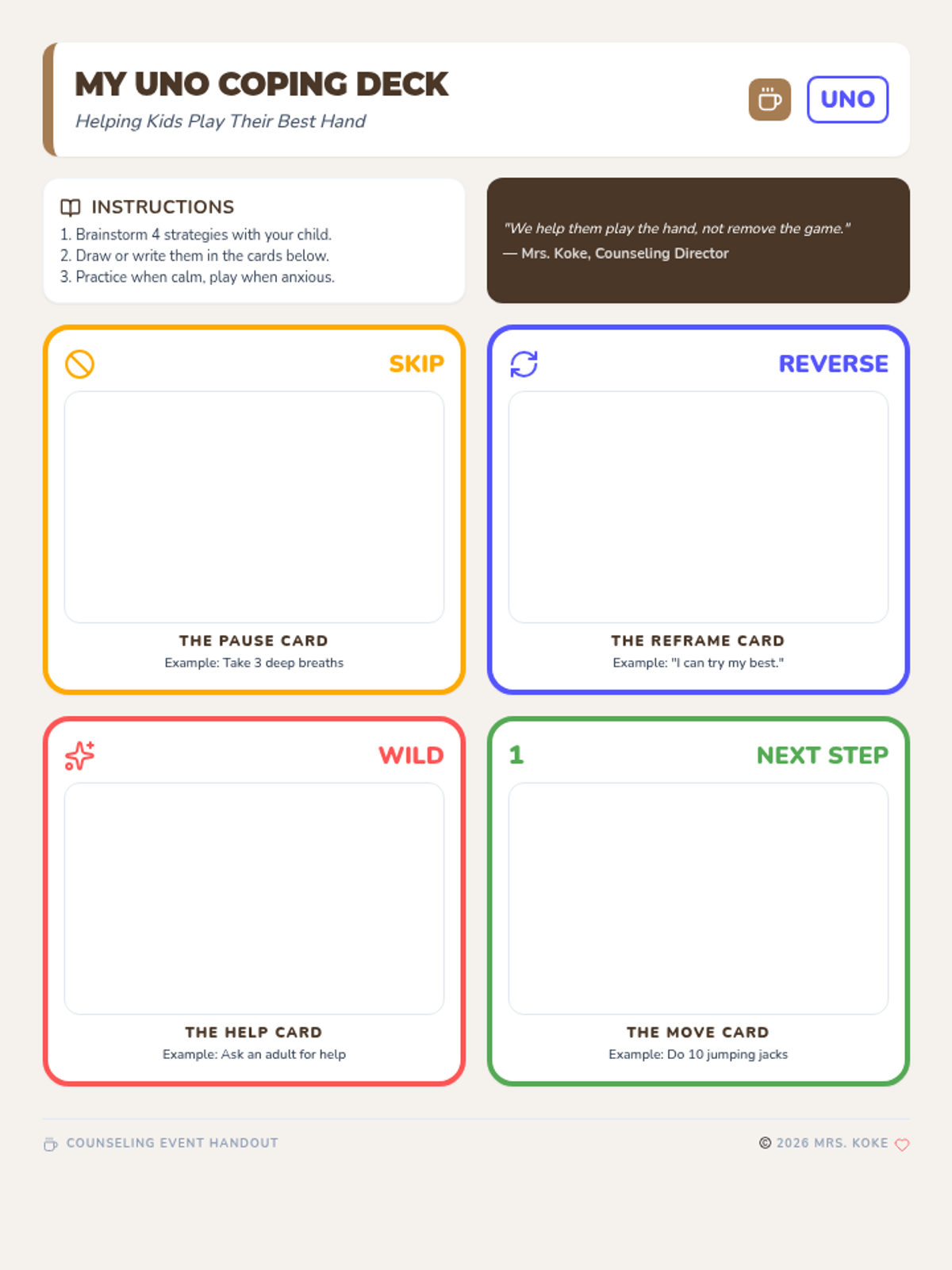
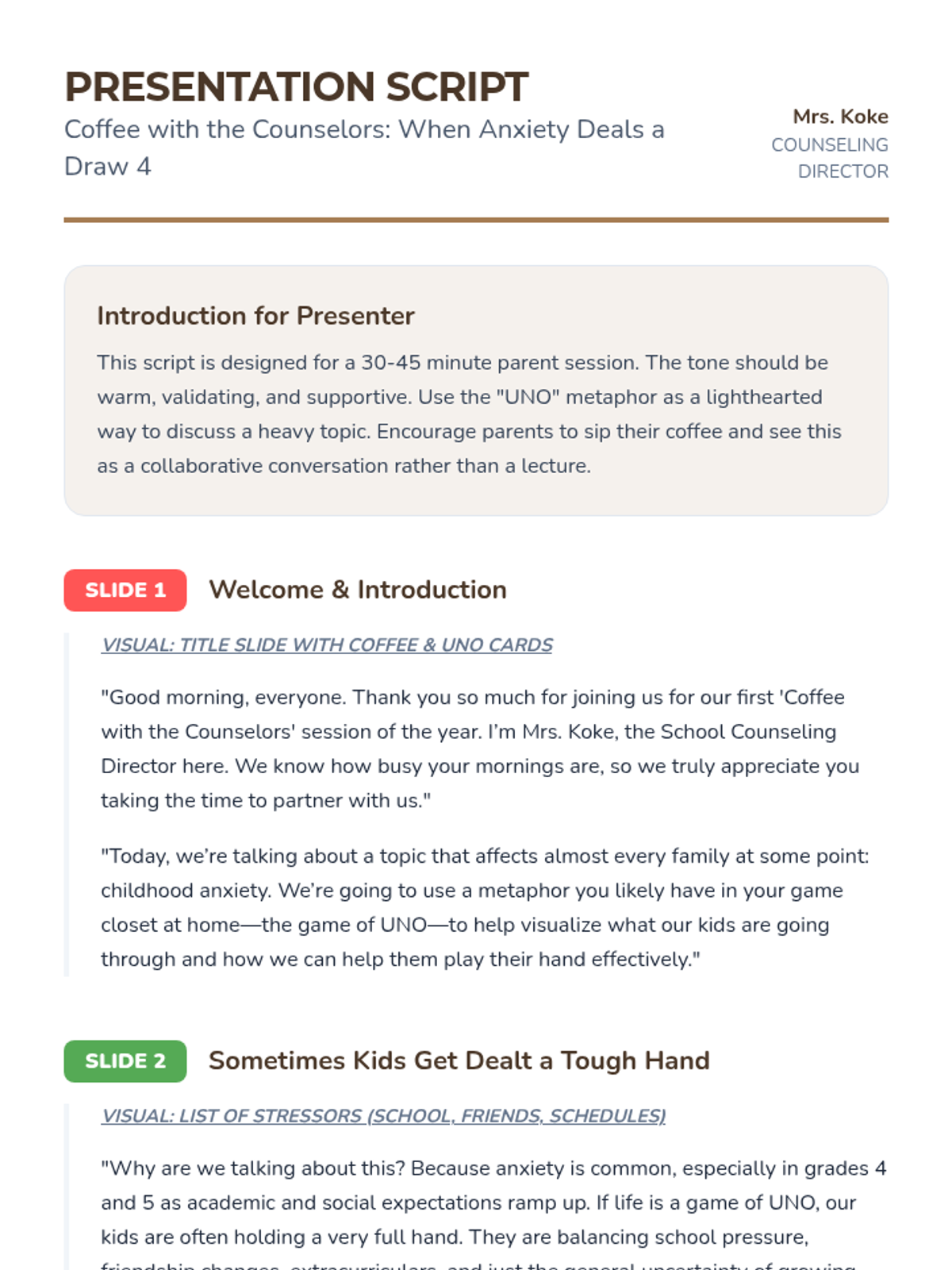
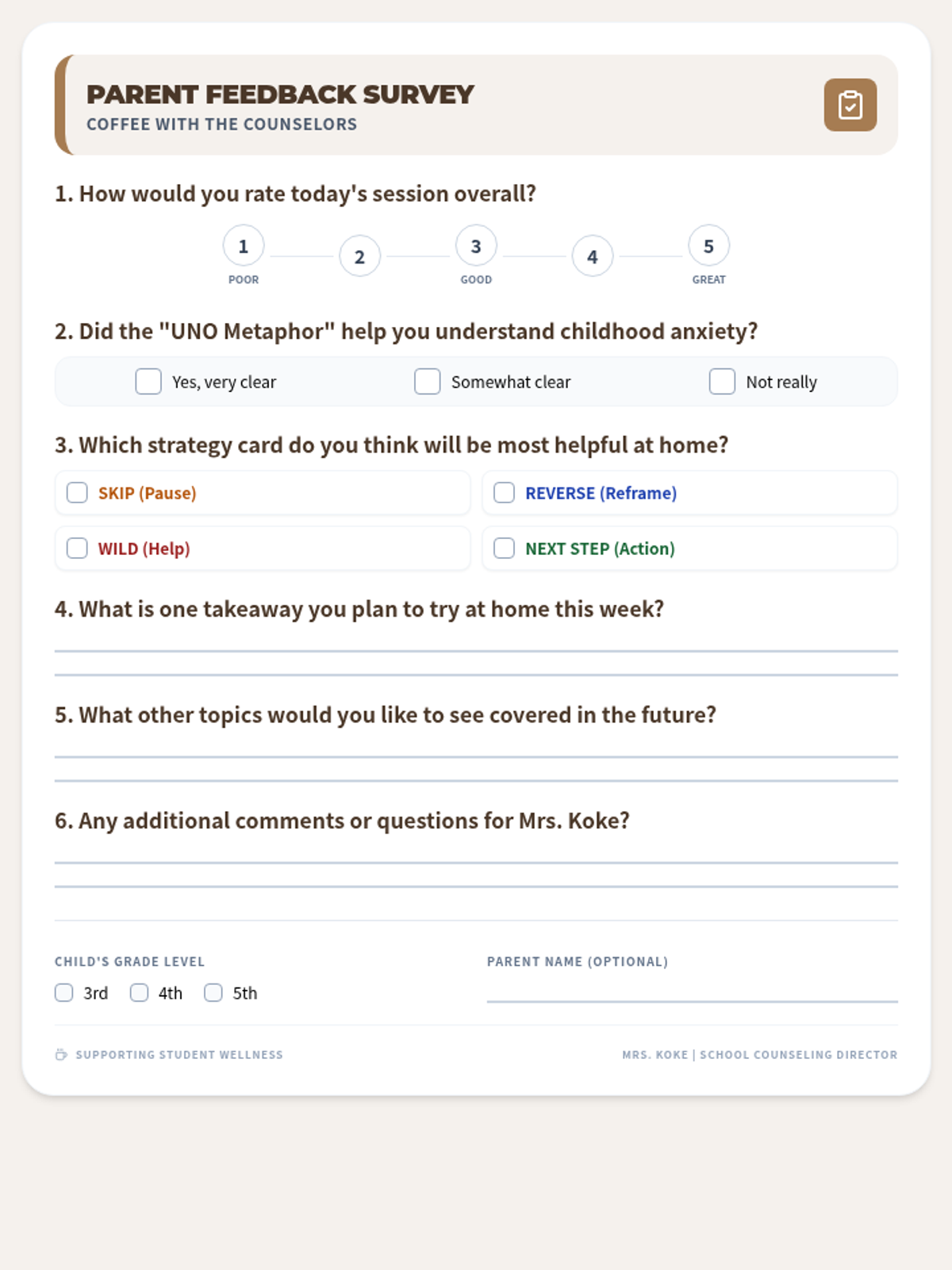
A comprehensive parent education session using a creative UNO card metaphor to help elementary families understand and manage childhood anxiety through school-home partnership.
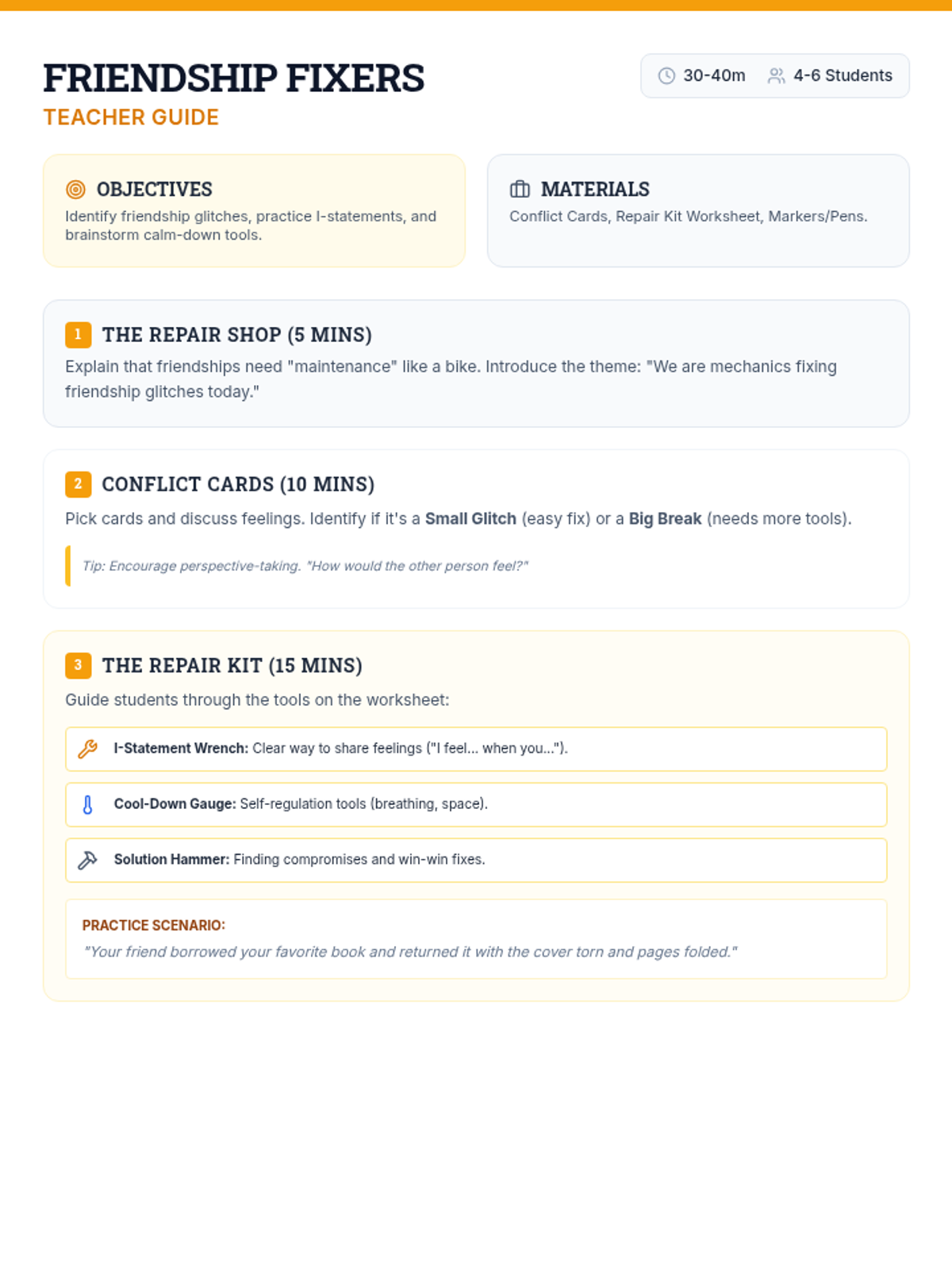
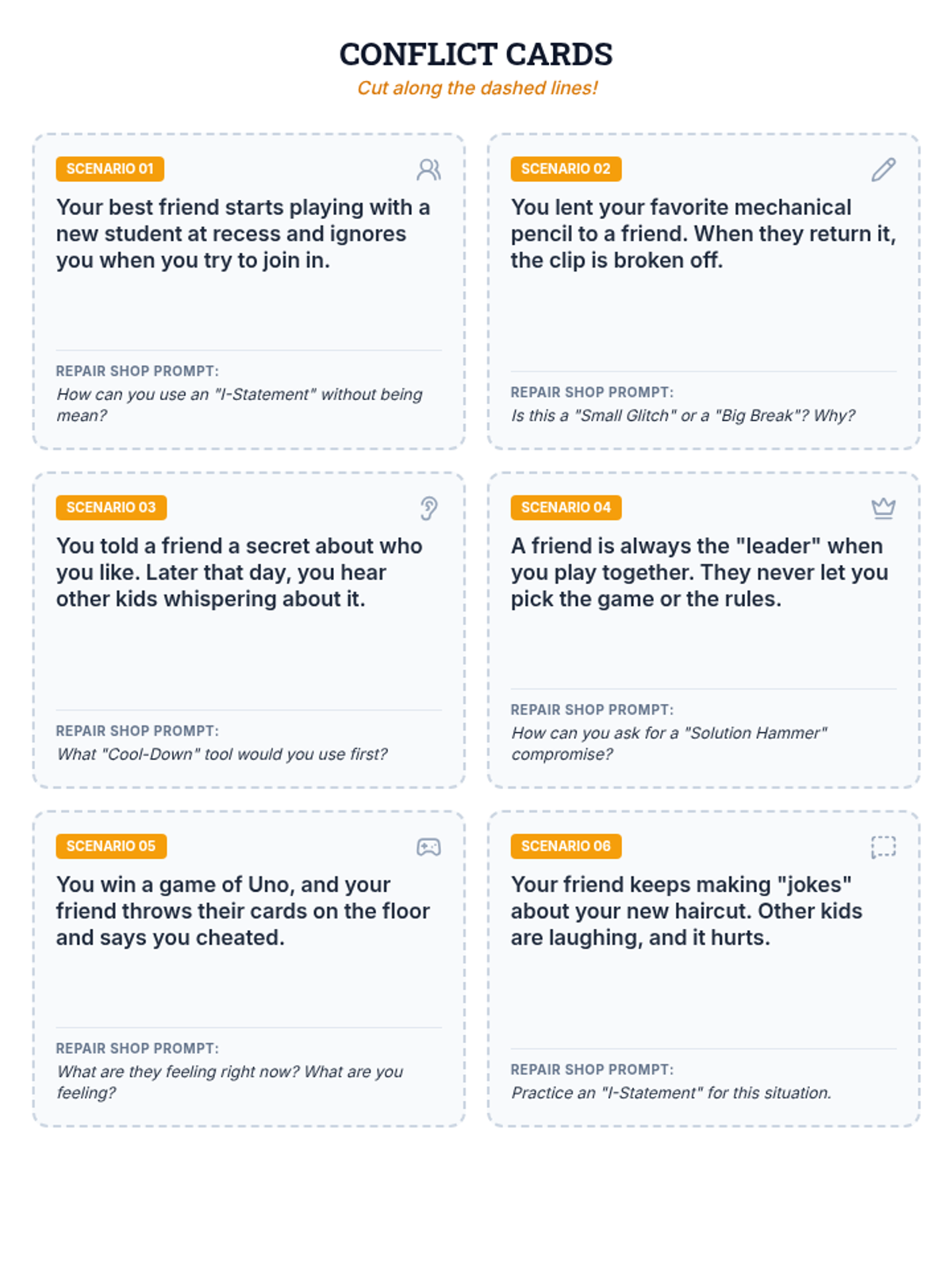
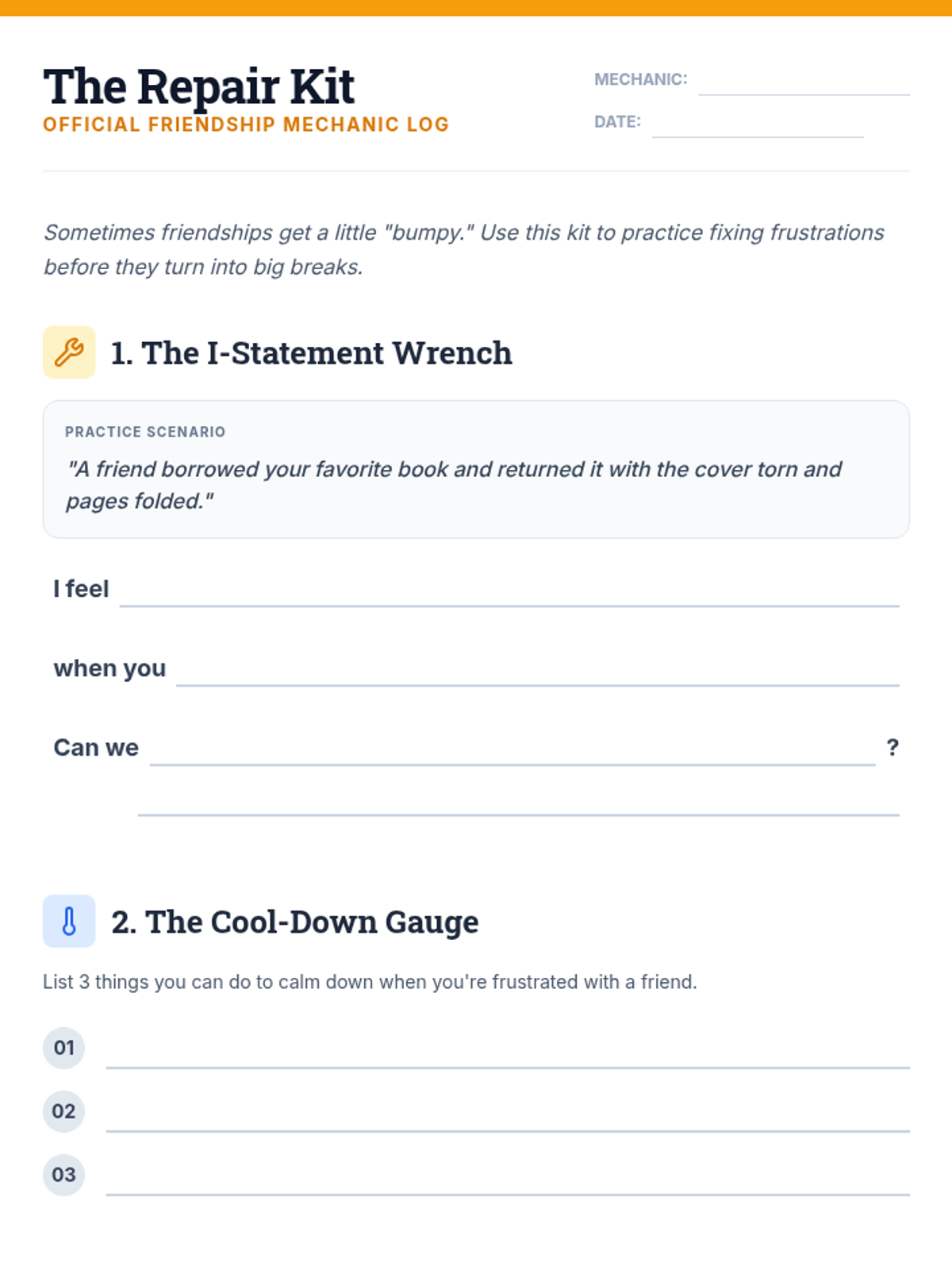
A small-group lesson for 4th graders focused on navigating common friendship conflicts and frustrations using effective communication and problem-solving tools.
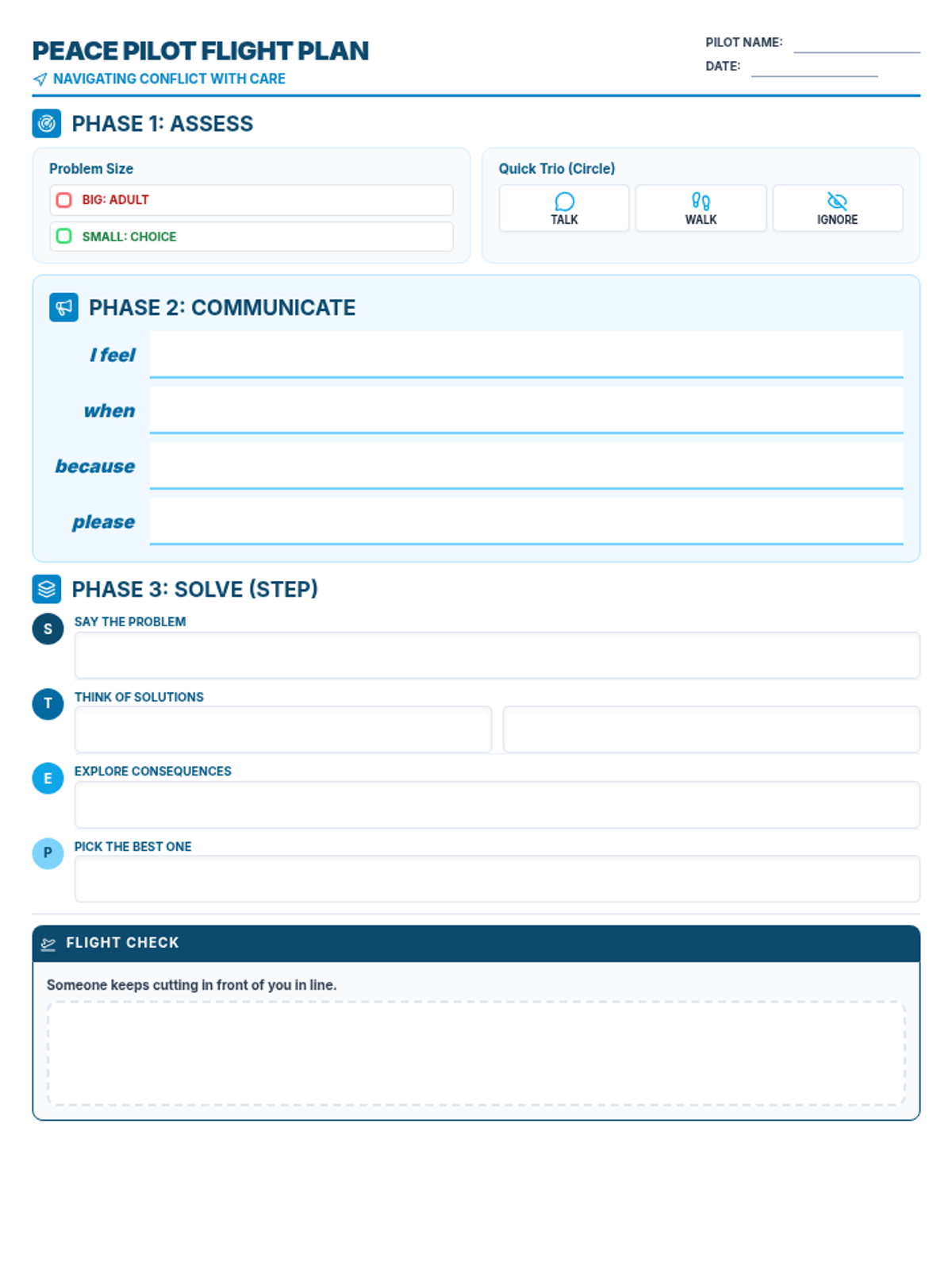
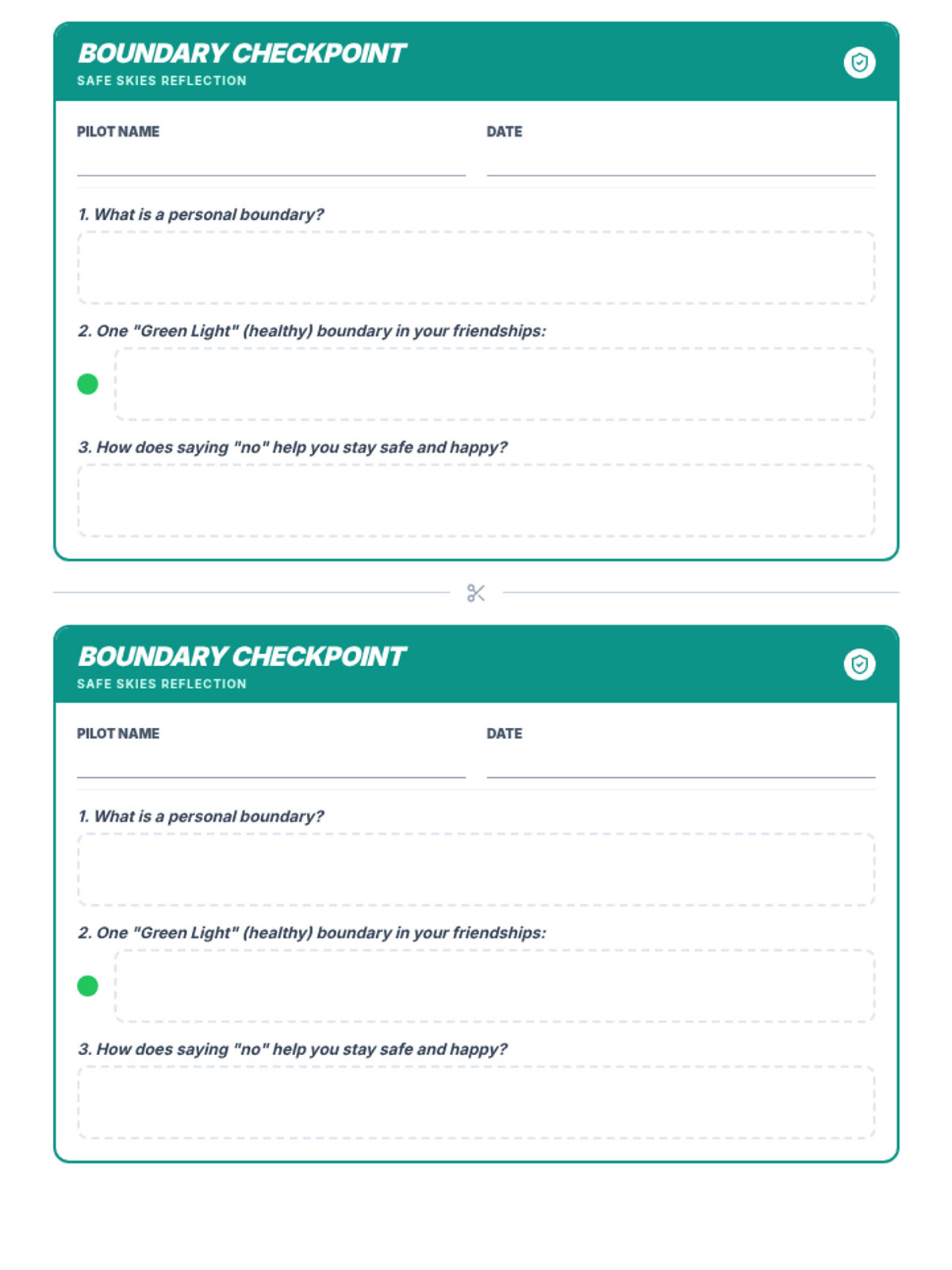
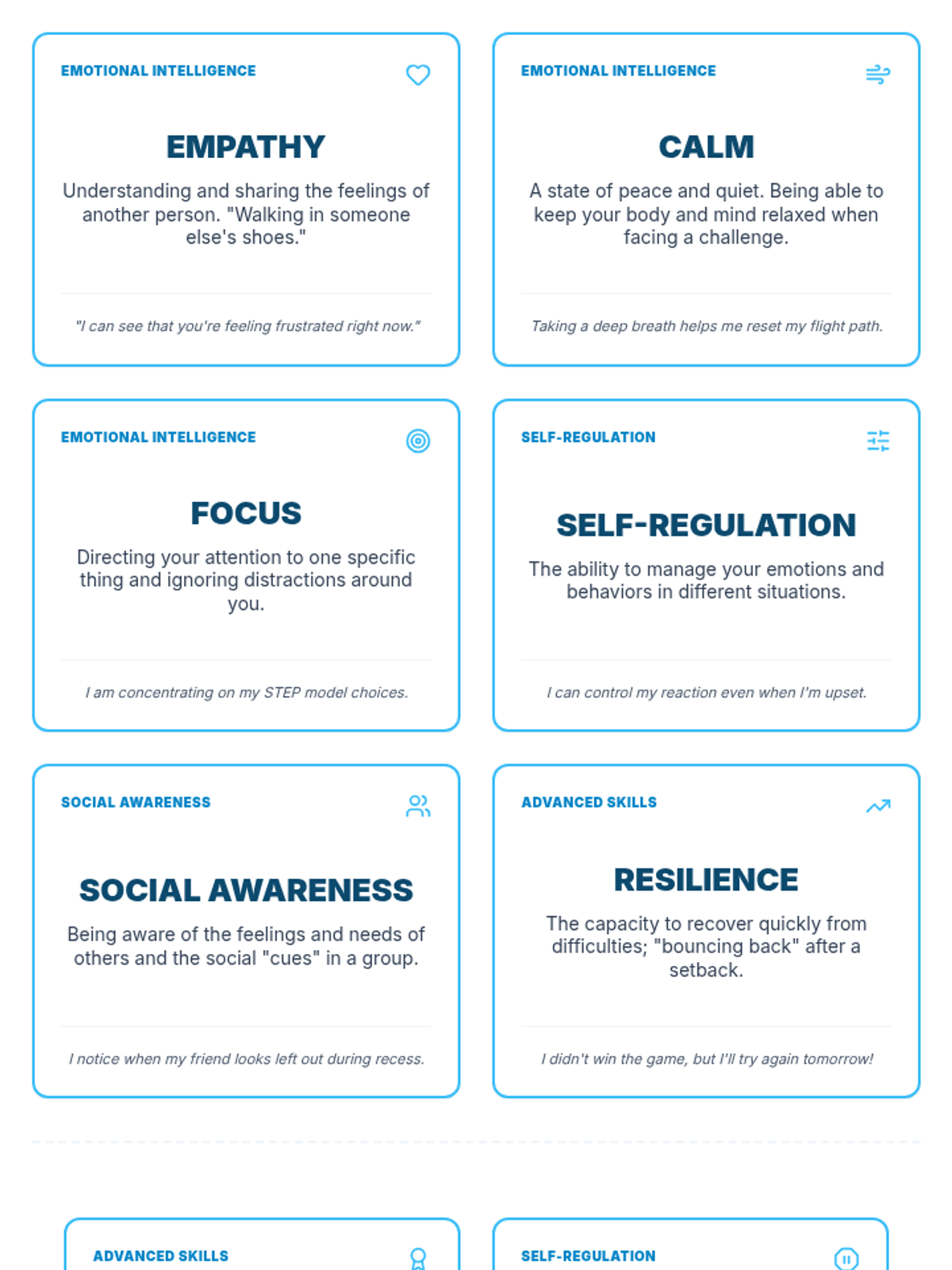
This lesson introduces students to essential conflict resolution strategies and emotional intelligence vocabulary. Students will learn to navigate social challenges using Kelso's Choices, I-Messages, and the STEP model, while also exploring the importance of healthy boundaries.
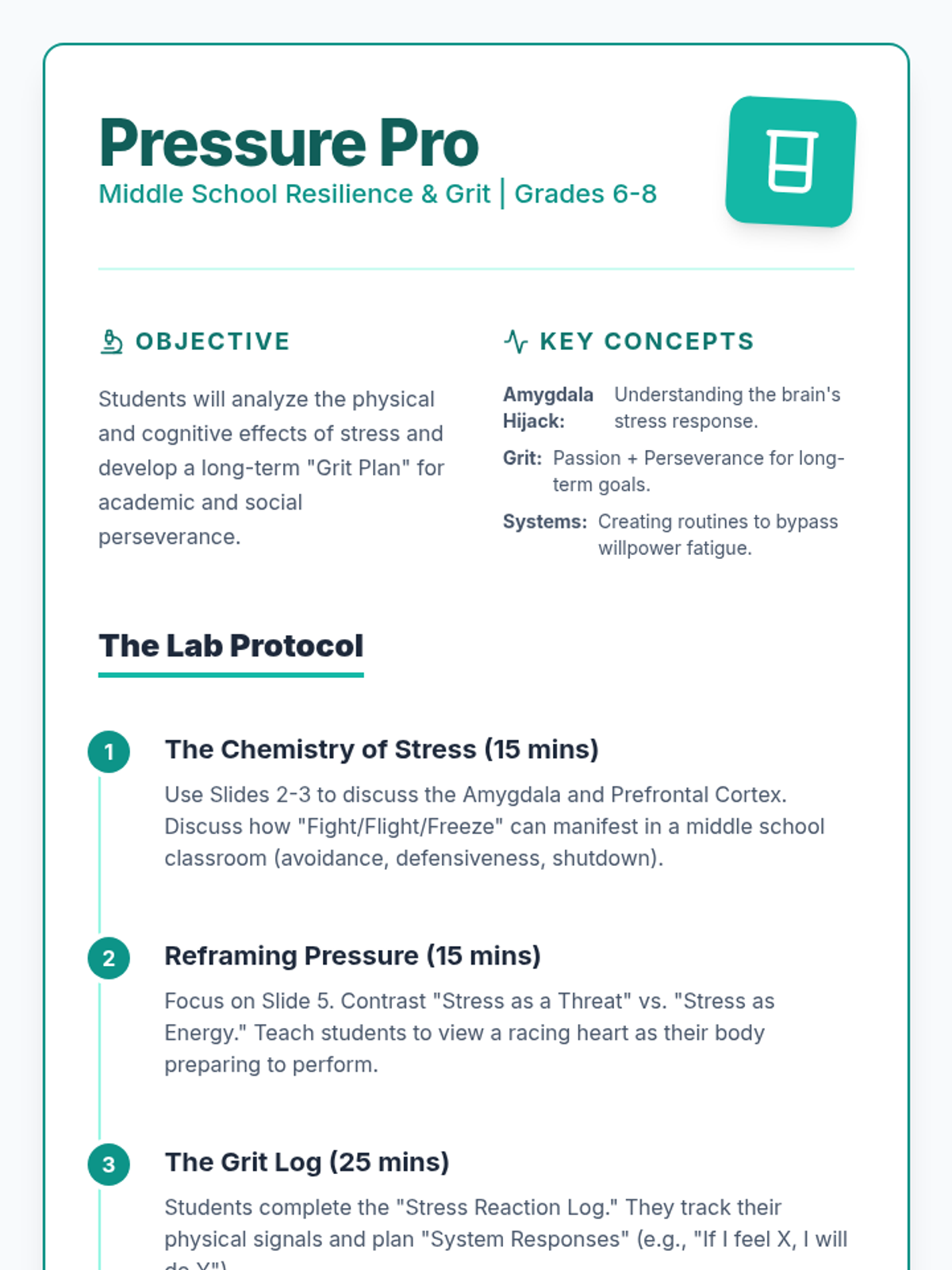
Explores the science of stress, long-term perseverance (grit), and developing a personal resilience plan for navigating middle school transitions.
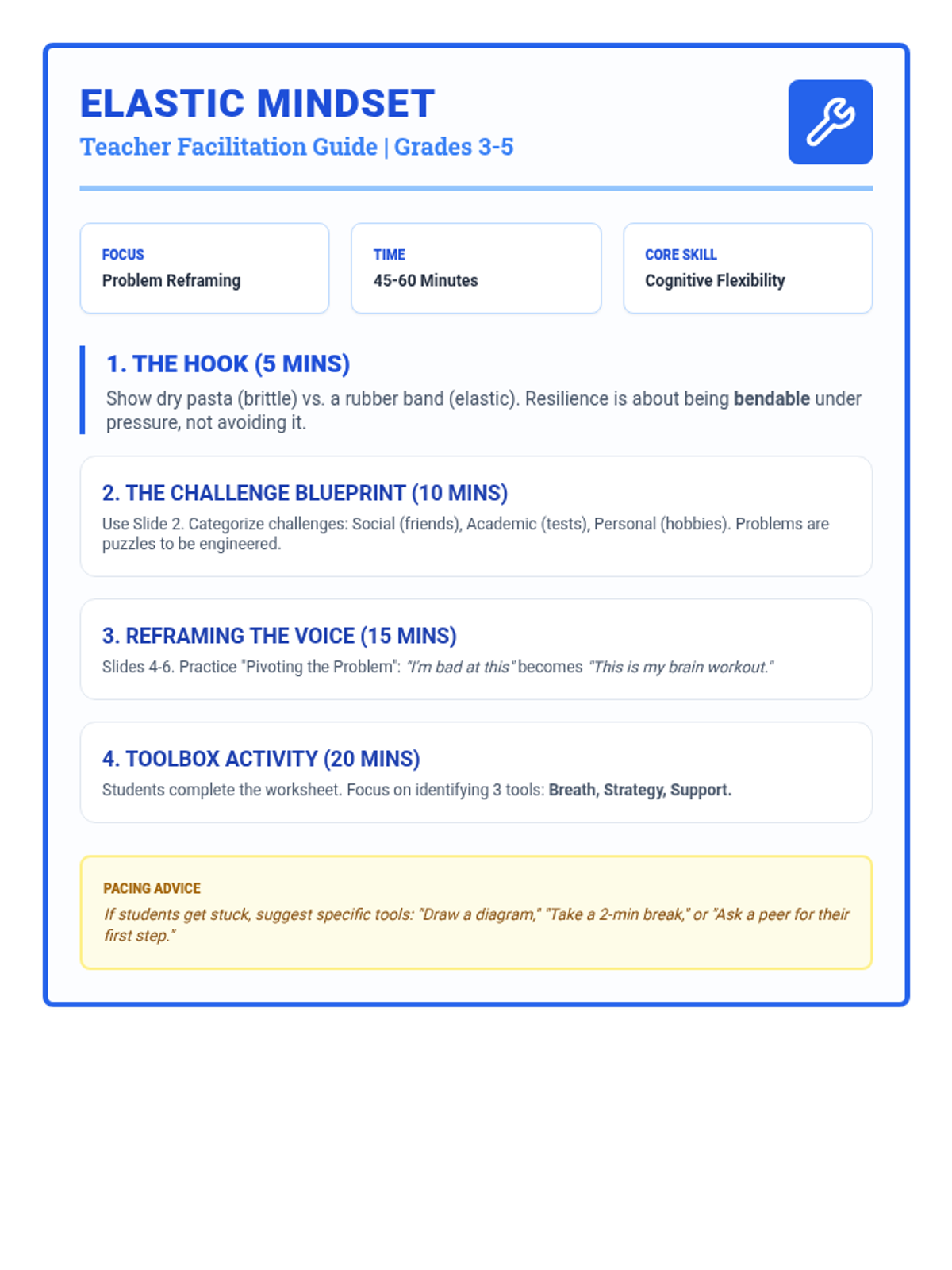
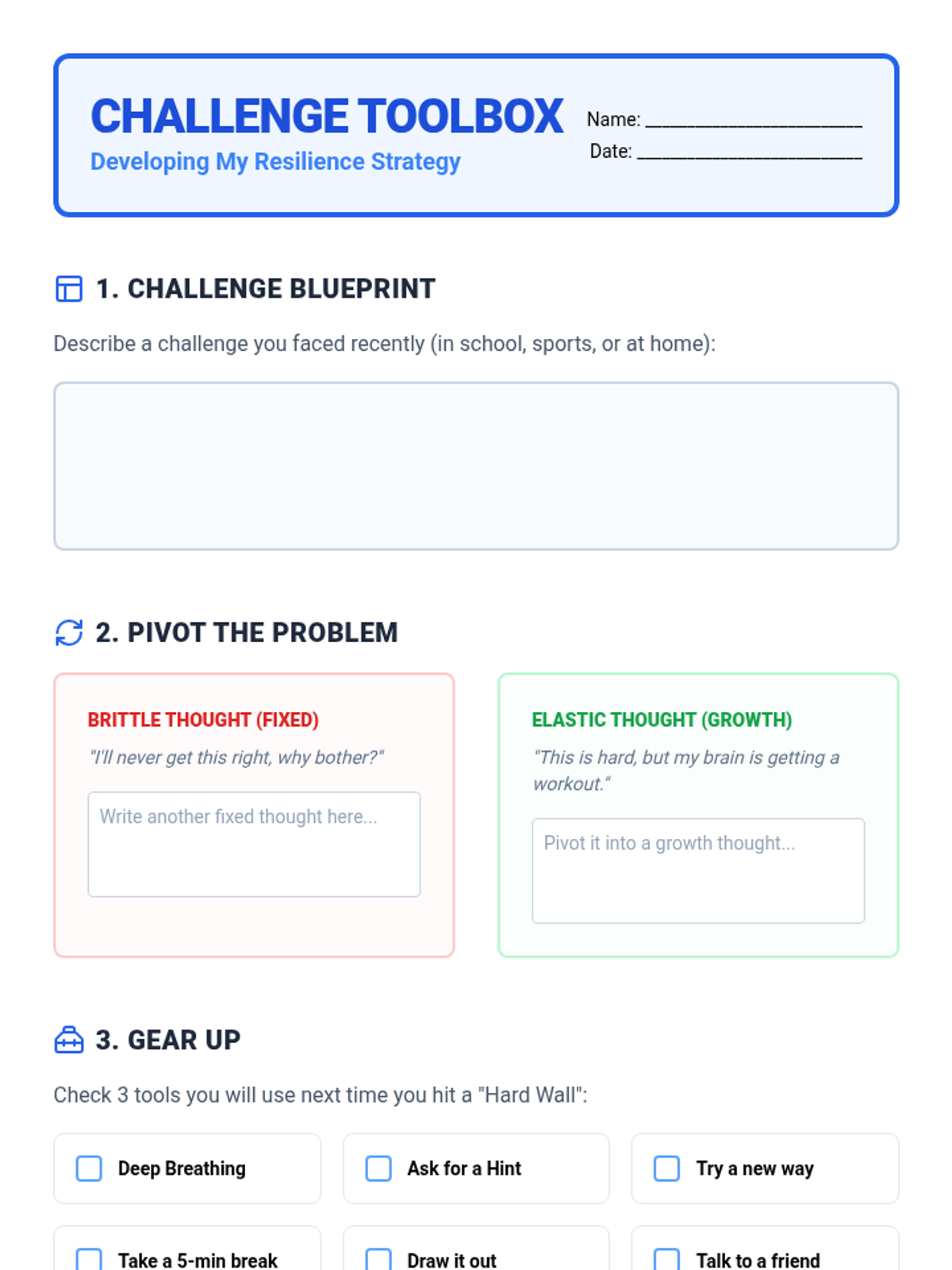
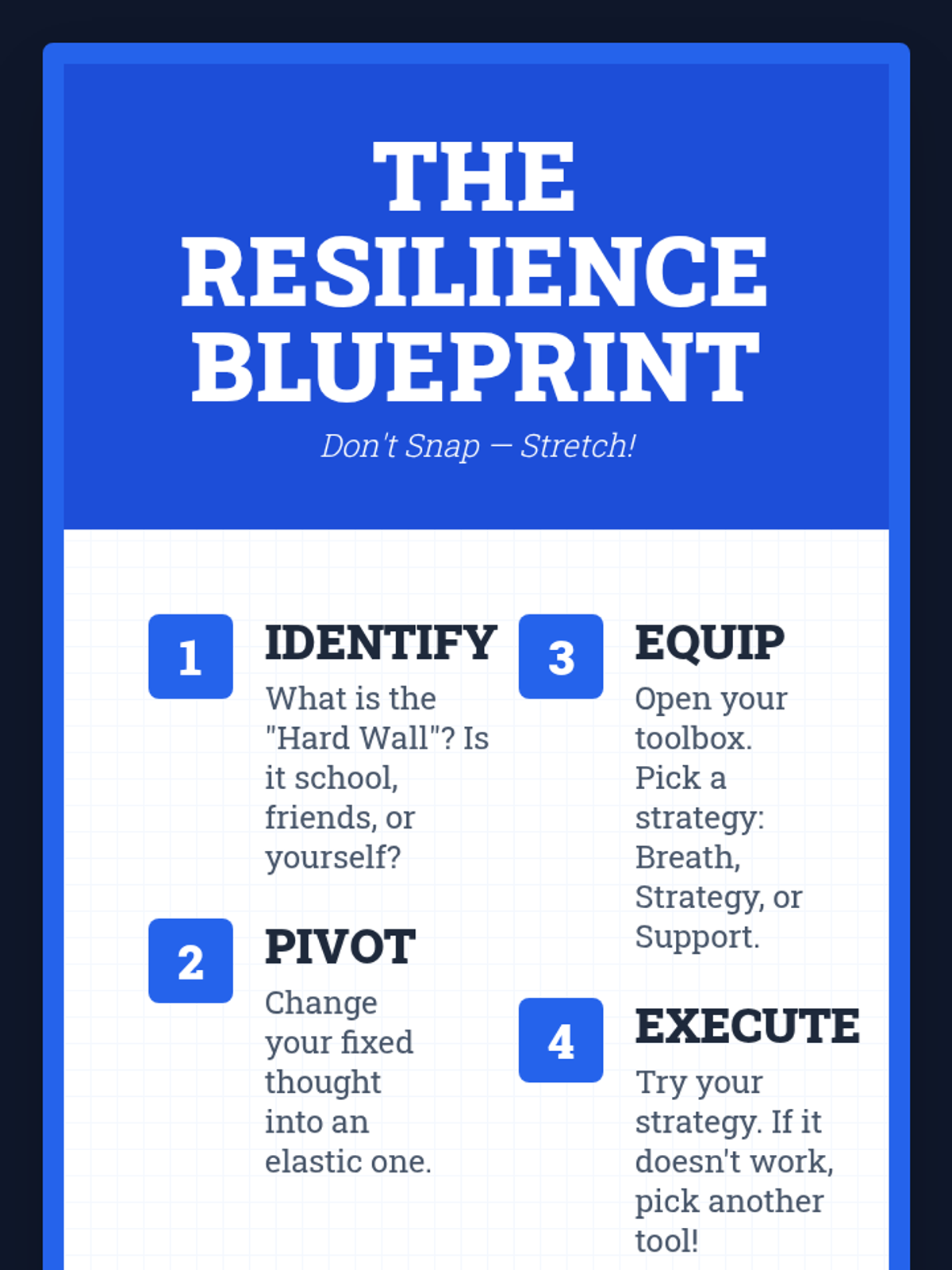
Teaches students to identify challenges, reframe negative thoughts, and build a 'toolbox' of coping strategies for social and academic hurdles.